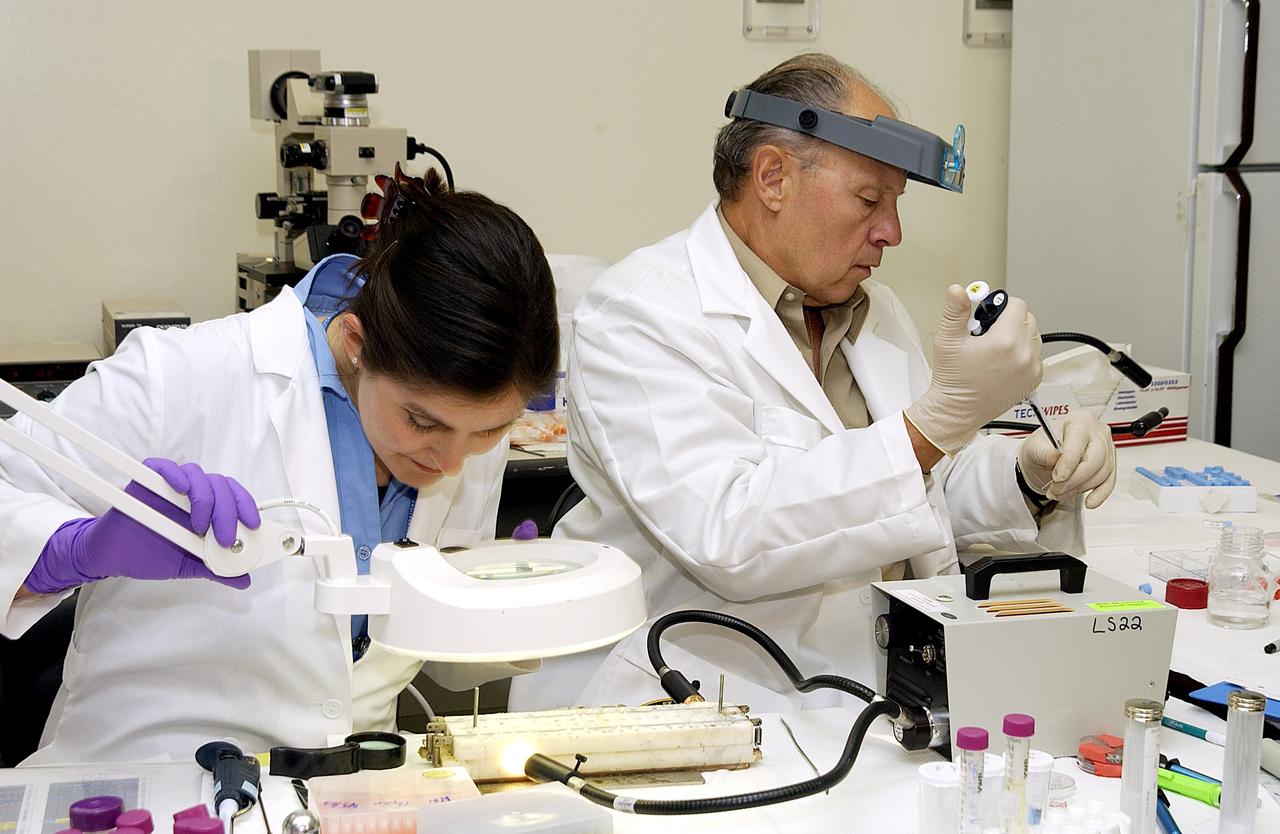
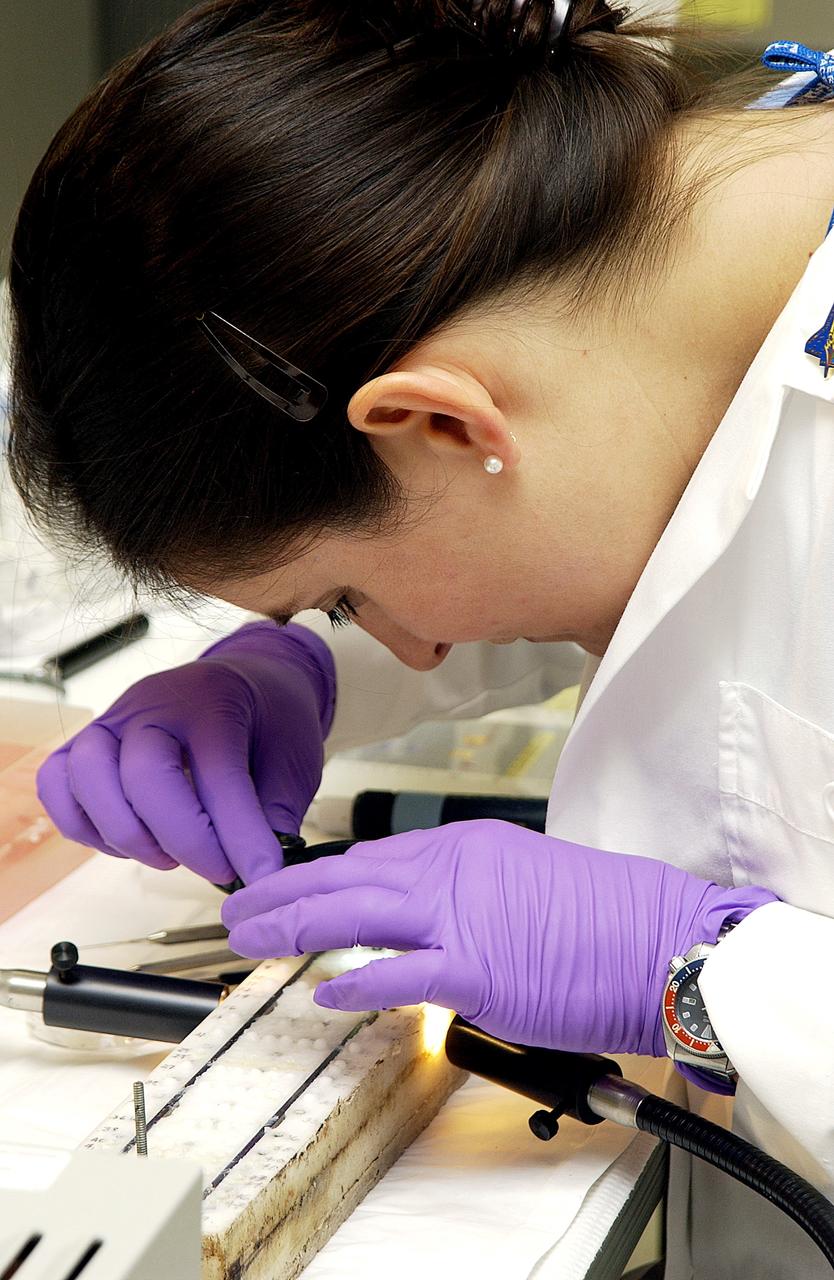
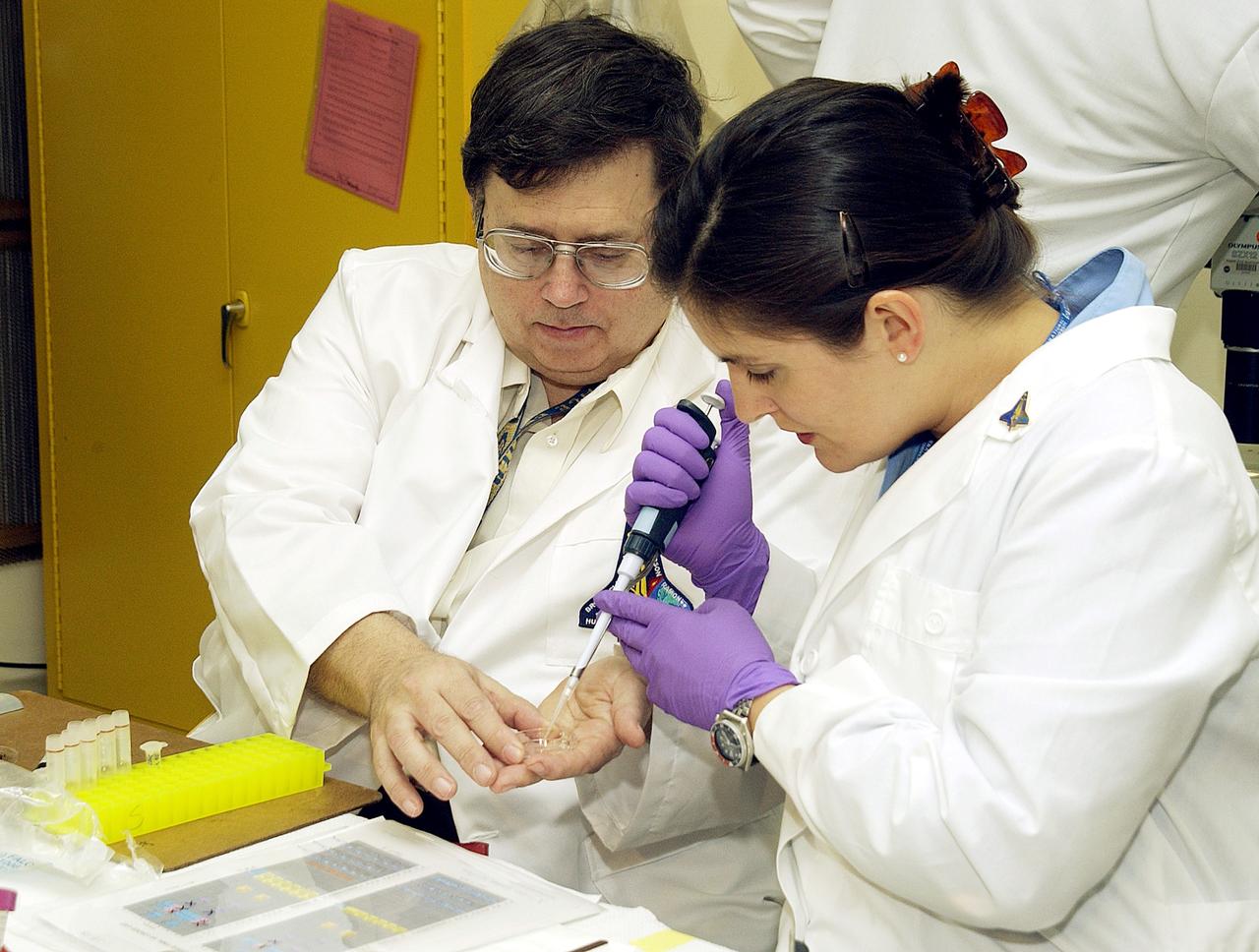
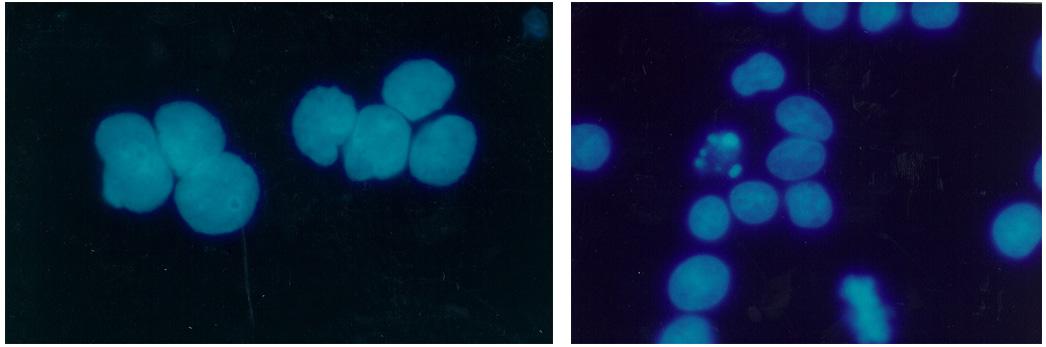
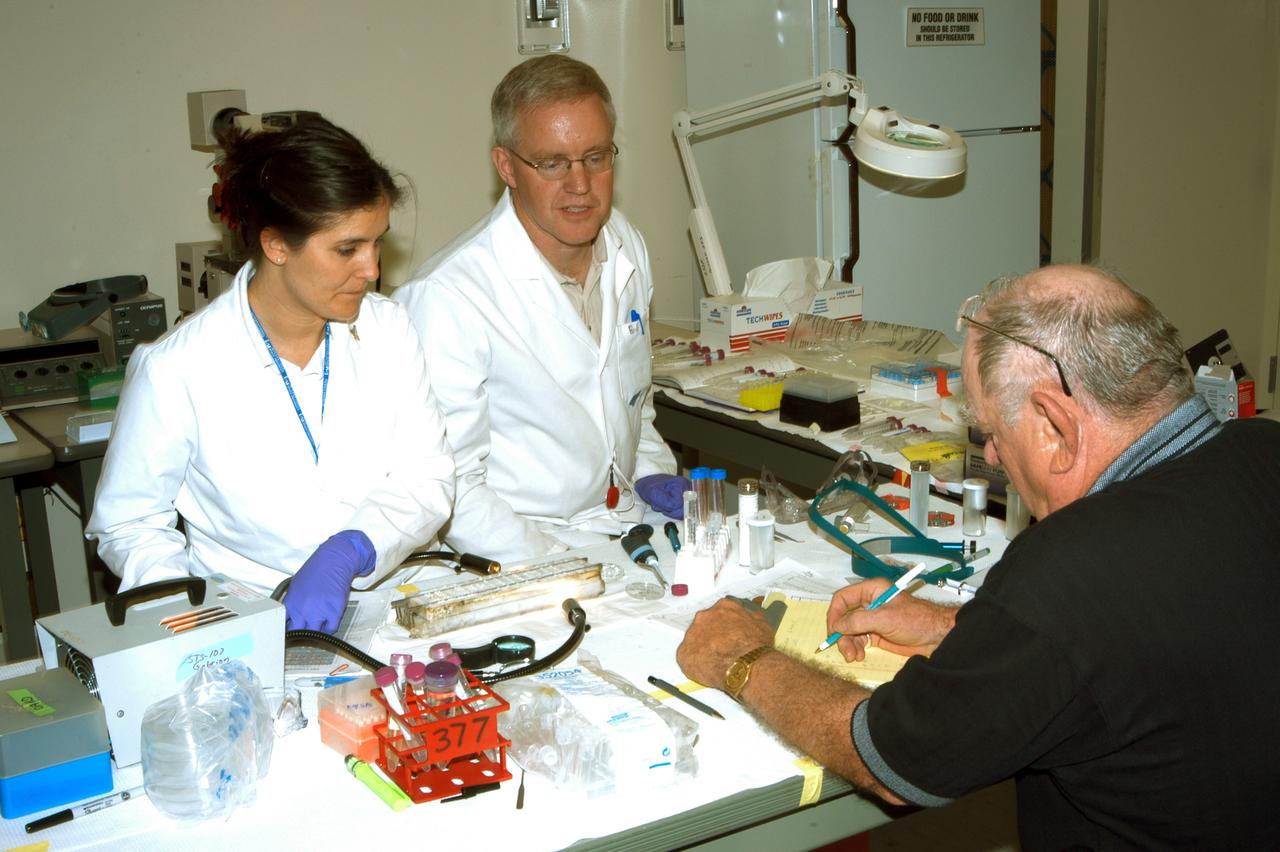
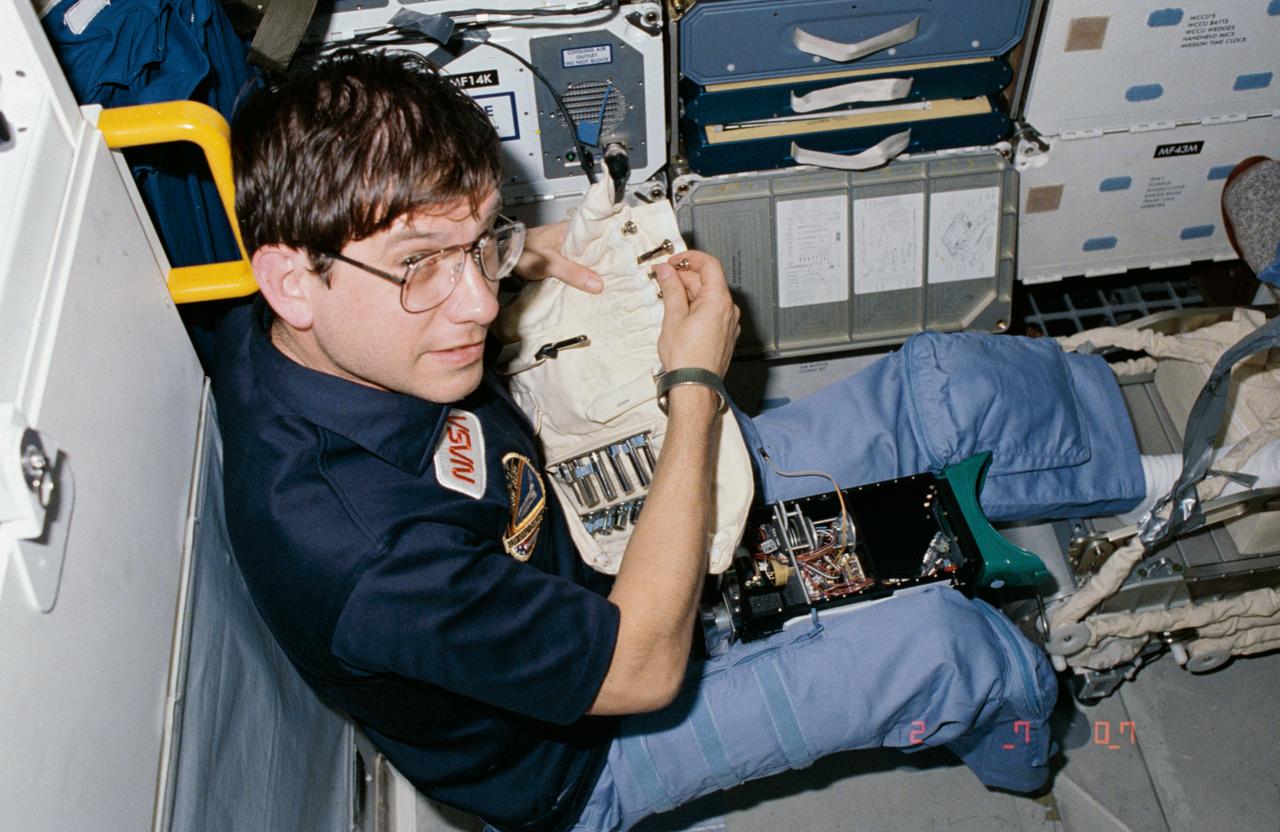
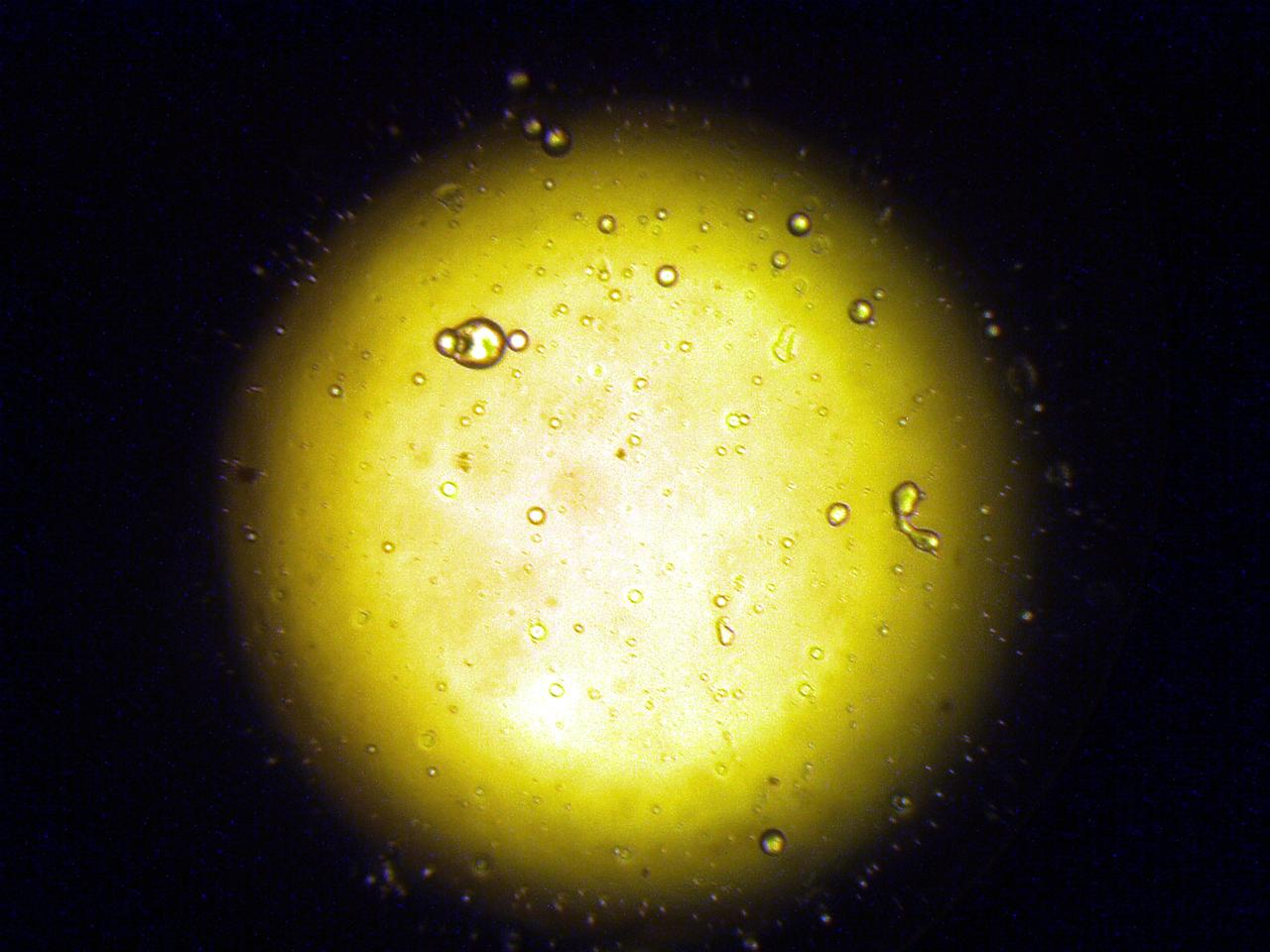
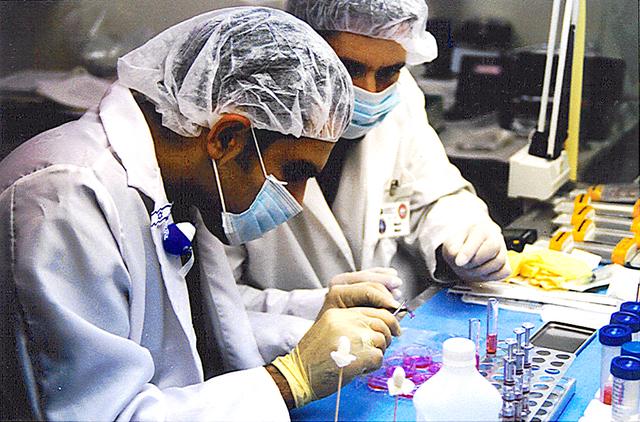
Experiments to seek solutions for a range of biomedical issues are at the heart of several investigations that will be hosted by the Commercial Instrumentation Technology Associates (ITA), Inc. Biomedical Experiments (CIBX-2) payload. CIBX-2 is unique, encompassing more than 20 separate experiments including cancer research, commercial experiments, and student hands-on experiments from 10 schools as part of ITA's ongoing University Among the Stars program. Student Marnix Aklian and ITA's Mark Bem prepare biological samples for flight as part of ITA's hands-on student outreach program on STS-95. Similar activities are a part of the CIBX-2 payload. The experiments are sponsored by NASA's Space Product Development Program (SPD).
Space Product Development (SPD)
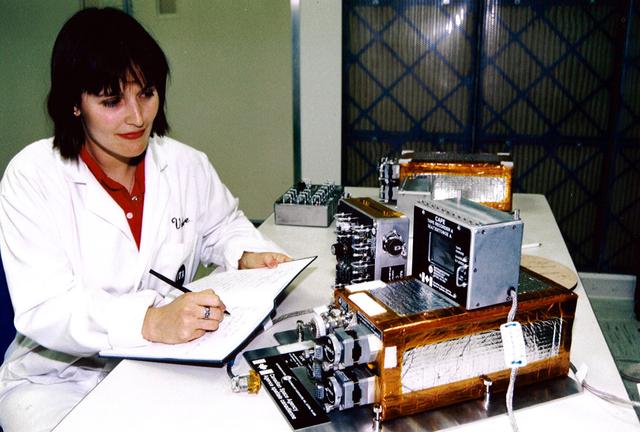
Experiments to seek solutions for a range of biomedical issues are at the heart of several investigations that will be hosted by the Commercial Instrumentation Technology Associates (ITA), Inc. Biomedical Experiments (CIBX-2) payload. CIBX-2 is unique, encompassing more than 20 separate experiments including cancer research, commercial experiments, and student hands-on experiments from 10 schools as part of ITA's ongoing University Among the Stars program. Valerie Cassanto of ITA checks the Canadian Protein Crystallization Experiment (CAPE) carried by STS-86 to Mir in 1997. The experiments are sponsored by NASA's Space Product Development Program (SPD).
Space Product Development (SPD)
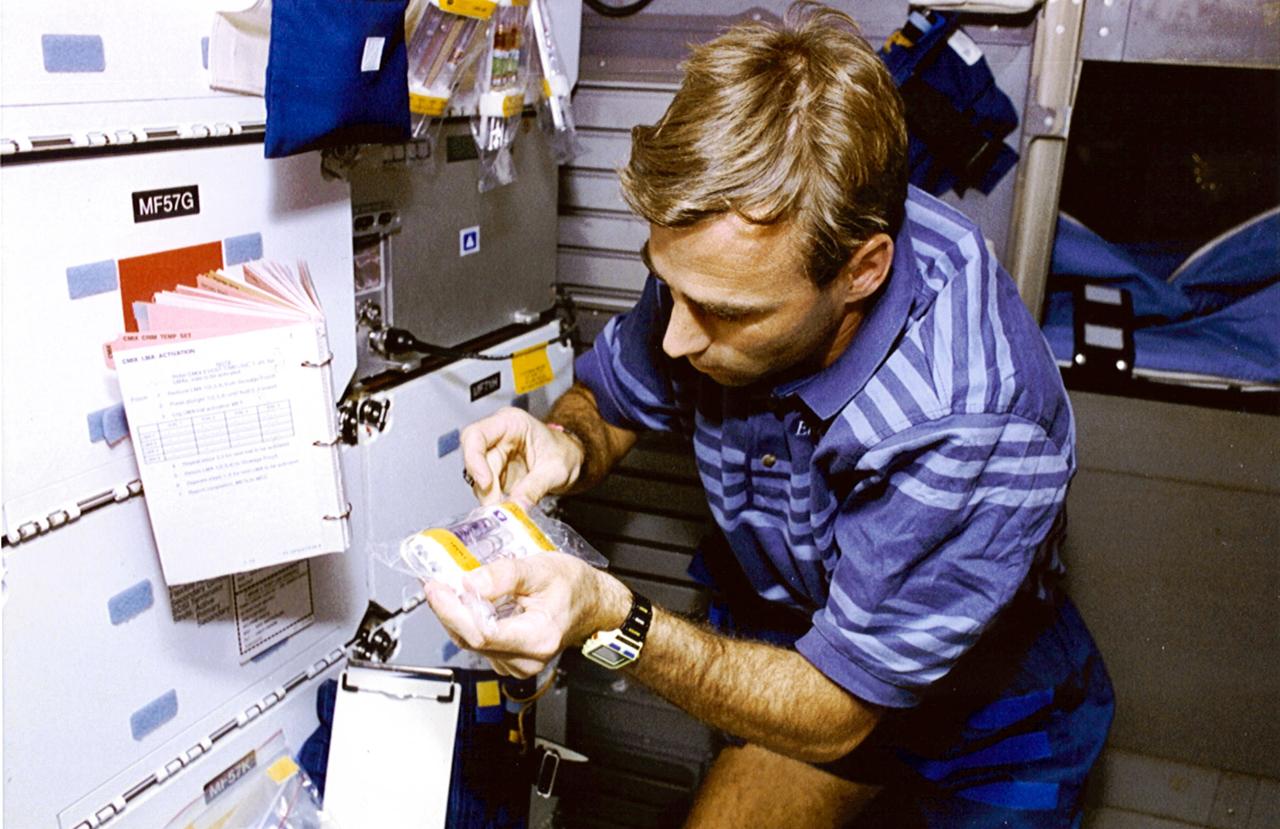
Experiments to seek solutions for a range of biomedical issues are at the heart of several investigations that will be hosted by the Commercial Instrumentation Technology Associates (ITA), Inc. Biomedical Experiments (CIBX-2) payload. CIBX-2 is unique, encompassing more than 20 separate experiments including cancer research, commercial experiments, and student hands-on experiments from 10 schools as part of ITA's ongoing University Among the Stars program. Astronaut William G. Gregory activates Liquids Mixing Apparatus (LMA) vials during STS-67. Other LMAs hang at top on the face of the middeck locker array. The experiments are sponsored under NASA's Space Product Development Program (SPD).
Space Product Development (SPD)
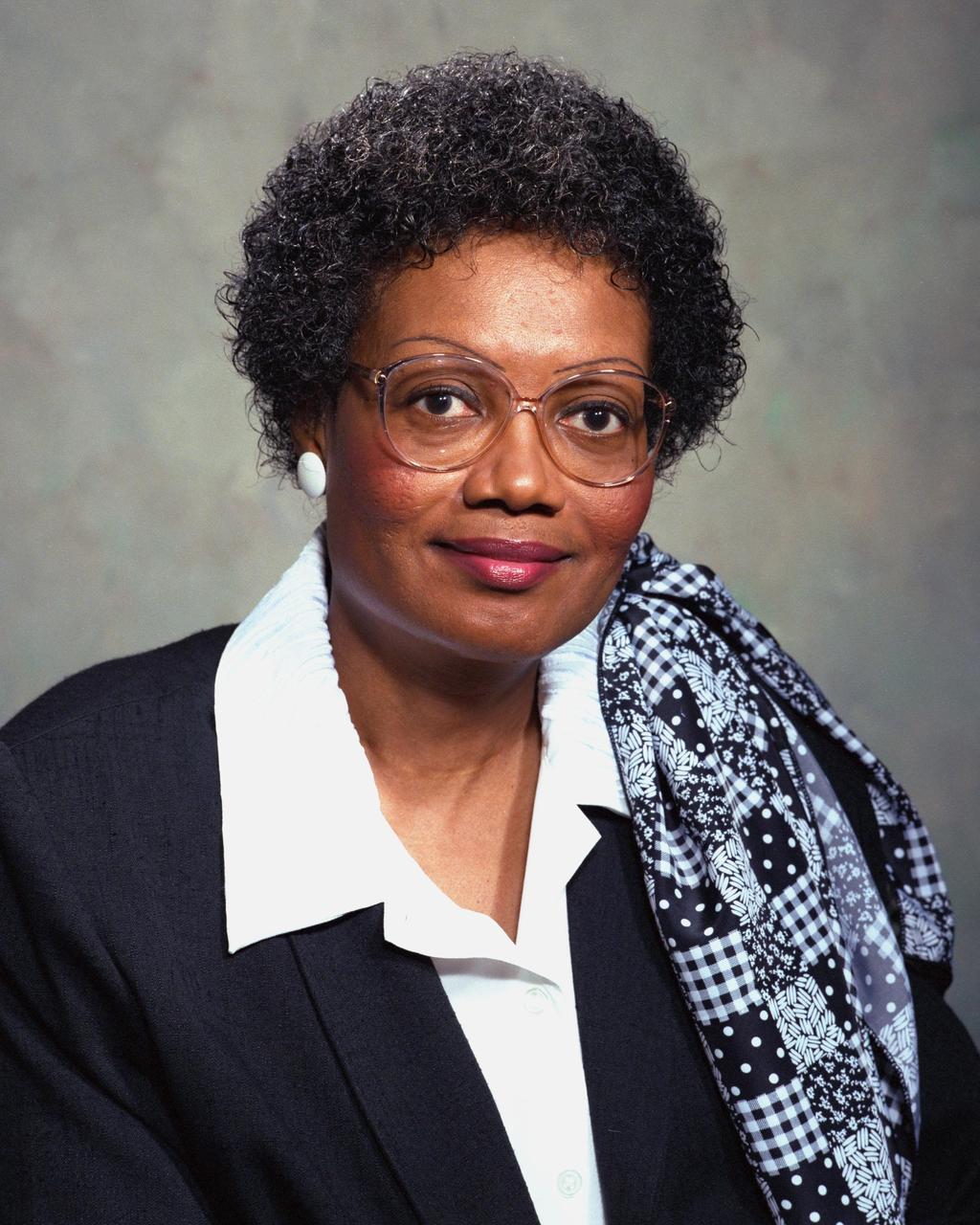
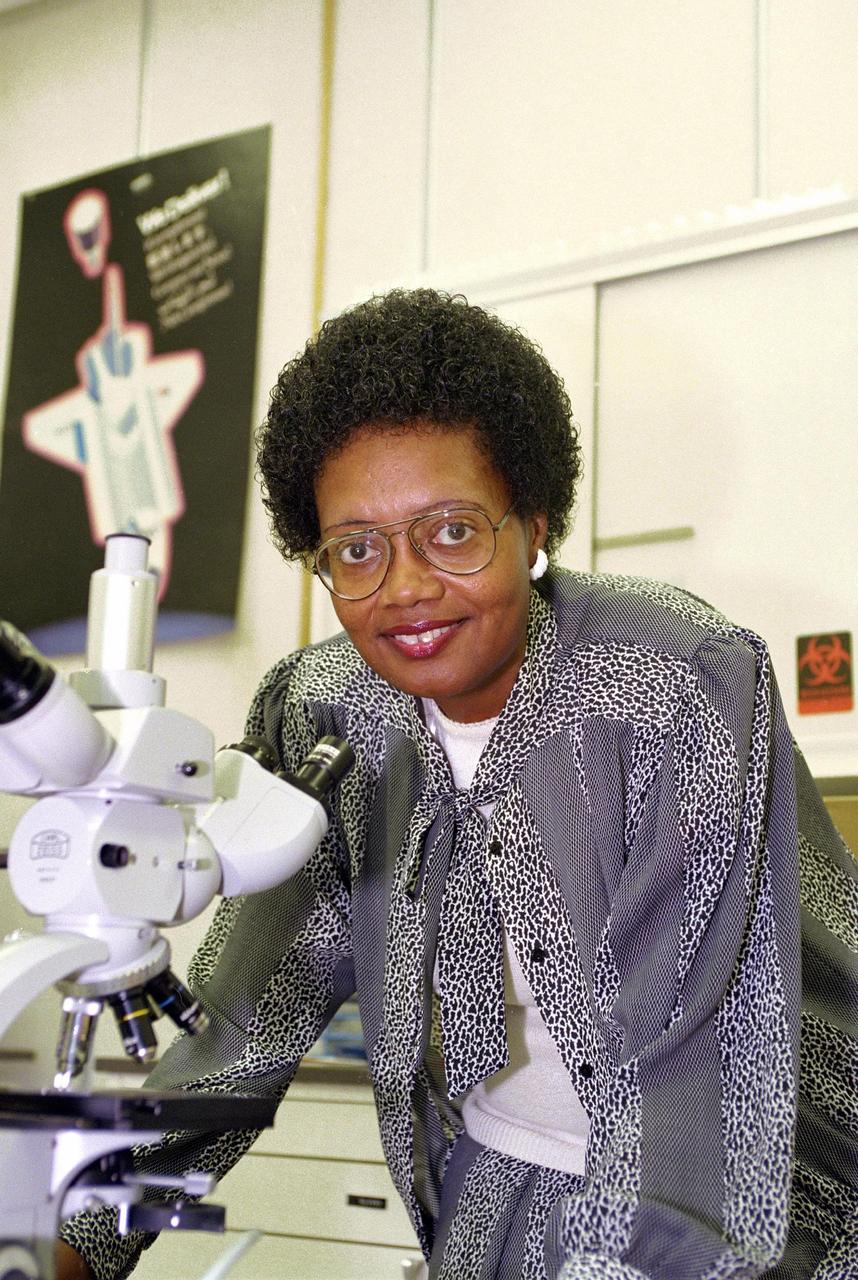
KENNEDY SPACE CENTER, FLA. -- Dr. Irene Duhart Long is the director, Biomedical Operations and Research Office, at the Kennedy Space Center effective July 24, 1994.  She is responsible for the program management of the center's aerospace and occupational medicine, life sciences research, environmental health programs and the operations management of the life sciences support facilities.  Dr. Long also is responsible for providing the coordinating medical, environmental monitoring and environmental health support to launch and landing activities and day-to-day institutional functions.
KSC-94PC-0901
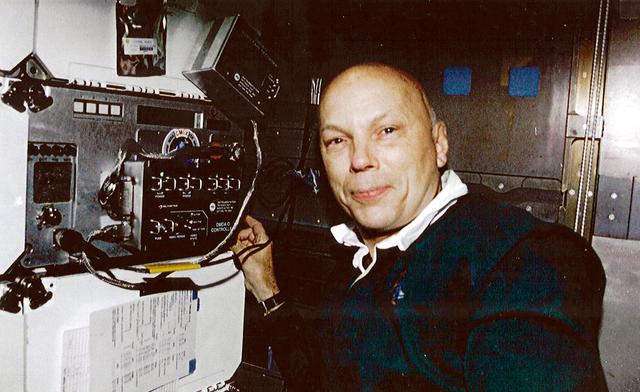
Experiments to seek solutions for a range of biomedical issues are at the heart of several investigations that will be hosted by the Commercial Instrumentation Technology Associates (ITA), Inc. The biomedical experiments CIBX-2 payload is unique, encompassing more than 20 separate experiments including cancer research, commercial experiments, and student hands-on experiments from 10 schools as part of ITA's ongoing University Among the stars program. Here, Astronaut Story Musgrave activates the CMIX-5 (Commercial MDA ITA experiment) payload in the Space Shuttle mid deck during the STS-80 mission in 1996 which is similar to CIBX-2. The experiments are sponsored by NASA's Space Product Development Program (SPD).
Space Product Development (SPD)
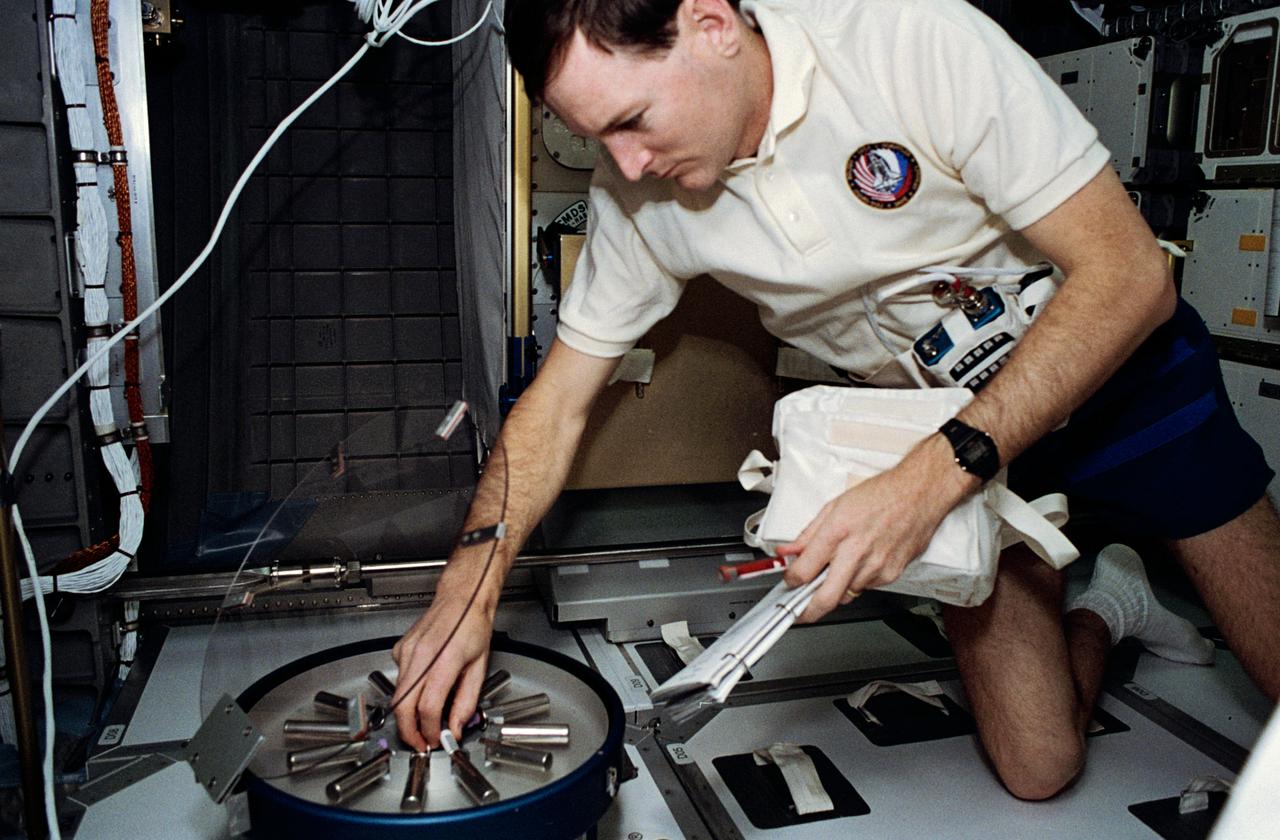
STS060-301-003 (3-11 Feb 1994) --- Astronaut Kenneth S. Reightler, STS-60 pilot, processes biomedical samples in a centrifuge aboard the SPACEHAB module.  Reightler joined four other NASA astronauts and a Russian cosmonaut for eight days of research aboard the Space Shuttle Discovery.
Astronaut Kenneth Reightler processes biomedical samples in SPACEHAB
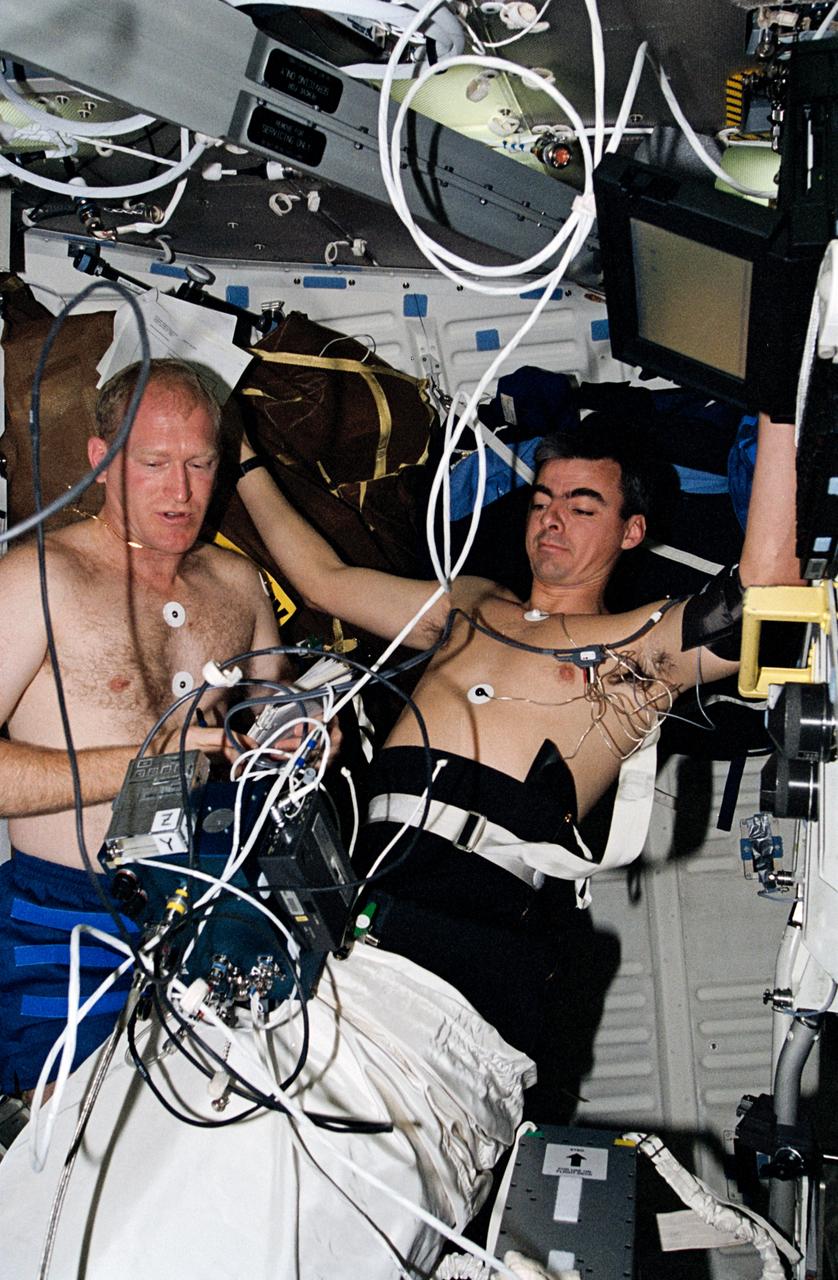
STS062-07-010 (4-18 March 1994) --- Astronaut Andrew M. Allen, pilot, participates in biomedical testing as he does a "soak" in the Lower Body Negative Pressure (LBNP) apparatus on the Columbia's middeck.  Astronaut Charles D. (Sam) Gemar, mission specialist, monitors readouts from the test.
Astronauts Gemar and Allen work with lower body negative pressure experiment
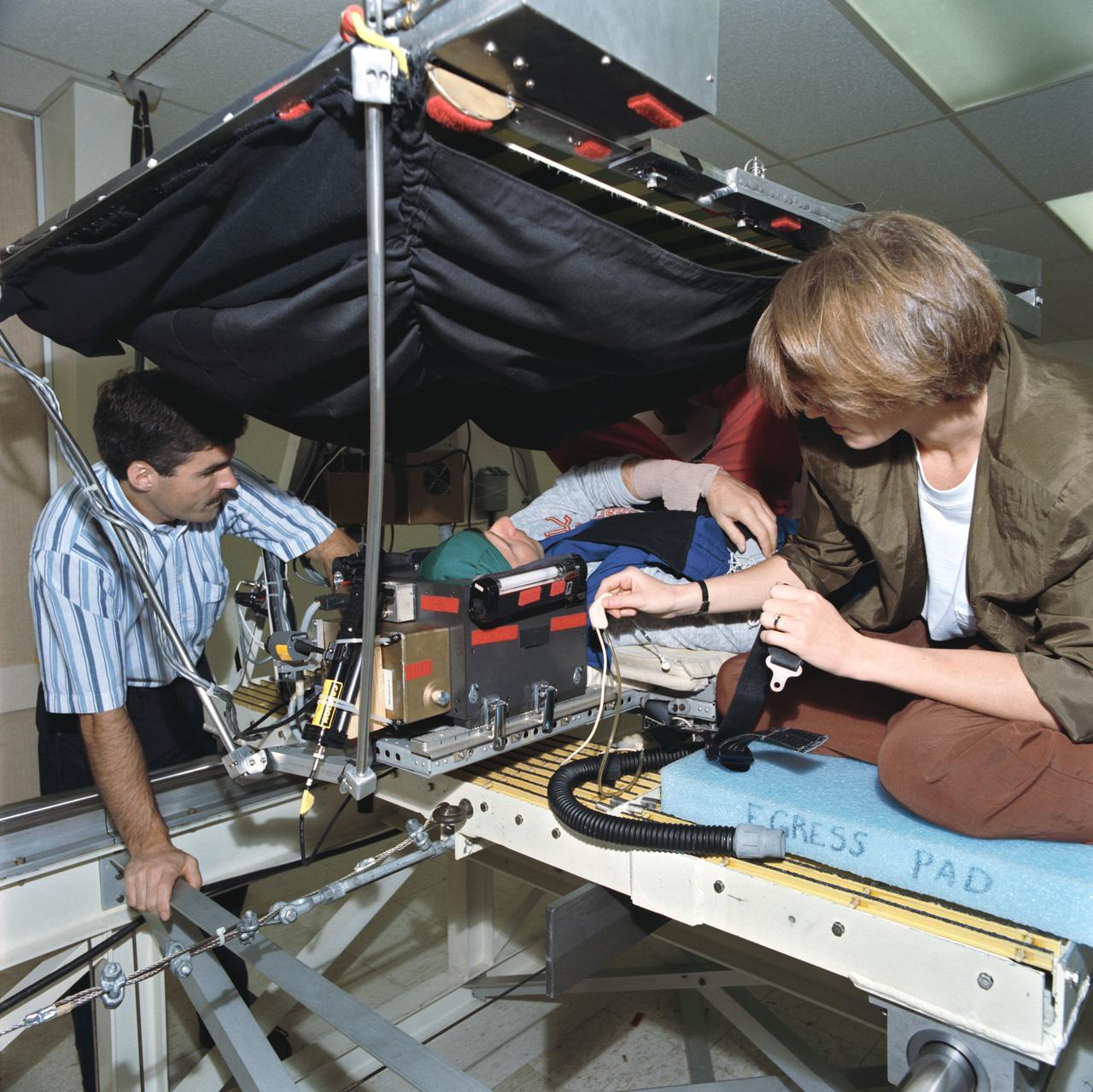
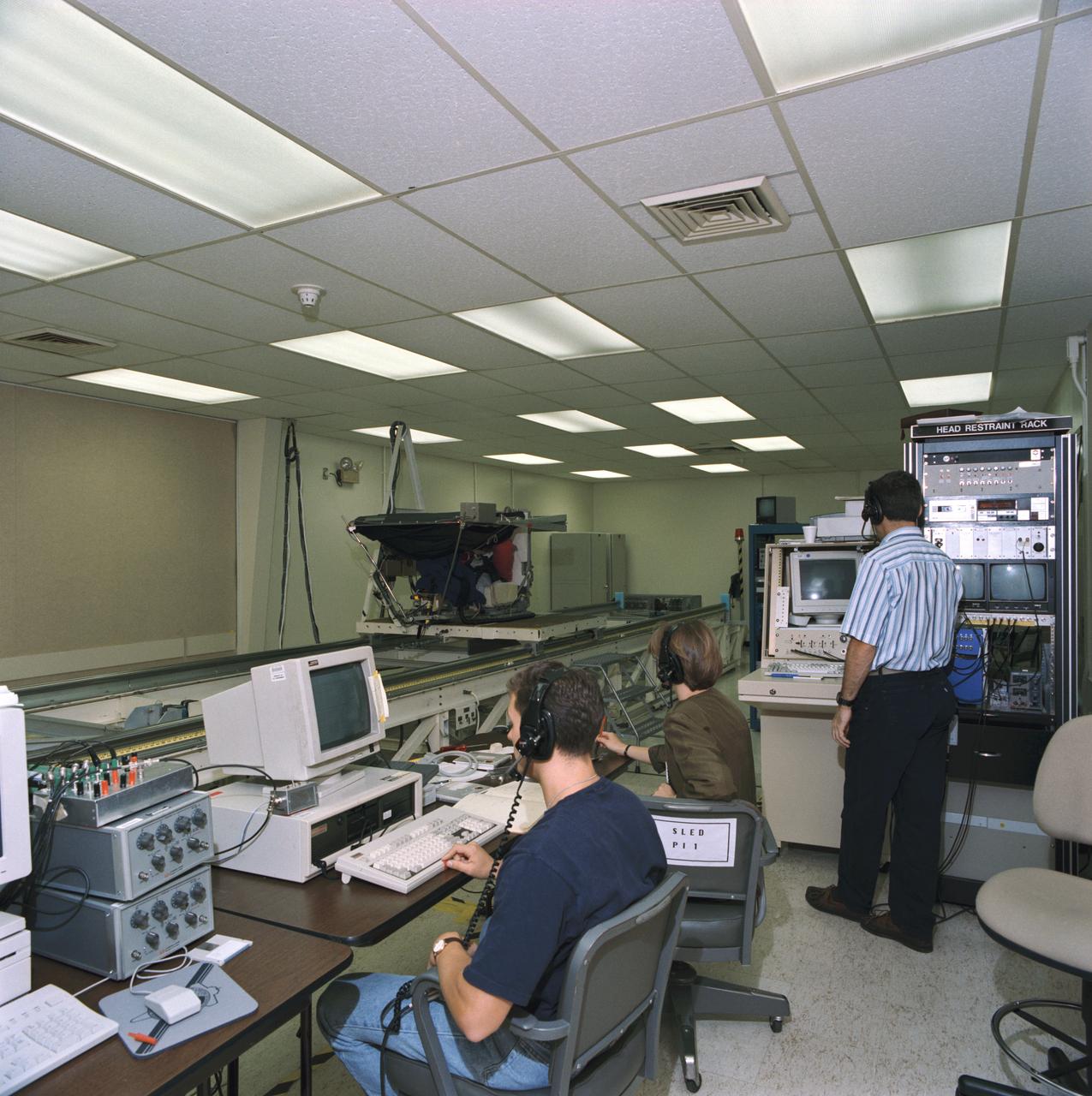
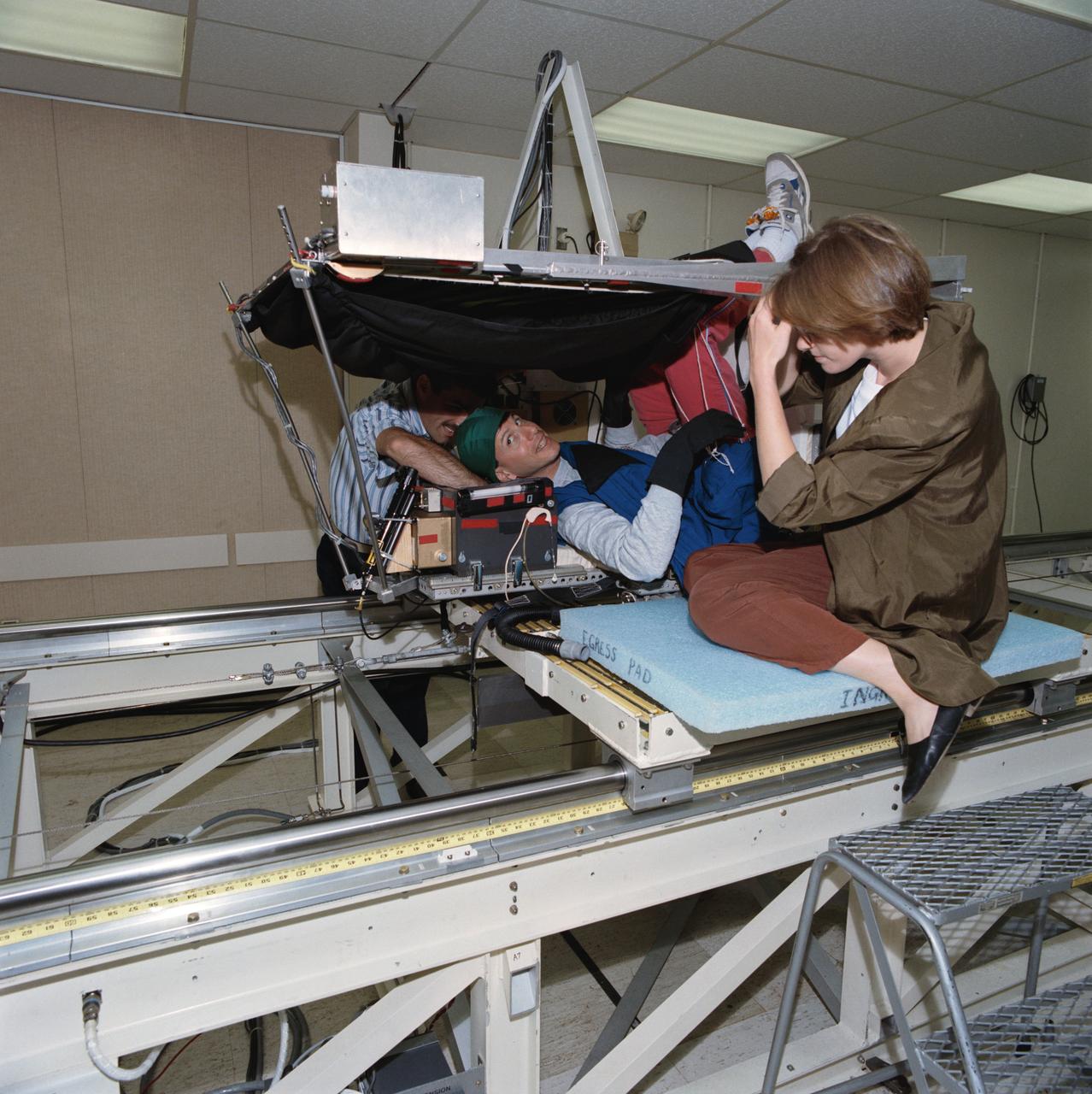
S93-45314 (29 Sept 1993) --- Payload specialist Martin J. Fettman, in an oscillating sled device, participates in a data collection project for neurovestibular functions.  The seven Spacelab Life Sciences (SLS-2) crewmembers devoted a full day to miscellaneous biomedical data collection in preparation for next month's two week mission aboard Columbia.
Payload specialist Martin Fettmen during data collection neurovestibular test
S93-45363 (29 Sept 1993) --- Payload specialist Martin J. Fettman, in an oscillating sled device, participates in a data collection project for neurovestibular functions.  The seven Spacelab Life Sciences (SLS-2) crewmembers devoted a full day to miscellaneous biomedical data collection in preparation for next month's two week mission aboard Columbia.
STS-58 crewmembers participate in baseline data collection
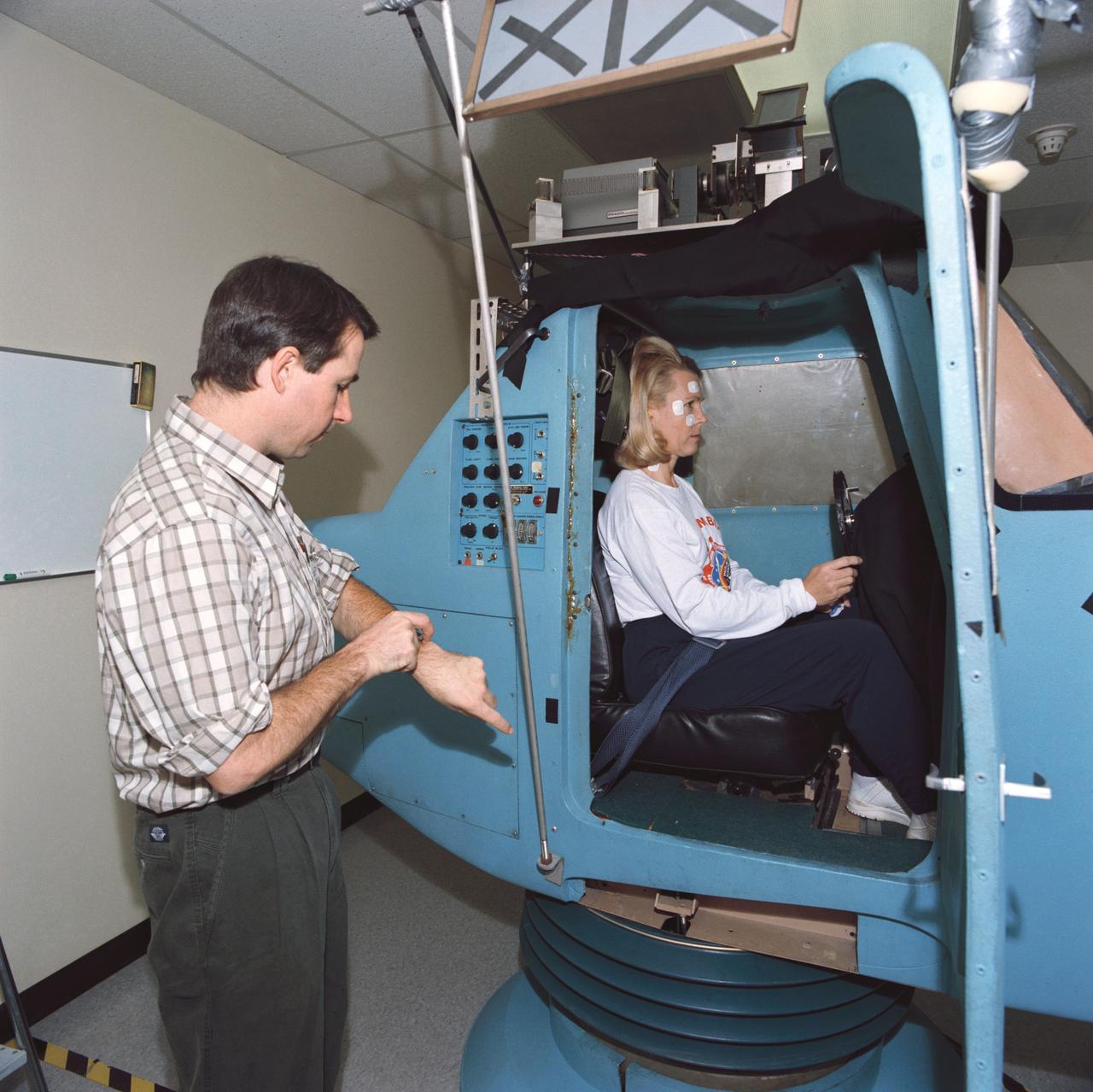
S93-45373 (29 Sept 1993) --- Astronaut Rhea Seddon, STS-58 payload commander, is in a piloting simulator as part of a pre-flight data collection project for neurovestibular functions.  The seven Spacelab Life Sciences (SLS-2) crew members devoted a full day to miscellaneous biomedical data collection in preparation for next month's two week mission aboard Columbia.
STS-58 crewmembers participate in baseline data collection
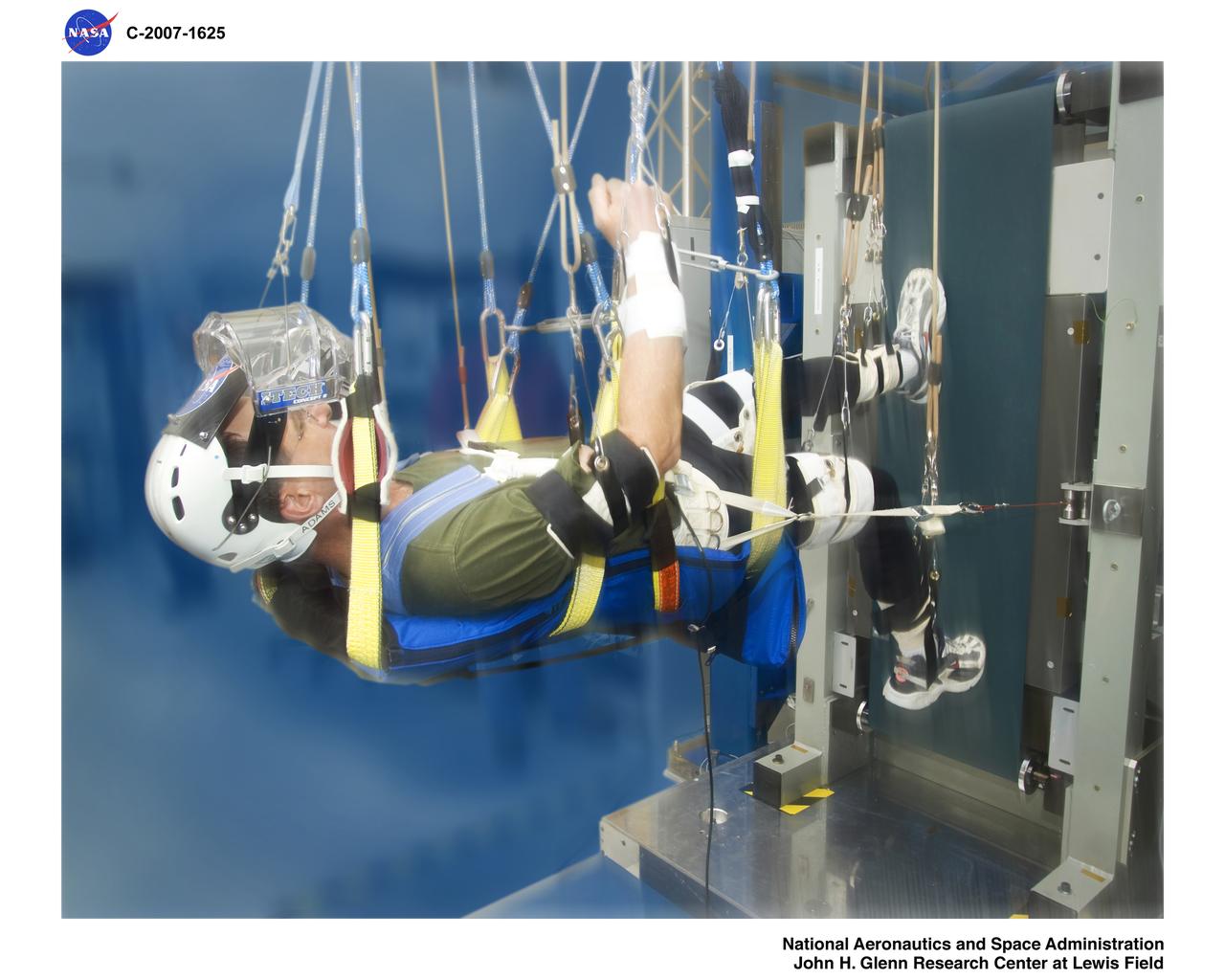
Physical Sciences and Biomedical Technologies in Space - Enhanced Zero Gravity Locomotion (eZLS)
GRC-2007-C-01625
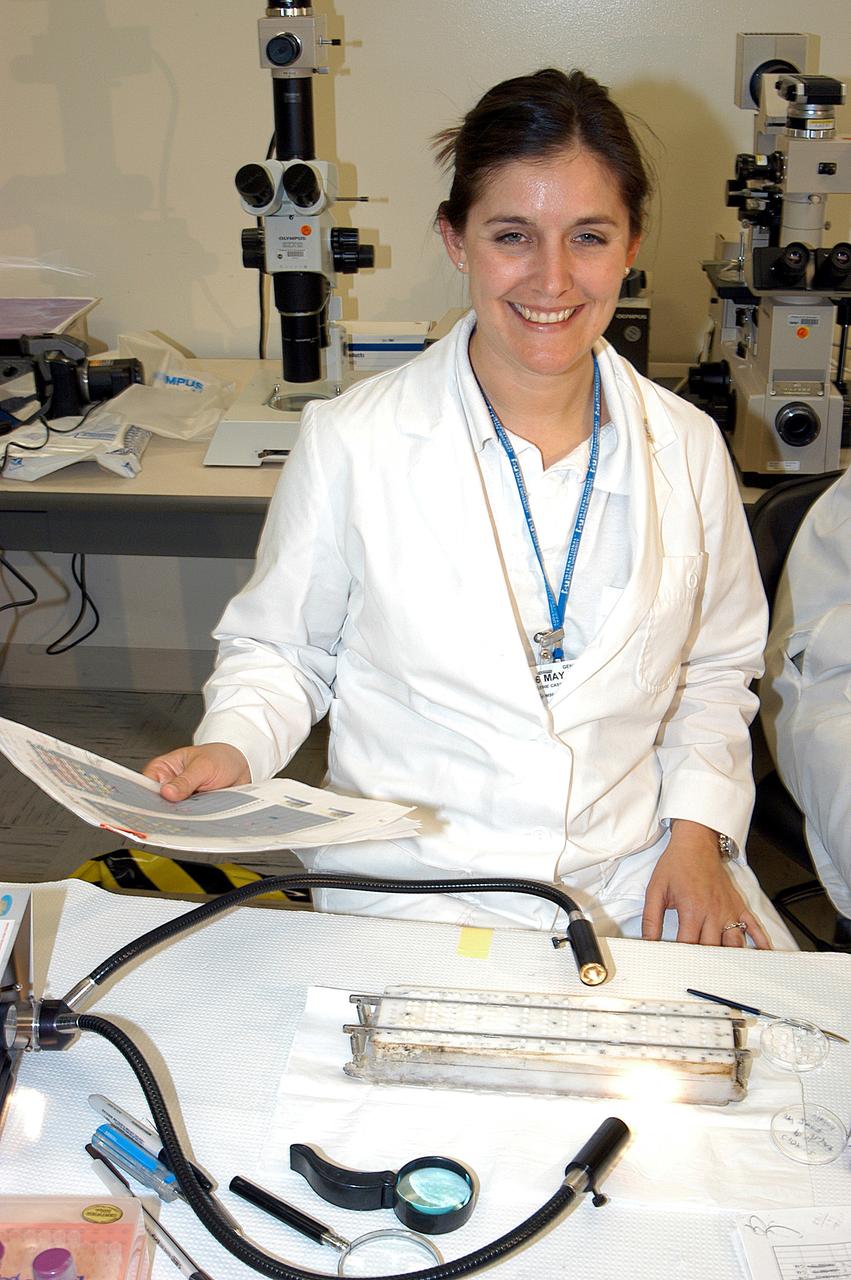
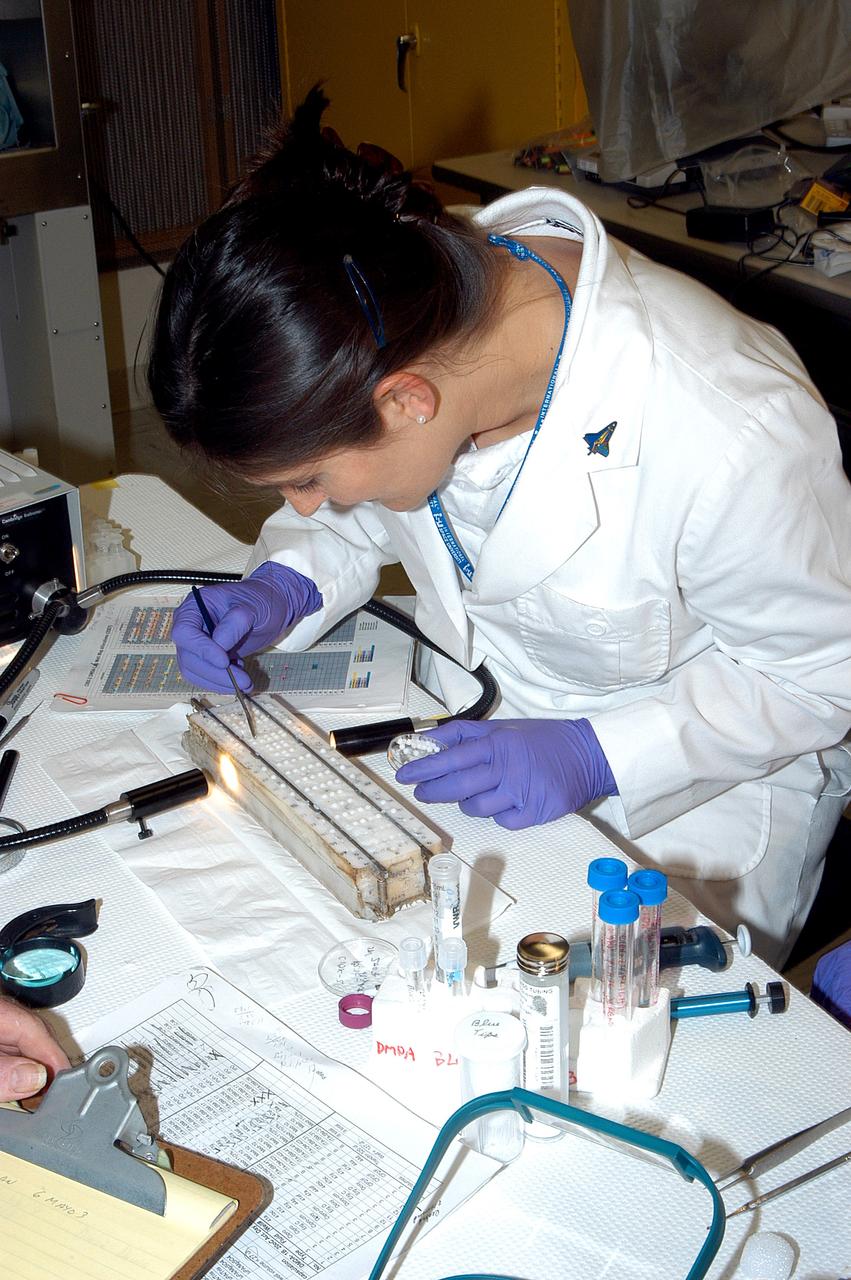
KENNEDY SPACE CENTER, FLA. -   Valerie Cassanto is one of the scientists recovering experiments found during the search for Columbia debris.  Included in the Commercial ITA Biomedical Experiments payload on mission STS-107 are urokinase cancer research, microencapsulation of drugs, the Growth of Bacterial Biofilm on Surfaces during Spaceflight (GOBBSS), and tin crystal formation.
KENNEDY SPACE CENTER, FLA. - Valerie Cassanto is one of the scientists recovering experiments found during the search for Columbia debris. Included in the Commercial ITA Biomedical Experiments payload on mission STS-107 are urokinase cancer research, microencapsulation of drugs, the Growth of Bacterial Biofilm on Surfaces during Spaceflight (GOBBSS), and tin crystal formation.
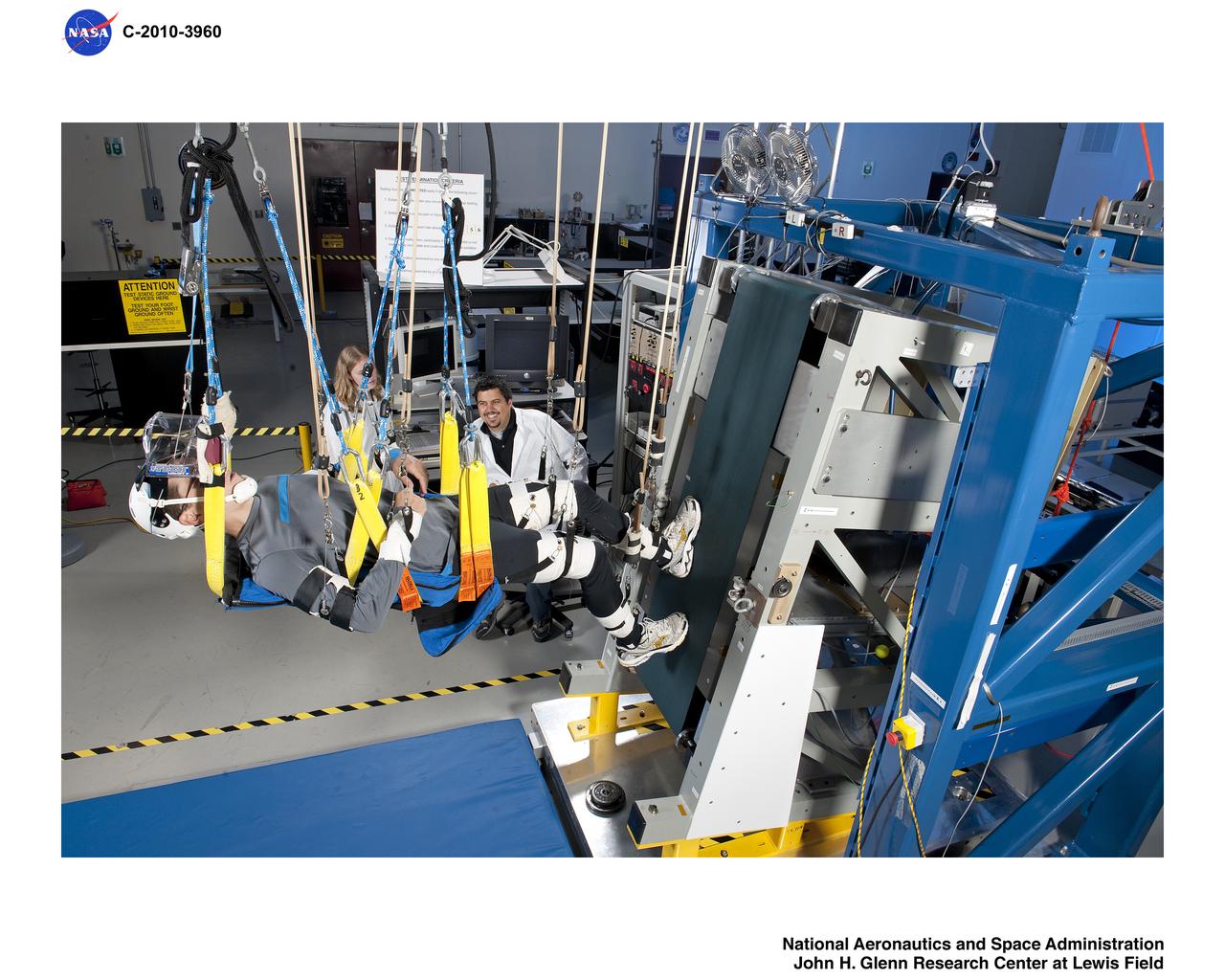
National Space Biomedical Research Institute Monitoring Bone Health Study Lunar Work Tasks
GRC-2010-C-03960
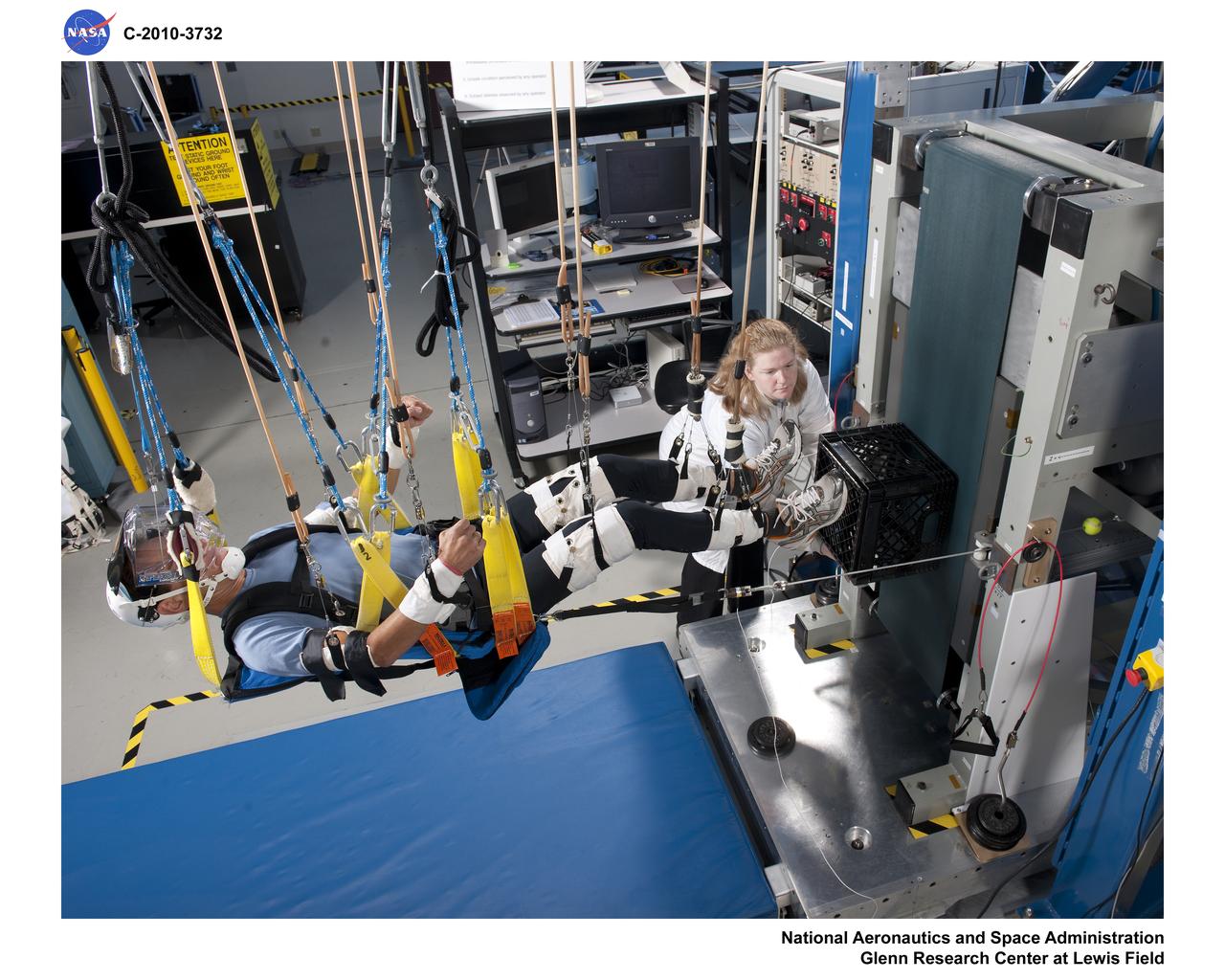
National Space Biomedical Research Institute Monitoring Bone Health Study Lunar Work Tasks
GRC-2010-C-03732
KENNEDY SPACE CENTER, FLA. -- Official portrait, Dr. Irene D. Long, director, Biomedical Office.
KSC-98pc0007
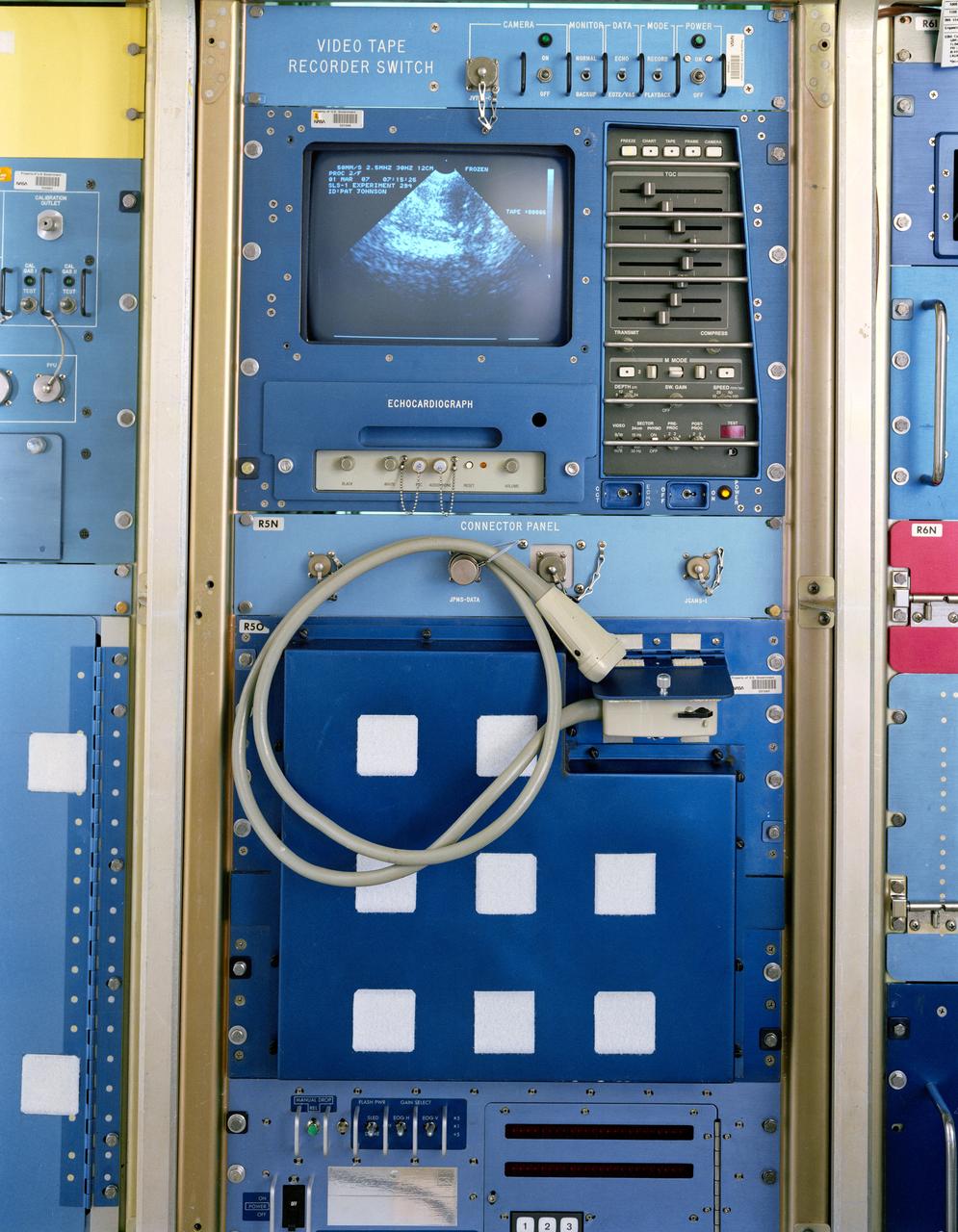
S87-28936 (March 1987) --- The Spacelab Life Sciences-1 (SLS-1) echocardiograph, installed in a science module rack, displays the image of a human heart.  One of the objectives on SLS-1 is the investigation of the effects of microgravity on heart size and function.
BIOMEDICAL - MEDICAL (ECHOCARDIOGRAPH) - JSC
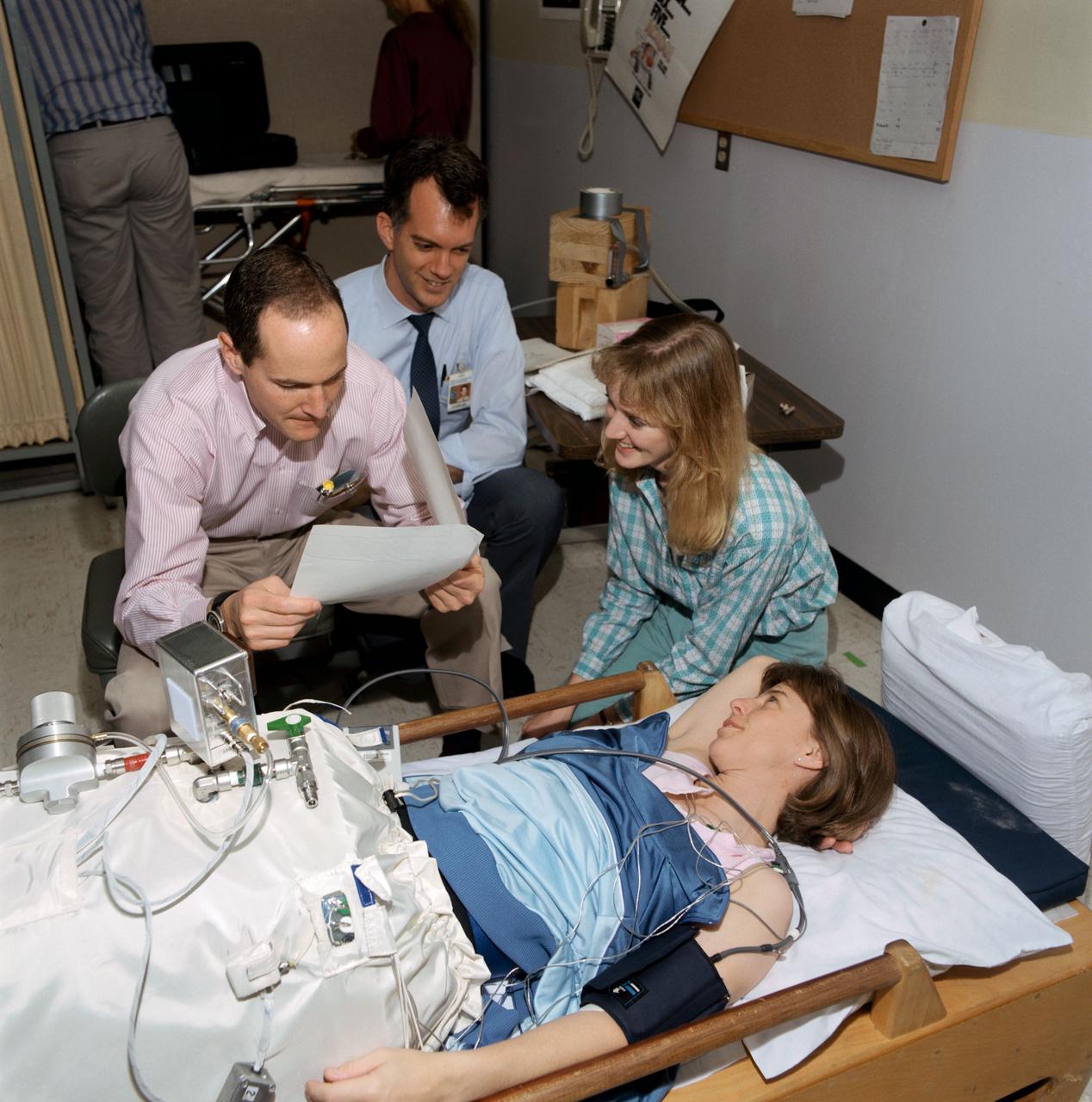
STS-32 crewmembers test the inflight lower body negative pressure (LBNP) device. Mission Specialist (MS) Bonnie J. Dunbar (lying down) inside the cylindrical LBNP device prepares for testing as principal investigator Dr. John Charles, a cardiovascular scientist in JSC's Space Biomedical Research Institute, and Michele Jones, a KRUG International biomedical engineer, review procedures with MS G. David Low. The inflight LBNP will be part of detailed supplementary objective (DSO) 0478. Photo taken by JSC photographer Jack Jacob.
STS-32 crewmembers test DSO 0478 lower body negative pressure (LBNP) device
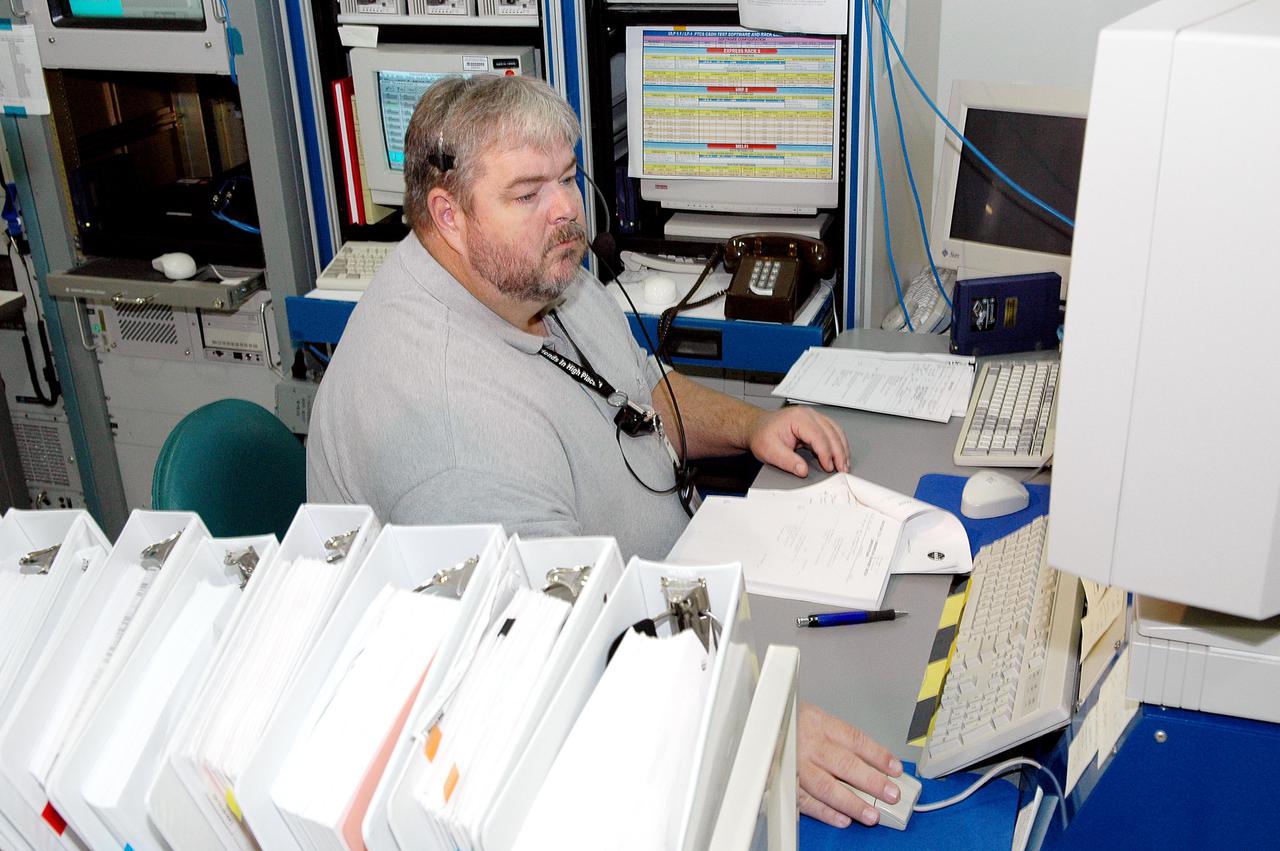
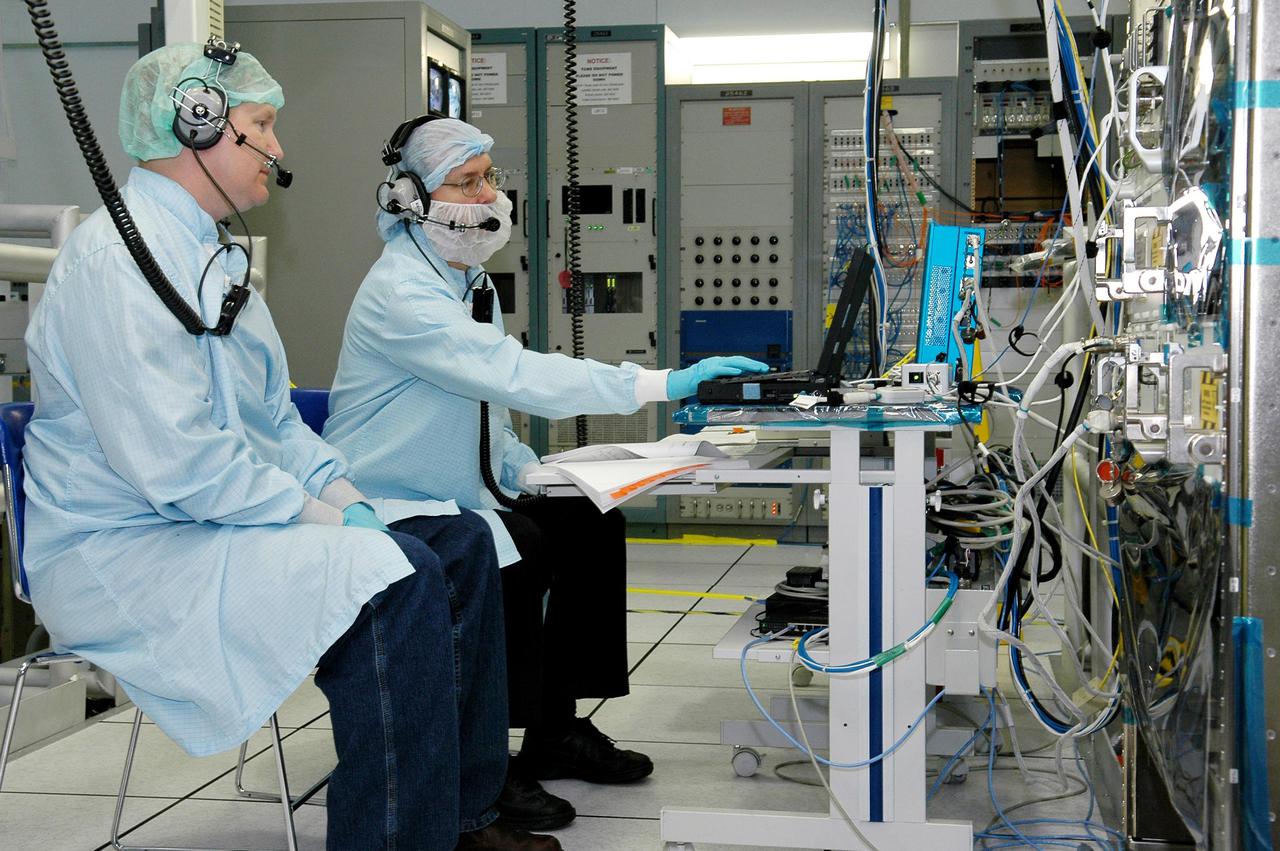
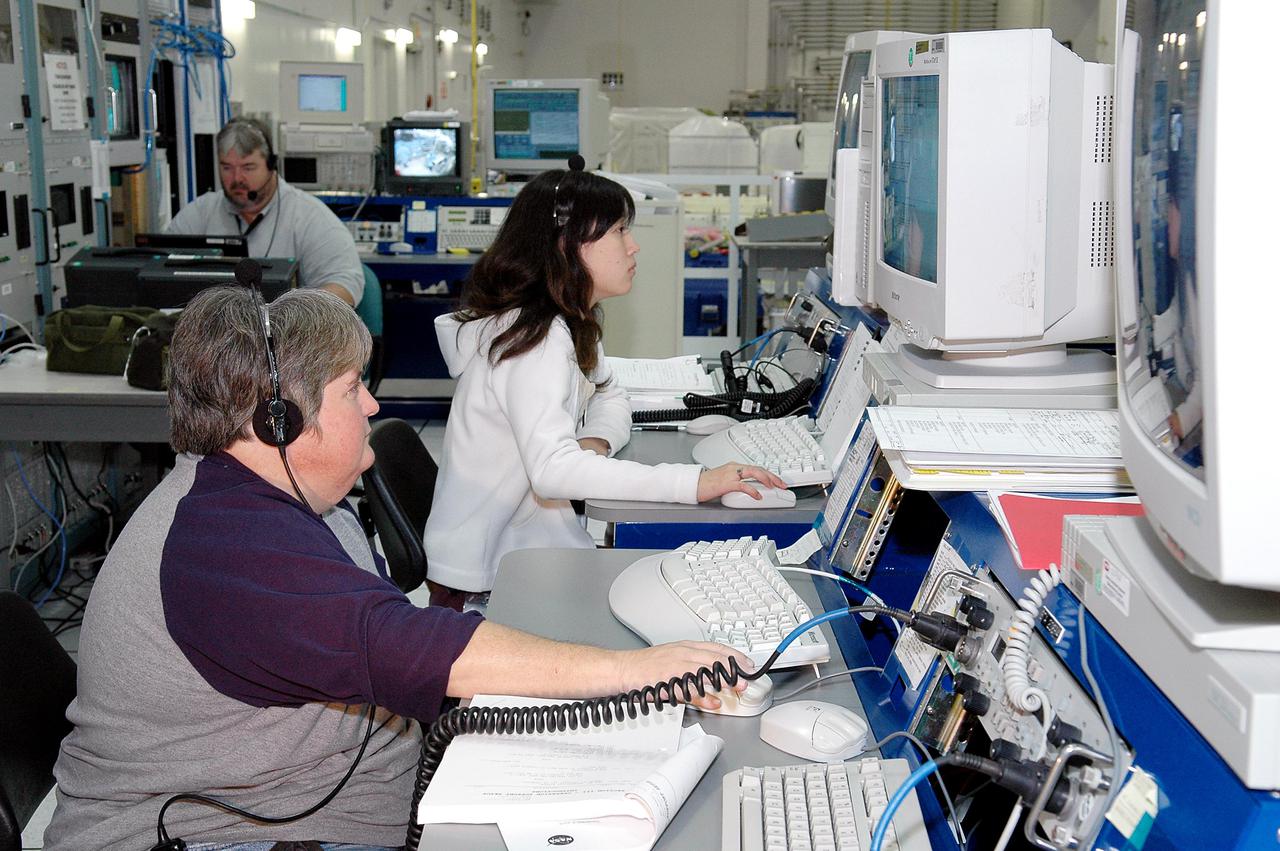
KENNEDY SPACE CENTER, FLA. -    Joe Mounts, with Boeing, monitors the Payload Test and Checkout System for the Human Research Facility (HRF) Rack -2 payload. The HRF-2 is scheduled to fly on Return to Flight Space Shuttle mission STS-114.  The HRF-2 will deliver additional biomedical instrumentation and research capability to the International Space Station.  HRF Rack 1 contains an ultrasound unit and gas analyzer system and has been operational in the U.S. Lab since May 2001.  HRF-2 will also be installed in the U. S. Lab and will provide structural, power, thermal, command and data handling, and communication and tracking interfaces between the HRF biomedical instrumentation and the U. S. Lab.
KSC-04pd-2497
KENNEDY SPACE CENTER, FLA. - Valerie Cassanto, with Instrumentation Technology Associates, Inc., examines closely the container containing one of the experiments carried on mission STS-107.  Several experiments were found during the search for Columbia debris.  Included in the Commercial ITA Biomedical Experiments payload on mission STS-107 are urokinase cancer research, microencapsulation of drugs, the Growth of Bacterial Biofilm on Surfaces during Spaceflight (GOBBSS), and tin crystal formation.
KENNEDY SPACE CENTER, FLA. - Valerie Cassanto, with Instrumentation Technology Associates, Inc., examines closely the container containing one of the experiments carried on mission STS-107. Several experiments were found during the search for Columbia debris. Included in the Commercial ITA Biomedical Experiments payload on mission STS-107 are urokinase cancer research, microencapsulation of drugs, the Growth of Bacterial Biofilm on Surfaces during Spaceflight (GOBBSS), and tin crystal formation.
KENNEDY SPACE CENTER, FLA. -  Valerie Cassanto, Instrumentation Technology Associates, Inc., studies one of the experiments carried on mission STS-107. Several experiments were found during the search for Columbia debris. Included in the Commercial ITA Biomedical Experiments payload on mission STS-107 are urokinase cancer research, microencapsulation of drugs, the Growth of Bacterial Biofilm on Surfaces during Spaceflight (GOBBSS), and tin crystal formation.  The latter was sponsored by the Pembroke Pines Charter Middle School.
KENNEDY SPACE CENTER, FLA. - Valerie Cassanto, Instrumentation Technology Associates, Inc., studies one of the experiments carried on mission STS-107. Several experiments were found during the search for Columbia debris. Included in the Commercial ITA Biomedical Experiments payload on mission STS-107 are urokinase cancer research, microencapsulation of drugs, the Growth of Bacterial Biofilm on Surfaces during Spaceflight (GOBBSS), and tin crystal formation. The latter was sponsored by the Pembroke Pines Charter Middle School.
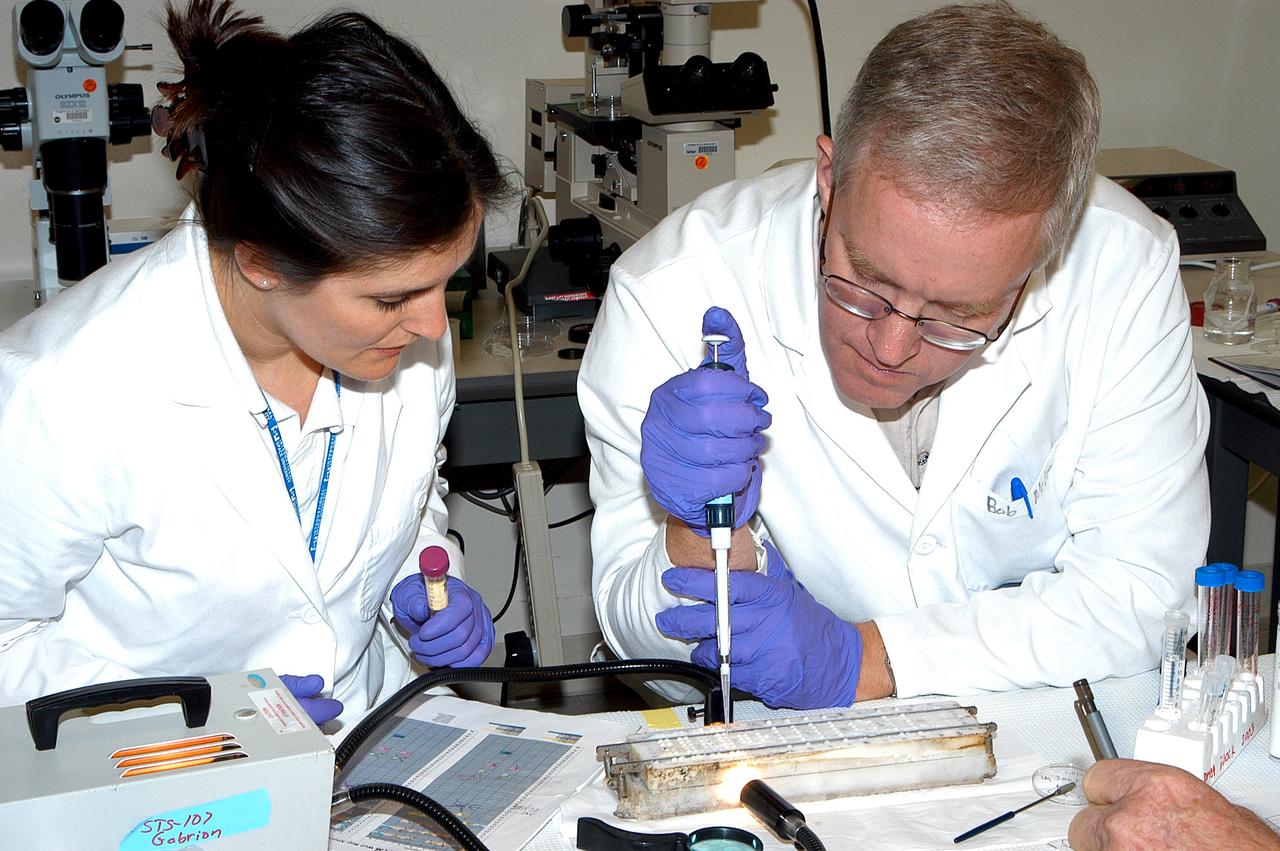
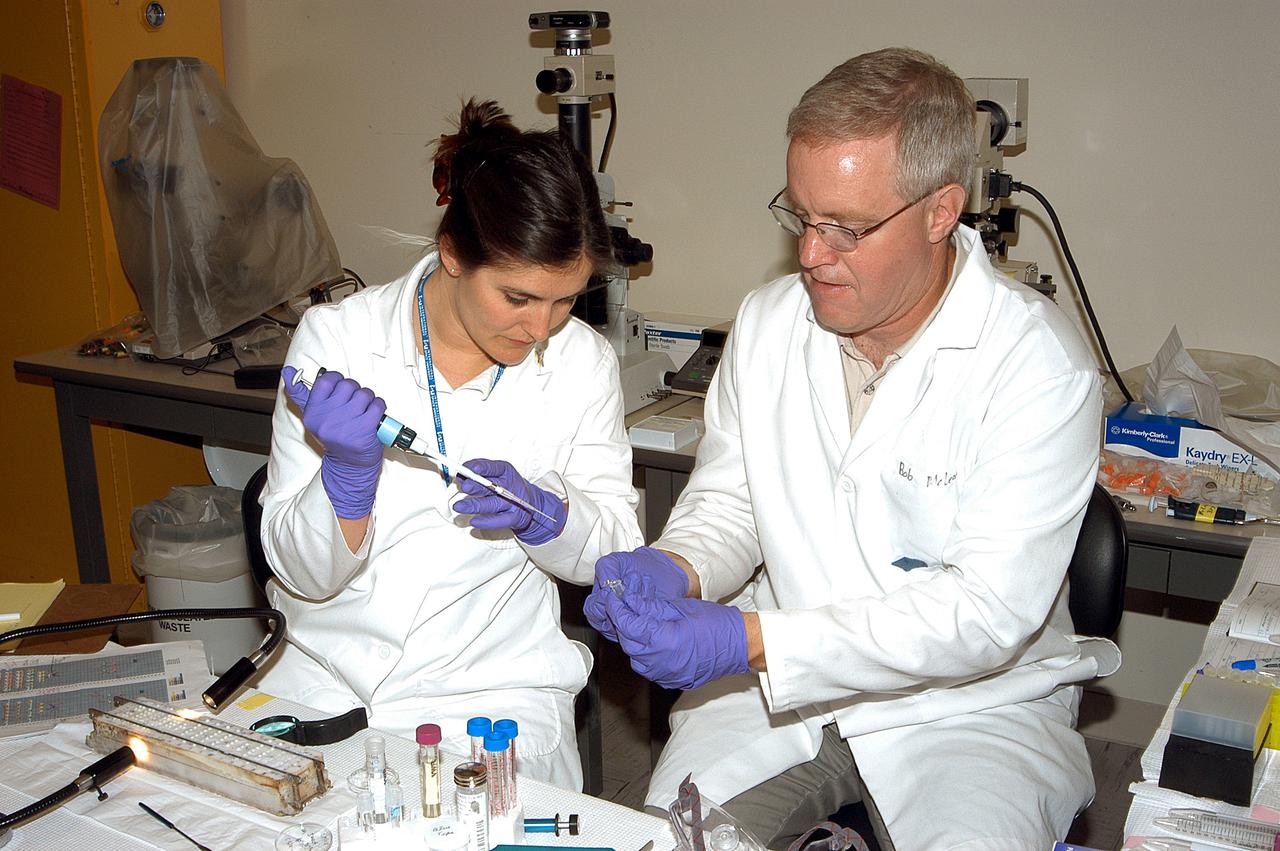
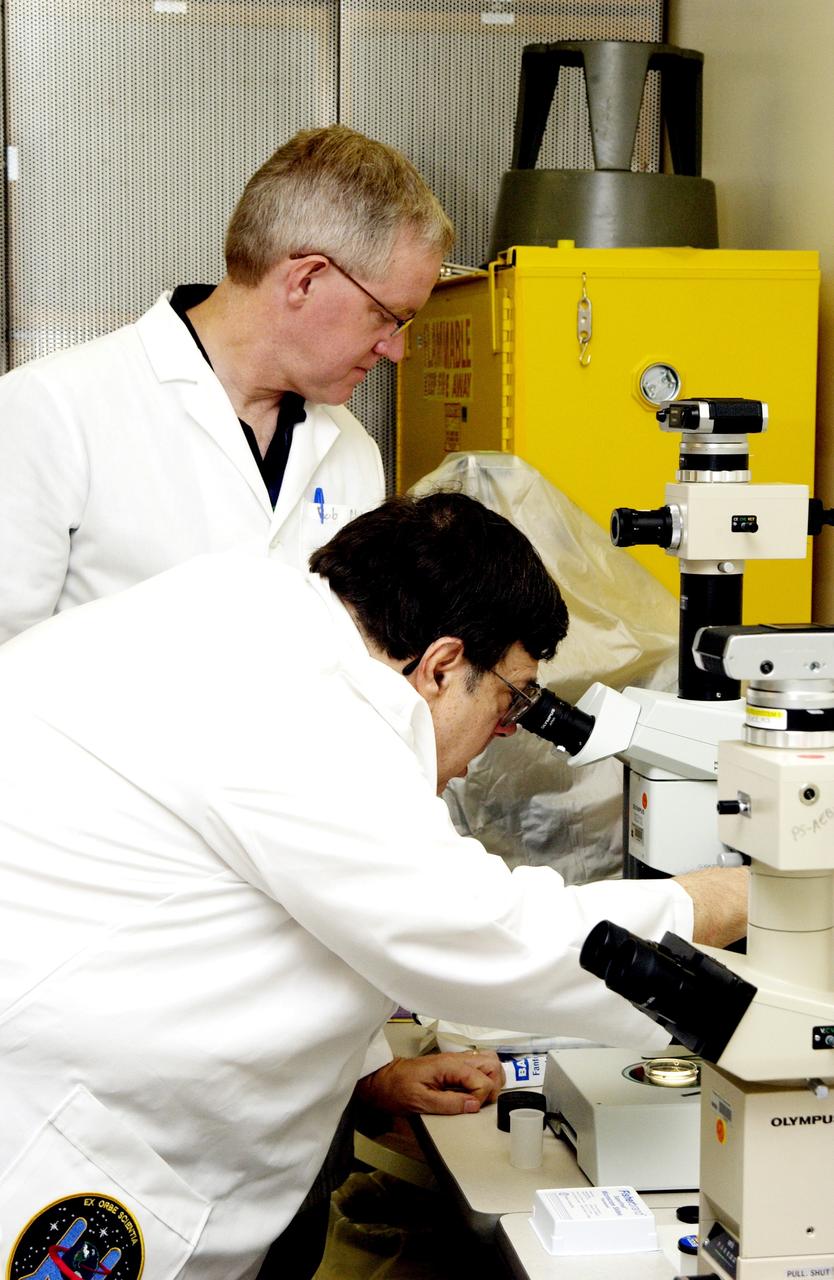
KENNEDY SPACE CENTER, FLA. - Valerie Cassanto, with Instrumentation Technology Associates, Inc., and Bob McLean, from the Southwest Texas State University, transfer to a new container material from one of the experiments carried on mission STS-107.  Several experiments were found during the search for Columbia debris.  Included in the Commercial ITA Biomedical Experiments payload on mission STS-107 are urokinase cancer research, microencapsulation of drugs, the Growth of Bacterial Biofilm on Surfaces during Spaceflight (GOBBSS), and tin crystal formation.
KENNEDY SPACE CENTER, FLA. - Valerie Cassanto, with Instrumentation Technology Associates, Inc., and Bob McLean, from the Southwest Texas State University, transfer to a new container material from one of the experiments carried on mission STS-107. Several experiments were found during the search for Columbia debris. Included in the Commercial ITA Biomedical Experiments payload on mission STS-107 are urokinase cancer research, microencapsulation of drugs, the Growth of Bacterial Biofilm on Surfaces during Spaceflight (GOBBSS), and tin crystal formation.
KENNEDY SPACE CENTER, FLA. - The apparatus shown was designed to hold microcapsules for research on mission STS-107.  It is one over several  included in the Commercial ITA Biomedical Experiments payload.  The box was recently recovered during the search for Columbia debris.  The drug delivery system and spaceflight hardware was developed jointly by JSC, the Institute for Research Inc. and Instrumentation Technology Associates Inc. to conduct microencapsulation experiments under microgravity conditions.
KENNEDY SPACE CENTER, FLA. - The apparatus shown was designed to hold microcapsules for research on mission STS-107. It is one over several included in the Commercial ITA Biomedical Experiments payload. The box was recently recovered during the search for Columbia debris. The drug delivery system and spaceflight hardware was developed jointly by JSC, the Institute for Research Inc. and Instrumentation Technology Associates Inc. to conduct microencapsulation experiments under microgravity conditions.
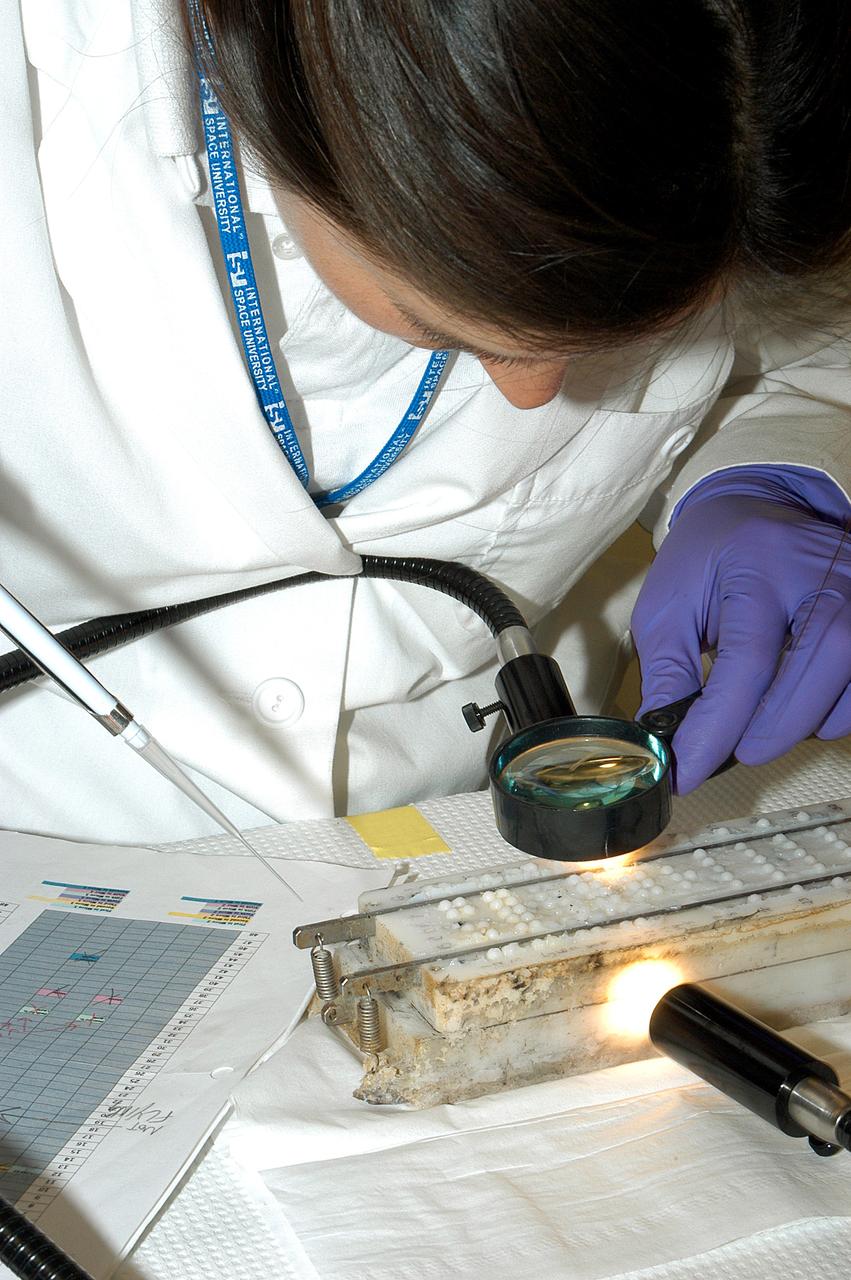
KENNEDY SPACE CENTER, FLA. -  Valerie Cassanto, with Instrumentation Technology Associates, Inc., works on an experiment found during the search for Columbia debris.  Included in the Commercial ITA Biomedical Experiments payload on mission STS-107 are urokinase cancer research, microencapsulation of drugs, the Growth of Bacterial Biofilm on Surfaces during Spaceflight (GOBBSS), and tin crystal formation.
KENNEDY SPACE CENTER, FLA. - Valerie Cassanto, with Instrumentation Technology Associates, Inc., works on an experiment found during the search for Columbia debris. Included in the Commercial ITA Biomedical Experiments payload on mission STS-107 are urokinase cancer research, microencapsulation of drugs, the Growth of Bacterial Biofilm on Surfaces during Spaceflight (GOBBSS), and tin crystal formation.
KENNEDY SPACE CENTER, FLA. -  Dr. Dennis Morrison, NASA Johnson Space Center, works with one of the experiments carried on mission STS-107. Several experiments were found during the search for Columbia debris. Included in the Commercial ITA Biomedical Experiments payload on mission STS-107 are urokinase cancer research, microencapsulation of drugs, the Growth of Bacterial Biofilm on Surfaces during Spaceflight (GOBBSS), and tin crystal formation.
KENNEDY SPACE CENTER, FLA. - Dr. Dennis Morrison, NASA Johnson Space Center, works with one of the experiments carried on mission STS-107. Several experiments were found during the search for Columbia debris. Included in the Commercial ITA Biomedical Experiments payload on mission STS-107 are urokinase cancer research, microencapsulation of drugs, the Growth of Bacterial Biofilm on Surfaces during Spaceflight (GOBBSS), and tin crystal formation.
KENNEDY SPACE CENTER, FLA. - Valerie Cassanto, with Instrumentation Technology Associates, Inc., works on an experiment found during the search for Columbia debris.  Mike Casasanto, also with ITA, looks on.  Included in the Commercial ITA Biomedical Experiments payload on mission STS-107 are urokinase cancer research, microencapsulation of drugs, the Growth of Bacterial Biofilm on Surfaces during Spaceflight (GOBBSS), and tin crystal formation.
KENNEDY SPACE CENTER, FLA. - Valerie Cassanto, with Instrumentation Technology Associates, Inc., works on an experiment found during the search for Columbia debris. Mike Casasanto, also with ITA, looks on. Included in the Commercial ITA Biomedical Experiments payload on mission STS-107 are urokinase cancer research, microencapsulation of drugs, the Growth of Bacterial Biofilm on Surfaces during Spaceflight (GOBBSS), and tin crystal formation.
KENNEDY SPACE CENTER, FLA. -  Valerie Cassanto (foreground), Instrumentation Technology Associates, Inc., examines one of the experiments carried on mission STS-107. Several experiments were found during the search for Columbia debris. Included in the Commercial ITA Biomedical Experiments payload on mission STS-107 are urokinase cancer research, microencapsulation of drugs, the Growth of Bacterial Biofilm on Surfaces during Spaceflight (GOBBSS), and tin crystal formation.
KENNEDY SPACE CENTER, FLA. - Valerie Cassanto (foreground), Instrumentation Technology Associates, Inc., examines one of the experiments carried on mission STS-107. Several experiments were found during the search for Columbia debris. Included in the Commercial ITA Biomedical Experiments payload on mission STS-107 are urokinase cancer research, microencapsulation of drugs, the Growth of Bacterial Biofilm on Surfaces during Spaceflight (GOBBSS), and tin crystal formation.
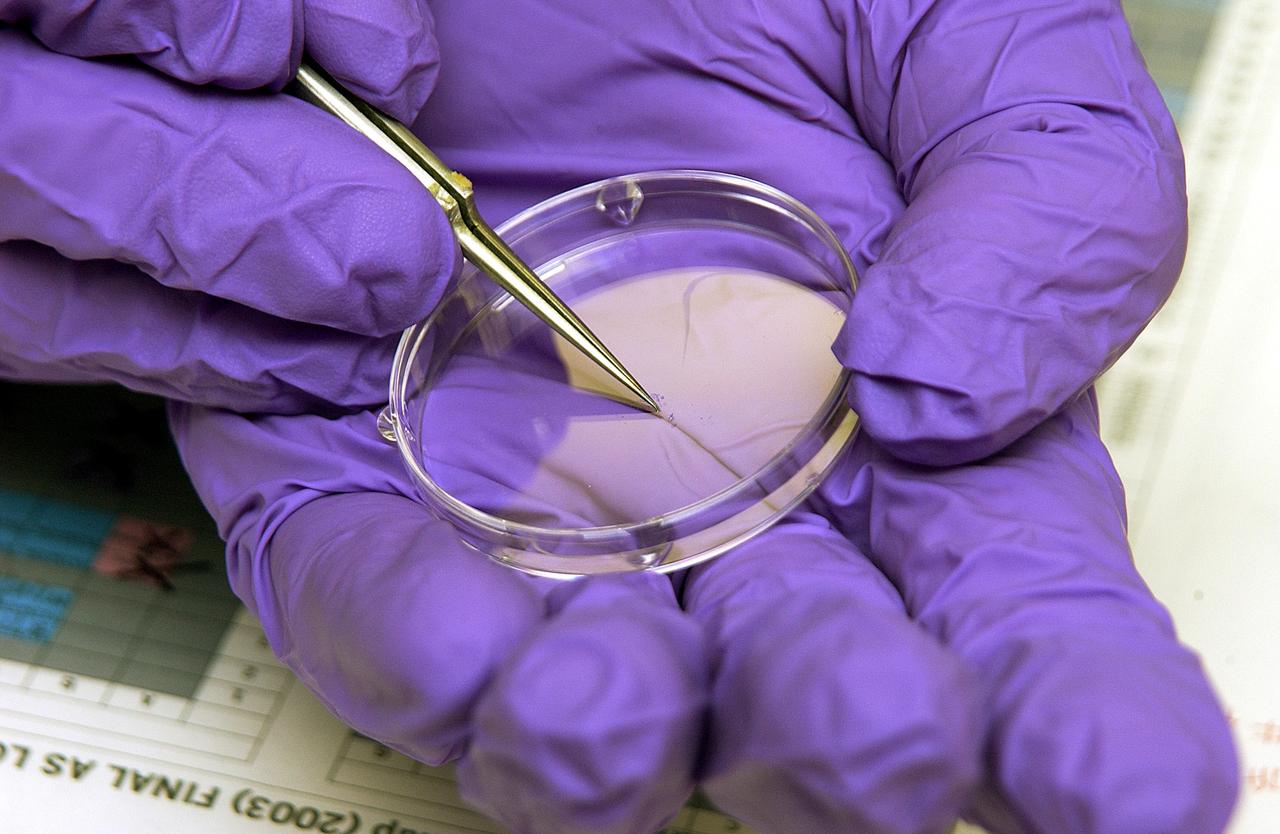
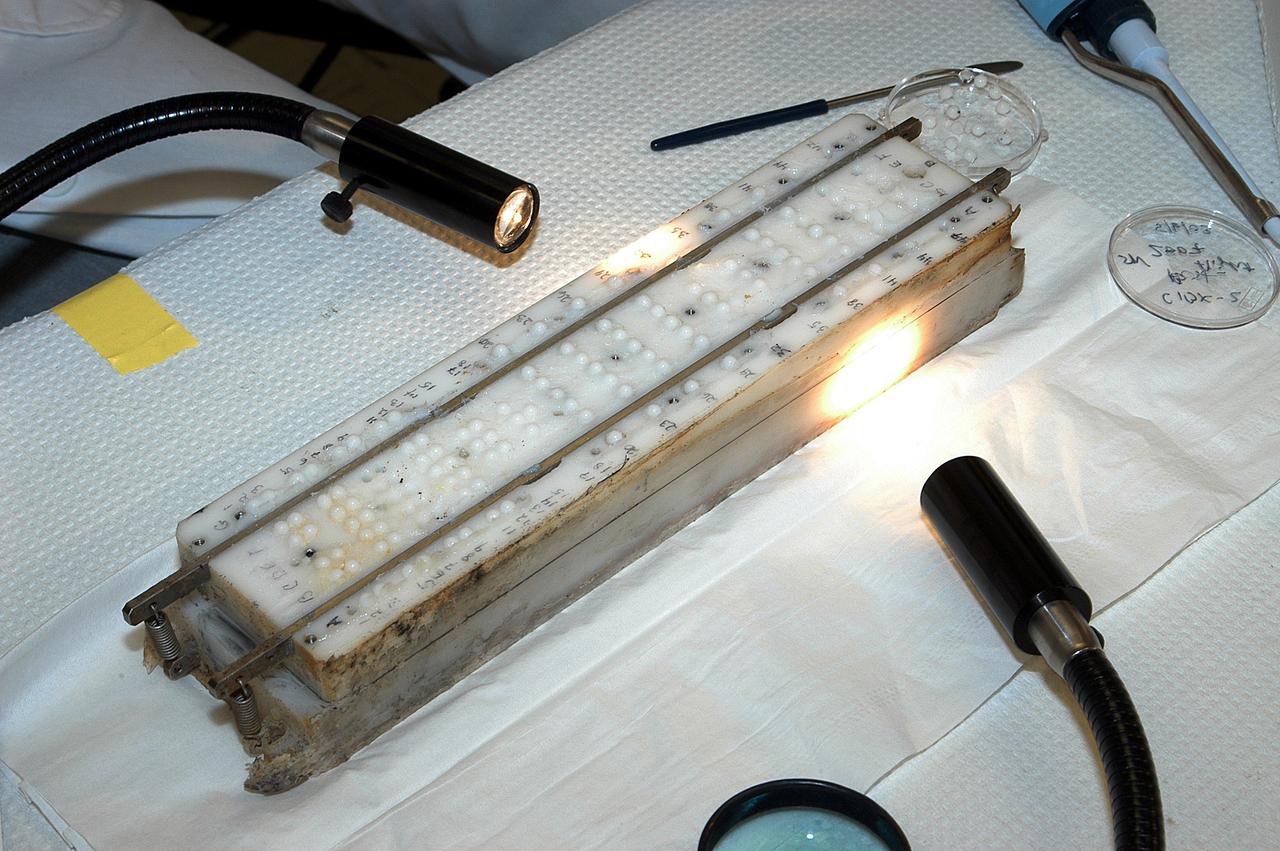
KENNEDY SPACE CENTER, FLA. -  The crystals visible in this laboratory dish were part of an experiment carried on mission STS-107. Several experiments were found during the search for Columbia debris. Included in the Commercial ITA Biomedical Experiments payload on mission STS-107 are urokinase cancer research, microencapsulation of drugs, the Growth of Bacterial Biofilm on Surfaces during Spaceflight (GOBBSS), and tin crystal formation.
KENNEDY SPACE CENTER, FLA. - The crystals visible in this laboratory dish were part of an experiment carried on mission STS-107. Several experiments were found during the search for Columbia debris. Included in the Commercial ITA Biomedical Experiments payload on mission STS-107 are urokinase cancer research, microencapsulation of drugs, the Growth of Bacterial Biofilm on Surfaces during Spaceflight (GOBBSS), and tin crystal formation.
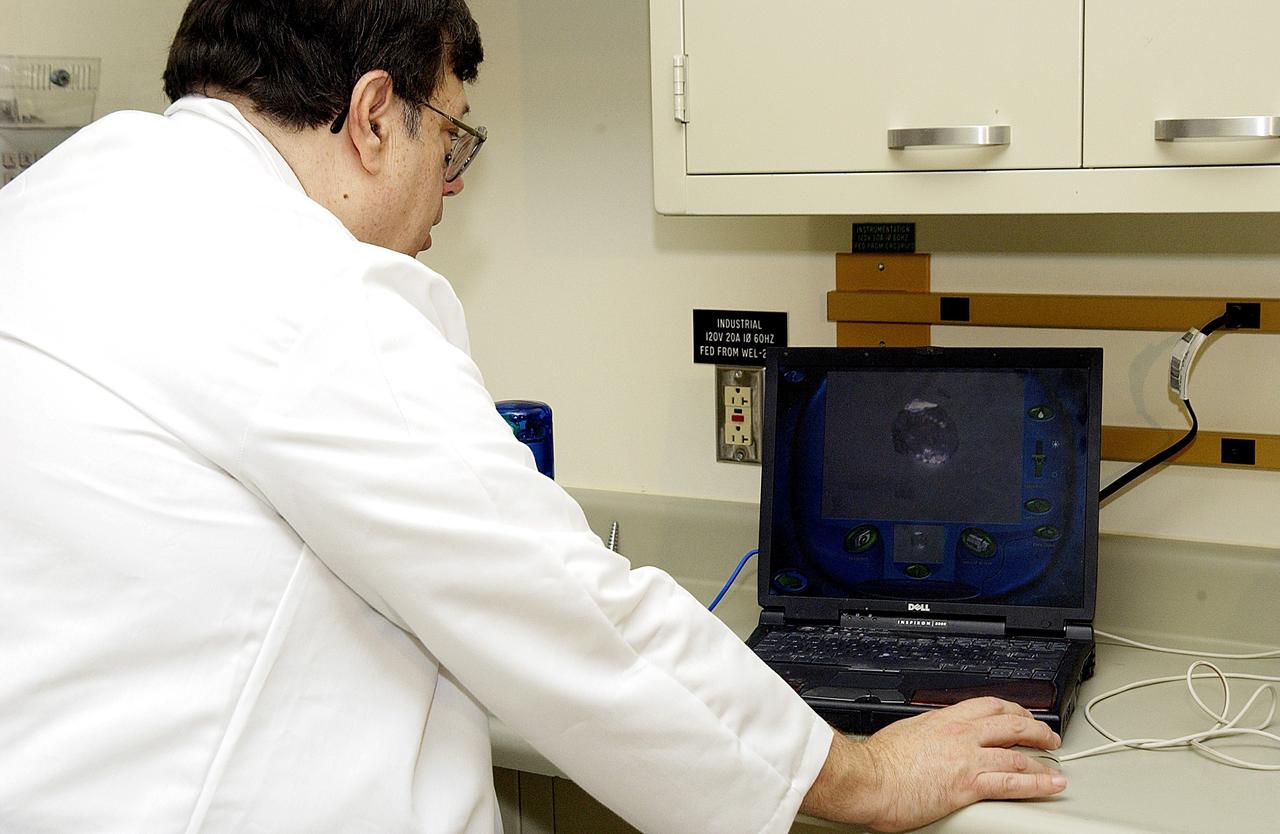
KENNEDY SPACE CENTER, FLA. -  Barry Perlman, Pembroke Pines Charter Middle School in Florida, prepares a computer to receive data from an experiment carried on mission STS-107. Several experiments were found during the search for Columbia debris. Included in the Commercial ITA Biomedical Experiments payload on mission STS-107 are urokinase cancer research, microencapsulation of drugs, the Growth of Bacterial Biofilm on Surfaces during Spaceflight (GOBBSS), and tin crystal formation. The latter was sponsored by the Pembroke Pines Charter Middle School.
KENNEDY SPACE CENTER, FLA. - Barry Perlman, Pembroke Pines Charter Middle School in Florida, prepares a computer to receive data from an experiment carried on mission STS-107. Several experiments were found during the search for Columbia debris. Included in the Commercial ITA Biomedical Experiments payload on mission STS-107 are urokinase cancer research, microencapsulation of drugs, the Growth of Bacterial Biofilm on Surfaces during Spaceflight (GOBBSS), and tin crystal formation. The latter was sponsored by the Pembroke Pines Charter Middle School.
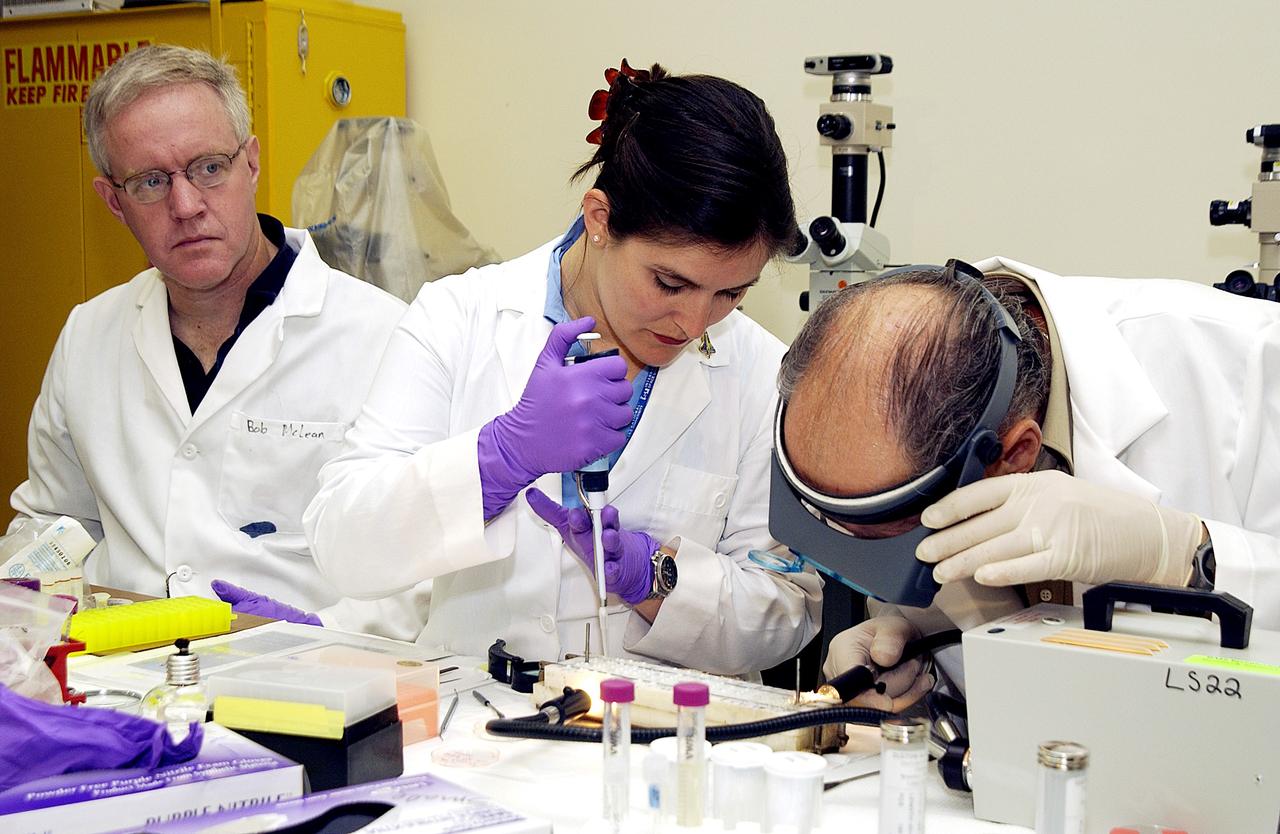
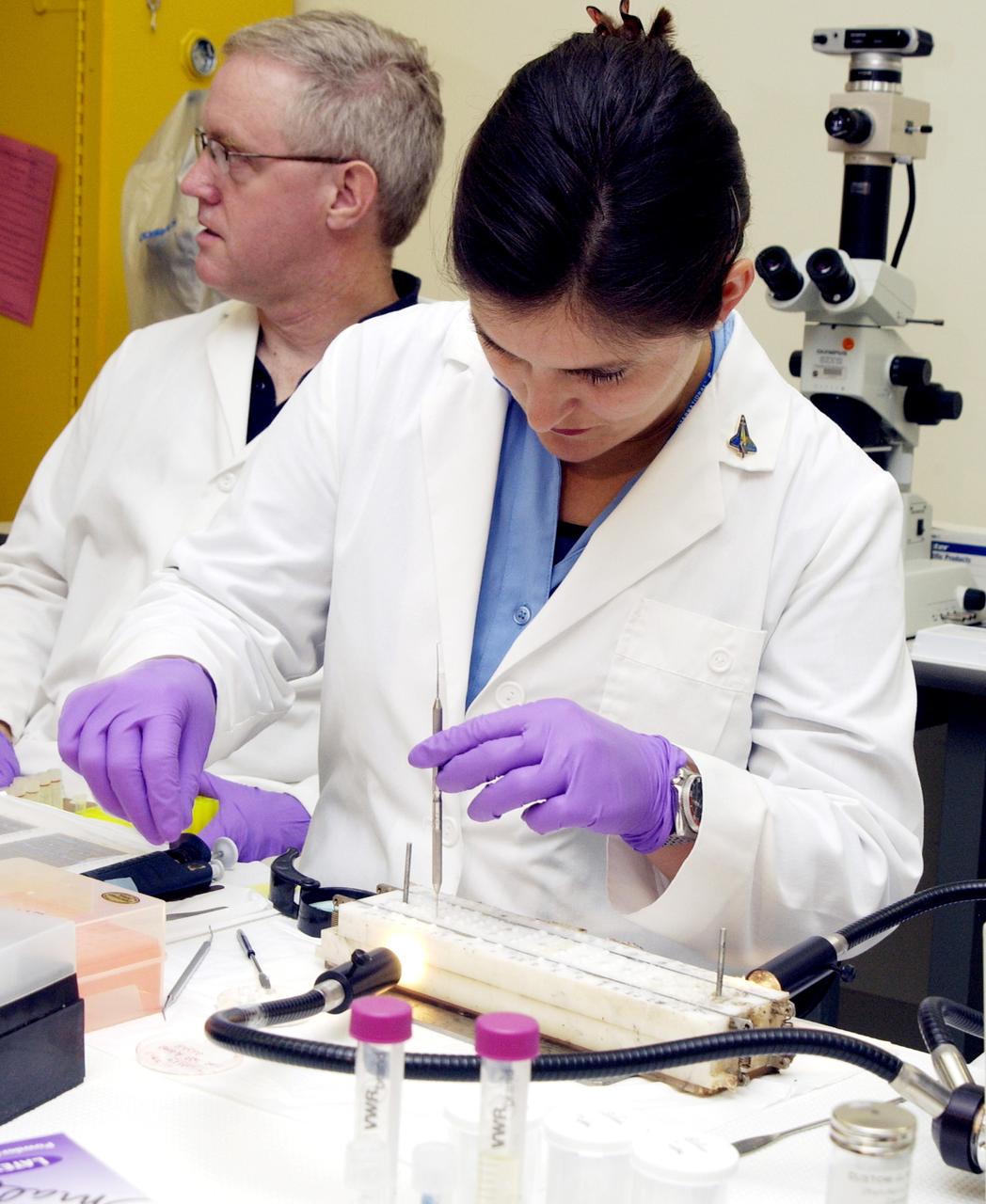
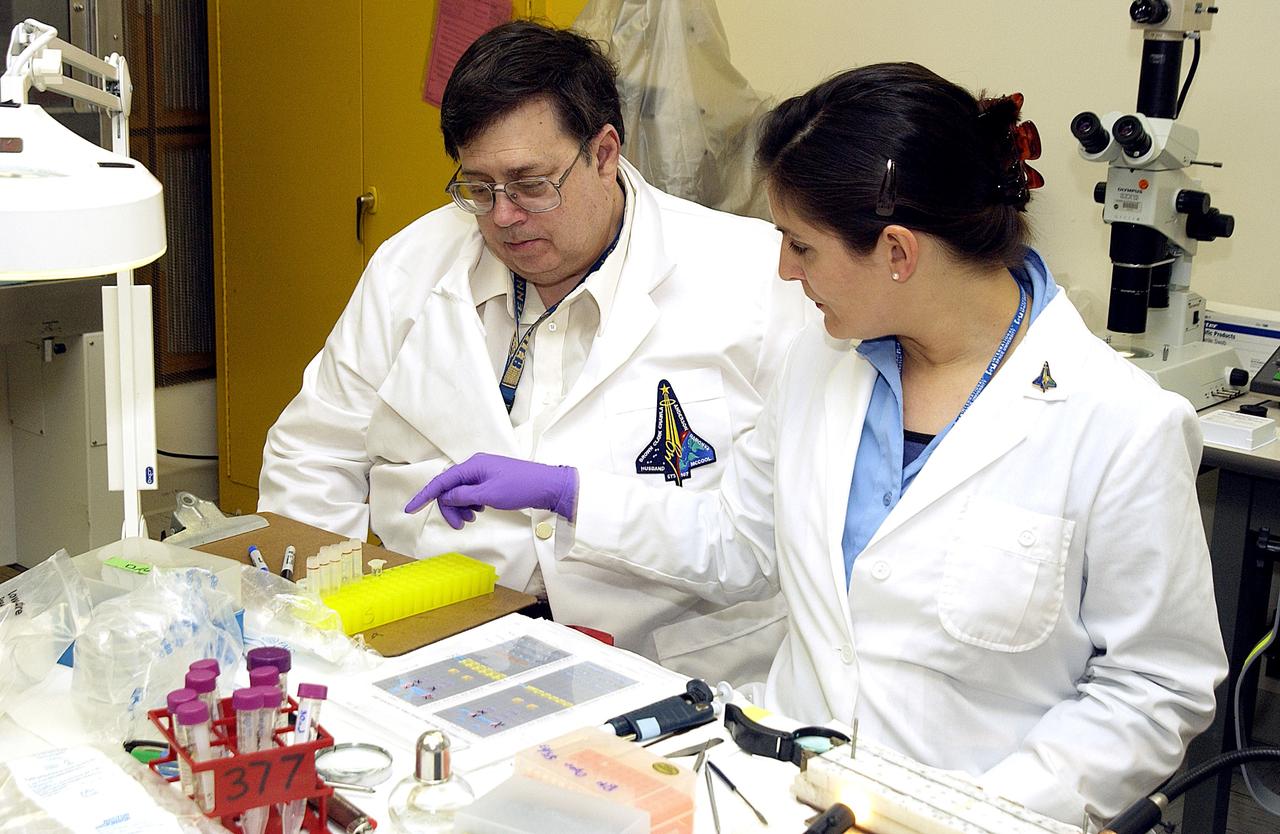
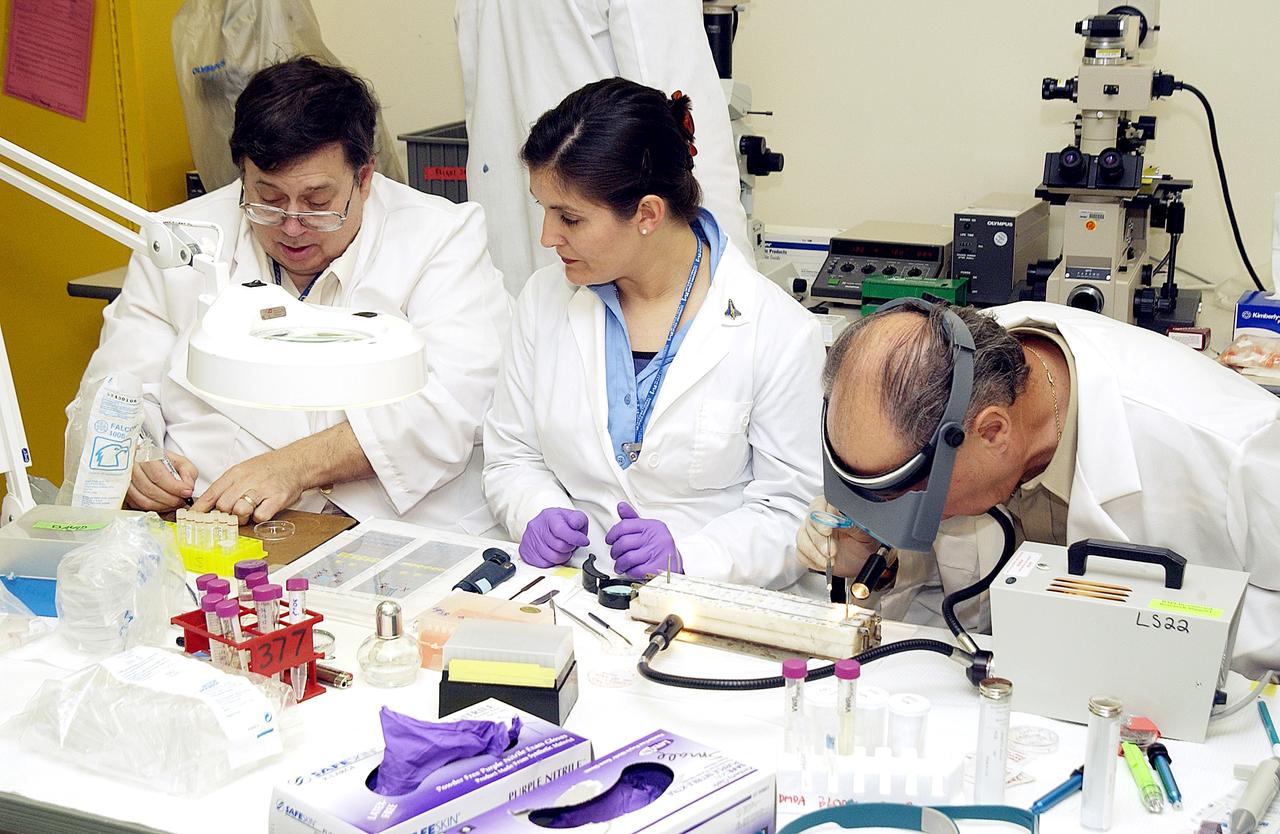
KENNEDY SPACE CENTER, FLA. -  From left, Bob McLean, Southwest Texas State University; Valerie Cassanto, Instrumentation Technology Associates, Inc.; and Dennis Morrison, NASA Johnson Space Center, process one of the experiments carried on mission STS-107. Several experiments were found during the search for Columbia debris. Included in the Commercial ITA Biomedical Experiments payload on mission STS-107 are urokinase cancer research, microencapsulation of drugs, the Growth of Bacterial Biofilm on Surfaces during Spaceflight (GOBBSS), and tin crystal formation.
KENNEDY SPACE CENTER, FLA. - From left, Bob McLean, Southwest Texas State University; Valerie Cassanto, Instrumentation Technology Associates, Inc.; and Dennis Morrison, NASA Johnson Space Center, process one of the experiments carried on mission STS-107. Several experiments were found during the search for Columbia debris. Included in the Commercial ITA Biomedical Experiments payload on mission STS-107 are urokinase cancer research, microencapsulation of drugs, the Growth of Bacterial Biofilm on Surfaces during Spaceflight (GOBBSS), and tin crystal formation.
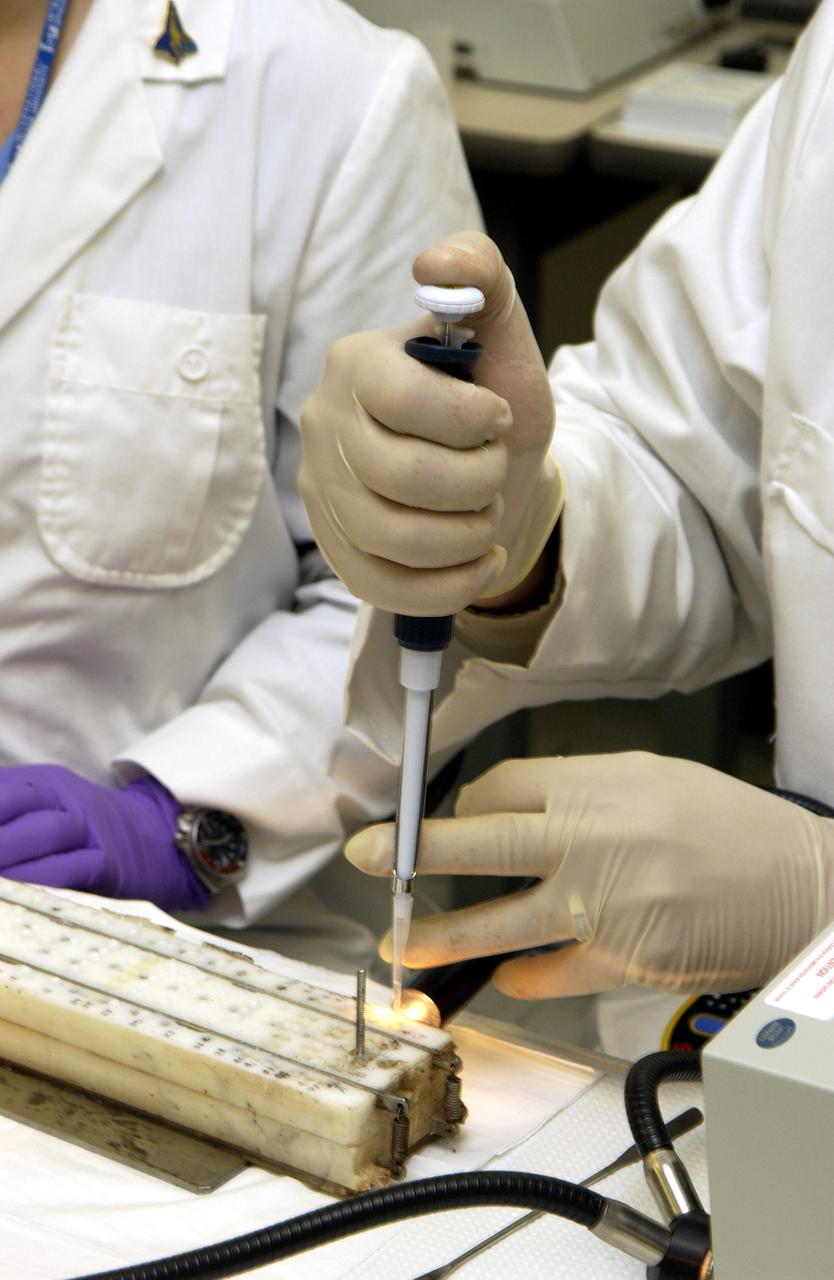
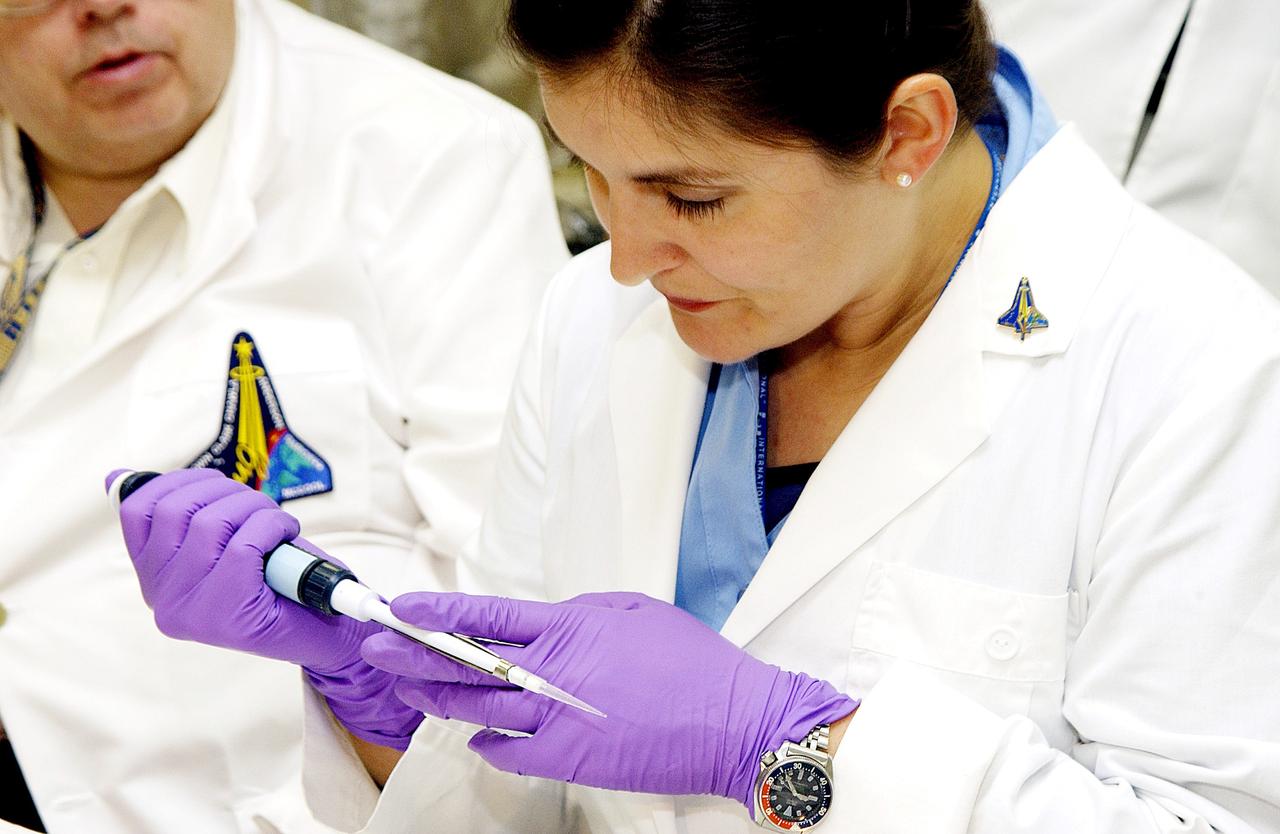
KENNEDY SPACE CENTER, FLA. -  From left, Valerie Cassanto, Instrumentation Technology Associates, Inc., and Dr. Dennis Morrison, NASA Johnson Space Center, analyze one of the experiments carried on mission STS-107. Several experiments were found during the search for Columbia debris. Included in the Commercial ITA Biomedical Experiments payload on mission STS-107 are urokinase cancer research, microencapsulation of drugs, the Growth of Bacterial Biofilm on Surfaces during Spaceflight (GOBBSS), and tin crystal formation.
KENNEDY SPACE CENTER, FLA. - From left, Valerie Cassanto, Instrumentation Technology Associates, Inc., and Dr. Dennis Morrison, NASA Johnson Space Center, analyze one of the experiments carried on mission STS-107. Several experiments were found during the search for Columbia debris. Included in the Commercial ITA Biomedical Experiments payload on mission STS-107 are urokinase cancer research, microencapsulation of drugs, the Growth of Bacterial Biofilm on Surfaces during Spaceflight (GOBBSS), and tin crystal formation.
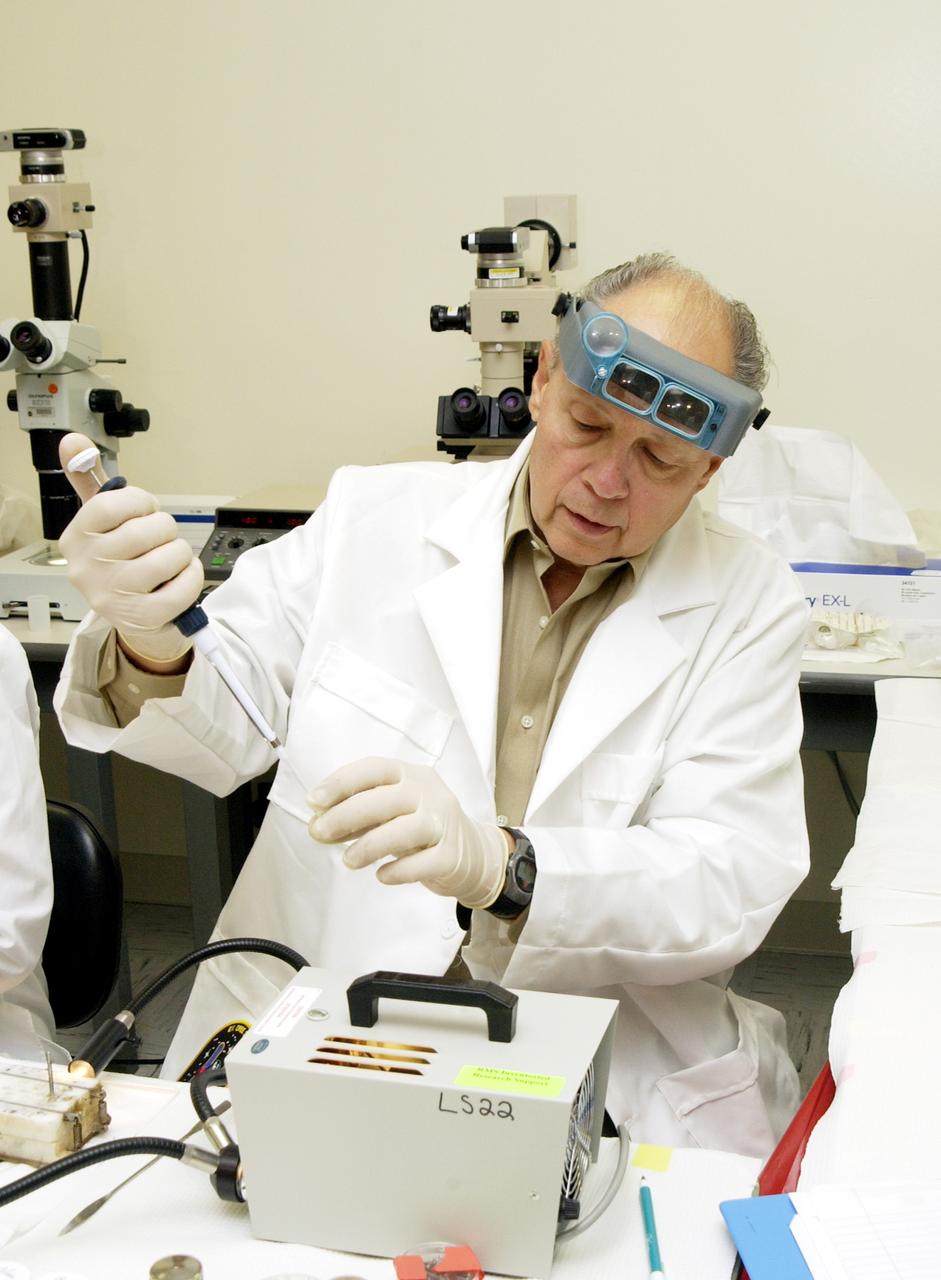
KENNEDY SPACE CENTER, FLA. -  Dr. Dennis Morrison, NASA Johnson Space Center, processes one of the experiments carried on mission STS-107. Several experiments were found during the search for Columbia debris. Included in the Commercial ITA Biomedical Experiments payload on mission STS-107 are urokinase cancer research, microencapsulation of drugs, the Growth of Bacterial Biofilm on Surfaces during Spaceflight (GOBBSS), and tin crystal formation.
KENNEDY SPACE CENTER, FLA. - Dr. Dennis Morrison, NASA Johnson Space Center, processes one of the experiments carried on mission STS-107. Several experiments were found during the search for Columbia debris. Included in the Commercial ITA Biomedical Experiments payload on mission STS-107 are urokinase cancer research, microencapsulation of drugs, the Growth of Bacterial Biofilm on Surfaces during Spaceflight (GOBBSS), and tin crystal formation.
KENNEDY SPACE CENTER, FLA. - Valerie Cassanto, with Instrumentation Technology Associates, Inc., and Bob McLean, from the Southwest Texas State University, work on an experiment found during the search for Columbia debris.  Included in the Commercial ITA Biomedical Experiments payload on mission STS-107 are urokinase cancer research, microencapsulation of drugs, the Growth of Bacterial Biofilm on Surfaces during Spaceflight (GOBBSS), and tin crystal formation.
KENNEDY SPACE CENTER, FLA. - Valerie Cassanto, with Instrumentation Technology Associates, Inc., and Bob McLean, from the Southwest Texas State University, work on an experiment found during the search for Columbia debris. Included in the Commercial ITA Biomedical Experiments payload on mission STS-107 are urokinase cancer research, microencapsulation of drugs, the Growth of Bacterial Biofilm on Surfaces during Spaceflight (GOBBSS), and tin crystal formation.
KENNEDY SPACE CENTER, FLA. -  From left, Bob McLean, Southwest Texas State University, and Valerie Cassanto, Instrumentation Technology Associates, Inc., study one of the experiments carried on mission STS-107. Several experiments were found during the search for Columbia debris. Included in the Commercial ITA Biomedical Experiments payload on mission STS-107 are urokinase cancer research, microencapsulation of drugs, the Growth of Bacterial Biofilm on Surfaces during Spaceflight (GOBBSS), and tin crystal formation.
KENNEDY SPACE CENTER, FLA. - From left, Bob McLean, Southwest Texas State University, and Valerie Cassanto, Instrumentation Technology Associates, Inc., study one of the experiments carried on mission STS-107. Several experiments were found during the search for Columbia debris. Included in the Commercial ITA Biomedical Experiments payload on mission STS-107 are urokinase cancer research, microencapsulation of drugs, the Growth of Bacterial Biofilm on Surfaces during Spaceflight (GOBBSS), and tin crystal formation.
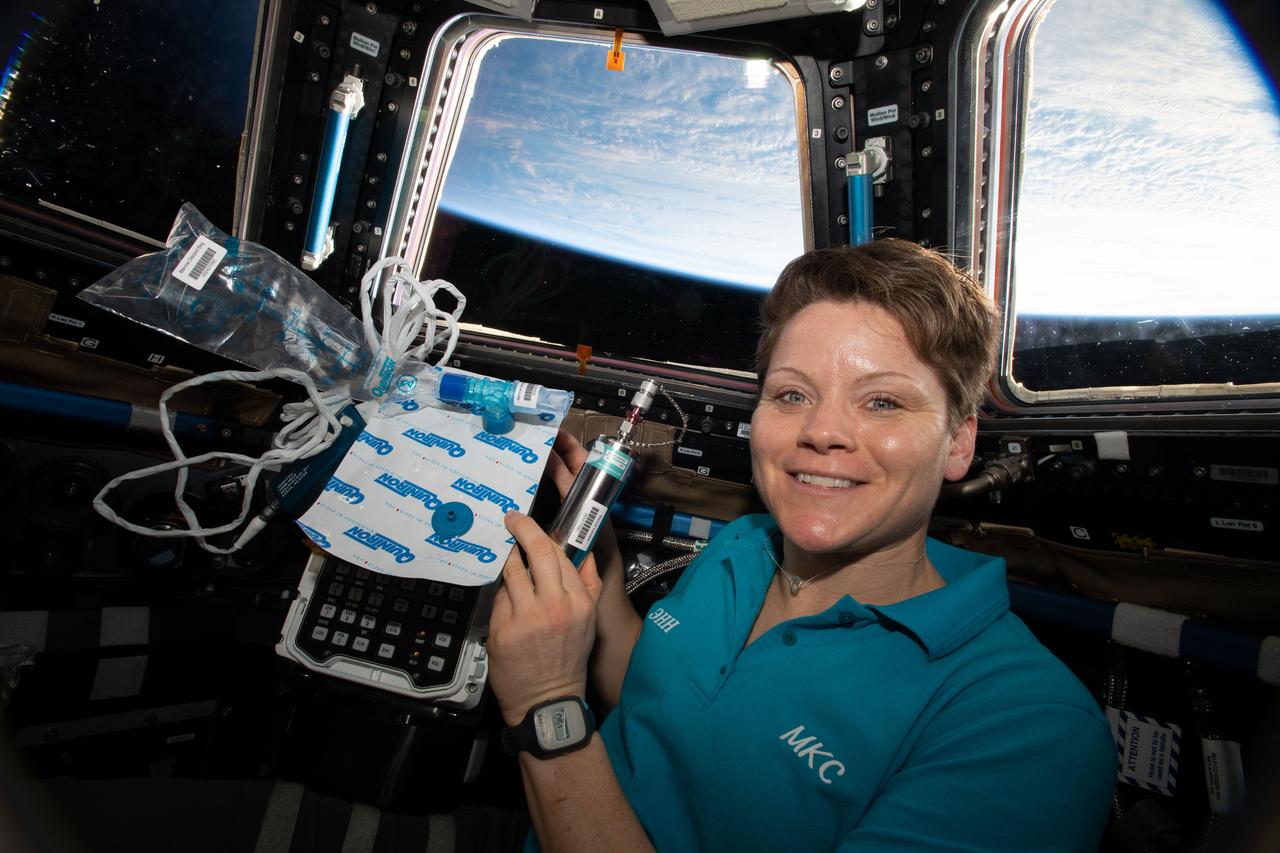
iss058e010750 (Feb. 6, 2019) --- Expedition 58 Flight Engineer Anne McClain of NASA is pictured in the cupola holding biomedical gear for the Marrow experiment. The study measures fat changes in the bone marrow before, and after exposure to microgravity. In addition, this investigation measures specific changes of red and white blood cell functions. Bone marrow fat is measured using magnetic resonance. Red blood cell function is measured with a breath sample analyzed with a gas chromatograph, and white blood cell function is studied through their genetic expression.
Expedition 58 Flight Engineer Anne McClain of NASA
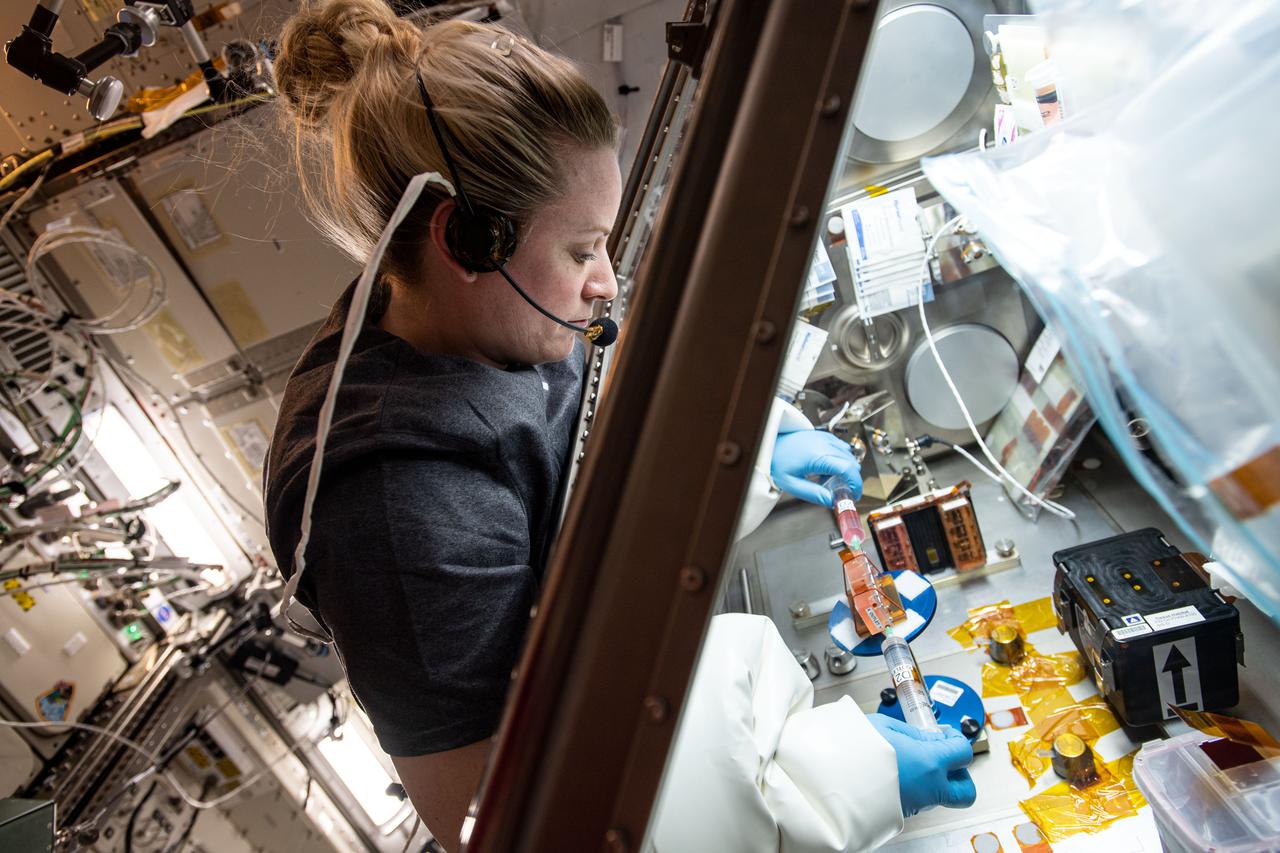
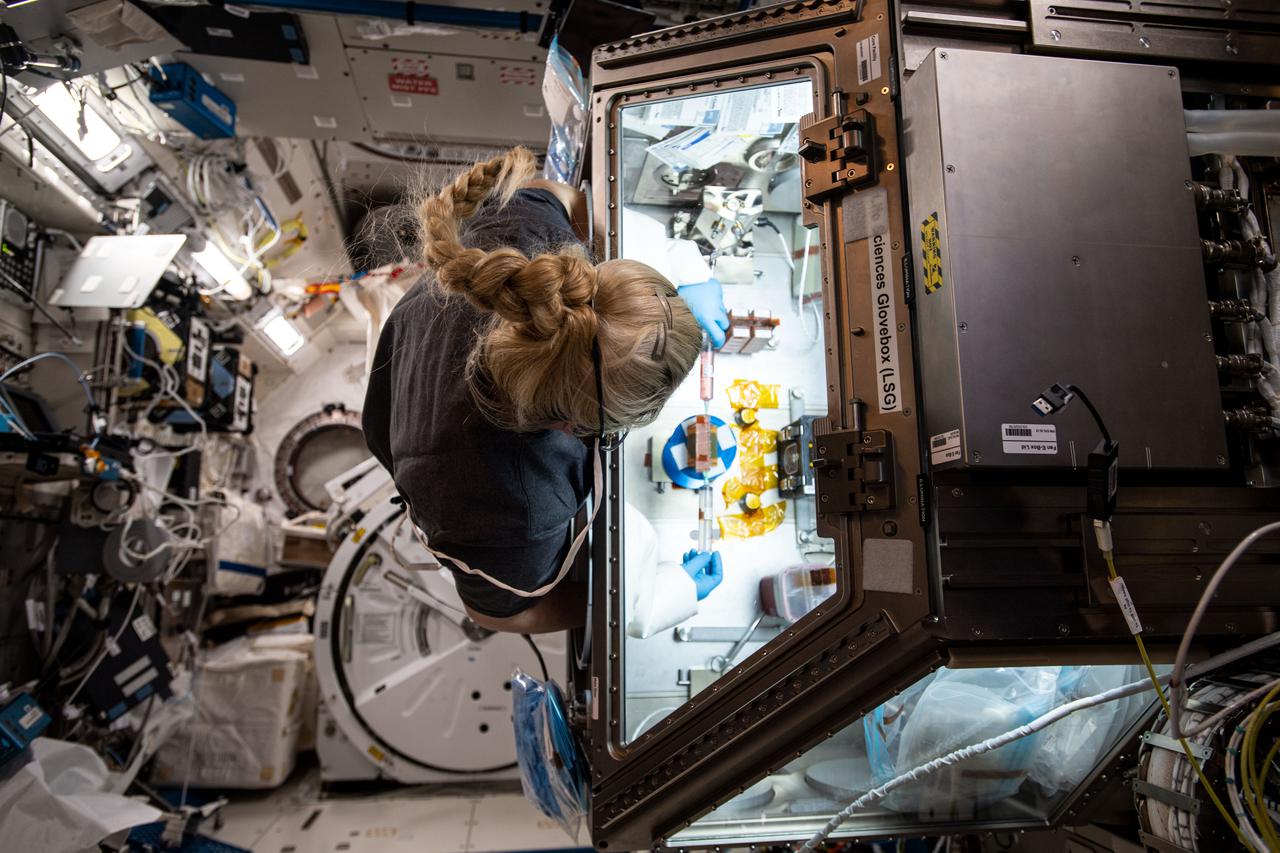
iss064e015256 (12/24/2020) --- NASA astronaut Kate Rubins works inside the Life Sciences Glovebox conducting research for the Cardinal Heart study. The biomedical research seeks to help scientists understand the aging and weakening of heart muscles to provide new treatments for humans on Earth and astronauts in space.
iss064e015256
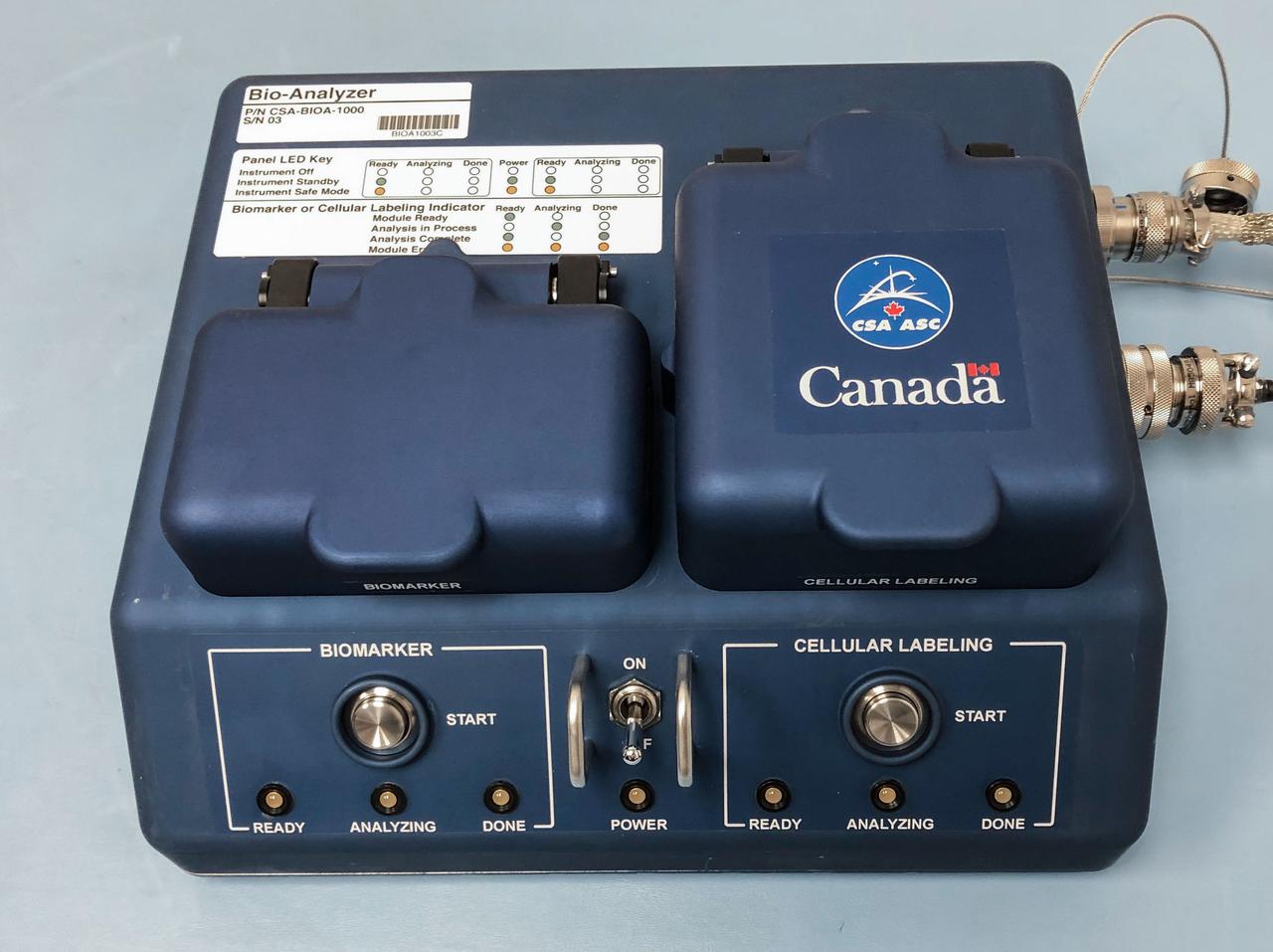
jsc2019e017352 (3/1/2019) --- The Canadian Space Agency's Bio-Analyzer is a liquid sample analysis device that will help astronauts on board the International Space Station accelerate the process of scientific data collection. Using just a few drops of liquid, it quickly returns key biomedical analyses.
Bio-Analyzer
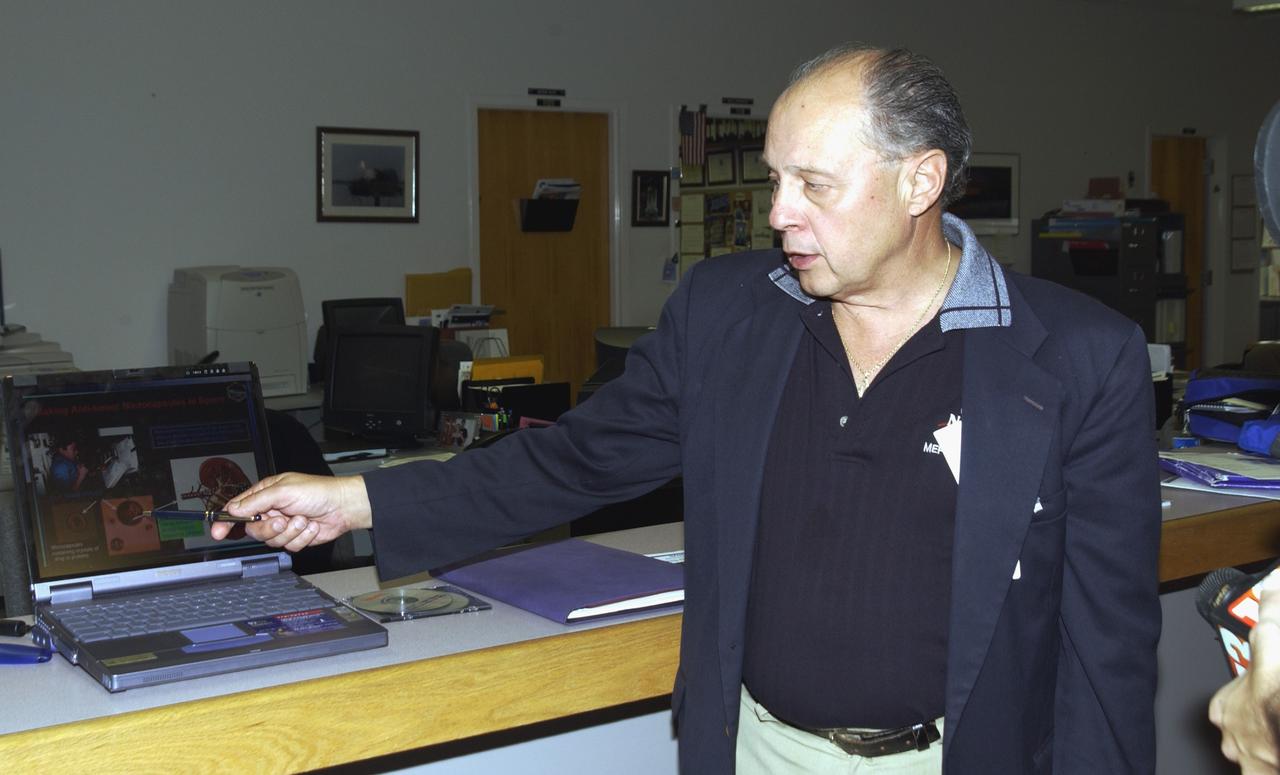
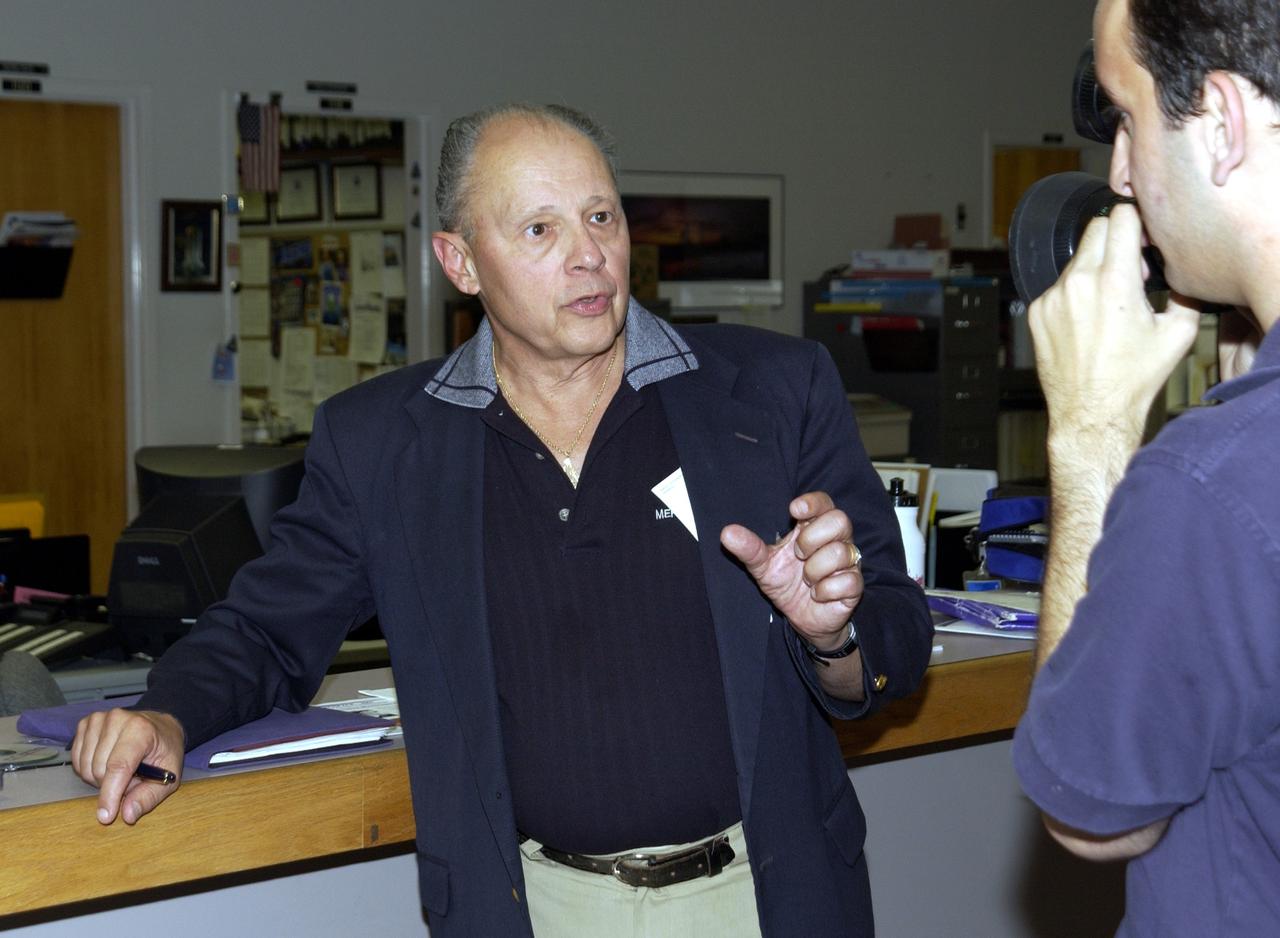
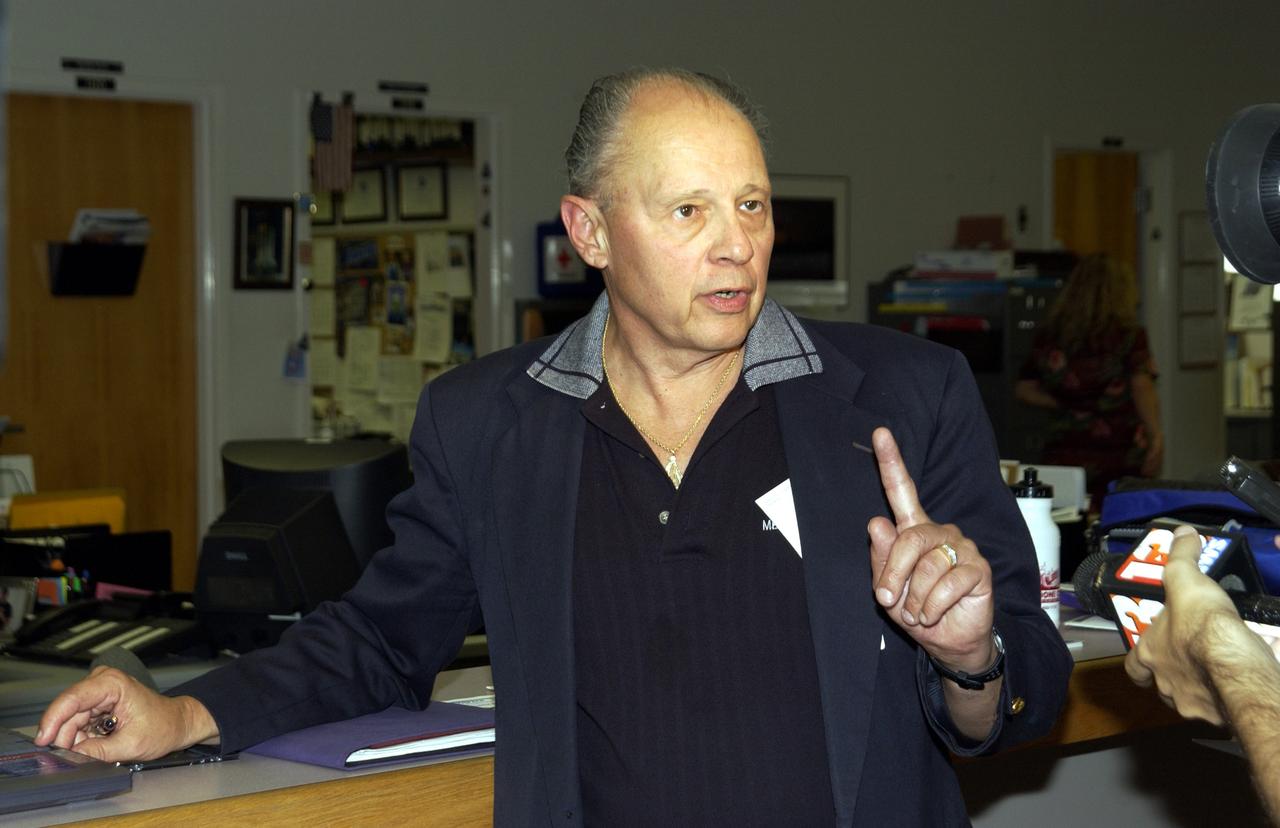
KENNEDY SPACE CENTER, FLA. - Dennis Morrison, senior biotech program scientist, talks to a reporter about an experiment recovered during the search for Columbia debris.  He is the principle investigator on microencapsulation and urokinase crystal growth included in the Commercial ITA Biomedical Experiments payload on mission STS-107.
KSC-03pd1445
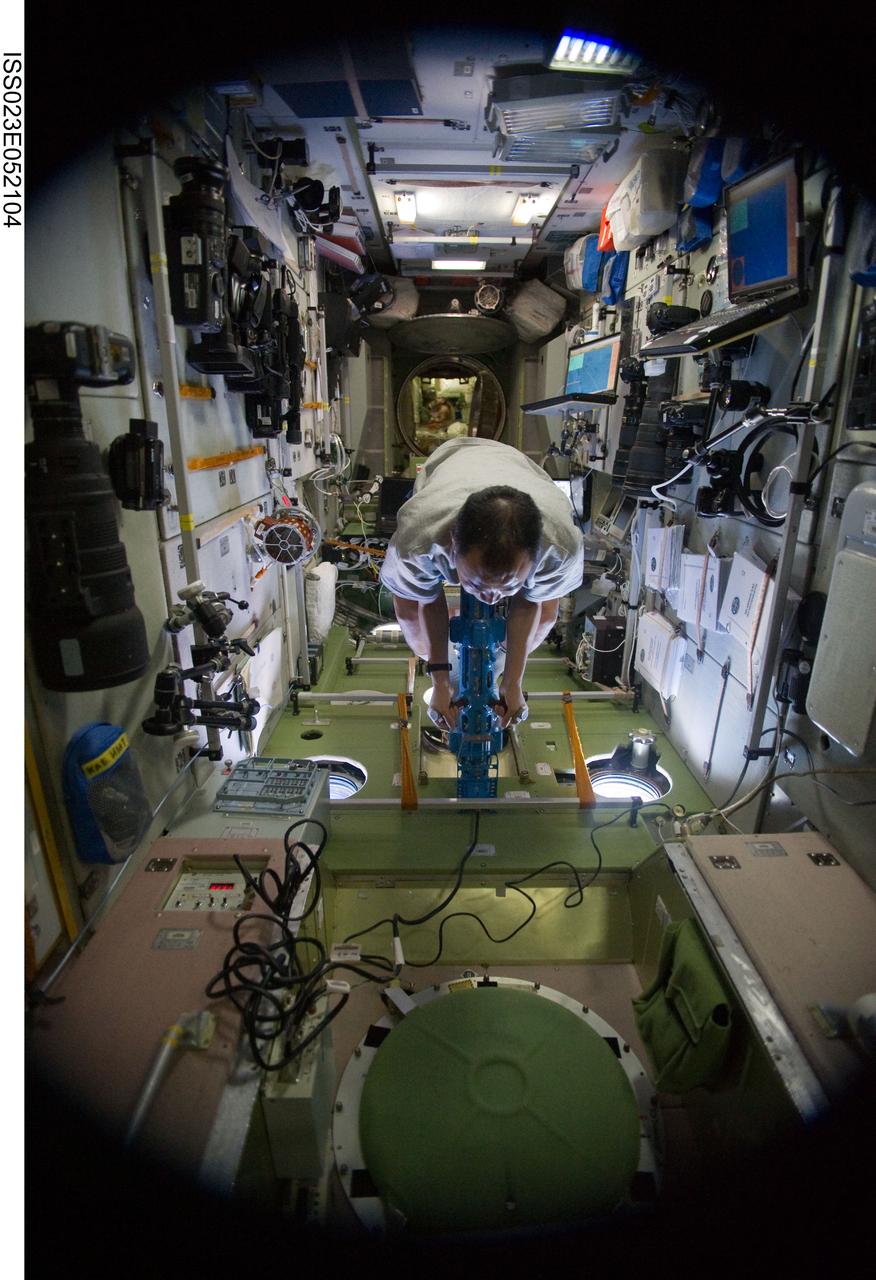
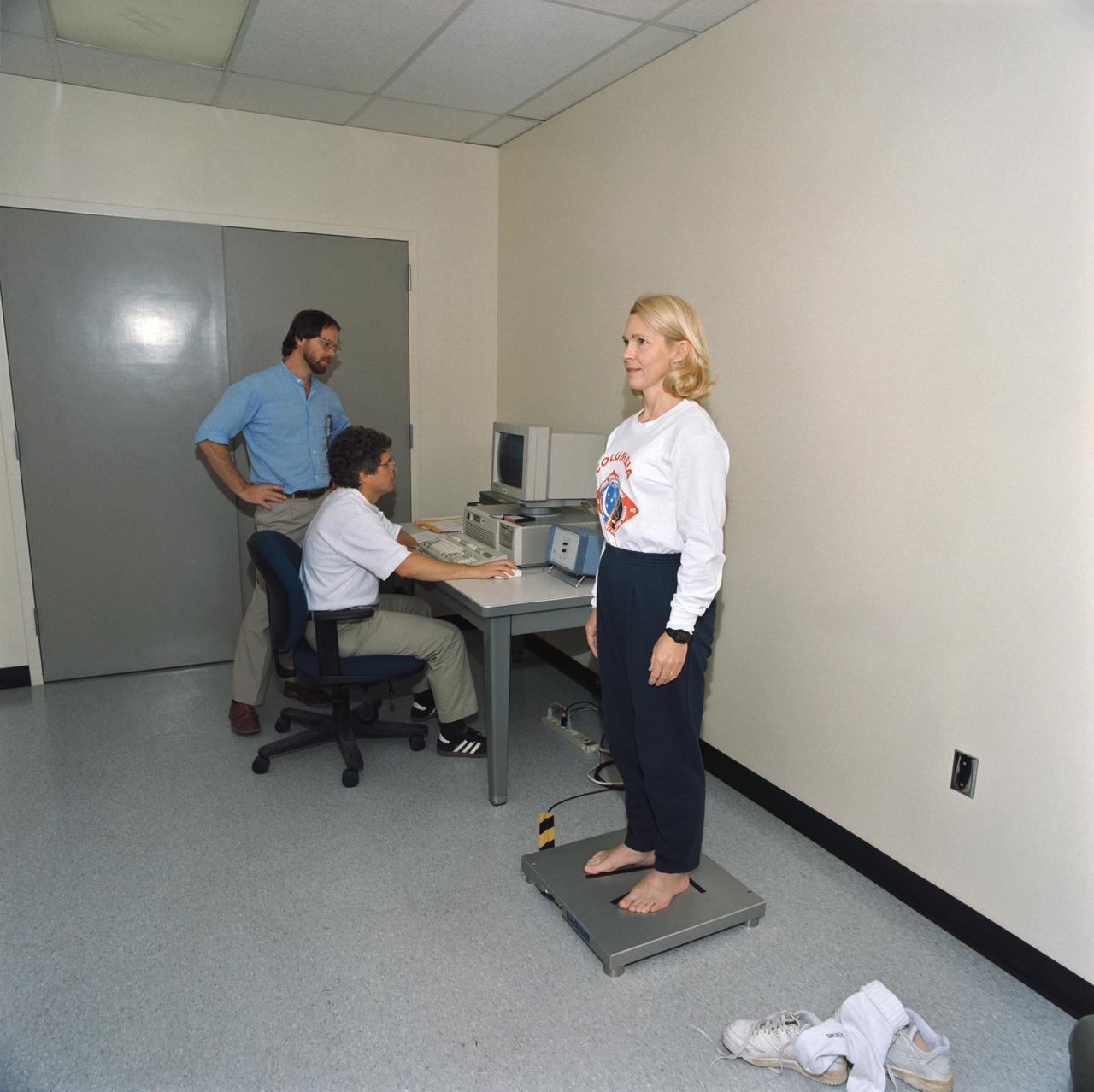
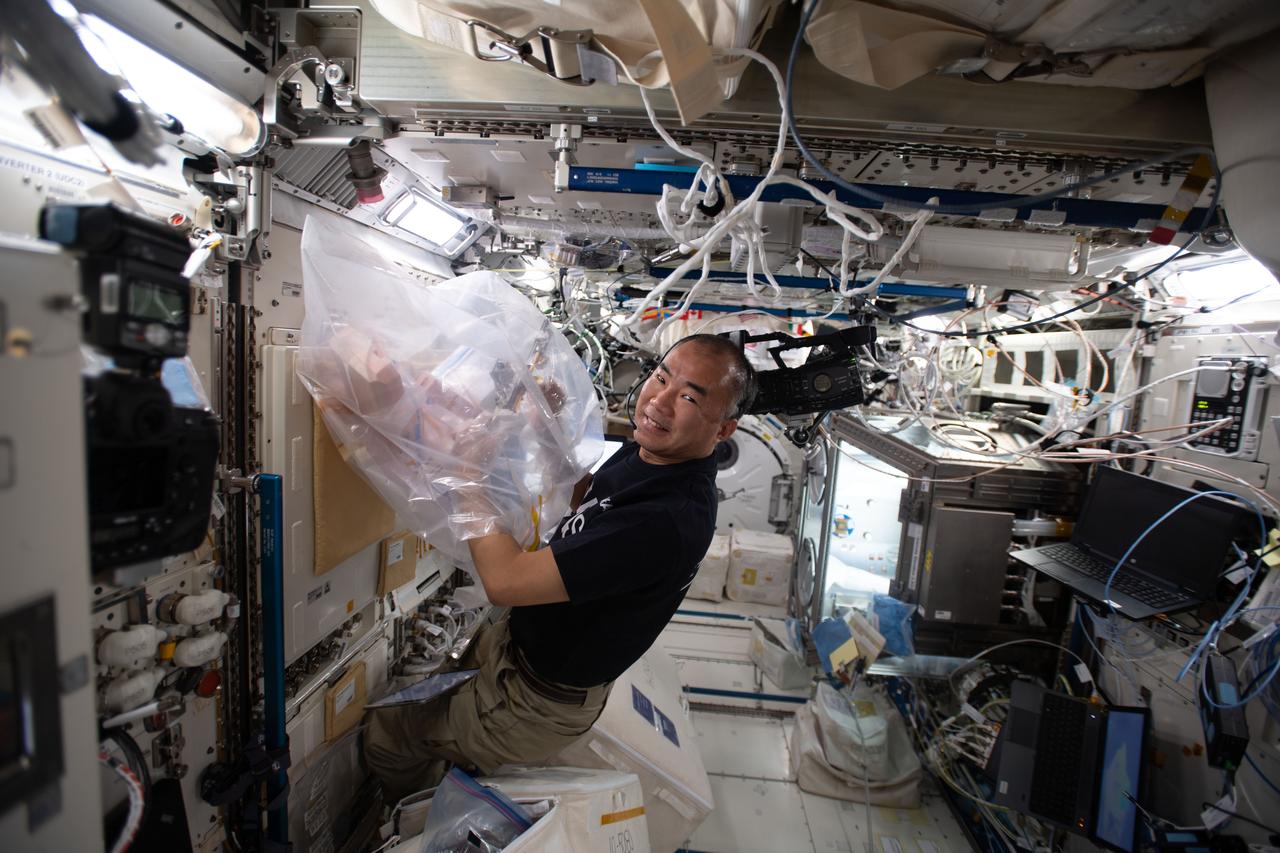
ISS023-E-052104 (26 May 2010) --- Japan Aerospace Exploration Agency (JAXA) astronaut Soichi Noguchi, Expedition 23 flight engineer, uses the IM mass measurement device to perform the PZEh-MO-8/Body Mass Measurement Russian biomedical routine assessments in the Zvezda Service Module of the International Space Station.
Noguchi uses BMMD in SM
iss064e015251 (12/24/2020) --- NASA astronaut Kate Rubins works inside the Life Sciences Glovebox conducting research for the Cardinal Heart study. The biomedical research seeks to help scientists understand the aging and weakening of heart muscles to provide new treatments for humans on Earth and astronauts in space.
iss064e015251
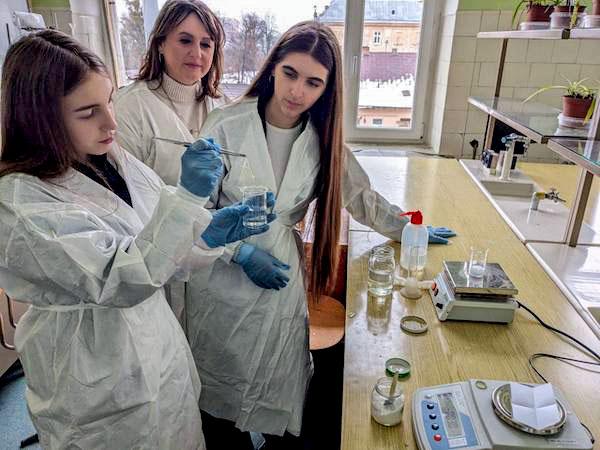
jsc2024e066517 (10/4/2024) --- Young researchers work on their experiment, Production of Biomedical Purpose Hydrogels in Microgravity, part of the Nanoracks-National Center for Earth and Space Science Education-Surveyor-Student Spaceflight Experiments Program Mission 18 to ISS (Nanoracks-NCESSE-Surveyor-SSEP).
Preflight Imagery for Nanoracks-NCESSE-Surveyor-SSEP
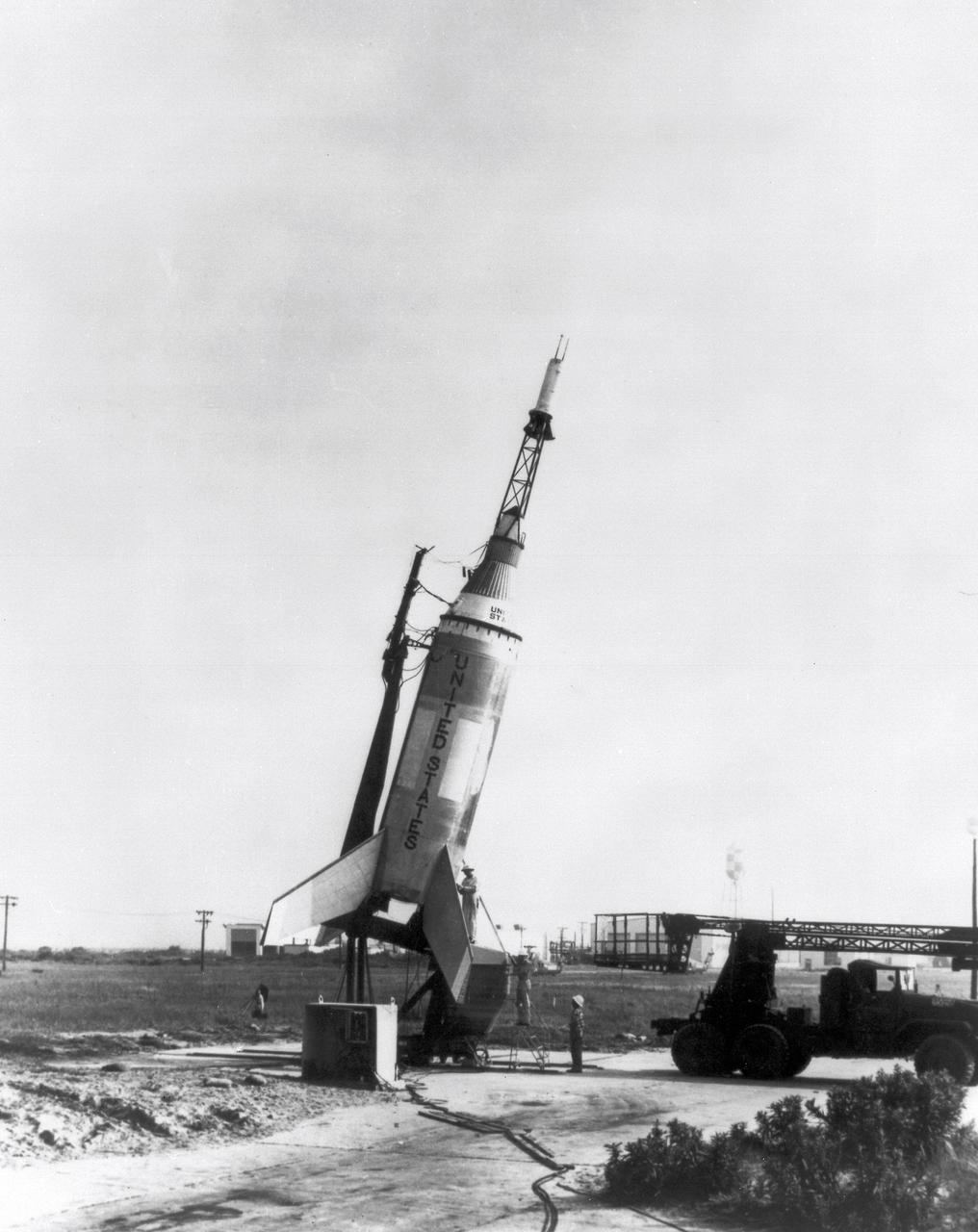
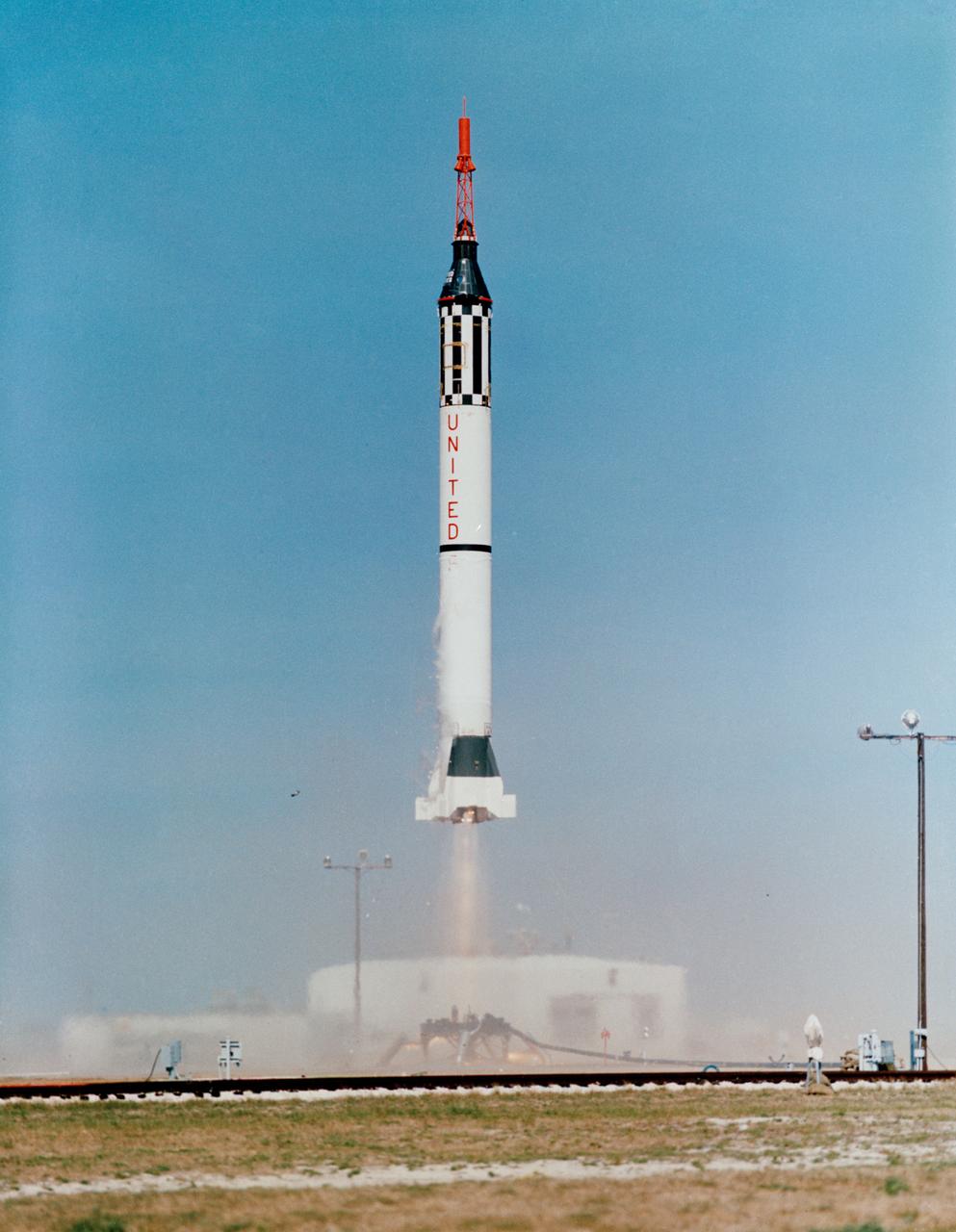
The Little Joe launch vehicle for the LJ1 mission on the launch pad at the wallops Flight Facility, Wallops Island, Virginia, on January 21, 1960. This mission achieved the suborbital Mercury cupsule test, testing of the escape system, and biomedical tests by using a monkey, named Miss Sam.
Mercury Project
KENNEDY SPACE CENTER, FLA. - Dennis Morrison, senior biotech program scientist, talks to a reporter about an experiment recovered during the search for Columbia debris.  He is the principle investigator on microencapsulation and urokinase crystal growth included in the Commercial ITA Biomedical Experiments payload on mission STS-107.
KSC-03pd1444
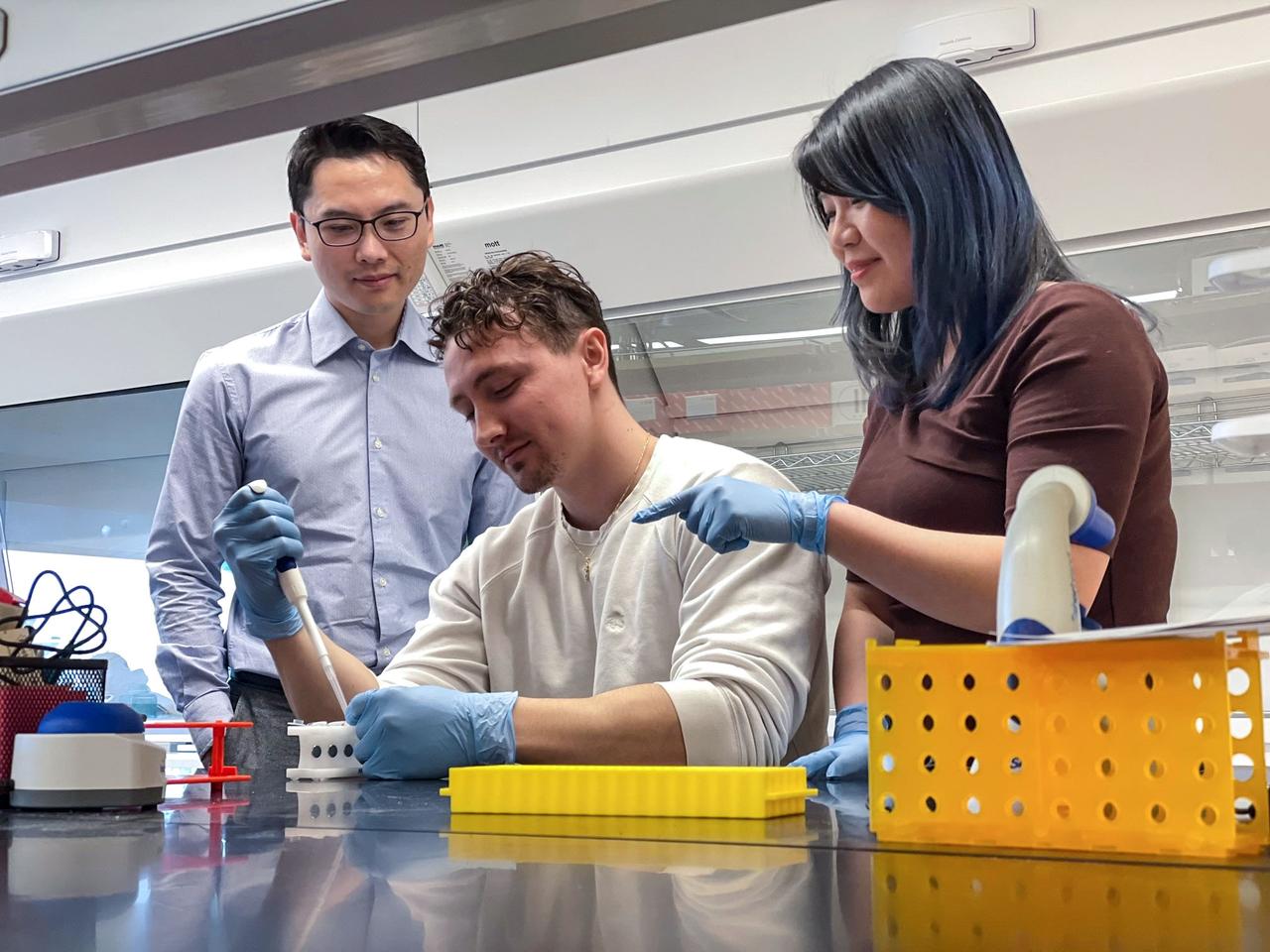
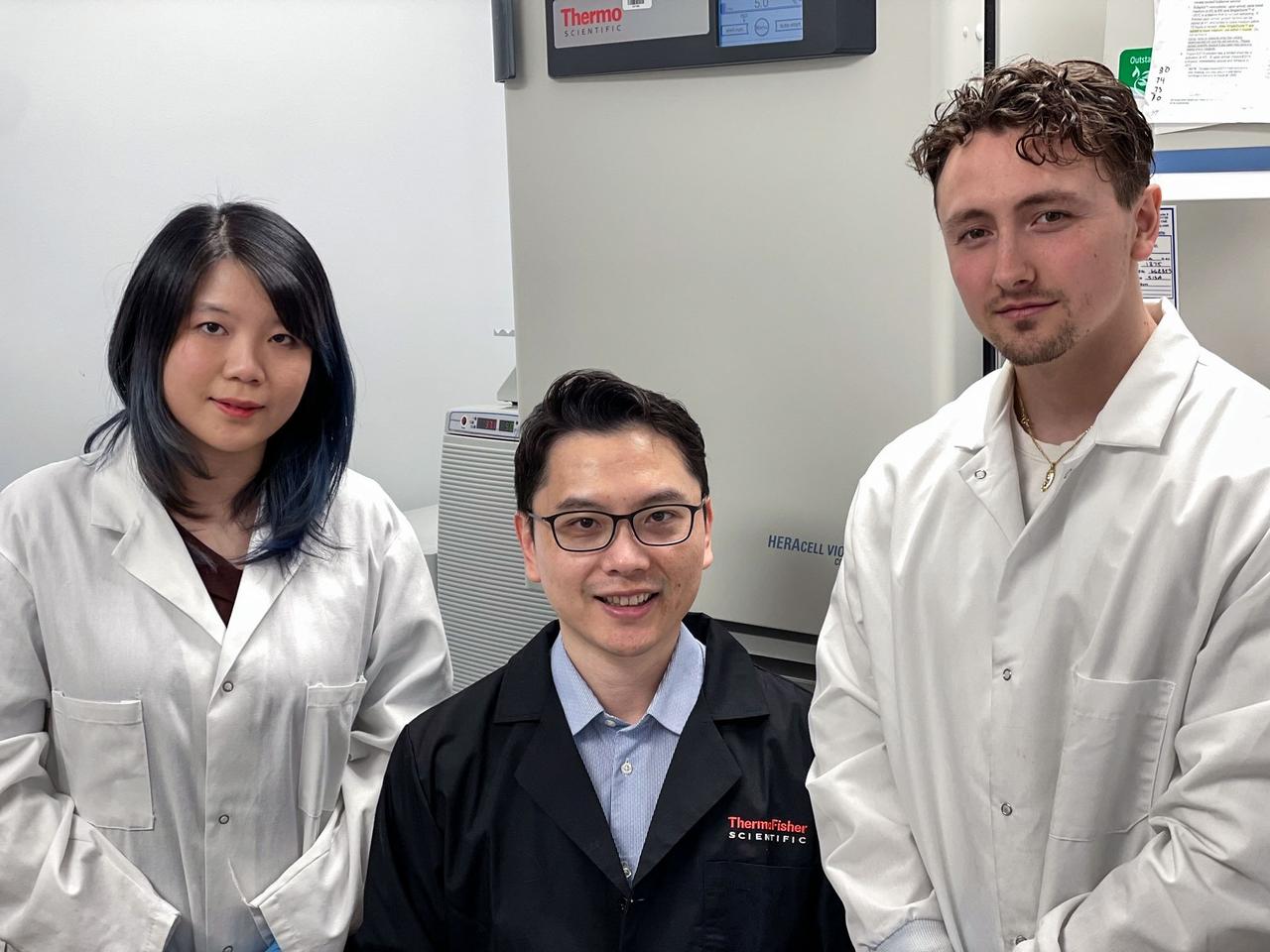
jsc2024e005966 (1/12/2024) --- The Compartment Cartilage Tissue Construct team includes Dr. Yupeng Chen (Associate Professor of Biomedical Engineering from University of Connecticut), Ian Sands (Ph.D. candidate from University of Connecticut) and Anne Yau (Ph.D. candidate from University of Connecticut). Image courtesy of the University of Connecticut.
jsc2024e005966
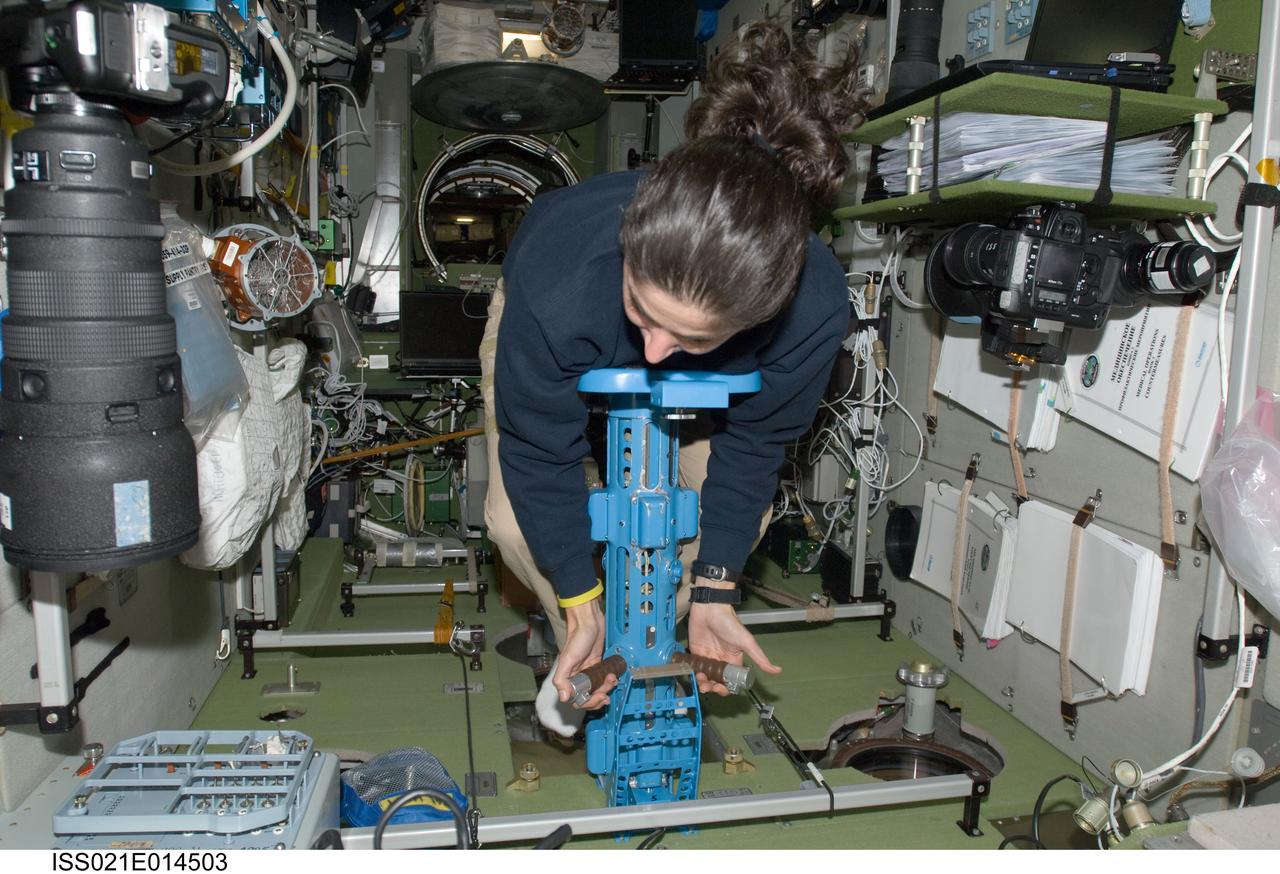
ISS021-E-014503 (12 Oct. 2009) --- NASA astronaut Nicole Stott, Expedition 21 flight engineer, uses the IM mass measurement device to perform the PZEh-MO-8/Body Mass Measurement Russian biomedical routine assessments in the Zvezda Service Module of the International Space Station.
View of FE Stott using the BMMD in the SM
jsc2024e005965 (1/12/2024) --- The Compartment Cartilage Tissue Construct team includes Dr. Yupeng Chen (Associate Professor of Biomedical Engineering from University of Connecticut), Ian Sands (Ph.D. candidate from University of Connecticut) and Anne Yau (Ph.D. candidate from University of Connecticut). Image courtesy of the University of Connecticut.
jsc2024e005965
KENNEDY SPACE CENTER, FLA. - Dennis Morrison, senior biotech program scientist, talks to the media about an experiment recovered during the search for Columbia debris.  He is the principle investigator on microencapsulation and urokinase crystal growth included in the Commercial ITA Biomedical Experiments payload on mission STS-107.
KSC-03pd1443
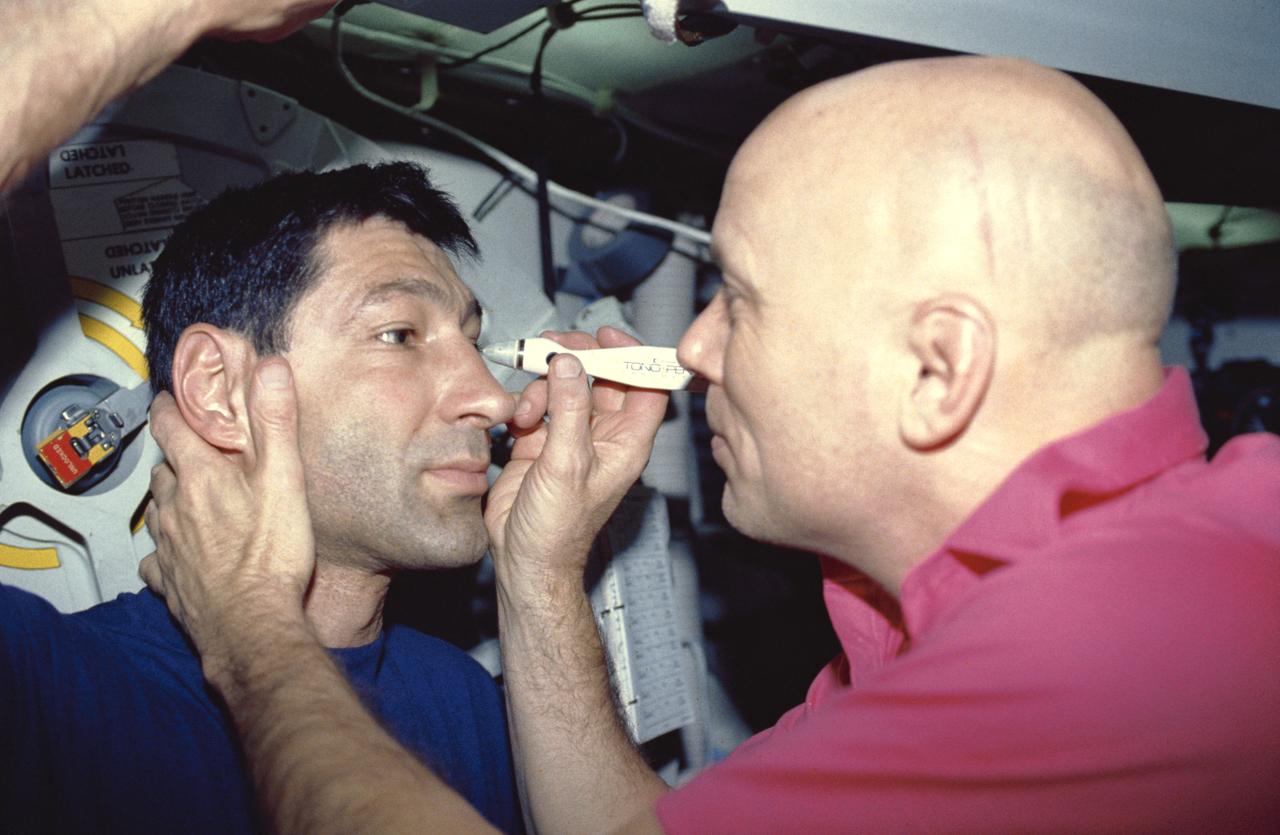
STS044-04-001 (24 Nov-1 Dec 1991) --- Astronauts F. Story Musgrave (right) and Mario Runco, Jr., mission specialists, team up for one of the biomedical Detailed Supplementary Objective (DSO) test on the eight-day flight, this one involving intraocular pressure.
STS-44 crewmembers conduct DSO 472, Intraocular Pressure, on OV-104's middeck
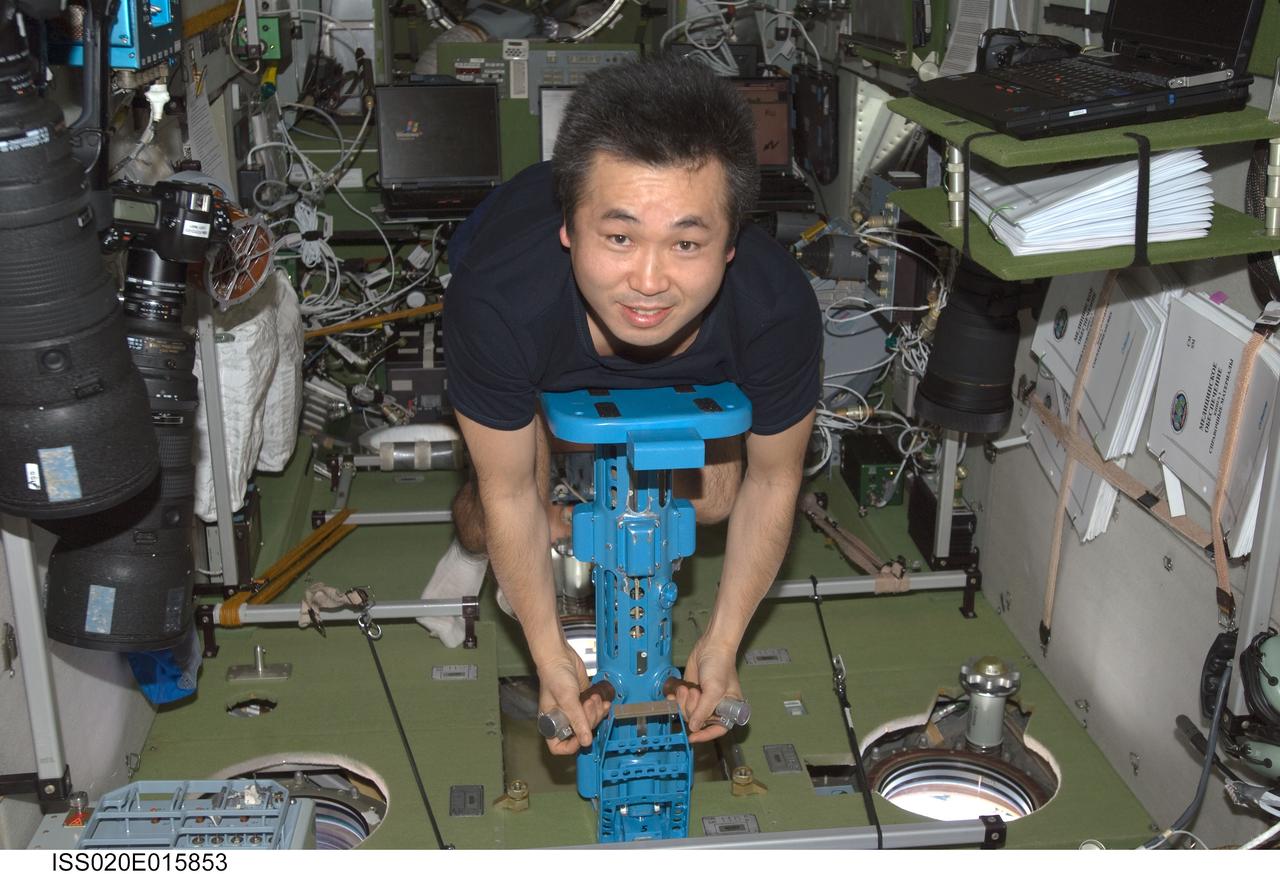
ISS020-E-015853 (30 June 2009) --- Japan Aerospace Exploration Agency (JAXA) astronaut Koichi Wakata, Expedition 20 flight engineer, uses the IM mass measurement device to perform the PZEh-MO-8/Body Mass Measurement Russian biomedical routine assessments in the Zvezda Service Module of the International Space Station.
PZEh-MO-8/Body Mass Measurement
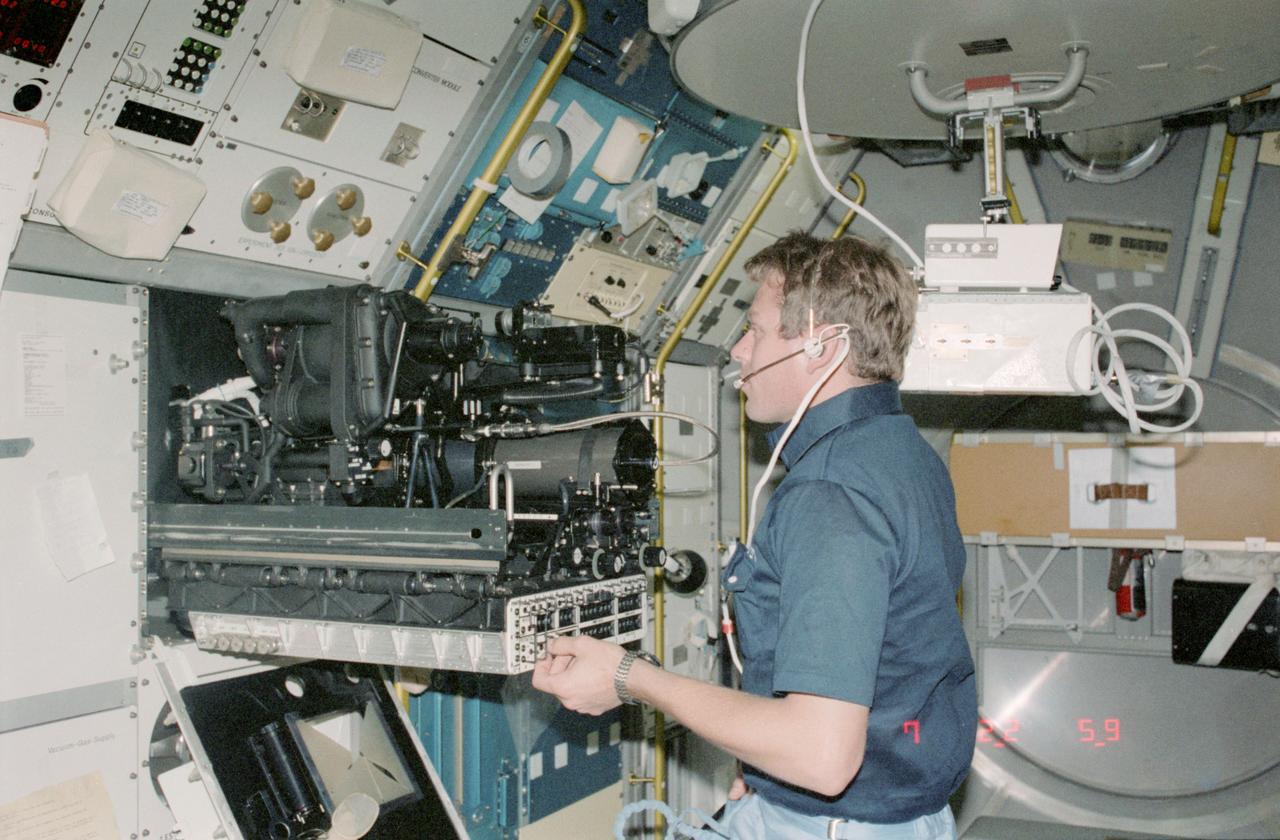
STS009-125-427 (28 Nov 1983) --- Payload Specialist Byron K. Lichtenberg carries out an experiment at the fluid physics module on the busy materials science double rack facility. Two beverage containers can be seen just above the biomedical engineer's head.
Payload Specialist Byron K. Lichtenberg working in the Spacelab
The launch of the Little Joe booster for the LJ1B mission on the launch pad from the wallops Flight Facility, Wallops Island, Virginia, on January 21, 1960. This mission achieved the suborbital Mercury capsule test, testing of the escape system, and biomedical tests by using a monkey, named Miss Sam.
Mercury Project
S93-45367 (29 Sept 1993) --- Astronaut Rhea Seddon, STS-58 payload commander, participates in biomedical data collection.  The seven member crew spent an entire day recording important pre-flight data in preparation for the two week Spacelab Life Sciences (SLS-2) mission, scheduled for next month.
STS-58 crewmembers participate in baseline data collection
S61-01942 (31 Jan. 1961) --- Launch of the Mercury-Redstone 2 (MR-2) vehicle on Jan. 31, 1961. The 16-minute suborbital flight carried biomedical test subject chimpanzee (Ham) aboard. Photo credit: NASA
Launch of Mercury-Redstone vehicle 2 on Jan. 21, 1961
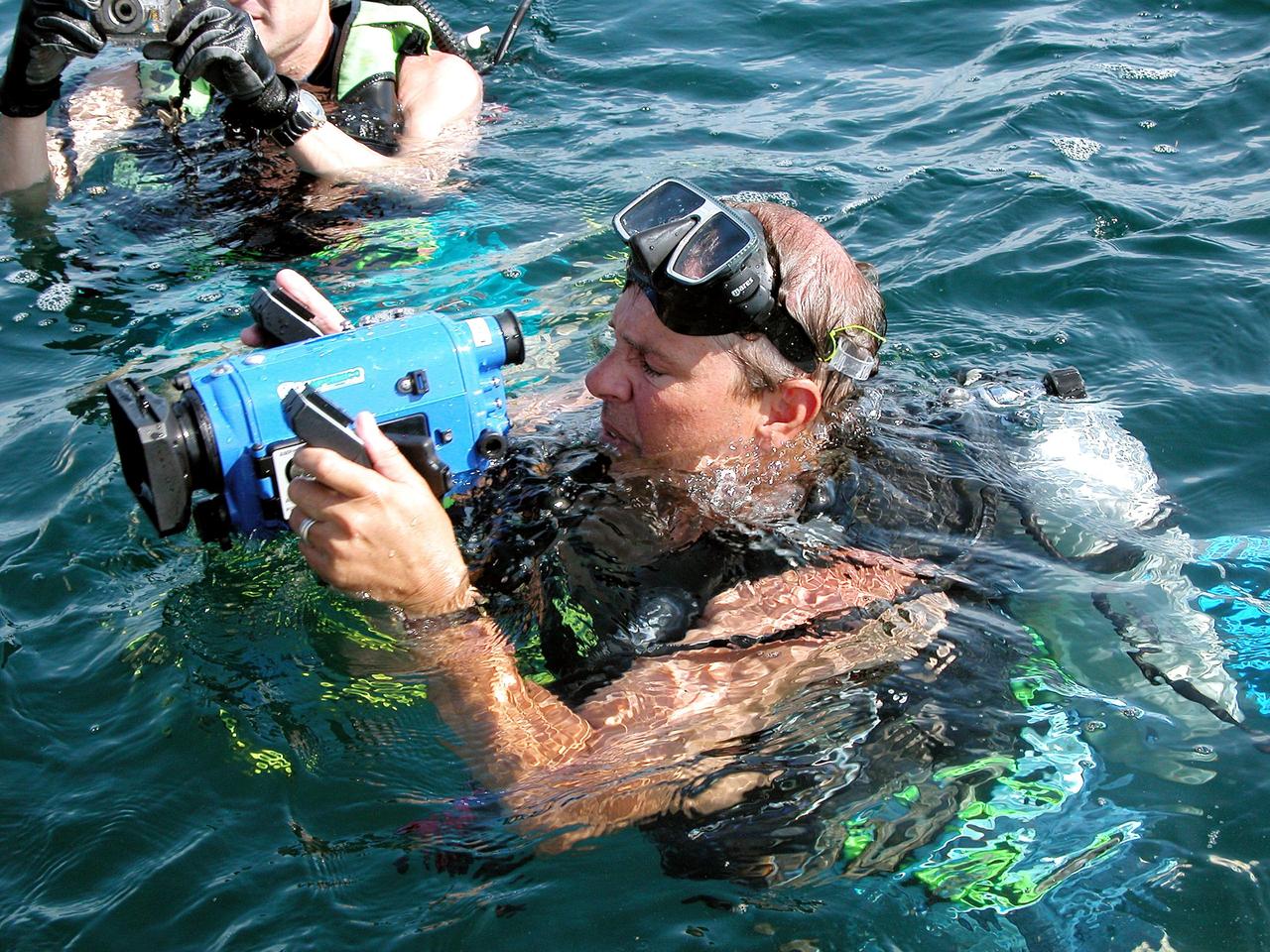
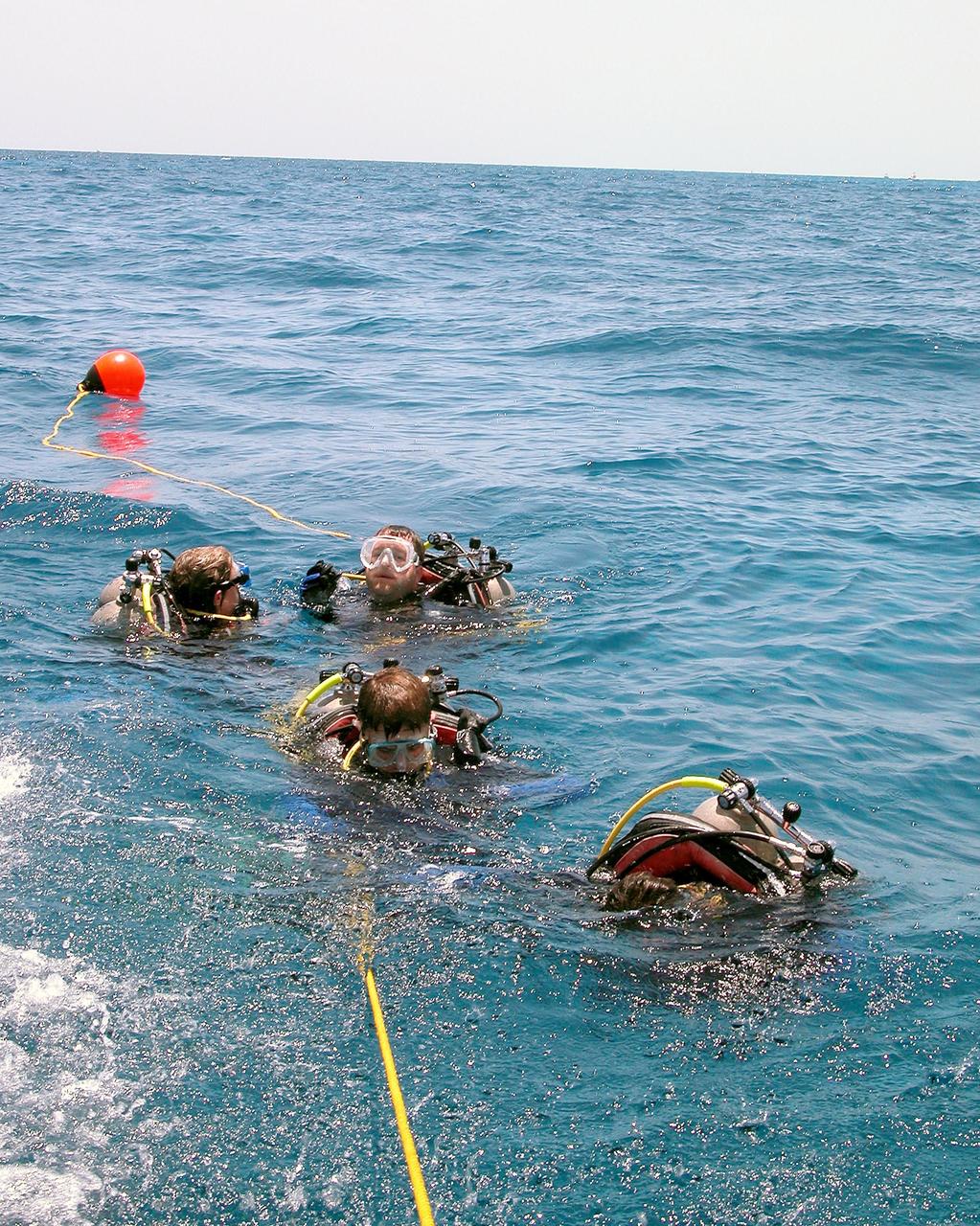
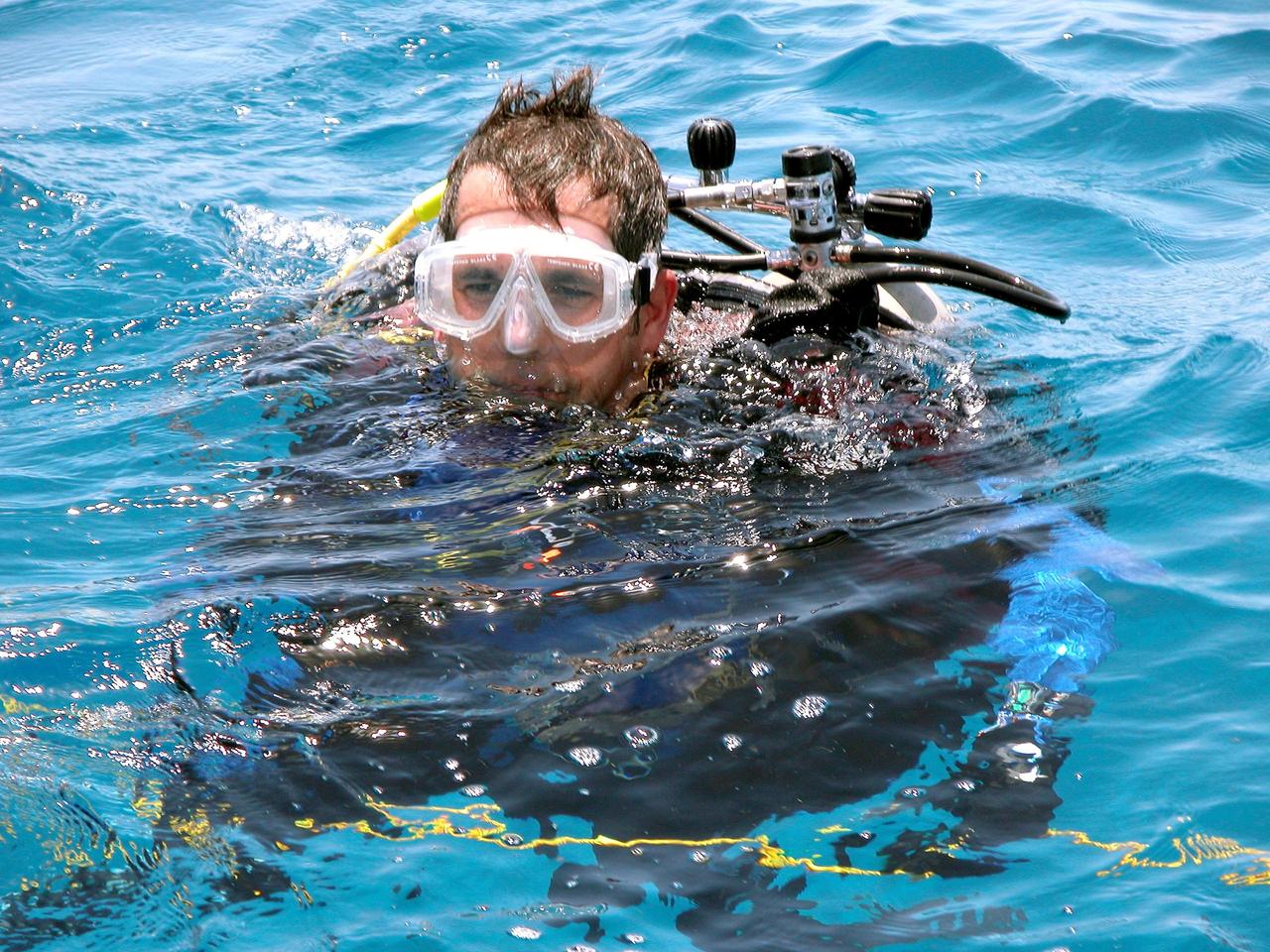
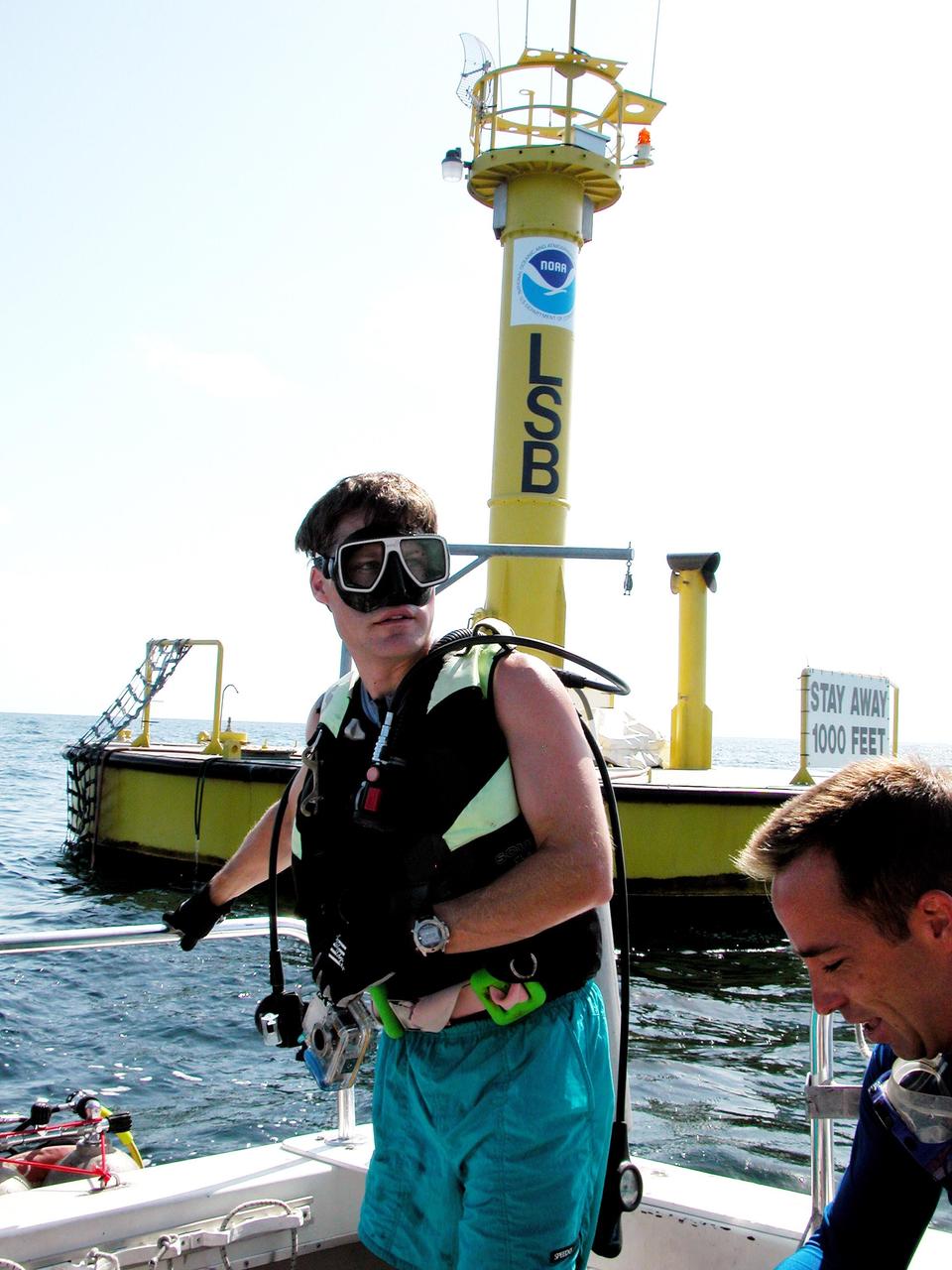
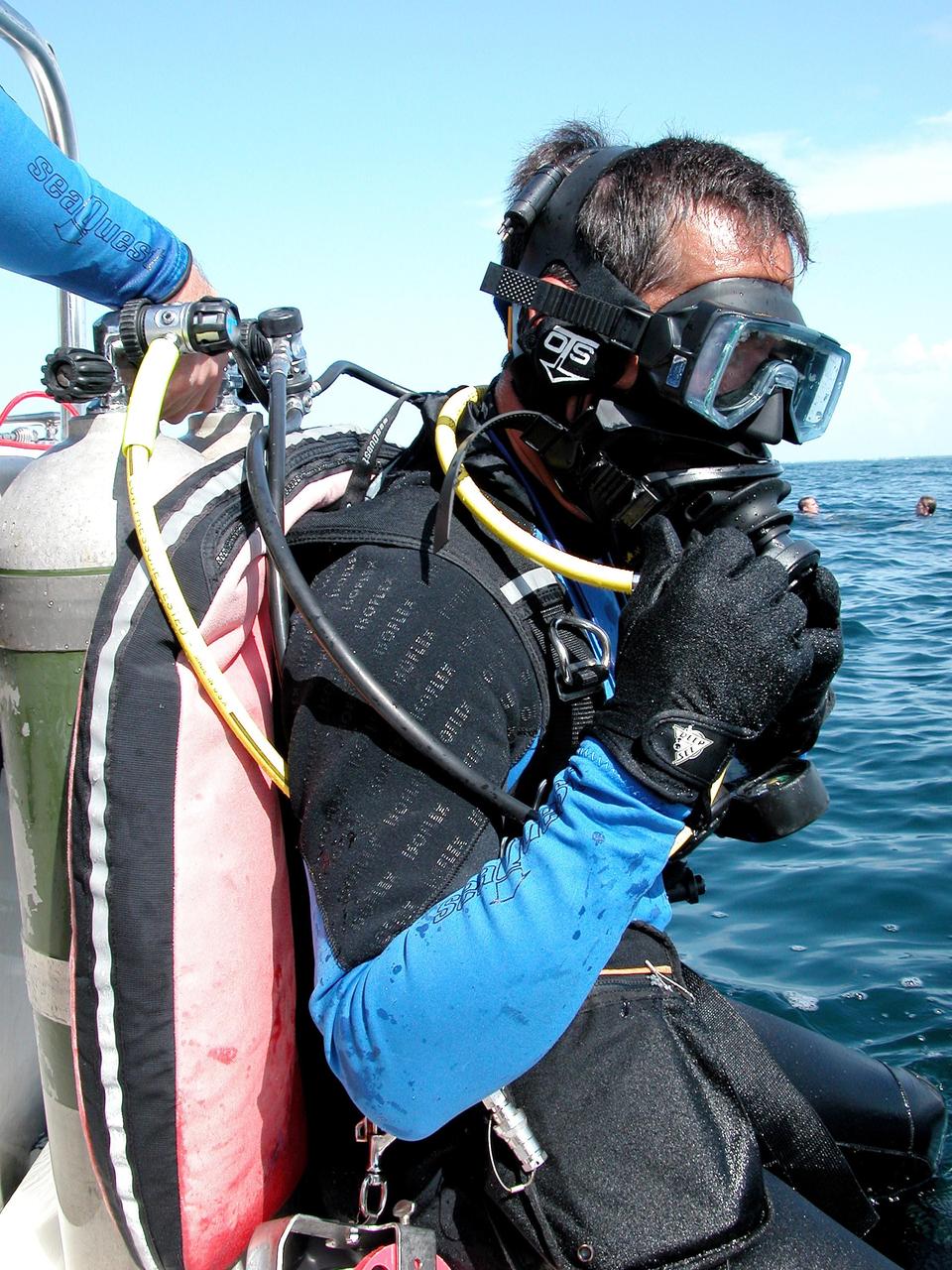
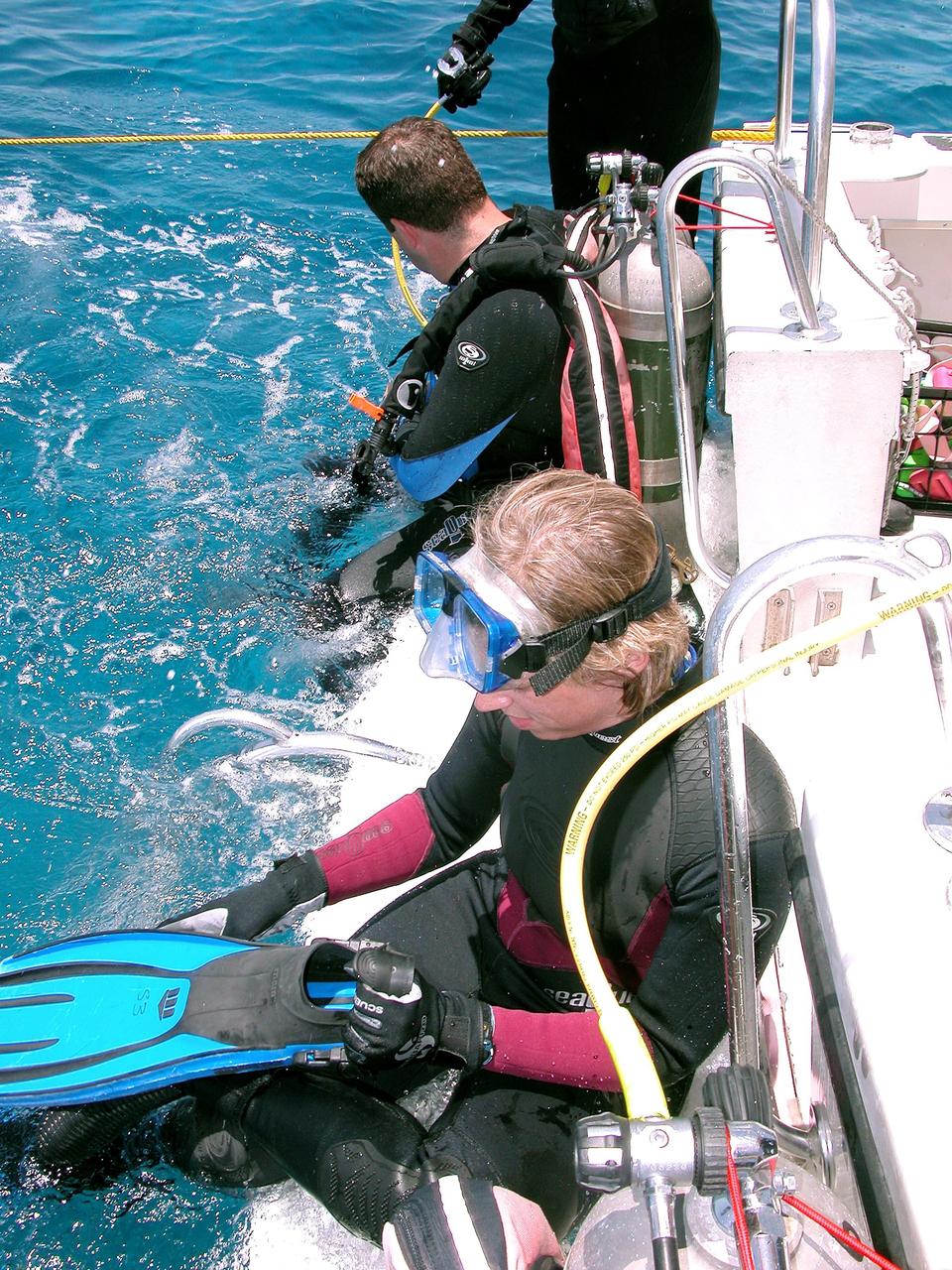
KENNEDY SPACE CENTER, FLA. - In the water for a practice dive in the ocean offshore from Key Largo are the NASA Extreme Environment Mission Operations 6 (NEEMO-6) mission team: (left to right) Tara Ruttley, a biomedical engineer, and astronauts Nick Patrick, John Herrington and Doug Wheelock. The NEEMO-6 mission involves exposing an astronaut/scientist crew to a real mission experience in an extreme environment - the NOAA undersea station Aquarius - to prepare for future space flight.  Spacewalk-like diving excursions and field-tests on a variety of biomedical equipment are designed to help astronauts living aboard the International Space Station.  To prepare for their 10-day stay, the team had dive training twice a day at the Life Support Buoy, anchored above Aquarius.
KSC-04pd1505
KENNEDY SPACE CENTER, FLA. - In the water offshore from Key Largo, site of the NASA Extreme Environment Mission Operations 6 (NEEMO-6), are (left to right) Bill Todd, project lead, and Marc Reagan, mission lead.  Todd and Lucas are also the underwater videographer and still photographer, respectively, for the mission.  The NEEMO-6 team comprises John Herrington, commander, Tara Ruttley, a biomedical engineer, and astronauts Nick Patrick and Doug Wheelock.  The NEEMO-6 mission involves exposing an astronaut/scientist crew to a real mission experience in an extreme environment - the NOAA undersea station Aquarius - to prepare for future space flight.  Spacewalk-like diving excursions and field-tests on a variety of biomedical equipment are designed to help astronauts living aboard the International Space Station.  To prepare for their 10-day stay, the team had dive training twice a day at the Life Support Buoy, anchored above Aquarius.
KSC-04pd1509
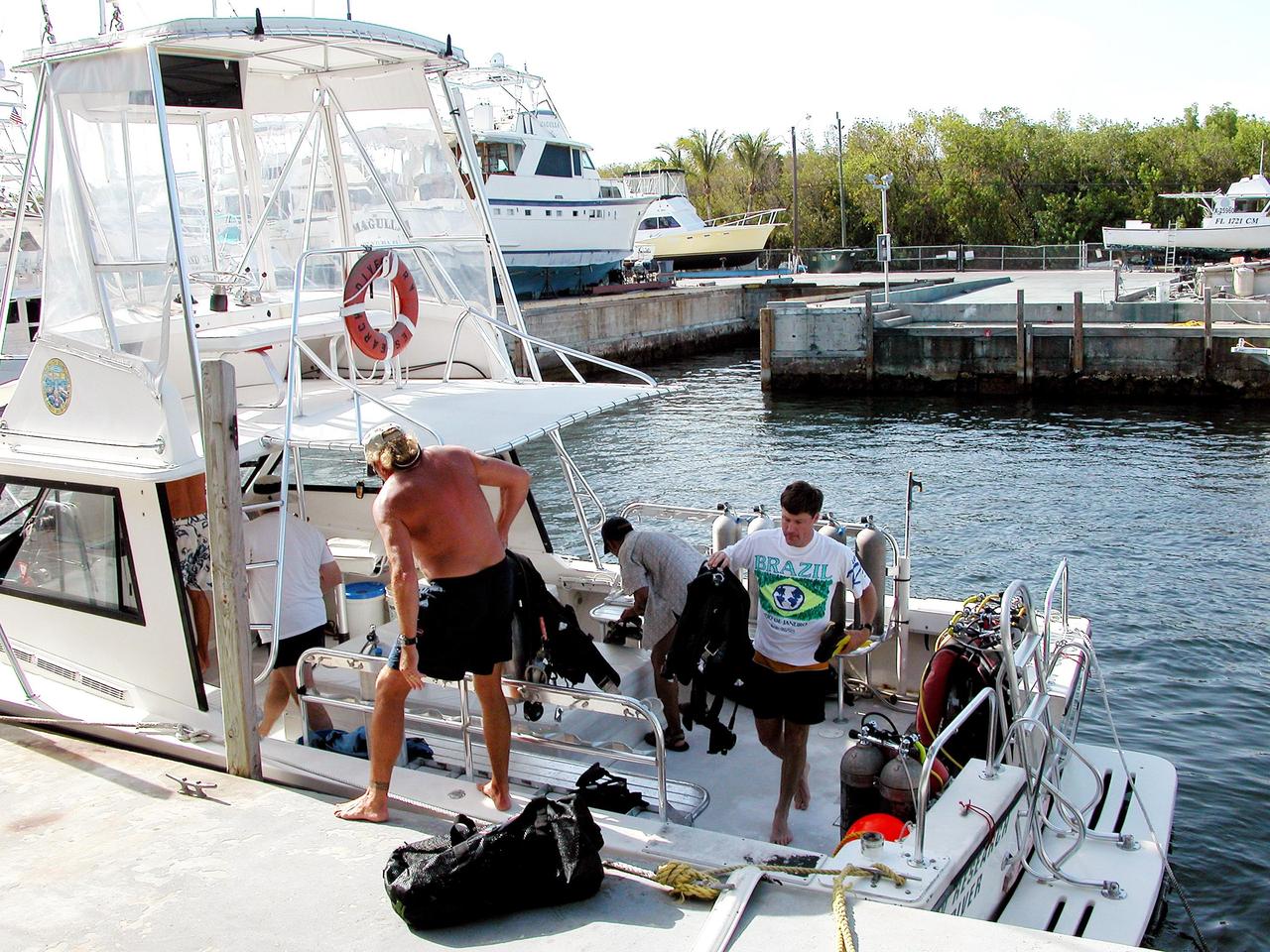
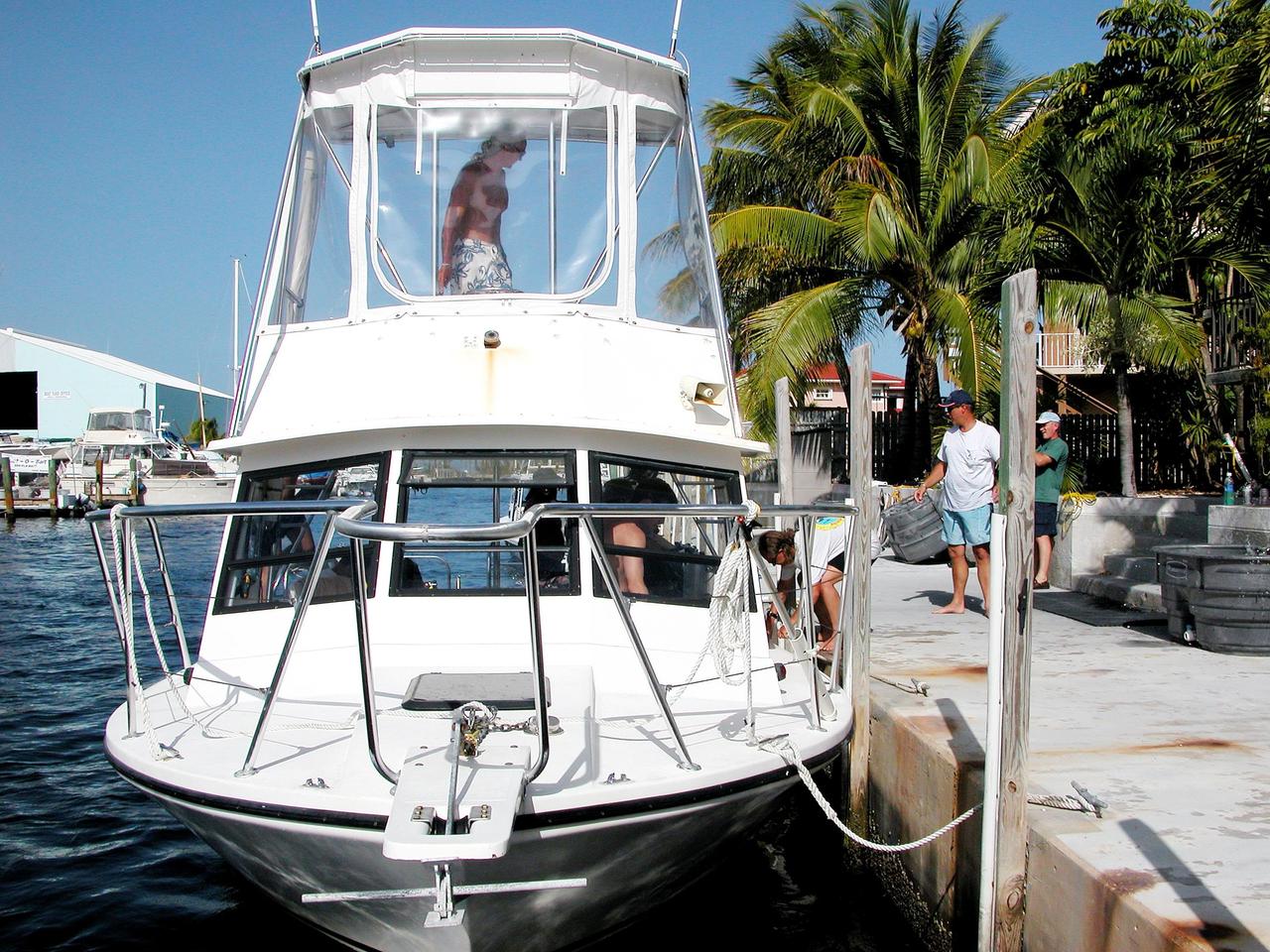
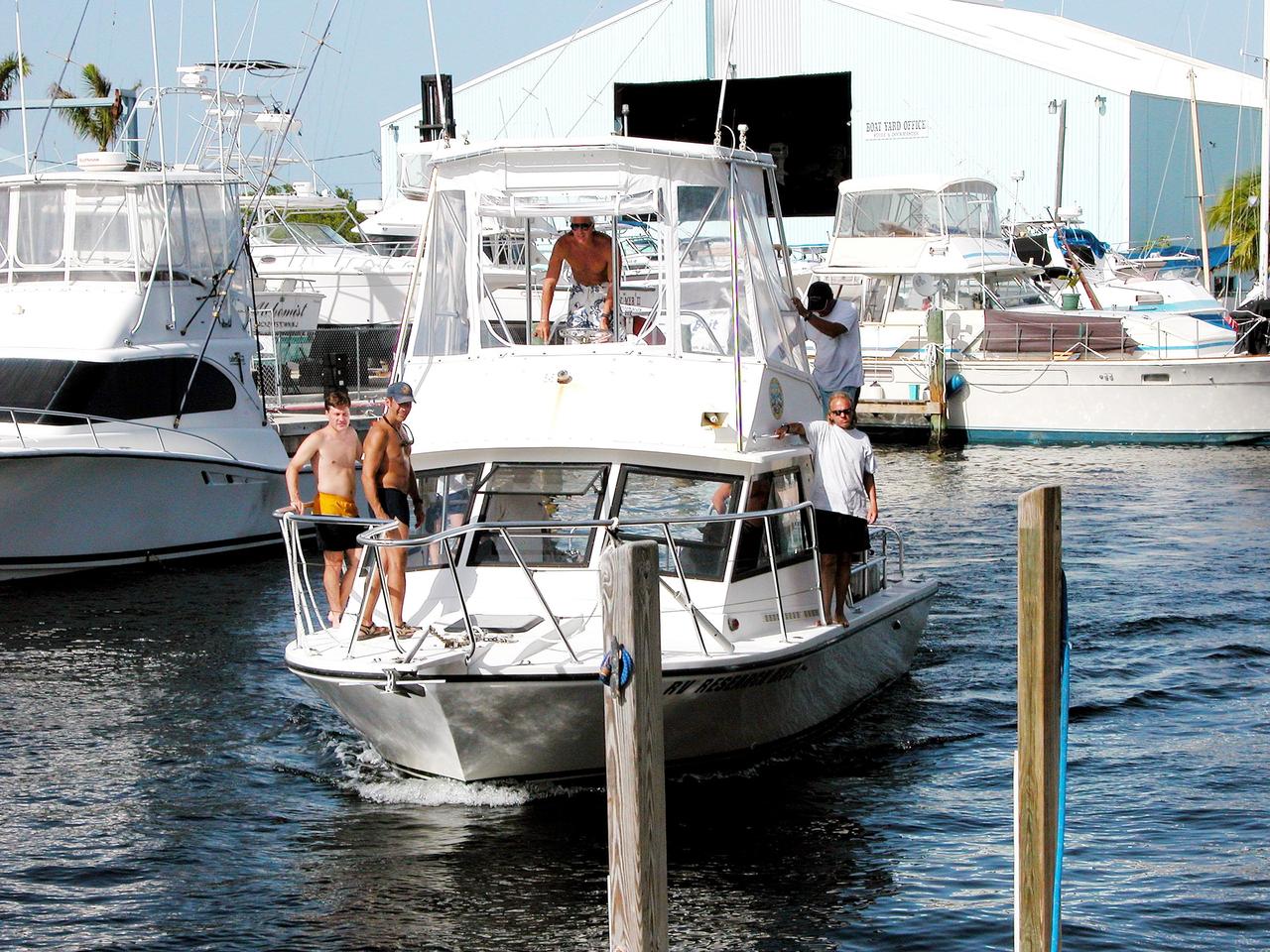
KENNEDY SPACE CENTER, FLA. - A boat returns to the dock in Key Largo from a training session offshore at NASA’s undersea research station, named Aquarius. At left is Marc Reagan, lead on the NASA Extreme Environment Mission Operations 6 (NEEMO-6) mission.  In the bow is astronaut John Herrington, mission commander.  The others are support personnel. Members of the team also include astronauts Doug Wheelock and Nick Patrick, and biomedical engineer Tara Ruttley.  To prepare for their 10-day stay, the team had dive training twice a day.  While stationed in Aquarius, the team conducted spacewalk-like diving excursions and field-testing a variety of biomedical equipment designed to help astronauts living aboard the International Space Station.
KSC-04pd1496
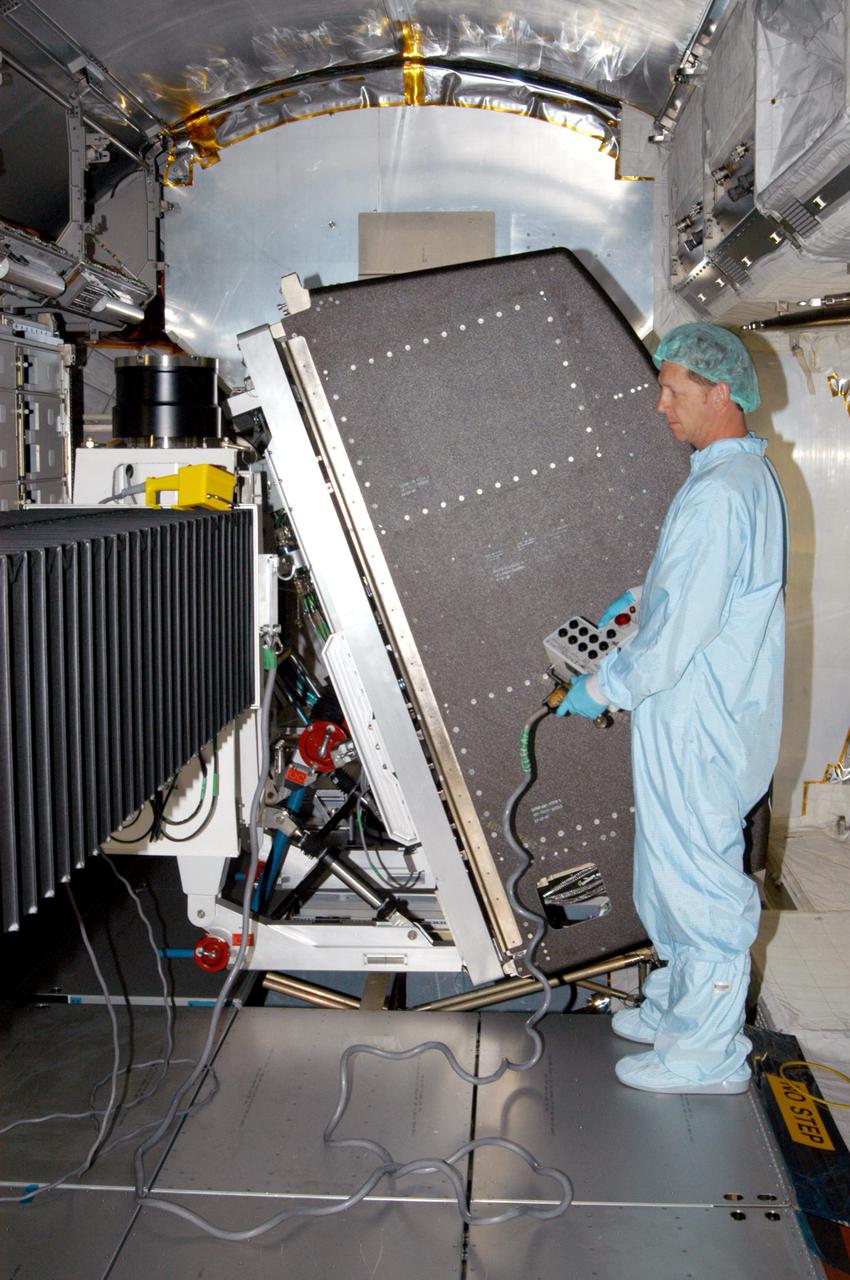
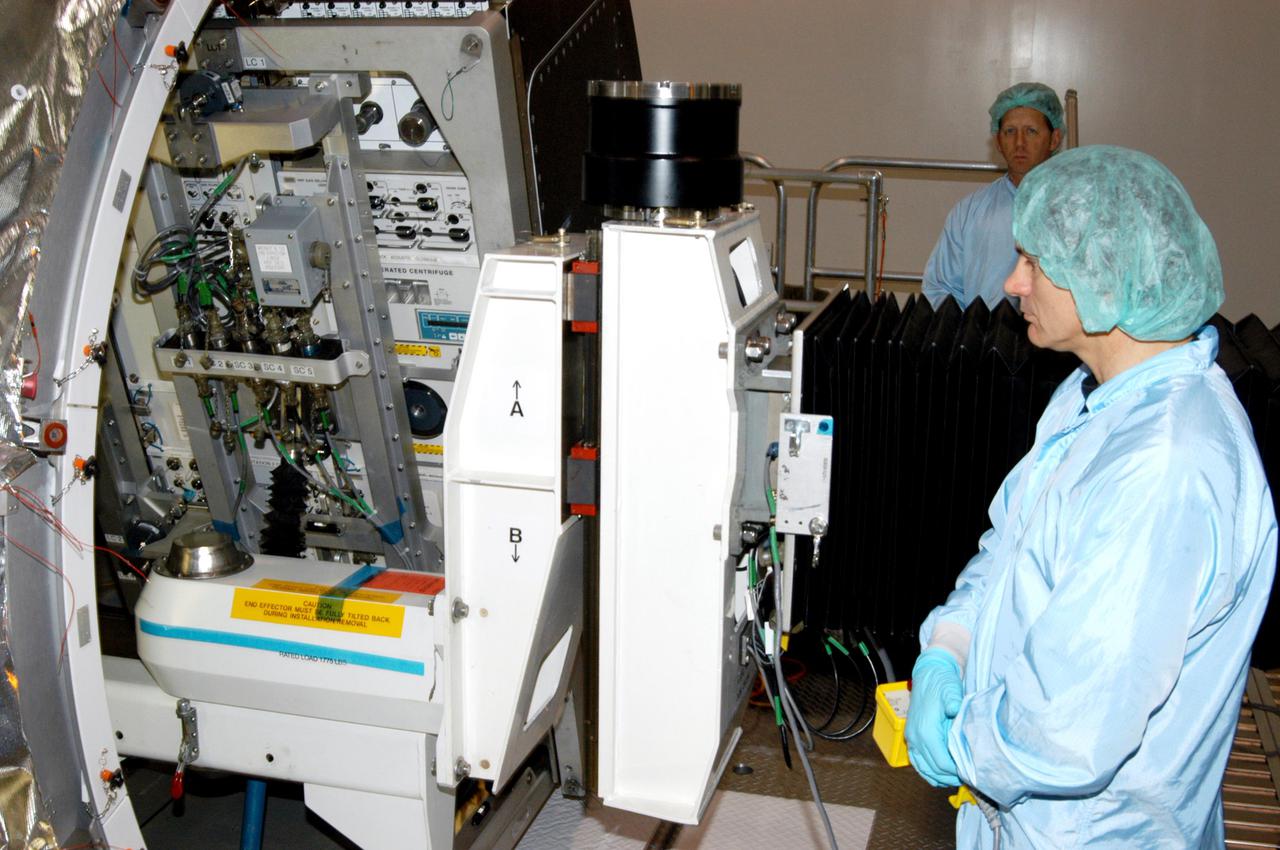
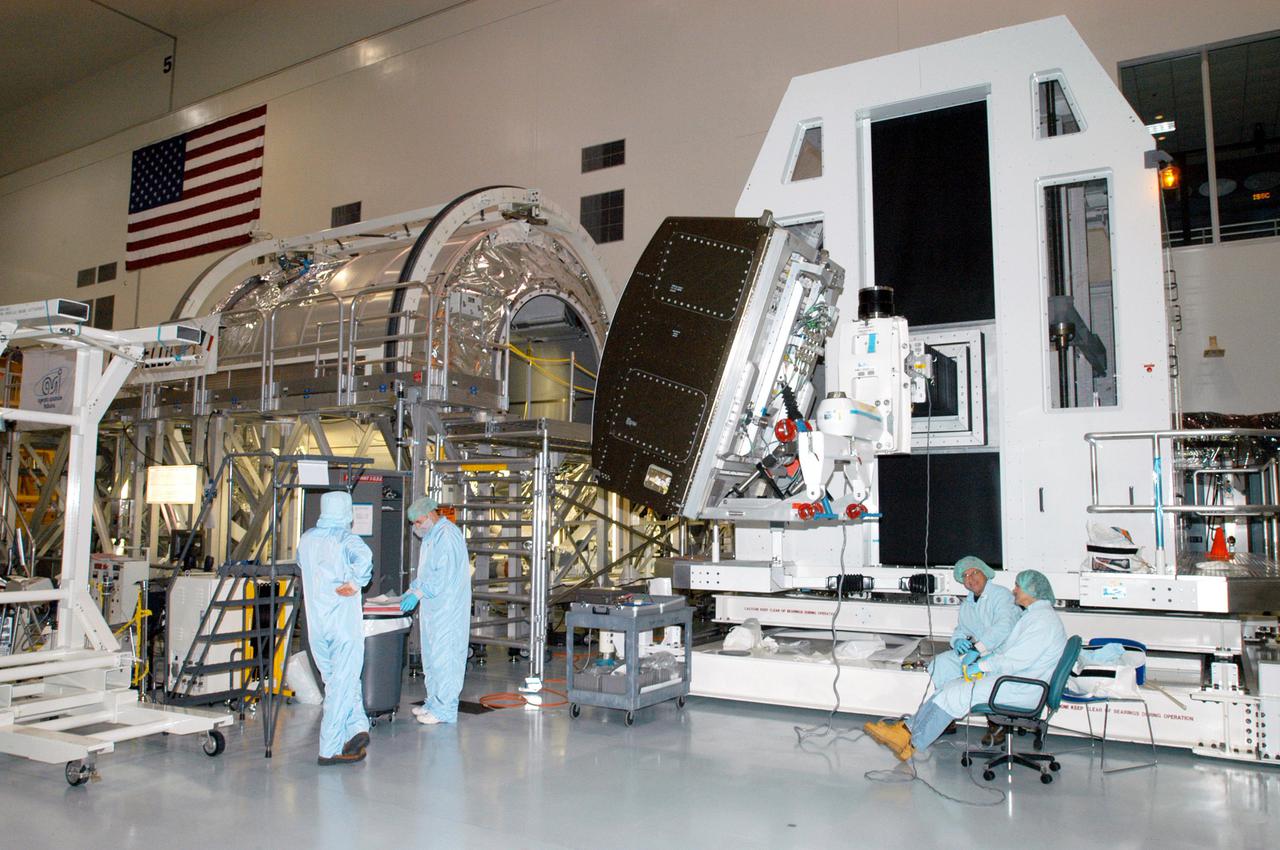
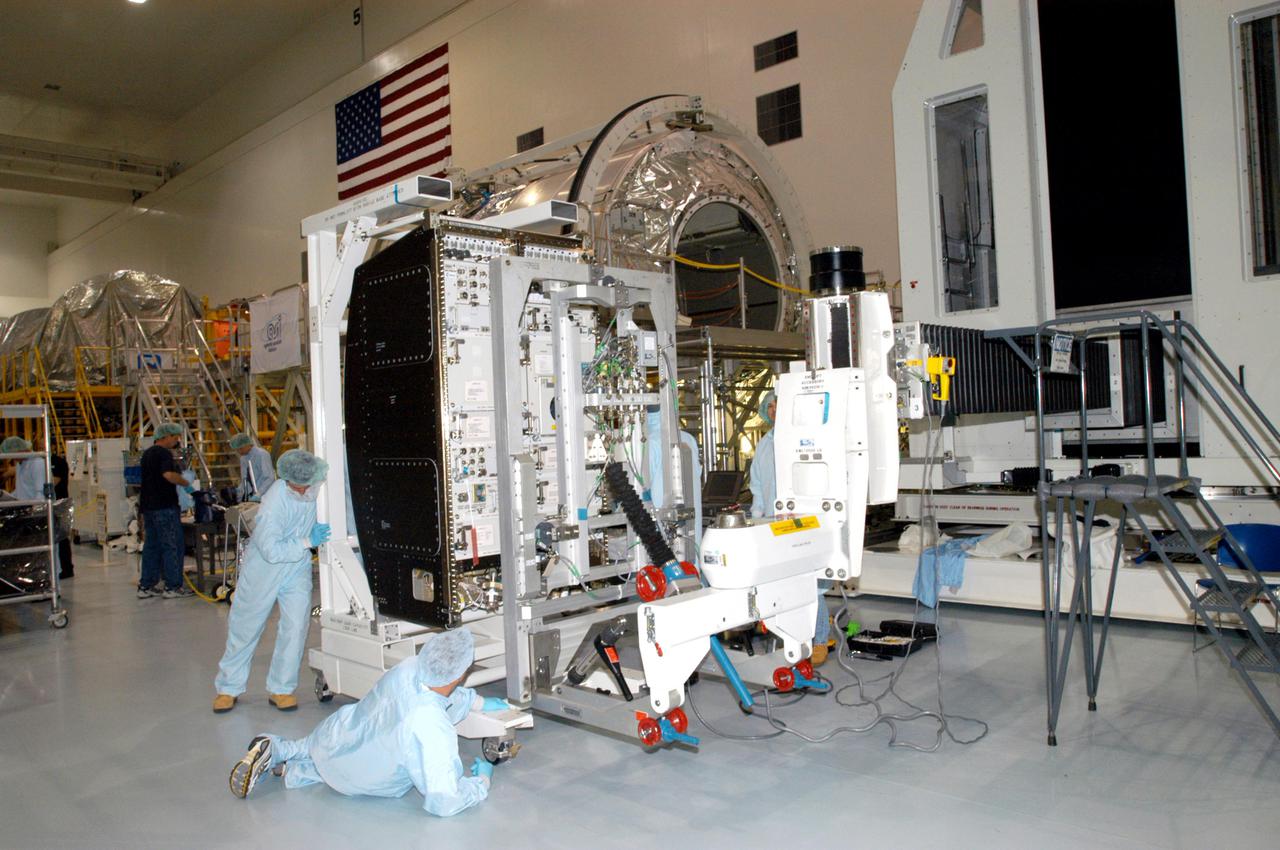
KENNEDY SPACE CENTER, FLA.  - In the Space Station Processing Facility, workers prepare to attach the Human Research Facility-2 (HRF-2) science rack onto the Rack Insertion Device.  HRF-2 will be installed into the Multi-Purpose Logistics Module Raffaello (at left) for flight on Space Shuttle Discovery’s Return to Flight mission, STS-114.   The HRF-2 will deliver additional biomedical instrumentation and research capability to the International Space Station.  HRF-1, installed on the U.S. Lab since May 2001, contains an ultrasound unit and gas analyzer.  Both racks provide structural, power, thermal, command and data handling, and communication and tracking interfaces between the HRF biomedical instrumentation and the U.S. Laboratory, Destiny.  NASA Kennedy Space Center and their prime contractor responsible for ISS element processing, The Boeing Company,  prepared the rack for installation.  The HRF Project is managed by NASA Johnson Space Center and implemented through contract with Lockheed Martin, Houston, Texas.
KSC-05pd-0370
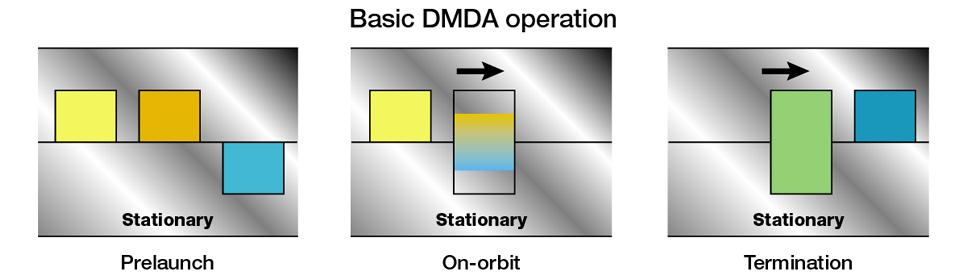
Experiments to seek solutions for a range of biomedical issues are at the heart of several investigations that will be hosted by the Commercial Instrumentation Technology Associates (ITA), Inc. Biomedical Experiments (CIBX-2) payload. CIBX-2 is unique, encompassing more than 20 separate experiments including cancer research, commercial experiments, and student hands-on experiments from 10 schools as part of ITA's ongoing University Among the Stars program. This drawing depicts a cross-section of a set of Dual-Materials Dispersion Apparatus (DMDA) specimen wells, one of which can include a reverse osmosis membrane to dewater a protein solution and thus cause crystallization. Depending on individual needs, two or three wells may be used, the membrane may be absent, or other proprietary enhancements may be present. The experiments are sponsored by NASA's Space Product Development Program (SPD).
Space Product Development (SPD)
KENNEDY SPACE CENTER, FLA. - In the water for a practice dive in the ocean offshore from Key Largo is astronaut John Herrington.  He is commander of the NASA Extreme Environment Mission Operations 6 (NEEMO-6) mission team.  The others are Nick Patrick, Doug Wheelock, and Tara Ruttley, a biomedical engineer.  The NEEMO-6 mission involves exposing an astronaut/scientist crew to a real mission experience in an extreme environment - the NOAA undersea station Aquarius - to prepare for future space flight.  Spacewalk-like diving excursions and field-tests on a variety of biomedical equipment are designed to help astronauts living aboard the International Space Station.  To prepare for their 10-day stay, the team had dive training twice a day at the Life Support Buoy, anchored above Aquarius.
KSC-04pd1510
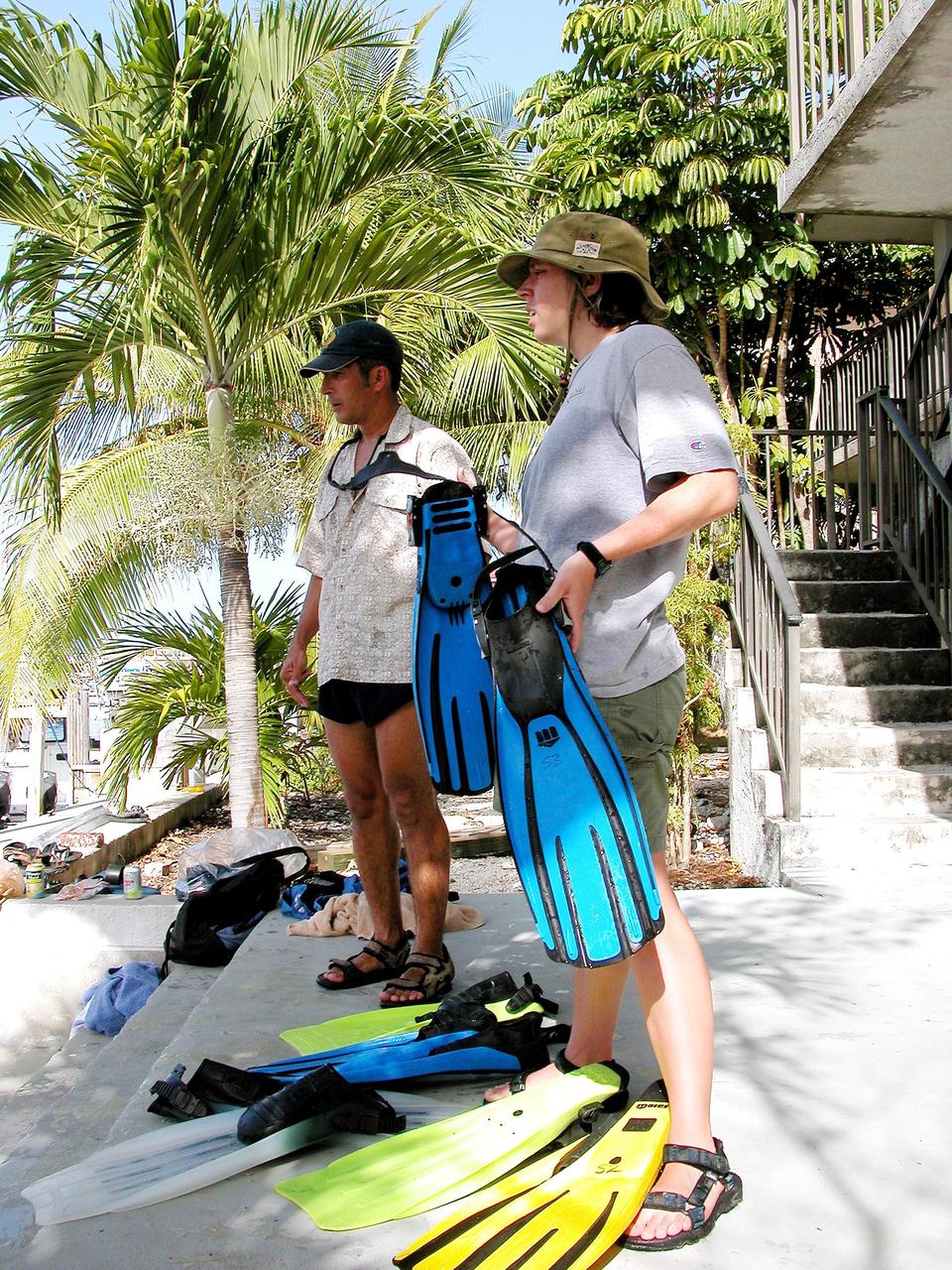
KENNEDY SPACE CENTER, FLA. - After their return from a practice dive at the NOAA Aquarius underwater station offshore at Key Largo, John Herrington and Tara Ruttley look over their dive gear.  Herrington is mission commander and Ruttley, a biomedical engineer, is a member of the crew on the NASA Extreme Environment Mission Operations 6 (NEEMO-6) mission.  The NEEMO-6 mission involves exposing an astronaut/scientist crew to a real mission experience in an extreme environment - the NOAA undersea station Aquarius offshore from Key Largo - to prepare for future space flight.  Spacewalk-like diving excursions and field-tests on a variety of biomedical equipment are designed to help astronauts living aboard the International Space Station.  Other team members are astronauts Doug Wheelock and Nick Patrick. To prepare for their 10-day stay, the team had dive training twice a day at the Life Support Buoy, anchored above Aquarius.
KSC-04pd1500
KENNEDY SPACE CENTER, FLA. - Disembarking from the boat in Key Largo are Otto Rutten and Marc Reagan, participating in the NASA Extreme Environment Mission Operations 6 (NEEMO-6) mission at the NOAA Aquarius underwater station offshore.  Rutten is director for the National Underwater Research Center; Reagan is mission lead.  The NEEMO-6 mission involves exposing an astronaut/scientist crew to a real mission experience in an extreme environment to prepare for future space flight.  Spacewalk-like diving excursions and field-tests on a variety of biomedical equipment are designed to help astronauts living aboard the International Space Station.  The NEEMO-6 team comprises astronaut John Herrington, mission commander, astronauts Doug Wheelock and Nick Patrick, and biomedical engineer Tara Ruttley. To prepare for their 10-day stay, the team had dive training twice a day at the Life Support Buoy, anchored above Aquarius.
KSC-04pd1498
KENNEDY SPACE CENTER, FLA. -    Nancy Lowry (left) and Mikiko Ujihara, with Boeing, monitor the Payload Test and Checkout System for the Human Research Facility (HRF) Rack -2 payload. The HRF-2 is scheduled to fly on Return to Flight Space Shuttle mission STS-114.  The HRF-2 will deliver additional biomedical instrumentation and research capability to the International Space Station.  HRF Rack 1 contains an ultrasound unit and gas analyzer system and has been operational in the U.S. Lab since May 2001.  HRF-2 will also be installed in the U. S. Lab and will provide structural, power, thermal, command and data handling, and communication and tracking interfaces between the HRF biomedical instrumentation and the U. S. Lab.
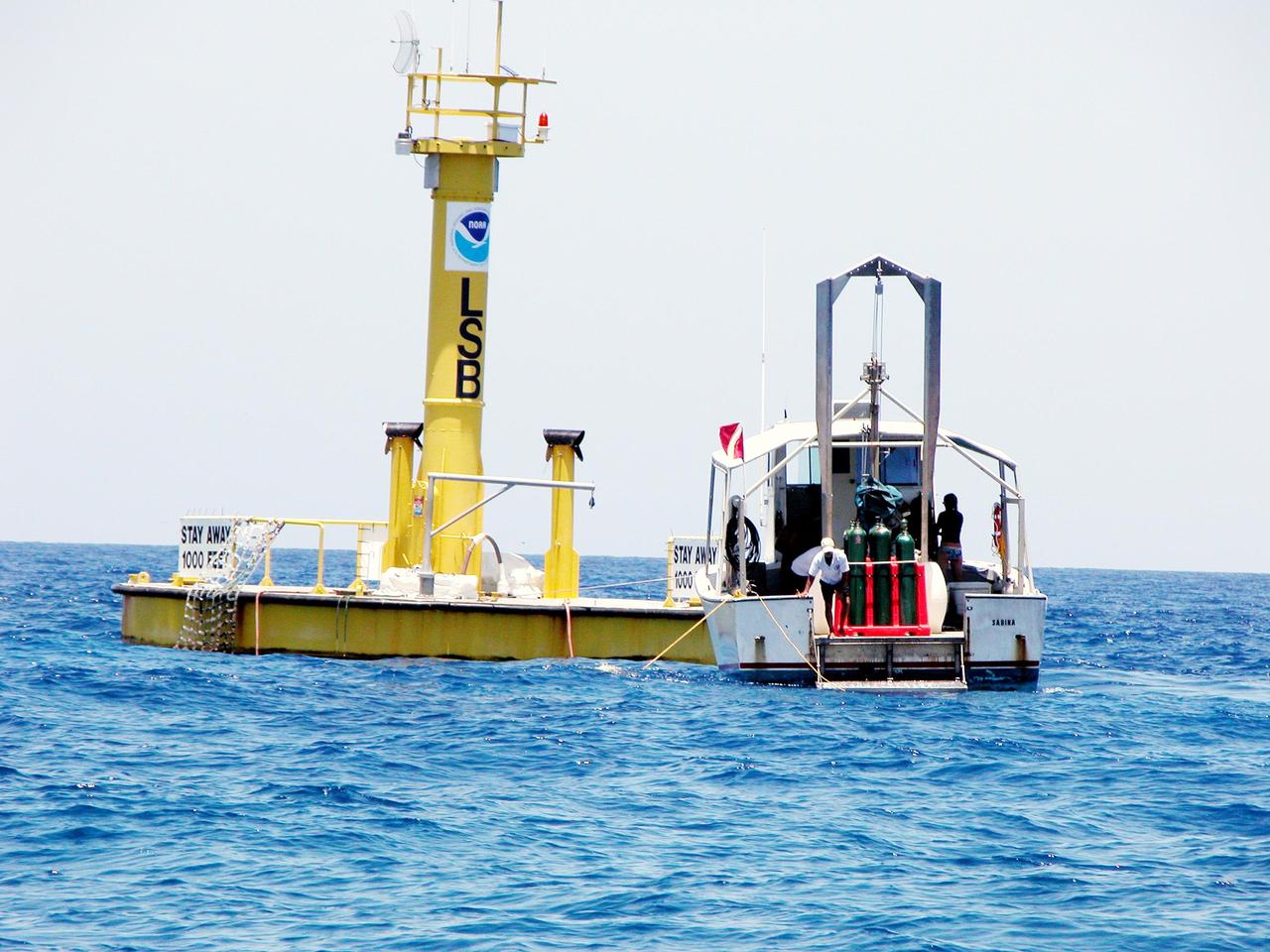
KSC-04pd-2495
KENNEDY SPACE CENTER, FLA. - Onboard the dive boat at the Life Support Buoy offshore from Key Largo is Marc Reagan, mission lead for the NASA Extreme Environment Mission Operations 6 (NEEMO-6) mission.  At right is Lt. Scott Sparks, a Navy medical officer.  Reagan is also the underwater still photographer.  The NEEMO-6 team comprises John Herrington, commander, Tara Ruttley, a biomedical engineer, and astronauts Nick Patrick and Doug Wheelock.  The NEEMO-6 mission involves exposing an astronaut/scientist crew to a real mission experience in an extreme environment - the NOAA undersea station Aquarius - to prepare for future space flight.  Spacewalk-like diving excursions and field-tests on a variety of biomedical equipment are designed to help astronauts living aboard the International Space Station.  To prepare for their 10-day stay, the team had dive training twice a day at the Life Support Buoy, anchored above Aquarius.
KSC-04pd1508
KENNEDY SPACE CENTER, FLA. -   -   In the Space Station Processing Facility, Gaschen Geissen and Elton Witt, with Lockheed Martin, monitor the Payload Test and Checkout System for the Human Research Facility (HRF) Rack -2 payload. The HRF-2 is scheduled to fly on Return to Flight Space Shuttle mission STS-114.  The HRF-2 will deliver additional biomedical instrumentation and research capability to the International Space Station.  HRF Rack 1 contains an ultrasound unit and gas analyzer system and has been operational in the U.S. Lab since May 2001.  HRF-2 will also be installed in the U. S. Lab and will provide structural, power, thermal, command and data handling, and communication and tracking interfaces between the HRF biomedical instrumentation and the U. S. Lab.
KSC-04pd-2492
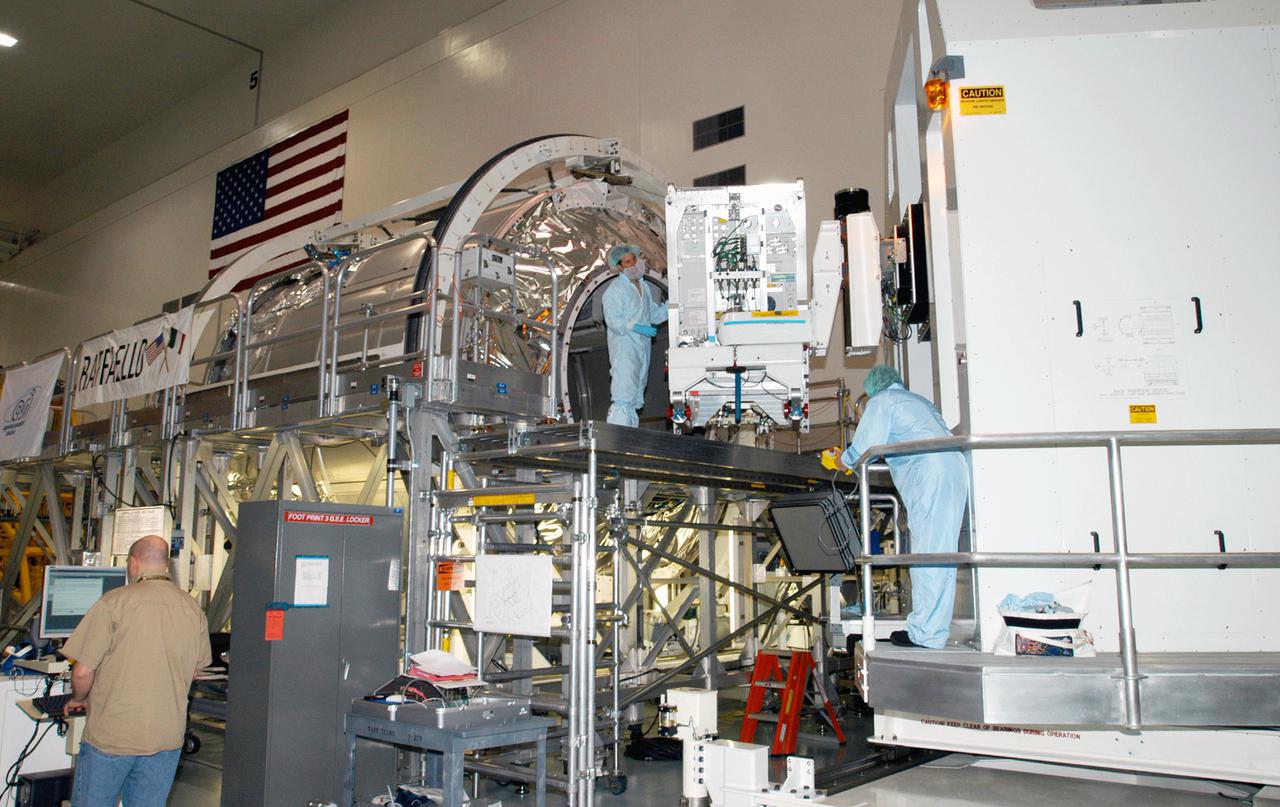
KENNEDY SPACE CENTER, FLA.  - In the Space Station Processing Facility, a worker stands by as the Rack Insertion Device slowly moves the Human Research Facility-2 (HRF-2) science rack into the Multi-Purpose Logistics Module Raffaello for flight on Space Shuttle Discovery’s Return to Flight mission, STS-114.  The HRF-2 will deliver additional biomedical instrumentation and research capability to the International Space Station.  HRF-1, installed on the U.S. Lab since May 2001, contains an ultrasound unit and gas analyzer.  Both racks provide structural, power, thermal, command and data handling, and communication and tracking interfaces between the HRF biomedical instrumentation and the U.S. Laboratory, Destiny.  NASA Kennedy Space Center and their prime contractor responsible for ISS element processing, The Boeing Company, prepared the rack for installation.  The HRF Project is managed by NASA Johnson Space Center and implemented through contract with Lockheed Martin, Houston, Texas.
KSC-05pd-0373
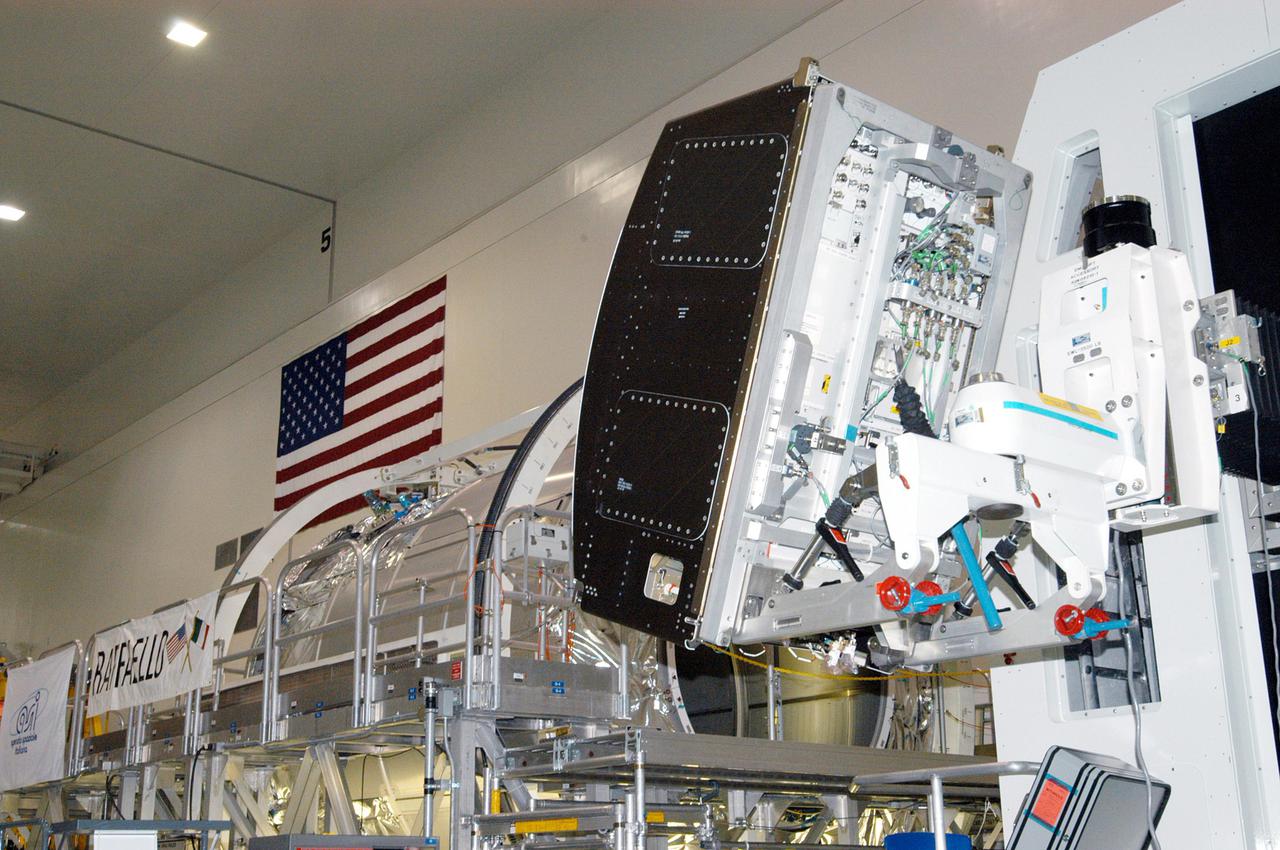
KENNEDY SPACE CENTER, FLA.  - In the Space Station Processing Facility, the Rack Insertion Device moves the Human Research Facility-2 (HRF-2) science rack toward the Multi-Purpose Logistics Module Raffaello (at left) for flight on Space Shuttle Discovery’s Return to Flight mission, STS-114.  The HRF-2 will deliver additional biomedical instrumentation and research capability to the International Space Station.  HRF-1, installed on the U.S. Lab since May 2001, contains an ultrasound unit and gas analyzer.  Both racks provide structural, power, thermal, command and data handling, and communication and tracking interfaces between the HRF biomedical instrumentation and the U.S. Laboratory, Destiny.  NASA Kennedy Space Center and their prime contractor responsible for ISS element processing, The Boeing Company, prepared the rack for installation.  The HRF Project is managed by NASA Johnson Space Center and implemented through contract with Lockheed Martin, Houston, Texas.
KSC-05pd-0372
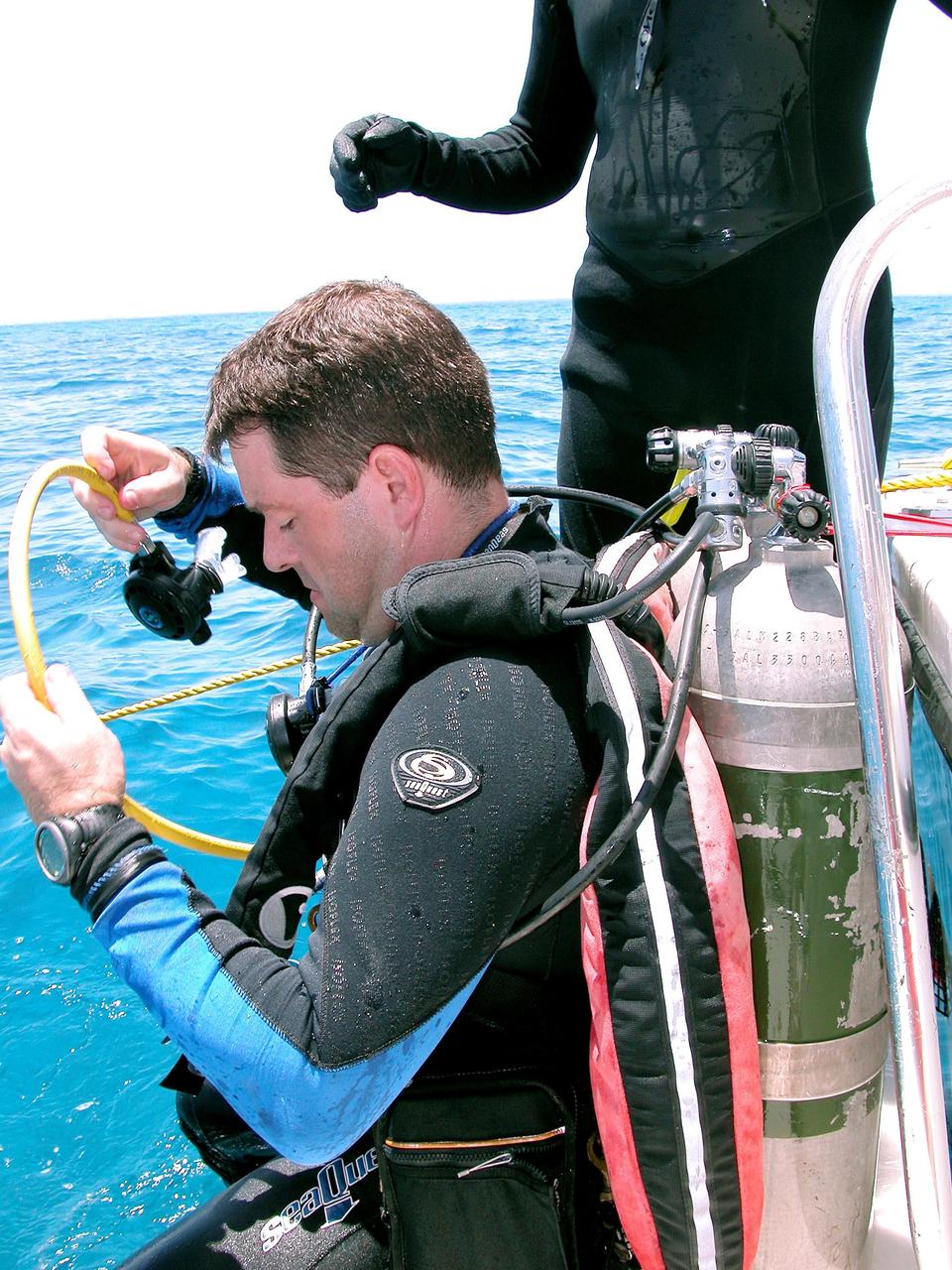
KENNEDY SPACE CENTER, FLA. - Getting ready to enter the water on a practice dive in the ocean offshore from Key Largo are Tara Ruttley (below) and Nick Patrick (above).  The two are members of the NASA Extreme Environment Mission Operations 6 (NEEMO-6) mission team. Ruttley is a biomedical engineer. The others are astronauts John Herrington, mission commander, and Doug Wheelock. The NEEMO-6 mission involves exposing an astronaut/scientist crew to a real mission experience in an extreme environment - the NOAA undersea station Aquarius - to prepare for future space flight.  Spacewalk-like diving excursions and field-tests on a variety of biomedical equipment are designed to help astronauts living aboard the International Space Station.  To prepare for their 10-day stay, the team had dive training twice a day at the Life Support Buoy, anchored above Aquarius.
KSC-04pd1502
KENNEDY SPACE CENTER, FLA. - Getting ready to enter the water on a practice dive in the ocean offshore from Key Largo is Nick Patrick. He is a member of the NASA Extreme Environment Mission Operations 6 (NEEMO-6) mission team. The others are astronauts John Herrington, mission commander, and Doug Wheelock, plus Tara Ruttley, a biomedical engineer.  The NEEMO-6 mission involves exposing an astronaut/scientist crew to a real mission experience in an extreme environment - the NOAA undersea station Aquarius - to prepare for future space flight.  Spacewalk-like diving excursions and field-tests on a variety of biomedical equipment are designed to help astronauts living aboard the International Space Station.  To prepare for their 10-day stay, the team had dive training twice a day at the Life Support Buoy, anchored above Aquarius.
KSC-04pd1503
KENNEDY SPACE CENTER, FLA.  - In the Space Station Processing Facility, workers prepare the Human Research Facility-2 (HRF-2) science rack for installation into the Multi-Purpose Logistics Module Raffaello for flight on Space Shuttle Discovery’s Return to Flight mission, STS-114.  The HRF-2 will deliver additional biomedical instrumentation and research capability to the International Space Station.  HRF-1, installed on the U.S. Lab since May 2001, contains an ultrasound unit and gas analyzer.  Both racks provide structural, power, thermal, command and data handling, and communication and tracking interfaces between the HRF biomedical instrumentation and the U.S. Laboratory, Destiny.  NASA Kennedy Space Center and their prime contractor responsible for ISS element processing, The Boeing Company,  prepared the rack for installation.  The HRF Project is managed by NASA Johnson Space Center and implemented through contract with Lockheed Martin, Houston, Texas.
KSC-05pd-0369
KENNEDY SPACE CENTER, FLA. - In the water for a practice dive in the ocean offshore from Key Largo is astronaut John Herrington.  He is commander of the NASA Extreme Environment Mission Operations 6 (NEEMO-6) mission team.  The others are Nick Patrick, Doug Wheelock, and Tara Ruttley, a biomedical engineer.  The NEEMO-6 mission involves exposing an astronaut/scientist crew to a real mission experience in an extreme environment - the NOAA undersea station Aquarius - to prepare for future space flight.  Spacewalk-like diving excursions and field-tests on a variety of biomedical equipment are designed to help astronauts living aboard the International Space Station.  To prepare for their 10-day stay, the team had dive training twice a day at the Life Support Buoy, anchored above Aquarius.
KSC-04pd1504
KENNEDY SPACE CENTER, FLA.  - In the Space Station Processing Facility, a worker inside the Multi-Purpose Logistics Module Raffaello is ready for installation of the Human Research Facility-2 (HRF-2) science rack.  Raffaello will fly on Space Shuttle Discovery’s Return to Flight mission, STS-114.  The HRF-2 will deliver additional biomedical instrumentation and research capability to the International Space Station.  HRF-1, installed on the U.S. Lab since May 2001, contains an ultrasound unit and gas analyzer.  Both racks provide structural, power, thermal, command and data handling, and communication and tracking interfaces between the HRF biomedical instrumentation and the U.S. Laboratory, Destiny.  NASA Kennedy Space Center and their prime contractor responsible for ISS element processing, The Boeing Company, prepared the rack for installation.  The HRF Project is managed by NASA Johnson Space Center and implemented through contract with Lockheed Martin, Houston, Texas.
KSC-05pd-0375
KENNEDY SPACE CENTER, FLA.  - In the Space Station Processing Facility, the Human Research Facility-2 (HRF-2) science rack is attached to the Rack Insertion Device that will install it into the Multi-Purpose Logistics Module Raffaello (at left) for flight on Space Shuttle Discovery’s Return to Flight mission, STS-114.  The HRF-2 will deliver additional biomedical instrumentation and research capability to the International Space Station.  HRF-1, installed on the U.S. Lab since May 2001, contains an ultrasound unit and gas analyzer.  Both racks provide structural, power, thermal, command and data handling, and communication and tracking interfaces between the HRF biomedical instrumentation and the U.S. Laboratory, Destiny.  NASA Kennedy Space Center and their prime contractor responsible for ISS element processing, The Boeing Company,  prepared the rack for installation.  The HRF Project is managed by NASA Johnson Space Center and implemented through contract with Lockheed Martin, Houston, Texas.
KSC-05pd-0371
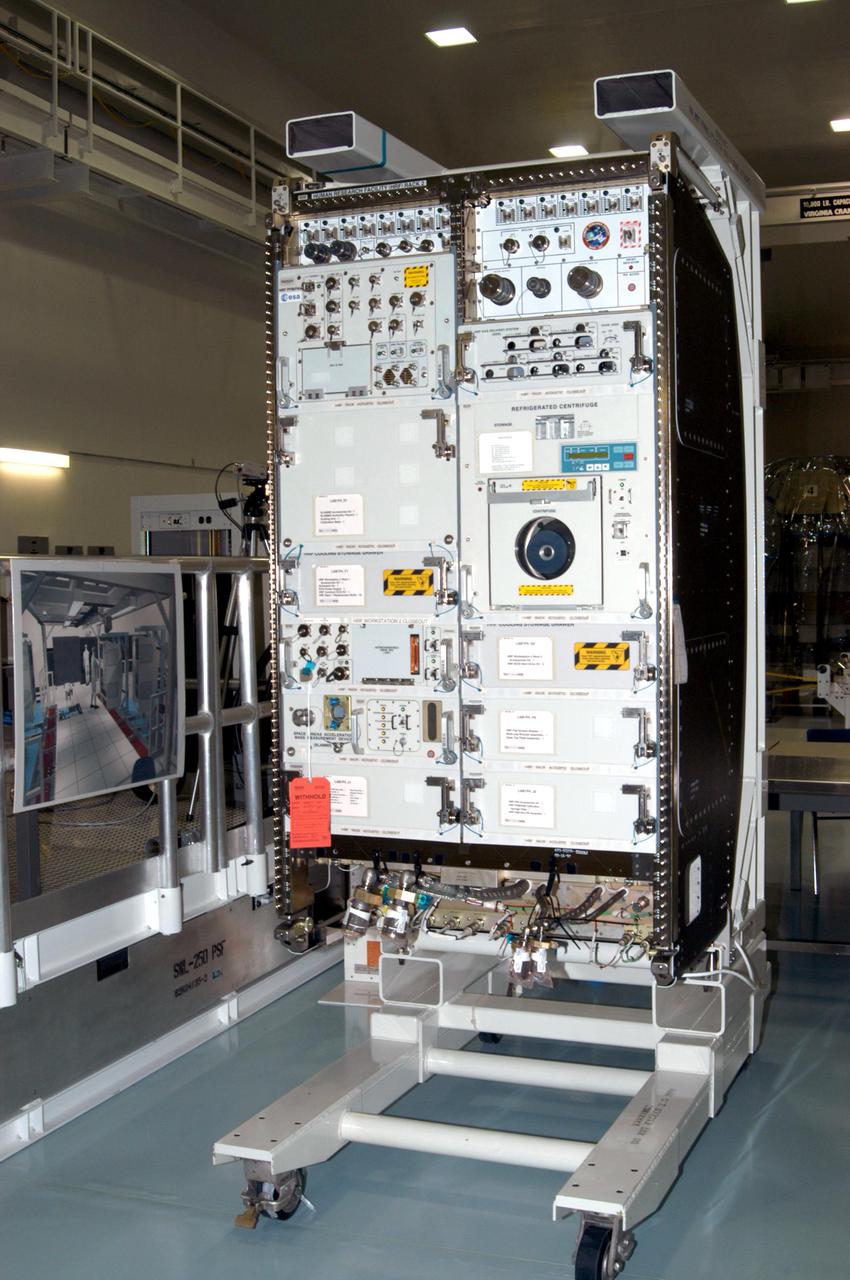
KENNEDY SPACE CENTER, FLA.  - In the Space Station Processing Facility, the Human Research Facility-2 (HRF-2) science rack sits on a stand waiting to be installed into the Multi-Purpose Logistics Module Raffaello for flight on Space Shuttle Discovery’s Return to Flight mission, STS-114.  The HRF-2 will deliver additional biomedical instrumentation and research capability to the International Space Station.  HRF-1, installed on the U.S. Lab since May 2001, contains an ultrasound unit and gas analyzer.  Both racks provide structural, power, thermal, command and data handling, and communication and tracking interfaces between the HRF biomedical instrumentation and the U.S. Laboratory, Destiny.  NASA Kennedy Space Center and their prime contractor responsible for ISS element processing, The Boeing Company, prepared the rack for installation.  The HRF Project is managed by NASA Johnson Space Center and implemented through contract with Lockheed Martin, Houston, Texas.
KSC-05pd-0368
KENNEDY SPACE CENTER, FLA.  - In the Space Station Processing Facility, a worker watches as the Rack Insertion Device slowly moves the Human Research Facility-2 (HRF-2) science rack into the Multi-Purpose Logistics Module Raffaello for flight on Space Shuttle Discovery’s Return to Flight mission, STS-114.  The HRF-2 will deliver additional biomedical instrumentation and research capability to the International Space Station.  HRF-1, installed on the U.S. Lab since May 2001, contains an ultrasound unit and gas analyzer.  Both racks provide structural, power, thermal, command and data handling, and communication and tracking interfaces between the HRF biomedical instrumentation and the U.S. Laboratory, Destiny.  NASA Kennedy Space Center and their prime contractor responsible for ISS element processing, The Boeing Company, prepared the rack for installation.  The HRF Project is managed by NASA Johnson Space Center and implemented through contract with Lockheed Martin, Houston, Texas.
KSC-05pd-0374
KENNEDY SPACE CENTER, FLA. - The boat with NEEMO-6 personnel ties up at the dock in Key Largo after a training session offshore at NASA’s undersea research station, named Aquarius.  At right is Bill Todd, project lead. The NASA Extreme Environment Mission Operations 6 (NEEMO-6) mission involves spacewalk-like diving excursions and field-testing a variety of biomedical equipment designed to help astronauts living aboard the International Space Station.  The NEEMO-6 team comprises astronaut John Herrington, mission commander, astronauts Doug Wheelock and Nick Patrick, and biomedical engineer Tara Ruttley.  To prepare for their 10-day stay, the team had dive training twice a day at the Life Support Buoy, anchored above Aquarius.
KSC-04pd1497
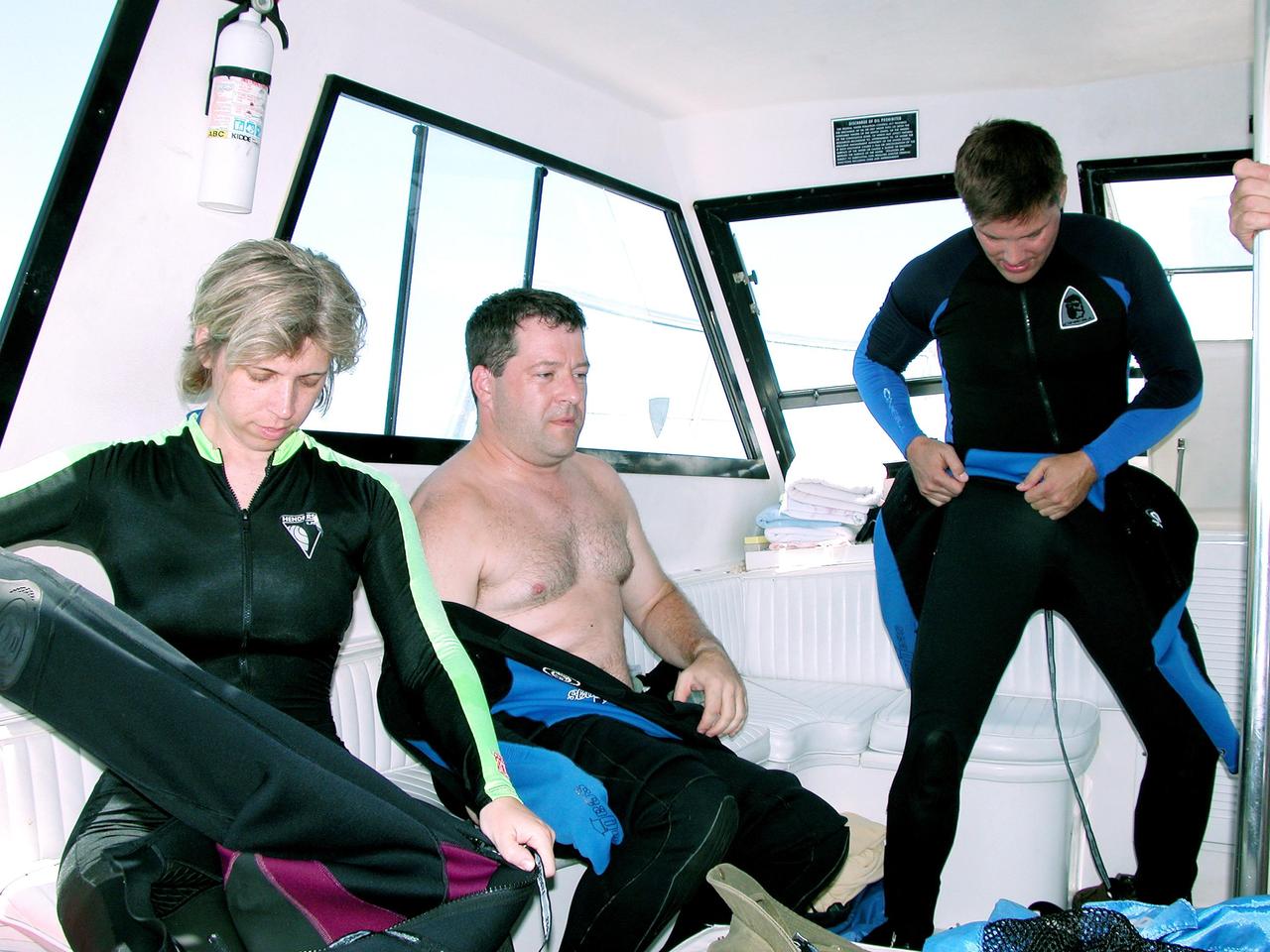
KENNEDY SPACE CENTER, FLA. - Onboard the dive boat, members of the NASA Extreme Environment Mission Operations 6 (NEEMO-6) mission don dive suits.   From left are Tara Ruttley, a biomedical engineer, and astronauts Nick Patrick and Doug Wheelock.  John Herrington is mission commander.  The NEEMO-6 mission involves exposing an astronaut/scientist crew to a real mission experience in an extreme environment - the NOAA undersea station Aquarius offshore from Key Largo - to prepare for future space flight.  Spacewalk-like diving excursions and field-tests on a variety of biomedical equipment are designed to help astronauts living aboard the International Space Station.  To prepare for their 10-day stay, the team had dive training twice a day at the Life Support Buoy, anchored above Aquarius.
KSC-04pd1501
KENNEDY SPACE CENTER, FLA. - A dive boat is moored to the Life Support Buoy, anchored above the NOAA undersea station Aquarius, offshore from Key Largo.  Underwater is the NASA Extreme Environment Mission Operations 6 (NEEMO-6) mission team: (left to right) Tara Ruttley, a biomedical engineer, and astronauts Nick Patrick, John Herrington and Doug Wheelock. The NEEMO-6 mission involves exposing an astronaut/scientist crew to a real mission experience in an extreme environment - Aquarius - to prepare for future space flight.  Spacewalk-like diving excursions and field-tests on a variety of biomedical equipment are designed to help astronauts living aboard the International Space Station.  To prepare for their 10-day stay, the team had dive training twice a day at the Life Support Buoy.
KSC-04pd1506
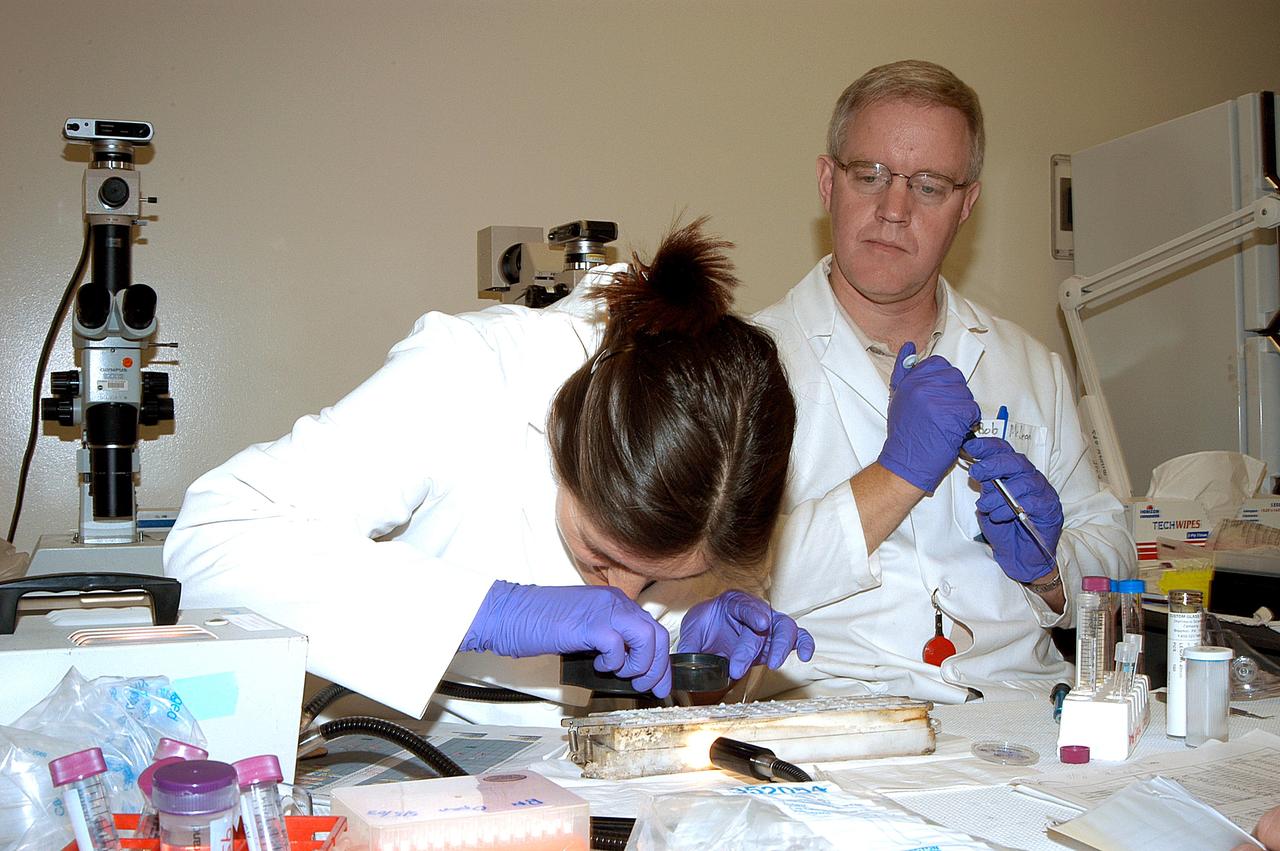
KENNEDY SPACE CENTER, FLA. -  Barry Perlman, Pembroke Pines Charter Middle School in Florida, examines one of the experiments carried on mission STS-107 as Bob McLean, Southwest Texas State University, looks on. Several experiments were found during the search for Columbia debris. Included in the Commercial ITA Biomedical Experiments payload on mission STS-107 are urokinase cancer research, microencapsulation of drugs, the Growth of Bacterial Biofilm on Surfaces during Spaceflight (GOBBSS), and tin crystal formation.  The latter was sponsored by the Pembroke Pines Charter Middle School.
KENNEDY SPACE CENTER, FLA. - Barry Perlman, Pembroke Pines Charter Middle School in Florida, examines one of the experiments carried on mission STS-107 as Bob McLean, Southwest Texas State University, looks on. Several experiments were found during the search for Columbia debris. Included in the Commercial ITA Biomedical Experiments payload on mission STS-107 are urokinase cancer research, microencapsulation of drugs, the Growth of Bacterial Biofilm on Surfaces during Spaceflight (GOBBSS), and tin crystal formation. The latter was sponsored by the Pembroke Pines Charter Middle School.
KENNEDY SPACE CENTER, FLA. -  From left, Barry Perlman, Pembroke Pines Charter Middle School in Florida, and Valerie Cassanto, Instrumentation Technology Associates, Inc., process one of the experiments carried on mission STS-107. Several experiments were found during the search for Columbia debris. Included in the Commercial ITA Biomedical Experiments payload on mission STS-107 are urokinase cancer research, microencapsulation of drugs, the Growth of Bacterial Biofilm on Surfaces during Spaceflight (GOBBSS), and tin crystal formation.  The latter was sponsored by the Pembroke Pines Charter Middle School.
KENNEDY SPACE CENTER, FLA. - From left, Barry Perlman, Pembroke Pines Charter Middle School in Florida, and Valerie Cassanto, Instrumentation Technology Associates, Inc., process one of the experiments carried on mission STS-107. Several experiments were found during the search for Columbia debris. Included in the Commercial ITA Biomedical Experiments payload on mission STS-107 are urokinase cancer research, microencapsulation of drugs, the Growth of Bacterial Biofilm on Surfaces during Spaceflight (GOBBSS), and tin crystal formation. The latter was sponsored by the Pembroke Pines Charter Middle School.
KENNEDY SPACE CENTER, FLA. -  From left, Barry Perlman, Pembroke Pines Charter Middle School in Florida; Valerie Cassanto, Instrumentation Technology Associates, Inc.; and Dr. Dennis Morrison, NASA Johnson Space Center, process one of the experiments carried on mission STS-107. Several experiments were found during the search for Columbia debris. Included in the Commercial ITA Biomedical Experiments payload on mission STS-107 are urokinase cancer research, microencapsulation of drugs, the Growth of Bacterial Biofilm on Surfaces during Spaceflight (GOBBSS), and tin crystal formation.  The latter was sponsored by the Pembroke Pines Charter Middle School.
KENNEDY SPACE CENTER, FLA. - From left, Barry Perlman, Pembroke Pines Charter Middle School in Florida; Valerie Cassanto, Instrumentation Technology Associates, Inc.; and Dr. Dennis Morrison, NASA Johnson Space Center, process one of the experiments carried on mission STS-107. Several experiments were found during the search for Columbia debris. Included in the Commercial ITA Biomedical Experiments payload on mission STS-107 are urokinase cancer research, microencapsulation of drugs, the Growth of Bacterial Biofilm on Surfaces during Spaceflight (GOBBSS), and tin crystal formation. The latter was sponsored by the Pembroke Pines Charter Middle School.
KENNEDY SPACE CENTER, FLA. -  From left, Barry Perlman, Pembroke Pines Charter Middle School in Florida, and Valerie Cassanto, Instrumentation Technology Associates, Inc., process one of the experiments carried on mission STS-107. Several experiments were found during the search for Columbia debris. Included in the Commercial ITA Biomedical Experiments payload on mission STS-107 are urokinase cancer research, microencapsulation of drugs, the Growth of Bacterial Biofilm on Surfaces during Spaceflight (GOBBSS), and tin crystal formation.  The latter was sponsored by the Pembroke Pines Charter Middle School.
KENNEDY SPACE CENTER, FLA. - From left, Barry Perlman, Pembroke Pines Charter Middle School in Florida, and Valerie Cassanto, Instrumentation Technology Associates, Inc., process one of the experiments carried on mission STS-107. Several experiments were found during the search for Columbia debris. Included in the Commercial ITA Biomedical Experiments payload on mission STS-107 are urokinase cancer research, microencapsulation of drugs, the Growth of Bacterial Biofilm on Surfaces during Spaceflight (GOBBSS), and tin crystal formation. The latter was sponsored by the Pembroke Pines Charter Middle School.
KENNEDY SPACE CENTER, FLA. -  From left, Barry Perlman, Pembroke Pines Charter Middle School in Florida, and Valerie Cassanto, Instrumentation Technology Associates, Inc., analyze one of the experiments carried on mission STS-107. Several experiments were found during the search for Columbia debris. Included in the Commercial ITA Biomedical Experiments payload on mission STS-107 are urokinase cancer research, microencapsulation of drugs, the Growth of Bacterial Biofilm on Surfaces during Spaceflight (GOBBSS), and tin crystal formation.  The latter was sponsored by the Pembroke Pines Charter Middle School.
KENNEDY SPACE CENTER, FLA. - From left, Barry Perlman, Pembroke Pines Charter Middle School in Florida, and Valerie Cassanto, Instrumentation Technology Associates, Inc., analyze one of the experiments carried on mission STS-107. Several experiments were found during the search for Columbia debris. Included in the Commercial ITA Biomedical Experiments payload on mission STS-107 are urokinase cancer research, microencapsulation of drugs, the Growth of Bacterial Biofilm on Surfaces during Spaceflight (GOBBSS), and tin crystal formation. The latter was sponsored by the Pembroke Pines Charter Middle School.
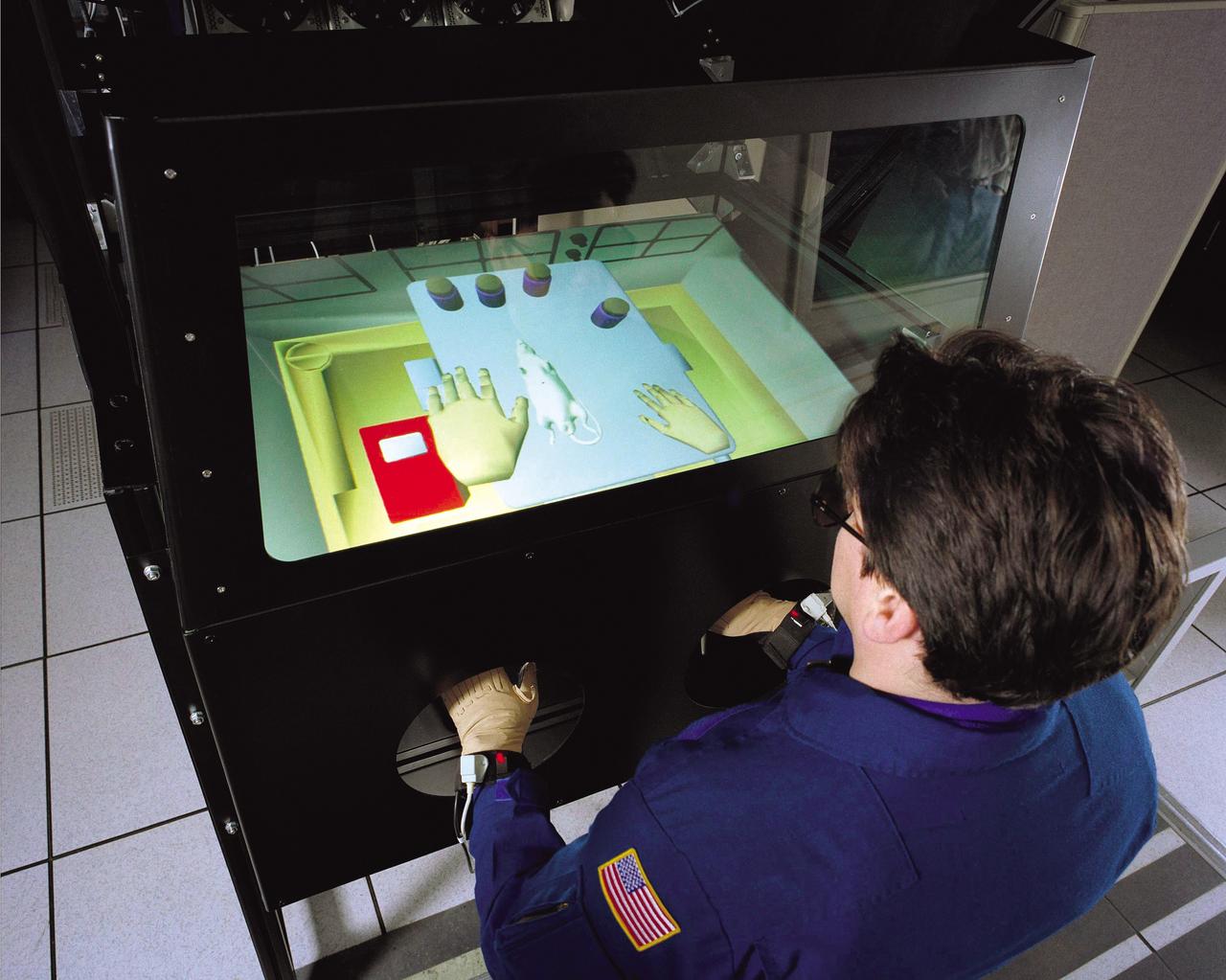
NASA’s Virtual Glovebox (VGX) was developed to allow astronauts on Earth to train for complex biology research tasks in space.  The astronauts may reach into the virtual environment, naturally manipulating specimens, tools, equipment, and accessories in a simulated microgravity environment as they would do in space.  Such virtual reality technology also provides engineers and space operations staff with rapid prototyping, planning, and human performance modeling capabilities.  Other Earth based applications being explored for this technology include biomedical procedural training and training for disarming bio-terrorism weapons.
Space Science
KENNEDY SPACE CENTER, FLA. - Pictured is one of the microcapsules removed from the Commercial ITA Biomedical Experiments payload recovered during the search for Columbia debris.  The drug delivery system and spaceflight hardware was developed jointly by JSC, the Institute for Research Inc. and Instrumentation Technology Associates Inc. to conduct microencapsulation experiments under microgravity conditions.  This microcapsule contains an antibiotic for treating deep resistant pulmonary infections.  Dr. Dennis Morrison, senior biotech project scientist, is principle investigator on microencapsulation and urokinase crystal growth.
KSC-03pd1448
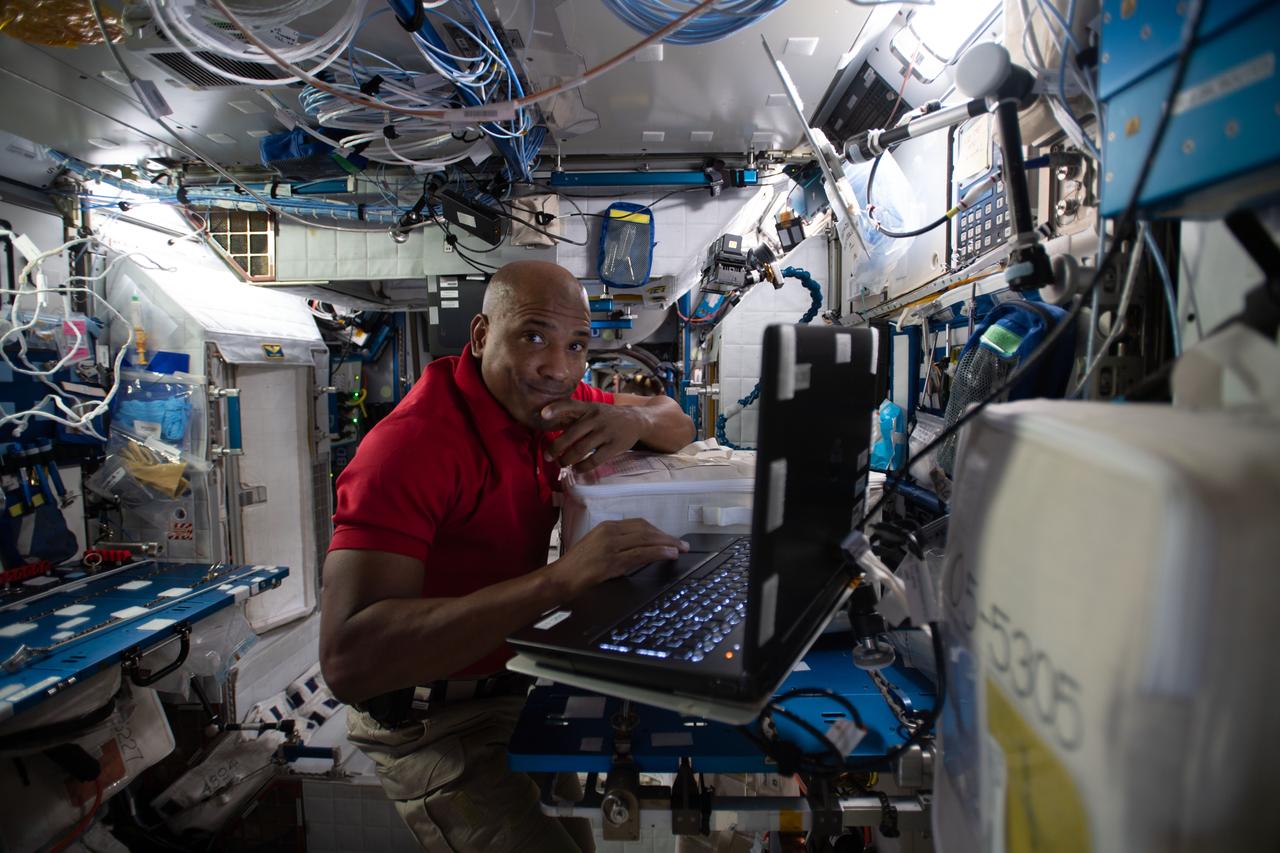
iss064e011646 (Dec. 10, 2020) --- NASA astronaut and Expedition 64 Flight Engineer Victor Glover reviews procedures on a computer for the Monoclonal Antibodies Protein Crystal Growth (PCG) experiment inside the Harmony module. The biomedical study crystallizes therapeutic monoclonal antibodies of higher quality than Earth and could accelerate the development of advanced therapies that target cancer cells.
iss064e011646
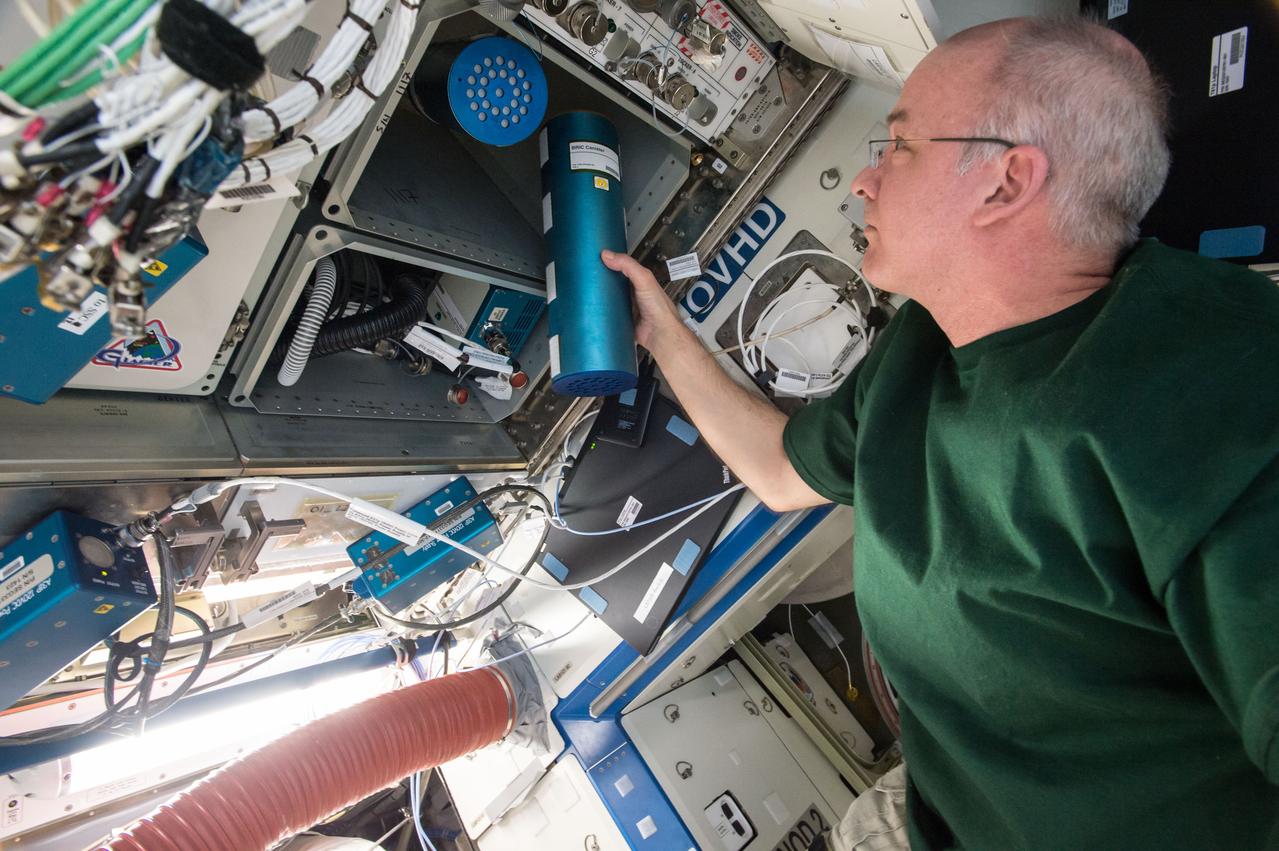
iss048e049821 (8/5/2016) --- NASA astronaut Jeff Williams is photographed with two canisters for the Biological Research in Canisters - Natural Product under Microgravity (BRIC-NP) experiment. Image was taken in the Destiny U.S. Laboratory aboard the International space Station (ISS). In the BRIC-NP investigation, fungal strains isolated from the Chernobyl nuclear power plant (ChNPP) accident are screened for the secretion of natural products that could be beneficial for biomedical and agricultural applications.
Williams conducts BRIC-NP OPS
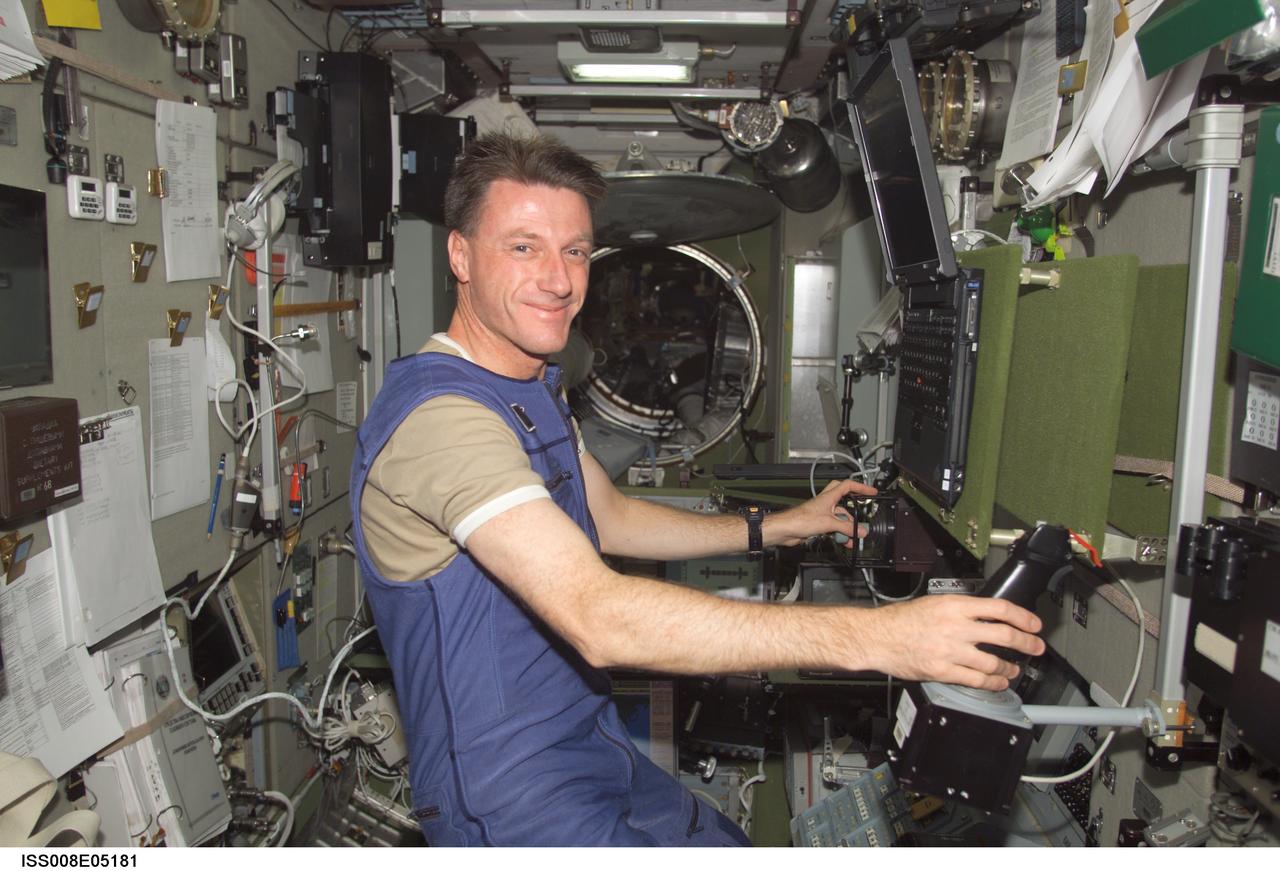
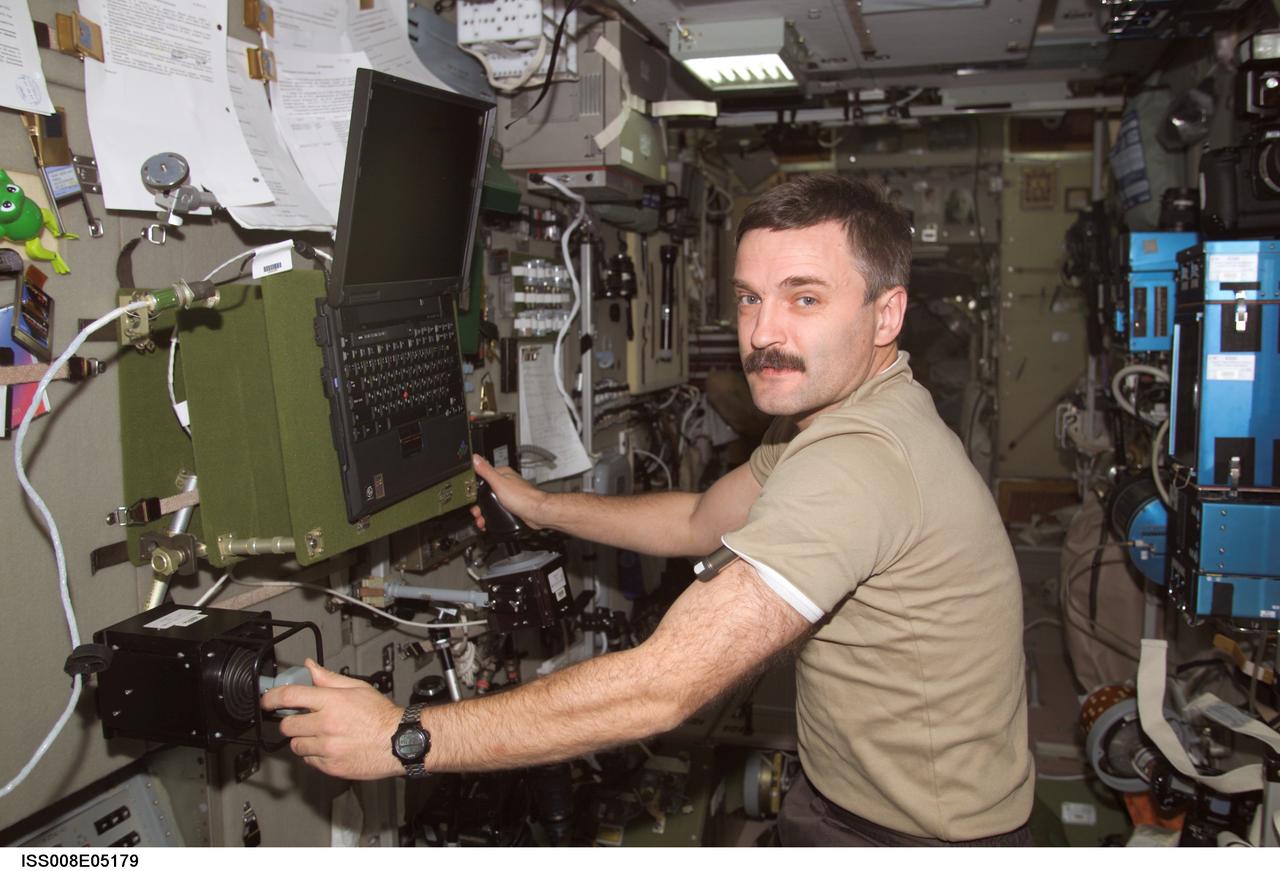
ISS008-E-05181 (31 October 2003) --- Astronaut C. Michael Foale, Expedition 8 mission commander and NASA ISS science officer, works with the Russian biomedical “Pilot” experiment (MBI-15) in the Zvezda Service Module on the International Space Station (ISS). The experiment, which looks at psychological and physiological changes in crew performance during long-duration spaceflight, requires a worktable, ankle restraint system and two control handles for testing piloting skill.
Foale works with the Pilot experiment during Expedition 8
S93-45365 (29 Sept 1993) --- Payload specialist Martin J. Fettman, in an oscillating sled device in upper left, participates in a data collection project for neurovestibular functions.  His responses to the sled's movements are recorded by a team of monitors in the foreground.  The seven Spacelab Life Sciences (SLS-2) crew members devoted a full day to miscellaneous biomedical data collection in preparation for next month's two week mission aboard Columbia.
STS-58 crewmembers participate in baseline data collection
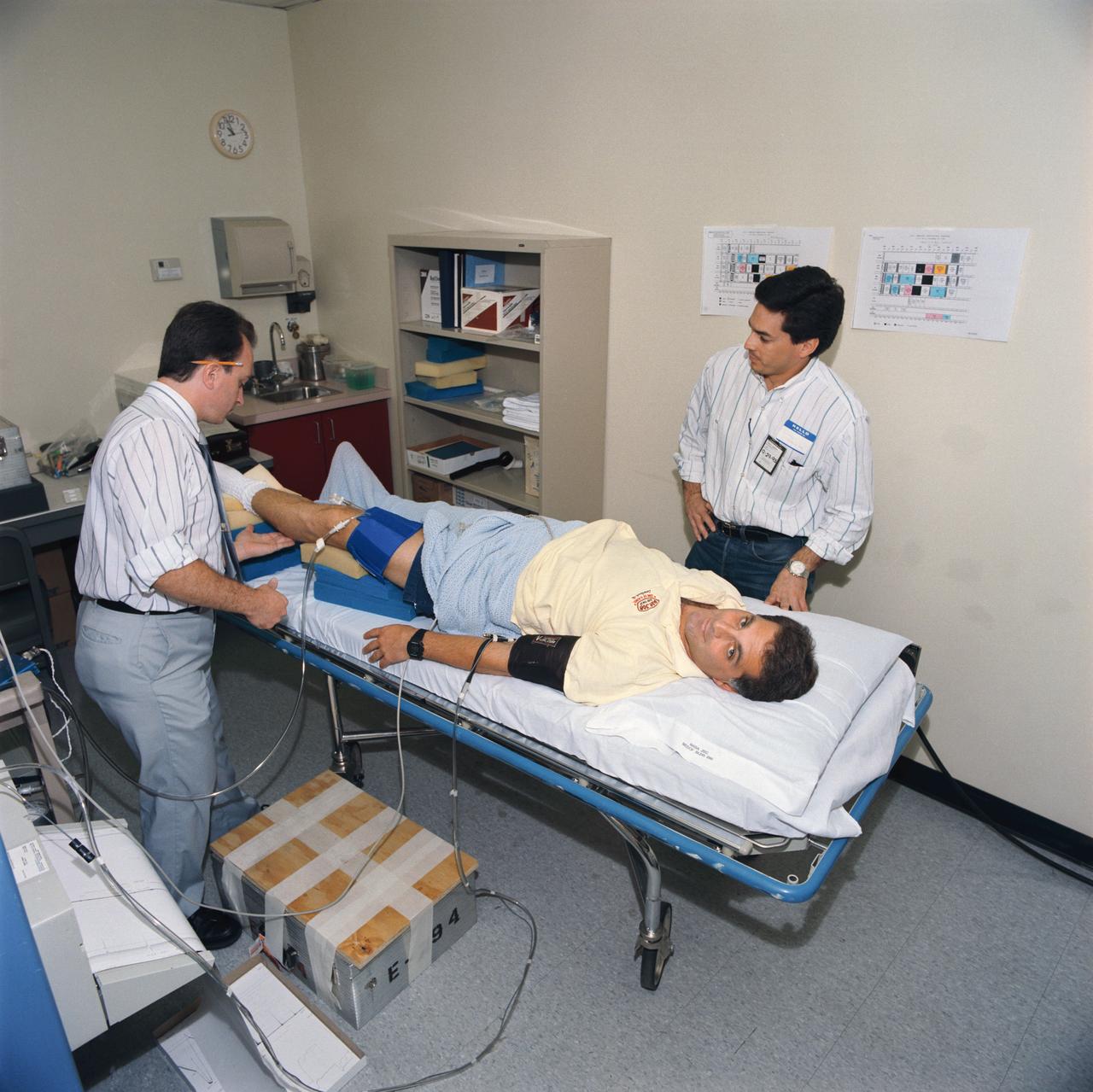
S93-45375 (29 Sept 1993) --- Astronaut David A. Wolf, STS-58 mission specialist, has blood drawn from his leg for volume measuring.  The blood draw was part of the cardiovascular function data collection in preparation for the Spacelab Life Sciences (SLS-2) mission.  The seven Spacelab Life Sciences crewmembers devoted a full day to miscellaneous biomedical data collection in preparation for next month's two week mission aboard Columbia.
STS-58 crewmembers participate in baseline data collection
George D'Heilly and John Cassanto, scientists with Instrumentation Technology Associates, Inc., display for the media part of the apparatus recovered during the search for Columbia debris. It was part of the Commercial ITA Biomedical Experiments payload on mission STS-107 that included the Growth of Bacterial Biofilm on Surfaces during Spaceflight (GOBBSS) experiment and crystals grown for cancer research. The GOBBSS experiment was sponsored by the Planetary Society, with joint participation of an Israeli and a Palestinian student, and developed by the Israeli Aerospace Medical Institute and JSC Astrobiology Center.
Columbia Debris
KENNEDY SPACE CENTER, FLA. - Pictured is one of the microcapsules removed from the Commercial ITA Biomedical Experiments payload recovered during the search for Columbia debris.  The drug delivery system and spaceflight hardware was developed jointly by JSC, the Institute for Research Inc. and Instrumentation Technology Associates Inc. to conduct microencapsulation experiments under microgravity conditions.  This microcapsule contains an antibiotic for treating deep resistant pulmonary infections.   Dr. Dennis Morrison, senior biotech project scientist, is principle investigator on microencapsulation and urokinase crystal growth.
KSC-03pd1449
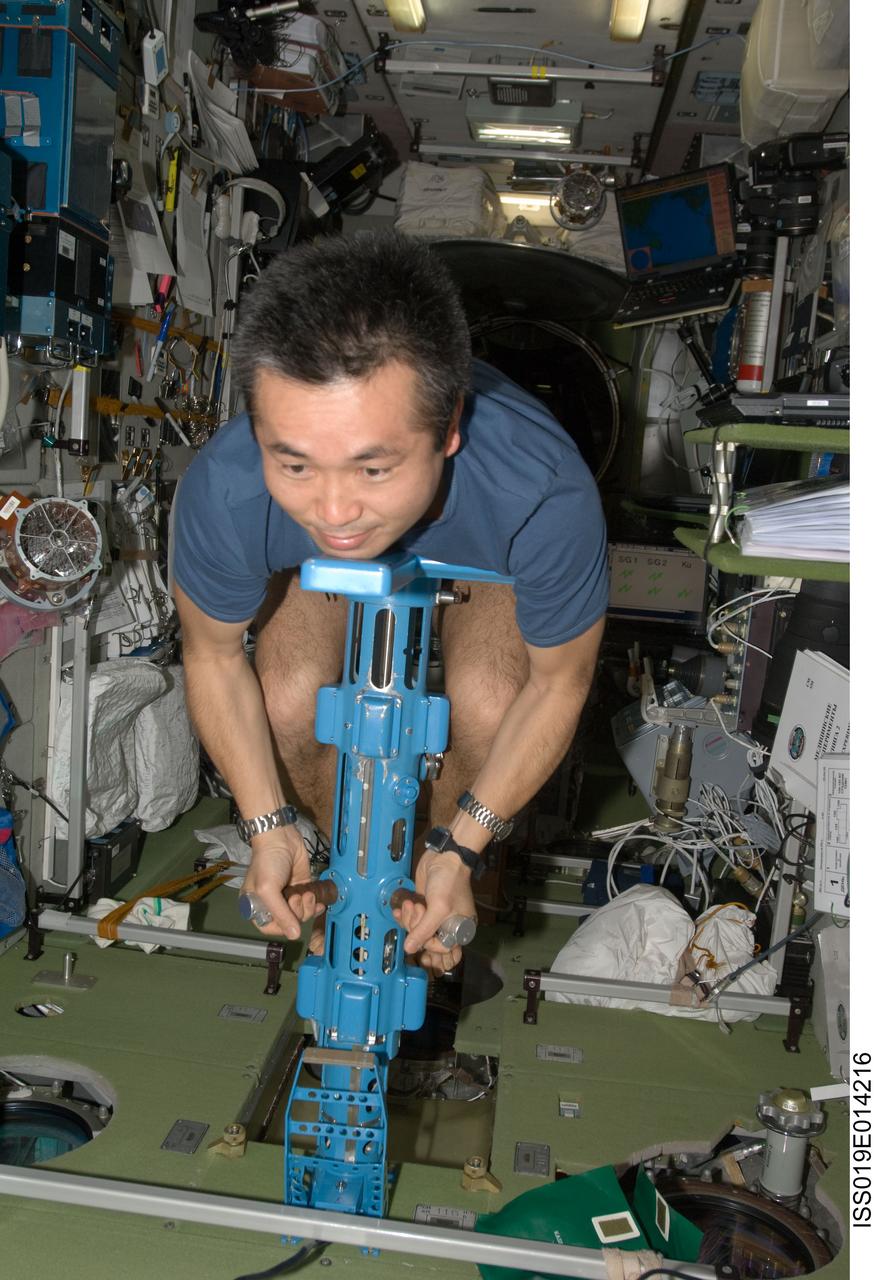
ISS019-E-014216 (6 May 2009) --- Japan Aerospace Exploration Agency (JAXA) astronaut Koichi Wakata, Expedition 19/20 flight engineer, uses the IM mass measurement device to perform the PZEh-MO-8/Body Mass Measurement Russian biomedical routine assessments in the Zvezda Service Module of the International Space Station.
PZEh-MO-8/Body Mass Measurement in Service Module
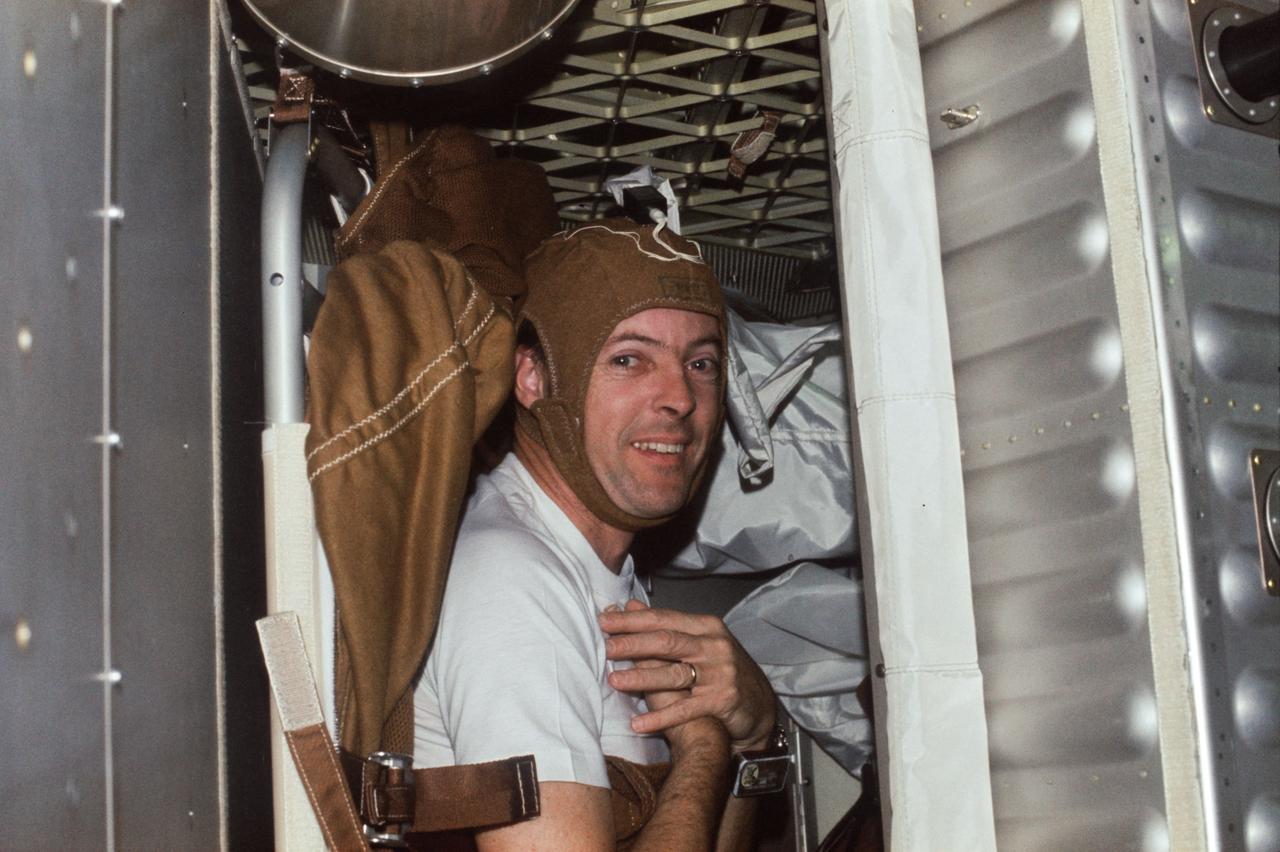
SL2-X3-205 (June 1973) --- Scientist-astronaut Joseph P. Kerwin, Skylab 2 science pilot, is photographed strapped into the sleep restraint in the crew quarters of the Orbital Workshop of the Skylab 1 & 2 space station cluster in Earth orbit. Kerwin is wearing the special cap which contains biomedical instrumentation for the M133 Sleep Monitoring Experiment. The purpose of the M133 experiment is to evaluate quantity and quality of sleep during prolonged space flight by the analysis of electroencephalographic (EEG) and electrooculographic (EOG) activity. Photo credit: NASA
sl2-x3-205
iss064e011644 (Dec. 10, 2020) --- JAXA (Japan Aerospace Exploration Agency) astronaut and Expedition 64 Flight Engineer Soichi Noguchi mixes and dispenses samples for a biomedical study that explores creating high quality protein crystals in space. Observations from the advanced space research may provide detailed information on protein structures to develop new drugs for diseases.
iss064e011644
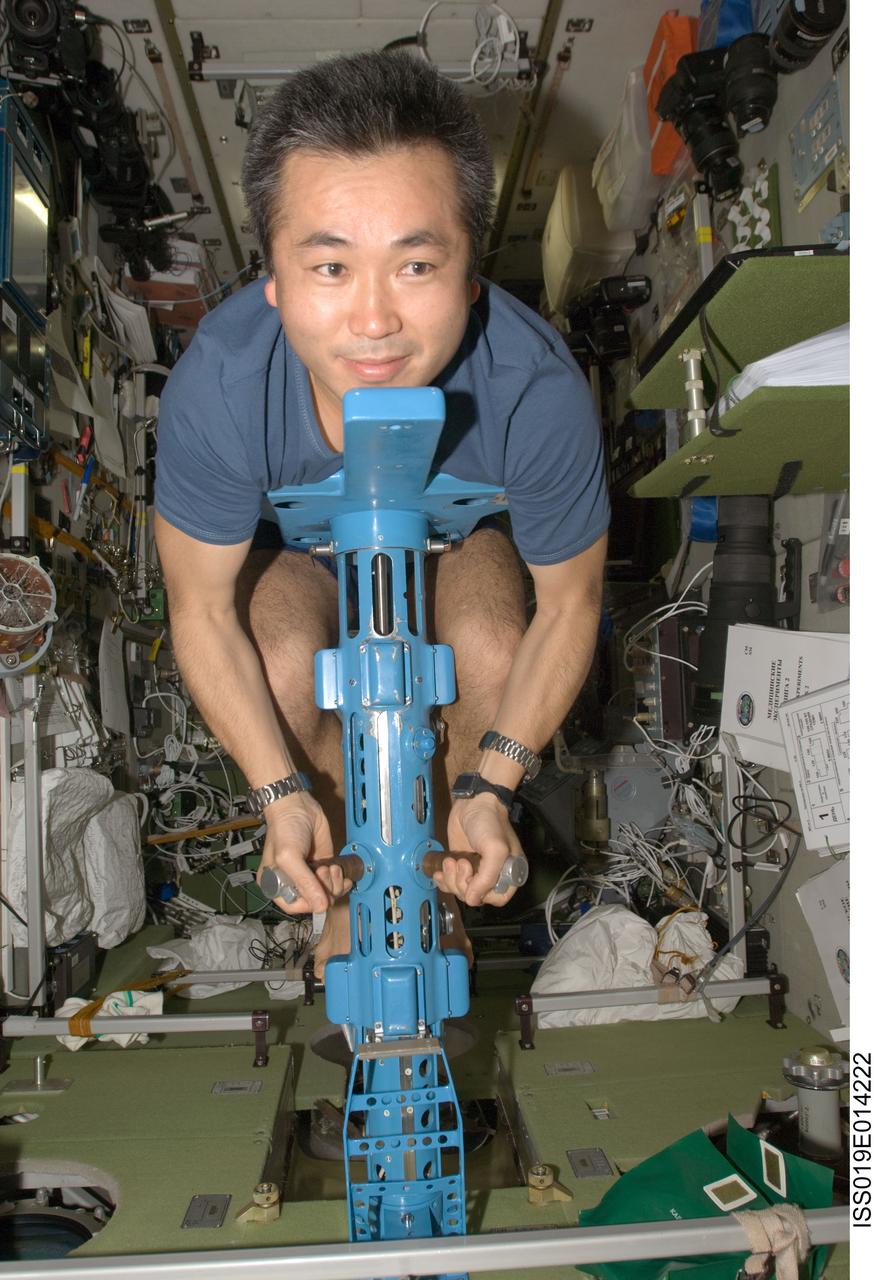
ISS019-E-014222 (6 May 2009) --- Japan Aerospace Exploration Agency (JAXA) astronaut Koichi Wakata, Expedition 19/20 flight engineer, uses the IM mass measurement device to perform the PZEh-MO-8/Body Mass Measurement Russian biomedical routine assessments in the Zvezda Service Module of the International Space Station.
PZEh-MO-8/Body Mass Measurement in Service Module
61C-05-035 (12-17 Jan 1986) --- Robert J. Cenker, 61-C payload specialist representing RCA, returns   a tiny tool to its stowage position after adjusting the inner workings of a device used in one of a number of detailed supplementary objective (DSO) studies for NASA's Space Biomedical Research Institute.  The device is a pair of ocular counter-rolling goggles used by U.S. Rep. Bill Nelson (D., Florida), 61-C's other   payload specialist aboard the Columbia for this five-day flight.
Payload specialist Robert Cenker after adjusting DSO equipment
ISS039-E-008066 (30 March 2014) --- NASA astronaut Steve Swanson, Expedition 39 flight engineer, participates in body mass measurement/Russian biomedical routine assessments in the Zvezda Service Module of the International Space Station. Looking on is Russian cosmonaut Alexander Skvortsov, flight engineer representing the Russian Federal Space Agency (Roscosmos).
Swanson uses the BMMD in the SM
KENNEDY SPACE CENTER, FLA. -  A.K. Love,  with Instrumentation Technology Associates, Inc., displays one of the boxes used for cancer cell research, an experiment carried on mission STS-107.  Several experiments were found during the search for Columbia debris.  Included in the Commercial ITA Biomedical Experiments payload on mission STS-107 are urokinase cancer research, microencapsulation of drugs, the Growth of Bacterial Biofilm on Surfaces during Spaceflight (GOBBSS), and tin crystal formation.
KSC-03pd1458
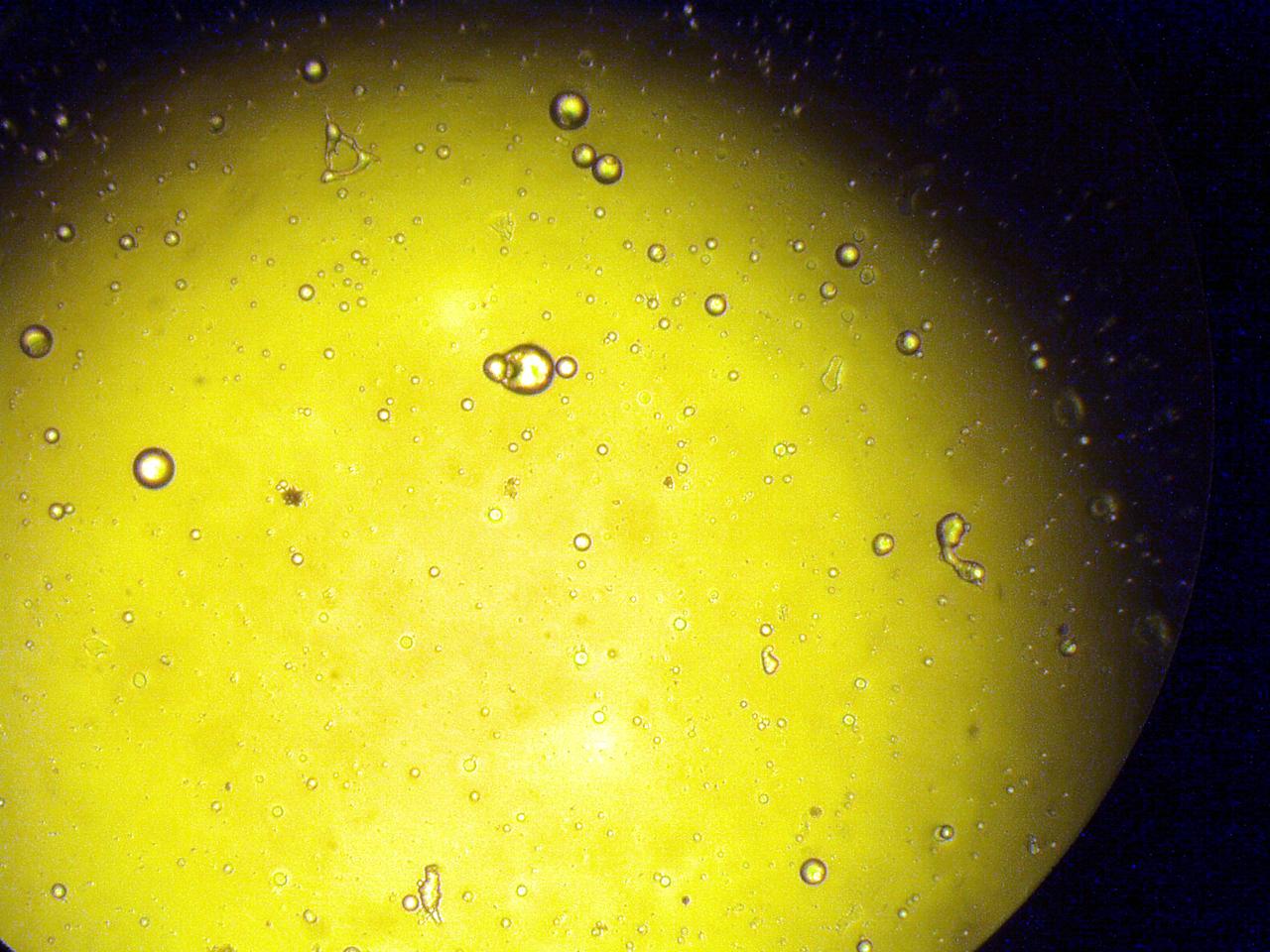
Biomedical research offers hope for a variety of medical problems, from diabetes to the replacement of damaged bone and tissues. Bioreactors, which are used to grow cells and tissue cultures, play a major role in such research and production efforts. The objective of the research was to define a way to differentiate between effects due to microgravity and those due to possible stress from non-optimal spaceflight conditions.
Microgravity
Scientist-Astronaut Joseph P. Kerwin, Skylab 2 science pilot, is photographed strapped into the sleep restraint in the crew quarters of the Orbital Workshop of the Skylab 1 and 2 space station cluster in Earth orbit. Kerwin is wearing the special cap which contains biomedical instrumentation for the M133 Sleep Monitoring Experiment. The purpose of the M133 experiment is to evaluate quantity and quality of sleep during prolonged space flight by the analysis of electroencephalographic (EEG) and electrooculographic (EOG) activity.
Astronaut Joseph Kerwin strapped into sleep restraint in crew quarters
KENNEDY SPACE CENTER, FLA. -  Pictured is one of the microcapsules removed from the Commercial ITA Biomedical Experiments payload recovered during the search for Columbia debris.  The drug delivery system and spaceflight hardware was developed jointly by JSC, the Institute for Research Inc. and Instrumentation Technology Associates Inc. to conduct microencapsulation experiments under microgravity conditions.  This microcapsule contains an antibiotic for treating deep resistant pulmonary infections.  Dr. Dennis Morrison, senior biotech project scientist, is principle investigator on microencapsulation and urokinase crystal growth.
KSC-03pd1447