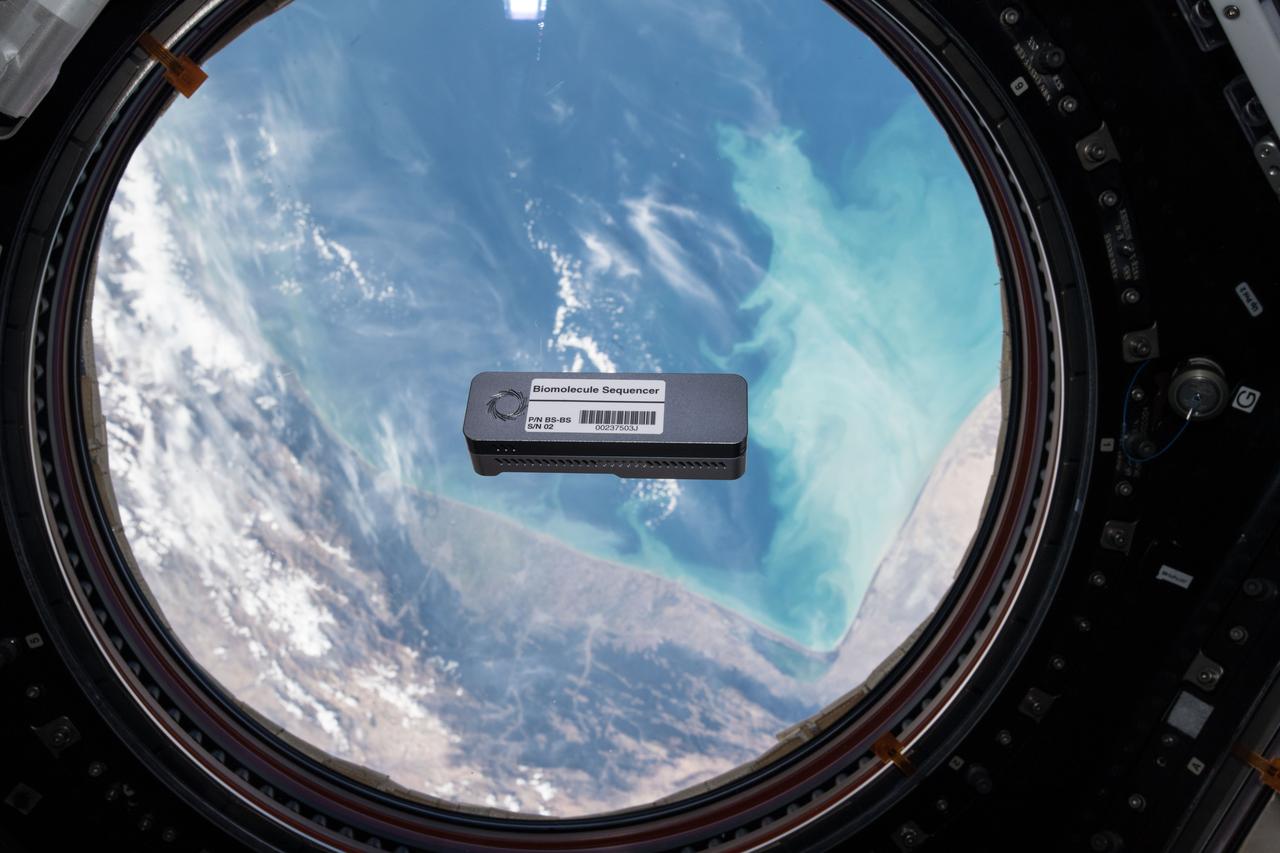
iss057e000180 (10/8/2018) - Biomolecule Sequencer for the BEST experiment floating in front of Window 7 in the Cupola module. Earth is in the background. The Biomolecule Sequencer seeks to demonstrate, for the first time, that DNA sequencing is feasible in an orbiting spacecraft. A space-based DNA sequencer could identify microbes, diagnose diseases and understand crew member health, and potentially help detect DNA-based life elsewhere in the solar system.
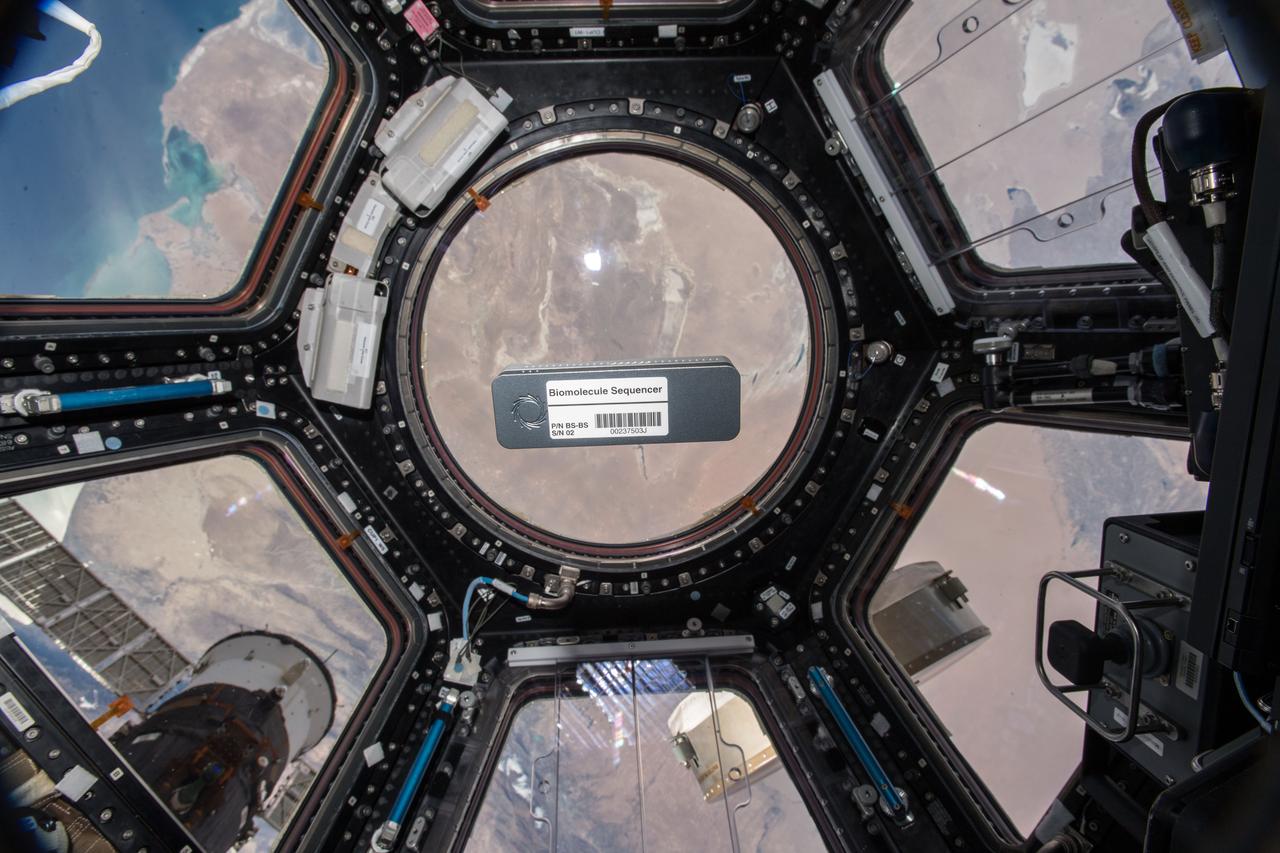
iss057e000185 (10/8/2018) - Biomolecule Sequencer for the BEST experiment floating in front of Window 7 in the Cupola module. Earth is in the background. The Biomolecule Sequencer seeks to demonstrate, for the first time, that DNA sequencing is feasible in an orbiting spacecraft. A space-based DNA sequencer could identify microbes, diagnose diseases and understand crew member health, and potentially help detect DNA-based life elsewhere in the solar system.
iss056e097518 (July 20, 2018) --- Expedition 56 Flight Engineer Ricky Arnold prepares amplified DNA collected from microbes living aboard the International Space Station for sequencing using the Biomolecule Sequencer. The Biomolecule Extraction and Sequencing Technology (BEST) investigation studies the use of DNA sequencing for the identification of unknown microbial organisms living on the station and to understand how humans, plants and microbes adapt to living in space.
iss056e097438 (July 19, 2018) --- NASA astronaut Ricky Arnold swabbed surfaces in the International Space Station to collect microbe samples. He then processed the microbial DNA using the Biomolecule Sequencer, a device that enables DNA sequencing in microgravity, to identify microbes able to survive in microgravity.
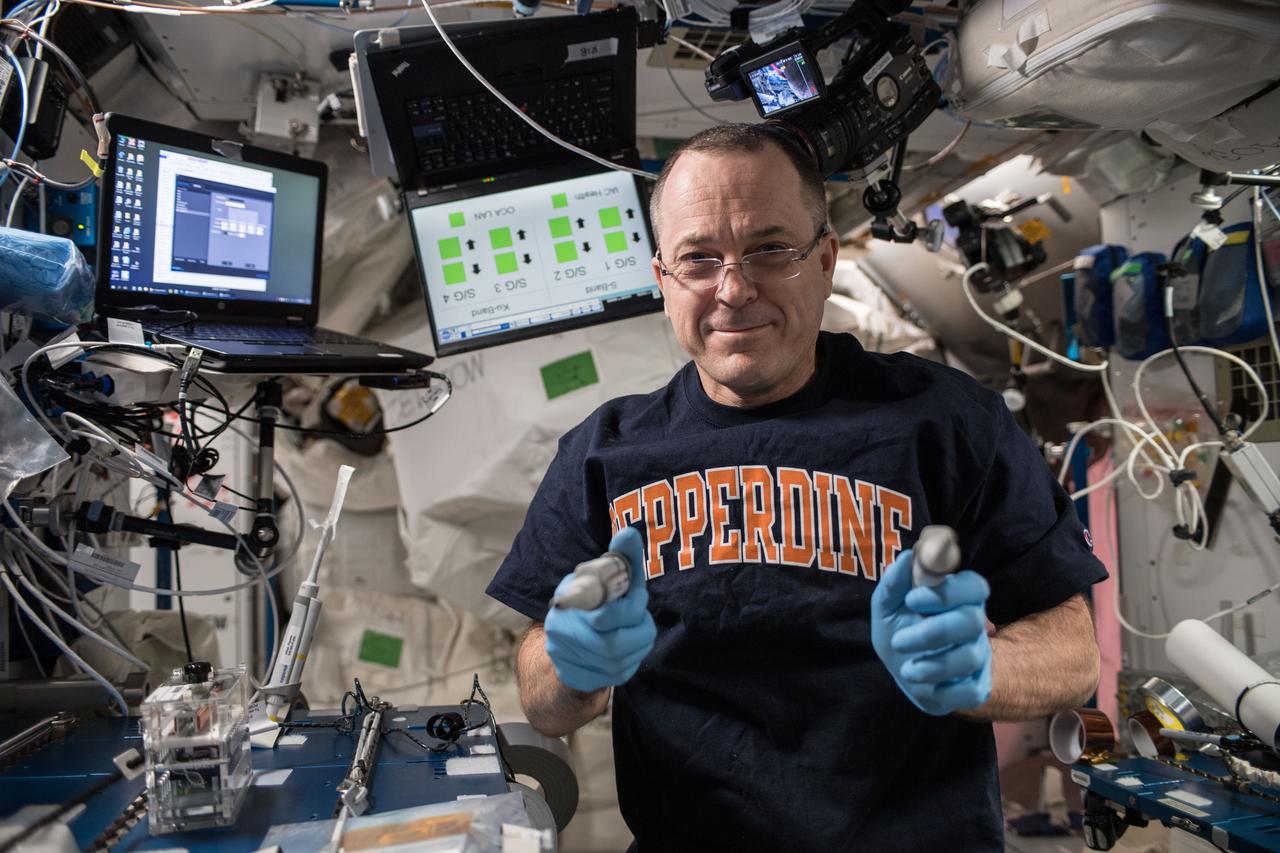
iss056e097429 (July 19, 2018) --- NASA astronaut Ricky Arnold swabbed surfaces in the International Space Station to collect microbe samples. He then processed the microbial DNA using the Biomolecule Sequencer, a device that enables DNA sequencing in microgravity, to identify microbes able to survive in microgravity.
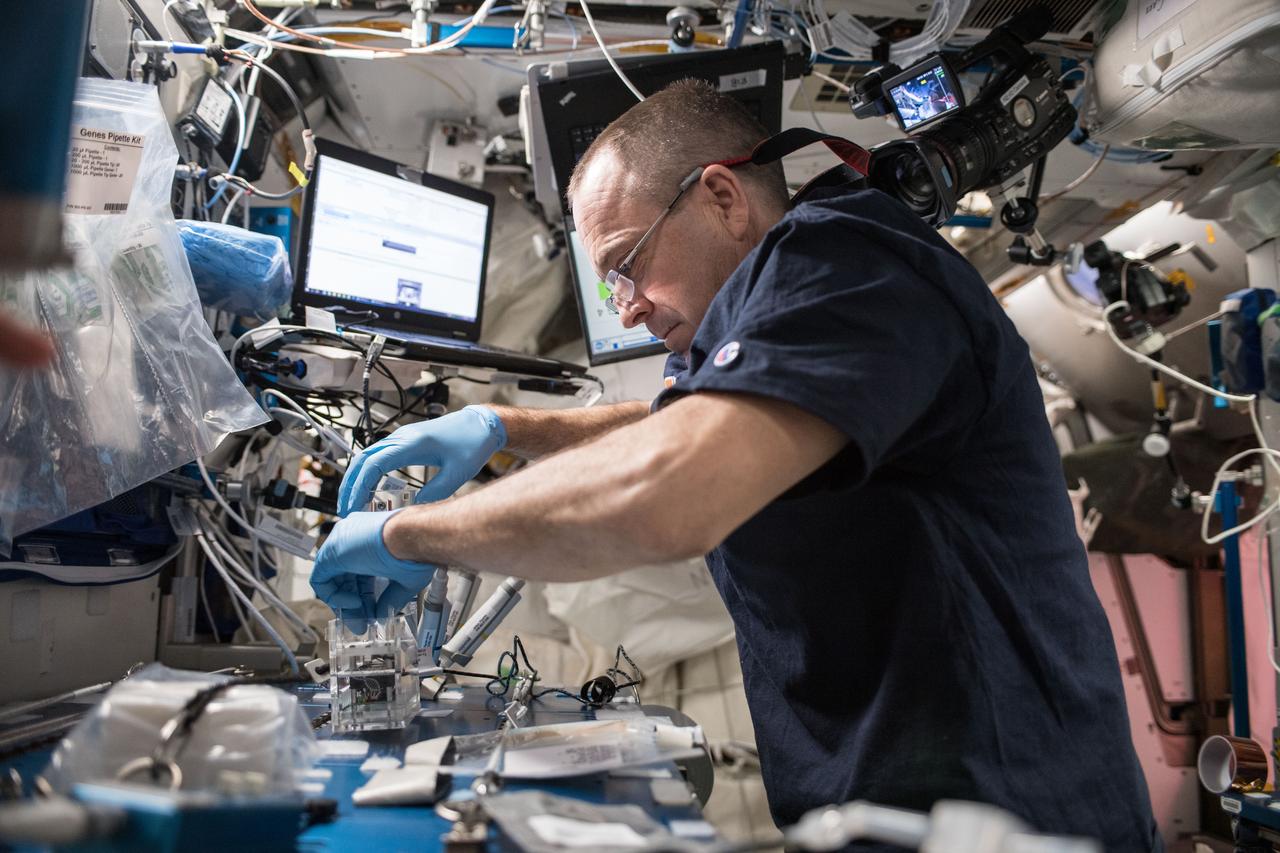
iss056e097421 (July 19, 2018) --- NASA astronaut Ricky Arnold swabbed surfaces in the International Space Station to collect microbe samples. He then processed the microbial DNA using the Biomolecule Sequencer, a device that enables DNA sequencing in microgravity, to identify microbes able to survive in microgravity.
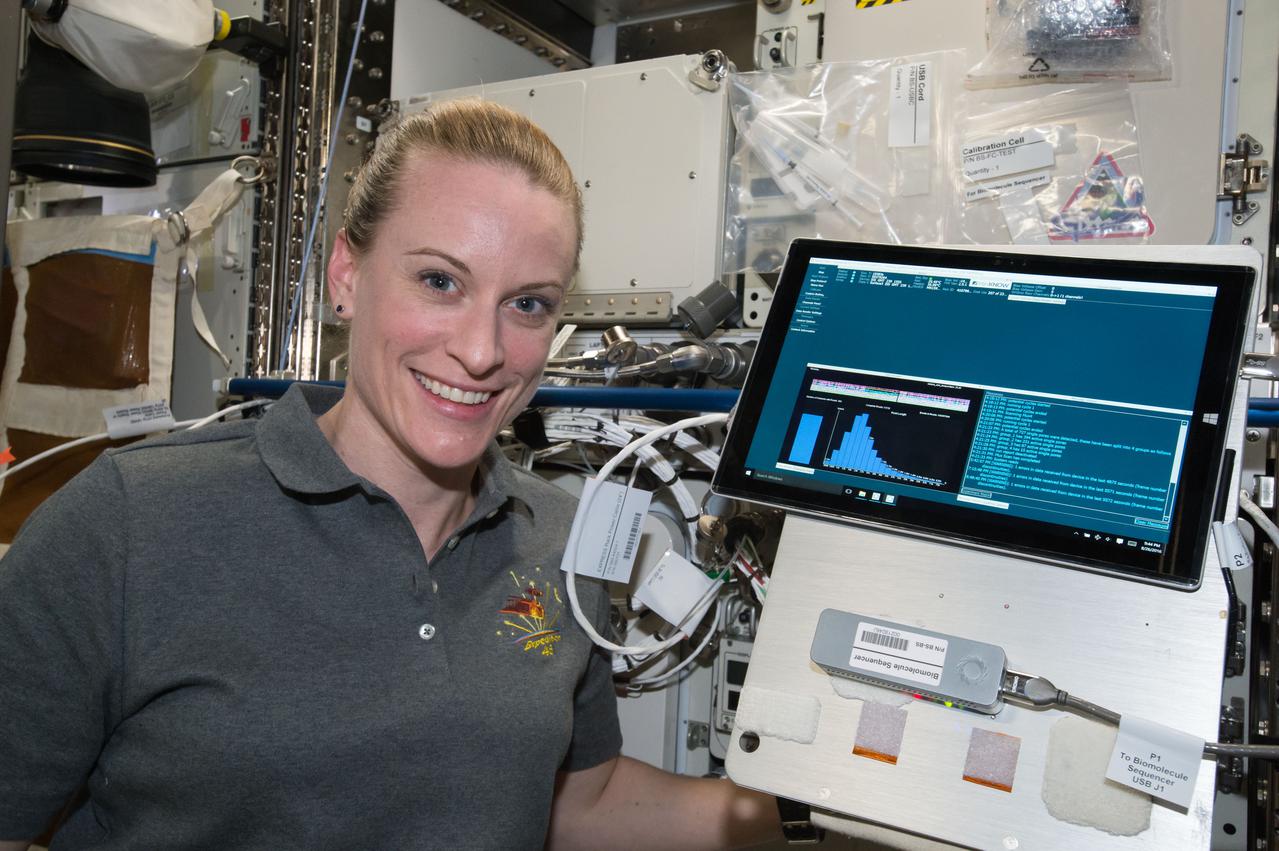
iss048e066523 (8/26/2016) --- NASA astronaut Kate Rubins poses for a photo with Biomolecule Sequencer experiment hardware (Surface Pro 3 tablet and MinION) during the first sample initialization run. The image was taken in the Destiny U.S. Laboratory aboard the International Space Station (ISS).
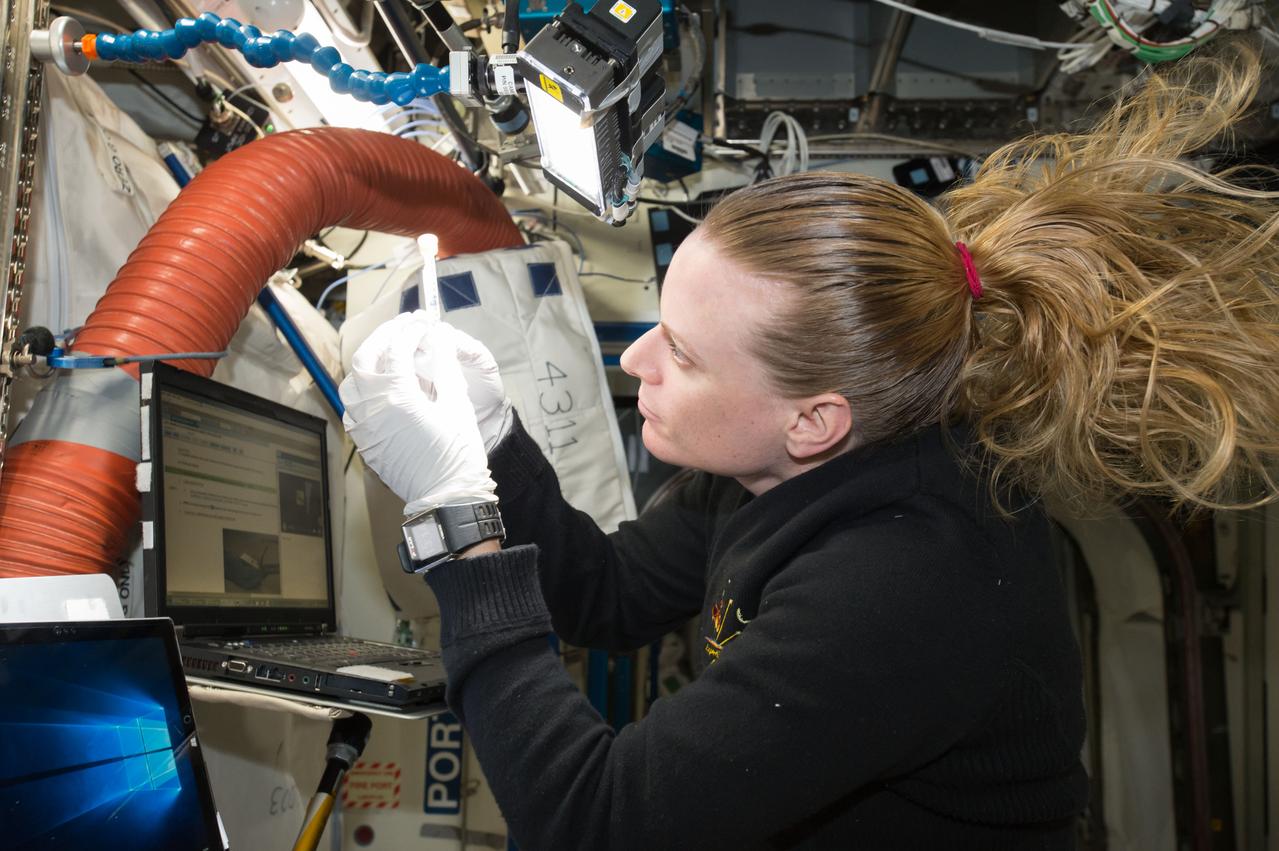
iss048e069880 (9/3/2016) --- NASA Astronaut Kate Rubins makes preparations for the Run 2 sample initialization of the Biomolecule Sequencer experiment. The Biomolecule Sequencer seeks to demonstrate, for the first time, that DNA sequencing is feasible in an orbiting spacecraft. A space-based DNA sequencer could identify microbes, diagnose diseases and understand crew member health, and potentially help detect DNA-based life elsewhere in the solar system.
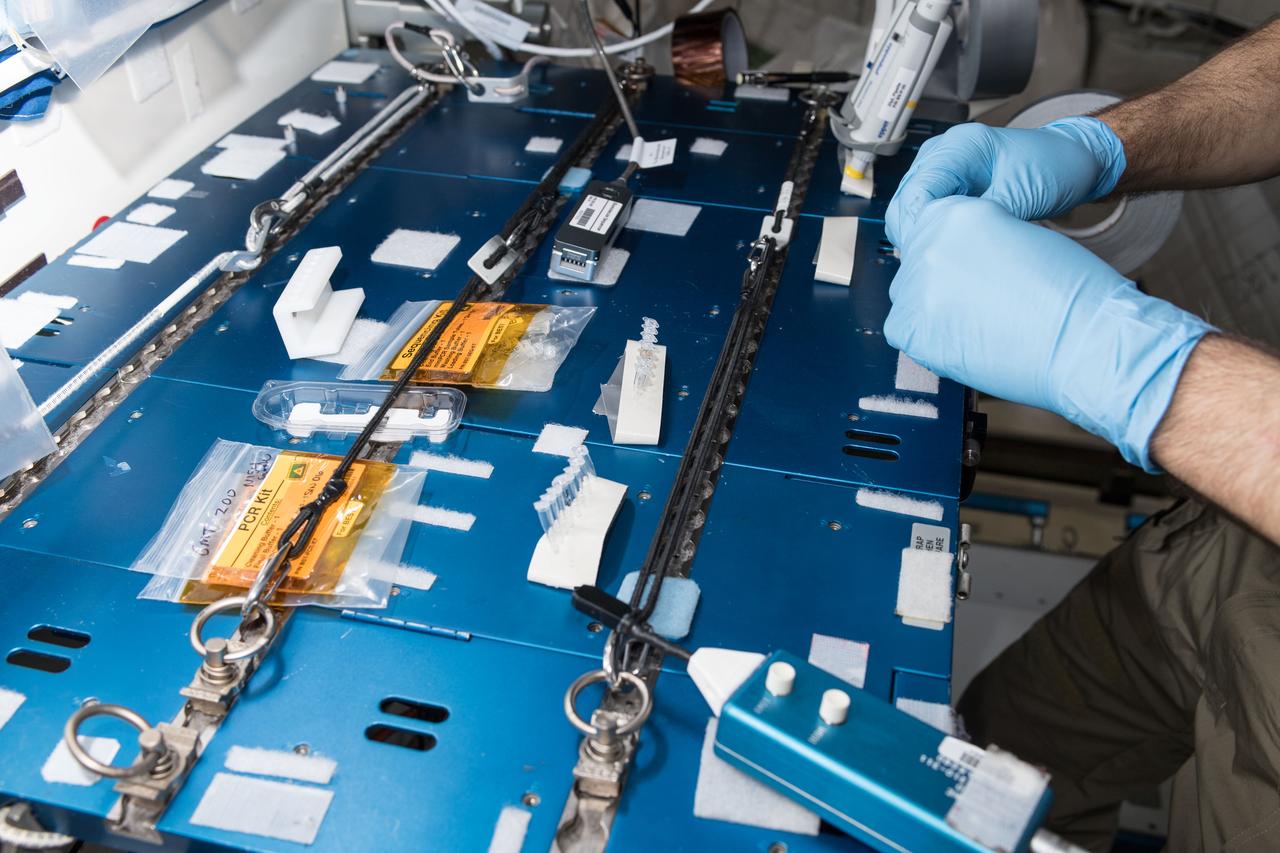
iss056e097517 (July 20, 2018) --- NASA astronaut Ricky Arnold swabbed surfaces in the International Space Station to collect microbe samples. He then processed the microbial DNA using the Biomolecule Sequencer, a device that enables DNA sequencing in microgravity, to identify microbes able to survive in microgravity.
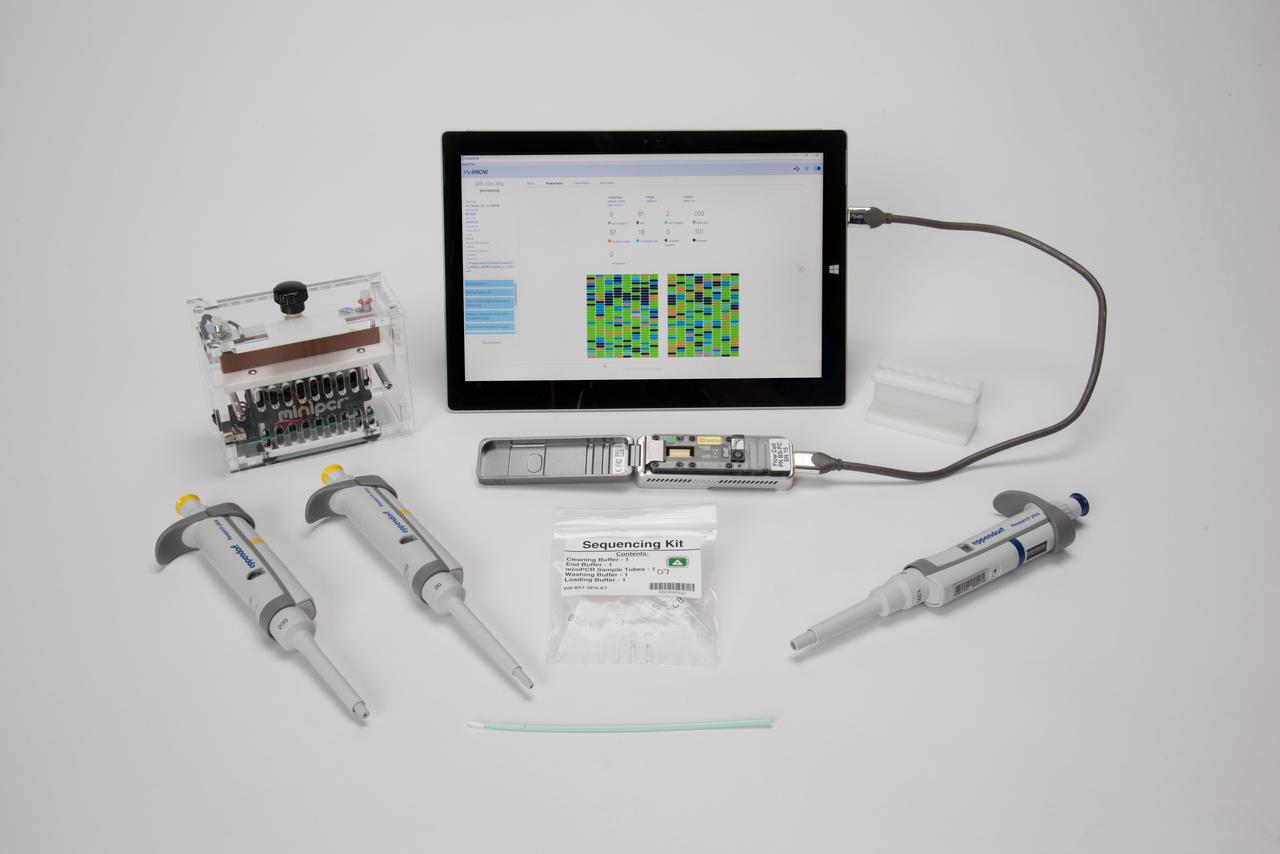
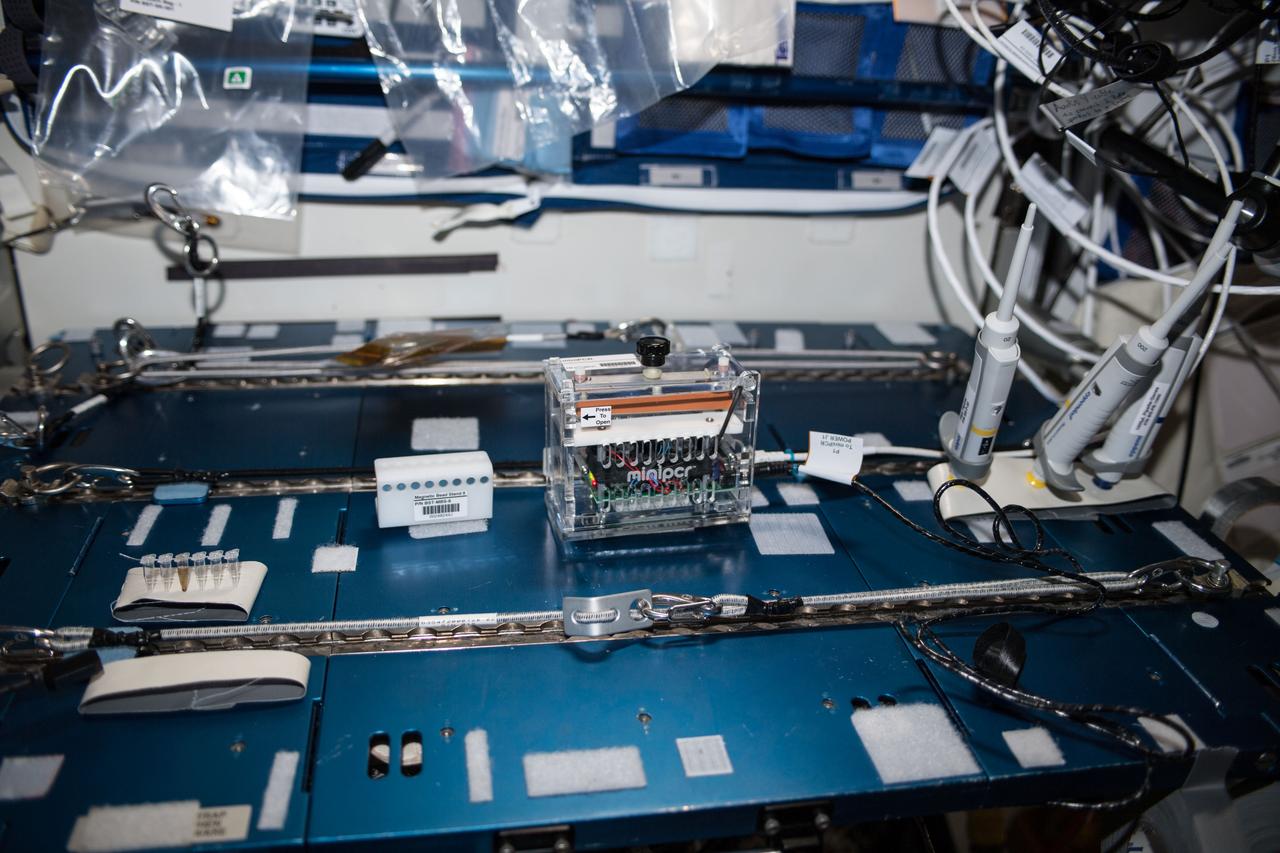
jsc2018e059572_alt (5/29/2018) --- The miniPCR platform, used for the amplification of nucleic acids, from the Genes in Space investigations combined with the MinION, nucleic acid sequencer, from the Biomolecule Sequencer experiment makes up the Biomolecule Extraction and Sequencing Technology (BEST) payload. With this hardware, including the pipettes, astronauts have demonstrated a complete sample-to-answer process for DNA and RNA sequencing on board the ISS.
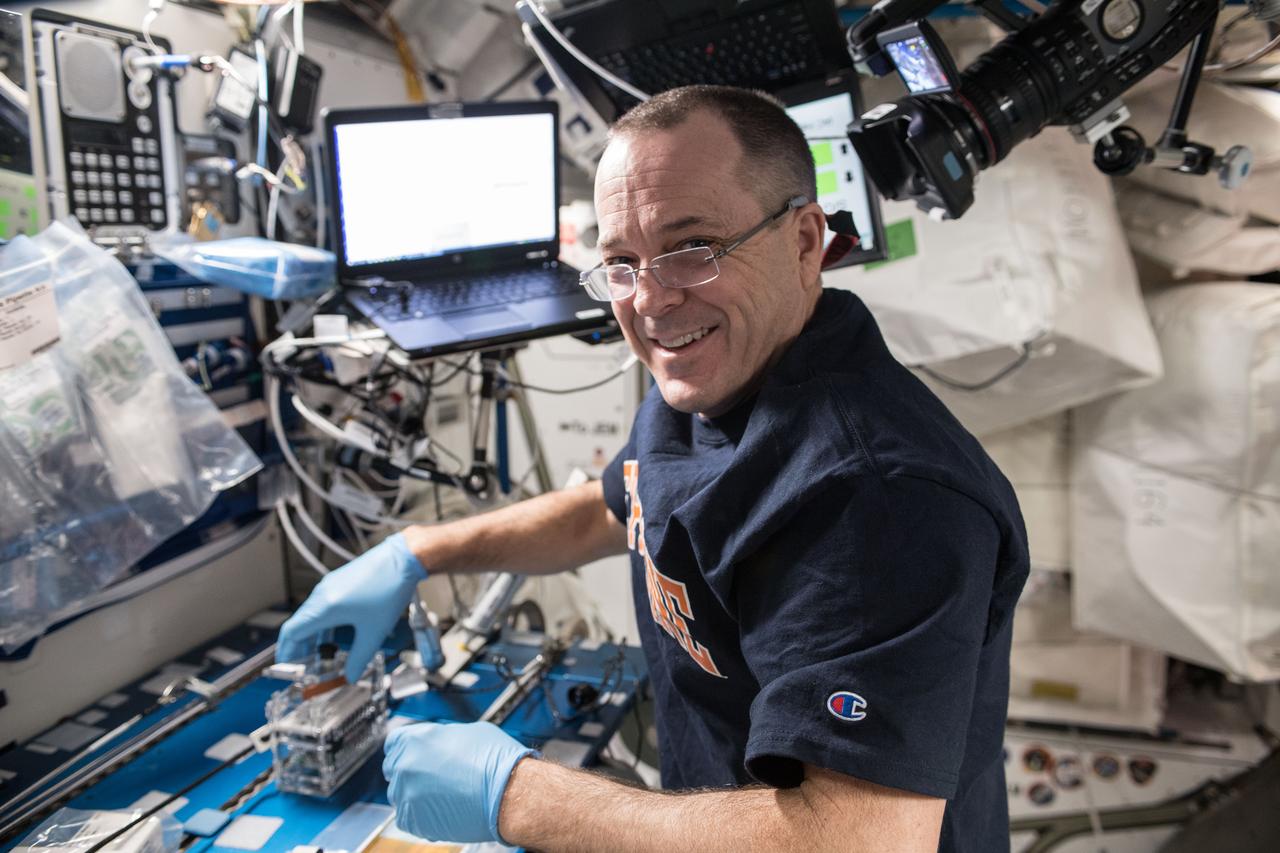
iss056e097419 (July 19, 2018) --- NASA astronaut Ricky Arnold swabbed surfaces in the International Space Station to collect microbe samples. He then processed the microbial DNA using the Biomolecule Sequencer, a device that enables DNA sequencing in microgravity, to identify microbes able to survive in microgravity.
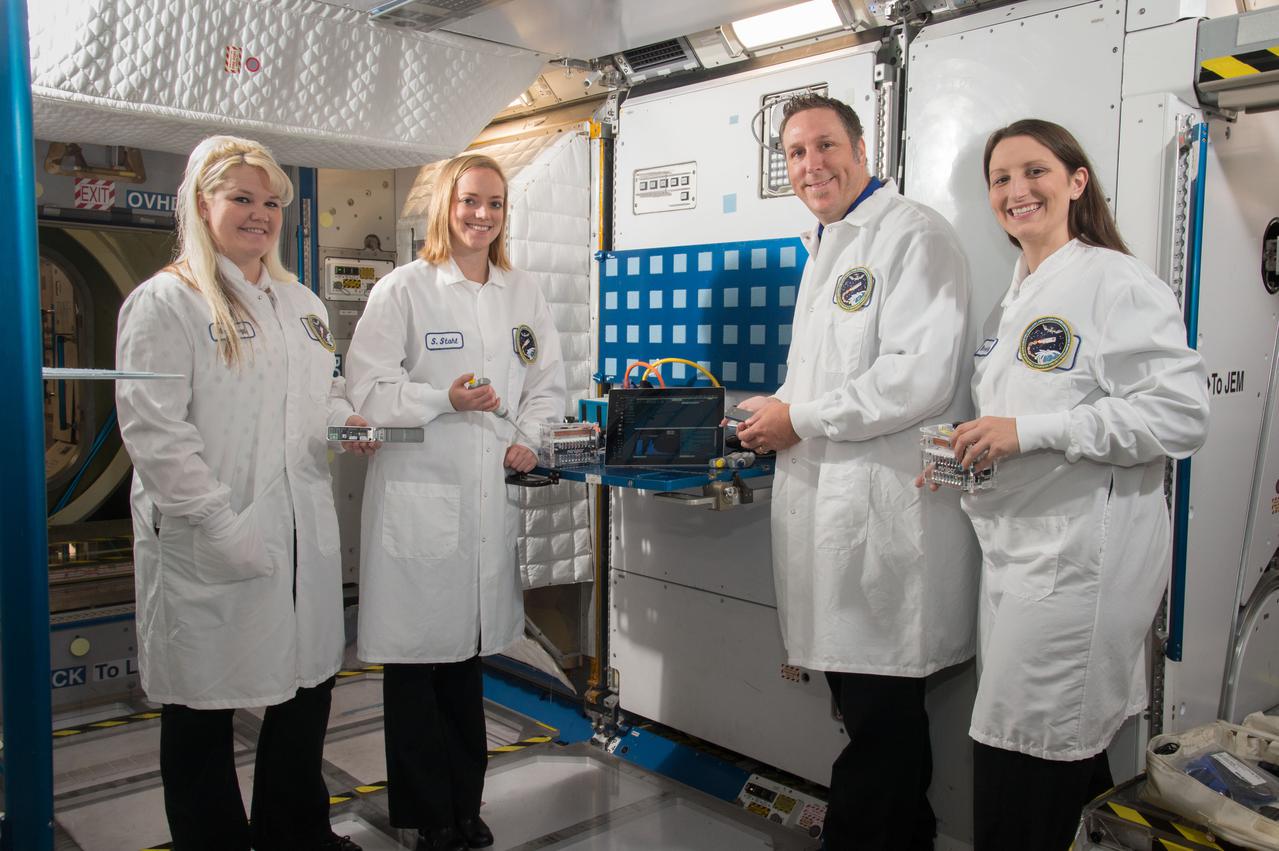
PHOTO DATE: 11-14-16 LOCATION: ISS MOCKUPS SUBJECT: Biomolecule Sequencer team group portrait of Sara Wallace, Sarah Stahl-Rommel, Aaron Burton and Kristen John. PHOTOGRAPHER: BILL STAFFORD
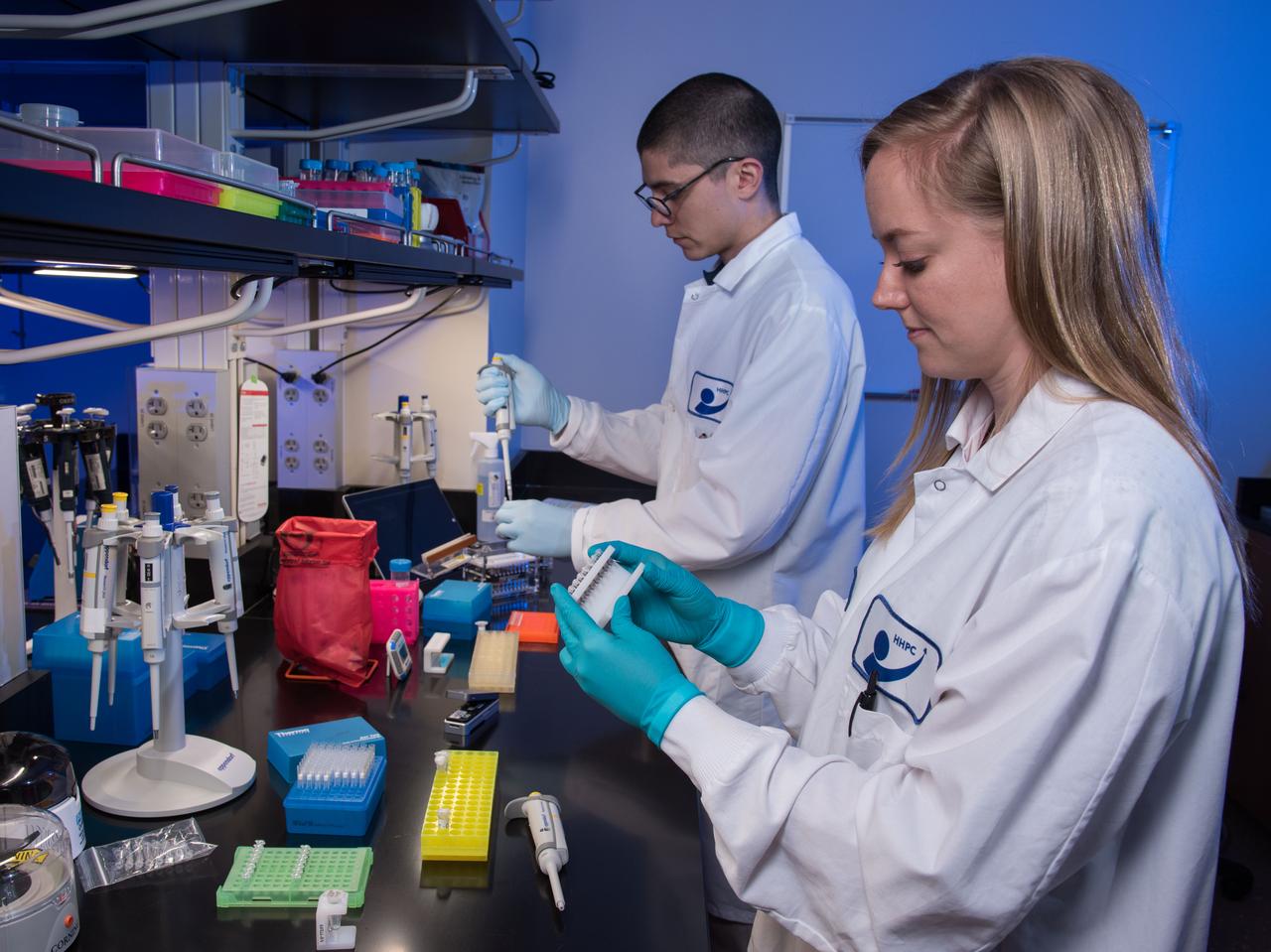
jsc2018e040417 (4/30/2018) --- Researchers at NASA's Johnson Space Center perform DNA and RNA sequencing on microbes as part of the Biomolecule Extraction and Sequencing Technology (BEST) experiment. The same sequencing procedure is performed in orbit aboard the International Space Station (ISS) and the results are compared to those on the ground. This will provide better insight into the effects of the spaceflight environment on microbial life.
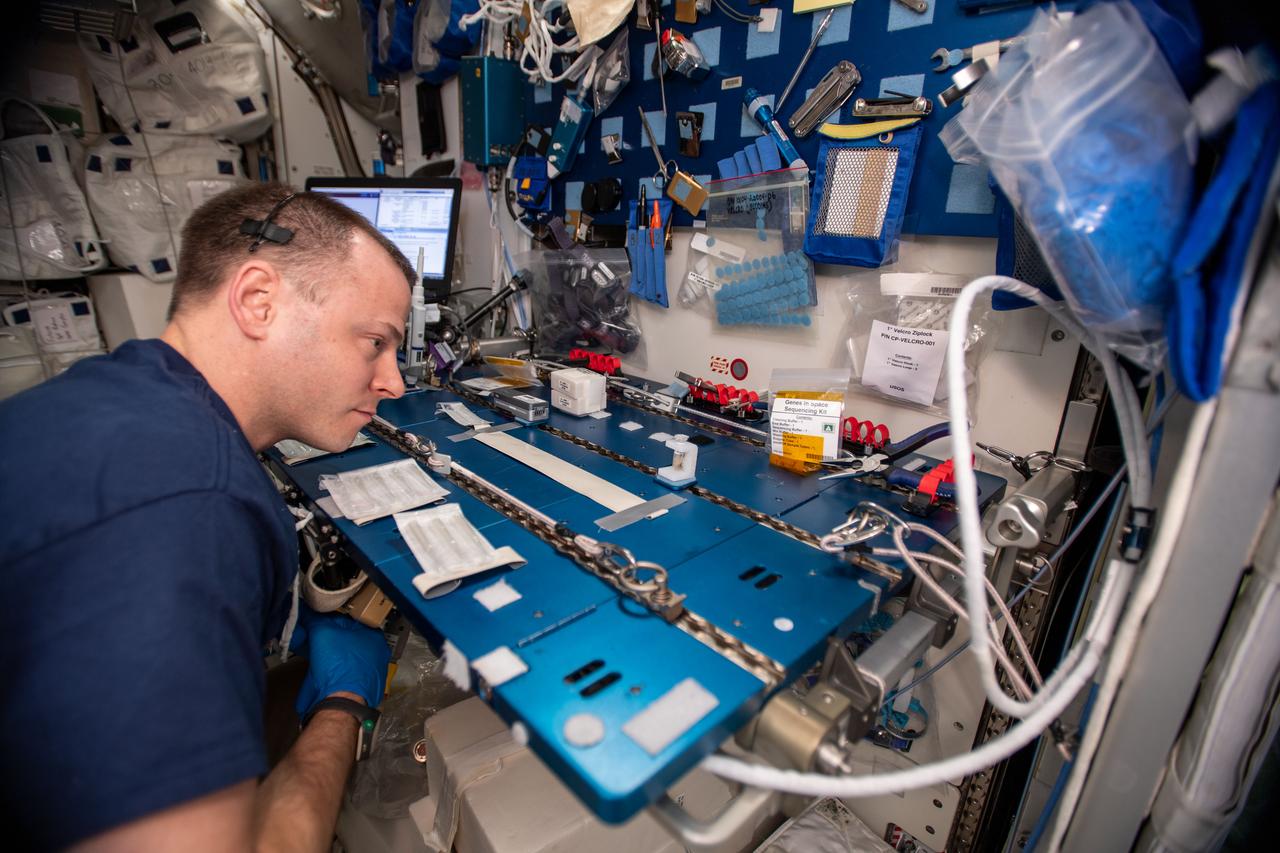
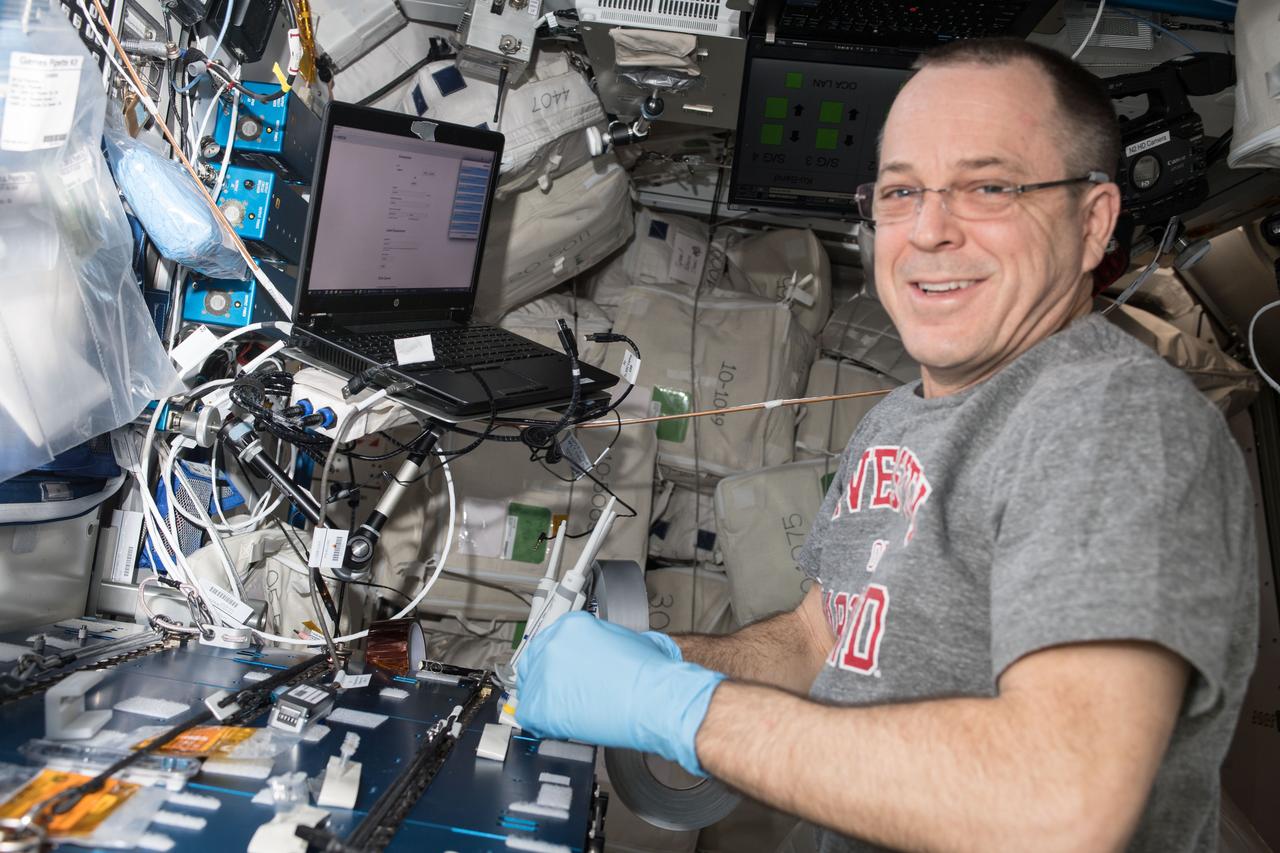
iss059e068226 (May 21, 2019) --- NASA astronaut Nick Hague of Expedition 59 sequences DNA samples for a study exploring how increased exposure to space radiation impacts crew health. He used the Biomolecule Sequencer for the investigation to demonstrate DNA sequencing in space. The Genes In Space-6 experiment is researching how space radiation damages DNA and how the cell repair mechanism works in microgravity.
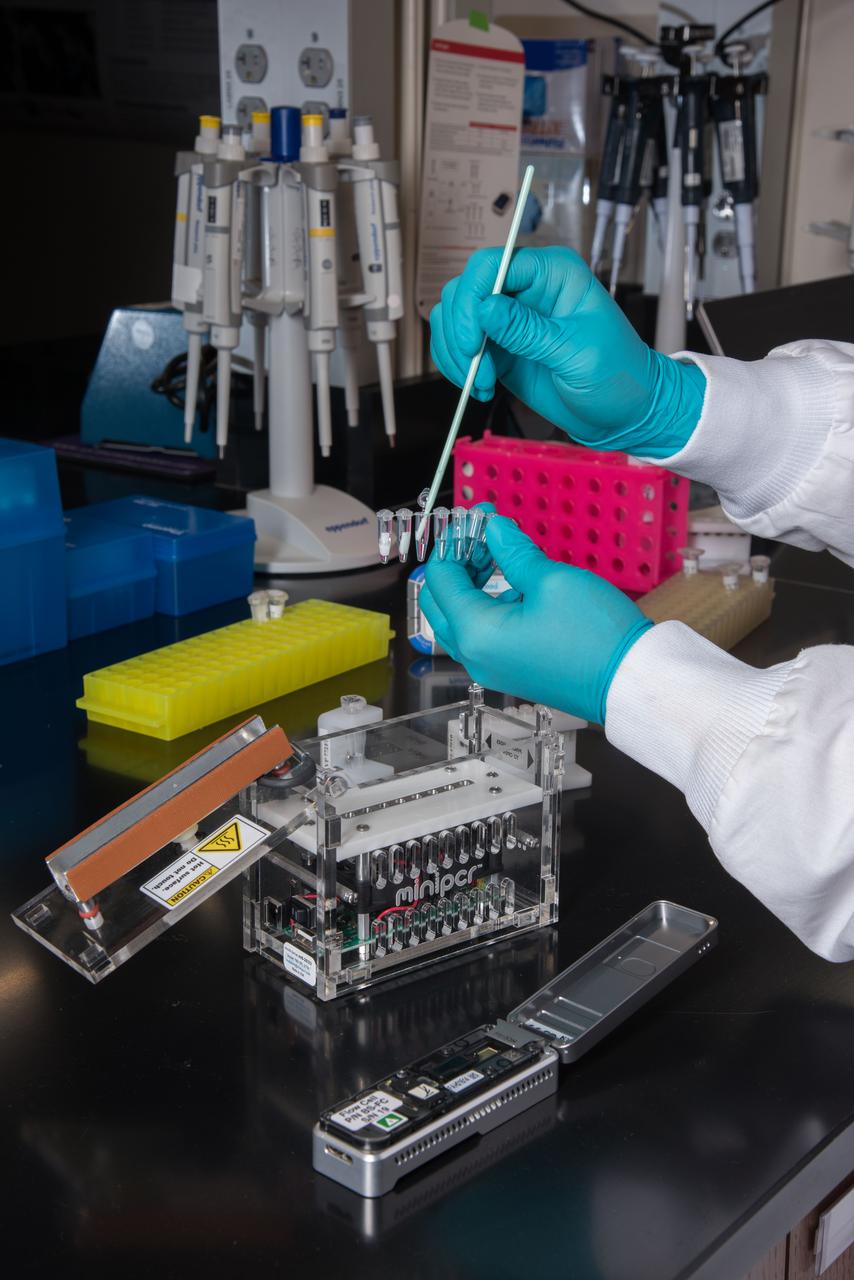
jsc2018e040453 (4/30/2018) --- A Researcher at NASA's Johnson Space Center perform DNA and RNA sequencing on microbes as part of the Biomolecule Extraction and Sequencing Technology (BEST) experiment. The same sequencing procedure is performed in orbit aboard the International Space Station (ISS) and the results are compared to those on the ground. This will provide better insight into the effects of the spaceflight environment on microbial life.
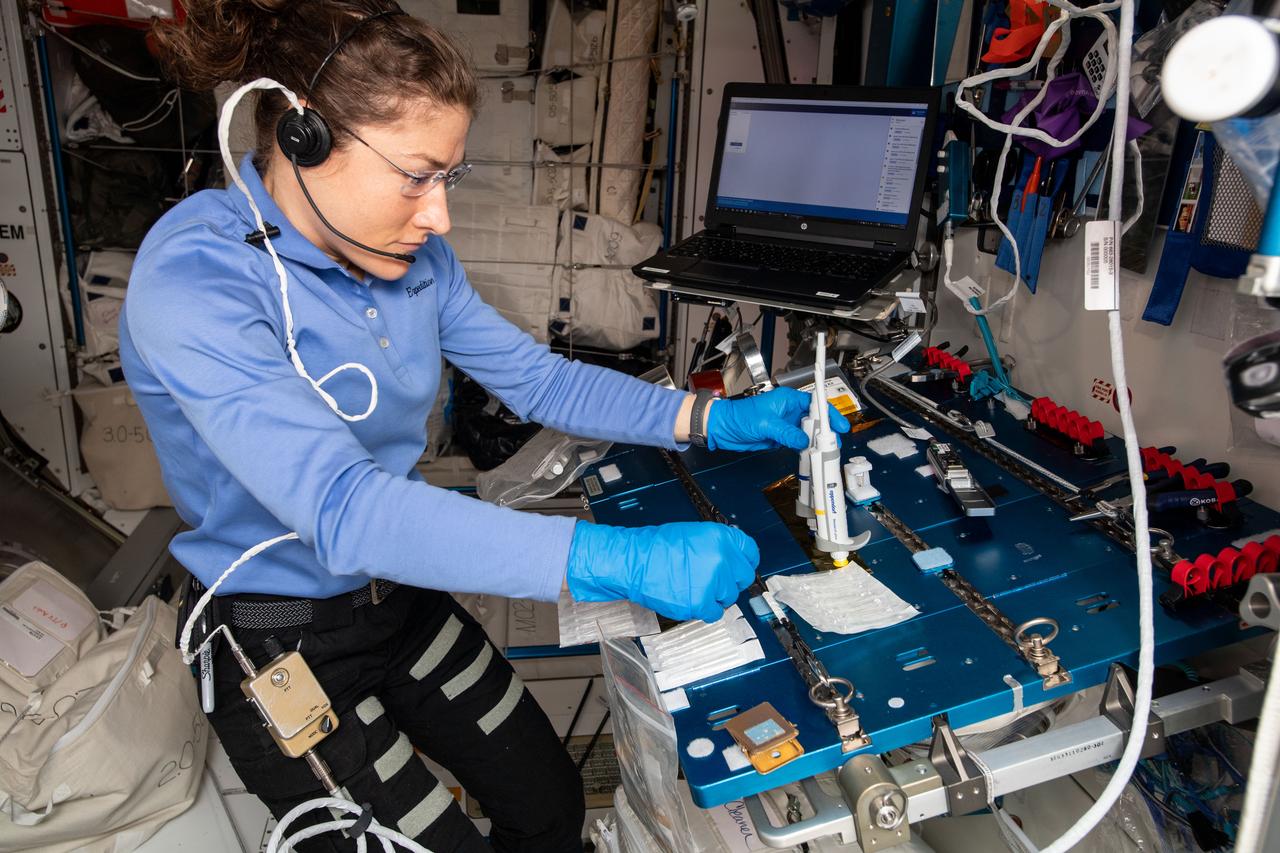
iss059e111734 (June 18, 2019) --- Flight Engineer Christina Koch of NASA works on the Genes In Space-6 (GIS-6) experiment inside Europe’s Columbus laboratory module. GIS-6 uses the Biomolecule Sequencer to sequence DNA samples to help scientists understand how space radiation mutates DNA and assess the molecular level repair process.
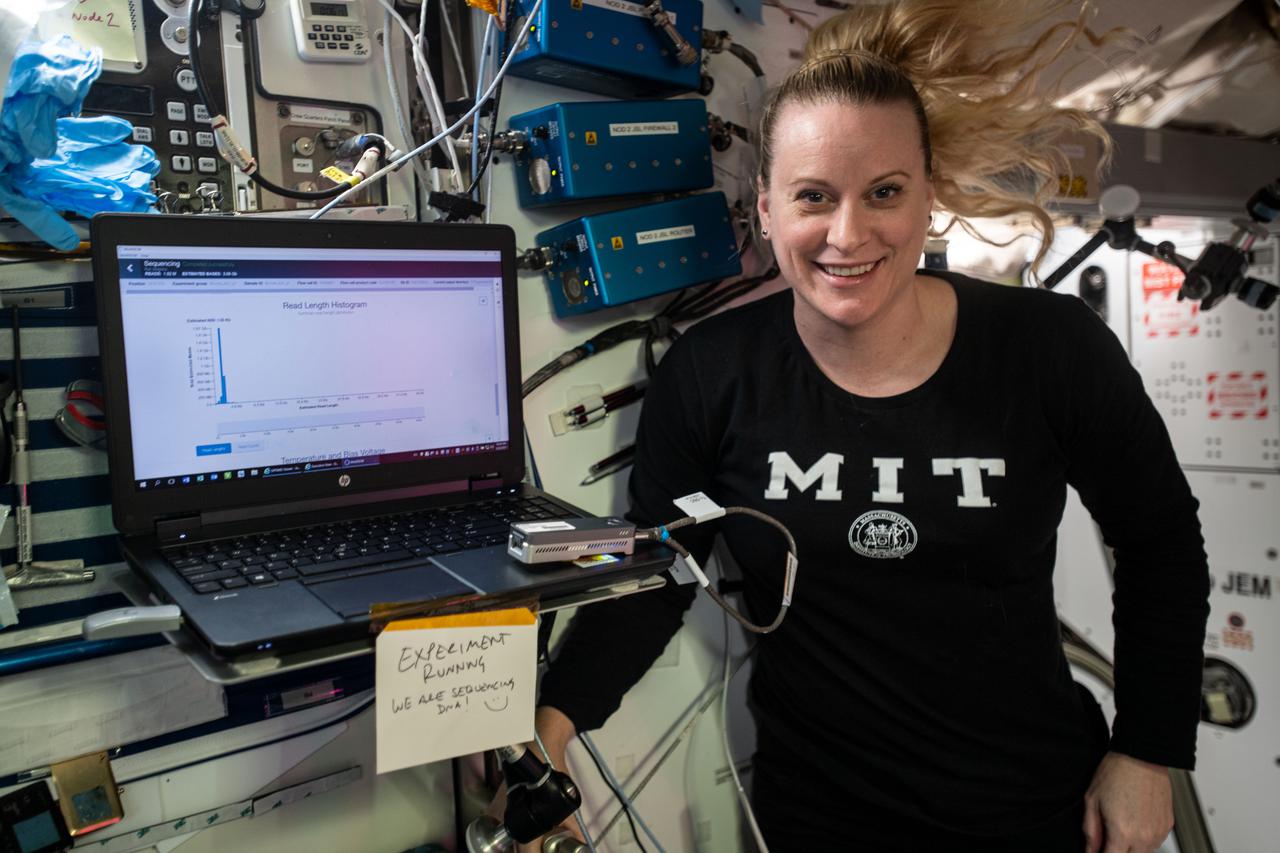
iss064e025418 (Jan. 21, 2021) --- NASA astronaut and Expedition 64 Flight Engineer Kate Rubins sequences DNA aboard the International Space Station for an experiment that seeks to diagnose medical conditions and identify microbes. Learn more about the first sequencing of DNA in space: https://go.nasa.gov/2VPsQFJ