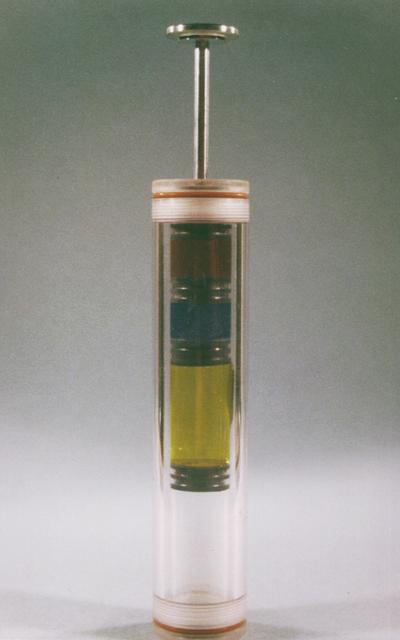
CGBA, a facility developed by BioServe Space Technologies, a NASA Commercial Generic Bioprocessing Space Center, allows a variety of sophisticated bioprocessing research to be performed using a common device. The Fluids Processing Apparatus is essentially a microgravity test tube that allows a variety of complex investigations to be performed in space. This is a glass barrel containing several chambers separated by rubber stoppers. Eight FPAs are placed together in a Group Activation Pack (GAP), which allows all of the research to be started simultaneously by turning a single crank. Eight GAPs, or similar-sized payloads, can be stored in a single CGBA temperature controlled locker, which now uses motor drives to automatically turn the cranks to start and stop experiments. On STS-95, research efforts cover eight major areas that will benefit Earth-based products ranging from the production of pharmaceuticals to fish hatcheries.
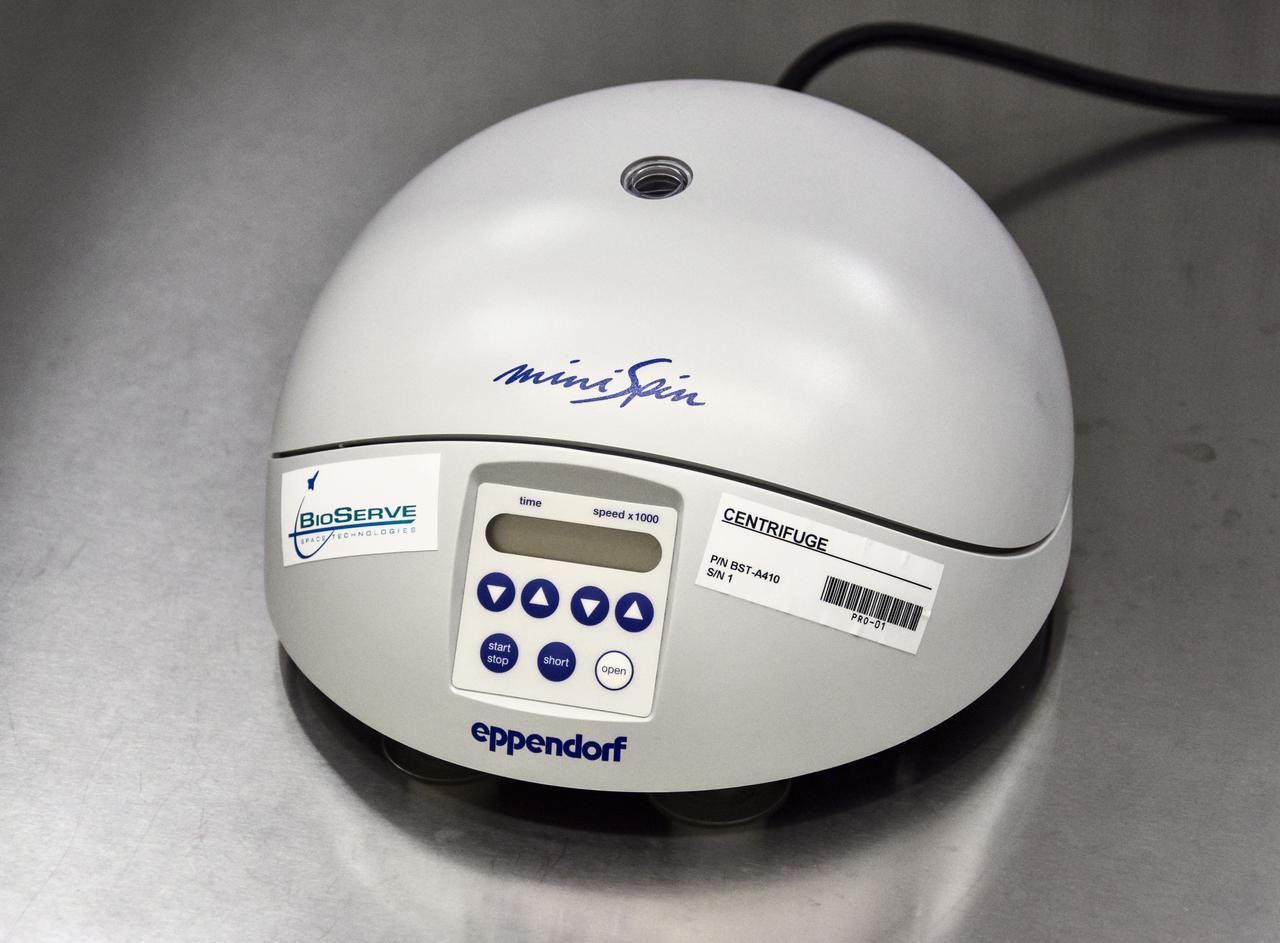
jsc2022e031229 (8/13/2021) --- A preflight view of the The BioServe Centrifuge facility supports a wide variety of life, physical, and materials science research. The Centrifuge is compatible with BioServe’s extensive array of investigation-specific hardware. Small, portable, and easy to set up, the facility further enhances the International Space Station’s scientific capabilities. Image courtesy of BioServe Space Technologies.
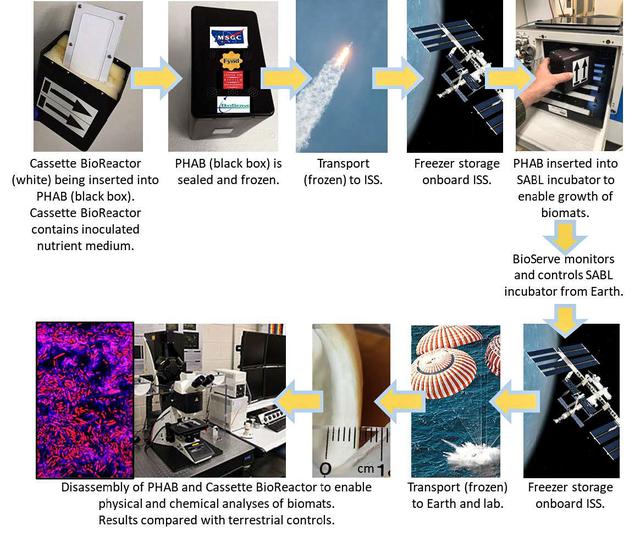
jsc2022e031226 (4/26/2022) --- A mission overview of the Protein Manufacturing investigation shows hardware, operations, and scientific details. The Protein Manufacturing project demonstrates and tests the operation of a novel bioreactor technology to support robust fungal growth for the production of high-protein food in a low-Earth orbit, space environment. Image courtesy of BioServe.
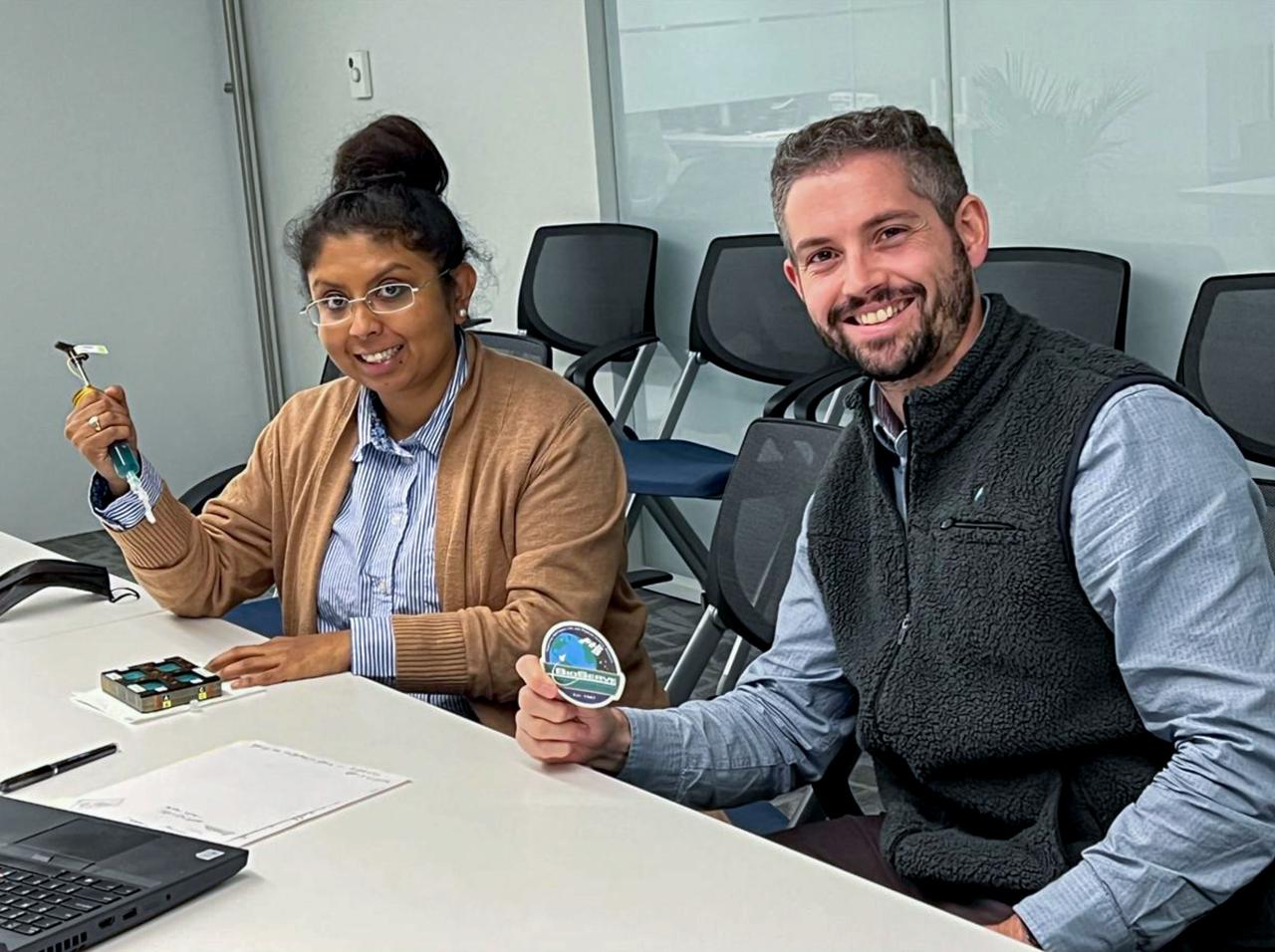
jsc2023e026249 (4/28/2023) --- Drs. Adwitia Dey and Shane Hegarty of AXONIS Therapeutics are pictured with flight hardware for the Innovative Paralysis Therapy Enabling Neuroregeneration (Neuronix) investigation that aims to demonstrate the formation of three-dimensional neuronal cell cultures in microgravity and tests a neuron-specific gene therapy. Image courtesy of BioServe.
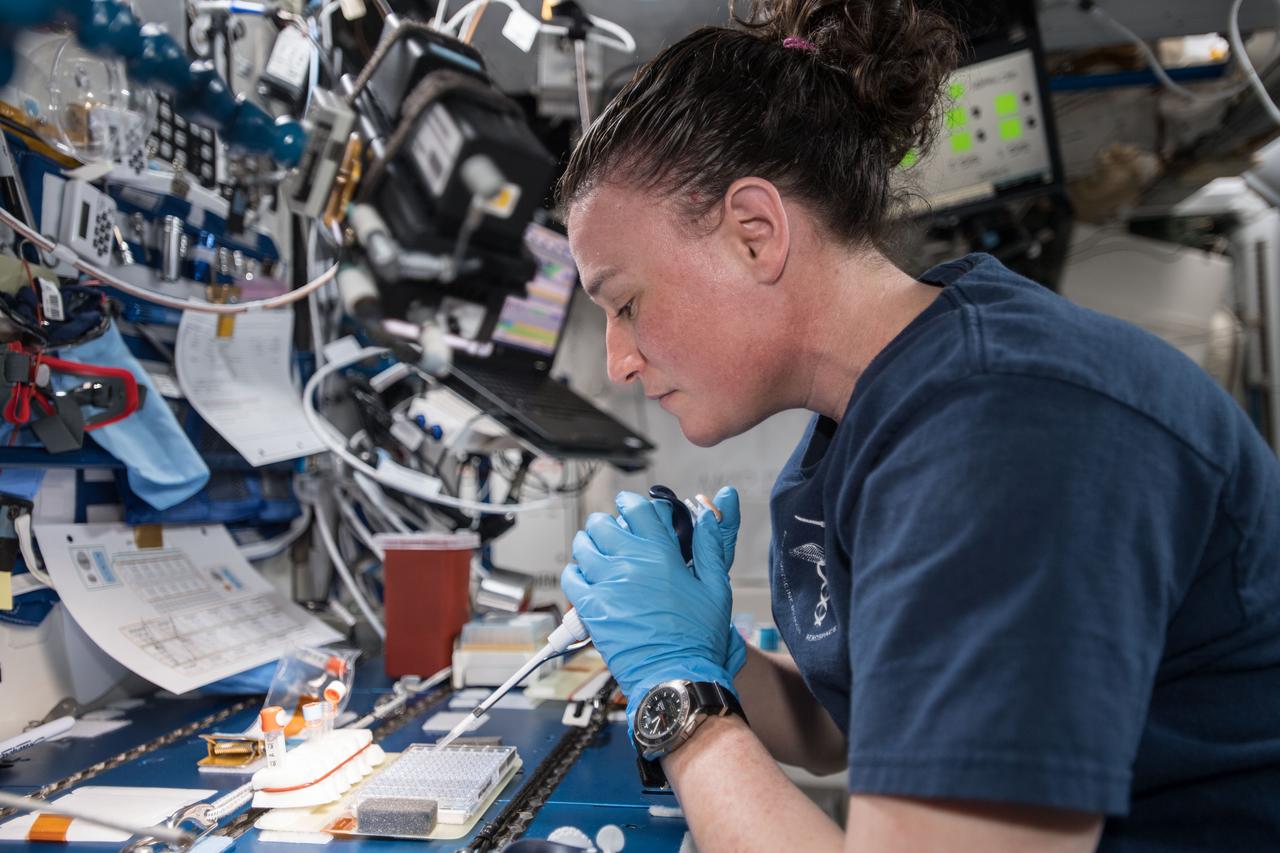
iss057e074528 (Nov. 9, 2018) --- NASA astronaut Serena Auñón-Chancellor is pictured in the Japanese Kibo lab module mixing protein crystal samples to help scientists understand how they work. BioServe Protein Crystalography-1 (BPC-1) seeks to demonstrate the feasibility of conducting protein crystal growth in real time aboard the International Space Station. Crew members add solutions to the hardware, observe the crystals that form and adjust for follow-on experiments.
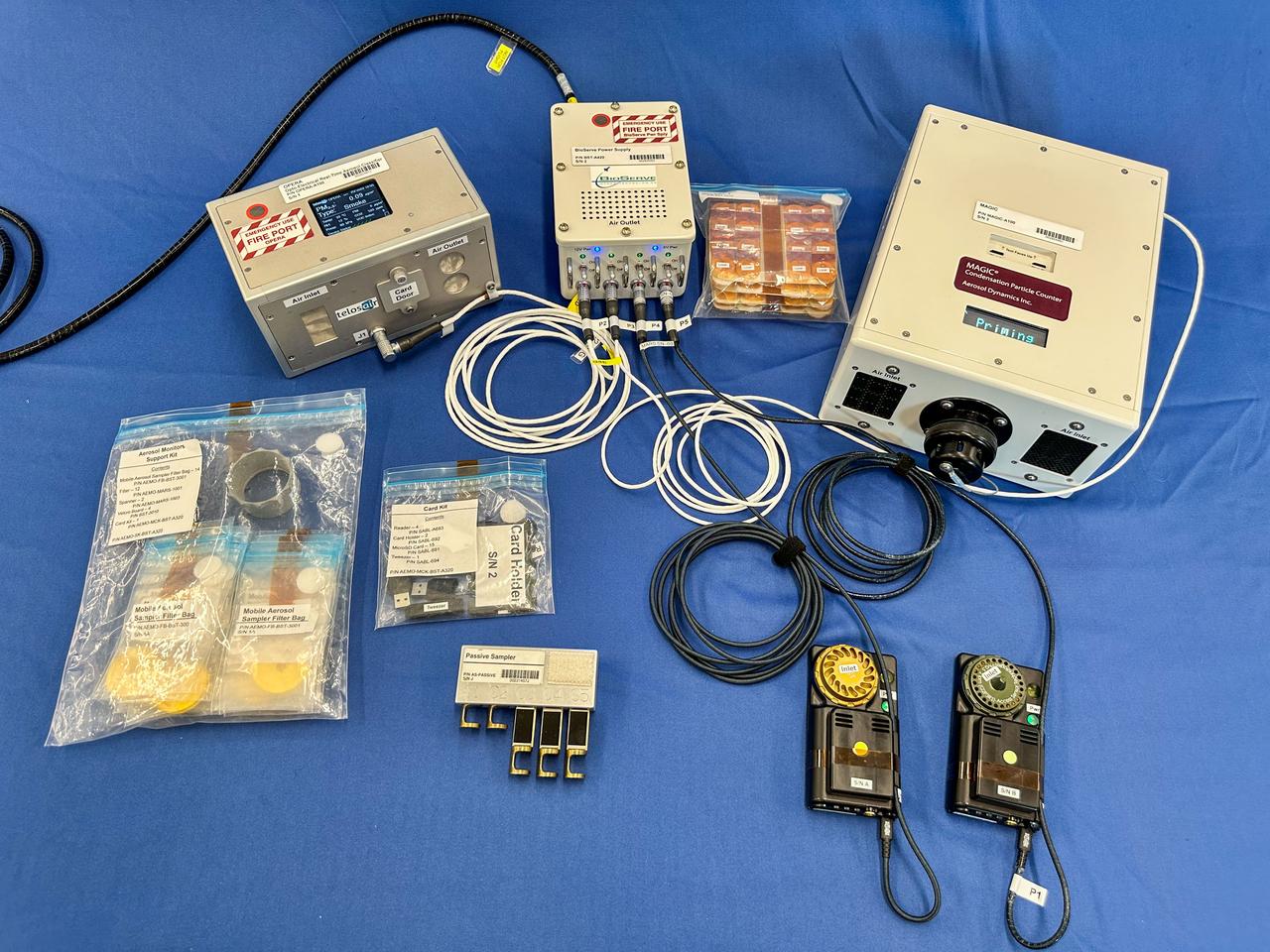
jsc2025e036188 (2/3/2025) --- A preflight image of the Exploration Aerosol Monitors (ExAM) hardware which includes the Moderated Aerosol Growth with Internal water Cycling (MAGIC) particle counter, the OPto-electrical Realtime Aerosol classifier (OPERA), the Mobile Aerosol Reference Samplers (MARS). Aerosol Monitors demonstrates technologies to continuously monitor the concentration of airborne pollutant particles, which must be kept within safe ranges, inside the International Space Station. Image courtesy of BioServe.
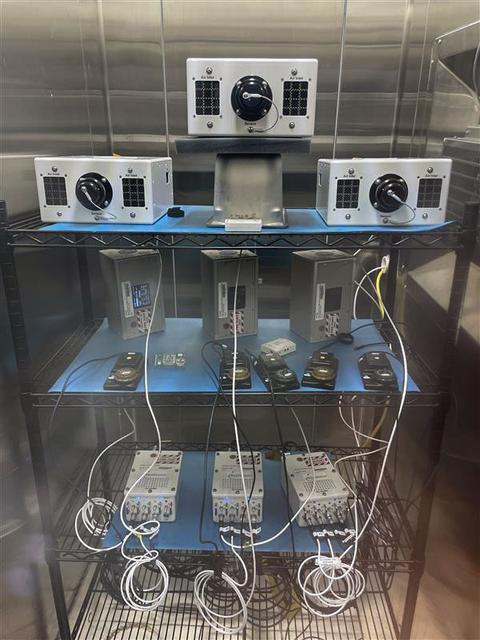
jsc2025e036187 (4/4/2025) --- The Exploration Aerosol Monitors (ExAM) hardware in BioServe Space Technologies’ environmental chamber: the Moderated Aerosol Growth with Internal water Cycling (MAGIC) particle counter (x3; top), the OPto-electrical Realtime Aerosol classifier (OPERA, x3; middle, back), the Mobile Aerosol Reference Samplers (MARS, x5; middle, front); power supplies (bottom). Aerosol Monitors demonstrates technologies to continuously monitor the concentration of airborne pollutant particles, which must be kept within safe ranges, inside the International Space Station.