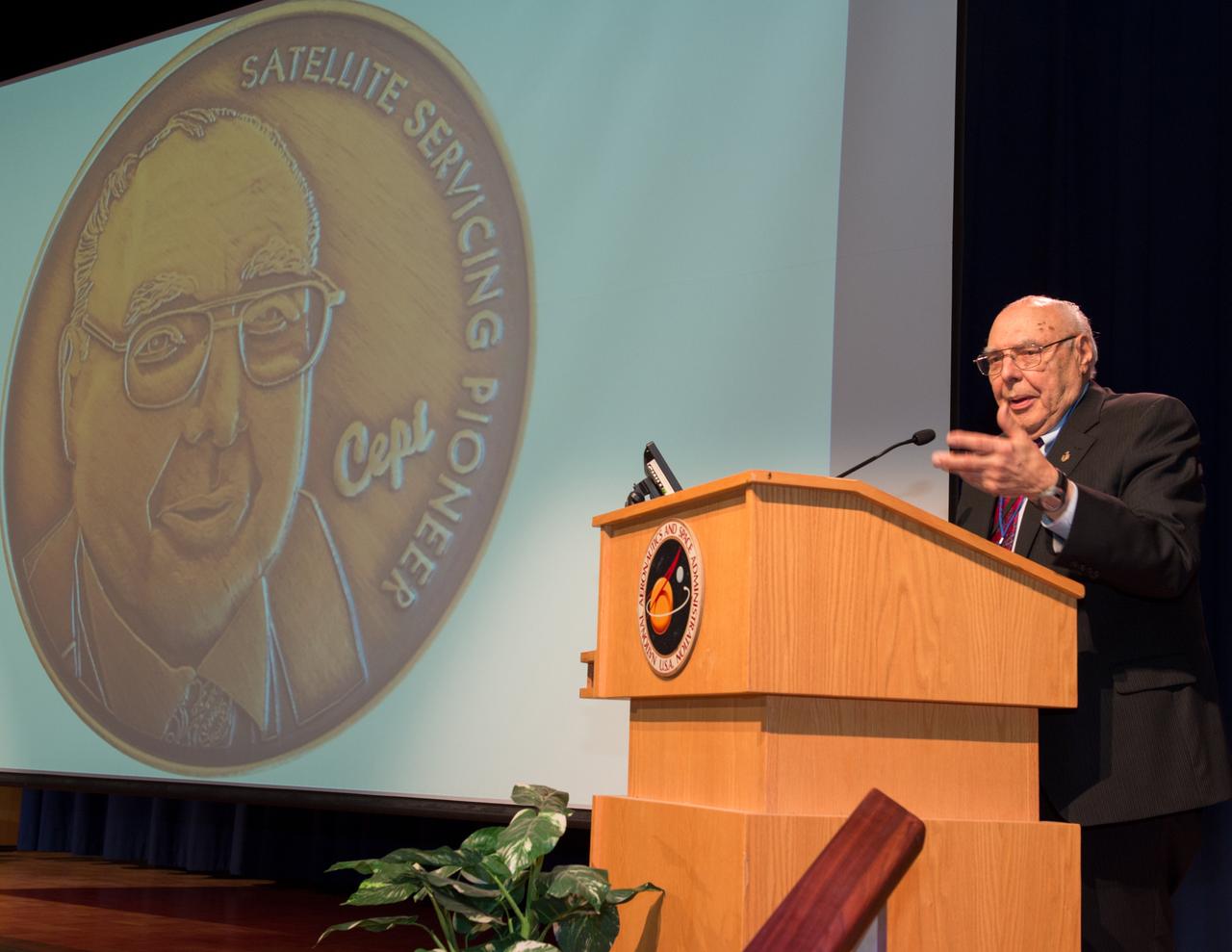
Frank Cepollina reitrement and 80th birthday party
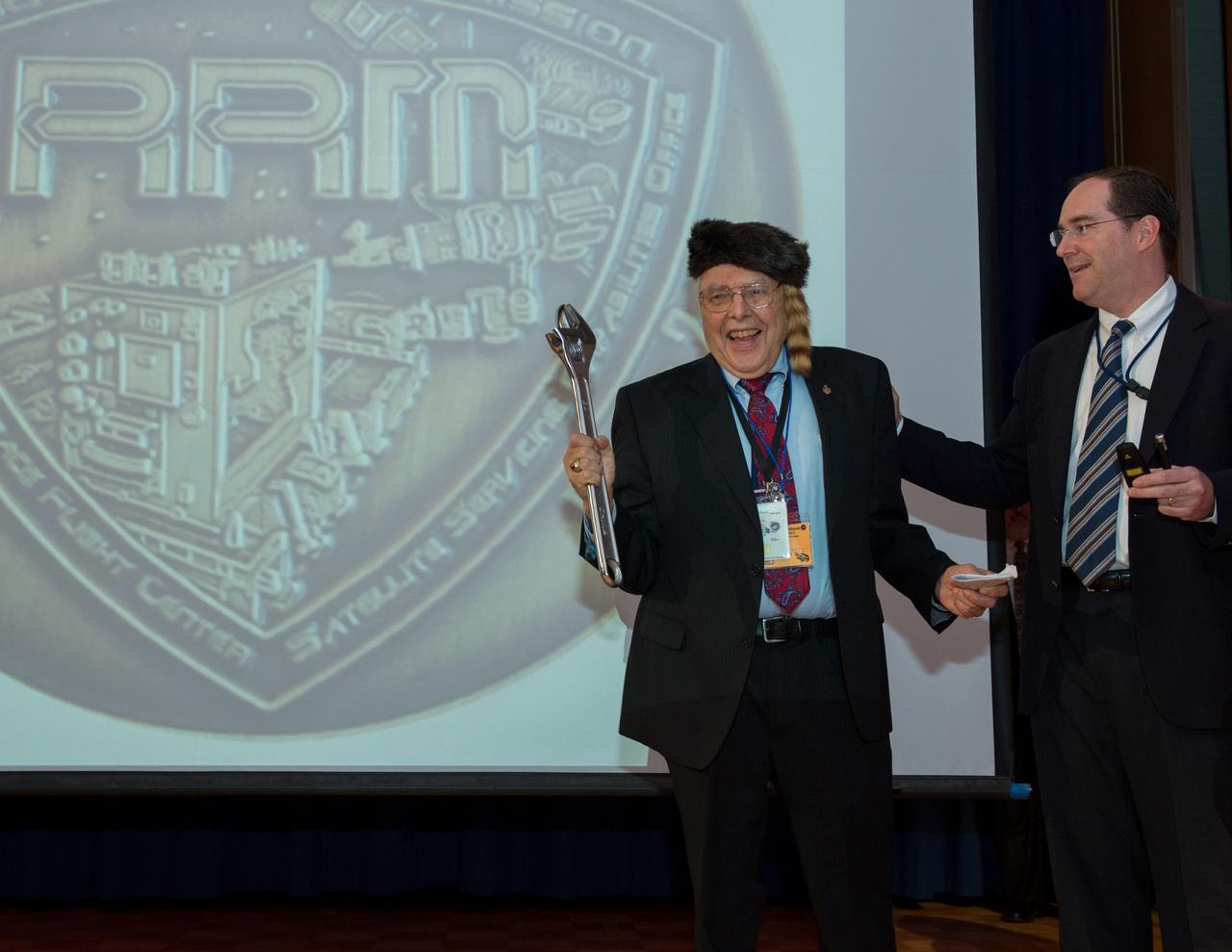
Frank Cepollina reitrement and 80th birthday party
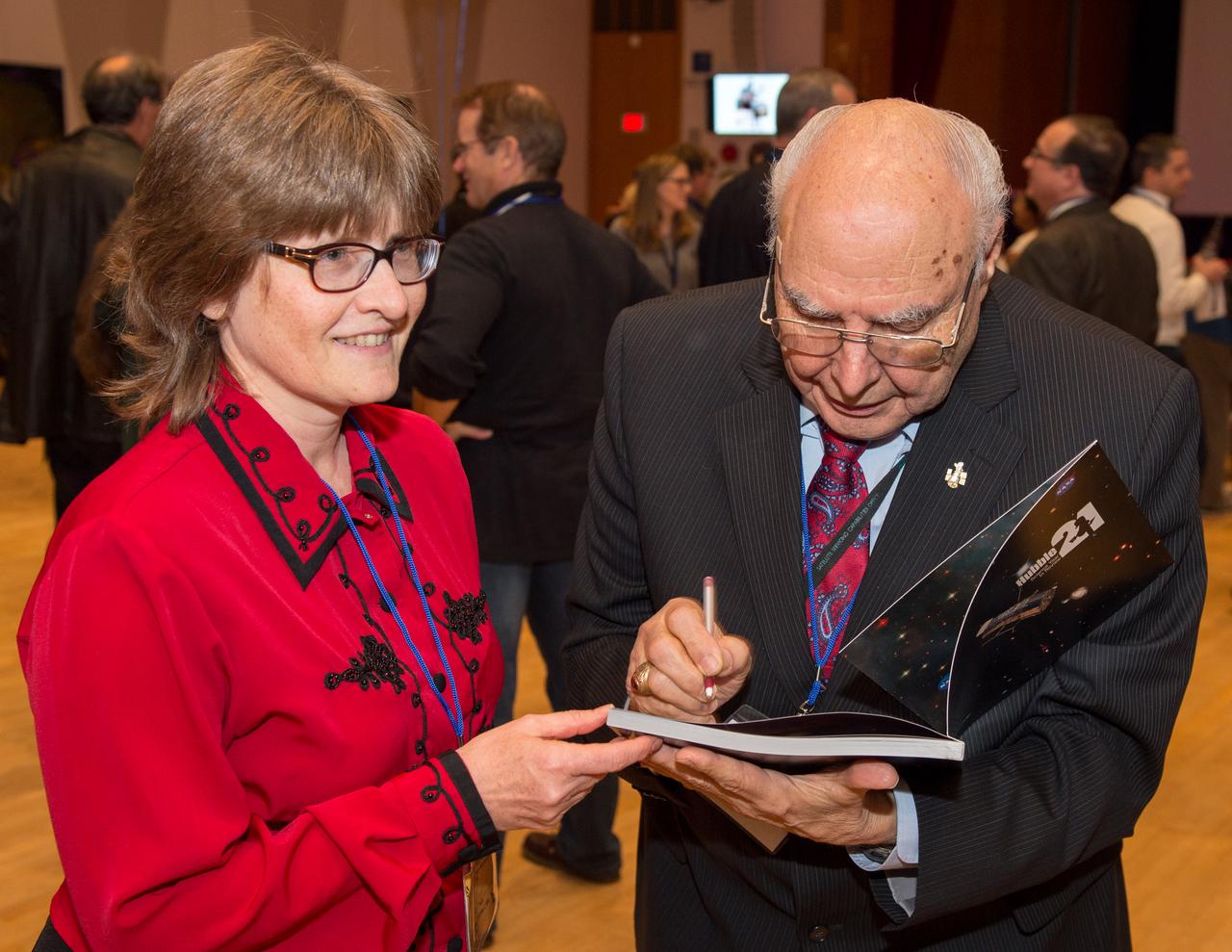
Frank Cepollina reitrement and 80th birthday party

Frank Cepollina reitrement and 80th birthday party
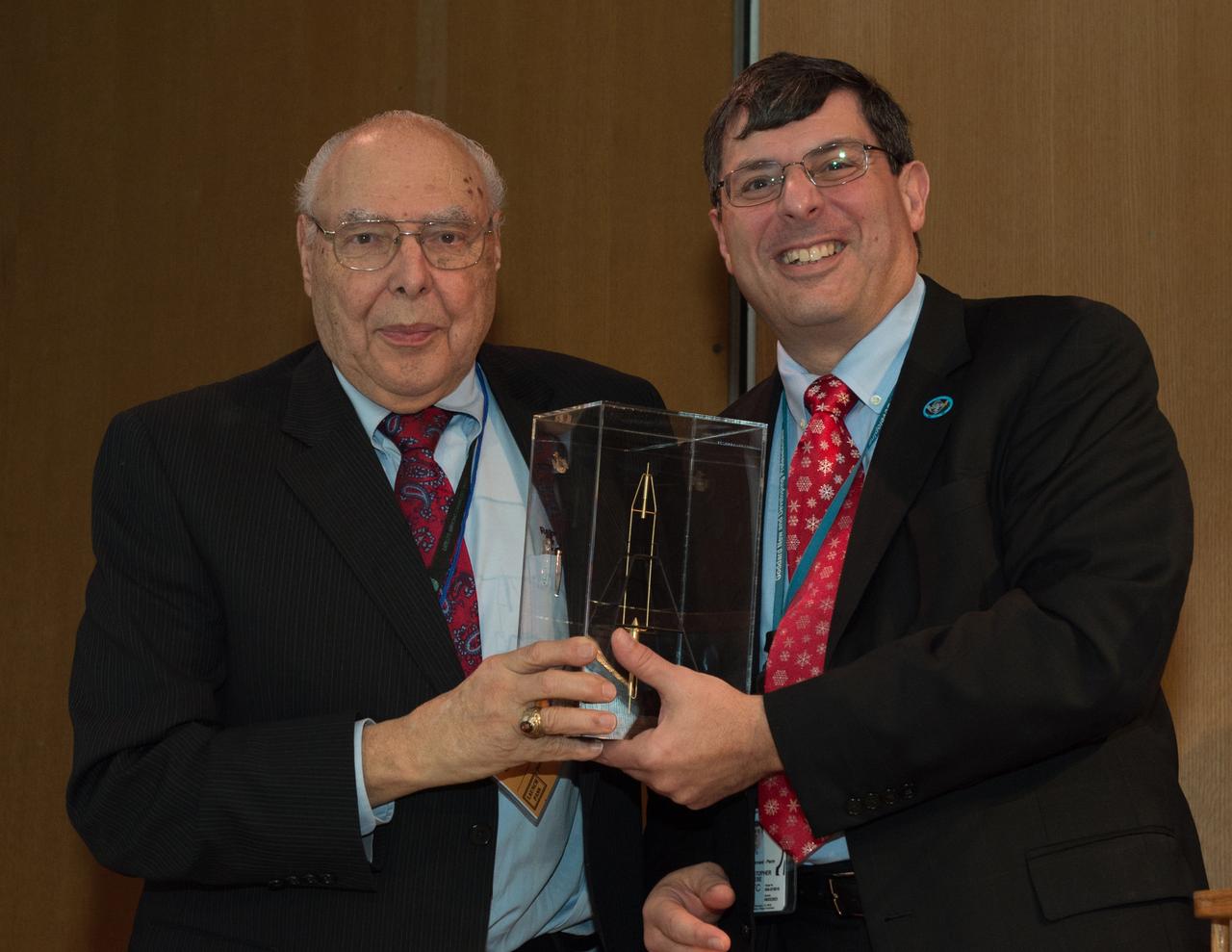
Frank Cepollina reitrement and 80th birthday party. Chris Scolese.
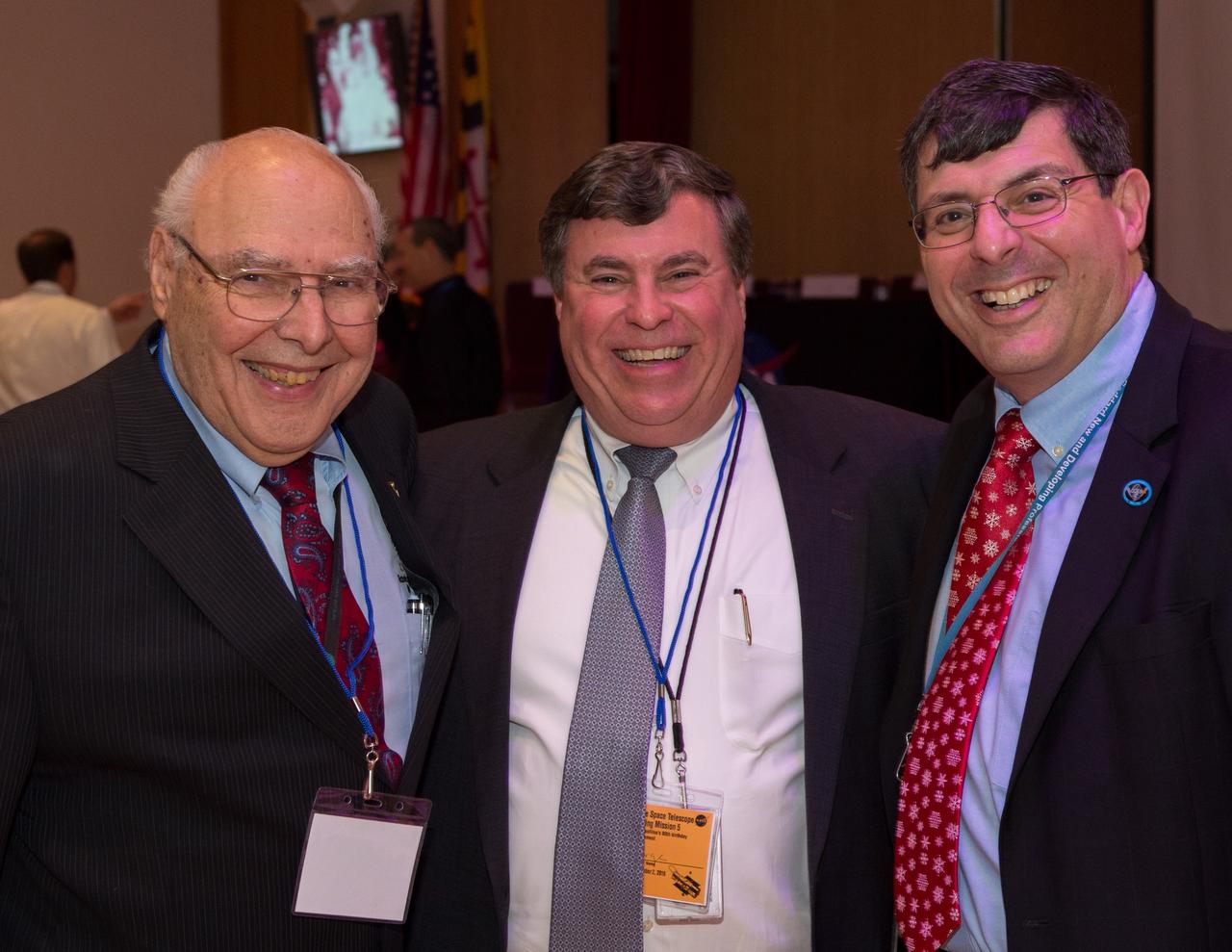
Frank Cepollina reitrement and 80th birthday party. George Morrow. Chris Scolese.
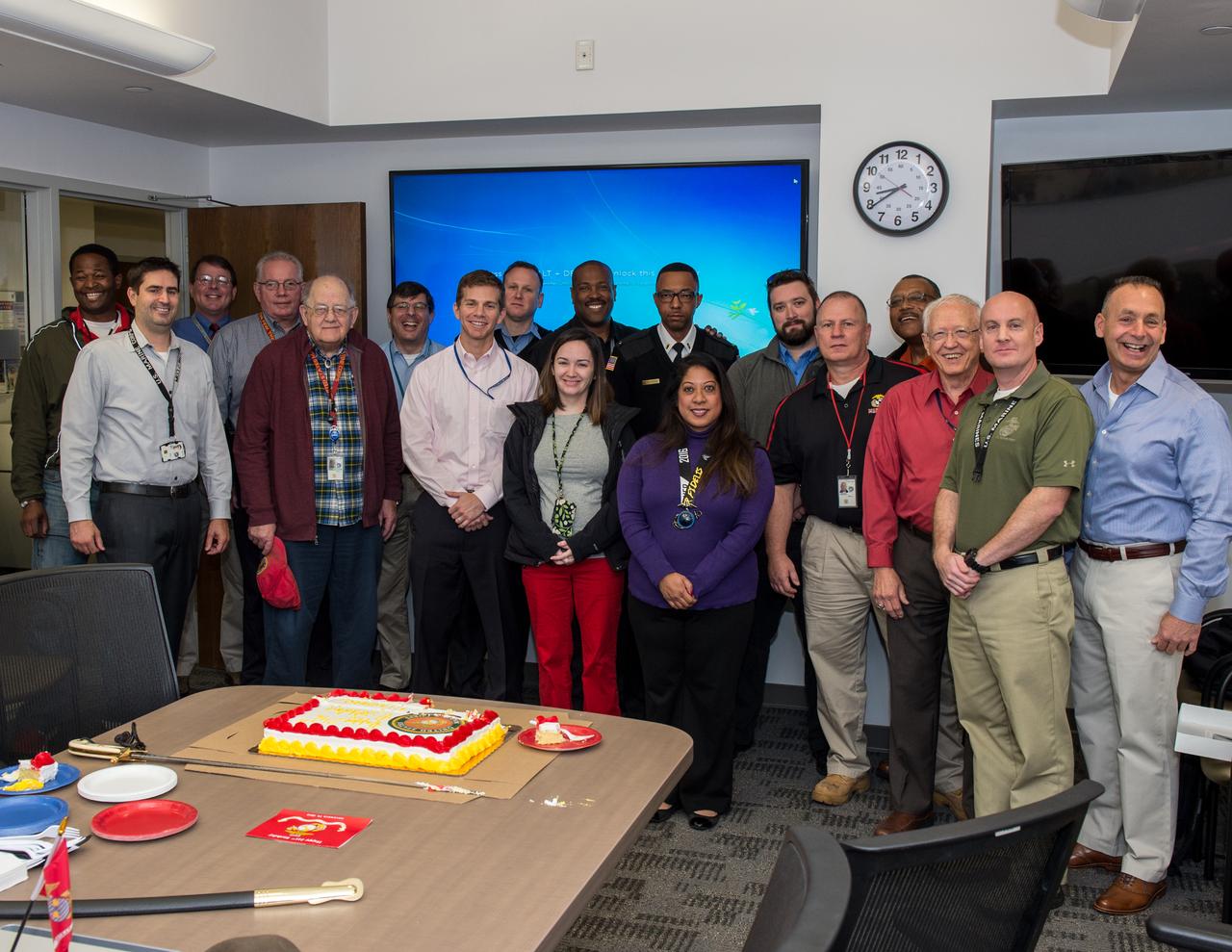
Marine Corps 241st Birthday Celebration, Veterans Advisory Committee
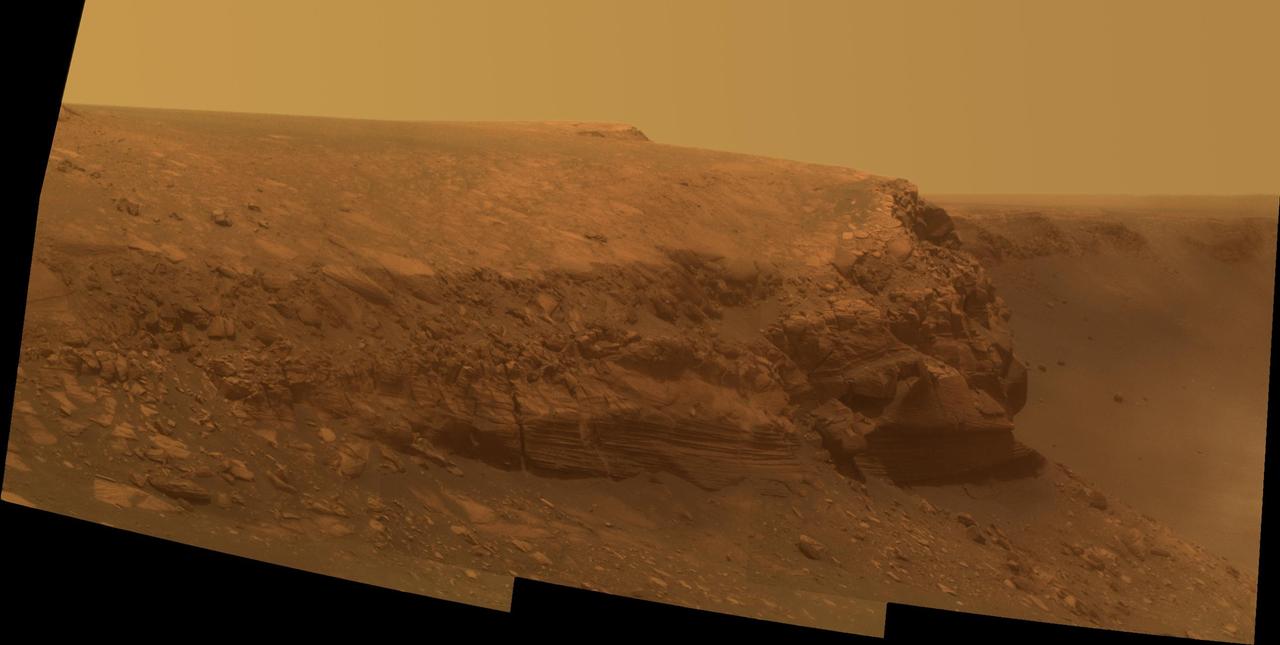
Opportunity Second Martian Birthday at Cape Verde
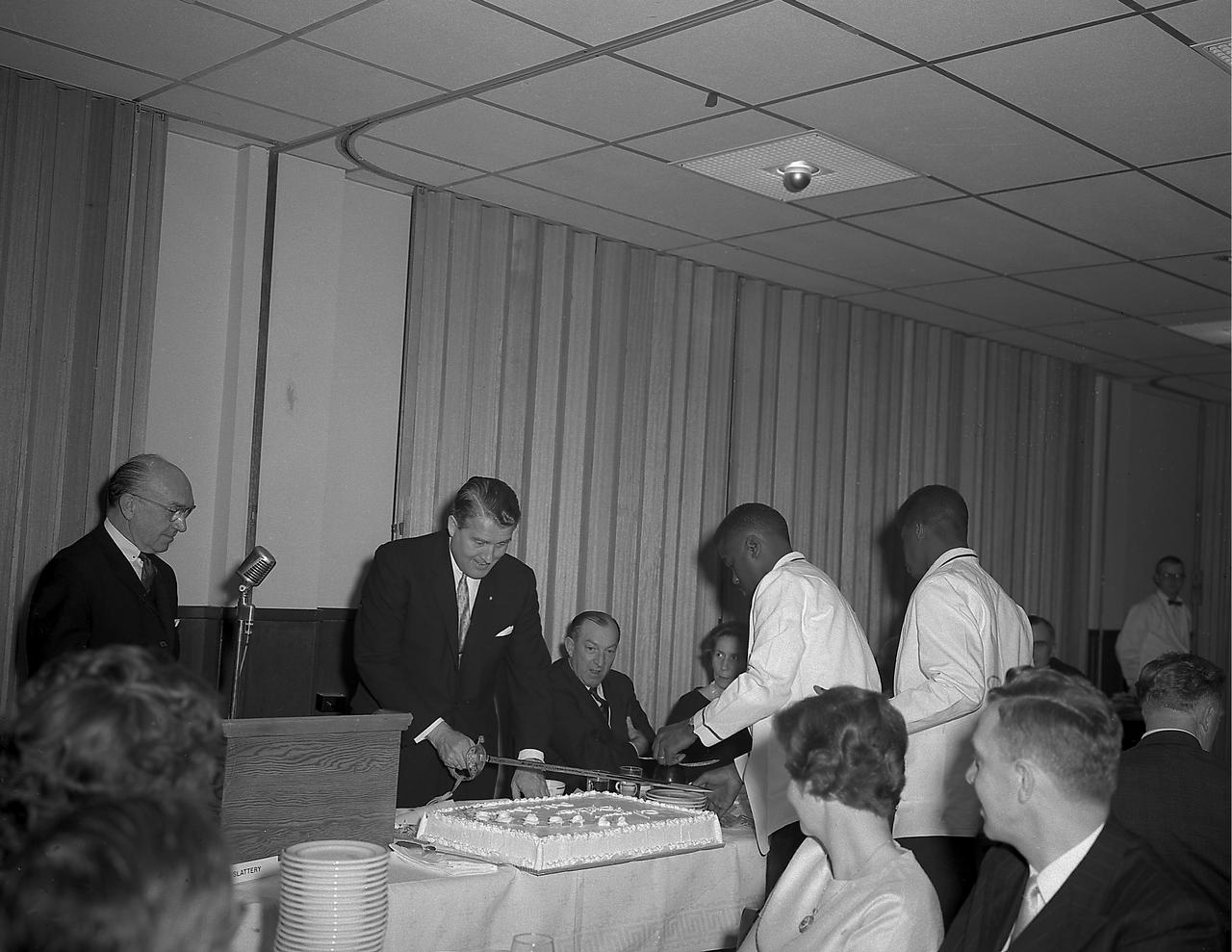
Dr. von Braun's 50th Birthday Party was celebrated at the Officers Club at Redstone Arsenal, Alabama on March 23, 1962. Dr. von Braun cuts his birthday cake, while congressman Bob Jones looks on.
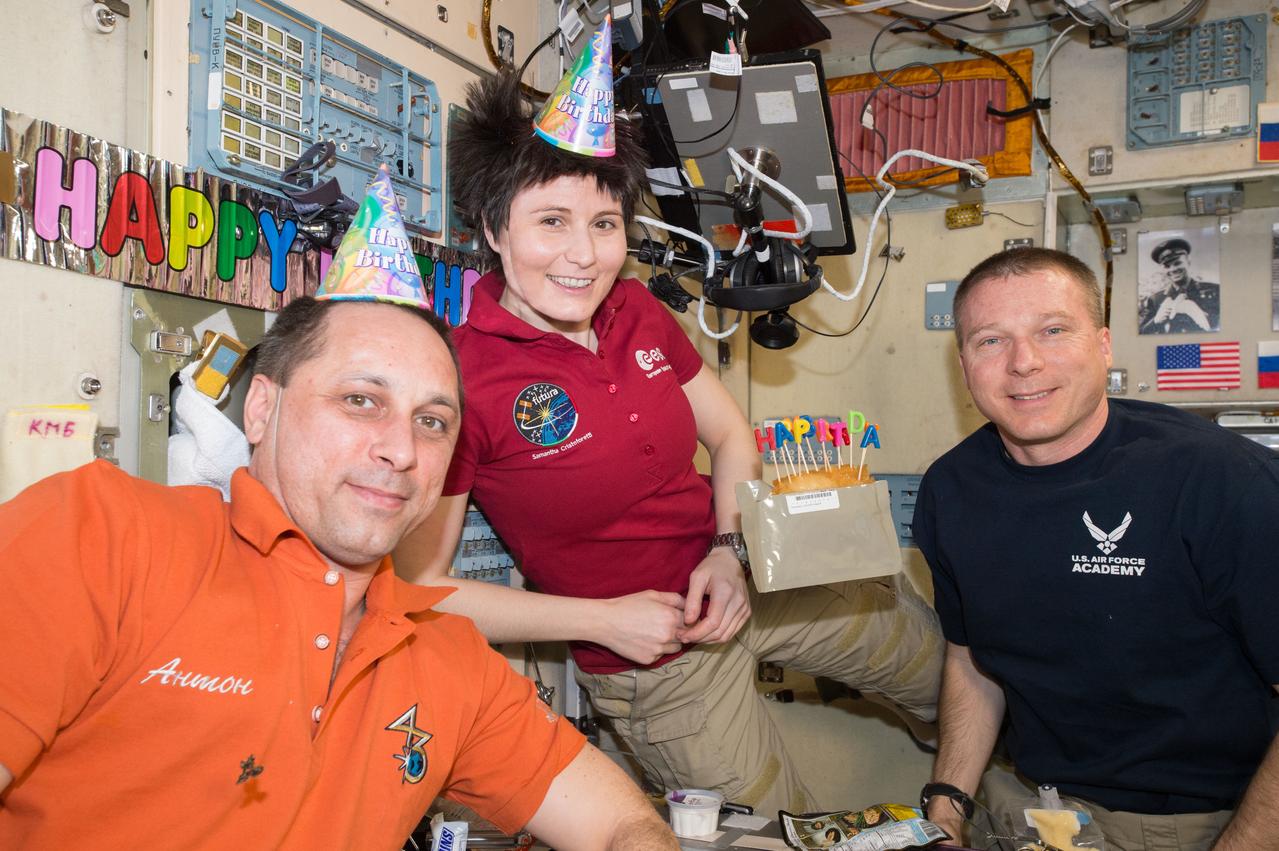
ISS043E142528 (04/26/2015) ---From the International Space Station NASA astronaut Terry Virts (right) tweeted this image of he and his crewmate Russian cosmonaut Anton Shkaplerov celebrating the birthday of ESA (European Space Agency) astronaut Samantha Cristoforetti (middle). His tweet commented: "Happy Birthday @AstroSamantha! We had a great time celebrating as a crew."
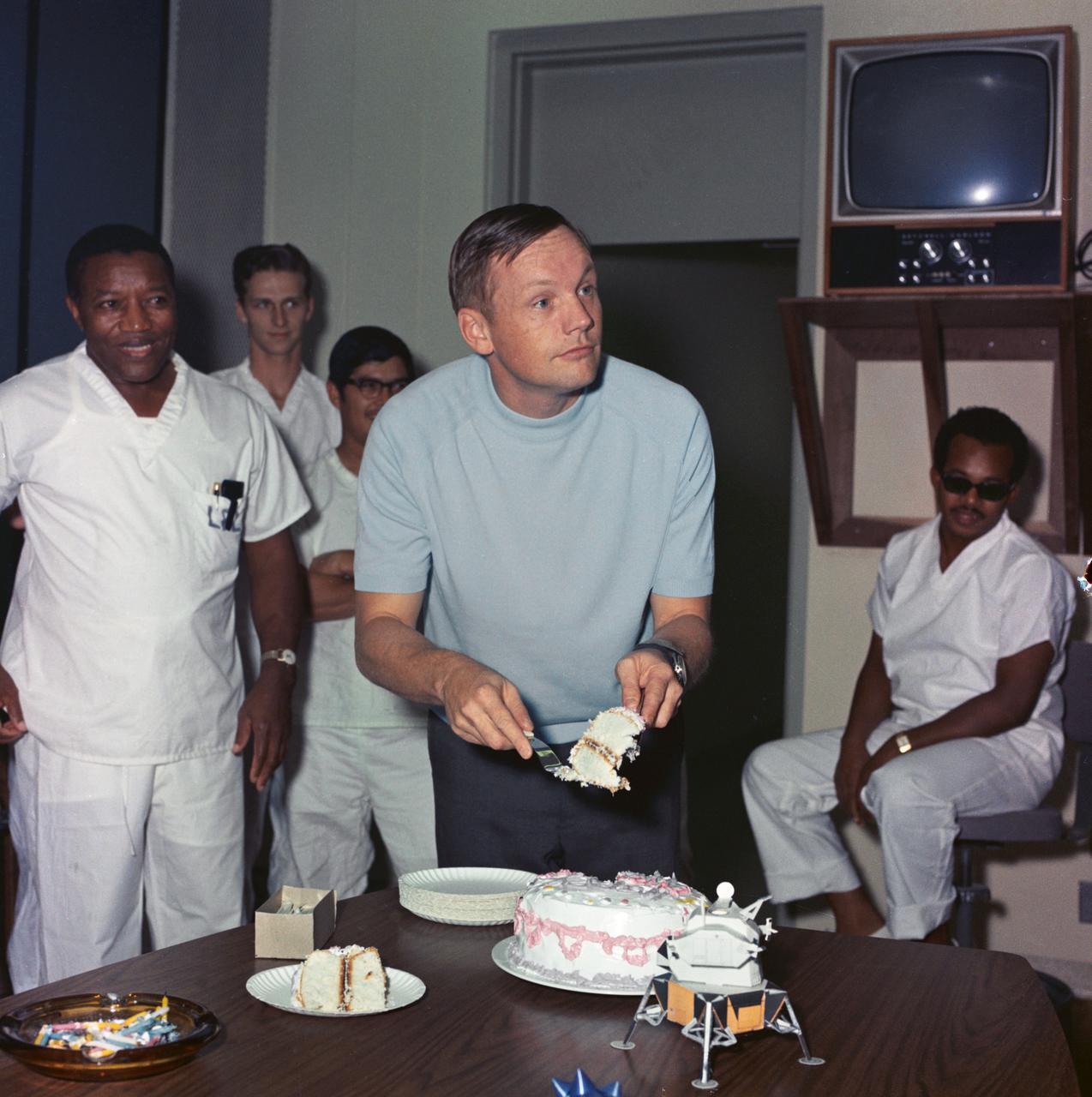
S69-40958 (5 August 1969) --- Astronaut Neil A. Armstrong, commander of the historic Apollo 11 lunar landing mission, and the first man to set foot on the Moon, cuts his birthday cake as he celebrated his 39th birthday. The crew still confined to the Crew Reception Area (CRA) of the Manned Spacecraft Center's (MSC) Lunar Receiving Laboratory (LRL). Armstrong was born on August 5, 1930, in Wapakoneta, Ohio. The cake was described as "standard two-layer, plain vanilla" on which was placed 39 candles. Eighteen of the persons quarantined with Armstrong assembled and sang happy birthday; and a champagne toast was offered. CRA support personnel are in the background. Astronauts Armstrong; Michael Collins, command module pilot; and Edwin E. Aldrin Jr., lunar module pilot, will be released from quarantine on August 11, 1969.
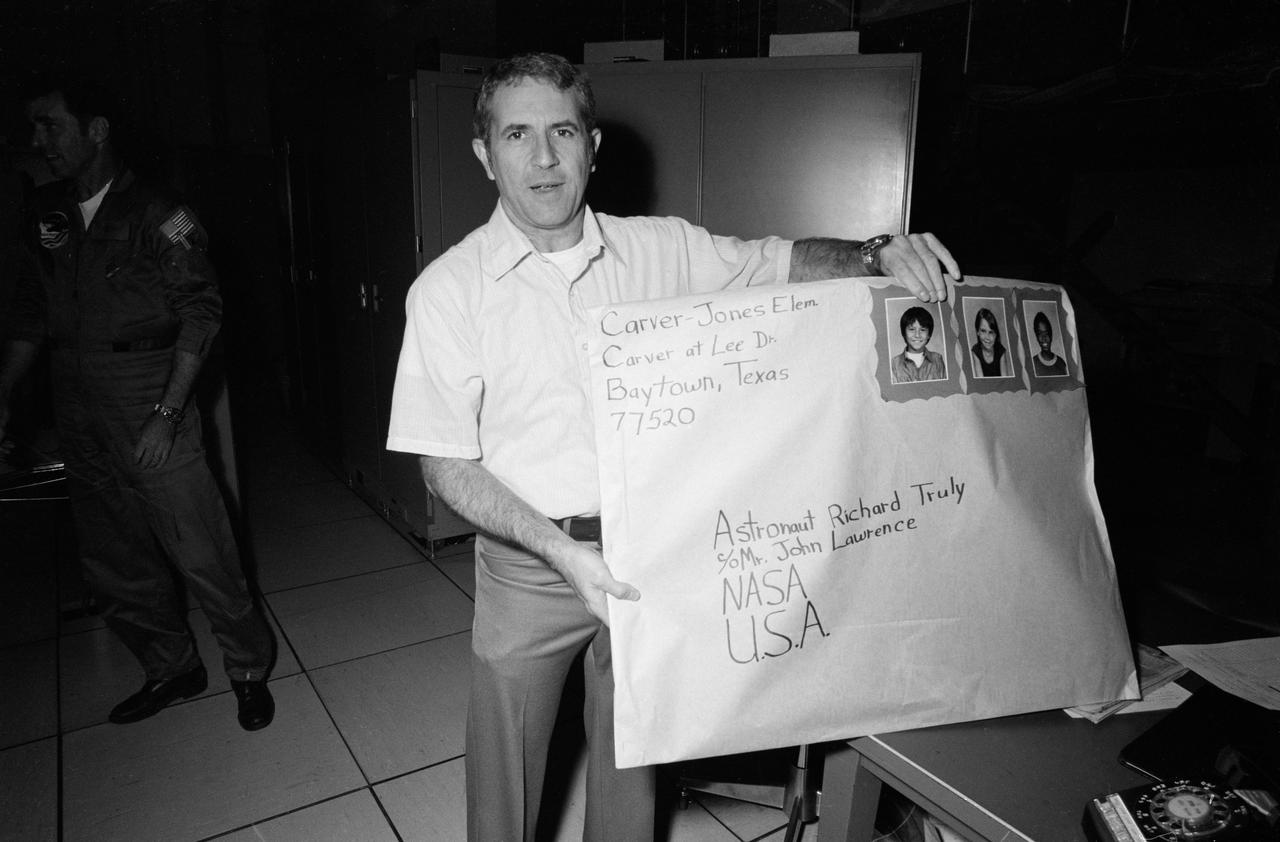
S81-39418 (10 Nov. 1981) --- Aware that astronaut Richard H. Truly, pictured, would be difficult to reach on his 44th birthday Nov. 12, pupils at Carver-Jones Elementary School in Baytown, Texas made certain the STS-2 pilot got his birthday card early. Some art pupils of Shirley Dynum got together and decided that they?d like to custom-make Truly a nice remembrance for a day expected to be filled with remembrances. Nov. 12 is also the date for launch of NASA?s second space shuttle flight in the space shuttle Columbia, with astronauts Truly and Joe H. Engle, commander, at the flight deck. In fact, only moments after this photo was taken, the two departed from JSC to Ellington Air Force Base from which they took T-38 flights to the launch facility in Florida. Photo credit: NASA
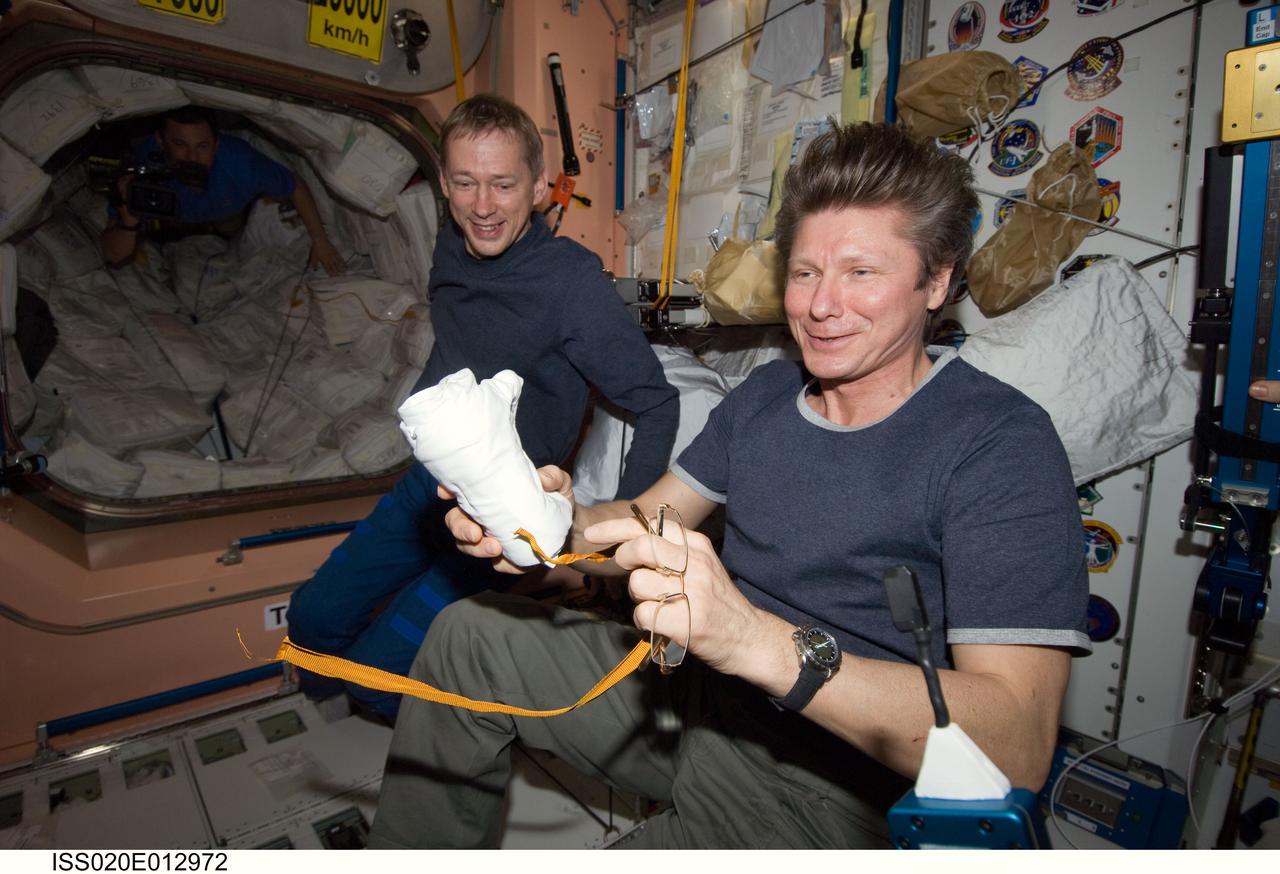
ISS020-E-012972 (21 June 2009) --- Cosmonaut Gennady Padalka (foreground), Expedition 20 commander; and European Space Agency astronaut Frank De Winne, flight engineer, are pictured as they and the rest of the Expedition 20 crew members celebrate Father’s Day and Padalka’s birthday in the Unity node of the International Space Station. Today also marked Japan Aerospace Exploration Agency (JAXA) astronaut Koichi Wakata’s (out of frame) 100th day in orbit since his launch to the ISS aboard the Space Shuttle Discovery in March.
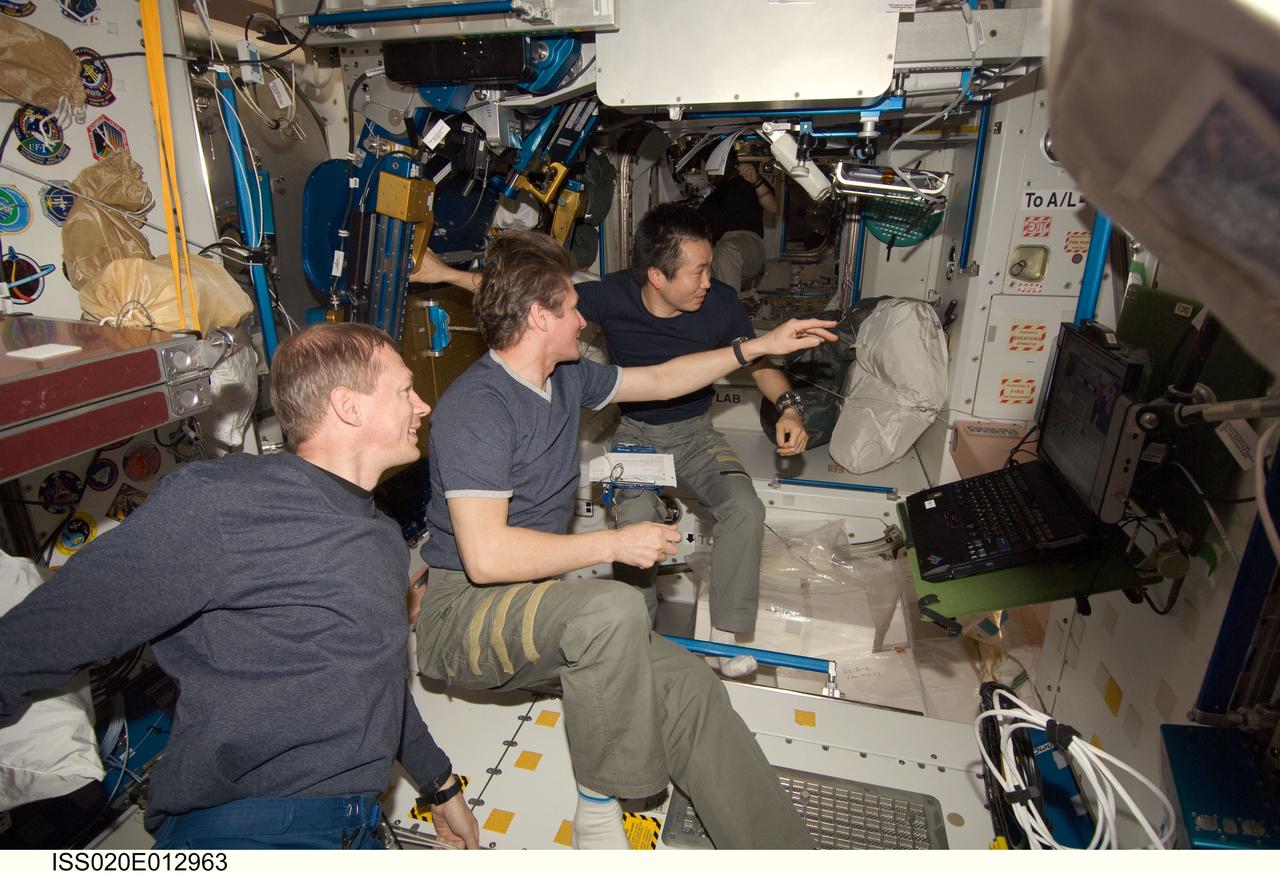
ISS020-E-012963 (21 June 2009) --- Expedition 20 crew members enjoy some off-duty time in the International Space Station’s Unity node as they celebrate Father’s Day and the birthday of cosmonaut Gennady Padalka (center), commander. Today also marked Japan Aerospace Exploration Agency (JAXA) astronaut Koichi Wakata’s 100th day in orbit since his launch to the ISS aboard the Space Shuttle Discovery in March. Also pictured is European Space Agency astronaut Frank De Winne (left), flight engineer.
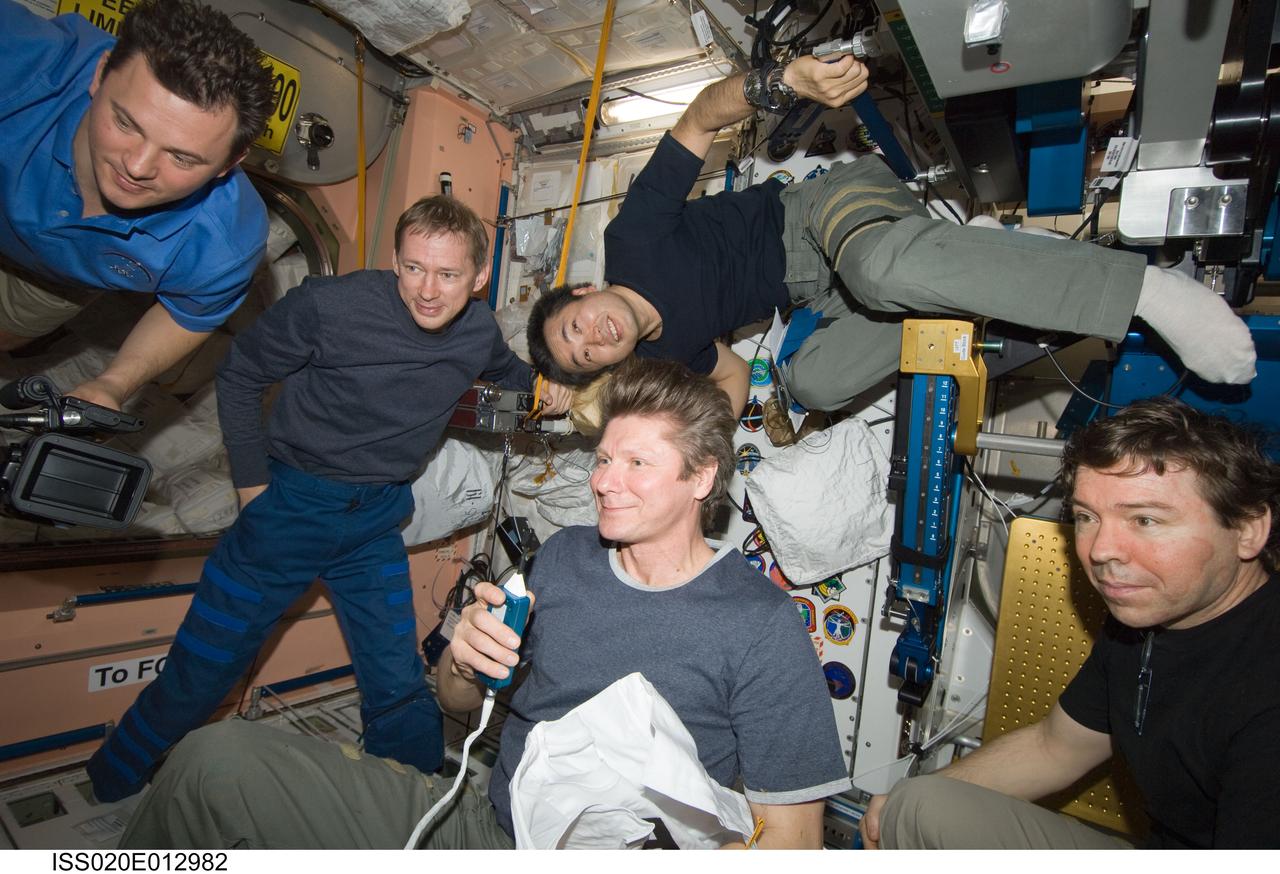
ISS020-E-012982 (21 June 2009) --- Expedition 20 crew members view a monitor in the International Space Station’s Unity node as they celebrate Father’s Day and the birthday of cosmonaut Gennady Padalka (center), commander. Today also marked Japan Aerospace Exploration Agency (JAXA) astronaut Koichi Wakata’s (top) 100th day in orbit since his launch to the ISS aboard the Space Shuttle Discovery in March. Also pictured are cosmonaut Roman Romanenko (top left), European Space Agency astronaut Frank De Winne (background) and NASA astronaut Michael Barratt (right), all flight engineers.
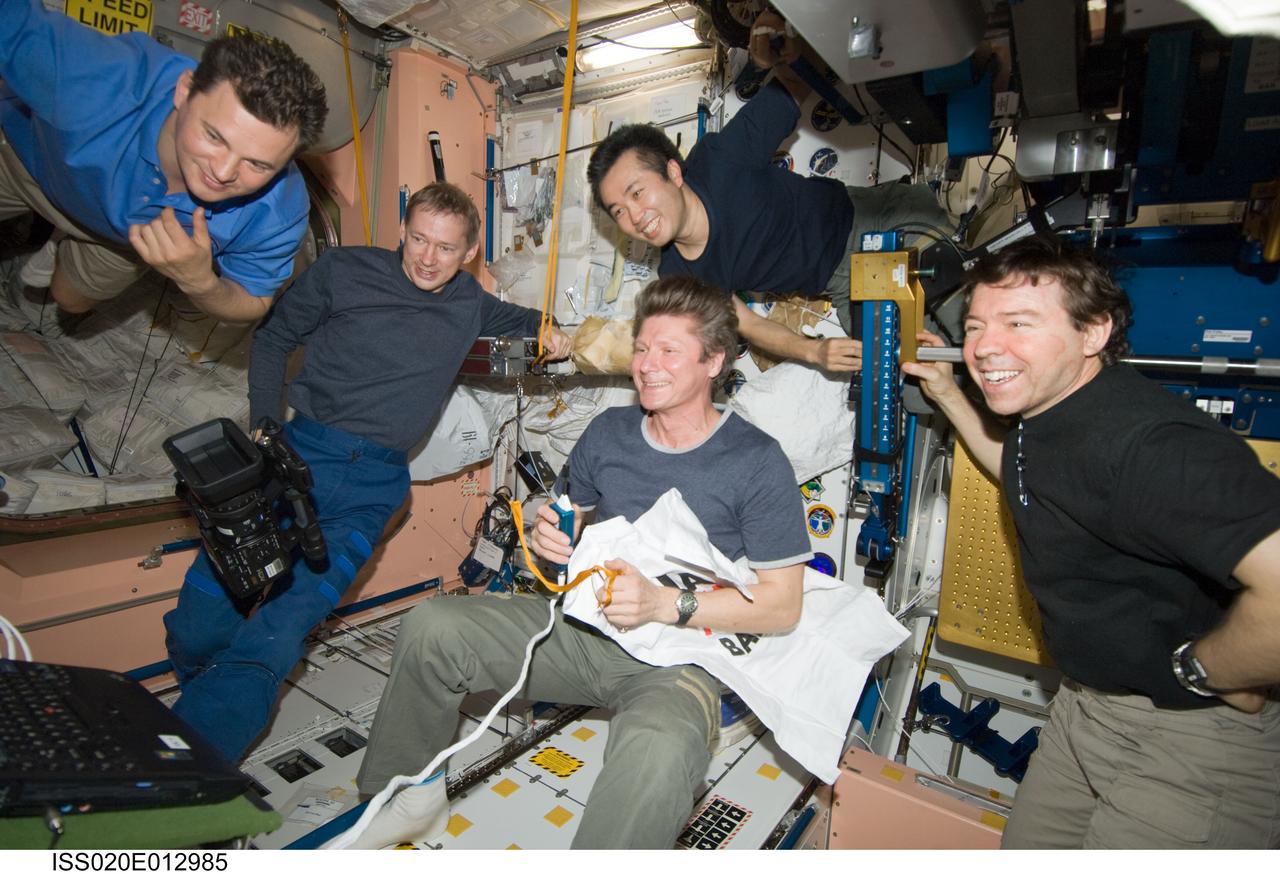
ISS020-E-012985 (21 June 2009) --- Expedition 20 crew members view a monitor in the International Space Station’s Unity node as they celebrate Father’s Day and the birthday of cosmonaut Gennady Padalka (center), commander. Today also marked Japan Aerospace Exploration Agency (JAXA) astronaut Koichi Wakata’s (top center) 100th day in orbit since his launch to the ISS aboard the Space Shuttle Discovery in March. Also pictured are cosmonaut Roman Romanenko (top left), European Space Agency astronaut Frank De Winne (background) and NASA astronaut Michael Barratt (right), all flight engineers.
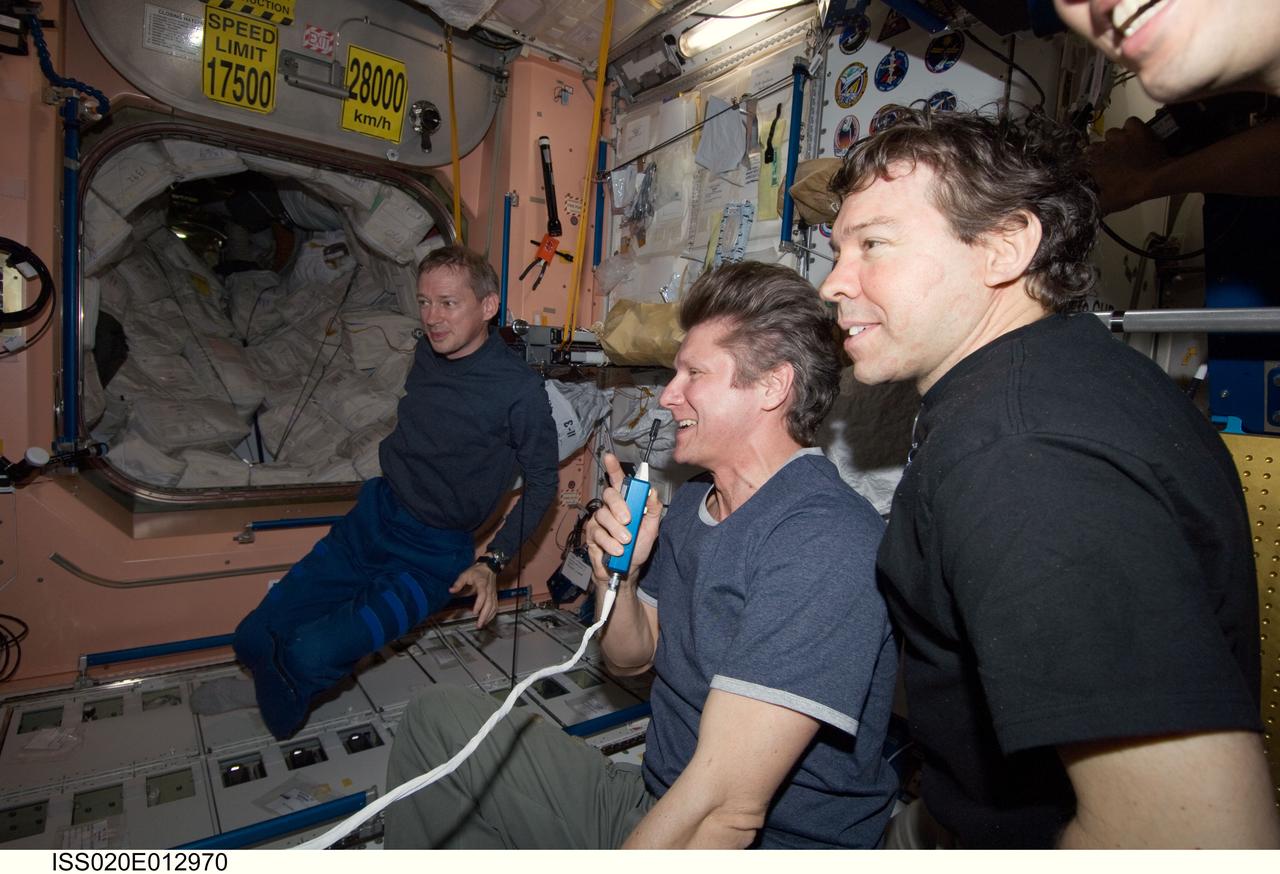
ISS020-E-012970 (21 June 2009) --- Expedition 20 crew members view a monitor in the International Space Station’s Unity node as they celebrate Father’s Day and the birthday of cosmonaut Gennady Padalka (center), commander. Today also marked Japan Aerospace Exploration Agency (JAXA) astronaut Koichi Wakata’s (out of frame) 100th day in orbit since his launch to the ISS aboard the Space Shuttle Discovery in March. Also pictured are European Space Agency astronaut Frank De Winne (background) and NASA astronaut Michael Barratt, both flight engineers.
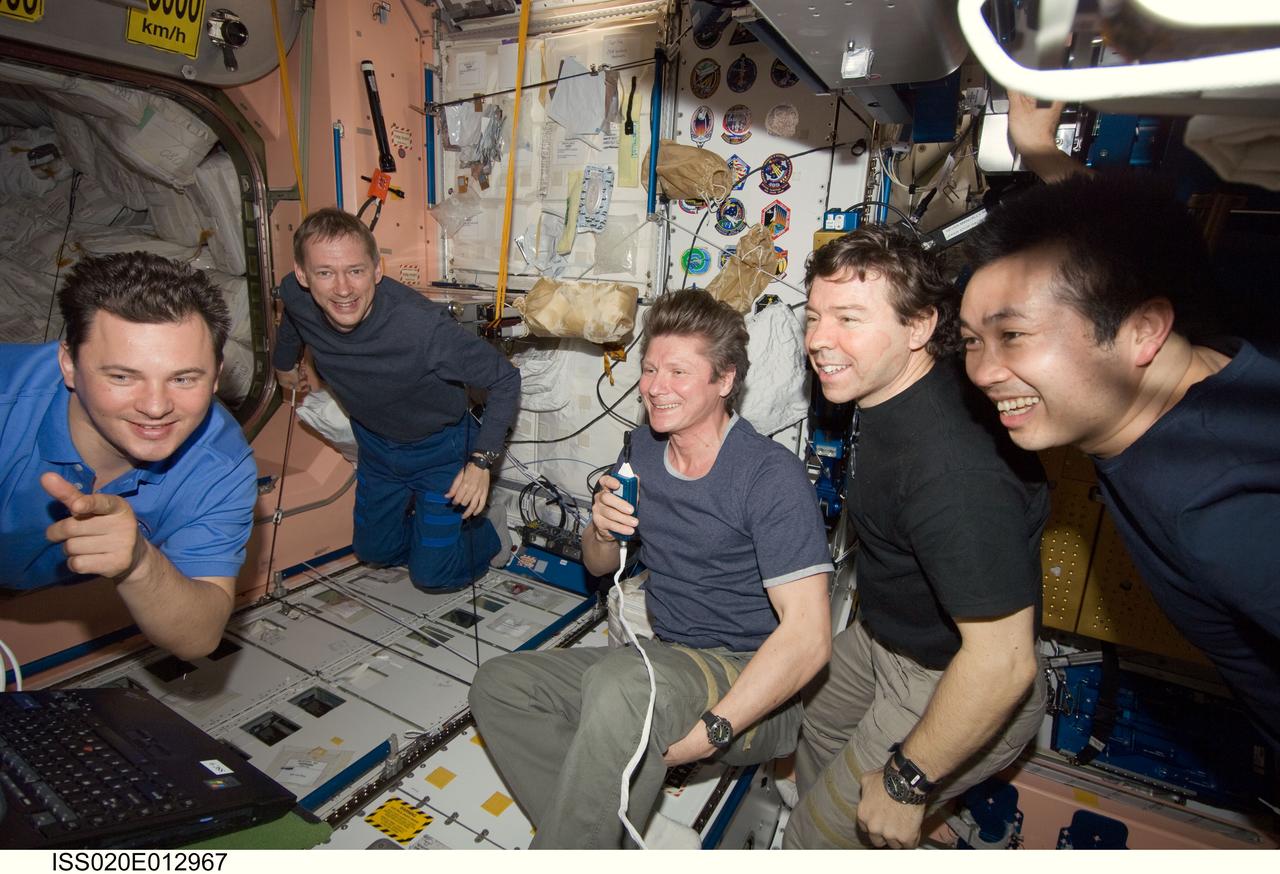
ISS020-E-012967 (21 June 2009) --- Expedition 20 crew members view a monitor in the International Space Station’s Unity node as they celebrate Father’s Day and the birthday of cosmonaut Gennady Padalka (center), commander. Today also marked Japan Aerospace Exploration Agency (JAXA) astronaut Koichi Wakata’s (right) 100th day in orbit since his launch to the ISS aboard the Space Shuttle Discovery in March. Also pictured are cosmonaut Roman Romanenko (left), European Space Agency astronaut Frank De Winne (background) and NASA astronaut Michael Barratt (second right), all flight engineers.
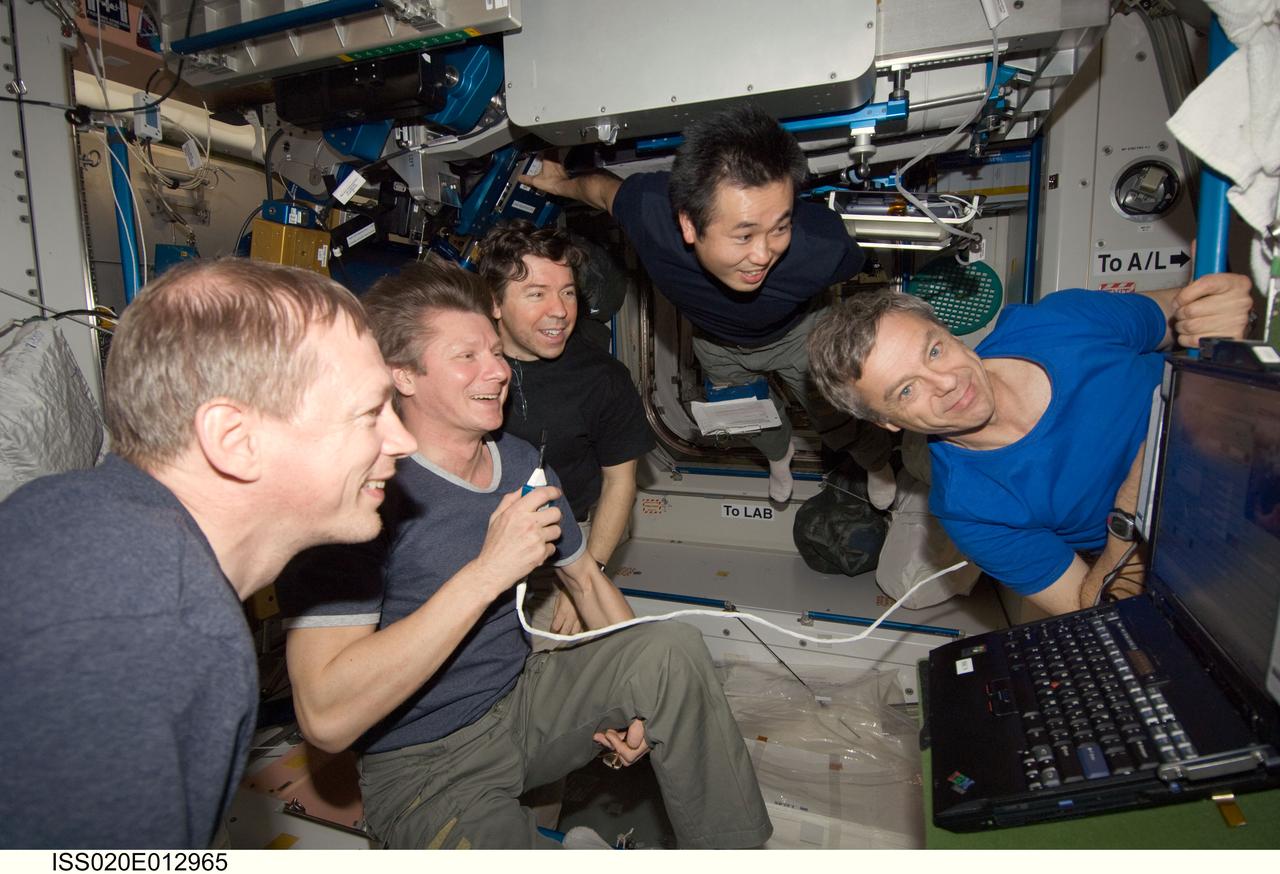
ISS020-E-012965 (21 June 2009) --- Expedition 20 crew members view a monitor in the International Space Station’s Unity node as they celebrate Father’s Day and the birthday of cosmonaut Gennady Padalka (second left), commander. Today also marked Japan Aerospace Exploration Agency (JAXA) astronaut Koichi Wakata’s (top center) 100th day in orbit since his launch to the ISS aboard the Space Shuttle Discovery in March. Also pictured are European Space Agency astronaut Frank De Winne (left foreground), NASA astronaut Michael Barratt (left background) and Canadian Space Agency astronaut Robert Thirsk (right), all flight engineers.
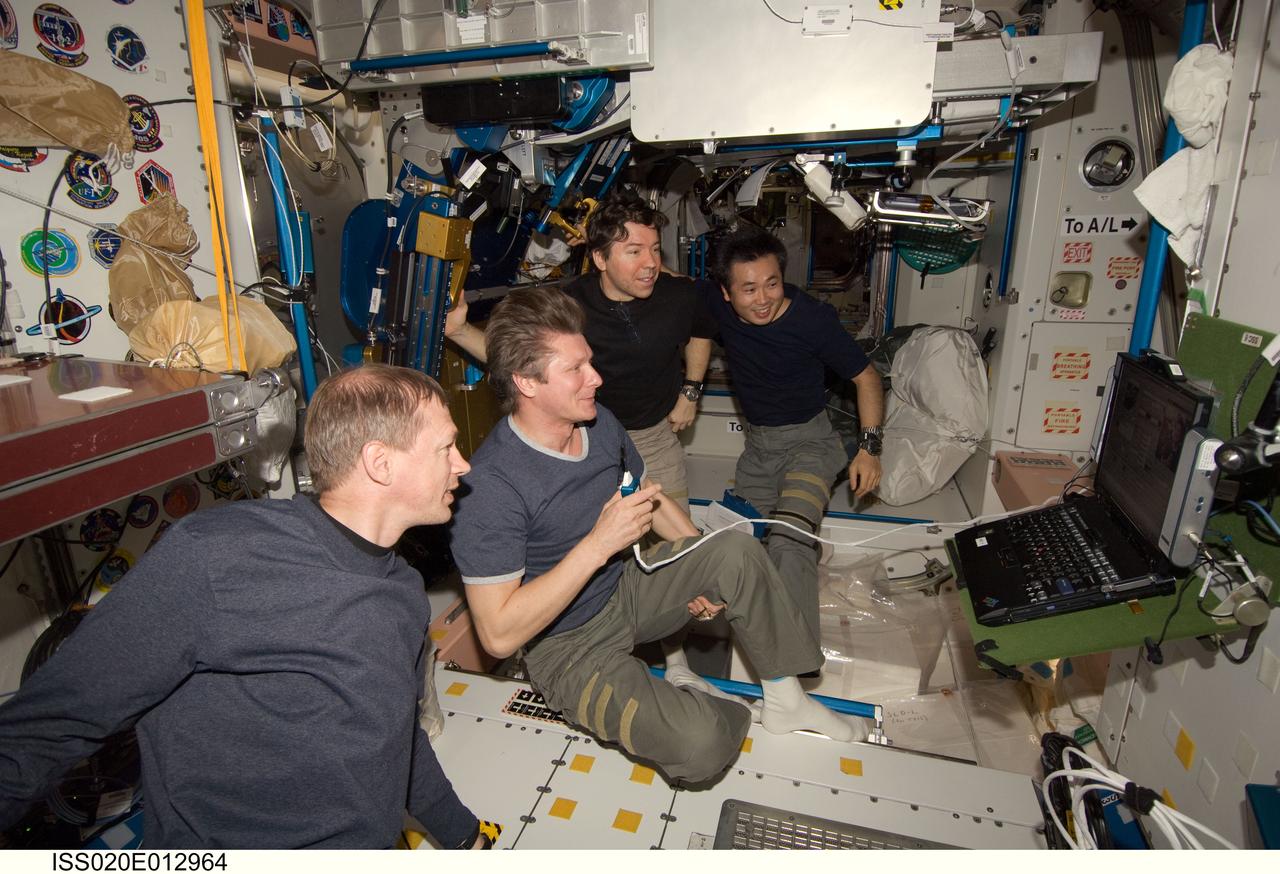
ISS020-E-012964 (21 June 2009) --- Expedition 20 crew members view a monitor in the International Space Station’s Unity node as they celebrate Father’s Day and the birthday of cosmonaut Gennady Padalka (center), commander. Today also marked Japan Aerospace Exploration Agency (JAXA) astronaut Koichi Wakata’s (right background) 100th day in orbit since his launch to the ISS aboard the Space Shuttle Discovery in March. Also pictured are European Space Agency astronaut Frank De Winne (foreground) and NASA astronaut Michael Barratt (left background), both flight engineers.
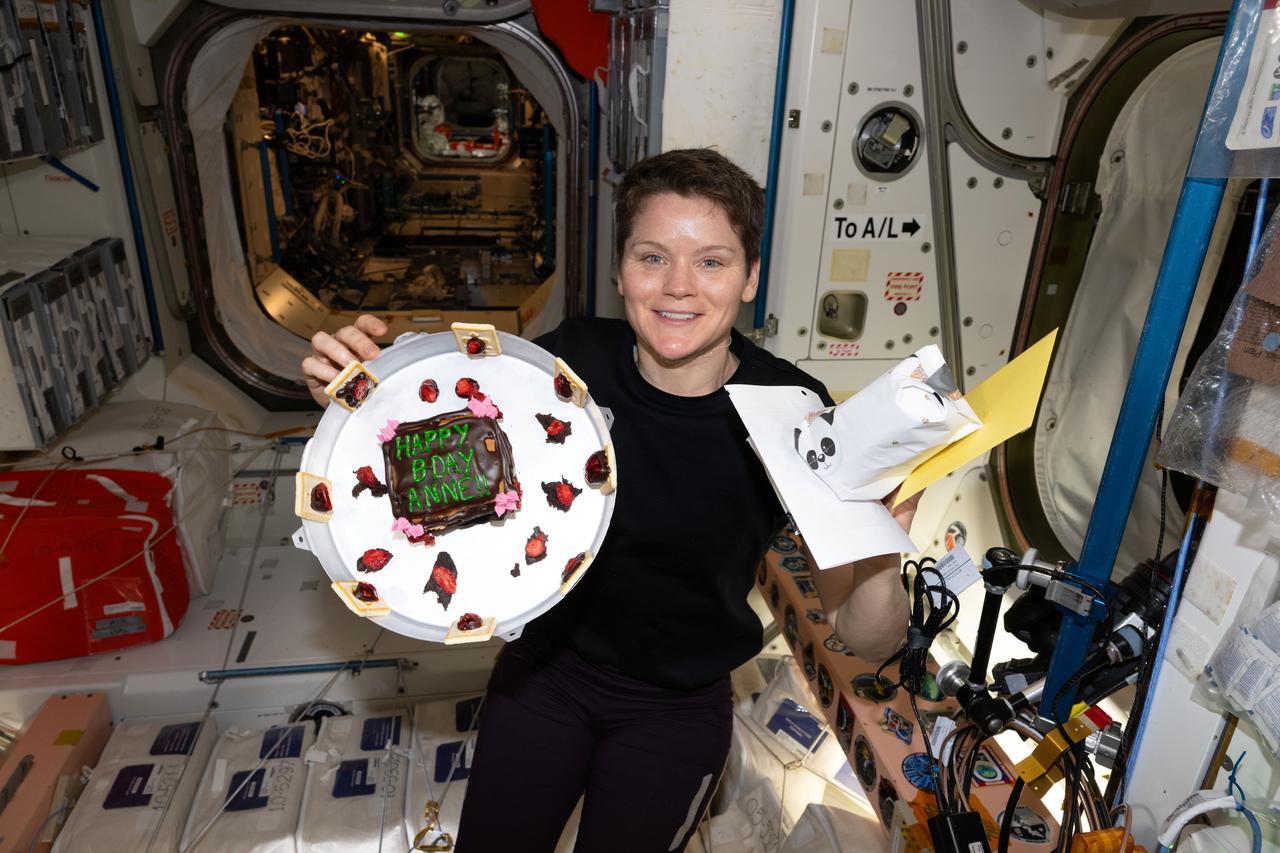
iss073e0134965 (June 7, 2025) --- NASA astronaut and Expedition 73 Flight Engineer Anne McClain celebrates her 46th birthday with a cake, gifts, and cards aboard the International Space Station's Unity module.

In celebration of the 27th anniversary of the launch of NASA's Hubble Space Telescope on April 24, 1990, astronomers used the legendary telescope to take a portrait of a stunning pair of spiral galaxies. This starry pair offers a glimpse of what our Milky Way galaxy would look like to an outside observer. The edge-on galaxy is called NGC 4302, and the tilted galaxy is NGC 4298. These galaxies look quite different because we see them angled at different positions on the sky. They are actually very similar in terms of their structure and contents. From our view on Earth, researchers report an inclination of 90 degrees for NGC 4302, which is exactly edge on. NGC 4298 is tilted 70 degrees. In NGC 4298, the telltale, pinwheel-like structure is visible, but it's not as prominent as in some other spiral galaxies. In the edge-on NGC 4302, dust in the disk is silhouetted against rich lanes of stars. Absorption by dust makes the galaxy appear darker and redder than its companion. A large blue patch appears to be a giant region of recent star formation. Read more: <a href="https://go.nasa.gov/2pGyA4o" rel="nofollow">go.nasa.gov/2pGyA4o</a> <b><a href="http://www.nasa.gov/audience/formedia/features/MP_Photo_Guidelines.html" rel="nofollow">NASA image use policy.</a></b> <b><a href="http://www.nasa.gov/centers/goddard/home/index.html" rel="nofollow">NASA Goddard Space Flight Center</a></b> enables NASA’s mission through four scientific endeavors: Earth Science, Heliophysics, Solar System Exploration, and Astrophysics. Goddard plays a leading role in NASA’s accomplishments by contributing compelling scientific knowledge to advance the Agency’s mission. <b>Follow us on <a href="http://twitter.com/NASAGoddardPix" rel="nofollow">Twitter</a></b> <b>Like us on <a href="http://www.facebook.com/pages/Greenbelt-MD/NASA-Goddard/395013845897?ref=tsd" rel="nofollow">Facebook</a></b> <b>Find us on <a href="http://instagrid.me/nasagoddard/?vm=grid" rel="nofollow">Instagram</a></b>

STS032-15-022 (17 Jan 1990) --- Astronaut Daniel C. Brandenstein, STS-32 mission commander, holds up a cake that's guaranteed not to go bad. The inflatable "cake" was part of frequent recognition of the commander's 47th birthday on January 17, 1990.
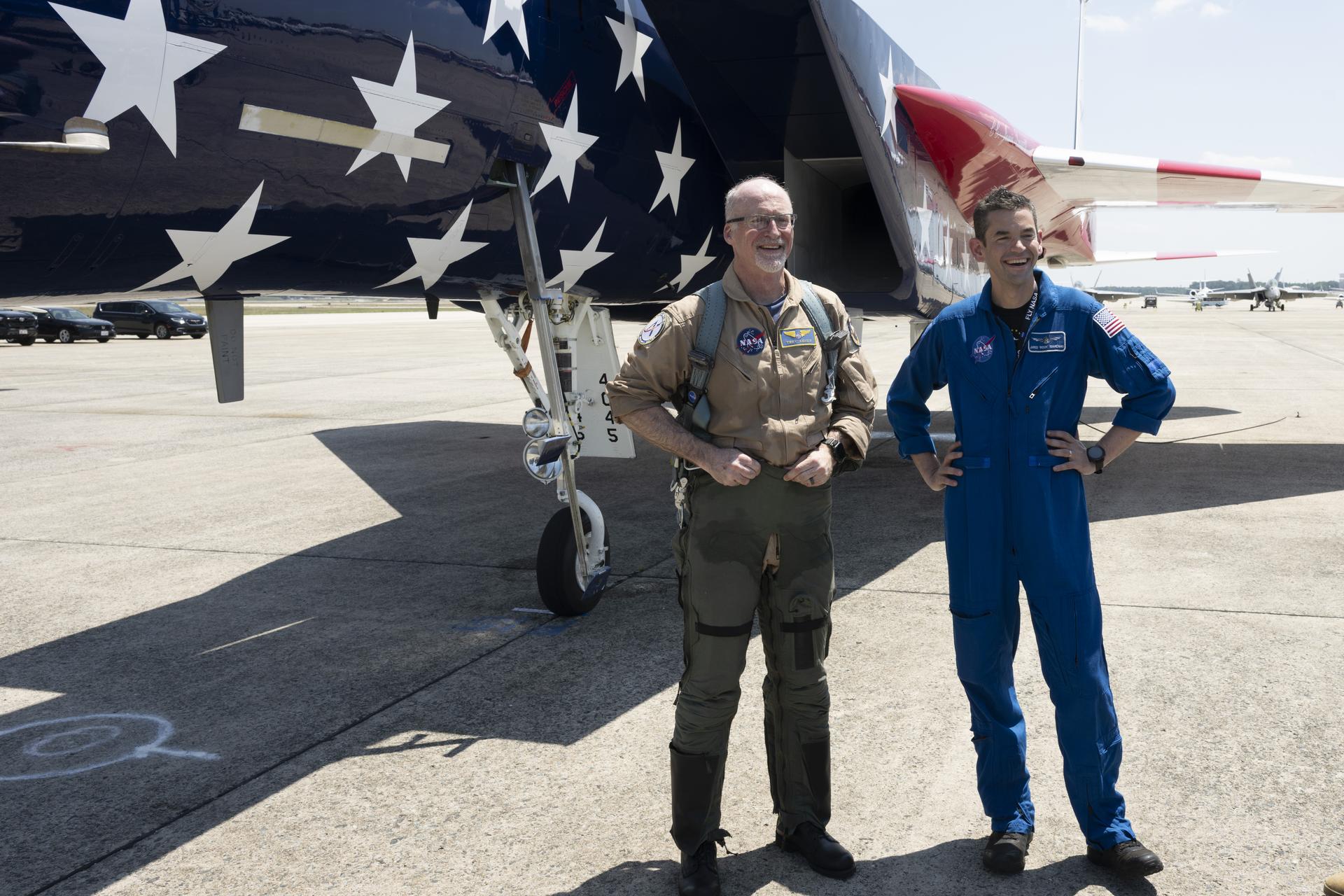
NASA Administrator Jared Isaacman stands to the right of NASA Armstrong Center Director Troy Asher, left, in front of an F-15 aircraft. Both pilots flew above Washington on Saturday, July 4, 2026, as part of a flyover to celebrate America’s 250th birthday.
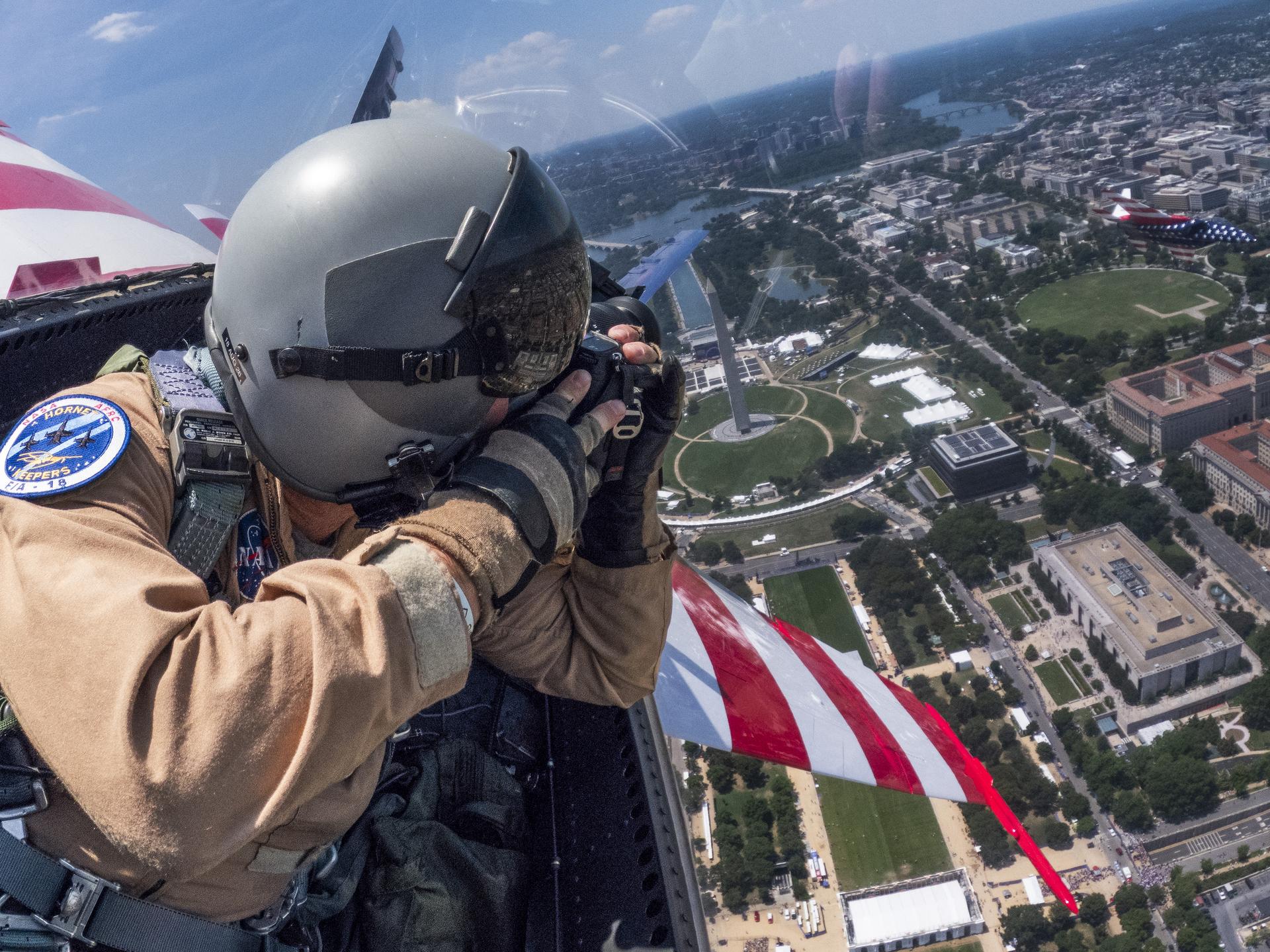
NASA photographer Jim Ross flies above the Washington Monument in Washington on Saturday, July 4, 2026, in an F-18 aircraft, as part of a flyover to celebrate America’s 250th birthday. This aircraft is from NASA’s Armstrong Flight Research Center in Edwards, California, and it joined other NASA aircraft for the flyover.
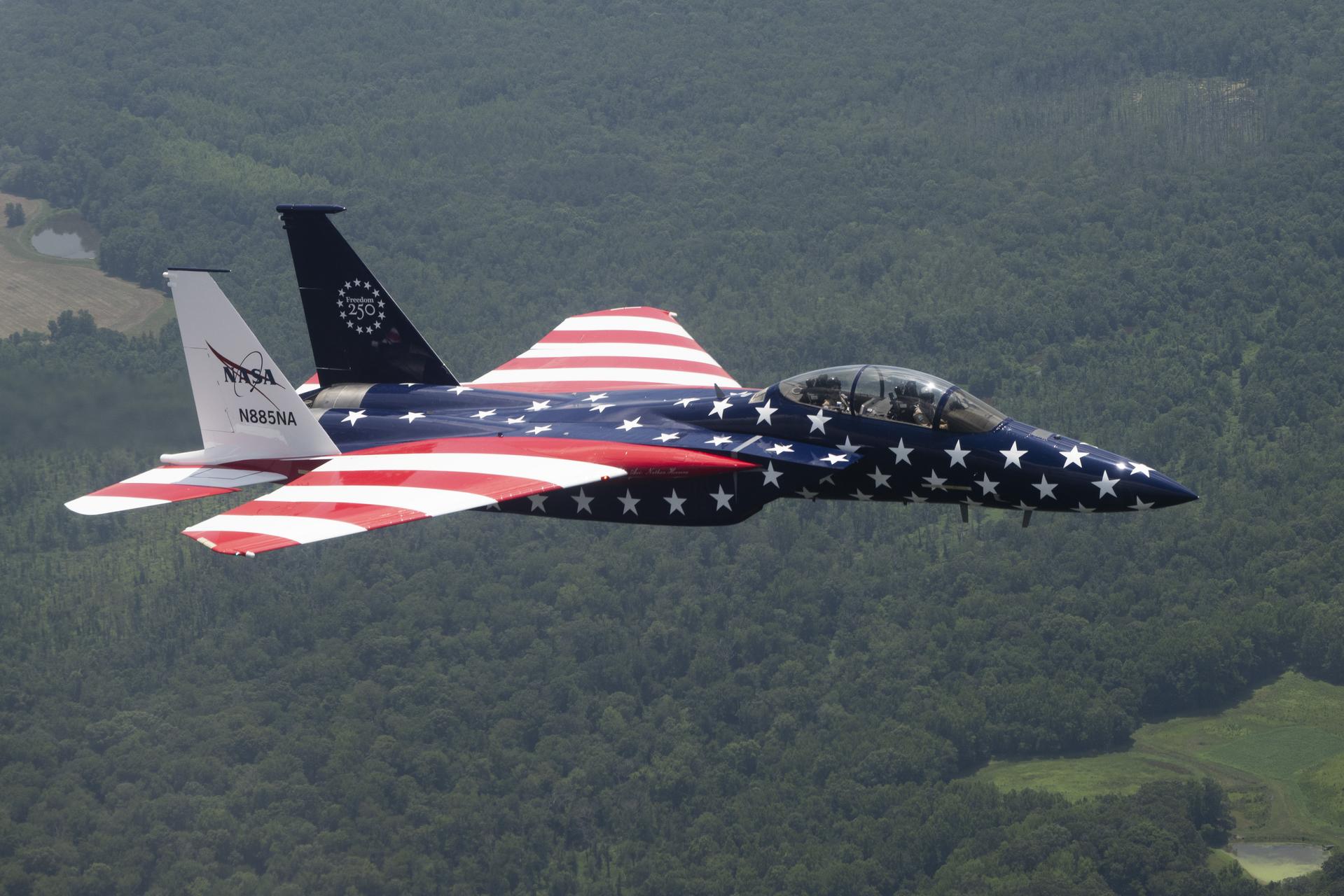
A NASA F-15 aircraft flies above Washington on Saturday, July 4, 2026, as part of a flyover to celebrate America’s 250th birthday. This aircraft is from NASA’s Armstrong Flight Research Center in Edwards, California, and it joined other NASA aircraft for the flyover.
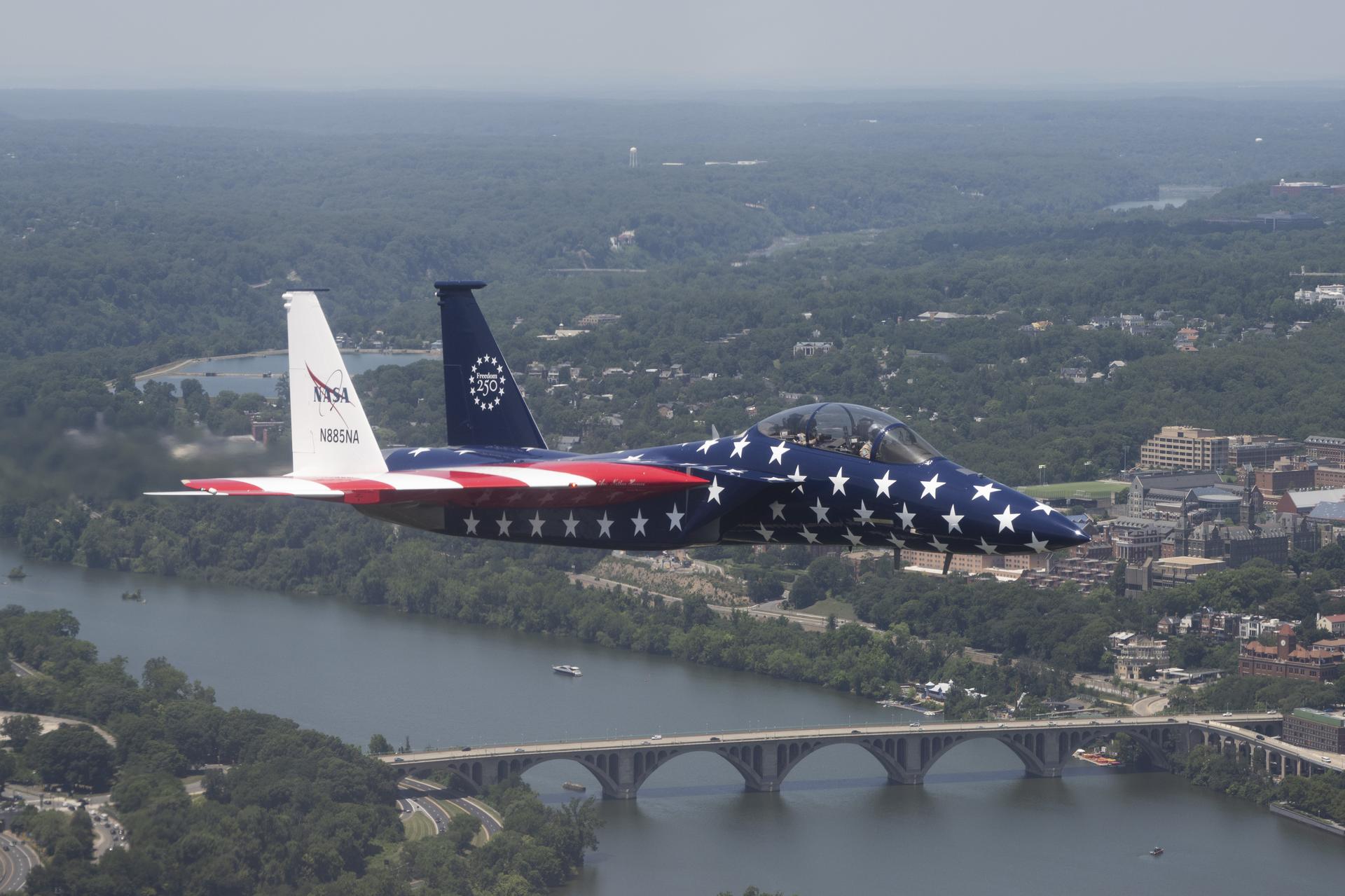
A NASA F-15 aircraft flies above Washington on Saturday, July 4, 2026, as part of a flyover to celebrate America’s 250th birthday. This aircraft is from NASA’s Armstrong Flight Research Center in Edwards, California, and it joined other NASA aircraft for the flyover.
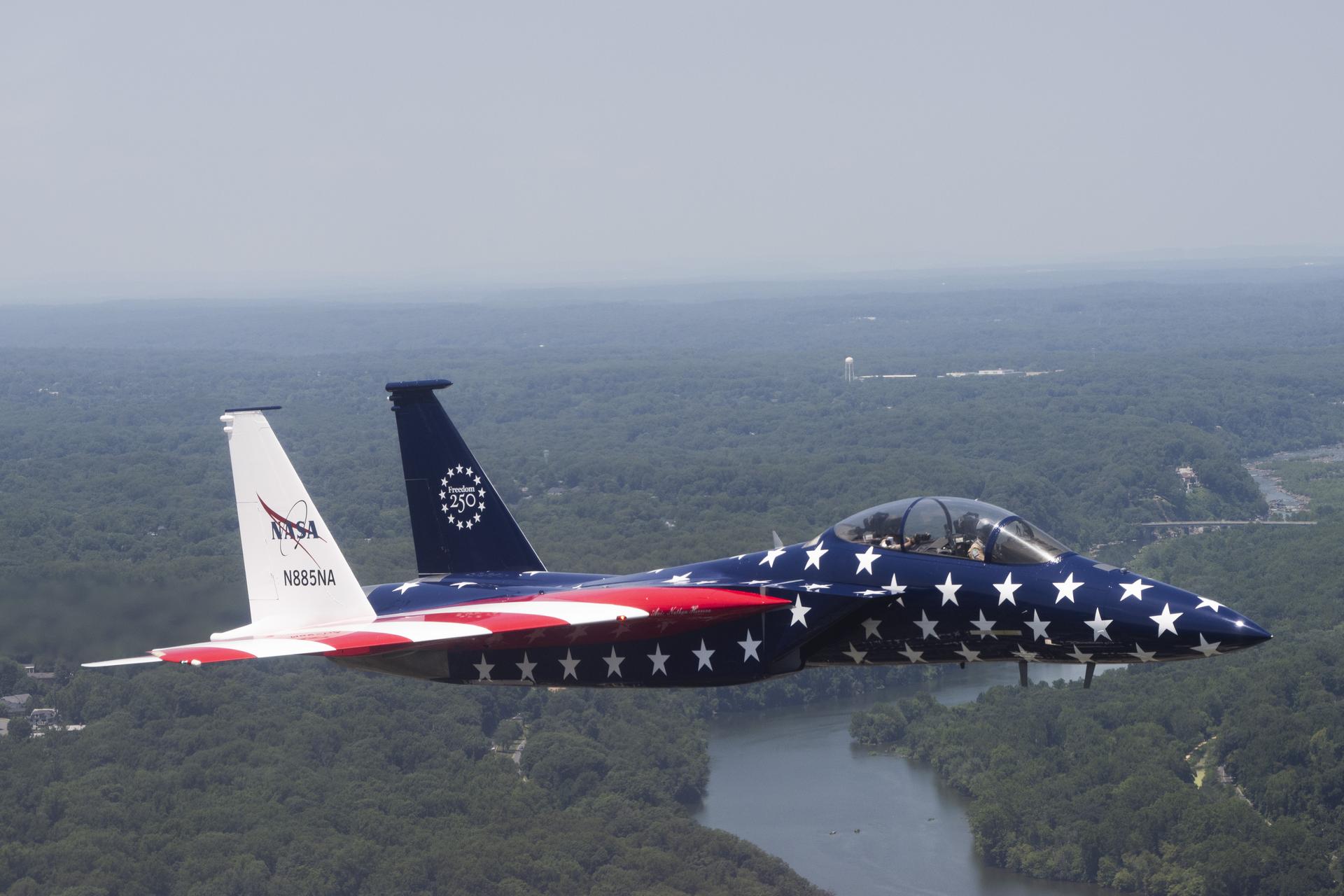
A NASA F-15 aircraft flies above Washington on Saturday, July 4, 2026, as part of a flyover to celebrate America’s 250th birthday. This aircraft is from NASA’s Armstrong Flight Research Center in Edwards, California, and it joined other NASA aircraft for the flyover.
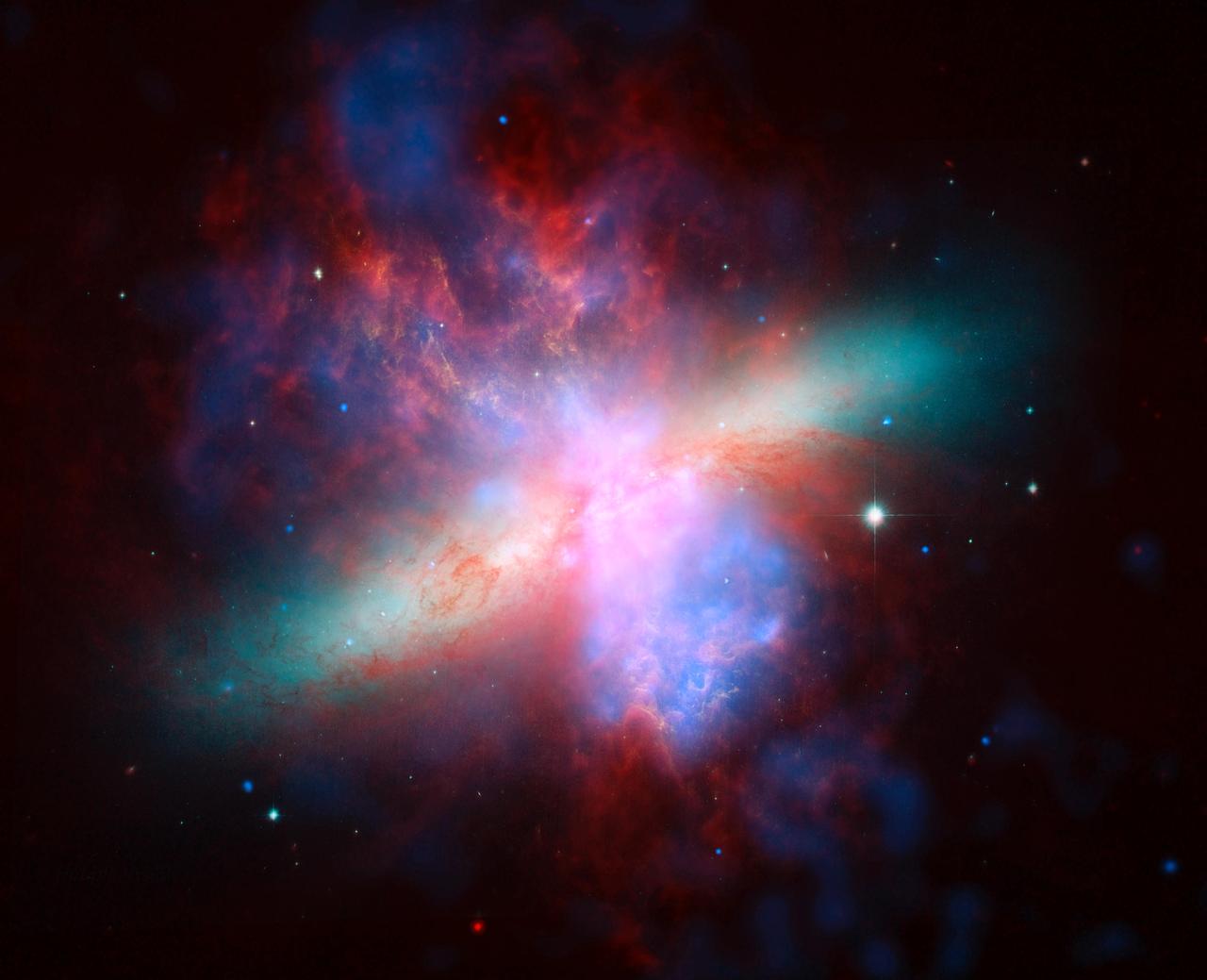
NASA Spitzer, Hubble and Chandra space observatories teamed up to create this multi-wavelength, false-colored view of the M82 galaxy. The lively portrait celebrates Hubble weet sixteen birthday.

STS032-30-024 (17 Jan 1990) --- Astronaut Daniel C. Brandenstein, STS-32 mission commander, holds up a card signed by friends in the astronaut office and around JSC. The commander celebrated his 47th birthday on January 17, 1990, about two thirds the way through an eleven-day mission in Earth orbit aboard Columbia. Brandenstein is seated at the commander's station.
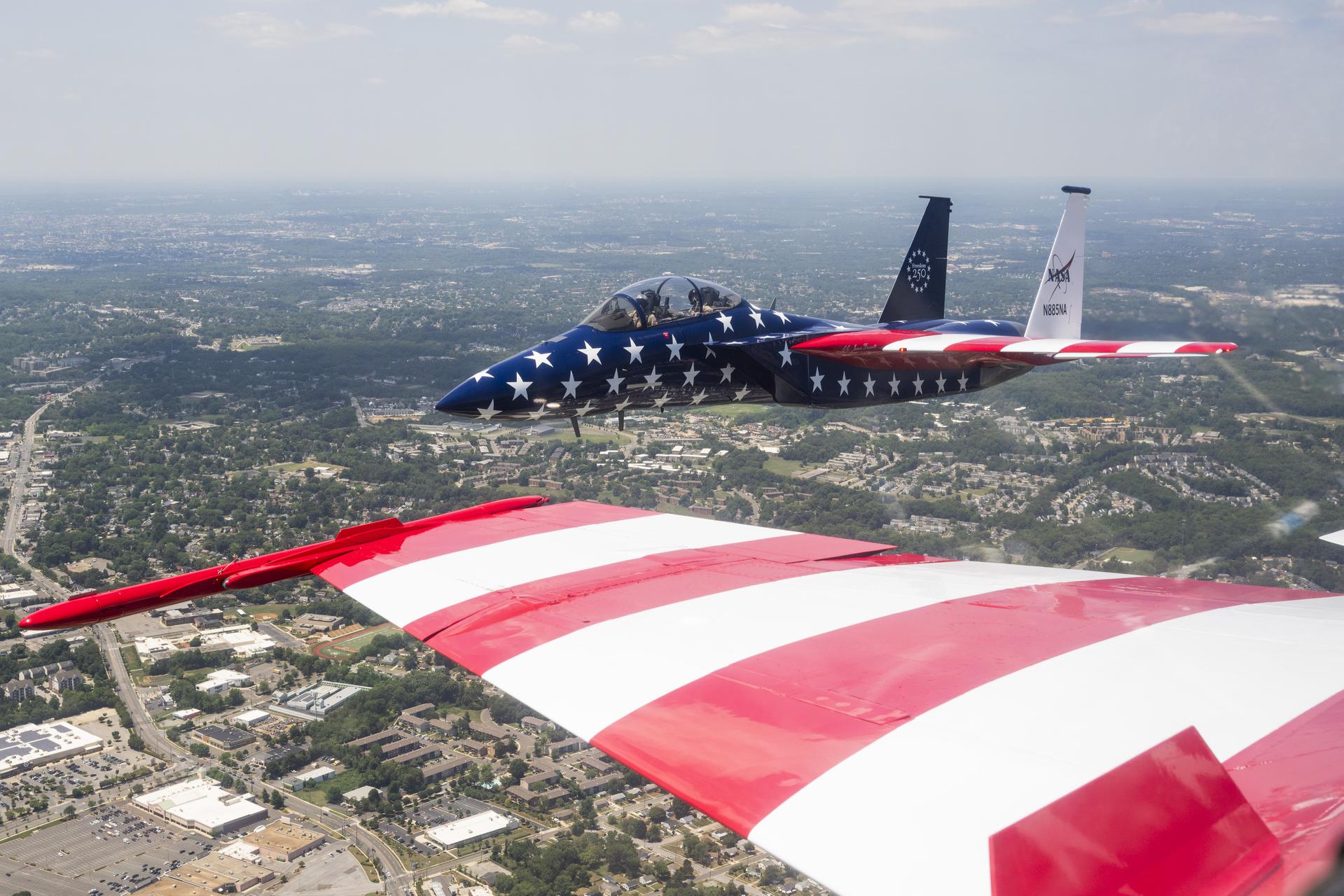
A NASA F-15 aircraft flies above Washington on Saturday, July 4, 2026, as part of a flyover to celebrate America’s 250th birthday. The wing of a NASA F-18 is seen in the foreground, as a NASA photographer captured this image from inside the cockpit. This aircraft is from NASA’s Armstrong Flight Research Center in Edwards, California, and it joined other NASA aircraft for the flyover.
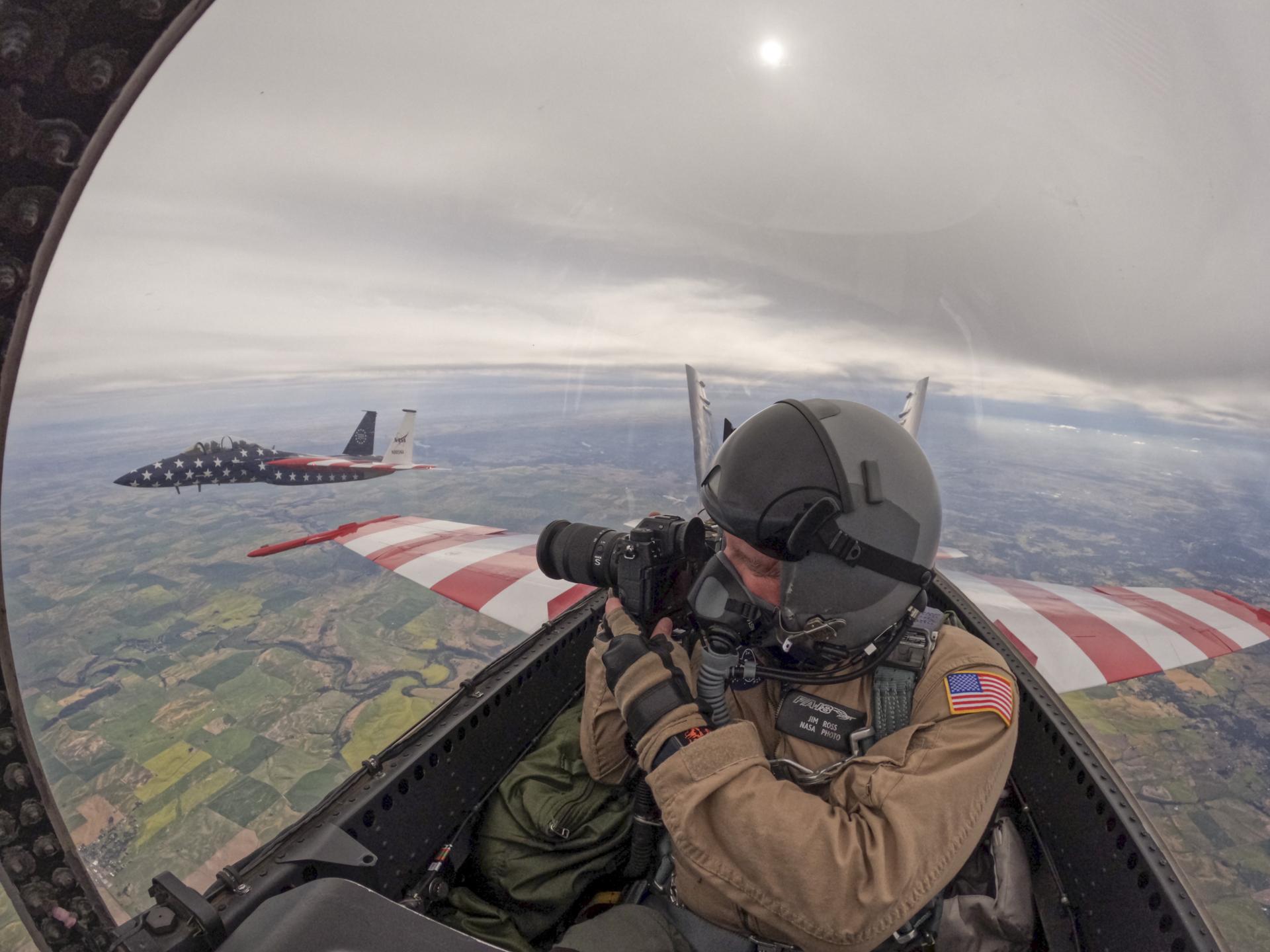
NASA photographer Jim Ross flies above Washington on Saturday, July 4, 2026, in an F-18 aircraft, as part of a flyover to celebrate America’s 250th birthday. This aircraft is from NASA’s Armstrong Flight Research Center in Edwards, California, and it joined other NASA aircraft for the flyover. A NASA F-15 is seen flying to the side of the NASA F-18.
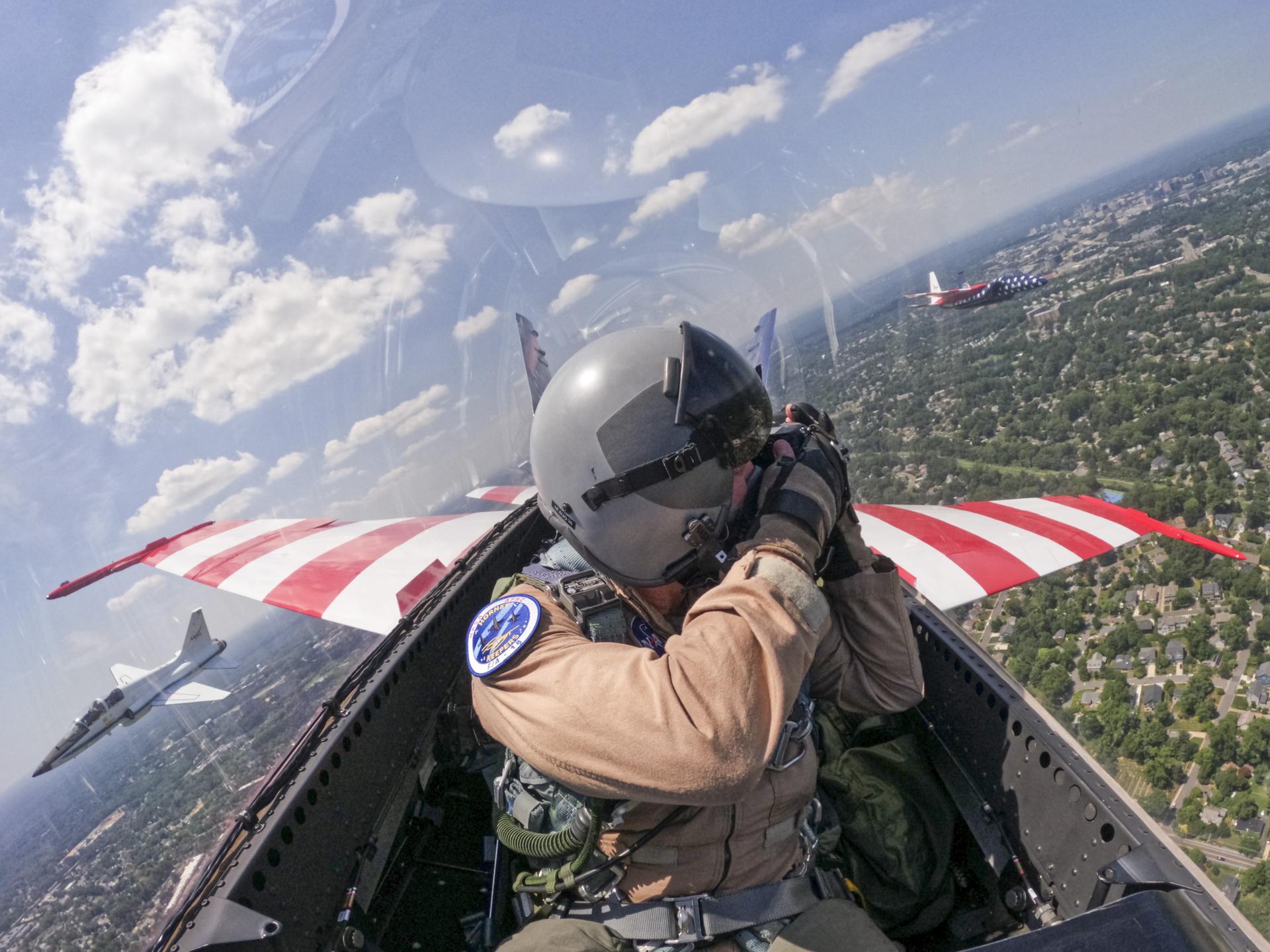
NASA photographer Jim Ross captures photos as he flies above Washington on Saturday, July 4, 2026, in an F-18 aircraft, as part of a flyover to celebrate America’s 250th birthday. This aircraft is from NASA’s Armstrong Flight Research Center in Edwards, California, and it joined other NASA aircraft for the flyover. A NASA F-15 and T-38 are seen flying to the sides of the NASA F-18.
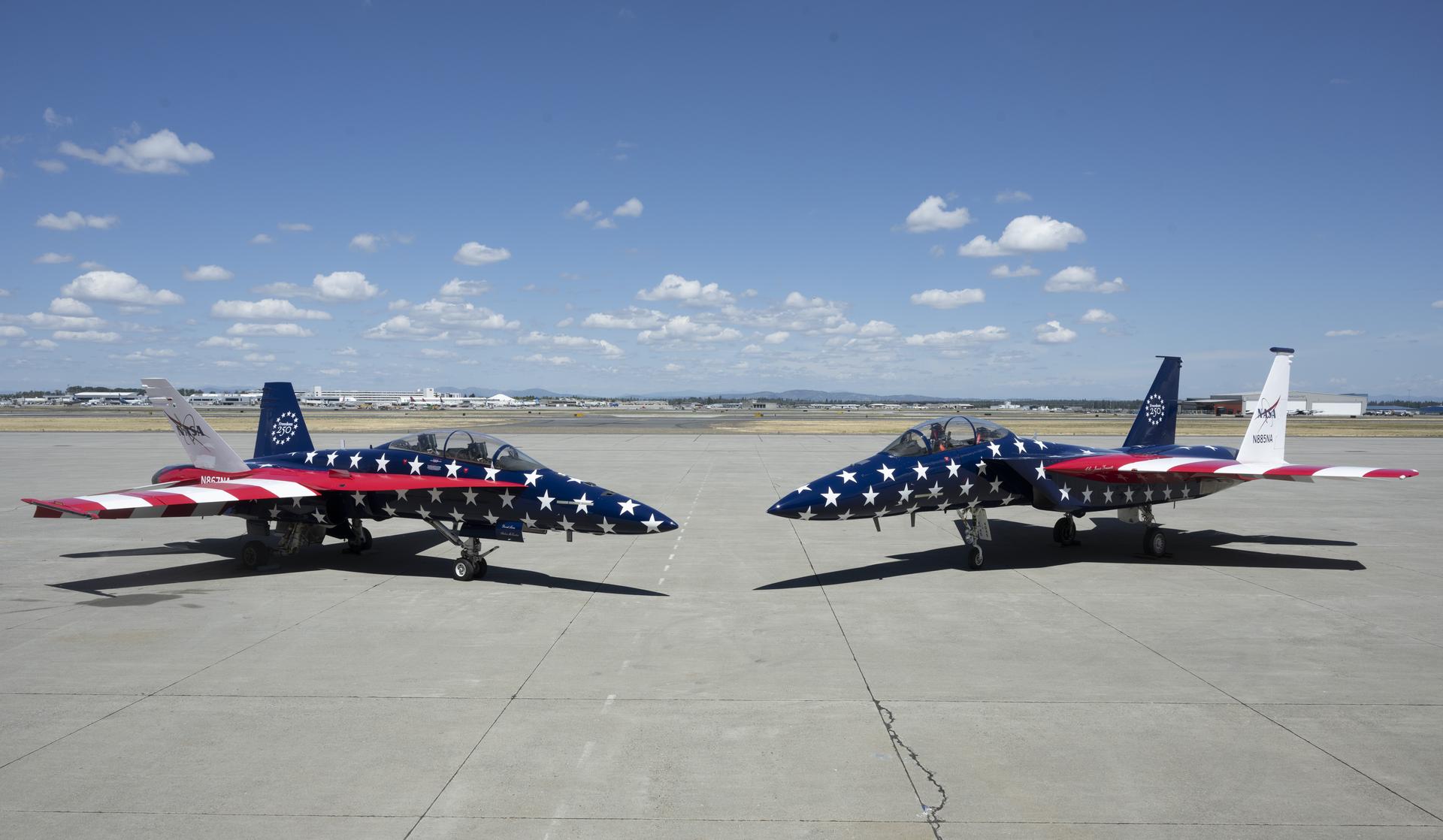
NASA’s F-15, right, and F/A-18 aircraft are shown at International Aerospace Coatings Inc.’s facility in Spokane, Washington, on Thursday, July 2, 2026, with new red, white, and blue paint to celebrate America’s 250th birthday. The aircraft, from NASA’s Armstrong Flight Research Center in Edwards, California, participated in the Freedom 250 flyover in Washington on Saturday, July 4, 2026, with other NASA and military aircraft. NASA/Jim Ross
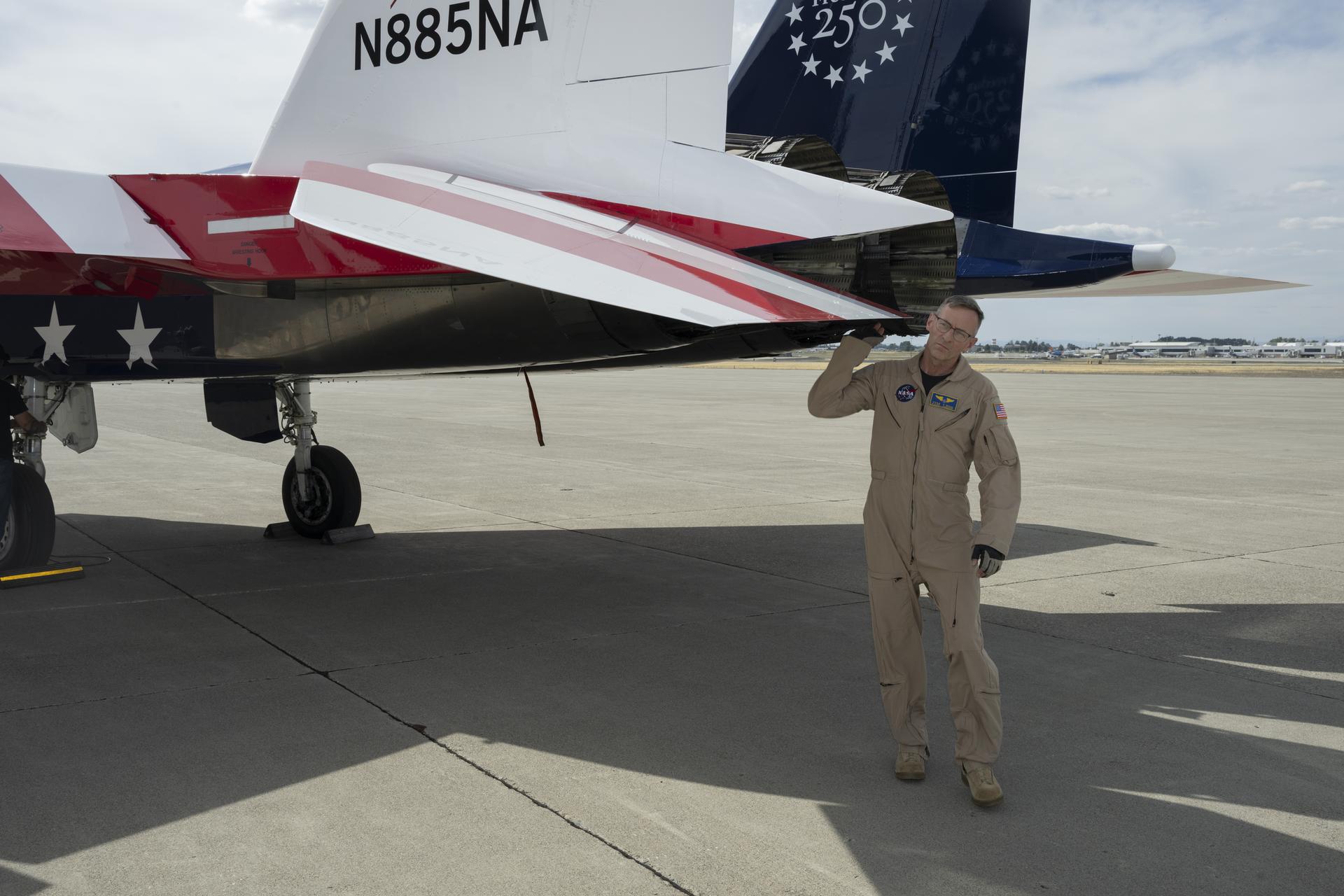
NASA test pilot Jim “Clue” Less completes pre‑flight checks on a NASA F‑15 in Spokane, Washington, on Thursday, July 2, 2026. The aircraft, from NASA’s Armstrong Flight Research Center in Edwards, California, displays new red, white, and blue paint to celebrate America’s 250th birthday and was preparing to fly cross‑country to Washington, D.C., where it participated in the Freedom 250 flyover with other NASA and military aircraft on Saturday, July 4, 2026. NASA/Jim Ross
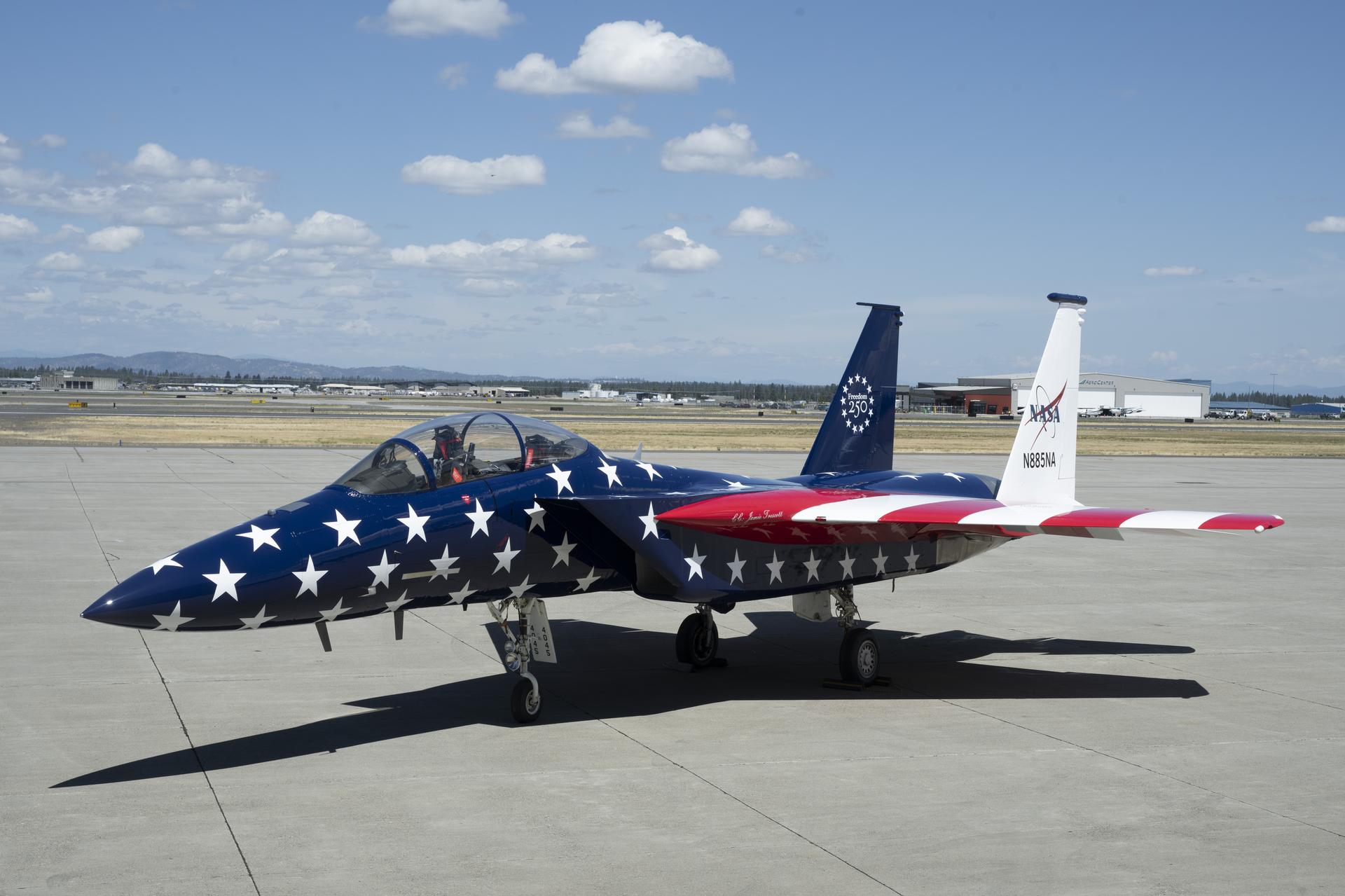
NASA’s F-15 aircraft is shown at International Aerospace Coatings Inc.’s facility in Spokane, Washington, on Thursday, July 2, 2026, with new red, white, and blue paint to celebrate America’s 250th birthday. The aircraft, from NASA’s Armstrong Flight Research Center in Edwards, California, participated in the Freedom 250 flyover in Washington on Saturday, July 4, 2026, with other NASA and military aircraft. NASA/Jim Ross
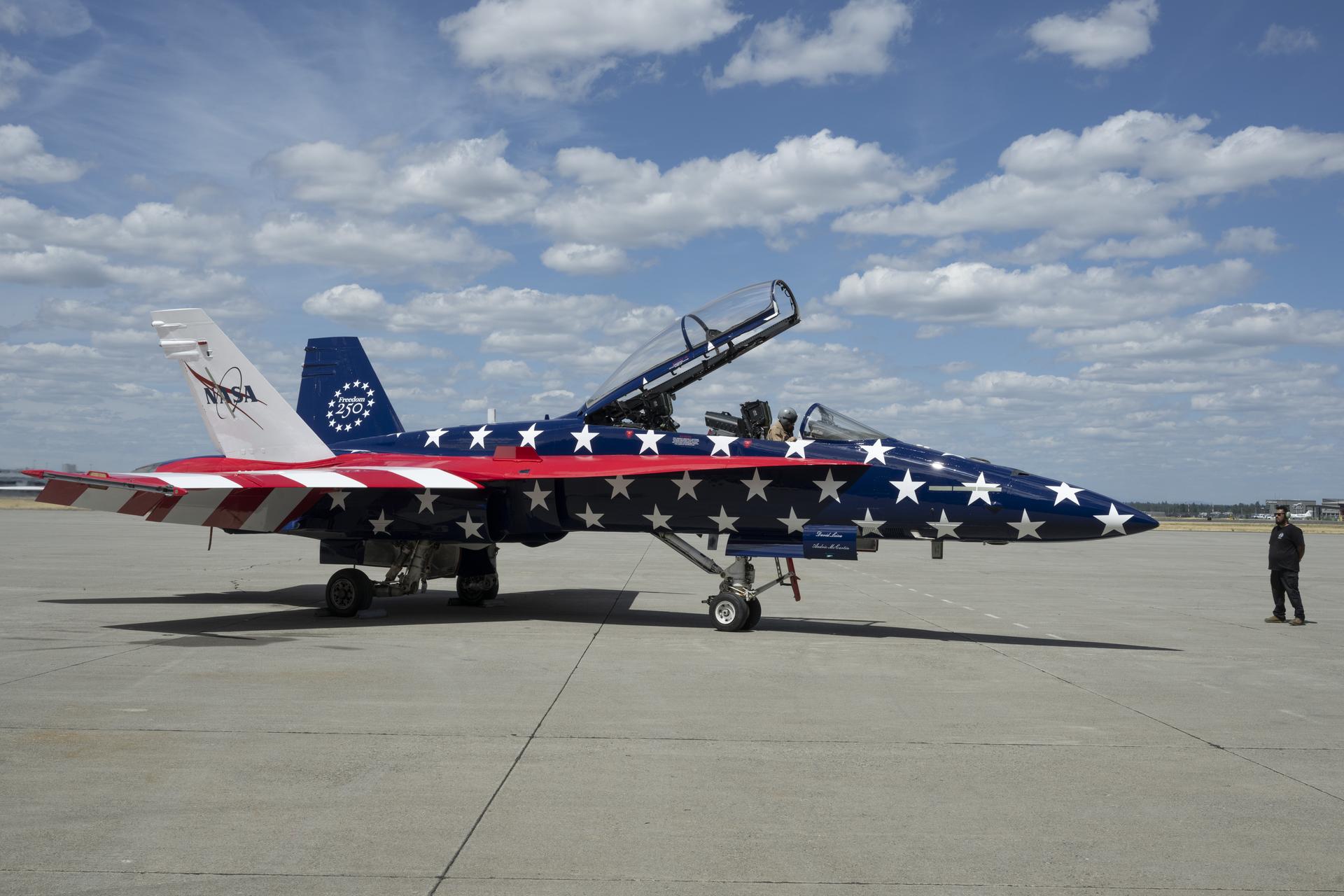
A NASA F/A‑18 aircraft is shown in Spokane, Washington, on Thursday, July 2, 2026, with new red, white, and blue paint to celebrate America’s 250th birthday. The aircraft, from NASA’s Armstrong Flight Research Center in Edwards, California, was preparing to fly cross‑country to Washington, D.C., where it participated in the Freedom 250 flyover with other NASA and military aircraft on Saturday, July 4, 2026. NASA/Jim Ross
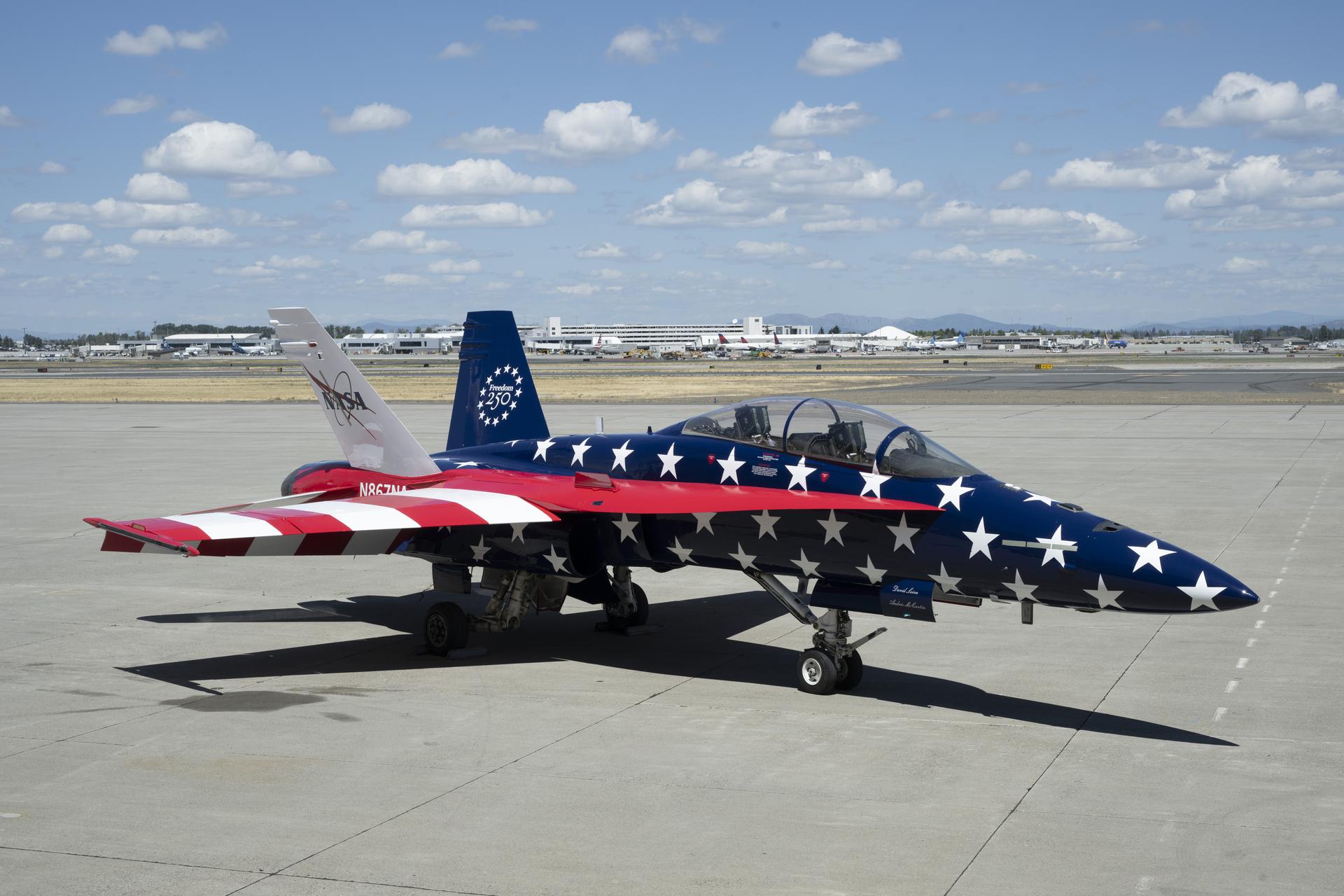
NASA’s F-18 aircraft is shown at International Aerospace Coatings Inc.’s facility in Spokane, Washington, on Thursday, July 2, 2026, with new red, white, and blue paint to celebrate America’s 250th birthday. The aircraft, from NASA’s Armstrong Flight Research Center in Edwards, California, participated in the Freedom 250 flyover in Washington on Saturday, July 4, 2026, with other NASA and military aircraft. NASA/Jim Ross
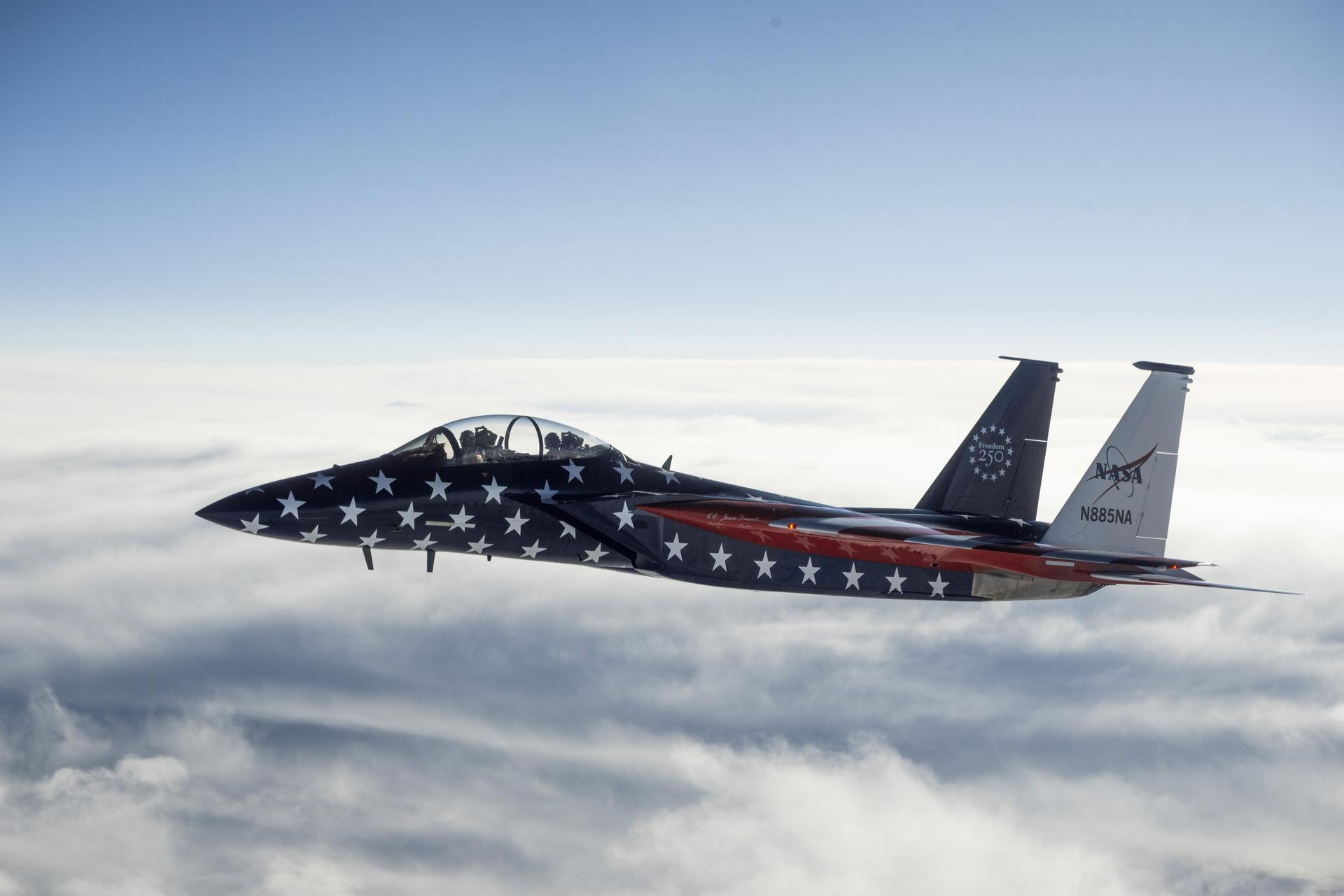
A NASA F‑15 aircraft is shown during a cross‑country flight from Spokane, Washington, to Washington, D.C., on Thursday, July 2, 2026. The aircraft displays new red, white, and blue paint to celebrate America’s 250th birthday. The F‑15, from NASA’s Armstrong Flight Research Center in Edwards, California, participated in the Freedom 250 flyover with other NASA and military aircraft on Saturday, July 4, 2026. NASA/Jim Ross
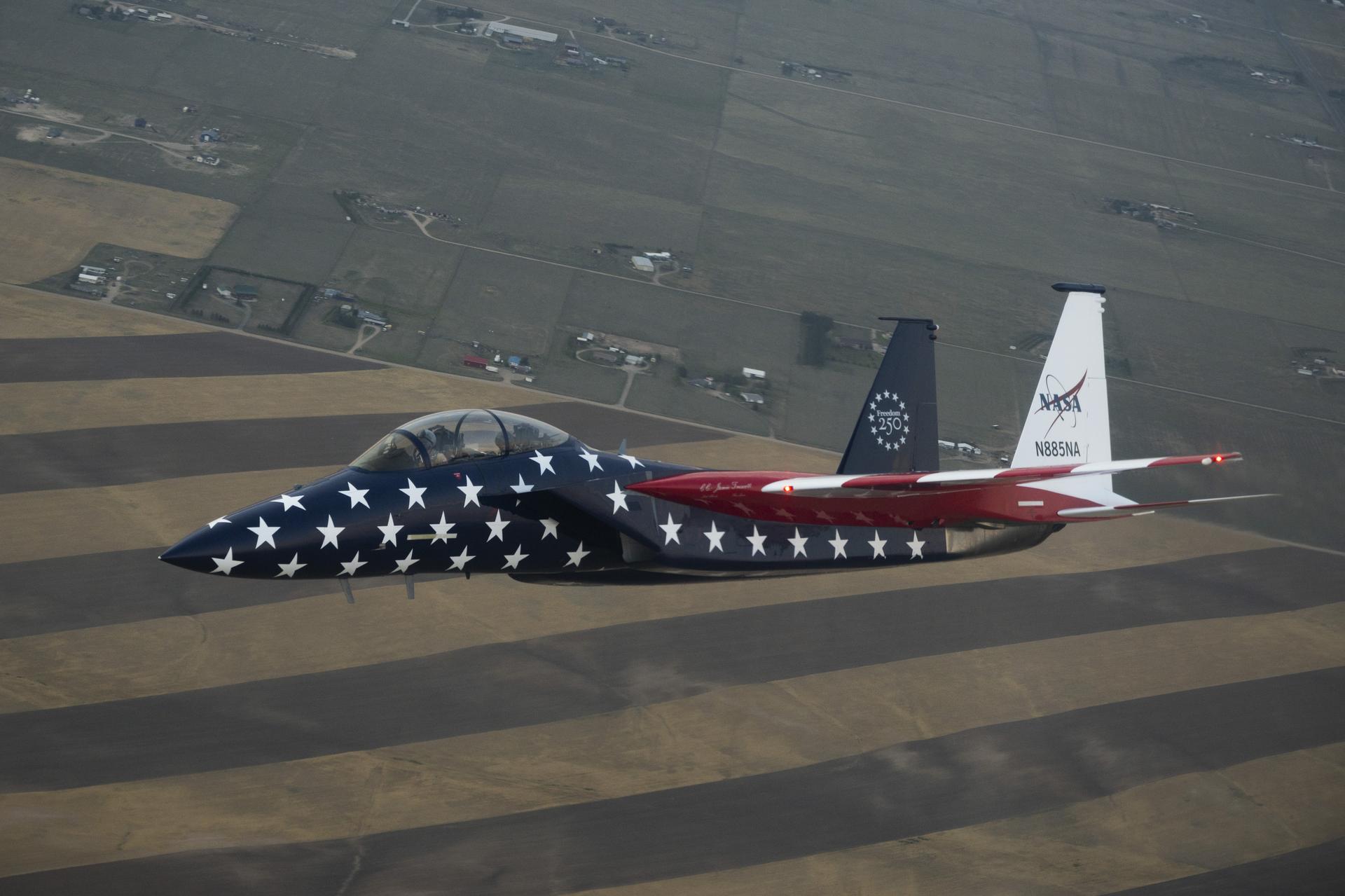
A NASA F‑15 aircraft is shown during a cross‑country flight from Spokane, Washington, to Washington, D.C., on Thursday, July 2, 2026. The aircraft displays new red, white, and blue paint to celebrate America’s 250th birthday. The F‑15, from NASA’s Armstrong Flight Research Center in Edwards, California, participated in the Freedom 250 flyover with other NASA and military aircraft on Saturday, July 4, 2026. NASA/Jim Ross
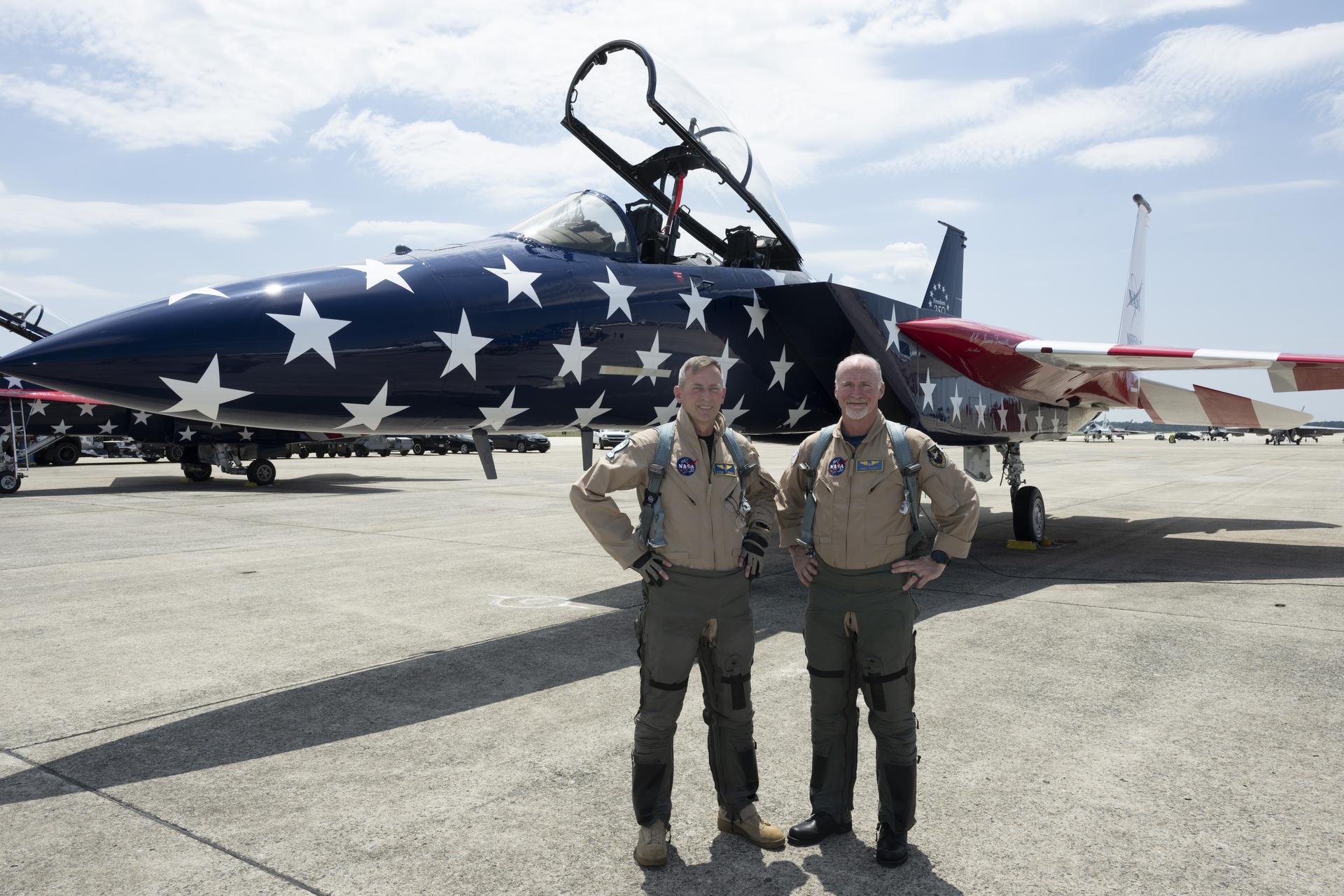
NASA Armstrong pilot Jim Less, left, and center director, Troy Asher, right, stand in front of a NASA F-15 aircraft on Saturday, July 4, 2026. Both pilots took part in a flyover to celebrate America’s 250th birthday. This aircraft is from NASA’s Armstrong Flight Research Center in Edwards, California, and it joined other NASA aircraft for the flyover.
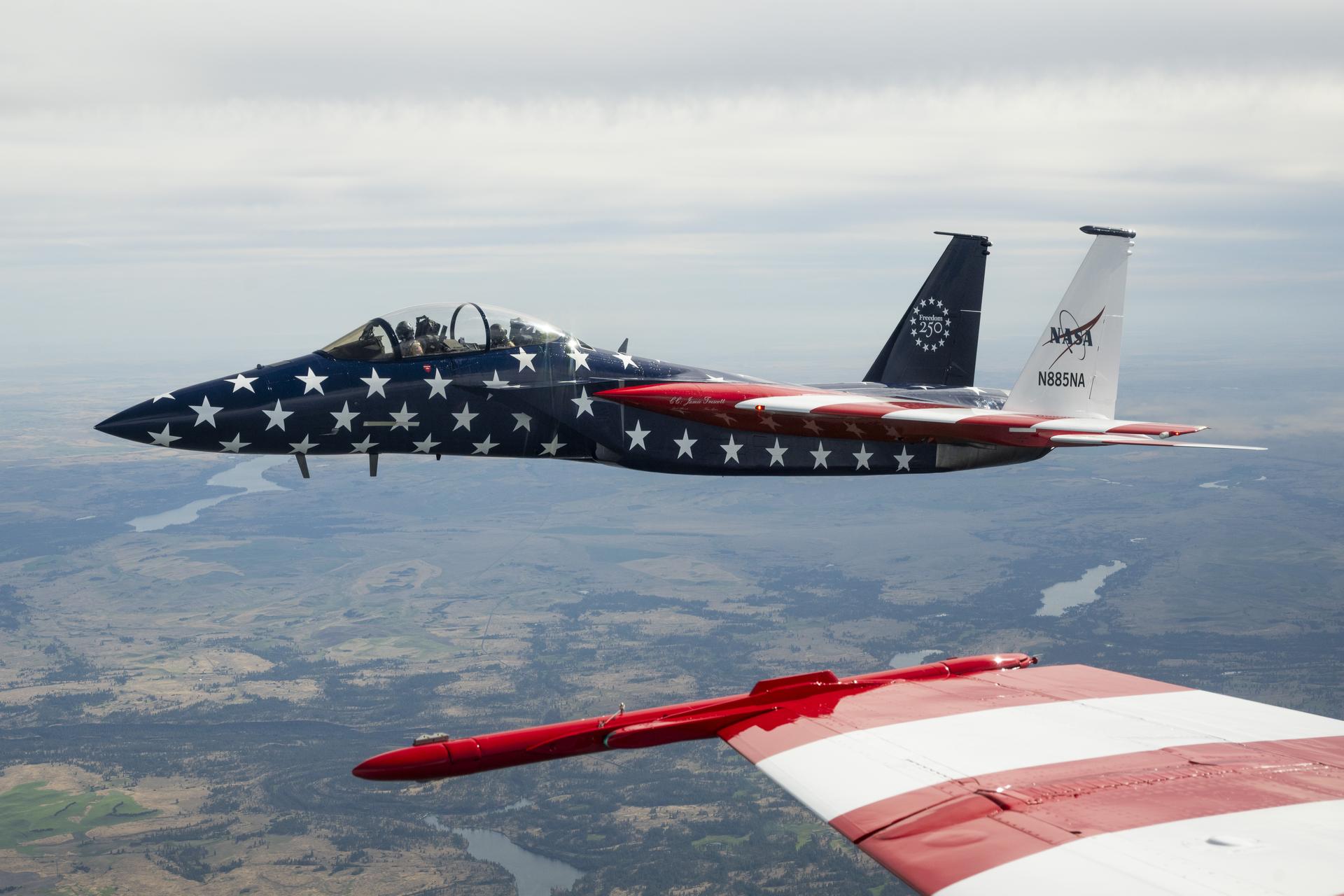
A NASA F‑15 aircraft is shown flying next to a NASA F/A‑18 during a cross‑country flight from Spokane, Washington, to Washington, D.C., on Thursday, July 2, 2026. The full F‑15 is visible, along with a partial view of the F/A‑18’s wing, as both aircraft display new red, white, and blue paint to celebrate America’s 250th birthday. The aircraft, from NASA’s Armstrong Flight Research Center in Edwards, California, participated in the Freedom 250 flyover with other NASA and military aircraft on Saturday, July 4, 2026. NASA/Jim Ross
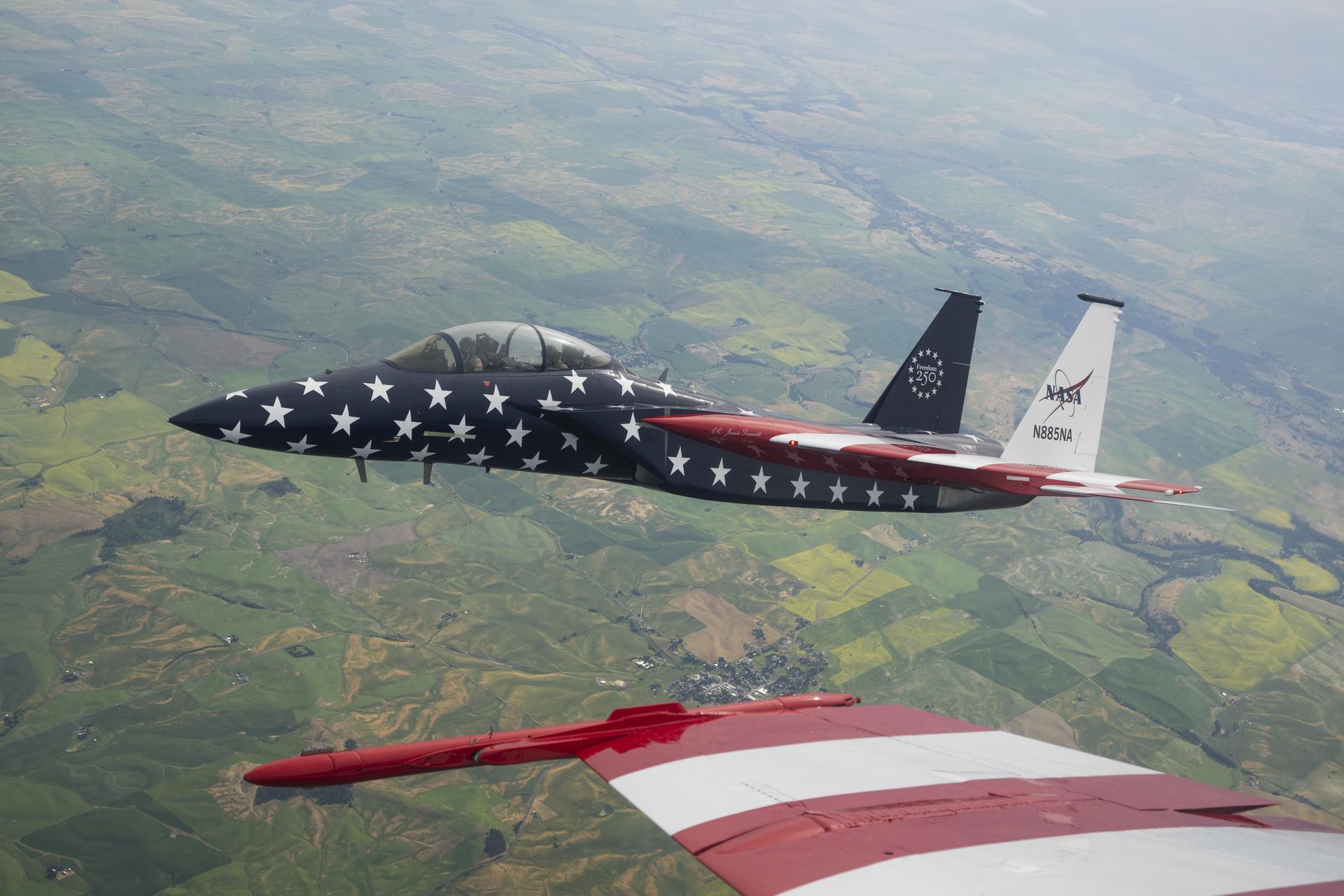
A NASA F‑15 aircraft is shown flying next to a NASA F/A‑18 during a cross‑country flight from Spokane, Washington, to Washington, D.C., on Thursday, July 2, 2026. The full F‑15 is visible, along with a partial view of the F/A‑18’s wing, as both aircraft display new red, white, and blue paint to celebrate America’s 250th birthday. The aircraft, from NASA’s Armstrong Flight Research Center in Edwards, California, participated in the Freedom 250 flyover with other NASA and military aircraft on Saturday, July 4, 2026. NASA/Jim Ross
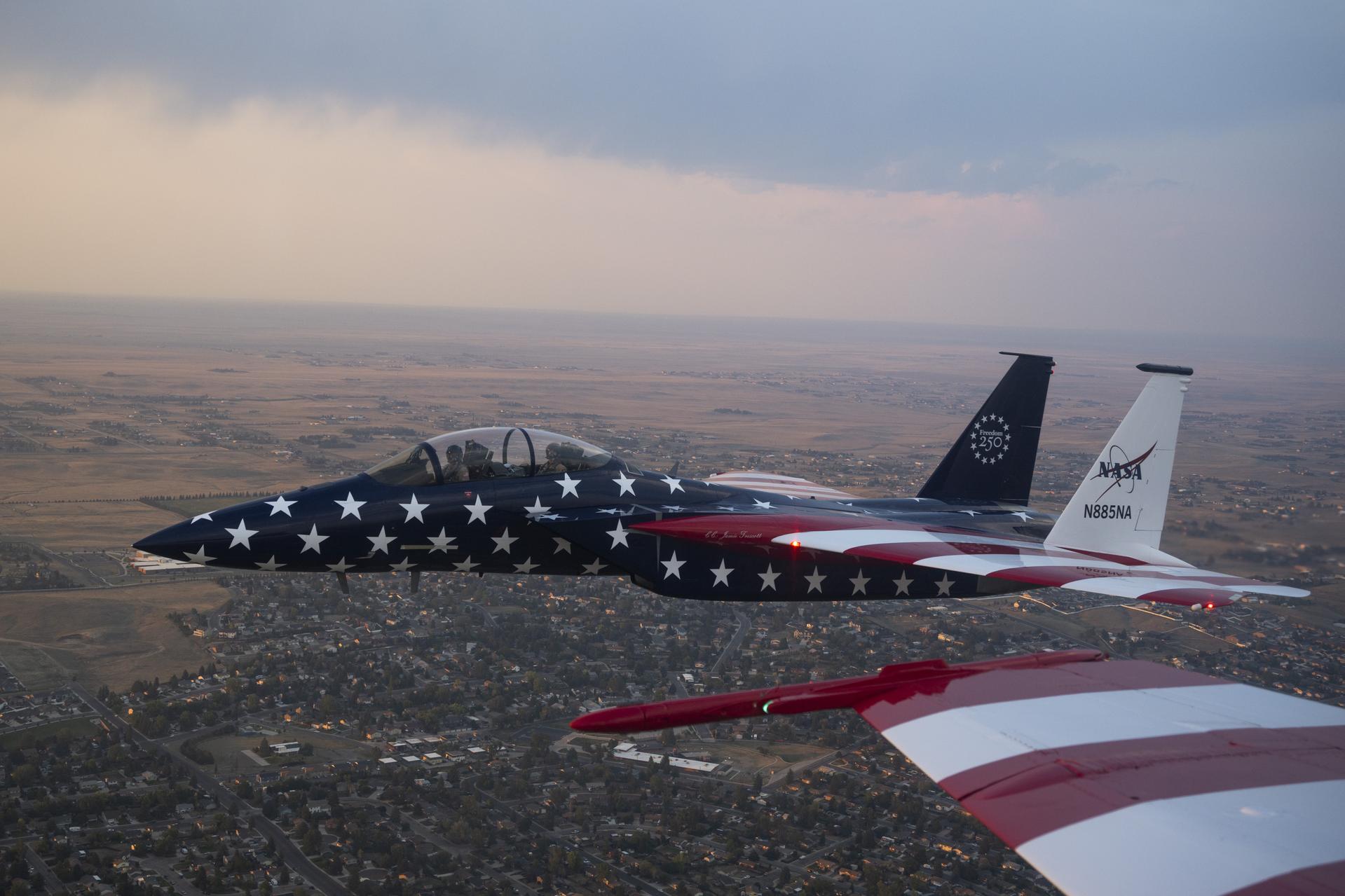
A NASA F‑15 aircraft is shown flying next to a NASA F/A‑18 during a cross‑country flight from Spokane, Washington, to Washington, D.C., on Thursday, July 2, 2026. The full F‑15 is visible, along with a partial view of the F/A‑18’s wing, as both aircraft display new red, white, and blue paint to celebrate America’s 250th birthday. The aircraft, from NASA’s Armstrong Flight Research Center in Edwards, California, participated in the Freedom 250 flyover with other NASA and military aircraft on Saturday, July 4, 2026. NASA/Jim Ross
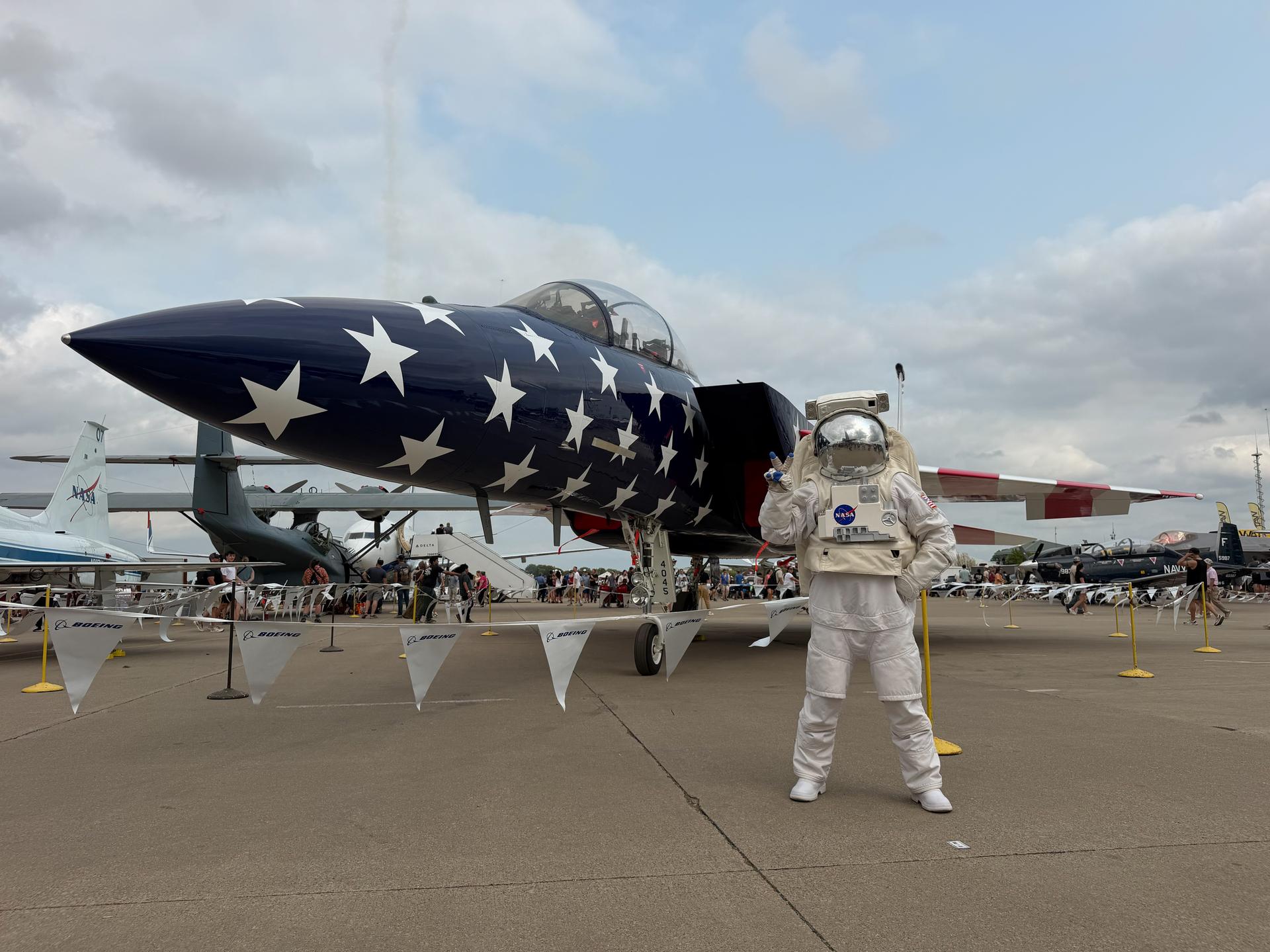
NASA’s Spacey Casey poses in front of NASA’s F-15 painted with new red, white, and blue livery to celebrate America’s 250th birthday at the Boeing Plaza at the 2026 Experimental Aircraft Association (EAA) AirVenture air show in Oshkosh, Wisconsin, on Saturday, July 26, 2026.
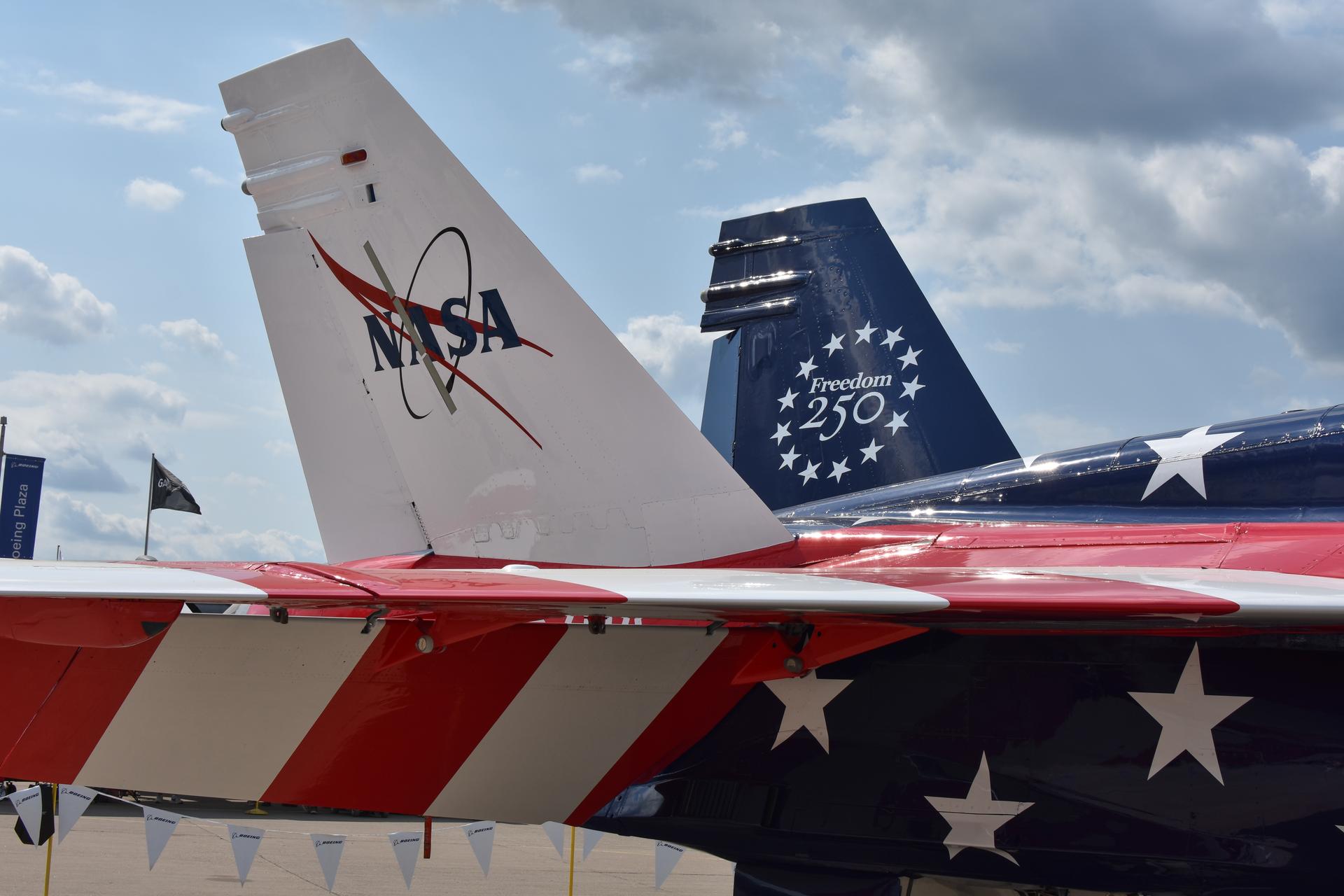
NASA’s F/A-18 aircraft painted with new red, white, and blue livery to celebrate America’s 250th birthday is shown on display at Boeing Plaza at the 2026 Experimental Aircraft Association (EAA) AirVenture air show in Oshkosh, Wisconsin, on Friday, July 24, 2026.
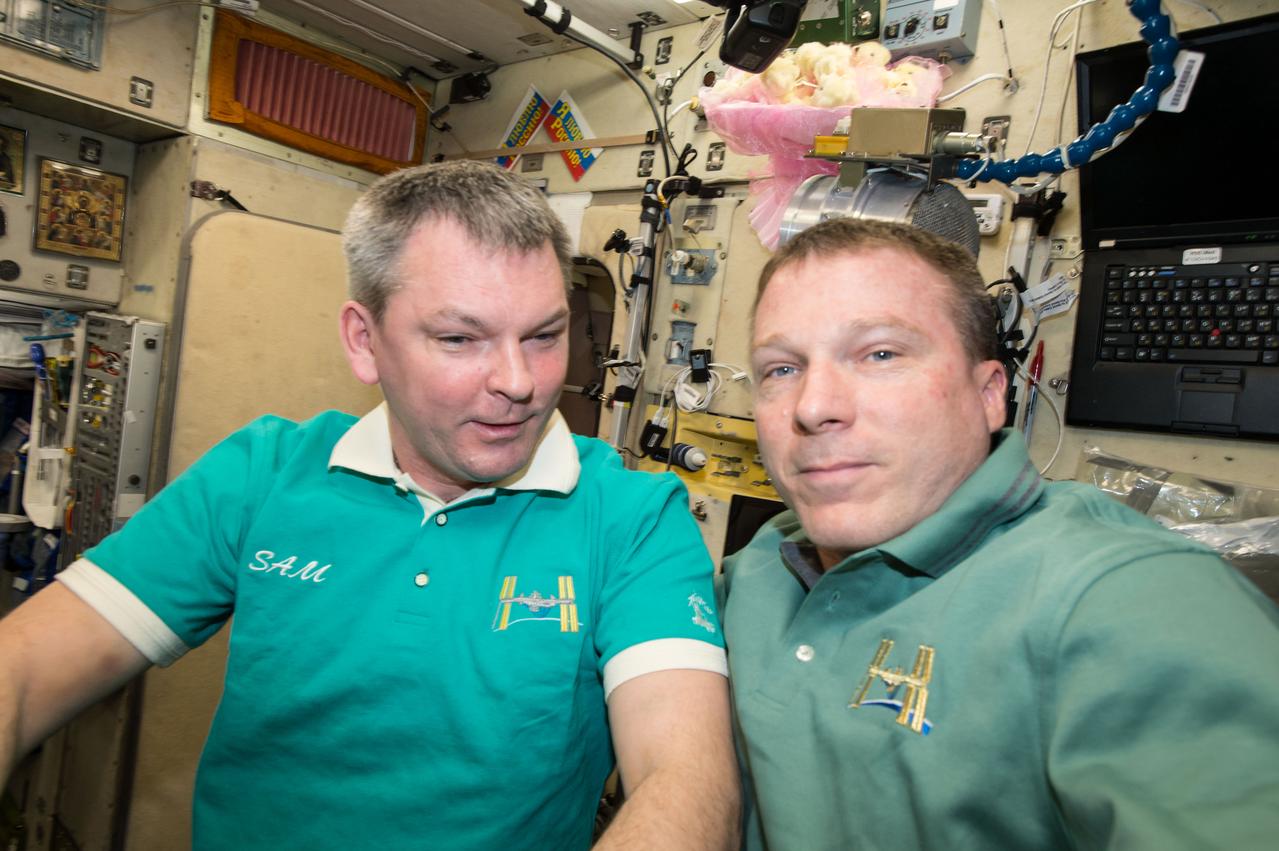
ISS042E325633 (03/11/2015) --- The day before three of his colleagues on the International Space Station were to return to Earth in a Soyuz rocket US NASA astronaut Terry Virts wished all well but gave birthday wishes before they left to Flight Engineer cosmonaut Alexander Samokutyaev with this tweeted message: "с днём рождения Саша- Happy Birthday Sasha!"!
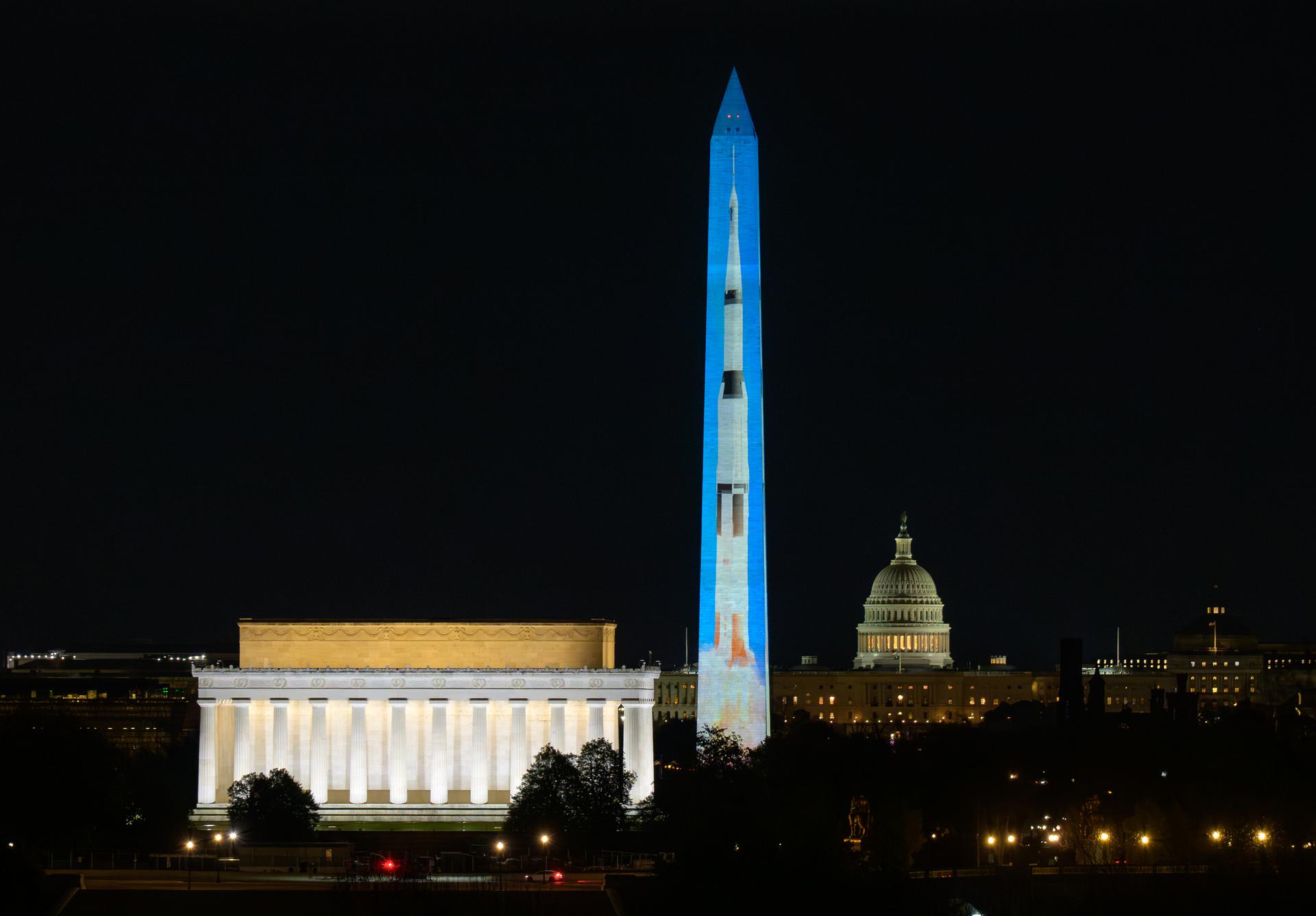
Images depicting NASA’s Saturn V Rocket are projected onto the Washington Monument as part of an event to kick off the nation's 250th birthday year, Wednesday, Dec. 31, 2025, in Washington. Photo Credit: (NASA/Bill Ingalls)
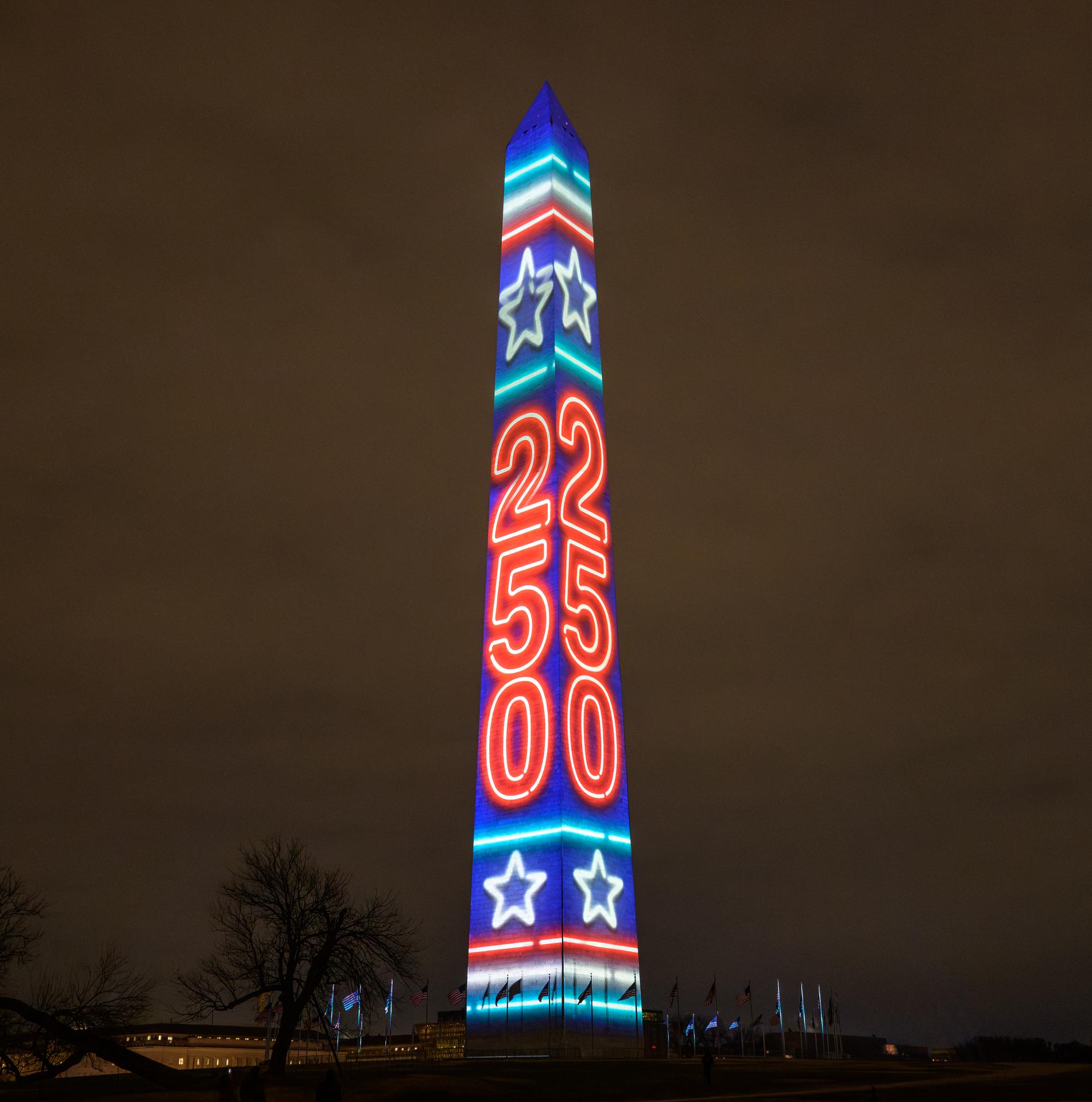
The Washington Monument is lit as part of an event to kick off the nation's 250th birthday year, Wednesday, Dec. 31, 2025, in Washington. Photo Credit: (NASA/Bill Ingalls)
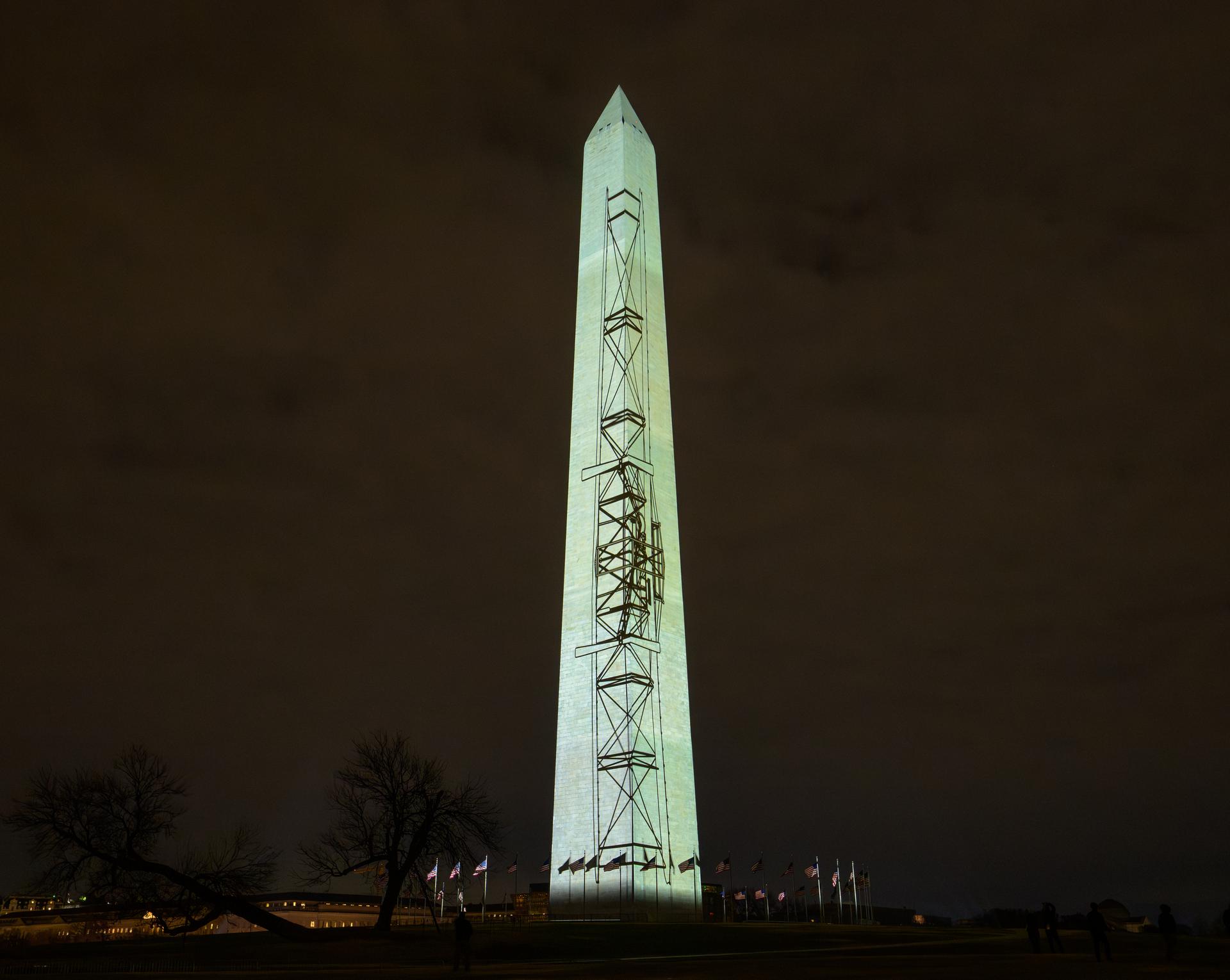
Images depicting the Wright brothers aircraft are projected onto the Washington Monument as part of an event to kick off the nation's 250th birthday year, Wednesday, Dec. 31, 2025, in Washington. Photo Credit: (NASA/Bill Ingalls)
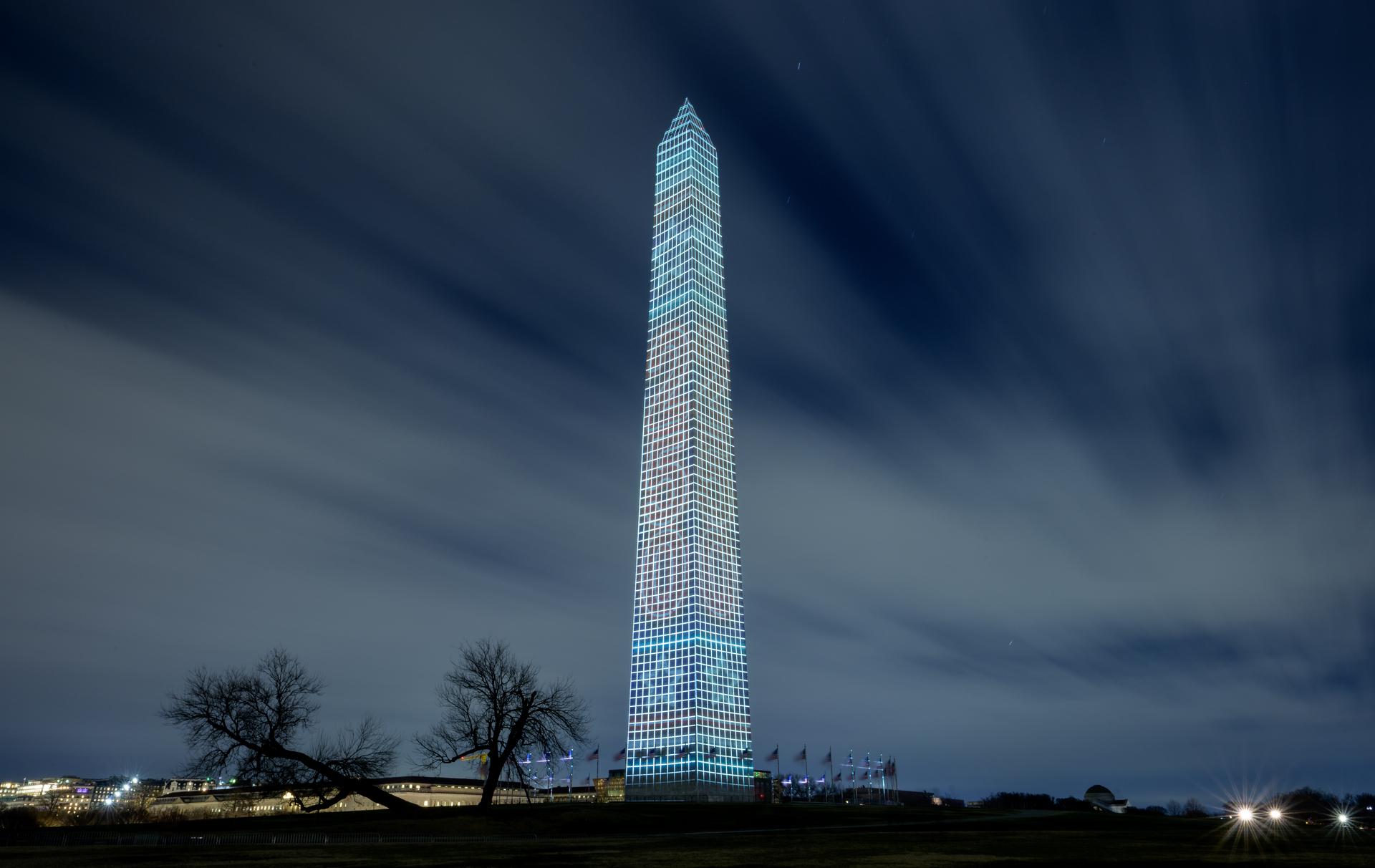
The Washington Monument is seen lit in this long exposure photograph as part of an event to kick off the nation's 250th birthday year, Wednesday, Dec. 31, 2025, in Washington. Photo Credit: (NASA/Bill Ingalls)
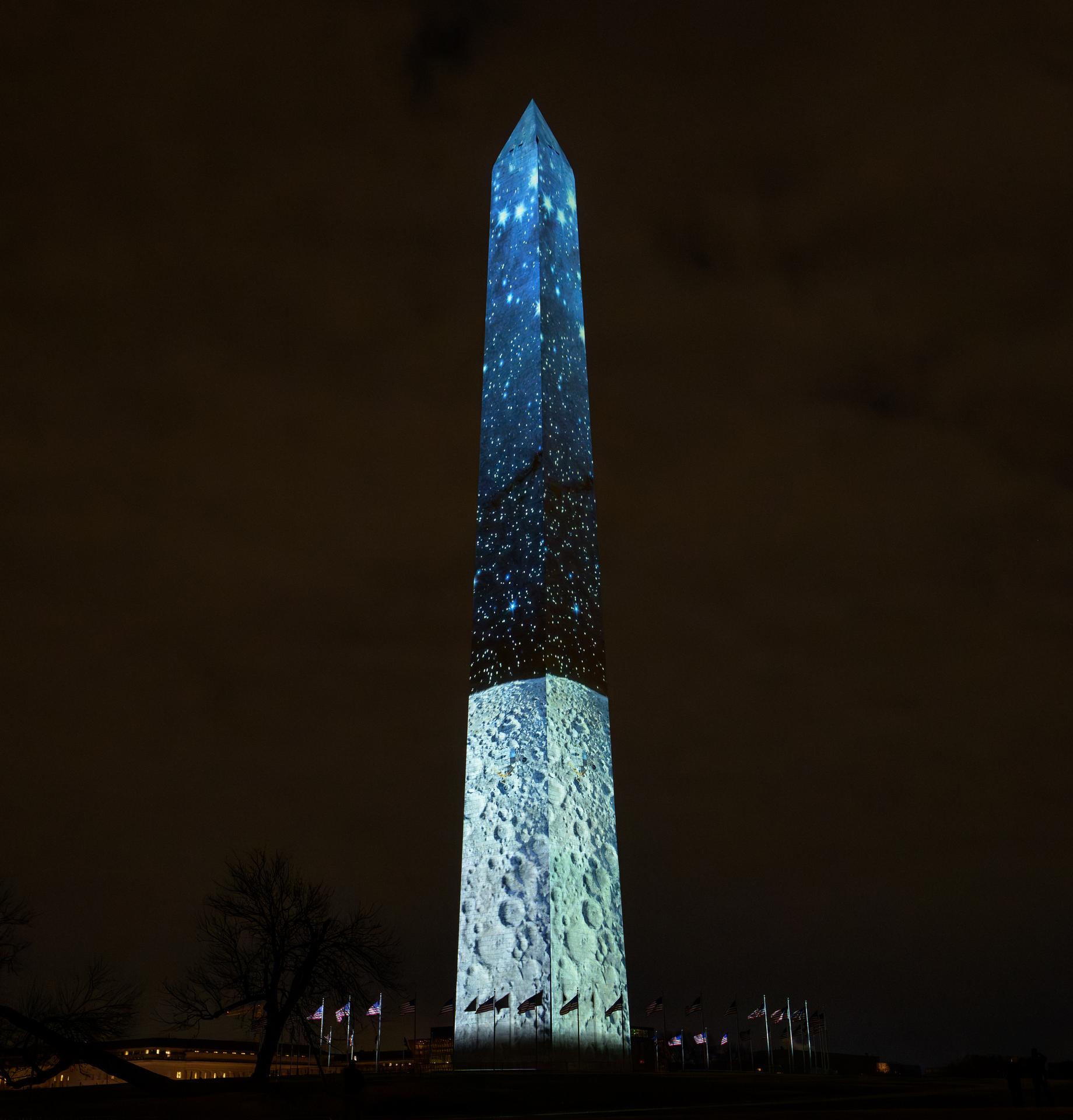
Images depicting NASA Moon missions are projected onto the Washington Monument as part of an event to kick off the nation's 250th birthday year, Wednesday, Dec. 31, 2025, in Washington. Photo Credit: (NASA/Bill Ingalls)
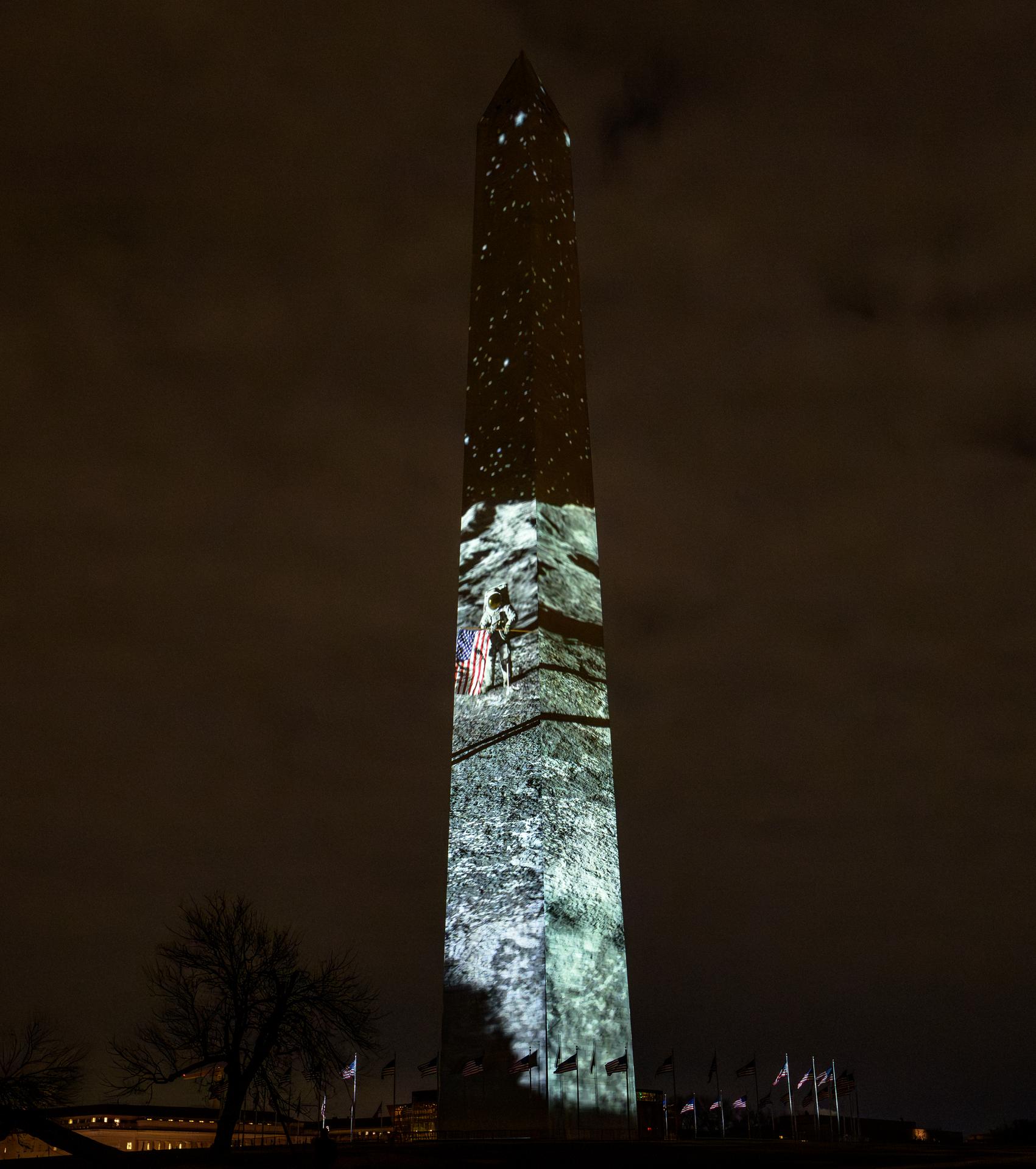
Images depicting NASA Apollo Moon missions are projected onto the Washington Monument as part of an event to kick off the nation's 250th birthday year, Wednesday, Dec. 31, 2025, in Washington. Photo Credit: (NASA/Bill Ingalls)
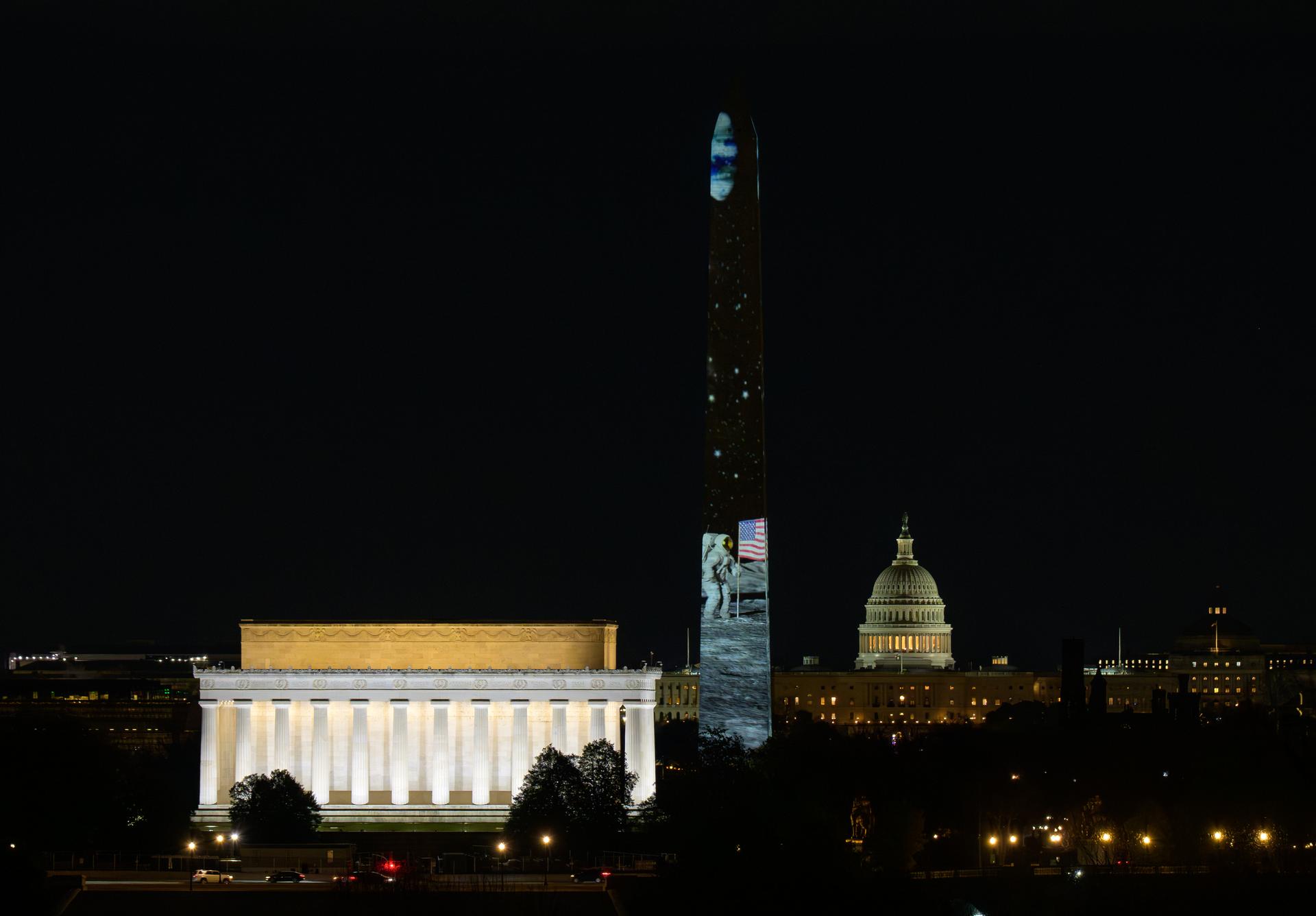
Images depicting NASA Moon missions are projected onto the Washington Monument as part of an event to kick off the nation's 250th birthday year, Wednesday, Dec. 31, 2025, in Washington. Photo Credit: (NASA/Bill Ingalls)
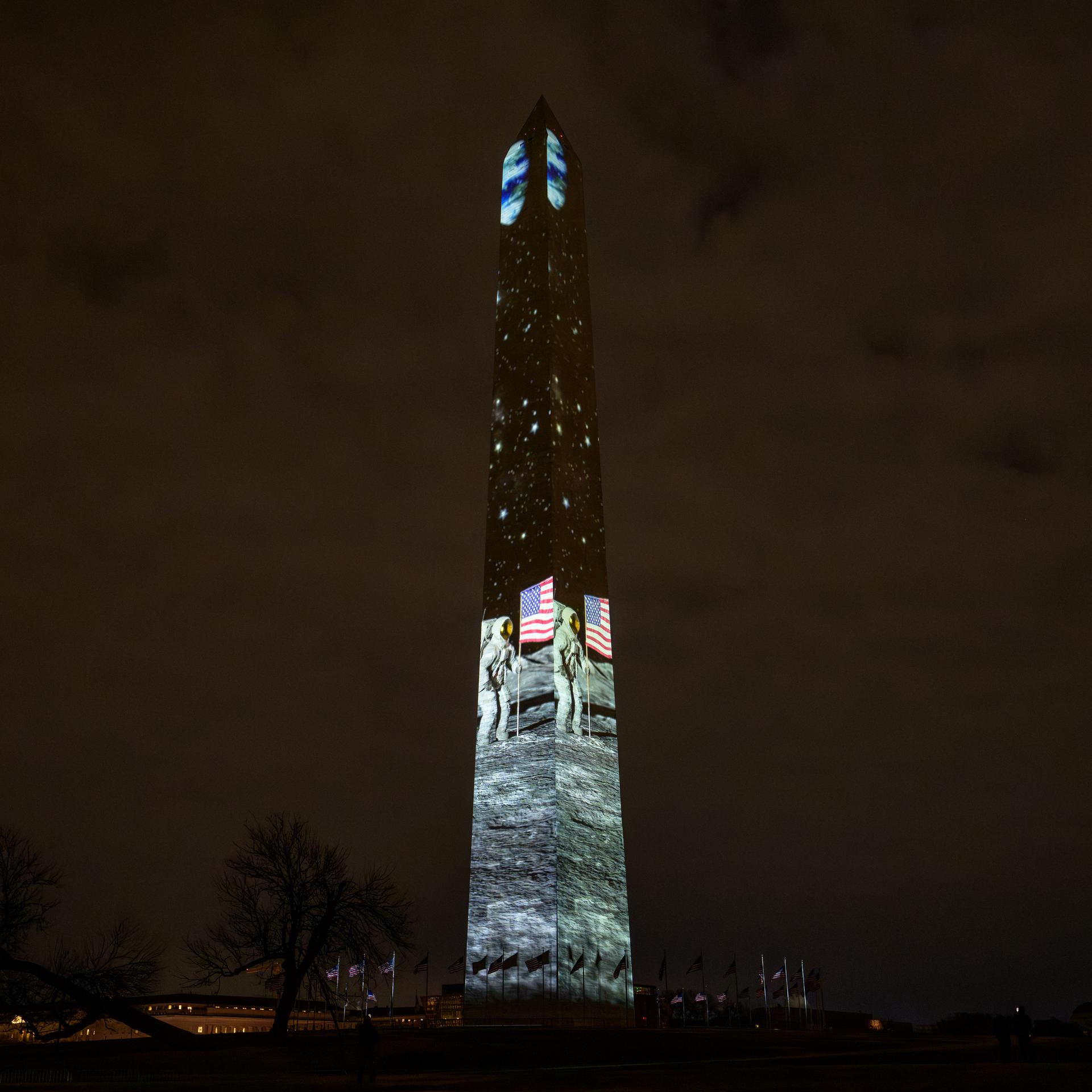
Images depicting NASA Apollo Moon missions are projected onto Washington Monument as part of an event to kick off the nation's 250th birthday year, Wednesday, Dec. 31, 2025, in Washington. Photo Credit: (NASA/Bill Ingalls)
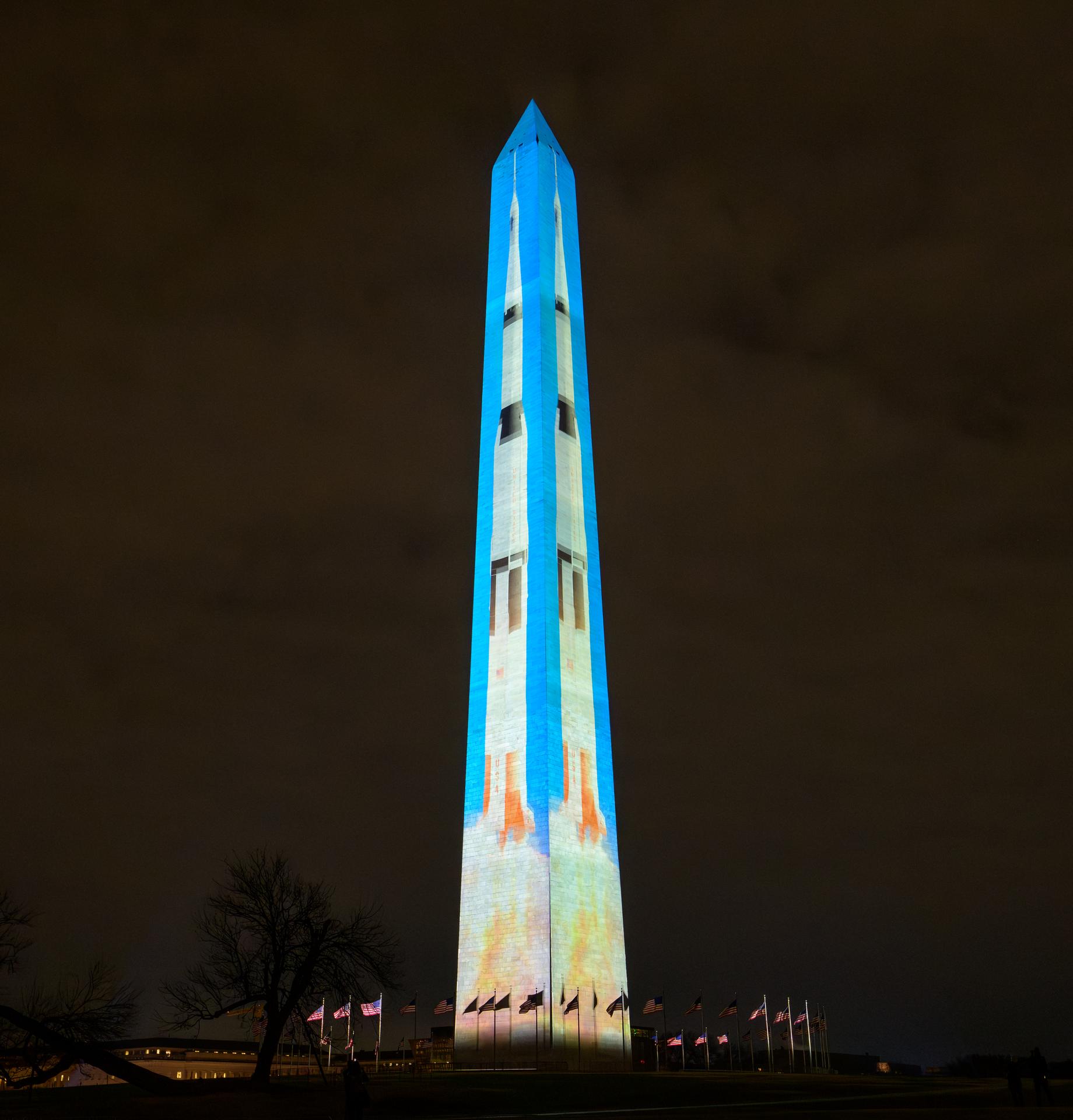
Images depicting NASA’s Saturn V Rocket are projected onto the Washington Monument as part of an event to kick off the nation's 250th birthday year, Wednesday, Dec. 31, 2025, in Washington. Photo Credit: (NASA/Bill Ingalls)
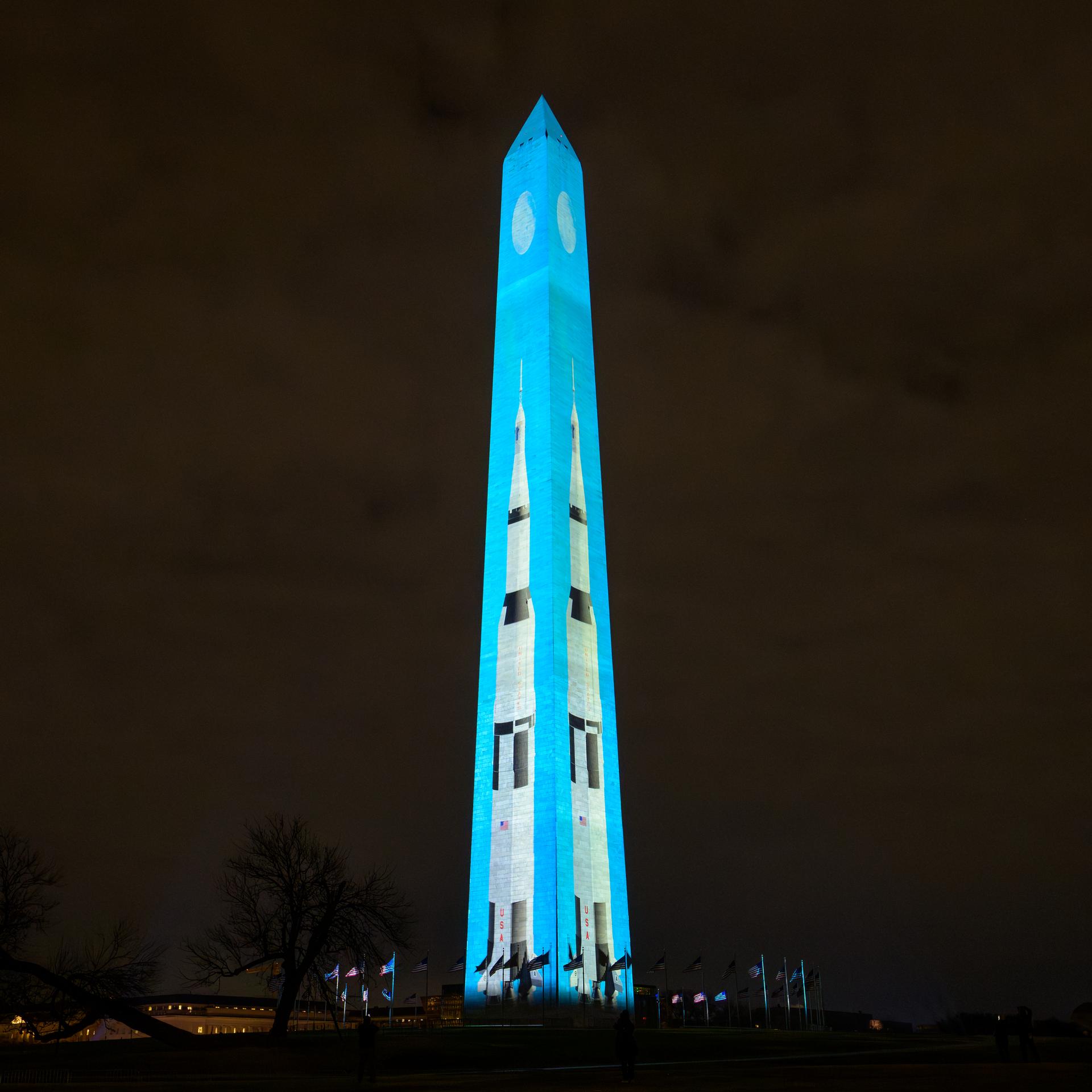
Images depicting NASA’s Saturn V Rocket are projected onto the Washington Monument as part of an event to kick off the nation's 250th birthday year, Wednesday, Dec. 31, 2025, in Washington. Photo Credit: (NASA/Bill Ingalls)
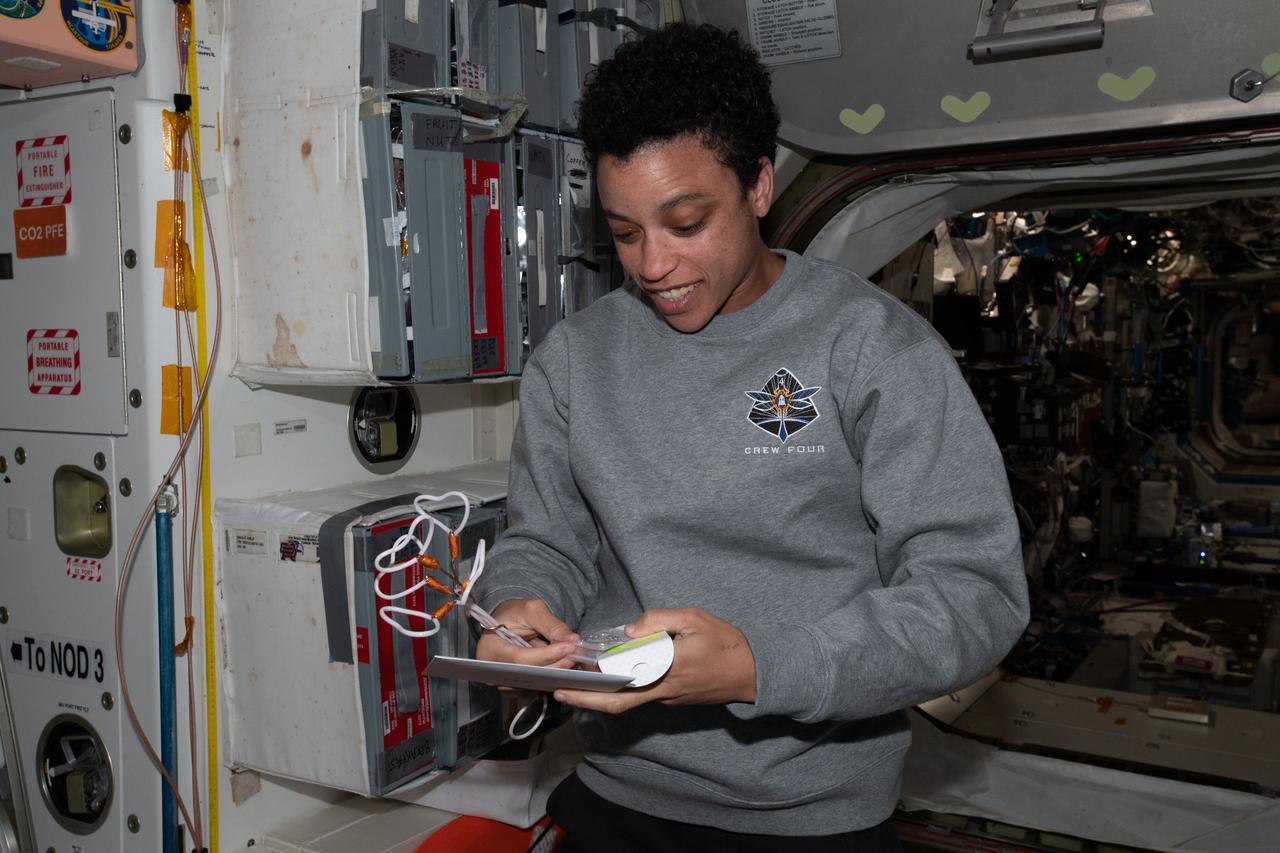
iss067e043342 (May 14, 2022) --- NASA astronaut and Expedition 67 Flight Engineer Jessica Watkins checks out gifts she received for her 34th birthday aboard the International Space Station.
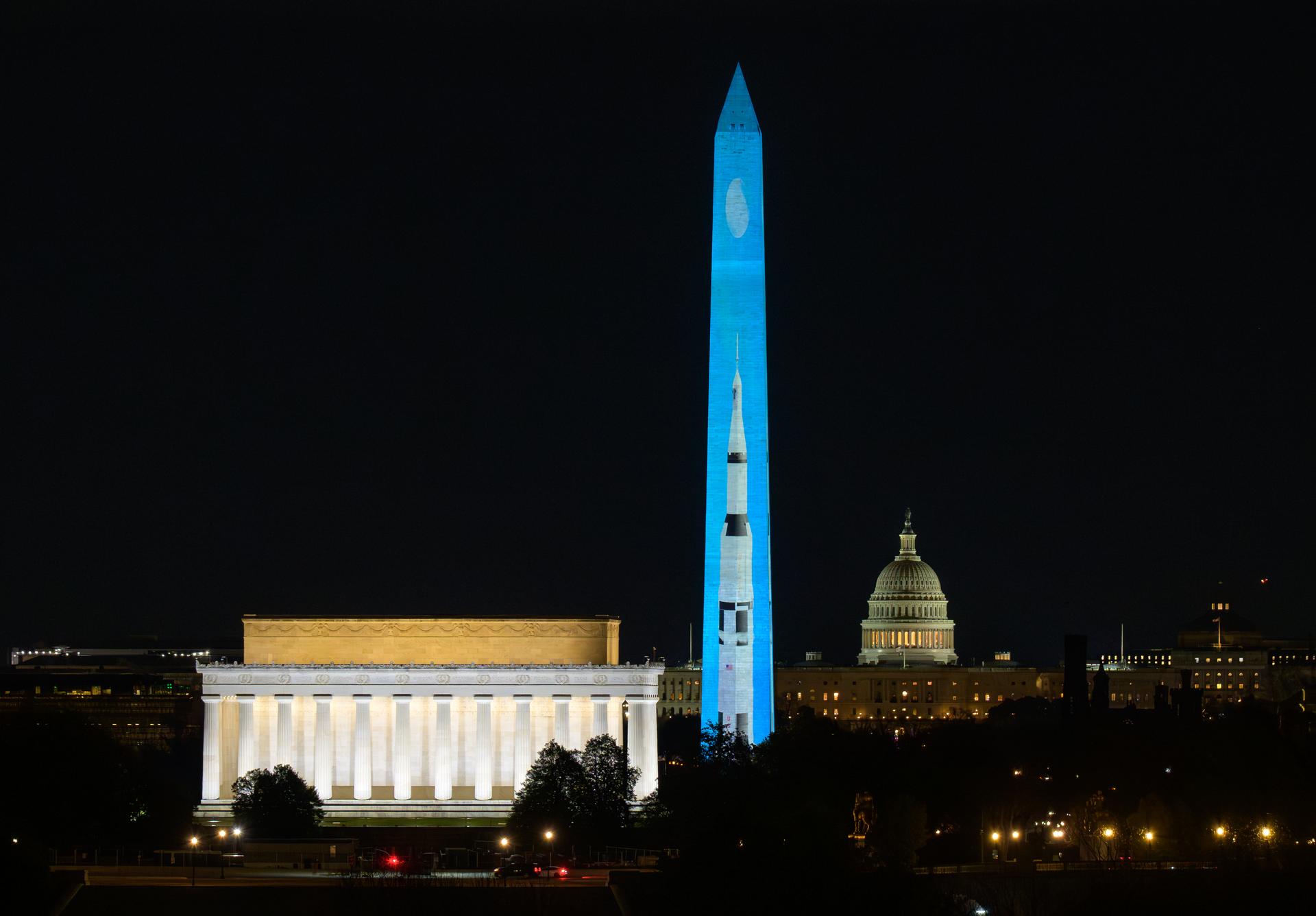
Images depicting NASA’s Saturn V Rocket are projected onto the Washington Monument as part of an event to kick off the nation's 250th birthday year, Wednesday, Dec. 31, 2025, in Washington. Photo Credit: (NASA/Bill Ingalls)
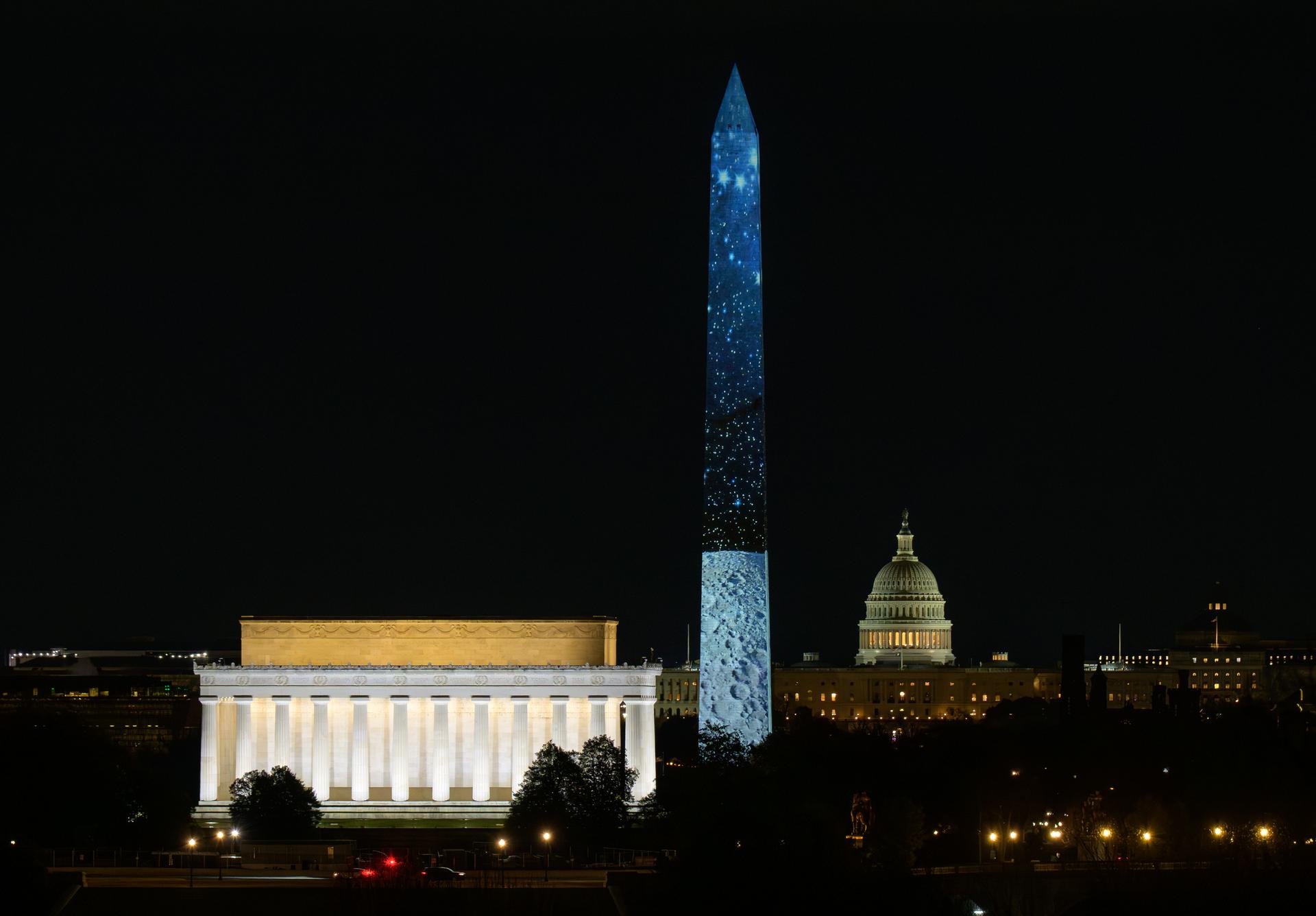
Images depicting NASA Moon missions are projected onto the Washington Monument as part of an event to kick off the nation's 250th birthday year, Wednesday, Dec. 31, 2025, in Washington. Photo Credit: (NASA/Bill Ingalls)
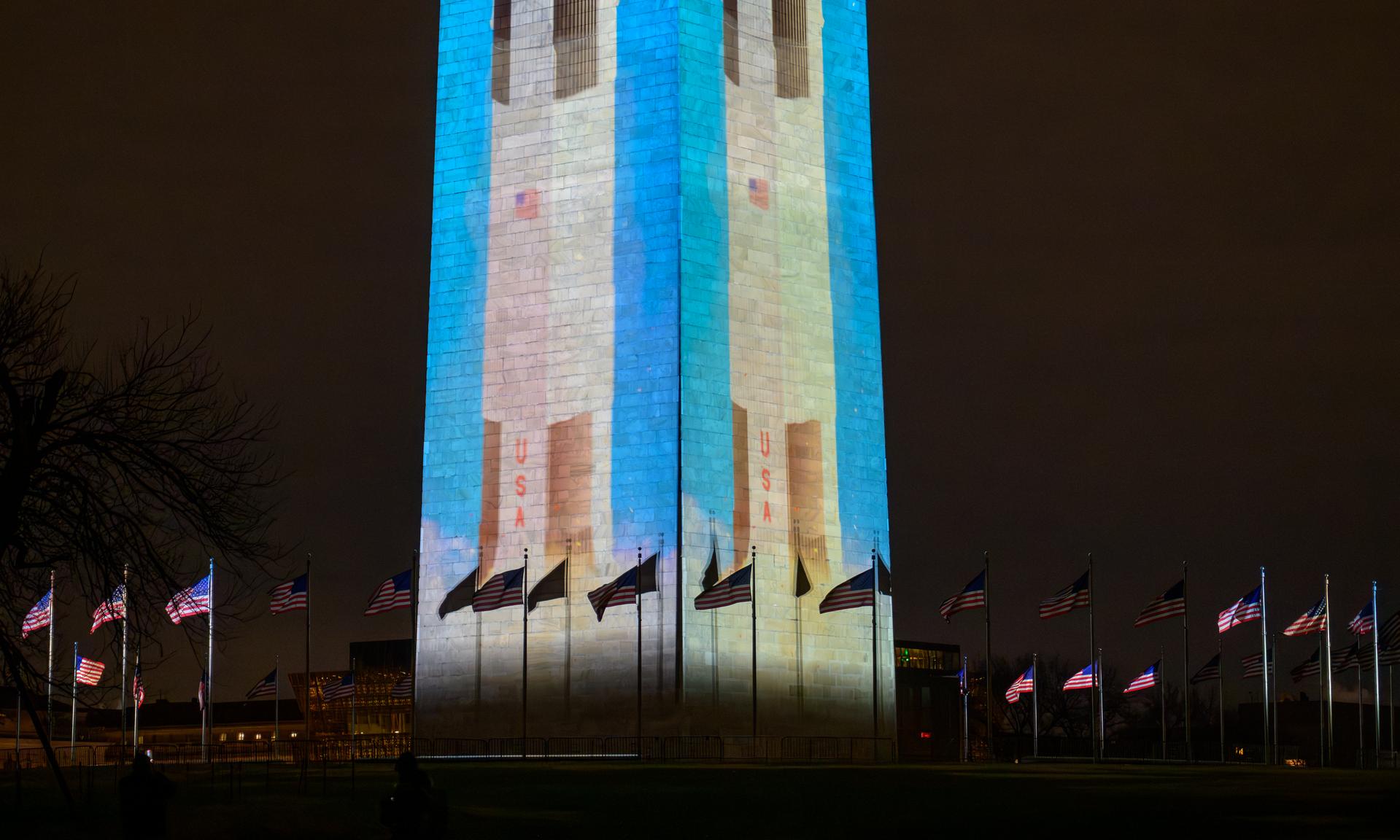
Images depicting NASA’s Saturn V Rocket are projected onto the Washington Monument as part of an event to kick off the nation's 250th birthday year, Wednesday, Dec. 31, 2025, in Washington. Photo Credit: (NASA/Bill Ingalls)
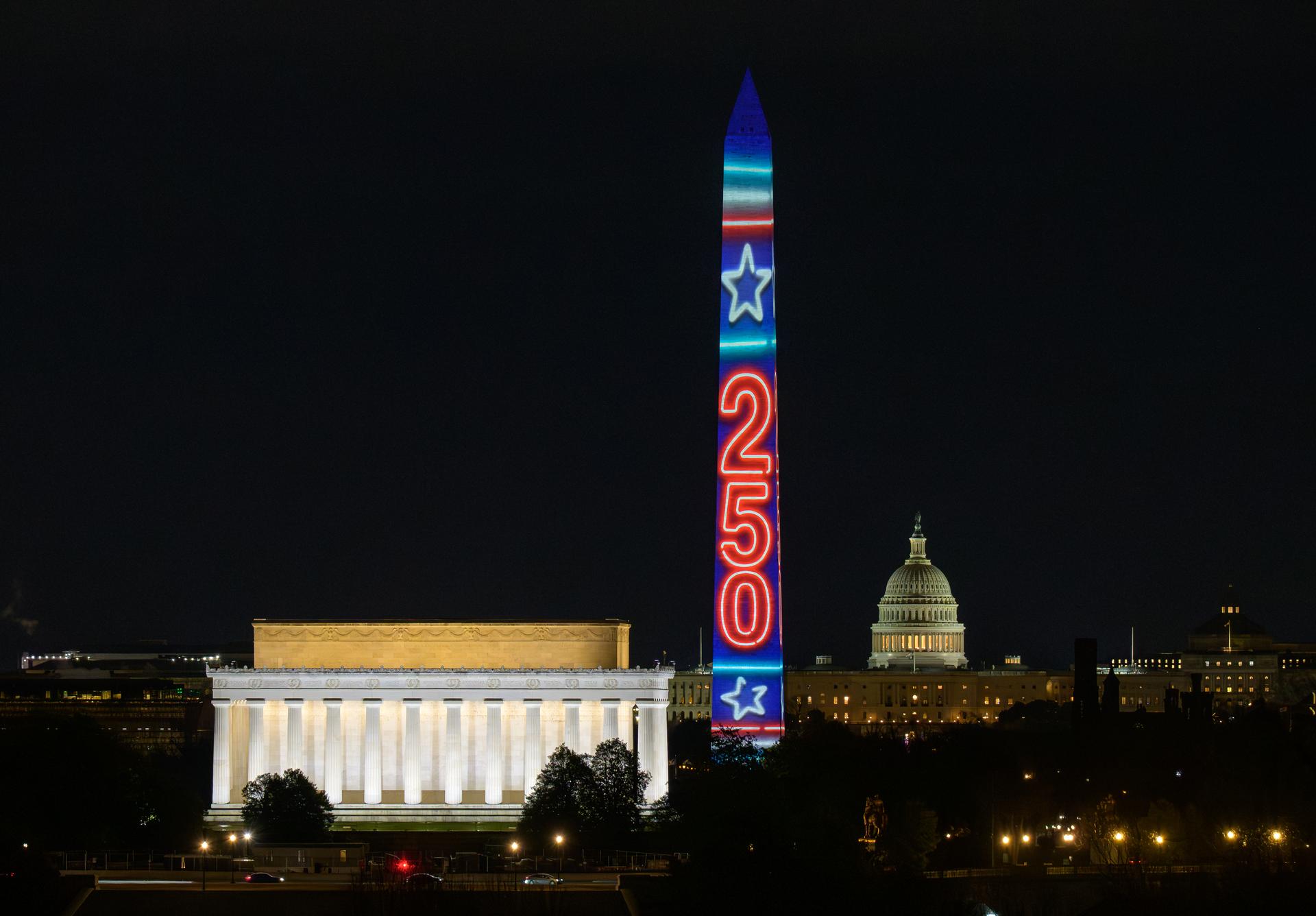
The Washington Monument is lit as part of an event to kick off the nation's 250th birthday year, Wednesday, Dec. 31, 2025, in Washington. Photo Credit: (NASA/Bill Ingalls)
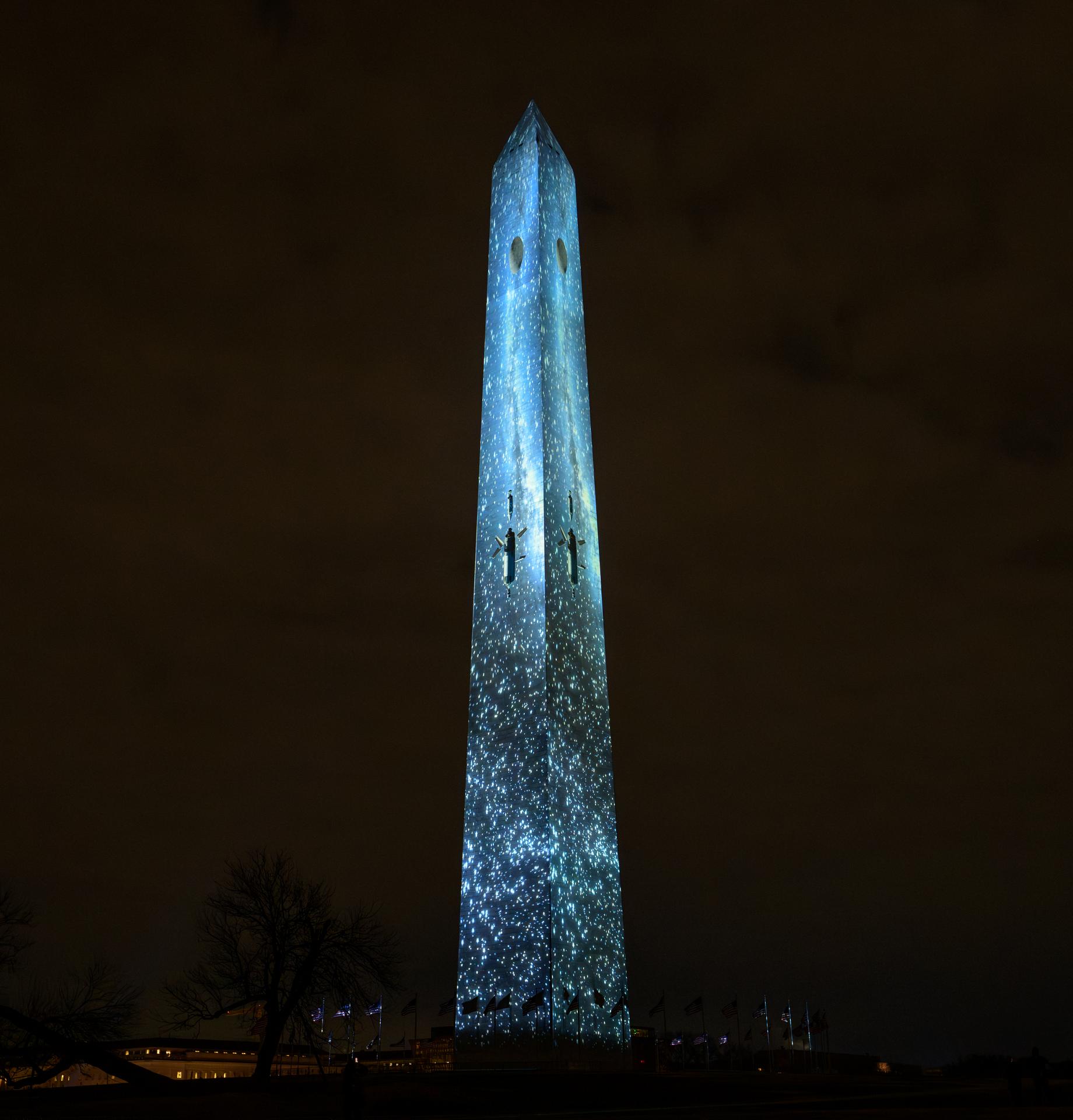
Images depicting NASA missions are projected onto the Washington Monument as part of an event to kick off the nation's 250th birthday year, Wednesday, Dec. 31, 2025, in Washington. Photo Credit: (NASA/Bill Ingalls)
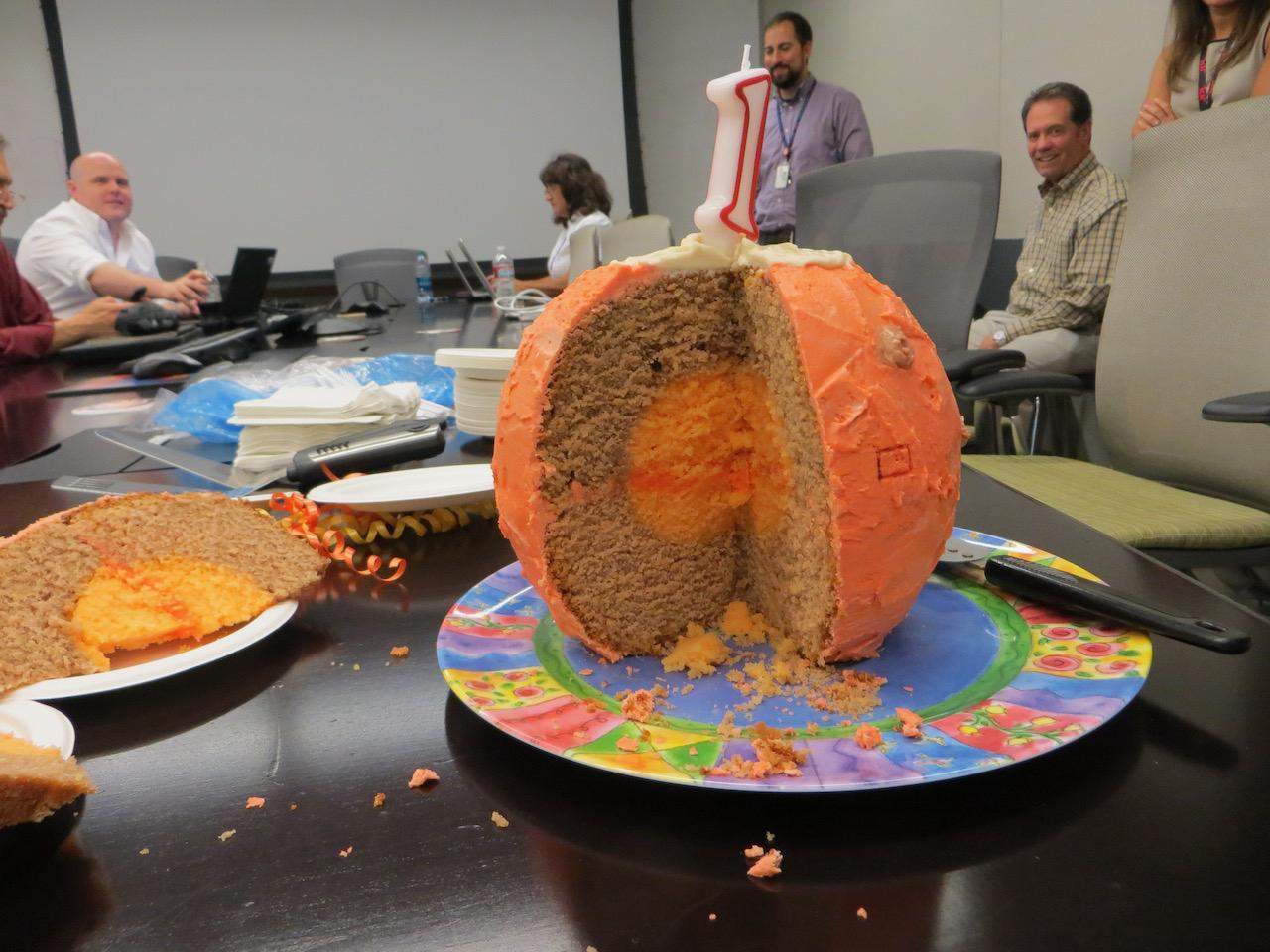
NASA's InSight lander team enjoyed this Mars-shaped cake on the first anniversary of the spacecraft's Nov. 26, 2018, landing. The cake came complete with its own inner layers – just like the Red Planet. https://photojournal.jpl.nasa.gov/catalog/PIA25283
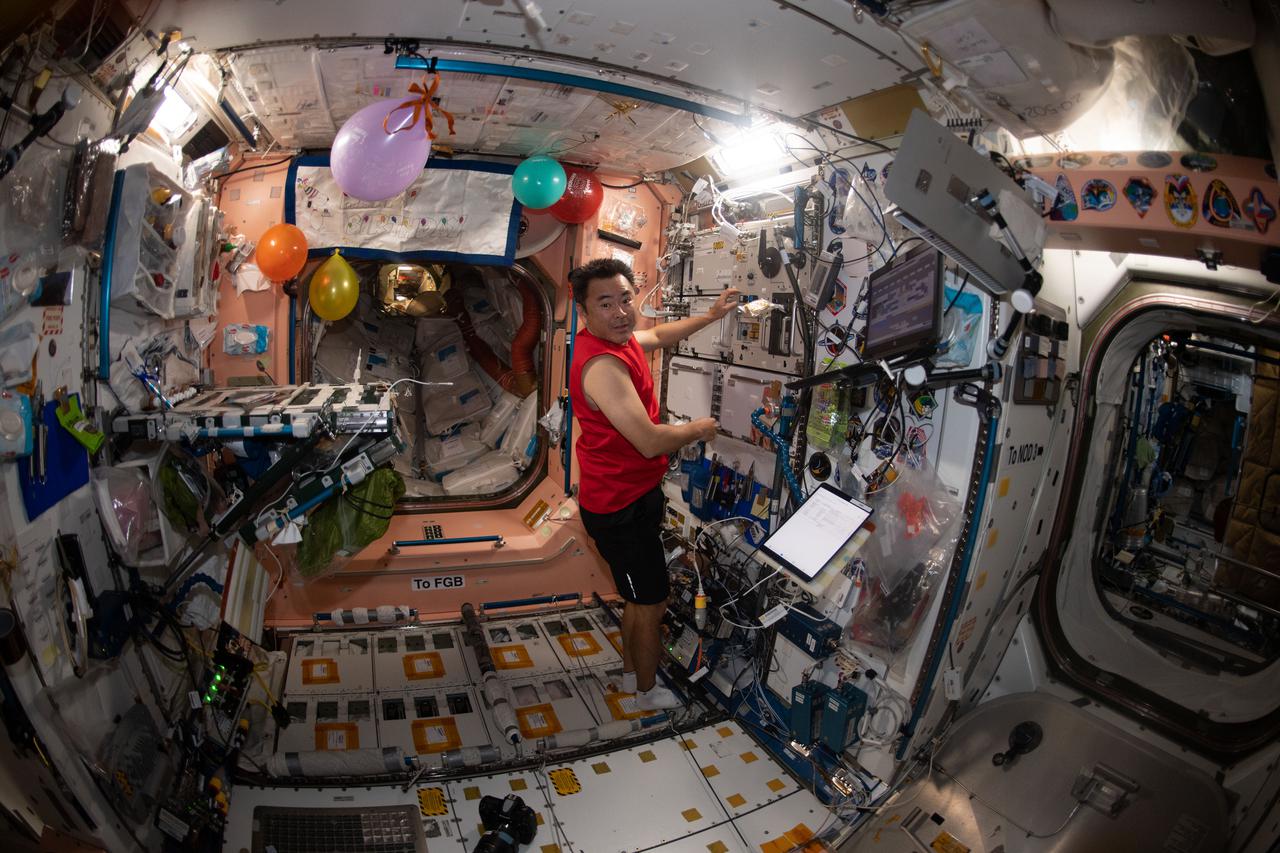
iss065e087510 (June 5, 2021) --- Expedition 65 Commander Akihiko Hoshide of the Japan Aerospace Exploration Agency is pictured in the balloon-decorated Unity module the day after NASA astronaut and Expedition 65 Flight Engineer Shane Kimbrough celebrated his 54th birthday.
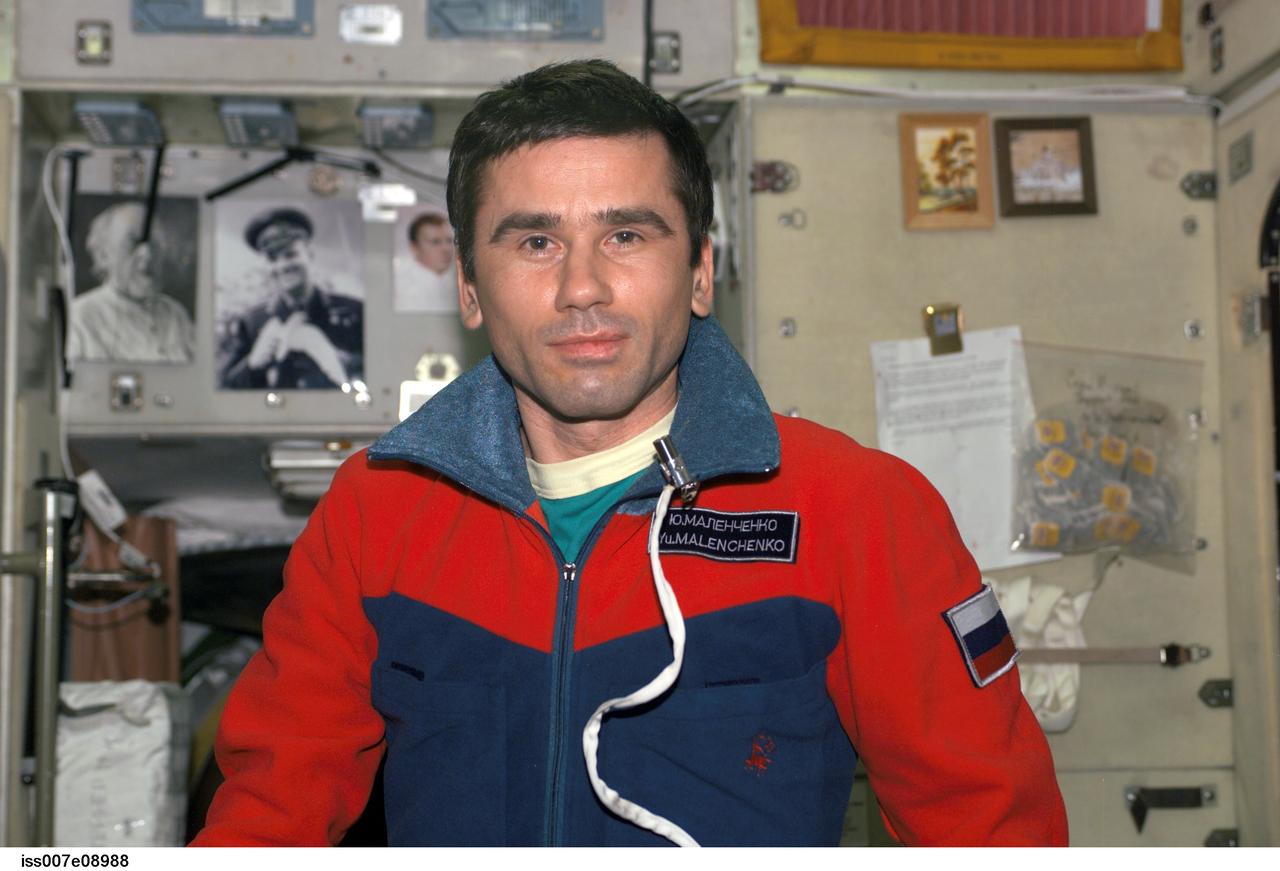
ISS007-E-08988 (1 July 2003) --- Cosmonaut Yuri I. Malenchenko, Expedition 7 mission commander, is pictured in the Zvezda Service Module of the International Space Station (ISS). The photo was taken by NASA ISS Science Officer and Flight Engineer Edward T. Lu, who was celebrating a birthday at the time.
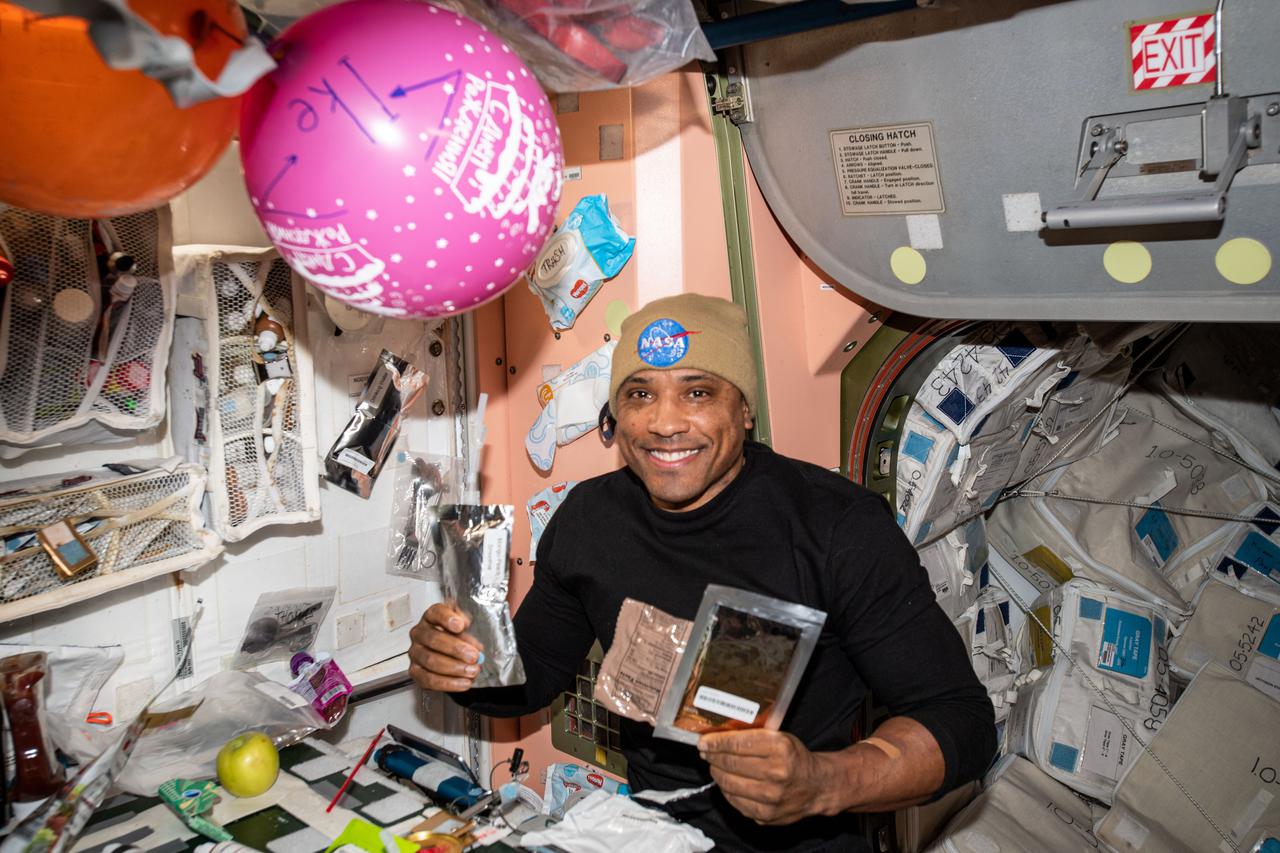
iss065e009613 (April 30, 2021) --- NASA astronaut and Expedition 65 Flight Engineer Victor Glover is pictured celebrating his birthday aboard the International Space Station. Glover would return to Earth two days later with his SpaceX Crew-1 crewmates aboard the Crew Dragon Resilience.
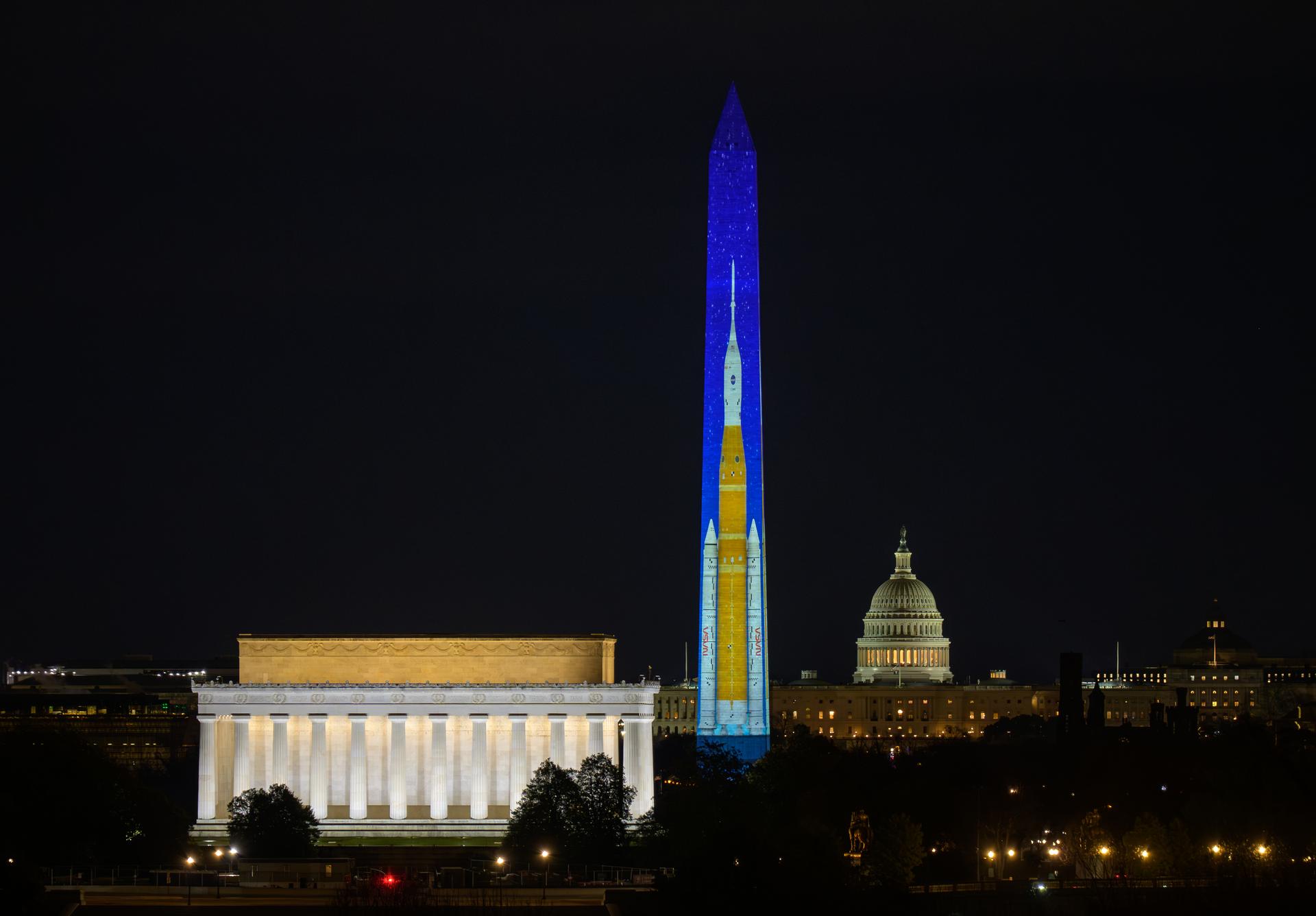
Images depicting NASA’s Space Launch System (SLS) rocket are projected onto the Washington Monument as part of an event to kick off the nation's 250th birthday year, Wednesday, Dec. 31, 2025, in Washington. Photo Credit: (NASA/Bill Ingalls)
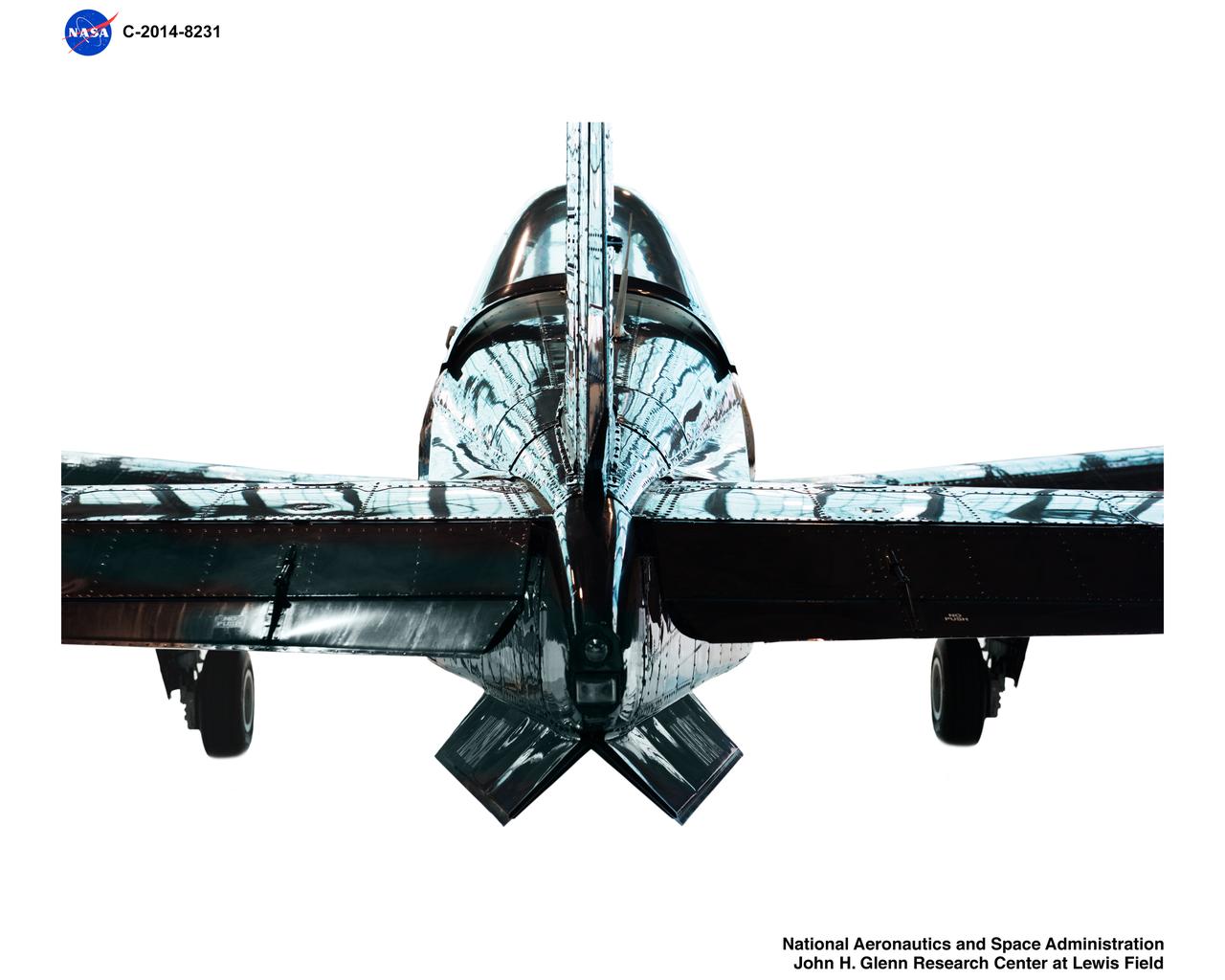
A T34-C aircraft reflects the large multi-paned windows on the Hangar doors. When NASA GRC obtained this T-34C from the Navy it was painted in ‚Äúthrowback‚Äù paint schemes from an earlier time in celebration of the 100th birthday of Naval Aviation. NASA kept it in the original paint job for posterity. This T-34C airplane will be GRCs surrogate aircraft for Unmanned Aircraft Systems in the National Airspace System aeronautics initiative. A T34-C aircraft reflects the large multi-paned windows on the Hangar doors. When NASA GRC obtained this T-34C from the Navy it was painted in “throwback” paint schemes from an earlier time in celebration of the 100th birthday of Naval Aviation. NASA kept it in the original paint job for posterity. This T-34C airplane will be GRCs surrogate aircraft for Unmanned Aircraft Systems in the National Airspace System aeronautics initiative.
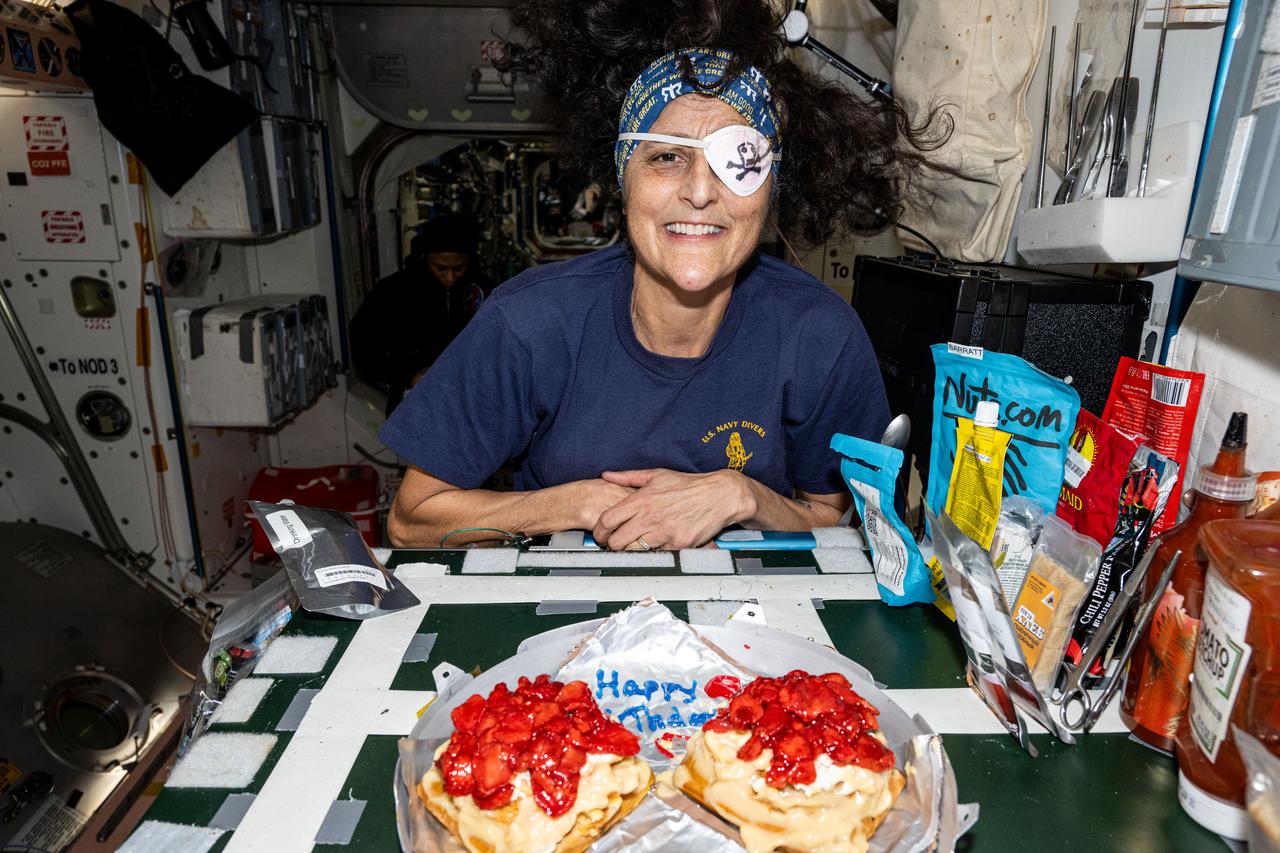
iss071e675920 (Sept. 19, 2024) --- NASA astronaut and Expedition 71 Flight Engineer Suni Williams celebrates her birthday during International Talk Like a Pirate Day aboard the International Space Station. Sitting on the Unity module's gallery is a pair of strawberry cakes for her and crewmates to enjoy. Items are attached to the galley using tape and velcro to keep them from flying away in the microgravity environment.
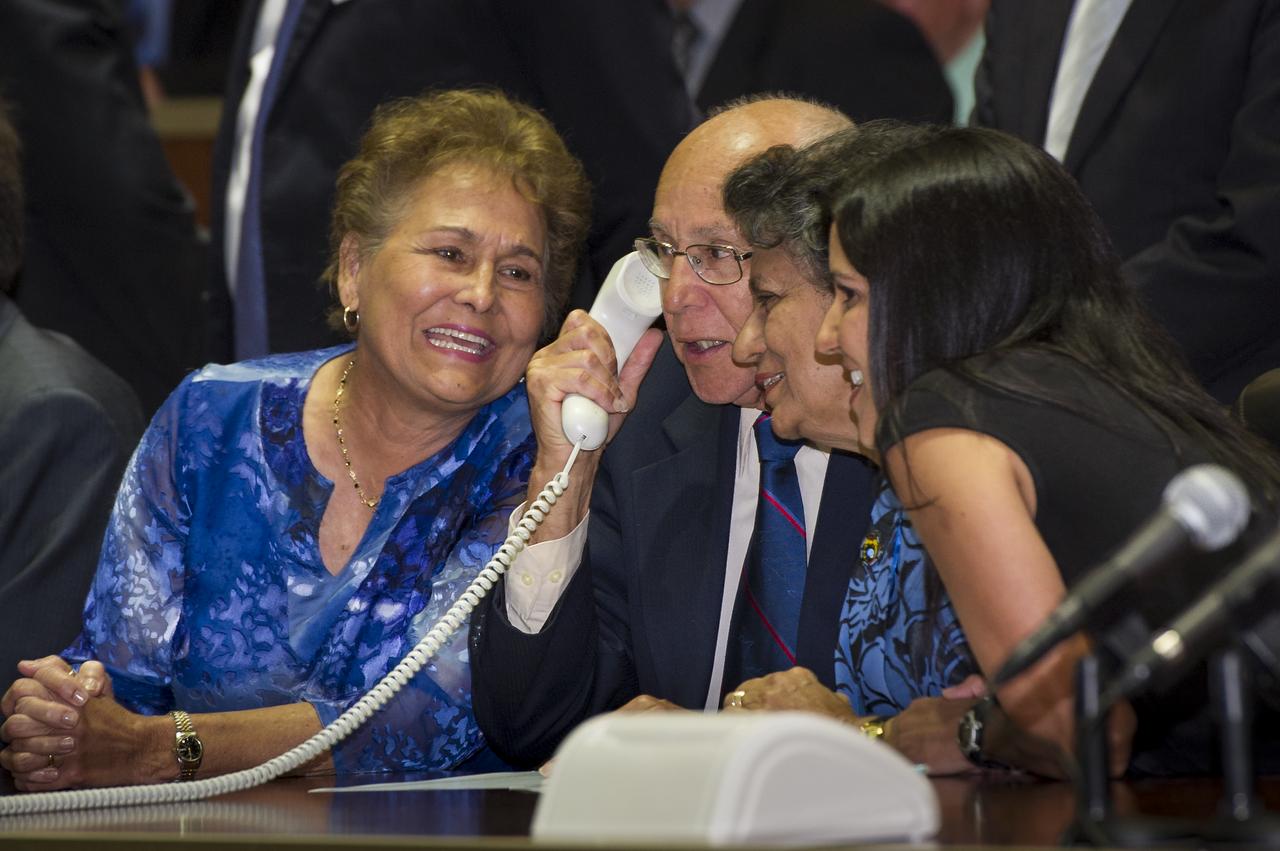
The family of Expedition 31 Flight Engineer Joe Acaba sings happy birthday to him from the Russian Mission Control Center in Korolev, Russia, Thursday, May 17, 2012. Acaba, Expedition 31 Soyuz Commander Gennady Padalka, and Flight Engineer Sergei Revin, docked their Soyuz TMA-04M spacecraft to the space station at 8:36 a.m. Moscow time, two days after they launched from the Baikonur Cosmodrome in Kazakhstan. Photo Credit: (NASA/Bill Ingalls)
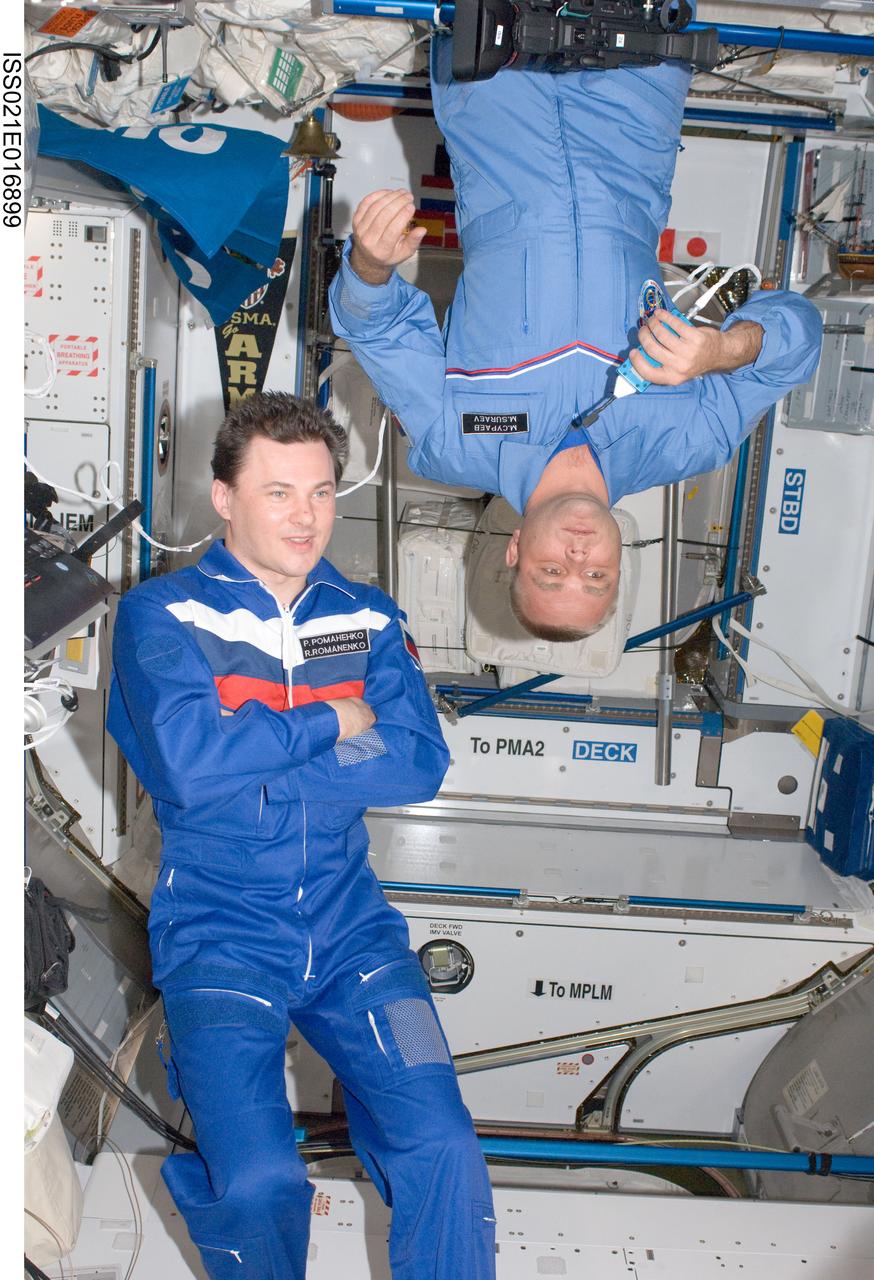
ISS021-E-016899 (12 Oct. 2009) --- Russian cosmonauts Roman Romanenko (left) and Maxim Suraev, both Expedition 21 flight engineers, participate in a PAO/TV downlink event from the Harmony node of the International Space Station. During the event, the crew members sent greetings to AK-47 Chief Designer M. T. Kalashnikov on his 90th birthday and to the participants of the Tenth Youth Tsiolkovsky Readings; along with a greeting to the 17th Annual International Space Olympiad for School Children, hosted by the City of Korolev.

NASA's Kennedy Space Center in Florida observes U.S. Constitution Day, the official birthday of our U.S. government, with the theme "Freedom Needs Space." A remembrance poster made appearances in various locations around the multi-user spaceport, including at the new Headquarters Campus Building. Constitution Day is an American federal observance. It recognizes the adoption of the U.S. Constitution and those who have become U.S. citizens. Constitution Day is observed on Sept. 17, the day in 1787 that delegates to the Constitutional Convention signed the document in Philadelphia.
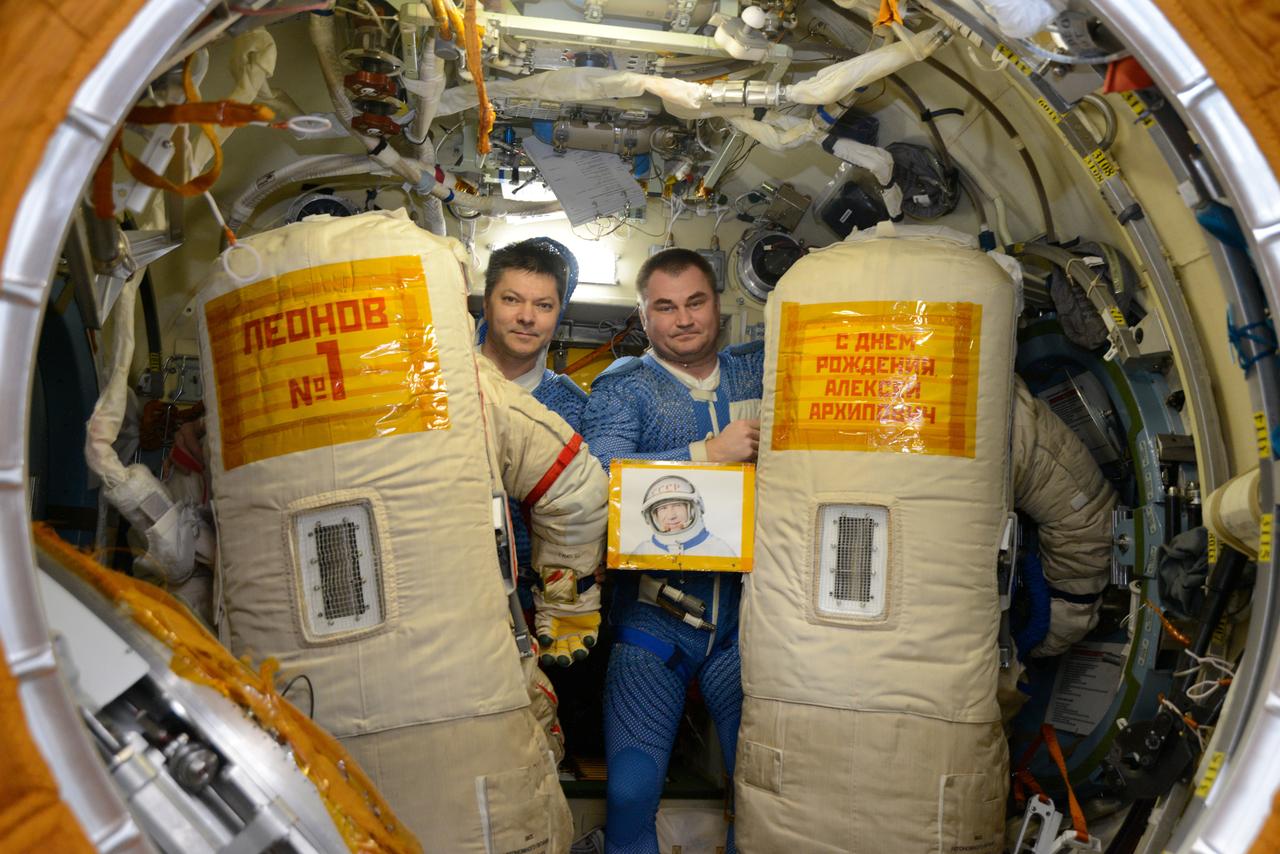
iss059e072908 (May 26, 2019) --- Cosmonauts Oleg Kononenko (left) and Alexey Ovchinin commemorated Alexei Leonov, the first human to walk in space, who turns 85 on Thursday, with signs attached to their Orlan spacesuits during their May 29, 2019, spacewalk. The sign attached to the spacesuit at left translates to, "Leonov #1." The sign on the spacesuit at right says, “Happy Birthday, Alexei Arkhipovich,” (Leonov’s patronymic name).
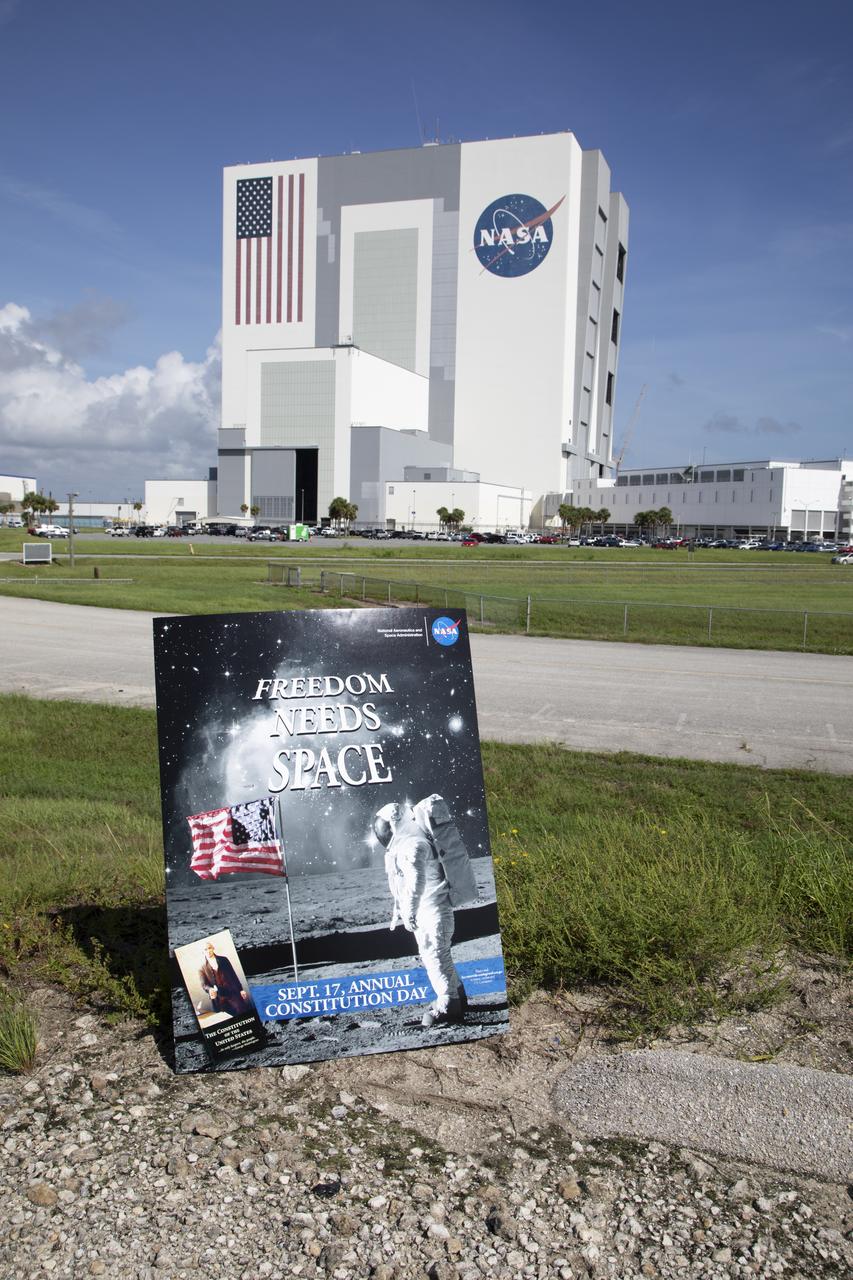
NASA's Kennedy Space Center in Florida observes U.S. Constitution Day, the official birthday of our U.S. government, with the theme "Freedom Needs Space." A remembrance poster made appearances in various locations around the multi-user spaceport, including near the iconic Vehicle Assembly Building. Constitution Day is an American federal observance. It recognizes the adoption of the U.S. Constitution and those who have become U.S. citizens. Constitution Day is observed on Sept. 17, the day in 1787 that delegates to the Constitutional Convention signed the document in Philadelphia.
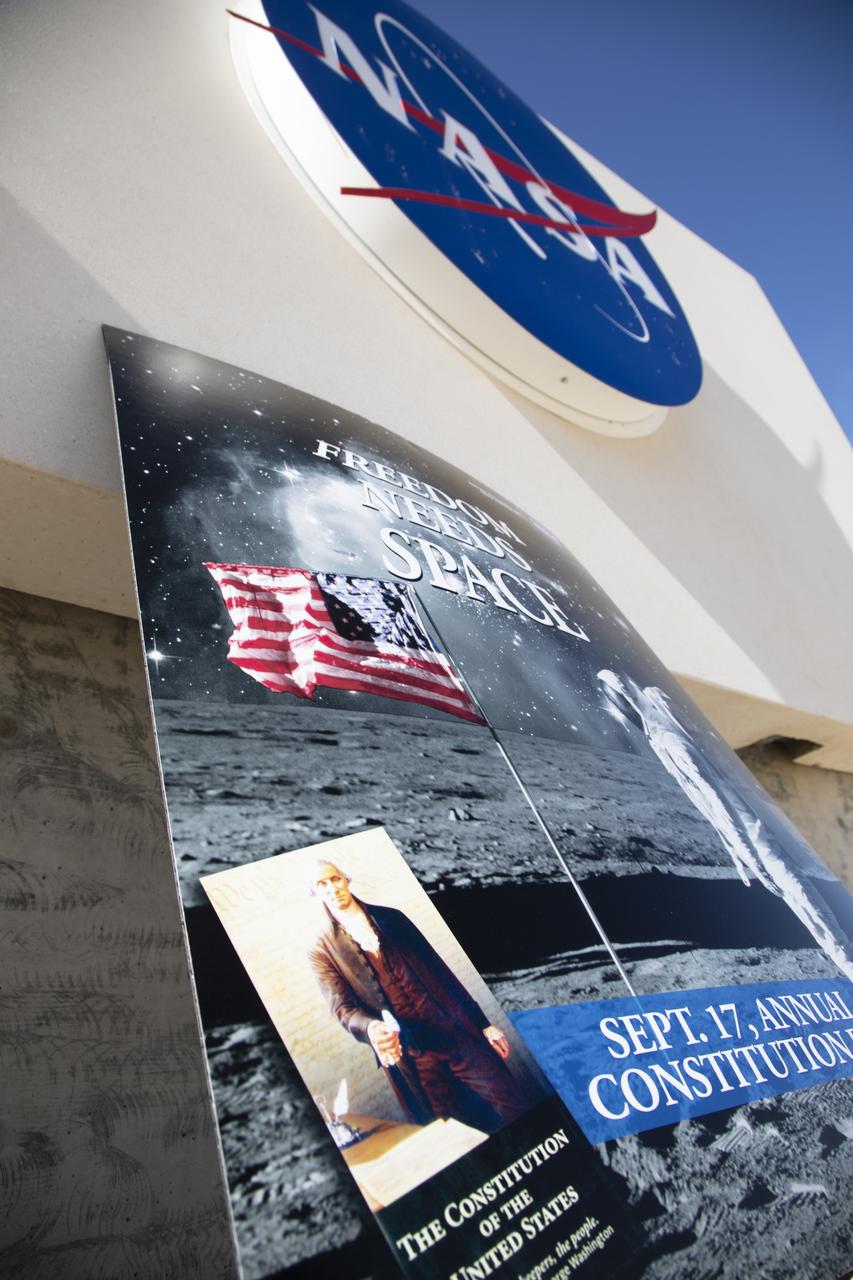
NASA's Kennedy Space Center in Florida observes U.S. Constitution Day, the official birthday of our U.S. government, with the theme "Freedom Needs Space." A remembrance poster made appearances in various locations around the multi-user spaceport, including at the new Headquarters Campus building. Constitution Day is an American federal observance. It recognizes the adoption of the U.S. Constitution and those who have become U.S. citizens. Constitution Day is observed on Sept. 17, the day in 1787 that delegates to the Constitutional Convention signed the document in Philadelphia.
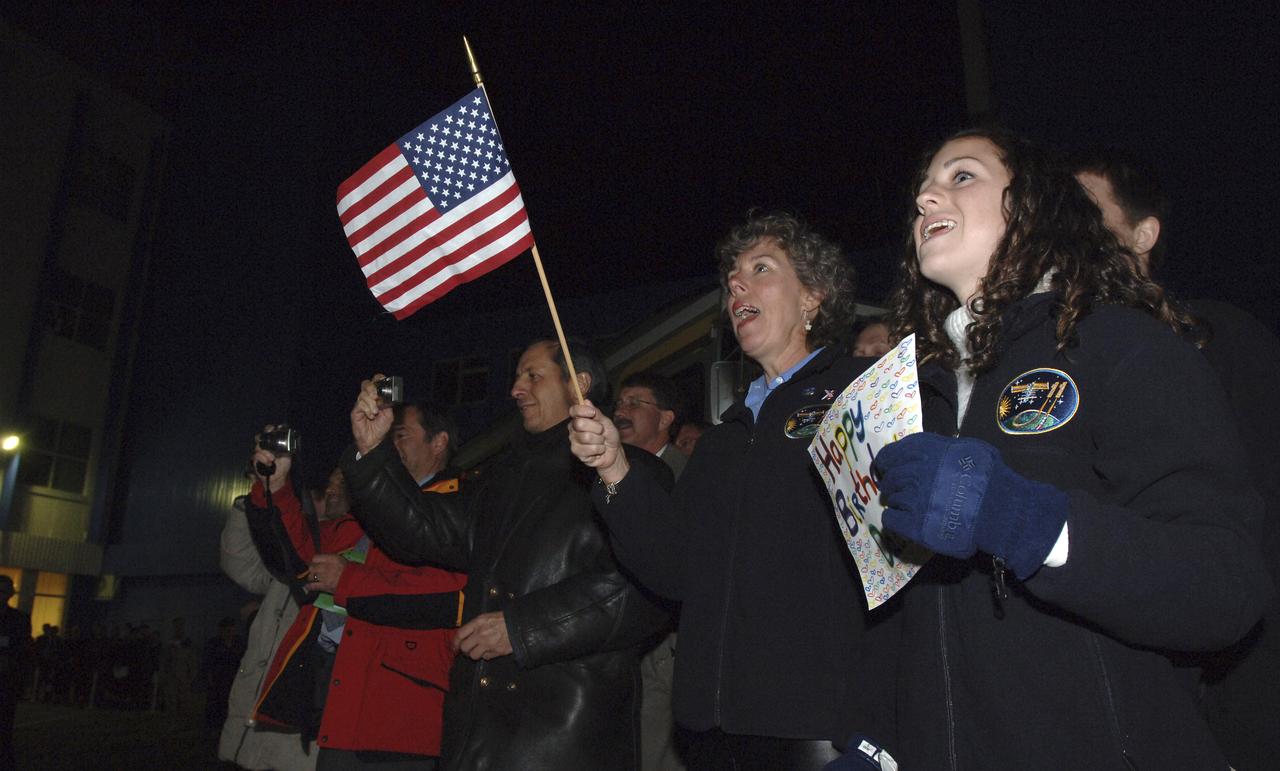
Unidentified family members of NASA astronaut John Phillips waves offers up best wishes for a safe mission and a happy birthday prior to launch, Friday, April 15, 2005, aboard the Soyuz TMA-6 spacecraft from the Baikonur Cosmodrome in Kazakhstan for a two-day trip to the International Space Station where he will spend six months living in space. Photo Credit: (NASA/Bill Ingalls)
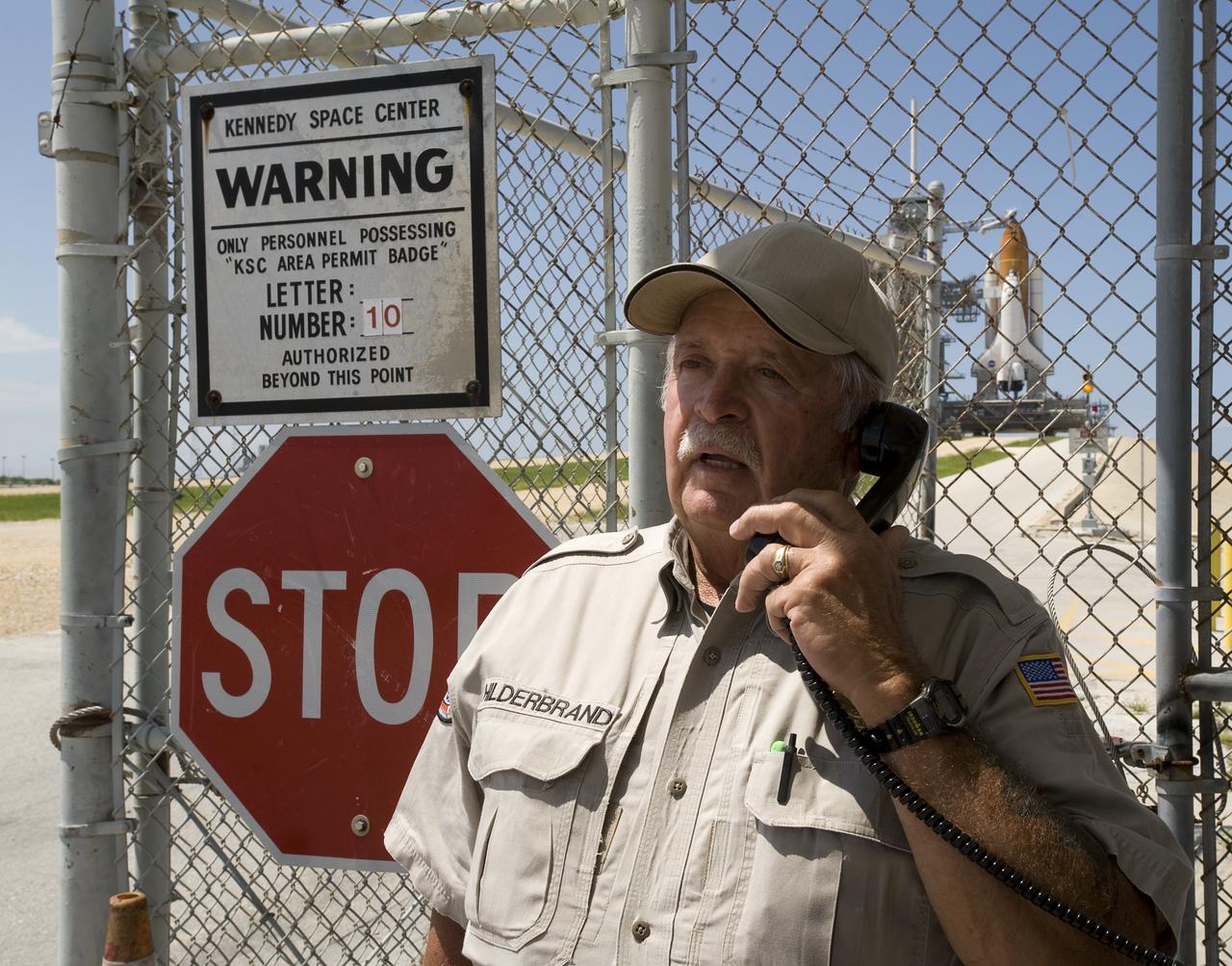
NASA Kennedy Space Center Security Officer, Jack "Supr Jac" Hilderbrand talks on the phone at the security gate to Pad 39a just a day shy of his 70th birthday and the planned launch of the space shuttle Endeavour with the STS-127 crew. Hilderbrand has been working for the space program since 1960. Photo Credit: (NASA/Bill Ingalls)

NASA's Kennedy Space Center in Florida observes U.S. Constitution Day, the official birthday of our U.S. government, with the theme "Freedom Needs Space." A remembrance poster made appearances in various locations around the multi-user spaceport, including near the iconic Vehicle Assembly Building. Constitution Day is an American federal observance. It recognizes the adoption of the U.S. Constitution and those who have become U.S. citizens. Constitution Day is observed on Sept. 17, the day in 1787 that delegates to the Constitutional Convention signed the document in Philadelphia.
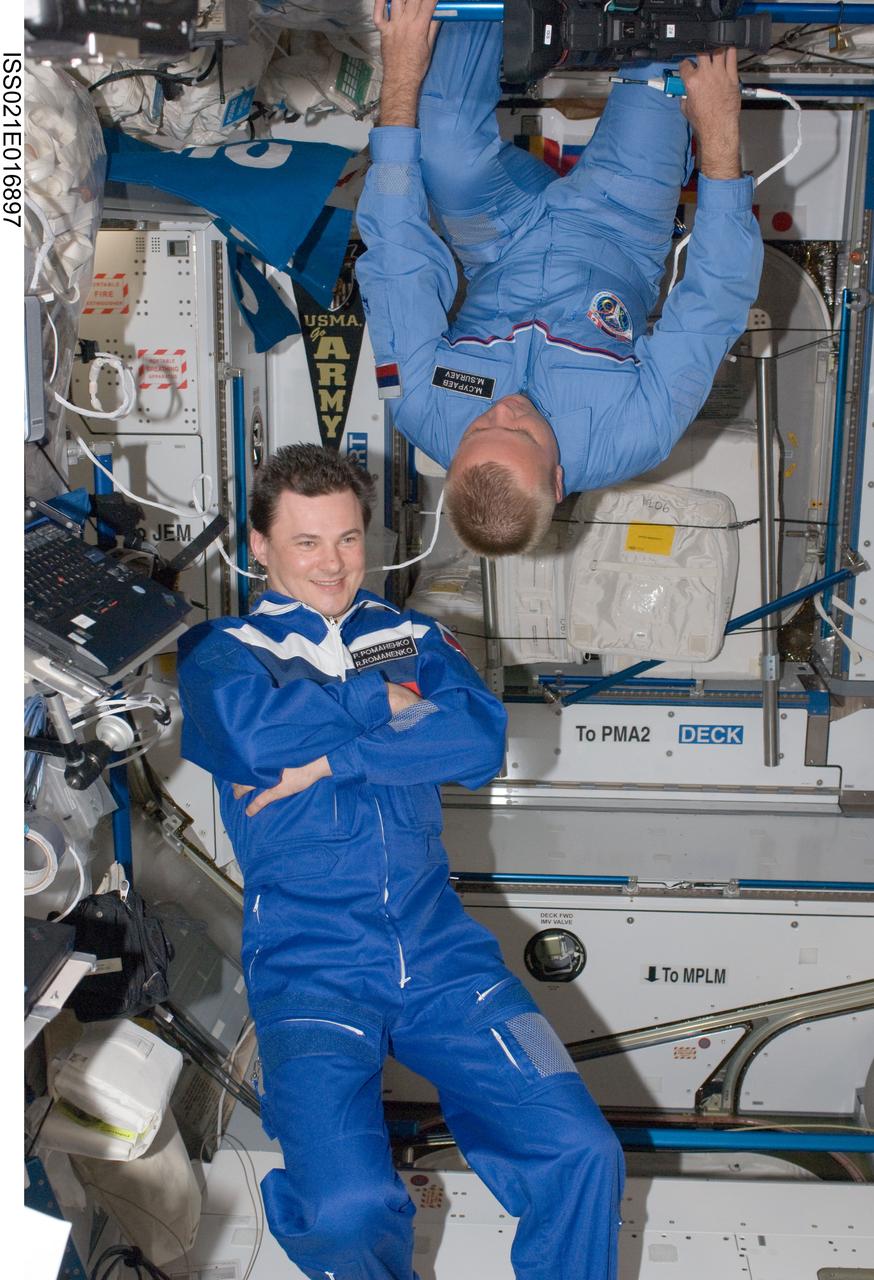
ISS021-E-016897 (12 Oct. 2009) --- Russian cosmonauts Roman Romanenko (left) and Maxim Suraev, both Expedition 21 flight engineers, participate in a PAO/TV downlink event from the Harmony node of the International Space Station. During the event, the crew members sent greetings to AK-47 Chief Designer M. T. Kalashnikov on his 90th birthday and to the participants of the Tenth Youth Tsiolkovsky Readings; along with a greeting to the 17th Annual International Space Olympiad for School Children, hosted by the City of Korolev.

(9 March 2014) --- In Karaganda, Kazakhstan, members of the Russian Search and Recovery Forces lay flowers March 9 at the statue of Yuri Gagarin, the first human to fly in space, in commemoration of his 80th birthday. Gagarin, who died in an aircraft training accident in 1968, was launched into the history books from the Baikonur Cosmodrome in Kazakhstan on April 12, 1961. NASA astronauts and officials were in Karaganda for the commemoration in advance of supporting the landing March 11, Kazakh time, of Expedition 38 crew members Oleg Kotov, Sergey Ryazanskiy and NASA’s Michael Hopkins in their Soyuz TMA-10M spacecraft. Photo credit: NASA
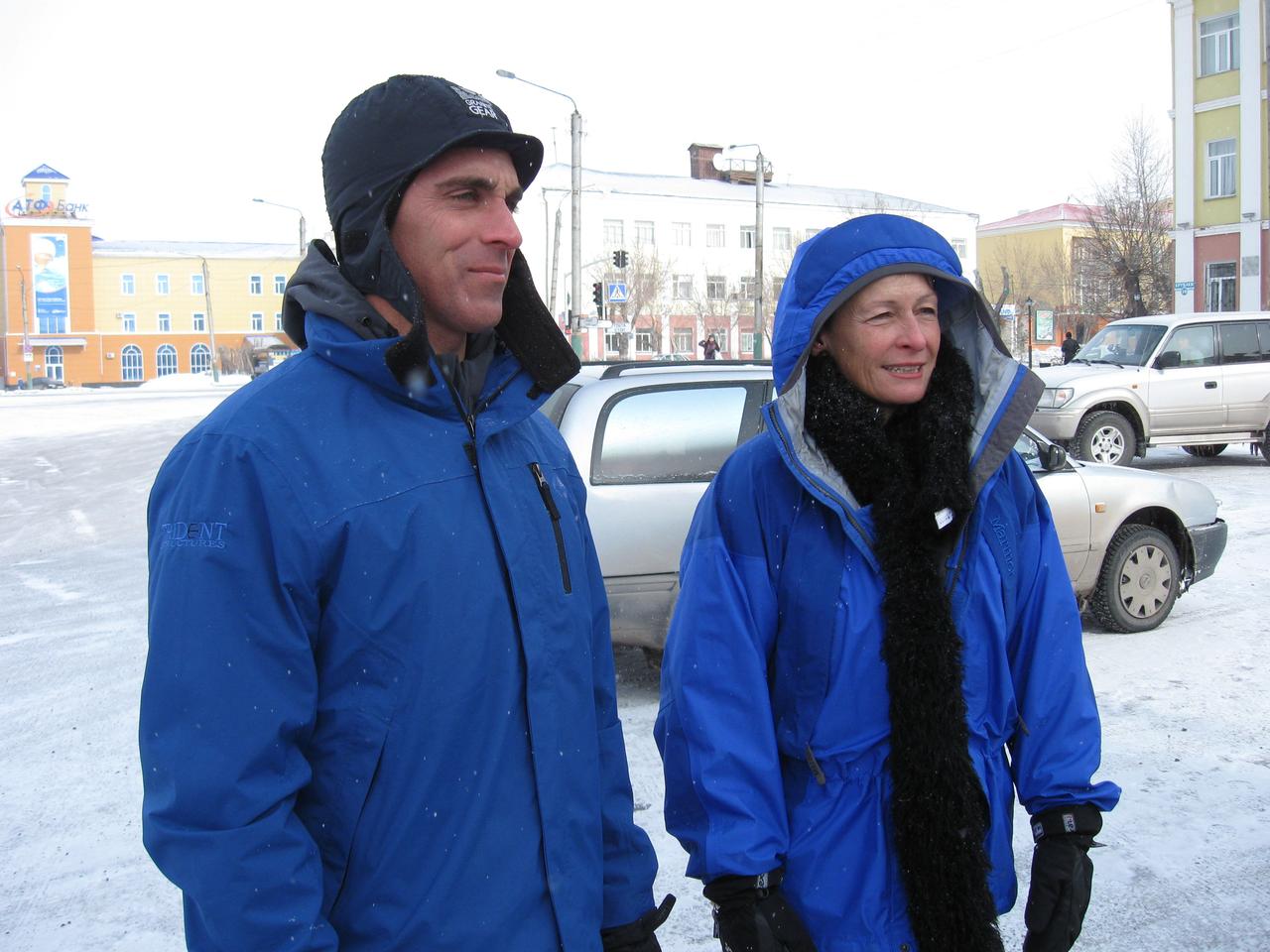
(9 March 2014) --- In Karaganda, Kazakhstan, NASA astronauts Chris Cassidy (left) and Peggy Whitson (right) were among a contingent of NASA personnel paying tribute March 9 to Yuri Gagarin, the first human to fly in space on the occasion of his 80th birthday and to support the landing March 11, Kazakh time of Expedition 38 crewmembers Oleg Kotov, Sergey Ryazanskiy and NASA’s Michael Hopkins in their Soyuz TMA-10M spacecraft. Gagarin, who died in an aircraft training accident in 1968, was launched into the history books from the Baikonur Cosmodrome in Kazakhstan on April 12, 1961. Photo credit: NASA

NASA's Kennedy Space Center in Florida observes U.S. Constitution Day, the official birthday of our U.S. government, with the theme "Freedom Needs Space." A remembrance poster made appearances in various locations around the multi-user spaceport, including on the crawlerway, as the mobile launcher, atop crawler-transporter 2, in the background, slowly moves off of Launch Pad 39B for its trip to the Vehicle Assembly Building. Constitution Day is an American federal observance. It recognizes the adoption of the U.S. Constitution and those who have become U.S. citizens. Constitution Day is observed on Sept. 17, the day in 1787 that delegates to the Constitutional Convention signed the document in Philadelphia.

(9 March 2014) --- In Karaganda, Kazakhstan, NASA astronaut Peggy Whitson delivered remarks March 9 as she prepared to lay flowers at the statue of Yuri Gagarin, the first human to fly in space, in commemoration of his 80th birthday. Gagarin, who died in an aircraft training accident in 1968, was launched into the history books from the Baikonur Cosmodrome in Kazakhstan on April 12, 1961. Whitson and other NASA astronauts and officials were in Karaganda for the commemoration in advance of supporting the landing March 11, Kazakh time, of Expedition 38 crew members Oleg Kotov, Sergey Ryazanskiy and NASA’s Michael Hopkins in their Soyuz TMA-10M spacecraft. Photo credit: NASA

(9 March 2014) --- In Karaganda, Kazakhstan, members of the Russian Search and Recovery Forces prepare to lay flowers March 9 at the statue of Yuri Gagarin, the first human to fly in space, in commemoration of his 80th birthday. Gagarin, who died in an aircraft training accident in 1968, was launched into the history books from the Baikonur Cosmodrome in Kazakhstan on April 12, 1961. NASA astronauts and officials were in Karaganda for the commemoration in advance of supporting the landing March 11, Kazakh time, of Expedition 38 crew members Oleg Kotov, Sergey Ryazanskiy and NASA’s Michael Hopkins in their Soyuz TMA-10M spacecraft. Photo credit: NASA
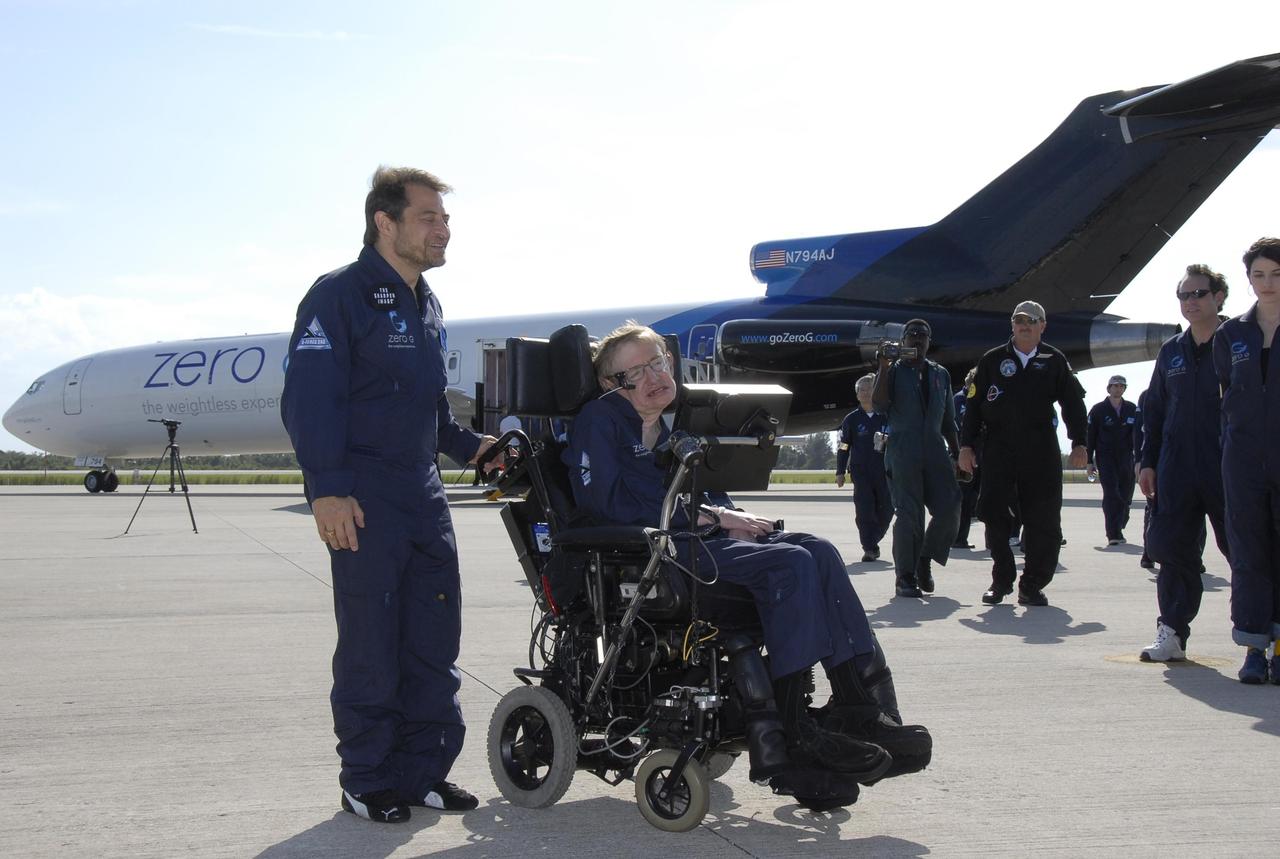
KENNEDY SPACE CENTER, FLA. -- Peter Diamandis (left), founder of the Zero Gravity Corp., and noted physicist Stephen Hawking move away from Zero G's modified Boeing 727 on the runway at the Kennedy Space Center's Shuttle Landing Facility. Hawking enjoyed his first zero gravity flight provided by Zero G. At the celebration of his 65th birthday on January 8 this year, Hawking announced his plans for a zero-gravity flight to prepare for a sub-orbital space flight in 2009 on Virgin Galactic's space service. Photo credit: NASA/Kim Shiflett
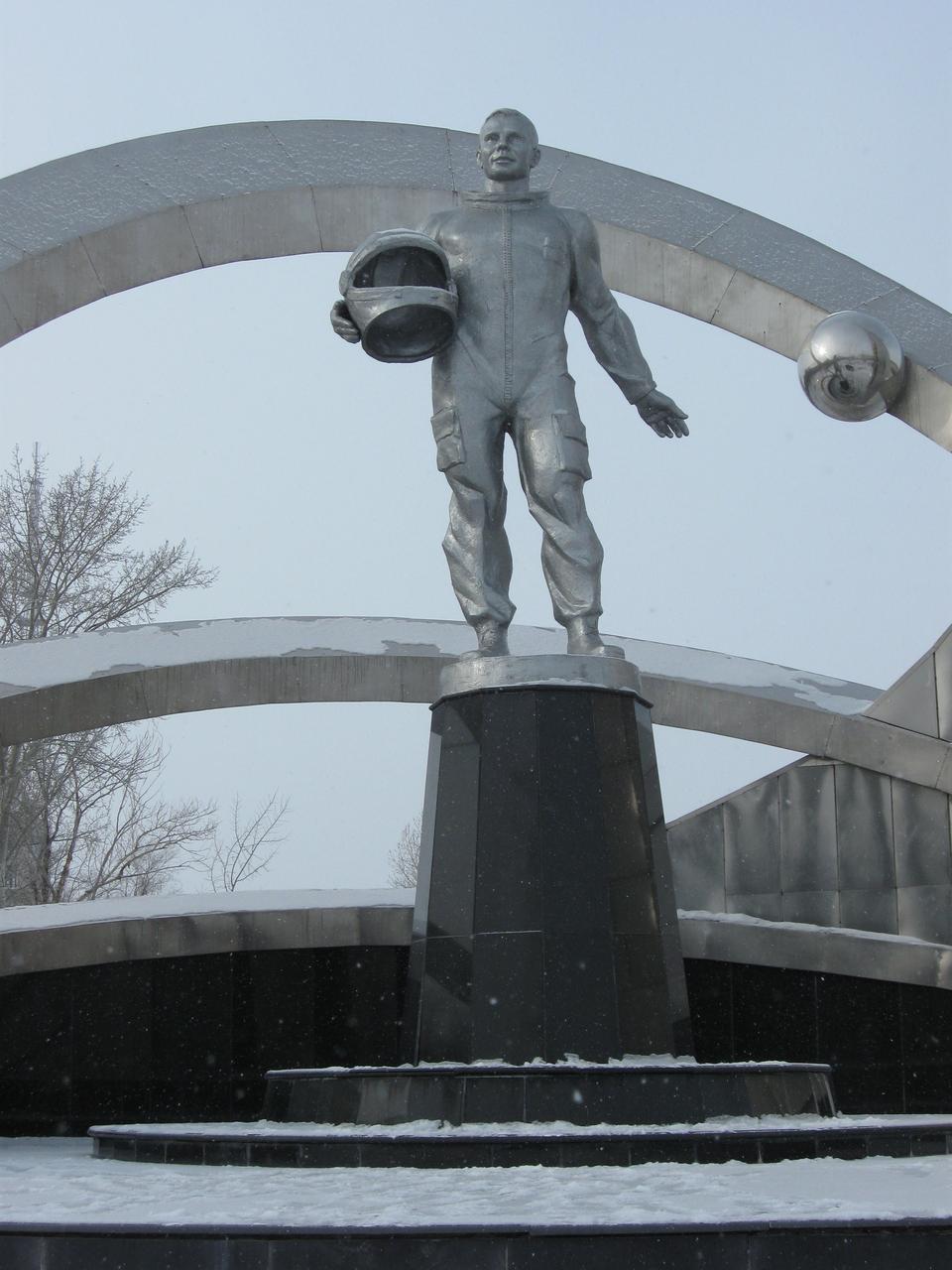
(9 March 2014) --- The statue of Yuri Gagarin, the first human to fly in space, looms over the town square in Karaganda, Kazakhstan March 9 as officials prepared to commemorate him on his 80th birthday. Gagarin, who died in an aircraft training accident in 1968, was launched into the history books from the Baikonur Cosmodrome in Kazakhstan on April 12, 1961. NASA astronauts and officials were in Karaganda for the commemoration in advance of supporting the landing March 11, Kazakh time, of Expedition 38 crew members Oleg Kotov, Sergey Ryazanskiy and NASA’s Michael Hopkins in their Soyuz TMA-10M spacecraft. Photo credit: NASA
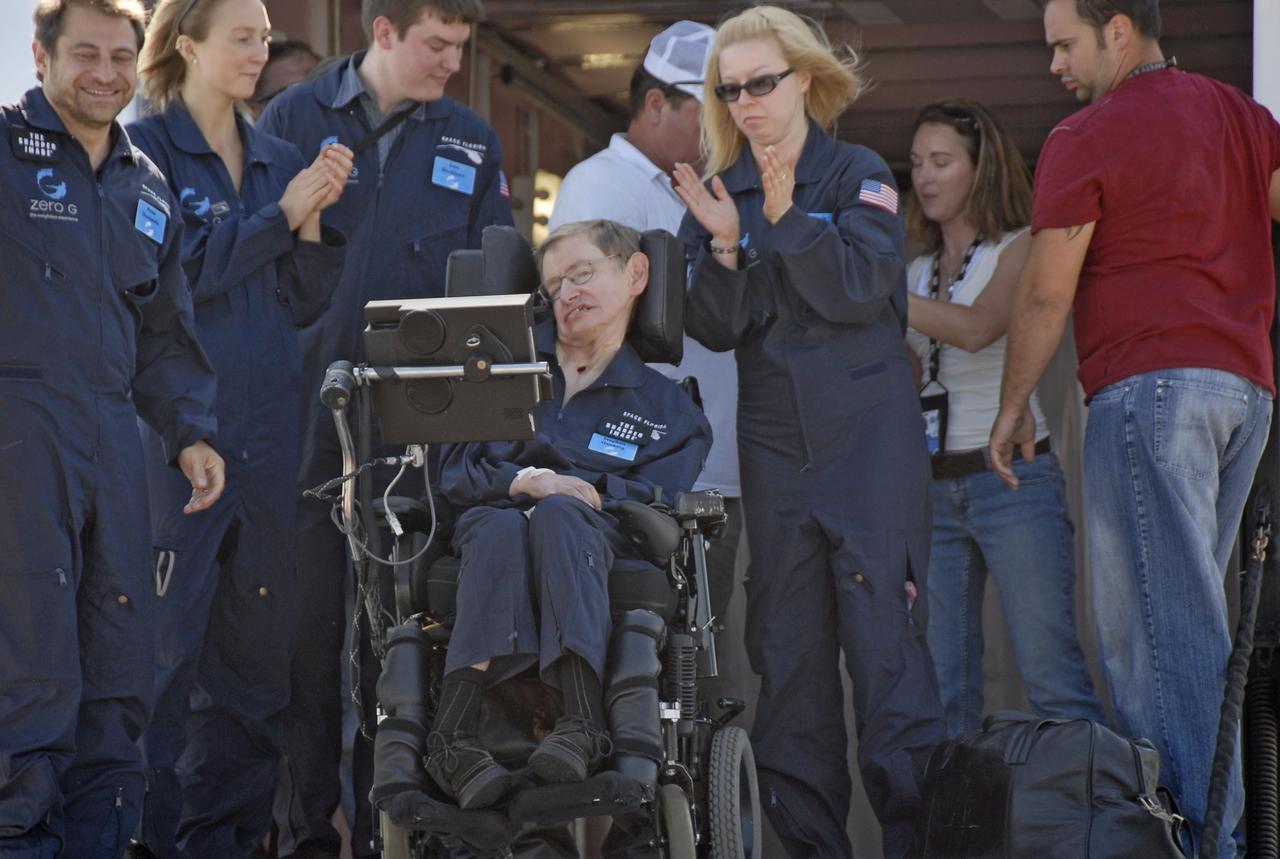
KENNEDY SPACE CENTER, FLA. -- Noted physicist Stephen Hawking (center) returns to the Kennedy Space Center Shuttle Landing Facility after a zero gravity flight. At far left is Peter Diamandis, founder of the Zero Gravity Corp. that provided the flight aboard its modified Boeing 727. Hawking suffers from amyotrophic lateral sclerosis (also known as Lou Gehrig's disease). At the celebration of his 65th birthday on January 8 this year, Hawking announced his plans for a zero-gravity flight to prepare for a sub-orbital space flight in 2009 on Virgin Galactic's space service. Photo credit: NASA/Kim Shiflett
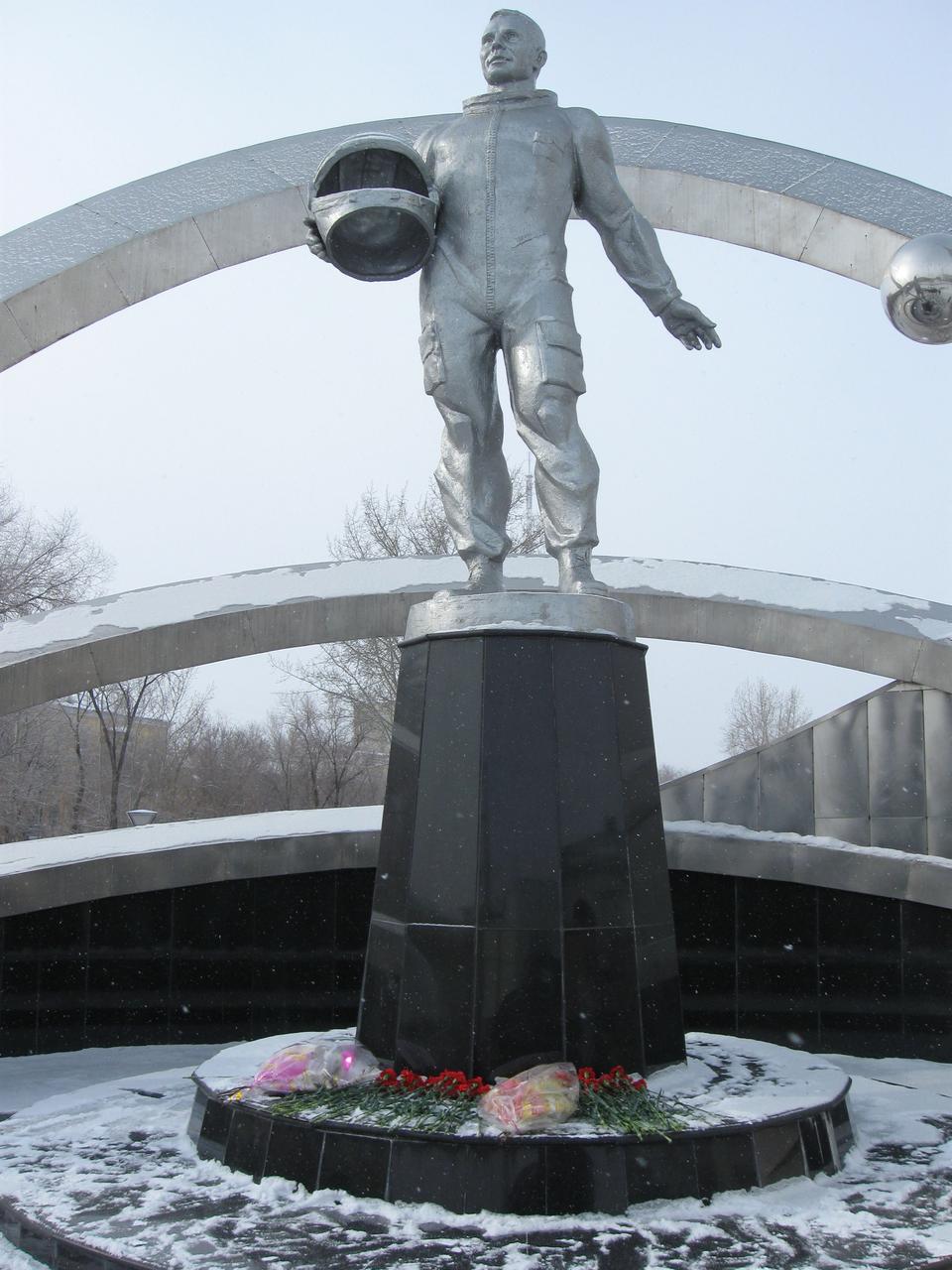
(9 March 2014) --- In Karaganda, Kazakhstan, flowers adorn the statue of Yuri Gagarin, the first human to fly in space, March 9 in commemoration of his 80th birthday. Gagarin, who died in an aircraft training accident in 1968, was launched into the history books from the Baikonur Cosmodrome in Kazakhstan on April 12, 1961. NASA astronauts and officials were in Karaganda for the commemoration in advance of supporting the landing March 11, Kazakh time, of Expedition 38 crew members Oleg Kotov, Sergey Ryazanskiy and NASA’s Michael Hopkins in their Soyuz TMA-10M spacecraft. Photo credit: NASA
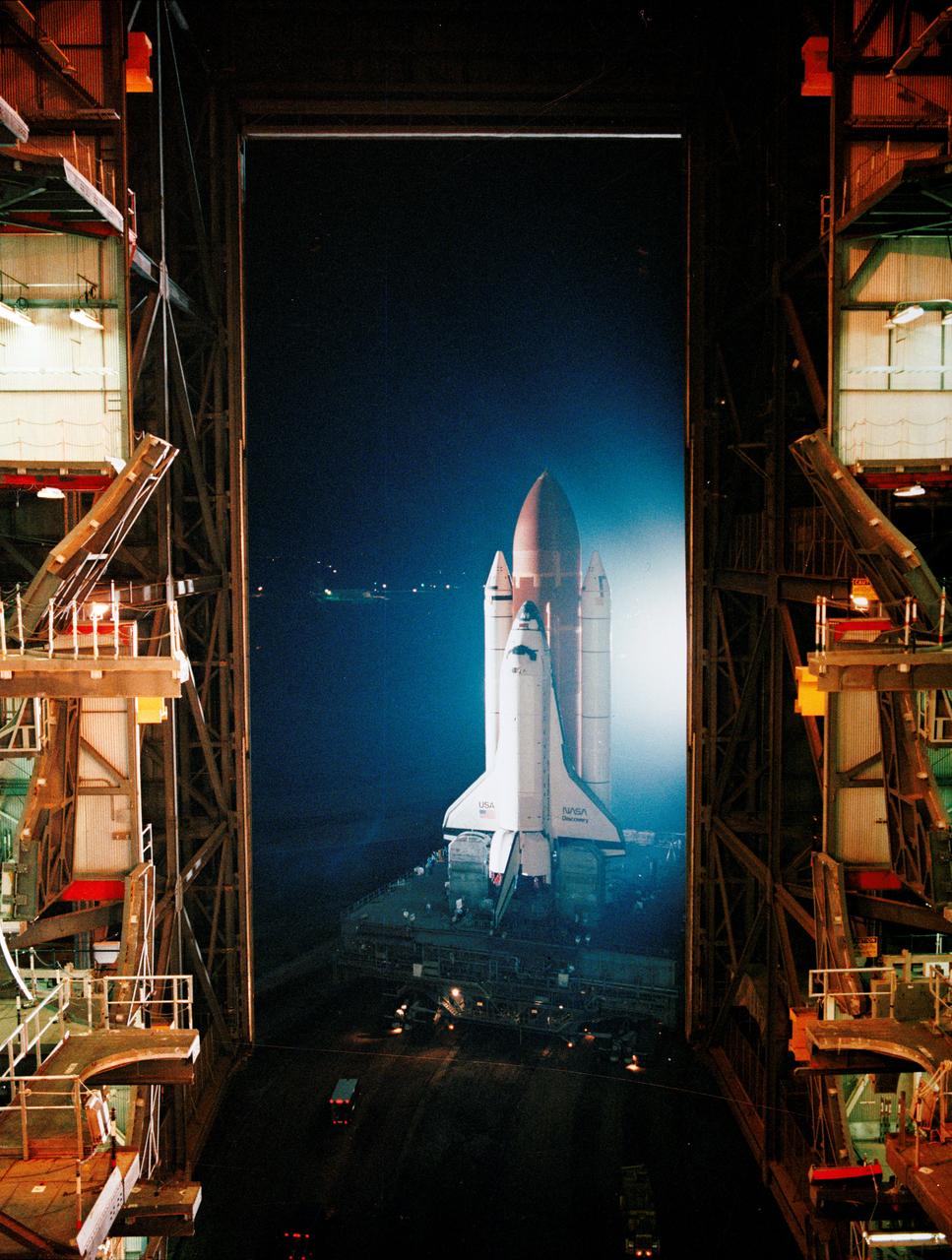
STS-26 Discovery, Orbiter Vehicle (OV) 103, mated with the external tank (ET) and solid rocket boosters (SRBs), is framed by Kennedy Space Center's (KSC's) vehicle assembly building (VAB) doorway as it rolled out. This high angle view shows OV-103 atop the mobile launch pad and crawler transporter as it begins its slow exit from VAB en route to launch complex (LC) pad 39B. The move began shortly after midnight on the nation's 212th birthday. Ceremonies marking the event were held later during daylight hours.

NASA’s Artemis II pilot Victor Glover, center, reacts while seeing a special recognition of his 50th birthday by the Nasdaq in Times Square, New York, after ringing the closing bell of the Nasdaq market session, with fellow crewmembers; CSA (Canadian Space Agency) astronaut Jeremy Hansen, mission specialist; and NASA astronauts Reid Wiseman, commander; Christina Koch, mission specialist, Thursday, April 30, 2026. NASA’s Artemis II mission took Wiseman, Glover, Koch, and Hansen on a nearly 10-day journey around the Moon and back to Earth earlier in April 2026. Photo Credit: (NASA/Bill Ingalls)

NASA’s Artemis II pilot Victor Glover, reacts as his fellow crewmembers sing happy birthday to him in Times Square, New York, shortly after ringing the closing bell of the Nasdaq market session, with fellow crewmembers; CSA (Canadian Space Agency) astronaut Jeremy Hansen, mission specialist; and NASA astronauts Reid Wiseman, commander; Christina Koch, mission specialist, Thursday, April 30, 2026. NASA’s Artemis II mission took Wiseman, Glover, Koch, and Hansen on a nearly 10-day journey around the Moon and back to Earth earlier in April 2026. Photo Credit: (NASA/Bill Ingalls)

KENNEDY SPACE CENTER, FLA. -- Noted physicist Stephen Hawking (center) returns to the Kennedy Space Center Shuttle Landing Facility after a zero gravity flight. At his side is Nicola O'Brien, a nurse practitioner who is Hawking's aide. At far left on the truck's tail gate is Peter Diamandis, founder of the Zero Gravity Corp. that provided the flight aboard its modified Boeing 727. Hawking suffers from amyotrophic lateral sclerosis (also known as Lou Gehrig's disease). At the celebration of his 65th birthday on January 8 this year, Hawking announced his plans for a zero-gravity flight to prepare for a sub-orbital space flight in 2009 on Virgin Galactic's space service. Photo credit: NASA/Kim Shiflett
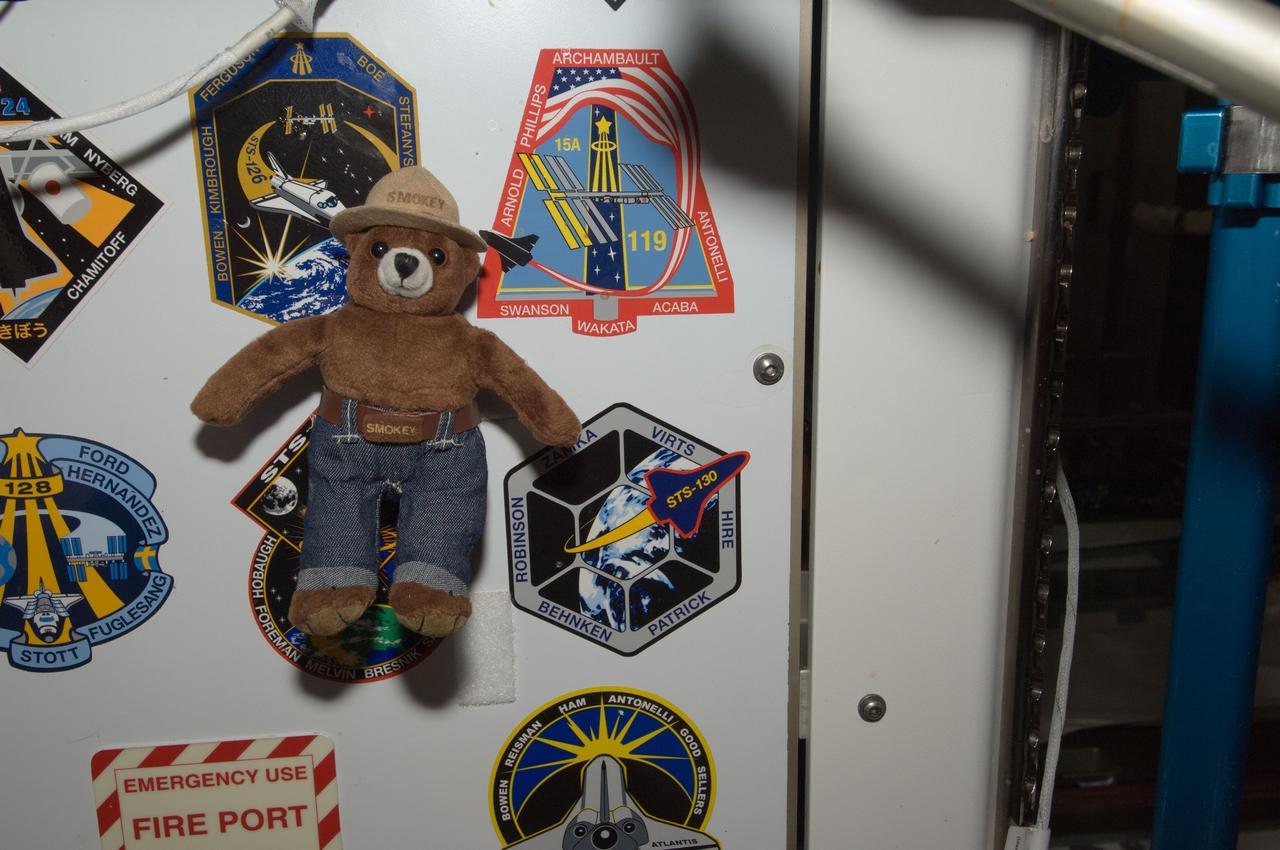
ISS032-E-011654 (3 Aug. 2012) --- Smokey Bear floats freely near crew insignias placed in the Unity node of the International Space Station. On May 15, 2012, Smokey traveled aboard the Soyuz spacecraft with NASA astronaut Joe Acaba and Russian cosmonauts Gennady Padalka and Sergei Revin to the space station. As a recognized symbol for wildland fire prevention, his presence on the orbiting complex also highlights the many areas of active space station research related to Earth observations, plant growth and combustion and materials sciences, as well as existing spinoff technologies in these areas. NASA, the U.S. Forest Service (USFS) and the Texas Forest Service are teaming up to celebrate Smokey's 68th birthday Aug. 9 at NASA's Johnson Space Center in Houston.
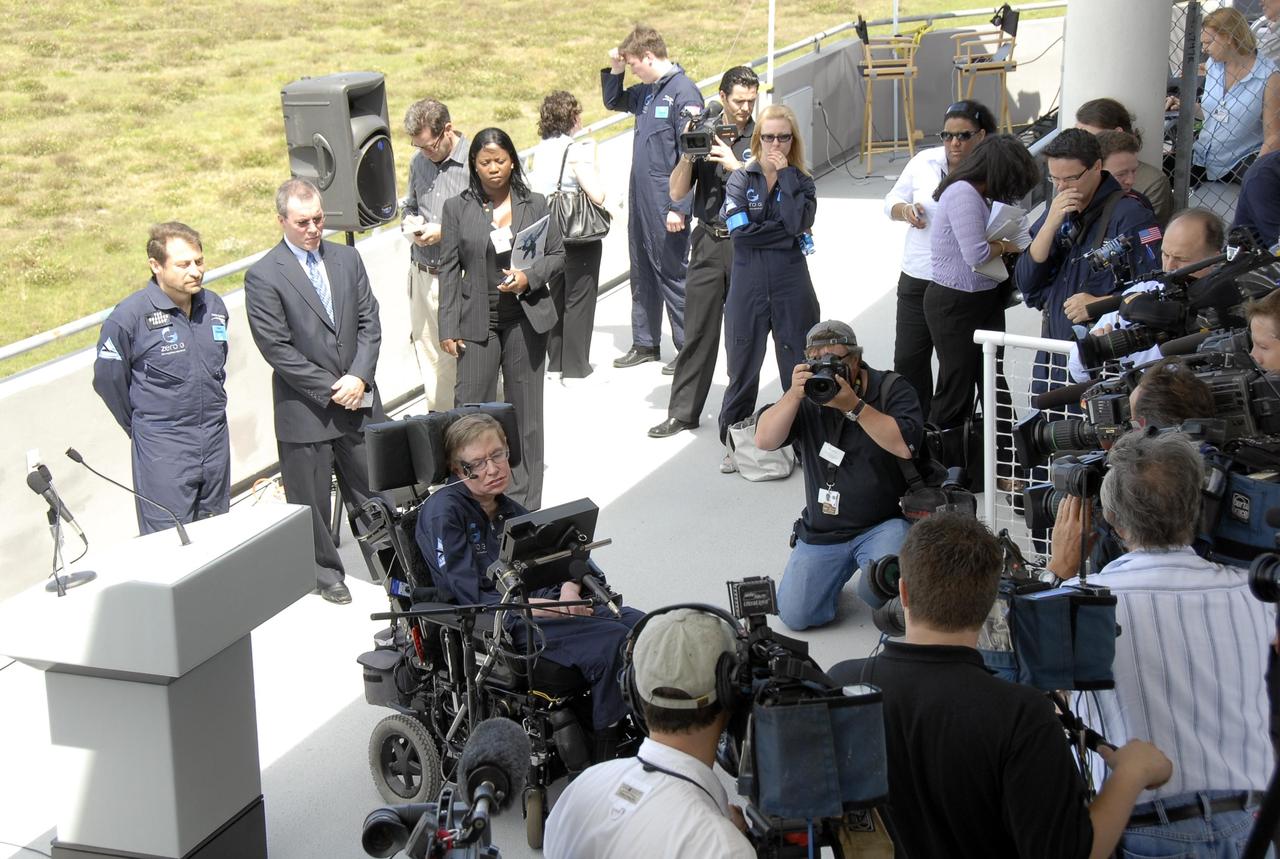
KENNEDY SPACE CENTER, FLA. -- The media surround noted wheelchair-bound physicist Stephen Hawking after his arrival at the Kennedy Space Center Shuttle Landing Facility for his first zero-gravity flight. Behind Hawking, at left, are Zero Gravity Corporation founder Peter Diamandis and Space Florida president Steve Kohler. The flight will be aboard a modified Boeing 727 aircraft owned by Zero G, a commercial company licensed to provide the public with weightless flight experiences. Hawking developed amyotrophic lateral sclerosis disease in the 1960s, a type of motor neuron disease which would cost him the loss of almost all neuromuscular control. At the celebration of his 65th birthday on January 8 this year, Hawking announced his plans for a zero-gravity flight to prepare for a sub-orbital space flight in 2009 on Virgin Galactic's space service. Photo credit: NASA/Kim Shiflett
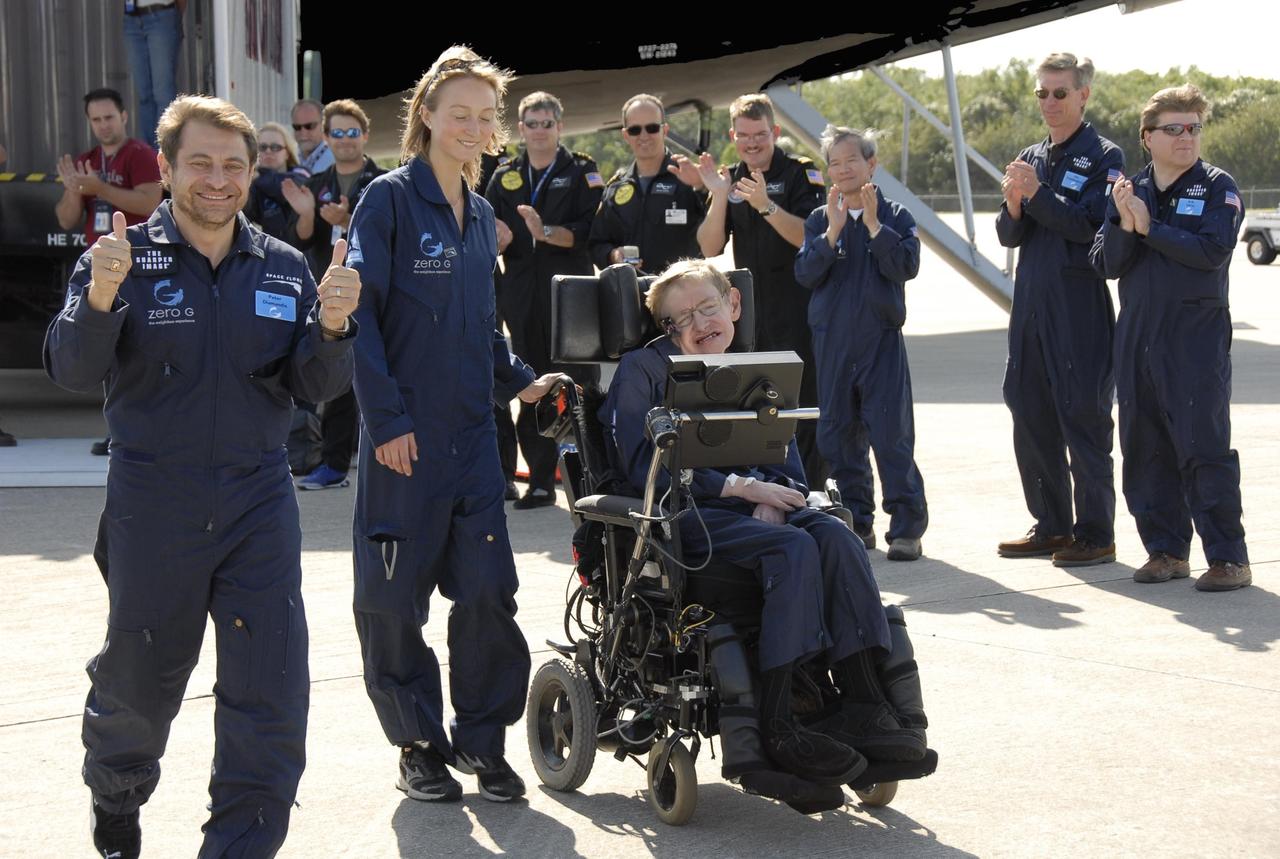
KENNEDY SPACE CENTER, FLA. -- Well-wishers greet noted physicist Stephen Hawking (in the wheelchair) at the Kennedy Space Center Shuttle Landing Facility after a zero gravity flight. Next to him at left are Peter Diamandis, founder of the Zero Gravity Corp. that provided the flight aboard its modified Boeing 727, and Nicola O'Brien, a nurse practitioner who is Hawking's aide. Hawking suffers from amyotrophic lateral sclerosis (also known as Lou Gehrig's disease). At the celebration of his 65th birthday on January 8 this year, Hawking announced his plans for a zero-gravity flight to prepare for a sub-orbital space flight in 2009 on Virgin Galactic's space service. Photo credit: NASA/Kim Shiflett
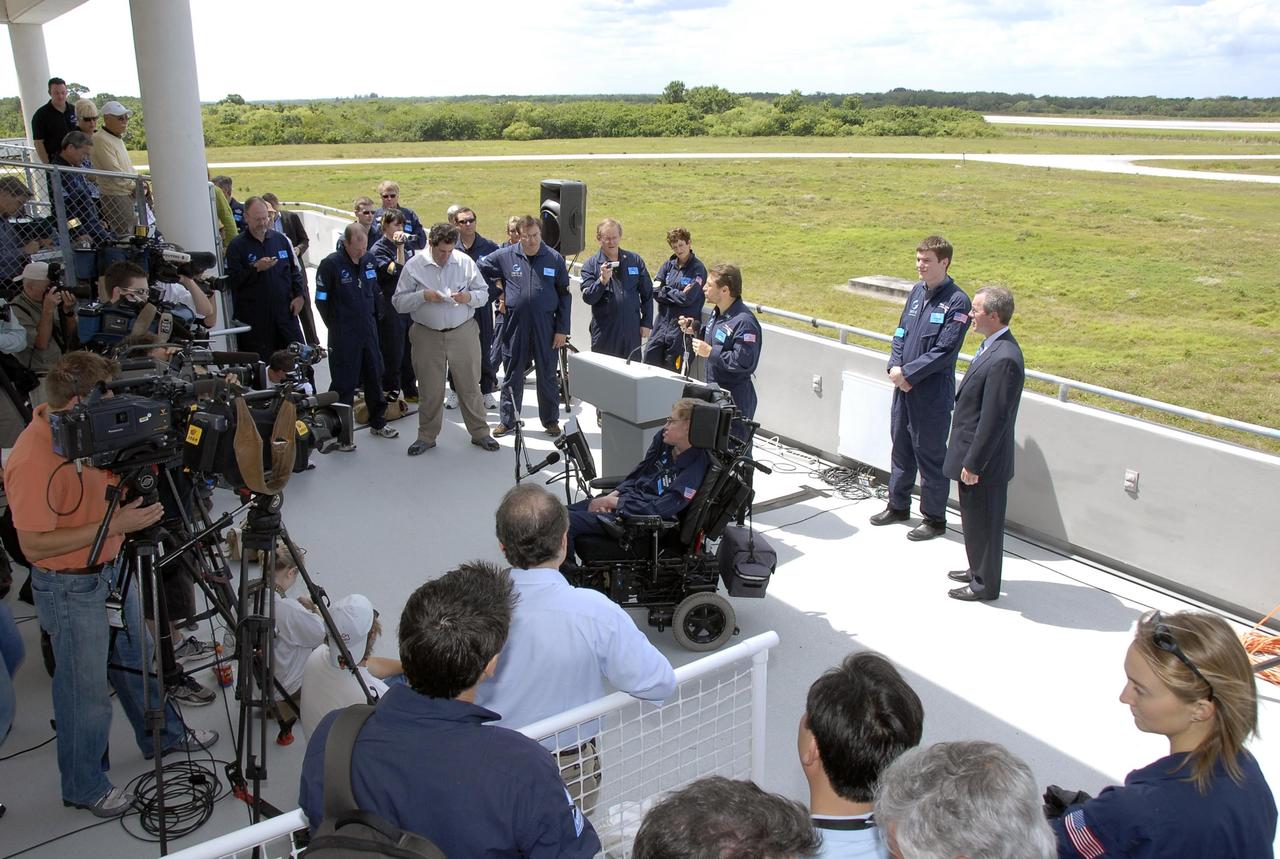
KENNEDY SPACE CENTER, FLA. -- At the Kennedy Space Center Shuttle Landing Facility, Peter Diamandis, founder of the Zero Gravity Corp., talks to the media about physicist Stephen Hawking's (in the wheelchair) first zero-gravity flight. The flight will be aboard a modified Boeing 727 aircraft owned by Zero Gravity Corp., a commercial company licensed to provide the public with weightless flight experiences. Hawking developed amyotrophic lateral sclerosis disease in the 1960s, a type of motor neuron disease which would cost him the loss of almost all neuromuscular control. At the celebration of his 65th birthday on January 8 this year, Hawking announced his plans for a zero-gravity flight to prepare for a sub-orbital space flight in 2009 on Virgin Galactic's space service. Photo credit: NASA/Kim Shiflett

KENNEDY SPACE CENTER, FLA. — Noted physicist Stephen Hawking greets the media after his arrival at the Kennedy Space Center Shuttle Landing Facility for his first zero-gravity flight. The flight will be aboard a modified Boeing 727 aircraft owned by Zero Gravity Corp., a commercial company licensed to provide the public with weightless flight experiences. Hawking developed amyotrophic lateral sclerosis disease in the 1960s, a type of motor neuron disease which would cost him the loss of almost all neuromuscular control. At the celebration of his 65th birthday on January 8 this year, Hawking announced his plans for a zero-gravity flight to prepare for a sub-orbital space flight in 2009 on Virgin Galactic's space service. Photo credit: NASA/Kim Shiflett

ISS032-E-011678 (3 Aug. 2012) --- Smokey Bear floats freely near a hatchway on the International Space Station. On May 15, 2012, Smokey traveled aboard the Soyuz spacecraft with NASA astronaut Joe Acaba and Russian cosmonauts Gennady Padalka and Sergei Revin to the space station. As a recognized symbol for wildland fire prevention, his presence on the orbiting complex also highlights the many areas of active space station research related to Earth observations, plant growth and combustion and materials sciences, as well as existing spinoff technologies in these areas. NASA, the U.S. Forest Service (USFS) and the Texas Forest Service are teaming up to celebrate Smokey's 68th birthday Aug. 9 at NASA's Johnson Space Center in Houston.
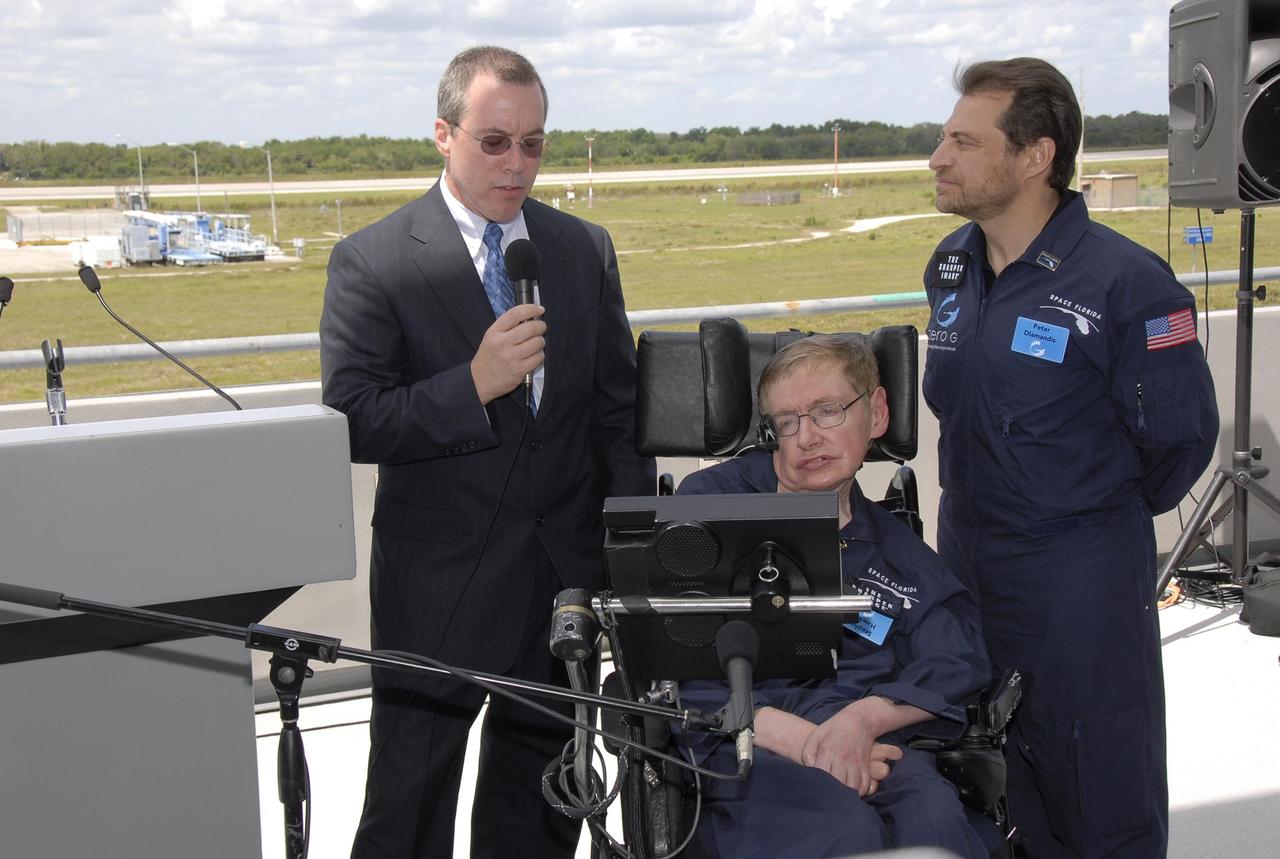
KENNEDY SPACE CENTER, FLA. -- At the Kennedy Space Center Shuttle Landing Facility, Space Florida president Steve Kohler (left) talks to the media about physicist Stephen Hawking's (in the wheelchair) first zero-gravity flight. The flight will be aboard a modified Boeing 727 aircraft owned by Zero Gravity Corp., a commercial company licensed to provide the public with weightless flight experiences. At right is Peter Diamandis, founder of the Zero Gravity Corp. Hawking developed amyotrophic lateral sclerosis disease in the 1960s, a type of motor neuron disease which would cost him the loss of almost all neuromuscular control. At the celebration of his 65th birthday on January 8 this year, Hawking announced his plans for a zero-gravity flight to prepare for a sub-orbital space flight in 2009 on Virgin Galactic's space service. Photo credit: NASA/Kim Shiflett