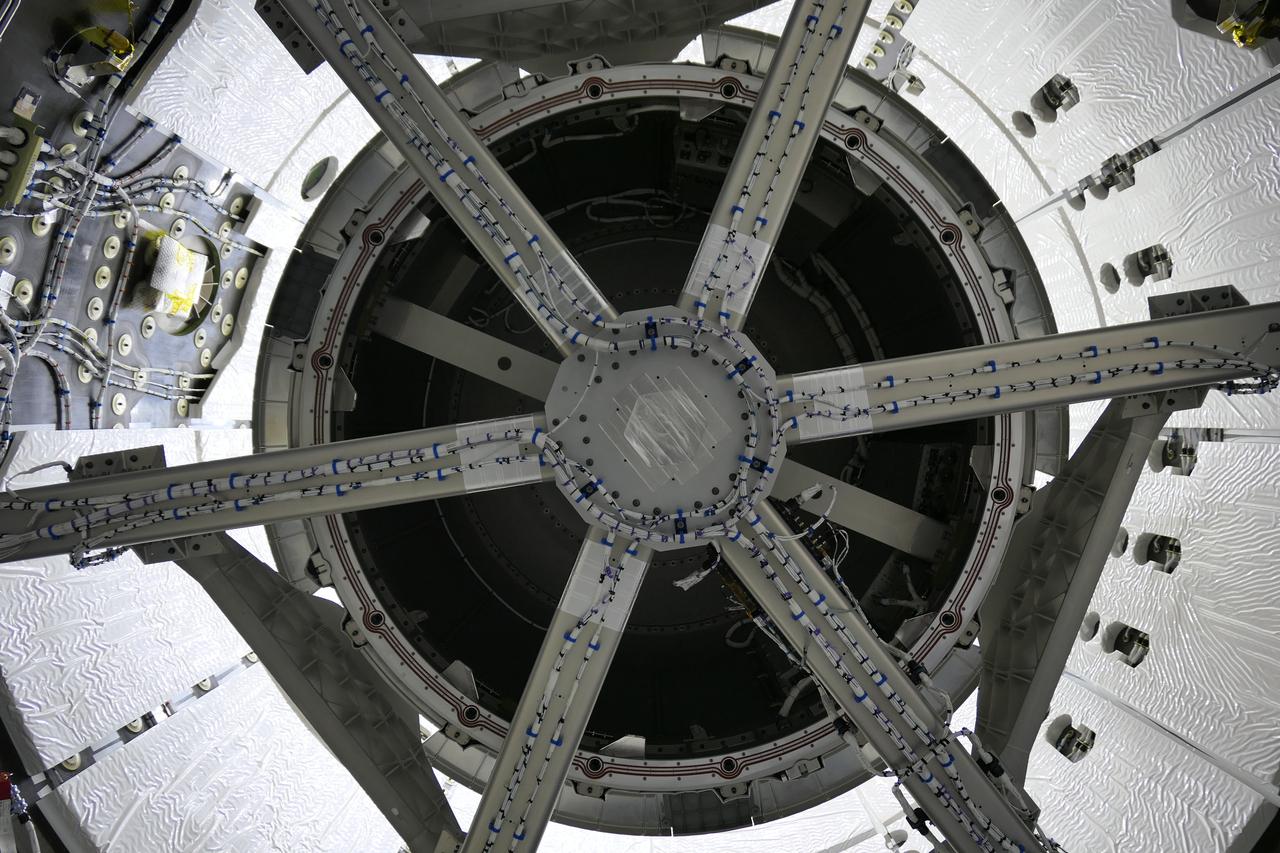
The Nanoracks Bishop Airlock is packed in the Dragon spacecraft’s trunk on Oct. 12, 2020, inside SpaceX’s processing facility at NASA’s Kennedy Space Center in Florida for its ride to the International Space Station aboard the company’s 21st Commercial Resupply Services (CRS-21) mission. The first commercially funded airlock for the orbiting laboratory, it will provide payload hosting, robotics testing, satellite deployment, serve as an outside toolbox for station crew spacewalks, and more. CRS-21 is scheduled to launch on a SpaceX Falcon 9 from Kennedy’s Launch Complex 39A.

The Nanoracks Bishop Airlock is packed in the Dragon spacecraft’s trunk on Oct. 12, 2020, inside SpaceX’s processing facility at NASA’s Kennedy Space Center in Florida for its ride to the International Space Station aboard the company’s 21st Commercial Resupply Services (CRS-21) mission. The first commercially funded airlock for the orbiting laboratory, it will provide payload hosting, robotics testing, satellite deployment, serve as an outside toolbox for station crew spacewalks, and more. CRS-21 is scheduled to launch on a SpaceX Falcon 9 from Kennedy’s Launch Complex 39A.
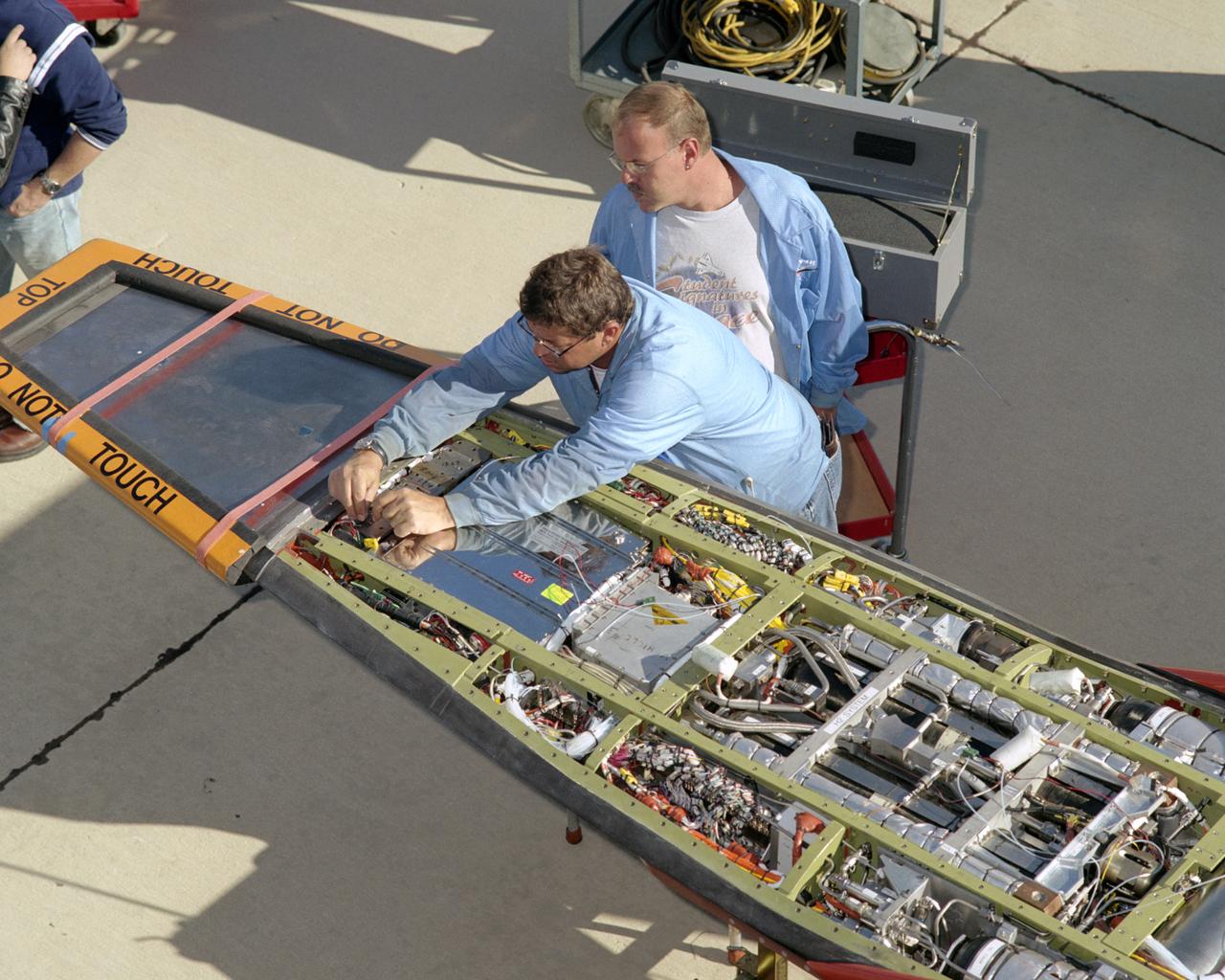
NASA avionics technicians Randy Wagner and Terry Bishop make final adjustments on the scramjet-powered X-43A before its record Mach 9.6 flight.
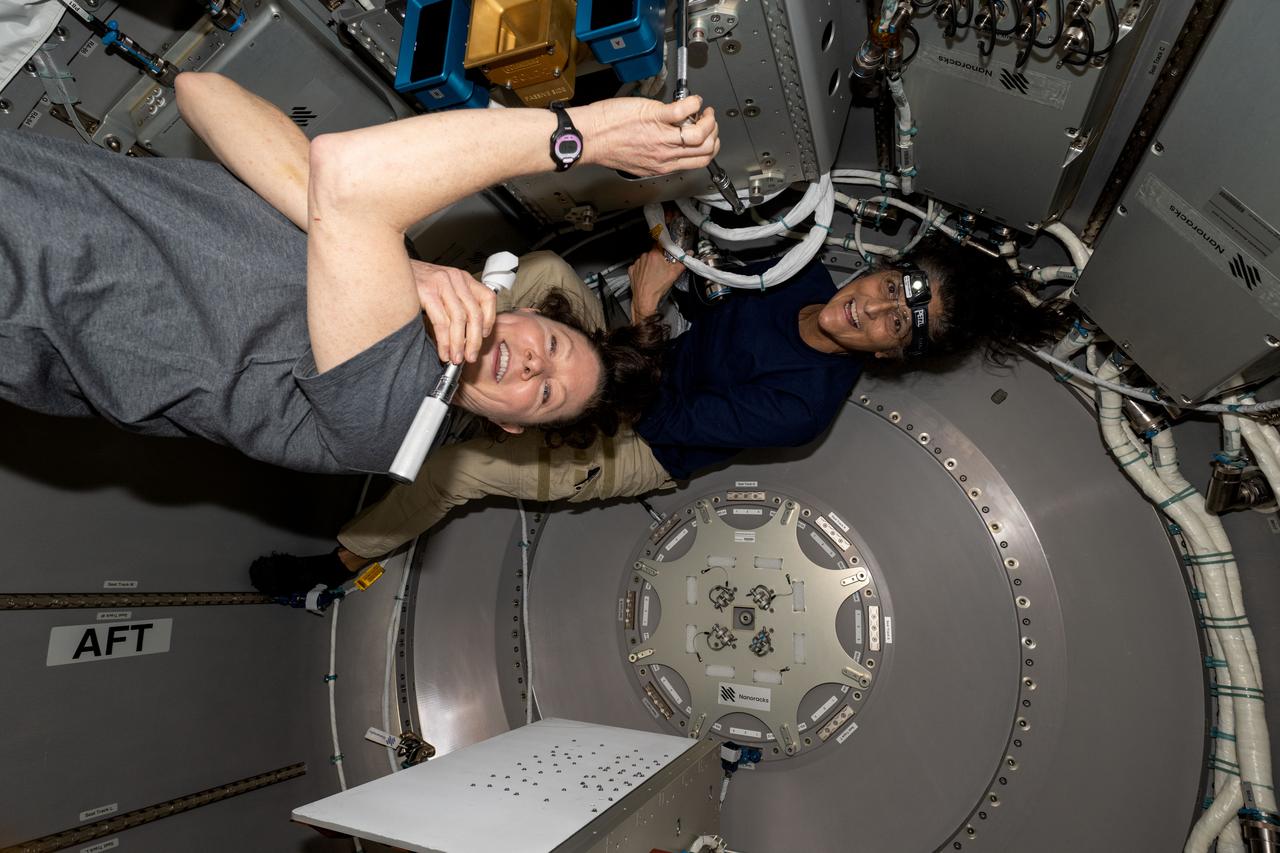
iss071e403704 (July 24, 2024) --- NASA astronauts (from left) Tracy C. Dyson, Expedition 71 Flight Engineer, and Suni Williams, Pilot for Boeing's Crew Flight Test, work inside the NanoRacks Bishop airlock located in the port side of the International Space Station's Tranquility module. The duo installed the the ArgUS Mission-1 technology demonstration hardware inside Bishop for placement outside in the vacuum of space to test the external operations of communications, computer processing, and high-definition video gear.
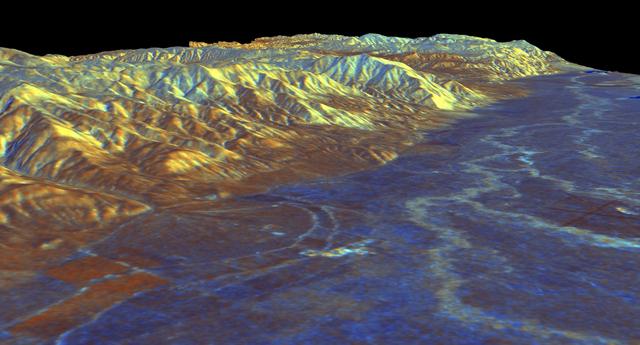
This is a three-dimensional perspective view of Owens Valley, near the town of Bishop, California that was created by combining two spaceborne radar images using a technique known as interferometry.

Bishop Ignatii of Kyzylorda and Aktobe gives blessings to personnel and the Soyuz rocket, Tuesday, Sept. 10, 2024, at the Baikonur Cosmodrome site 31 launch in Kazakhstan. Expedition 72 crew members: NASA astronaut Don Pettit, Roscosmos cosmonauts Alexey Ovchinin, and Ivan Vagner, are scheduled to launch aboard their Soyuz MS-26 spacecraft on September 11. Photo Credit: (NASA/Bill Ingalls)
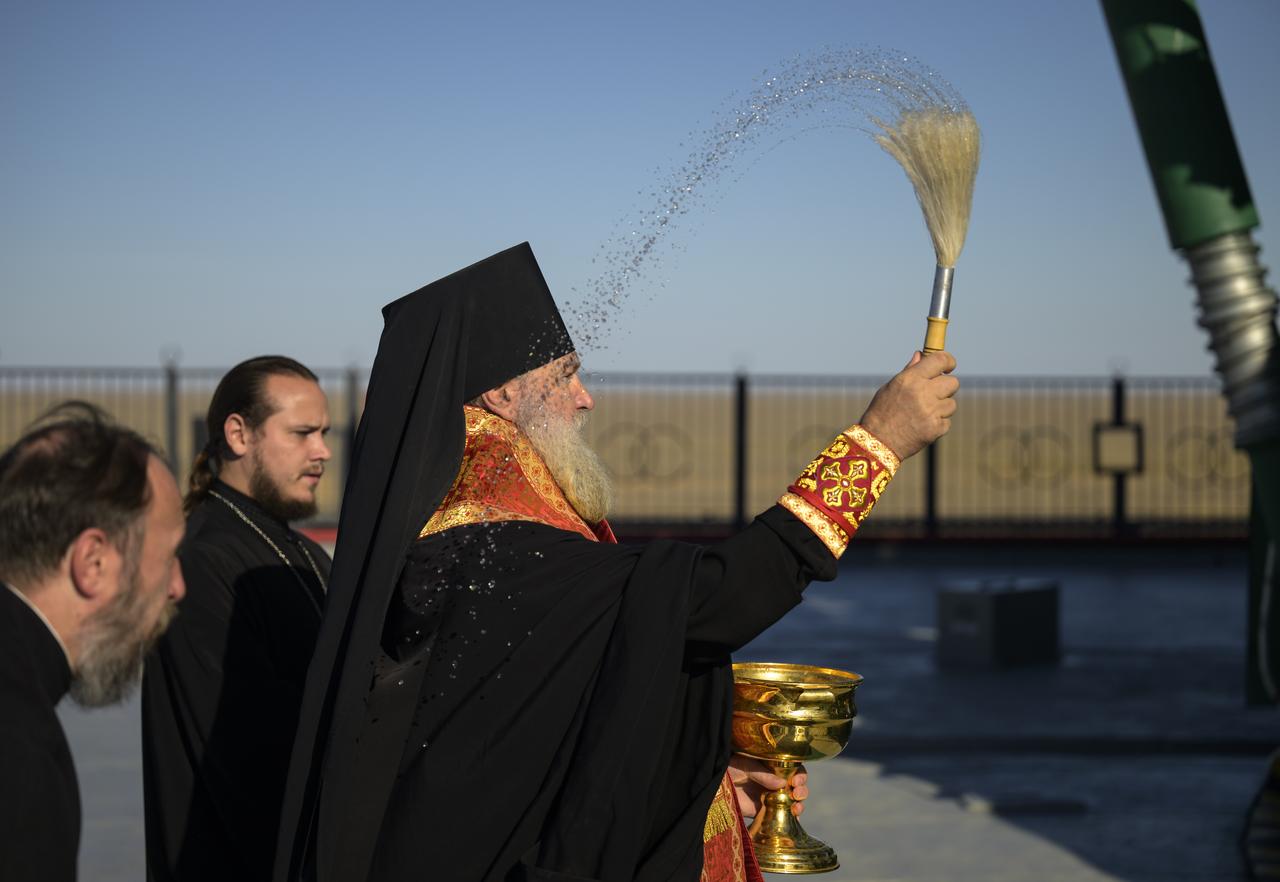
Bishop Ignatii of Kyzylorda and Aktobe blesses the Soyuz rocket, Tuesday, Sept. 10, 2024, at the Baikonur Cosmodrome site 31 launch in Kazakhstan. Expedition 72 crew members: NASA astronaut Don Pettit, Roscosmos cosmonauts Alexey Ovchinin, and Ivan Vagner, are scheduled to launch aboard their Soyuz MS-26 spacecraft on September 11. Photo Credit: (NASA/Bill Ingalls)
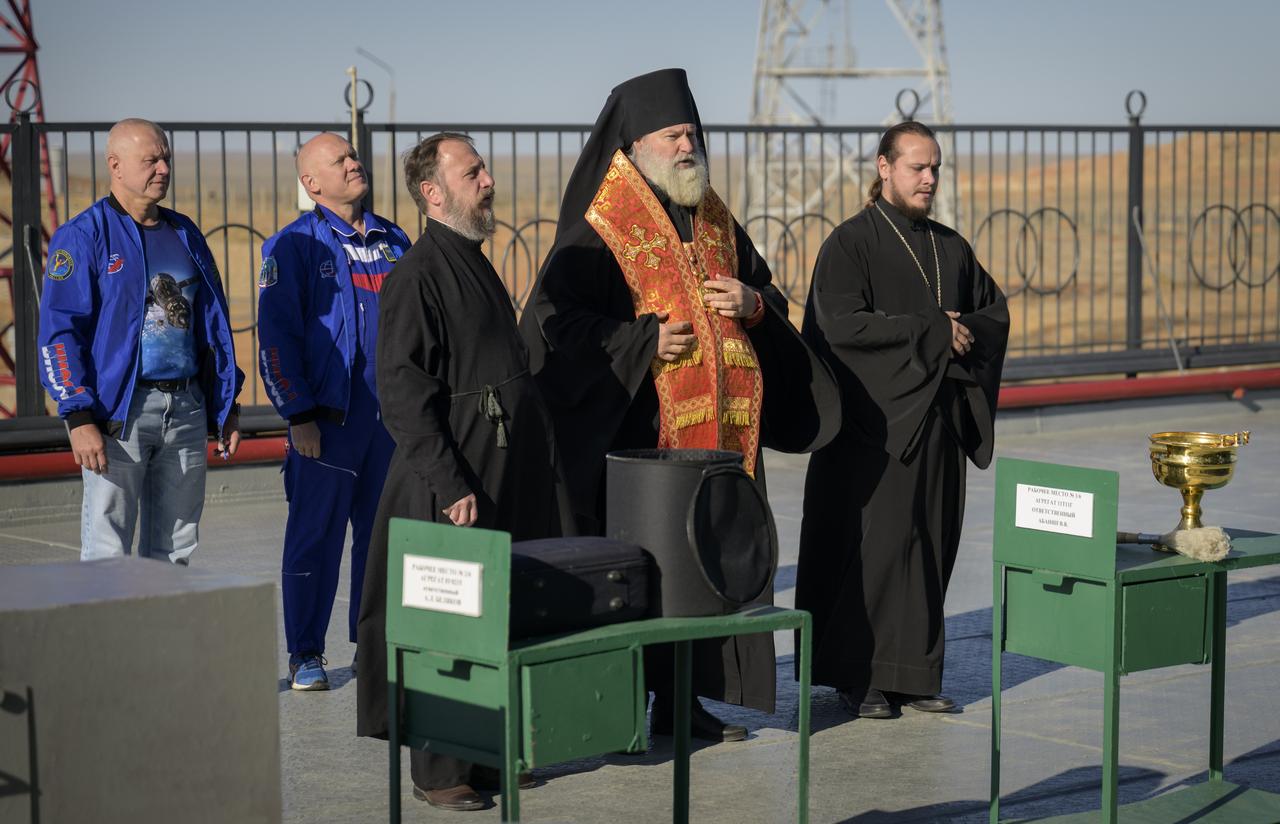
Bishop Ignatii of Kyzylorda and Aktobe, front center, blesses the Soyuz rocket as Roscosmos cosmonauts Oleg Novitsky, back left, and Oleg Artemyev, back right, look on, Tuesday, Sept. 10, 2024, at the Baikonur Cosmodrome site 31 launch pad in Kazakhstan. Expedition 72 crew members: NASA astronaut Don Pettit, Roscosmos cosmonauts Alexey Ovchinin, and Ivan Vagner, are scheduled to launch aboard their Soyuz MS-26 spacecraft on September 11. Photo Credit: (NASA/Bill Ingalls)
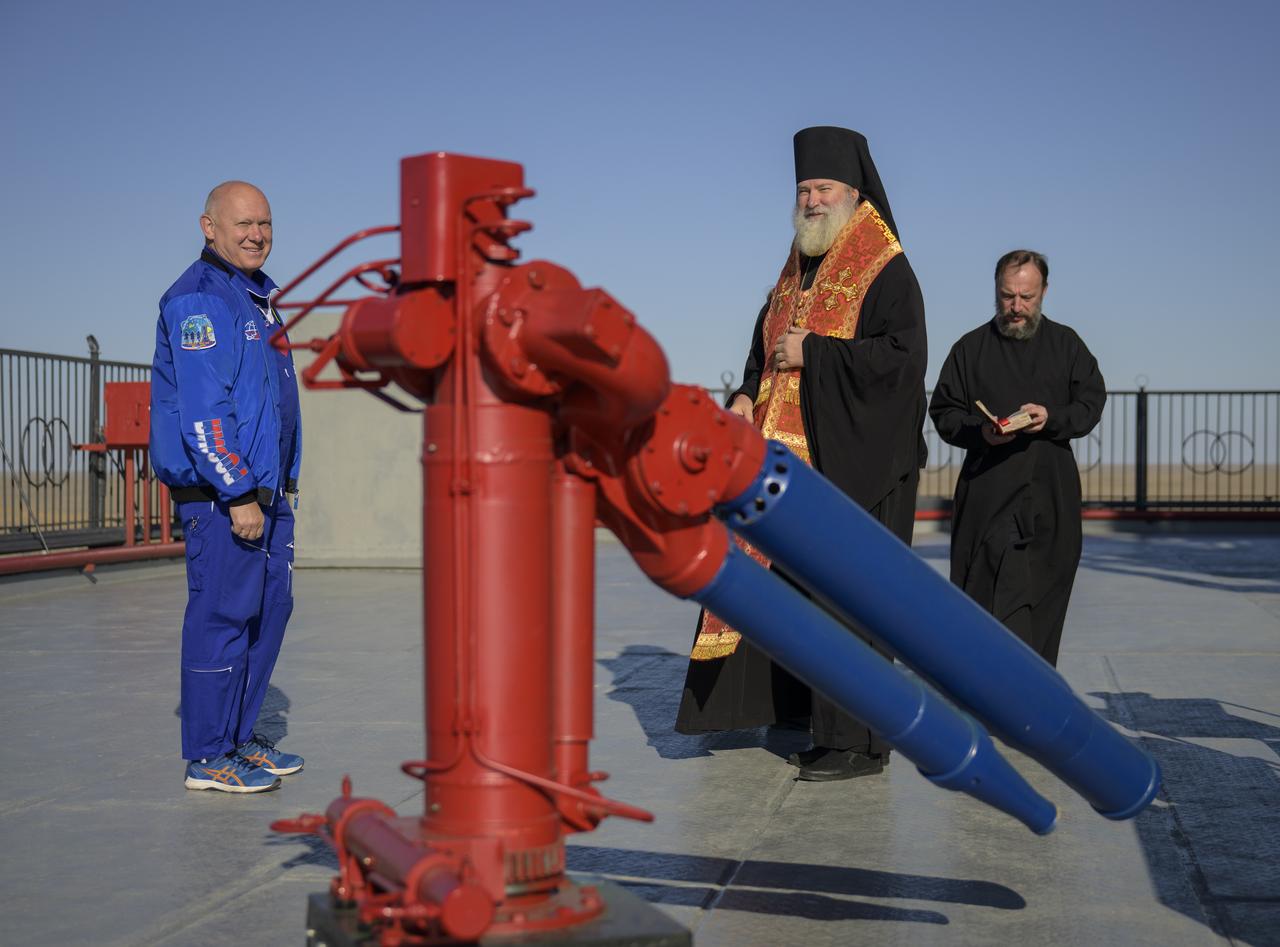
Bishop Ignatii of Kyzylorda and Aktobe, center, prepares to bless the Soyuz rocket as Roscosmos cosmonaut Oleg Artemyev, left, looks on, Tuesday, Sept. 10, 2024, at the Baikonur Cosmodrome site 31 launch pad in Kazakhstan. Expedition 72 crew members: NASA astronaut Don Pettit, Roscosmos cosmonauts Alexey Ovchinin, and Ivan Vagner, are scheduled to launch aboard their Soyuz MS-26 spacecraft on September 11. Photo Credit: (NASA/Bill Ingalls)
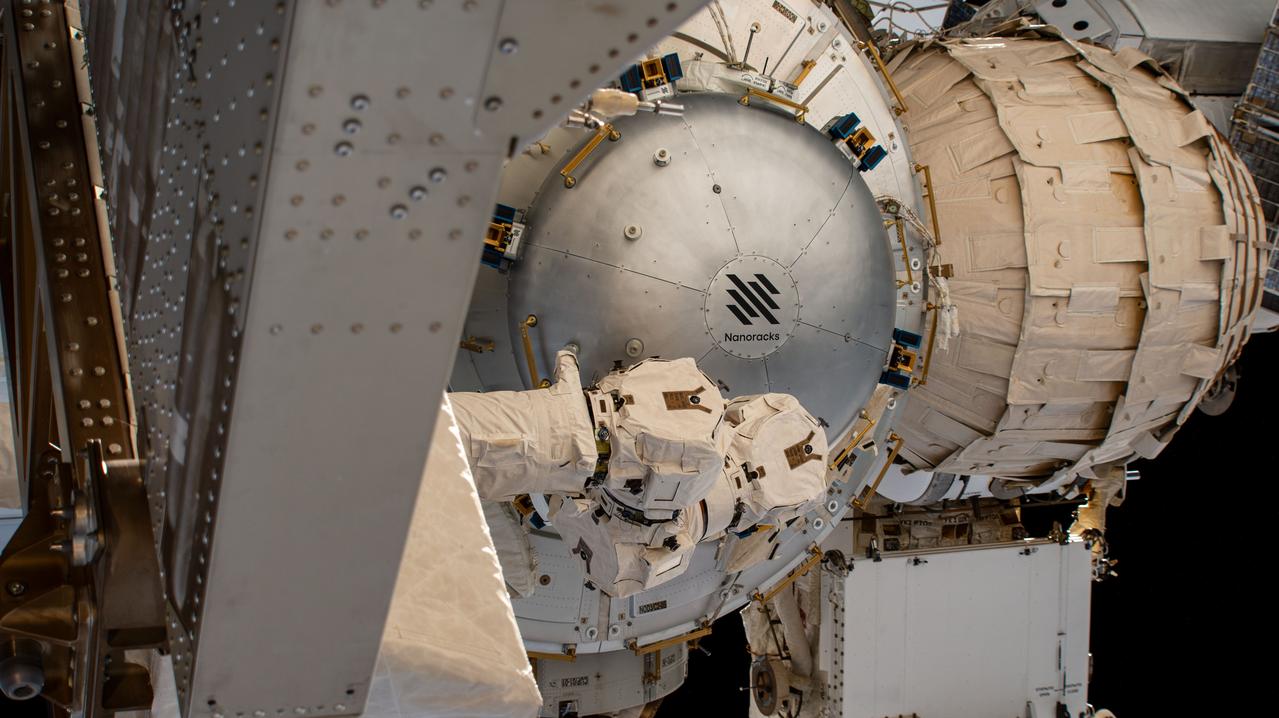
iss064e013203 (Dec. 20, 2020) --- The NanoRacks Bishop airlock is pictured after its was installed to the port side of the Tranquility module and still attached to the Canadarm2 robotic arm. Adjacent to Bishop on the aft side of Tranquility is BEAM, the Bigelow Expandable Activity Module. Bishop increases the station’s capacity for private and public research and also enables the release of larger satellites and the transfer of cargo inside and outside the station.

iss065e004417 (April 25, 2021) --- The International Space Station's newest component is the NanoRacks Bishop Airlock (center left) attached to the end of the Tranquility module. Bishop will enable more commercial research, satellite deployments, and cargo operations outside in the vacuum of space. Located on the other side of Bishop on Tranquility is BEAM, or the Bigelow Expandable Activity Module, which is a cargo stowage module outfitted with sensors continuously monitoring its environment.
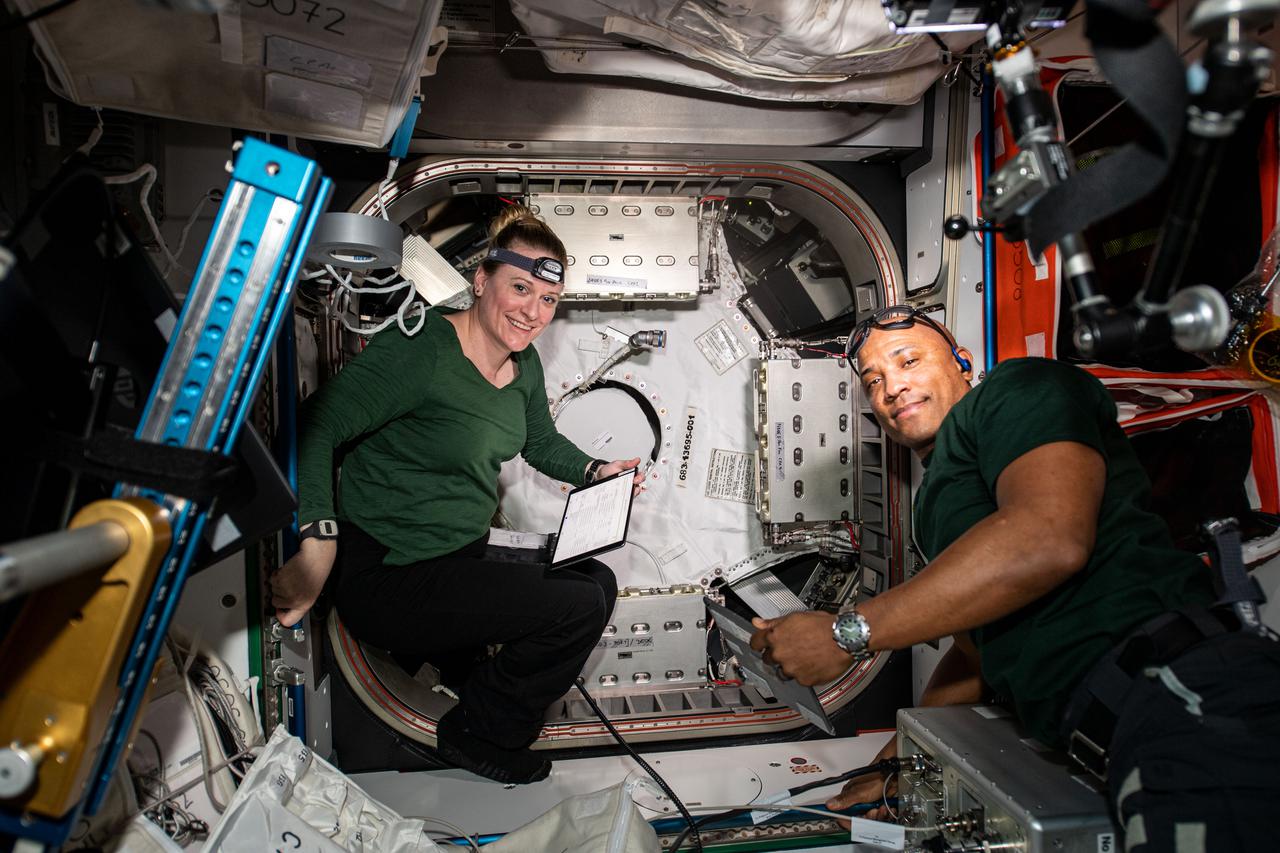
iss064e030014 (February 8, 2021) --- NASA astronauts Kate Rubins and Victor Glover work on configuration and opening of Nanoracks Bishop Airlock attached to the Tranquility module. Launched in the trunk of a SpaceX Dragon capsule, Bishop enables more commercial research, satellite deployments, and cargo operations outside in the vacuum of space.
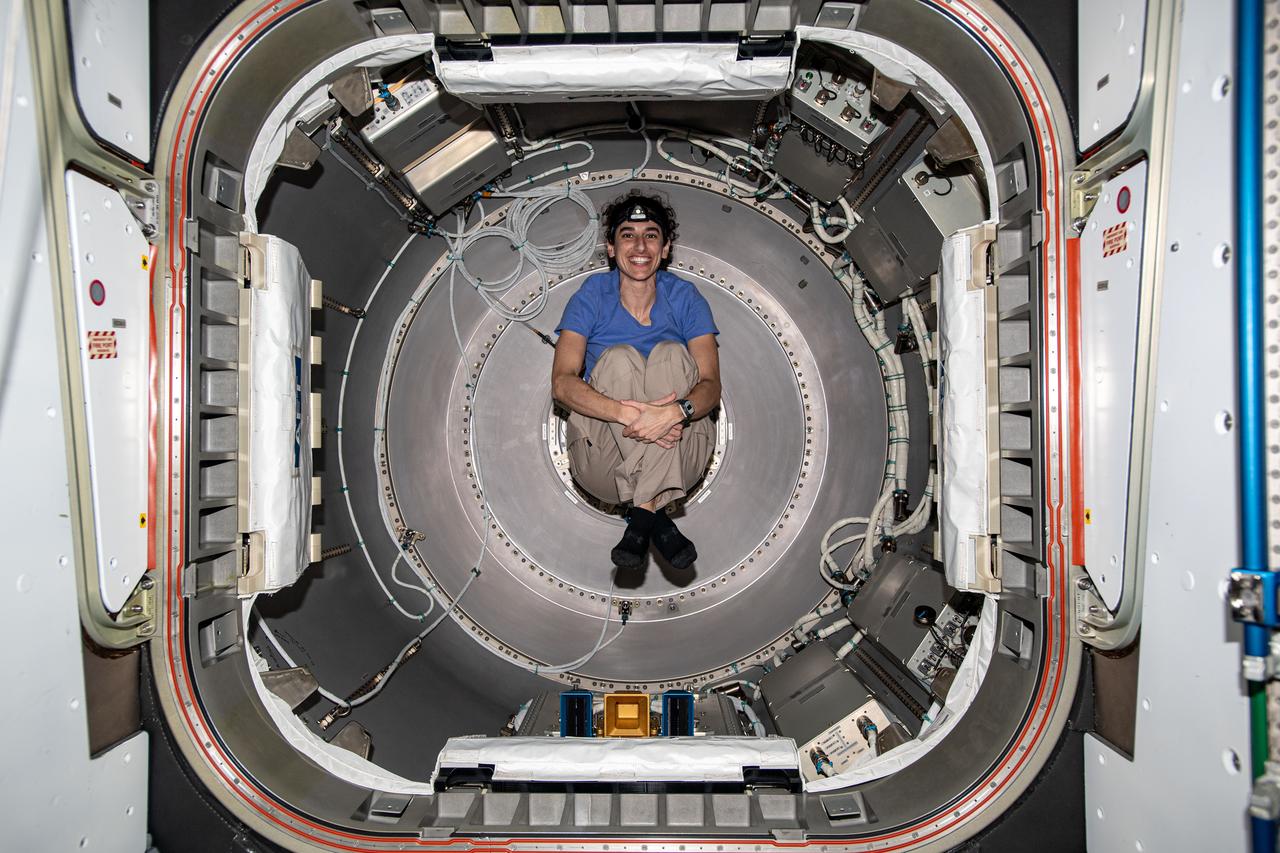
iss070e102740 (Feb. 26, 2024) --- Expedition 70 Flight Engineer and NASA astronaut Jasmin Moghbeli is photographed inside the NanoRacks Bishop airlock. Bishop can be uninstalled from its home on the Tranquility module for portable operations. It can also be used to stow cargo and extract or install payloads.
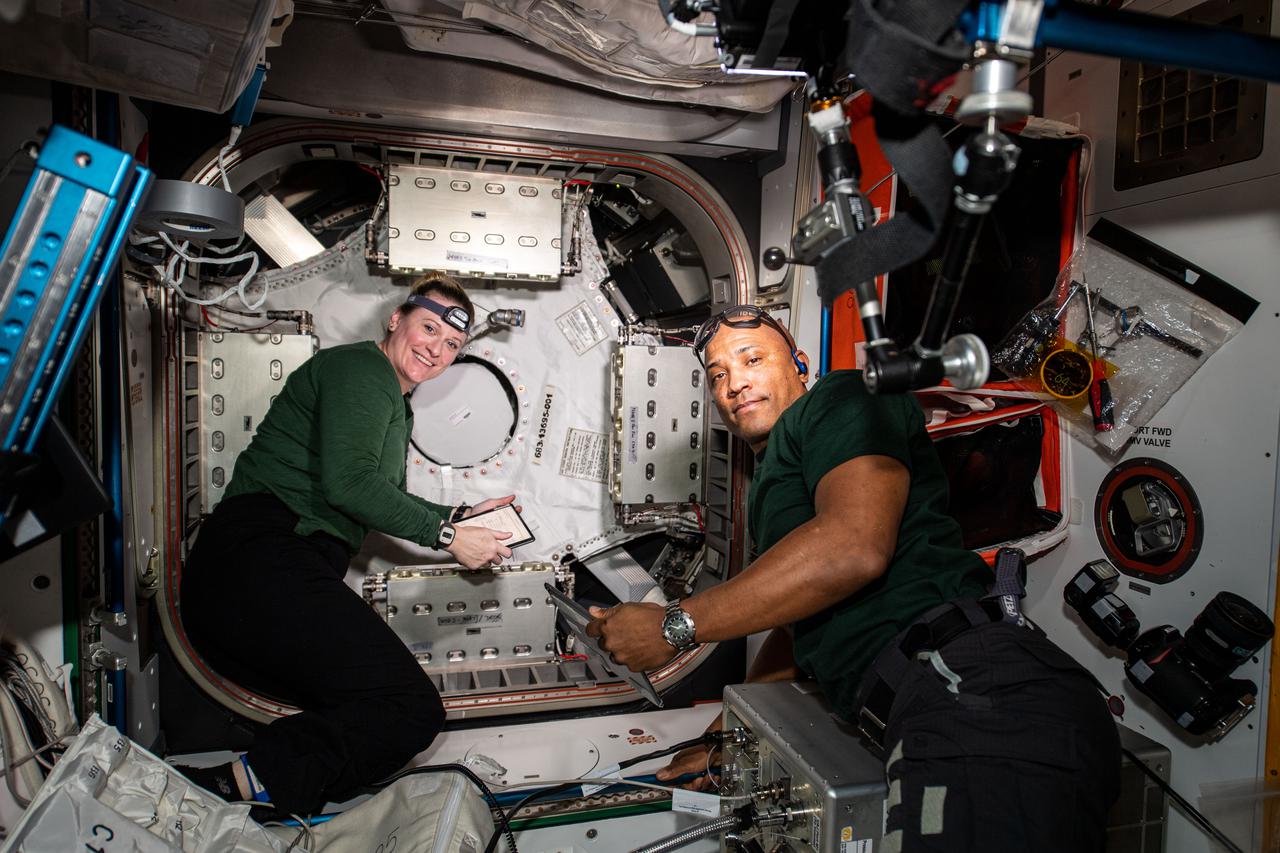
iss064e030013 (Feb. 8, 2021) --- NASA astronauts and Expedition 64 Flight Engineers Kate Rubins and Victor Glover work to configure and open the NanoRacks Bishop airlock attached to the Tranquility module. Bishop will enable more commercial research, satellite deployments, and cargo operations outside in the vacuum of space.
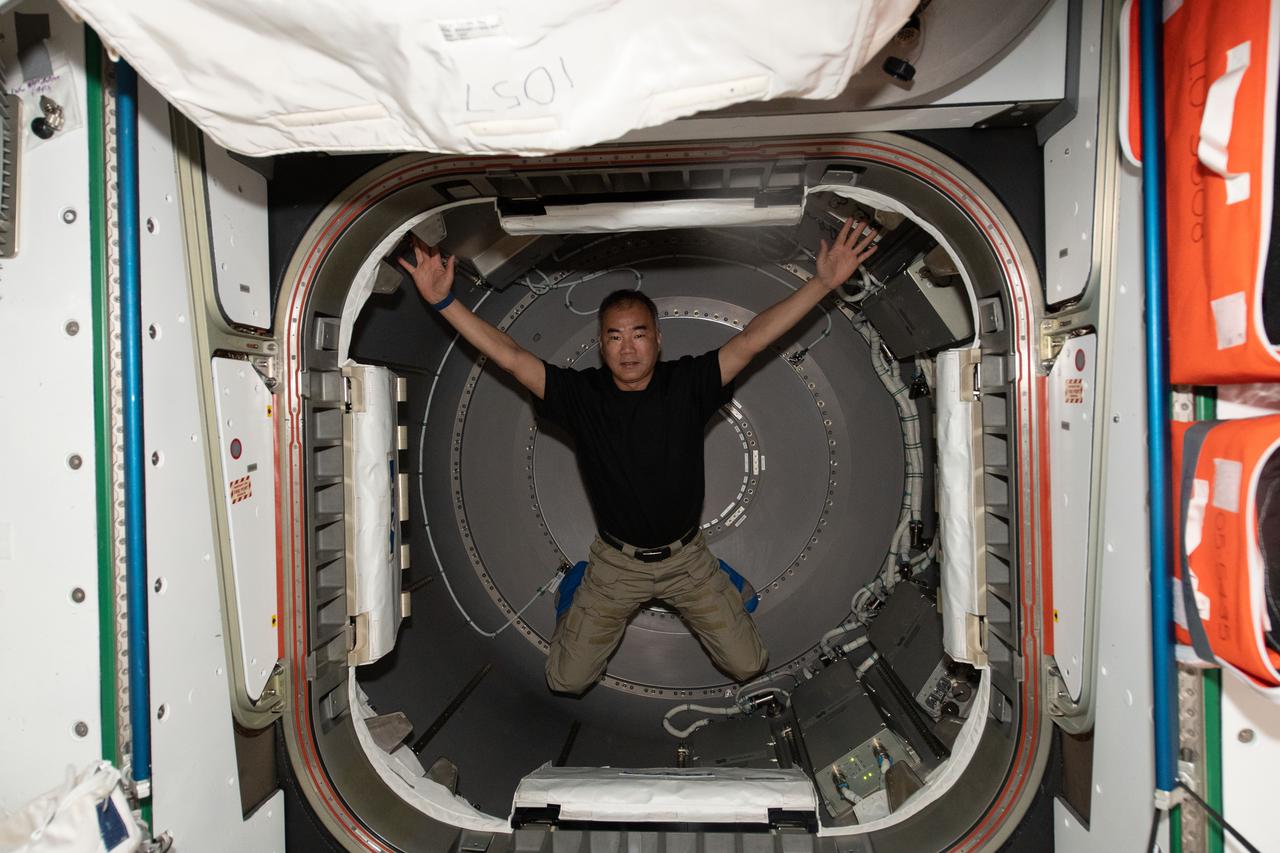
iss064e031300 (Feb. 11, 2021) --- JAXA (Japan Aerospace Exploration Agency) astronaut and Expedition 64 Flight Engineer Soichi Noguchi occupies the newly-opened NanoRacks Bishop airlock attached to the Tranquility module. Bishop will enable more commercial research, satellite deployments, and cargo operations outside in the vacuum of space.
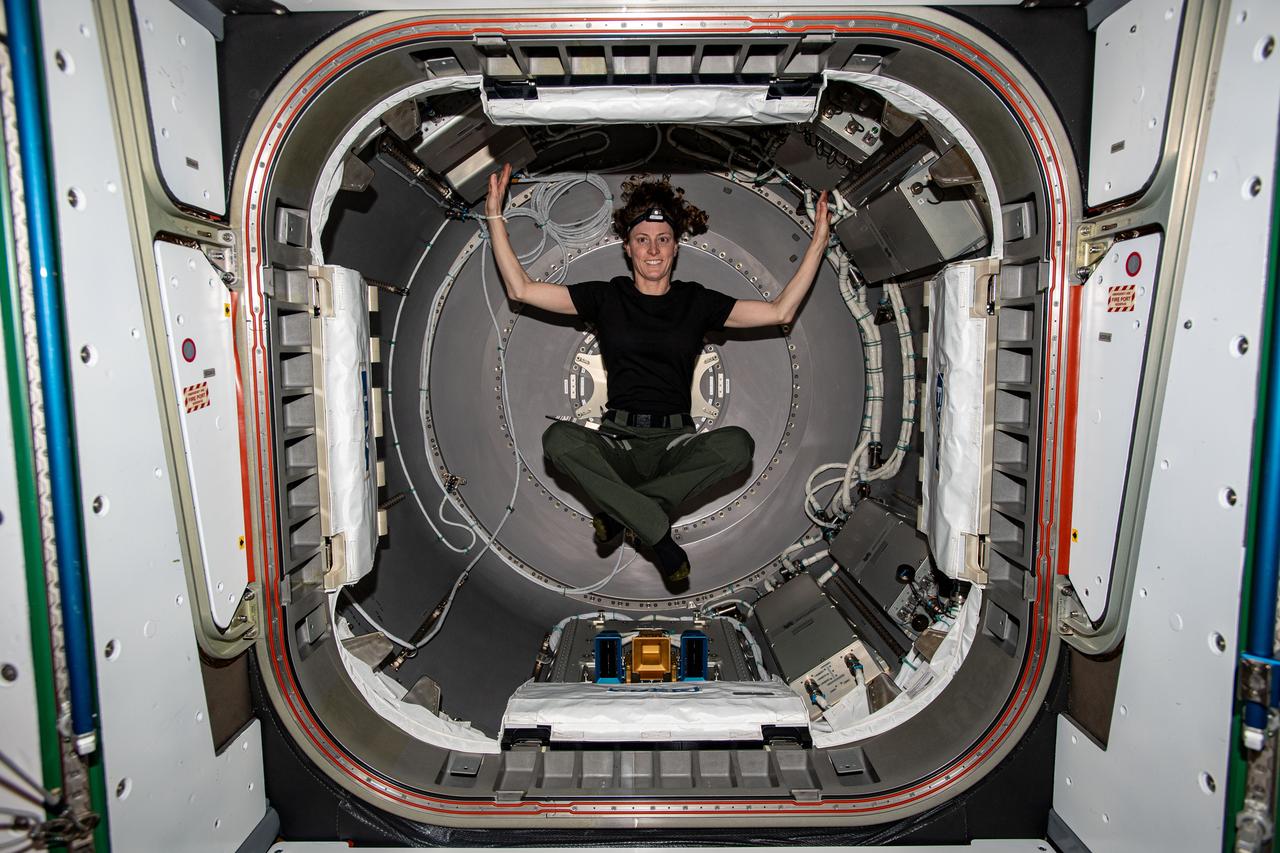
iss070e102747 (Feb. 26, 2024) --- Expedition 70 Flight Engineer and NASA astronaut Loral O'Hara is photographed inside the NanoRacks Bishop airlock. Bishop can be uninstalled from its home on the Tranquility module for portable operations. It can also be used to stow cargo and extract or install payloads.
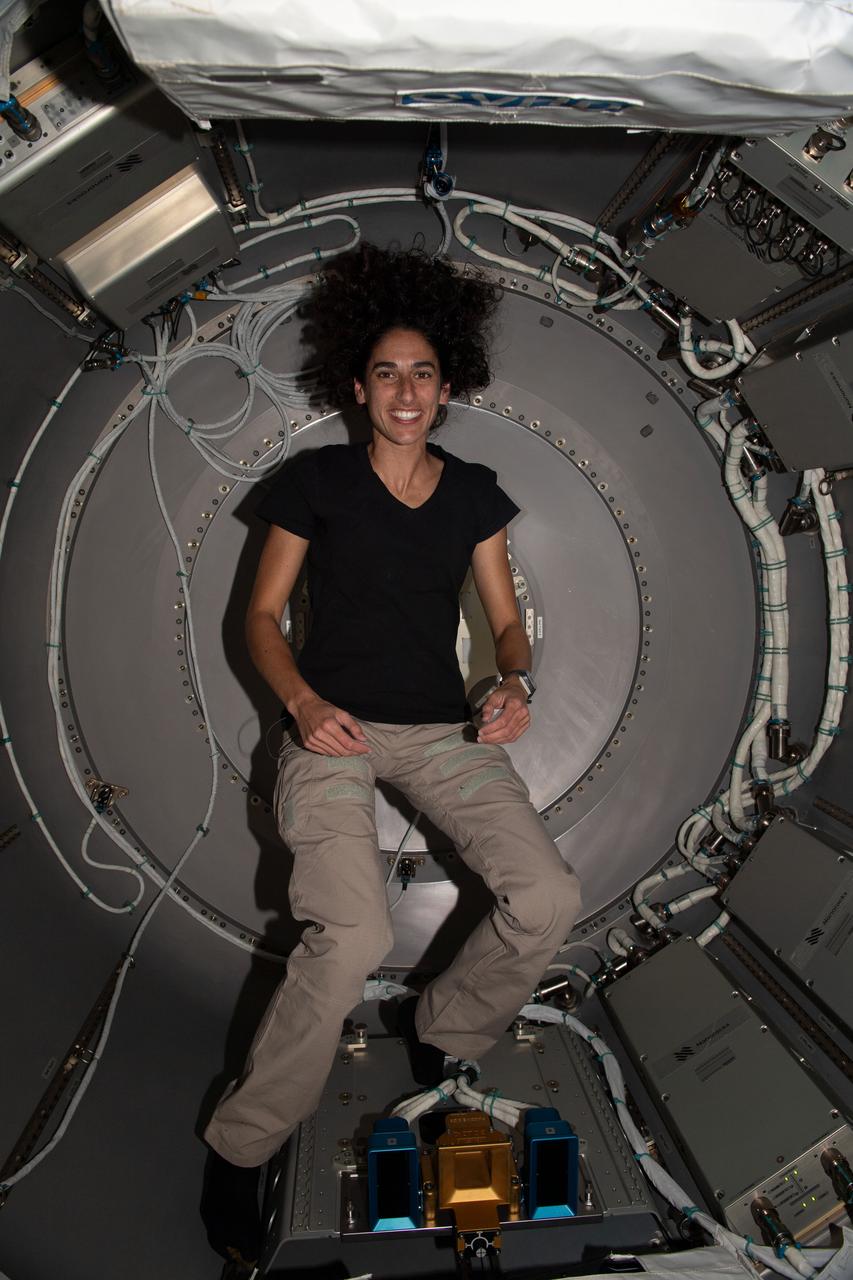
iss069e085981 (Sept. 5, 2023) --- NASA astronaut and Expedition 69 Flight Engineer Jasmin Moghbeli is pictured inside the NanoRacks Bishop airlock located on the port side of the International Space Station's Tranquility module. Bishop is a commercial doorway that can be robotically removed and attached to Tranquility and enables larger payloads to be moved inside and outside the station.
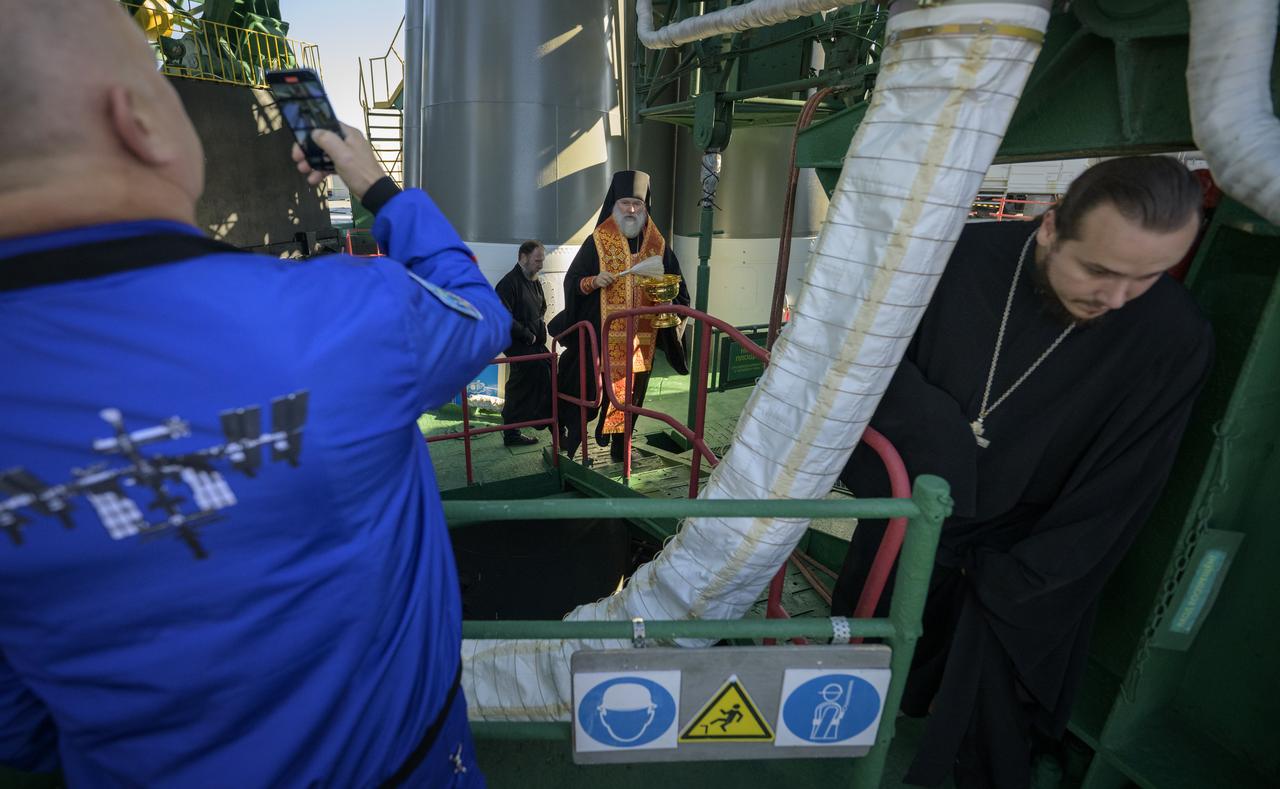
Bishop Ignatii of Kyzylorda and Aktobe blesses the Soyuz rocket, as Roscosmos cosmonaut Oleg Artemyev takes a photograph, Tuesday, Sept. 10, 2024, at the Baikonur Cosmodrome site 31 launch in Kazakhstan. Expedition 72 crew members: NASA astronaut Don Pettit, Roscosmos cosmonauts Alexey Ovchinin, and Ivan Vagner, are scheduled to launch aboard their Soyuz MS-26 spacecraft on September 11. Photo Credit: (NASA/Bill Ingalls)
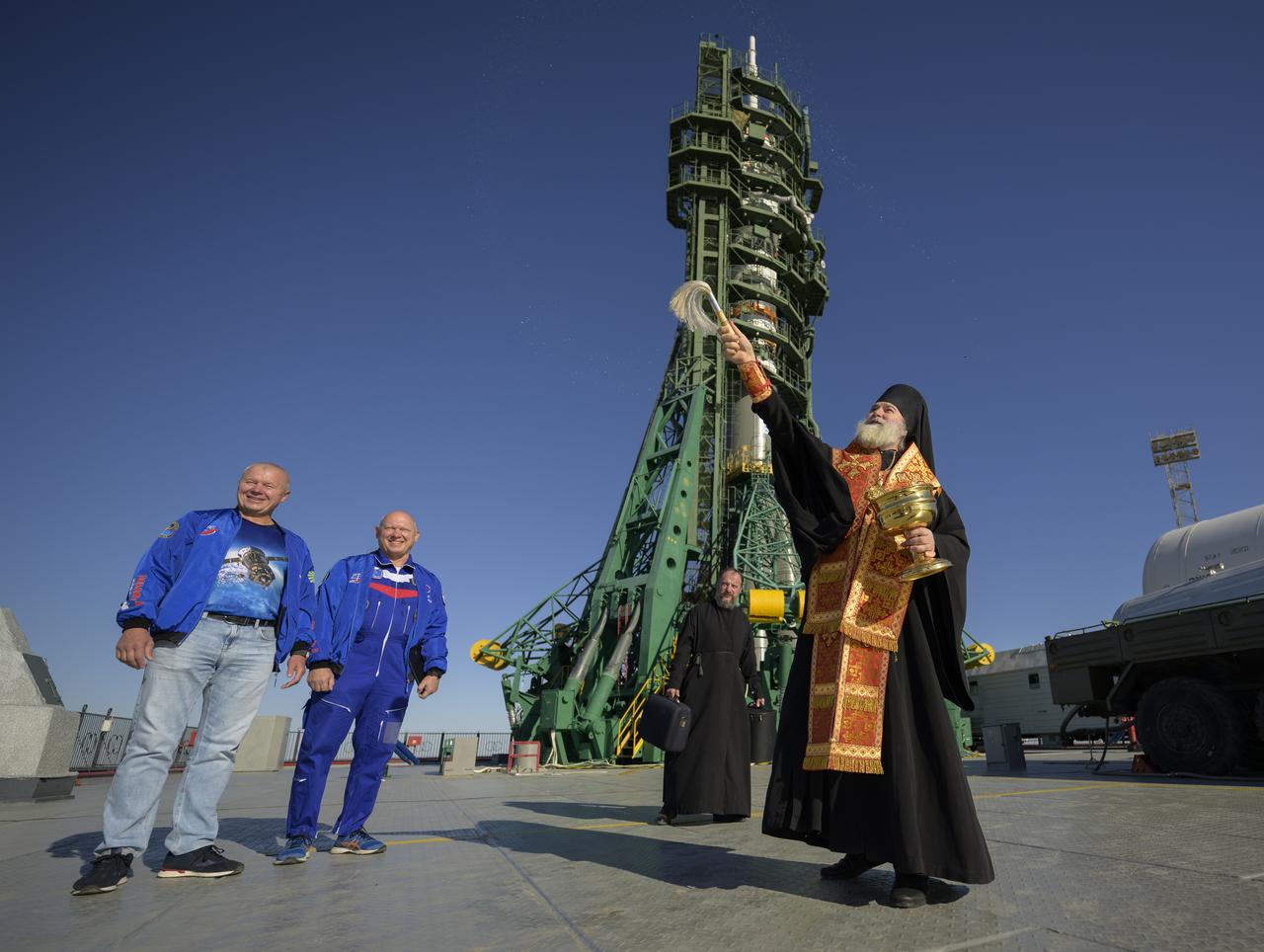
Roscosmos cosmonauts Oleg Novitsky, left, and Oleg Artemyev, participate in the traditional blessing by Bishop Ignatii of Kyzylorda and Aktobe, Tuesday, Sept. 10, 2024, at the Baikonur Cosmodrome site 31 launch pad in Kazakhstan. Expedition 72 crew members: NASA astronaut Don Pettit, Roscosmos cosmonauts Alexey Ovchinin, and Ivan Vagner, are scheduled to launch aboard their Soyuz MS-26 spacecraft on September 11. Photo Credit: (NASA/Bill Ingalls)
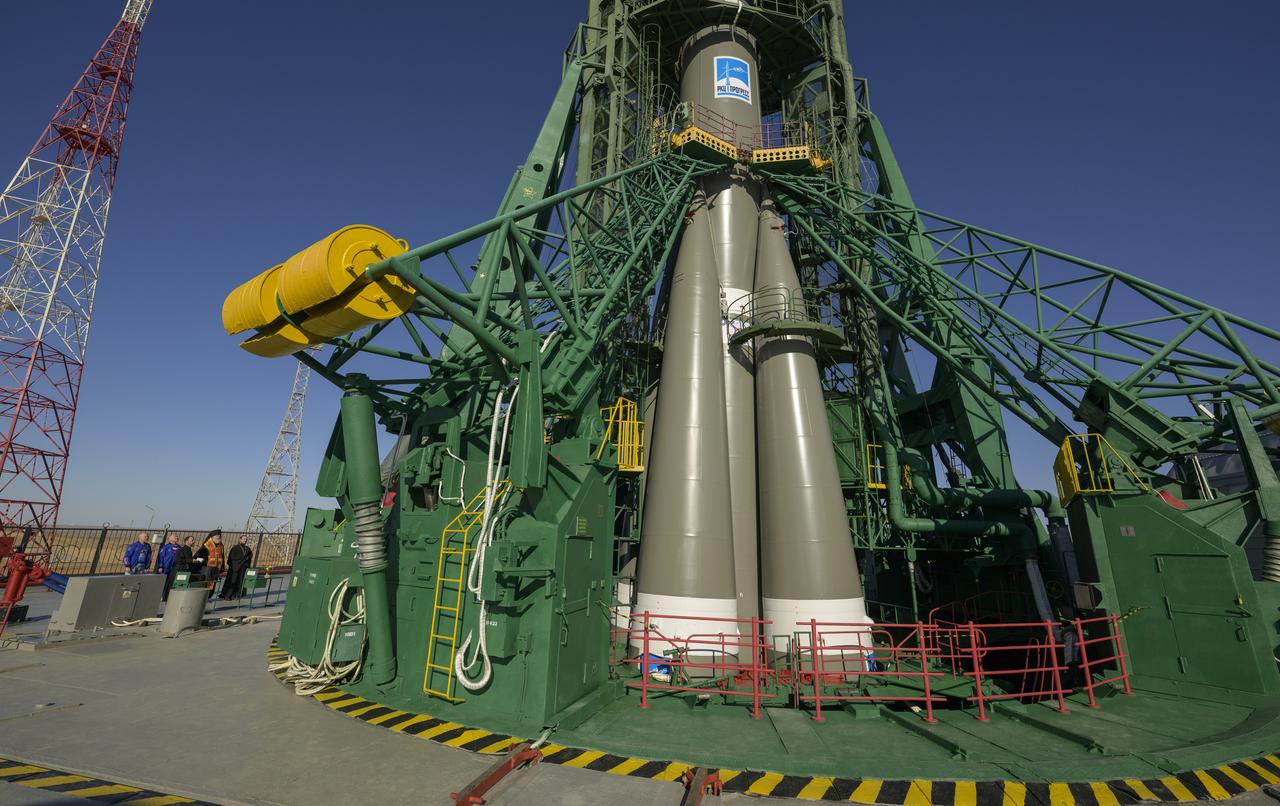
Bishop Ignatii of Kyzylorda and Aktobe blesses the Soyuz rocket, Tuesday, Sept. 10, 2024, at the Baikonur Cosmodrome site 31 launch in Kazakhstan. Expedition 72 crew members: NASA astronaut Don Pettit, Roscosmos cosmonauts Alexey Ovchinin, and Ivan Vagner, are scheduled to launch aboard their Soyuz MS-26 spacecraft on September 11. Photo Credit: (NASA/Bill Ingalls)
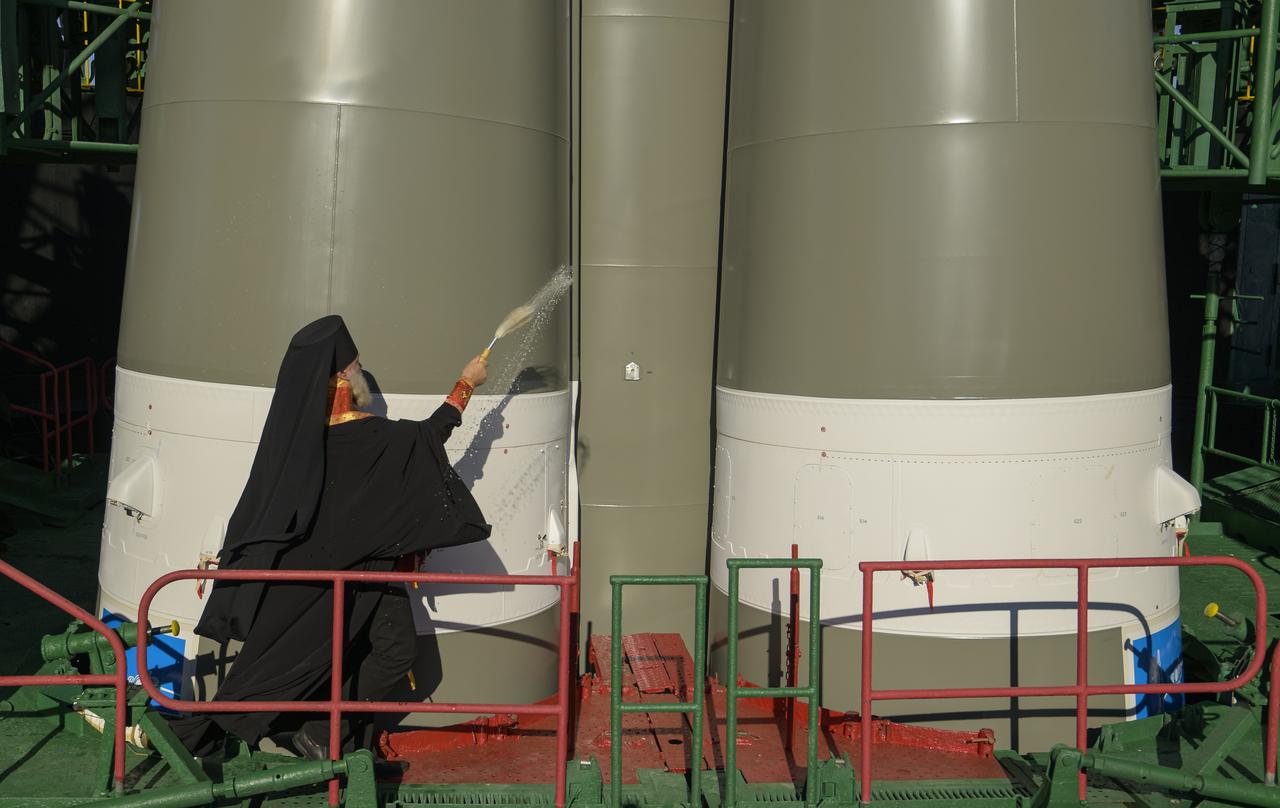
Bishop Ignatii of Kyzylorda and Aktobe blesses the Soyuz rocket, Tuesday, Sept. 10, 2024, at the Baikonur Cosmodrome site 31 launch in Kazakhstan. Expedition 72 crew members: NASA astronaut Don Pettit, Roscosmos cosmonauts Alexey Ovchinin, and Ivan Vagner, are scheduled to launch aboard their Soyuz MS-26 spacecraft on September 11. Photo Credit: (NASA/Bill Ingalls)
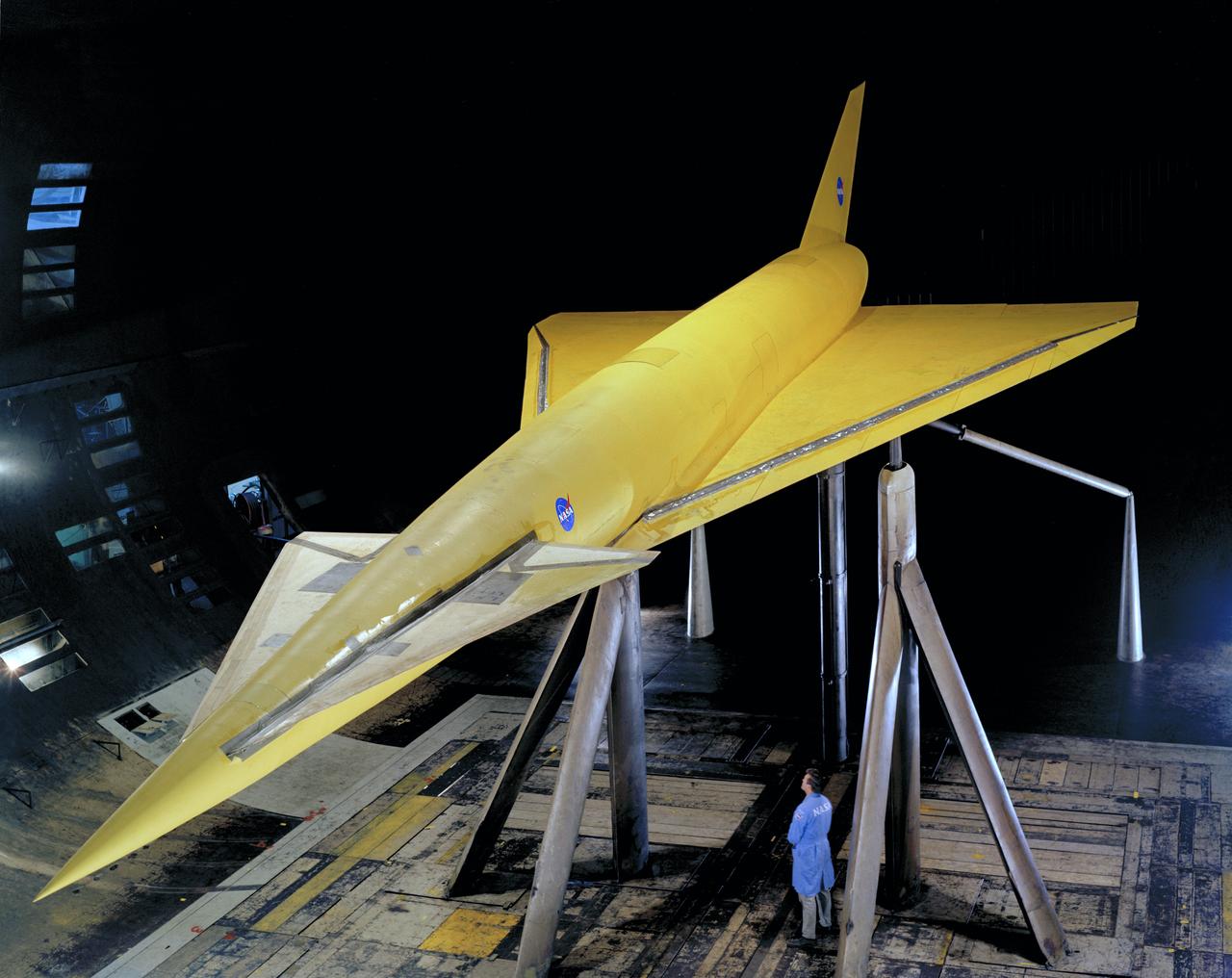
High 3/4 top front view of model in Ames 40x80 foot wind tunnel. Bob Bishop in lower right. Delta Wing with Conard.
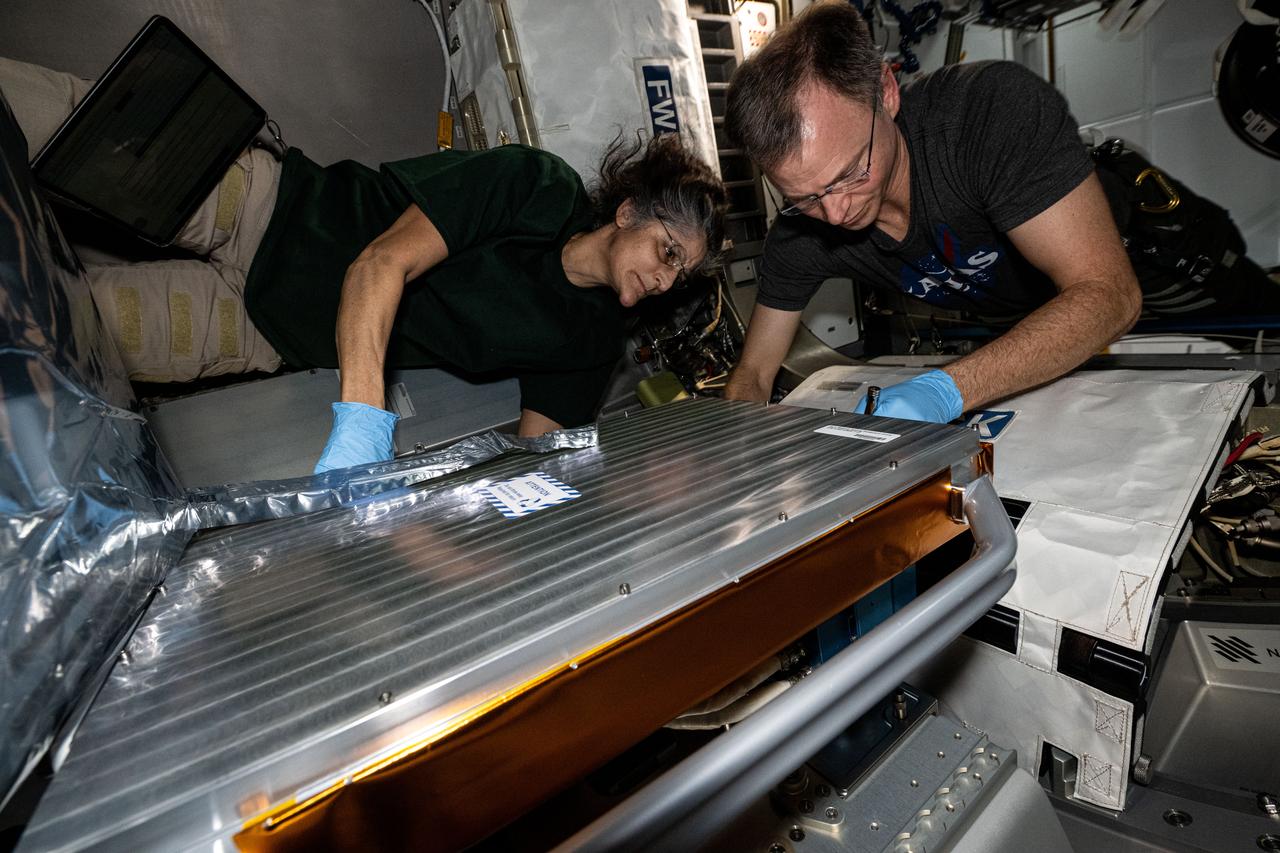
iss072e363226 (Dec. 13, 2024) --- NASA astronauts Suni Williams and Nick Hague, Expedition 72 Commander and Flight Engineer respectively, install the European Materials Ageing experiment hardware inside the Nanoracks Bishop airlock. The external investigation will be robotically removed from Bishop, installed on the Bartolomeo research platform attached to the outside of the Columbus laboratory module, and expose a variety of materials to the vacuum of space for about a year.
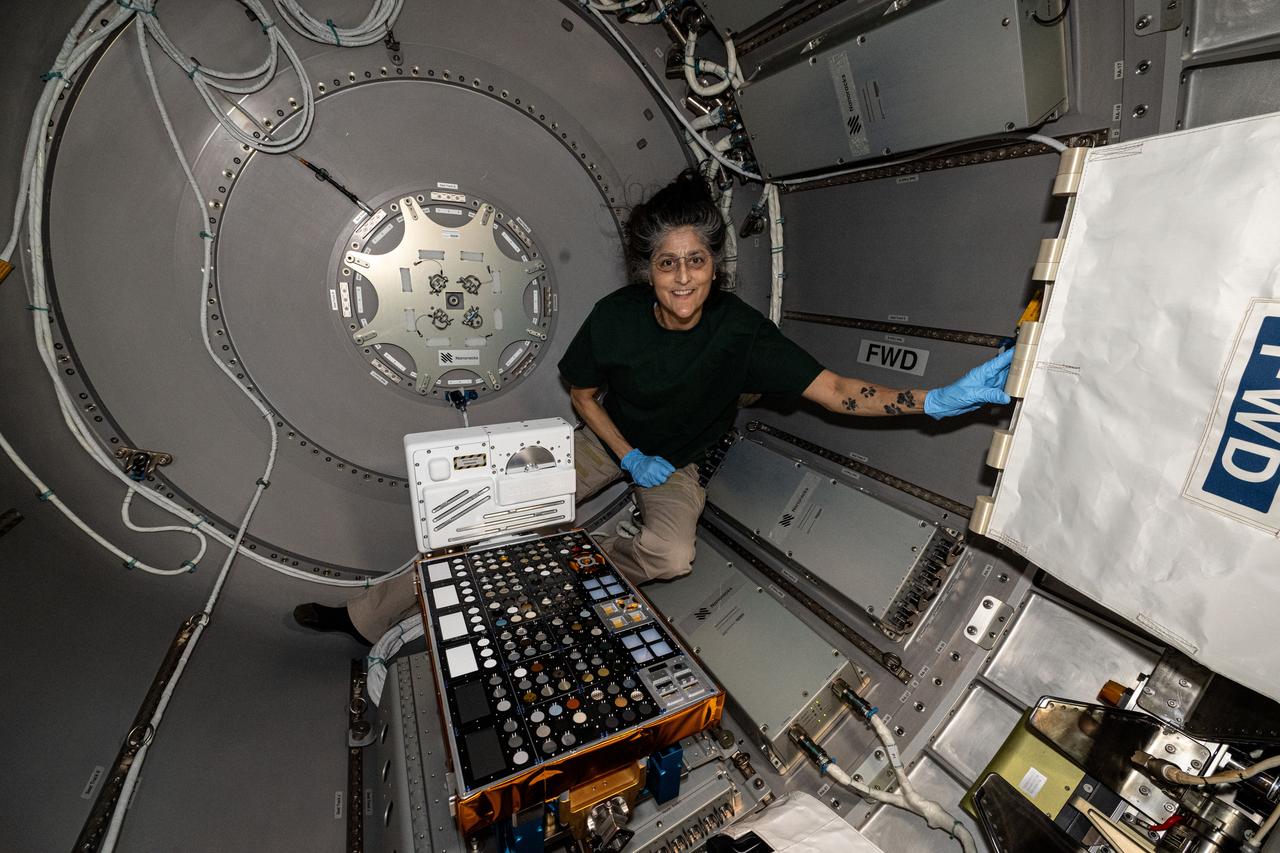
iss072e363243 (Dec. 13, 2024) --- NASA astronaut and Expedition 72 Commander Suni Williams installs the European Materials Ageing experiment hardware inside the Nanoracks Bishop airlock. The external investigation will be robotically removed from Bishop, installed on the Bartolomeo research platform attached to the outside of the Columbus laboratory module, and expose a variety of materials to the vacuum of space for about a year.
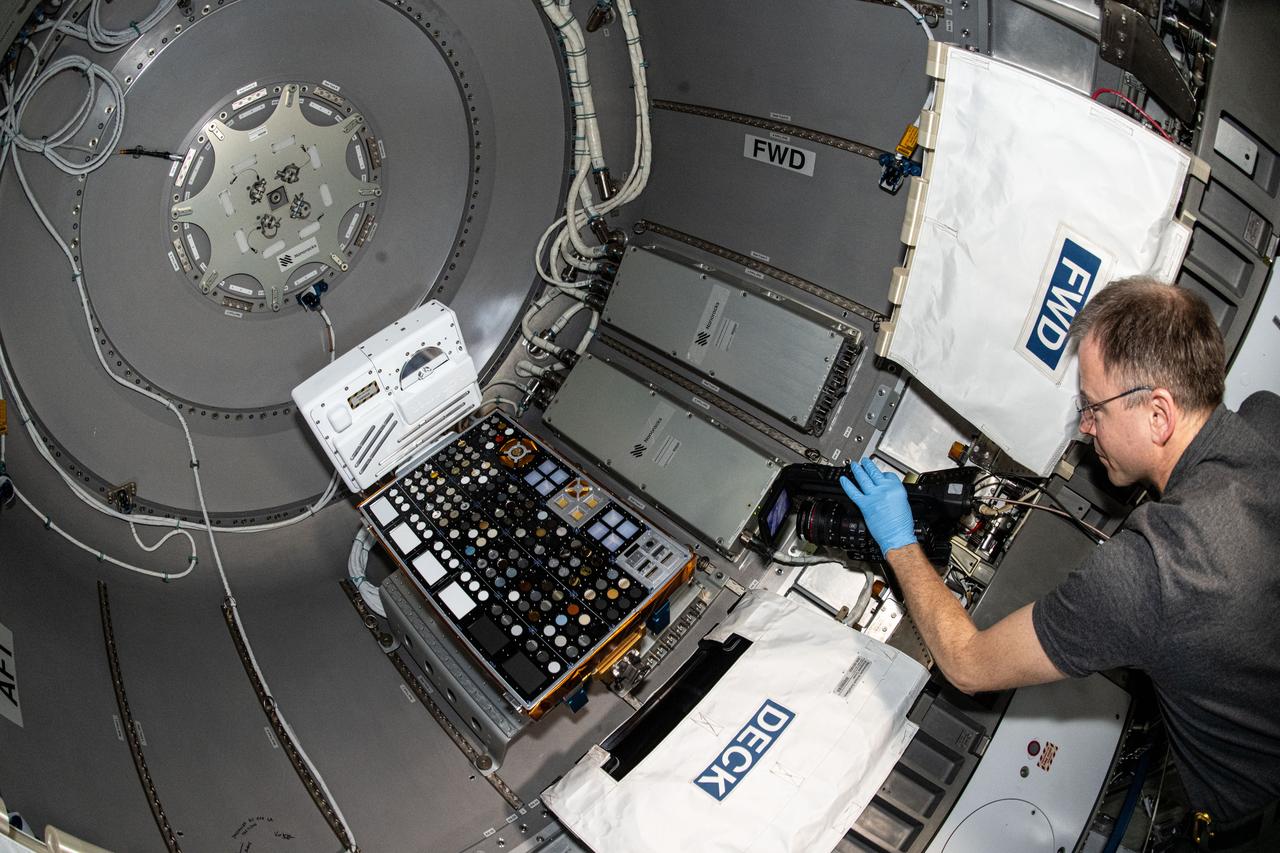
iss072e363251 (Dec. 13, 2024) --- NASA astronaut and Expedition 72 Flight Engineer Nick Hague installs the European Materials Ageing experiment hardware inside the Nanoracks Bishop airlock. The external investigation will be robotically removed from Bishop, installed on the Bartolomeo research platform attached to the outside of the Columbus laboratory module, and expose a variety of materials to the vacuum of space for about a year.
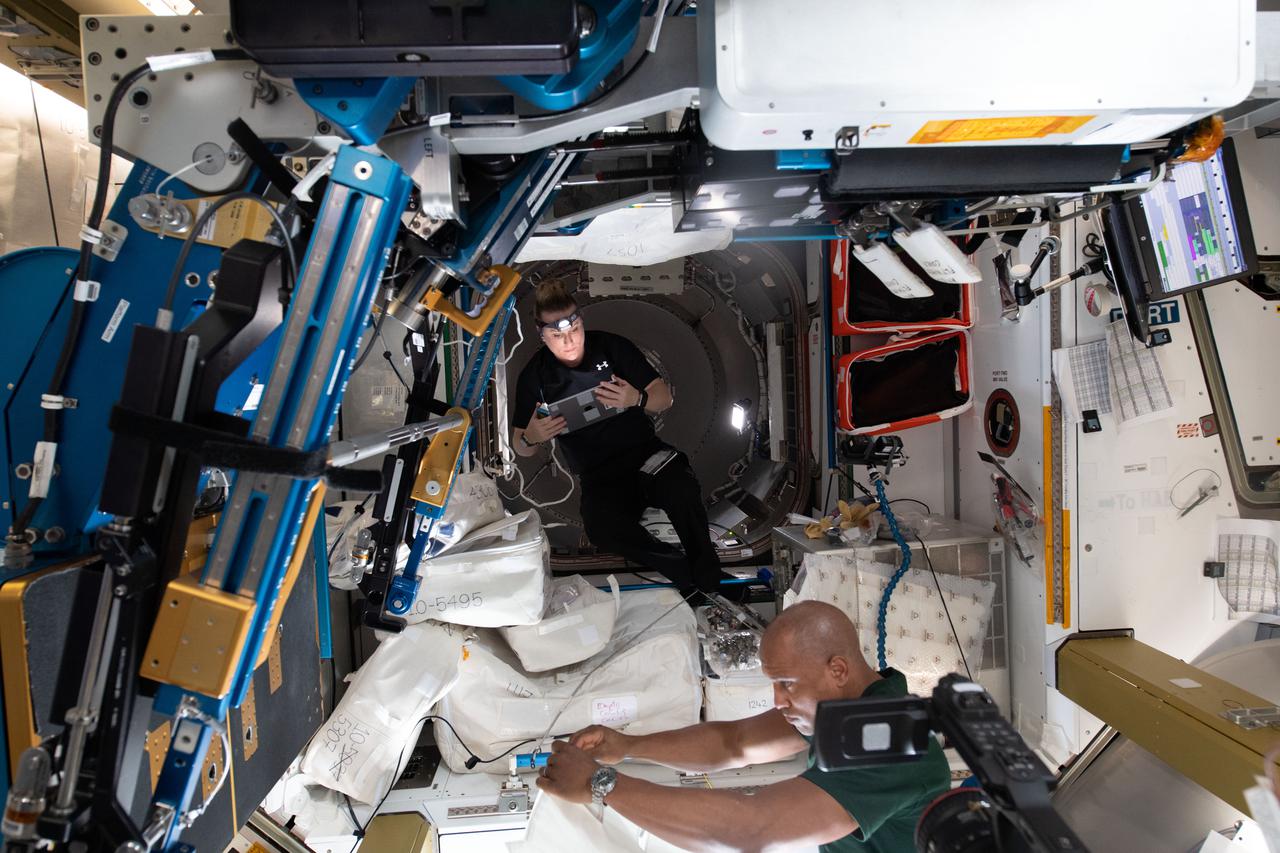
iss064e031285 (Feb. 11, 2021) --- NASA astronauts and Expedition 64 Flight Engineers Kate Rubins and Victor Glover connect cables and install components during configuration work inside the newly-opened NanoRacks Bishop airlock attached to the Tranquility module. Bishop will enable more commercial research, satellite deployments, and cargo operations outside in the vacuum of space.
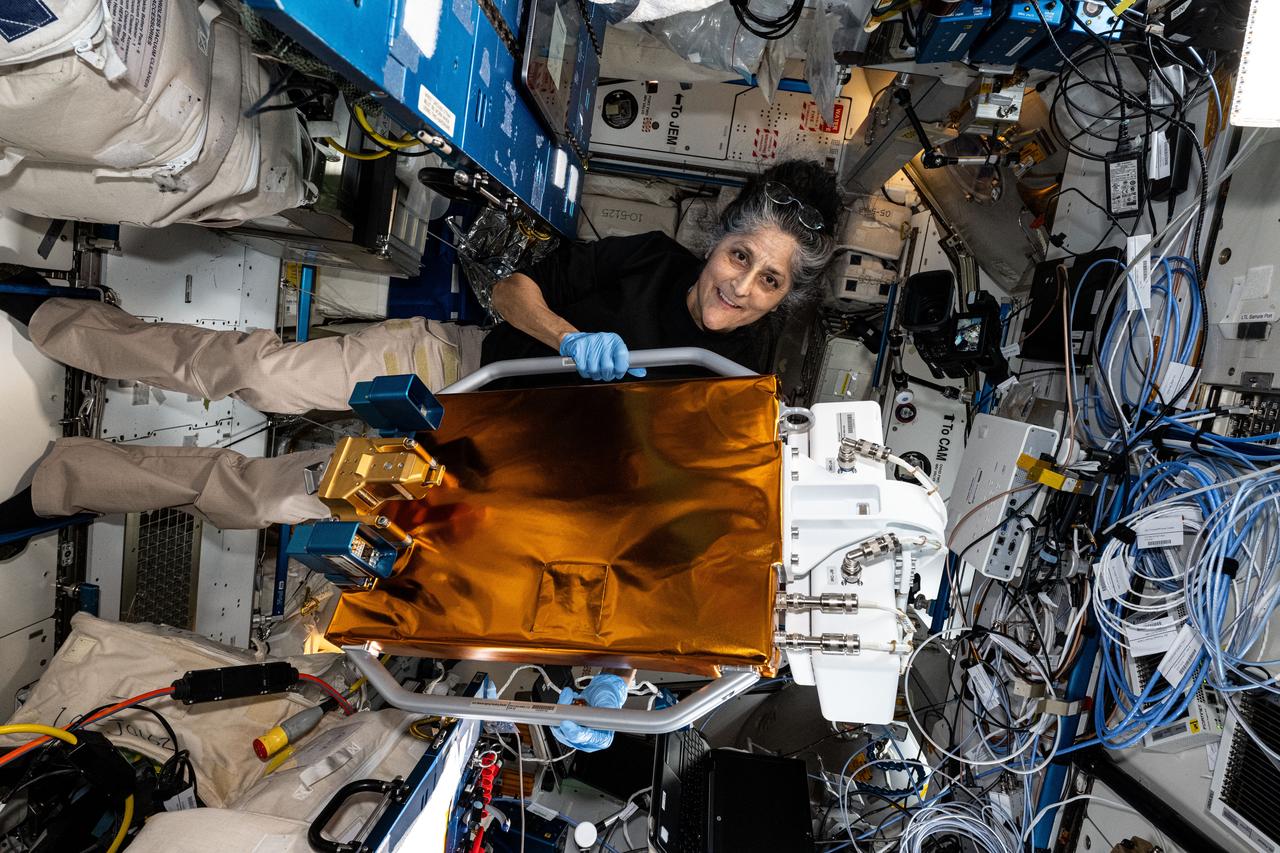
iss072e363182 (Dec. 13, 2024) --- NASA astronaut and Expedition 72 Commander Suni Williams assembles the European Materials Ageing experiment hardware for installation inside the Nanoracks Bishop airlock. The external investigation will be robotically removed from Bishop, installed on the Bartolomeo research platform attached to the outside of the Columbus laboratory module, and expose a variety of materials to the vacuum of space for about a year.
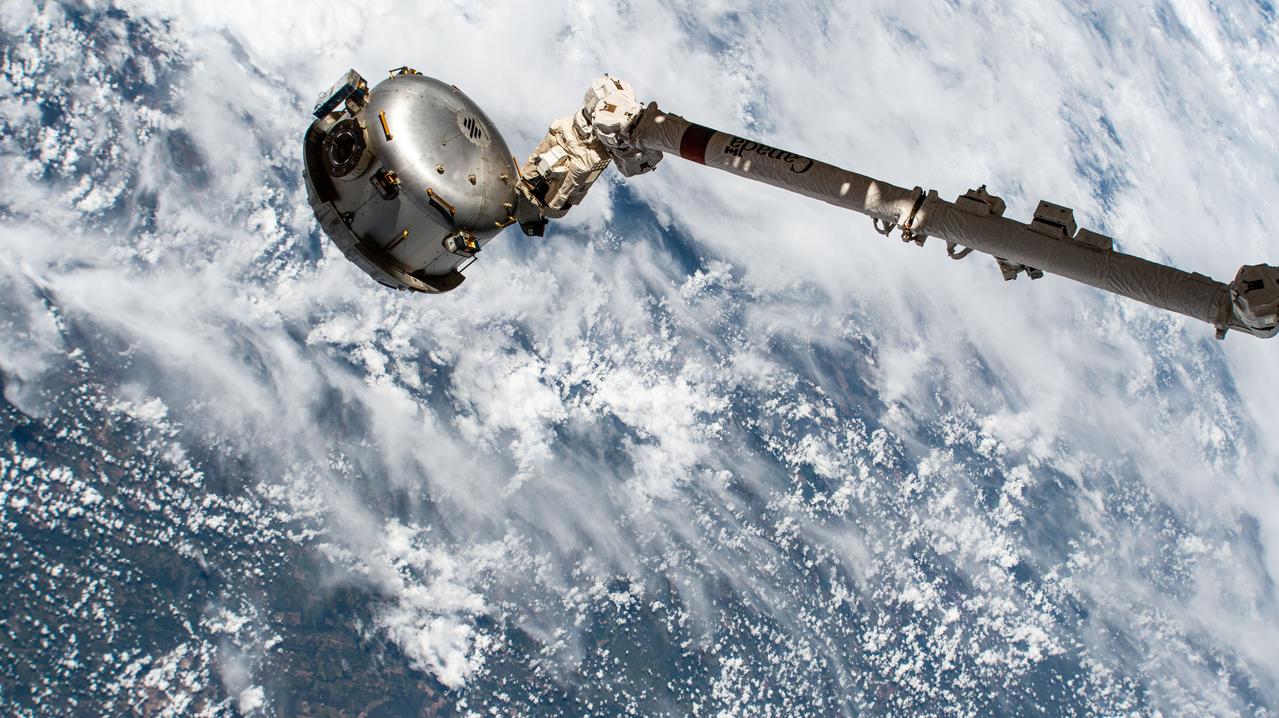
iss070e097971 (Feb. 21, 2024) --- The NanoRacks Bishop airlock is attached to the Canadarm2 robotic arm's latching end effector. Bishop can be uninstalled from its home on the Tranquility module for portable operations. It can also be used to stow cargo and extract or install payloads. The International Space Station was orbiting 261 miles above Brazil near the Bolivian border at the time of this photograph.
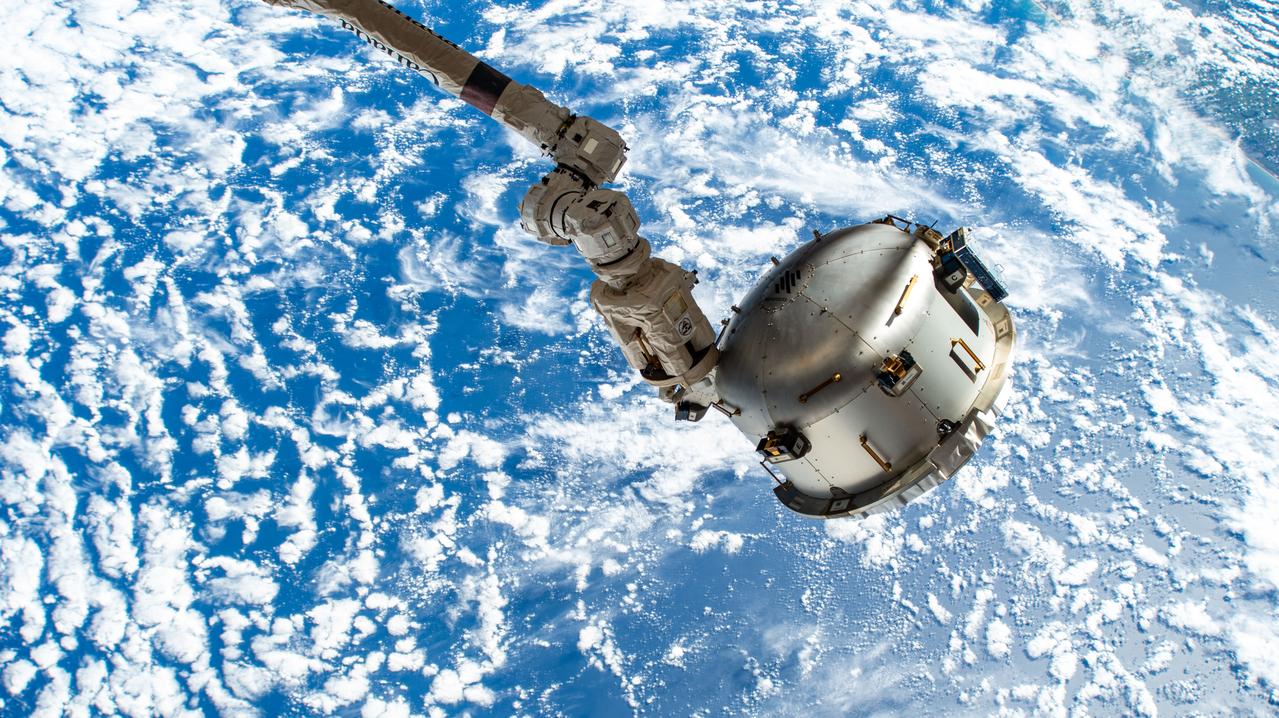
iss070e097962 (Feb. 21, 2024) --- The NanoRacks Bishop airlock is attached to the Canadarm2 robotic arm's latching end effector. Bishop can be uninstalled from its home on the Tranquility module for portable operations. It can also be used to stow cargo and extract or install payloads. The International Space Station was orbiting 264 miles above the Atlantic Ocean off the coast of southern Brazil at the time of this photograph.
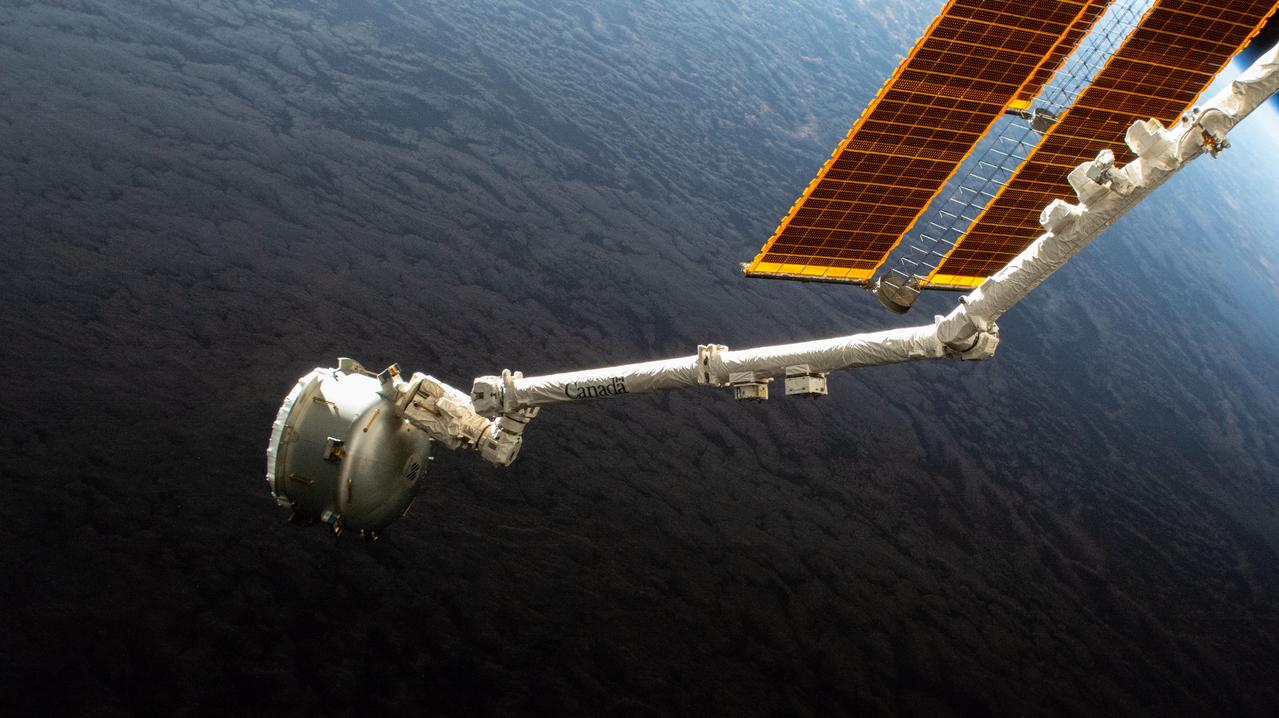
iss067e174422 (July 2, 2022) --- The Nanoracks Bishop Airlock is pictured in the grips of the Canadarm2 robotic arm as it is positioned away from the International Space Station. The commercial platform was being maneuvered prior to jettisoning a trash container for a fiery, but safe disposal above Earth's atmopshere. Bishop is a multi-faceted airlock attached to the Tranquility module used not only to discard trash, but also to host research payloads, deploy satellites, and serve as a testbed for a variety of space technologies.
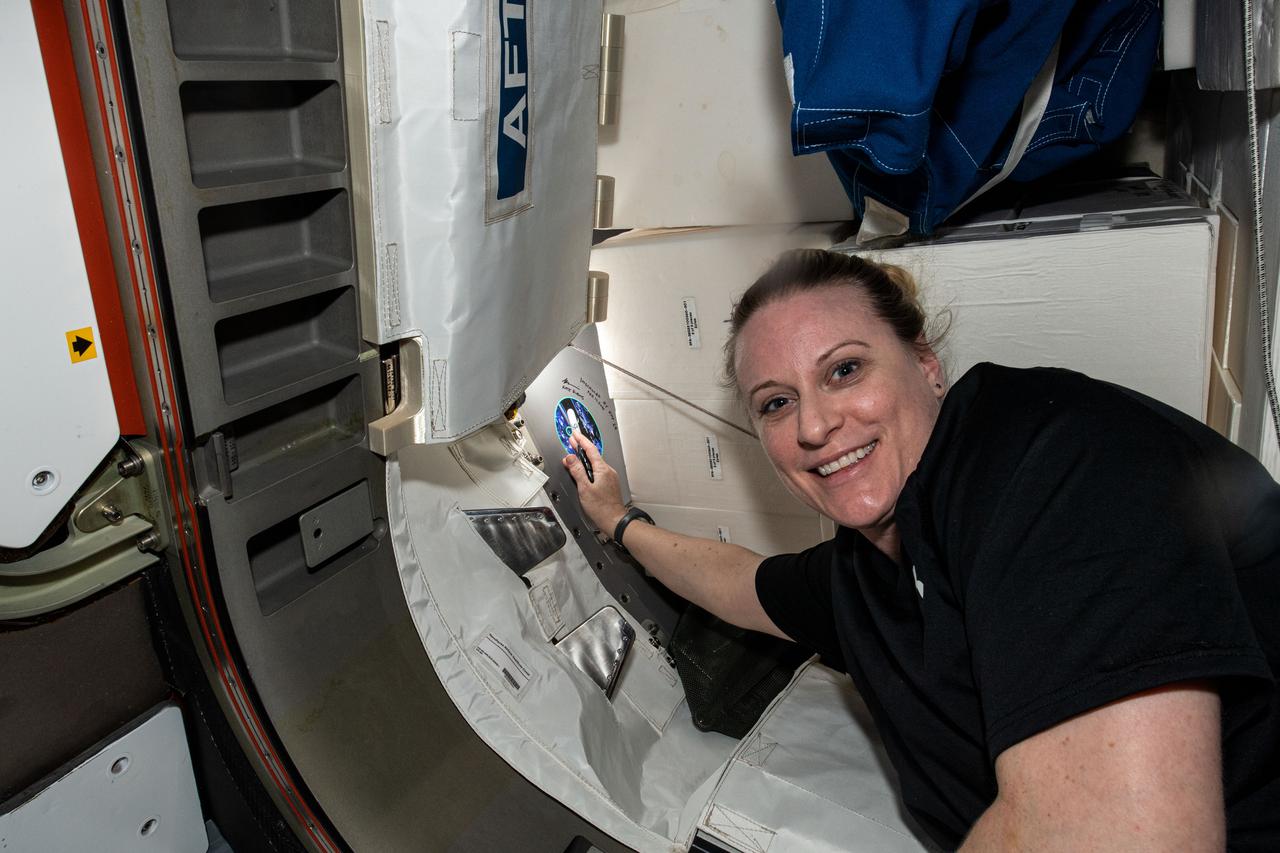
iss064e031800 (Feb. 11,2021) --- NASA astronaut and Expedition 64 Flight Engineer Kate Rubins signs her name near her mission's insignia sticker in the vestibule between the Tranquility module and the NanoRacks Bishop airlock.
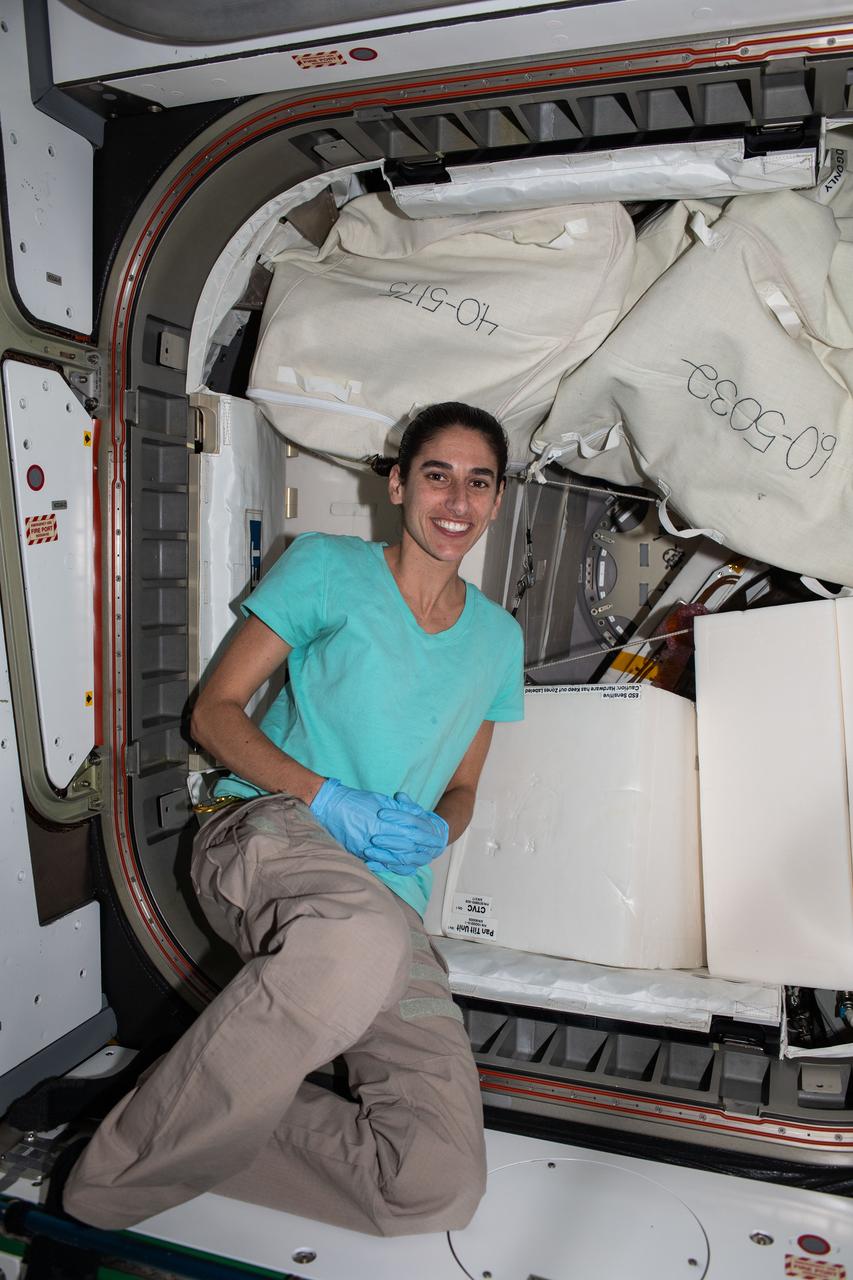
iss070e025062 (Nov. 16, 2023) --- NASA astronaut and Expedition 70 Flight Engineer Jasmin Moghbeli works in the International Space Station's Tranquility module clearing hardware and making space inside the NanoRacks Bishop airlock.
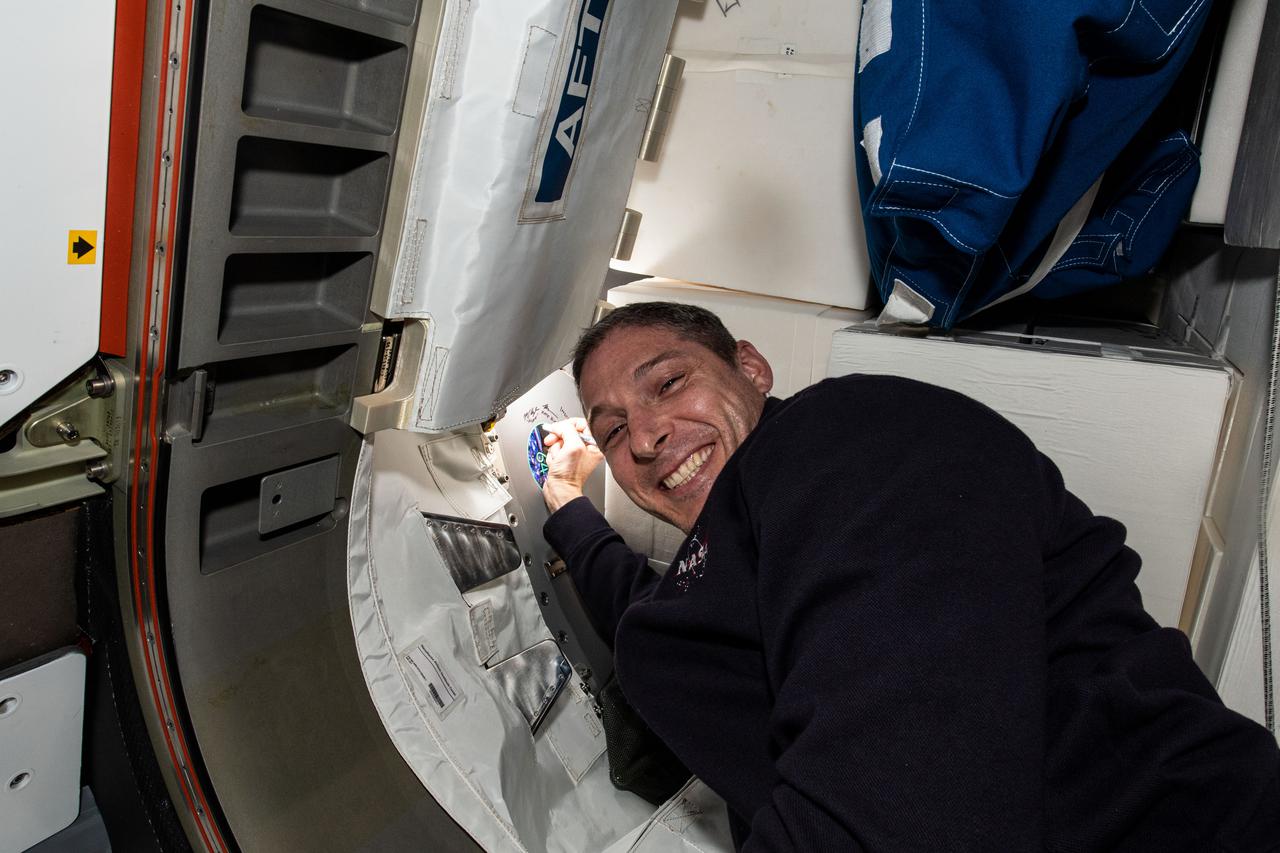
iss064e031801 (Feb. 11,2021) --- NASA astronaut and Expedition 64 Flight Engineer Michael Hopkins signs his name near his mission's insignia sticker in the vestibule between the Tranquility module and the NanoRacks Bishop airlock.
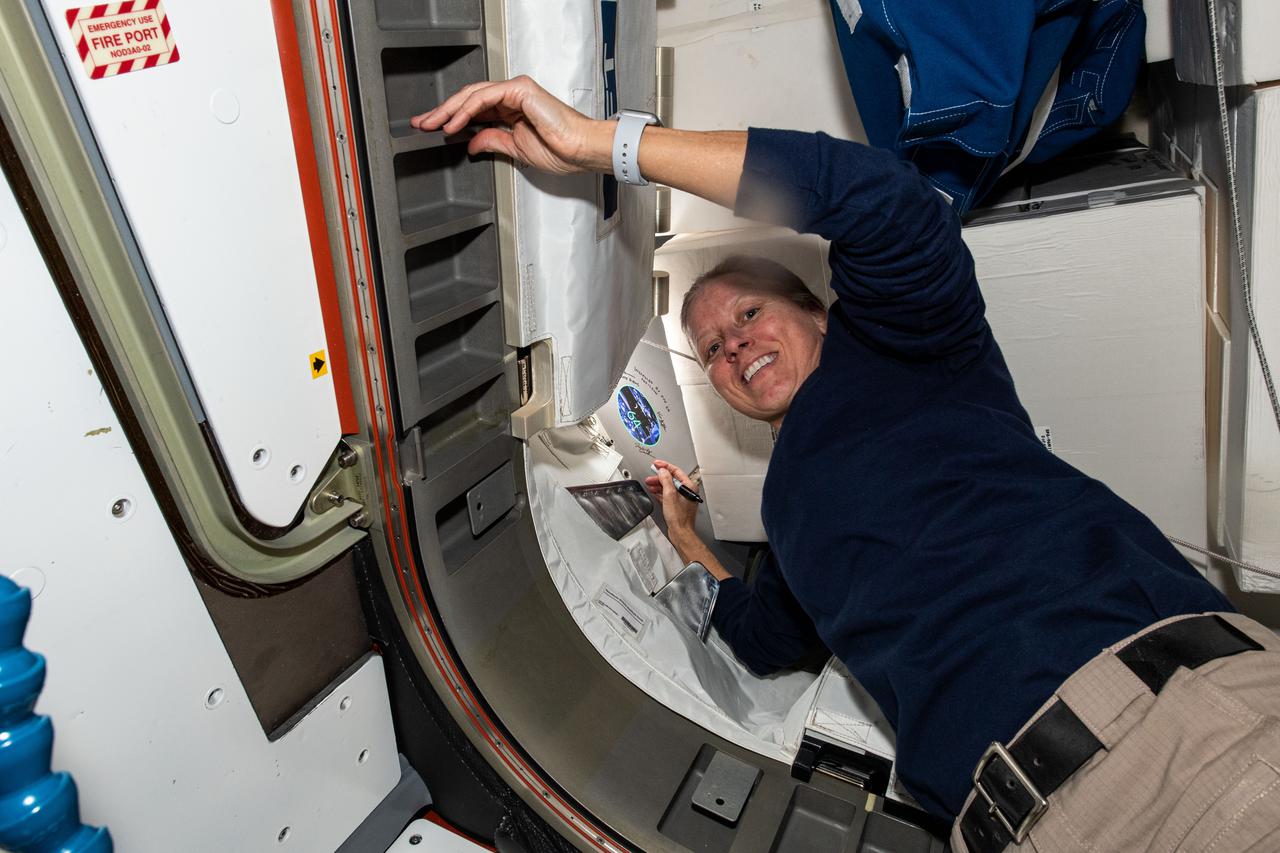
iss064e031802 (Feb. 11,2021) --- NASA astronaut and Expedition 64 Flight Engineer Shannon Walker signs her name near her mission's insignia sticker in the vestibule between the Tranquility module and the NanoRacks Bishop airlock.
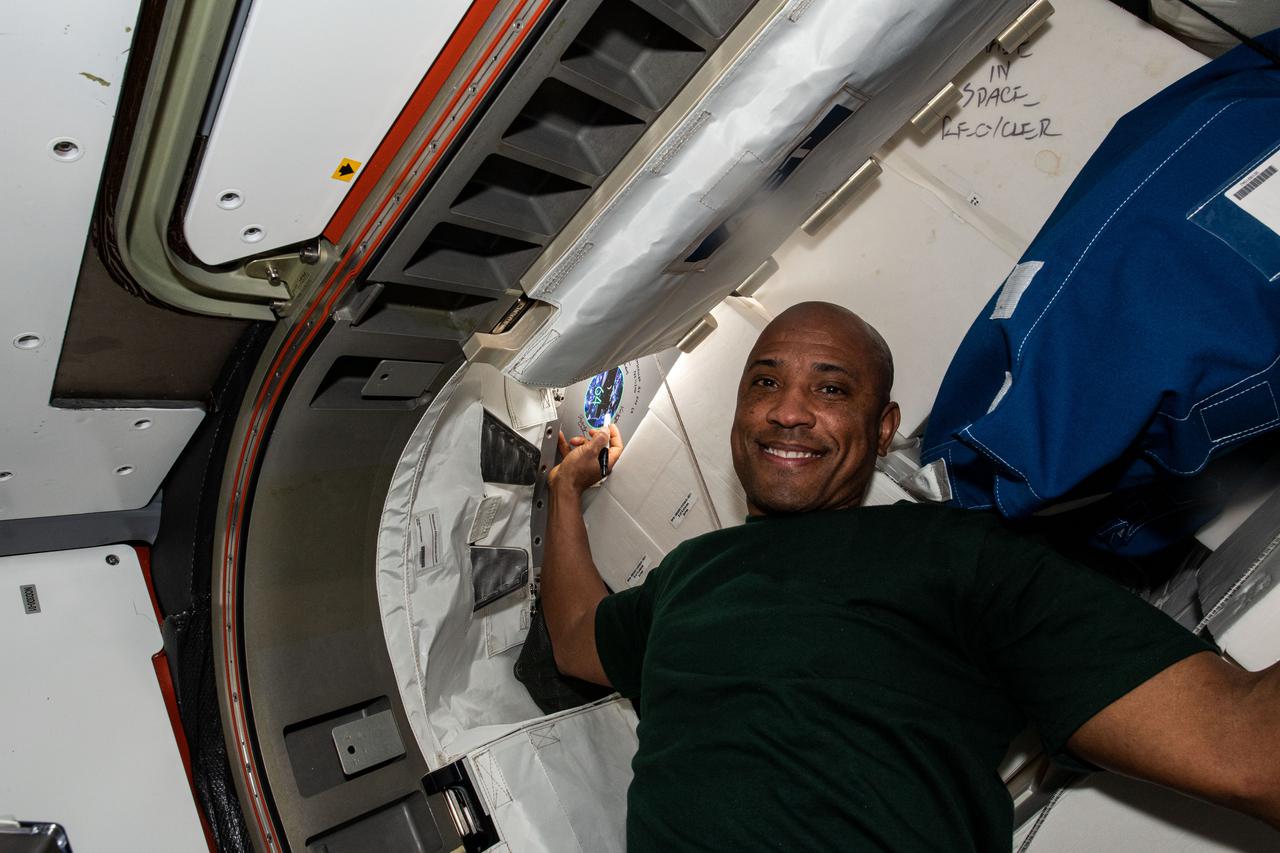
iss064e031803 (Feb. 11,2021) --- NASA astronaut and Expedition 64 Flight Engineer Victor Glover signs his name near his mission's insignia sticker in the vestibule between the Tranquility module and the NanoRacks Bishop airlock.
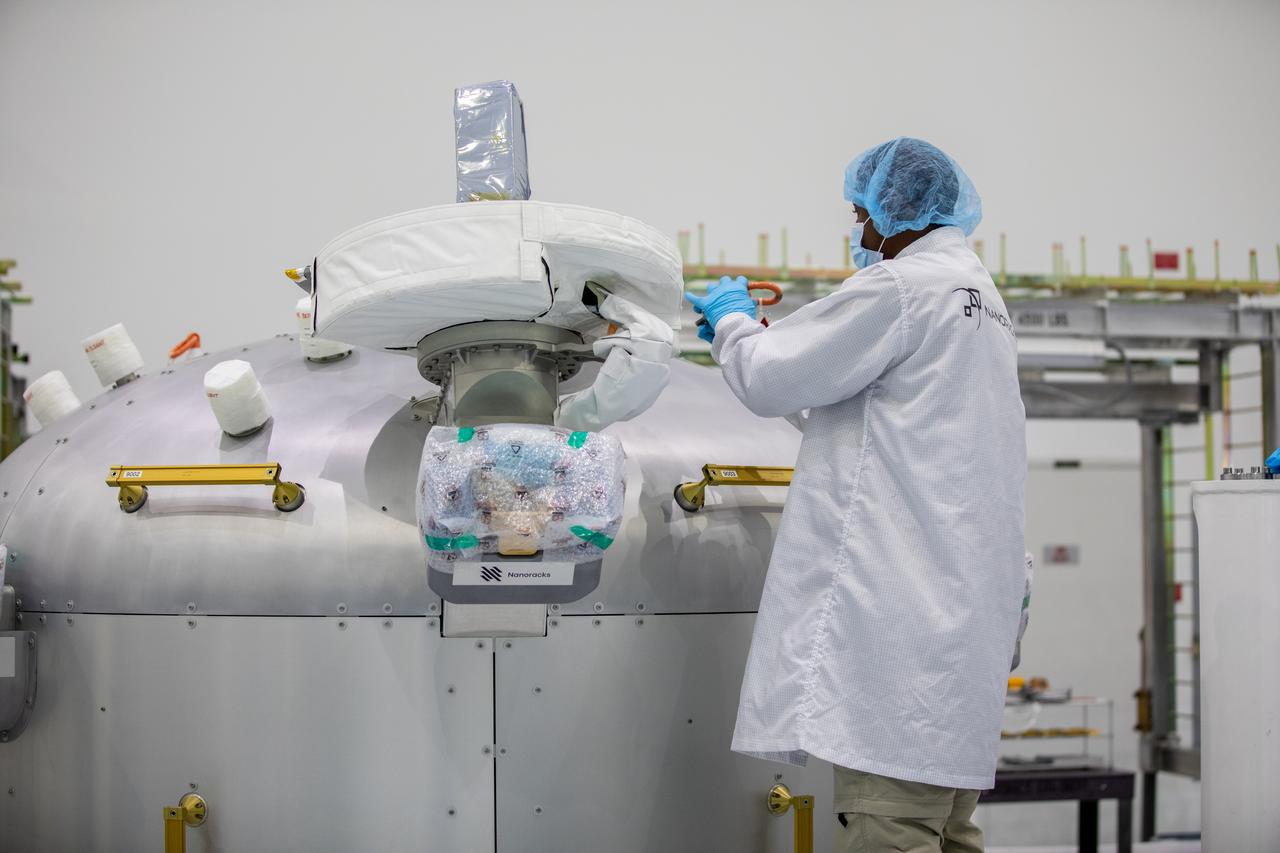
A Nanoracks technician works on the Nanoracks Bishop Airlock inside the Space Station Processing Facility at NASA's Kennedy Space Center in Florida on Sept. 29, 2020. The next-generation Nanoracks payload facility is being prepared for its flight to the International Space Station on SpaceX’s 21st commercial resupply services mission (CRS-21) to the International Space Station. The Bishop Airlock is the first commercially funded airlock for the space station. It will provide payload hosting, robotics testing, satellite deployment, and serve as an outside toolbox for station crew spacewalks, and more. CRS-21 is scheduled to launch on a SpaceX Falcon 9 rocket no earlier than November from Launch Complex 39A at Kennedy Space Center.
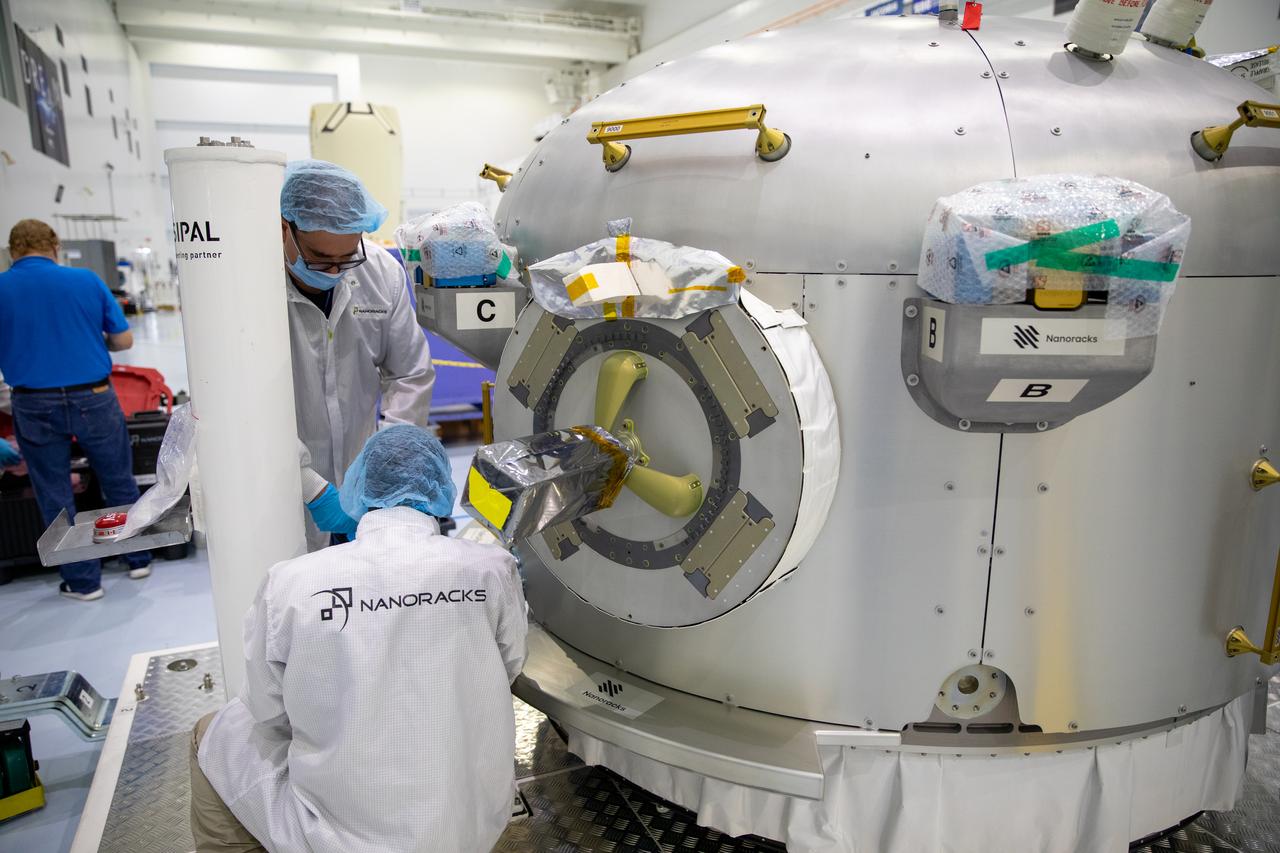
Nanoracks technicians work on the NanoRacks Bishop Airlock inside the Space Station Processing Facility at NASA's Kennedy Space Center in Florida on Sept. 29, 2020. The next-generation Nanoracks payload facility is being prepared for its flight to the International Space Station on SpaceX’s 21st commercial resupply services mission (CRS-21) to the International Space Station. The Bishop Airlock is the first commercially funded airlock for the space station. It will provide payload hosting, robotics testing, satellite deployment, serve as an outside toolbox for station crew spacewalks, and more. CRS-21 is scheduled to launch on a SpaceX Falcon 9 rocket no earlier than November from Launch Complex 39A at Kennedy Space Center.
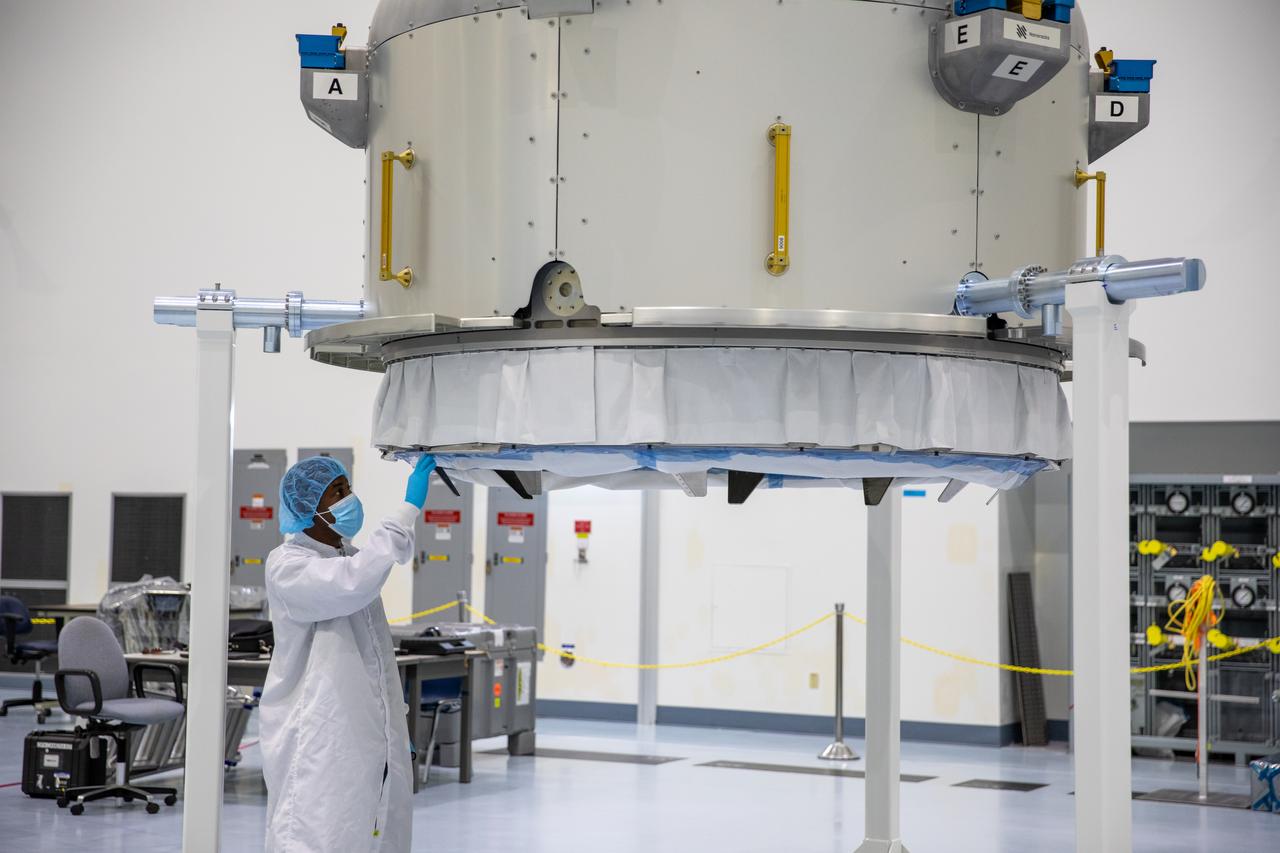
A Nanoracks technician works on the Nanoracks Bishop Airlock inside the Space Station Processing Facility at NASA's Kennedy Space Center in Florida on Oct. 7, 2020. The next-generation Nanoracks payload facility is being prepared for its flight to the International Space Station on SpaceX’s 21st commercial resupply services mission (CRS-21) to the International Space Station. The Bishop Airlock is the first commercially funded airlock for the space station. It will provide payload hosting, robotics testing, satellite deployment, and serve as an outside toolbox for station crew spacewalks, and more. CRS-21 is scheduled to launch on a SpaceX Falcon 9 from Kennedy’s Launch Complex 39A.
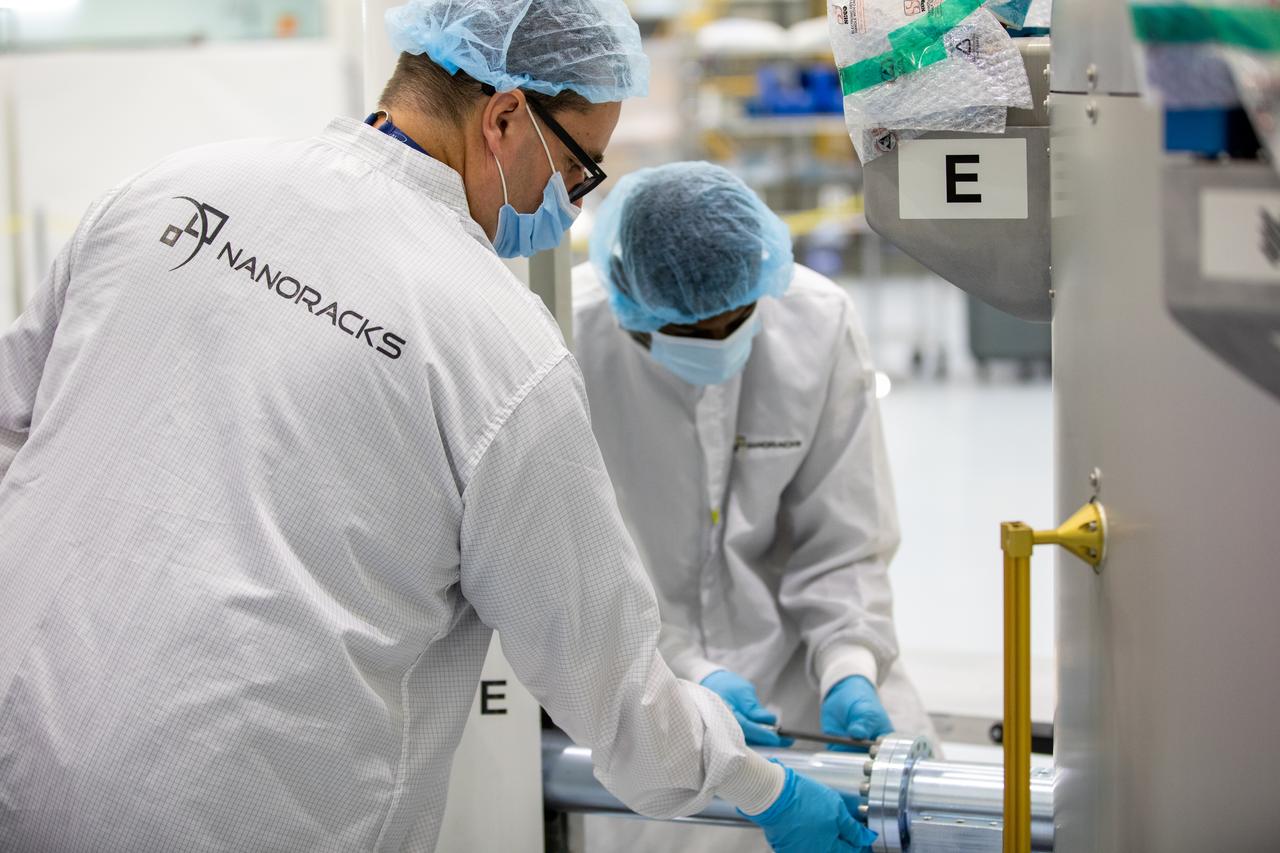
Nanoracks technicians work on the Nanoracks Bishop Airlock inside the Space Station Processing Facility at NASA's Kennedy Space Center in Florida on Sept. 29, 2020. The next-generation Nanoracks payload facility is being prepared for its flight to the International Space Station on SpaceX’s 21st commercial resupply services mission (CRS-21) to the International Space Station. The Bishop Airlock is the first commercially funded airlock for the space station. It will provide payload hosting, robotics testing, satellite deployment, serve as an outside toolbox for station crew spacewalks, and more. CRS-21 is scheduled to launch on a SpaceX Falcon 9 rocket no earlier than November from Launch Complex 39A at Kennedy Space Center.
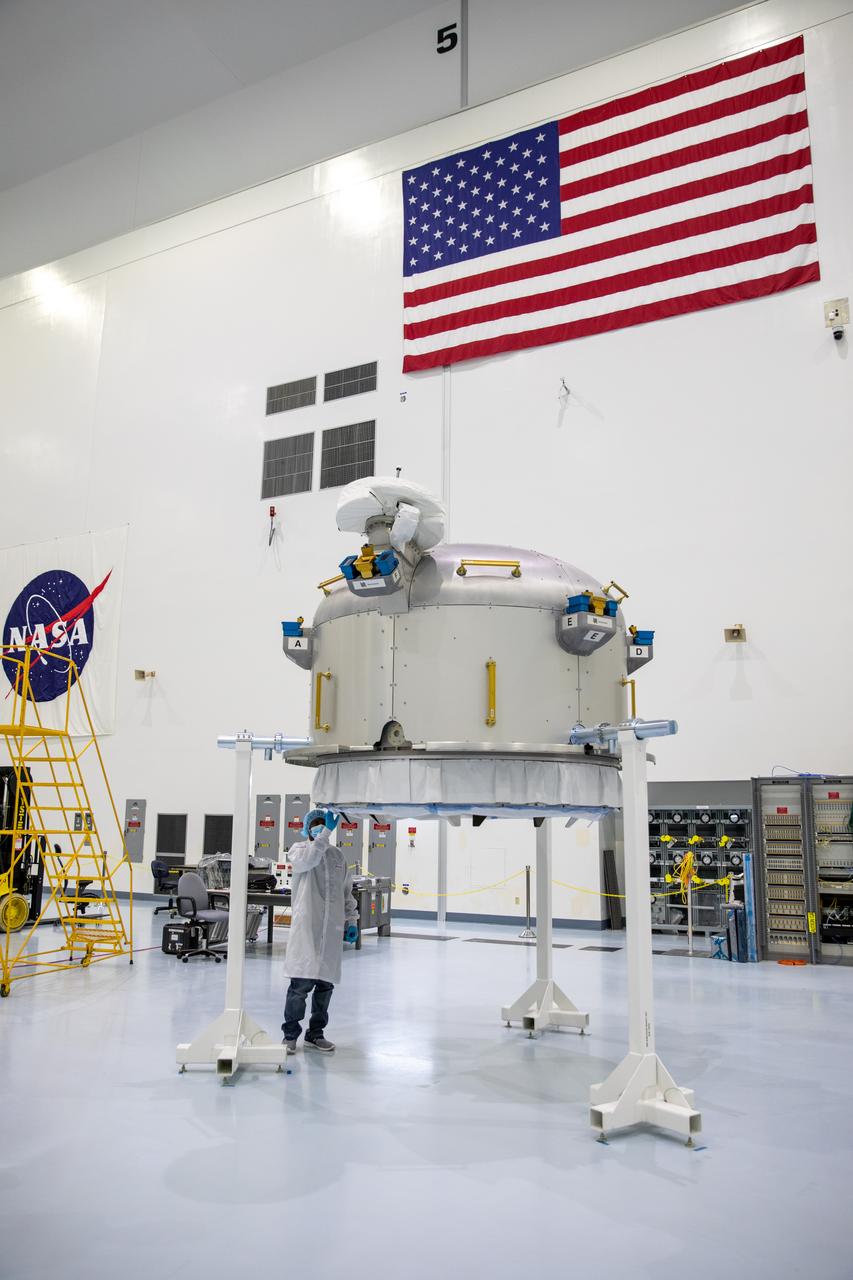
A Nanoracks technician works on the Nanoracks Bishop Airlock inside the Space Station Processing Facility at NASA's Kennedy Space Center in Florida on Oct. 7, 2020. The next-generation Nanoracks payload facility is being prepared for its flight to the International Space Station on SpaceX’s 21st commercial resupply services mission (CRS-21) to the International Space Station. The Bishop Airlock is the first commercially funded airlock for the space station. It will provide payload hosting, robotics testing, satellite deployment, serve as an outside toolbox for station crew spacewalks, and more. CRS-21 is scheduled to launch on a SpaceX Falcon 9 from Kennedy’s Launch Complex 39A.
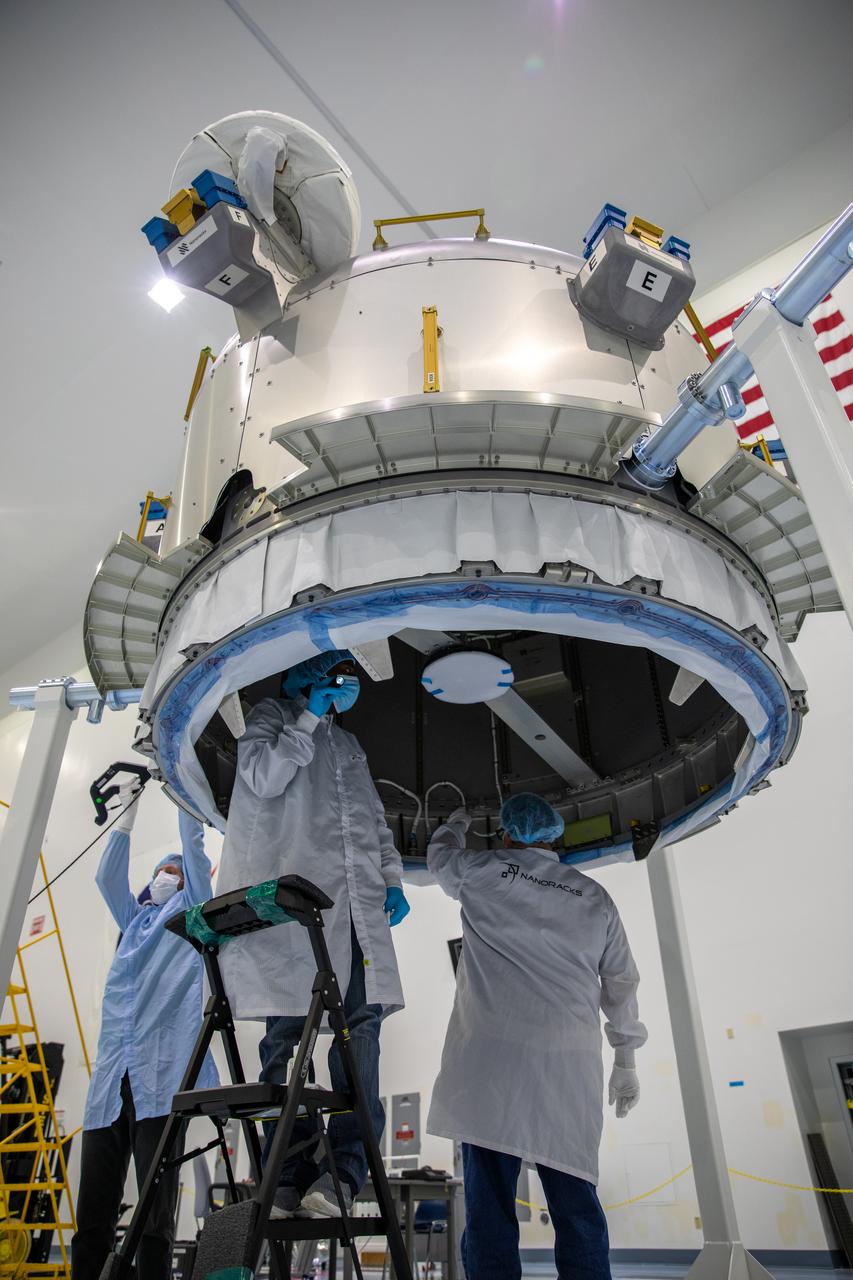
Nanoracks technicians work on the NanoRacks Bishop Airlock inside the Space Station Processing Facility at NASA's Kennedy Space Center in Florida on Oct. 7, 2020. The next-generation Nanoracks payload facility is being prepared for its flight to the International Space Station on SpaceX’s 21st commercial resupply services mission (CRS-21) to the International Space Station. The Bishop Airlock is the first commercially funded airlock for the space station. It will provide payload hosting, robotics testing, satellite deployment, serve as an outside toolbox for station crew spacewalks, and more. CRS-21 is scheduled to launch on a SpaceX Falcon 9 from Kennedy’s Launch Complex 39A.
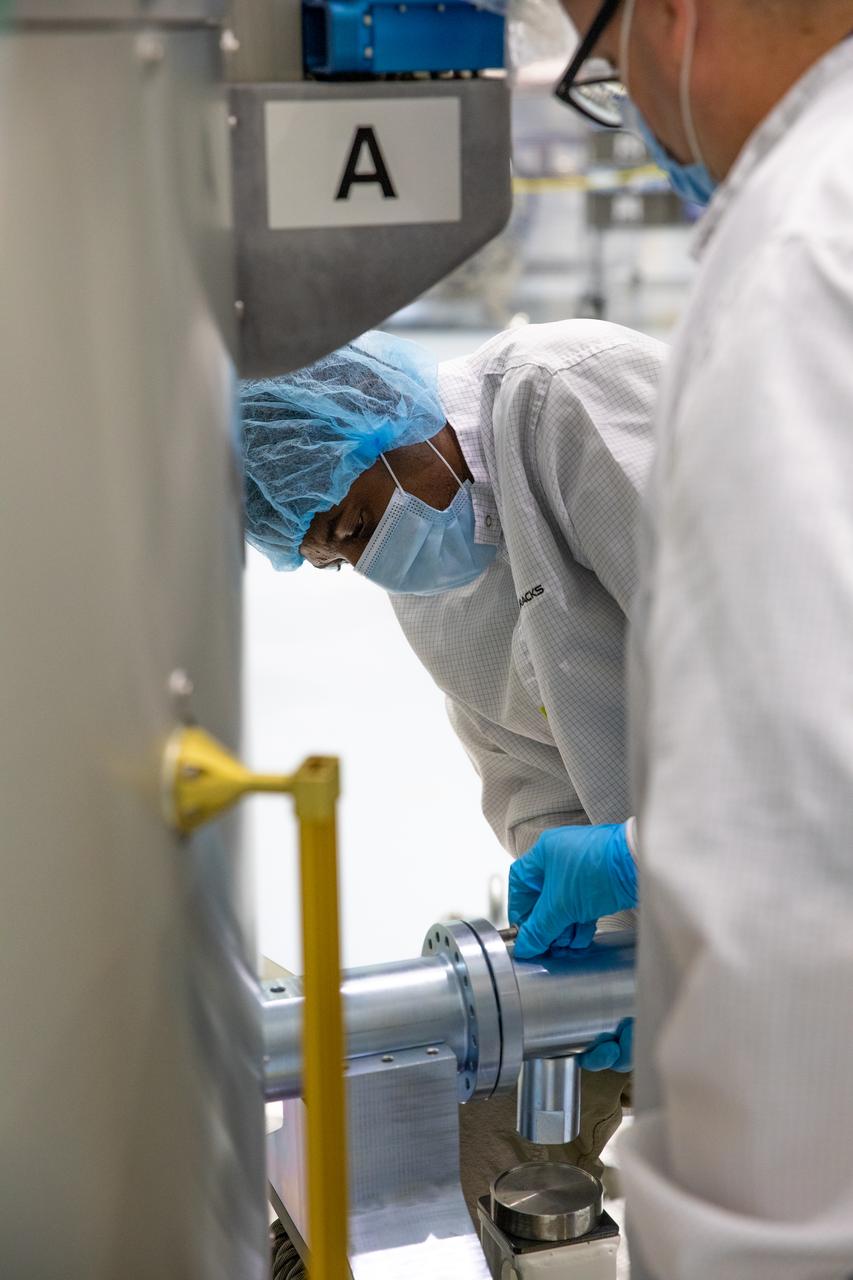
Nanoracks technicians work on the NanoRacks Bishop Airlock inside the Space Station Processing Facility at NASA's Kennedy Space Center in Florida on Sept. 29, 2020. The next-generation Nanoracks payload facility is being prepared for its flight to the International Space Station on SpaceX’s 21st commercial resupply services mission (CRS-21) to the International Space Station. The Bishop Airlock is the first commercially funded airlock for the space station. It will provide payload hosting, robotics testing, satellite deployment, serve as an outside toolbox for station crew spacewalks, and more. CRS-21 is scheduled to launch on a SpaceX Falcon 9 rocket no earlier than November from Launch Complex 39A at Kennedy Space Center.
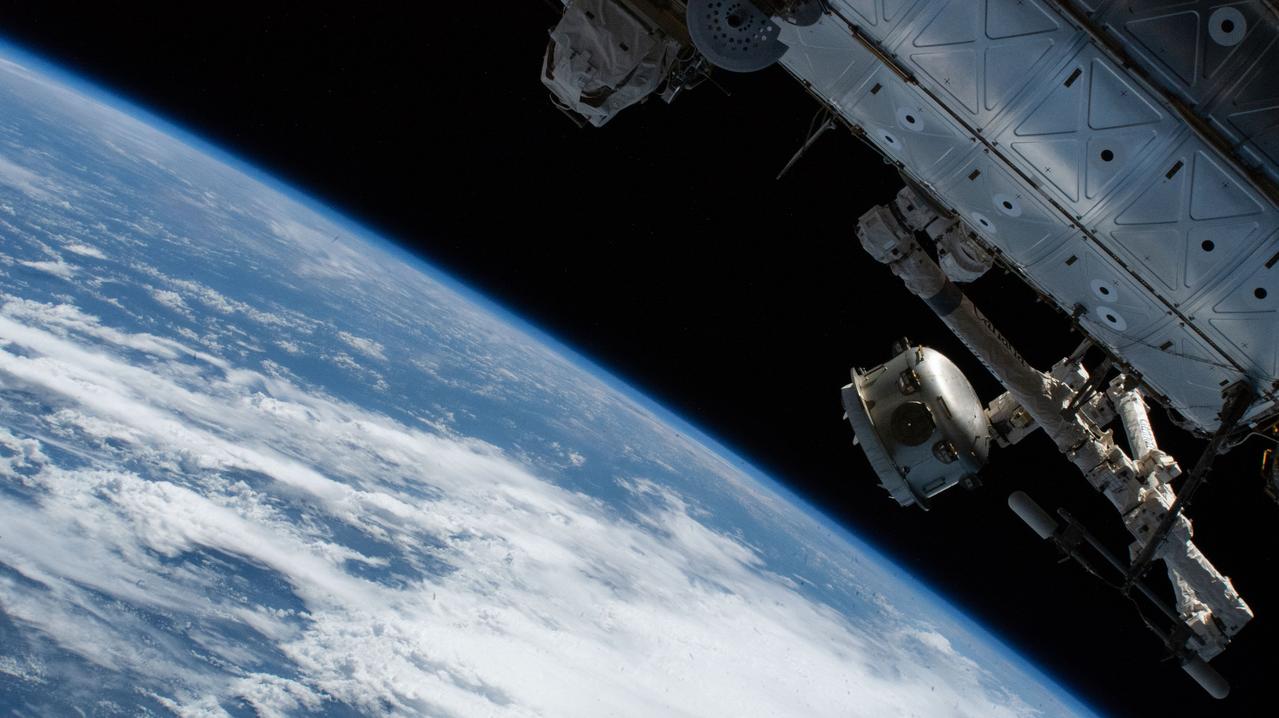
iss067e174420 (July 2, 2022) --- The Nanoracks Bishop Airlock is pictured in the grips of the Canadarm2 robotic arm as it is positioned away from the International Space Station. The commercial platform was being maneuvered prior to jettisoning a trash container for a fiery, but safe disposal above Earth's atmopshere. Bishop is a multi-faceted airlock attached to the Tranquility module used not only to discard trash, but also to host research payloads, deploy satellites, and serve as a testbed for a variety of space technologies. At right, the Canadarm2 is attached to the U.S. Destiny laboratory module as ground controllers remotely maneuver the robotic arm.
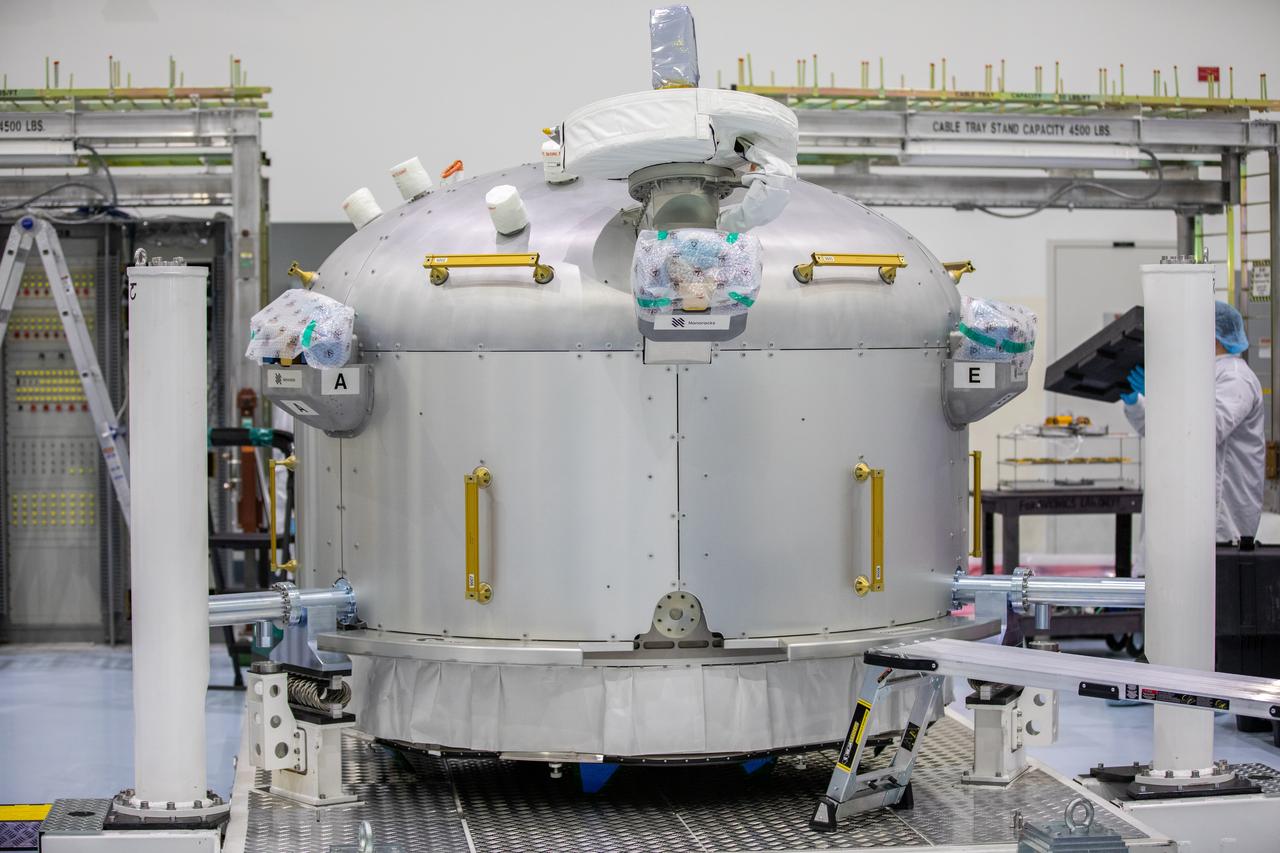
The Nanoracks Bishop Airlock is in view inside the Space Station Processing Facility at NASA's Kennedy Space Center in Florida on Sept. 29, 2020. The next-generation Nanoracks payload facility is being prepared for its flight to the International Space Station on SpaceX’s 21st commercial resupply services mission (CRS-21) to the International Space Station. The Bishop Airlock is the first commercially funded airlock for the space station. It will provide payload hosting, robotics testing, satellite deployment, serve as an outside toolbox for station crew spacewalks, and more. CRS-21 is scheduled to launch on a SpaceX Falcon 9 rocket no earlier than November from Launch Complex 39A at Kennedy Space Center.
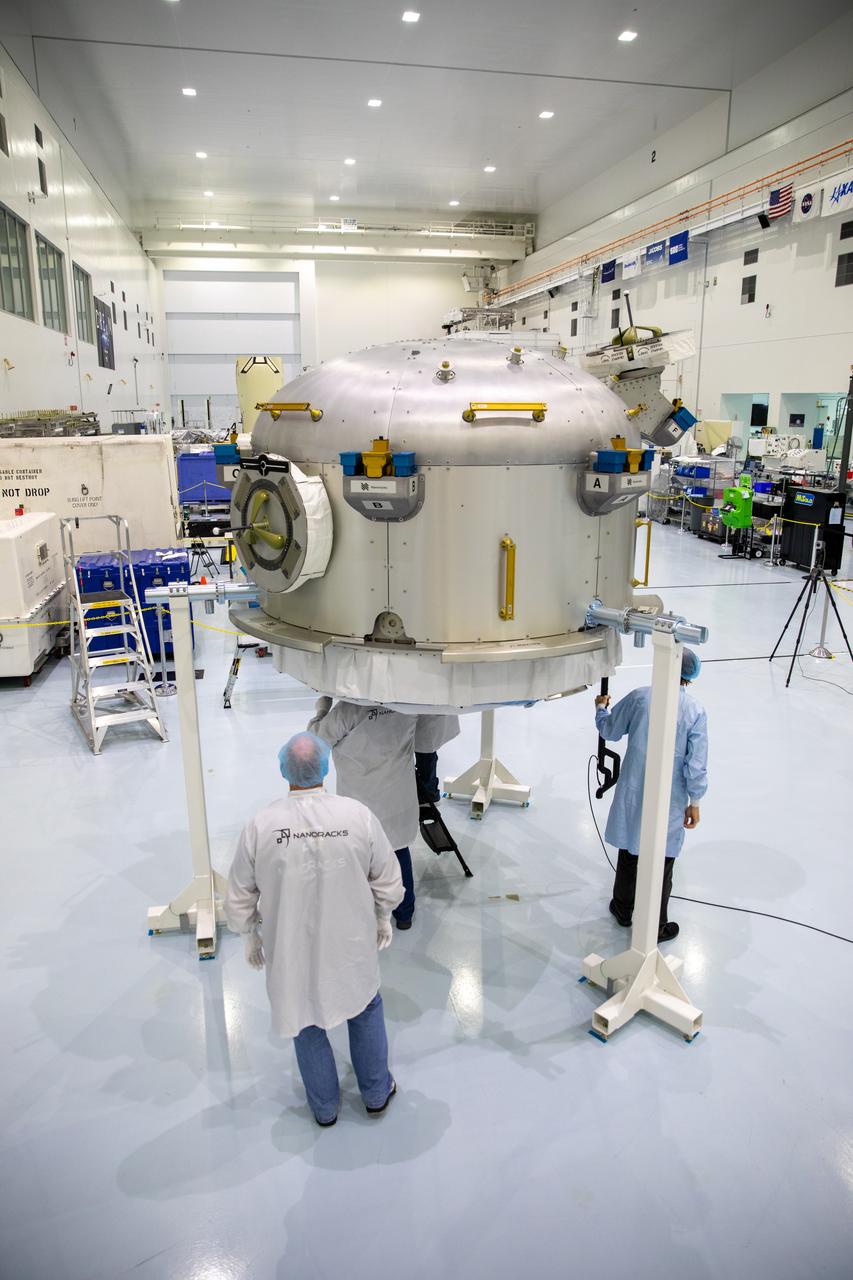
Nanoracks technicians work on the Nanoracks Bishop Airlock inside the Space Station Processing Facility at NASA's Kennedy Space Center in Florida on Oct. 7, 2020. The next-generation Nanoracks payload facility is being prepared for its flight to the International Space Station on SpaceX’s 21st commercial resupply services mission (CRS-21) to the International Space Station. The Bishop Airlock is the first commercially funded airlock for the space station. It will provide payload hosting, robotics testing, satellite deployment, serve as an outside toolbox for station crew spacewalks, and more. CRS-21 is scheduled to launch on a SpaceX Falcon 9 from Kennedy’s Launch Complex 39A.
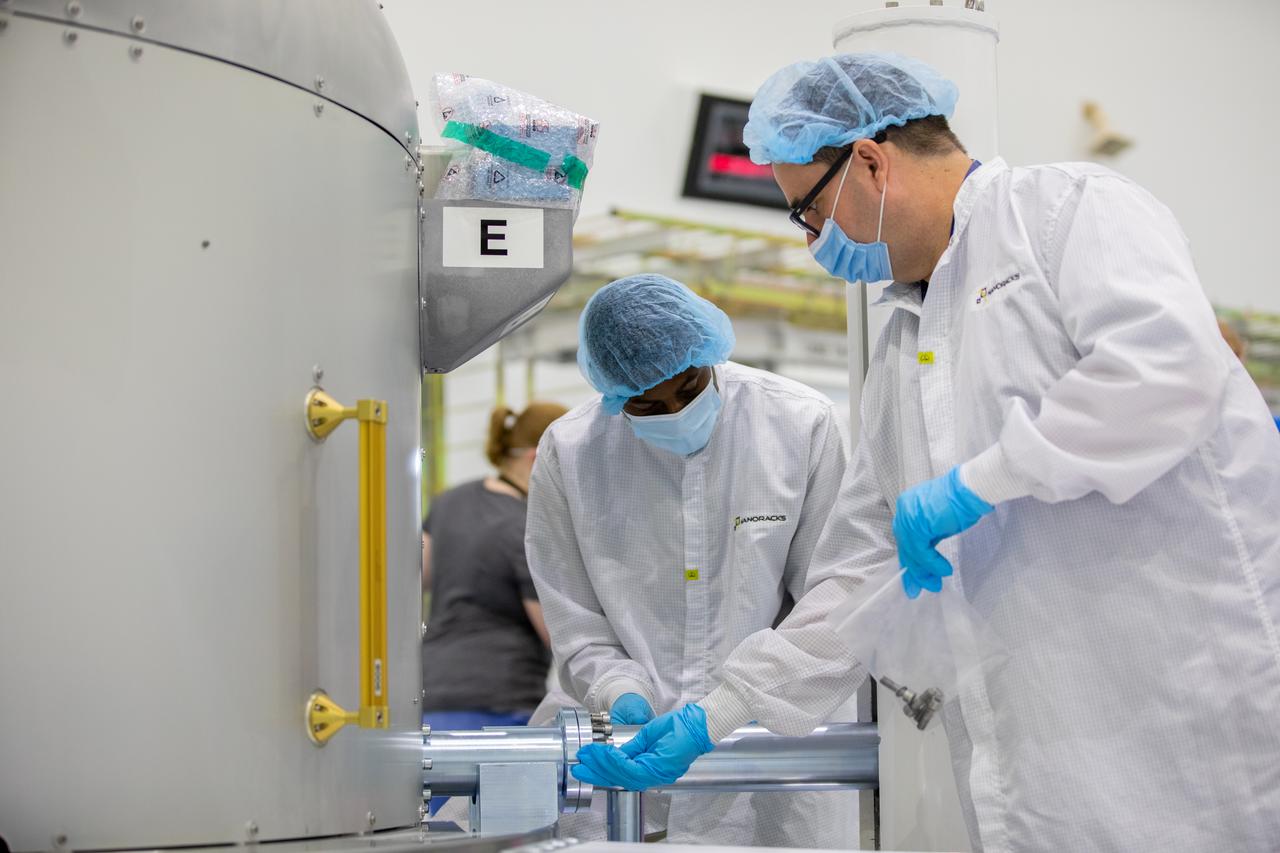
Nanoracks technicians work on the NanoRacks Bishop Airlock inside the Space Station Processing Facility at NASA's Kennedy Space Center in Florida on Sept. 29, 2020. The next-generation Nanoracks payload facility is being prepared for its flight to the International Space Station on SpaceX’s 21st commercial resupply services mission (CRS-21) to the International Space Station. The Bishop Airlock is the first commercially funded airlock for the space station. It will provide payload hosting, robotics testing, satellite deployment, serve as an outside toolbox for station crew spacewalks, and more. CRS-21 is scheduled to launch on a SpaceX Falcon 9 rocket no earlier than November from Launch Complex 39A at Kennedy Space Center.
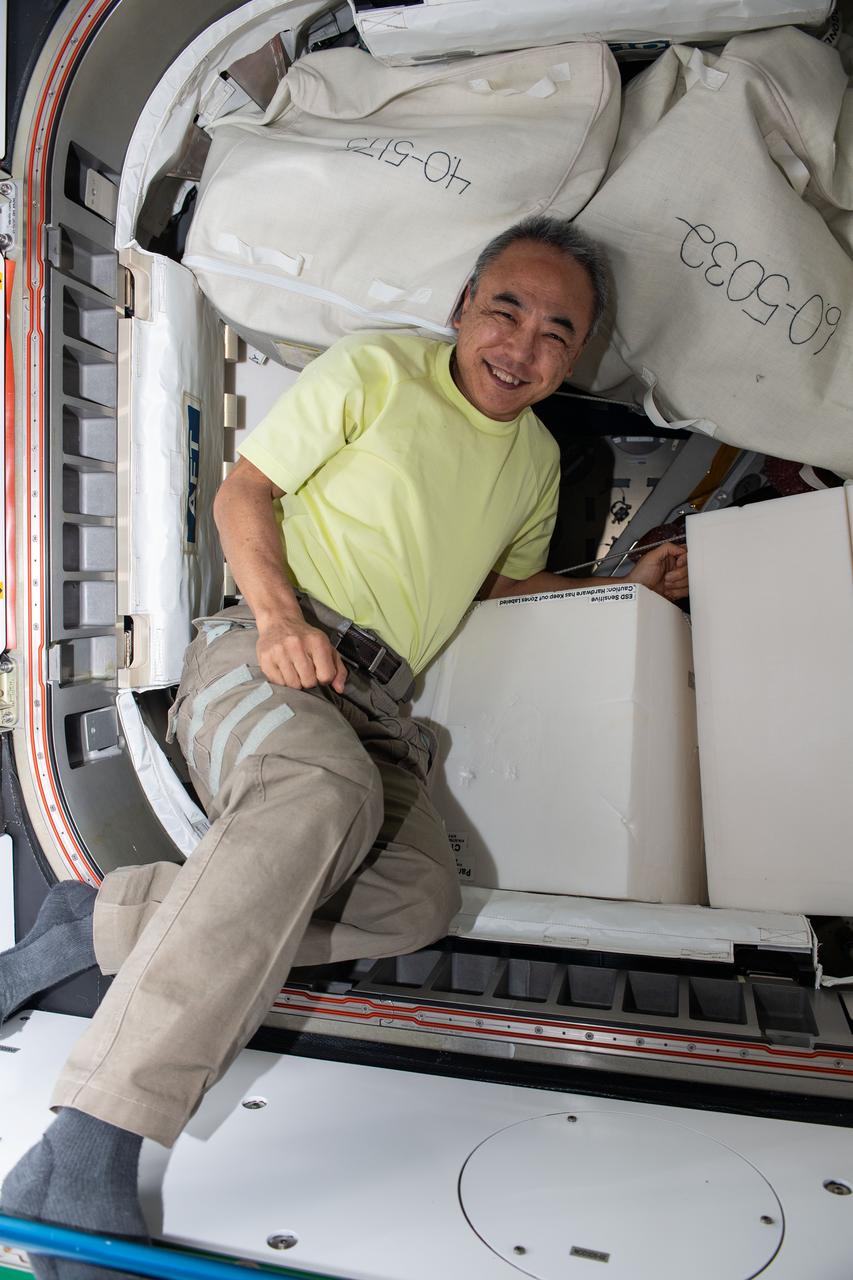
iss070e025067 (Nov. 16, 2023) --- JAXA (Japan Aerospace Exploration Agency) astronaut and Expedition 70 Flight Engineer Satoshi Furukawa works in the International Space Station's Tranquility module clearing hardware and making space inside the NanoRacks Bishop airlock.
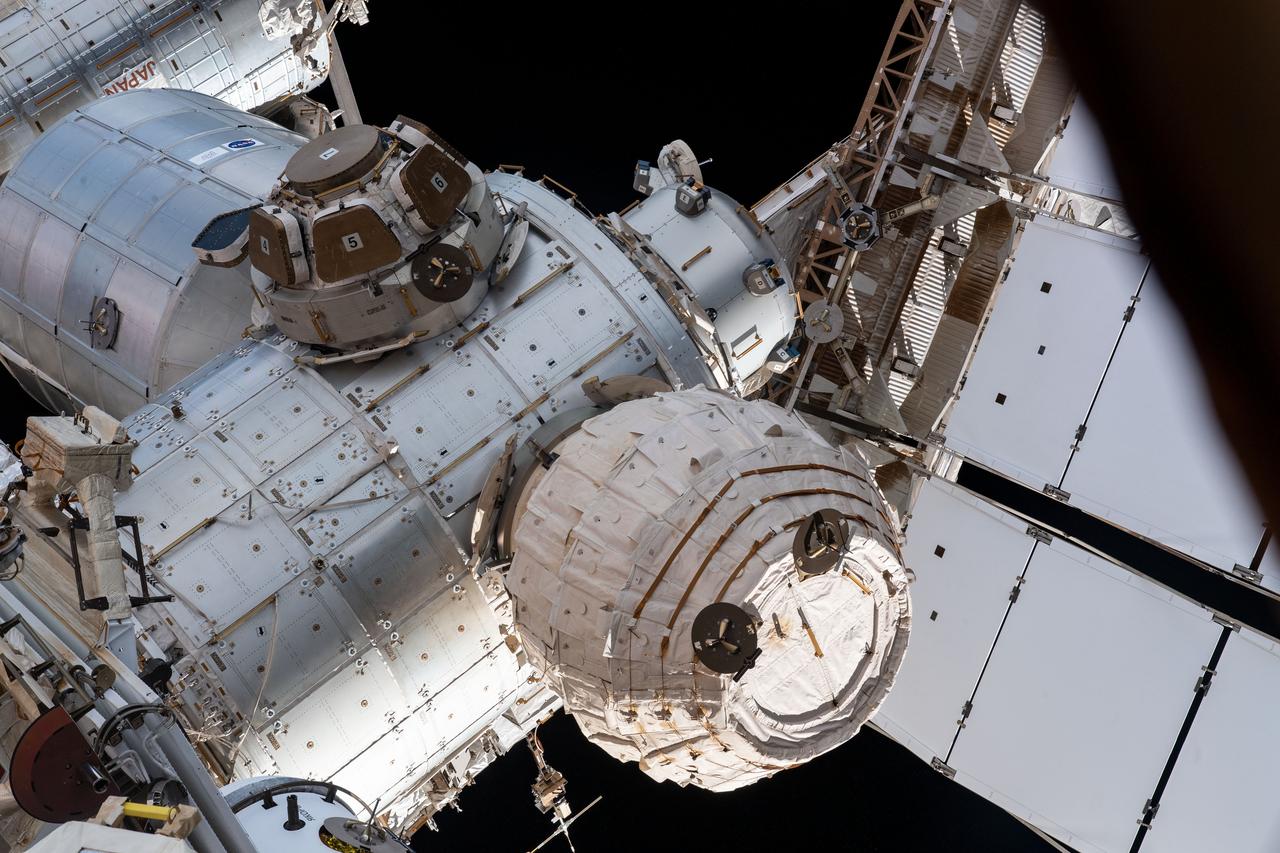
iss067e214089 (Aug. 2, 2022) --- This view from a window on the International Space Station's Russian segment shows the Bigelow Expandable Activity Module (BEAM), the cupola with its seven windows shuttered, and the NanoRacks Bishop airlock. Behind the cupola is the Leonardo permanment multipurpose module. All four components are attached to the Tranquility module.
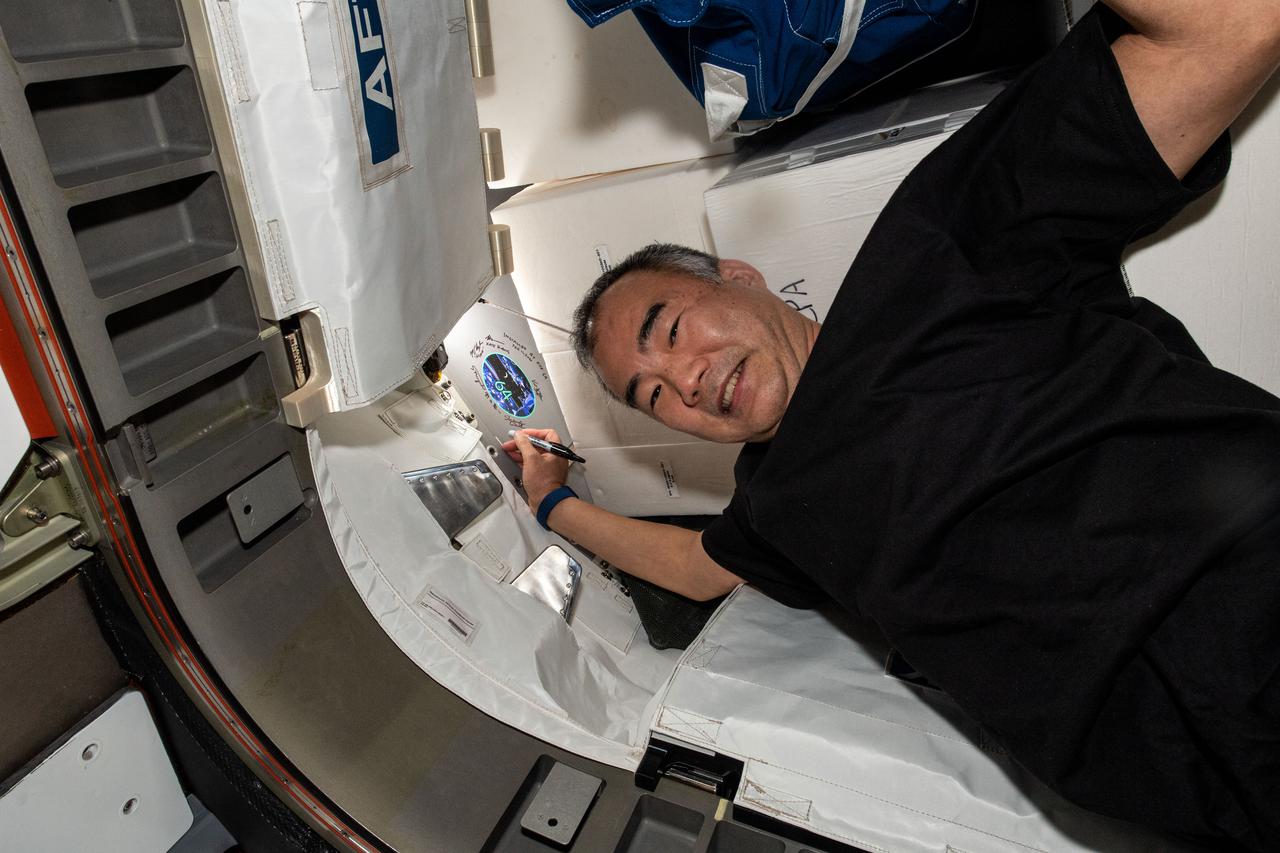
iss064e031806 (Feb. 11,2021) --- JAXA (Japan Aerospace Exploration Agency) astronaut and Expedition 64 Flight Engineer Soichi Noguchi signs his name near his mission's insignia sticker in the vestibule between the Tranquility module and the NanoRacks Bishop airlock.
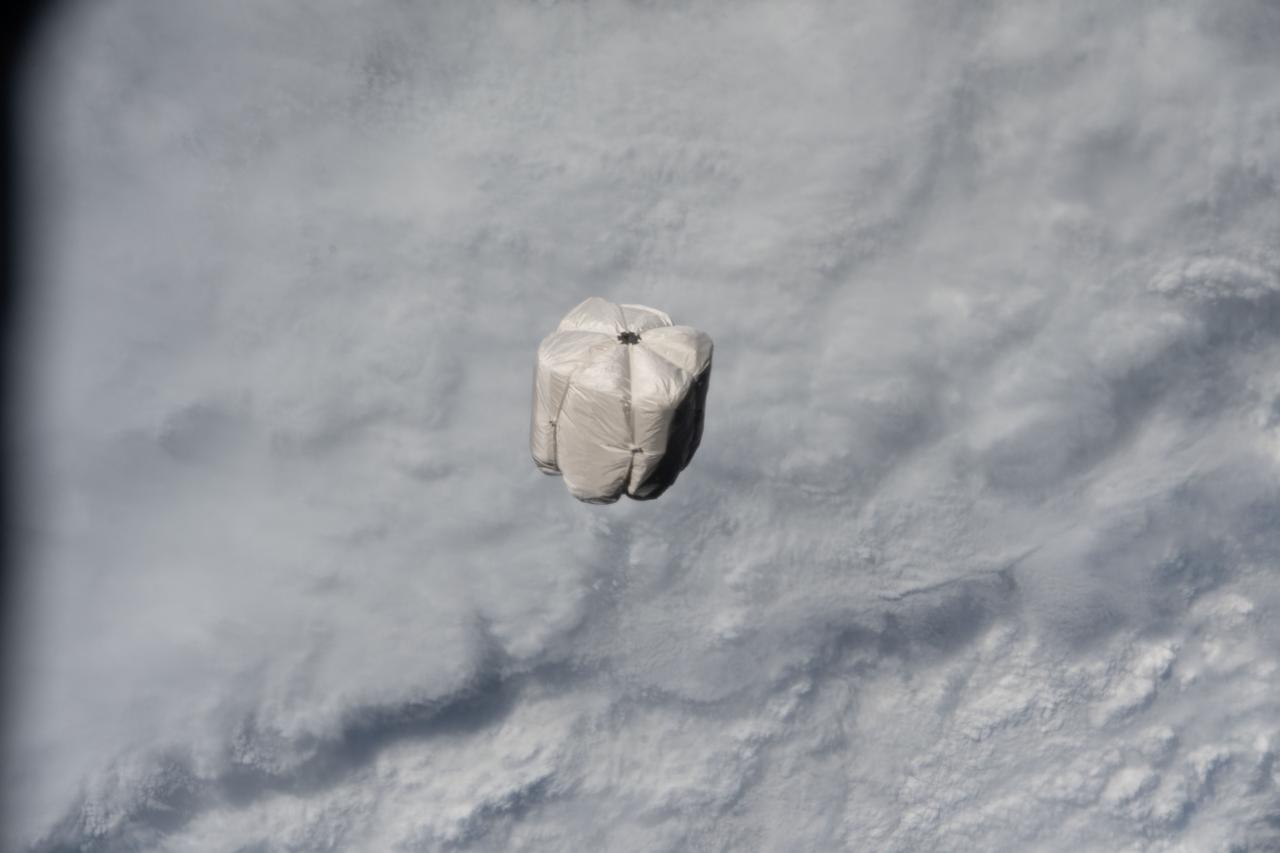
iss067e173472 (July 3, 2022) --- A trash container is pictured on a trajectory away from the International Space Station and toward the Earth's atmosphere for a fiery, but safe disposal. The trash container had been jettisoned moments earlier from the Nanoracks Bishop Airlock while attached to the Canadarm2 robotic arm.
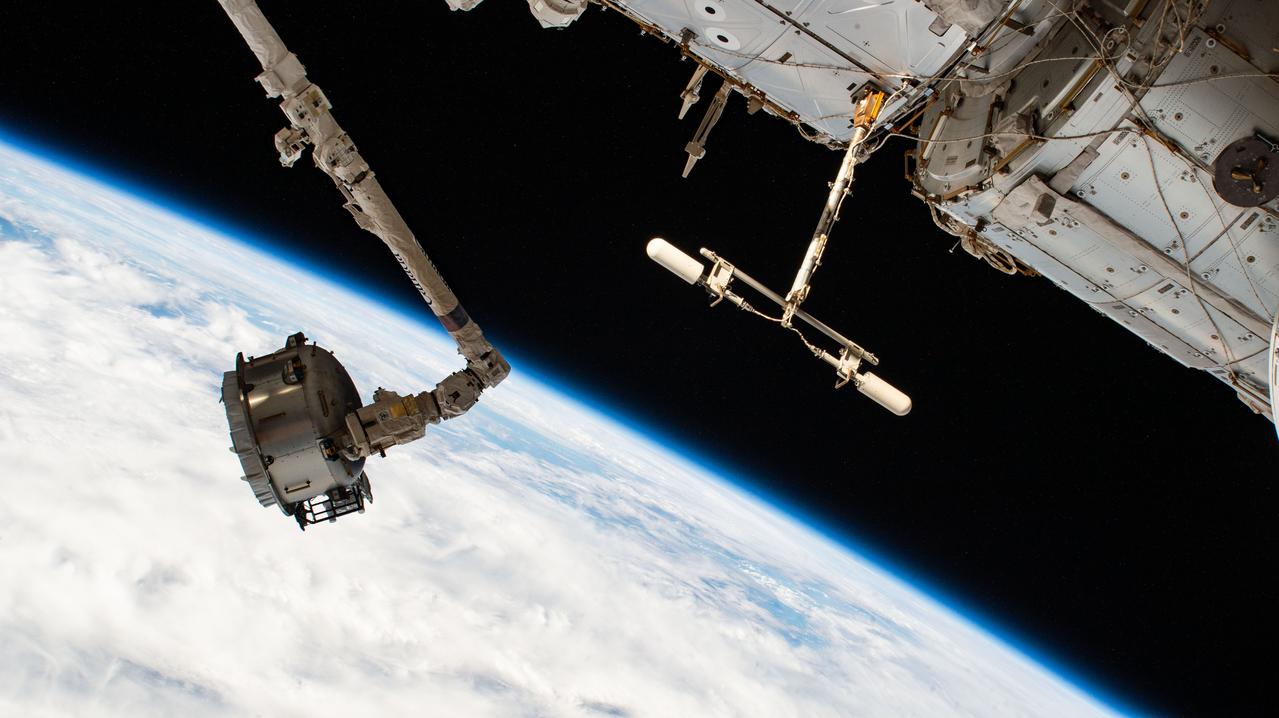
iss070e098229 (Feb. 22, 2024) --- At left, the Canadarm2 robotic arm maneuvers the NanoRacks Bishop airlock in the grip of its latching end effector. At top right, a UHF antenna extends from the forward end of the Destiny laboratory module, which is also attached to the Harmony module.
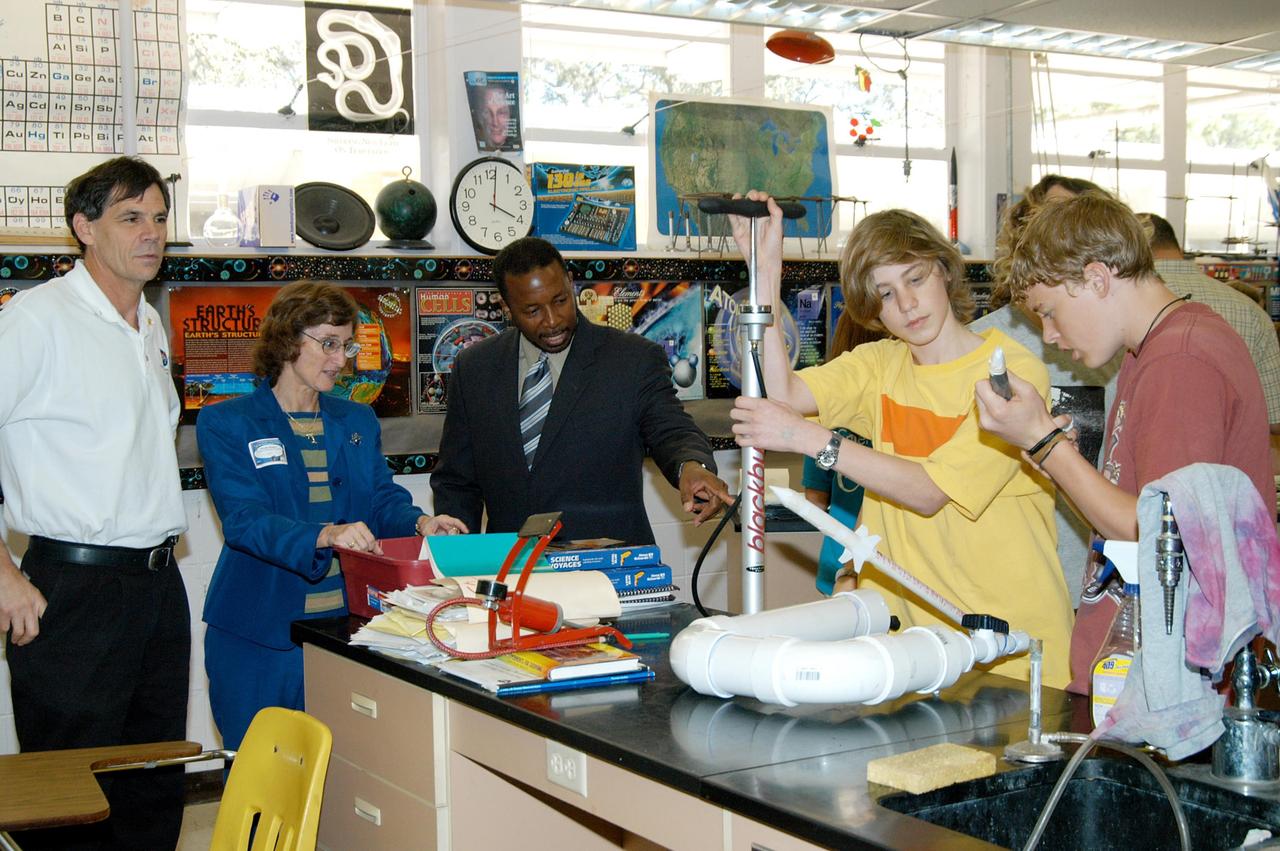
KENNEDY SPACE CENTER, FLA. - KSC Deputy Director Woodrow Whitlow Jr. looks at students’ projects in a classroom at Howard Bishop Middle School in Gainesville, Fla. Dr. Whitlow shared the new vision for space exploration with the students, the next generation of explorers. Whitlow talked about our destiny as explorers, NASA’s stepping stone approach to exploring Earth, the Moon, Mars and beyond, how space impacts our lives, and how people and machines rely on each other in space. The presentation also included a downlink from the International Space Station for students to ask questions of the Expedition 8 crew, Commander Michael Foale and Flight Engineer Alexander Kaleri. Howard Bishop Middle School is one of 50 nationwide (four in Florida) in the NASA Explorer Schools (NES) Program. NES establishes a three-year partnership between NASA and 50 NASA Explorer Schools teams, consisting of teachers and education administrators from diverse communities nationwide.
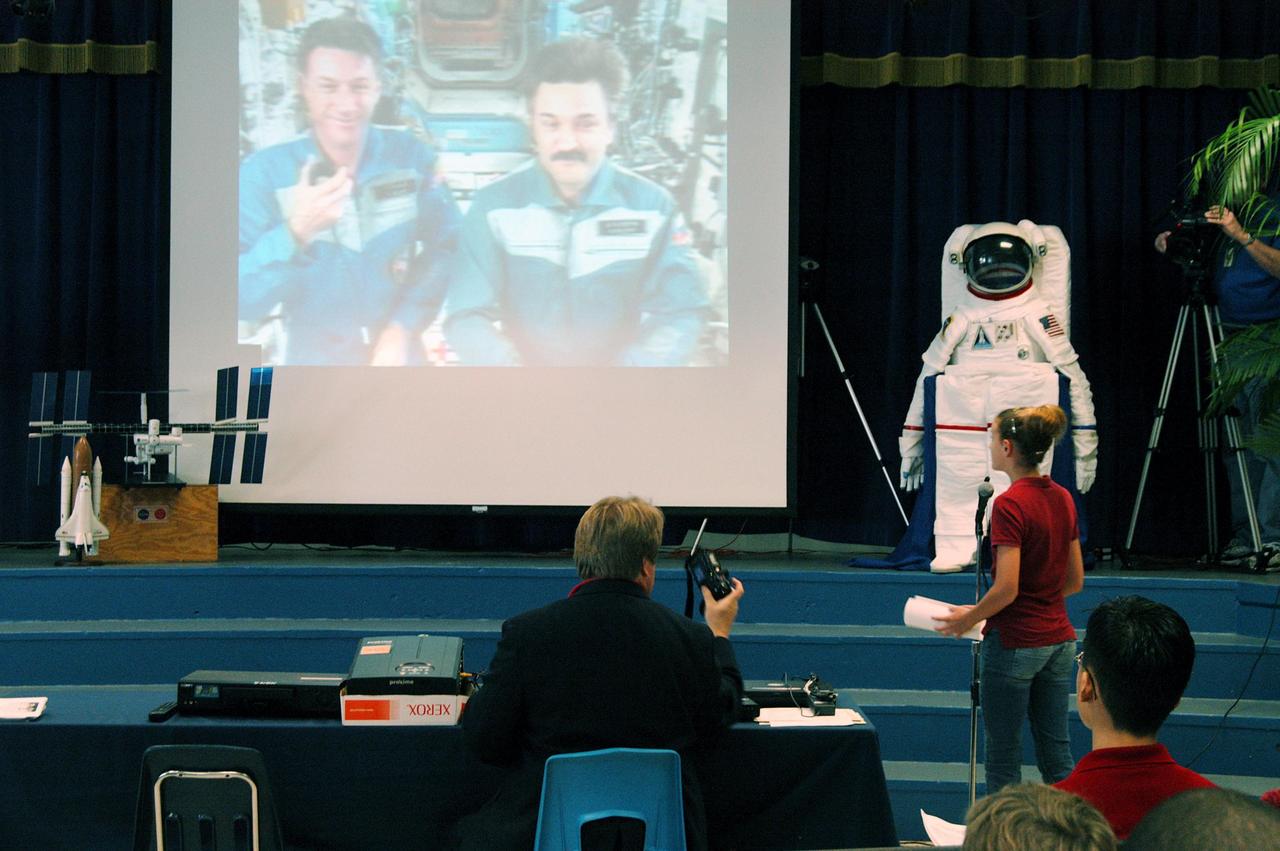
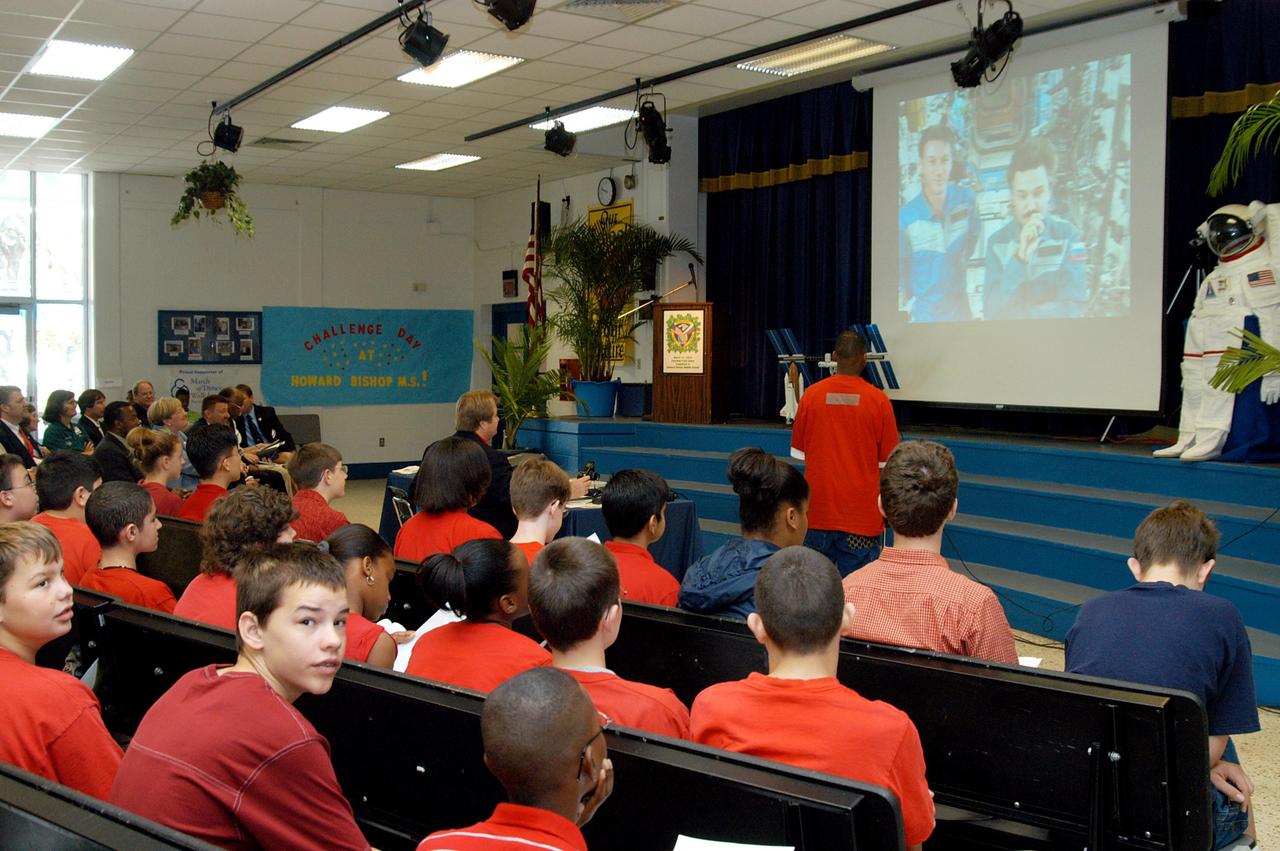
KENNEDY SPACE CENTER, FLA. - At Howard Bishop Middle School in Gainesville, Fla., during a presentation that shared the new vision for space exploration, the Expedition 8 crew, Commander Michael Foale and Flight Engineer Alexander Kaleri, participated in a downlink from the International Space Station (seen on the screen on stage). Deputy Director Dr. Woodrow Whitlow Jr. represented KSC, talking about our destiny as explorers, NASA’s stepping stone approach to exploring Earth, the Moon, Mars and beyond, how space impacts our lives, and how people and machines rely on each other in space. Howard Bishop Middle School is one of 50 nationwide (four in Florida) in the NASA Explorer Schools (NES) Program. NES establishes a three-year partnership between NASA and 50 NASA Explorer Schools teams, consisting of teachers and education administrators from diverse communities nationwide.
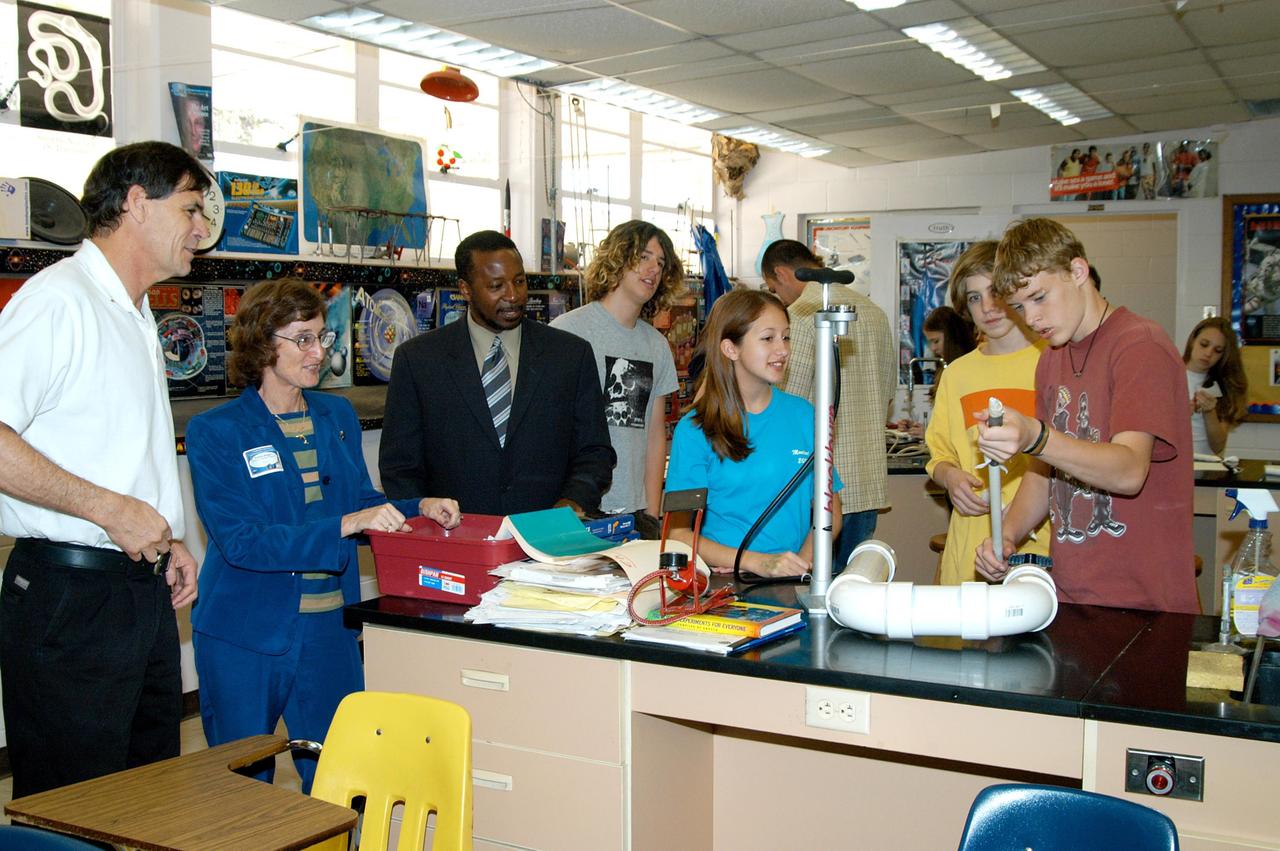
KENNEDY SPACE CENTER, FLA. - KSC Deputy Director Woodrow Whitlow Jr. looks at students’ projects in a classroom at Howard Bishop Middle School in Gainesville, Fla. Dr. Whitlow shared the new vision for space exploration with the students, the next generation of explorers. Whitlow talked about our destiny as explorers, NASA’s stepping stone approach to exploring Earth, the Moon, Mars and beyond, how space impacts our lives, and how people and machines rely on each other in space. The presentation also included a downlink from the International Space Station for students to ask questions of the Expedition 8 crew, Commander Michael Foale and Flight Engineer Alexander Kaleri. Howard Bishop Middle School is one of 50 nationwide (four in Florida) in the NASA Explorer Schools (NES) Program. NES establishes a three-year partnership between NASA and 50 NASA Explorer Schools teams, consisting of teachers and education administrators from diverse communities nationwide.
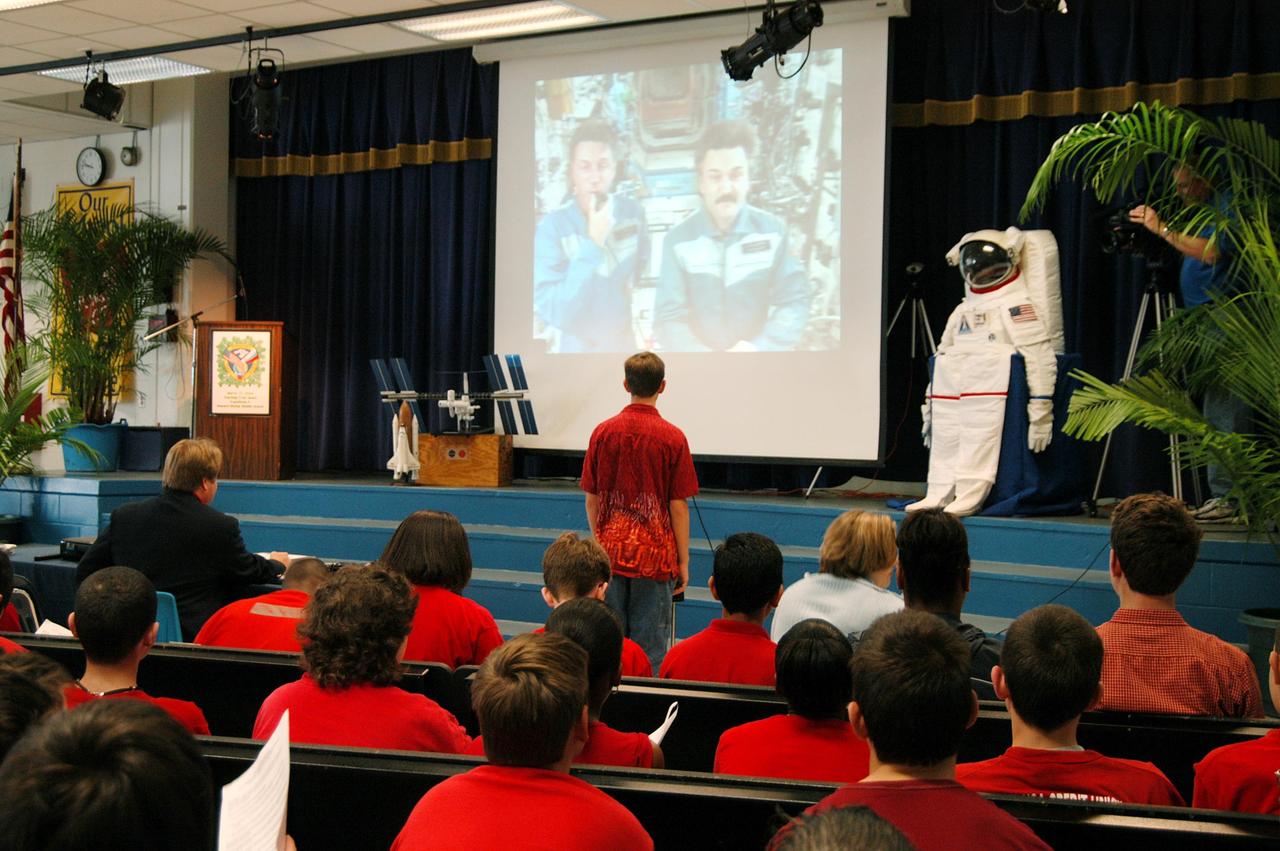
KENNEDY SPACE CENTER, FLA. - At Howard Bishop Middle School in Gainesville, Fla., a student asks the Expedition 8 crew (Commander Michael Foale and Flight Engineer Alexander Kaleri seen on the screen on stage) a question in a downlink from the International Space Station. During a presentation that shared the new vision for space exploration, KSC Deputy Director Dr. Woodrow Whitlow Jr. talked about our destiny as explorers, NASA’s stepping stone approach to exploring Earth, the Moon, Mars and beyond, how space impacts our lives, and how people and machines rely on each other in space. Howard Bishop Middle School is one of 50 nationwide (four in Florida) in the NASA Explorer Schools (NES) Program. NES establishes a three-year partnership between NASA and 50 NASA Explorer Schools teams, consisting of teachers and education administrators from diverse communities nationwide.
KENNEDY SPACE CENTER, FLA. - At Howard Bishop Middle School in Gainesville, Fla., a student asks the Expedition 8 crew (Commander Michael Foale and Flight Engineer Alexander Kaleri seen on the screen on stage) a question in a downlink from the International Space Station. During a presentation that shared the new vision for space exploration, KSC Deputy Director Dr. Woodrow Whitlow Jr. talked about our destiny as explorers, NASA’s stepping stone approach to exploring Earth, the Moon, Mars and beyond, how space impacts our lives, and how people and machines rely on each other in space. Howard Bishop Middle School is one of 50 nationwide (four in Florida) in the NASA Explorer Schools (NES) Program. NES establishes a three-year partnership between NASA and 50 NASA Explorer Schools teams, consisting of teachers and education administrators from diverse communities nationwide.
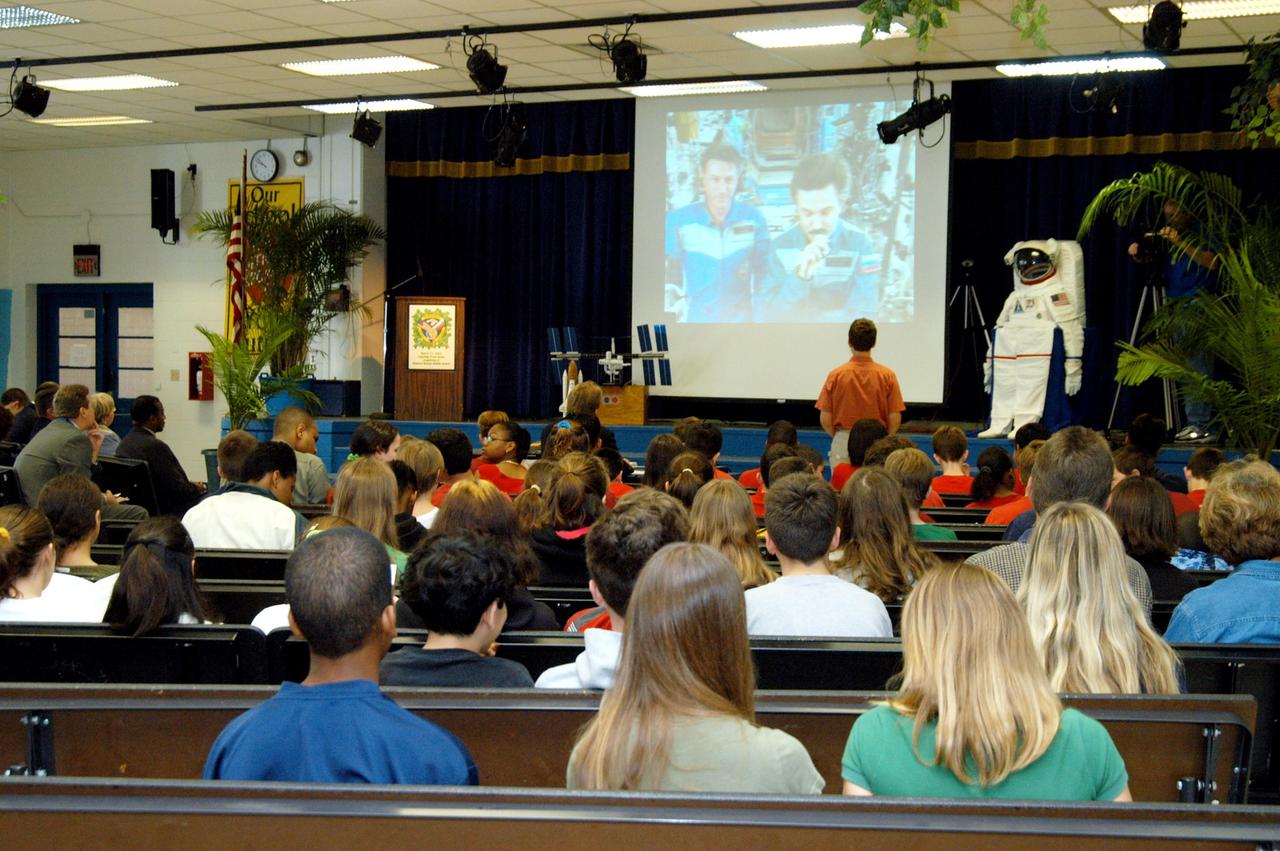
KENNEDY SPACE CENTER, FLA. - At Howard Bishop Middle School in Gainesville, Fla., a student asks the Expedition 8 crew (Commander Michael Foale and Flight Engineer Alexander Kaleri seen on the screen on stage) a question in a downlink from the International Space Station. During a presentation that shared the new vision for space exploration, KSC Deputy Director Dr. Woodrow Whitlow Jr. talked about our destiny as explorers, NASA’s stepping stone approach to exploring Earth, the Moon, Mars and beyond, how space impacts our lives, and how people and machines rely on each other in space. Howard Bishop Middle School is one of 50 nationwide (four in Florida) in the NASA Explorer Schools (NES) Program. NES establishes a three-year partnership between NASA and 50 NASA Explorer Schools teams, consisting of teachers and education administrators from diverse communities nationwide.
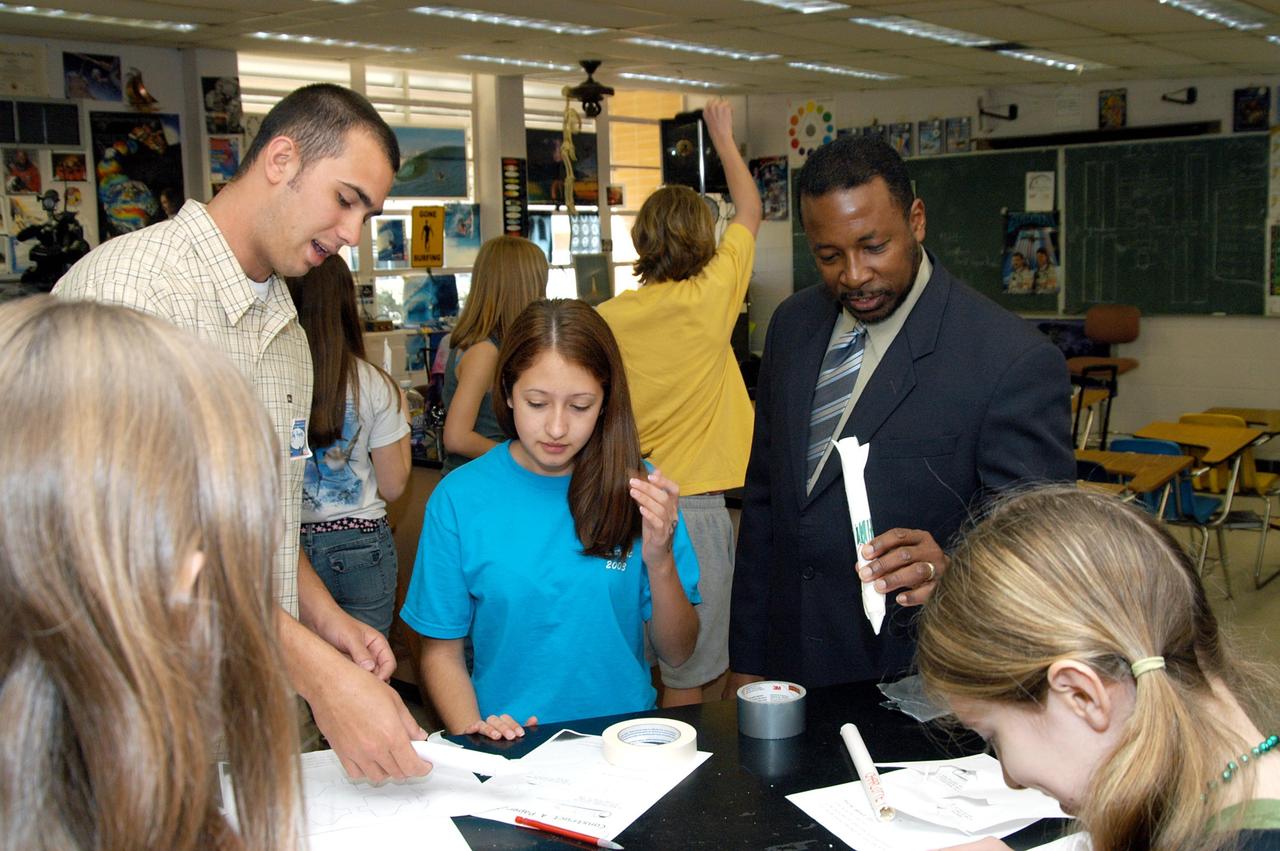
KENNEDY SPACE CENTER, FLA. - KSC Deputy Director Woodrow Whitlow Jr. looks at students’ projects in a classroom at Howard Bishop Middle School in Gainesville, Fla. Dr. Whitlow shared the new vision for space exploration with the students, the next generation of explorers. Whitlow talked about our destiny as explorers, NASA’s stepping stone approach to exploring Earth, the Moon, Mars and beyond, how space impacts our lives, and how people and machines rely on each other in space. The presentation also included a downlink from the International Space Station for students to ask questions of the Expedition 8 crew, Commander Michael Foale and Flight Engineer Alexander Kaleri. Howard Bishop Middle School is one of 50 nationwide (four in Florida) in the NASA Explorer Schools (NES) Program. NES establishes a three-year partnership between NASA and 50 NASA Explorer Schools teams, consisting of teachers and education administrators from diverse communities nationwide.
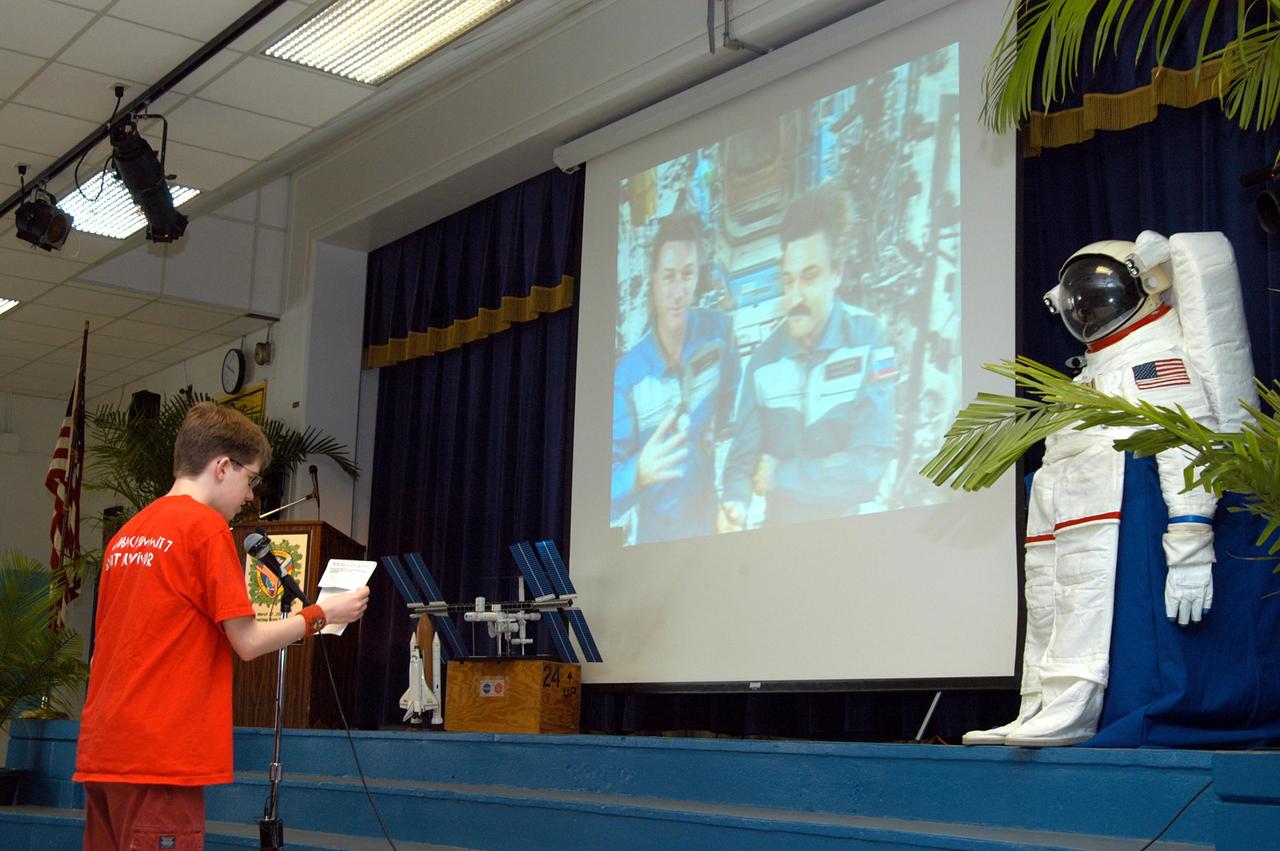
KENNEDY SPACE CENTER, FLA. - At Howard Bishop Middle School in Gainesville, Fla., a student asks the Expedition 8 crew (Commander Michael Foale and Flight Engineer Alexander Kaleri seen on the screen on stage) a question in a downlink from the International Space Station. During a presentation that shared the new vision for space exploration, KSC Deputy Director Dr. Woodrow Whitlow Jr. talked about our destiny as explorers, NASA’s stepping stone approach to exploring Earth, the Moon, Mars and beyond, how space impacts our lives, and how people and machines rely on each other in space. Howard Bishop Middle School is one of 50 nationwide (four in Florida) in the NASA Explorer Schools (NES) Program. NES establishes a three-year partnership between NASA and 50 NASA Explorer Schools teams, consisting of teachers and education administrators from diverse communities nationwide.
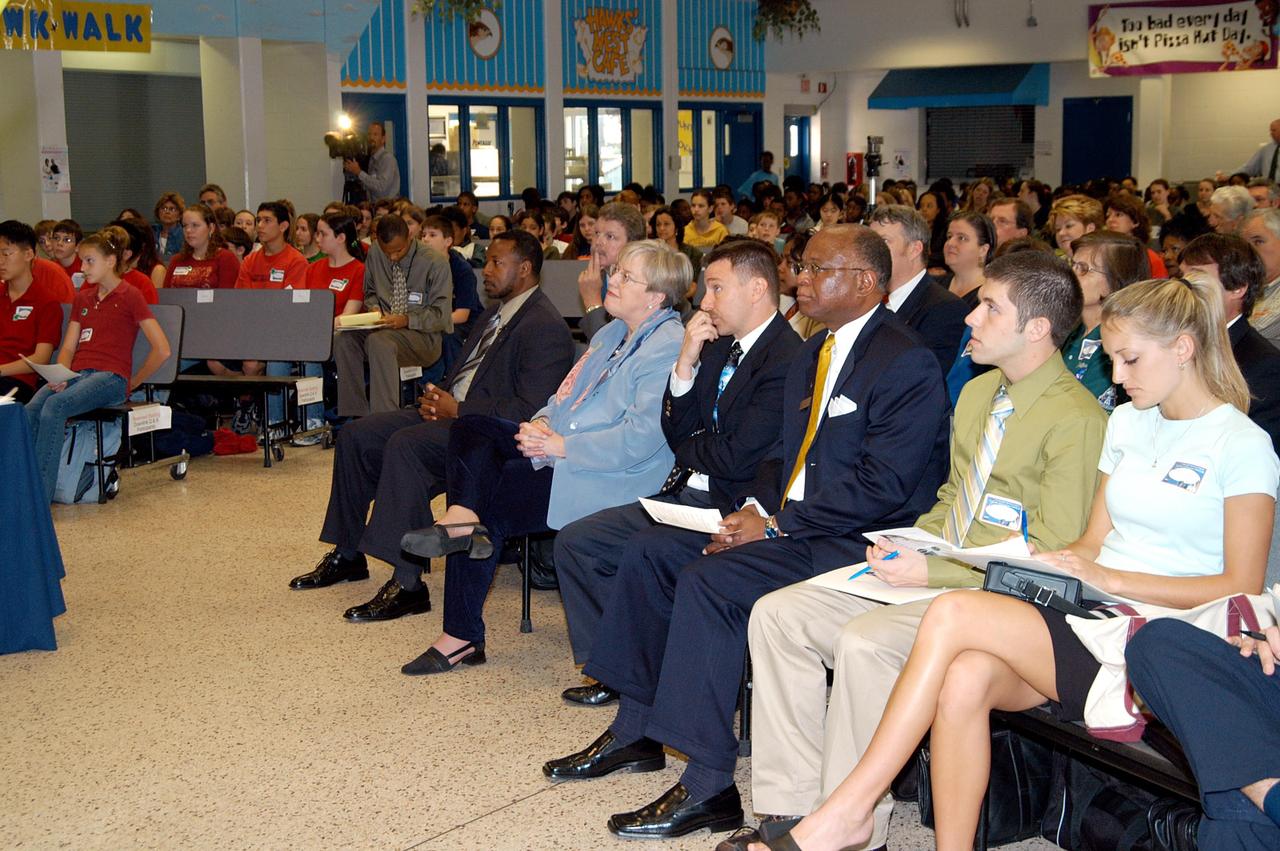
KENNEDY SPACE CENTER, FLA. - Students, teachers and administrators of Howard Bishop Middle School in Gainesville, Fla., listen to a presentation that shared the new vision for space exploration, KSC Deputy Director Dr. Woodrow Whitlow Jr. talked about our destiny as explorers, NASA’s stepping stone approach to exploring Earth, the Moon, Mars and beyond, how space impacts our lives, and how people and machines rely on each other in space. The presentation also included a downlink from the International Space Station for students to ask questions of the Expedition 8 crew, Commander Michael Foale and Flight Engineer Alexander Kaleri. Howard Bishop Middle School is one of 50 nationwide (four in Florida) in the NASA Explorer Schools (NES) Program. NES establishes a three-year partnership between NASA and 50 NASA Explorer Schools teams, consisting of teachers and education administrators from diverse communities nationwide.
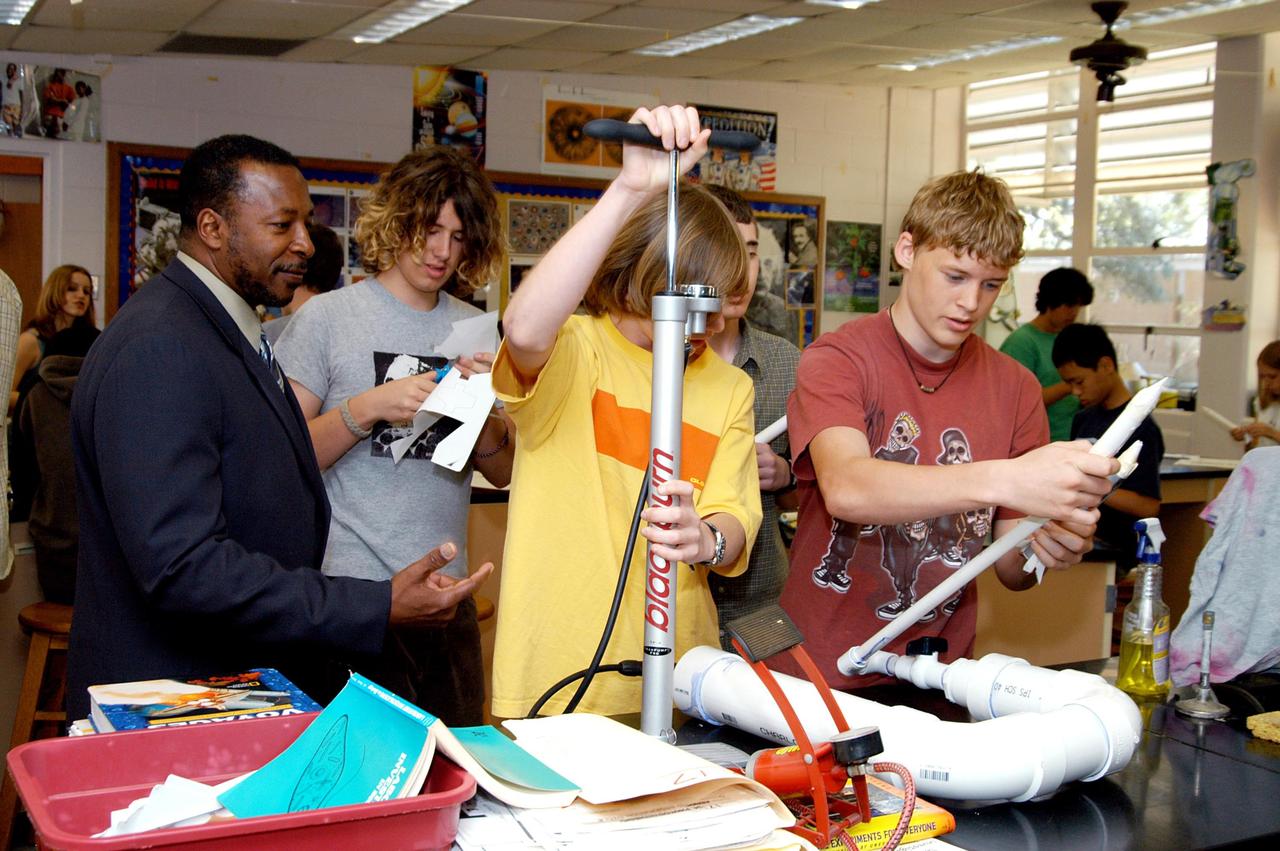
KENNEDY SPACE CENTER, FLA. - KSC Deputy Director Woodrow Whitlow Jr. looks at students’ projects in a classroom at Howard Bishop Middle School in Gainesville, Fla. Dr. Whitlow shared the new vision for space exploration with the students, the next generation of explorers. Whitlow talked about our destiny as explorers, NASA’s stepping stone approach to exploring Earth, the Moon, Mars and beyond, how space impacts our lives, and how people and machines rely on each other in space. The presentation also included a downlink from the International Space Station for students to ask questions of the Expedition 8 crew, Commander Michael Foale and Flight Engineer Alexander Kaleri. Howard Bishop Middle School is one of 50 nationwide (four in Florida) in the NASA Explorer Schools (NES) Program. NES establishes a three-year partnership between NASA and 50 NASA Explorer Schools teams, consisting of teachers and education administrators from diverse communities nationwide.
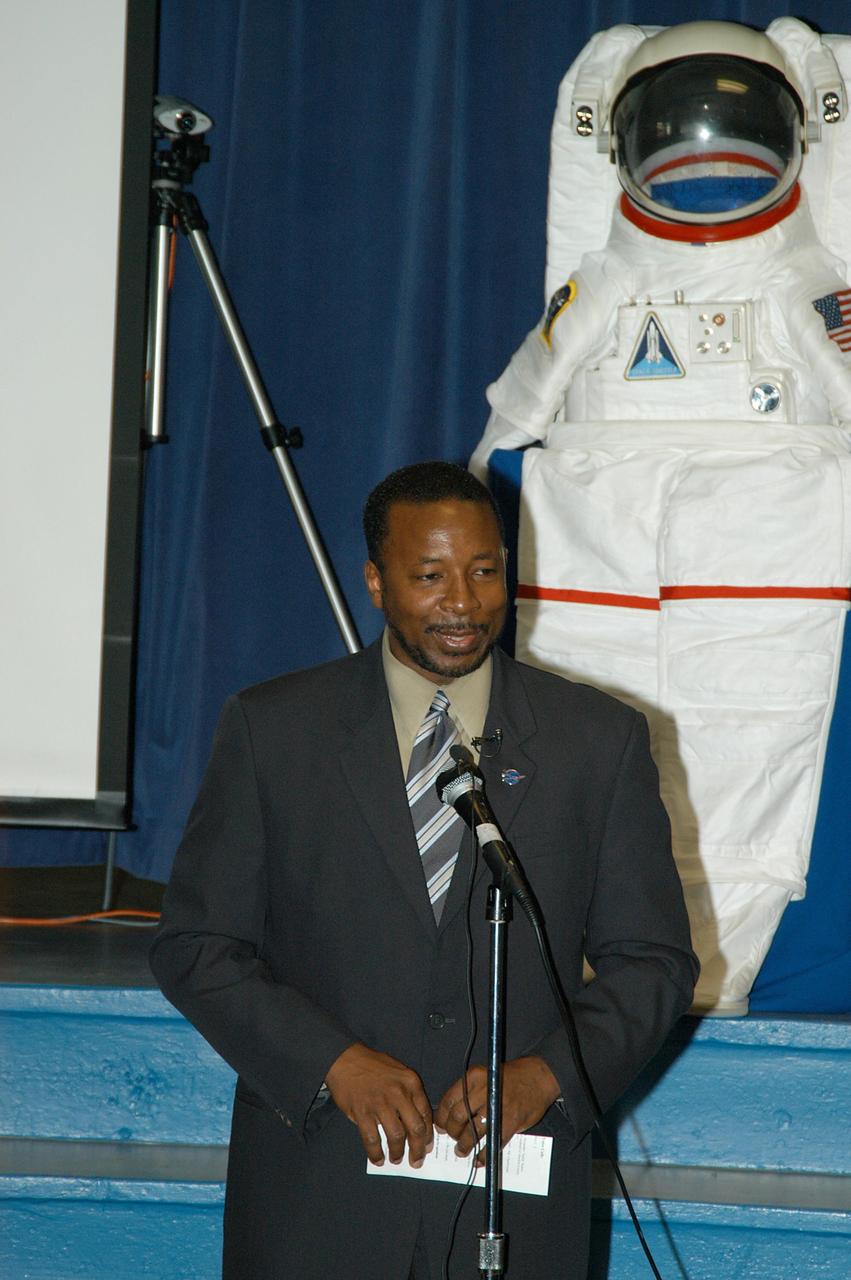
KENNEDY SPACE CENTER, FLA. - At Howard Bishop Middle School in Gainesville, Fla., Dr. Woodrow Whitlow Jr., KSC deputy director, shares the new vision for space exploration with the students, the next generation of explorers. Whitlow talked about our destiny as explorers, NASA’s stepping stone approach to exploring Earth, the Moon, Mars and beyond, how space impacts our lives, and how people and machines rely on each other in space. The presentation also included a downlink from the International Space Station for students to ask questions of the Expedition 8 crew, Commander Michael Foale and Flight Engineer Alexander Kaleri. Howard Bishop Middle School is one of 50 nationwide (four in Florida) in the NASA Explorer Schools (NES) Program. NES establishes a three-year partnership between NASA and 50 NASA Explorer Schools teams, consisting of teachers and education administrators from diverse communities nationwide.
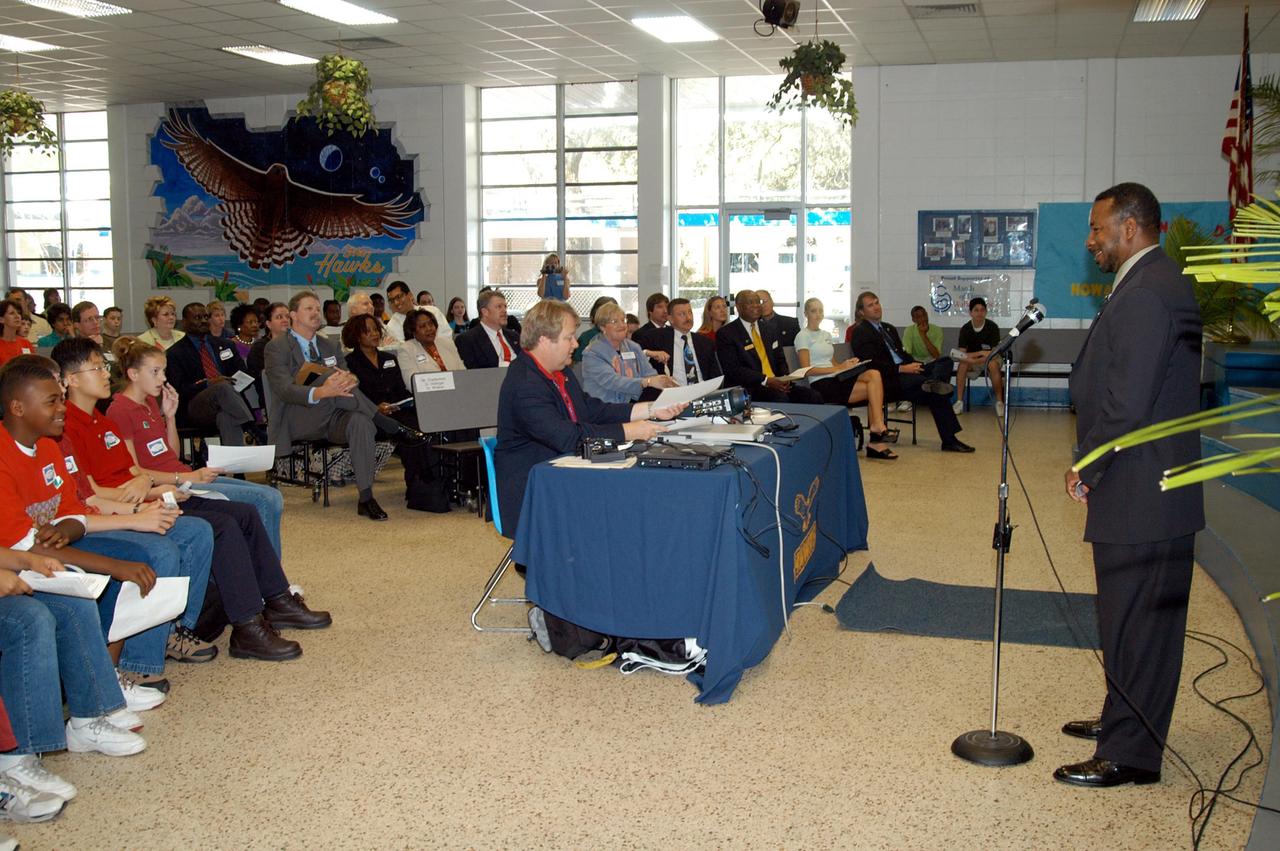
KENNEDY SPACE CENTER, FLA. - KSC Deputy Director Dr. Woodrow Whitlow Jr. shares the new vision for space exploration with the students, the next generation of explorers, at Howard Bishop Middle School in Gainesville, Fla. Whitlow talked about our destiny as explorers, NASA’s stepping stone approach to exploring Earth, the Moon, Mars and beyond, how space impacts our lives, and how people and machines rely on each other in space. The presentation also included a downlink from the International Space Station for students to ask questions of the Expedition 8 crew, Commander Michael Foale and Flight Engineer Alexander Kaleri. Howard Bishop Middle School is one of 50 nationwide (four in Florida) in the NASA Explorer Schools (NES) Program. NES establishes a three-year partnership between NASA and 50 NASA Explorer Schools teams, consisting of teachers and education administrators from diverse communities nationwide.
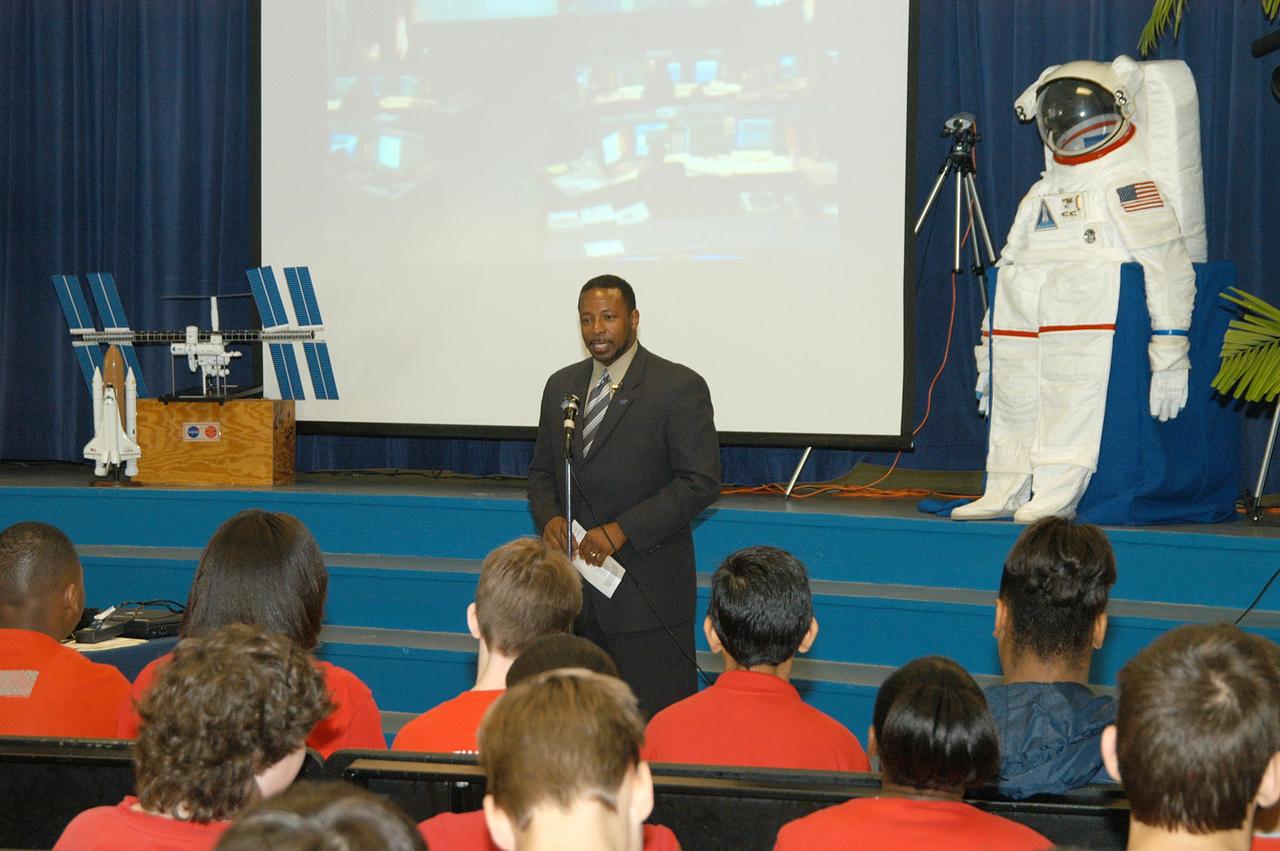
KENNEDY SPACE CENTER, FLA. - At Howard Bishop Middle School in Gainesville, Fla., KSC Deputy Director Dr. Woodrow Whitlow Jr. shares the new vision for space exploration with the students, the next generation of explorers. Whitlow talked about our destiny as explorers, NASA’s stepping stone approach to exploring Earth, the Moon, Mars and beyond, how space impacts our lives, and how people and machines rely on each other in space. The presentation also included a downlink from the International Space Station for students to ask questions of the Expedition 8 crew, Commander Michael Foale and Flight Engineer Alexander Kaleri. Howard Bishop Middle School is one of 50 nationwide (four in Florida) in the NASA Explorer Schools (NES) Program. NES establishes a three-year partnership between NASA and 50 NASA Explorer Schools teams, consisting of teachers and education administrators from diverse communities nationwide.
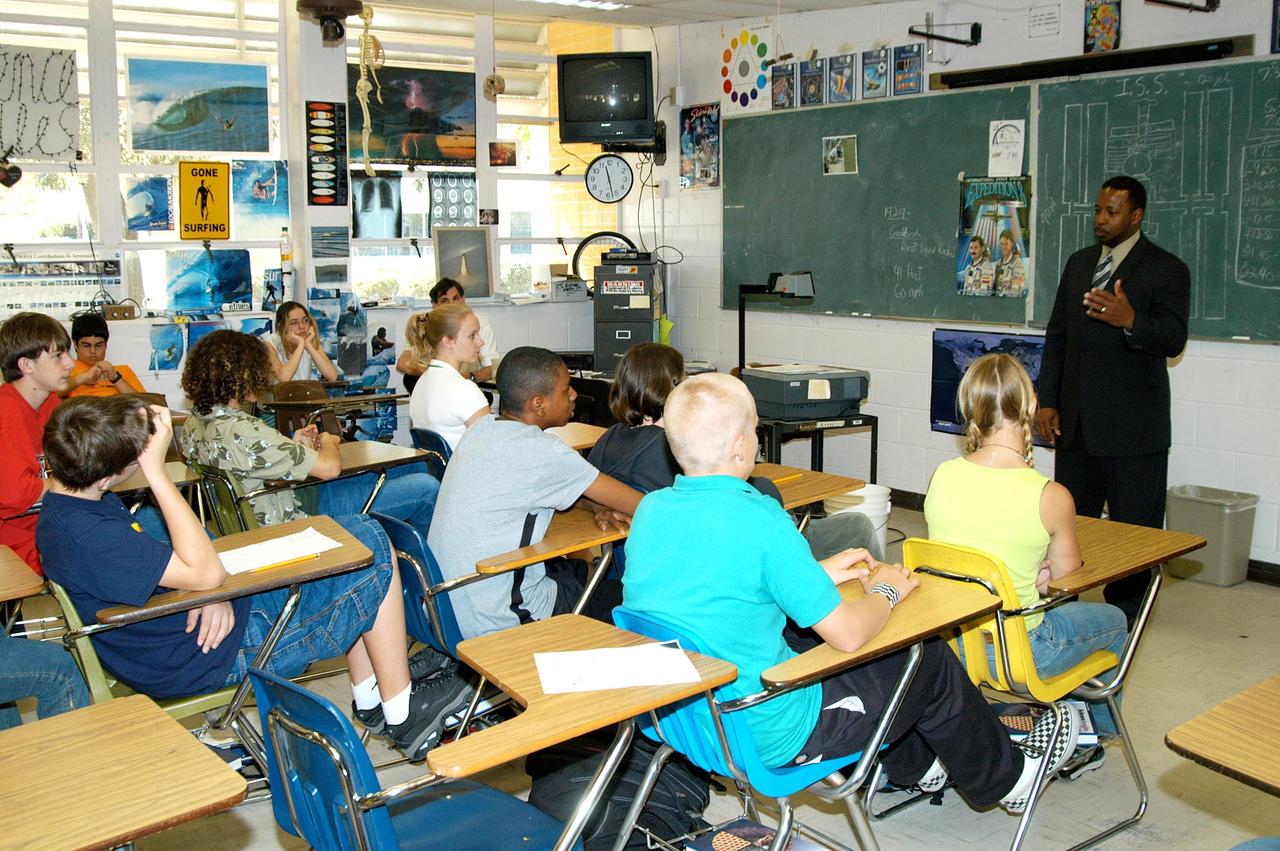
KENNEDY SPACE CENTER, FLA. - KSC Deputy Director Woodrow Whitlow Jr. talks to students in a classroom at Howard Bishop Middle School in Gainesville, Fla. Dr. Whitlow shared the new vision for space exploration with the students, the next generation of explorers. Whitlow talked about our destiny as explorers, NASA’s stepping stone approach to exploring Earth, the Moon, Mars and beyond, how space impacts our lives, and how people and machines rely on each other in space. The presentation also included a downlink from the International Space Station for students to ask questions of the Expedition 8 crew, Commander Michael Foale and Flight Engineer Alexander Kaleri. Howard Bishop Middle School is one of 50 nationwide (four in Florida) in the NASA Explorer Schools (NES) Program. NES establishes a three-year partnership between NASA and 50 NASA Explorer Schools teams, consisting of teachers and education administrators from diverse communities nationwide.
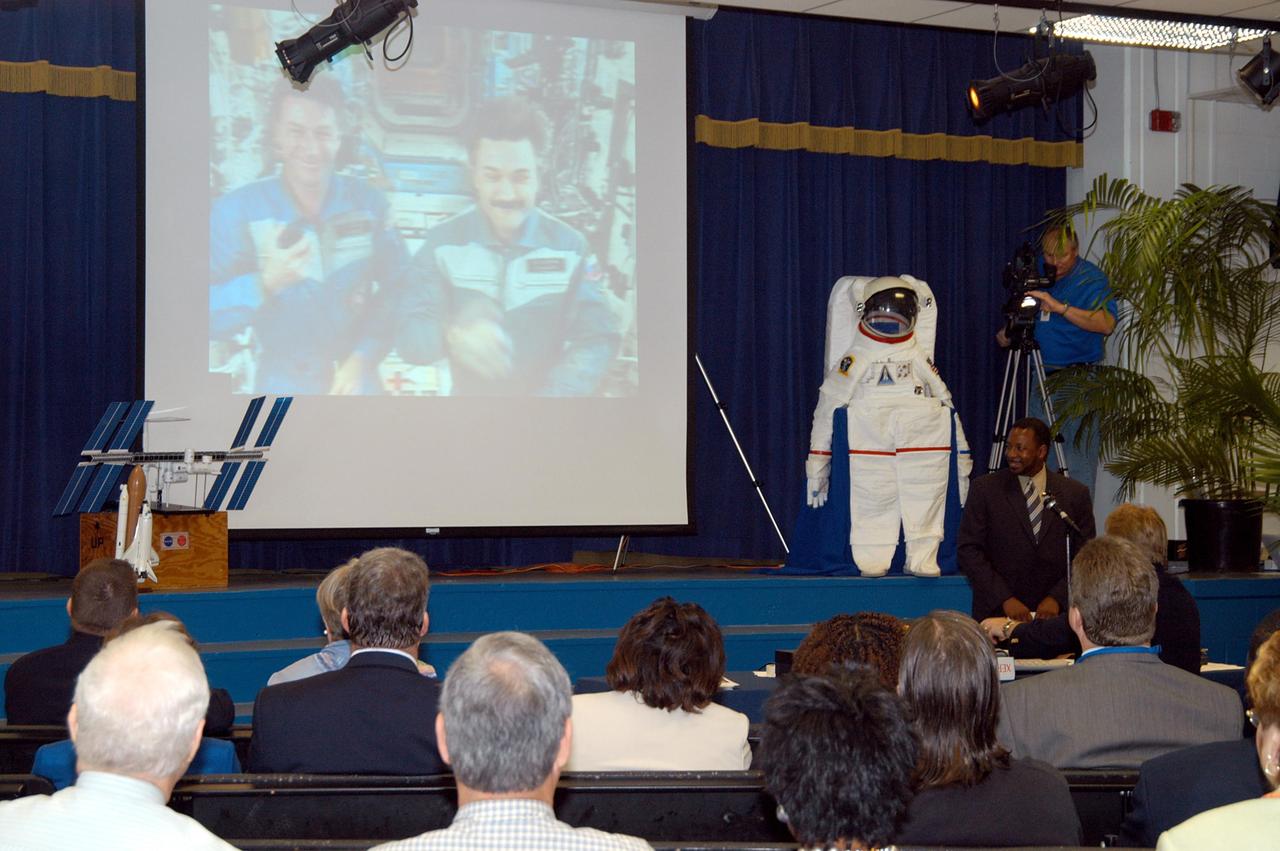
KENNEDY SPACE CENTER, FLA. - At Howard Bishop Middle School in Gainesville, Fla., during a presentation that shared the new vision for space exploration, the Expedition 8 crew, Commander Michael Foale and Flight Engineer Alexander Kaleri, participated in a downlink from the International Space Station (seen on the screen on stage). Deputy Director Dr. Woodrow Whitlow Jr. represented KSC, talking about our destiny as explorers, NASA’s stepping stone approach to exploring Earth, the Moon, Mars and beyond, how space impacts our lives, and how people and machines rely on each other in space. Howard Bishop Middle School is one of 50 nationwide (four in Florida) in the NASA Explorer Schools (NES) Program. NES establishes a three-year partnership between NASA and 50 NASA Explorer Schools teams, consisting of teachers and education administrators from diverse communities nationwide.
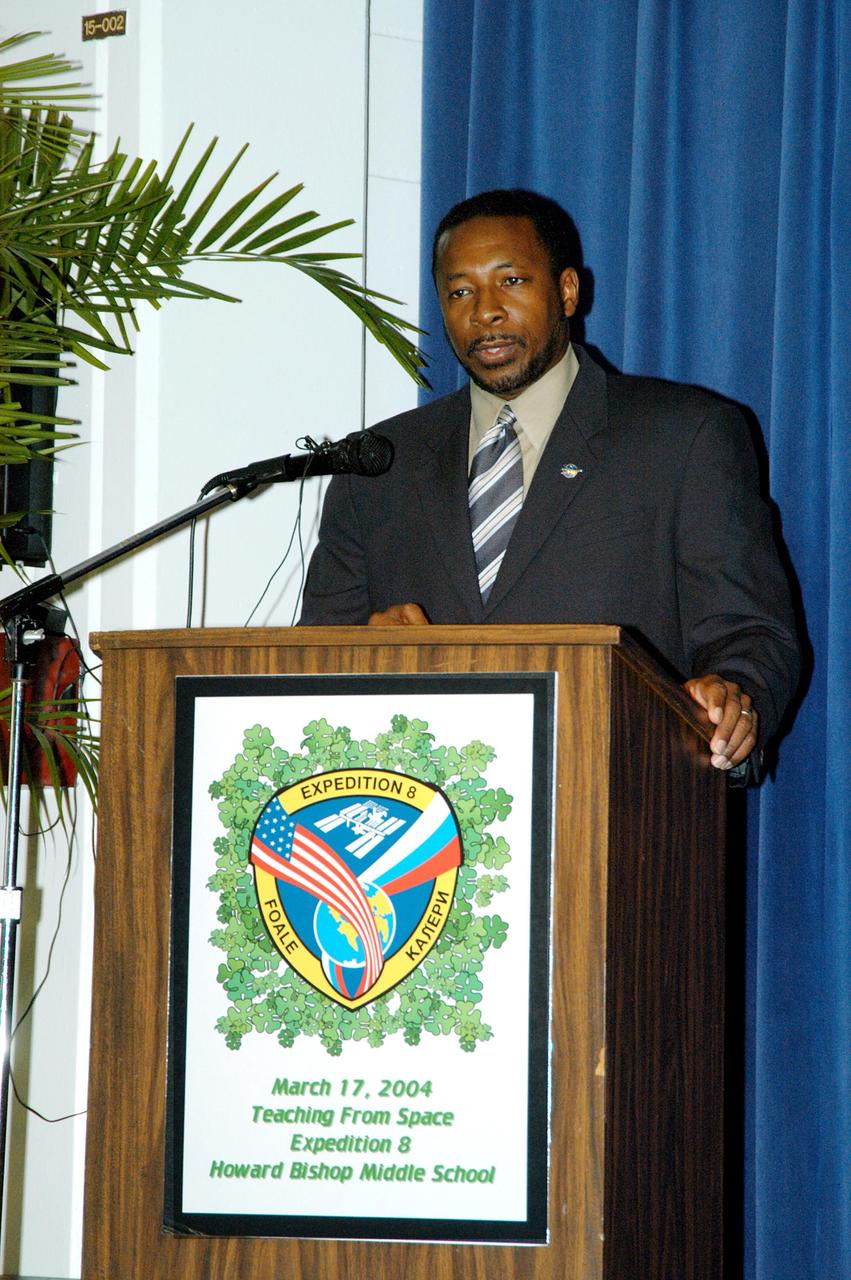
KENNEDY SPACE CENTER, FLA. - At Howard Bishop Middle School in Gainesville, Fla., Dr. Woodrow Whitlow Jr., KSC deputy director, shares the new vision for space exploration with the students, the next generation of explorers. Whitlow talked about our destiny as explorers, NASA’s stepping stone approach to exploring Earth, the Moon, Mars and beyond, how space impacts our lives, and how people and machines rely on each other in space. The presentation also included a downlink from the International Space Station for students to ask questions of the Expedition 8 crew, Commander Michael Foale and Flight Engineer Alexander Kaleri. Howard Bishop Middle School is one of 50 nationwide (four in Florida) in the NASA Explorer Schools (NES) Program. NES establishes a three-year partnership between NASA and 50 NASA Explorer Schools teams, consisting of teachers and education administrators from diverse communities nationwide.
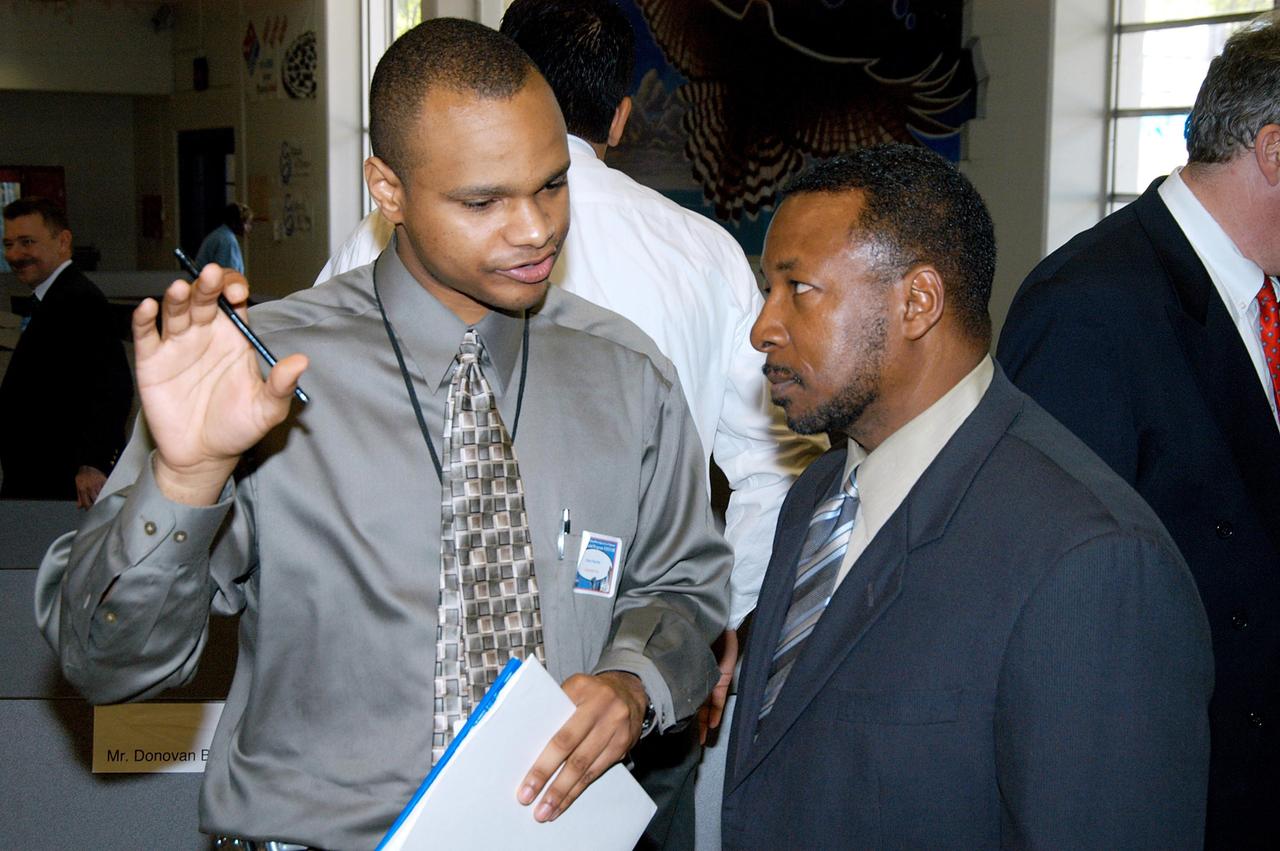
KENNEDY SPACE CENTER, FLA. - KSC Deputy Director Woodrow Whitlow Jr. (right) is interviewed after a presentation at Howard Bishop Middle School in Gainesville, Fla. Dr. Whitlow shared the new vision for space exploration with the students, the next generation of explorers. Whitlow talked about our destiny as explorers, NASA’s stepping stone approach to exploring Earth, the Moon, Mars and beyond, how space impacts our lives, and how people and machines rely on each other in space. The presentation also included a downlink from the International Space Station for students to ask questions of the Expedition 8 crew, Commander Michael Foale and Flight Engineer Alexander Kaleri. Howard Bishop Middle School is one of 50 nationwide (four in Florida) in the NASA Explorer Schools (NES) Program. NES establishes a three-year partnership between NASA and 50 NASA Explorer Schools teams, consisting of teachers and education administrators from diverse communities nationwide.
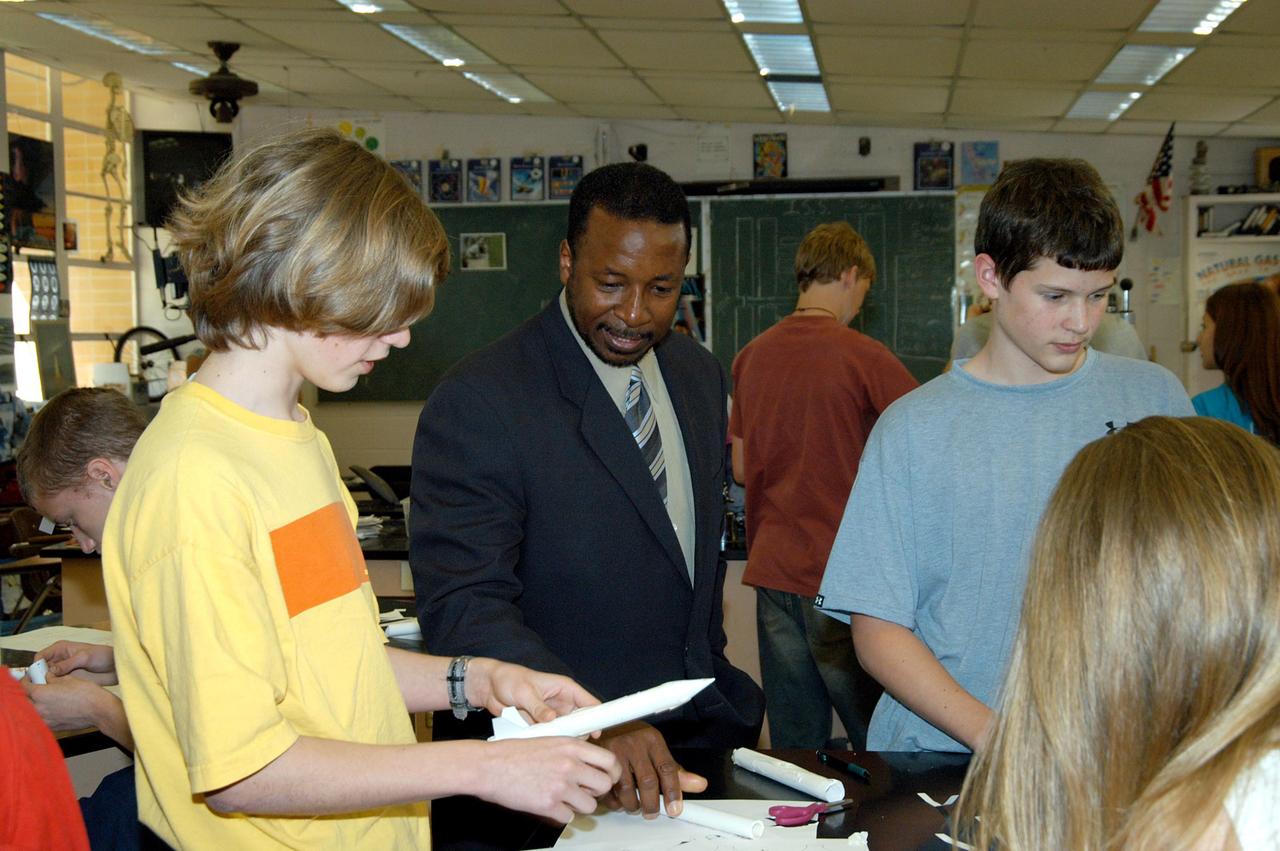
KENNEDY SPACE CENTER, FLA. - KSC Deputy Director Woodrow Whitlow Jr. looks at students’ projects in a classroom at Howard Bishop Middle School in Gainesville, Fla. Dr. Whitlow shared the new vision for space exploration with the students, the next generation of explorers. Whitlow talked about our destiny as explorers, NASA’s stepping stone approach to exploring Earth, the Moon, Mars and beyond, how space impacts our lives, and how people and machines rely on each other in space. The presentation also included a downlink from the International Space Station for students to ask questions of the Expedition 8 crew, Commander Michael Foale and Flight Engineer Alexander Kaleri. Howard Bishop Middle School is one of 50 nationwide (four in Florida) in the NASA Explorer Schools (NES) Program. NES establishes a three-year partnership between NASA and 50 NASA Explorer Schools teams, consisting of teachers and education administrators from diverse communities nationwide.
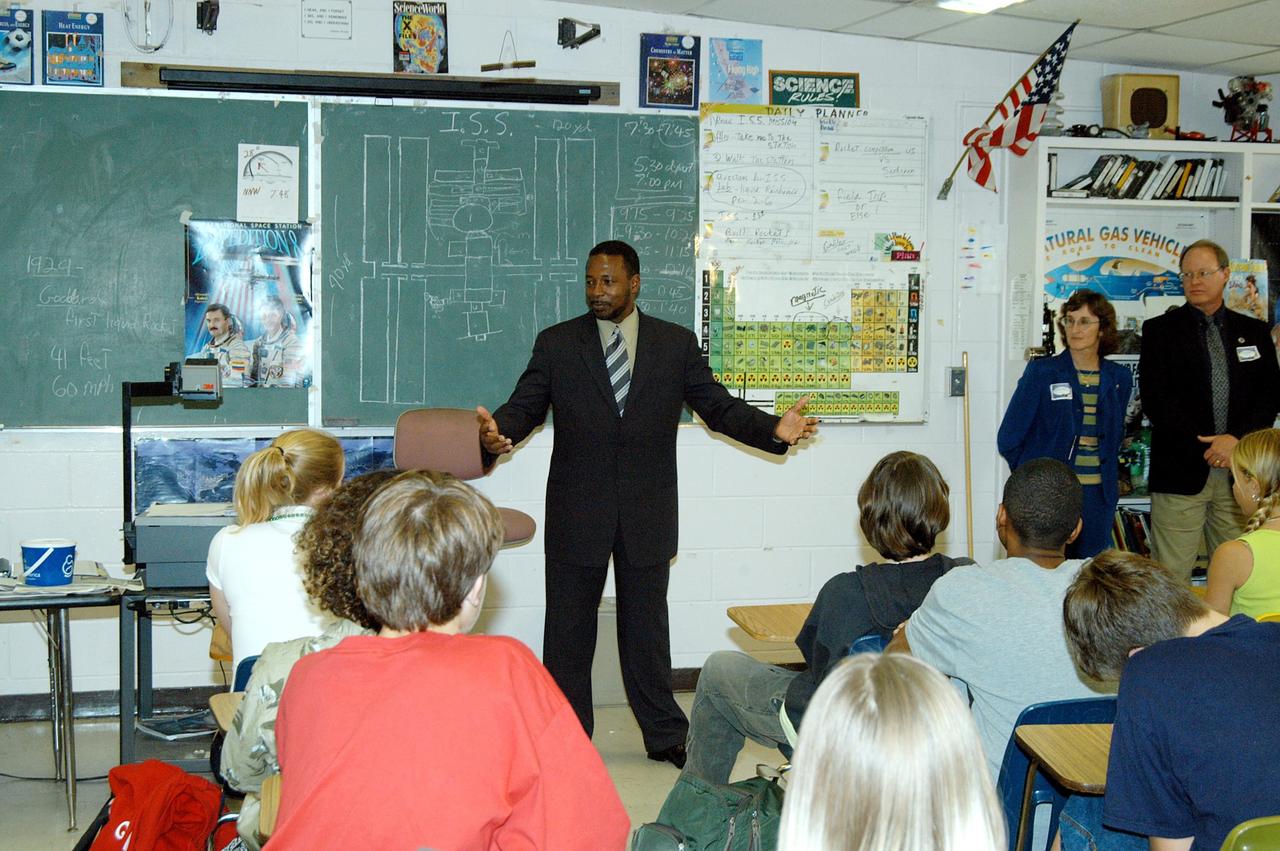
KENNEDY SPACE CENTER, FLA. - KSC Deputy Director Woodrow Whitlow Jr. talks to students in a classroom at Howard Bishop Middle School in Gainesville, Fla. Dr. Whitlow shared the new vision for space exploration with the students, the next generation of explorers. Whitlow talked about our destiny as explorers, NASA’s stepping stone approach to exploring Earth, the Moon, Mars and beyond, how space impacts our lives, and how people and machines rely on each other in space. The presentation also included a downlink from the International Space Station for students to ask questions of the Expedition 8 crew, Commander Michael Foale and Flight Engineer Alexander Kaleri. Howard Bishop Middle School is one of 50 nationwide (four in Florida) in the NASA Explorer Schools (NES) Program. NES establishes a three-year partnership between NASA and 50 NASA Explorer Schools teams, consisting of teachers and education administrators from diverse communities nationwide.

Russian Orthodox Bishop Ignatii blesses the Soyuz rocket, Tuesday, Sept. 20, 2022, at the Baikonur Cosmodrome launch pad in Kazakhstan. Expedition 68 astronaut Frank Rubio of NASA, and cosmonauts Sergey Prokopyev and Dmitri Petelin of Roscosmos are scheduled to launch aboard their Soyuz MS-22 spacecraft on Sept. 21. Photo Credit: (NASA/Bill Ingalls}
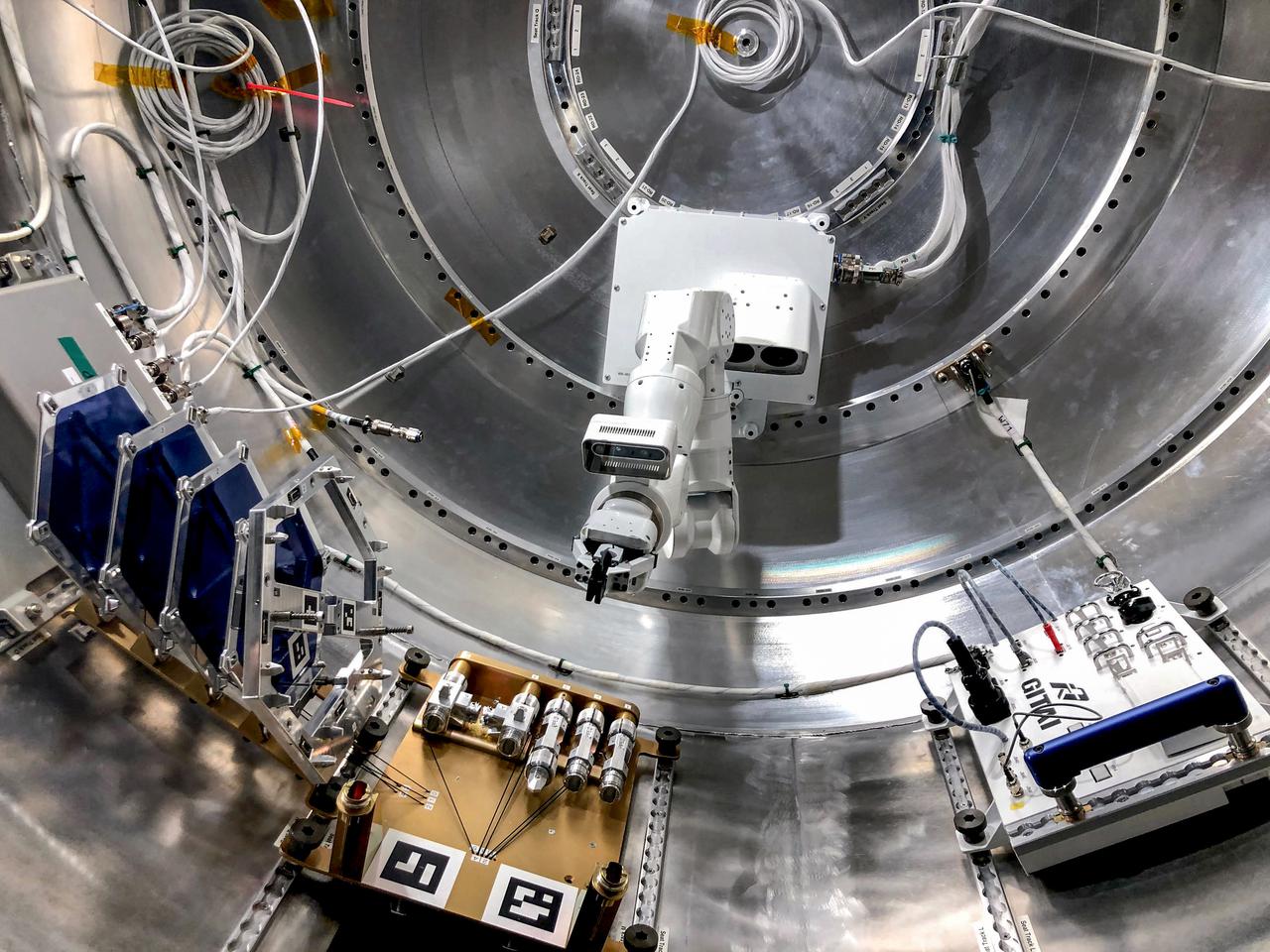
jsc2021e036656 (4/2/2021) --- Complete configuration of the GITAI S1 inside the Bishop airlock mock-up. The GITAI S1 Robotic Arm Tech Demo (Nanoracks-GITAI Robotic Arm) demonstrates the versatility and dexterity in microgravity of a robot designed by GITAI Japan Inc. For the demonstration, the robot conducts common crew activities and tasks via supervised autonomy and teleoperations from the ground.

Russian Orthodox Bishop Ignatii blesses the Soyuz rocket, Tuesday, Sept. 20, 2022, at the Baikonur Cosmodrome launch pad in Kazakhstan. Expedition 68 astronaut Frank Rubio of NASA, and cosmonauts Sergey Prokopyev and Dmitri Petelin of Roscosmos are scheduled to launch aboard their Soyuz MS-22 spacecraft on Sept. 21. Photo Credit: (NASA/Bill Ingalls}
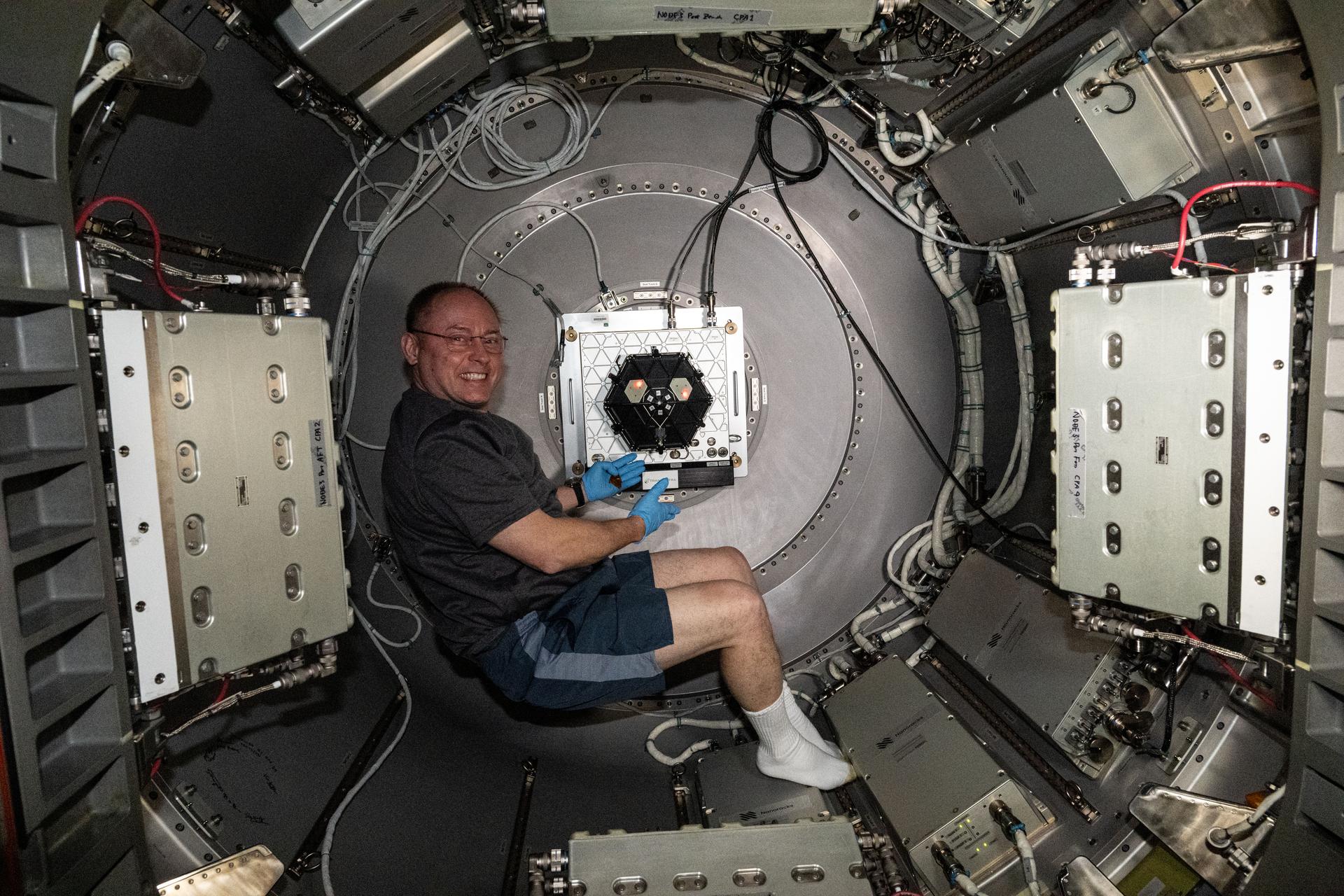
iss073e0815288 (Sept. 29, 2025) --- NASA astronaut and Expedition 73 Flight Engineer Mike Fincke shows off the Voyager Flytrap technology demonstration that he installed inside the NanoRacks Bishop airlock. Flytrap will test an inflatable capture bag designed to capture and secure orbital debris or sample containers returning from the Moon and Mars. The technology may also support future space mining techniques on small asteroids. The demonstration will evaluate the bag’s ability to deploy, inflate, and capture space objects while maintaining an airtight seal in microgravity.
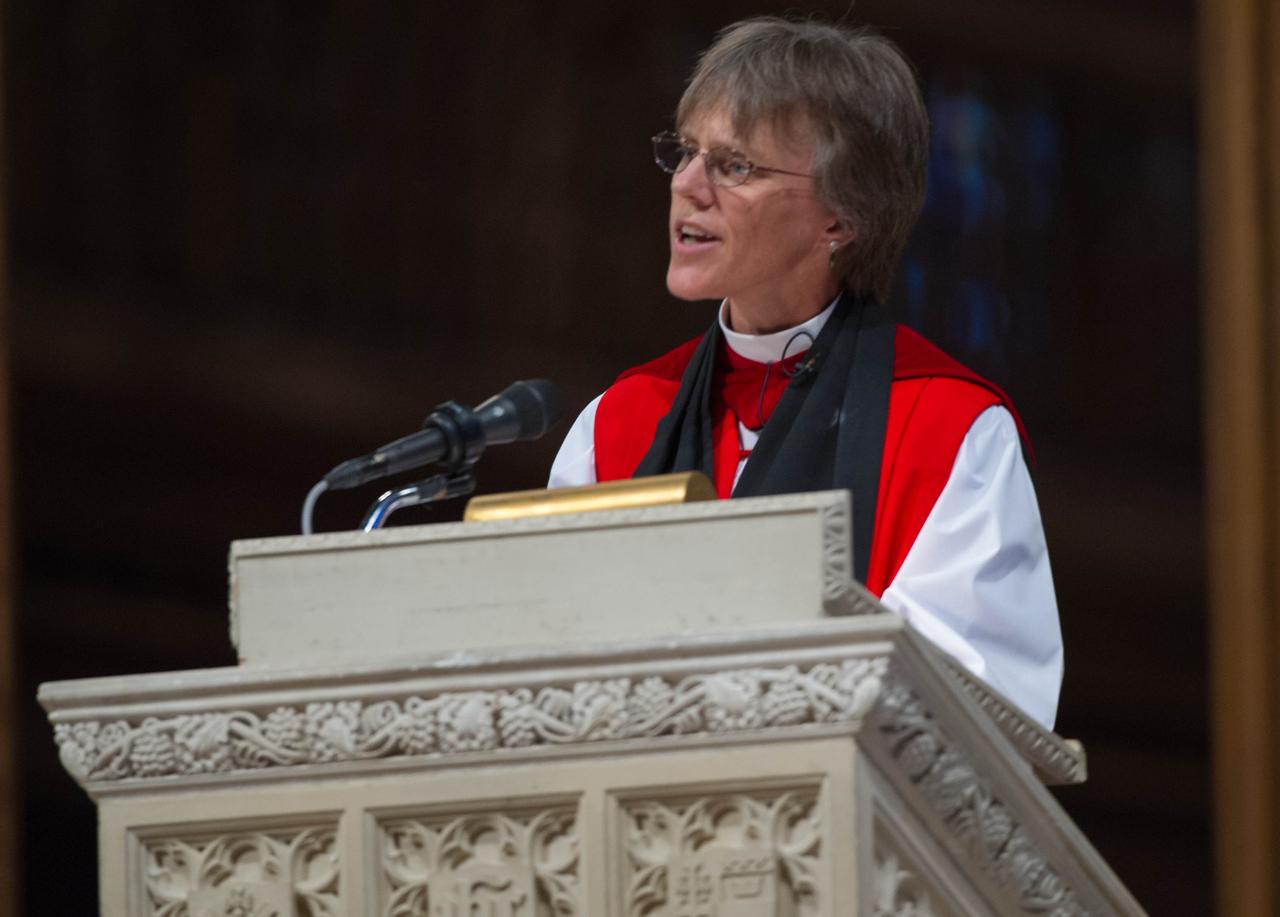
The Right Rev. Mariann Edgar Budde, bishop of Washington, delivers the Homily during a memorial service celebrating the life of Neil Armstrong at the Washington National Cathedral, Thursday, Sept. 13, 2012. Armstrong, the first man to walk on the moon during the 1969 Apollo 11 mission, died Saturday, Aug. 25. He was 82. Photo Credit:(NASA/Paul E. Alers)
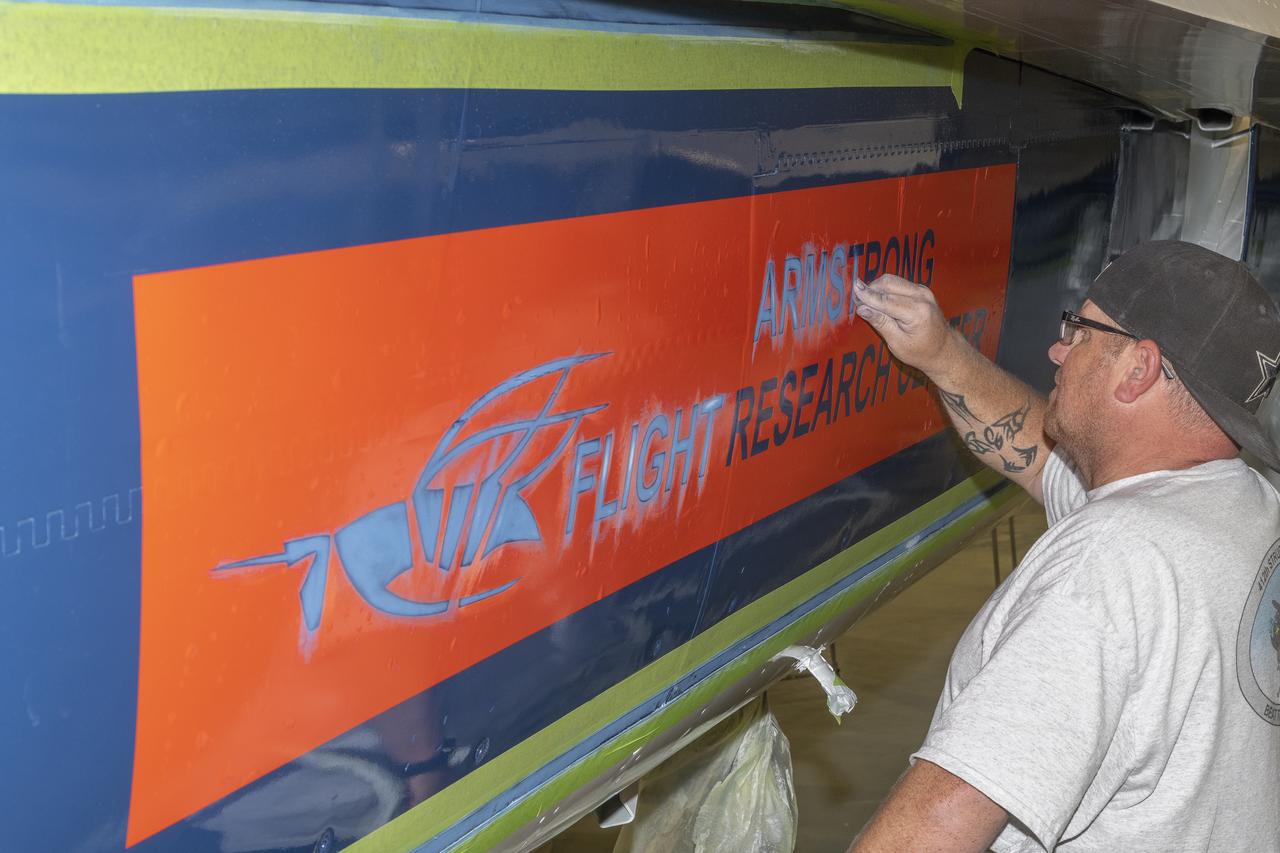
John Bishop, who works at the U.S. Air Force Corrosion Control Facility, sands areas in a stencil for adding some finishing touches to NASA 862, which is an F/A-18D based at NASA’s Armstrong Flight Research Center in Edwards, California. The corrosion control facility is located on Edwards Air Force Base and is also known as the Paint Barn.
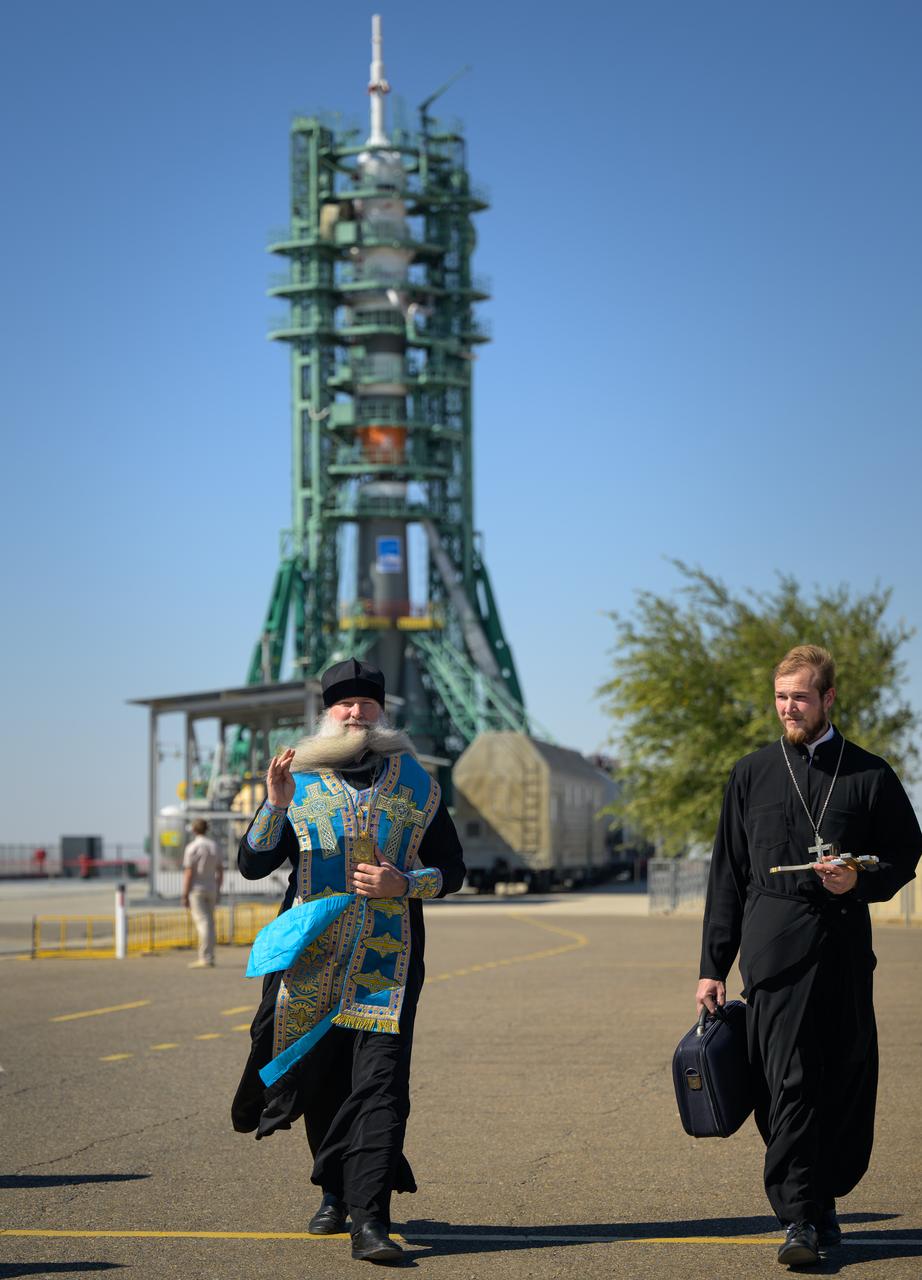
Russian Orthodox Bishop Ignatii blesses the Soyuz rocket, Tuesday, Sept. 20, 2022, at the Baikonur Cosmodrome launch pad in Kazakhstan. Expedition 68 astronaut Frank Rubio of NASA, and cosmonauts Sergey Prokopyev and Dmitri Petelin of Roscosmos are scheduled to launch aboard their Soyuz MS-22 spacecraft on Sept. 21. Photo Credit: (NASA/Bill Ingalls}

Russian Orthodox Bishop Ignatii blesses the Soyuz rocket, Tuesday, Sept. 20, 2022, at the Baikonur Cosmodrome launch pad in Kazakhstan. Expedition 68 astronaut Frank Rubio of NASA, and cosmonauts Sergey Prokopyev and Dmitri Petelin of Roscosmos are scheduled to launch aboard their Soyuz MS-22 spacecraft on Sept. 21. Photo Credit: (NASA/Bill Ingalls}
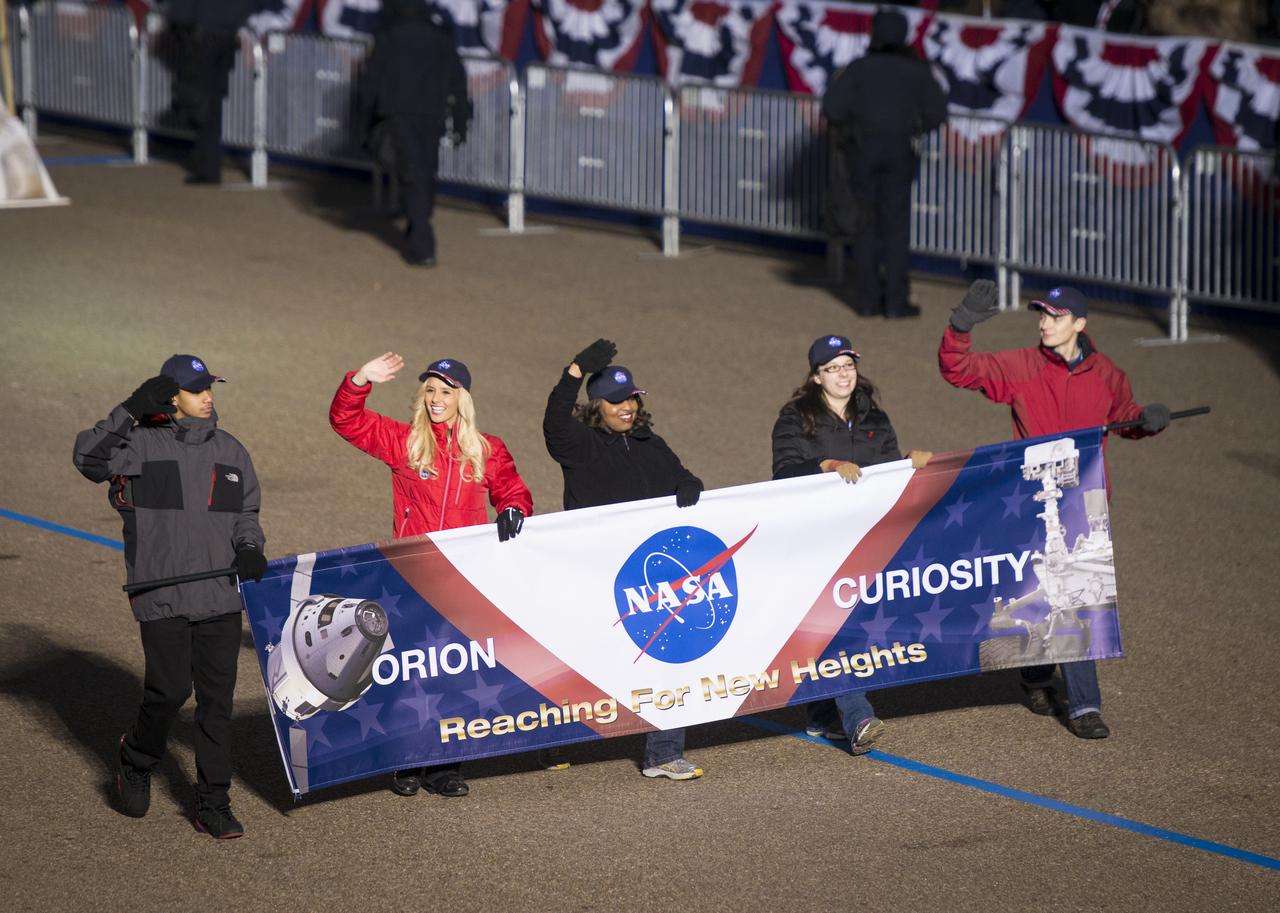
NASA employees, led by flag-bearer Marquell D. Proctor from Bishop Macnamara High School, march along Pennsylvania Avenue during the inaugural parade honoring President Barack Obama, Monday, Jan. 21. 2013, in Washington. Obama was sworn-in as the nation's 44th President earlier in the day. Photo Credit: (NASA/Bill Ingalls)
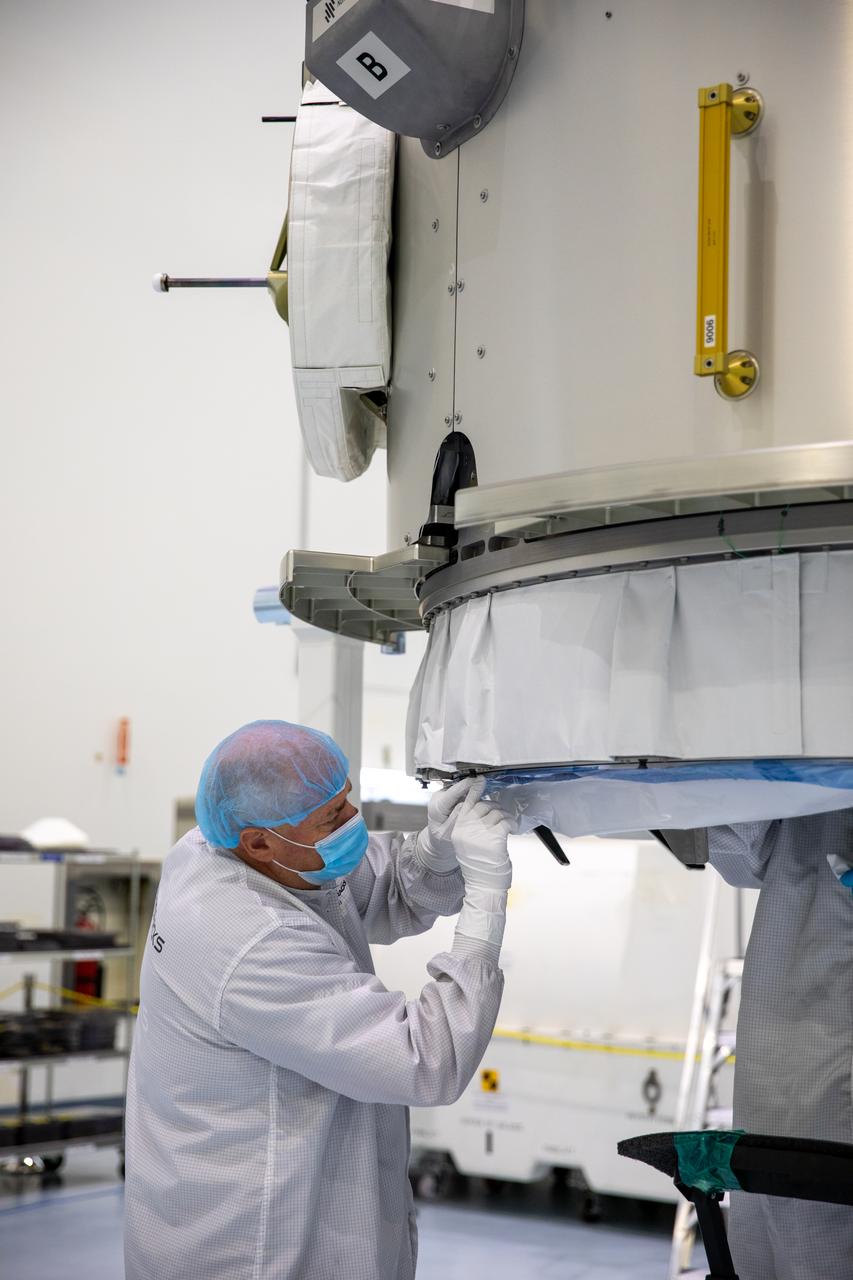
A Nanoracks technician works on the NanoRacks Bishop Airlock inside the Space Station Processing Facility at NASA's Kennedy Space Center in Florida on Oct. 7, 2020. The next-generation Nanoracks payload facility is being prepared for its flight to the International Space Station on SpaceX’s 21st commercial resupply services to the space station. It will provide payload hosting, robotics testing, satellite deployment, serve as an outside toolbox for station crew spacewalks, and more. CRS-21 is scheduled to launch on a SpaceX Falcon 9 from Kennedy’s Launch Complex 39A.
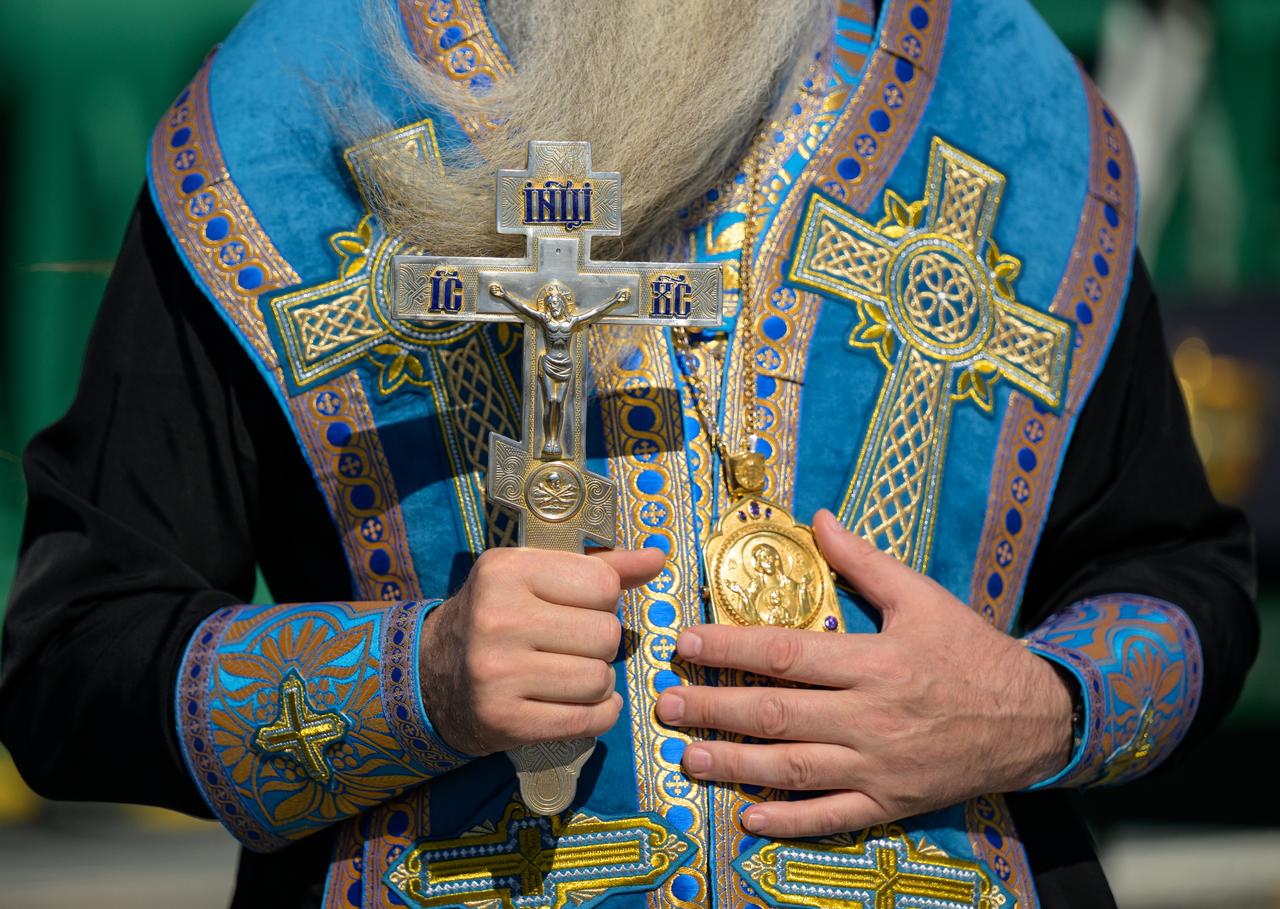
Russian Orthodox Bishop Ignatii blesses the Soyuz rocket, Tuesday, Sept. 20, 2022, at the Baikonur Cosmodrome launch pad in Kazakhstan. Expedition 68 astronaut Frank Rubio of NASA, and cosmonauts Sergey Prokopyev and Dmitri Petelin of Roscosmos are scheduled to launch aboard their Soyuz MS-22 spacecraft on Sept. 21. Photo Credit: (NASA/Bill Ingalls}
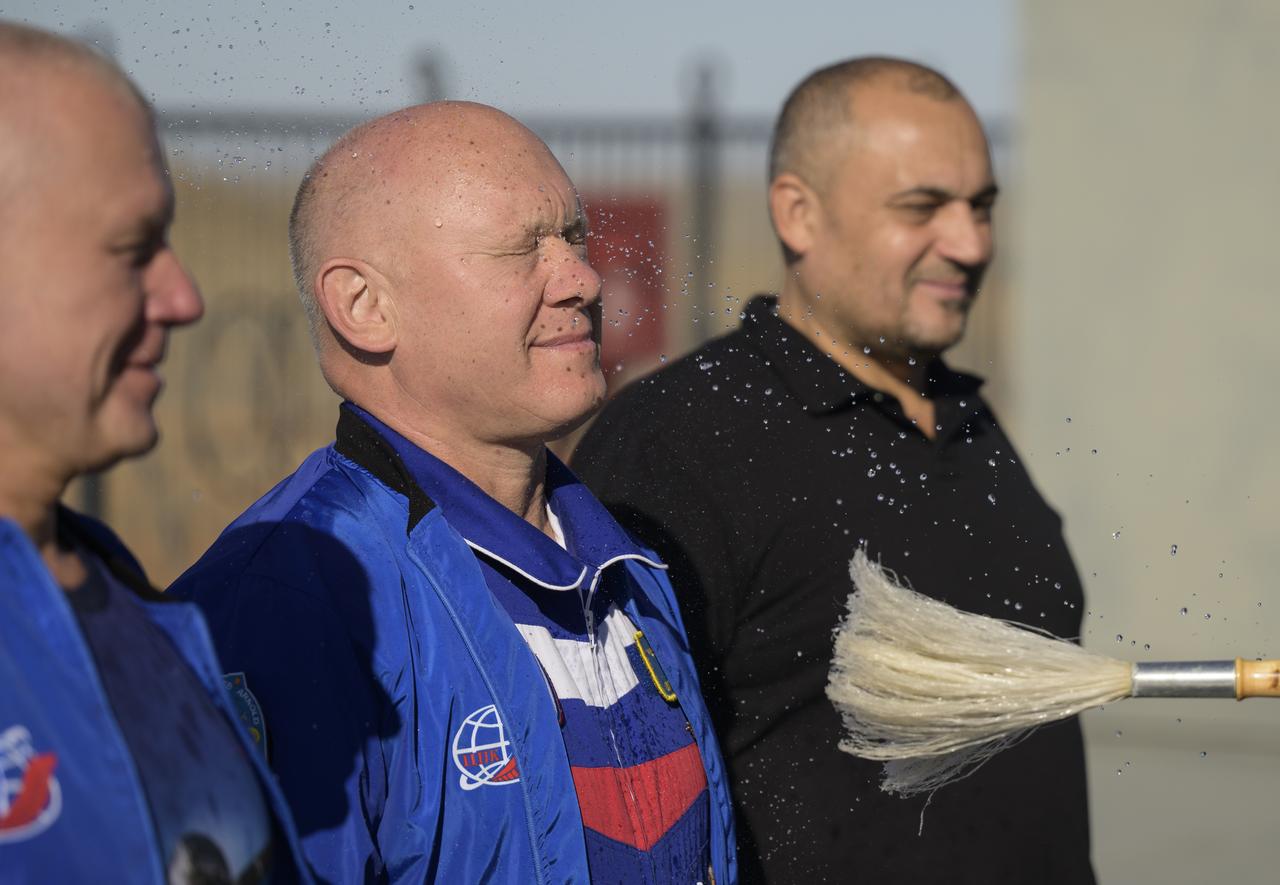
Roscosmos cosmonaut Oleg Artemyev, center, is blessed by Bishop Ignatii of Kyzylorda and Aktobe, during a traditional blessing of the Soyuz rocket and personnel, Tuesday, Sept. 10, 2024, at the at the Baikonur Cosmodrome site 31 launch pad in Kazakhstan. Expedition 72 crew members: NASA astronaut Don Pettit, Roscosmos cosmonauts Alexey Ovchinin, and Ivan Vagner, are scheduled to launch aboard their Soyuz MS-26 spacecraft on September 11. Photo Credit: (NASA/Bill Ingalls)
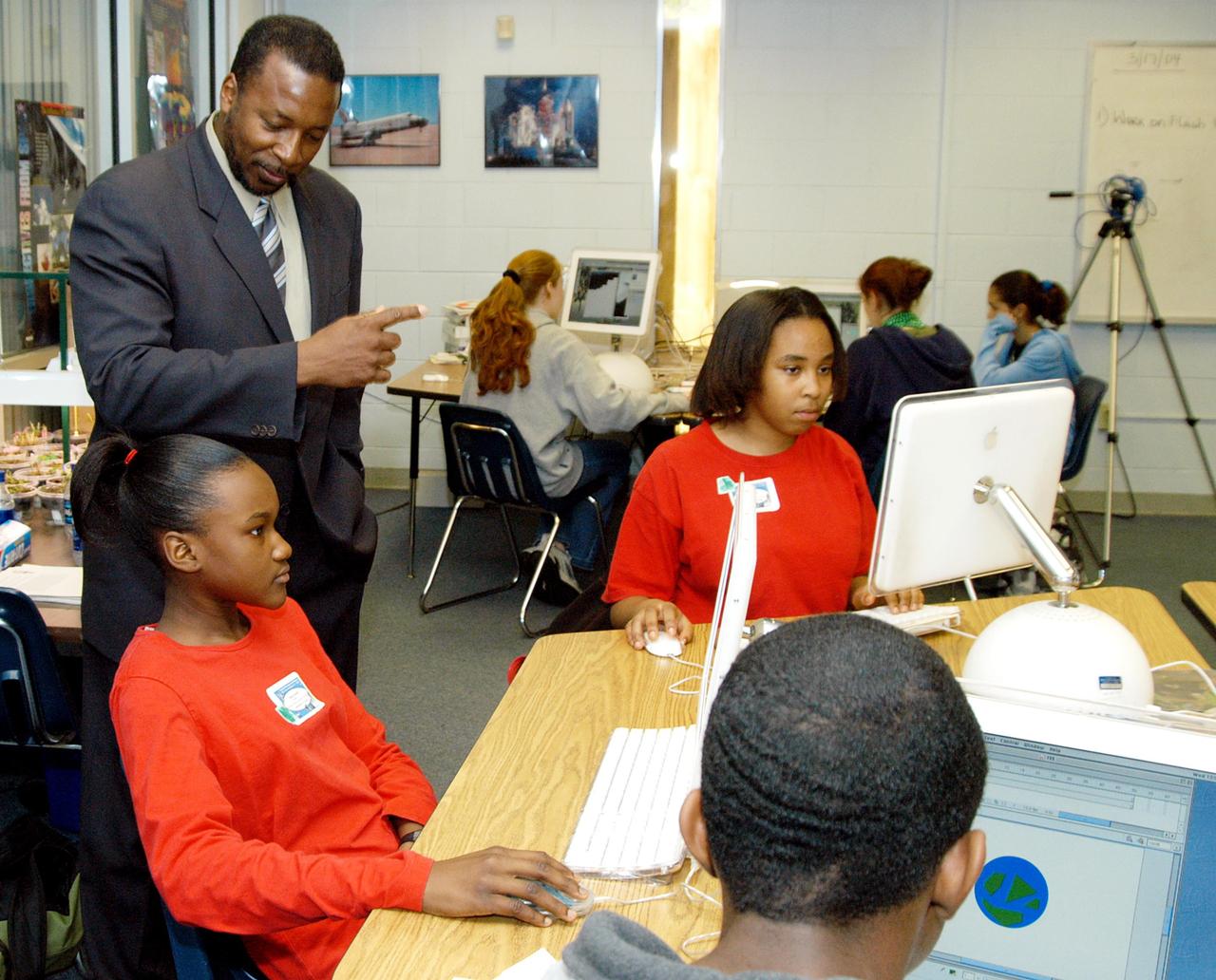
KENNEDY SPACE CENTER, FLA. - KSC Deputy Director Woodrow Whitlow Jr. looks at a student’s computer project after his presentation in the classroom at Howard Bishop Middle School in Gainesville, Fla. Dr. Whitlow shared the new vision for space exploration with the students, the next generation of explorers. Whitlow talked about our destiny as explorers, NASA’s stepping stone approach to exploring Earth, the Moon, Mars and beyond, how space impacts our lives, and how people and machines rely on each other in space. The presentation also included a downlink from the International Space Station for students to ask questions of the Expedition 8 crew, Commander Michael Foale and Flight Engineer Alexander Kaleri. Howard Bishop Middle School is one of 50 nationwide (four in Florida) in the NASA Explorer Schools (NES) Program. NES establishes a three-year partnership between NASA and 50 NASA Explorer Schools teams, consisting of teachers and education administrators from diverse communities nationwide.
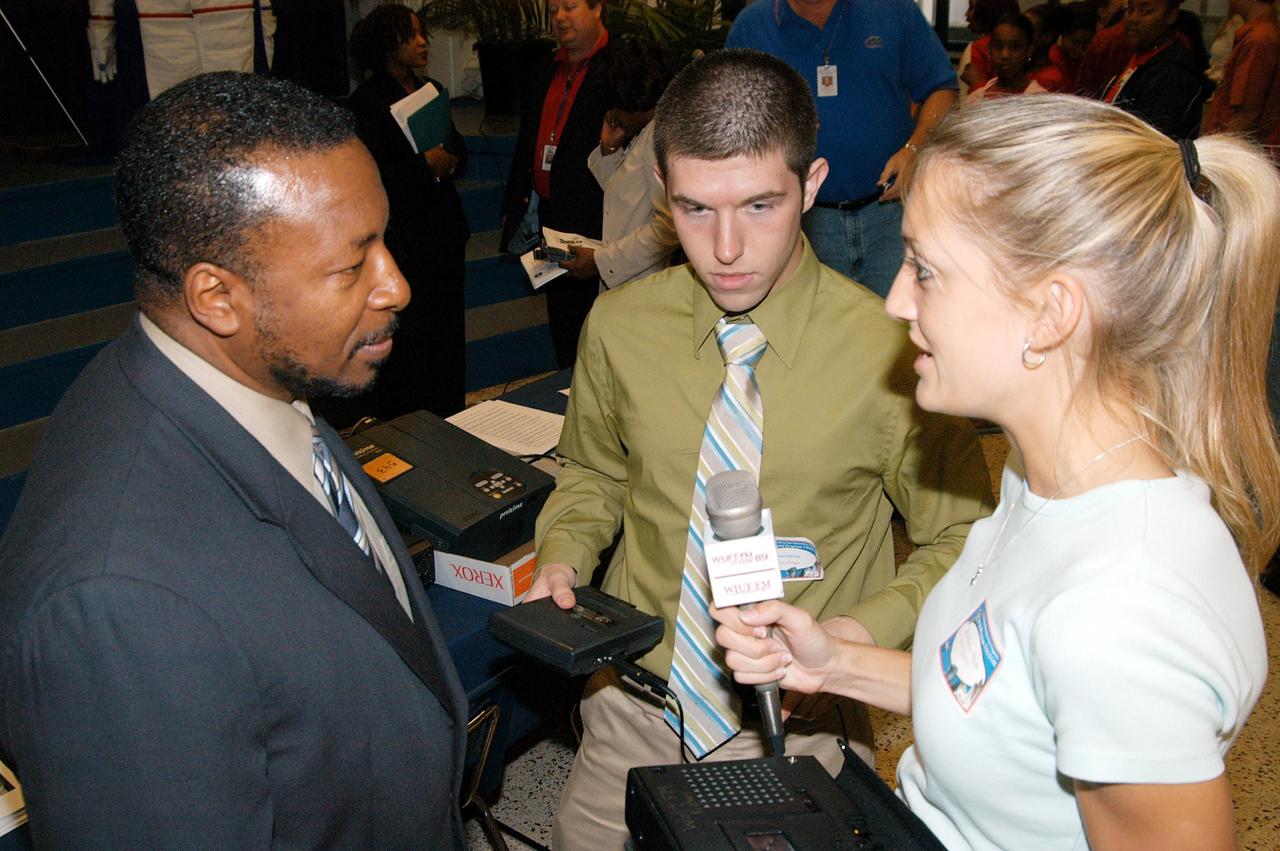
KENNEDY SPACE CENTER, FLA. - KSC Deputy Director Woodrow Whitlow Jr. (left) is interviewed by a reporter (right) for WTUF-FM radio after a presentation at Howard Bishop Middle School in Gainesville, Fla. Dr. Whitlow shared the new vision for space exploration with the students, the next generation of explorers. Whitlow talked about our destiny as explorers, NASA’s stepping stone approach to exploring Earth, the Moon, Mars and beyond, how space impacts our lives, and how people and machines rely on each other in space. The presentation also included a downlink from the International Space Station for students to ask questions of the Expedition 8 crew, Commander Michael Foale and Flight Engineer Alexander Kaleri. Howard Bishop Middle School is one of 50 nationwide (four in Florida) in the NASA Explorer Schools (NES) Program. NES establishes a three-year partnership between NASA and 50 NASA Explorer Schools teams, consisting of teachers and education administrators from diverse communities nationwide.
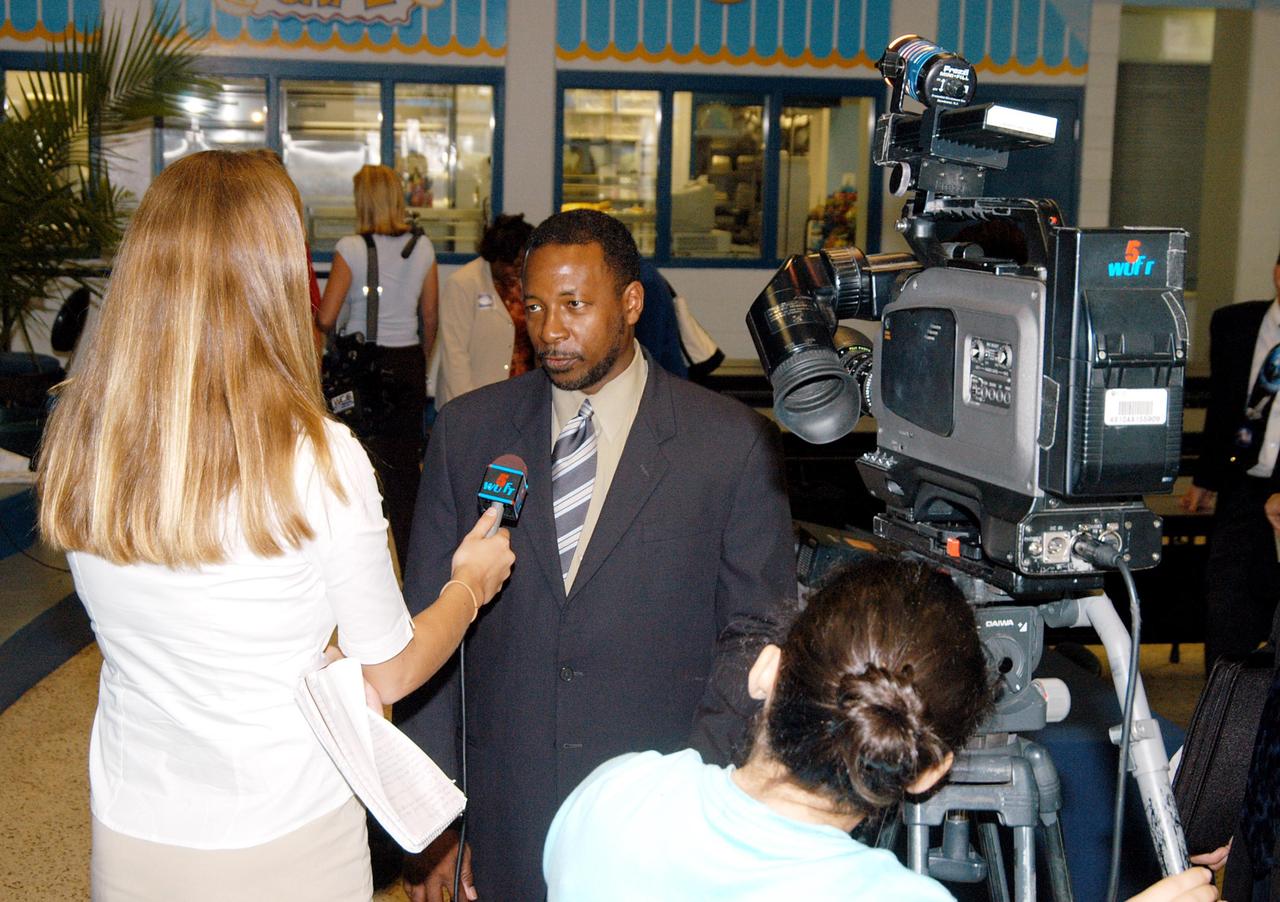
KENNEDY SPACE CENTER, FLA. - KSC Deputy Director Woodrow Whitlow Jr. (center) is interviewed by TV station WUFT after a presentation at Howard Bishop Middle School in Gainesville, Fla. Dr. Whitlow shared the new vision for space exploration with the students, the next generation of explorers. Whitlow talked about our destiny as explorers, NASA’s stepping stone approach to exploring Earth, the Moon, Mars and beyond, how space impacts our lives, and how people and machines rely on each other in space. The presentation also included a downlink from the International Space Station for students to ask questions of the Expedition 8 crew, Commander Michael Foale and Flight Engineer Alexander Kaleri. Howard Bishop Middle School is one of 50 nationwide (four in Florida) in the NASA Explorer Schools (NES) Program. NES establishes a three-year partnership between NASA and 50 NASA Explorer Schools teams, consisting of teachers and education administrators from diverse communities nationwide
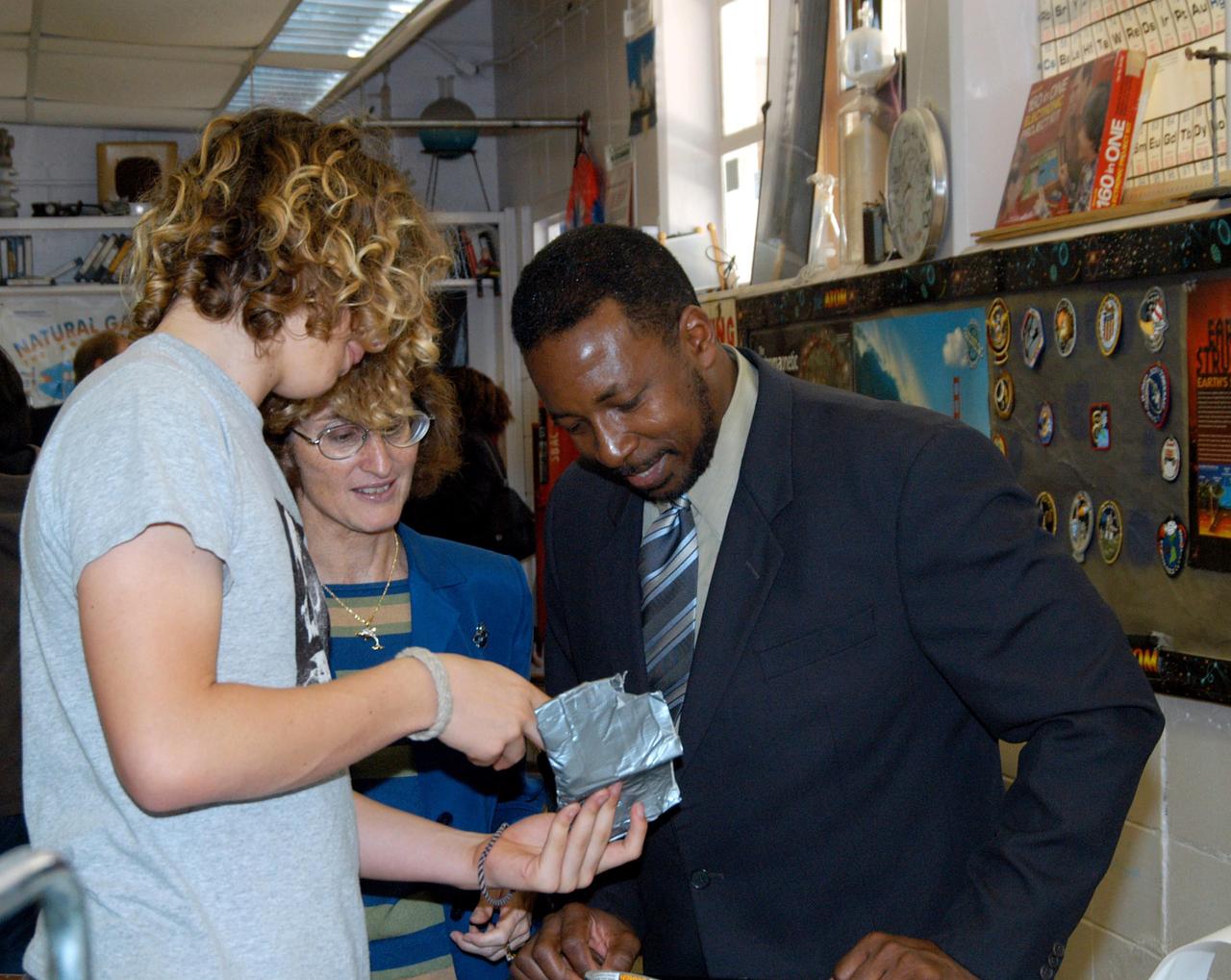
KENNEDY SPACE CENTER, FLA. - KSC Deputy Director Woodrow Whitlow Jr. talks to a student about his project in a classroom at Howard Bishop Middle School in Gainesville, Fla. Dr. Whitlow shared the new vision for space exploration with the students, the next generation of explorers. Whitlow talked about our destiny as explorers, NASA’s stepping stone approach to exploring Earth, the Moon, Mars and beyond, how space impacts our lives, and how people and machines rely on each other in space. The presentation also included a downlink from the International Space Station for students to ask questions of the Expedition 8 crew, Commander Michael Foale and Flight Engineer Alexander Kaleri. Howard Bishop Middle School is one of 50 nationwide (four in Florida) in the NASA Explorer Schools (NES) Program. NES establishes a three-year partnership between NASA and 50 NASA Explorer Schools teams, consisting of teachers and education administrators from diverse communities nationwide.
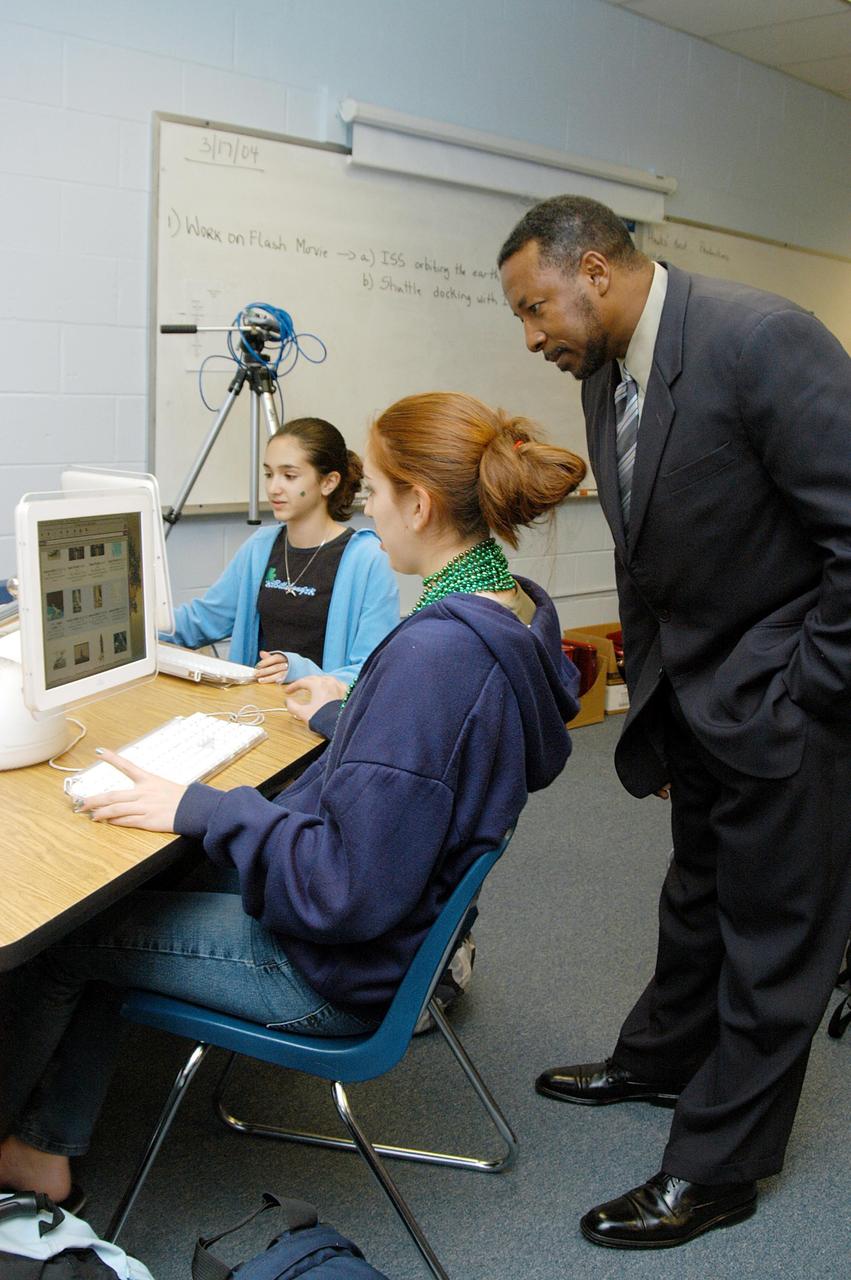
KENNEDY SPACE CENTER, FLA. - KSC Deputy Director Woodrow Whitlow Jr. looks at a student’s computer project after his presentation in the classroom at Howard Bishop Middle School in Gainesville, Fla. Dr. Whitlow shared the new vision for space exploration with the students, the next generation of explorers. Whitlow talked about our destiny as explorers, NASA’s stepping stone approach to exploring Earth, the Moon, Mars and beyond, how space impacts our lives, and how people and machines rely on each other in space. The presentation also included a downlink from the International Space Station for students to ask questions of the Expedition 8 crew, Commander Michael Foale and Flight Engineer Alexander Kaleri. Howard Bishop Middle School is one of 50 nationwide (four in Florida) in the NASA Explorer Schools (NES) Program. NES establishes a three-year partnership between NASA and 50 NASA Explorer Schools teams, consisting of teachers and education administrators from diverse communities nationwide.
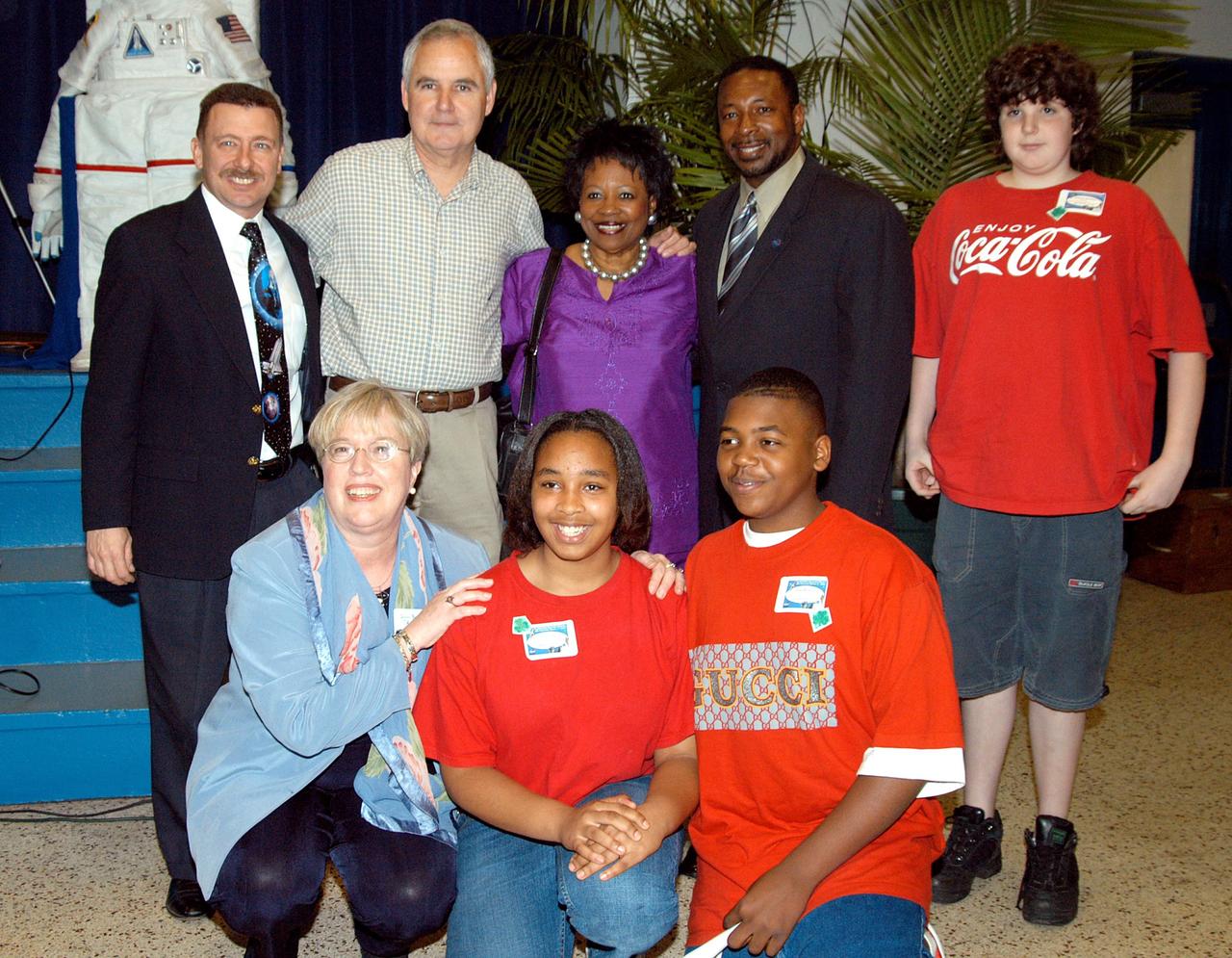
KENNEDY SPACE CENTER, FLA. - KSC Deputy Director Woodrow Whitlow Jr. (rear, second from right) poses with students and administrators at Howard Bishop Middle School in Gainesville, Fla. Dr. Whitlow shared the new vision for space exploration with the students, the next generation of explorers. Whitlow talked about our destiny as explorers, NASA’s stepping stone approach to exploring Earth, the Moon, Mars and beyond, how space impacts our lives, and how people and machines rely on each other in space. The presentation also included a downlink from the International Space Station for students to ask questions of the Expedition 8 crew, Commander Michael Foale and Flight Engineer Alexander Kaleri. Howard Bishop Middle School is one of 50 nationwide (four in Florida) in the NASA Explorer Schools (NES) Program. NES establishes a three-year partnership between NASA and 50 NASA Explorer Schools teams, consisting of teachers and education administrators from diverse communities nationwide.
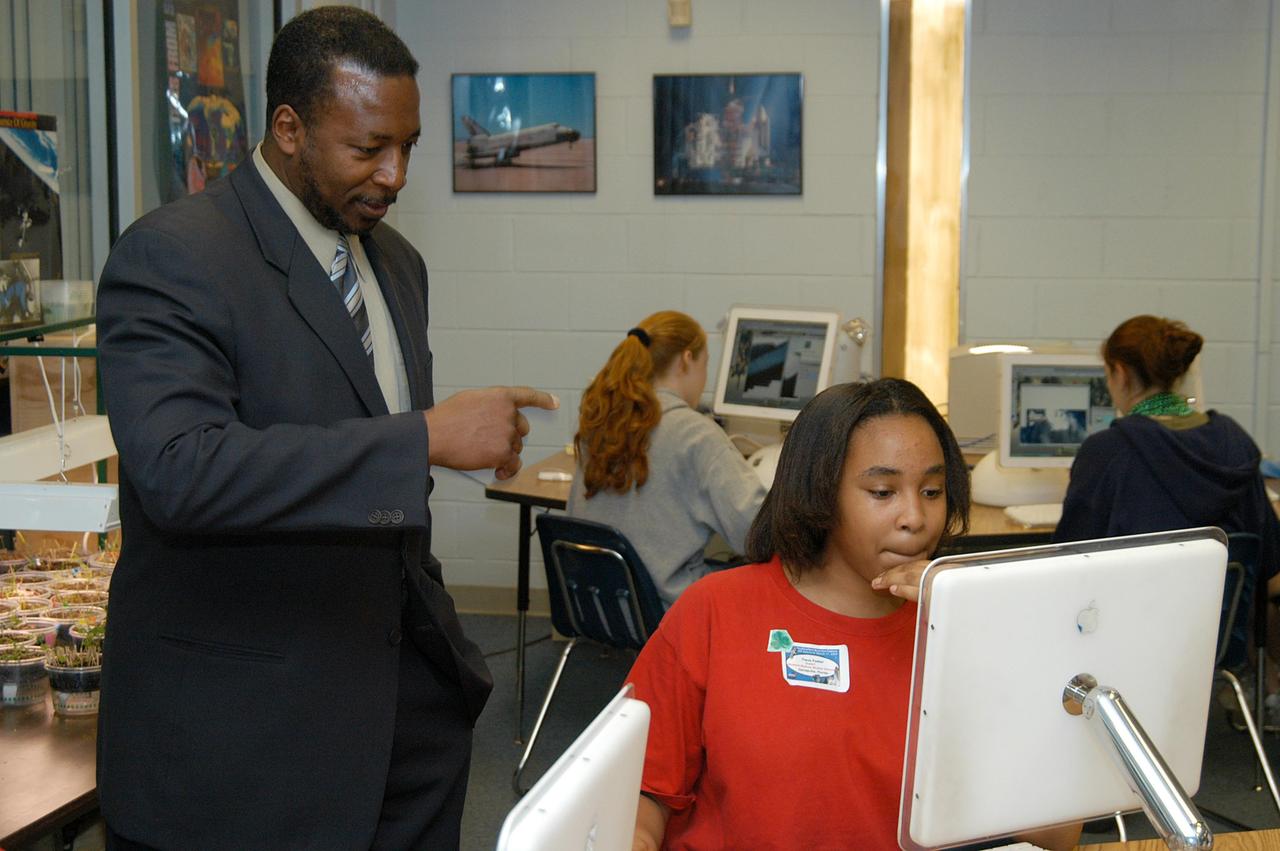
KENNEDY SPACE CENTER, FLA. - KSC Deputy Director Woodrow Whitlow Jr. looks at a student’s computer project after his presentation in the classroom at Howard Bishop Middle School in Gainesville, Fla. Dr. Whitlow shared the new vision for space exploration with the students, the next generation of explorers. Whitlow talked about our destiny as explorers, NASA’s stepping stone approach to exploring Earth, the Moon, Mars and beyond, how space impacts our lives, and how people and machines rely on each other in space. The presentation also included a downlink from the International Space Station for students to ask questions of the Expedition 8 crew, Commander Michael Foale and Flight Engineer Alexander Kaleri. Howard Bishop Middle School is one of 50 nationwide (four in Florida) in the NASA Explorer Schools (NES) Program. NES establishes a three-year partnership between NASA and 50 NASA Explorer Schools teams, consisting of teachers and education administrators from diverse communities nationwide.
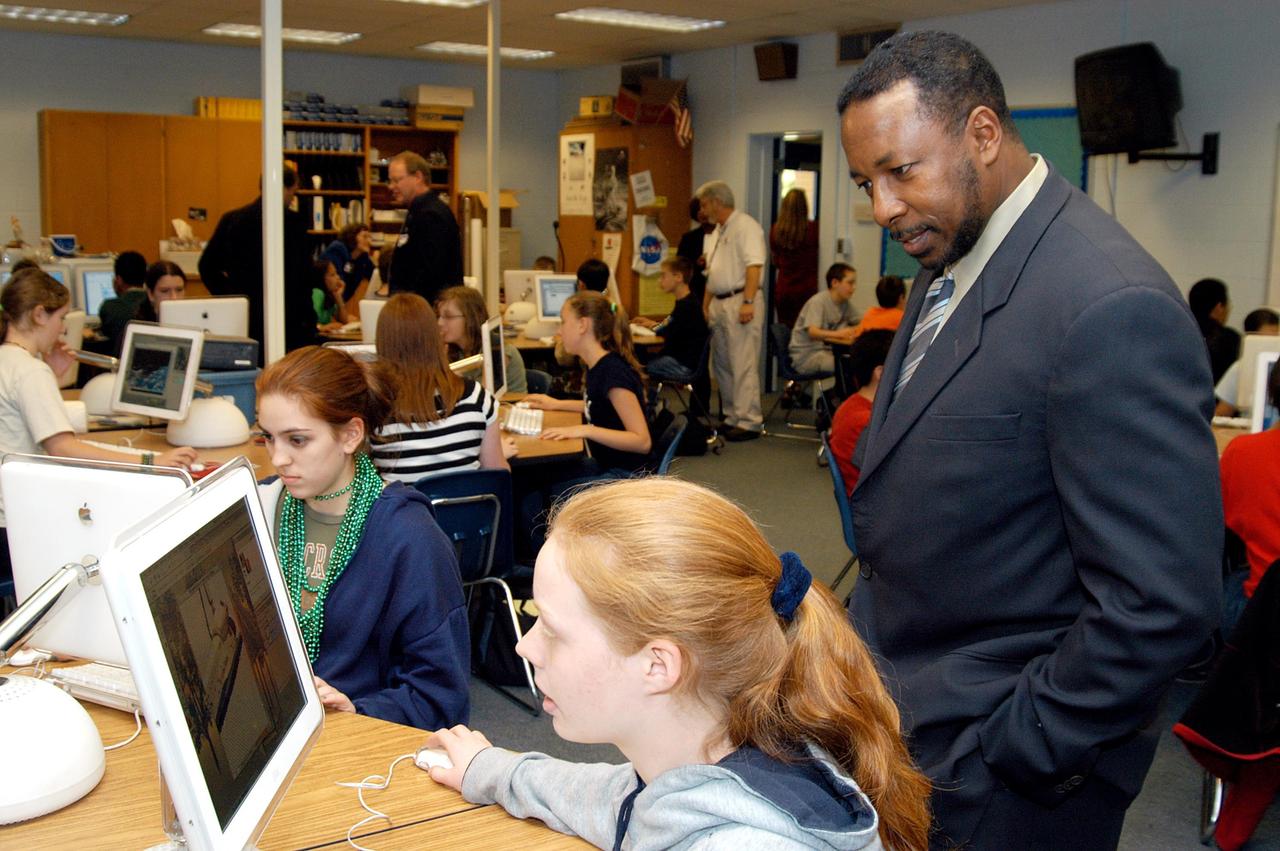
KENNEDY SPACE CENTER, FLA. - KSC Deputy Director Woodrow Whitlow Jr. looks at a student’s computer project after his presentation in the classroom at Howard Bishop Middle School in Gainesville, Fla. Dr. Whitlow shared the new vision for space exploration with the students, the next generation of explorers. Whitlow talked about our destiny as explorers, NASA’s stepping stone approach to exploring Earth, the Moon, Mars and beyond, how space impacts our lives, and how people and machines rely on each other in space. The presentation also included a downlink from the International Space Station for students to ask questions of the Expedition 8 crew, Commander Michael Foale and Flight Engineer Alexander Kaleri. Howard Bishop Middle School is one of 50 nationwide (four in Florida) in the NASA Explorer Schools (NES) Program. NES establishes a three-year partnership between NASA and 50 NASA Explorer Schools teams, consisting of teachers and education administrators from diverse communities nationwide.
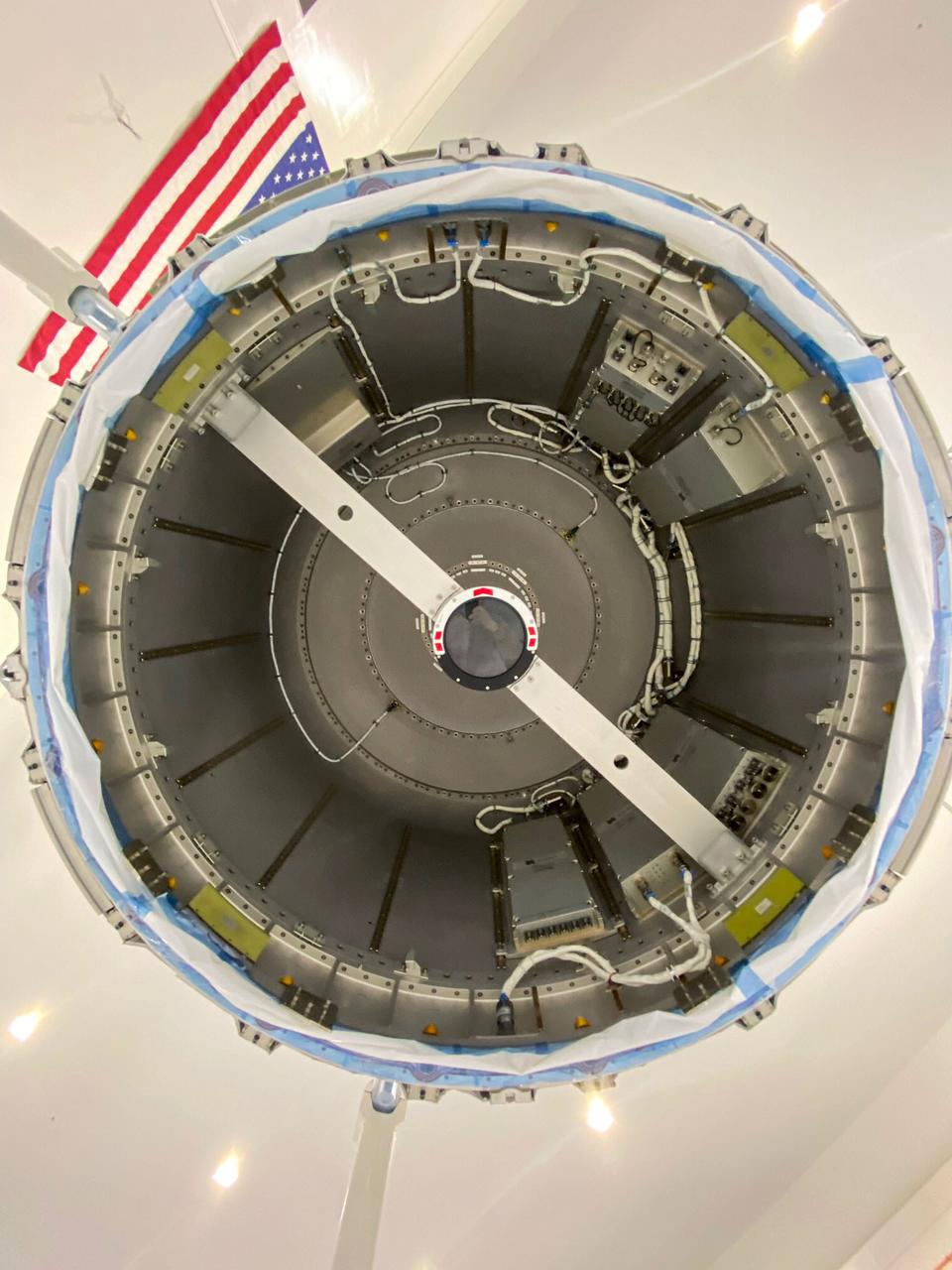
jsc2020e044492 (10/6/2020) —- A preflight view of the Nanoracks Airlock. The Nanoracks Bishop Airlock (Nanoracks Airlock) is the first-ever commercially owned and operated airlock on the International Space Station. It provides a variety of capabilities including jettisoning of payloads such as Cubesats, deployment of external payloads, support for small exterior payloads and locker-sized internal payloads, recovery of external on-orbit replaceable units (ORUs), and the ability to move hardware outside in support of extravehicular activities (EVAs). It is approximately five times larger than the Japanense Experiment Module (JEM) Airlock so it can accommodate more and larger payloads. The Airlock’s capabilities support many different types of scientific investigations.
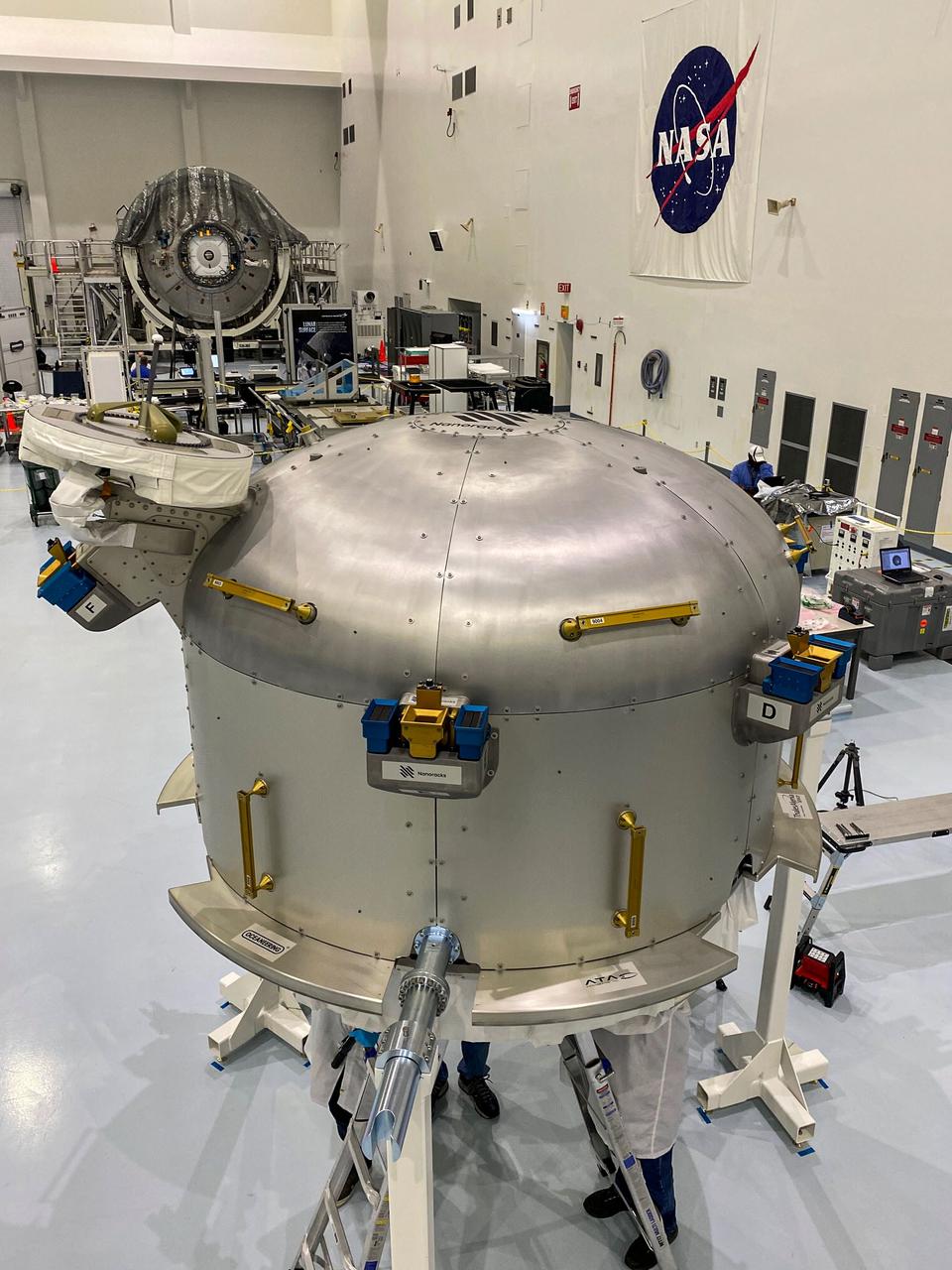
jsc2020e044491 (10/5/2020) —- A preflight view of the Nanoracks Airlock. The Nanoracks Bishop Airlock (Nanoracks Airlock) is the first-ever commercially owned and operated airlock on the International Space Station. It provides a variety of capabilities including jettisoning of payloads such as Cubesats, deployment of external payloads, support for small exterior payloads and locker-sized internal payloads, recovery of external on-orbit replaceable units (ORUs), and the ability to move hardware outside in support of extravehicular activities (EVAs). It is approximately five times larger than the Japanense Experiment Module (JEM) Airlock so it can accommodate more and larger payloads. The Airlock’s capabilities support many different types of scientific investigations.
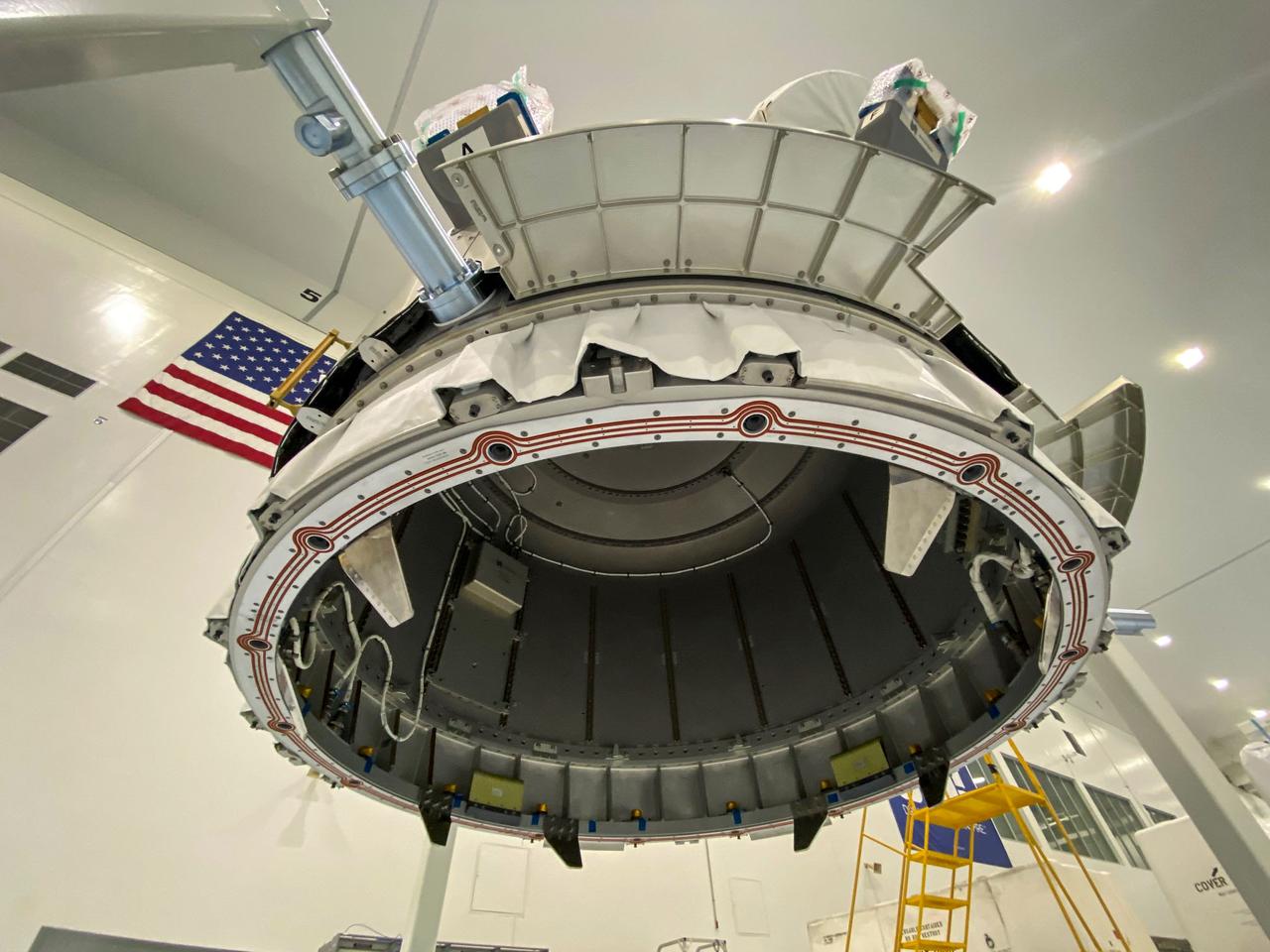
jsc2020e044494 (10/1/2020) --- A preflight view of the Nanoracks Airlock. The Nanoracks Bishop Airlock (Nanoracks Airlock) is the first-ever commercially owned and operated airlock on the International Space Station. It provides a variety of capabilities including jettisoning of payloads such as Cubesats, deployment of external payloads, support for small exterior payloads and locker-sized internal payloads, recovery of external on-orbit replaceable units (ORUs), and the ability to move hardware outside in support of extravehicular activities (EVAs). It is approximately five times larger than the Japanense Experiment Module (JEM) Airlock so it can accommodate more and larger payloads. The Airlock’s capabilities support many different types of scientific investigations.
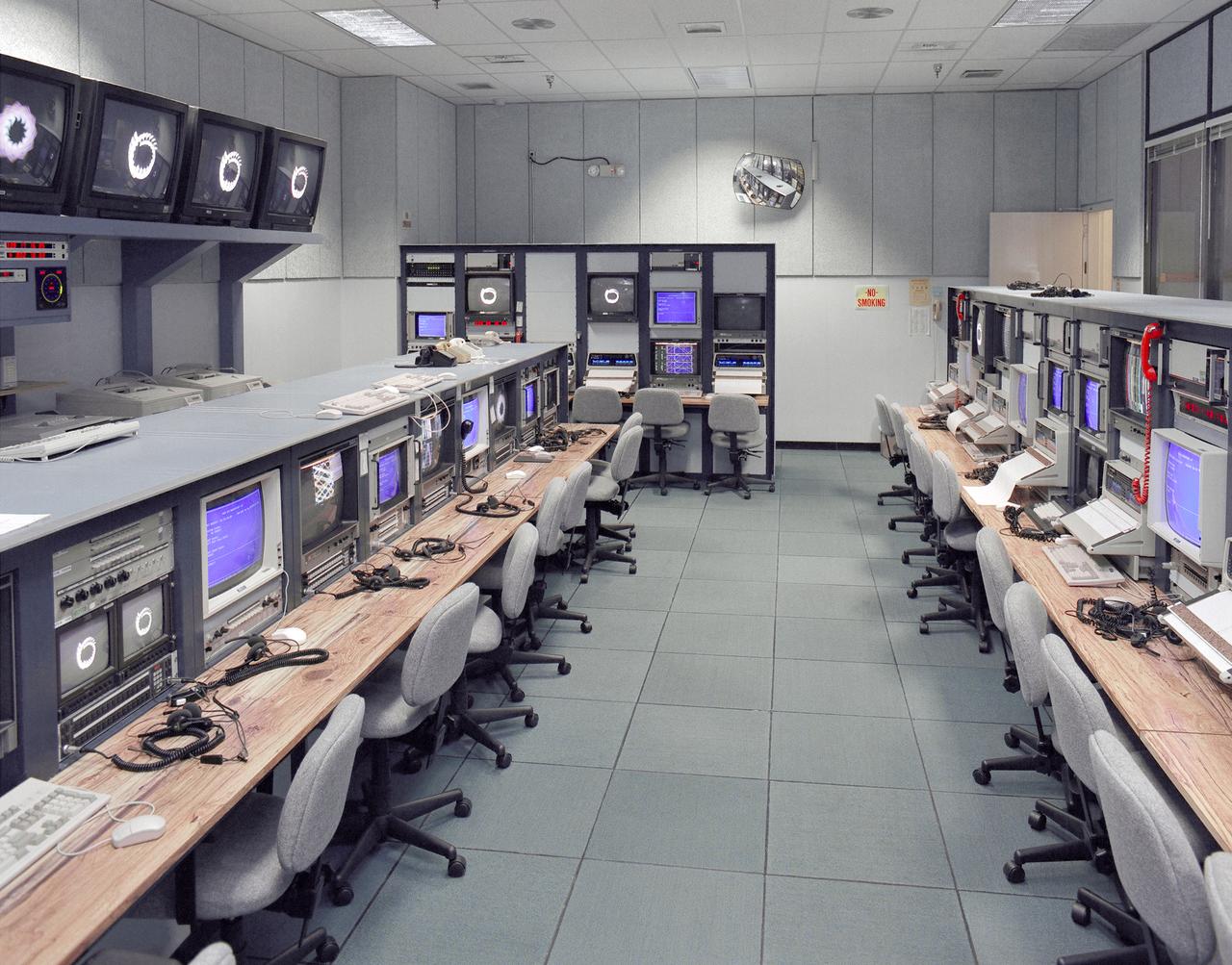
Mission control Blue Room, seen here, in building 4800 at NASA's Dryden Flight Research Center, is part of the Western Aeronautical Test Range (WATR). All aspects of a research mission are monitored from one of two of these control rooms at Dryden. The WATR consists of a highly automated complex of computer controlled tracking, telemetry, and communications systems and control room complexes that are capable of supporting any type of mission ranging from system and component testing, to sub-scale and full-scale flight tests of new aircraft and reentry systems. Designated areas are assigned for spin/dive tests, corridors are provided for low, medium, and high-altitude supersonic flight, and special STOL/VSTOL facilities are available at Ames Moffett and Crows Landing. Special use airspace, available at Edwards, covers approximately twelve thousand square miles of mostly desert area. The southern boundary lies to the south of Rogers Dry Lake, the western boundary lies midway between Mojave and Bakersfield, the northern boundary passes just south of Bishop, and the eastern boundary follows about 25 miles west of the Nevada border except in the northern areas where it crosses into Nevada.
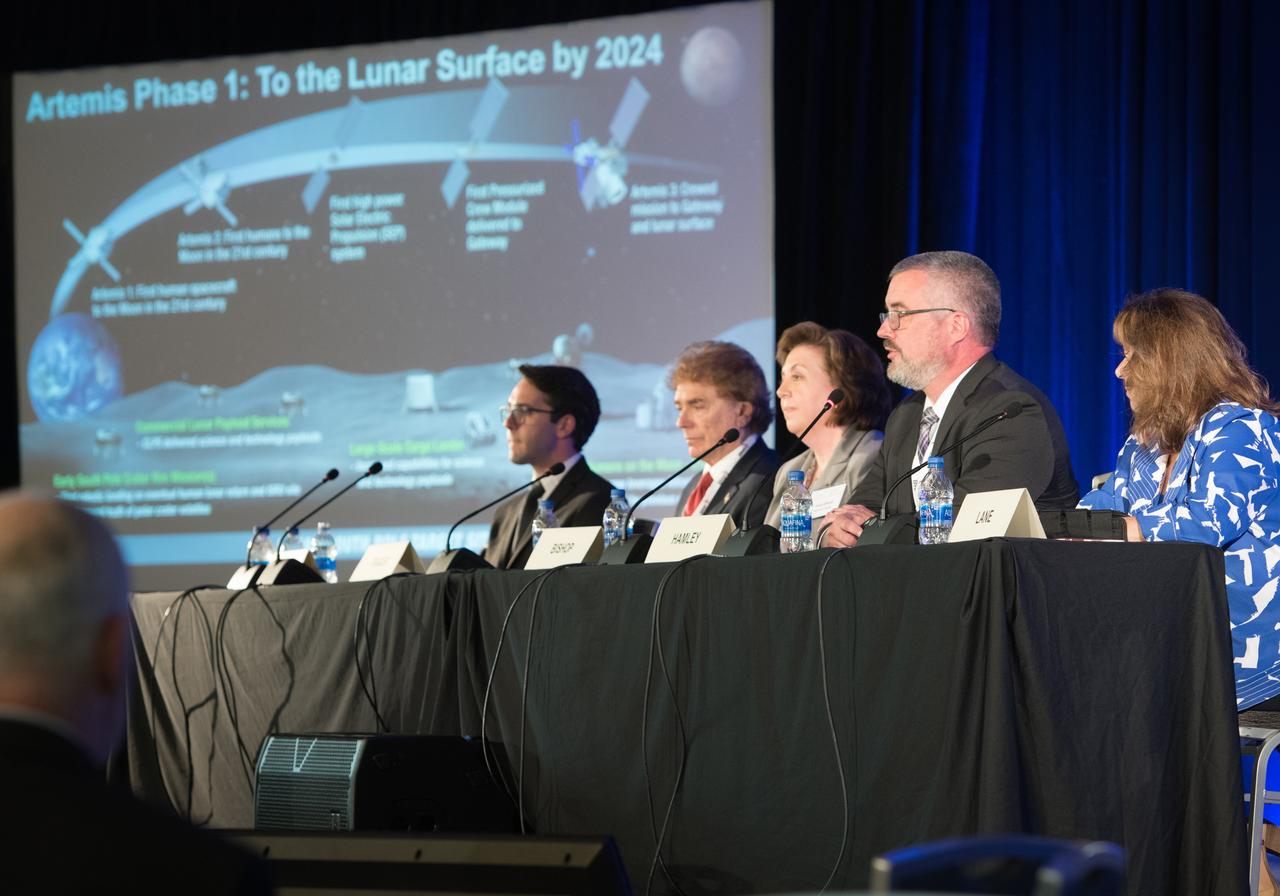
The inaugural Glenn Symposium focused on advancements in aerospace technology including power and propulsion, autonomy and communications, low boom supersonics, hypersonics, and more. Discussion also encompassed humans returning to the moon, including challenges associated with the 2024 mission.
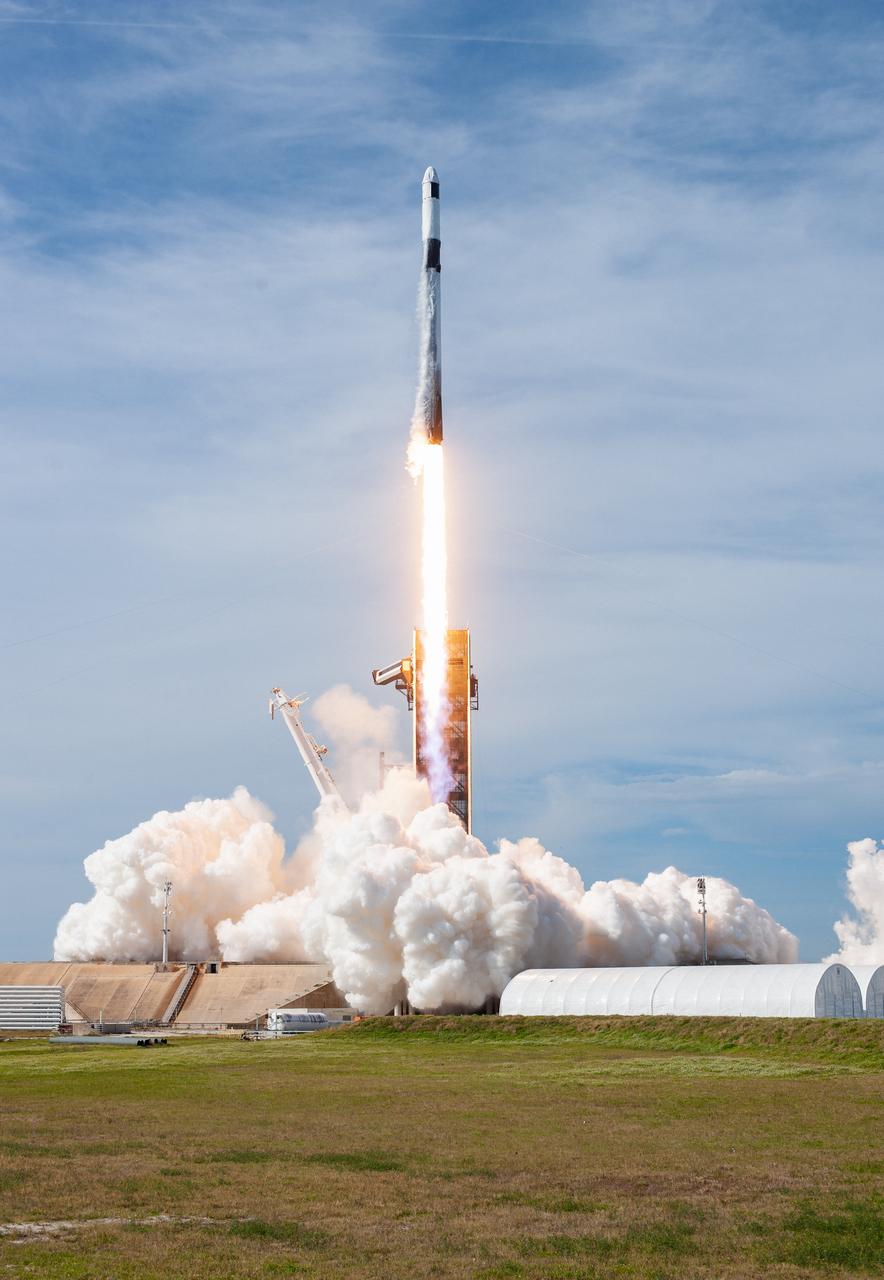
A SpaceX Falcon 9 rocket lifts off from Launch Complex 39A at Kennedy Space Center in Florida at 11:17 a.m. EST on Dec. 6, 2020, carrying the uncrewed cargo Dragon spacecraft on its journey to the International Space Station for NASA and SpaceX’s 21st Commercial Resupply Services (CRS-21) mission. Dragon will deliver more than 6,400 pounds of science investigations and cargo to the orbiting laboratory. The mission marks the first launch for SpaceX under NASA’s CRS-2 contract.

A SpaceX Falcon 9 rocket soars into the sky after lifting off from Launch Complex 39A at Kennedy Space Center in Florida at 11:17 a.m. EST on Dec. 6, 2020. The rocket is carrying the uncrewed cargo Dragon spacecraft on its journey to the International Space Station for NASA and SpaceX’s 21st Commercial Resupply Services (CRS-21) mission. Dragon will deliver more than 6,400 pounds of science investigations and cargo to the orbiting laboratory. The mission marks the first launch for SpaceX under NASA’s CRS-2 contract.
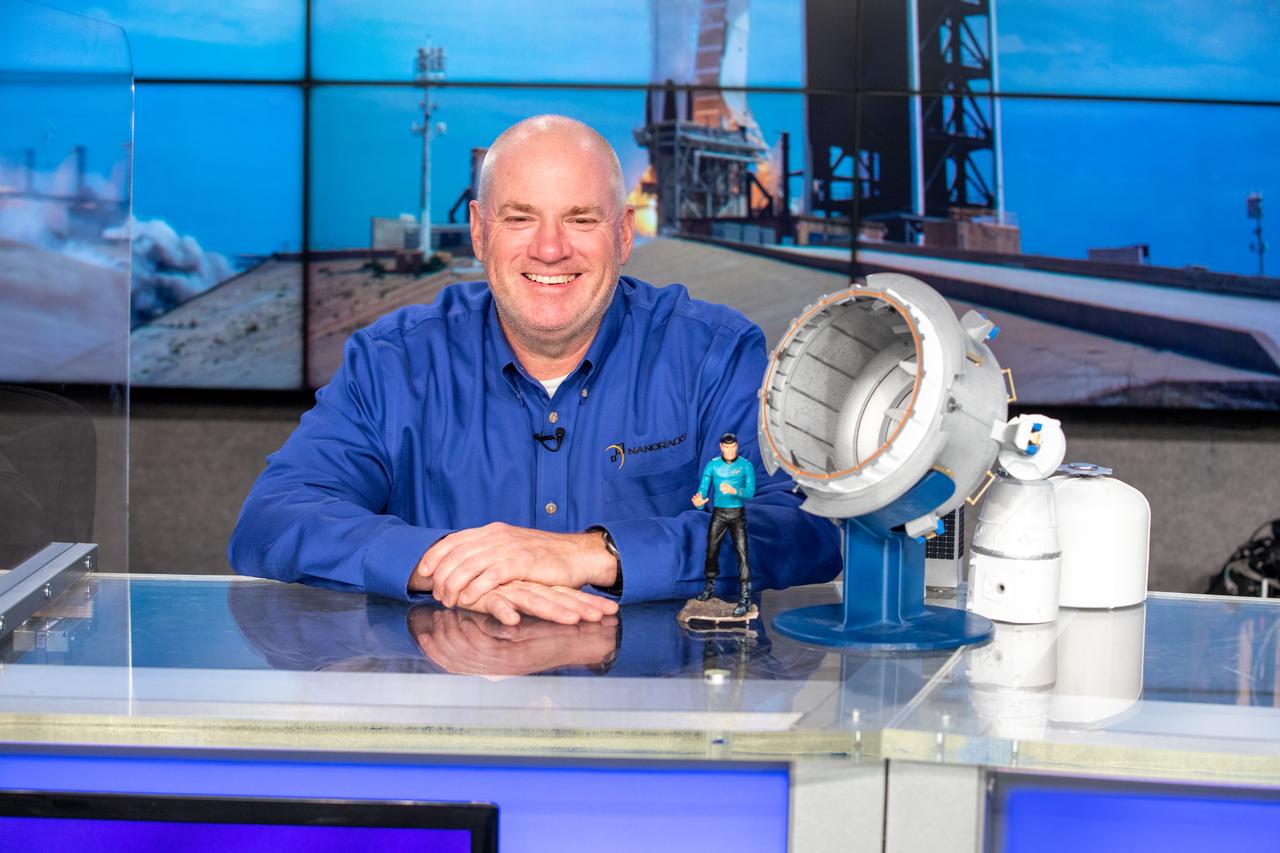
Brock Howe, airlock program manager, Nanoracks, participates in a #NASASocial Science and Station Q&A show at the agency’s Kennedy Space Center in Florida on Dec. 4, 2020. Jennifer Scott-Williams, ISS Program Research Office; and Pinar Mesci, project scientist, Sanford Consortium for Regenerative Medicine, UC San Diego, also participated in the event, which was moderated by NASA Communications’ Kenna Pell. SpaceX’s 21st Commercial Resupply Services (CRS-21) mission is scheduled to launch from Kennedy’s Launch Complex 39A on Dec. 5, 2020. Liftoff of the SpaceX Falcon 9 rocket and cargo Dragon spacecraft is targeted for 11:39 a.m. EST.
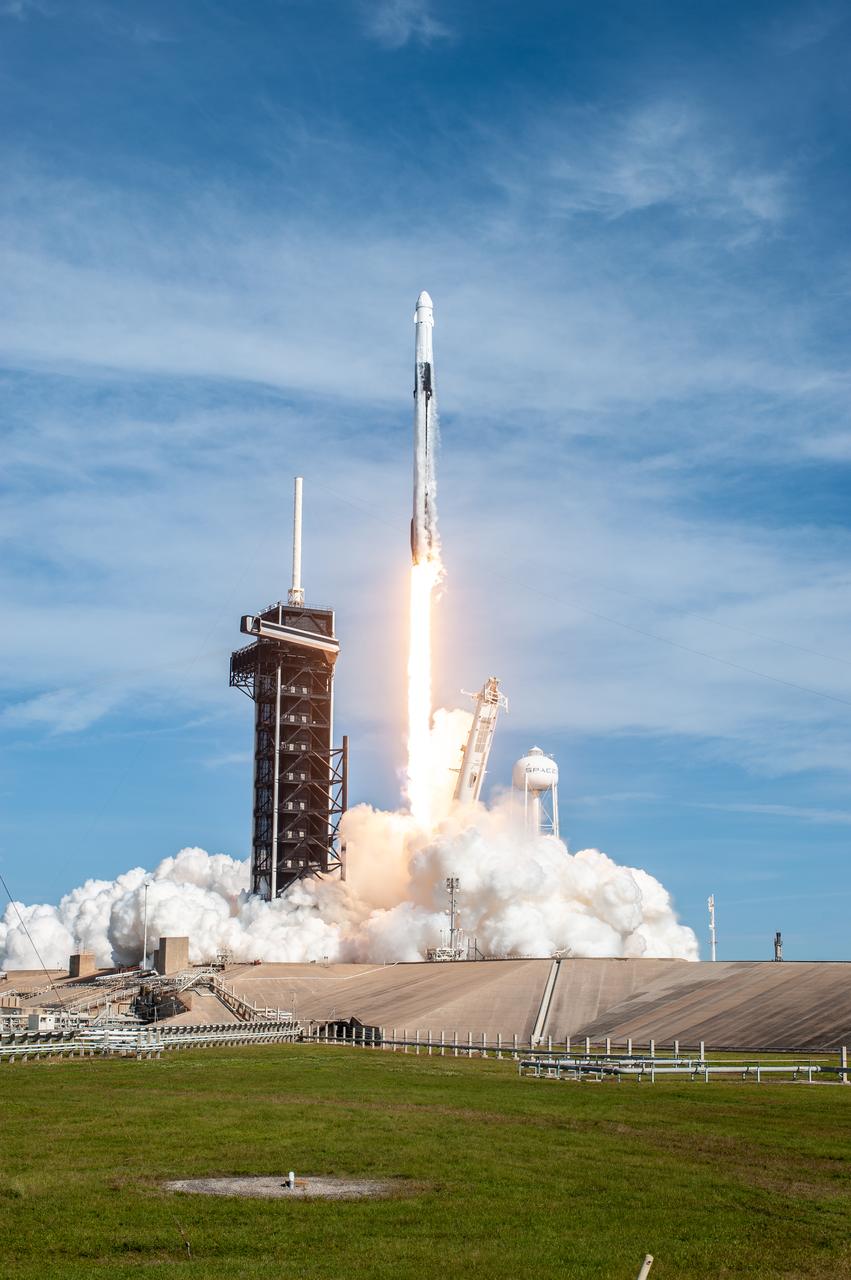
A SpaceX Falcon 9 rocket lifts off from Launch Complex 39A at Kennedy Space Center in Florida at 11:17 a.m. EST on Dec. 6, 2020, carrying the uncrewed cargo Dragon spacecraft on its journey to the International Space Station for NASA and SpaceX’s 21st Commercial Resupply Services (CRS-21) mission. Dragon will deliver more than 6,400 pounds of science investigations and cargo to the orbiting laboratory. The mission marks the first launch for SpaceX under NASA’s CRS-2 contract.
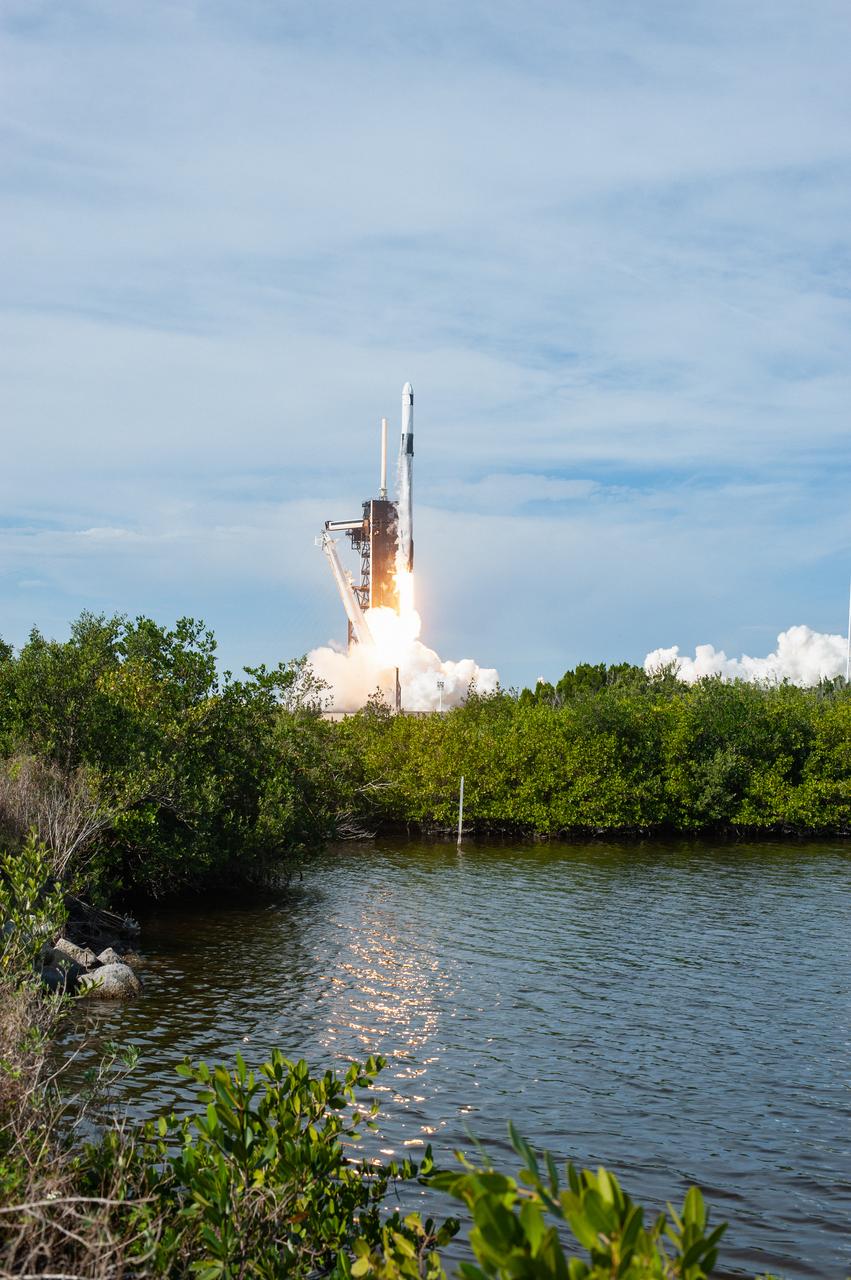
A SpaceX Falcon 9 rocket lifts off from Launch Complex 39A at Kennedy Space Center in Florida at 11:17 a.m. EST on Dec. 6, 2020, carrying the uncrewed cargo Dragon spacecraft on its journey to the International Space Station for NASA and SpaceX’s 21st Commercial Resupply Services (CRS-21) mission. Dragon will deliver more than 6,400 pounds of science investigations and cargo to the orbiting laboratory. The mission marks the first launch for SpaceX under NASA’s CRS-2 contract.