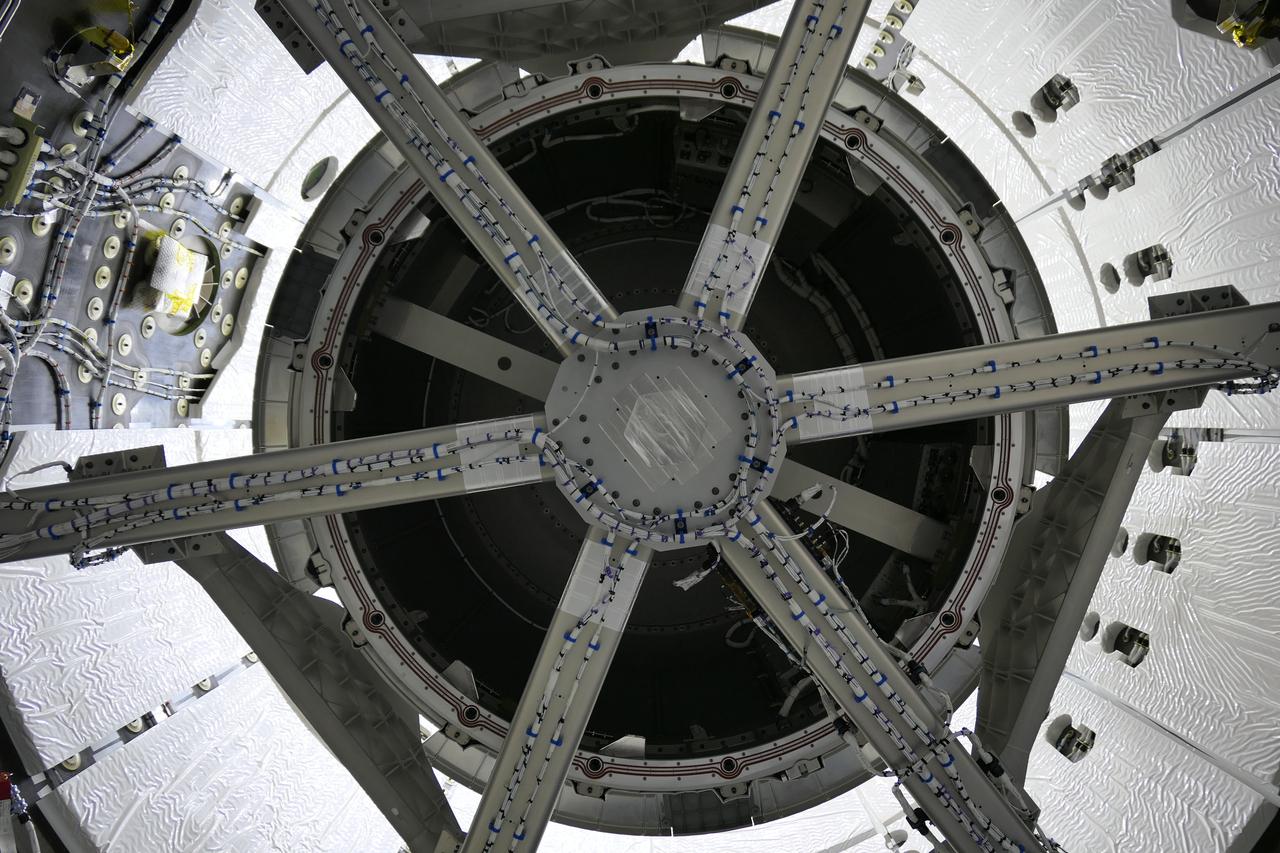
The Nanoracks Bishop Airlock is packed in the Dragon spacecraft’s trunk on Oct. 12, 2020, inside SpaceX’s processing facility at NASA’s Kennedy Space Center in Florida for its ride to the International Space Station aboard the company’s 21st Commercial Resupply Services (CRS-21) mission. The first commercially funded airlock for the orbiting laboratory, it will provide payload hosting, robotics testing, satellite deployment, serve as an outside toolbox for station crew spacewalks, and more. CRS-21 is scheduled to launch on a SpaceX Falcon 9 from Kennedy’s Launch Complex 39A.

The Nanoracks Bishop Airlock is packed in the Dragon spacecraft’s trunk on Oct. 12, 2020, inside SpaceX’s processing facility at NASA’s Kennedy Space Center in Florida for its ride to the International Space Station aboard the company’s 21st Commercial Resupply Services (CRS-21) mission. The first commercially funded airlock for the orbiting laboratory, it will provide payload hosting, robotics testing, satellite deployment, serve as an outside toolbox for station crew spacewalks, and more. CRS-21 is scheduled to launch on a SpaceX Falcon 9 from Kennedy’s Launch Complex 39A.
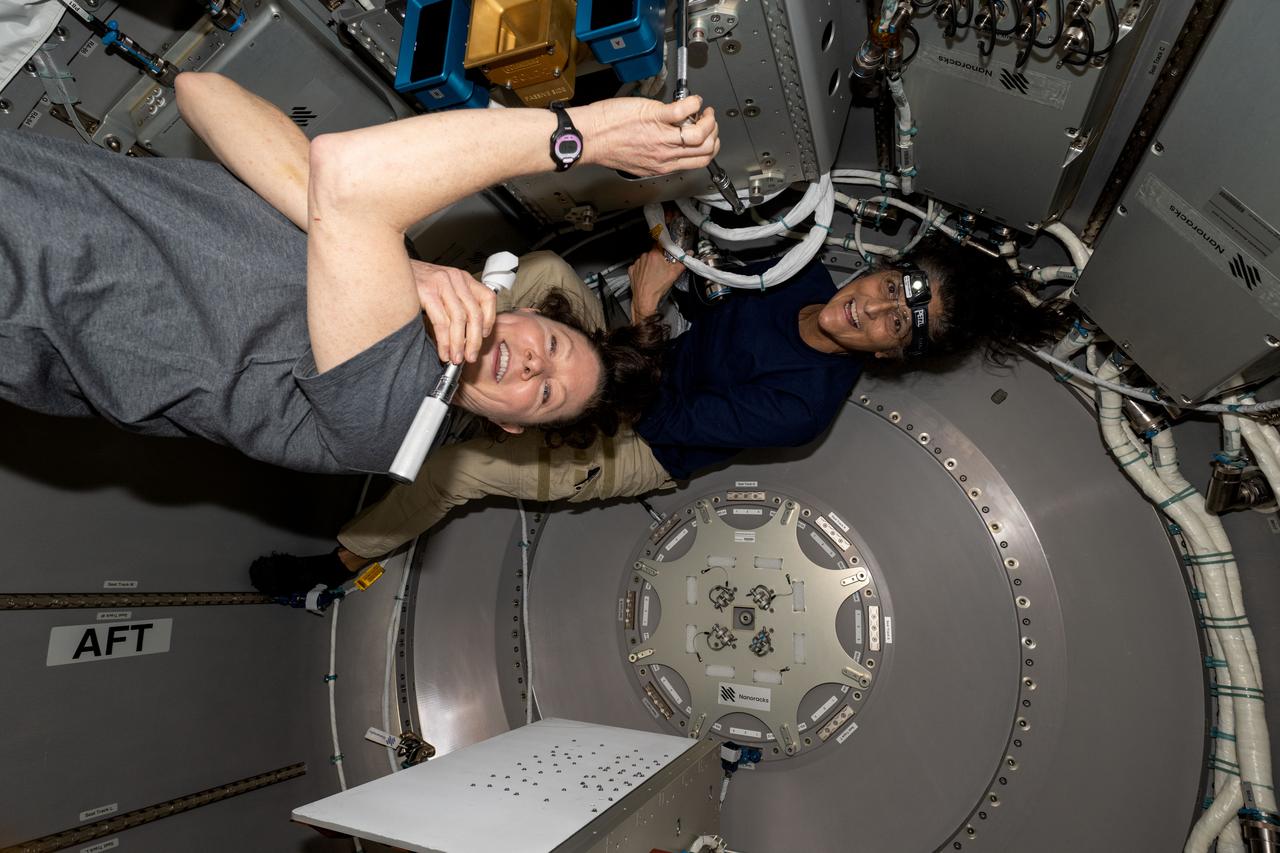
iss071e403704 (July 24, 2024) --- NASA astronauts (from left) Tracy C. Dyson, Expedition 71 Flight Engineer, and Suni Williams, Pilot for Boeing's Crew Flight Test, work inside the NanoRacks Bishop airlock located in the port side of the International Space Station's Tranquility module. The duo installed the the ArgUS Mission-1 technology demonstration hardware inside Bishop for placement outside in the vacuum of space to test the external operations of communications, computer processing, and high-definition video gear.
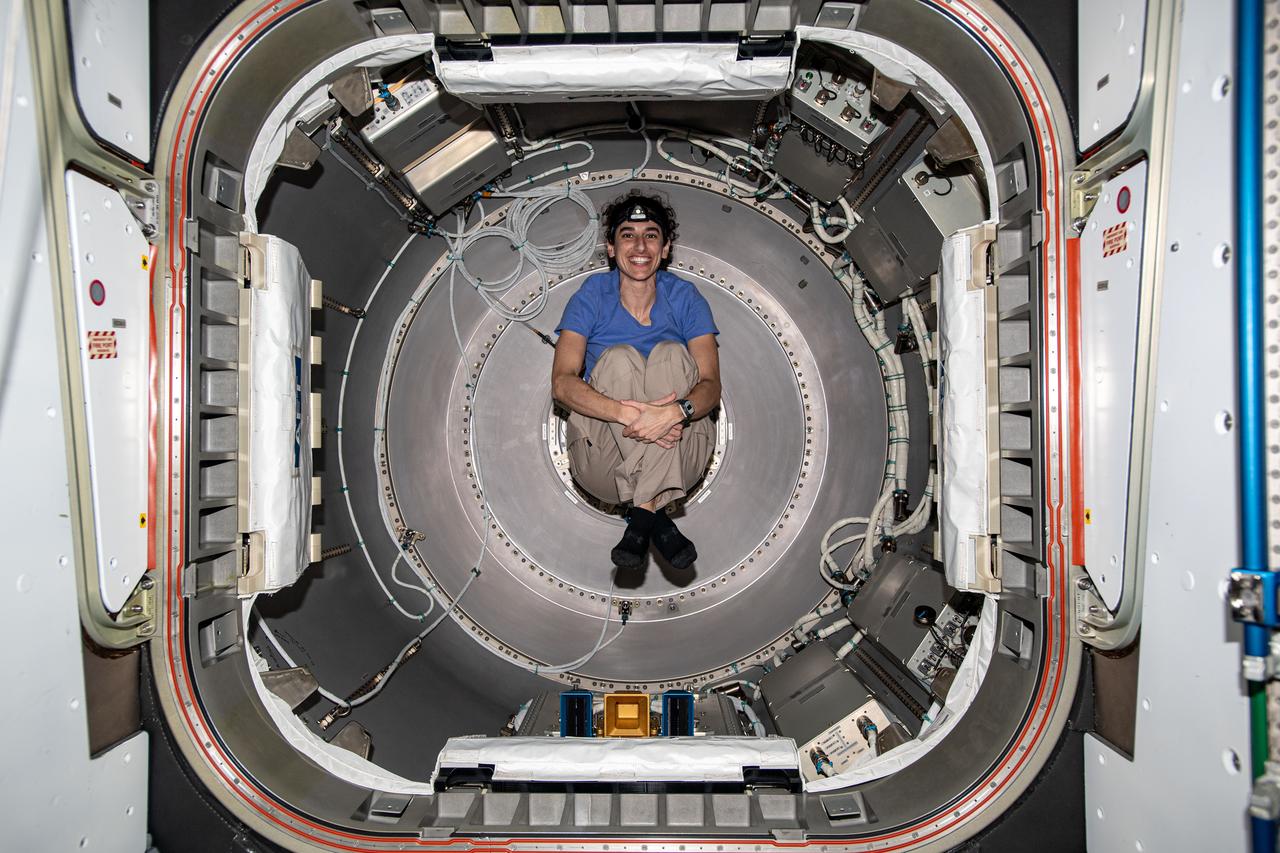
iss070e102740 (Feb. 26, 2024) --- Expedition 70 Flight Engineer and NASA astronaut Jasmin Moghbeli is photographed inside the NanoRacks Bishop airlock. Bishop can be uninstalled from its home on the Tranquility module for portable operations. It can also be used to stow cargo and extract or install payloads.
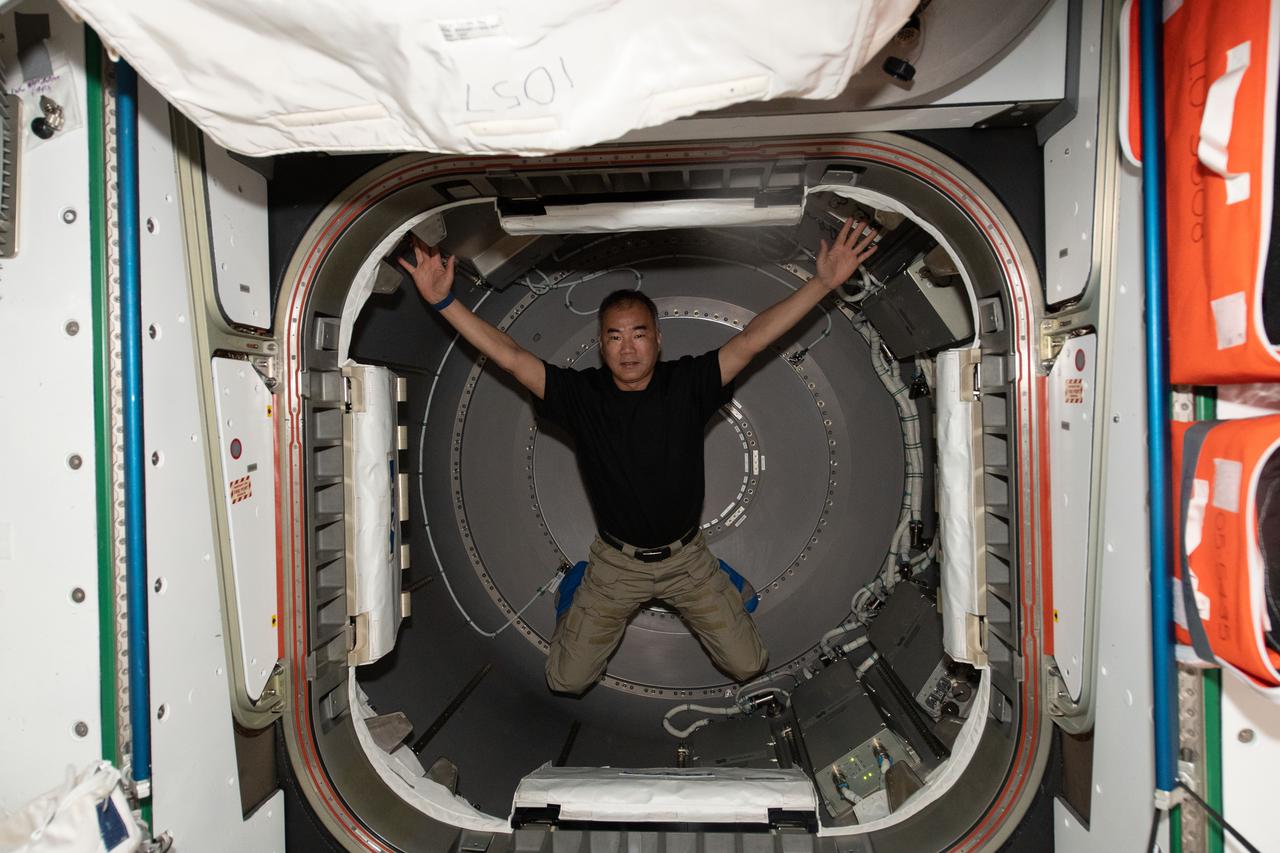
iss064e031300 (Feb. 11, 2021) --- JAXA (Japan Aerospace Exploration Agency) astronaut and Expedition 64 Flight Engineer Soichi Noguchi occupies the newly-opened NanoRacks Bishop airlock attached to the Tranquility module. Bishop will enable more commercial research, satellite deployments, and cargo operations outside in the vacuum of space.
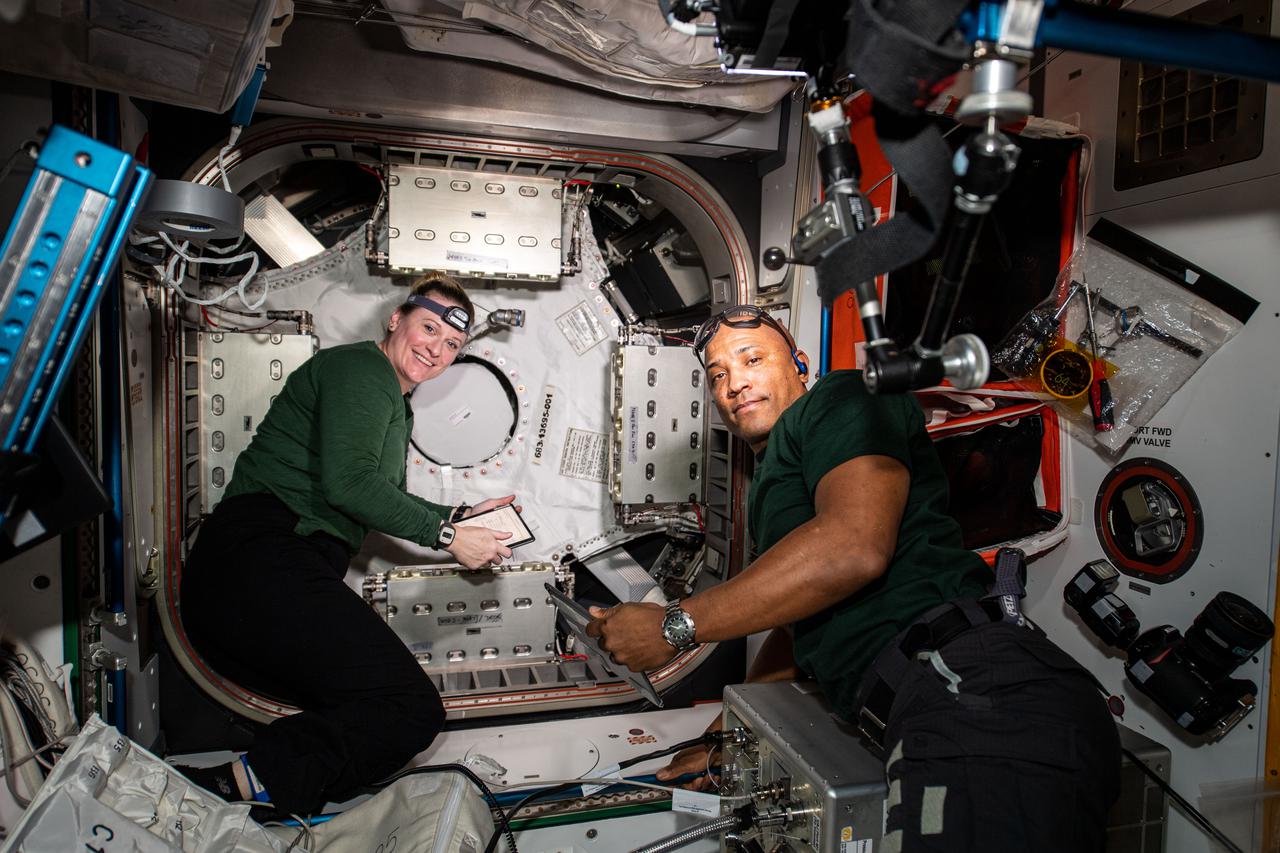
iss064e030013 (Feb. 8, 2021) --- NASA astronauts and Expedition 64 Flight Engineers Kate Rubins and Victor Glover work to configure and open the NanoRacks Bishop airlock attached to the Tranquility module. Bishop will enable more commercial research, satellite deployments, and cargo operations outside in the vacuum of space.
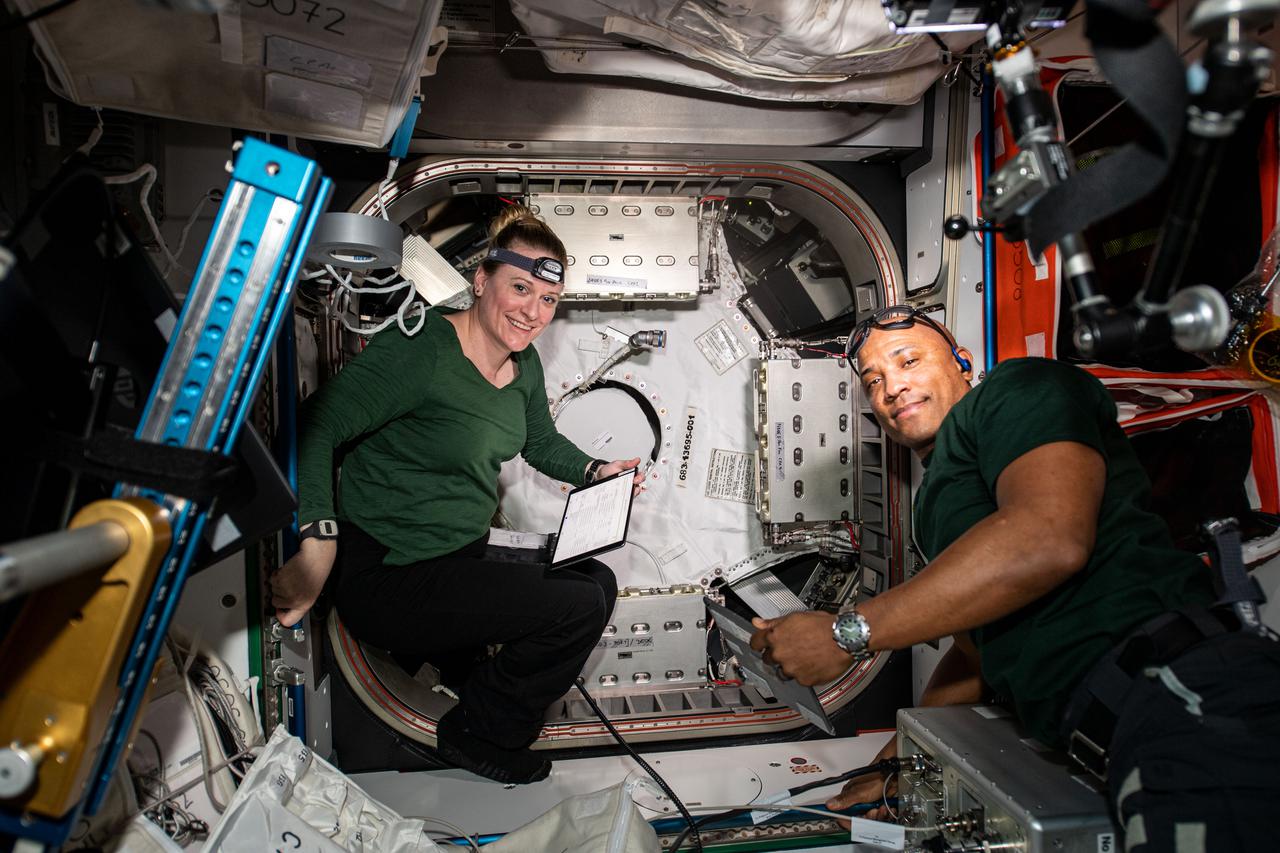
iss064e030014 (February 8, 2021) --- NASA astronauts Kate Rubins and Victor Glover work on configuration and opening of Nanoracks Bishop Airlock attached to the Tranquility module. Launched in the trunk of a SpaceX Dragon capsule, Bishop enables more commercial research, satellite deployments, and cargo operations outside in the vacuum of space.
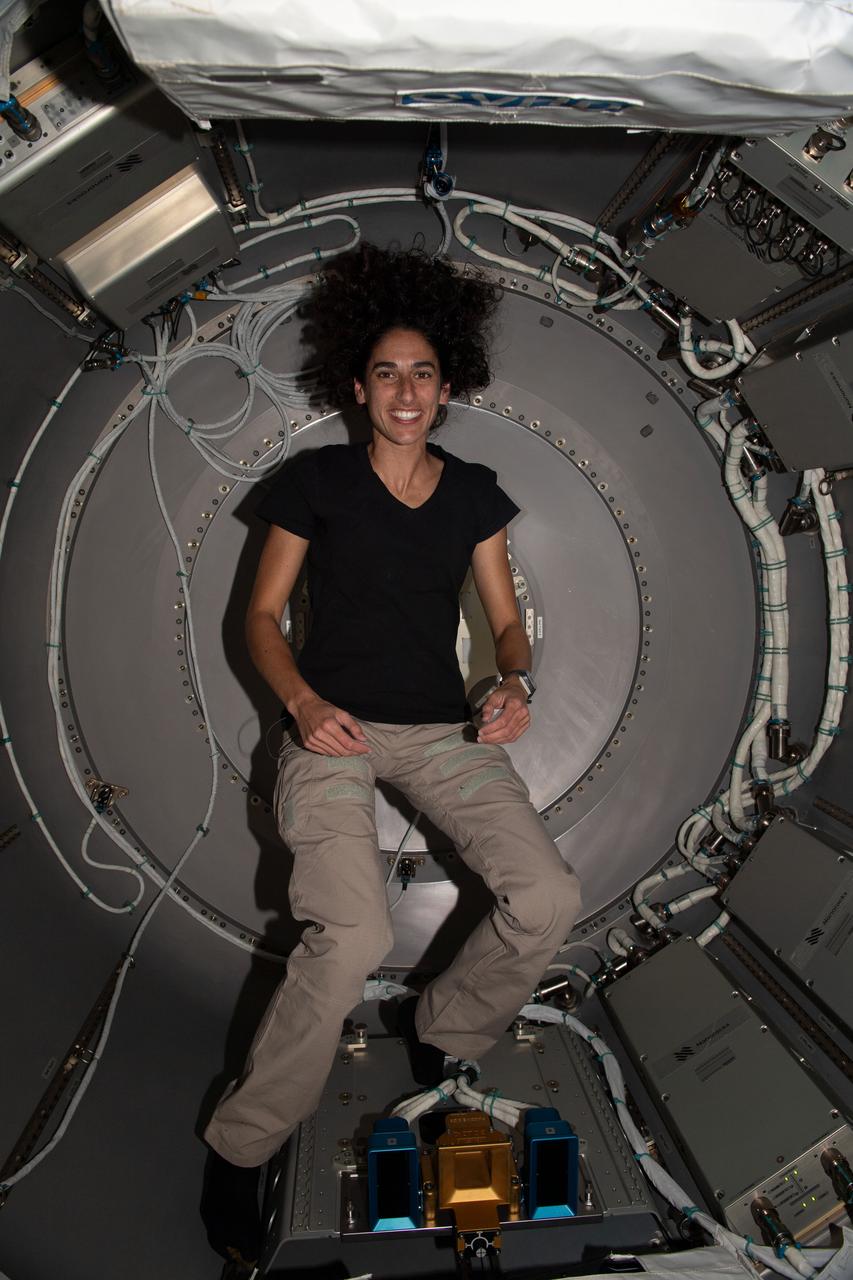
iss069e085981 (Sept. 5, 2023) --- NASA astronaut and Expedition 69 Flight Engineer Jasmin Moghbeli is pictured inside the NanoRacks Bishop airlock located on the port side of the International Space Station's Tranquility module. Bishop is a commercial doorway that can be robotically removed and attached to Tranquility and enables larger payloads to be moved inside and outside the station.
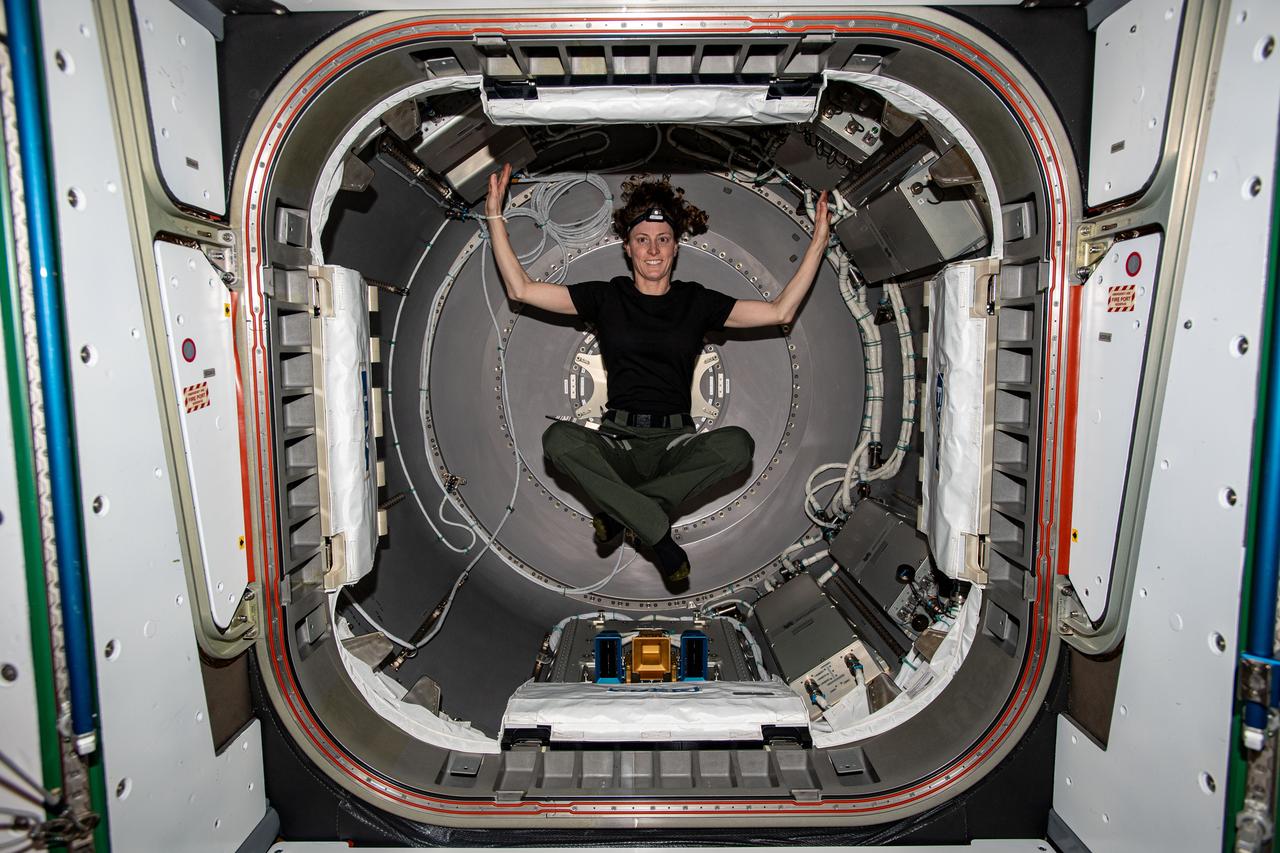
iss070e102747 (Feb. 26, 2024) --- Expedition 70 Flight Engineer and NASA astronaut Loral O'Hara is photographed inside the NanoRacks Bishop airlock. Bishop can be uninstalled from its home on the Tranquility module for portable operations. It can also be used to stow cargo and extract or install payloads.
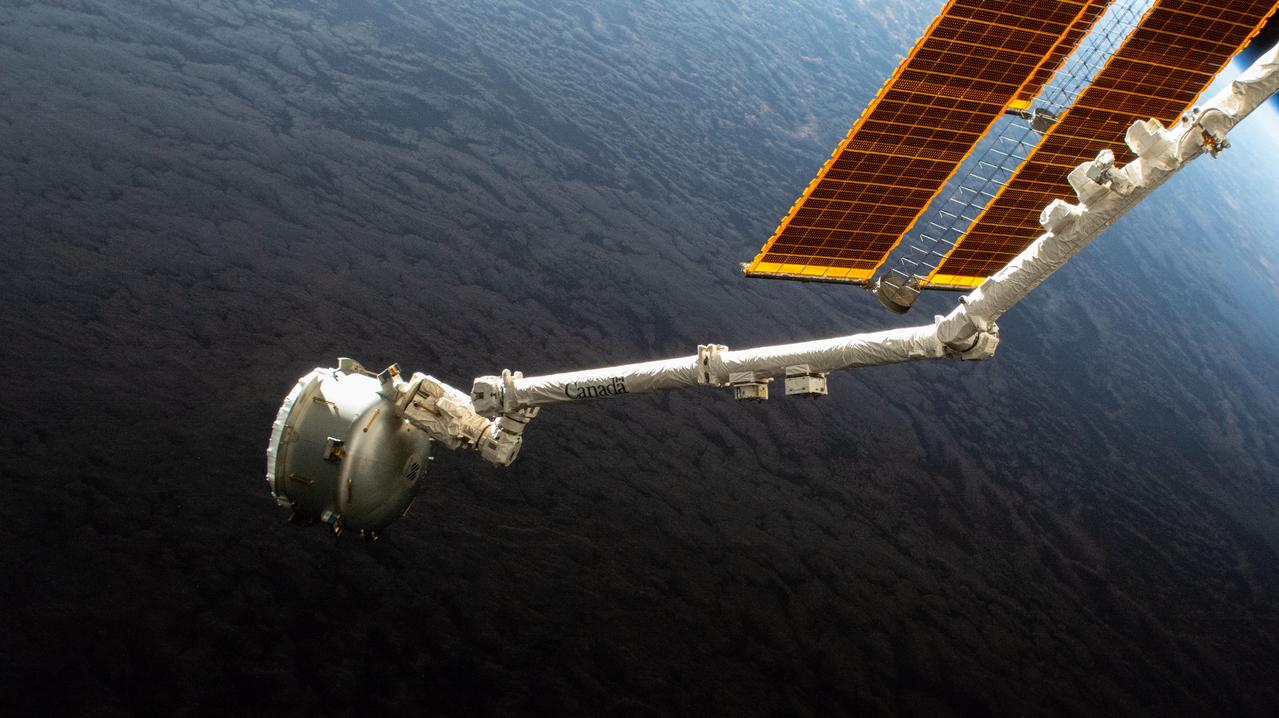
iss067e174422 (July 2, 2022) --- The Nanoracks Bishop Airlock is pictured in the grips of the Canadarm2 robotic arm as it is positioned away from the International Space Station. The commercial platform was being maneuvered prior to jettisoning a trash container for a fiery, but safe disposal above Earth's atmopshere. Bishop is a multi-faceted airlock attached to the Tranquility module used not only to discard trash, but also to host research payloads, deploy satellites, and serve as a testbed for a variety of space technologies.
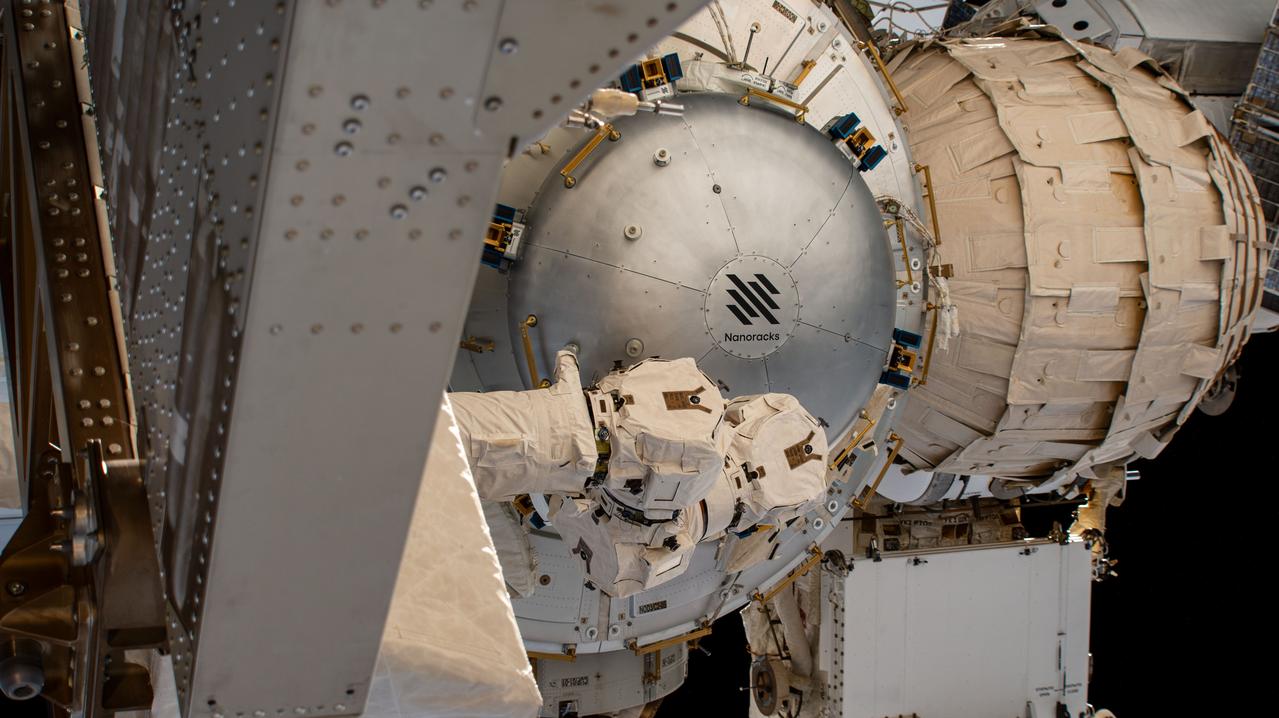
iss064e013203 (Dec. 20, 2020) --- The NanoRacks Bishop airlock is pictured after its was installed to the port side of the Tranquility module and still attached to the Canadarm2 robotic arm. Adjacent to Bishop on the aft side of Tranquility is BEAM, the Bigelow Expandable Activity Module. Bishop increases the station’s capacity for private and public research and also enables the release of larger satellites and the transfer of cargo inside and outside the station.

iss065e004417 (April 25, 2021) --- The International Space Station's newest component is the NanoRacks Bishop Airlock (center left) attached to the end of the Tranquility module. Bishop will enable more commercial research, satellite deployments, and cargo operations outside in the vacuum of space. Located on the other side of Bishop on Tranquility is BEAM, or the Bigelow Expandable Activity Module, which is a cargo stowage module outfitted with sensors continuously monitoring its environment.
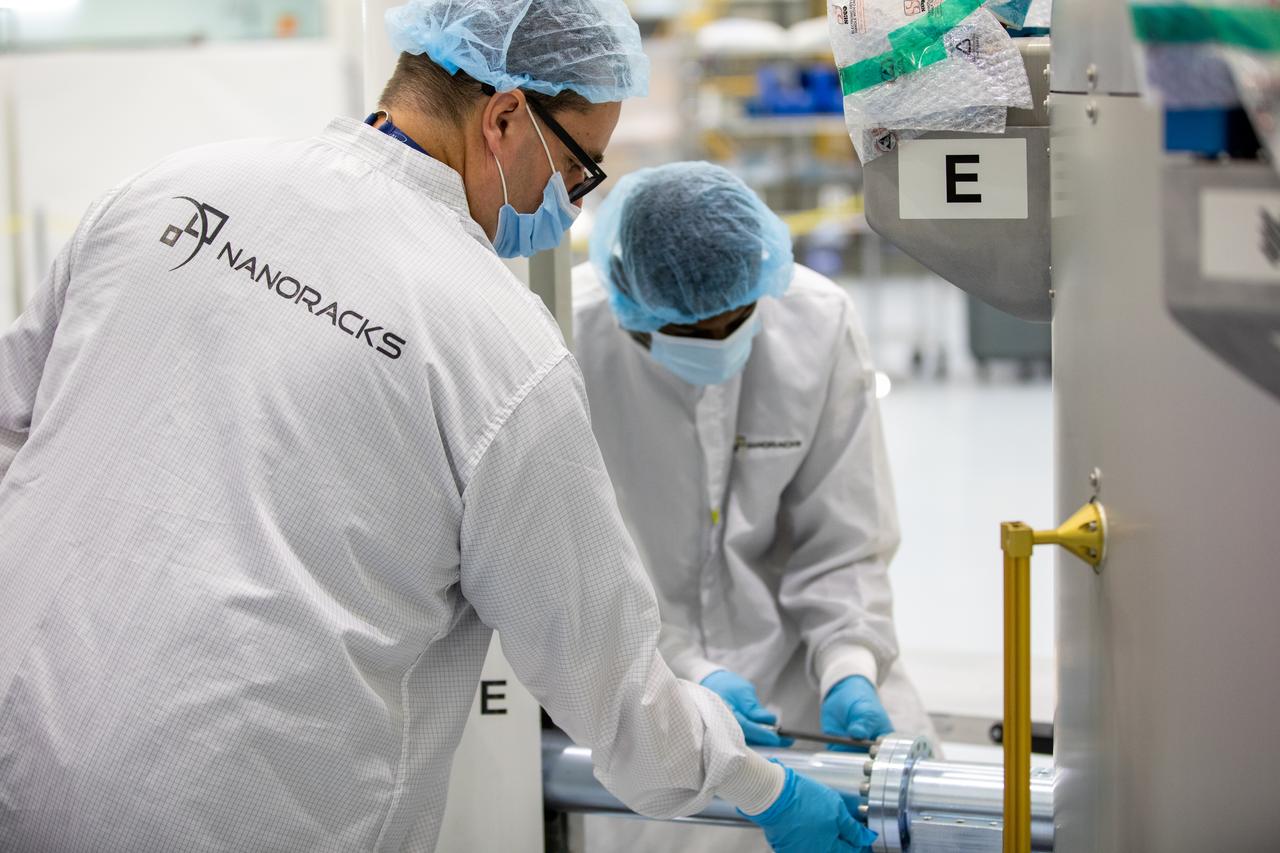
Nanoracks technicians work on the Nanoracks Bishop Airlock inside the Space Station Processing Facility at NASA's Kennedy Space Center in Florida on Sept. 29, 2020. The next-generation Nanoracks payload facility is being prepared for its flight to the International Space Station on SpaceX’s 21st commercial resupply services mission (CRS-21) to the International Space Station. The Bishop Airlock is the first commercially funded airlock for the space station. It will provide payload hosting, robotics testing, satellite deployment, serve as an outside toolbox for station crew spacewalks, and more. CRS-21 is scheduled to launch on a SpaceX Falcon 9 rocket no earlier than November from Launch Complex 39A at Kennedy Space Center.
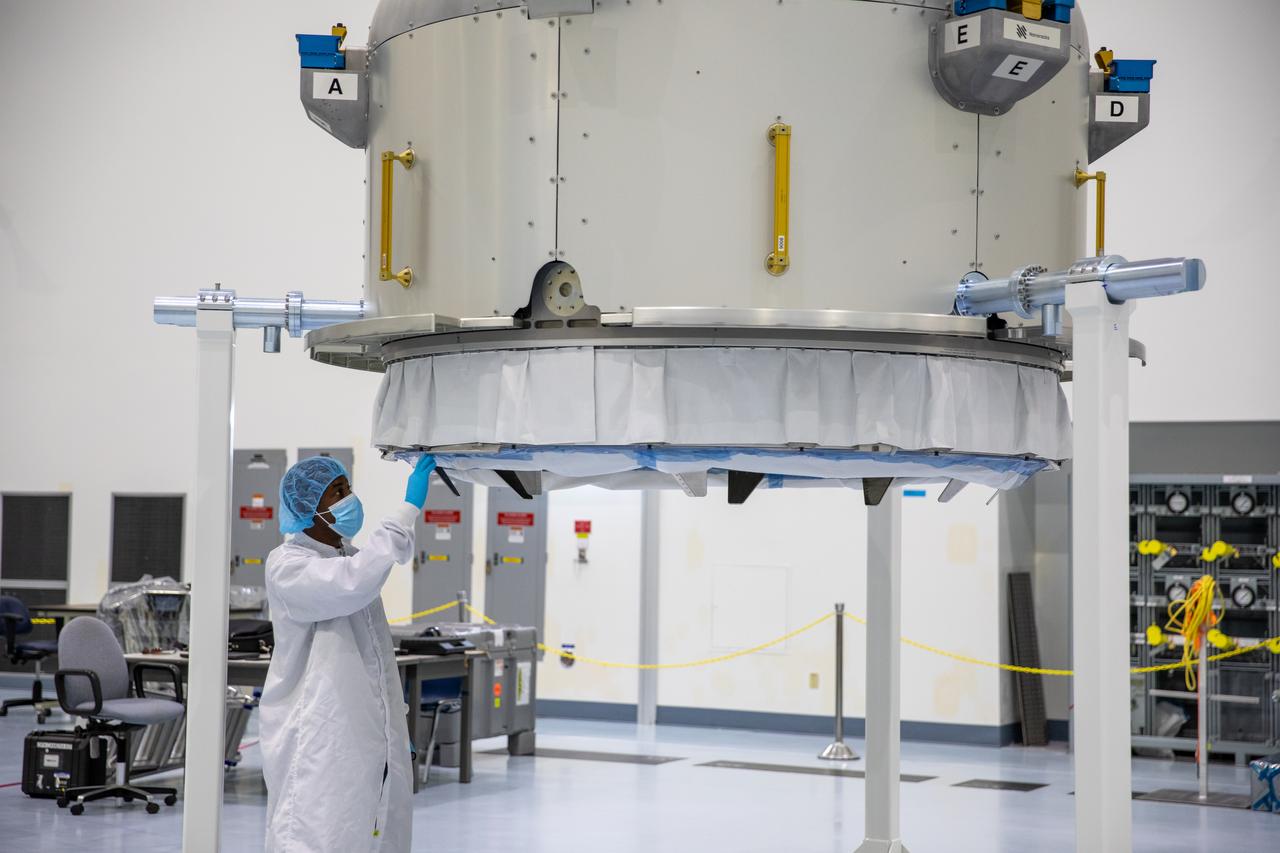
A Nanoracks technician works on the Nanoracks Bishop Airlock inside the Space Station Processing Facility at NASA's Kennedy Space Center in Florida on Oct. 7, 2020. The next-generation Nanoracks payload facility is being prepared for its flight to the International Space Station on SpaceX’s 21st commercial resupply services mission (CRS-21) to the International Space Station. The Bishop Airlock is the first commercially funded airlock for the space station. It will provide payload hosting, robotics testing, satellite deployment, and serve as an outside toolbox for station crew spacewalks, and more. CRS-21 is scheduled to launch on a SpaceX Falcon 9 from Kennedy’s Launch Complex 39A.
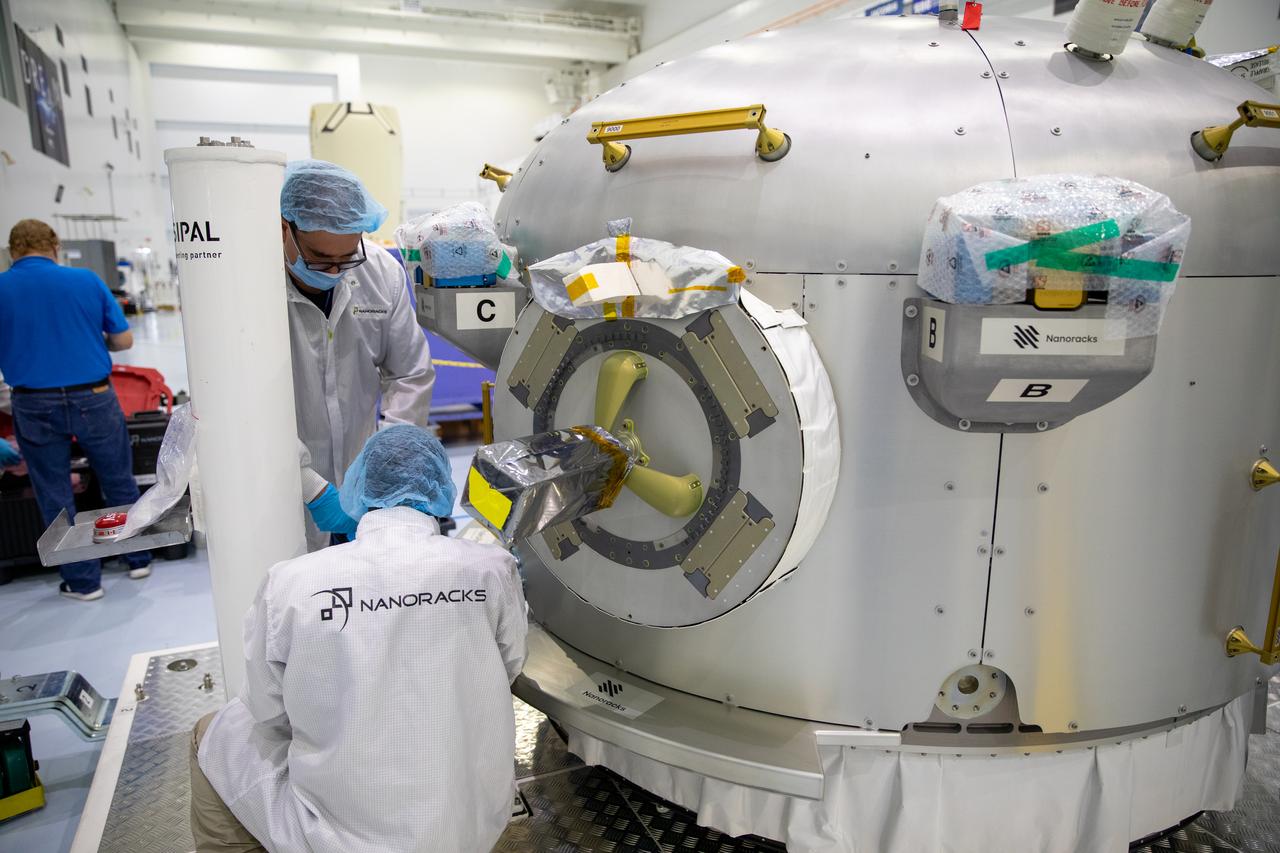
Nanoracks technicians work on the NanoRacks Bishop Airlock inside the Space Station Processing Facility at NASA's Kennedy Space Center in Florida on Sept. 29, 2020. The next-generation Nanoracks payload facility is being prepared for its flight to the International Space Station on SpaceX’s 21st commercial resupply services mission (CRS-21) to the International Space Station. The Bishop Airlock is the first commercially funded airlock for the space station. It will provide payload hosting, robotics testing, satellite deployment, serve as an outside toolbox for station crew spacewalks, and more. CRS-21 is scheduled to launch on a SpaceX Falcon 9 rocket no earlier than November from Launch Complex 39A at Kennedy Space Center.
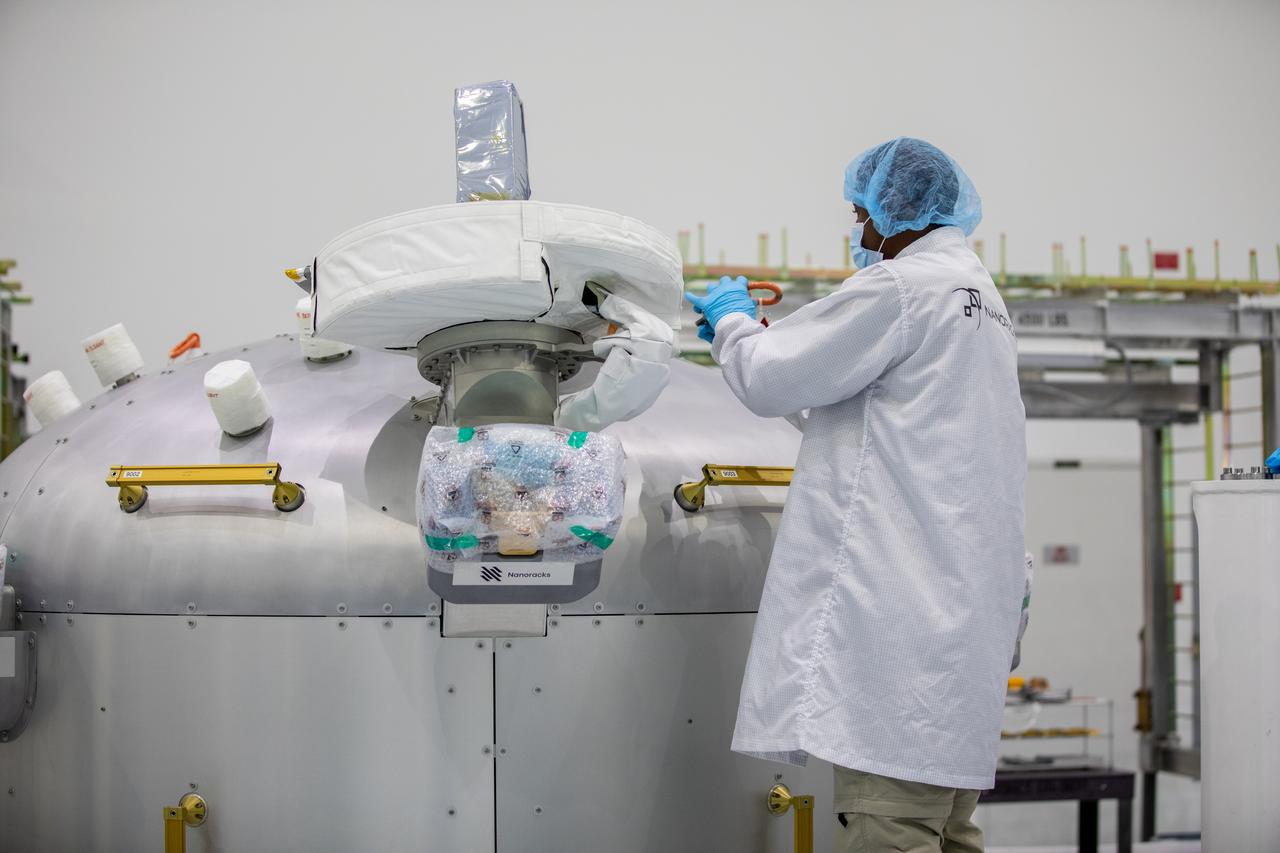
A Nanoracks technician works on the Nanoracks Bishop Airlock inside the Space Station Processing Facility at NASA's Kennedy Space Center in Florida on Sept. 29, 2020. The next-generation Nanoracks payload facility is being prepared for its flight to the International Space Station on SpaceX’s 21st commercial resupply services mission (CRS-21) to the International Space Station. The Bishop Airlock is the first commercially funded airlock for the space station. It will provide payload hosting, robotics testing, satellite deployment, and serve as an outside toolbox for station crew spacewalks, and more. CRS-21 is scheduled to launch on a SpaceX Falcon 9 rocket no earlier than November from Launch Complex 39A at Kennedy Space Center.
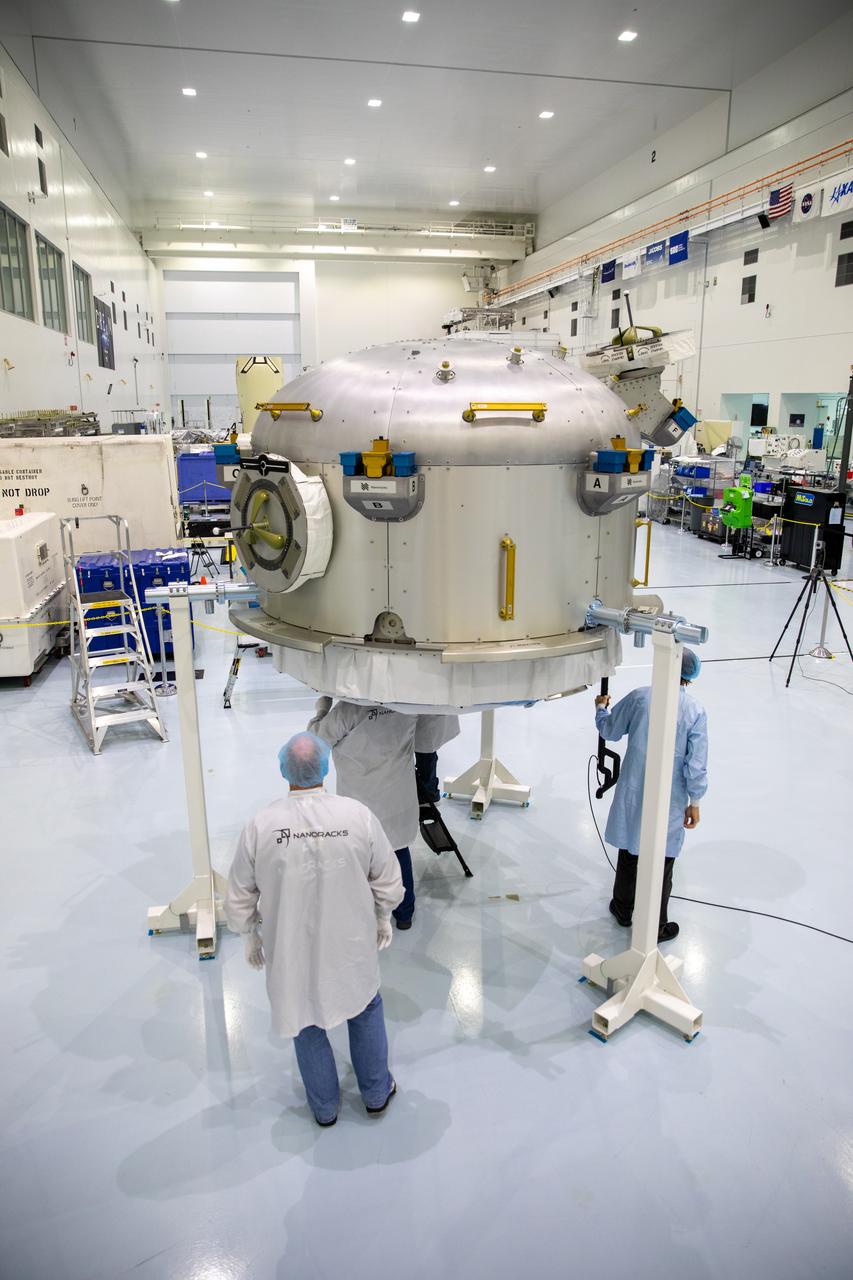
Nanoracks technicians work on the Nanoracks Bishop Airlock inside the Space Station Processing Facility at NASA's Kennedy Space Center in Florida on Oct. 7, 2020. The next-generation Nanoracks payload facility is being prepared for its flight to the International Space Station on SpaceX’s 21st commercial resupply services mission (CRS-21) to the International Space Station. The Bishop Airlock is the first commercially funded airlock for the space station. It will provide payload hosting, robotics testing, satellite deployment, serve as an outside toolbox for station crew spacewalks, and more. CRS-21 is scheduled to launch on a SpaceX Falcon 9 from Kennedy’s Launch Complex 39A.
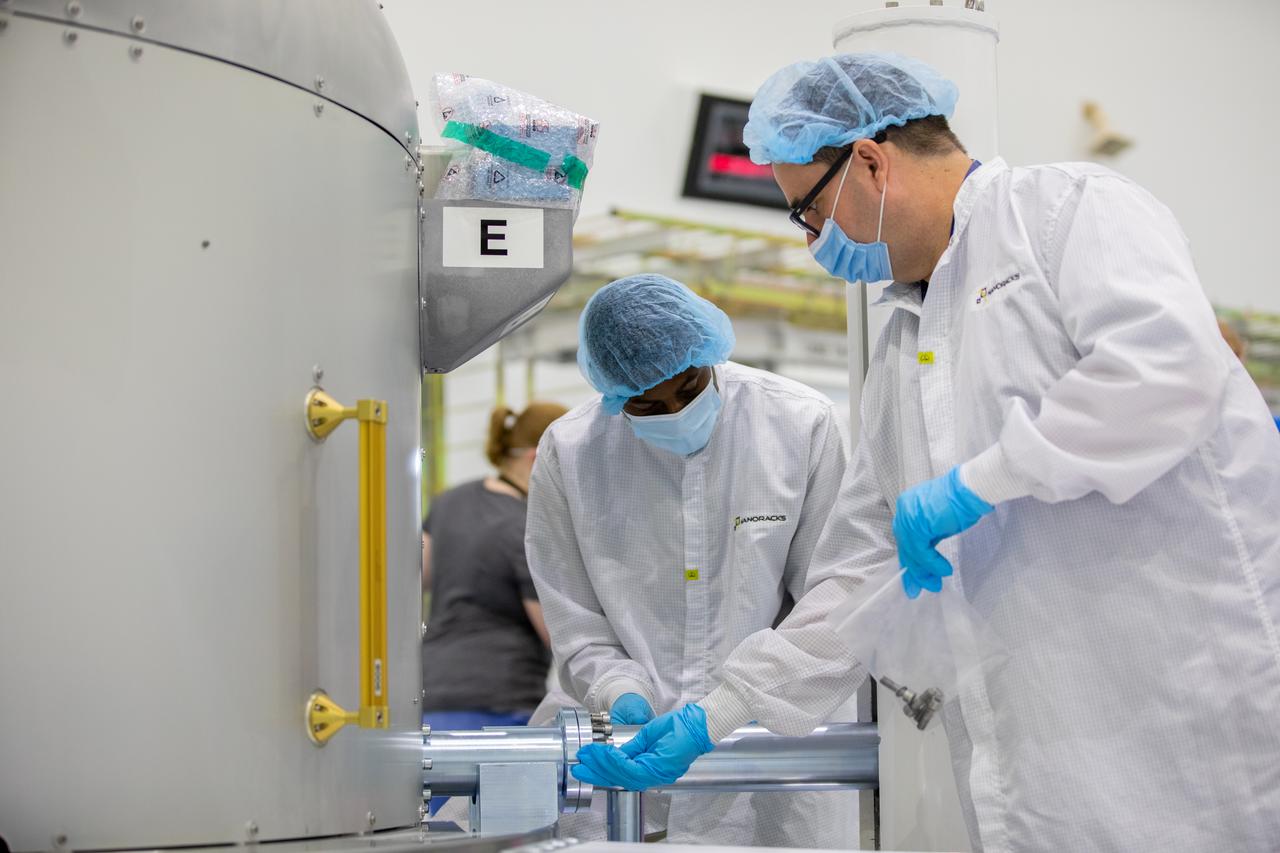
Nanoracks technicians work on the NanoRacks Bishop Airlock inside the Space Station Processing Facility at NASA's Kennedy Space Center in Florida on Sept. 29, 2020. The next-generation Nanoracks payload facility is being prepared for its flight to the International Space Station on SpaceX’s 21st commercial resupply services mission (CRS-21) to the International Space Station. The Bishop Airlock is the first commercially funded airlock for the space station. It will provide payload hosting, robotics testing, satellite deployment, serve as an outside toolbox for station crew spacewalks, and more. CRS-21 is scheduled to launch on a SpaceX Falcon 9 rocket no earlier than November from Launch Complex 39A at Kennedy Space Center.
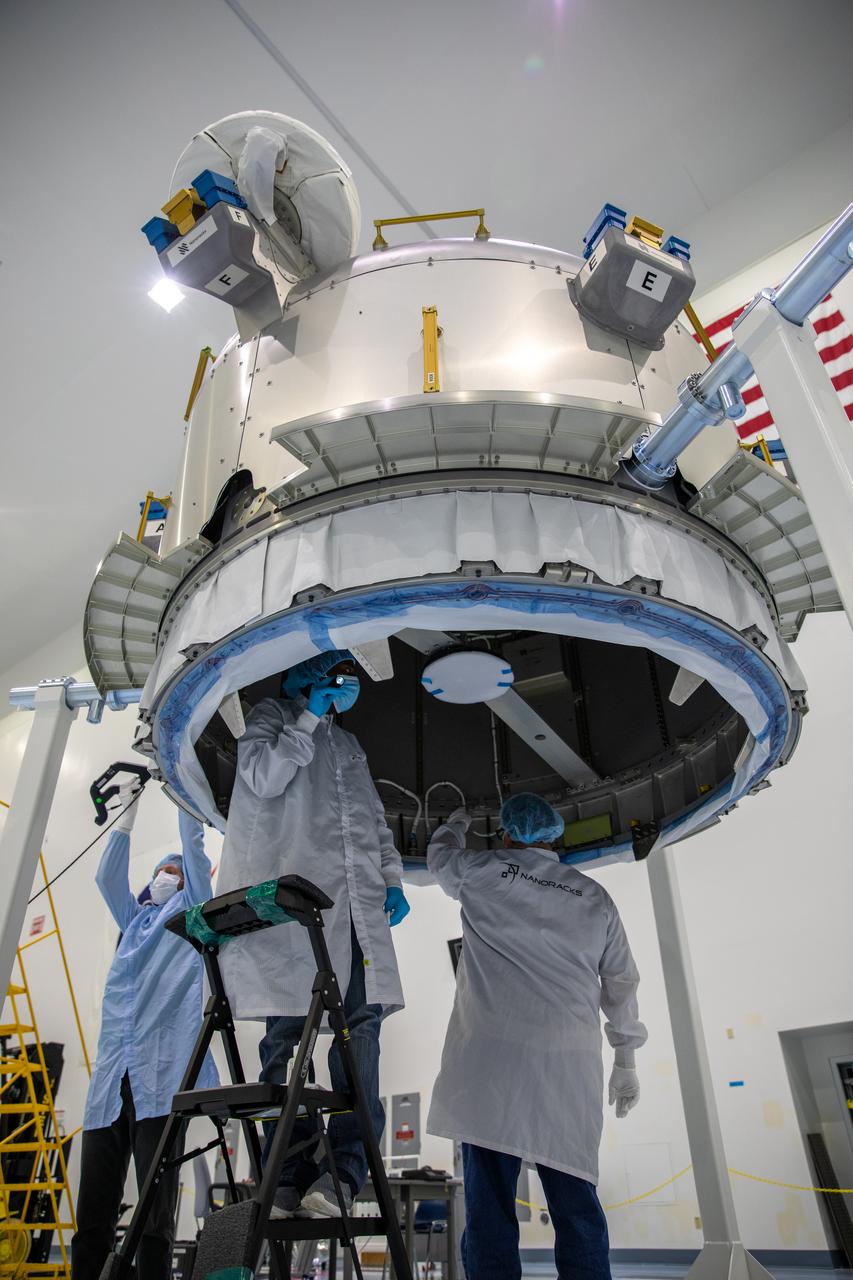
Nanoracks technicians work on the NanoRacks Bishop Airlock inside the Space Station Processing Facility at NASA's Kennedy Space Center in Florida on Oct. 7, 2020. The next-generation Nanoracks payload facility is being prepared for its flight to the International Space Station on SpaceX’s 21st commercial resupply services mission (CRS-21) to the International Space Station. The Bishop Airlock is the first commercially funded airlock for the space station. It will provide payload hosting, robotics testing, satellite deployment, serve as an outside toolbox for station crew spacewalks, and more. CRS-21 is scheduled to launch on a SpaceX Falcon 9 from Kennedy’s Launch Complex 39A.
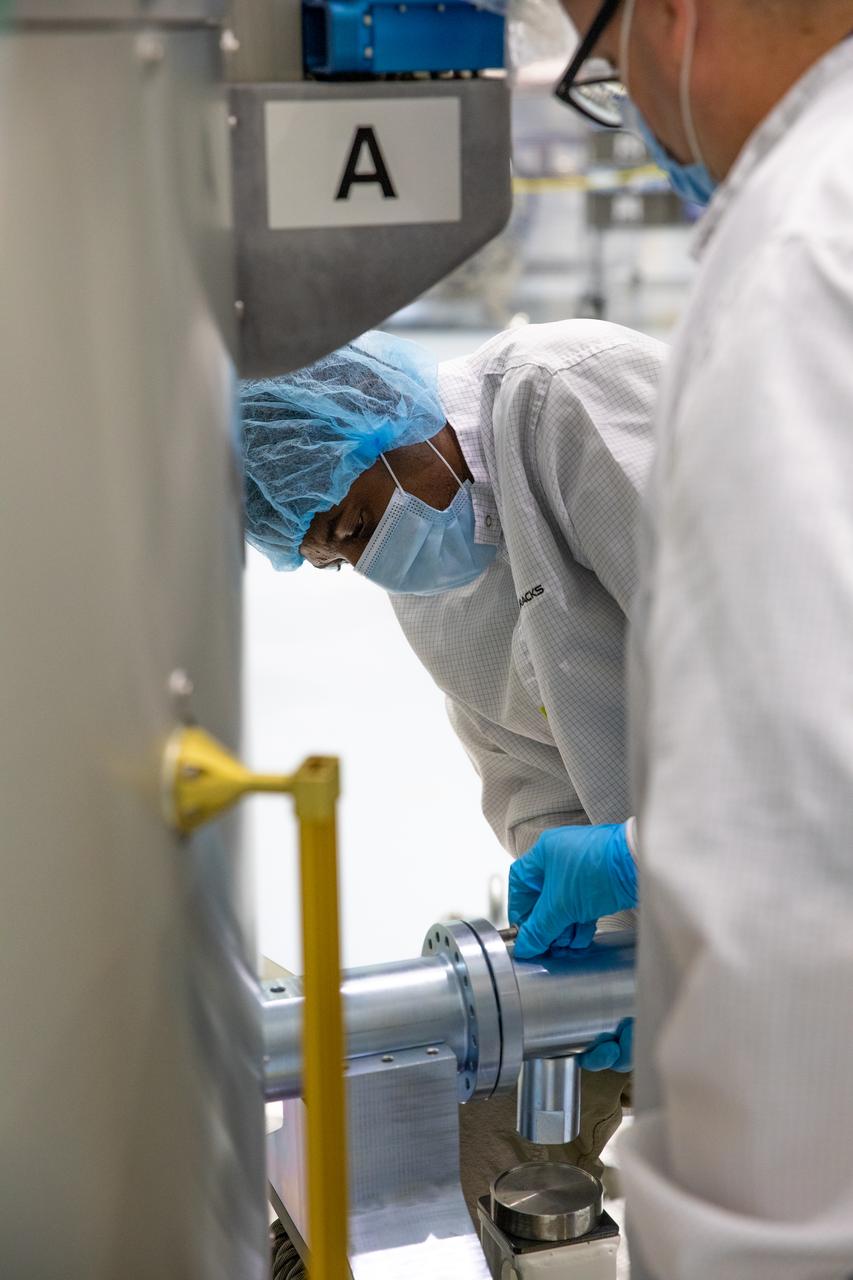
Nanoracks technicians work on the NanoRacks Bishop Airlock inside the Space Station Processing Facility at NASA's Kennedy Space Center in Florida on Sept. 29, 2020. The next-generation Nanoracks payload facility is being prepared for its flight to the International Space Station on SpaceX’s 21st commercial resupply services mission (CRS-21) to the International Space Station. The Bishop Airlock is the first commercially funded airlock for the space station. It will provide payload hosting, robotics testing, satellite deployment, serve as an outside toolbox for station crew spacewalks, and more. CRS-21 is scheduled to launch on a SpaceX Falcon 9 rocket no earlier than November from Launch Complex 39A at Kennedy Space Center.
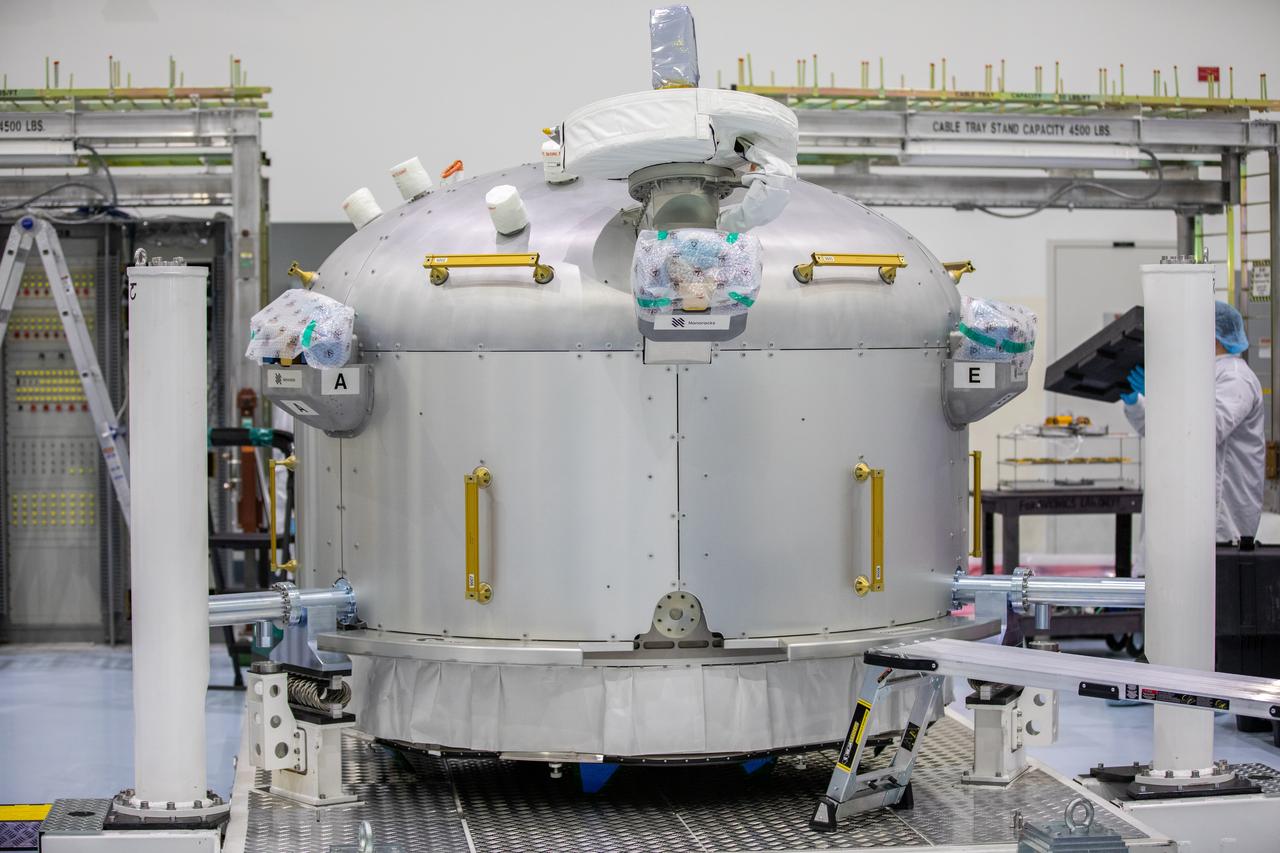
The Nanoracks Bishop Airlock is in view inside the Space Station Processing Facility at NASA's Kennedy Space Center in Florida on Sept. 29, 2020. The next-generation Nanoracks payload facility is being prepared for its flight to the International Space Station on SpaceX’s 21st commercial resupply services mission (CRS-21) to the International Space Station. The Bishop Airlock is the first commercially funded airlock for the space station. It will provide payload hosting, robotics testing, satellite deployment, serve as an outside toolbox for station crew spacewalks, and more. CRS-21 is scheduled to launch on a SpaceX Falcon 9 rocket no earlier than November from Launch Complex 39A at Kennedy Space Center.
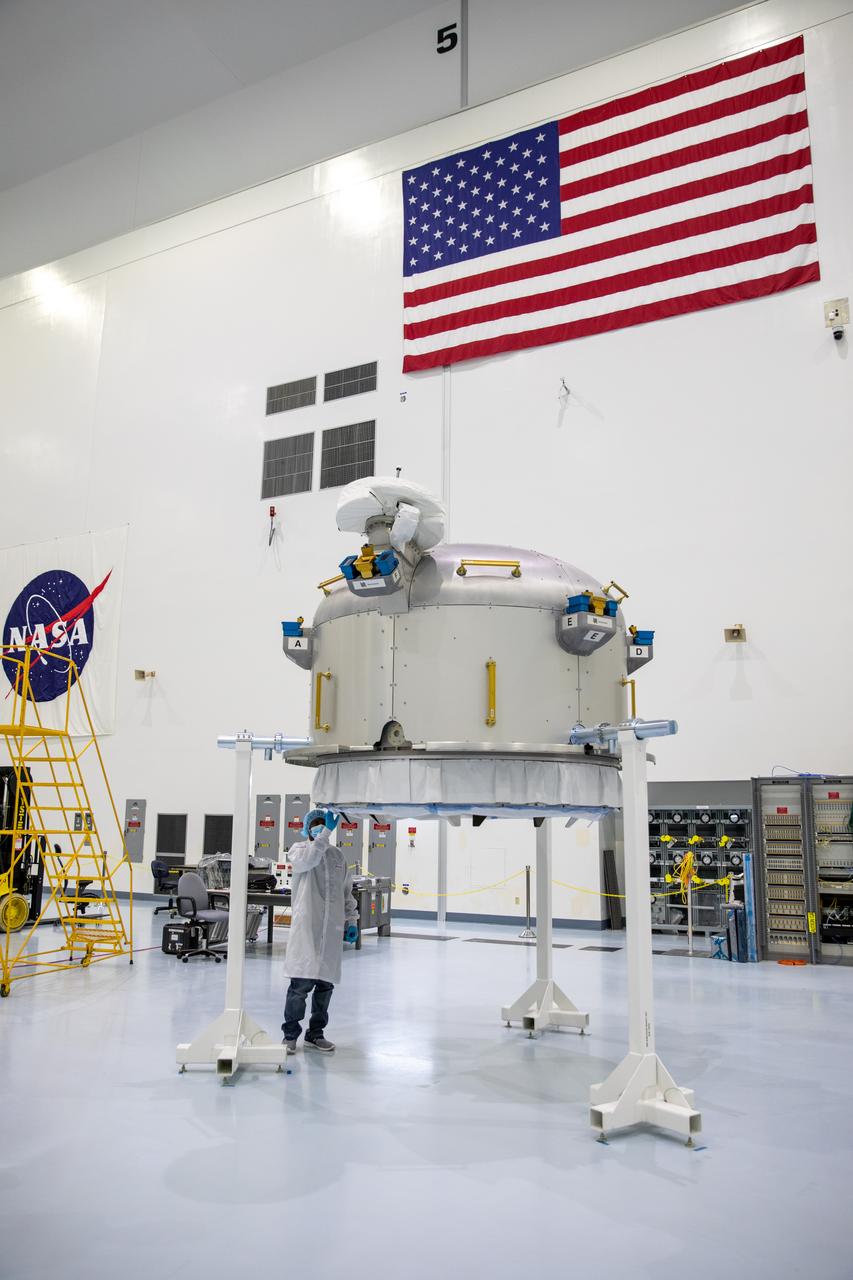
A Nanoracks technician works on the Nanoracks Bishop Airlock inside the Space Station Processing Facility at NASA's Kennedy Space Center in Florida on Oct. 7, 2020. The next-generation Nanoracks payload facility is being prepared for its flight to the International Space Station on SpaceX’s 21st commercial resupply services mission (CRS-21) to the International Space Station. The Bishop Airlock is the first commercially funded airlock for the space station. It will provide payload hosting, robotics testing, satellite deployment, serve as an outside toolbox for station crew spacewalks, and more. CRS-21 is scheduled to launch on a SpaceX Falcon 9 from Kennedy’s Launch Complex 39A.
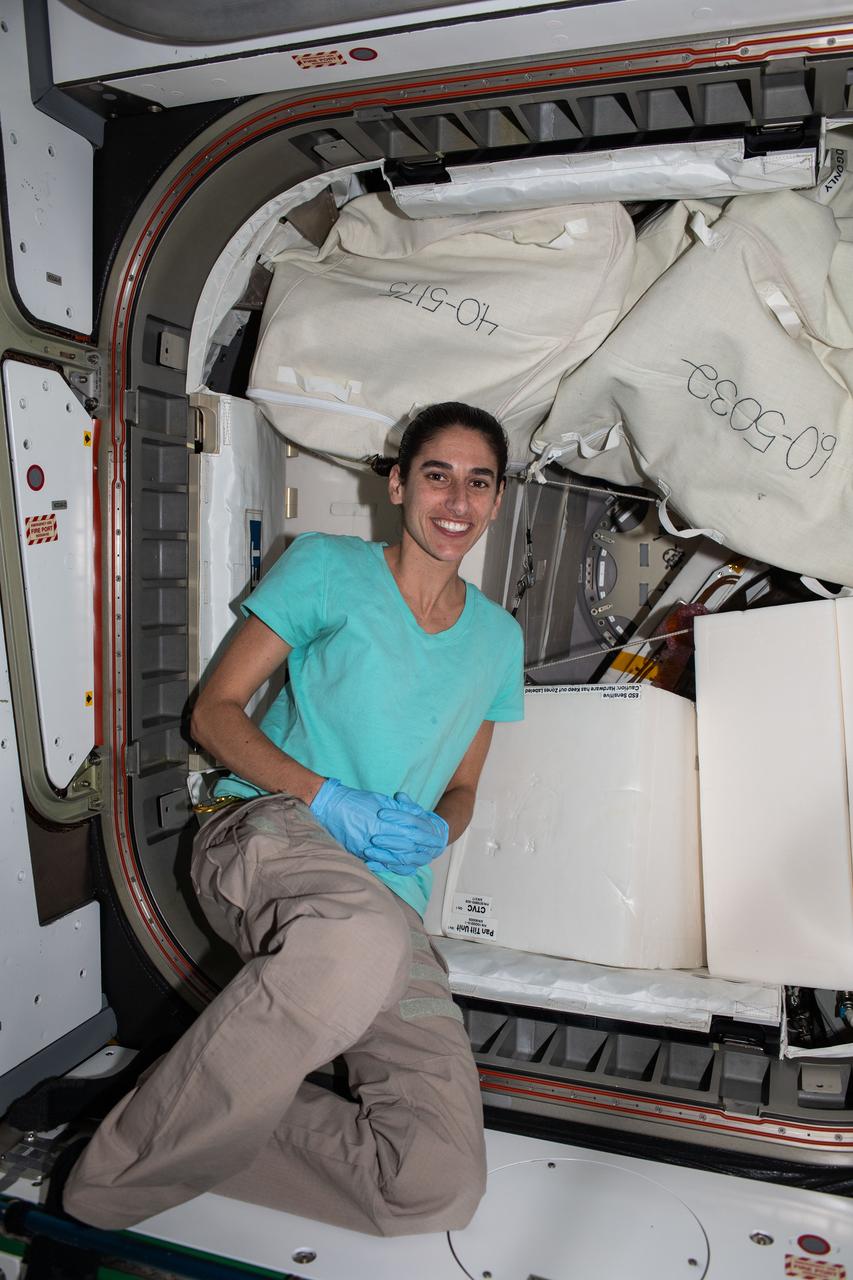
iss070e025062 (Nov. 16, 2023) --- NASA astronaut and Expedition 70 Flight Engineer Jasmin Moghbeli works in the International Space Station's Tranquility module clearing hardware and making space inside the NanoRacks Bishop airlock.
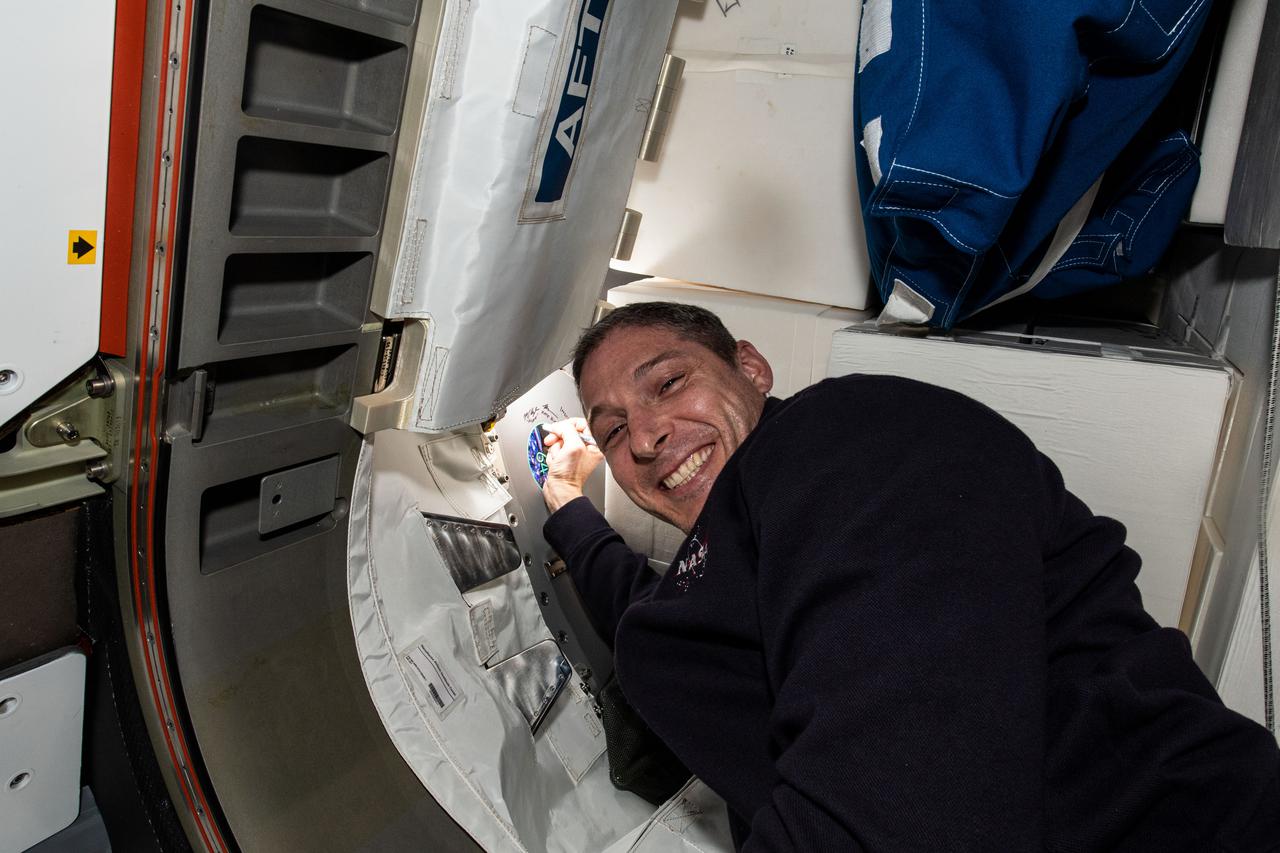
iss064e031801 (Feb. 11,2021) --- NASA astronaut and Expedition 64 Flight Engineer Michael Hopkins signs his name near his mission's insignia sticker in the vestibule between the Tranquility module and the NanoRacks Bishop airlock.
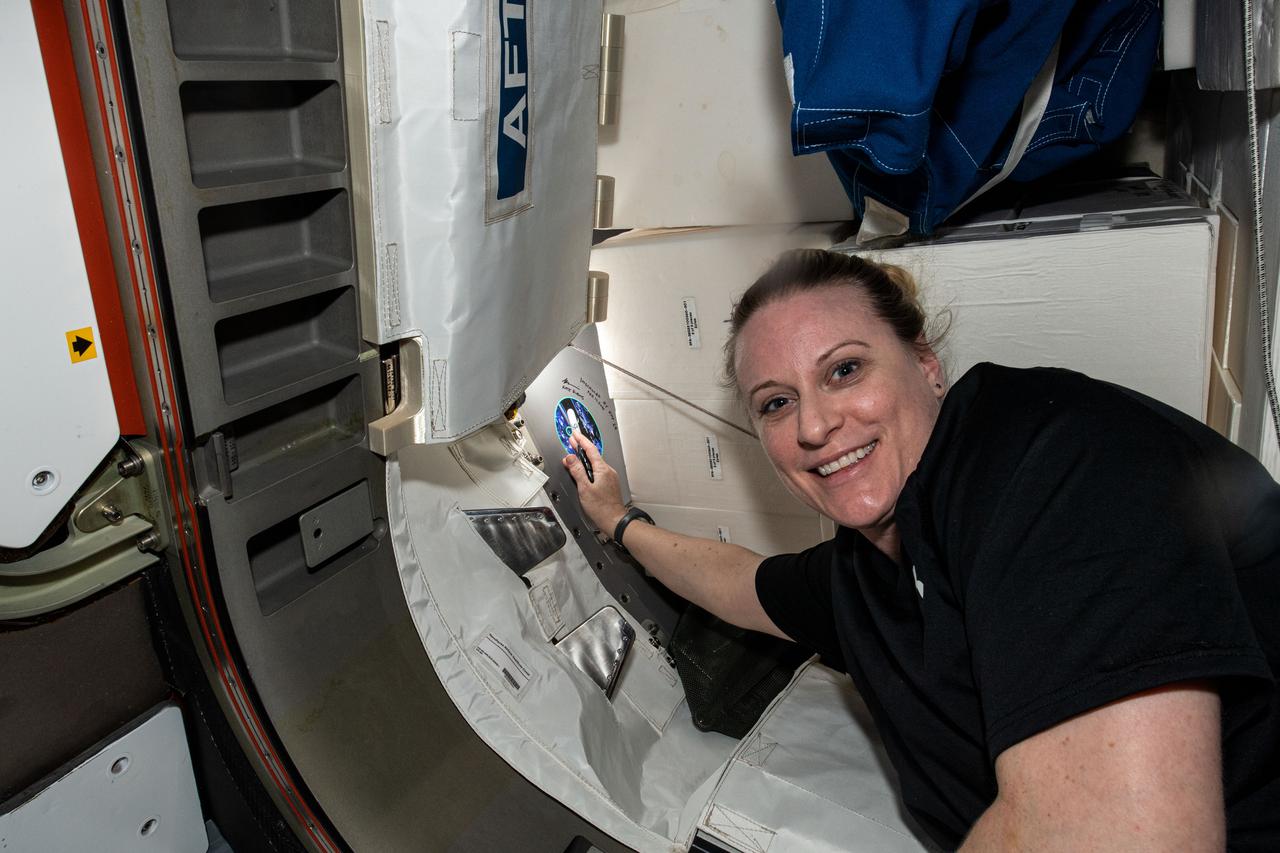
iss064e031800 (Feb. 11,2021) --- NASA astronaut and Expedition 64 Flight Engineer Kate Rubins signs her name near her mission's insignia sticker in the vestibule between the Tranquility module and the NanoRacks Bishop airlock.
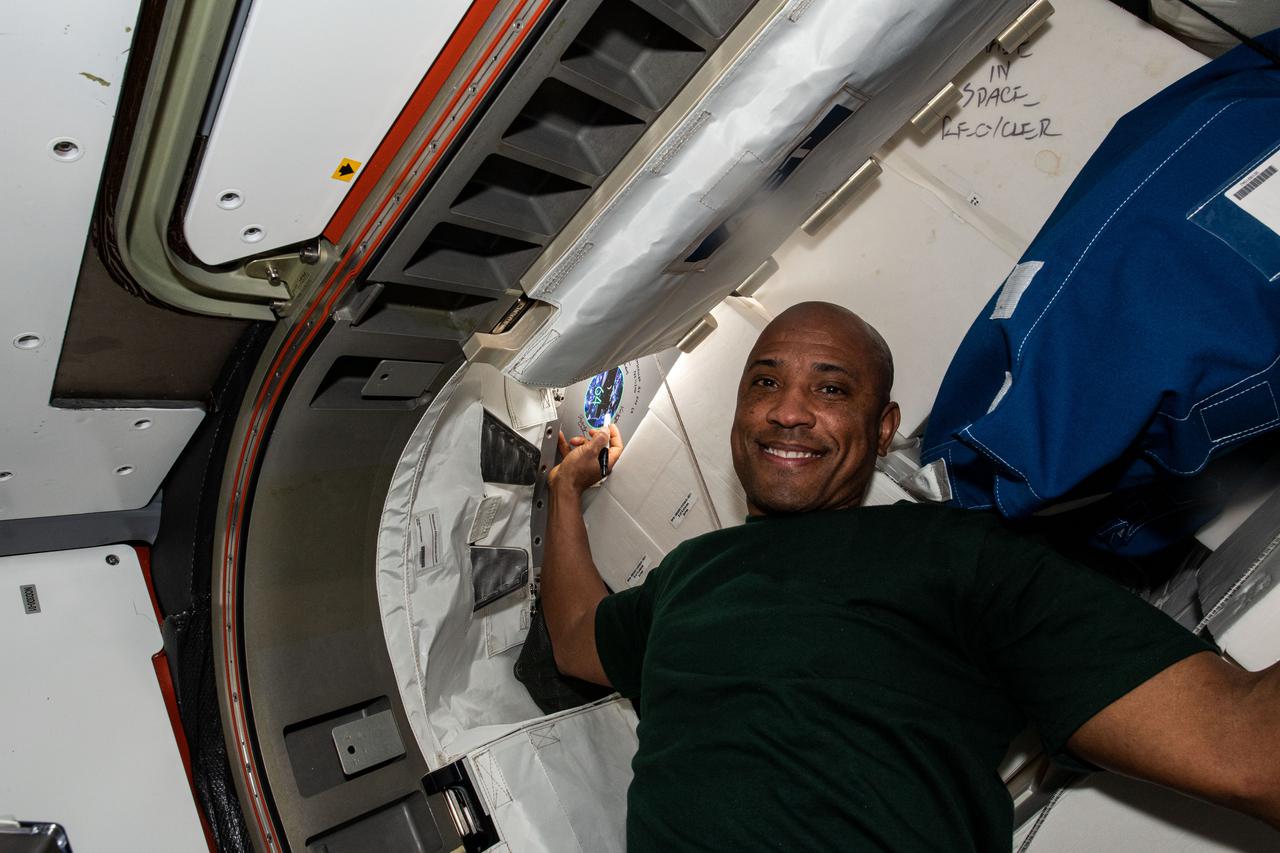
iss064e031803 (Feb. 11,2021) --- NASA astronaut and Expedition 64 Flight Engineer Victor Glover signs his name near his mission's insignia sticker in the vestibule between the Tranquility module and the NanoRacks Bishop airlock.
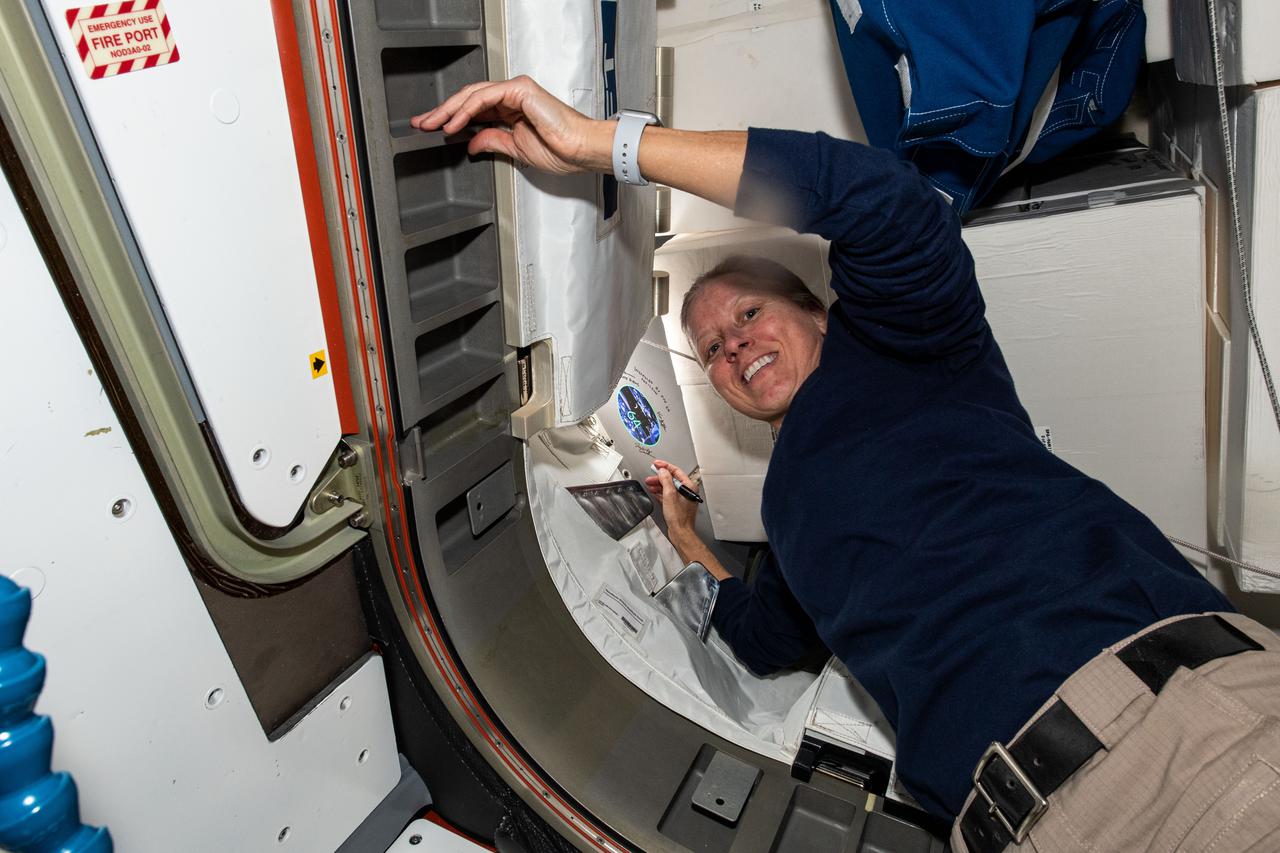
iss064e031802 (Feb. 11,2021) --- NASA astronaut and Expedition 64 Flight Engineer Shannon Walker signs her name near her mission's insignia sticker in the vestibule between the Tranquility module and the NanoRacks Bishop airlock.
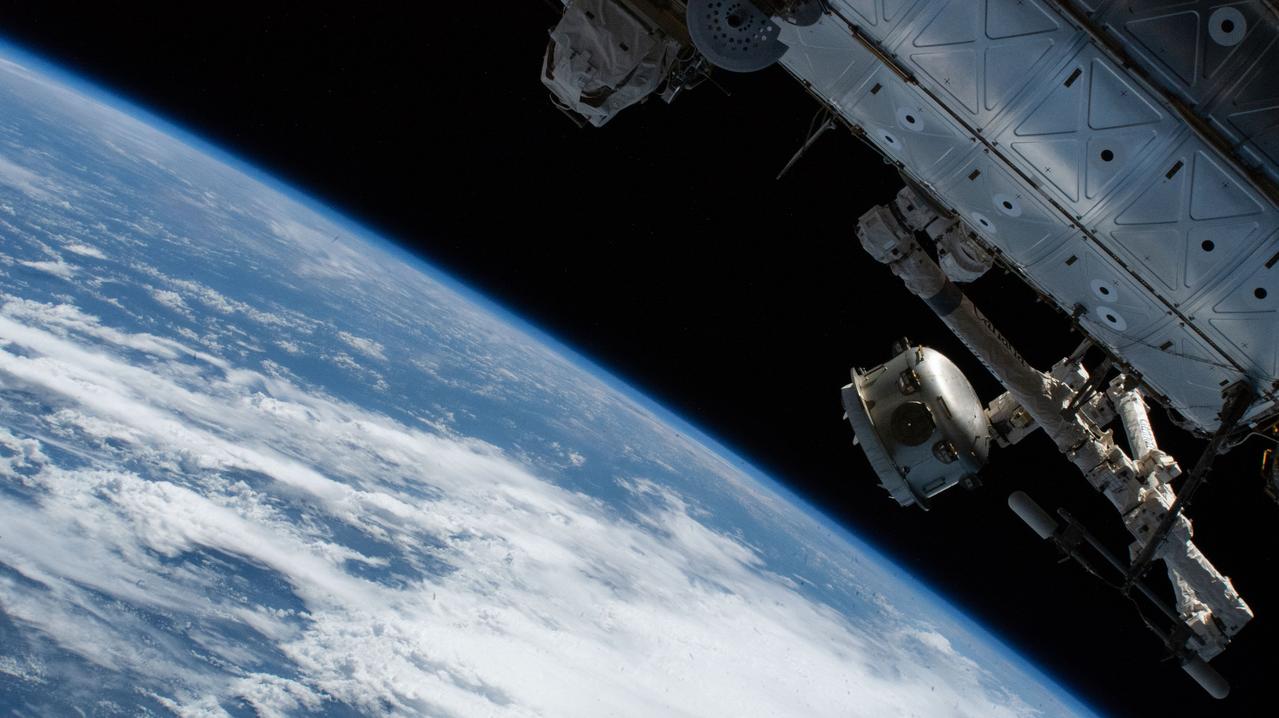
iss067e174420 (July 2, 2022) --- The Nanoracks Bishop Airlock is pictured in the grips of the Canadarm2 robotic arm as it is positioned away from the International Space Station. The commercial platform was being maneuvered prior to jettisoning a trash container for a fiery, but safe disposal above Earth's atmopshere. Bishop is a multi-faceted airlock attached to the Tranquility module used not only to discard trash, but also to host research payloads, deploy satellites, and serve as a testbed for a variety of space technologies. At right, the Canadarm2 is attached to the U.S. Destiny laboratory module as ground controllers remotely maneuver the robotic arm.
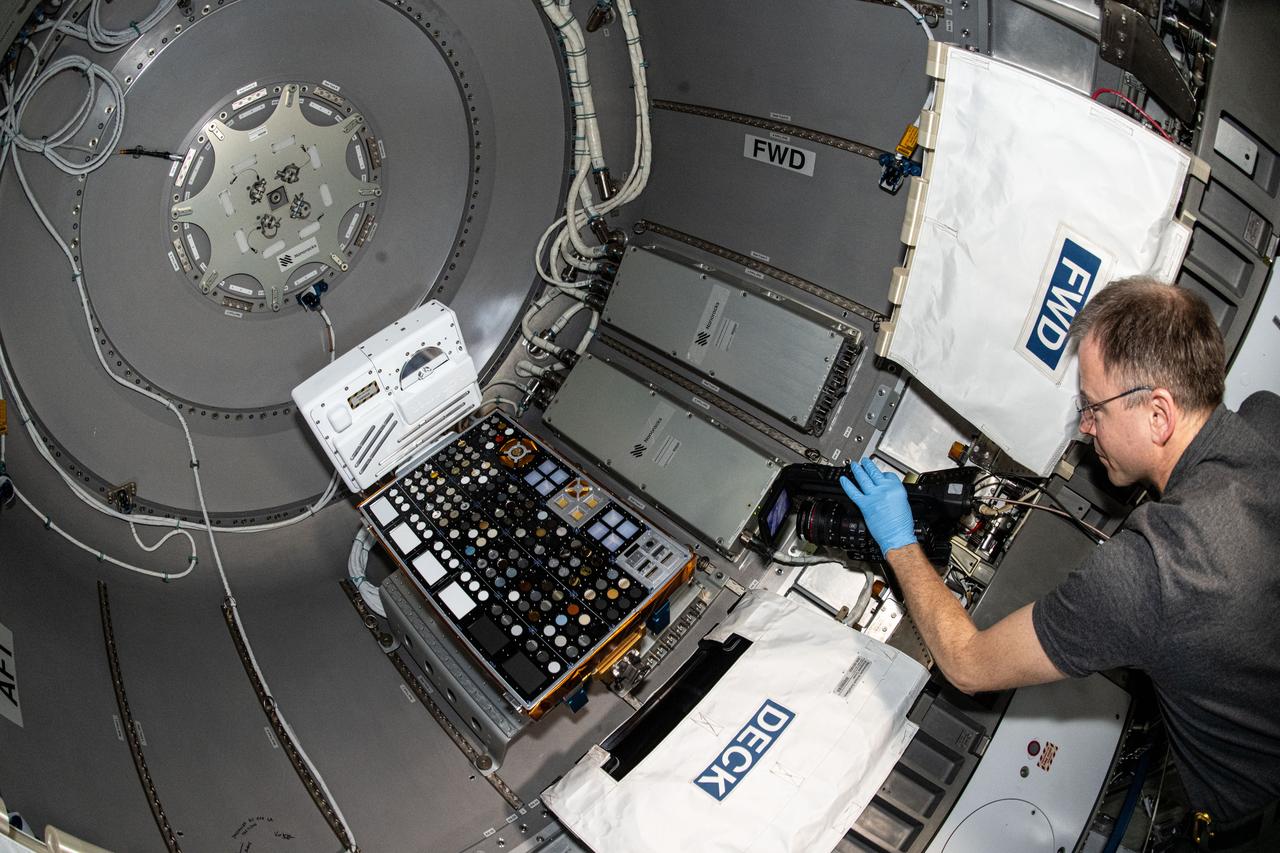
iss072e363251 (Dec. 13, 2024) --- NASA astronaut and Expedition 72 Flight Engineer Nick Hague installs the European Materials Ageing experiment hardware inside the Nanoracks Bishop airlock. The external investigation will be robotically removed from Bishop, installed on the Bartolomeo research platform attached to the outside of the Columbus laboratory module, and expose a variety of materials to the vacuum of space for about a year.
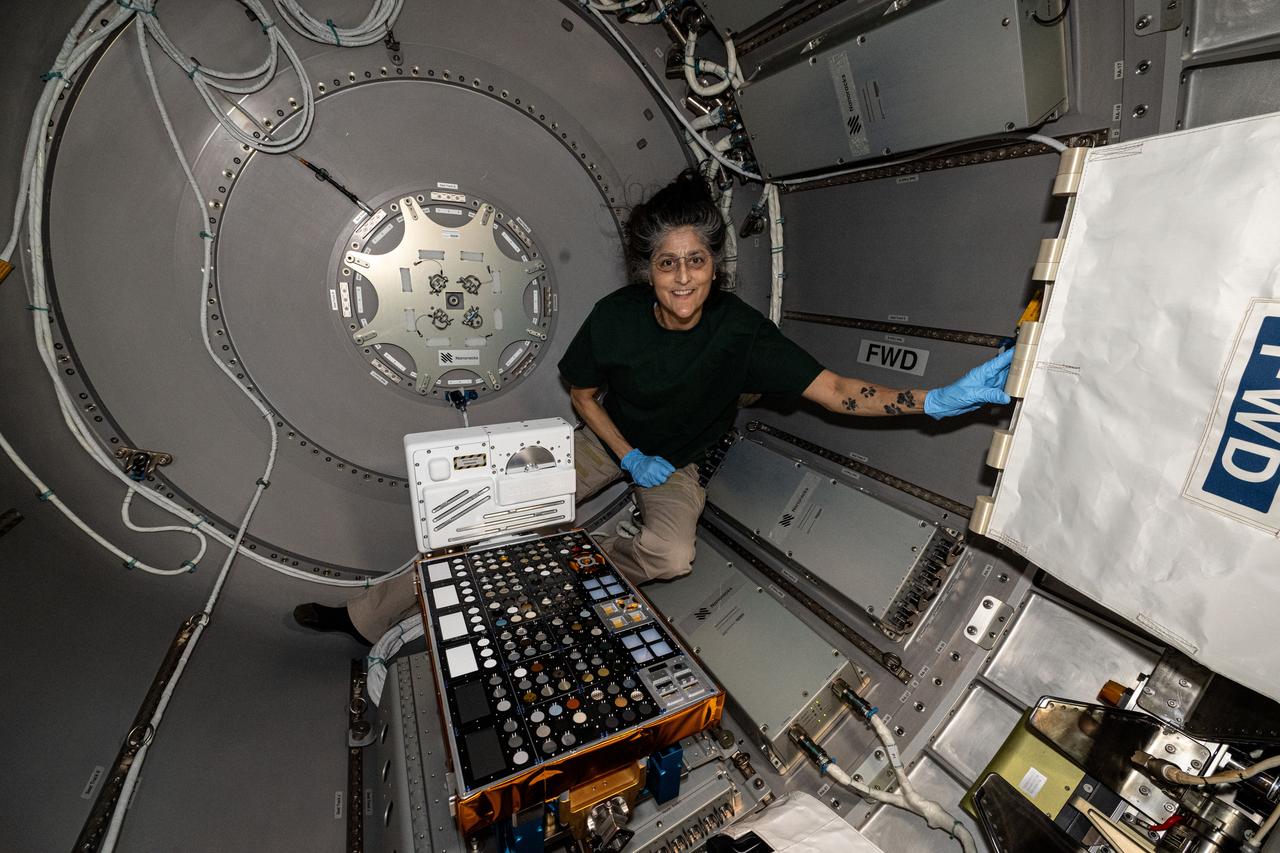
iss072e363243 (Dec. 13, 2024) --- NASA astronaut and Expedition 72 Commander Suni Williams installs the European Materials Ageing experiment hardware inside the Nanoracks Bishop airlock. The external investigation will be robotically removed from Bishop, installed on the Bartolomeo research platform attached to the outside of the Columbus laboratory module, and expose a variety of materials to the vacuum of space for about a year.
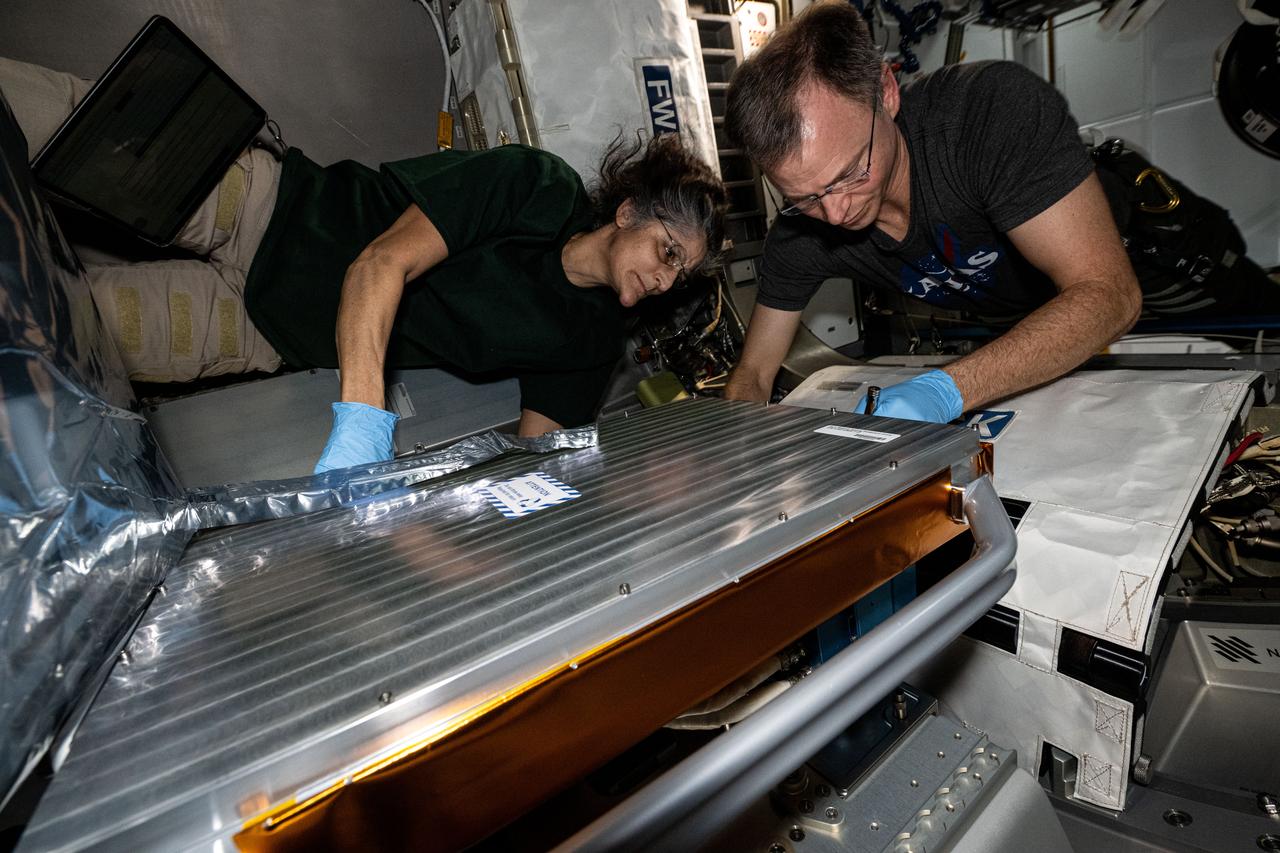
iss072e363226 (Dec. 13, 2024) --- NASA astronauts Suni Williams and Nick Hague, Expedition 72 Commander and Flight Engineer respectively, install the European Materials Ageing experiment hardware inside the Nanoracks Bishop airlock. The external investigation will be robotically removed from Bishop, installed on the Bartolomeo research platform attached to the outside of the Columbus laboratory module, and expose a variety of materials to the vacuum of space for about a year.
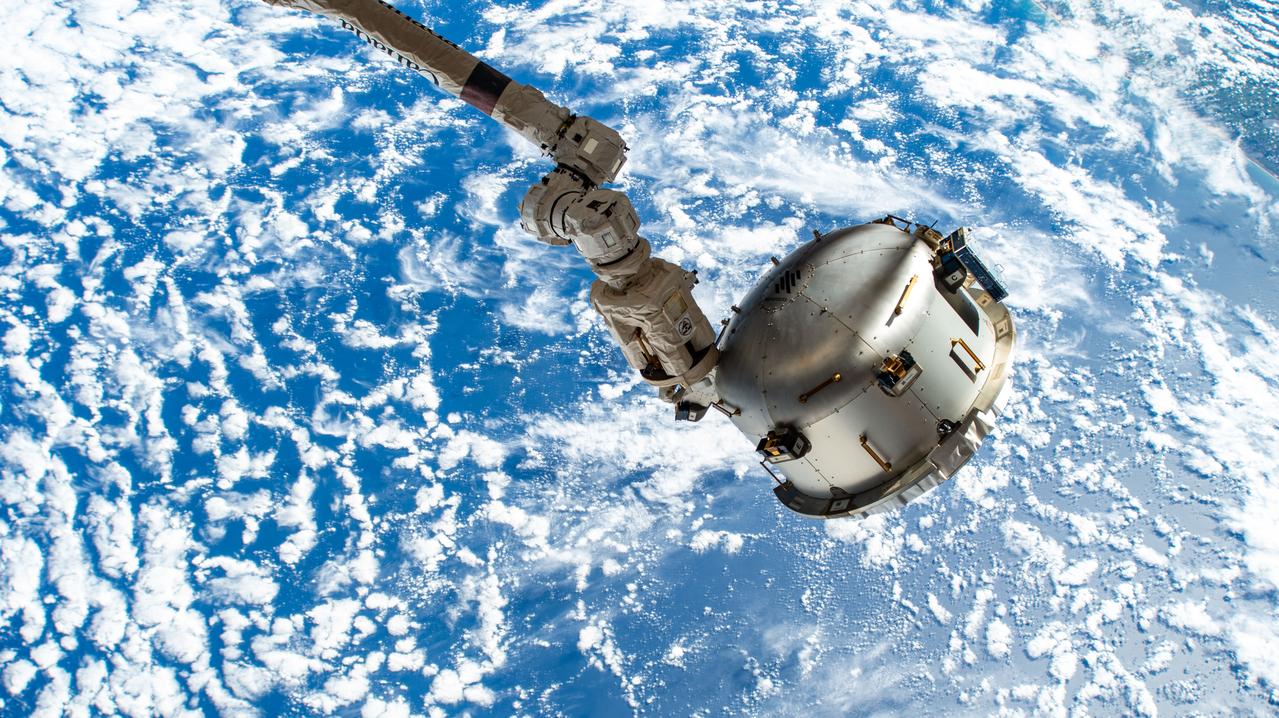
iss070e097962 (Feb. 21, 2024) --- The NanoRacks Bishop airlock is attached to the Canadarm2 robotic arm's latching end effector. Bishop can be uninstalled from its home on the Tranquility module for portable operations. It can also be used to stow cargo and extract or install payloads. The International Space Station was orbiting 264 miles above the Atlantic Ocean off the coast of southern Brazil at the time of this photograph.
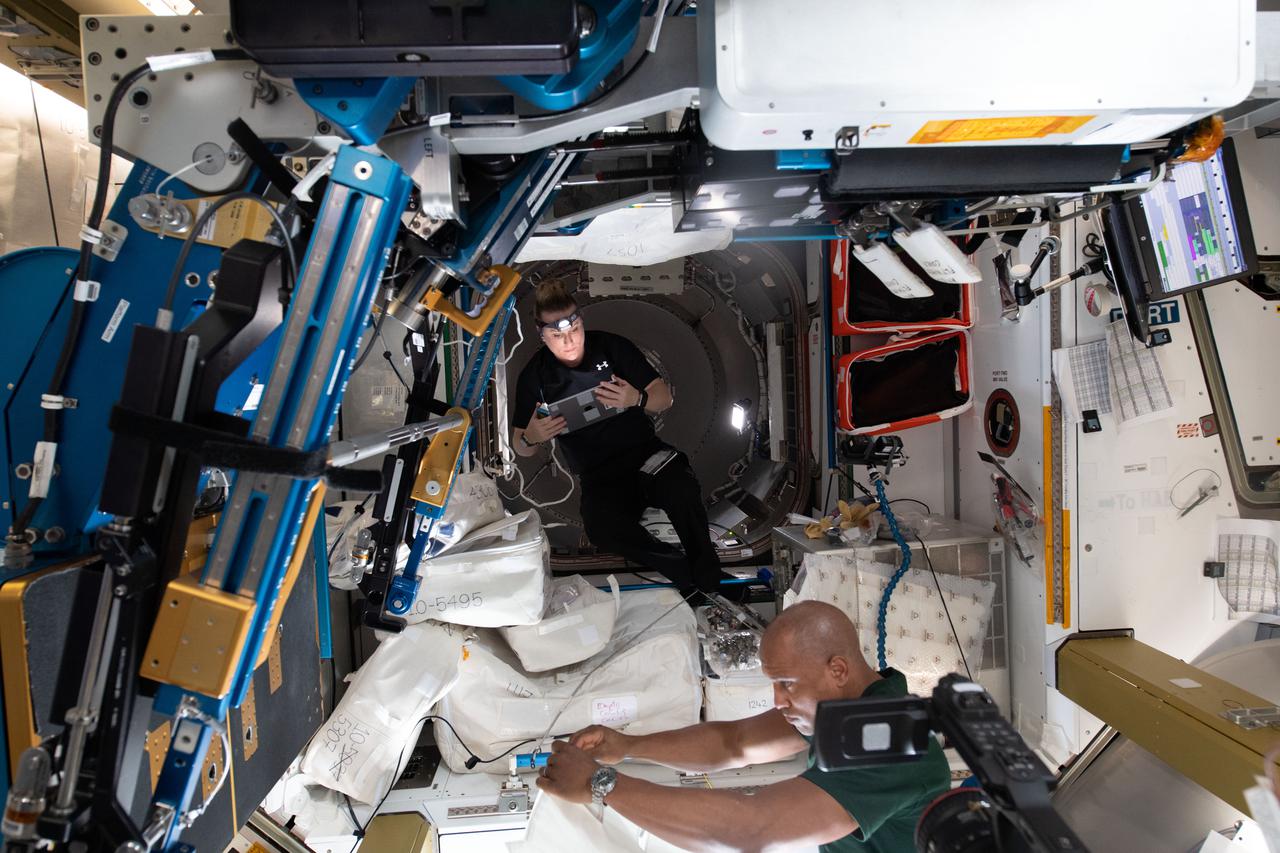
iss064e031285 (Feb. 11, 2021) --- NASA astronauts and Expedition 64 Flight Engineers Kate Rubins and Victor Glover connect cables and install components during configuration work inside the newly-opened NanoRacks Bishop airlock attached to the Tranquility module. Bishop will enable more commercial research, satellite deployments, and cargo operations outside in the vacuum of space.
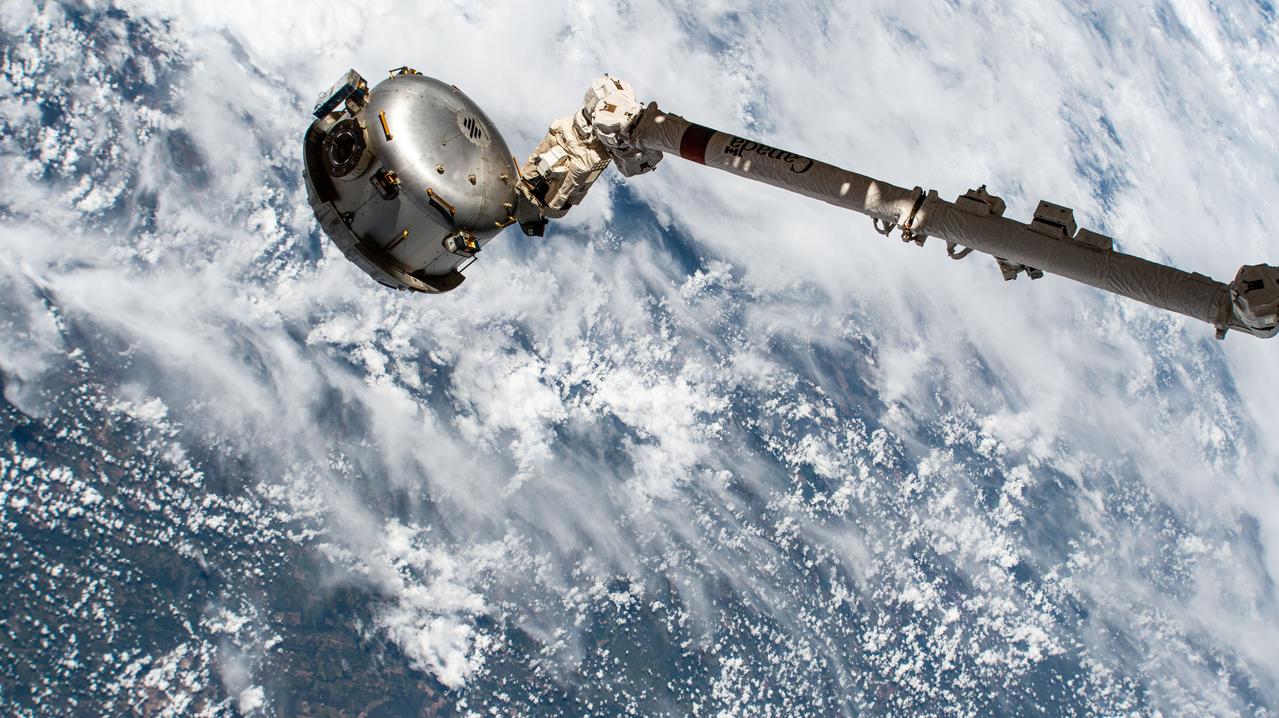
iss070e097971 (Feb. 21, 2024) --- The NanoRacks Bishop airlock is attached to the Canadarm2 robotic arm's latching end effector. Bishop can be uninstalled from its home on the Tranquility module for portable operations. It can also be used to stow cargo and extract or install payloads. The International Space Station was orbiting 261 miles above Brazil near the Bolivian border at the time of this photograph.
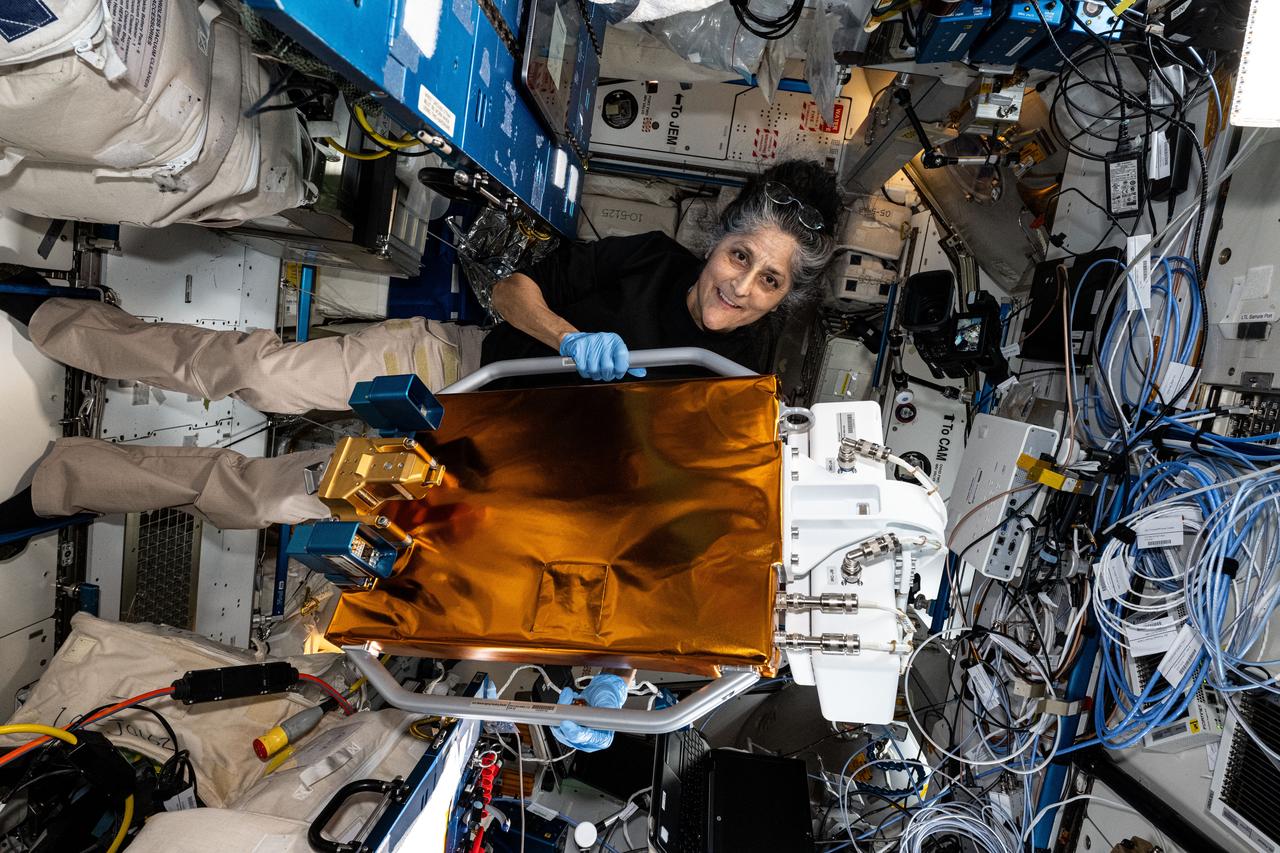
iss072e363182 (Dec. 13, 2024) --- NASA astronaut and Expedition 72 Commander Suni Williams assembles the European Materials Ageing experiment hardware for installation inside the Nanoracks Bishop airlock. The external investigation will be robotically removed from Bishop, installed on the Bartolomeo research platform attached to the outside of the Columbus laboratory module, and expose a variety of materials to the vacuum of space for about a year.
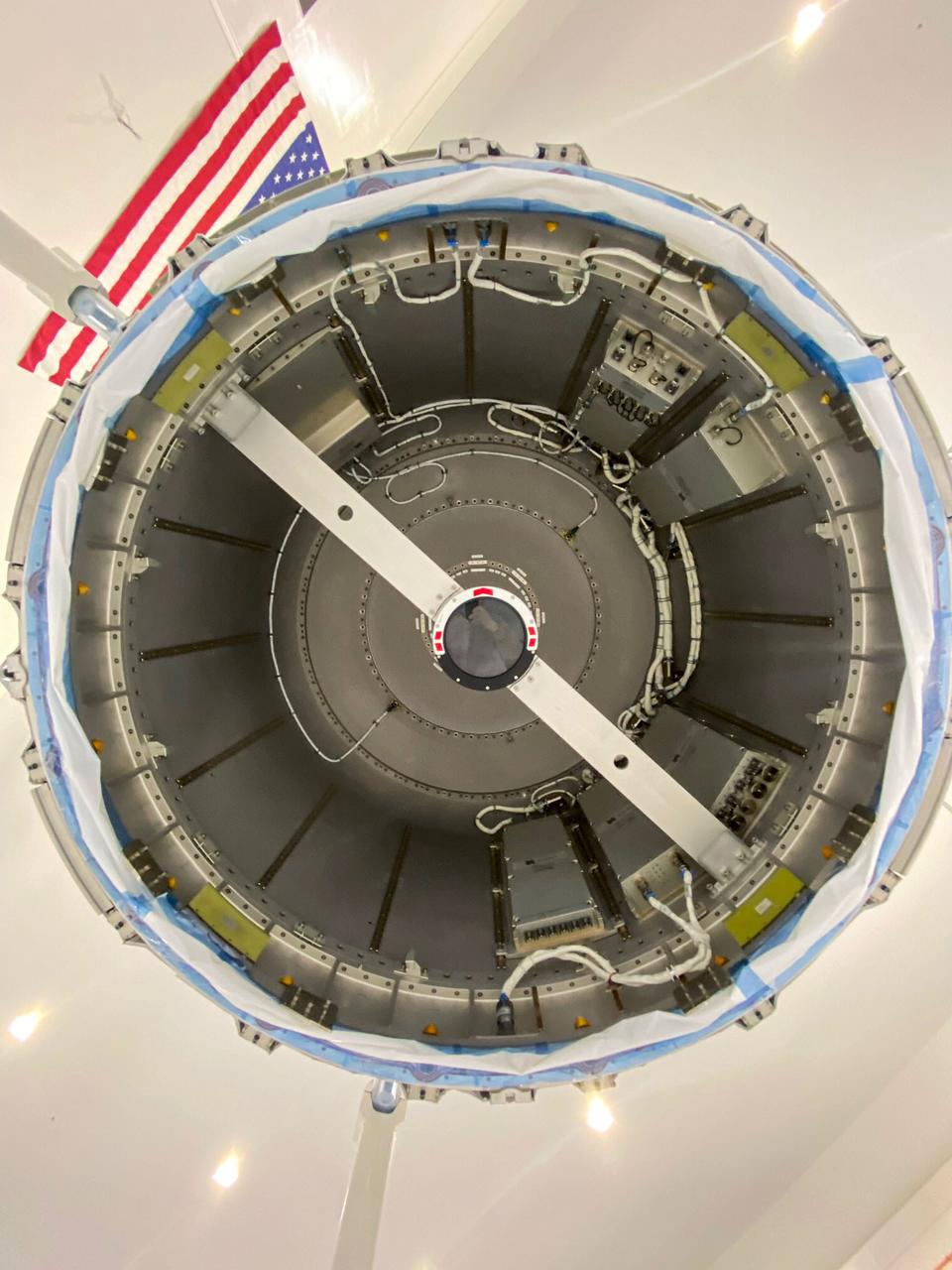
jsc2020e044492 (10/6/2020) —- A preflight view of the Nanoracks Airlock. The Nanoracks Bishop Airlock (Nanoracks Airlock) is the first-ever commercially owned and operated airlock on the International Space Station. It provides a variety of capabilities including jettisoning of payloads such as Cubesats, deployment of external payloads, support for small exterior payloads and locker-sized internal payloads, recovery of external on-orbit replaceable units (ORUs), and the ability to move hardware outside in support of extravehicular activities (EVAs). It is approximately five times larger than the Japanense Experiment Module (JEM) Airlock so it can accommodate more and larger payloads. The Airlock’s capabilities support many different types of scientific investigations.
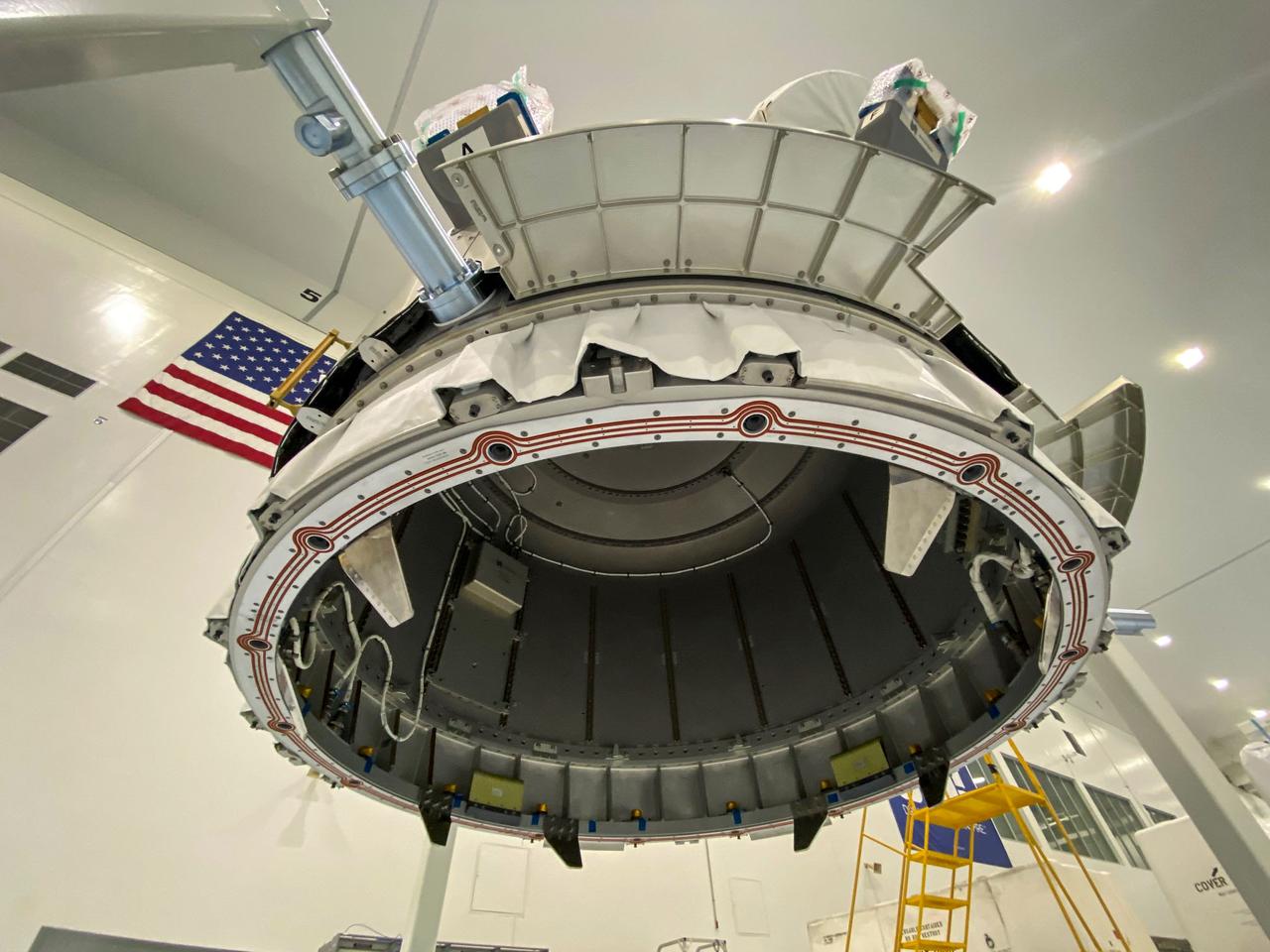
jsc2020e044494 (10/1/2020) --- A preflight view of the Nanoracks Airlock. The Nanoracks Bishop Airlock (Nanoracks Airlock) is the first-ever commercially owned and operated airlock on the International Space Station. It provides a variety of capabilities including jettisoning of payloads such as Cubesats, deployment of external payloads, support for small exterior payloads and locker-sized internal payloads, recovery of external on-orbit replaceable units (ORUs), and the ability to move hardware outside in support of extravehicular activities (EVAs). It is approximately five times larger than the Japanense Experiment Module (JEM) Airlock so it can accommodate more and larger payloads. The Airlock’s capabilities support many different types of scientific investigations.
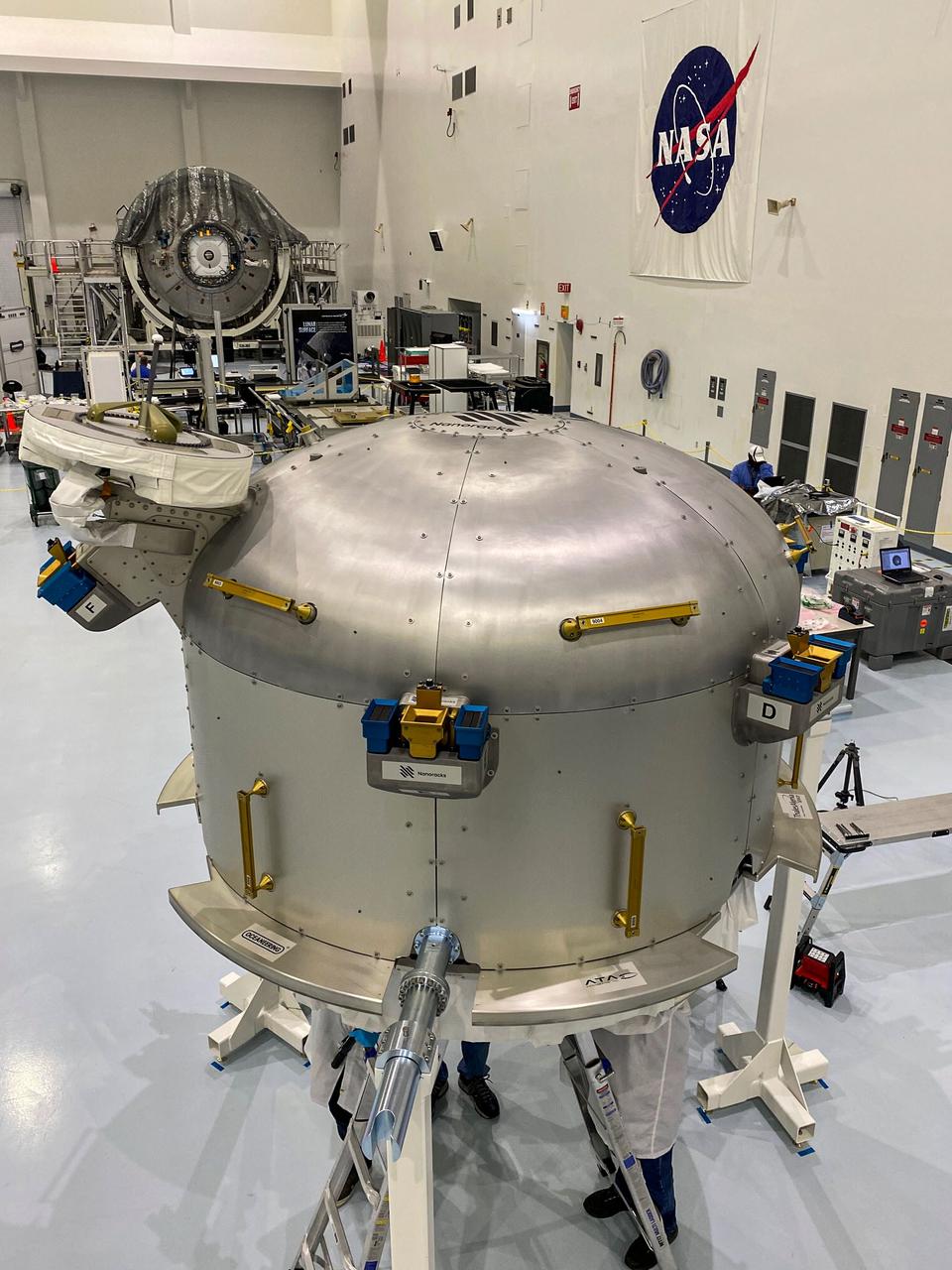
jsc2020e044491 (10/5/2020) —- A preflight view of the Nanoracks Airlock. The Nanoracks Bishop Airlock (Nanoracks Airlock) is the first-ever commercially owned and operated airlock on the International Space Station. It provides a variety of capabilities including jettisoning of payloads such as Cubesats, deployment of external payloads, support for small exterior payloads and locker-sized internal payloads, recovery of external on-orbit replaceable units (ORUs), and the ability to move hardware outside in support of extravehicular activities (EVAs). It is approximately five times larger than the Japanense Experiment Module (JEM) Airlock so it can accommodate more and larger payloads. The Airlock’s capabilities support many different types of scientific investigations.
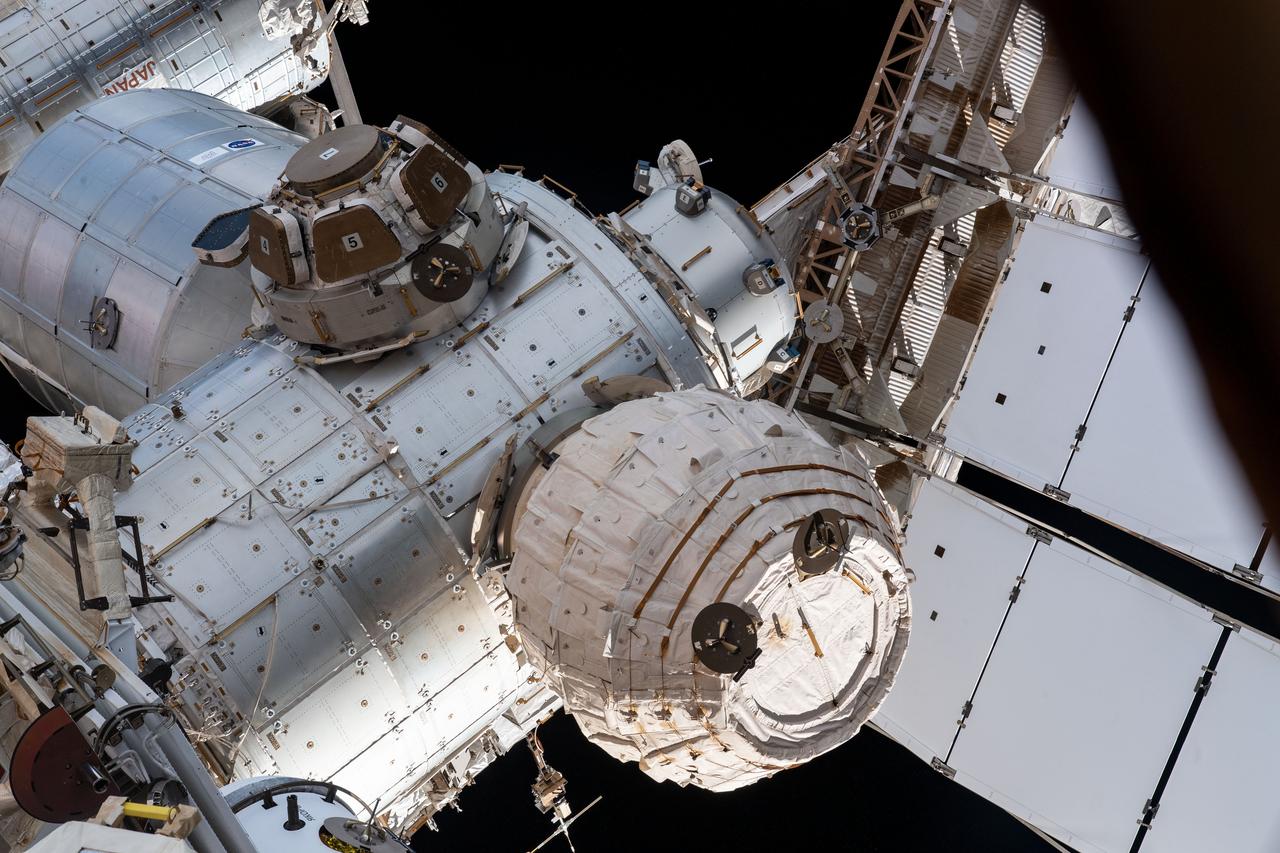
iss067e214089 (Aug. 2, 2022) --- This view from a window on the International Space Station's Russian segment shows the Bigelow Expandable Activity Module (BEAM), the cupola with its seven windows shuttered, and the NanoRacks Bishop airlock. Behind the cupola is the Leonardo permanment multipurpose module. All four components are attached to the Tranquility module.
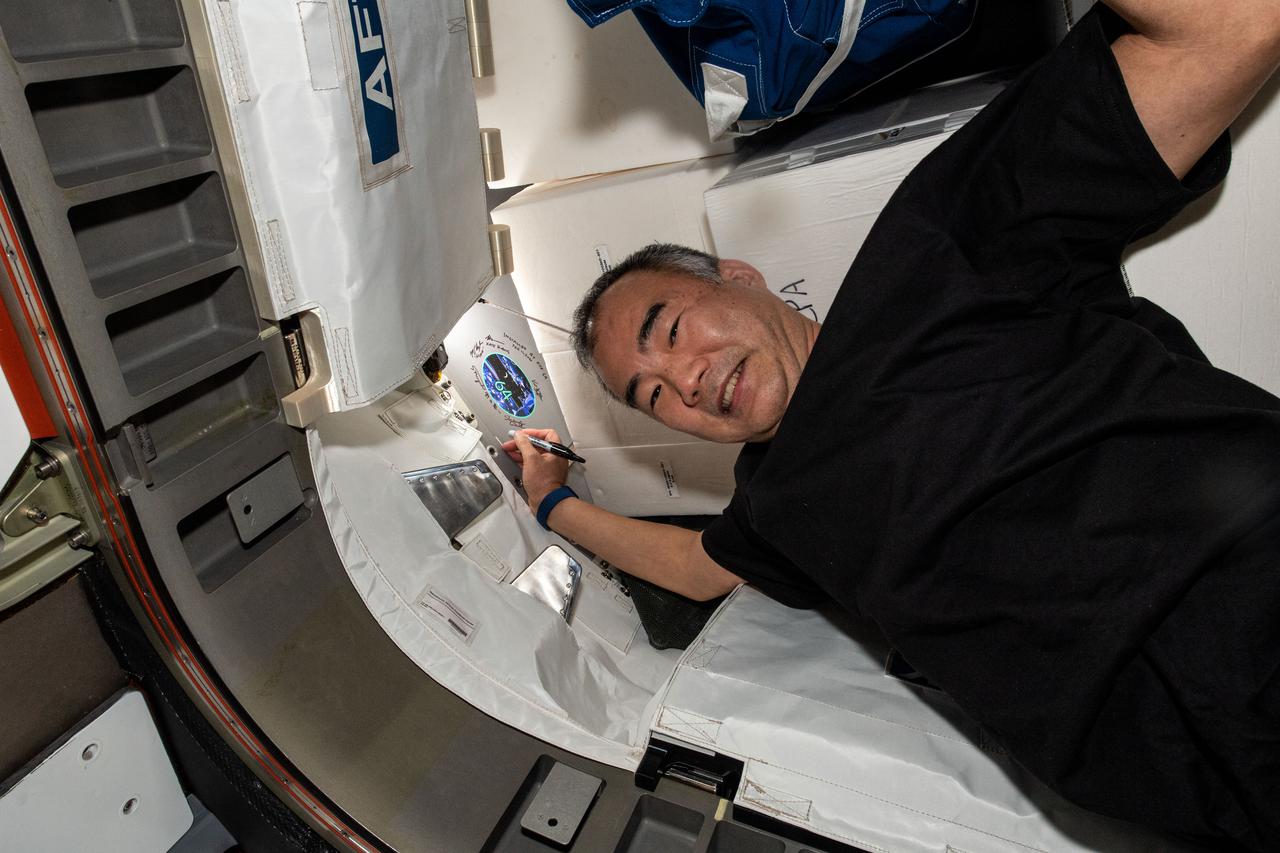
iss064e031806 (Feb. 11,2021) --- JAXA (Japan Aerospace Exploration Agency) astronaut and Expedition 64 Flight Engineer Soichi Noguchi signs his name near his mission's insignia sticker in the vestibule between the Tranquility module and the NanoRacks Bishop airlock.
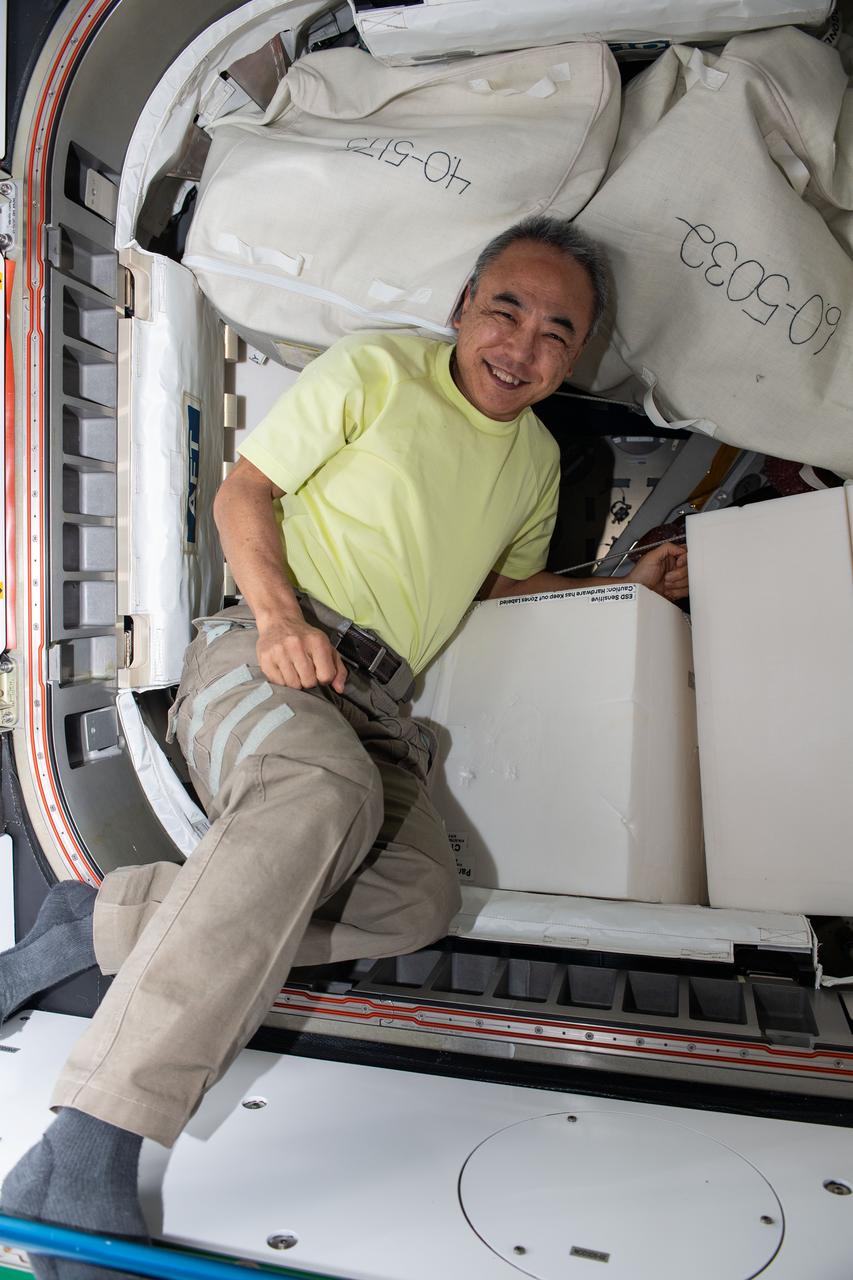
iss070e025067 (Nov. 16, 2023) --- JAXA (Japan Aerospace Exploration Agency) astronaut and Expedition 70 Flight Engineer Satoshi Furukawa works in the International Space Station's Tranquility module clearing hardware and making space inside the NanoRacks Bishop airlock.
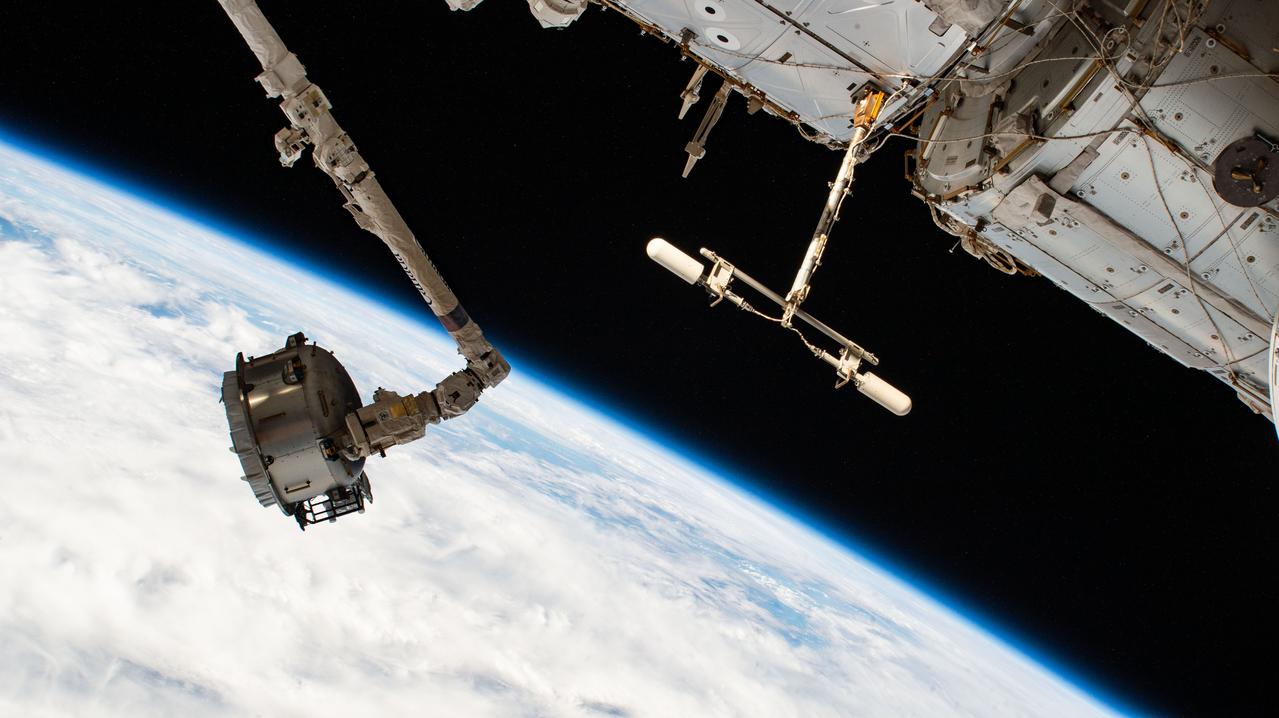
iss070e098229 (Feb. 22, 2024) --- At left, the Canadarm2 robotic arm maneuvers the NanoRacks Bishop airlock in the grip of its latching end effector. At top right, a UHF antenna extends from the forward end of the Destiny laboratory module, which is also attached to the Harmony module.
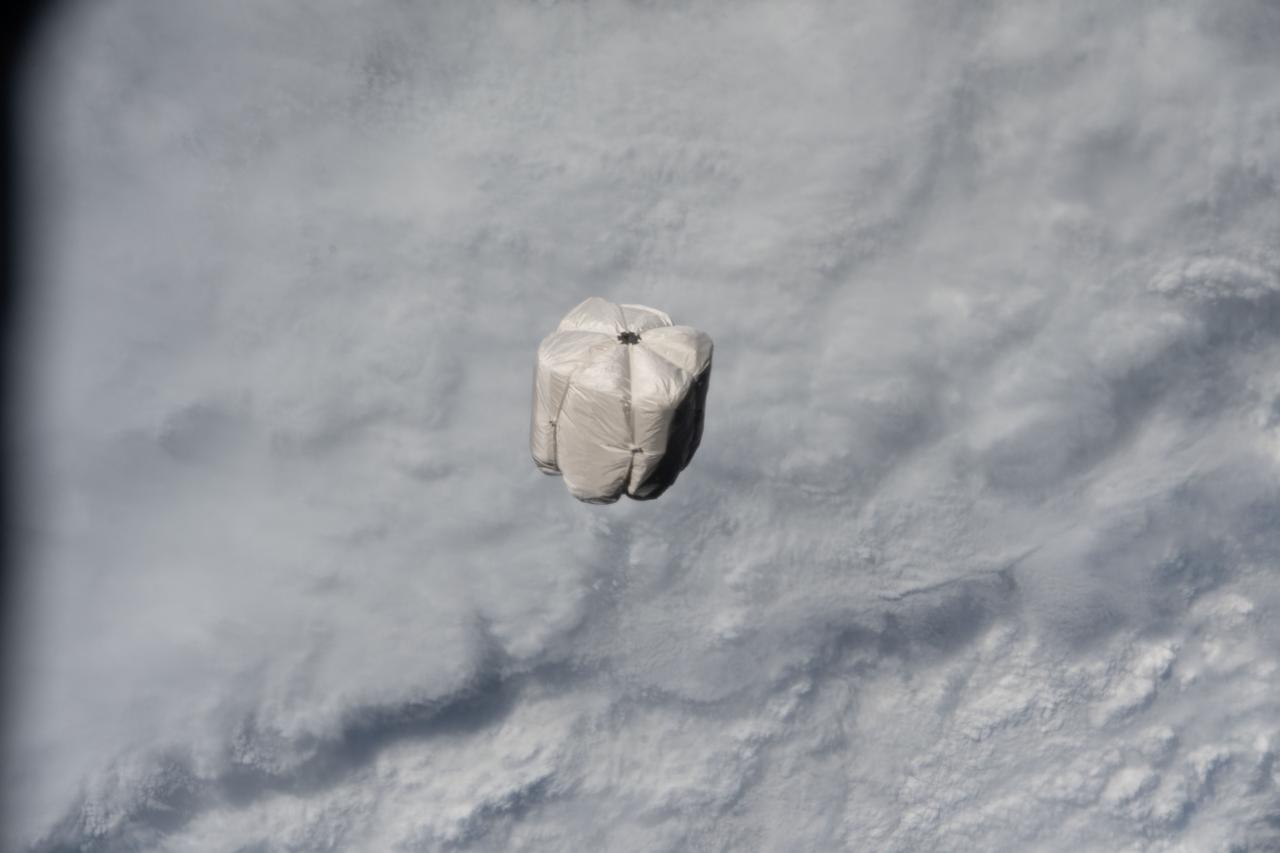
iss067e173472 (July 3, 2022) --- A trash container is pictured on a trajectory away from the International Space Station and toward the Earth's atmosphere for a fiery, but safe disposal. The trash container had been jettisoned moments earlier from the Nanoracks Bishop Airlock while attached to the Canadarm2 robotic arm.
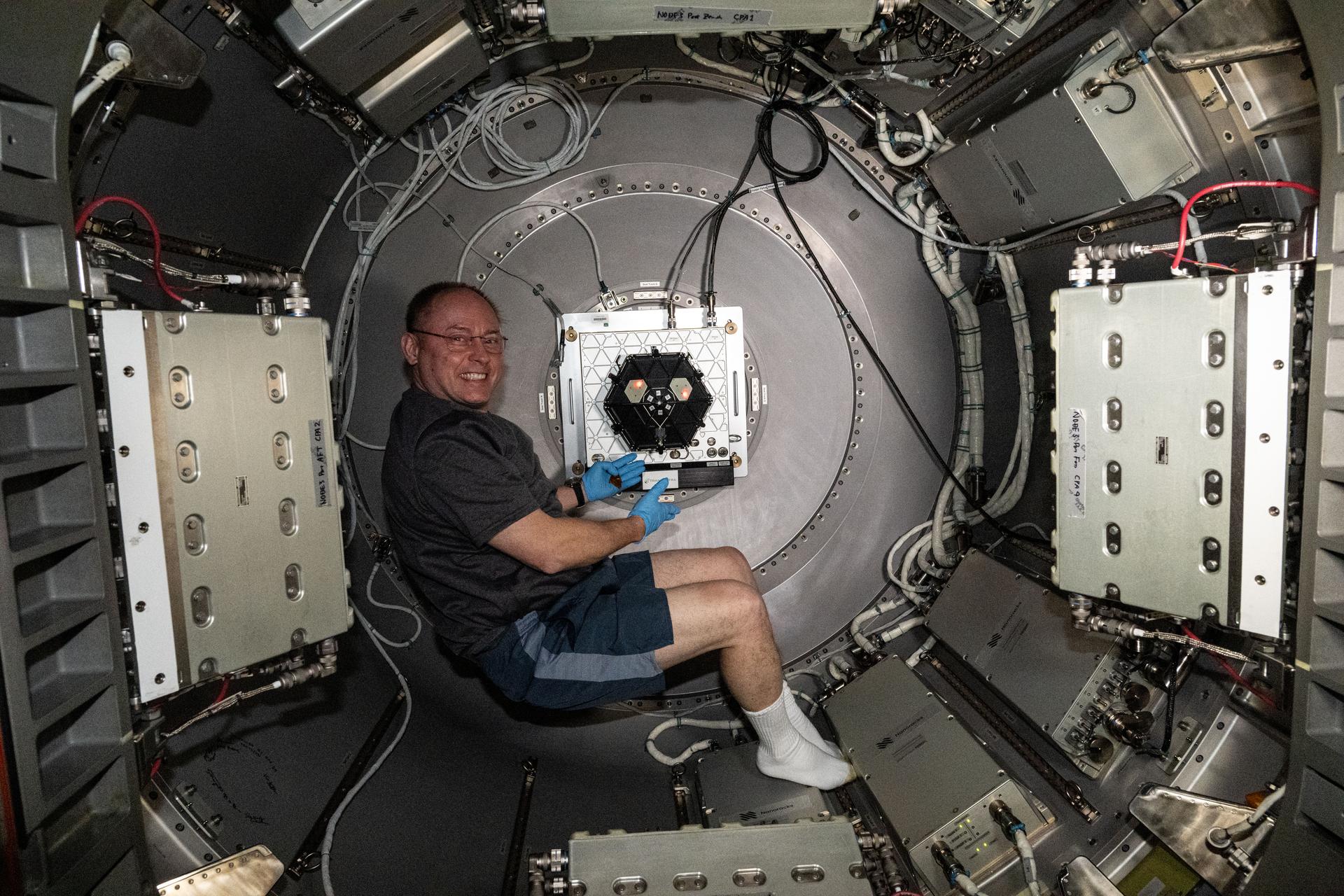
iss073e0815288 (Sept. 29, 2025) --- NASA astronaut and Expedition 73 Flight Engineer Mike Fincke shows off the Voyager Flytrap technology demonstration that he installed inside the NanoRacks Bishop airlock. Flytrap will test an inflatable capture bag designed to capture and secure orbital debris or sample containers returning from the Moon and Mars. The technology may also support future space mining techniques on small asteroids. The demonstration will evaluate the bag’s ability to deploy, inflate, and capture space objects while maintaining an airtight seal in microgravity.
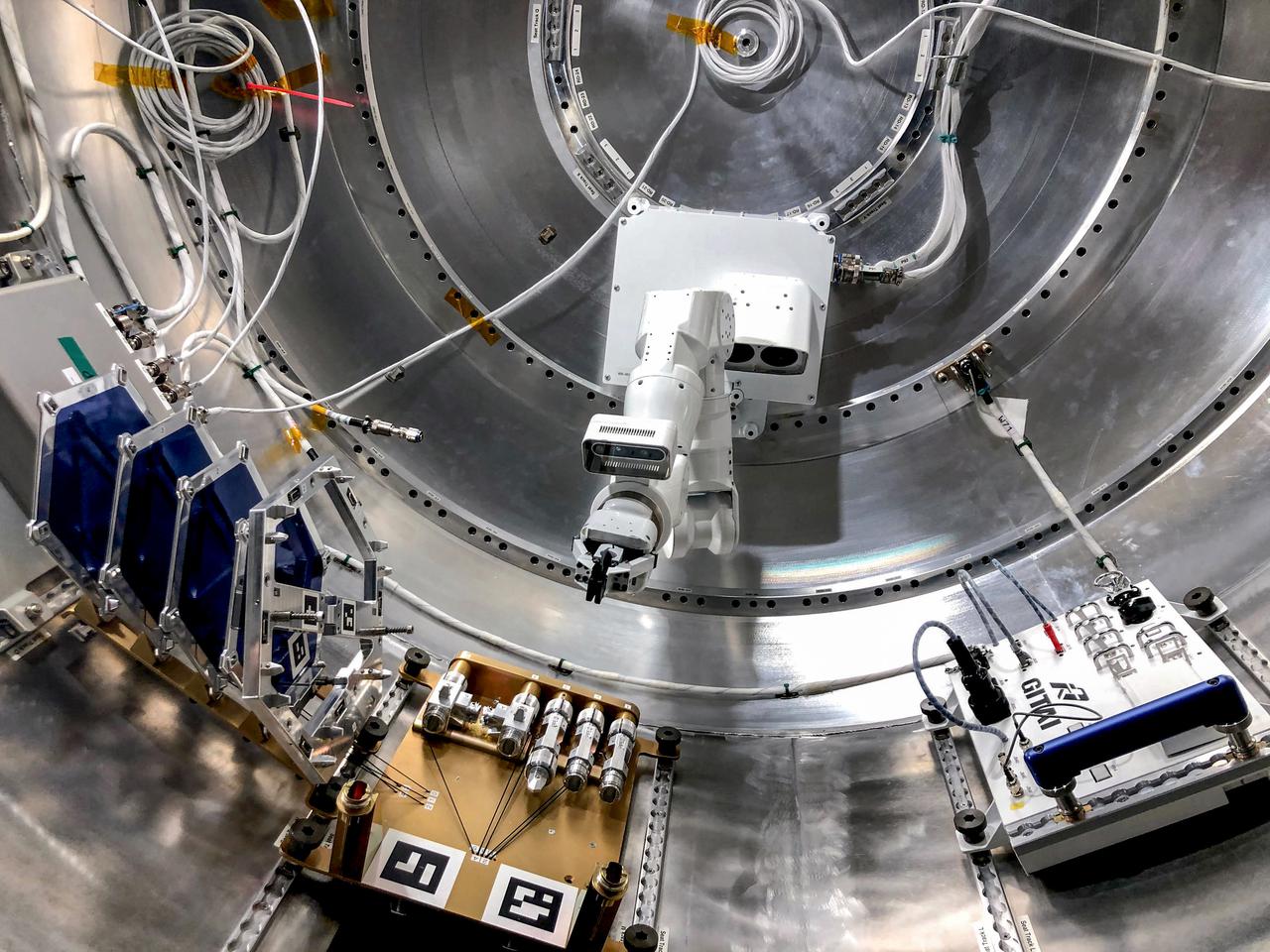
jsc2021e036656 (4/2/2021) --- Complete configuration of the GITAI S1 inside the Bishop airlock mock-up. The GITAI S1 Robotic Arm Tech Demo (Nanoracks-GITAI Robotic Arm) demonstrates the versatility and dexterity in microgravity of a robot designed by GITAI Japan Inc. For the demonstration, the robot conducts common crew activities and tasks via supervised autonomy and teleoperations from the ground.
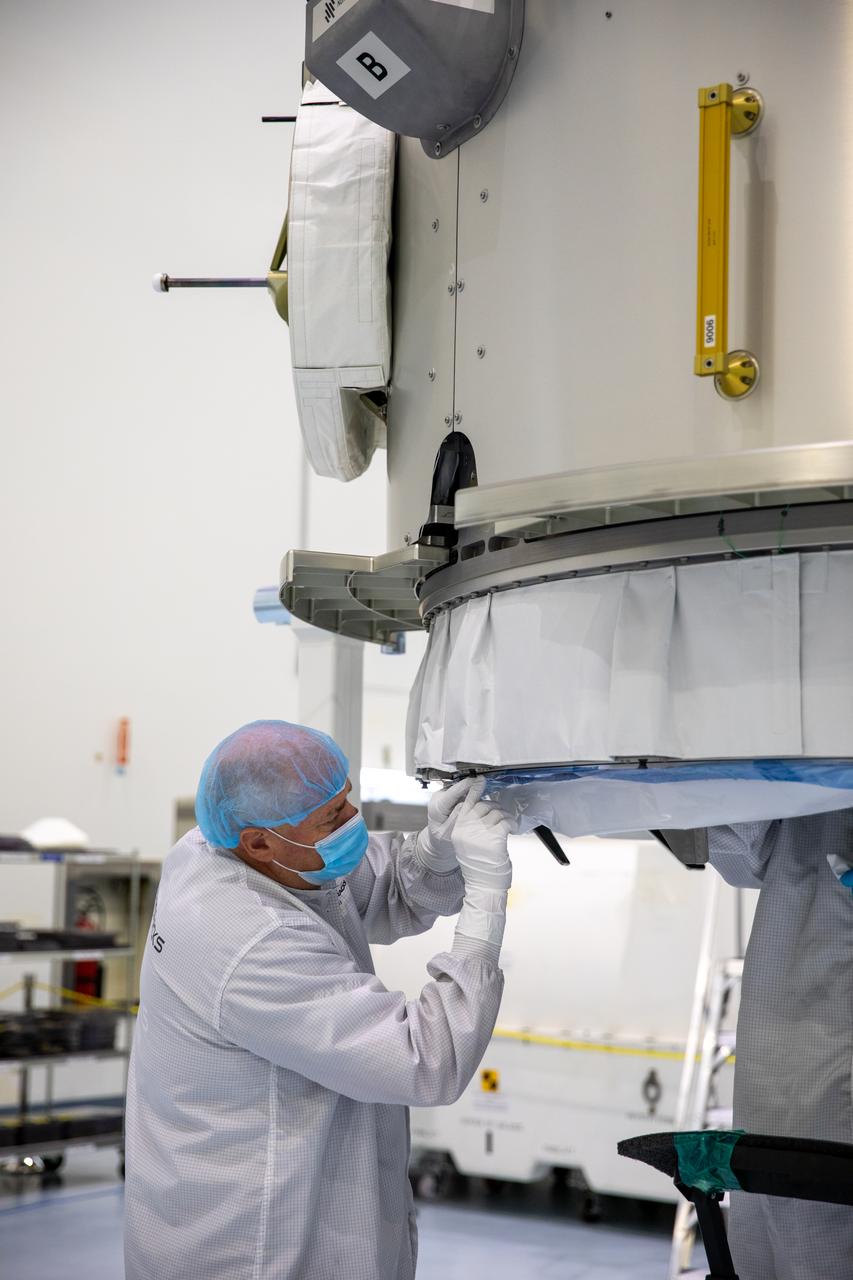
A Nanoracks technician works on the NanoRacks Bishop Airlock inside the Space Station Processing Facility at NASA's Kennedy Space Center in Florida on Oct. 7, 2020. The next-generation Nanoracks payload facility is being prepared for its flight to the International Space Station on SpaceX’s 21st commercial resupply services to the space station. It will provide payload hosting, robotics testing, satellite deployment, serve as an outside toolbox for station crew spacewalks, and more. CRS-21 is scheduled to launch on a SpaceX Falcon 9 from Kennedy’s Launch Complex 39A.
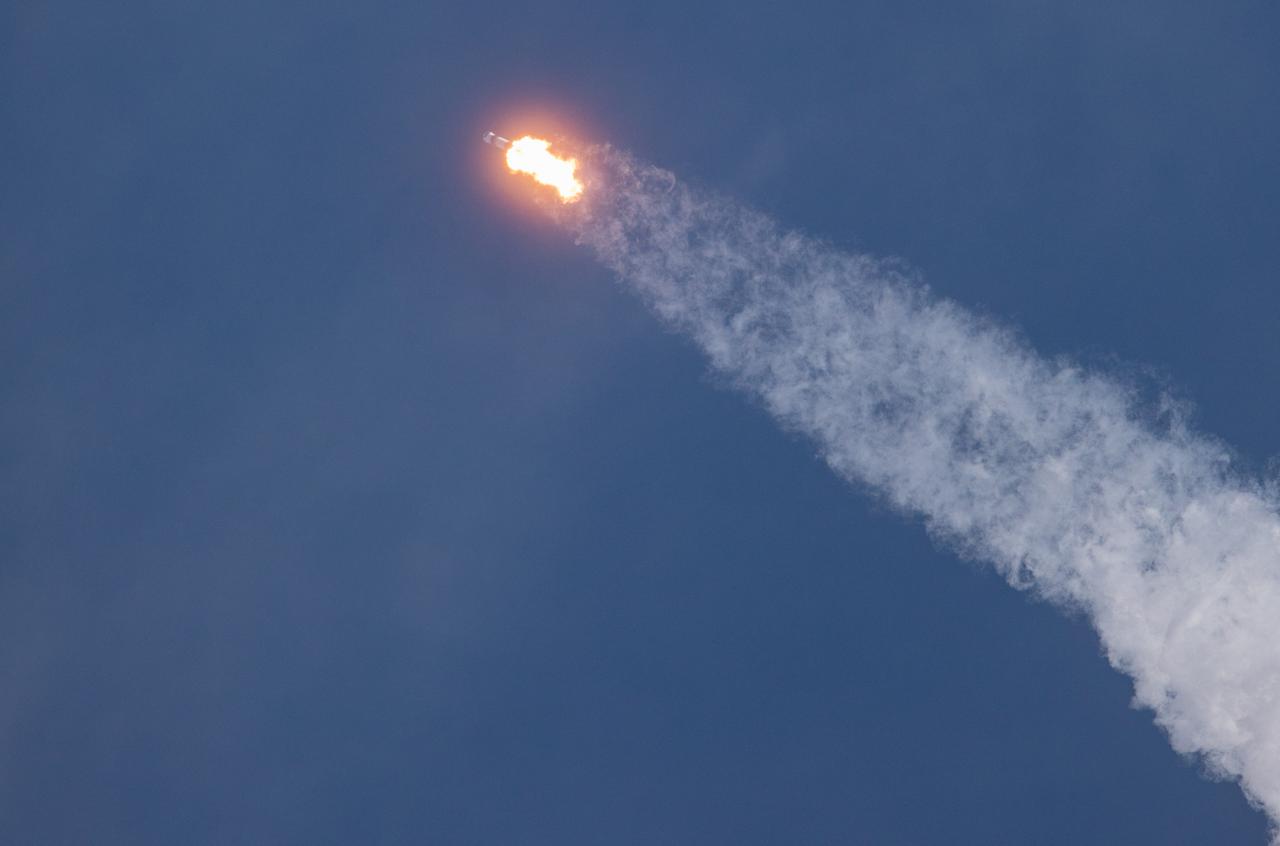
A SpaceX Falcon 9 rocket soars into the sky after lifting off from Launch Complex 39A at Kennedy Space Center in Florida at 11:17 a.m. EST on Dec. 6, 2020. The rocket is carrying the uncrewed cargo Dragon spacecraft on its journey to the International Space Station for NASA and SpaceX’s 21st Commercial Resupply Services (CRS-21) mission. Dragon will deliver more than 6,400 pounds of science investigations and cargo to the orbiting laboratory. The mission marks the first launch for SpaceX under NASA’s CRS-2 contract.
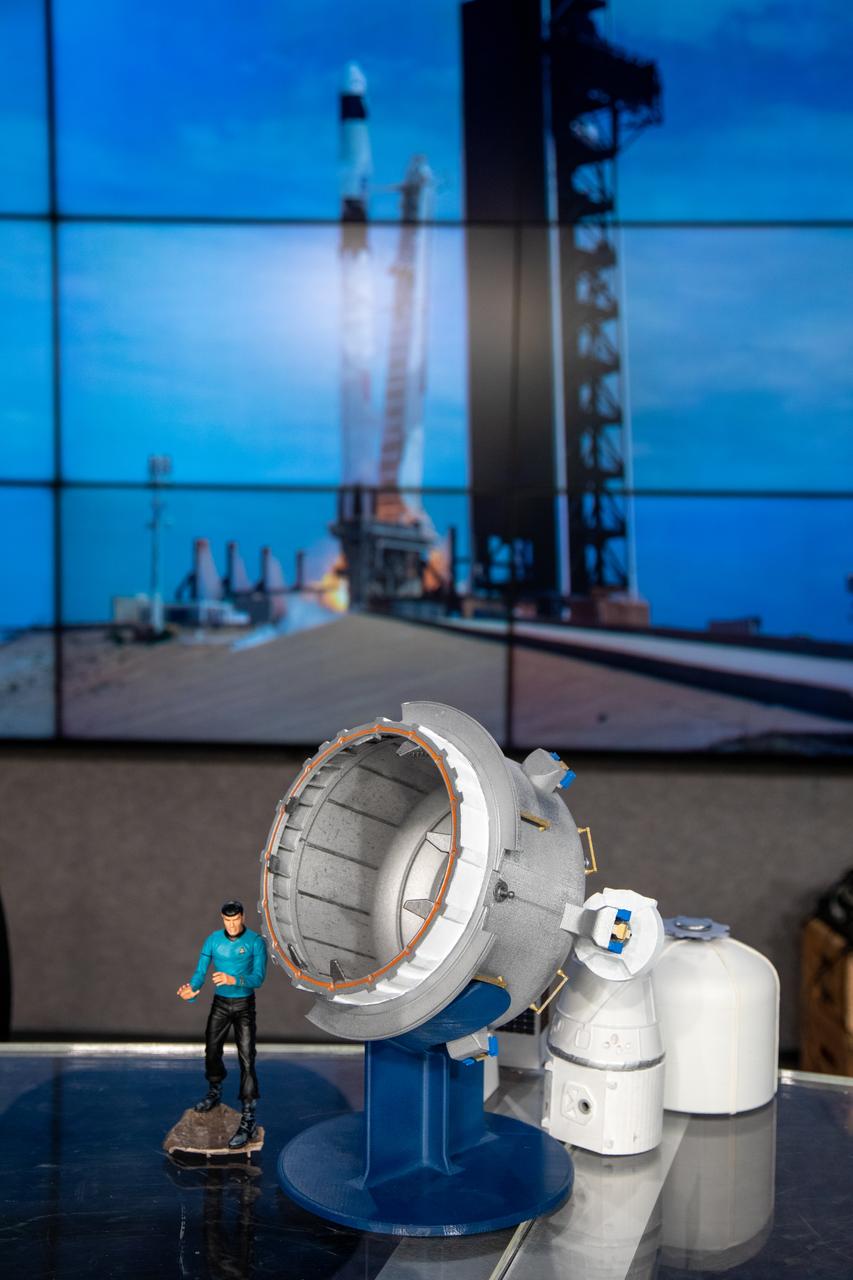
Props are used by Brock Howe, airlock program manager, Nanoracks, during a #NASASocial Science and Station Q&A show at the agency’s Kennedy Space Center in Florida on Dec. 4, 2020. NASA Communications’ Kenna Pell moderated the program, which also included Jennifer Scott-Williams, ISS Program Research Office; and Pinar Mesci, project scientist, Sanford Consortium for Regenerative Medicine, UC San Diego. SpaceX’s 21st Commercial Resupply Services (CRS-21) mission is scheduled to launch from Kennedy’s Launch Complex 39A on Dec. 5, 2020. Liftoff of the SpaceX Falcon 9 rocket and cargo Dragon spacecraft is targeted for 11:39 a.m. EST.
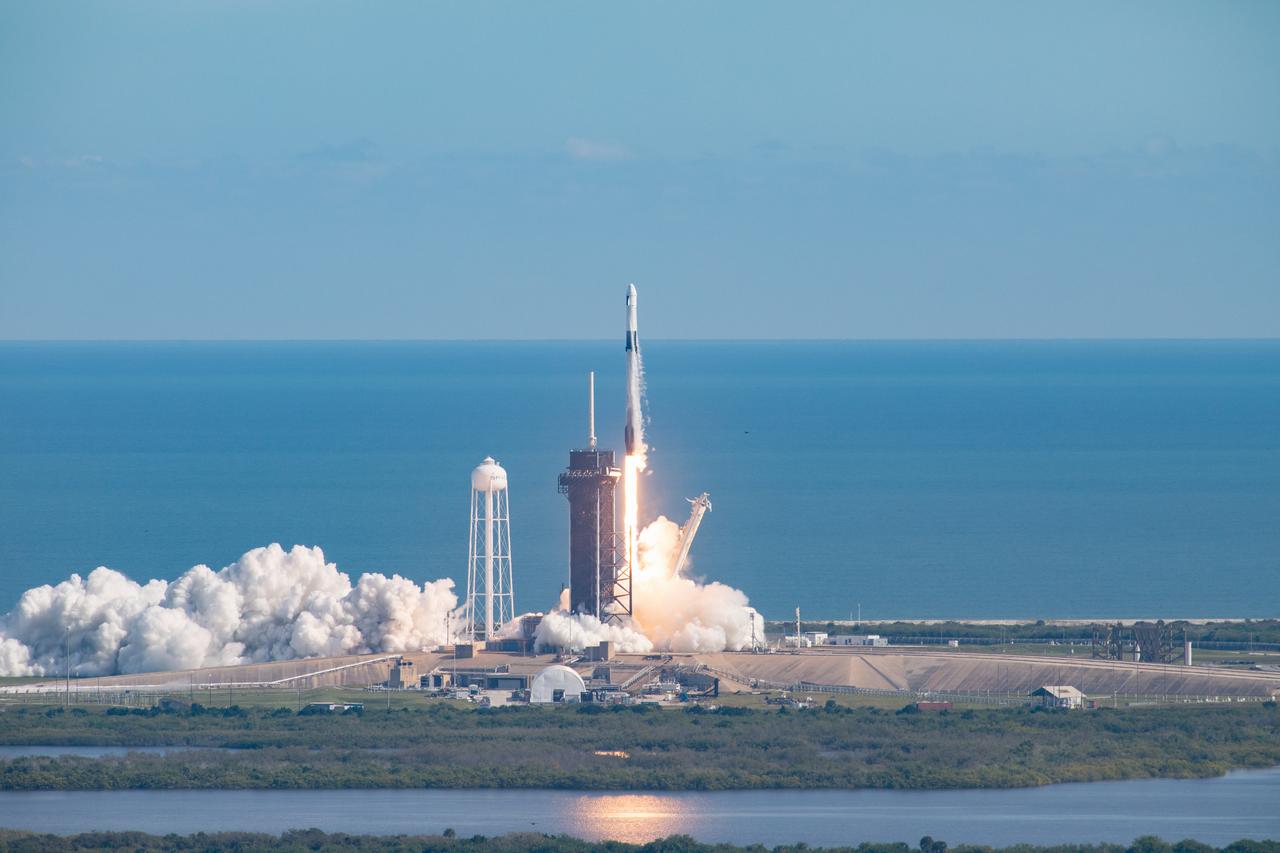
A SpaceX Falcon 9 rocket lifts off from Launch Complex 39A at Kennedy Space Center in Florida at 11:17 a.m. EST on Dec. 6, 2020, carrying the uncrewed cargo Dragon spacecraft on its journey to the International Space Station for NASA and SpaceX’s 21st Commercial Resupply Services (CRS-21) mission. Dragon will deliver more than 6,400 pounds of science investigations and cargo to the orbiting laboratory. The mission marks the first launch for SpaceX under NASA’s CRS-2 contract.
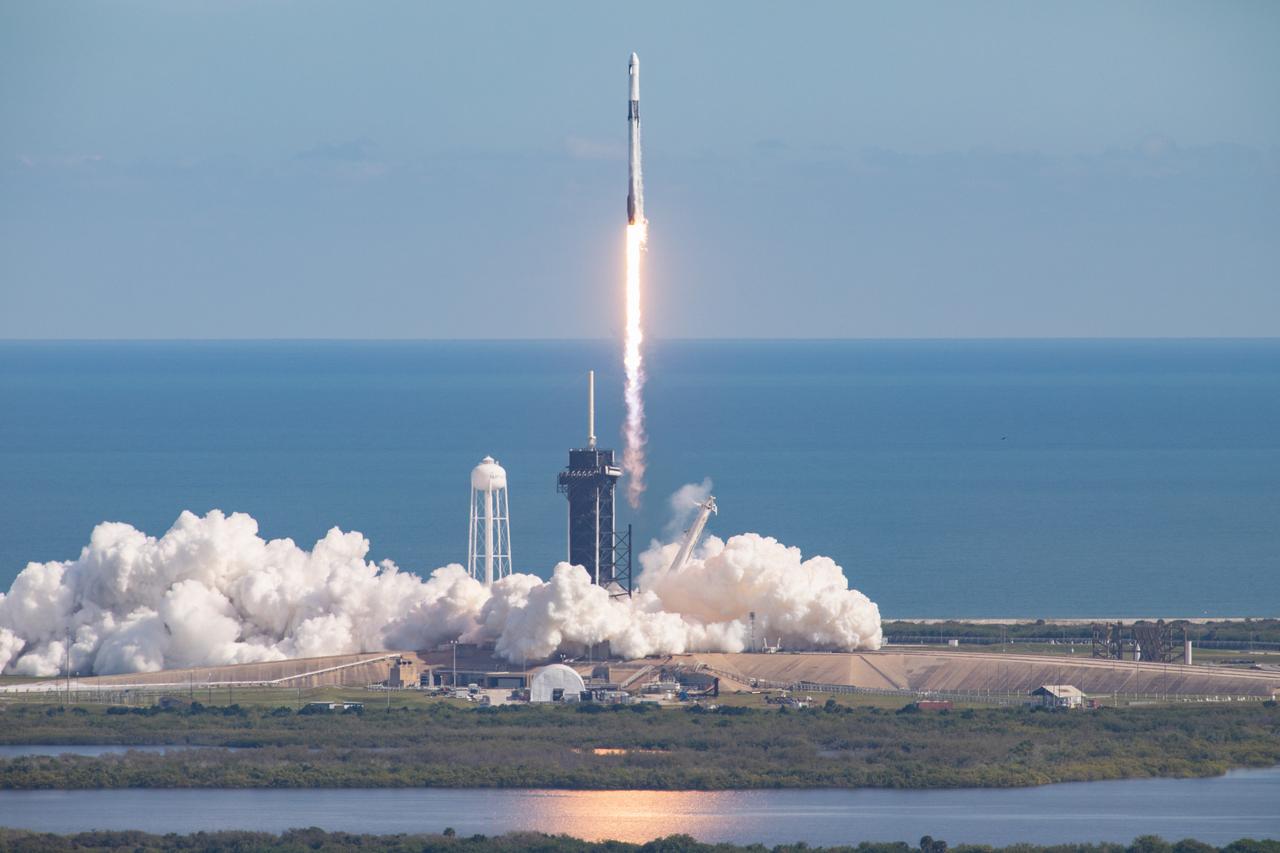
A SpaceX Falcon 9 rocket lifts off from Launch Complex 39A at Kennedy Space Center in Florida at 11:17 a.m. EST on Dec. 6, 2020, carrying the uncrewed cargo Dragon spacecraft on its journey to the International Space Station for NASA and SpaceX’s 21st Commercial Resupply Services (CRS-21) mission. Dragon will deliver more than 6,400 pounds of science investigations and cargo to the orbiting laboratory. The mission marks the first launch for SpaceX under NASA’s CRS-2 contract.
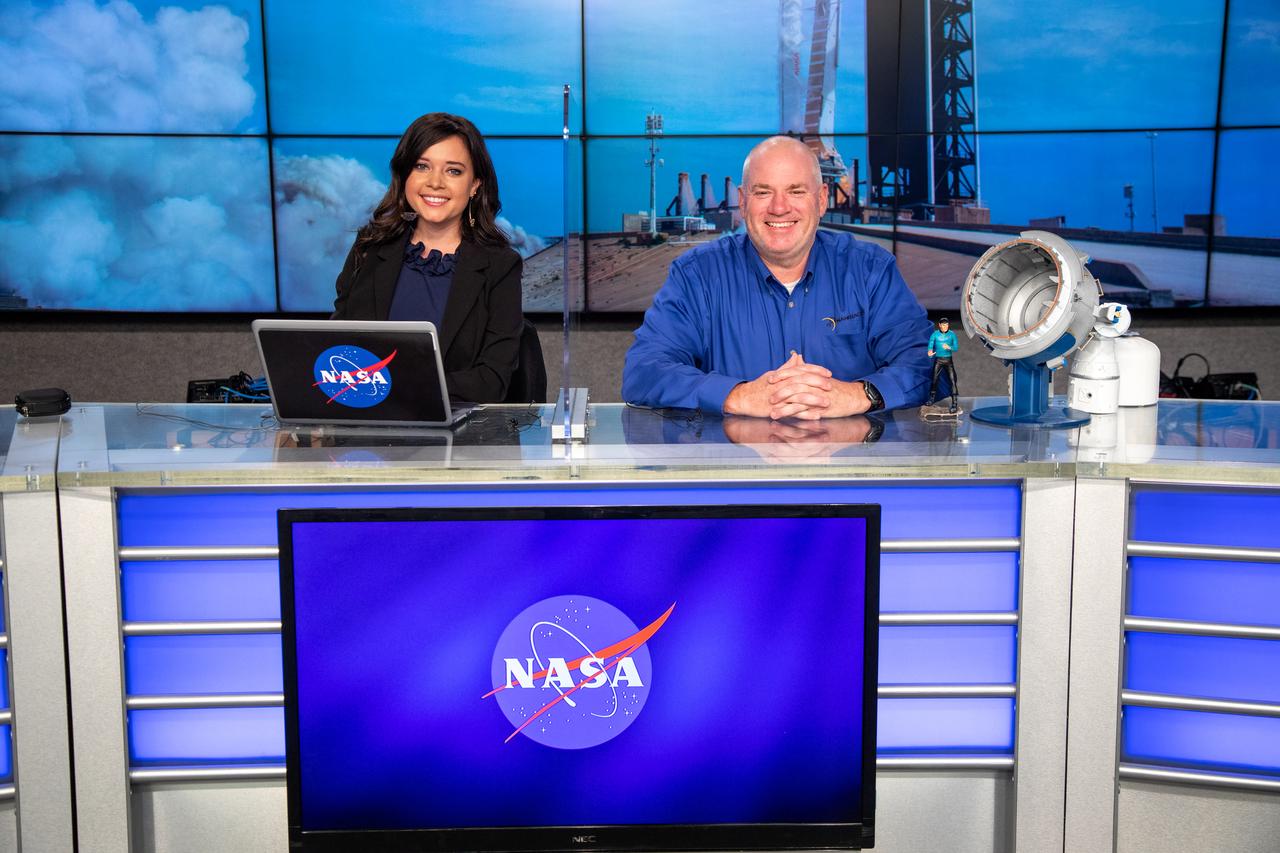
NASA Communications’ Kenna Pell, left, and Brock Howe, airlock program manager, Nanoracks, participate in a #NASASocial Science and Station Q&A show at the agency’s Kennedy Space Center in Florida on Dec. 4, 2020. During the briefing, NASA Social participants heard from principal investigators for payloads launching on SpaceX’s 21st Commercial Resupply Services (CRS-21) mission. CRS-21 is scheduled to launch from Kennedy’s Launch Complex 39A on Dec. 5, 2020. Liftoff of the SpaceX Falcon 9 rocket and cargo Dragon spacecraft is targeted for 11:39 a.m. EST.
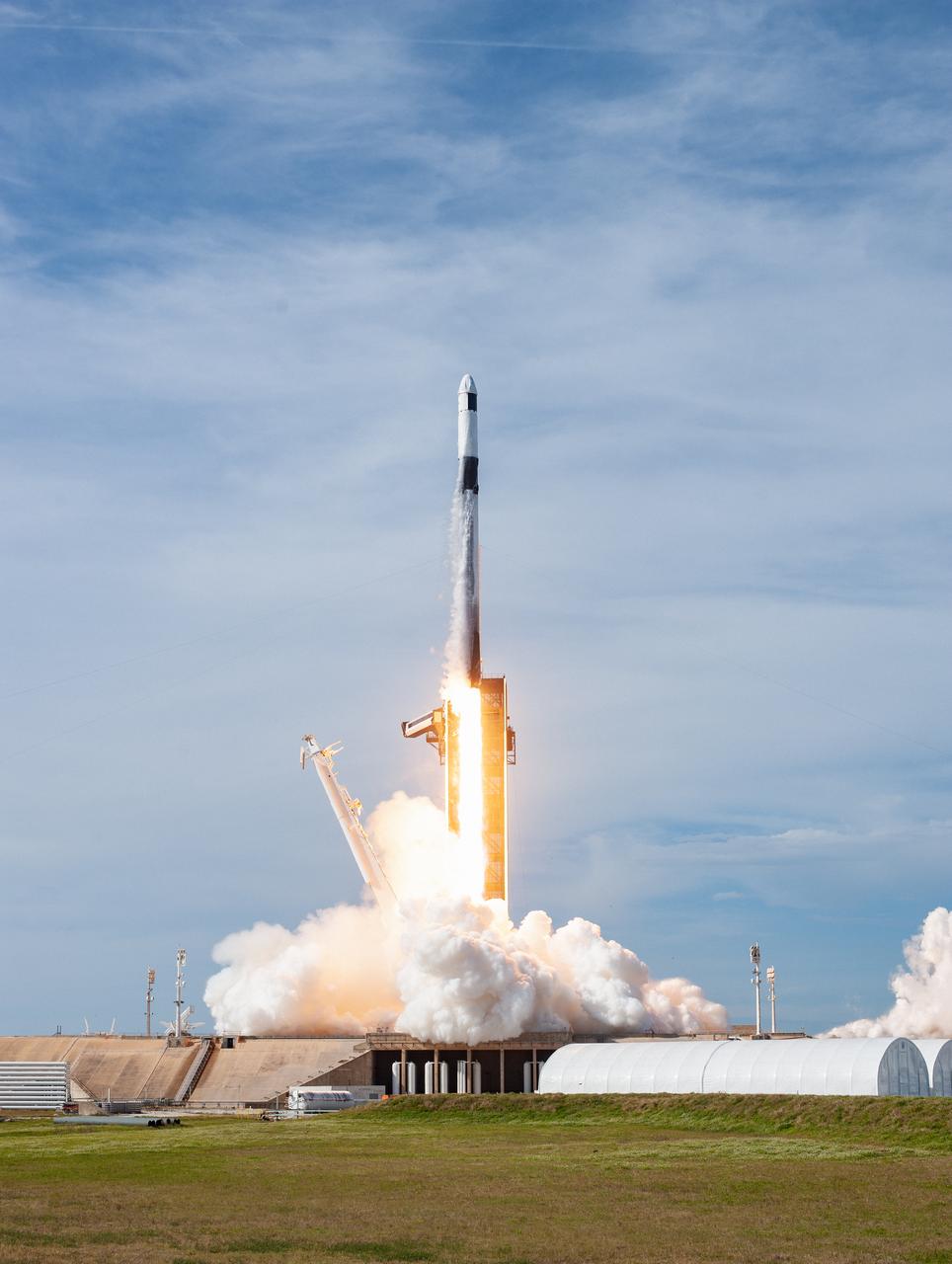
A SpaceX Falcon 9 rocket lifts off from Launch Complex 39A at Kennedy Space Center in Florida at 11:17 a.m. EST on Dec. 6, 2020, carrying the uncrewed cargo Dragon spacecraft on its journey to the International Space Station for NASA and SpaceX’s 21st Commercial Resupply Services (CRS-21) mission. Dragon will deliver more than 6,400 pounds of science investigations and cargo to the orbiting laboratory. The mission marks the first launch for SpaceX under NASA’s CRS-2 contract.
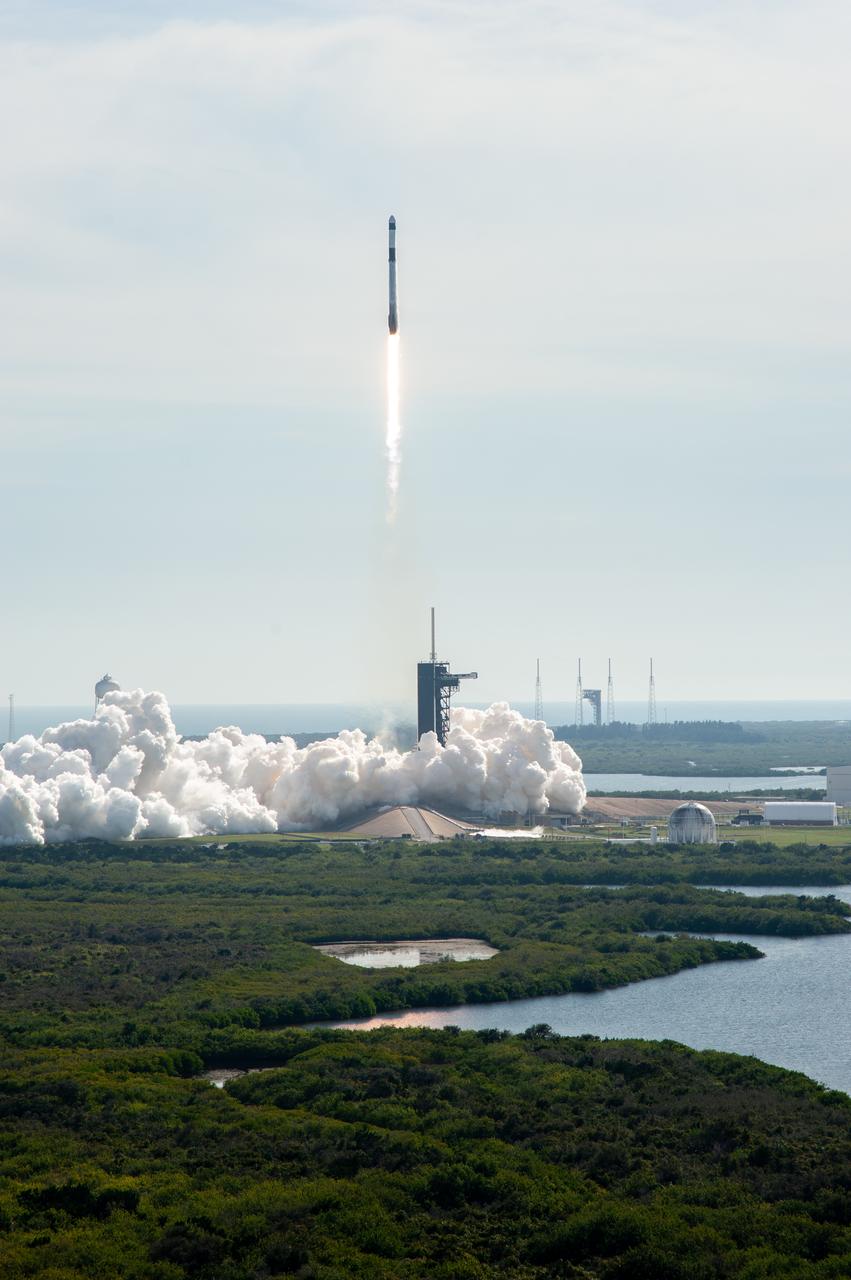
A SpaceX Falcon 9 rocket soars into the sky after lifting off from Launch Complex 39A at Kennedy Space Center in Florida at 11:17 a.m. EST on Dec. 6, 2020. The rocket is carrying the uncrewed cargo Dragon spacecraft on its journey to the International Space Station for NASA and SpaceX’s 21st Commercial Resupply Services (CRS-21) mission. Dragon will deliver more than 6,400 pounds of science investigations and cargo to the orbiting laboratory. The mission marks the first launch for SpaceX under NASA’s CRS-2 contract.
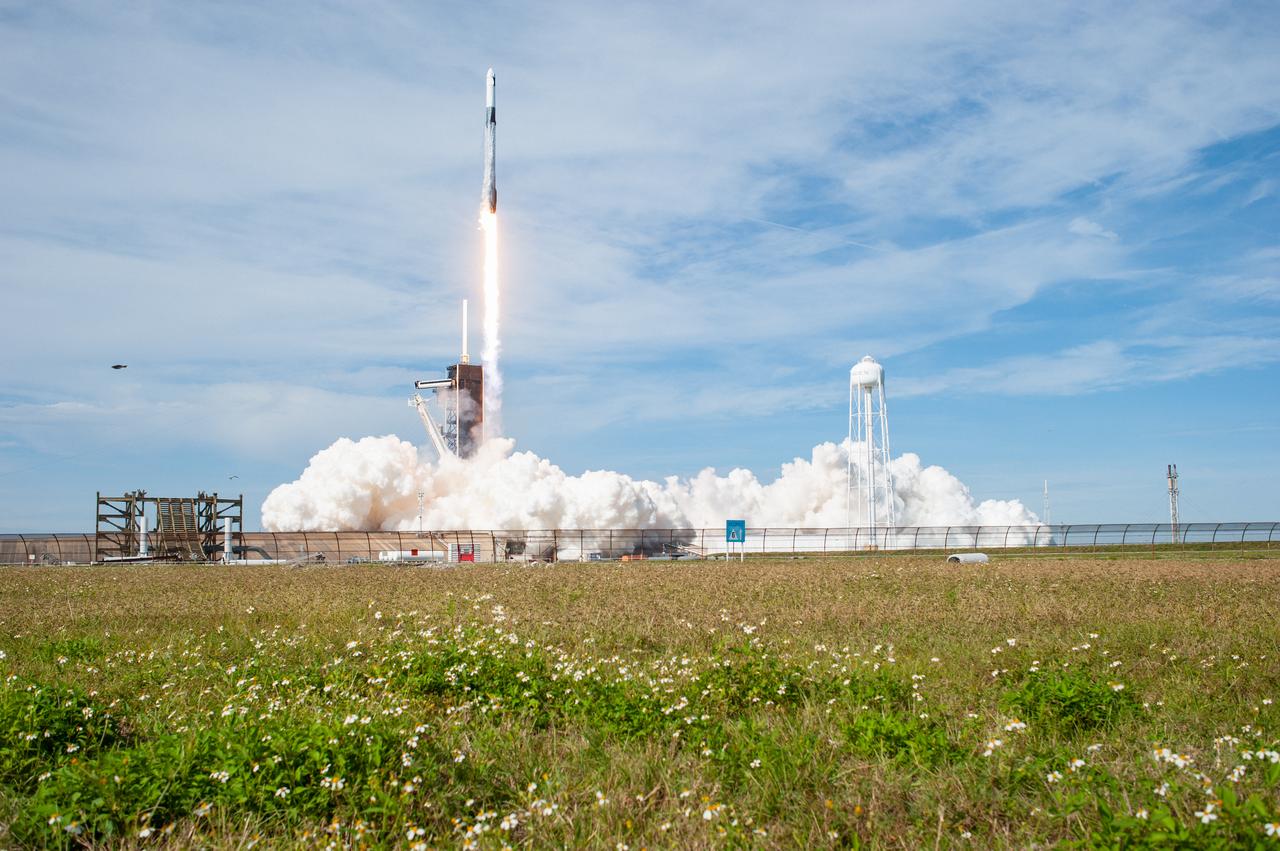
A SpaceX Falcon 9 rocket lifts off from Launch Complex 39A at Kennedy Space Center in Florida at 11:17 a.m. EST on Dec. 6, 2020, carrying the uncrewed cargo Dragon spacecraft on its journey to the International Space Station for NASA and SpaceX’s 21st Commercial Resupply Services (CRS-21) mission. Dragon will deliver more than 6,400 pounds of science investigations and cargo to the orbiting laboratory. The mission marks the first launch for SpaceX under NASA’s CRS-2 contract.

A SpaceX Falcon 9 rocket lifts off from Launch Complex 39A at Kennedy Space Center in Florida at 11:17 a.m. EST on Dec. 6, 2020, carrying the uncrewed cargo Dragon spacecraft on its journey to the International Space Station for NASA and SpaceX’s 21st Commercial Resupply Services (CRS-21) mission. Dragon will deliver more than 6,400 pounds of science investigations and cargo to the orbiting laboratory. The mission marks the first launch for SpaceX under NASA’s CRS-2 contract.
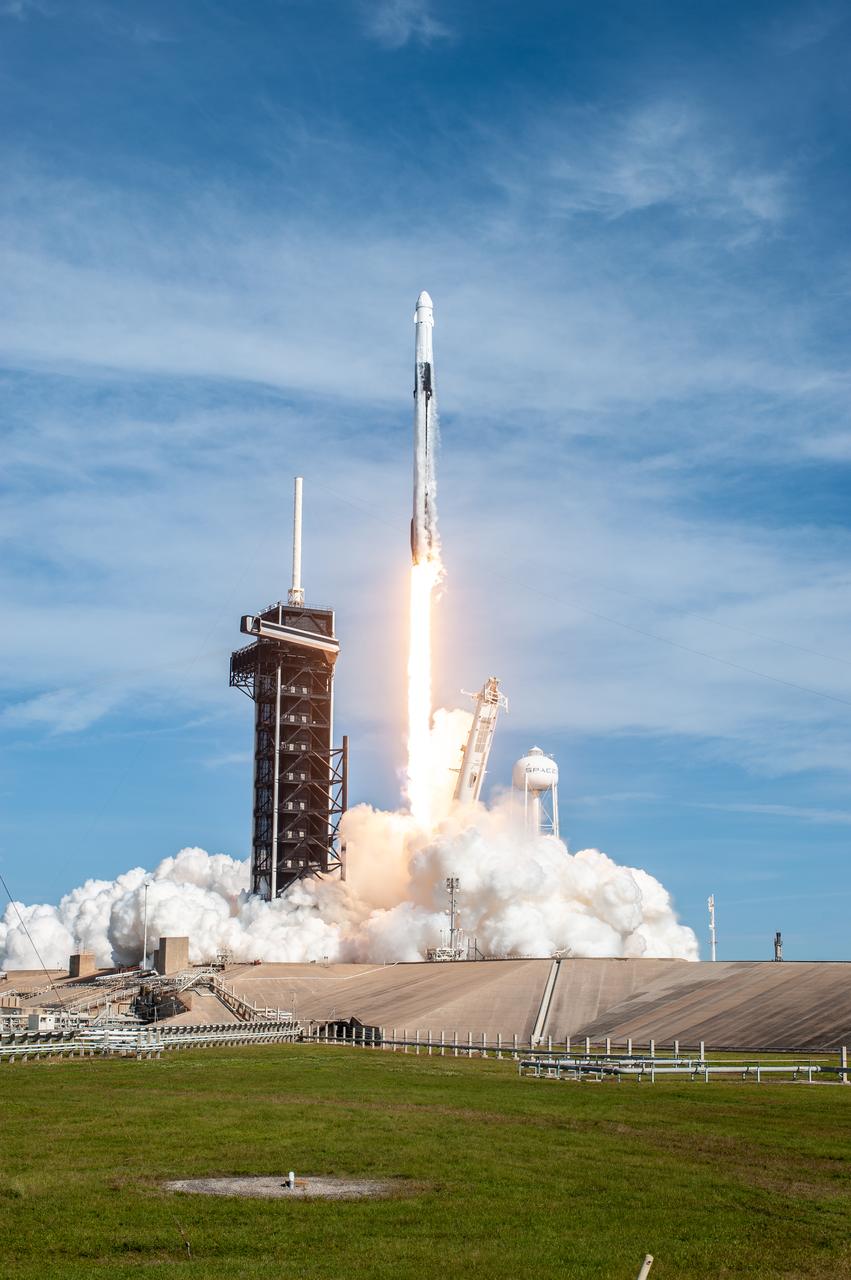
A SpaceX Falcon 9 rocket lifts off from Launch Complex 39A at Kennedy Space Center in Florida at 11:17 a.m. EST on Dec. 6, 2020, carrying the uncrewed cargo Dragon spacecraft on its journey to the International Space Station for NASA and SpaceX’s 21st Commercial Resupply Services (CRS-21) mission. Dragon will deliver more than 6,400 pounds of science investigations and cargo to the orbiting laboratory. The mission marks the first launch for SpaceX under NASA’s CRS-2 contract.
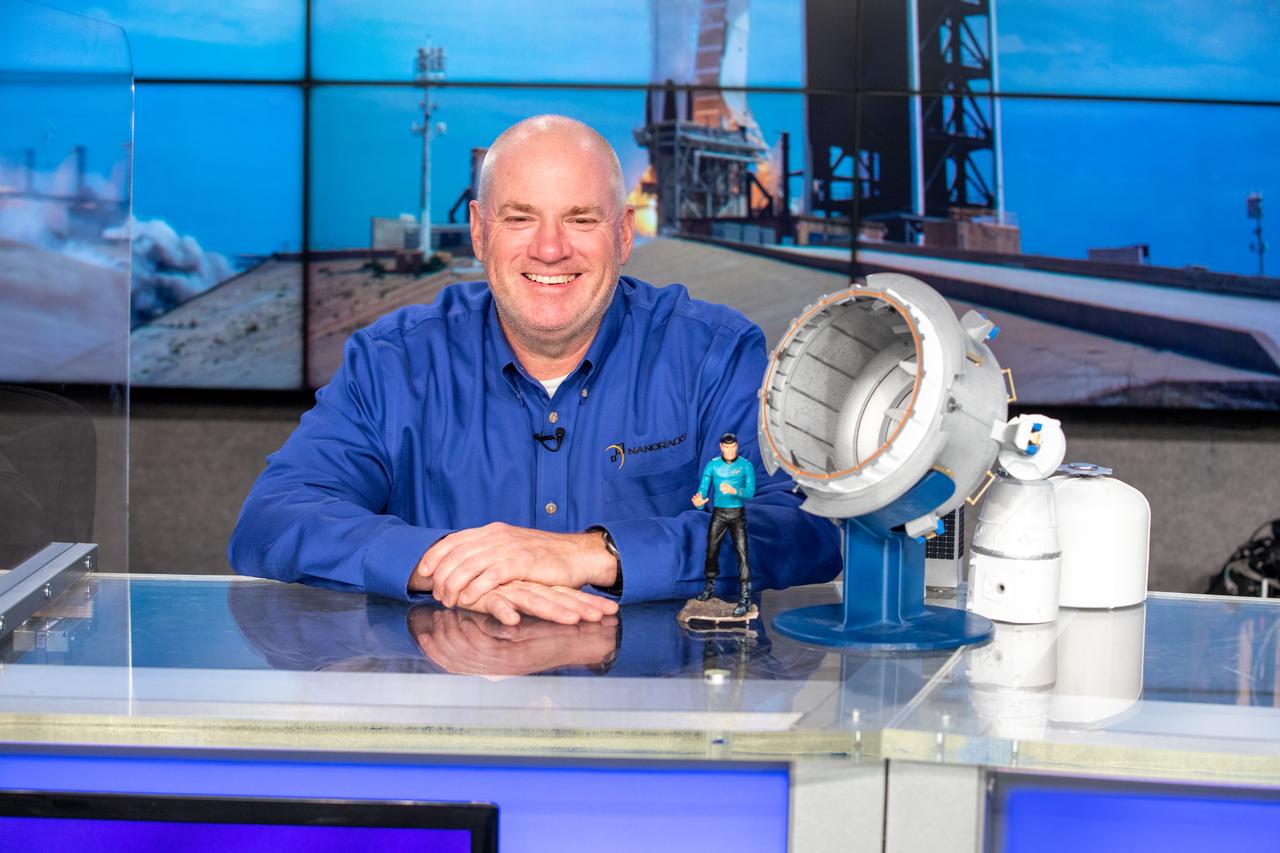
Brock Howe, airlock program manager, Nanoracks, participates in a #NASASocial Science and Station Q&A show at the agency’s Kennedy Space Center in Florida on Dec. 4, 2020. Jennifer Scott-Williams, ISS Program Research Office; and Pinar Mesci, project scientist, Sanford Consortium for Regenerative Medicine, UC San Diego, also participated in the event, which was moderated by NASA Communications’ Kenna Pell. SpaceX’s 21st Commercial Resupply Services (CRS-21) mission is scheduled to launch from Kennedy’s Launch Complex 39A on Dec. 5, 2020. Liftoff of the SpaceX Falcon 9 rocket and cargo Dragon spacecraft is targeted for 11:39 a.m. EST.
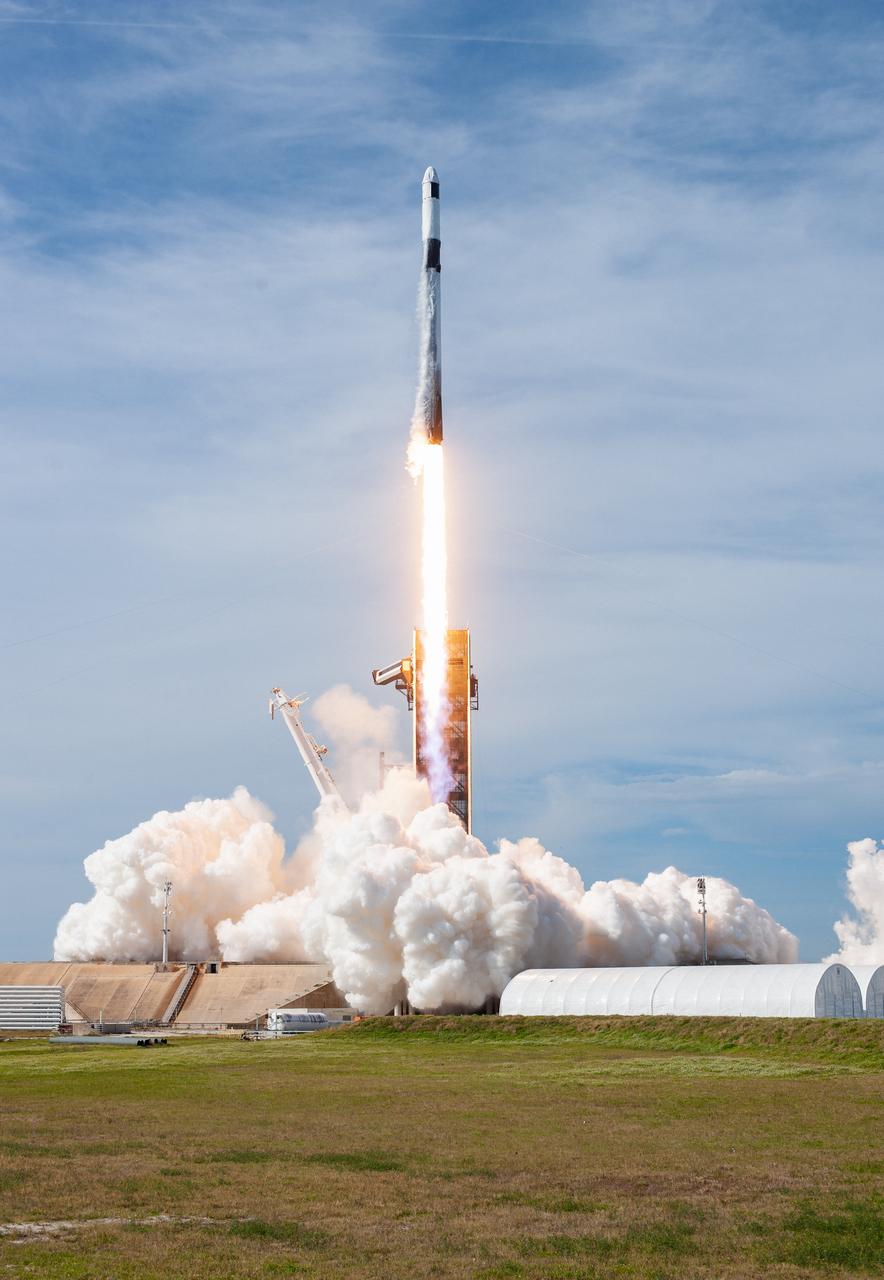
A SpaceX Falcon 9 rocket lifts off from Launch Complex 39A at Kennedy Space Center in Florida at 11:17 a.m. EST on Dec. 6, 2020, carrying the uncrewed cargo Dragon spacecraft on its journey to the International Space Station for NASA and SpaceX’s 21st Commercial Resupply Services (CRS-21) mission. Dragon will deliver more than 6,400 pounds of science investigations and cargo to the orbiting laboratory. The mission marks the first launch for SpaceX under NASA’s CRS-2 contract.

A SpaceX Falcon 9 rocket soars into the sky after lifting off from Launch Complex 39A at Kennedy Space Center in Florida at 11:17 a.m. EST on Dec. 6, 2020. The rocket is carrying the uncrewed cargo Dragon spacecraft on its journey to the International Space Station for NASA and SpaceX’s 21st Commercial Resupply Services (CRS-21) mission. Dragon will deliver more than 6,400 pounds of science investigations and cargo to the orbiting laboratory. The mission marks the first launch for SpaceX under NASA’s CRS-2 contract.
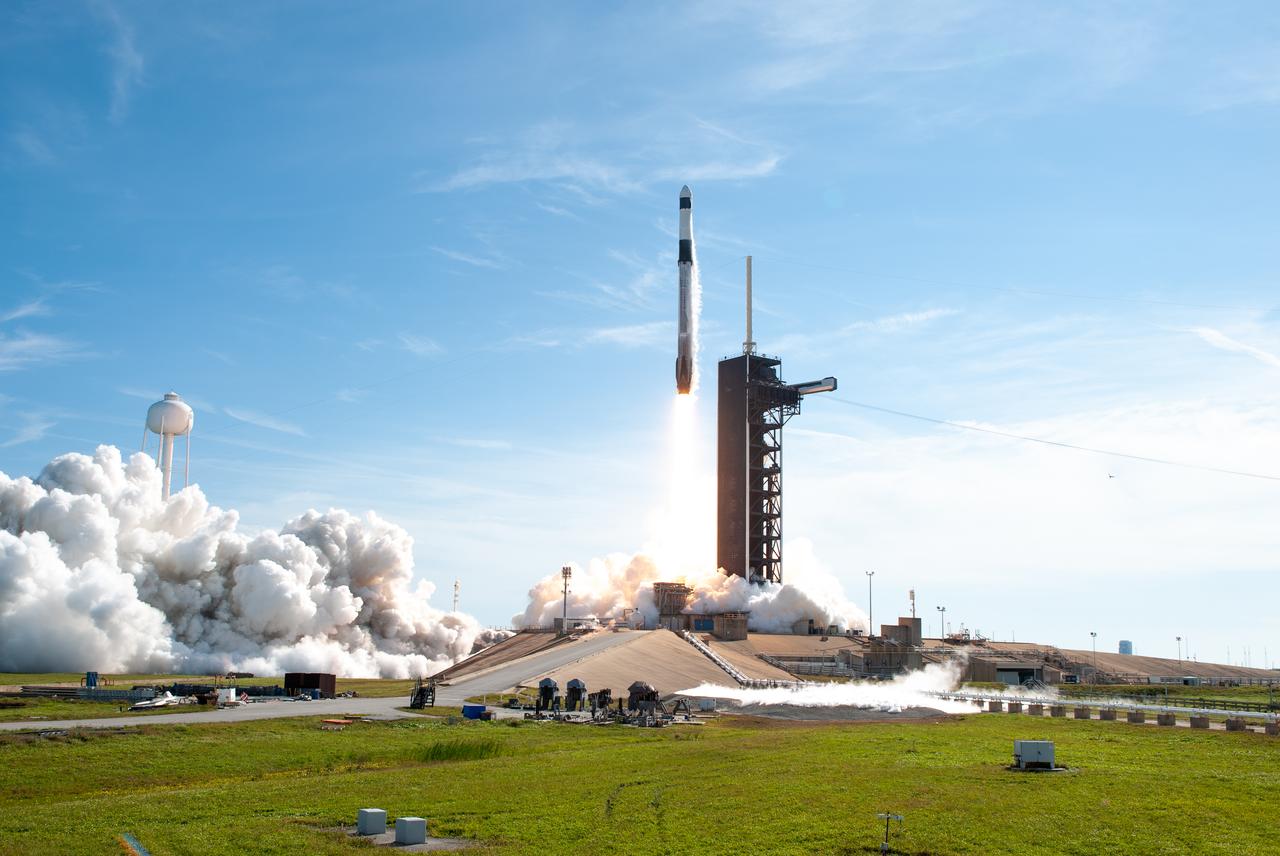
A SpaceX Falcon 9 rocket lifts off from Launch Complex 39A at Kennedy Space Center in Florida at 11:17 a.m. EST on Dec. 6, 2020, carrying the uncrewed cargo Dragon spacecraft on its journey to the International Space Station for NASA and SpaceX’s 21st Commercial Resupply Services (CRS-21) mission. Dragon will deliver more than 6,400 pounds of science investigations and cargo to the orbiting laboratory. The mission marks the first launch for SpaceX under NASA’s CRS-2 contract.
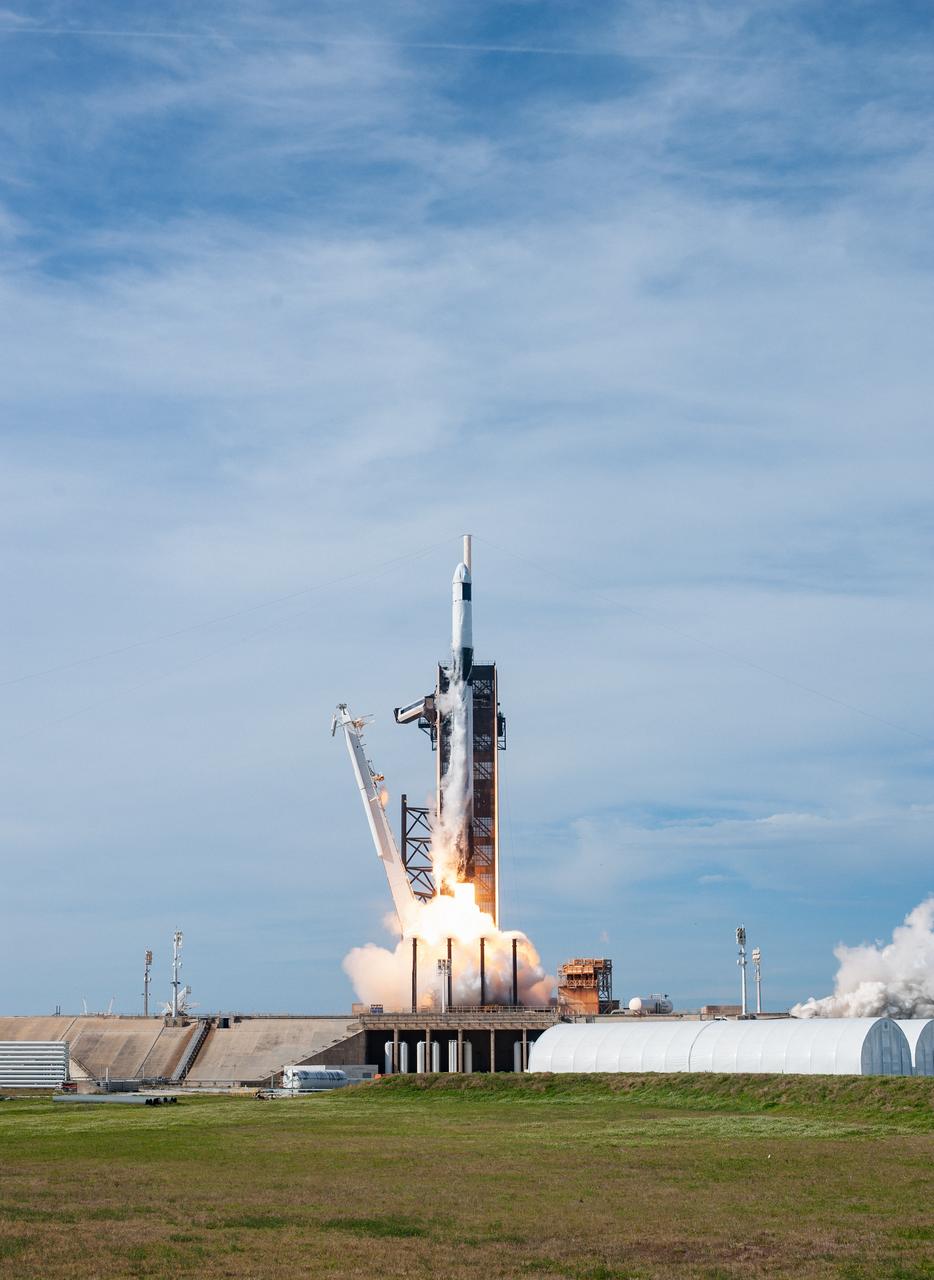
A SpaceX Falcon 9 rocket lifts off from Launch Complex 39A at Kennedy Space Center in Florida at 11:17 a.m. EST on Dec. 6, 2020, carrying the uncrewed cargo Dragon spacecraft on its journey to the International Space Station for NASA and SpaceX’s 21st Commercial Resupply Services (CRS-21) mission. Dragon will deliver more than 6,400 pounds of science investigations and cargo to the orbiting laboratory. The mission marks the first launch for SpaceX under NASA’s CRS-2 contract.
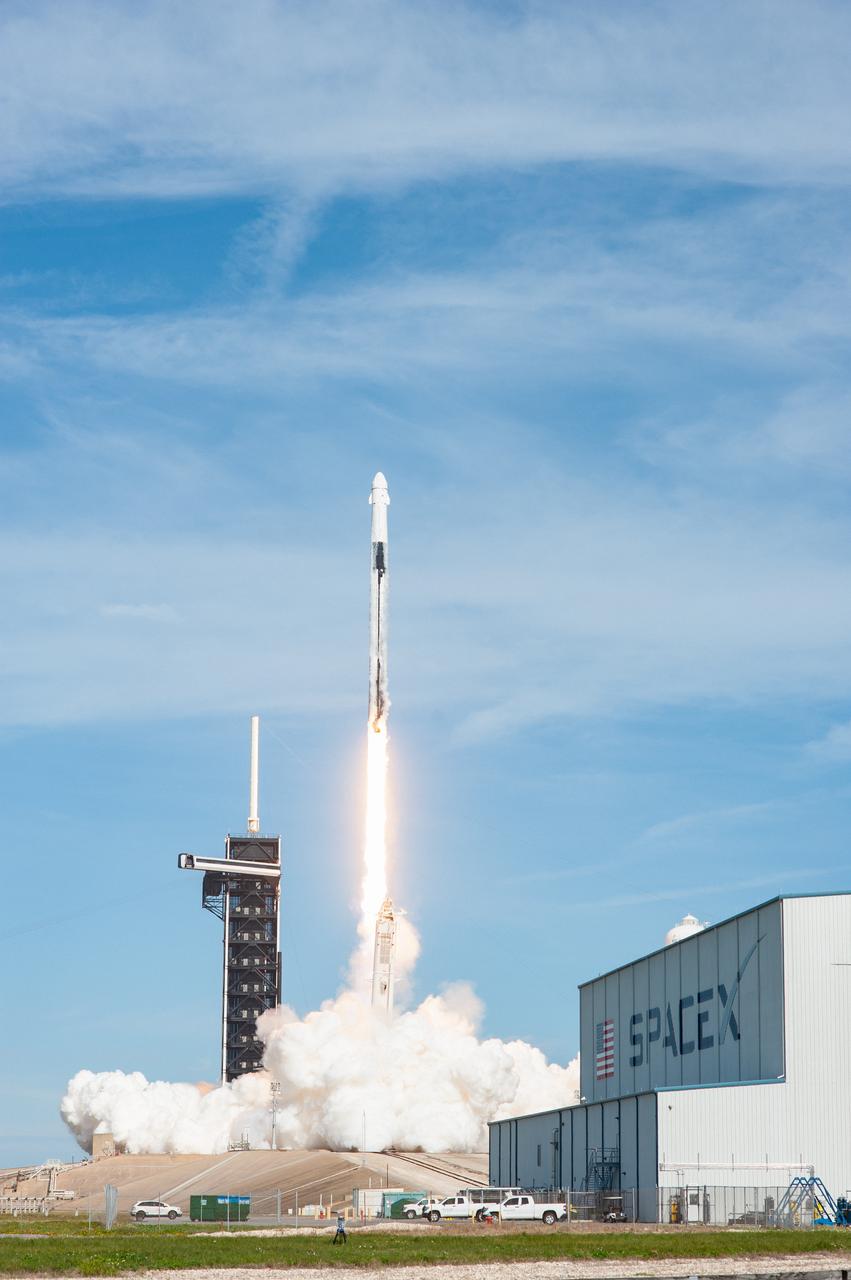
A SpaceX Falcon 9 rocket lifts off from Launch Complex 39A at Kennedy Space Center in Florida at 11:17 a.m. EST on Dec. 6, 2020, carrying the uncrewed cargo Dragon spacecraft on its journey to the International Space Station for NASA and SpaceX’s 21st Commercial Resupply Services (CRS-21) mission. Dragon will deliver more than 6,400 pounds of science investigations and cargo to the orbiting laboratory. The mission marks the first launch for SpaceX under NASA’s CRS-2 contract.
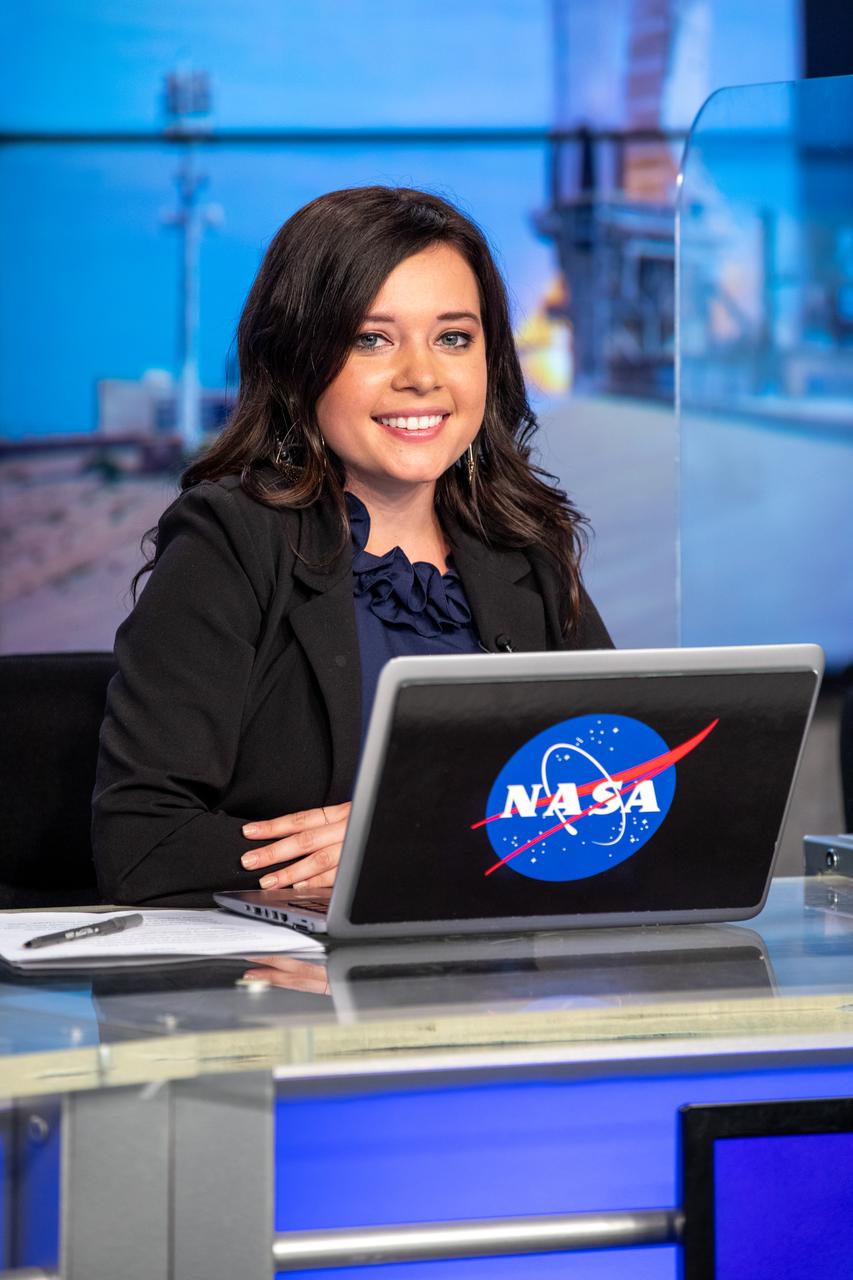
NASA Communications’ Kenna Pell moderates a #NASASocial Science and Station Q&A show at the agency’s Kennedy Space Center in Florida on Dec. 4, 2020. Participants included Brock Howe, airlock program manager, Nanoracks; Jennifer Scott-Williams, ISS Program Research Office; and Pinar Mesci, project scientist, Sanford Consortium for Regenerative Medicine, UC San Diego. SpaceX’s 21st Commercial Resupply Services (CRS-21) mission is scheduled to launch from Kennedy’s Launch Complex 39A on Dec. 5, 2020. Liftoff of the SpaceX Falcon 9 rocket and cargo Dragon spacecraft is targeted for 11:39 a.m. EST.
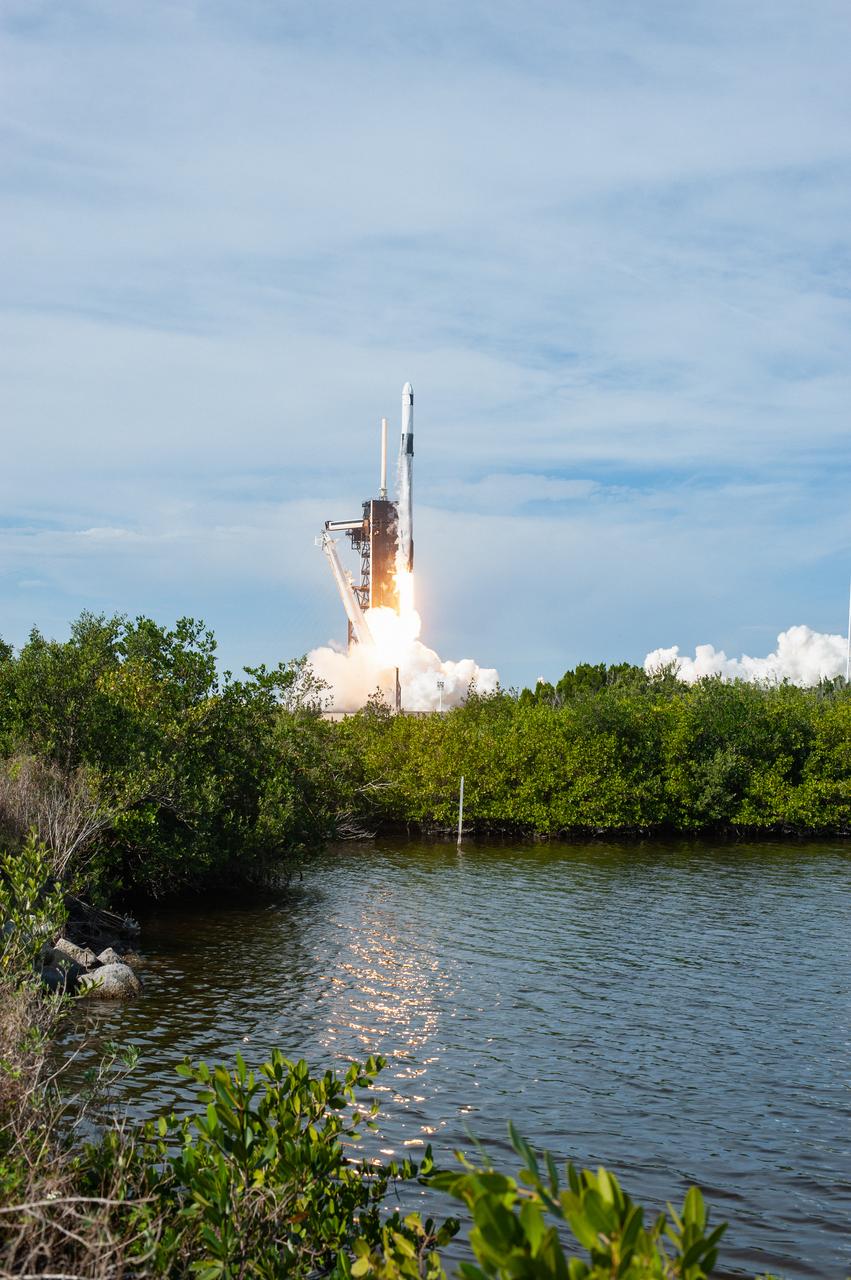
A SpaceX Falcon 9 rocket lifts off from Launch Complex 39A at Kennedy Space Center in Florida at 11:17 a.m. EST on Dec. 6, 2020, carrying the uncrewed cargo Dragon spacecraft on its journey to the International Space Station for NASA and SpaceX’s 21st Commercial Resupply Services (CRS-21) mission. Dragon will deliver more than 6,400 pounds of science investigations and cargo to the orbiting laboratory. The mission marks the first launch for SpaceX under NASA’s CRS-2 contract.
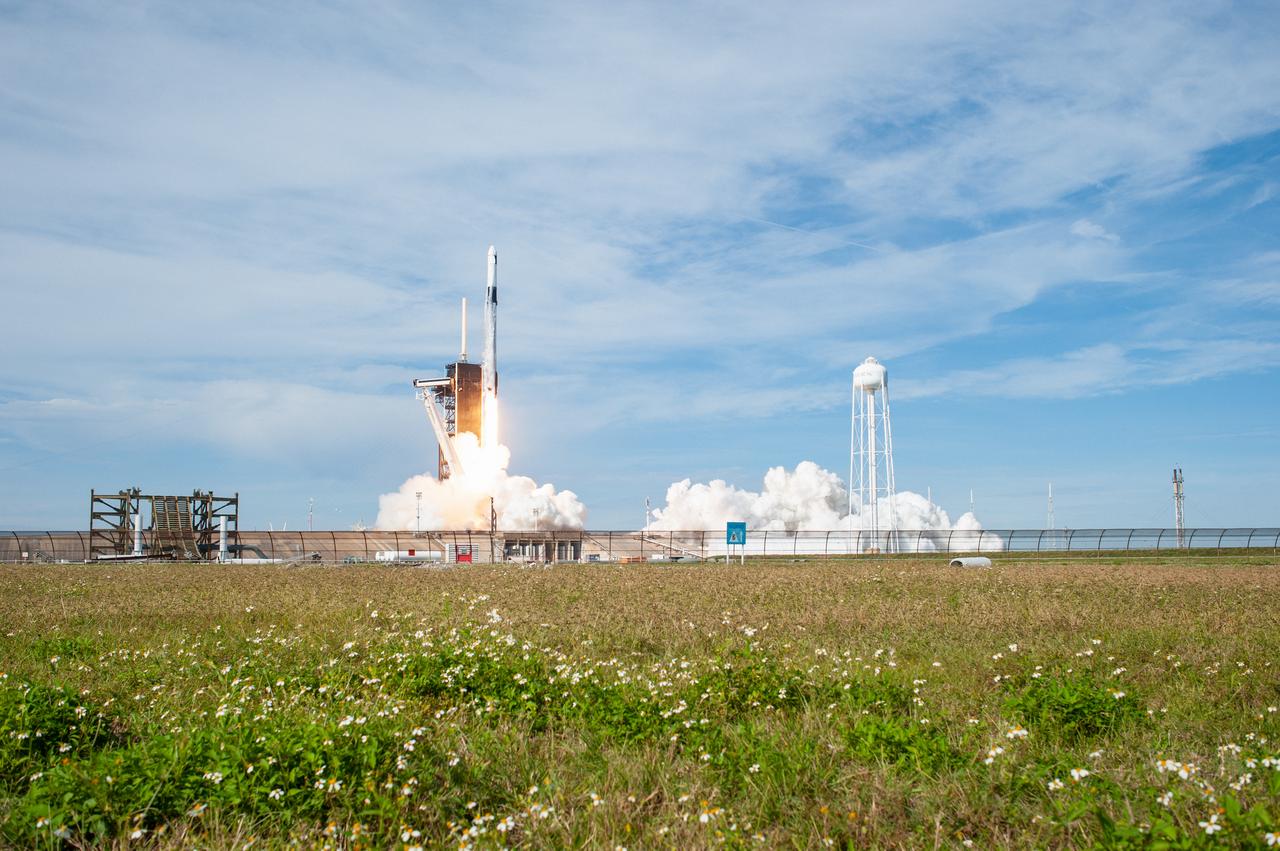
A SpaceX Falcon 9 rocket lifts off from Launch Complex 39A at Kennedy Space Center in Florida at 11:17 a.m. EST on Dec. 6, 2020, carrying the uncrewed cargo Dragon spacecraft on its journey to the International Space Station for NASA and SpaceX’s 21st Commercial Resupply Services (CRS-21) mission. Dragon will deliver more than 6,400 pounds of science investigations and cargo to the orbiting laboratory. The mission marks the first launch for SpaceX under NASA’s CRS-2 contract.
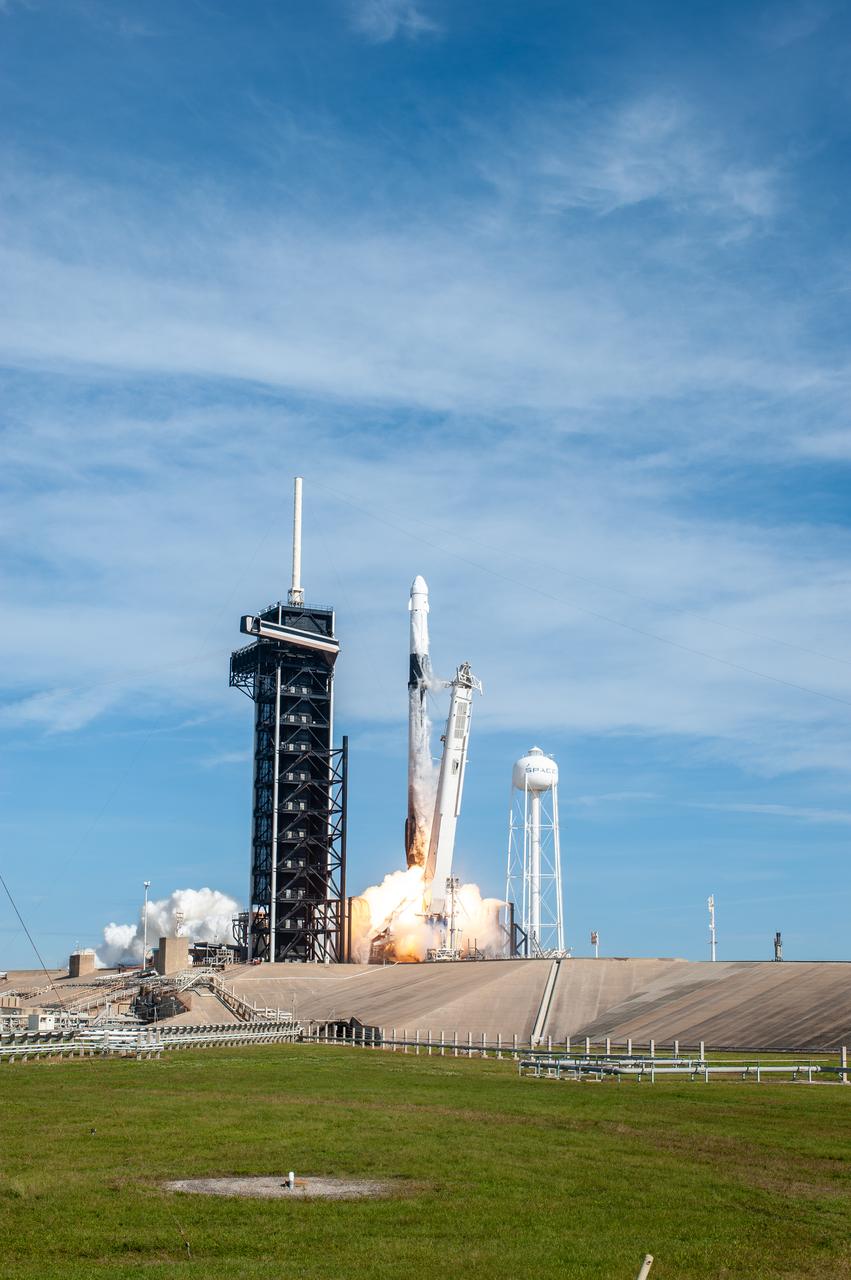
A SpaceX Falcon 9 rocket lifts off from Launch Complex 39A at Kennedy Space Center in Florida at 11:17 a.m. EST on Dec. 6, 2020, carrying the uncrewed cargo Dragon spacecraft on its journey to the International Space Station for NASA and SpaceX’s 21st Commercial Resupply Services (CRS-21) mission. Dragon will deliver more than 6,400 pounds of science investigations and cargo to the orbiting laboratory. The mission marks the first launch for SpaceX under NASA’s CRS-2 contract.
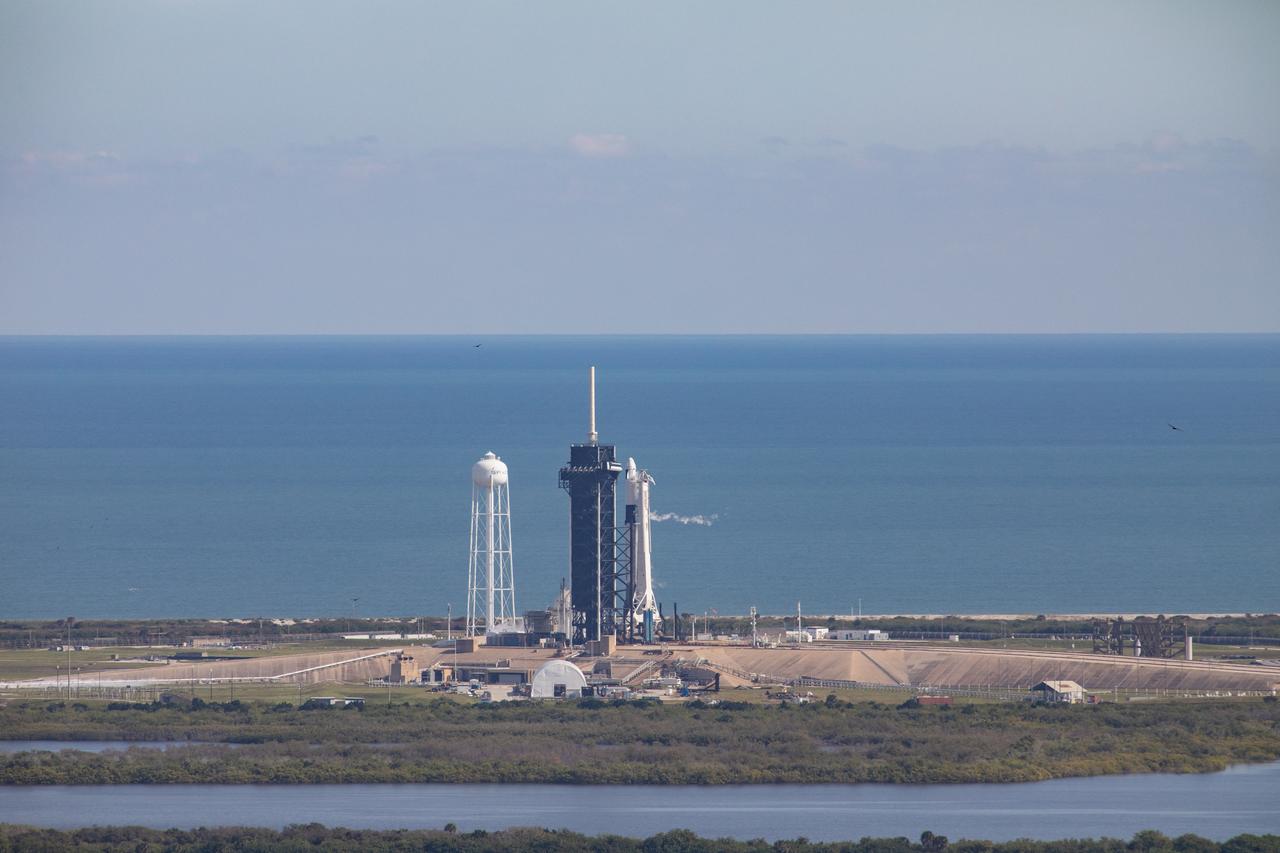
A SpaceX Falcon 9 rocket and cargo Dragon spacecraft stand poised for launch moments before liftoff at Kennedy Space Center’s Launch Complex 39A in Florida on Dec. 6, 2020, for NASA and SpaceX’s 21st Commercial Resupply Services (CRS-21) mission to the International Space Station. The first launch for SpaceX under NASA’s CRS-2 contract, the mission blasted off the pad at 11:17 a.m. EST.
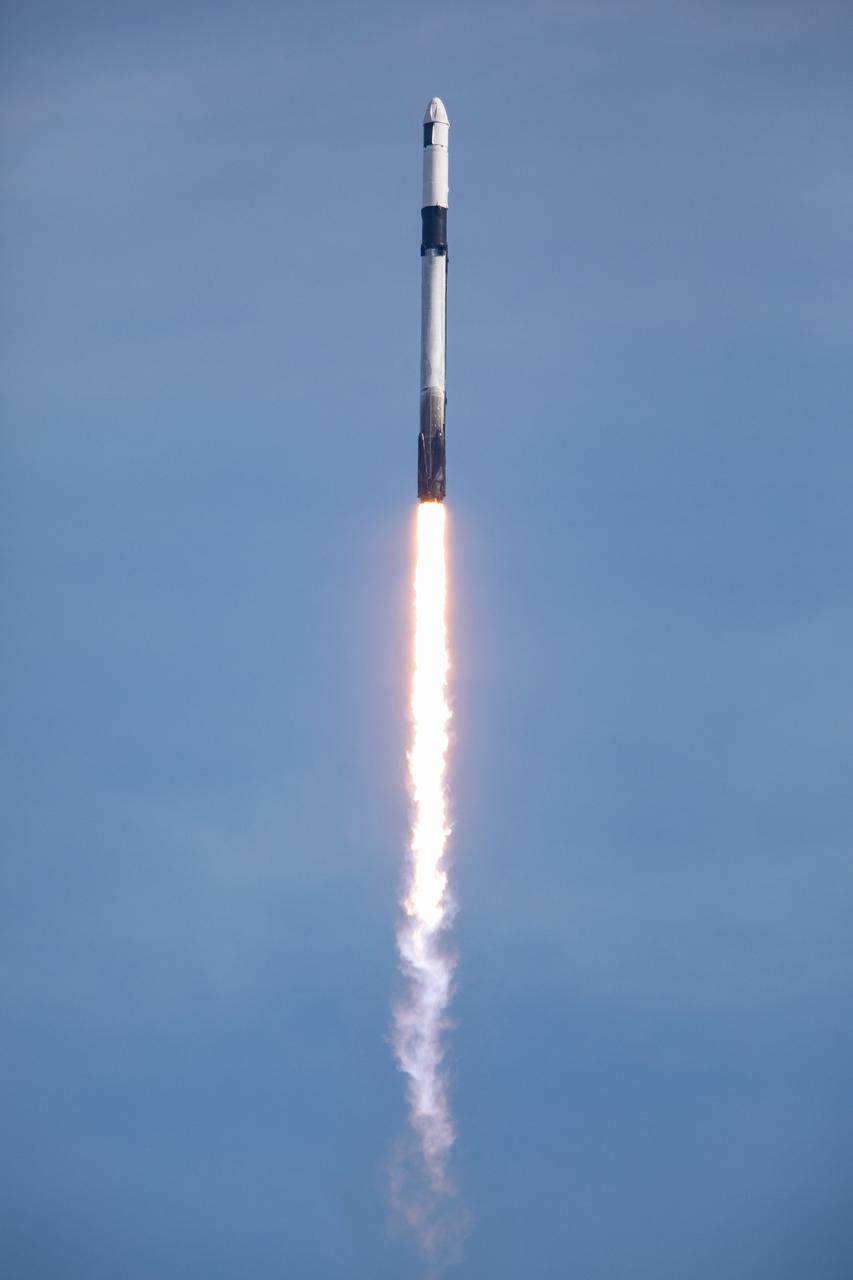
A SpaceX Falcon 9 rocket soars into the sky after lifting off from Launch Complex 39A at Kennedy Space Center in Florida at 11:17 a.m. EST on Dec. 6, 2020. The rocket is carrying the uncrewed cargo Dragon spacecraft on its journey to the International Space Station for NASA and SpaceX’s 21st Commercial Resupply Services (CRS-21) mission. Dragon will deliver more than 6,400 pounds of science investigations and cargo to the orbiting laboratory. The mission marks the first launch for SpaceX under NASA’s CRS-2 contract.
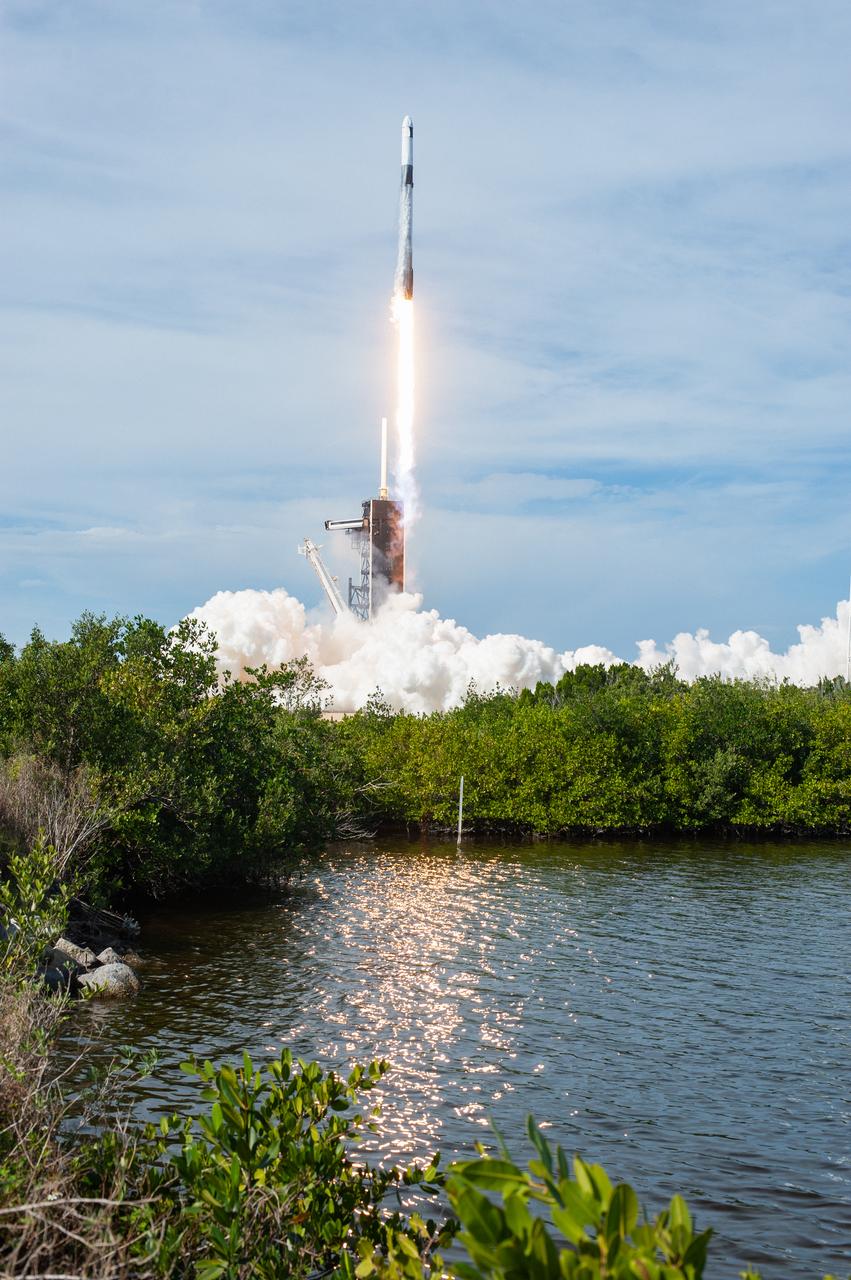
A SpaceX Falcon 9 rocket lifts off from Launch Complex 39A at Kennedy Space Center in Florida at 11:17 a.m. EST on Dec. 6, 2020, carrying the uncrewed cargo Dragon spacecraft on its journey to the International Space Station for NASA and SpaceX’s 21st Commercial Resupply Services (CRS-21) mission. Dragon will deliver more than 6,400 pounds of science investigations and cargo to the orbiting laboratory. The mission marks the first launch for SpaceX under NASA’s CRS-2 contract.
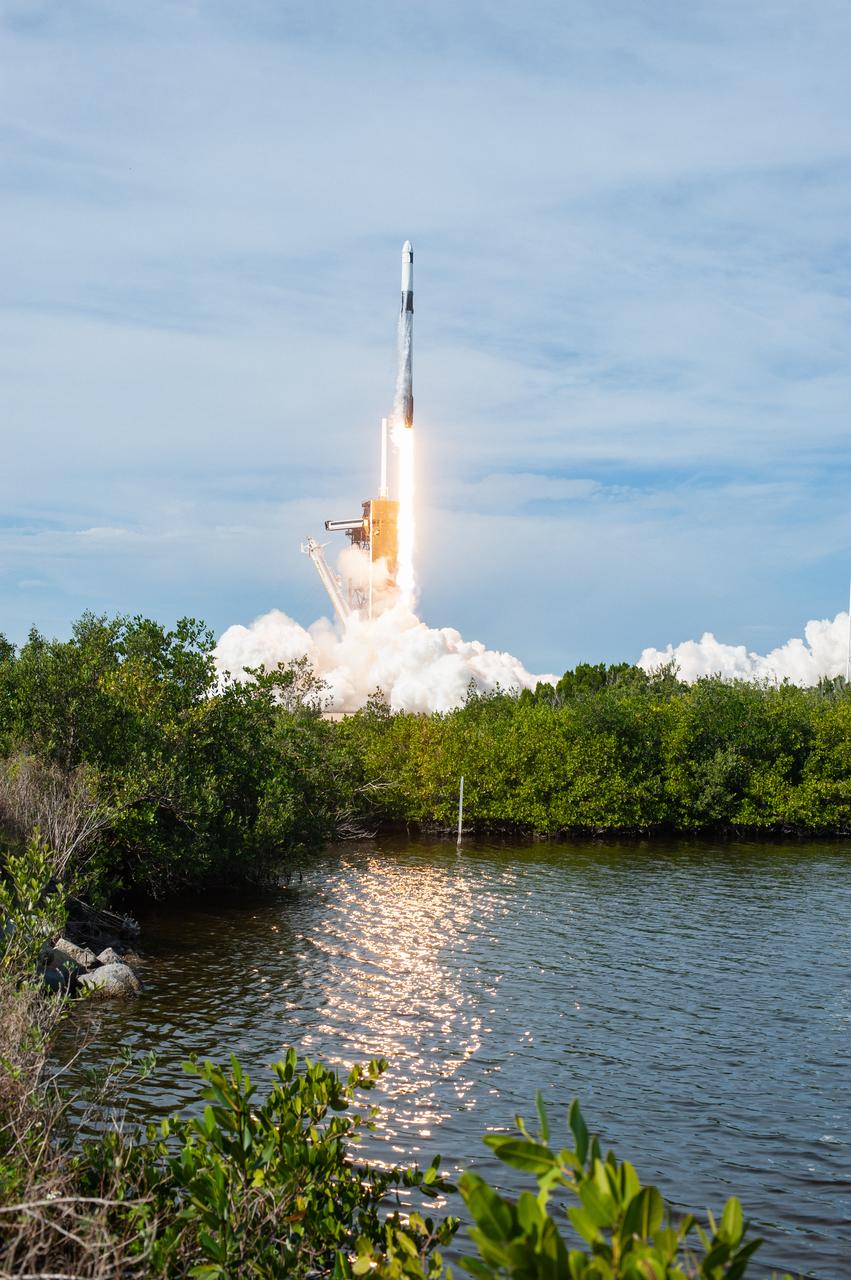
A SpaceX Falcon 9 rocket lifts off from Launch Complex 39A at Kennedy Space Center in Florida at 11:17 a.m. EST on Dec. 6, 2020, carrying the uncrewed cargo Dragon spacecraft on its journey to the International Space Station for NASA and SpaceX’s 21st Commercial Resupply Services (CRS-21) mission. Dragon will deliver more than 6,400 pounds of science investigations and cargo to the orbiting laboratory. The mission marks the first launch for SpaceX under NASA’s CRS-2 contract.
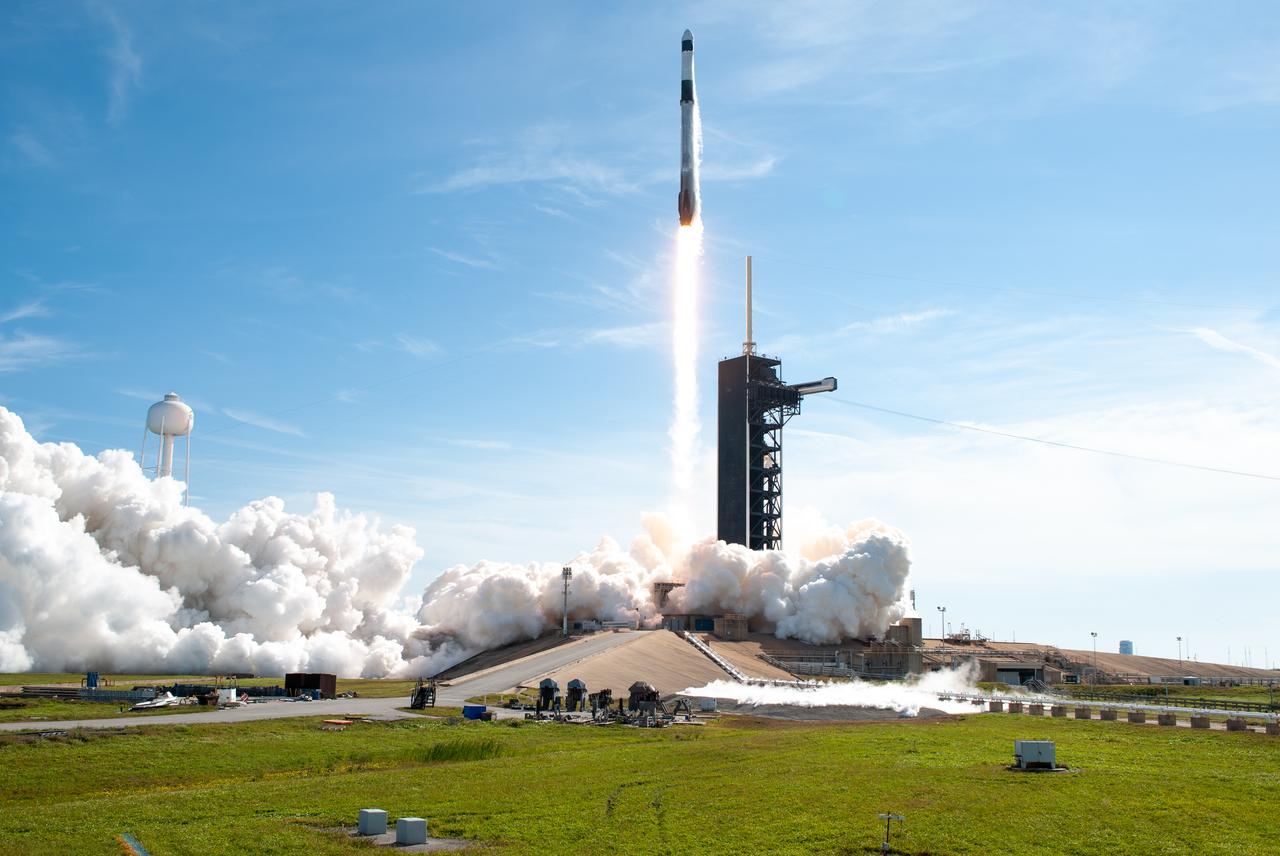
A SpaceX Falcon 9 rocket lifts off from Launch Complex 39A at Kennedy Space Center in Florida at 11:17 a.m. EST on Dec. 6, 2020, carrying the uncrewed cargo Dragon spacecraft on its journey to the International Space Station for NASA and SpaceX’s 21st Commercial Resupply Services (CRS-21) mission. Dragon will deliver more than 6,400 pounds of science investigations and cargo to the orbiting laboratory. The mission marks the first launch for SpaceX under NASA’s CRS-2 contract.
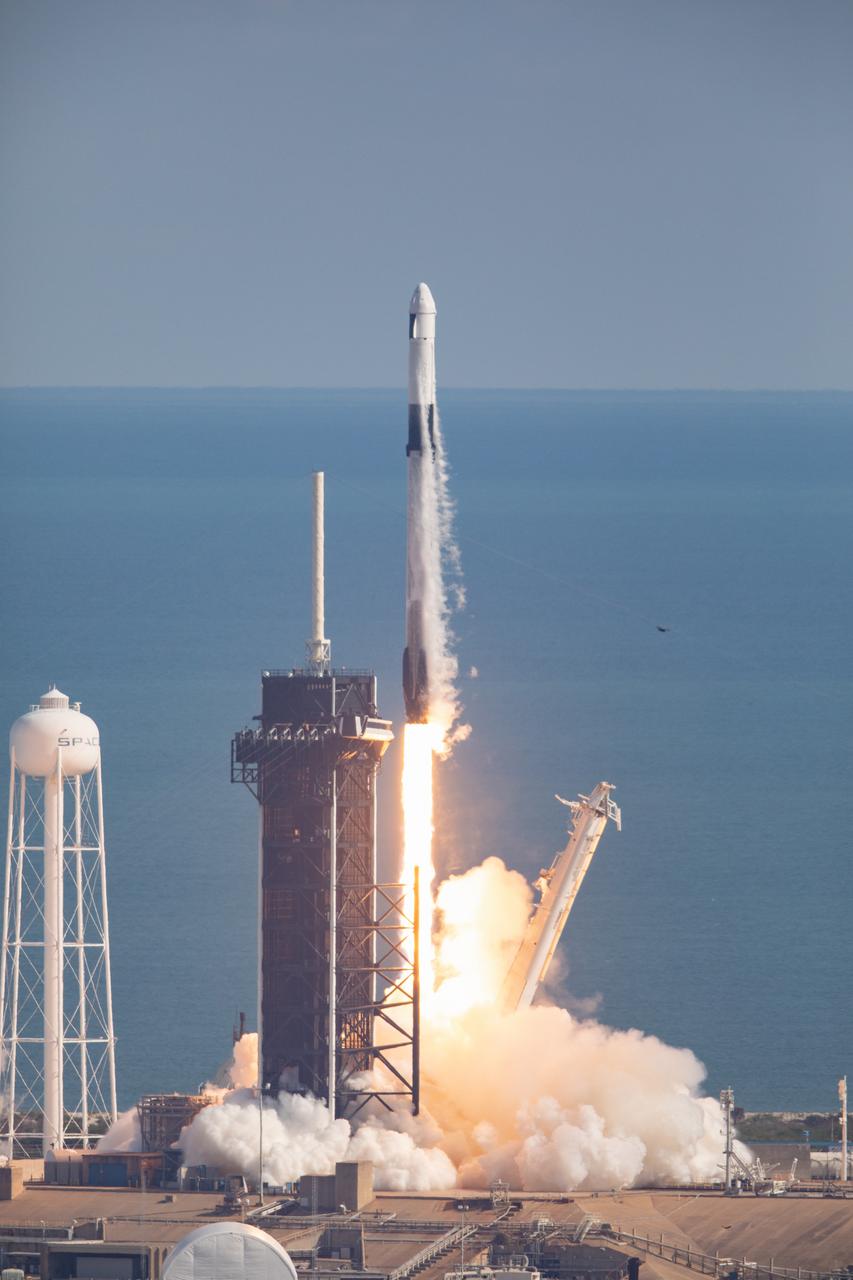
A SpaceX Falcon 9 rocket lifts off from Launch Complex 39A at Kennedy Space Center in Florida at 11:17 a.m. EST on Dec. 6, 2020, carrying the uncrewed cargo Dragon spacecraft on its journey to the International Space Station for NASA and SpaceX’s 21st Commercial Resupply Services (CRS-21) mission. Dragon will deliver more than 6,400 pounds of science investigations and cargo to the orbiting laboratory. The mission marks the first launch for SpaceX under NASA’s CRS-2 contract.
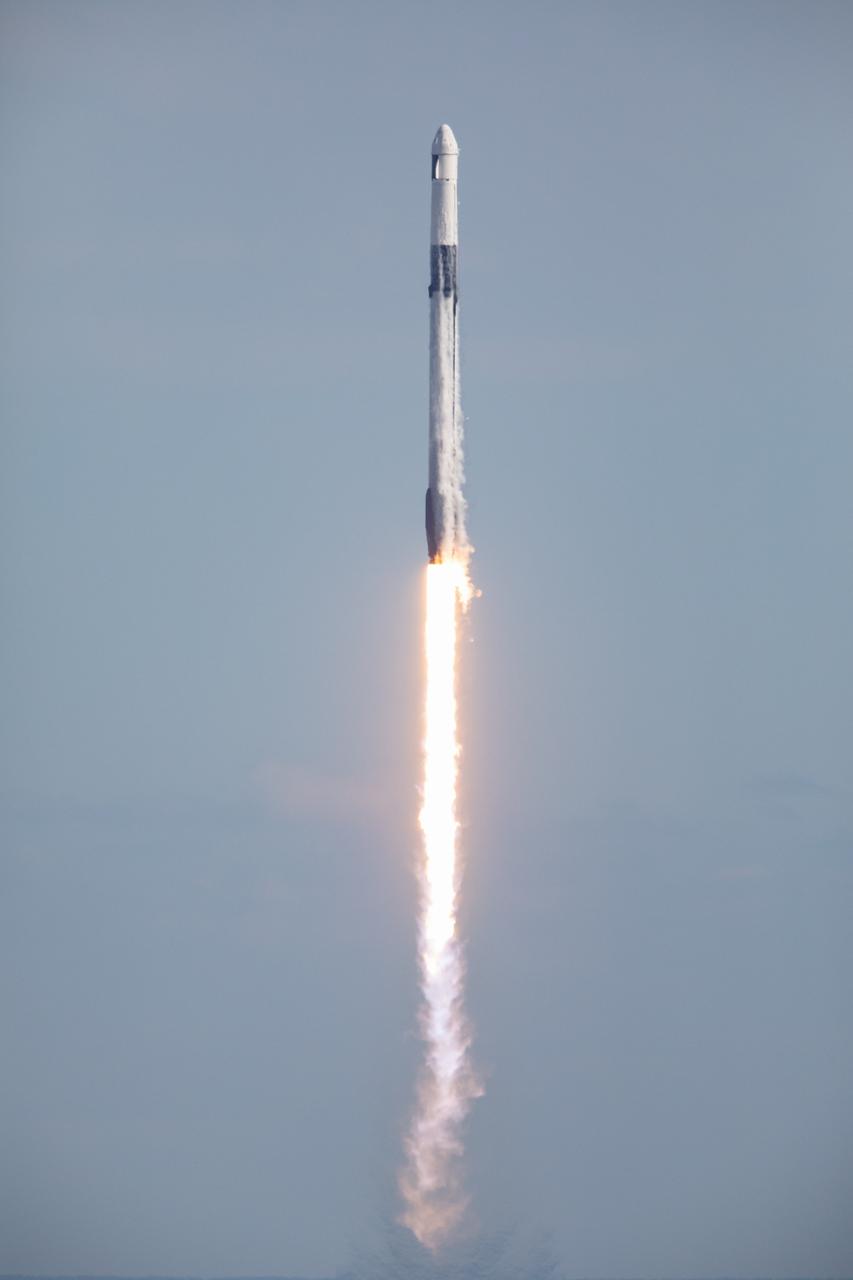
A SpaceX Falcon 9 rocket soars into the sky after lifting off from Launch Complex 39A at Kennedy Space Center in Florida at 11:17 a.m. EST on Dec. 6, 2020. The rocket is carrying the uncrewed cargo Dragon spacecraft on its journey to the International Space Station for NASA and SpaceX’s 21st Commercial Resupply Services (CRS-21) mission. Dragon will deliver more than 6,400 pounds of science investigations and cargo to the orbiting laboratory. The mission marks the first launch for SpaceX under NASA’s CRS-2 contract.
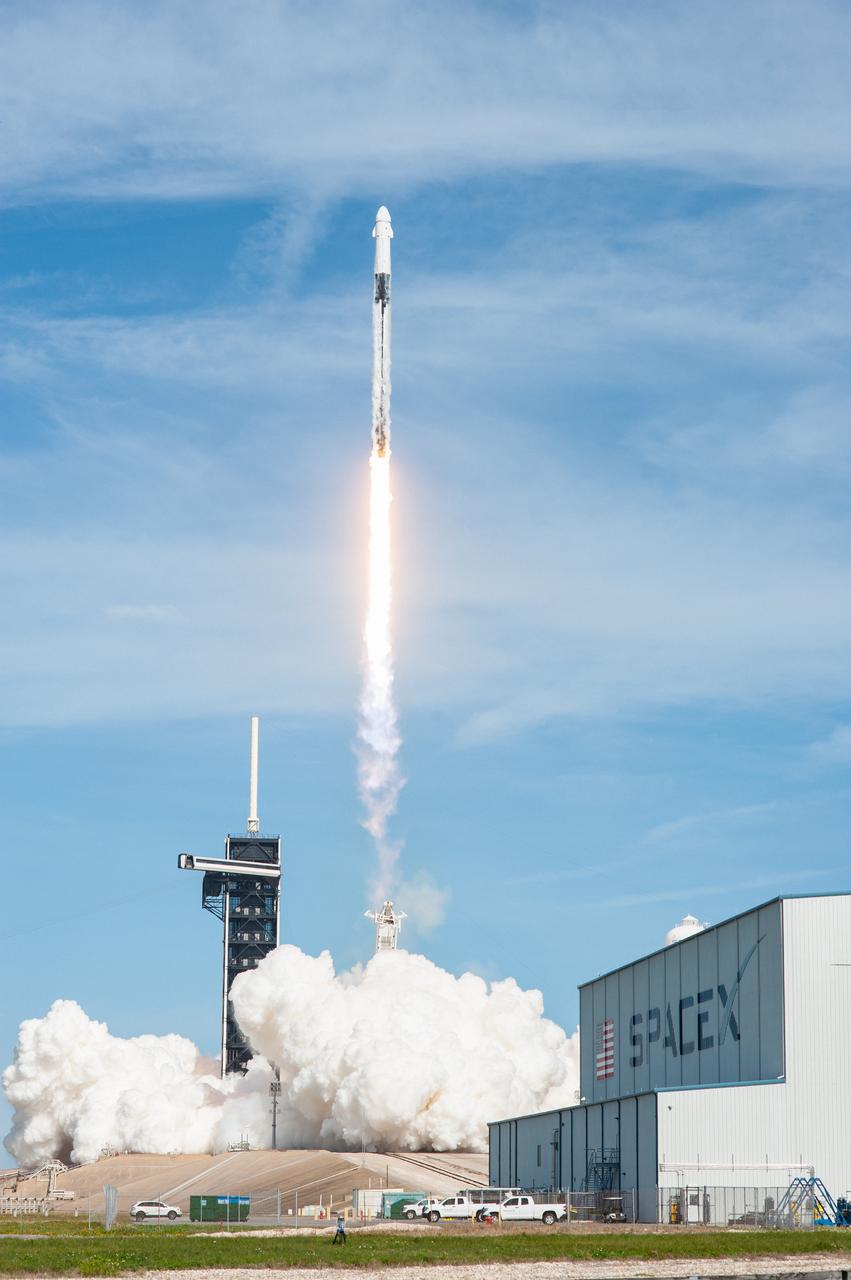
A SpaceX Falcon 9 rocket lifts off from Launch Complex 39A at Kennedy Space Center in Florida at 11:17 a.m. EST on Dec. 6, 2020, carrying the uncrewed cargo Dragon spacecraft on its journey to the International Space Station for NASA and SpaceX’s 21st Commercial Resupply Services (CRS-21) mission. Dragon will deliver more than 6,400 pounds of science investigations and cargo to the orbiting laboratory. The mission marks the first launch for SpaceX under NASA’s CRS-2 contract.
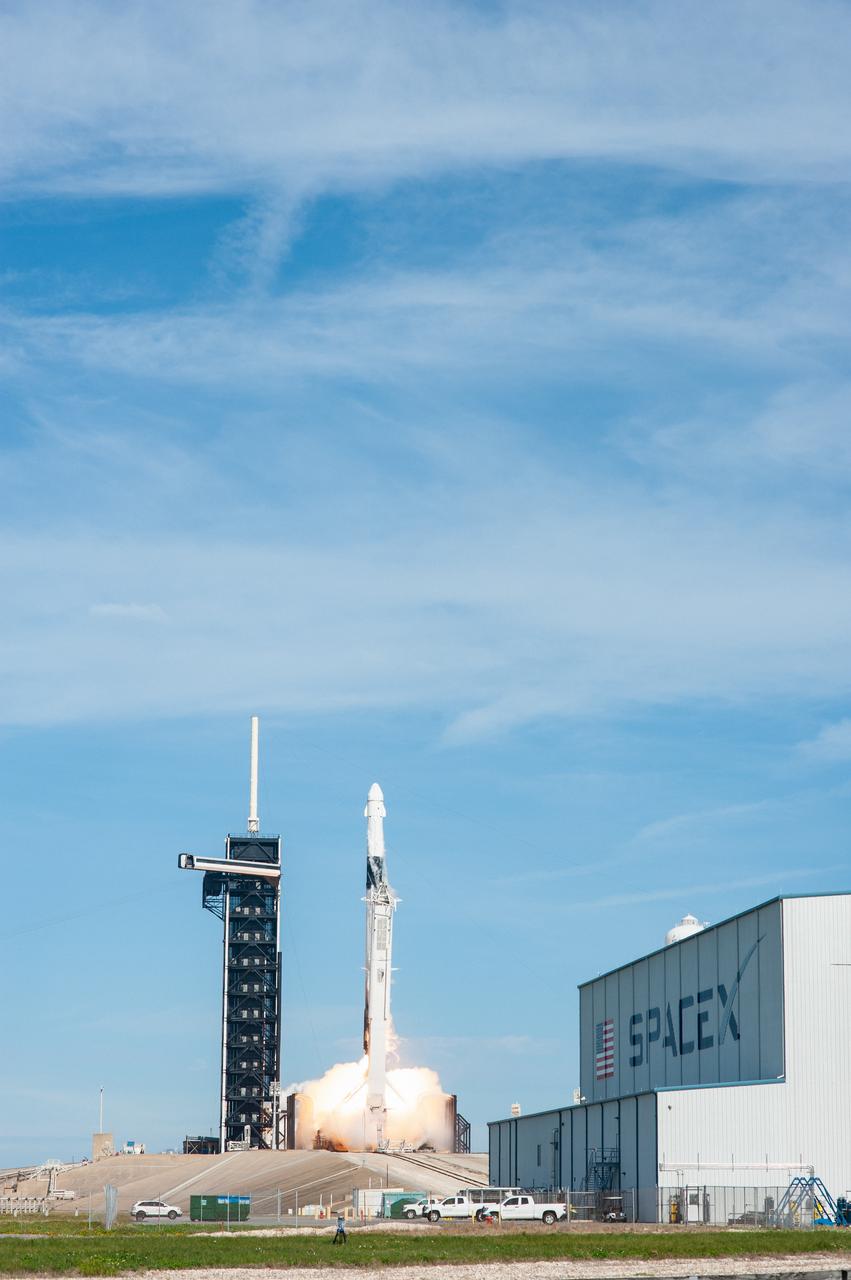
A SpaceX Falcon 9 rocket lifts off from Launch Complex 39A at Kennedy Space Center in Florida at 11:17 a.m. EST on Dec. 6, 2020, carrying the uncrewed cargo Dragon spacecraft on its journey to the International Space Station for NASA and SpaceX’s 21st Commercial Resupply Services (CRS-21) mission. Dragon will deliver more than 6,400 pounds of science investigations and cargo to the orbiting laboratory. The mission marks the first launch for SpaceX under NASA’s CRS-2 contract.