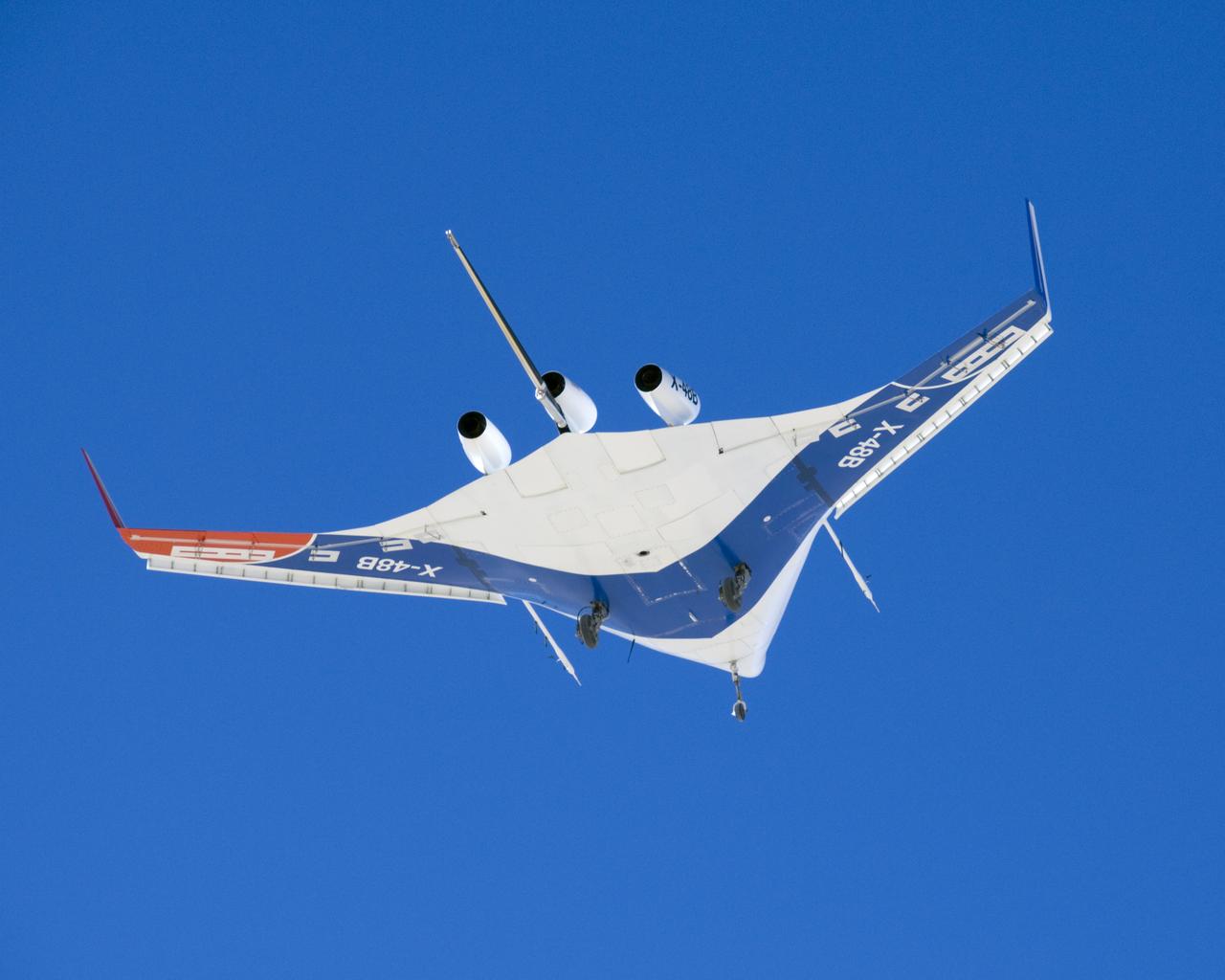
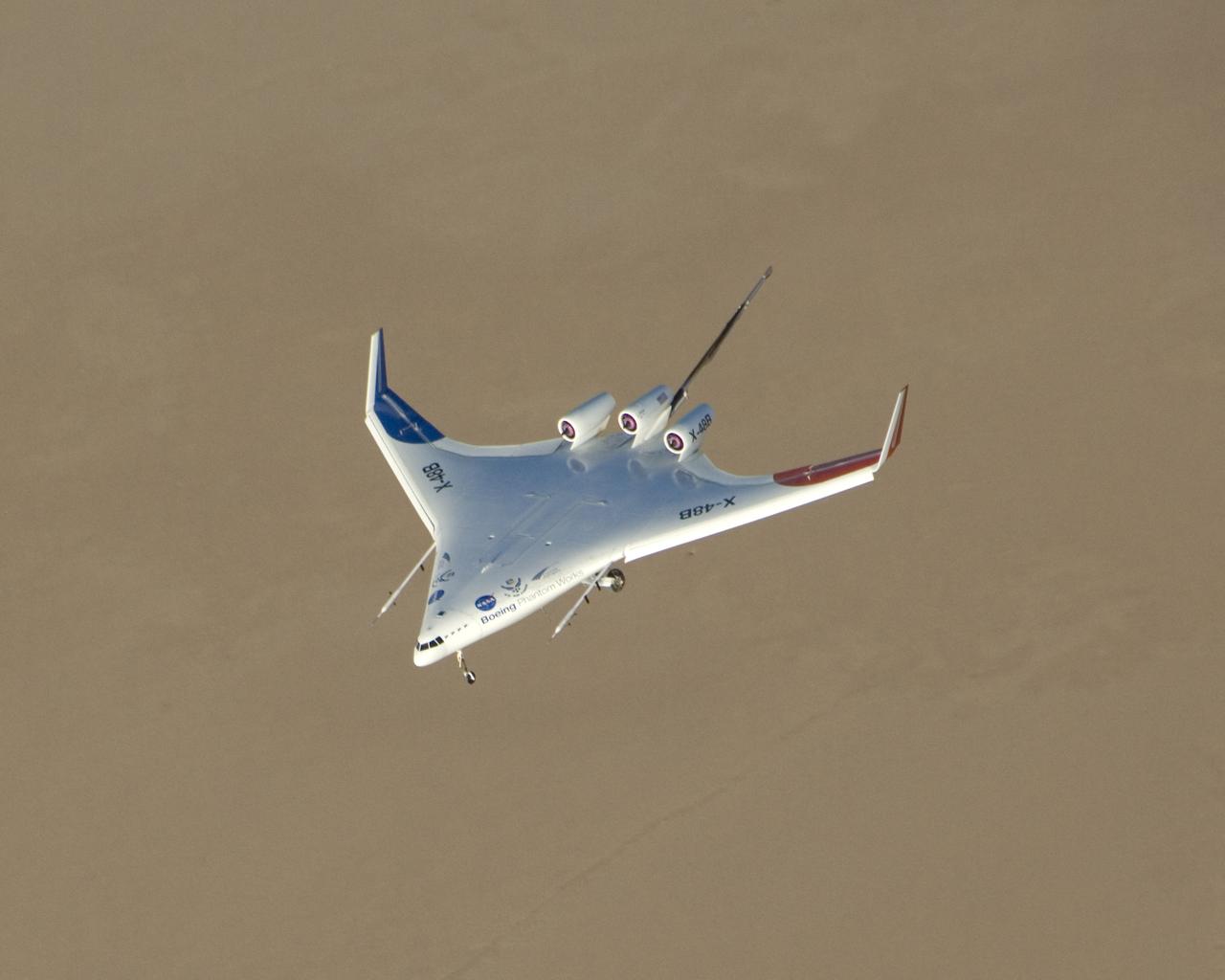
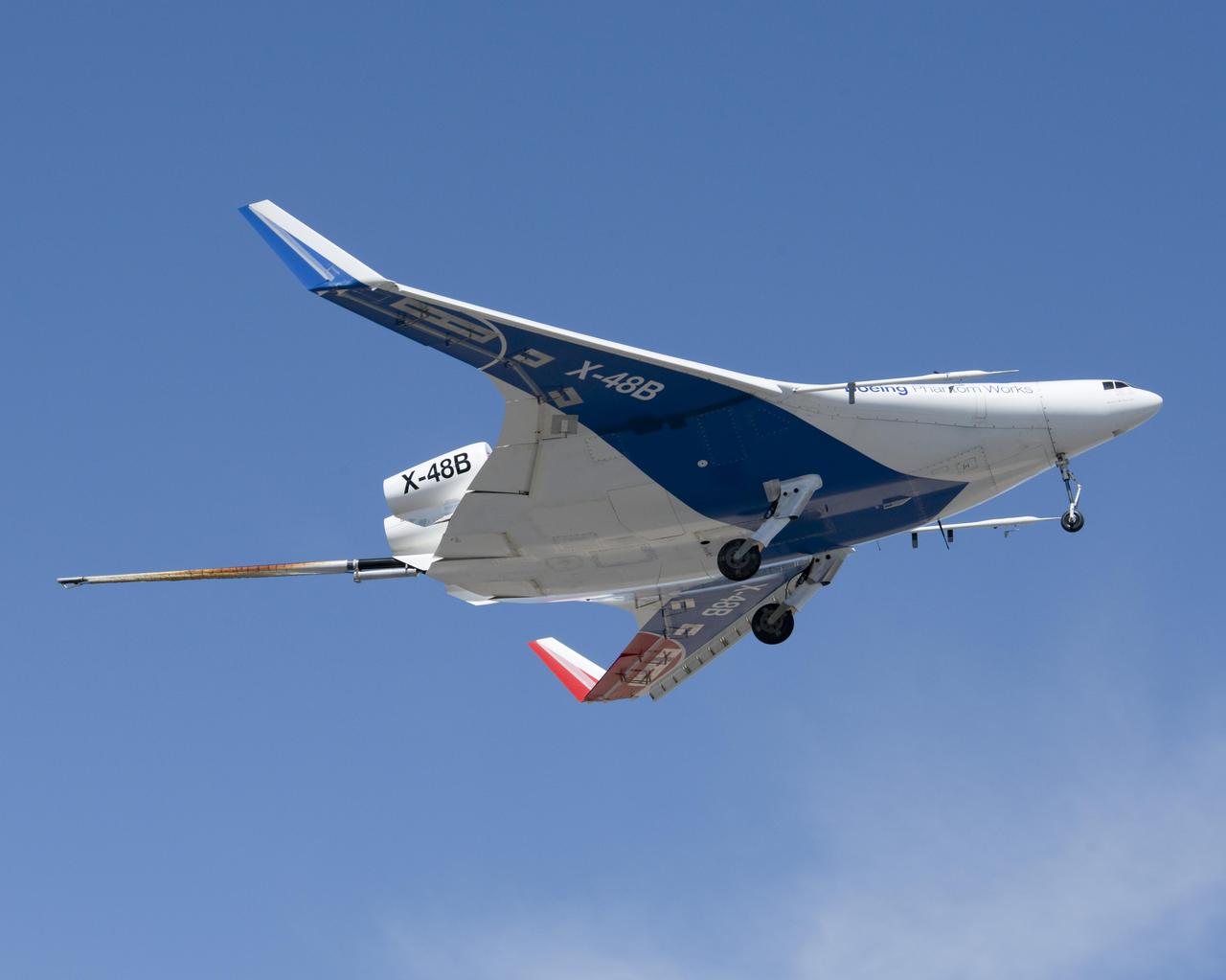
The X-48B Blended Wing Body research aircraft banks smartly in this Block 2 flight phase image.
The X-48B Blended Wing Body research aircraft banks smartly in this Block 2 flight phase image
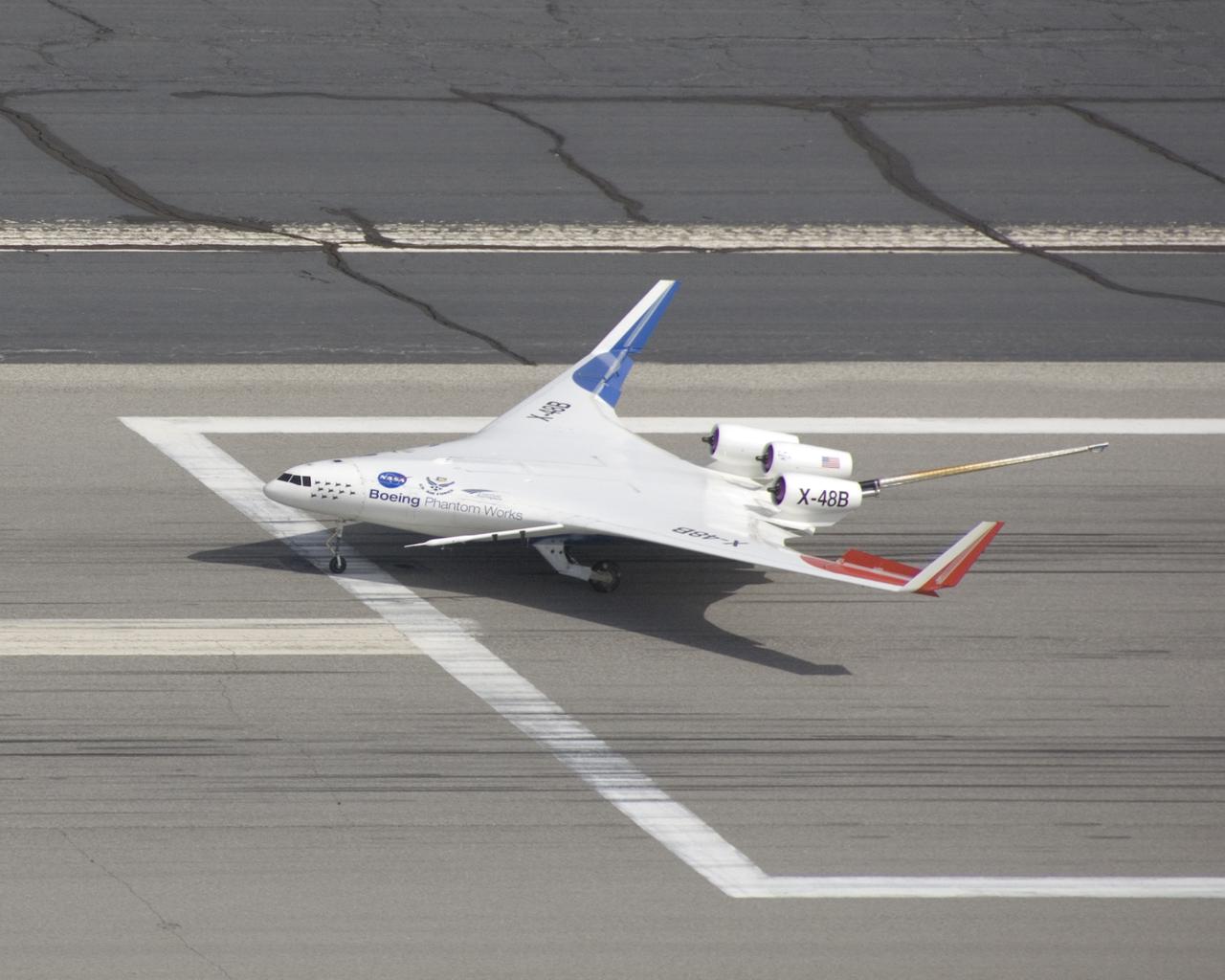
Making a nice landing, the X-48B Blended Wing Body research aircraft team ends another successful Block 2 flight.
Making a nice landing, the X-48B Blended Wing Body research aircraft team ends another successful Block 2 flight
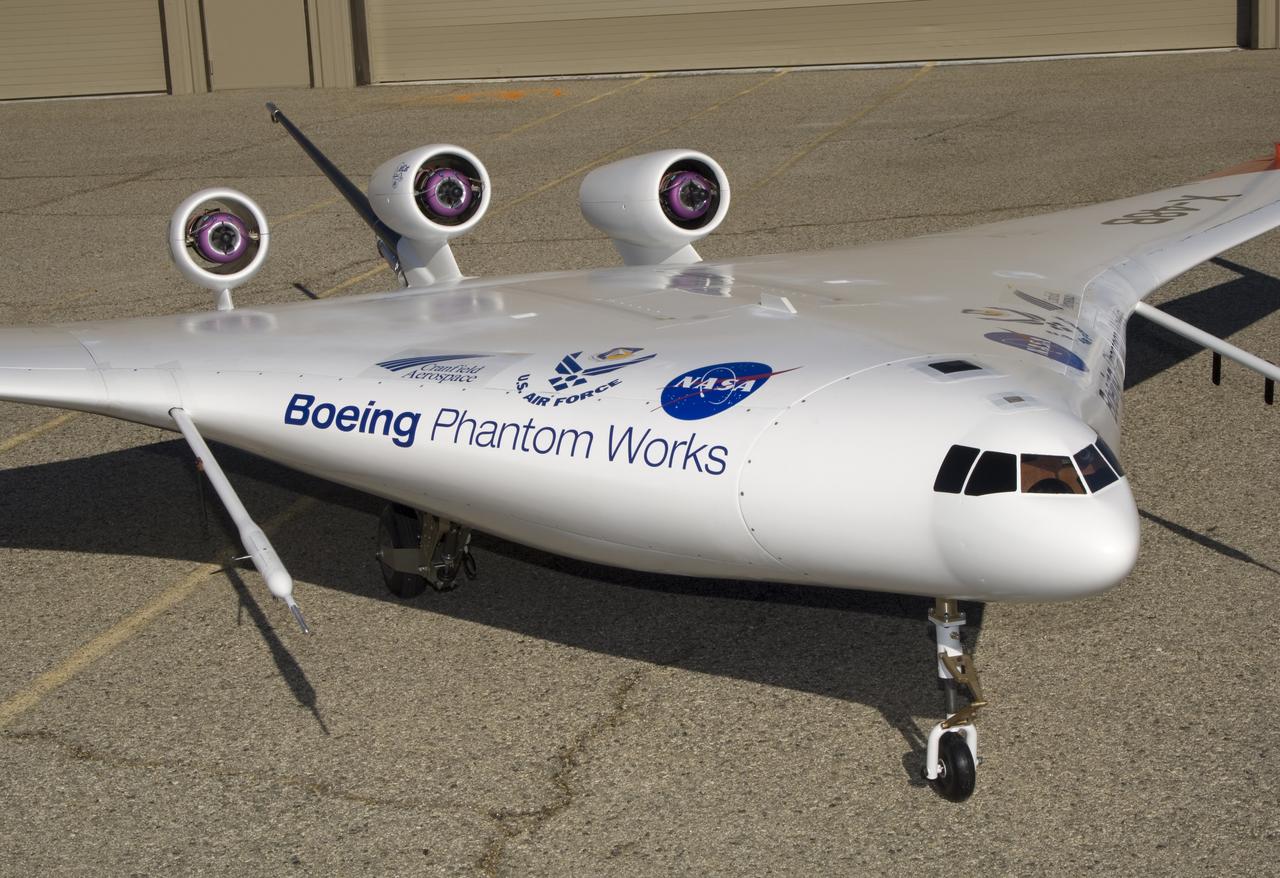
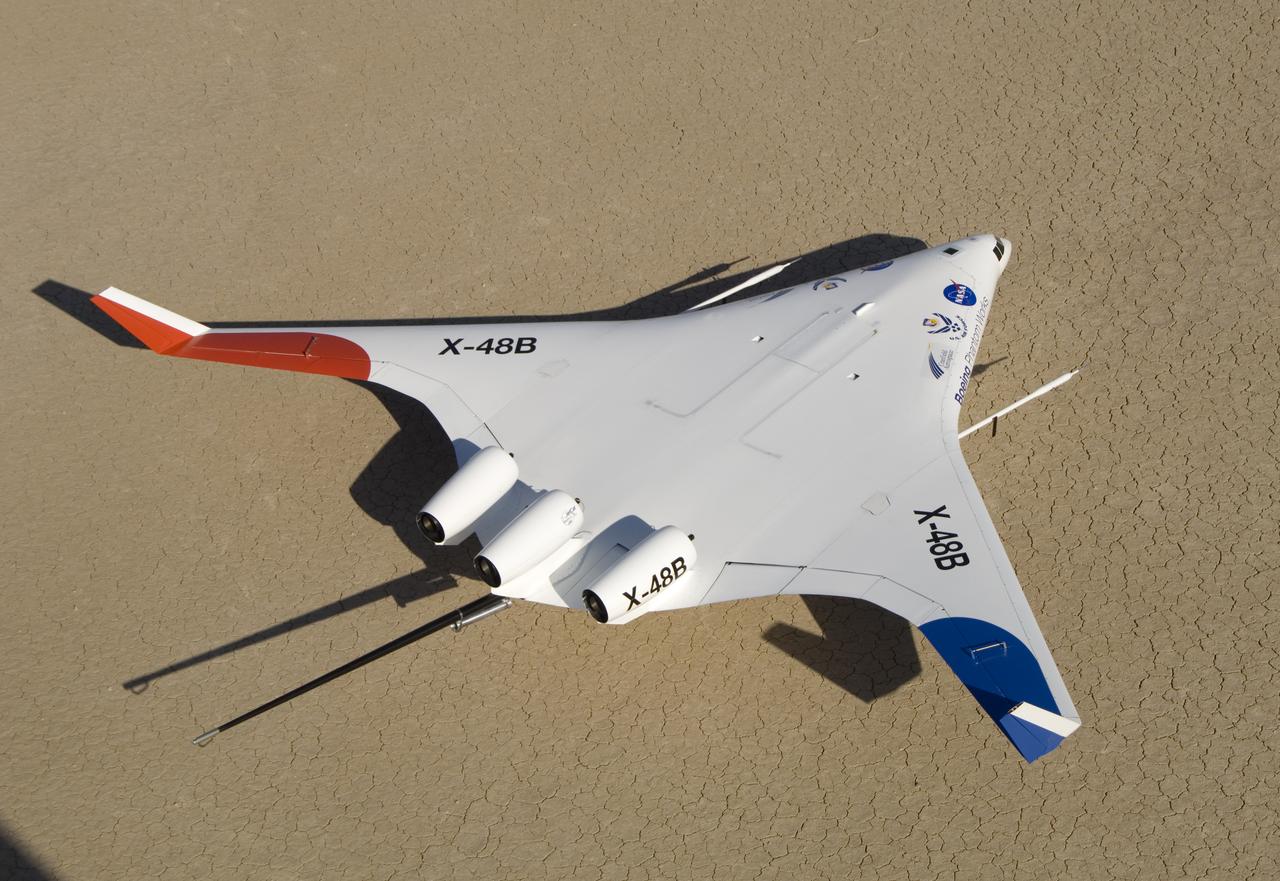
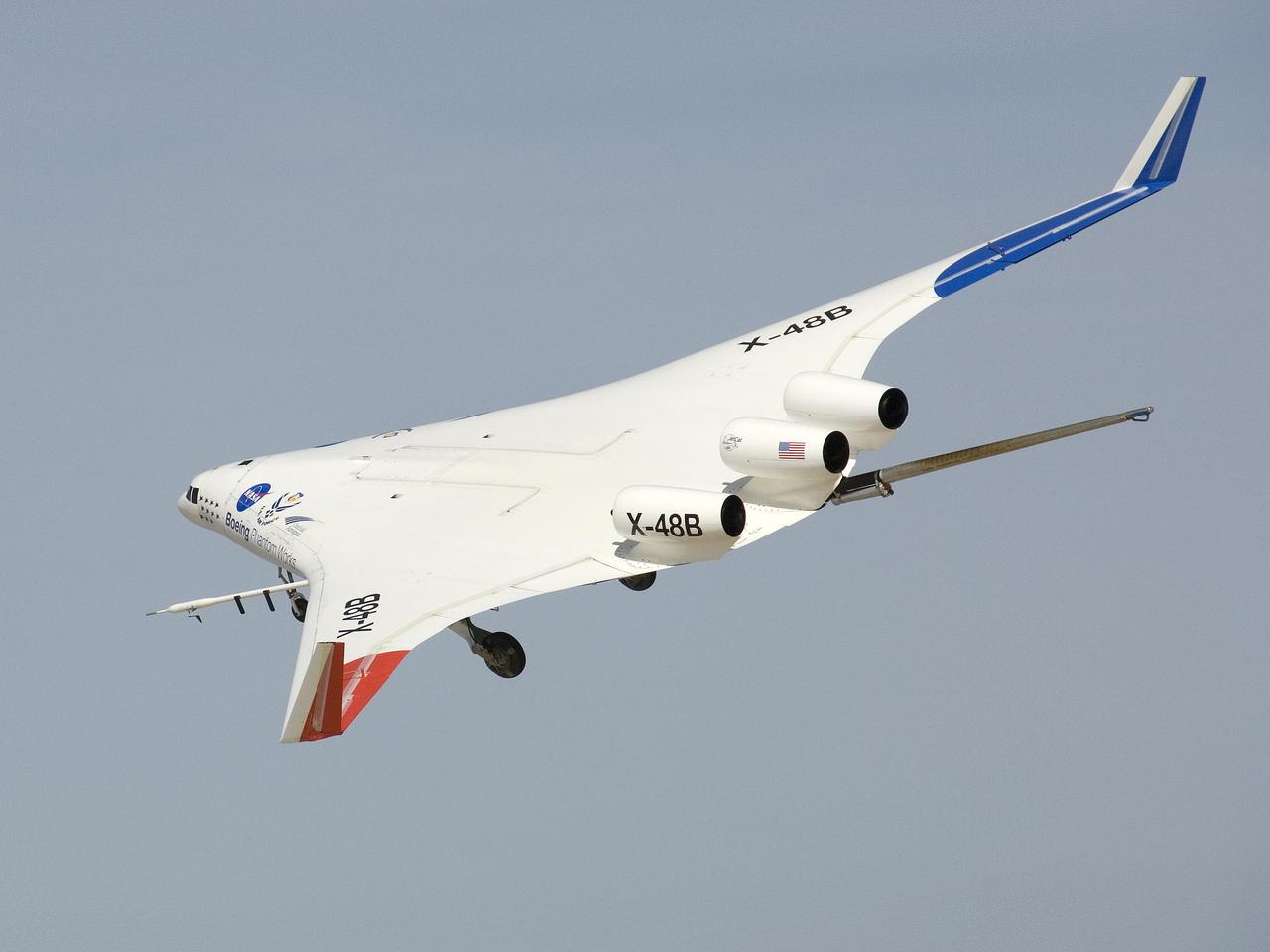
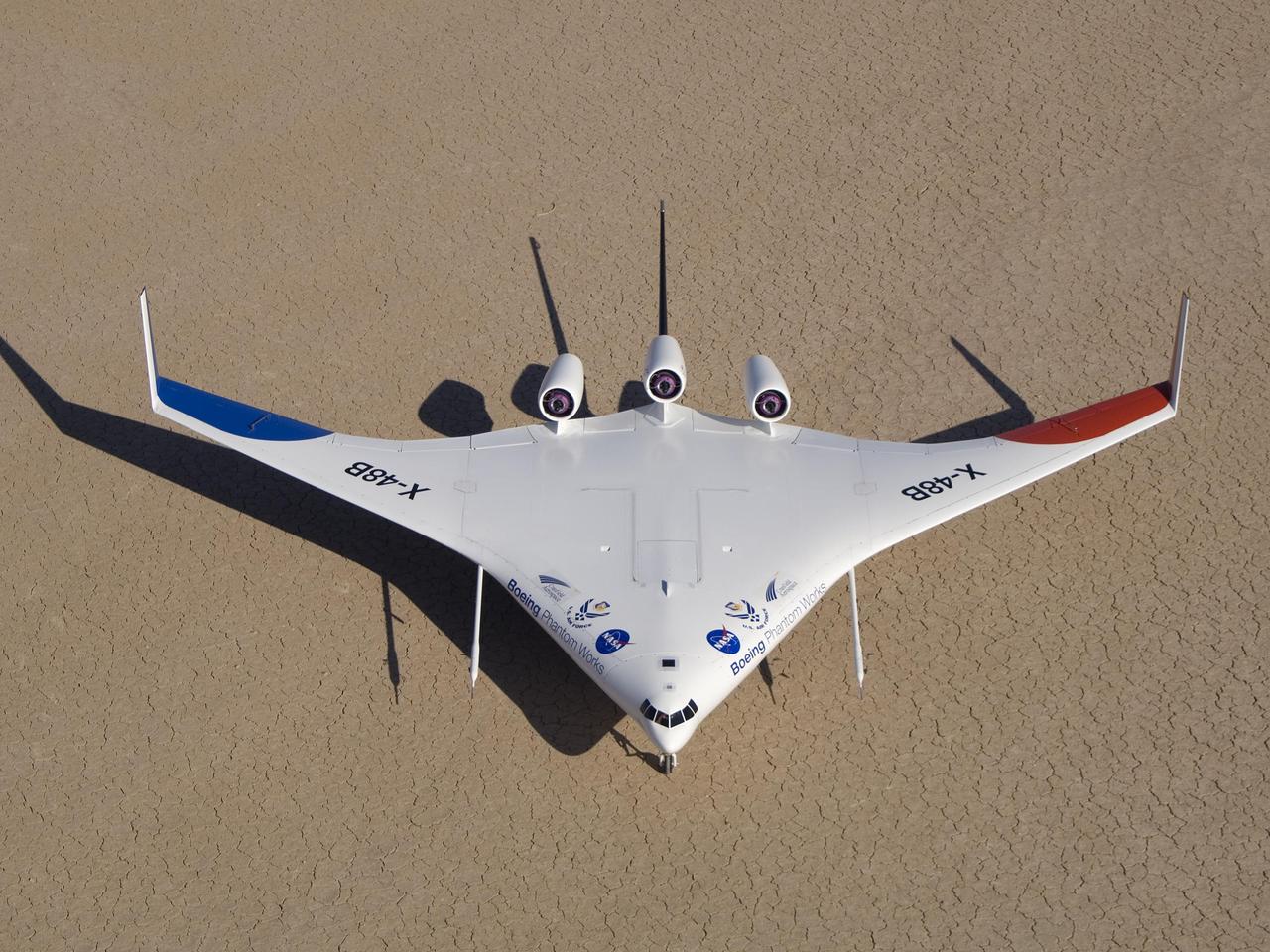
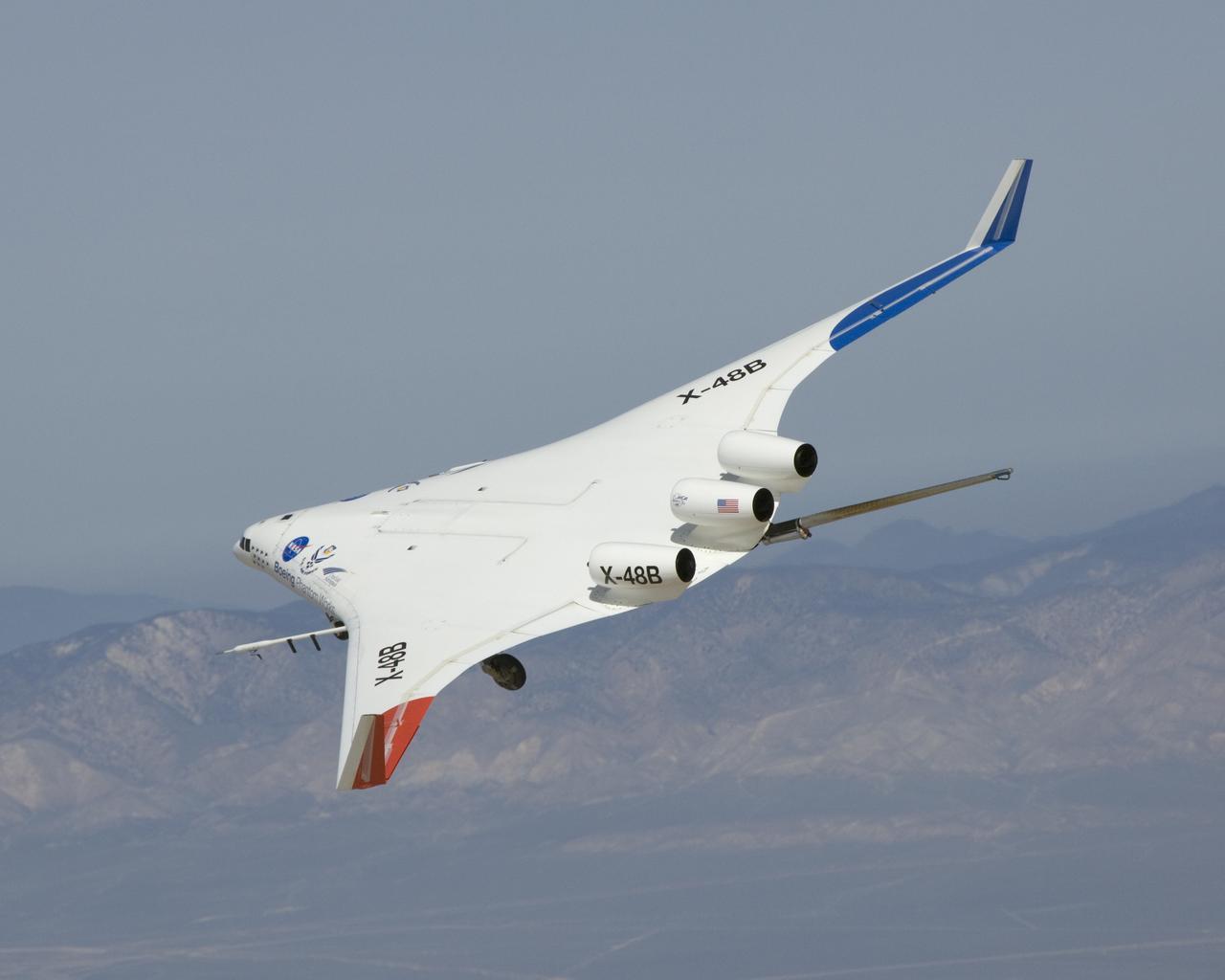
This closeup of Boeing Phantom Works' unique X-48B Blended Wing Body technology demonstrator shows off its unusual engine placement and supercritical airfoil.
This closeup of Boeing Phantom Works' unique X-48B Blended Wing Body technology demonstrator shows off its unusual engine placement and supercritical airfoil
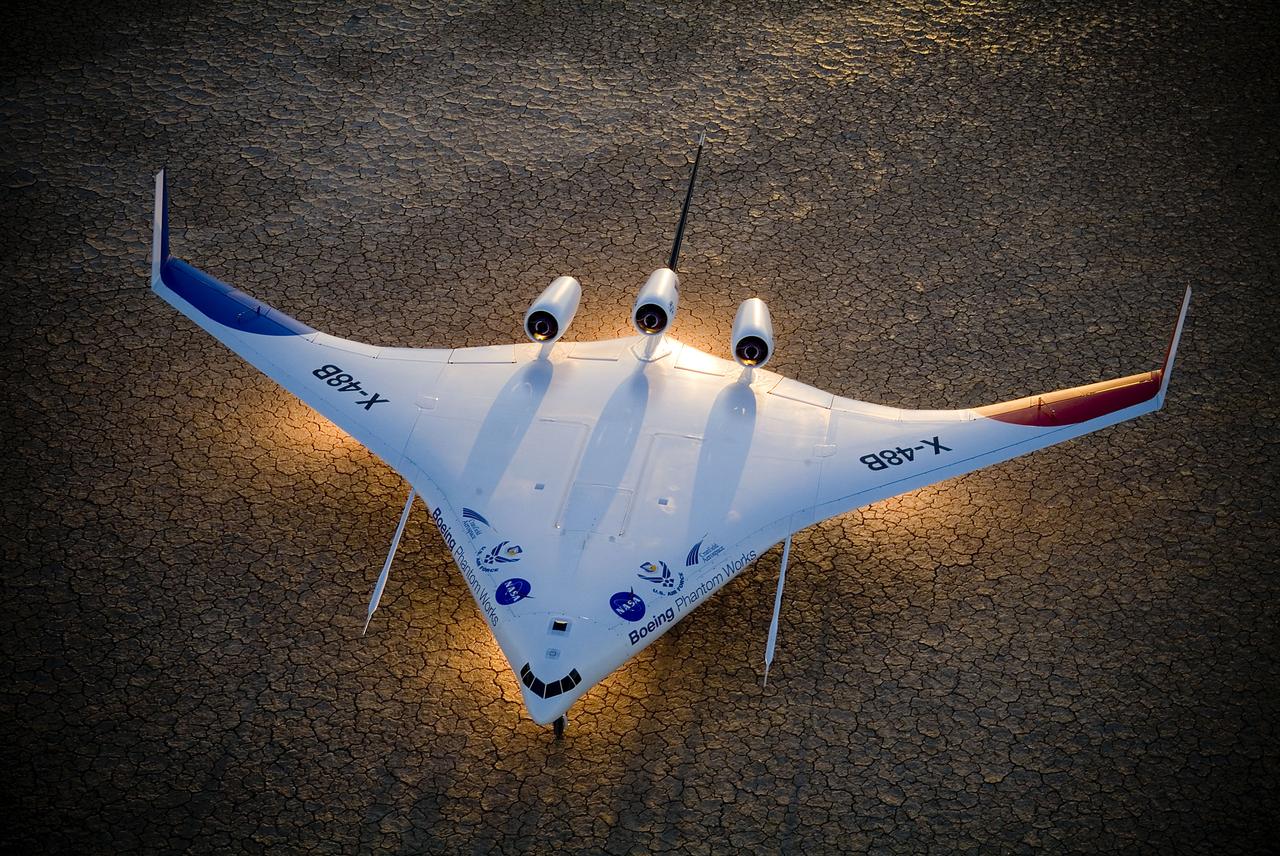
Boeing's X-48B Blended Wing Body technology demonstrator shows off its unique lines at sunset on Rogers Dry Lake adjacent to NASA's Dryden Flight Research Center. (Boeing photo # SMF06_F_KOEH_X48B-0900a)
Boeing's X-48B Blended Wing Body technology demonstrator shows off its unique lines at sunset on Rogers Dry Lake adjacent to NASA DFRC
Boeing's X-48B Blended Wing Body technology demonstrator shows off its unique lines at sunset on Rogers Dry Lake adjacent to NASA's Dryden Flight Research Center. (Boeing photo # SMF06_F_KOEH_X48B-0955)
Boeing's X-48B Blended Wing Body technology demonstrator shows off its unique lines at sunset on Rogers Dry Lake adjacent to NASA DFRC
A pristine blue sky backdrops the X-48B Blended Wing Body aircraft during the aircraft's first flight July 20, 2007, from NASA's Dryden Flight Research Center.
A pristine blue sky backdrops the X-48B Blended Wing Body aircraft during the aircraft's first flight July 20, 2007, from NASA's Dryden Flight Research Center
The unique manta-ray shaped planform of the Blended Wing Body X-48B is evidenced as the subscale demonstrator soars over Edwards AFB on its first test flight.
The unique manta-ray shaped planform of the Blended Wing Body X-48B is evidenced as the subscale demonstrator soars over Edwards AFB on its first test flight
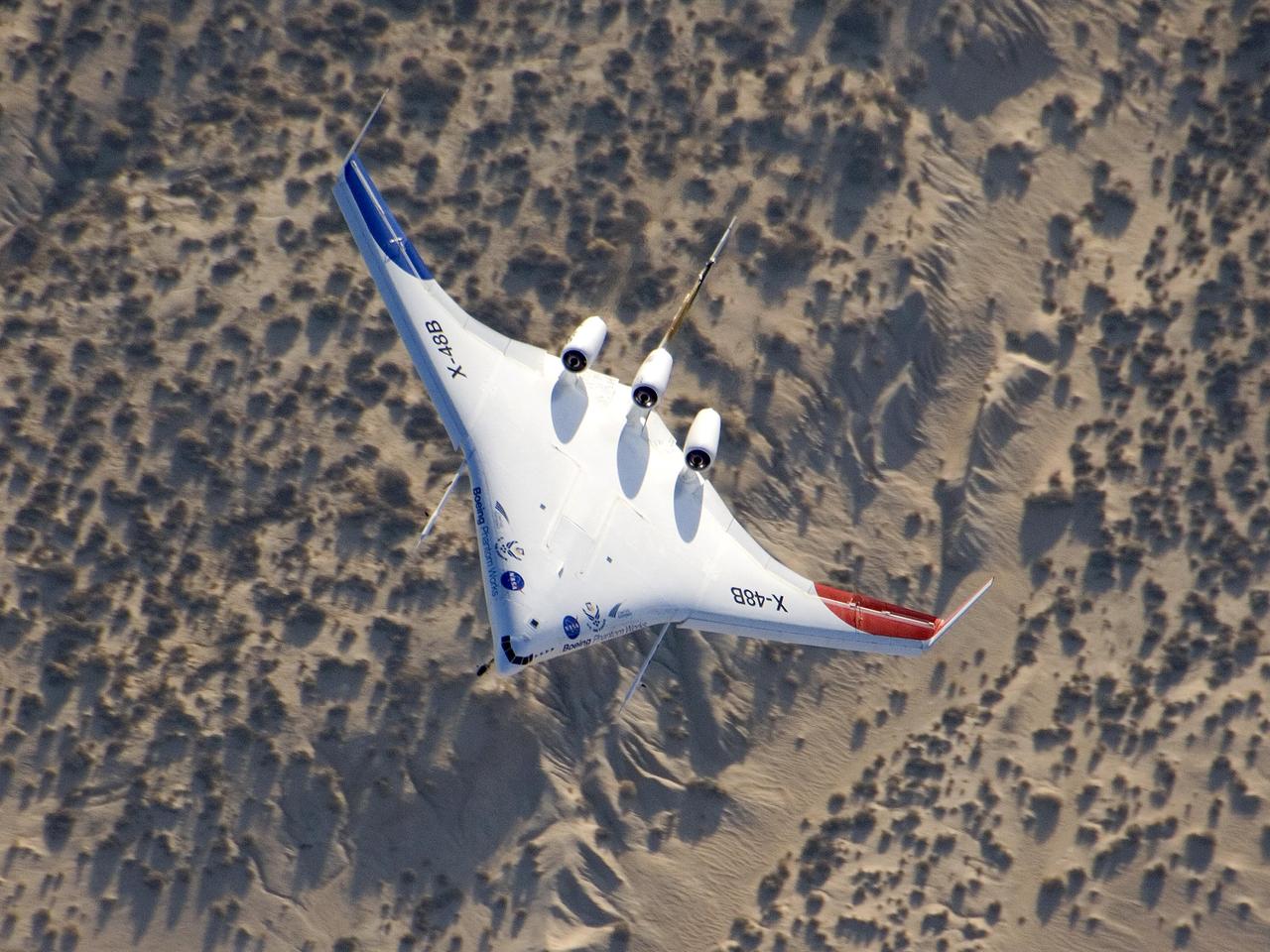
Boeing's sub-scale X-48B Blended Wing Body aircraft flies over the edge of Rogers Dry Lake at Edwards Air Force Base during its fifth flight on Aug. 14, 2007.
Boeing's sub-scale X-48B Blended Wing Body aircraft flies over the edge of Rogers Dry Lake at Edwards Air Force Base during its fifth flight on Aug. 14, 2007
This rear-quarter view shows off the unique lines of Boeing's X-48B Blended Wing Body technology demonstrator on Rogers Dry Lake adjacent to NASA Dryden.
This rear-quarter view shows off the unique lines of Boeing's X-48B Blended Wing Body technology demonstrator on Rogers Dry Lake adjacent to NASA Dryden
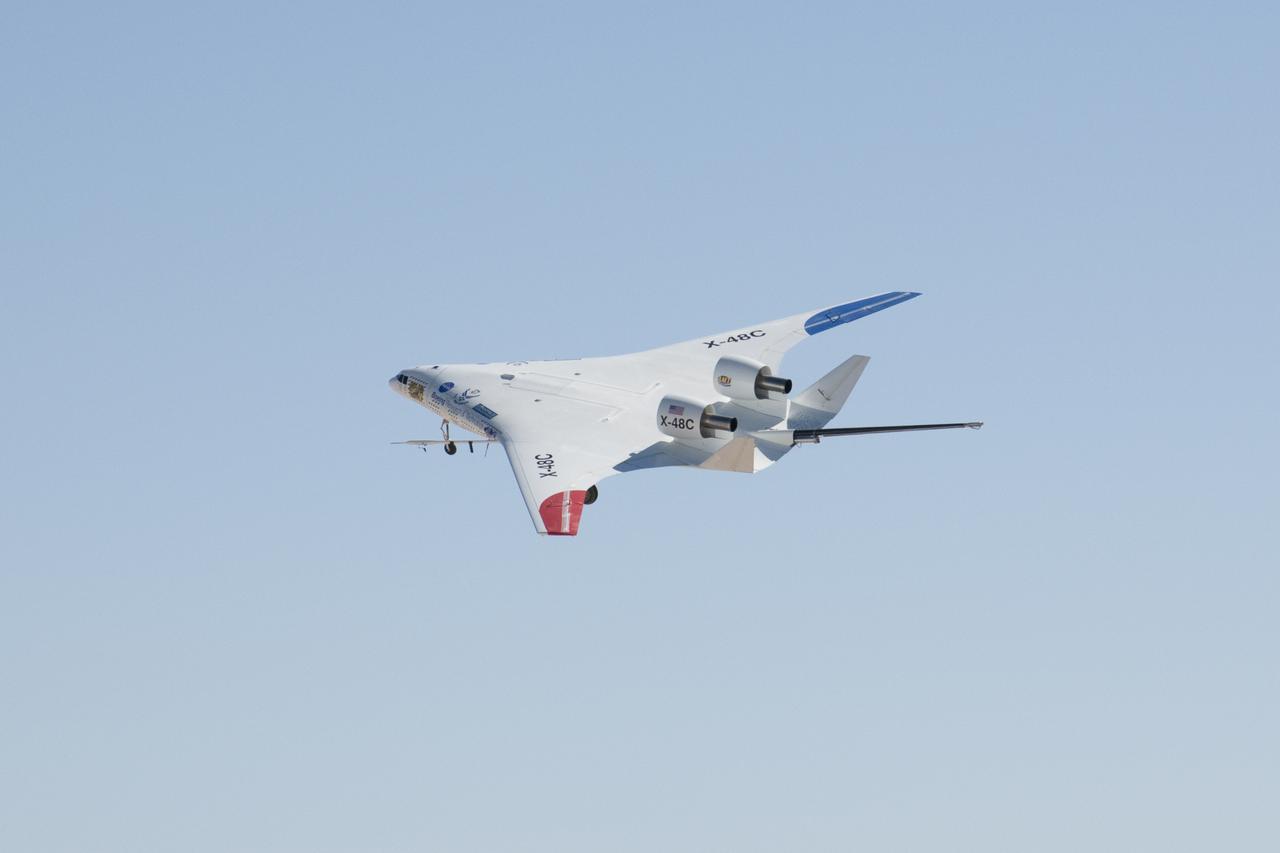
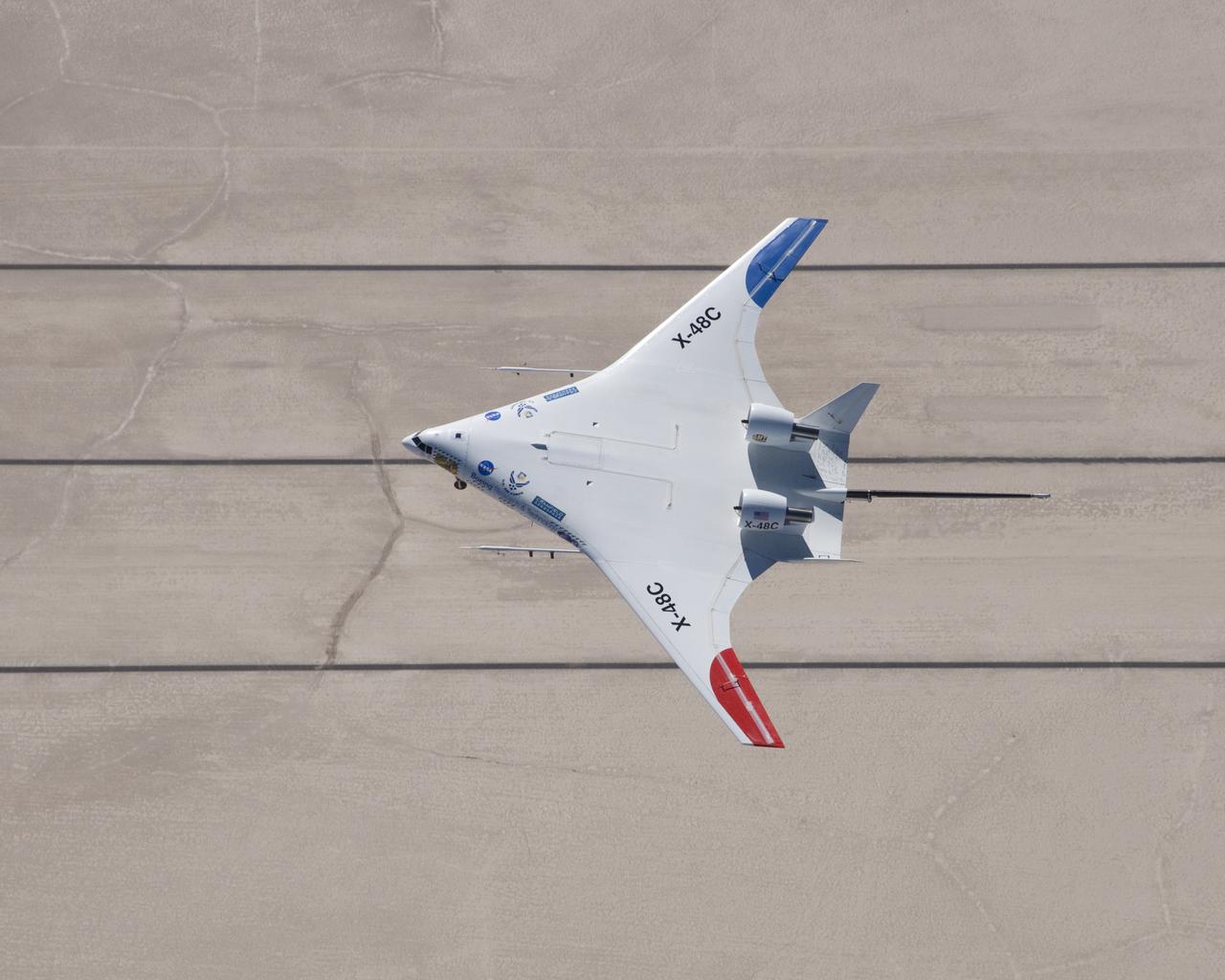
The NASA-Boeing X-48C Hybrid/Blended Wing Body research aircraft banked left during one of its final test flights over Edwards Air Force Base from NASA's Dryden Flight Research Center on Feb. 28, 2013.
X-48C Hybrid - Blended Wing Body Demonstrator
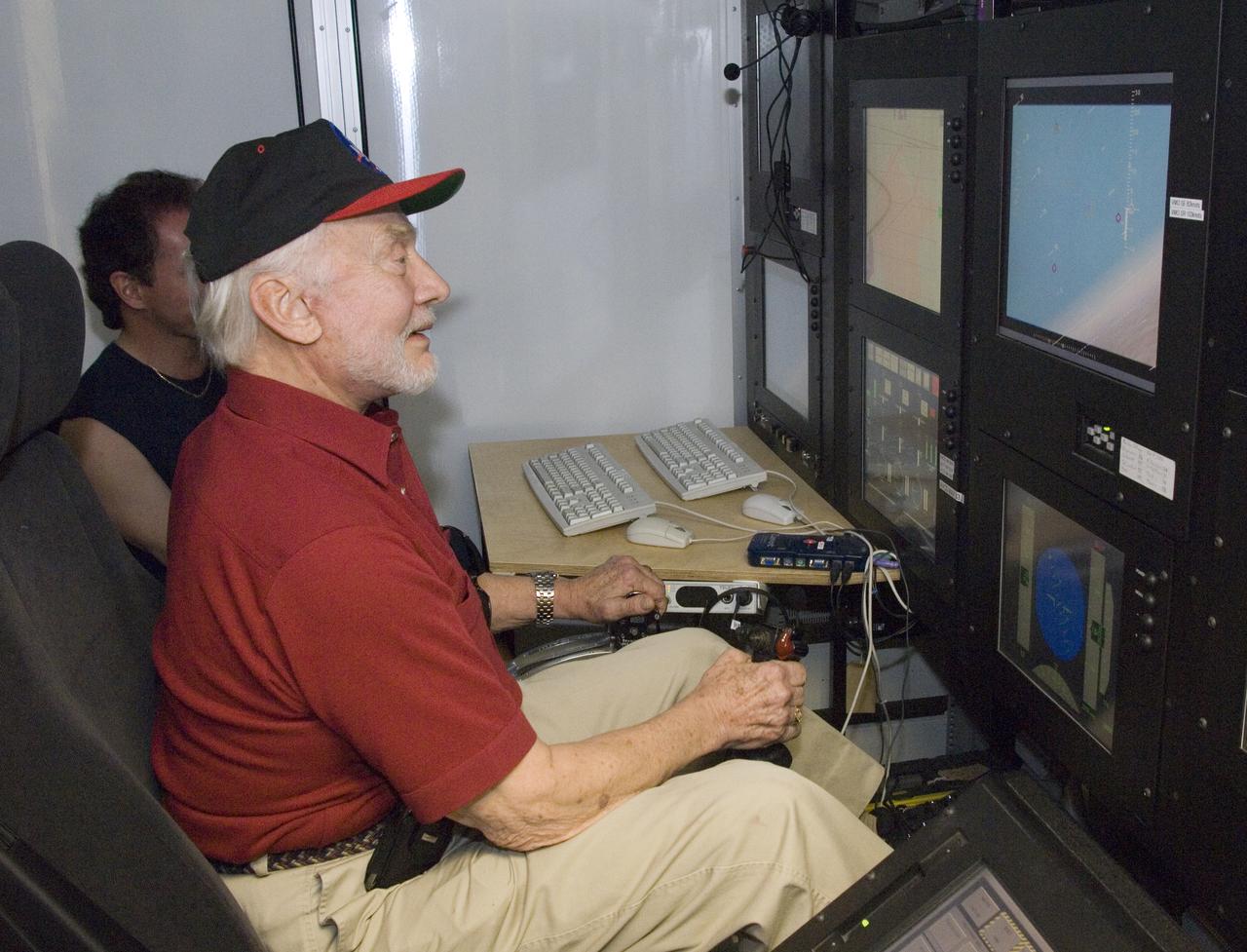
Apollo 11 astronaut Buzz Aldrin tries out the control station for the X-48B Blended Wing Body unmanned subscale demonstrator during a tour of NASA Dryden.
Apollo 11 astronaut Buzz Aldrin tries out the control station for the X-48B Blended Wing Body unmanned subscale demonstrator during a tour of NASA Dryden
Boeing Phantom Works' subscale Blended Wing Body technology demonstration aircraft began its initial flight tests from NASA's Dryden Flight Research Center at Edwards Air Force Base, Calif. in the summer of 2007. The 8.5 percent dynamically scaled unmanned aircraft, designated the X-48B by the Air Force, is designed to mimic the aerodynamic characteristics of a full-scale large cargo transport aircraft with the same blended wing body shape. The initial flight tests focused on evaluation of the X-48B's low-speed flight characteristics and handling qualities. About 25 flights were planned to gather data in these low-speed flight regimes. Based on the results of the initial flight test series, a second set of flight tests was planned to test the aircraft's low-noise and handling characteristics at transonic speeds.
The chocolate-colored expanse of Rogers Dry Lake frames the sleek lines of the Boeing / NASA X-48B subscale demonstrator during a test flight at Edwards AFB
The X-48B Blended Wing Body research aircraft banked smartly in this Block 2 flight phase image.
Block 2 Flight Phase Shows X-48B in Banking Maneuver
X-48B blended wing body aircraft during first flight on July 20, 2007.
X-48B on First Flight
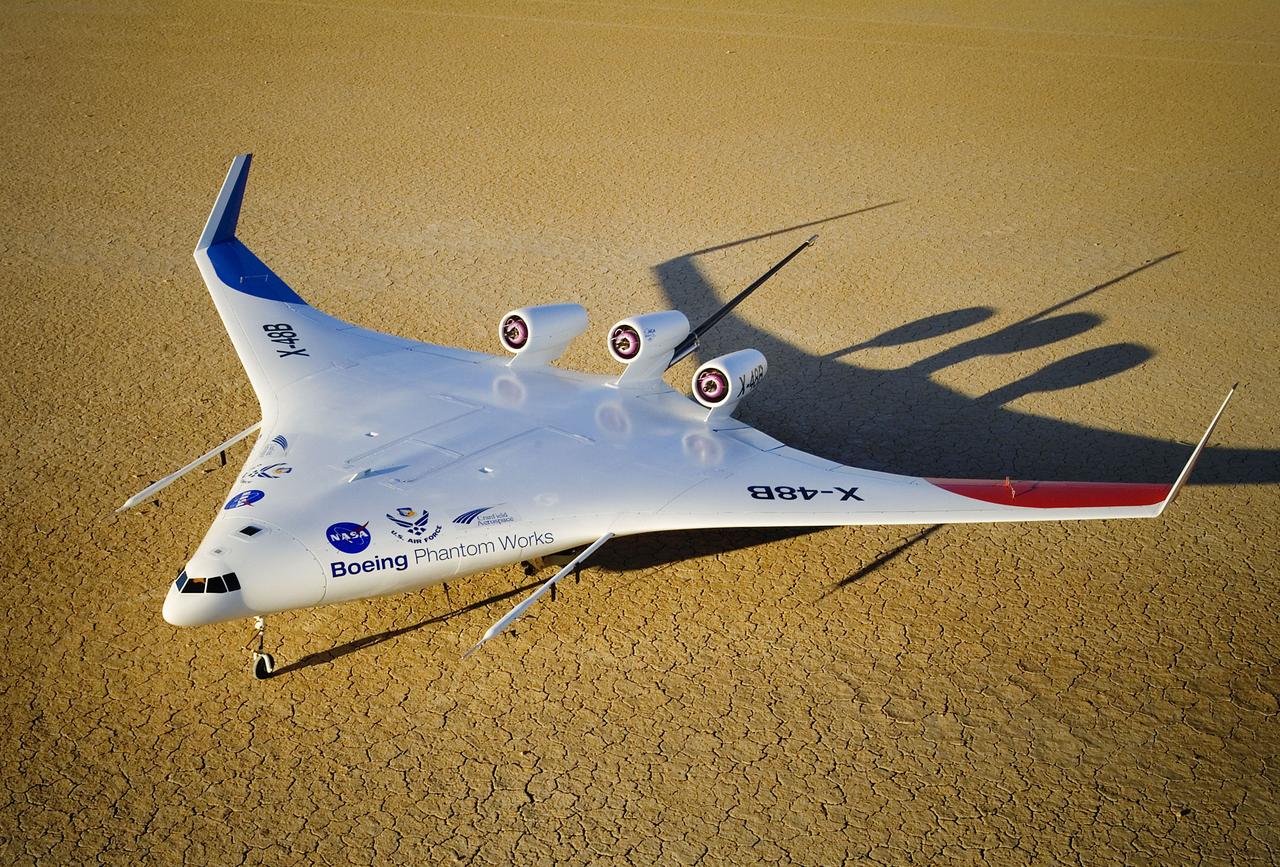
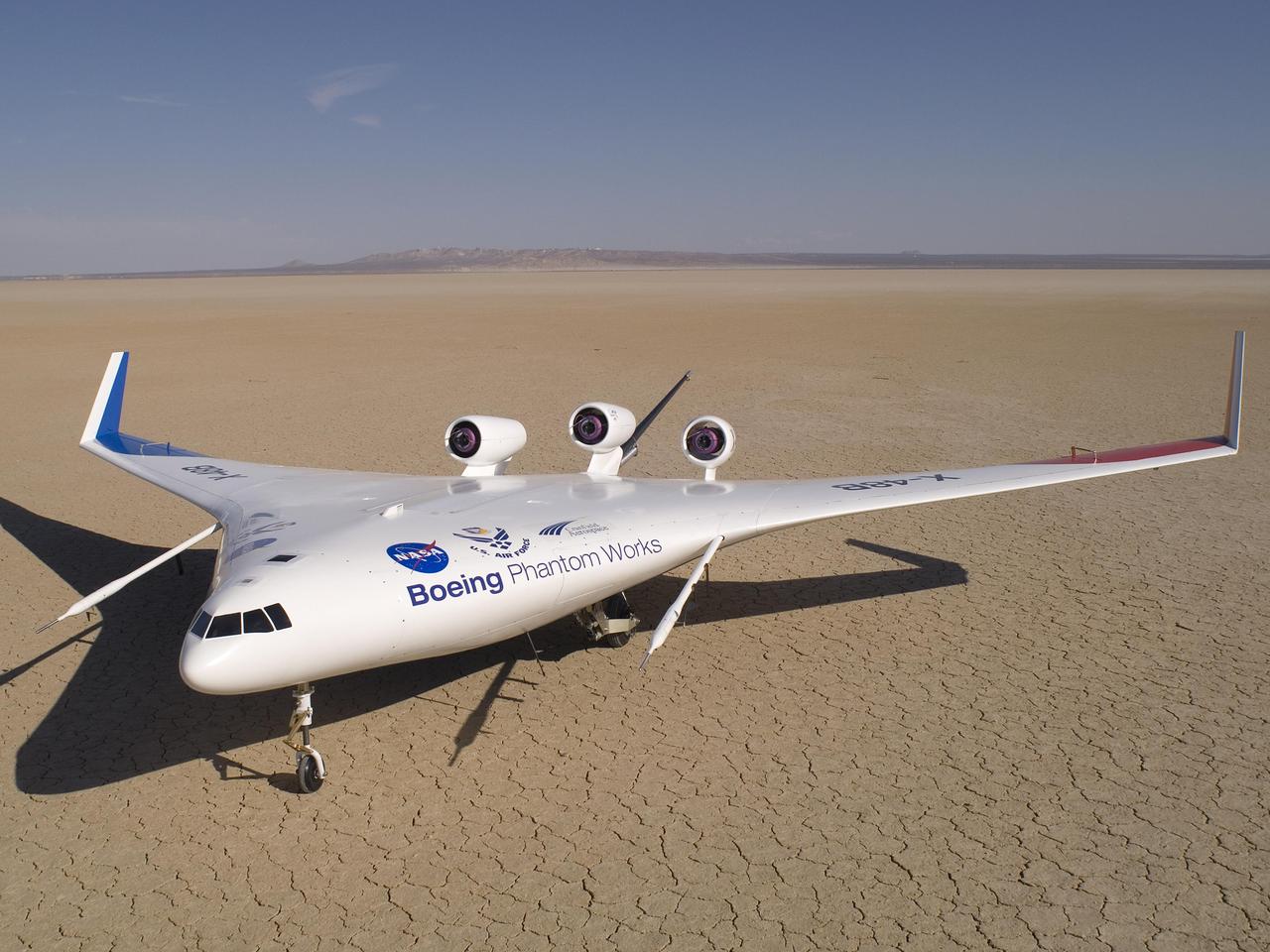
Boeing's colorful X-48B Blended Wing Body technology demonstrator showed off its unique triangular lines while parked on Rogers Dry Lake adjacent to NASA Dryden.
X-48B Demonstrates its Unique Triangular Lines
The unique X-48B Blended Wing Body subscale demonstrator banked over desert scrub at Edwards AFB during the aircraft's fifth test flight Aug. 14, 2007.
X-48B Banks over Desert Backdrop
Boeing's sub-scale X-48B Blended Wing Body technology demonstrator showed off its unique lines on the vast expanse of Rogers Dry Lake adjacent to NASA Dryden.
X-48B on Rogers Dry Lakebed
A joint NASA/Boeing team completed the first phase of flight tests on the unique X-48B Blended Wing Body aircraft at NASA's Dryden Flight Research Center at Edwards, CA. The team completed the 80th and last flight of the project's first phase on March 19, 2010.
X-48B Skyray Takeoff
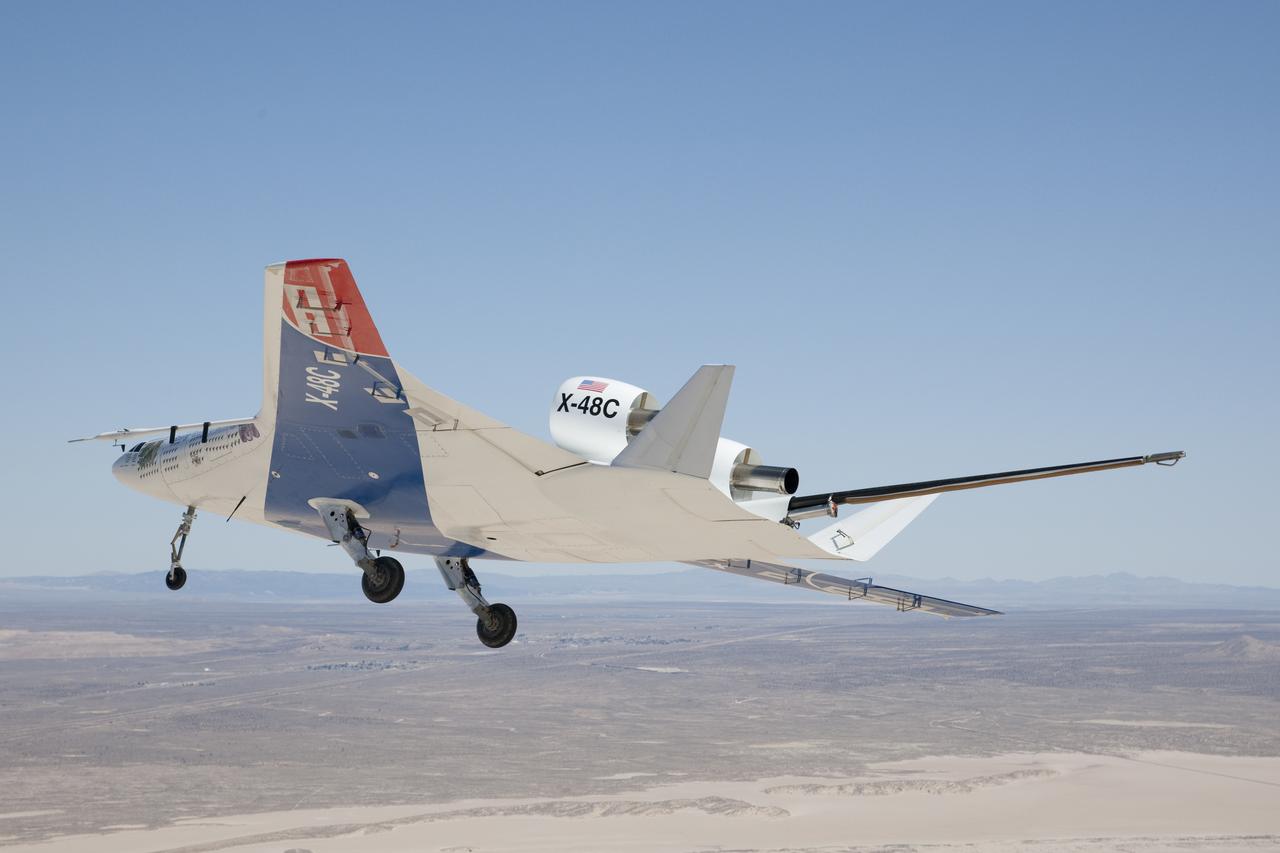
Earth and sky met as the X-48C Hybrid Wing Body aircraft flew over Edwards Air Force Base on Feb. 28, 2013, from NASA's Dryden Flight Research Center, Edwards, CA. The long boom protruding from between the tails is part of the aircraft's parachute-deployment flight termination system.
X-48C Hybrid - Blended Wing Body Demonstrator
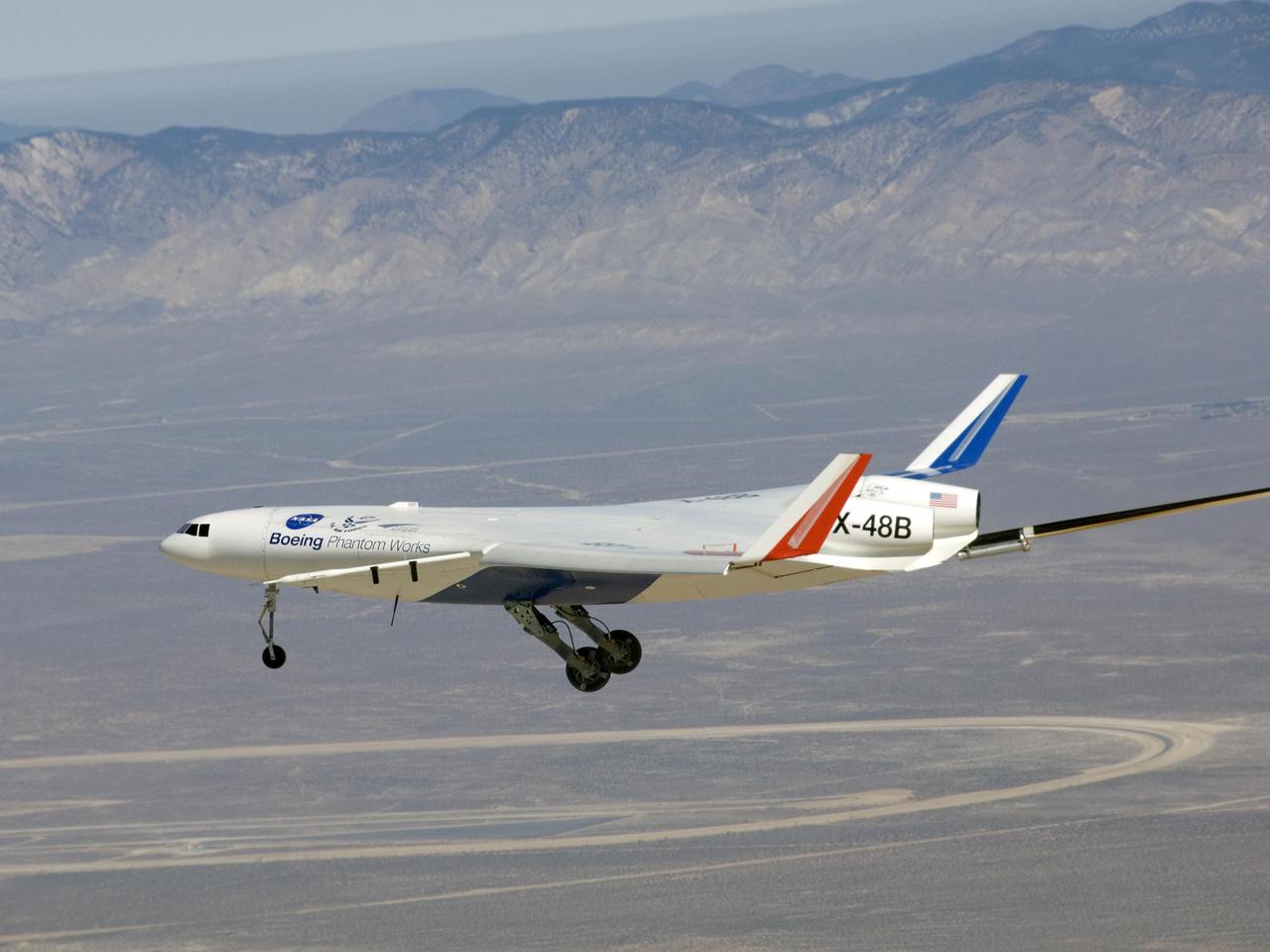
NASA X-48C Hybrid Wing Body aircraft flew over one of the runways laid out on Rogers Dry Lake at Edwards Air Force Base, CA, during a test flight from NASA's Dryden Flight Research Center on Feb. 28, 2013.
X-48C Hybrid - Blended Wing Body Demonstrator
A joint NASA/Boeing team completed the first phase of flight tests on the unique X-48B Blended Wing Body aircraft at NASA's Dryden Flight Research Center at Edwards, CA. The team completed the 80th and last flight of the project's first phase on March 19, 2010.
First Phase of X-48B Flight Tests Completed
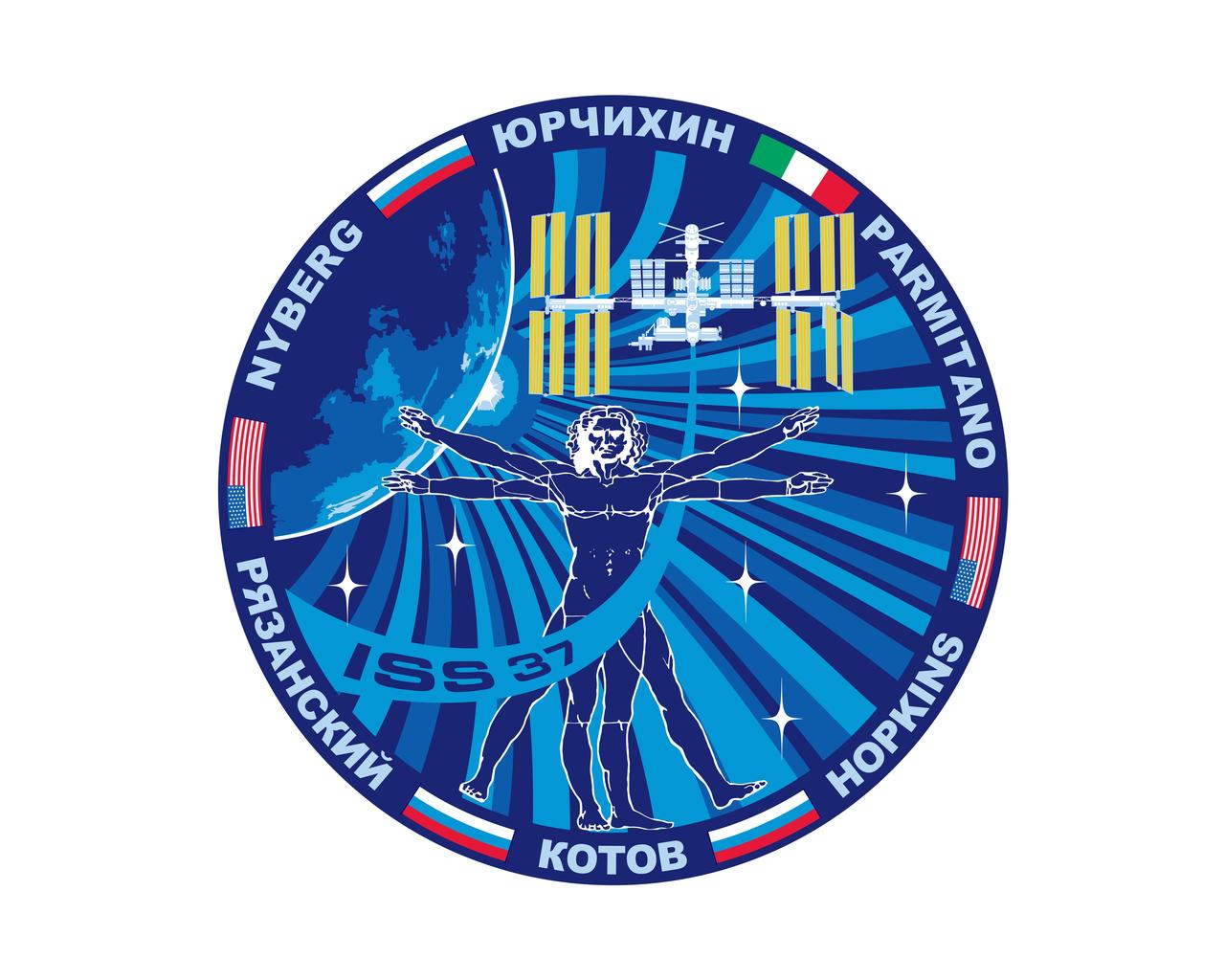
ISS037-S-001 (August 2012) --- Leonardo da Vinci's Vitruvian Man, created some 525 years ago, as a blend of art and science and a symbol of the medical profession, is depicted amongst the orbits of a variety of satellites circling the Earth at great speed. Da Vinci's drawing, based on the proportions of man as described by the Roman architect Vitruvius, is often used as a symbol of symmetry of the human body and the universe as a whole. Almost perfect in symmetry as well, the International Space Station, with its solar wings spread out and illuminated by the first rays of dawn, is pictured as a mighty beacon arcing upwards across our night skies, the ultimate symbol of science and technology of our age. Six stars represent the six members of Expedition 37 crew, which includes two cosmonauts with a medical background, as well as a native of Da Vinci's Italy.    The design for insignia for space station flights is reserved for use by the crew members and for other official use as the NASA Administrator may authorize. Public availability has been approved only in the form of illustrations by the various news media. When and if there is any change in this policy, which is not anticipated, it will be publicly announced.
iss037-s-001
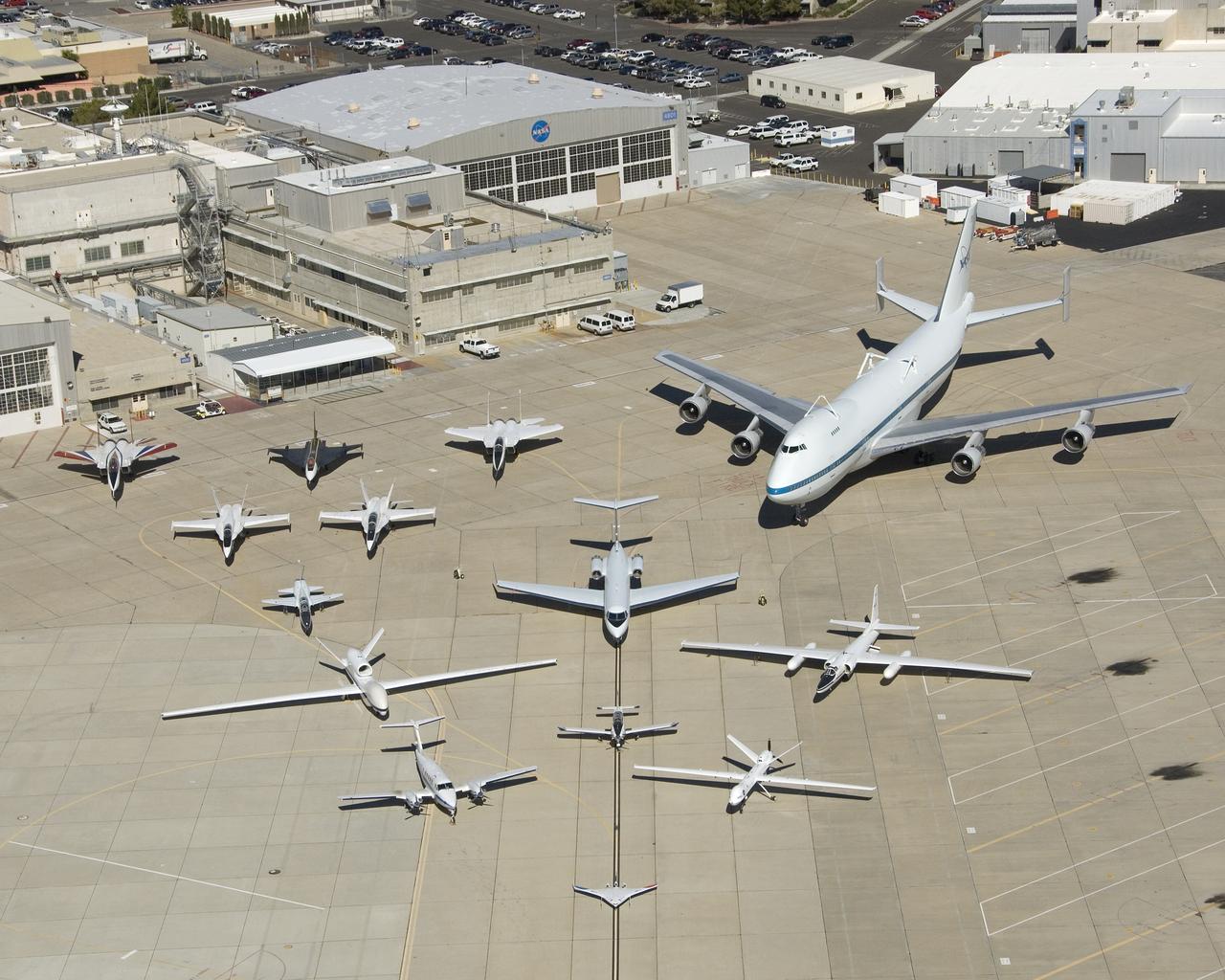
Dryden Flight Research Center - aircraft fleet on ramp
ED08-0292-1