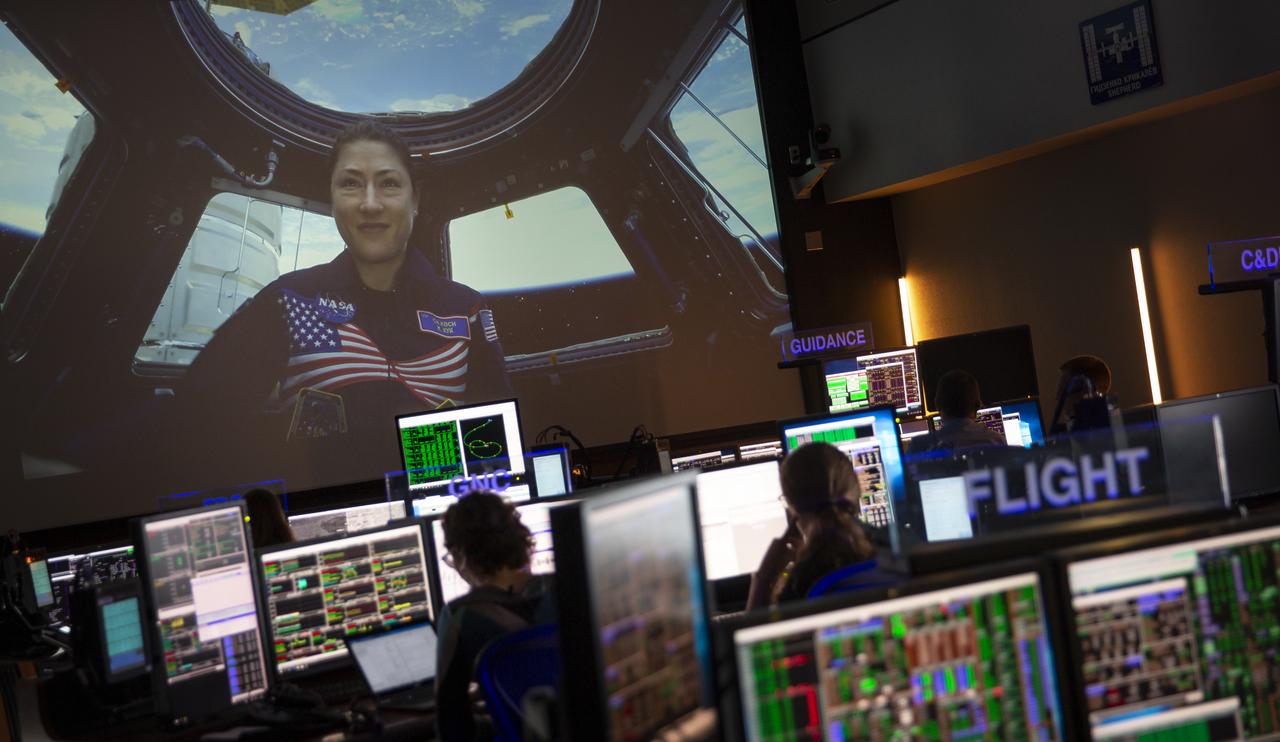
NASA astronaut Christina Koch is seen onboard the International Space Station from the Blue Flight Control Room, Tuesday, July 9, 2019 at NASA's Johnson Space Center in Houston, Texas. Photo Credit: (NASA/Bill Ingalls)
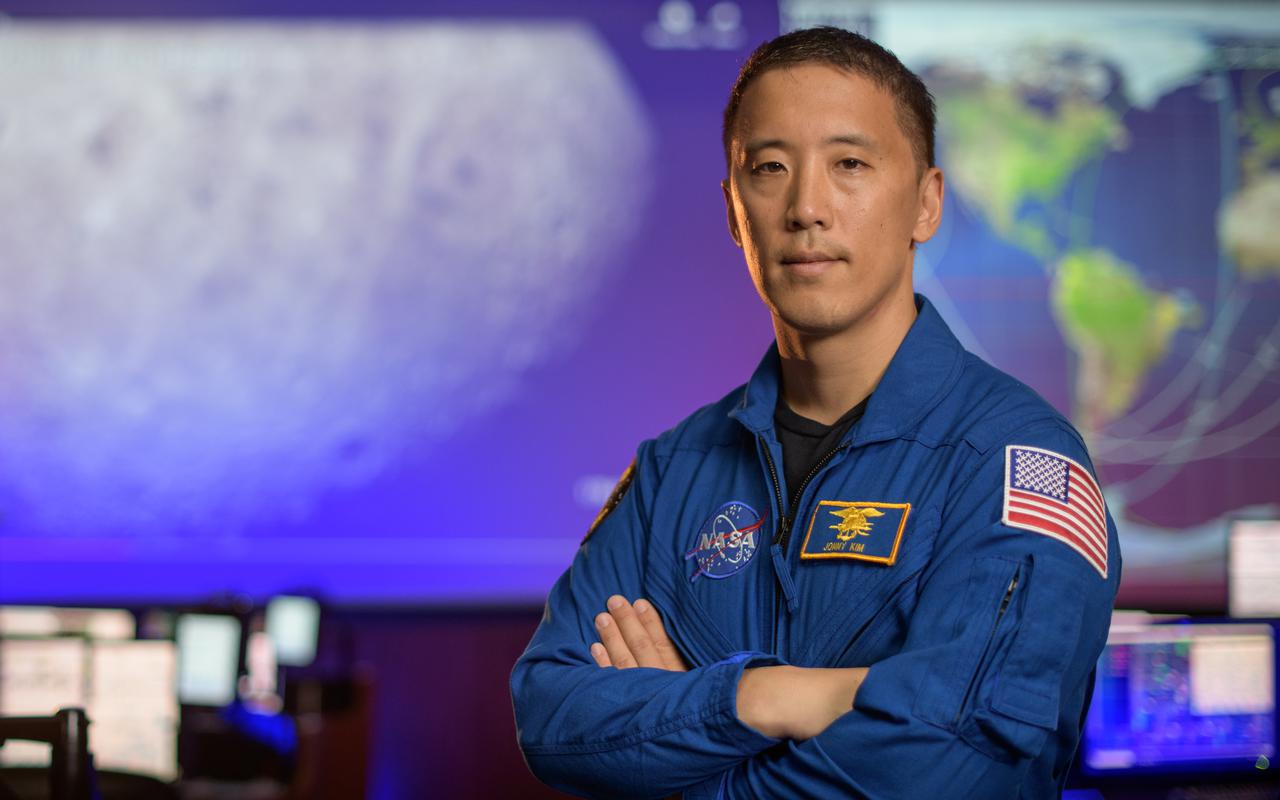
NASA astronaut Jonathan Kim poses for a portrait, Tuesday, Sept. 8, 2020, in the Blue Flight Control Room at NASA’s Johnson Space Center in Houston. Photo Credit: (NASA/Bill Ingalls)

NASA astronaut Frank Rubio poses for a portrait, Wednesday, Sept. 16, 2020, in the Blue Flight Control Room at NASA’s Johnson Space Center in Houston. Photo Credit: (NASA/Bill Ingalls)
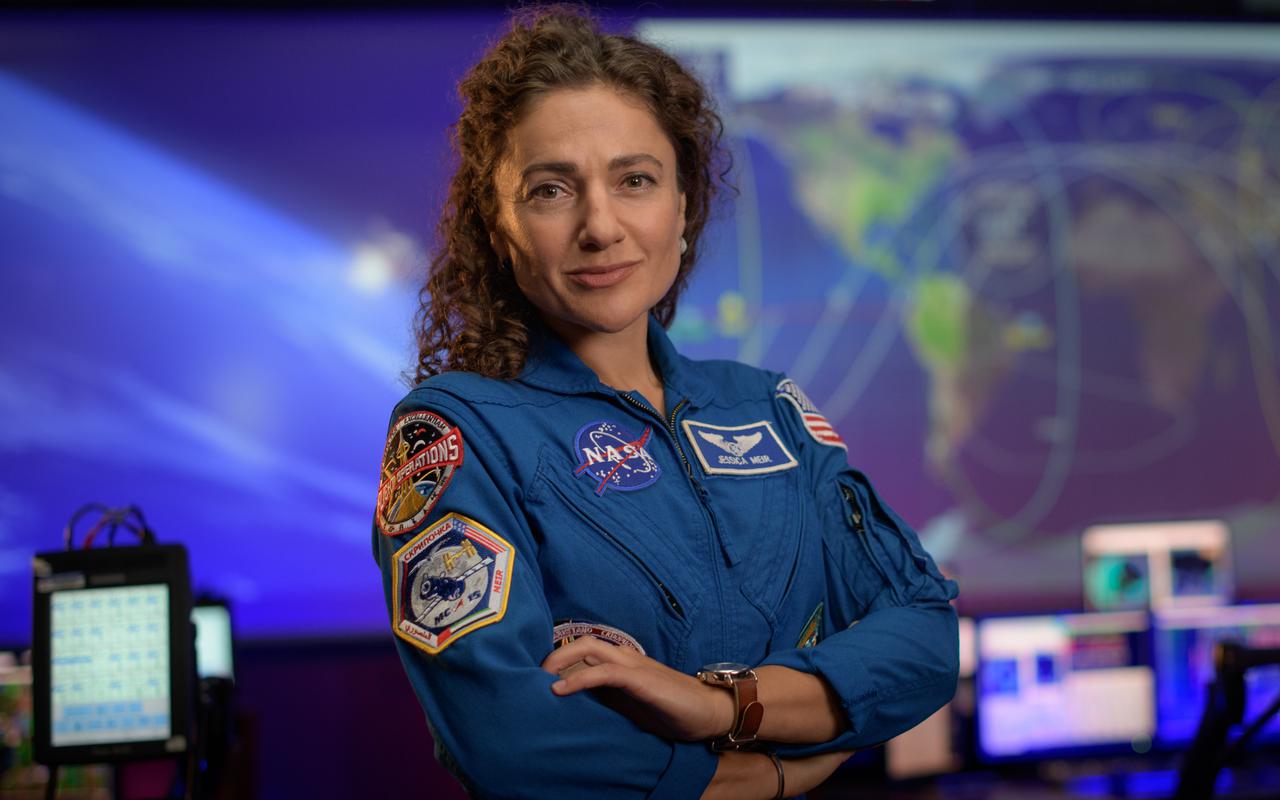
NASA astronaut Jessica Meir poses for a portrait, Tuesday, Sept. 15, 2020, in the Blue Flight Control Room at NASA’s Johnson Space Center in Houston. Photo Credit: (NASA/Bill Ingalls)
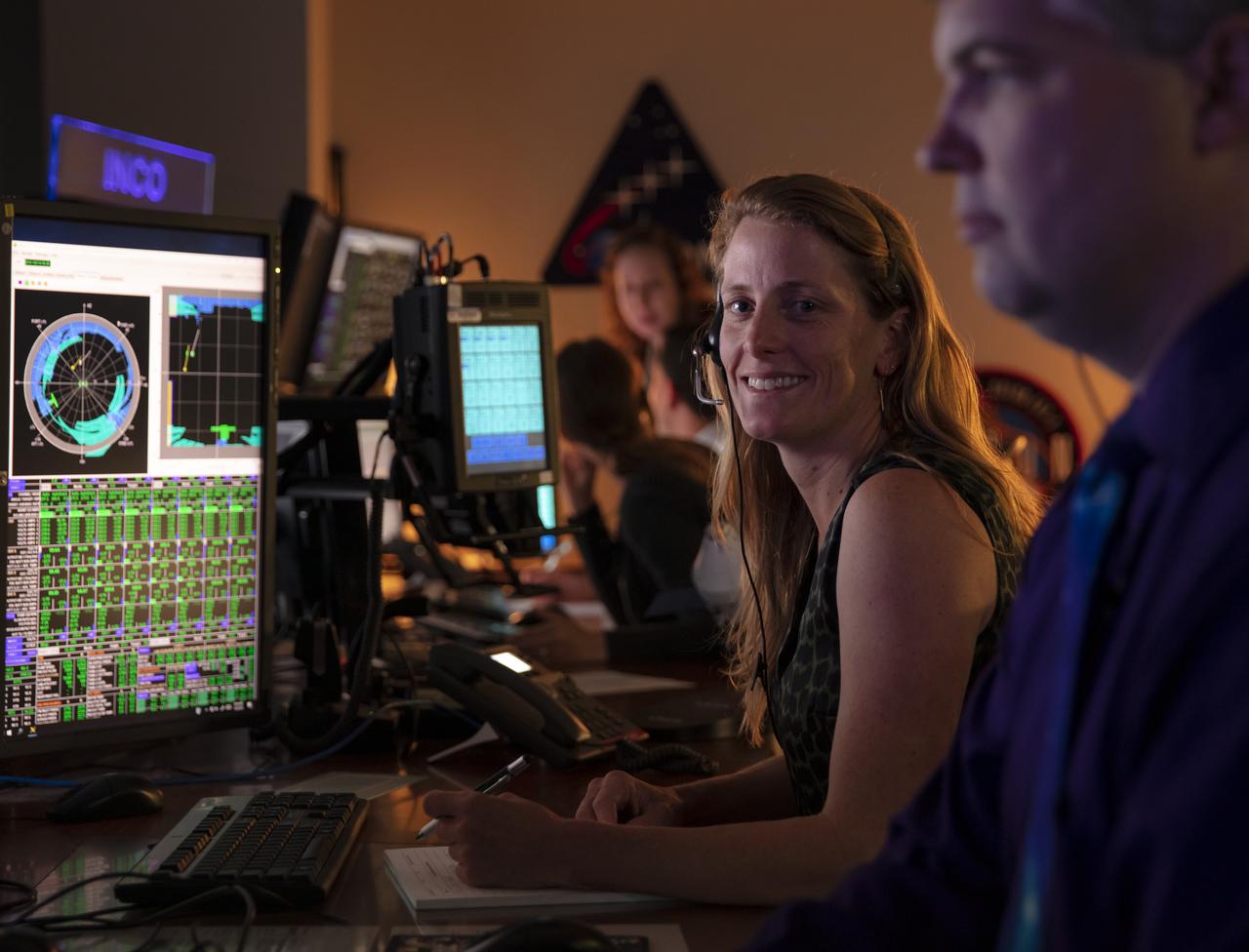
NASA astronaut candidate Loral O’Hara poses for a portrait in the Blue Flight Control Room, Tuesday, July 9, 2019 at NASA's Johnson Space Center in Houston, Texas. Photo Credit: (NASA/Bill Ingalls)
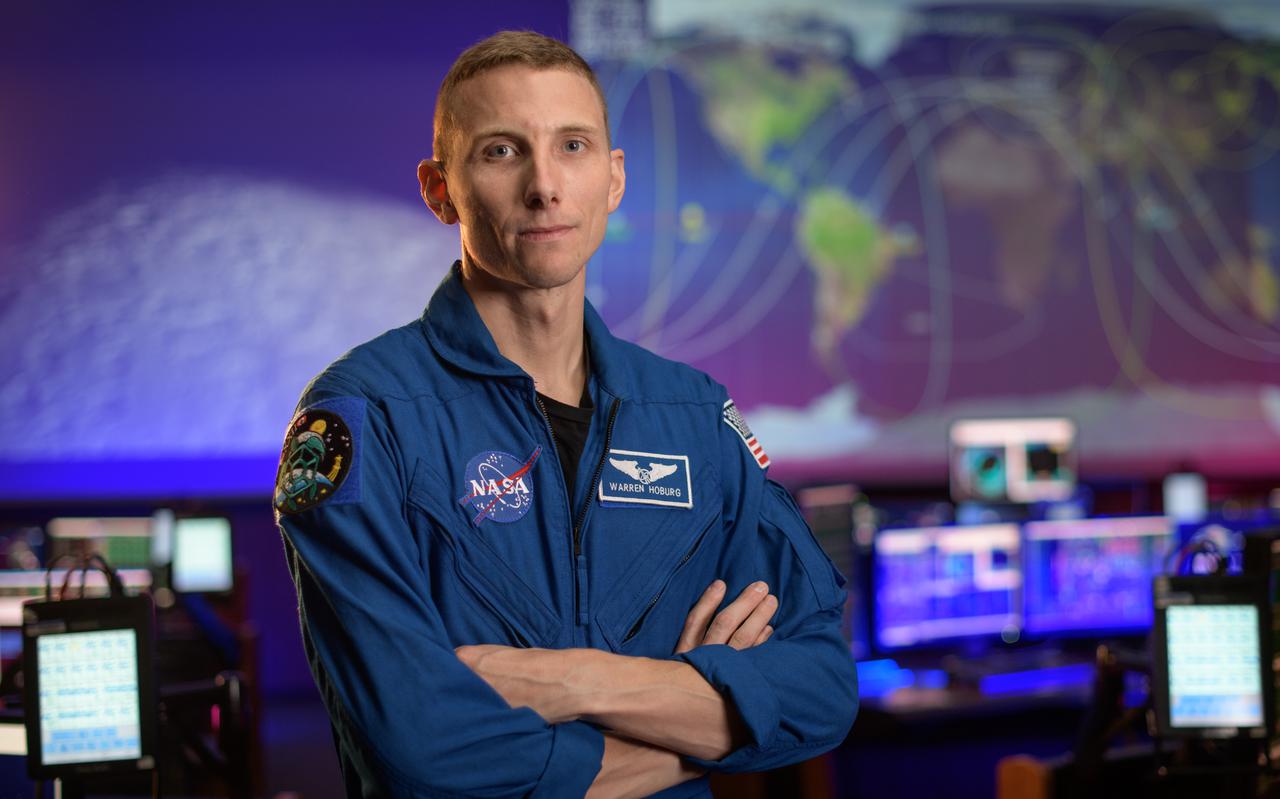
NASA astronaut Warren Hoburg poses for a portrait, Thursday, Sept. 17, 2020, in the Blue Flight Control Room at NASA’s Johnson Space Center in Houston. Photo Credit: (NASA/Bill Ingalls)
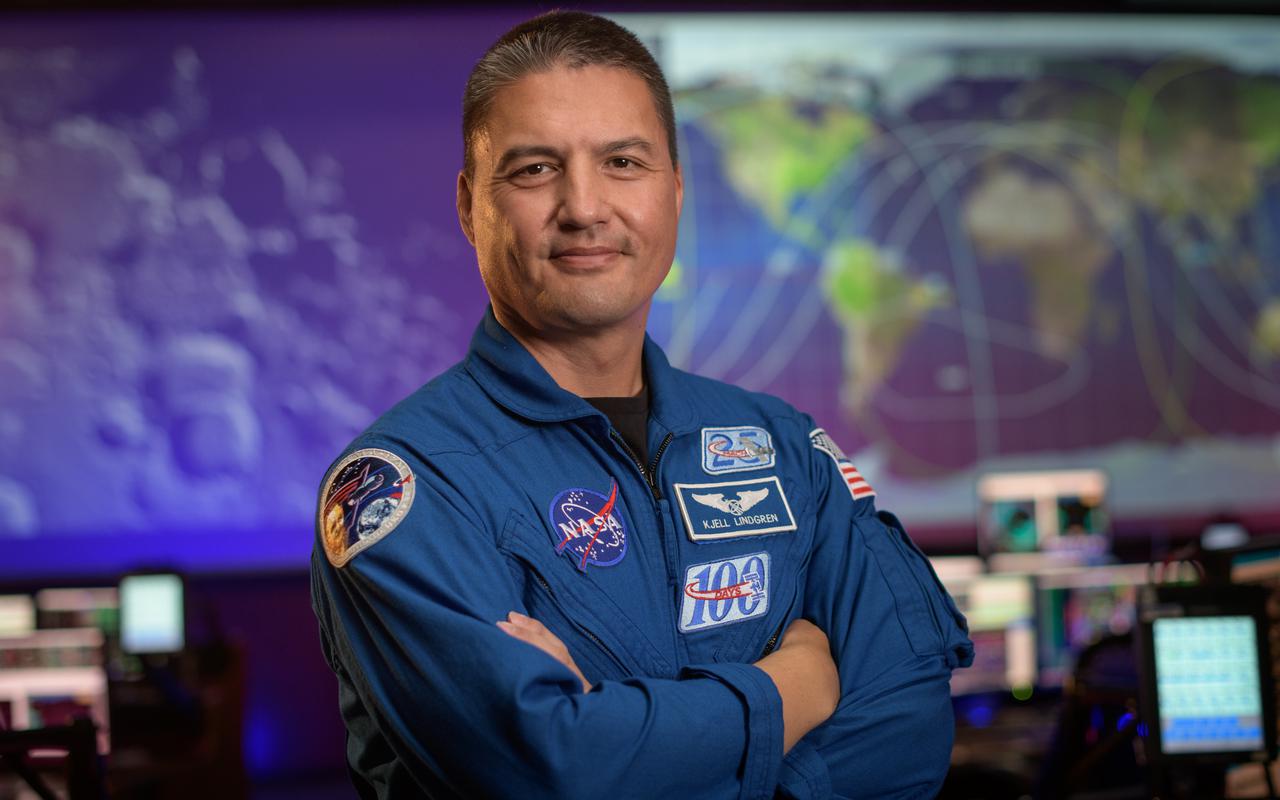
NASA astronaut Kjell Lindgren poses for a portrait, Wednesday, Sept. 16, 2020, in the Blue Flight Control Room at NASA’s Johnson Space Center in Houston. Photo Credit: (NASA/Bill Ingalls)
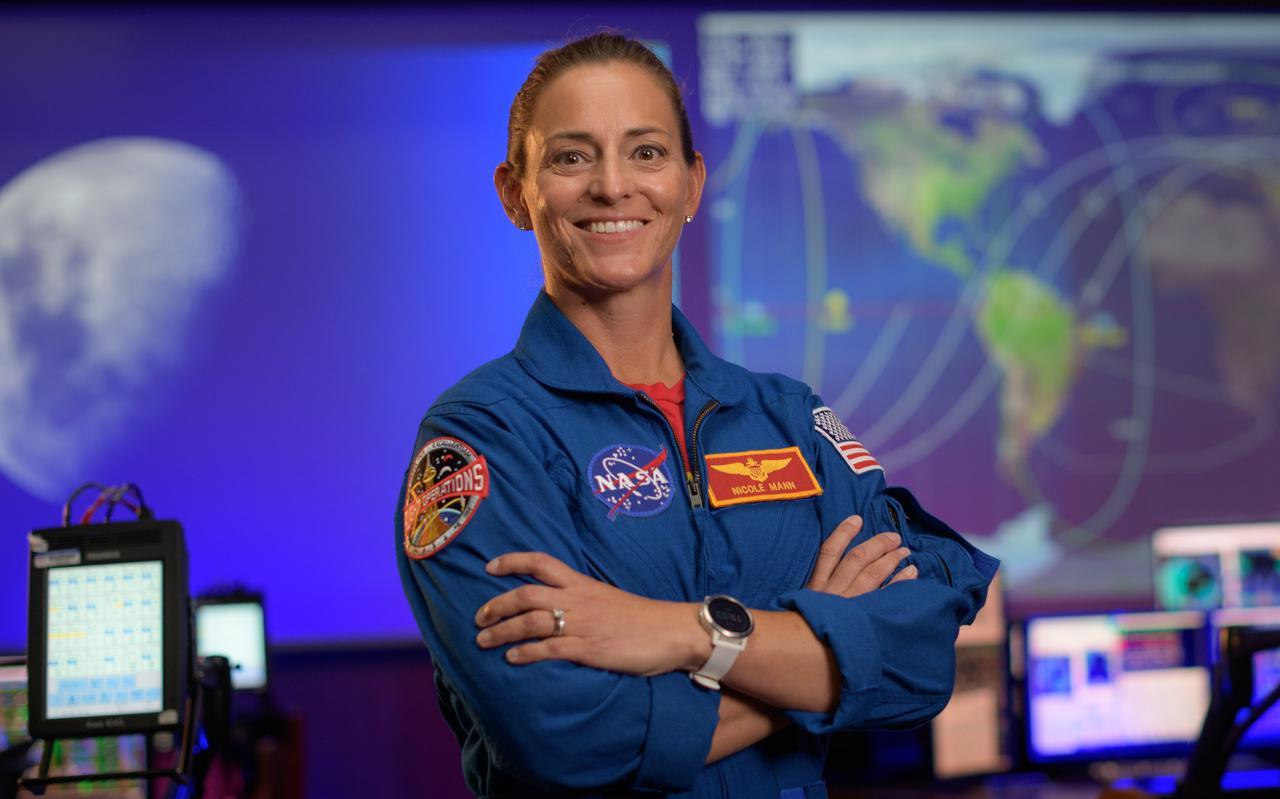
NASA astronaut Nicole Mann poses for a portrait, Tuesday, Sept. 15, 2020, in the Blue Flight Control Room at NASA’s Johnson Space Center in Houston. Photo Credit: (NASA/Bill Ingalls)
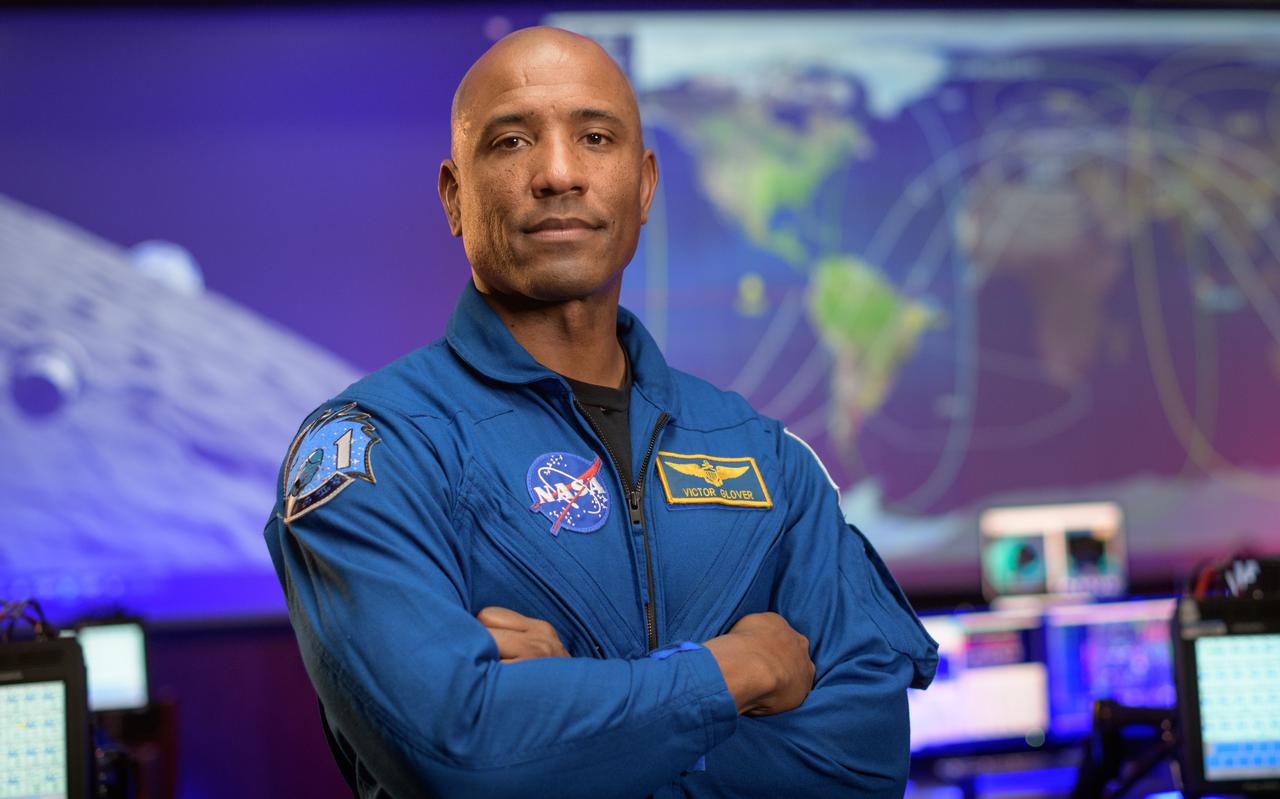
NASA astronaut Victor Glover poses for a portrait, Tuesday, Sept. 15, 2020, in the Blue Flight Control Room at NASA’s Johnson Space Center in Houston. Photo Credit: (NASA/Bill Ingalls)

NASA astronaut Raja Chari poses for a portrait, Tuesday, Sept. 8, 2020, in the Blue Flight Control Room at NASA’s Johnson Space Center in Houston. Photo Credit: (NASA/Bill Ingalls)

NASA astronaut Jessica Watkins poses for a portrait, Tuesday, Sept. 15, 2020, in the Blue Flight Control Room at NASA’s Johnson Space Center in Houston. Photo Credit: (NASA/Bill Ingalls)
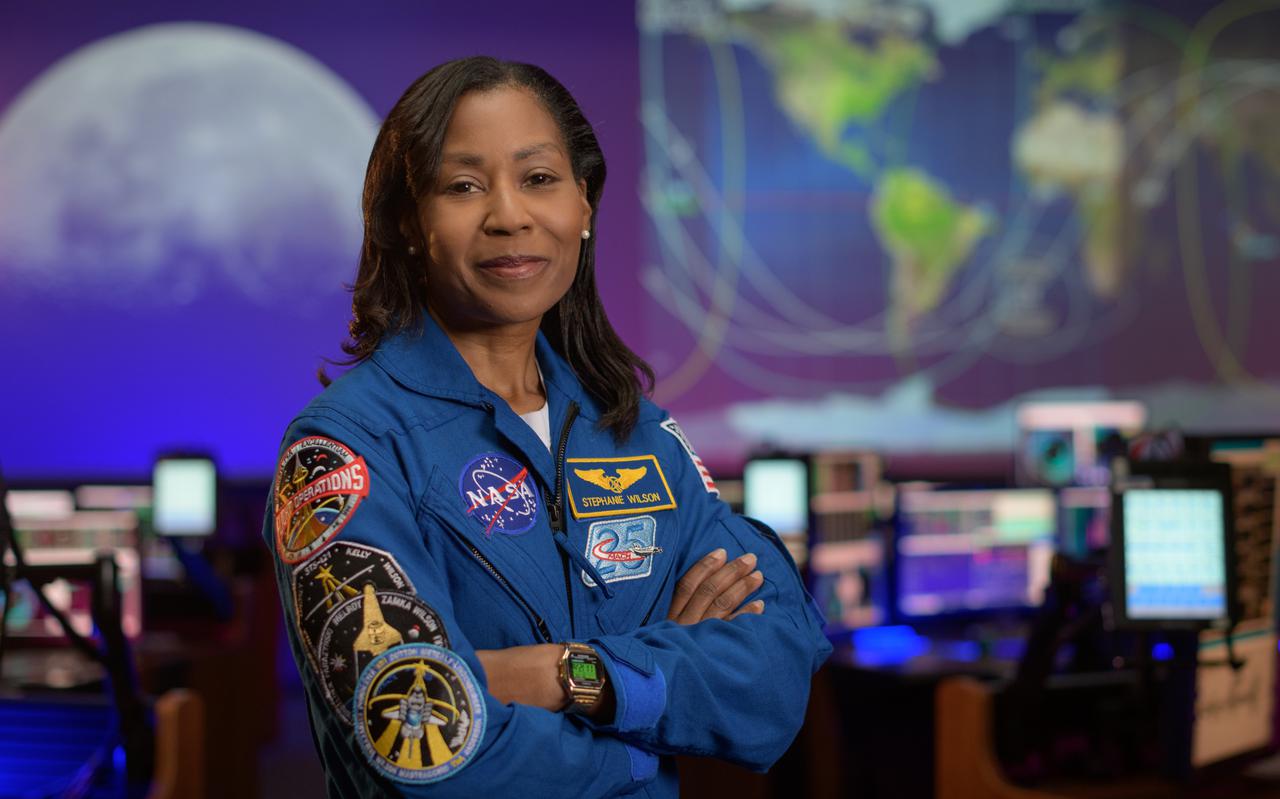
NASA astronaut Stephanie Wilson poses for a portrait, Wednesday, Sept. 16, 2020, in the Blue Flight Control Room at NASA’s Johnson Space Center in Houston. Photo Credit: (NASA/Bill Ingalls)

NASA astronaut Kayla Barron poses for a portrait, Wednesday, Sept. 16, 2020, in the Blue Flight Control Room at NASA’s Johnson Space Center in Houston. Photo Credit: (NASA/Bill Ingalls)
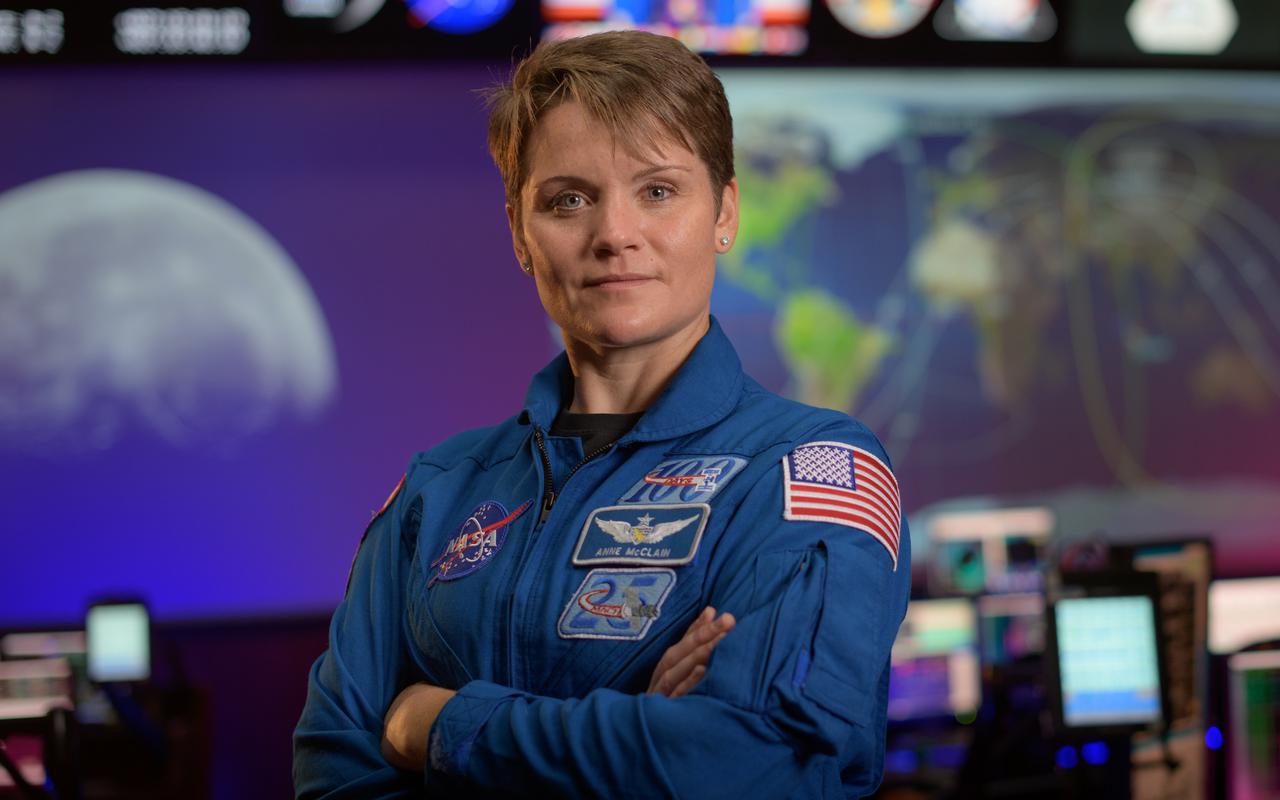
NASA astronaut Anne McClain poses for a portrait, Wednesday, Sept. 16, 2020, in the Blue Flight Control Room at NASA’s Johnson Space Center in Houston. Photo Credit: (NASA/Bill Ingalls)
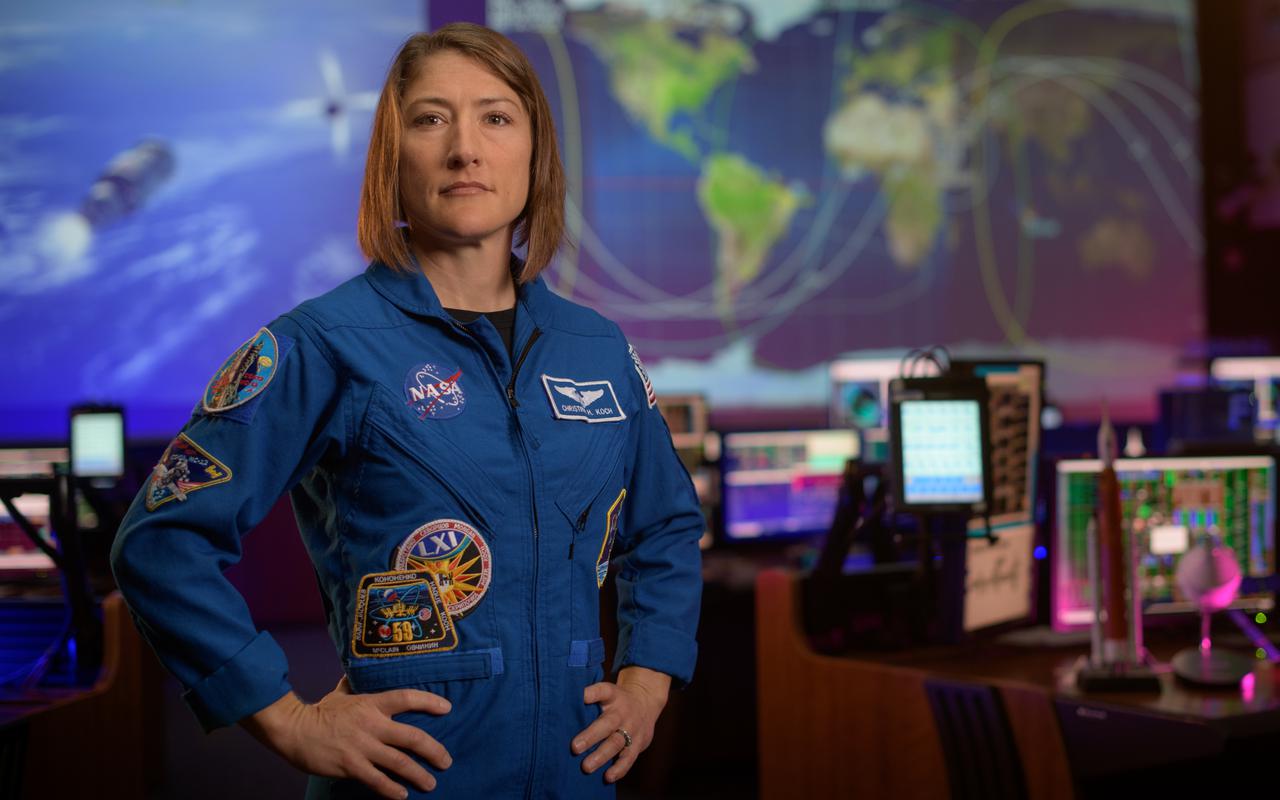
NASA astronaut Christina Koch poses for a portrait, Wednesday, Sept. 16, 2020, in the Blue Flight Control Room at NASA’s Johnson Space Center in Houston. Photo Credit: (NASA/Bill Ingalls)
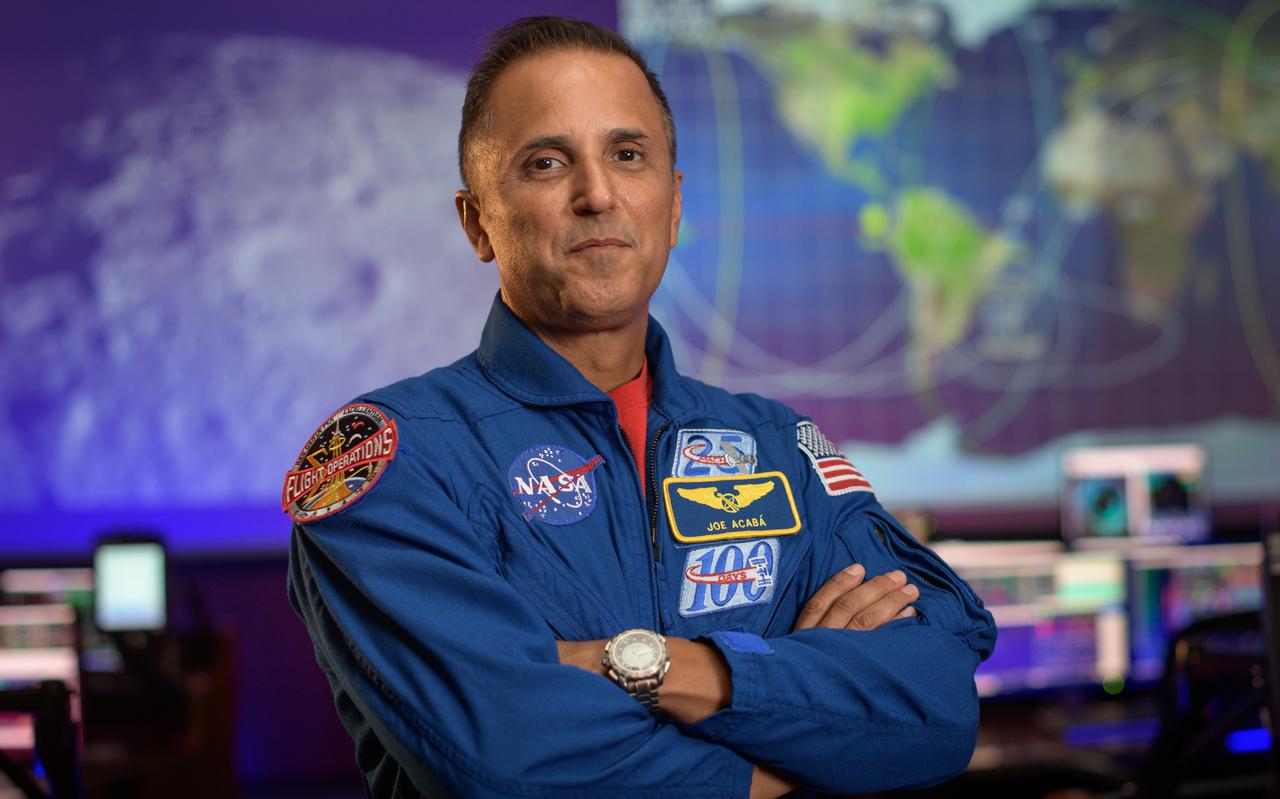
NASA astronaut Joe Acaba poses for a portrait, Wednesday, Sept. 16, 2020, in the Blue Flight Control Room at NASA’s Johnson Space Center in Houston. Photo Credit: (NASA/Bill Ingalls)
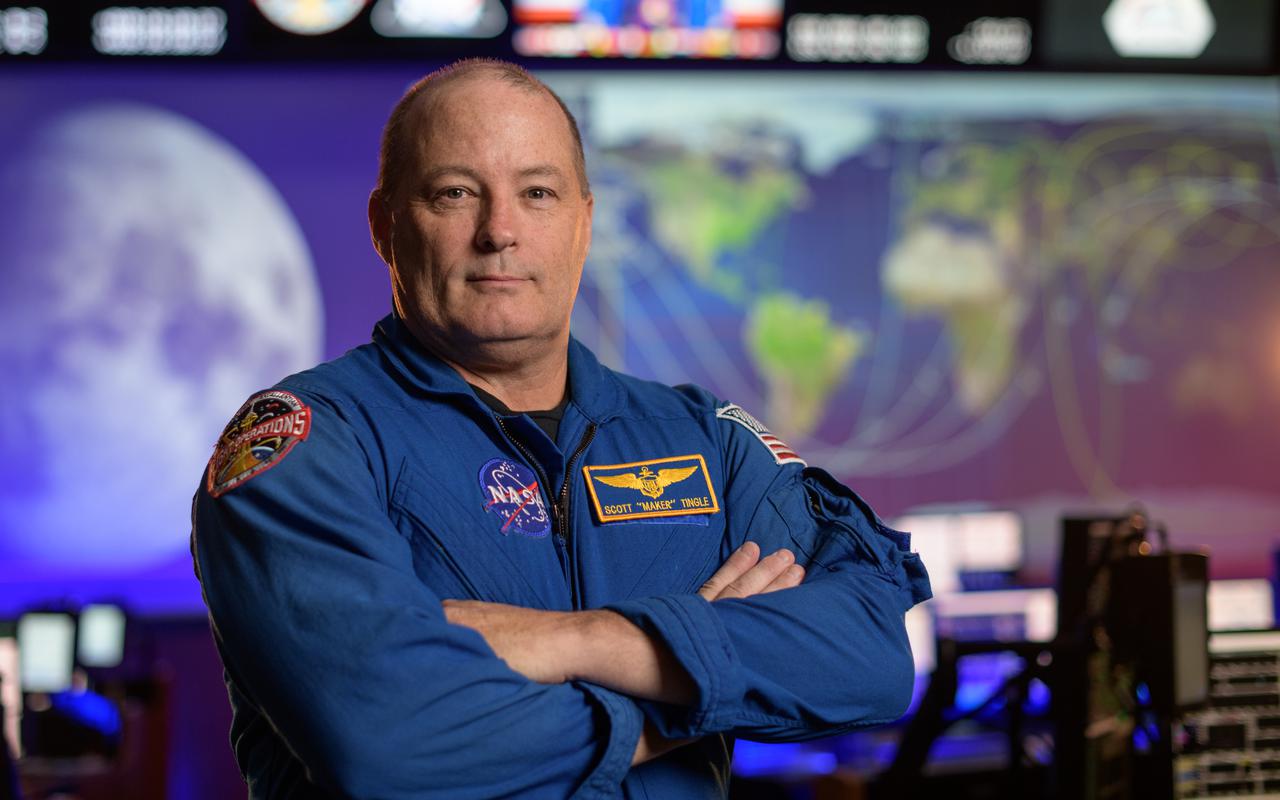
NASA astronaut Scott Tingle poses for a portrait, Tuesday, Sept. 8, 2020, in the Blue Flight Control Room at NASA’s Johnson Space Center in Houston. Photo Credit: (NASA/Bill Ingalls)
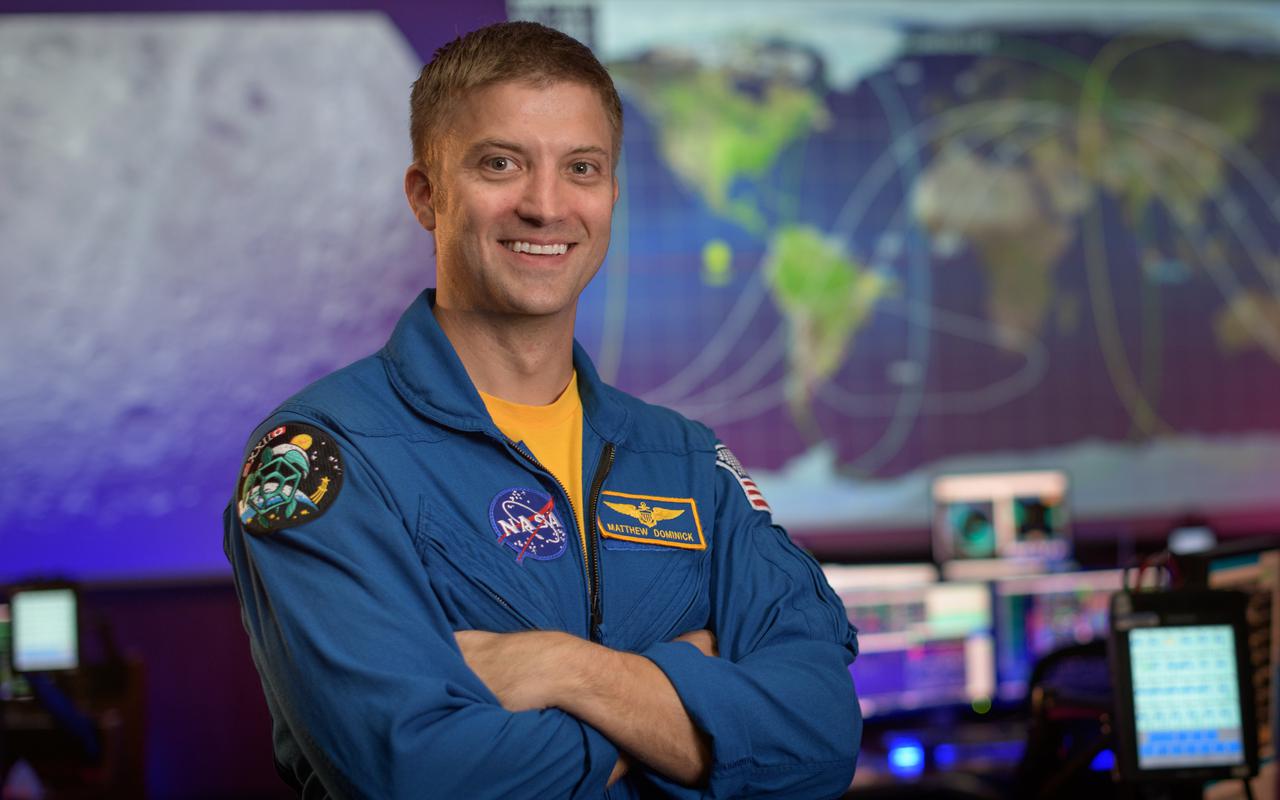
NASA astronaut Matthew Dominick poses for a portrait, Wednesday, Sept. 16, 2020, in the Blue Flight Control Room at NASA’s Johnson Space Center in Houston. Photo Credit: (NASA/Bill Ingalls)
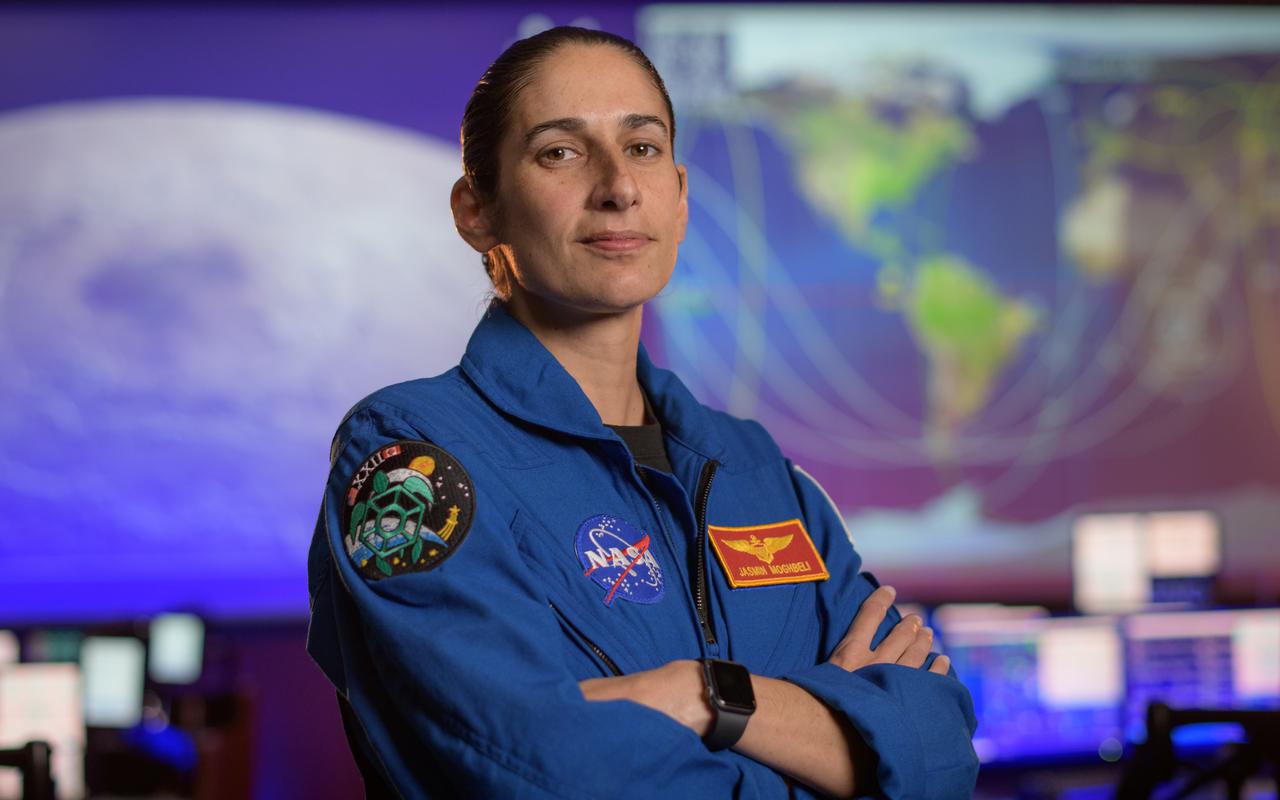
NASA astronaut Jasmin Moghbeli poses for a portrait, Tuesday, Sept. 8, 2020, in the Blue Flight Control Room at NASA’s Johnson Space Center in Houston. Photo Credit: (NASA/Bill Ingalls)
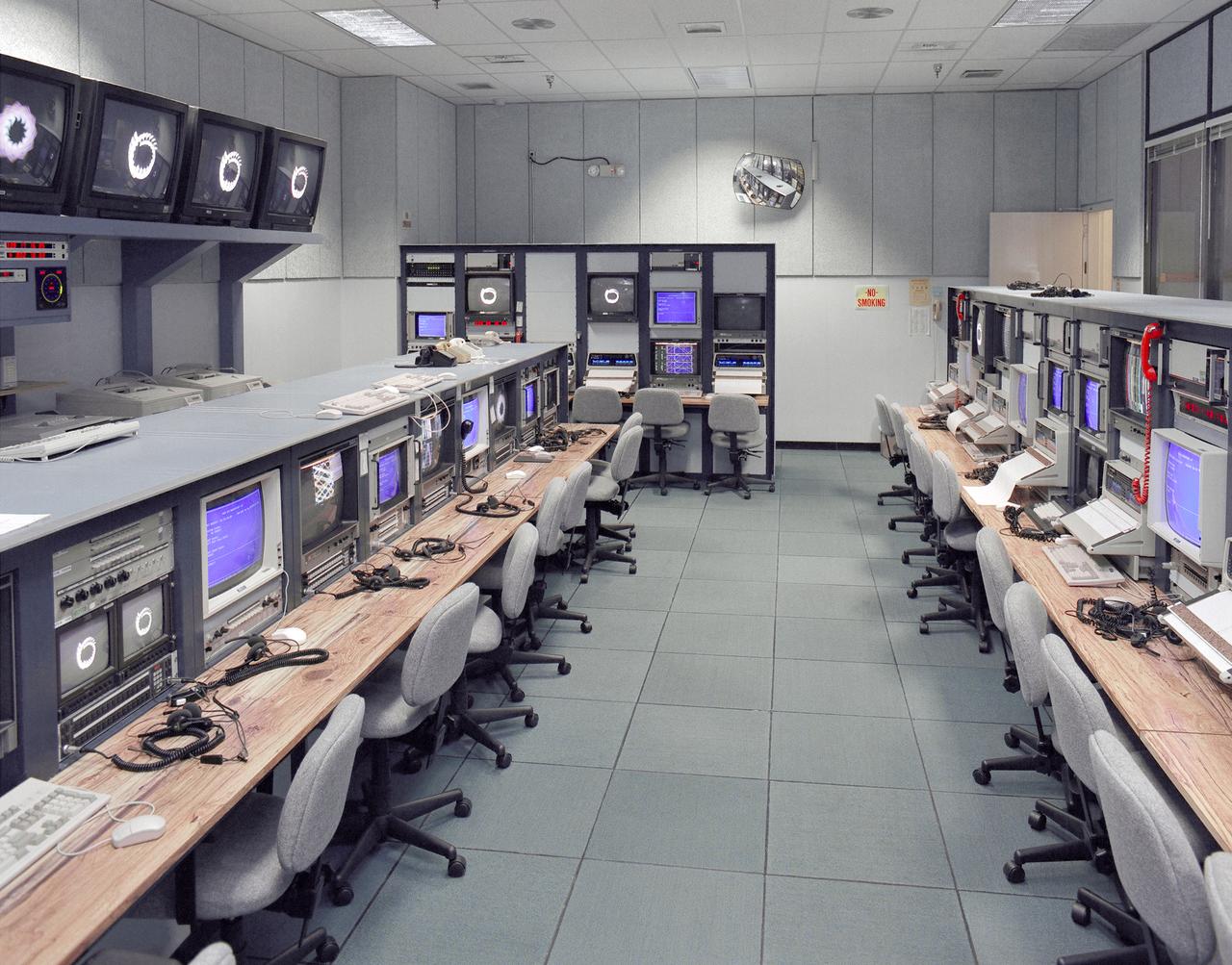
Mission control Blue Room, seen here, in building 4800 at NASA's Dryden Flight Research Center, is part of the Western Aeronautical Test Range (WATR). All aspects of a research mission are monitored from one of two of these control rooms at Dryden. The WATR consists of a highly automated complex of computer controlled tracking, telemetry, and communications systems and control room complexes that are capable of supporting any type of mission ranging from system and component testing, to sub-scale and full-scale flight tests of new aircraft and reentry systems. Designated areas are assigned for spin/dive tests, corridors are provided for low, medium, and high-altitude supersonic flight, and special STOL/VSTOL facilities are available at Ames Moffett and Crows Landing. Special use airspace, available at Edwards, covers approximately twelve thousand square miles of mostly desert area. The southern boundary lies to the south of Rogers Dry Lake, the western boundary lies midway between Mojave and Bakersfield, the northern boundary passes just south of Bishop, and the eastern boundary follows about 25 miles west of the Nevada border except in the northern areas where it crosses into Nevada.
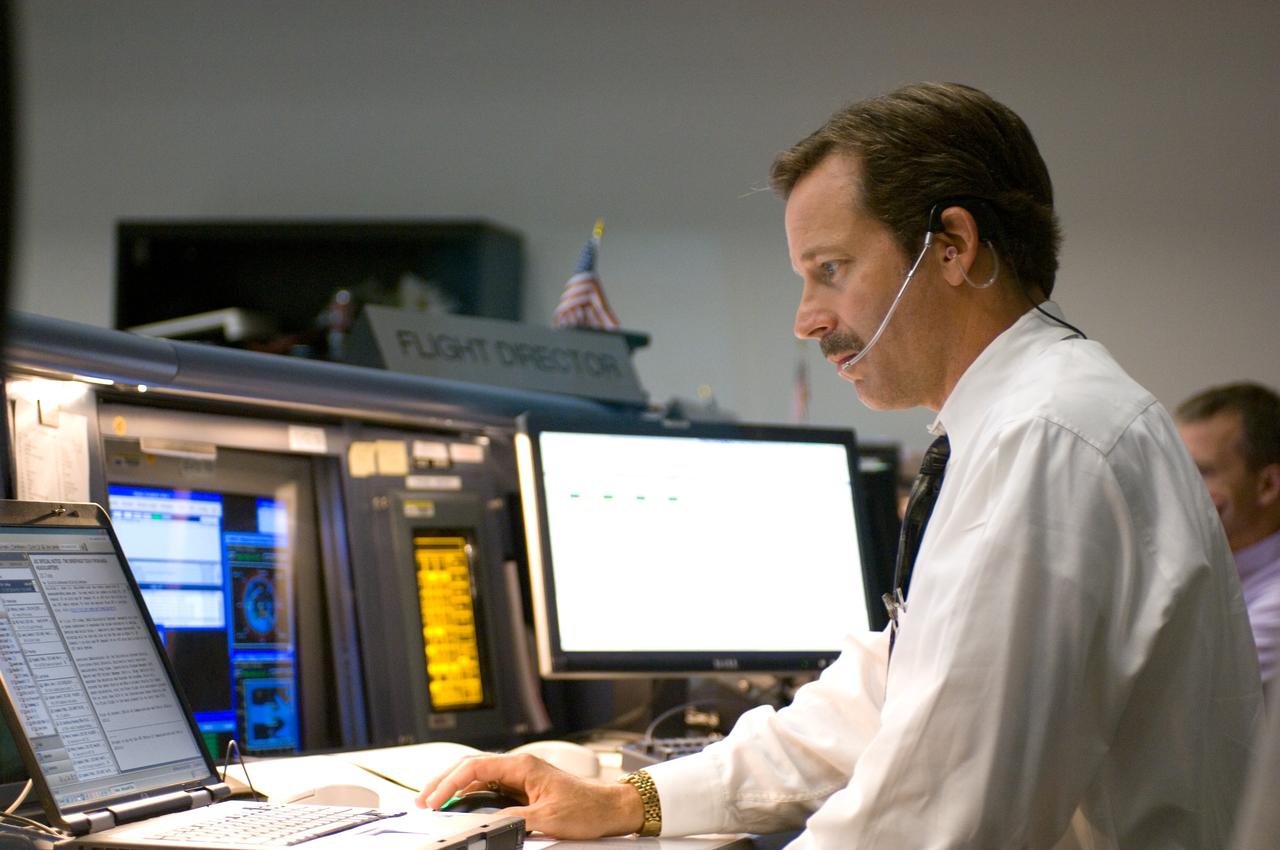
JSC2006-E-38928 (31 Aug. 2006) --- Flight director Rick LaBrode monitors data at his console in the Station (Blue) Flight Control Room in Houston's Mission Control Center during Expedition 13 mission activities.
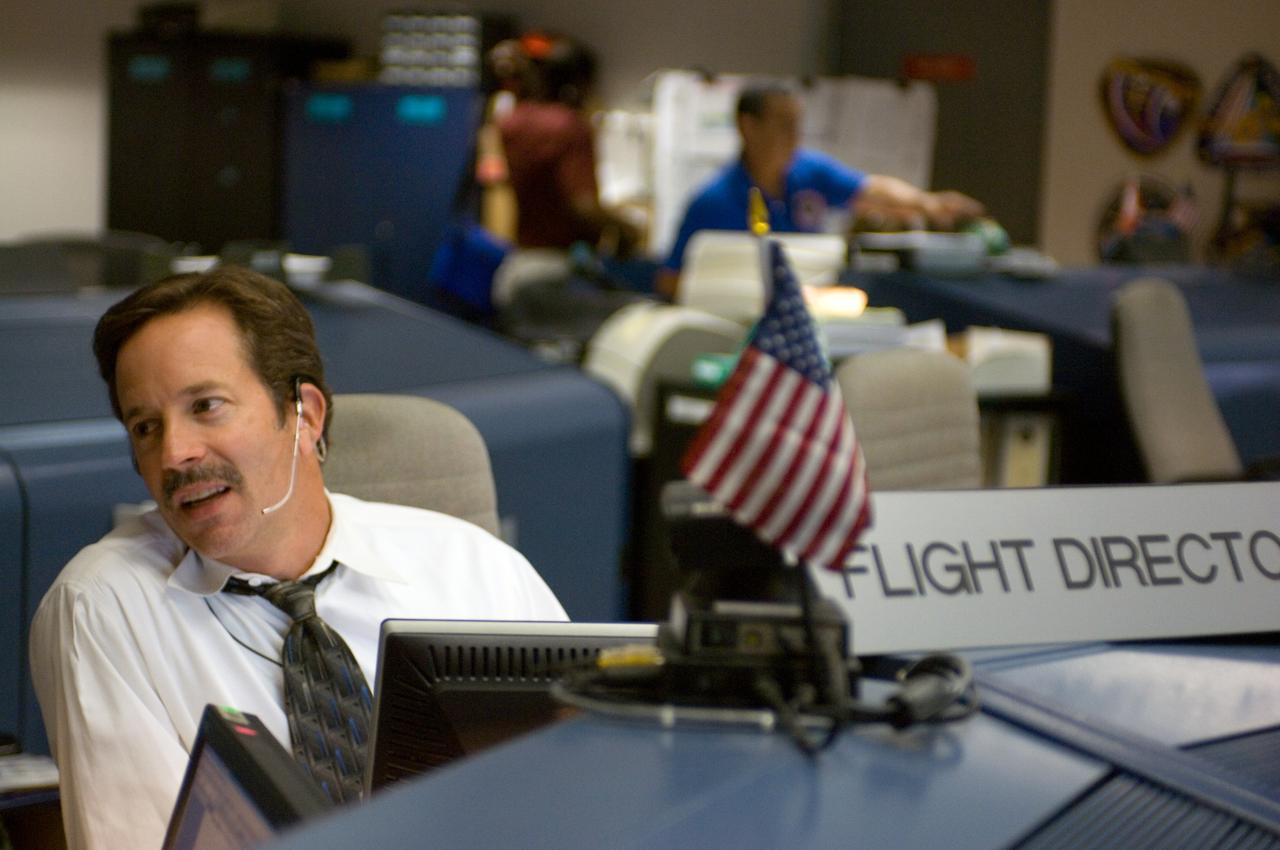
JSC2006-E-38926 (31 Aug. 2006) --- Flight director Rick LaBrode discusses Expedition 13 mission activities with another flight controller (out of frame) in the Station (Blue) Flight Control Room in Houston's Mission Control Center.
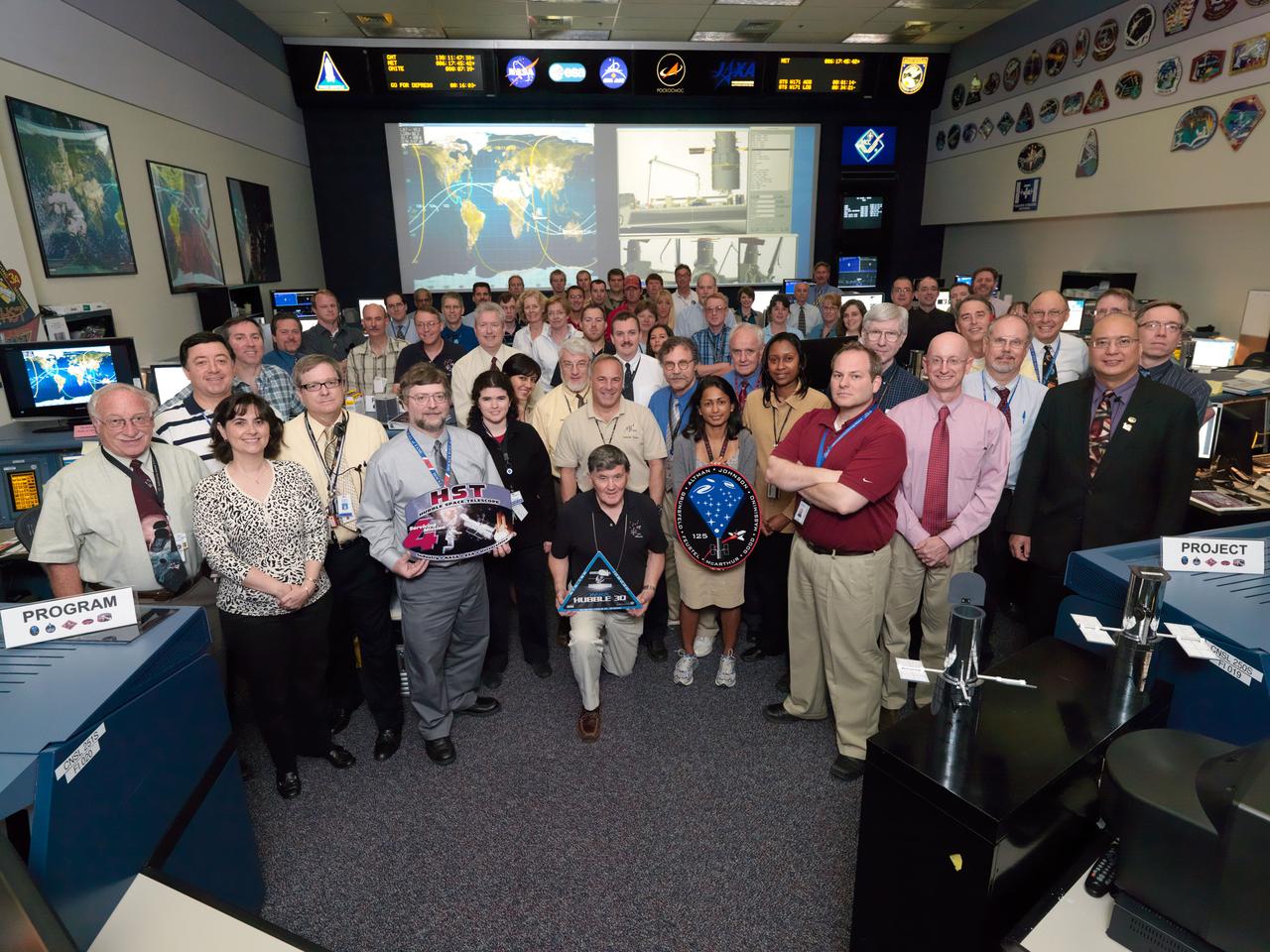
JSC2009-E-120479 (18 May 2009) --- Members of the STS-125 Hubble Space Telescope Planning and Orbit flight control team pose for a group portrait in the blue flight control room in the Mission Control Center at NASA's Johnson Space Center.
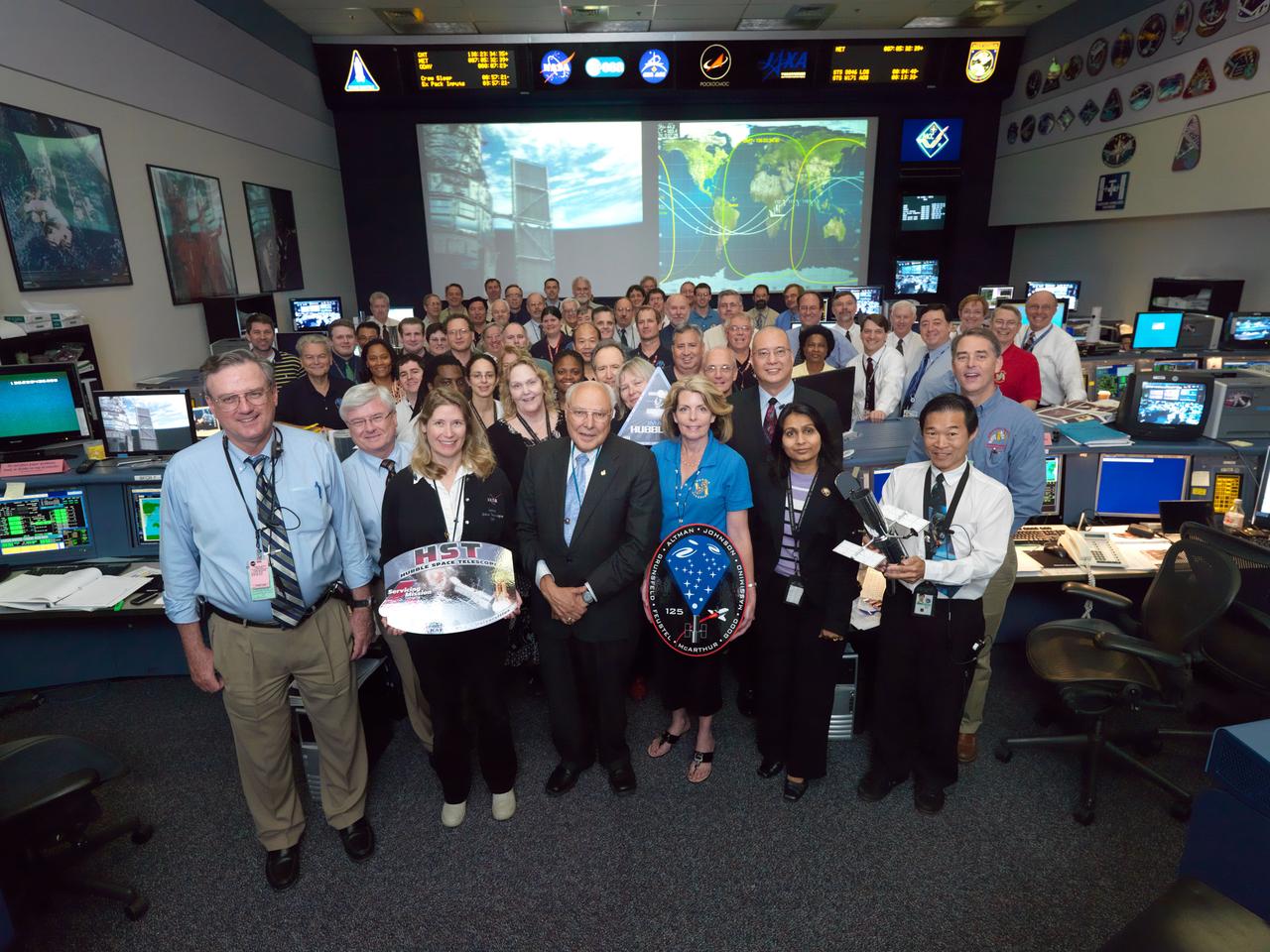
JSC2009-E-120701 (19 May 2009) --- Members of the STS-125 Hubble Space Telescope Planning and Orbit flight control team pose for a group portrait in the blue flight control room in the Mission Control Center at NASA's Johnson Space Center.
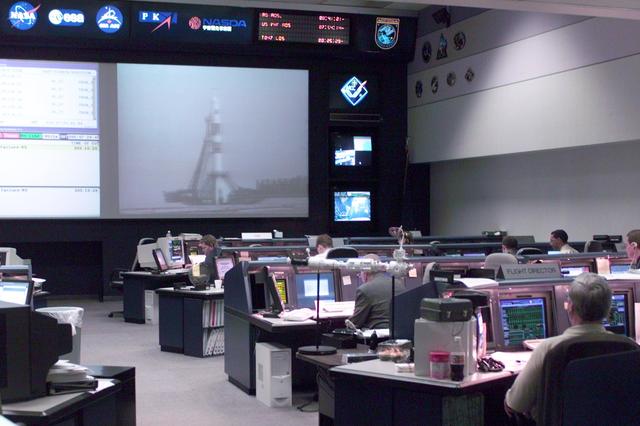
JSC2000-E-27301 (31 October 2000) --- Flight controllers in Houston's Mission Control Center follow the countdown to the Kazakhstan liftoff of the Soyuz, carrying the Expedition One crew.
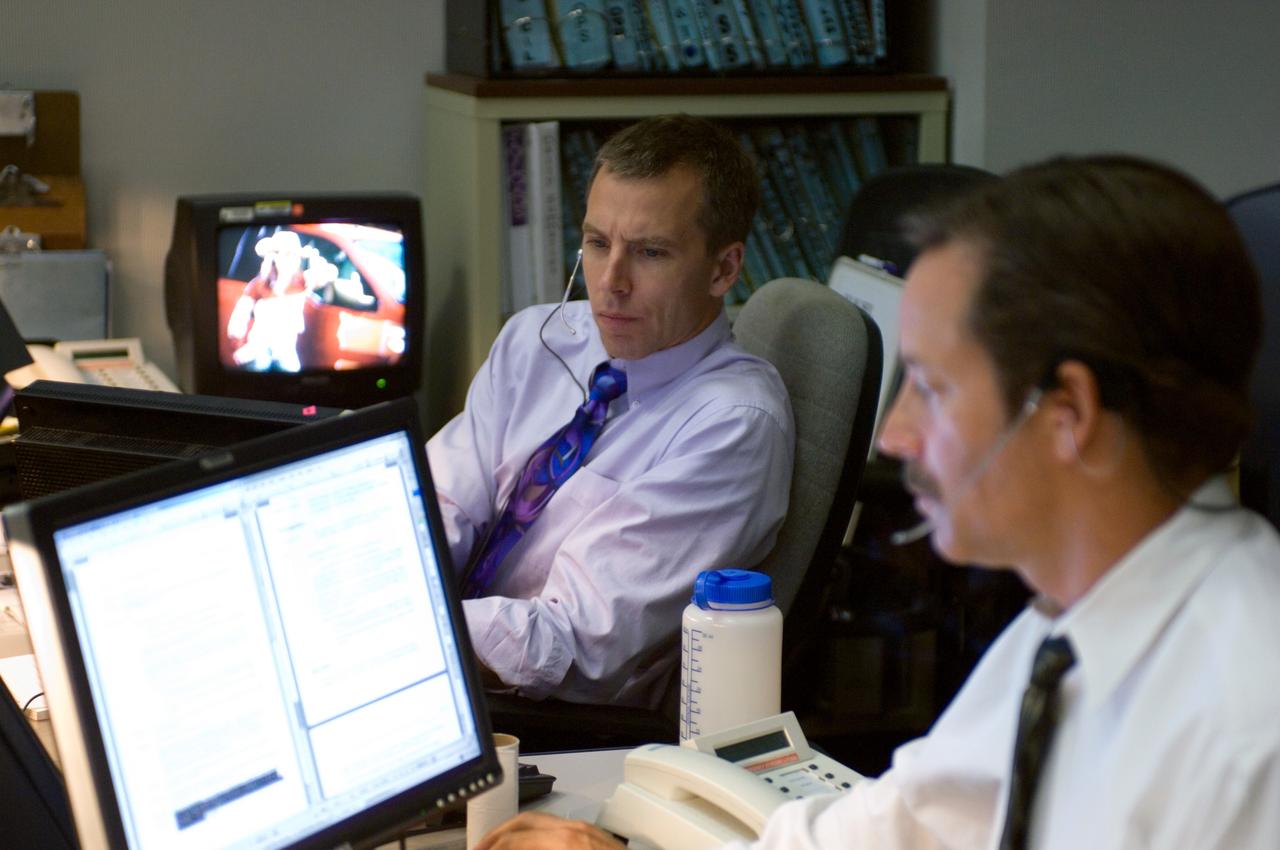
JSC2006-E-38929 (31 Aug. 2006) --- Astronaut Andrew J. Feustel (background), spacecraft communicator (CAPCOM), and flight director Rick LaBrode monitor data at their consoles in the Station (Blue) Flight Control Room in Houston's Mission Control Center during Expedition 13 mission activities.
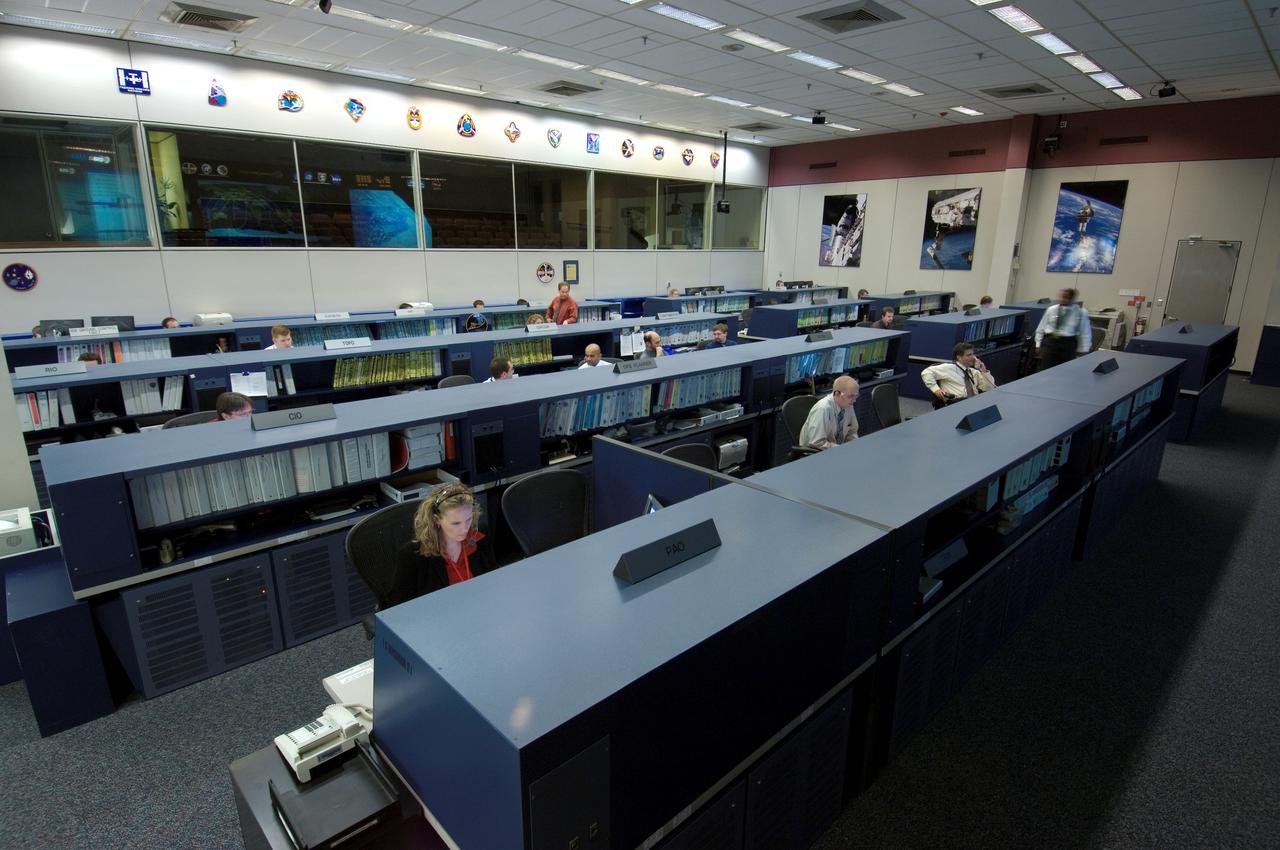
JSC2006-E-43863 (6 Oct. 2006)--- International Space Station flight controllers have this area as their new home with increased technical capabilities, more workspace and a long, distinguished history. The newly updated facility is just down the hall from its predecessor at NASA's Johnson Space Center, Houston. This view is toward the rear of the "new" room. Known as Flight Control Room 1, it was first used to control a space flight 38 years ago, the mission of Apollo 7 launched Oct. 11, 1968. It was one of two control rooms for NASA's manned missions. The room it replaces in its new ISS role, designated the Blue Flight Control Room, had been in operation since the first station component was launched in 1998.
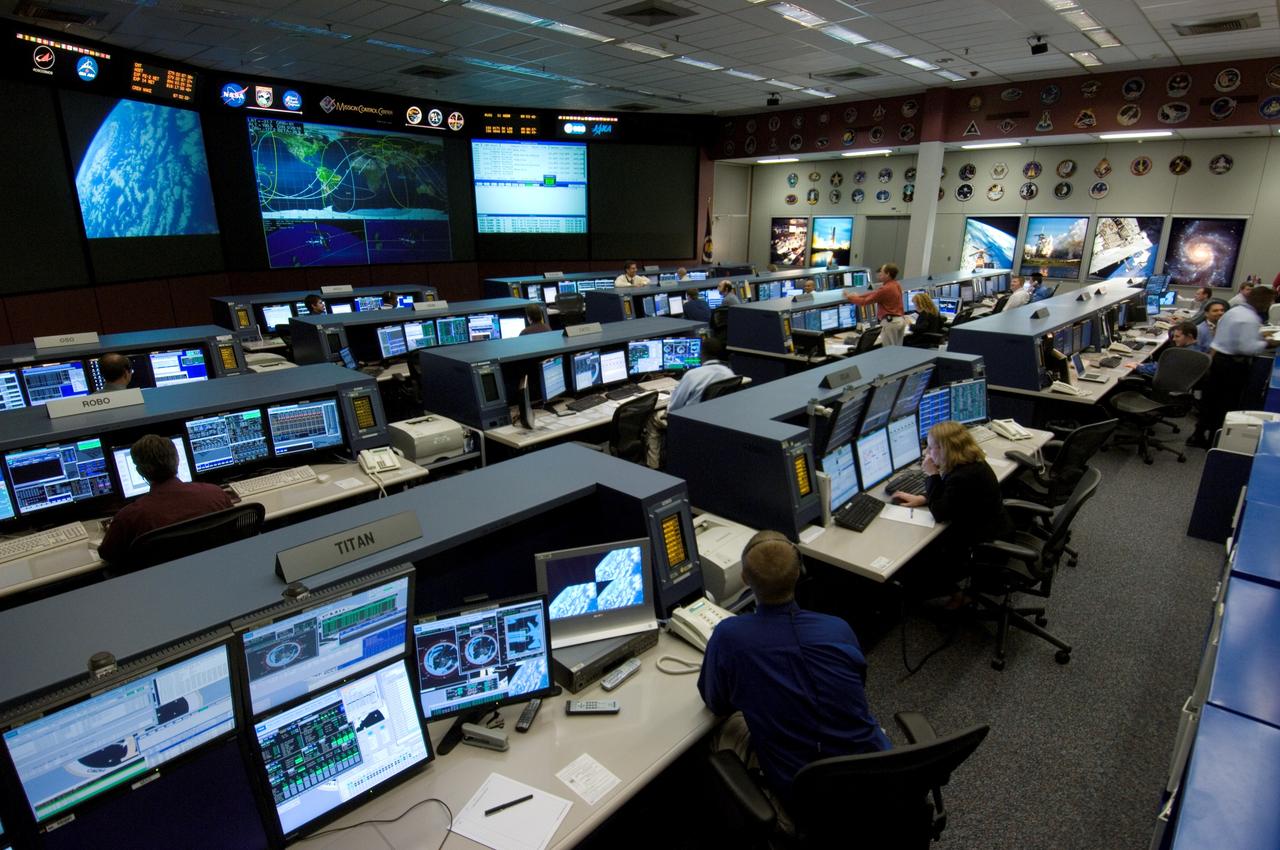
JSC2006-E-43860 (6 Oct. 2006)--- International Space Station flight controllers have this area as their new home with increased technical capabilities, more workspace and a long, distinguished history. The newly updated facility is just down the hall from its predecessor at NASA's Johnson Space Center, Houston. Known as Flight Control Room 1, it was first used to control a space flight 38 years ago, the mission of Apollo 7 launched Oct. 11, 1968. It was one of two control rooms for NASA's manned missions. The room it replaces in its new ISS role, designated the Blue Flight Control Room, had been in operation since the first station component was launched in 1998.
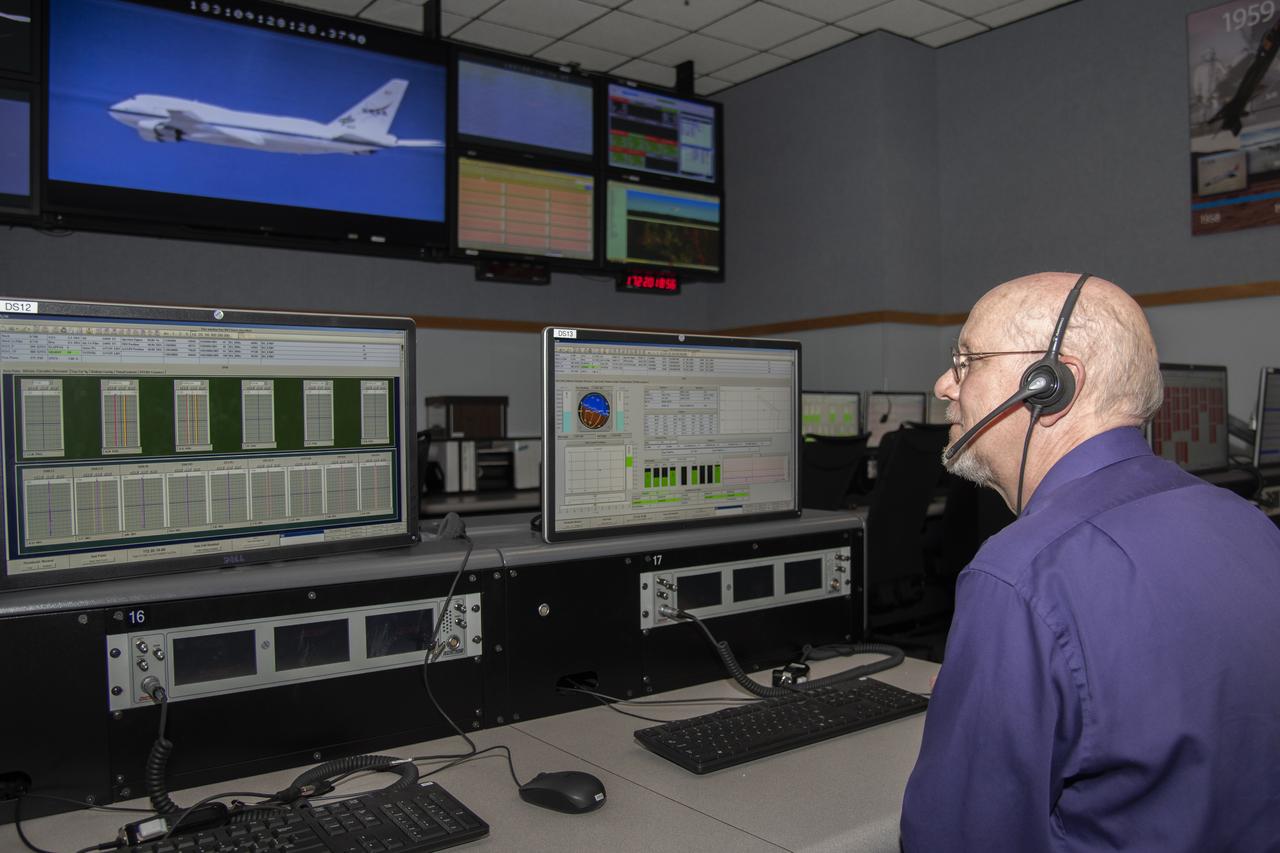
Kevin Knutson sits at a station in the main Blue Control Room at NASA’s Armstrong Flight Research Center in California used during complex flight missions to house the many technical discipline experts required to gather all of the required data and to enhance mission safety.
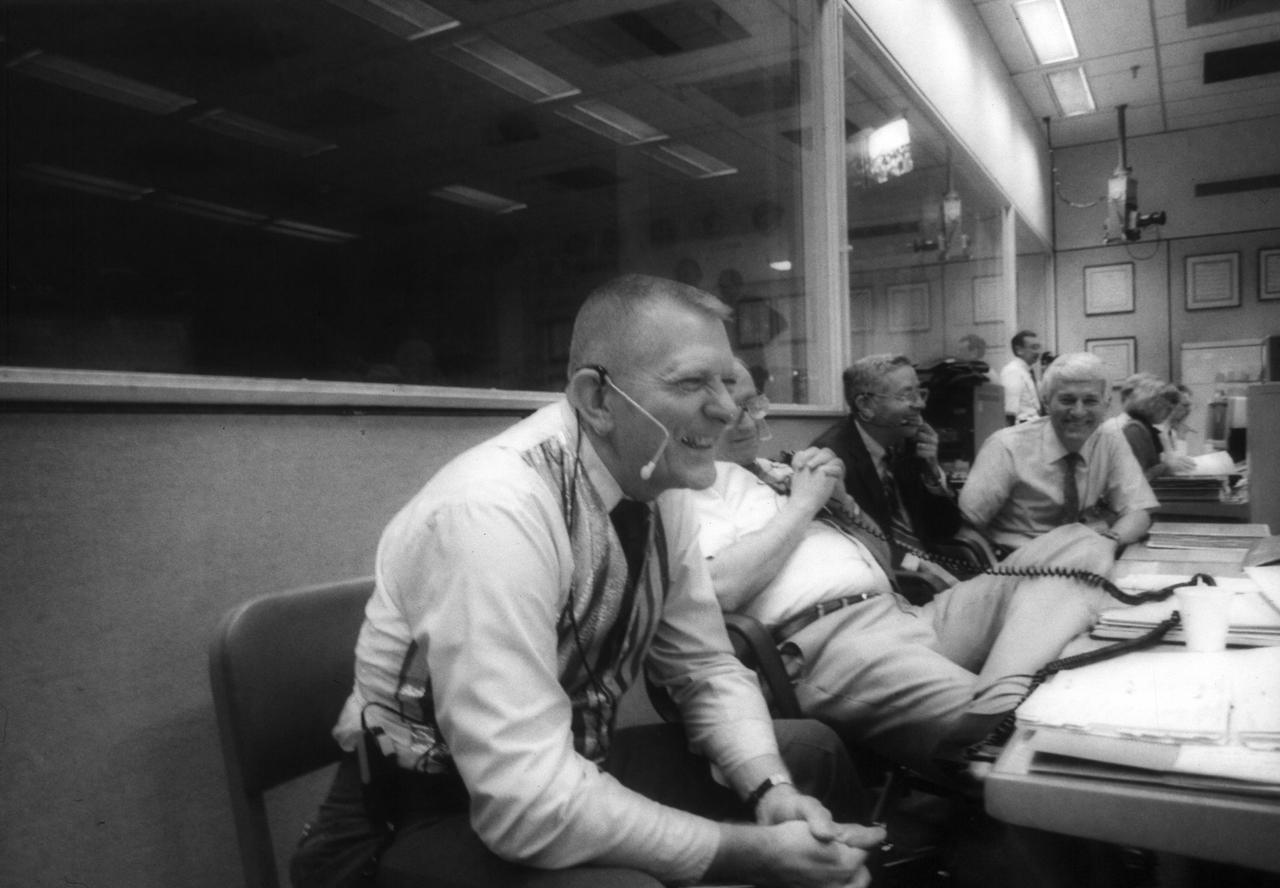
JSC officials, laughing, listen to crewmembers' commentary onboard Discovery, Orbiter Vehicle (OV) 103, during STS-26. In the Flight Control Room (FCR) of JSC's Mission Control Center (MCC) Bldg 30 and seated at the Mission Operations Directorate (MOD) console, MOD Director Eugene F. Kranz (foreground), wearing red, white and blue vest, smiles along with JSC Director Aaron Cohen and Flight Crew Operations Deputy Director Henry W. Hartsfield, Jr. (far right).
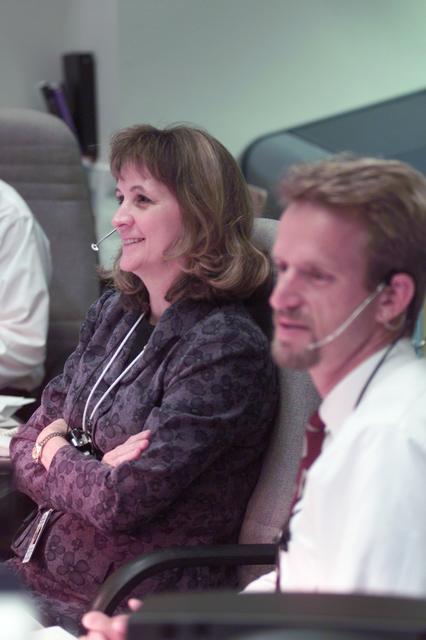
JSC2001-E-21574 (16 July 2001) --- ISS Orbit 1 flight director Sally Davis and Derek Hassman monitor International Space Station (ISS) issues at their consoles in the blue flight control room (BFCR) in Houston's Mission Control Center (MCC). At the time this photo was taken, the STS-104 and Expedition Two crews had joined efforts to perform a number of station-related tasks.
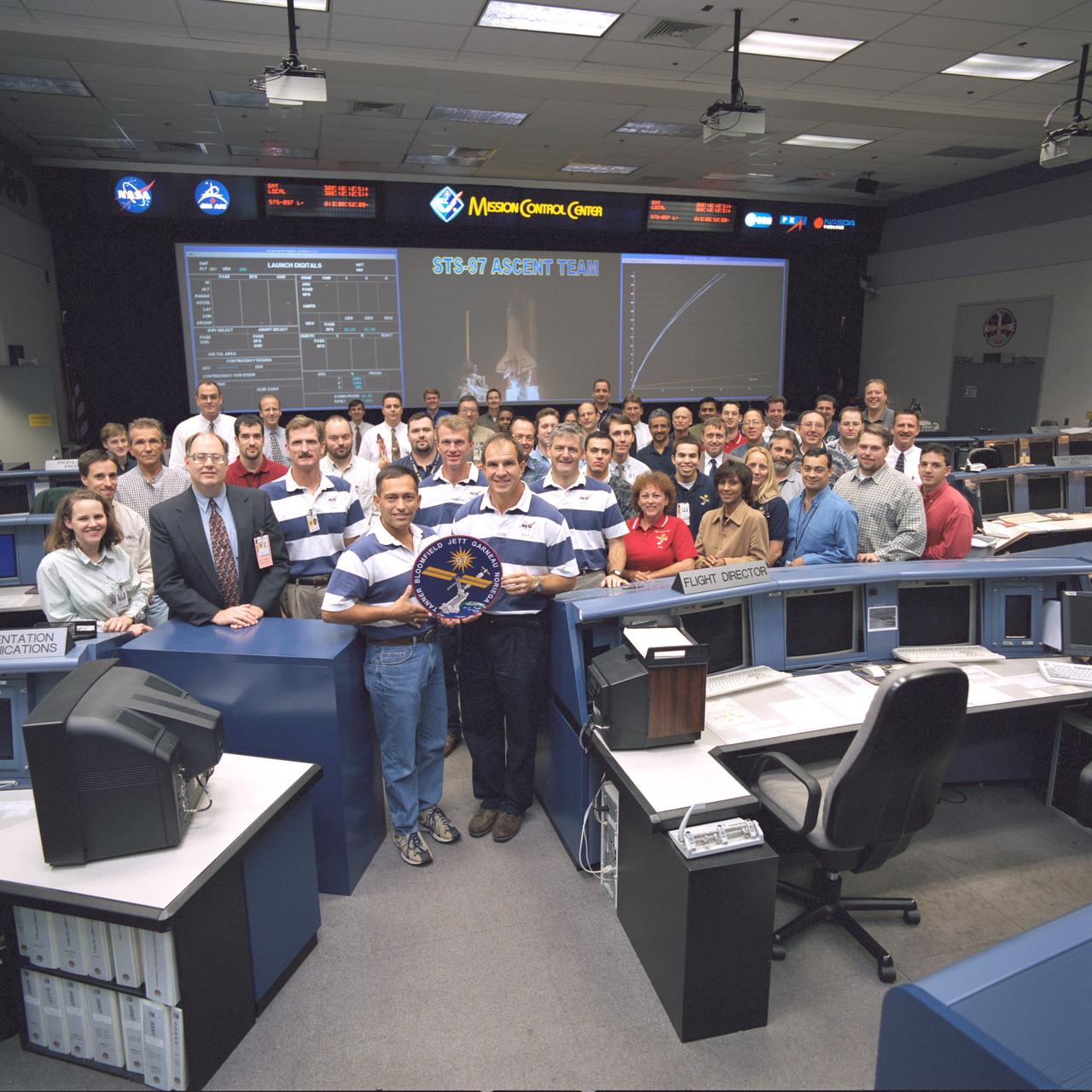
JSC2000-07294 (20 November 2000) --- The 40-odd flight controllers assigned to the STS-97 ascent team and some special guests pose for a group portrait in the shuttle flight control room in Houston's Mission Control Center (JSC). The five guests attired in the blue and white shirts are the flight crew members for the STS-97 crew, scheduled to be launched from Florida on the last day of this month. The astronauts are, from the left, Joseph R. Tanner, Carlos I. Noriega, Brent W. Jett, Jr., Michael J. Bloomfield and Marc Garneau, who represents the Canadian Space Agency (CSA). Ascent shift flight director Wayne Hale stands next to Tanner.
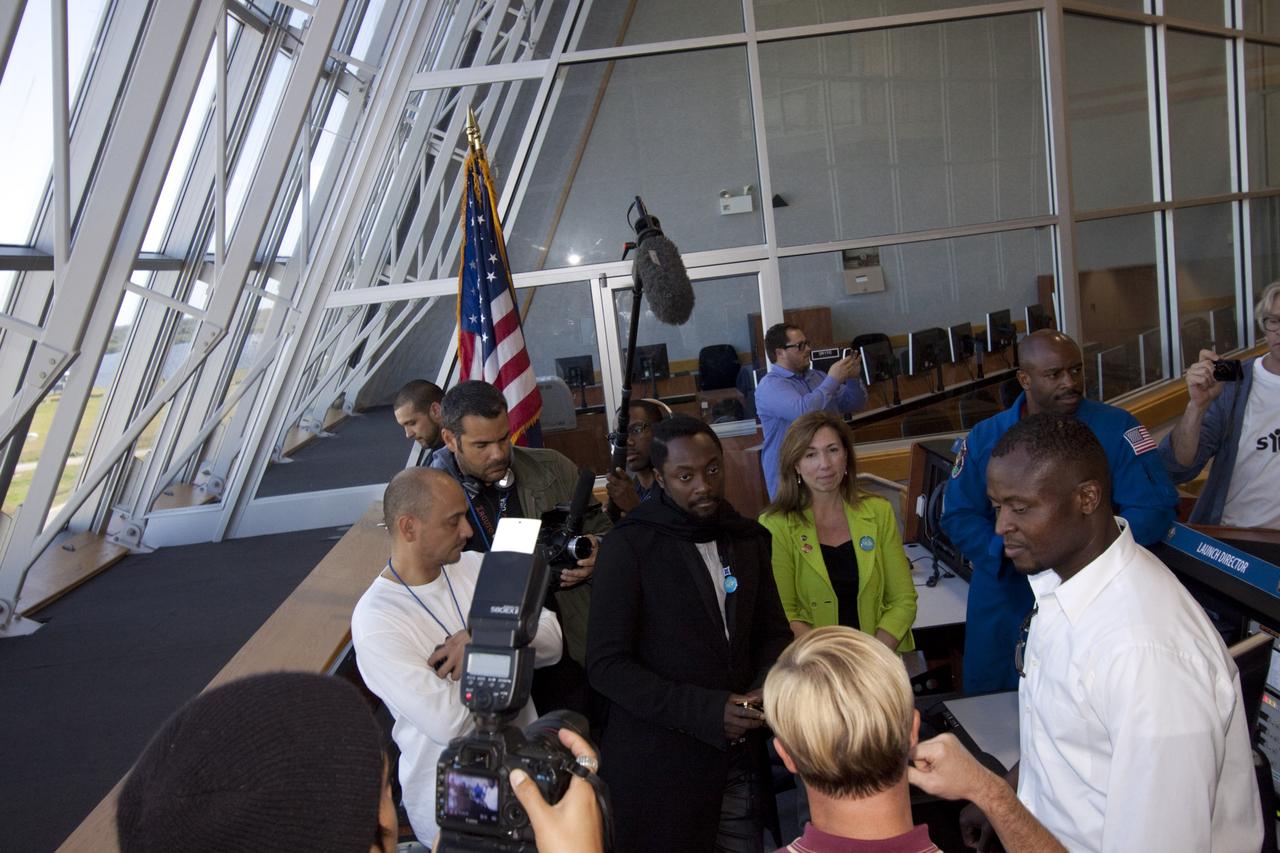
CAPE CANAVERAL, Fla. – At NASA Kennedy Space Center in Florida, Will.i.am (at center), entertainer and member of The Black Eyed Peas, tours Firing Room 4 in the Launch Control Center accompanied by NASA Deputy Administrator Lori Garver (green jacket); former astronaut Leland Melvin, NASA associate administrator for Education (blue flight suit); and Yves Lamothe, lead systems engineer for the 21st Century Ground Systems Program at Kennedy. The visit to the firing room followed their participation in a NASA Tweetup. The Tweetup is part of prelaunch activities for the agency’s Mars Science Laboratory (MSL) launch and provides the opportunity for tweeters will share their experiences with followers through the social networking site Twitter. The MSL mission will pioneer precision landing technology and a sky-crane touchdown to place a car-sized rover, Curiosity, near the foot of a mountain inside Gale Crater on Aug. 6, 2012. During a nearly two-year prime mission after landing, the rover will investigate whether the region has ever offered conditions favorable for microbial life, including the chemical ingredients for life. Liftoff of MSL aboard a United Launch Alliance Atlas V rocket from Space Launch Complex-41 on Cape Canaveral Air Force Station was at 10:02 a.m. EST on Nov. 26. For more information, visit http://www.nasa.gov/msl. Photo credit: NASA/Jim Grossmann
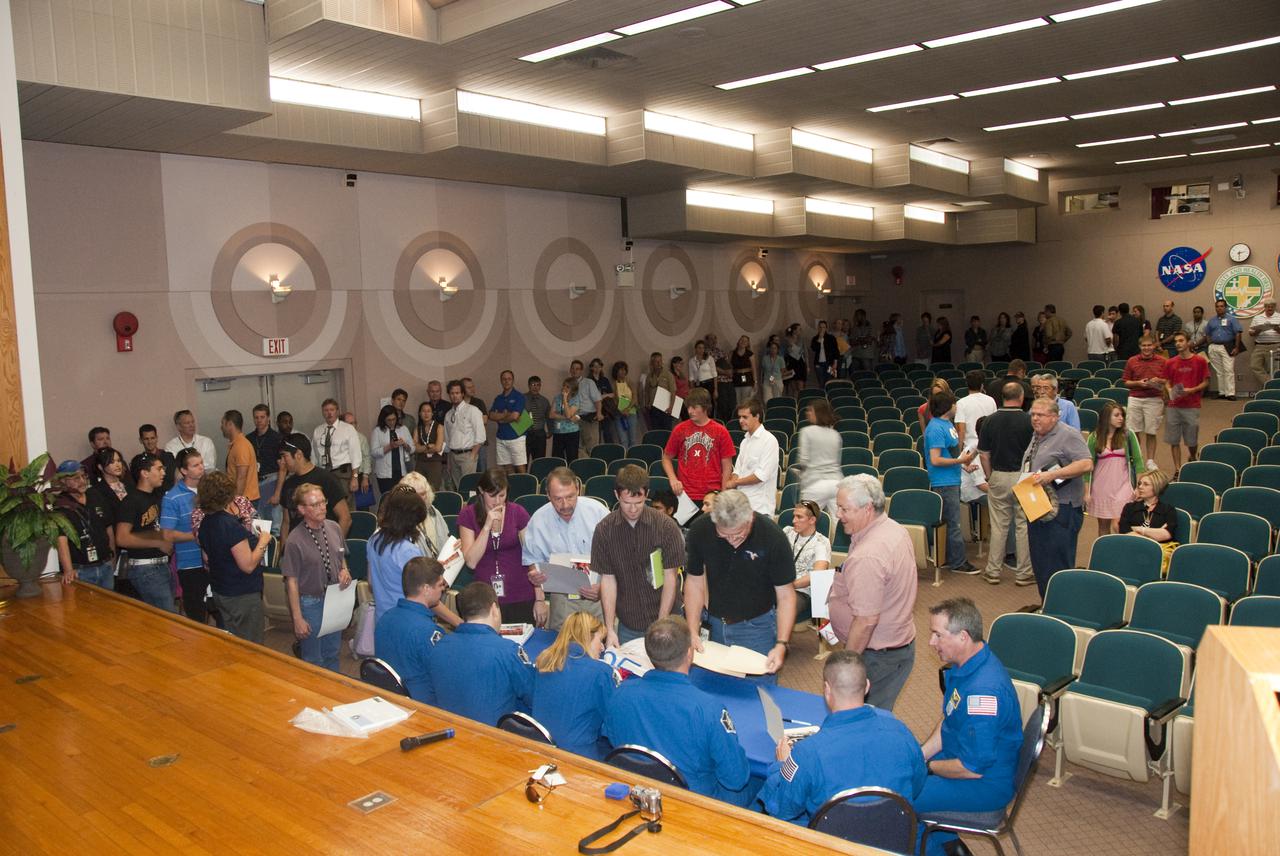
CAPE CANAVERAL, Fla. - In the Training Auditorium at NASA's Kennedy Space Center in Florida, Kennedy employees wait their turns to receive the autographs of space shuttle Endeavour's STS-130 crew members. In the blue flight suits, seated from left, are Mission Specialists Robert Behnken, Nicholas Patrick and Kathryn Hire; Pilot Terry Virts; Commander George Zamka; and Mission Specialist Stephen Robinson. The autograph-signing session followed a program for Kennedy employees in which the crew talked about their experiences on the mission. Endeavour launched Feb. 8, 2010, and landed Feb. 21. During Endeavour's STS-130 mission, the crew installed the Tranquility node, a module that provides additional room for crew members and many of the station's life support and environmental control systems. Attached to Tranquility is a cupola with seven windows that provide a panoramic view of Earth, celestial objects and visiting spacecraft. STS-130 was the 24th flight for Endeavour, the 32nd shuttle mission devoted to ISS assembly and maintenance, and the 130th shuttle mission. For information on the STS-130 mission and crew, visit http:__www.nasa.gov_mission_pages_shuttle_shuttlemissions_sts130_index.html. Photo credit: NASA_Jim Grossmann
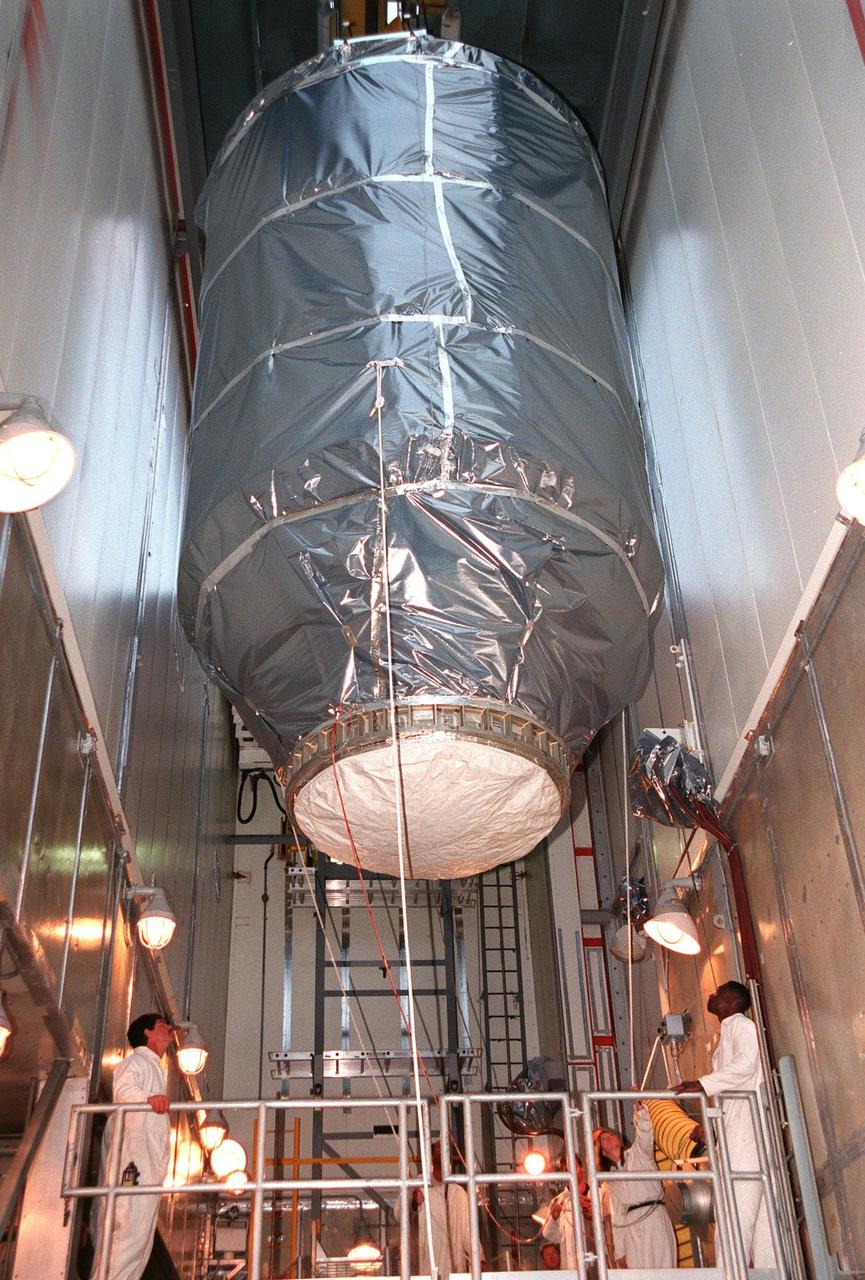
KENNEDY SPACE CENTER, FLA. -- On Launch Pad 17A at Cape Canaveral Air Station, Deep Space 1 is lowered in the white room for installation on a Boeing Delta 7326 rocket . The spacecraft is targeted for launch on Oct. 25. Deep Space 1 is the first flight in NASA's New Millennium Program, and is designed to validate 12 new technologies for scientific space missions of the next century, including the engine. Propelled by the gas xenon, the engine is being flight-tested for future deep space and Earth-orbiting missions. Deceptively powerful, the ion drive emits only an eerie blue glow as ionized atoms of xenon are pushed out of the engine. While slow to pick up speed, over the long haul it can deliver 10 times as much thrust per pound of fuel as liquid or solid fuel rockets. Other onboard experiments include software that tracks celestial bodies so the spacecraft can make its own navigation decisions without the intervention of ground controllers. Deep Space 1 will complete most of its mission objectives within the first two months, but will also do a flyby of a near-Earth asteroid, 1992 KD, in July 1999
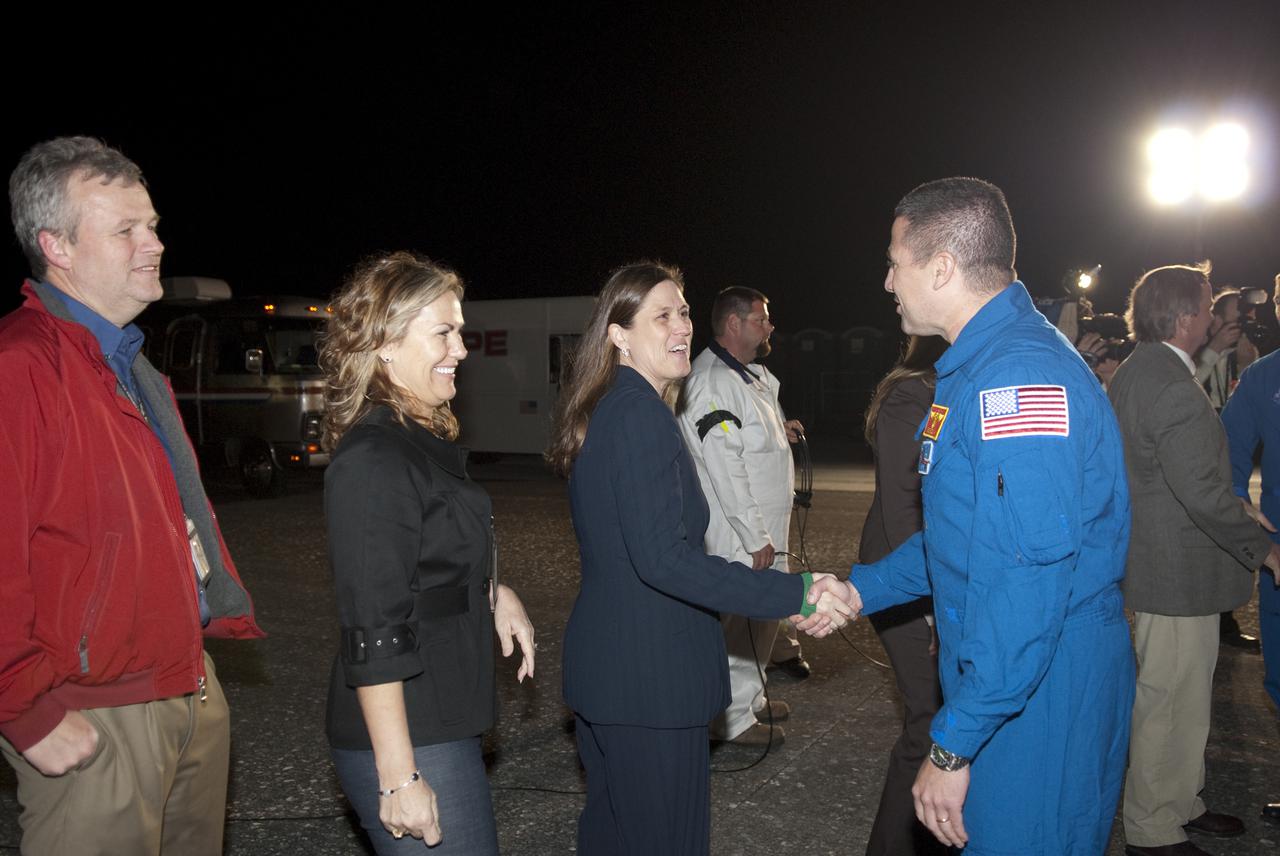
CAPE CANAVERAL, Fla. - STS-130 Commander George Zamka, in the blue flight suit, gets a warm welcome back to NASA's Kennedy Space Center in Florida from Rita Willcoxon, director of Launch Vehicle Processing, following space shuttle Endeavour's successful landing on Runway 15 at Kennedy's Shuttle Landing Facility. After 14 days in space, Endeavour's 5.7-million-mile STS-130 mission was completed on orbit 217. Main gear touchdown was at 10:20:31 p.m. EST followed by nose gear touchdown at 10:20:39 p.m. and wheels stop at 10:22:10 p.m. It was the 23rd night landing in shuttle history and the 17th at Kennedy. During Endeavour's STS-130 mission, astronauts installed the Tranquility node, a module that provides additional room for crew members and many of the station's life support and environmental control systems. Attached to Tranquility is a cupola with seven windows that provide a panoramic view of Earth, celestial objects and visiting spacecraft. The module was built in Turin, Italy, by Thales Alenia Space for the European Space Agency. The orbiting laboratory is approximately 90 percent complete now in terms of mass. STS-130 was the 24th flight for Endeavour, the 32nd shuttle mission devoted to ISS assembly and maintenance, and the 130th shuttle mission to date. For information on the STS-130 mission and crew, visit http:__www.nasa.gov_mission_pages_shuttle_shuttlemissions_sts130_index.html. Photo credit: NASA_Kim Shiflett
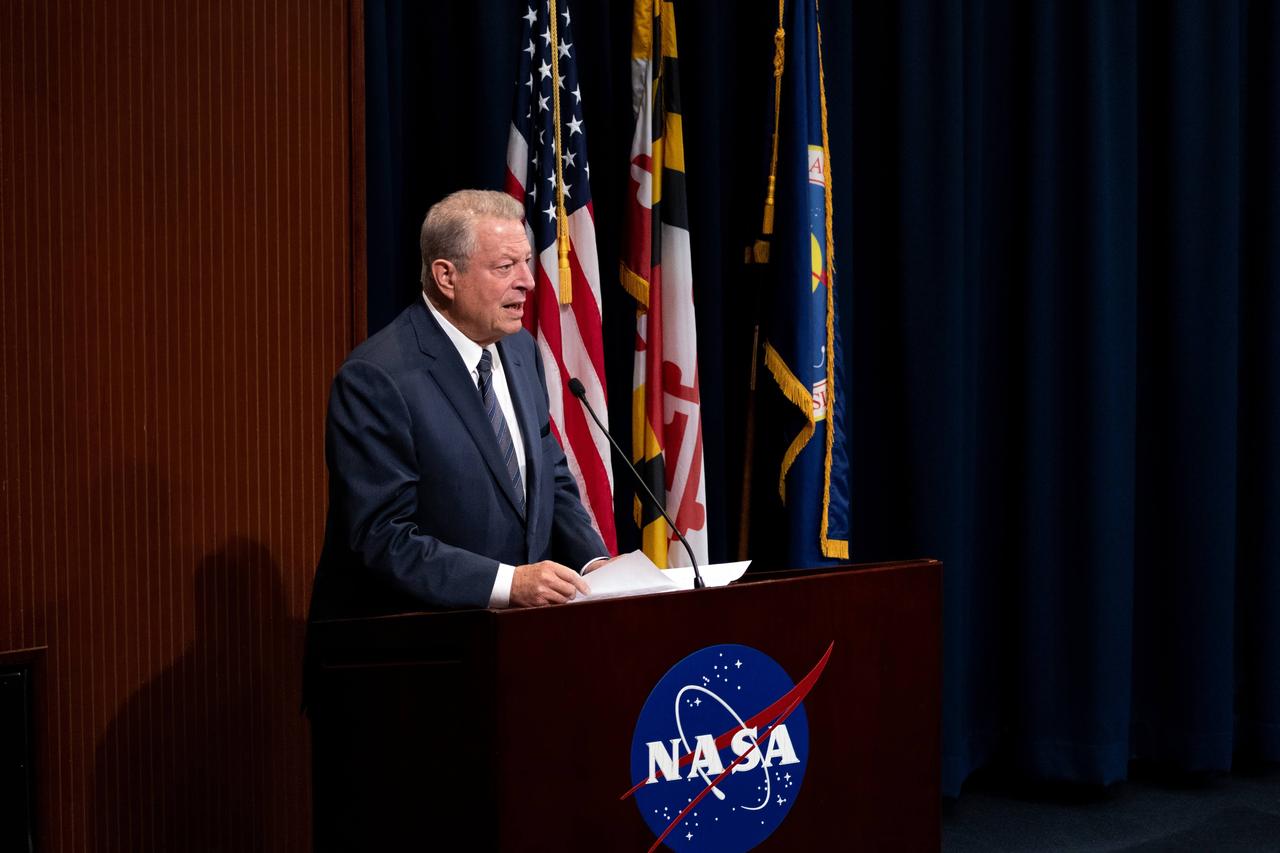
To commemorate the upcoming 10th anniversary of the DSCOVR (Deep Space Climate Observatory) mission, NASA’s Goddard Space Flight Center in Greenbelt, Md., hosted environmentalist and former Vice President Al Gore, shown here addressing a crowd in the Building 3 Harry J. Goett Auditorium, on Oct. 16, 2024. “The image of our Earth from space is the single most compelling iconic image that any of us have ever seen,” Gore said at a panel discussion for employees. “Now we have, thanks to DSCOVR, 50,000 ‘Blue Marble’ photographs … To date there are more than 100 peer-reviewed scientific publications that are based on the unique science gathered at the L1 point by DSCOVR. For all of the scientists who are here and those on the teams that are represented here, I want to say congratulations and thank you.” Following Gore’s talk on climate monitoring, Goddard scientists participated in a panel discussion, “Remote Sensing and the Future of Earth Observations,” which explored the latest advancements in technology that allow for the monitoring of the atmosphere from space and showcased how Goddard’s research drives the future of Earth science. Gore’s visit also entailed a meeting with the DSCOVR science team, a view into the clean room where Goddard is assembling the Roman Space Telescope, and a stop at the control center for PACE: NASA’s Plankton, Aerosol, Cloud, ocean Ecosystem mission. Launched Feb. 11, 2015, DSCOVR is a space weather station that monitors changes in the solar wind, providing space weather alerts and forecasts for geomagnetic storms that could disrupt power grids, satellites, telecommunications, aviation and GPS. DSCOVR is a joint mission among NASA, the National Oceanic and Atmospheric Administration (NOAA), and the U.S. Air Force. The project originally was called Triana, a mission conceived of by Gore in 1998 during his vice presidency.
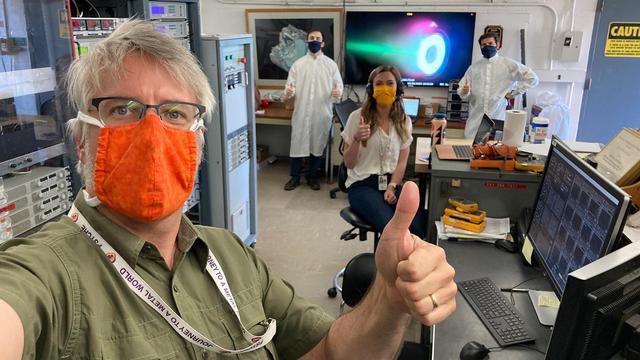
Psyche engineers adapted to COVID-19 social distancing and masking requirements while testing the Hall thrusters that will propel NASA's Psyche spacecraft on its journey to the main asteroid belt between Mars and Jupiter. Set to launch in August 2022, the spacecraft will utilize this super-efficient electric propulsion system to travel to the asteroid Psyche. On May 20, 2020, at NASA's Jet Propulsion Laboratory, Flight System Engineer Steve Snyder (foreground) of JPL and a crew of engineers from Maxar Technologies worked together in the control room next to the vacuum chamber where the thruster was fired up. Snyder and his Maxar colleagues (from left: Faraz Aghazadeh, Taylor Kerl and Giovanni Lenguito) put the thruster and its power supply through a series of stress tests to ensure they can operate together in the extreme conditions of deep space. In the background, a monitor projects the image of the thruster firing. The thruster works by turning xenon gas, a neutral gas used in car headlights and plasma TVs, into xenon ions. As the xenon ions are accelerated out of the thruster, they create the thrust that will propel the spacecraft. The xenon plasma emits a blue glow, seen here on the screen, as it operates. Hall thrusters will be used for the first time beyond lunar orbit, demonstrating that they could play a role in supporting future missions to deep space. Maxar and JPL adapted the Hall thruster system for use with the main body of the spacecraft that Maxar is building at its facility in Palo Alto, California. https://photojournal.jpl.nasa.gov/catalog/PIA23878