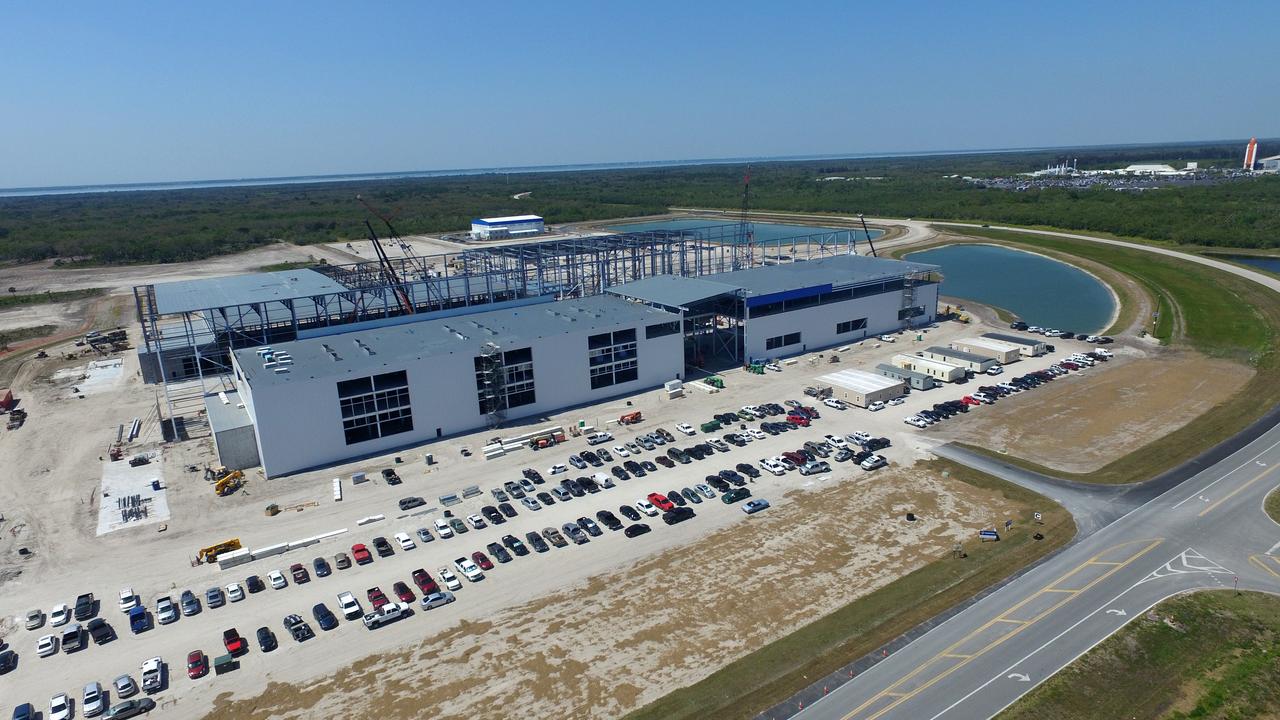
Construction is progressing on Blue Origin's 750,000-square-foot facility being built at Exploration Park on NASA Kennedy Space Center property in Florida. Blue Origin will use the factory to manufacture its two-stage super-heavy-lift New Glenn launch vehicle and launch the vehicles from Space Launch Complex 46 at Cape Canaveral Air Force Station.
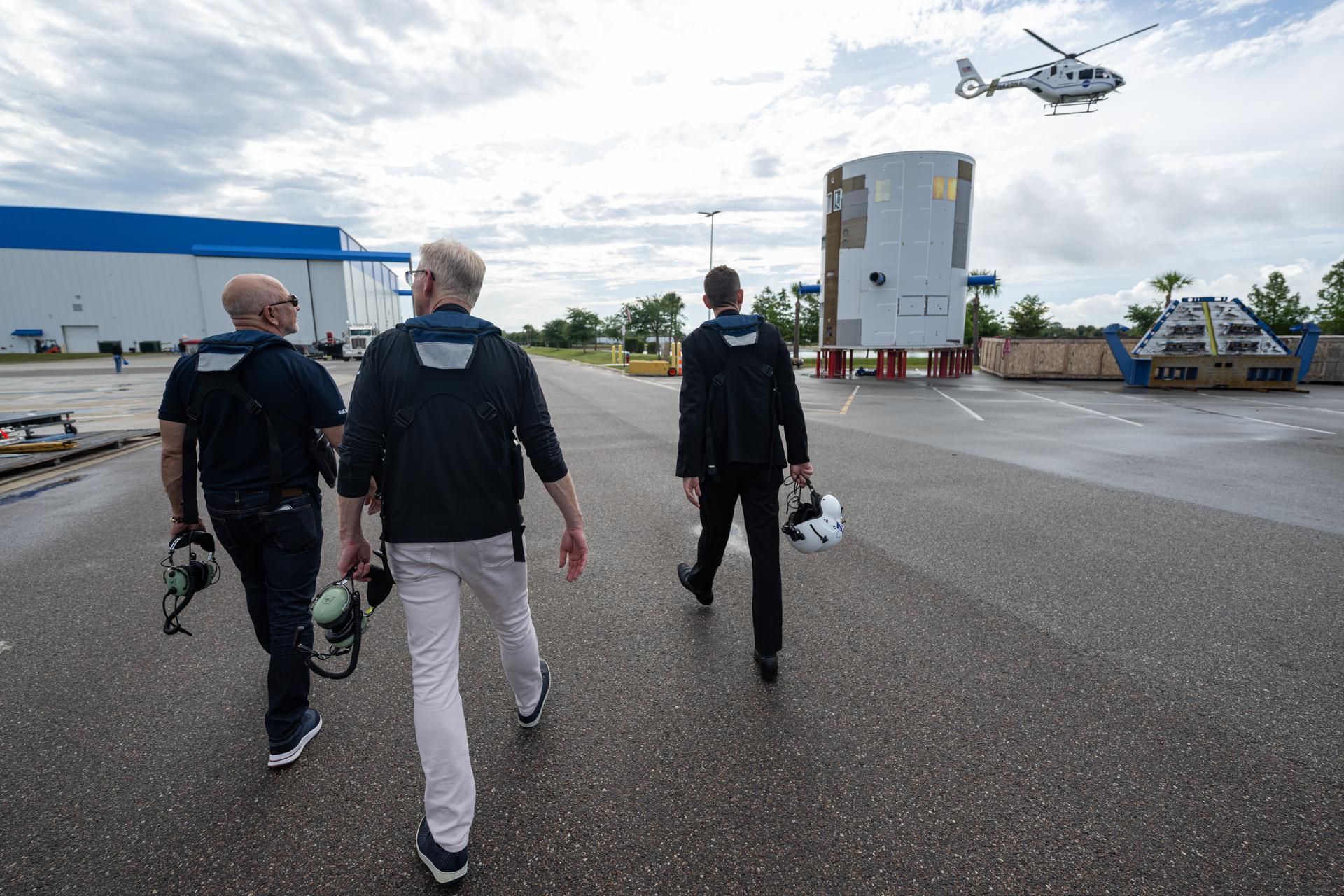
NASA Administrator Jared Isaacman, right; Jeff Bezos, founder, Blue Origin, left; and Dave Limp, chief executive officer, Blue Origin, center, are seen ahead of a helicopter flight, Friday, May 29, 2026, at Blue Origin’s Rocket Park in Merritt Island, Fla. The flight surveyed nearby Launch Complex 36 at Cape Canaveral Space Force Station following a New Glenn hotfire test anomaly on May 28. Photo Credit: (NASA/John Kraus)
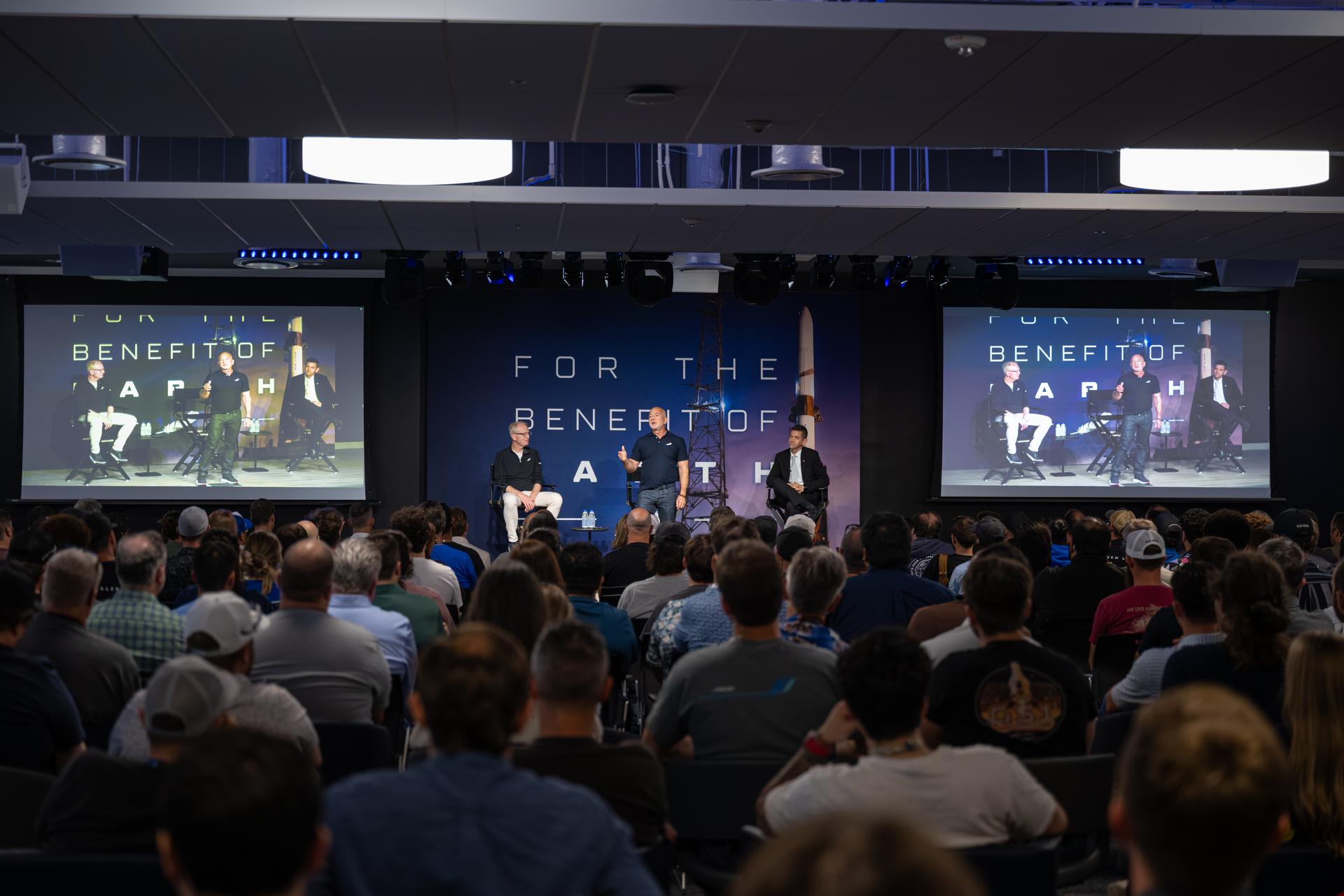
NASA Administrator Jared Isaacman, right, participates in an employee all-hands meeting alongside Dave Limp, chief executive officer, Blue Origin, left, and Jeff Bezos, founder, Blue Origin, center, Friday, May 29, 2026, at Blue Origin’s Rocket Park in Merritt Island, Fla. Photo Credit: (NASA/John Kraus)

NASA Administrator Jared Isaacman, right, participates in an employee all-hands meeting alongside Dave Limp, chief executive officer, Blue Origin, left, and Jeff Bezos, founder, Blue Origin, center, Friday, May 29, 2026, at Blue Origin’s Rocket Park in Merritt Island, Fla. Photo Credit: (NASA/John Kraus)
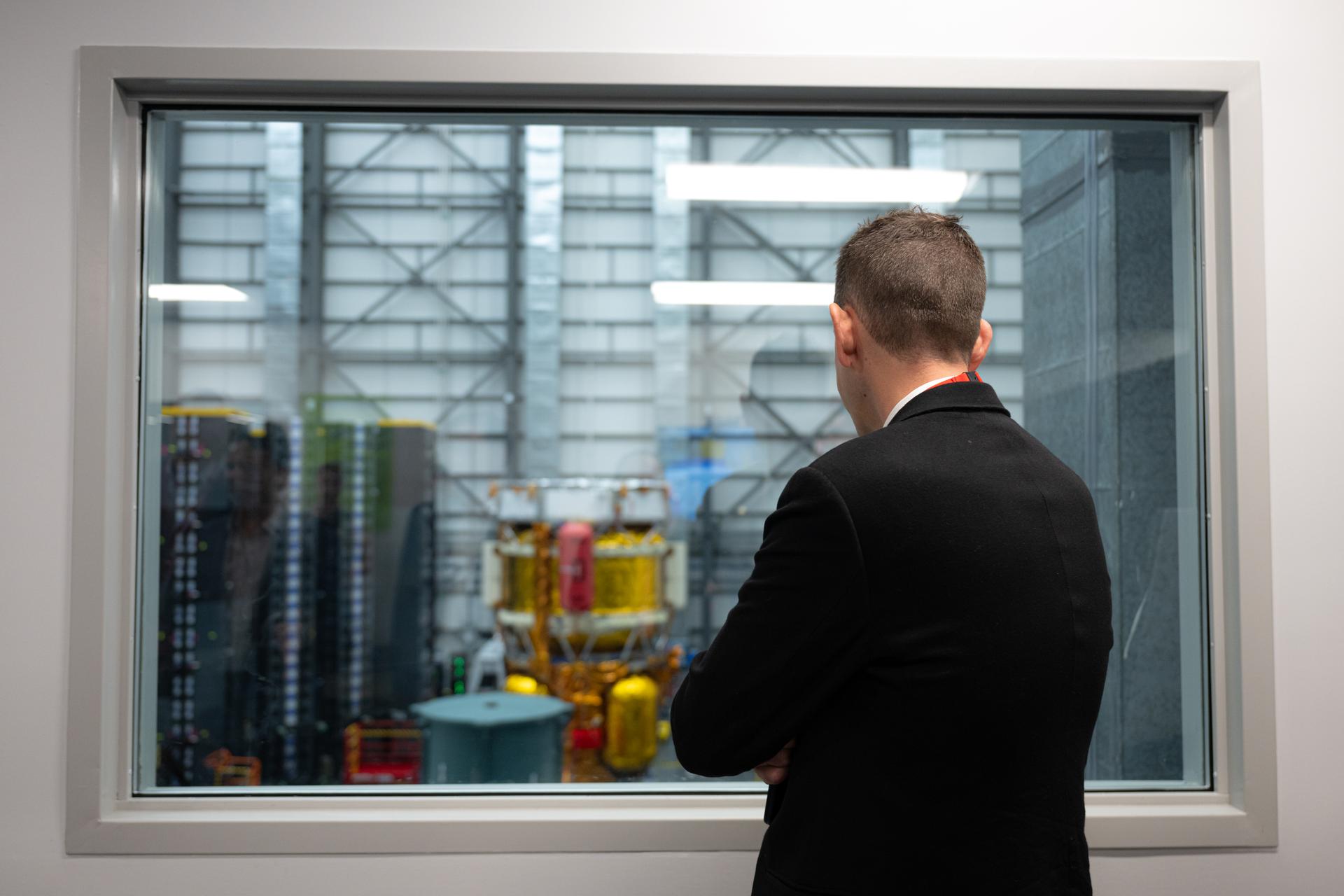
NASA Administrator Jared Isaacman views Blue Origin’s Blue Moon Mark 1 lunar lander, named “Endurance,” Tuesday, Jan. 13, 2026, at the company’s Lunar Plant 1 facility in Merritt Island, Fla., Tuesday. Photo Credit: (NASA/John Kraus)
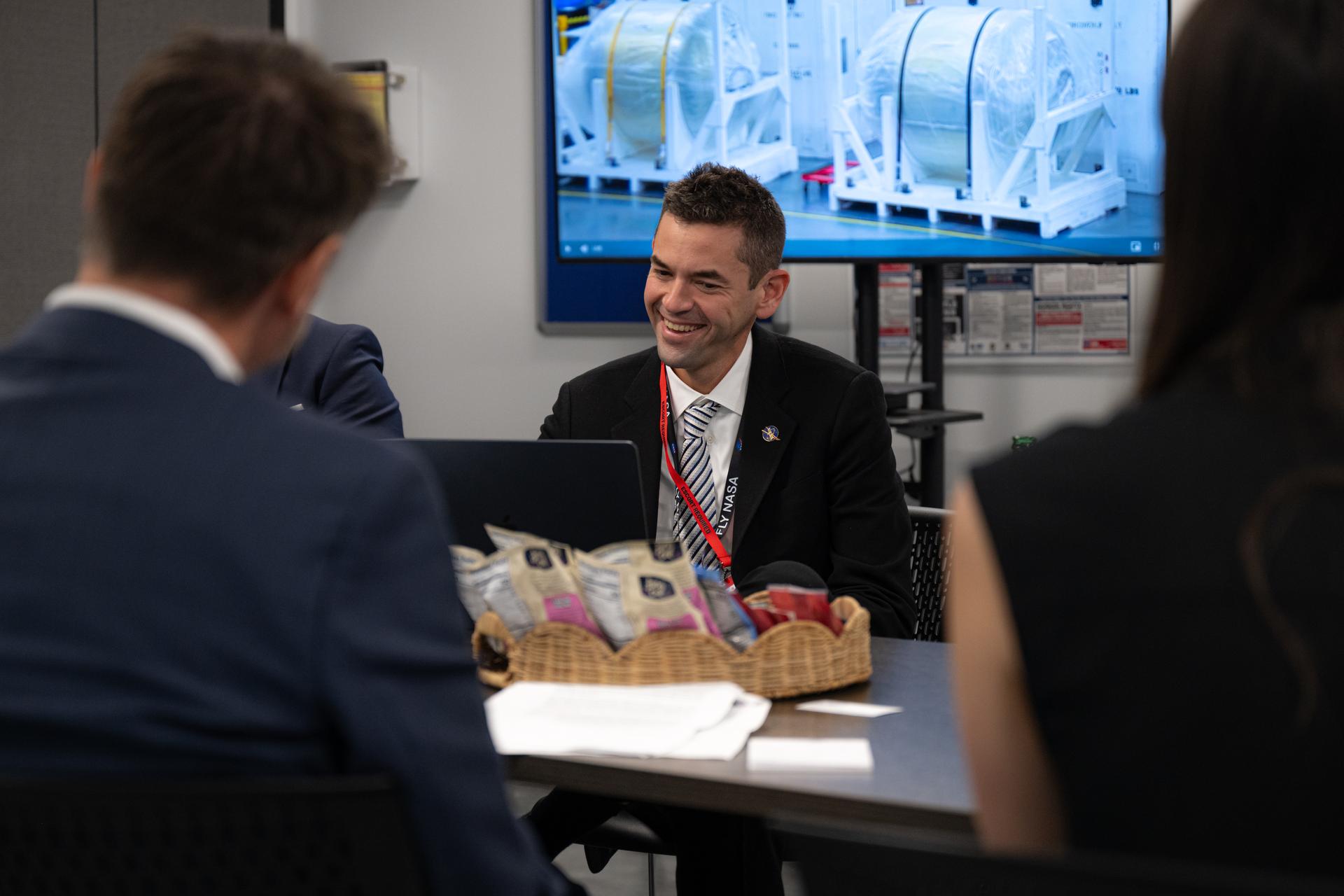
NASA Administrator Jared Isaacman meets with Blue Origin leadership, Tuesday, Jan. 13, 2026, at the company’s Lunar Plant 1 facility in Merritt Island, Fla. Photo Credit: (NASA/John Kraus)
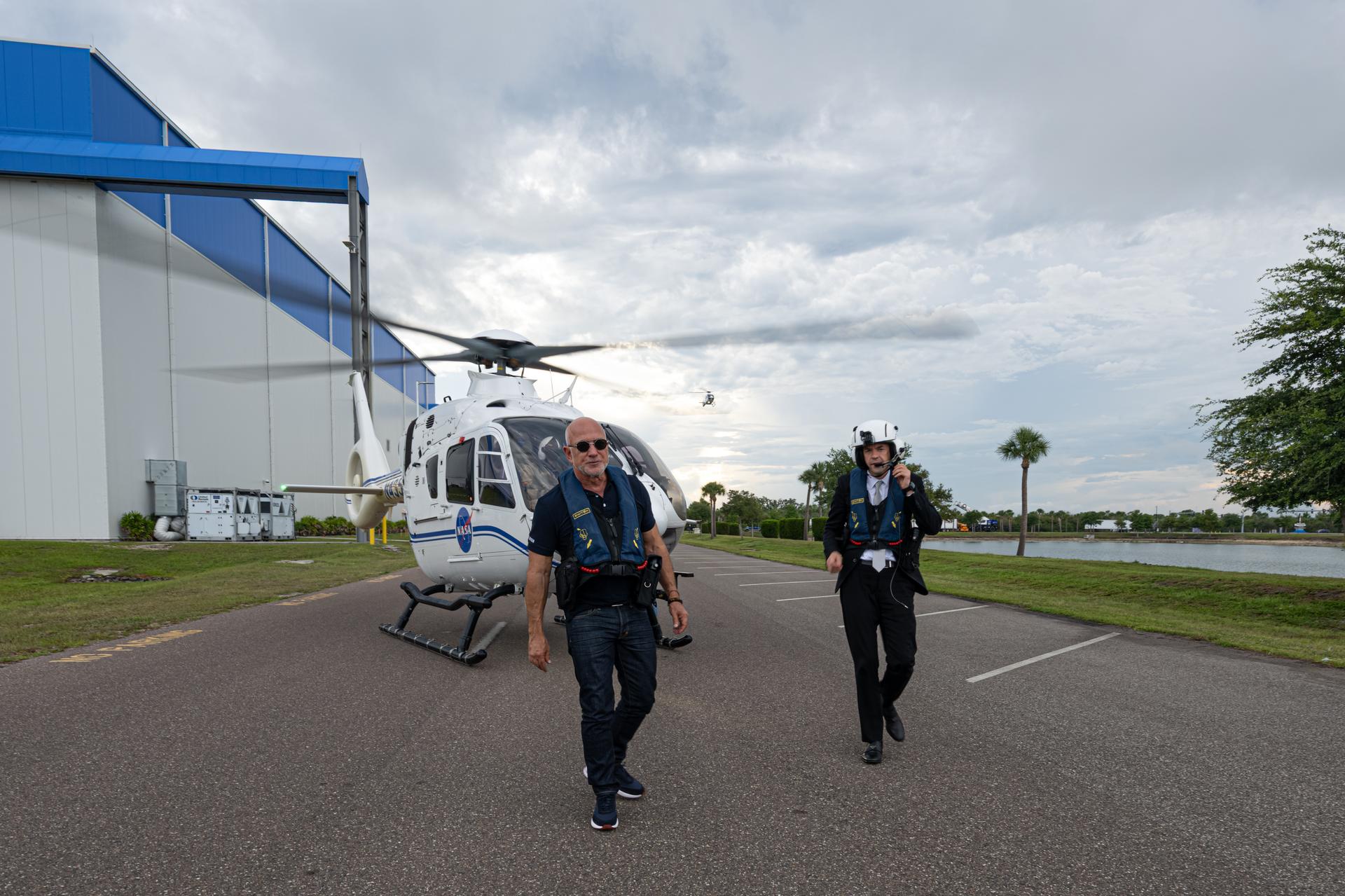
NASA Administrator Jared Isaacman, right, and Jeff Bezos, founder, Blue Origin, left, are seen following a helicopter flight, Friday, May 29, 2026, at Blue Origin’s Rocket Park in Merritt Island, Fla. The flight surveyed nearby Launch Complex 36 at Cape Canaveral Space Force Station following a New Glenn hotfire test anomaly on May 28. Photo Credit: (NASA/John Kraus)
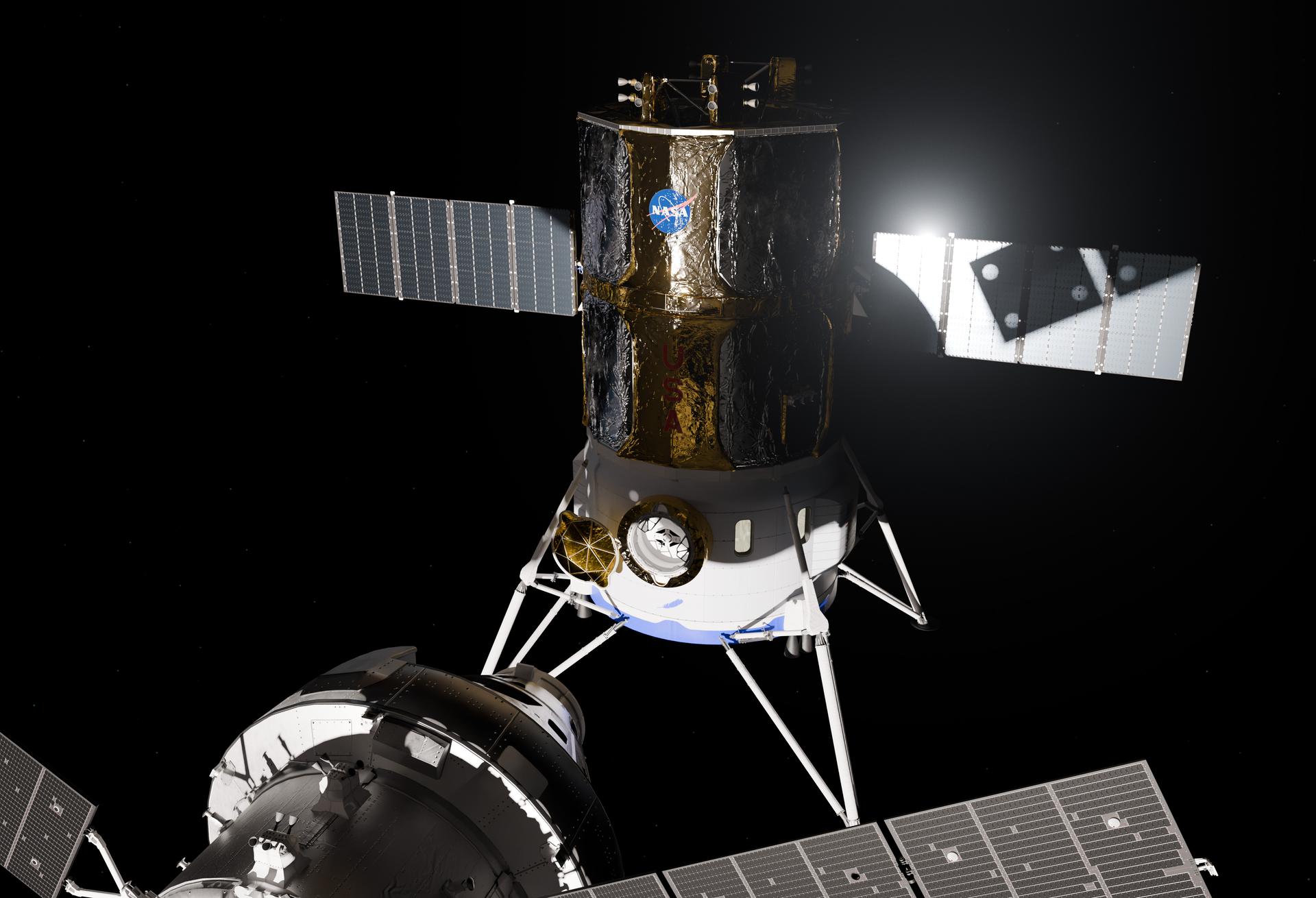
This artist’s concept depicts Blue Origin’s Blue Moon Mark 2 human landing system test article in Earth orbit with NASA’s Orion spacecraft during rendezvous and docking operations as part of NASA’s upcoming Artemis III demonstration mission in low Earth orbit. NASA is working with two American companies to develop the human landing systems that will safely transport astronauts from lunar orbit to the Moon’s surface and back for future Artemis missions. For Artemis III, both SpaceX and Blue Origin will fly test versions, or test articles, of the crewed landers that will be used for future Moon landings. The lander test articles will launch by commercial rockets, while the Artemis III crew will launch to low Earth orbit in Orion atop the agency’s SLS (Space Launch System) rocket.
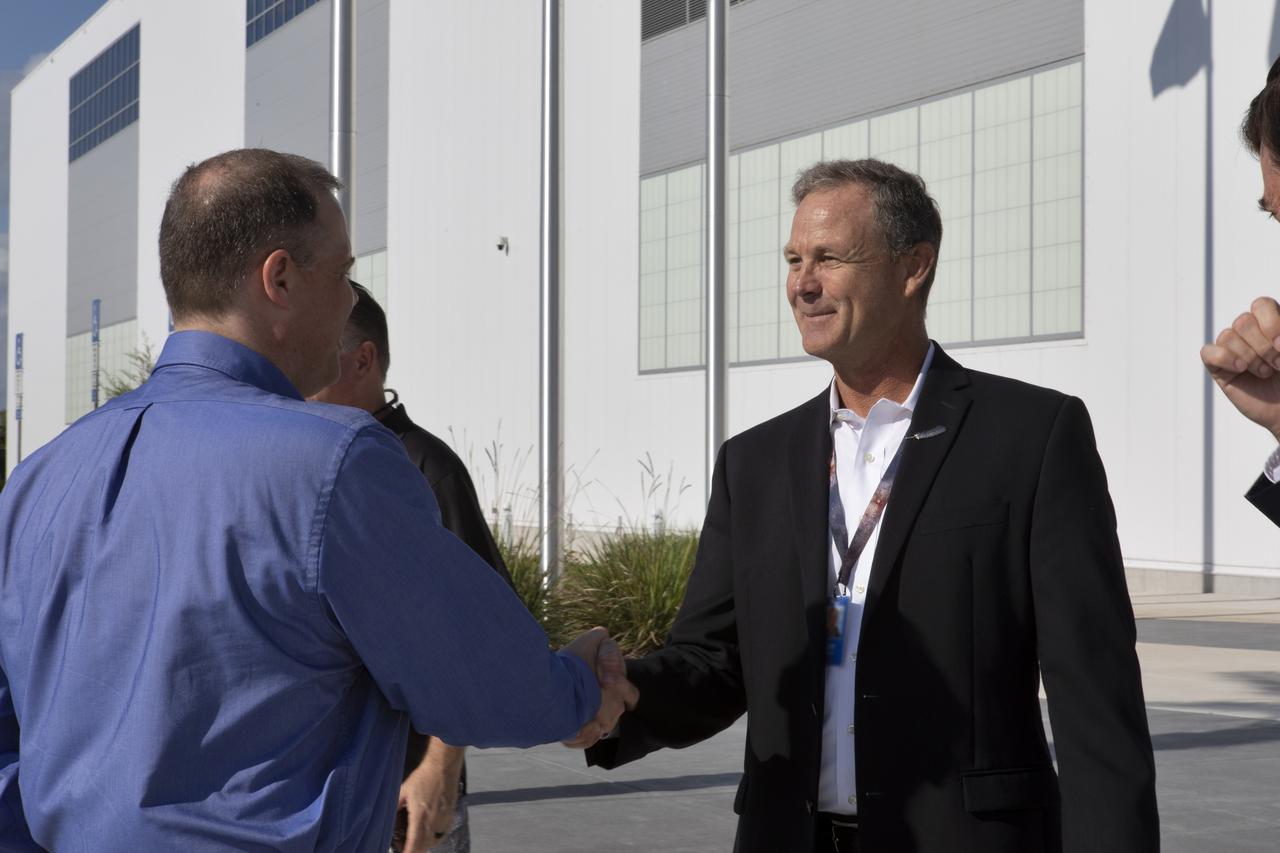
NASA Administrator Jim Bridenstine shakes hands with Scott Henderson, Blue Origin Orbital Launch director, at the Blue Origin facilities near the agency’s Kennedy Space Center in Florida on May 23, 2019. Bridenstine toured the facilities and viewed the New Shepard booster and crew capsule that flew to space and back five times.
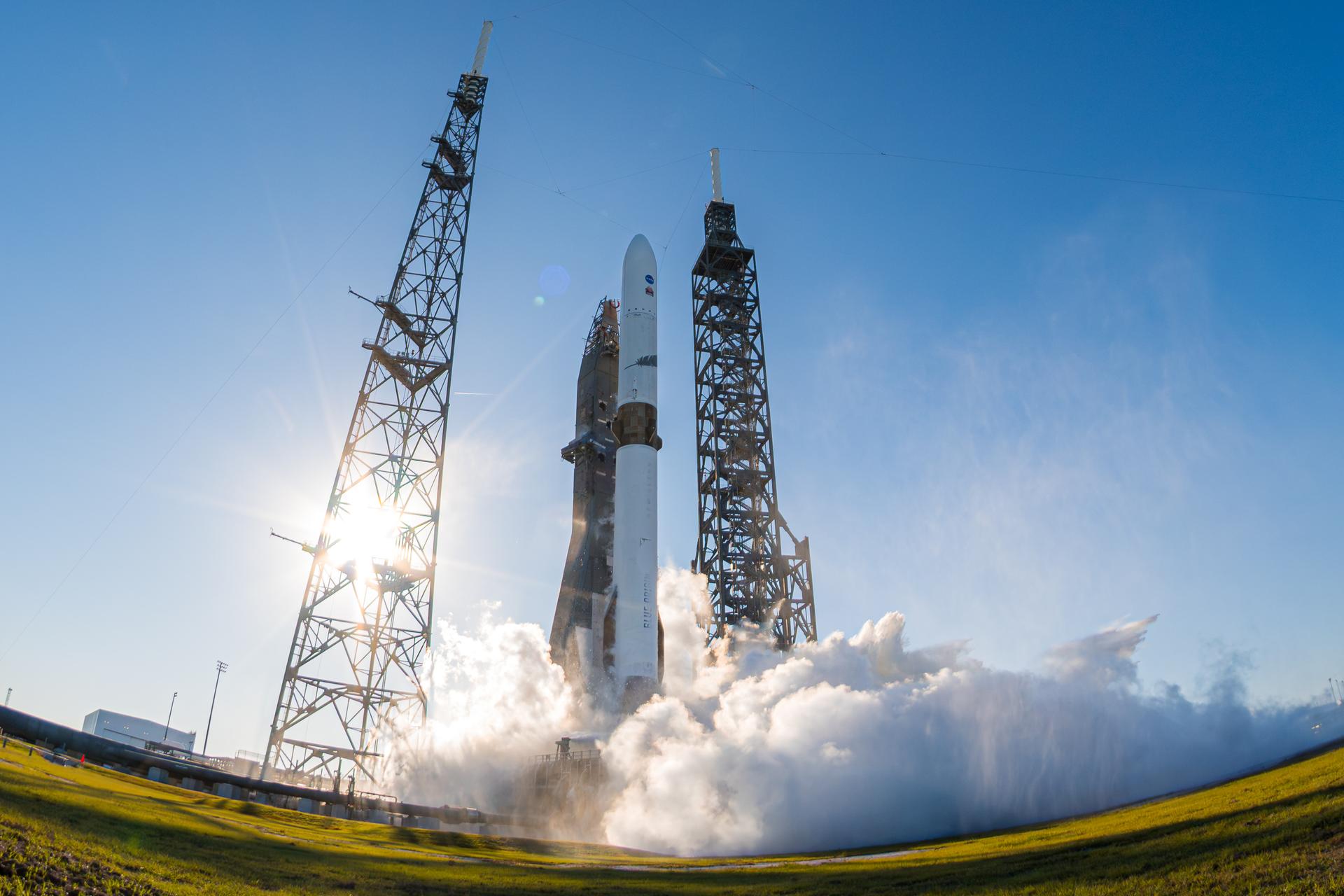
Blue Origin’s New Glenn rocket carrying NASA’s twin ESCAPADE (Escape and Plasma Acceleration and Dynamics Explorers) spacecraft launches at 3:55 p.m. EST, Thursday, Nov. 13, 2025, from Launch Complex 36 at Cape Canaveral Space Force Station in Florida. The ESCAPADE mission, built by Rocket Lab, will study how solar wind and plasma interact with Mars’ magnetosphere and how this interaction drives the planet’s atmospheric escape to prepare for future human missions on Mars.

Blue Origin’s New Glenn rocket carrying NASA’s twin ESCAPADE (Escape and Plasma Acceleration and Dynamics Explorers) spacecraft launches at 3:55 p.m. EST, Thursday, Nov. 13, 2025, from Launch Complex 36 at Cape Canaveral Space Force Station in Florida. The ESCAPADE mission, built by Rocket Lab, will study how solar wind and plasma interact with Mars’ magnetosphere and how this interaction drives the planet’s atmospheric escape to prepare for future human missions on Mars.
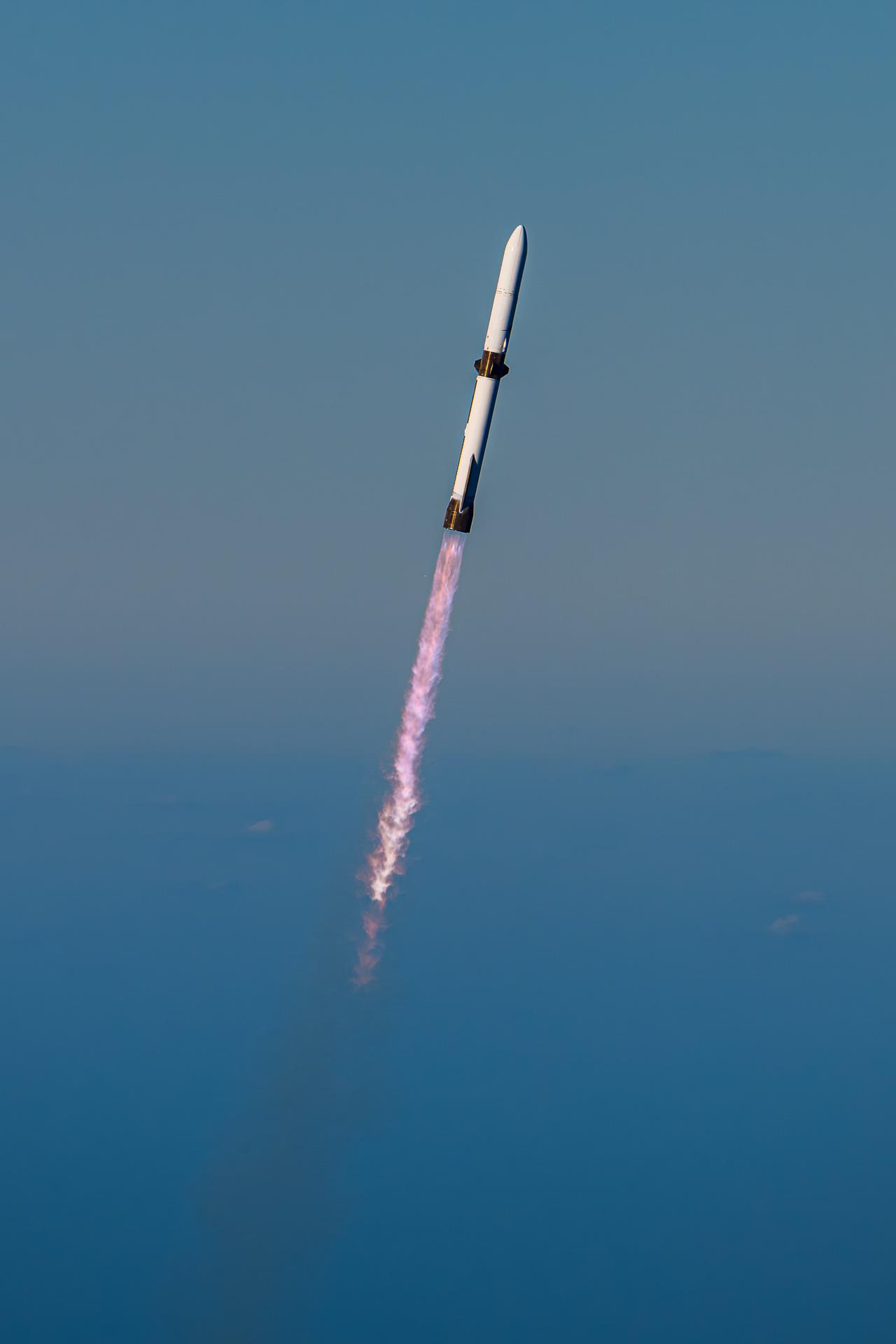
Blue Origin’s New Glenn rocket carrying NASA’s twin ESCAPADE (Escape and Plasma Acceleration and Dynamics Explorers) spacecraft launches at 3:55 p.m. EST, Thursday, Nov. 13, 2025, from Launch Complex 36 at Cape Canaveral Space Force Station in Florida. The ESCAPADE mission, built by Rocket Lab, will study how solar wind and plasma interact with Mars’ magnetosphere and how this interaction drives the planet’s atmospheric escape to prepare for future human missions on Mars.
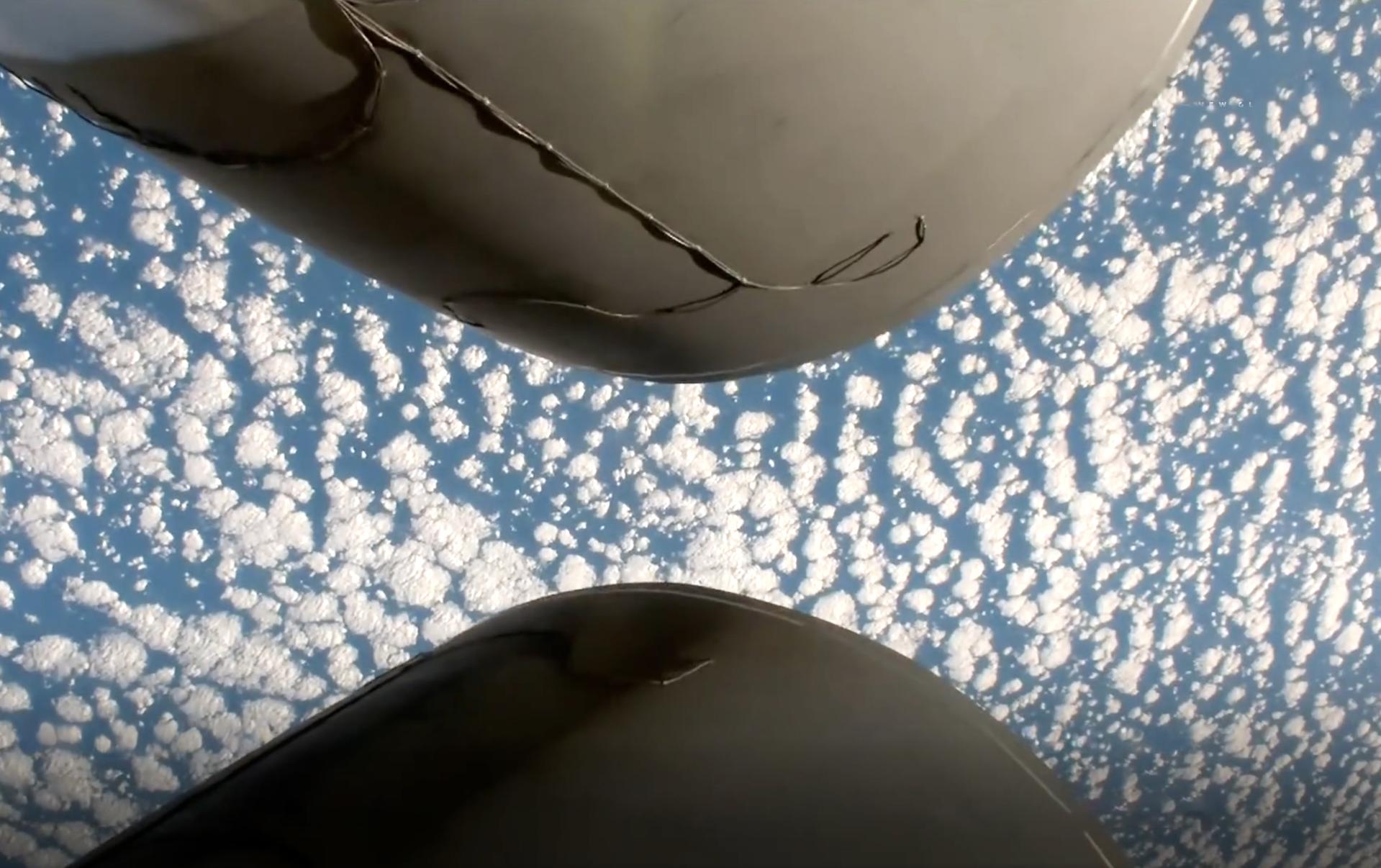
Blue Origin’s New Glenn rocket carrying NASA’s twin ESCAPADE (Escape and Plasma Acceleration and Dynamics Explorers) spacecraft launches at 3:55 p.m. EST, Thursday, Nov. 13, 2025, from Launch Complex 36 at Cape Canaveral Space Force Station in Florida. The ESCAPADE mission, built by Rocket Lab, will study how solar wind and plasma interact with Mars’ magnetosphere and how this interaction drives the planet’s atmospheric escape to prepare for future human missions on Mars.
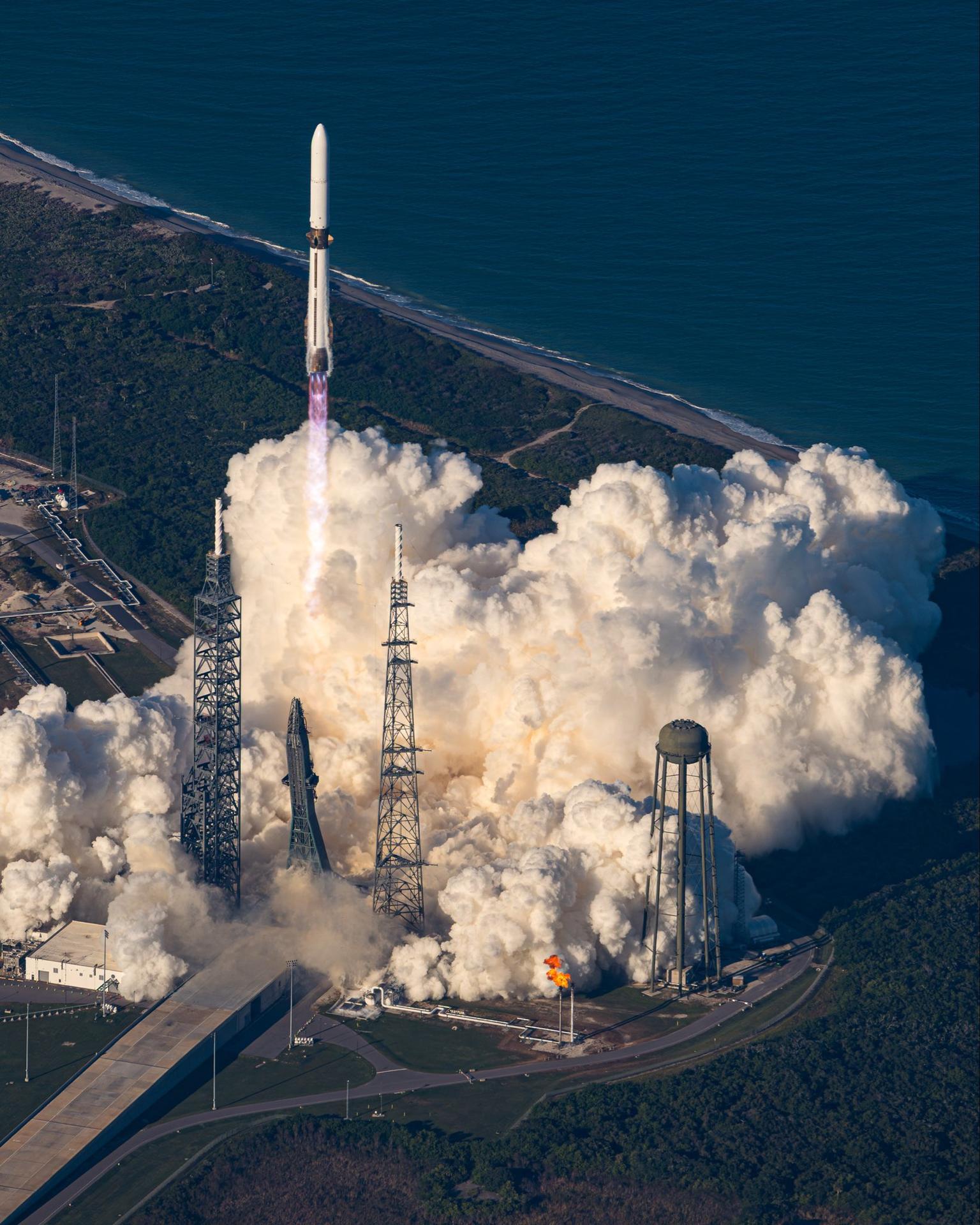
Blue Origin’s New Glenn rocket carrying NASA’s twin ESCAPADE (Escape and Plasma Acceleration and Dynamics Explorers) spacecraft launches at 3:55 p.m. EST, Thursday, Nov. 13, 2025, from Launch Complex 36 at Cape Canaveral Space Force Station in Florida. The ESCAPADE mission, built by Rocket Lab, will study how solar wind and plasma interact with Mars’ magnetosphere and how this interaction drives the planet’s atmospheric escape to prepare for future human missions on Mars.
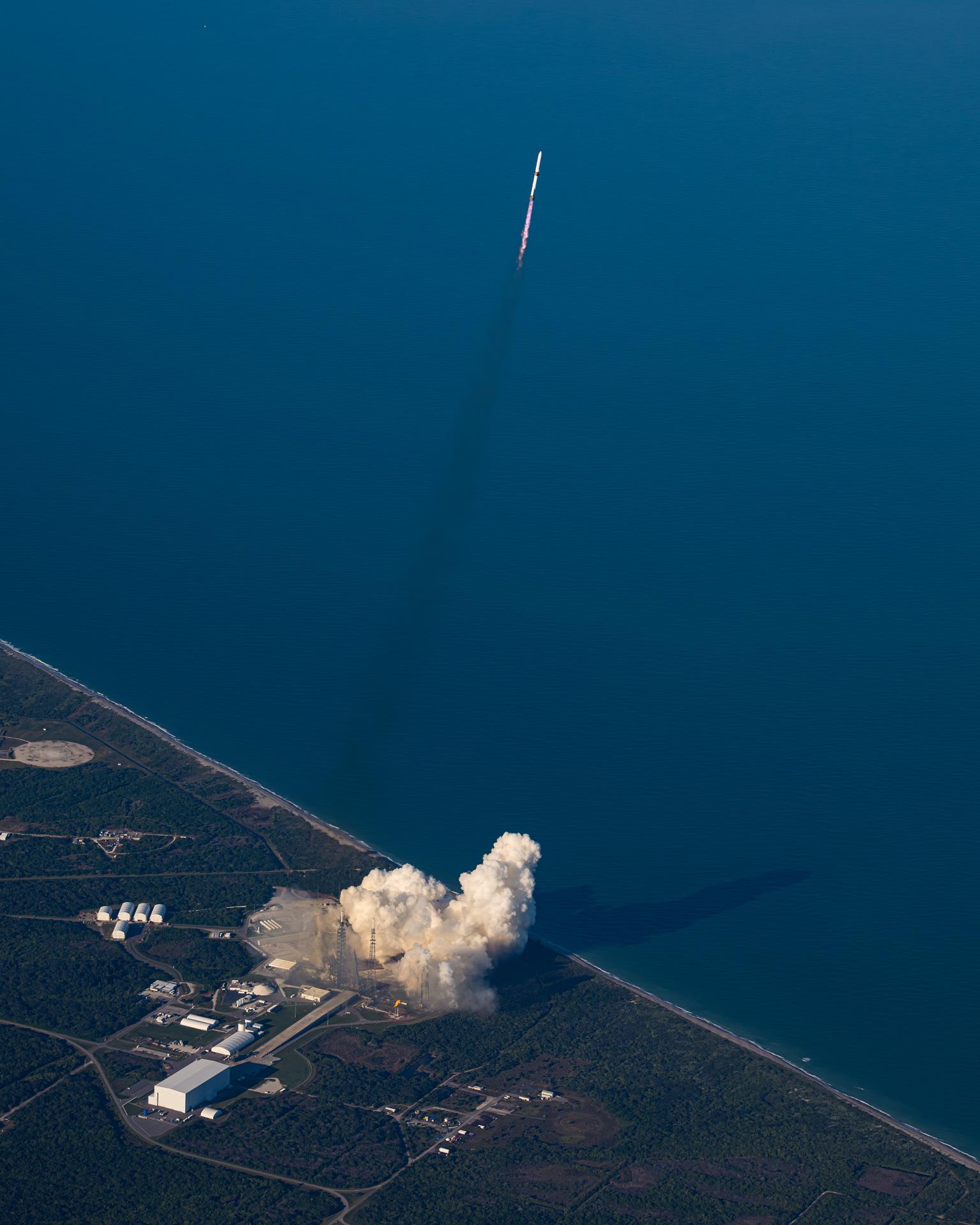
Blue Origin’s New Glenn rocket carrying NASA’s twin ESCAPADE (Escape and Plasma Acceleration and Dynamics Explorers) spacecraft launches at 3:55 p.m. EST, Thursday, Nov. 13, 2025, from Launch Complex 36 at Cape Canaveral Space Force Station in Florida. The ESCAPADE mission, built by Rocket Lab, will study how solar wind and plasma interact with Mars’ magnetosphere and how this interaction drives the planet’s atmospheric escape to prepare for future human missions on Mars.
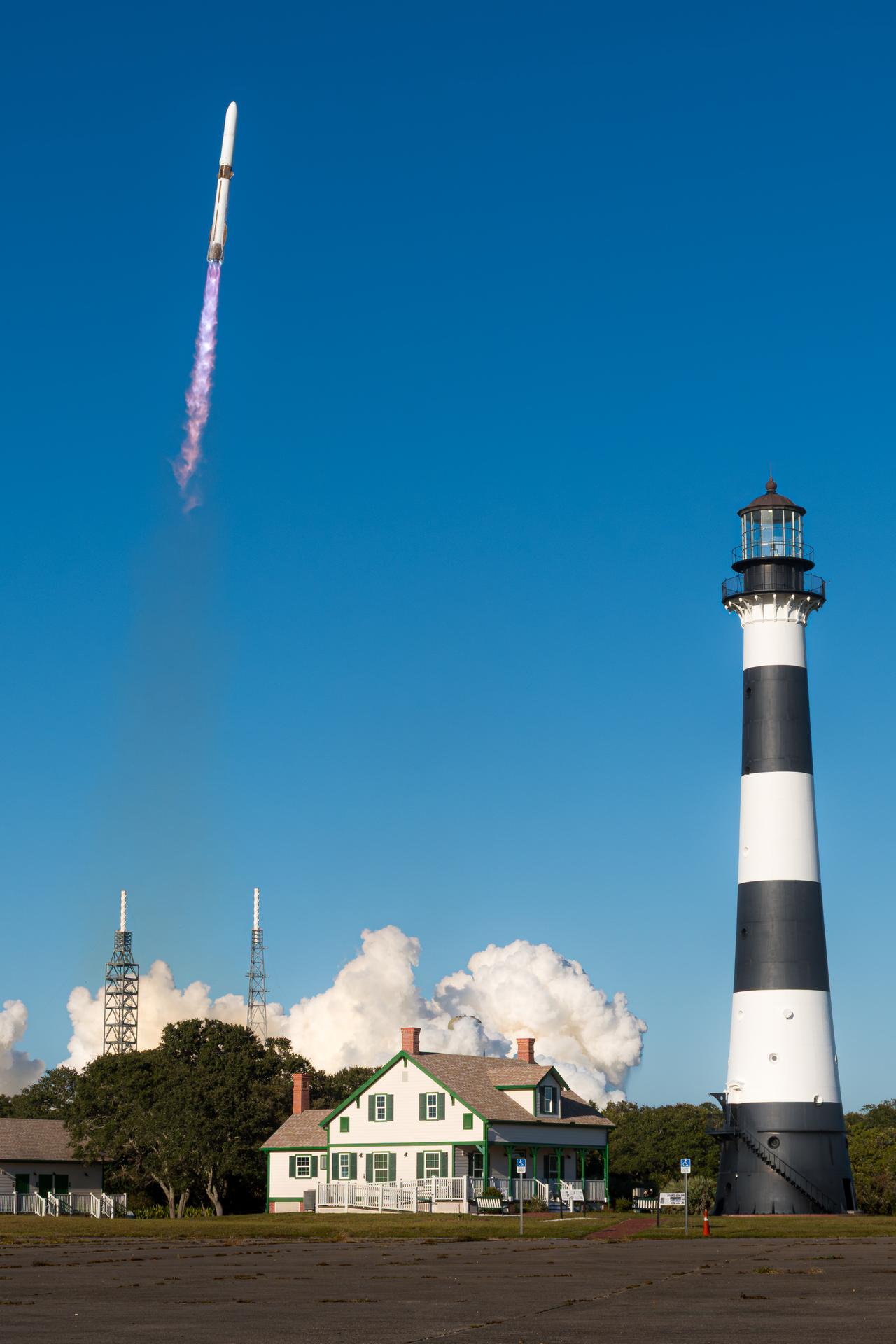
Near Cape Canaveral Lighthouse, Blue Origin’s New Glenn rocket carrying NASA’s twin ESCAPADE (Escape and Plasma Acceleration and Dynamics Explorers) spacecraft launches at 3:55 p.m. EST, Thursday, Nov. 13, 2025, from Launch Complex 36 at Cape Canaveral Space Force Station in Florida. The ESCAPADE mission, built by Rocket Lab, will study how solar wind and plasma interact with Mars’ magnetosphere and how this interaction drives the planet’s atmospheric escape to prepare for future human missions on Mars.
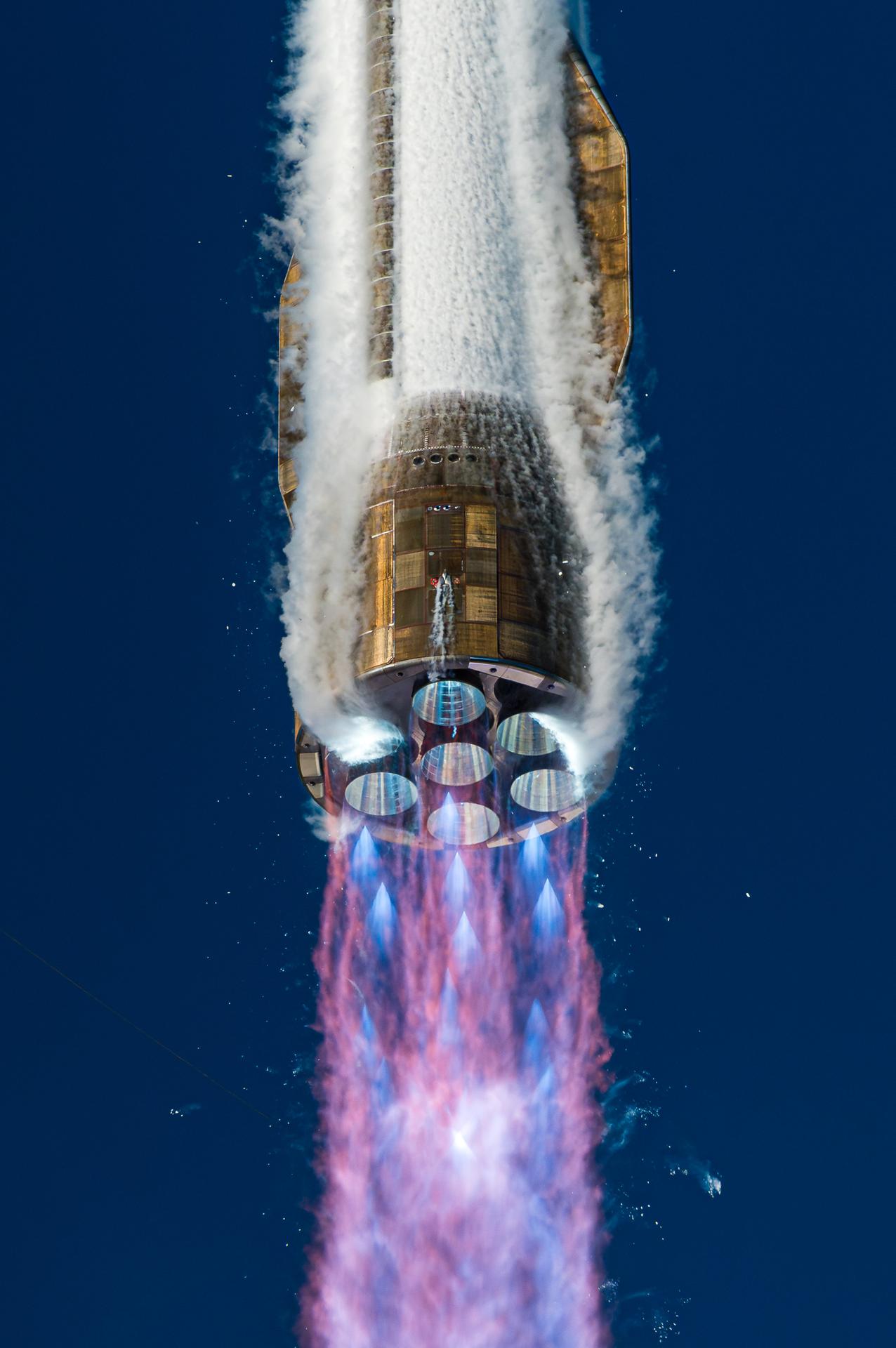
Blue Origin’s New Glenn rocket carrying NASA’s twin ESCAPADE (Escape and Plasma Acceleration and Dynamics Explorers) spacecraft launches at 3:55 p.m. EST, Thursday, Nov. 13, 2025, from Launch Complex 36 at Cape Canaveral Space Force Station in Florida. The ESCAPADE mission, built by Rocket Lab, will study how solar wind and plasma interact with Mars’ magnetosphere and how this interaction drives the planet’s atmospheric escape to prepare for future human missions on Mars.
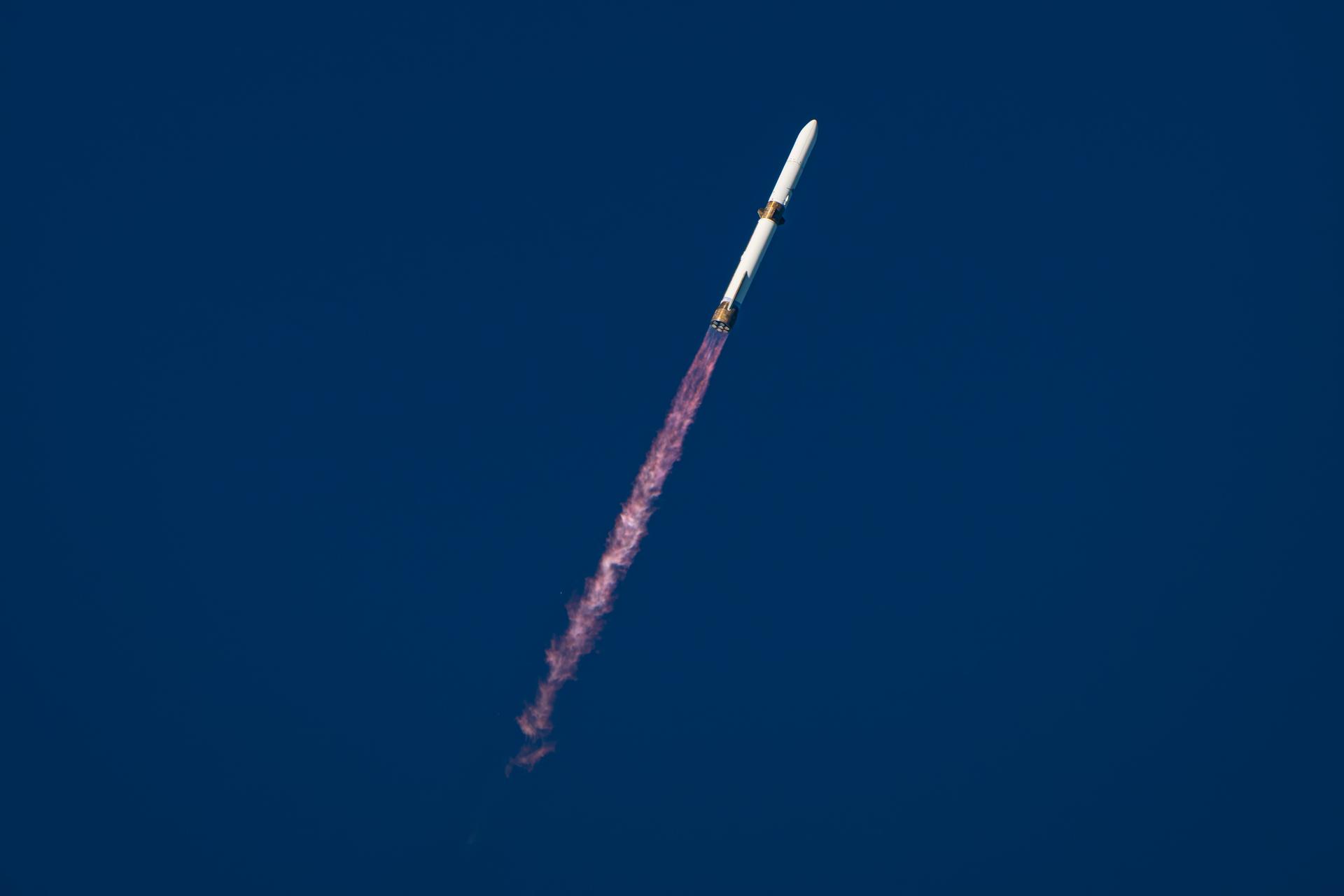
Blue Origin’s New Glenn rocket carrying NASA’s twin ESCAPADE (Escape and Plasma Acceleration and Dynamics Explorers) spacecraft launches at 3:55 p.m. EST, Thursday, Nov. 13, 2025, from Launch Complex 36 at Cape Canaveral Space Force Station in Florida. The ESCAPADE mission, built by Rocket Lab, will study how solar wind and plasma interact with Mars’ magnetosphere and how this interaction drives the planet’s atmospheric escape to prepare for future human missions on Mars.
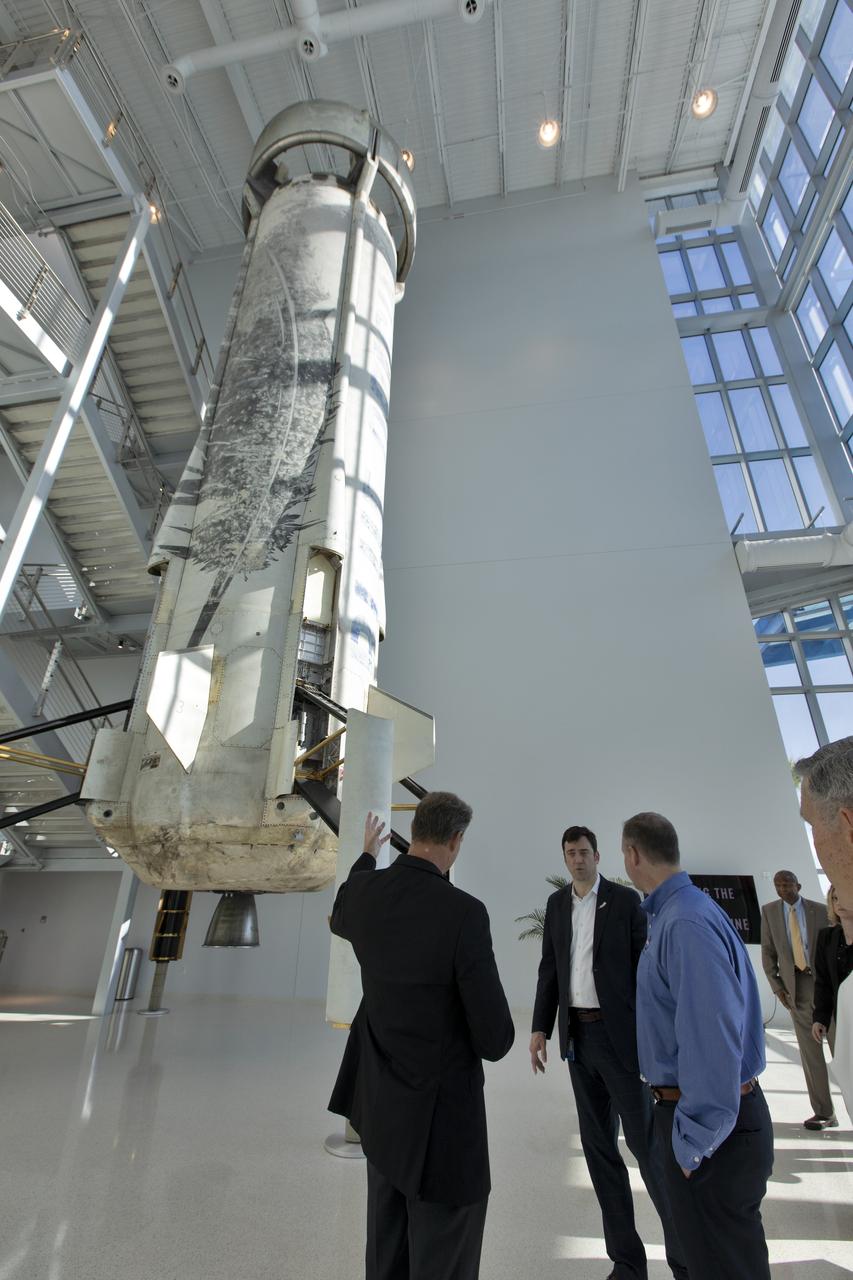
NASA Administrator Jim Bridenstine, second from right in the blue shirt, tours the Blue Origin facilities near the agency’s Kennedy Space Center in Florida on May 23, 2019. He viewed the New Shepard booster and crew capsule that flew to space and back five times.
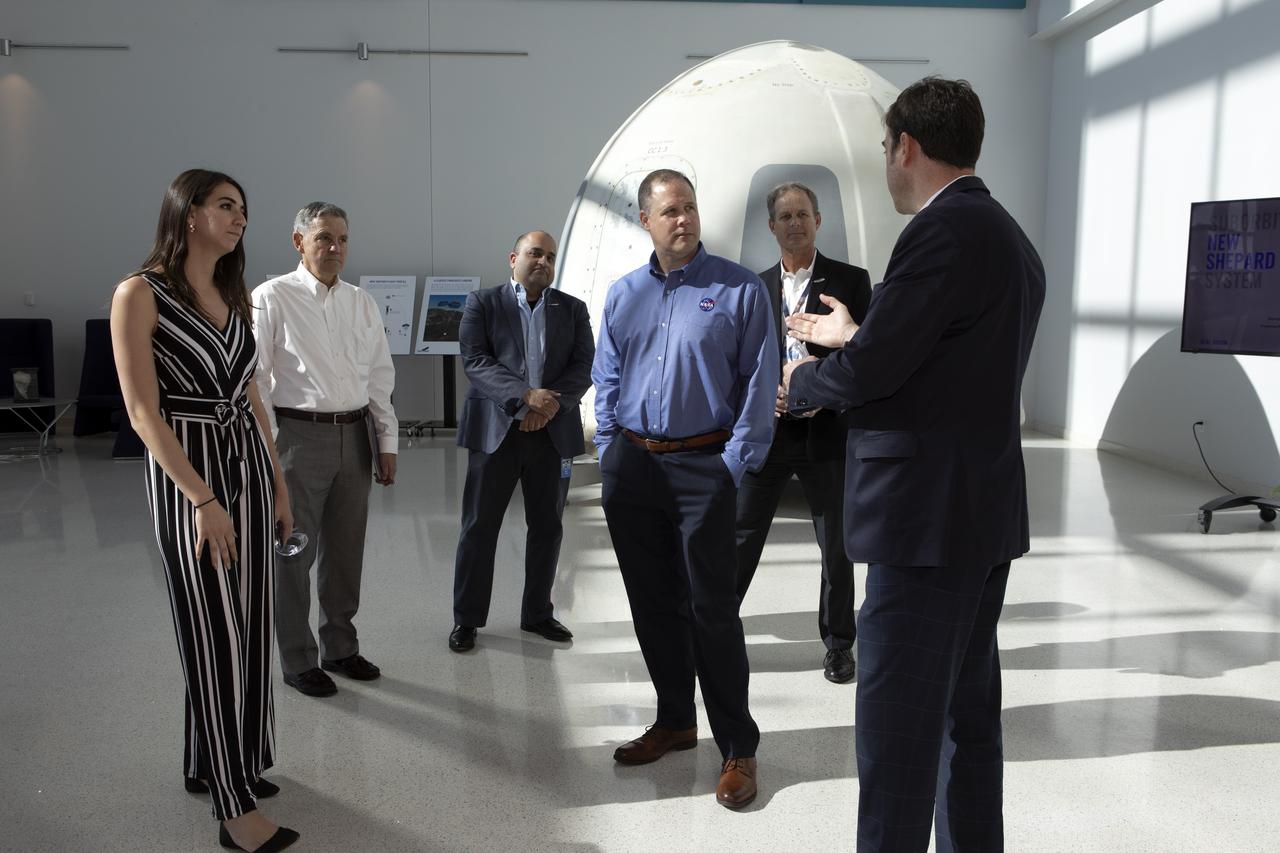
NASA Administrator Jim Bridenstine, second from right, in the blue shirt, tours the Blue Origin facilities near the agency’s Kennedy Space Center in Florida on May 23, 2019. Bridenstine viewed the New Shepard booster and crew capsule that flew to space and back five times.

Blue Origin’s New Glenn first stage rocket successfully lands for the first time on a drone ship in the Atlantic Ocean following the launching of NASA’s twin ESCAPADE (Escape and Plasma Acceleration and Dynamics Explorers) spacecraft at 3:55 p.m. EST, Thursday, Nov. 13, 2025, from Launch Complex 36 at Cape Canaveral Space Force Station in Florida. The ESCAPADE mission, built by Rocket Lab, will study how solar wind and plasma interact with Mars’ magnetosphere and how this interaction drives the planet’s atmospheric escape to prepare for future human missions on Mars.
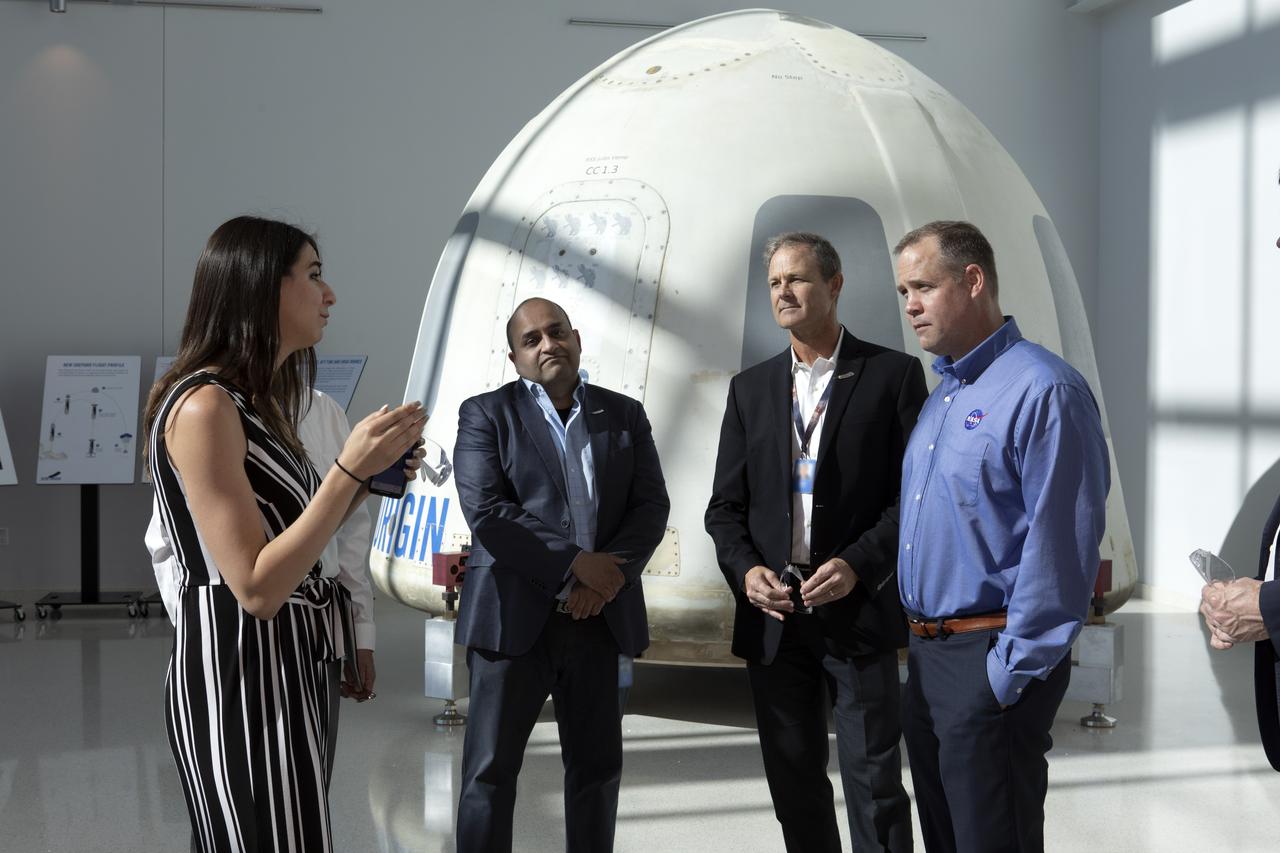
NASA Administrator Jim Bridenstine, far right, tours the Blue Origin facilities near the agency’s Kennedy Space Center in Florida on May 23, 2019. Bridenstine viewed the New Shepard booster and crew capsule that flew to space and back five times.
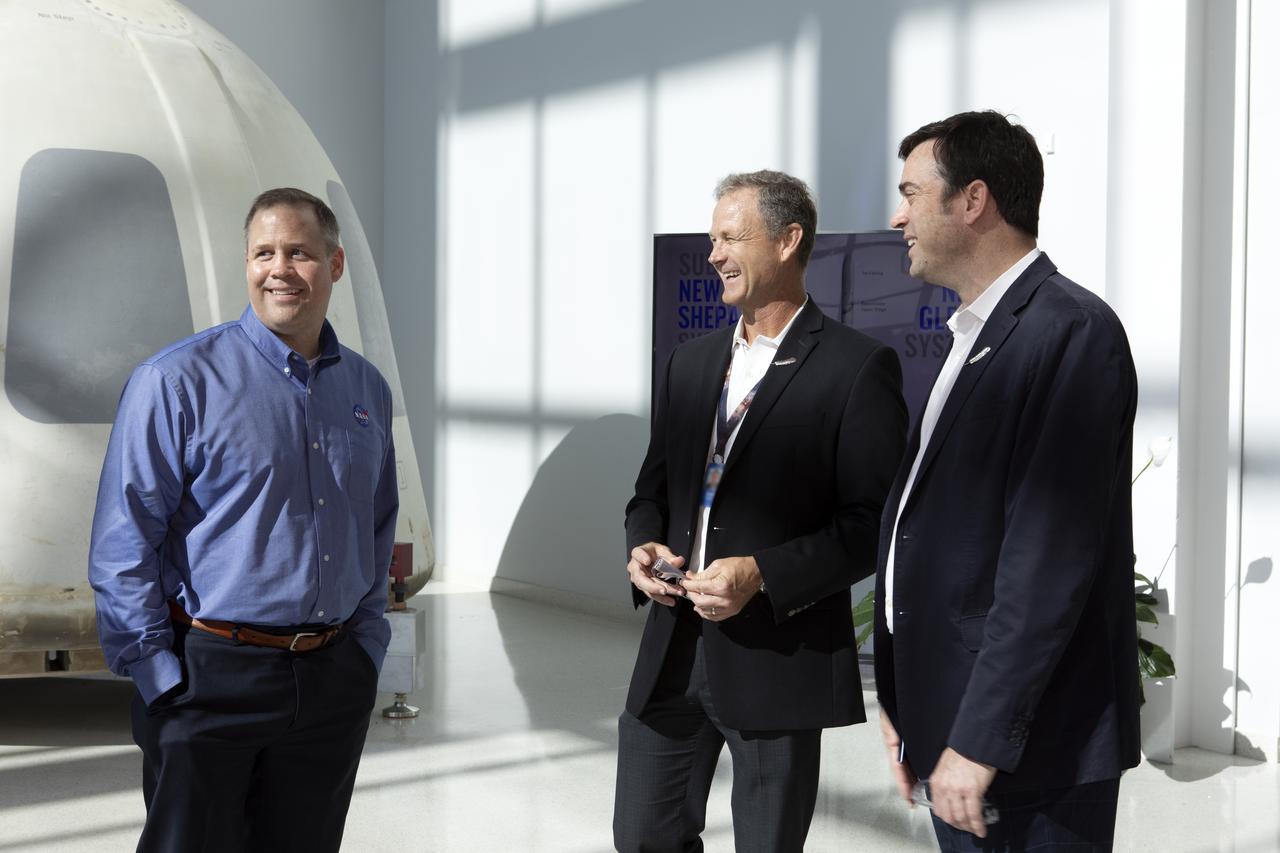
NASA Administrator Jim Bridenstine, at left, tours the Blue Origin facilities near the agency’s Kennedy Space Center in Florida on May 23, 2019. Bridenstine viewed the New Shepard booster and crew capsule that flew to space and back five times.
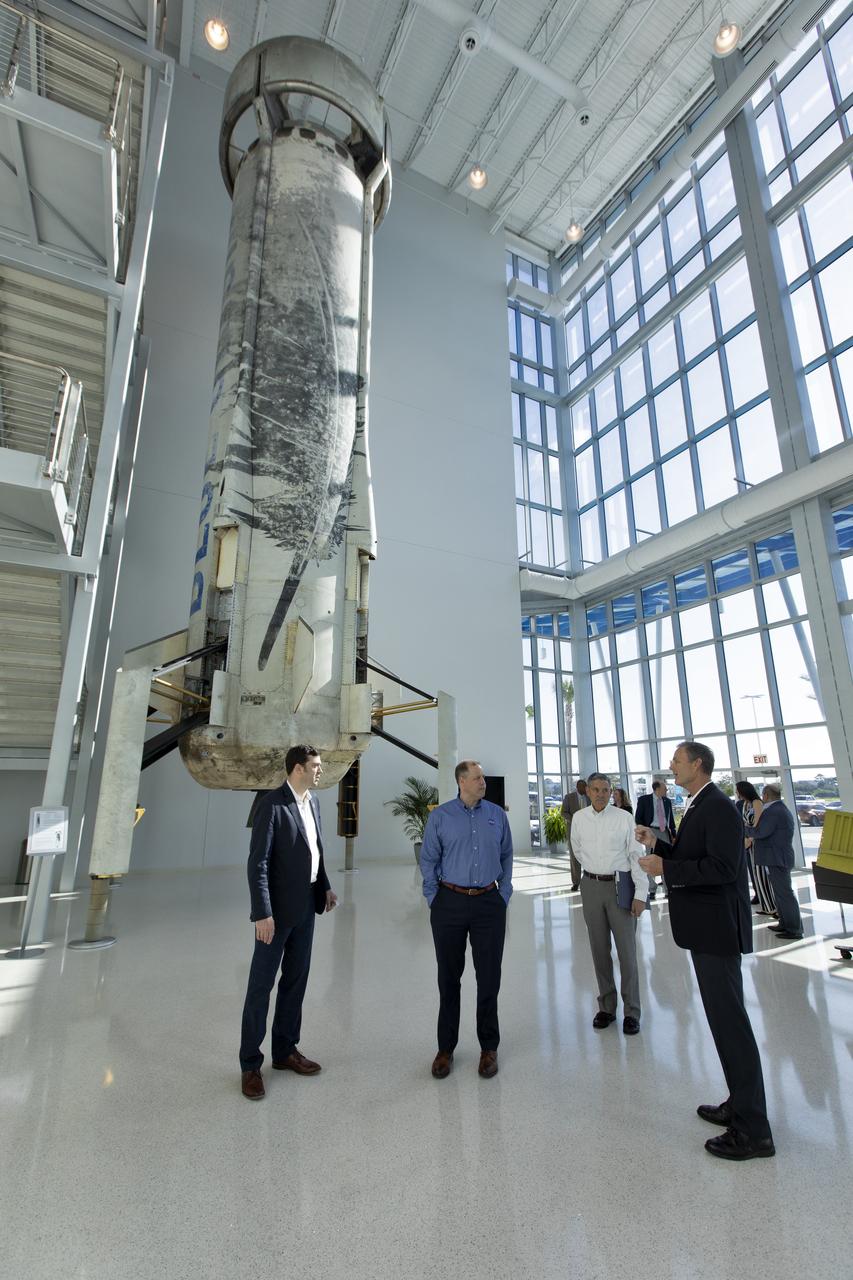
NASA Administrator Jim Bridenstine, second from left, tours the Blue Origin facilities near the agency’s Kennedy Space Center in Florida on May 23, 2019. Third from left is Kennedy Space Center Director Bob Cabana. They viewed the New Shepard booster and crew capsule that few to space and back five times.
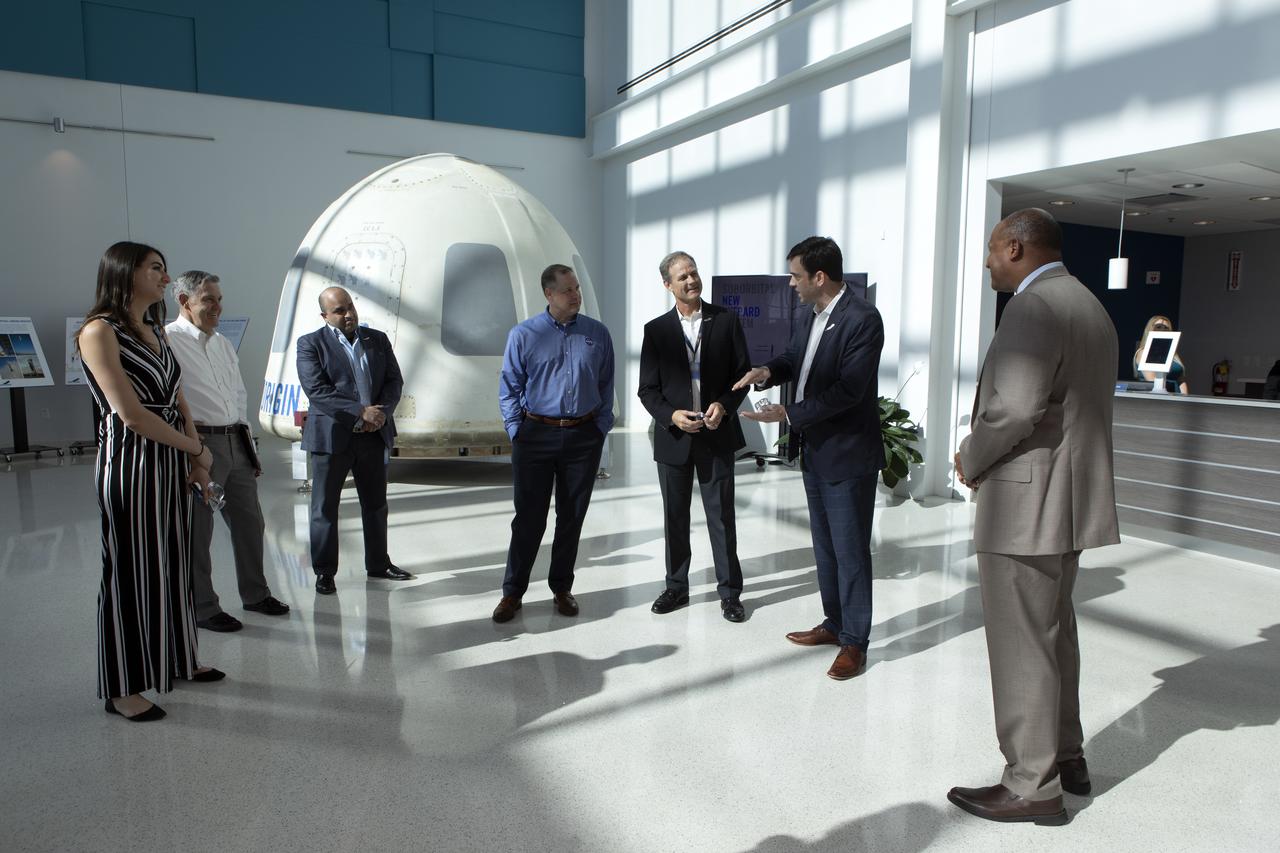
NASA Administrator Jim Bridenstine, fourth from left, tours the Blue Origin facilities near the agency’s Kennedy Space Center in Florida on May 23, 2019. Second from left is Kennedy Space Center Director Bob Cabana. They viewed the New Shepard booster and crew capsule that flew to space and back five times.
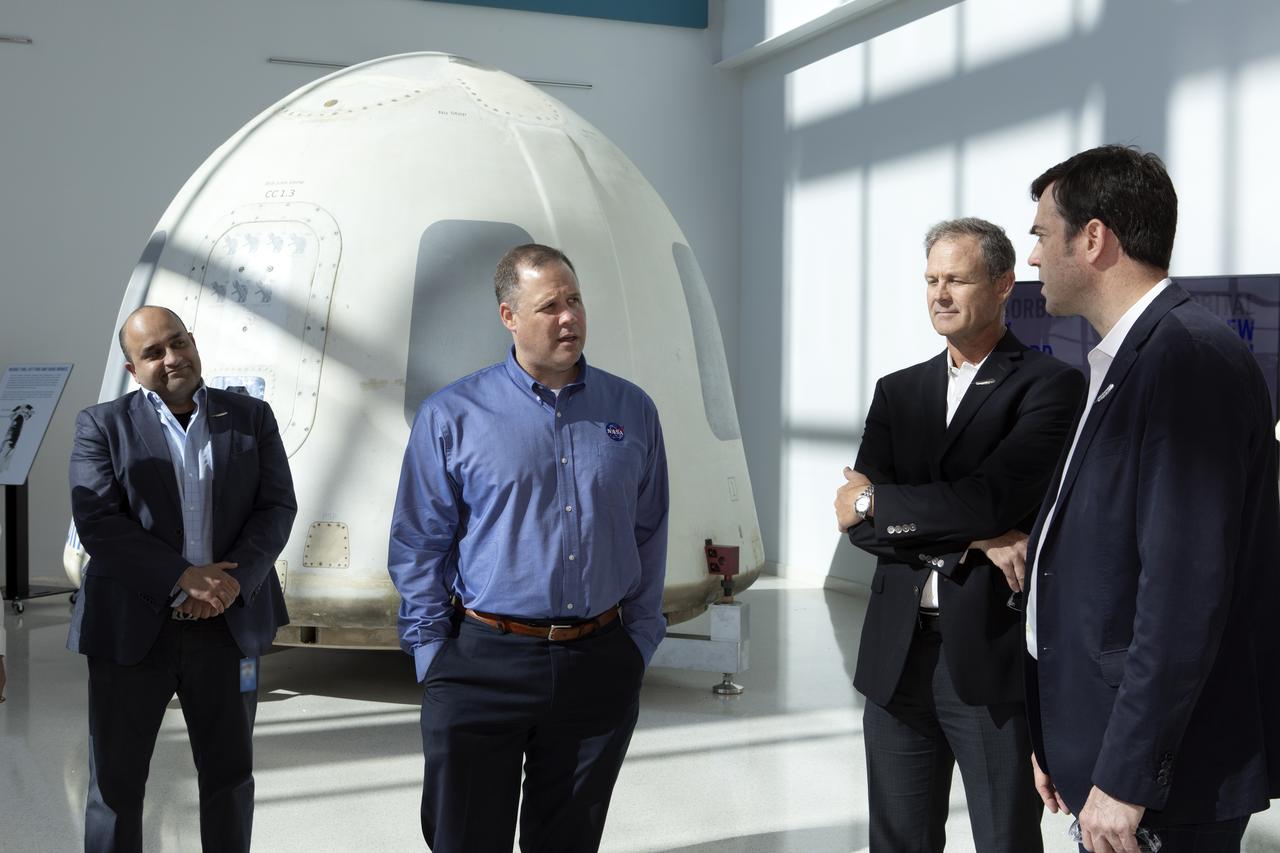
NASA Administrator Jim Bridenstine, second from left, tours the Blue Origin facilities near the agency’s Kennedy Space Center in Florida on May 23, 2019. Bridenstine viewed the New Shepard booster and crew capsule that flew to space and back five times.
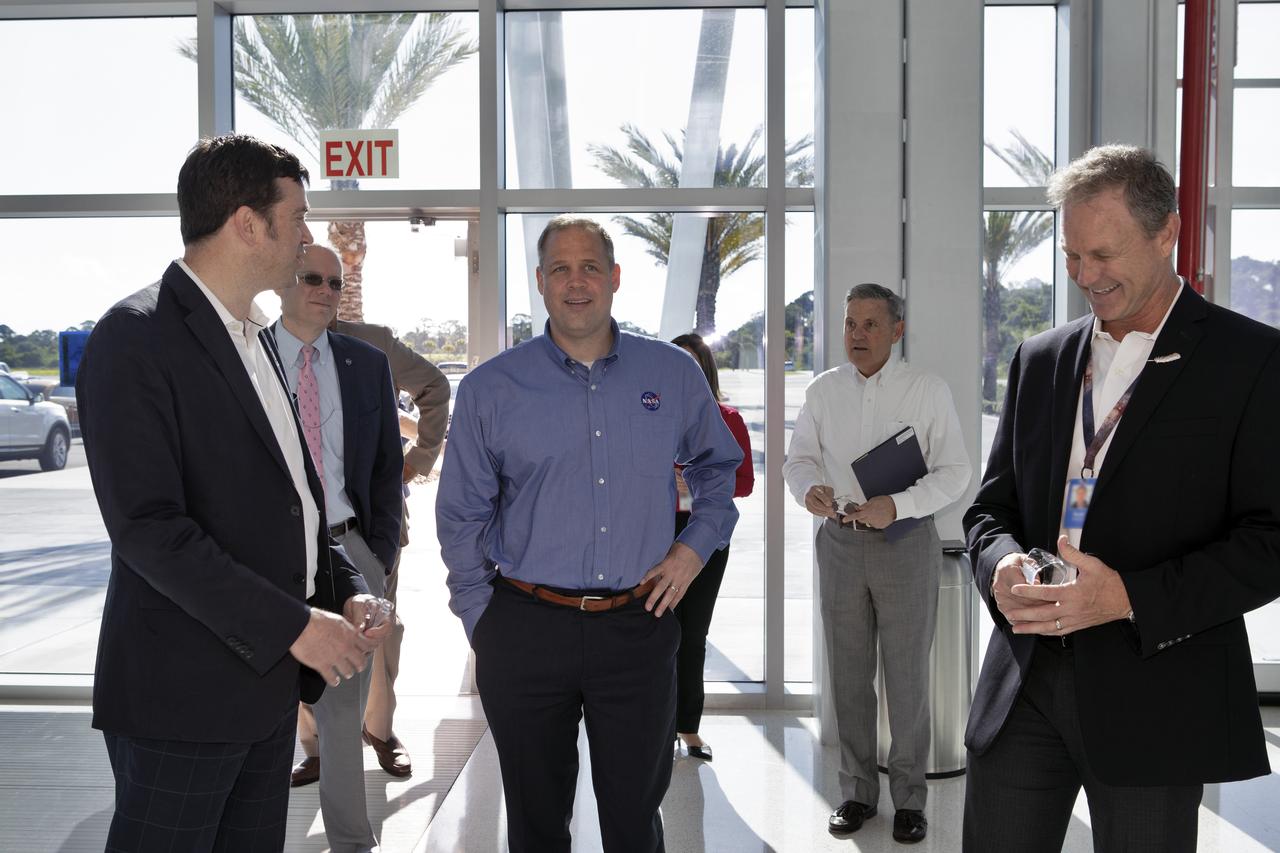
NASA Administrator Jim Bridenstine, third from left, arrives at the Blue Origin facilities near the agency’s Kennedy Space Center in Florida on May 23, 2019. Second from right is Kennedy Space Center Director Bob Cabana. The toured the facilities and viewed the New Shepard booster and crew capsule that flew to space and back five times.
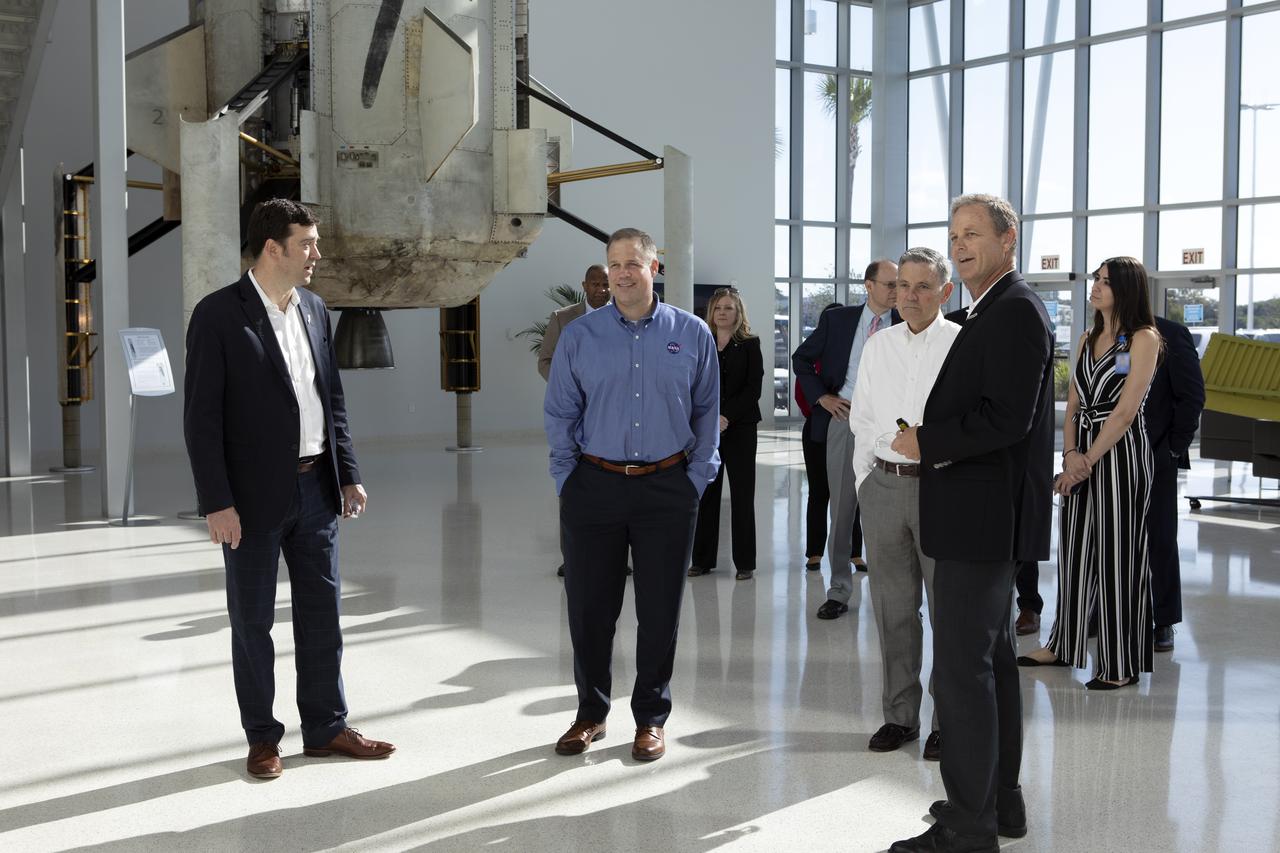
NASA Administrator Jim Bridenstine, second from left, arrives at the Blue Origin facilities near the agency’s Kennedy Space Center in Florida on May 23, 2019. Second from right is Kennedy Space Center Director Bob Cabana. They toured the facilities and viewed the New Shepard booster and crew capsule that flew to space and back five times.
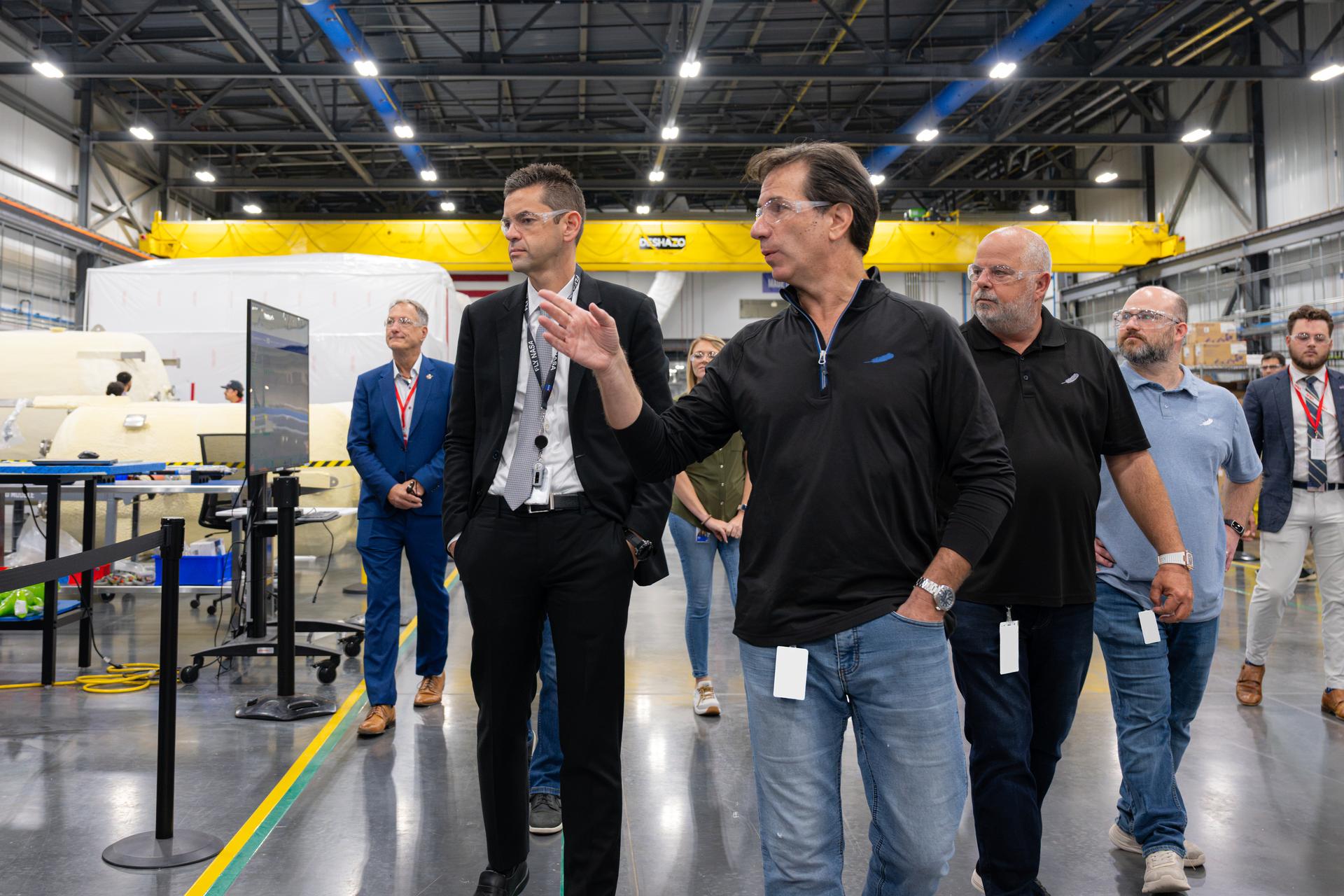
NASA Administrator Jared Isaacman tours Blue Origin's Lunar Plant 1, Friday, Aug. 14, 2026, at the company’s Rocket Park facility in Merritt Island, Fla. Photo Credit: (NASA/John Kraus)
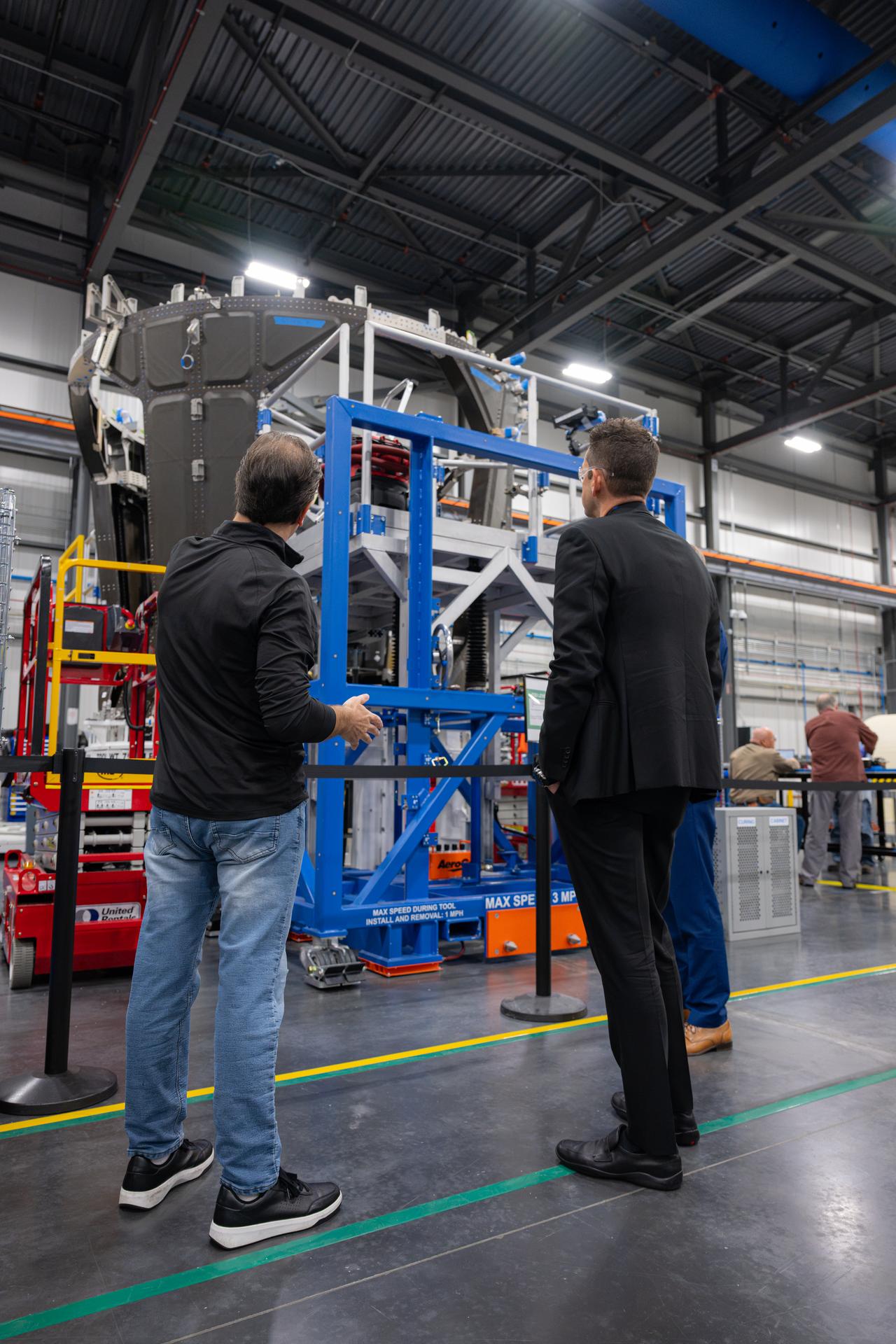
NASA Administrator Jared Isaacman tours Blue Origin's Lunar Plant 1, Friday, Aug. 14, 2026, at the company’s Rocket Park facility in Merritt Island, Fla. Photo Credit: (NASA/John Kraus)
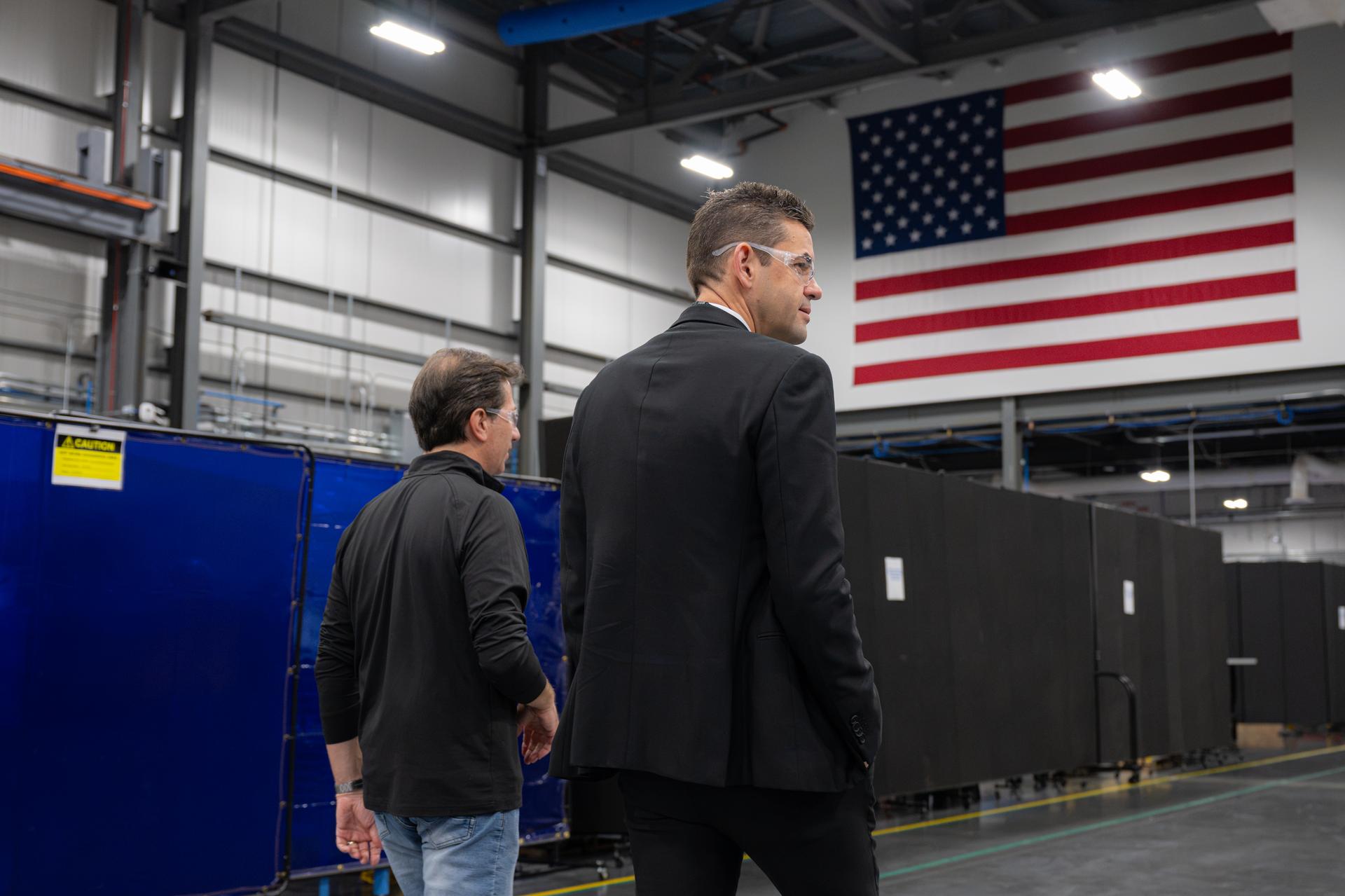
NASA Administrator Jared Isaacman tours Blue Origin's Lunar Plant 1, Friday, Aug. 14, 2026, at the company’s Rocket Park facility in Merritt Island, Fla. Photo Credit: (NASA/John Kraus)
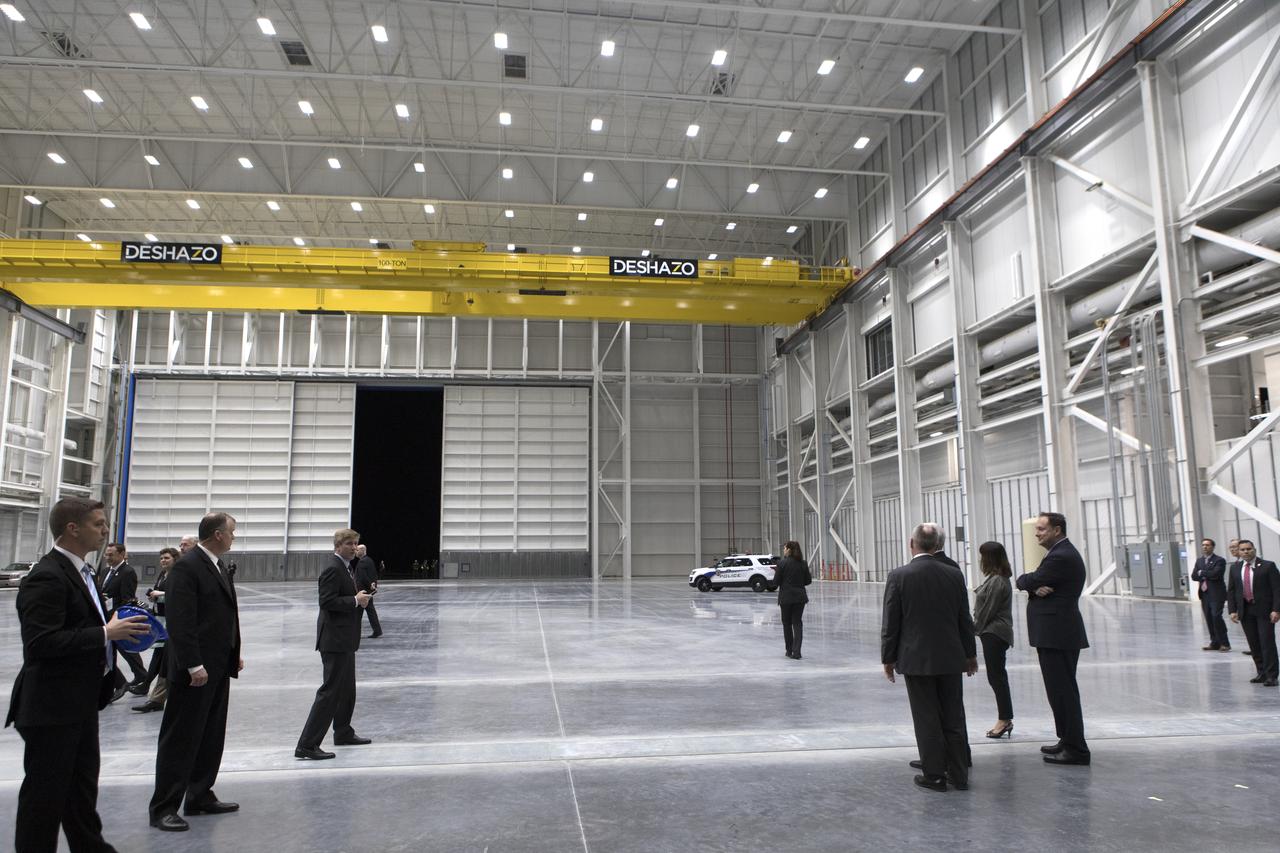
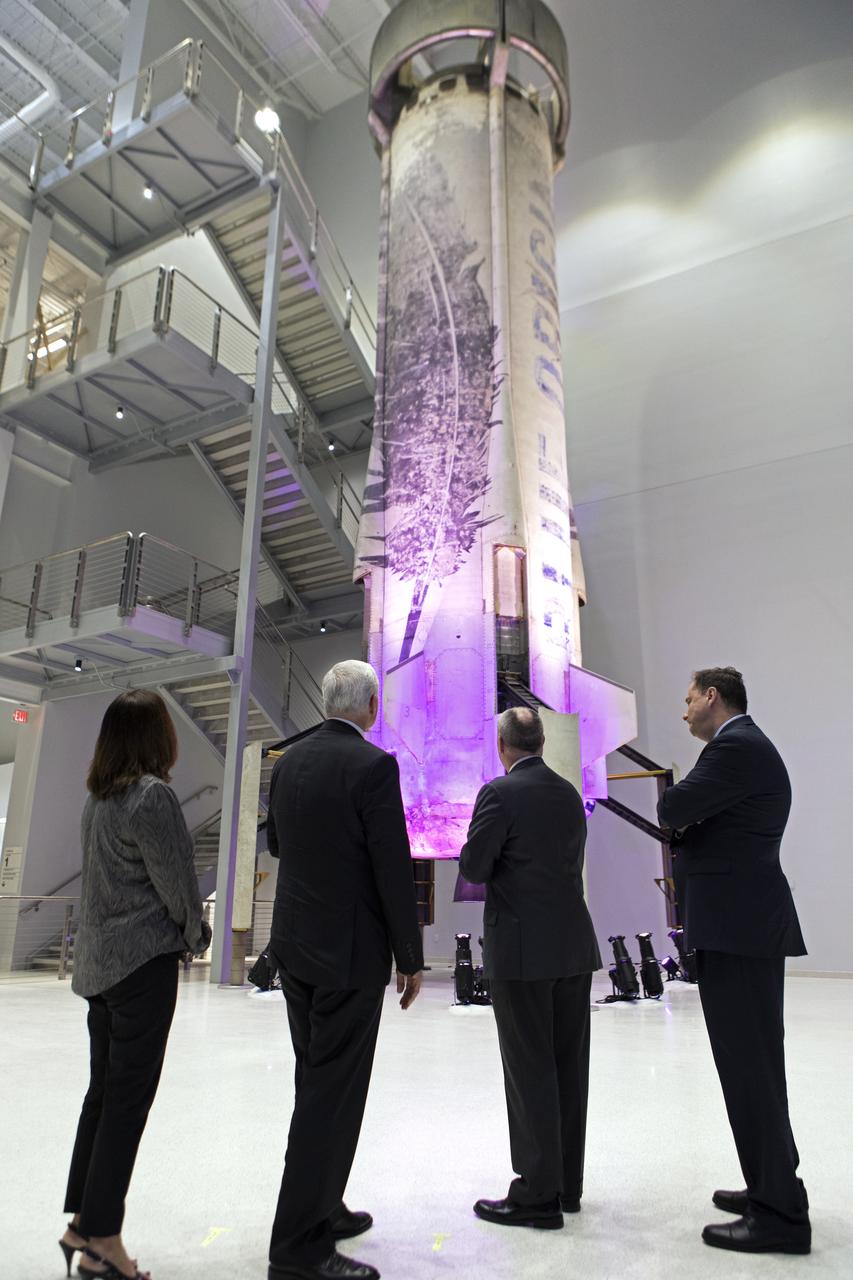
Vice President Mike Pence, hidden at right, tours the Blue Origin Manufacturing Facility near NASA's Kennedy Space Center in Florida, on Feb. 20, 2018. At far right is the vice president's wife, Karen Pence. Behind her at right are Blue Origin CEO Robert Smith, and acting NASA Administrator Robert Lightfoot. Vice President Pence viewed the flown New Shepard Booster and Crew Capsule. The booster was the first launch vehicle with a successful vertical takeoff and vertical landing to demonstrate reusability. During his visit, Pence will chair a meeting of the National Space Council on Feb. 21, 2018 in the high bay of NASA Kennedy Space Center's Space Station Processing Facility. The council's role is to advise the president regarding national space policy and strategy, and review the nation's long-range goals for space activities.
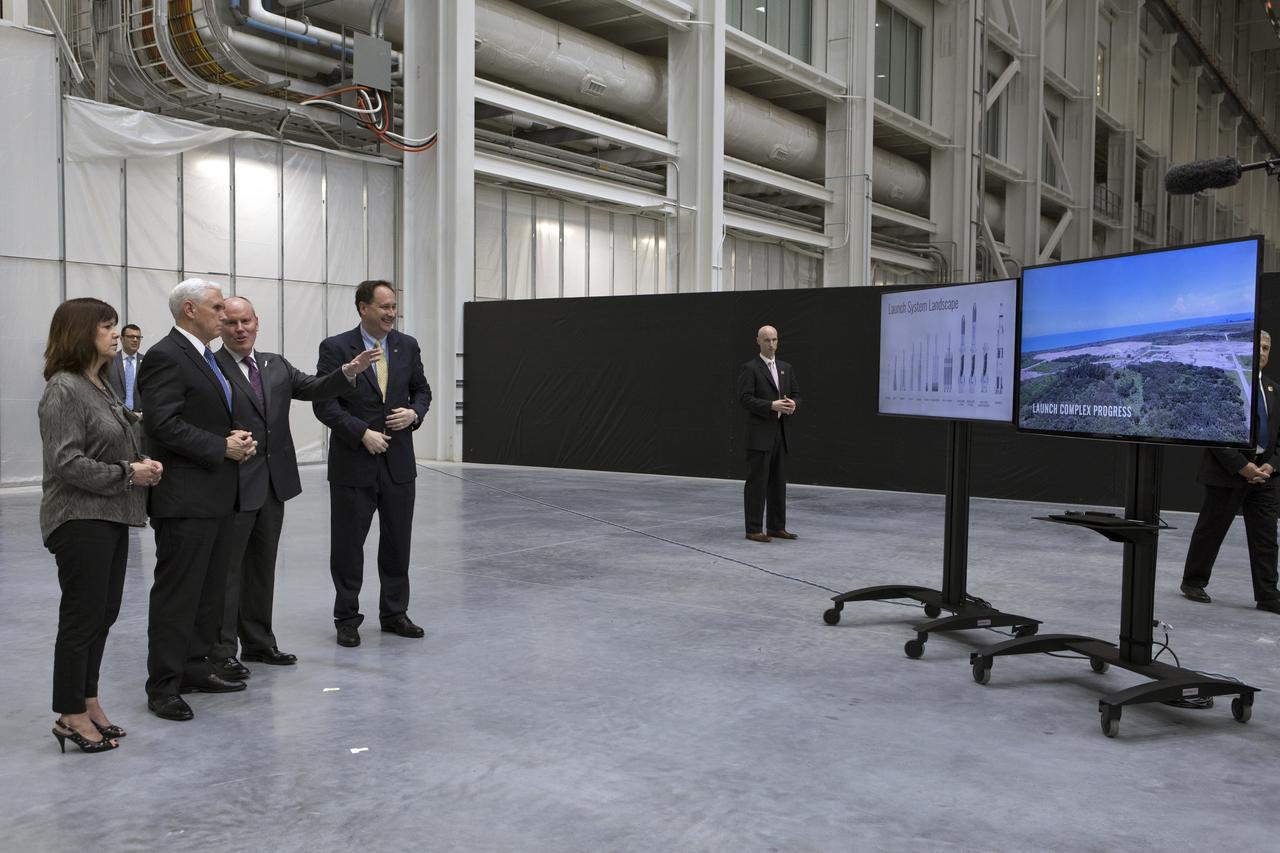
Vice President Mike Pence, second from left, tours the Blue Origin Manufacturing Facility near NASA's Kennedy Space Center in Florida, on Feb. 20, 2018. At left is the vice president's wife, Karen Pence. To his right are Blue Origin CEO Robert Smith, and acting NASA Administrator Robert Lightfoot. Vice President Pence viewed the flown New Shepard Booster and Crew Capsule. The booster was the first launch vehicle with a successful vertical takeoff and vertical landing to demonstrate reusability. During his visit, Pence will chair a meeting of the National Space Council on Feb. 21, 2018 in the high bay of NASA Kennedy Space Center's Space Station Processing Facility. The council's role is to advise the president regarding national space policy and strategy, and review the nation's long-range goals for space activities.
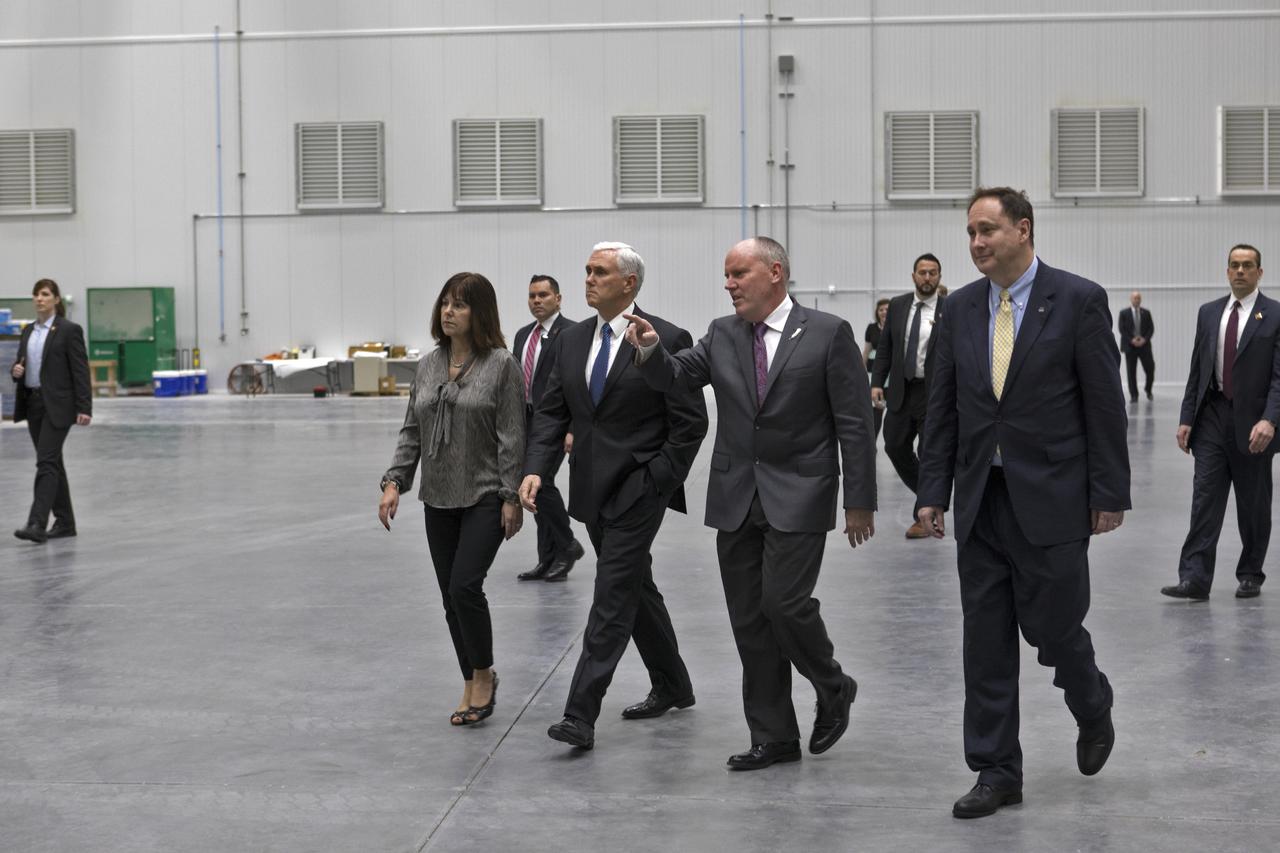
Vice President Mike Pence, second from left, tours the Blue Origin Manufacturing Facility near NASA's Kennedy Space Center in Florida, on Feb. 20, 2018. At left is the vice president's wife, Karen Pence. To his right are Blue Origin CEO Robert Smith, and acting NASA Administrator Robert Lightfoot. Vice President Pence viewed the flown New Shepard Booster and Crew Capsule. The booster was the first launch vehicle with a successful vertical takeoff and vertical landing to demonstrate reusability. During his visit, Pence will chair a meeting of the National Space Council on Feb. 21, 2018 in the high bay of NASA Kennedy Space Center's Space Station Processing Facility. The council's role is to advise the president regarding national space policy and strategy, and review the nation's long-range goals for space activities.
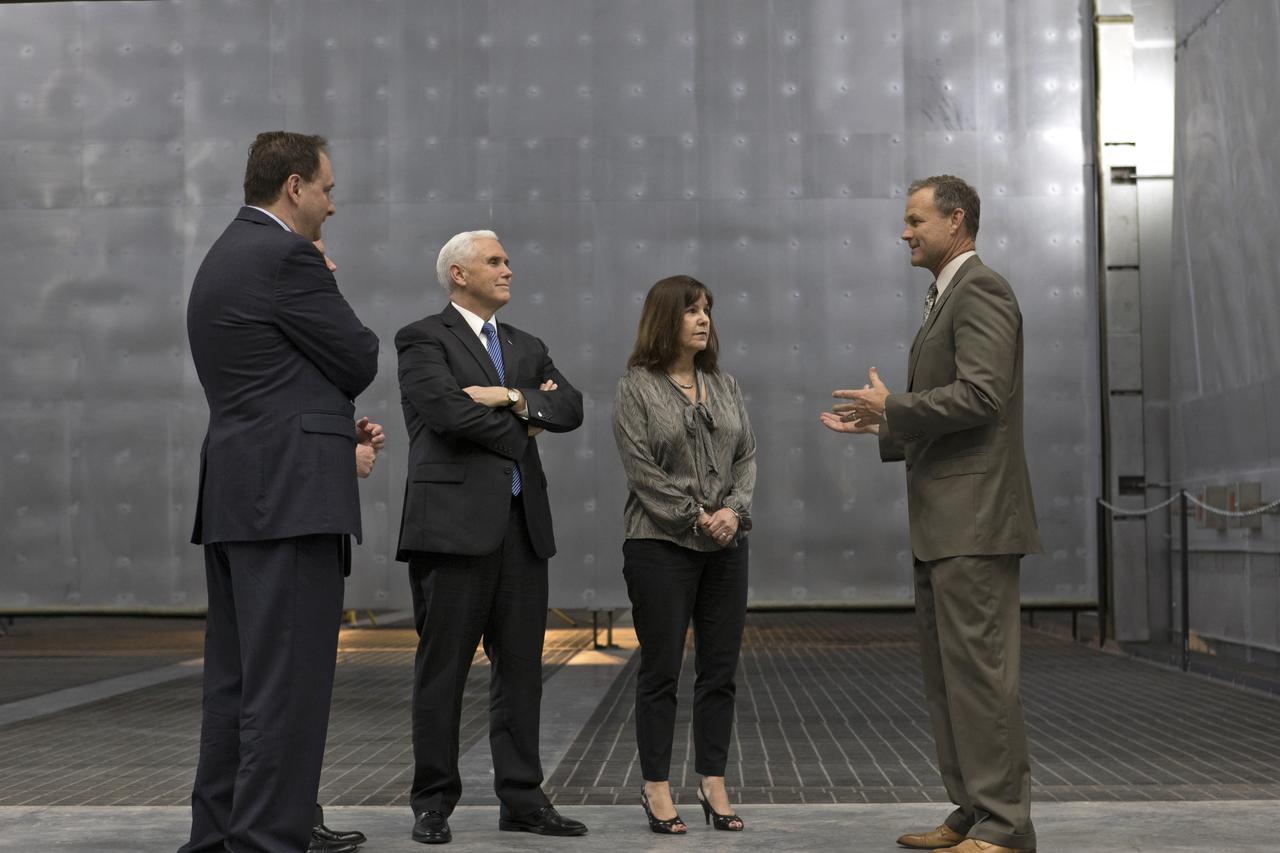
Vice President Mike Pence, second from left, tours the Blue Origin Manufacturing Facility near NASA's Kennedy Space Center in Florida, on Feb. 20, 2018. To his left is acting NASA Administrator Robert Lightfoot. At right is the vice president's wife, Karen Pence. At far right is Scott Henderson, Blue Origin director of Test and Flight Operations. Vice President Pence viewed the flown New Shepard Booster and Crew Capsule. The booster was the first launch vehicle with a successful vertical takeoff and vertical landing to demonstrate reusability. During his visit, Pence will chair a meeting of the National Space Council on Feb. 21, 2018 in the high bay of NASA Kennedy Space Center's Space Station Processing Facility. The council's role is to advise the president regarding national space policy and strategy, and review the nation's long-range goals for space activities.
Vice President Mike Pence, second from left, tours the Blue Origin Manufacturing Facility near NASA's Kennedy Space Center in Florida, on Feb. 20, 2018. At left is the vice president's wife, Karen Pence. To his right are Blue Origin CEO Robert Smith, and acting NASA Administrator Robert Lightfoot. Vice President Pence viewed the flown New Shepard Booster and Crew Capsule. The booster was the first launch vehicle with a successful vertical takeoff and vertical landing to demonstrate reusability. During his visit, Pence will chair a meeting of the National Space Council on Feb. 21, 2018 in the high bay of NASA Kennedy Space Center's Space Station Processing Facility. The council's role is to advise the president regarding national space policy and strategy, and review the nation's long-range goals for space activities.

Vice President Mike Pence, second from left, tours the Blue Origin Manufacturing Facility near NASA's Kennedy Space Center in Florida, on Feb. 20, 2018. To his left is his wife, Karen Pence. To his right are Blue Origin CEO Robert Smith, and acting NASA Administrator Robert Lightfoot. Vice President Pence viewed the flown New Shepard Booster and Crew Capsule. The booster was the first launch vehicle with a successful vertical takeoff and vertical landing to demonstrate reusability. During his visit, Pence will chair a meeting of the National Space Council on Feb. 21, 2018 in the high bay of NASA Kennedy Space Center's Space Station Processing Facility. The council's role is to advise the president regarding national space policy and strategy, and review the nation's long-range goals for space activities.
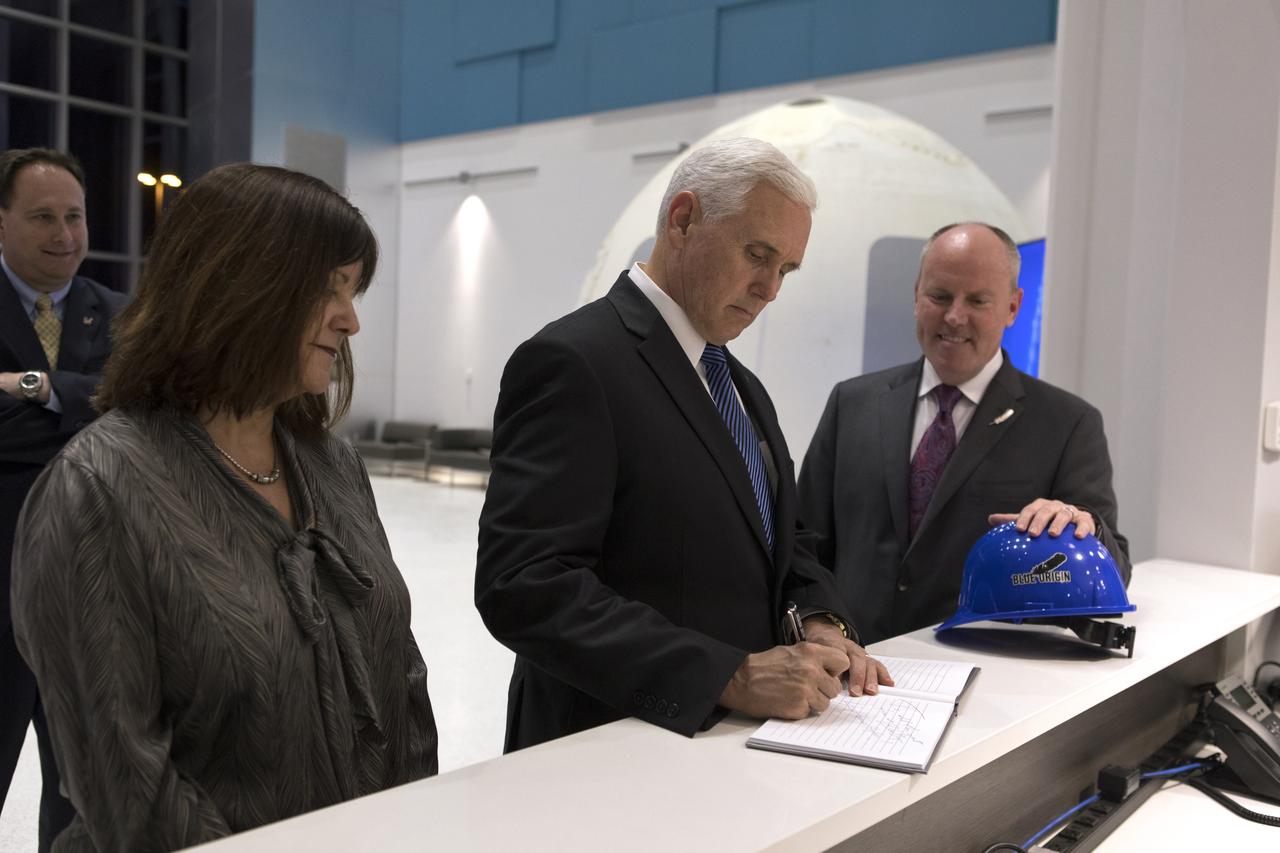
Vice President Mike Pence, center, signs a guest book during his tour of the Blue Origin Manufacturing Facility near NASA's Kennedy Space Center in Florida, on Feb. 20, 2018. At left is the vice president's wife, Karen Pence. To his right is Blue Origin CEO Robert Smith. Behind them is acting NASA Administrator Robert Lightfoot. Vice President Pence viewed the flown New Shepard Booster and Crew Capsule. The booster was the first launch vehicle with a successful vertical takeoff and vertical landing to demonstrate reusability. During his visit, Pence will chair a meeting of the National Space Council on Feb. 21, 2018 in the high bay of NASA Kennedy Space Center's Space Station Processing Facility. The council's role is to advise the president regarding national space policy and strategy, and review the nation's long-range goals for space activities.
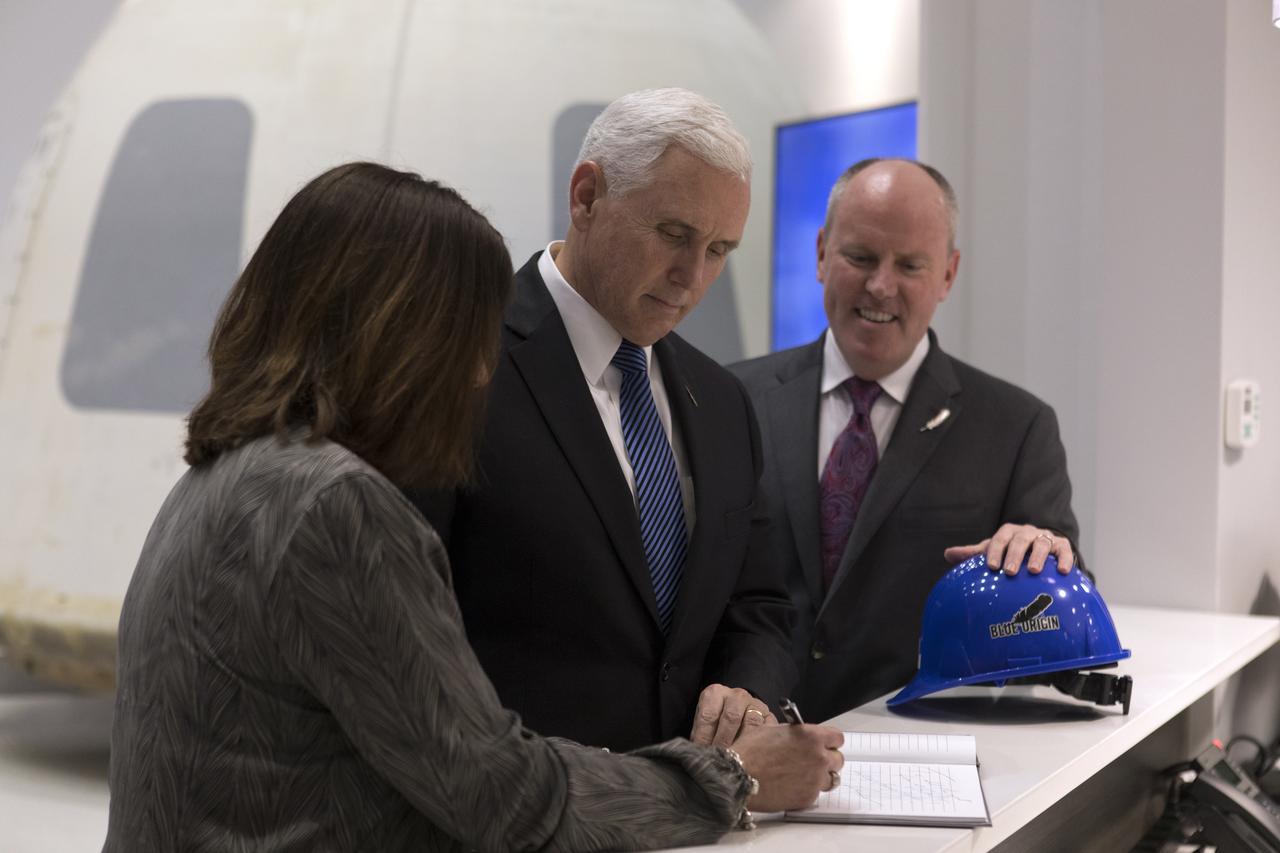
Vice President Mike Pence, center, and his wife, Karen Pence, sign a guest book during a tour of the Blue Origin Manufacturing Facility near NASA's Kennedy Space Center in Florida, on Feb. 20, 2018. At right is Blue Origin CEO Robert Smith. Vice President Pence viewed the flown New Shepard Booster and Crew Capsule. The booster was the first launch vehicle with a successful vertical takeoff and vertical landing to demonstrate reusability. During his visit, Pence will chair a meeting of the National Space Council on Feb. 21, 2018 in the high bay of NASA Kennedy Space Center's Space Station Processing Facility. The council's role is to advise the president regarding national space policy and strategy, and review the nation's long-range goals for space activities.
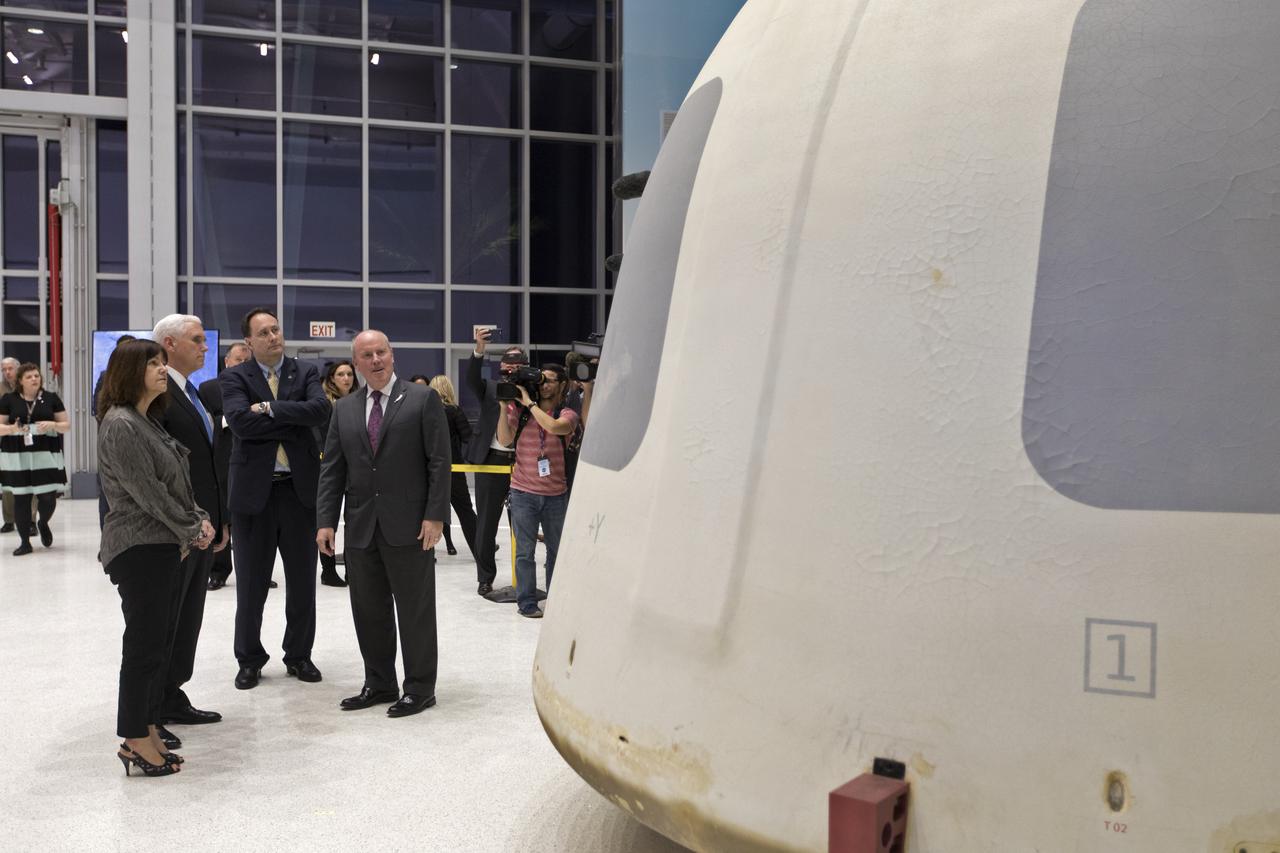
Vice President Mike Pence, second from left, tours the Blue Origin Manufacturing Facility near NASA's Kennedy Space Center in Florida, on Feb. 20, 2018. At far left is the vice president's wife, Karen Pence. To the right of Vice President Pence are acting NASA Administrator Robert Lightfoot and Blue Origin CEO Robert Smith. Pence viewed the flown New Shepard Booster and Crew Capsule. The Crew Capsule, in view, flew seven times, including a pad abort test and an escape test at maximum dynamic pressure. During his visit, Pence will chair a meeting of the National Space Council on Feb. 21, 2018 in the high bay of NASA Kennedy Space Center's Space Station Processing Facility. The council's role is to advise the president regarding national space policy and strategy, and review the nation's long-range goals for space activities.
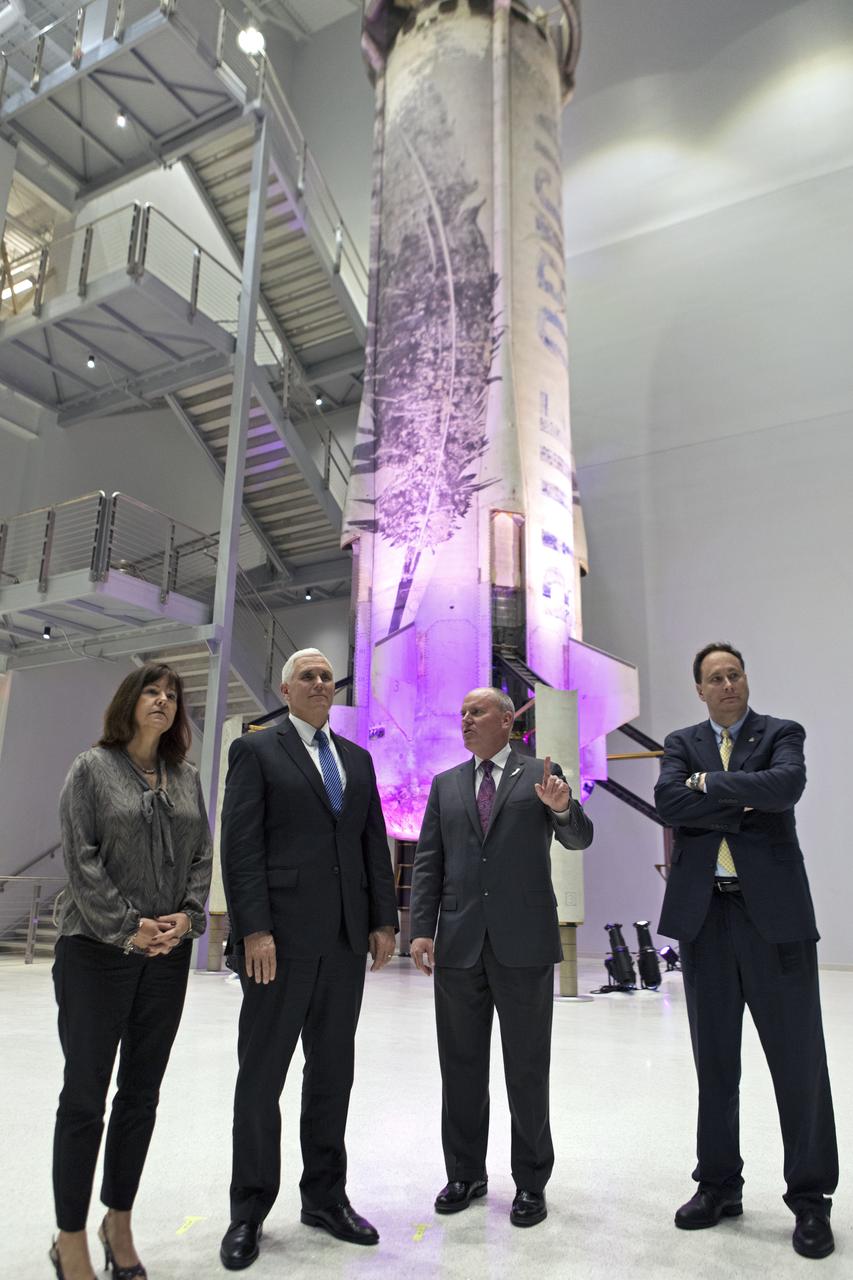
Vice President Mike Pence, second from left, tours the Blue Origin Manufacturing Facility near NASA's Kennedy Space Center in Florida, on Feb. 20, 2018. From left, are Karen Pence, Blue Origin CEO Robert Smith, and acting NASA Administrator Robert Lightfoot. Vice President Pence viewed the flown New Shepard Booster and Crew Capsule. The booster was the first launch vehicle with a successful vertical takeoff and vertical landing to demonstrate reusability. During his visit, Pence will chair a meeting of the National Space Council on Feb. 21, 2018 in the high bay of NASA Kennedy Space Center's Space Station Processing Facility. The council's role is to advise the president regarding national space policy and strategy, and review the nation's long-range goals for space activities.
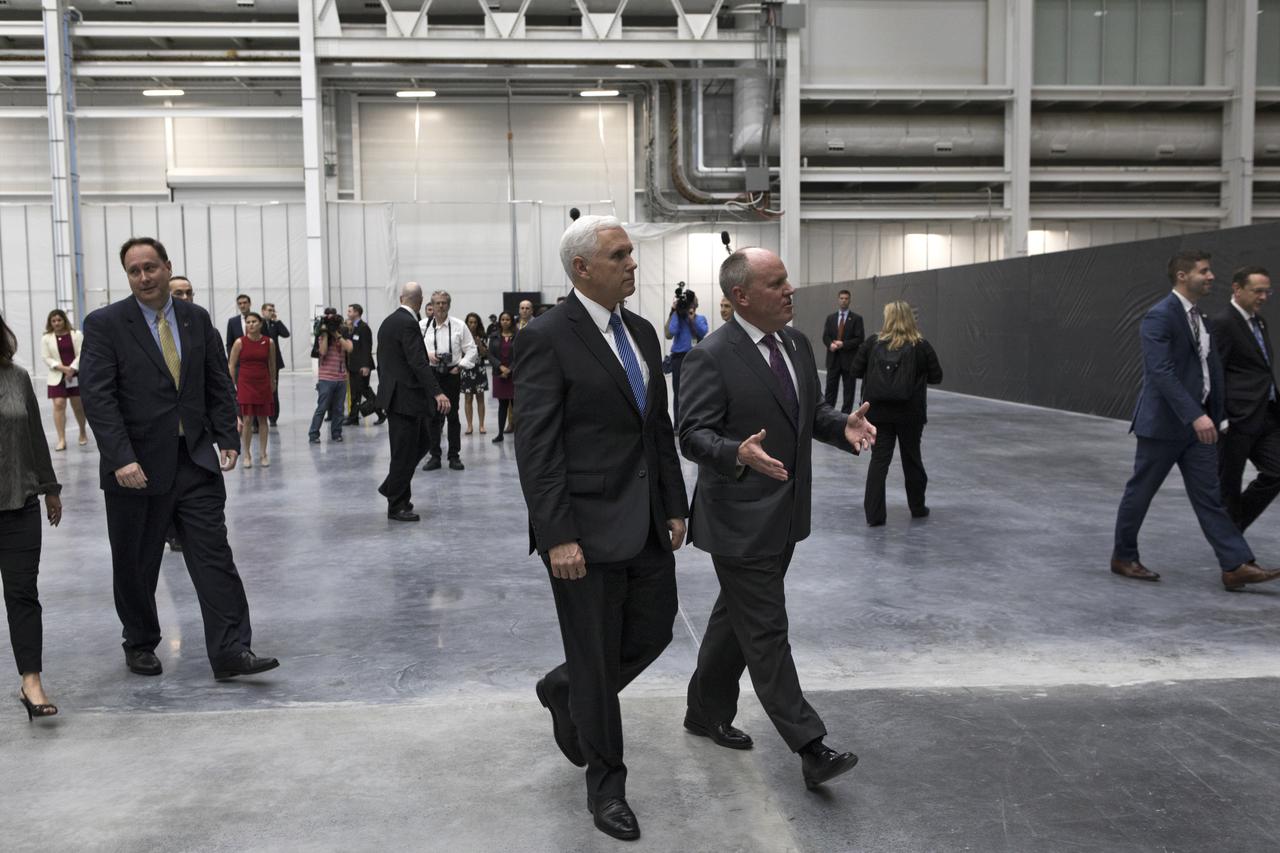
Vice President Mike Pence, at left, tours the Blue Origin Manufacturing Facility near NASA's Kennedy Space Center in Florida, Feb. 20, 2018, with the company's CEO Robert Smith. Vice President Pence viewed the flown New Shepard Booster and Crew Capsule. The booster was the first launch vehicle with a successful vertical takeoff and vertical landing to demonstrate reusability. During his visit, Pence will chair a meeting of the National Space Council on Feb. 21, 2018 in the high bay of NASA Kennedy Space Center's Space Station Processing Facility. The council's role is to advise the president regarding national space policy and strategy, and review the nation's long-range goals for space activities.
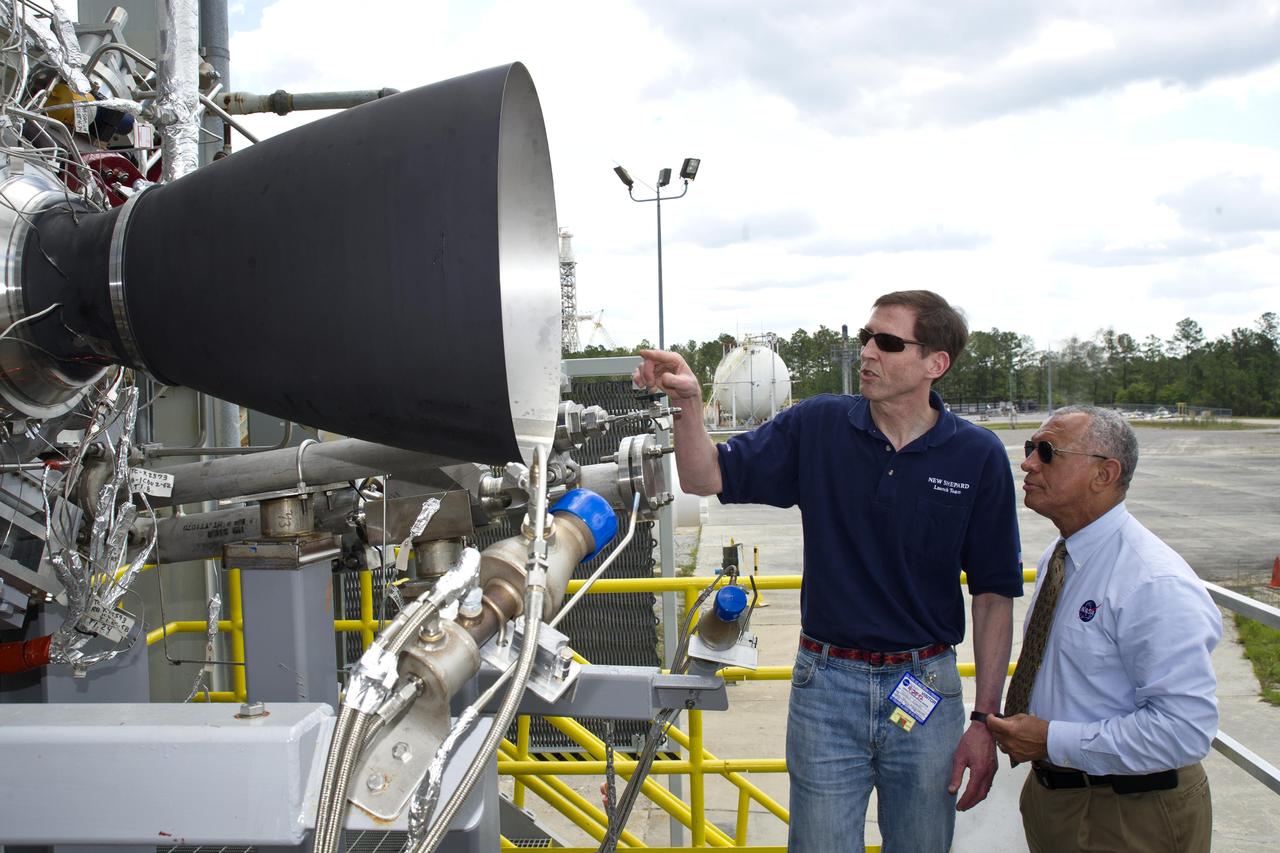
NASA Administrator Charles Bolden (r) discusses the upcoming testing of Blue Origin's BE-3 engine thrust chamber assembly with Steve Knowles, Blue Origin project manager, at the E-1 Test Stand during an April 20, 2012, visit to Stennis Space Center. Blue Origin is one of NASA's partners developing innovative systems to reach low-Earth orbit.
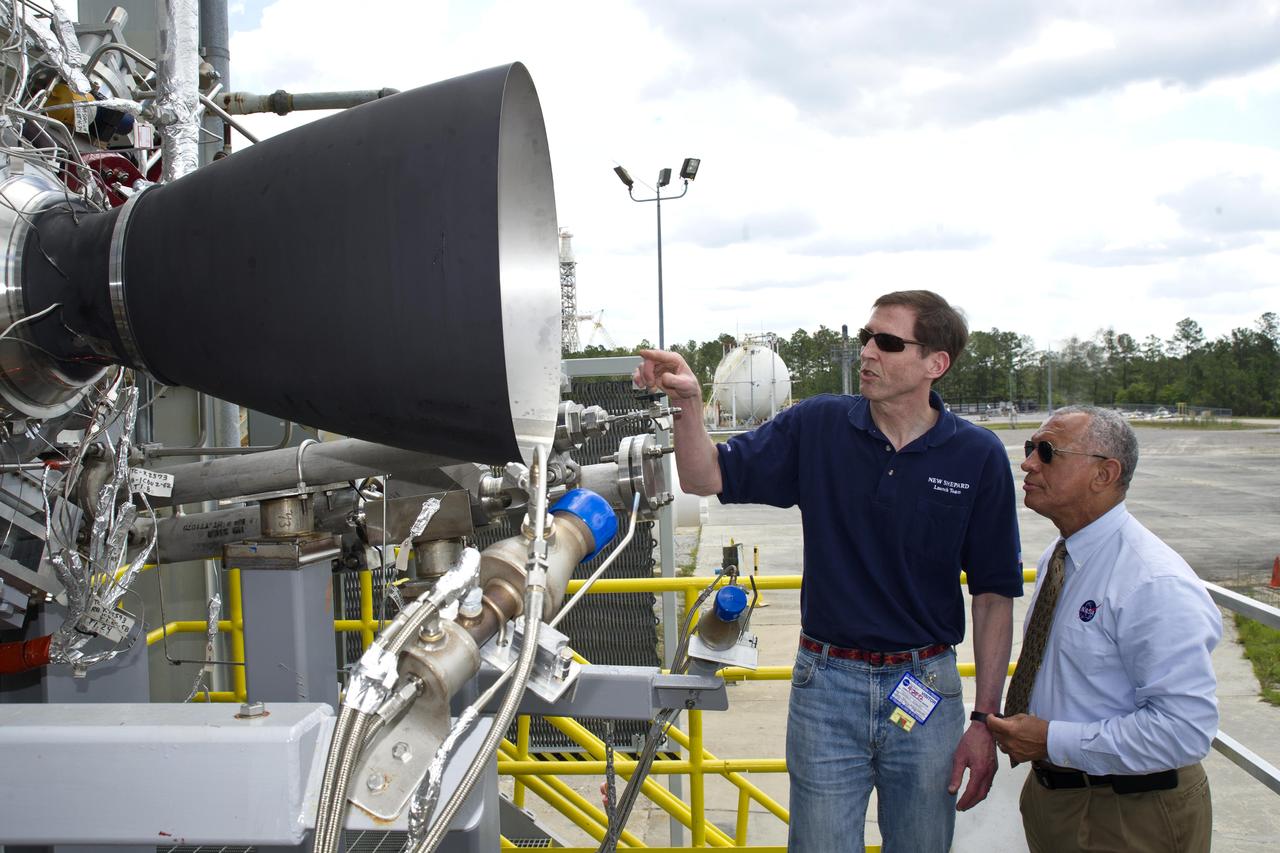
NASA Administrator Charles Bolden (r) discusses the upcoming testing of Blue Origin's BE-3 engine thrust chamber assembly with Steve Knowles, Blue Origin project manager, at the E-1 Test Stand during an April 20, 2012, visit to Stennis Space Center. Blue Origin is one of NASA's partners developing innovative systems to reach low-Earth orbit.
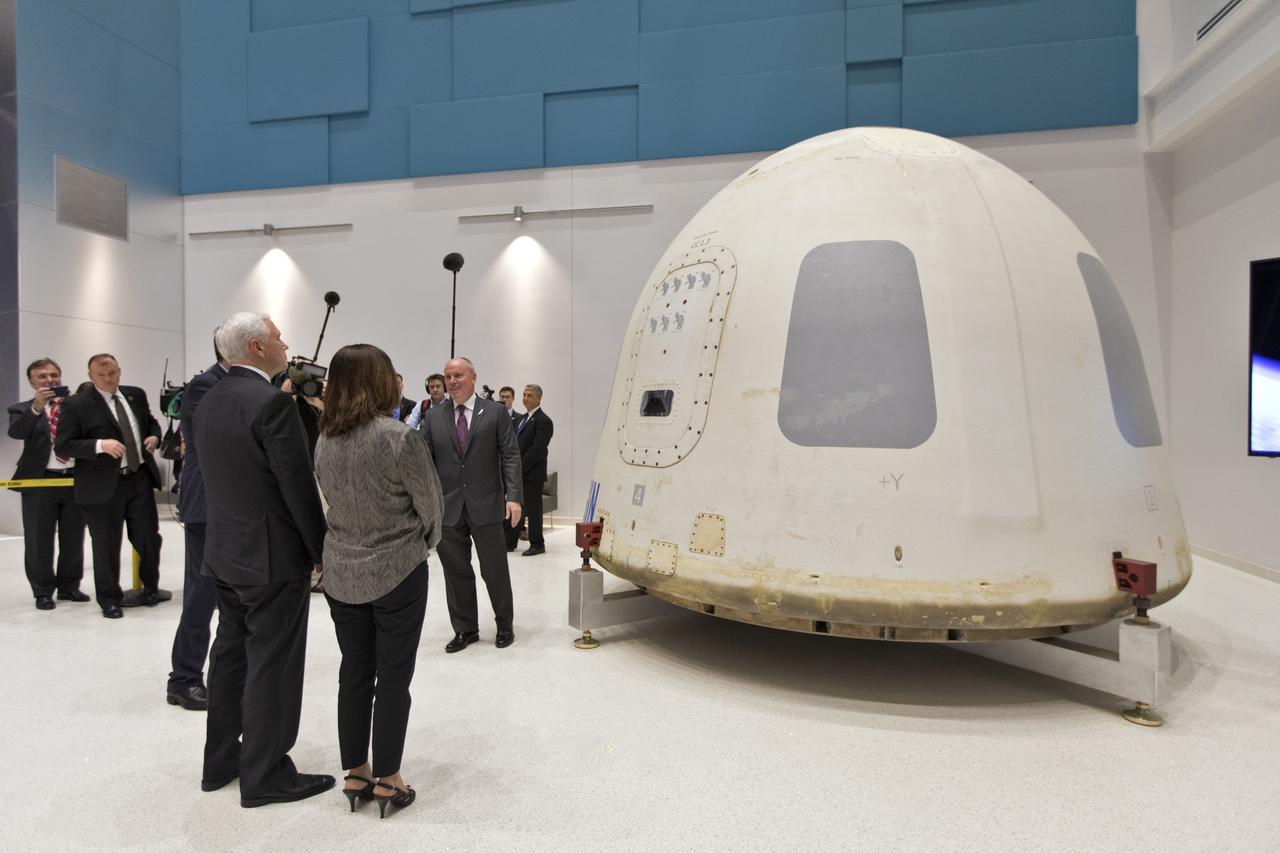
Vice President Mike Pence, second from right, and his wife, Karen Pence, tour the Blue Origin Manufacturing Facility near NASA's Kennedy Space Center in Florida, on Feb. 20, 2018. Vice President Pence viewed the flown New Shepard Booster and Crew Capsule. The Crew Capsule, in view, flew seven times, including a pad abort test and an escape test at maximum dynamic pressure. During his visit, Pence will chair a meeting of the National Space Council on Feb. 21, 2018 in the high bay of NASA Kennedy Space Center's Space Station Processing Facility. The council's role is to advise the president regarding national space policy and strategy, and review the nation's long-range goals for space activities.

NASA Administrator Jared Isaacman is seen during a helicopter flight, Friday, May 29, 2026, at Cape Canaveral Space Force Station in Florida. The flight surveyed Launch Complex 36 following a New Glenn hotfire test anomaly on May 28. Photo Credit: (NASA/John Kraus)
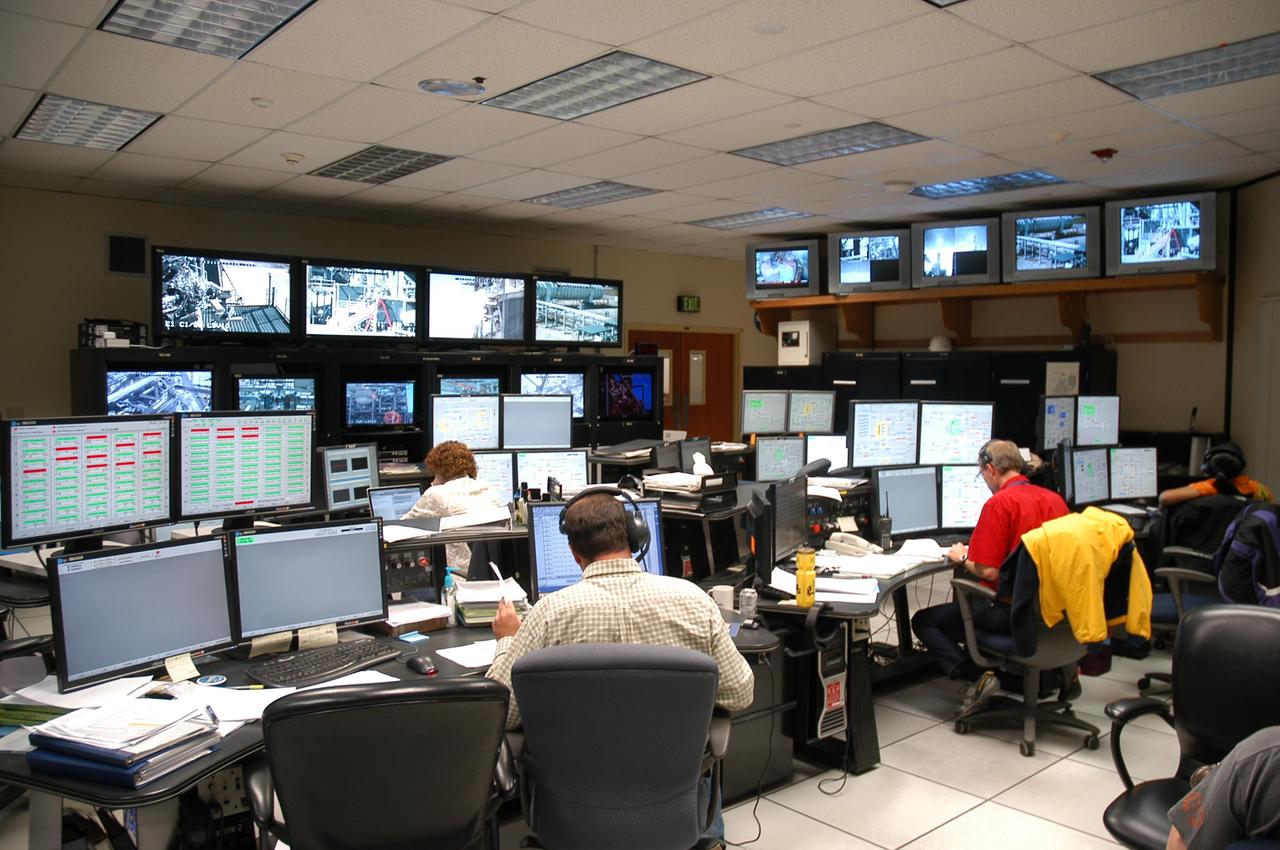
Jason Hopper of NASA (front row), Jody Ladner of Lockheed Martin (back row, left) and Chris Mulkey of NASA prepare to test the Blue Origin BE-3 engine thrust chamber in the E-1 Test Stand Control Center at John C. Stennis Space Center on Nov. 8. The test was one of 27 conducted in Stennis' E Test Complex the week of Nov. 5.

Blue Origin Human Landing System Program Manager, John Couluris, is seen on the monitor answering a question during an event announcing Blue Origin as the company selected to develop a sustainable human landing system for the Artemis V Moon mission, Friday, May 19, 2023 at the Mary W. Jackson NASA Headquarters building in Washington. The human landing system will take astronauts to and from Gateway in lunar orbit to the surface and back to the lunar space station as part of NASA’s return to the Moon for science, exploration, and inspiration. Photo Credit: (NASA/Aubrey Gemignani)
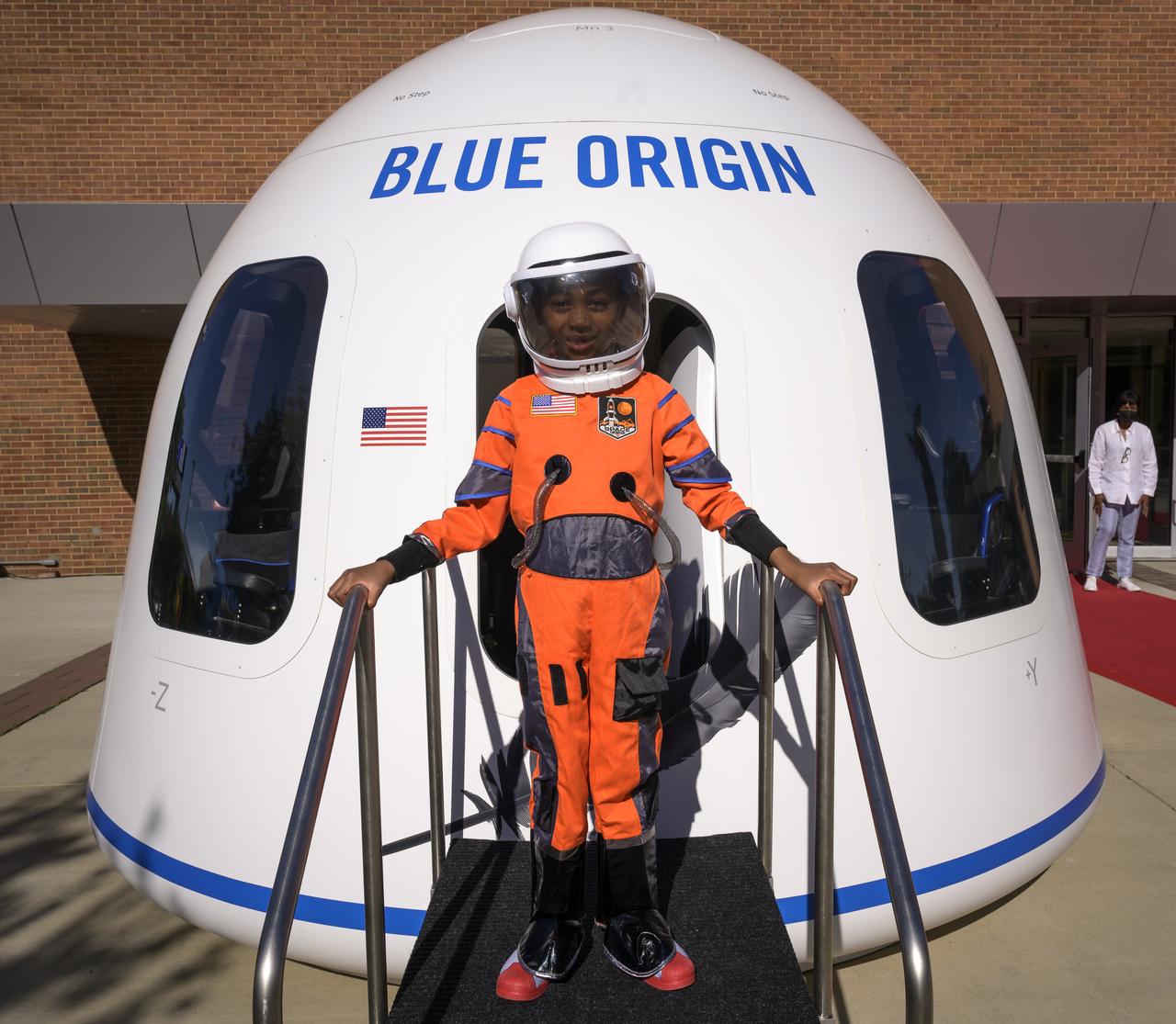
6-year old Armani Bonds poses for a photograph as he exits a Blue Origin New Shepard capsule mockup prior to the screening of the NASA produced documentary “The Color of Space” at Howard University’s Cramton Auditorium in Washington, Saturday, June 18, 2022. Premiering on Juneteenth, the federal holiday commemorating the end of slavery in the United States, “The Color of Space” is an inspirational documentary that tells the stories of NASA’s Black astronauts determined to reach the stars. Photo Credit: (NASA/Bill Ingalls)
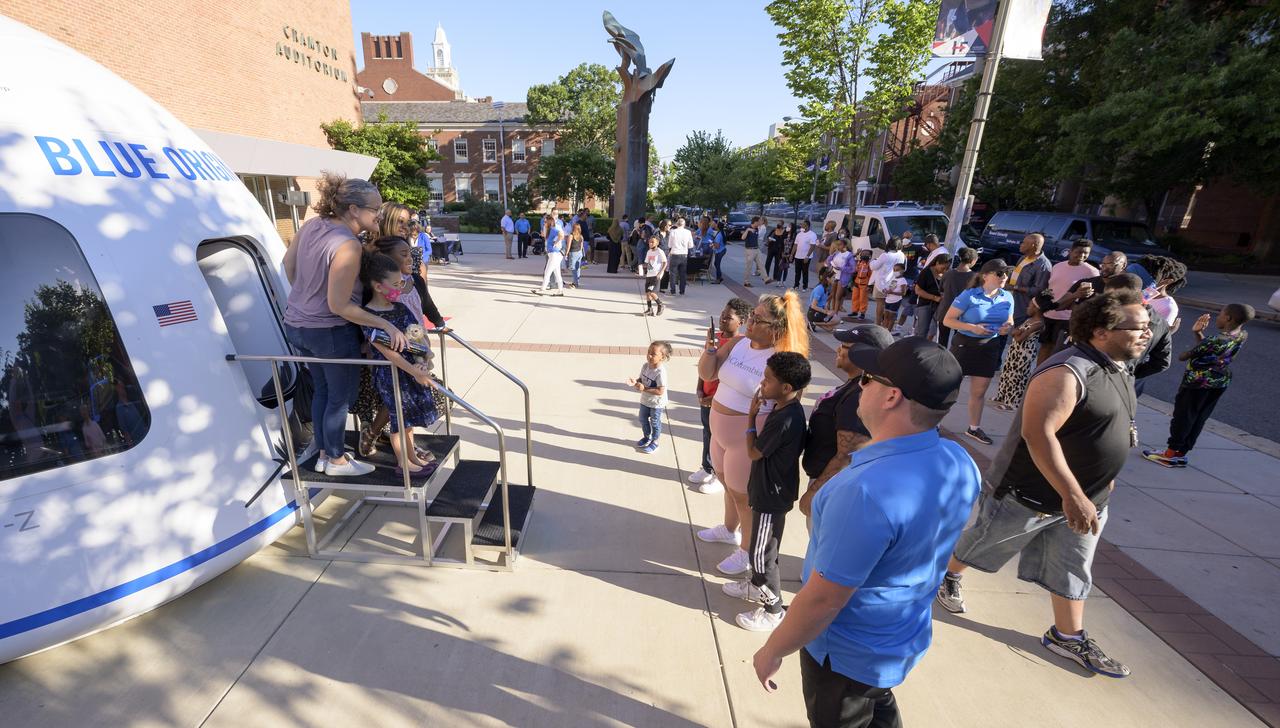
Attendees line up to go inside a Blue Origin New Shepard capsule mockup prior to the screening of the NASA produced documentary “The Color of Space” at Howard University’s Cramton Auditorium in Washington, Saturday, June 18, 2022. Premiering on Juneteenth, the federal holiday commemorating the end of slavery in the United States, “The Color of Space” is an inspirational documentary that tells the stories of NASA’s Black astronauts determined to reach the stars. Photo Credit: (NASA/Bill Ingalls)
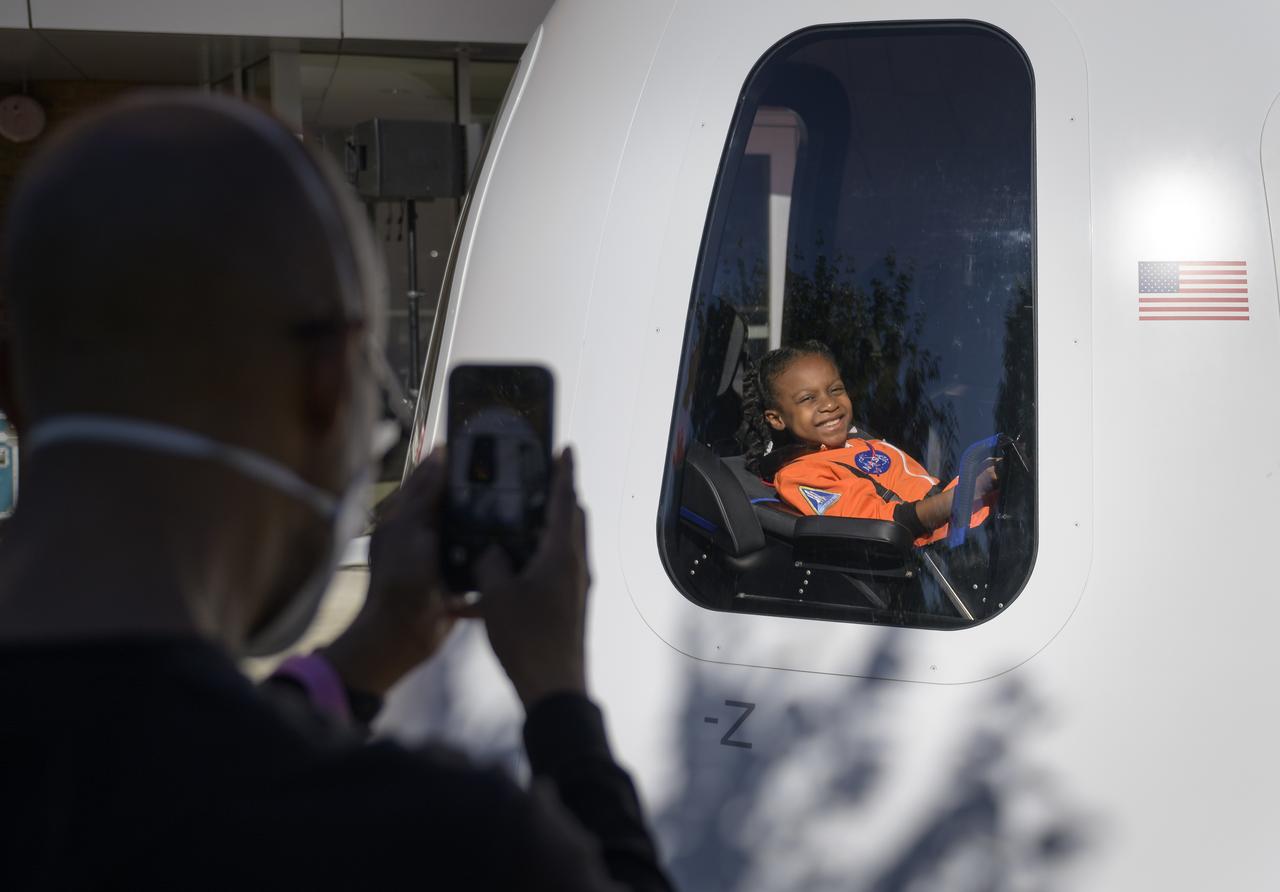
9-year old Amara Bowman smiles as her father photographs her inside a Blue Origin New Shepard capsule mockup prior to the screening of the NASA produced documentary “The Color of Space” at Howard University’s Cramton Auditorium in Washington, Saturday, June 18, 2022. Premiering on Juneteenth, the federal holiday commemorating the end of slavery in the United States, “The Color of Space” is an inspirational documentary that tells the stories of NASA’s Black astronauts determined to reach the stars. Photo Credit: (NASA/Bill Ingalls)
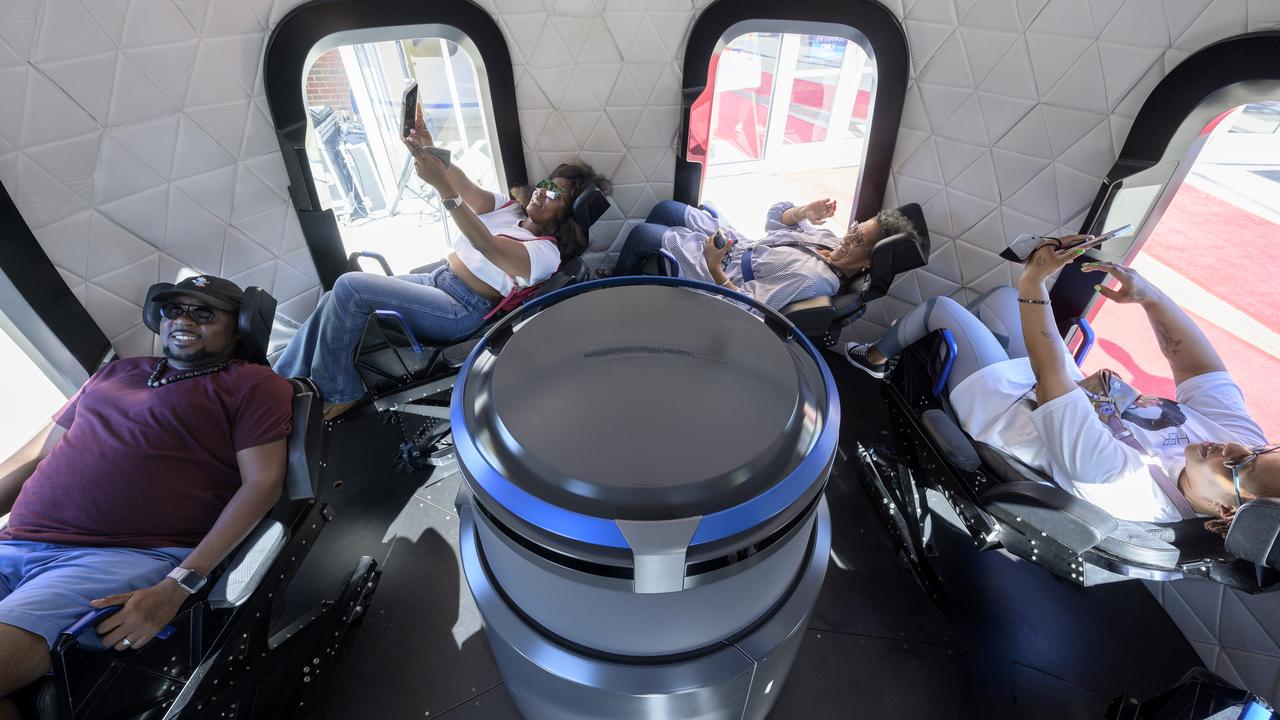
Attendees experience the inside of a Blue Origin New Shepard capsule mockup prior to the screening of the NASA produced documentary “The Color of Space” at Howard University’s Cramton Auditorium in Washington, Saturday, June 18, 2022. Premiering on Juneteenth, the federal holiday commemorating the end of slavery in the United States, “The Color of Space” is an inspirational documentary that tells the stories of NASA’s Black astronauts determined to reach the stars. Photo Credit: (NASA/Bill Ingalls)
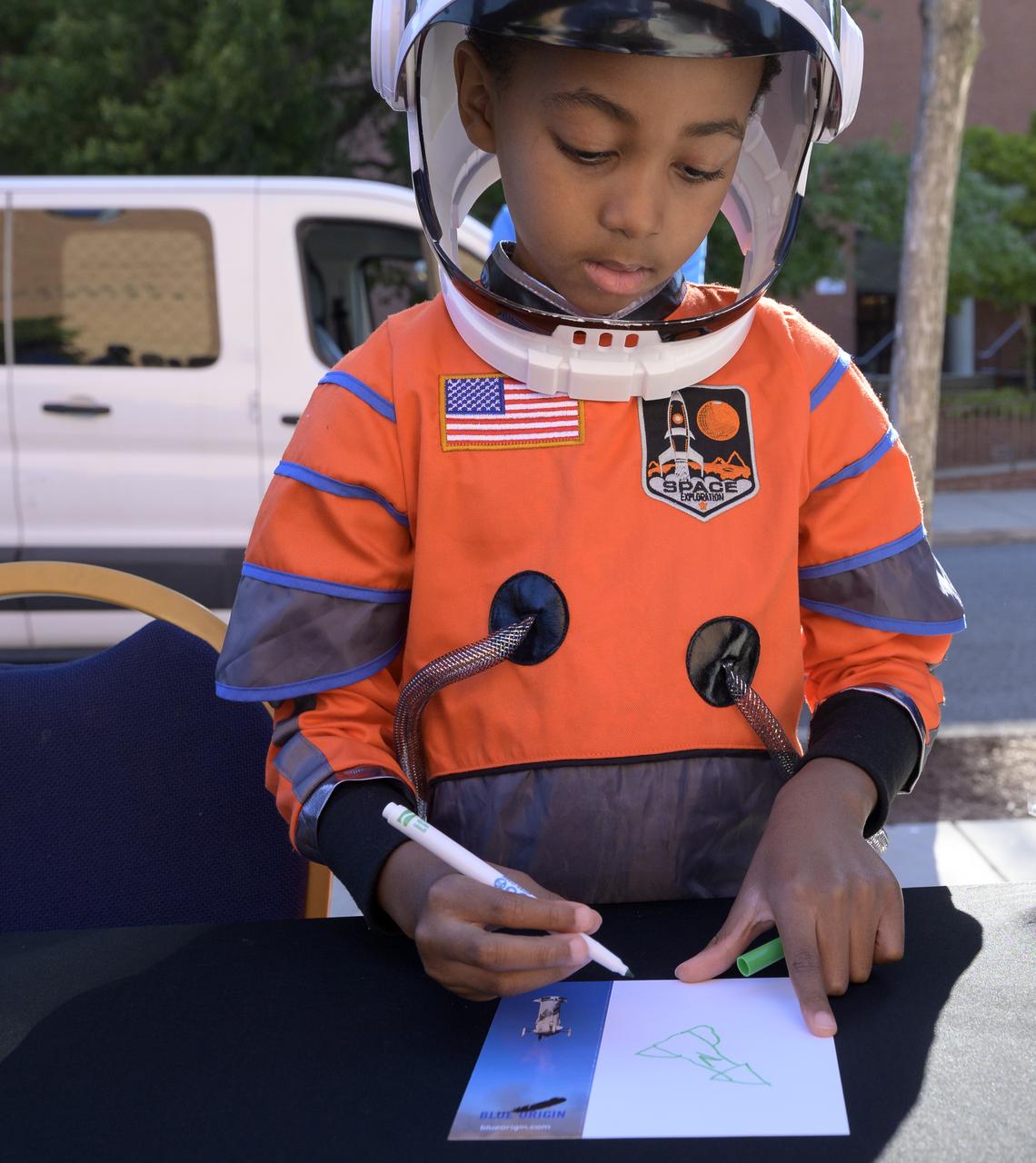
6-year old Armani Bonds draws on a postcard that will be sent to space by Club for the Future on a Blue Origin New Shepard rocket prior to he and his family screening the NASA produced documentary “The Color of Space” at Howard University’s Cramton Auditorium in Washington, Saturday, June 18, 2022. Premiering on Juneteenth, the federal holiday commemorating the end of slavery in the United States, “The Color of Space” is an inspirational documentary that tells the stories of NASA’s Black astronauts determined to reach the stars. Photo Credit: (NASA/Bill Ingalls)
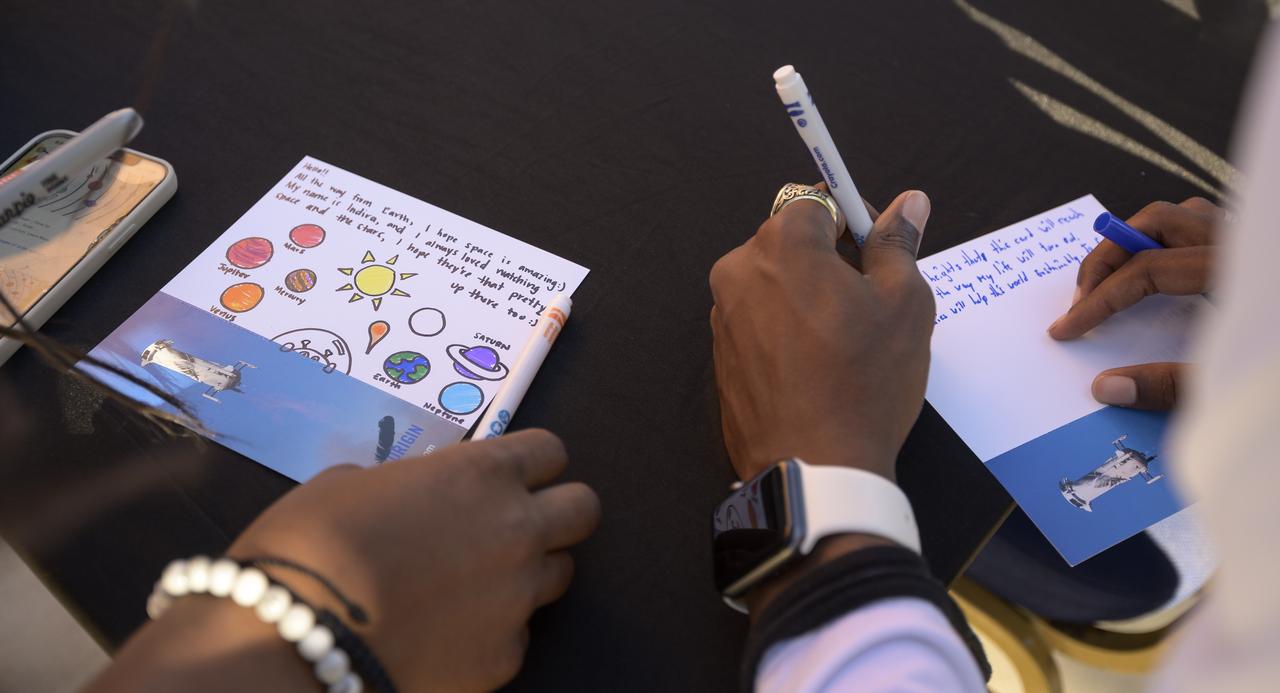
Children in attendance for the screening the NASA produced documentary “The Color of Space” draw on postcards that will be sent to space by Club for the Future on a Blue Origin New Shepard rocket at Howard University’s Cramton Auditorium in Washington, Saturday, June 18, 2022. Premiering on Juneteenth, the federal holiday commemorating the end of slavery in the United States, “The Color of Space” is an inspirational documentary that tells the stories of NASA’s Black astronauts determined to reach the stars. Photo Credit: (NASA/Bill Ingalls)
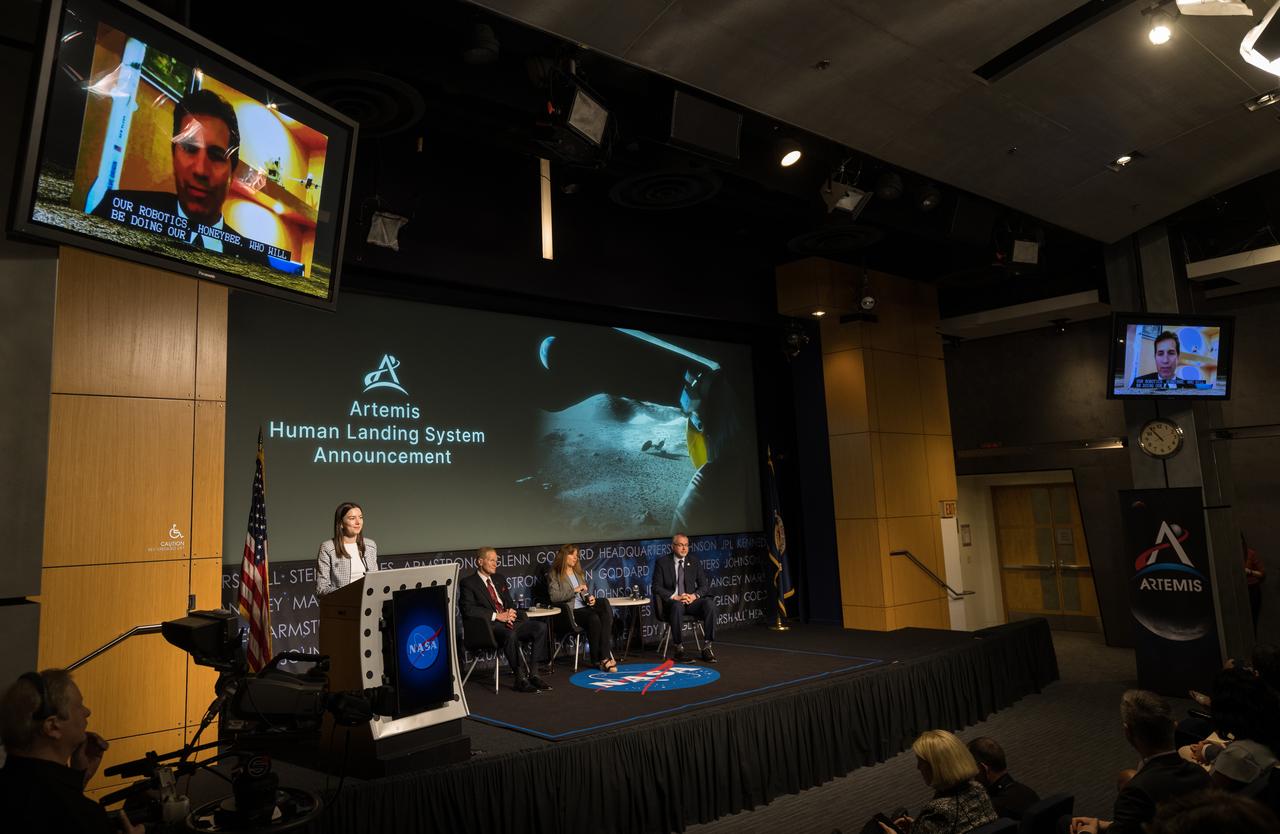
Blue Origin Human Landing System Program Manager, John Couluris, gives remarks during an event announcing Blue Origin as the company selected to develop a sustainable human landing system for the Artemis V Moon mission, Friday, May 19, 2023 at the Mary W. Jackson NASA Headquarters building in Washington. The human landing system will take astronauts to and from Gateway in lunar orbit to the surface and back to the lunar space station as part of NASA’s return to the Moon for science, exploration, and inspiration. Photo Credit: (NASA/Aubrey Gemignani)
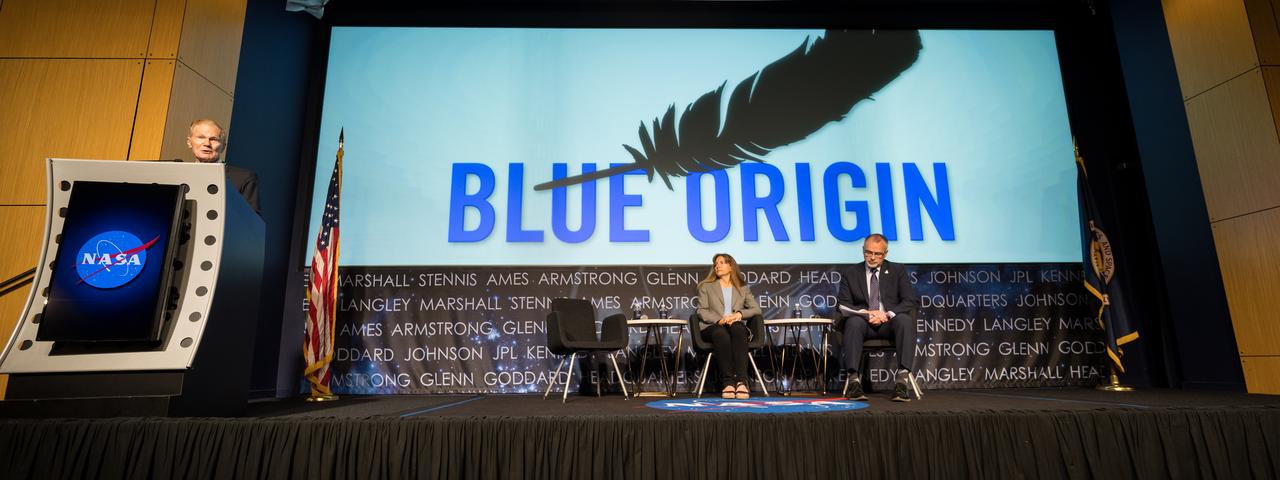
NASA Administrator Bill Nelson announces Blue Origin as the company selected to develop a sustainable human landing system for the Artemis V Moon mission, Friday, May 19, 2023 at the Mary W. Jackson NASA Headquarters building in Washington. The human landing system will take astronauts to and from Gateway in lunar orbit to the surface and back to the lunar space station as part of NASA’s return to the Moon for science, exploration, and inspiration. Photo Credit: (NASA/Aubrey Gemignani)
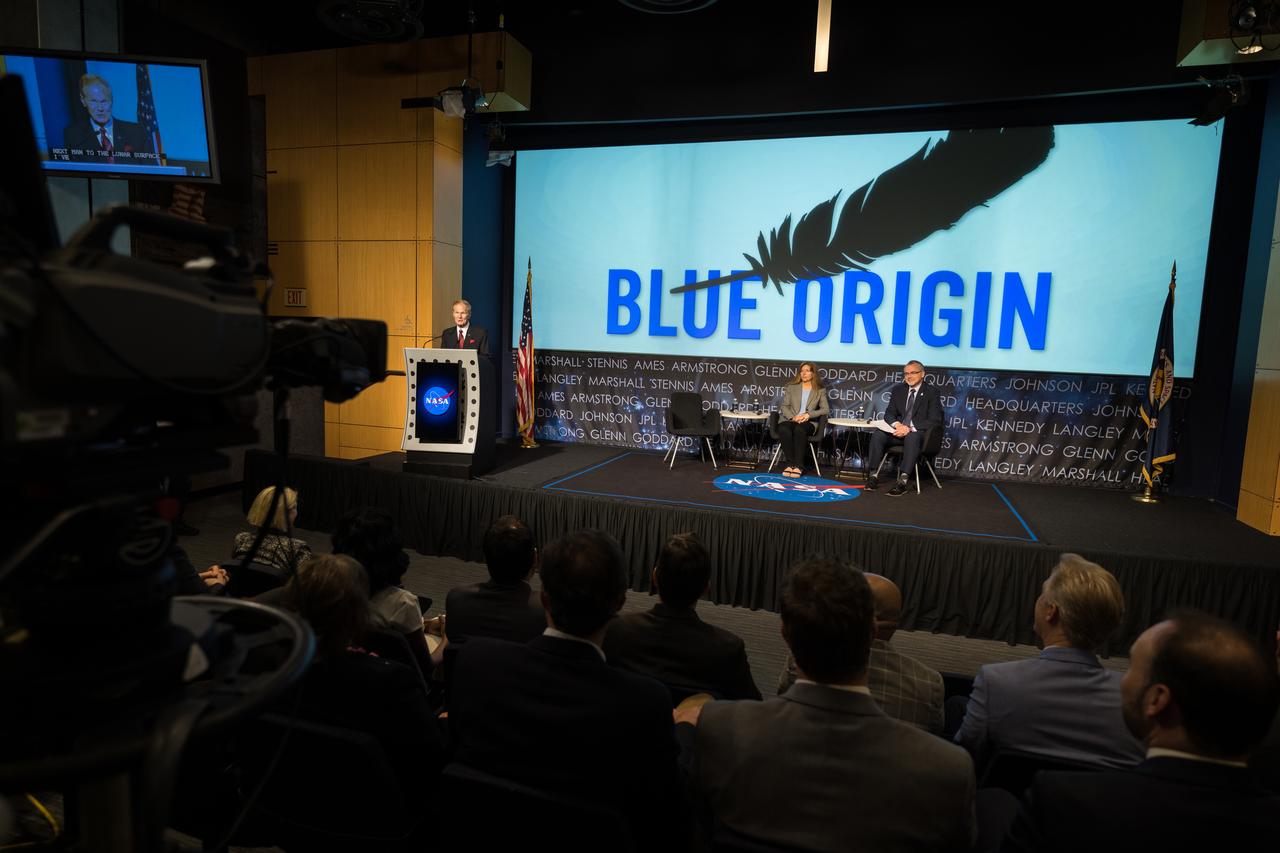
NASA Administrator Bill Nelson announces Blue Origin as the company selected to develop a sustainable human landing system for the Artemis V Moon mission, Friday, May 19, 2023 at the Mary W. Jackson NASA Headquarters building in Washington. The human landing system will take astronauts to and from Gateway in lunar orbit to the surface and back to the lunar space station as part of NASA’s return to the Moon for science, exploration, and inspiration. Photo Credit: (NASA/Aubrey Gemignani)
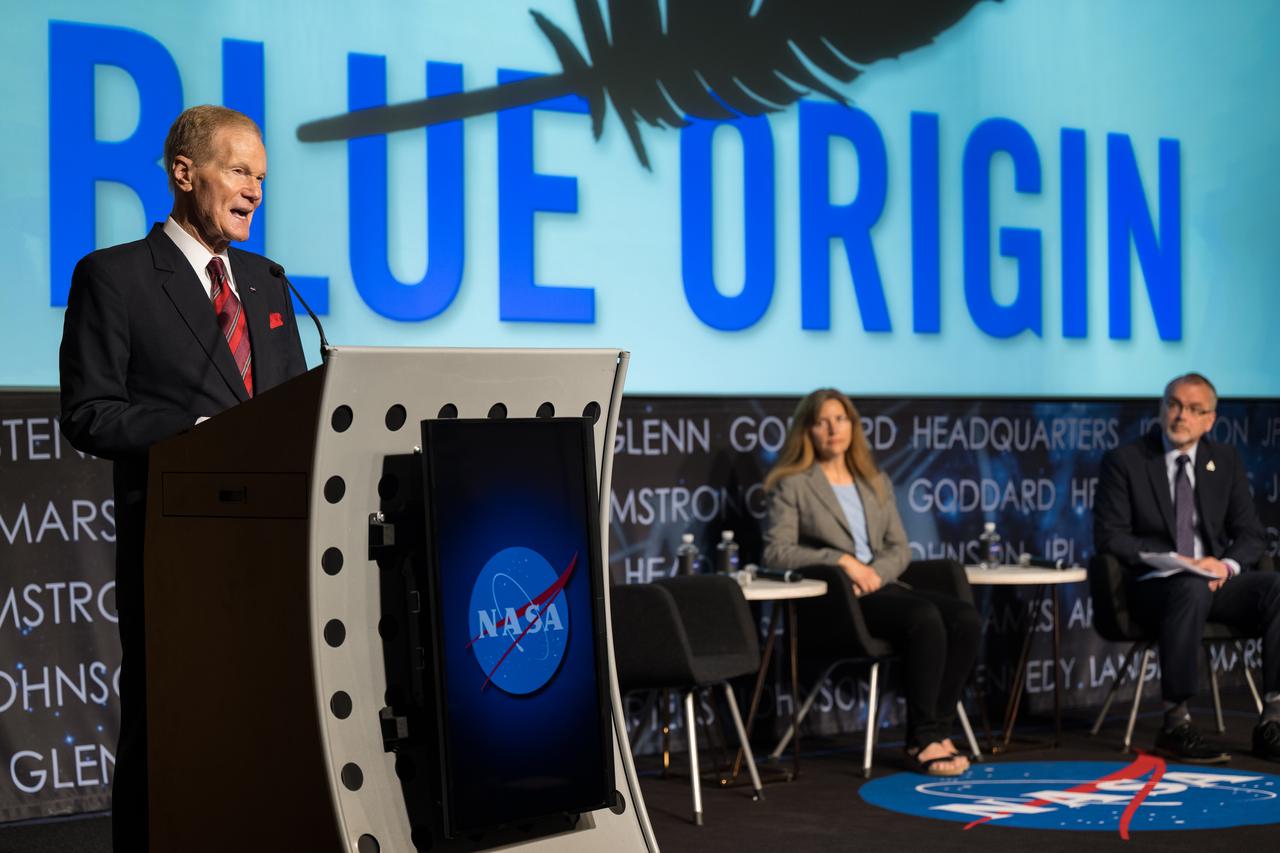
NASA Administrator Bill Nelson announces Blue Origin as the company selected to develop a sustainable human landing system for the Artemis V Moon mission, Friday, May 19, 2023 at the Mary W. Jackson NASA Headquarters building in Washington. The human landing system will take astronauts to and from Gateway in lunar orbit to the surface and back to the lunar space station as part of NASA’s return to the Moon for science, exploration, and inspiration. Photo Credit: (NASA/Aubrey Gemignani)

Two small spacecrafts satellites that make up NASA’s ESCAPADE (Escape and Plasma Acceleration and Dynamics Explorers) mission to Mars arrived at Astrotech Space Operations in Titusville, near NASA’s Kennedy Space Center in Florida on Sunday, Aug. 19, 2024. Set to launch from Blue Origin’s New Glenn rocket, the Rocket Lab spacecraft will study the solar wind and how the solar wind interacts with Mars’ magnetic environment and how this interaction drives the planet’s atmospheric escape.

Two small spacecrafts satellites that make up NASA’s ESCAPADE (Escape and Plasma Acceleration and Dynamics Explorers) mission to Mars arrived at Astrotech Space Operations in Titusville, near NASA’s Kennedy Space Center in Florida on Sunday, Aug. 19, 2024. Set to launch from Blue Origin’s New Glenn rocket, the Rocket Lab spacecraft will study the solar wind and how the solar wind interacts with Mars’ magnetic environment and how this interaction drives the planet’s atmospheric escape.

Two small spacecrafts satellites that make up NASA’s ESCAPADE (Escape and Plasma Acceleration and Dynamics Explorers) mission to Mars arrived at Astrotech Space Operations in Titusville, near NASA’s Kennedy Space Center in Florida on Sunday, Aug. 19, 2024. Set to launch from Blue Origin’s New Glenn rocket, the Rocket Lab spacecraft will study the solar wind and how the solar wind interacts with Mars’ magnetic environment and how this interaction drives the planet’s atmospheric escape.
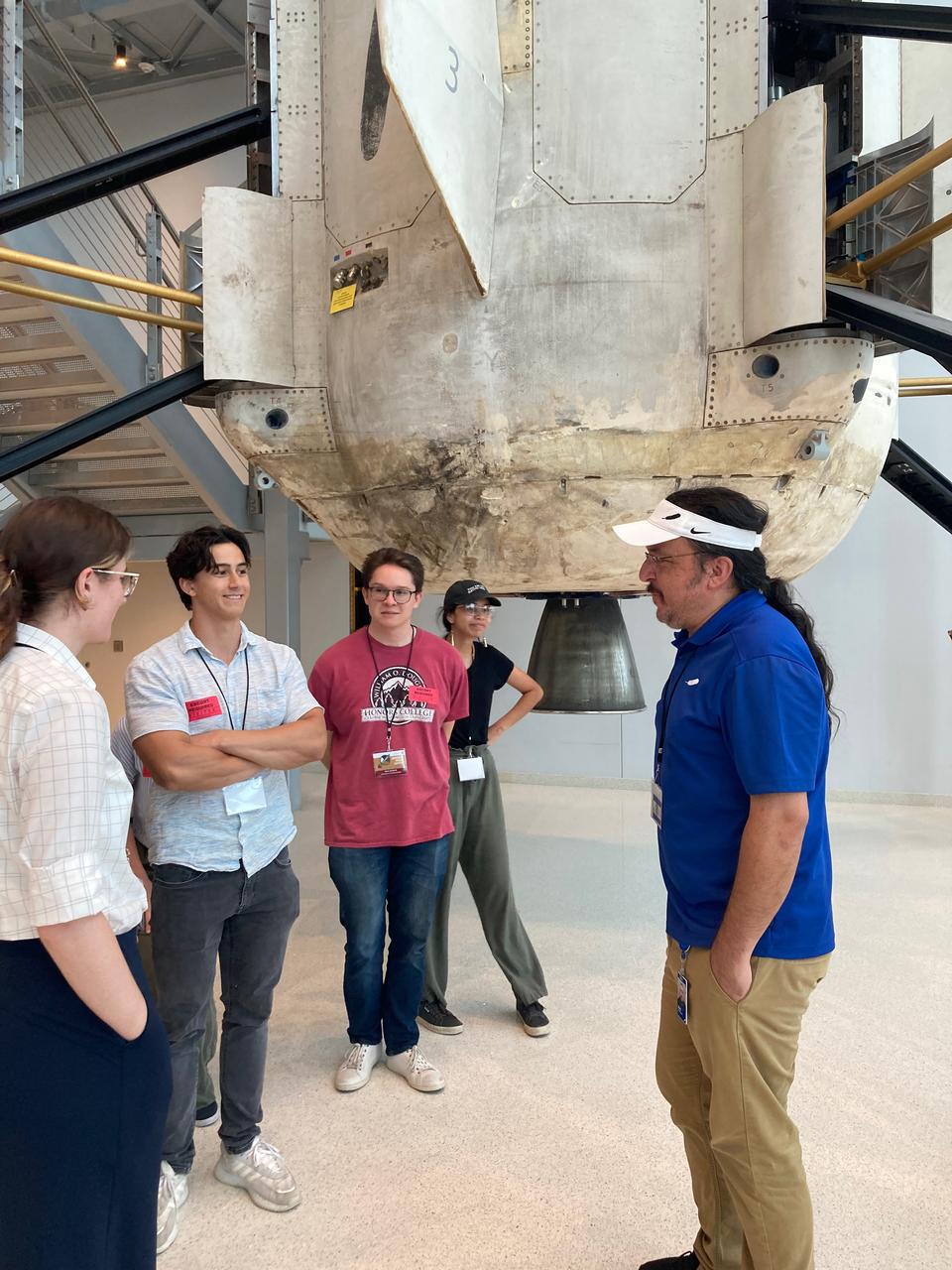
Participants from the 14th First Nations Launch High-Power Rocket Competition watch NASA’s SpaceX Crew-7 launch from the Banana Creek viewing site at the agency’s Kennedy Space Center in Florida on Saturday, Aug. 26, 2023. A SpaceX Falcon 9 rocket carrying NASA astronaut Jasmin Moghbeli, ESA (European Space Agency) astronaut Andreas Mogensen, JAXA (Japan Aerospace Exploration Agency) astronaut Satoshi Furukawa, and Roscosmos cosmonaut Konstantin Borisov launched to the International Space Station at 3:27 a.m. EDT from Kennedy’s Launch Complex 39A. Students and advisors from University of Washington, University of Colorado-Boulder, and an international team from Queens University – this year’s First Nations Launch grand prize teams – traveled to Kennedy for a VIP tour, culminating in viewing the Crew-7 launch. Another highlight included a guided tour of historic Hangar AE, led by James Wood (Osage Nation and Loyal Shawnee), chief engineer of NASA’s Launch Services Program, technical advisor for the Crew-7 launch, and First Nations mentor and judge. One of NASA’s Artemis Student Challenges, the First Nations Launch competition comprises students from tribal colleges and universities, Native American-Serving Nontribal Institutions, and collegiate chapters of the American Indian Science and Engineering Society who design, build, and launch a high-powered rocket from a launch site in Kansasville, Wisconsin. The competition is facilitated by NASA’s Wisconsin Space Grant Consortium and managed by the agency’s Office of STEM Engagement at Kennedy.
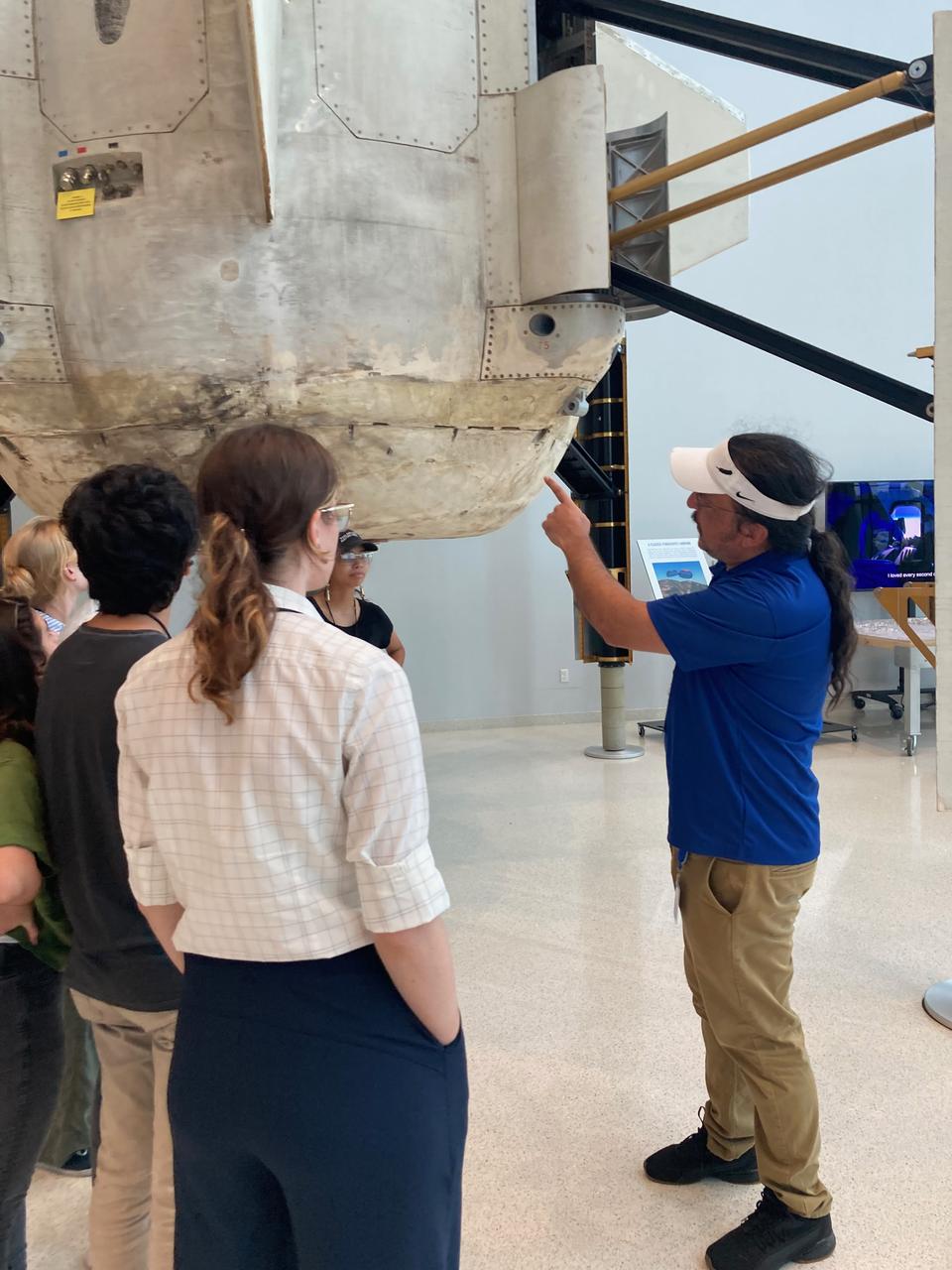
Participants from the 14th First Nations Launch High-Power Rocket Competition watch NASA’s SpaceX Crew-7 launch from the Banana Creek viewing site at the agency’s Kennedy Space Center in Florida on Saturday, Aug. 26, 2023. A SpaceX Falcon 9 rocket carrying NASA astronaut Jasmin Moghbeli, ESA (European Space Agency) astronaut Andreas Mogensen, JAXA (Japan Aerospace Exploration Agency) astronaut Satoshi Furukawa, and Roscosmos cosmonaut Konstantin Borisov launched to the International Space Station at 3:27 a.m. EDT from Kennedy’s Launch Complex 39A. Students and advisors from University of Washington, University of Colorado-Boulder, and an international team from Queens University – this year’s First Nations Launch grand prize teams – traveled to Kennedy for a VIP tour, culminating in viewing the Crew-7 launch. Another highlight included a guided tour of historic Hangar AE, led by James Wood (Osage Nation and Loyal Shawnee), chief engineer of NASA’s Launch Services Program, technical advisor for the Crew-7 launch, and First Nations mentor and judge. One of NASA’s Artemis Student Challenges, the First Nations Launch competition comprises students from tribal colleges and universities, Native American-Serving Nontribal Institutions, and collegiate chapters of the American Indian Science and Engineering Society who design, build, and launch a high-powered rocket from a launch site in Kansasville, Wisconsin. The competition is facilitated by NASA’s Wisconsin Space Grant Consortium and managed by the agency’s Office of STEM Engagement at Kennedy.
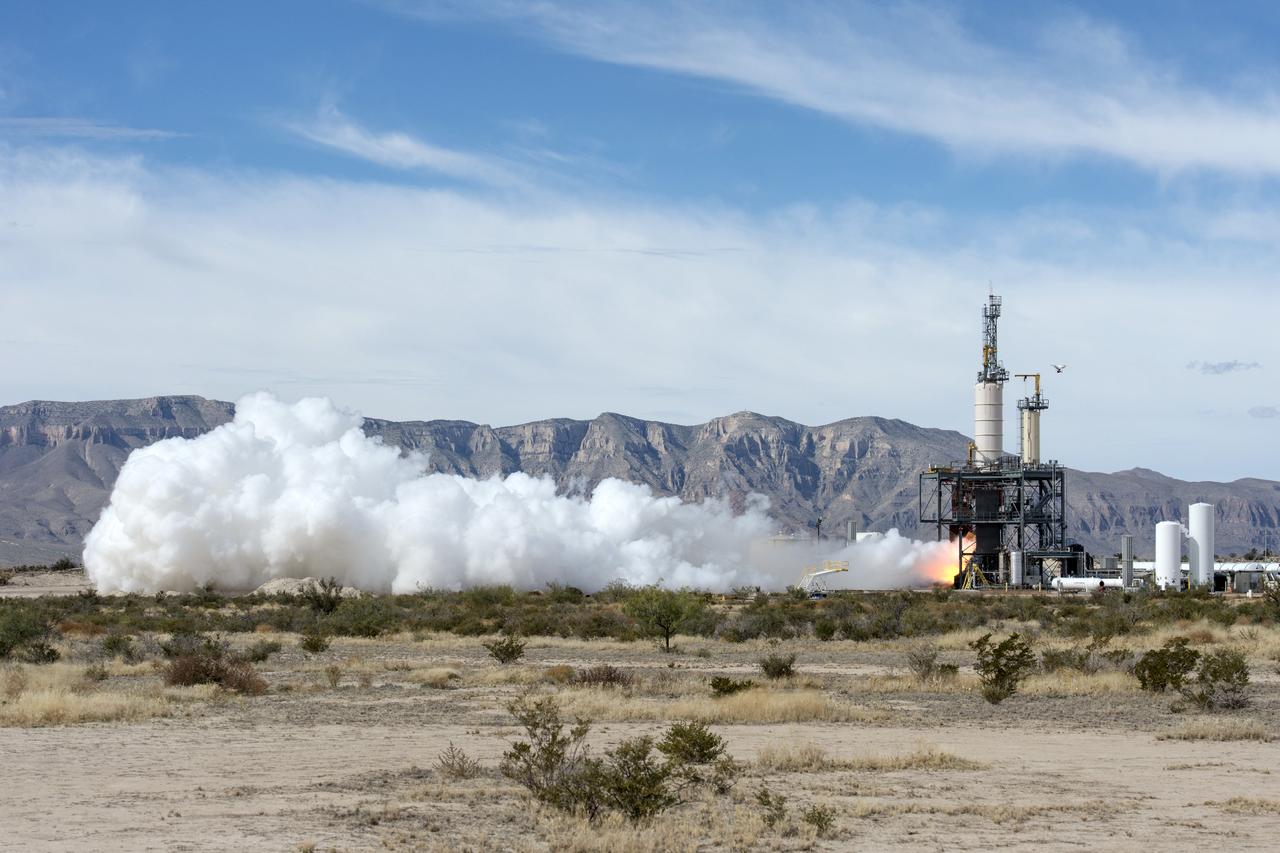
DATE: 11-20-13 LOCATION: Van Horn, Tx SUBJECT: Blue Origin Milestone 3.6 BE-3 Engine Test Fire PHOTOGRAPHER: Lauren Harnett
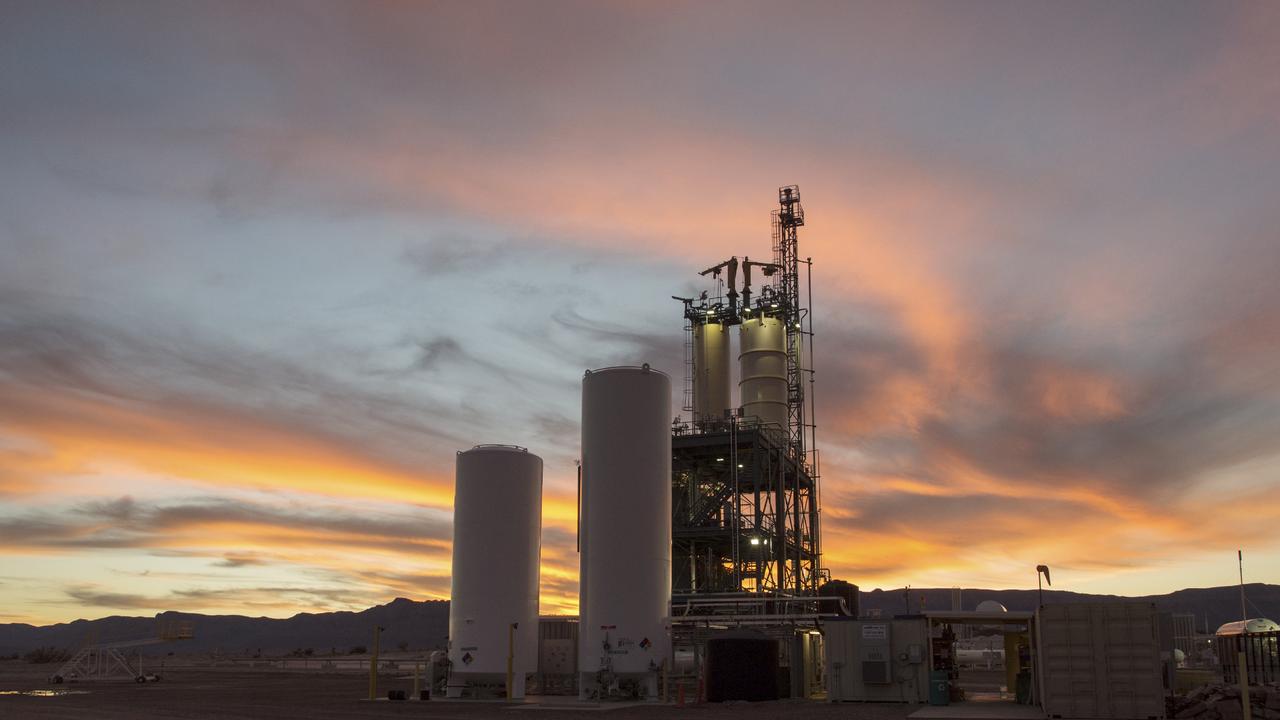
DATE: 11-20-13 LOCATION: Van Horn, Tx SUBJECT: Blue Origin Milestone 3.6 BE-3 Engine Test Fire PHOTOGRAPHER: Lauren Harnett
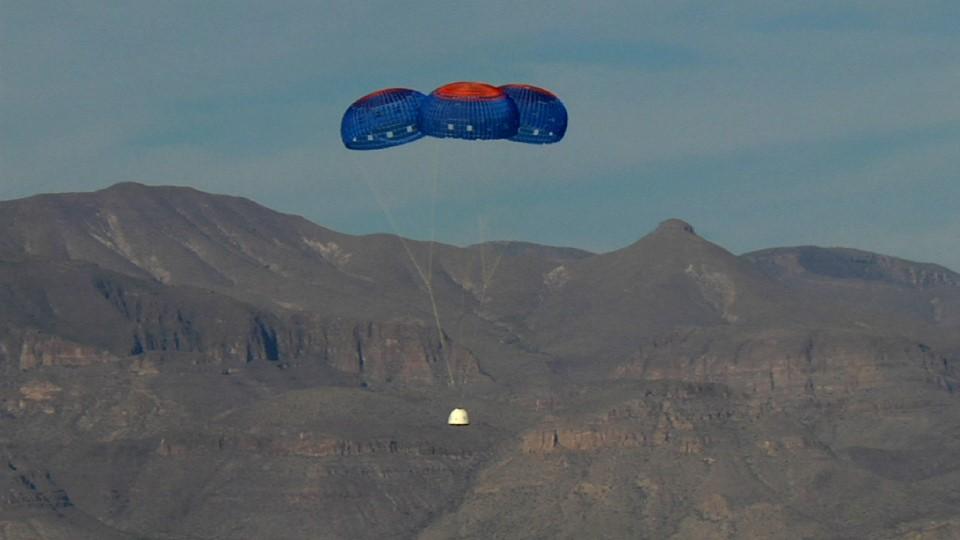
VAN HORN, Texas – Blue Origin’s New Shepard crew capsule escaped to an altitude of 2,307 feet before deploying parachutes for a safe return for a pad escape test at the company's West Texas launch site. The pusher escape system was designed and developed by Blue Origin to allow crew escape in the event of an emergency during any phase of ascent for its suborbital New Shepard system. As part of an incremental development program, the results of this test will shape the design of the escape system for the company's orbital biconic-shaped Space Vehicle. The system is expected to enable full reusability of the launch vehicle, which is different from NASA's previous launch escape systems that would pull a spacecraft away from its rocket before reaching orbit. The test was part of Blue Origin's work supporting its funded Space Act Agreement with NASA during Commercial Crew Development Round 2 CCDev2). Through initiatives like CCDev2, NASA is fostering the development of a U.S. commercial crew space transportation capability with the goal of achieving safe, reliable and cost-effective access to and from the International Space Station and low-Earth orbit. After the capability is matured and available to the government and other customers, NASA could contract to purchase commercial services to meet its station crew transportation needs. For more information, visit www.nasa.gov/commercialcrew. Image credit: Blue Origin
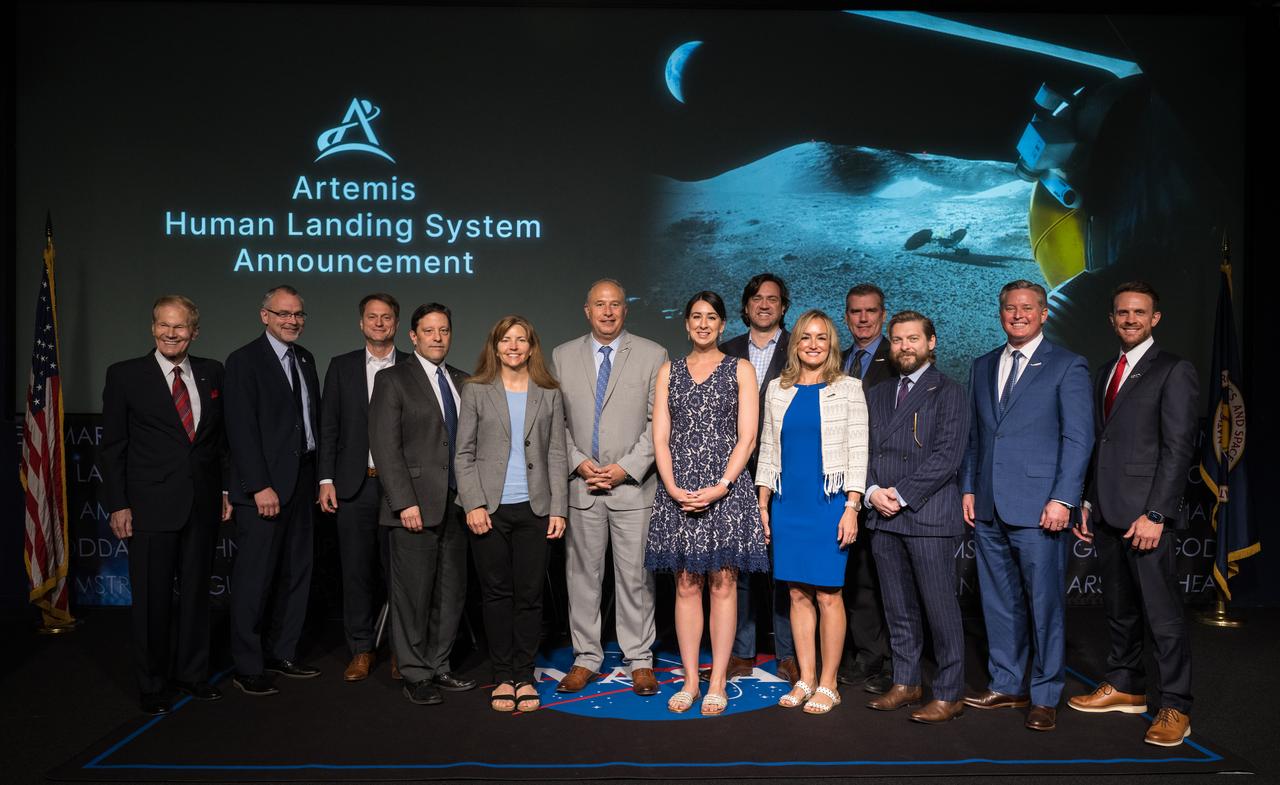
NASA Administrator Bill Nelson, NASA Associate Administrator for the Exploration Systems Development Mission Directorate Jim Free, Human Landing System Program Manager Lisa Watson-Morgan, members of Blue Origin’s team, and others pose for a photo at the conclusion of an event announcing Blue Origin as the company selected to develop a sustainable human landing system for the Artemis V Moon mission, Friday, May 19, 2023 at the Mary W. Jackson NASA Headquarters building in Washington. The human landing system will take astronauts to and from Gateway in lunar orbit to the surface and back to the lunar space station as part of NASA’s return to the Moon for science, exploration, and inspiration. Photo Credit: (NASA/Aubrey Gemignani)
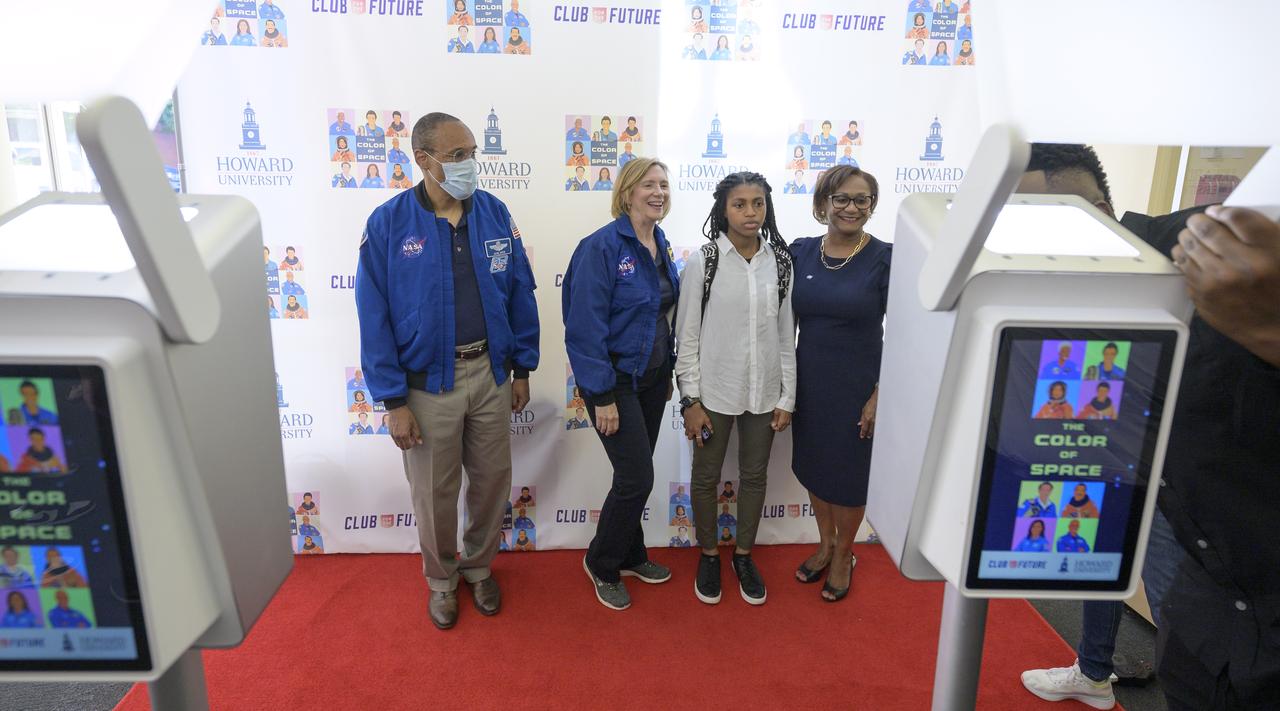
Attendees for the screening the NASA produced documentary “The Color of Space” get their photos taken with former NASA astronaut Alvin Drew, left, former astronaut Susan Kilrain, and NASA Johnson Space Center Director Vanessa Wyche, right, at Howard University’s Cramton Auditorium in Washington, Saturday, June 18, 2022. Premiering on Juneteenth, the federal holiday commemorating the end of slavery in the United States, “The Color of Space” is an inspirational documentary that tells the stories of NASA’s Black astronauts determined to reach the stars. Photo Credit: (NASA/Bill Ingalls)

Scott Henderson, vice president of Test and Operations at Blue Origin, speaks at a ceremony honoring Kennedy Space Center Director Janet Petro with the Dr. Kurt H. Debus Award on June 24, 2022, at the Florida spaceport’s visitor complex. The National Space Club Florida Committee presented Petro with the prestigious award for her contributions to America’s aerospace efforts within the state of Florida. The award – originating in 1990 – is named after Kennedy’s first director.

Scott Henderson, vice president of Test and Operations at Blue Origin, speaks at a ceremony honoring Kennedy Space Center Director Janet Petro with the Dr. Kurt H. Debus Award on June 24, 2022, at the Florida spaceport’s visitor complex. The National Space Club Florida Committee presented Petro with the prestigious award for her contributions to America’s aerospace efforts within the state of Florida. The award – originating in 1990 – is named after Kennedy’s first director.
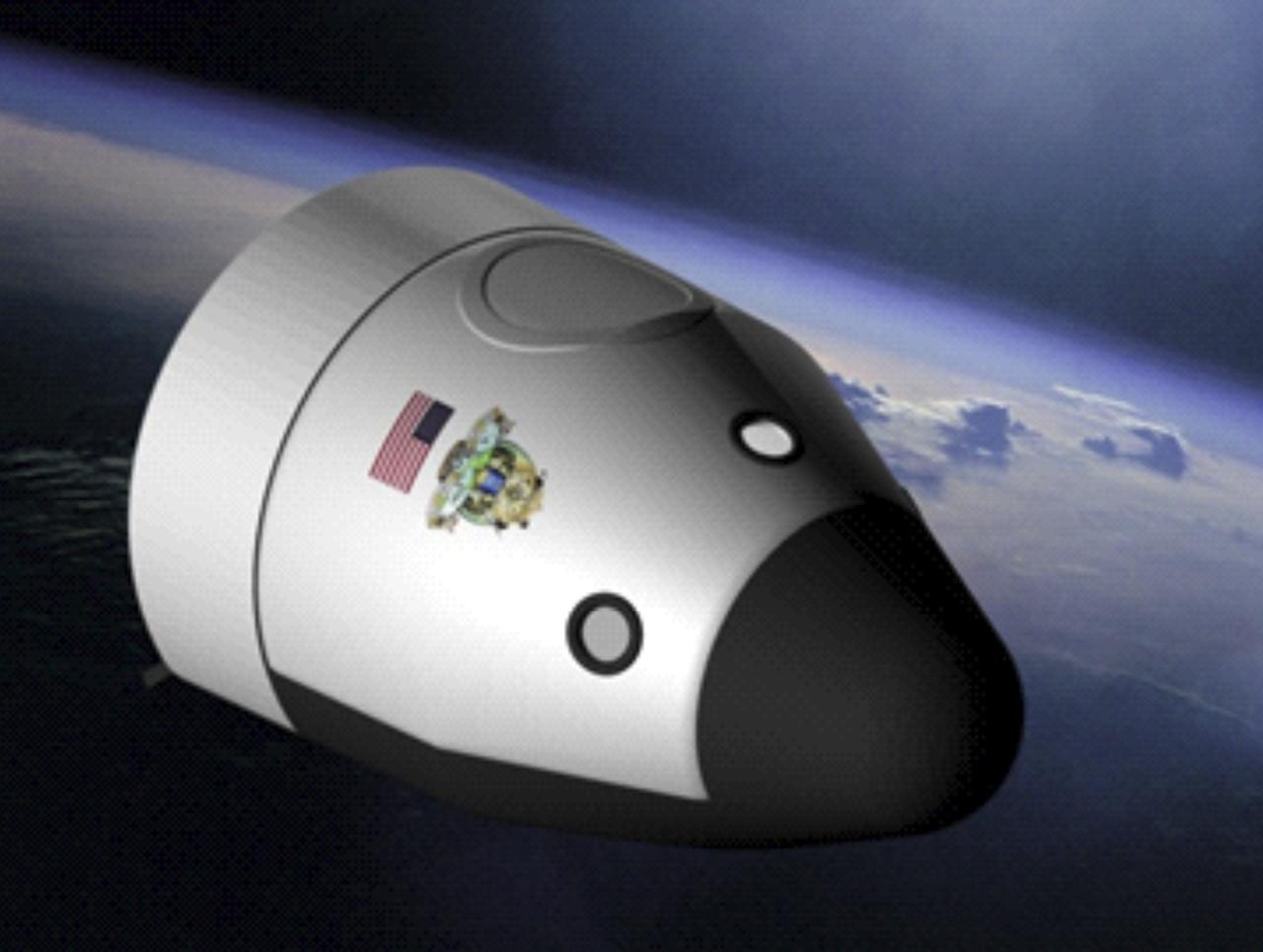
CAPE CANAVERAL, Fla. -- This is an artist's conception of the Space Vehicle under development by Blue Origin of Kent, Wash., for NASA's Commercial Crew Program (CCP). In 2011, NASA selected Blue Origin during Commercial Crew Development Round 2 (CCDev2) activities to mature the design and development of a crew transportation system with the overall goal of accelerating a United States-led capability to the International Space Station. The goal of CCP is to drive down the cost of space travel as well as open up space to more people than ever before by balancing industry’s own innovative capabilities with NASA's 50 years of human spaceflight experience. Six other aerospace companies also are maturing launch vehicle and spacecraft designs under CCDev2, including Alliant Techsystems Inc. (ATK), The Boeing Co., Excalibur Almaz Inc., Sierra Nevada Corp., Space Exploration Technologies (SpaceX), and United Launch Alliance (ULA). For more information, visit www.nasa.gov/commercialcrew. Image credit: Blue Origin
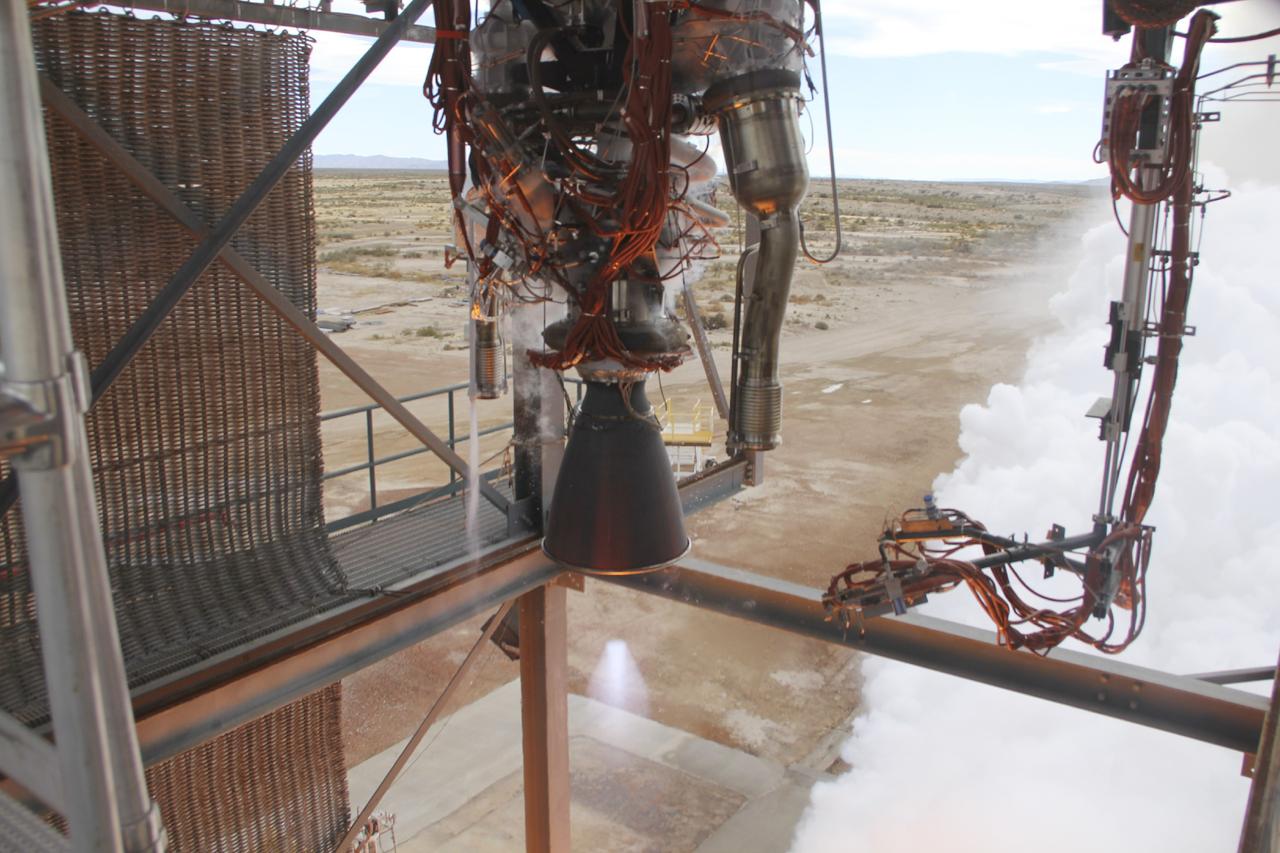
VAN HORN, Texas – Blue Origin test fires a powerful new hydrogen- and oxygen-fueled American rocket engine at the company's West Texas facility. During the test, the BE-3 engine fired at full power for more than two minutes to simulate a launch, then paused for about four minutes, mimicking a coast through space before it re-ignited for a brief final burn. The last phase of the test covered the work the engine could perform in landing the booster back softly on Earth. Blue Origin, a partner of NASA’s Commercial Crew Program, or CCP, is developing its Orbital Launch Vehicle, which could eventually be used to launch the company's Space Vehicle into orbit to transport crew and cargo to low-Earth orbit. CCP is aiding in the innovation and development of American-led commercial capabilities for crew transportation and rescue services to and from the station and other low-Earth orbit destinations by the end of 2017. For information about CCP, visit www.nasa.gov/commercialcrew. Photo credit: Blue Origin
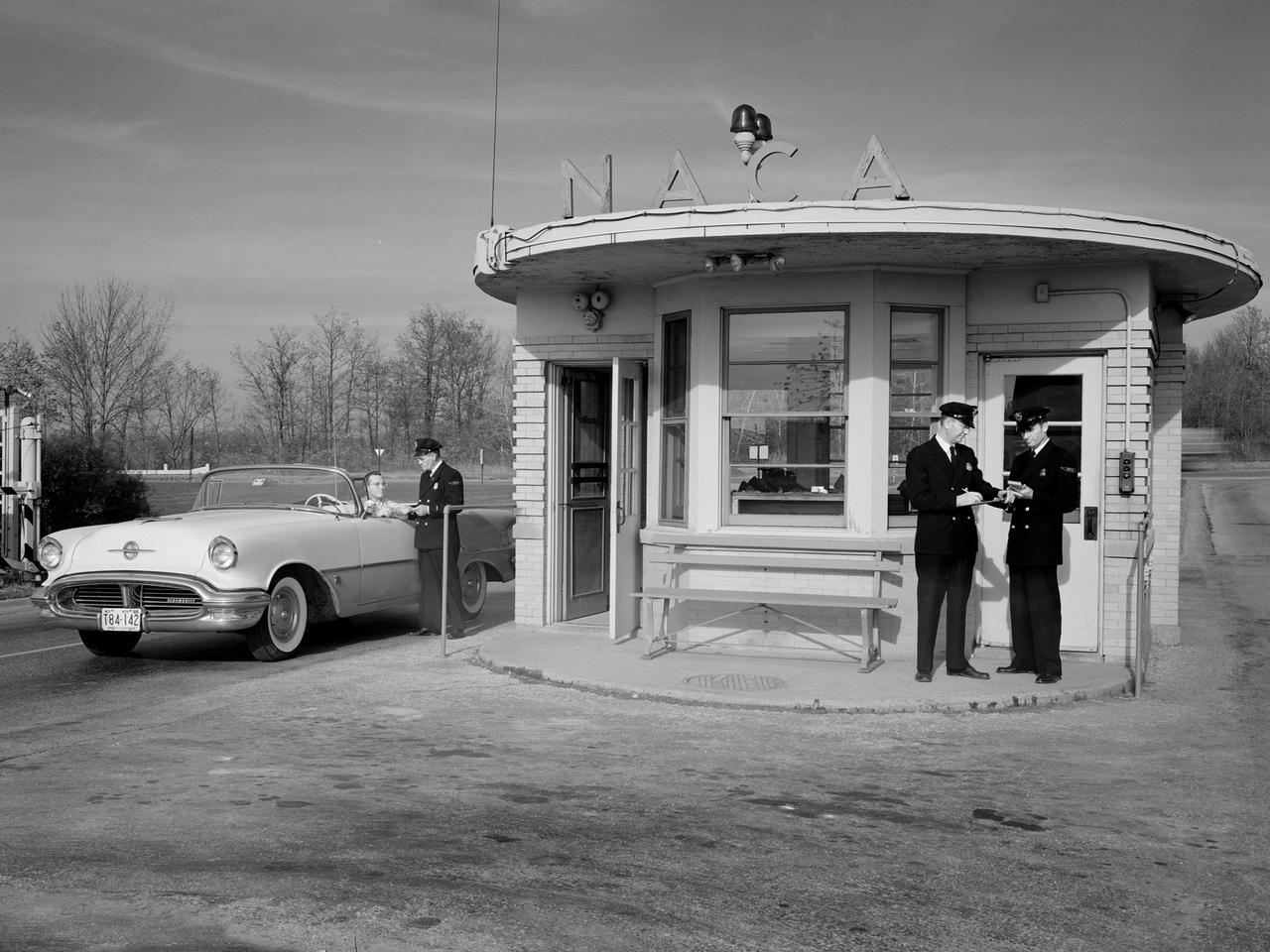
A vehicle leaves the National Advisory Committee for Aeronautics (NACA) Lewis Flight Propulsion Laboratory in Cleveland, Ohio. The guard house was on the main entrance to the laboratory from Brookpark Road. The original building was fairly small and easily crowded. In the early 1960s a new security facility was built several hundred feet beyond the original guard house. The original structure remained in place for several years, but was not utilized. The structure seen in this photograph was replaced in 2011 by a new building and entrance configuration. In September 1955, approximately a year before this photo was taken, the security staff was given new navy blue uniforms, seen here.

ISS008-E-12555 (22 January 2004) --- This photo of melt-water pooled on the surface of iceberg A-39D, a 2 x 11 kilometers iceberg currently located near South Georgia Island, was taken by an Expedition 8 crewmember on the International Space Station (ISS). The different intensities of blue are interpreted as different water depths. From the orientation of the iceberg, the deepest water (darkest blue) lies at the westernmost end of the iceberg. The water pools have formed from snowmelt – late January is the peak of the southern summer. This iceberg was part of the original A-38 iceberg that calved from the Ronne Ice Shelf in October 1998. Originally the ice was between 200 and 350 meters thick. This piece of that iceberg is now probably about 150 meters thick, with around 15 meters sticking up above the surface of the water.
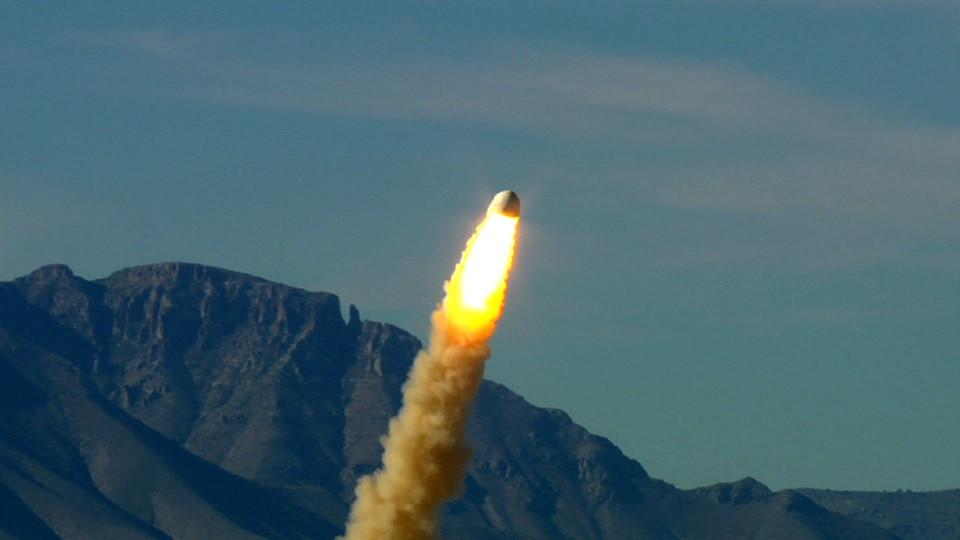
VAN HORN, Texas – Blue Origin’s pusher escape system rockets its New Shepard crew capsule away from a simulated propulsion module launch pad at the company's West Texas launch site, demonstrating a key safety system for both suborbital and orbital flights. The pad escape test took the company's suborbital crew capsule to an altitude of 2,307 feet during the flight test before descending safely by parachute to a soft landing 1,630 feet away. The pusher escape system was designed and developed by Blue Origin to allow crew escape in the event of an emergency during any phase of ascent for its suborbital New Shepard system. As part of an incremental development program, the results of this test will shape the design of the escape system for the company's orbital biconic-shaped Space Vehicle. The system is expected to enable full reusability of the launch vehicle, which is different from NASA's previous launch escape systems that would pull a spacecraft away from its rocket before reaching orbit. The test was part of Blue Origin's work supporting its funded Space Act Agreement with NASA during Commercial Crew Development Round 2 CCDev2). Through initiatives like CCDev2, NASA is fostering the development of a U.S. commercial crew space transportation capability with the goal of achieving safe, reliable and cost-effective access to and from the International Space Station and low-Earth orbit. After the capability is matured and available to the government and other customers, NASA could contract to purchase commercial services to meet its station crew transportation needs. For more information, visit www.nasa.gov/commercialcrew. Image credit: Blue Origin
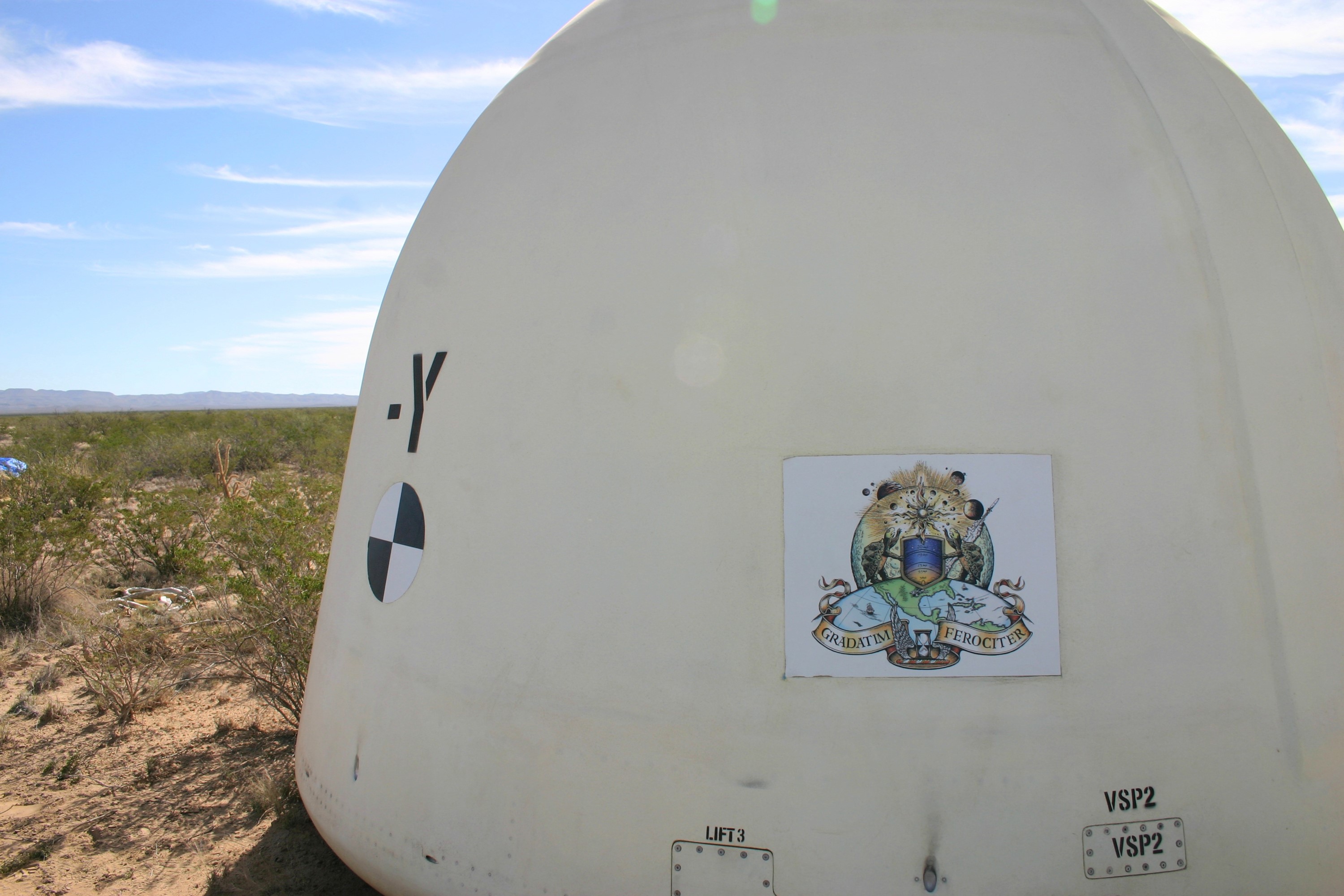
VAN HORN, Texas – Blue Origin’s New Shepard crew capsule touched down 1,630 feet from the its simulated propulsion module launch pad at the company's West Texas launch site, completing a successful test of its New Shepard crew capsule escape system. The pusher escape system was designed and developed by Blue Origin to allow crew escape in the event of an emergency during any phase of ascent for its suborbital New Shepard system. As part of an incremental development program, the results of this test will shape the design of the escape system for the company's orbital biconic-shaped Space Vehicle. The system is expected to enable full reusability of the launch vehicle, which is different from NASA's previous launch escape systems that would pull a spacecraft away from its rocket before reaching orbit. The test was part of Blue Origin's work supporting its funded Space Act Agreement with NASA during Commercial Crew Development Round 2 CCDev2). Through initiatives like CCDev2, NASA is fostering the development of a U.S. commercial crew space transportation capability with the goal of achieving safe, reliable and cost-effective access to and from the International Space Station and low-Earth orbit. After the capability is matured and available to the government and other customers, NASA could contract to purchase commercial services to meet its station crew transportation needs. For more information, visit www.nasa.gov/commercialcrew. Image credit: Blue Origin

For the 30th anniversary of one of the most iconic images taken by NASA's Voyager mission, a new version of the image known as "the Pale Blue Dot." Planet Earth is visible as a bright speck within the sunbeam just right of center and appears softly blue, as in the original version published in 1990 (see PIA00452). This updated version uses modern image-processing software and techniques to revisit the well-known Voyager view while attempting to respect the original data and intent of those who planned the images. In 1990, the Voyager project planned to shut off the Voyager 1 spacecraft's imaging cameras to conserve power and because the probe, along with its sibling Voyager 2, would not fly close enough to any other objects to take pictures. Before the shutdown, the mission commanded the probe to take a series of 60 images designed to produce what they termed the "Family Portrait of the Solar System." Executed on Valentine's Day 1990, this sequence returned images for making color views of six of the solar system's planets and also imaged the Sun in monochrome. The popular name of this view is traced to the title of the 1994 book by Voyager imaging scientist Carl Sagan, who originated the idea of using Voyager's cameras to image the distant Earth and played a critical role in enabling the family portrait images to be taken. The image of Earth was originally published by NASA in 1990. It is republished here to commemorate the 30th anniversary of the Family Portrait of the Solar System (see PIA00451) and the Pale Blue Dot image in particular. The planet occupies less than a single pixel in the image and thus is not fully resolved. (The actual width of the planet on the sky was less than one pixel in Voyager's camera.) By contrast, Jupiter and Saturn were large enough to fill a full pixel in their family portrait images. The direction of the Sun is toward the bottom of the view (where the image is brightest). Rays of sunlight scattered within the camera optics stretch across the scene. One of those light rays happens to have intersected dramatically with Earth. From Voyager 1's vantage point — a distance of approximately 3.8 billion miles (6 billion kilometers) — Earth was separated from the Sun by only a few degrees. The close proximity of the inner planets to the Sun was a key factor preventing these images from being taken earlier in the mission, as our star was still close and bright enough to damage the cameras with its blinding glare. The view is a color composite created by combining images taken using green, blue and violet spectral filters by the Voyager 1 Narrow-Angle Camera. They were taken at 4:48 GMT on Feb. 14, 1990, just 34 minutes before Voyager 1 powered off its cameras forever. Like the original version, this is technically a "false-color" view, as the color-filter images used were mapped to red, green and blue, respectively. The brightness of each color channel was balanced relative to the others, which is likely why the scene appears brighter but less grainy than the original. In addition, the color was balanced so that the main sunbeam (which overlays Earth) appears white, like the white light of the Sun. At its original resolution, the newly processed color image is 666 by 659 pixels in size; this is Figure A. The main image is an enlarged version. The image was processed by JPL engineer and image processing enthusiast Kevin M. Gill with input from two of the image's original planners, Candy Hansen and William Kosmann. https://photojournal.jpl.nasa.gov/catalog/PIA23645
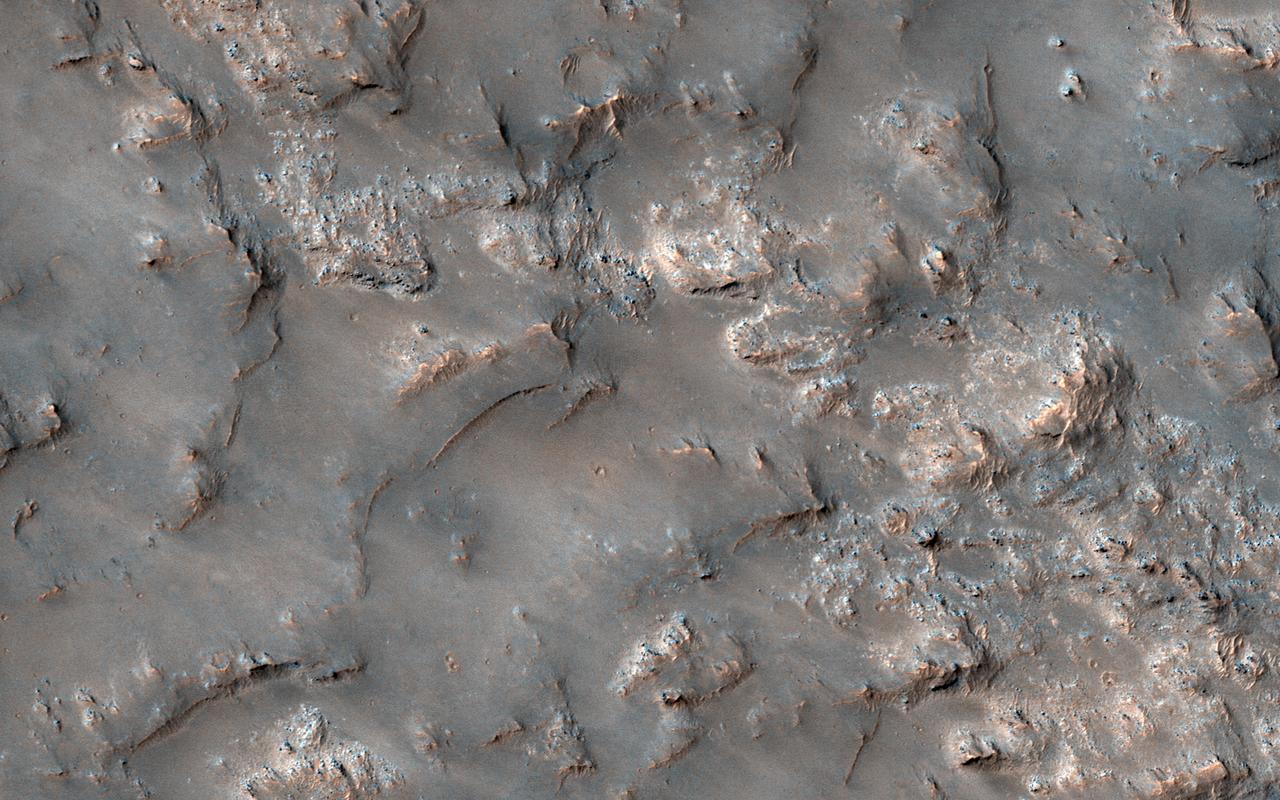
This image shows partially exposed bedrock within the Koval'sky impact basin, which is on the outskirts of the extensive lava field of Daedalia Planum. Daedalia Planum is located southwest of Arsia Mons, which may be the source responsible for filling the crater with lava flows and ash deposits. On one side, bright bedrock with scattered dark blue spots are seen. The dark blue spots are boulders shedding from the outcrops. The color range of the bedrock provides some information on its composition. The blue color is indicative of the presence of iron-rich minerals that are generally not oxidized (i.e., rusted), unlike most of the ruddy Martian surface. Volcanic rocks are common on Mars. Possible candidate minerals for the bluish materials are often consistent with iron-rich minerals, such as pyroxene and olivine. The ridges may represent remnants of the original surface of the lava flows that filled the Koval'sky impact basin. NB: The region is named for M. A. Koval'sky, a Russian astronomer. https://photojournal.jpl.nasa.gov/catalog/PIA21765
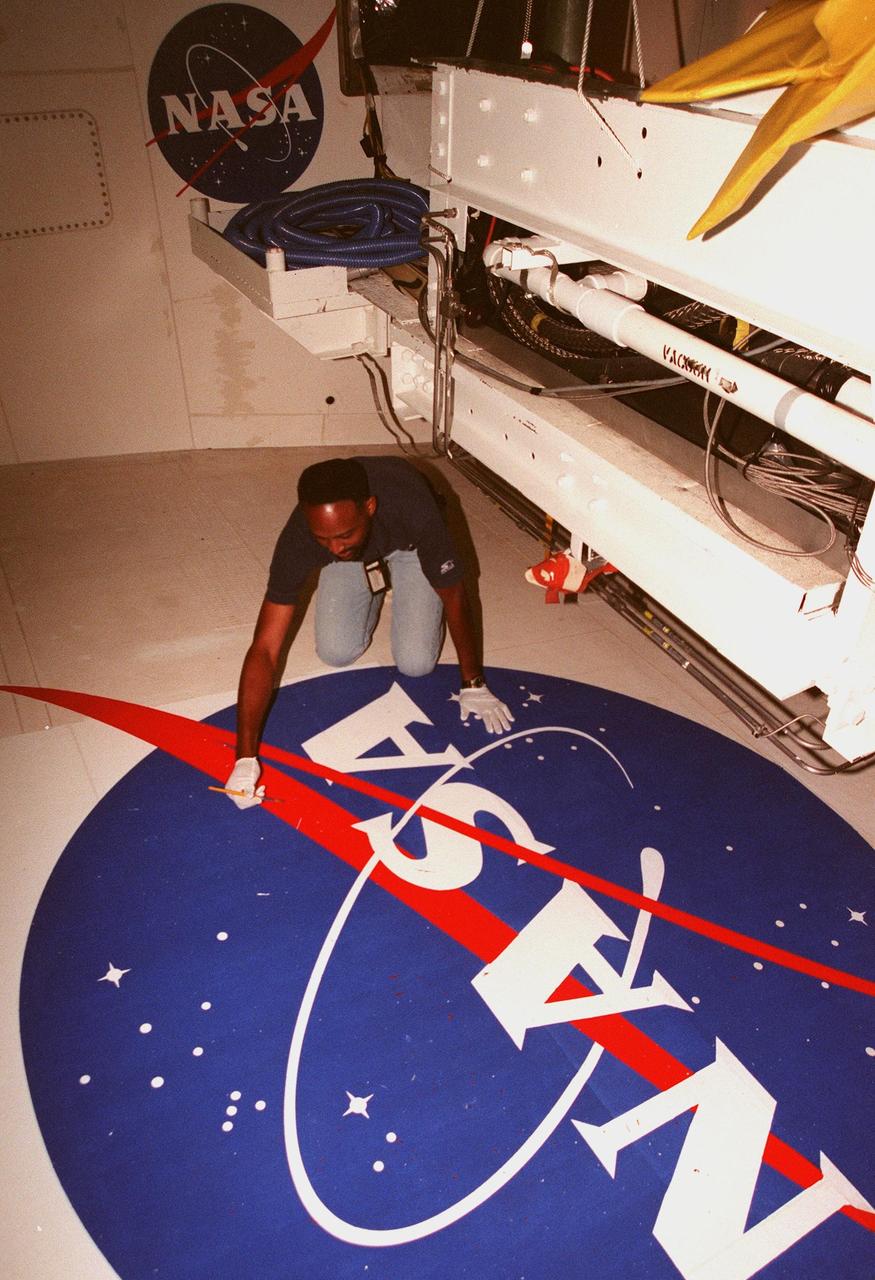
A KSC worker paints the NASA logo on the port wing of the orbiter Endeavour, which is scheduled to launch in December for STS-88. The paint is a special pigment that takes 18 hours to dry; the whole process takes approximately two weeks to complete. The NASA logo, termed "meatball," was originally designed in the late 1950s. It symbolized NASA’s role in aeronautics and space in the early years of the agency. The original design included a white border surrounding it. The border was dropped for the Apollo 7 mission in October 1968, replaced with royal blue to match the background of the emblem. In 1972 the logo was replaced by a simple and contemporary design the "worm" which was retired from use last year. NASA reverted to its original logo in celebration of the agency’s 40th anniversary in October, and the "golden age" of America’s space program. All the orbiters will bear the new logo
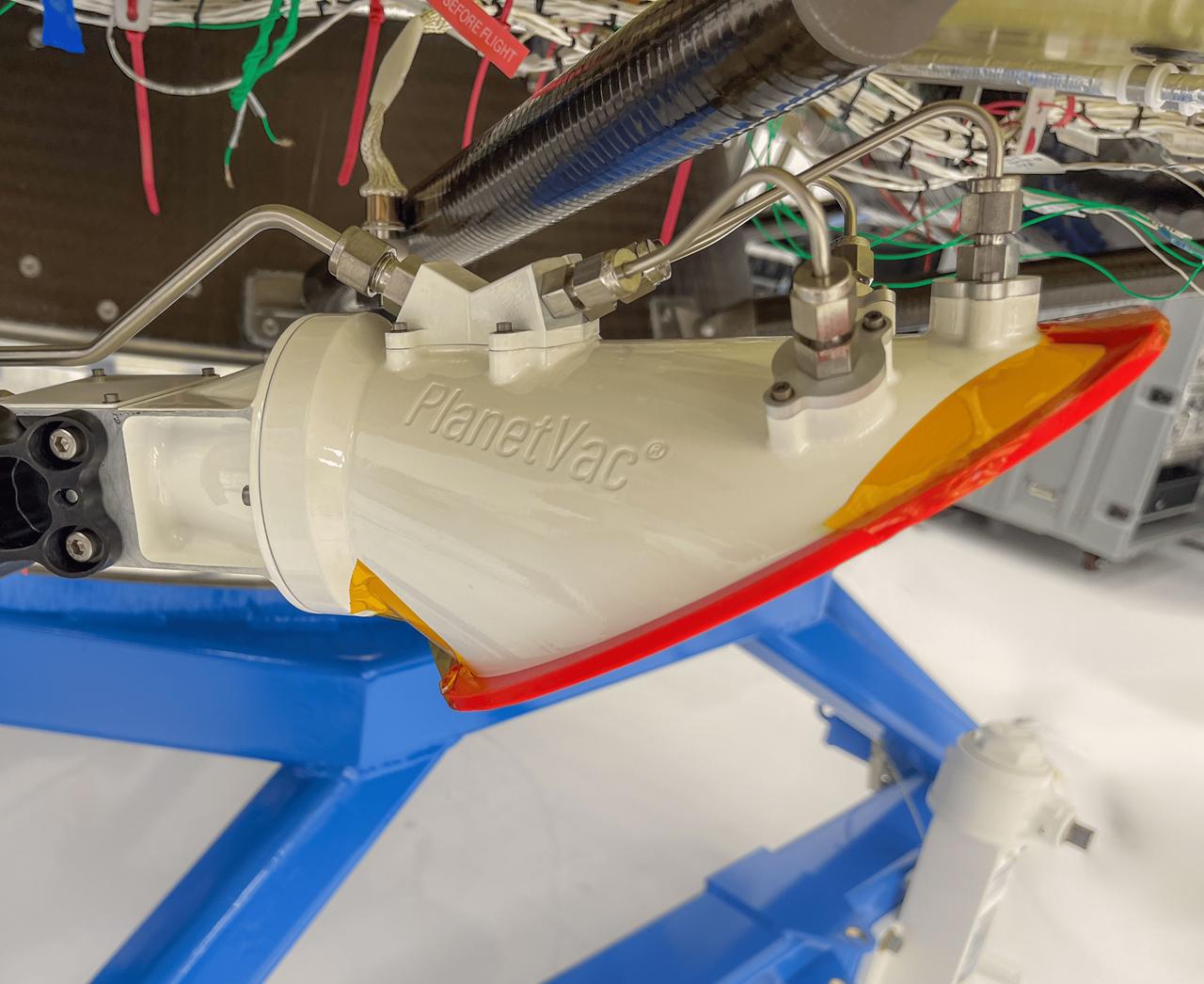
A technology demonstration flying aboard the next delivery for NASA’s CLPS (Commercial Lunar Payload Services) initiative could change how research teams collect and study soil and rock samples on other planetary bodies. Lunar PlanetVac, or LPV, is one of 10 payloads set to be carried to the Moon by the Blue Ghost 1 lunar lander in 2025. Developed by Honeybee Robotics, a Blue Origin company of Altadena, California, LPV is designed to, essentially, operate as a vacuum cleaner with a pneumatic, compressed gas-powered sample acquisition and delivery system to efficiently collect and transfer lunar soil from the surface to other science instruments or sample return containers. Investigations and demonstrations, such as LPV, launched on CLPS flights will help NASA study Earth’s nearest neighbor under Artemis and pave the way for future crewed missions on the Moon. NASA’s Marshall Space Flight Center in Huntsville, Alabama, manages the development for seven of the 10 CLPS payloads that will be carried on Firefly’s Blue Ghost lunar lander.
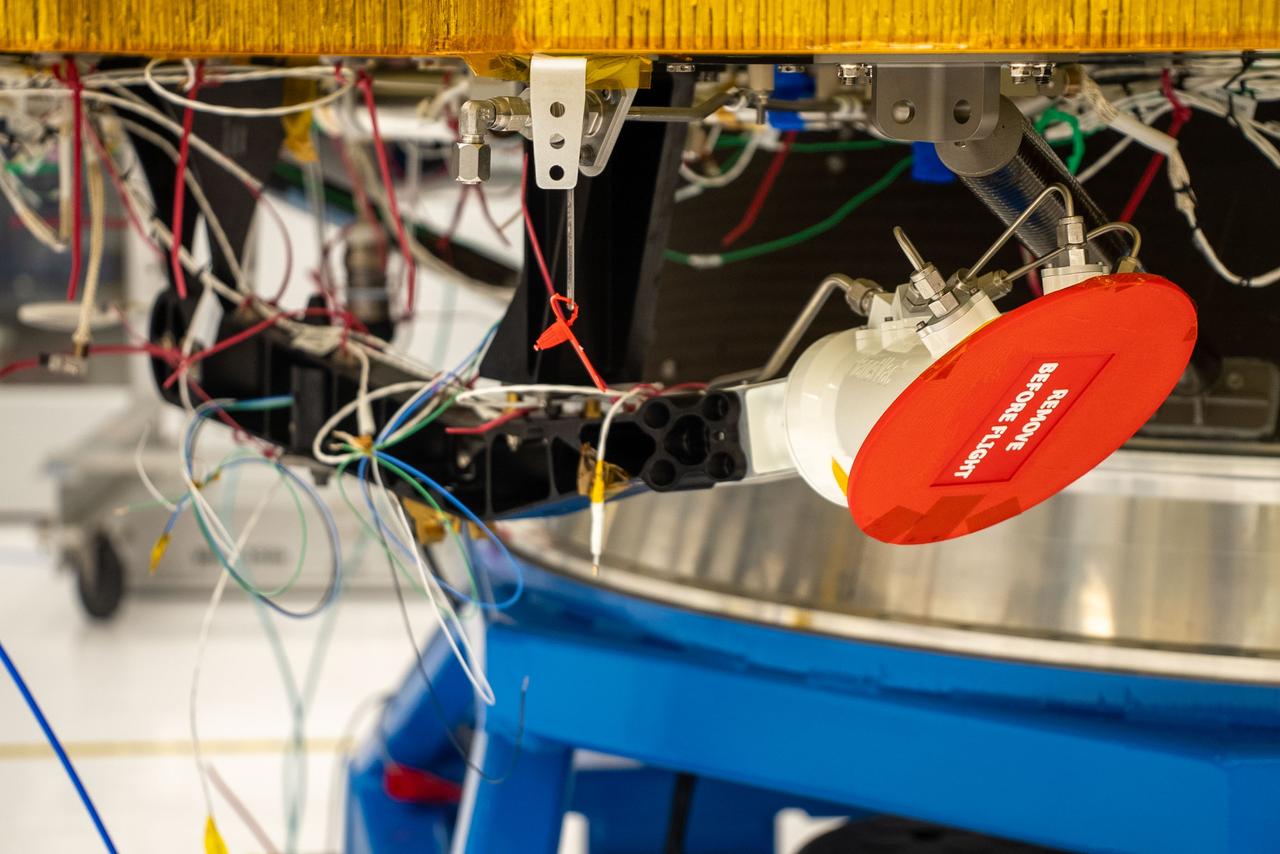

A technology demonstration flying aboard the next delivery for NASA’s CLPS (Commercial Lunar Payload Services) initiative could change how research teams collect and study soil and rock samples on other planetary bodies. Lunar PlanetVac, or LPV, is one of 10 payloads set to be carried to the Moon by the Blue Ghost 1 lunar lander in 2025. Developed by Honeybee Robotics, a Blue Origin company of Altadena, California, LPV is designed to, essentially, operate as a vacuum cleaner with a pneumatic, compressed gas-powered sample acquisition and delivery system to efficiently collect and transfer lunar soil from the surface to other science instruments or sample return containers. Investigations and demonstrations, such as LPV, launched on CLPS flights will help NASA study Earth’s nearest neighbor under Artemis and pave the way for future crewed missions on the Moon. NASA’s Marshall Space Flight Center in Huntsville, Alabama, manages the development for seven of the 10 CLPS payloads that will be carried on Firefly’s Blue Ghost lunar lander.
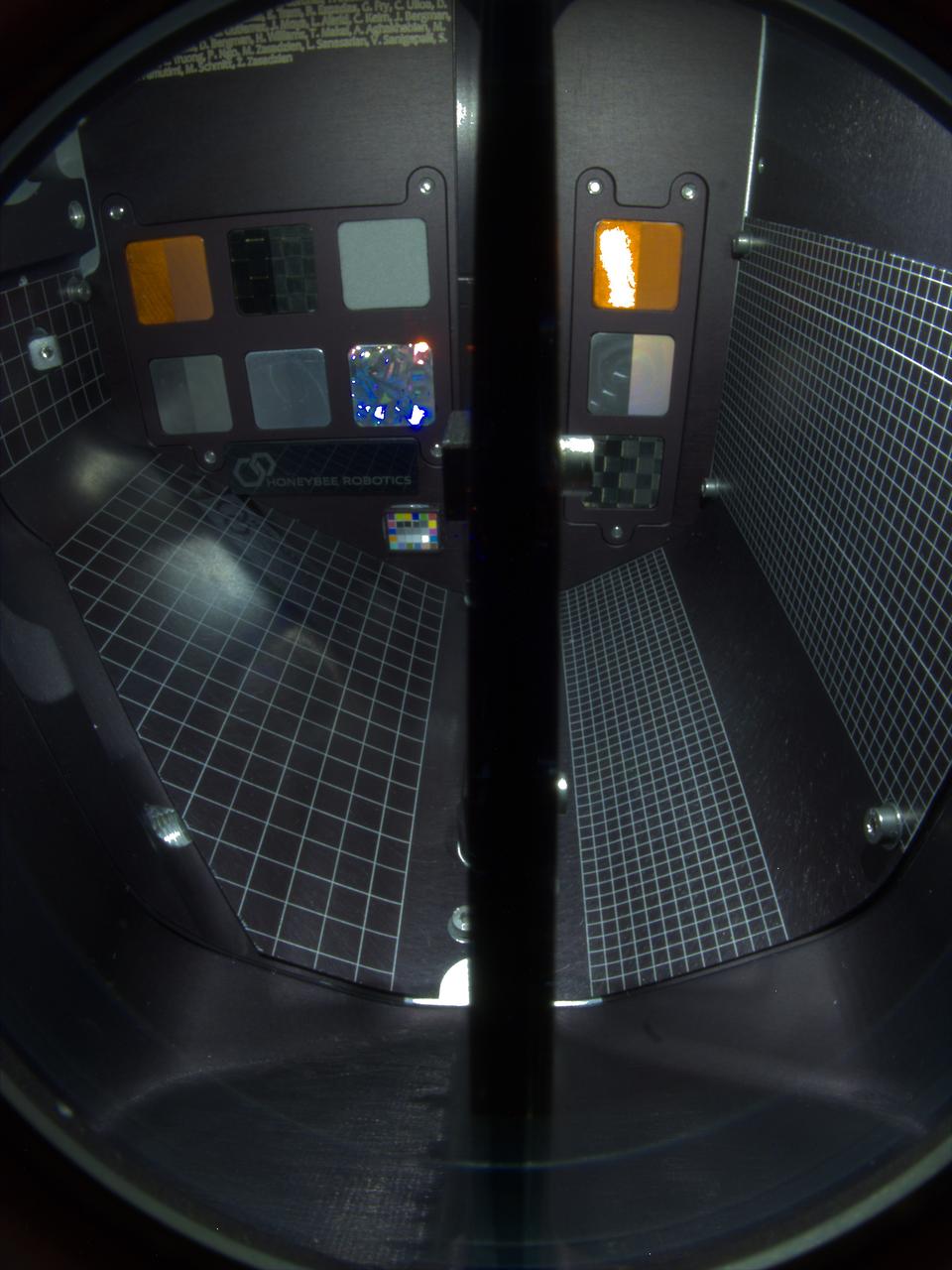

A technology demonstration flying aboard the next delivery for NASA’s CLPS (Commercial Lunar Payload Services) initiative could change how research teams collect and study soil and rock samples on other planetary bodies. Lunar PlanetVac, or LPV, is one of 10 payloads set to be carried to the Moon by the Blue Ghost 1 lunar lander in 2025. Developed by Honeybee Robotics, a Blue Origin company of Altadena, California, LPV is designed to, essentially, operate as a vacuum cleaner with a pneumatic, compressed gas-powered sample acquisition and delivery system to efficiently collect and transfer lunar soil from the surface to other science instruments or sample return containers. Investigations and demonstrations, such as LPV, launched on CLPS flights will help NASA study Earth’s nearest neighbor under Artemis and pave the way for future crewed missions on the Moon. NASA’s Marshall Space Flight Center in Huntsville, Alabama, manages the development for seven of the 10 CLPS payloads that will be carried on Firefly’s Blue Ghost lunar lander.
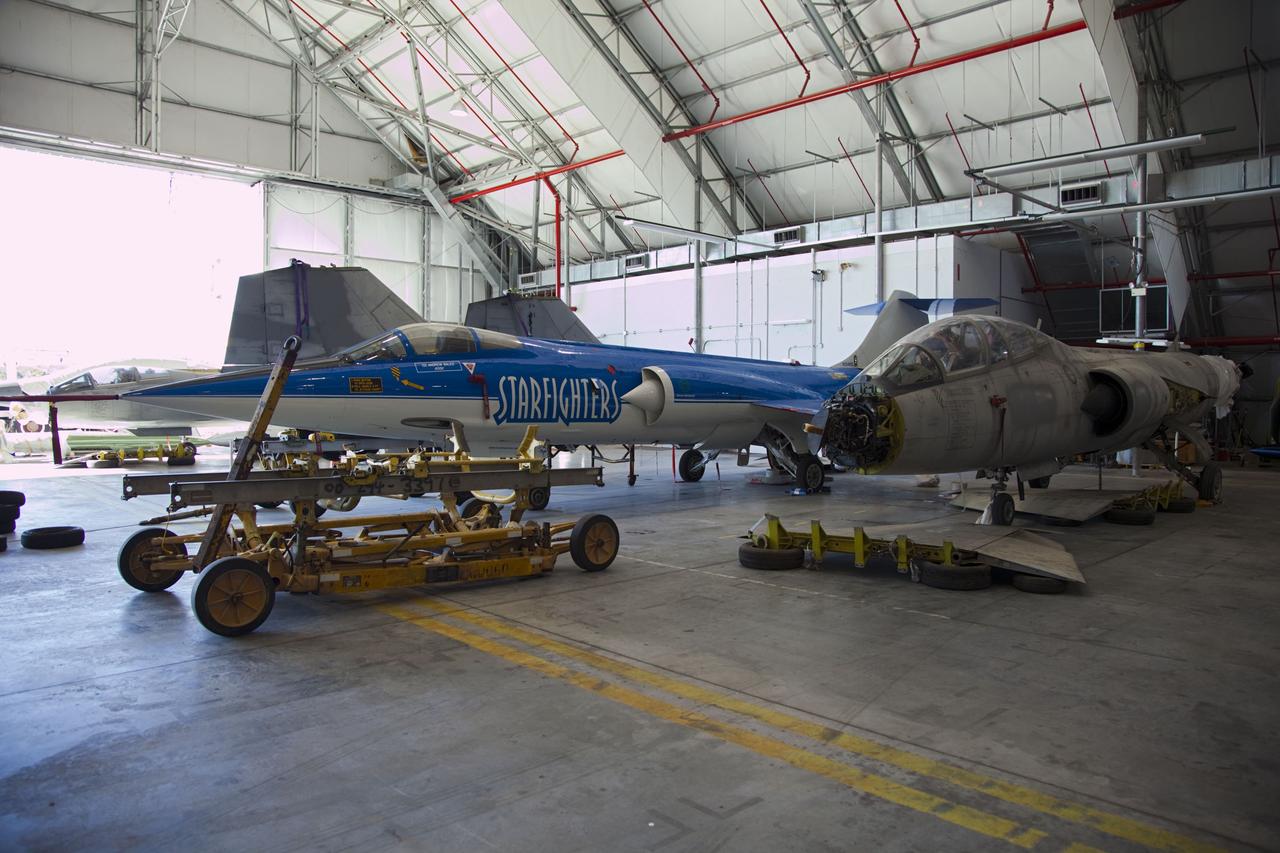
CAPE CANAVERAL, Fla. -- A hangar at NASA's Kennedy Space Center in Florida fills up with new aircraft for the company Starfighters Inc. The blue and white aircraft is part of the company's original fleet of supersonic aircraft. The gray aircraft is one of five delivered to the company recently. They will be reassembled to fly research and development and other missions. They have been used to fly research and development and other missions. Starfighters operates out of a hangar at the Shuttle Landing Facility at Kennedy under an agreement with Kennedy. Photo credit: NASA/Frankie Martin
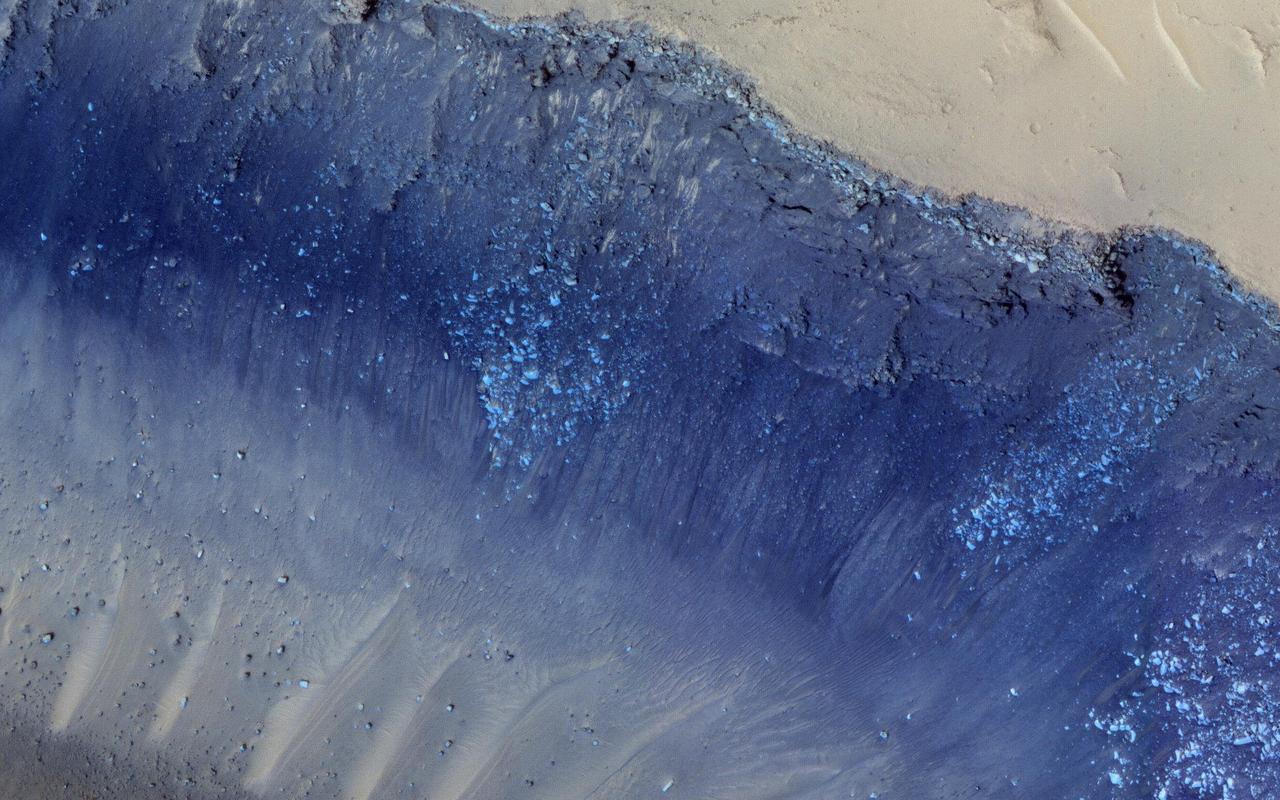
Cerberus Fossae is a steep-sided set of troughs cutting volcanic plains to the east of Elysium Mons. Steep slopes on Mars have active landslides (also called "mass wasting"), and here we see evidence for two types of activity. First, the light bluish boulders on the slope appear to originate at a layer of bedrock (also light blue) near the top of the section. Second, the dark thin lines are recurring slope lineae, probably also due to mass wasting, but composed of finer-grained materials. https://photojournal.jpl.nasa.gov/catalog/PIA23182
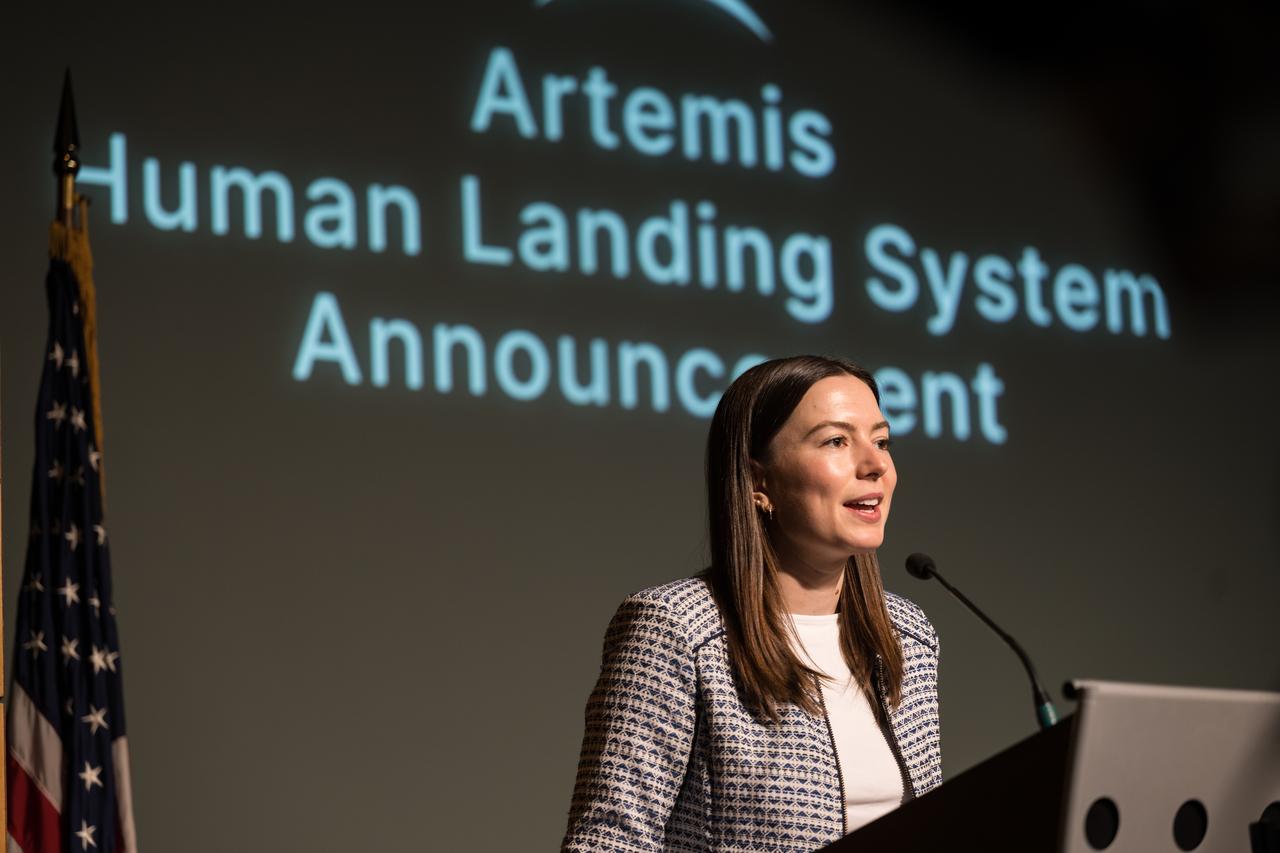
NASA Press Secretary Jackie McGuinness introduces NASA Administrator Bill Nelson during an event announcing Blue Origin as the company selected to develop a sustainable human landing system for the Artemis V Moon mission, Friday, May 19, 2023 at the Mary W. Jackson NASA Headquarters building in Washington. The human landing system will take astronauts to and from Gateway in lunar orbit to the surface and back to the lunar space station as part of NASA’s return to the Moon for science, exploration, and inspiration. Photo Credit: (NASA/Aubrey Gemignani)
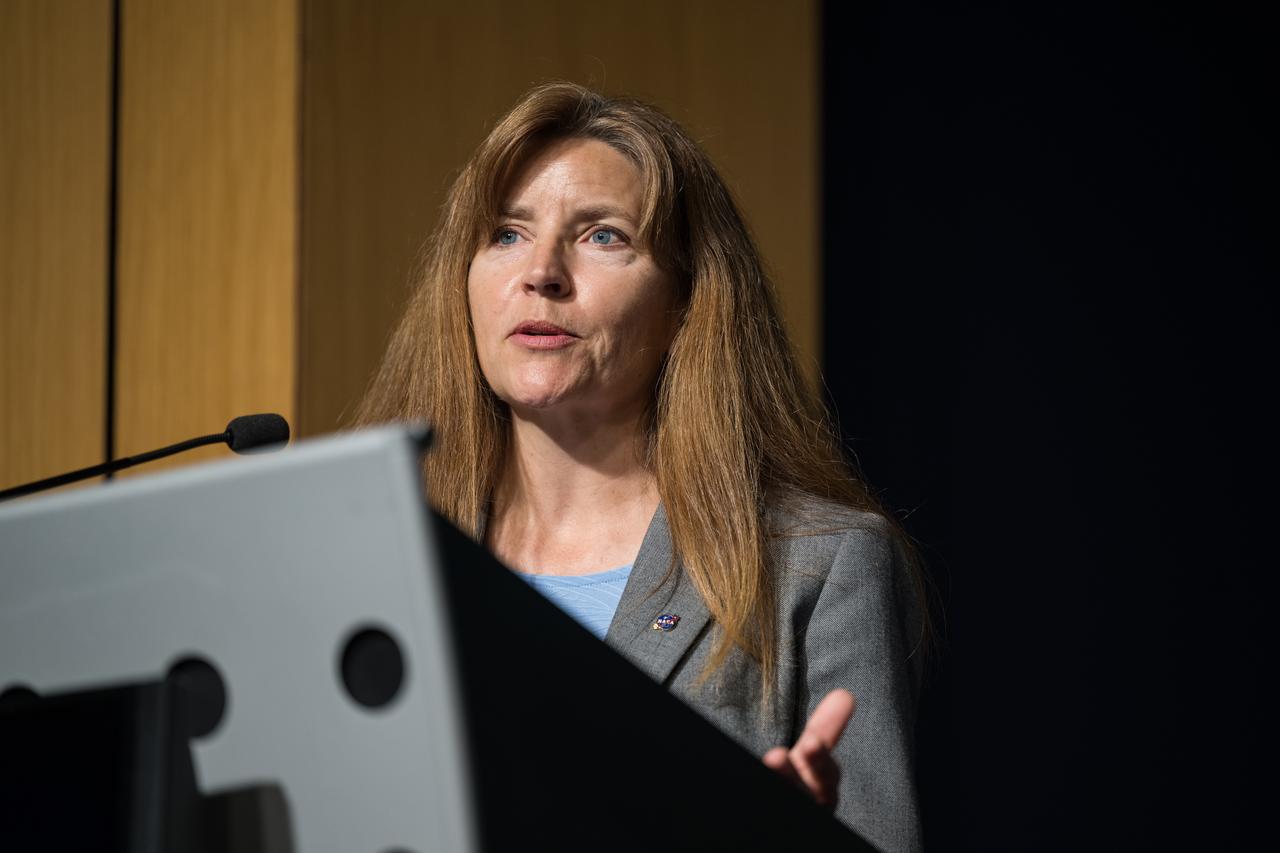
Human Landing System Program Manager Lisa Watson-Morgan gives remarks during an event announcing Blue Origin as the company selected to develop a sustainable human landing system for the Artemis V Moon mission, Friday, May 19, 2023 at the Mary W. Jackson NASA Headquarters building in Washington. The human landing system will take astronauts to and from Gateway in lunar orbit to the surface and back to the lunar space station as part of NASA’s return to the Moon for science, exploration, and inspiration. Photo Credit: (NASA/Aubrey Gemignani)

CAPE CANAVERAL, Fla. -- At a news conference NASA officials and industry partners discuss progress of the agency's Commercial Crew Program. Among those participating in the briefing is Rob Meyerson, Blue Origin president and program manager. Through CCP, NASA is facilitating the development of U.S. commercial crew space transportation capabilities to achieve safe, reliable and cost-effective access to and from low-Earth orbit for potential future government and commercial customers. For more information, visit http://www.nasa.gov/commercialcrew Photo credit: NASA/Kim Shiflett
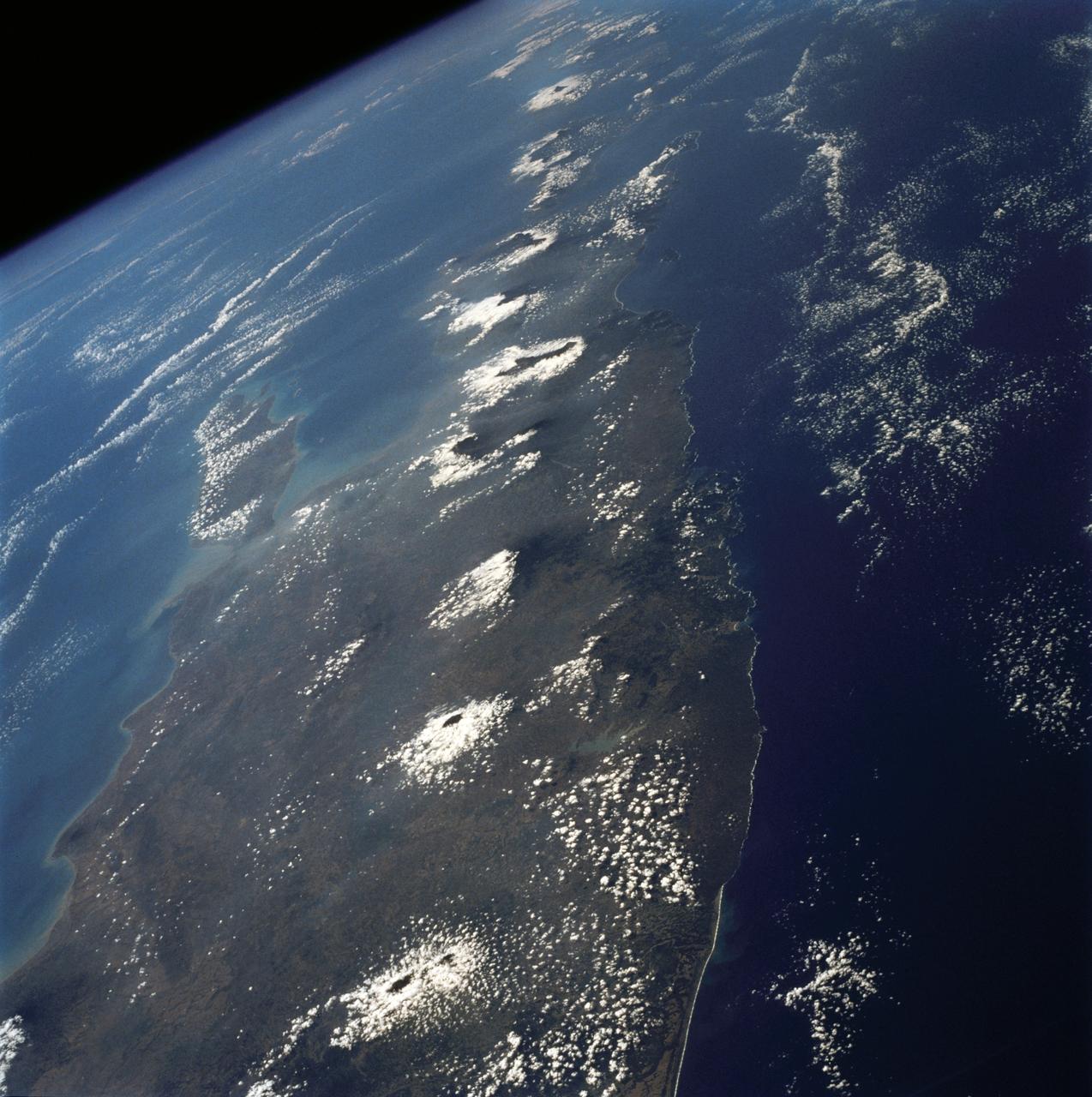
The island of Java (8.0S, 112.0E), perhaps better than any other, illustrates the volcanic origin of Pacific Island groups. Seen in this single view are at least a dozen once active volcano craters. Alignment of the craters even defines the linear fault line of Java as well as the other some 1500 islands of the Indonesian Archipelago. Deep blue water of the Indian Ocean to the south contrasts to the sediment laden waters of the Java Sea to the north.

Robert Millman of Blue Origin is seen during a press conference, Tuesday, Feb. 2, 2010, at the National Press Club in Washington, where it was announced that NASA has awarded $50 million through funded agreements to further the commercial sector's capability to support transport of crew to and from low Earth orbit. Photo Credit: (NASA/Bill Ingalls)
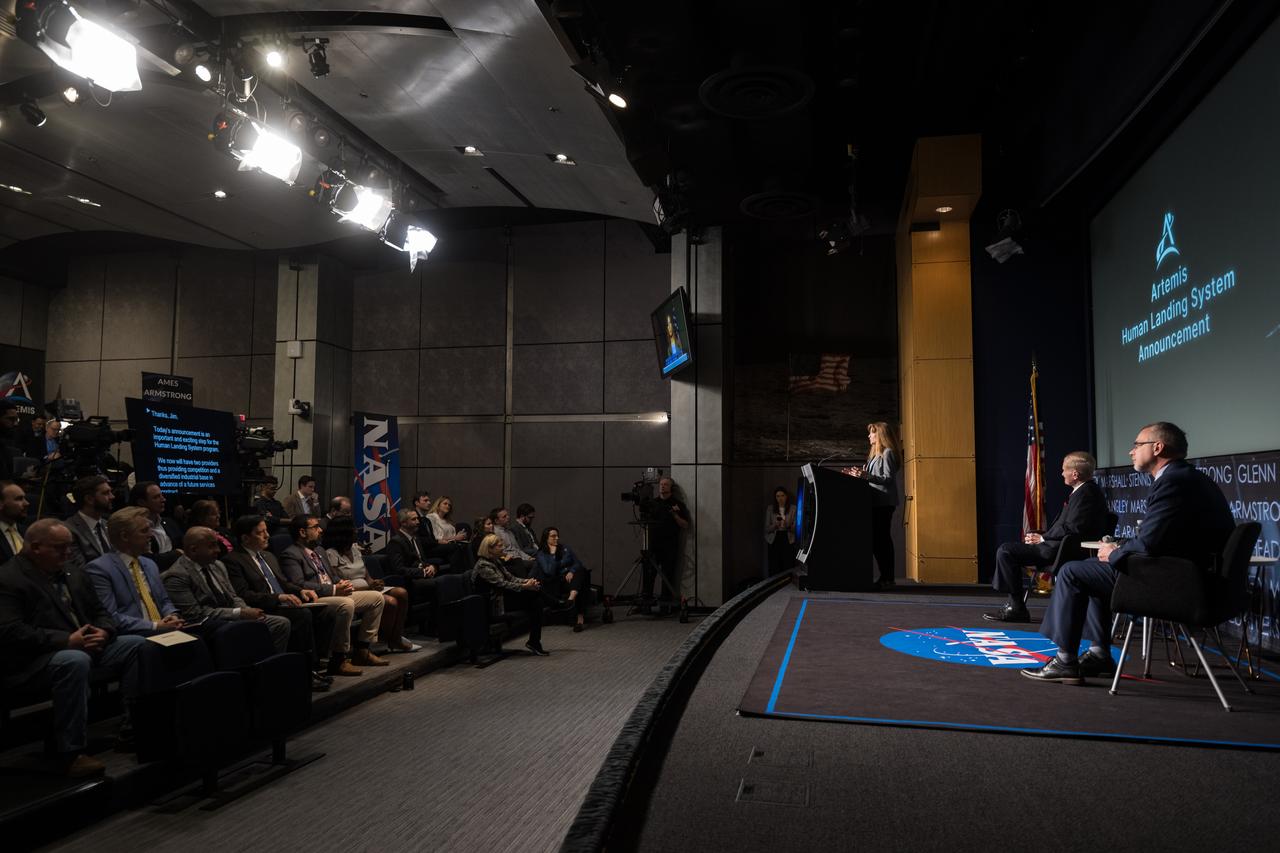
Human Landing System Program Manager Lisa Watson-Morgan gives remarks during an event announcing Blue Origin as the company selected to develop a sustainable human landing system for the Artemis V Moon mission, Friday, May 19, 2023 at the Mary W. Jackson NASA Headquarters building in Washington. The human landing system will take astronauts to and from Gateway in lunar orbit to the surface and back to the lunar space station as part of NASA’s return to the Moon for science, exploration, and inspiration. Photo Credit: (NASA/Aubrey Gemignani)
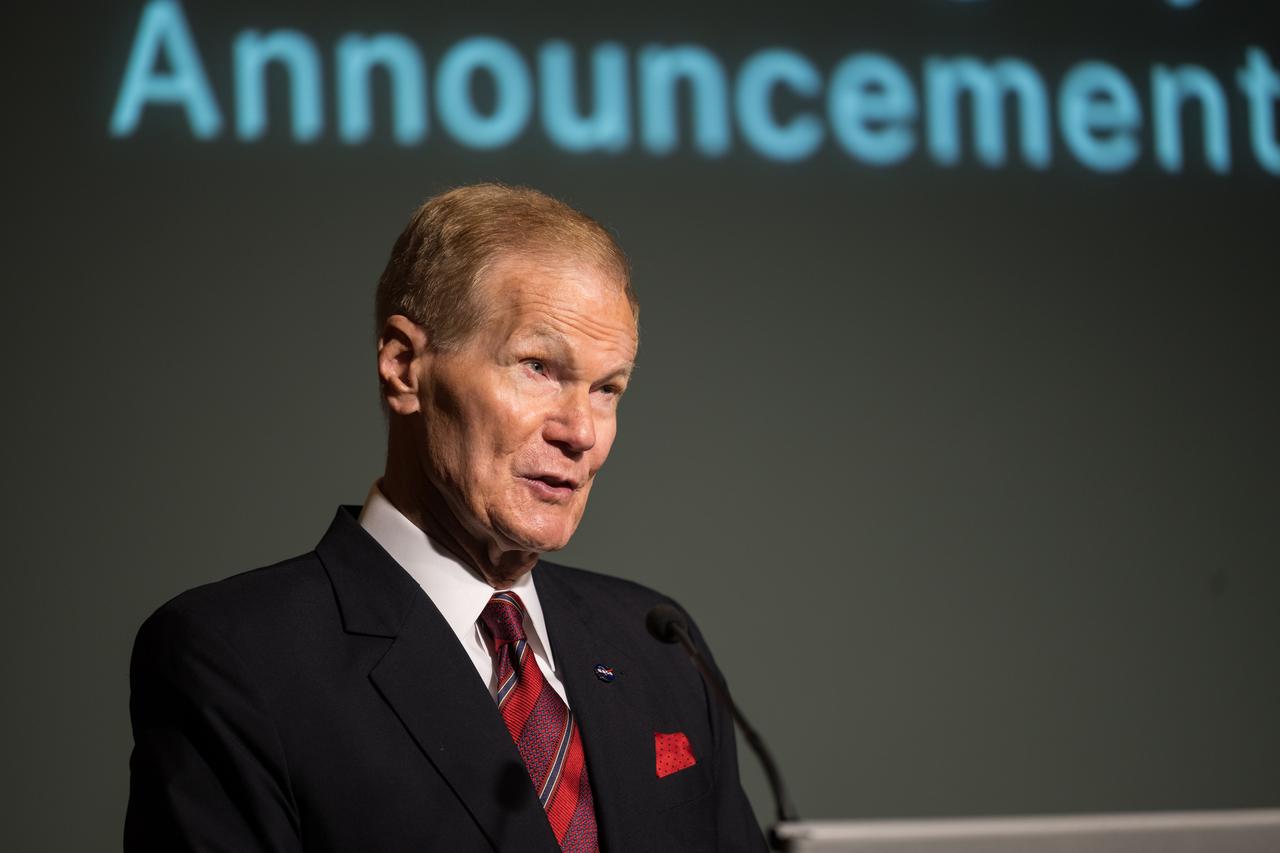
NASA Administrator Bill Nelson gives remarks during an event announcing Blue Origin as the company selected to develop a sustainable human landing system for the Artemis V Moon mission, Friday, May 19, 2023 at the Mary W. Jackson NASA Headquarters building in Washington. The human landing system will take astronauts to and from Gateway in lunar orbit to the surface and back to the lunar space station as part of NASA’s return to the Moon for science, exploration, and inspiration. Photo Credit: (NASA/Aubrey Gemignani)

Ice (probably frozen nitrogen) that appears to have accumulated on the uplands on the right side of this 390-mile (630-kilometer) wide image is draining from Pluto's mountains onto the informally named Sputnik Planum through the 2- to 5-mile (3- to 8- kilometer) wide valleys. The flow front of the ice moving into Sputnik Planum is outlined by the blue arrows. The origin of the ridges and pits on the right side of the image remains uncertain. http://photojournal.jpl.nasa.gov/catalog/PIA19944
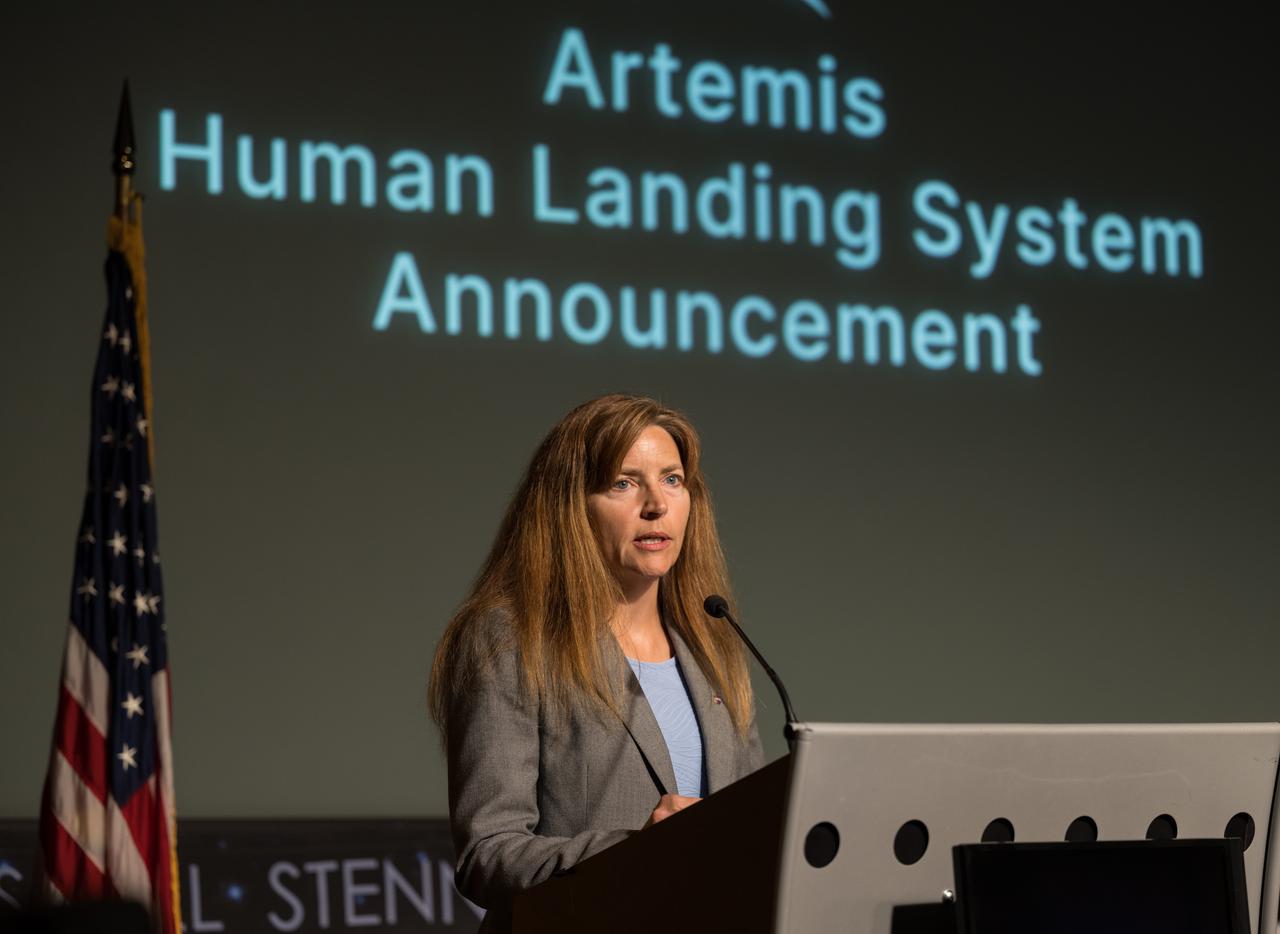
Human Landing System Program Manager Lisa Watson-Morgan gives remarks during an event announcing Blue Origin as the company selected to develop a sustainable human landing system for the Artemis V Moon mission, Friday, May 19, 2023 at the Mary W. Jackson NASA Headquarters building in Washington. The human landing system will take astronauts to and from Gateway in lunar orbit to the surface and back to the lunar space station as part of NASA’s return to the Moon for science, exploration, and inspiration. Photo Credit: (NASA/Aubrey Gemignani)
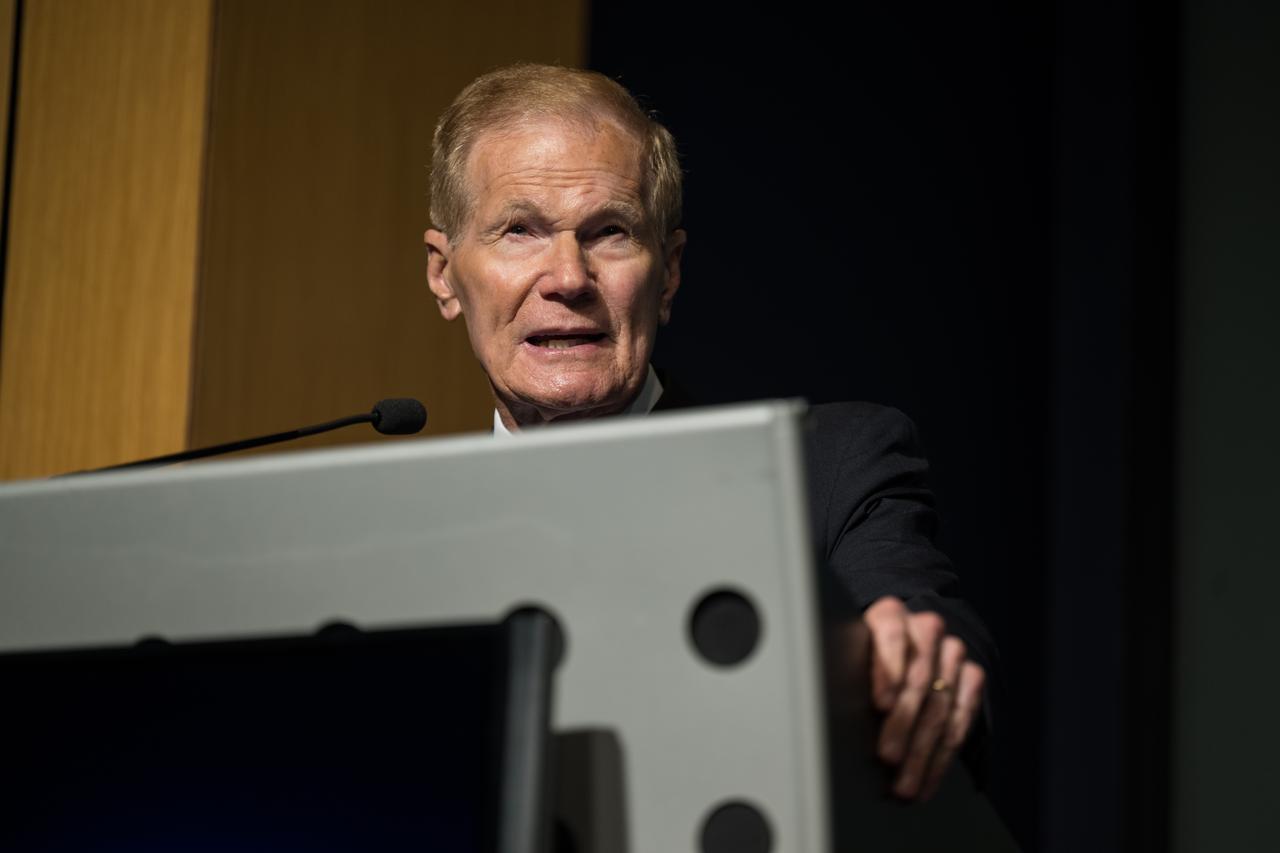
NASA Administrator Bill Nelson gives remarks during an event announcing Blue Origin as the company selected to develop a sustainable human landing system for the Artemis V Moon mission, Friday, May 19, 2023 at the Mary W. Jackson NASA Headquarters building in Washington. The human landing system will take astronauts to and from Gateway in lunar orbit to the surface and back to the lunar space station as part of NASA’s return to the Moon for science, exploration, and inspiration. Photo Credit: (NASA/Aubrey Gemignani)
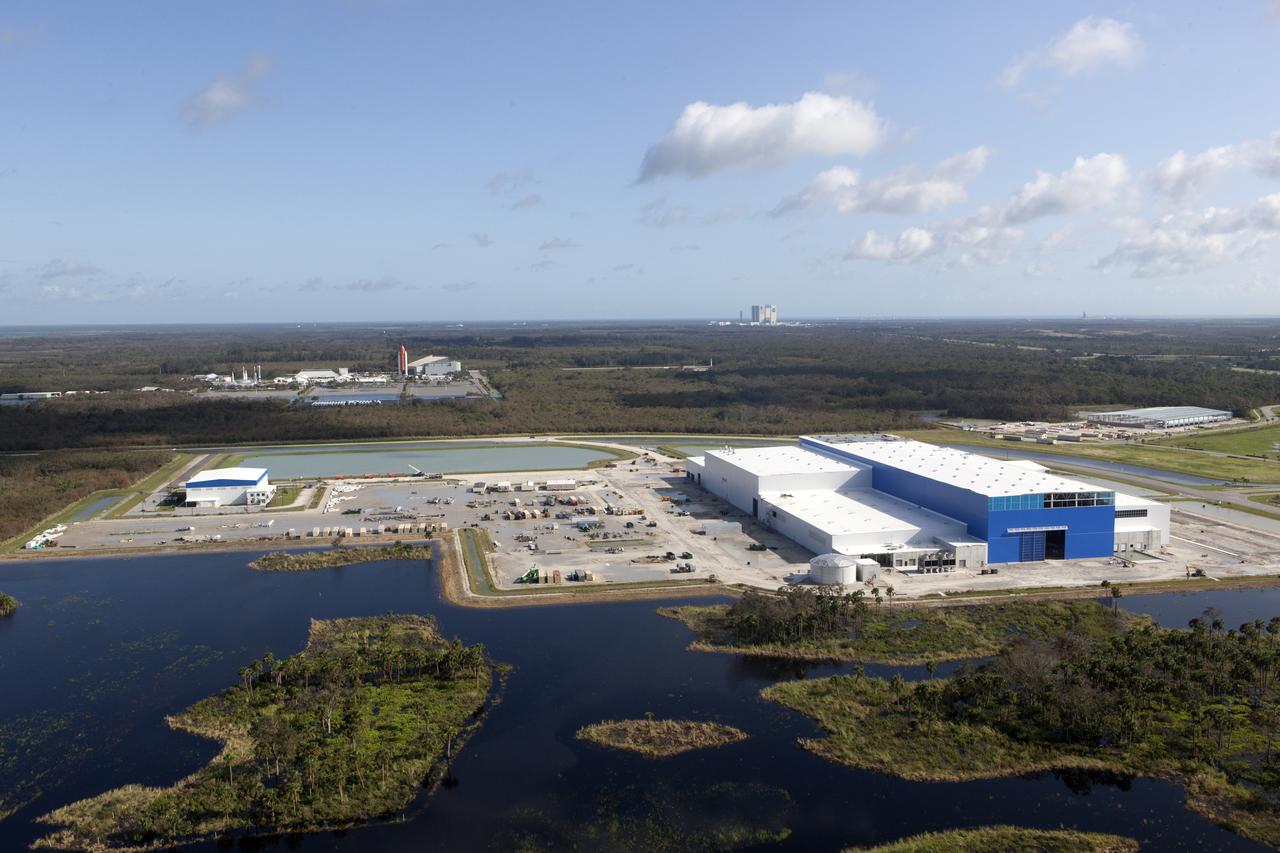
The Blue Origin construction site at Exploration Park is seen during an aerial survey of NASA's Kennedy Space Center in Florida on September 12, 2017. The survey was performed to identify structures and facilities that may have sustained damage from Hurricane Irma as the storm passed Kennedy on September 10, 2017. NASA closed the center ahead of the storm's onset and only a small team of specialists known as the Rideout Team was on the center as the storm approached and passed.
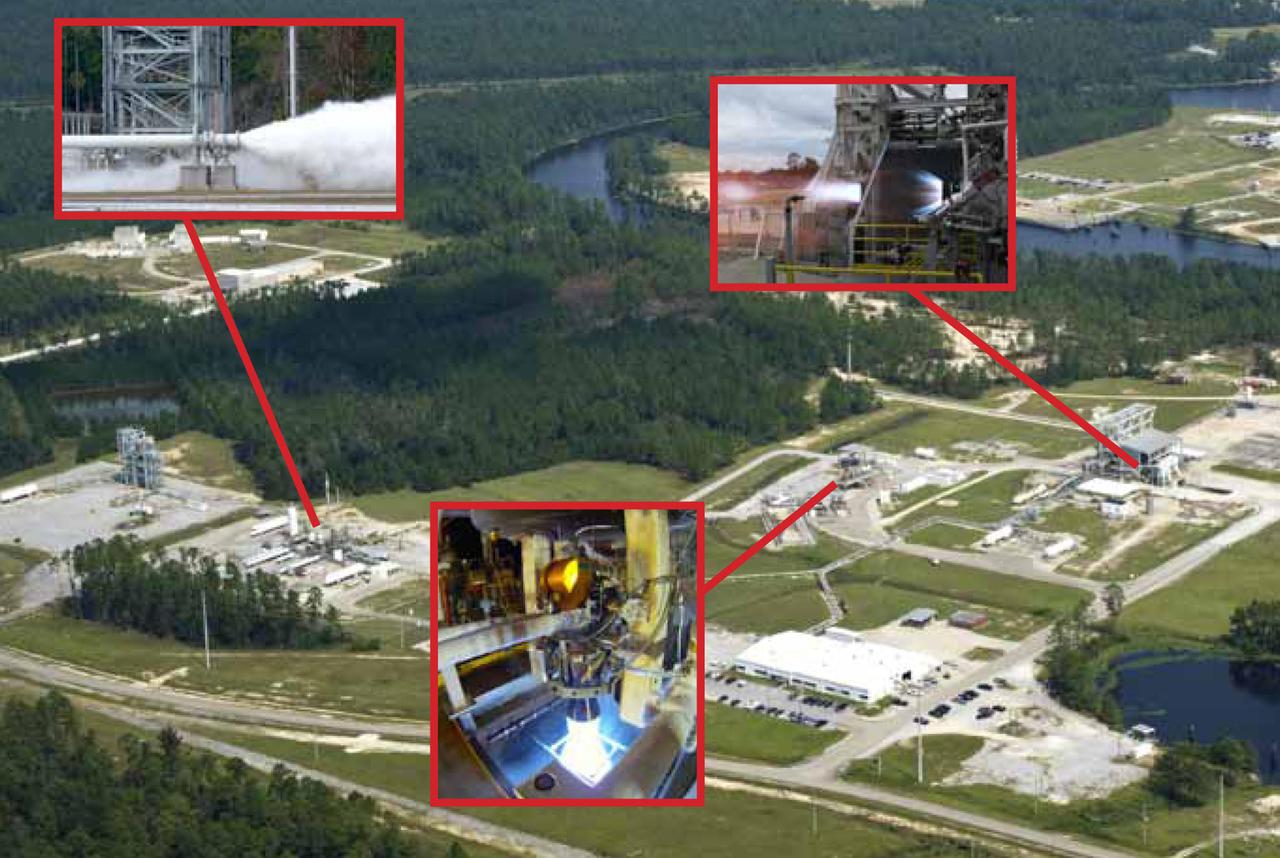
NASA recorded a historic week Nov. 5-9, conducting tests on all three stands in the E Test Complex at John C. Stennis Space Center. Inset images show the types of tests conducted on the E-1 Test Stand (right), the E-2 Test Stand (left) and the E-3 Test Stand (center). The E-1 photo is from an early October test and is provided courtesy of Blue Origin. Other photos are from tests conducted the week of Nov. 5.
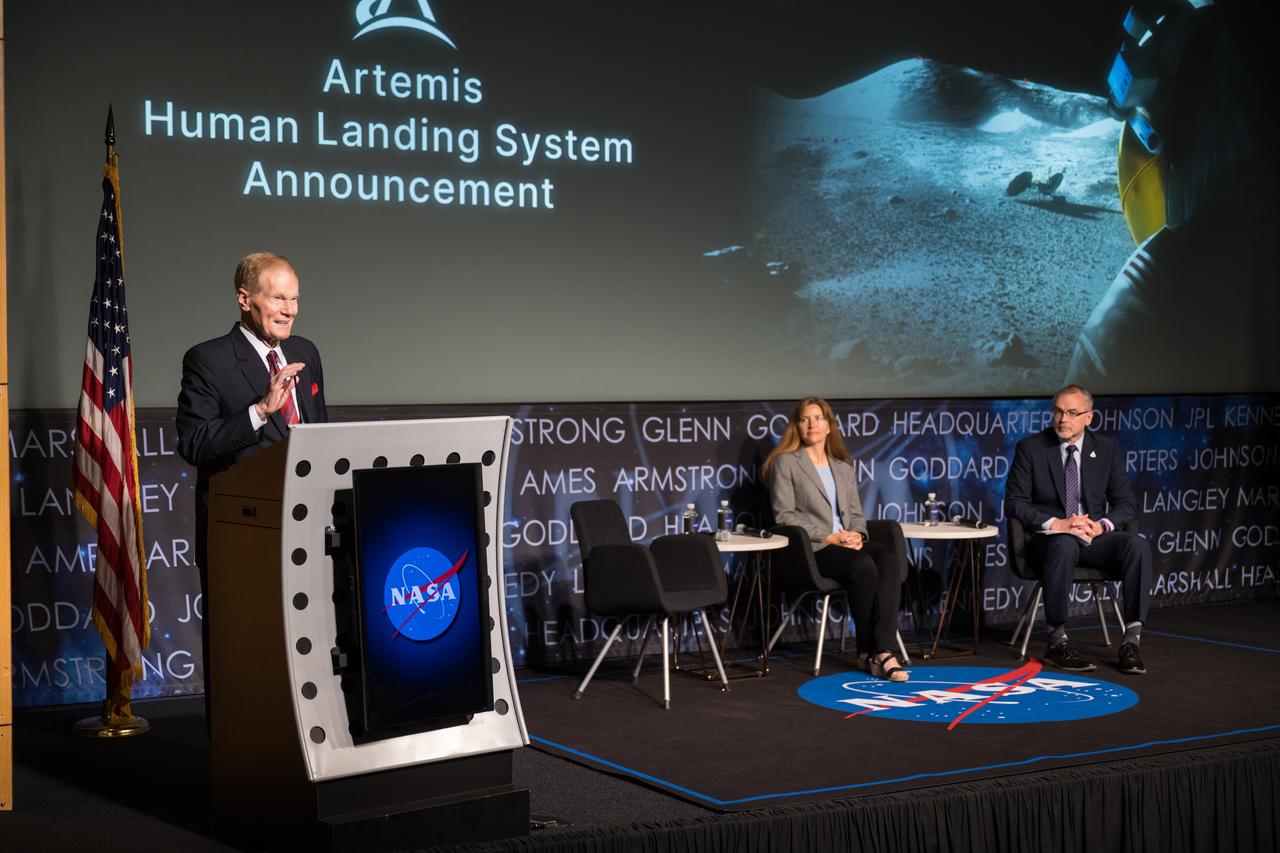
NASA Administrator Bill Nelson gives remarks during an event announcing Blue Origin as the company selected to develop a sustainable human landing system for the Artemis V Moon mission, Friday, May 19, 2023 at the Mary W. Jackson NASA Headquarters building in Washington. The human landing system will take astronauts to and from Gateway in lunar orbit to the surface and back to the lunar space station as part of NASA’s return to the Moon for science, exploration, and inspiration. Photo Credit: (NASA/Aubrey Gemignani)
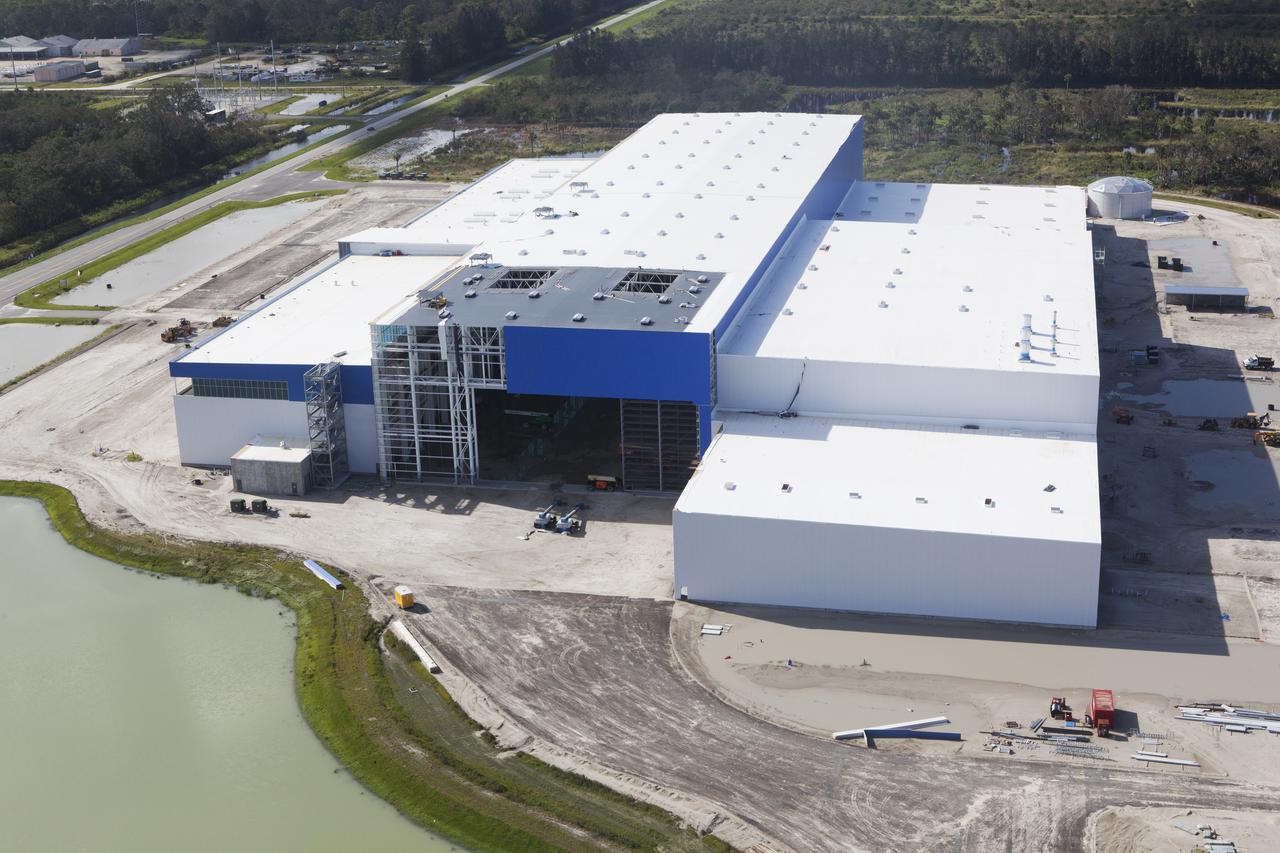
The Blue Origin construction site at Exploration Park is seen during an aerial survey of NASA's Kennedy Space Center in Florida on September 12, 2017. The survey was performed to identify structures and facilities that may have sustained damage from Hurricane Irma as the storm passed Kennedy on September 10, 2017. NASA closed the center ahead of the storm's onset and only a small team of specialists known as the Rideout Team was on the center as the storm approached and passed.
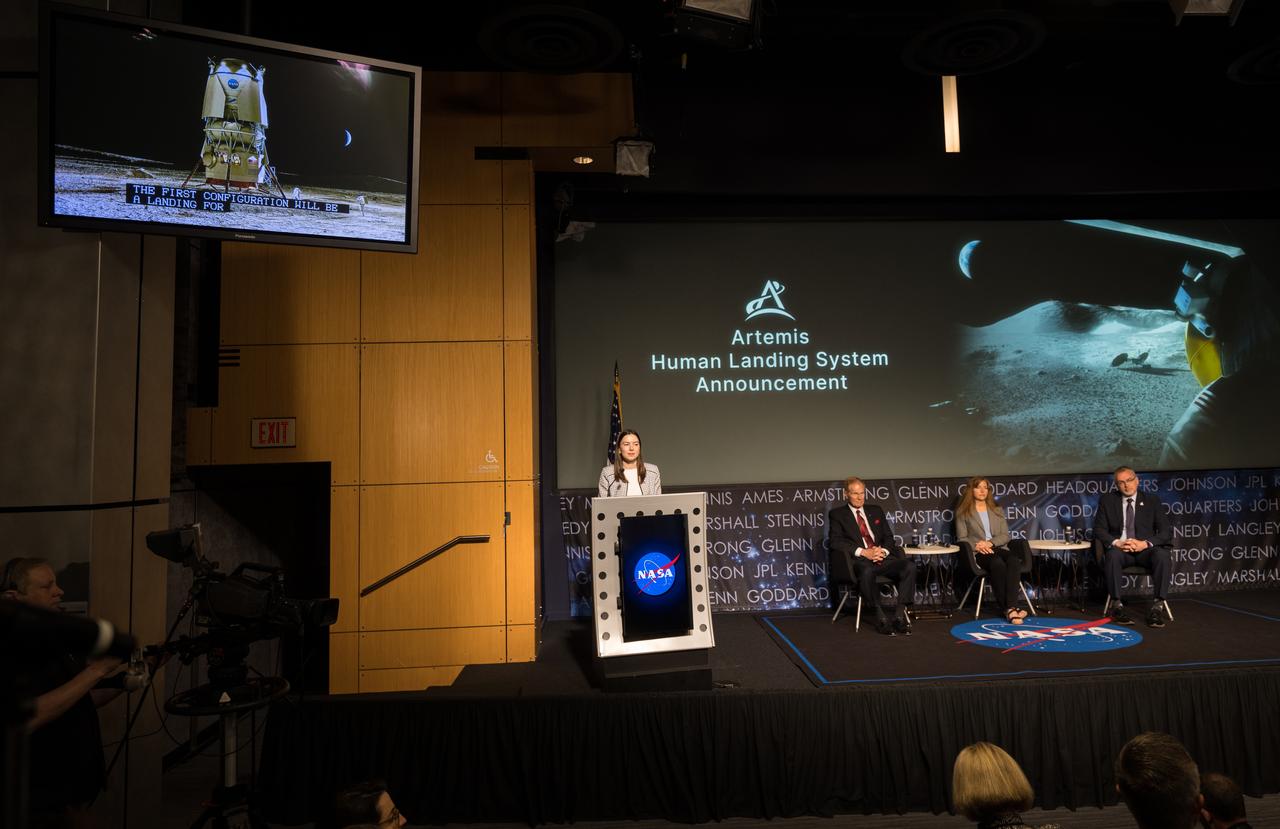
A view of the human landing system is seen on the monitor during an event announcing Blue Origin as the company selected to develop a sustainable human landing system for the Artemis V Moon mission, Friday, May 19, 2023 at the Mary W. Jackson NASA Headquarters building in Washington. The human landing system will take astronauts to and from Gateway in lunar orbit to the surface and back to the lunar space station as part of NASA’s return to the Moon for science, exploration, and inspiration. Photo Credit: (NASA/Aubrey Gemignani)
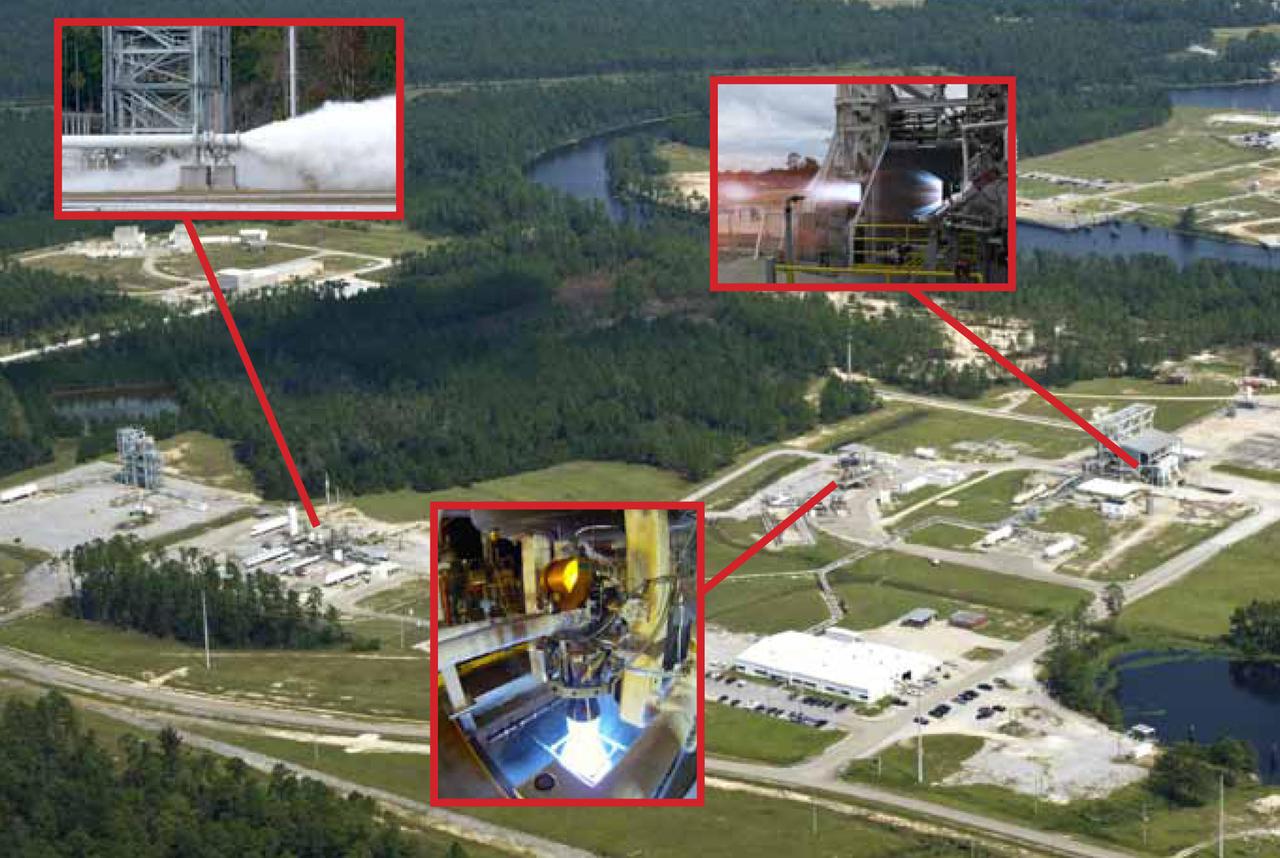
NASA recorded a historic week Nov. 5-9, conducting tests on all three stands in the E Test Complex at John C. Stennis Space Center. Inset images show the types of tests conducted on the E-1 Test Stand (right), the E-2 Test Stand (left) and the E-3 Test Stand (center). The E-1 photo is from an early October test and is provided courtesy of Blue Origin. Other photos are from tests conducted the week of Nov. 5.