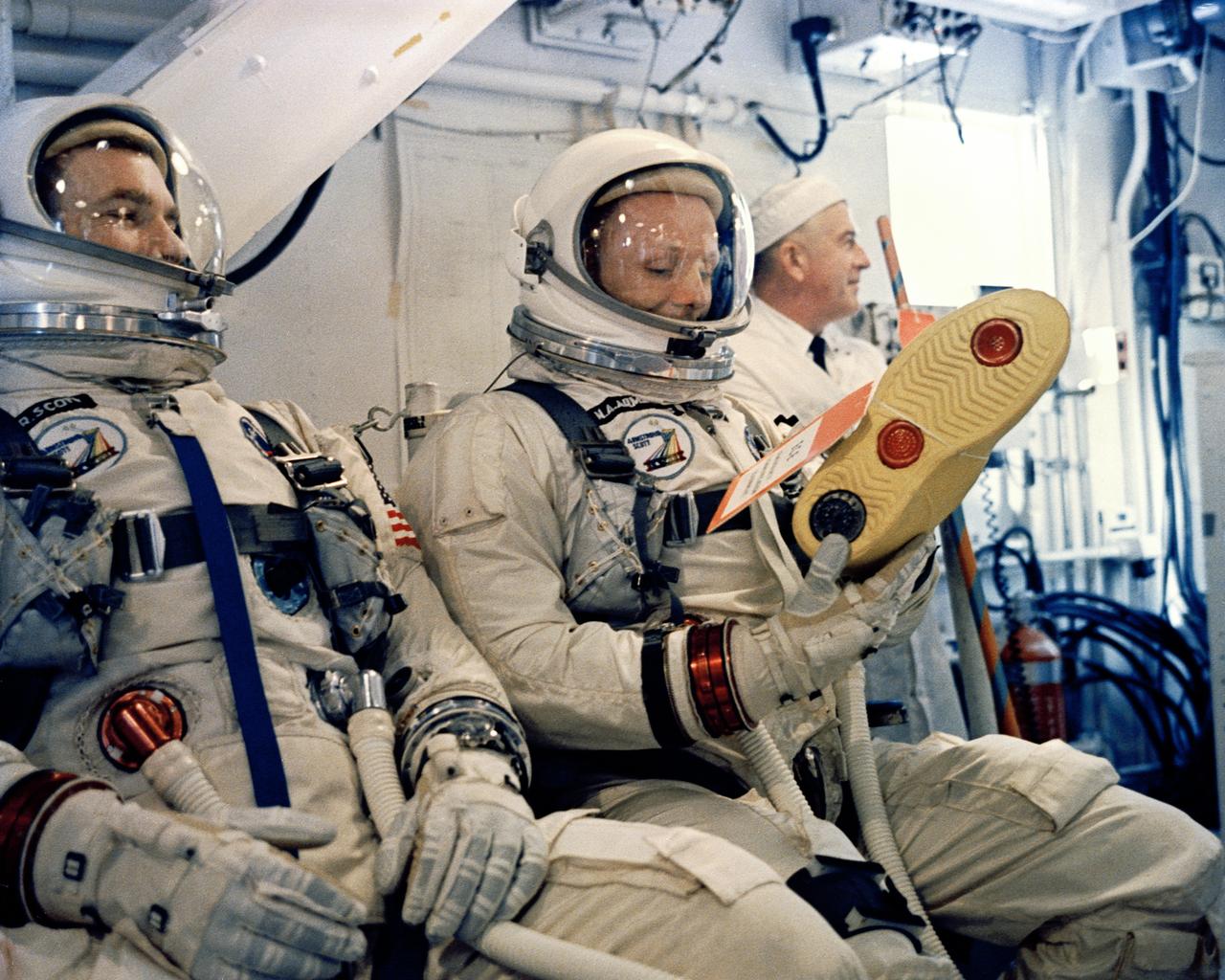
KSC-66C-1875 Astronauts David Scott and Neil Armstrong wait for the order to board their Gemini 8 Spacecraft in the White Room at Cape Kennedy, Complex 19. (jrs)
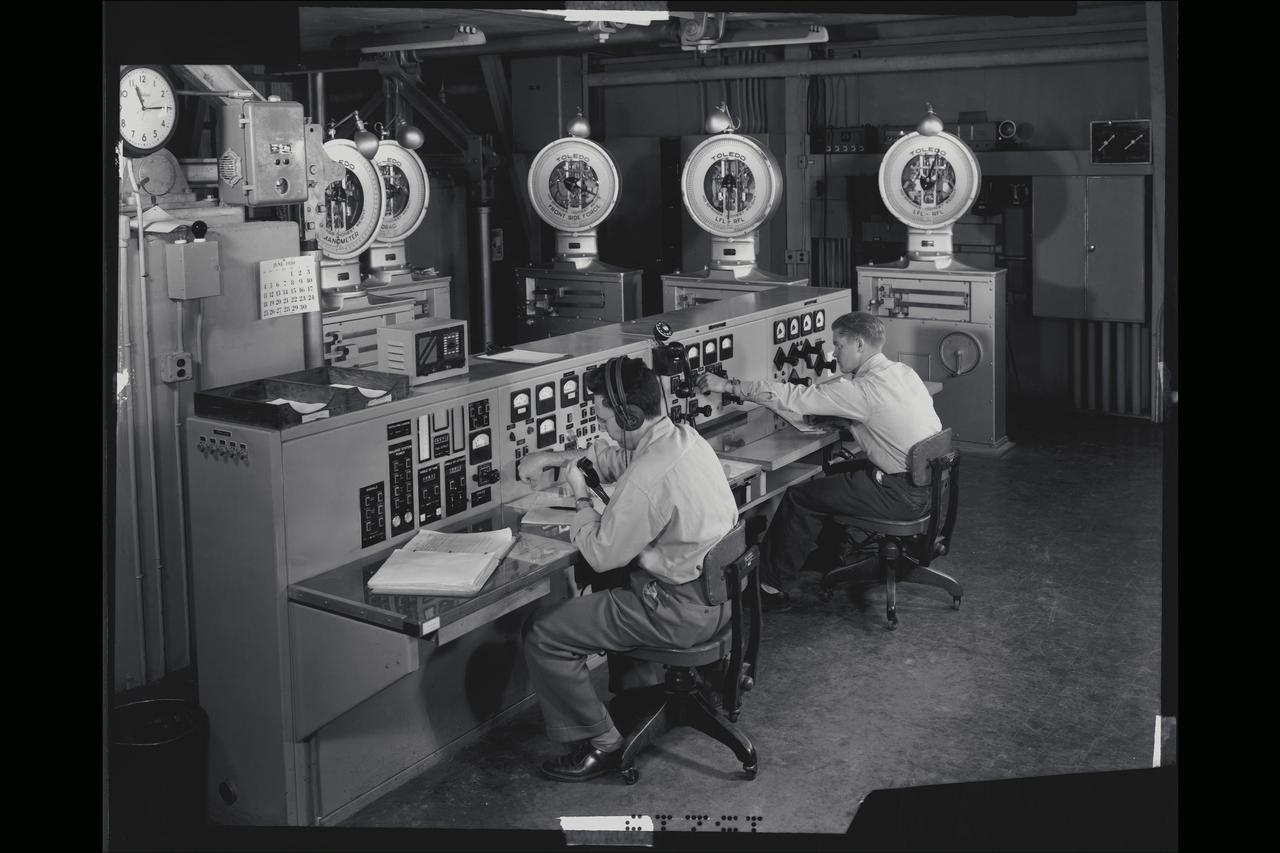
40x80 wind tunnel manometers control room at NACA's Ames Research Center. Control panel (called the bench board) showing five of the seven scale heads which measured the forces on the model (ie. Lift, drag, side force etc.)
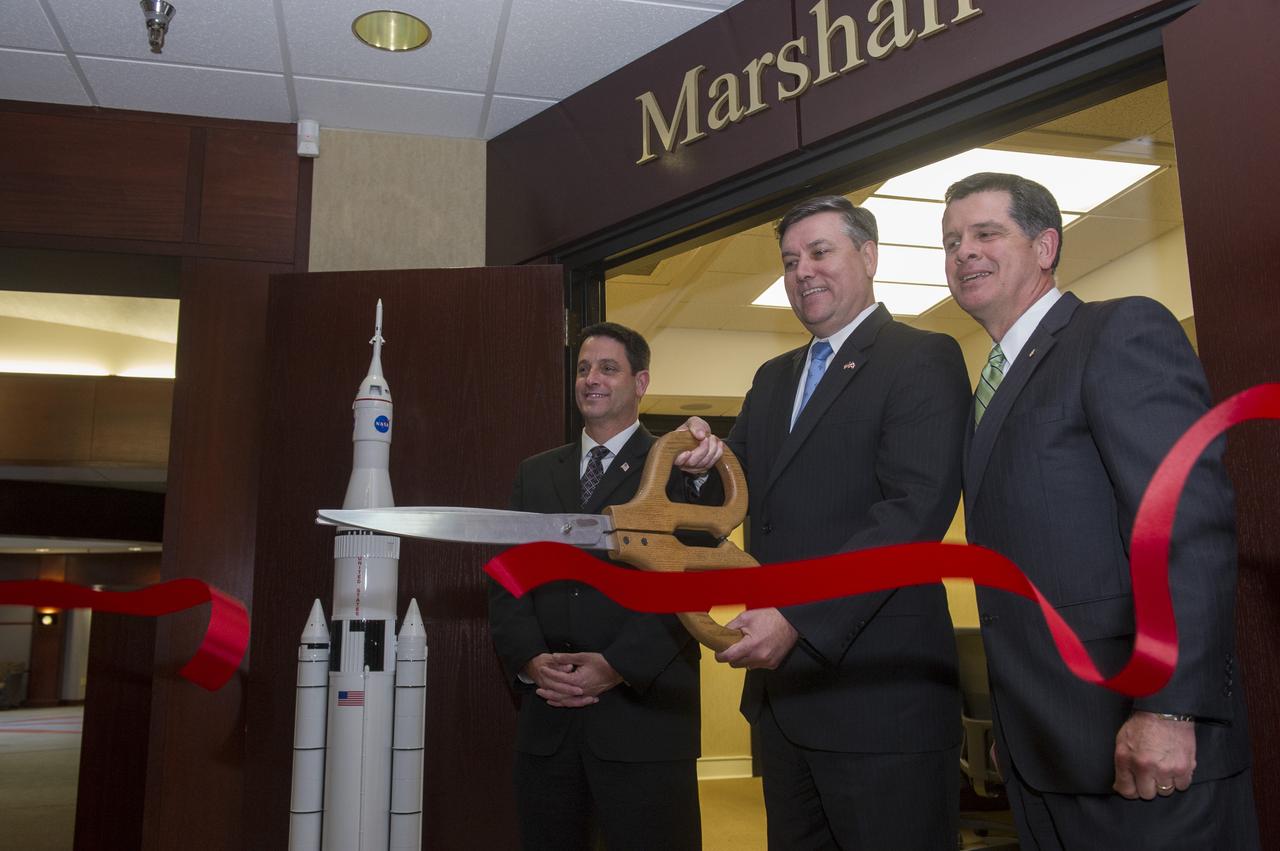
MSFC DIRECTOR PATRICK SCHEUERMANN CUTS RIBBON AT DEDICATION OF MARSHALL ROOM AT HUNTSVILLE-MADISON COUNTY CHAMBER OF COMMERCE, 3/11/13. TROY TRULOCK (L), MAYOR OF MADISON, AL AND RON POTEAT, (R), BOARD CHAIR, CHAMBER OF COMMERCE
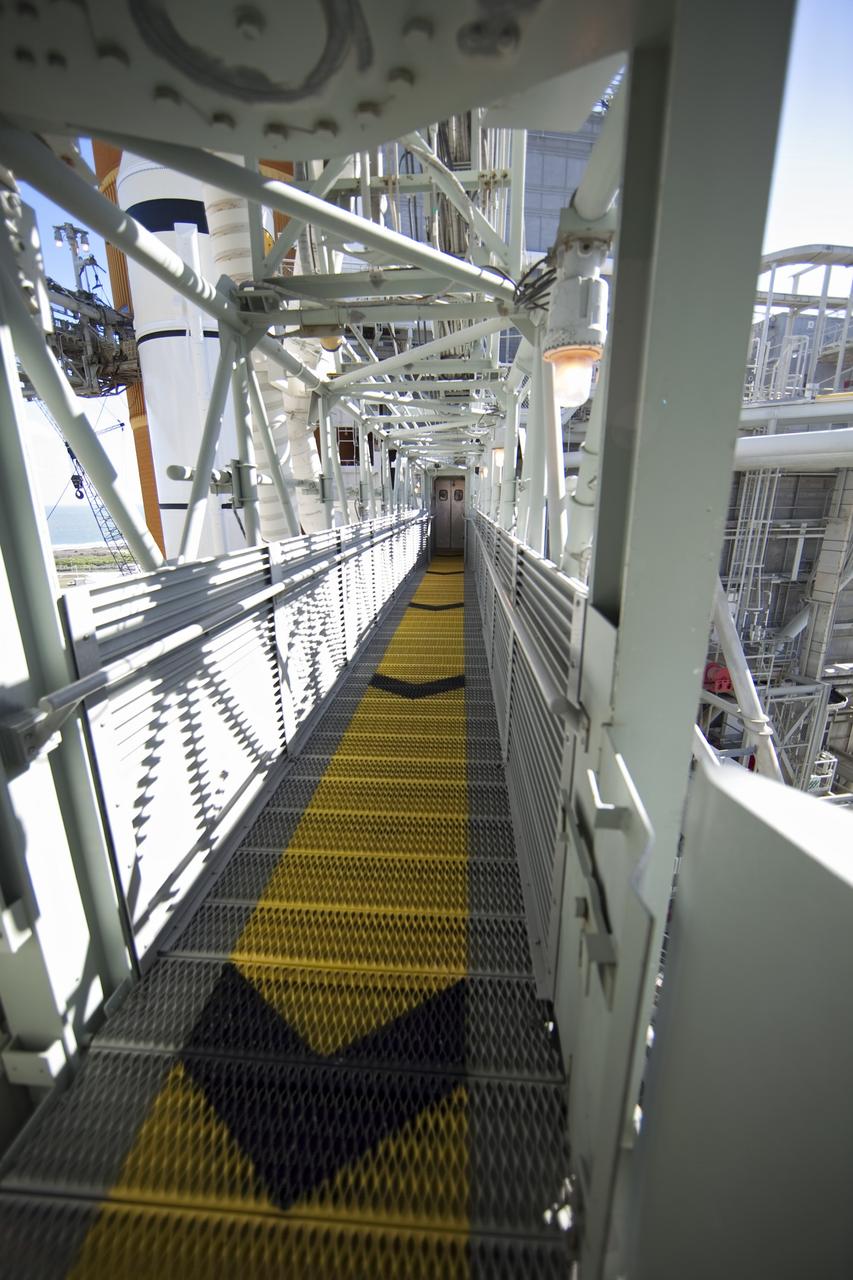
CAPE CANAVERAL, Fla. -- The orbiter access arm extends toward the White Room on Launch Pad 39A at NASA's Kennedy Space Center in Florida. From the White Room, the STS-133 crew members will board space shuttle Discovery for their launch to the International Space Station. Launch is no earlier than Dec. 17 at 8:51 p.m. EST. For more information on STS-133, visit www.nasa.gov/mission_pages/shuttle/shuttlemissions/sts133/. Photo credit: NASA/Frank Michaux
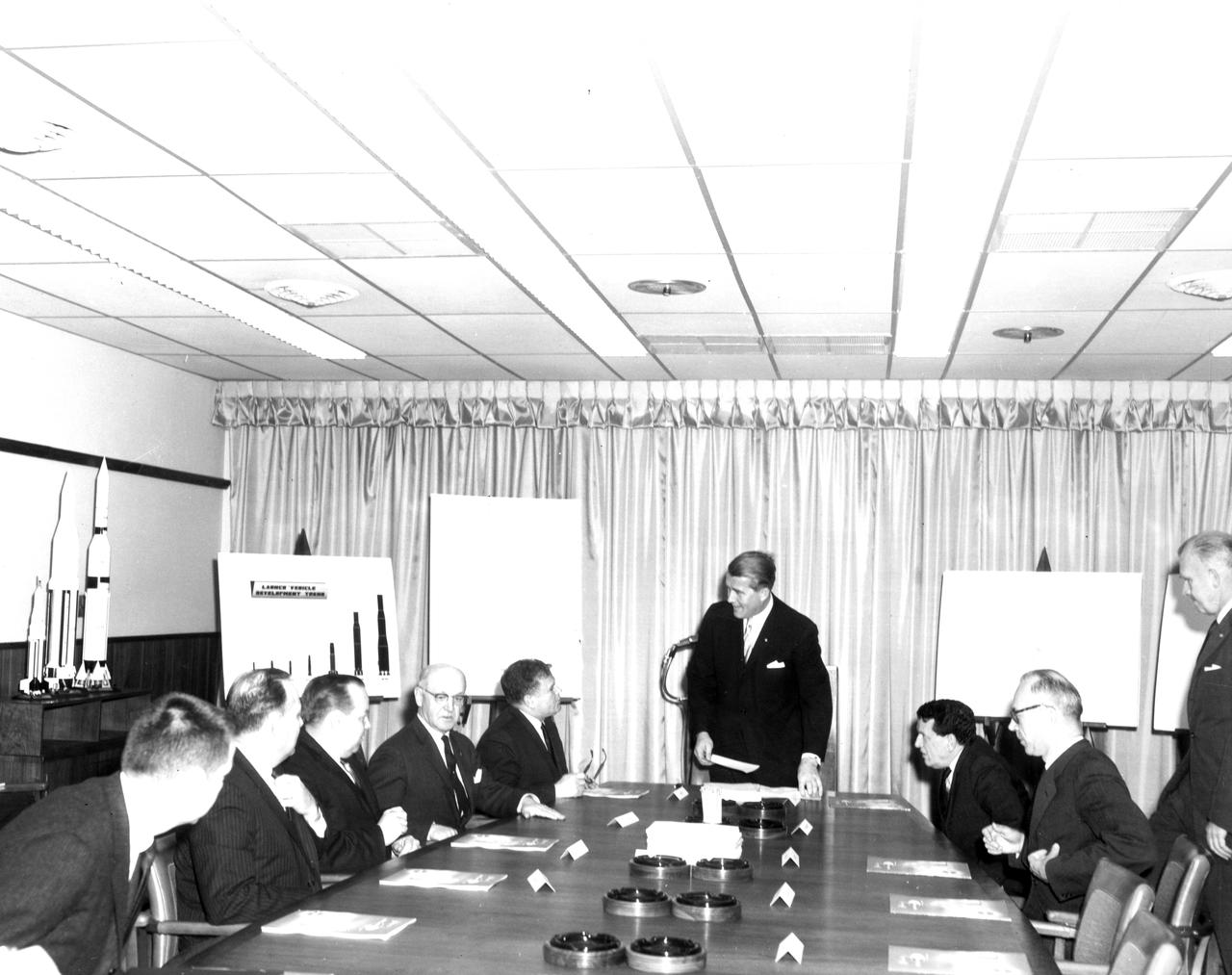
The members of the House Committee on Science and Astronautics visited the Marshall Space Flight Center (MSFC) on March 9, 1962 to gather firsthand information of the nation’s space exploration program. The congressional group was composed of members of the Subcommittee on Manned Space Flight. The subcommittee was briefed on MSFC’s manned space efforts earlier in the day and then inspected mockups of the Saturn I Workshop and the Apollo Telescope Mount, two projects developed by MSFC for the post-Apollo program. In this photograph, MSFC Director, Dr. Wernher von Braun meets with Congressmen in the MSFC boardroom. Pictured from left to right are: Jack Cramer, NASA Headquarters; Joe Waggoner, Democratic representative of Louisiana; John W. Davis, Democratic representative of Georgia; R. Walter Riehlman, Republican representative of New York; Olin E. Teague, Democratic representative of Texas; Dr. Wernher von Braun, Director of MSFC; James G. Fulton, Republican representative of Pennsylvania; Ken Hechler, Democratic representative of West Virginia; and Erich Neubert of MSFC.
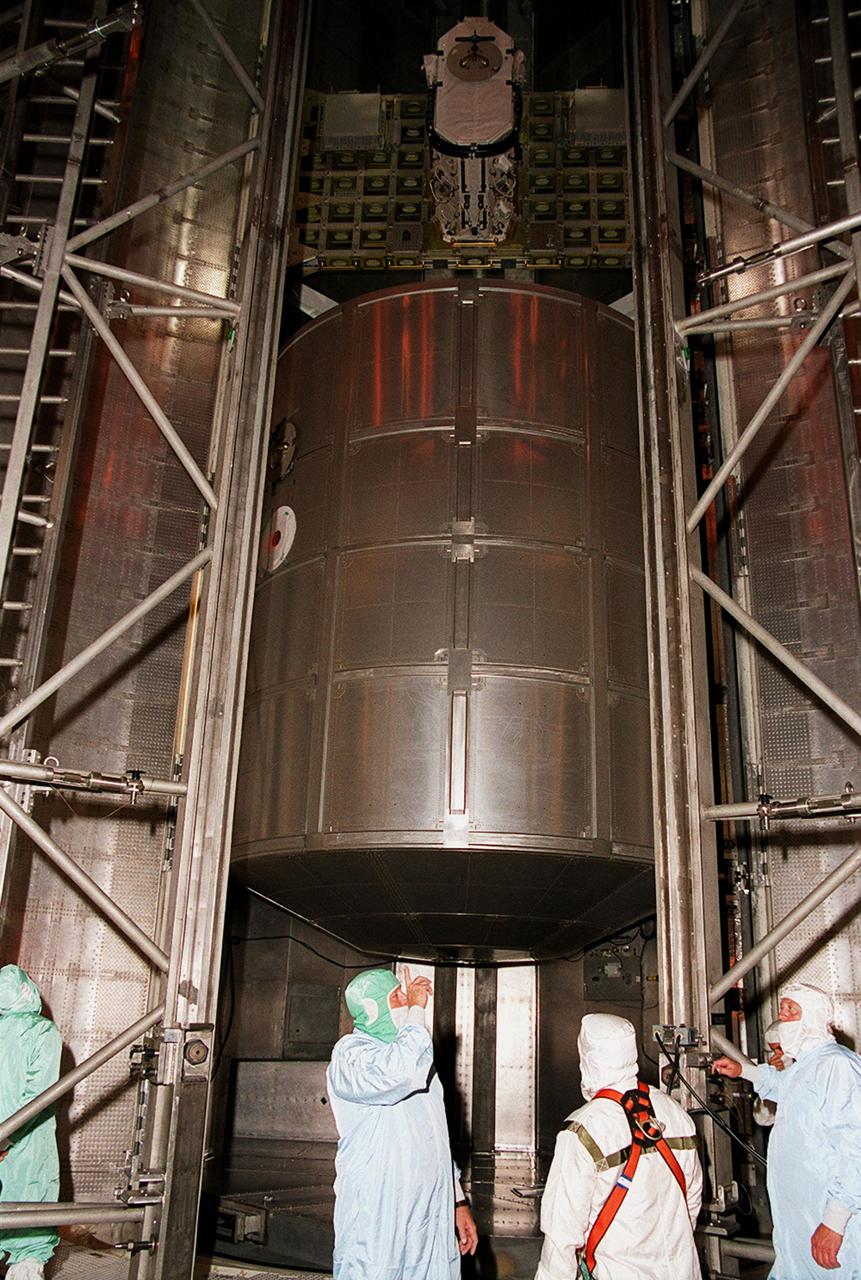
KENNEDY SPACE CENTER, Fla. -- - Workers on Launch Pad 39A move the Multi-Purpose Logistics Module Leonardo out of the payload canister into the payload changeout room. The MPLM is the primary payload on mission STS-105 to the International Space Station. The mission includes a crew changeover on the Space Station. Expedition Three will be traveling on Discovery to replace Expedition Two, who will return to Earth on board Discovery. Launch of STS-105 is scheduled for Aug. 9
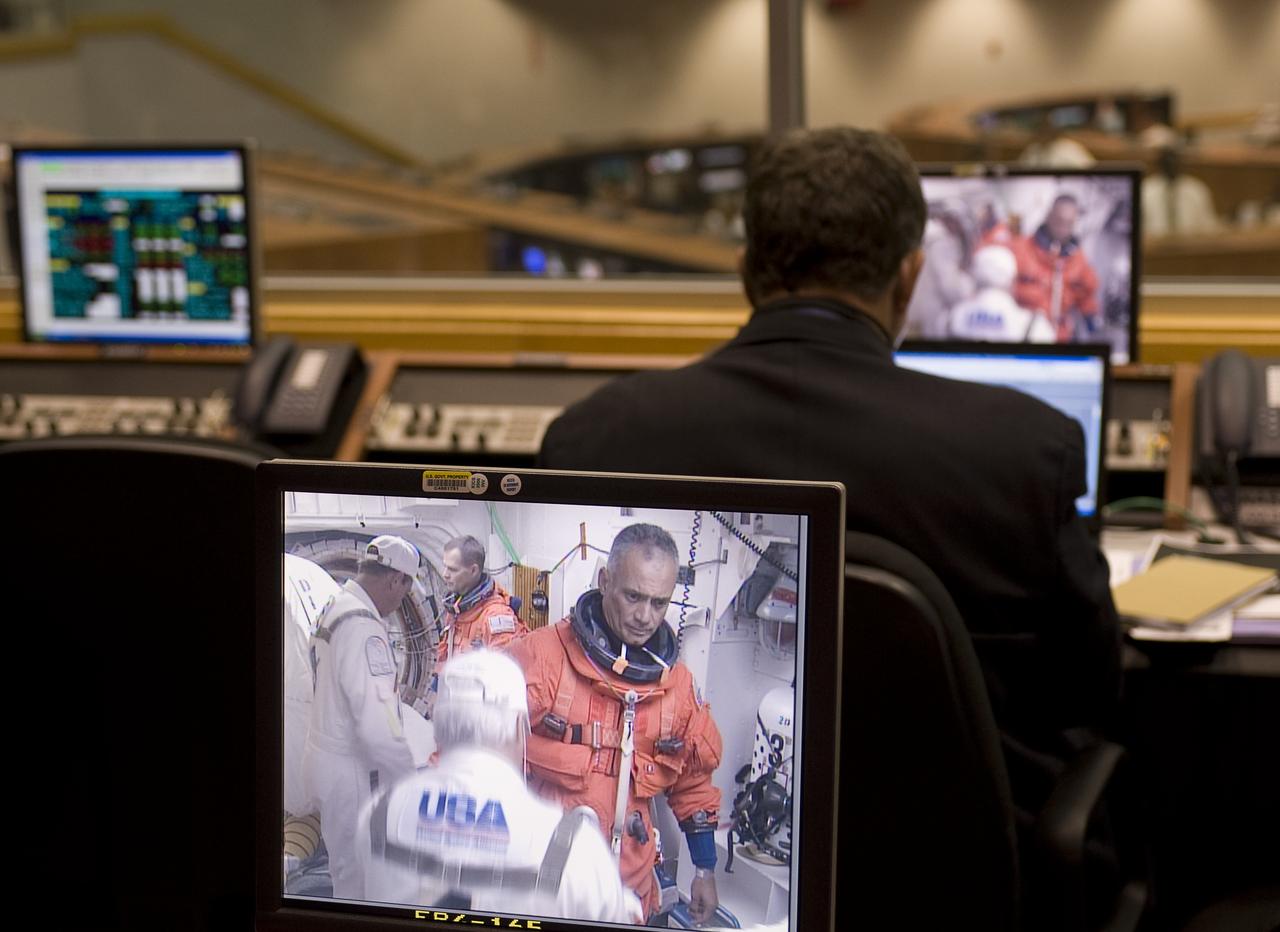
NASA Astronaut John "Danny" Olivas is seen preparing to board the space shuttle Discovery at pad 39a on a monitor in Firing Room Four of the Kennedy Space Center at Cape Canaveral, Fla., Monday, Aug. 24, 2009. Discovery is scheduled to launch Tuesday, Aug. 25, 2009 at 1:36 a.m. EDT and will carry the Leonardo supply module to the International Space Station during STS-128, along with a new crew member for the station, Nicole Stott. Photo Credit: (NASA/Bill Ingalls)
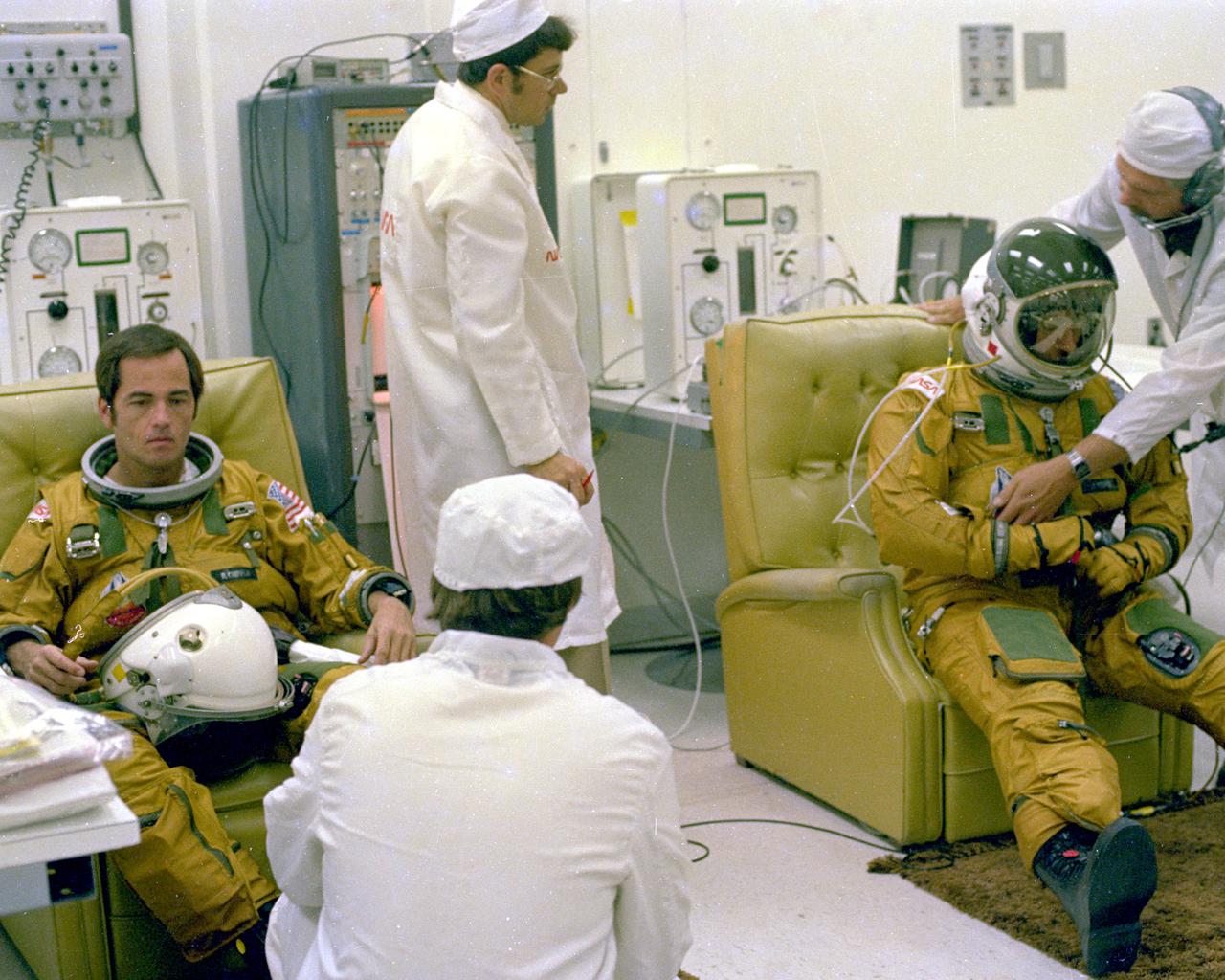
KENNEDY SPACE CENTER, FLA. - Pilot Robert Crippen watches intently as a technician adjusts the lens of his space suit, while Crew Commander John Young's suit is connected to life support system lines, during simulated countdown and launch. The two astronauts, prime crewmen for the maiden flight of the Space Shuttle scheduled no sooner than the week of April 5, are pictured in the suiting room of the Operations and Checkout Building at KSC prior to boarding their transport van for the trip to Launch Pad 39A.
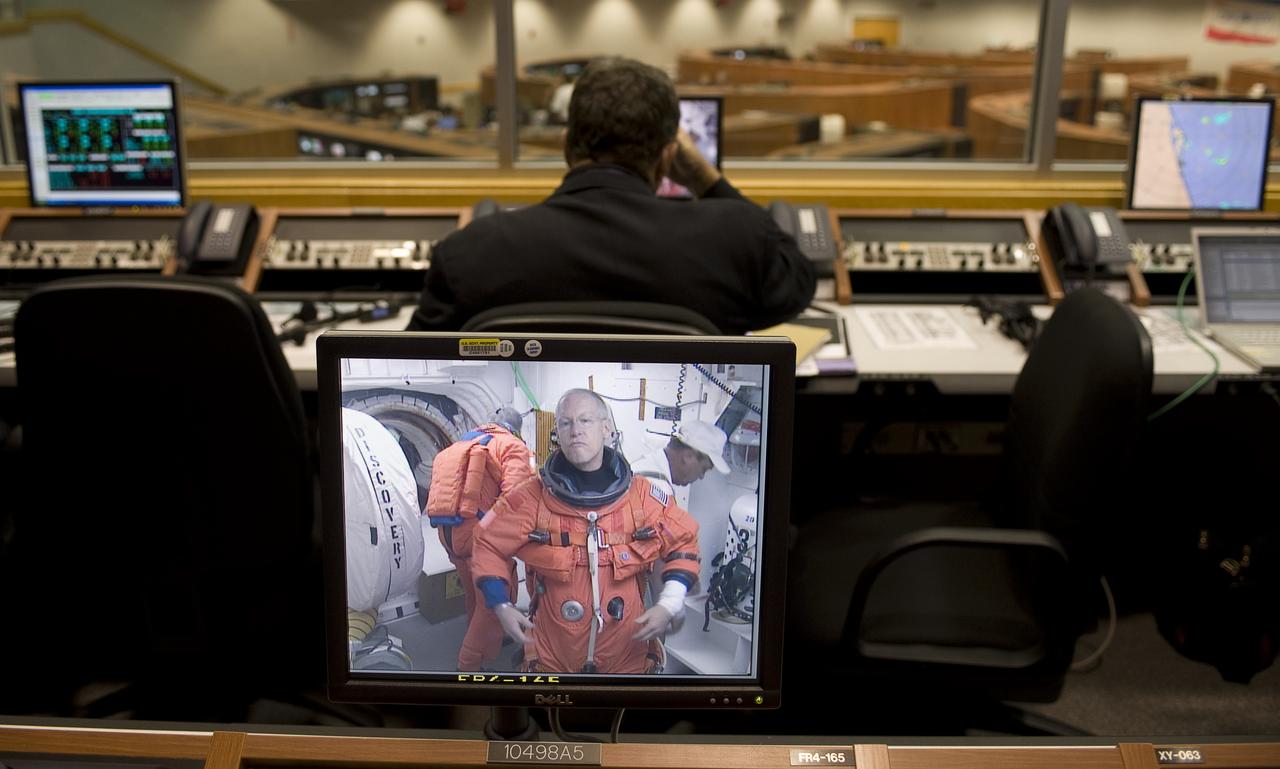
NASA Astronaut Patrick Forrester is seen preparing to board the space shuttle Discovery at pad 39a on a monitor in Firing Room Four of the Kennedy Space Center at Cape Canaveral, Fla., Monday, Aug. 24, 2009. Discovery is scheduled to launch Tuesday, Aug., 25, 2009 at 1:36 a.m. EDT and will carry the Leonardo supply module to the International Space Station during STS-128, along with a new crew member for the station, Nicole Stott. Photo Credit: (NASA/Bill Ingalls)
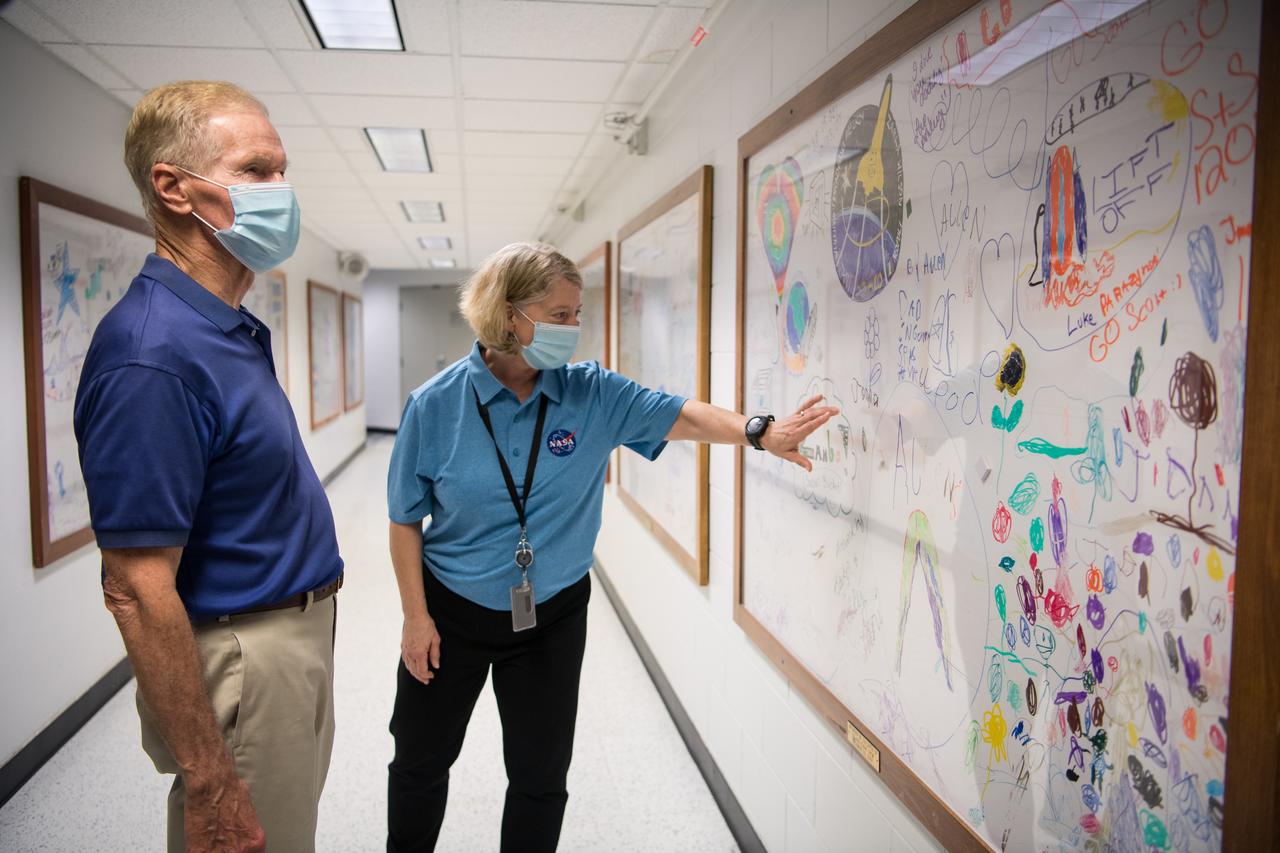
NASA Deputy Administrator Pam Melroy, right, shows NASA Administrator Bill Nelson the white board created by the families of the astronauts of the STS-120 mission, after a tour of the firing rooms in the Launch Control Center (LCC), Wednesday, July 28, 2021, at NASA’s Kennedy Space Center in Florida. Deputy Administrator Melroy served as commander on STS-120 which was her third and last spaceflight. Photo Credit: (NASA/Aubrey Gemignani)
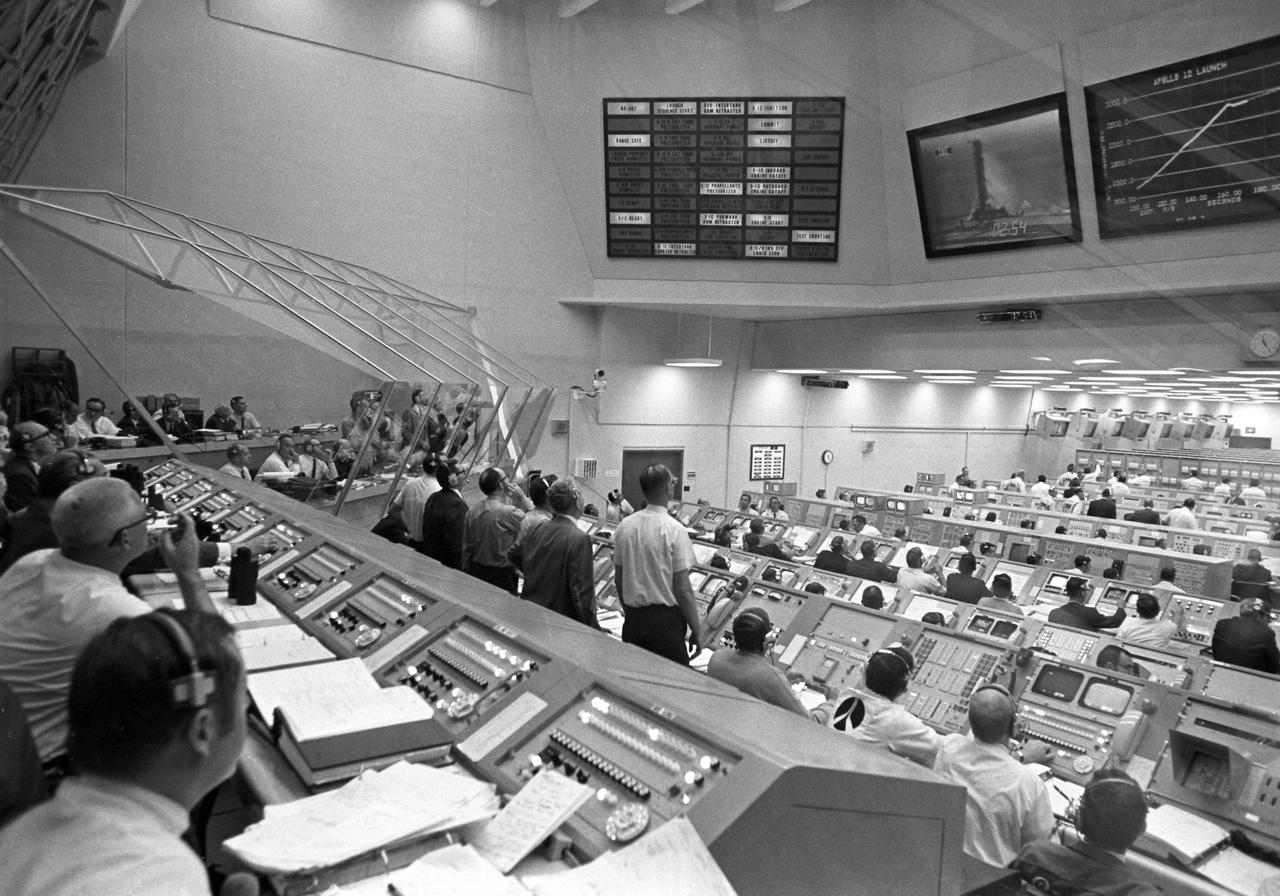
CAPE CANAVERAL, Fla. -- Personnel within Firing Room 2 of the LCC follow the early moments of the Apollo 12 launch on their overhead data display boards. When this view was taken, the vehicle’s second stage engines had ignited, carrying the Apollo 12 spacecraft to an altitude of more than 229,000 feet and more that 50 miles downrange. Photo credit: NASA
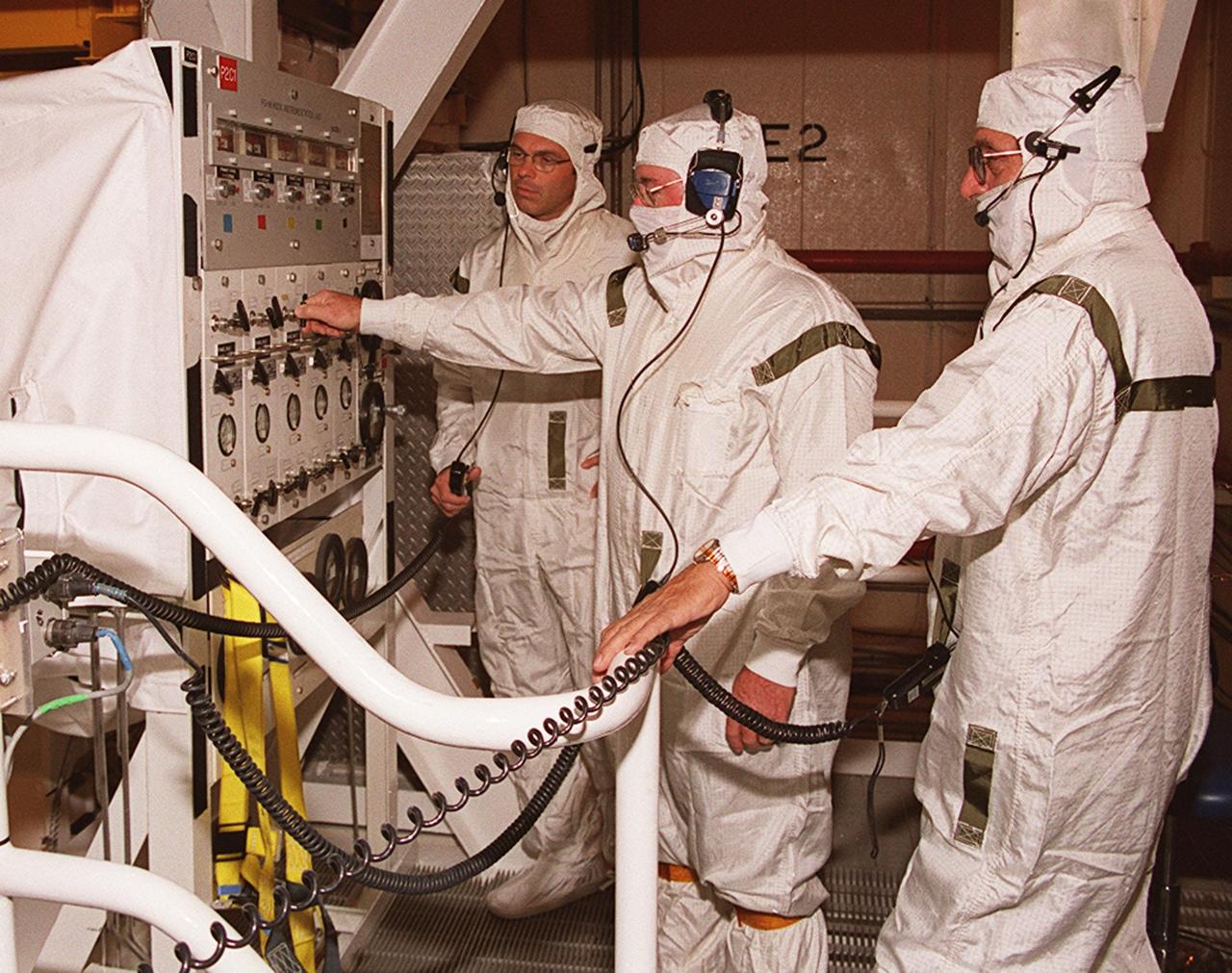
KENNEDY SPACE CENTER, Fla. -- Technicians in the payload changeout room on Launch Pad 39A monitor the controls moving the Multi-Purpose Logistics Module Leonardo out of the payload canister. The MPLM is the primary payload on mission STS-105 to the International Space Station. The mission includes a crew changeover on the Space Station. Expedition Three will be traveling on Discovery to replace Expedition Two, who will return to Earth on board Discovery. Launch of STS-105 is scheduled for Aug. 9
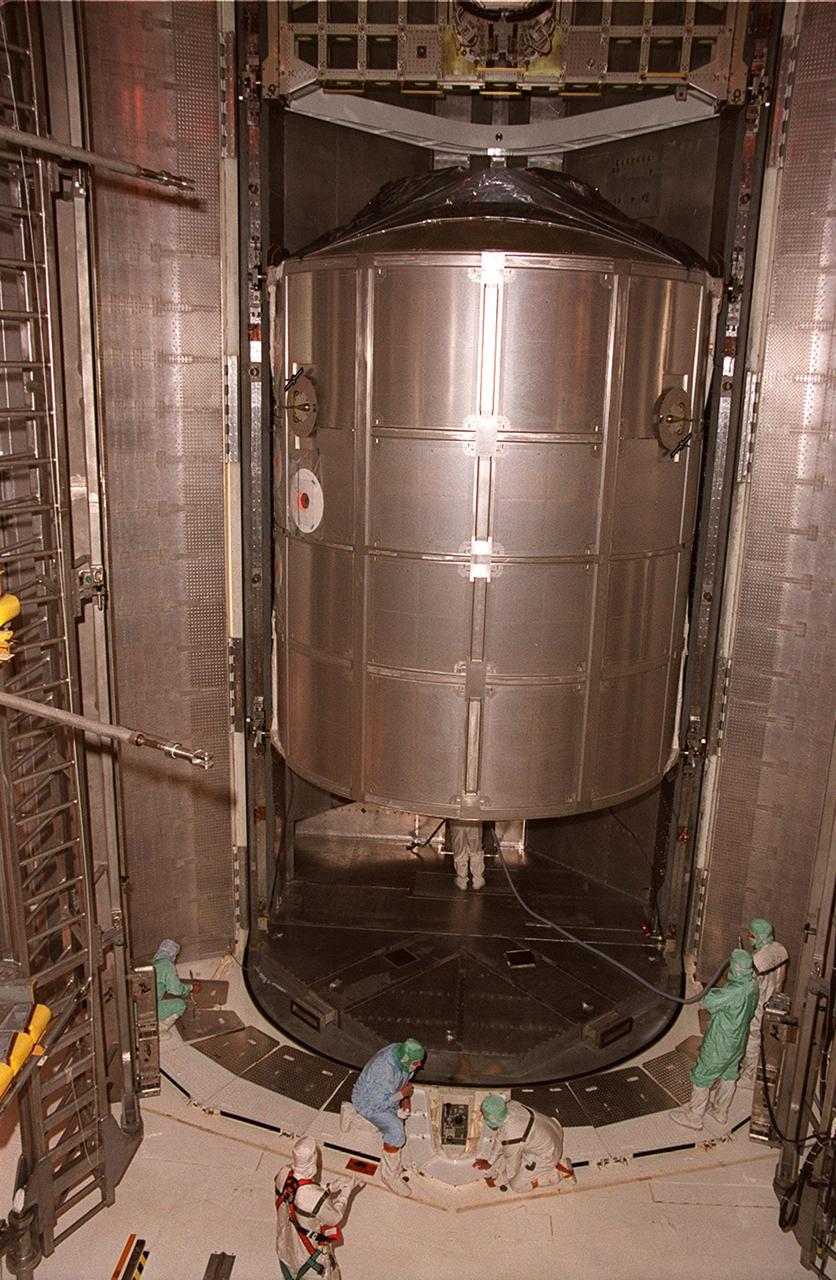
KENNEDY SPACE CENTER, Fla. -- Workers in the payload changeout room on Launch Pad 39A keep watch as they move the Multi-Purpose Logistics Module Leonardo out of the payload canister. The MPLM is the primary payload on mission STS-105 to the International Space Station. The mission includes a crew changeover on the Space Station. Expedition Three will be traveling on Discovery to replace Expedition Two, who will return to Earth on board Discovery. Launch of STS-105 is scheduled for Aug. 9
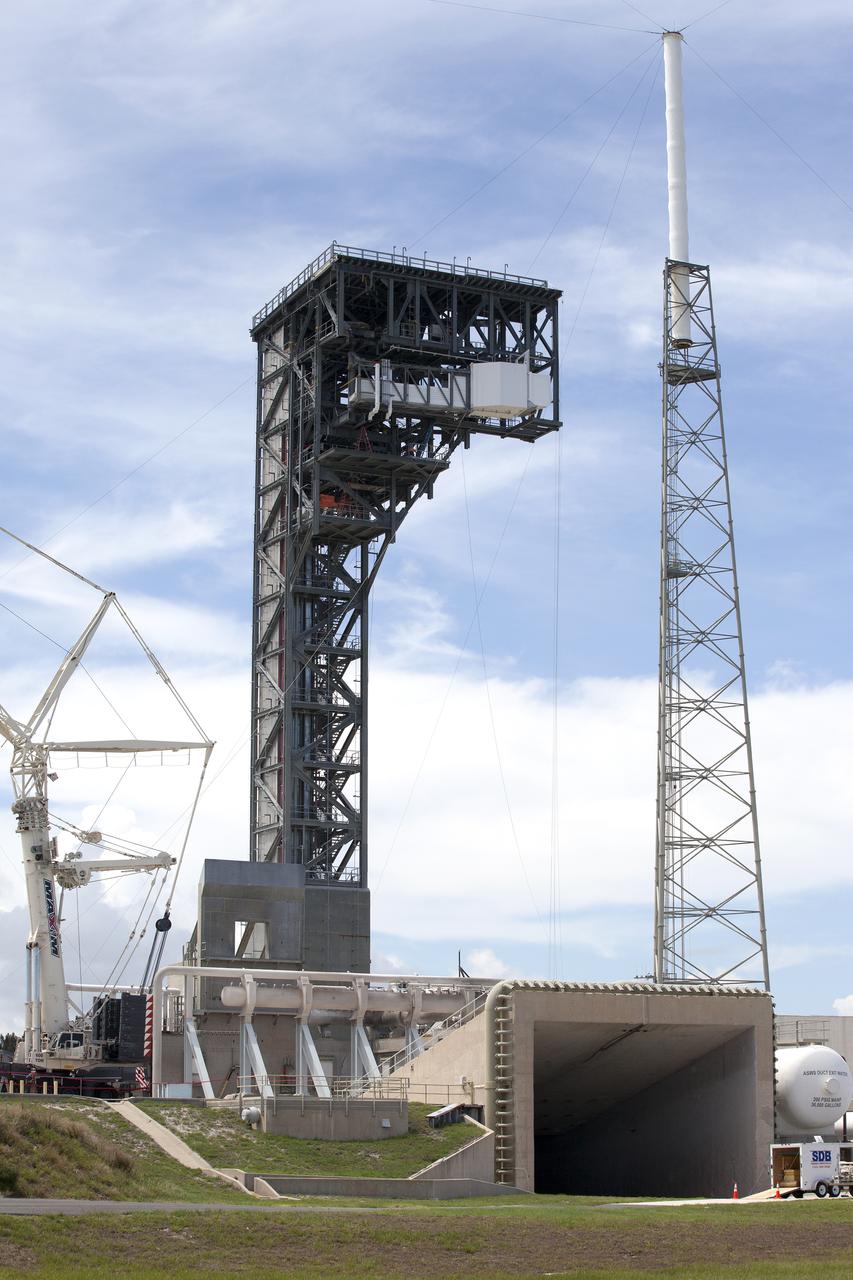
The Crew Access Arm and White Room for Boeing's CST-100 Starliner are attached to the Crew Access Tower at Cape Canaveral Air Force Station’s Space Launch Complex 41. The arm will serve as the connection that astronauts will walk through prior to boarding the Starliner spacecraft when stacked atop a United Launch Alliance Atlas V rocket. This installation completes the major construction of the first new Crew Access Tower to be built at the Cape since the Apollo era. Under a Commercial Crew Transportation Capability contract with NASA, Boeing’s Starliner system will be certified by NASA's Commercial Crew Program to fly crews to and from the International Space Station.
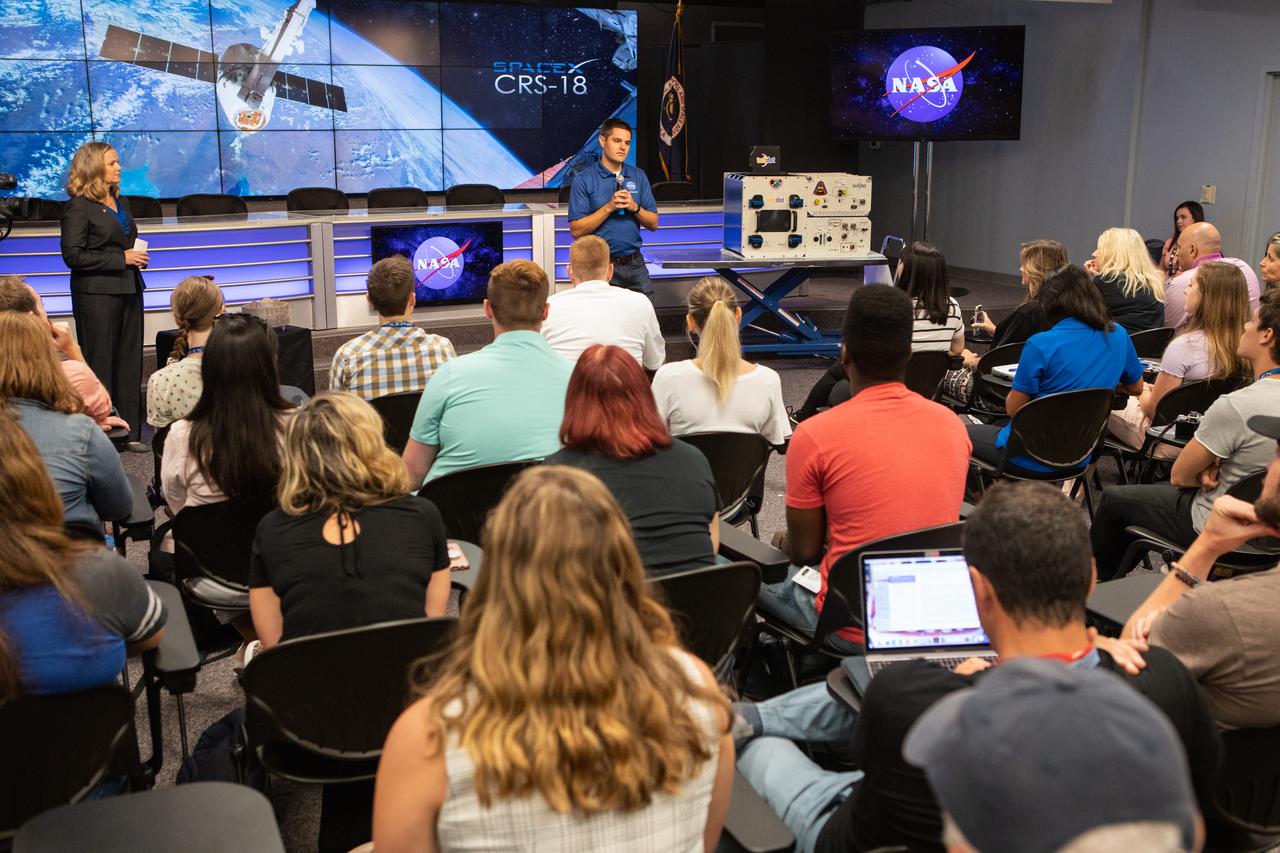
Jason August, International Space Station Mission Evaluation Room manager, talks to NASA Social participants about the International Docking Adapter-3 payload during a What’s On Board science briefing at the agency’s Kennedy Space Center in Florida on July 23, 2019. The briefing was held for SpaceX’s 18th Commercial Resupply Services (CRS-18) mission to the station. The SpaceX Falcon 9 rocket and uncrewed Dragon spacecraft are scheduled to launch July 24, 2019, from Space Launch Complex 40 at Florida’s Cape Canaveral Air Force Station.
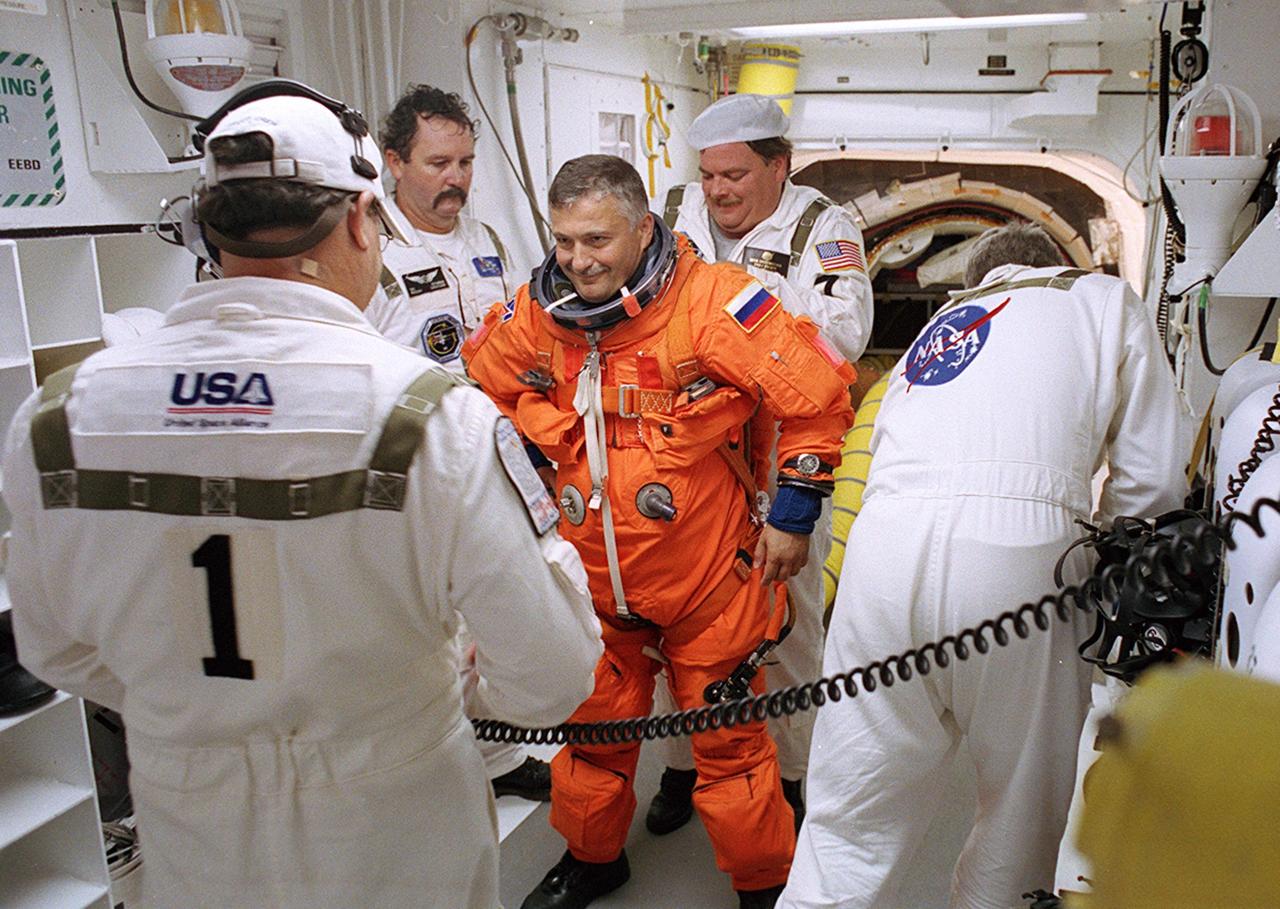
KENNEDY SPACE CENTER, FLA. - -- In the White Room at Launch Pad 39B, STS-112 Mission Specialist Fyodor N. Yurchikhin, Ph.D., a cosmonaut with the Russian Space Agency, receives assistance with his spacesuit before boarding Space Shuttle Atlantis. Liftoff is schedued for 3:46 p.m. EDT. Along with a crew of six, Atlantis will carry the S1 Integrated Truss Structure and the Crew and Equipment Translation Aid (CETA) Cart A to the International Space Station (ISS). The CETA is the first of two human-powered carts that will ride along the ISS railway, providing mobile work platforms for future spacewalking astronauts. On the 11-day mission, three spacewalks are planned to attach the S1 truss.
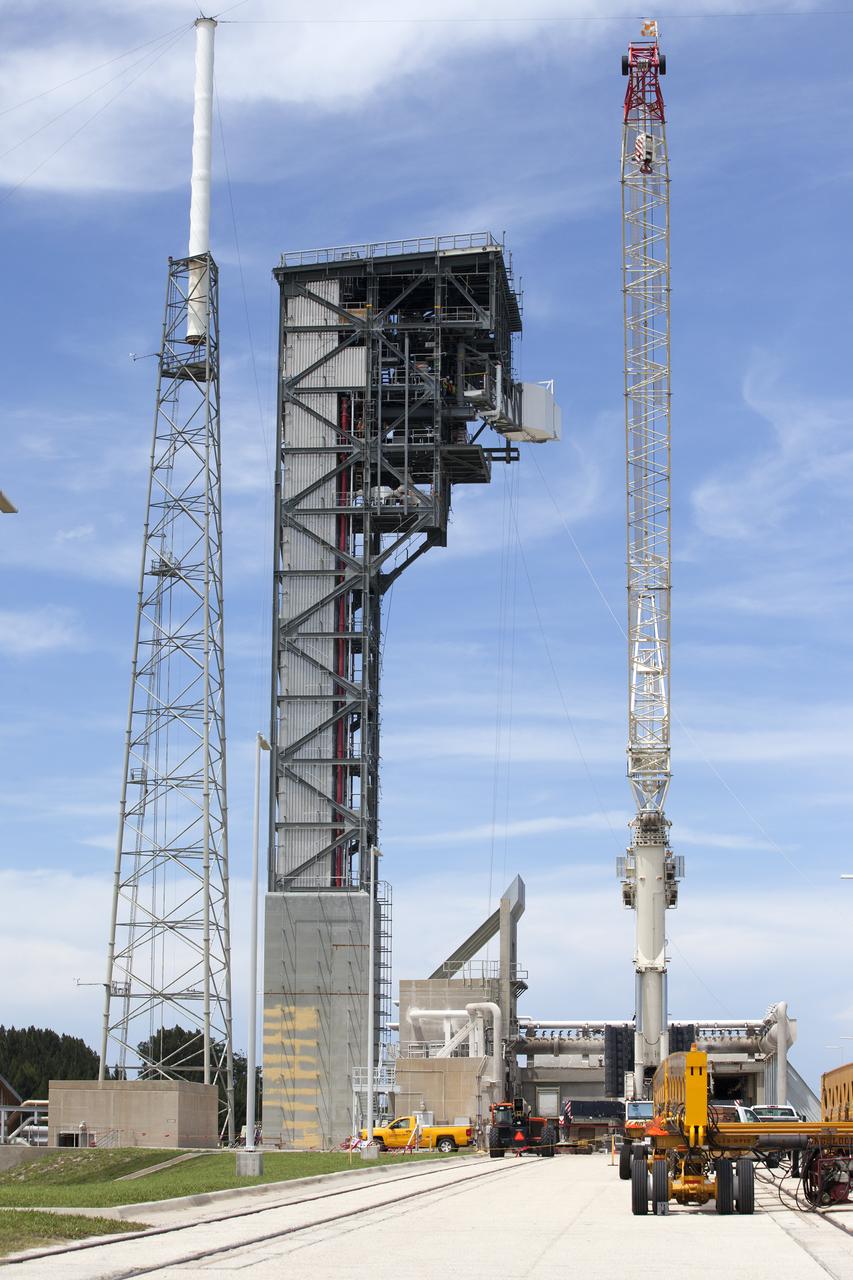
The Crew Access Arm and White Room for Boeing's CST-100 Starliner are attached to the Crew Access Tower at Cape Canaveral Air Force Station’s Space Launch Complex 41. The arm will serve as the connection that astronauts will walk through prior to boarding the Starliner spacecraft when stacked atop a United Launch Alliance Atlas V rocket. This installation completes the major construction of the first new Crew Access Tower to be built at the Cape since the Apollo era. Under a Commercial Crew Transportation Capability contract with NASA, Boeing’s Starliner system will be certified by NASA's Commercial Crew Program to fly crews to and from the International Space Station.
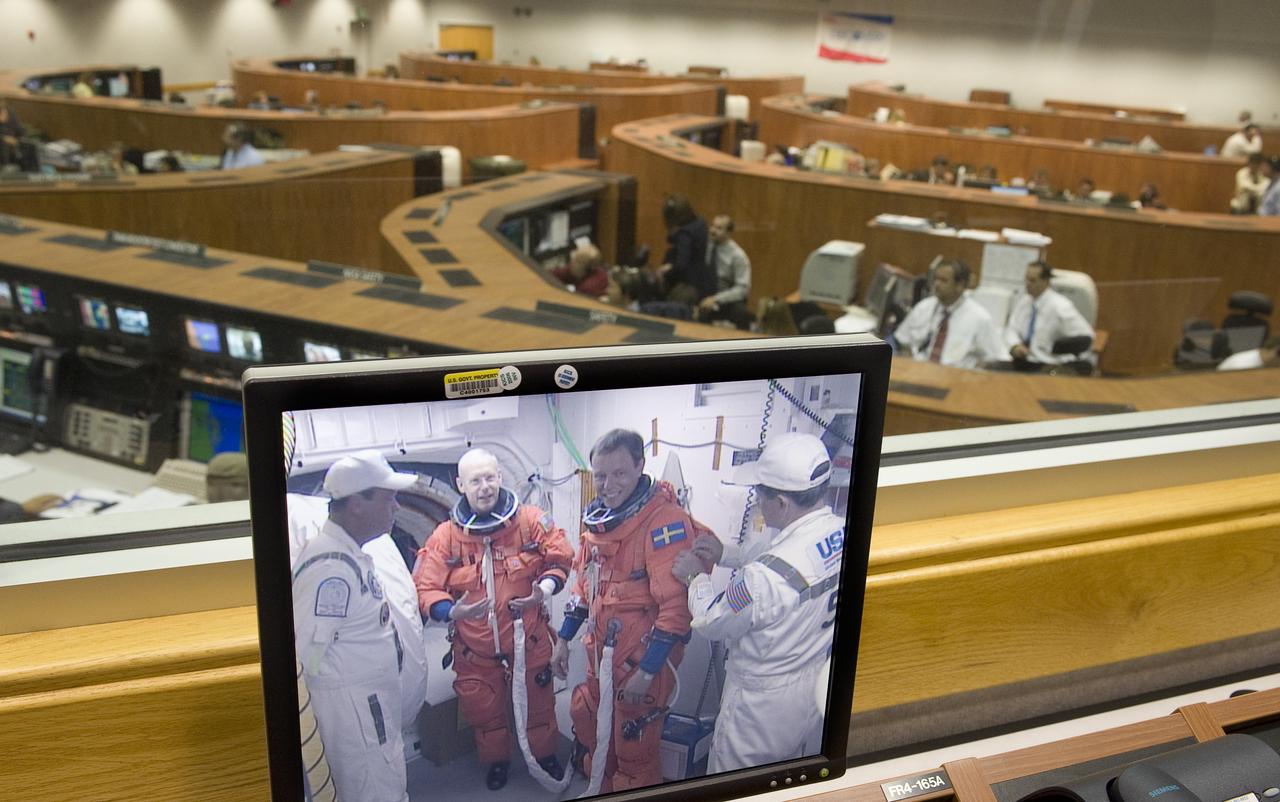
NASA Astronaut Patrick Forrester, left, and European Space Agency Astronaut Christer Fuglesang are seen preparing to board the space shuttle Discovery at pad 39a on a monitor in Firing Room Four of the Kennedy Space Center at Cape Canaveral, Fla., Monday, Aug. 24, 2009. Discovery is scheduled to launch Tuesday, Aug., 25, 2009 at 1:36 a.m. EDT and will carry the Leonardo supply module to the International Space Station during STS-128, along with a new crew member for the station, Nicole Stott. Photo Credit: (NASA/Bill Ingalls)
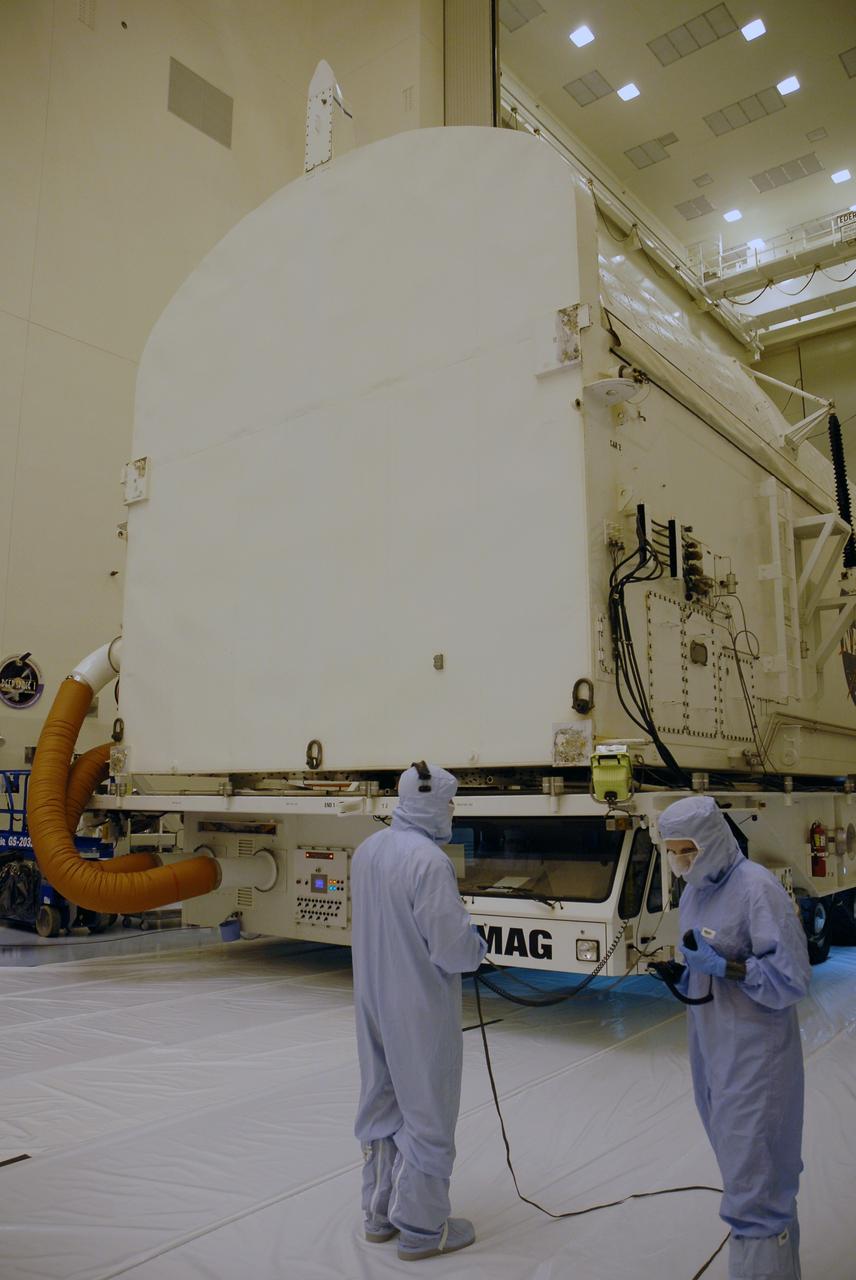
CAPE CANAVERAL, Fla. – At NASA's Kennedy Space Center in Florida, the payload canister with the Hubble Space Telescope equipment is in a clean room inside the Payload Hazardous Servicing Facility, or PHSF. The payload comprises four carriers holding various equipment for the mission. The canister maintains a controlled environment. In the PHSF, the carriers will be stored until a new target launch date can be set for Atlantis’ STS-125 mission in 2009. Atlantis’ October target launch date was delayed after a device on board Hubble used in the storage and transmission of science data to Earth shut down on Sept. 27. Replacing the broken device will be added to Atlantis’ servicing mission to the telescope. Photo credit: NASA/Troy Cryder
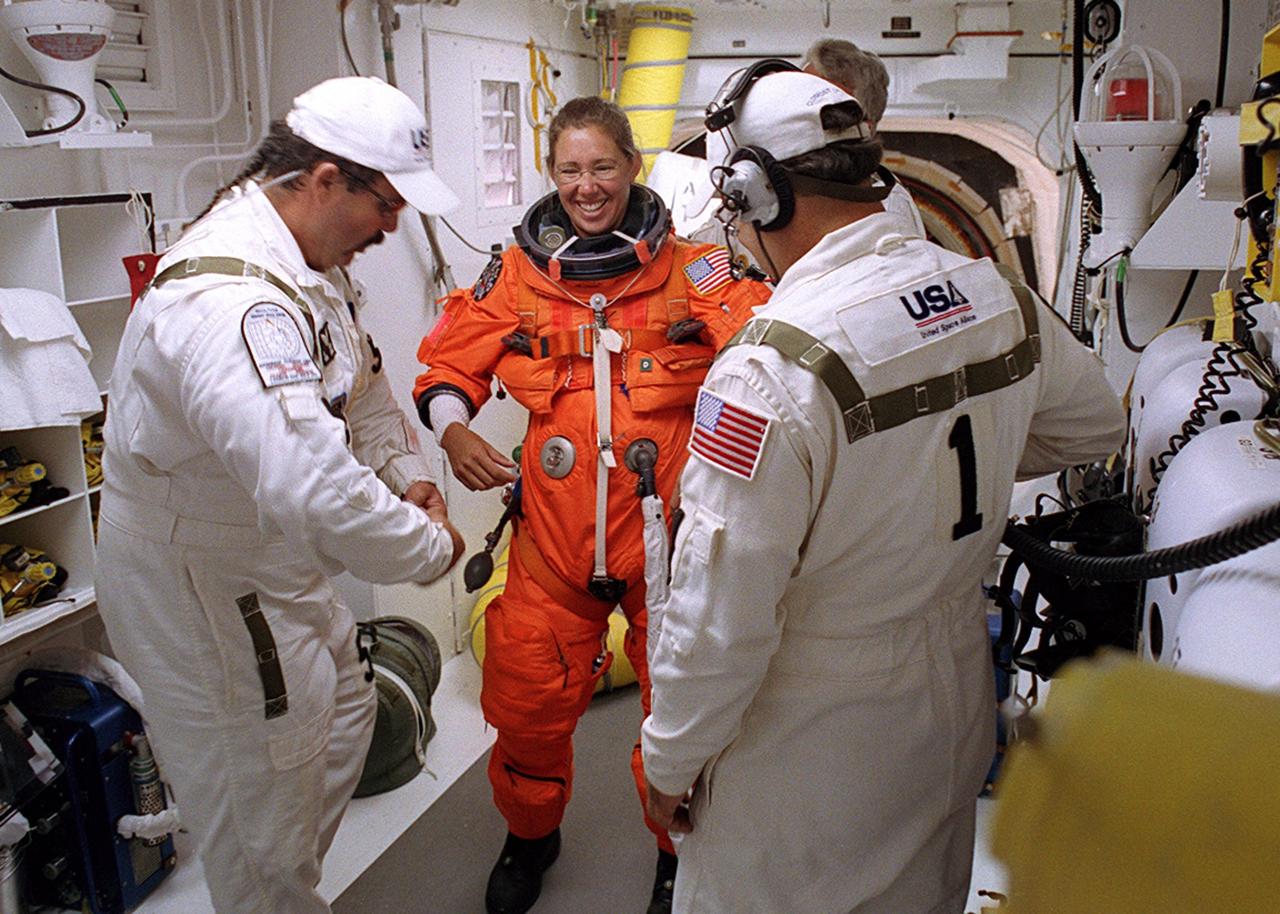
KENNEDY SPACE CENTER, FLA. - -- In the White Room at Launch Pad 39B, STS-112 Mission Specialist Sandra H. Magnus, Ph.D., receives assistance with her spacesuit before boarding Space Shuttle Atlantis. Liftoff is schedued for 3:46 p.m. EDT. Along with a crew of six, Atlantis will carry the S1 Integrated Truss Structure and the Crew and Equipment Translation Aid (CETA) Cart A to the International Space Station (ISS). The CETA is the first of two human-powered carts that will ride along the ISS railway, providing mobile work platforms for future spacewalking astronauts. On the 11-day mission, three spacewalks are planned to attach the S1 truss.
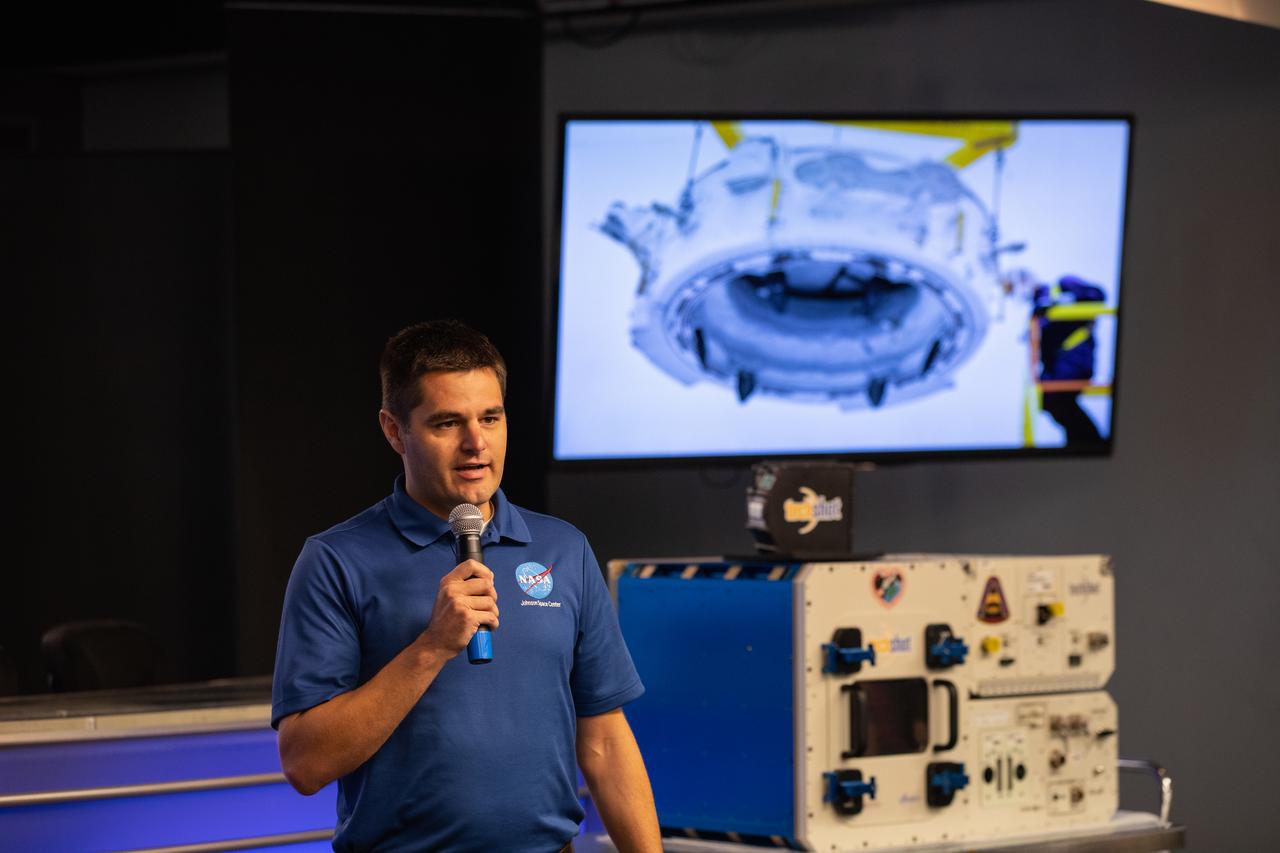
Jason August, International Space Station Mission Evaluation Room manager, talks to NASA Social participants about the International Docking Adapter-3 payload during a What’s On Board science briefing at the agency’s Kennedy Space Center in Florida on July 23, 2019. The briefing was held for SpaceX’s 18th Commercial Resupply Services (CRS-18) mission to the station. The SpaceX Falcon 9 rocket and uncrewed Dragon spacecraft are scheduled to launch July 24, 2019, from Space Launch Complex 40 at Florida’s Cape Canaveral Air Force Station.
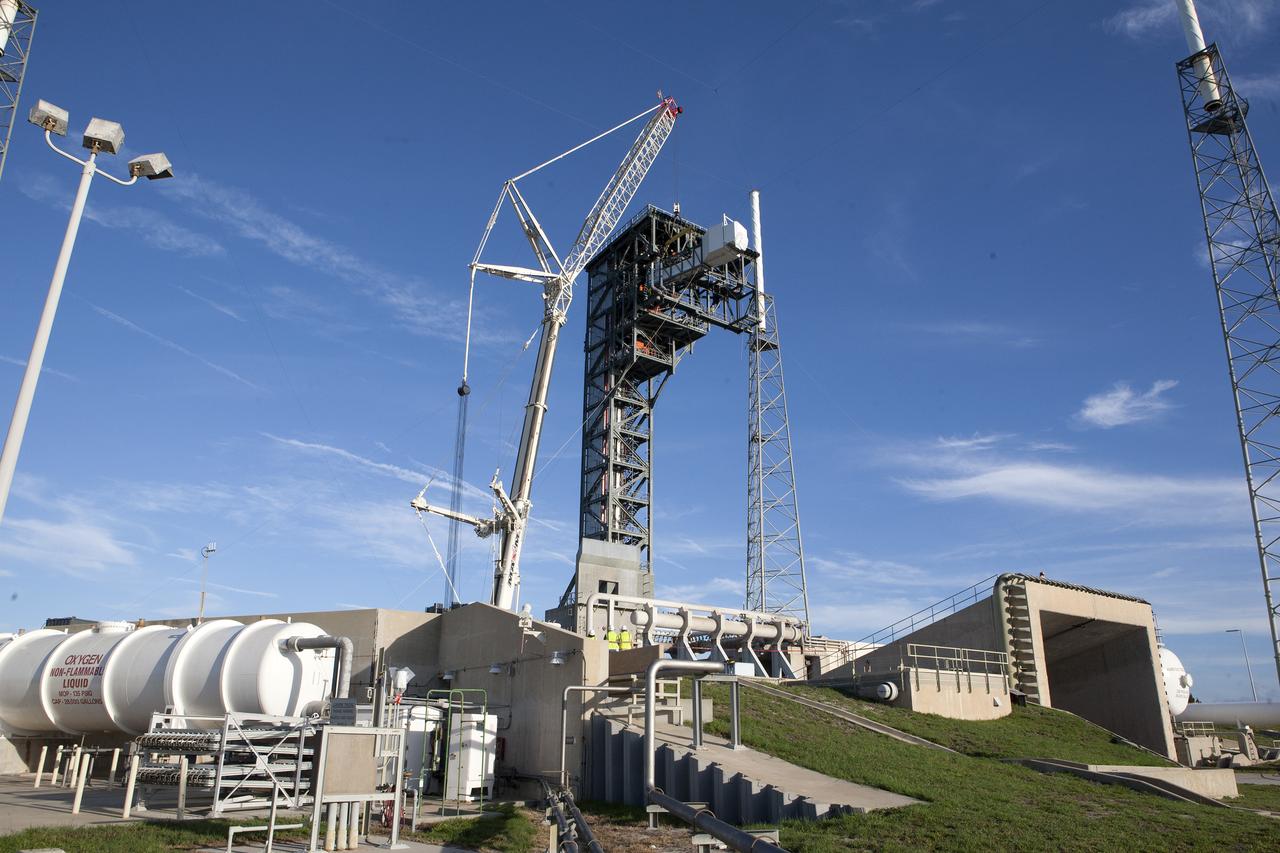
The Crew Access Arm and White Room for Boeing's CST-100 Starliner are attached to the Crew Access Tower at Cape Canaveral Air Force Station’s Space Launch Complex 41. The arm will serve as the connection that astronauts will walk through prior to boarding the Starliner spacecraft when stacked atop a United Launch Alliance Atlas V rocket. This installation completes the major construction of the first new Crew Access Tower to be built at the Cape since the Apollo era. Under a Commercial Crew Transportation Capability (CCtCap) contract with NASA, Boeing’s Starliner system will be certified by NASA's Commercial Crew Program to fly crews to and from the International Space Station.
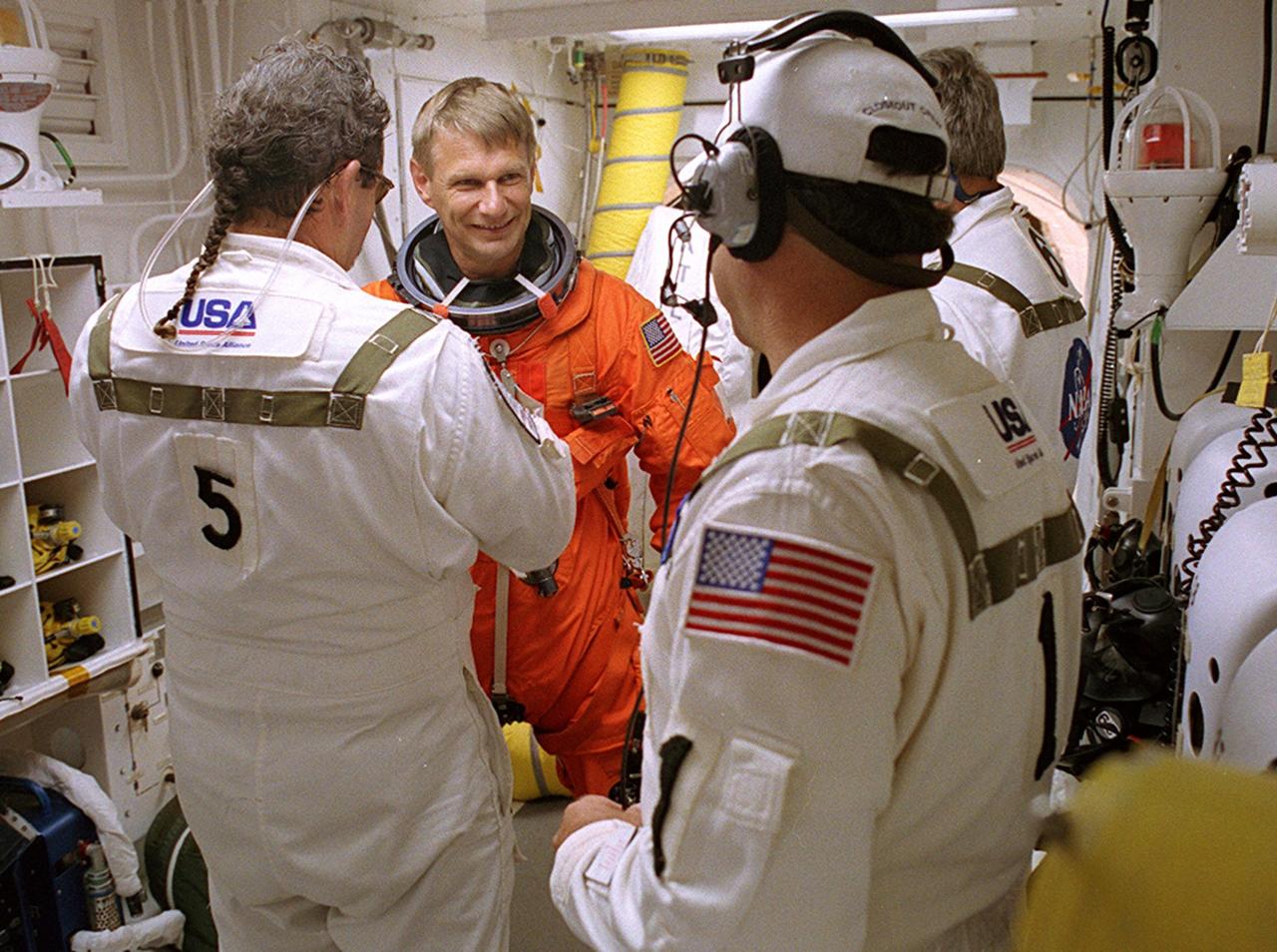
KENNEDY SPACE CENTER, FLA. - -- In the White Room at Launch Pad 39B, STS-112 Mission Specialist Piers J. Sellers, Ph.D., receives assistance with his spacesuit before boarding Space Shuttle Atlantis. Liftoff is schedued for 3:46 p.m. EDT. Along with a crew of six, Atlantis will carry the S1 Integrated Truss Structure and the Crew and Equipment Translation Aid (CETA) Cart A to the International Space Station (ISS). The CETA is the first of two human-powered carts that will ride along the ISS railway, providing mobile work platforms for future spacewalking astronauts. On the 11-day mission, three spacewalks are planned to attach the S1 truss.
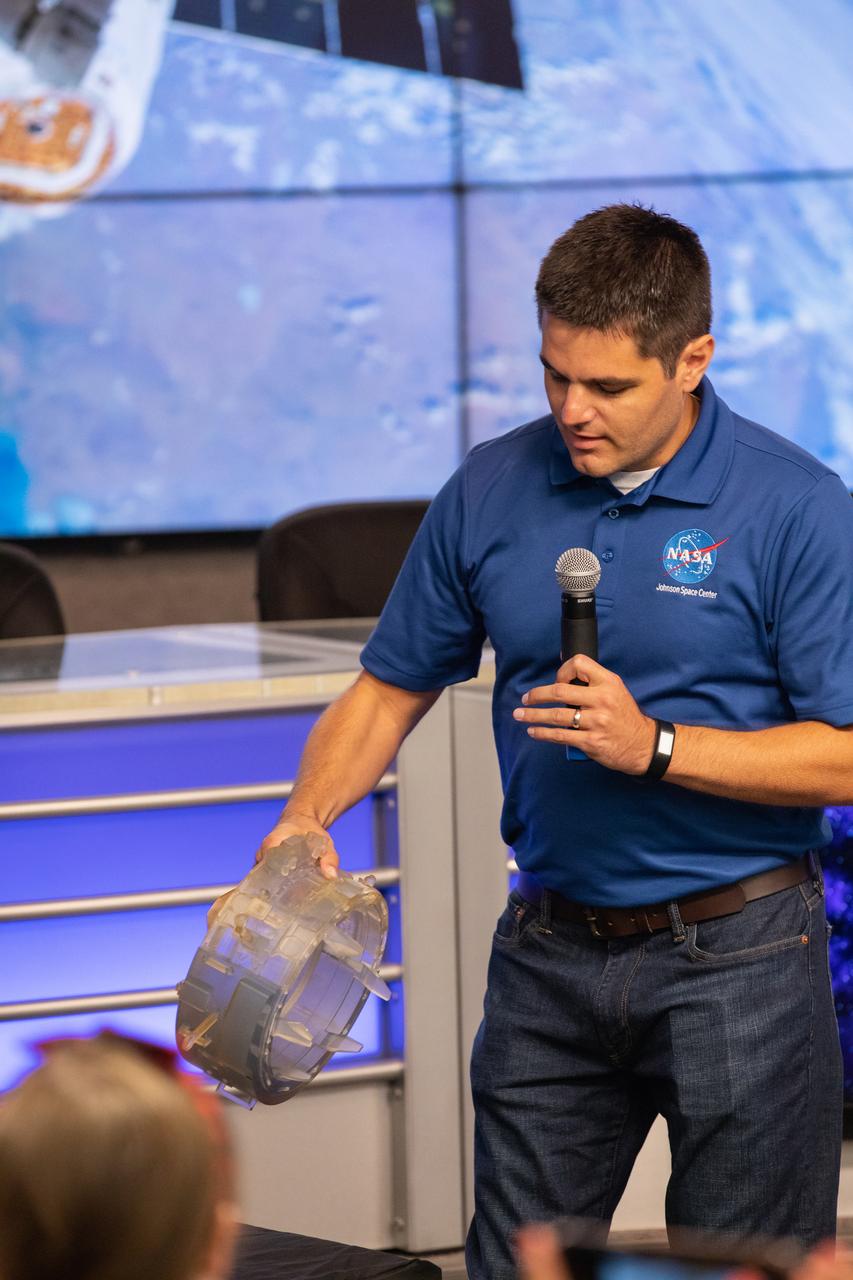
Jason August, International Space Station Mission Evaluation Room manager, talks to NASA Social participants about the International Docking Adapter-3 payload during a What’s On Board science briefing at the agency’s Kennedy Space Center in Florida on July 23, 2019. The briefing was held for SpaceX’s 18th Commercial Resupply Services (CRS-18) mission to the station. The SpaceX Falcon 9 rocket and uncrewed Dragon spacecraft are scheduled to launch July 24, 2019, from Space Launch Complex 40 at Florida’s Cape Canaveral Air Force Station.

CAPE CANAVERAL, Fla. – At NASA's Kennedy Space Center in Florida, the payload canister with the Hubble Space Telescope equipment is in a clean room inside the Payload Hazardous Servicing Facility, or PHSF. The payload comprises four carriers holding various equipment for the mission. The canister maintains a controlled environment. In the PHSF, the carriers will be stored until a new target launch date can be set for Atlantis’ STS-125 mission in 2009. Atlantis’ October target launch date was delayed after a device on board Hubble used in the storage and transmission of science data to Earth shut down on Sept. 27. Replacing the broken device will be added to Atlantis’ servicing mission to the telescope. Photo credit: NASA/Troy Cryder
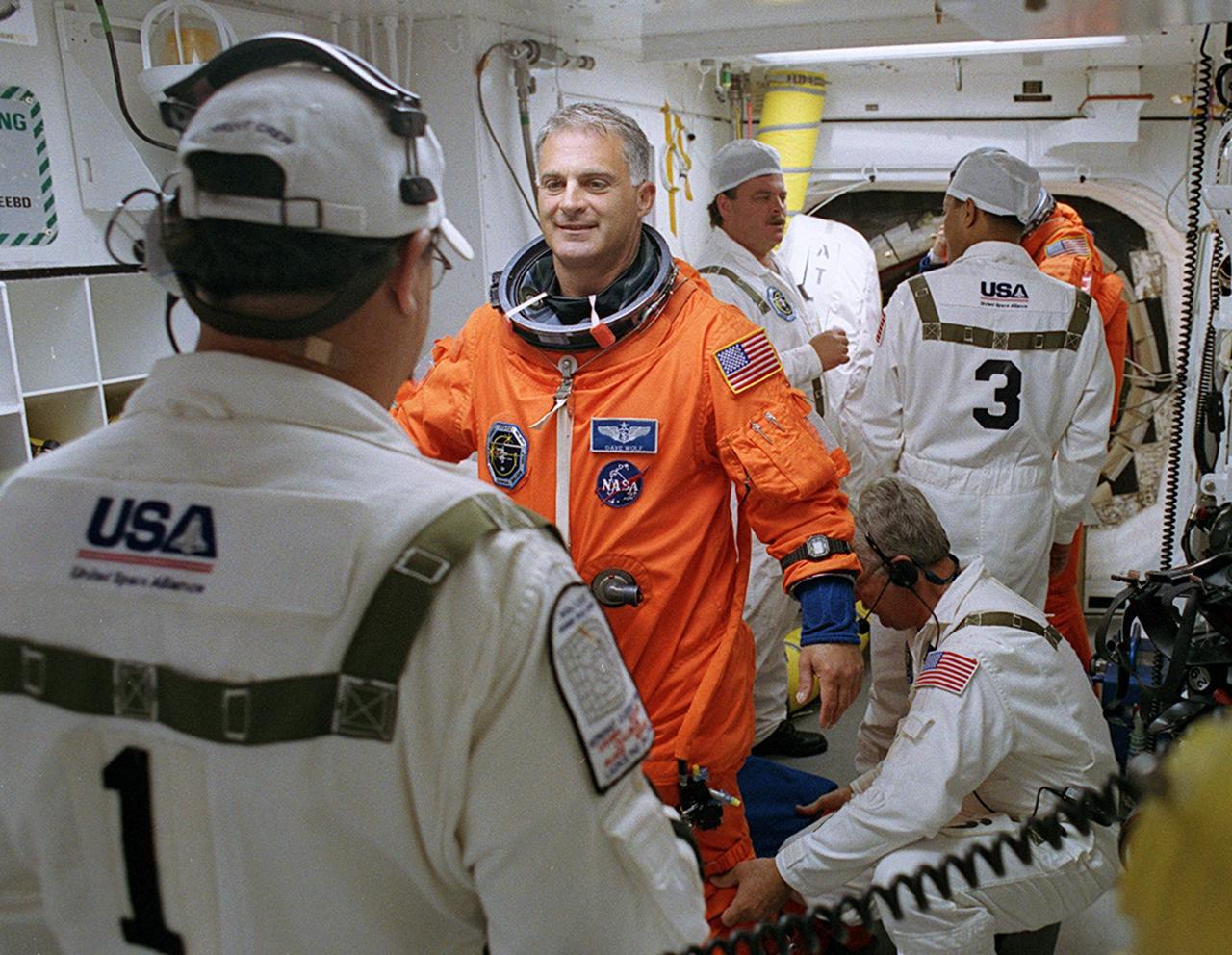
KENNEDY SPACE CENTER, FLA. - -- In the White Room at Launch Pad 39B, STS-112 Mission Specialist David A. Wolf, M.D., receives assistance with his spacesuit before boarding Space Shuttle Atlantis. Liftoff is schedued for 3:46 p.m. EDT. Along with a crew of six, Atlantis will carry the S1 Integrated Truss Structure and the Crew and Equipment Translation Aid (CETA) Cart A to the International Space Station (ISS). The CETA is the first of two human-powered carts that will ride along the ISS railway, providing mobile work platforms for future spacewalking astronauts. On the 11-day mission, three spacewalks are planned to attach the S1 truss.
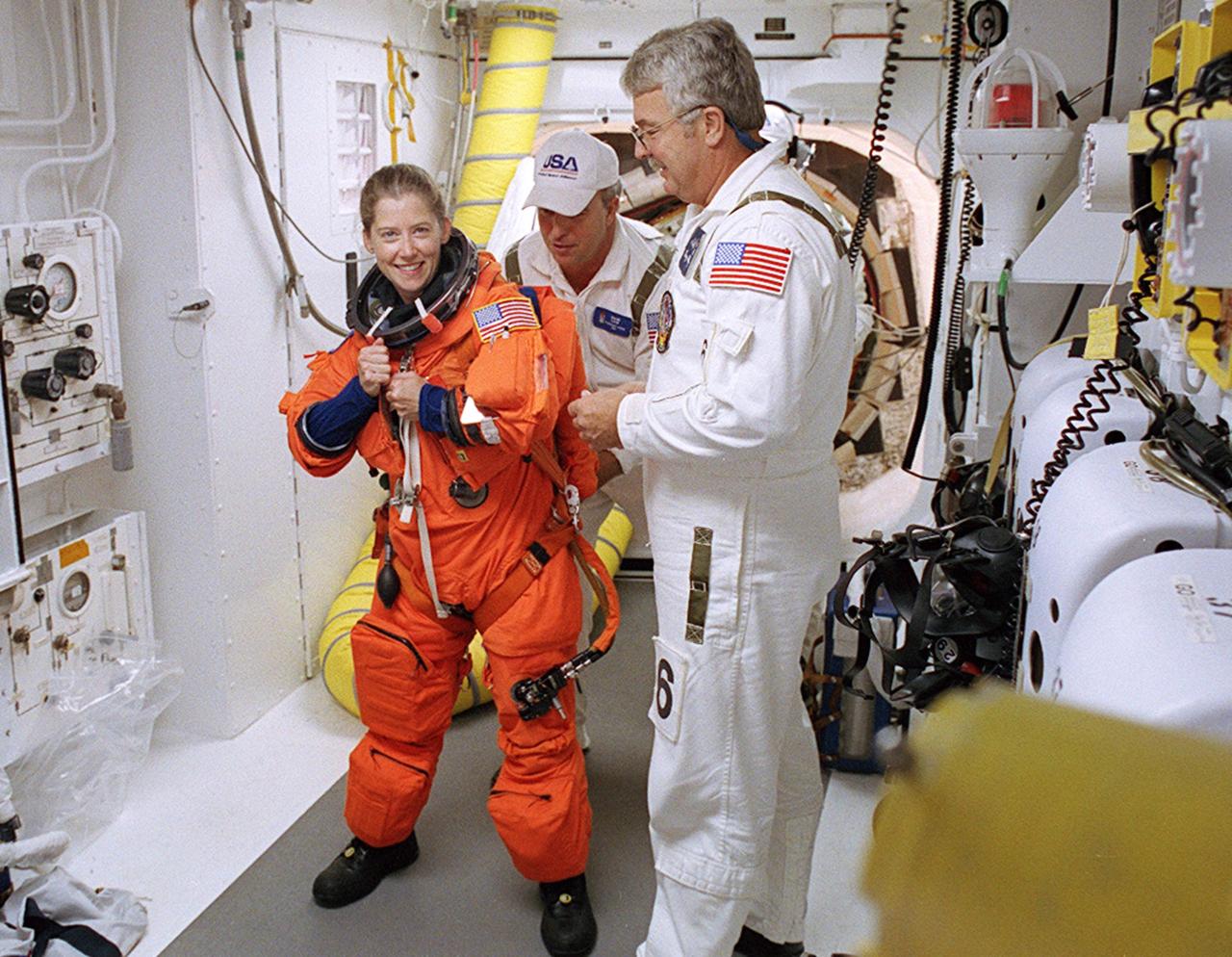
KENNEDY SPACE CENTER, FLA. - -- In the White Room at Launch Pad 39B, STS-112 Pilot Pamela Ann Melroy receives assistance with her spacesuit before boarding Space Shuttle Atlantis. Liftoff is schedued for 3:46 p.m. EDT. Along with a crew of six, Atlantis will carry the S1 Integrated Truss Structure and the Crew and Equipment Translation Aid (CETA) Cart A to the International Space Station (ISS). The CETA is the first of two human-powered carts that will ride along the ISS railway, providing mobile work platforms for future spacewalking astronauts. On the 11-day mission, three spacewalks are planned to attach the S1 truss.
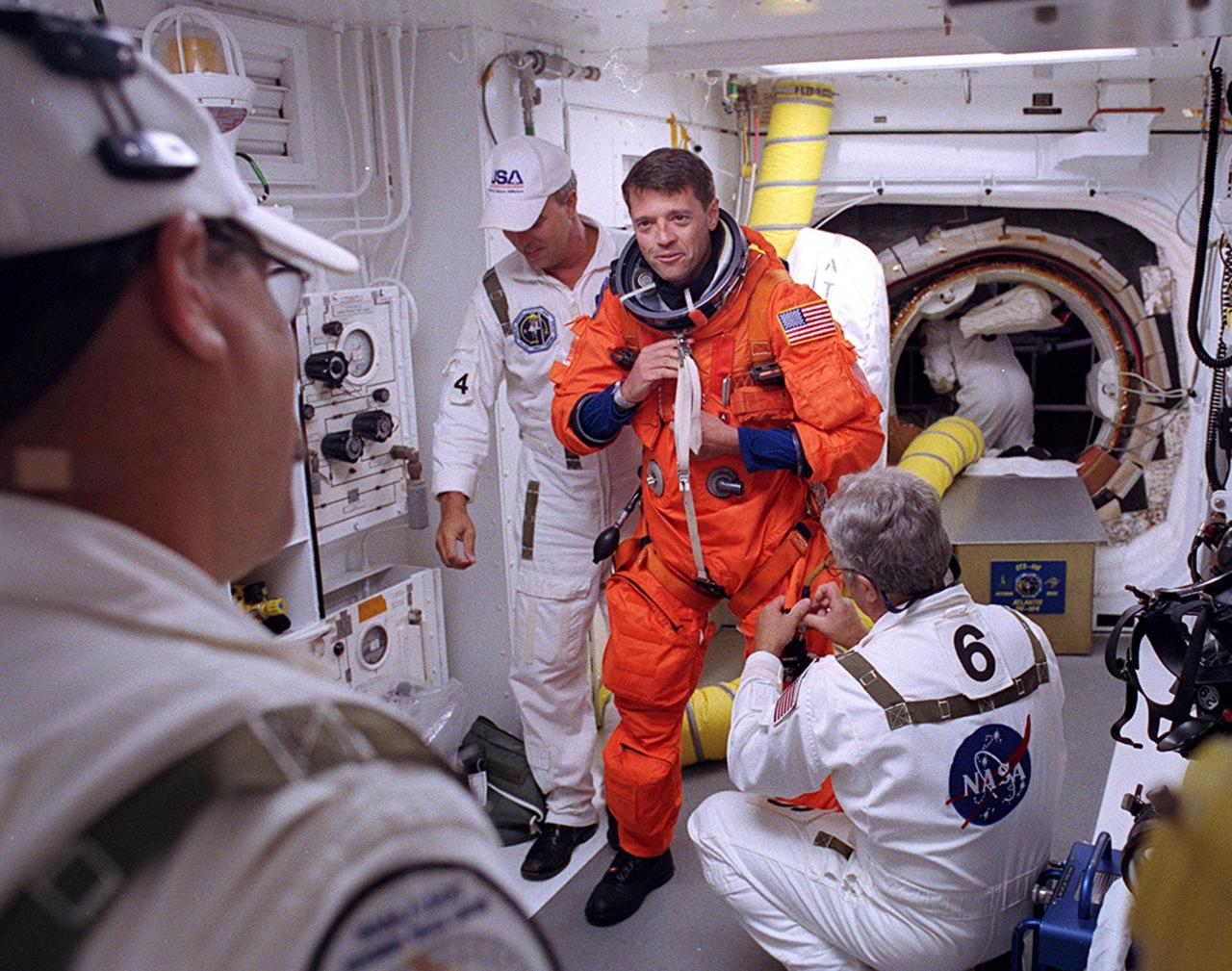
KENNEDY SPACE CENTER, FLA. - -- In the White Room at Launch Pad 39B, STS-112 Commander Jeffrey Ashby receives assistance with his spacesuit before boarding Space Shuttle Atlantis. Liftoff is schedued for 3:46 p.m. EDT. Along with a crew of six, Atlantis will carry the S1 Integrated Truss Structure and the Crew and Equipment Translation Aid (CETA) Cart A to the International Space Station (ISS). The CETA is the first of two human-powered carts that will ride along the ISS railway, providing mobile work platforms for future spacewalking astronauts. On the 11-day mission, three spacewalks are planned to attach the S1 truss.
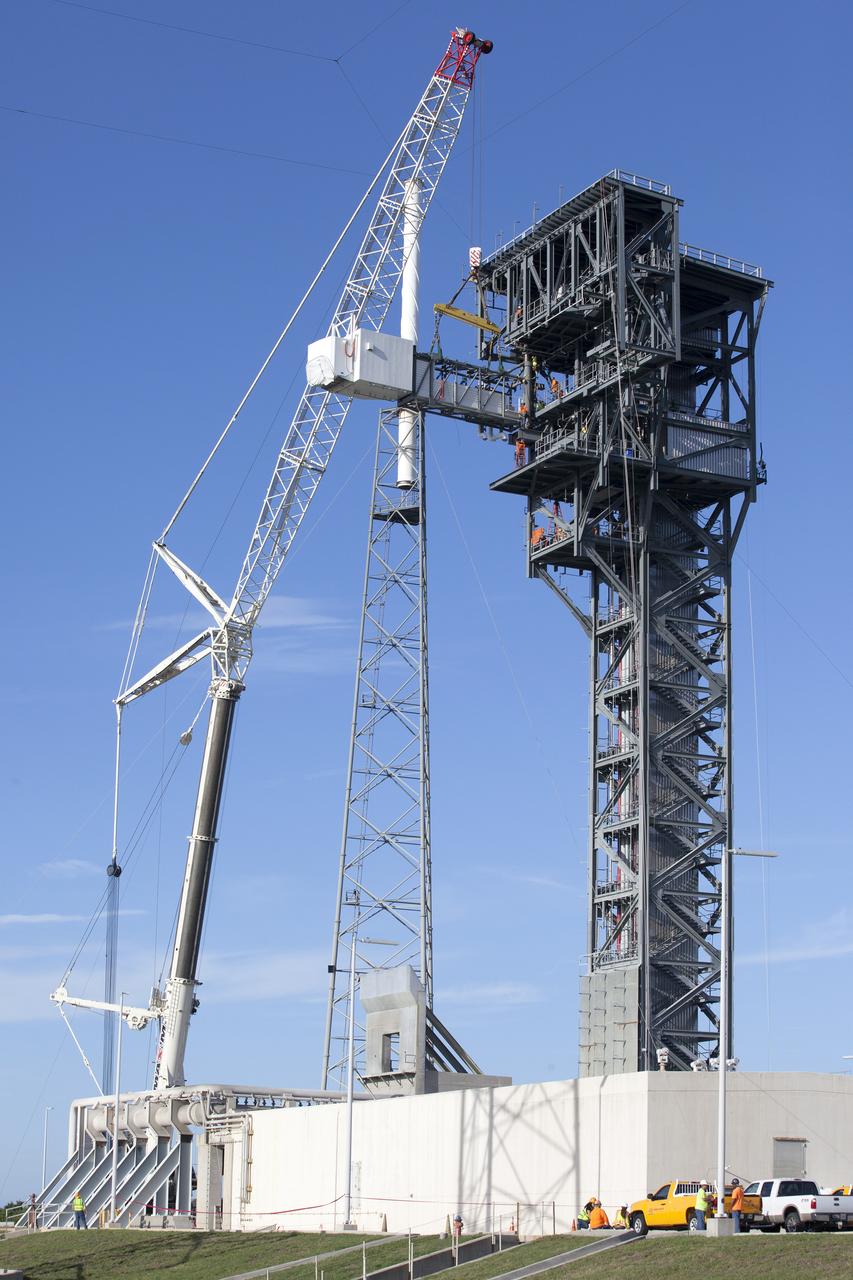
The Crew Access Arm and White Room for Boeing's CST-100 Starliner are attached to the Crew Access Tower at Cape Canaveral Air Force Station’s Space Launch Complex 41. The arm will serve as the connection that astronauts will walk through prior to boarding the spacecraft when stacked atop a United Launch Alliance Atlas V rocket. The installation completes the major construction of the first new Crew Access Tower to be built at the Cape since the Apollo era. Under a Commercial Crew Transportation Capability (CCtCap) contract with NASA, Boeing’s Starliner system will be certified by NASA's Commercial Crew Program to fly crews to and from the International Space Station.
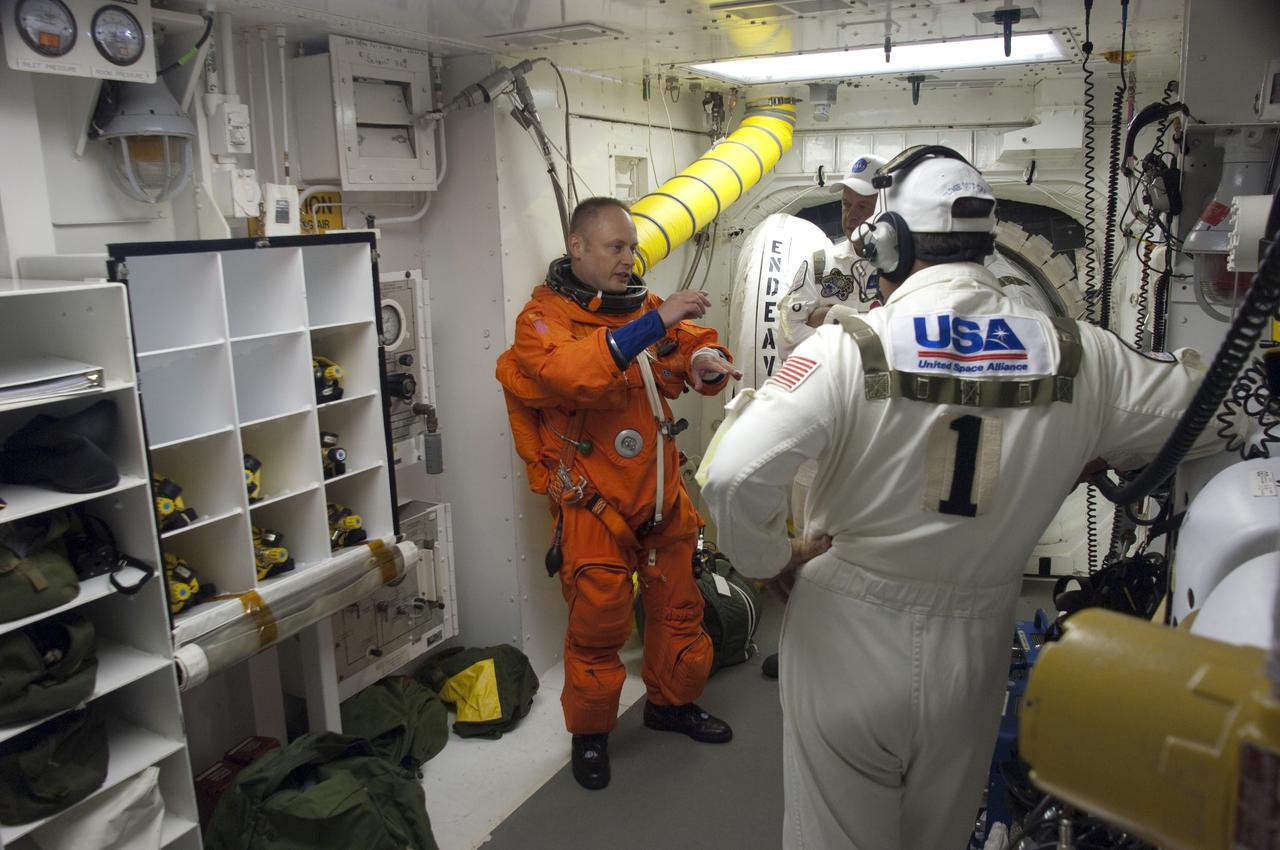
CAPE CANAVERAL, Fla. -- In the White Room at Launch Pad 39A at NASA's Kennedy Space Center in Florida, STS-134 Mission Specialist Michael Fincke prepares to board space shuttle Endeavour through the crew hatch in the background. Members of the Closeout Crew, in white uniforms, are there to assist astronauts with their launch-and-entry suits and the boarding process. Fincke last served as a member of the Expedition 18 crew of the International Space Station in 2009. This will be Fincke's first flight aboard a space shuttle. STS-134 will deliver the Alpha Magnetic Spectrometer-2 (AMS), Express Logistics Carrier-3, a high-pressure gas tank and additional spare parts for the Dextre robotic helper to the International Space Station. May 16 at 8:56 a.m. will be the second launch attempt for Endeavour. The first attempt on April 29 was scrubbed because of an issue associated with a faulty power distribution box called the aft load control assembly-2 (ALCA-2). STS-134 will be the final spaceflight for Endeavour. For more information visit, www.nasa.gov/mission_pages/shuttle/shuttlemissions/sts134/index.html. Photo credit: NASA/Sandra Joseph and Kevin O'Connell

CAPE CANAVERAL, Fla. -- In the White Room at Launch Pad 39A at NASA's Kennedy Space Center in Florida, STS-134 Pilot Greg H. Johnson prepares to board space shuttle Endeavour through the crew hatch in the background. Members of the Closeout Crew, in white uniforms, are there to assist astronauts with their launch-and-entry suits and the boarding process. Johnson piloted space shuttle Endeavour during its STS-123 mission in 2008. STS-134 will deliver the Alpha Magnetic Spectrometer-2 (AMS), Express Logistics Carrier-3, a high-pressure gas tank and additional spare parts for the Dextre robotic helper to the International Space Station. May 16 at 8:56 a.m. will be the second launch attempt for Endeavour. The first attempt on April 29 was scrubbed because of an issue associated with a faulty power distribution box called the aft load control assembly-2 (ALCA-2). STS-134 will be the final spaceflight for Endeavour. For more information visit, www.nasa.gov/mission_pages/shuttle/shuttlemissions/sts134/index.html. Photo credit: NASA/Sandra Joseph and Kevin O'Connell
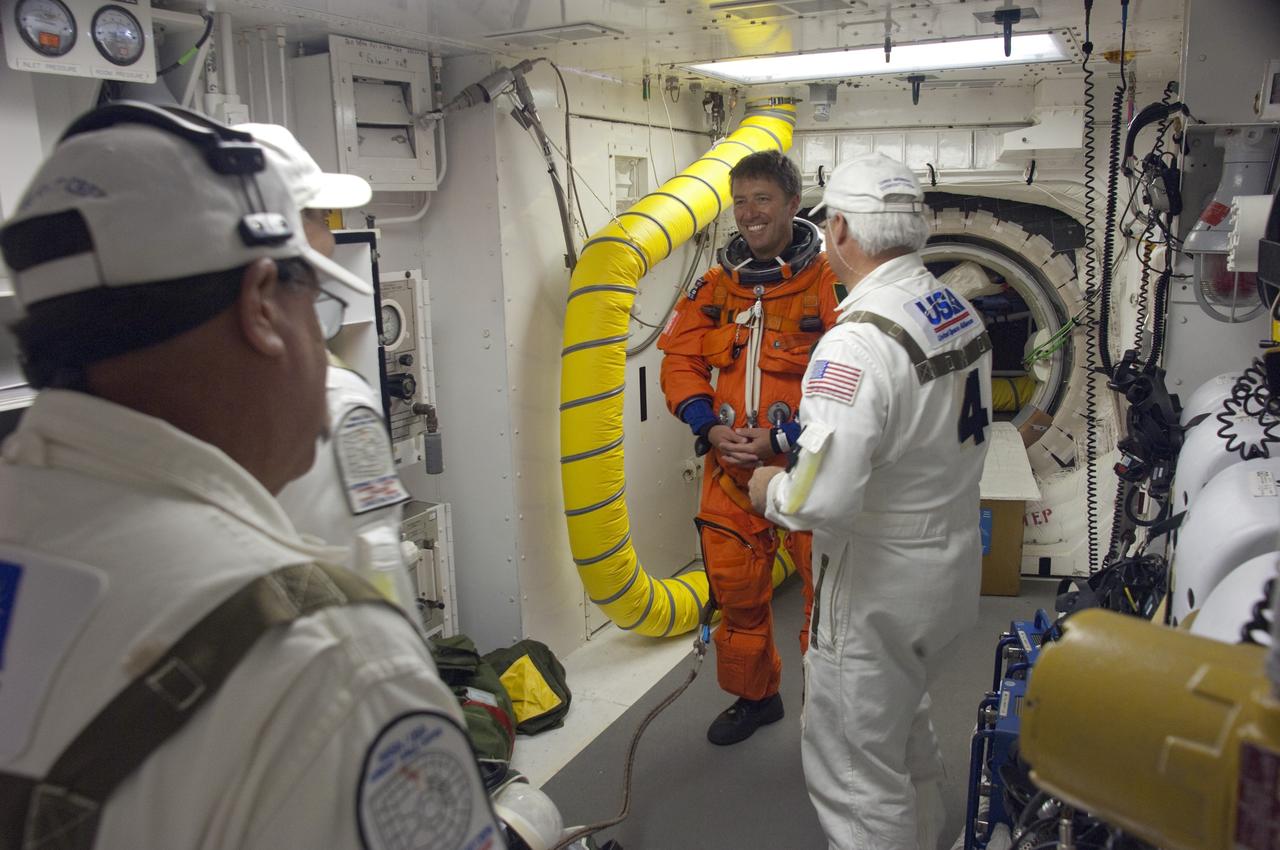
CAPE CANAVERAL, Fla. -- In the White Room at Launch Pad 39A at NASA's Kennedy Space Center in Florida, STS-134 Mission Specialist Roberto Vittori with the European Space Agency prepares to board space shuttle Endeavour through the crew hatch in the background. Members of the Closeout Crew, in white uniforms, are there to assist astronauts with their launch-and-entry suits and the boarding process. Vittori will be making his third trip to the International Space Station. His first mission was in 2002 and second in 2005, both of which were launched aboard a Russian Soyuz spacecraft. STS-134 will deliver the Alpha Magnetic Spectrometer-2 (AMS), Express Logistics Carrier-3, a high-pressure gas tank and additional spare parts for the Dextre robotic helper to the International Space Station. May 16 at 8:56 a.m. will be the second launch attempt for Endeavour. The first attempt on April 29 was scrubbed because of an issue associated with a faulty power distribution box called the aft load control assembly-2 (ALCA-2). STS-134 will be the final spaceflight for Endeavour. For more information visit, www.nasa.gov/mission_pages/shuttle/shuttlemissions/sts134/index.html. Photo credit: NASA/Sandra Joseph and Kevin O'Connell
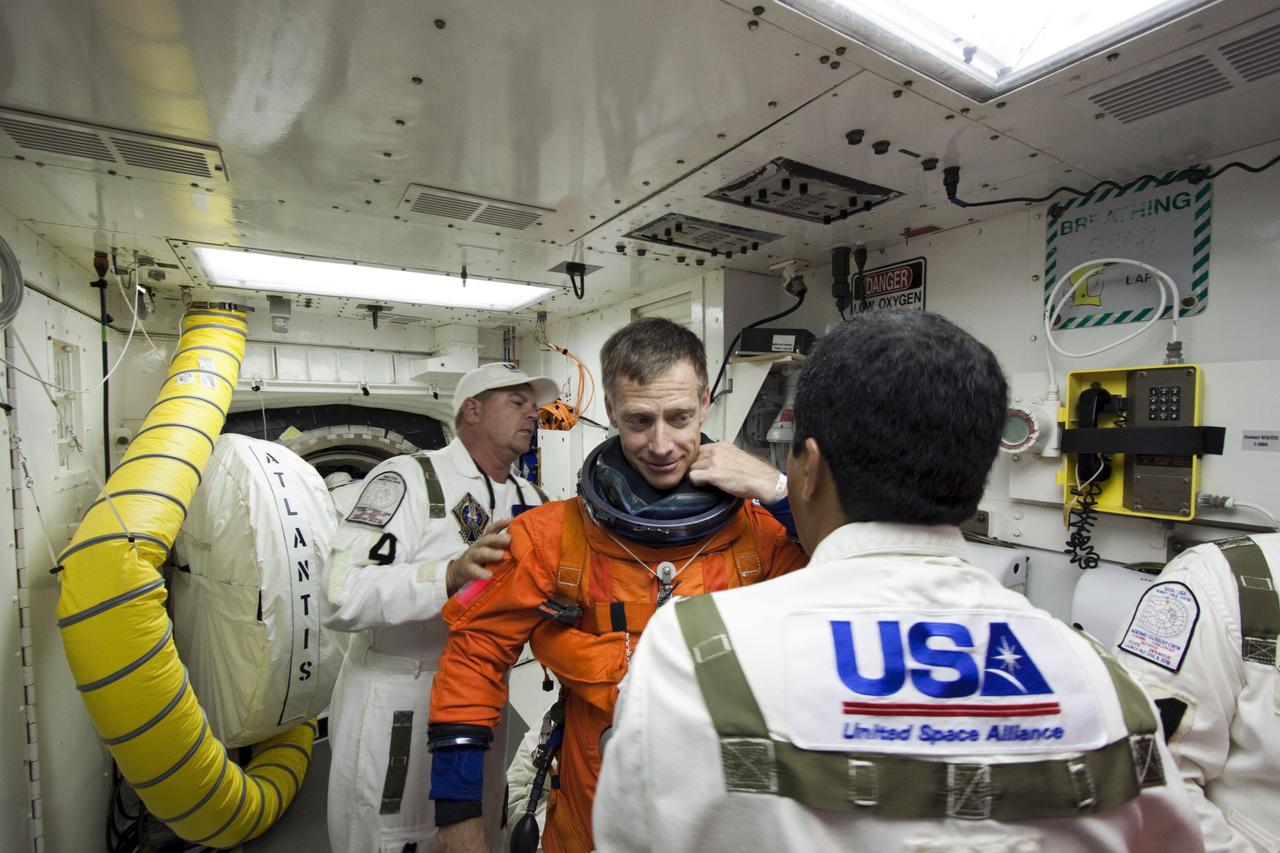
CAPE CANAVERAL, Fla. -- In the White Room at Launch Pad 39A at NASA's Kennedy Space Center in Florida, STS-135 Commander Chris Ferguson prepares to board space shuttle Atlantis through the crew hatch in the background. Members of the Closeout Crew, in white uniforms, are there to assist astronauts with their launch-and-entry suits and the boarding process. The STS-135 crew members are at the pad to participate in a launch countdown simulation exercise. As part of the Terminal Countdown Demonstration Test (TCDT), the crew members are strapped into their seats on Atlantis to practice the steps that will be taken on launch day. Shuttle Atlantis and its crew are targeted to lift off July 8, taking with them the Raffaello multi-purpose logistics module packed with supplies and spare parts to the International Space Station. The STS-135 mission also will fly a system to investigate the potential for robotically refueling existing satellites and return a failed ammonia pump module to help NASA better understand the failure mechanism and improve pump designs for future systems. STS-135 will be the 33rd flight of Atlantis, the 37th shuttle mission to the space station, and the 135th and final mission of NASA's Space Shuttle Program. For more information visit, www.nasa.gov/mission_pages/shuttle/shuttlemissions/sts135/index.html. Photo credit: NASA/Jim Grossmann
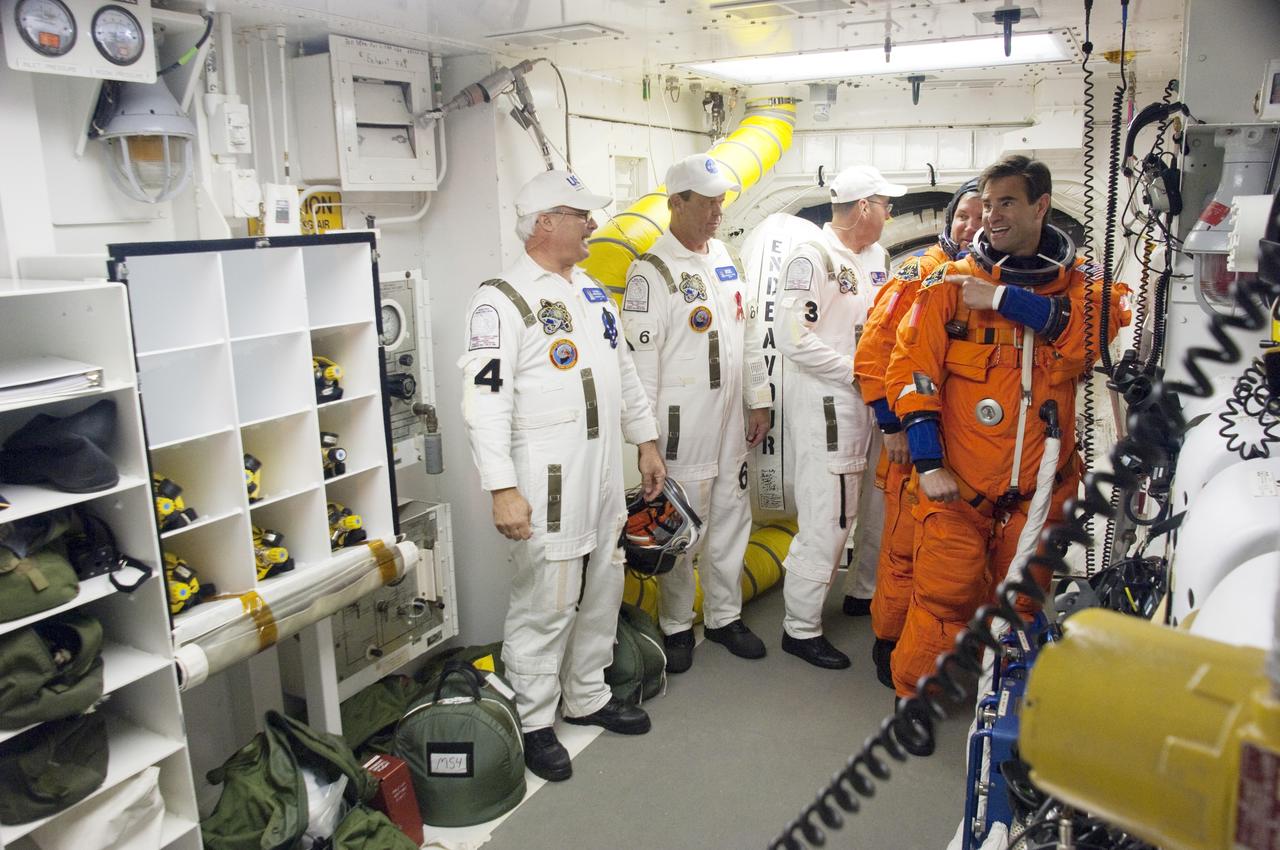
CAPE CANAVERAL, Fla. -- In the White Room at Launch Pad 39A at NASA's Kennedy Space Center in Florida, STS-134 Pilot Greg H. Johnson, left, and Mission Specialist Greg Chamitoff prepare to board space shuttle Endeavour through the crew hatch in the background. Members of the Closeout Crew, in white uniforms, are there to assist astronauts with their launch-and-entry suits and the boarding process. Johnson piloted space shuttle Endeavour during its STS-123 mission in 2008. Chamitoff last served as flight engineer and science officer aboard the International Space Station in 2008. STS-134 will deliver the Alpha Magnetic Spectrometer-2 (AMS), Express Logistics Carrier-3, a high-pressure gas tank and additional spare parts for the Dextre robotic helper to the International Space Station. May 16 at 8:56 a.m. will be the second launch attempt for Endeavour. The first attempt on April 29 was scrubbed because of an issue associated with a faulty power distribution box called the aft load control assembly-2 (ALCA-2). STS-134 will be the final spaceflight for Endeavour. For more information visit, www.nasa.gov/mission_pages/shuttle/shuttlemissions/sts134/index.html. Photo credit: NASA/Sandra Joseph and Kevin O'Connell
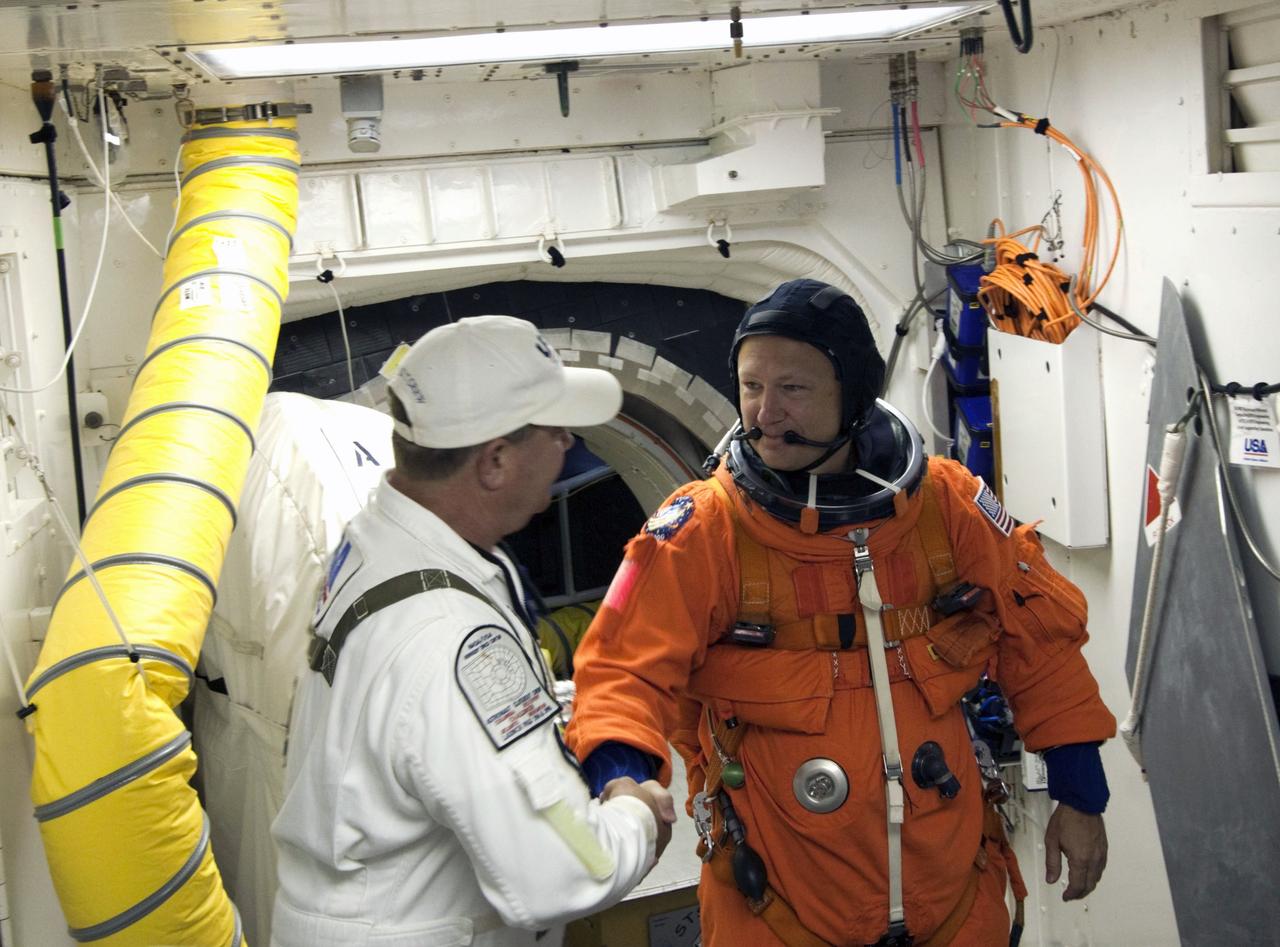
CAPE CANAVERAL, Fla. -- In the White Room at Launch Pad 39A at NASA's Kennedy Space Center in Florida, STS-135 Pilot Doug Hurley thanks Closeout Crew member Rene Arriens for his assistance as he prepares to board space shuttle Atlantis through the crew hatch in the background. Members of the Closeout Crew, in white uniforms, are there to assist astronauts with their launch-and-entry suits and the boarding process. The STS-135 crew members are at the pad to participate in a launch countdown simulation exercise. As part of the Terminal Countdown Demonstration Test (TCDT), the crew members are strapped into their seats on Atlantis to practice the steps that will be taken on launch day. Shuttle Atlantis and its crew are targeted to lift off July 8, taking with them the Raffaello multi-purpose logistics module packed with supplies and spare parts to the International Space Station. The STS-135 mission also will fly a system to investigate the potential for robotically refueling existing satellites and return a failed ammonia pump module to help NASA better understand the failure mechanism and improve pump designs for future systems. STS-135 will be the 33rd flight of Atlantis, the 37th shuttle mission to the space station, and the 135th and final mission of NASA's Space Shuttle Program. For more information visit, www.nasa.gov/mission_pages/shuttle/shuttlemissions/sts135/index.html. Photo credit: NASA/Jim Grossmann
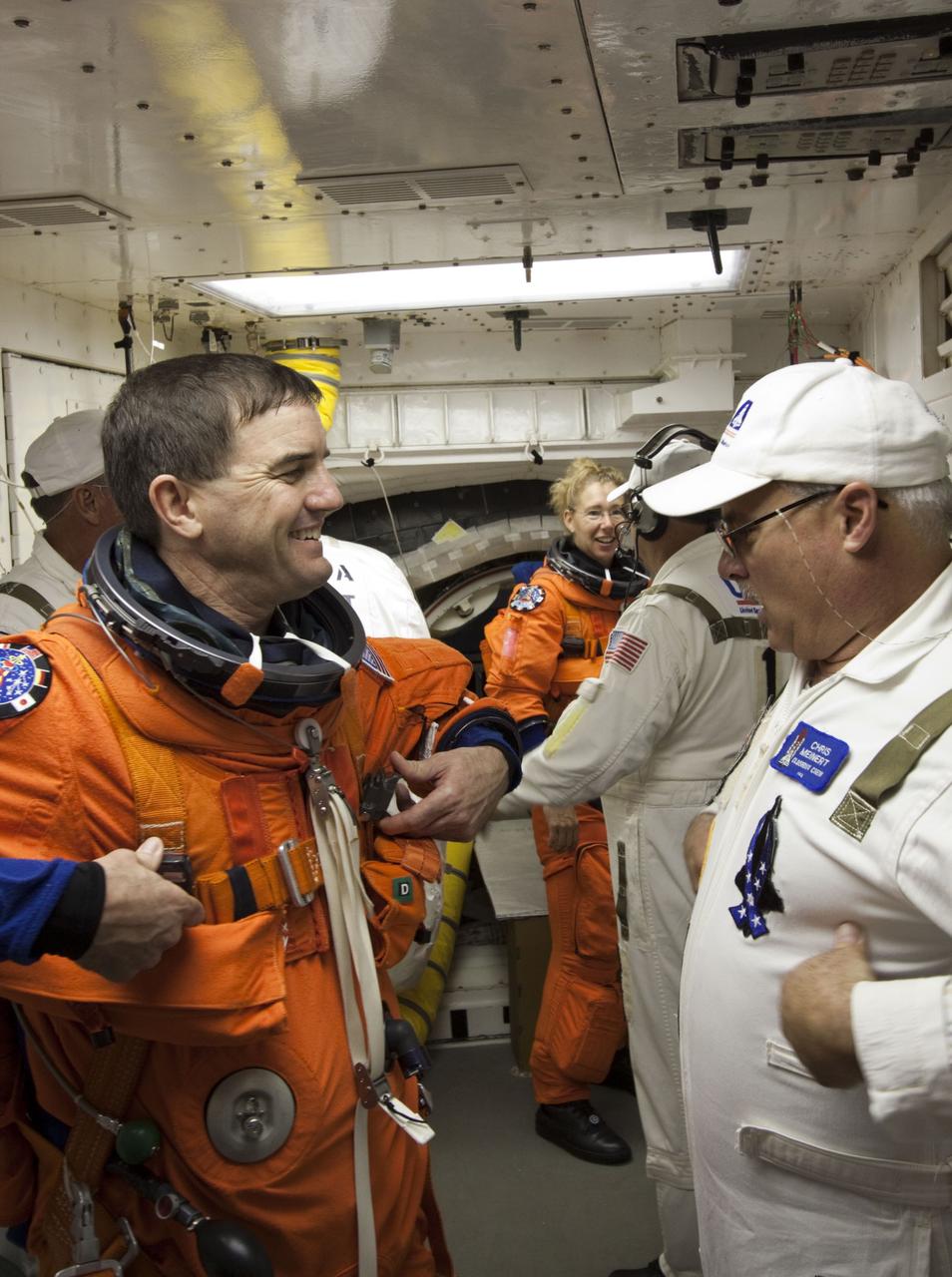
CAPE CANAVERAL, Fla. -- In the White Room at Launch Pad 39A at NASA's Kennedy Space Center in Florida, STS-135 Mission Specialist Rex Walheim prepares to board space shuttle Atlantis through the crew hatch in the background. Members of the Closeout Crew, in white uniforms, are there to assist astronauts with their launch-and-entry suits and the boarding process. Seen in the background is Mission Specialist Sandy Magnus speaking with a Closeout Crew member. The STS-135 crew is at the pad to participate in a launch countdown simulation exercise. As part of the Terminal Countdown Demonstration Test (TCDT), the crew members are strapped into their seats on Atlantis to practice the steps that will be taken on launch day. Shuttle Atlantis and its crew are targeted to lift off July 8, taking with them the Raffaello multi-purpose logistics module packed with supplies and spare parts to the International Space Station. The STS-135 mission also will fly a system to investigate the potential for robotically refueling existing satellites and return a failed ammonia pump module to help NASA better understand the failure mechanism and improve pump designs for future systems. STS-135 will be the 33rd flight of Atlantis, the 37th shuttle mission to the space station, and the 135th and final mission of NASA's Space Shuttle Program. For more information visit, www.nasa.gov/mission_pages/shuttle/shuttlemissions/sts135/index.html. Photo credit: NASA/Jim Grossmann
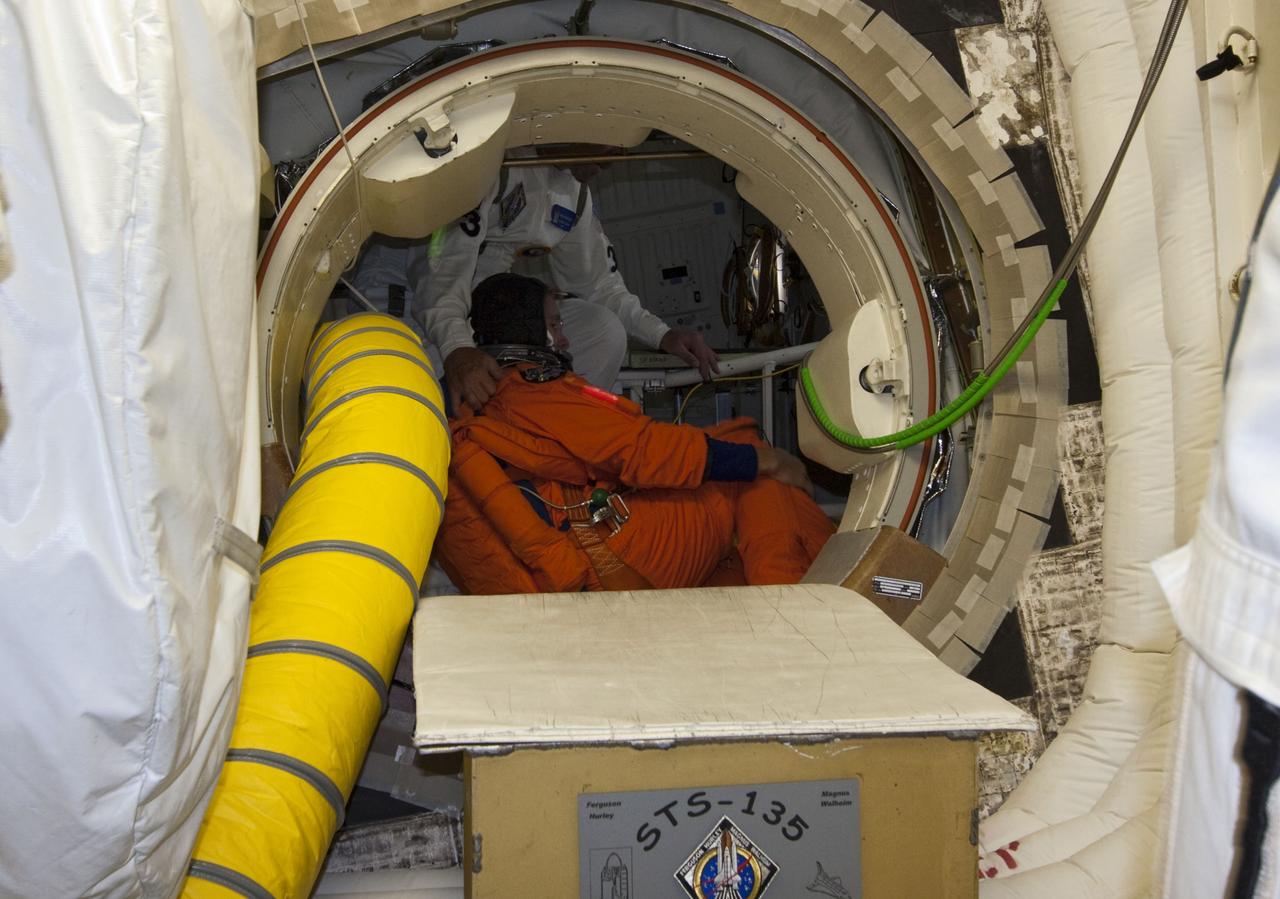
CAPE CANAVERAL, Fla. -- In the White Room at Launch Pad 39A at NASA's Kennedy Space Center in Florida, STS-135 Mission Specialist Sandy Magnus gets assistance boarding space shuttle Atlantis through the crew hatch. Members of the Closeout Crew, in white uniforms, are there to assist astronauts with their launch-and-entry suits and the boarding process. The STS-135 crew members are at the pad to participate in a launch countdown simulation exercise. As part of the Terminal Countdown Demonstration Test (TCDT), the crew members are strapped into their seats on Atlantis to practice the steps that will be taken on launch day. Shuttle Atlantis and its crew are targeted to lift off July 8, taking with them the Raffaello multi-purpose logistics module packed with supplies and spare parts to the International Space Station. The STS-135 mission also will fly a system to investigate the potential for robotically refueling existing satellites and return a failed ammonia pump module to help NASA better understand the failure mechanism and improve pump designs for future systems. STS-135 will be the 33rd flight of Atlantis, the 37th shuttle mission to the space station, and the 135th and final mission of NASA's Space Shuttle Program. For more information visit, www.nasa.gov/mission_pages/shuttle/shuttlemissions/sts135/index.html. Photo credit: NASA/Jim Grossmann
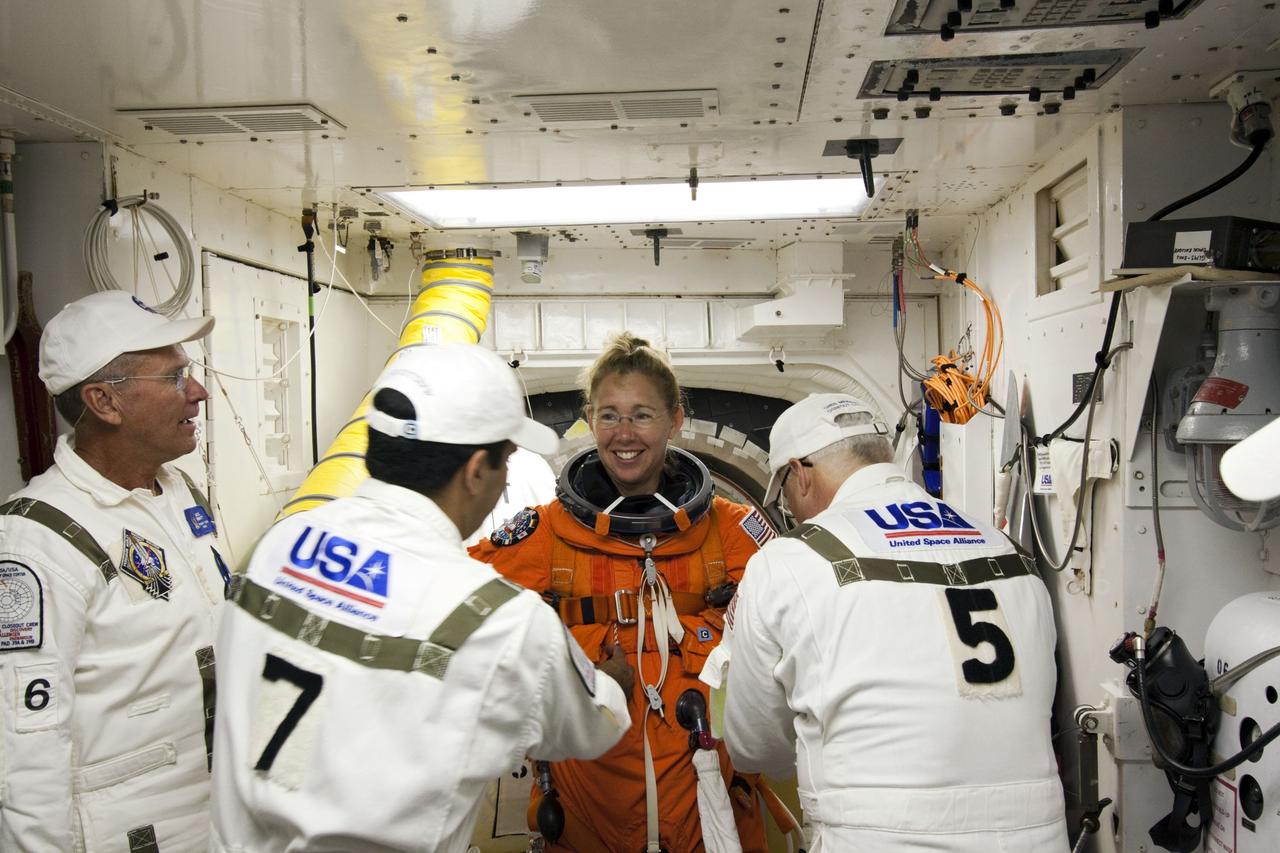
CAPE CANAVERAL, Fla. -- In the White Room at Launch Pad 39A at NASA's Kennedy Space Center in Florida, STS-135 Mission Specialist Sandy Magnus prepares to board space shuttle Atlantis through the crew hatch in the background. Members of the Closeout Crew, in white uniforms, are there to assist astronauts with their launch-and-entry suits and the boarding process. The STS-135 crew members are at the pad to participate in a launch countdown simulation exercise. As part of the Terminal Countdown Demonstration Test (TCDT), the crew members are strapped into their seats on Atlantis to practice the steps that will be taken on launch day. Shuttle Atlantis and its crew are targeted to lift off July 8, taking with them the Raffaello multi-purpose logistics module packed with supplies and spare parts to the International Space Station. The STS-135 mission also will fly a system to investigate the potential for robotically refueling existing satellites and return a failed ammonia pump module to help NASA better understand the failure mechanism and improve pump designs for future systems. STS-135 will be the 33rd flight of Atlantis, the 37th shuttle mission to the space station, and the 135th and final mission of NASA's Space Shuttle Program. For more information visit, www.nasa.gov/mission_pages/shuttle/shuttlemissions/sts135/index.html. Photo credit: NASA/Jim Grossmann
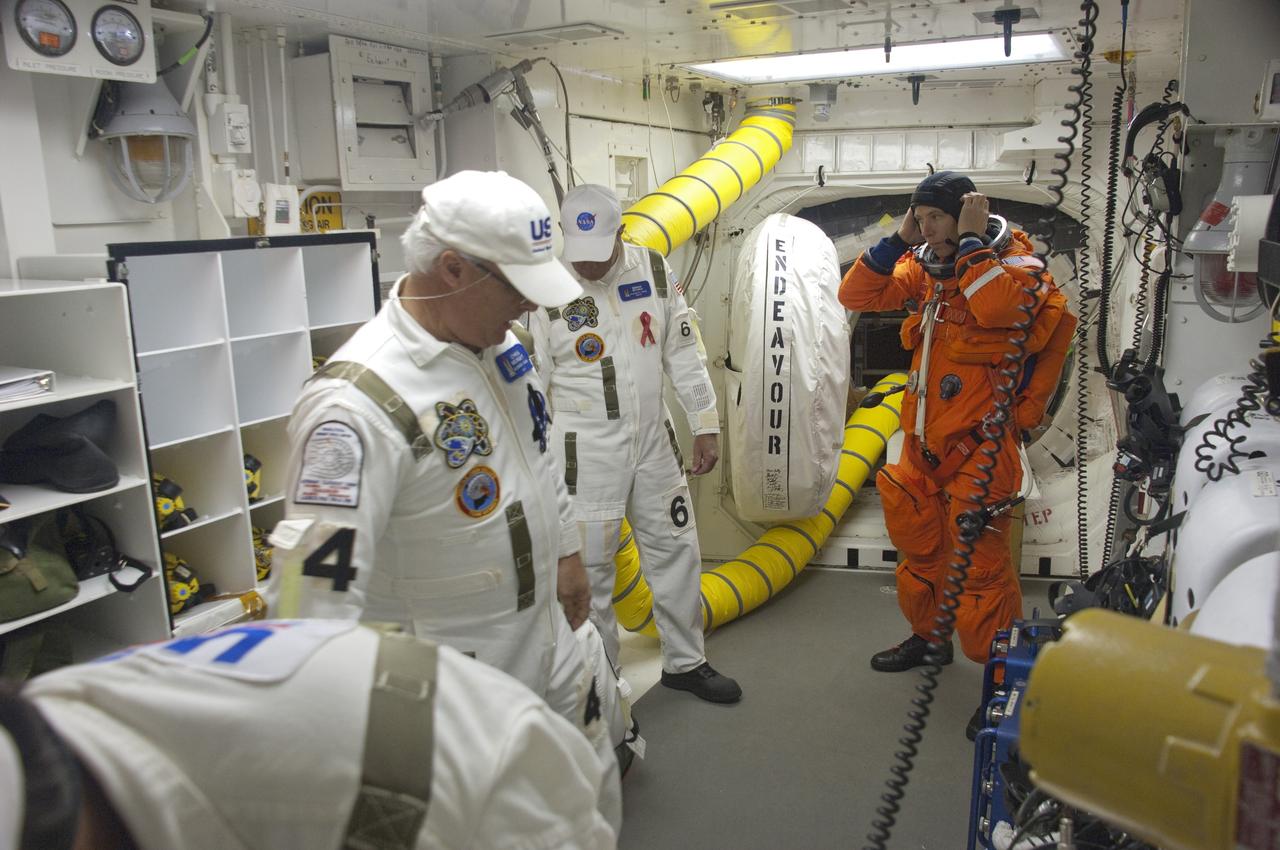
CAPE CANAVERAL, Fla. -- In the White Room at Launch Pad 39A at NASA's Kennedy Space Center in Florida, STS-134 Mission Specialist Drew Feustel prepares to board space shuttle Endeavour through the crew hatch in the background. Members of the Closeout Crew, in white uniforms, are there to assist astronauts with their launch-and-entry suits and the boarding process. Feustel last flew in 2009 on a mission to NASA's Hubble Space Telescope. STS-134 will deliver the Alpha Magnetic Spectrometer-2 (AMS), Express Logistics Carrier-3, a high-pressure gas tank and additional spare parts for the Dextre robotic helper to the International Space Station. May 16 at 8:56 a.m. will be the second launch attempt for Endeavour. The first attempt on April 29 was scrubbed because of an issue associated with a faulty power distribution box called the aft load control assembly-2 (ALCA-2). STS-134 will be the final spaceflight for Endeavour. For more information visit, www.nasa.gov/mission_pages/shuttle/shuttlemissions/sts134/index.html. Photo credit: NASA/Sandra Joseph and Kevin O'Connell
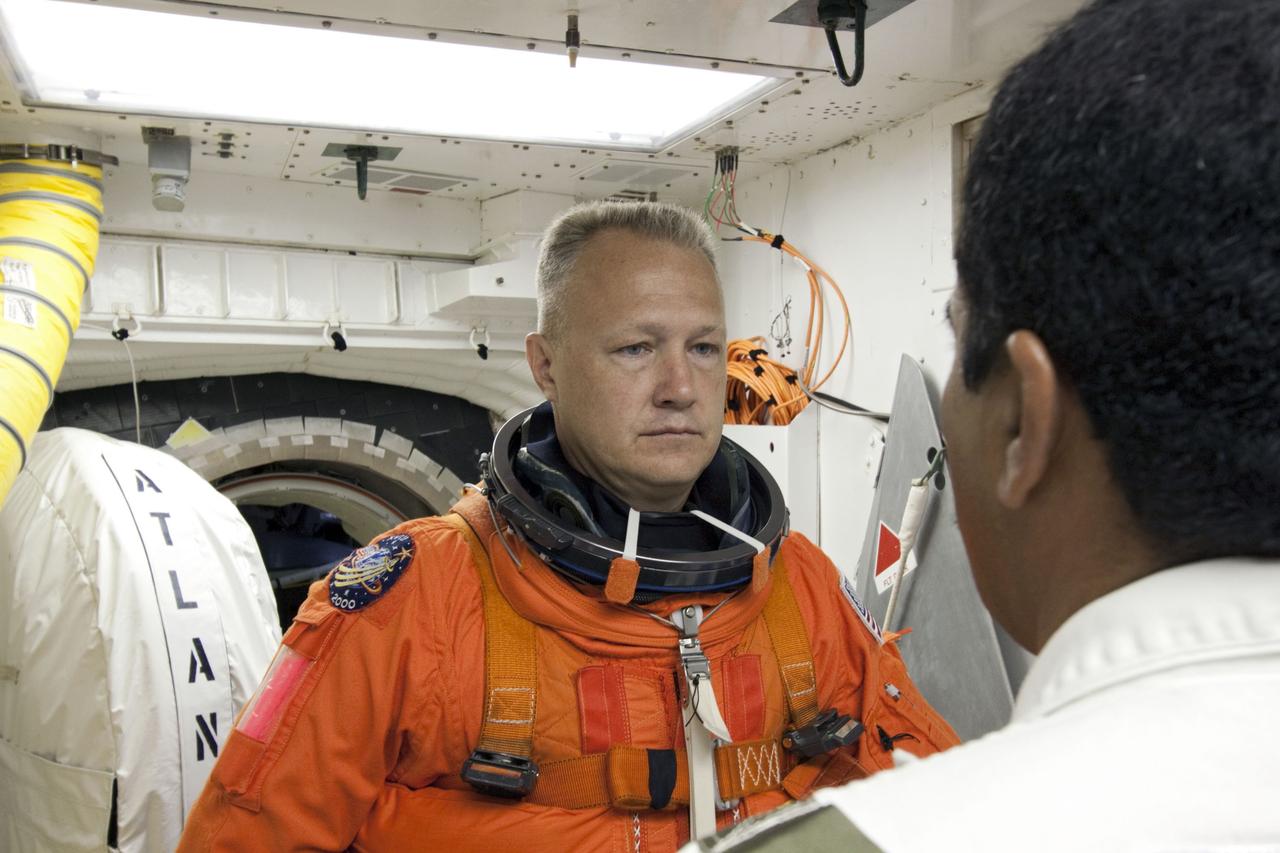
CAPE CANAVERAL, Fla. -- In the White Room at Launch Pad 39A at NASA's Kennedy Space Center in Florida, STS-135 Pilot Doug Hurley prepares to board space shuttle Atlantis through the crew hatch in the background. Members of the Closeout Crew, in white uniforms, are there to assist astronauts with their launch-and-entry suits and the boarding process. The STS-135 crew members are at the pad to participate in a launch countdown simulation exercise. As part of the Terminal Countdown Demonstration Test (TCDT), the crew members are strapped into their seats on Atlantis to practice the steps that will be taken on launch day. Shuttle Atlantis and its crew are targeted to lift off July 8, taking with them the Raffaello multi-purpose logistics module packed with supplies and spare parts to the International Space Station. The STS-135 mission also will fly a system to investigate the potential for robotically refueling existing satellites and return a failed ammonia pump module to help NASA better understand the failure mechanism and improve pump designs for future systems. STS-135 will be the 33rd flight of Atlantis, the 37th shuttle mission to the space station, and the 135th and final mission of NASA's Space Shuttle Program. For more information visit, www.nasa.gov/mission_pages/shuttle/shuttlemissions/sts135/index.html. Photo credit: NASA/Jim Grossmann
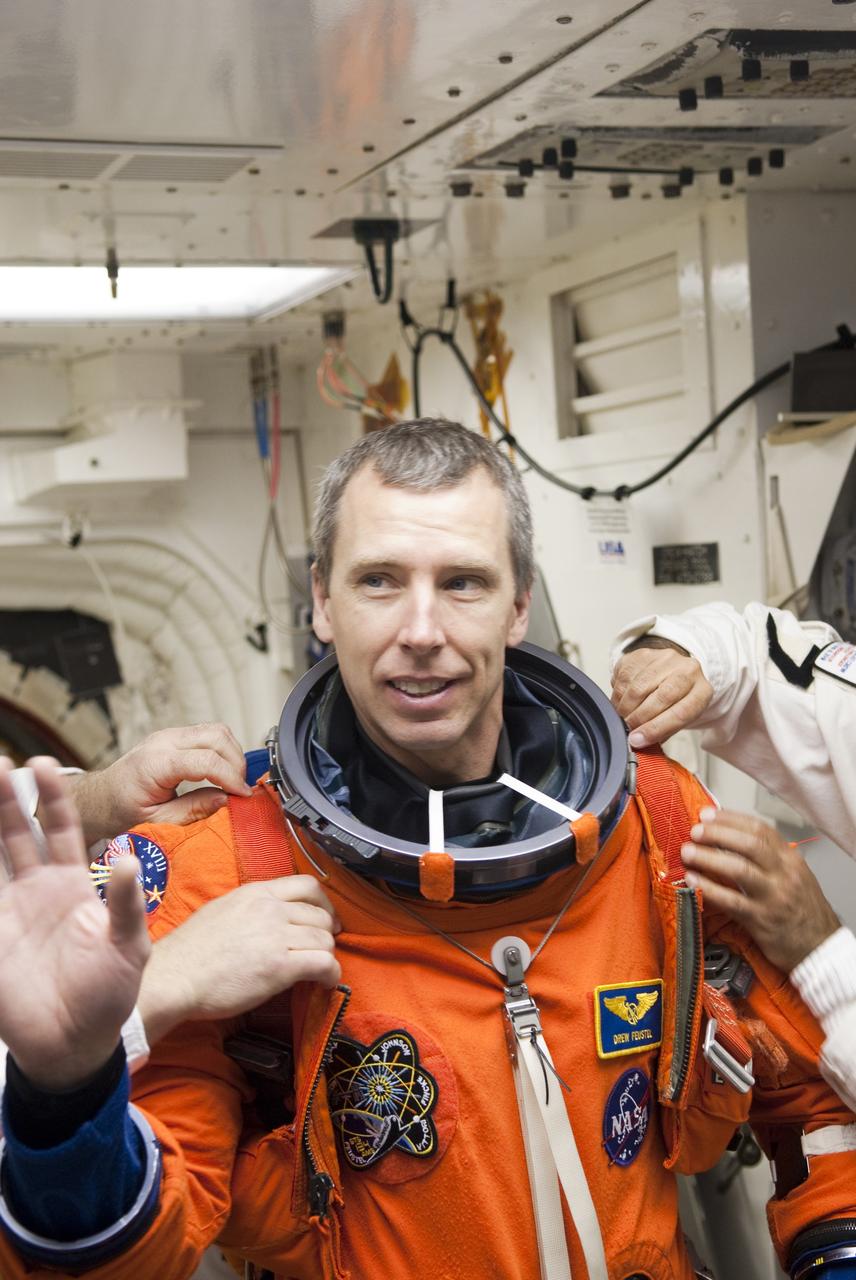
CAPE CANAVERAL, Fla. -- In the White Room of Launch Pad 39A at NASA's Kennedy Space Center in Florida, STS-134 Mission Specialist Andrew Feustel prepares to board space shuttle Endeavour during the Terminal Countdown Demonstration Test (TCDT). Part of TCDT includes practicing the final hours of a real launch day when astronauts put on their launch-and-entry suits, ride to the pad in the Astrovan and strap into the shuttle. Endeavour's six crew members are targeted to launch April 19 at 7:48 p.m. EDT. They will deliver the Express Logistics Carrier-3, Alpha Magnetic Spectrometer-2 (AMS), a high-pressure gas tank, additional spare parts for the Dextre robotic helper and micrometeoroid debris shields to the International Space Station. This will be the final spaceflight for Endeavour. For more information visit, www.nasa.gov/mission_pages/shuttle/shuttlemissions/sts134/index.html. Photo credit: NASA/Jim Grossmann
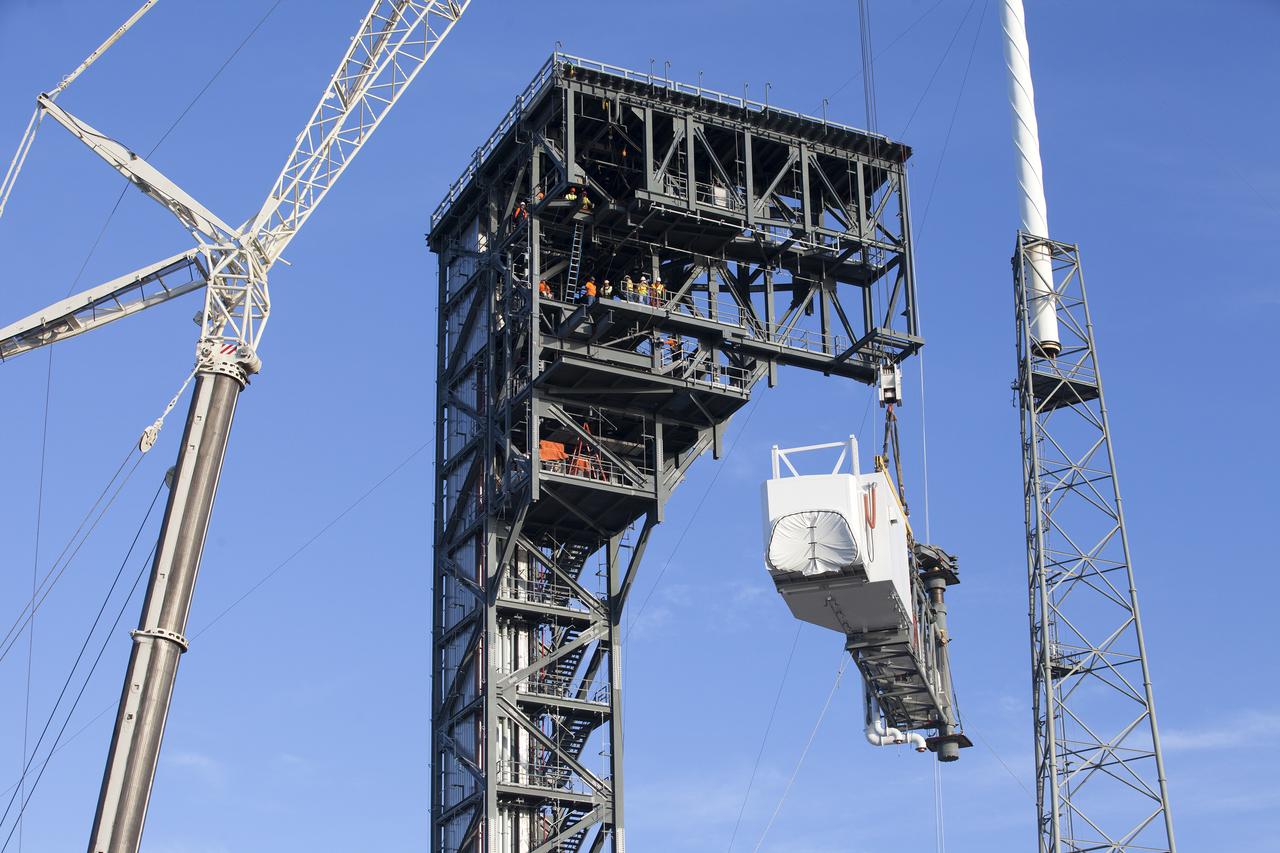
A crane lifts the Crew Access Arm and White Room for Boeing's CST-100 Starliner spacecraft to be attached to the Crew Access Tower at Cape Canaveral Air Force Station’s Space Launch Complex 41. When attached to the 200-foot tall Crew Access Tower, the arm will serve as the connection that astronauts will walk through prior to boarding the Starliner spacecraft when stacked atop a United Launch Alliance Atlas V rocket. This installation completes the major construction of the first new Crew Access Tower to be built at the Cape since the Apollo era. Under a Commercial Crew Transportation Capability (CCtCap) contract with NASA, Boeing’s Starliner system will be certified by NASA's Commercial Crew Program to fly crews to and from the International Space Station.
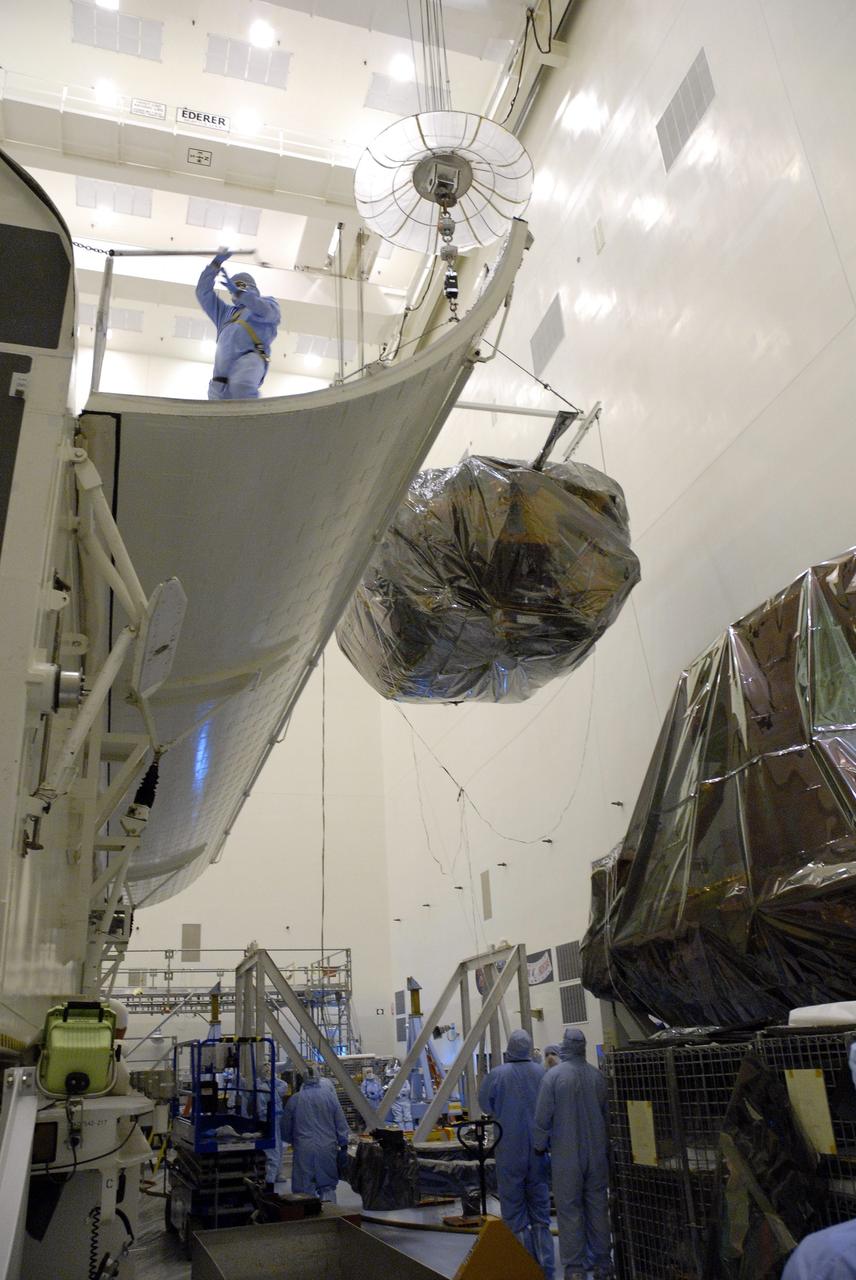
CAPE CANAVERAL, Fla. - In the Payload Hazardous Servicing Facility, or PHSF, at NASA's Kennedy Space Center in Florida, the Orbital Replacement Unit Carrier, or ORUC, is lifted from the payload canister which transported the Hubble Space Telescope equipment back to the clean room from Launch Pad 39A. In the foreground is the Super Lightweight Interchangeable Carrier, or SLIC. The payload for Hubble servicing mission 4 comprises four carriers holding various equipment for the mission. In the PHSF, the carriers will be stored until a new target launch date in 2009 can be set for Atlantis’ STS-125 mission. Atlantis’ October target launch date was delayed after a device on board Hubble, used in the storage and transmission of science data to Earth, shut down on Sept. 27. Replacing the broken device will be added to Atlantis’ servicing mission to the telescope. Photo credit: NASA/Jim Grossmann
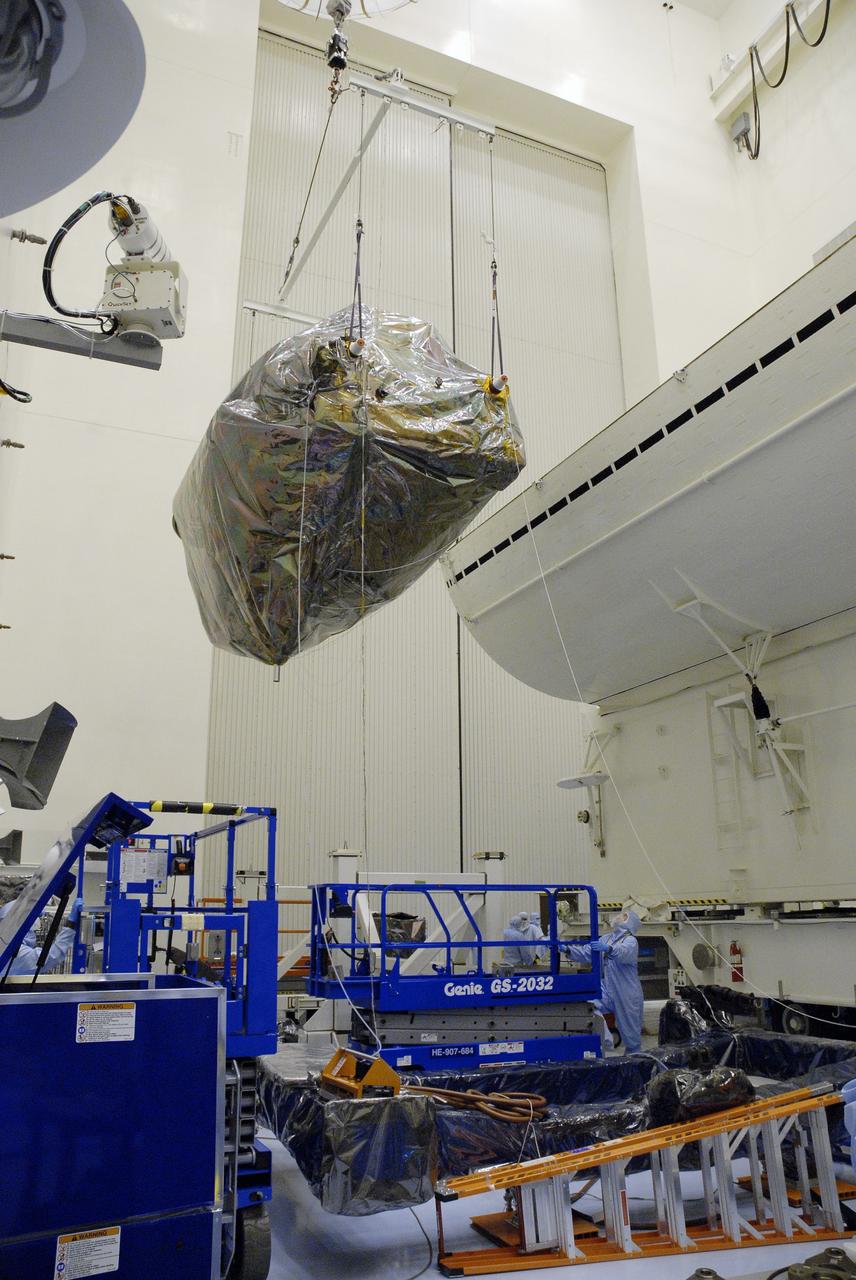
CAPE CANAVERAL, Fla. - In the Payload Hazardous Servicing Facility, or PHSF, at NASA's Kennedy Space Center in Florida, the Super Lightweight Interchangeable Carrier, or SLIC, is lifted from the payload canister which transported the Hubble Space Telescope equipment back to the clean room from Launch Pad 39A. The payload for Hubble servicing mission 4 comprises four carriers holding various equipment for the mission. In the PHSF, the carriers will be stored until a new target launch date in 2009 can be set for Atlantis’ STS-125 mission. Atlantis’ October target launch date was delayed after a device on board Hubble, used in the storage and transmission of science data to Earth, shut down on Sept. 27. Replacing the broken device will be added to Atlantis’ servicing mission to the telescope. Photo credit: NASA/Jim Grossmann
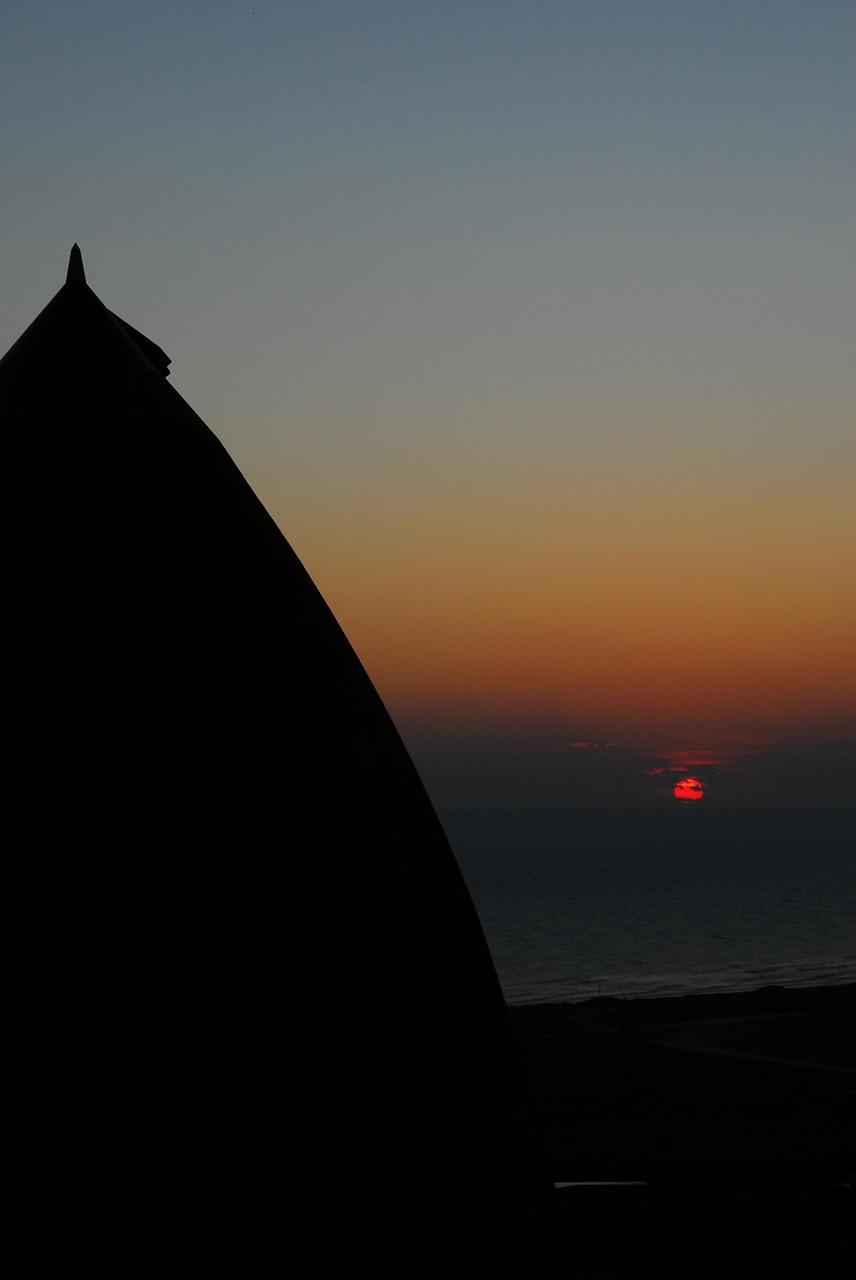
CAPE CANAVERAL, Fla. -- As the sun begins to rise at Launch Pad 39A at NASA's Kennedy Space Center in Florida, the STS-133 crew members are in the pad's White Room preparing to board space shuttle Discovery during the Terminal Countdown Demonstration Test (TCDT). Part of TCDT includes practicing the final hours of a real launch day when astronauts put on their launch-and-entry suits, ride to the pad in the Astrovan and strap into the shuttle. Discovery and its STS-133 crew will deliver the Permanent Multipurpose Module, packed with supplies and critical spare parts, as well as Robonaut 2, the dexterous humanoid astronaut helper, to the International Space Station. Launch is targeted for Nov. 1 at 4:40 p.m. For more information on the STS-133 mission, visit www.nasa.gov/mission_pages/shuttle/shuttlemissions/sts133/. Photo credit: NASA/Jim Grossmann
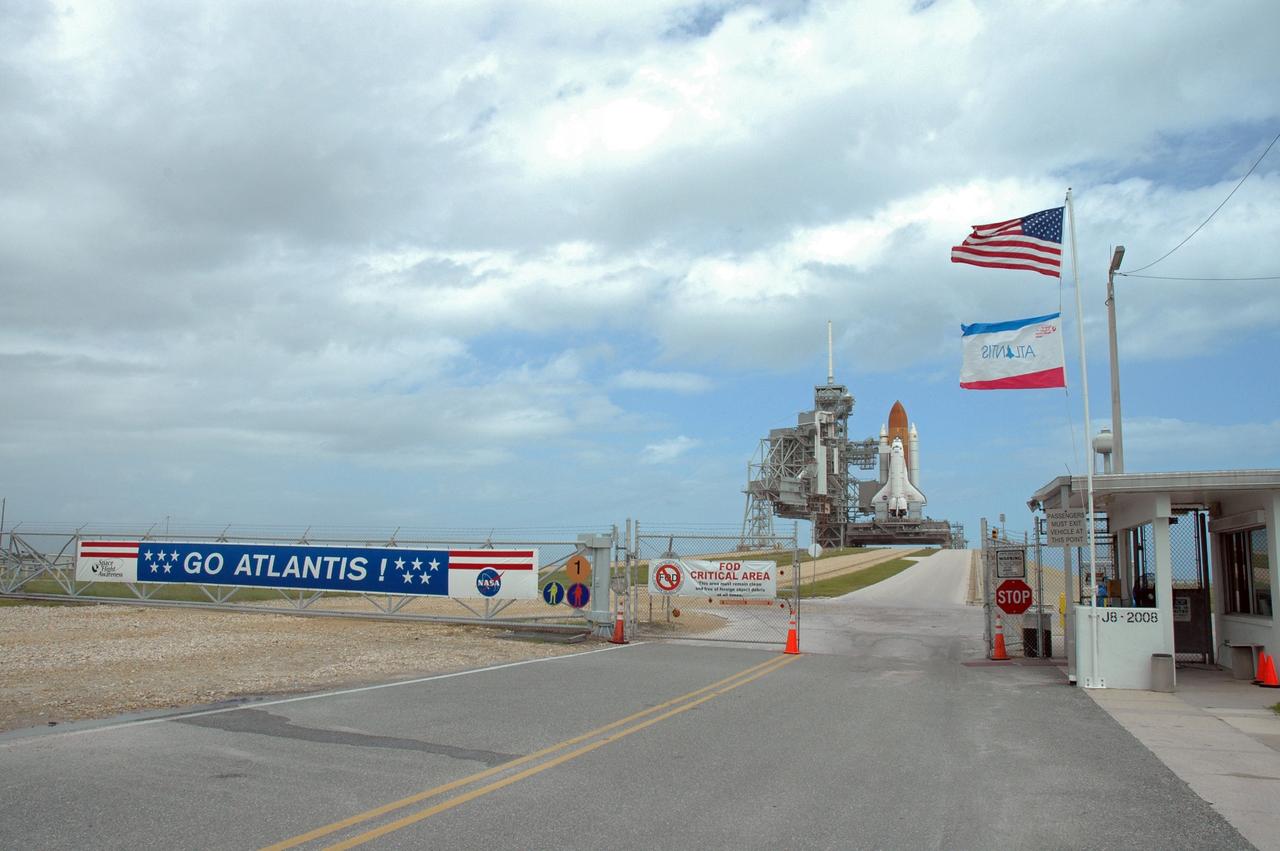
CAPE CANAVERAL, Fla. – On Launch Pad 39A at NASA's Kennedy Space Center in Florida, the rotating service structure is open, revealing space shuttle Atlantis on the pad for the STS-125 mission, the fifth and final shuttle servicing mission for NASA’s Hubble Space Telescope. On the RSS, the payload canister is in position at the payload changeout room to receive the Hubble hardware. High winds, however, have delayed the transfer. The payload comprises four carriers holding various equipment for the mission. The hardware will be transported back to Kennedy’s Payload Hazardous Servicing Facility where it will be stored until a new target launch date can be set for Atlantis’ STS-125 mission in 2009. Atlantis’ October target launch date was delayed after a device on board Hubble used in the storage and transmission of science data to Earth shut down on Sept. 27. Replacing the broken device will be added to Atlantis’ servicing mission to the telescope. Photo credit: NASA/Tim Jacobs
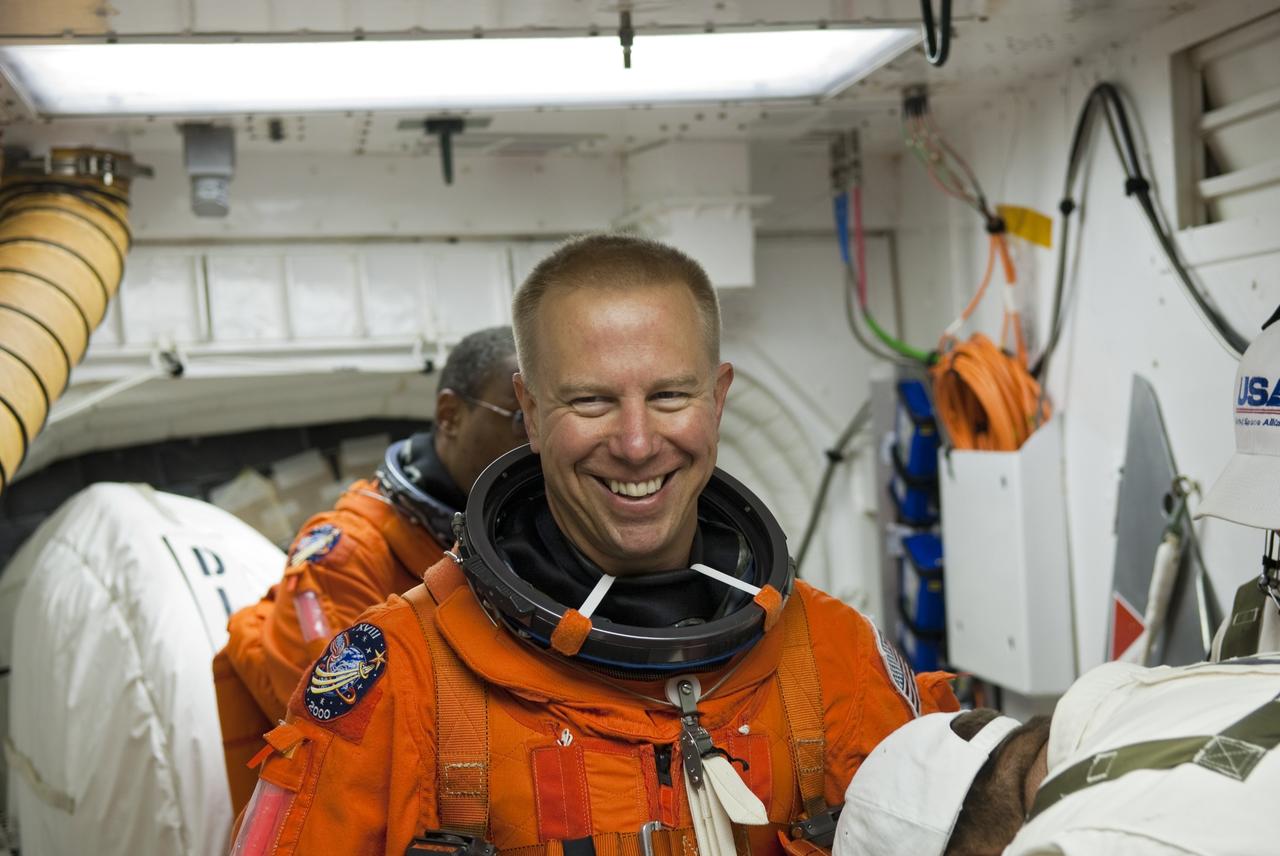
CAPE CANAVERAL, Fla. -- In the White Room of Launch Pad 39A at NASA's Kennedy Space Center in Florida, STS-133 Mission Specialist Tim Kopra prepares to board space shuttle Discovery during the Terminal Countdown Demonstration Test (TCDT). Part of TCDT includes practicing the final hours of a real launch day when astronauts put on their launch-and-entry suits, ride to the pad in the Astrovan and strap into the shuttle. Discovery and its STS-133 crew will deliver the Permanent Multipurpose Module, packed with supplies and critical spare parts, as well as Robonaut 2, the dexterous humanoid astronaut helper, to the International Space Station. Launch is targeted for Nov. 1 at 4:40 p.m. For more information on the STS-133 mission, visit www.nasa.gov/mission_pages/shuttle/shuttlemissions/sts133/. Photo credit: NASA/Jim Grossmann
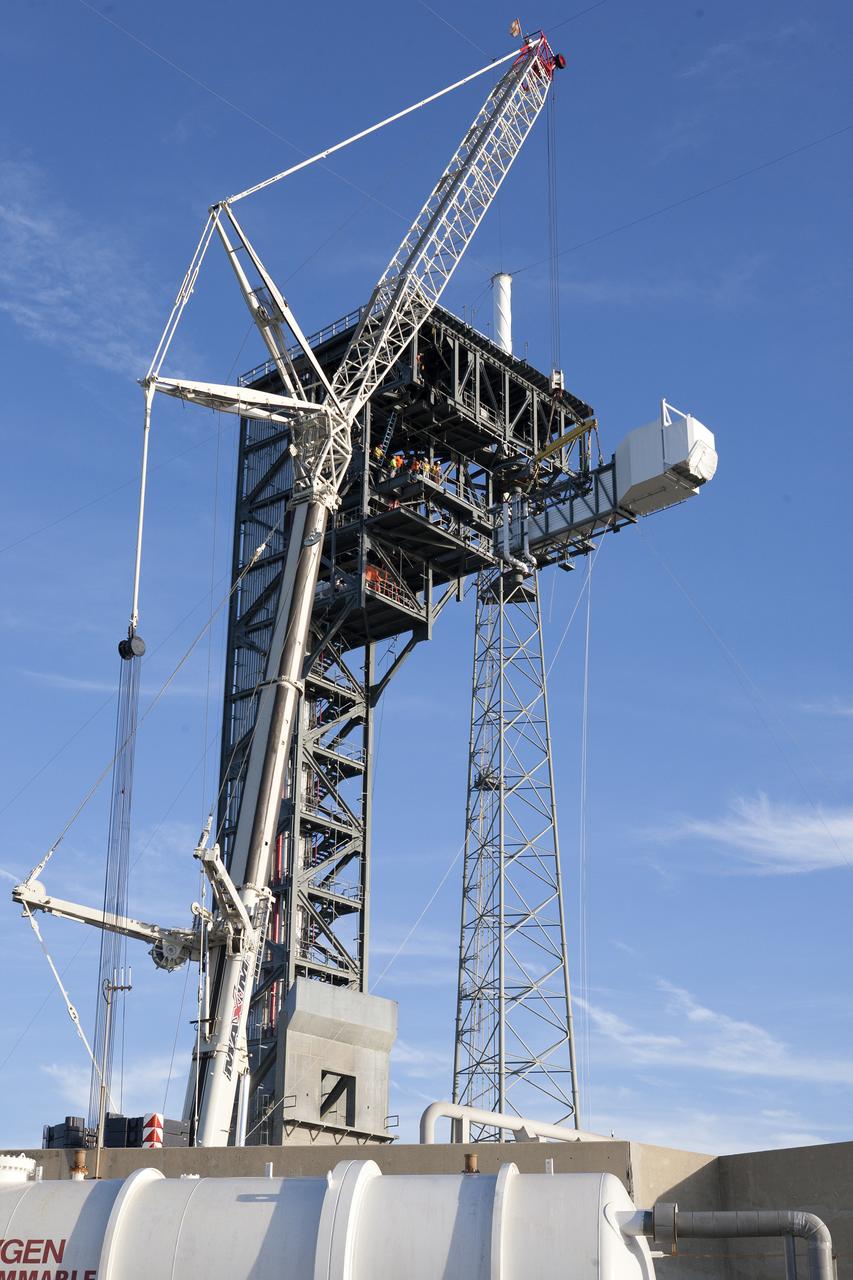
A crane lifts the Crew Access Arm and White Room for Boeing's CST-100 Starliner spacecraft to be attached to the Crew Access Tower at Cape Canaveral Air Force Station’s Space Launch Complex 41. When attached to the 200-foot tall Crew Access Tower, the arm will serve as the connection that astronauts will walk through prior to boarding the Starliner spacecraft when stacked atop a United Launch Alliance Atlas V rocket. This installation completes the major construction of the first new Crew Access Tower to be built at the Cape since the Apollo era. Under a Commercial Crew Transportation Capability (CCtCap) contract with NASA, Boeing’s Starliner system will be certified by NASA's Commercial Crew Program to fly crews to and from the International Space Station.
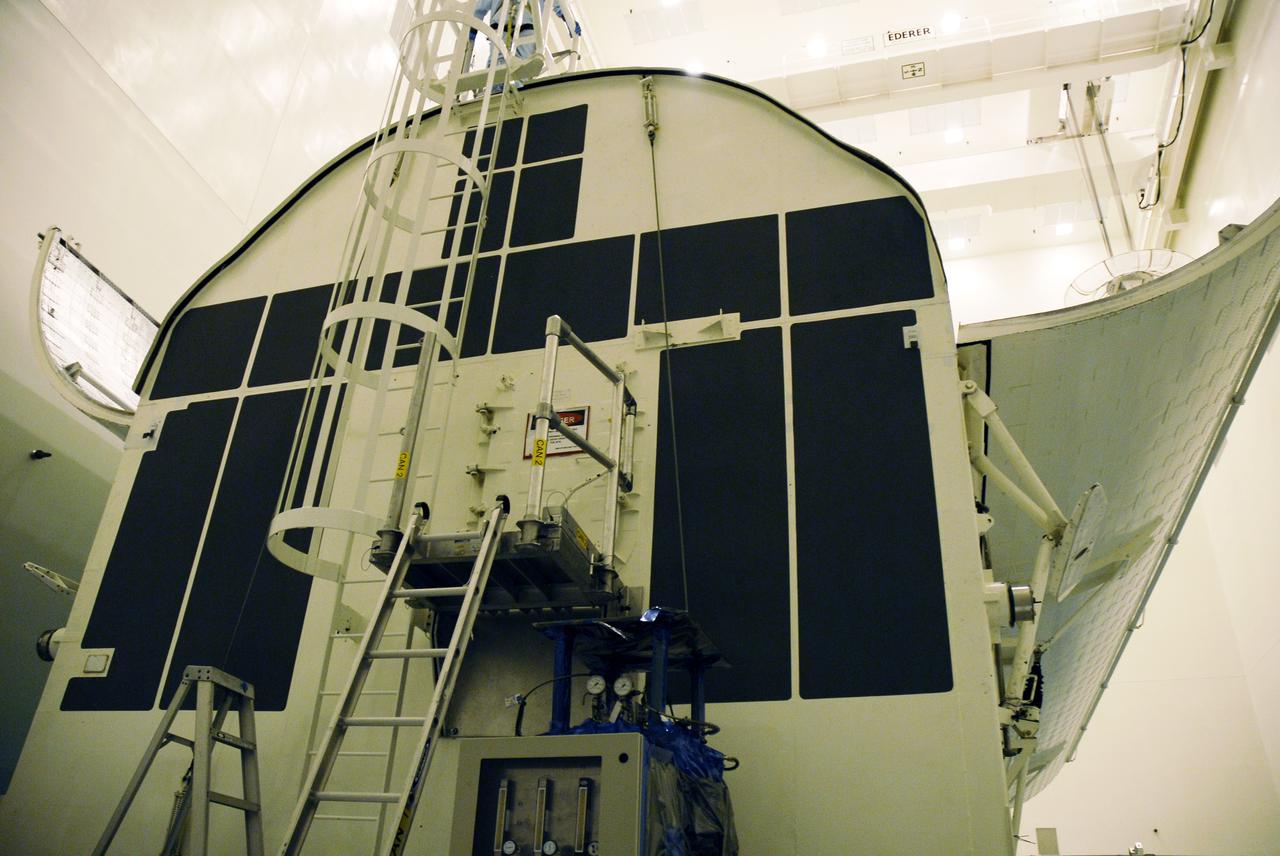
CAPE CANAVERAL, Fla. – At NASA's Kennedy Space Center in Florida, the doors of the payload canister are opened inside a clean room of the Payload Hazardous Servicing Facility, or PHSF. The canister contains the Hubble Space Telescope equipment. The payload comprises four carriers holding various equipment for the mission. The canister maintains a controlled environment. In the PHSF, the carriers will be stored until a new target launch date can be set for Atlantis’ STS-125 mission in 2009. Atlantis’ October target launch date was delayed after a device on board Hubble used in the storage and transmission of science data to Earth shut down on Sept. 27. Replacing the broken device will be added to Atlantis’ servicing mission to the telescope. Photo credit: NASA/Troy Cryder
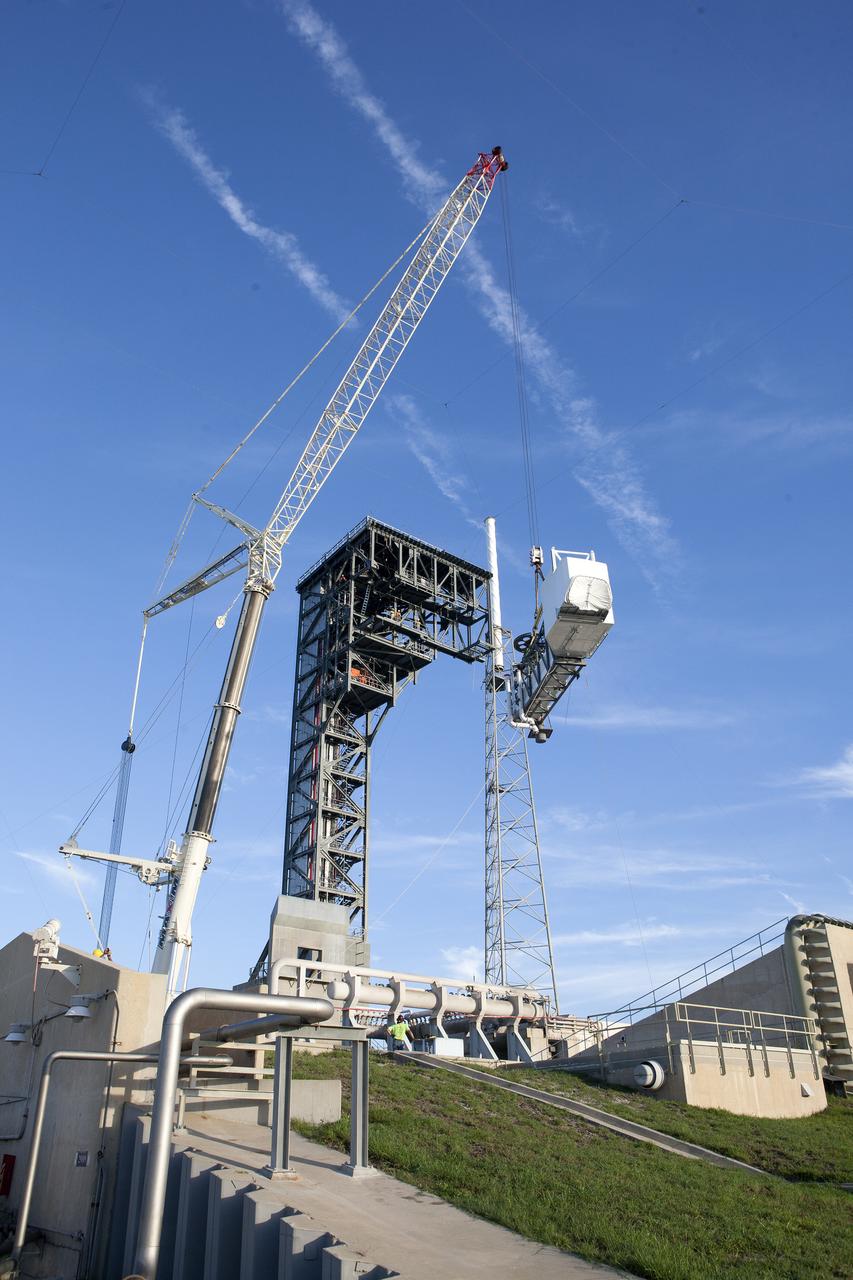
A crane lifts the Crew Access Arm and White Room for Boeing's CST-100 Starliner spacecraft to be attached to the Crew Access Tower at Cape Canaveral Air Force Station’s Space Launch Complex 41. When attached to the 200-foot tall Crew Access Tower, the arm will serve as the connection that astronauts will walk through prior to boarding the Starliner spacecraft when stacked atop a United Launch Alliance Atlas V rocket. This installation completes the major construction of the first new Crew Access Tower to be built at the Cape since the Apollo era. Under a Commercial Crew Transportation Capability (CCtCap) contract with NASA, Boeing’s Starliner system will be certified by NASA's Commercial Crew Program to fly crews to and from the International Space Station.
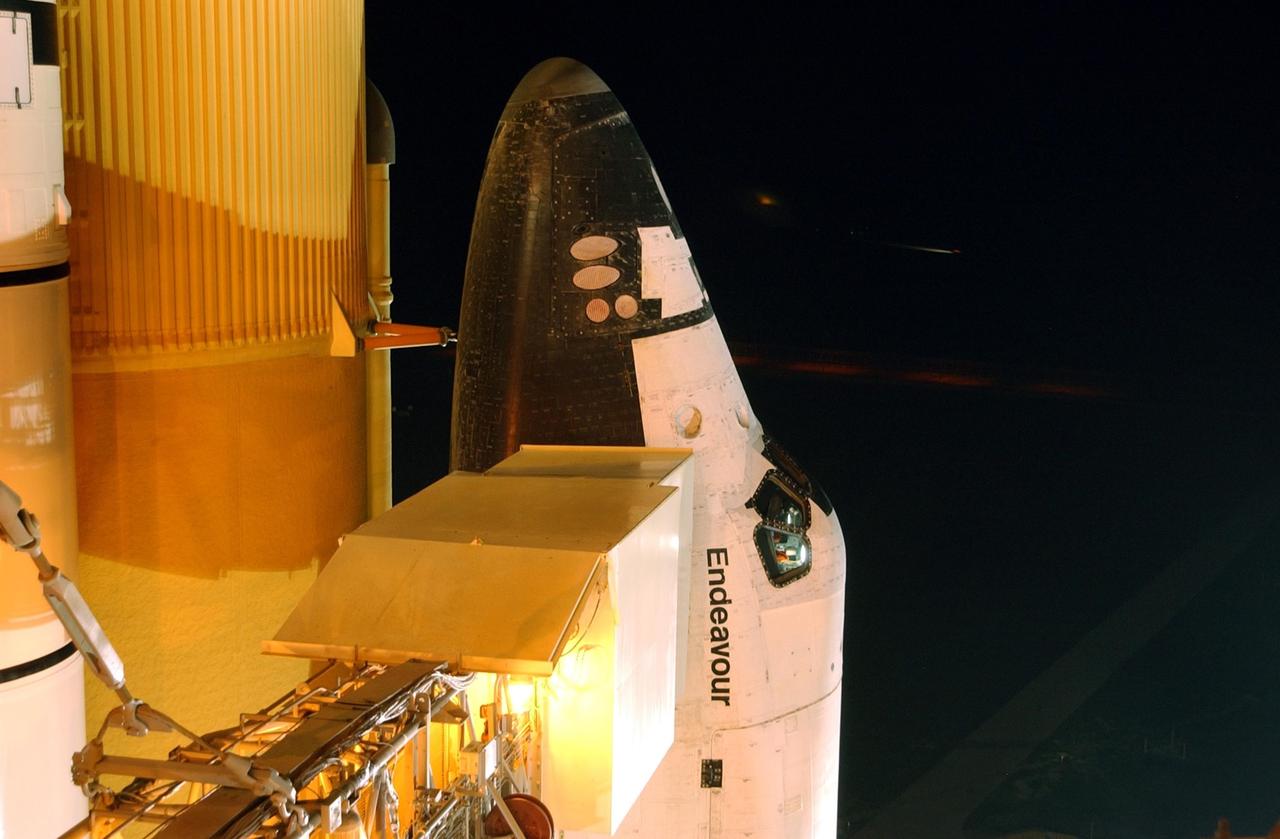
KENNEDY SPACE CENTER, FLA. - This closeup of Space Shuttle Endeavour shows the cockpit windows just above the name. Extending to the side is the environmental chamber known as the White Room, at the end of the orbiter access arm. STS-111 is the second Utilization Flight to the International Space Station, carrying the Multi-Purpose Logistics Module Leonardo, the Mobile Base System (MBS), and a replacement wrist/roll joint for the Canadarm 2. Also onboard Space Shuttle Endeavour is the Expedition 5 crew who will replace Expedition 4 on board the Station. The MBS will be installed on the Mobile Transporter to complete the Canadian Mobile Servicing System, or MSS. The mechanical arm will then have the capability to "inchworm" from the U.S. Lab Destiny to the MSS and travel along the truss to work sites. Expedition 4 crew members will return to Earth with the STS-111 crew on Endeavour. Launch is scheduled for 7:44 p.m. EDT, May 30, 2002
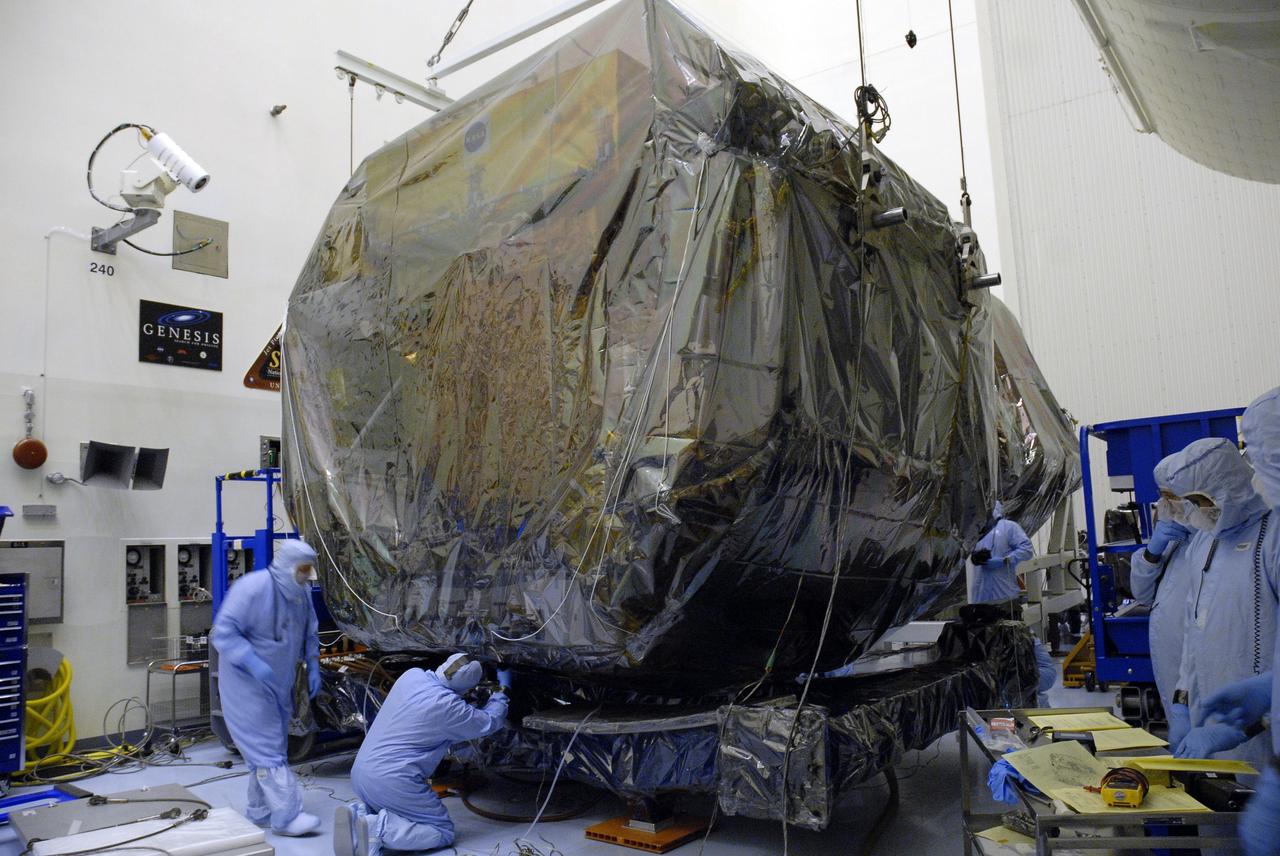
CAPE CANAVERAL, Fla. - In the Payload Hazardous Servicing Facility, or PHSF, at NASA's Kennedy Space Center in Florida, workers secure the Orbital Replacement Unit Carrier, or ORUC, onto a stand after it was returned back to the clean room from Launch Pad 39A. The payload for Hubble servicing mission 4 comprises four carriers holding various equipment for the mission. In the PHSF, the carriers will be stored until a new target launch date in 2009 can be set for Atlantis’ STS-125 mission. Atlantis’ October target launch date was delayed after a device on board Hubble, used in the storage and transmission of science data to Earth, shut down on Sept. 27. Replacing the broken device will be added to Atlantis’ servicing mission to the telescope. Photo credit: NASA/Jim Grossmann
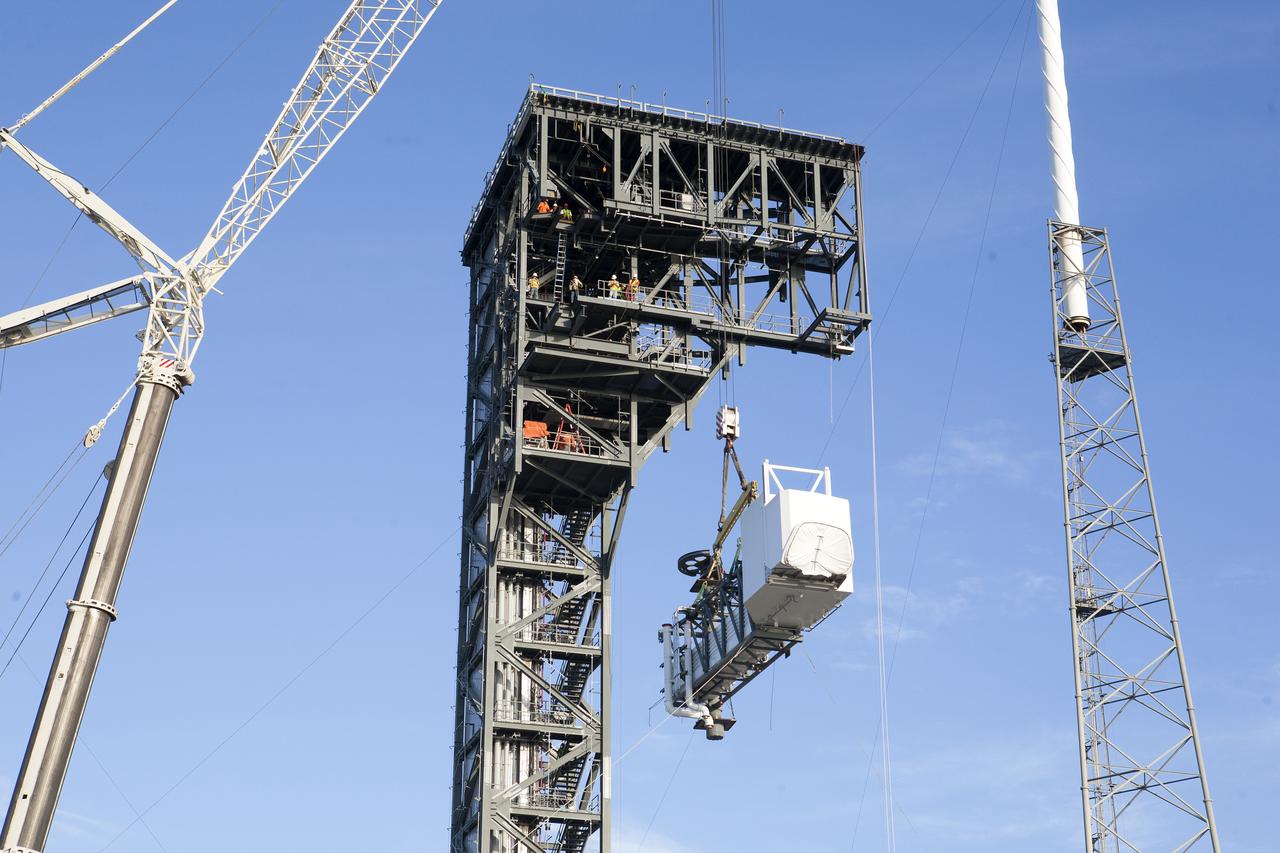
A crane lifts the Crew Access Arm and White Room for Boeing's CST-100 Starliner spacecraft to be attached to the Crew Access Tower at Cape Canaveral Air Force Station’s Space Launch Complex 41. When attached to the 200-foot tall Crew Access Tower, the arm will serve as the connection that astronauts will walk through prior to boarding the Starliner spacecraft when stacked atop a United Launch Alliance Atlas V rocket. This installation completes the major construction of the first new Crew Access Tower to be built at the Cape since the Apollo era. Under a Commercial Crew Transportation Capability (CCtCap) contract with NASA, Boeing’s Starliner system will be certified by NASA's Commercial Crew Program to fly crews to and from the International Space Station.
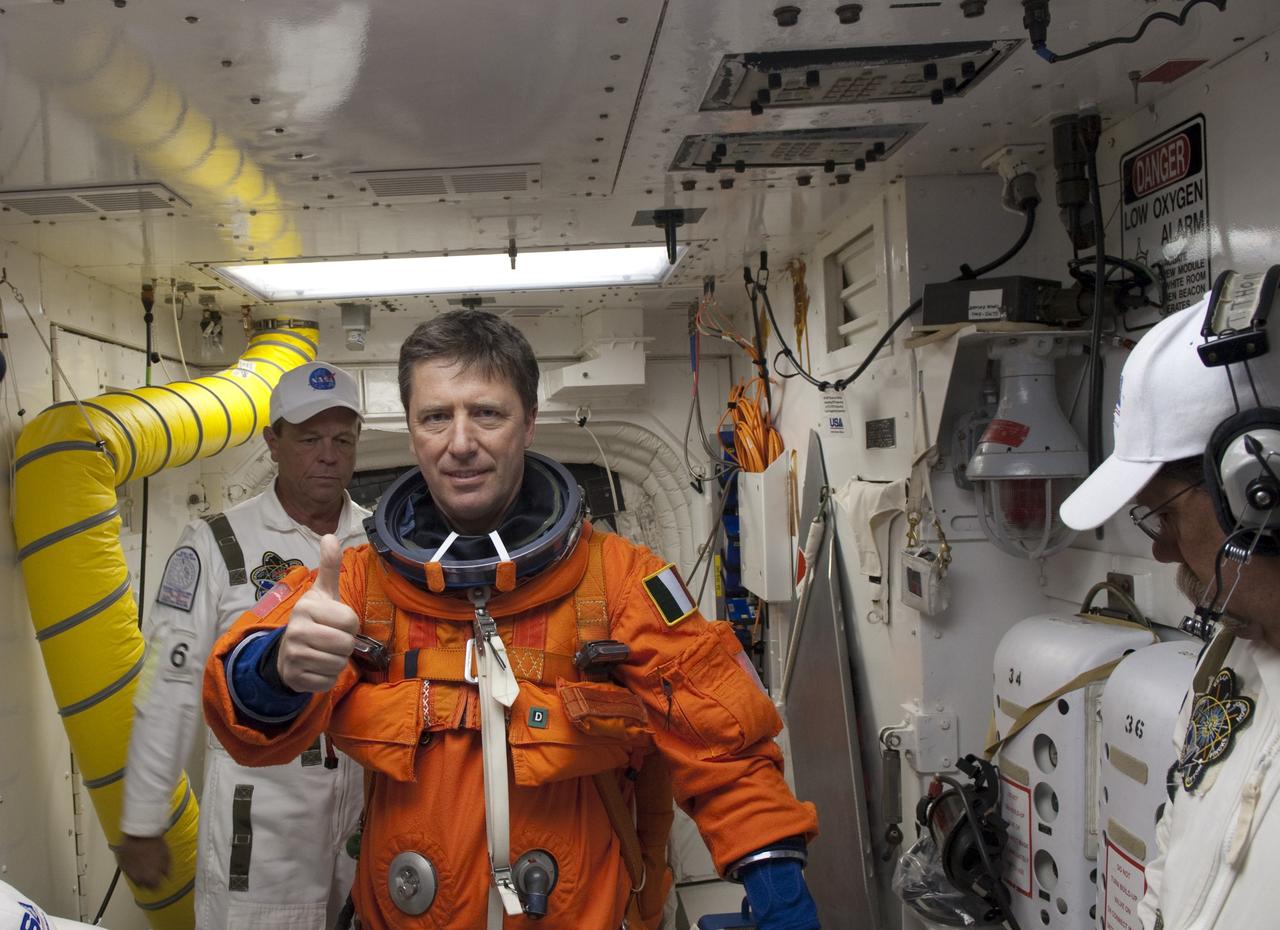
CAPE CANAVERAL, Fla. -- In the White Room of Launch Pad 39A at NASA's Kennedy Space Center in Florida, STS-134 Mission Specialist Roberto Vittori, with the European Space Agency, prepares to board space shuttle Endeavour during the Terminal Countdown Demonstration Test (TCDT). Part of TCDT includes practicing the final hours of a real launch day when astronauts put on their launch-and-entry suits, ride to the pad in the Astrovan and strap into the shuttle. Endeavour's six crew members are targeted to launch April 19 at 7:48 p.m. EDT. They will deliver the Express Logistics Carrier-3, Alpha Magnetic Spectrometer-2 (AMS), a high-pressure gas tank, additional spare parts for the Dextre robotic helper and micrometeoroid debris shields to the International Space Station. This will be the final spaceflight for Endeavour. For more information visit, www.nasa.gov/mission_pages/shuttle/shuttlemissions/sts134/index.html. Photo credit: NASA/Jim Grossmann
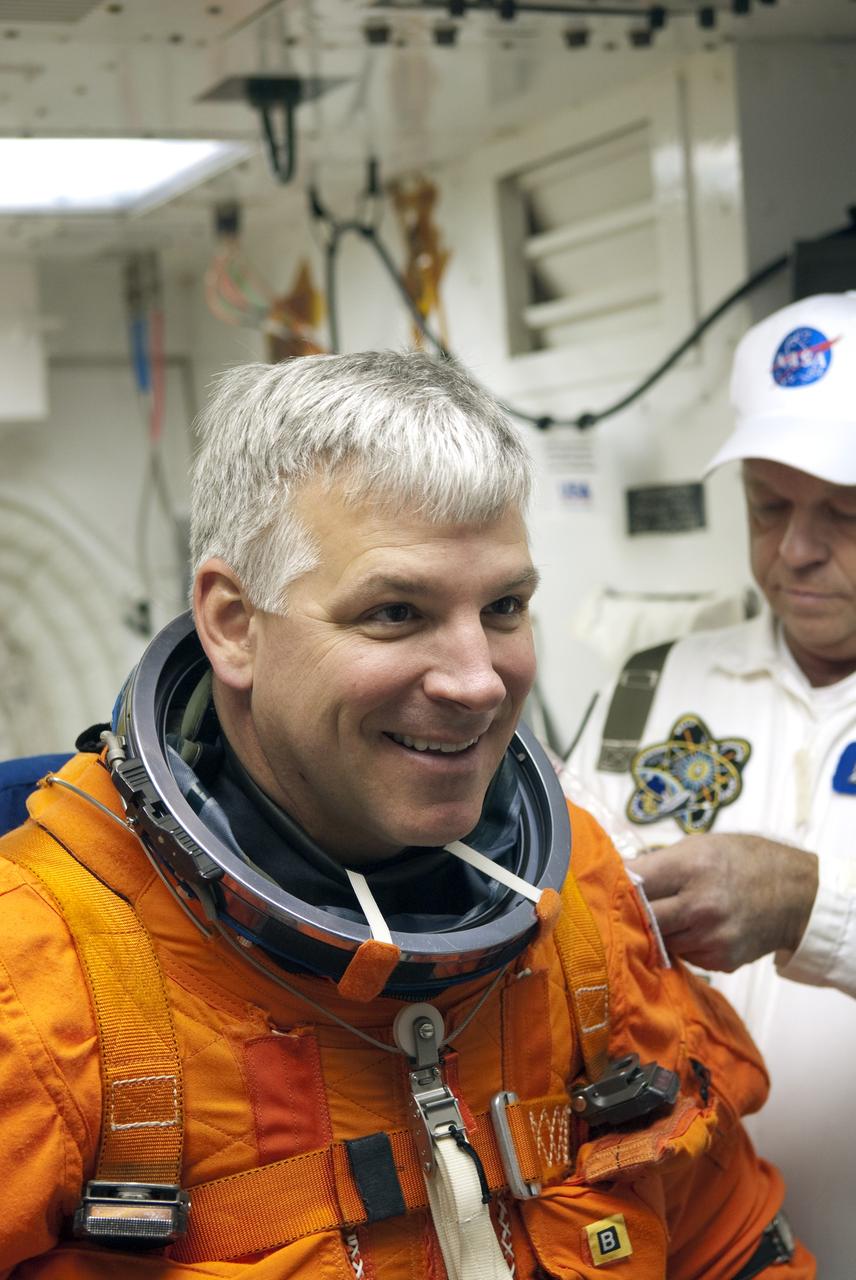
CAPE CANAVERAL, Fla. -- In the White Room of Launch Pad 39A at NASA's Kennedy Space Center in Florida, STS-134 Pilot Greg H. Johnson prepares to board space shuttle Endeavour during the Terminal Countdown Demonstration Test (TCDT). Part of TCDT includes practicing the final hours of a real launch day when astronauts put on their launch-and-entry suits, ride to the pad in the Astrovan and strap into the shuttle. Endeavour's six crew members are targeted to launch April 19 at 7:48 p.m. EDT. They will deliver the Express Logistics Carrier-3, Alpha Magnetic Spectrometer-2 (AMS), a high-pressure gas tank, additional spare parts for the Dextre robotic helper and micrometeoroid debris shields to the International Space Station. This will be the final spaceflight for Endeavour. For more information visit, www.nasa.gov/mission_pages/shuttle/shuttlemissions/sts134/index.html. Photo credit: NASA/Jim Grossmann
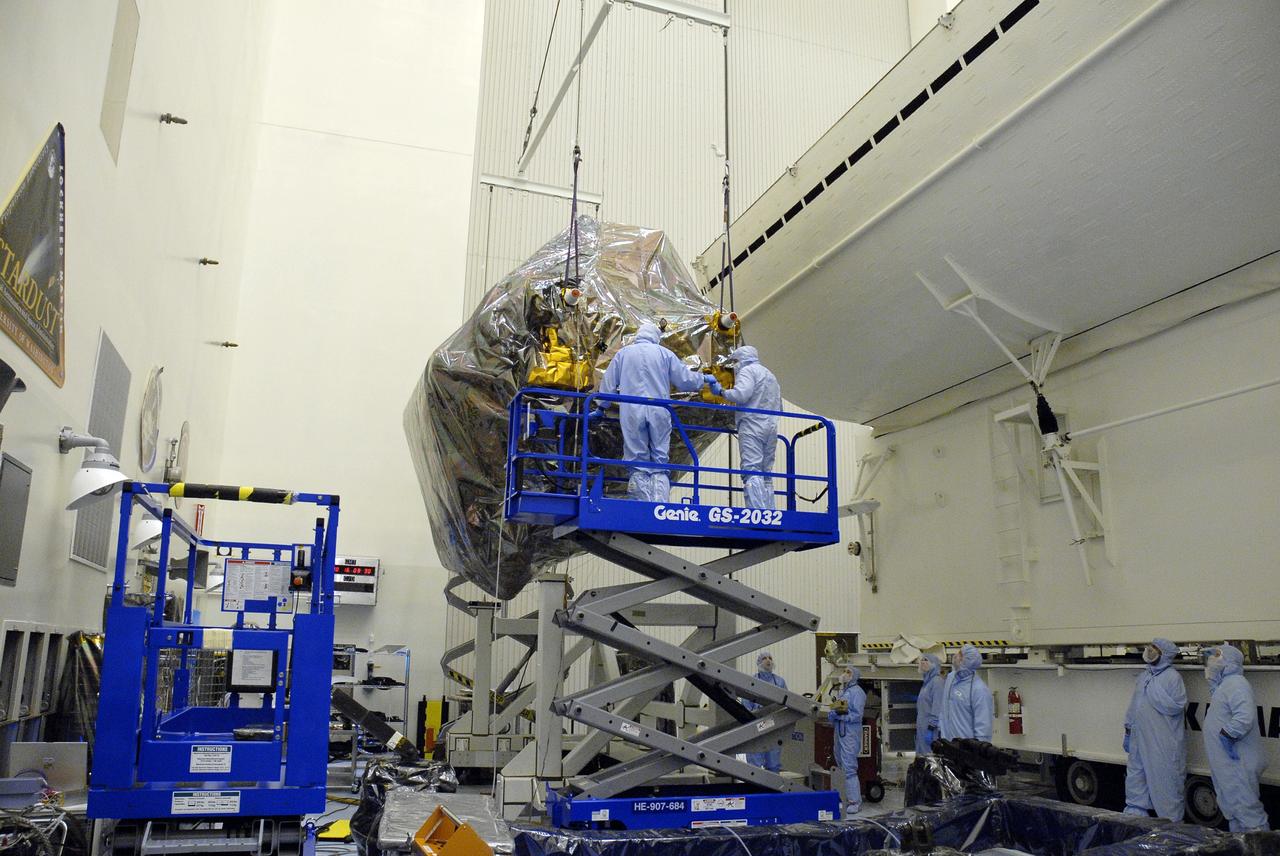
CAPE CANAVERAL, Fla. - In the Payload Hazardous Servicing Facility, or PHSF, at NASA's Kennedy Space Center in Florida, workers remove the Super Lightweight Interchangeable Carrier, or SLIC, from the payload canister which transported the Hubble Space Telescope equipment back to the clean room from Launch Pad 39A. The payload for Hubble servicing mission 4 comprises four carriers holding various equipment for the mission. In the PHSF, the carriers will be stored until a new target launch date in 2009 can be set for Atlantis’ STS-125 mission. Atlantis’ October target launch date was delayed after a device on board Hubble, used in the storage and transmission of science data to Earth, shut down on Sept. 27. Replacing the broken device will be added to Atlantis’ servicing mission to the telescope. Photo credit: NASA/Jim Grossmann
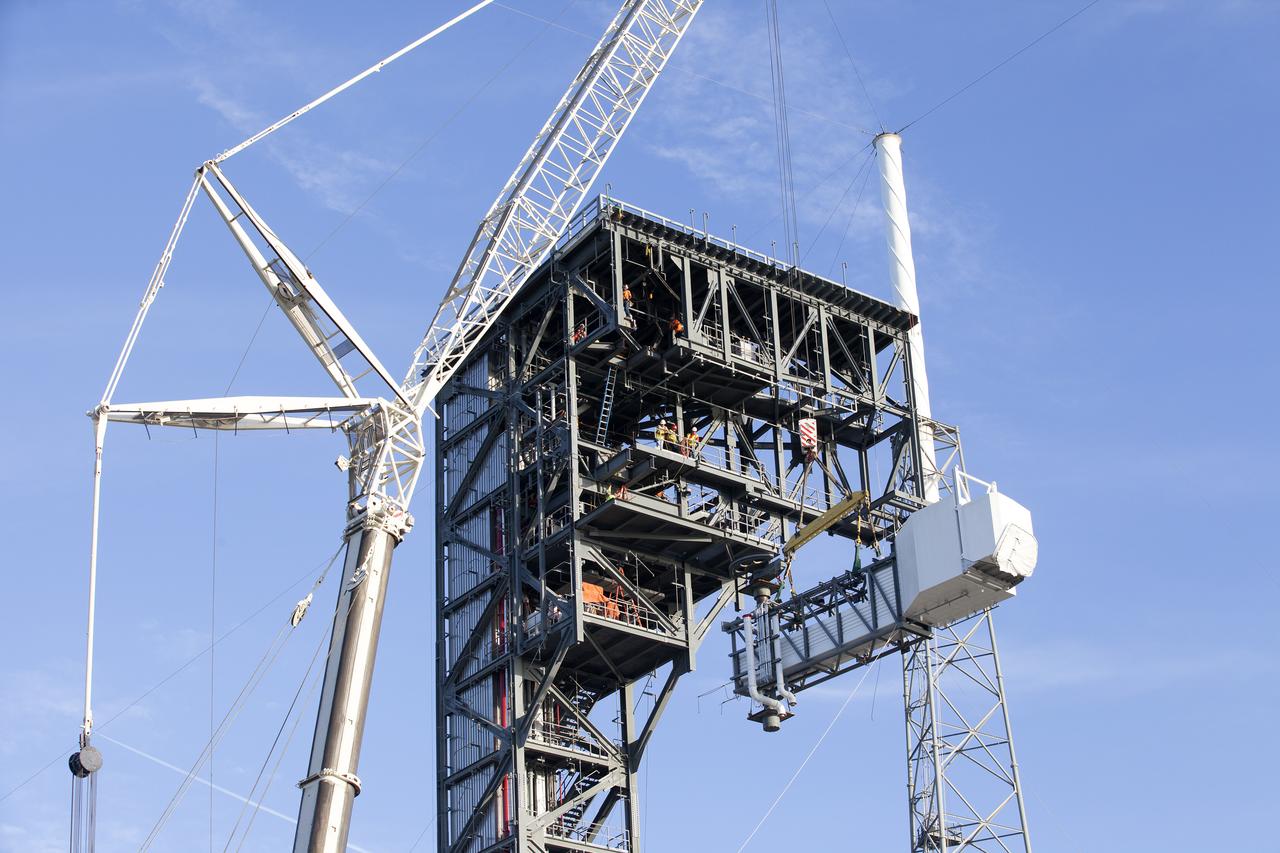
A crane lifts the Crew Access Arm and White Room for Boeing's CST-100 Starliner spacecraft to be attached to the Crew Access Tower at Cape Canaveral Air Force Station’s Space Launch Complex 41. When attached to the 200-foot tall Crew Access Tower, the arm will serve as the connection that astronauts will walk through prior to boarding the Starliner spacecraft when stacked atop a United Launch Alliance Atlas V rocket. The installation completes the major construction of the first new Crew Access Tower to be built at the Cape since the Apollo era. Under a Commercial Crew Transportation Capability (CCtCap) contract with NASA, Boeing’s Starliner system will be certified by NASA's Commercial Crew Program to fly crews to and from the International Space Station.
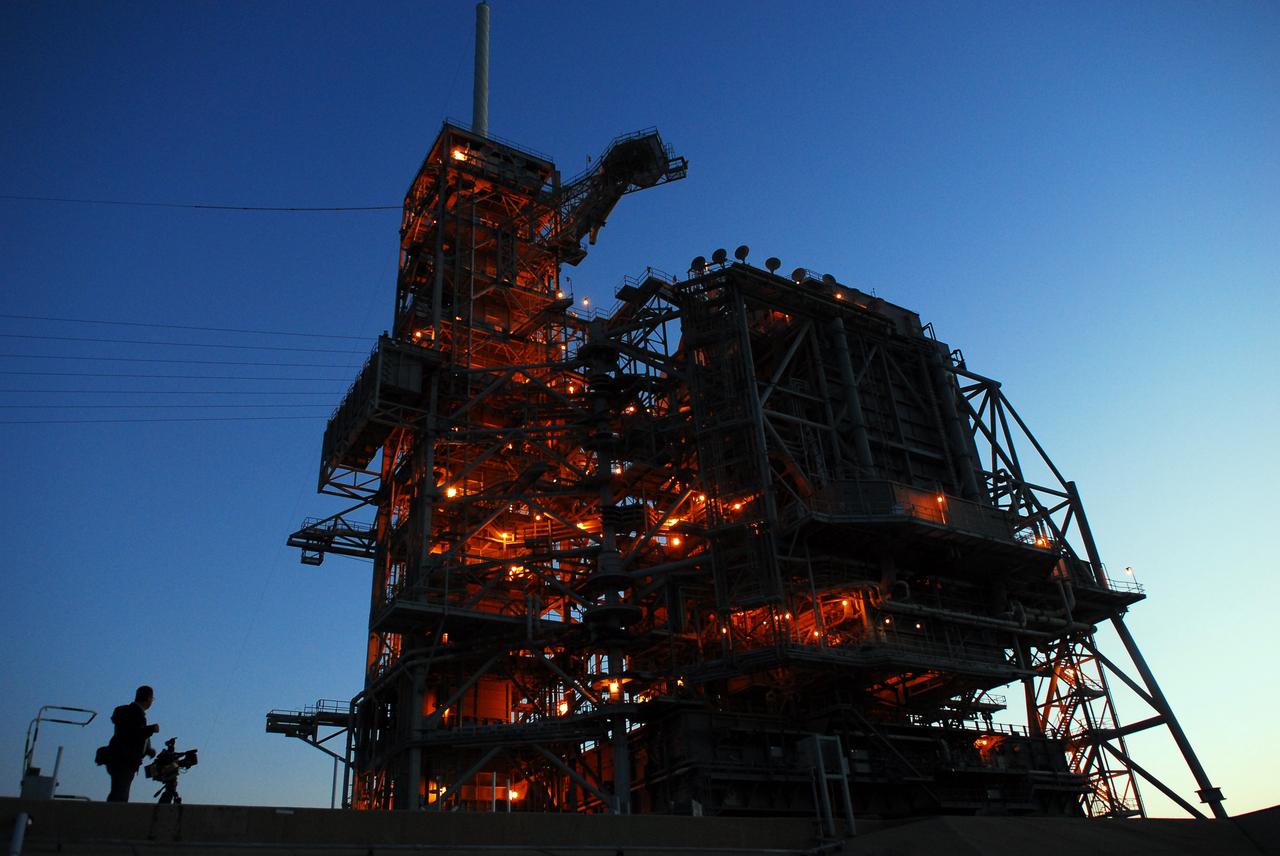
CAPE CANAVERAL, Fla. -- As the sun begins to rise at Launch Pad 39A at NASA's Kennedy Space Center in Florida, the STS-133 crew members are in the pad's White Room preparing to board space shuttle Discovery during the Terminal Countdown Demonstration Test (TCDT). Part of TCDT includes practicing the final hours of a real launch day when astronauts put on their launch-and-entry suits, ride to the pad in the Astrovan and strap into the shuttle. Discovery and its STS-133 crew will deliver the Permanent Multipurpose Module, packed with supplies and critical spare parts, as well as Robonaut 2, the dexterous humanoid astronaut helper, to the International Space Station. Launch is targeted for Nov. 1 at 4:40 p.m. For more information on the STS-133 mission, visit www.nasa.gov/mission_pages/shuttle/shuttlemissions/sts133/. Photo credit: NASA/Jim Grossmann
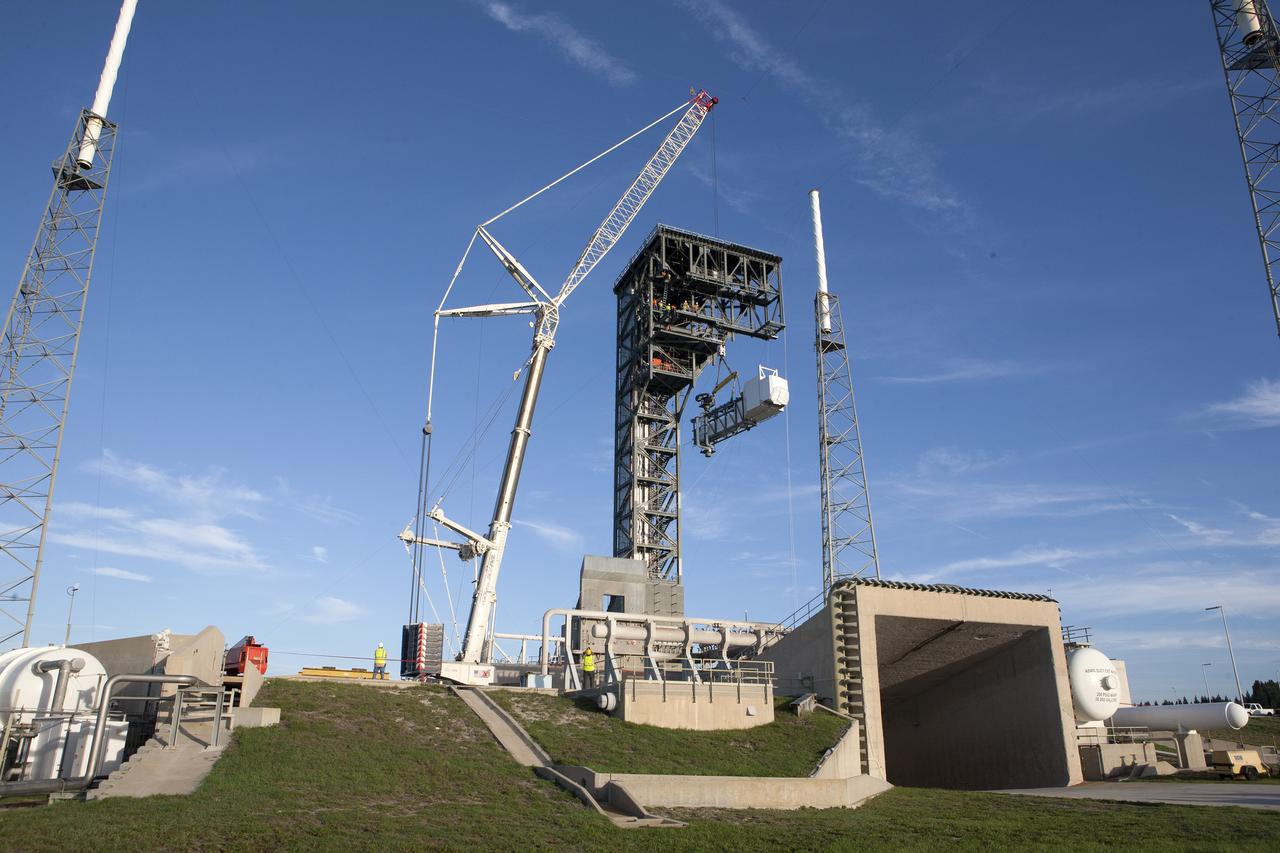
A crane lifts the Crew Access Arm and White Room for Boeing's CST-100 Starliner spacecraft to be attached to the Crew Access Tower at Cape Canaveral Air Force Station’s Space Launch Complex 41. When attached to the 200-foot tall Crew Access Tower, the arm will serve as the connection that astronauts will walk through prior to boarding the Starliner spacecraft when stacked atop a United Launch Alliance Atlas V rocket. This installation completes the major construction of the first new Crew Access Tower to be built at the Cape since the Apollo era. Under a Commercial Crew Transportation Capability (CCtCap) contract with NASA, Boeing’s Starliner system will be certified by NASA's Commercial Crew Program to fly crews to and from the International Space Station.
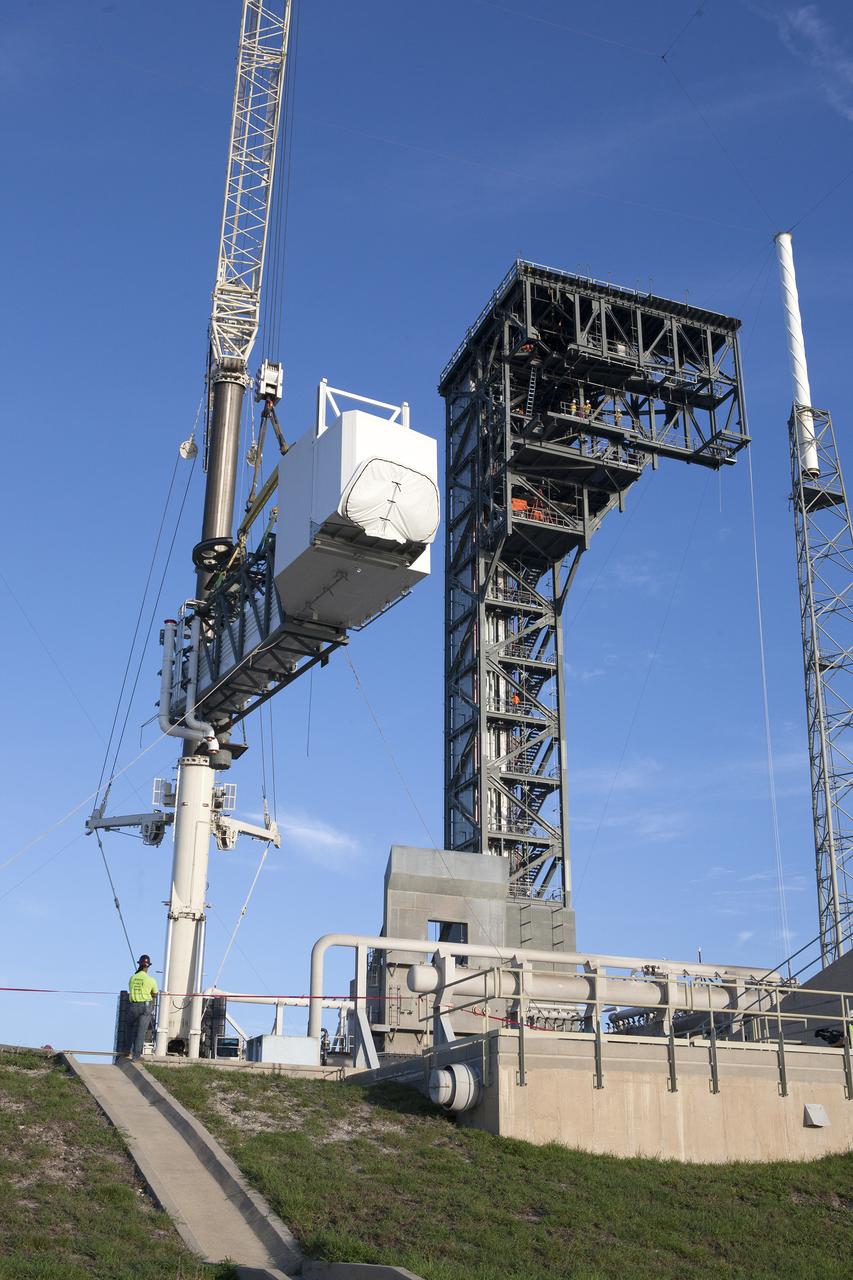
A crane lifts the Crew Access Arm and White Room for Boeing's CST-100 Starliner spacecraft to be attached to the Crew Access Tower at Cape Canaveral Air Force Station’s Space Launch Complex 41. When attached to the 200-foot tall Crew Access Tower, the arm will serve as the connection that astronauts will walk through prior to boarding the Starliner spacecraft when stacked atop a United Launch Alliance Atlas V rocket. This installation completes the major construction of the first new Crew Access Tower to be built at the Cape since the Apollo era. Under a Commercial Crew Transportation Capability (CCtCap) contract with NASA, Boeing’s Starliner system will be certified by NASA's Commercial Crew Program to fly crews to and from the International Space Station.
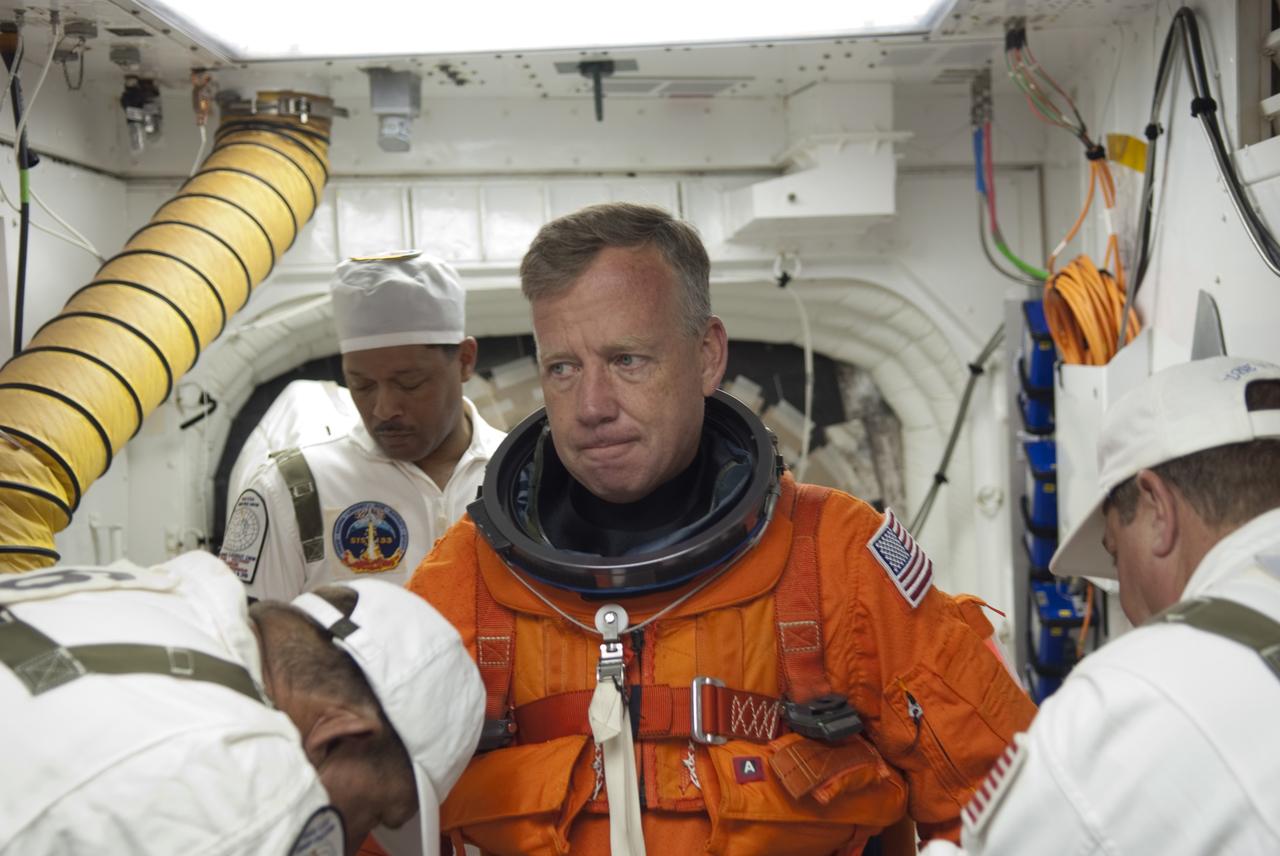
CAPE CANAVERAL, Fla. -- In the White Room of Launch Pad 39A at NASA's Kennedy Space Center in Florida, STS-133 Commander Steve Lindsey prepares to board space shuttle Discovery during the Terminal Countdown Demonstration Test (TCDT). Part of TCDT includes practicing the final hours of a real launch day when astronauts put on their launch-and-entry suits, ride to the pad in the Astrovan and strap into the shuttle. Discovery and its STS-133 crew will deliver the Permanent Multipurpose Module, packed with supplies and critical spare parts, as well as Robonaut 2, the dexterous humanoid astronaut helper, to the International Space Station. Launch is targeted for Nov. 1 at 4:40 p.m. For more information on the STS-133 mission, visit www.nasa.gov/mission_pages/shuttle/shuttlemissions/sts133/. Photo credit: NASA/Jim Grossmann
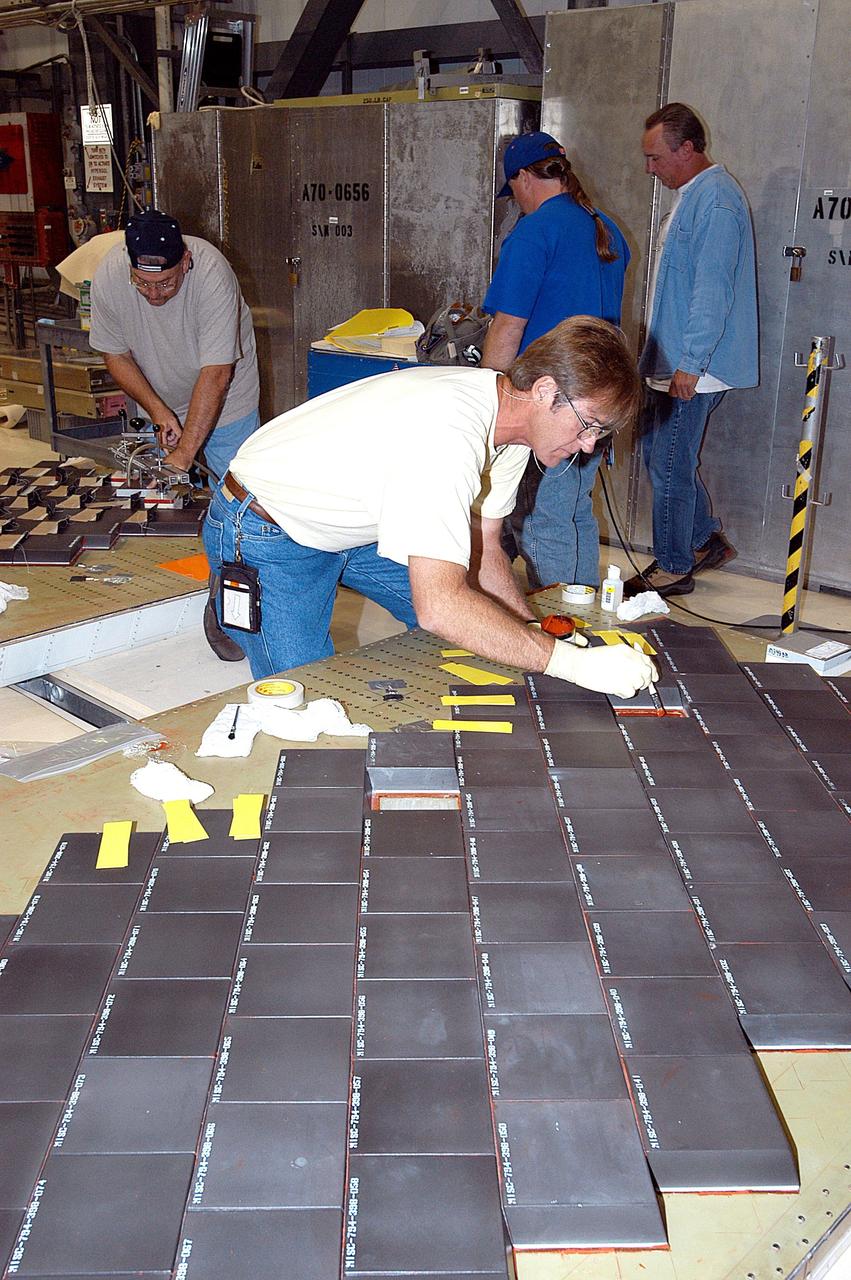
KENNEDY SPACE CENTER, FLA. -- In the Orbiter Processing Facility, United Space Alliance employee Harrell Watts applies RTV, a room-temperature vulcanizing silicone adhesive, to a main landing gear door of Space Shuttle orbiter Enterprise (OV-101) on which Thermal Protection System tiles are being installed. Sections of Enterprise were borrowed from the Smithsonian Institution's Air and Space Museum where the orbiter is being stored at the Washington Dulles International Airport. Enterprise was the first orbiter built in the Shuttle fleet and was used to conduct the Approach and Landing Test Program before the first powered Shuttle flight. After the tile installation is complete, the sections will be transferred to the Southwest Research Institute for testing requested by the Columbia Accident Investigation Board.
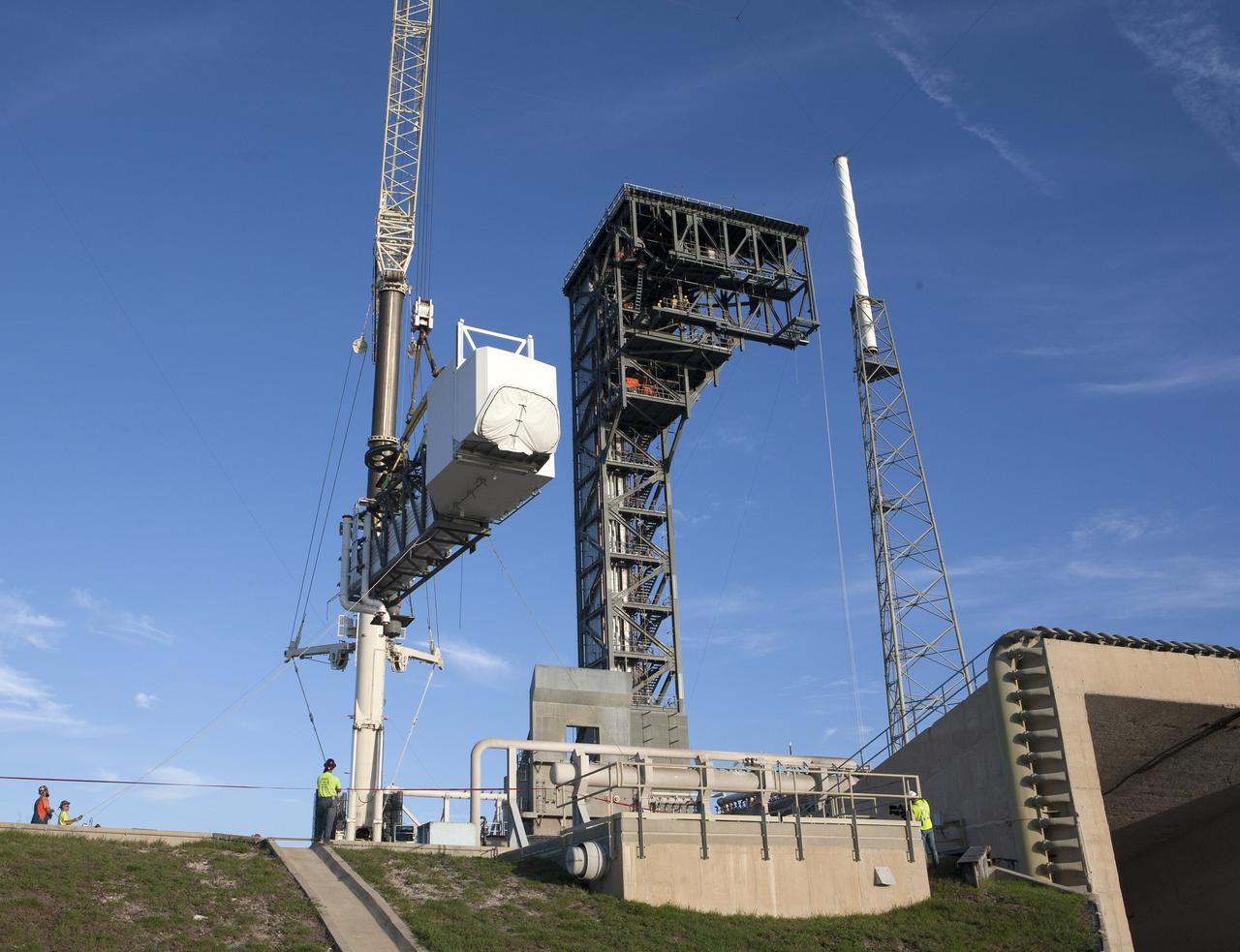
A crane lifts the Crew Access Arm and White Room for Boeing's CST-100 Starliner spacecraft to be attached to the Crew Access Tower at Cape Canaveral Air Force Station’s Space Launch Complex 41. When attached to the 200-foot tall Crew Access Tower, the arm will serve as the connection that astronauts will walk through prior to boarding the Starliner spacecraft when stacked atop a United Launch Alliance Atlas V rocket. This installation completes the major construction of the first new Crew Access Tower to be built at the Cape since the Apollo era. Under a Commercial Crew Transportation Capability (CCtCap) contract with NASA, Boeing’s Starliner system will be certified by NASA's Commercial Crew Program to fly crews to and from the International Space Station.
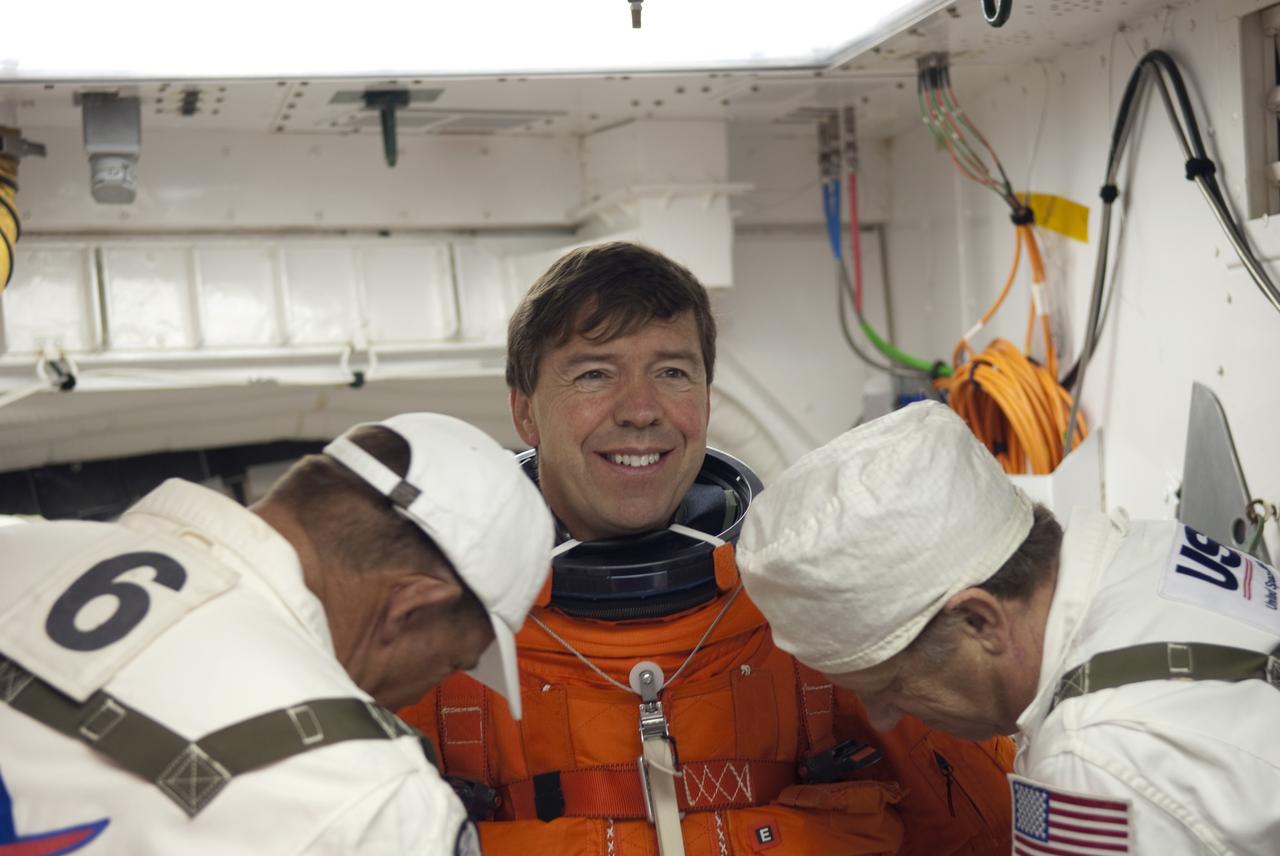
CAPE CANAVERAL, Fla. -- In the White Room of Launch Pad 39A at NASA's Kennedy Space Center in Florida, STS-133 Mission Specialist Michael Barratt prepares to board space shuttle Discovery during the Terminal Countdown Demonstration Test (TCDT). Part of TCDT includes practicing the final hours of a real launch day when astronauts put on their launch-and-entry suits, ride to the pad in the Astrovan and strap into the shuttle. Discovery and its STS-133 crew will deliver the Permanent Multipurpose Module, packed with supplies and critical spare parts, as well as Robonaut 2, the dexterous humanoid astronaut helper, to the International Space Station. Launch is targeted for Nov. 1 at 4:40 p.m. For more information on the STS-133 mission, visit www.nasa.gov/mission_pages/shuttle/shuttlemissions/sts133/. Photo credit: NASA/Jim Grossmann
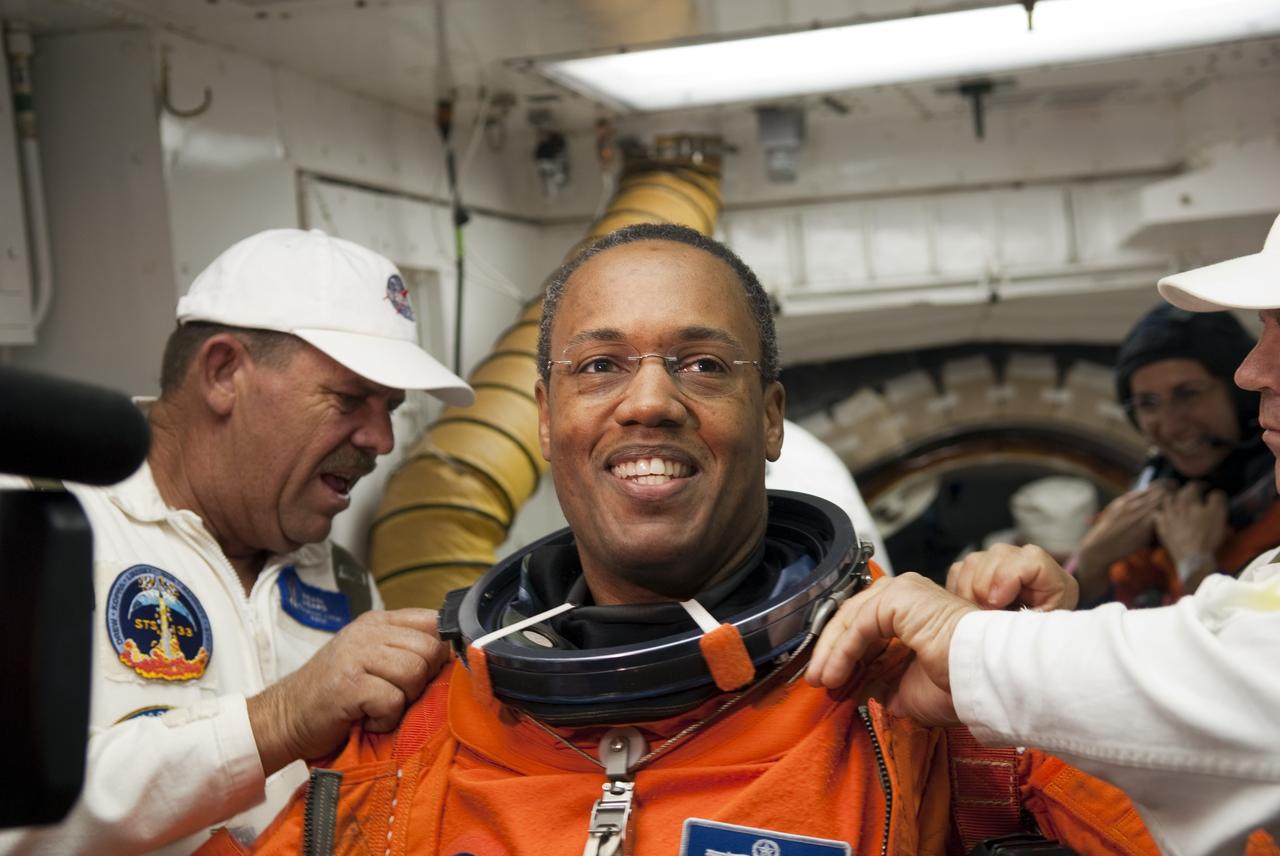
CAPE CANAVERAL, Fla. -- In the White Room of Launch Pad 39A at NASA's Kennedy Space Center in Florida, STS-133 Mission Specialist Alvin Drew prepares to board space shuttle Discovery during the Terminal Countdown Demonstration Test (TCDT). Part of TCDT includes practicing the final hours of a real launch day when astronauts put on their launch-and-entry suits, ride to the pad in the Astrovan and strap into the shuttle. Discovery and its STS-133 crew will deliver the Permanent Multipurpose Module, packed with supplies and critical spare parts, as well as Robonaut 2, the dexterous humanoid astronaut helper, to the International Space Station. Launch is targeted for Nov. 1 at 4:40 p.m. For more information on the STS-133 mission, visit www.nasa.gov/mission_pages/shuttle/shuttlemissions/sts133/. Photo credit: NASA/Jim Grossmann
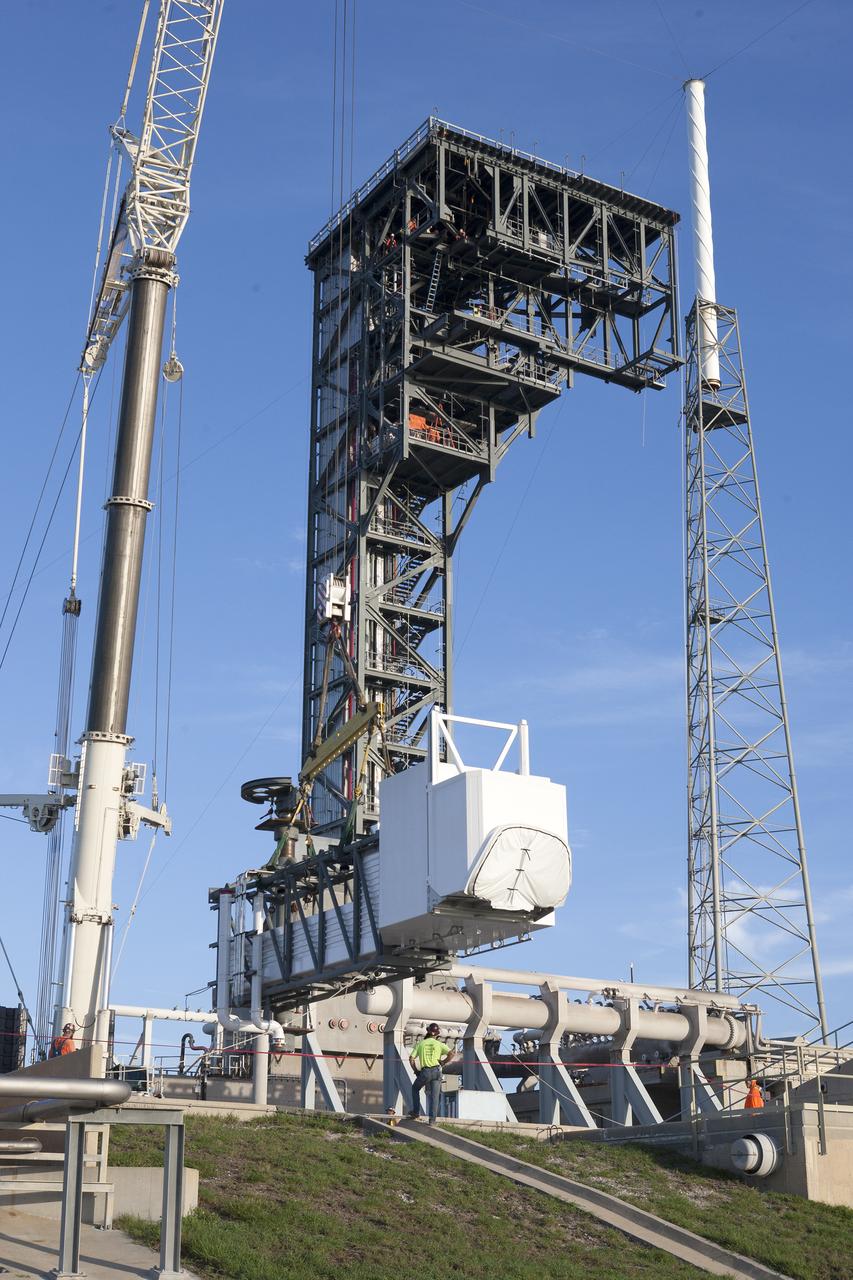
A crane lifts the Crew Access Arm and White Room for Boeing's CST-100 Starliner spacecraft to be attached to the Crew Access Tower at Cape Canaveral Air Force Station’s Space Launch Complex 41. When attached to the 200-foot tall Crew Access Tower, the arm will serve as the connection that astronauts will walk through prior to boarding the Starliner spacecraft when stacked atop a United Launch Alliance Atlas V rocket. This installation completes the major construction of the first new Crew Access Tower to be built at the Cape since the Apollo era. Under a Commercial Crew Transportation Capability (CCtCap) contract with NASA, Boeing’s Starliner system will be certified by NASA's Commercial Crew Program to fly crews to and from the International Space Station.
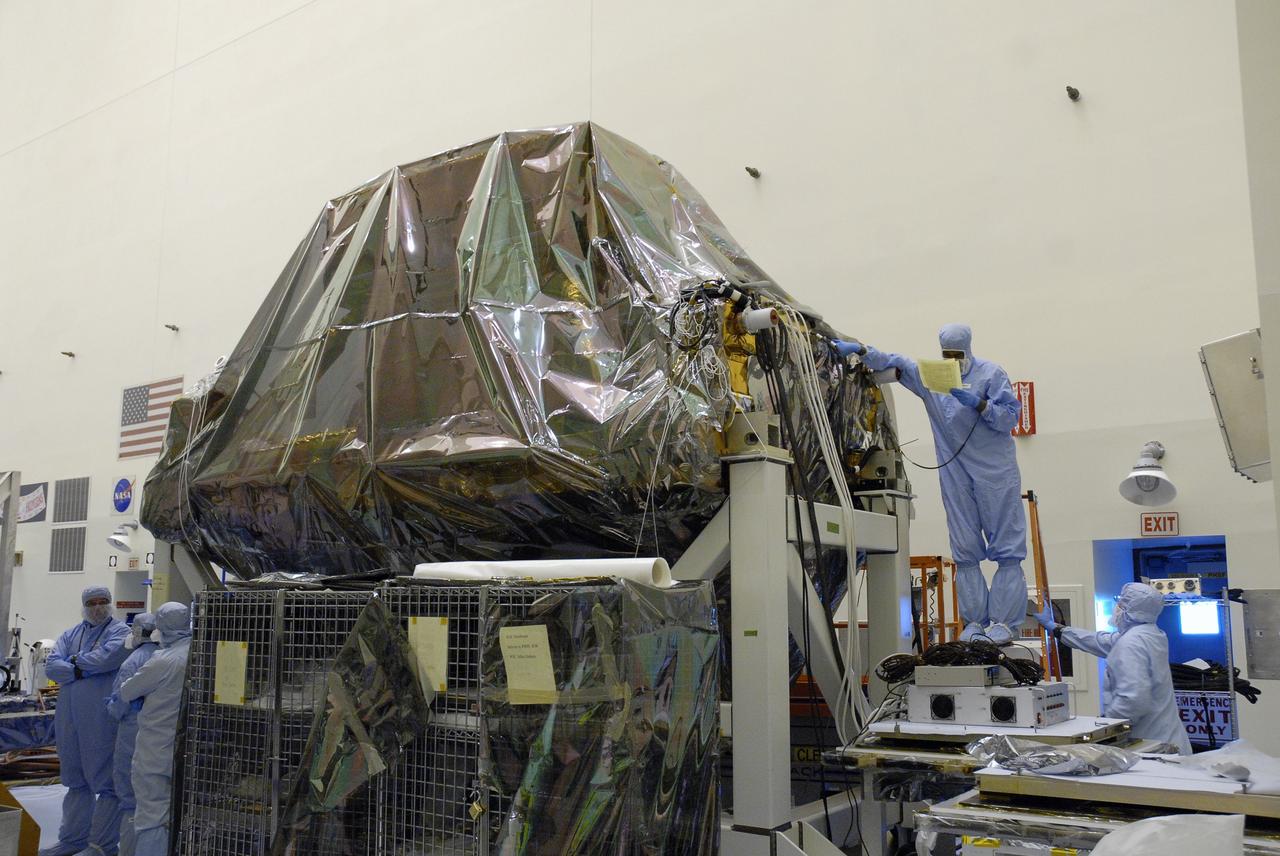
CAPE CANAVERAL, Fla. - In the Payload Hazardous Servicing Facility, or PHSF, at NASA's Kennedy Space Center in Florida, the Super Lightweight Interchangeable Carrier, or SLIC, is placed on a work platform after its return to the clean room from Launch Pad 39A. The payload for Hubble servicing mission 4 comprises four carriers holding various equipment for the mission. In the PHSF, the carriers will be stored until a new target launch date in 2009 can be set for Atlantis’ STS-125 mission. Atlantis’ October target launch date was delayed after a device on board Hubble, used in the storage and transmission of science data to Earth, shut down on Sept. 27. Replacing the broken device will be added to Atlantis’ servicing mission to the telescope. Photo credit: NASA/Jim Grossmann
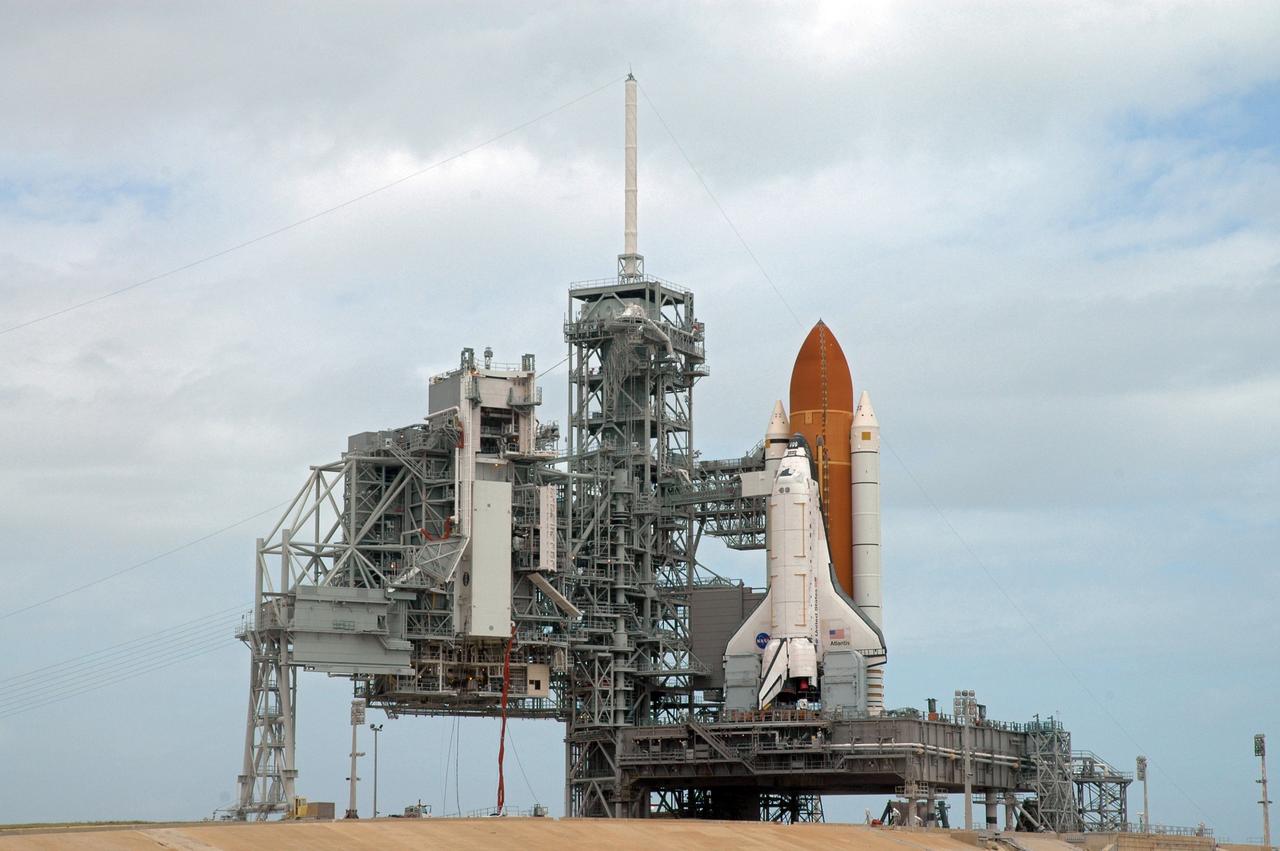
CAPE CANAVERAL, Fla. – On Launch Pad 39A at NASA's Kennedy Space Center in Florida, the rotating service structure is open, revealing space shuttle Atlantis on the pad for the STS-125 mission, the fifth and final shuttle servicing mission for NASA’s Hubble Space Telescope. On the RSS, the payload canister is in position at the payload changeout room to receive the Hubble hardware. The payload comprises four carriers holding various equipment for the mission. The hardware will be transported back to Kennedy’s Payload Hazardous Servicing Facility where it will be stored until a new target launch date can be set for Atlantis’ STS-125 mission in 2009. Atlantis’ October target launch date was delayed after a device on board Hubble used in the storage and transmission of science data to Earth shut down on Sept. 27. Replacing the broken device will be added to Atlantis’ servicing mission to the telescope. Photo credit: NASA/Tim Jacobs
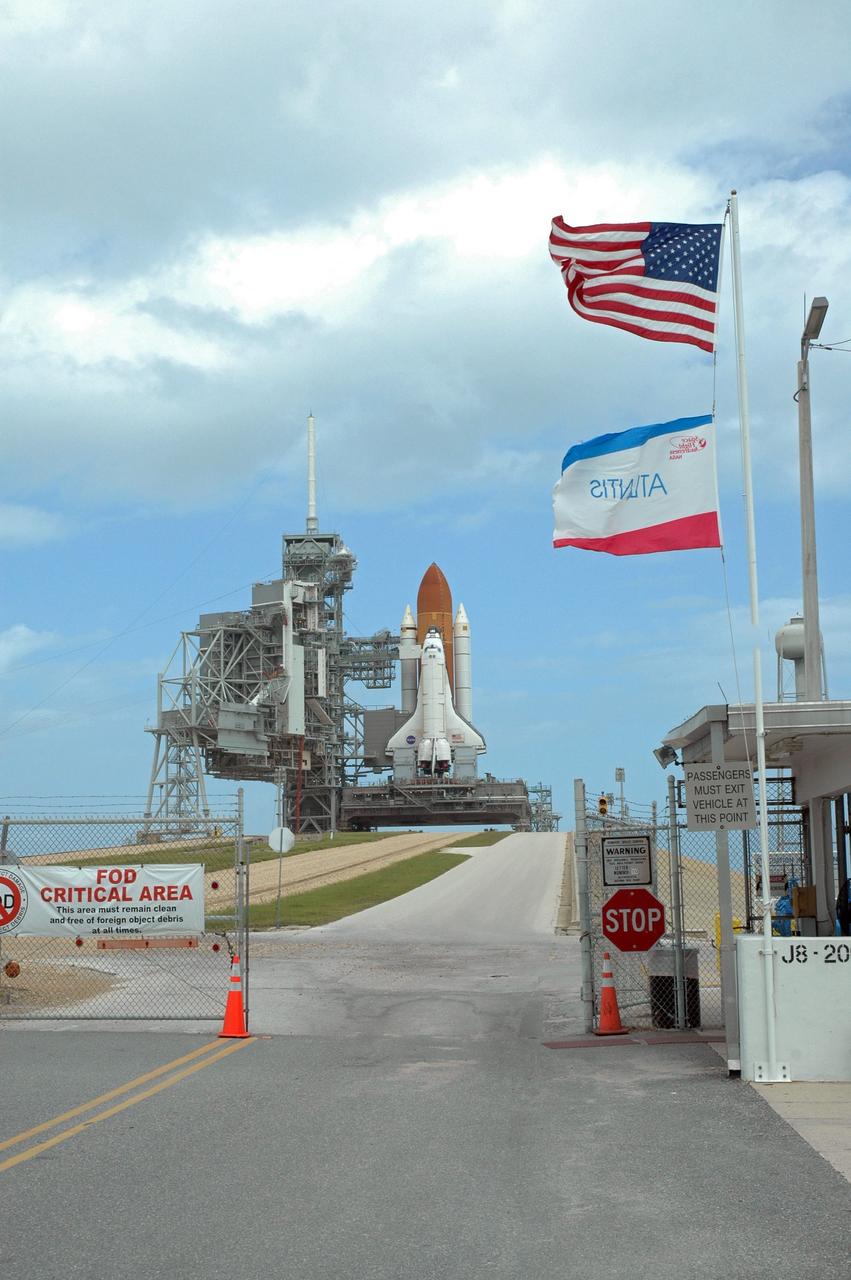
CAPE CANAVERAL, Fla. – On Launch Pad 39A at NASA's Kennedy Space Center in Florida, the rotating service structure is open, revealing space shuttle Atlantis on the pad for the STS-125 mission, the fifth and final shuttle servicing mission for NASA’s Hubble Space Telescope. On the RSS, the payload canister is in position at the payload changeout room to receive the Hubble hardware. High winds, however, have delayed the transfer. The payload comprises four carriers holding various equipment for the mission. The hardware will be transported back to Kennedy’s Payload Hazardous Servicing Facility where it will be stored until a new target launch date can be set for Atlantis’ STS-125 mission in 2009. Atlantis’ October target launch date was delayed after a device on board Hubble used in the storage and transmission of science data to Earth shut down on Sept. 27. Replacing the broken device will be added to Atlantis’ servicing mission to the telescope. Photo credit: NASA/Tim Jacobs
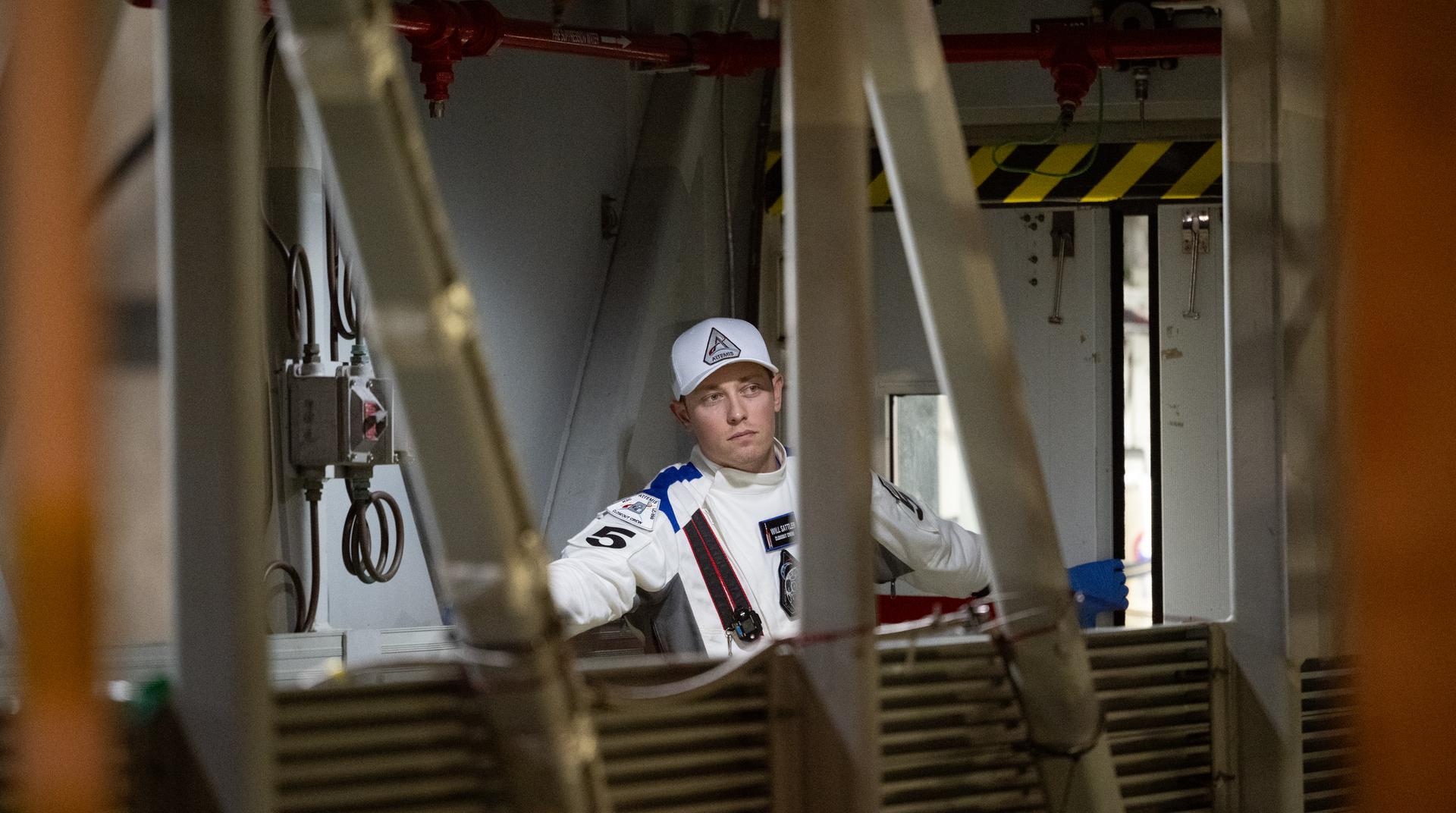
Will Sattler of the Closeout Crew is seen on the crew access arm just outside of the white room awaiting the arrival of Artemis II crewmembers NASA astronauts Reid Wiseman, commander; Victor Glover, pilot; Christina Koch, mission specialist; and CSA (Canadian Space Agency) astronaut Jeremy Hansen, mission specialist; at the 275-foot level of the mobile launcher as they prepare to board their Orion spacecraft atop NASA’s Space Launch System rocket during the Artemis II countdown demonstration test, Saturday, Dec. 20, 2025, inside the Vehicle Assembly Building at NASA’s Kennedy Space Center in Florida. For this operation, the Artemis II crew and launch teams are simulating the launch day timeline including suit-up, walkout, and spacecraft ingress and egress. Through the Artemis campaign, NASA will send astronauts to explore the Moon for scientific discovery, economic benefits, and to build the foundation for the first crewed missions to Mars, for the benefit of all. Photo Credit: (NASA/Joel Kowsky)
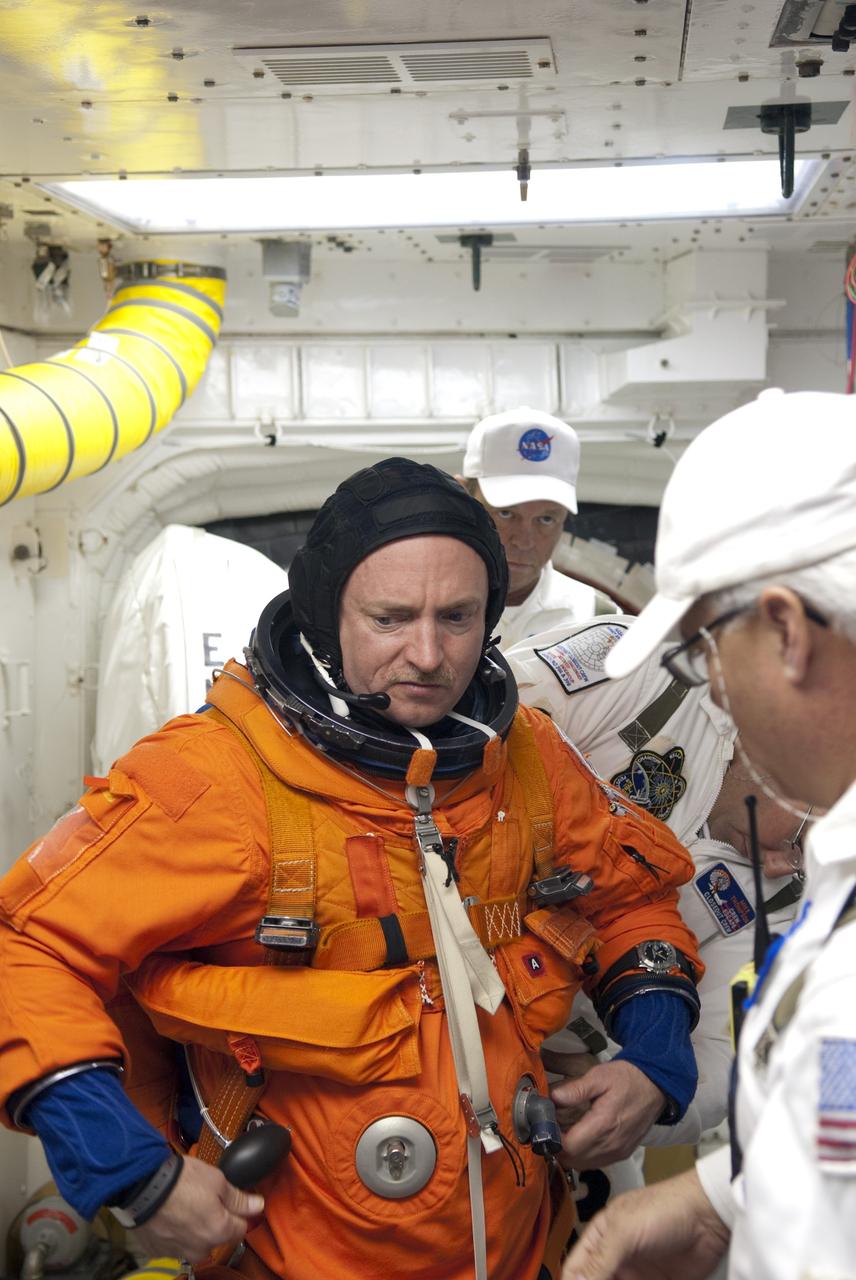
CAPE CANAVERAL, Fla. - In the White Room of Launch Pad 39A at NASA's Kennedy Space Center in Florida, STS-134 Commander Mark Kelly prepares to board space shuttle Endeavour during the Terminal Countdown Demonstration Test (TCDT). Part of TCDT includes practicing the final hours of a real launch day when astronauts put on their launch-and-entry suits, ride to the pad in the Astrovan and strap into the shuttle. Endeavour's six crew members are targeted to launch April 19 at 7:48 p.m. EDT. They will deliver the Express Logistics Carrier-3, Alpha Magnetic Spectrometer-2 (AMS), a high-pressure gas tank, additional spare parts for the Dextre robotic helper and micrometeoroid debris shields to the International Space Station. This will be the final spaceflight for Endeavour. For more information visit, www.nasa.gov/mission_pages/shuttle/shuttlemissions/sts134/index.html. Photo credit: NASA/Jim Grossmann
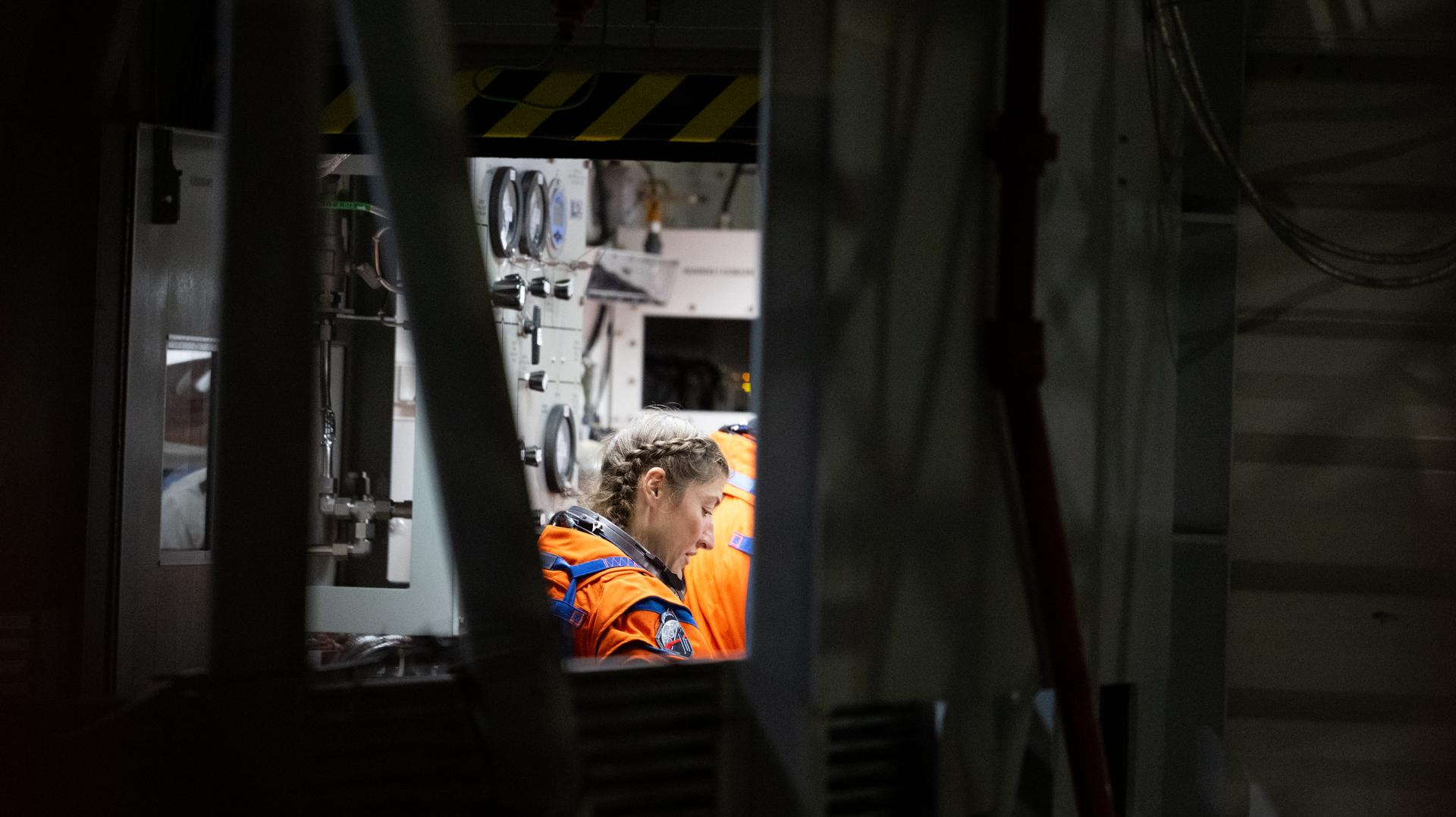
Artemis II crewmember NASA astronaut Christina Koch, mission specialist, is seen inside the white room at the 275-foot level of the mobile launcher she and fellow crewmates NASA astronauts Reid Wiseman, commander; Victor Glover, pilot; and CSA (Canadian Space Agency) astronaut Jeremy Hansen, mission specialist, prepare to board their Orion spacecraft atop NASA’s Space Launch System rocket during the Artemis II countdown demonstration test, Saturday, Dec. 20, 2025, inside the Vehicle Assembly Building at NASA’s Kennedy Space Center in Florida. For this operation, the Artemis II crew and launch teams are simulating the launch day timeline including suit-up, walkout, and spacecraft ingress and egress. Through the Artemis campaign, NASA will send astronauts to explore the Moon for scientific discovery, economic benefits, and to build the foundation for the first crewed missions to Mars, for the benefit of all. Photo Credit: (NASA/Joel Kowsky)
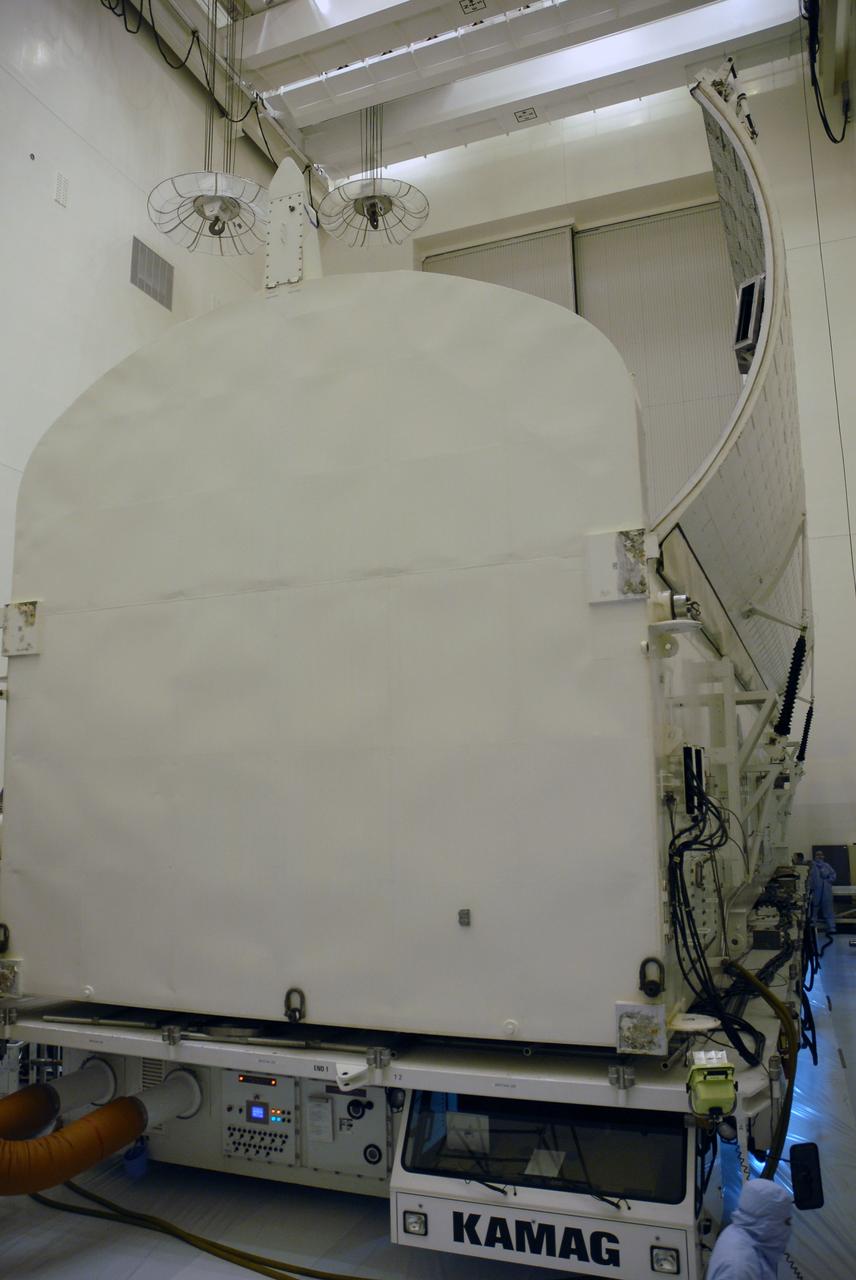
CAPE CANAVERAL, Fla. – At NASA's Kennedy Space Center in Florida, the doors of the payload canister are opened inside a clean room of the Payload Hazardous Servicing Facility, or PHSF. The canister contains the Hubble Space Telescope equipment. The payload comprises four carriers holding various equipment for the mission. The canister maintains a controlled environment. In the PHSF, the carriers will be stored until a new target launch date can be set for Atlantis’ STS-125 mission in 2009. Atlantis’ October target launch date was delayed after a device on board Hubble used in the storage and transmission of science data to Earth shut down on Sept. 27. Replacing the broken device will be added to Atlantis’ servicing mission to the telescope. Photo credit: NASA/Troy Cryder
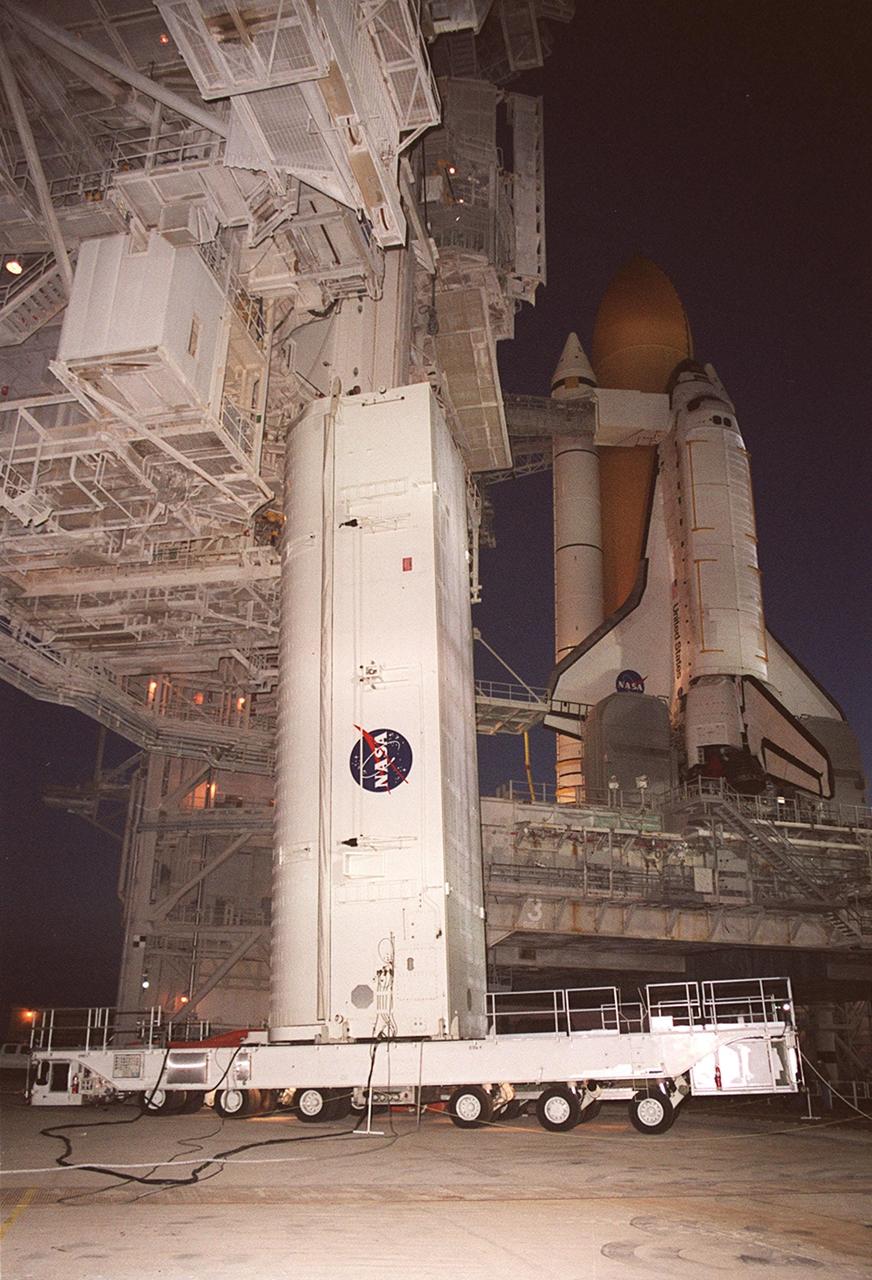
KENNEDY SPACE CENTER, Fla. -- Just before sunrise the payload canister arrives at Launch Pad 39A. In the background is Space Shuttle Discovery, waiting to launch on mission STS-105. Inside the canister are the primary payloads on the mission, the Multi-Purpose Logistics Module Leonardo and the Integrated Cargo Carrier. The ICC holds several smaller payloads, the Early Ammonia Servicer and two experiment containers. The Early Ammonia Servicer consists of two nitrogen tanks that provide compressed gaseous nitrogen to pressurize the ammonia tank and replenish it in the thermal control subsystems of the Space Station. The ICC and MPLM will be lifted into the payload changeout room on the Rotation Service Structure where they will be moved into the Discovery’s payload bay. The STS-105 mission includes a crew changeover on the International Space Station. Expedition Three will be traveling on Discovery to replace Expedition Two, who will return to Earth on board Discovery. Launch of STS-105 is scheduled for Aug. 9
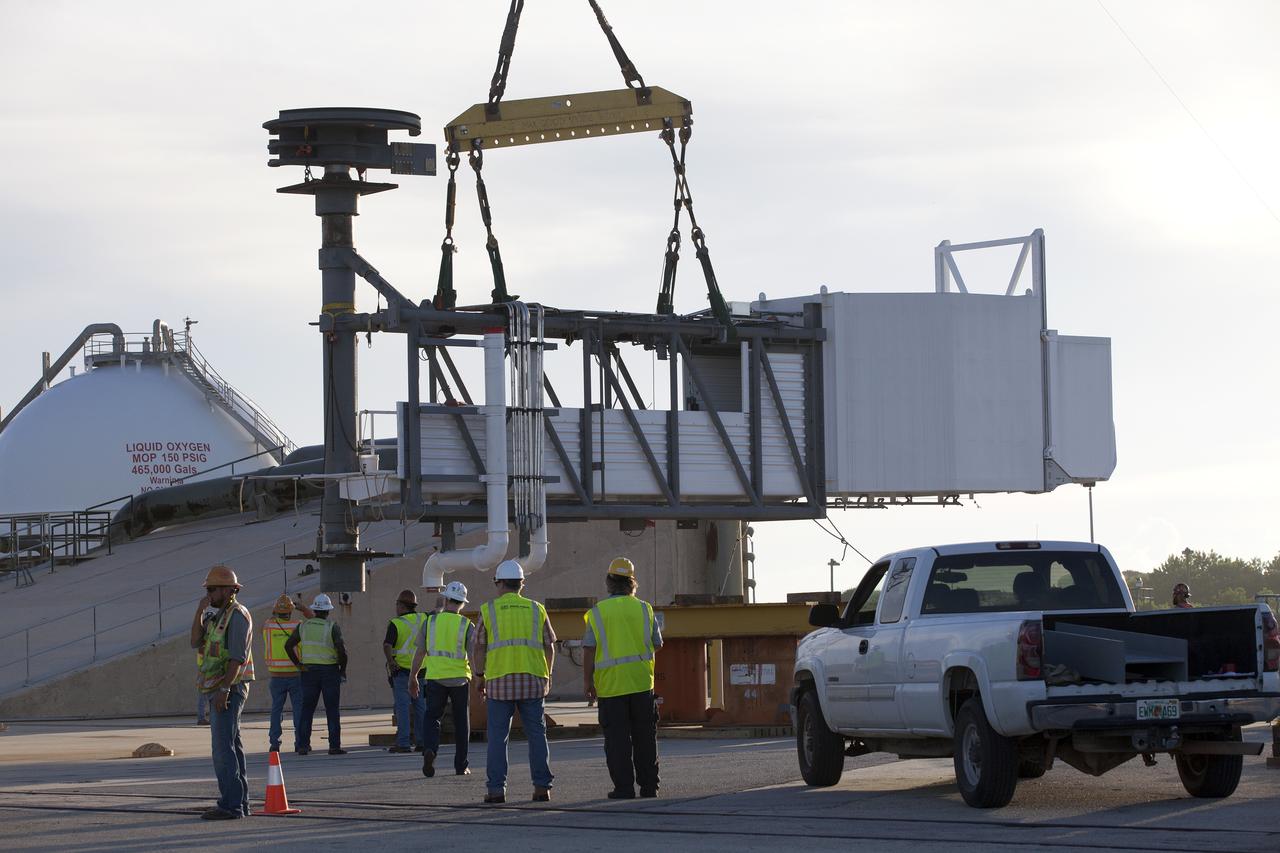
A crane is attached to the Crew Access Arm and White Room for Boeing's CST-100 Starliner spacecraft to be attached to the Crew Access Tower at Cape Canaveral Air Force Station’s Space Launch Complex 41. When attached to the 200-foot tall Crew Access Tower, the arm will serve as the connection that astronauts will walk through prior to boarding the Starliner spacecraft when stacked atop a United Launch Alliance Atlas V rocket. This installation completes the major construction of the first new Crew Access Tower to be built at the Cape since the Apollo era. Under a Commercial Crew Transportation Capability (CCtCap) contract with NASA, Boeing’s Starliner system will be certified by NASA's Commercial Crew Program to fly crews to and from the International Space Station.
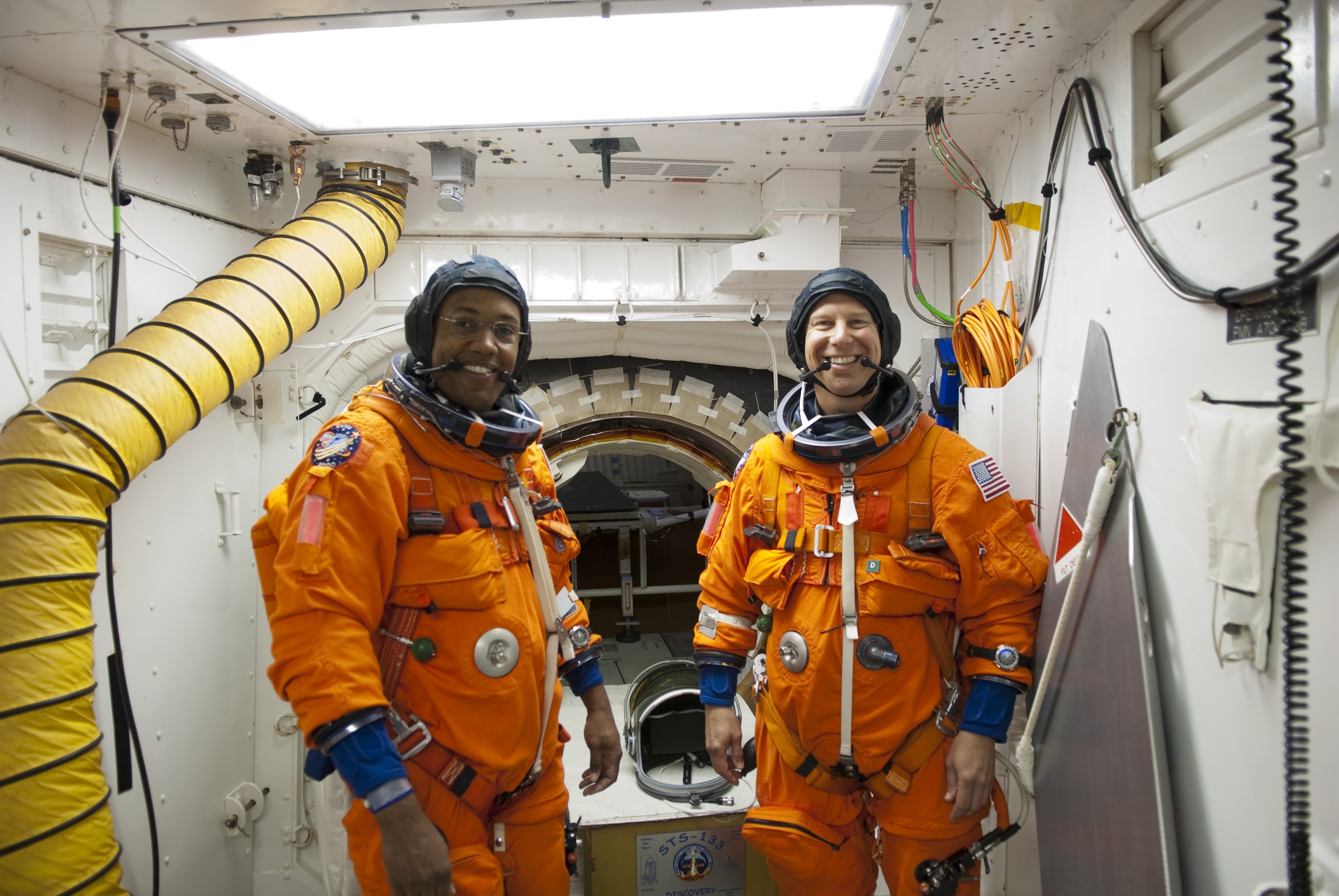
CAPE CANAVERAL, Fla. -- In the White Room of Launch Pad 39A at NASA's Kennedy Space Center in Florida, STS-133 Mission Specialists Alvin Drew, left, and Tim Kopra prepare to board space shuttle Discovery during the Terminal Countdown Demonstration Test (TCDT). Part of TCDT includes practicing the final hours of a real launch day when astronauts put on their launch-and-entry suits, ride to the pad in the Astrovan and strap into the shuttle. Discovery and its STS-133 crew will deliver the Permanent Multipurpose Module, packed with supplies and critical spare parts, as well as Robonaut 2, the dexterous humanoid astronaut helper, to the International Space Station. Launch is targeted for Nov. 1 at 4:40 p.m. For more information on the STS-133 mission, visit www.nasa.gov/mission_pages/shuttle/shuttlemissions/sts133/. Photo credit: NASA/Jim Grossmann

CAPE CANAVERAL, Fla. -- In the White Room of Launch Pad 39A at NASA's Kennedy Space Center in Florida, STS-133 Mission Specialist Nicole Stott prepares to board space shuttle Discovery during the Terminal Countdown Demonstration Test (TCDT). Part of TCDT includes practicing the final hours of a real launch day when astronauts put on their launch-and-entry suits, ride to the pad in the Astrovan and strap into the shuttle. Discovery and its STS-133 crew will deliver the Permanent Multipurpose Module, packed with supplies and critical spare parts, as well as Robonaut 2, the dexterous humanoid astronaut helper, to the International Space Station. Launch is targeted for Nov. 1 at 4:40 p.m. For more information on the STS-133 mission, visit www.nasa.gov/mission_pages/shuttle/shuttlemissions/sts133/. Photo credit: NASA/Jim Grossmann
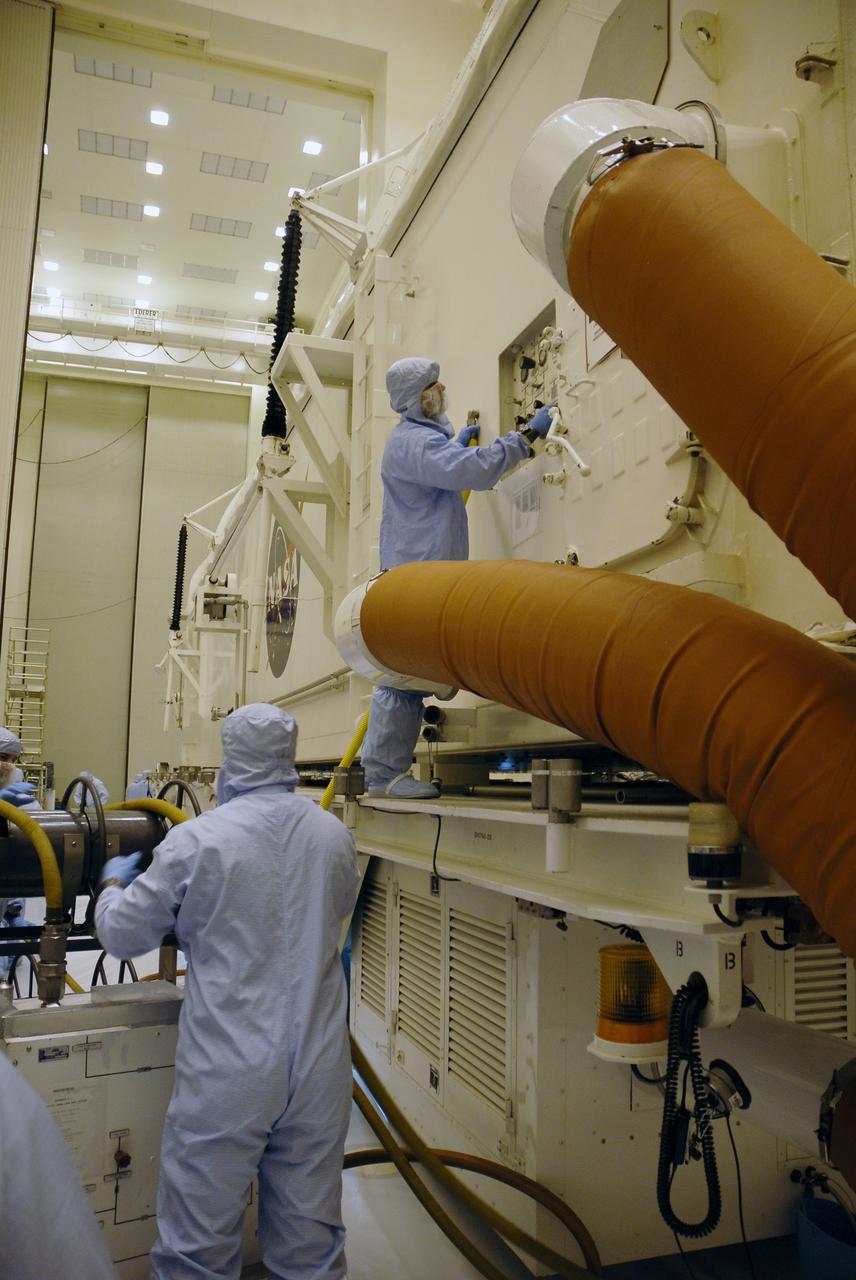
CAPE CANAVERAL, Fla. – At NASA's Kennedy Space Center in Florida, workers in a clean room of the Payload Hazardous Servicing Facility, or PHSF, check the controls on the payload canister with the Hubble Space Telescope equipment inside. The payload comprises four carriers holding various equipment for the mission. The canister maintains a controlled environment. In the PHSF, the carriers will be stored until a new target launch date can be set for Atlantis’ STS-125 mission in 2009. Atlantis’ October target launch date was delayed after a device on board Hubble used in the storage and transmission of science data to Earth shut down on Sept. 27. Replacing the broken device will be added to Atlantis’ servicing mission to the telescope. Photo credit: NASA/Troy Cryder
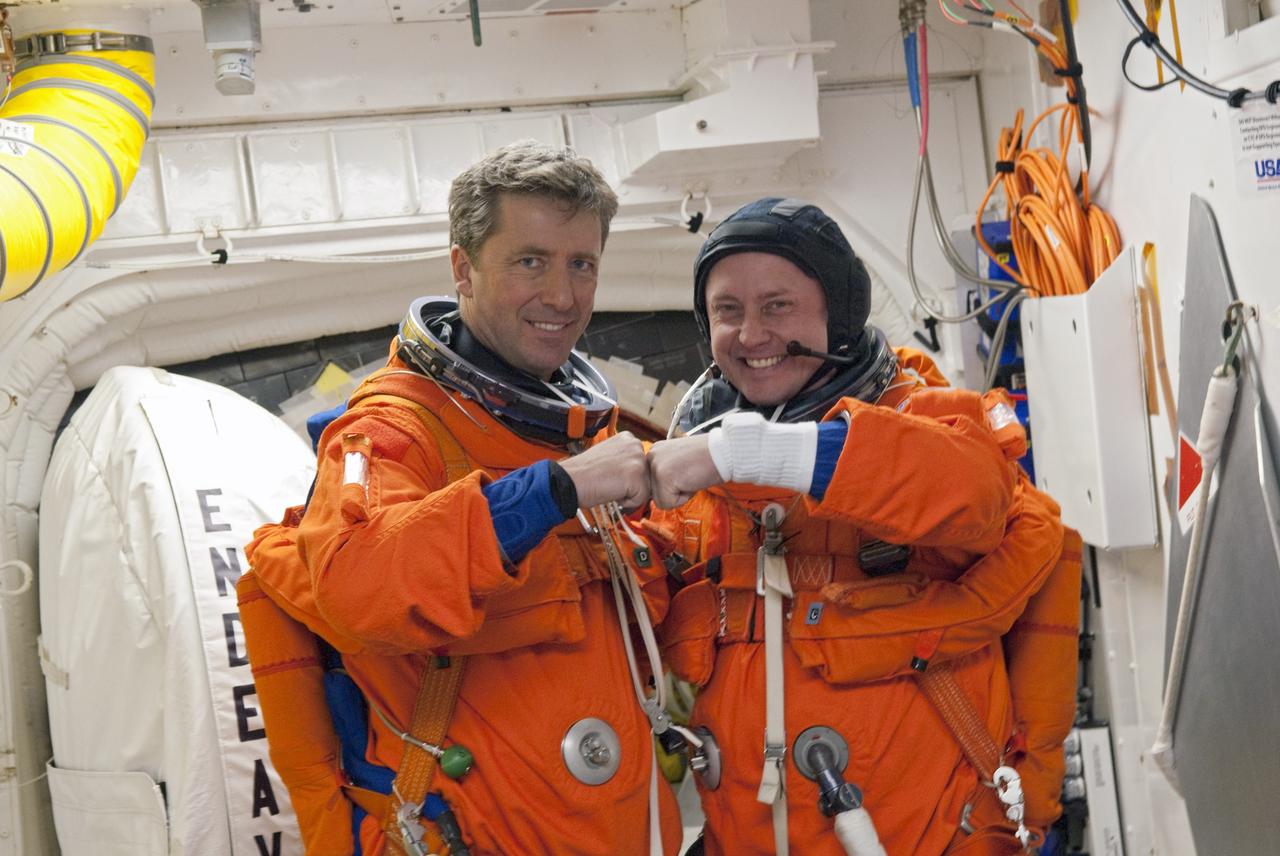
CAPE CANAVERAL, Fla. -- In the White Room of Launch Pad 39A at NASA's Kennedy Space Center in Florida, STS-134 Mission Specialists Roberto Vittori, with the European Space Agency, left, and Michael Fincke touch fists as they prepare to board space shuttle Endeavour during the Terminal Countdown Demonstration Test (TCDT). Part of TCDT includes practicing the final hours of a real launch day when astronauts put on their launch-and-entry suits, ride to the pad in the Astrovan and strap into the shuttle. Endeavour's six crew members are targeted to launch April 19 at 7:48 p.m. EDT. They will deliver the Express Logistics Carrier-3, Alpha Magnetic Spectrometer-2 (AMS), a high-pressure gas tank, additional spare parts for the Dextre robotic helper and micrometeoroid debris shields to the International Space Station. This will be the final spaceflight for Endeavour. For more information visit, www.nasa.gov/mission_pages/shuttle/shuttlemissions/sts134/index.html. Photo credit: NASA/Jim Grossmann
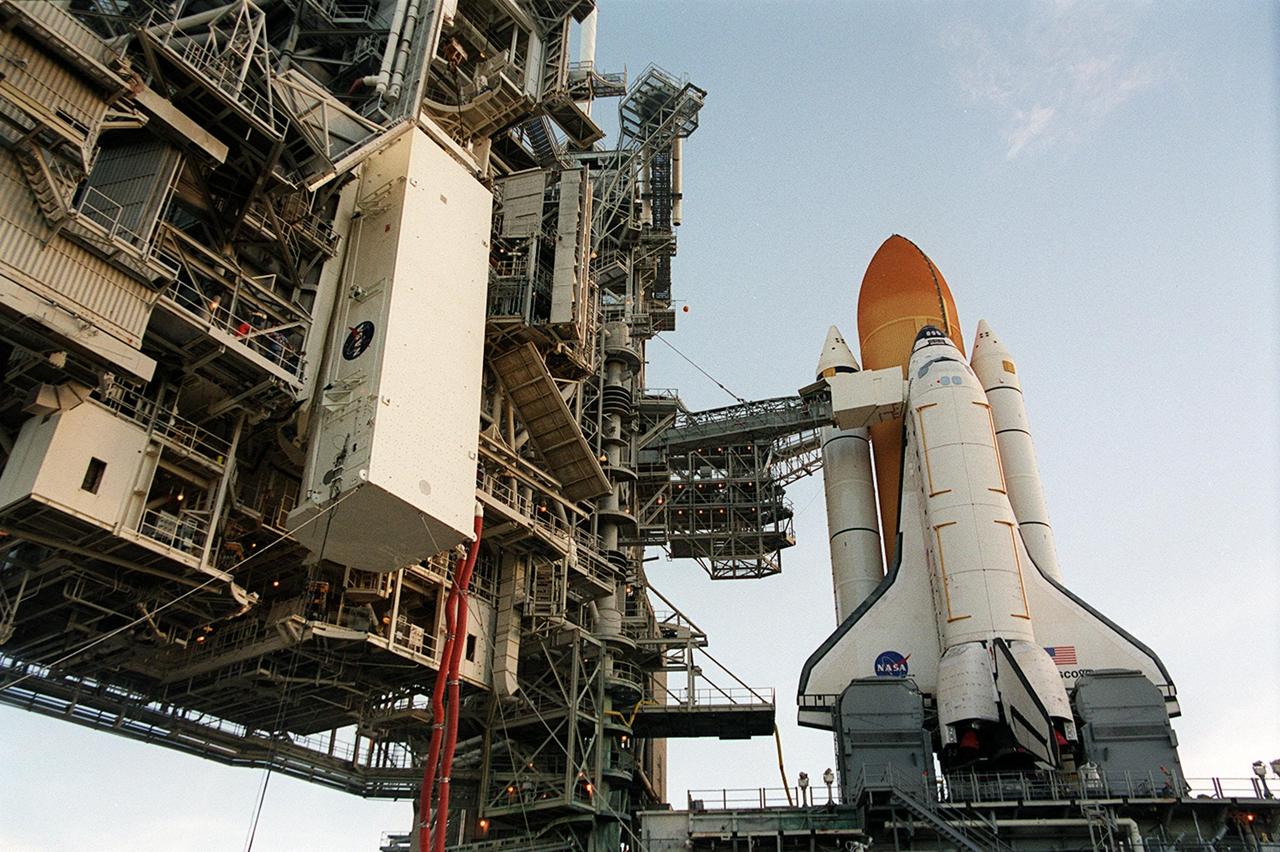
KENNEDY SPACE CENTER, Fla. -- The payload canister is lifted up the Rotating Service Structure on Launch Pad 39A. At right is Space Shuttle Discovery. Inside the canister are the primary payloads on mission STS-105, the Multi-Purpose Logistics Module Leonardo and the Integrated Cargo Carrier. The ICC holds several smaller payloads, the Early Ammonia Servicer and two experiment containers. The Early Ammonia Servicer consists of two nitrogen tanks that provide compressed gaseous nitrogen to pressurize the ammonia tank and replenish it in the thermal control subsystems of the Space Station. The ICC and MPLM will be lifted into the payload changeout room and then moved into the Discovery’s payload bay. The STS-105 mission includes a crew changeover on the International Space Station. Expedition Three will be traveling on Discovery to replace Expedition Two, who will return to Earth on board Discovery. Launch of STS-105 is scheduled for Aug. 9
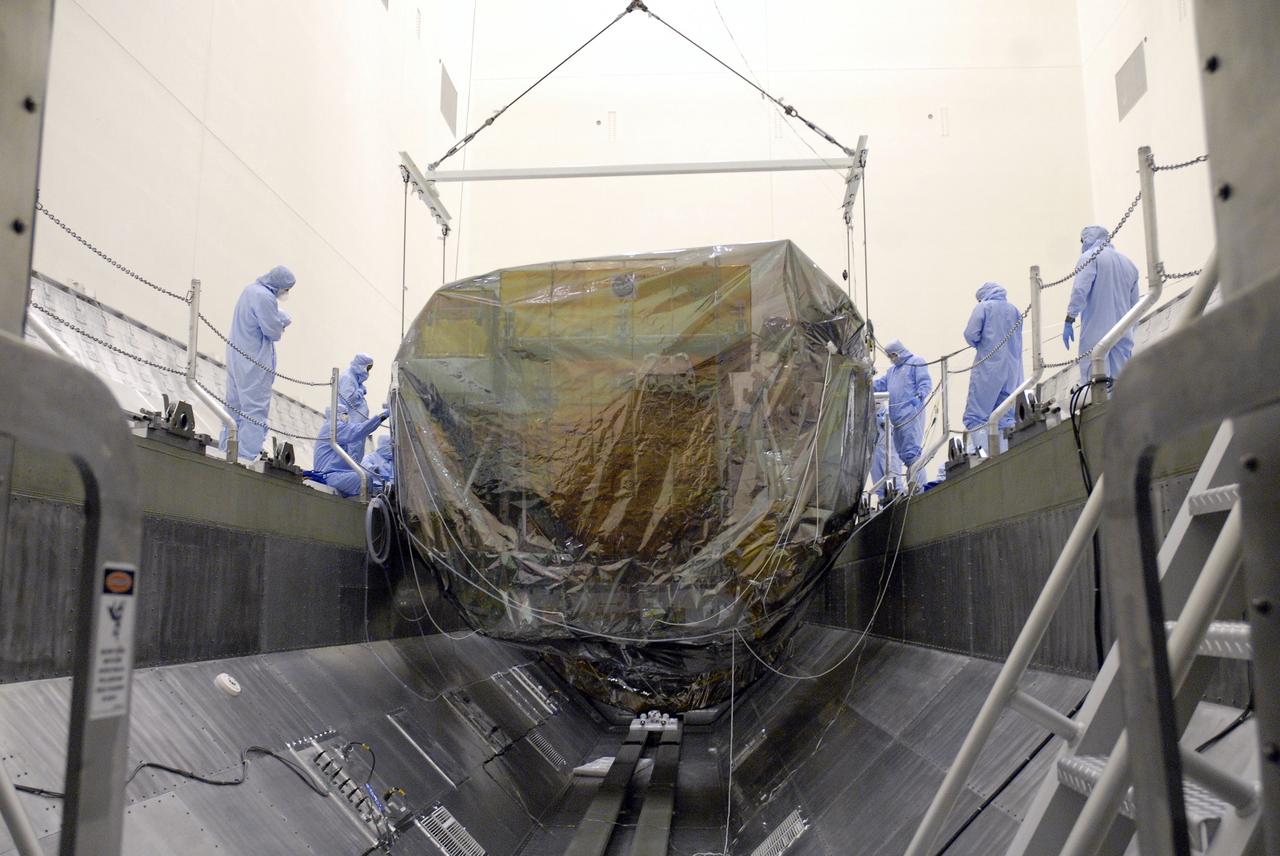
CAPE CANAVERAL, Fla. - In the Payload Hazardous Servicing Facility, or PHSF, at NASA's Kennedy Space Center in Florida, the Orbital Replacement Unit Carrier, or ORUC, is removed from the payload canister which transported the Hubble Space Telescope equipment back to the clean room from Launch Pad 39A. The payload for Hubble servicing mission 4 comprises four carriers holding various equipment for the mission. In the PHSF, the carriers will be stored until a new target launch date in 2009 can be set for Atlantis’ STS-125 mission. Atlantis’ October target launch date was delayed after a device on board Hubble, used in the storage and transmission of science data to Earth, shut down on Sept. 27. Replacing the broken device will be added to Atlantis’ servicing mission to the telescope. Photo credit: NASA/Jim Grossmann
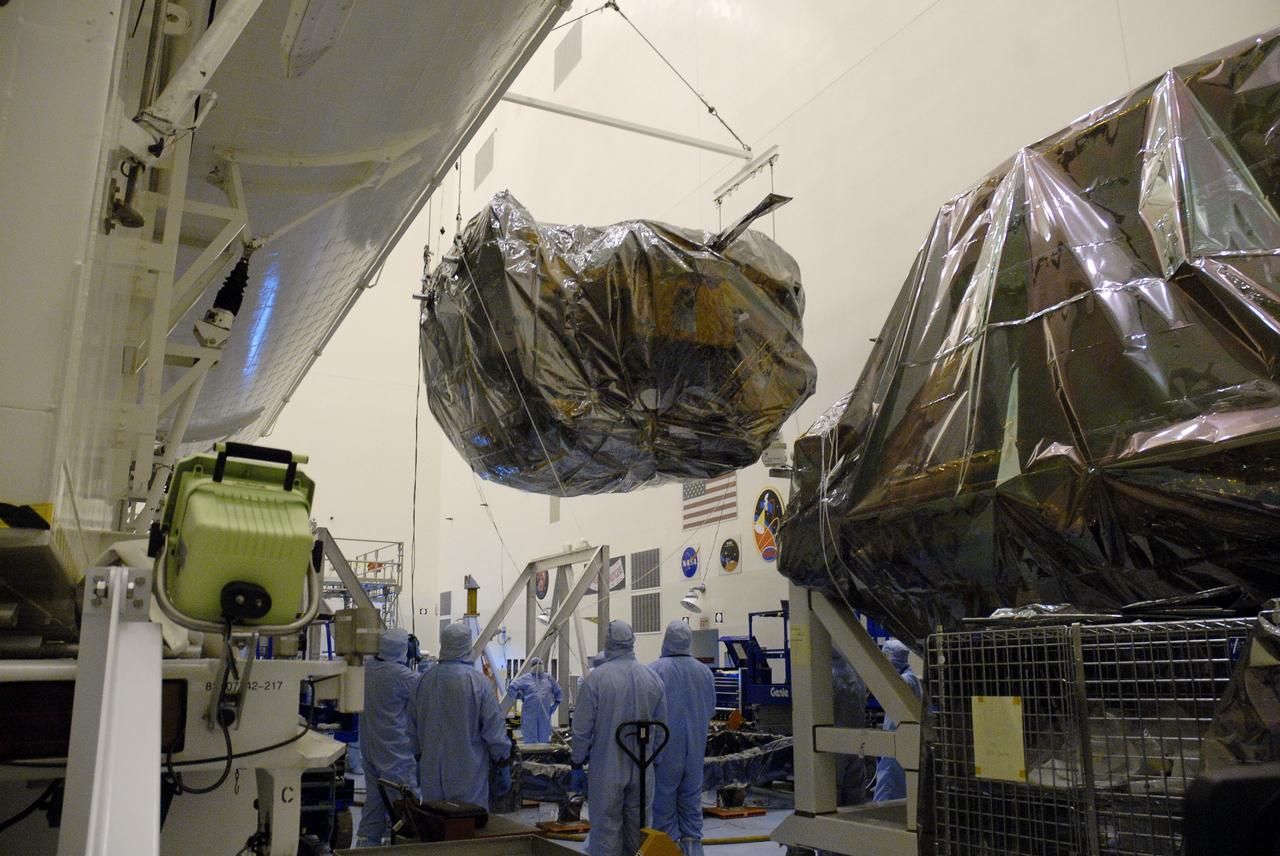
CAPE CANAVERAL, Fla. - In the Payload Hazardous Servicing Facility, or PHSF, at NASA's Kennedy Space Center in Florida, workers watch as the Orbital Replacement Unit Carrier, or ORUC, is lowered from the payload canister which transported the Hubble Space Telescope equipment back to the clean room from Launch Pad 39A. In the foreground is the Super Lightweight Interchangeable Carrier, or SLIC. The payload for Hubble servicing mission 4 comprises four carriers holding various equipment for the mission. In the PHSF, the carriers will be stored until a new target launch date in 2009 can be set for Atlantis’ STS-125 mission. Atlantis’ October target launch date was delayed after a device on board Hubble, used in the storage and transmission of science data to Earth, shut down on Sept. 27. Replacing the broken device will be added to Atlantis’ servicing mission to the telescope. Photo credit: NASA/Jim Grossmann
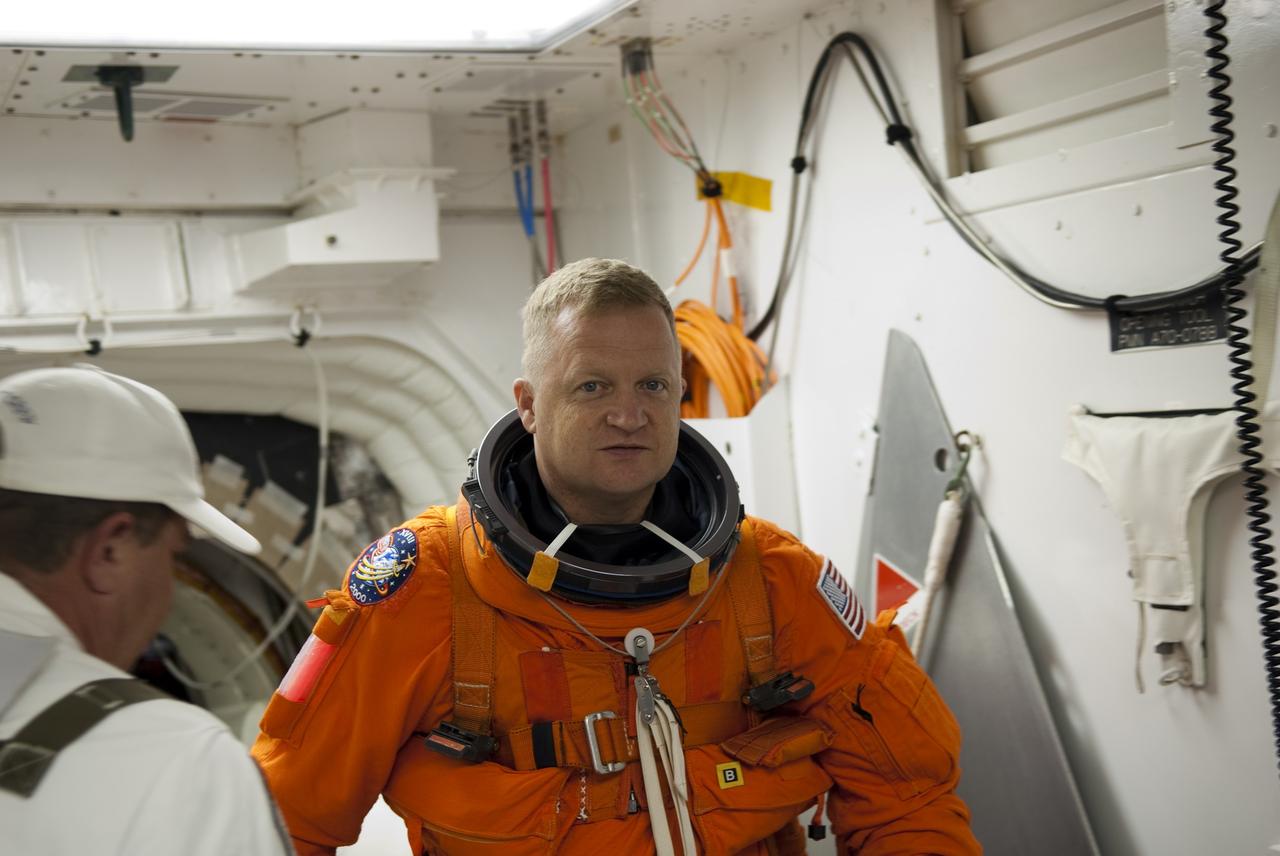
CAPE CANAVERAL, Fla. -- In the White Room of Launch Pad 39A at NASA's Kennedy Space Center in Florida, STS-133 Pilot Eric Boe prepares to board space shuttle Discovery during the Terminal Countdown Demonstration Test (TCDT). Part of TCDT includes practicing the final hours of a real launch day when astronauts put on their launch-and-entry suits, ride to the pad in the Astrovan and strap into the shuttle. Discovery and its STS-133 crew will deliver the Permanent Multipurpose Module, packed with supplies and critical spare parts, as well as Robonaut 2, the dexterous humanoid astronaut helper, to the International Space Station. Launch is targeted for Nov. 1 at 4:40 p.m. For more information on the STS-133 mission, visit www.nasa.gov/mission_pages/shuttle/shuttlemissions/sts133/. Photo credit: NASA/Jim Grossmann
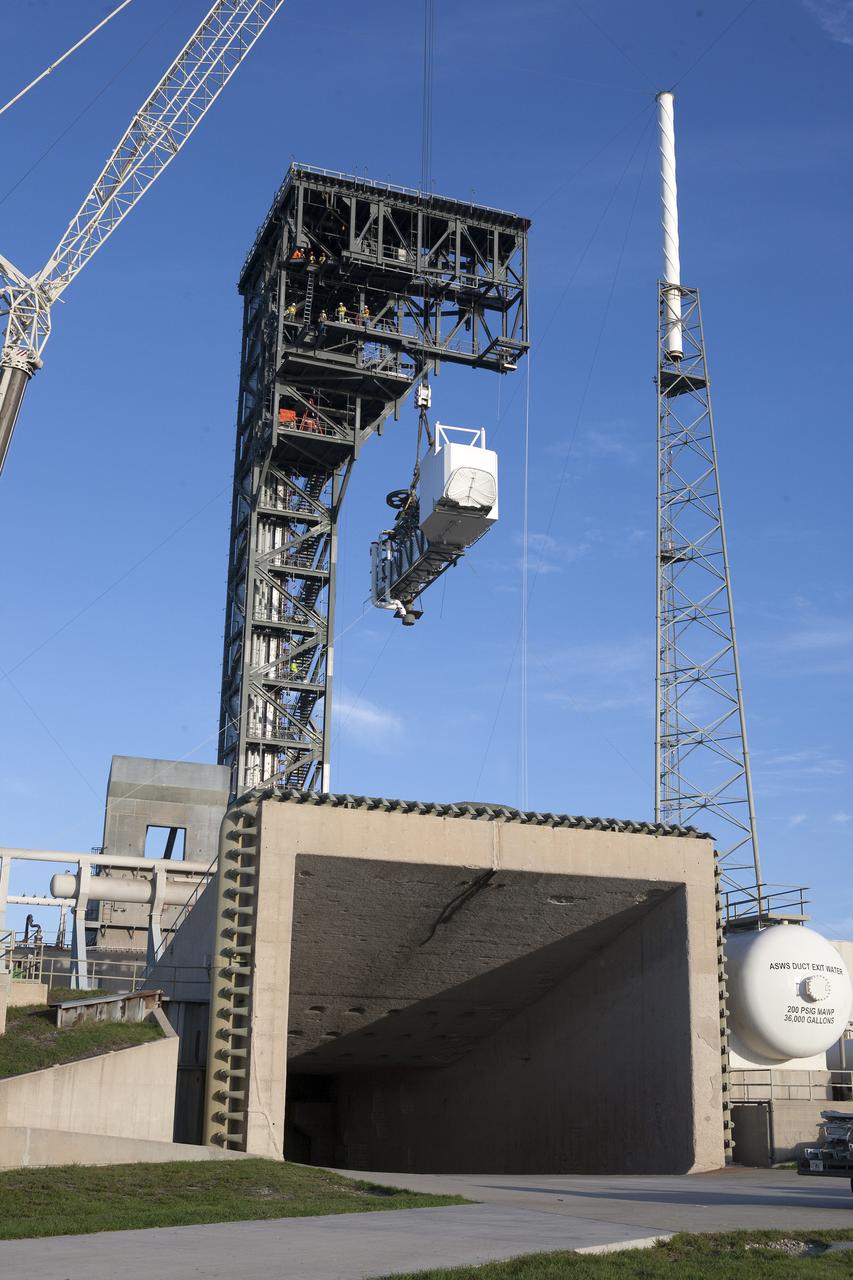
A crane lifts the Crew Access Arm and White Room for Boeing's CST-100 Starliner spacecraft to be attached to the Crew Access Tower at Cape Canaveral Air Force Station’s Space Launch Complex 41. When attached to the 200-foot tall Crew Access Tower, the arm will serve as the connection that astronauts will walk through prior to boarding the Starliner spacecraft when stacked atop a United Launch Alliance Atlas V rocket. This installation completes the major construction of the first new Crew Access Tower to be built at the Cape since the Apollo era. Under a Commercial Crew Transportation Capability (CCtCap) contract with NASA, Boeing’s Starliner system will be certified by NASA's Commercial Crew Program to fly crews to and from the International Space Station.
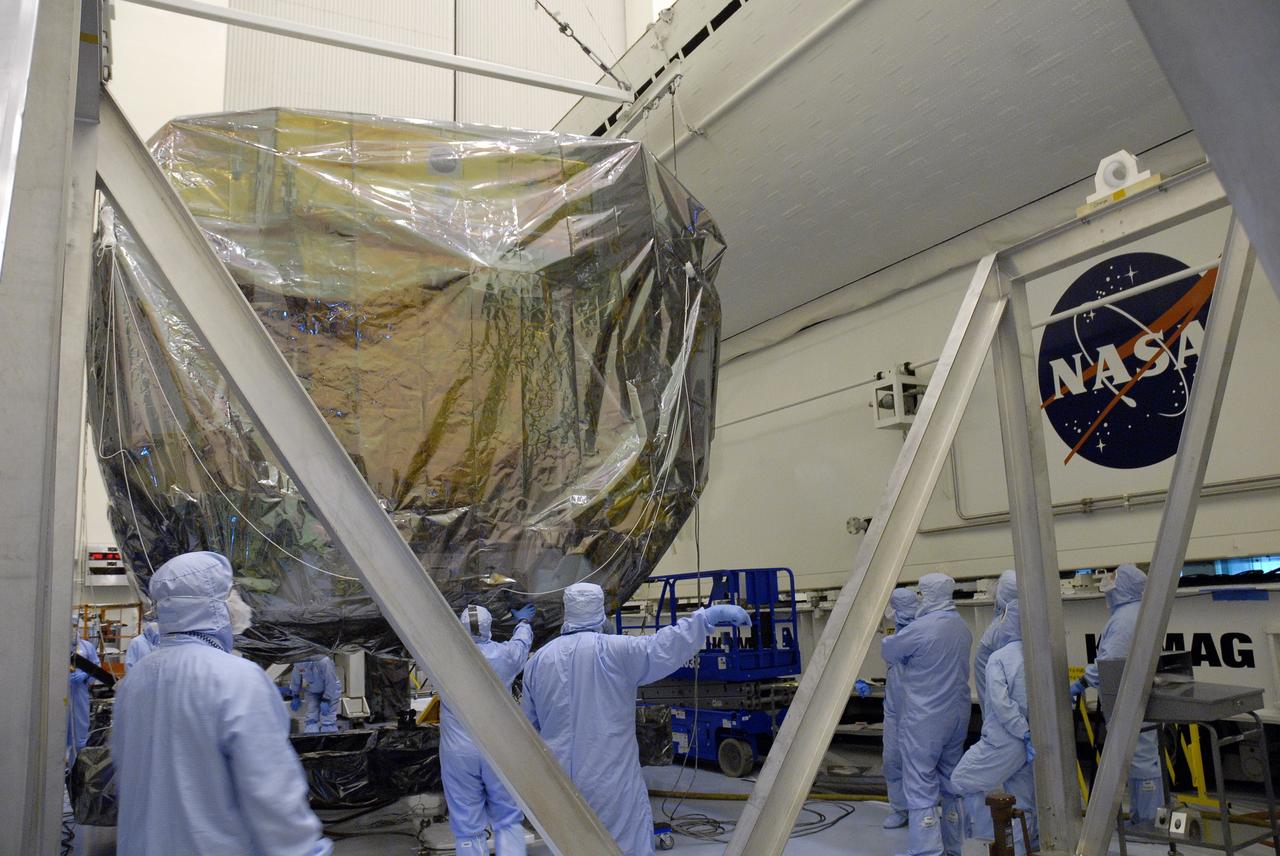
CAPE CANAVERAL, Fla. - In the Payload Hazardous Servicing Facility, or PHSF, at NASA's Kennedy Space Center in Florida, workers position the Orbital Replacement Unit Carrier, or ORUC, onto a stand after it was returned back to the clean room from Launch Pad 39A. The payload for Hubble servicing mission 4 comprises four carriers holding various equipment for the mission. In the PHSF, the carriers will be stored until a new target launch date in 2009 can be set for Atlantis’ STS-125 mission. Atlantis’ October target launch date was delayed after a device on board Hubble, used in the storage and transmission of science data to Earth, shut down on Sept. 27. Replacing the broken device will be added to Atlantis’ servicing mission to the telescope. Photo credit: NASA/Jim Grossmann

CAPE CANAVERAL, Fla. – In the Payload Hazardous Servicing Facility, or PHSF, at NASA's Kennedy Space Center in Florida, the Super Lightweight Interchangeable Carrier, or SLIC, is removed from the payload canister which transported the Hubble Space Telescope equipment back to the clean room from Launch Pad 39A. The payload for Hubble servicing mission 4 comprises four carriers holding various equipment for the mission. In the PHSF, the carriers will be stored until a new target launch date in 2009 can be set for Atlantis’ STS-125 mission. Atlantis’ October target launch date was delayed after a device on board Hubble, used in the storage and transmission of science data to Earth, shut down on Sept. 27. Replacing the broken device will be added to Atlantis’ servicing mission to the telescope. Photo credit: NASA/Jim Grossmann
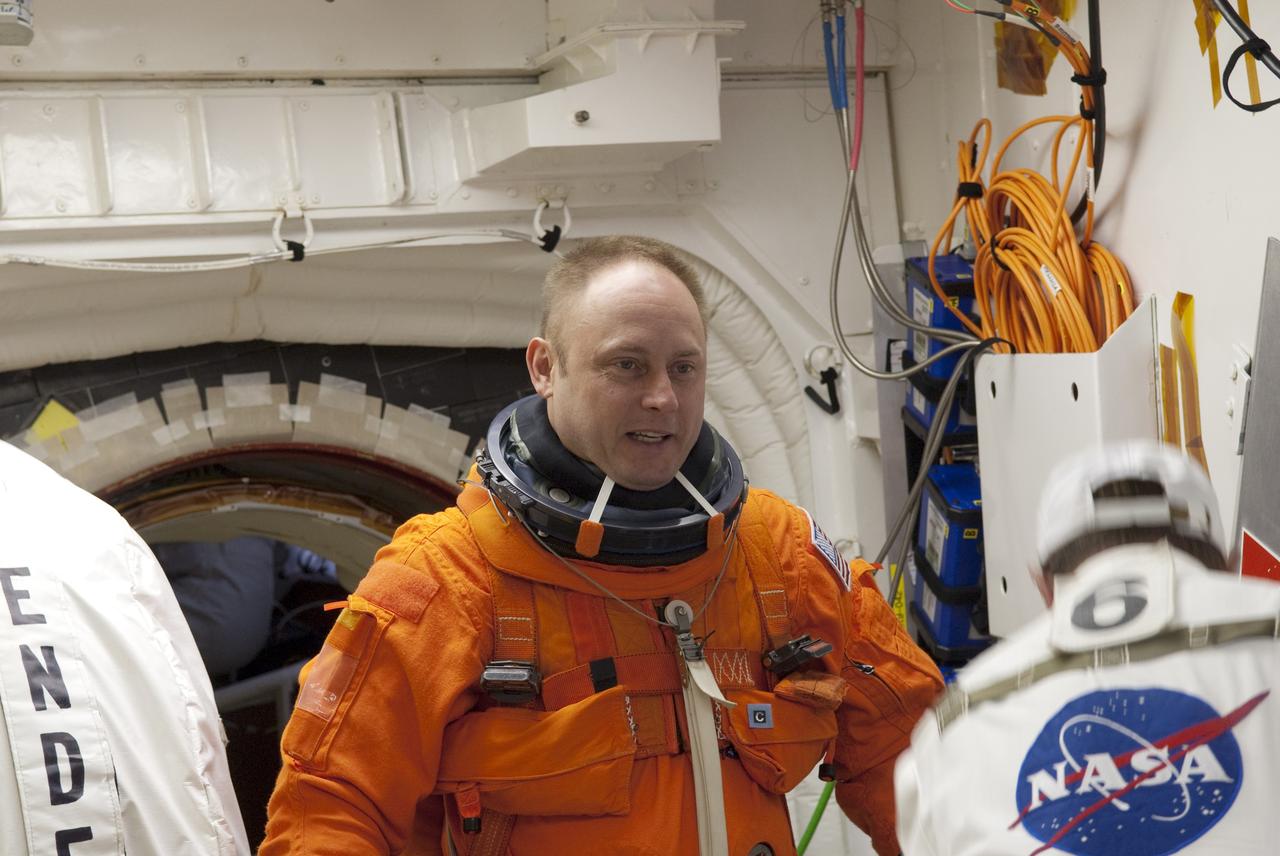
CAPE CANAVERAL, Fla. -- In the White Room of Launch Pad 39A at NASA's Kennedy Space Center in Florida, STS-134 Mission Specialist Michael Fincke prepares to board space shuttle Endeavour during the Terminal Countdown Demonstration Test (TCDT). Part of TCDT includes practicing the final hours of a real launch day when astronauts put on their launch-and-entry suits, ride to the pad in the Astrovan and strap into the shuttle. Endeavour's six crew members are targeted to launch April 19 at 7:48 p.m. EDT. They will deliver the Express Logistics Carrier-3, Alpha Magnetic Spectrometer-2 (AMS), a high-pressure gas tank, additional spare parts for the Dextre robotic helper and micrometeoroid debris shields to the International Space Station. This will be the final spaceflight for Endeavour. For more information visit, www.nasa.gov/mission_pages/shuttle/shuttlemissions/sts134/index.html. Photo credit: NASA/Jim Grossmann
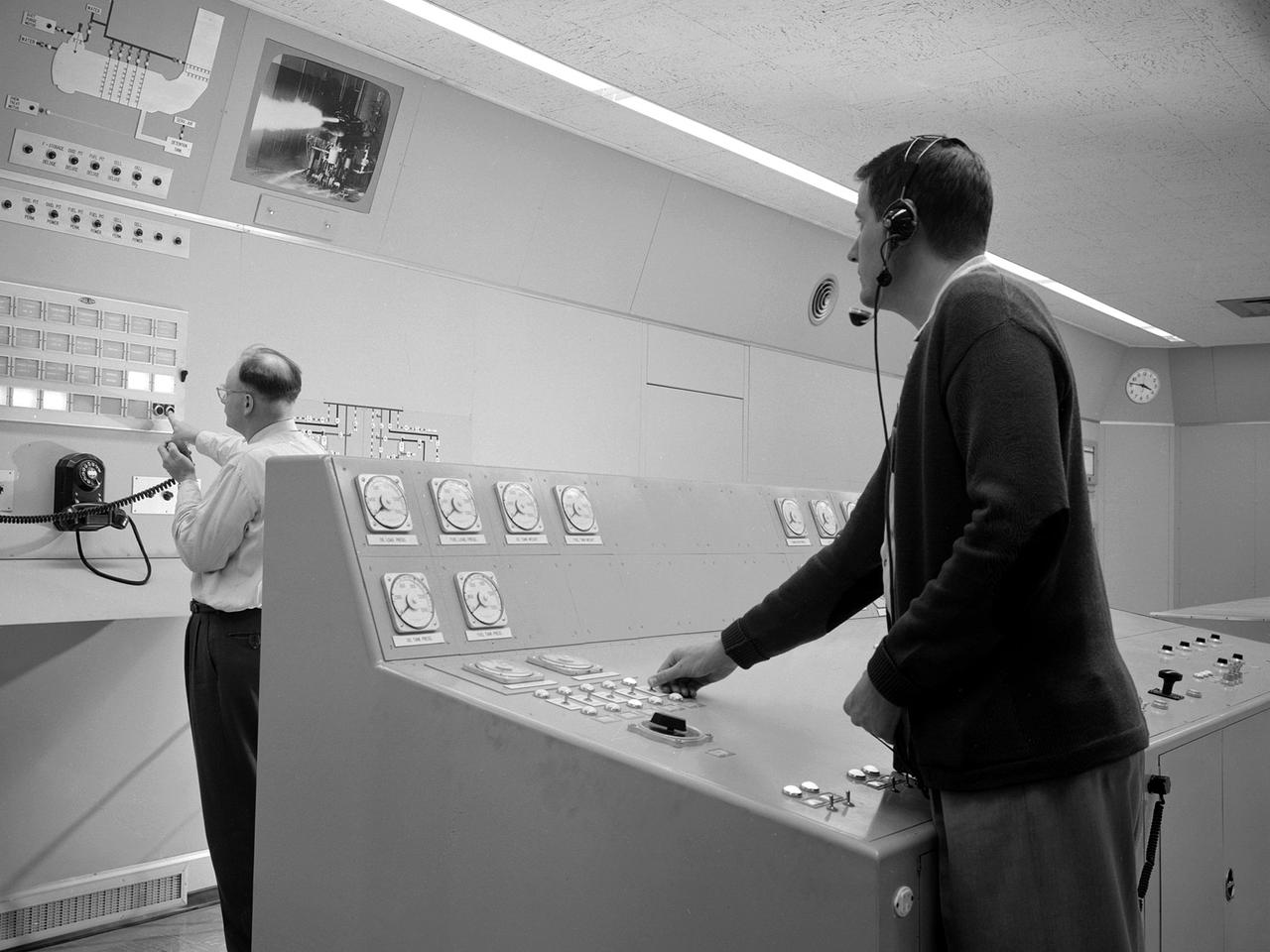
Test engineers monitor an engine firing from the control room of the Rocket Engine Test Facility at the National Advisory Committee for Aeronautics (NACA) Lewis Flight Propulsion Laboratory. The Rocket Engine Test Facility, built in the early 1950s, had a rocket stand designed to evaluate high-energy propellants and rocket engine designs. The facility was used to study numerous different types of rocket engines including the Pratt and Whitney RL-10 engine for the Centaur rocket and Rocketdyne’s F-1 and J-2 engines for the Saturn rockets. The Rocket Engine Test Facility was built in a ravine at the far end of the laboratory because of its use of the dangerous propellants such as liquid hydrogen and liquid fluorine. The control room was located in a building 1,600 feet north of the test stand to protect the engineers running the tests. The main control and instrument consoles were centrally located in the control room and surrounded by boards controlling and monitoring the major valves, pumps, motors, and actuators. A camera system at the test stand allowed the operators to view the tests, but the researchers were reliant on data recording equipment, sensors, and other devices to provide test data. The facility’s control room was upgraded several times over the years. Programmable logic controllers replaced the electro-mechanical control devices. The new controllers were programed to operate the valves and actuators controlling the fuel, oxidant, and ignition sequence according to a predetermined time schedule.
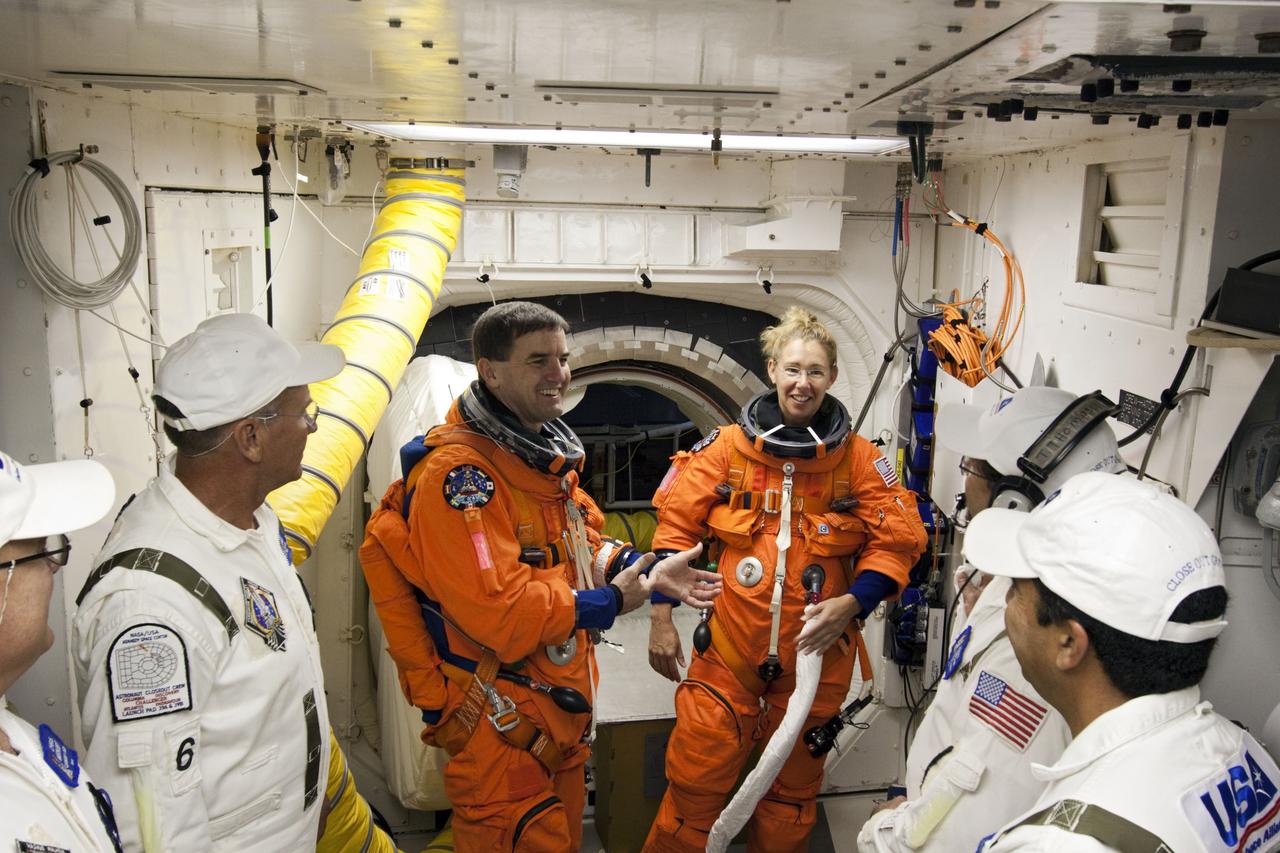
CAPE CANAVERAL, Fla. -- In the White Room at Launch Pad 39A at NASA's Kennedy Space Center in Florida, STS-135 Mission Specialists Rex Walheim and Sandy Magnus enjoy a light moment with the Closeout Crew before boarding space shuttle Atlantis through the crew hatch in the background. Members of the Closeout Crew, in white uniforms, are there to assist astronauts with their launch-and-entry suits and the boarding process. Seen in the background is Mission Specialist Sandy Magnus speaking with a Closeout Crew member. The STS-135 crew is at the pad to participate in a launch countdown simulation exercise. As part of the Terminal Countdown Demonstration Test (TCDT), the crew members are strapped into their seats on Atlantis to practice the steps that will be taken on launch day. Shuttle Atlantis and its crew are targeted to lift off July 8, taking with them the Raffaello multi-purpose logistics module packed with supplies and spare parts to the International Space Station. The STS-135 mission also will fly a system to investigate the potential for robotically refueling existing satellites and return a failed ammonia pump module to help NASA better understand the failure mechanism and improve pump designs for future systems. STS-135 will be the 33rd flight of Atlantis, the 37th shuttle mission to the space station, and the 135th and final mission of NASA's Space Shuttle Program. For more information visit, www.nasa.gov/mission_pages/shuttle/shuttlemissions/sts135/index.html. Photo credit: NASA/Jim Grossmann

An inlet duct lowered into the 20-foot diameter test section of the Altitude Wind Tunnel at the National Advisory Committee for Aeronautics (NACA) Lewis Flight Propulsion Laboratory. Engines and hardware were prepared in the facility’s shop area. The test articles were lifted by a two-rail Shaw box crane through the high-bay and the second-story test chamber before being lowered into the test section. Technicians then spent days or weeks hooking up the supply lines and data recording telemetry. The engines were mounted on wingspans that stretched across the test section. The wingtips attached to the balance frame’s trunnions, which could adjust the angle of attack. The balance frame included six devices that recorded data and controlled the engine. The measurements were visible in banks of manometer boards next to the control room. Photographs recorded the pressure levels in the manometer tubes, and the computing staff manually converted the data into useful measurements. A mechanical pulley system was used to raise and lower the tunnel’s large clamshell lid into place. The lid was sealed into place using hand-turned locks accessible from the viewing platform. The lid had viewing windows above and below the test article, which permitted the filming and visual inspection of the tests.
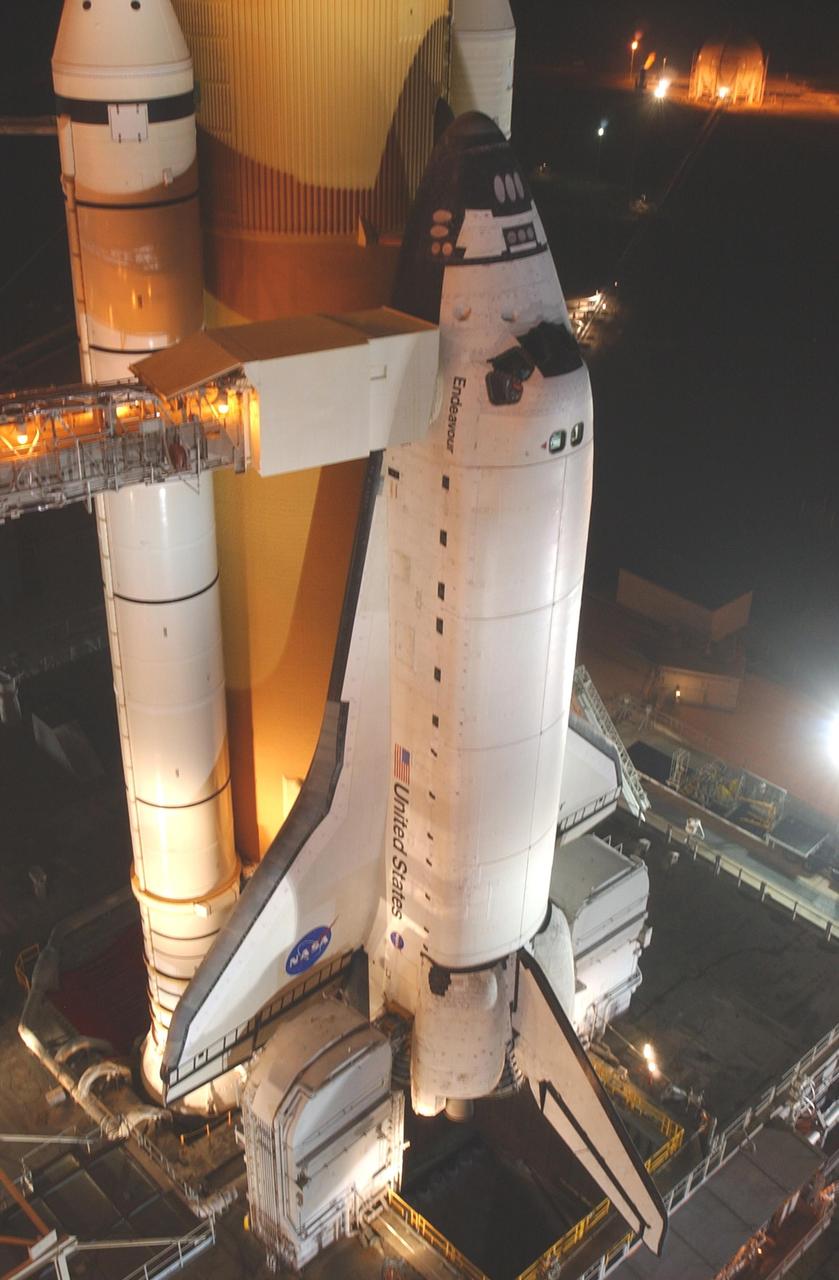
KENNEDY SPACE CENTER, FLA. -- After rollback of the Rotating Service Structure in the early morning hours, Space Shuttle Endeavour sits bathed in light on its Mobile Launcher Platform on Launch Pad 39A. Seen extending to the cockpit area of Endeavour is the orbiter access arm. At the end of the arm is the White Room, an environmental chamber. Below, on either side of Endeavour's tail, are the tail service masts that support fluid, gas and electrical requirements of the orbiter's liquid oxygen and liquid hydrogen aft T-0 umbilicals. STS-111 is the second Utilization Flight to the International Space Station, carrying the Multi-Purpose Logistics Module Leonardo, the Mobile Base System (MBS), and a replacement wrist/roll joint for the Canadarm 2. Also onboard Space Shuttle Endeavour is the Expedition 5 crew who will replace Expedition 4 on board the Station. The MBS will be installed on the Mobile Transporter to complete the Canadian Mobile Servicing System, or MSS. The mechanical arm will then have the capability to "inchworm" from the U.S. Lab Destiny to the MSS and travel along the truss to work sites. Expedition 4 crew members will return to Earth with the STS-111 crew on Endeavour. Launch is scheduled for 7:44 p.m. EDT, May 30, 2002
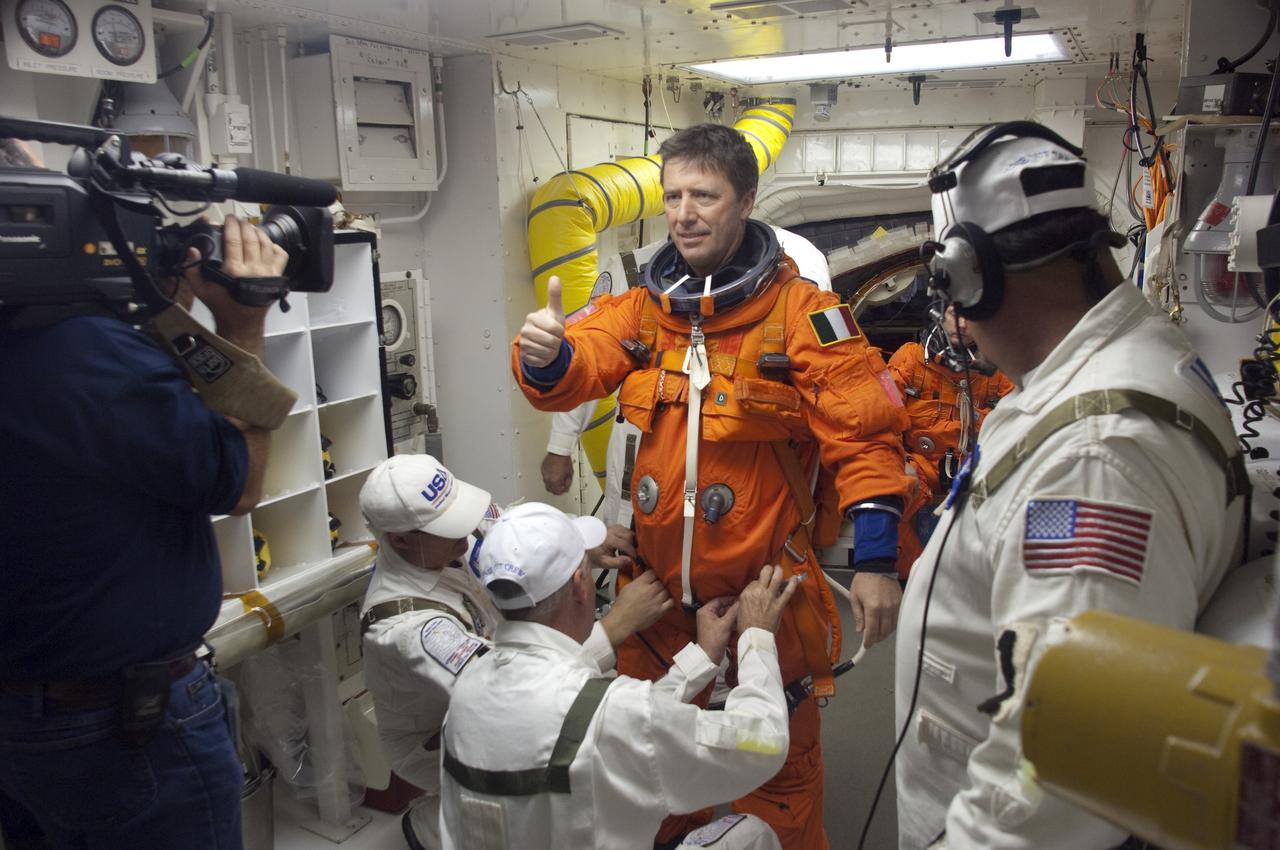
CAPE CANAVERAL, Fla. -- STS-134 Mission Specialist Roberto Vittori, with the European Space Agency, gives a thumbs-up in the White Room of Launch Pad 39A at NASA's Kennedy Space Center in Florida. The Closeout Crew is helping Vitorri put on the parachute for his launch-and-entry suit before he boards space shuttle Endeavour during the Terminal Countdown Demonstration Test (TCDT). TCDT includes practicing the final hours of a real launch day when astronauts put on their launch-and-entry suits, ride to the pad in the Astrovan and strap into the shuttle. Endeavour's six crew members are targeted to launch April 19 at 7:48 p.m. EDT. They will deliver the Express Logistics Carrier-3, Alpha Magnetic Spectrometer-2 (AMS), a high-pressure gas tank, additional spare parts for the Dextre robotic helper and micrometeoroid debris shields to the International Space Station. This will be the final spaceflight for Endeavour. For more information visit, www.nasa.gov/mission_pages/shuttle/shuttlemissions/sts134/index.html. Photo credit: NASA/Kevin O'Connell
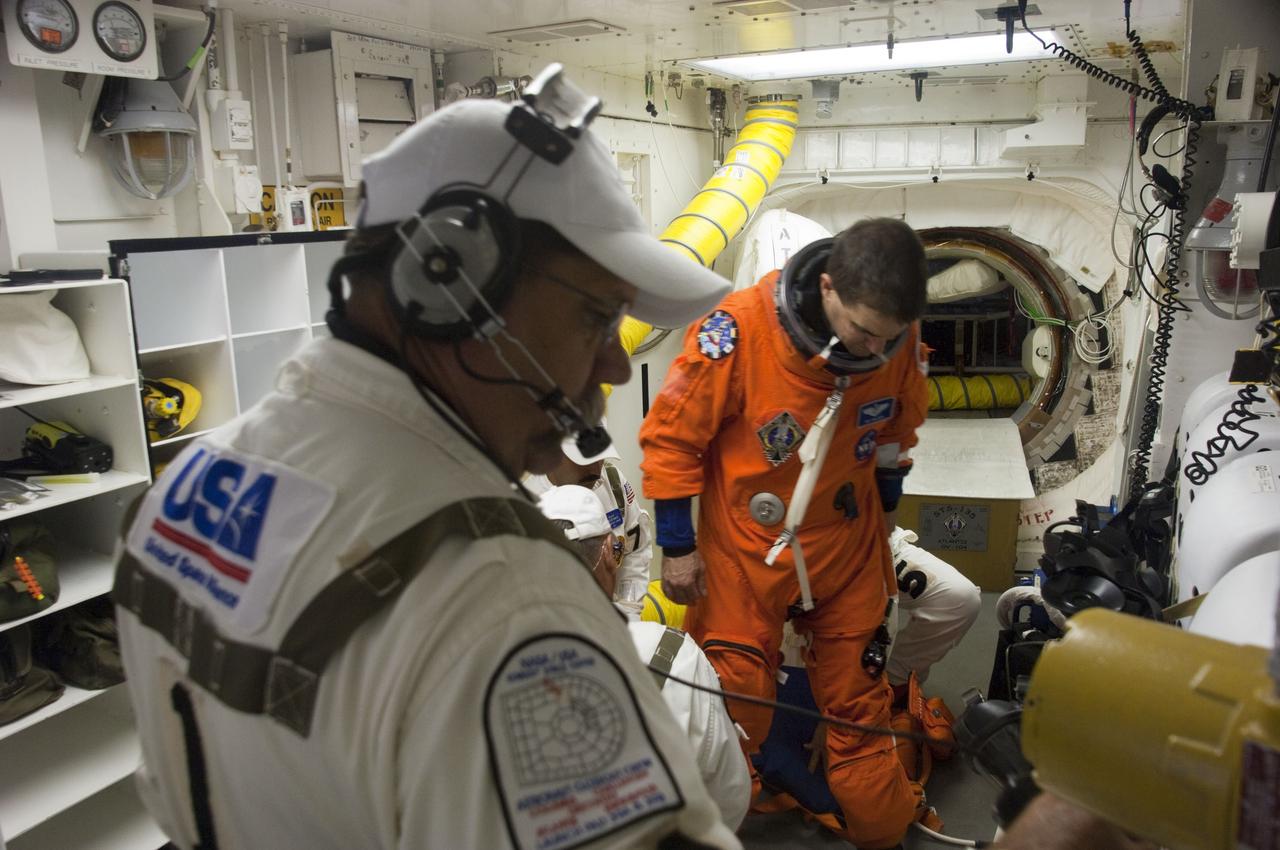
CAPE CANAVERAL, Fla. -- The final astronaut to board a space shuttle for flight, STS-135 Mission Specialist Rex Walheim, is assisted by the Closeout Crew in the White Room of Launch Pad 39A at NASA's Kennedy Space Center in Florida. All three of Walheim's missions -- STS-110, STS-122 and now STS-135 -- will have been aboard space shuttle Atlantis. Four STS-135 crew members are scheduled to lift off at 11:26 a.m. EDT on July 8 for a mission to the International Space Station. STS-135 will deliver the Raffaello multi-purpose logistics module packed with supplies and spare parts for the International Space Station. Atlantis also will fly the Robotic Refueling Mission experiment that will investigate the potential for robotically refueling existing satellites in orbit. In addition, Atlantis will return with a failed ammonia pump module to help NASA better understand the failure mechanism and improve pump designs for future systems. STS-135 will be the 33rd flight of Atlantis, the 37th shuttle mission to the space station, and the 135th and final mission of NASA's Space Shuttle Program. For more information, visit www.nasa.gov/mission_pages/shuttle/shuttlemissions/sts135/index.html. Photo credit: NASA/Sandra Joseph and Kevin O'Connell
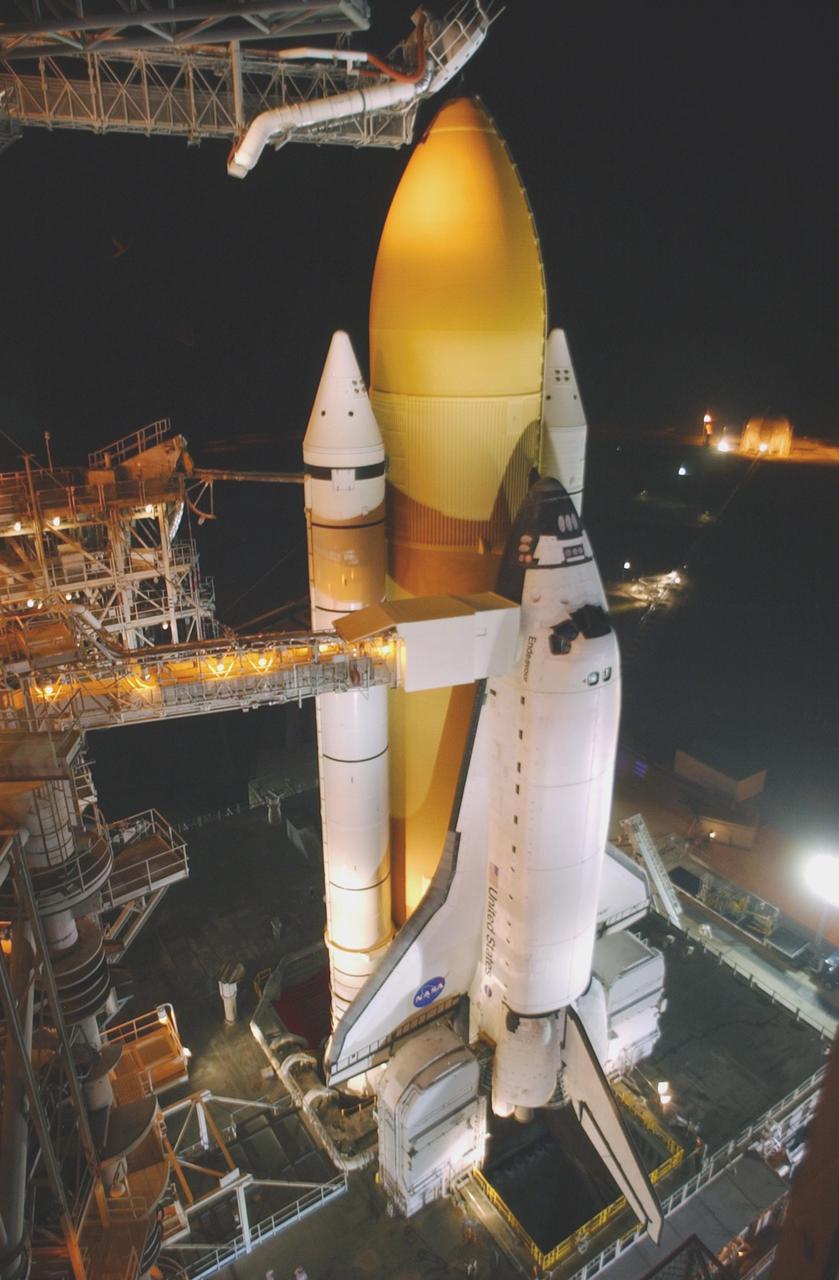
KENNEDY SPACE CENTER, FLA. - After rollback of the Rotating Service Structure, Space Shuttle Endeavour is bathed in light. Seen above the orange external tank behind Endeavour is the "beanie cap," or vent hood assembly at the end of the gaseous oxygen vent arm. The orbiter access arm extends to the cockpit area of Endeavour. At the end of the arm is the White Room, , an environmental chamber that provides crew access into the orbiter. STS-111 is the second Utilization Flight to the International Space Station, carrying the Multi-Purpose Logistics Module Leonardo, the Mobile Base System (MBS), and a replacement wrist/roll joint for the Canadarm 2. Also onboard Space Shuttle Endeavour is the Expedition 5 crew who will replace Expedition 4 on board the Station. The MBS will be installed on the Mobile Transporter to complete the Canadian Mobile Servicing System, or MSS. The mechanical arm will then have the capability to "inchworm" from the U.S. Lab Destiny to the MSS and travel along the truss to work sites. Expedition 4 crew members will return to Earth with the STS-111 crew on Endeavour. Launch is scheduled at 7:44 p.m. EDT, May 30, 2002

CAPE CANAVERAL, Fla. -- In the White Room of Launch Pad 39A at NASA's Kennedy Space Center in Florida, the Closeout Crew helps STS-134 Mission Specialist Greg Chamitoff put on the parachute for his launch-and-entry suit before he boards space shuttle Endeavour during the Terminal Countdown Demonstration Test (TCDT). Behind Chamitoff is Pilot Greg H. Johnson. Part of TCDT includes practicing the final hours of a real launch day when astronauts put on their launch-and-entry suits, ride to the pad in the Astrovan and strap into the shuttle. Endeavour's six crew members are targeted to launch April 19 at 7:48 p.m. EDT. They will deliver the Express Logistics Carrier-3, Alpha Magnetic Spectrometer-2 (AMS), a high-pressure gas tank, additional spare parts for the Dextre robotic helper and micrometeoroid debris shields to the International Space Station. This will be the final spaceflight for Endeavour. For more information visit, www.nasa.gov/mission_pages/shuttle/shuttlemissions/sts134/index.html. Photo credit: NASA/Kevin O'Connell
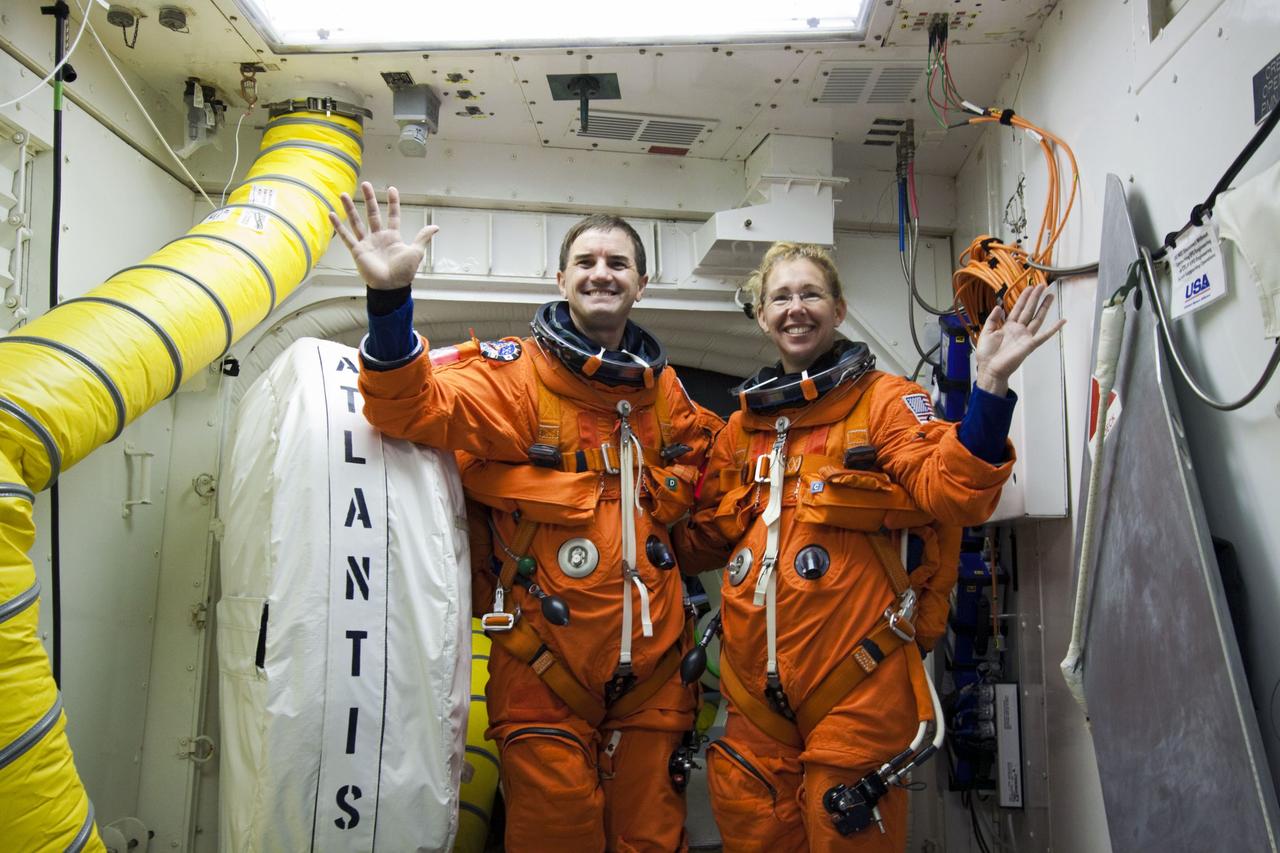
CAPE CANAVERAL, Fla. -- In the White Room at Launch Pad 39A at NASA's Kennedy Space Center in Florida, STS-135 Mission Specialists Rex Walheim and Sandy Magnus pause for a photo before boarding space shuttle Atlantis through the crew hatch in the background. The astronauts are at the pad to participate in a launch countdown simulation exercise. As part of the Terminal Countdown Demonstration Test (TCDT), the crew members are strapped into their seats on Atlantis to practice the steps that will be taken on launch day. Shuttle Atlantis and its crew are targeted to lift off July 8, taking with them the Raffaello multi-purpose logistics module packed with supplies and spare parts to the International Space Station. The STS-135 mission also will fly a system to investigate the potential for robotically refueling existing satellites and return a failed ammonia pump module to help NASA better understand the failure mechanism and improve pump designs for future systems. STS-135 will be the 33rd flight of Atlantis, the 37th shuttle mission to the space station, and the 135th and final mission of NASA's Space Shuttle Program. For more information visit, www.nasa.gov/mission_pages/shuttle/shuttlemissions/sts135/index.html. Photo credit: NASA/Jim Grossmann
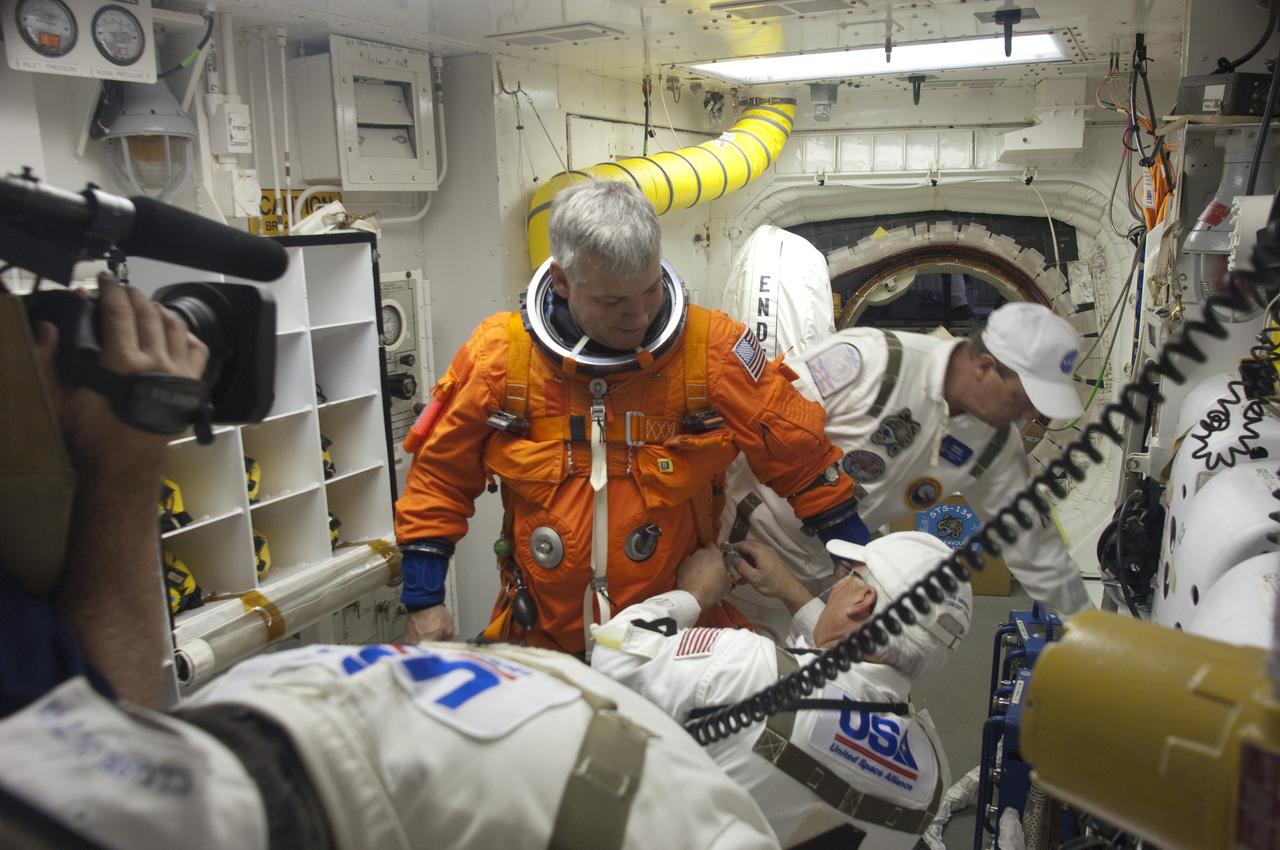
CAPE CANAVERAL, Fla. -- In the White Room of Launch Pad 39A at NASA's Kennedy Space Center in Florida, the Closeout Crew helps STS-134 Pilot Greg H. Johnson put on the parachute for his launch-and-entry suit before he boards space shuttle Endeavour during the Terminal Countdown Demonstration Test (TCDT). Part of TCDT includes practicing the final hours of a real launch day when astronauts put on their launch-and-entry suits, ride to the pad in the Astrovan and strap into the shuttle. Endeavour's six crew members are targeted to launch April 19 at 7:48 p.m. EDT. They will deliver the Express Logistics Carrier-3, Alpha Magnetic Spectrometer-2 (AMS), a high-pressure gas tank, additional spare parts for the Dextre robotic helper and micrometeoroid debris shields to the International Space Station. This will be the final spaceflight for Endeavour. For more information visit, www.nasa.gov/mission_pages/shuttle/shuttlemissions/sts134/index.html. Photo credit: NASA/Kevin O'Connell

CAPE CANAVERAL, Fla. -- In the White Room of Launch Pad 39A at NASA's Kennedy Space Center in Florida, the Closeout Crew helps STS-134 Mission Specialist Michael Fincke put on the parachute for his launch-and-entry suit before he boards space shuttle Endeavour during the Terminal Countdown Demonstration Test (TCDT). Part of TCDT includes practicing the final hours of a real launch day when astronauts put on their launch-and-entry suits, ride to the pad in the Astrovan and strap into the shuttle. Endeavour's six crew members are targeted to launch April 19 at 7:48 p.m. EDT. They will deliver the Express Logistics Carrier-3, Alpha Magnetic Spectrometer-2 (AMS), a high-pressure gas tank, additional spare parts for the Dextre robotic helper and micrometeoroid debris shields to the International Space Station. This will be the final spaceflight for Endeavour. For more information visit, www.nasa.gov/mission_pages/shuttle/shuttlemissions/sts134/index.html. Photo credit: NASA/Kevin O'Connell
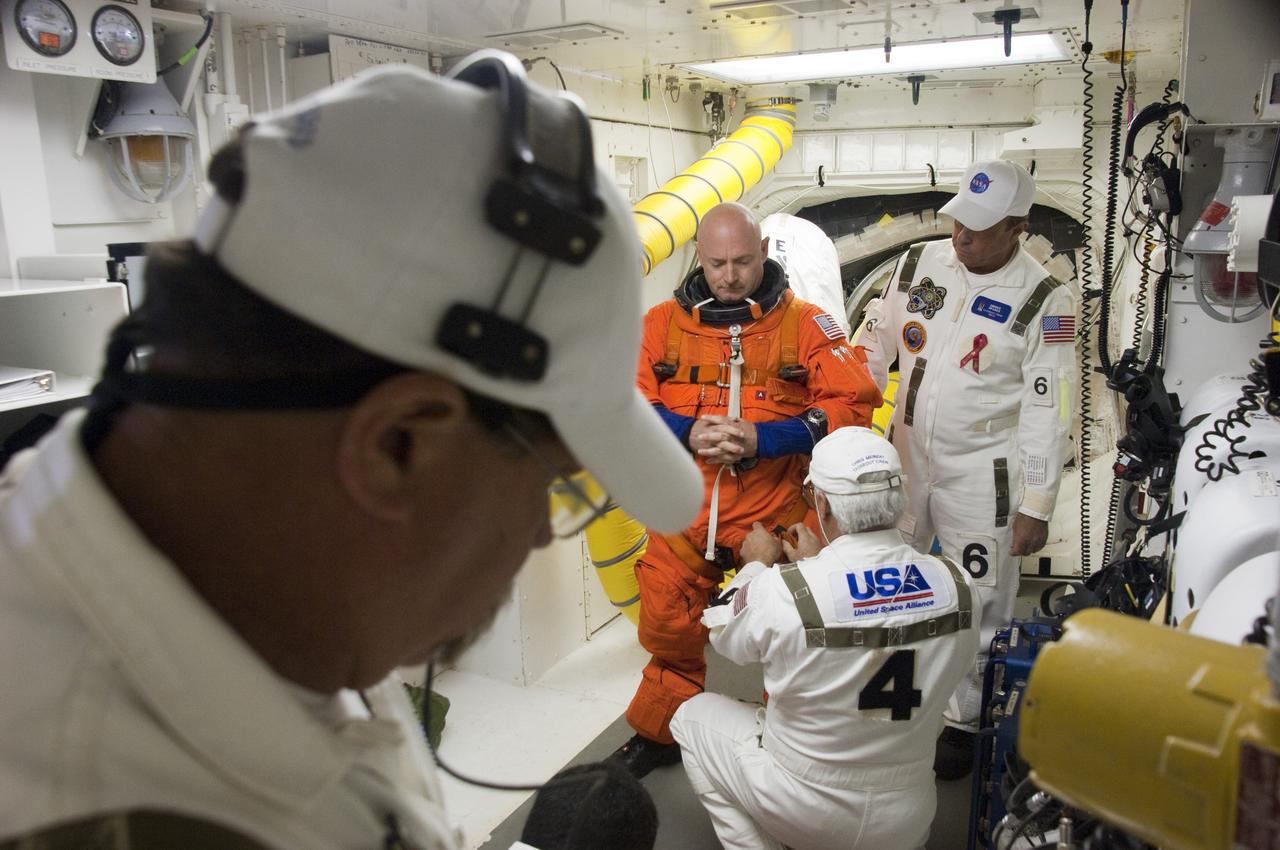
CAPE CANAVERAL, Fla. -- In the White Room at Launch Pad 39A at NASA's Kennedy Space Center in Florida, the Closeout Crew helps STS-134 Commander Mark Kelly put on the parachute for his launch-and-entry suit before he boards space shuttle Endeavour through the crew hatch in the background. Kelly last commanded space shuttle Discovery during its STS-124 mission in 2008. STS-134 will deliver the Alpha Magnetic Spectrometer-2 (AMS), Express Logistics Carrier-3, a high-pressure gas tank and additional spare parts for the Dextre robotic helper to the International Space Station. May 16 at 8:56 a.m. will be the second launch attempt for Endeavour. The first attempt on April 29 was scrubbed because of an issue associated with a faulty power distribution box called the aft load control assembly-2 (ALCA-2). STS-134 will be the final spaceflight for Endeavour. For more information visit, www.nasa.gov/mission_pages/shuttle/shuttlemissions/sts134/index.html. Photo credit: NASA/Sandra Joseph and Kevin O'Connell
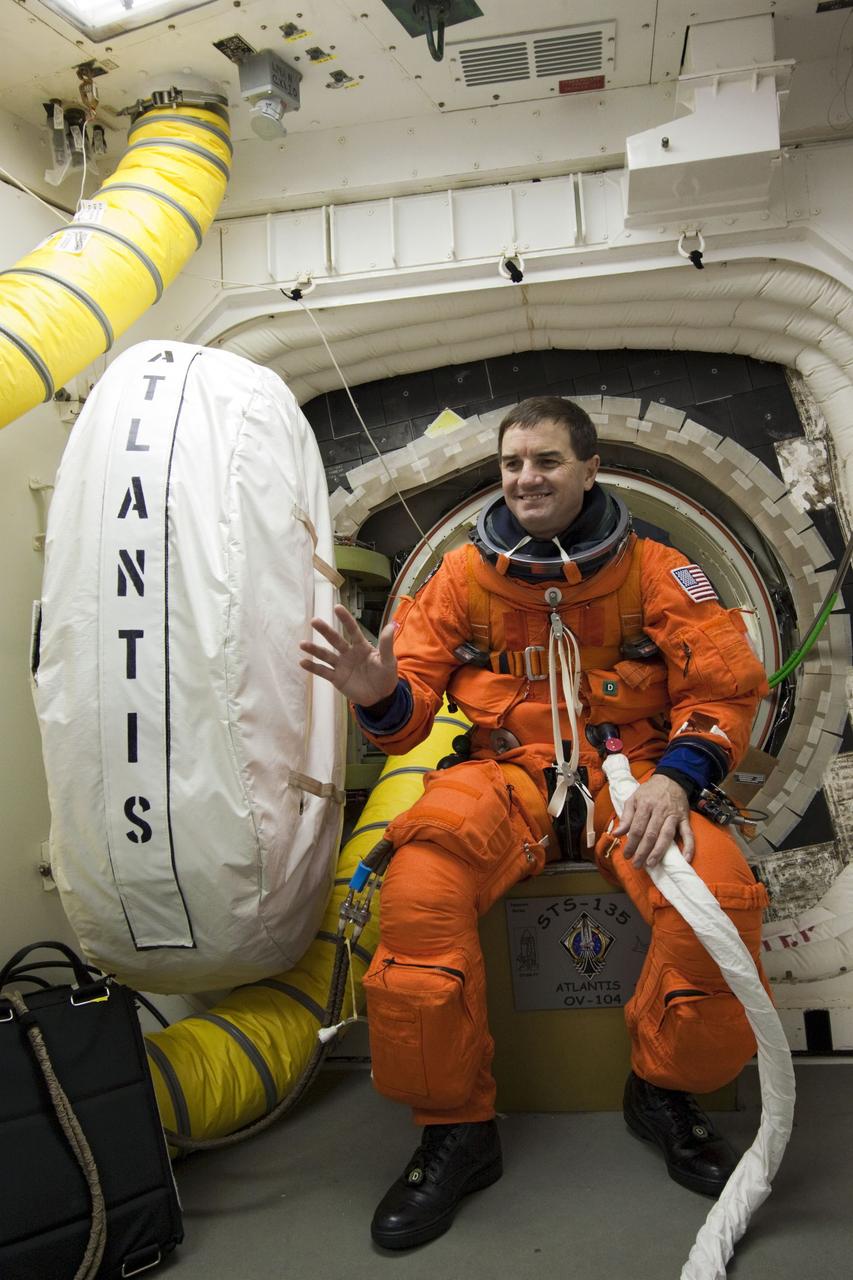
CAPE CANAVERAL, Fla. -- In the White Room at Launch Pad 39A at NASA's Kennedy Space Center in Florida, STS-135 Mission Specialist Rex Walheim pauses for a photo before boarding space shuttle Atlantis through the crew hatch in the background. The astronauts are at the pad to participate in a launch countdown simulation exercise. As part of the Terminal Countdown Demonstration Test (TCDT), the crew members are strapped into their seats on Atlantis to practice the steps that will be taken on launch day. Shuttle Atlantis and its crew are targeted to lift off July 8, taking with them the Raffaello multi-purpose logistics module packed with supplies and spare parts to the International Space Station. The STS-135 mission also will fly a system to investigate the potential for robotically refueling existing satellites and return a failed ammonia pump module to help NASA better understand the failure mechanism and improve pump designs for future systems. STS-135 will be the 33rd flight of Atlantis, the 37th shuttle mission to the space station, and the 135th and final mission of NASA's Space Shuttle Program. For more information visit, www.nasa.gov/mission_pages/shuttle/shuttlemissions/sts135/index.html. Photo credit: NASA/Jim Grossmann