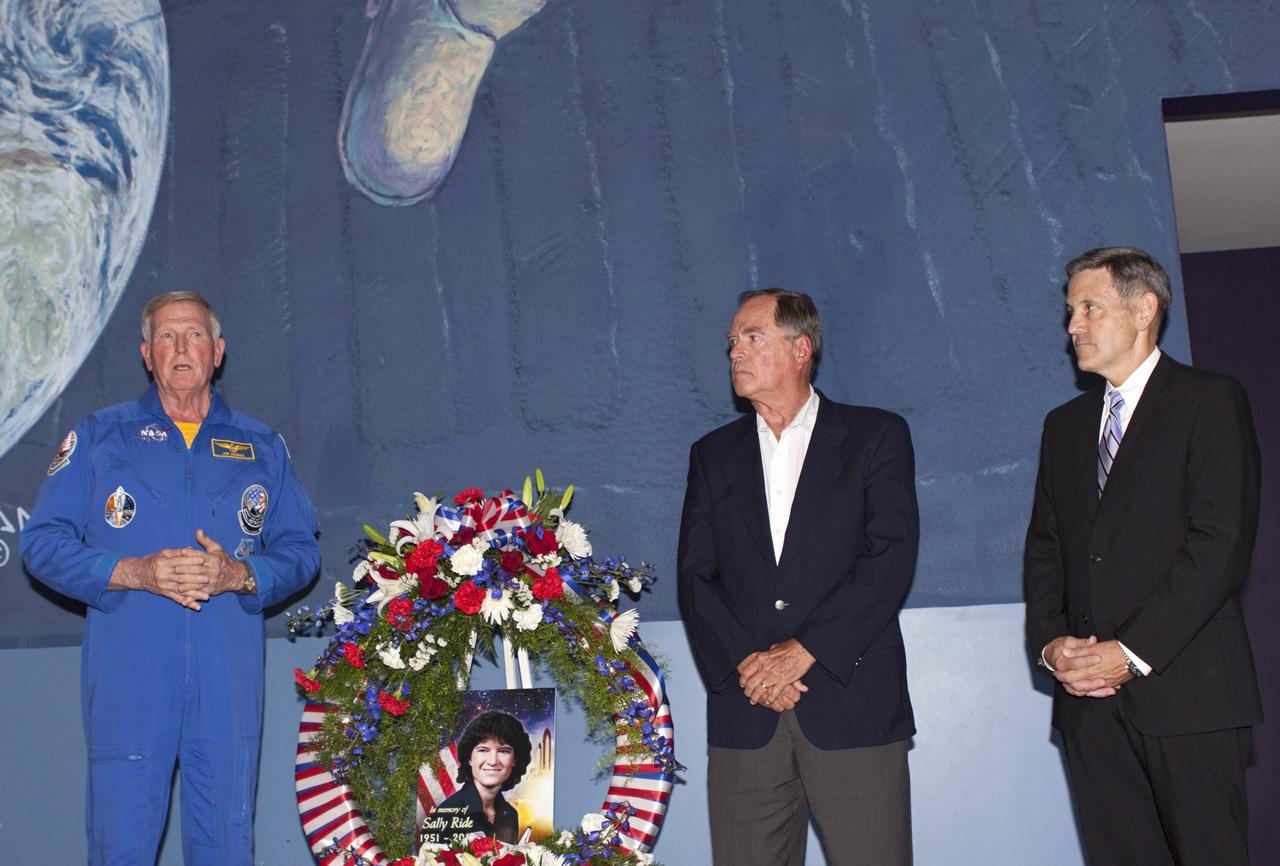
TITUSVILLE, Fla. - Former astronauts Jon McBride, left, and Bob Crippen, center, along with Kennedy Space Center director Bob Cabana, also a former astronaut, laid a wreath at the U. S. Astronaut Hall of Fame honoring Sally K. Ride, who became America's first woman in space in 1983. Following her death on July 23, 2012, Ride is being remembered for her service to NASA and for her efforts to encourage children to study math, science and technology. Crippen was commander on both of Ride's space shuttle missions. McBride was pilot on her second flight. Ride was inducted into the Astronaut Hall of Fame in 2003. A California-born physicist, she broke the gender barrier 29 years ago when she rode to orbit aboard space shuttle Challenger on STS-7. Ride subsequently served, again as a mission specialist, on STS-41G in 1984. Following her career with NASA, in 2001 Ride founded her own company, Sally Ride Science, to pursue her long-time passion of motivating youth -- especially girls and young women -- to pursue careers in technical fields. Photo credit: NASA/Jim Grossmann
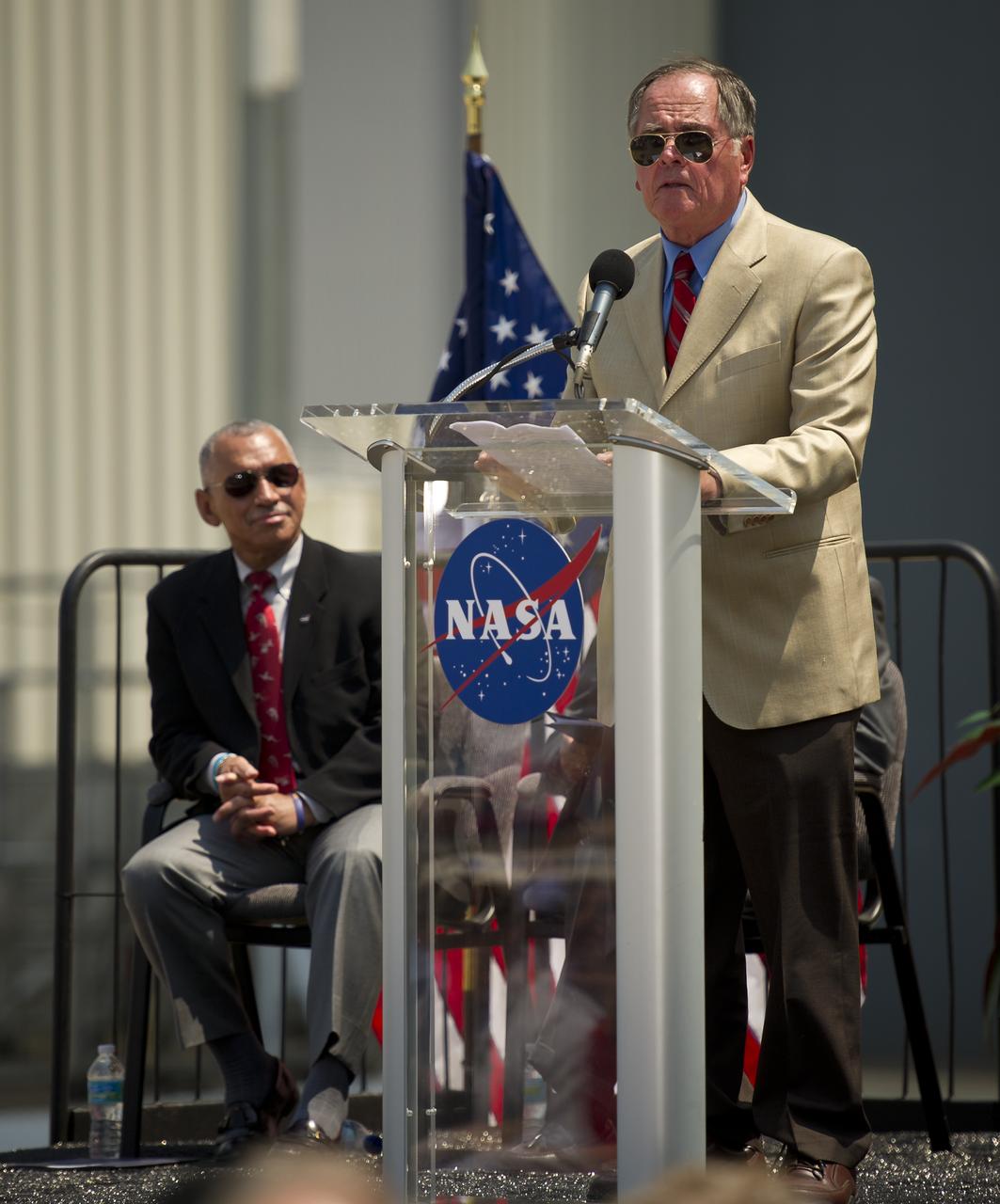
Pilot of the first space shuttle mission, STS-1, Bob Crippen speaks at an event where NASA Administrator Charles Bolden announced where four space shuttle orbiters will be permanently displayed at the conclusion of the Space Shuttle Program, Tuesday, April 12, 2011, at Kennedy Space Center in Cape Canaveral, Fla. The four orbiters, Enterprise, which currently is on display at the Smithsonian's Steven F. Udvar-Hazy Center near Washington Dulles International Airport, will move to the Intrepid Sea, Air & Space Museum in New York, Discovery will move to Udvar-Hazy, Endeavour will be displayed at the California Science Center in Los Angeles and Atlantis, in background, will be displayed at the Kennedy Space Center Visitor’s Complex. Photo Credit: (NASA/Bill Ingalls)
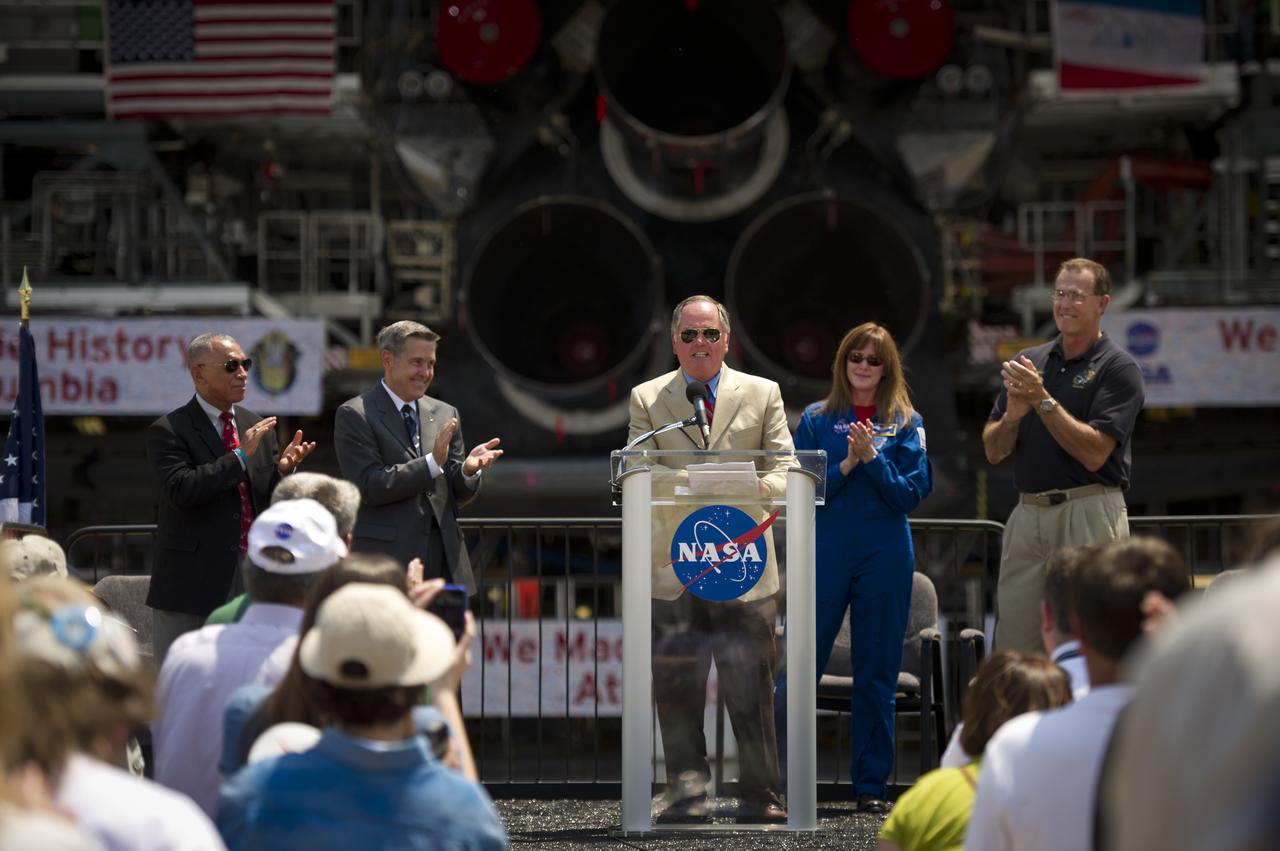
Pilot of the first space shuttle mission, STS-1, Bob Crippen speaks at an event where NASA Administrator Charles Bolden announced where four space shuttle orbiters will be permanently displayed at the conclusion of the Space Shuttle Program, Tuesday, April 12, 2011, at Kennedy Space Center in Cape Canaveral, Fla. The four orbiters, Enterprise, which currently is on display at the Smithsonian's Steven F. Udvar-Hazy Center near Washington Dulles International Airport, will move to the Intrepid Sea, Air & Space Museum in New York, Discovery will move to Udvar-Hazy, Endeavour will be displayed at the California Science Center in Los Angeles and Atlantis, in background, will be displayed at the Kennedy Space Center Visitor’s Complex. Photo Credit: (NASA/Bill Ingalls)
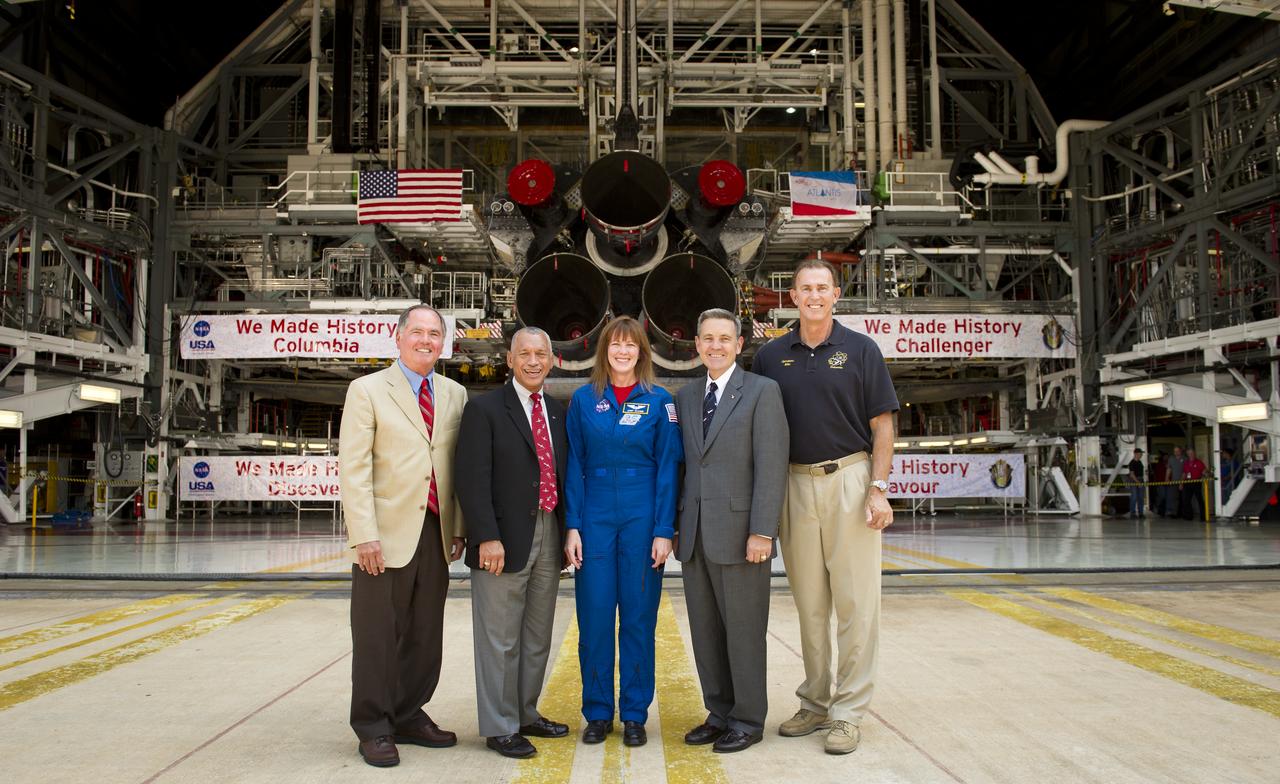
From left, Pilot of the first space shuttle mission, STS-1, Bob Crippen, NASA Administrator Charles Bolden, NASA Johnson Space Center Director of Flight Crew Operations, and Astronaut, Janet Kavandi, NASA Kennedy Space Center Director and former astronaut Bob Cabana, and Endeavour Vehicle Manager for United Space Alliance Mike Parrish pose for a photograph outside of the an Orbiter Processing Facility with the space shuttle Atlantis shortly after Bolden announced where four space shuttle orbiters will be permanently displayed at the conclusion of the Space Shuttle Program, Tuesday, April 12, 2011, at Kennedy Space Center in Cape Canaveral, Fla. The four orbiters, Enterprise, which currently is on display at the Smithsonian's Steven F. Udvar-Hazy Center near Washington Dulles International Airport, will move to the Intrepid Sea, Air & Space Museum in New York, Discovery will move to Udvar-Hazy, Endeavour will be displayed at the California Science Center in Los Angeles and Atlantis, in background, will be displayed at the Kennedy Space Center Visitor’s Complex. Photo Credit: (NASA/Bill Ingalls)
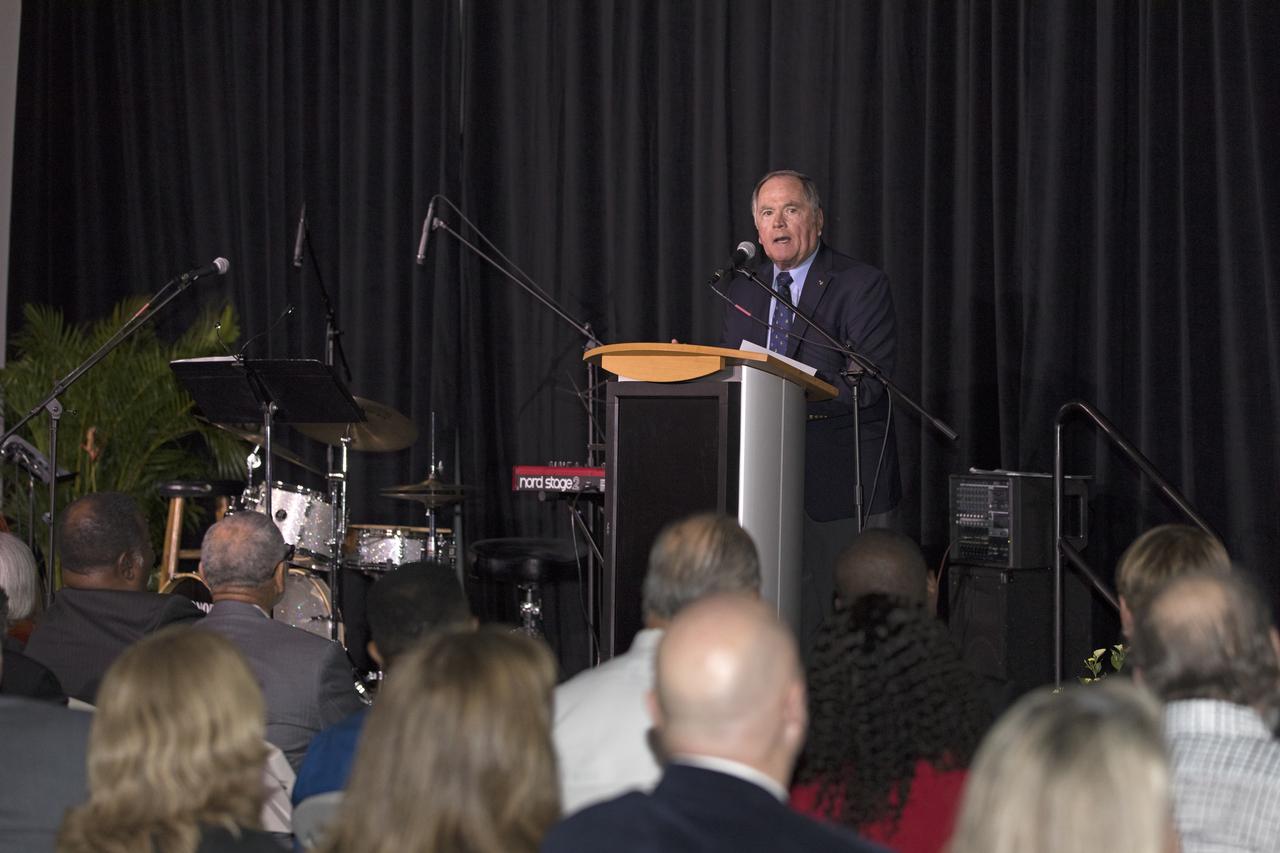
Bob Crippen, former Kennedy center director and NASA astronaut, speaks to guests during an Astronauts Memorial Foundation tribute honoring U.S. Air Foce Maj. Robert Lawrence. Like Crippen, Lawrence was selected in the 1960s for the Manned Orbiting Laboratory Program. As such, Lawrence was the first African-American astronaut. He lost his life in a training accident 50 years ago. The ceremony took place in the Center for Space Education at the Kennedy Space Center Visitor Complex.
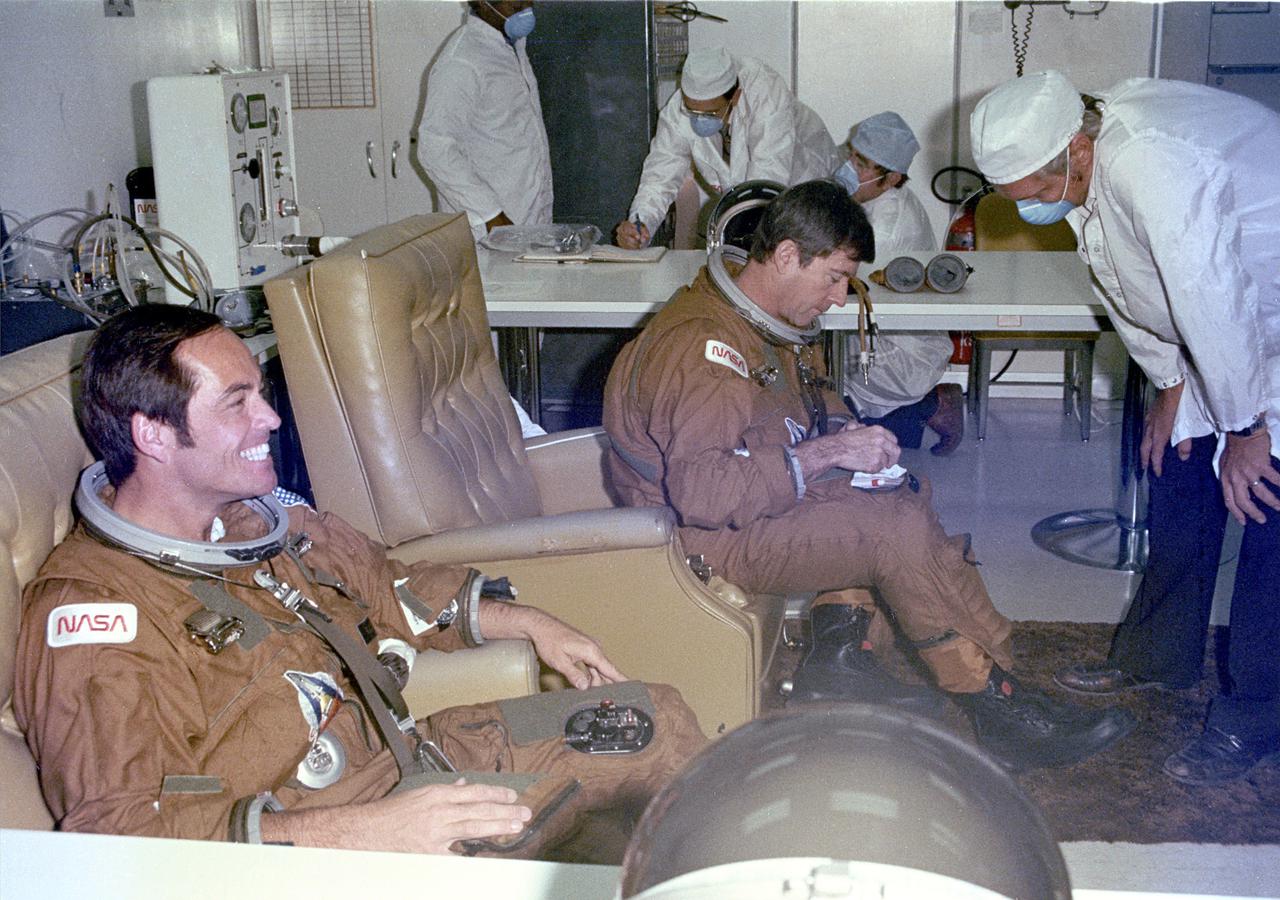
KENNEDY SPACE CENTER, FLA. - Technicians assist prime crew astronauts John Young (right) and Bob Crippen (left) in suit-up operations in KSC's Operations and Checkout Building on the morning of Columbia's successful liftoff on the Space Shuttle's first orbital flight.
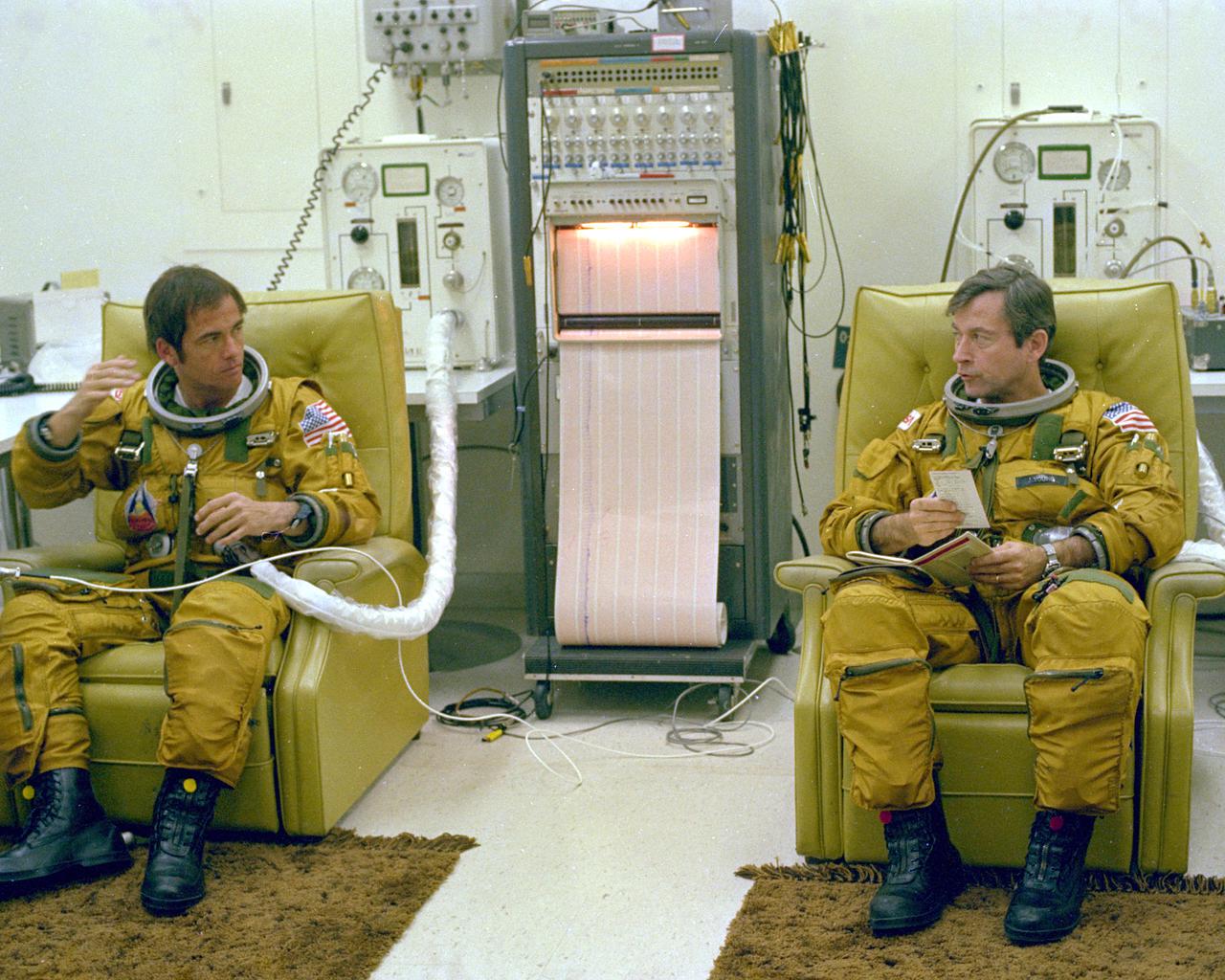
KENNEDY SPACE CENTER, FLA. - Prime crew astronauts Bob Crippen (left) and John Young (right) discuss checklist items during suit-up in the Operations and Checkout Building iiror to departure for the launch pad during the final countdown rehearsal before launch of STS-1.
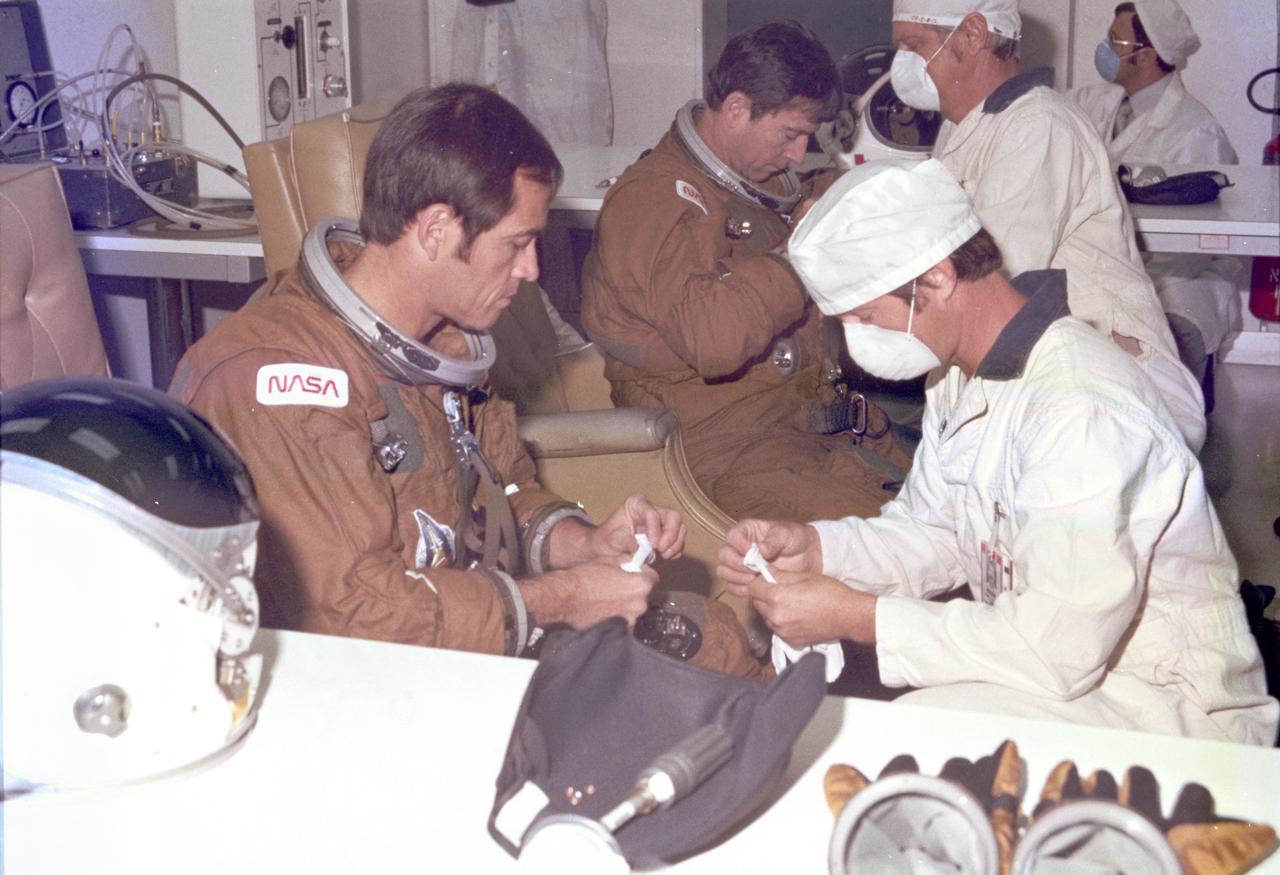
KENNEDY SPACE CENTER, FLA. - Technicians assist Columbia's prime crew astronauts John Young (right) and Bob Crippen (left) during suit-up operations in the crew quarters of the Operations and Checkout Building a few hours before the scheduled liftoff of the Space Shuttle on its maiden flight.
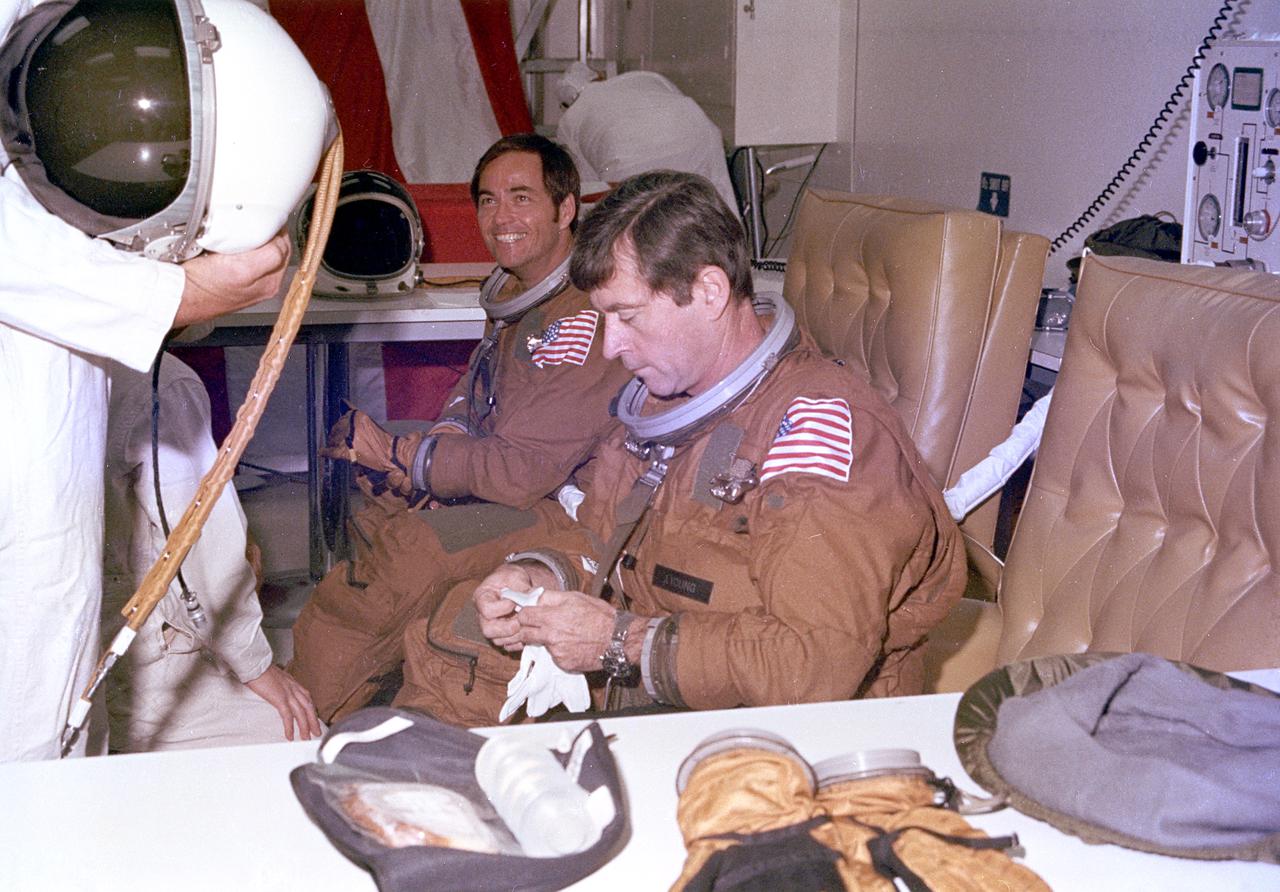
KENNEDY SPACE CENTER, FLA. - Technicians assist Columbia's prime crew astronauts John Young (right) and Bob Crippen (left) during suit-up operations in the crew quarters of the Operations and Checkout Building a few hours before the scheduled liftoff of the Space Shuttle on its maiden flight.
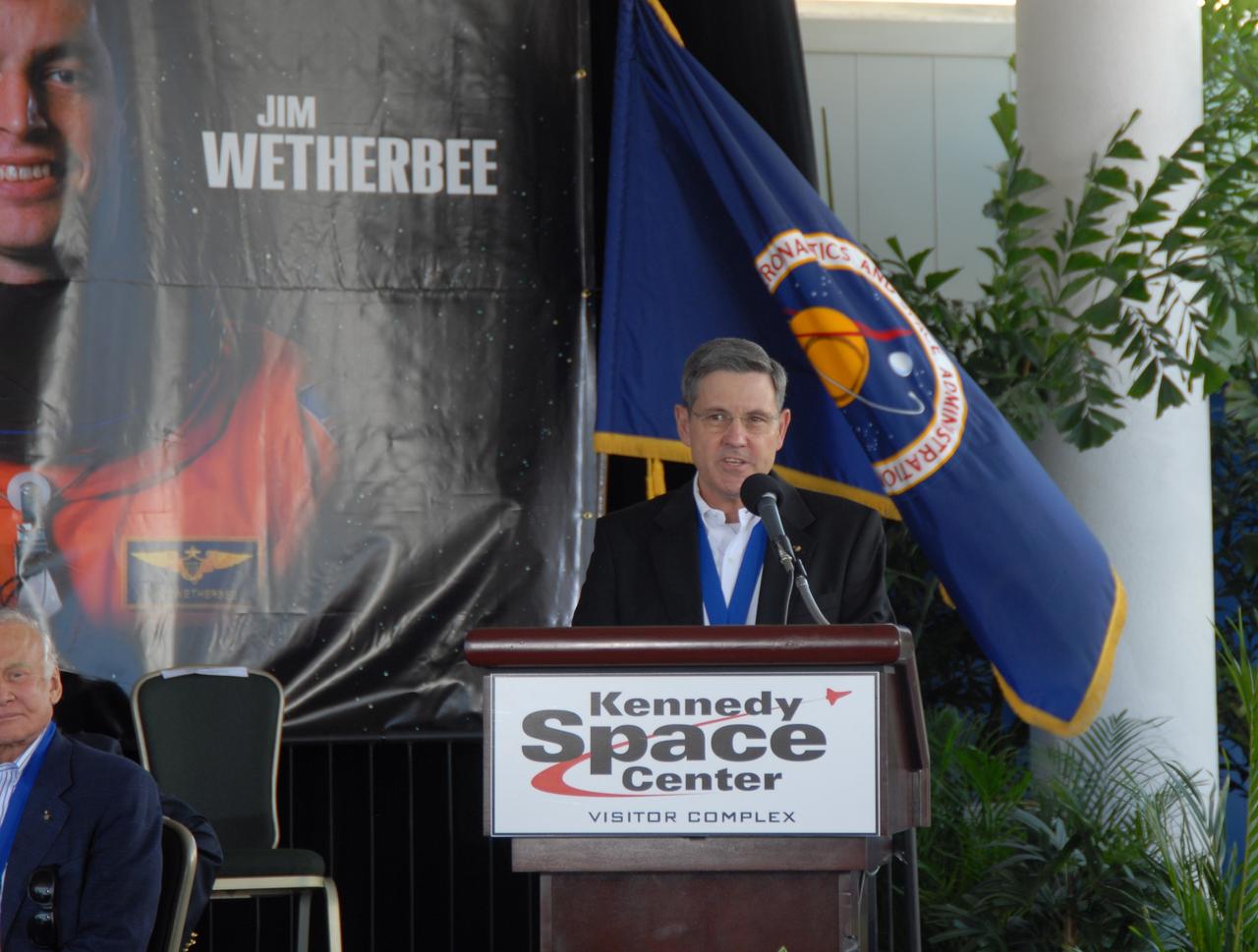
CAPE CANAVERAL, Fla. –– NASA's Kennedy Space Center Director Bob Cabana speaks during the U.S. Astronaut Hall of Fame induction ceremony held at Kennedy's Visitor Complex in Florida. Cabana is a member of the hall of fame. The ceremony took place May 2. More than 20 hall of fame astronauts attended, including Scott Carpenter, Walt Cunningham, Jim Lovell and Bob Crippen. Photo credit: NASA/Jim Grossmann
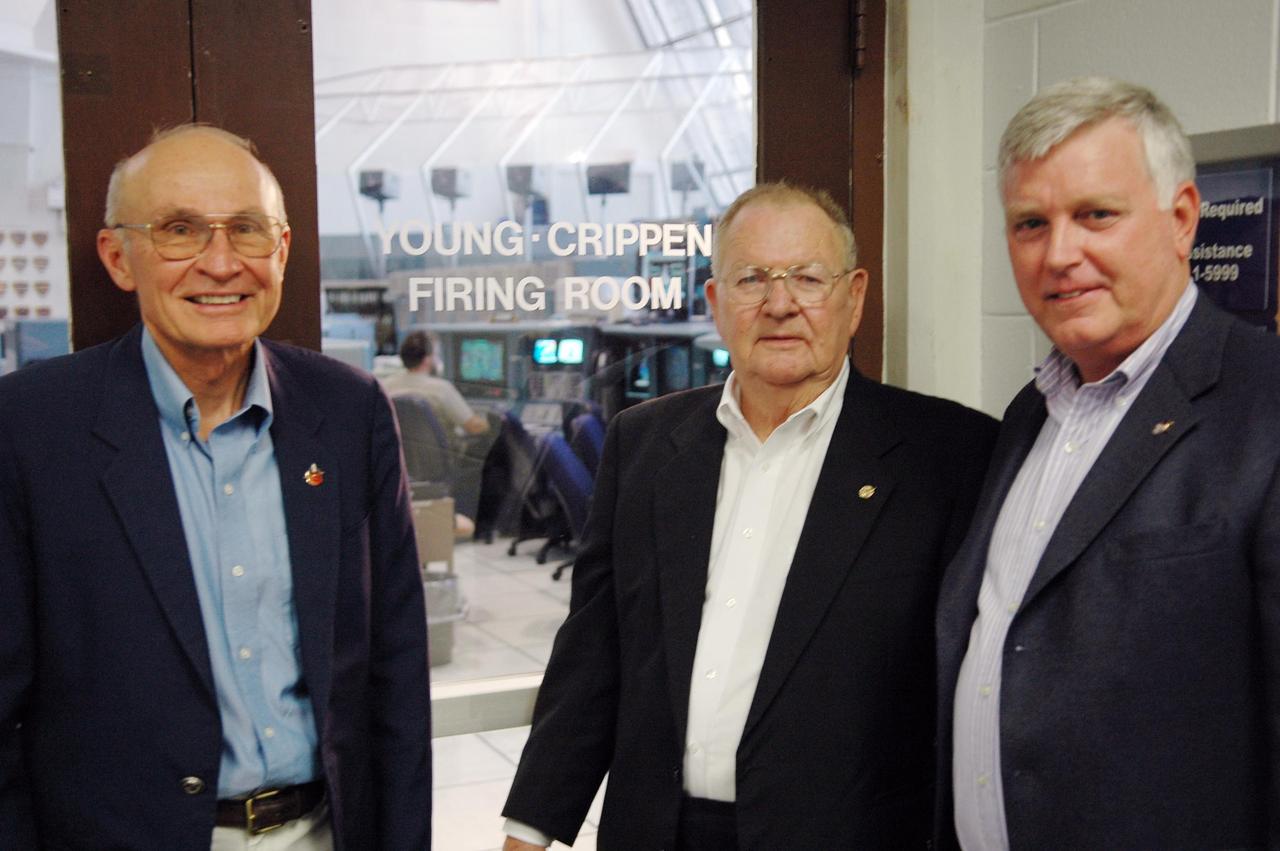
KENNEDY SPACE CENTER, FLA. - In tribute to the 25th anniversary of the first space shuttle flight, NASA's Kennedy Space Center has honored the crew of STS-1, Commander John Young and Pilot Robert Crippen, by dedicating the firing room that launched the historic flight as the "Young · Crippen Firing Room" (seen here). Making the dedication were (from left) the project flight engineer for Space Shuttle Columbia, Bob Sieck; the NASA test director for STS-1, Norm Carlson; and Center Director Jim Kennedy. Photo credit: NASA/Kim Shiflett
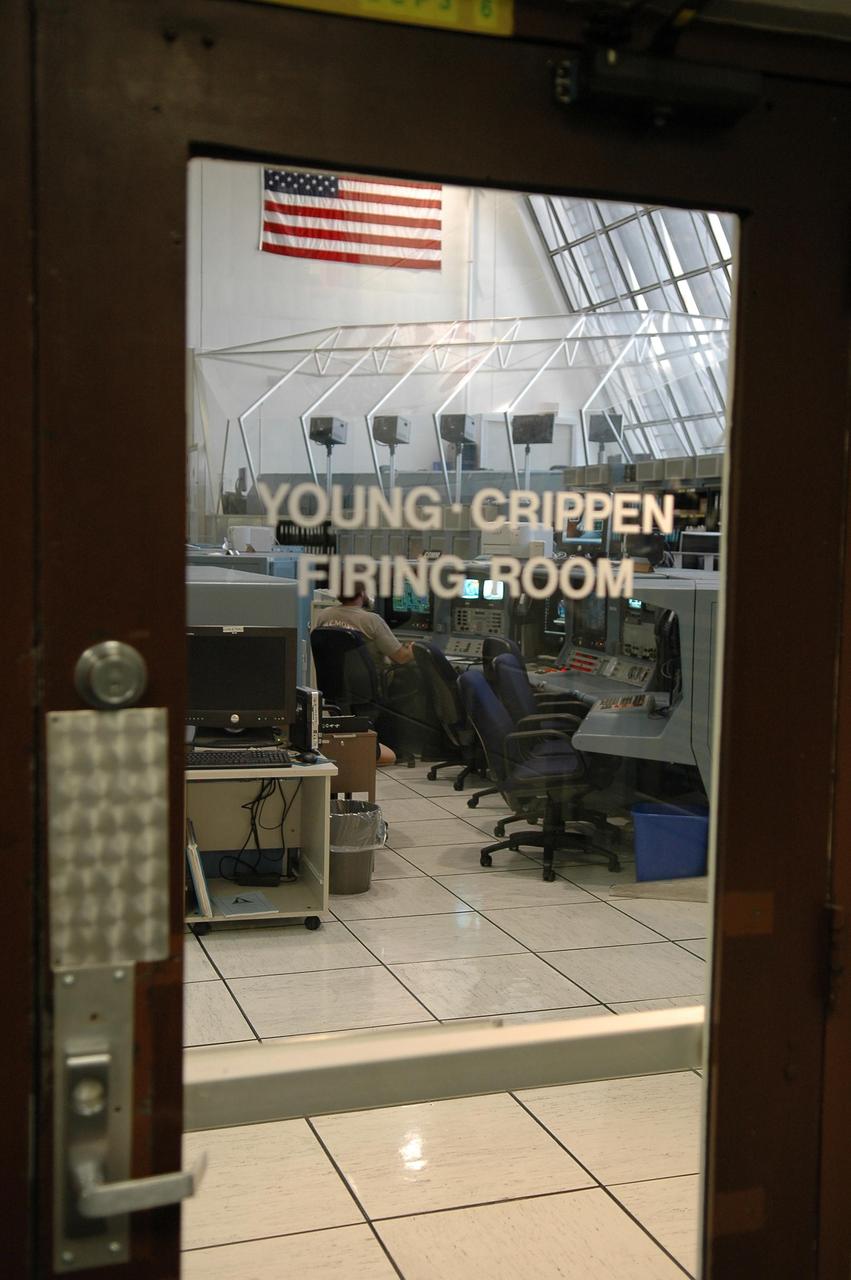
KENNEDY SPACE CENTER, FLA. - The door of firing room 1 in the Launch Control Center at NASA's Kennedy Space Center shows its new designation as the Young · Crippen Firing Room. The renaming was made in tribute to the 25th anniversary of the first space shuttle flight on April 12, 1981, dedicating the firing room that launched the historic flight and the crew of STS-1, Commander John Young and Pilot Robert Crippen. Making the dedication were Center Director Jim Kennedy; the NASA test director for STS-1, Norm Carlson; and the project flight engineer for Space Shuttle Columbia, Bob Sieck. Photo credit: NASA/Kim Shiflett
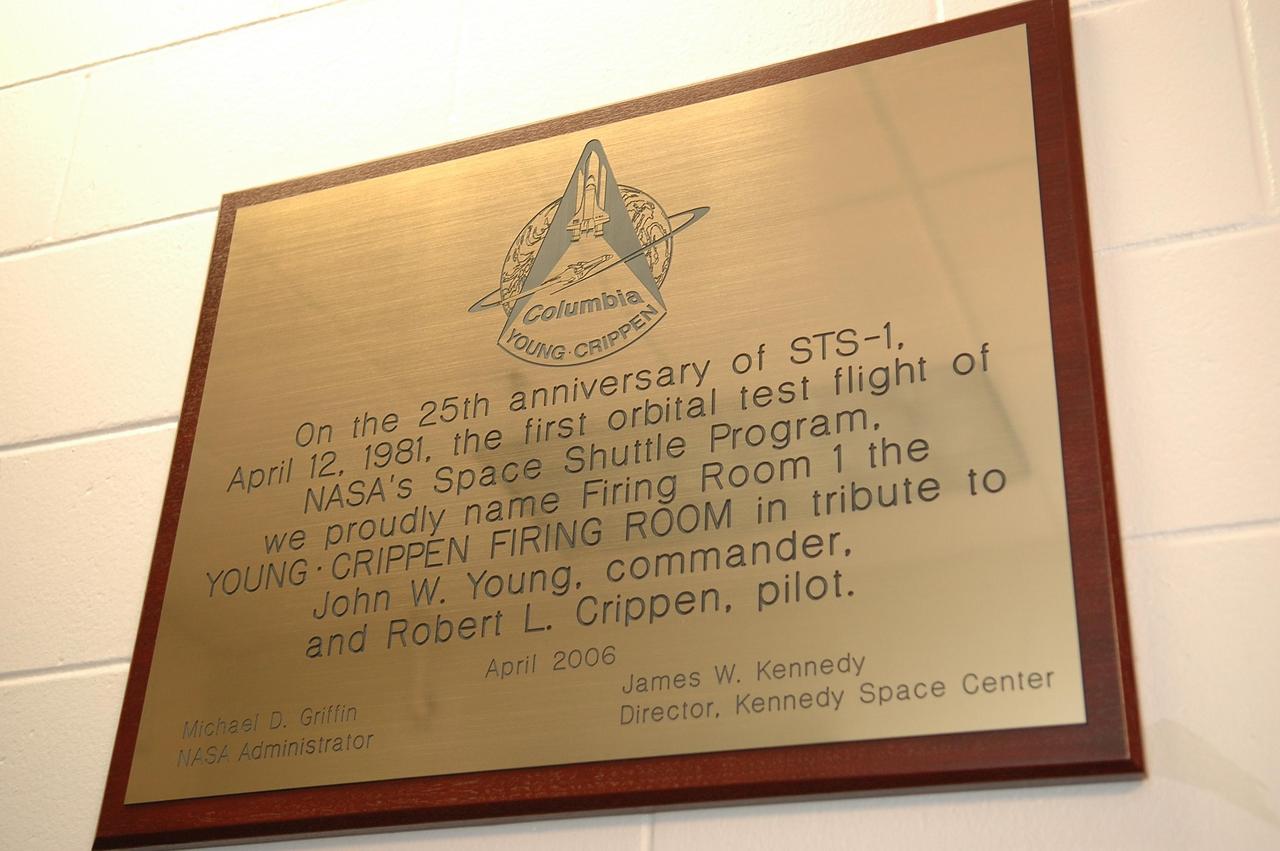
KENNEDY SPACE CENTER, FLA. - Near the door of firing room 1 in the Launch Control Center at NASA's Kennedy Space Center is this plaque revealing the dedication of the room as the Young · Crippen Firing Room. The renaming was made in tribute to the 25th anniversary of the first space shuttle flight on April 12, 1981, dedicating the firing room that launched the historic flight and the crew of STS-1, Commander John Young and Pilot Robert Crippen. Making the dedication were Center Director Jim Kennedy; the NASA test director for STS-1, Norm Carlson; and the project flight engineer for Space Shuttle Columbia, Bob Sieck. Photo credit: NASA/Kim Shiflett
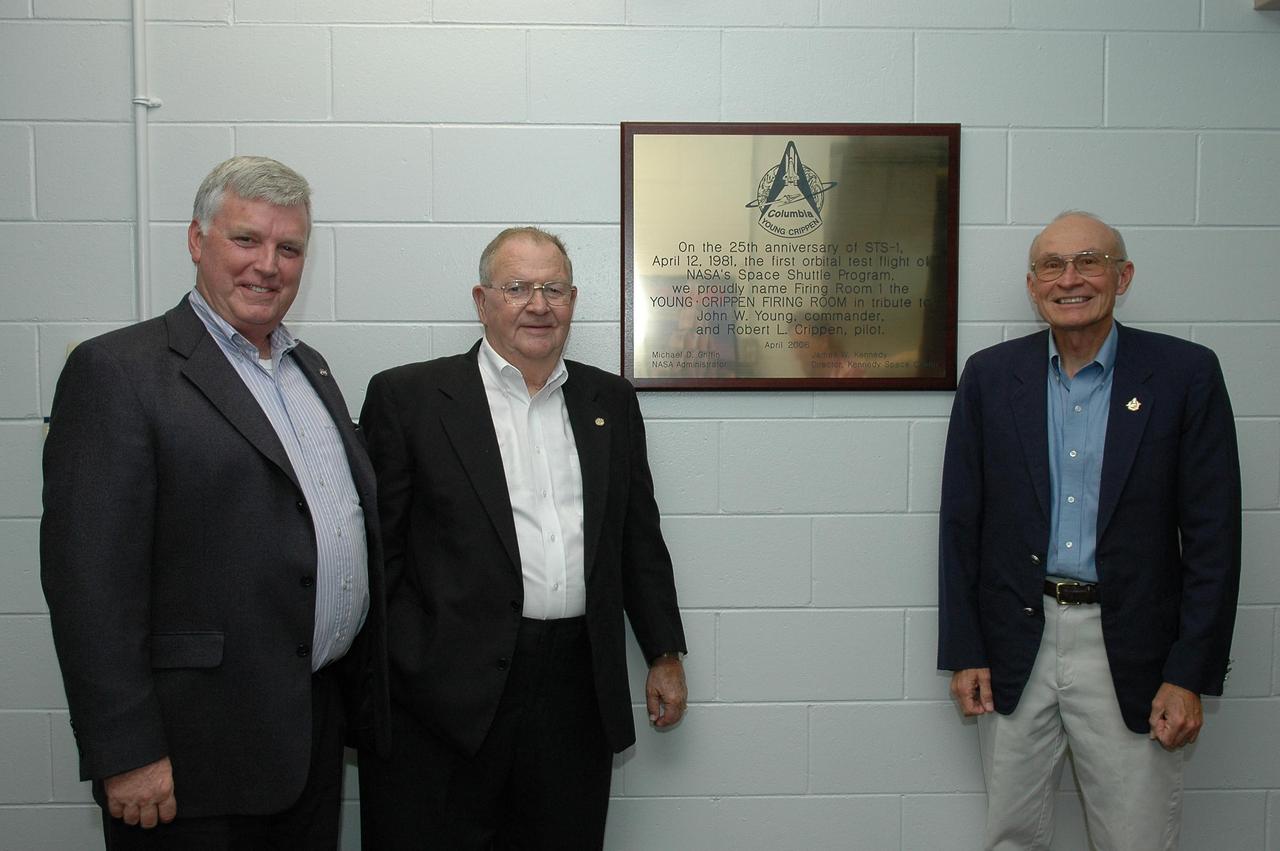
KENNEDY SPACE CENTER, FLA. - In tribute to the 25th anniversary of the first space shuttle flight, NASA's Kennedy Space Center has honored the crew of STS-1, Commander John Young and Pilot Robert Crippen, by dedicating the firing room that launched the historic flight as the "Young · Crippen Firing Room." Making the dedication were (from left) Center Director Jim Kennedy; the NASA test director for STS-1, Norm Carlson; and the project flight engineer for Space Shuttle Columbia, Bob Sieck. On the wall behind them is the plaque marking the dedication. Photo credit: NASA/Kim Shiflett
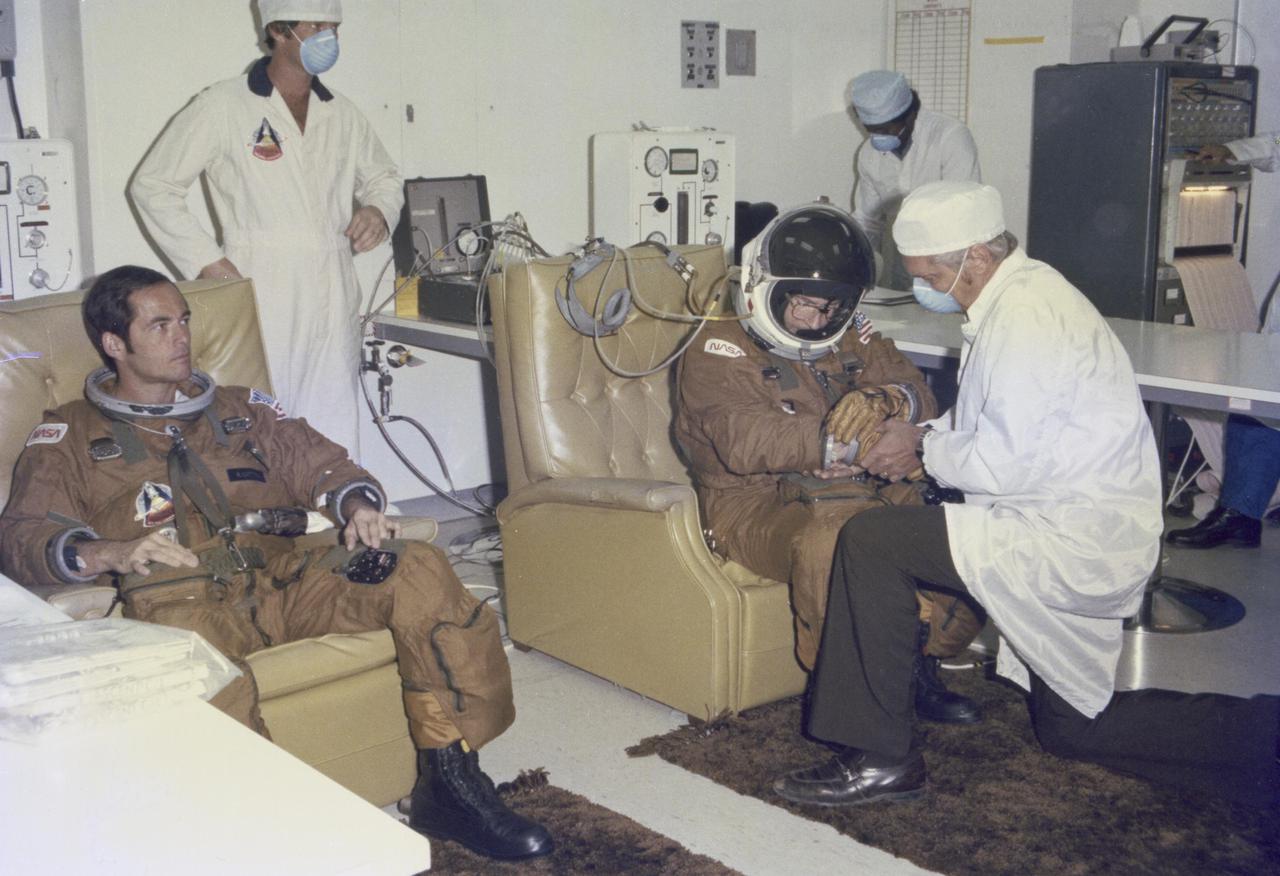
KENNEDY SPACE CENTER, FLA. -- Technicians assist prime crew Astronauts Bob Crippen (left) and John Young (right) in suit-up operations in KSC’s Operations and Checkout Building on the morning of Columbia’s successful liftoff on the Space Shuttle’s first orbital flight. Crippen is the pilot and Young is the commander for mission STS-1 aboard Space Shuttle Columbia. The STS-1 mission, known as a shuttle systems test flight, seeks to demonstrate safe launch into orbit and safe return of the orbiter and crew and verify the combined performance of the entire shuttle vehicle -- orbiter, solid rocket boosters and external tank.
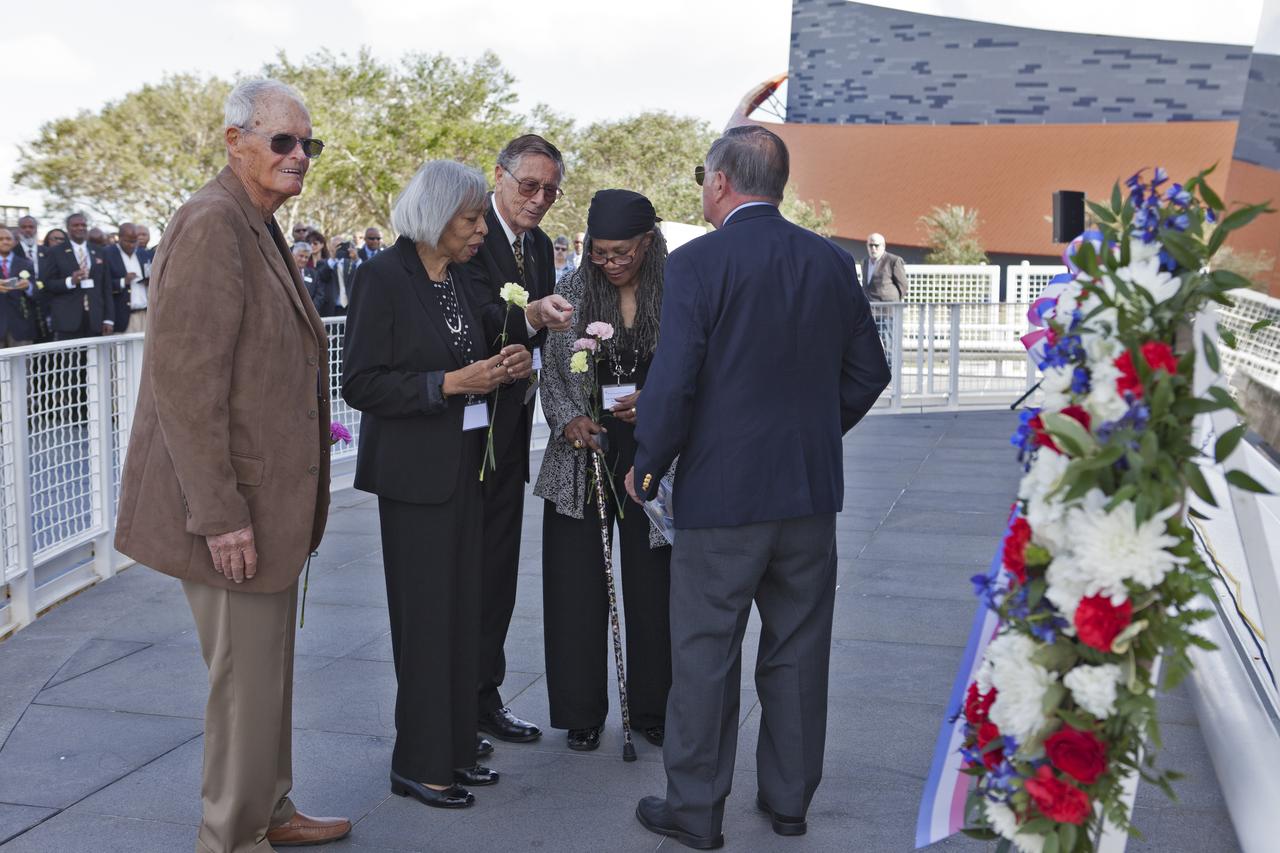
During an Astronauts Memorial Foundation tribute honoring U.S. Air Foce Maj. Robert Lawrence, a wreath is placed at the Space Mirror Memorial at the Kenendy Space Center Visitor Compelx. Participating are, from thje left, Al Crews, Lawrence's sister, Barbara Lawrence, Ph.D., James Abrahamson, Lawrence's sister-in-law Lorne Cress Love, and Bob Crippen. Crews, Abrahamson and Crippen all were selected as astronauts for the Manned Orbiting Laboratory (MOL) Program. Selected in 1967 for MOL, Lawrence was the first African-American astronaut. He lost his life in a training accident 50 years ago. The ceremony took place in the Center for Space Education at the Kennedy Space Center Visitor Complex.
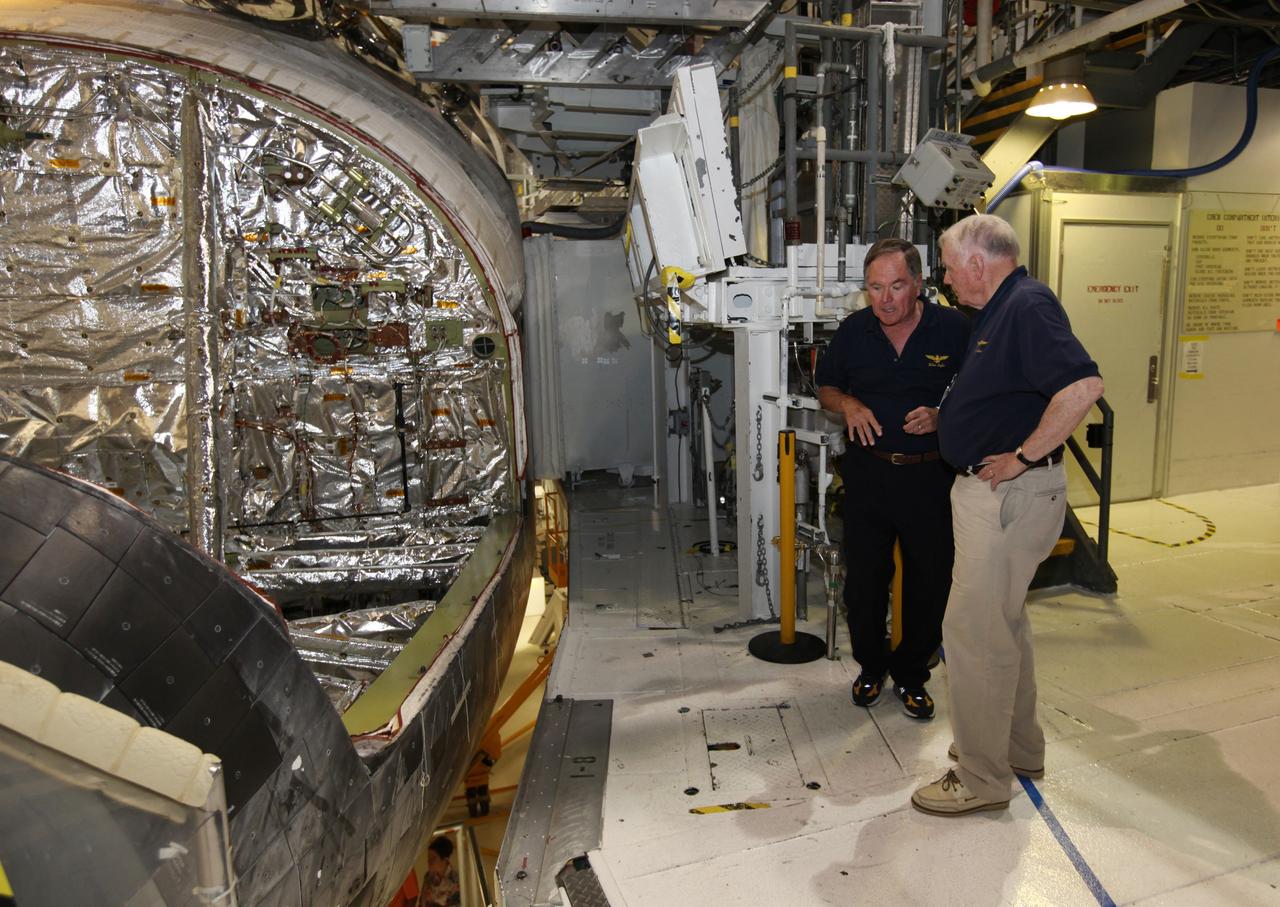
CAPE CANAVERAL, Fla. – In Orbiter Processing Facility-1 at NASA's Kennedy Space Center in Florida, former NASA astronaut Neil Armstrong right, who in July 1969 became the first man to set foot on the moon as commander of the Apollo 11 mission, views space shuttle Atlantis with Bob Crippen, the first space shuttle pilot. Crippen piloted space shuttle Columbia on STS-1 in April 1981. Atlantis is being prepared for display at the Kennedy Space Center Visitor Complex and is scheduled to rollover to the complex in November. The visitor complex is targeting a July 2012 grand opening for Atlantis’ new home. Photo credit: NASA/Dimitri Gerondidakis
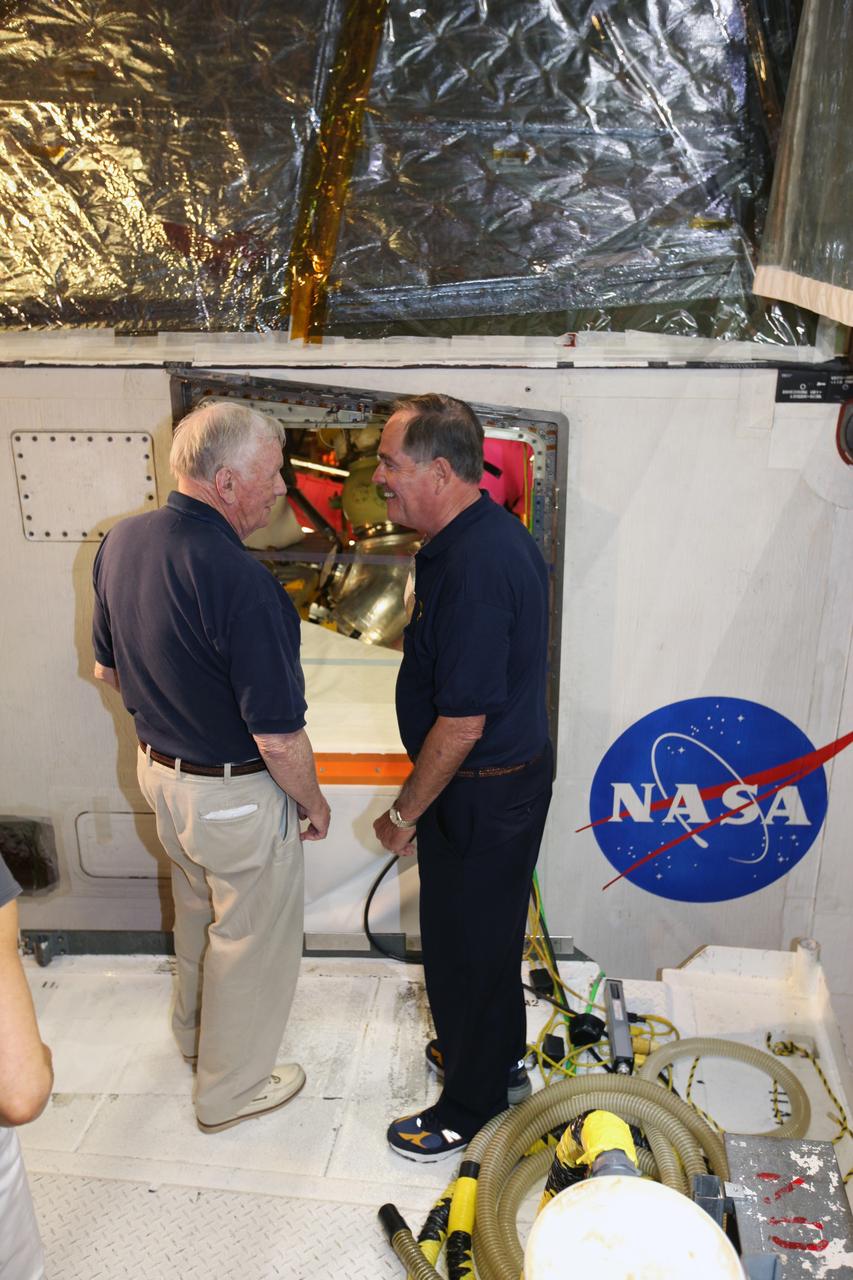
CAPE CANAVERAL, Fla. – In Orbiter Processing Facility-1 at NASA's Kennedy Space Center in Florida, former NASA astronaut Neil Armstrong left, who in July 1969 became the first man to set foot on the moon as commander of the Apollo 11 mission, views space shuttle Atlantis with Bob Crippen, the first space shuttle pilot. Crippen piloted space shuttle Columbia on STS-1 in April 1981. Atlantis is being prepared for display at the Kennedy Space Center Visitor Complex and is scheduled to rollover to the complex in November. The visitor complex is targeting a July 2012 grand opening for Atlantis’ new home. Photo credit: NASA/Dimitri Gerondidakis
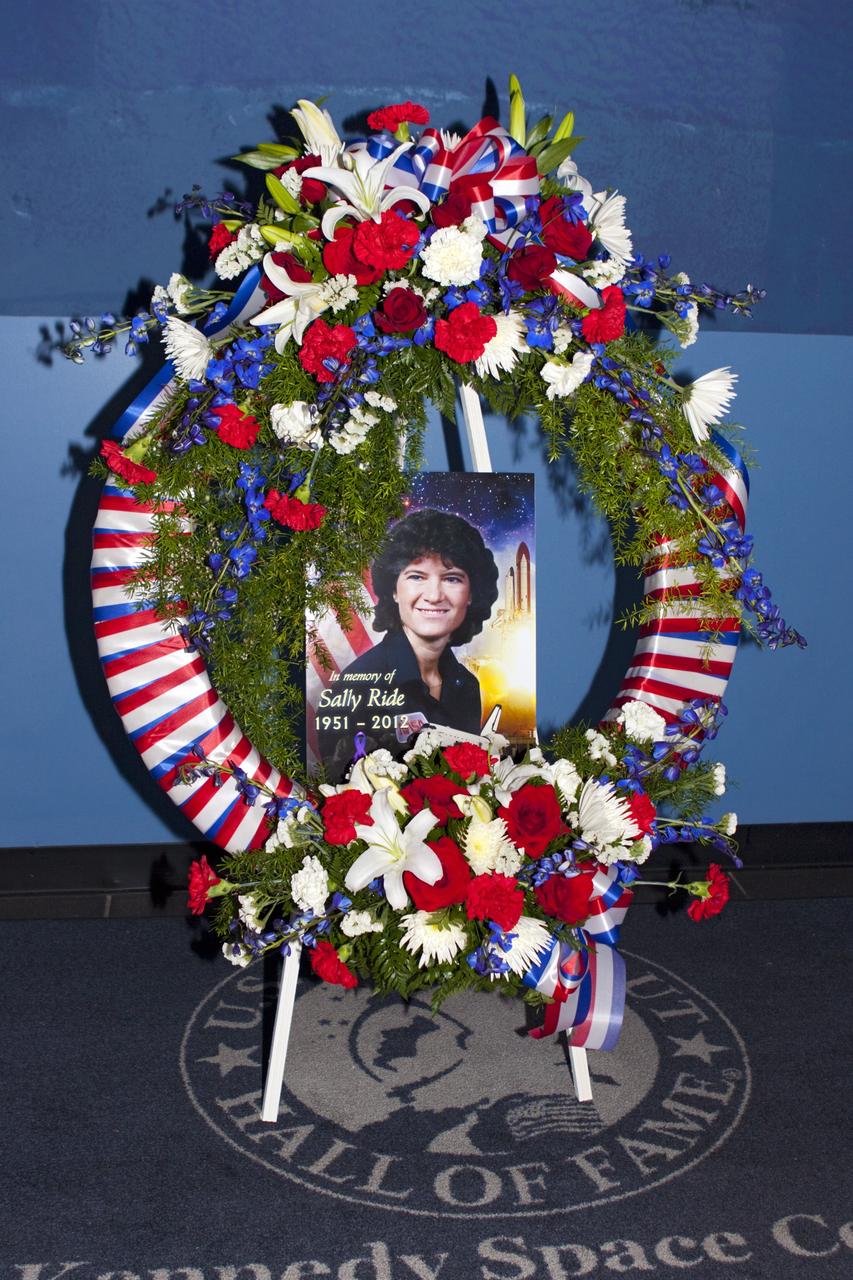
TITUSVILLE, Fla. - A wreath was laid at the U. S. Astronaut Hall of Fame honoring Sally K. Ride, who became America's first woman in space in 1983. Following her death on July 23, 2012, Ride is being remembered for her service to NASA and for her efforts to encourage children to study math, science and technology. A California-born physicist, she broke the gender barrier 29 years ago when she rode to orbit aboard space shuttle Challenger on STS-7. Ride subsequently served, again as a mission specialist, on STS-41G in 1984. Following her career with NASA, in 2001 Ride founded her own company, Sally Ride Science, to pursue her long-time passion of motivating youth -- especially girls and young women -- to pursue careers in technical fields. Photo credit: NASA/Jim Grossmann
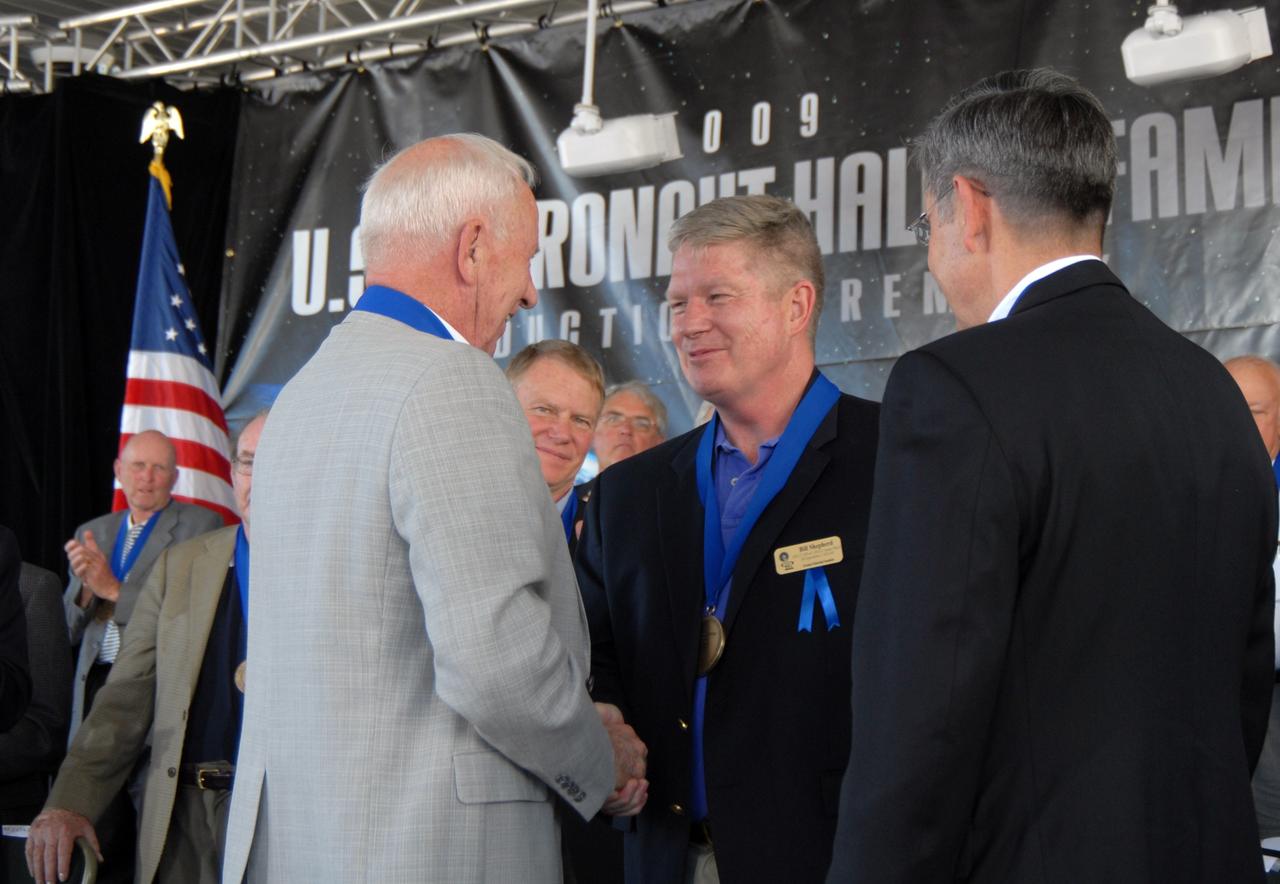
CAPE CANAVERAL, Fla. –– At left, U.S. Astronaut Hall of Fame member Al Worden congratulates astronaut William Shepherd (center) on his induction into the hall of fame during the ceremony held at NASA's Kennedy Space Center Visitor Complex in Florida. At right is Center Director Bob Cabana, who is a member of the hall of fame. Shepherd was commander of the first crew to live aboard the International Space Station. The ceremony took place May 2. More than 20 hall of fame astronauts attended, including Scott Carpenter, Walt Cunningham, Jim Lovell and Bob Crippen. Photo credit: NASA/Jim Grossmann
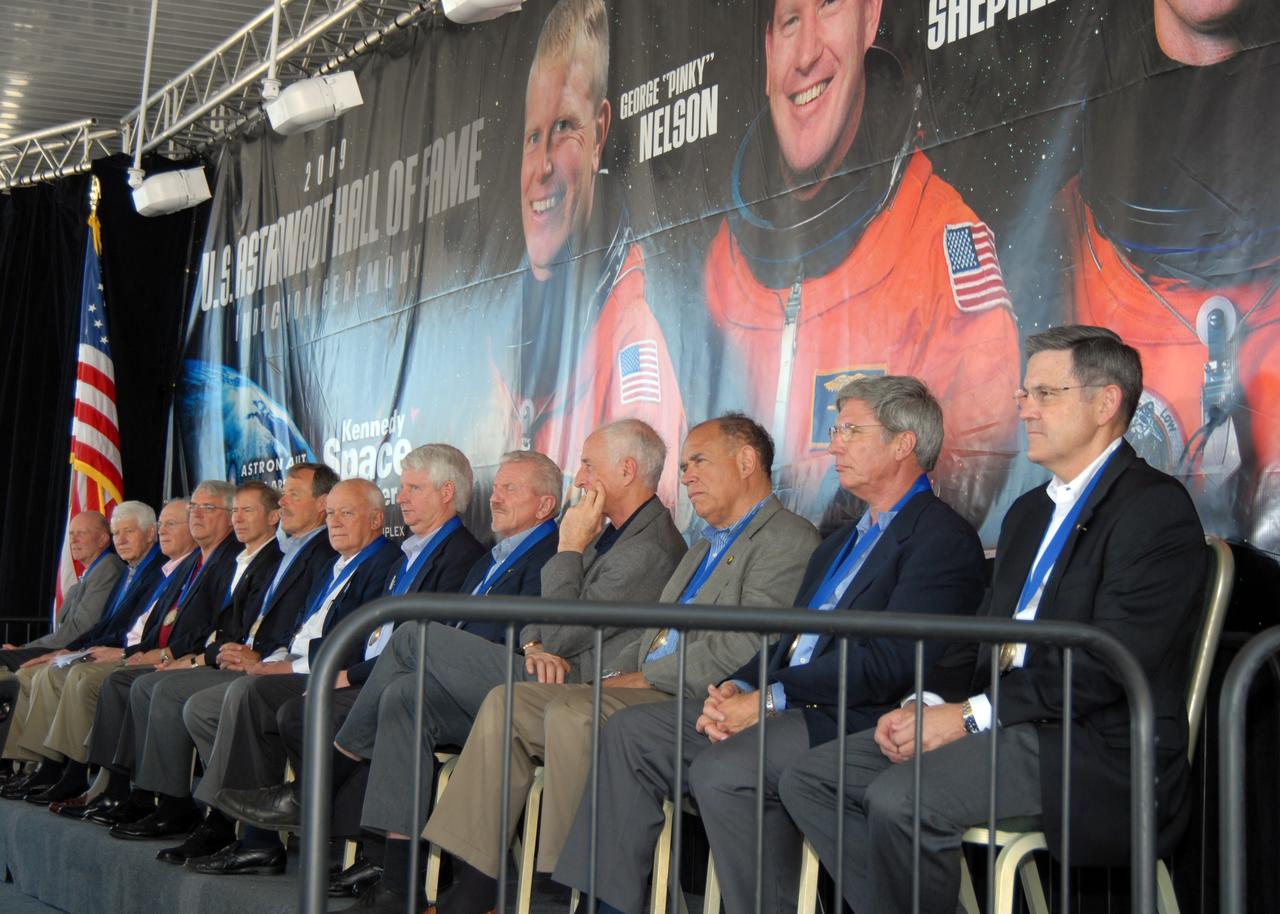
CAPE CANAVERAL, Fla. –– Hall of Fame astronauts (from left) Gordon Fullerton, Henry W. "Hank" Hartsfield Jr., Rick Hauk, Dan Brandenstein, Brewster Shaw, Robert "Hoot" Gibson, Bruce McCandless, Steven Hawley, Loren Shriver, Jeff Hoffman, Fred Gregory, John Blaha and Bob Cabana watch the U.S. Astronaut Hall of Fame induction ceremony at NASA's Kennedy Space Center Visitor Complex in Florida. Cabana is the Kennedy Space Center director. The ceremony took place May 2. More than 20 hall of fame astronauts attended, including Scott Carpenter, Walt Cunningham, Jim Lovell and Bob Crippen. Photo credit: NASA/Jim Grossmann
![Center Directors: Kennedy Space Center Directors around KSC – 1st row, left to right, Richard Smith [center] Bob Cabana [at the podium] Jay Honeycutt [far right]. 2nd row, left to right, Bob Crippen [left] Jim Kennedy Lieutenant General Forrest S. McCartney, USAF, ret. [far left]. 3rd row, left to right, Bill Parsons [far right] Lee Scherer Roy Bridges [2nd from right]. Poster designed by Kennedy Space Center Graphics Department/Greg Lee. Credit: NASA](https://images-assets.nasa.gov/image/KSC-2012-1848/KSC-2012-1848~medium.jpg)
Center Directors: Kennedy Space Center Directors around KSC – 1st row, left to right, Richard Smith [center] Bob Cabana [at the podium] Jay Honeycutt [far right]. 2nd row, left to right, Bob Crippen [left] Jim Kennedy Lieutenant General Forrest S. McCartney, USAF, ret. [far left]. 3rd row, left to right, Bill Parsons [far right] Lee Scherer Roy Bridges [2nd from right]. Poster designed by Kennedy Space Center Graphics Department/Greg Lee. Credit: NASA
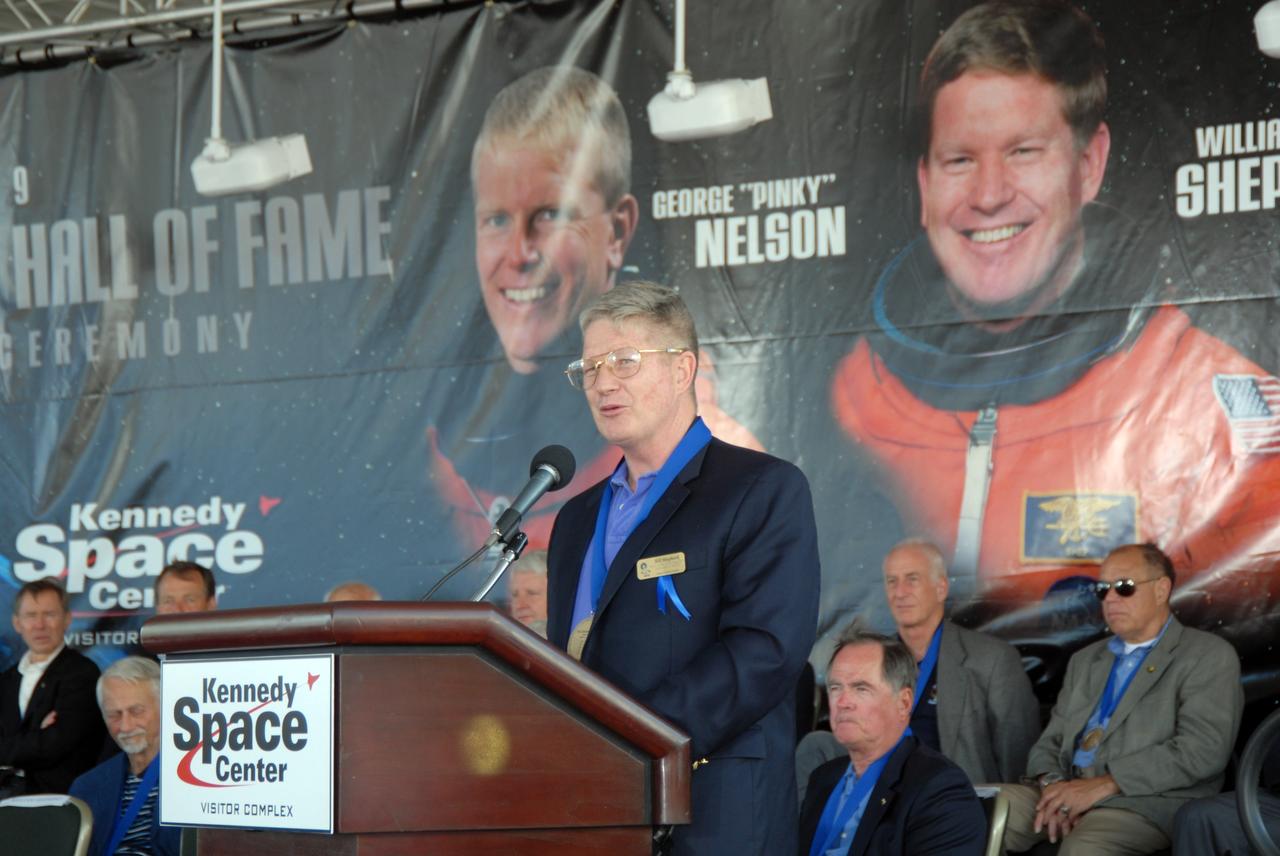
CAPE CANAVERAL, Fla. –– Astronaut William Shepherd addresses the spectators at the U.S. Astronaut Hall of Fame after his induction in the ceremony held at NASA's Kennedy Space Center Visitor Complex in Florida. Shepherd was commander of the first crew to live aboard the International Space Station. The ceremony took place May 2. More than 20 hall of fame astronauts attended, including Scott Carpenter, Walt Cunningham, Jim Lovell and Bob Crippen. Photo credit: NASA/Jim Grossmann
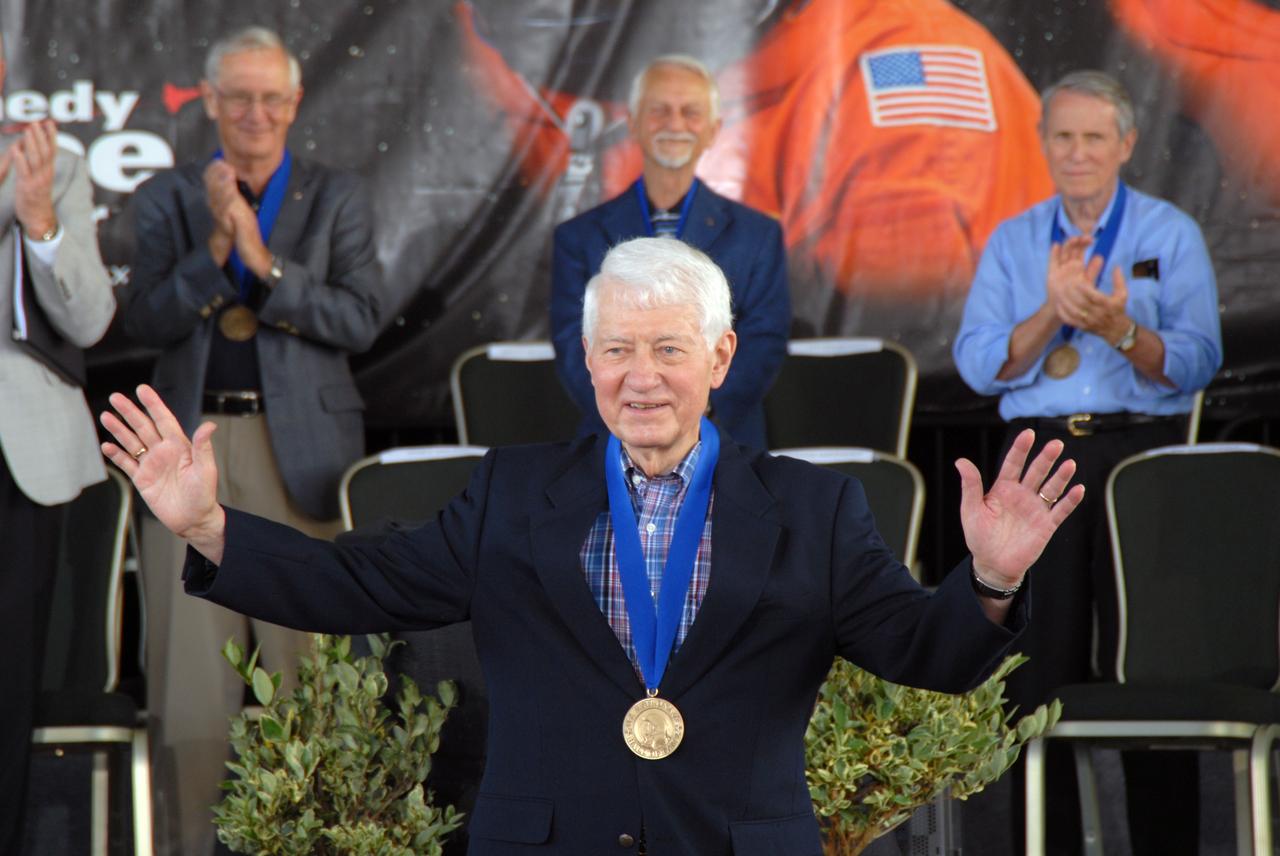
CAPE CANAVERAL, Fla. –– Hall of Fame astronaut Hank Hartsfield thanks the audience for its applause at the 2009 U.S. Astronaut Hall of Fame induction ceremony at NASA's Kennedy Space Center Visitor Complex in Florida. The ceremony took place May 2. More than 20 hall of fame astronauts attended, including Scott Carpenter, Walt Cunningham, Jim Lovell and Bob Crippen. Photo credit: NASA/Jim Grossmann
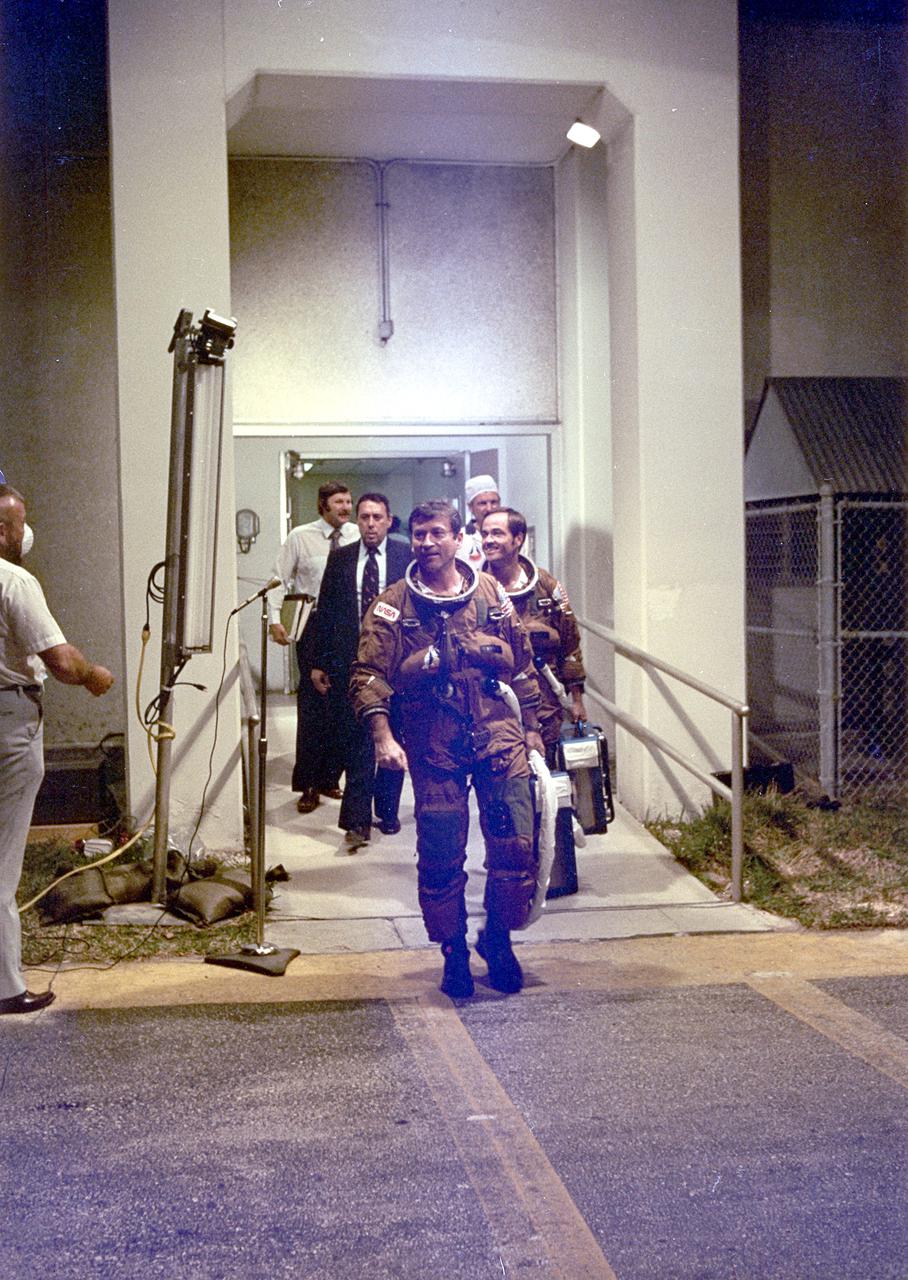
KENNEDY SPACE CENTER, FLA. - The STS-1 Prime Crew Astronauts, John Young (in front) and Bob Crippen, are followed by Flight Operations Director George Abbey, crew trainer Richard Nygram, and a space suit technician as they depart KSC’s Operations and Checkout Building enroute to Pad 39A for boarding of the Space Shuttle. Just visible to the left, is KSC’s Gather Cottee, coordinating TV coverage at the OandC departure point.
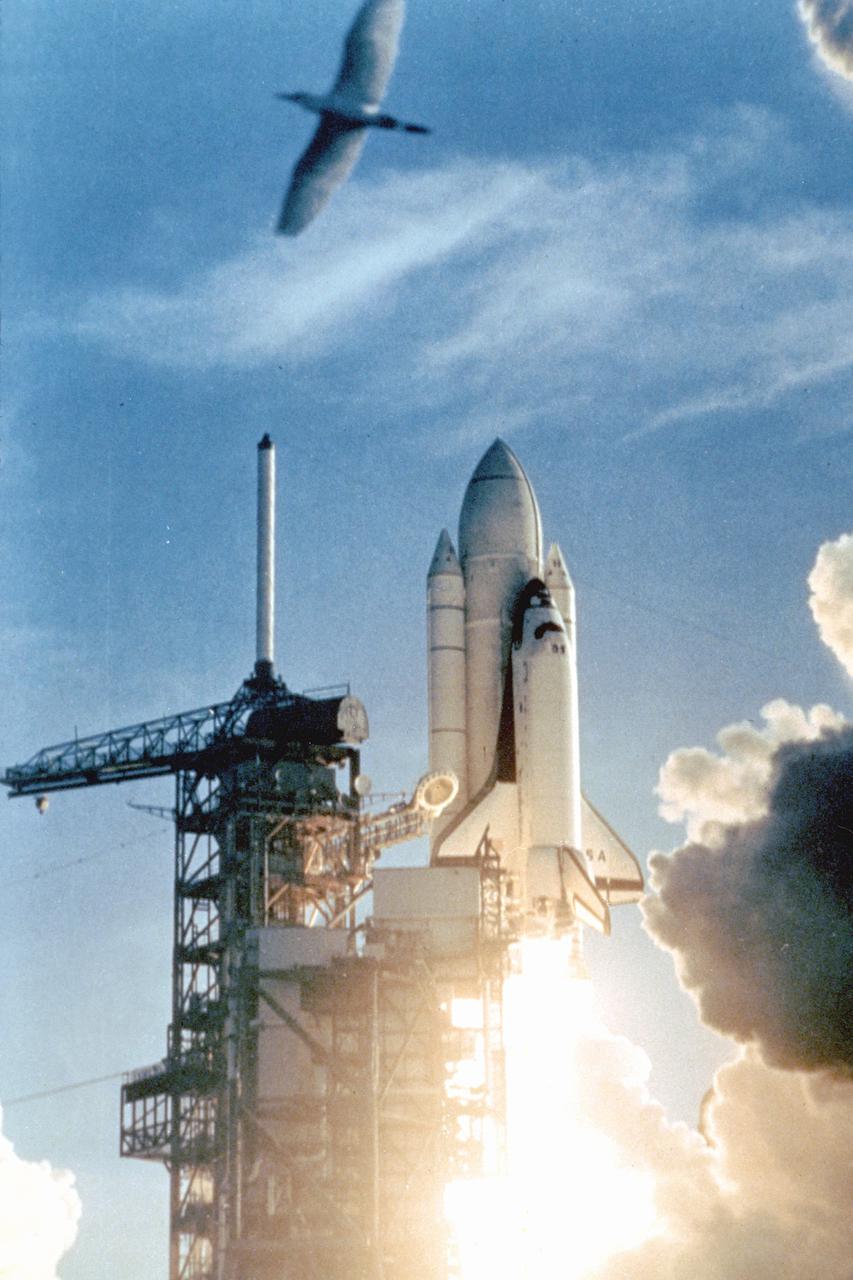
KENNEDY SPACE CENTER, FLA. - The Space Shuttle rises majestically above Launch Complex 39's Pad A on the first leg of its maiden journey into space. On board for the historic flight are astronauts John Young and Bob Crippen, scheduled to spend nearly 54 hours in space on this first shakedown test of America’s new reusable Space Transportation System (STS). The Sunday morning liftoff came a few seconds after 7 a.m. and marked the dawn of a new era in spaceflight.
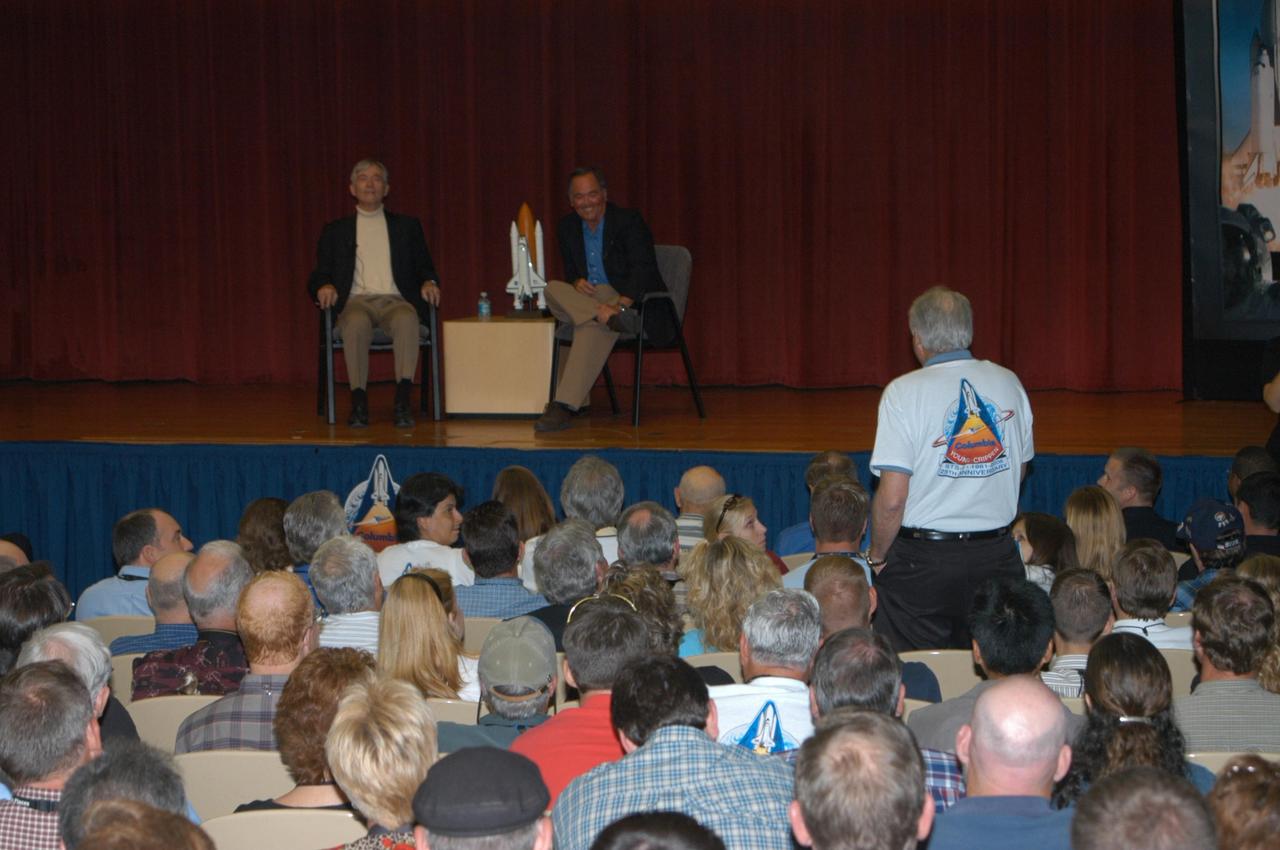
KENNEDY SPACE CENTER, FLA. - To honor the 25th anniversary of the first shuttle launch on April 12, 1981, STS-1 Commander John Young (left) and Pilot Bob Crippen (right) were invited to share their experiences with employees during a special presentation at Kennedy. Here, Young relates his feelings about making that historic flight. Photo credit: NASA/George Shelton
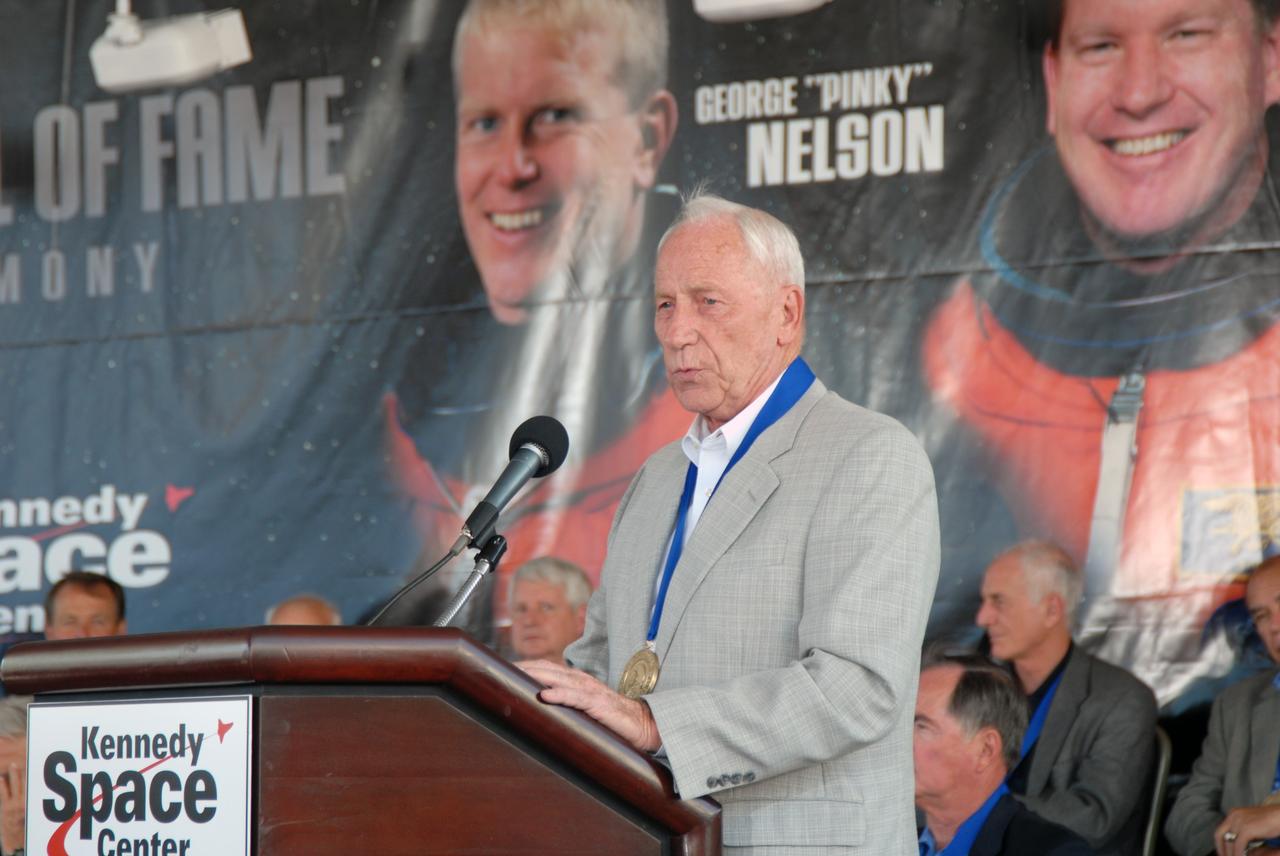
CAPE CANAVERAL, Fla. –– Hall of Fame astronaut Al Worden speaks during the U.S. Astronaut Hall of Fame induction ceremony held at Kennedy's Visitor Complex in Florida. Worden is a member of the hall of fame. The ceremony took place May 2. More than 20 hall of fame astronauts attended, including Scott Carpenter, Walt Cunningham, Jim Lovell and Bob Crippen. Photo credit: NASA/Jim Grossmann
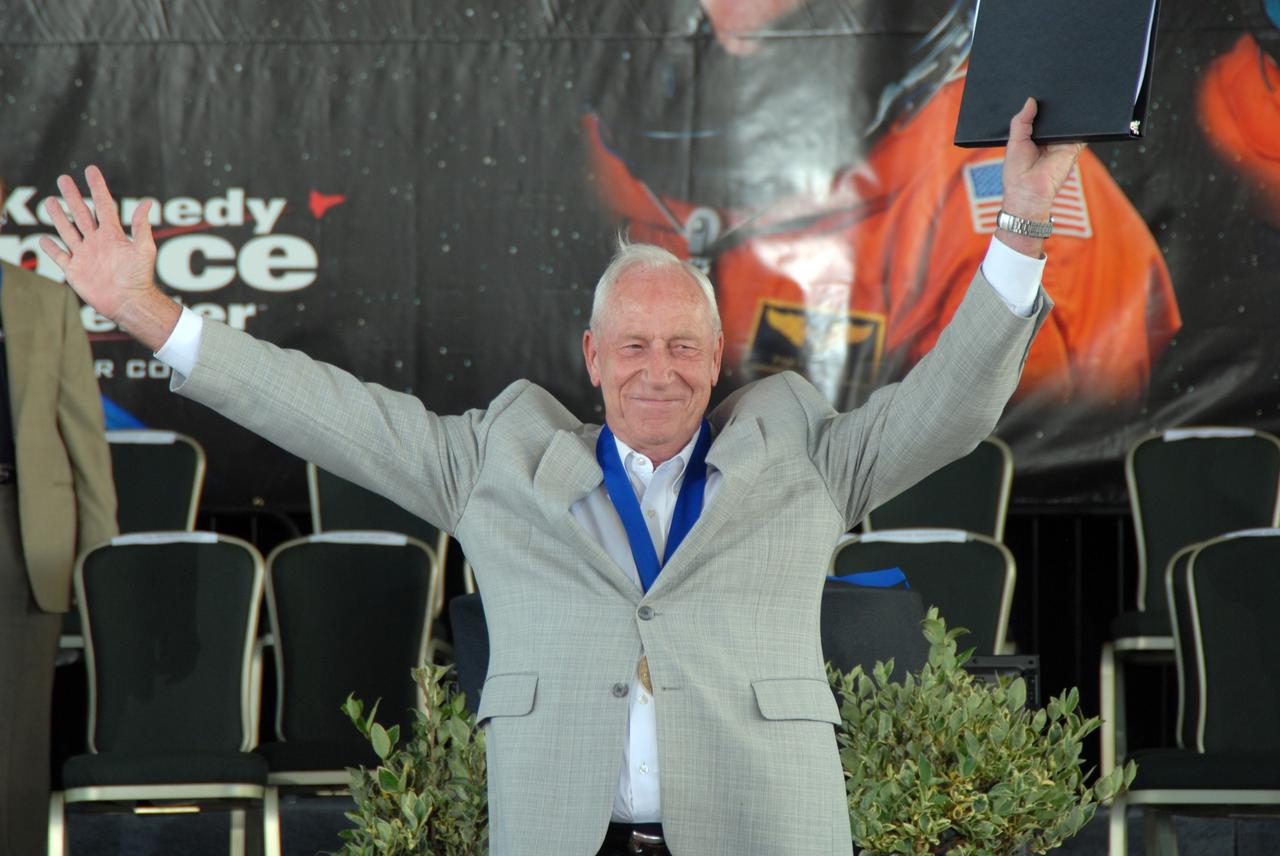
CAPE CANAVERAL, Fla. –– Hall of Fame astronaut Al Worden acknowledges warm applause from spectators at the 2009 U.S. Astronaut Hall of Fame induction ceremony at NASA's Kennedy Space Center Visitor Complex in Florida. The ceremony took place May 2. More than 20 hall of fame astronauts attended, including Scott Carpenter, Walt Cunningham, Jim Lovell and Bob Crippen. Photo credit: NASA/Jim Grossmann
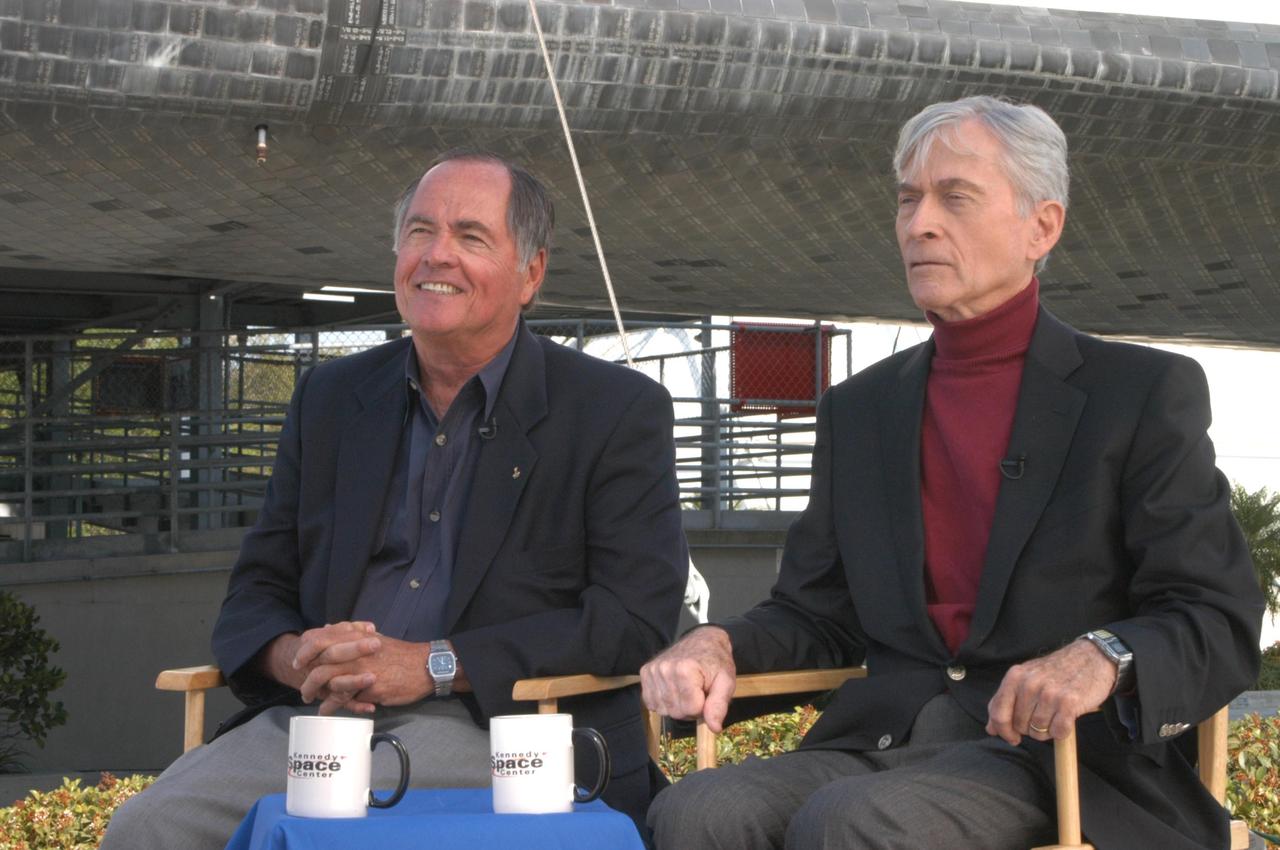
KENNEDY SPACE CENTER, FLA. - To honor the 25th anniversary of the first shuttle launch on April 12, 1981, STS-1 Pilot Bob Crippen (left) and Commander John Young (right) sit in front of a mockup of a space shuttle at the Kennedy Space Center Visitor Complex. During their appearance, they shared their experiences on that historic flight. Photo credit: NASA/George Shelton
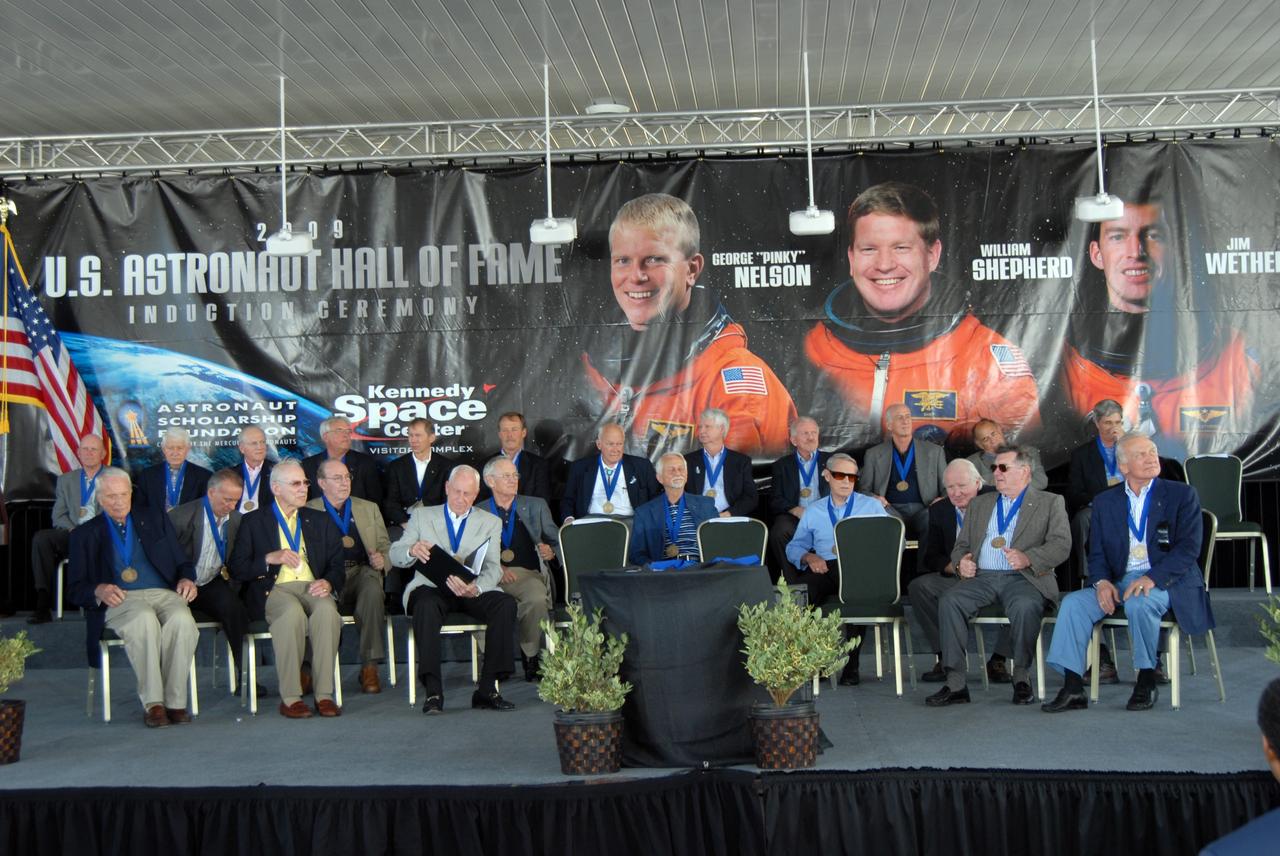
CAPE CANAVERAL, Fla. –– U.S. Astronaut Hall of Fame astronauts are seated on stage at NASA's Kennedy Space Center Visitor Complex in Florida for the induction of three more astronauts. The ceremony took place May 2. More than 20 hall of fame astronauts attended, including Scott Carpenter, Walt Cunningham, Jim Lovell and Bob Crippen. Photo credit: NASA/Jim Grossmann
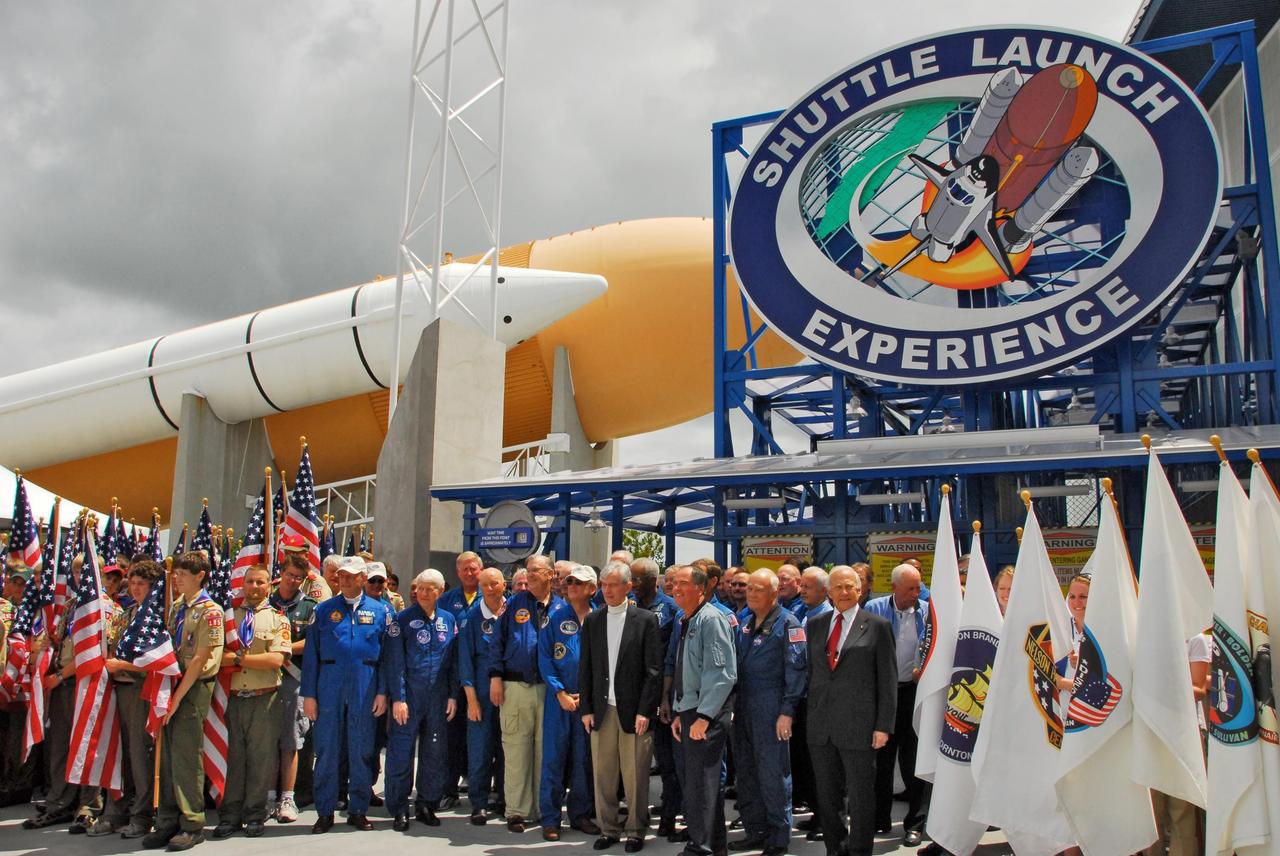
KENNEDY SPACE CENTER, FLA. -- Many former astronauts gather at the opening of the newest attraction at Kennedy Space Center's Visitor Complex, the Shuttle Launch Experience. In front are John Young (left) and Bob Crippen. The attraction includes a simulated launch with the sights, sounds and sensations of launching into space. Find out more about the Visitor Complex and the Shuttle Launch Experience at <b>http://www.kennedyspacecenter.com/visitKSC/attractions/index.asp</b>. Photo credit: NASA/George Shelton
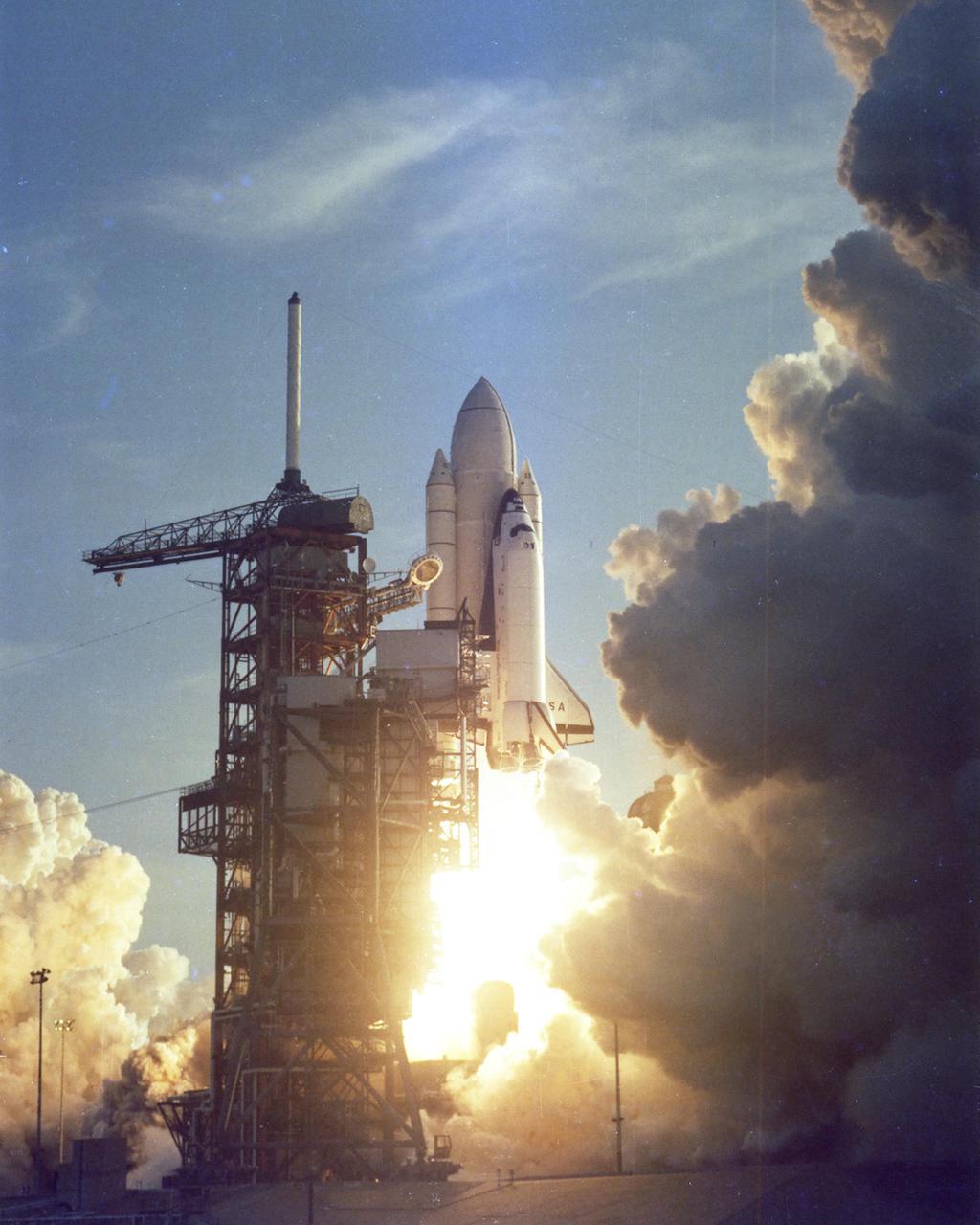
KENNEDY SPACE CENTER, FLA. -- The Space Shuttle Columbia rises majestically above Launch Complex 39's Pad A on the first leg of its maiden journey into space. On board for the historic flight are Astronauts John Young and Bob Crippen, scheduled to spend nearly 54 hours in space on this first shakedown test of America's new reusable Space Transportation System (STS-1). The Sunday morning liftoff came a few seconds after 7:00 a.m. and marked the dawn of a new era in spaceflight.
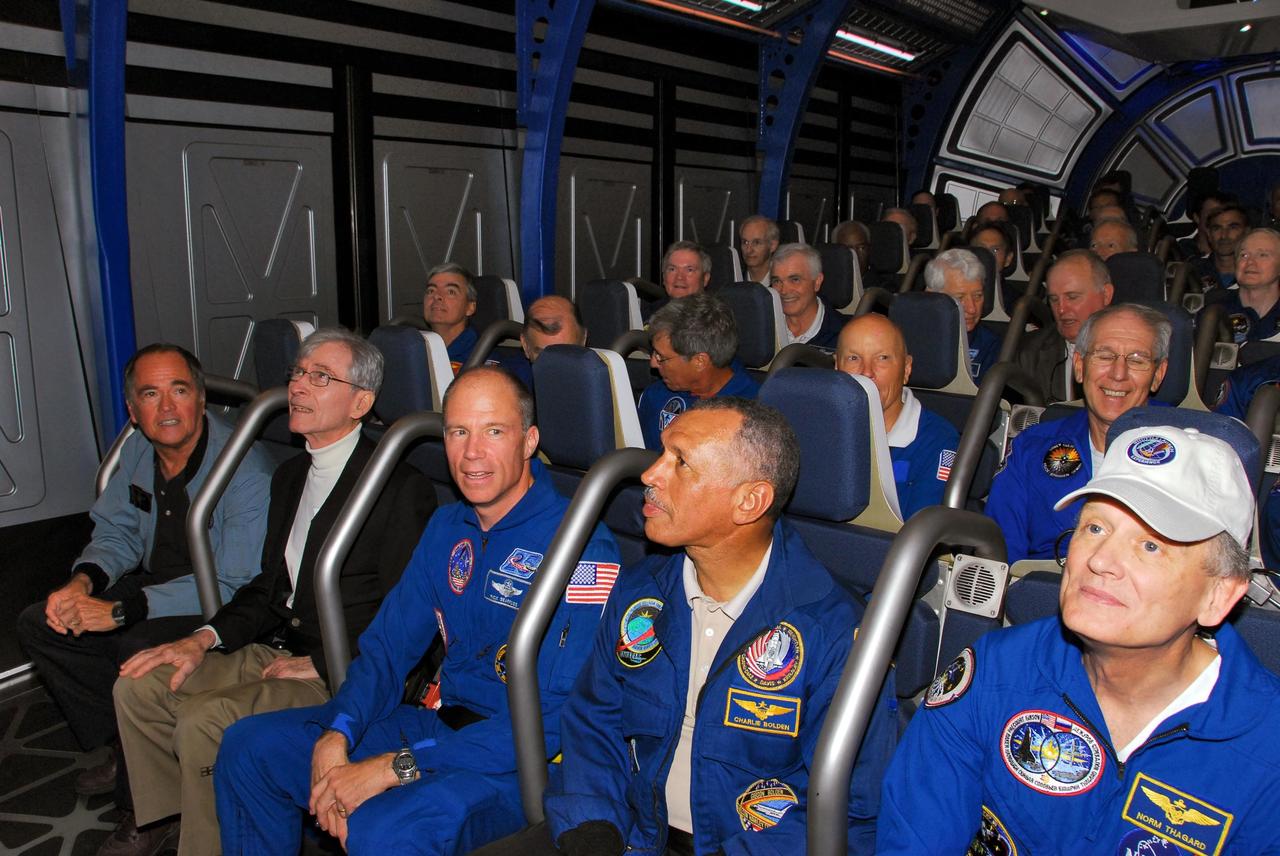
KENNEDY SPACE CENTER, FLA. -- Former astronauts take their seats in the newest attraction at Kennedy Space Center's Visitor Complex, the Shuttle Launch Experience. In the front row are (from left) Bob Crippen, John Young, Rick Searfoss, Charles Bolden and Norm Thagard. The attraction includes a simulated launch with the sights, sounds and sensations of launching into space. Find out more about the Visitor Complex and the Shuttle Launch Experience at <b>http://www.kennedyspacecenter.com/visitKSC/attractions/index.asp</b>. Photo credit: NASA/George Shelton
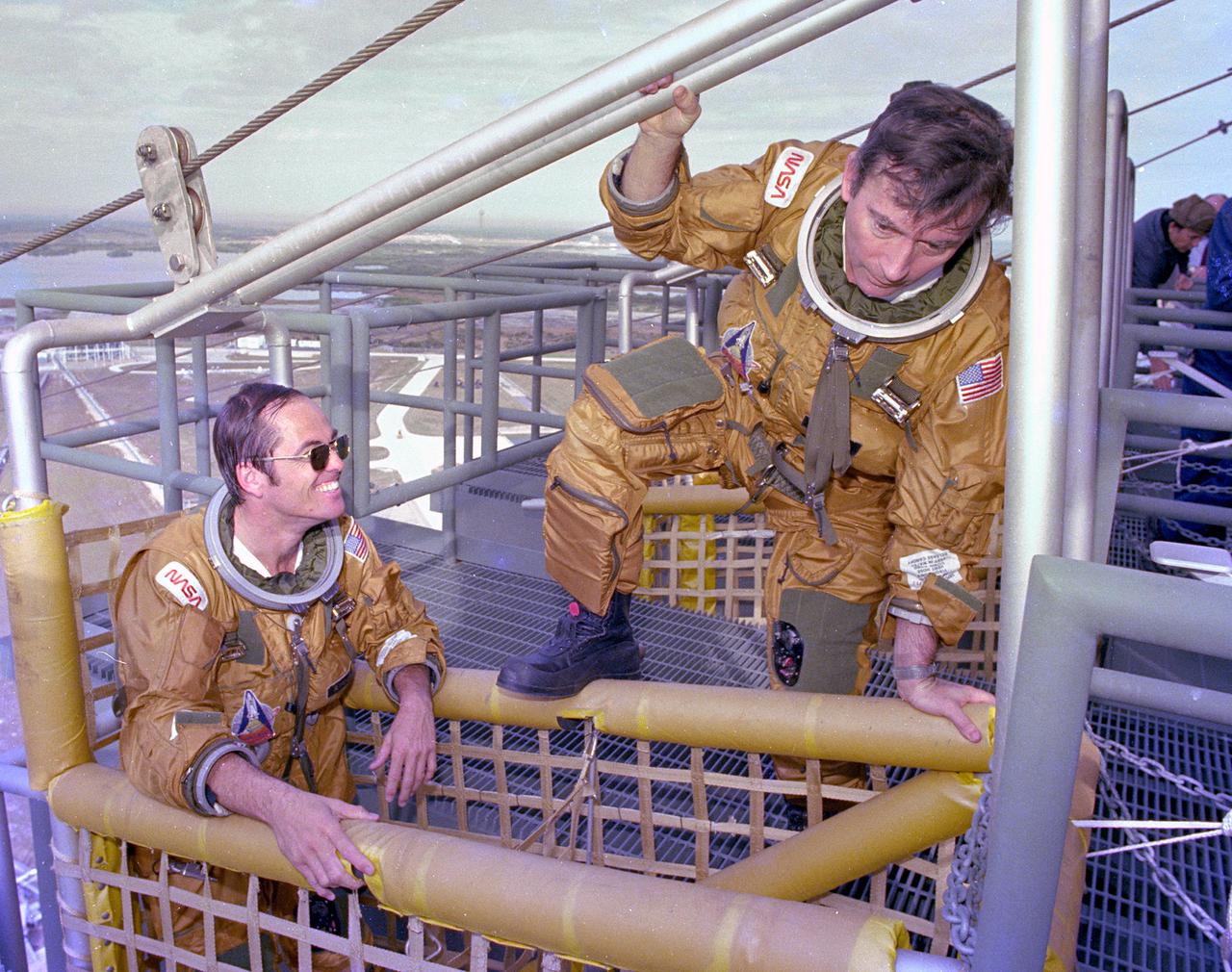
KENNEDY SPACE CENTER, FLA. - Space Shuttle prime crew astronauts Bob Crippen (left) and John Young (center) board the emergency pad escape system known as the 'slidewire.' The slidewire system provides a quick escape from upper launch pad platforms in case of a serious emergency. The flight crews wore the spacesuits and other equipment to be worn during a mission, but sandbags were used to duplicate the weight of riders in the slidewire baskets during the training.
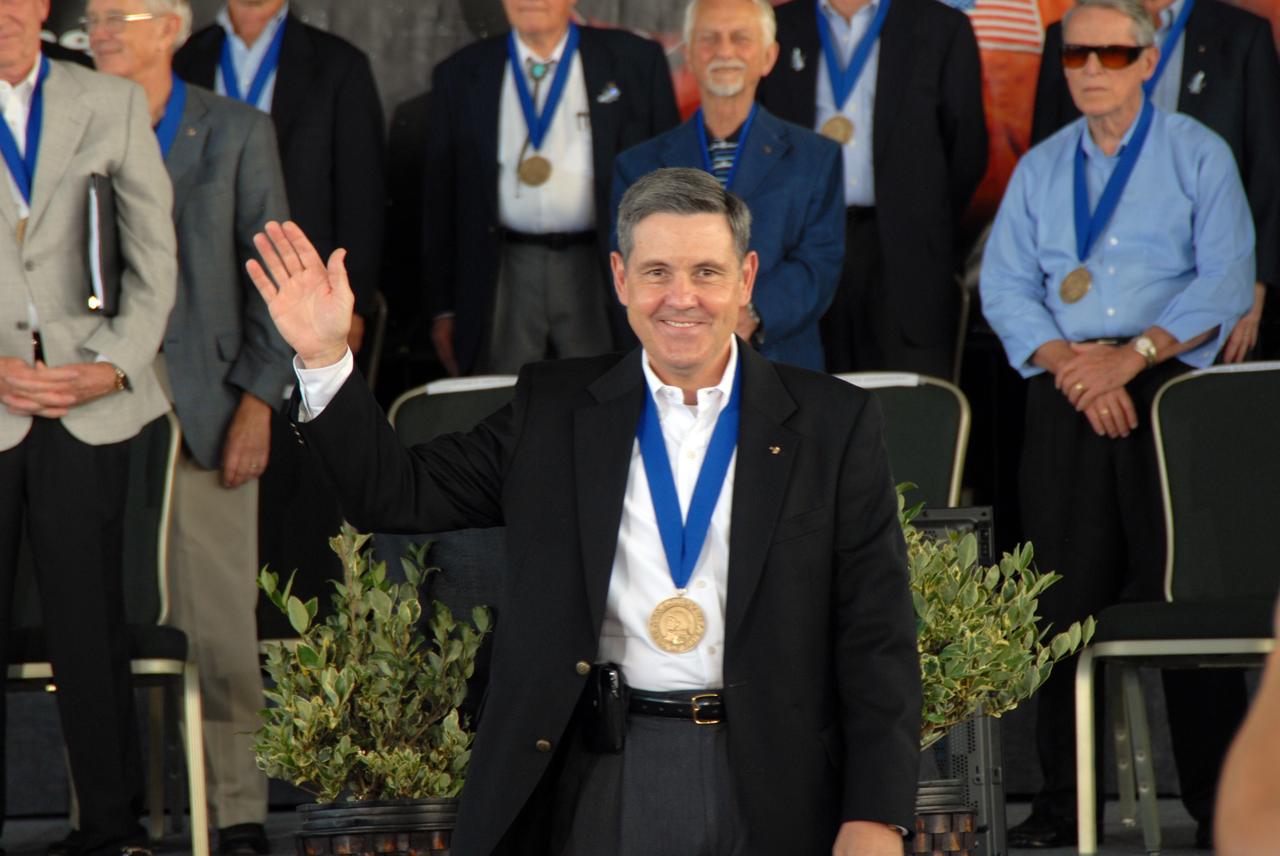
CAPE CANAVERAL, Fla. –– Hall of Fame astronaut and NASA's Kennedy Space Center Director Robert Cabana thanks the audience for its applause at the 2009 U.S. Astronaut Hall of Fame induction ceremony at Kennedy's Visitor Complex in Florida. The ceremony took place May 2. More than 20 hall of fame astronauts attended, including Scott Carpenter, Walt Cunningham, Jim Lovell and Bob Crippen. Photo credit: NASA/Jim Grossmann

CAPE CANAVERAL, Fla. –– Hall of Fame astronaut Dick Gordon thanks the audience for its applause at the 2009 U.S. Astronaut Hall of Fame induction ceremony at NASA's Kennedy Space Center Visitor Complex in Florida. The ceremony took place May 2. More than 20 hall of fame astronauts attended, including Scott Carpenter, Walt Cunningham, Jim Lovell and Bob Crippen. Photo credit: NASA/Jim Grossmann
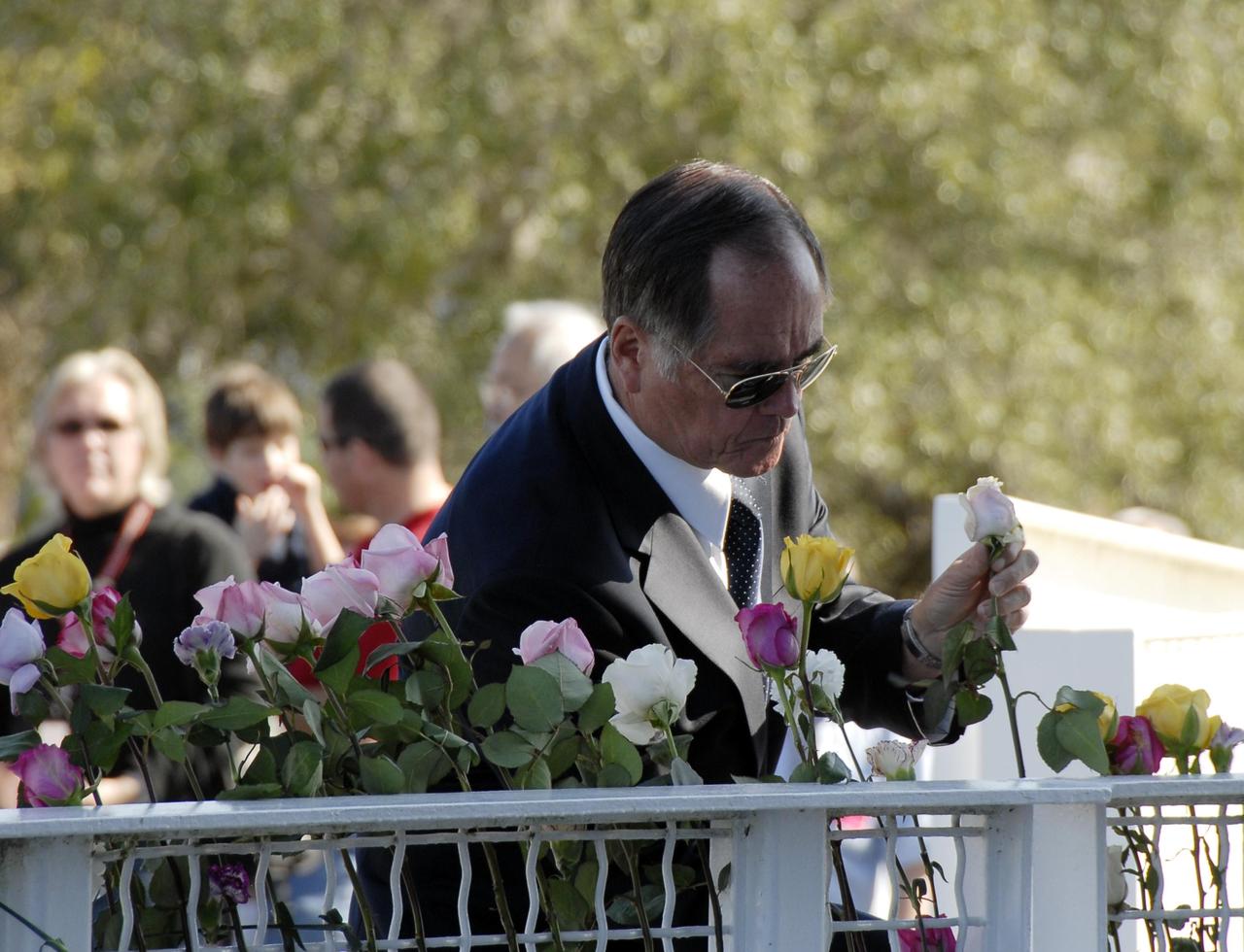
KENNEDY SPACE CENTER, FLA. -- Former astronaut Bob Crippen places a rose in the fence surrounding the Space Mirror Memorial at the KSC Visitor Complex. The Space Mirror was designated as a national memorial by Congress and President George Bush in 1991 to honor fallen astronauts. Their names are emblazoned on the monument's 42-1/2-foot-high by 50-foot-wide black granite surface as if to be projected into the heavens. Photo credit:NASA/Kim Shiflett
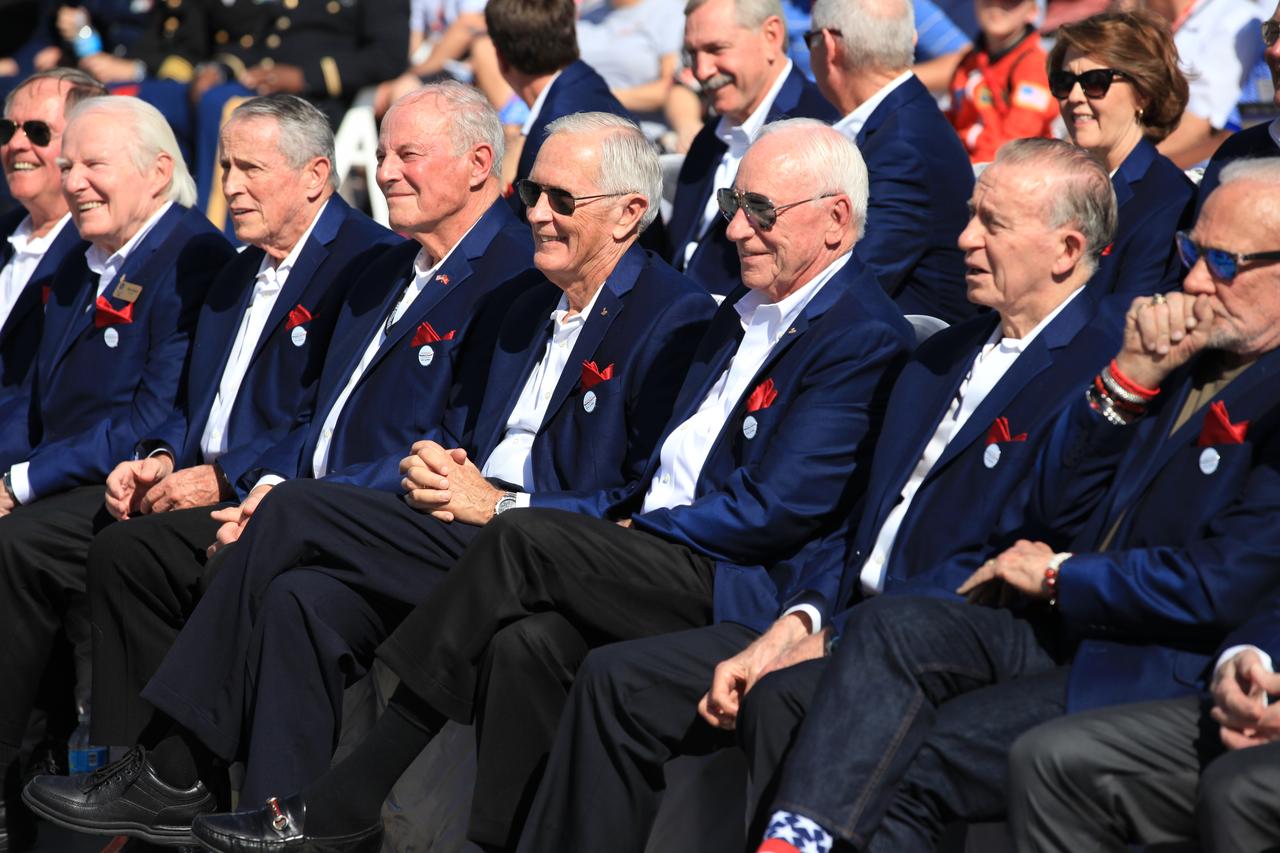
Members of the U.S. Astronaut Hall of Fame listen to speakers during the opening of the Heroes and Legends attraction at the Kennedy Space Center Visitor Complex. From the left are: Bob Crippen, Vance Brand, Ed Gibson, Jack Lousma, Charlie Duke, Al Worden, Walt Cunningham and Buzz Aldrin. The new facility includes the U.S. Astronaut Hall of Fame and looks back to the pioneering efforts of Mercury, Gemini and Apollo. It sets the stage by providing the background and context for space exploration and the legendary men and women who pioneered the nation's journey into space.

KENNEDY SPACE CENTER, FLA. -- STS-1: Columbia. The Space Shuttle rises majestically above Launch Complex 39’s Pad A on the first leg of its maiden journey into space. On board for the historic flight are Astronauts John Young and Bob Crippen, scheduled to spend nearly 54 hours in space on this first shakedown test of America’s new reusable Space Transportation System (STS). The Sunday morning liftoff came a few seconds after 7 a.m. and marked the dawn of a new era in spaceflight.
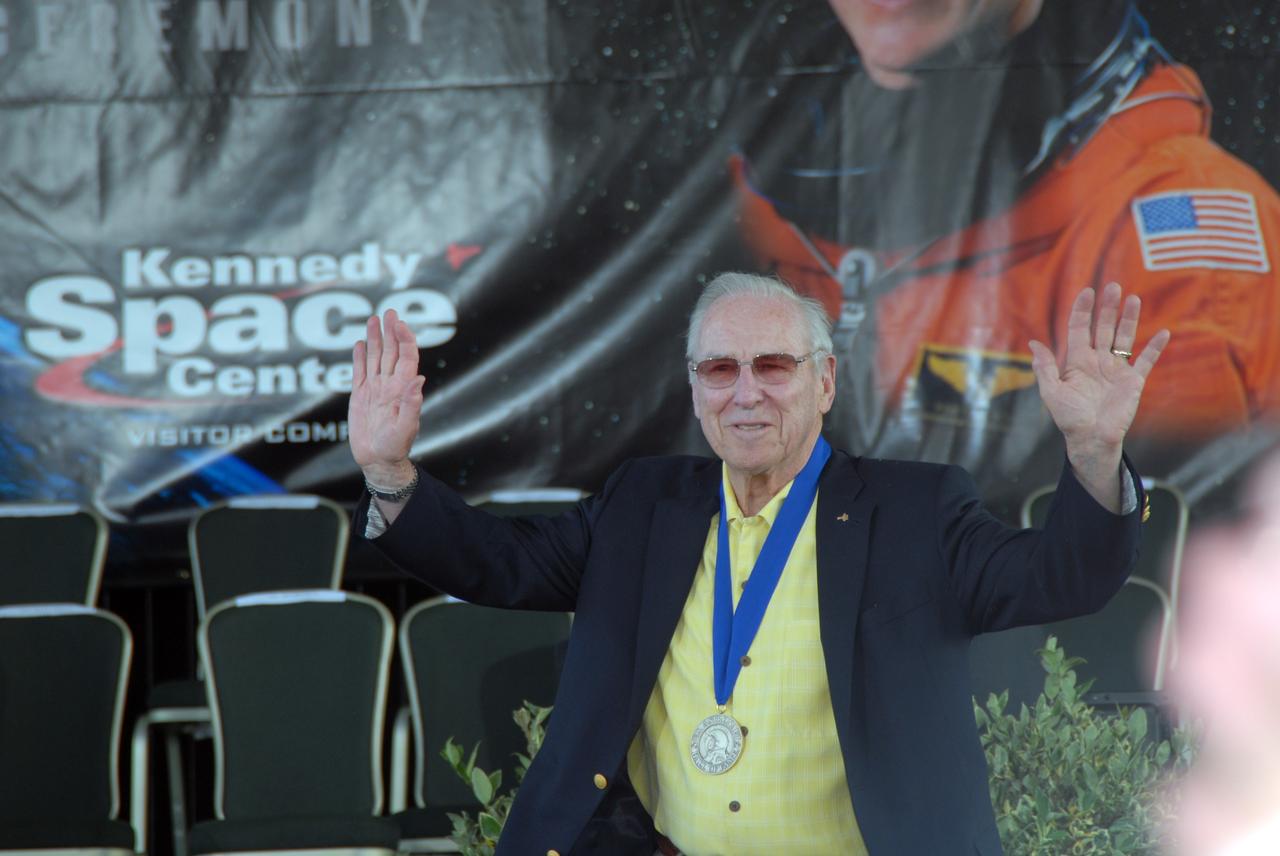
CAPE CANAVERAL, Fla. –– Hall of Fame astronaut Jim Lovell thanks the audience for its applause at the 2009 U.S. Astronaut Hall of Fame induction ceremony at NASA's Kennedy Space Center Visitor Complex in Florida. The ceremony took place May 2. More than 20 hall of fame astronauts attended, including Scott Carpenter, Walt Cunningham, Jim Lovell and Bob Crippen. Photo credit: NASA/Jim Grossmann
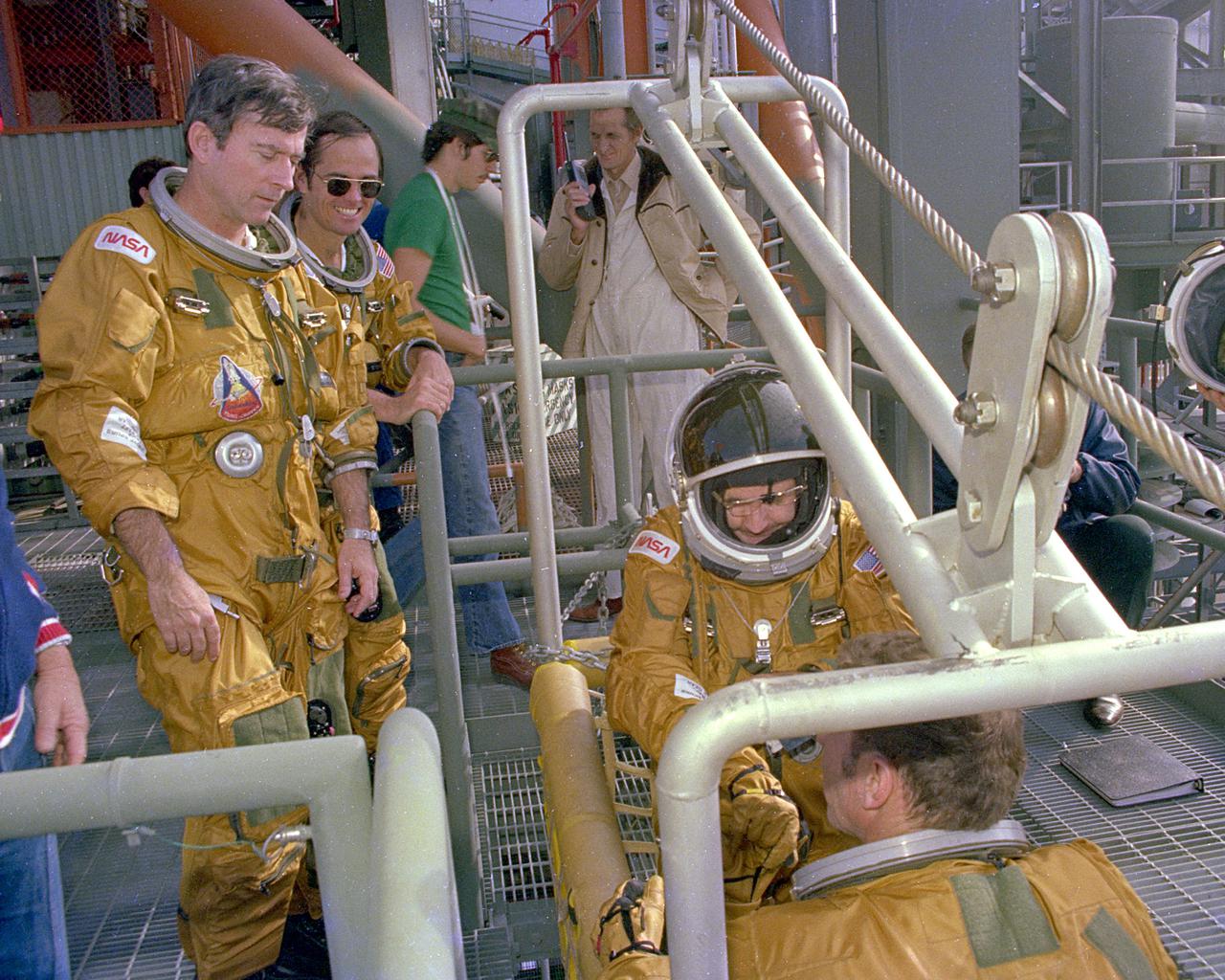
KENNEDY SPACE CENTER, FLA. - Space Shuttle prime crew Commander John Young and Pilot Bob Crippen watch as backup crew members Richard Truly and Joe Engle board the emergency pad escape system known as the slidewire. The slidewire system provides a quick escape from upper launch pad platforms in case of a serious emergency. The flight crews wore the spacesuits and other equipment to be worn during a mission, but sandbags were used to duplicate the weight of riders in the slidewire baskeets during the training.
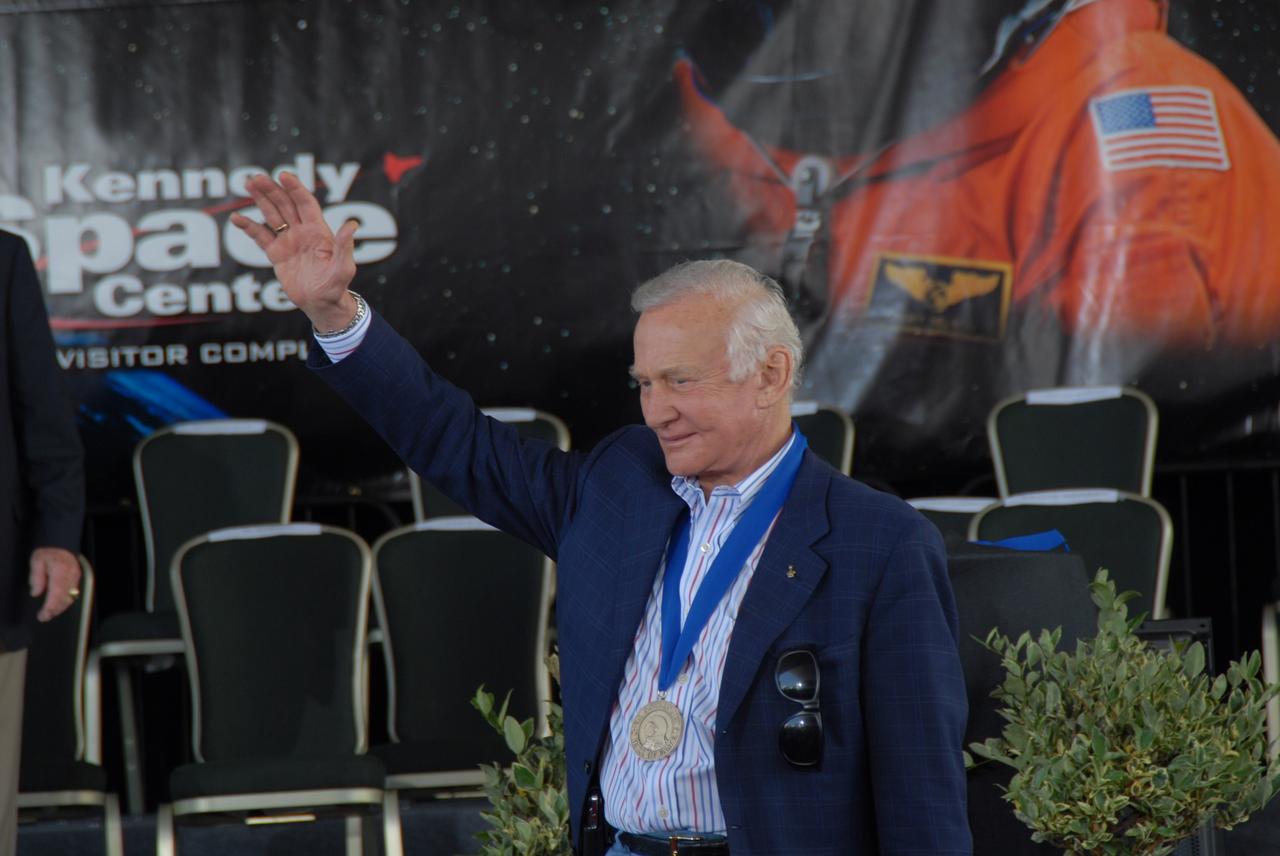
CAPE CANAVERAL, Fla. –– Hall of Fame astronaut Buzz Aldrin thanks the audience for its applause at the 2009 U.S. Astronaut Hall of Fame induction ceremony at NASA's Kennedy Space Center Visitor Complex in Florida. The ceremony took place May 2. More than 20 hall of fame astronauts attended, including Scott Carpenter, Walt Cunningham, Jim Lovell and Bob Crippen. Photo credit: NASA/Jim Grossmann
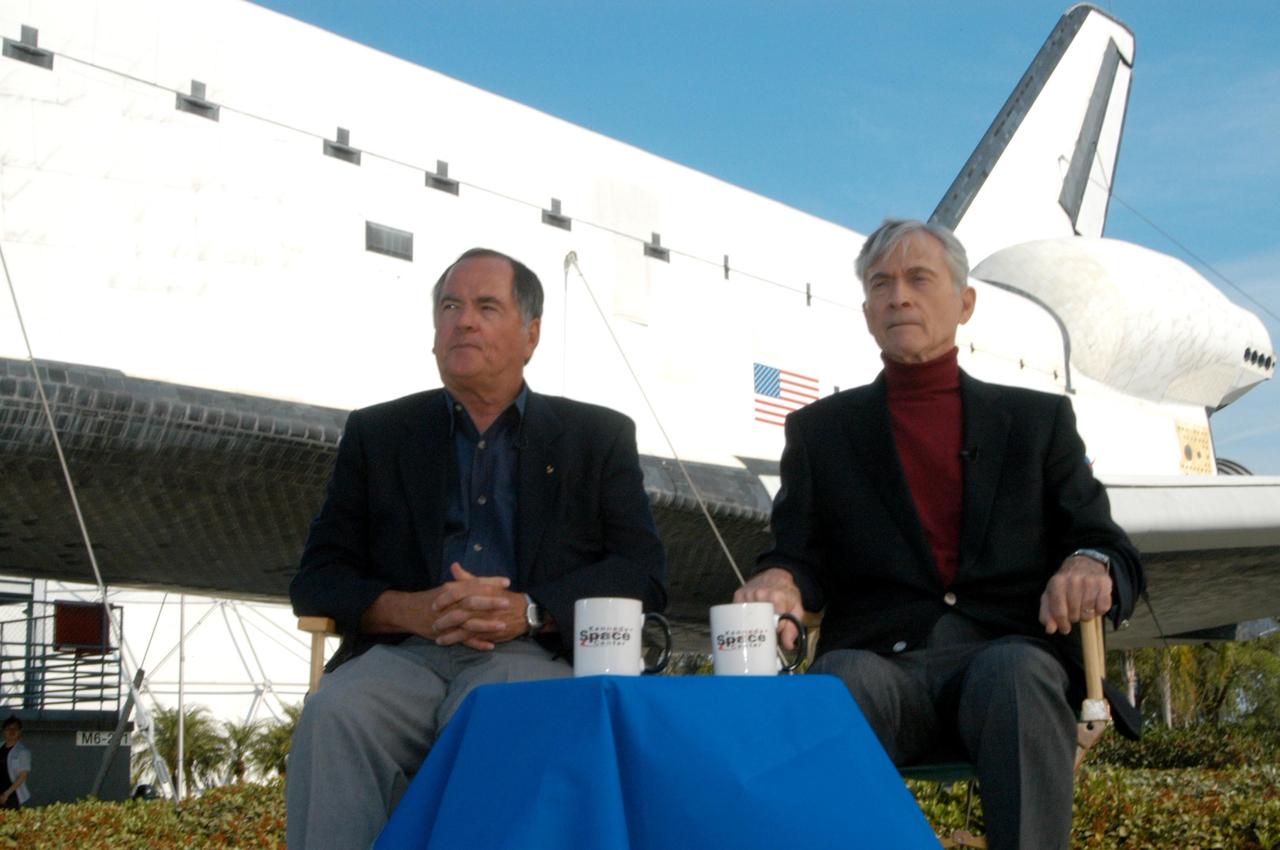
KENNEDY SPACE CENTER, FLA. - To honor the 25th anniversary of the first shuttle launch on April 12, 1981, STS-1 Pilot Bob Crippen (left) and Commander John Young (right) sit in front of a mockup of a space shuttle at the Kennedy Space Center Visitor Complex. During their appearance, they shared their experiences on that historic flight. Photo credit: NASA/George Shelton
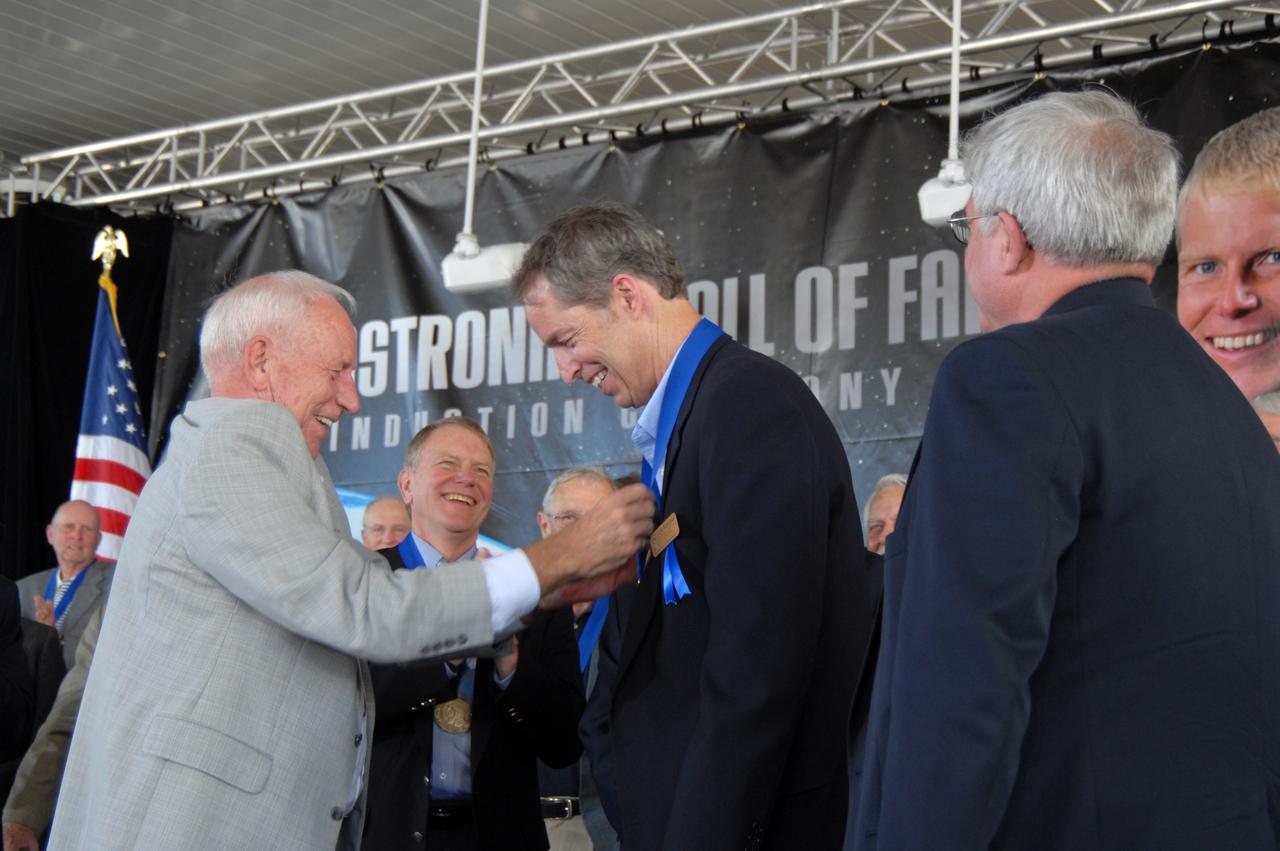
CAPE CANAVERAL, Fla. –– U.S. Astronaut Hall of Fame member Al Worden presents a medal to James Wetherbee as a new inductee into the hall of fame. The ceremony was held at NASA's Kennedy Space Center Visitor Complex in Florida. Wetherbee was commander of the longest-docked shuttle-Mir mission. The ceremony took place May 2. More than 20 hall of fame astronauts attended, including Scott Carpenter, Walt Cunningham, Jim Lovell and Bob Crippen. Photo credit: NASA/Jim Grossmann
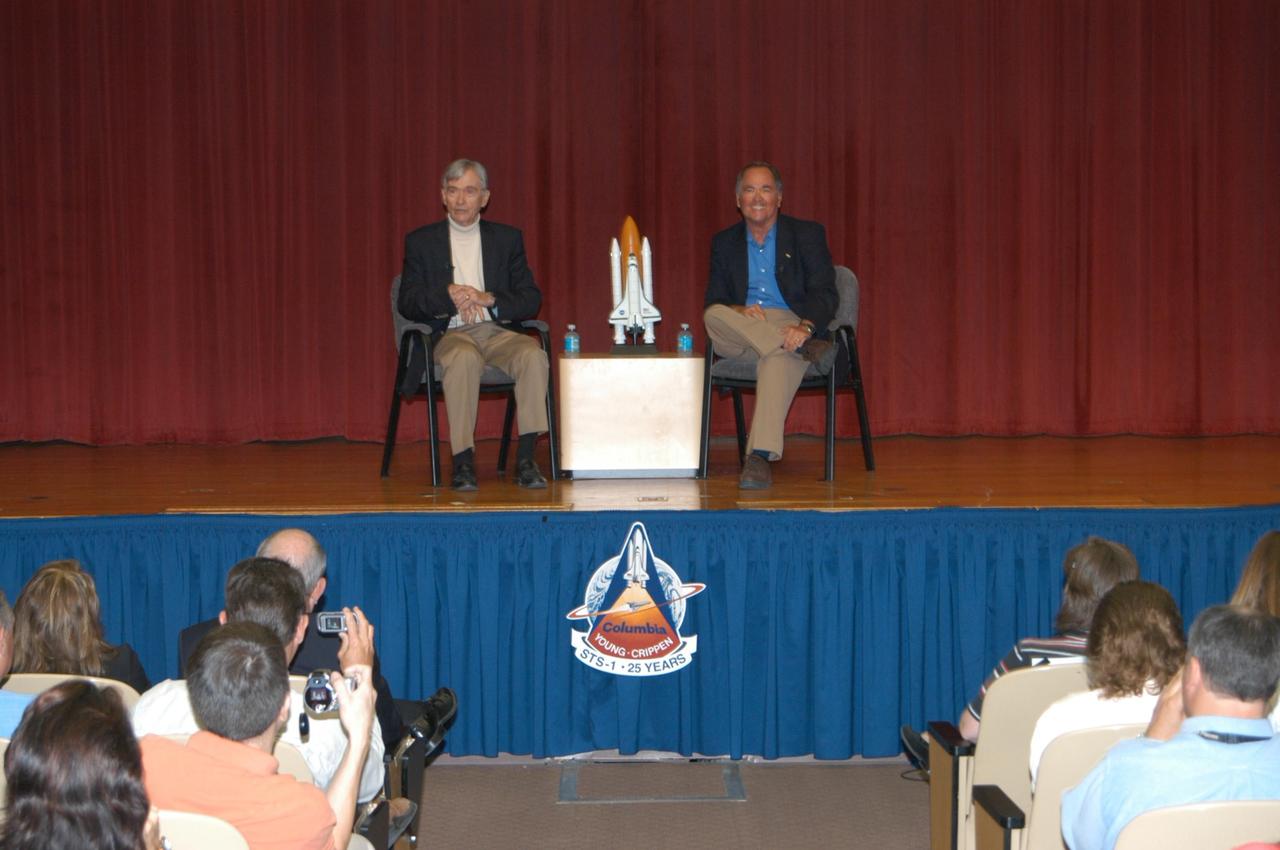
KENNEDY SPACE CENTER, FLA. - To honor the 25th anniversary of the first shuttle launch on April 12, 1981, STS-1 Commander John Young (seated, left) and Pilot Bob Crippen (right) were invited to share their experiences with employees during a special presentation at Kennedy. Kennedy's Deputy Director Bill Parsons (far left) introduced the two men. Here, Young relates his feelings about making that historic flight. Photo credit: NASA/George Shelton

KENNEDY SPACE CENTER, FLA. - Space Shuttle prime astronaut crew members Bob Crippen (left) and John Young (right) prepare for briefings on the use of the emergency pad escape system, known as the 'slidewire.' Both the prime and backup crews wore the spacesuits and other equipment they will wear during a mission. The slidewire system provides a quick and sure escape from the upper pad platforms in case of a serious emergency.
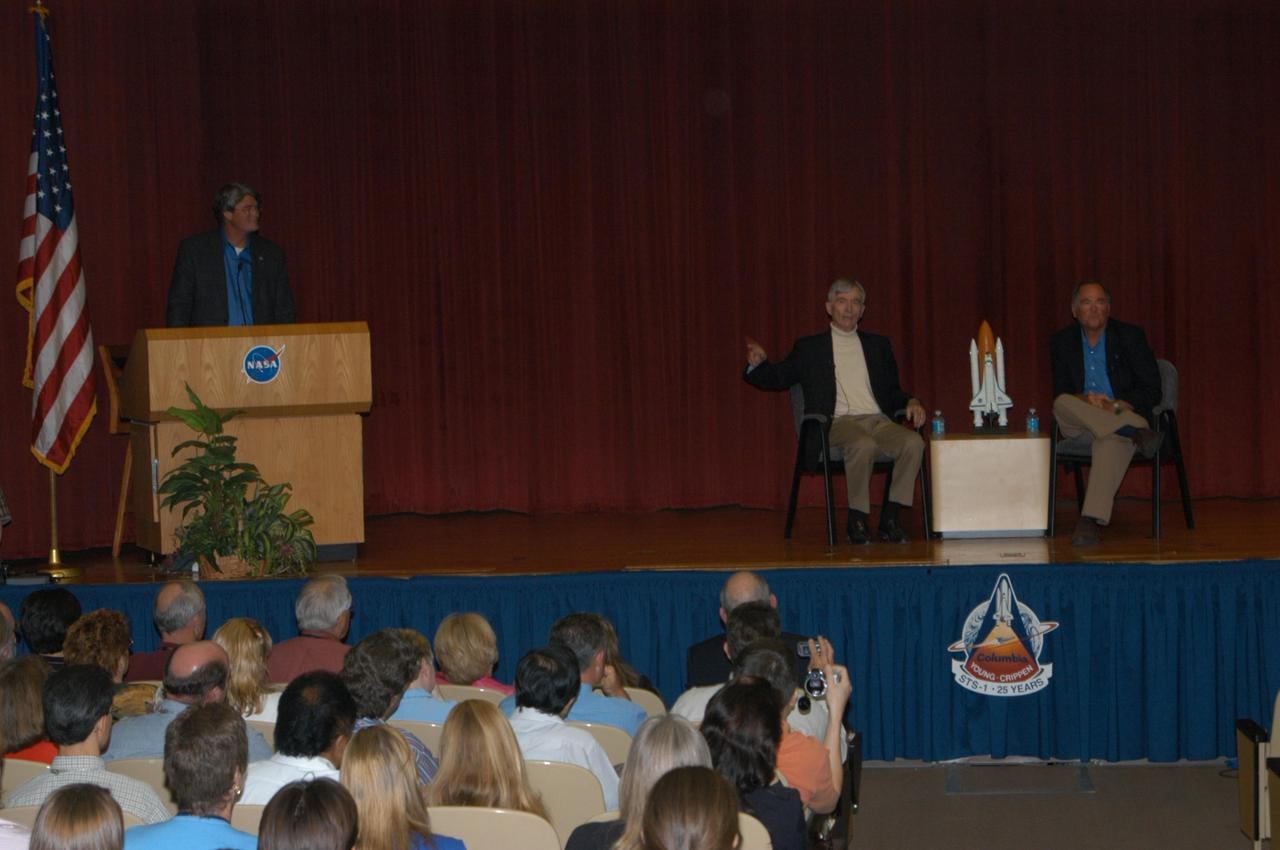
KENNEDY SPACE CENTER, FLA. - To honor the 25th anniversary of the first shuttle launch on April 12, 1981, STS-1 Commander John Young (left) and Pilot Bob Crippen (right) were invited to share their experiences with employees during a special presentation at Kennedy. Here, Young relates his feelings about making that historic flight. Photo credit: NASA/George Shelton
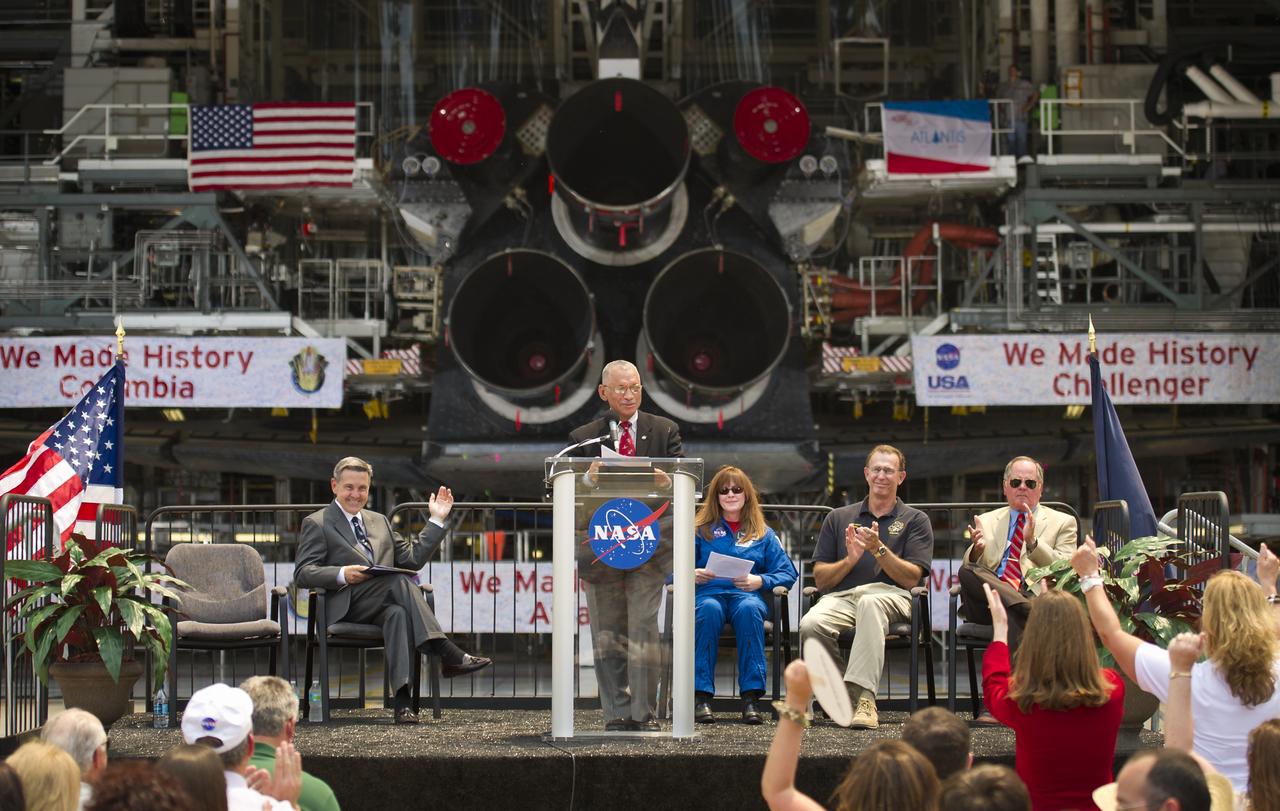
NASA Administrator Charles Bolden announces where four space shuttle orbiters will be permanently displayed at the conclusion of the Space Shuttle Program during an event held at one of the Orbiter Processing Facilities, Tuesday, April 12, 2011, at Kennedy Space Center in Cape Canaveral, Fla. The four orbiters, Enterprise, which currently is on display at the Smithsonian's Steven F. Udvar-Hazy Center near Washington Dulles International Airport, will move to the Intrepid Sea, Air & Space Museum in New York, Discovery will move to Udvar-Hazy, Endeavour will be displayed at the California Science Center in Los Angeles and Atlantis, in background, will be displayed at the Kennedy Space Center Visitor’s Complex. Photo Credit: (NASA/Bill Ingalls)
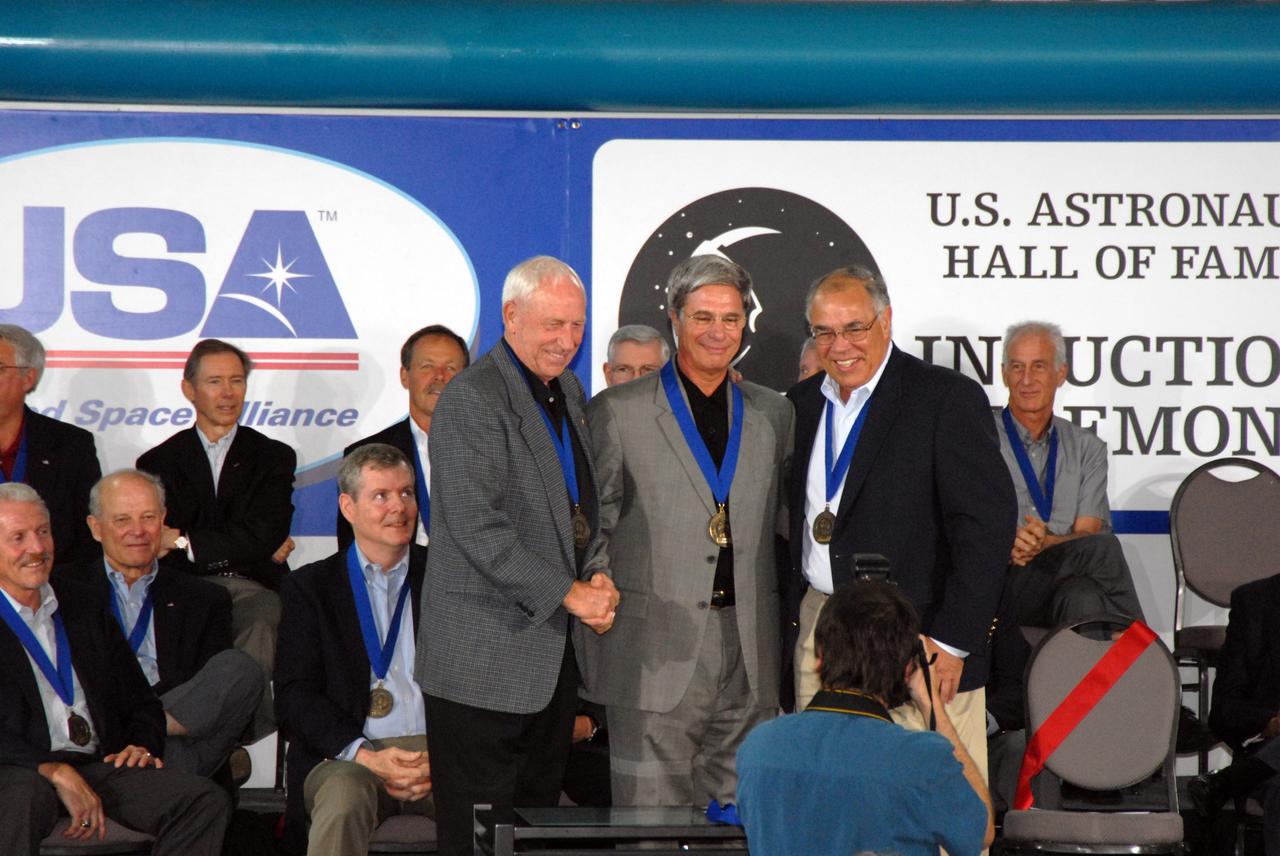
CAPE CANAVERAL, Fla. -- Former astronaut John Blaha (center) is inducted into the U.S. Astronaut Hall of Fame May 3 at NASA's Kennedy Space Center. Presenting the medal are former inductees Al Worden (left) and Fred Gregory (right). Other inductees were Loren Shriver; Bryan O'Connor, NASA's chief of Safety and Mission Assurance at NASA Headquarters in Washington; and Bob Cabana, center director of NASA's Stennis Space Center in Mississippi. Other former astronauts attending included Scott Carpenter, John Young, Bob Crippen, and Walt Cunningham. The U.S. Astronaut Hall of Fame is operated by Kennedy Space Center Visitor Complex on behalf of NASA. CNN correspondent John Zarrella hosted the event.
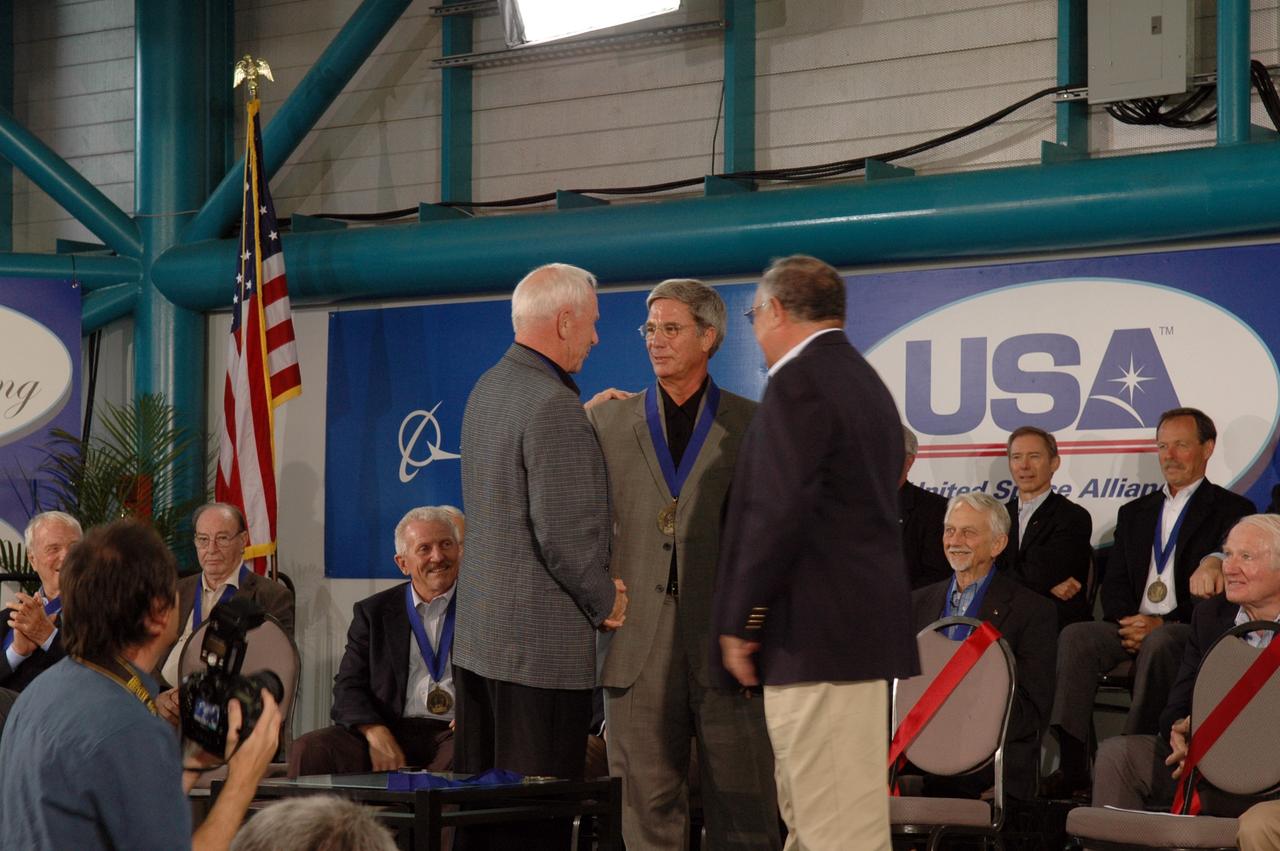
CAPE CANAVERAL, Fla. -- Former astronaut John Blaha (center) receives congratulations on his induction into the U.S. Astronaut Hall of Fame May 3 at NASA's Kennedy Space Center from former inductees Al Worden (left) and Fred Gregory (right). Other inductees were Loren Shriver; Bryan O'Connor, NASA's chief of Safety and Mission Assurance at NASA Headquarters in Washington; and Bob Cabana, center director of NASA's Stennis Space Center in Mississippi. Other former astronauts attending included Scott Carpenter, John Young, Bob Crippen, and Walt Cunningham. The U.S. Astronaut Hall of Fame is operated by Kennedy Space Center Visitor Complex on behalf of NASA. CNN correspondent John Zarrella hosted the event.
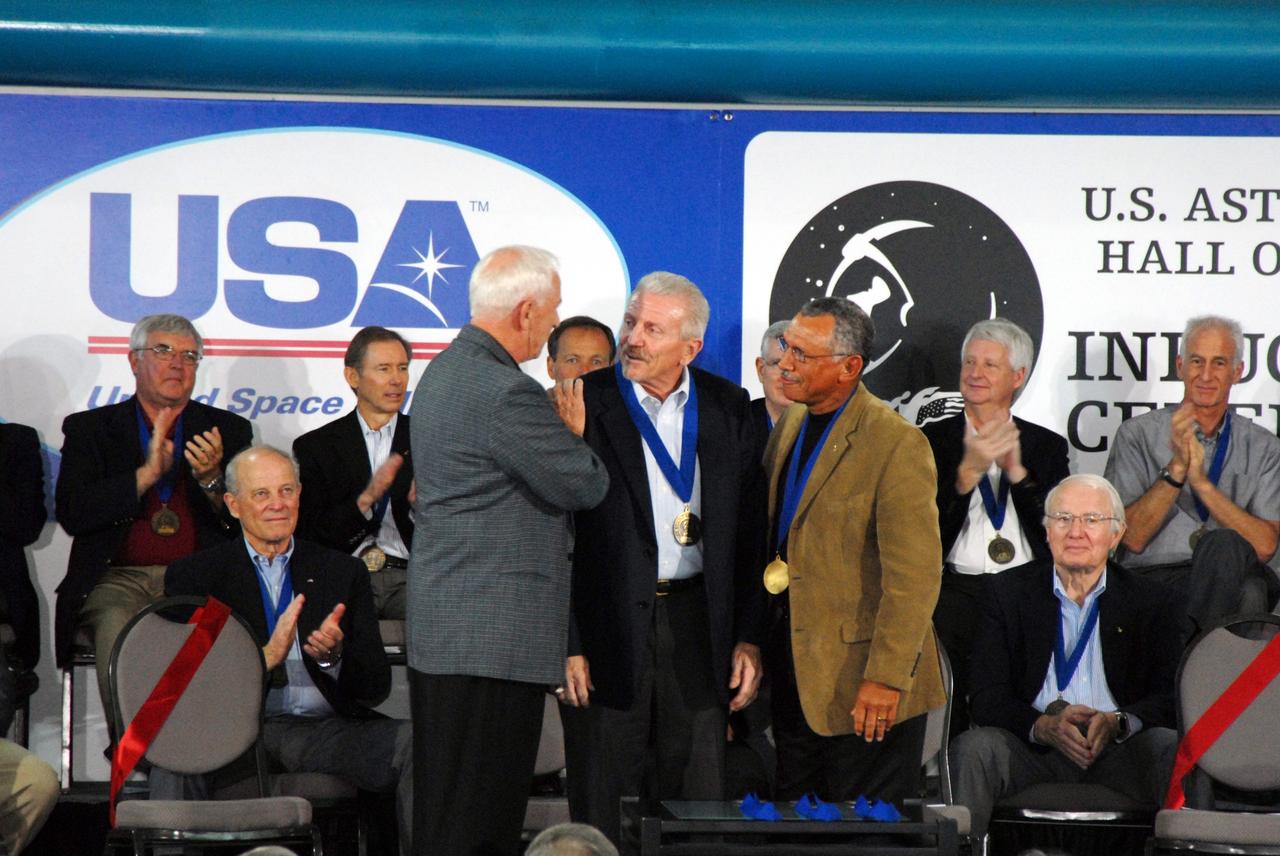
CAPE CANAVERAL, Fla. -- Former astronaut Loren Shriver (center) is inducted into the U.S. Astronaut Hall of Fame May 3 at NASA's Kennedy Space Center. Presenting the medal are former inductees Al Worden (left) and Charles Bolden (right). Other inductees were John Blaha; Bryan O'Connor, NASA's chief of Safety and Mission Assurance at NASA Headquarters in Washington; and Bob Cabana, center director of NASA's Stennis Space Center in Mississippi. Other former astronauts attending included Scott Carpenter, John Young, Bob Crippen, and Walt Cunningham. The U.S. Astronaut Hall of Fame is operated by Kennedy Space Center Visitor Complex on behalf of NASA. CNN correspondent John Zarrella hosted the event.
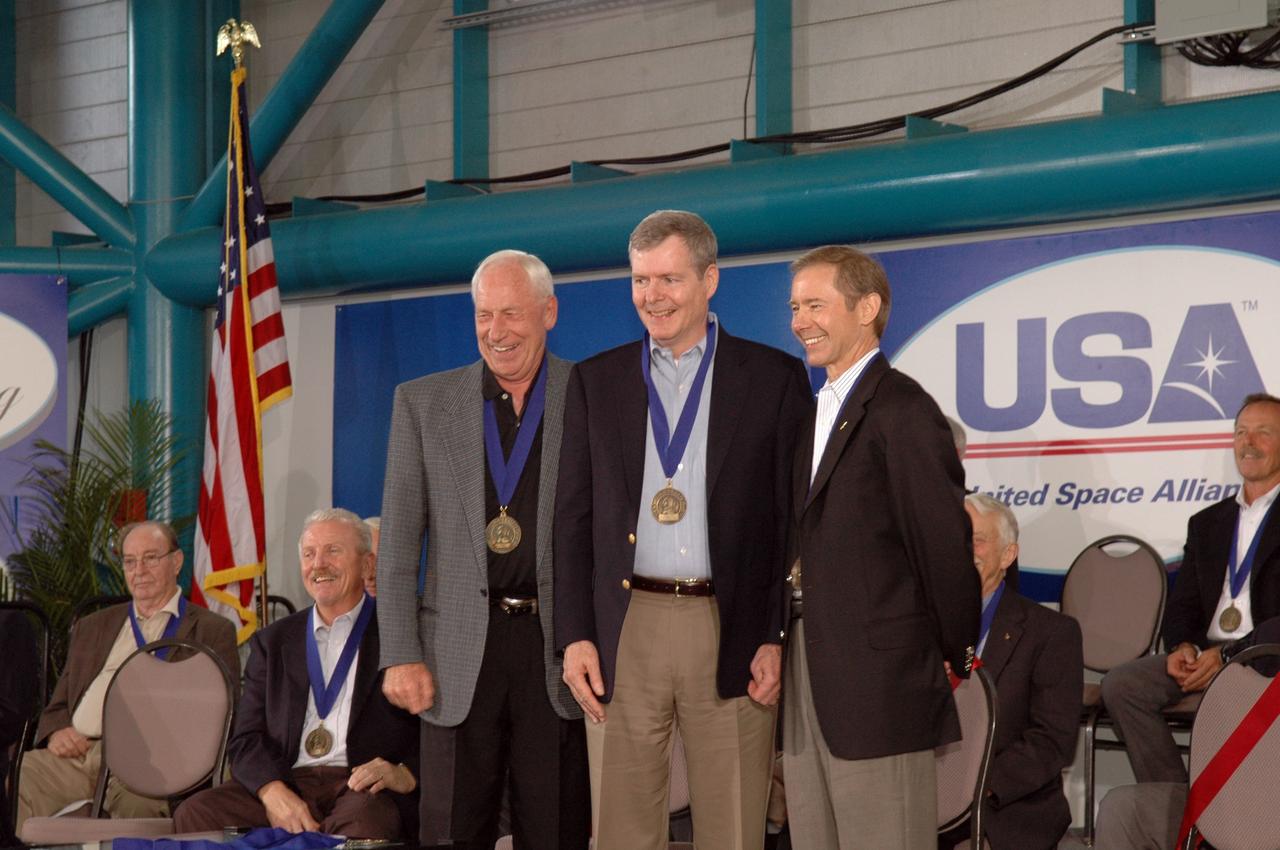
CAPE CANAVERAL, Fla. -- Former astronaut and NASA's chief of Safety and Mission Assurance at NASA Headquarters in Washington, Bryan O'Connor (center) is inducted into the U.S. Astronaut Hall of Fame May 3 at NASA's Kennedy Space Center. Presenting the medal are former inductees Al Worden (left) and Brewster Shaw (right). Other inductees were John Blaha, Loren Shriver; and Bob Cabana, center director of NASA's Stennis Space Center in Mississippi. Other former astronauts attending included Scott Carpenter, John Young, Bob Crippen, and Walt Cunningham. The U.S. Astronaut Hall of Fame is operated by Kennedy Space Center Visitor Complex on behalf of NASA. CNN correspondent John Zarrella hosted the event.
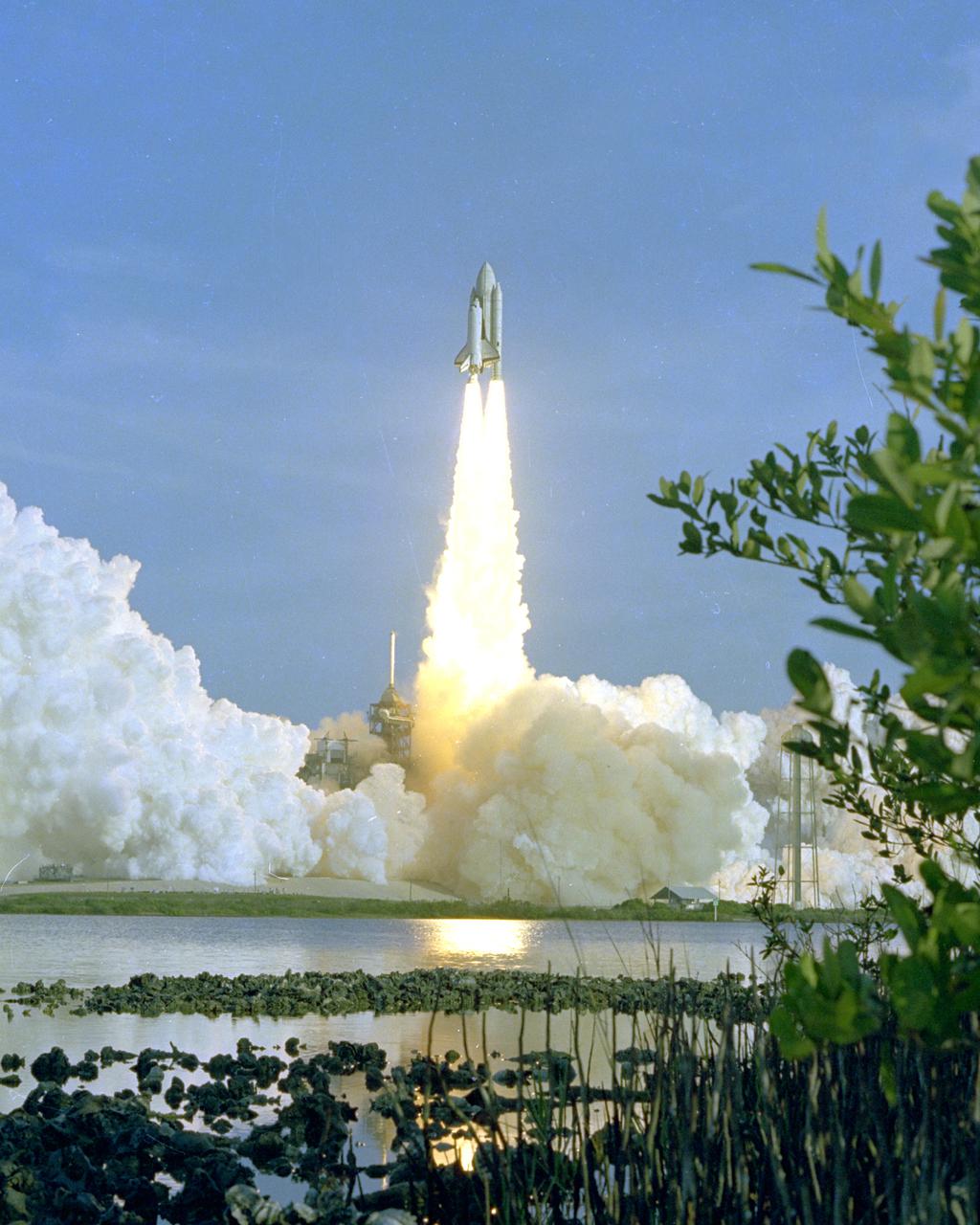
KENNEDY SPACE CENTER, FLA. - The Space Shuttle Columbia rises off Pad 39A a few seconds past 7 a.m. on April 12, 1981 — the dawn of a new age in spaceflight. Onboard, astronauts John Young and Bob Crippen ride toward orbit following a successful liftoff of the first Space Shuttle mission. Mission plans call for the Columbia to remain in orbit for about 54 hours, during which astronauts Young and Criipen will perform a series of checkout activities designed to test the Space Shuttle's systems in space for the first time. The Columbia is scheduled to glide to an airplane-like landing at Edwards Air Force Base, Calif.
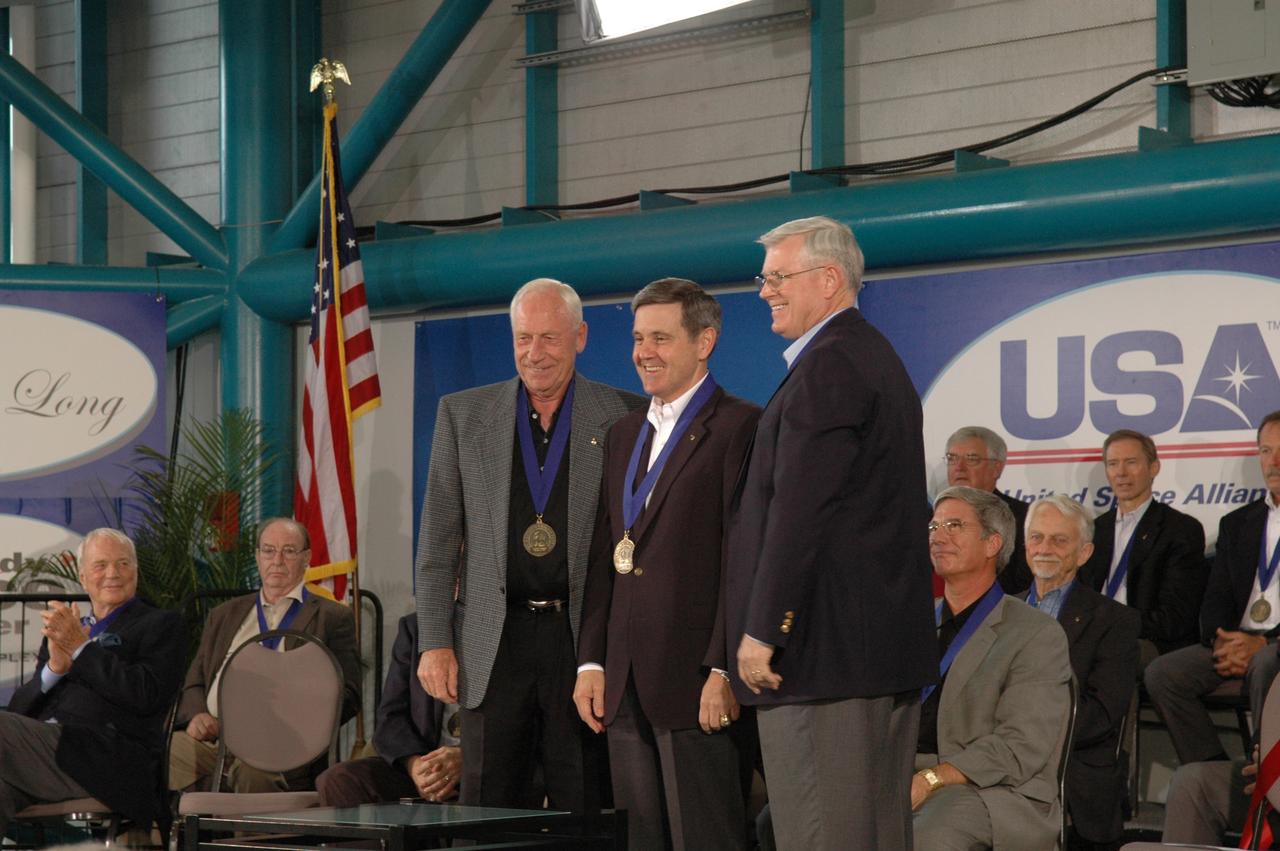
CAPE CANAVERAL, Fla. -- Former astronaut Robert Cabana (center) receives congratulations on his induction into the U.S. Astronaut Hall of Fame from former inductees Al Worden (left) and Michael Coats (right). Other inductees were John Blaha, Loren Shriver; and Bryan O'Connor, NASA's chief of Safety and Mission Assurance at NASA Headquarters in Washington. Other former astronauts attending included Scott Carpenter, John Young, Bob Crippen, and Walt Cunningham. The U.S. Astronaut Hall of Fame is operated by Kennedy Space Center Visitor Complex on behalf of NASA. CNN correspondent John Zarrella hosted the event.
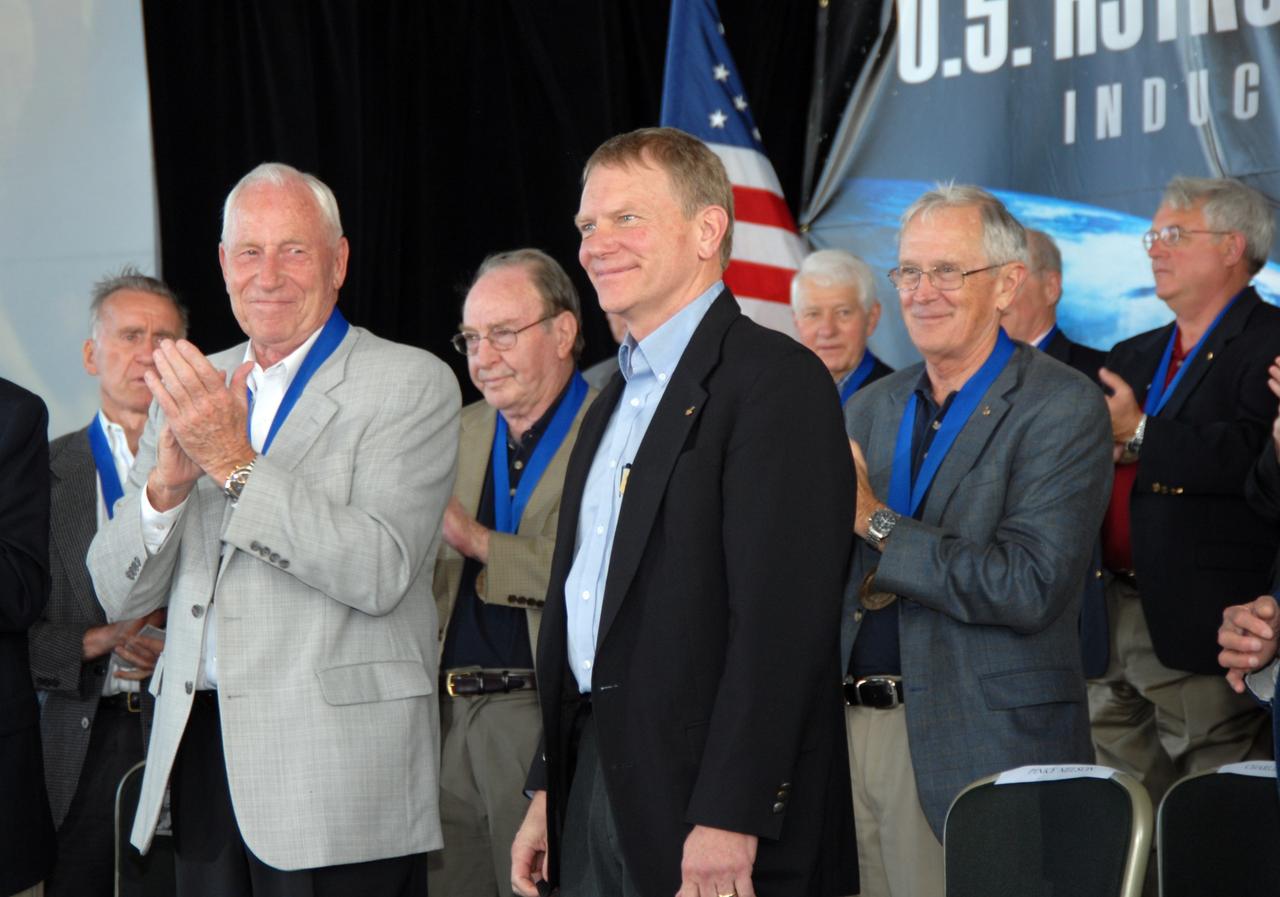
CAPE CANAVERAL, Fla. –– George "Pinky" Nelson (right) is introduced as one of the new members of the U.S. Astronaut Hall of Fame at NASA's Kennedy Space Center Visitor Complex in Florida. At left is hall of fame member Al Worden. Nelson was one of only four space shuttle astronauts to fly untethered in space using NASA's Manned Maneuvering Unit. The ceremony took place May 2. More than 20 hall of fame astronauts attended, including Scott Carpenter, Walt Cunningham, Jim Lovell and Bob Crippen. Photo credit: NASA/Jim Grossmann
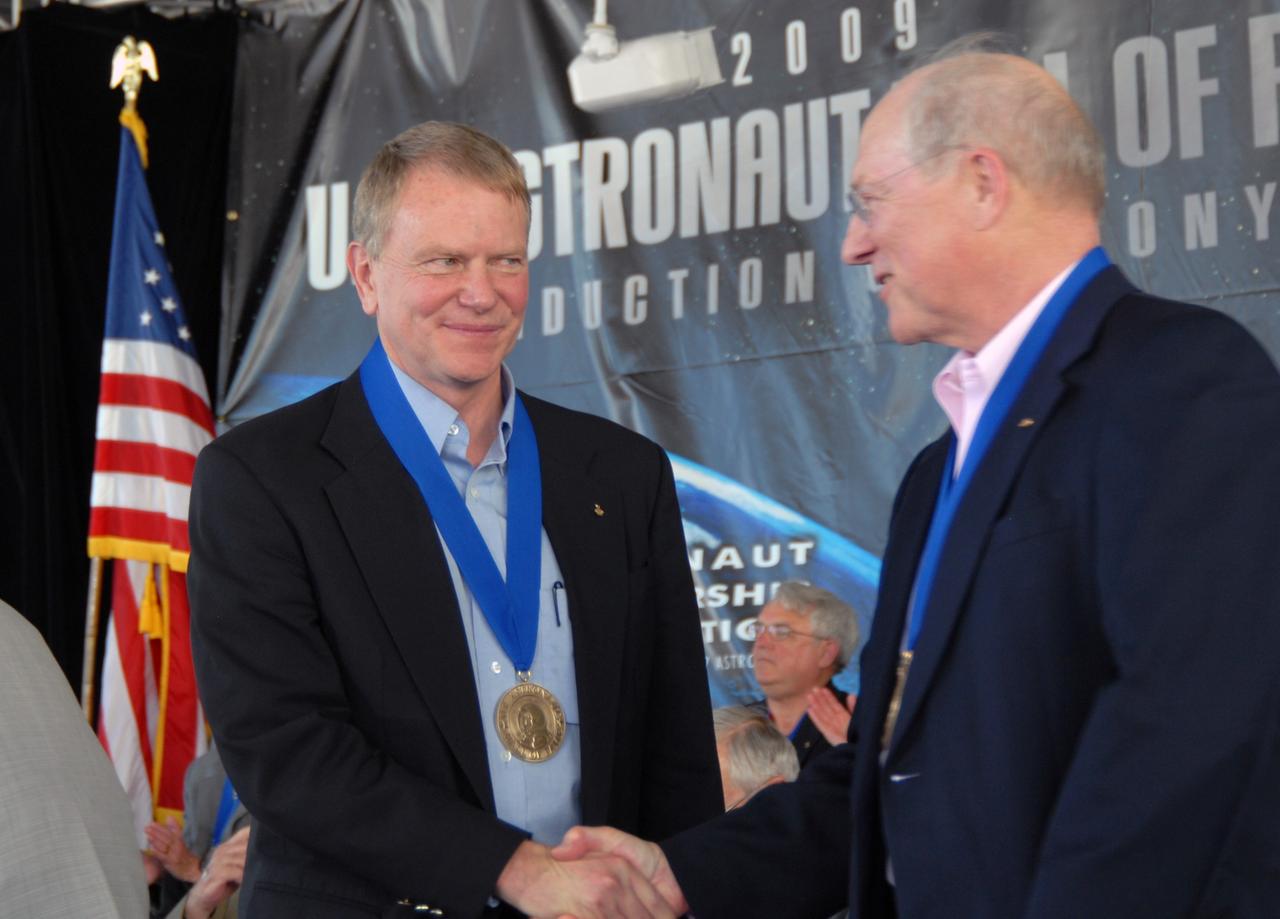
CAPE CANAVERAL, Fla. –– Hall of Fame astronaut Rick Hauk (right) welcomes one of the new members, astronaut George "Pinky" Nelson, into the U.S. Astronaut Hall of Fame. The ceremony was held at NASA's Kennedy Space Center Visitor Complex in Florida. Nelson was one of only six space shuttle astronauts to fly untethered in space using NASA's Manned Maneuvering Unit. The ceremony took place May 2. More than 20 hall of fame astronauts attended, including Scott Carpenter, Walt Cunningham, Jim Lovell and Bob Crippen. Photo credit: NASA/Jim Grossmann
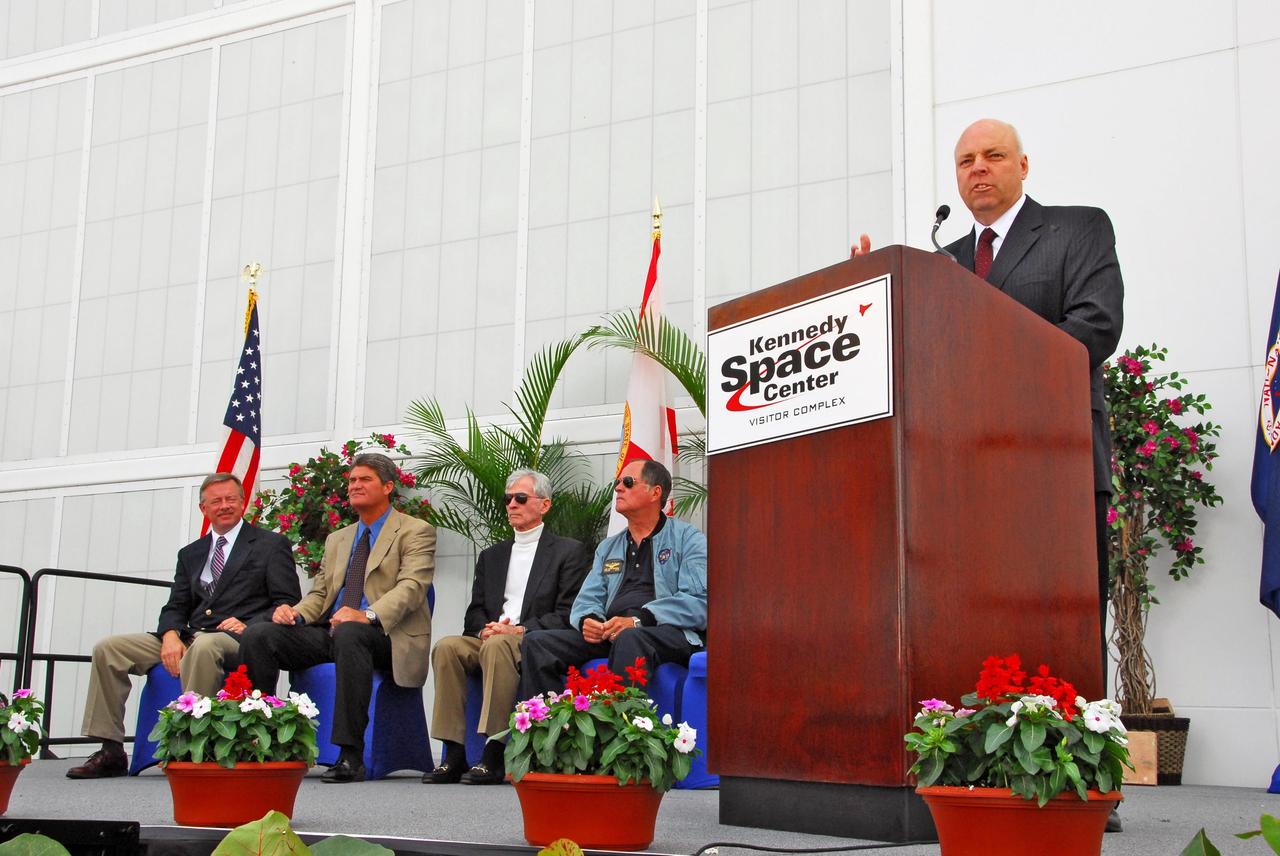
KENNEDY SPACE CENTER, FLA. -- NASA, Kennedy Space Center and State of Florida dignitaries helped launch the opening of the newest attraction at Kennedy Space Center's Visitor Complex, the Shuttle Launch Experience. At the dais is Dan LeBlanc, chief operating officer of the KSC Visitor Complex. Seated on stage are (from left) Lt. Governor of Florida Jeff Kottkamp, Center Director Bill Parsons, and former astronauts John Young and Bob Crippen. The attraction includes a simulated launch with the sights, sounds and sensations of launching into space. Find out more about the Visitor Complex and the Shuttle Launch Experience at <b>http://www.kennedyspacecenter.com/visitKSC/attractions/index.asp</b>. Photo credit: NASA/George Shelton
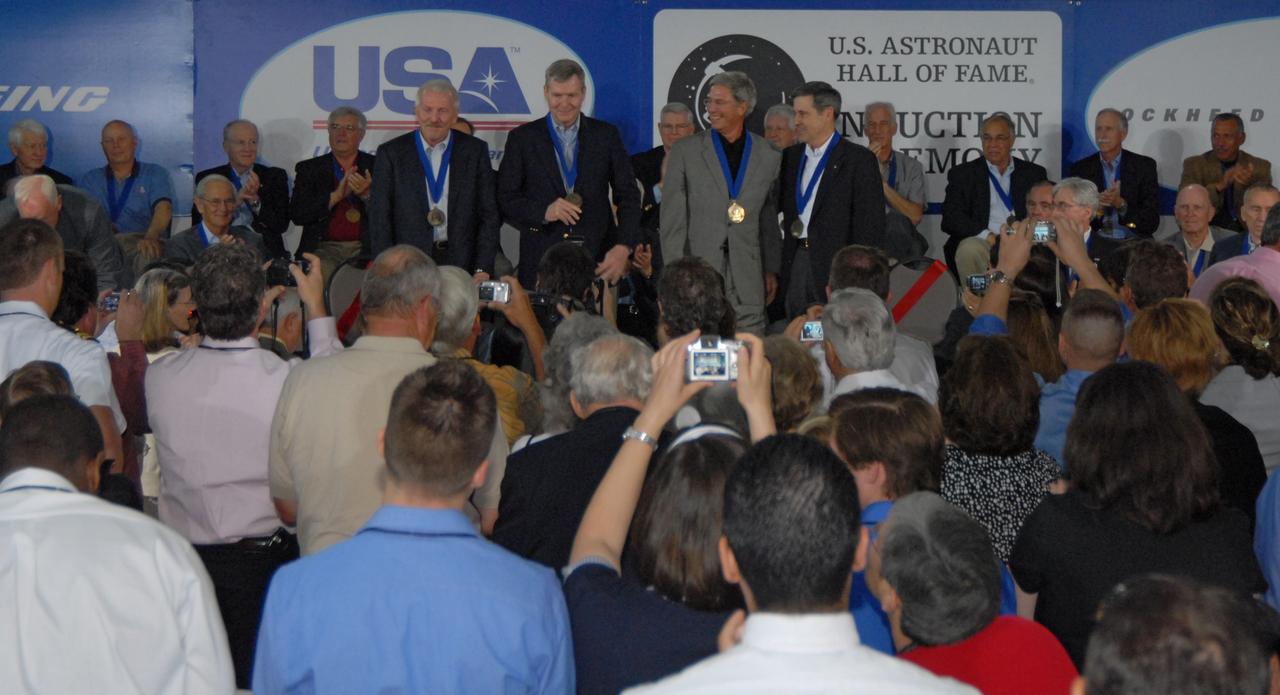
CAPE CANAVERAL, Fla. -- The new inductees into the U.S. Astronaut Hall of Fame stand for an ovation during the ceremony May 3 at NASA's Kennedy Space Center. From left are Loren Shriver; Bryan O'Connor, NASA's chief of Safety and Mission Assurance at NASA Headquarters in Washington; John Blaha; and Robert Cabana, center director of NASA's Stennis Space Center in Mississippi. Other former astronauts attending included Scott Carpenter, John Young, Bob Crippen, and Walt Cunningham. The U.S. Astronaut Hall of Fame is operated by Kennedy Space Center Visitor Complex on behalf of NASA. CNN correspondent John Zarrella hosted the event.
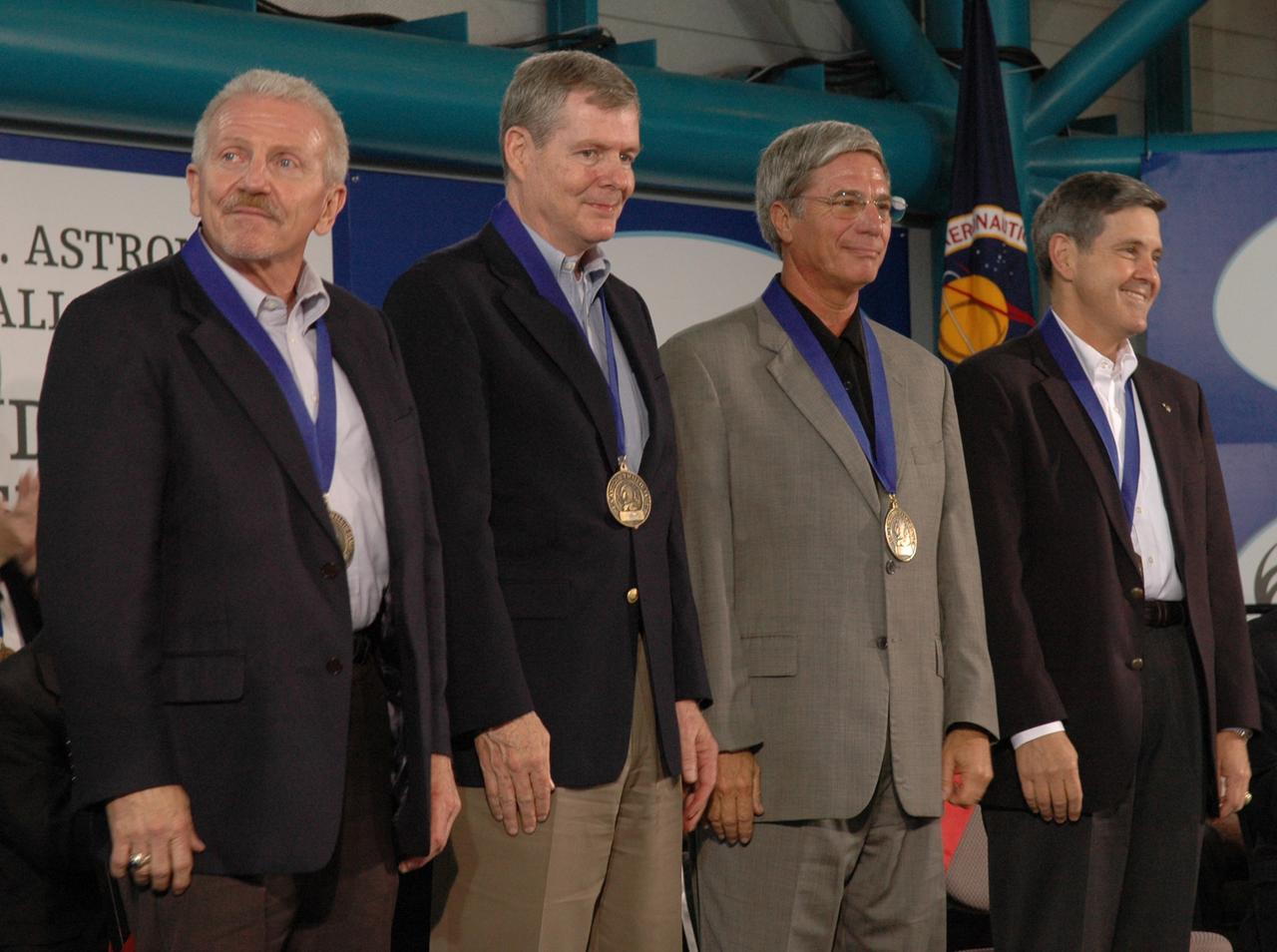
CAPE CANAVERAL, Fla. -- The new inductees into the U.S. Astronaut Hall of Fame step forward on stage for photographs following their induction. From left are Loren Shriver; Bryan O'Connor, NASA's chief of Safety and Mission Assurance at NASA Headquarters in Washington; John Blaha; and Robert Cabana, center director of NASA's Stennis Space Center in Mississippi. The ceremony was held May 3 at NASA's Kennedy Space Center. Other former astronauts attending included Scott Carpenter, John Young, Bob Crippen, and Walt Cunningham. The U.S. Astronaut Hall of Fame is operated by Kennedy Space Center Visitor Complex on behalf of NASA. CNN correspondent John Zarrella hosted the event.
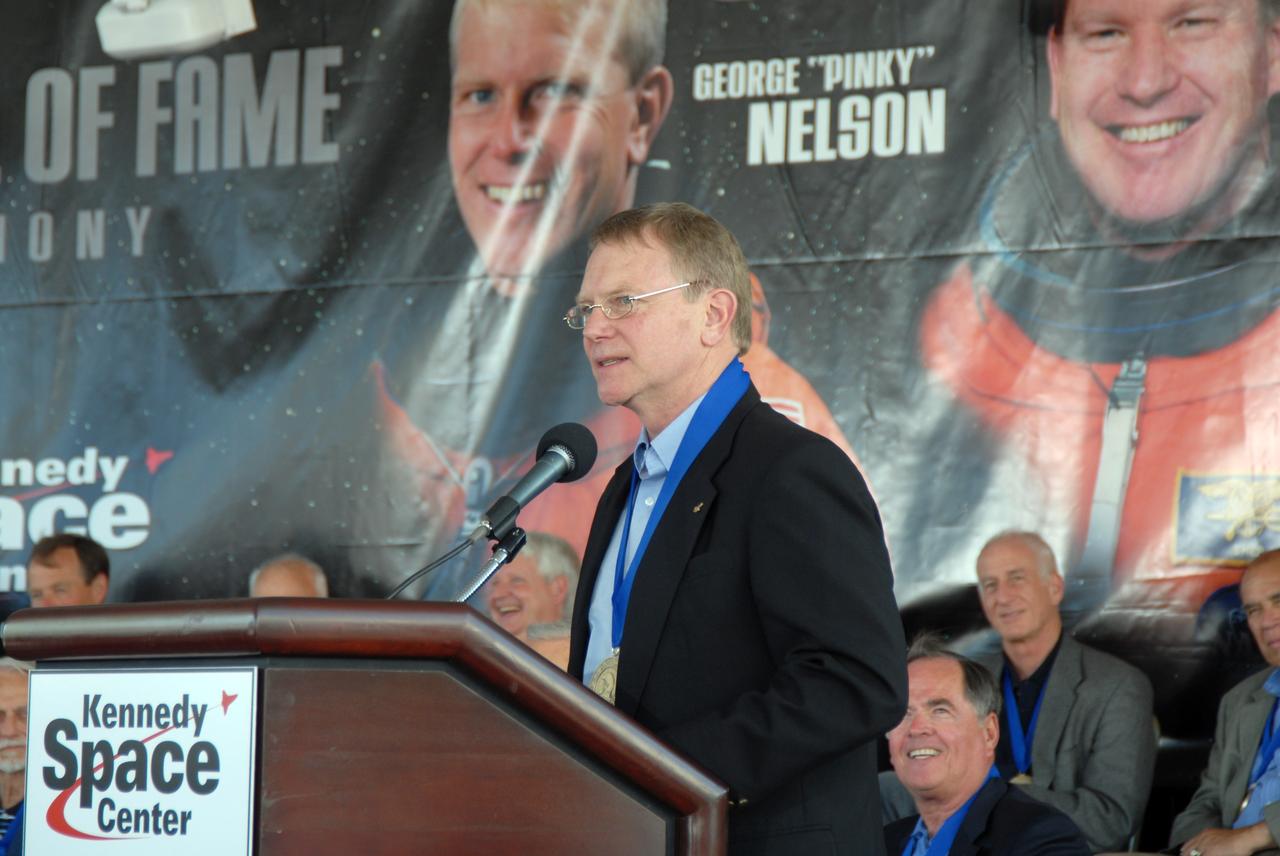
CAPE CANAVERAL, Fla. –– New inductee astronaut George "Pinky" Nelson addresses the spectators at the U.S. Astronaut Hall of Fame ceremony held at NASA's Kennedy Space Center Visitor Complex in Florida. Nelson was one of only six space shuttle astronauts to fly untethered in space using NASA's Manned Maneuvering Unit. The ceremony took place May 2. More than 20 hall of fame astronauts attended, including Scott Carpenter, Walt Cunningham, Jim Lovell and Bob Crippen. Photo credit: NASA/Jim Grossmann
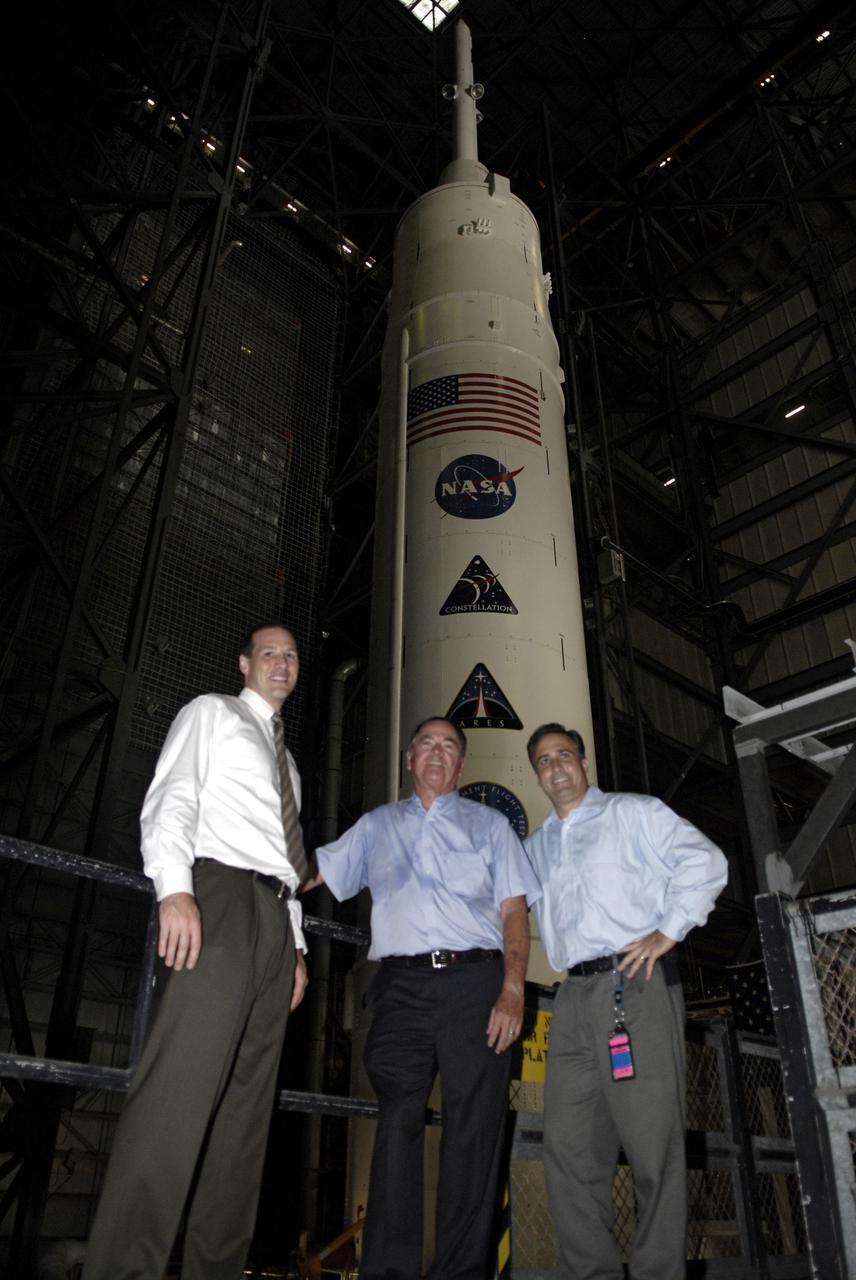
CAPE CANAVERAL, Fla. – – Inside NASA Kennedy Space Center's Vehicle Assembly Building Bay 3, Ares I-X mission manager Bob Ess, former astronaut Robert Crippen and mission team member Trent Smith stand in front of the Ares I-X rocket. Part of the Constellation Program, the Ares I-X is the test vehicle for the Ares I, which is the essential core of a space transportation system that eventually will carry crewed missions back to the moon, on to Mars and out into the solar system . The Ares I-X flight test is targeted for Oct. 27. Photo credit: NASA/Kim Shiflett
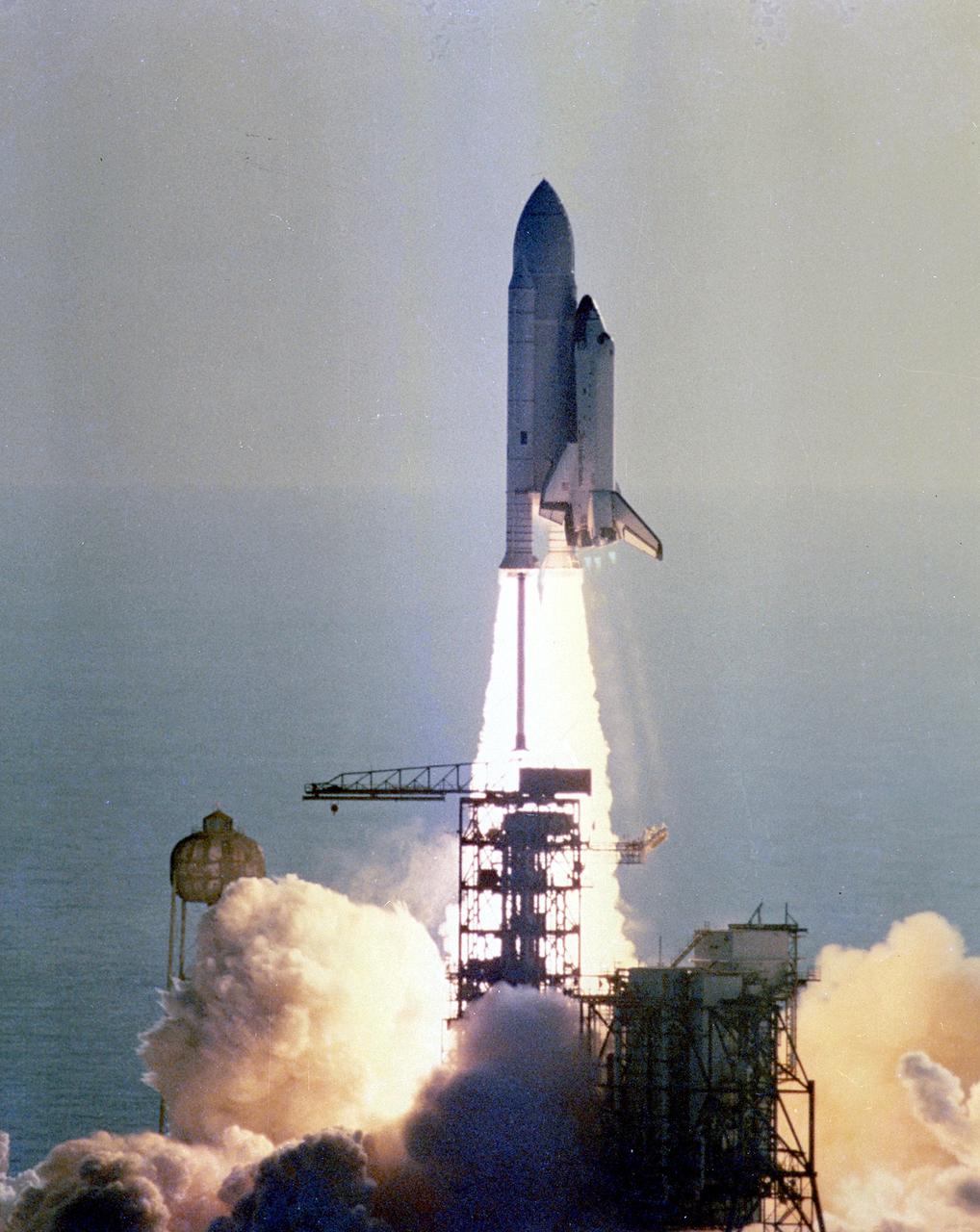
KENNEDY SPACE CENTER, FLA. -- The Space Shuttle Columbia rises off Pad 39A a few seconds past 7 a.m. on April 12, 1981 — the dawn of a new age in spaceflight. Onboard, astronauts John Young and Bob Crippen ride toward orbit following a successful liftoff of the first Space Shuttle mission. Mission plans call for the Columbia to remain in orbit for about 54 hours, during which astronauts Young and Criipen will perform a series of checkout activities designed to test the Space Shuttle's systems in space for the first time. The Columbia is scheduled to glide to an airplane-like landing at Edwards Air Force Base, Calif.
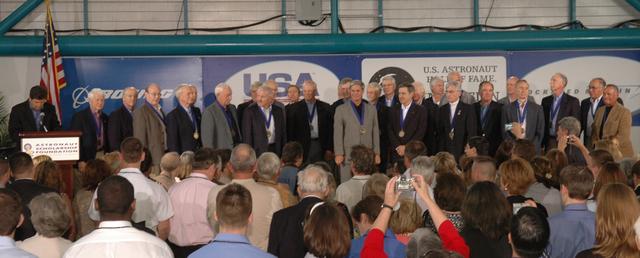
CAPE CANAVERAL, Fla. -- Members of the U.S. Astronaut Hall of Fame stand for an ovation following the induction of the newest members (at center): Loren Shriver; Bryan O'Connor, NASA's chief of Safety and Mission Assurance at NASA Headquarters in Washington; John Blaha; and Robert Cabana, center director of NASA's Stennis Space Center in Mississippi. The ceremony was held May 3 at NASA's Kennedy Space Center. Other former astronauts attending included Scott Carpenter, John Young, Bob Crippen, and Walt Cunningham. The U.S. Astronaut Hall of Fame is operated by Kennedy Space Center Visitor Complex on behalf of NASA. CNN correspondent John Zarrella hosted the event.
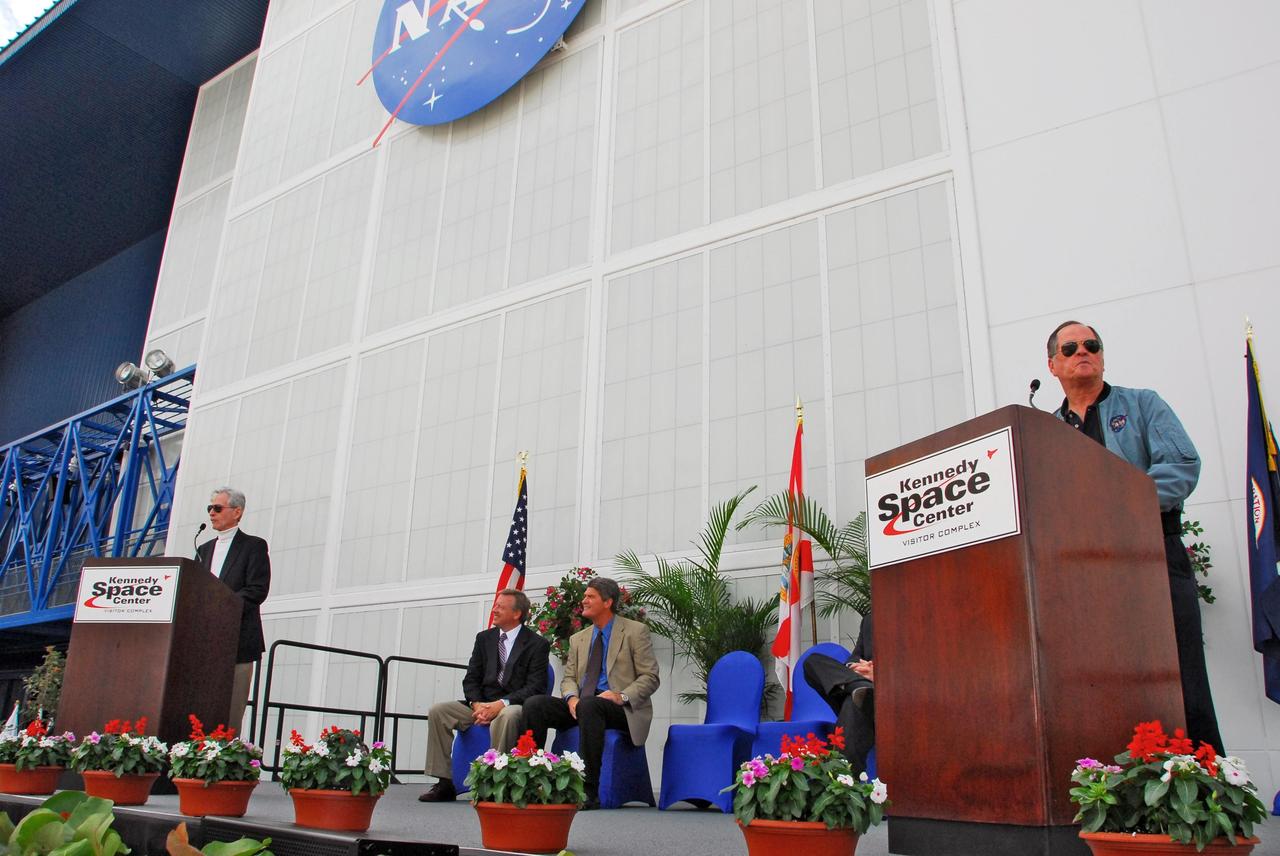
KENNEDY SPACE CENTER, FLA. -- NASA, Kennedy Space Center and State of Florida dignitaries helped launch the opening of the newest attraction at Kennedy Space Center's Visitor Complex the Shuttle Launch Experience. Former astronauts John Young (left) and Bob Crippen (right) share their impressions with the audience. Seated on stage are Lt. Governor of Florida Jeff Kottkamp and Center Director Bill Parsons. The attraction includes a simulated launch with the sights, sounds and sensations of launching into space. Find out more about the Visitor Complex and the Shuttle Launch Experience at <b>http://www.kennedyspacecenter.com/visitKSC/attractions/index.asp</b>. Photo credit: NASA/George Shelton
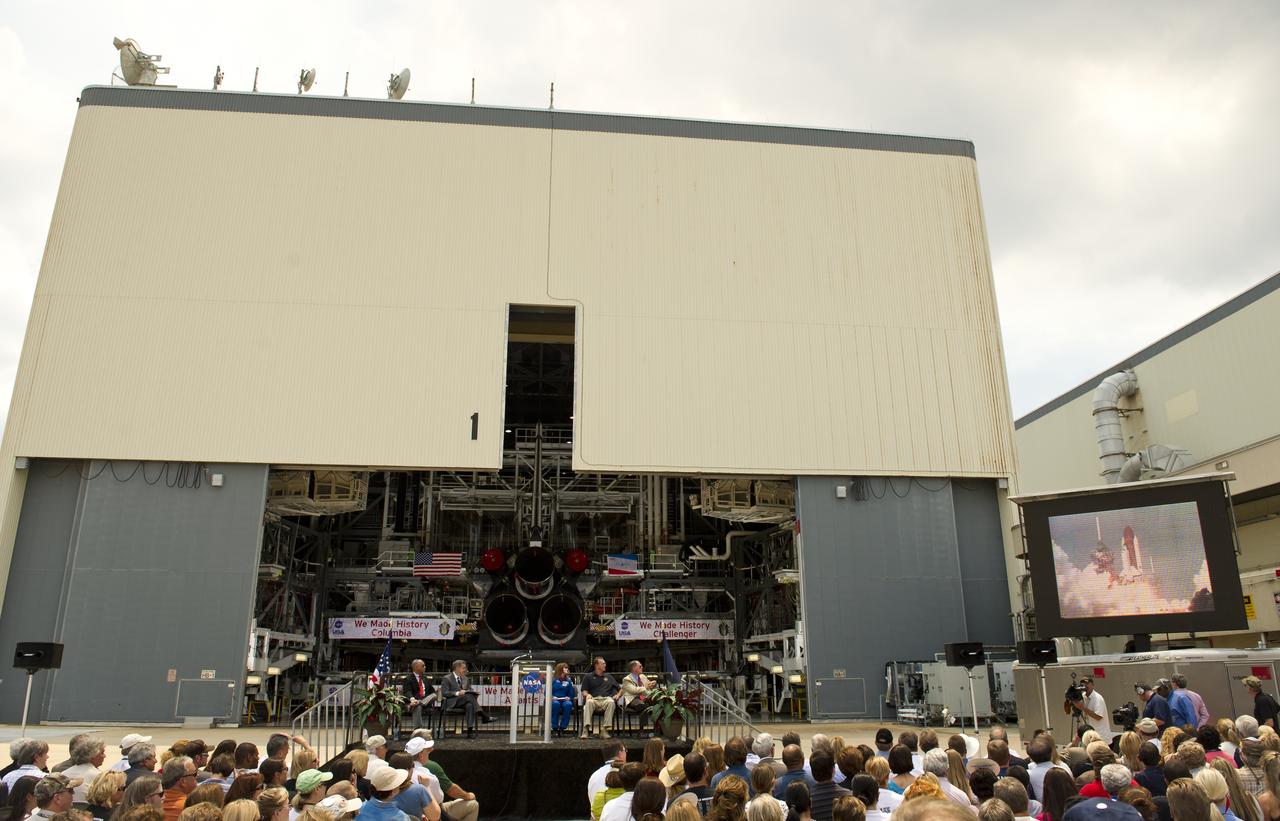
A video highlighting the 30 years of space flight and more than 130 missions of the space shuttle transportation system is shown at an event where NASA Administrator Charles Bolden announced where the four space shuttle orbiters will be permanently displayed, Tuesday, April 12, 2011, at Kennedy Space Center in Cape Canaveral, Fla. The four orbiters, Enterprise, which currently is on display at the Smithsonian's Steven F. Udvar-Hazy Center near Washington Dulles International Airport, will move to the Intrepid Sea, Air & Space Museum in New York, Discovery will move to Udvar-Hazy, Endeavour will be displayed at the California Science Center in Los Angeles and Atlantis, in background, will be displayed at the Kennedy Space Center Visitor’s Complex. Photo Credit: (NASA/Bill Ingalls)
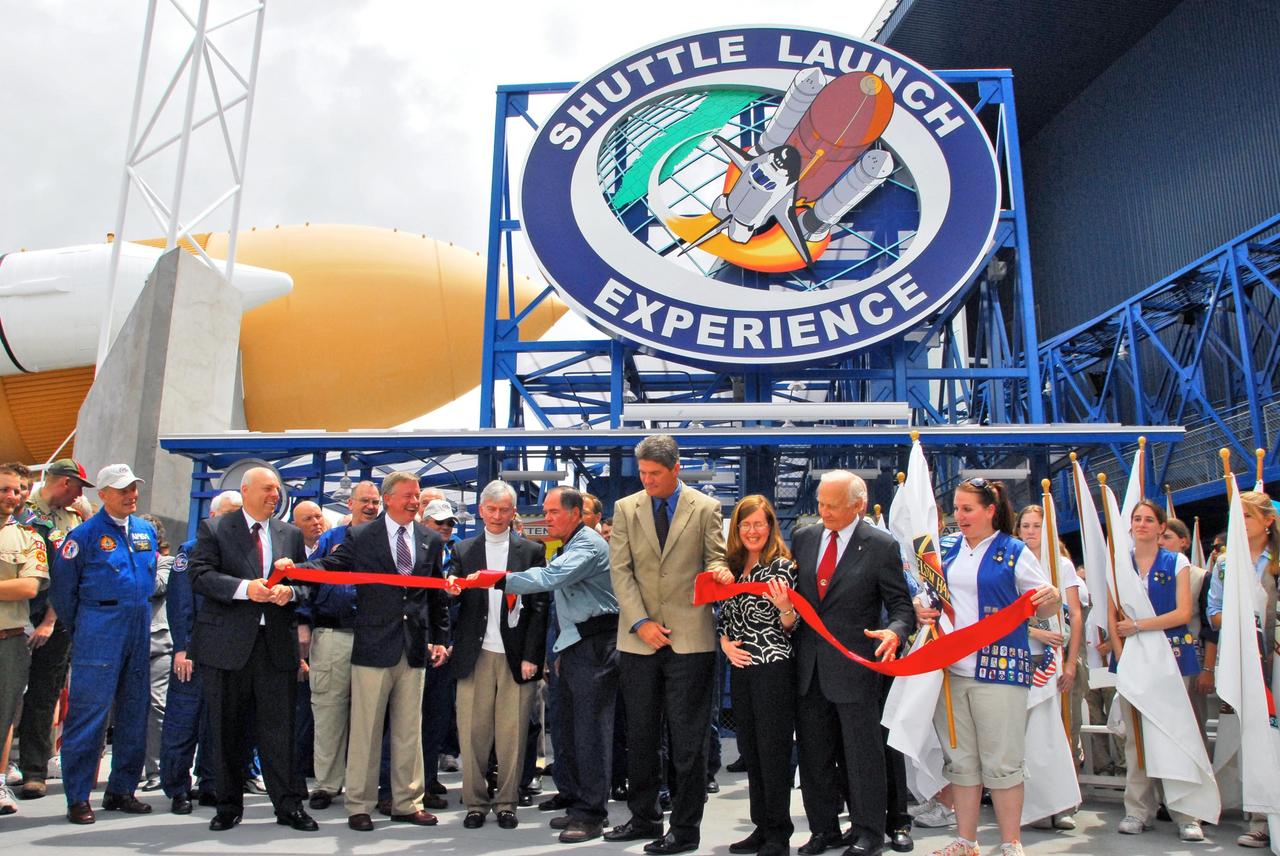
KENNEDY SPACE CENTER, FLA. -- NASA, Kennedy Space Center and State of Florida dignitaries helped launch the opening of the newest attraction at Kennedy Space Center's Visitor Complex, the Shuttle Launch Experience. Breaking the ribbon are (left to right) Dan LeBlanc, chief operating officer of the KSC Visitor Complex; Lt. Governor of Florida Jeff Kottkamp; former astronauts John Young and Bob Crippen; Center Director Bill Parsons; KSC Director of External Relations Lisa Malone; and former astronaut Buzz Aldrin. The attraction includes a simulated launch with the sights, sounds and sensations of launching into space. Find out more about the Visitor Complex and the Shuttle Launch Experience at <b>http://www.kennedyspacecenter.com/visitKSC/attractions/index.asp</b>. Photo credit: NASA/George Shelton
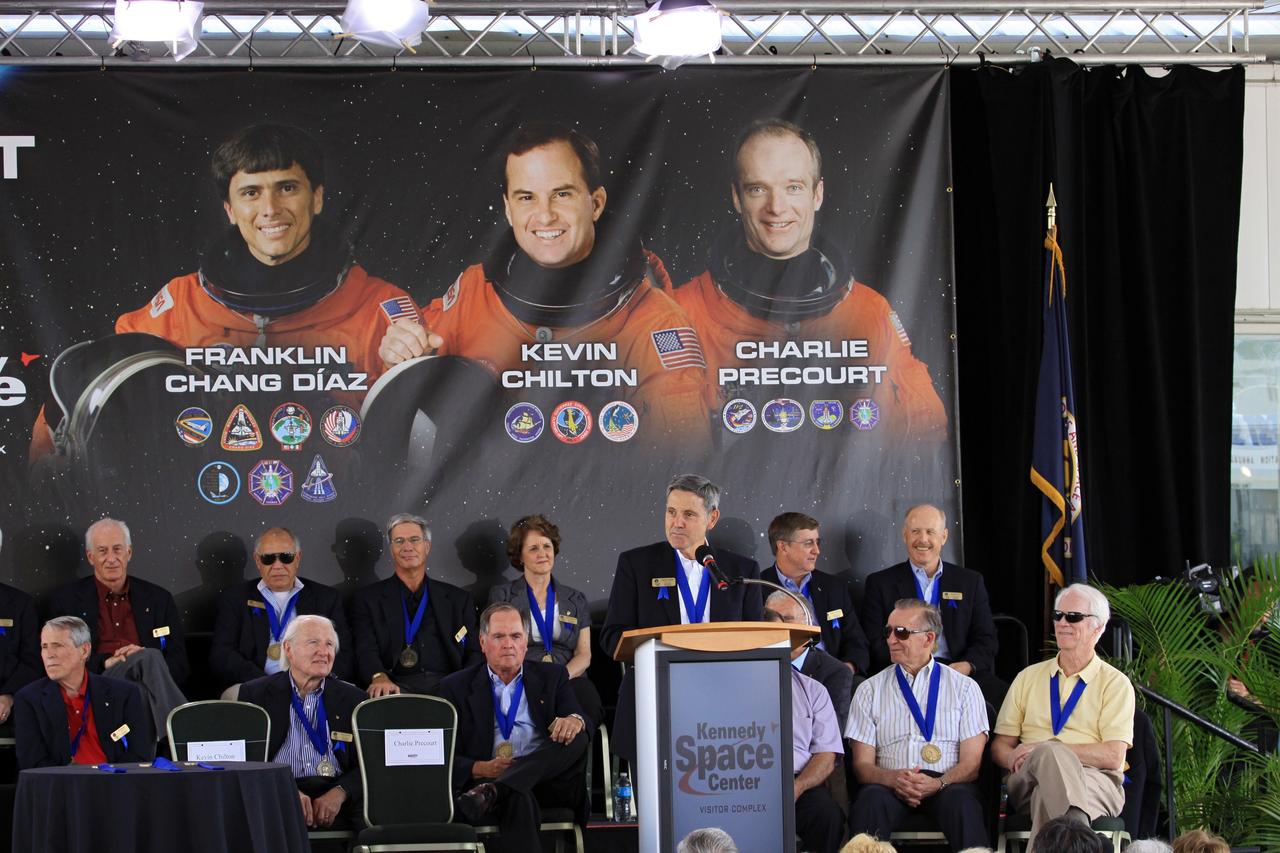
CAPE CANAVERAL, Fla. – At NASA’s Kennedy Space Center Visitor Complex in Florida, Kennedy Space Center Director and Hall of Famer Robert Cabana speaks during the U.S. Astronaut Hall of Fame induction ceremony. Behind and to the right of Cabana is Apollo astronaut Walt Cunningham, and directly to the left is STS-1 shuttle pilot Bob Crippen, both Hall of Famers. Space shuttle astronauts Franklin Chang Diaz, Kevin Chilton and Charlie Precourt were inducted into the Hall of Fame Class of 2012. The year’s inductees were selected by a committee of current Hall of Fame astronauts, former NASA officials, historians and journalists. The selection process is administered by the Astronaut Scholarship Foundation. Photo credit: NASA/Jim Grossmann
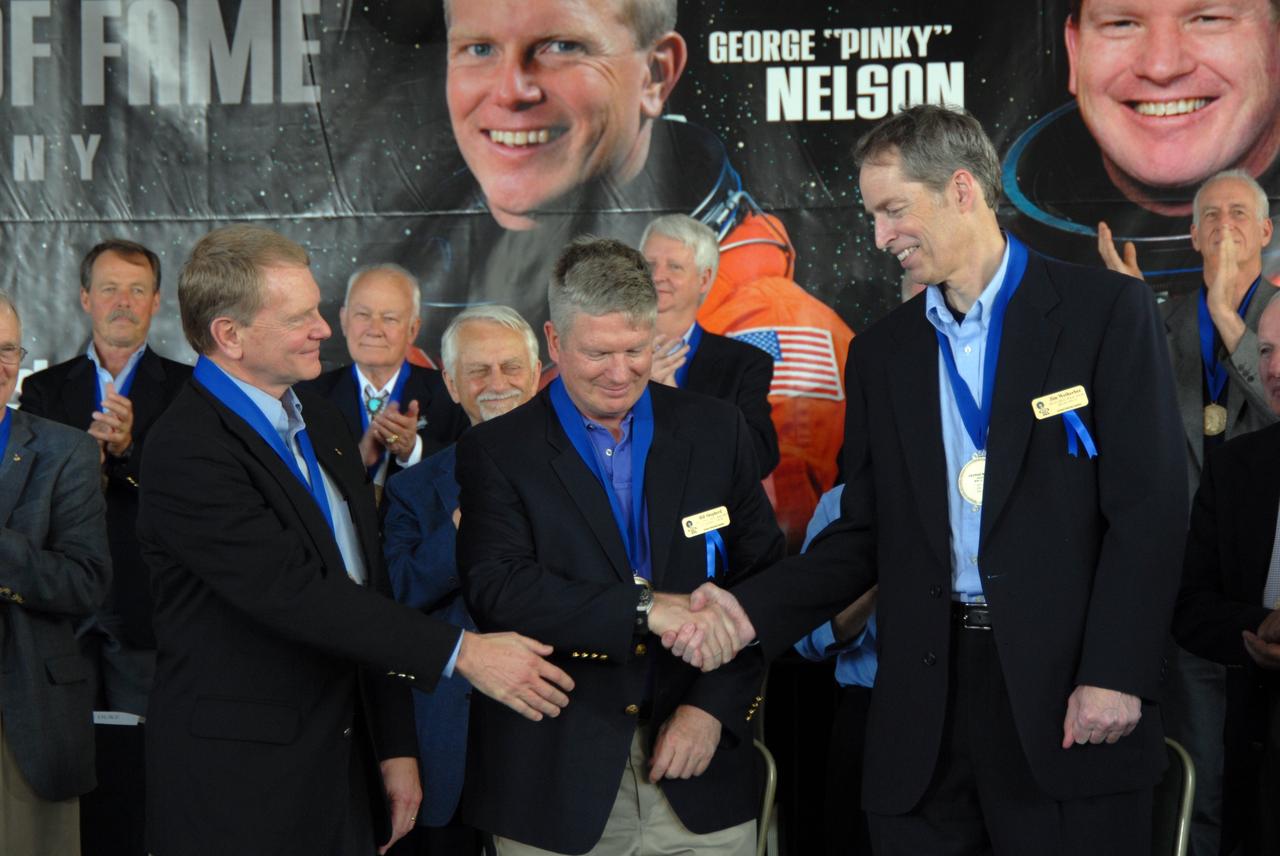
CAPE CANAVERAL, Fla. –– The three newest inductees into the U.S. Astronaut Hall of Fame congratulate each other after receiving their medals. From left are George "Pinky" Nelson, who was one of only six space shuttle astronauts to fly untethered in space using NASA's Manned Maneuvering Unit; William Shepherd, who was commander of the first crew to live aboard the International Space Station; and James Wetherbee, who was commander of the longest-docked shuttle-Mir mission. The ceremony was held at NASA's Kennedy Space Center Visitor Complex in Florida. The ceremony took place May 2. More than 20 hall of fame astronauts attended, including Scott Carpenter, Walt Cunningham, Jim Lovell and Bob Crippen. Photo credit: NASA/Jim Grossmann
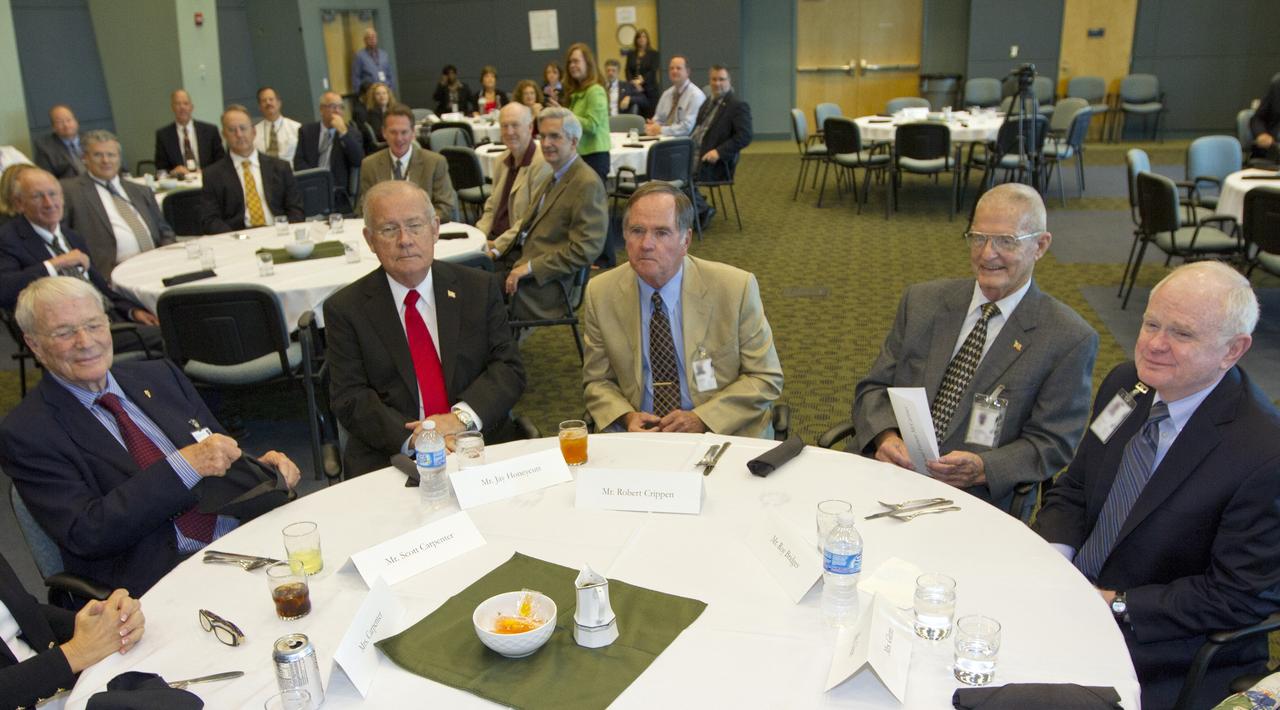
CAPE CANAVERAL, Fla. - Former Mercury astronaut Scott Carpenter, left, and former Kennedy Space Center directors Jay Honeycutt, Bob Crippen, Forrest McCartney and Roy Bridges listen during a luncheon Feb. 17, 2012, celebrating 50 years of Americans in orbit, an era which began with Glenn's Mercury mission MA-6, on Feb. 20, 1962. Glenn's launch aboard an Atlas rocket took with it the hopes of an entire nation and ushered in a new era of space travel that eventually led to Americans walking on the moon by the end of the 1960s. Glenn soon was followed into orbit by Scott Carpenter, Walter Schirra and Gordon Cooper. Their fellow Mercury astronauts Alan Shepard and Virgil "Gus" Grissom flew earlier suborbital flights. Deke Slayton, a member of NASA's original Mercury 7 astronauts, was grounded by a medical condition until the Apollo-Soyuz Test Project in 1975. Photo credit: NASA/Kim Shiflett
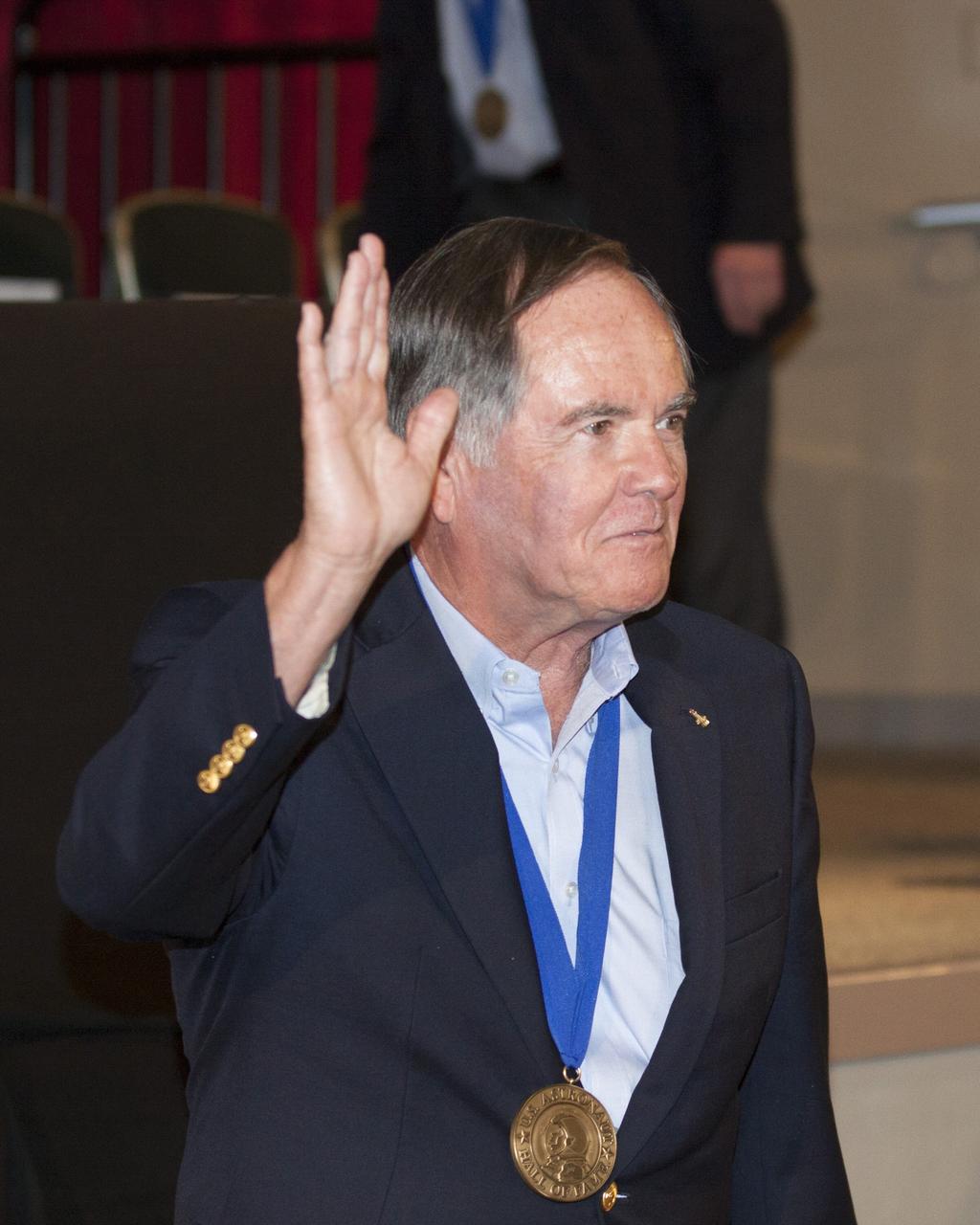
CAPE CANAVERAL, Fla. – U.S. Astronaut Hall of Fame member Bob Crippen is introduced at NASA’s Kennedy Space Center Visitor Complex in Florida, prior to the ceremony in which Bonnie Dunbar, Curt Brown and Eileen Collins will be inducted into the group of space pioneers. This induction is the twelfth group of space shuttle astronauts named to the AHOF, and the first time two women are inducted at the same time. The year’s inductees were selected by a committee of current Hall of Fame astronauts, former NASA officials, historians and journalists. The selection process is administered by the Astronaut Scholarship Foundation. For more on the U.S. Astronaut Hall of Fame, go to http://www.kennedyspacecenter.com/astronaut-hall-of-fame.aspx For more on the Astronaut Scholarship Foundation, go to http://astronautscholarship.org/ Photo credit: NASA/ Kim Shiflett
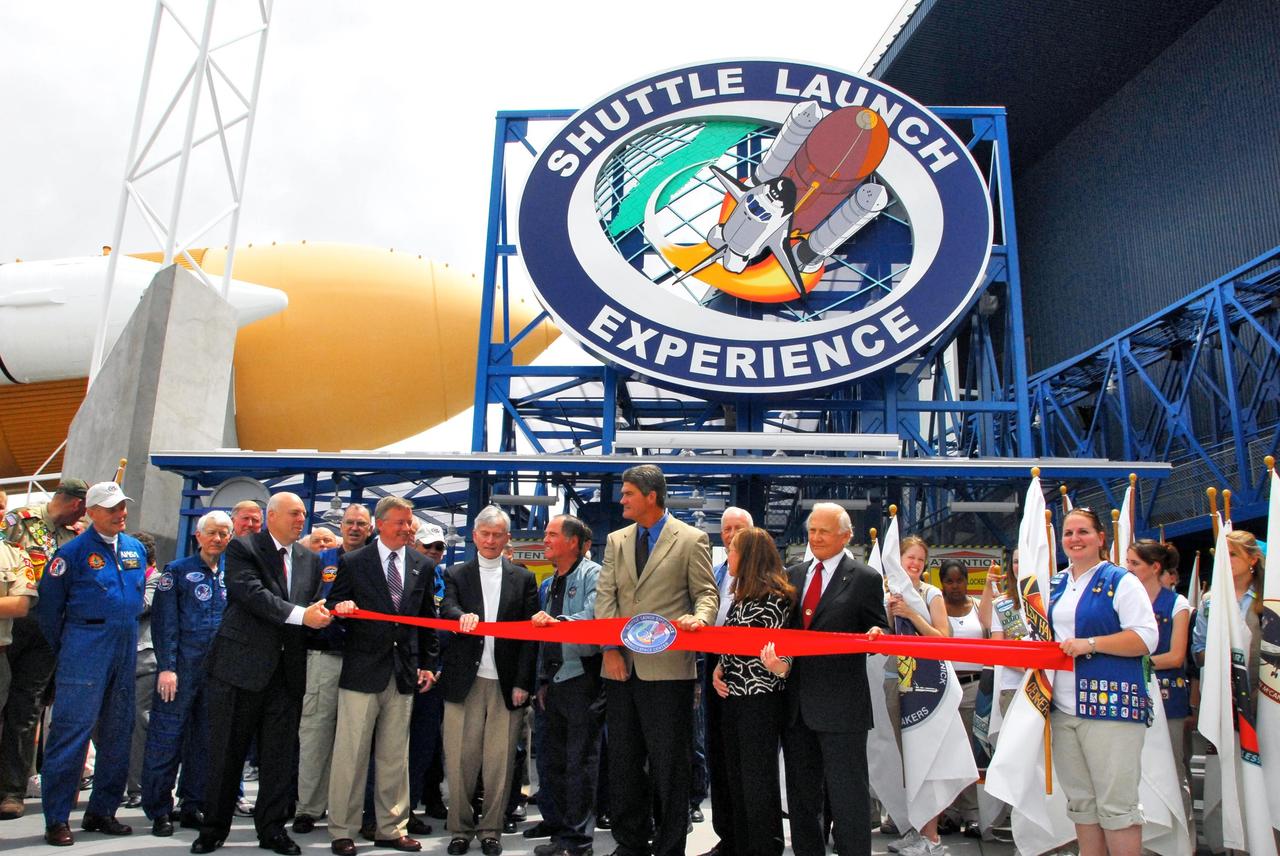
KENNEDY SPACE CENTER, FLA. -- NASA, Kennedy Space Center and State of Florida dignitaries helped launch the opening of the newest attraction at Kennedy Space Center's Visitor Complex, the Shuttle Launch Experience. Holding the ribbon for the breaking are (left to right) Dan LeBlanc, chief operating officer of the KSC Visitor Complex; Lt. Governor of Florida Jeff Kottkamp; former astronauts John Young and Bob Crippen; Center Director Bill Parsons; KSC Director of External Relations Lisa Malone; and former astronaut Buzz Aldrin. The attraction includes a simulated launch with the sights, sounds and sensations of launching into space. Find out more about the Visitor Complex and the Shuttle Launch Experience at <b>http://www.kennedyspacecenter.com/visitKSC/attractions/index.asp</b>. Photo credit: NASA/George Shelton
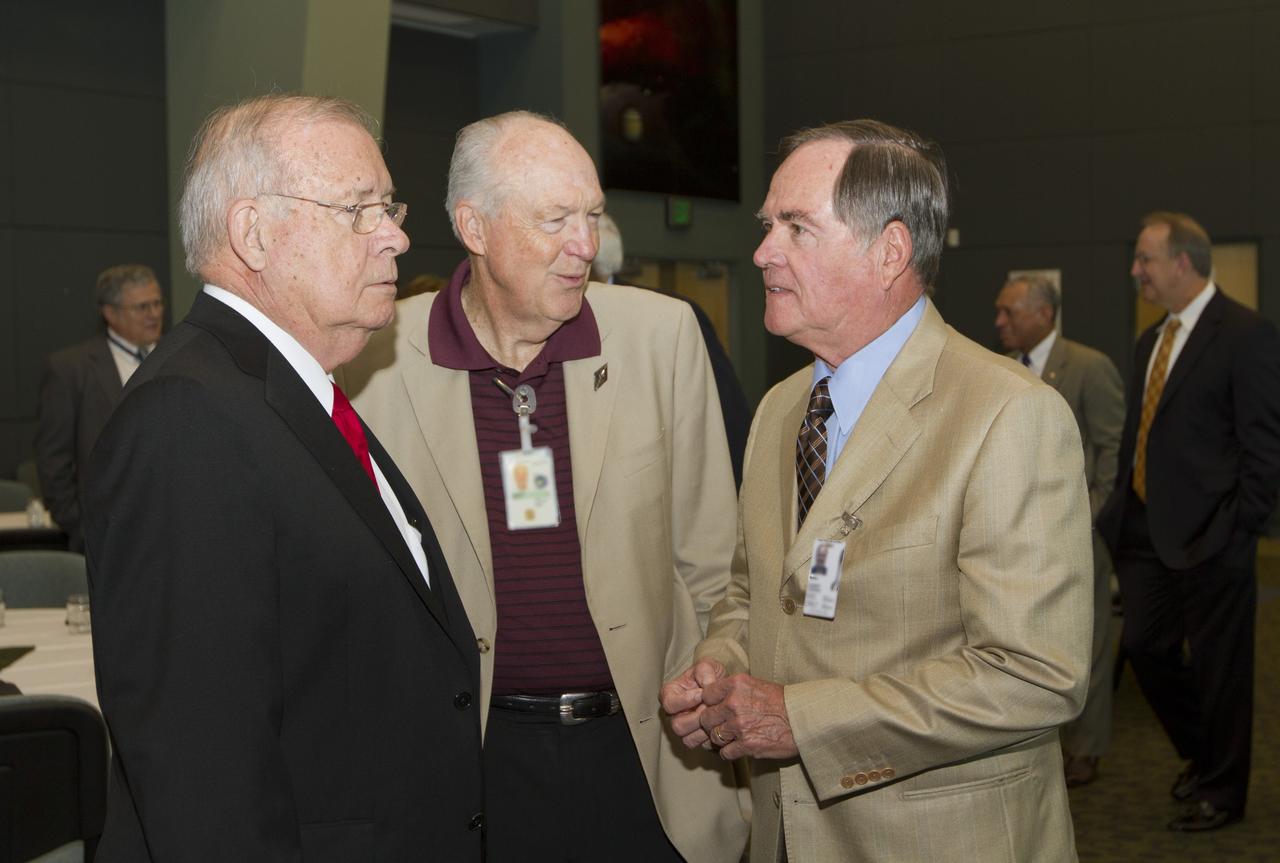
CAPE CANAVERAL, Fla. - Former Kennedy Space Center directors Jay Honeycutt, left, and Bob Crippen, right, talk during a luncheon Feb. 17, 2012, celebrating 50 years of Americans in orbit, an era which began with Glenn's Mercury mission MA-6, on Feb. 20, 1962. Glenn's launch aboard an Atlas rocket took with it the hopes of an entire nation and ushered in a new era of space travel that eventually led to Americans walking on the moon by the end of the 1960s. Glenn soon was followed into orbit by Scott Carpenter, Walter Schirra and Gordon Cooper. Their fellow Mercury astronauts Alan Shepard and Virgil "Gus" Grissom flew earlier suborbital flights. Deke Slayton, a member of NASA's original Mercury 7 astronauts, was grounded by a medical condition until the Apollo-Soyuz Test Project in 1975. Photo credit: NASA/Kim Shiflett
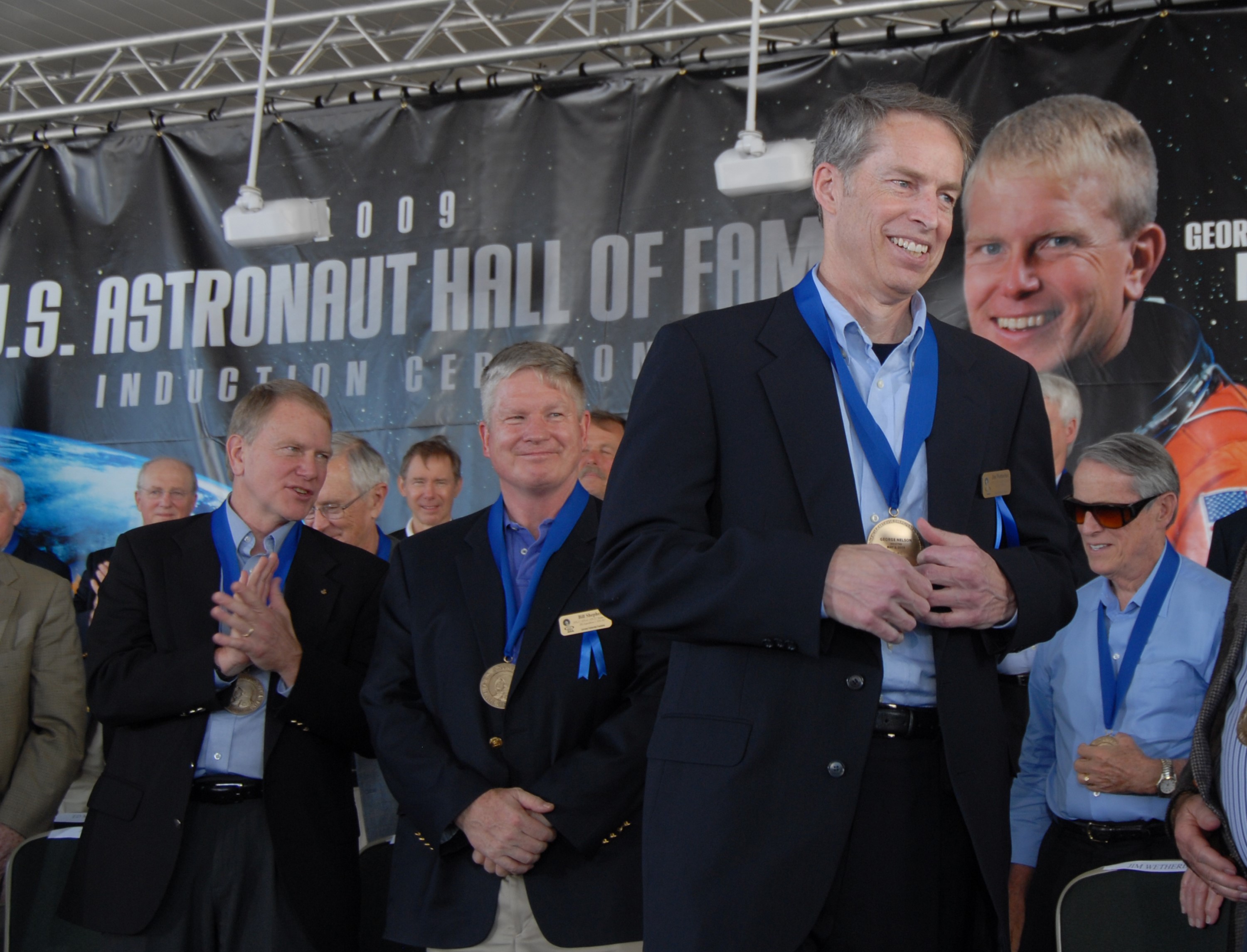
CAPE CANAVERAL, Fla. –– The three newest inductees into the U.S. Astronaut Hall of Fame share the stage after receiving their medals. From left are George "Pinky" Nelson, who was one of only six space shuttle astronauts to fly untethered in space using NASA's Manned Maneuvering Unit; William Shepherd, who was commander of the first crew to live aboard the International Space Station; and James Wetherbee, who was commander of the longest-docked shuttle-Mir mission. The ceremony was held at NASA's Kennedy Space Center Visitor Complex in Florida. The ceremony took place May 2. More than 20 hall of fame astronauts attended, including Scott Carpenter, Walt Cunningham, Jim Lovell and Bob Crippen. Photo credit: NASA/Jim Grossmann
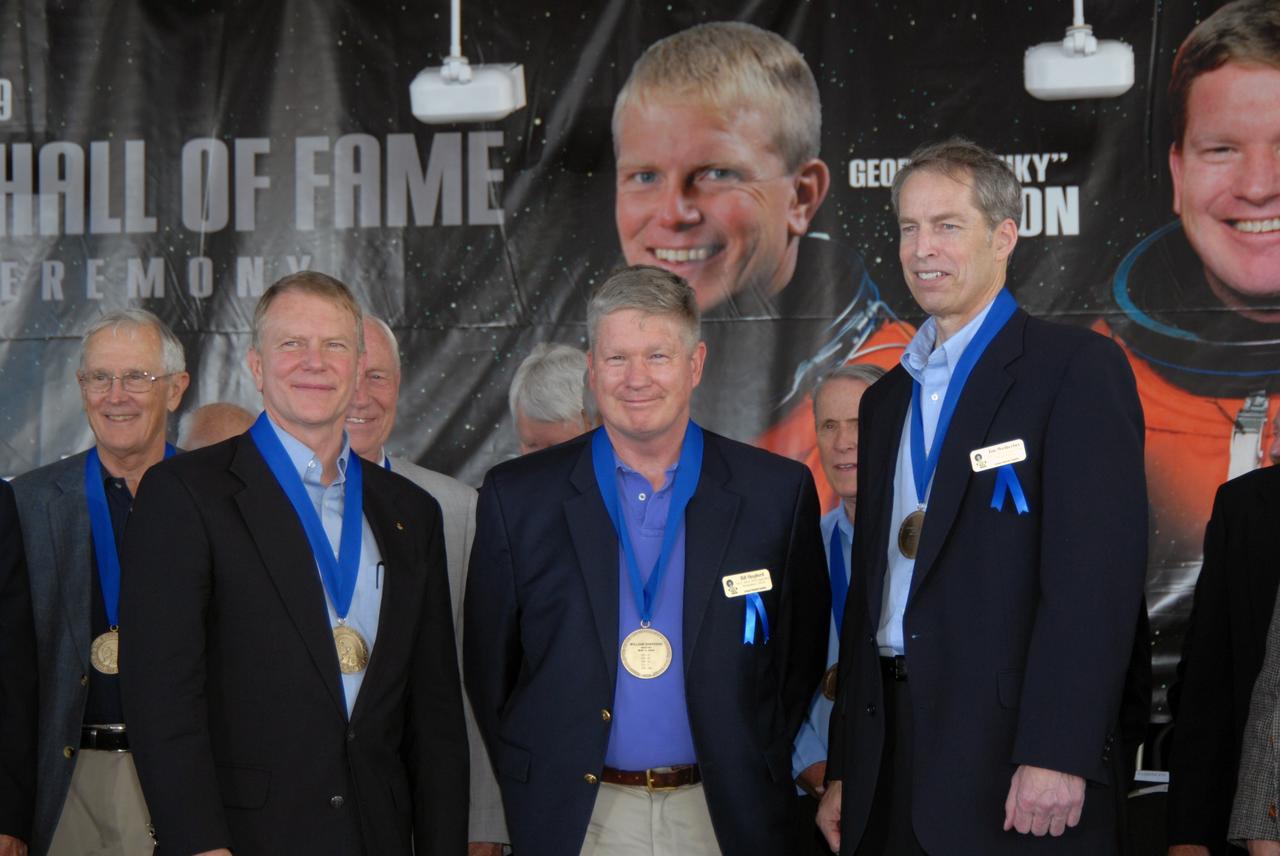
CAPE CANAVERAL, Fla. –– The three newest inductees into the U.S. Astronaut Hall of Fame proudly join current members after the induction ceremony held at NASA's Kennedy Space Center Visitor Complex in Florida. In front, from left, are George "Pinky" Nelson, who was one of only six space shuttle astronauts to fly untethered in space using NASA's Manned Maneuvering Unit; William Shepherd, who was commander of the first crew to live aboard the International Space Station; and James Wetherbee, who was commander of the longest-docked shuttle-Mir mission. The ceremony was held at NASA's Kennedy Space Center Visitor Complex in Florida. The ceremony took place May 2. More than 20 hall of fame astronauts attended, including Scott Carpenter, Walt Cunningham, Jim Lovell and Bob Crippen. Photo credit: NASA/Jim Grossmann
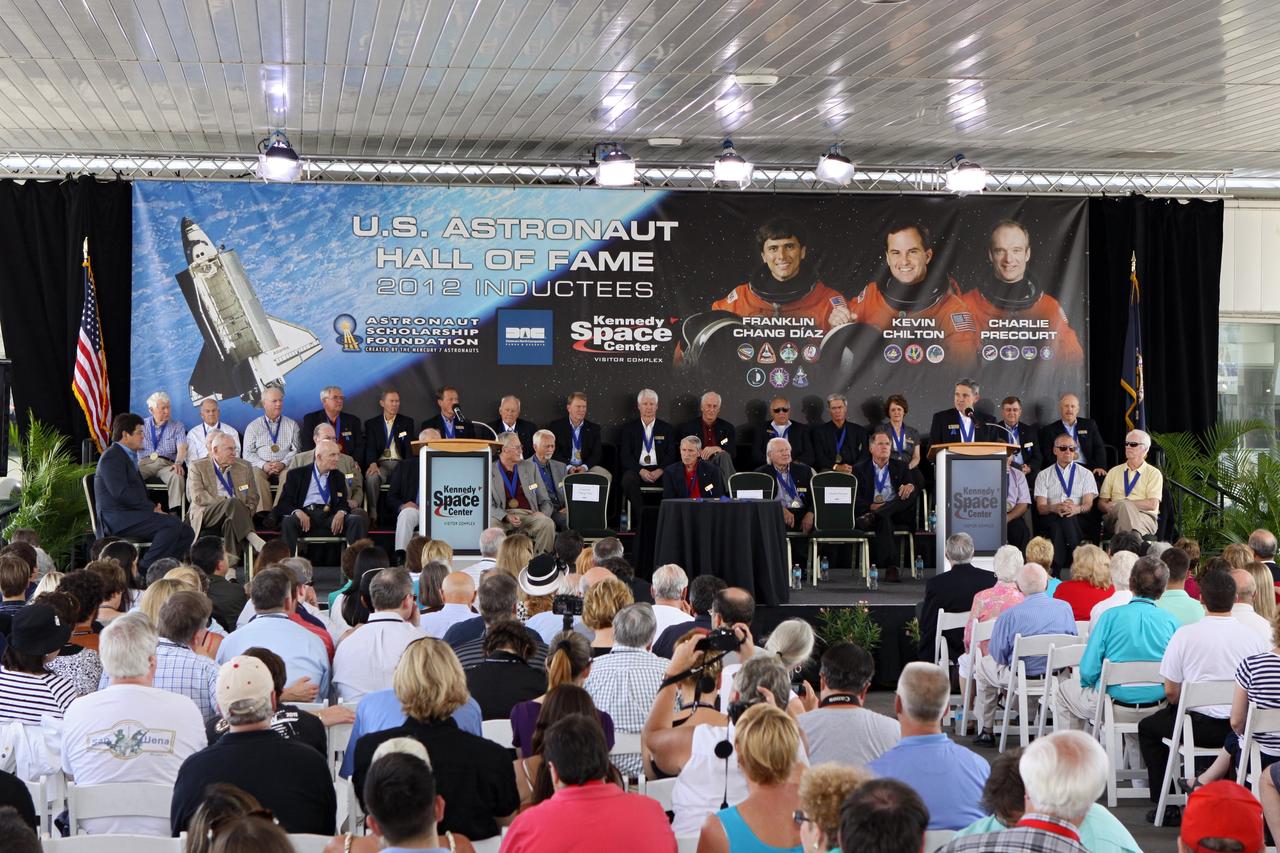
CAPE CANAVERAL, Fla. – At NASA’s Kennedy Space Center Visitor Complex in Florida, Kennedy Space Center Director and Hall of Famer Robert Cabana speaks during the U.S. Astronaut Hall of Fame induction ceremony. Behind and to the right of Cabana is Apollo astronaut Walt Cunningham, and directly to the left is STS-1 shuttle pilot Bob Crippen, both Hall of Famers. Space shuttle astronauts Franklin Chang Diaz, Kevin Chilton and Charlie Precourt were inducted into the Hall of Fame Class of 2012. The year’s inductees were selected by a committee of current Hall of Fame astronauts, former NASA officials, historians and journalists. The selection process is administered by the Astronaut Scholarship Foundation. Photo credit: NASA/Jim Grossmann
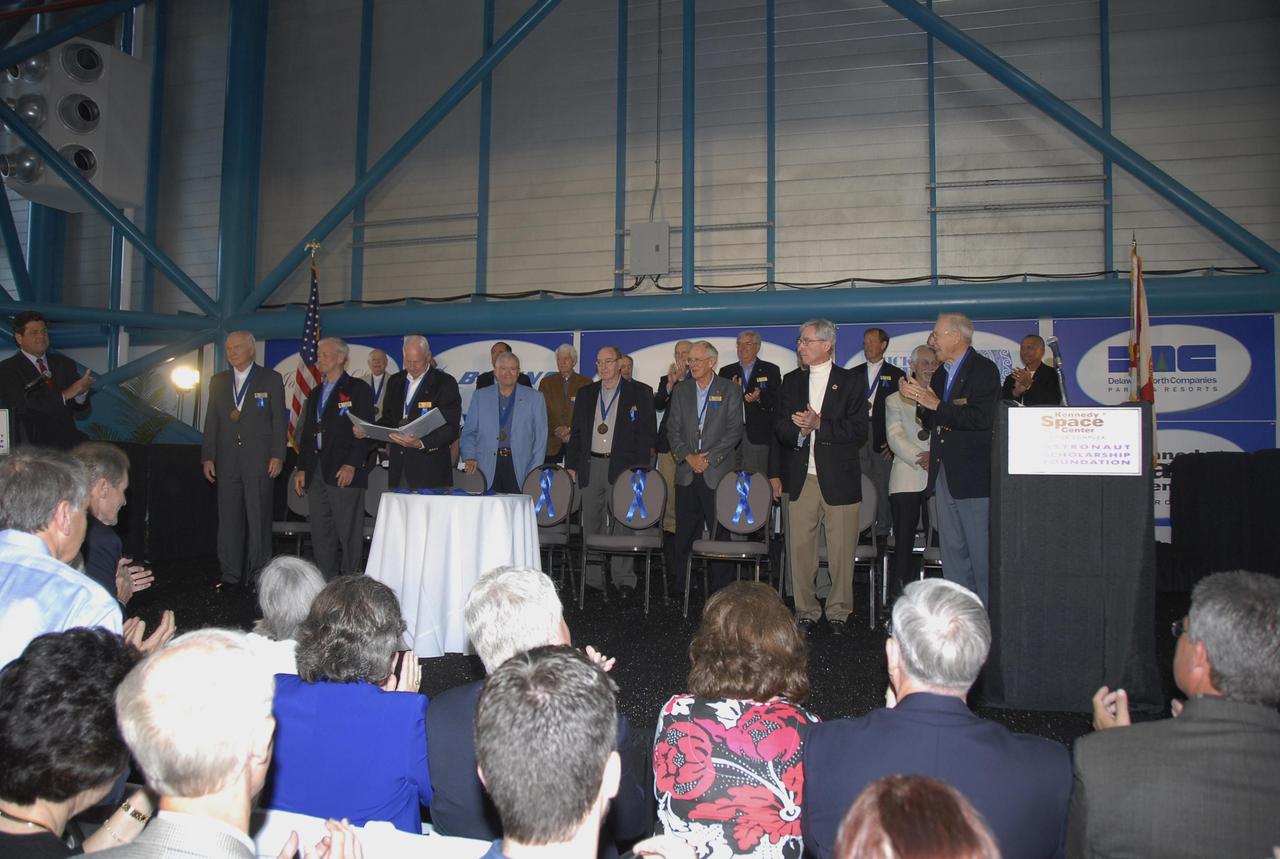
KENNEDY SPACE CENTER, FLA. -- Retired Astronaut Al Worden (third from left in front row) reads a list of the astronauts honored in past ceremonies, some of whom stand on the dais. Standing in the front row, from left, are John Glenn, Scott Carpenter, Worden, Fred Haise, Edgar Mitchell, Charlie Duke, John Young and Jim Lovell. Pictured standing in the back row, from left, are Jerry Carr, Bob Crippen, Hank Hartsfield, Joe Allen, Rick Hauck, Dan Brandenstein, Robert “Hoot” Gibson, Owen Garriott and Charlie Bolden. The May 5 induction added space shuttle commanders Michael L. Coats, Steven A. Hawley and Jeffrey A. Hoffman to the Hall of Fame. They grow the number of space explorers enshrined in the Hall of Fame to 66. The ceremony was held at the Kennedy Space Center's Apollo/Saturn V Center. Photo credit: NASA/Kim Shiflett
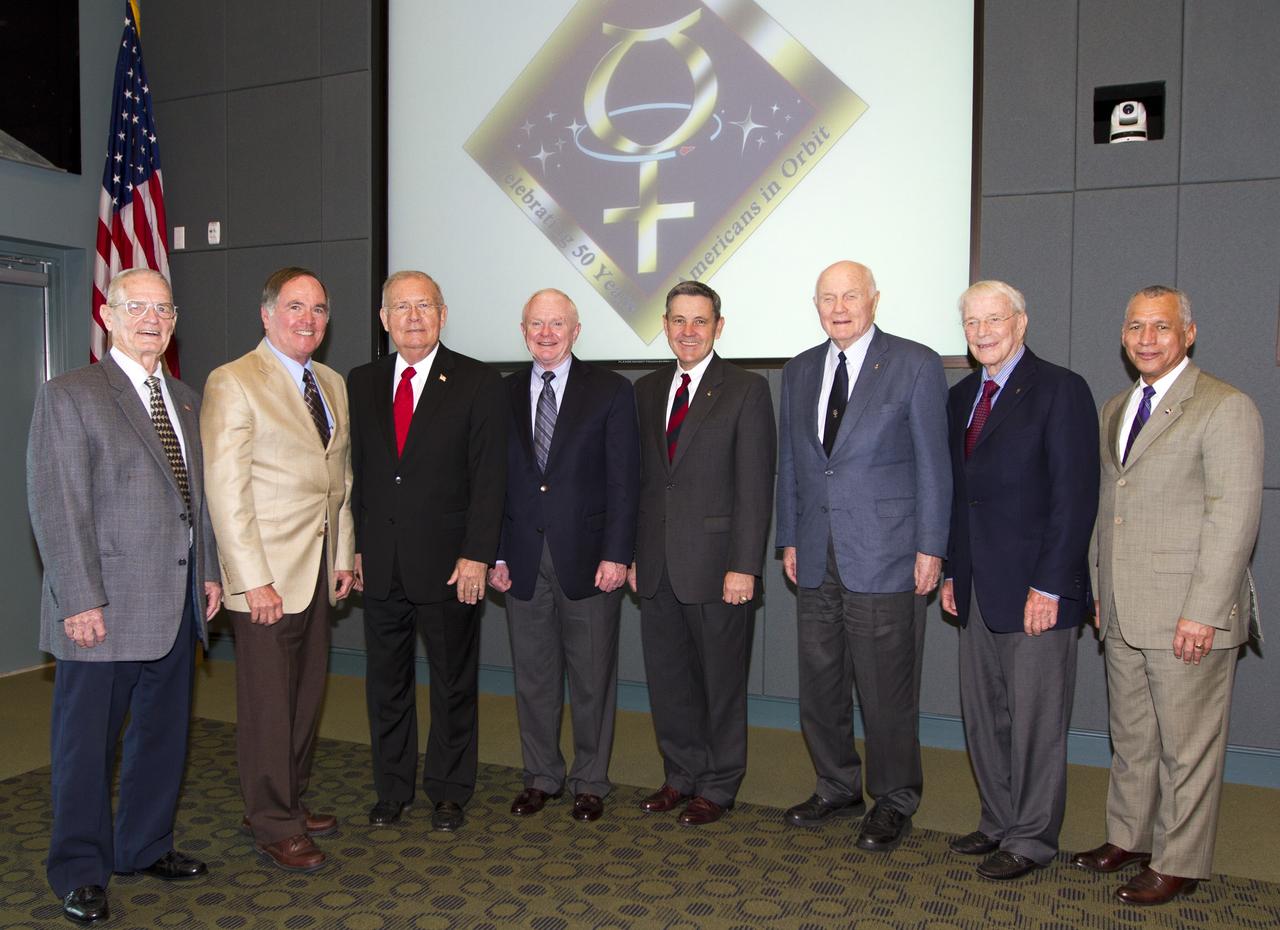
CAPE CANAVERAL, Fla. - Former Kennedy Space Center directors Forrest McCartney, from left, Bob Crippen, Jay Honeycutt and Roy Bridges stand with current Kennedy director Bob Cabana, Mercury astronauts John Glenn and Scott Carpenter and NASA Administrator Charles Bolden during a luncheon Feb. 17, 2012, celebrating 50 years of Americans in orbit, an era which began with Glenn's Mercury mission MA-6, on Feb. 20, 1962. Glenn's launch aboard an Atlas rocket took with it the hopes of an entire nation and ushered in a new era of space travel that eventually led to Americans walking on the moon by the end of the 1960s. Glenn soon was followed into orbit by Scott Carpenter, Walter Schirra and Gordon Cooper. Their fellow Mercury astronauts Alan Shepard and Virgil "Gus" Grissom flew earlier suborbital flights. Deke Slayton, a member of NASA's original Mercury 7 astronauts, was grounded by a medical condition until the Apollo-Soyuz Test Project in 1975. Photo credit: NASA/Kim Shiflett
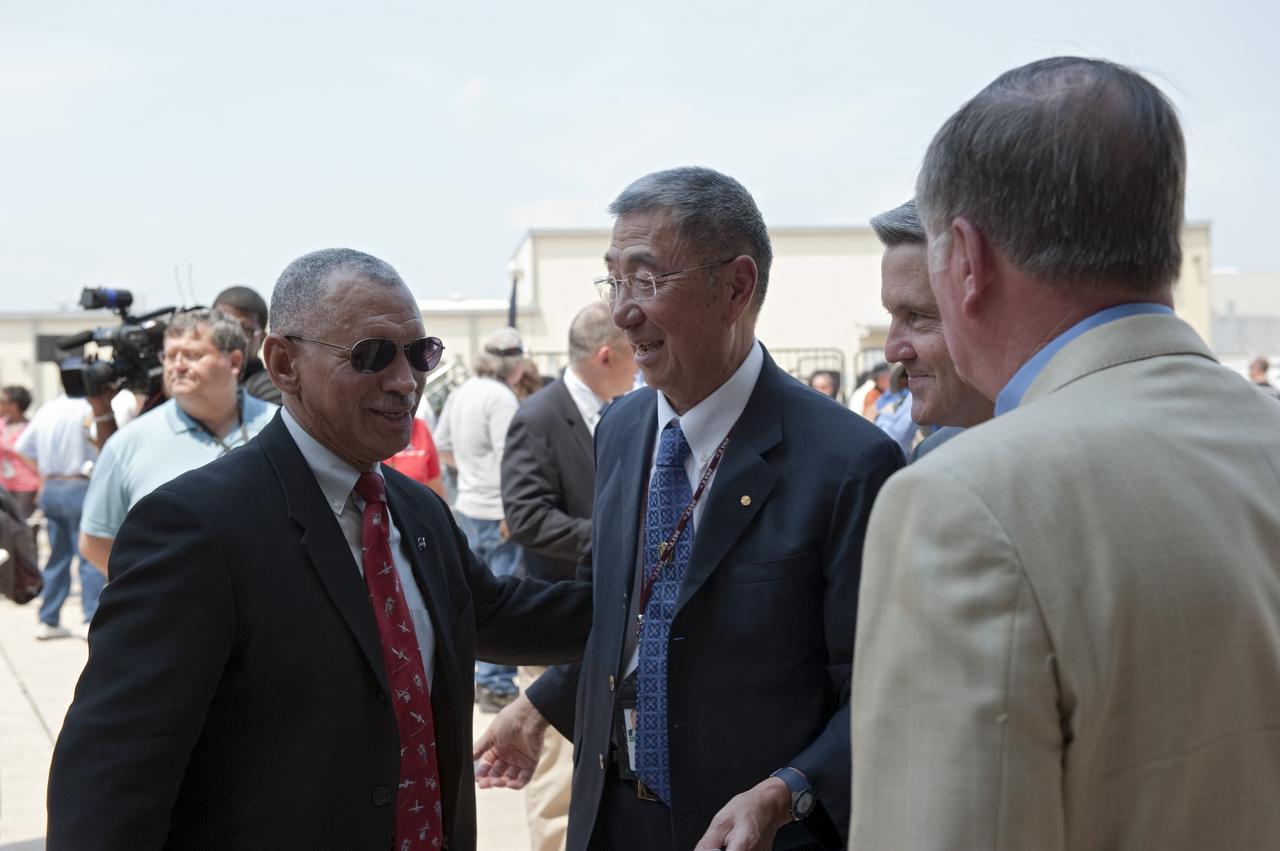
CAPE CANAVERAL, Fla. -- NASA Administrator Charles Bolden, left, speaks with Professor Sam Ting, Alpha Magnetic Spectrometer-2 principal investigator at the Massachusetts Institute of Technology, Kennedy Center Director Bob Cabana and STS-1 Pilot and former Kennedy Space Center Director Bob Crippen. In a ceremony held in front of Orbiter Processing Facility-1 at NASA's Kennedy Space Center in Florida, NASA Administrator Charles Bolden announced the facilities where four shuttle orbiters will be displayed permanently at the conclusion of the Space Shuttle Program. Shuttle Enterprise, the first orbiter built, will move from the Smithsonian's National Air and Space Museum Steven F. Udvar-Hazy Center in Virginia to the Intrepid Sea, Air & Space Museum in New York. The Udvar-Hazy Center will become the new home for shuttle Discovery, which retired after completing its 39th mission in March. Shuttle Endeavour, which is preparing for its final flight at the end of the month, will go to the California Science Center in Los Angeles. Atlantis, which will fly the last planned shuttle mission in June, will be displayed at the Kennedy Space Center Visitor Complex in Florida. Later, employees, their families and friends, will celebrate the 30th anniversary of the first shuttle launch at the visitor complex. Photo credit: NASA/Kim Shiflett
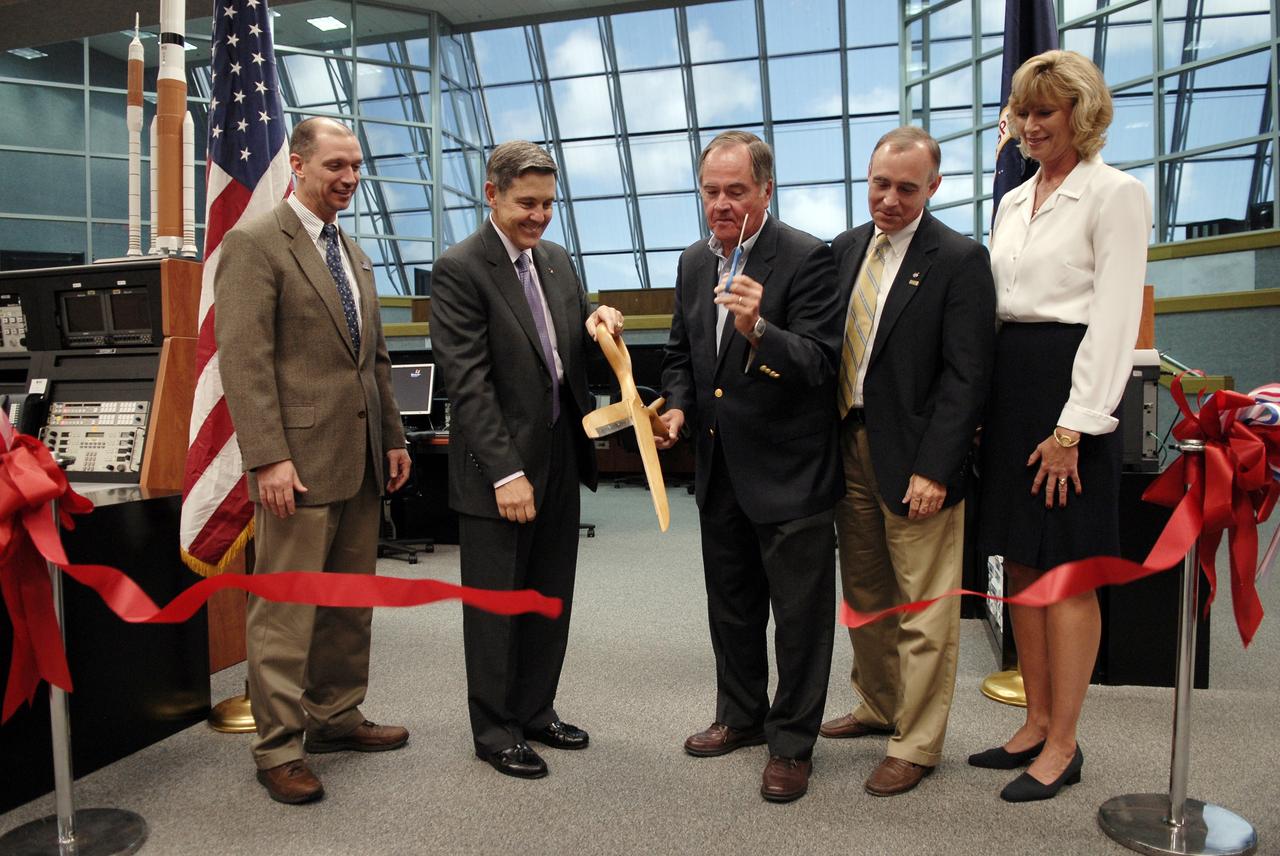
CAPE CANAVERAL, Fla. – This ribbon cutting officially turns over NASA Kennedy Space Center's Launch Control Center Firing Room 1 from the Space Shuttle Program to the Constellation Program. Participating are (from left) Pepper Phillips, director of the Constellation Project Office at Kennedy; Bob Cabana, Kennedy's director; Robert Crippen, former astronaut; Jeff Hanley, manager of the Constellation Program at NASA's Johnson Space Center; and Nancy Bray, deputy director of Center Operations at Kennedy. The room has undergone demolition and construction and been outfitted with consoles for the upcoming Ares I-X rocket flight test targeted for launch on Oct. 27. As the center of launch operations at Kennedy since the Apollo Program, the Launch Control Center, or LCC, has played a central role in NASA's human spaceflight programs. Firing Room 1 was the first operational firing room constructed. From this room, controllers launched the first Saturn V, the first crewed flight of Saturn V, the first crewed mission to the moon and the first space shuttle. Firing Room 1 will continue this tradition of firsts when controllers launch the Constellation Program's first flight test. Also, this firing room will be the center of operations for the upcoming Ares I and Orion operations. Photo credit: NASA/Kim Shiflett
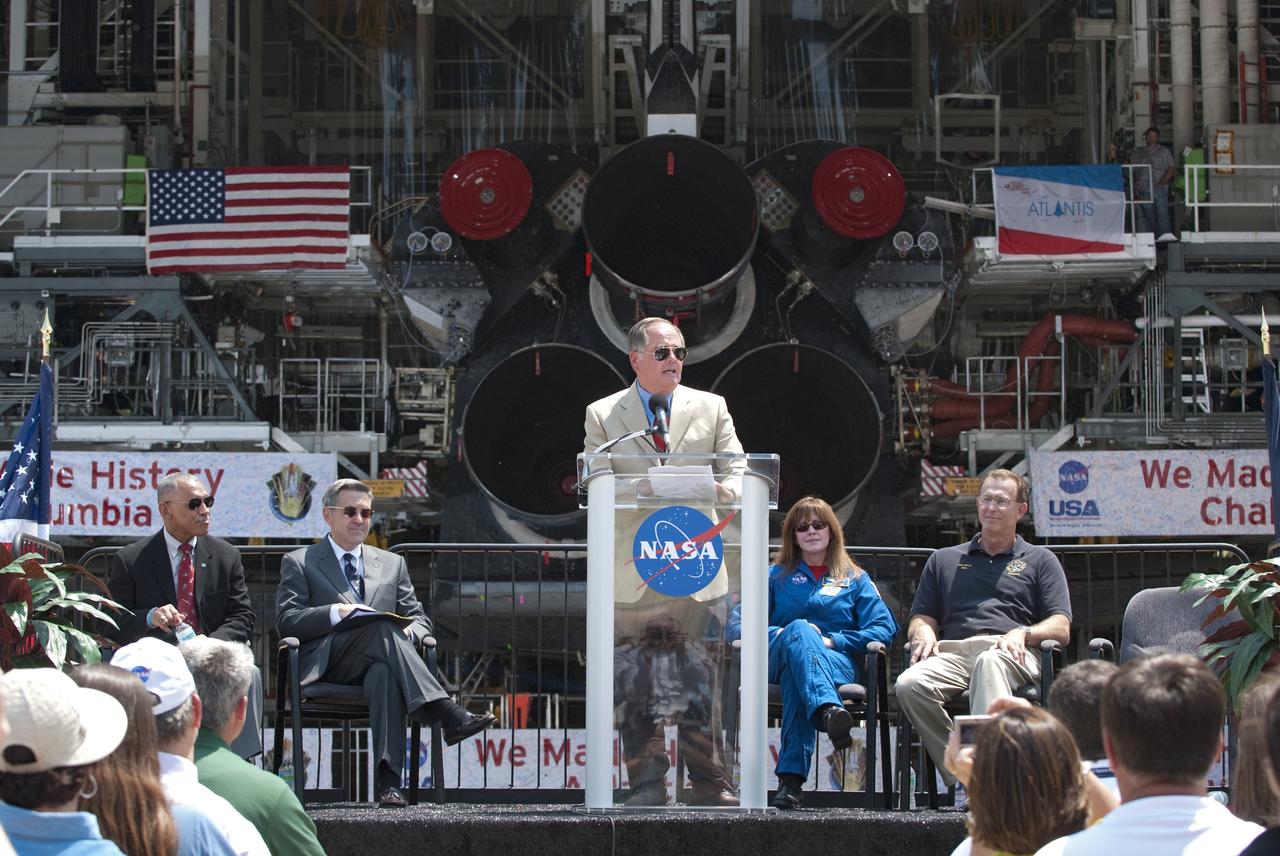
CAPE CANAVERAL, Fla. -- STS-1 Pilot and former Kennedy Space Center Director Bob Crippen addresses the audience after the announcement that revealed the four institutions that will receive shuttle orbiters for permanent display. In a ceremony held in front of Orbiter Processing Facility-1 at NASA's Kennedy Space Center in Florida, NASA Administrator Charles Bolden announced the facilities where four shuttle orbiters will be displayed permanently at the conclusion of the Space Shuttle Program. Shuttle Enterprise, the first orbiter built, will move from the Smithsonian's National Air and Space Museum Steven F. Udvar-Hazy Center in Virginia to the Intrepid Sea, Air & Space Museum in New York. The Udvar-Hazy Center will become the new home for shuttle Discovery, which retired after completing its 39th mission in March. Shuttle Endeavour, which is preparing for its final flight at the end of the month, will go to the California Science Center in Los Angeles. Atlantis, which will fly the last planned shuttle mission in June, will be displayed at the Kennedy Space Center Visitor Complex in Florida. The event also commemorated the 30th anniversary of the first space shuttle launch with the launch of shuttle Columbia. Photo credit: NASA/Kim Shiflett
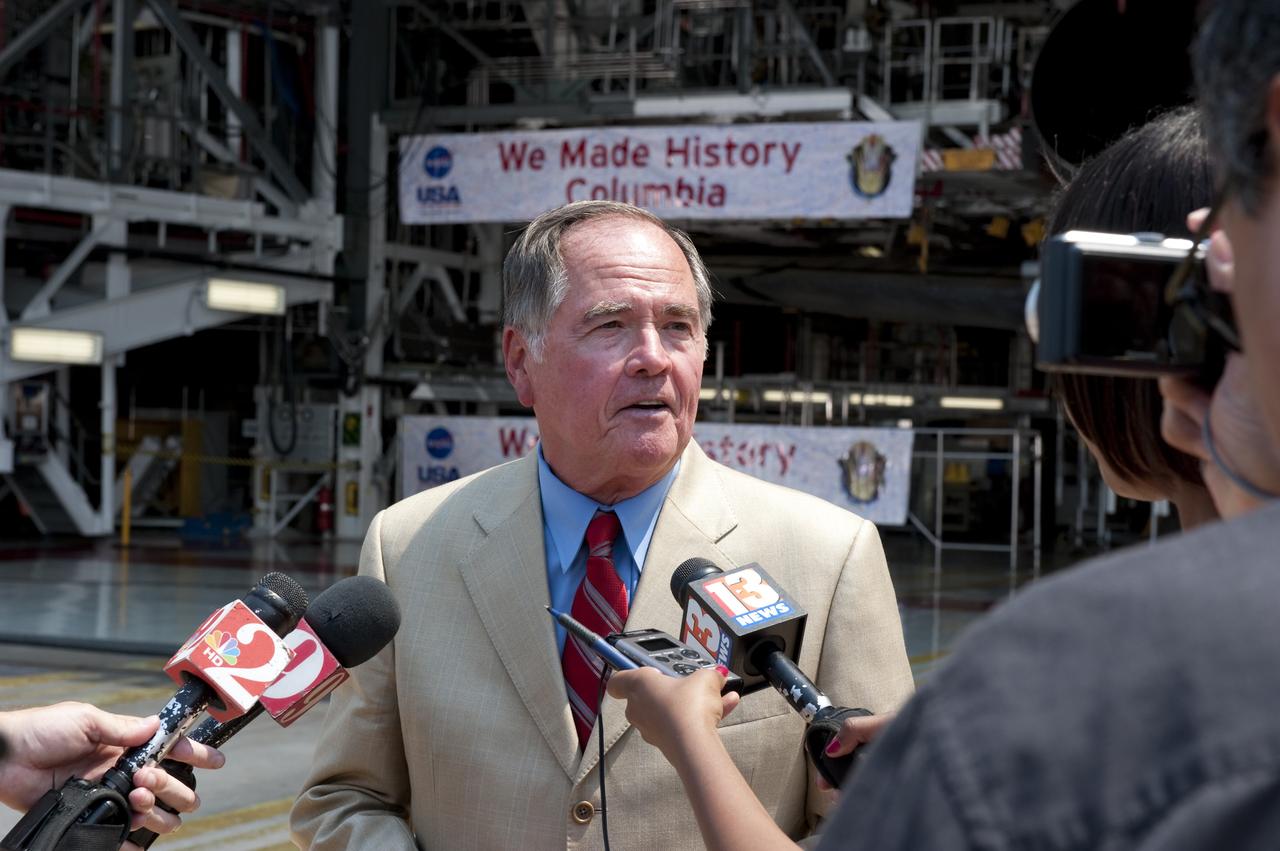
CAPE CANAVERAL, Fla. -- Media interview STS-1 Pilot and former Kennedy Space Center Director Bob Crippen after the announcement that revealed the four institutions receiving shuttle orbiters for permanent display. In a ceremony held in front of Orbiter Processing Facility-1 at NASA's Kennedy Space Center in Florida, NASA Administrator Charles Bolden announced the facilities where four shuttle orbiters will be displayed permanently at the conclusion of the Space Shuttle Program. Shuttle Enterprise, the first orbiter built, will move from the Smithsonian's National Air and Space Museum Steven F. Udvar-Hazy Center in Virginia to the Intrepid Sea, Air & Space Museum in New York. The Udvar-Hazy Center will become the new home for shuttle Discovery, which retired after completing its 39th mission in March. Shuttle Endeavour, which is preparing for its final flight at the end of the month, will go to the California Science Center in Los Angeles. Atlantis, which will fly the last planned shuttle mission in June, will be displayed at the Kennedy Space Center Visitor Complex in Florida. Later, employees, their families and friends, will celebrate the 30th anniversary of the first shuttle launch at the visitor complex. Photo credit: NASA/Kim Shiflett
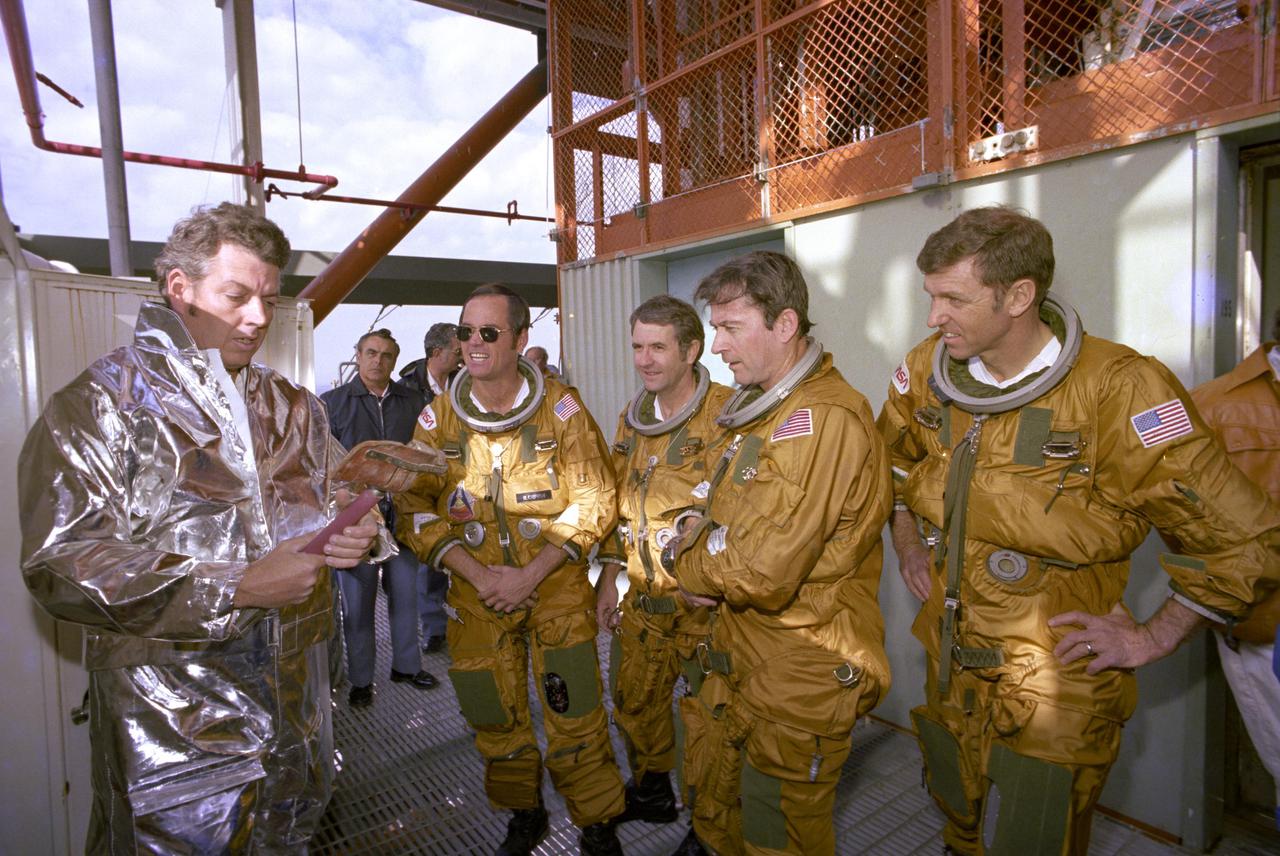
KENNEDY SPACE CENTER, FLA. - On the Fixed Service Structure on Launch Complex 39A, space shuttle astronauts being briefed on the slidewire emergency pad escape system are (left to right) prime crew Pilot Bob Crippen, backup crew member Richard Truly, prime crew Commander John Young and backup crew member Joe Engle. The slidewire system provides a quick escape from upper launch pad platforms in case of a serious emergency. The flight crews wore the spacesuits and other equipment to be worn during a mission, but sandbags were used to duplicate the weight of riders in the slidewire baskets during the training. The STS-1 mission, known as a shuttle systems test flight, will seek to demonstrate safe launch into orbit and safe return of the orbiter and crew and verify the combined performance of the entire shuttle vehicle -- orbiter, solid rocket boosters and external tank. STS-1 will be launched from Pad A at the Kennedy Space Center's Launch Complex 39 no earlier than March 1981.
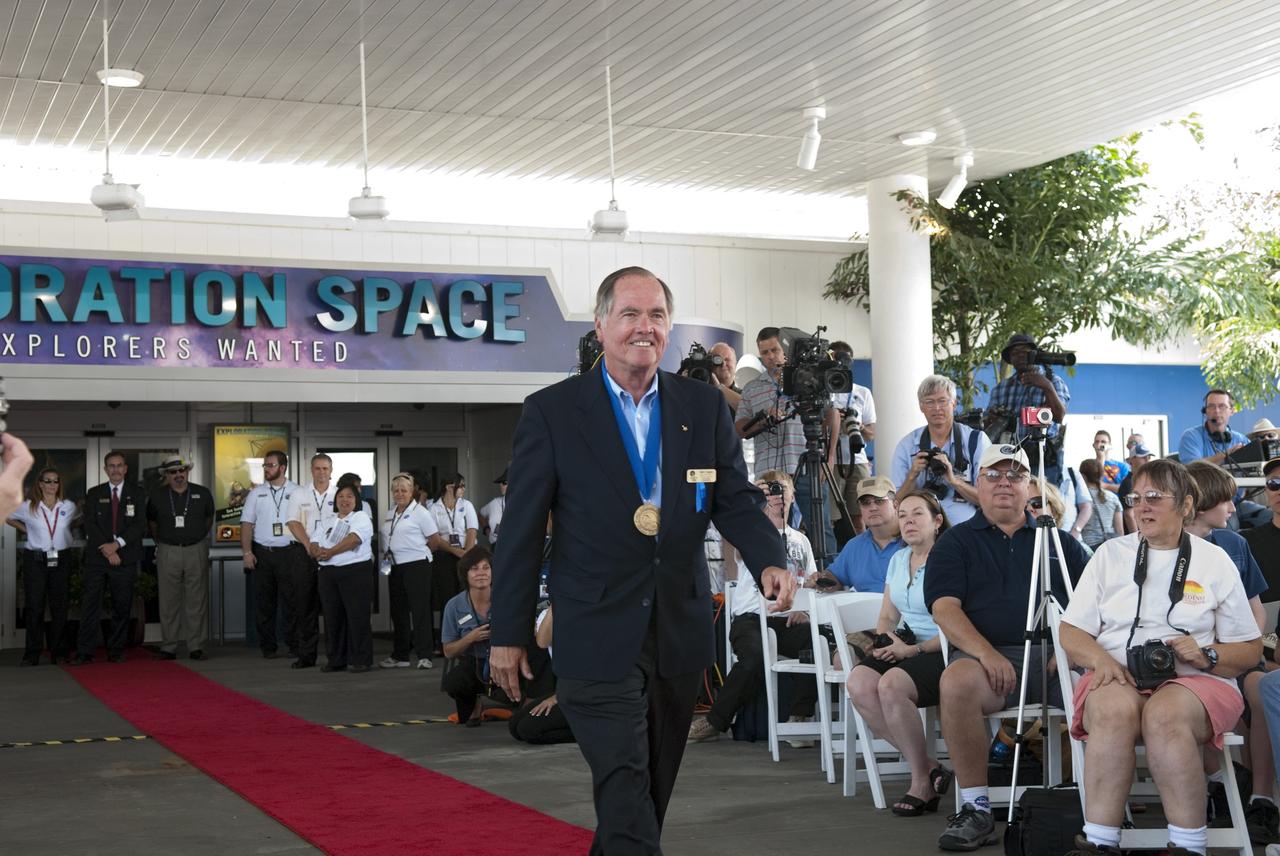
Cape Canaveral, Fla. -- Hall of Fame astronaut Bob Crippen is warmly greeted at the 2011 U.S. Astronaut Hall of Fame induction ceremony at NASA's Kennedy Space Center Visitor Complex in Florida. Hall of Fame astronauts and visitors gathered to honor 2011 inductees Karol "Bo" Bobko and Susan Helms. During his 19 years in the astronaut program, Bobko flew on three space shuttle missions and logged more than 386 hours in space. He served as pilot during the first voyage of space shuttle Challenger aboard STS-6 in April 1983 and as commander during the maiden flight of space shuttle Atlantis aboard STS-51J in October 1985. Helms, a five-time space shuttle astronaut, has logged 5,064 hours in space. During her stay onboard the International Space Station as a member of the Expedition-2 crew in 2001, Helms performed a world record 8 hour and 56 minute spacewalk. Bobko and Helms join the ranks of the U.S. Astronaut Hall of Fame bringing the number of space explorers enshrined in the Hall of Fame to 79. Photo Credit: NASA/Jim Grossmann
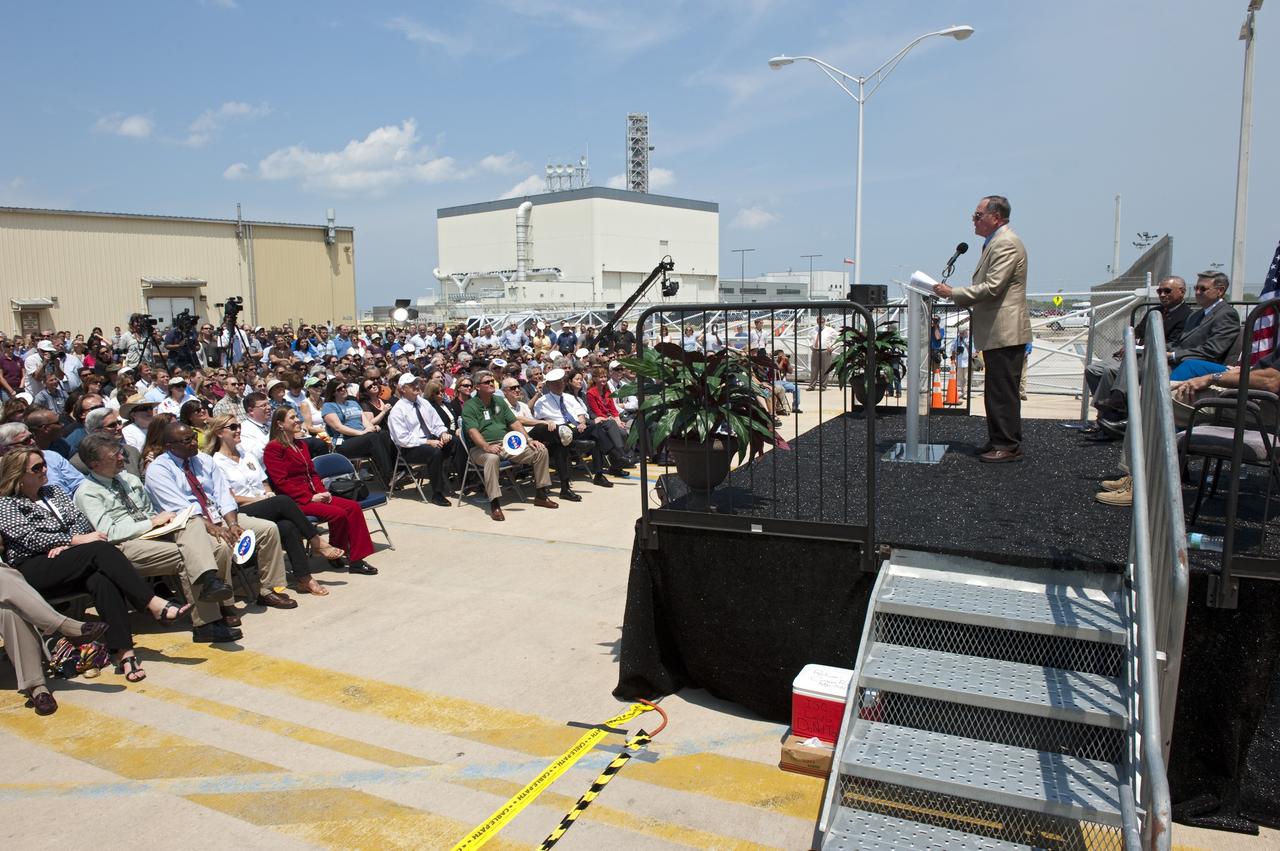
CAPE CANAVERAL, Fla. -- STS-1 Pilot and former Kennedy Space Center Director Bob Crippen addresses the audience after the announcement that revealed the four institutions receiving shuttle orbiters for permanent display. In a ceremony held in front of Orbiter Processing Facility-1 at NASA's Kennedy Space Center in Florida, NASA Administrator Charles Bolden announced the facilities where four shuttle orbiters will be displayed permanently at the conclusion of the Space Shuttle Program. Shuttle Enterprise, the first orbiter built, will move from the Smithsonian's National Air and Space Museum Steven F. Udvar-Hazy Center in Virginia to the Intrepid Sea, Air & Space Museum in New York. The Udvar-Hazy Center will become the new home for shuttle Discovery, which retired after completing its 39th mission in March. Shuttle Endeavour, which is preparing for its final flight at the end of the month, will go to the California Science Center in Los Angeles. Atlantis, which will fly the last planned shuttle mission in June, will be displayed at the Kennedy Space Center Visitor Complex in Florida. Later, employees, their families and friends, will celebrate the 30th anniversary of the first shuttle launch at the visitor complex. Photo credit: NASA/Kim Shiflett
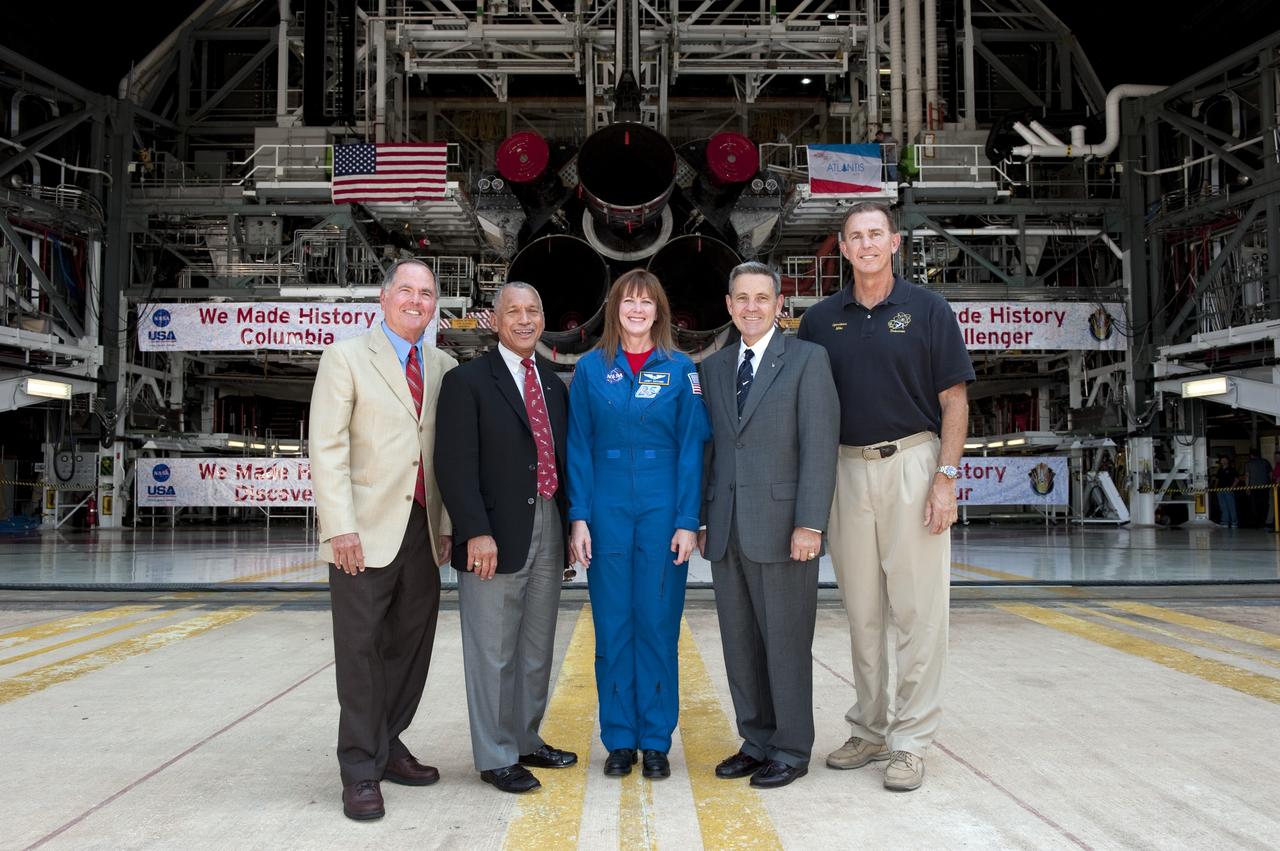
CAPE CANAVERAL, Fla. -- Standing proudly in front of shuttle Atlantis' three main engines are, from left, STS-1 Pilot and former Kennedy Space Center Director Bob Crippen, NASA Administrator Charles Bolden, NASA Astronaut and Director of Flight Crew Operations Janet Kavandi, Kennedy Center Director Bob Cabana and Mike Parrish, space shuttle Endeavour's vehicle manager with United Space Alliance. In a ceremony held in front of Orbiter Processing Facility-1 at NASA's Kennedy Space Center in Florida, NASA Administrator Charles Bolden announced the facilities where four shuttle orbiters will be displayed permanently at the conclusion of the Space Shuttle Program. Shuttle Enterprise, the first orbiter built, will move from the Smithsonian's National Air and Space Museum Steven F. Udvar-Hazy Center in Virginia to the Intrepid Sea, Air & Space Museum in New York. The Udvar-Hazy Center will become the new home for shuttle Discovery, which retired after completing its 39th mission in March. Shuttle Endeavour, which is preparing for its final flight at the end of the month, will go to the California Science Center in Los Angeles. Atlantis, which will fly the last planned shuttle mission in June, will be displayed at the Kennedy Space Center Visitor Complex in Florida. Later, employees, their families and friends, will celebrate the 30th anniversary of the first shuttle launch at the visitor complex. Photo credit: NASA/Kim Shiflett