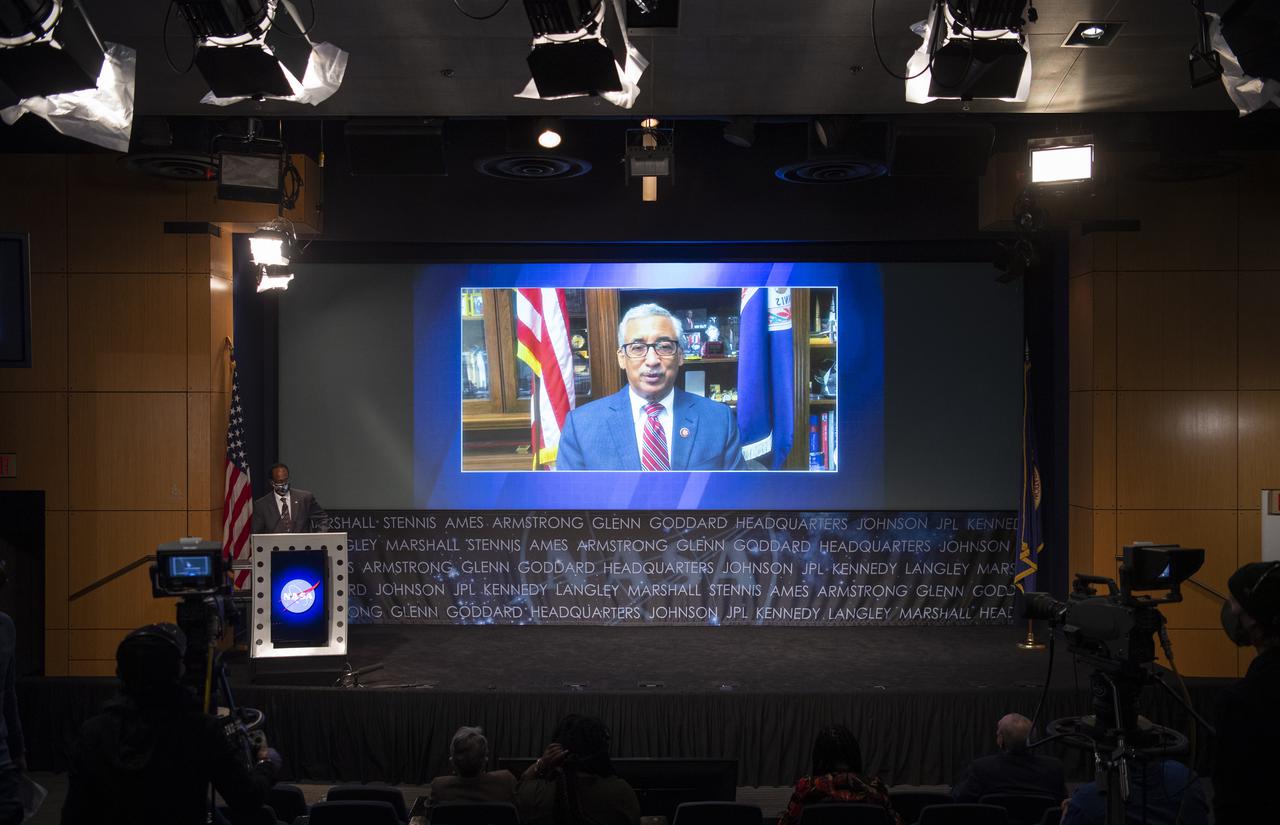
Rep. Bobby Scott (D-Va.), is seen onscreen in a pre-recorded message during a ceremony officially naming the NASA Headquarters building in honor of Mary W. Jackson, Friday, Feb. 26, 2021, at NASA Headquarters in Washington, DC. Mary W. Jackson, the first African American female engineer at NASA, began her career with the agency in the segregated West Area Computing Unit of NASA’s Langley Research Center in Hampton, Virginia. The mathematician and aerospace engineer went on to lead programs influencing the hiring and promotion of women in NASA's science, technology, engineering, and mathematics careers. In 2019, she posthumously received the Congressional Gold Medal. Photo Credit: (NASA/Joel Kowsky)
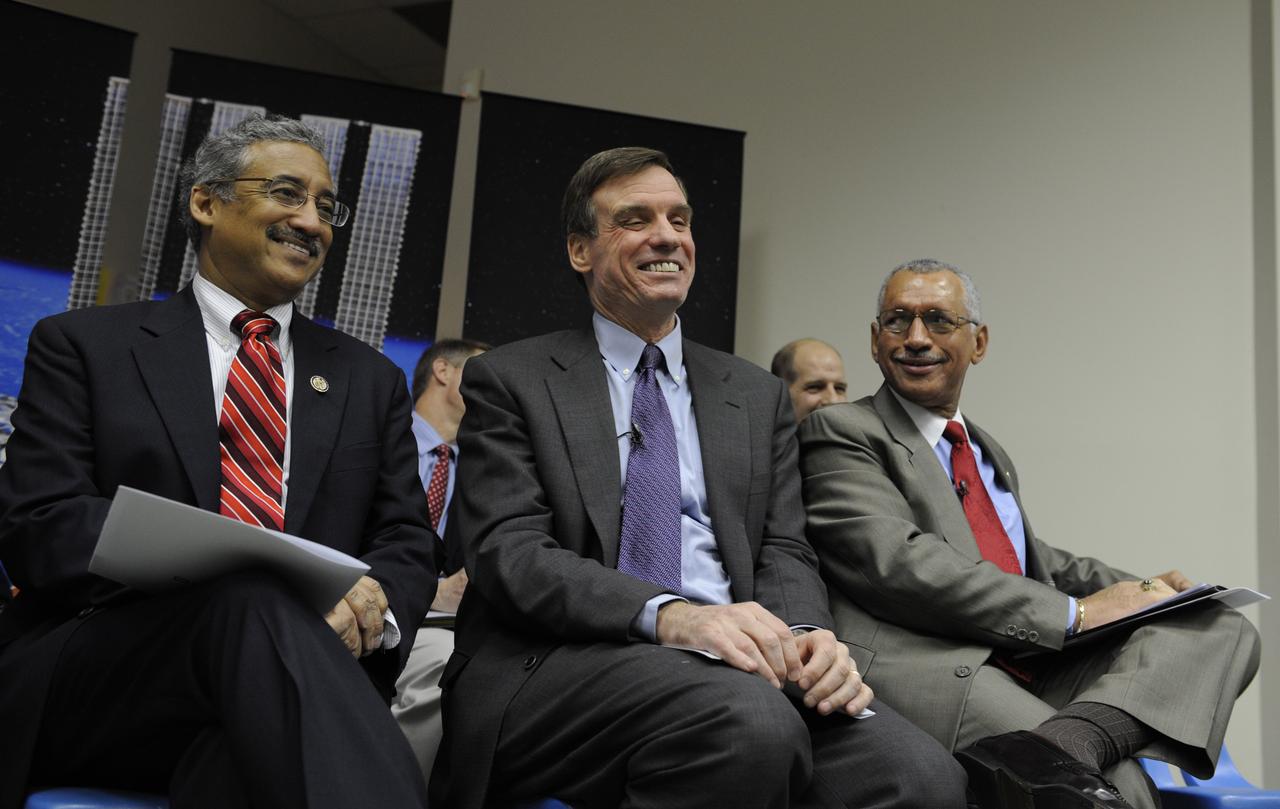
NASA Administrator Charles Bolden, right, shares a laugh with U.S. Sen. Mark Warner, D-Va., center and U.S. Rep. Bobby Scott, D-Va., prior to an event at the MathScience Innovation Center, Friday, Jan. 28, 2011, in Richmond, Va. Bolden later spoke to students from Albert Hill Middle School highlighting the importance of science, technology, engineering and math, or STEM, as he shared his life experiences with the students. (Photo Credit:NASA/Paul E. Alers)
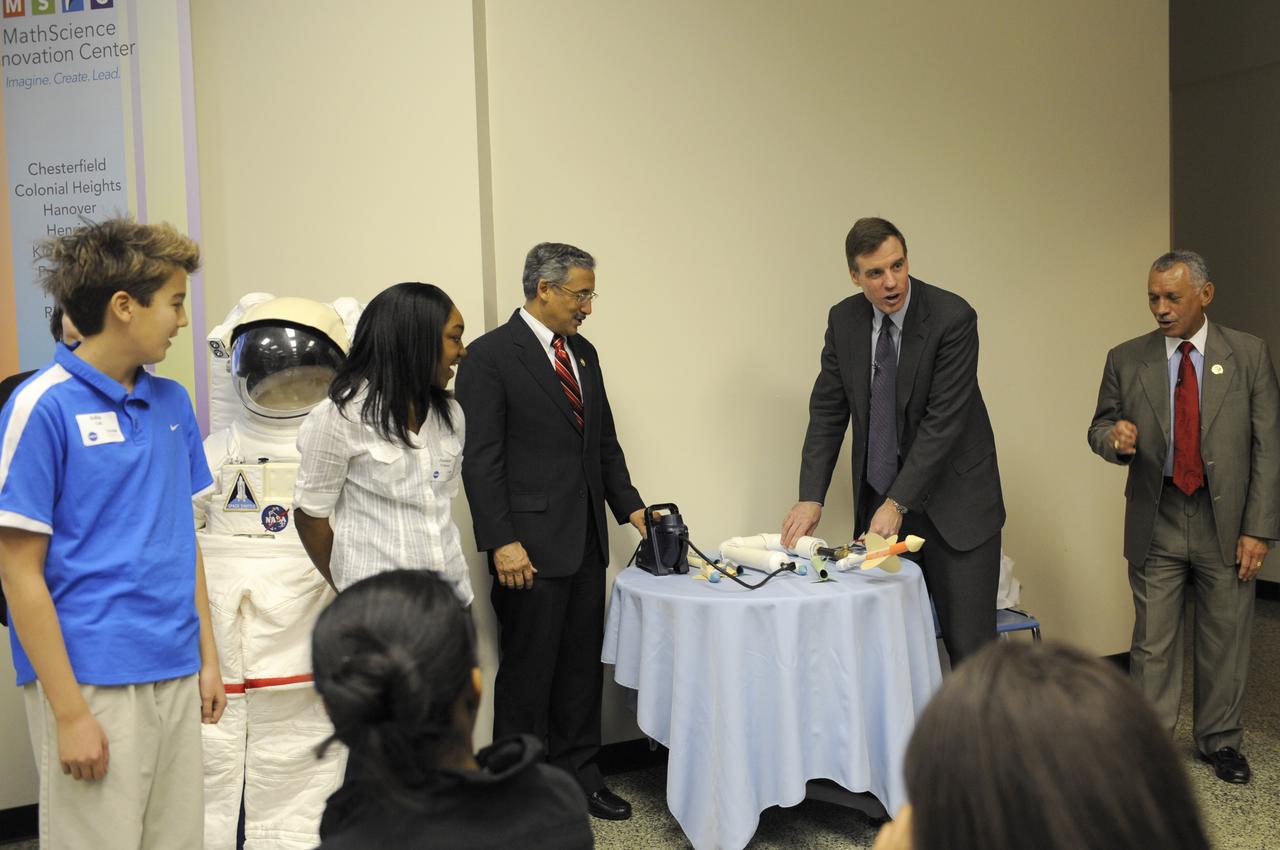
NASA Administrator Charles Bolden, right, counts down along with others as U.S. Sen. Mark Warner, D-Va., readies to launch a paper rocket as U.S. Rep. Bobby Scott, D-Va., third right, looks on, Friday, Jan. 28, 2011, at the MathScience Innovation Center in Richmond, Va. Earlier, Bolden, spoke to students from Albert Hill Middle School where he highlighted the importance of science, technology, engineering and math, or STEM, as he shared his life experiences with the students. (Photo Credit:NASA/Paul E. Alers)
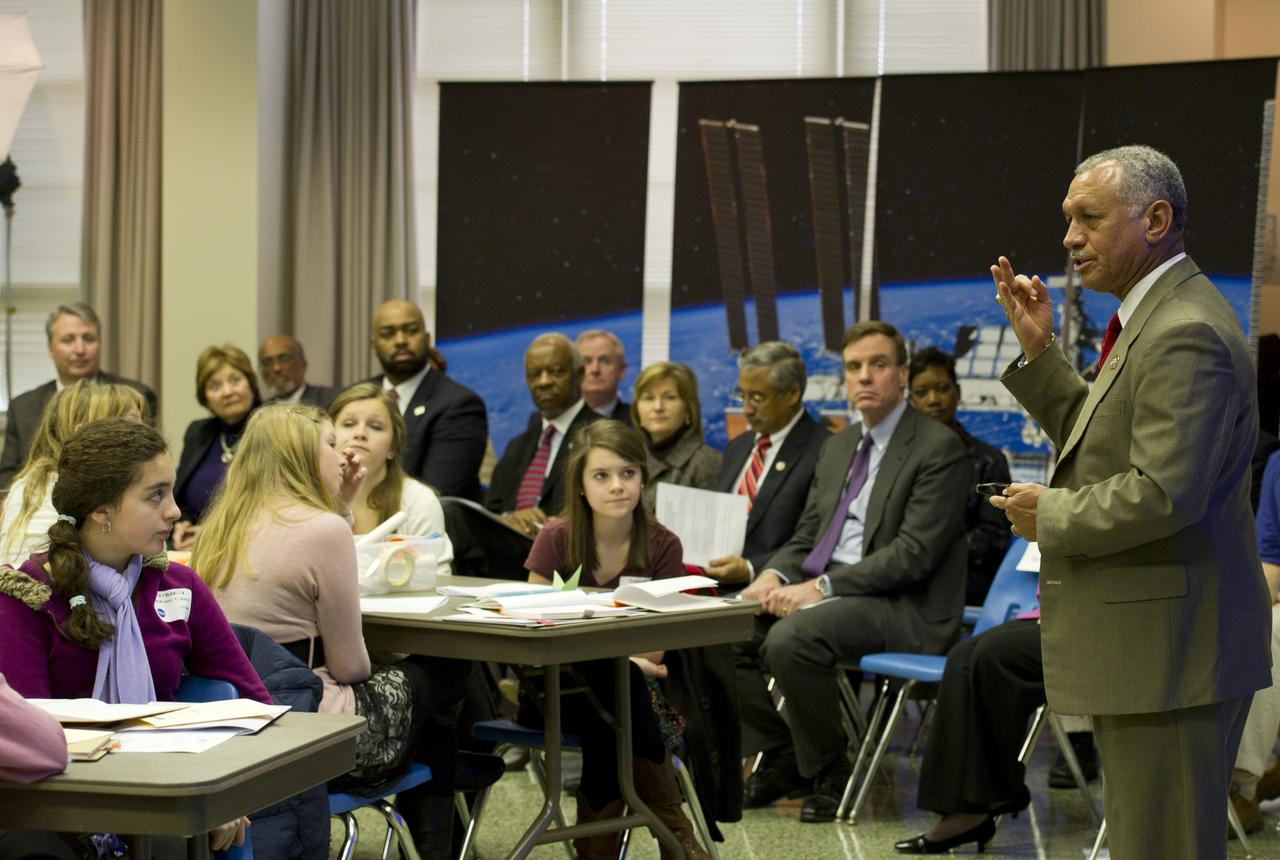
NASA Administrator Charles Bolden speaks to students from Albert Hill Middle School during a visit to the MathScience Innovation Center, Friday, Jan. 28, 2011, in Richmond, Va., as U.S. Sen. Mark Warner, D-Va., U.S. Rep. Bobby Scott, D-Va., seated, look on. During his talk, Administrator Bolden highlighted the importance of science, technology, engineering and math, or STEM, as he shared his life experiences with the students. (Photo Credit:NASA/Paul E. Alers)
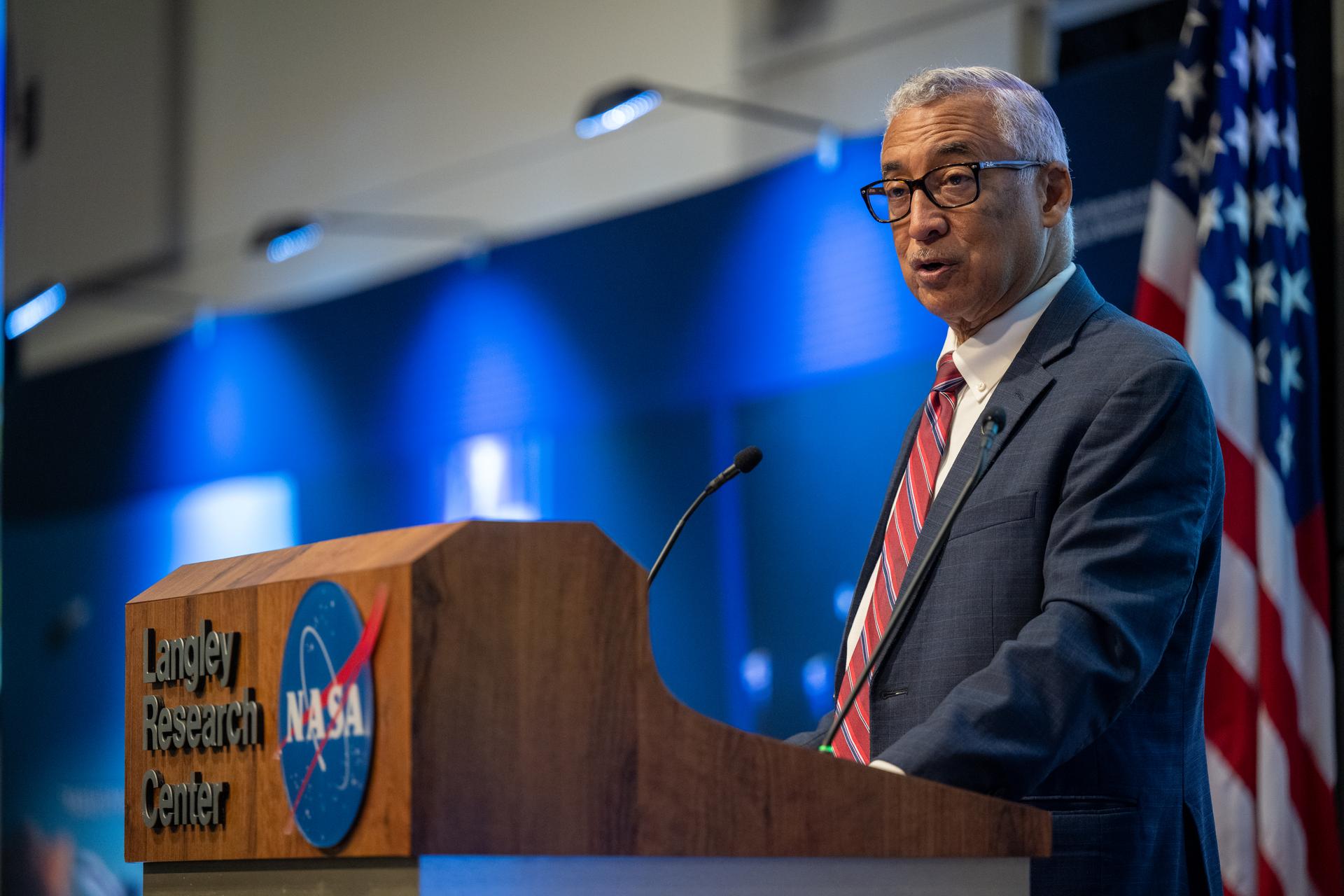
Congressman Robert “Bobby” Scott (D-Va.) delivers remarks during a ribbon cutting ceremony for the Flight Dynamics Research Facility, NASA's newest wind tunnel, Friday, July 31, 2026, at NASA’s Langley Research Center in Hampton, Virginia. The state-of-the-art facility will support research and technology development that will advance the agency’s aeronautics, exploration, and science goals, including establishing a sustained human presence on the lunar surface through the Artemis program and the development of a Moon Base. Photo Credit: (NASA/Keegan Barber)

Annual Metrology and Calibration Working Group Face to Face meeting held at Langley Research Center; Front Row (L to R): Stacy Sigmon – LaRC, Brent Watling – JSC, Ralph Hickman – WFF, Kirk Foster – MSFC, Don Wilson – SSC, Greg Boyd – JSC, Perry King – KSC, Bobby Price – GSFC, Felicia Donnell – GSFC, Perry LaRosa – GRC. Second Row (L to R): Ken Mathews – KSC, Darrell Shoup – WSTF, Gary Kennedy – MSFC, Terry Fleet – GRC, Damon Flansburg – ARC, Salvatore Tomaselli - WFF, Bruce Farner - SSC, David Scott – JPL, Jim Wachter – KSC, Shawn Britton – LaRC.
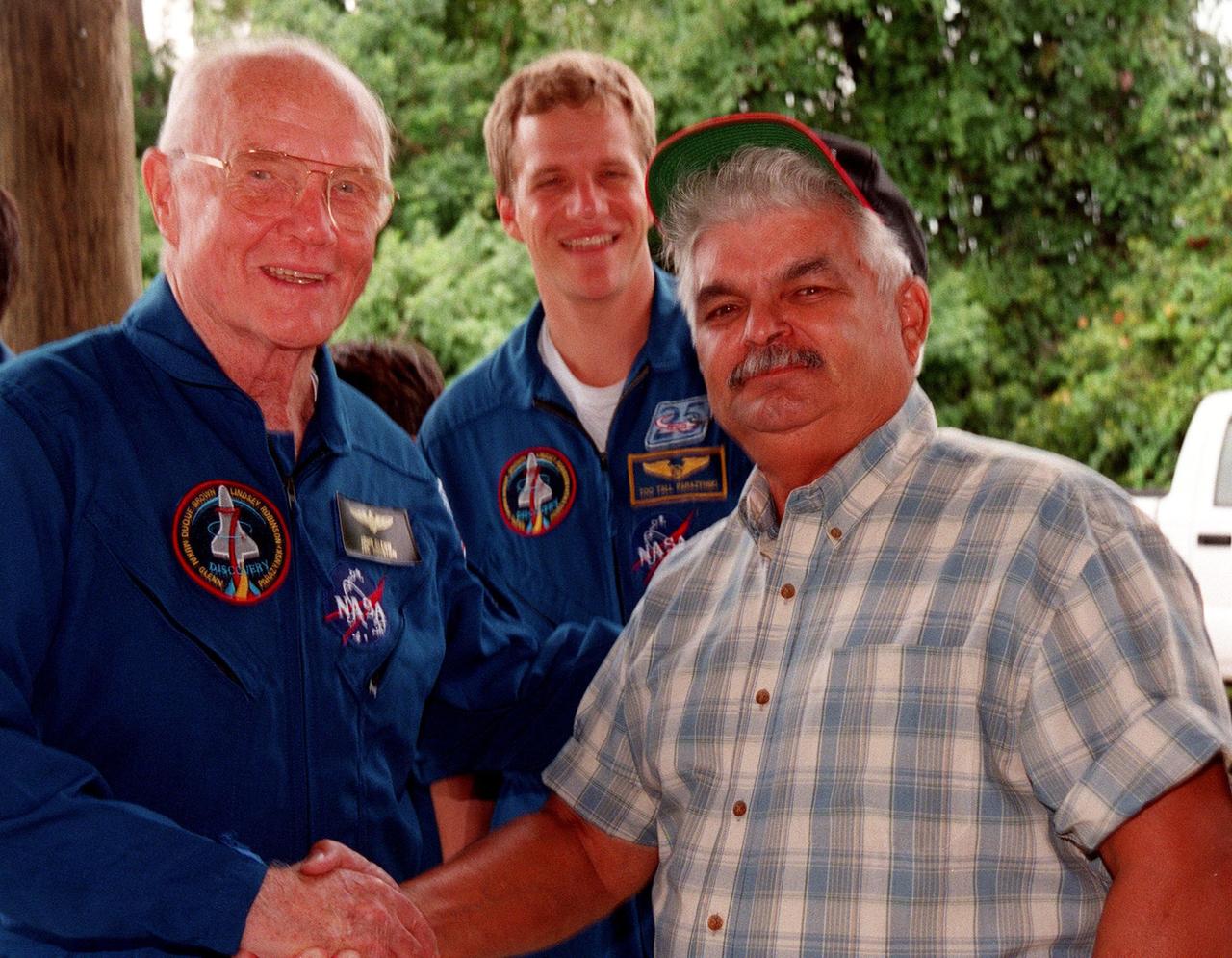
During a break in the Crew Equipment Interface Test (CEIT), Payload Specialist John H. Glenn Jr.(left), a senator from Ohio, greets Bobby Miranda. Miranda was a NASA photographer for Glenn's first flight on Friendship 7, February 1962. In the background is Mission Specialist Scott E. Parazynski. The CEIT gives astronauts an opportunity for a hands-on look at the payloads and equipment with which they will be working on orbit. The launch of the STS-95 mission is scheduled for Oct. 29, 1998, on the Space Shuttle Discovery. The mission includes research payloads such as the Spartan solar-observing deployable spacecraft, the Hubble Space Telescope Orbital Systems Test Platform, the International Extreme Ultraviolet Hitchhiker, as well as the SPACEHAB single module with experiments on space flight and the aging process
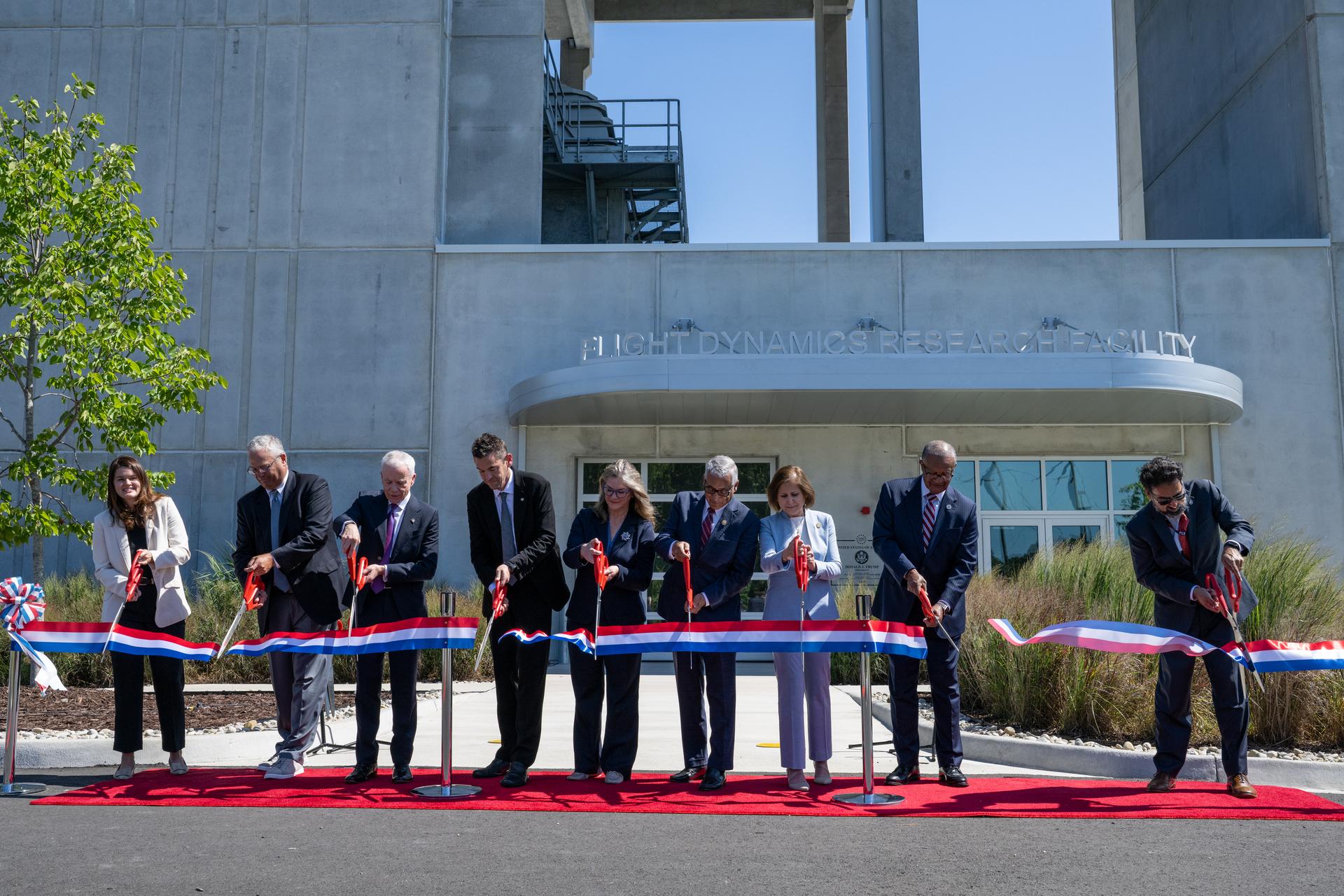
From left to right, Casey Swails, NASA Deputy Associate Administrator, Mike Waller, Vice President of BL Harbert International Federal Division, Edward C. Forst, Administrator of the General Services Administration, NASA Administrator Jared Isaacman, Dr. Trina Dyal, director of NASA's Langley Research Center, Congressman Robert “Bobby” Scott (D-Va.), Virginia Lt. Governor Ghazala F. Hashmi, City of Hampton Mayor Jimmy Gray, and Amit Kshatriya, NASA Associate Administrator cut the ribbon to open the Flight Dynamics Research Facility, NASA's newest wind tunnel, Friday, July 31, 2026, at NASA’s Langley Research Center in Hampton, Virginia. The state-of-the-art facility will support research and technology development that will advance the agency’s aeronautics, exploration, and science goals, including establishing a sustained human presence on the lunar surface through the Artemis program and the development of a Moon Base. Photo Credit: (NASA/Keegan Barber)
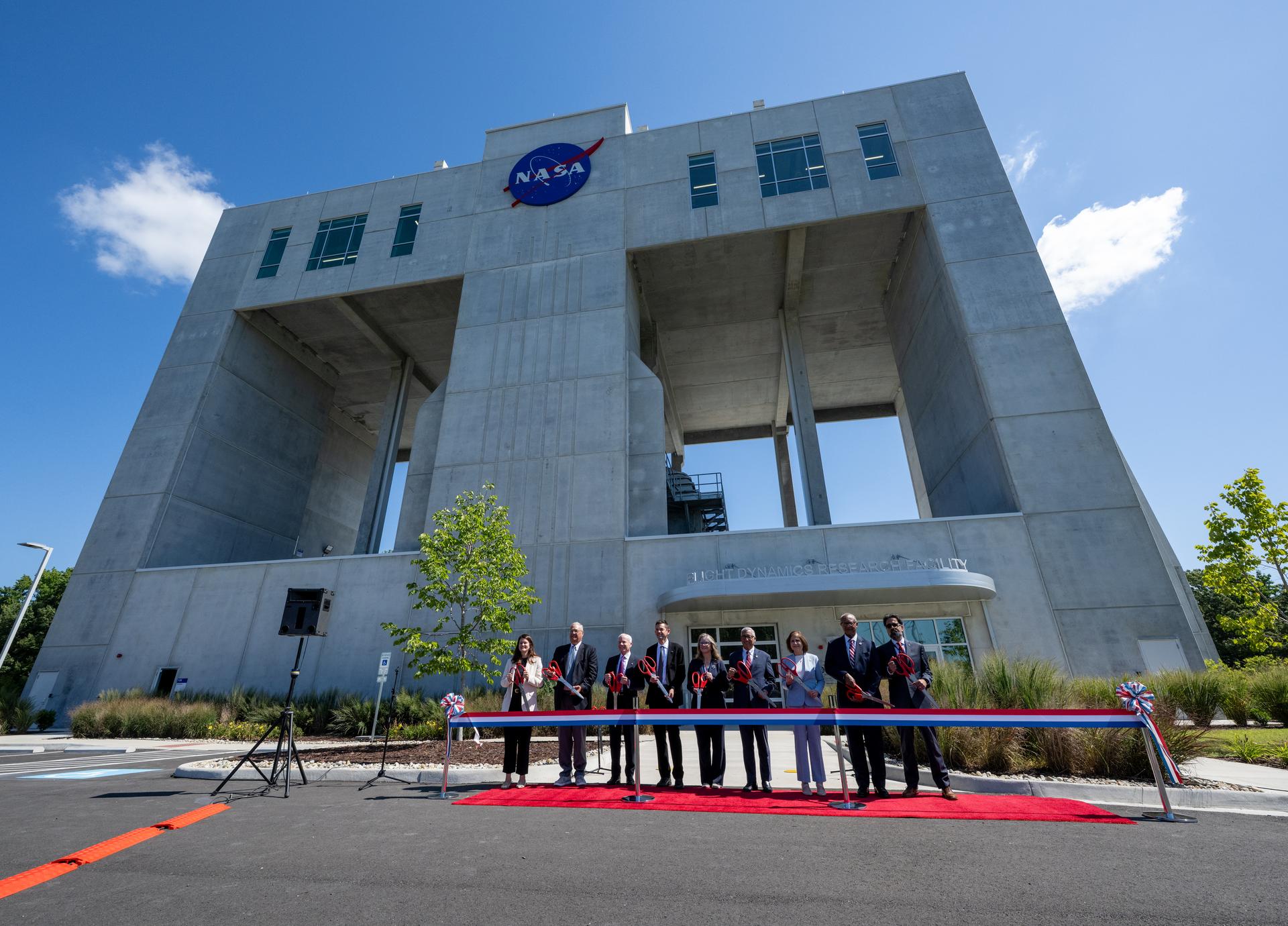
From left to right, Casey Swails, NASA Deputy Associate Administrator, Mike Waller, Vice President of BL Harbert International Federal Division, Edward C. Forst, Administrator of the General Services Administration, NASA Administrator Jared Isaacman, Dr. Trina Dyal, director of NASA's Langley Research Center, Congressman Robert “Bobby” Scott (D-Va.), Virginia Lt. Governor Ghazala F. Hashmi, City of Hampton Mayor Jimmy Gray, and Amit Kshatriya, NASA Associate Administrator pose for a photo before cutting the ribbon to open the Flight Dynamics Research Facility, NASA's newest wind tunnel, Friday, July 31, 2026, at NASA’s Langley Research Center in Hampton, Virginia. The state-of-the-art facility will support research and technology development that will advance the agency’s aeronautics, exploration, and science goals, including establishing a sustained human presence on the lunar surface through the Artemis program and the development of a Moon Base. Photo Credit: (NASA/Keegan Barber)