
S79-36438 (October 1979) --- Astronaut Karol J. Bobko.

51D-05-22 (12-19 April 1985) --- Astronauts Karol J. Bobko (foreground), mission commander, and Donald E. Williams, pilot, are surrounded by teleprinted messages transmitted from ground controllers. The two are on Discovery's middeck.
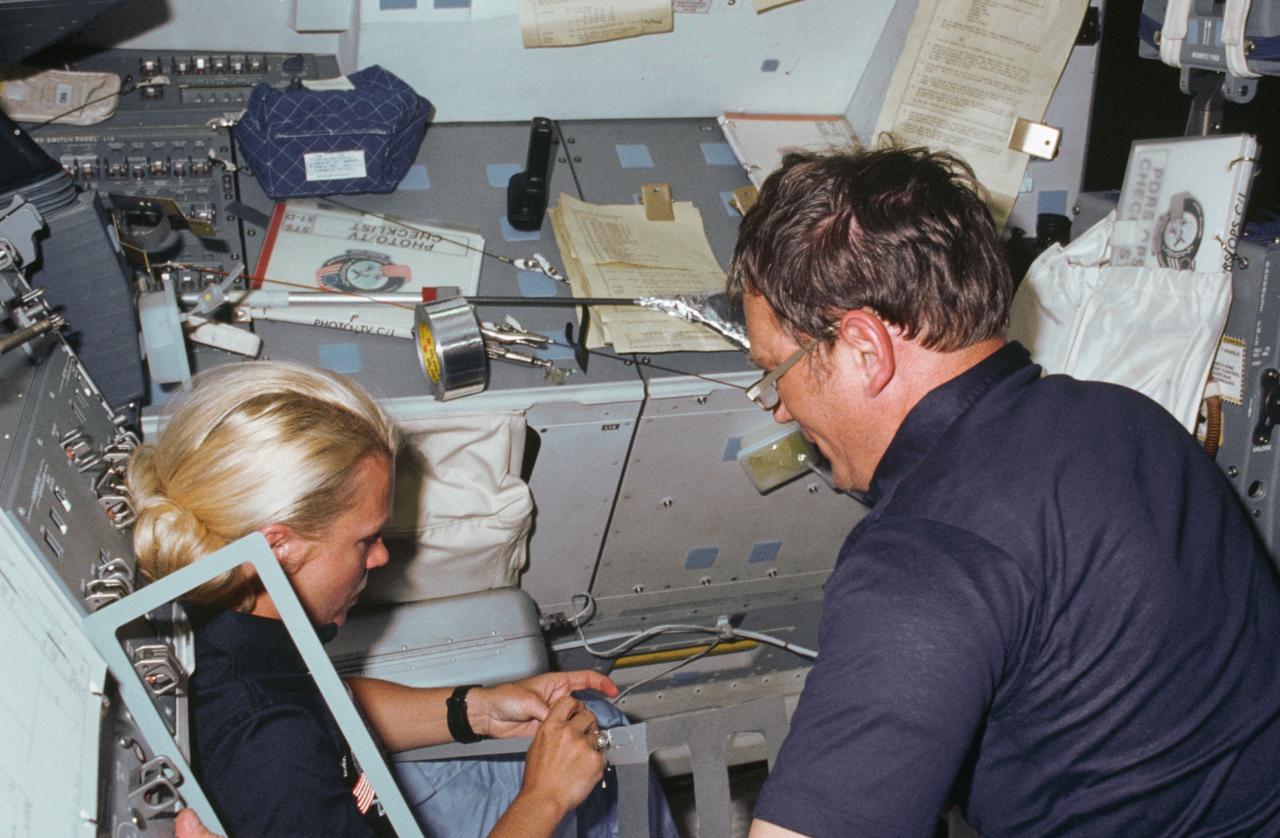
51D-04-015 (15 April 1985) --- Astronaut Rhea Seddon and Karol J. Bobko continue work on snag-type extension for the Remote Manipulator System (RMS) as part of an effort to activate a lever on a troubled communications satellite. Since the crew learned soon after deployment of the Syncom IV (LEASAT) spacecraft that it was not functioning properly plans were formulated for a rendezvous in space between the Discovery and the satellite. A fly swatter-like extension and another resembling a LaCrosse stick were fashioned from onboard supplies and furnishings. Stowage lockers nearby serve as a work bench for the two. At various times during the seven-day mission, the majority of the seven-member crew participated in the tool-making and preparations for an extravehicular activity (EVA) by the flights other two mission specialists -- Jeffrey A. Hoffman and S. David Griggs -- to connect the two tools to the RMS. Bobko is mission commander and Dr. Seddon, a mission specialist.

The crew assigned to the STS-51J mission included (seated left to right) Robert L. Stewart, mission specialist; Karol J. Bobko, commander; and Ronald J. Grabe, pilot. On the back row, left to right, are mission specialists David C. Hilmers, and Major Willliam A, Pailles (USAF). Launched aboard the Space Shuttle Atlantis on October 3, 1985 at 11:15:30 am (EDT), the STS-51J mission was the second mission dedicated to the Department of Defense (DOD).
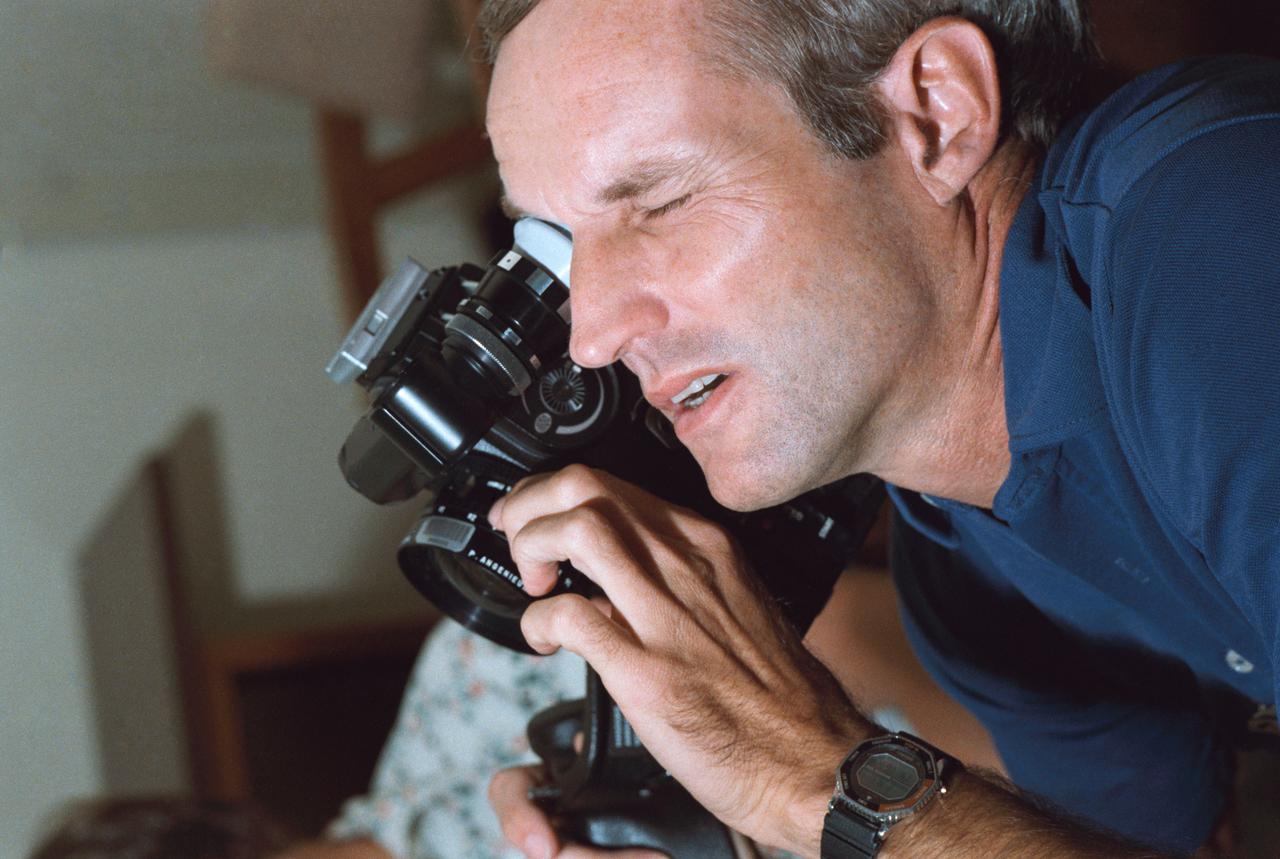
View of STS 51-D crew commander Karol Bobko training with the Arriflex 16mm camera.

Karol Bobko, who commanded STS-51, the first flight of space shuttle Atlantis, background, speaks at the signing ceremony, Friday, Nov. 2, 2012, in Cape Canaveral, Fla. The spacecraft traveled 125,935,769 miles during 33 spaceflights, including 12 missions to the International Space Station. Its final flight, STS-135, closed out the Space Shuttle Program era with a landing on July 21, 2011. Photo Credit: (NASA/Bill Ingalls)
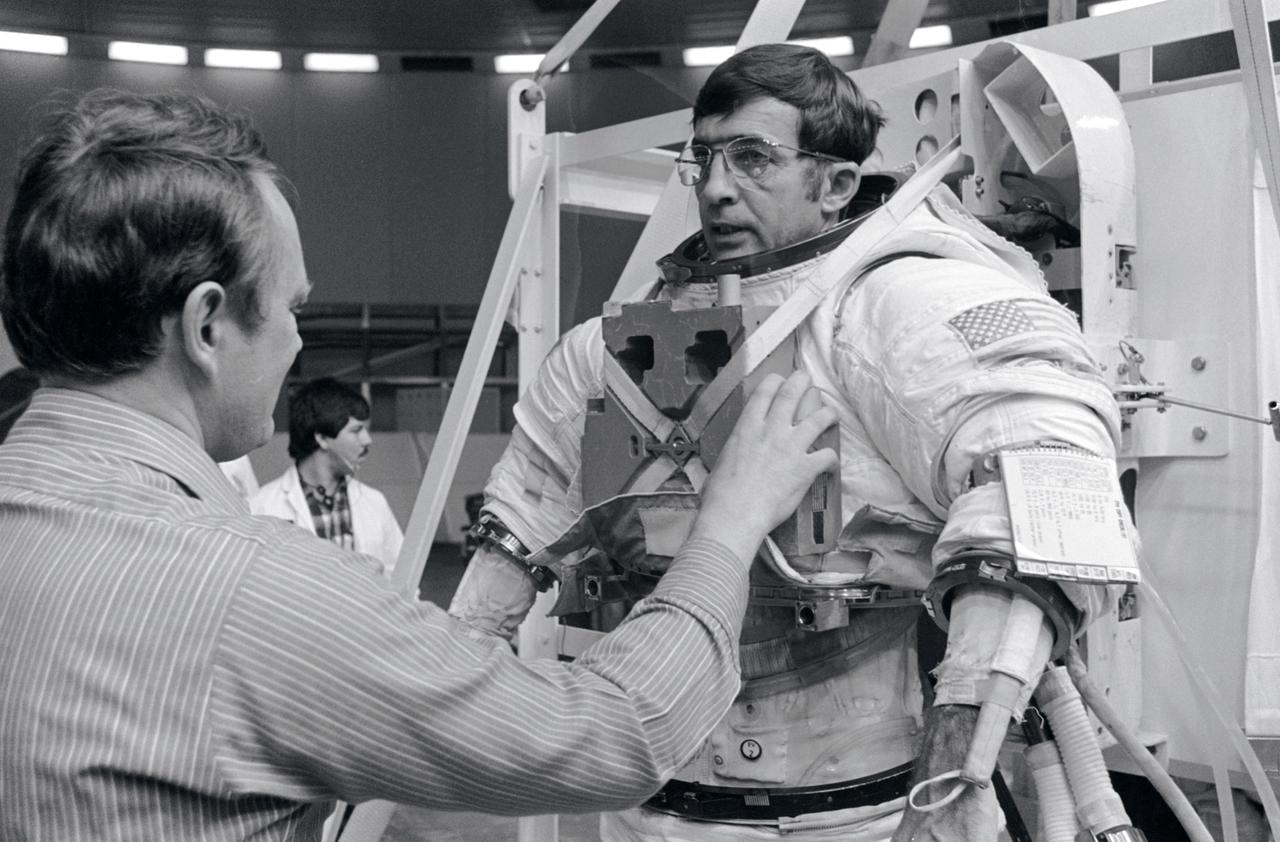
S82-41606 (December 1982) --- Astronaut Karol J. Bobko, left, STS-6 pilot, assists astronaut Donald H. Peterson, STS-6 mission specialist, prior to an underwater training session in the Johnson Space Center?s weightless environment training facility (WET-F). Astronauts F. Story Musgrave and Peterson are scheduled to perform the Space Transportation System?s first extravehicular activity on Challenger?s first flight, slated for early next year. Photo credit: NASA

The crew assigned to the STS-51D mission included (front left to right) Karol J. Bobko, commander; Donald E. Williams, pilot; M. Rhea Seddon, mission specialist; and Jeffrey A. Hoffman, mission specialist. On the back row, left to right, are S. David Griggs, mission specialist; and payload specialists Charles D. Walker, and E. Jake Garn (Republican Utah Senator). Launched aboard the Space Shuttle Discovery on April 12, 1985 at 8:59:05 am (EST), the STS-51D mission’s primary payloads were the TELESAT-1 (ANIK-C) communications satellite and the SYNCOM IV-3 (also known as LEASAT-3).

51D-09-014 (12-19 April 1985) --- U.S. Senator E. J. (Jake) Garn (left), payload specialist; and Karol J. Bobko, mission commander, show a copy of a cartoon from the Doonesbury strip of Garry Trudeau. The senator had been the subject of a series of Trudeau's creations prior to 51-D. The single enlarged panel is autographed by the crewmembers.
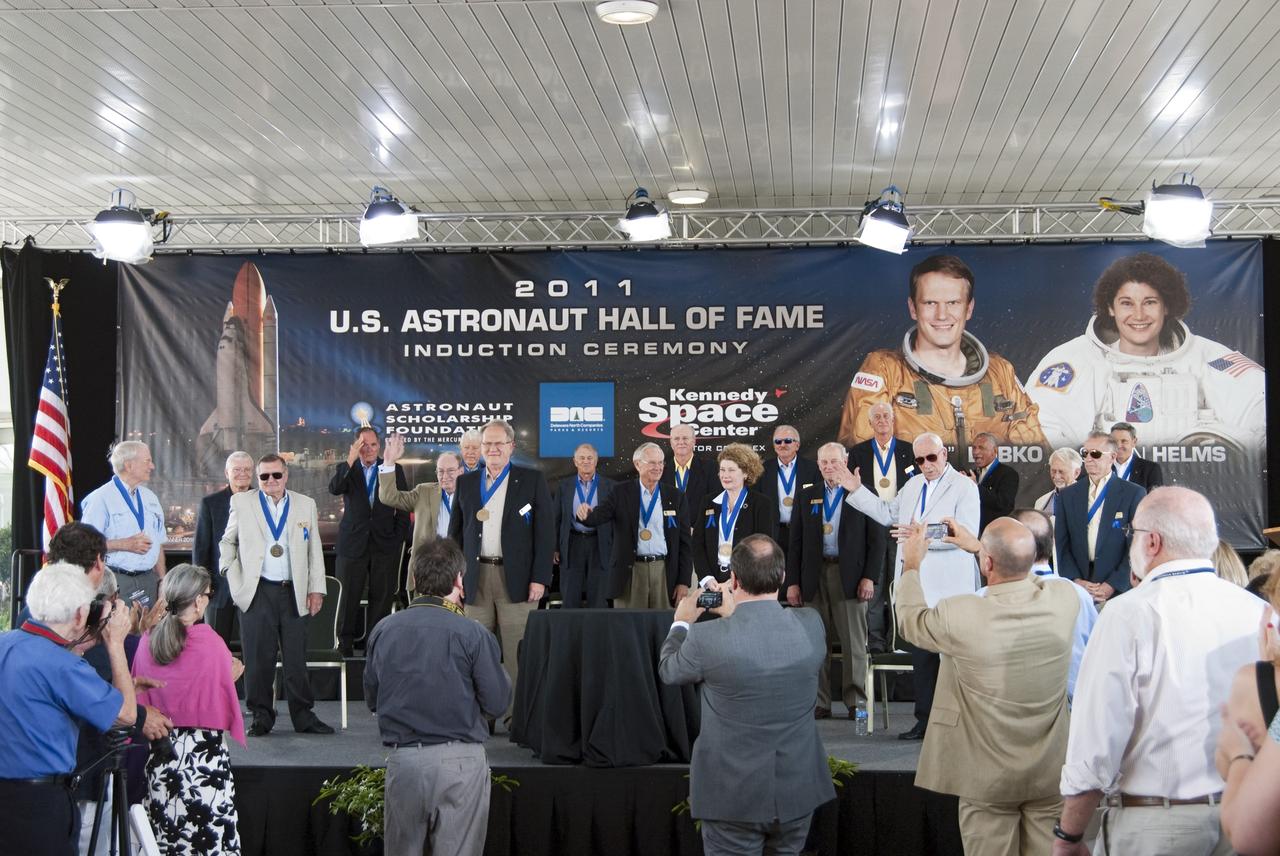
Cape Canaveral, Fla. -- At NASA's Kennedy Space Center Visitor Complex in Florida, the audiences applauds Karol "Bo" Bobko and Susan Helms after their induction into the U.S. Astronaut Hall of Fame. Hall of Fame astronauts and visitors gathered to honor 2011 inductees Karol "Bo" Bobko and Susan Helms. During his 19 years in the astronaut program, Bobko flew on three space shuttle missions and logged more than 386 hours in space. He served as pilot during the first voyage of space shuttle Challenger aboard STS-6 in April 1983 and as commander during the maiden flight of space shuttle Atlantis aboard STS-51J in October 1985. Helms, a five-time space shuttle astronaut, has logged 5,064 hours in space. During her stay onboard the International Space Station as a member of the Expedition-2 crew in 2001, Helms performed a world record 8 hour and 56 minute spacewalk. Bobko and Helms join the ranks of the U.S. Astronaut Hall of Fame bringing the number of space explorers enshrined in the Hall of Fame to 79. Photo Credit: NASA/Jim Grossmann
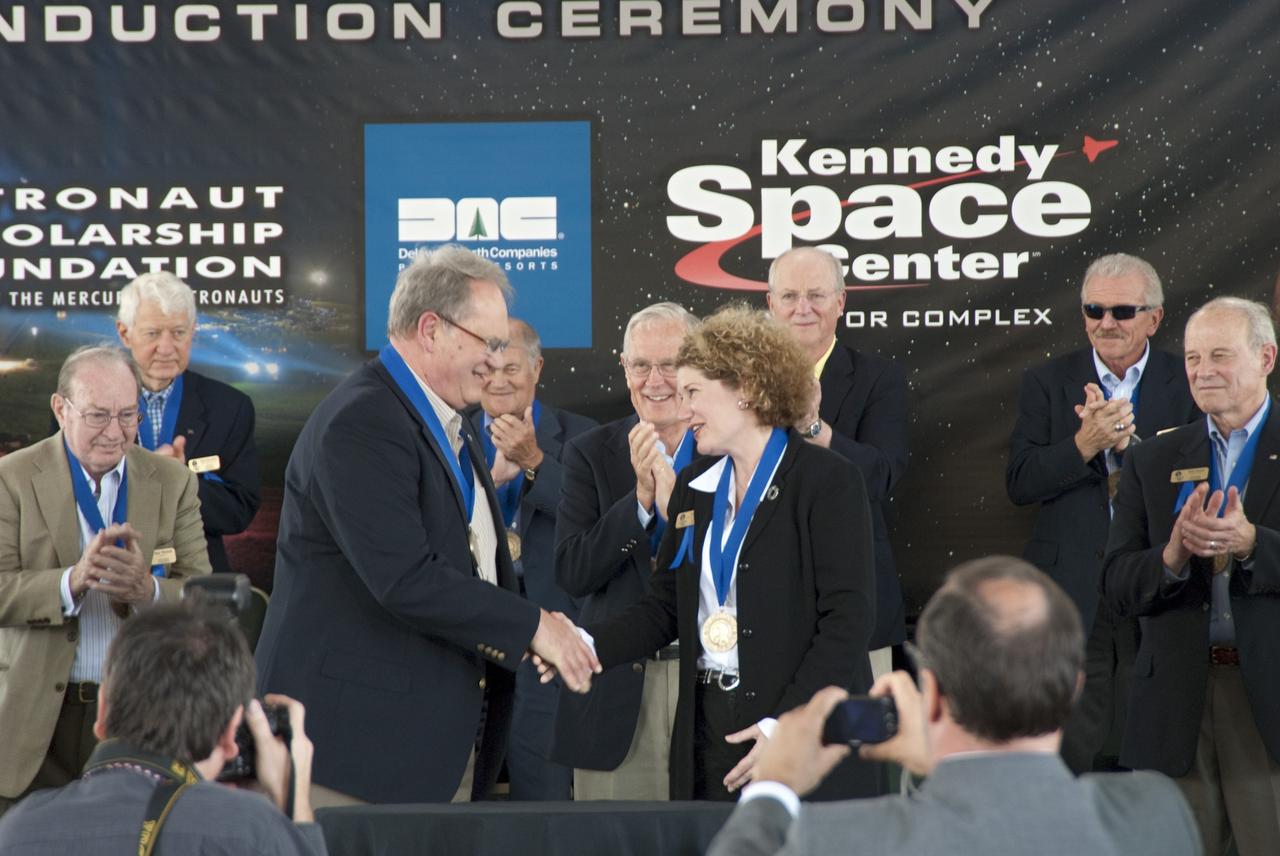
Cape Canaveral, Fla. -- Karol "Bo" Bobko and Susan Helms shake hands in mutual congratulations on their induction into the U.S. Astronaut Hall of Fame at a ceremony held at NASA's Kennedy Space Center Visitor Complex in Florida. Hall of Fame astronauts and visitors gathered to honor 2011 inductees Karol "Bo" Bobko and Susan Helms. During his 19 years in the astronaut program, Bobko flew on three space shuttle missions and logged more than 386 hours in space. He served as pilot during the first voyage of space shuttle Challenger aboard STS-6 in April 1983 and as commander during the maiden flight of space shuttle Atlantis aboard STS-51J in October 1985. Helms, a five-time space shuttle astronaut, has logged 5,064 hours in space. During her stay onboard the International Space Station as a member of the Expedition-2 crew in 2001, Helms performed a world record 8 hour and 56 minute spacewalk. Bobko and Helms join the ranks of the U.S. Astronaut Hall of Fame bringing the number of space explorers enshrined in the Hall of Fame to 79. Photo Credit: NASA/Jim Grossmann
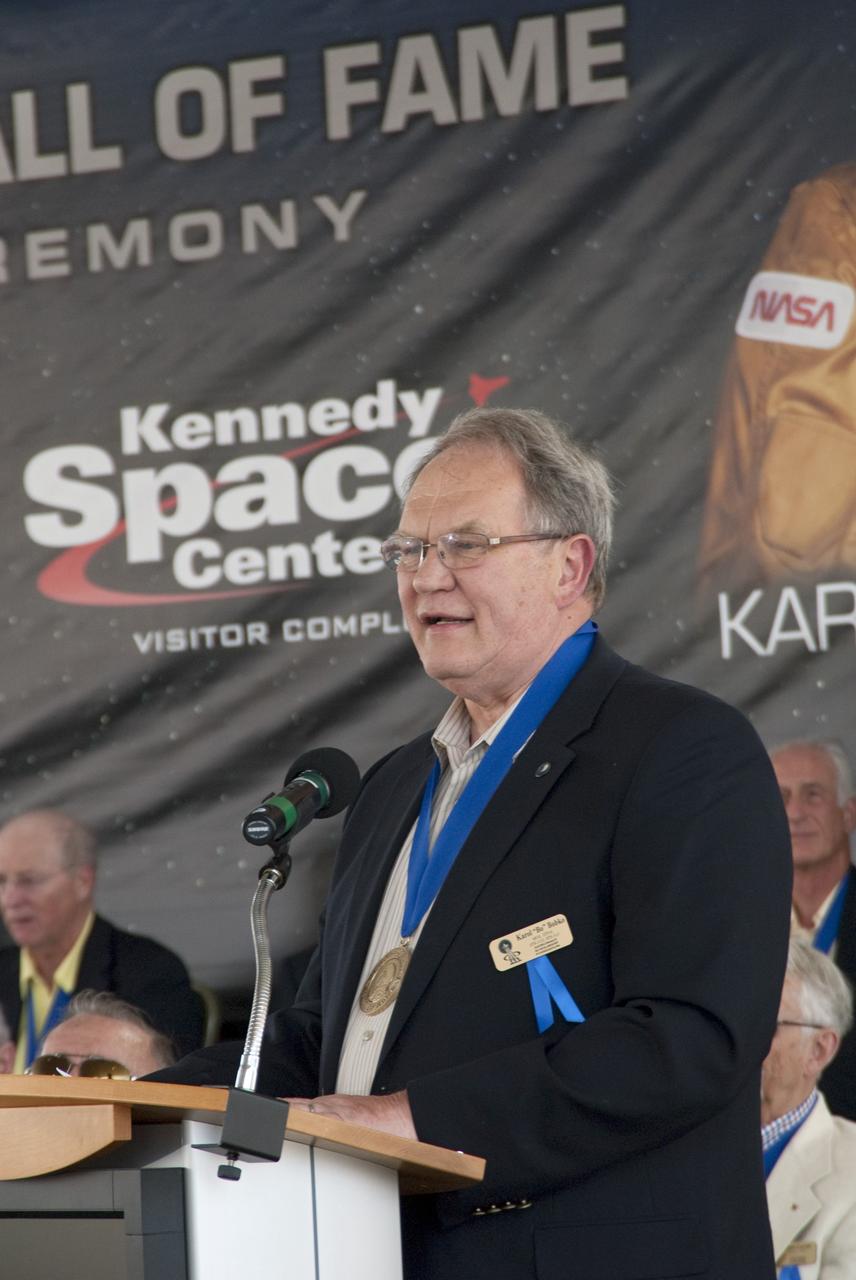
Cape Canaveral, Fla. -- New inductee astronaut Karol "Bo" Bobko, addresses the spectators at the 2011 U.S. Astronaut Hall of Fame ceremony held at NASA's Kennedy Space Center Visitor Complex in Florida. Hall of Fame astronauts and visitors gathered to honor 2011 inductees Karol "Bo" Bobko and Susan Helms. During his 19 years in the astronaut program, Bobko flew on three space shuttle missions and logged more than 386 hours in space. He served as pilot during the first voyage of space shuttle Challenger aboard STS-6 in April 1983 and as commander during the maiden flight of space shuttle Atlantis aboard STS-51J in October 1985. Helms, a five-time space shuttle astronaut, has logged 5,064 hours in space. During her stay onboard the International Space Station as a member of the Expedition-2 crew in 2001, Helms performed a world record 8 hour and 56 minute spacewalk. Bobko and Helms join the ranks of the U.S. Astronaut Hall of Fame bringing the number of space explorers enshrined in the Hall of Fame to 79. Photo Credit: NASA/Jim Grossmann

KENNEDY SPACE CENTER, FLA. - Liftoff of STS-6, Orbiter Challenger, from Complex 39A carrying astronauts Paul Weitz, Karol J. Bobko, Donald H. Peterson and Dr. Story Musgrave.
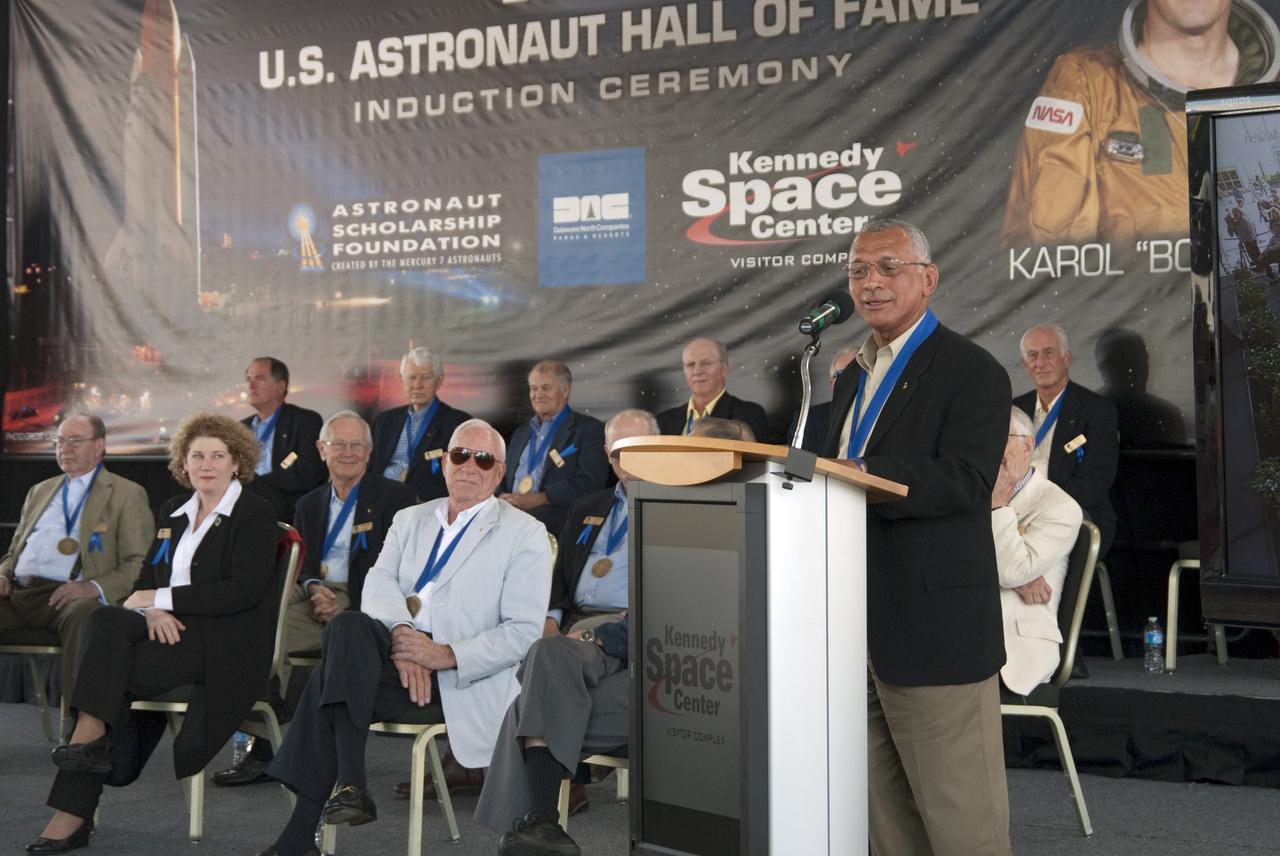
Cape Canaveral, Fla. -- Hall of Fame astronaut and present NASA Administrator Charles Bolden addresses the spectators at the 2011 U.S. Astronaut Hall of Fame ceremony held at NASA's Kennedy Space Center Visitor Complex in Florida. Hall of Fame astronauts and visitors gathered to honor 2011 inductees Karol "Bo" Bobko and Susan Helms. During his 19 years in the astronaut program, Bobko flew on three space shuttle missions and logged more than 386 hours in space. He served as pilot during the first voyage of space shuttle Challenger aboard STS-6 in April 1983 and as commander during the maiden flight of space shuttle Atlantis aboard STS-51J in October 1985. Helms, a five-time space shuttle astronaut, has logged 5,064 hours in space. During her stay onboard the International Space Station as a member of the Expedition-2 crew in 2001, Helms performed a world record 8 hour and 56 minute spacewalk. Bobko and Helms join the ranks of the U.S. Astronaut Hall of Fame bringing the number of space explorers enshrined in the Hall of Fame to 79. Photo Credit: NASA/Jim Grossmann
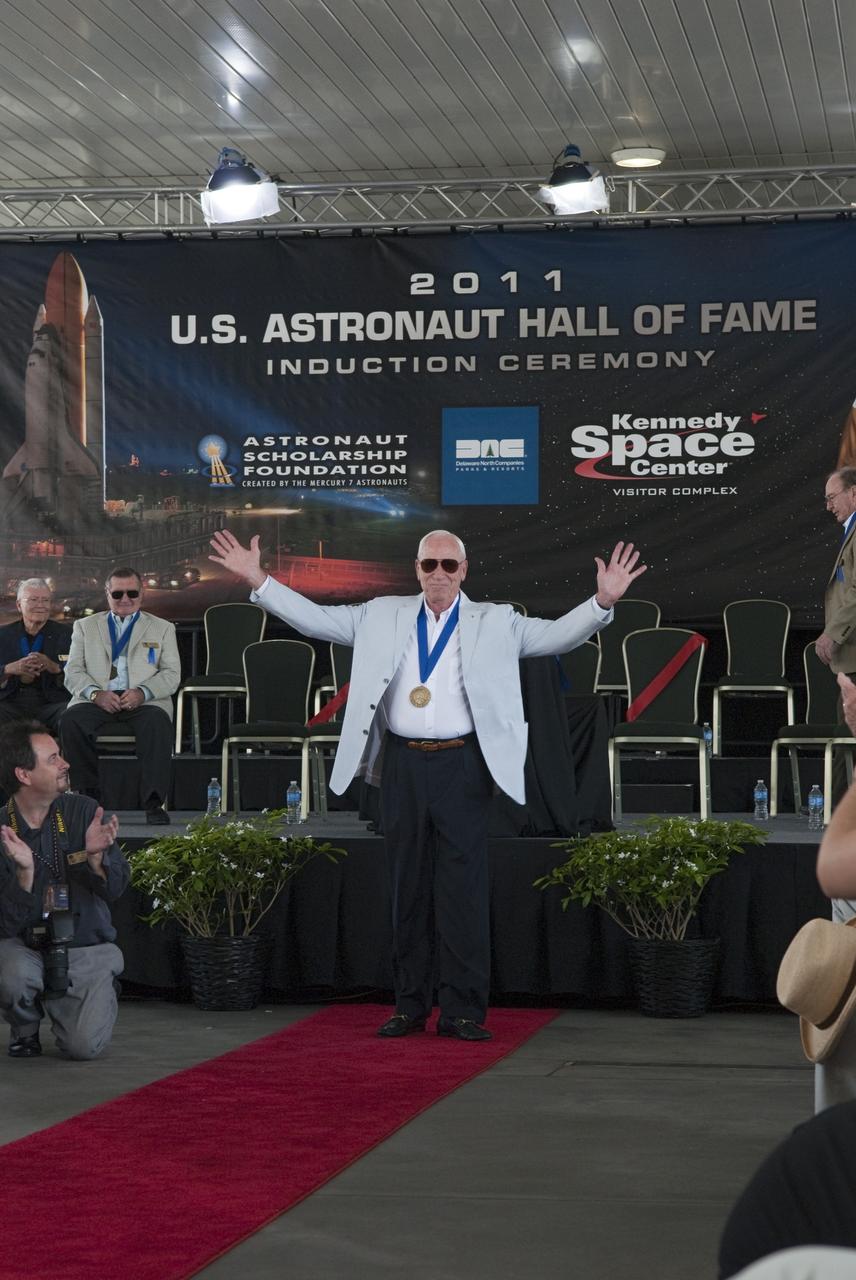
Cape Canaveral, Fla. -- Hall of Fame astronaut Al Worden thanks the audience for their applause at the 2011 U.S. Astronaut Hall of Fame induction ceremony at NASA's Kennedy Space Center Visitor Complex in Florida. Hall of Fame astronauts and visitors gathered to honor 2011 inductees Karol "Bo" Bobko and Susan Helms. During his 19 years in the astronaut program, Bobko flew on three space shuttle missions and logged more than 386 hours in space. He served as pilot during the first voyage of space shuttle Challenger aboard STS-6 in April 1983 and as commander during the maiden flight of space shuttle Atlantis aboard STS-51J in October 1985. Helms, a five-time space shuttle astronaut, has logged 5,064 hours in space. During her stay onboard the International Space Station as a member of the Expedition-2 crew in 2001, Helms performed a world record 8 hour and 56 minute spacewalk. Bobko and Helms join the ranks of the U.S. Astronaut Hall of Fame bringing the number of space explorers enshrined in the Hall of Fame to 79. Photo Credit: NASA/Jim Grossmann
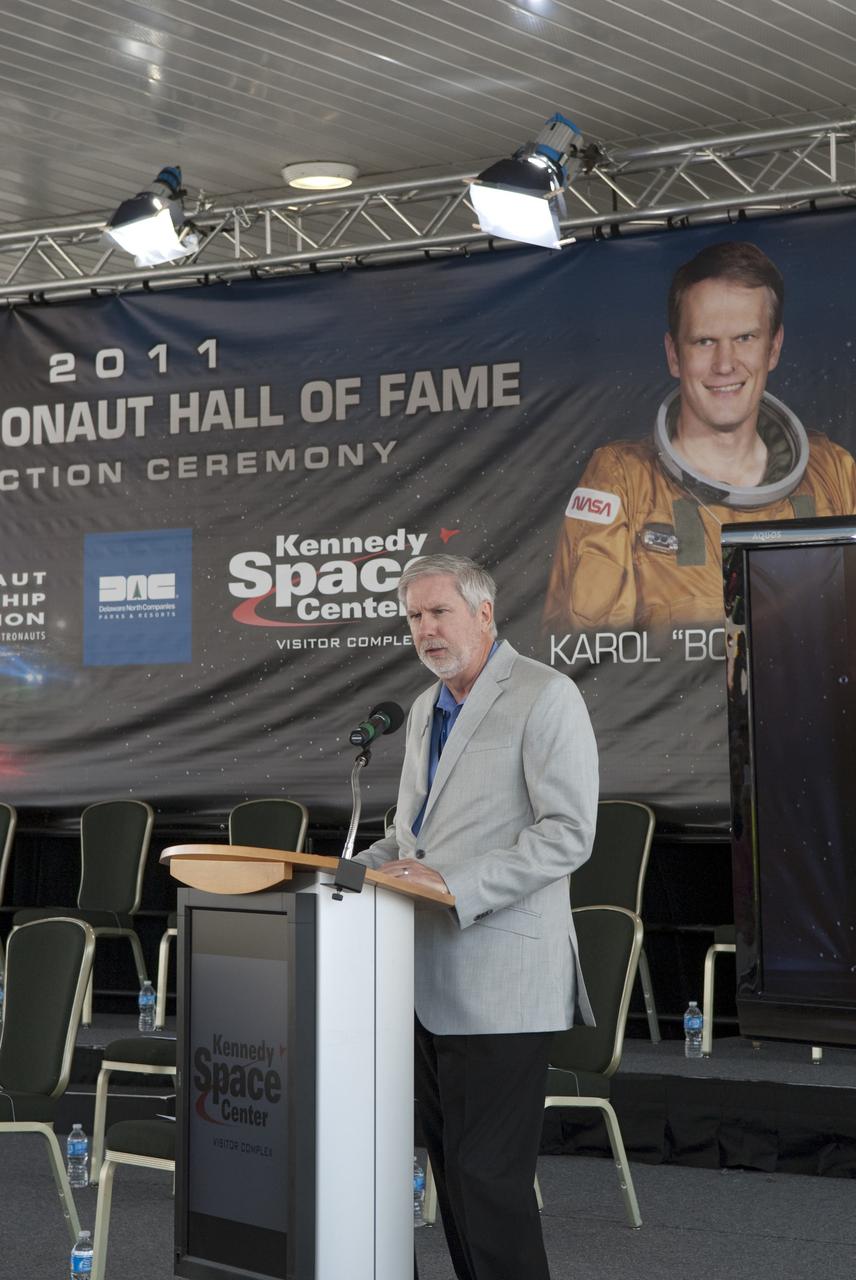
Cape Canaveral, Fla. -- At the 2011 U.S. Astronaut Hall of Fame induction ceremony at NASA's Kennedy Space Center Visitor Complex in Florida, Bill Moore, Visitor Complex chief operating officer, addresses the inductees and visitors with opening remarks. Hall of Fame astronauts and visitors gathered to honor 2011 inductees Karol "Bo" Bobko and Susan Helms. During his 19 years in the astronaut program, Bobko flew on three space shuttle missions and logged more than 386 hours in space. He served as pilot during the first voyage of space shuttle Challenger aboard STS-6 in April 1983 and as commander during the maiden flight of space shuttle Atlantis aboard STS-51J in October 1985. Helms, a five-time space shuttle astronaut, has logged 5,064 hours in space. During her stay onboard the International Space Station as a member of the Expedition-2 crew in 2001, Helms performed a world record 8 hour and 56 minute spacewalk. Bobko and Helms join the ranks of the U.S. Astronaut Hall of Fame bringing the number of space explorers enshrined in the Hall of Fame to 79. Photo Credit: NASA/Jim Grossmann
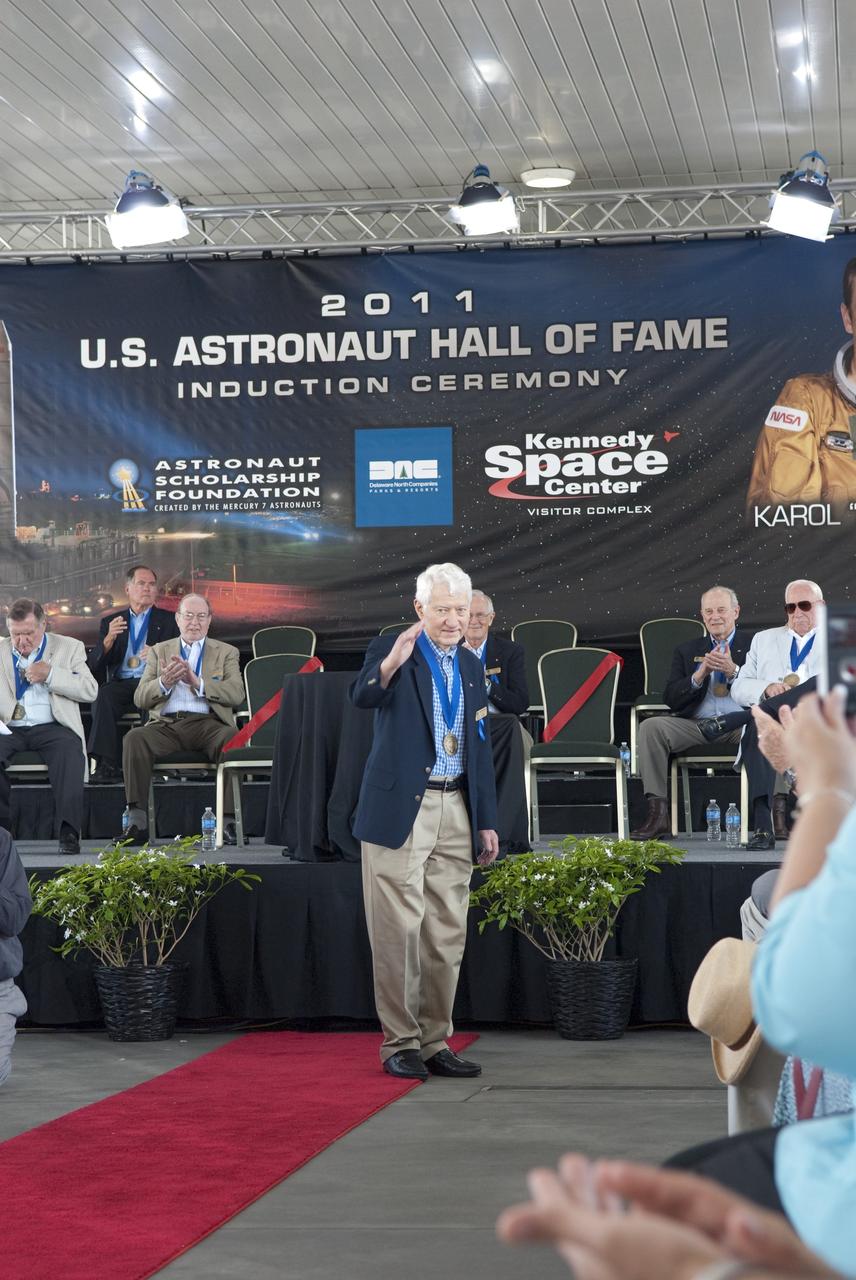
Cape Canaveral, Fla. -- Hall of Fame astronaut Hank Hartsfield thanks the audience for their applause at the 2011 U.S. Astronaut Hall of Fame induction ceremony at NASA's Kennedy Space Center Visitor Complex in Florida. Hall of Fame astronauts and visitors gathered to honor 2011 inductees Karol "Bo" Bobko and Susan Helms. During his 19 years in the astronaut program, Bobko flew on three space shuttle missions and logged more than 386 hours in space. He served as pilot during the first voyage of space shuttle Challenger aboard STS-6 in April 1983 and as commander during the maiden flight of space shuttle Atlantis aboard STS-51J in October 1985. Helms, a five-time space shuttle astronaut, has logged 5,064 hours in space. During her stay onboard the International Space Station as a member of the Expedition-2 crew in 2001, Helms performed a world record 8 hour and 56 minute spacewalk. Bobko and Helms join the ranks of the U.S. Astronaut Hall of Fame bringing the number of space explorers enshrined in the Hall of Fame to 79. Photo Credit: NASA/Jim Grossmann
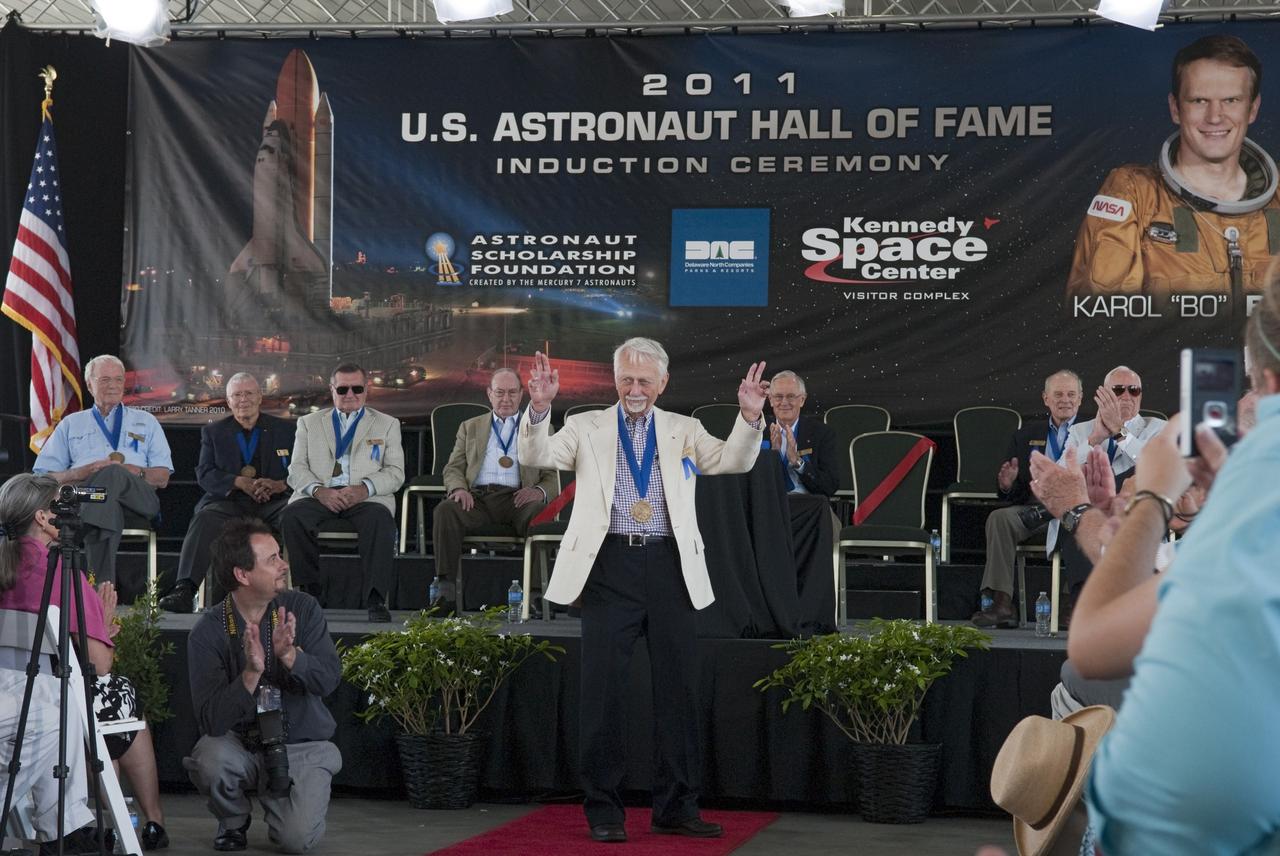
Cape Canaveral, Fla. -- Hall of Fame astronaut Owen Garriott thanks the audience for their applause at the 2011 U.S. Astronaut Hall of Fame induction ceremony at NASA's Kennedy Space Center Visitor Complex in Florida. Hall of Fame astronauts and visitors gathered to honor 2011 inductees Karol "Bo" Bobko and Susan Helms. During his 19 years in the astronaut program, Bobko flew on three space shuttle missions and logged more than 386 hours in space. He served as pilot during the first voyage of space shuttle Challenger aboard STS-6 in April 1983 and as commander during the maiden flight of space shuttle Atlantis aboard STS-51J in October 1985. Helms, a five-time space shuttle astronaut, has logged 5,064 hours in space. During her stay onboard the International Space Station as a member of the Expedition-2 crew in 2001, Helms performed a world record 8 hour and 56 minute spacewalk. Bobko and Helms join the ranks of the U.S. Astronaut Hall of Fame bringing the number of space explorers enshrined in the Hall of Fame to 79. Photo Credit: NASA/Jim Grossmann
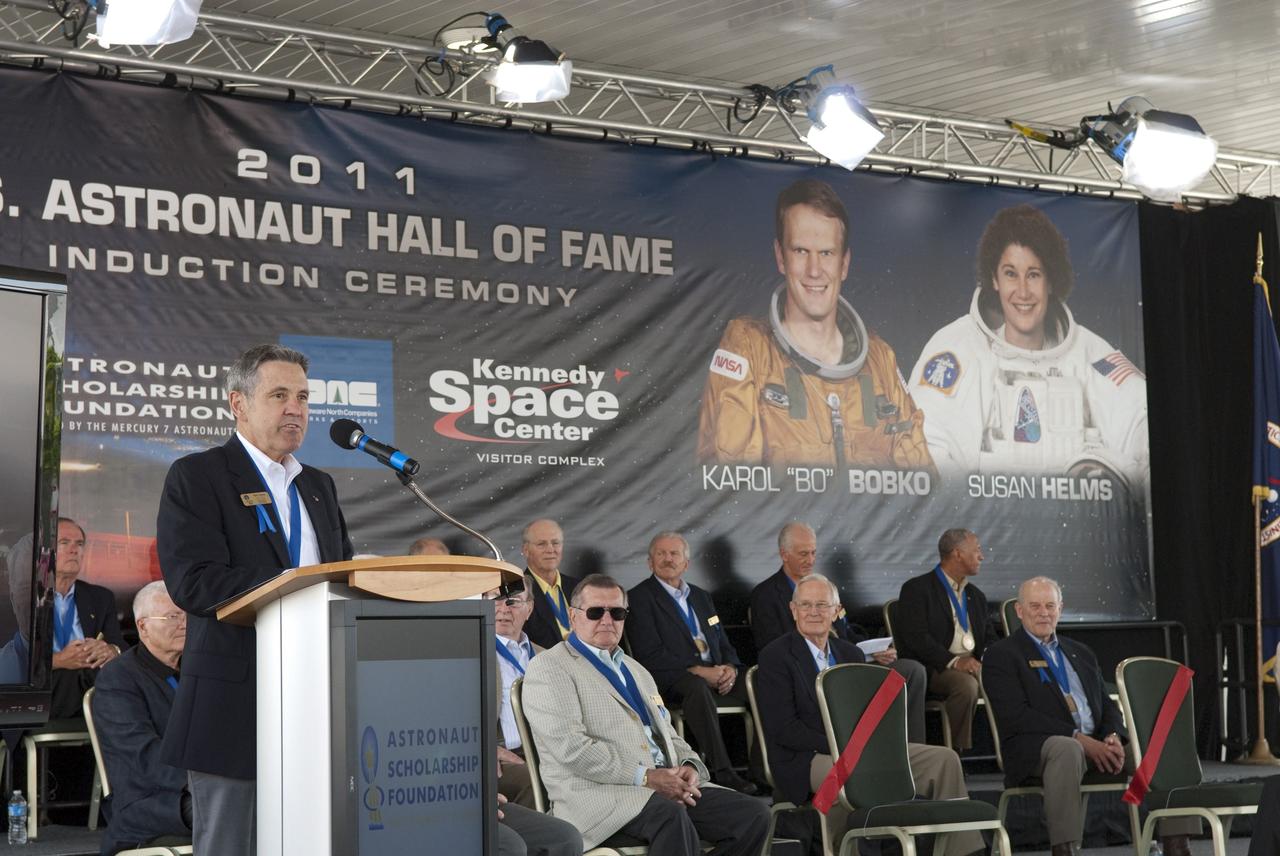
Cape Canaveral, Fla. -- Hall of Fame astronaut and present Kennedy Center Director Bob Cabana addresses the spectators at the 2011 U.S. Astronaut Hall of Fame ceremony held at NASA's Kennedy Space Center Visitor Complex in Florida. Hall of Fame astronauts and visitors gathered to honor 2011 inductees Karol "Bo" Bobko and Susan Helms. During his 19 years in the astronaut program, Bobko flew on three space shuttle missions and logged more than 386 hours in space. He served as pilot during the first voyage of space shuttle Challenger aboard STS-6 in April 1983 and as commander during the maiden flight of space shuttle Atlantis aboard STS-51J in October 1985. Helms, a five-time space shuttle astronaut, has logged 5,064 hours in space. During her stay onboard the International Space Station as a member of the Expedition-2 crew in 2001, Helms performed a world record 8 hour and 56 minute spacewalk. Bobko and Helms join the ranks of the U.S. Astronaut Hall of Fame bringing the number of space explorers enshrined in the Hall of Fame to 79. Photo Credit: NASA/Jim Grossmann
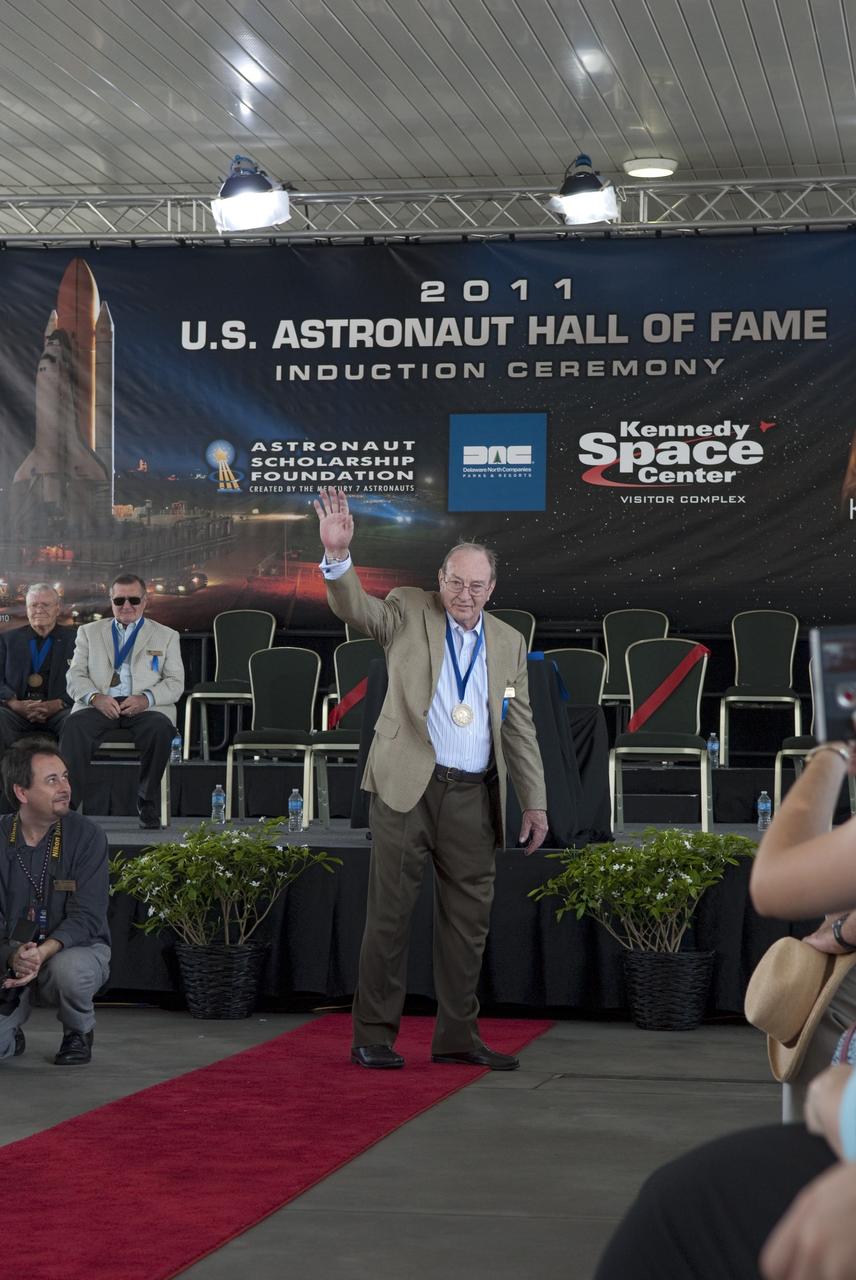
Cape Canaveral, Fla. -- Hall of Fame astronaut Edgar Mitchell thanks the audience for their applause at the 2011 U.S. Astronaut Hall of Fame induction ceremony at NASA's Kennedy Space Center Visitor Complex in Florida. Hall of Fame astronauts and visitors gathered to honor 2011 inductees Karol "Bo" Bobko and Susan Helms. During his 19 years in the astronaut program, Bobko flew on three space shuttle missions and logged more than 386 hours in space. He served as pilot during the first voyage of space shuttle Challenger aboard STS-6 in April 1983 and as commander during the maiden flight of space shuttle Atlantis aboard STS-51J in October 1985. Helms, a five-time space shuttle astronaut, has logged 5,064 hours in space. During her stay onboard the International Space Station as a member of the Expedition-2 crew in 2001, Helms performed a world record 8 hour and 56 minute spacewalk. Bobko and Helms join the ranks of the U.S. Astronaut Hall of Fame bringing the number of space explorers enshrined in the Hall of Fame to 79. Photo Credit: NASA/Jim Grossmann
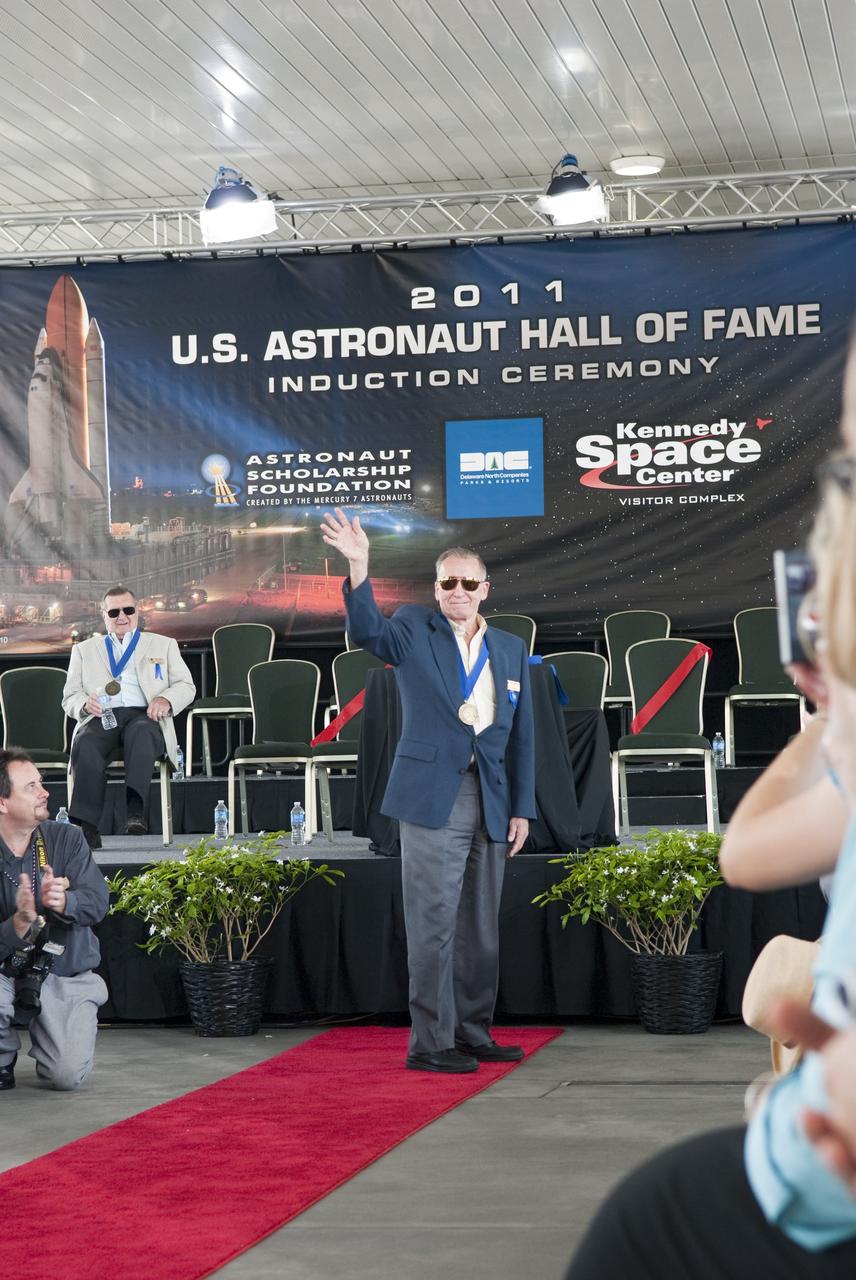
Cape Canaveral, Fla. -- Hall of Fame astronaut Walt Cunningham thanks the audience for their applause at the 2011 U.S. Astronaut Hall of Fame induction ceremony at NASA's Kennedy Space Center Visitor Complex in Florida. Hall of Fame astronauts and visitors gathered to honor 2011 inductees Karol "Bo" Bobko and Susan Helms. During his 19 years in the astronaut program, Bobko flew on three space shuttle missions and logged more than 386 hours in space. He served as pilot during the first voyage of space shuttle Challenger aboard STS-6 in April 1983 and as commander during the maiden flight of space shuttle Atlantis aboard STS-51J in October 1985. Helms, a five-time space shuttle astronaut, has logged 5,064 hours in space. During her stay onboard the International Space Station as a member of the Expedition-2 crew in 2001, Helms performed a world record 8 hour and 56 minute spacewalk. Bobko and Helms join the ranks of the U.S. Astronaut Hall of Fame bringing the number of space explorers enshrined in the Hall of Fame to 79. Photo Credit: NASA/Jim Grossmann
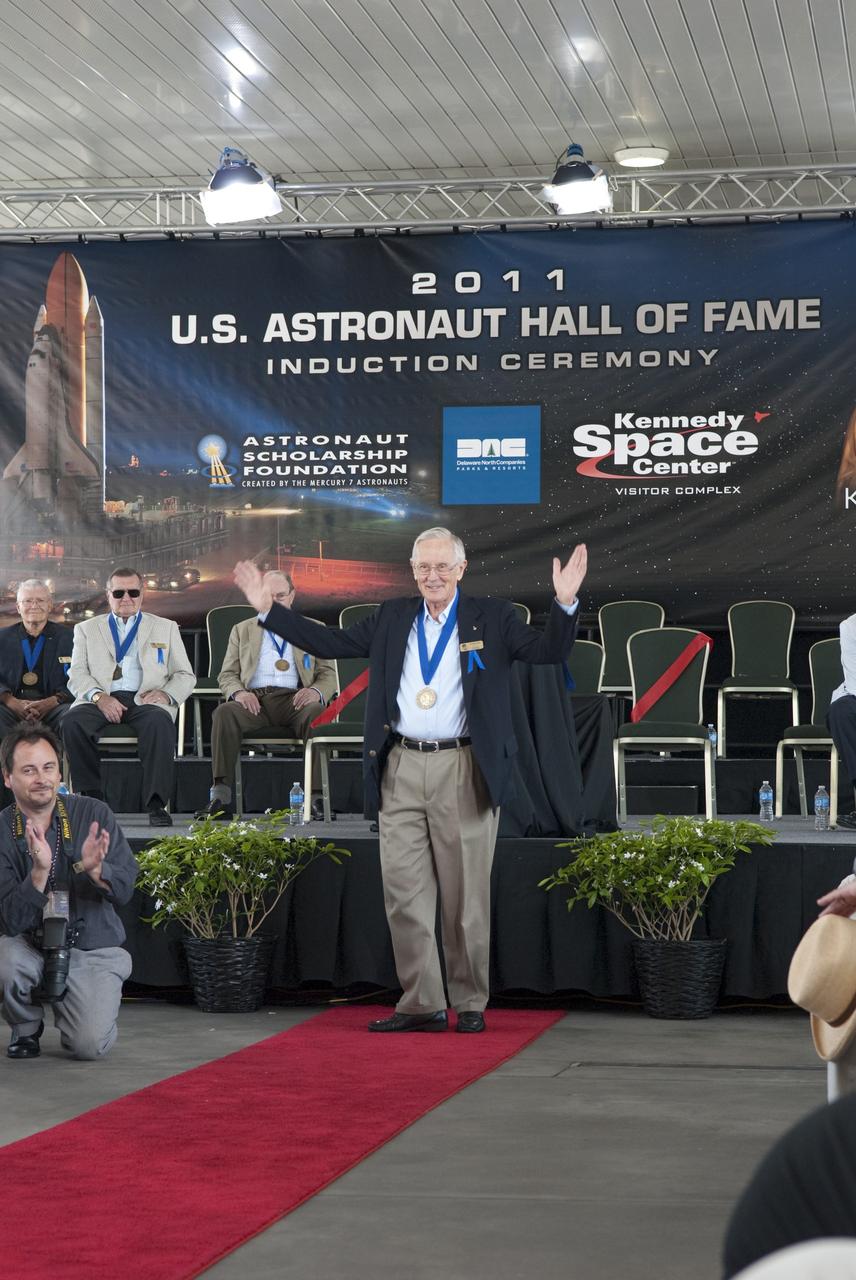
Cape Canaveral, Fla. -- Hall of Fame astronaut Charlie Duke thanks the audience for their applause at the 2011 U.S. Astronaut Hall of Fame induction ceremony at NASA's Kennedy Space Center Visitor Complex in Florida. Hall of Fame astronauts and visitors gathered to honor 2011 inductees Karol "Bo" Bobko and Susan Helms. During his 19 years in the astronaut program, Bobko flew on three space shuttle missions and logged more than 386 hours in space. He served as pilot during the first voyage of space shuttle Challenger aboard STS-6 in April 1983 and as commander during the maiden flight of space shuttle Atlantis aboard STS-51J in October 1985. Helms, a five-time space shuttle astronaut, has logged 5,064 hours in space. During her stay onboard the International Space Station as a member of the Expedition-2 crew in 2001, Helms performed a world record 8 hour and 56 minute spacewalk. Bobko and Helms join the ranks of the U.S. Astronaut Hall of Fame bringing the number of space explorers enshrined in the Hall of Fame to 79. Photo Credit: NASA/Jim Grossmann
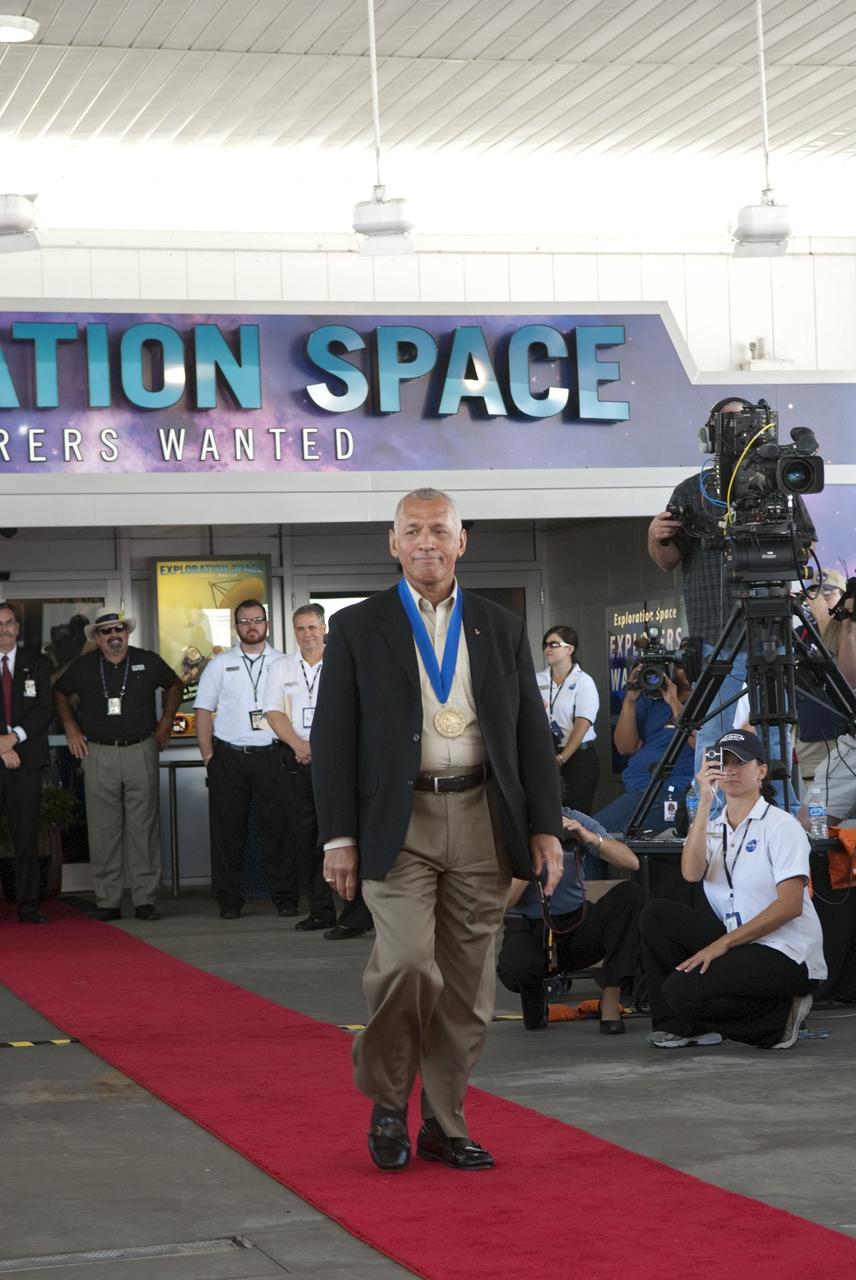
Cape Canaveral, Fla. -- Hall of Fame astronaut and present NASA Administrator Charles Bolden is warmly greeted as he is introduced as a previous inductee into the U.S. Astronaut Hall of Fame at the 2011 U.S. Astronaut Hall of Fame induction ceremony at NASA's Kennedy Space Center Visitor Complex in Florida. Hall of Fame astronauts and visitors gathered to honor 2011 inductees Karol "Bo" Bobko and Susan Helms. During his 19 years in the astronaut program, Bobko flew on three space shuttle missions and logged more than 386 hours in space. He served as pilot during the first voyage of space shuttle Challenger aboard STS-6 in April 1983 and as commander during the maiden flight of space shuttle Atlantis aboard STS-51J in October 1985. Helms, a five-time space shuttle astronaut, has logged 5,064 hours in space. During her stay onboard the International Space Station as a member of the Expedition-2 crew in 2001, Helms performed a world record 8 hour and 56 minute spacewalk. Bobko and Helms join the ranks of the U.S. Astronaut Hall of Fame bringing the number of space explorers enshrined in the Hall of Fame to 79. Photo Credit: NASA/Jim Grossmann
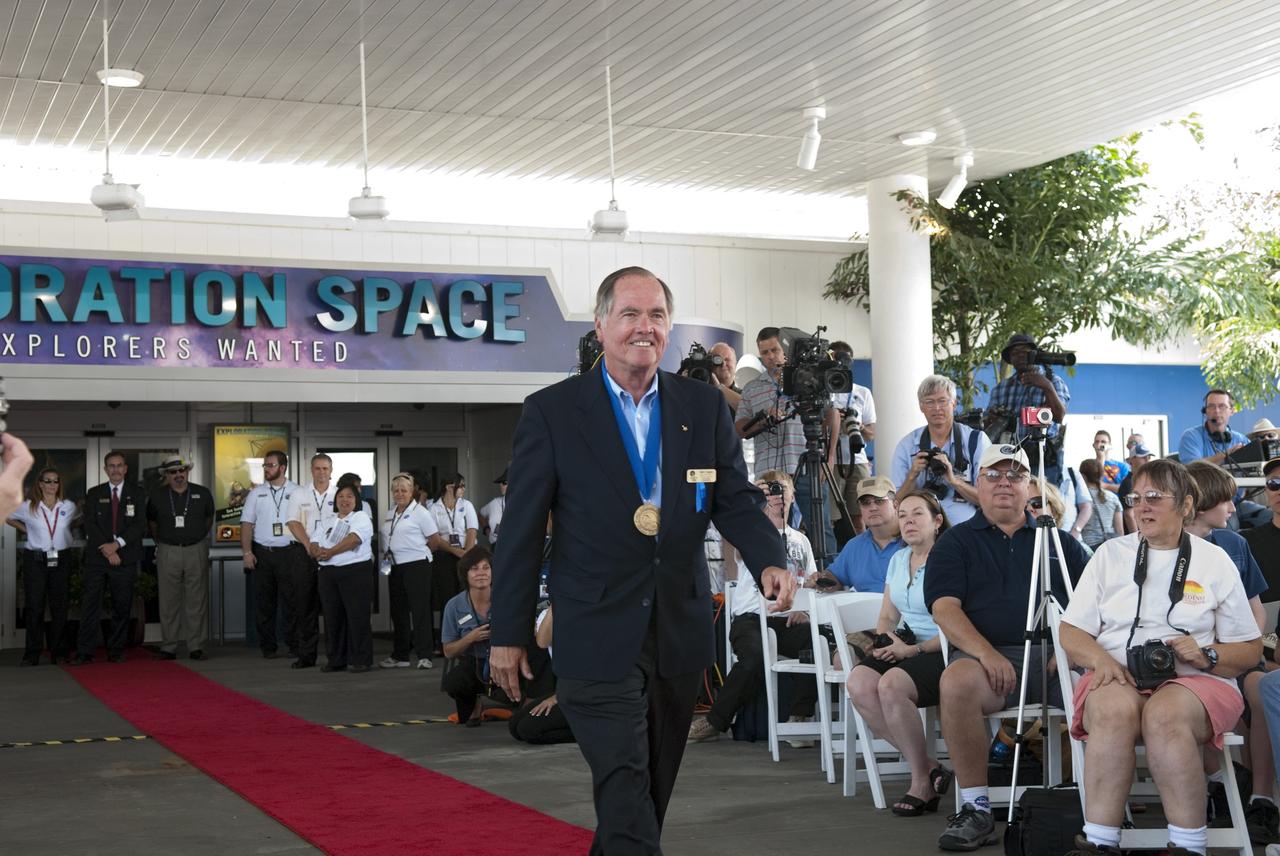
Cape Canaveral, Fla. -- Hall of Fame astronaut Bob Crippen is warmly greeted at the 2011 U.S. Astronaut Hall of Fame induction ceremony at NASA's Kennedy Space Center Visitor Complex in Florida. Hall of Fame astronauts and visitors gathered to honor 2011 inductees Karol "Bo" Bobko and Susan Helms. During his 19 years in the astronaut program, Bobko flew on three space shuttle missions and logged more than 386 hours in space. He served as pilot during the first voyage of space shuttle Challenger aboard STS-6 in April 1983 and as commander during the maiden flight of space shuttle Atlantis aboard STS-51J in October 1985. Helms, a five-time space shuttle astronaut, has logged 5,064 hours in space. During her stay onboard the International Space Station as a member of the Expedition-2 crew in 2001, Helms performed a world record 8 hour and 56 minute spacewalk. Bobko and Helms join the ranks of the U.S. Astronaut Hall of Fame bringing the number of space explorers enshrined in the Hall of Fame to 79. Photo Credit: NASA/Jim Grossmann
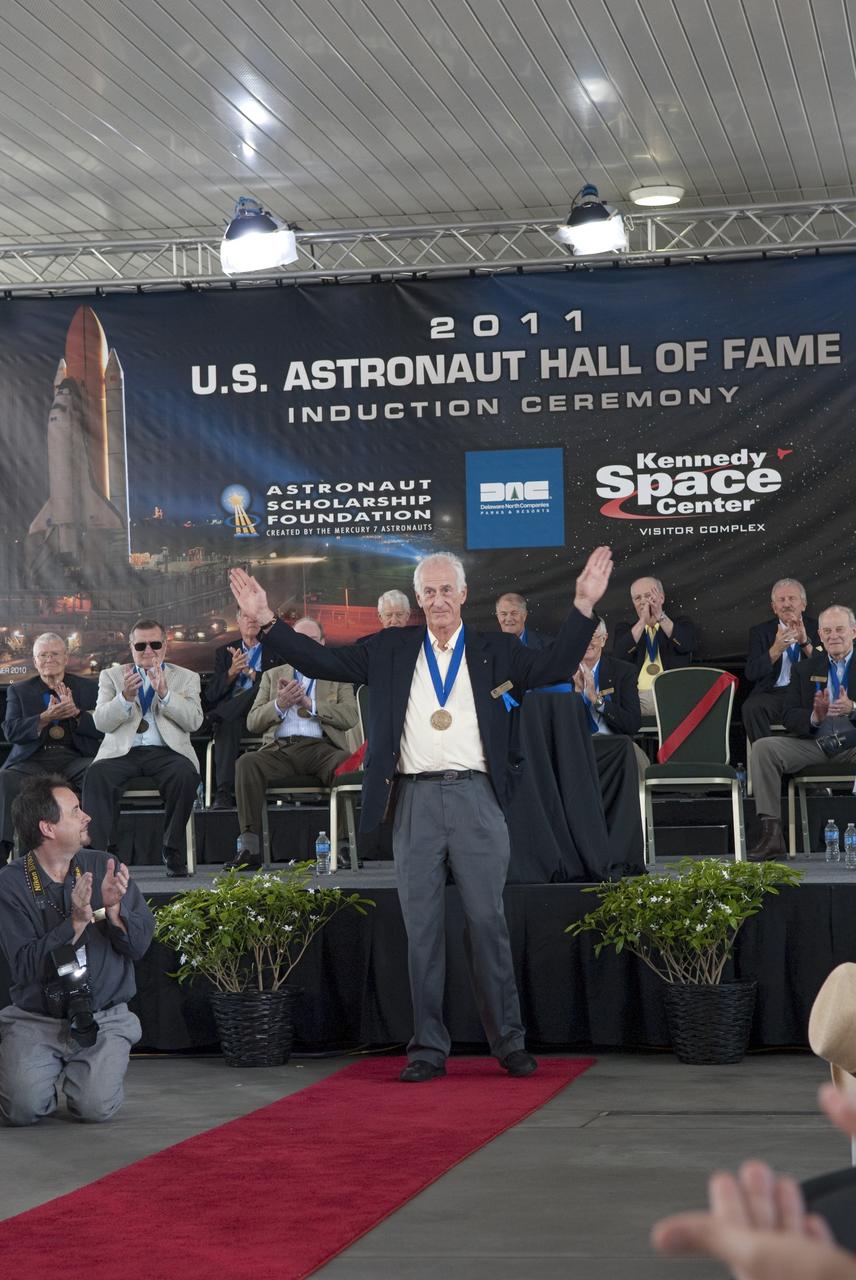
Cape Canaveral, Fla. -- Hall of Fame astronaut Jeff Hoffman thanks the audience for their applause at the 2011 U.S. Astronaut Hall of Fame induction ceremony at NASA's Kennedy Space Center Visitor Complex in Florida. Hall of Fame astronauts and visitors gathered to honor 2011 inductees Karol "Bo" Bobko and Susan Helms. During his 19 years in the astronaut program, Bobko flew on three space shuttle missions and logged more than 386 hours in space. He served as pilot during the first voyage of space shuttle Challenger aboard STS-6 in April 1983 and as commander during the maiden flight of space shuttle Atlantis aboard STS-51J in October 1985. Helms, a five-time space shuttle astronaut, has logged 5,064 hours in space. During her stay onboard the International Space Station as a member of the Expedition-2 crew in 2001, Helms performed a world record 8 hour and 56 minute spacewalk. Bobko and Helms join the ranks of the U.S. Astronaut Hall of Fame bringing the number of space explorers enshrined in the Hall of Fame to 79. Photo Credit: NASA/Jim Grossmann
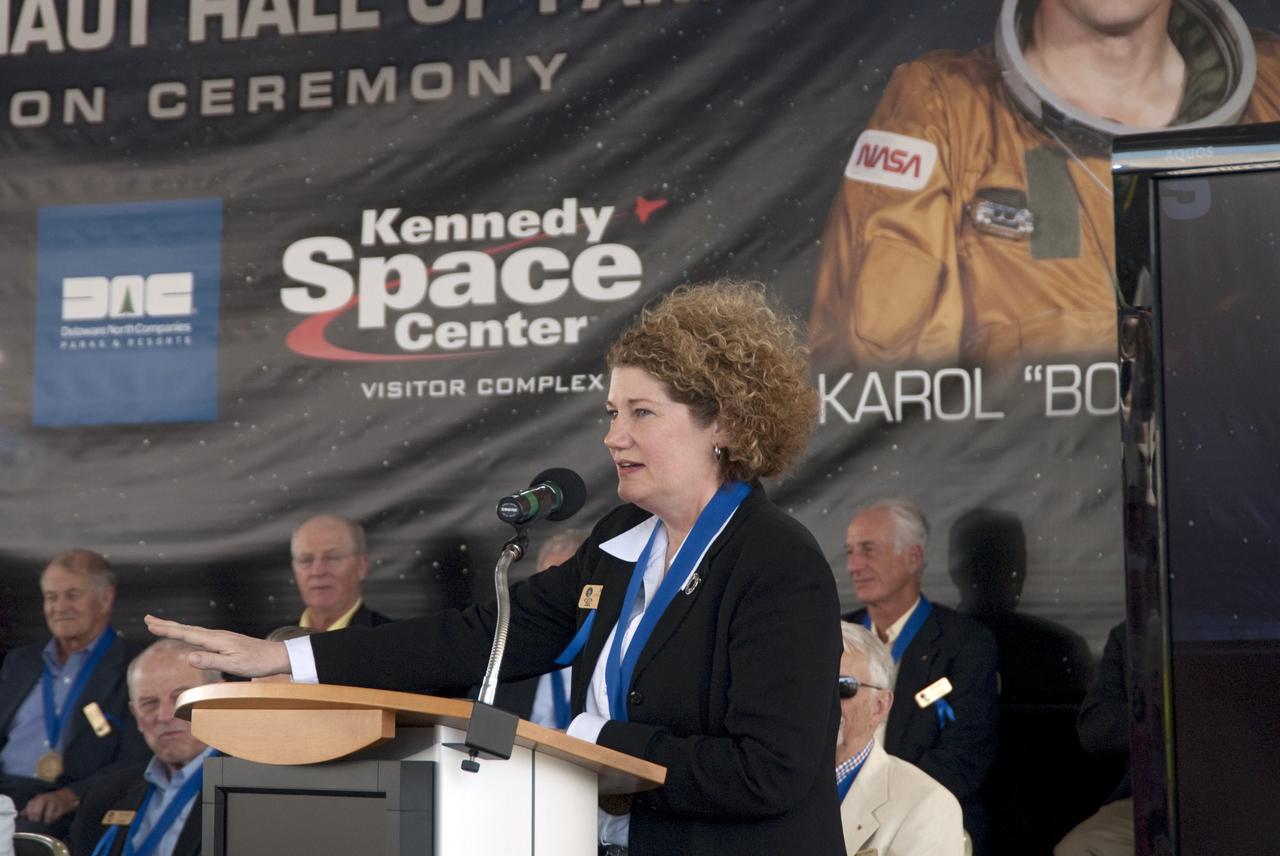
Cape Canaveral, Fla. -- New inductee, astronaut Susan Helms, addresses the spectators at the 2011 U.S. Astronaut Hall of Fame ceremony held at NASA's Kennedy Space Center Visitor Complex in Florida. Hall of Fame astronauts and visitors gathered to honor 2011 inductees Karol "Bo" Bobko and Susan Helms. During his 19 years in the astronaut program, Bobko flew on three space shuttle missions and logged more than 386 hours in space. He served as pilot during the first voyage of space shuttle Challenger aboard STS-6 in April 1983 and as commander during the maiden flight of space shuttle Atlantis aboard STS-51J in October 1985. Helms, a five-time space shuttle astronaut, has logged 5,064 hours in space. During her stay onboard the International Space Station as a member of the Expedition-2 crew in 2001, Helms performed a world record 8 hour and 56 minute spacewalk. Bobko and Helms join the ranks of the U.S. Astronaut Hall of Fame bringing the number of space explorers enshrined in the Hall of Fame to 79. Photo Credit: NASA/Jim Grossmann
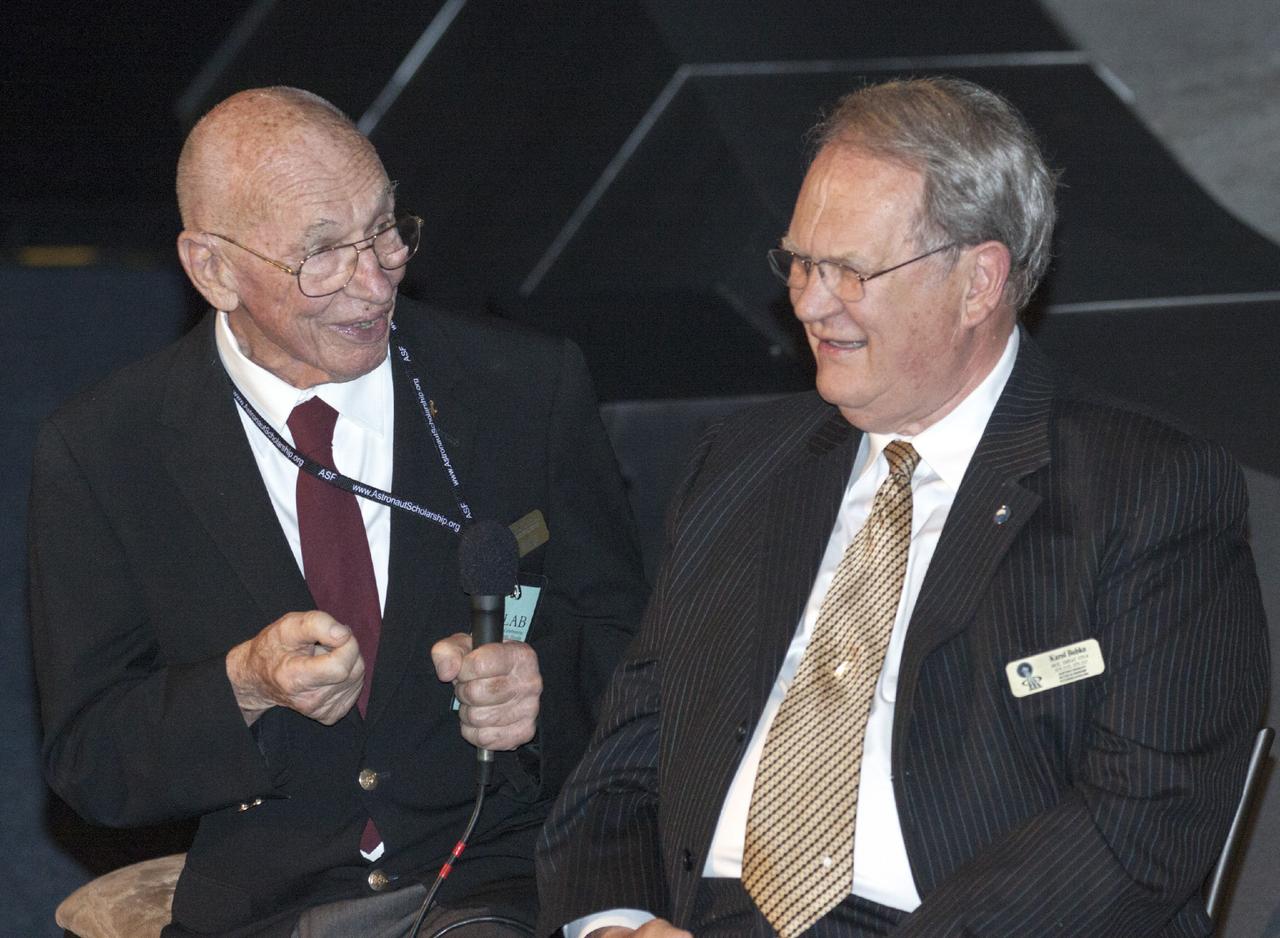
CAPE CANAVERAL, Fla. – At the Kennedy Space Center's Apollo/Saturn V Center, former NASA astronauts William Thornton, left, and Karol Bobko recall experiences during the Astronaut Scholarship Foundation's event celebrating the 40th anniversary of Skylab. Along with astronaut Robert Crippen, Thornton, and Bobko, took part in a 56-day activity during 1972 called SMEAT -- Skylab Medical Experiment Altitude Test -- that preceded the launch of Skylab and helped NASA evaluate equipment and procedures proposed for the long-duration Skylab missions. Thornton and Bobko went on to fly missions during the Space Shuttle Program. The gala commemorating the 40th anniversary of Skylab included six of the nine astronauts who flew missions to America's first space station. The orbiting laboratory was launched unpiloted from Kennedy on May 14, 1973. Between May 25, 1973 and Feb. 8, 1974, crews of three spent 28, 59 and 84 days living and working in low-Earth orbit aboard the station. For more information, visit http://www.nasa.gov/mission_pages/skylab/ Photo credit: NASA/Kim Shiflett
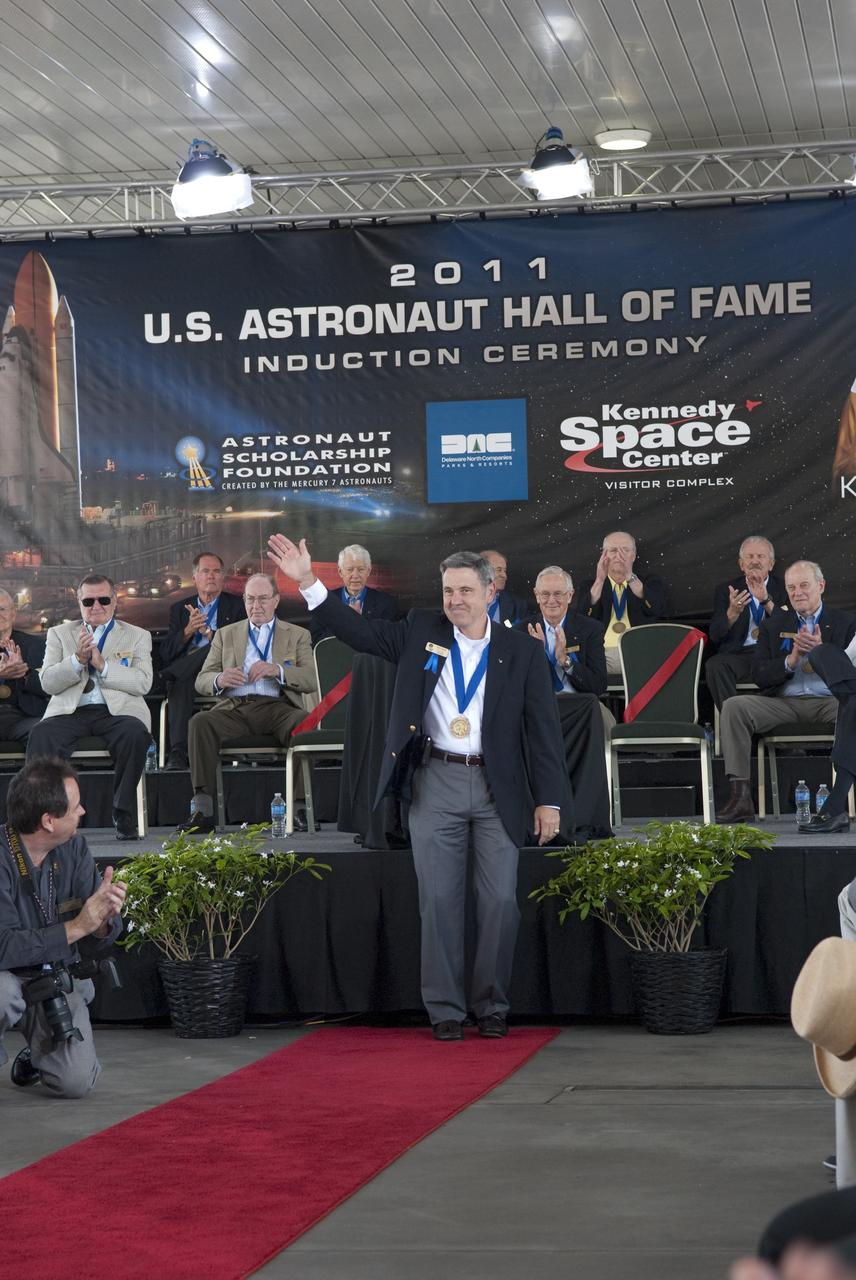
Cape Canaveral, Fla. -- Hall of Fame astronaut and present Kennedy Center Director Bob Cabana is warmly greeted as he is introduced as a previous inductee into the U.S. Astronaut Hall of Fame at the 2011 U.S. Astronaut Hall of Fame induction ceremony at NASA's Kennedy Space Center Visitor Complex in Florida. Hall of Fame astronauts and visitors gathered to honor 2011 inductees Karol "Bo" Bobko and Susan Helms. During his 19 years in the astronaut program, Bobko flew on three space shuttle missions and logged more than 386 hours in space. He served as pilot during the first voyage of space shuttle Challenger aboard STS-6 in April 1983 and as commander during the maiden flight of space shuttle Atlantis aboard STS-51J in October 1985. Helms, a five-time space shuttle astronaut, has logged 5,064 hours in space. During her stay onboard the International Space Station as a member of the Expedition-2 crew in 2001, Helms performed a world record 8 hour and 56 minute spacewalk. Bobko and Helms join the ranks of the U.S. Astronaut Hall of Fame bringing the number of space explorers enshrined in the Hall of Fame to 79. Photo Credit: NASA/Jim Grossmann

Cape Canaveral, Fla. -- Hall of Fame astronaut Joe Allen thanks the audience for their applause at the 2011 U.S. Astronaut Hall of Fame induction ceremony at NASA's Kennedy Space Center Visitor Complex in Florida. Hall of Fame astronauts and visitors gathered to honor 2011 inductees Karol "Bo" Bobko and Susan Helms. During his 19 years in the astronaut program, Bobko flew on three space shuttle missions and logged more than 386 hours in space. He served as pilot during the first voyage of space shuttle Challenger aboard STS-6 in April 1983 and as commander during the maiden flight of space shuttle Atlantis aboard STS-51J in October 1985. Helms, a five-time space shuttle astronaut, has logged 5,064 hours in space. During her stay onboard the International Space Station as a member of the Expedition-2 crew in 2001, Helms performed a world record 8 hour and 56 minute spacewalk. Bobko and Helms join the ranks of the U.S. Astronaut Hall of Fame bringing the number of space explorers enshrined in the Hall of Fame to 79. Photo Credit: NASA/Jim Grossmann
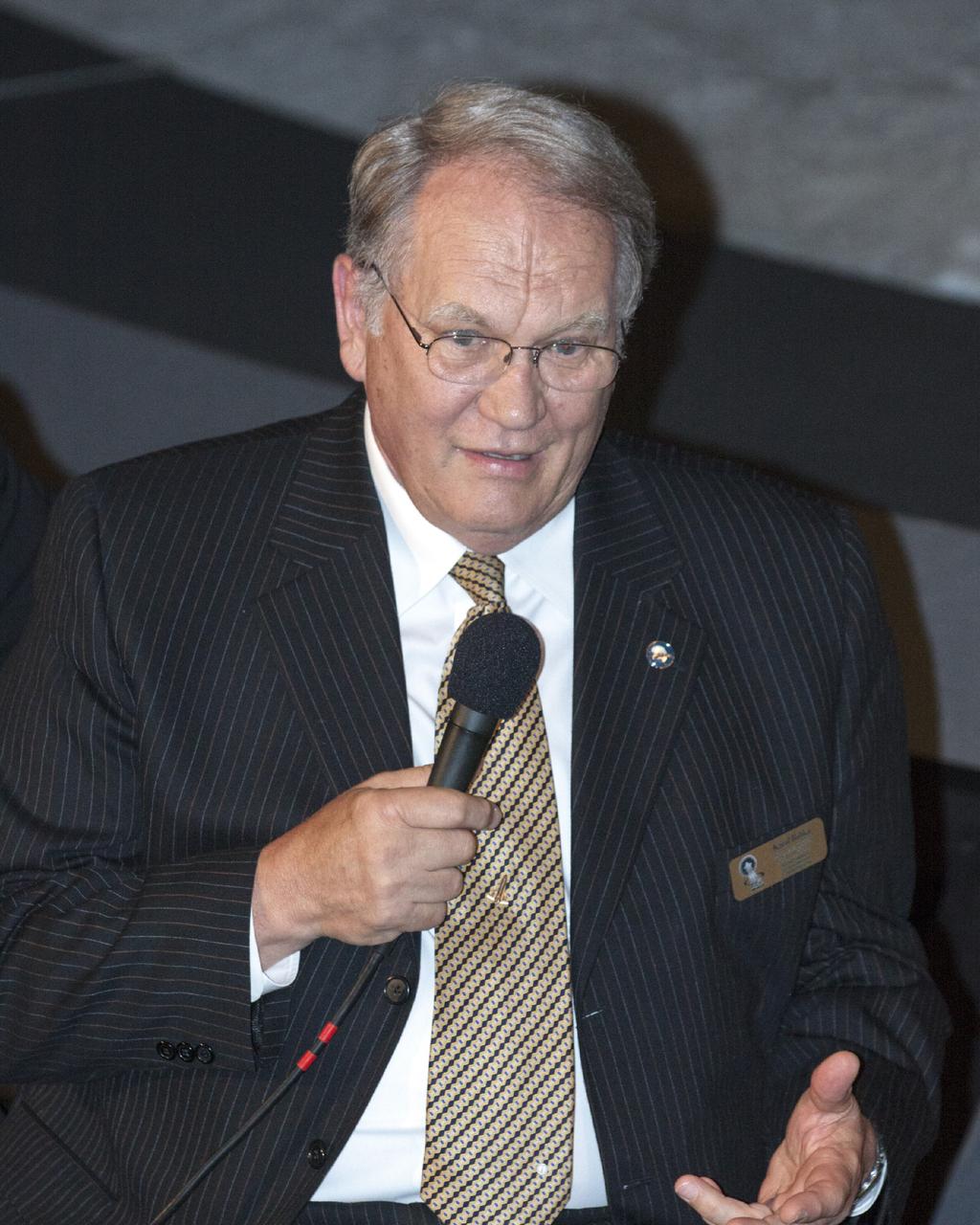
CAPE CANAVERAL, Fla. – At the Kennedy Space Center's Apollo/Saturn V Center, former NASA astronaut Karol Bobko speaks to guests at the Astronaut Scholarship Foundation's event celebrating the 40th anniversary of Skylab. Bobko, along with astronauts Robert Crippen and William Thornton, took part in a 56-day activity during 1972 called SMEAT -- Skylab Medical Experiment Altitude Test -- that preceded the launch of Skylab and helped NASA evaluate equipment and procedures proposed for the long-duration Skylab missions. Bobko went on to fly missions during the Space Shuttle Program. The gala commemorating the 40th anniversary of Skylab included six of the nine astronauts who flew missions to America's first space station. The orbiting laboratory was launched unpiloted from Kennedy on May 14, 1973. Between May 25, 1973 and Feb. 8, 1974, crews of three spent 28, 59 and 84 days living and working in low-Earth orbit aboard the station. For more information, visit http://www.nasa.gov/mission_pages/skylab/ Photo credit: NASA/Kim Shiflett
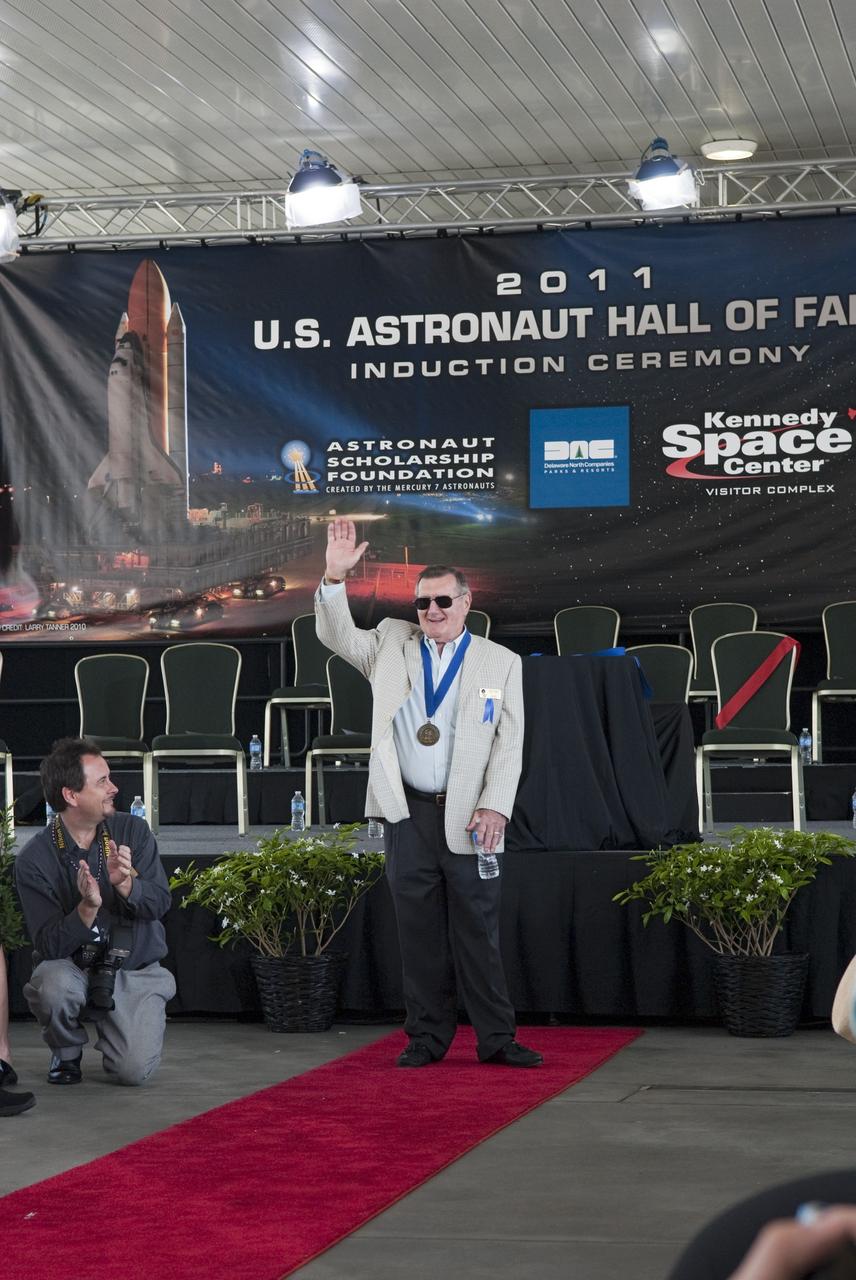
Cape Canaveral, Fla. -- Hall of Fame astronaut Dick Gordon thanks the audience for their applause at the 2011 U.S. Astronaut Hall of Fame induction ceremony at NASA's Kennedy Space Center Visitor Complex in Florida. Hall of Fame astronauts and visitors gathered to honor 2011 inductees Karol "Bo" Bobko and Susan Helms. During his 19 years in the astronaut program, Bobko flew on three space shuttle missions and logged more than 386 hours in space. He served as pilot during the first voyage of space shuttle Challenger aboard STS-6 in April 1983 and as commander during the maiden flight of space shuttle Atlantis aboard STS-51J in October 1985. Helms, a five-time space shuttle astronaut, has logged 5,064 hours in space. During her stay onboard the International Space Station as a member of the Expedition-2 crew in 2001, Helms performed a world record 8 hour and 56 minute spacewalk. Bobko and Helms join the ranks of the U.S. Astronaut Hall of Fame bringing the number of space explorers enshrined in the Hall of Fame to 79. Photo Credit: NASA/Jim Grossmann
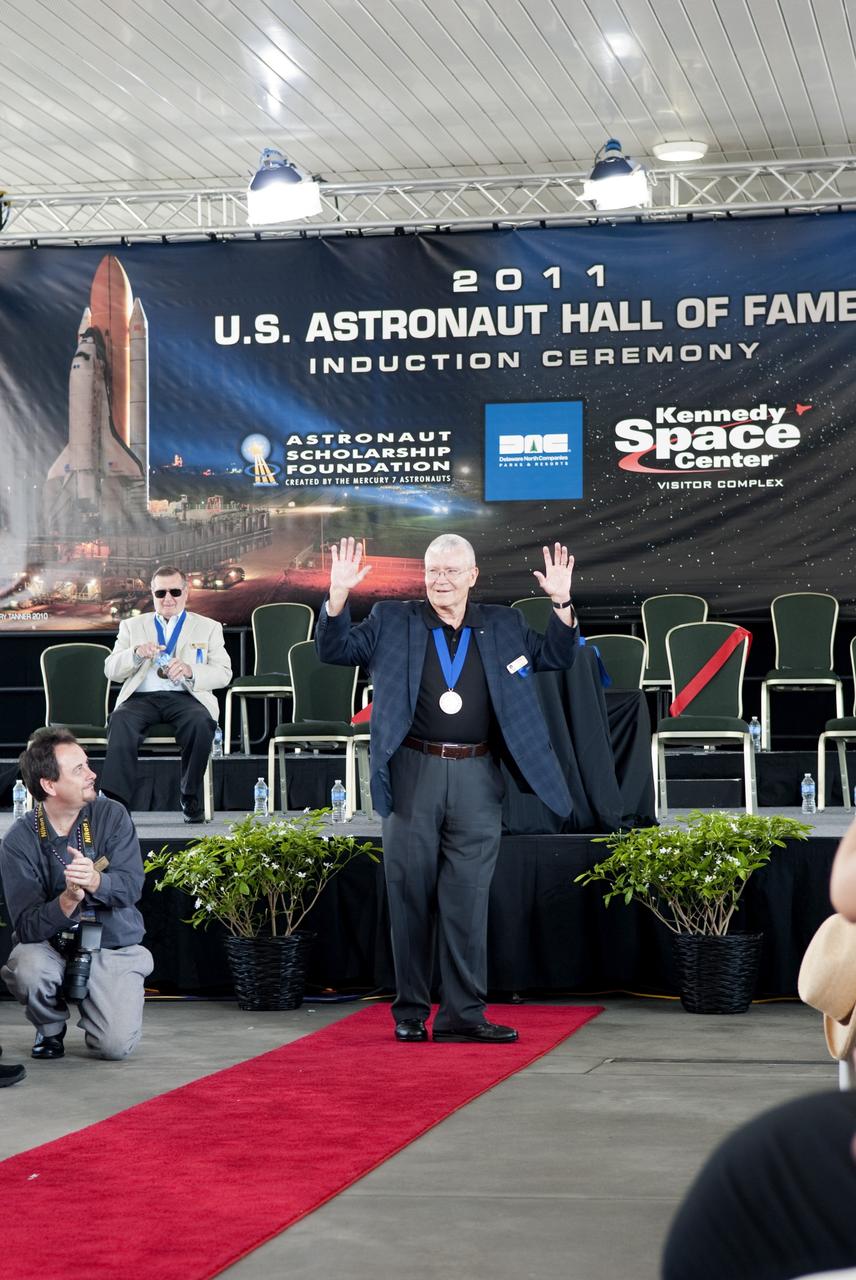
Cape Canaveral, Fla. -- Hall of Fame astronaut Fred Haise thanks the audience for their applause at the 2011 U.S. Astronaut Hall of Fame induction ceremony at NASA's Kennedy Space Center Visitor Complex in Florida. Hall of Fame astronauts and visitors gathered to honor 2011 inductees Karol "Bo" Bobko and Susan Helms. During his 19 years in the astronaut program, Bobko flew on three space shuttle missions and logged more than 386 hours in space. He served as pilot during the first voyage of space shuttle Challenger aboard STS-6 in April 1983 and as commander during the maiden flight of space shuttle Atlantis aboard STS-51J in October 1985. Helms, a five-time space shuttle astronaut, has logged 5,064 hours in space. During her stay onboard the International Space Station as a member of the Expedition-2 crew in 2001, Helms performed a world record 8 hour and 56 minute spacewalk. Bobko and Helms join the ranks of the U.S. Astronaut Hall of Fame bringing the number of space explorers enshrined in the Hall of Fame to 79. Photo Credit: NASA/Jim Grossmann
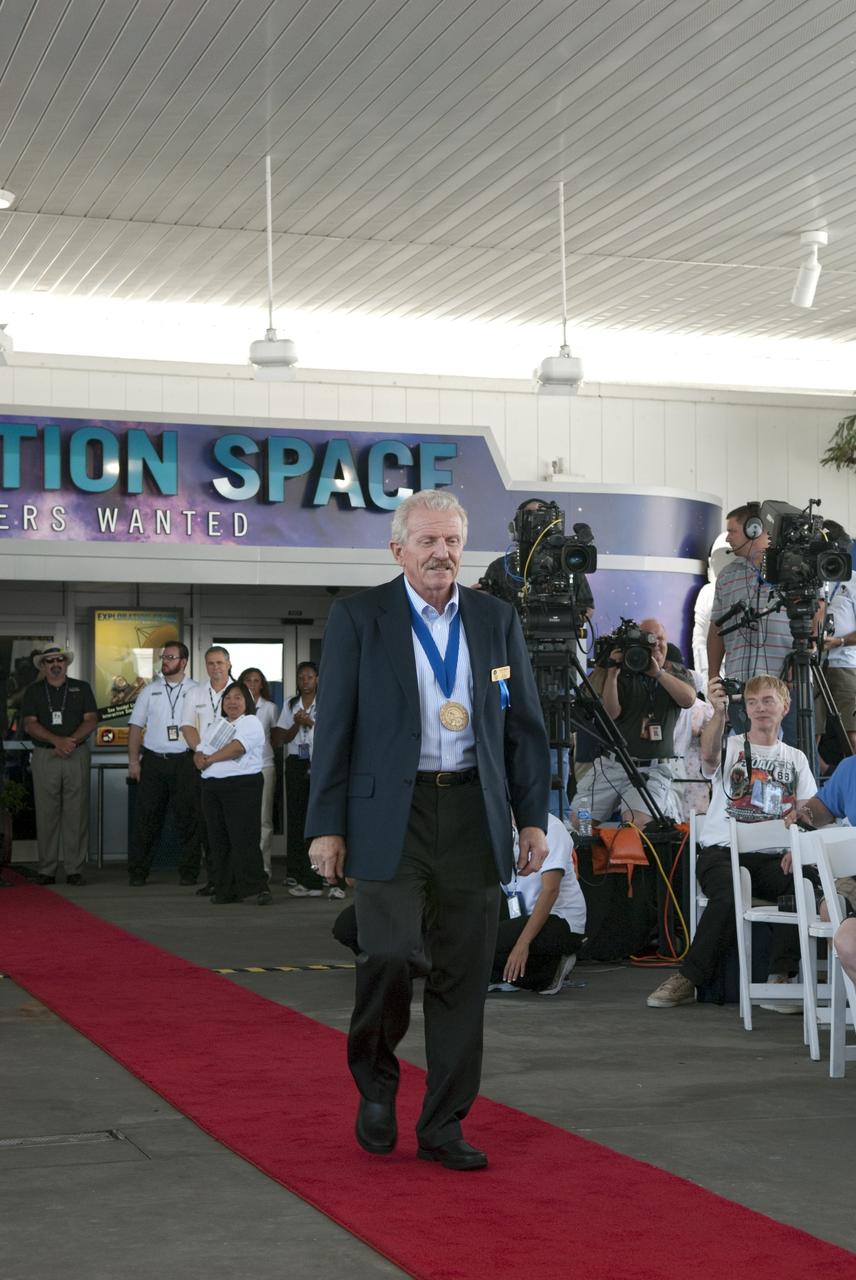
Cape Canaveral, Fla. -- Hall of Fame astronaut Rick Hauck is warmly greeted at the 2011 U.S. Astronaut Hall of Fame induction ceremony at NASA's Kennedy Space Center Visitor Complex in Florida. Hall of Fame astronauts and visitors gathered to honor 2011 inductees Karol "Bo" Bobko and Susan Helms. During his 19 years in the astronaut program, Bobko flew on three space shuttle missions and logged more than 386 hours in space. He served as pilot during the first voyage of space shuttle Challenger aboard STS-6 in April 1983 and as commander during the maiden flight of space shuttle Atlantis aboard STS-51J in October 1985. Helms, a five-time space shuttle astronaut, has logged 5,064 hours in space. During her stay onboard the International Space Station as a member of the Expedition-2 crew in 2001, Helms performed a world record 8 hour and 56 minute spacewalk. Bobko and Helms join the ranks of the U.S. Astronaut Hall of Fame bringing the number of space explorers enshrined in the Hall of Fame to 79. Photo Credit: NASA/Jim Grossmann
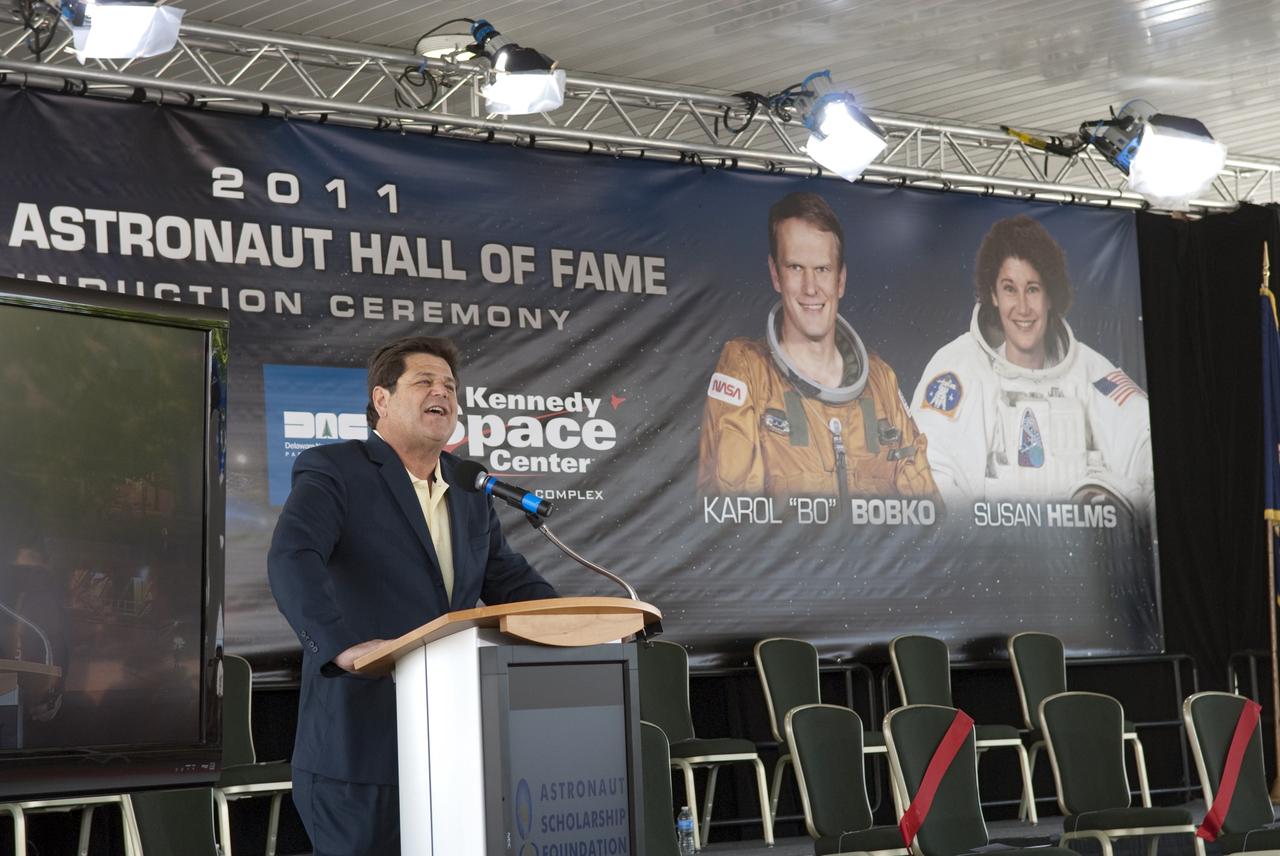
Cape Canaveral, Fla. -- At the 2011 U.S. Astronaut Hall of Fame induction ceremony at NASA's Kennedy Space Center Visitor Complex in Florida, Master of Ceremonies John Zarrella addresses the inductees and visitors with opening remarks. Hall of Fame astronauts and visitors gathered to honor 2011 inductees Karol "Bo" Bobko and Susan Helms. During his 19 years in the astronaut program, Bobko flew on three space shuttle missions and logged more than 386 hours in space. He served as pilot during the first voyage of space shuttle Challenger aboard STS-6 in April 1983 and as commander during the maiden flight of space shuttle Atlantis aboard STS-51J in October 1985. Helms, a five-time space shuttle astronaut, has logged 5,064 hours in space. During her stay onboard the International Space Station as a member of the Expedition-2 crew in 2001, Helms performed a world record 8 hour and 56 minute spacewalk. Bobko and Helms join the ranks of the U.S. Astronaut Hall of Fame bringing the number of space explorers enshrined in the Hall of Fame to 79. Photo Credit: NASA/Jim Grossmann

The 51-J mission insignia, designed by Atlantis's first crew, pays tribute to the Statue of Liberty and the ideas it symbolizes. The historical gateway figure bears additional significance for Astronauts Karol J. Bobko, mission commander; and Ronald J. Grabe, pilot, both New Your Natives.
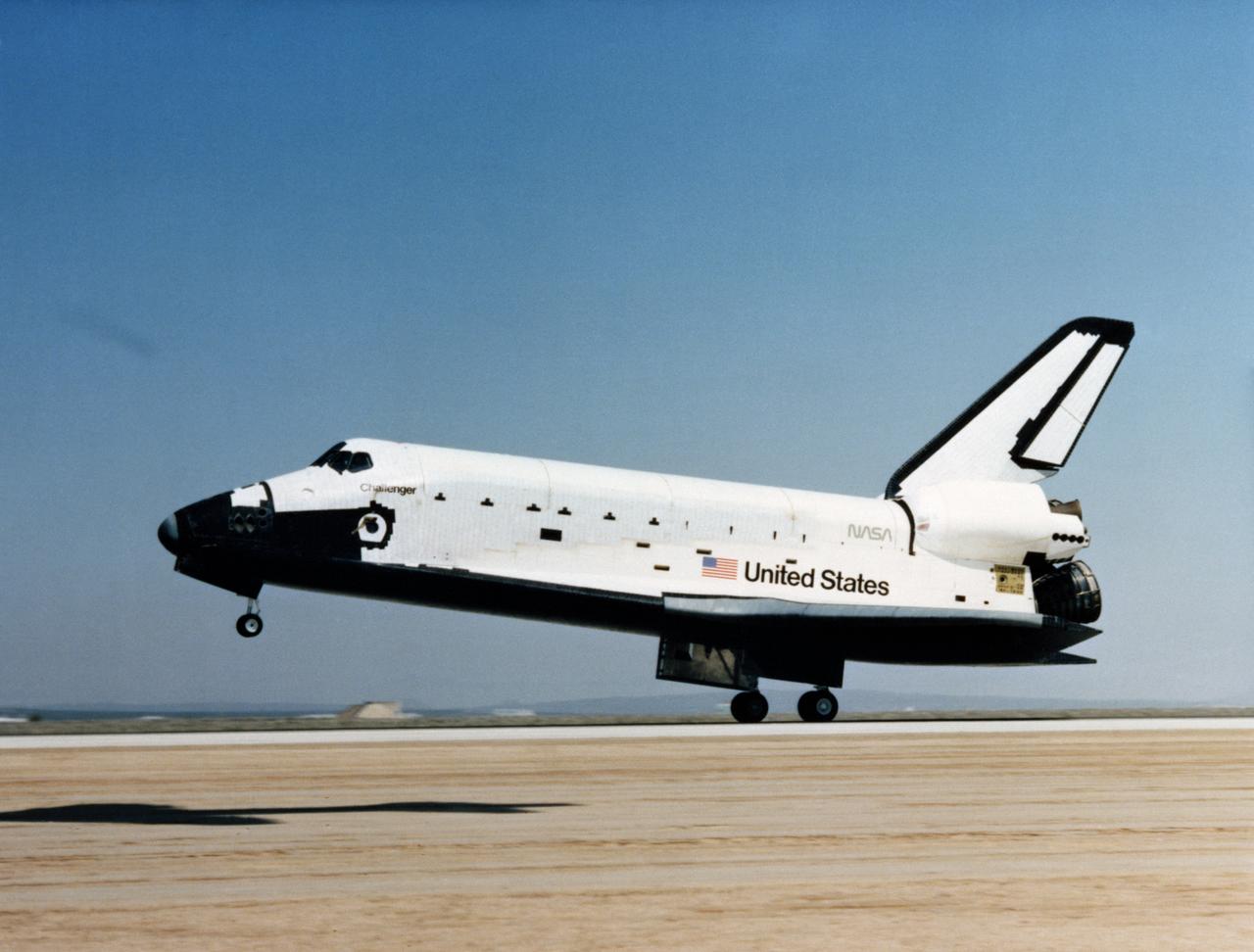
S83-30220 (9 April 1983) --- The space shuttle Challenger makes its first landing shortly before 11 a.m. (PST) on April 9, 1983, on Runway 22 at the Edwards Air Force Base in Southern California. Onboard the reusable spacecraft, having just completed a successful five-day mission, are astronauts Paul J. Weitz, Karol J. Bobko, F. Story Musgrave and Donald H. Peterson. Photo credit: NASA

KENNEDY SPACE CENTER, FLA. -- The first flight of Challenger on mission STS-6. The primary payload is the first Tracking and Data Relay Satellite-1. The mission also is using the first lightweight external tank and lightweight solid rocket booster casings. The crew comprises Commander Paul J. Weitz, Pilot Karol J. Bobko, and Mission Specialists Donald H. Peterson and F. Story Musgrave.
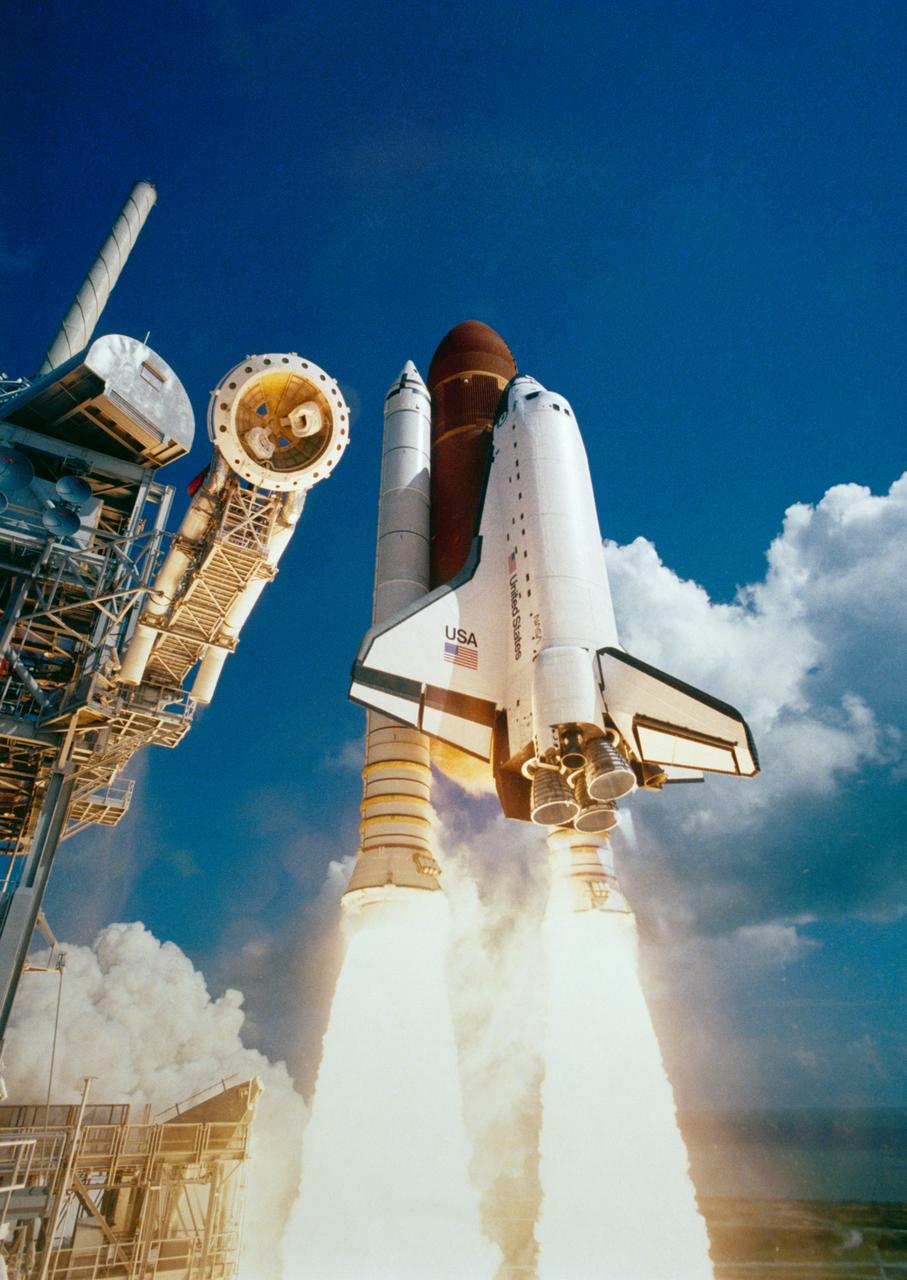
S85-44776 (3 Oct 1985) --- Space Shuttle Atlantis soars toward Florida blue skies to mark the maiden mission of NASA's fourth and newest orbiter vehicle. Launch occurred at 11:15 a.m. (EDT), October 3, 1985. A five member crew mans the orbiter for the DOD flight. They are Karol J. Bobko, Ronald J. Grabe, Robert L. Stewart, David C. Hilmers-- all of NASA-- and William A. Pailes of the USAF.

S85-41802 (7 Sept 1985) --- Wheels of the Space Shuttle Atlantis touch down on the dry lakebed at Edwards Air Force Base to mark successful completion of the STS 51-J mission. Crewmembers onboard for the flight were Astronauts Karol J. Bobko, Ronald J. Grabe, David C. Hilmers, and Robert L. Stewart; and USAF Maj. William A. Pailes.

STS006-46-617 (4-9 April 1983) --- This view of sunset over the Amazon Basin was photographed with a 35mm camera from the Earth-orbiting space shuttle Challenger. The reusable vehicle was making its first trip into space and carried a crew of astronauts Paul J. Weitz, Karol J. Bobko, F. Story Musgrave and Donald H. Peterson. Photo credit: NASA

51D-9089 (S23-9089) (12 April 1985) --- The Space Shuttle mission 51-D crewmembers gather to eat breakfast prior to leaving for the launch pad to climb aboard Discovery for liftoff. From left to right Rhea Seddon, Donald E. Williams, Charles D. Walker, Karol J. Bobko, Jeffrey A. Hoffman, S. David Griggs and U.S. Sen. E.J. (Jake) Garn discuss phases of the upcoming flight. Desert for the yet-to-be served breakfast is the pictured decorate 51-D cake.

51J-S-001 (3 Oct 1985) --- This 35mm frame was taken moments after the Space Shuttle Atlantis cleared the launch tower to begin its first mission in space. Onboard, ready to carry out STS-51J mission were astronauts Karol J. Bobko, commander; Ronald J. Grabe, pilot; Robert L. Stewart and David C. Hilmers, mission specialist; and United States Air Force Major William A. Pailes, payload specialist.
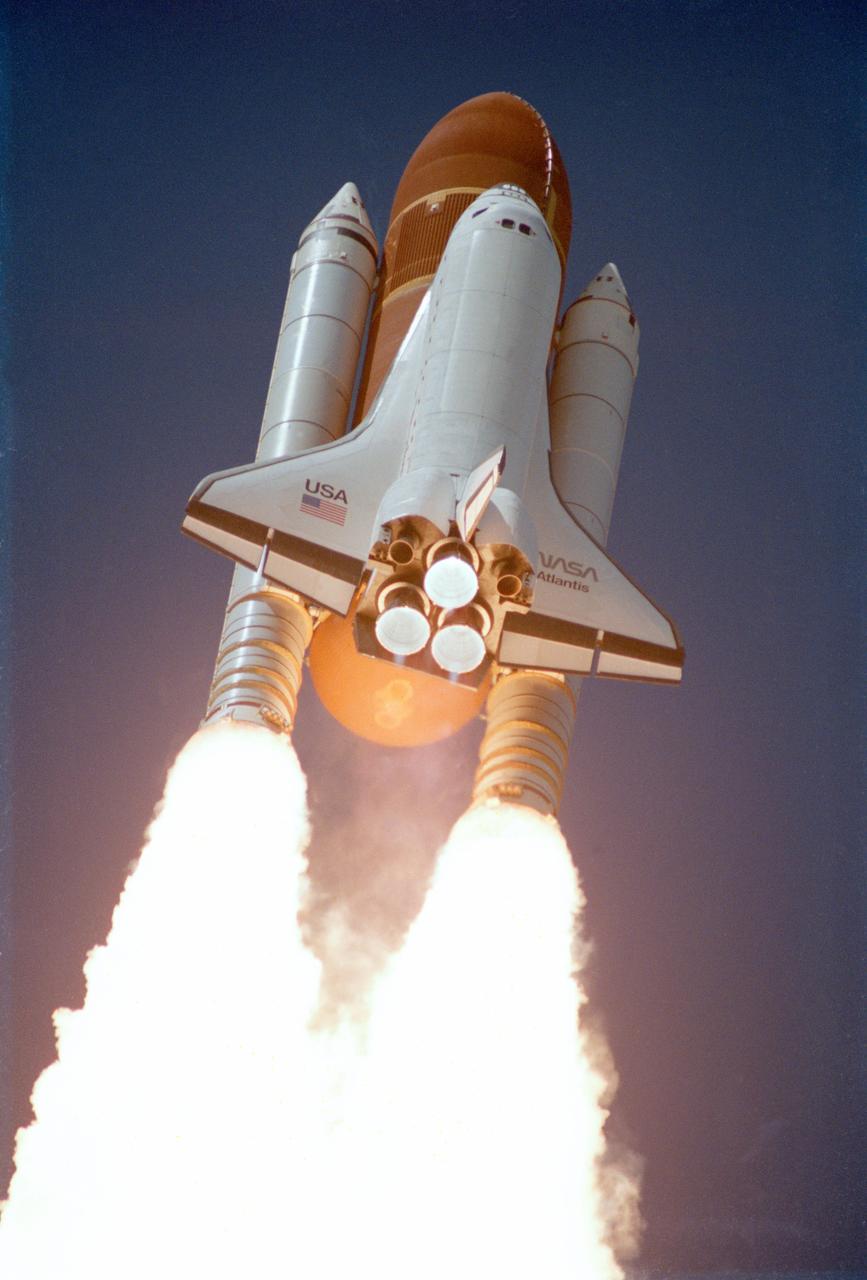
51J-S-003 (3 Oct 1985) --- This 35mm frame was taken moments after the Space Shuttle Atlantis cleared the launch tower to begin its first mission in space. Onboard, ready to carry out STS-51J mission were astronauts Karol J. Bobko, commander; Ronald J. Grabe, pilot; Robert L. Stewart and David C. Hilmers, mission specialist; and U.S.A.F. Major William A. Pailes, payload specialist.
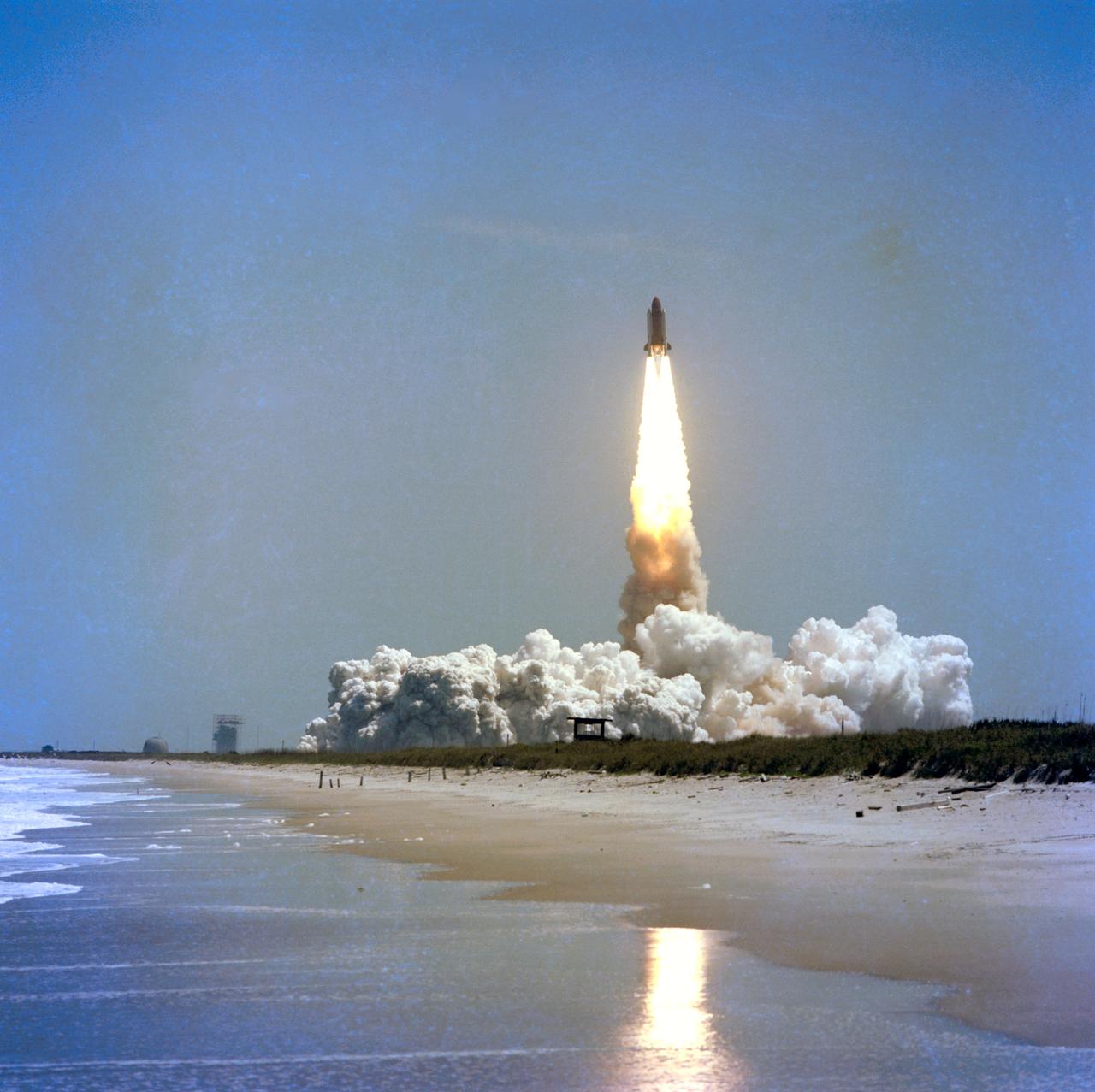
S83-30134 (7 April 1983) --- Flare from the first launch of the space shuttle Challenger is reflected in the Atlantic Ocean?s Cape Canaveral beach waters shortly after 1:30 p.m. (EST) on April 7, 1983. Only the tips of the orbiter?s wings are visible in this south looking view, as the manned portion of the launch cluster is obscured by its new lightweight external fuel tank (ET) and two solid rocket boosters (SRB). Onboard the spacecraft are astronauts Paul J. Weitz, Karol J. Bobko, Dr. F. Story Musgrave and Donald H. Peterson. Photo credit: NASA
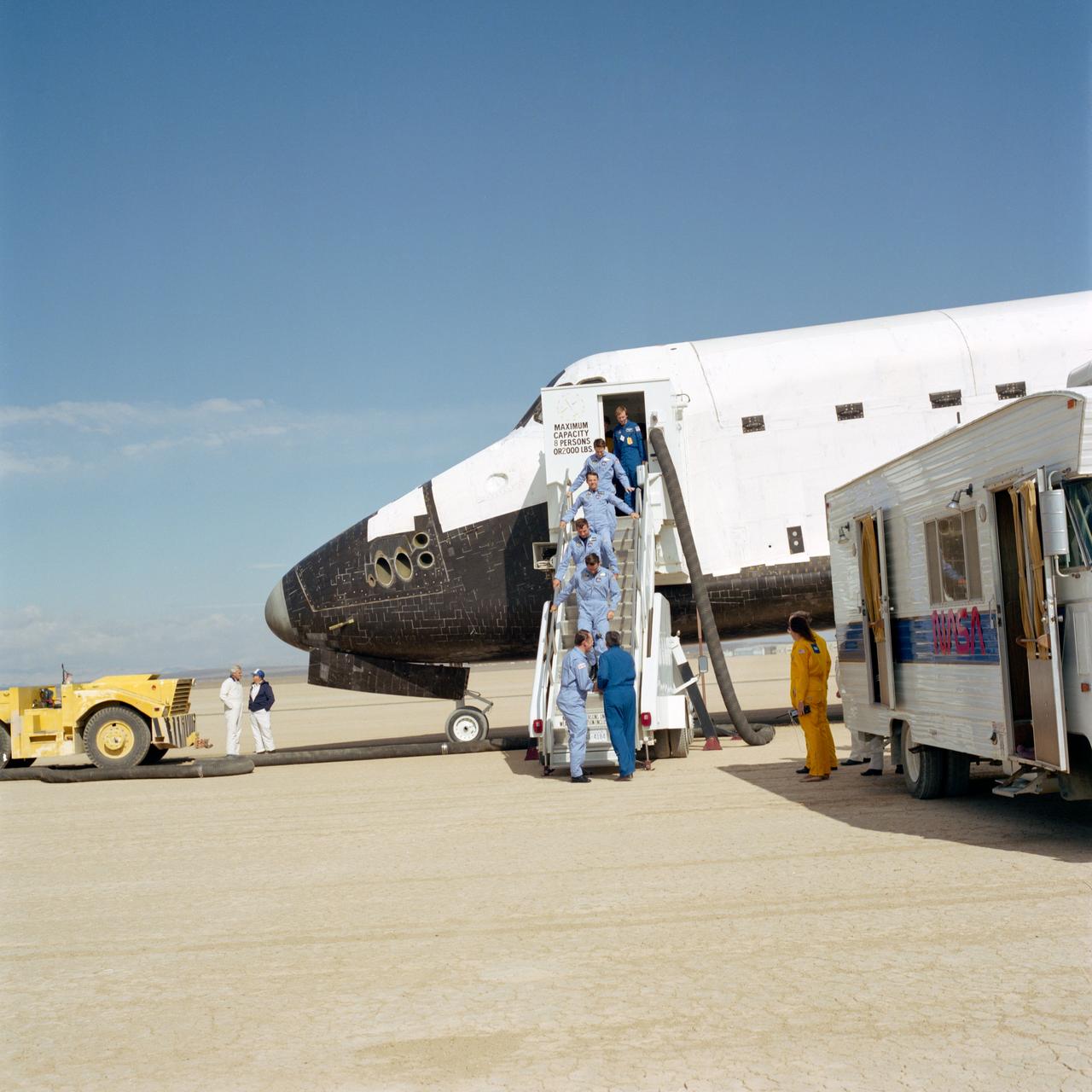
S85-41803 (7 Sept 1985) --- George W.S. Abbey, bottom right, greets the five members of the STS 51-J crew as they egress the Atlantis following the successful completion of a mission in Earth orbit. Astronaut Karol J. Bobko, who led the five down the steps, shakes hands with the JSC director of flight crew operations. He is followed (bottom to top) By Astronauts Ronald J. Grabe, pilot; David C. Hilmers and Robert L. Stewart, both mission specialists; and USAF Maj. William A. Pailes, payload specialist.
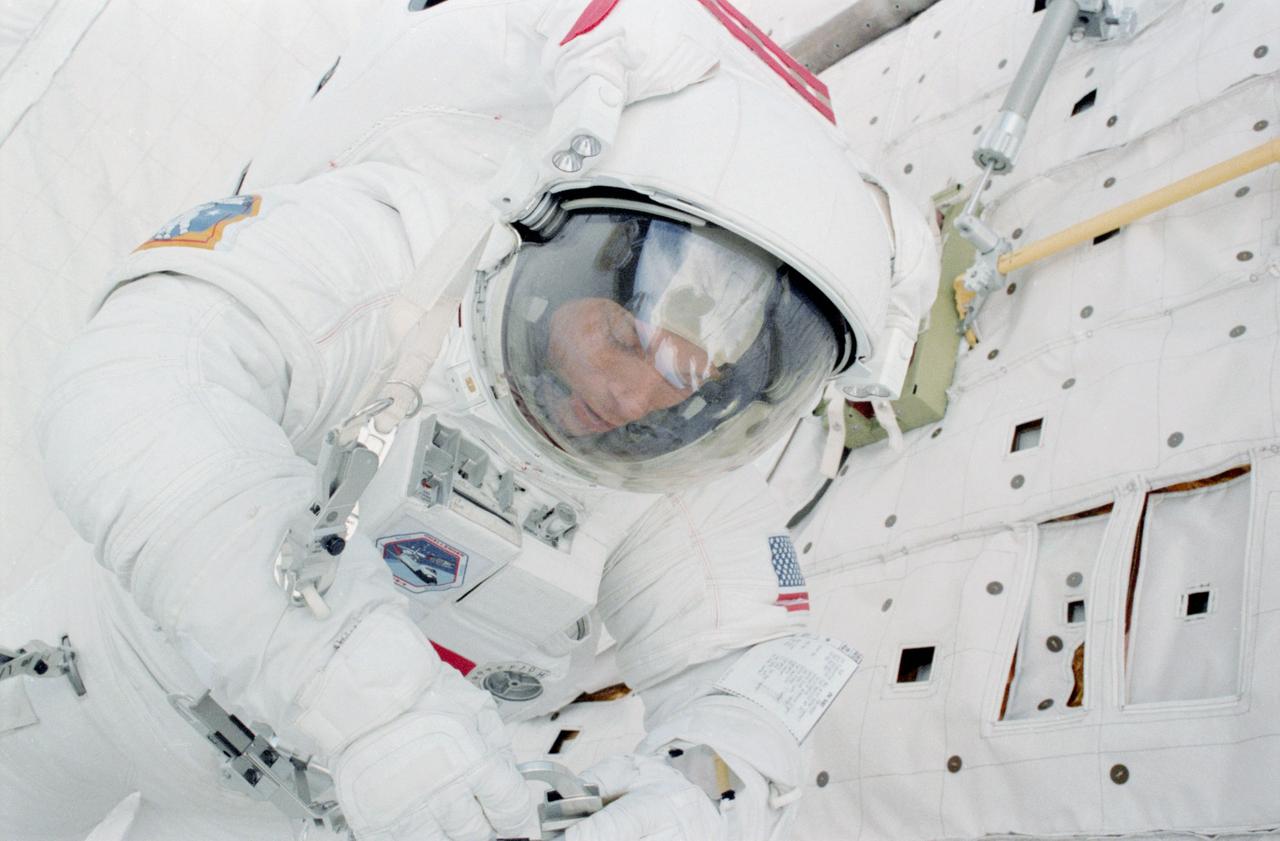
STS006-22-026 (7 April 1983) --- Astronaut F. Story Musgrave, one of two STS-6 mission specialists who performed a lengthy, successful extravehicular activity (EVA) in the cargo bay of the Earth orbiting space shuttle Challenger, anchors himself near the forward bulkhead of the reusable vehicle. Astronaut Donald H. Peterson, sharing the cargo bay with Dr. Musgrave, exposed this frame with a 35mm camera, while astronauts Paul J. Weitz, commander, and Karol J. Bobko, pilot, remained in the cabin. Photo credit: NASA
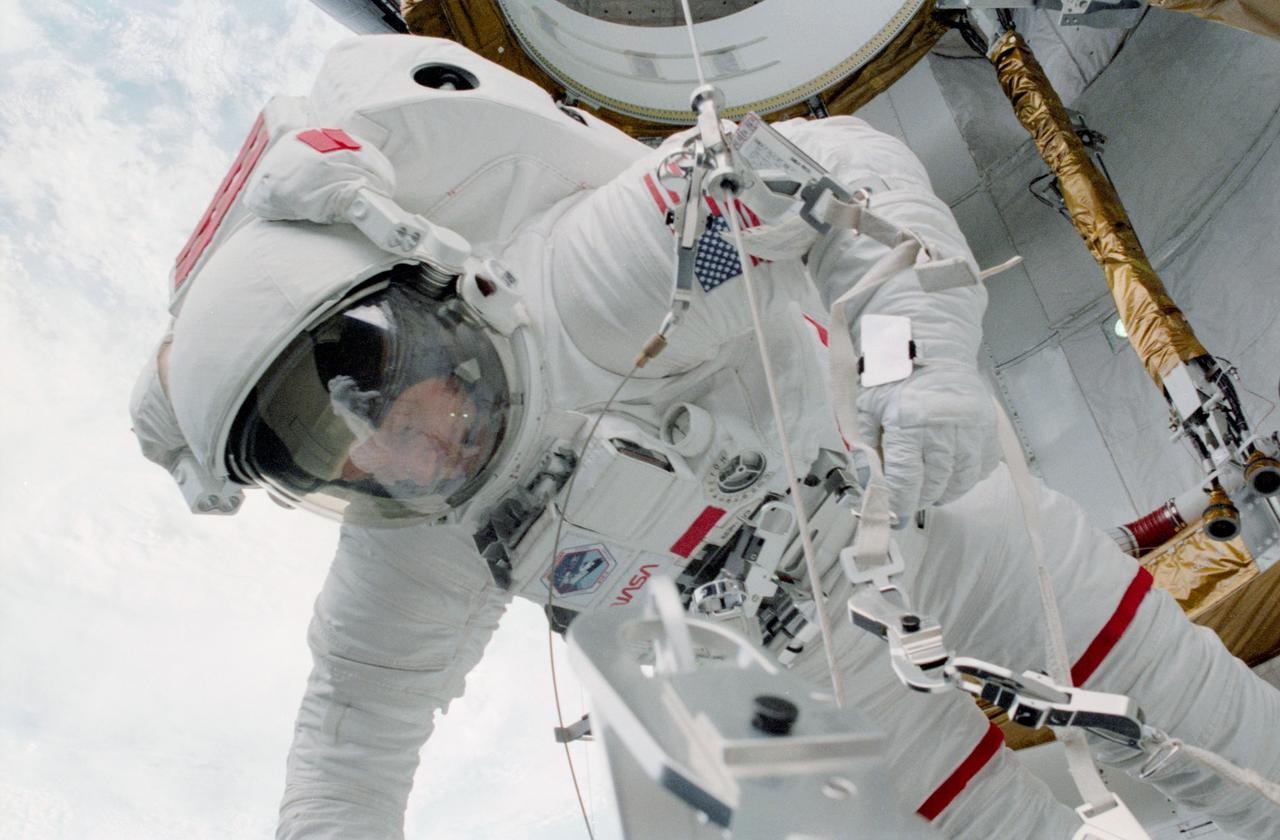
STS006-22-038 (7 April 1983) --- Astronaut F. Story Musgrave, one of two STS-6 mission specialists who performed a long, successful extravehicular activity (EVA) in the cargo bay of the Earth-orbiting space shuttle Challenger, moves along a slide wire near the now vacated inertial upper stage’s (ISU) airborne support equipment (ASE). Astronaut Donald H. Peterson, sharing the cargo bay with Dr. Musgrave, exposed this frame with a 35mm camera, while astronauts Paul J. Weitz, commander; Karol J. Bobko, pilot, remained in the cabin. Photo credit: NASA

S83-30222 (4 April 1983) --- The second reusable spacecraft in history successfully launches from Launch Pad 39A at 1:30:00:88 p.m. (EST) on April 4, 1983, and heads for its history making five-day mission in Earth orbit. The space shuttle Challenger, its two solid rocket boosters (SRB), and a new lightweight?external fuel tank were captured on film by an automatically-tripped camera in a protected station nearer to the launch pad than human beings are able to be at launch time. Onboard the spacecraft are astronauts Paul J. Wietz, Karol J. Bobko, Dr. Story Musgrave and Donald H. Peterson. Photo credit: NASA

S72-41855 (15 June 1972) --- Astronaut Robert L. Crippen, Skylab Medical Experiment Altitude Test (SMEAT) commander, simulates the preparation of a Skylab meal. Crippen is a member of a three-man crew who will spend up to 56 days in the Crew Systems Division's 20-foot altitude chamber at the NASA Manned Spacecraft Center (MSC) beginning in mid-July to obtain medical data and evaluate medical experiment equipment for Skylab. The two crew members not shown in this view are astronauts Karol J. Bobko, SMEAT pilot, and Dr. William E. Thornton, SMEAT science pilot. Photo credit: NASA
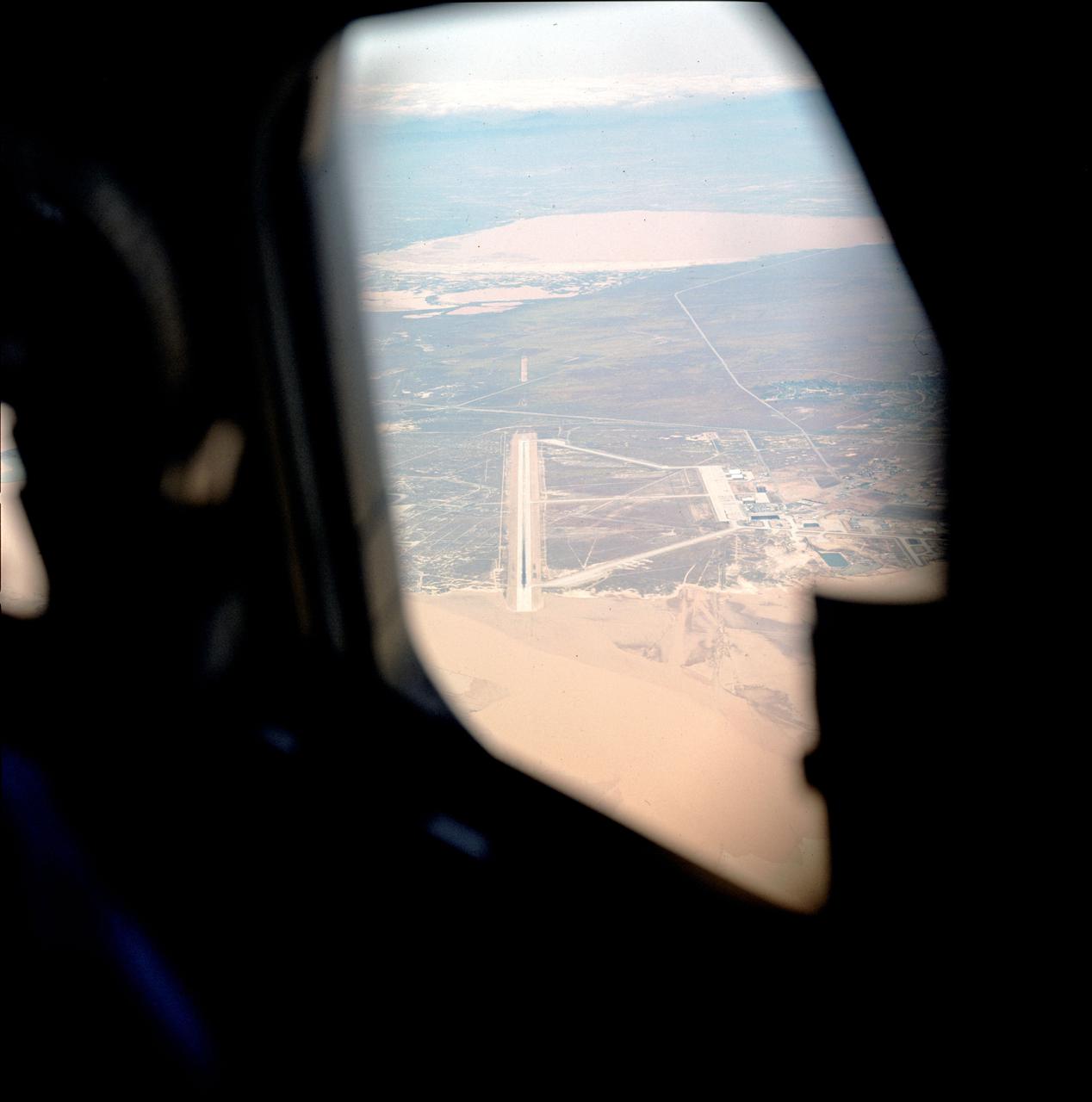
STS006-46-667 (9 April 1983) --- One of the final pictures taken aboard the space shuttle Challenger is this 35mm frame of Landing Strip 22 at Edwards Air Force Base as the reusable spacecraft was lined up for its landing only seconds later. The frame was exposed by astronaut Donald H. Peterson, STS-6 mission specialist, who was stretching behind the commander’s seat occupied by astronaut Paul J. Weitz on the flight deck. Also onboard the spacecraft for the five-day flight were astronauts Karol J. Bobko, pilot, and Dr. F. Story Musgrave, mission specialist. Photo credit: NASA
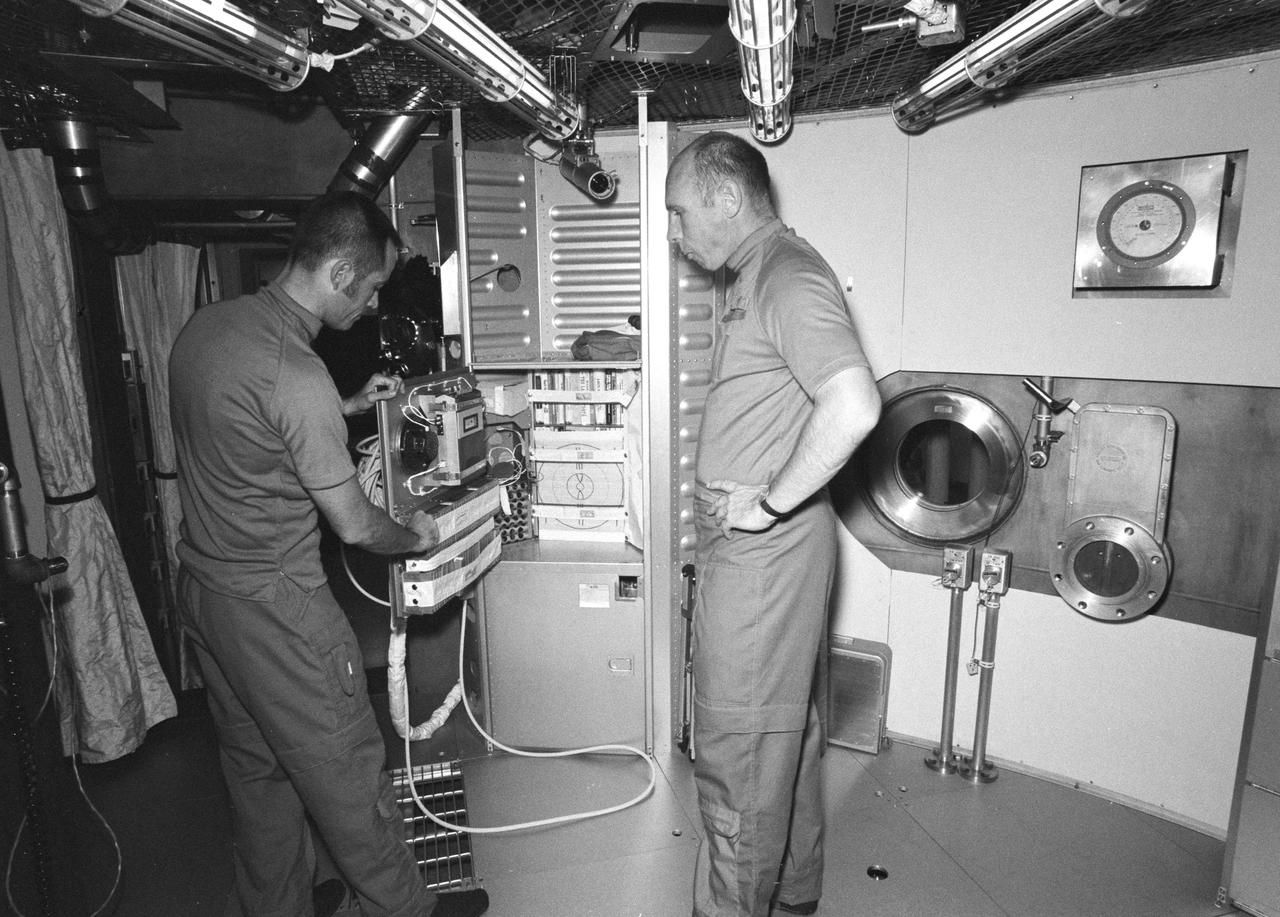
S72-41858 (15 June 1972) --- Astronauts Robert L. Crippen, left, Skylab Medical Experiment Altitude Test (SMEAT) crew commander, and Dr. William E. Thornton, SMEAT science pilot, stand at the cabinet containing off duty recreation equipment. They are two members of a three-man SMEAT crew who will spend up to 56 days in the Crew Systems Division's 20-foot altitude chamber at the NASA Manned Spacecraft Center (MSC) beginning in mid-July to obtain medical data and evaluate medical experiment equipment for Skylab. Astronaut Karol J. Bobko, SMEAT pilot, the third crew member is not shown in this view. Photo credit: NASA
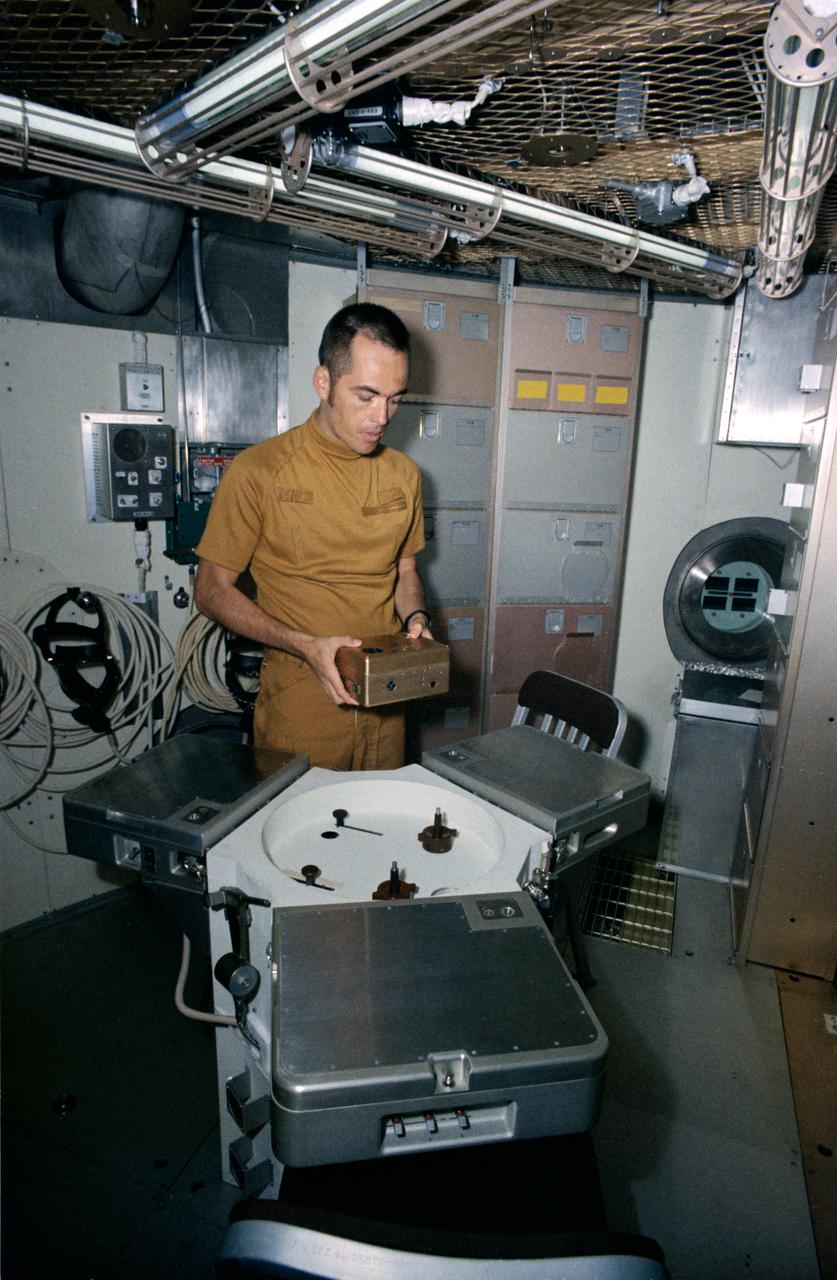
S72-43280 (15 June 1972) --- Astronaut Robert L. Crippen, Skylab Medical Experiment Altitude Test (SMEAT) commander, holds the training model of Skylab experiment T003, the aerosol analysis test, in this preview of SMEAT activity. He is part of a three-man SMEAT crew who will spend up to 56 days in the Crew Systems Division's 20-foot altitude chamber at the NASA Manned Spacecraft Center (MSC) beginning in mid-July to obtain medical data and evaluate medical experiment equipment for Skylab. The two crew members not shown in this view are astronauts Karol J. Bobko, SMEAT pilot, and Dr. William E. Thornton, SMEAT science pilot. Photo credit: NASA

51D-9091 (S23-9091) (12 April 1985) --- The Space Shuttle mission 51-D crewmembers depart the Kennedy Space Center's operations and checkout building on their way to the launch pad for an early morning launch of Discovery. Leading the seven are Karol J. Bobko (center of frame), commander; and Donald E. Williams (right), pilot. Following are Rhea Seddon, Jeffrey A. Hoffman, S. David Griggs--all mission specialists--Charles D. Walker and U.S. Sen. E. J. (Jake) Garn (partly obscured behind Walker), both payload specialists. Partly visible in the doorway are Astronaut John W. Young and George W.S. Abbey, director of flight crew operations.
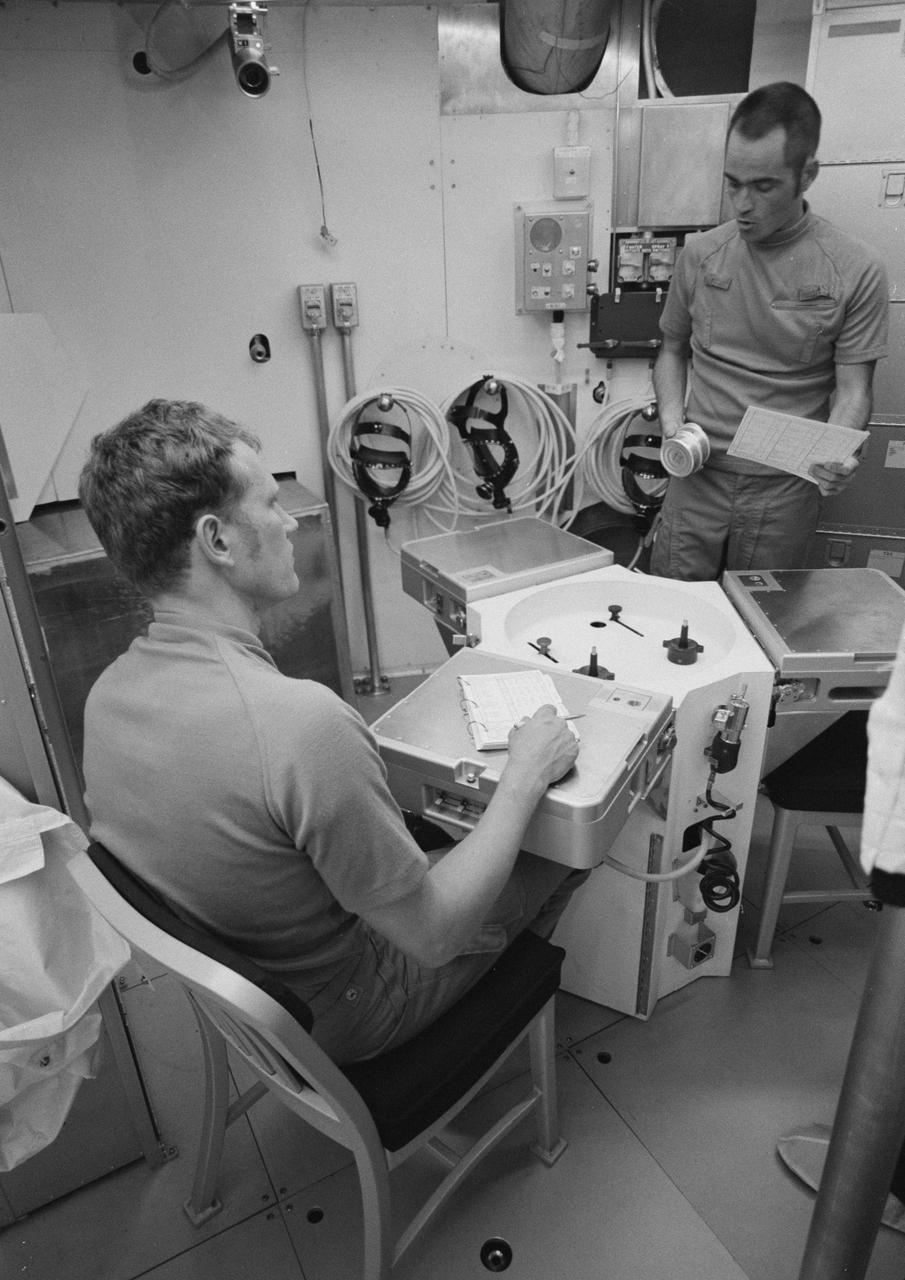
S72-41853 (15 June 1972) --- Two members of the three-man Skylab Medical Experiment Altitude Test (SMEAT) crew, that will spend up to 56 days in the Crew Systems Division's 20-foot altitude chamber at the Manned Spacecraft Center (MSC) beginning in mid-July, go over a menu in the food preparation area. Seated at the simulated wardroom food table is astronaut Karol J. Bobko, SMEAT pilot, and standing is astronaut Robert L. Crippen, SMEAT commander. Dr. William E. Thornton, SMEAT science pilot, the third crew member is not shown in this view. Photo credit: NASA
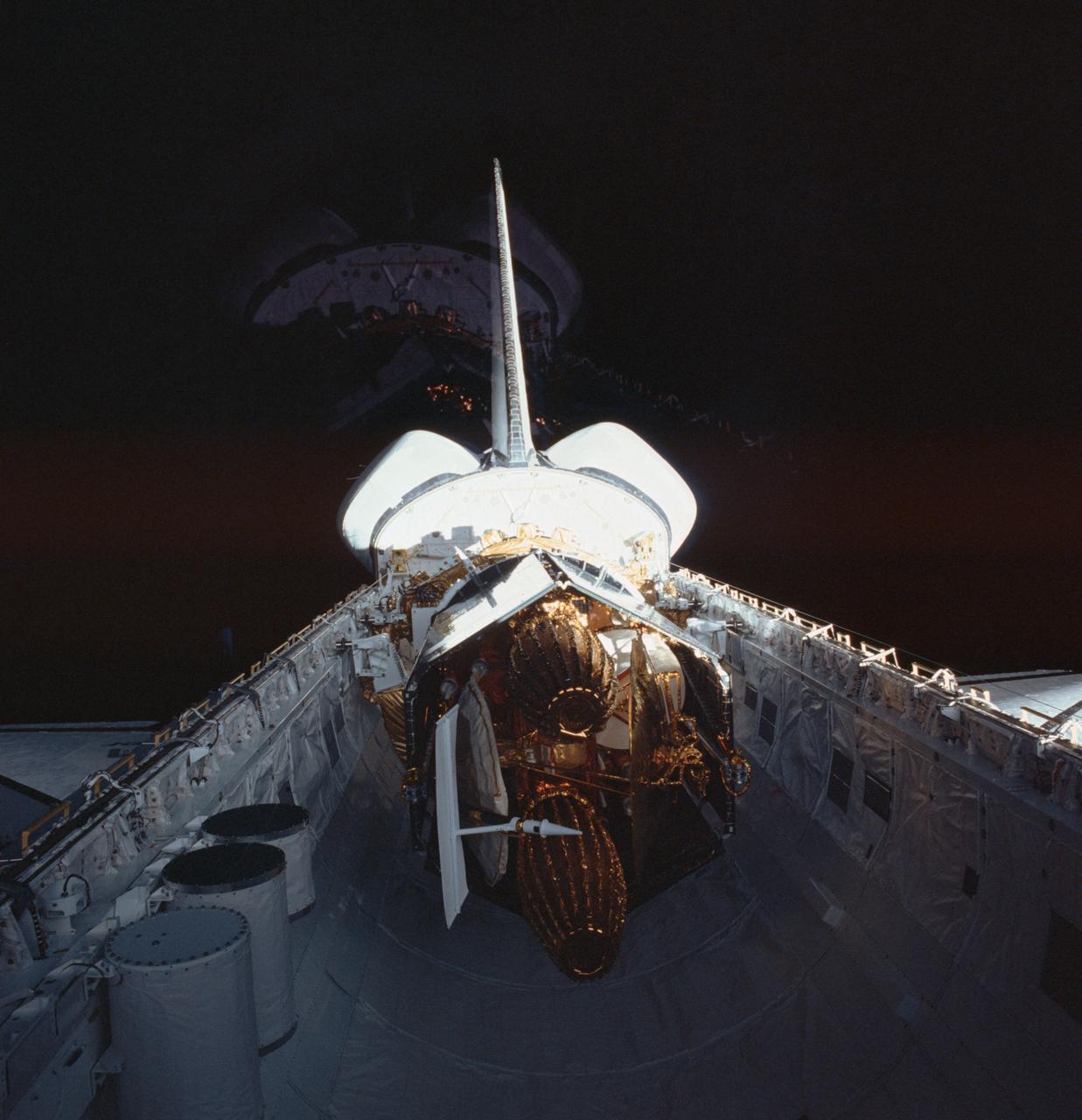
STS006-38-844 (4 April 1983) --- The stowed tracking and data relay satellite (TDRS) and its inertial upper stage (IUS) are seen in duplicate in this 70mm frame taken by the STS-6 crew aboard the Earth-orbiting space shuttle Challenger on its first day in space. A reflection in the aft window of the flight deck resulted in the mirage effect of the “second” TDRS. The three canisters in the aft foreground contain experiments of participants in NASA’s STS getaway special (GAS) program. Onboard the second reusable shuttle for this five-day flight were astronauts Paul J. Weitz, Karol J. Bobko, Dr. F. Story Musgrave and Donald H. Peterson. Photo credit: NASA
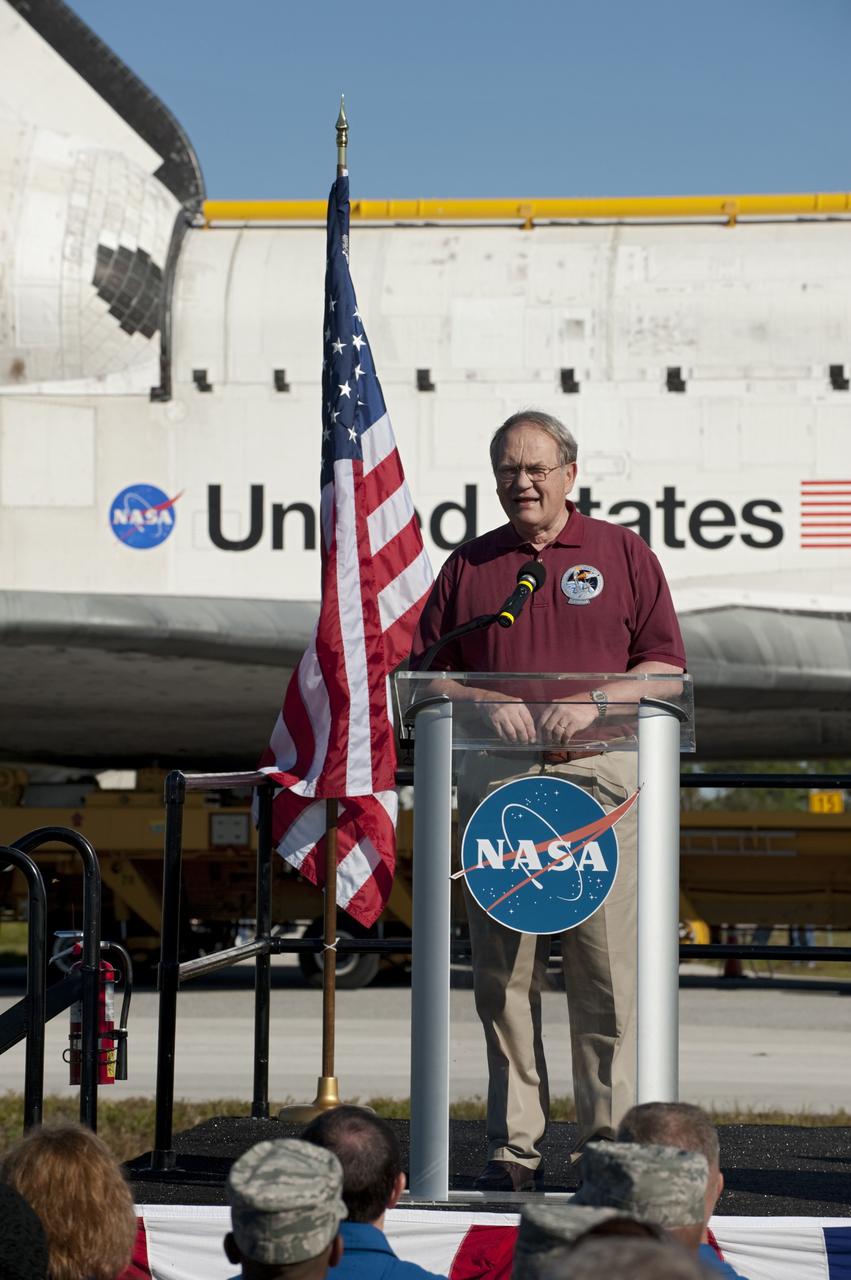
CAPE CANAVERAL, Fla. – At NASA's Kennedy Space Center in Florida, the space shuttle Atlantis pauses during its 10-mile journey to the Kennedy Visitor Complex for a ceremony to commemorate the transfer. Former astronaut Karol Bobko, who commanded Atlantis's first mission, STS-51J in 1985, spoke Kennedy employees and guests at the event. As part of transition and retirement of the Space Shuttle Program, Atlantis is to be displayed at Kennedy's Visitor Complex beginning in the summer of 2013. Over the course of its 26-year career, Atlantis traveled 125,935,769 miles during 307 days in space over 33 missions. For more information, visit http://www.nasa.gov/transition Photo credit: NASA/ Tony Gray

S85-28647 (28 Feb 1985) --- The seven members of the STS-51D mission are pictured in the midst of a busy training schedule in preparation for NASA's 16th Space Shuttle flight, currently planned for April of this year. The crewmembers are (front row, left to right), Karol J. Bobko, commander; Donald E. Williams, pilot; Rhea Seddon and Jeffrey A. Hoffman, mission specialists; and (back row) S. David Griggs, mission specialist; and Charles D. Walker and United States Senator Jake Garn (Republican - Utah) both payload specialists. Walker represents McDonnell-Douglas Corporation. EDITOR'S NOTE: Mission specialist S. David Griggs died June 17, 1989, near Earle, Arkansas, in the crash of a World-War-II-era training plane.

51D-09-034 (12-19 April 1985) --- The seven crew members of STS-51D take time, during a busy full week in space, to pose for a "star-burst" type in-space portrait. Hold picture with astronaut Rhea Seddon at bottom center. Counter-clockwise from the bottom left are Jeffrey A. Hoffman, mission specialist; Dr. Seddon, mission specialist; Charles D. Walker, payload specialist; U. S. Senator E. J. (Jake) Garn, payload specialist; S. David Griggs, mission specialist; Karol J. Bobko, mission commander; and Donald W. Williams, pilot. A pre-set 35mm camera exposed the frame in the mid-deck of the Earth-orbiting Space Shuttle Discovery. The crew launched at 8:59 a.m. (EST), April 12, 1985 and landed at 8:54 a.m. (EST), April 19, 1985 spending five minutes less than a full week on the busy mission.
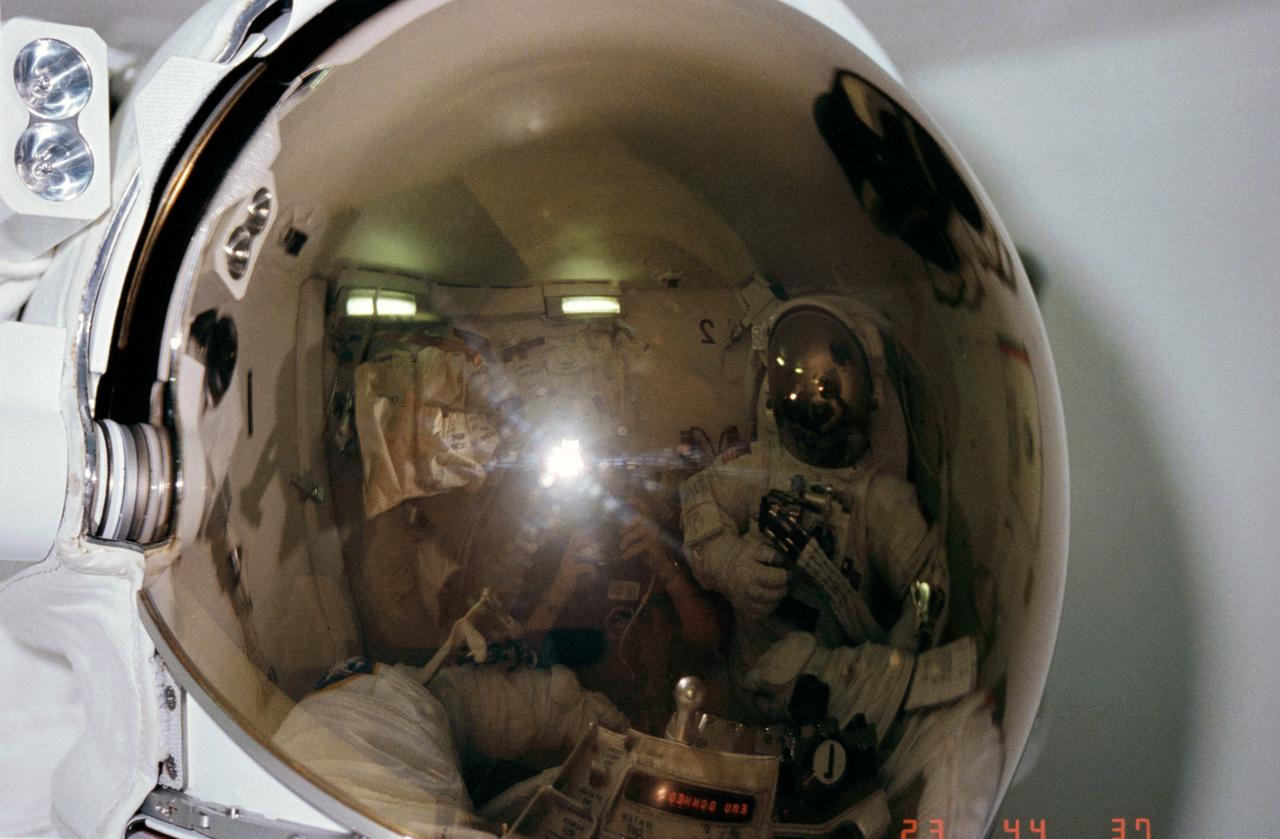
STS006-06-465 (7 April 1983) --- Three-fourths of the STS-6 astronaut crew appears in this unusual 35mm frame exposed in the airlock of the Earth-orbiting space shuttle Challenger. Astronaut F. Story Musgrave’s helmet visor encompasses all the action in the frame. Dr. Musgrave and astronaut Donald H. Peterson (reflected on right side of the visor) were fully suited in their Extravehicular Mobility Unit (EMU) spacesuits and were participating in EVA preparation exercises. Astronaut Karol J. Bobko, STS-6 pilot, wearing conventional onboard shuttle clothing, photographed the two during their procedures and appears at center of frame. The reversed number (1 and 2 in the mirrored image represent the EVA designations for the two mission specialists. Photo credit: NASA
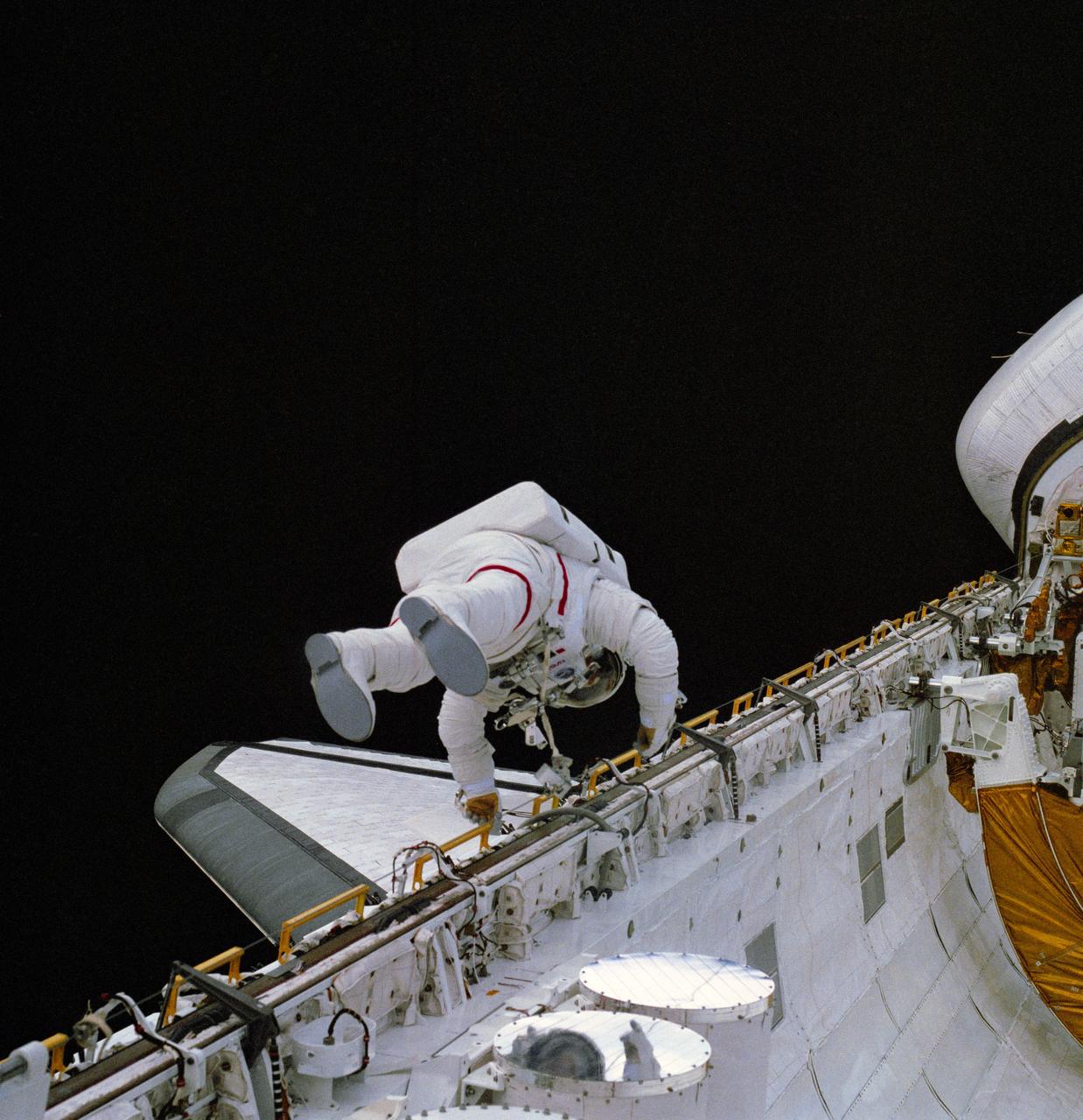
S83-30215 (7 April 1983) --- This photograph of astronaut Story Musgrave, STS-6 mission specialist, translating along the longerons on the port side of the cargo bay of the Earth-orbiting space shuttle Challenger was taken with a hand-held 70mm camera from some 18 meters (60 feet) away by one of two crew members who remained inside the cabin. Astronauts Musgrave and Donald H. Peterson (out of frame) were in the midst of NASA?s first ever shuttle extravehicular activity (EVA). Astronaut Karol J. Bobko, pilot, took a number of photographs through the aft flight deck?s windows, and astronaut Paul J. Weitz, mission commander, also exposed some images but remained in control of the orbiter during the EVA. Photo credit: NASA
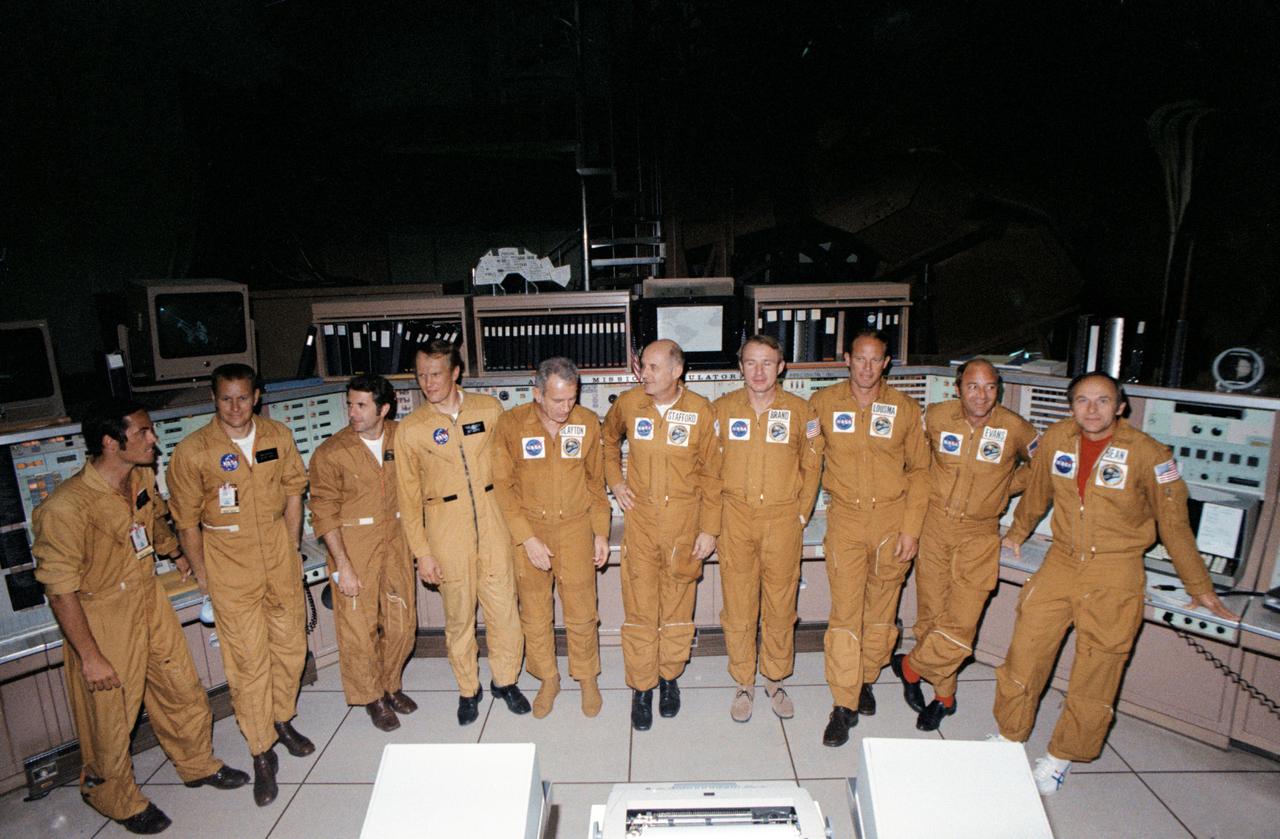
S75-28361 (9 July 1975) --- These ten American astronauts compose the U.S. prime crew, the backup crew and the crew support team for the joint U.S.-USSR Apollo-Soyuz Test Project docking mission in Earth orbit. They are, left to right, Robert L. Crippen, support team; Robert F. Overmyer, support team; Richard H. Truly, support team; Karol J. Bobko, support team; Donald K. Slayton, prime crew docking module pilot; Thomas P. Stafford, prime crew commander; Vance D. Brand, prime crew command module pilot; Jack R. Lousma, backup crew docking module pilot; Ronald E. Evans, backup crew command module pilot; and Alan L. Bean, backup crew commander. They are photographed by the Apollo Mission Simulator console in Building 5 at NASA's Johnson Space Center.

CAPE CANAVERAL, Fla. – U.S. Astronaut Hall of Fame member Karol Bobko is introduced at NASA’s Kennedy Space Center Visitor Complex in Florida, prior to the ceremony in which Bonnie Dunbar, Curt Brown and Eileen Collins will be inducted into the group of space pioneers. This induction is the twelfth group of space shuttle astronauts named to the AHOF, and the first time two women are inducted at the same time. The year’s inductees were selected by a committee of current Hall of Fame astronauts, former NASA officials, historians and journalists. The selection process is administered by the Astronaut Scholarship Foundation. For more on the U.S. Astronaut Hall of Fame, go to http://www.kennedyspacecenter.com/astronaut-hall-of-fame.aspx For more on the Astronaut Scholarship Foundation, go to http://astronautscholarship.org/ Photo credit: NASA/ Kim Shiflett
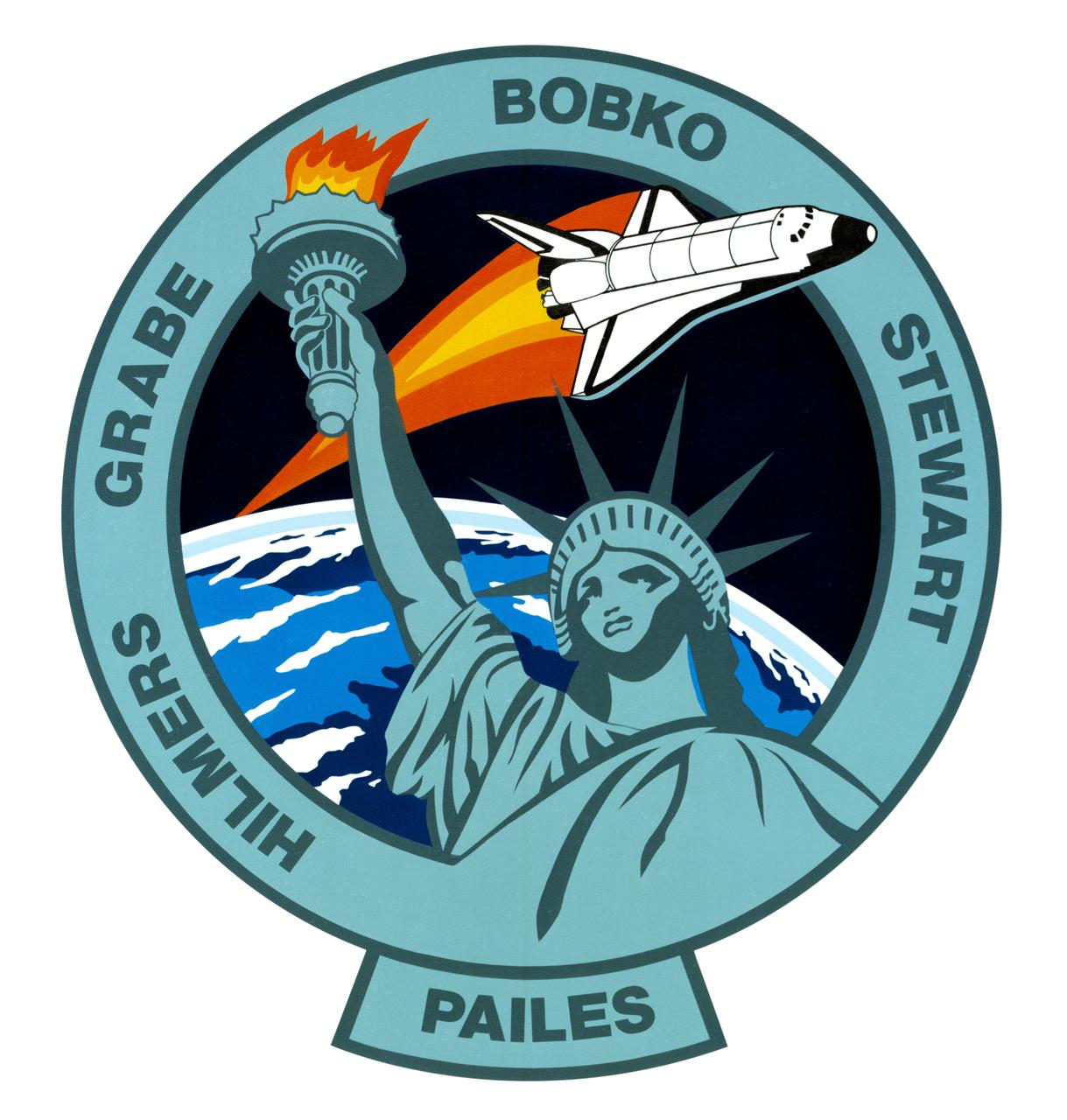
S85-39862 (1 Sept. 1985) --- The 51-J mission insignia, designed by Atlantis's first crew, pays tribute to the Statue of Liberty and the ideas it symbolizes. The historical gateway figure bears additional significance for astronauts Karol J. Bobko, mission commander; and Ronald J. Grabe, pilot, both New York natives. Other members of the five-man crew, whose surnames encircle the artwork, are Robert L. Stewart and David C. Hilmers, mission specialists; and William A. Pailes, payload specialist. The NASA insignia design for space shuttle flights is reserved for use by the astronauts and for other official use as the NASA Administrator may authorize. Public availability has been approved only in the forms of illustrations by the various news media. When and if there is any change in this policy, which is not anticipated, the change will be publicly announced. Photo credit: NASA
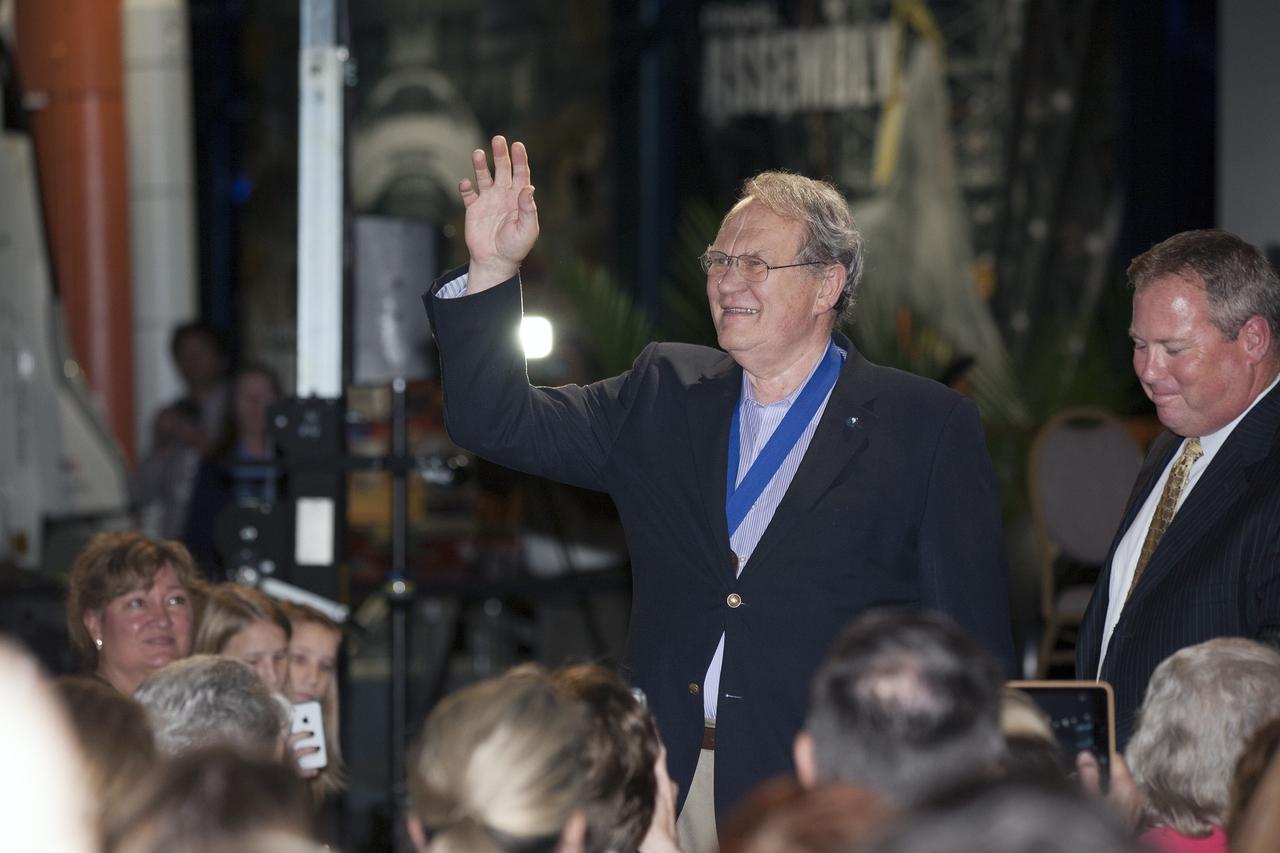
CAPE CANAVERAL, Fla. -- Inside the Space Shuttle Atlantis attraction at NASA’s Kennedy Space Center Visitor Complex in Florida, former NASA astronaut and Hall of Famer Karol "Bo" Bobko walks the red carpet at the 2014 U.S. Astronaut Hall of Fame Induction ceremony. Space shuttle astronauts and space explorers Shannon Lucid and Jerry Ross were inducted into the Hall of Fame Class of 2014. The 2014 inductees are selected by a committee of Hall of Fame astronauts, former NASA officials, flight directors, historians and journalists. The process is administered by the Astronaut Scholarship Foundation. To be eligible, an astronaut must have made his or her first flight at least 17 years before the induction. Candidates must be a U.S. citizen and a NASA-trained commander, pilot or mission specialist who has orbited the earth at least once. Including Lucid and Ross, 87 astronauts have been inducted into the AHOF. Photo credit: NASA/Kim Shiflett
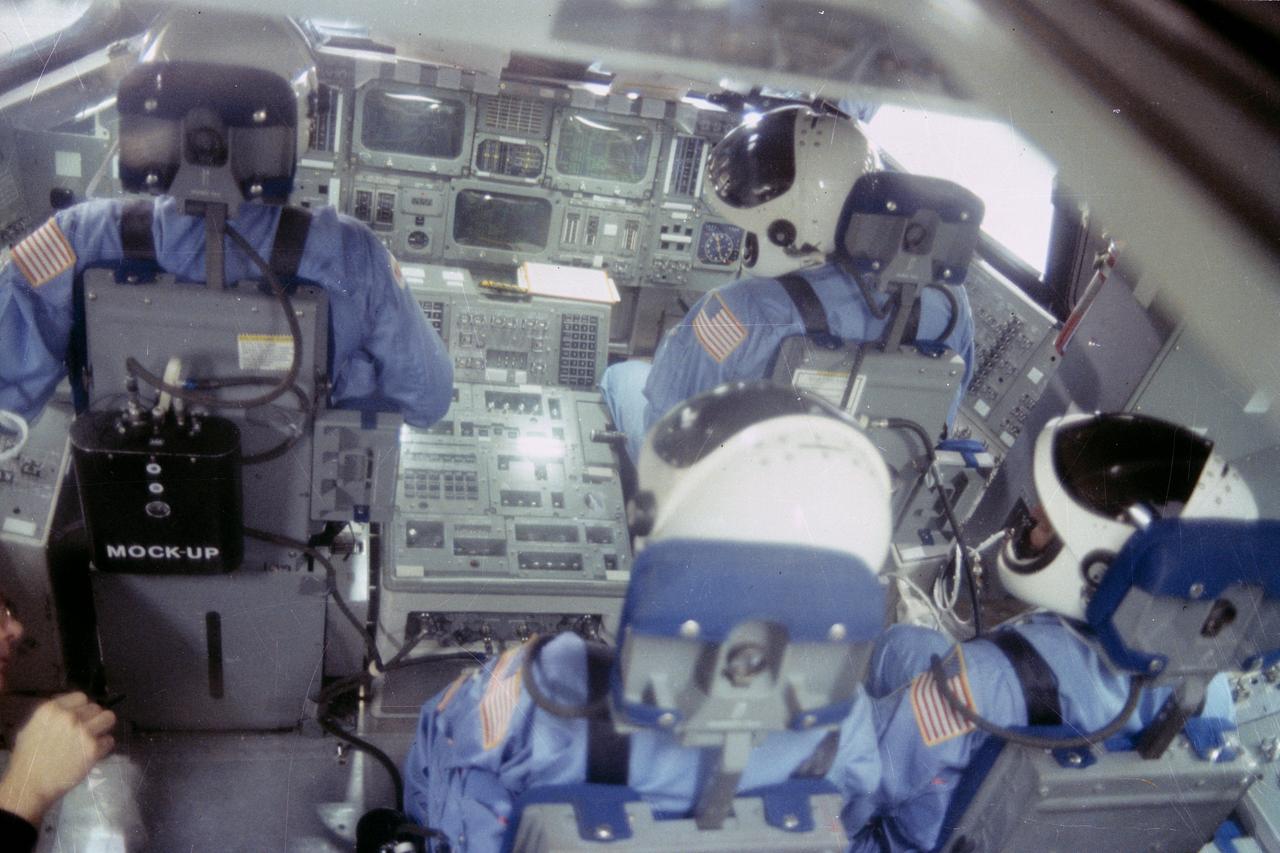
S82-41355 (December 1982) --- The four crew members for NASA?s STS-6 mission go through a training exercise in the full-scale engineering mock-up in the shuttle mock-up and integration laboratory at the Johnson Space Center (JSC). Their seating configuration reflects that of launch and landing phases aboard the space shuttle Challenger. The front stations are occupied by astronauts Paul J. Weitz (left), commander, and Karol J. Bobko, pilot. In the rear seats are astronauts Story Musgrave and Donald H. Peterson, both mission specialists. STS-6 will be the Challenger?s first flight when it takes this crew and a tracking and data relay satellite (TDRS) into Earth orbit the early part of next year. Photo credit: NASA
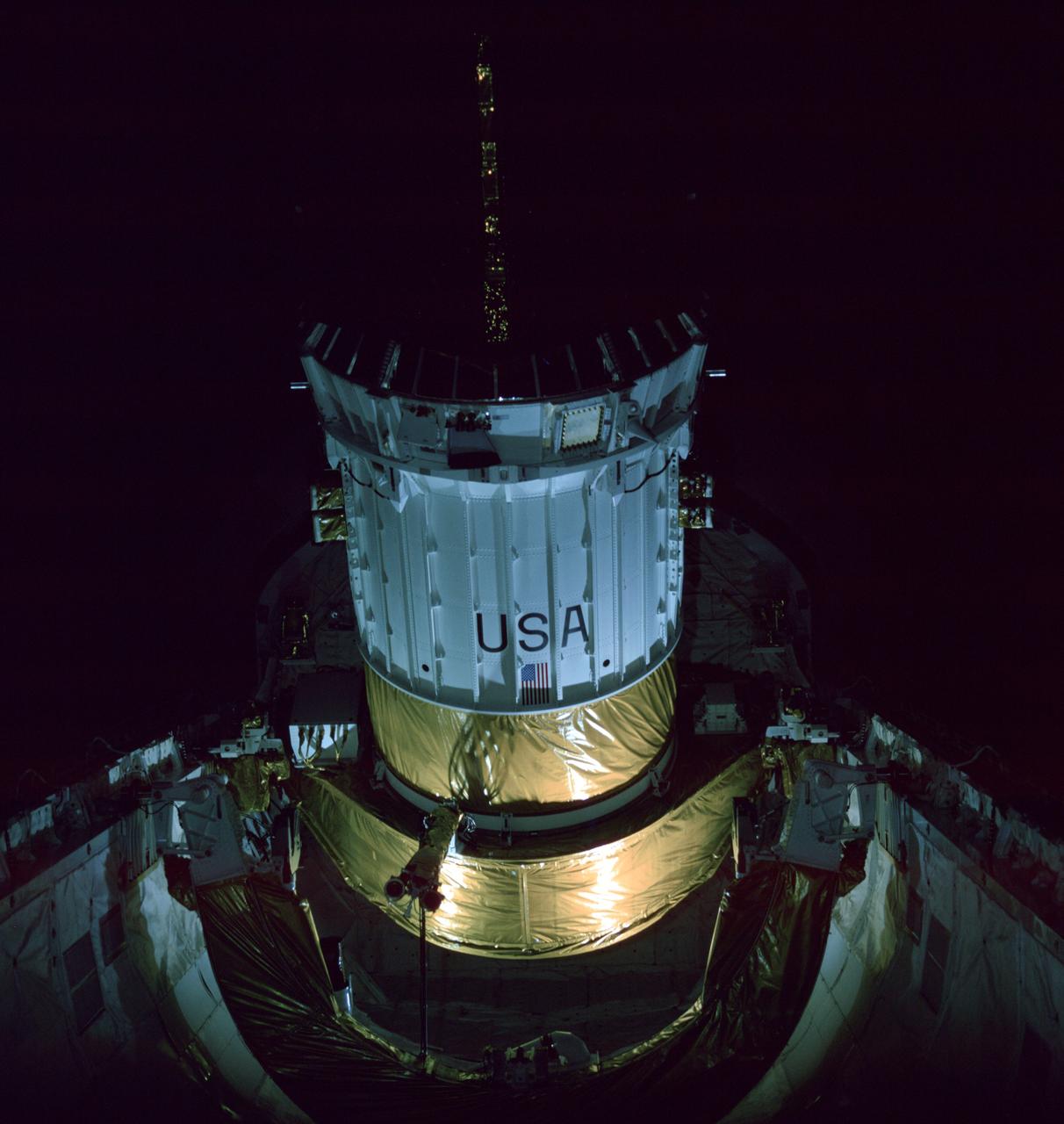
STS006-40-685 (4 April 1983) --- This view of a tilted tracking and data relay satellite (TDRS) and part of its inertial upper stage (IUS) was photographed during deployment of the TDRS/IUS tandem some 10 hours following launch of space shuttle Challenger. A 70mm camera was aimed by crew members through the aft windows of the Earth-orbiting Challenger to capture the scene. A tilt-table device was used to lift the TDRS to this position (almost 90 degrees different from its stowed position). Onboard NASA’s second reusable shuttle for this five-day flight were astronauts Paul J. Weitz, Karol J. Bobko, Dr. F. Story Musgrave and Donald H. Peterson. Photo credit: NASA
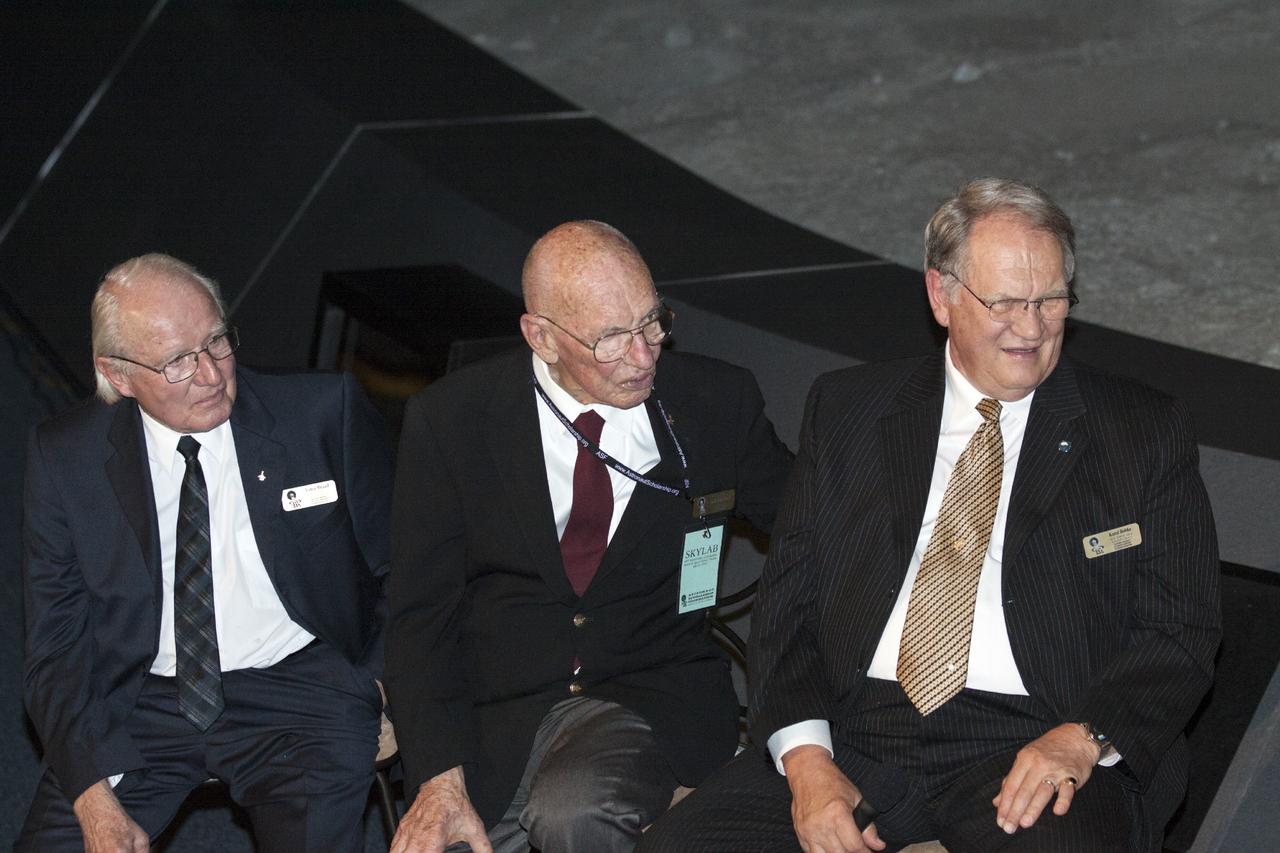
CAPE CANAVERAL, Fla. – At the Kennedy Space Center's Apollo/Saturn V Center, former NASA astronauts, from the left, Vance Brand, William Thornton and Karol Bobko recall experiences during the Astronaut Scholarship Foundation's event celebrating the 40th anniversary of Skylab. Each went on to fly missions during the Space Shuttle Program. Brand was also pilot on the Apollo-Soyuz Test Project. The gala commemorating the 40th anniversary of Skylab included six of the nine astronauts who flew missions to America's first space station. The orbiting laboratory was launched unpiloted from Kennedy on May 14, 1973. Between May 25, 1973 and Feb. 8, 1974, crews of three spent 28, 59 and 84 days living and working in low-Earth orbit aboard the station. For more information, visit http://www.nasa.gov/mission_pages/skylab/ Photo credit: NASA/Kim Shiflett
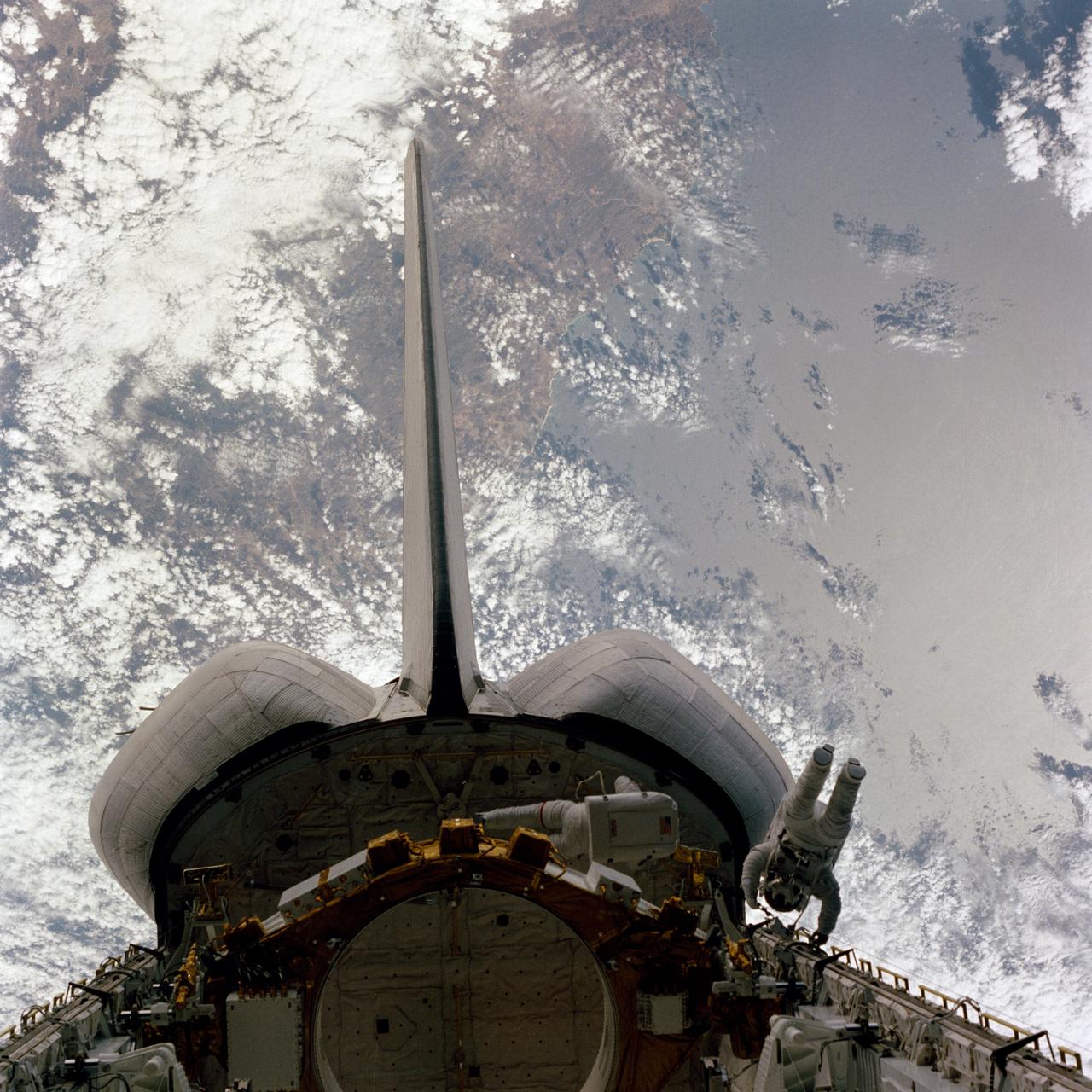
STS006-45-111 (7 April 1983) --- Astronaut Donald H. Peterson (port side) and F. Story Musgrave, STS-6 mission specialists, evaluate the handrail system on the starboard longeron and aft bulkhead, respectively, during a long extravehicular activity (EVA) aboard the Earth-orbiting space shuttle Challenger. The vertical stabilizer and orbital maneuvering system (OMS) pods frame a portion of Mexico?s state of Jalisco below. Punta Farallon and Sahta da Tencatita, about 120 kilometers (75 miles) south of Puerto Vallarta, are visible. Pacific waters form about half of the backdrop for this scene, photographed by one of two crew members who remained inside the spacecraft during the EVA. Astronaut Karol J. Bobko, pilot, took a number of pictures of his fellow crew members during their outside tasks and astronaut Paul J. Weitz, commander, took some photographs while remaining in command of the reusable vehicle. Photo credit: NASA
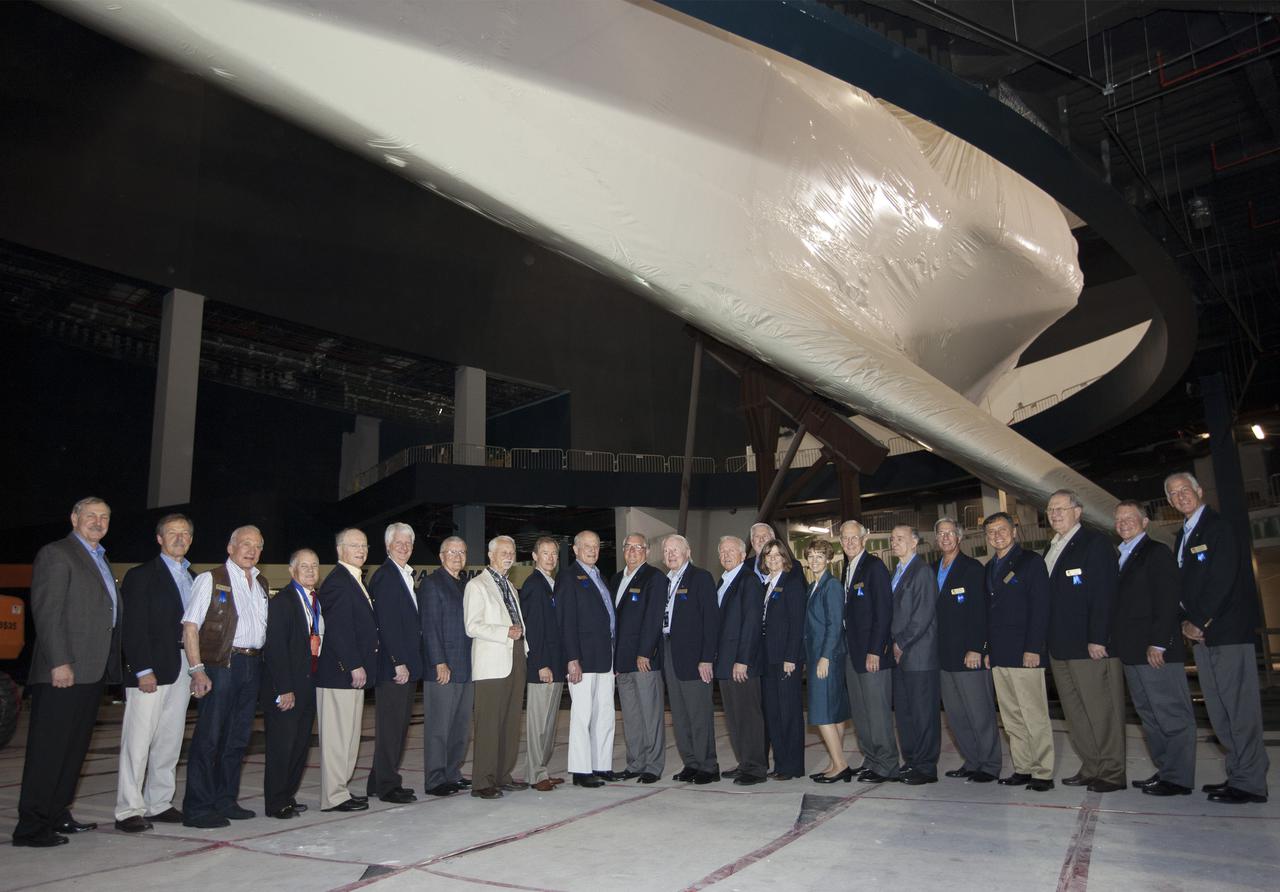
CAPE CANAVERAL, Fla. – At NASA’s Kennedy Space Center Visitor Complex in Florida, members of the U.S. Astronaut Hall of Fame are joined by Bill Moore, chief operating officer of the visitor complex pose under the space shuttle Atlantis in the facility where it will be displayed beginning June 29. The shuttle is currently protected by plastic wrap as constitution contuse. Pictured, left to right are, Curt Brown, Robert, 'Hoot' Gibson, Buzz Aldrin, Joe Allen, Rick Hauck, Steven Hawley, Fred Haise, Owen Garriott, Brewster Shaw. Jack Lousma, Dan Brandenstein, Vance Brand, Loren Shriver, Moore, Bonnie Dunbar, Eileen Collins, Charlie Duke, Walt Cunningham, John Blaha, Franklin Chang-Diaz, Karol Bobko, George 'Pinky' Nelson and Jeff Hoffmann. This induction is the twelfth group of space shuttle astronauts named to the AHOF, and the first time two women are inducted at the same time. The year’s inductees were selected by a committee of current Hall of Fame astronauts, former NASA officials, historians and journalists. The selection process is administered by the Astronaut Scholarship Foundation. For more on the U.S. Astronaut Hall of Fame, go to http:__www.kennedyspacecenter.com_astronaut-hall-of-fame.aspx For more on the Astronaut Scholarship Foundation, go to http:__astronautscholarship.org_ Photo credit: NASA_ Kim Shiflett
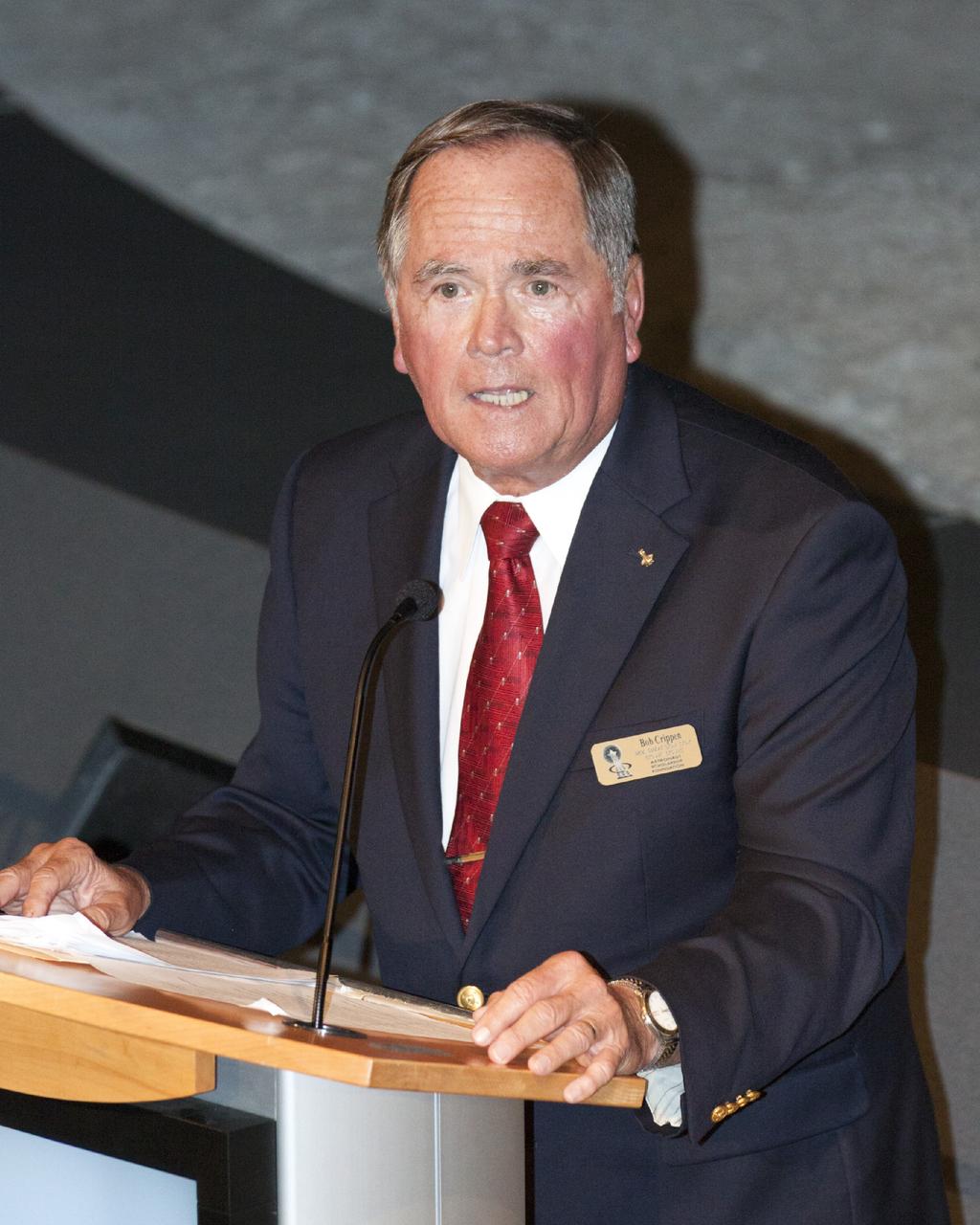
CAPE CANAVERAL, Fla. – At the Kennedy Space Center's Apollo/Saturn V Center, former NASA astronaut Robert Crippen speaks to guests at the Astronaut Scholarship Foundation's event celebrating the 40th anniversary of Skylab. Crippen, along with astronauts William Thornton and Karol Bobko, took part in a 56-day activity during 1972 called SMEAT -- Skylab Medical Experiment Altitude Test -- that preceded the launch of Skylab and helped NASA evaluate equipment and procedures proposed for the long-duration Skylab missions. Crippen went on to fly missions during the Space Shuttle Program and served as center director at Kennedy from January 1992 until January 1995. The gala commemorating the 40th anniversary of Skylab included six of the nine astronauts who flew missions to America's first space station. The orbiting laboratory was launched unpiloted from Kennedy on May 14, 1973. Between May 25, 1973 and Feb. 8, 1974, crews of three spent 28, 59 and 84 days living and working in low-Earth orbit aboard the station. For more information, visit http://www.nasa.gov/mission_pages/skylab/ Photo credit: NASA/Kim Shiflett
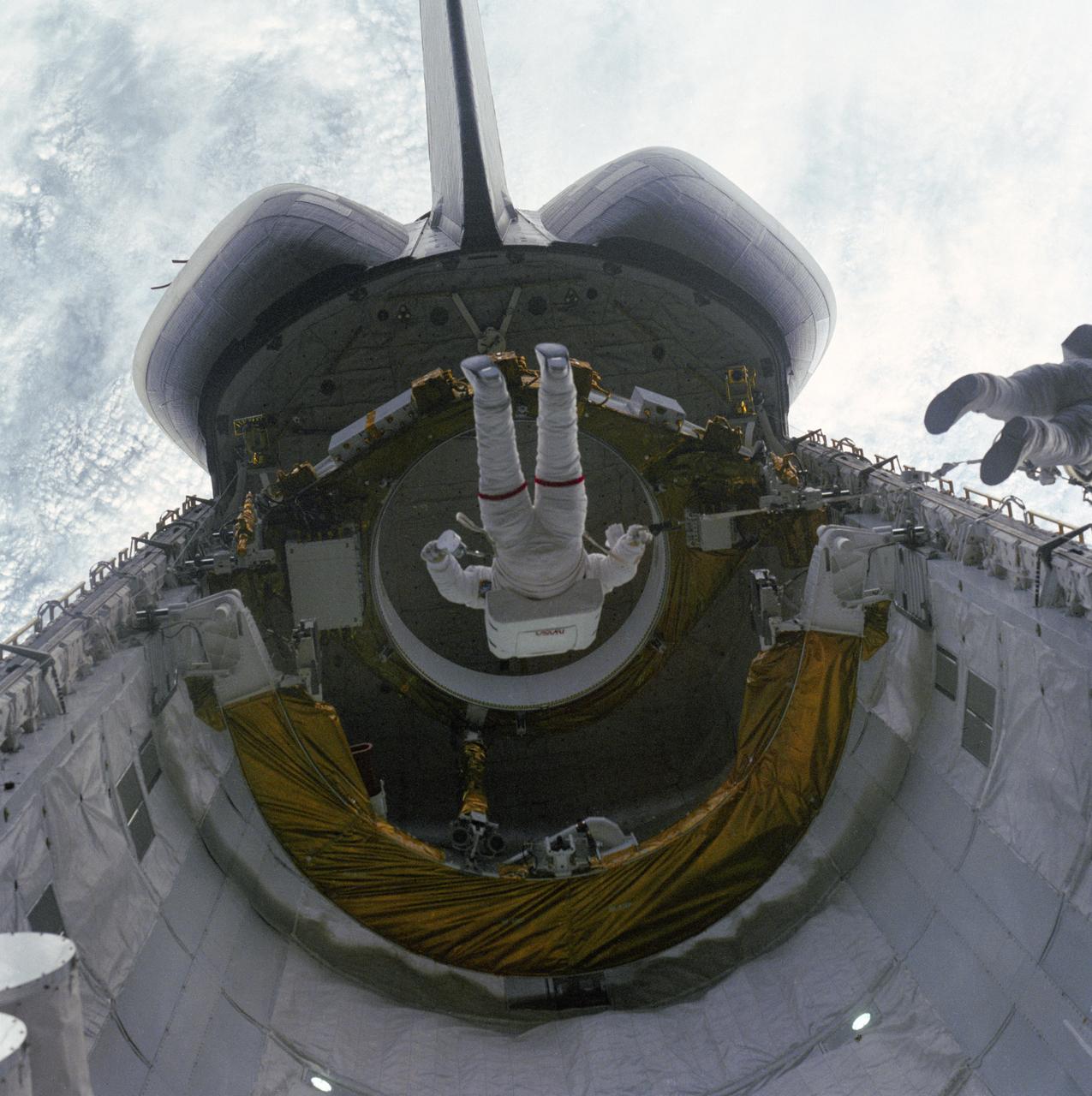
S83-30214 (7 April 1983) --- Astronaut F. Story Musgrave, STS-6 mission specialist, suspends himself midway between the starboard and port slide wire systems to evaluate the pull strength of the reel-in safety tether while astronaut Donald H. Peterson, the flight?s other mission specialist, busies himself along the port side at right edge of frame. This photograph was taken by astronaut Karol J. Bobko, pilot, from the aft window of the Earth-orbiting Challenger?s flight deck. The successful EVA occurred on April 7, 1983, on day four of the five-day flight. The gold-foil protected object is the airborne support equipment (ASE) for the now vacated inertial upper stage (IUS) which aided in the deployment of the tracking and data relay satellite (TDRS) on the first day of the mission. Astronaut Paul J. Weitz, crew commander, was in charge of the Challenger during these operations. The white background is made up mostly of clouds over Earth. Photo credit: NASA
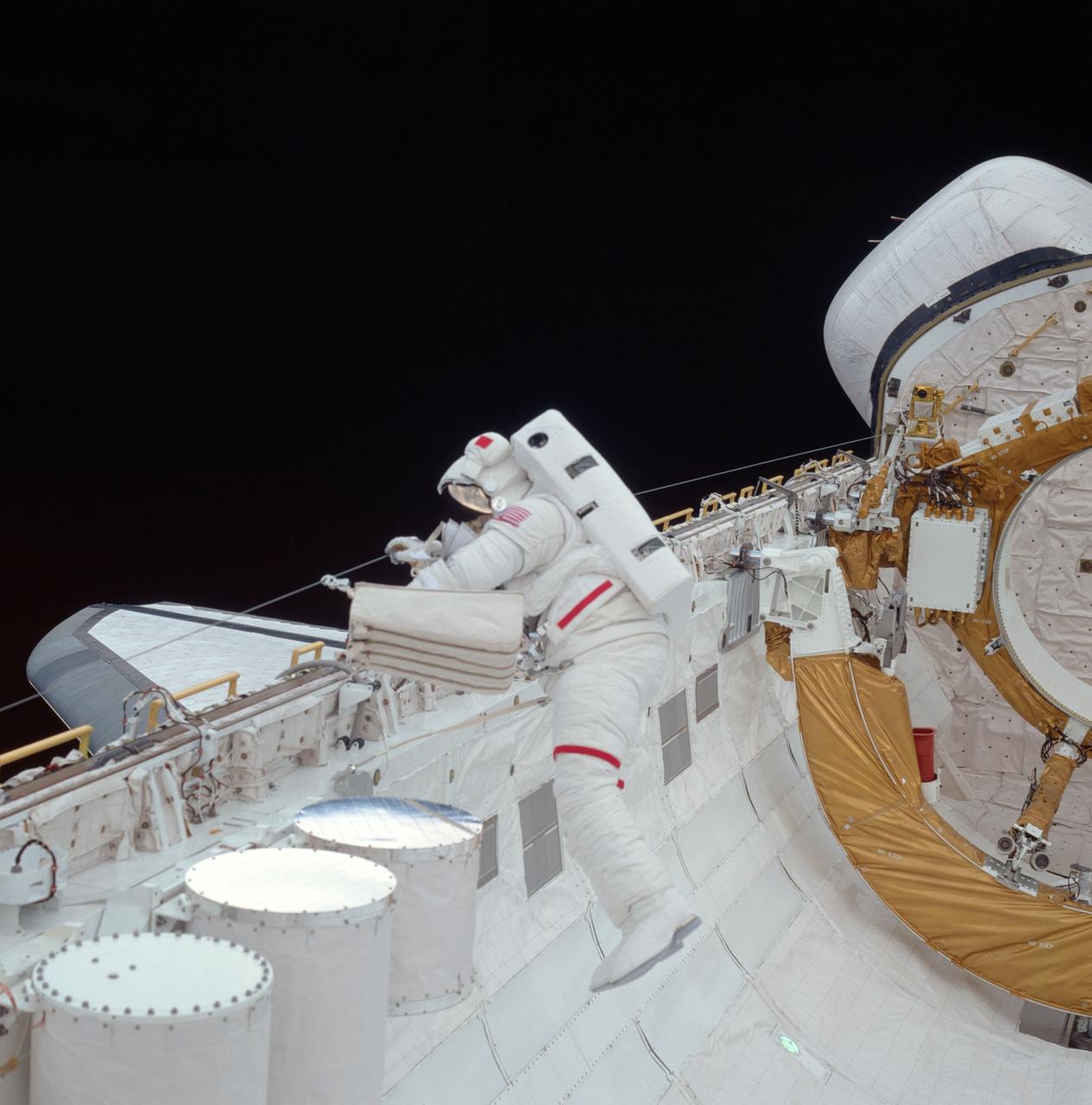
STS006-45-124 (7 April 1983) --- Astronaut F. Story Musgrave, STS-6 mission specialist, translates down the Earth-orbiting space shuttle Challenger’s payload bay door hinge line with a bag of latch tools. This photograph is among the first five still frames that recorded the April 7 extravehicular activity (EVA) of Dr. Musgrave and Donald H. Peterson, the flight’s other mission specialist. It was photographed with a handheld 70mm camera from inside the cabin by one of two crew members who remained on the flight deck during the EVA. Dr. Musgrave’s task here was to evaluate the techniques required to move along the payload bay’s edge with tools. In the lower left foreground are three canisters containing three getaway special (GAS) experiments. Part of the starboard wind and orbital maneuvering system (OMS) pod are seen back dropped against the blackness of space. The gold-foil protected object partially out of frame on the right is the airborne support equipment for the now vacated inertial upper stage (IUS) which aided the deployment of the tracking and data relay satellite on the flight’s first day. Astronauts Paul J. Weitz, command and Karol J. Bobko, pilot, remained inside the Challenger during the EVA. Photo credit: NASA
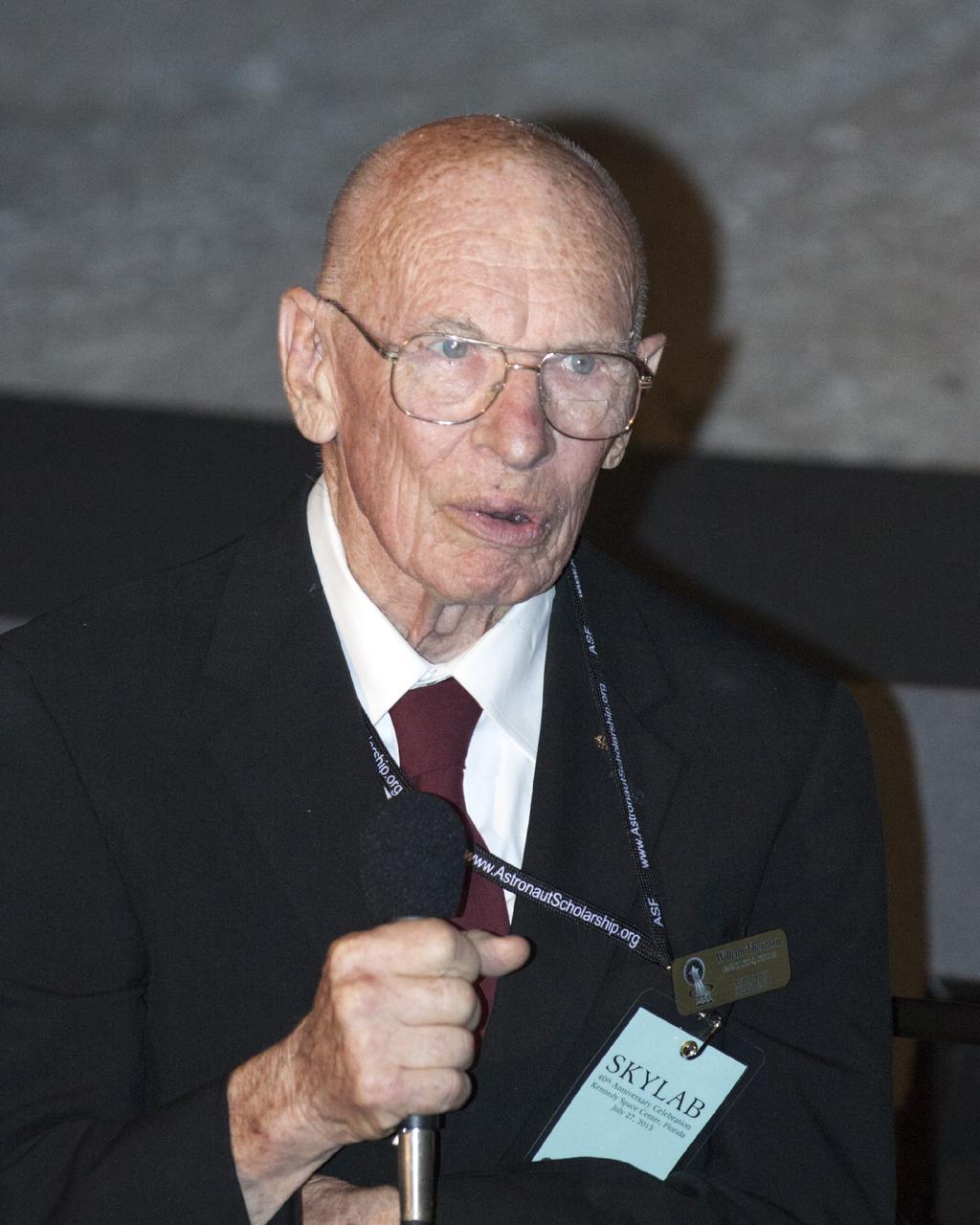
CAPE CANAVERAL, Fla. – At the Kennedy Space Center's Apollo/Saturn V Center, former NASA astronaut William Thornton speaks to guests at the Astronaut Scholarship Foundation's event celebrating the 40th anniversary of Skylab. Thornton, along with astronauts Robert Crippen and Karol Bobko, took part in a 56-day activity during 1972 called SMEAT -- Skylab Medical Experiment Altitude Test -- that preceded the launch of Skylab and helped NASA evaluate equipment and procedures proposed for the long-duration Skylab missions. Thornton went on to fly missions during the Space Shuttle Program. The gala commemorating the 40th anniversary of Skylab included six of the nine astronauts who flew missions to America's first space station. The orbiting laboratory was launched unpiloted from Kennedy on May 14, 1973. Between May 25, 1973 and Feb. 8, 1974, crews of three spent 28, 59 and 84 days living and working in low-Earth orbit aboard the station. For more information, visit http://www.nasa.gov/mission_pages/skylab/ Photo credit: NASA/Kim Shiflett
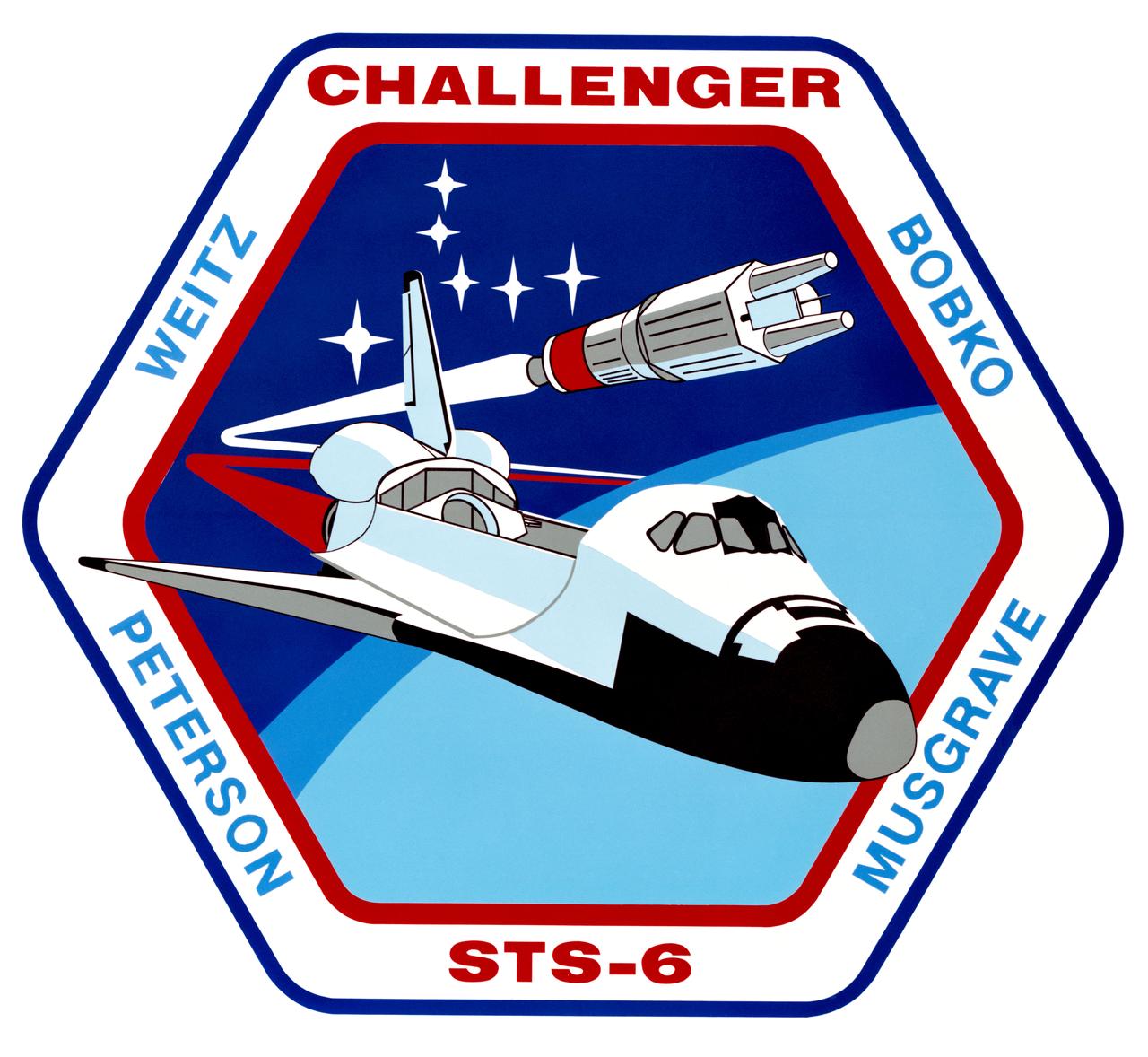
S82-39531 (December 1982) --- This is the official insignia for space shuttle mission STS-6. The crew members for this mission are astronauts Paul J. Weitz, commander; Karol J. Bobko, pilot; F. Story Musgrave, mission specialist; and Donald H. Peterson, mission specialist. The sixth space shuttle flight is represented by the hexagonal shape of the insignia and the six stars, in the portrayed constellation Virgo. The sign Virgo is also symbolic of the first flight of the space shuttle Challenger. Depicted above the spacecraft?s open cargo bay is the combined Inertial Upper Stage (IUS) and a Tracking and Data Relay Satellite. This is the first shuttle flight of the IUS rocket, which will carry the first TDRS to a geosynchronous orbit of 24,000 statute miles. The NASA insignia design for space shuttle flights is reserved for use by the astronauts and for other official use as the NASA Administrator may authorize. Public availability has been approved only in the forms of illustrations by the various news media. When and if there is any change in this policy, which is not anticipated, the change will be publicly announced. Photo credit: NASA
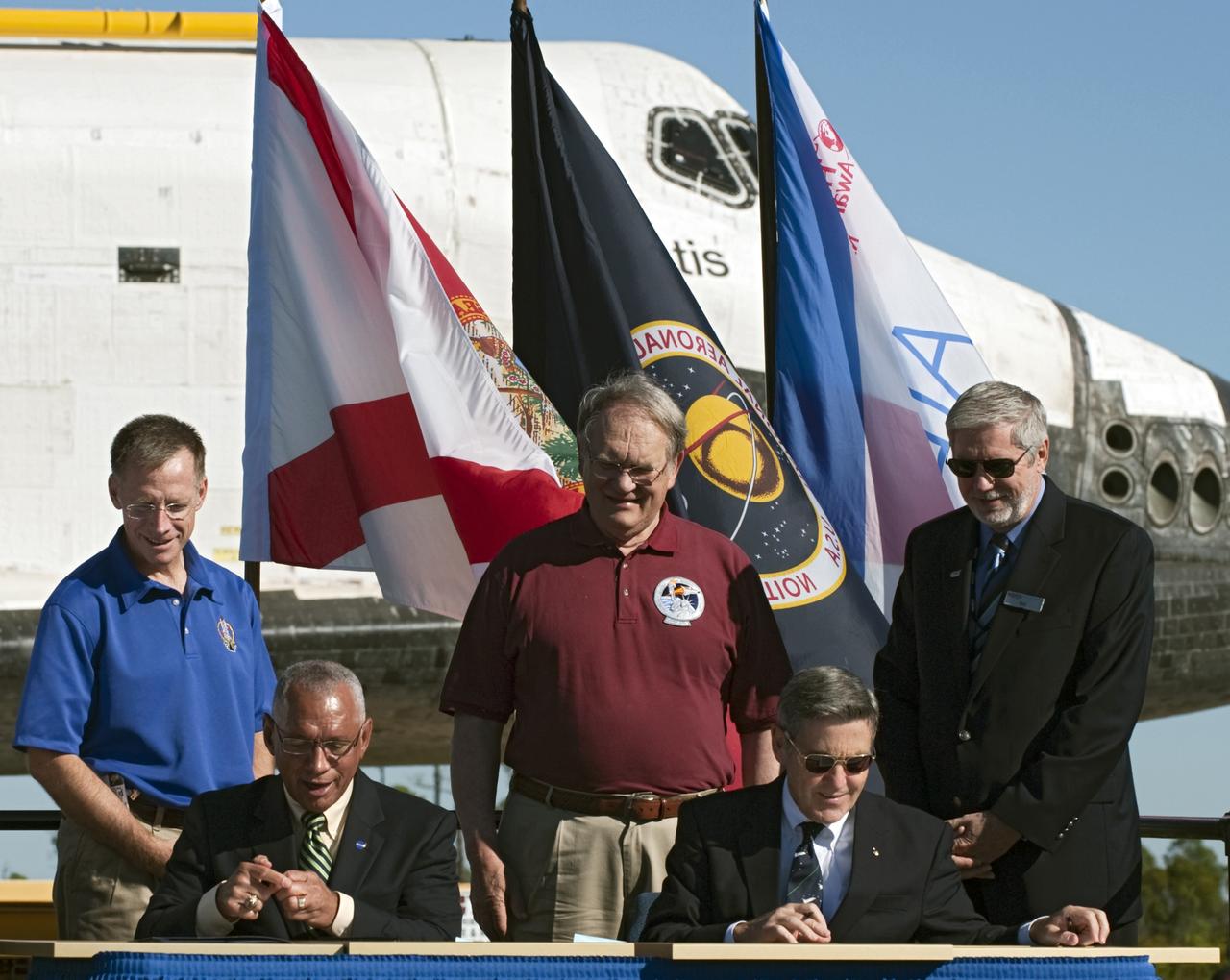
CAPE CANAVERAL, Fla. – At NASA's Kennedy Space Center in Florida, the space shuttle Atlantis pauses during its 10-mile journey to the Kennedy visitor complex for a ceremony to commemorate its transfer. NASA Administrator Charles Bolden, seated left, and Kennedy Director Bob Cabana sign documents transferring title of Atlantis from the agency to Kennedy Space Center. Also participating in the ceremony, standing, from left, are Chris Ferguson, who commanded Atlantis' final mission, Karol Bobko, commander of Atlantis' first mission and Delaware North Companies Parks and Resorts Chief Operating Officer Bill Moore. As part of transition and retirement of the Space Shuttle Program, Atlantis is to be displayed at Kennedy's Visitor Complex beginning in the summer of 2013. Over the course of its 26-year career, Atlantis traveled 125,935,769 miles during 307 days in space over 33 missions. For more information, visit http://www.nasa.gov/transition Photo credit: NASA/ Tony Gray
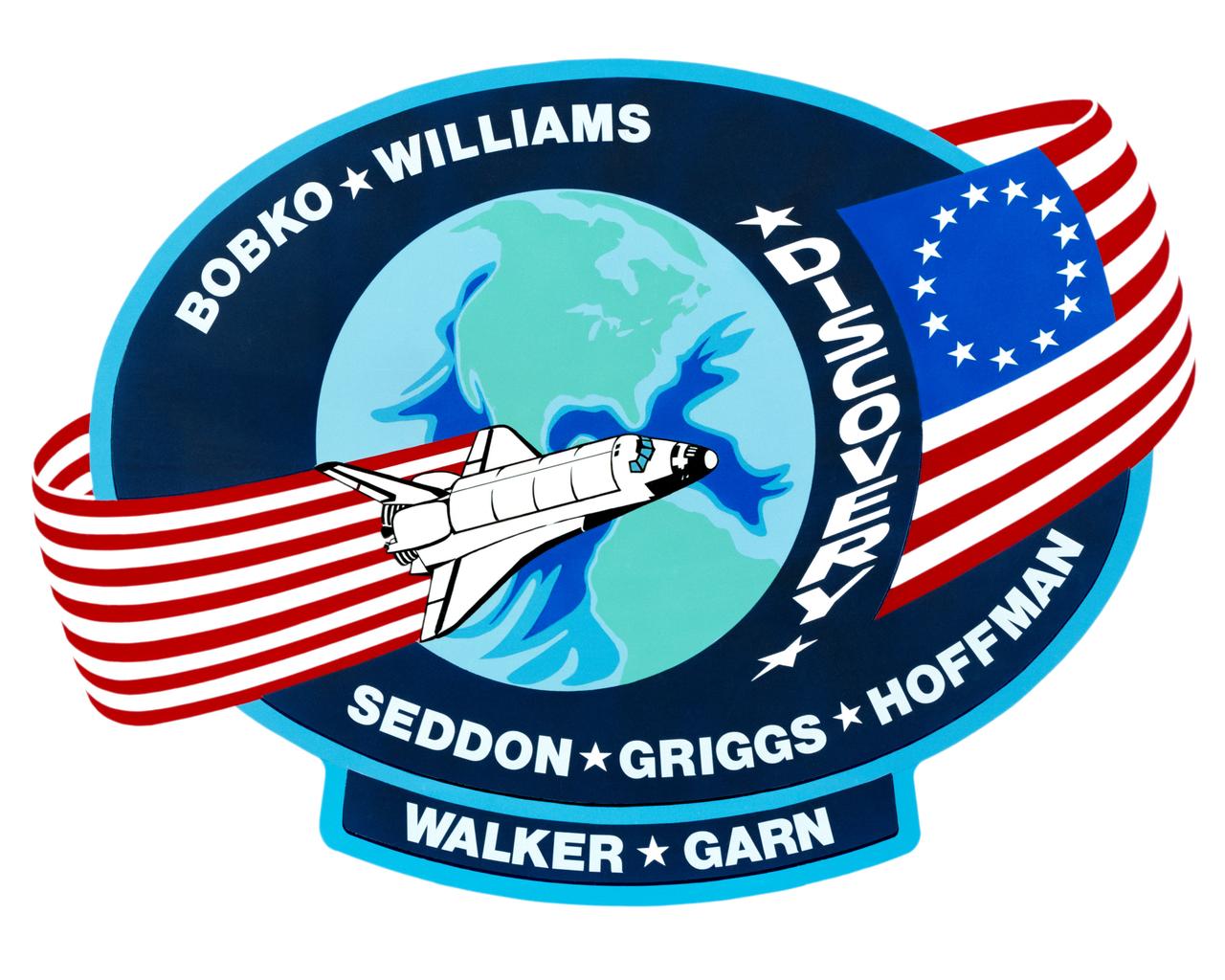
S85-28989 (March 1985) --- The dominant features of the STS-51D emblem are an orbit formed by a Colonial American flag and a space shuttle. The flag in orbit signifies the U.S. flag to indicate that it comes from this country and the American people. The original 13-star flag is used to symbolize a continuity of technical achievement and progress since colonial times. The name Discovery preceding the flag represents the spirit of Discovery and exploration of new frontiers which have been a hallmark of American people even before they were formed together as a nation. The crew members are Karol J. Bobko, Donald E. Williams, Rhea Seddon, S. David Griggs and Jeffrey A. Hoffman of NASA; and Charles D. Walker, representing McDonnell Douglas Corporation; and U. S. Senator Jake Garn. The NASA insignia design for space shuttle flights is reserved for use by the astronauts and for other official use as the NASA Administrator may authorize. Public availability has been approved only in the forms of illustrations by the various news media. When and if there is any change in this policy, which is not anticipated, the change will be publicly announced. Photo credit: NASA
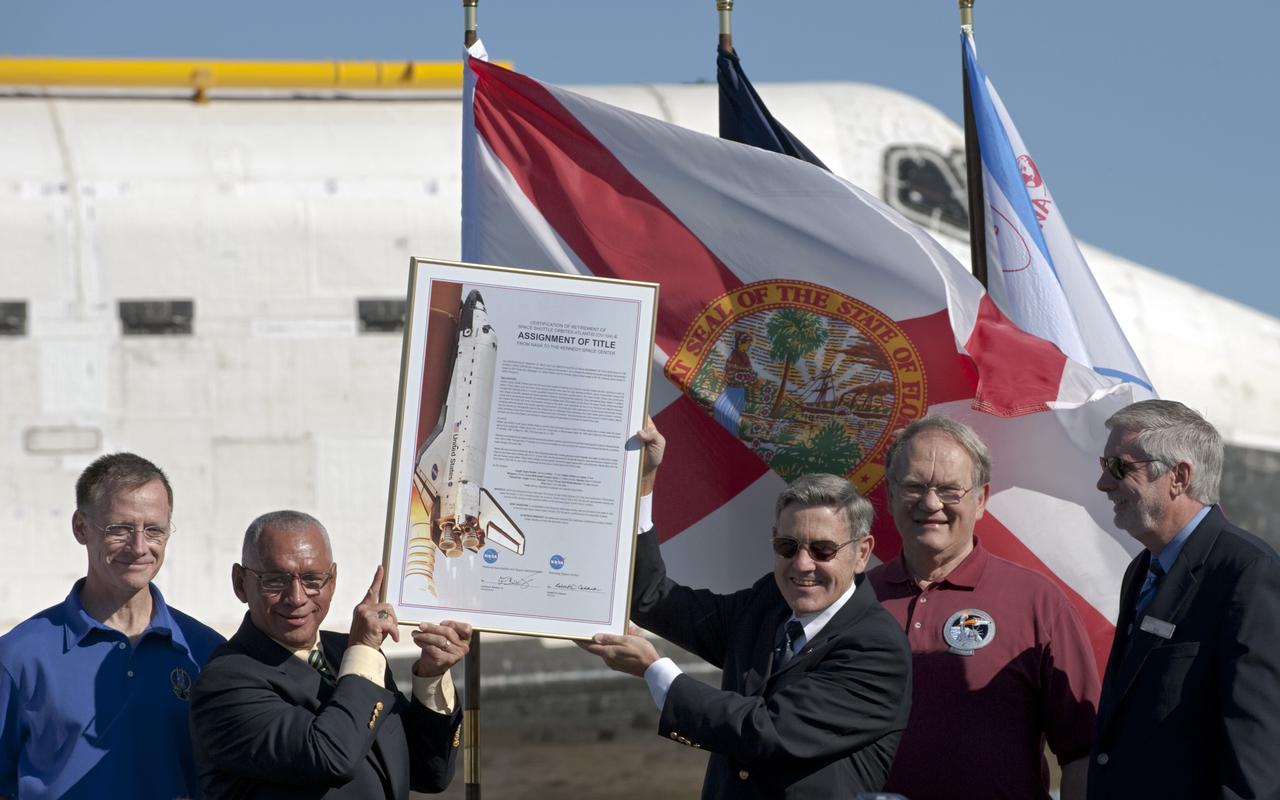
CAPE CANAVERAL, Fla. – At NASA's Kennedy Space Center in Florida, the space shuttle Atlantis pauses during its 10-mile journey to the Kennedy visitor complex for a ceremony to commemorate its transfer. NASA Administrator Charles Bolden, left, and Kennedy Director Bob Cabana hold the just-signed document transferring title of Atlantis from the agency to Kennedy Space Center. Participating in the ceremony, from left, are Chris Ferguson, who commanded Atlantis' final mission, Bolden, Cabana, Karol Bobko, commander of Atlantis' first mission, and Delaware North Companies Parks and Resorts Chief Operating Officer Bill Moore. As part of transition and retirement of the Space Shuttle Program, Atlantis is to be displayed at Kennedy's visitor complex beginning in the summer of 2013. Over the course of its 26-year career, Atlantis traveled 125,935,769 miles during 307 days in space over 33 missions. For more information, visit http://www.nasa.gov/transition Photo credit: NASA/ Tony Gray
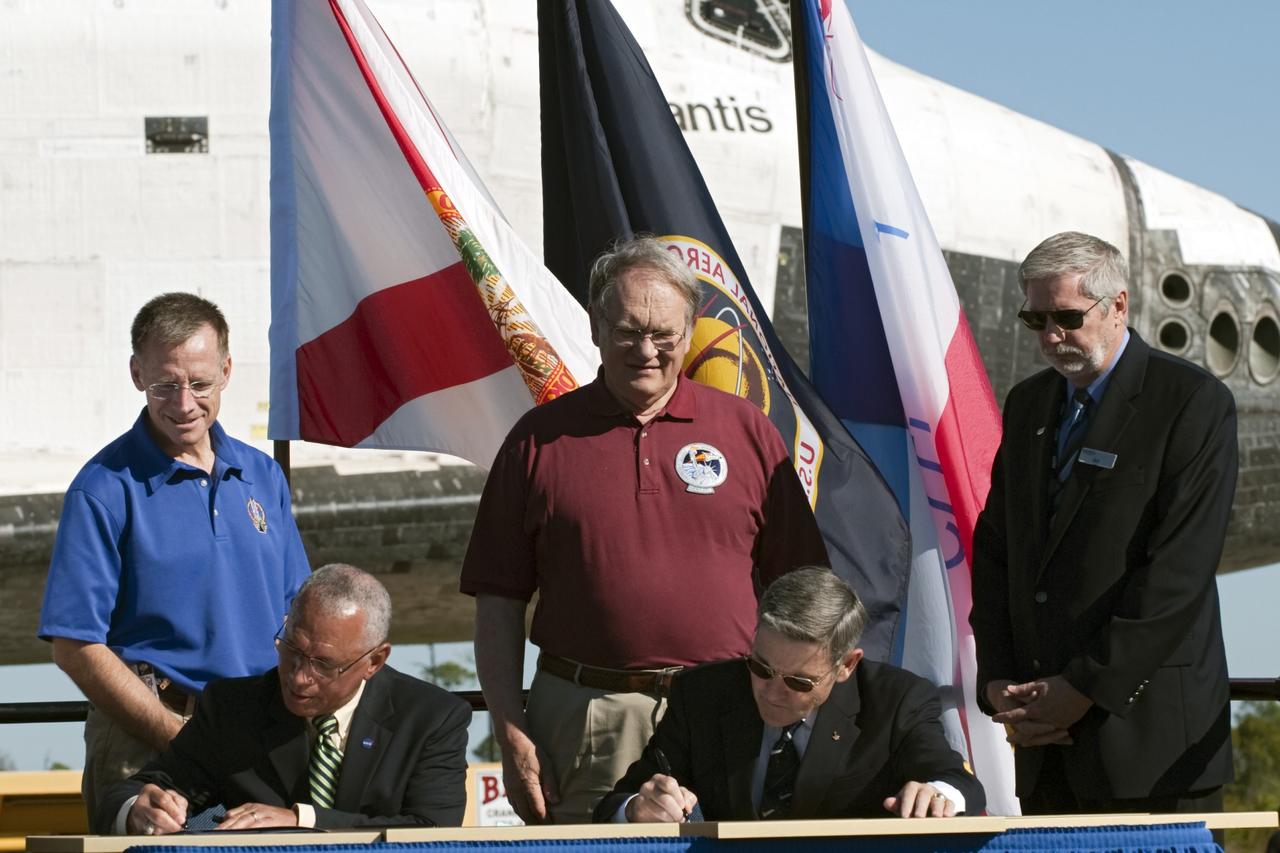
CAPE CANAVERAL, Fla. – At NASA's Kennedy Space Center in Florida, the space shuttle Atlantis pauses during its 10-mile journey to the Kennedy Visitor Complex for a ceremony to commemorate its transfer. NASA Administrator Charles Bolden, seated left, and Kennedy Director Bob Cabana sign documents transferring title of Atlantis from the agency to Kennedy Space Center. Also participating in the ceremony, standing, from left, are Chris Ferguson, who commanded Atlantis's final mission, Karol Bobko, commander of Atlantis' first mission, and Delaware North Companies Parks and Resorts Chief Operating Officer Bill Moore. As part of transition and retirement of the Space Shuttle Program, Atlantis is to be displayed at Kennedy's visitor complex beginning in the summer of 2013. Over the course of its 26-year career, Atlantis traveled 125,935,769 miles during 307 days in space over 33 missions. For more information, visit http://www.nasa.gov/transition Photo credit: NASA/ Tony Gray