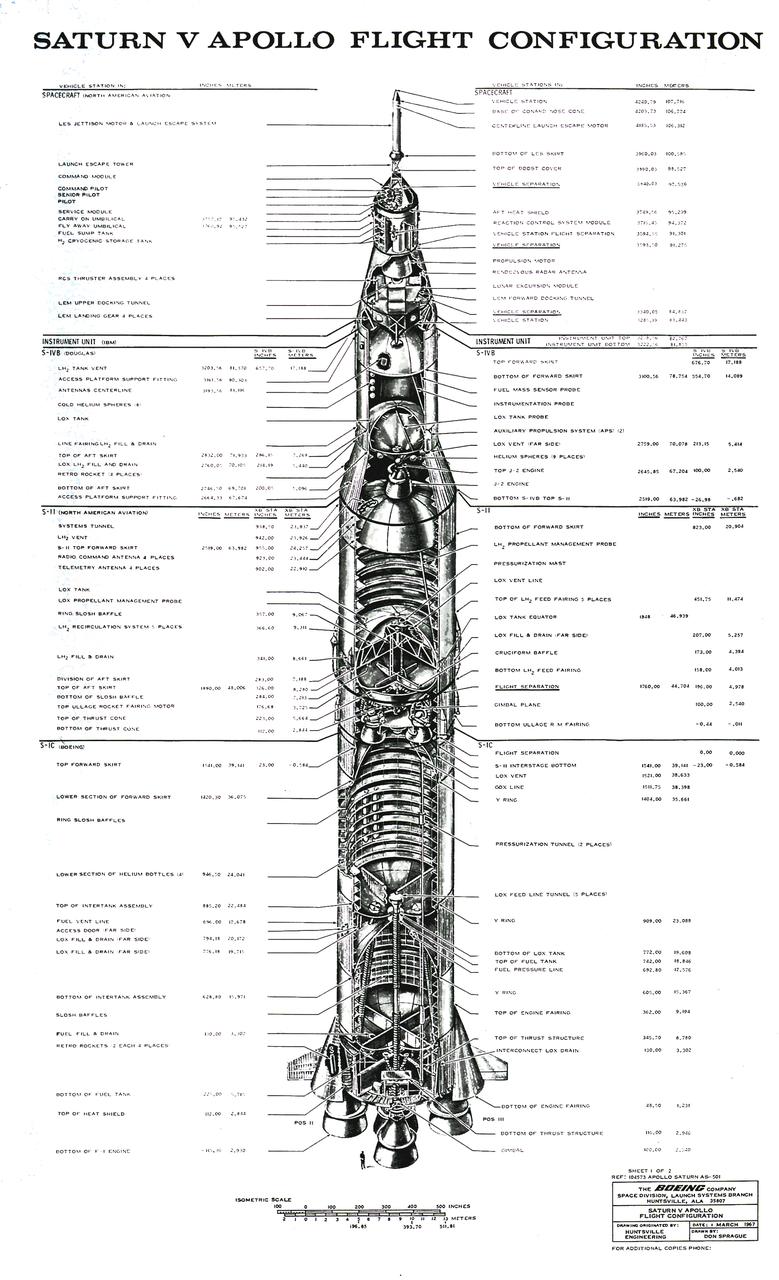
The Saturn V configuration is shown in inches and meters as illustrated by the Boeing Company. The Saturn V vehicle consisted of three stages: the S-IC (first) stage powered by five F-1 engines, the S-II (second) stage powered by five J-2 engines, the S-IVB (third) stage powered by one J-2 engine. A top for the first three stages was designed to contain the instrument unit, the guidance system, the Apollo spacecraft, and the escape system. The Apollo spacecraft consisted of the lunar module, the service module, and the command module. The Saturn V was designed perform lunar and planetary missions and it was capable of placing 280,000 pounds into Earth orbit.
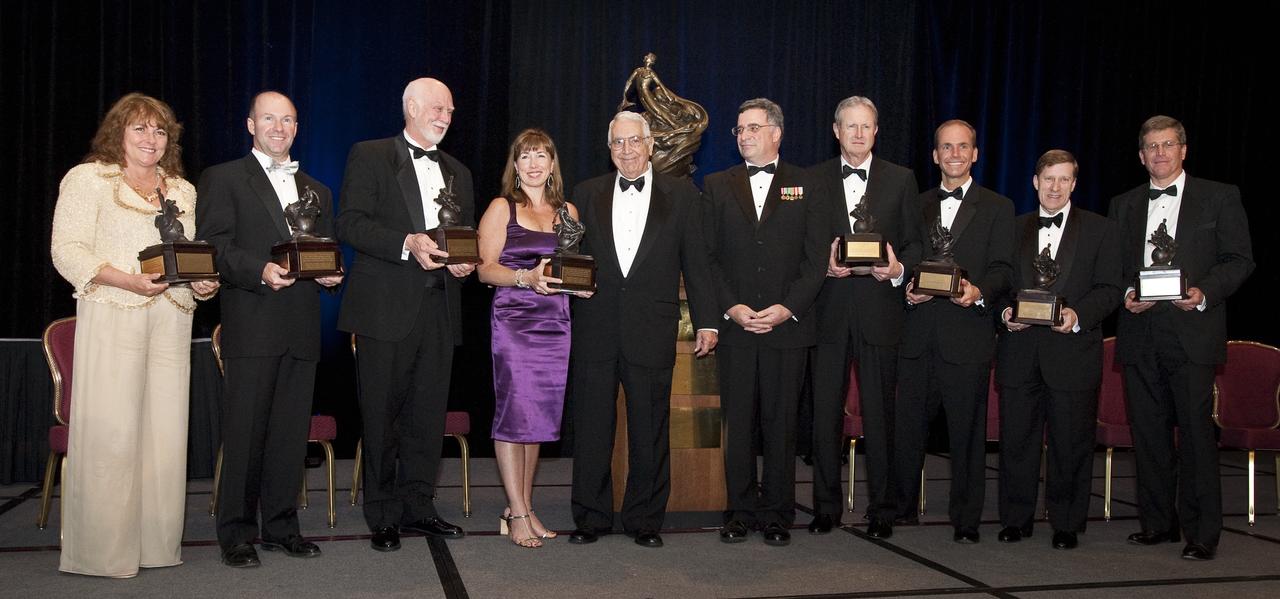
NASA and the International Space Station (ISS) team is selected as the recipient of the 2009 Robert J. Collier Trophy on Thursday, May 13, 2010, in Arlington, VA. Lori Garver, fourth from left, Deputy Administrator of NASA accepts the Collier Trophy on behalf of NASA. The ISS Team nomination consisted NASA, The Boeing Company, Draper Laboratory, Honeywell, Lockheed Martin Corporation, United Space Alliance, and United Technologies/Hamilton Sunstrand. Seen from left are: Virginia Barnes, President and CEO, United Space Alliance; Alain Bellemare, President, United Technologies/Hamilton Sunstrand; James Crocker, VP and GM, Sensing & Exploration, Lockheed Martin; Lori Garver; Wayne Boyne, Chairman, National Aeronautic Association; Jonathan Gaffney, President, National Aeronautic Association; Jim Albaugh, Executive VP of The Boeing Company, President and CEO of Boeing Commercial Airplanes; Dennis Muilenberg, Executive Vice President, The Boeing Company, President and CEO, Boeing Defense, Space and Security; James Shields, President and CEO, Draper Laboratory and Dave Douglas, Vice President, Space, Missiles and Munitions, Honeywell. Photo Credit: (NASA/Carla Cioffi)
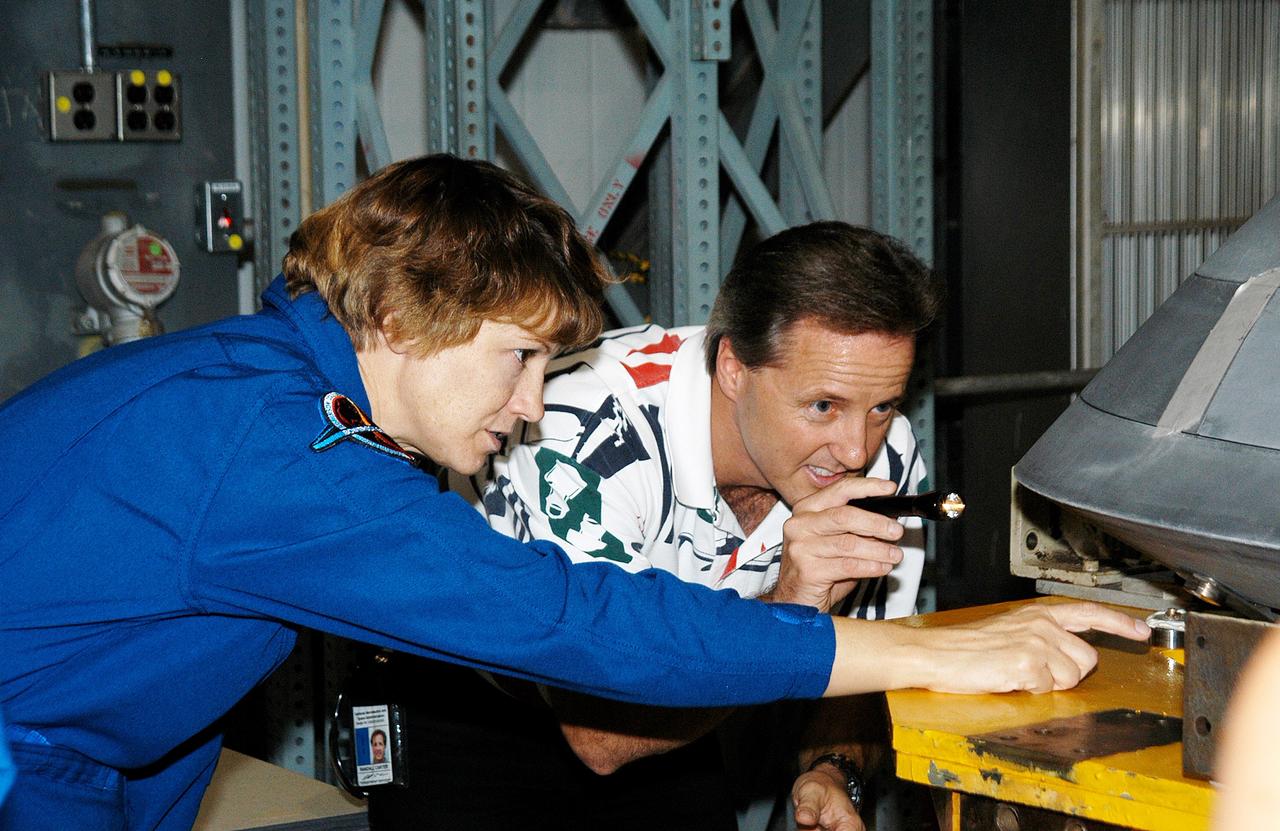
KENNEDY SPACE CENTER, FLA. - In the Orbiter Processing Facility, STS-114 Commander Eileen Collins examines part of the Atlantis nose cap with Randall Carter, who is with The Boeing Company. The nose cap was recently removed from Atlantis. The STS-114 crew is at KSC to take part in crew equipment and orbiter familiarization.
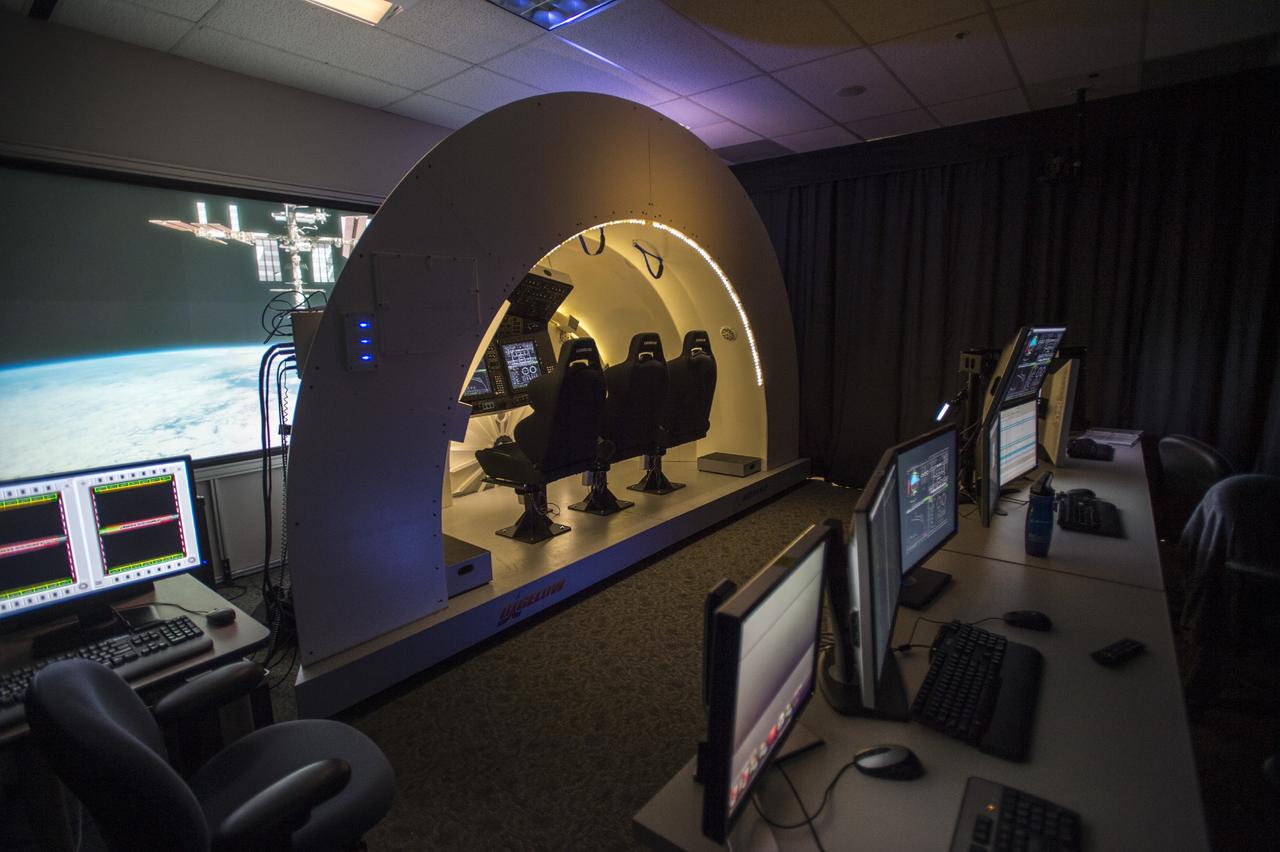
HOUSTON – A simulator of The Boeing Company's CST-100 spacecraft stands ready to begin evaluations of potential designs and software functions in a room at the company's Houston location. The CST-100 is under development in partnership between the company and NASA's Commercial Crew Program, or CCP. The spacecraft is designed to fly to low-Earth orbit and potentially dock with the International Space Station, which is seen on the screen in front of the simulator. Photo credit: The Boeing Company
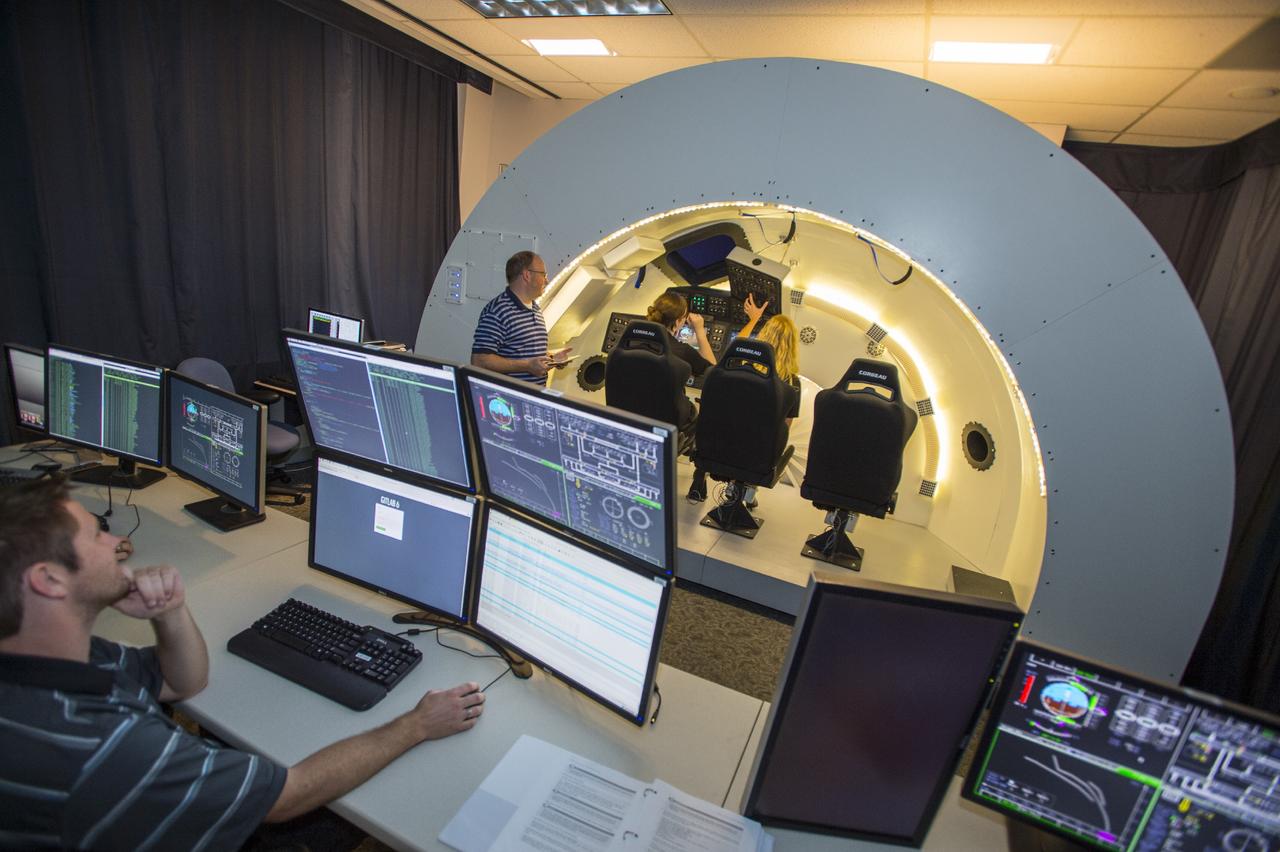
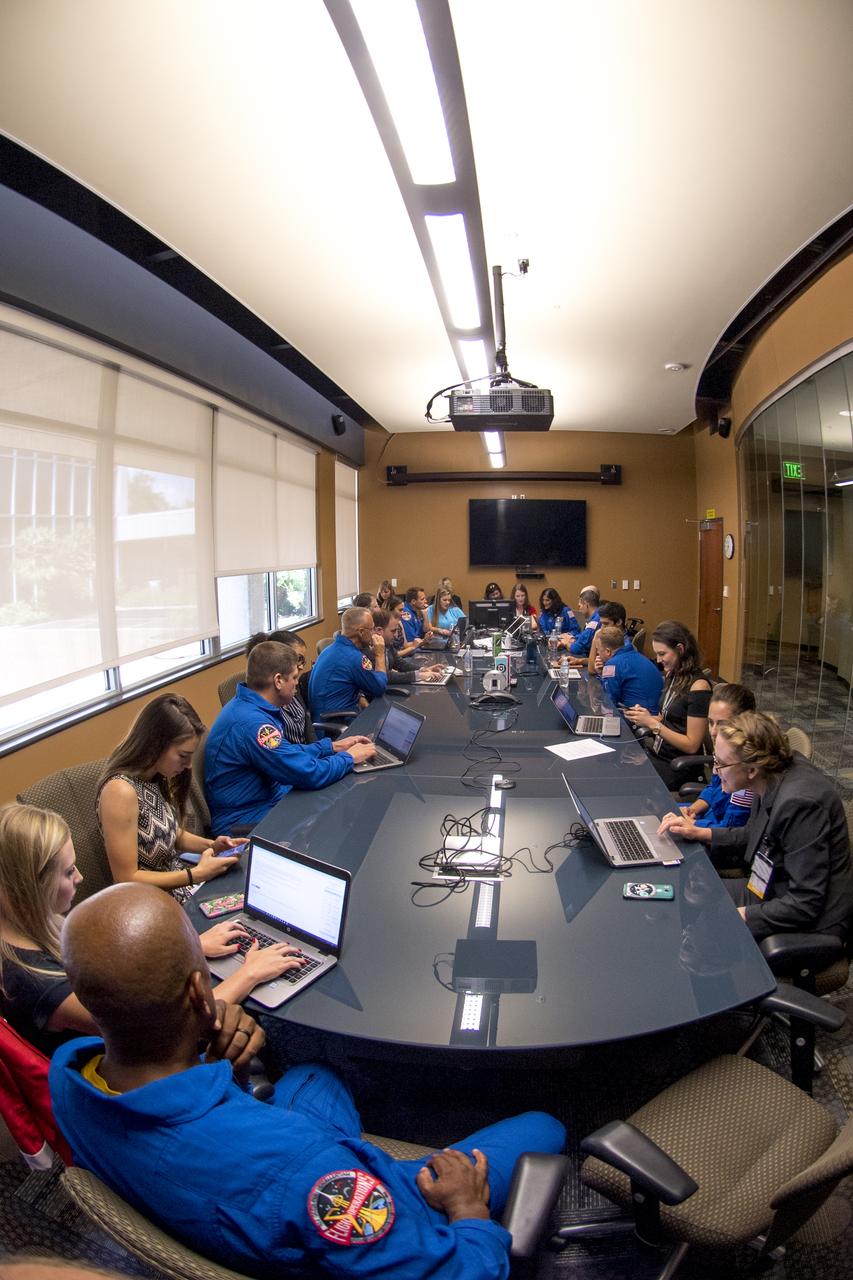
HOUSTON – Engineers and managers work inside a simulator of The Boeing Company's CST-100 spacecraft during evaluations of potential designs and software functions in a room at the company's Houston location. The CST-100 is under development in partnership between the company and NASA's Commercial Crew Program, or CCP. The spacecraft is designed to fly to low-Earth orbit and potentially dock with the International Space Station. Photo credit: The Boeing Company
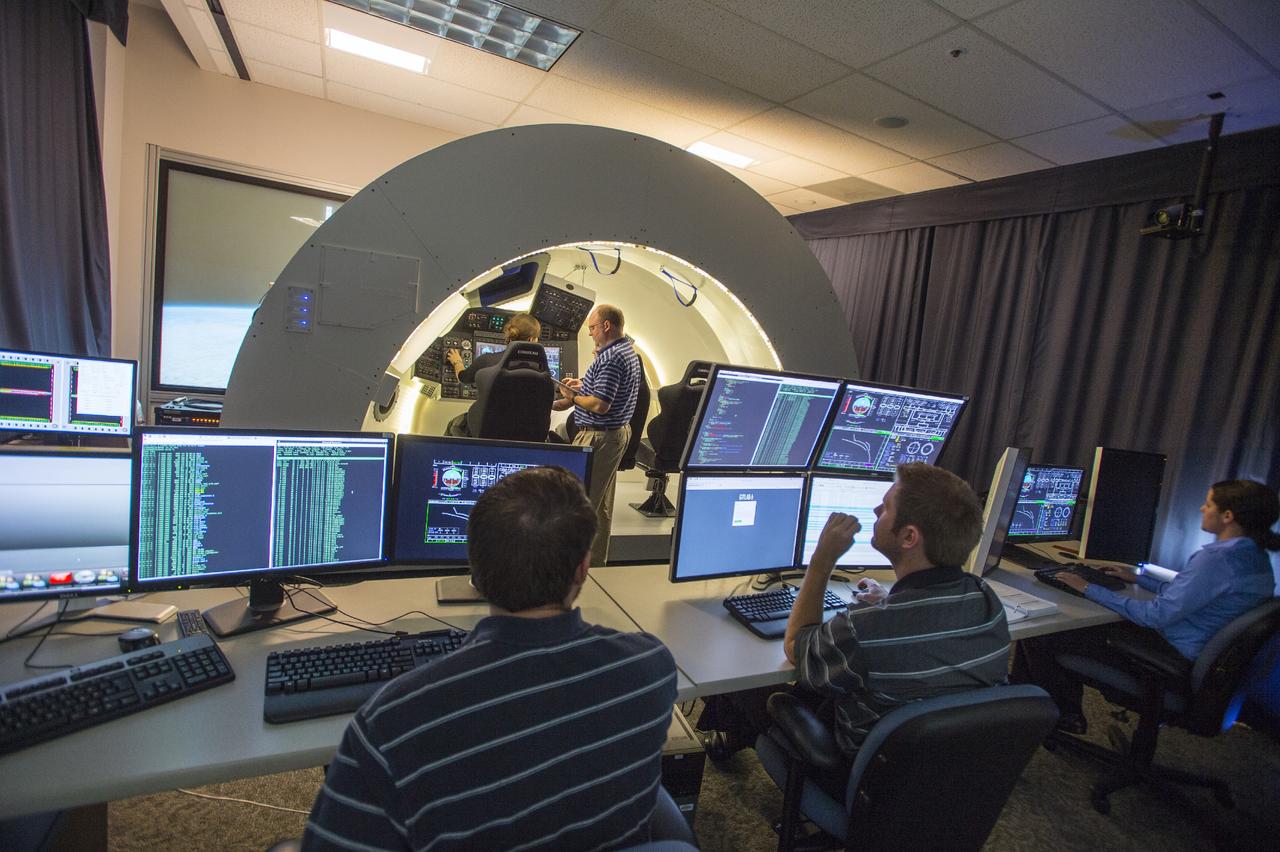
HOUSTON – Engineers and managers work inside a simulator of The Boeing Company's CST-100 spacecraft during evaluations of potential designs and software functions in a room at the company's Houston location. The CST-100 is under development in partnership between the company and NASA's Commercial Crew Program, or CCP. The spacecraft is designed to fly to low-Earth orbit and potentially dock with the International Space Station, which is seen on the screen in front of the simulator. Photo credit: The Boeing Company

NASA astronaut Josh Cassada will team with NASA astronaut Suni Williams on Boeing’s first operational mission to the International Space Station onboard the company’s CST-100 Starliner spacecraft. They joined fellow commercial crew astronauts Eric Boe, Chris Ferguson, Nicole Mann, Bob Behnken, Victor Glover, Mike Hopkins and Doug Hurley for a celebration at Johnson Space Center in Houston on Aug. 3, 2018. Boe, Ferguson and Mann will fly on Starliner in Boeing’s Crew Flight Test to the space station. . Behnken and Hurley will fly on SpaceX’s Crew Dragon in the company’s Demo-2 flight test to the space station, while Glover and Hopkins are assigned to Crew Dragon’s first operational mission to station.
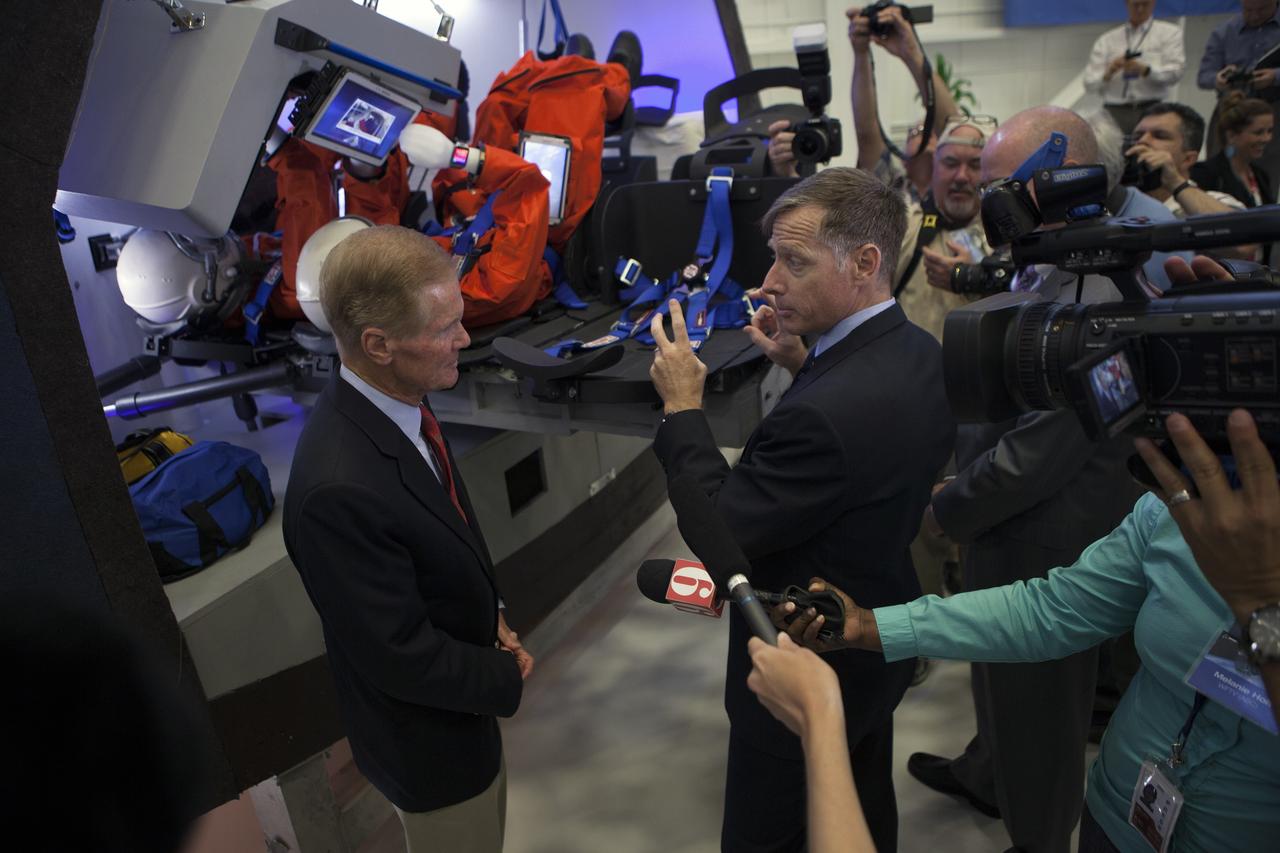
CAPE CANAVERAL, Fla. – U.S. Sen. Bill Nelson of Florida, left, and Chris Ferguson, Boeing's director of Crew and Mission Operations, survey a mockup of the CST-100 spacecraft under development by The Boeing Company during a ceremony detailing Boeing's plans to use Orbiter Processing Facility 3 as a manufacturing hub for the capsule-shaped spacecraft.
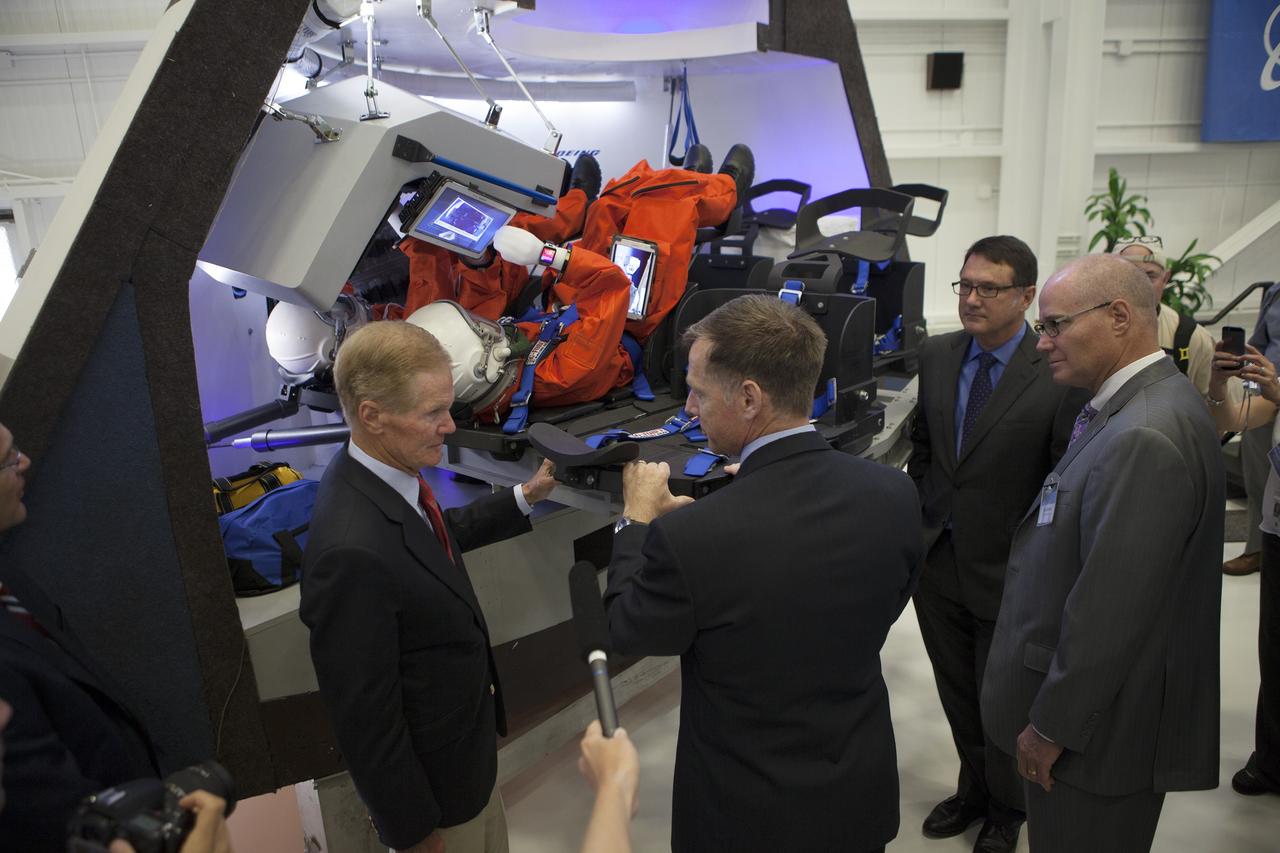
CAPE CANAVERAL, Fla. – U.S. Sen. Bill Nelson of Florida, left, and Chris Ferguson, Boeing's director of Crew and Mission Operations, survey a mockup of the CST-100 spacecraft under development by The Boeing Company during a ceremony detailing Boeing's plans to use Orbiter Processing Facility 3 as a manufacturing hub for the capsule-shaped spacecraft.
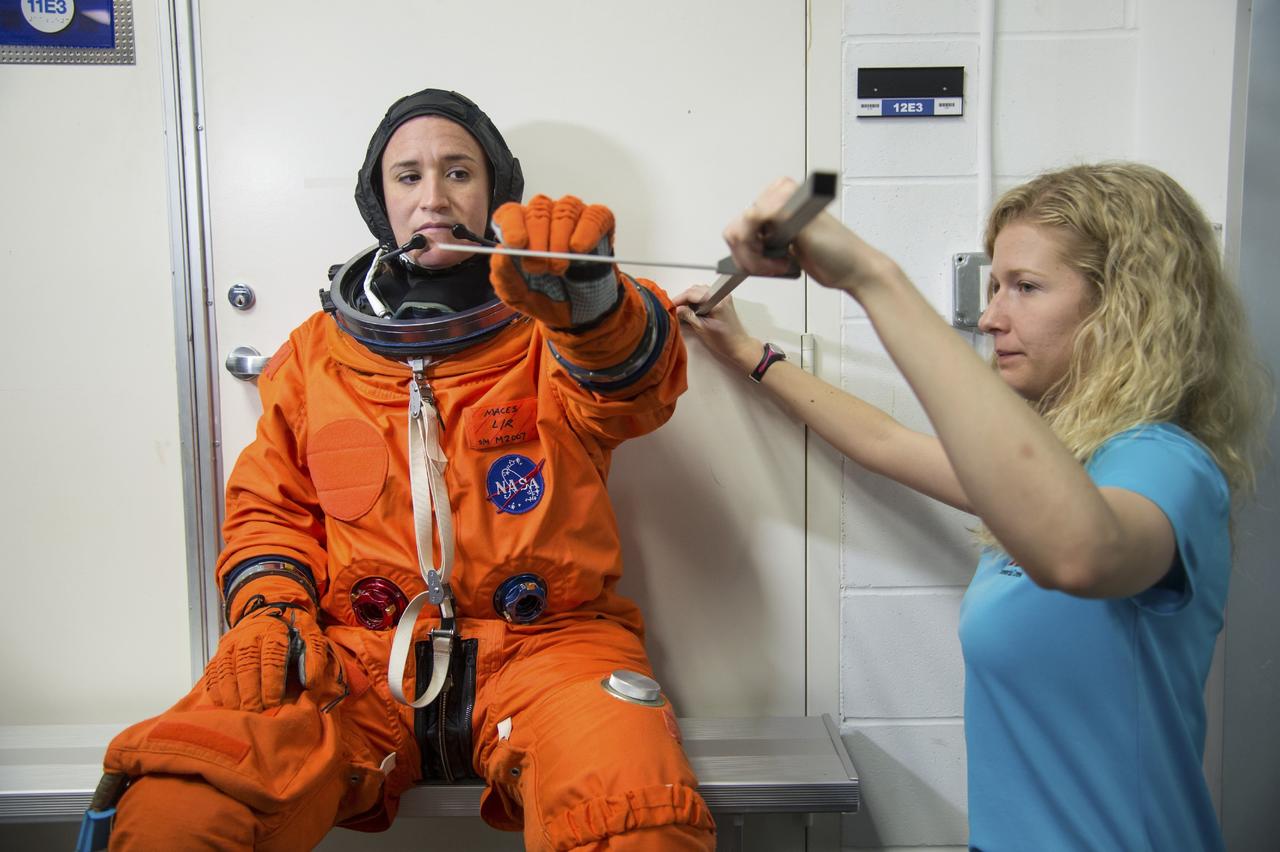
HOUSTON - JSC2013e068259 - NASA astronaut Serena Aunon prepares for a fit check evaluation of The Boeing Company's CST-100 spacecraft at the company's Houston Product Support Center. Assisting her is Andrea Gilkey, a human factors engineer with The Boeing Company. Aunon's fit check will help evaluate a crew's maneuverability in the spacecraft and test communications. Boeing's CST-100 is being designed to transport crew members or a mix of crew and cargo to low-Earth-orbit destinations. The evaluation is part of the ongoing work supporting Boeing's funded Space Act Agreement with NASA's Commercial Crew Program, or CCP, during the agency's Commercial Crew Integrated Capability, or CCiCap, initiative. CCiCap is intended to make commercial human spaceflight services available for government and commercial customers. To learn more about CCP, visit http://www.nasa.gov/commercialcrew. Photo credit: NASA/Robert Markowitz
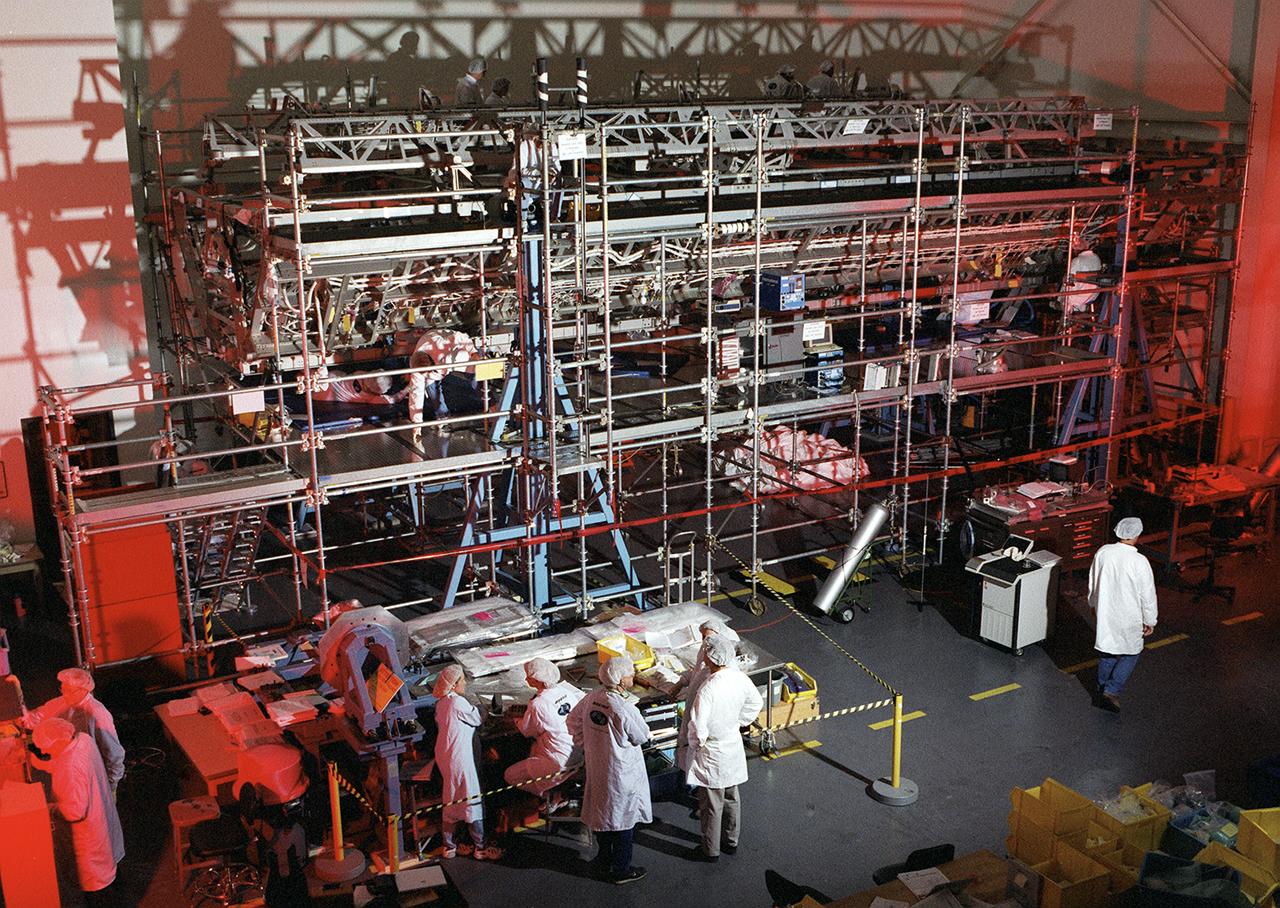
Boeing Company technicians assemble the S-1 truss (starboard side truss) for the International Space Station at the Marshall Space Flight Center.
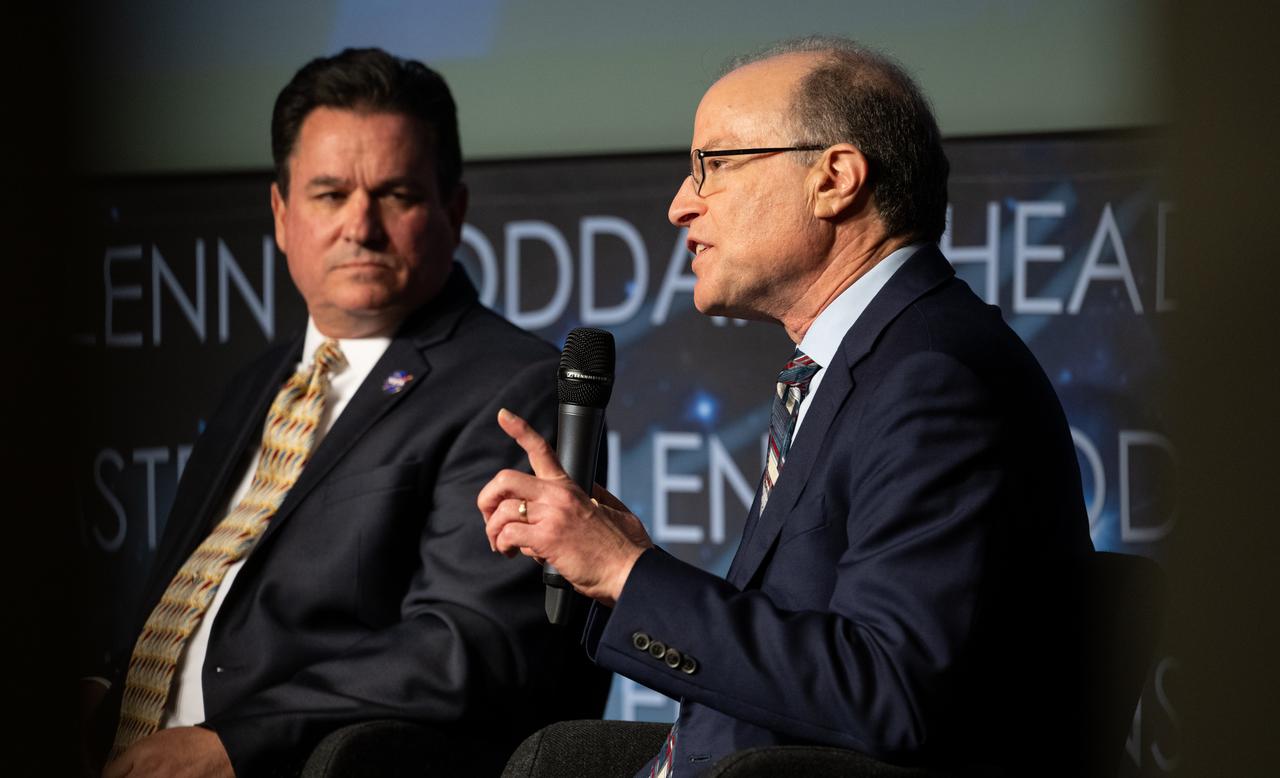
Todd Citron, chief technology officer, The Boeing Company, answers a question from a member of the media during a news conference on NASA’s Sustainable Flight Demonstrator project, Wednesday, Jan. 18, 2023, at the Mary W. Jackson NASA Headquarters building in Washington, DC. Through a Funded Space Act Agreement, The Boeing company and its industry team will collaborate with NASA to develop and flight-test a full-scale Transonic Truss-Braced Wing demonstrator aircraft. Photo Credit: (NASA/Joel Kowsky)
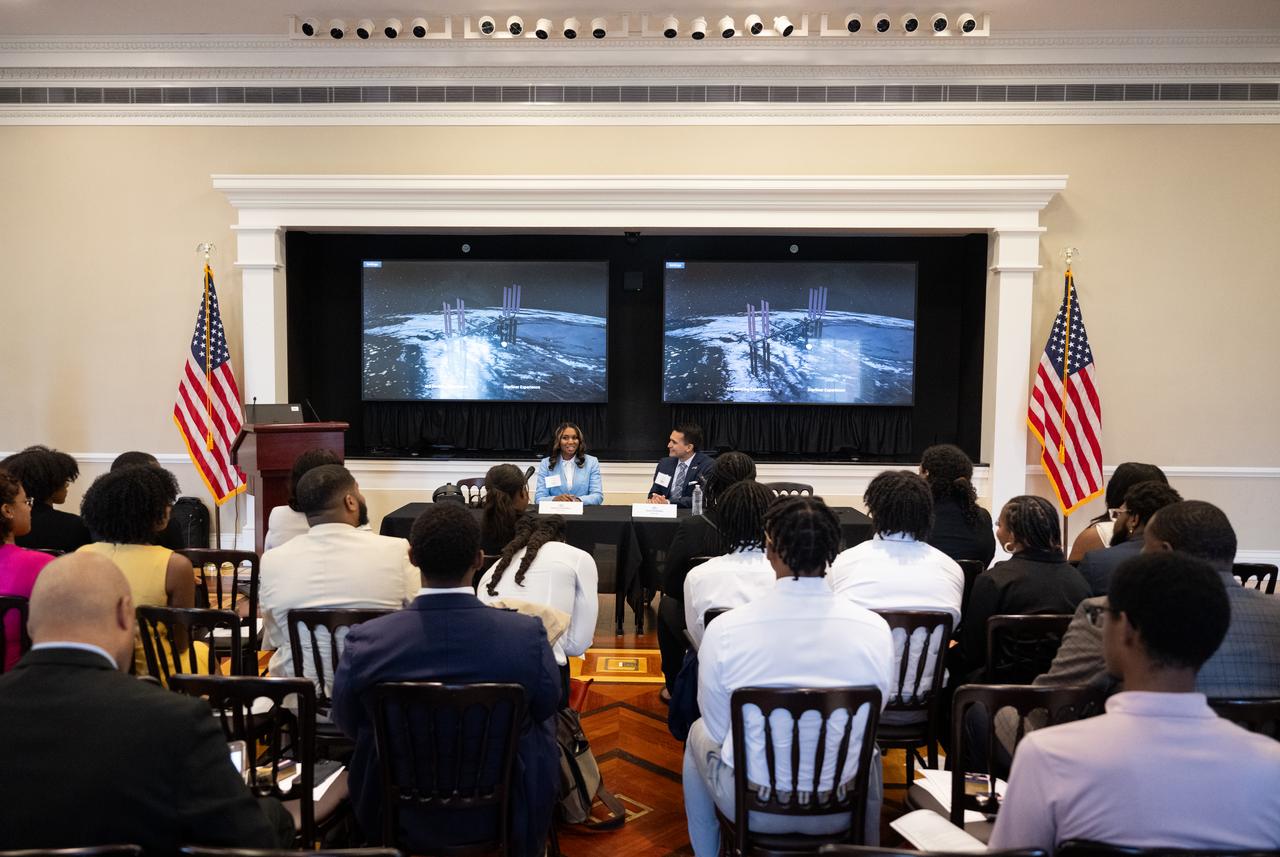
Sydney Hamilton, structures manager for transonic truss braced wing at The Boeing Company, left, and Tony Castilleja Jr., senior manager for space at The Boeing Company, are seen during an Artemis Generation Roundtable for Black Space Week, Tuesday, June 20, 2023, at the Eisenhower Executive Office Building in Washington. As part of Black Space Week, the National Space Council and NASA collaborated with Black In Astro to host students for a discussion on the future of space exploration and equity. Photo Credit: (NASA/Joel Kowsky)
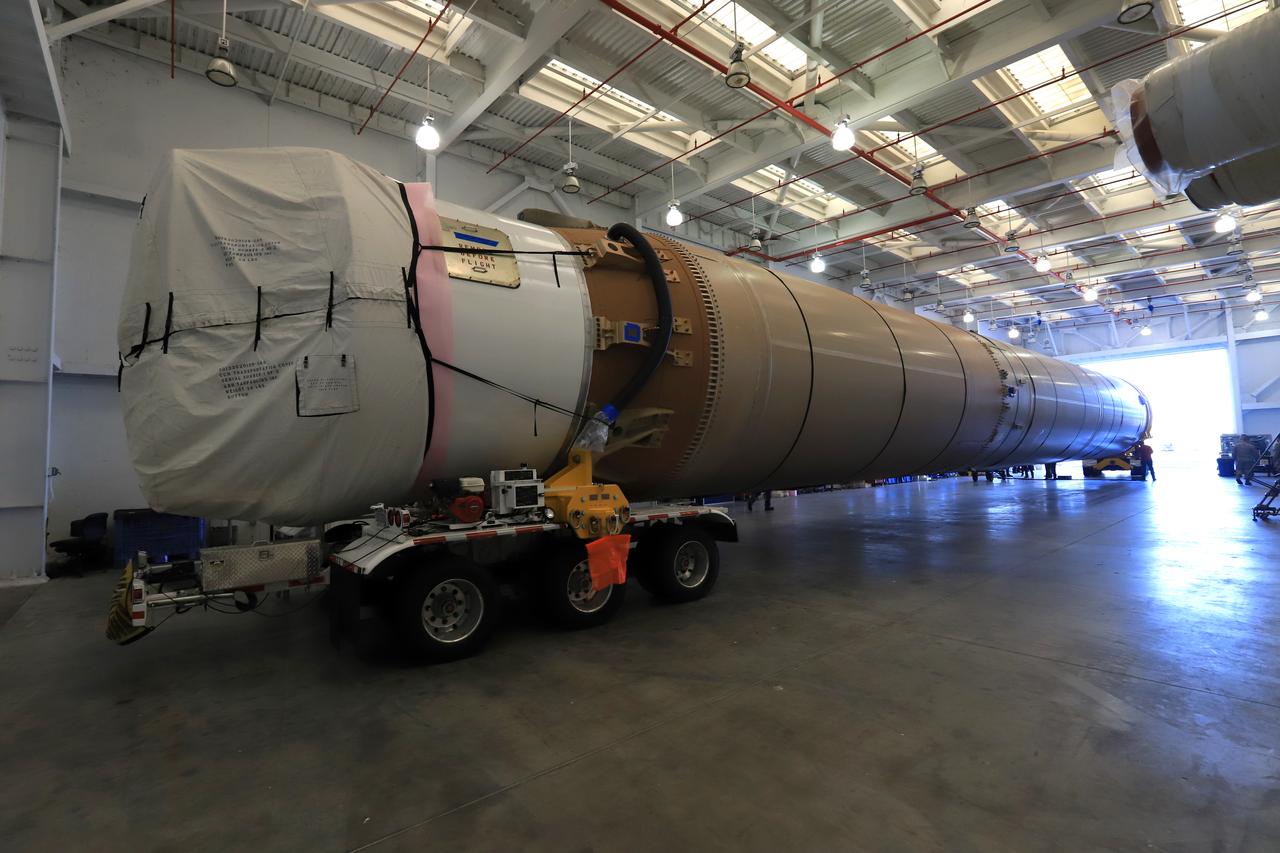
The first stage of the rocket that will launch Boeing's CST-100 Starliner spacecraft to the International Space Station on the company's uncrewed Orbital Flight Test arrives at the United Launch Alliance (ULA) Atlas Spaceflight Operations Center (ASOC) at Cape Canaveral Air Force Station in Florida on Dec. 7, 2018. The ULA Atlas V first stage booster was shipped aboard the company's Mariner cargo vessel from the company's manufacturing plant in Decatur, Alabama. It is the final piece of hardware that ULA needs to launch the first Boeing Starliner. Inside the ASOC, the booster will be inspected and checked out.

The first stage of the rocket that will launch Boeing's CST-100 Starliner spacecraft to the International Space Station on the company's uncrewed Orbital Flight Test is on its way to the United Launch Alliance (ULA) Atlas Spaceflight Operations Center (ASOC) at Cape Canaveral Air Force Station in Florida on Dec. 7, 2018. The ULA Atlas V first stage booster was shipped aboard the company's Mariner cargo vessel from the company's manufacturing plant in Decatur, Alabama. It is the final piece of hardware that ULA needs to launch the first Boeing Starliner. Inside the ASOC, the booster will be inspected and checked out.
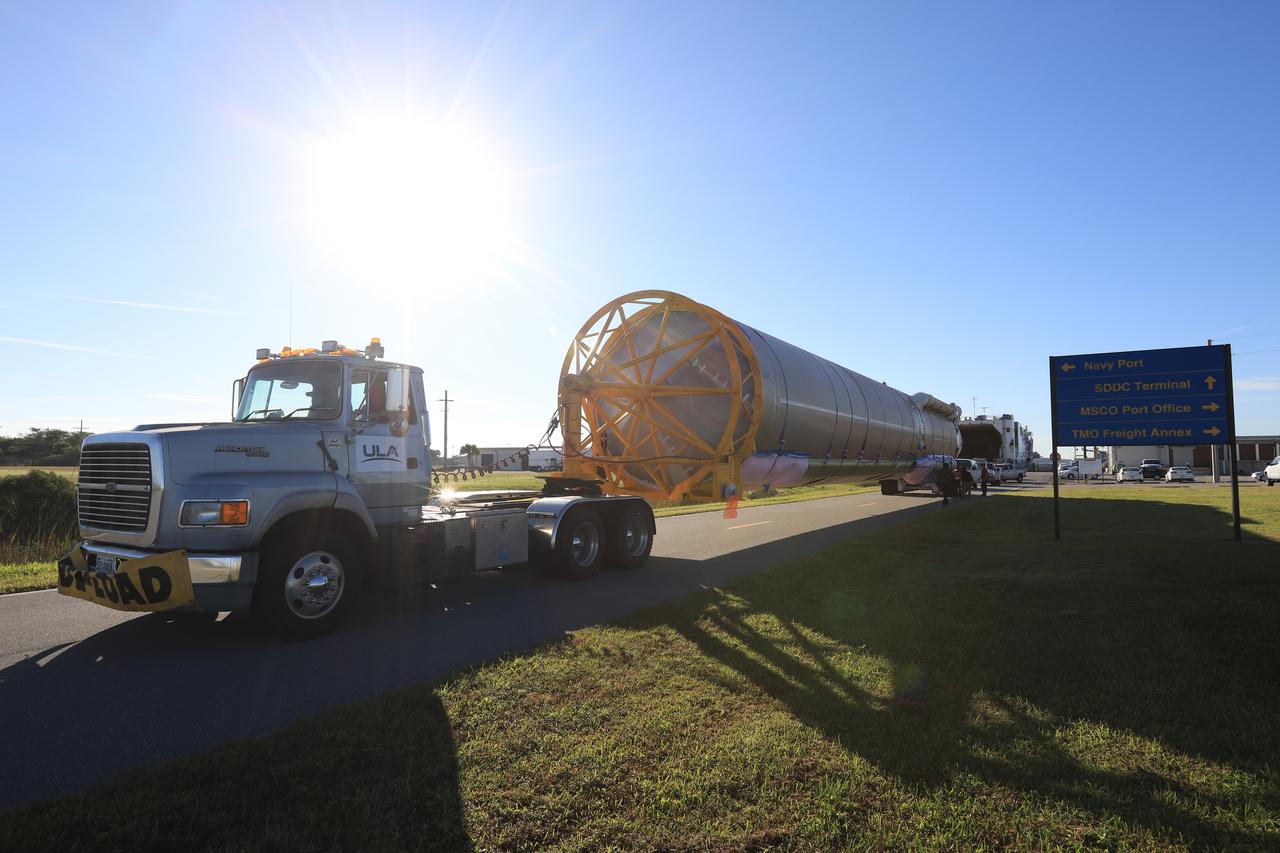
The first stage of the rocket that will launch Boeing's CST-100 Starliner spacecraft to the International Space Station on the company's uncrewed Orbital Flight Test is on its way to the United Launch Alliance (ULA) Atlas Spaceflight Operations Center (ASOC) at Cape Canaveral Air Force Station in Florida on Dec. 7, 2018. The ULA Atlas V first stage booster was shipped aboard the company's Mariner cargo vessel from the company's manufacturing plant in Decatur, Alabama. It is the final piece of hardware that ULA needs to launch the first Boeing Starliner. Inside the ASOC, the booster will be inspected and checked out.
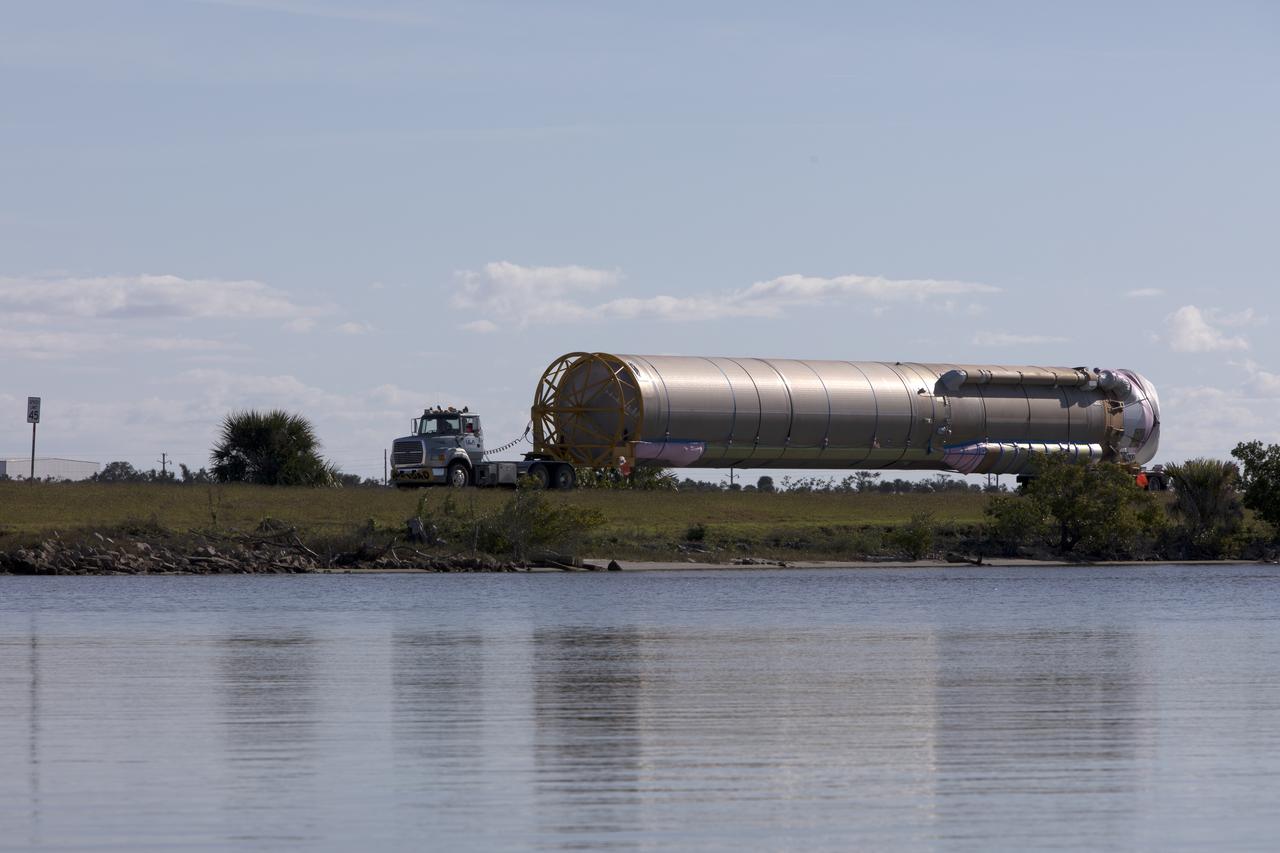
The first stage of the rocket that will launch Boeing's CST-100 Starliner spacecraft to the International Space Station on the company's uncrewed Orbital Flight Test is on its way to the United Launch Alliance (ULA) Atlas Spaceflight Operations Center (ASOC) at Cape Canaveral Air Force Station in Florida on Dec. 7, 2018. The ULA Atlas V first stage booster was shipped aboard the company's Mariner cargo vessel from the company's manufacturing plant in Decatur, Alabama. It is the final piece of hardware that ULA needs to launch the first Boeing Starliner. Inside the ASOC, the booster will be inspected and checked out.
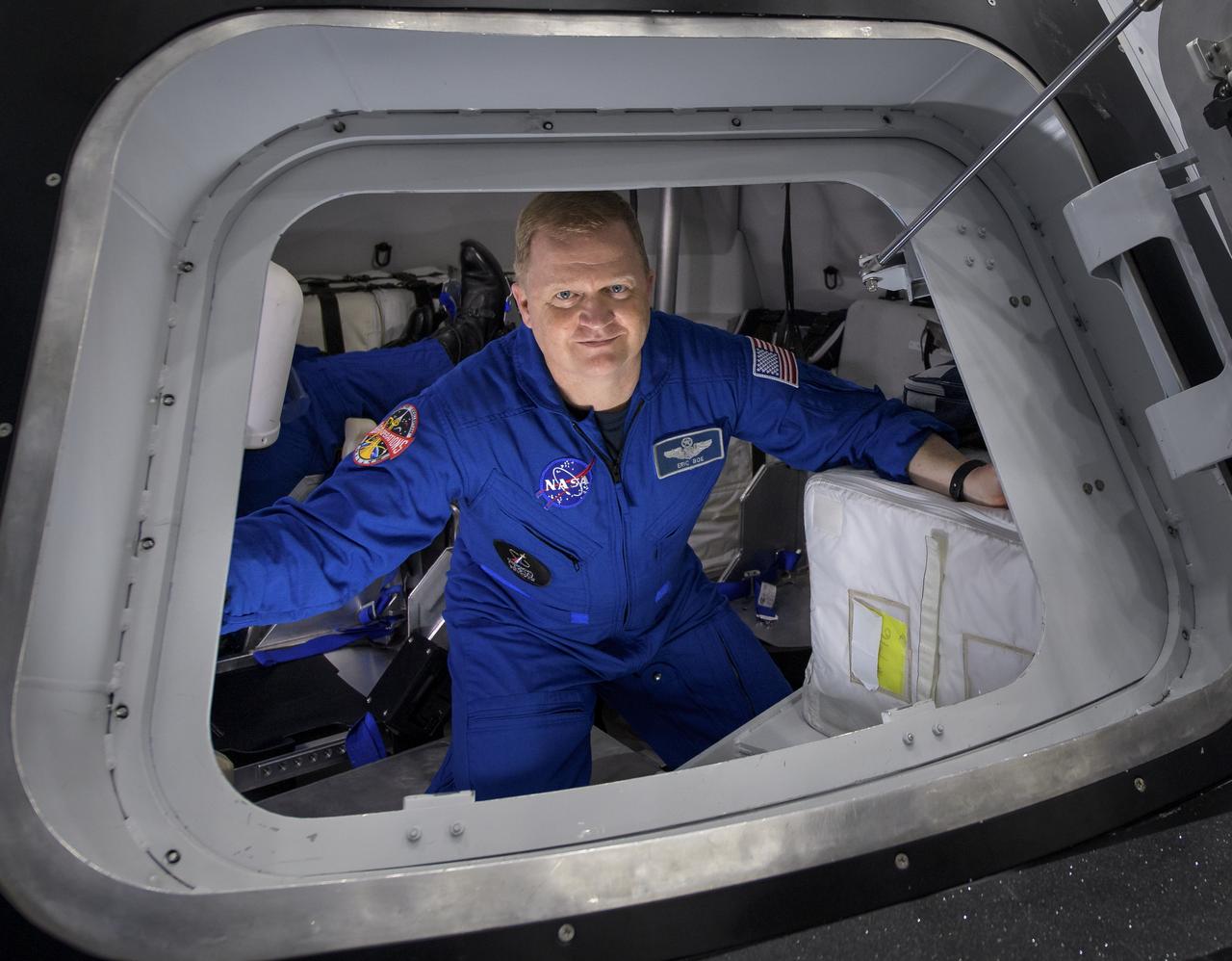
NASA astronaut Eric Boe poses for a photograph as he exits the Boeing Mockup Trainer at NASA’s Johnson Space Center in Houston, Texas on Aug. 2, 2018 ahead of the commercial crew flight assignments announcement Aug. 3. Boe, along with NASA astronaut Nicole Aunapu Mann and Boeing astronaut Chris Ferguson were assigned to launch aboard Boeing’s CST-100 Starliner on the company’s Crew Flight Test targeted for mid-2019 in partnership with NASA’s Commercial Crew Program. Photo Credit: (NASA/Bill Ingalls)
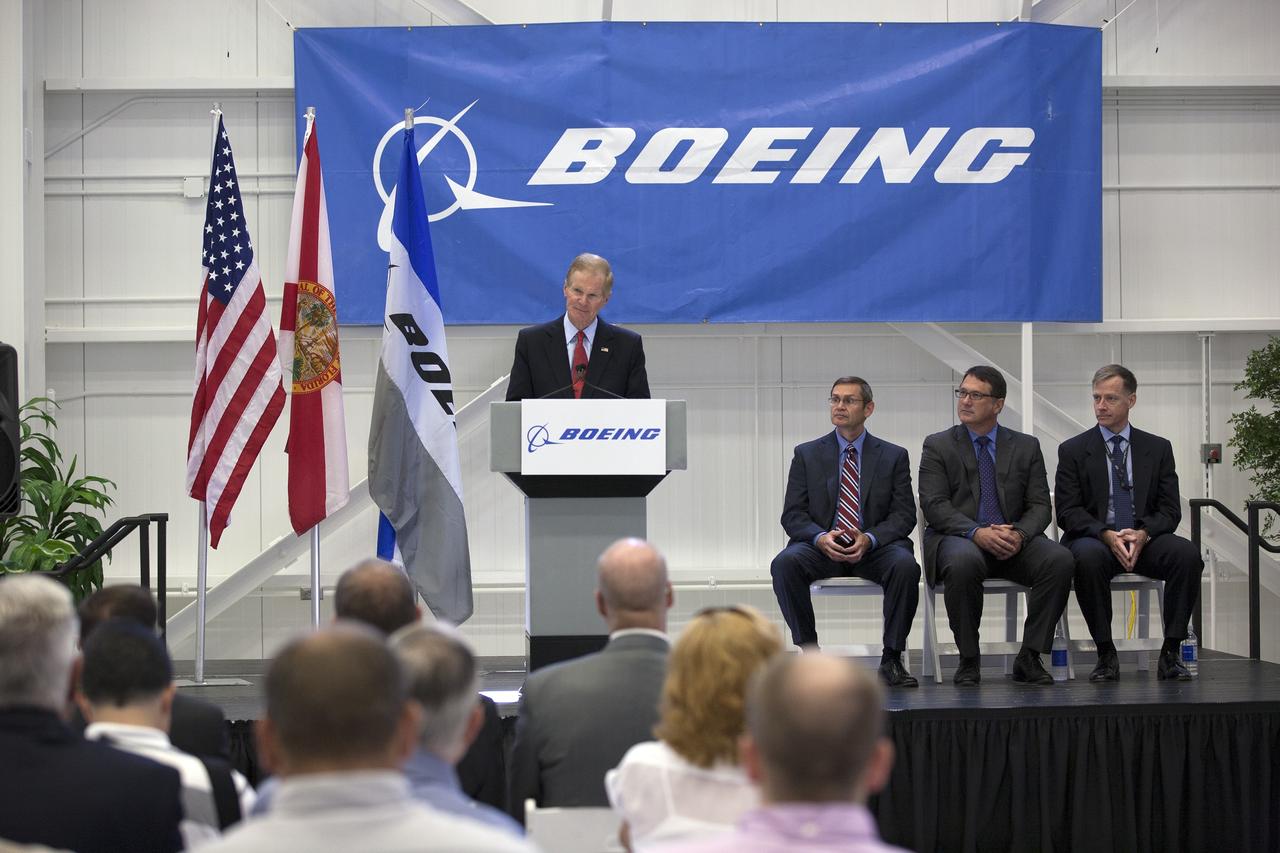
CAPE CANAVERAL, Fla. – U.S. Sen. Bill Nelson of Florida discusses The Boeing Company's CST-100 spacecraft during a ceremony inside Orbiter Processing Facility 3 at NASA's Kennedy Space Center in Florida. Looking on are, from left, John Elbon, Boeing's vice president general manager of Boeing Space Systems,, John Mulholland, Boeing's program manager for the CST-100, and Chris Ferguson, Boeing's director of Crew and Mission Operations. Photo credit: NASA/Kim Shiflett
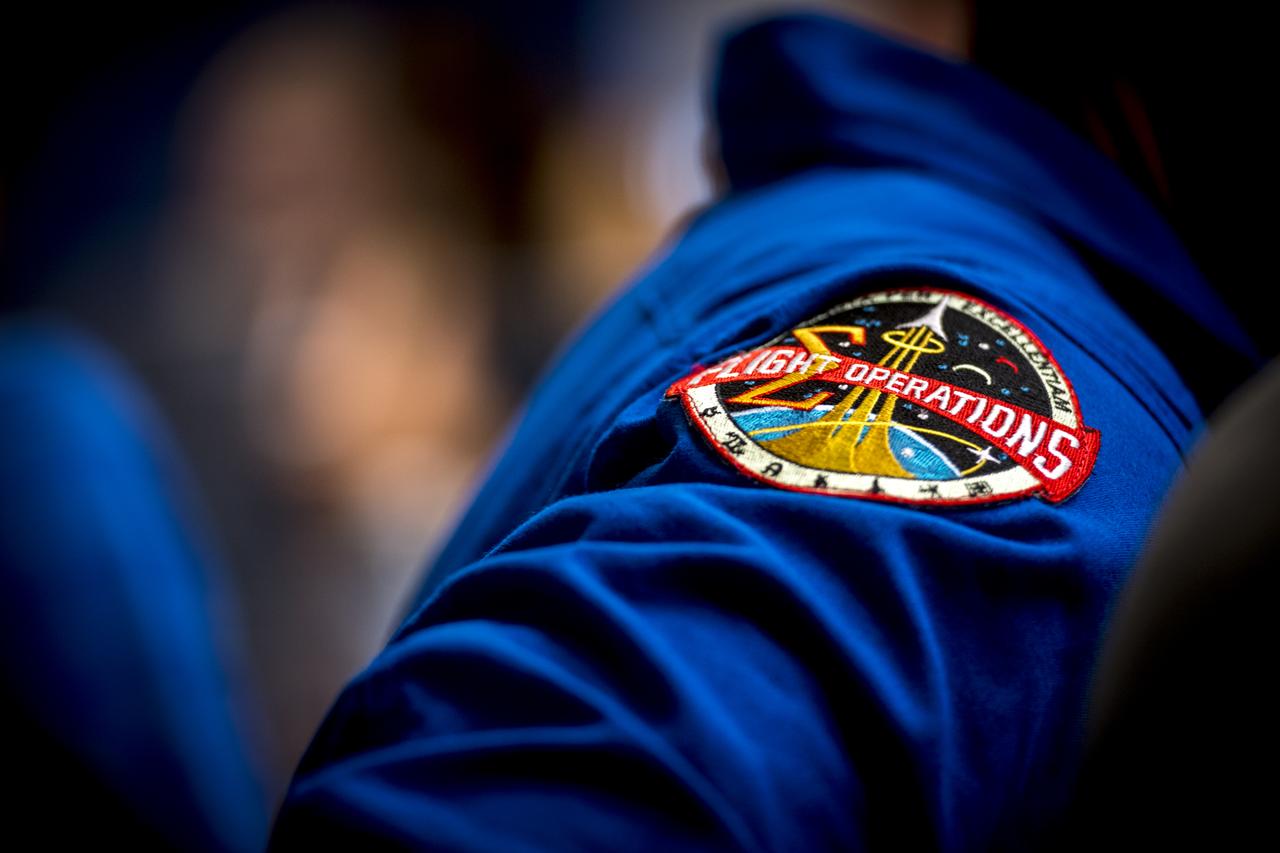
Commercial spaceflight assignments for commercial crew astronauts Eric Boe, Bob Behnken, Josh Cassada, Chris Ferguson, Victor Glover, Mike Hopkins, Doug Hurley, Nicole Mann and Suni Williams were announced on Aug. 3, 2018 at Johnson Space Center in Houston. Boe, Ferguson and Mann will fly on Boeing’s CST-100 Starliner in the company’s upcoming Crew Flight Test to the International Space Station, while Cassada and Williams are assigned to Starliner’s first operational mission to the space station. Behnken and Hurley will fly on SpaceX’s Crew Dragon in the company’s Demo-2 flight test to the space station, while Glover and Hopkins are assigned to Crew Dragon’s first operational mission to station.
Commercial crew astronauts Eric Boe, Josh Cassada, Chris Ferguson, Nicole Mann, Suni Williams, Bob Behnken, Victor Glover, Mike Hopkins and Doug Hurley interact with employees at Johnson Space Center shortly after their commercial spaceflight assignments were announced. Boe, Ferguson and Mann will fly on Boeing’s CST-100 Starliner in the company’s upcoming Crew Flight Test to the International Space Station, while Cassada and Williams are assigned to Starliner’s first operational mission to the space station. Behnken and Hurley will fly on SpaceX’s Crew Dragon in the company’s Demo-2 flight test to the space station, while Glover and Hopkins are assigned to Crew Dragon’s first operational mission to station.
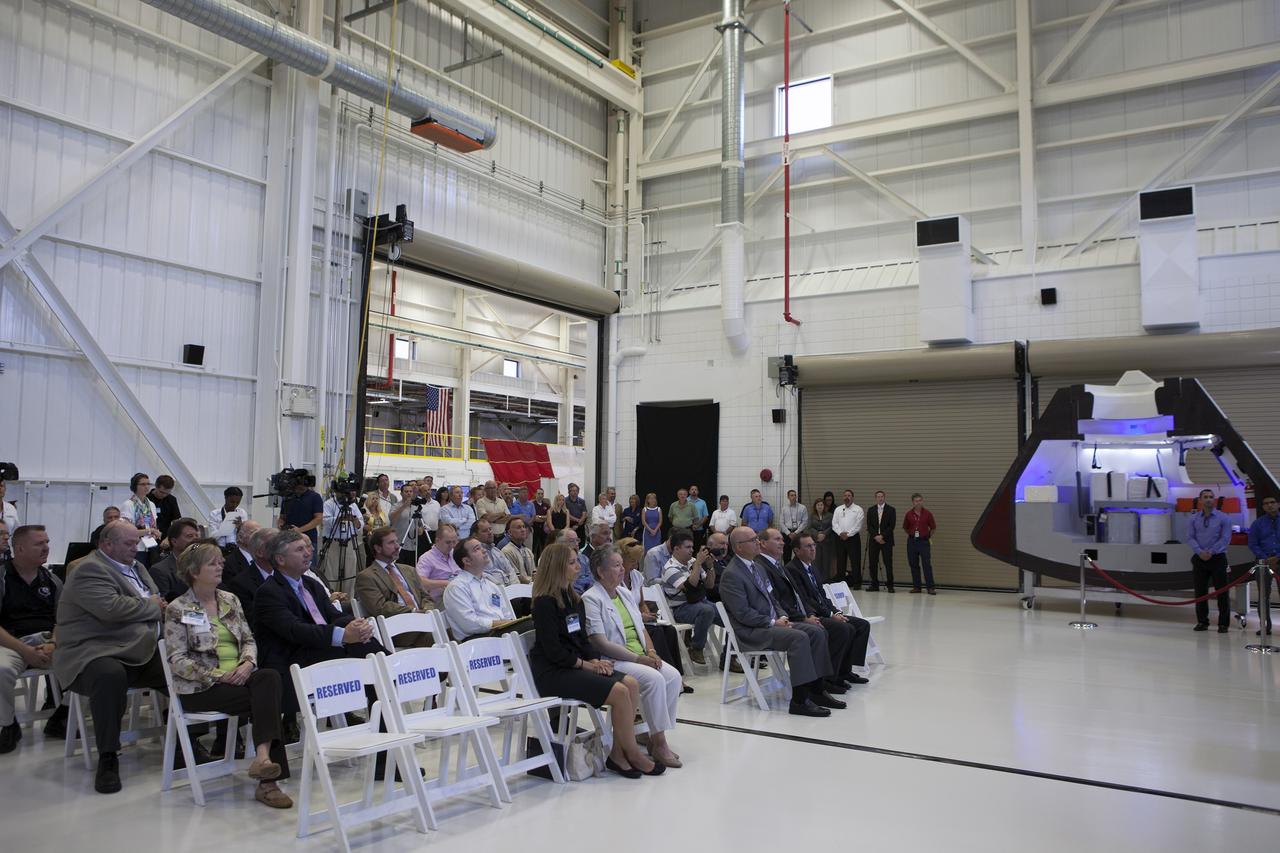
CAPE CANAVERAL, Fla. – Members of the news media and company officials gather for a ceremony by The Boeing Company discussing the CST-100 spacecraft inside Orbiter Processing Facility 3 at NASA's Kennedy Space Center in Florida. Photo credit: NASA/Kim Shiflett
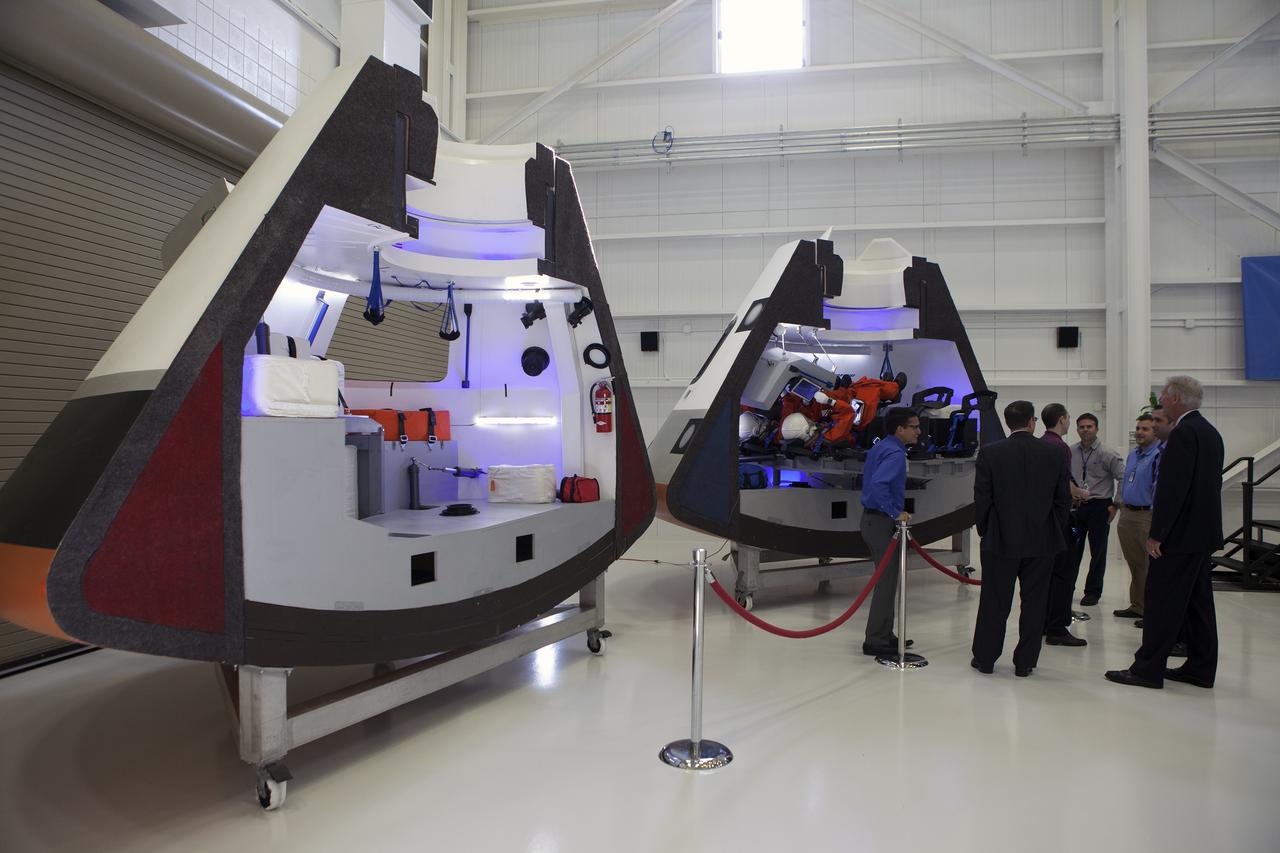
CAPE CANAVERAL, Fla. – A mock-up of The Boeing Company's CST-100 is discussed by company officials during a ceremony inside Orbiter Processing Facility 3 at NASA's Kennedy Space Center in Florida. Photo credit: NASA/Kim Shiflett
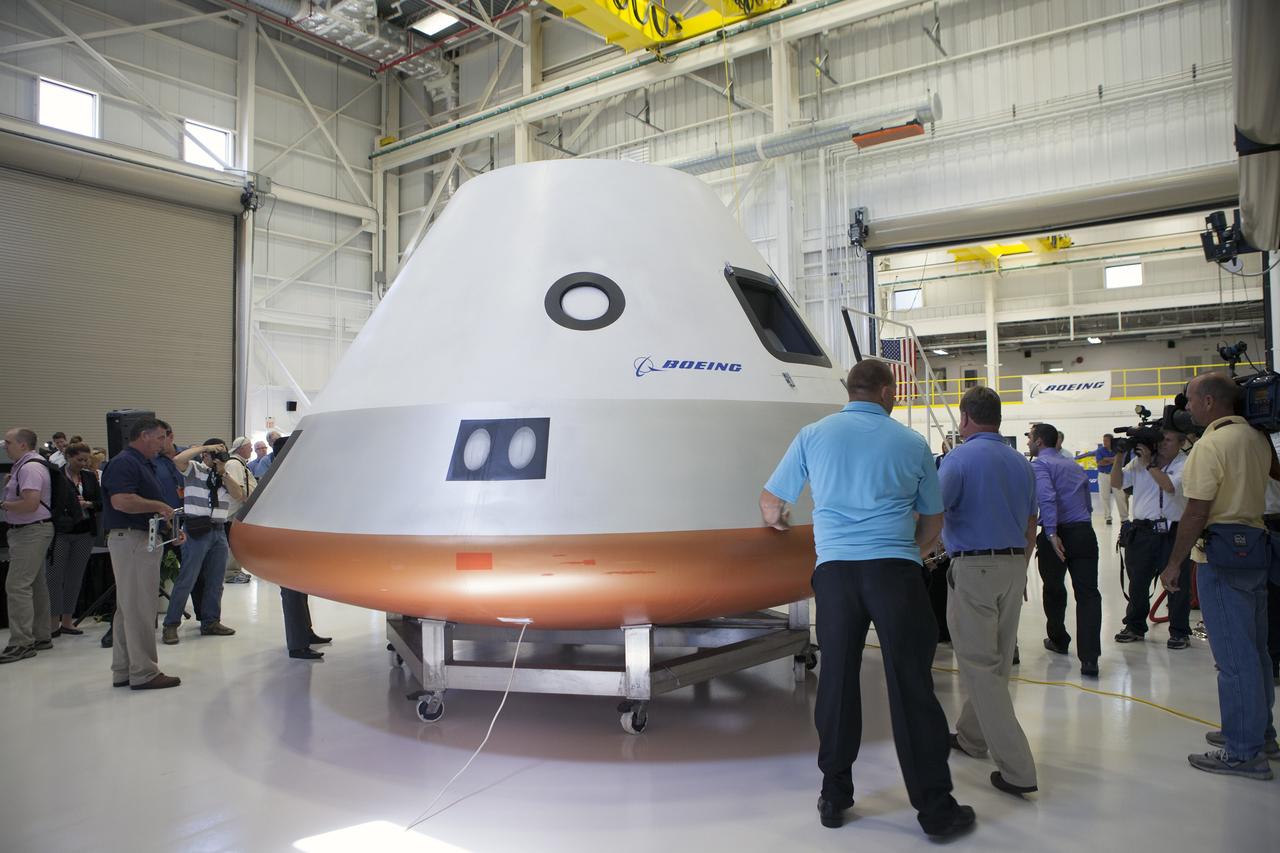
CAPE CANAVERAL, Fla. – A mock-up of The Boeing Company's CST-100 is swung closed by company officials to show the exterior during a ceremony inside Orbiter Processing Facility 3 at NASA's Kennedy Space Center in Florida. Photo credit: NASA/Kim Shiflett
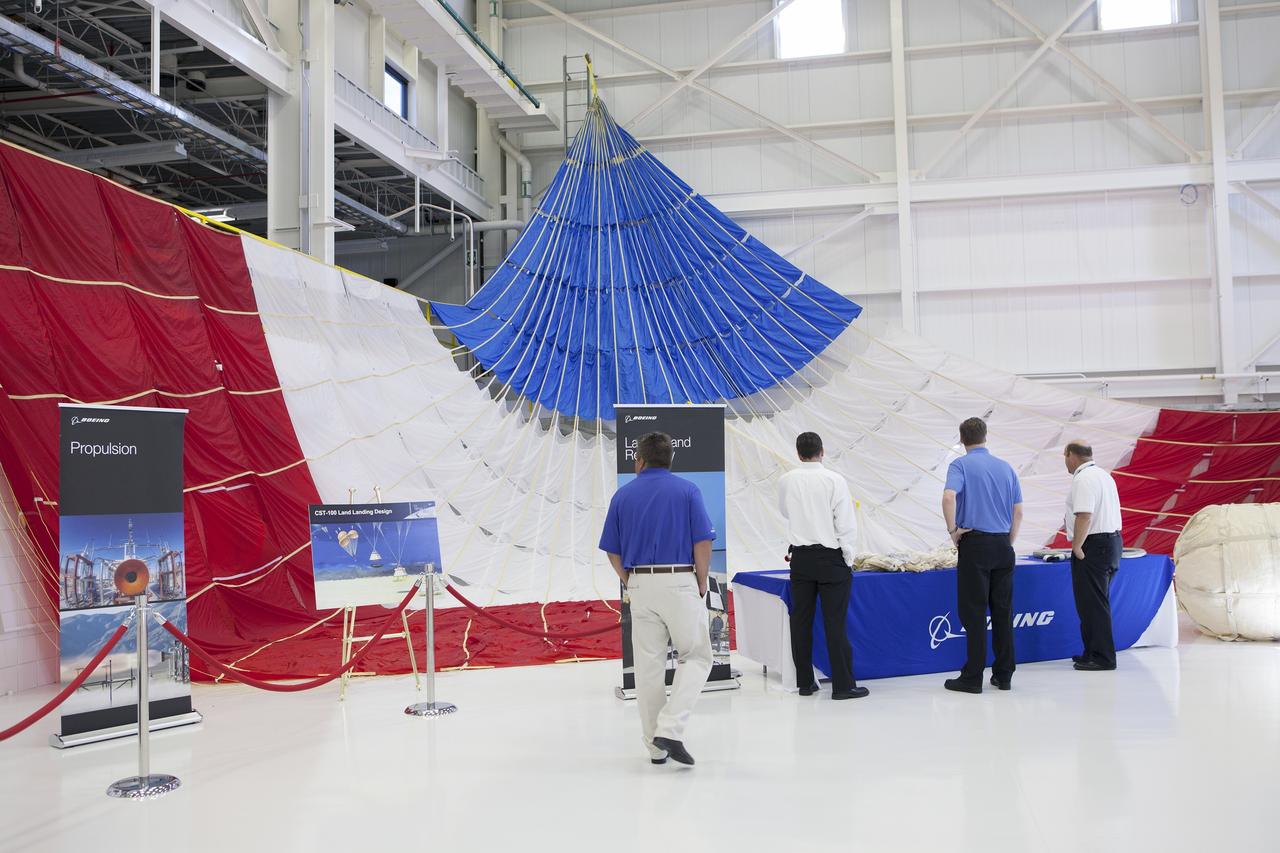
CAPE CANAVERAL, Fla. – A parachute to be used by The Boeing Company's CST-100 is discussed by company officials during a ceremony inside Orbiter Processing Facility 3 at NASA's Kennedy Space Center in Florida. Photo credit: NASA/Kim Shiflett
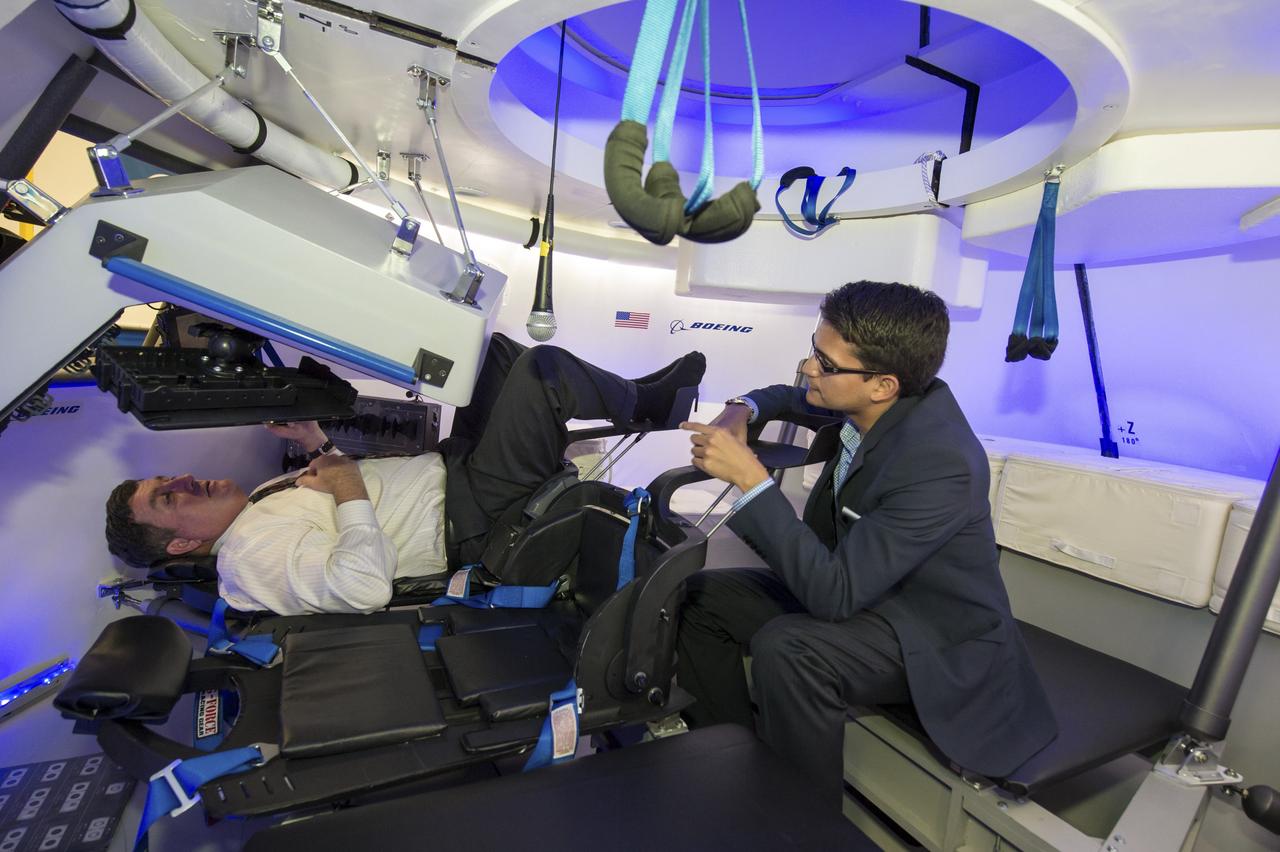
HOUSTON -- JSC-2013-E076056 -- Kirk Shireman, deputy director of NASA's Johnson Space Center, takes the controls of The Boeing Company's mock-up CST-100 spacecraft at the company's Houston Product Support Center. Helping Shireman inside the fully outfitted test version of the CST-100 is Tony Castilleja, a mechanical engineer working on the Boeing project. Boeing showcased its work on a fully outfitted test version of the spacecraft to Bolden and Johnson management. Boeing's CST-100 is designed to transport a mix of crew and cargo to low-Earth-orbit destinations. Boeing is one of three aerospace industry partners working with NASA's Commercial Crew Program, or CCP, during the Commercial Crew Integrated Capability, or CCiCap, initiative, which is intended to make commercial human spaceflight services available for government and commercial customers. To learn more about CCP, visit www.nasa.gov/commercialcrew. Photo credit: NASA/James Blair
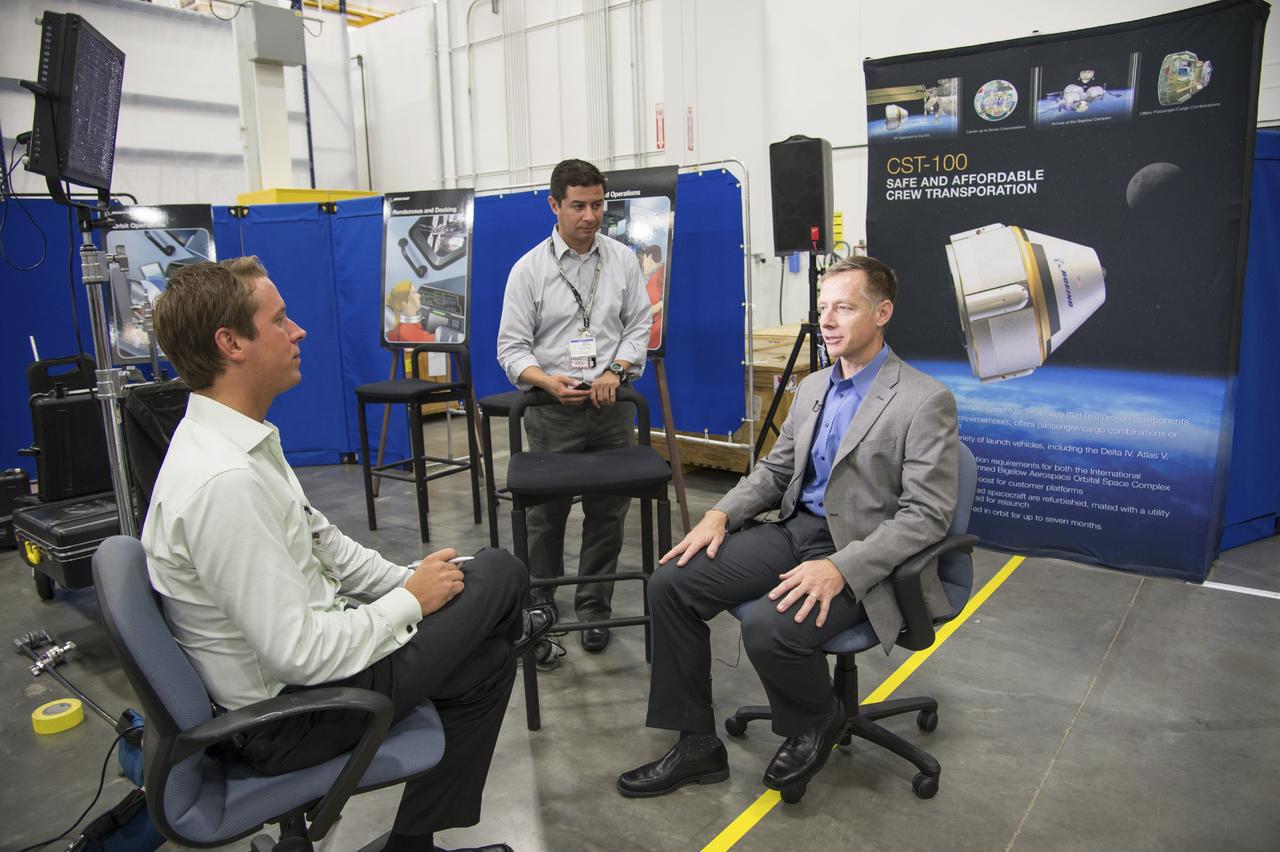
HOUSTON - JSC2013e068248 - Chris Ferguson, director of Crew and Mission Operations for The Boeing Company, is interviewed by the media during the unveiling of a CST-100 mock-up at the company's Houston Product Support Center. This test version is optimized to support five crew members and will allow the company to evaluate crew safety, interfaces, communications, maneuverability and ergonomics. Boeing's CST-100 is being designed to transport crew members or a mix of crew and cargo to low-Earth-orbit destinations, including the International Space Station. Boeing is one of three aerospace industry partners working with CCP during its Commercial Crew Integrated Capability, or CCiCap, initiative, which is intended to make commercial human spaceflight services available for government and commercial customers. To learn more about CCP, visit http://www.nasa.gov/commercialcrew. Photo credit: NASA/Robert Markowitz
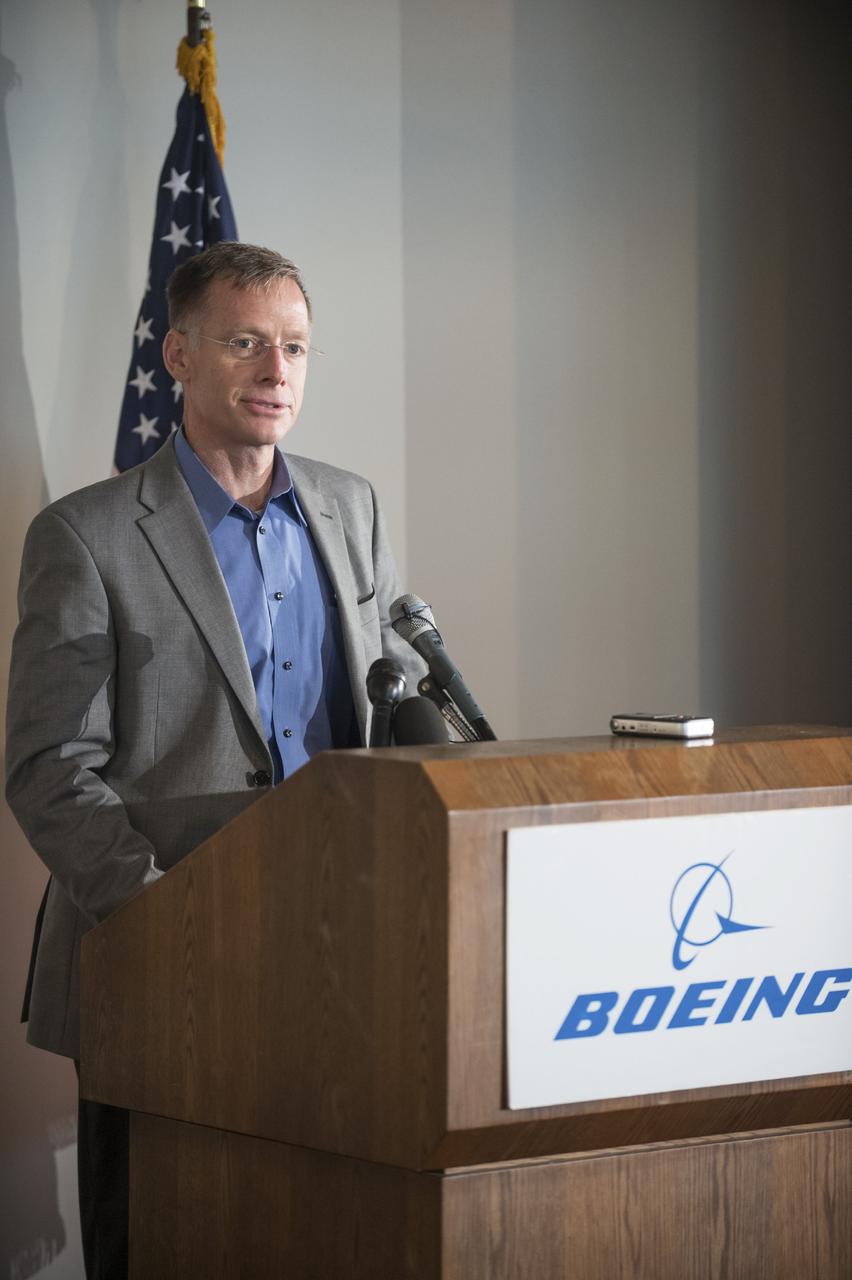
HOUSTON - JSC2013e068300 - Chris Ferguson, director of Crew and Mission Operations for The Boeing Company and former NASA astronaut, addresses the media before the unveiling of a CST-100 mock-up at the company's Houston Product Support Center. This test version is optimized to support five crew members and will allow the company to evaluate crew safety, interfaces, communications, maneuverability and ergonomics. Boeing's CST-100 is being designed to transport crew members or a mix of crew and cargo to low-Earth-orbit destinations. The evaluation is part of the ongoing work supporting Boeing's funded Space Act Agreement with NASA's Commercial Crew Program, or CCP, during the agency's Commercial Crew Integrated Capability, or CCiCap, initiative. CCiCap is intended to make commercial human spaceflight services available for government and commercial customers. To learn more about CCP, visit http://www.nasa.gov/commercialcrew. Photo credit: NASA/Robert Markowitz
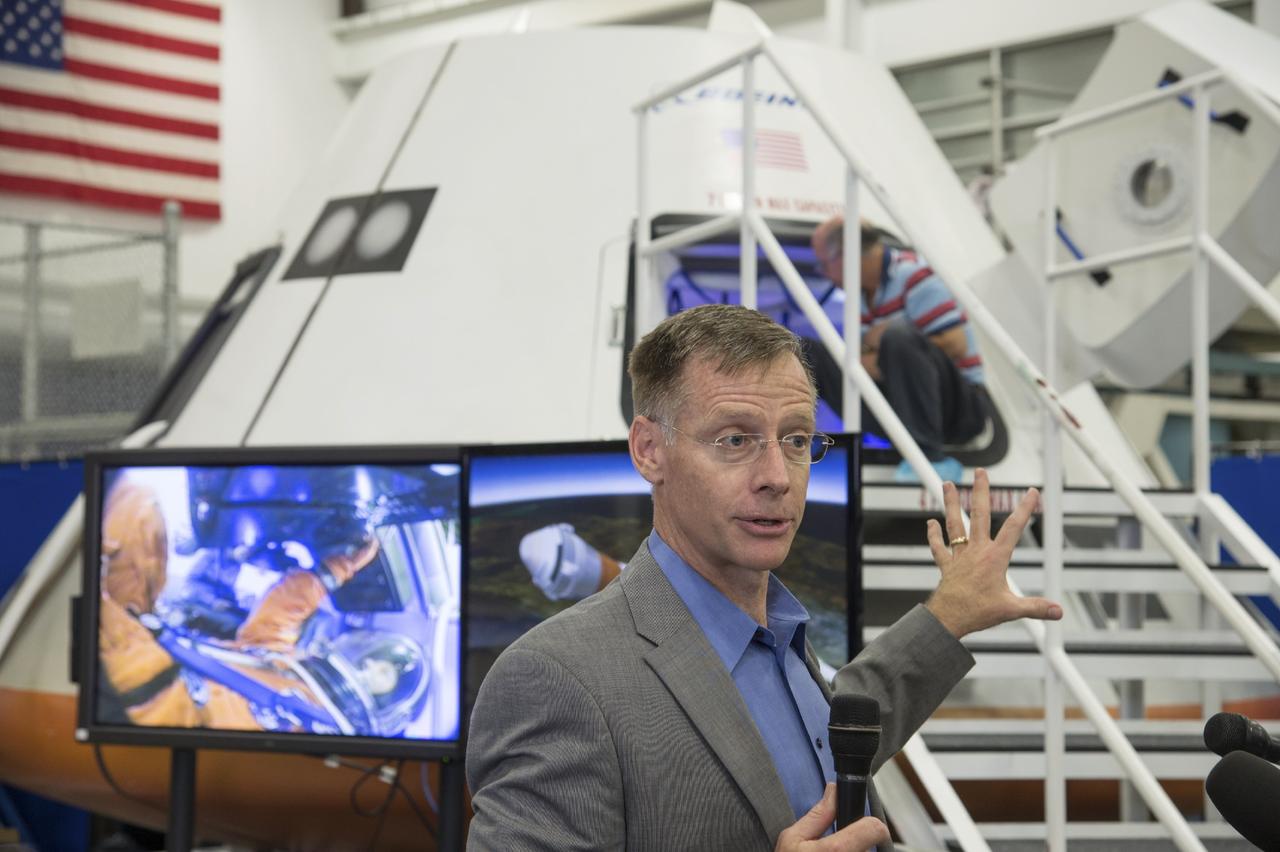
HOUSTON - JSC2013e068310 - Chris Ferguson, director of Crew and Mission Operations for The Boeing Company and former NASA astronaut, discusses the fit check evaluation of the CST-100 mock-up with the media during its unveiling at the company's Houston Product Support Center. This test version is optimized to support five crew members and will allow the company to evaluate crew safety, interfaces, communications, maneuverability and ergonomics. Boeing's CST-100 is being designed to transport crew members or a mix of crew and cargo to low-Earth-orbit destinations. The evaluation is part of the ongoing work supporting Boeing's funded Space Act Agreement with NASA's Commercial Crew Program, or CCP, during the agency's Commercial Crew Integrated Capability, or CCiCap, initiative. CCiCap is intended to make commercial human spaceflight services available for government and commercial customers. To learn more about CCP, visit http://www.nasa.gov/commercialcrew. Photo credit: NASA/Robert Markowitz
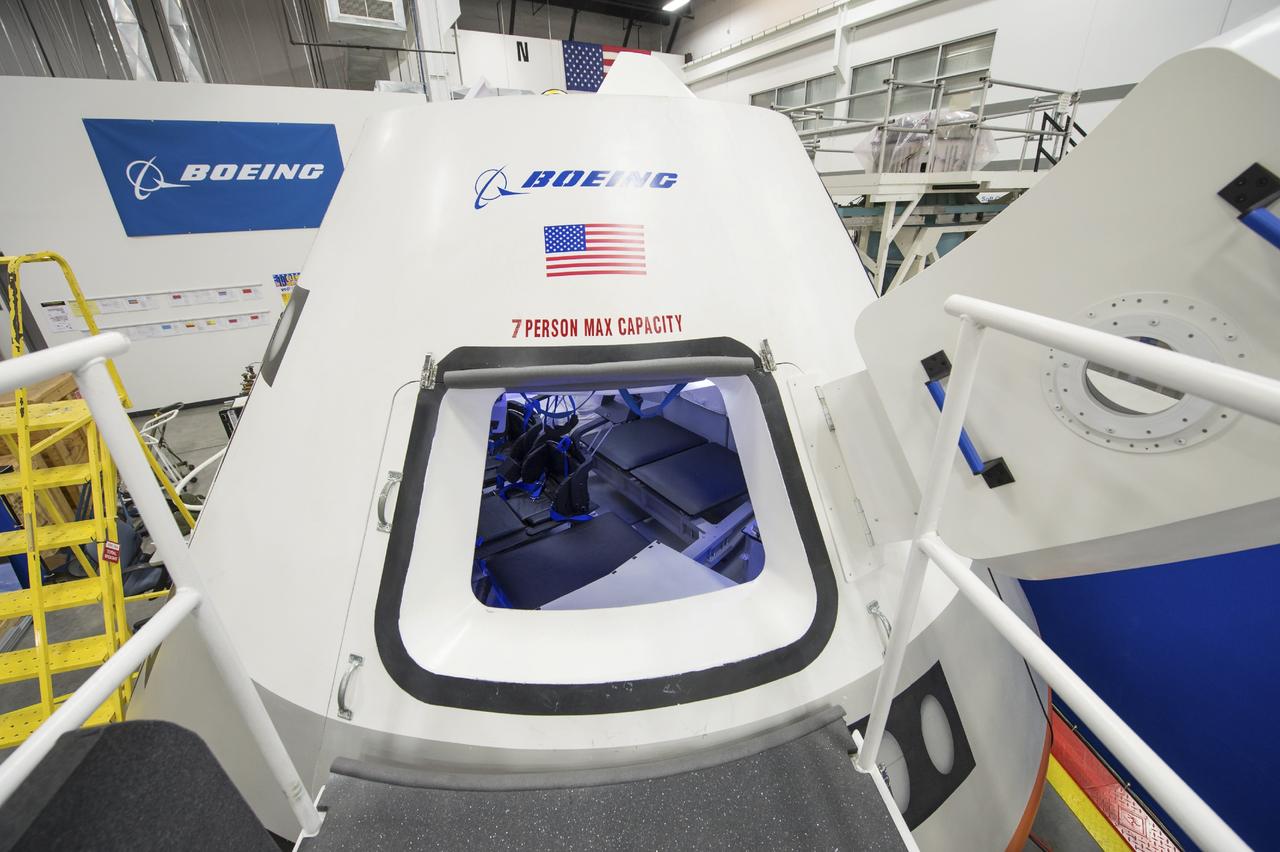
HOUSTON - JSC2013e068247 - The Boeing Company unveils its fully outfitted CST-100 mock-up at the company's Houston Product Support Center in Texas. This test version is optimized to support five crew members and will allow the company to evaluate crew safety, interfaces, communications, maneuverability and ergonomics. Boeing's CST-100 is designed being to transport crew members or a mix of crew and cargo to low-Earth-orbit destinations, including the International Space Station. Boeing is one of three aerospace industry partners working with CCP during its Commercial Crew Integrated Capability, or CCiCap, initiative, which is intended to make commercial human spaceflight services available for government and commercial customers. To learn more about CCP, visit www.nasa.gov/commercialcrew. Photo credit: NASA/Robert Markowitz
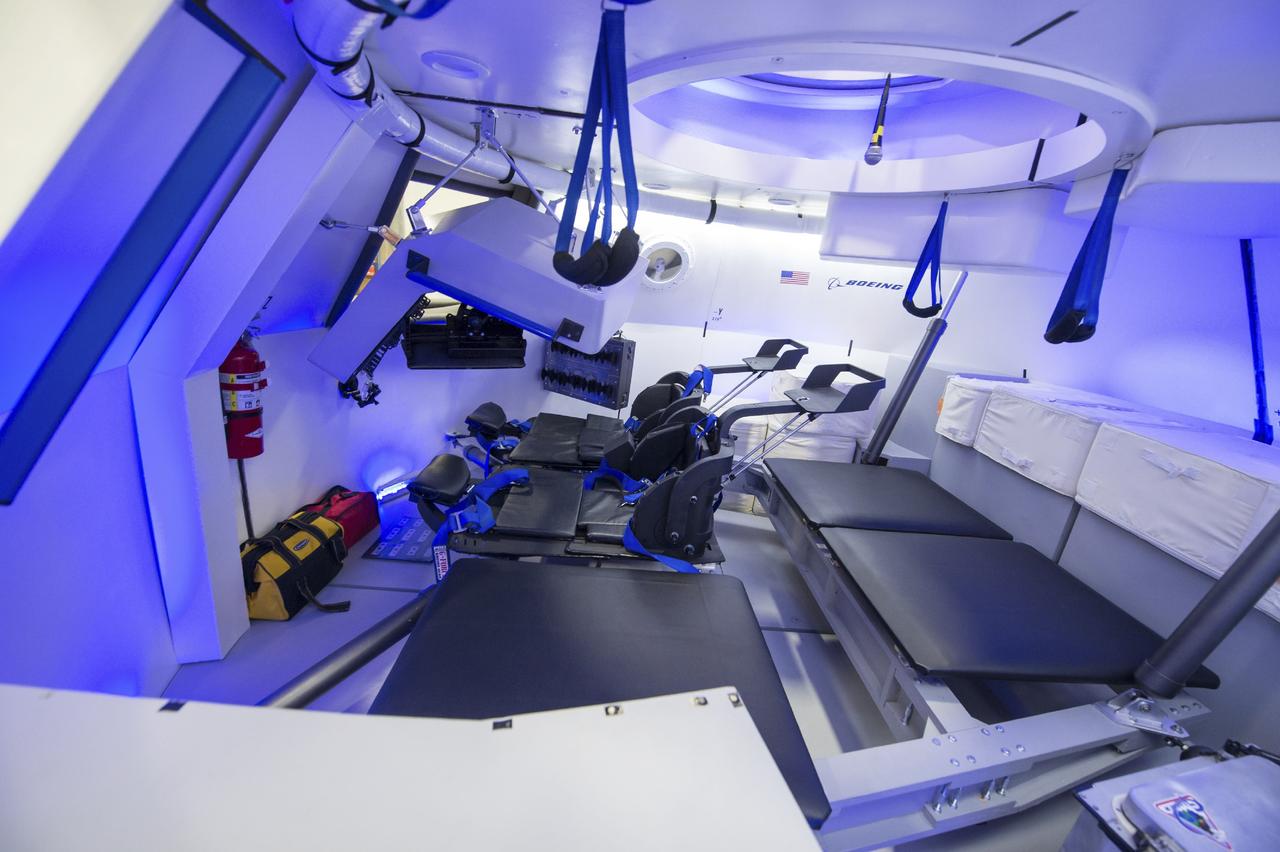
HOUSTON - JSC2013e068244 - The Boeing Company unveils the interior of its fully outfitted CST-100 mock-up at the company's Houston Product Support Center in Texas. This test version is optimized to support five crew members and will allow the company to evaluate crew safety, interfaces, communications, maneuverability and ergonomics. Boeing's CST-100 is being designed to transport crew members or a mix of crew and cargo to low-Earth-orbit destinations, including the International Space Station. Boeing is one of three aerospace industry partners working with CCP during its Commercial Crew Integrated Capability, or CCiCap, initiative, which is intended to make commercial human spaceflight services available for government and commercial customers. To learn more about CCP, visit http://www.nasa.gov/commercialcrew. Photo credit: NASA/Robert Markowitz
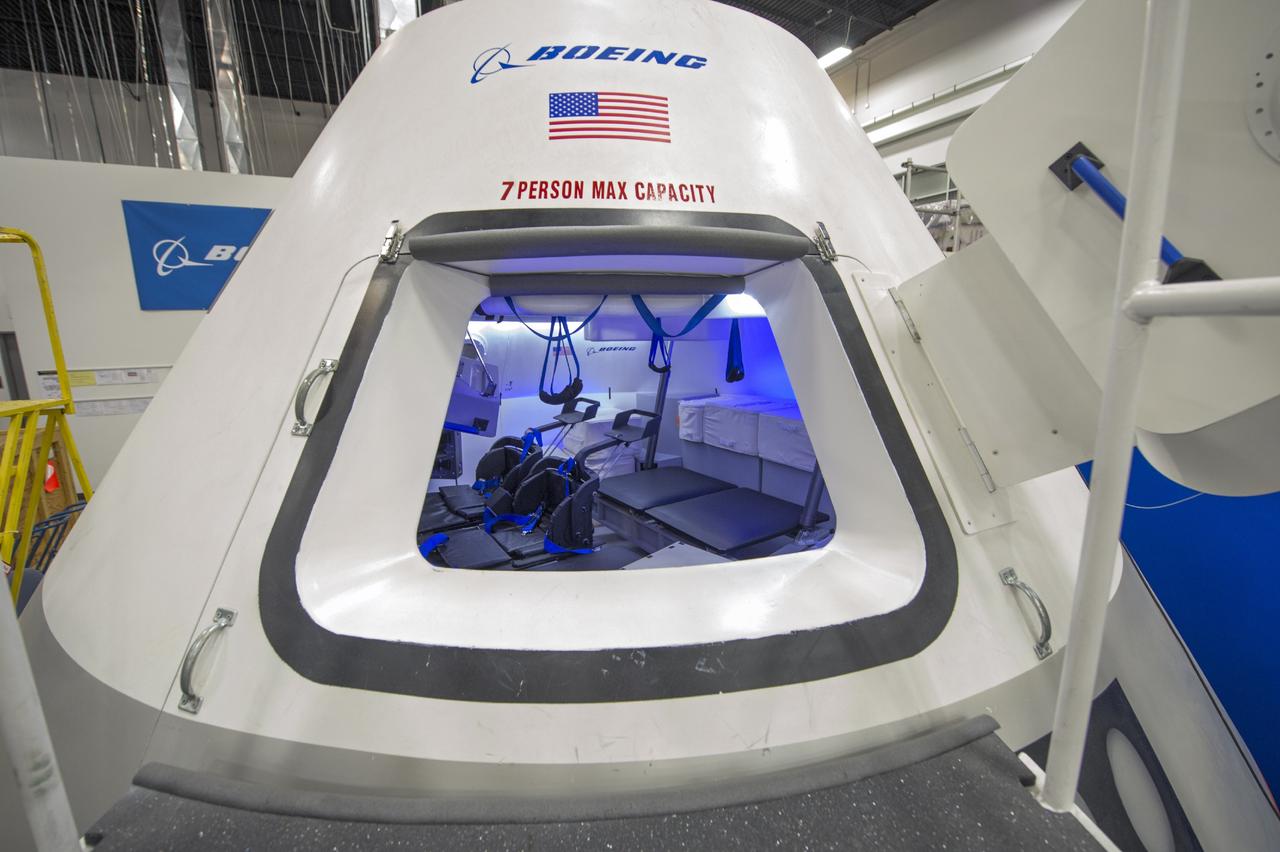
HOUSTON - The Boeing Company unveils its fully outfitted CST-100 mock-up at the company's Houston Product Support Center in Texas. This test version is optimized to support five crew members and will allow the company to evaluate crew safety, interfaces, communications, maneuverability and ergonomics. Boeing's CST-100 is being designed to transport crew members or a mix of crew and cargo to low-Earth-orbit destinations, including the International Space Station. Boeing is one of three aerospace industry partners working with CCP during its Commercial Crew Integrated Capability, or CCiCap, initiative, which is intended to make commercial human spaceflight services available for government and commercial customers. To learn more about CCP, visit http://www.nasa.gov/commercialcrew. Photo credit: NASA/Robert Markowitz
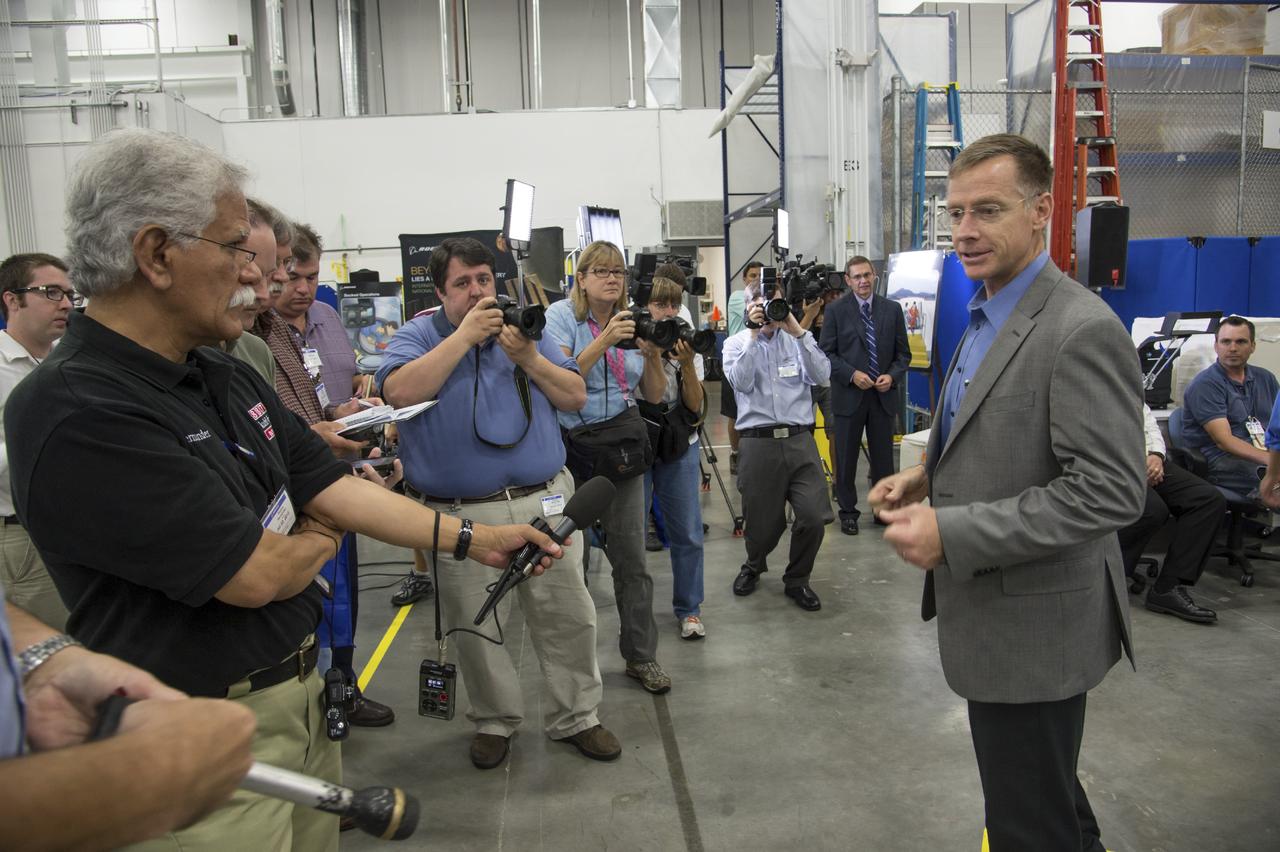
HOUSTON - JSC2013e068304 - Chris Ferguson, director of Crew and Mission Operations for The Boeing Company and former NASA astronaut, is interviewed by the media during the unveiling of a CST-100 mock-up at the company's Houston Product Support Center. This test version is optimized to support five crew members and will allow the company to evaluate crew safety, interfaces, communications, maneuverability and ergonomics. Boeing's CST-100 is being designed to transport crew members or a mix of crew and cargo to low-Earth-orbit destinations. The evaluation is part of the ongoing work supporting Boeing's funded Space Act Agreement with NASA's Commercial Crew Program, or CCP, during the agency's Commercial Crew Integrated Capability, or CCiCap, initiative. CCiCap is intended to make commercial human spaceflight services available for government and commercial customers. To learn more about CCP, visit http://www.nasa.gov/commercialcrew. Photo credit: NASA/Robert Markowitz
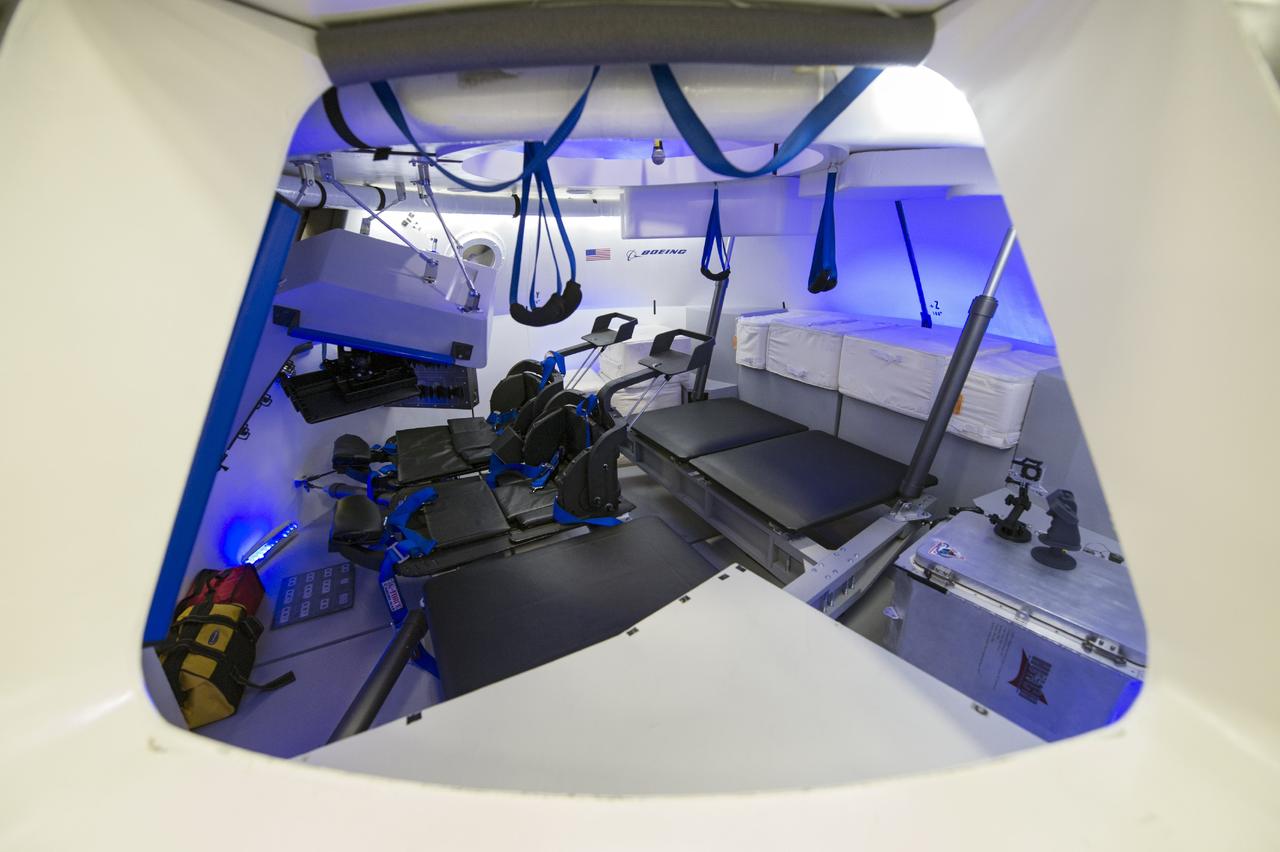
HOUSTON - The Boeing Company unveils its fully outfitted CST-100 mock-up at the company's Houston Product Support Center in Texas. This test version is optimized to support five crew members and will allow the company to evaluate crew safety, interfaces, communications, maneuverability and ergonomics. Boeing's CST-100 is designed being to transport crew members or a mix of crew and cargo to low-Earth-orbit destinations, including the International Space Station. Boeing is one of three aerospace industry partners working with CCP during its Commercial Crew Integrated Capability, or CCiCap, initiative, which is intended to make commercial human spaceflight services available for government and commercial customers. To learn more about CCP, visit www.nasa.gov/commercialcrew. Photo credit: NASA/Robert Markowitz
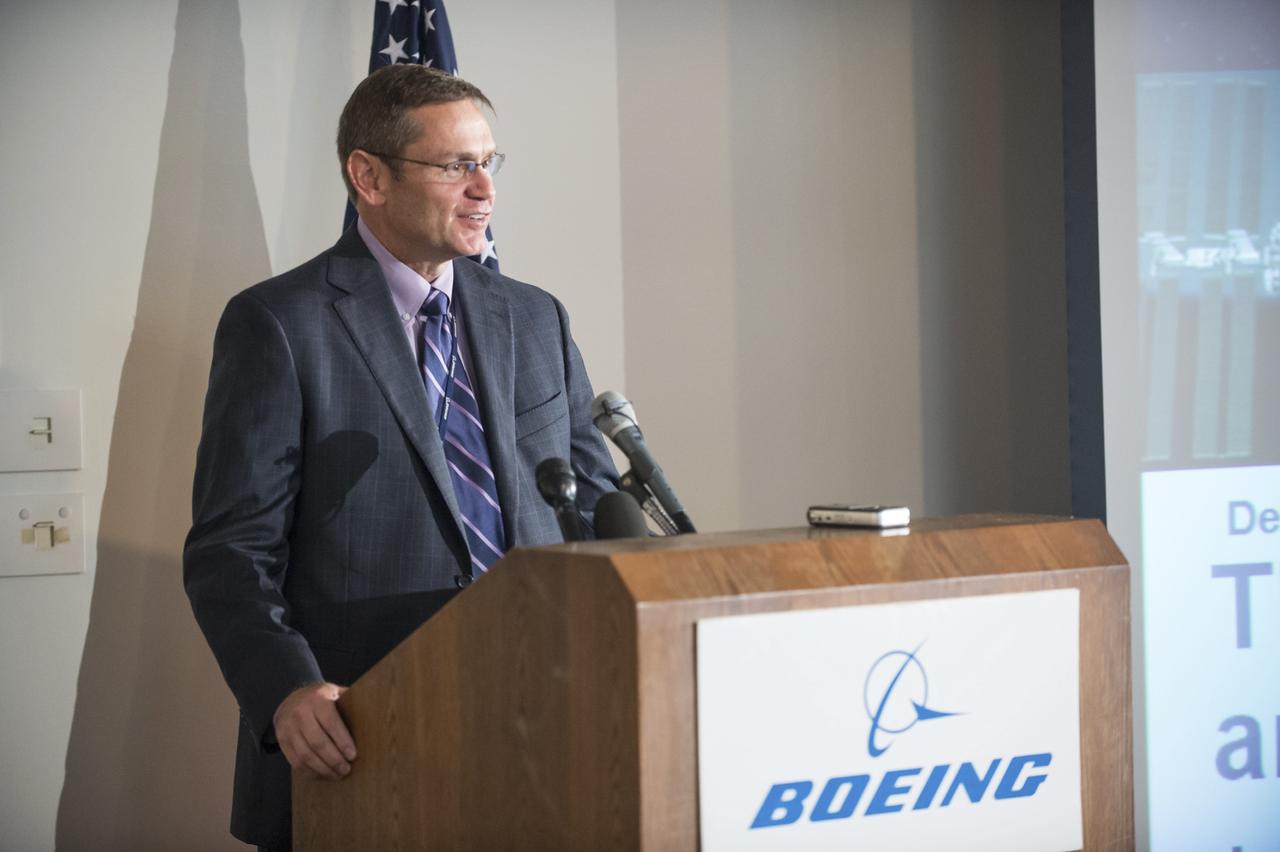
HOUSTON - JSC2013e068284 - John Elbon, vice president for Space Exploration for The Boeing Company, addresses the media before the unveiling of a CST-100 mock-up at the company's Houston Product Support Center. This test version is optimized to support five crew members and will allow the company to evaluate crew safety, interfaces, communications, maneuverability and ergonomics. Boeing's CST-100 is being designed to transport crew members or a mix of crew and cargo to low-Earth-orbit destinations. The evaluation is part of the ongoing work supporting Boeing's funded Space Act Agreement with NASA's Commercial Crew Program, or CCP, during the agency's Commercial Crew Integrated Capability, or CCiCap, initiative. CCiCap is intended to make commercial human spaceflight services available for government and commercial customers. To learn more about CCP, visit http://www.nasa.gov/commercialcrew. Photo credit: NASA/Robert Markowitz
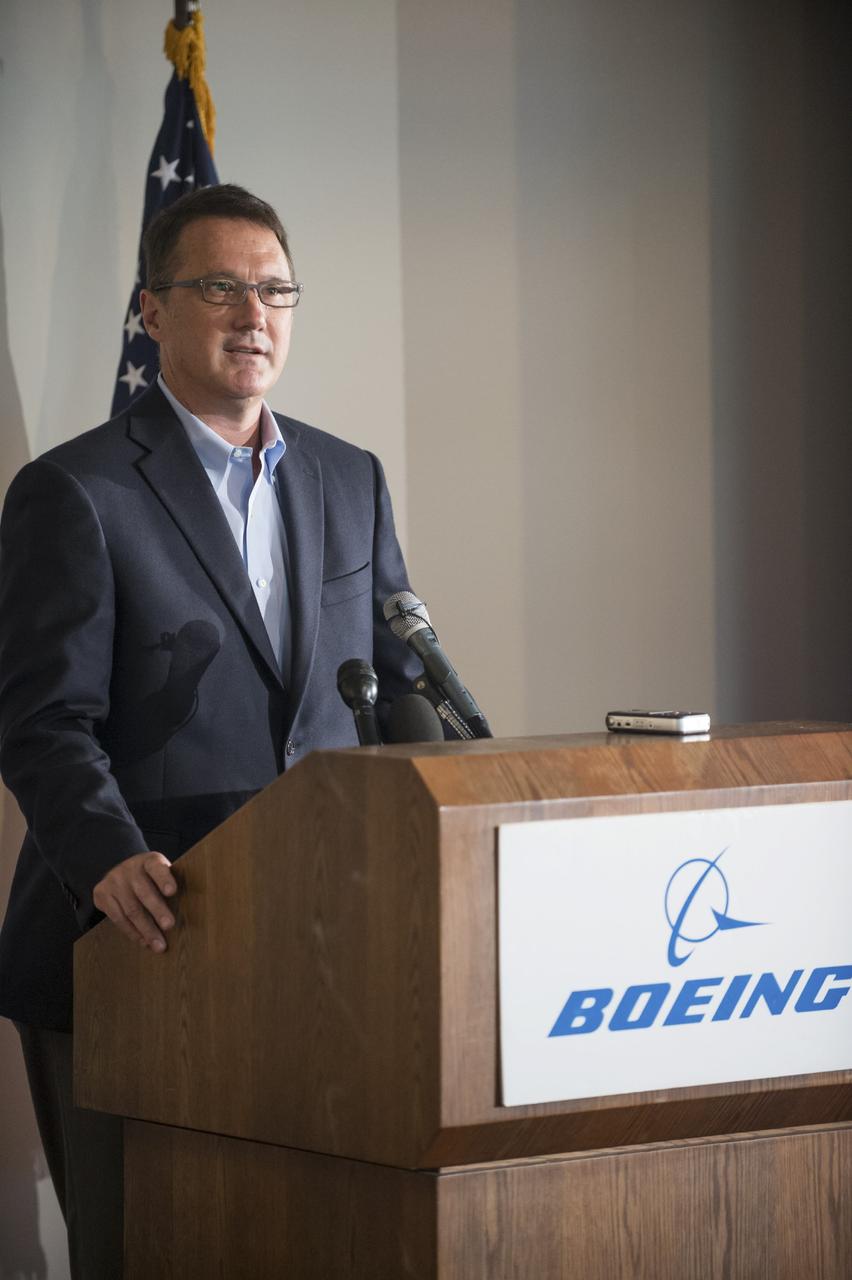
HOUSTON - JSC2013e068296 - John Mulholland, vice president and program manager, Commercial Crew, for The Boeing Company, addresses the media before the unveiling of a CST-100 mock-up at the company's Houston Product Support Center. This test version is optimized to support five crew members and will allow the company to evaluate crew safety, interfaces, communications, maneuverability and ergonomics. Boeing's CST-100 is being designed to transport crew members or a mix of crew and cargo to low-Earth-orbit destinations. The evaluation is part of the ongoing work supporting Boeing's funded Space Act Agreement with NASA's Commercial Crew Program, or CCP, during the agency's Commercial Crew Integrated Capability, or CCiCap, initiative. CCiCap is intended to make commercial human spaceflight services available for government and commercial customers. To learn more about CCP, visit http://www.nasa.gov/commercialcrew. Photo credit: NASA/Robert Markowitz
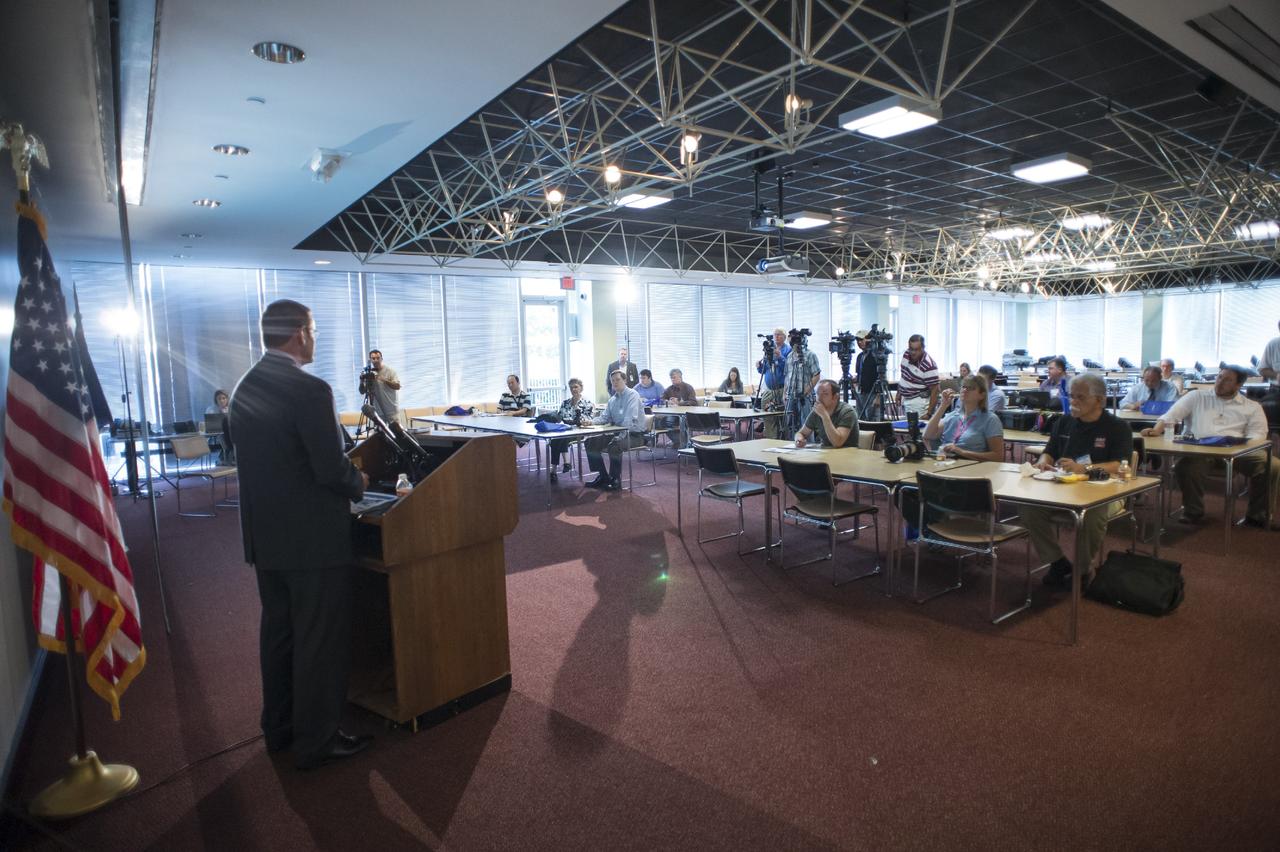
HOUSTON - JSC2013e068287 - John Elbon, vice president for Space Exploration for The Boeing Company, addresses the media before the unveiling of a CST-100 mock-up at the company's Houston Product Support Center. This test version is optimized to support five crew members and will allow the company to evaluate crew safety, interfaces, communications, maneuverability and ergonomics. Boeing's CST-100 is being designed to transport crew members or a mix of crew and cargo to low-Earth-orbit destinations. The evaluation is part of the ongoing work supporting Boeing's funded Space Act Agreement with NASA's Commercial Crew Program, or CCP, during the agency's Commercial Crew Integrated Capability, or CCiCap, initiative. CCiCap is intended to make commercial human spaceflight services available for government and commercial customers. To learn more about CCP, visit http://www.nasa.gov/commercialcrew. Photo credit: NASA/Robert Markowitz
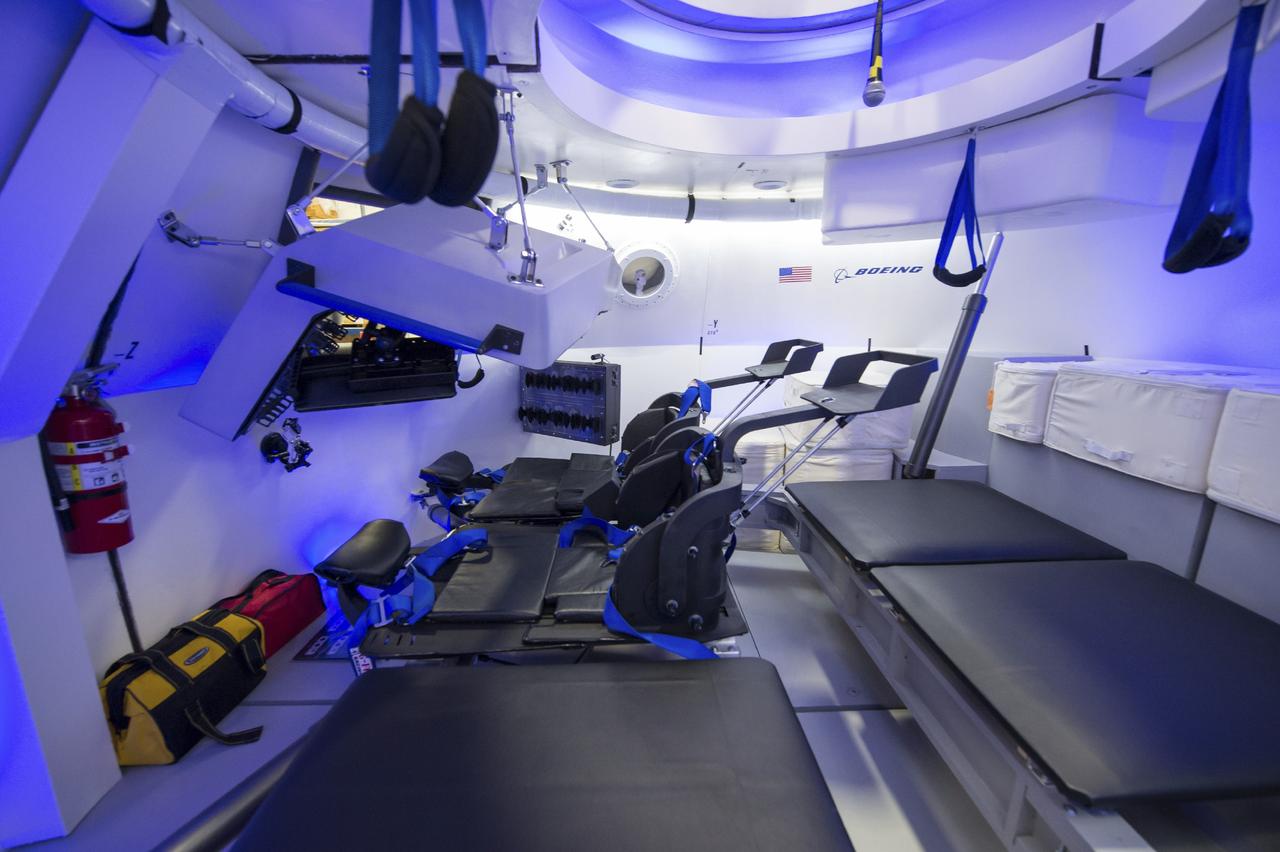
HOUSTON - JSC2013e068245 - The Boeing Company unveils the interior its fully outfitted CST-100 mock-up at the company's Houston Product Support Center in Texas. This test version is optimized to support five crew members and will allow the company to evaluate crew safety, interfaces, communications, maneuverability and ergonomics. Boeing's CST-100 is being designed to transport crew members or a mix of crew and cargo to low-Earth-orbit destinations, including the International Space Station. Boeing is one of three aerospace industry partners working with CCP during its Commercial Crew Integrated Capability, or CCiCap, initiative, which is intended to make commercial human spaceflight services available for government and commercial customers. To learn more about CCP, visit http://www.nasa.gov/commercialcrew. Photo credit: NASA/Robert Markowitz
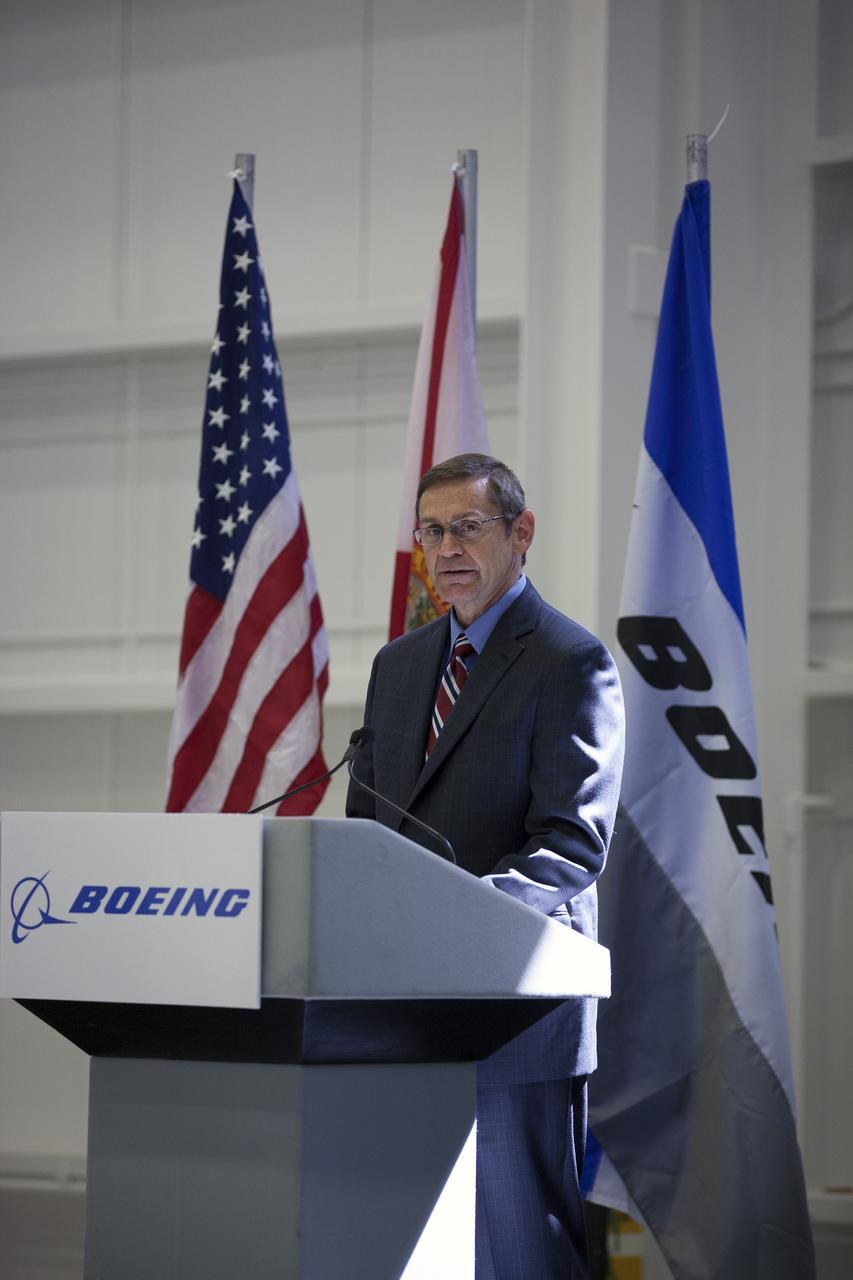
CAPE CANAVERAL, Fla. – John Elbon, The Boeing Company's vice president general manager of Boeing Space Systems, discusses the CST-100 spacecraft during a ceremony inside Orbiter Processing Facility 3 at NASA's Kennedy Space Center in Florida. Photo credit: NASA/Kim Shiflett
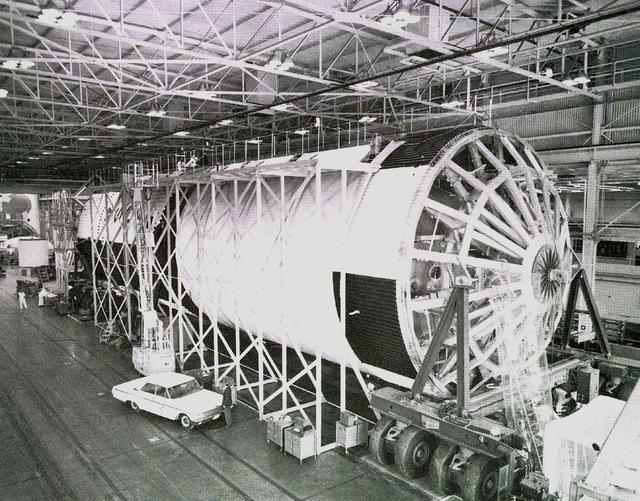
This photograph shows a Saturn V first stage (S-1C). This stage was assembled at the Manufacturing Engineering Laboratory at NASA's Marshall Space Flight Center. With assistance by the Boeing Company, the manufacturer, this first stage was assembled using components made by Boeing in Wichita, Kansas and New Orleans.
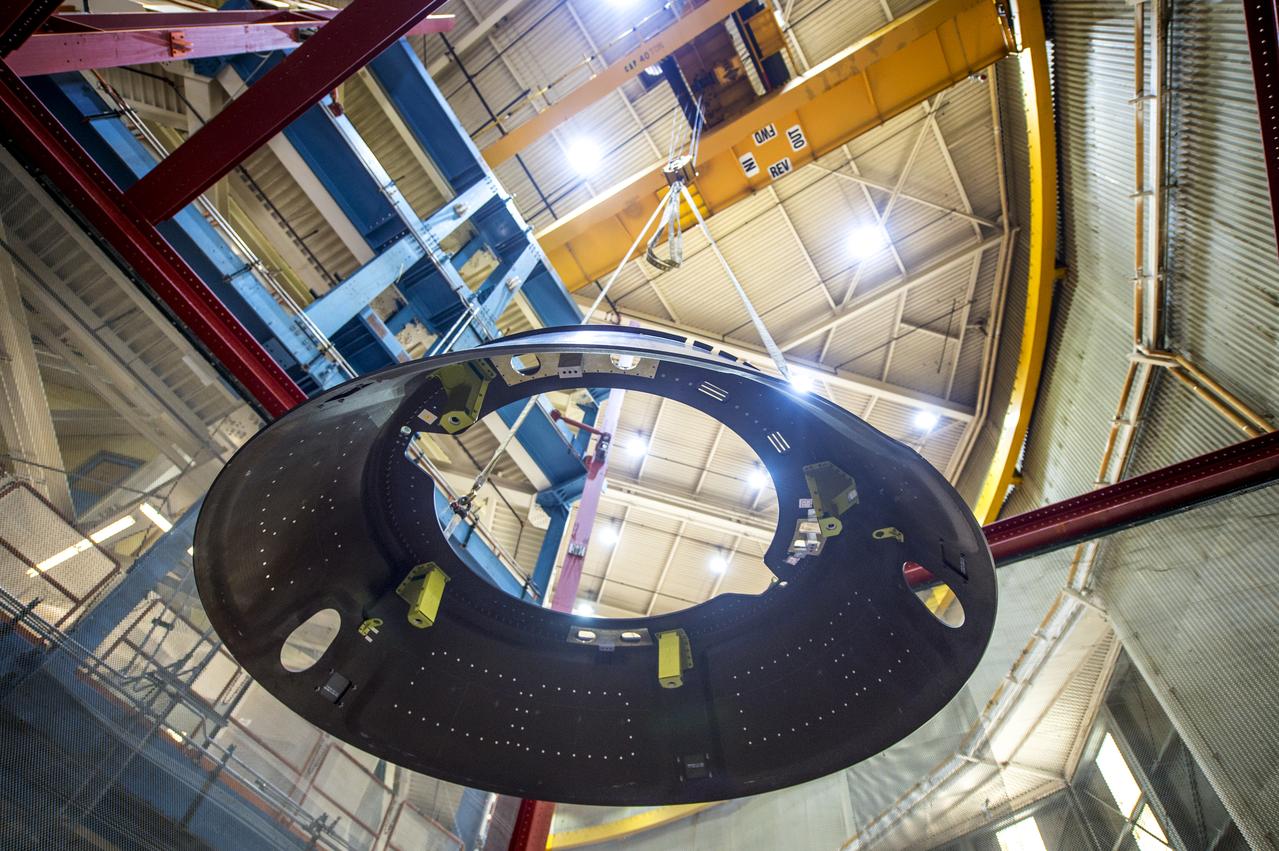
A heat shield is used during separation test activities with Boeing's Starliner structural test article. The test article is undergoing rigorous qualification testing at the company's Huntington Beach Facility in California. Boeing’s CST-100 Starliner will launch on the Atlas V rocket to the International Space Station as part of NASA’s Commercial Crew Program.
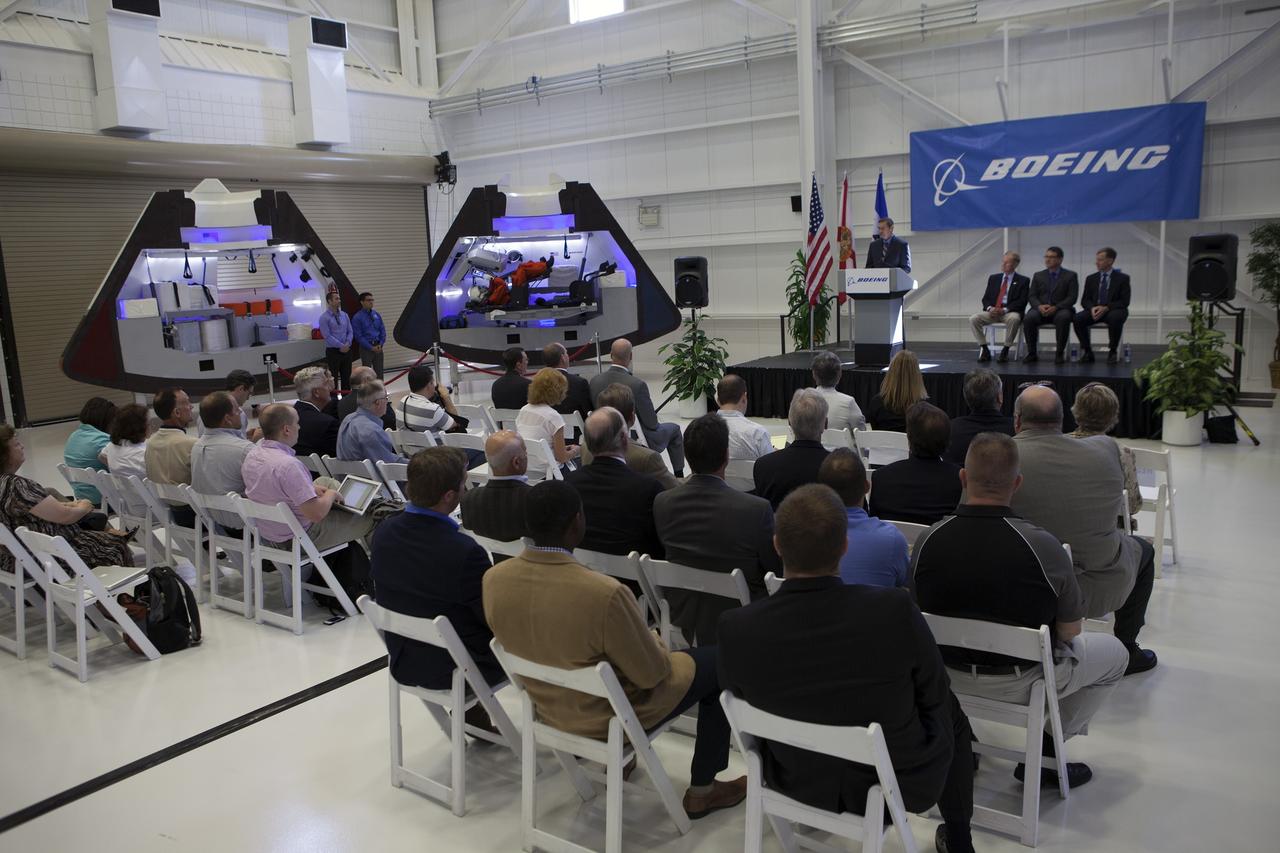
CAPE CANAVERAL, Fla. – John Elbon, The Boeing Company's vice president general manager of Boeing Space Systems, discusses the CST-100 spacecraft during a ceremony inside Orbiter Processing Facility 3 at NASA's Kennedy Space Center in Florida. Photo credit: NASA/Kim Shiflett
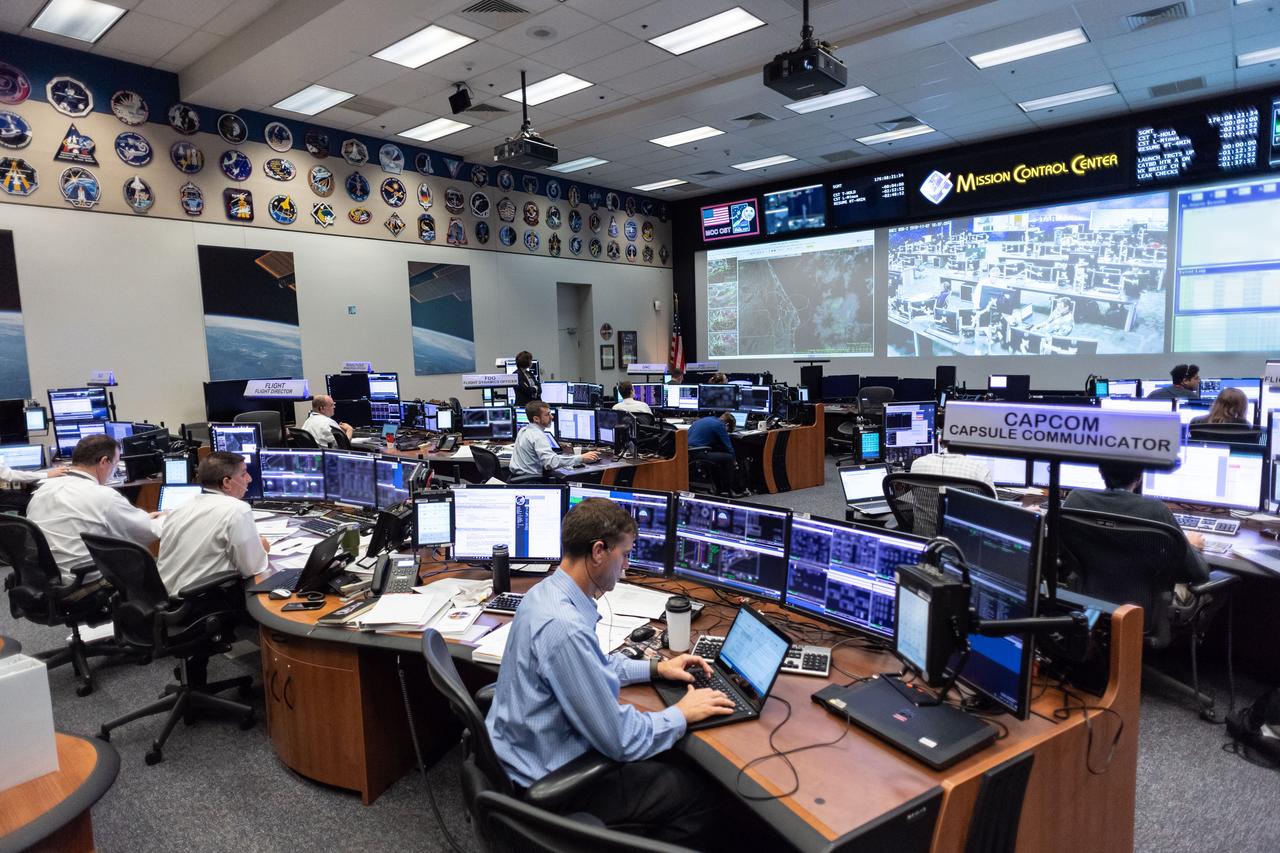
Boeing’s Flight Control Team participated in a rehearsal of prelaunch procedures for the company’s upcoming Orbital Flight Test in the White Flight Control Room in the Mission Control Center at Johnson Space Center in Houston. Boeing’s CST-100 Starliner will fly uncrewed to the International Space Station before NASA will certify the spacecraft to carry astronauts to station.
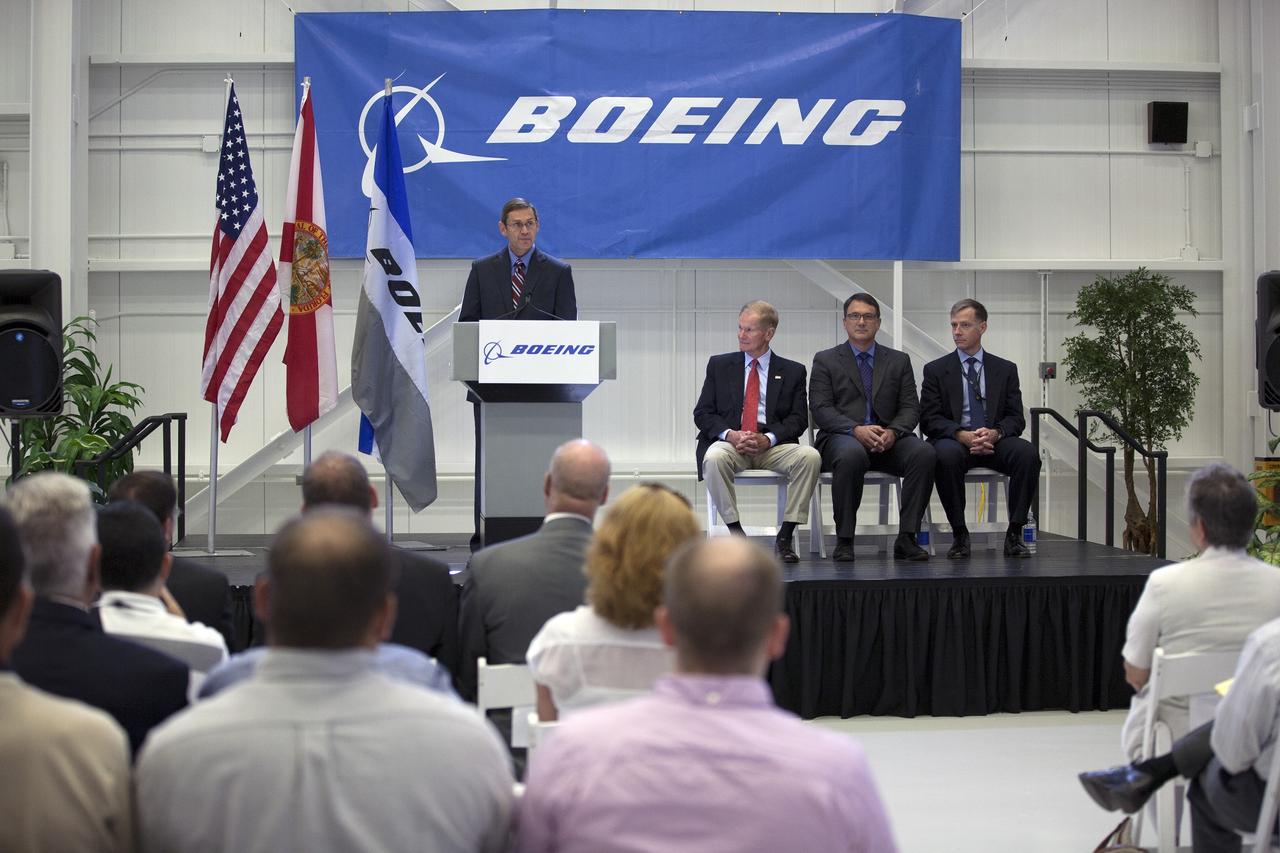
CAPE CANAVERAL, Fla. – John Elbon, The Boeing Company's vice president general manager of Boeing Space Systems, discusses the CST-100 spacecraft during a ceremony inside Orbiter Processing Facility 3 at NASA's Kennedy Space Center in Florida. Looking on are, from left, U.S. Sen. Bill Nelson of Florida, John Mulholland, Boeing's program manager for the CST-100, and Chris Ferguson, Boeing's director of Crew and Mission Operations. Photo credit: NASA/Kim Shiflett
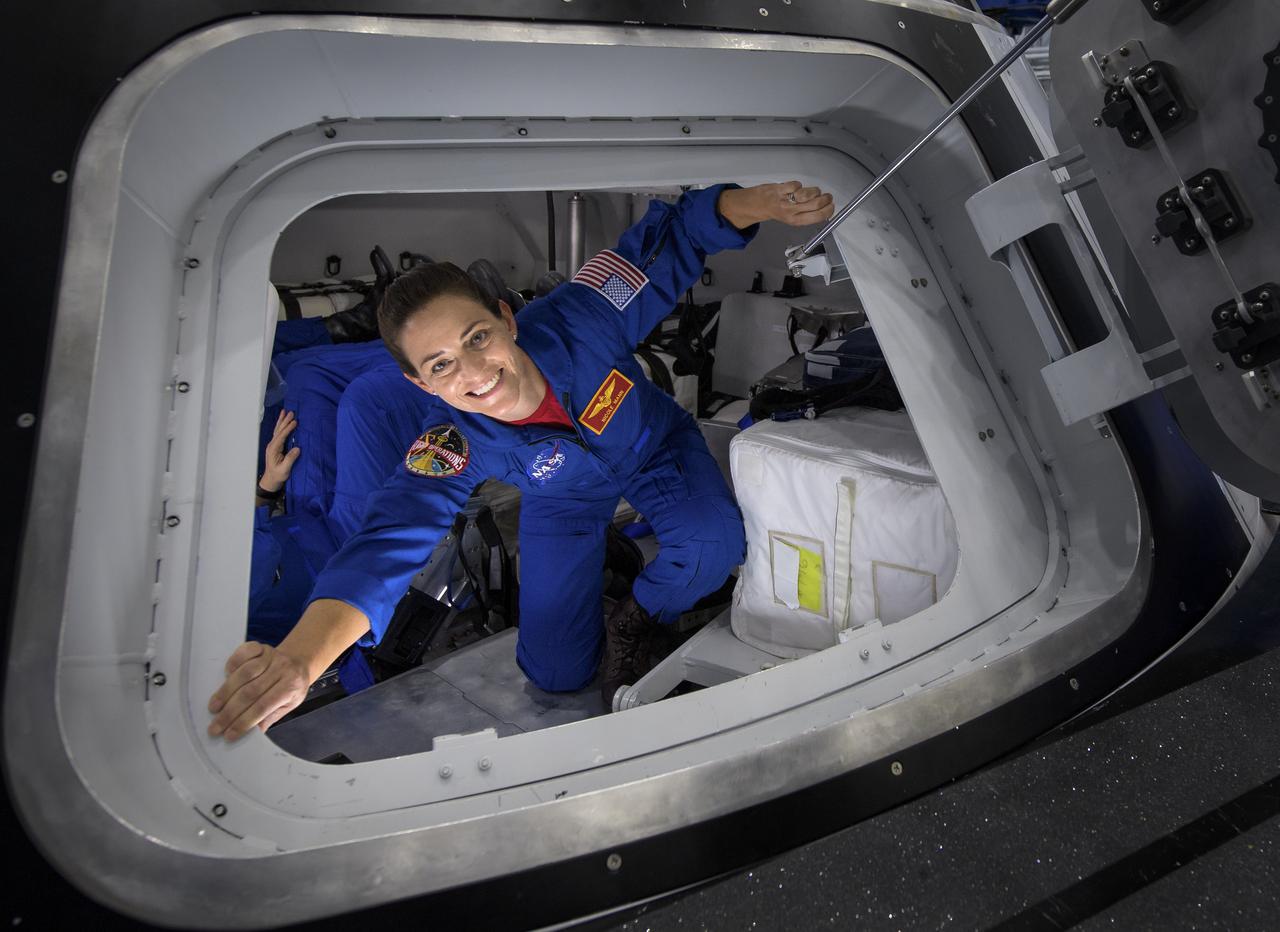
NASA astronaut Nicole Mann poses for a photograph as she exits the Boeing Mockup Trainer at NASA’s Johnson Space Center in Houston, Texas on Aug. 2, 2018 ahead of the commercial crew flight assignments announcement Aug. 3. Mann, along with NASA astronaut Eric Boe and Boeing astronaut Chris Ferguson were assigned to launch aboard Boeing’s CST-100 Starliner on the company’s Crew Flight Test targeted for mid-2019 in partnership with NASA’s Commercial Crew Program. Photo Credit: (NASA/Bill Ingalls)
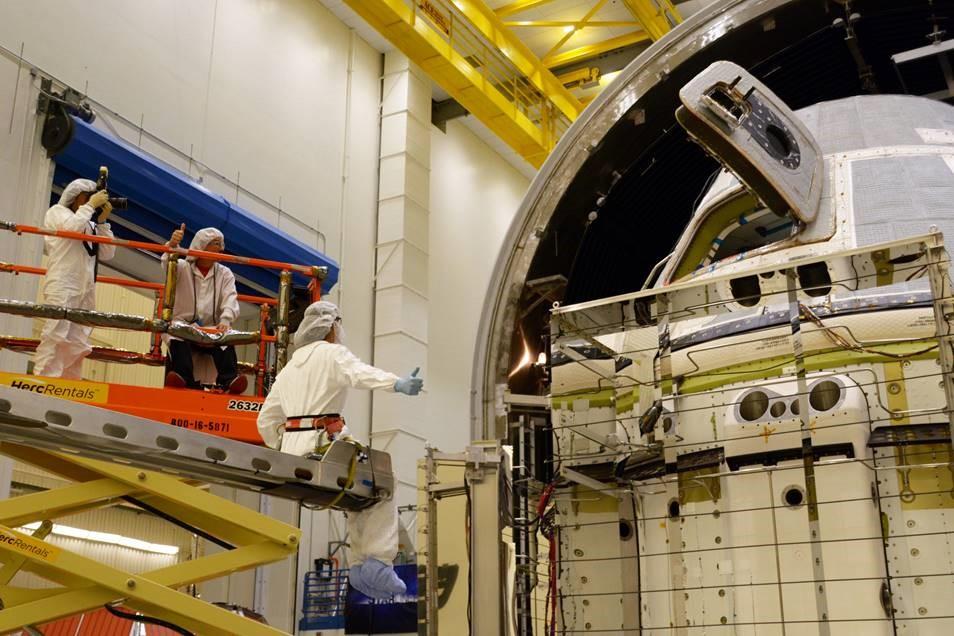
NASA astronaut Suni Williams (seated), assigned to Boeing’s first operational mission aboard the company’s CST-100 Starliner spacecraft, watches as Boeing test teams outfit Starliner with hot plates and radiators ahead of the thermal vacuum test series at Boeing’s Space Environment Test Facility in El Segundo, Calif. NASA’s Commercial Crew Program is working with Boeing to return human spaceflight launches to the space station from U.S. soil.
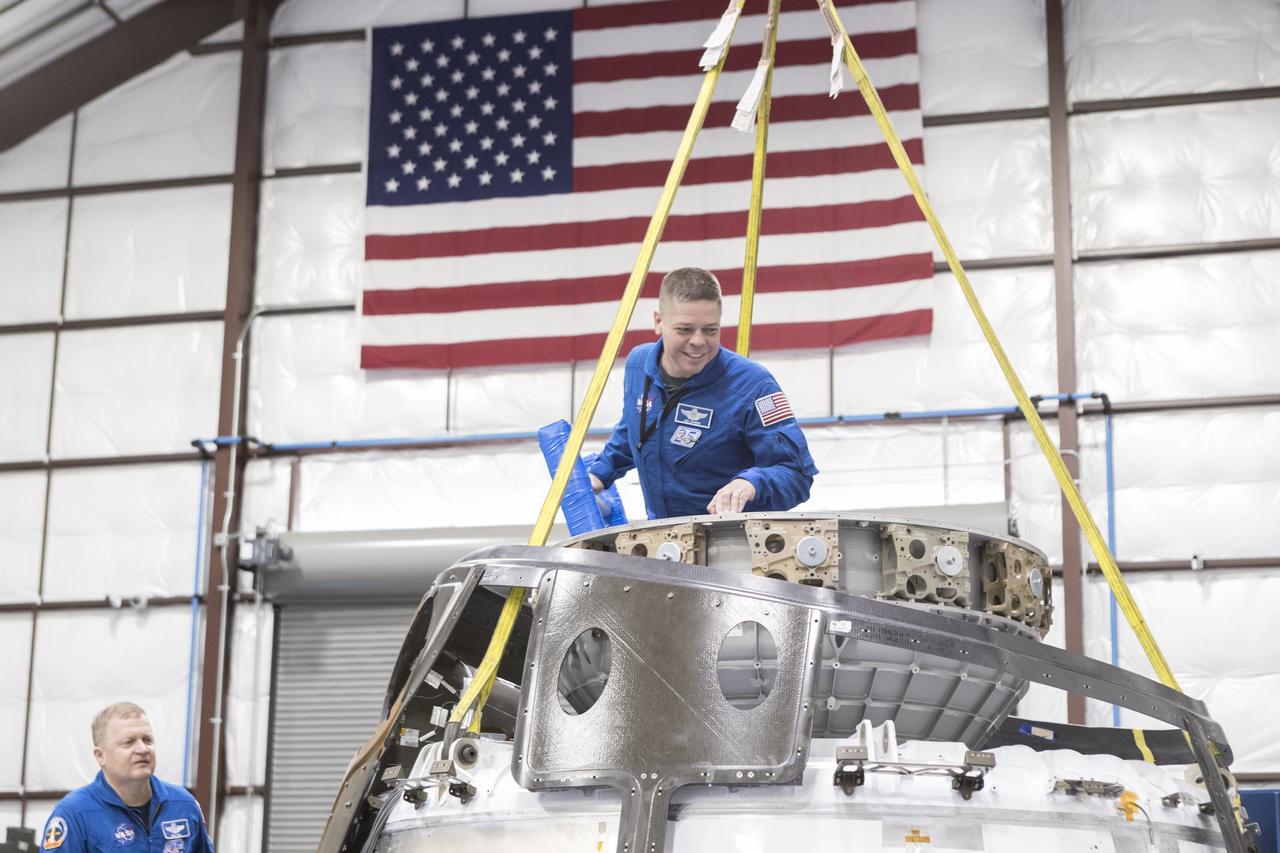
Astronaut Bob Behnken emerges from the top hatch of a SpaceX Crew Dragon spacecraft in manufacturing at SpaceX's headquarters and factory in Hawthorne, California, as astronaut Eri Boe looks on. Behnken and Boe are two of four NASA astronauts selected to train with Boeing and SpaceX ahead of flight tests for NASA's Commercial Crew Program. Along with Behnken and Boe, Doug Hurley and Suni Williams are working with the companies on their independent spacecraft and launch vehicles being developed to take astronauts to the International Space Station. Photo credit: SpaceX
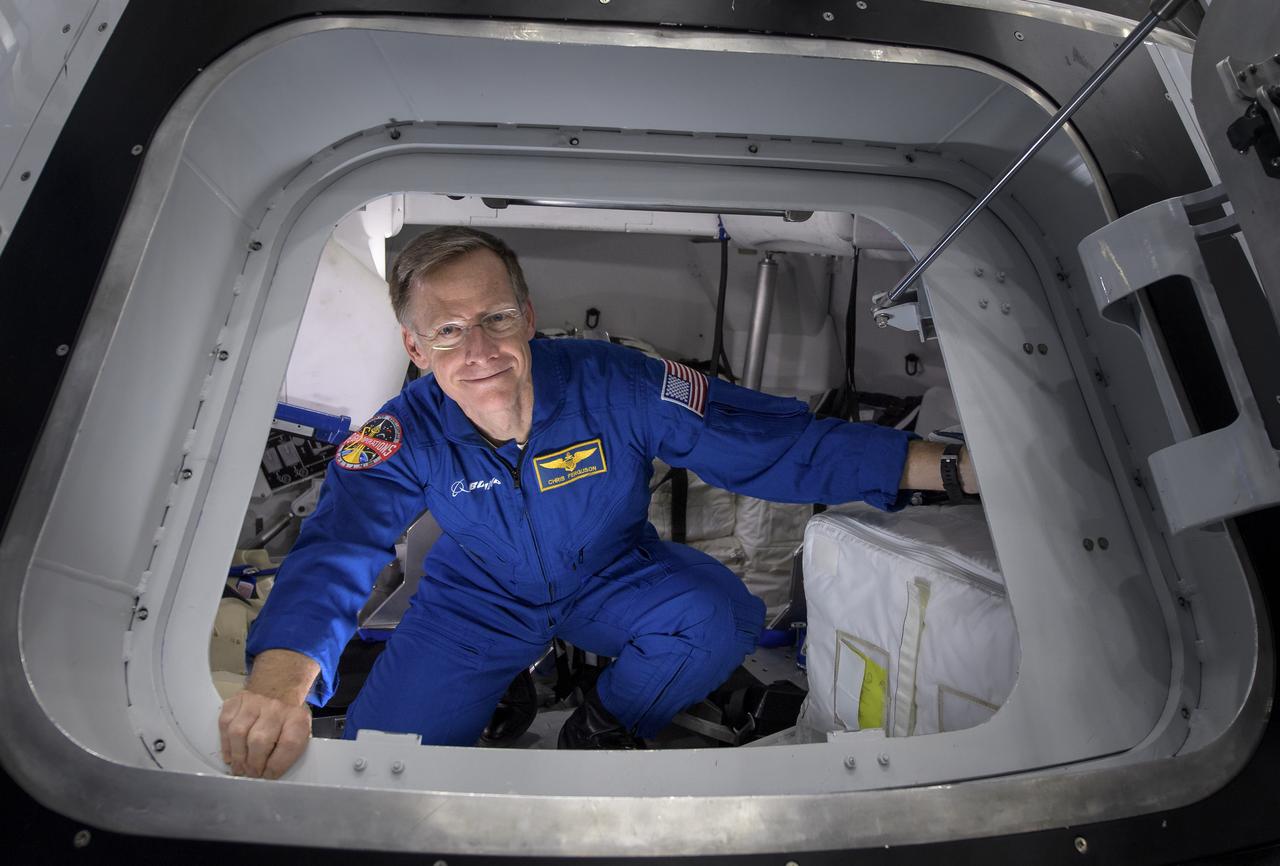
Boeing astronaut Chris Ferguson poses for a photograph as he exits the Boeing Mockup Trainer at NASA’s Johnson Space Center in Houston, Texas on Aug. 2, 2018 ahead of the commercial crew flight assignments announcement Aug. 3. Ferguson, along with NASA astronauts Eric Boe and Nicole Aunapu Mann were assigned to launch aboard Boeing’s CST-100 Starliner on the company’s Crew Flight Test targeted for mid-2019 in partnership with NASA’s Commercial Crew Program. Photo Credit: (NASA/Bill Ingalls)

KENNEDY SPACE CENTER, FLA. - In the Space Station Processing Facility, technicians with The Boeing Company move an infrared camera into position near the Japanese Experiment Module (JEM) for pre-assembly measurements. Developed by the Japan Aerospace Exploration Agency (JAXA), the JEM will enhance the unique research capabilities of the orbiting complex by providing an additional environment for astronauts to conduct science experiments.

HOUSTON -- JSC-2013-E076046 -- Tony Castilleja, a mechanical engineer working on The Boeing Company's CST-100 endeavor, right, shows off a mock-up seat made from 3-D printing technology at the company's Houston Product Support Center near Johnson Space Center. Boeing showcased its work on a fully outfitted test version of the CST-100 spacecraft to NASA Administrator Charlie Bolden, not pictured, and Johnson management. Boeing's CST-100 is designed to transport a mix of crew and cargo to low-Earth-orbit destinations. Boeing is one of three aerospace industry partners working with NASA's Commercial Crew Program, or CCP, during the Commercial Crew Integrated Capability, or CCiCap, initiative, which is intended to make commercial human spaceflight services available for government and commercial customers. To learn more about CCP, visit www.nasa.gov/commercialcrew. Photo credit: NASA/James Blair
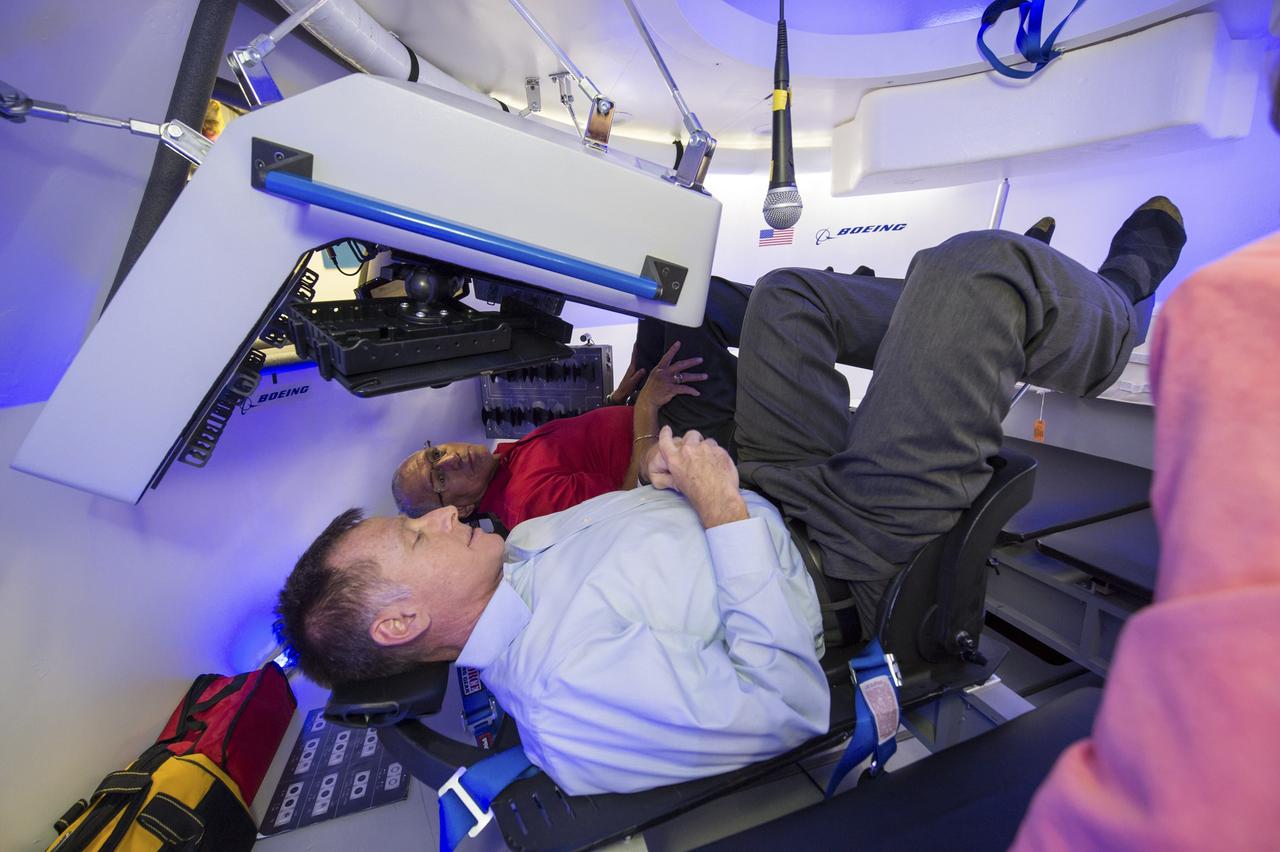
HOUSTON -- JSC-2013-E076055 -- The Boeing Company's Director of Crew and Mission Operations Chris Ferguson explains the control system of a mock-up CST-100 to NASA Administrator Charlie Bolden, back, at the company's Houston Product Support Center near Johnson Space Center. Boeing showcased its work on a fully outfitted test version of the spacecraft to Bolden and Johnson management. Boeing's CST-100 is designed to transport a mix of crew and cargo to low-Earth-orbit destinations. Boeing is one of three aerospace industry partners working with NASA's Commercial Crew Program, or CCP, during the Commercial Crew Integrated Capability, or CCiCap, initiative, which is intended to make commercial human spaceflight services available for government and commercial customers. To learn more about CCP, visit www.nasa.gov/commercialcrew. Photo credit: NASA/James Blair
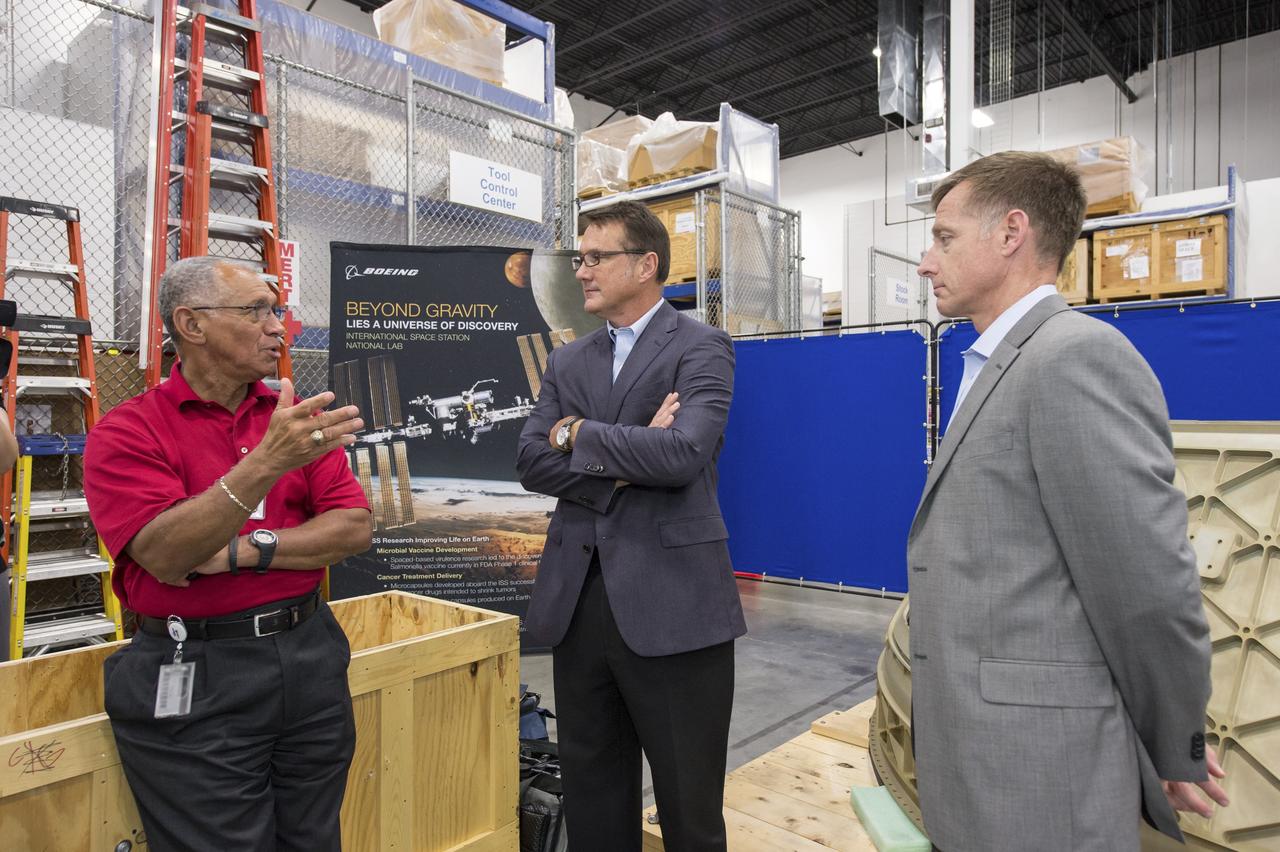
HOUSTON -- JSC-2013-E076054 -- NASA Administrator Charlie Bolden, left, talks to The Boeing Company's Vice President and Program Manager of Commercial Programs John Mulholland, center, and Director of Crew and Mission Operations Chris Ferguson at the company's Houston Product Support Center near Johnson Space Center. Boeing showcased its work on a fully outfitted test version of the CST-100 spacecraft to Bolden and Johnson management. Boeing's CST-100 is designed to transport a mix of crew and cargo to low-Earth-orbit destinations. Boeing is one of three aerospace industry partners working with NASA's Commercial Crew Program, or CCP, during the Commercial Crew Integrated Capability, or CCiCap, initiative, which is intended to make commercial human spaceflight services available for government and commercial customers. To learn more about CCP, visit www.nasa.gov/commercialcrew. Photo credit: NASA/James Blair
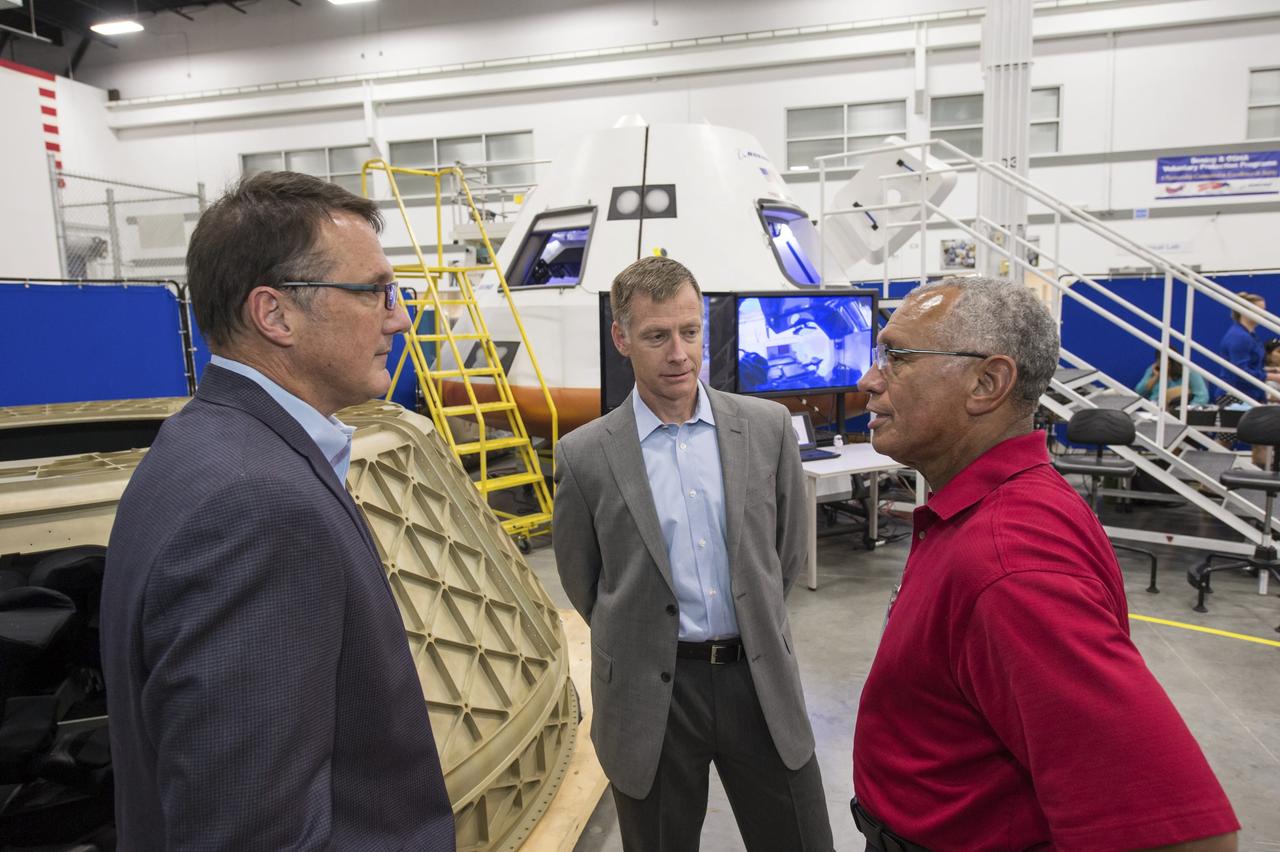
HOUSTON -- JSC-2013-E076048 -- NASA Administrator Charlie Bolden, right, talks to The Boeing Company's Vice President and Program Manager of Commercial Programs John Mulholland, left, and Director of Crew and Mission Operations Chris Ferguson at the company's Houston Product Support Center near Johnson Space Center. Boeing showcased its work on a fully outfitted test version of the CST-100 spacecraft to Bolden and Johnson management. Boeing's CST-100 is designed to transport a mix of crew and cargo to low-Earth-orbit destinations. Boeing is one of three aerospace industry partners working with NASA's Commercial Crew Program, or CCP, during the Commercial Crew Integrated Capability, or CCiCap, initiative, which is intended to make commercial human spaceflight services available for government and commercial customers. To learn more about CCP, visit www.nasa.gov/commercialcrew. Photo credit: NASA/James Blair
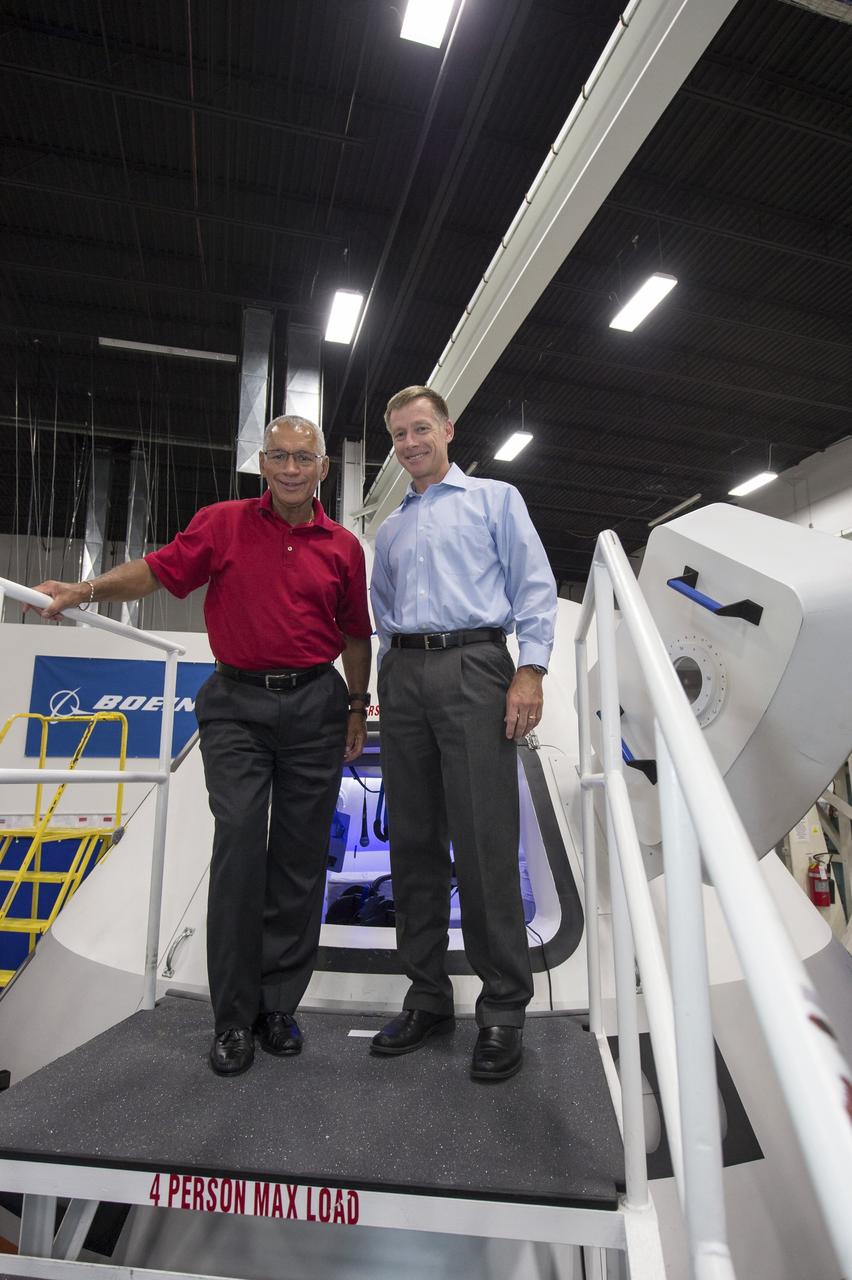
HOUSTON -- JSC-2013-E076050 -- NASA Administrator Charlie Bolden, left, and The Boeing Company's Director of Crew and Mission Operations Chris Ferguson take a photo together before entering a mock-up of the CST-100 at the company's Houston Product Support Center near Johnson Space Center. Boeing showcased its work on a fully outfitted test version of the spacecraft to Bolden and Johnson management. Boeing's CST-100 is designed to transport a mix of crew and cargo to low-Earth-orbit destinations. Boeing is one of three aerospace industry partners working with NASA's Commercial Crew Program, or CCP, during the Commercial Crew Integrated Capability, or CCiCap, initiative, which is intended to make commercial human spaceflight services available for government and commercial customers. To learn more about CCP, visit www.nasa.gov/commercialcrew. Photo credit: NASA/James Blair
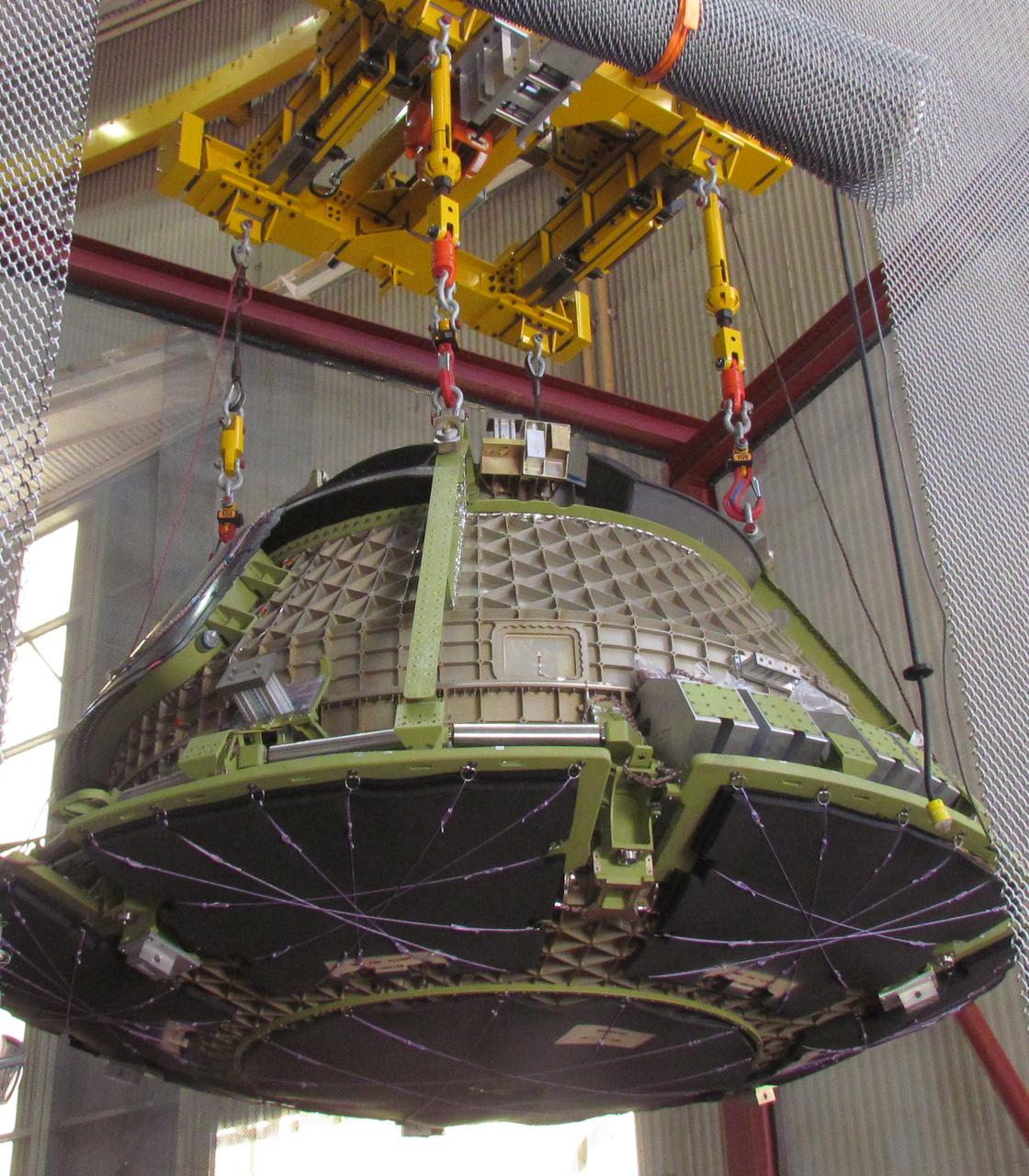
Boeing’s Structural Test Article of its CST-100 Starliner spacecraft arrives at the company’s Huntington Beach, California, facilities for evaluations. Built to the specifications of an operational spacecraft, the STA is intended to be evaluated through a series of thorough testing conditions.
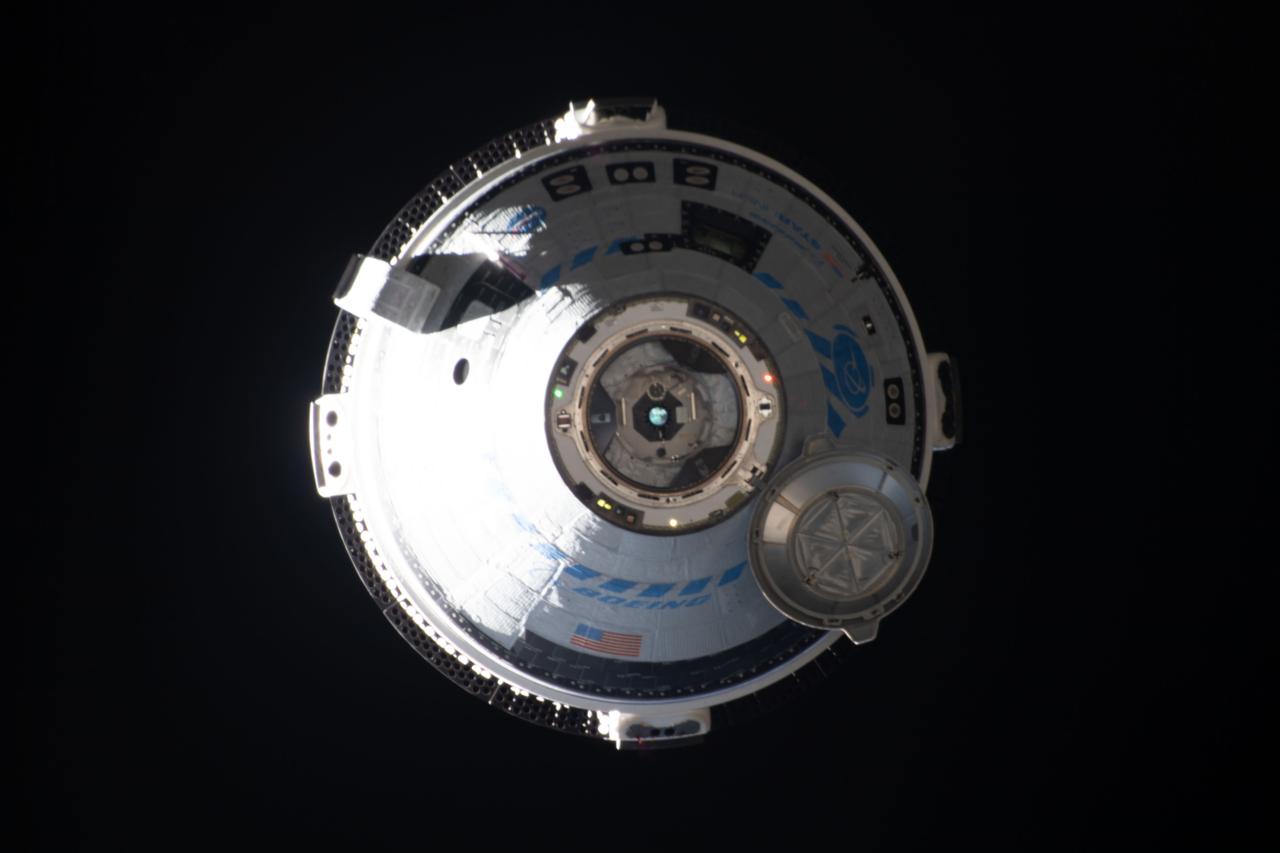
iss067e066721 (May 20, 2022) --- Boeing's CST-100 Starliner crew ship approaches the International Space Station on the company's Orbital Flight Test-2 mission before automatically docking to the Harmony module's forward port.
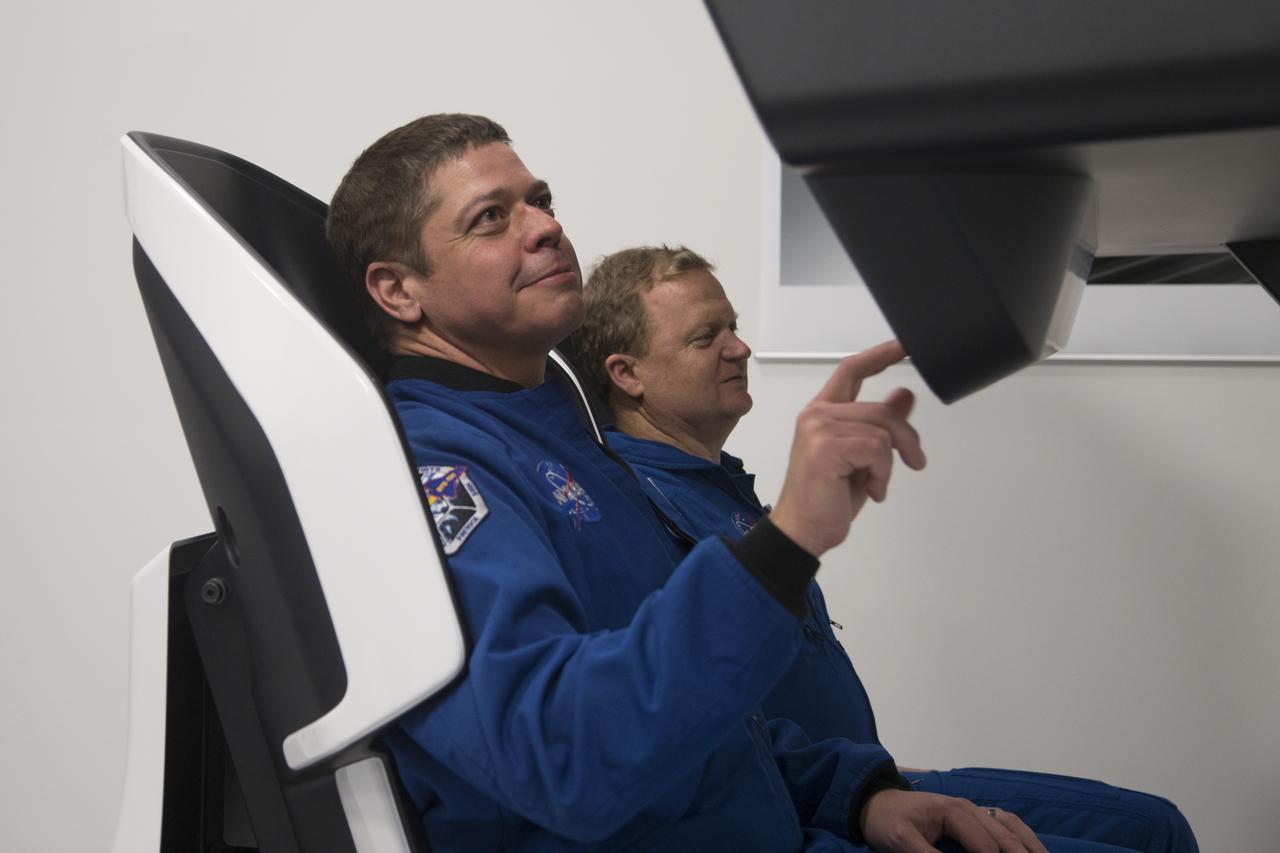
Astronauts Bob Behnken, left, and Eric Boe work in a mock-up of the SpaceX Crew Dragon flight deck at the company's Hawthorne, California, headquarters as development of the crew systems continues for eventual missions to the International Space Station.
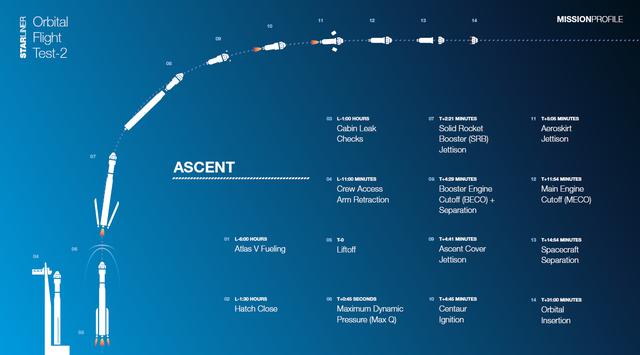
This graphic details ascent operations for NASA’s Boeing Orbital Flight Test-2 (OFT-2). OFT-2 is the second uncrewed flight test of the company’s CST-100 Starliner spacecraft for the agency’s Commercial Crew Program.
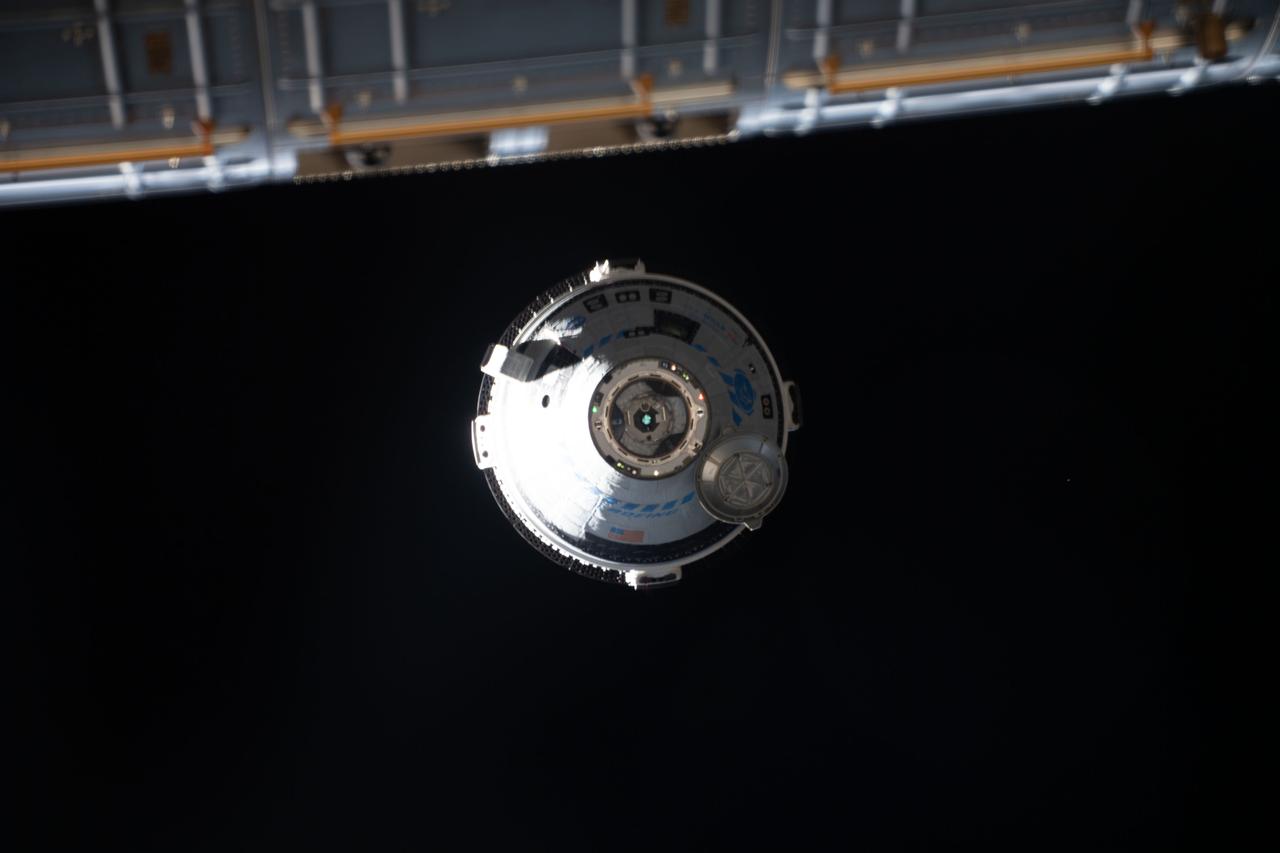
iss067e066717 (May 20, 2022) --- Boeing's CST-100 Starliner crew ship approaches the International Space Station on the company's Orbital Flight Test-2 mission before automatically docking to the Harmony module's forward port.
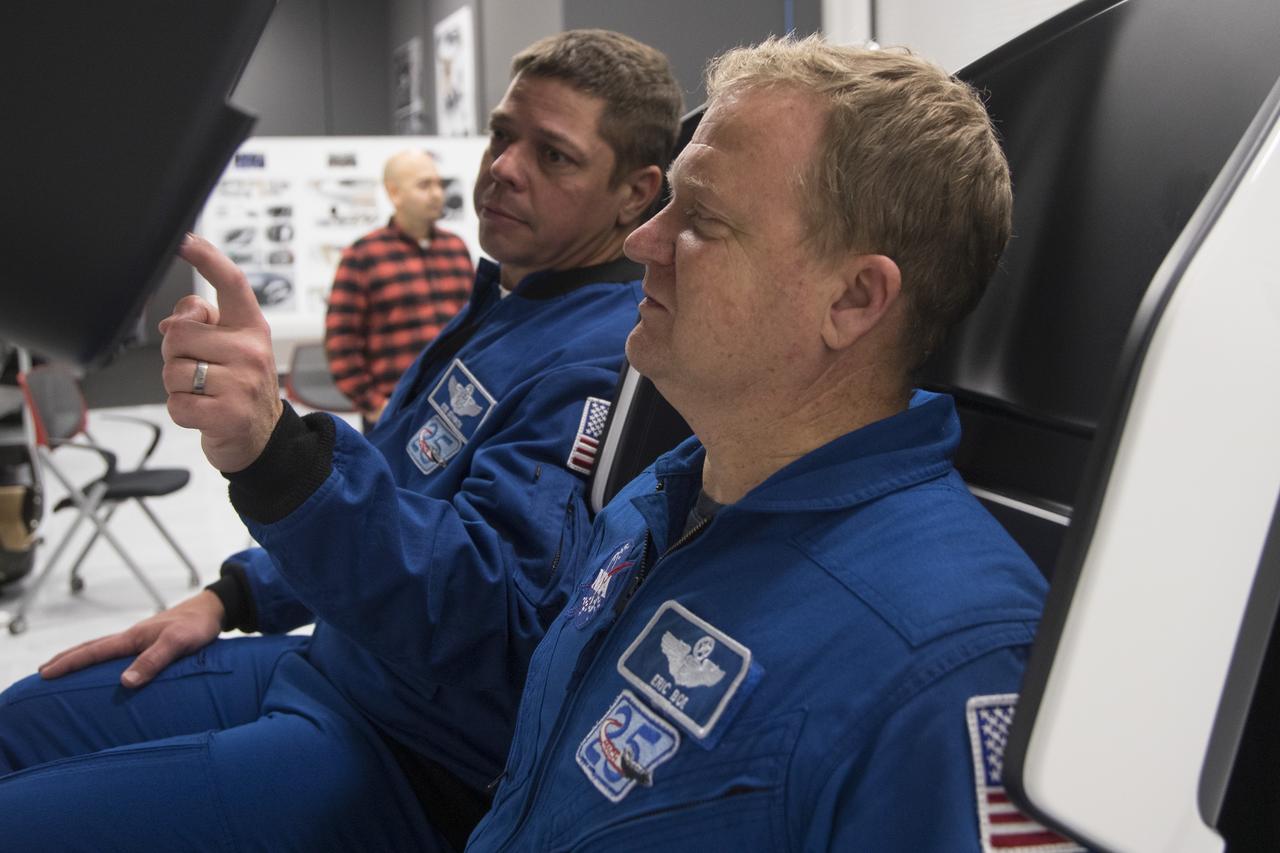
Astronauts Bob Behnken, left, and Eric Boe work in a mock-up of the SpaceX Crew Dragon flight deck at the company's Hawthorne, California, headquarters as development of the crew systems continues for eventual missions to the International Space Station.
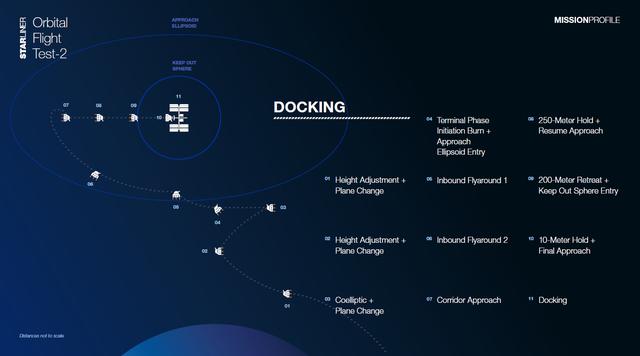
This graphic details docking operations for NASA’s Boeing Orbital Flight Test-2 (OFT-2). OFT-2 is the second uncrewed flight test of the company’s CST-100 Starliner spacecraft for the agency’s Commercial Crew Program.
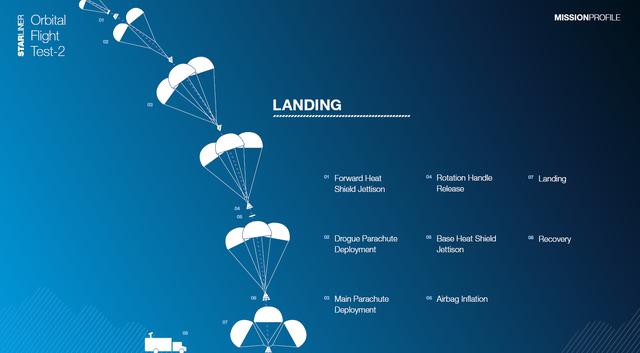
This graphic details landing operations for NASA’s Boeing Orbital Flight Test-2 (OFT-2). OFT-2 is the second uncrewed flight test of the company’s CST-100 Starliner spacecraft for the agency’s Commercial Crew Program.
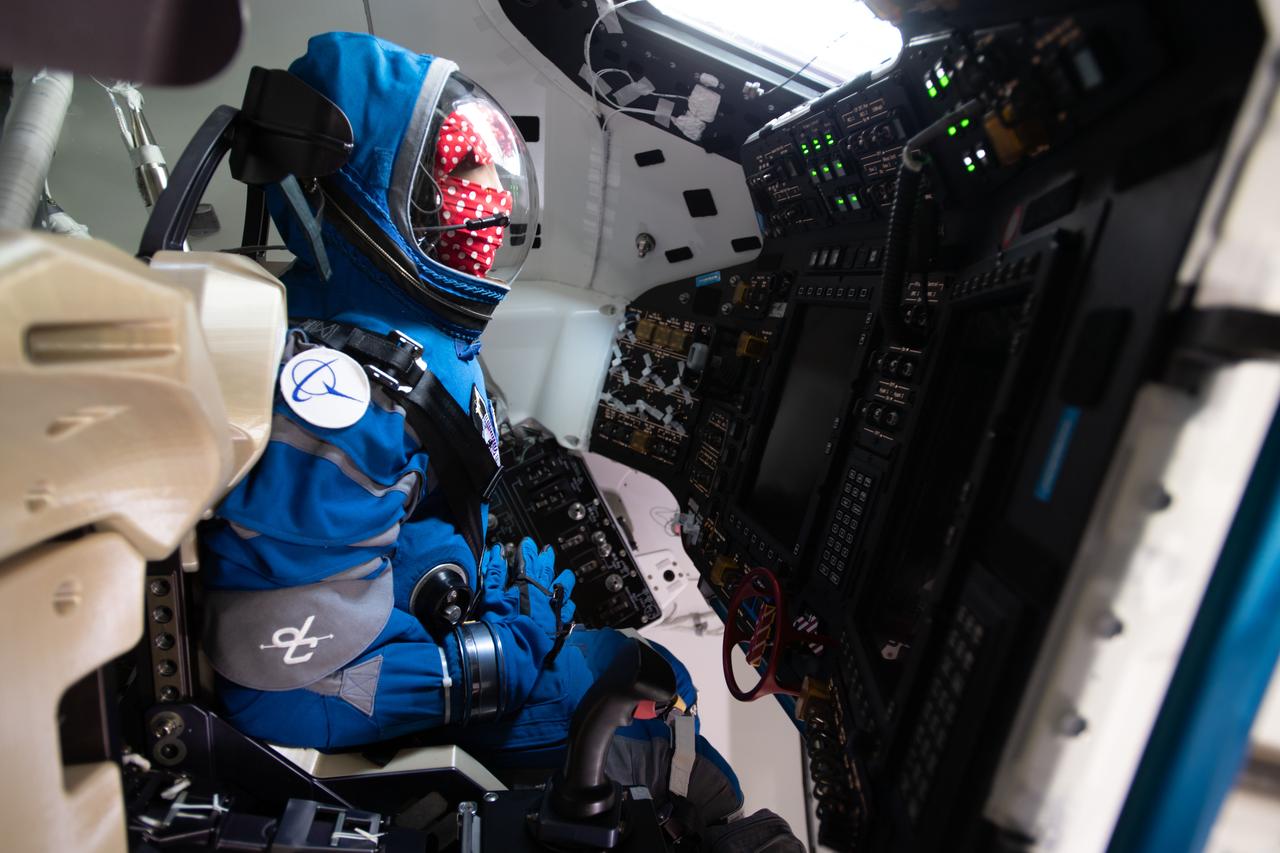
iss067e066358 (May 21, 2022) --- Rosie the Rocketeer, Boeing's anthropometric test device, is pictured in the commander's seat of the company's CST-100 Starliner crew ship for the Orbital Flight Test-2 mission at the International Space Station.
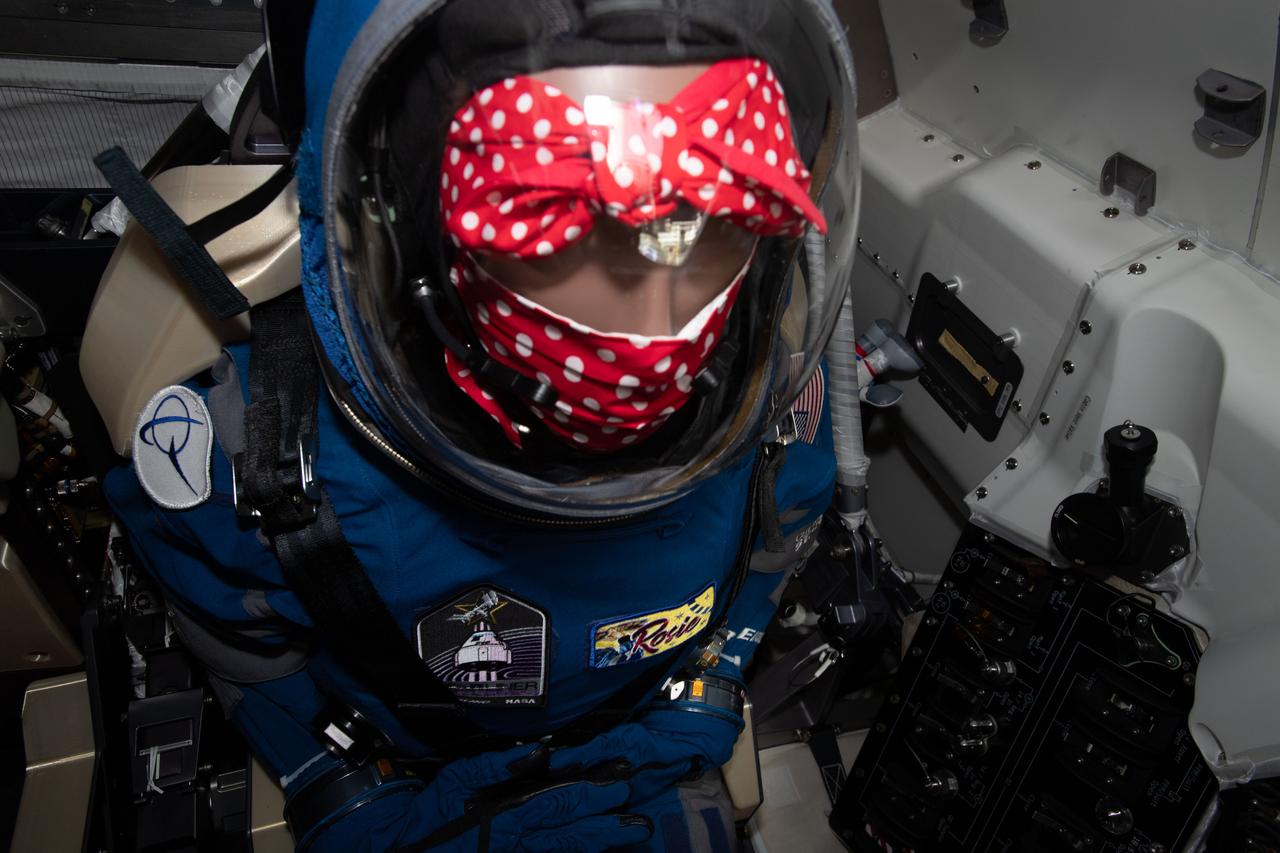
iss067e066341 (May 21, 2022) --- Rosie the Rocketeer, Boeing's anthropometric test device, is pictured in the commander's seat of the company's CST-100 Starliner crew ship for the Orbital Flight Test-2 mission at the International Space Station.

iss067e066644 (May 20, 2022) --- Boeing's CST-100 Starliner crew ship approaches the International Space Station on the company's Orbital Flight Test-2 mission before automatically docking to the Harmony module's forward port.
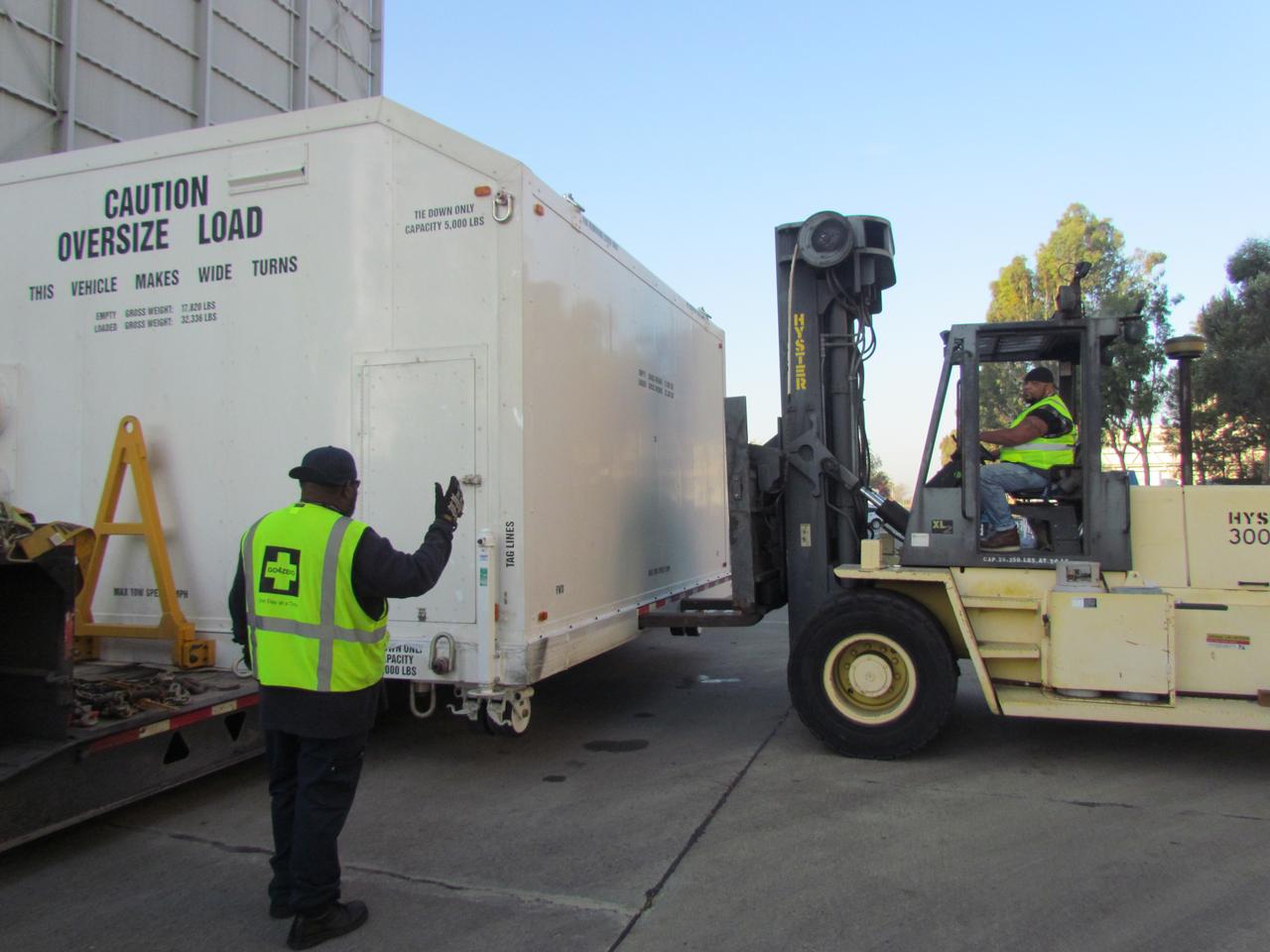
Boeing’s Structural Test Article of its CST-100 Starliner spacecraft arrives at the company’s Huntington Beach, California, facilities for evaluations. Built to the specifications of an operational spacecraft, the STA is intended to be evaluated through a series of thorough testing conditions.
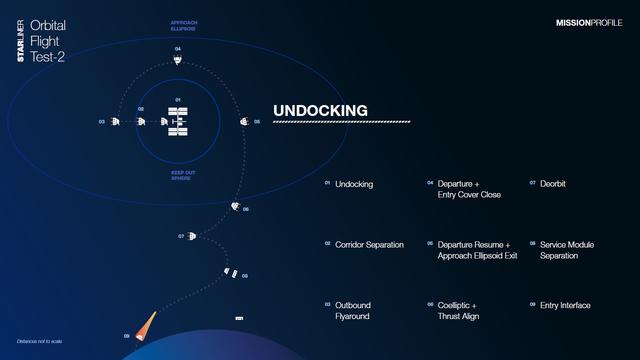
This graphic details undocking operations for NASA’s Boeing Orbital Flight Test-2 (OFT-2). OFT-2 is the second uncrewed flight test of the company’s CST-100 Starliner spacecraft for the agency’s Commercial Crew Program.
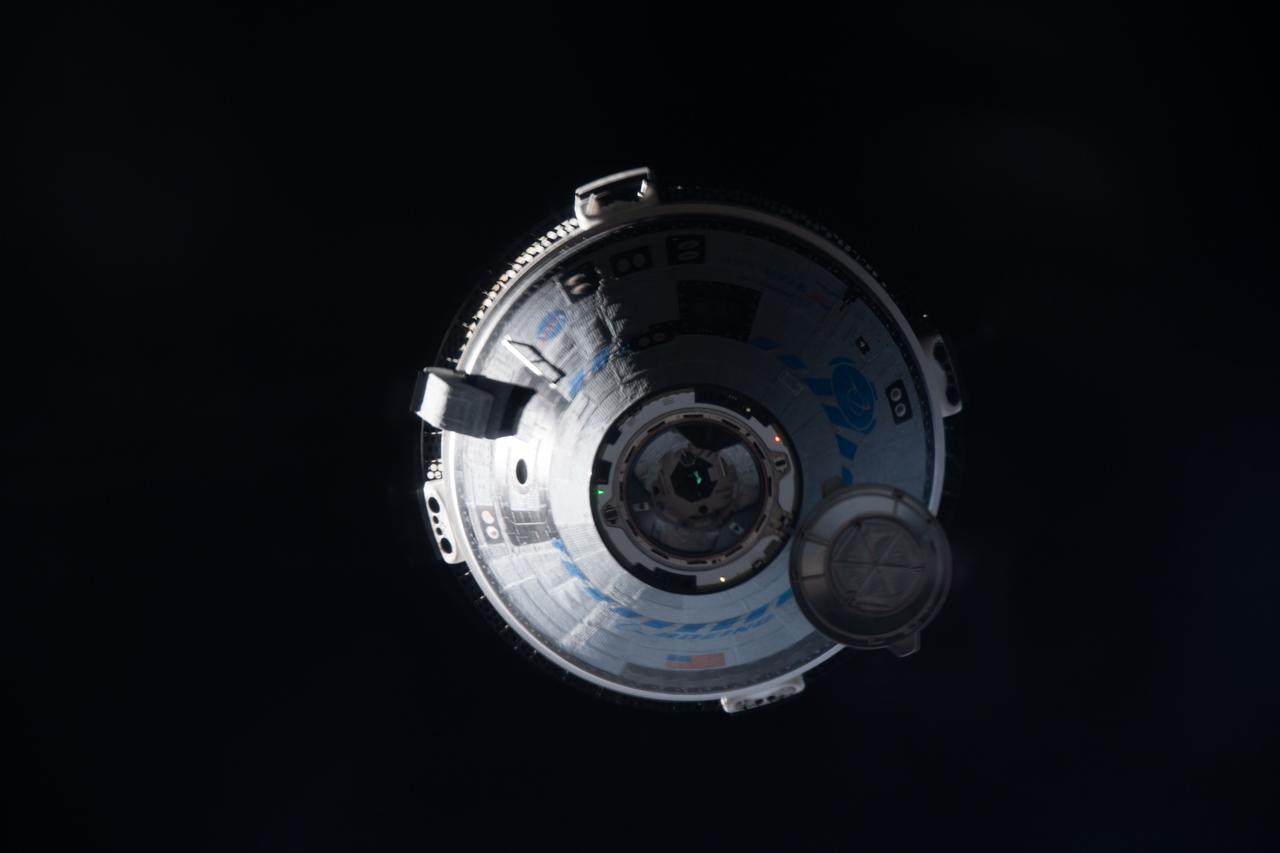
iss067e065846 (May 20, 2022) --- Boeing's CST-100 Starliner crew ship approaches the International Space Station on the company's Orbital Flight Test-2 mission before automatically docking to the Harmony module's forward port.
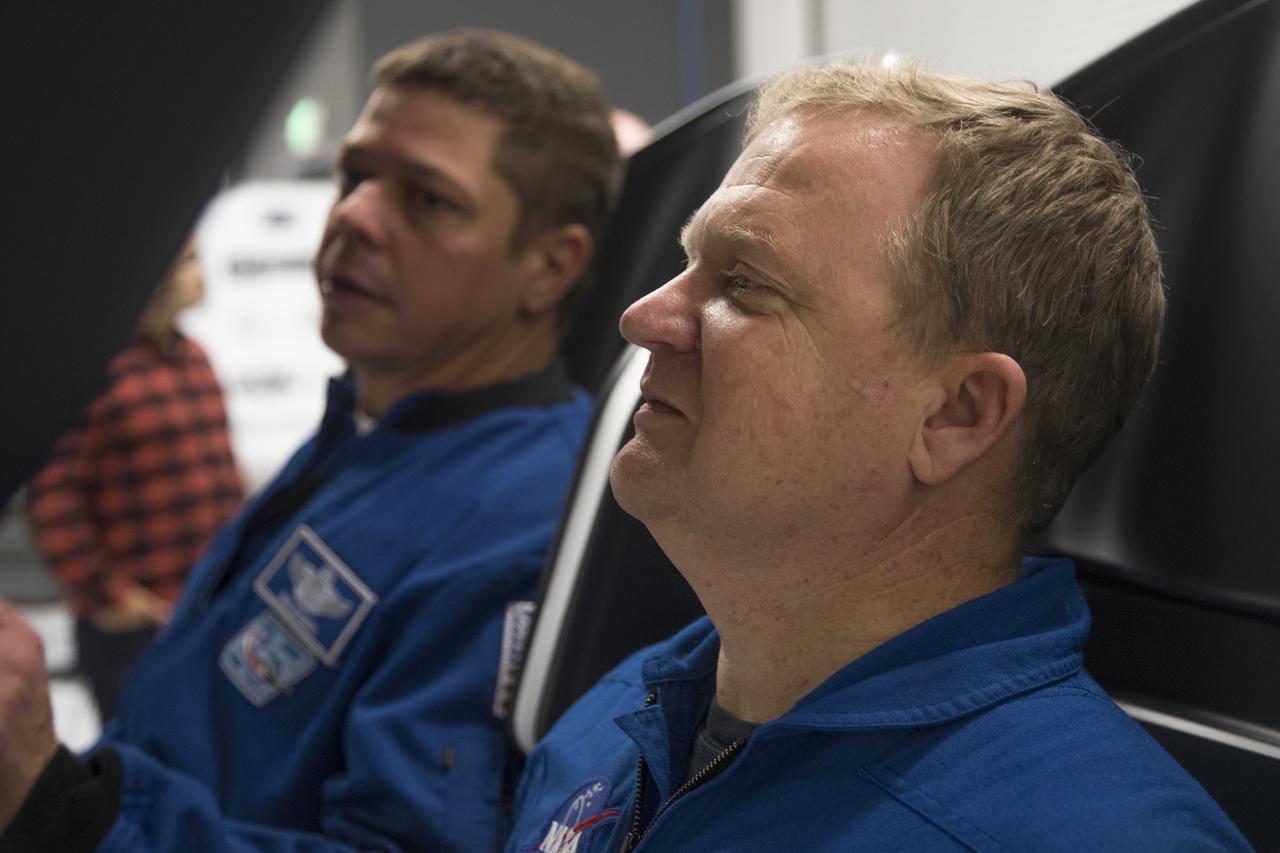
Astronauts Eric Boe, right, and Bob Behnken work in a mock-up of the SpaceX Crew Dragon flight deck at the company's Hawthorne, California, headquarters as development of the crew systems continues for eventual missions to the International Space Station.
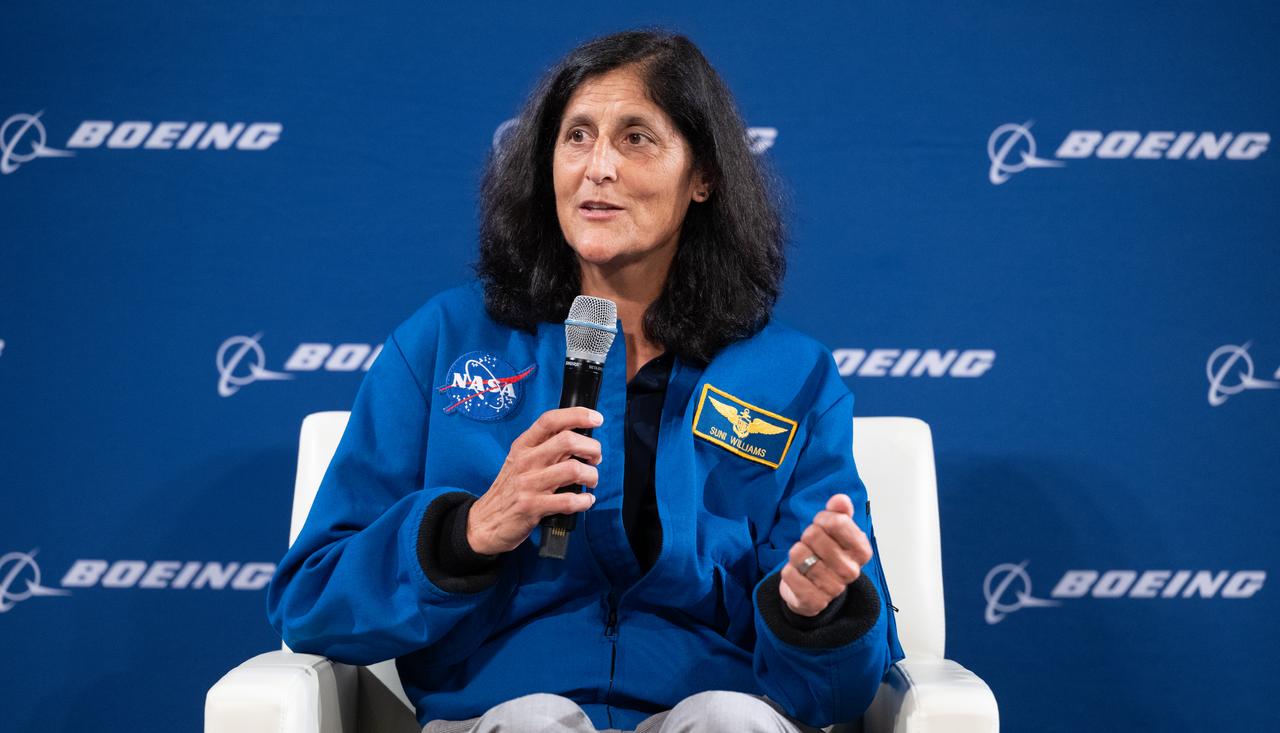
NASA astronaut Suni Williams speaks with employees of Boeing, Wednesday, Sept. 17, 2025, at the company’s headquarters in Arlington, Va. Williams and Butch Wilmore launched aboard Boeing’s Starliner spacecraft to the International Space Station as part of the agency’s Boeing Crew Flight Test and were integrated into Expedition 71/72 following the uncrewed return of Starliner. The pair returned to Earth with NASA’s SpaceX Crew 9 astronauts. Photo Credit: (NASA/Joel Kowsky)
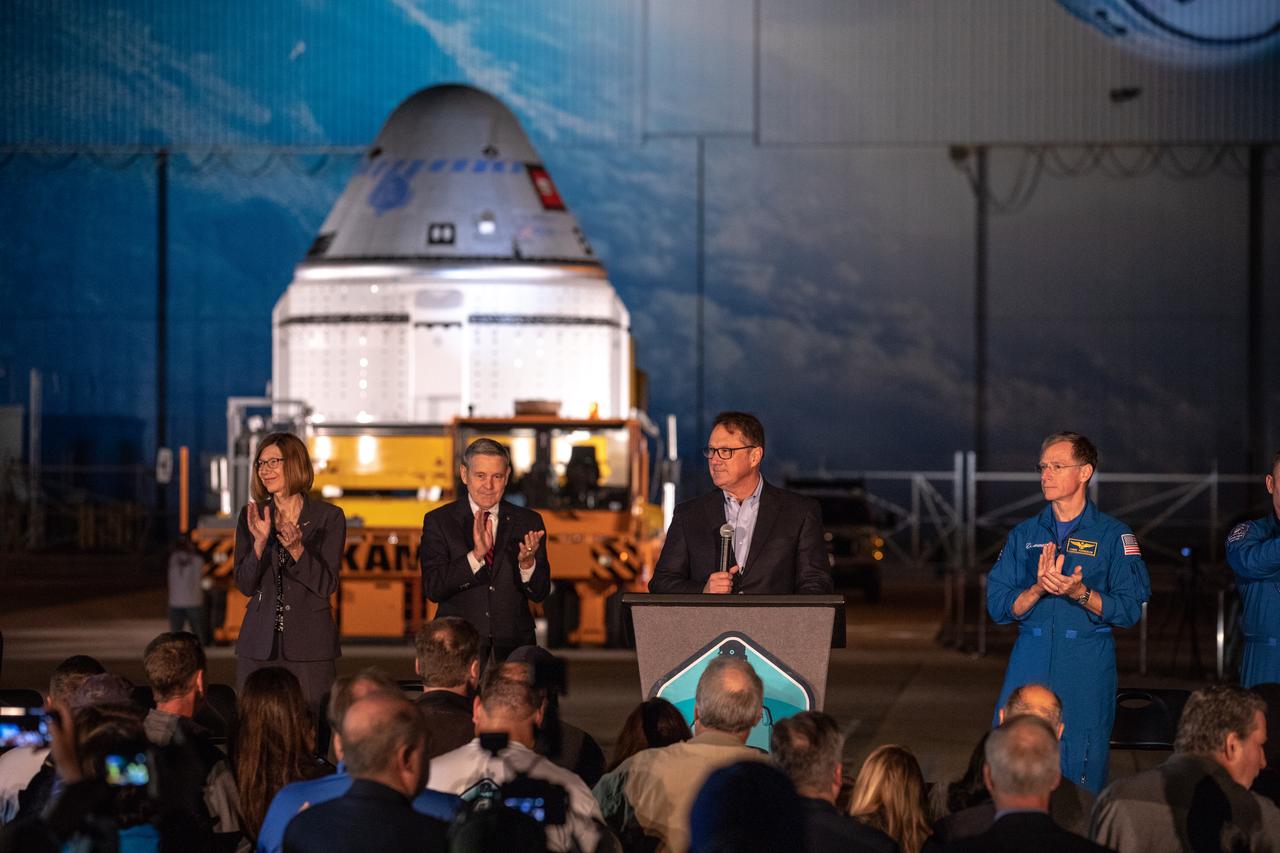
John Mulholland, Boeing vice president and program manager, Commercial Crew Program, speaks during the Boeing CST-100 Starliner spacecraft rollout from the company’s Commercial Crew and Cargo Processing Facility at Kennedy Space Center in Florida on Nov. 21, 2019. Starliner will make the trip to Space Launch Complex 41 at Cape Canaveral Air Force Station where it will be secured atop a United Launch Alliance Atlas V rocket for Boeing’s Orbital Flight Test to the International Space Station for NASA’s Commercial Crew Program.
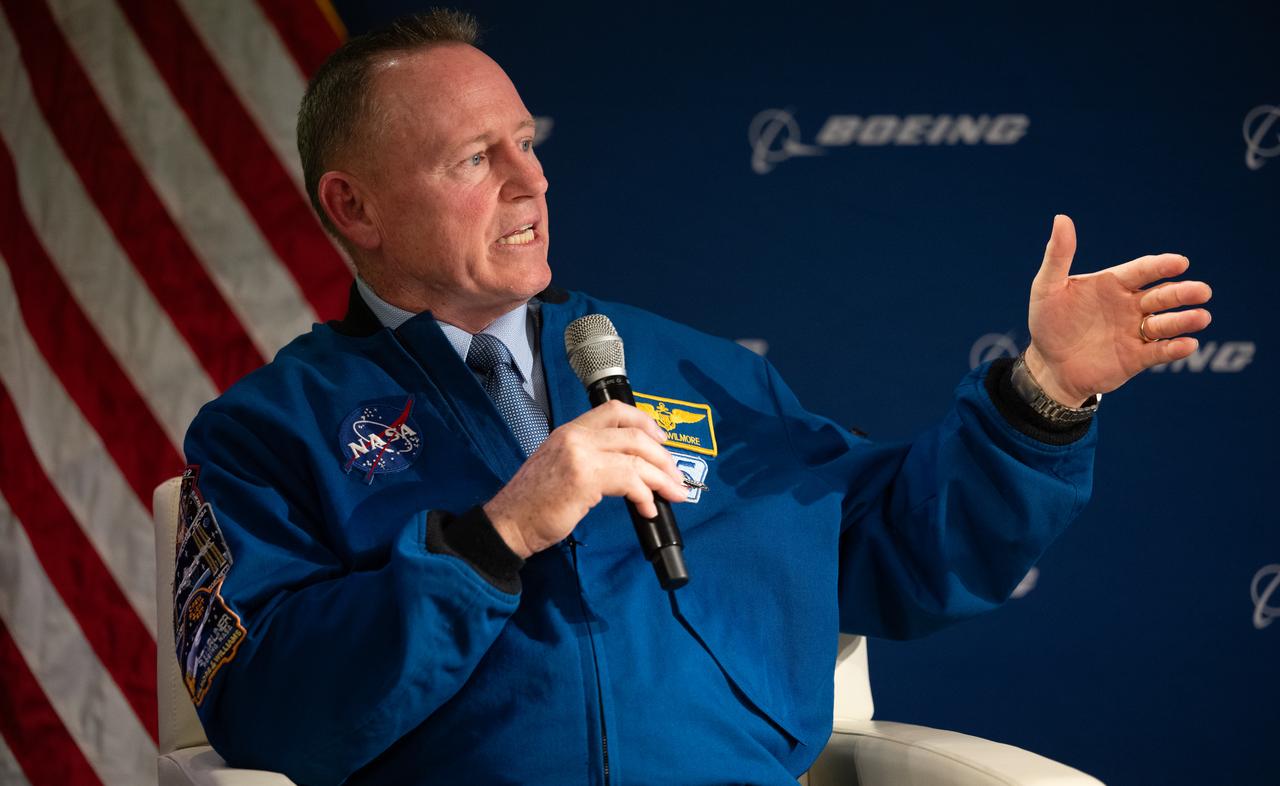
NASA astronaut Butch Wilmore speaks with employees of Boeing, Wednesday, Sept. 17, 2025, at the company’s headquarters in Arlington, Va. Wilmore and Suni Williams launched aboard Boeing’s Starliner spacecraft to the International Space Station as part of the agency’s Boeing Crew Flight Test and were integrated into Expedition 71/72 following the uncrewed return of Starliner. The pair returned to Earth with NASA’s SpaceX Crew 9 astronauts. Photo Credit: (NASA/Joel Kowsky)
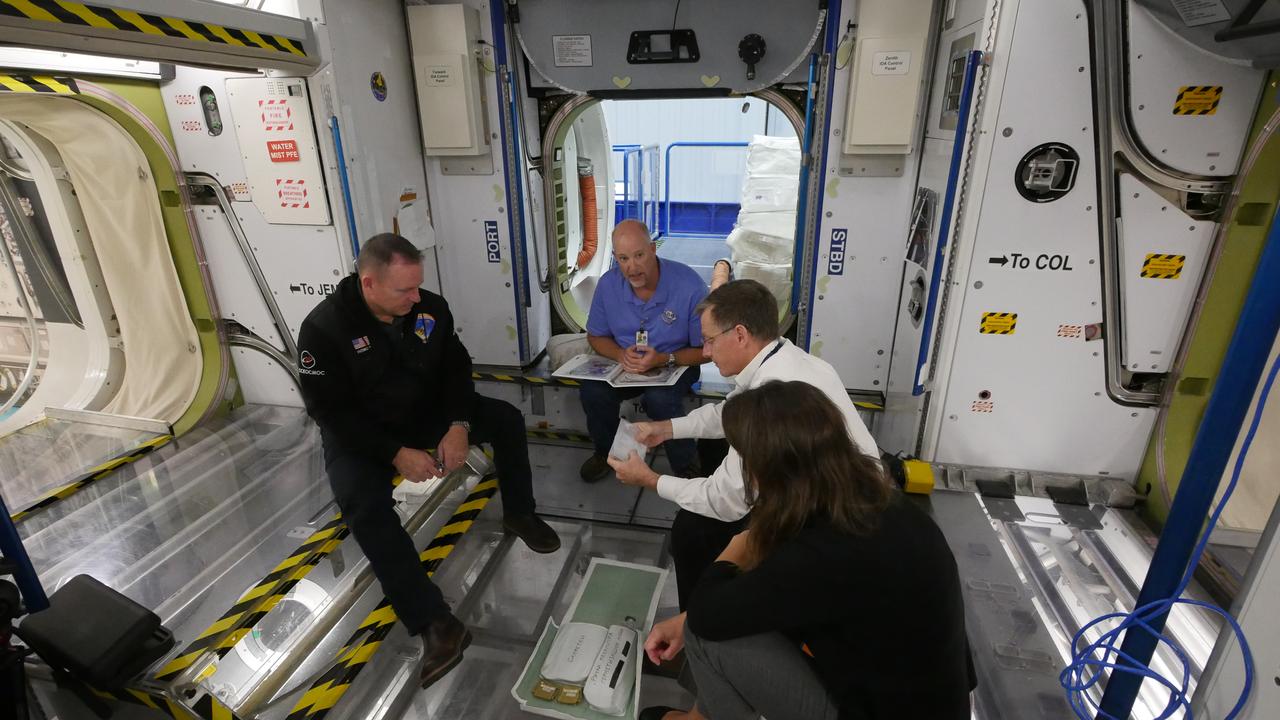
NASA astronauts Nicole Mann and Barry “Butch” Wilmore and Boeing astronaut Chris Ferguson review International Space Station training at NASA’s Johnson Space Center in Houston, Texas. Mann and Ferguson are assigned to Boeing’s Crew Flight Test, the first flight of the company’s CST-100 Starliner spacecraft. The Crew Flight Test is part of NASA’s Commercial Crew Program, which is working with Boeing to return human spaceflight launches to the space station from U.S. soil.
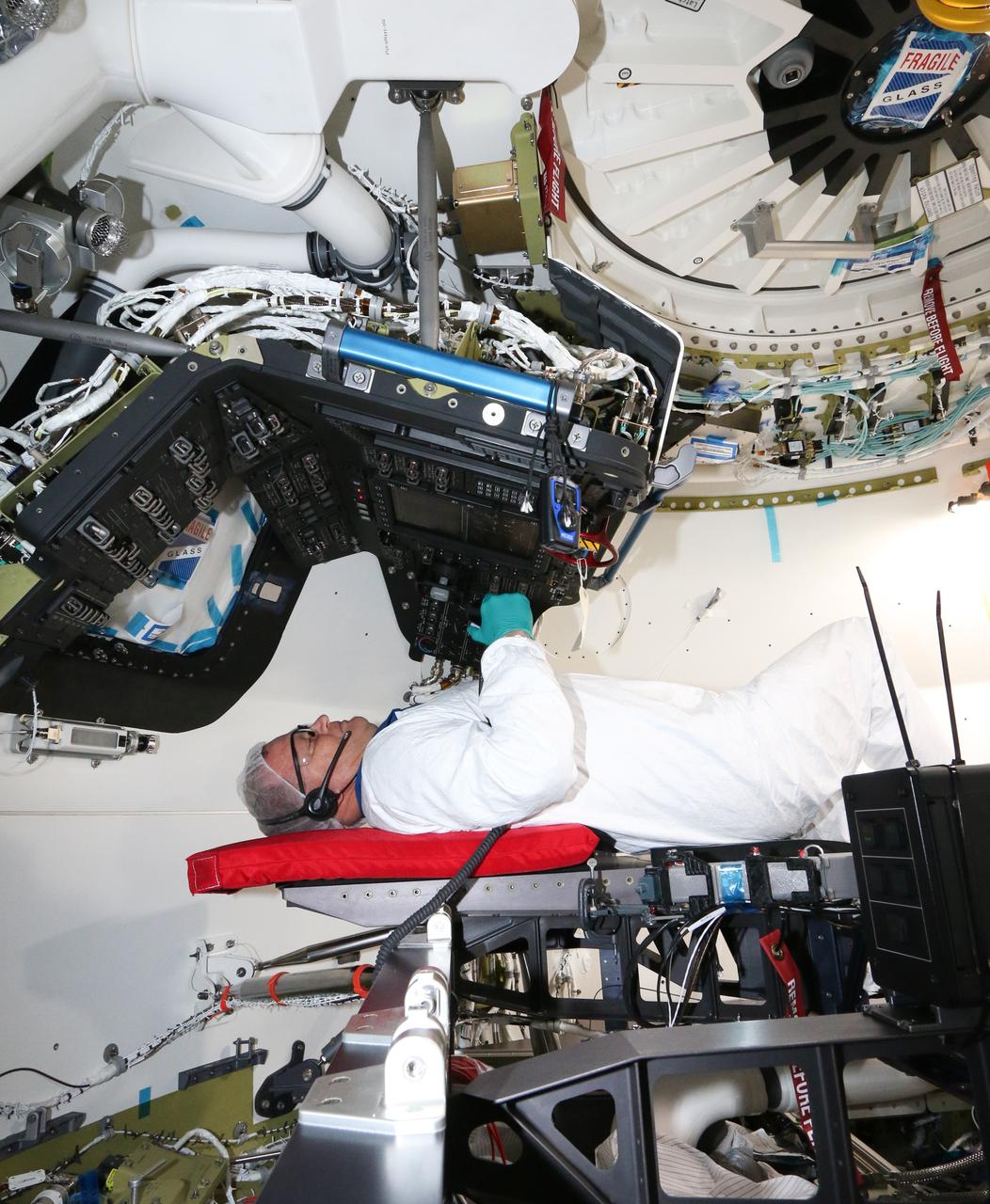
Inside Boeing's Commercial Crew and Cargo Processing Facility at NASA's Kennedy Space Center in Florida, NASA astronaut Eric Boe participates in the first full-up acceptance test of Boeing's CST-100 Starliner, on Aug. 22, 2018. The Starliner will be the first to fly astronauts on the company's Crew Flight Test (CFT), following environmental testing in El Segundo, California. Acceptance testing is a critical part of the spacecraft build progression. Generally, it gives the crew module a clean bill of health that it is built correctly, performs to expectations and is ready to fly.
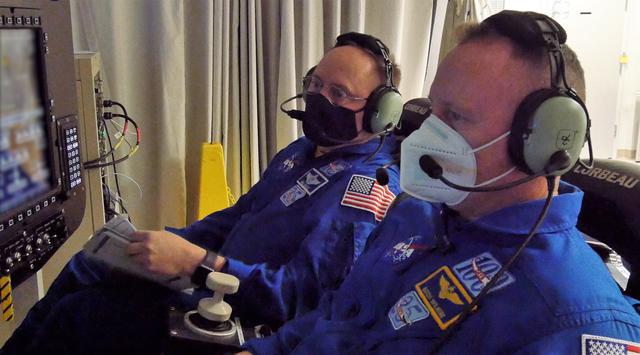
NASA astronauts Barry “Butch” Wilmore and Mike Fincke monitor the launch portion of an integrated mission dress rehearsal of Boeing’s uncrewed Orbital Flight Test-2 (OFT-2) from Boeing’s Houston-based Avionics and Software Integration Lab on Thursday, April 22, 2021. Along with NASA astronaut Nicole Mann, Wilmore and Fincke will fly aboard Boeing’s CST-100 Starliner spacecraft for the company’s Crew Flight Test (CFT) as part of NASA’s Commercial Crew Program.
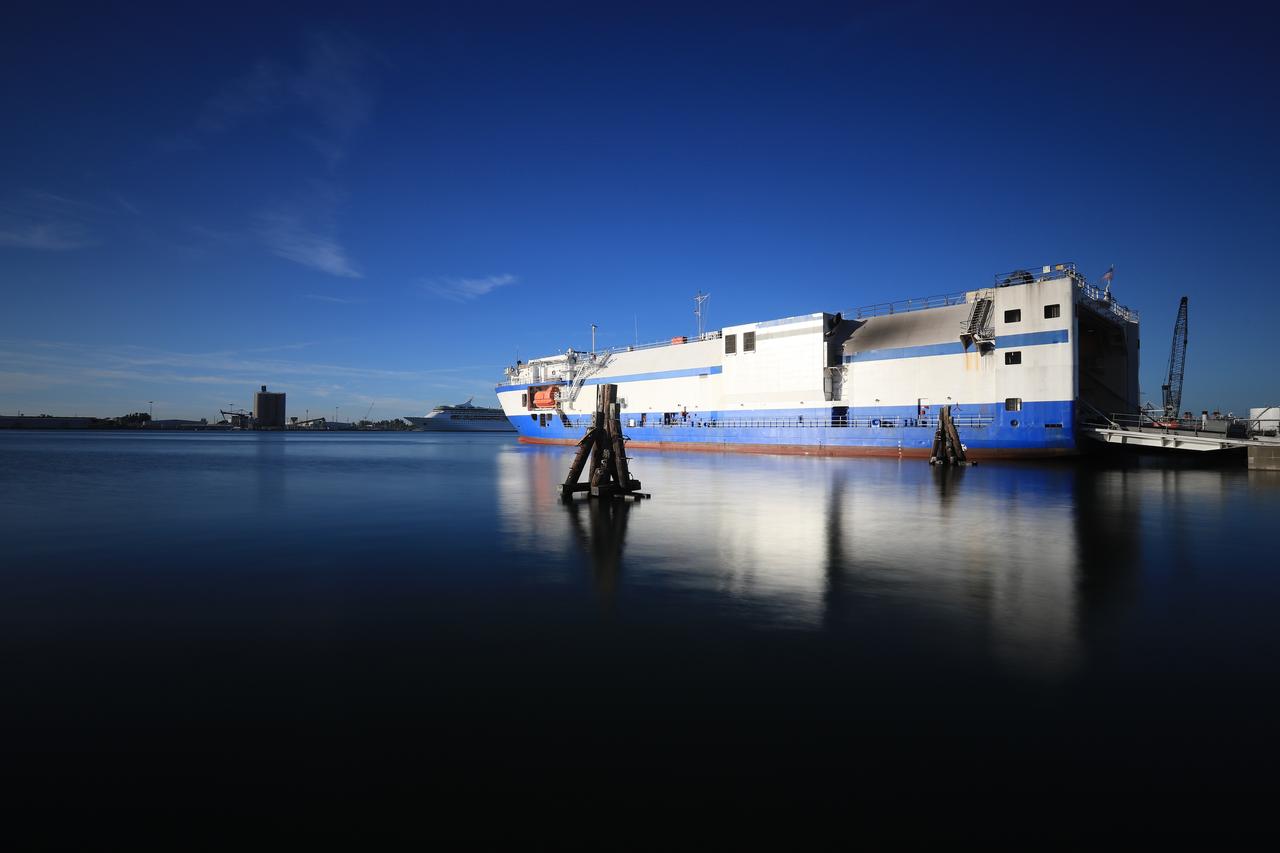
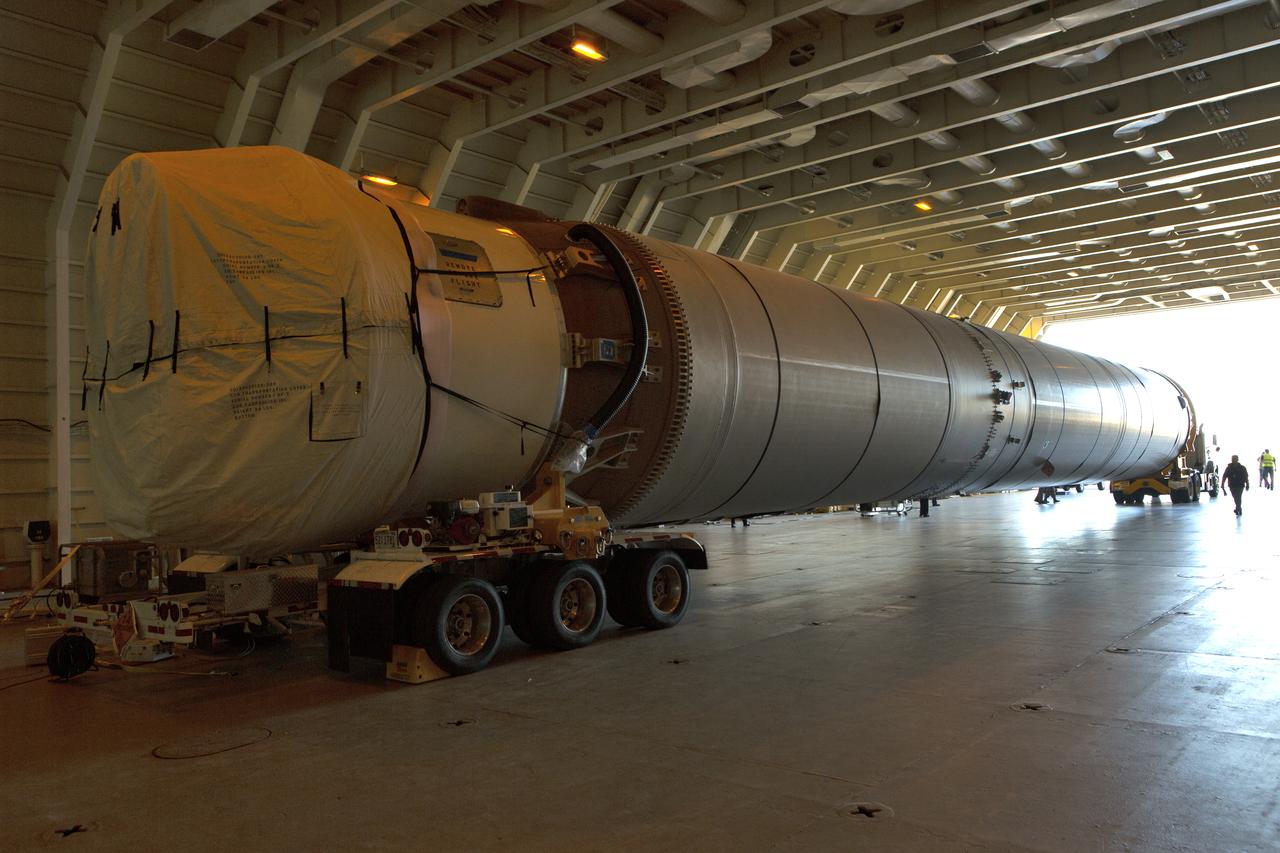
The United Launch Alliance (ULA) Mariner cargo vessel arrives at Cape Canaveral Air Force Station in Florida on Dec. 7, 2018, carrying the first stage of the rocket that will launch Boeing's CST-100 Starliner spacecraft to the International Space Station on the company's uncrewed Orbital Flight Test. The ULA Atlas V first stage booster was shipped from the company's manufacturing plant in Decatur, Alabama. It is the final piece of hardware that ULA needs to launch the first Boeing Starliner. The booster will be transported to the Atlas Spaceflight Operations Center for receiving inspections and checkout.
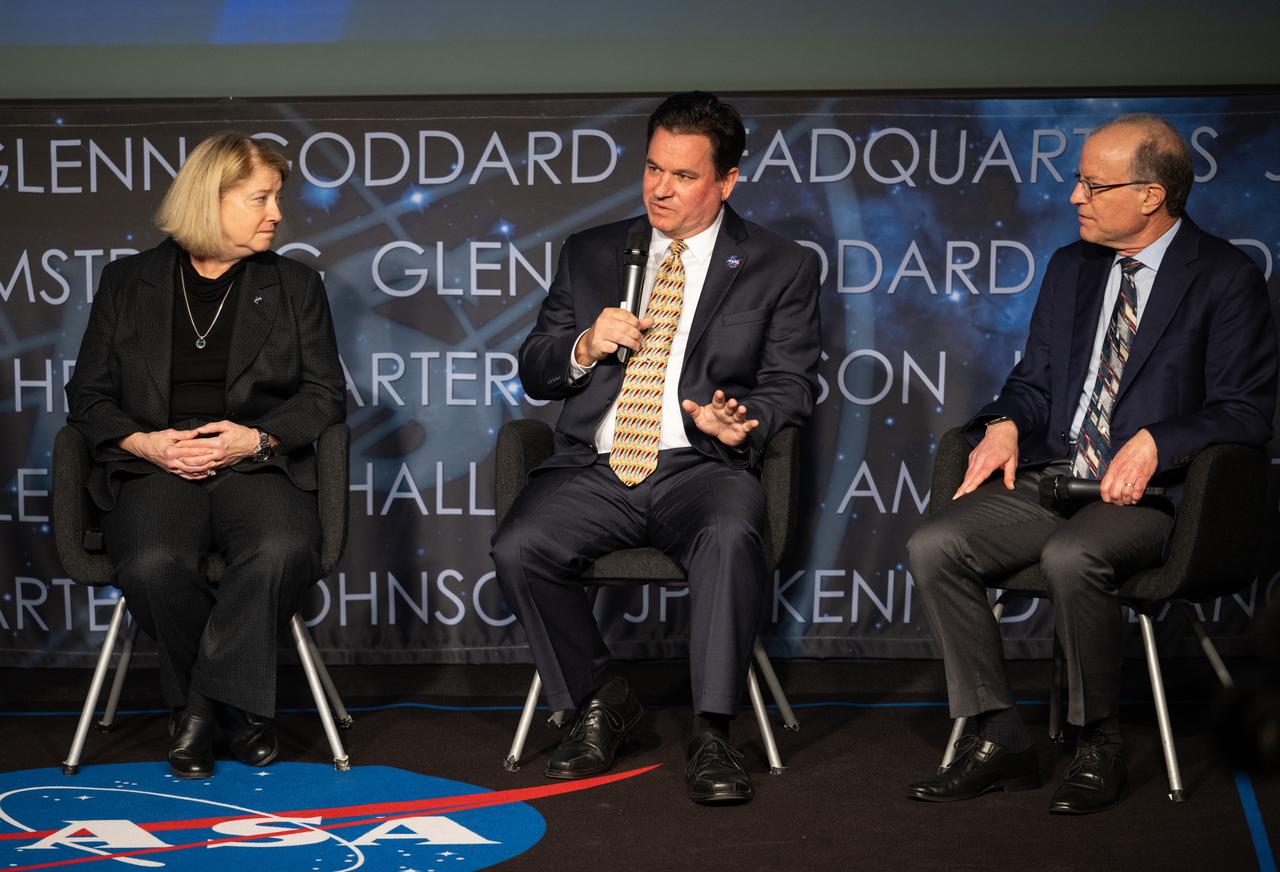
Brent Cobleigh, program manager for the Sustainable Flight Demonstrator at NASA's Armstrong Flight Research Center, center, answers a question from a member of the media during a news conference along with NASA Deputy Administrator Pam Melroy, left, and Todd Citron, chief technology officer, The Boeing Company, right, on NASA’s Sustainable Flight Demonstrator project, Wednesday, Jan. 18, 2023, at the Mary W. Jackson NASA Headquarters building in Washington, DC. Through a Funded Space Act Agreement, The Boeing company and its industry team will collaborate with NASA to develop and flight-test a full-scale Transonic Truss-Braced Wing demonstrator aircraft. Photo Credit: (NASA/Joel Kowsky)
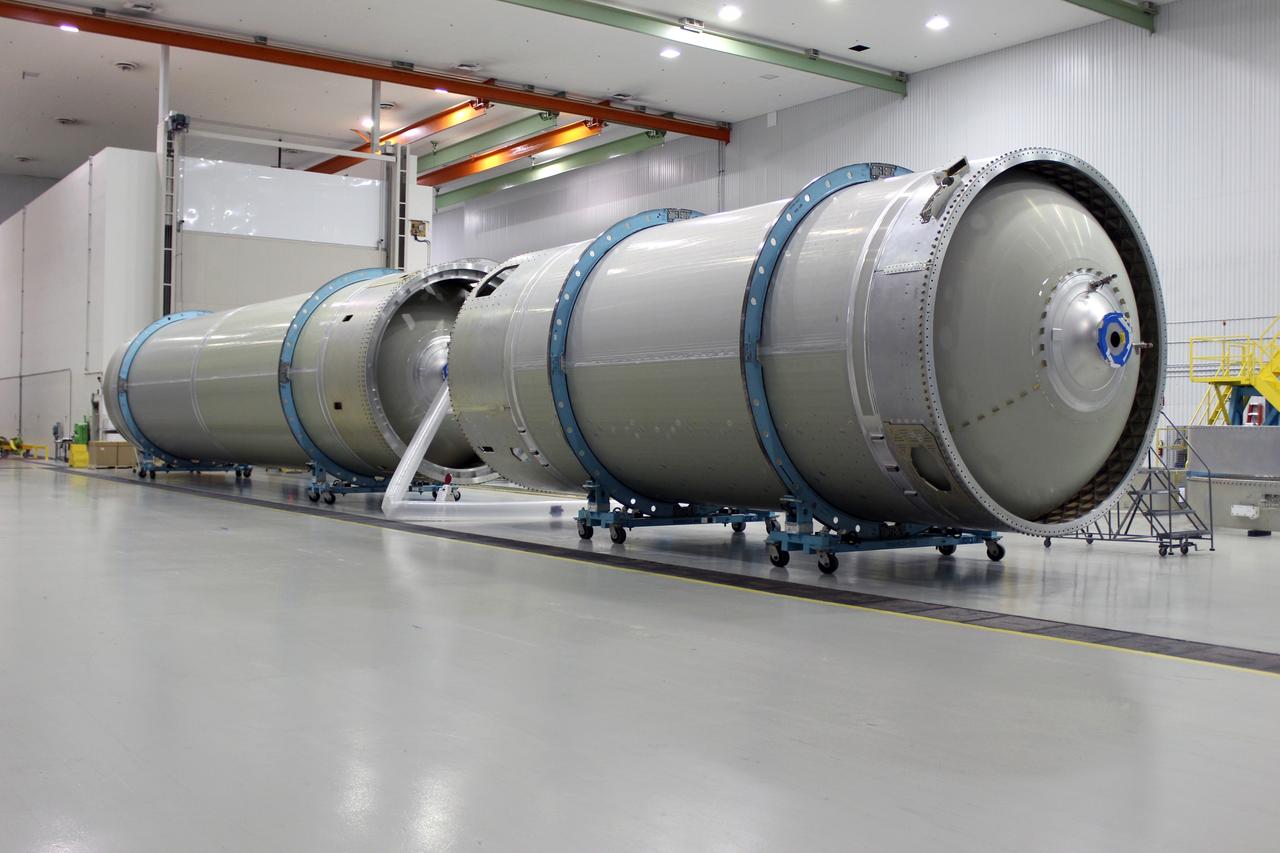
The Atlas V rocket that will launch Boeing’s CST-100 Starliner spacecraft on the company’s uncrewed Orbital Flight Test for NASA’s Commercial Crew Program is coming together inside a United Launch Alliance facility in Decatur, Alabama. The flight test is intended to prove the design of the integrated space system prior to the Crew Flight Test. These events are part of NASA’s required certification process as the company works to regularly fly astronauts to and from the International Space Station. Boeing's Starliner will launch on the United Launch Alliance Atlas V rocket from Space Launch Complex 41 at Cape Canaveral Air Force Station in Florida.
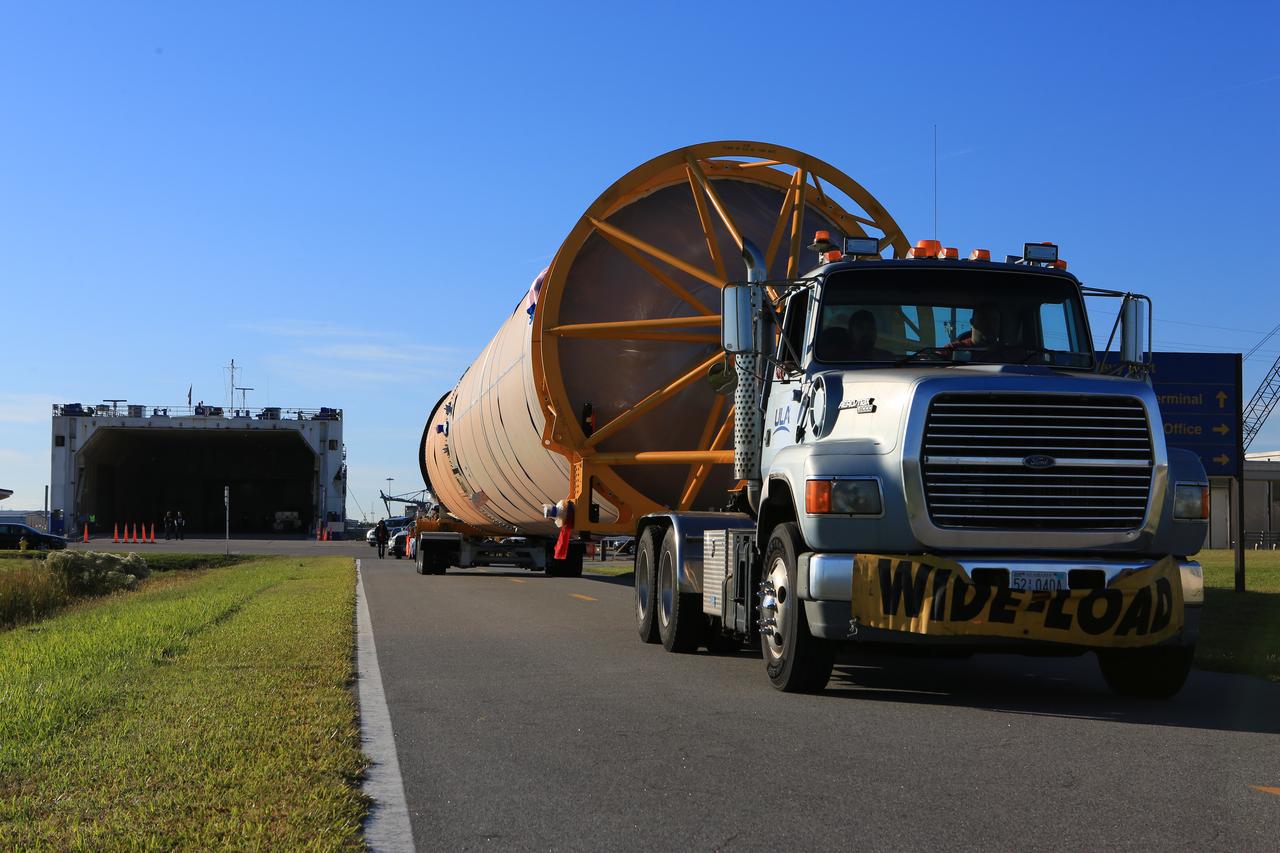
The first stage of the rocket that will launch Boeing's CST-100 Starliner spacecraft to the International Space Station on the company's uncrewed Orbital Flight Test arrives at Cape Canaveral Air Force Station in Florida on Dec. 7, 2018. The United Launch Alliance (ULA) Atlas V first stage booster was shipped aboard ULA's Mariner cargo vessel from the company's manufacturing plant in Decatur, Alabama. It is the final piece of hardware that ULA needs to launch the first Boeing Starliner. The booster will be transported to the Atlas Spaceflight Operations Center for receiving inspections and checkout.
The first stage of the rocket that will launch Boeing's CST-100 Starliner spacecraft to the International Space Station on the company's uncrewed Orbital Flight Test arrives at Cape Canaveral Air Force Station in Florida on Dec. 7, 2018. The United Launch Alliance (ULA) Atlas V first stage booster was shipped aboard ULA's Mariner cargo vessel from the company's manufacturing plant in Decatur, Alabama. It is the final piece of hardware that ULA needs to launch the first Boeing Starliner. The booster will be transported to the Atlas Spaceflight Operations Center for receiving inspections and checkout.
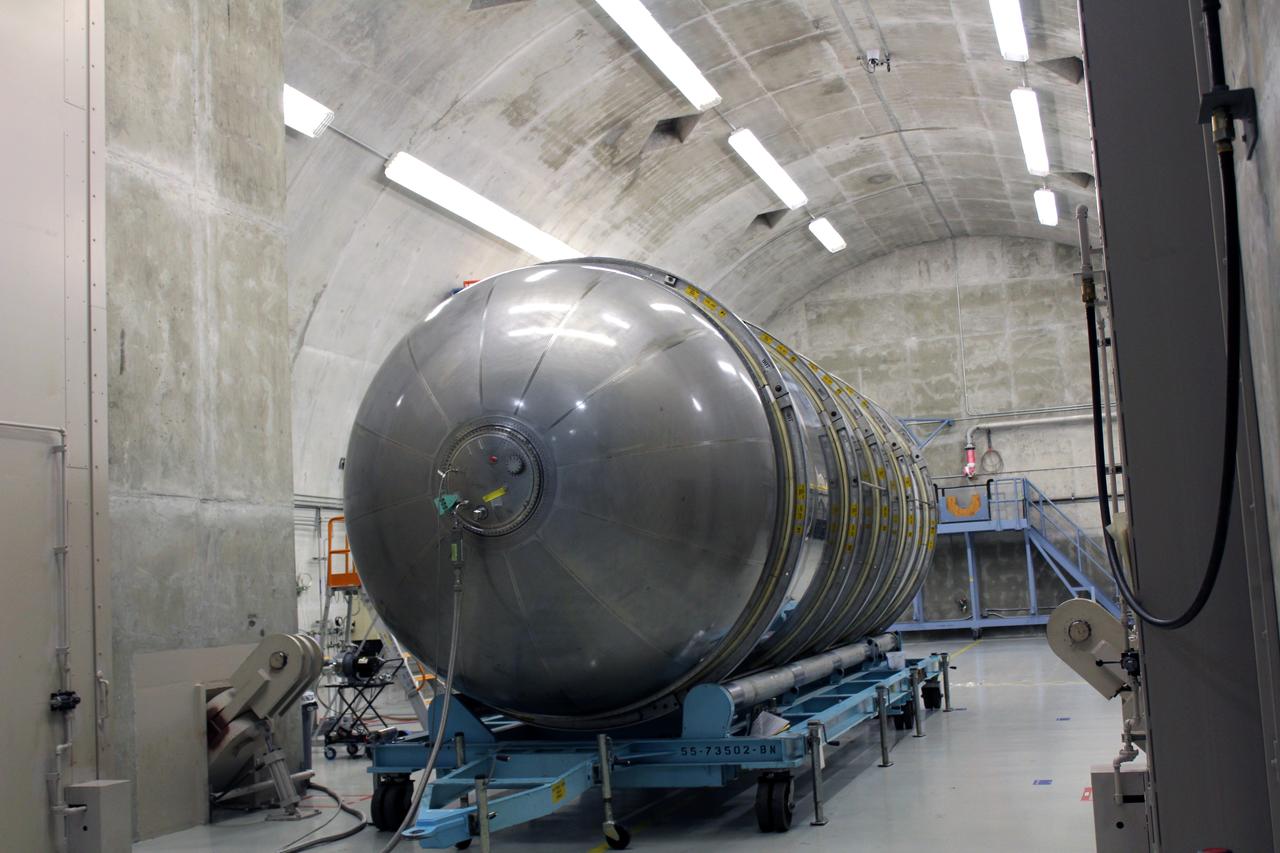
The Atlas V rocket that will launch Boeing’s CST-100 Starliner spacecraft on the company’s uncrewed Orbital Flight Test for NASA’s Commercial Crew Program is coming together inside a United Launch Alliance facility in Decatur, Alabama. The flight test is intended to prove the design of the integrated space system prior to the Crew Flight Test. These events are part of NASA’s required certification process as the company works to regularly fly astronauts to and from the International Space Station. Boeing's Starliner will launch on the United Launch Alliance Atlas V rocket from Space Launch Complex 41 at Cape Canaveral Air Force Station in Florida.
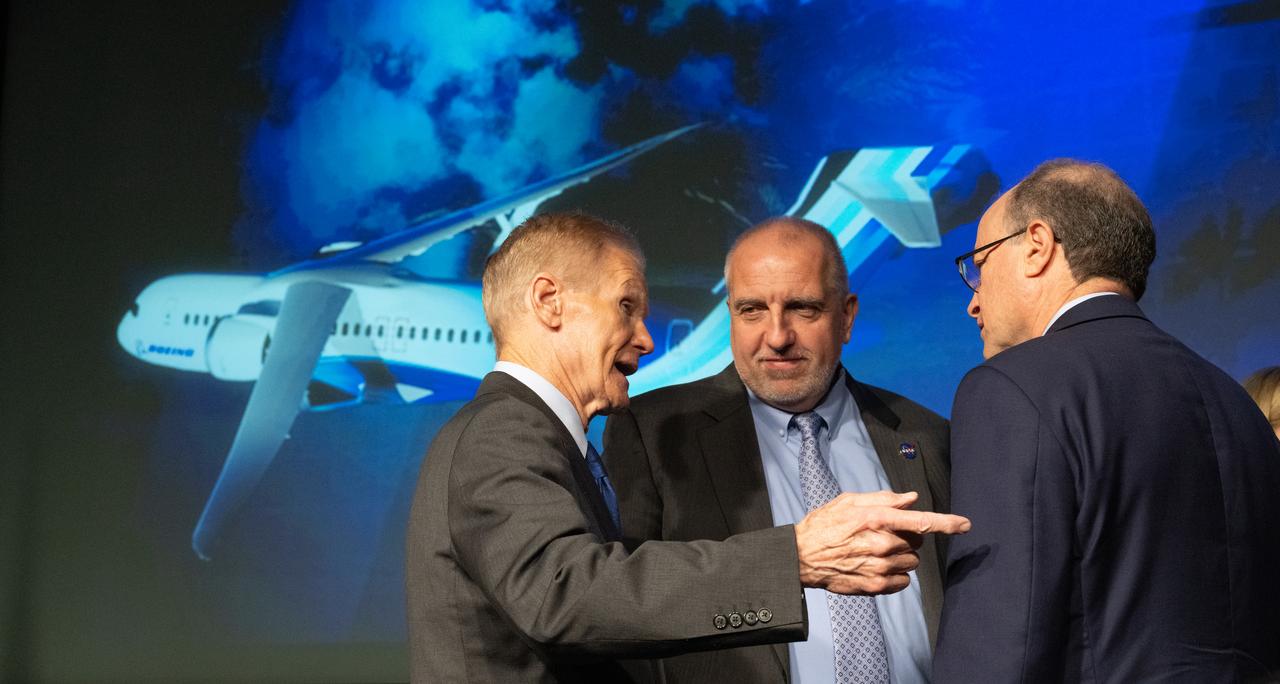
NASA Administrator Bill Nelson, left, Bob Pearce, associate administrator for NASA's Aeronautics Research Mission Directorate, center, and Todd Citron, chief technology officer, The Boeing Company, right, are seen following a news conference on NASA’s Sustainable Flight Demonstrator project, Wednesday, Jan. 18, 2023, at the Mary W. Jackson NASA Headquarters building in Washington, DC. Through a Funded Space Act Agreement, The Boeing company and its industry team will collaborate with NASA to develop and flight-test a full-scale Transonic Truss-Braced Wing demonstrator aircraft. Photo Credit: (NASA/Joel Kowsky)
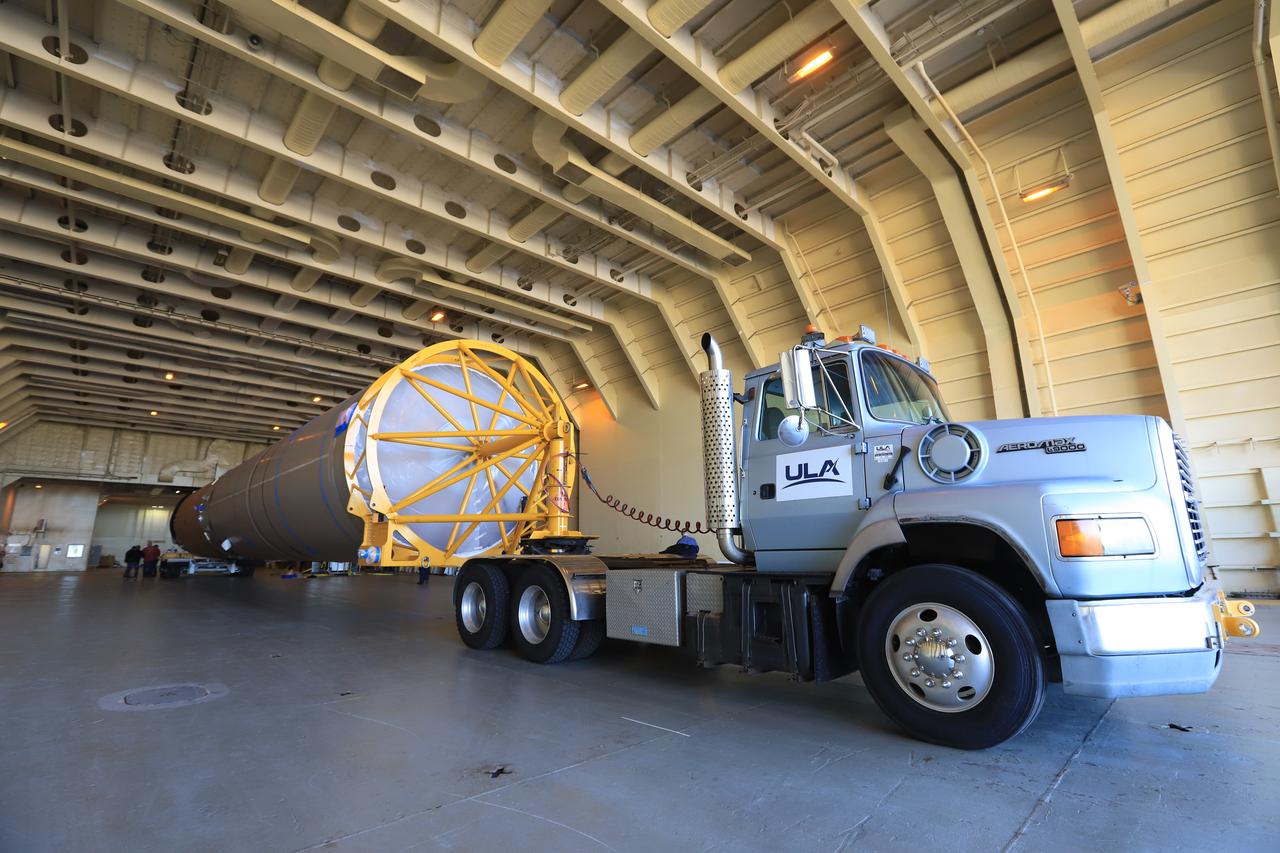
The first stage of the rocket that will launch Boeing's CST-100 Starliner spacecraft to the International Space Station on the company's uncrewed Orbital Flight Test arrived at Cape Canaveral Air Force Station in Florida on Dec. 7, 2018. The United Launch Alliance (ULA) Atlas V first stage booster was shipped aboard ULA's Mariner cargo vessel from the company's manufacturing plant in Decatur, Alabama. It is the final piece of hardware that ULA needs to launch the first Boeing Starliner. The booster will be transported to the Atlas Spaceflight Operations Center for receiving inspections and checkout.
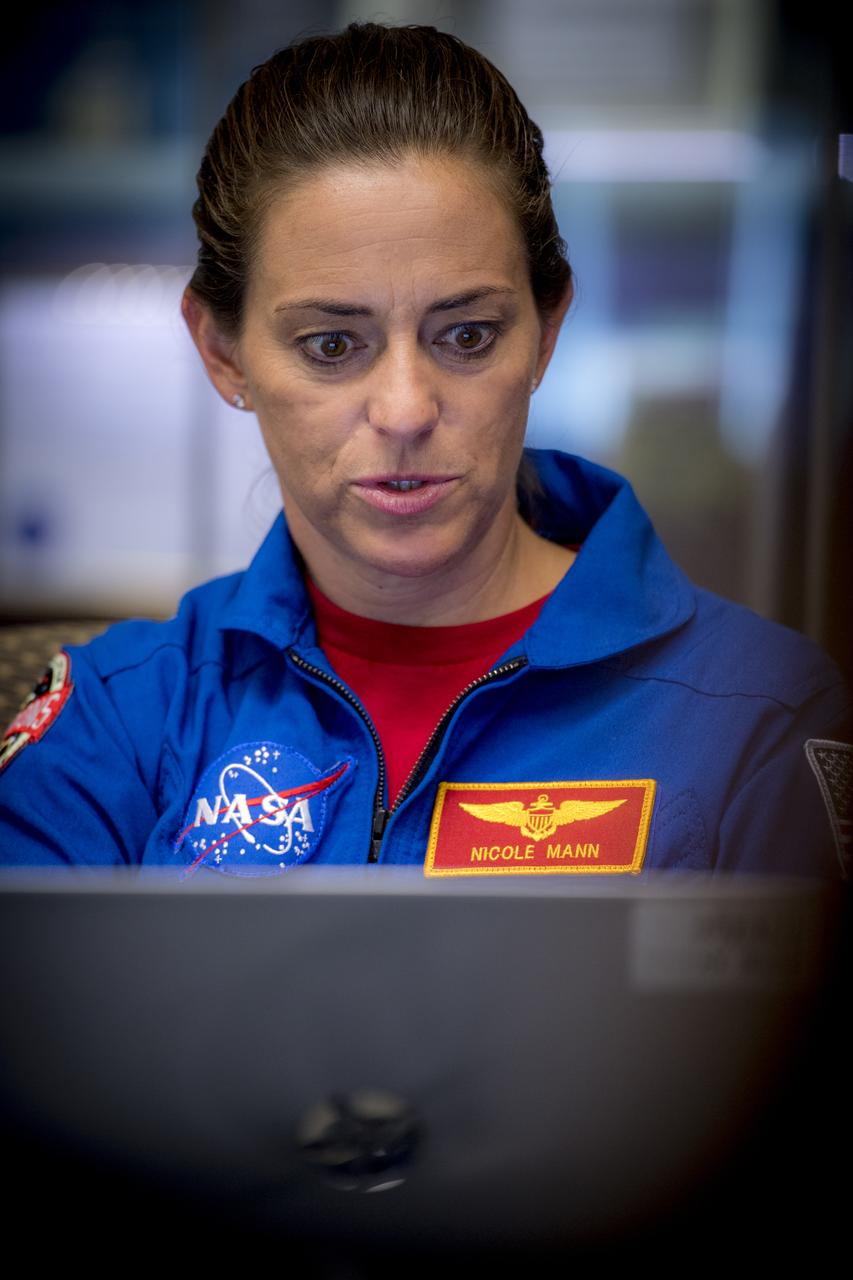
NASA astronaut Nicole Mann will team with commercial crew astronauts Eric Boe and Chris Ferguson onboard Boeing’s CST-100 Starliner in the company’s Crew Flight Test to the International Space Station. They joined fellow commercial crew astronauts Bob Behnken, Josh Cassada, Victor Glover, Mike Hopkins, Doug Hurley and Suni Williams for a celebration at Johnson Space Center in Houston on Aug, 3, 2018. Cassada and Williams will fly on Starliner’s first operational mission to the space station. Behnken and Hurley will fly on SpaceX’s Crew Dragon in the company’s Demo-2 flight test to the space station, while Glover and Hopkins are assigned to Crew Dragon’s first operational mission to station.
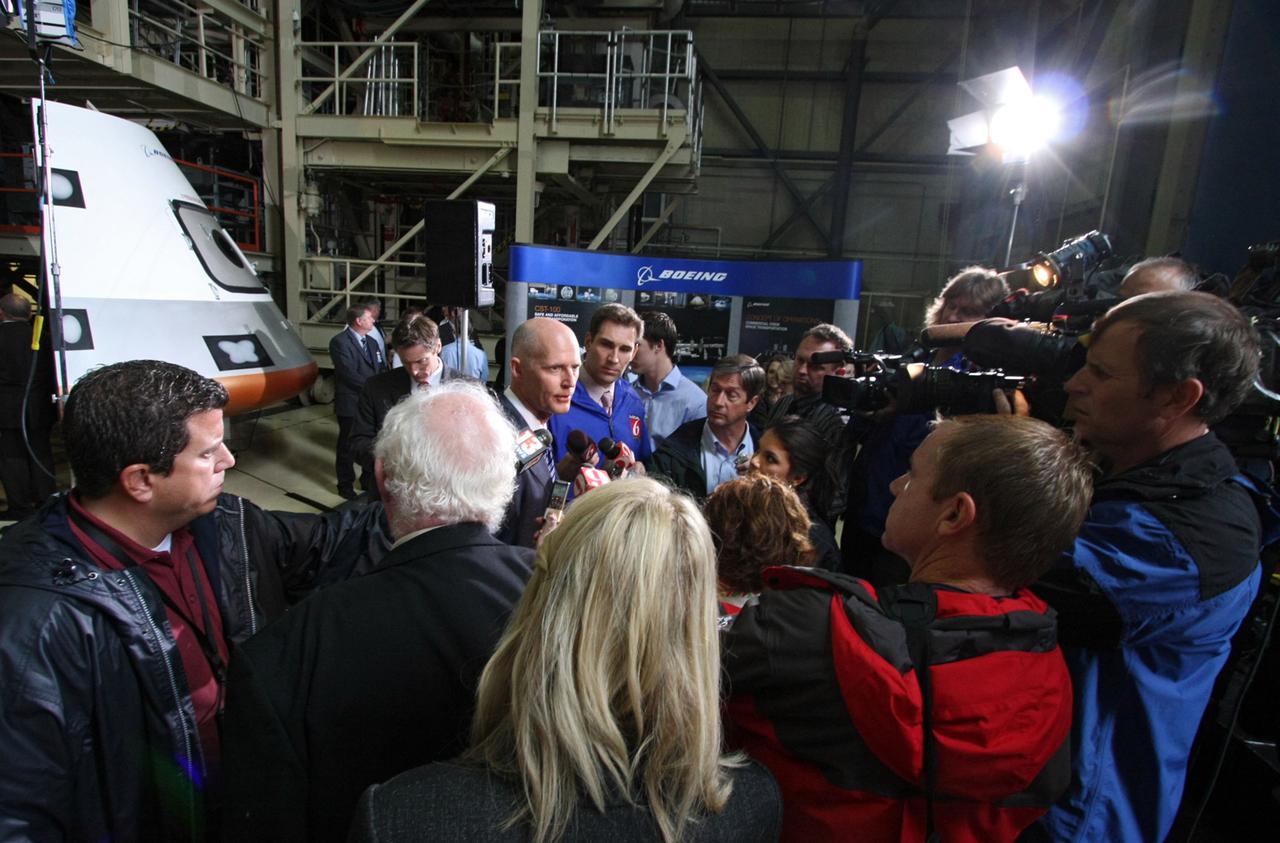
CAPE CANAVERAL, Fla. – In the Orbiter Processing Facility-3 (OPF-3) at NASA’s Kennedy Space Center in Florida, Florida Gov. Rick Scott speaks to the media after the ceremony which announced the signing of an innovative agreement between NASA and Space Florida. In the background is a full-scale mockup of The Boeing Company’s CST-100 spacecraft. NASA announced a partnership with Space Florida to occupy, use and modify Kennedy Space Center's Orbiter Processing Facility-3 (OPF-3), the Space Shuttle Main Engine Processing Facility and Processing Control Center. Space Florida has an agreement for use of the OPF-3 with the Boeing Company to manufacture and test the company's Crew Space Transportation (CST-100) spacecraft. The 15-year use permit deal is the latest step Kennedy is making as the center transitions from a historically government-only launch complex to a multi-user spaceport. For more information, visit http:__www.nasa.gov_exploration_commercial_index.html. Photo credit: NASA_Ken Thornsley
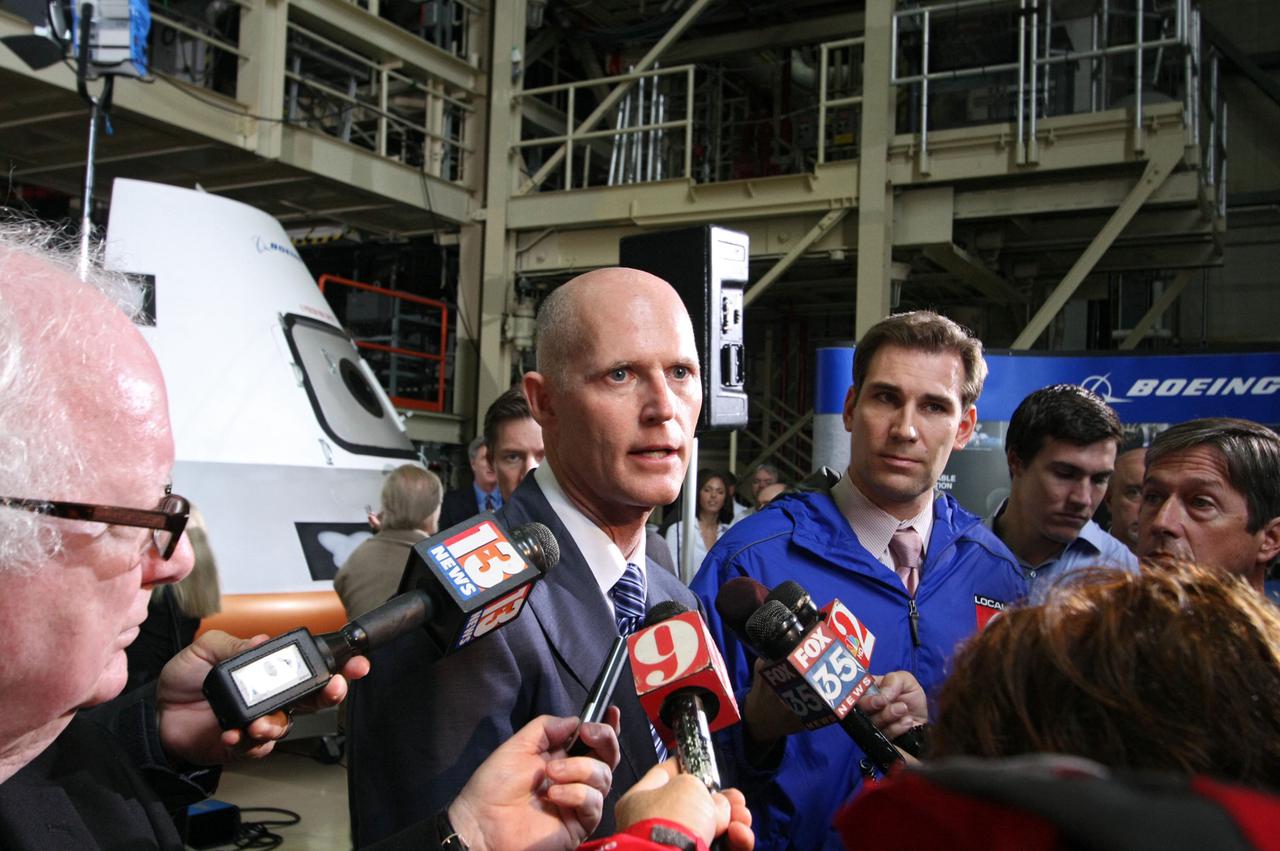
CAPE CANAVERAL, Fla. – In the Orbiter Processing Facility-3 (OPF-3) at NASA’s Kennedy Space Center in Florida, Florida Gov. Rick Scott speaks to the media after the ceremony which announced the signing of an innovative agreement between NASA and Space Florida. In the background is a full-scale mockup of The Boeing Company’s CST-100 spacecraft. NASA announced a partnership with Space Florida to occupy, use and modify Kennedy Space Center's Orbiter Processing Facility-3 (OPF-3), the Space Shuttle Main Engine Processing Facility and Processing Control Center. Space Florida has an agreement for use of the OPF-3 with the Boeing Company to manufacture and test the company's Crew Space Transportation (CST-100) spacecraft. The 15-year use permit deal is the latest step Kennedy is making as the center transitions from a historically government-only launch complex to a multi-user spaceport. For more information, visit http:__www.nasa.gov_exploration_commercial_index.html. Photo credit: NASA_Ken Thornsley
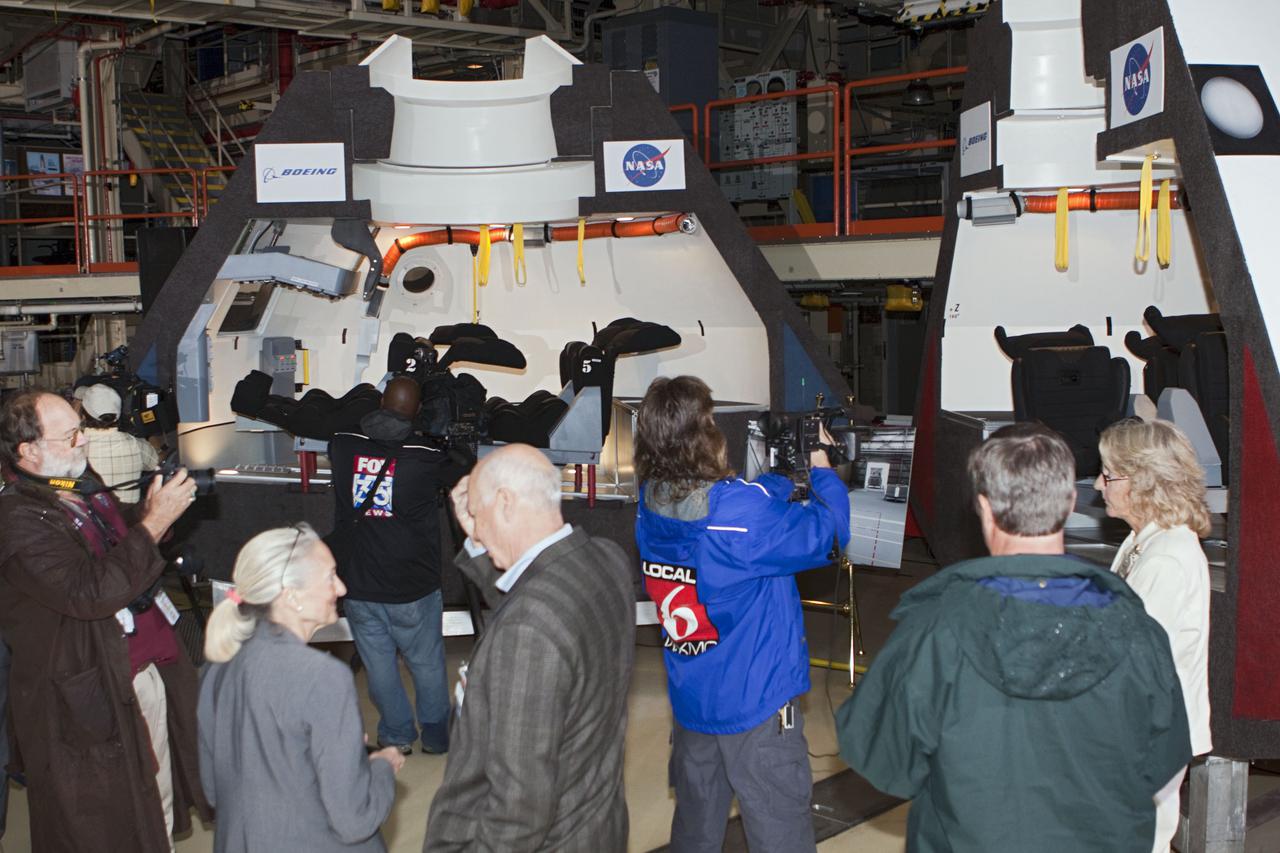
CAPE CANAVERAL, Fla. – In the Orbiter Processing Facility-3 (OPF-3) at NASA’s Kennedy Space Center in Florida, guests and media view a full-scale mockup of The Boeing Company’s CST-100 spacecraft at the ceremony announcing the signing of an innovative agreement between NASA and Space Florida. NASA announced a partnership with Space Florida to occupy, use and modify Kennedy Space Center's Orbiter Processing Facility-3 (OPF-3), the Space Shuttle Main Engine Processing Facility and Processing Control Center. Space Florida has an agreement for use of the OPF-3 with the Boeing Company to manufacture and test the company's Crew Space Transportation (CST-100) spacecraft. The 15-year use permit deal is the latest step Kennedy is making as the center transitions from a historically government-only launch complex to a multi-user spaceport. For more information, visit http:__www.nasa.gov_exploration_commercial_index.html. Photo credit: NASA_Kim Shiflett
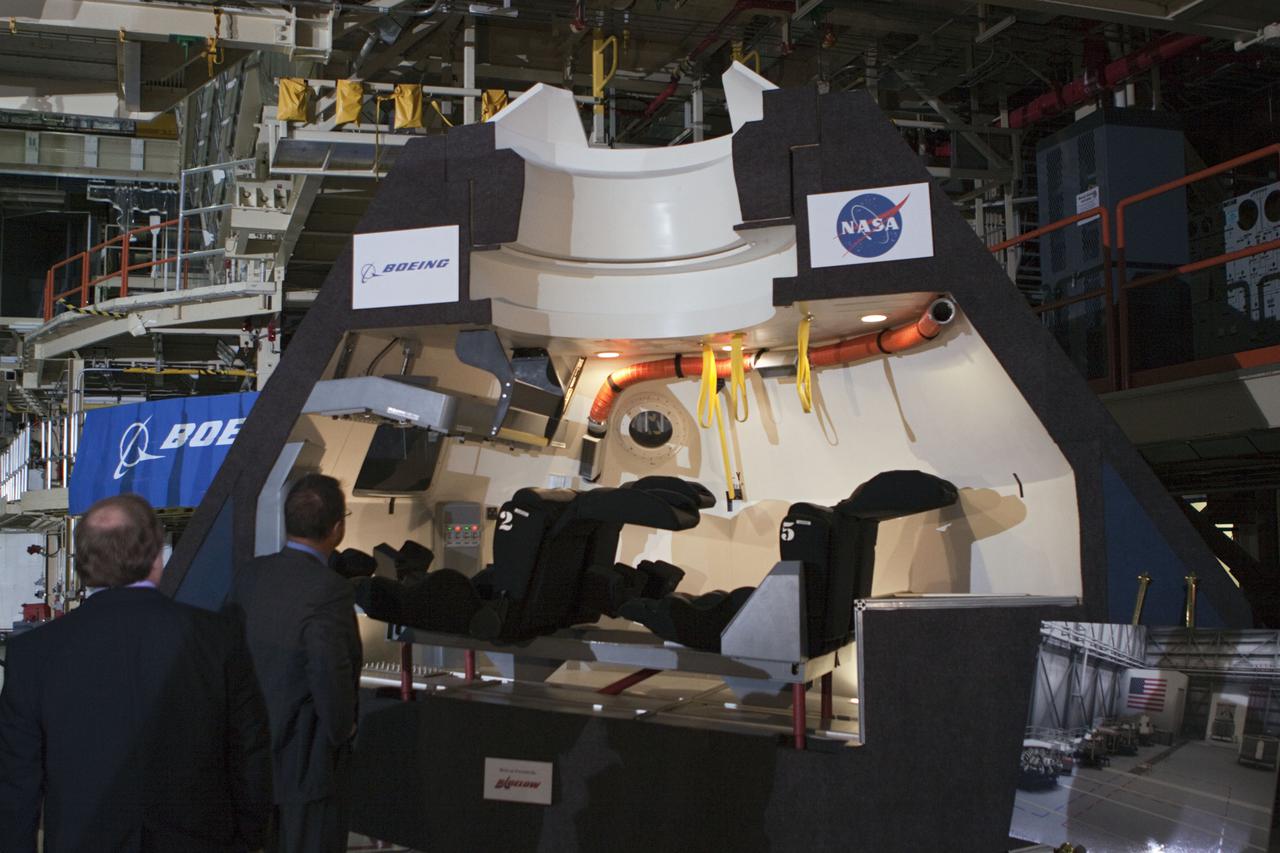
CAPE CANAVERAL, Fla. – In the Orbiter Processing Facility-3 (OPF-3) at NASA’s Kennedy Space Center in Florida, guests view a full-scale mockup of The Boeing Company’s CST-100 spacecraft at the ceremony announcing the signing of an innovative agreement between NASA and Space Florida. NASA announced a partnership with Space Florida to occupy, use and modify Kennedy Space Center's Orbiter Processing Facility-3 (OPF-3), the Space Shuttle Main Engine Processing Facility and Processing Control Center. Space Florida has an agreement for use of the OPF-3 with the Boeing Company to manufacture and test the company's Crew Space Transportation (CST-100) spacecraft. The 15-year use permit deal is the latest step Kennedy is making as the center transitions from a historically government-only launch complex to a multi-user spaceport. For more information, visit http:__www.nasa.gov_exploration_commercial_index.html. Photo credit: NASA_Kim Shiflett
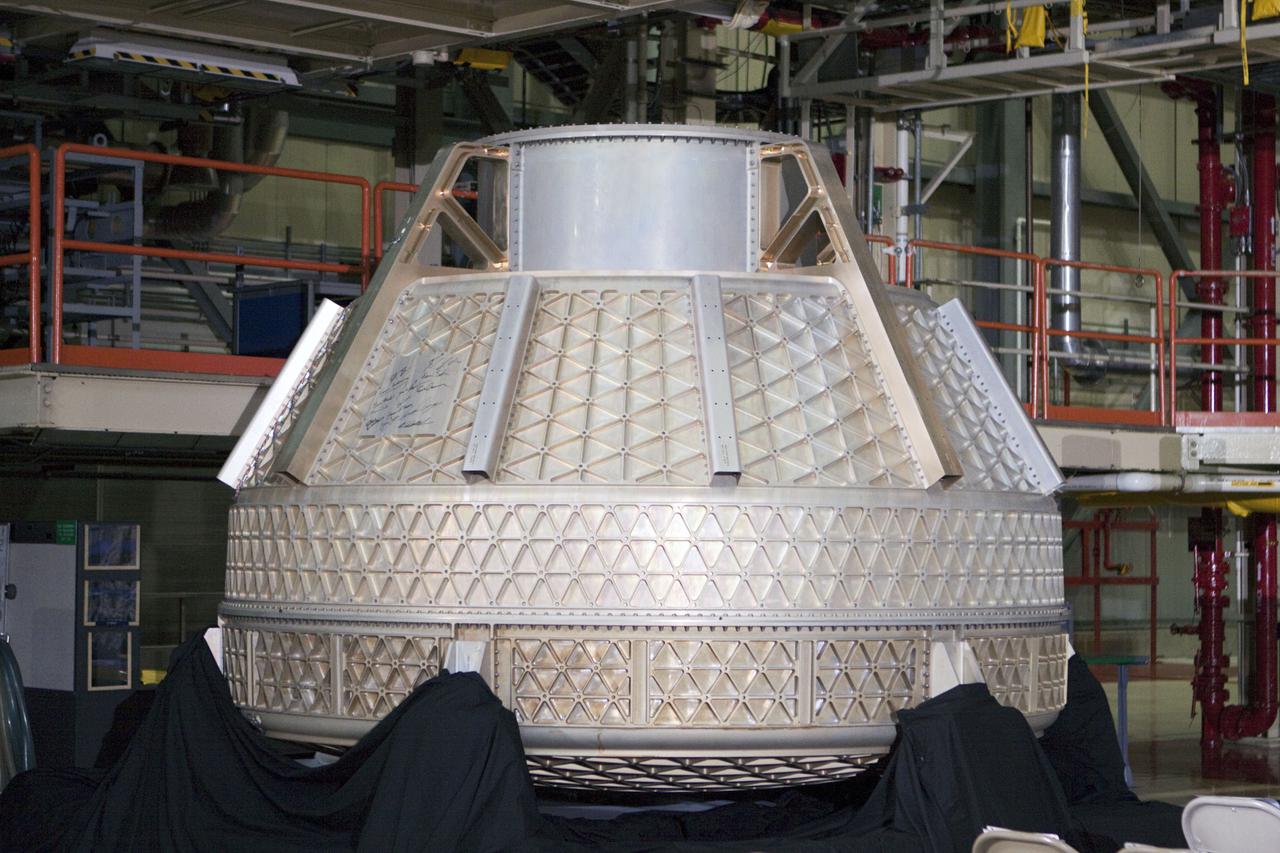
CAPE CANAVERAL, Fla. – In the Orbiter Processing Facility-3 (OPF-3) at NASA’s Kennedy Space Center in Florida, a pressure vessel for The Boeing Company’s CST-100 spacecraft is unveiled at the ceremony announcing the signing of an innovative agreement between NASA and Space Florida. NASA announced a partnership with Space Florida to occupy, use and modify Kennedy Space Center's Orbiter Processing Facility-3 (OPF-3), the Space Shuttle Main Engine Processing Facility and Processing Control Center. Space Florida has an agreement for use of the OPF-3 with the Boeing Company to manufacture and test the company's Crew Space Transportation (CST-100) spacecraft. The 15-year use permit deal is the latest step Kennedy is making as the center transitions from a historically government-only launch complex to a multi-user spaceport. For more information, visit http:__www.nasa.gov_exploration_commercial_index.html. Photo credit: NASA_Kim Shiflett
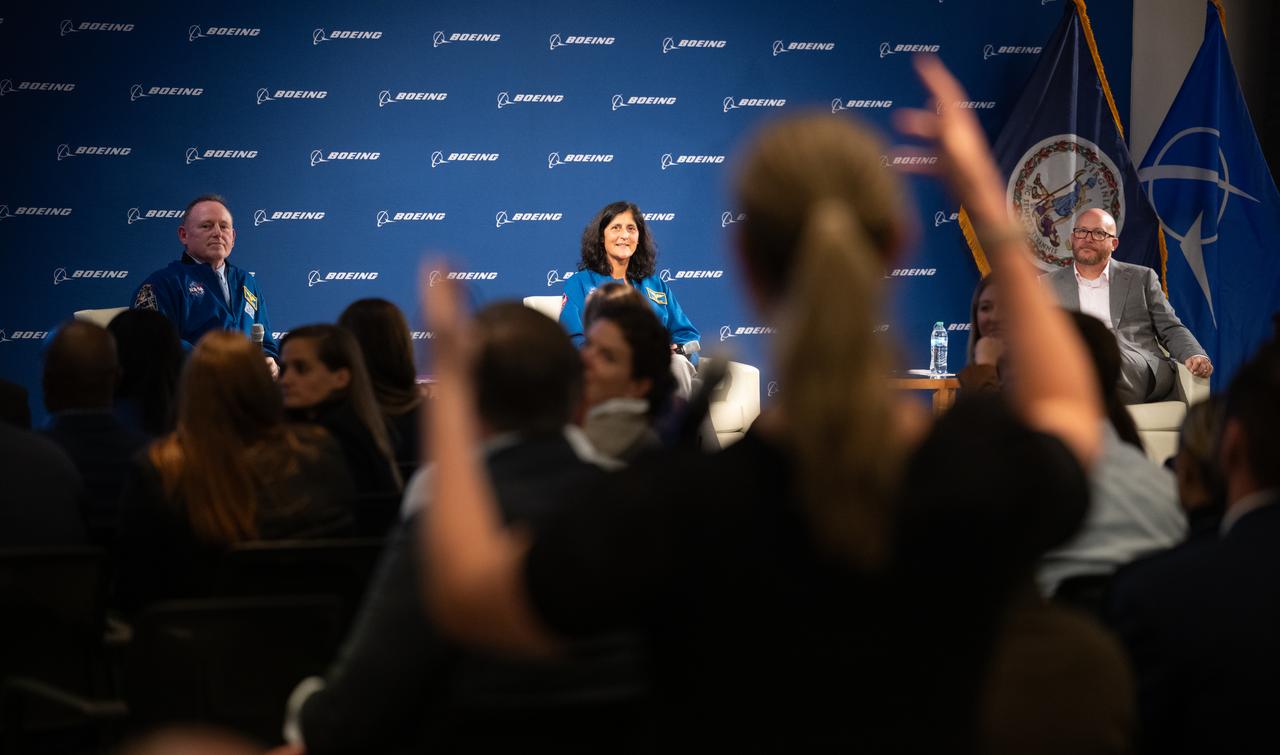
NASA astronauts Suni Williams, center, Butch Wilmore, left, and Steve Parker, executive vice president, president and CEO of Boeing Defense, Space and Security, listen to a question as they speak with employees of Boeing, Wednesday, Sept. 17, 2025, at the company’s headquarters in Arlington, Va. Williams and Wilmore launched aboard Boeing’s Starliner spacecraft to the International Space Station as part of the agency’s Boeing Crew Flight Test and were integrated into Expedition 71/72 following the uncrewed return of Starliner. The pair returned to Earth with NASA’s SpaceX Crew 9 astronauts. Photo Credit: (NASA/Joel Kowsky)
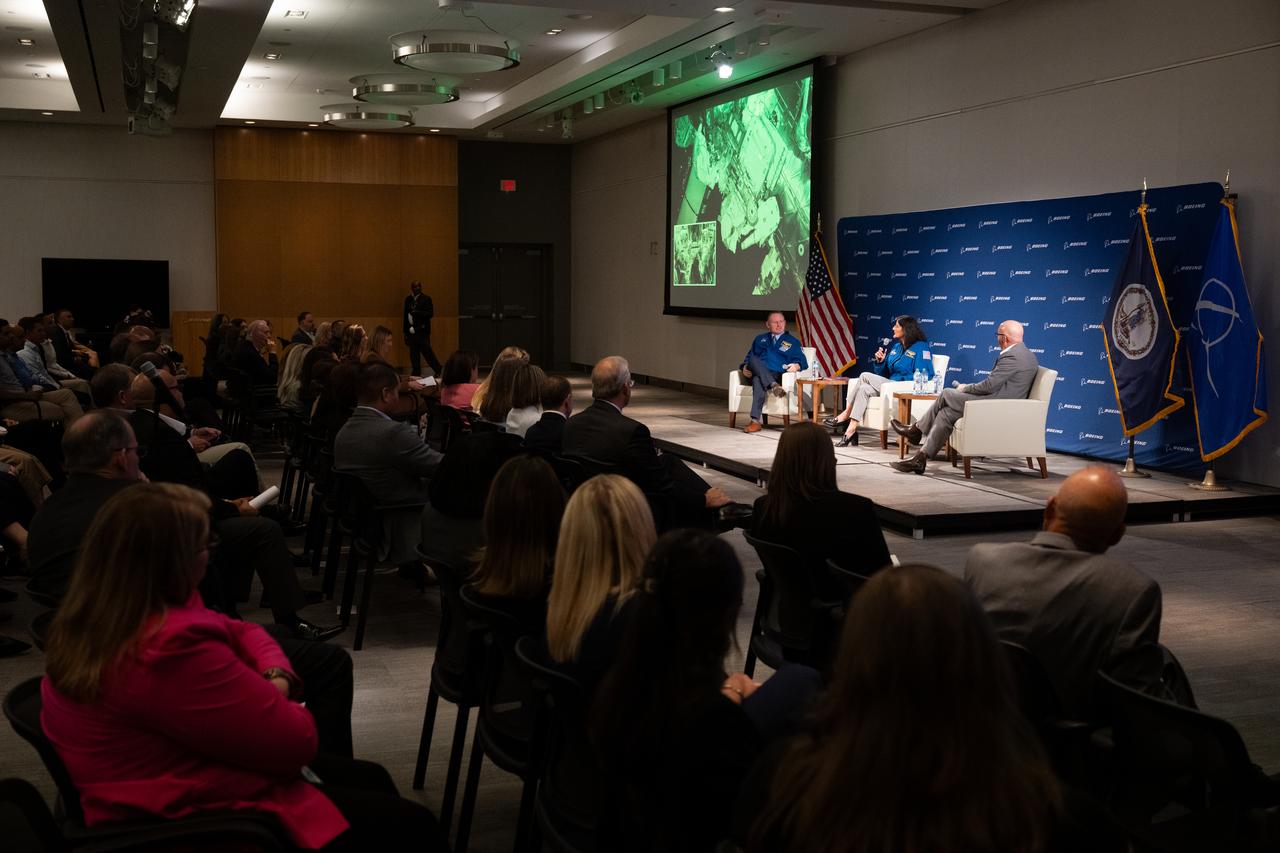
NASA astronauts Suni Williams, center, and Butch Wilmore, left, speak with employees of Boeing alongside Steve Parker, executive vice president, president and CEO of Boeing Defense, Space and Security, Wednesday, Sept. 17, 2025, at the company’s headquarters in Arlington, Va. Williams and Wilmore launched aboard Boeing’s Starliner spacecraft to the International Space Station as part of the agency’s Boeing Crew Flight Test and were integrated into Expedition 71/72 following the uncrewed return of Starliner. The pair returned to Earth with NASA’s SpaceX Crew 9 astronauts. Photo Credit: (NASA/Joel Kowsky)
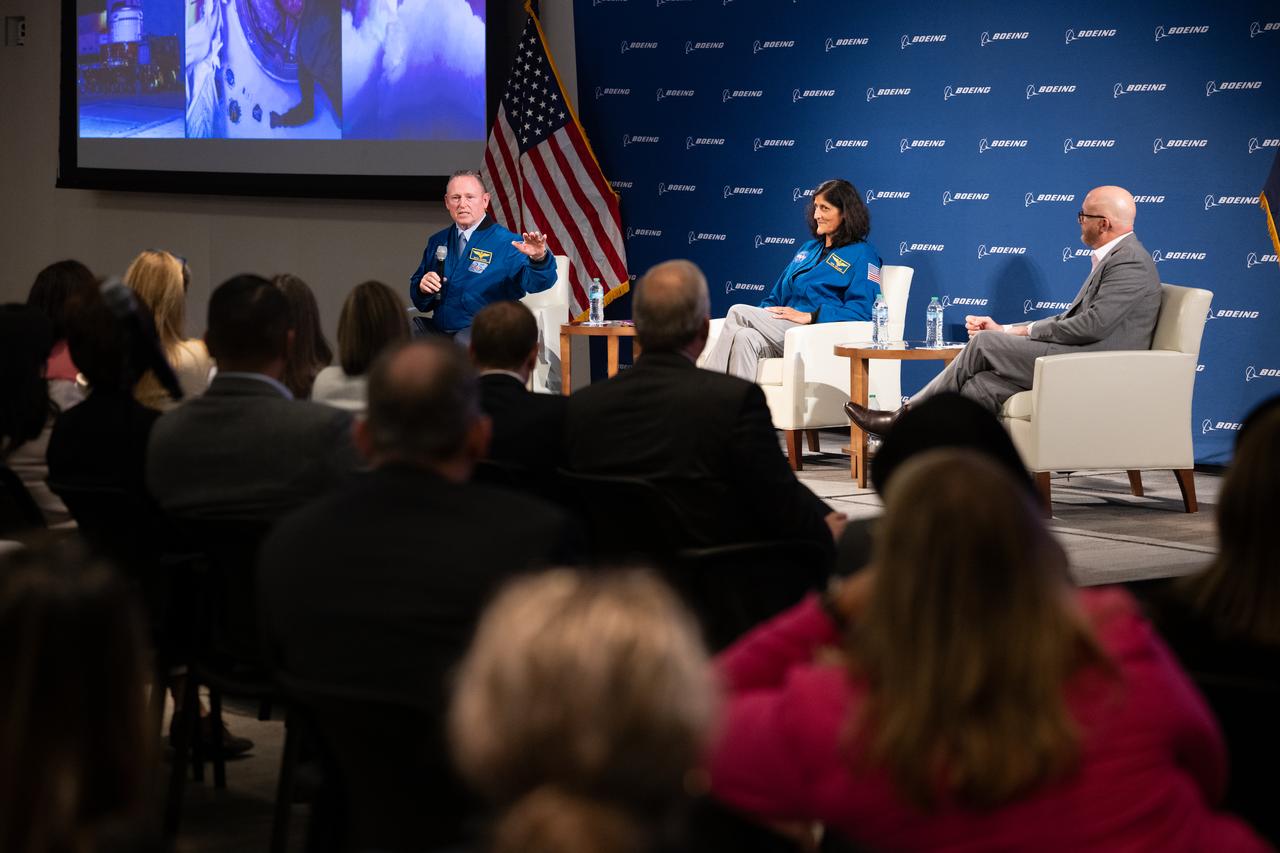
NASA astronauts Butch Wilmore, left, and Suni Williams, center, speak with employees of Boeing alongside Steve Parker, executive vice president, president and CEO of Boeing Defense, Space and Security, Wednesday, Sept. 17, 2025, at the company’s headquarters in Arlington, Va. Williams and Wilmore launched aboard Boeing’s Starliner spacecraft to the International Space Station as part of the agency’s Boeing Crew Flight Test and were integrated into Expedition 71/72 following the uncrewed return of Starliner. The pair returned to Earth with NASA’s SpaceX Crew 9 astronauts. Photo Credit: (NASA/Joel Kowsky)
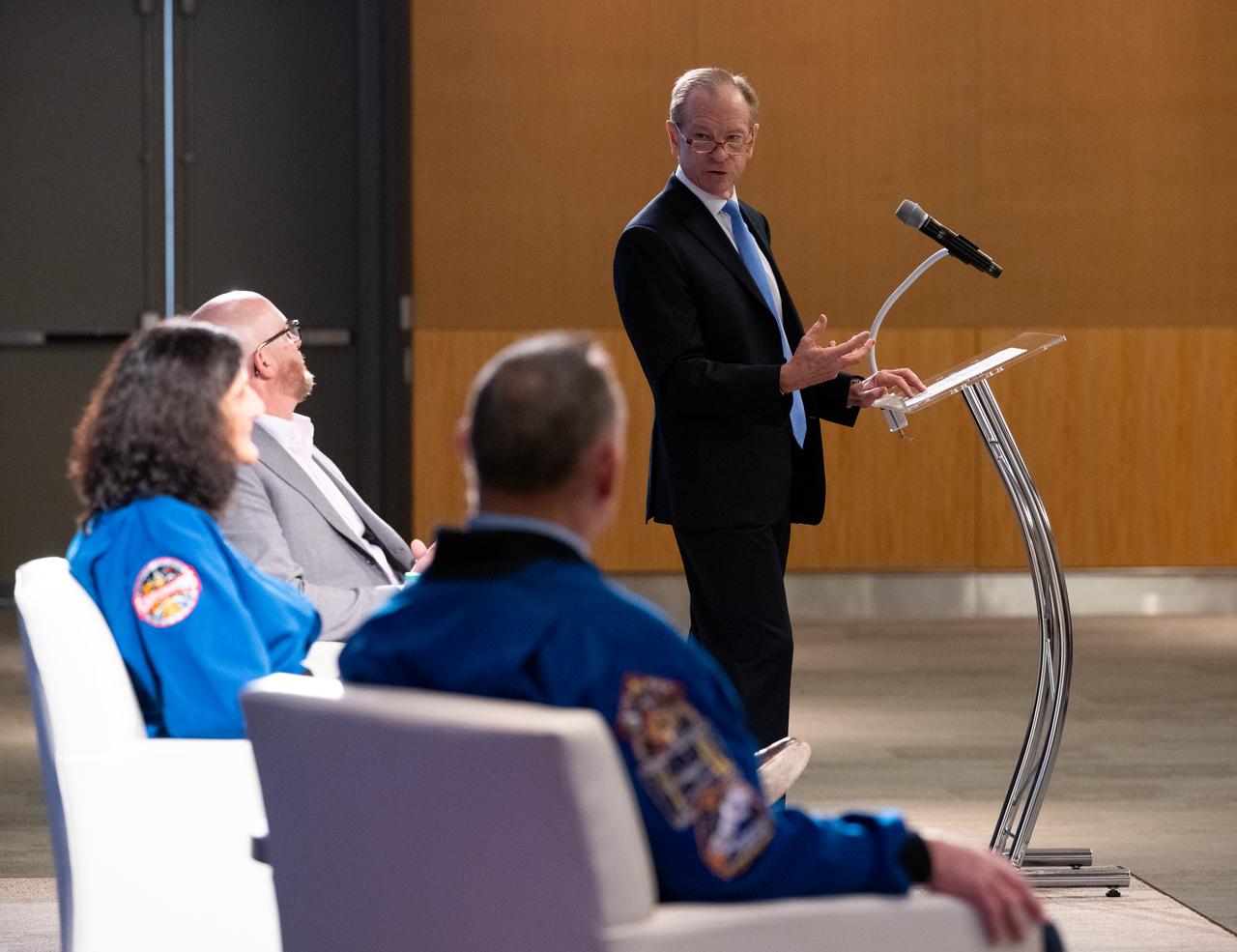
Jeff Shockey, executive vice president for Government Operations, Global Public Policy and Corporate Strategy at Boeing, delivers opening remarks during a visit by NASA astronauts Suni Williams and Butch Wilmore to speak with employees of Boeing, Wednesday, Sept. 17, 2025, at the company’s headquarters in Arlington, Va. Williams and Wilmore launched aboard Boeing’s Starliner spacecraft to the International Space Station as part of the agency’s Boeing Crew Flight Test and were integrated into Expedition 71/72 following the uncrewed return of Starliner. The pair returned to Earth with NASA’s SpaceX Crew 9 astronauts. Photo Credit: (NASA/Joel Kowsky)
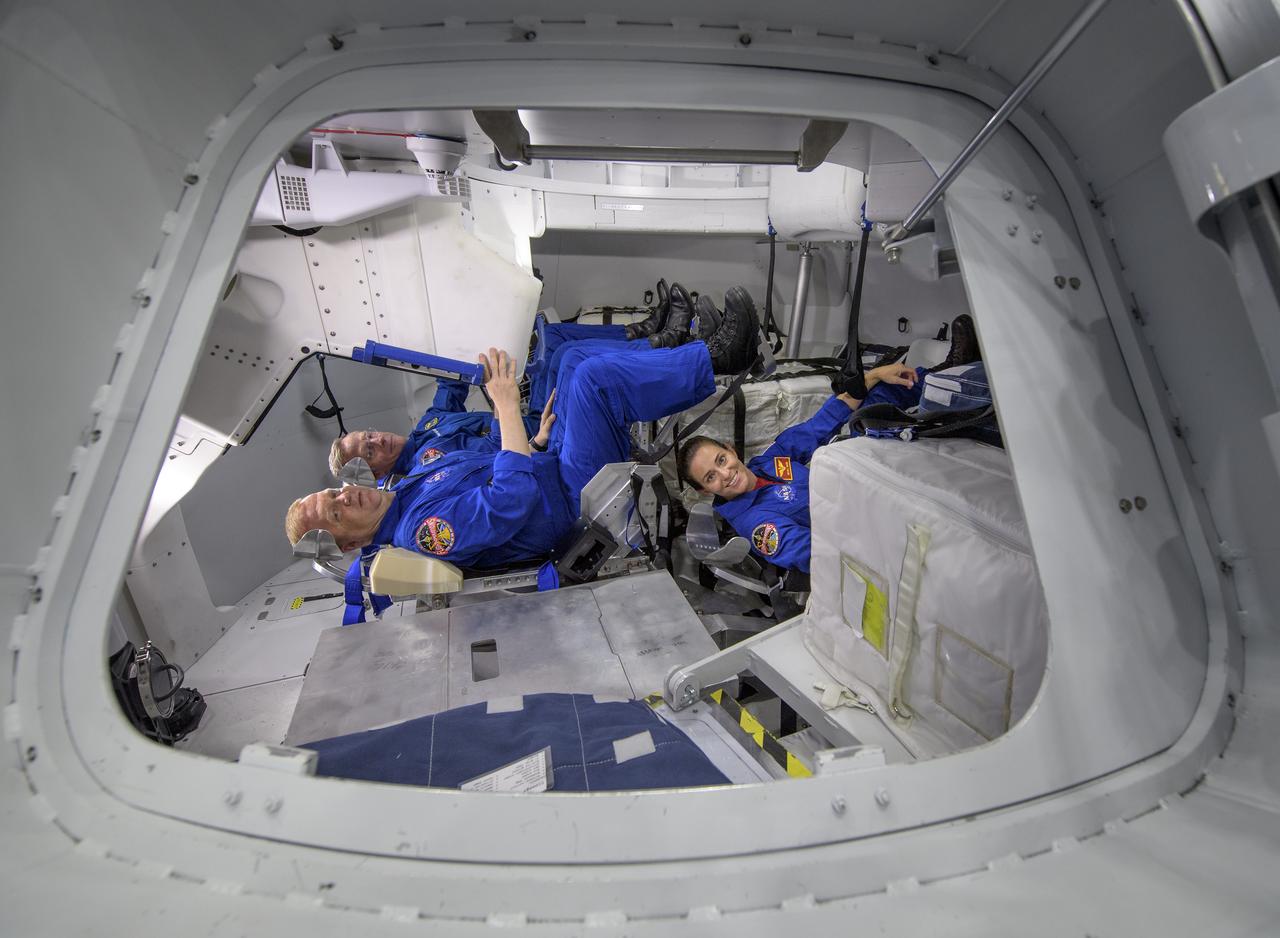
NASA astronauts Eric Boe, foreground left, and Nicole Mann, foreground right, along with Boeing astronaut Chris Ferguson, background, pose for a photograph inside the Boeing Mockup Trainer at NASA’s Johnson Space Center in Houston, Texas on Aug. 2, 2018 ahead of the commercial crew flight assignments announcement Aug. 3. The three were assigned to launch aboard Boeing’s CST-100 Starliner on the company’s Crew Flight Test targeted for mid-2019 in partnership with NASA’s Commercial Crew Program. Photo Credit: (NASA/Bill Ingalls)
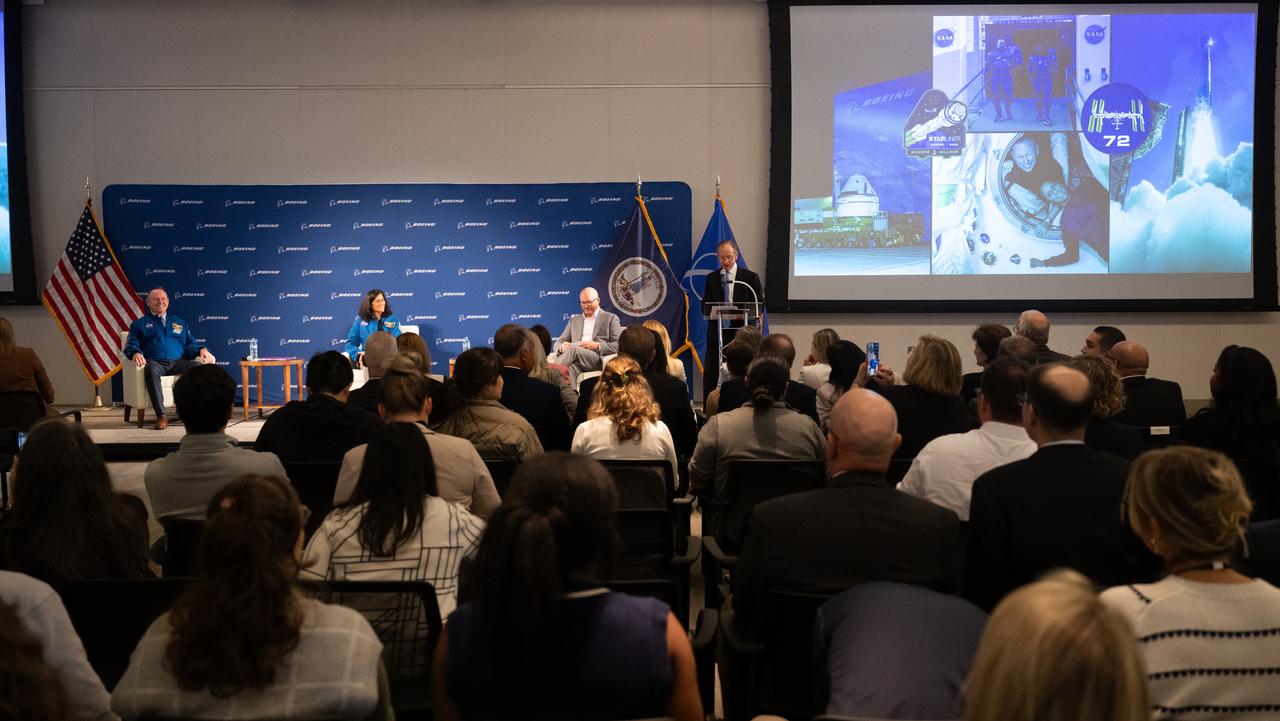
Jeff Shockey, executive vice president for Government Operations, Global Public Policy and Corporate Strategy at Boeing, delivers opening remarks during a visit by NASA astronauts Suni Williams and Butch Wilmore to speak with employees of Boeing, Wednesday, Sept. 17, 2025, at the company’s headquarters in Arlington, Va. Williams and Wilmore launched aboard Boeing’s Starliner spacecraft to the International Space Station as part of the agency’s Boeing Crew Flight Test and were integrated into Expedition 71/72 following the uncrewed return of Starliner. The pair returned to Earth with NASA’s SpaceX Crew 9 astronauts. Photo Credit: (NASA/Joel Kowsky)
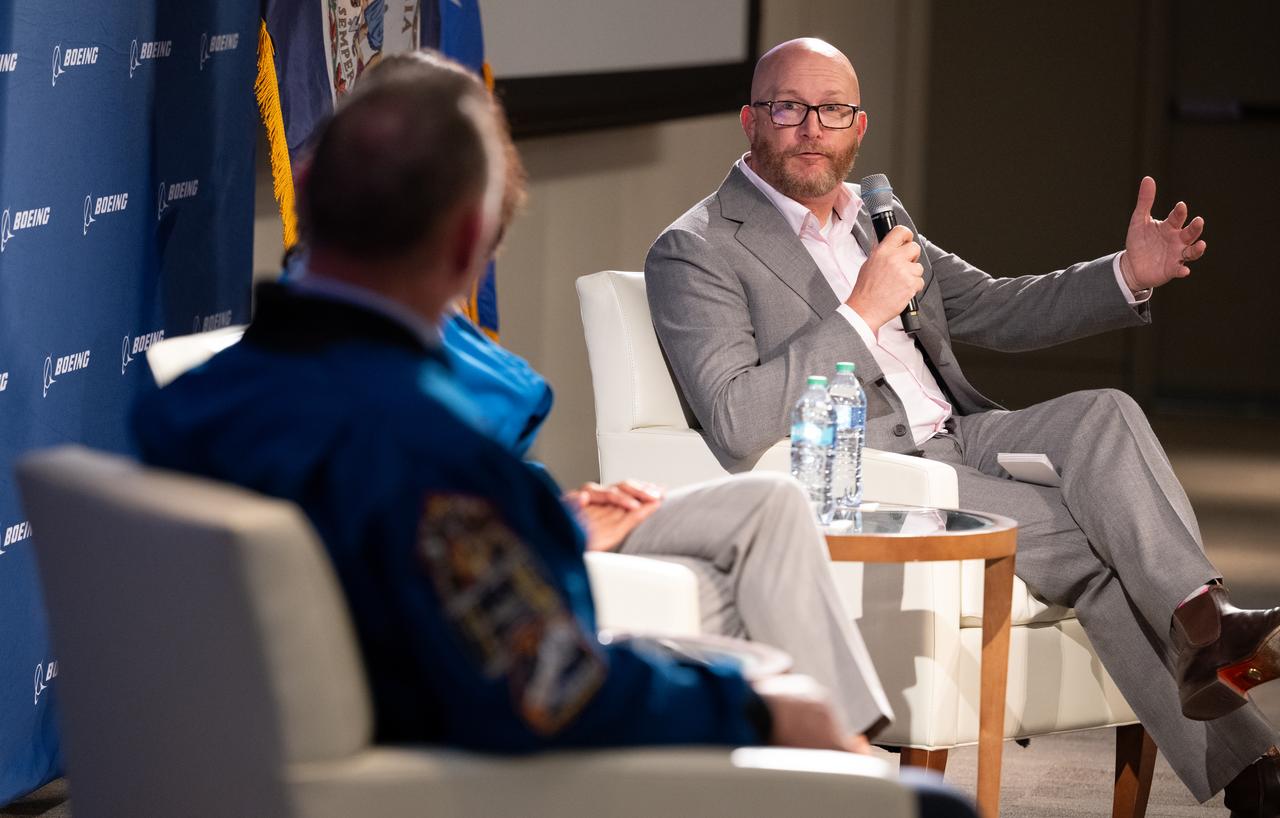
Steve Parker, executive vice president, president and CEO of Boeing Defense, Space and Security, speaks with NASA astronauts Suni Williams and Butch Wilmore during an event with employees of Boeing, Wednesday, Sept. 17, 2025, at the company’s headquarters in Arlington, Va. Williams and Wilmore launched aboard Boeing’s Starliner spacecraft to the International Space Station as part of the agency’s Boeing Crew Flight Test and were integrated into Expedition 71/72 following the uncrewed return of Starliner. The pair returned to Earth with NASA’s SpaceX Crew 9 astronauts. Photo Credit: (NASA/Joel Kowsky)
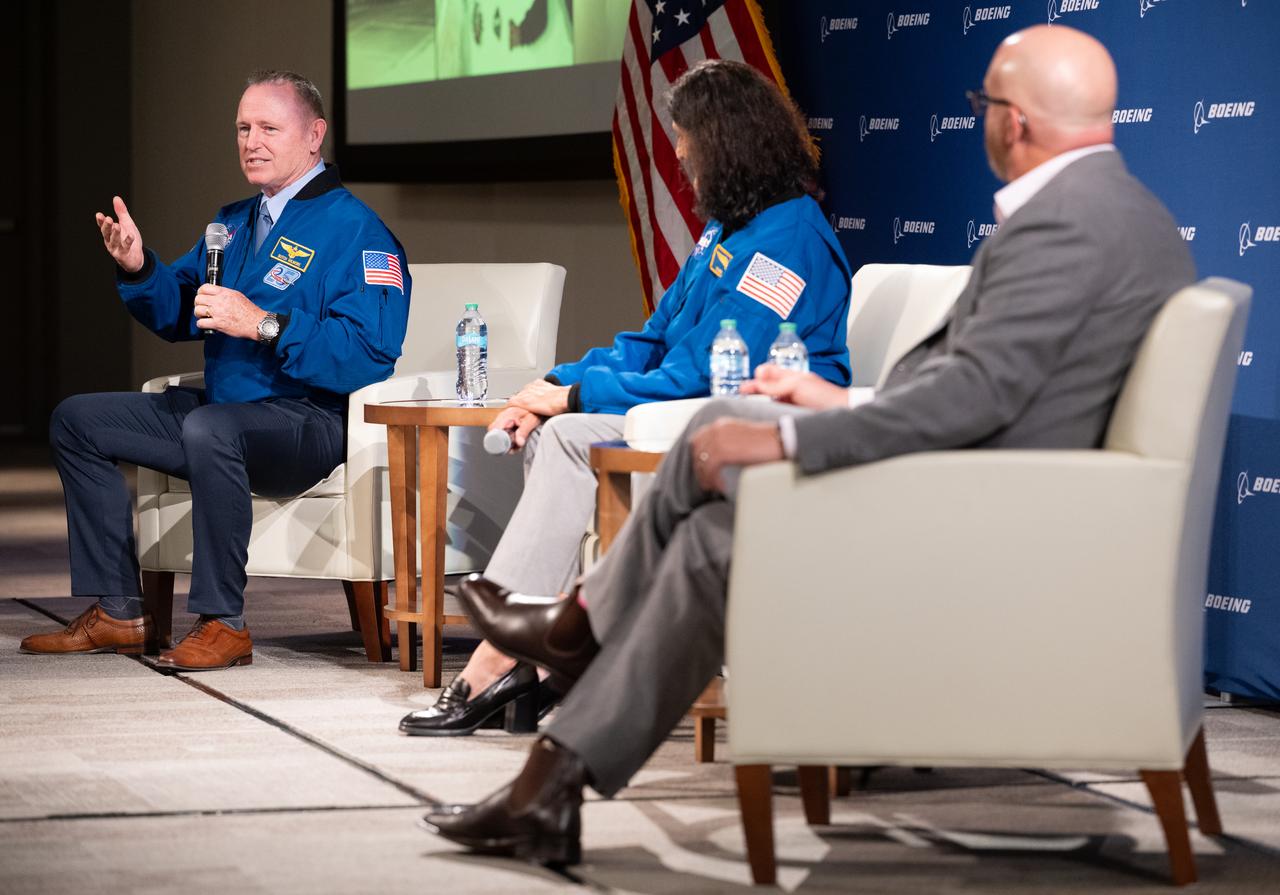
NASA astronauts Butch Wilmore, left, and Suni Williams, center, speak with employees of Boeing alongside Steve Parker, executive vice president, president and CEO of Boeing Defense, Space and Security, Wednesday, Sept. 17, 2025, at the company’s headquarters in Arlington, Va. Williams and Wilmore launched aboard Boeing’s Starliner spacecraft to the International Space Station as part of the agency’s Boeing Crew Flight Test and were integrated into Expedition 71/72 following the uncrewed return of Starliner. The pair returned to Earth with NASA’s SpaceX Crew 9 astronauts. Photo Credit: (NASA/Joel Kowsky)
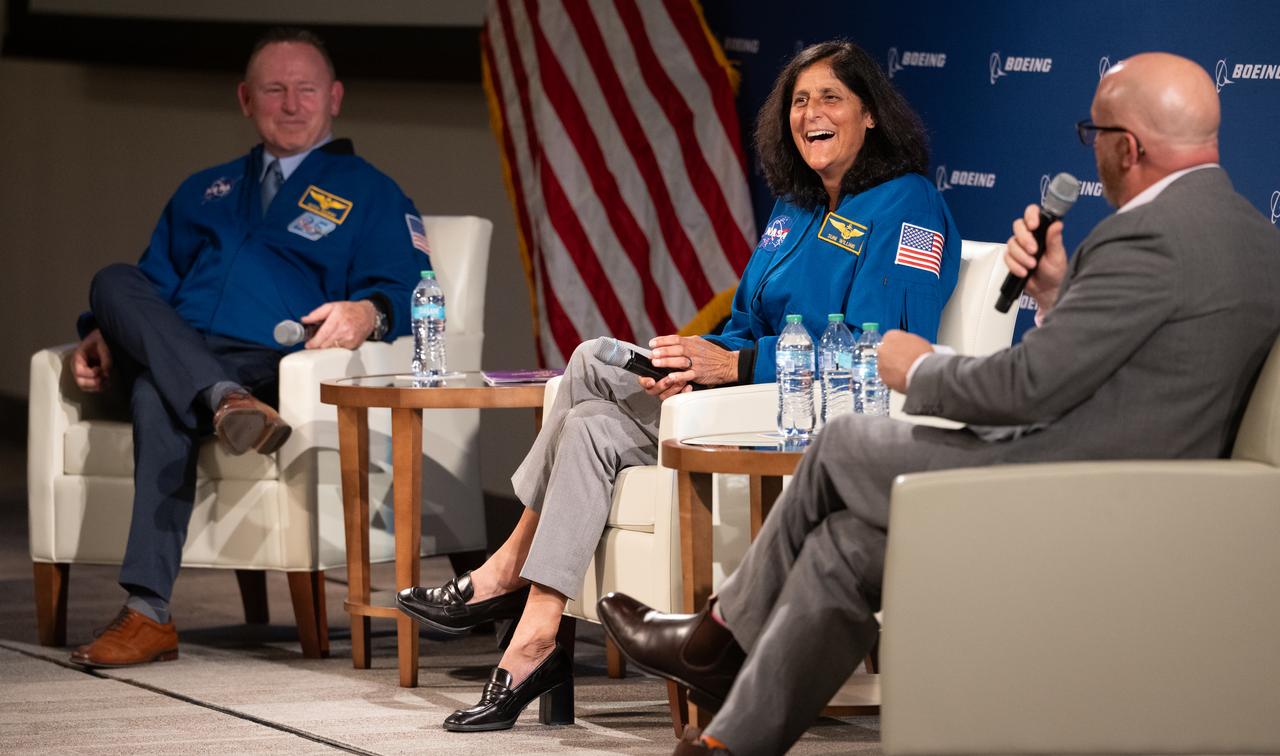
NASA astronauts Suni Williams, center, and Butch Wilmore, left, speak with employees of Boeing alongside Steve Parker, executive vice president, president and CEO of Boeing Defense, Space and Security, Wednesday, Sept. 17, 2025, at the company’s headquarters in Arlington, Va. Williams and Wilmore launched aboard Boeing’s Starliner spacecraft to the International Space Station as part of the agency’s Boeing Crew Flight Test and were integrated into Expedition 71/72 following the uncrewed return of Starliner. The pair returned to Earth with NASA’s SpaceX Crew 9 astronauts. Photo Credit: (NASA/Joel Kowsky)
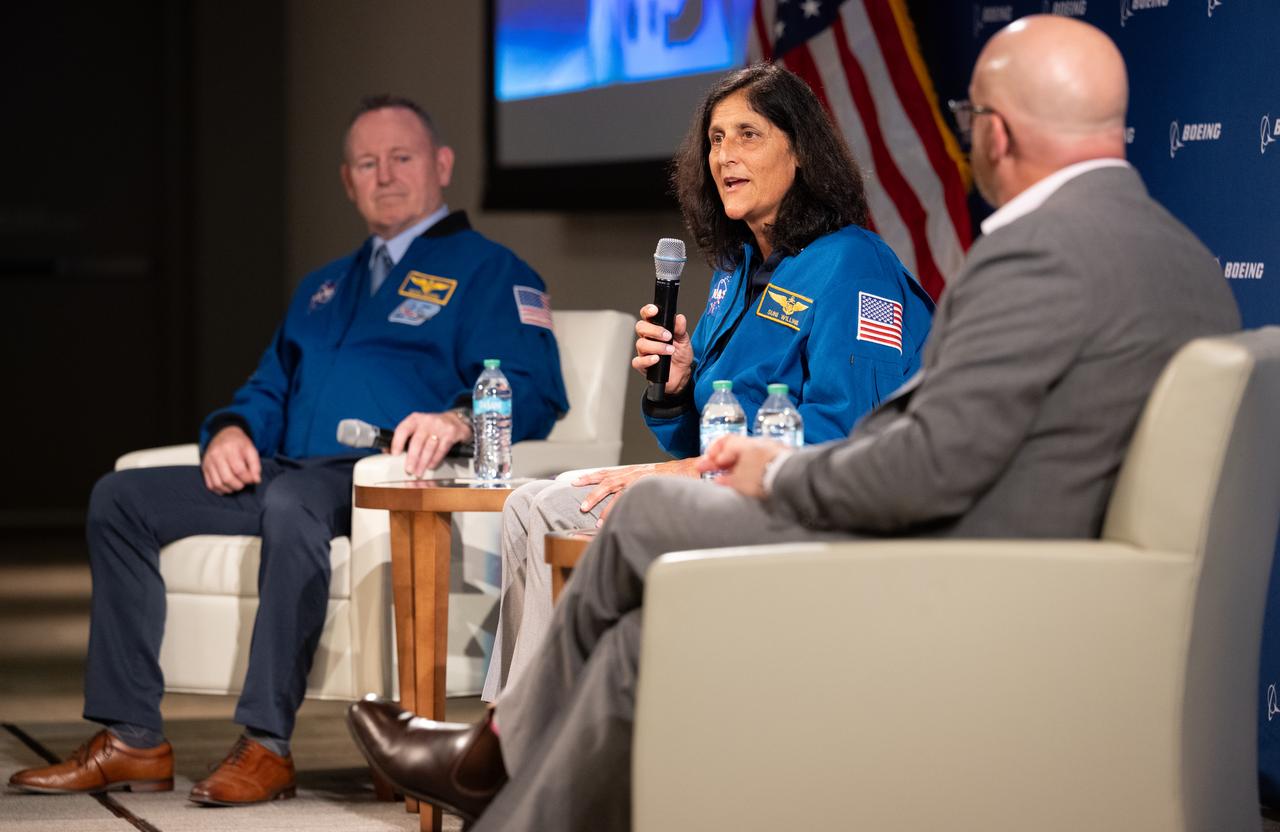
NASA astronauts Suni Williams, center, and Butch Wilmore, left, speak with employees of Boeing alongside Steve Parker, executive vice president, president and CEO of Boeing Defense, Space and Security, Wednesday, Sept. 17, 2025, at the company’s headquarters in Arlington, Va. Williams and Wilmore launched aboard Boeing’s Starliner spacecraft to the International Space Station as part of the agency’s Boeing Crew Flight Test and were integrated into Expedition 71/72 following the uncrewed return of Starliner. The pair returned to Earth with NASA’s SpaceX Crew 9 astronauts. Photo Credit: (NASA/Joel Kowsky)
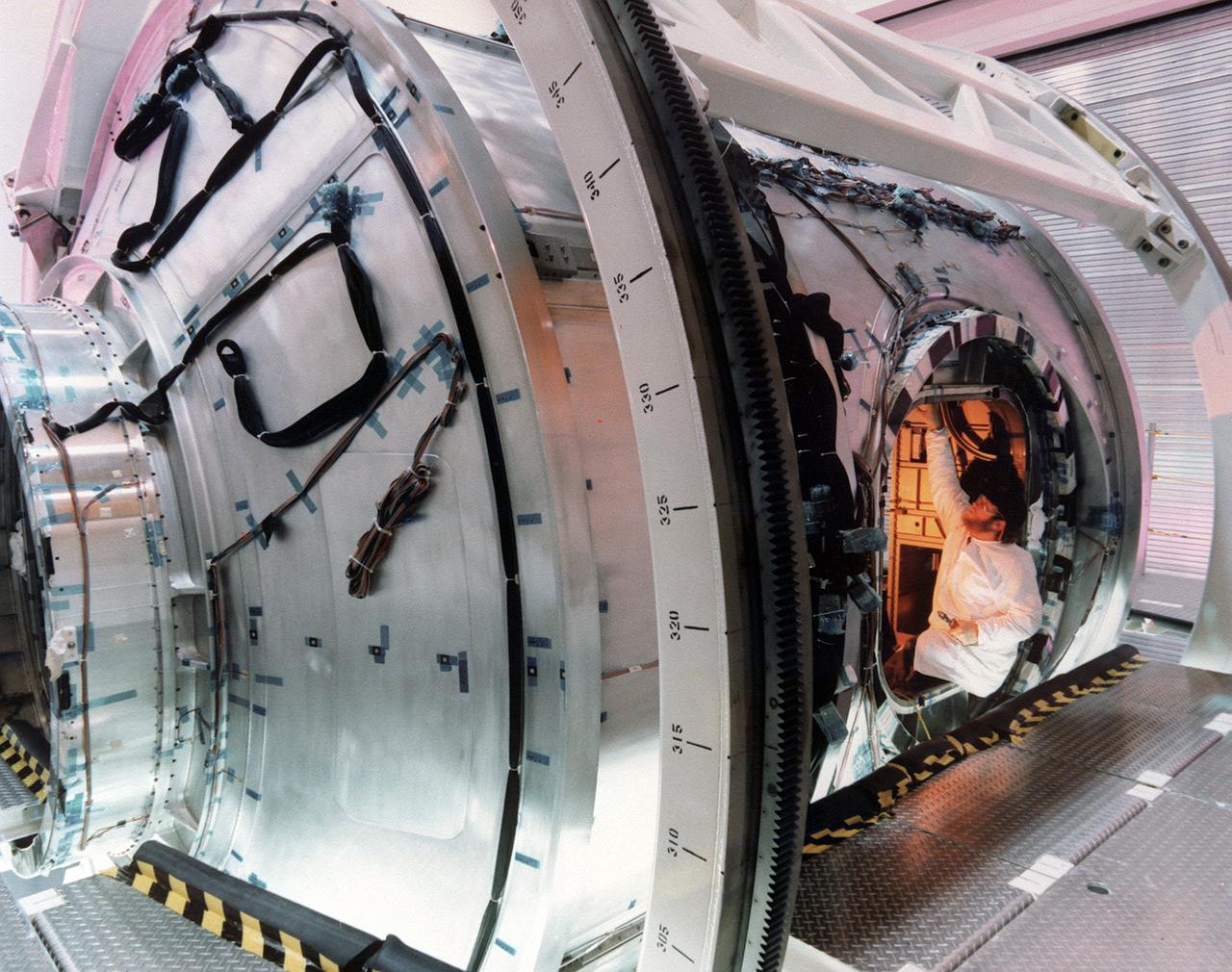
This photograph, taken by the Boeing Company,shows Boeing technicians preparing to install one of six hatches or doors to the Node 1 (also called Unity), the first U.S. Module for the International Space Station (ISS). The Node 1, or Unity, serves as a cornecting passageway to Space Station modules and was manufactured by the Boeing Company at the Marshall Space Flight Center from 1994 to 1997. The U.S. built Unity module was launched aboard the orbiter Endeavour (STS-88 mission) on December 4, 1998 and connected to the Zarya, the Russian-built Functional Energy Block (FGB). The Zarya was launched on a Russian proton rocket prior to the launch of the Unity. The ISS is a multidisciplinary laboratory, technology test bed, and observatory that will provide unprecedented undertakings in scientific, technological, and international experimentation.