
Inside the Rotation, Processing and Surge Facility at NASA’s Kennedy Space Center in Florida, the right-hand motor segment – one of five segments that make up one of two solid rocket boosters for the agency’s Space Launch System (SLS) – is mated to the rocket’s right-hand aft skirt on June 24, 2020. Once the aft segments are mated to the two aft skirts, they will be moved to the Vehicle Assembly Building for stacking on the mobile launcher. Manufactured by Northrop Grumman in Utah, the twin boosters provide more than 75 percent of the total SLS thrust at launch. Under the Artemis program, NASA will land the first woman and the next man on the Moon by 2024. The first in a series of increasingly complex missions, Artemis I will test the Orion spacecraft and SLS as an integrated system ahead of crewed flights to the Moon.

Inside the Rotation, Processing and Surge Facility at NASA’s Kennedy Space Center in Florida, technicians mate the right-hand motor segment – one of five segments that make up one of two solid rocket boosters for the agency’s Space Launch System (SLS) – to the rocket’s right-hand aft skirt on June 24, 2020. Once the aft segments are mated to the two aft skirts, they will be moved to the Vehicle Assembly Building for stacking on the mobile launcher. Manufactured by Northrop Grumman in Utah, the twin boosters provide more than 75 percent of the total SLS thrust at launch. Under the Artemis program, NASA will land the first woman and the next man on the Moon by 2024. The first in a series of increasingly complex missions, Artemis I will test the Orion spacecraft and SLS as an integrated system ahead of crewed flights to the Moon.
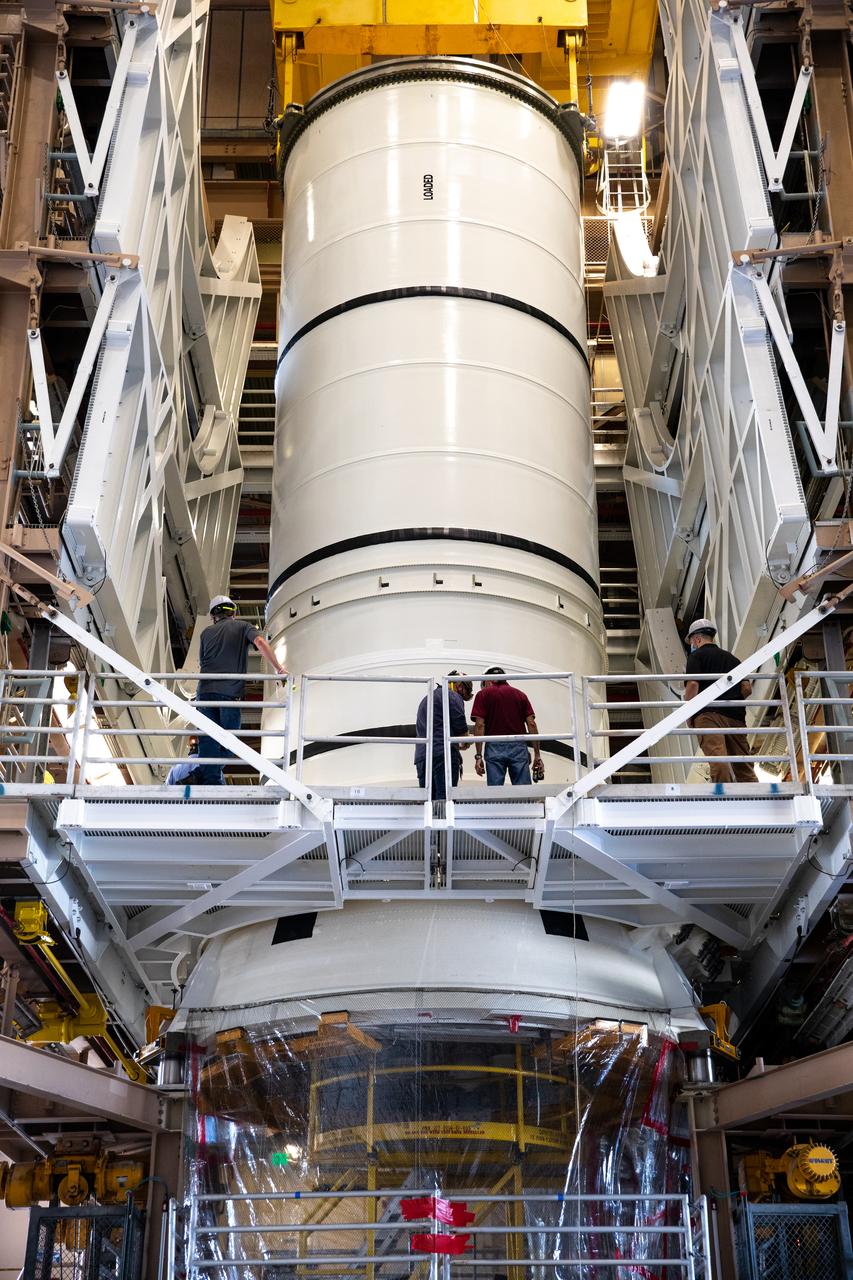
Inside the Rotation, Processing and Surge Facility at NASA’s Kennedy Space Center in Florida, the right-hand motor segment – one of five segments that make up one of two solid rocket boosters for the agency’s Space Launch System (SLS) – is mated to the rocket’s right-hand aft skirt on June 24, 2020. Once the aft segments are mated to the two aft skirts, they will be moved to the Vehicle Assembly Building for stacking on the mobile launcher. Manufactured by Northrop Grumman in Utah, the twin boosters provide more than 75 percent of the total SLS thrust at launch. Under the Artemis program, NASA will land the first woman and the next man on the Moon by 2024. The first in a series of increasingly complex missions, Artemis I will test the Orion spacecraft and SLS as an integrated system ahead of crewed flights to the Moon.
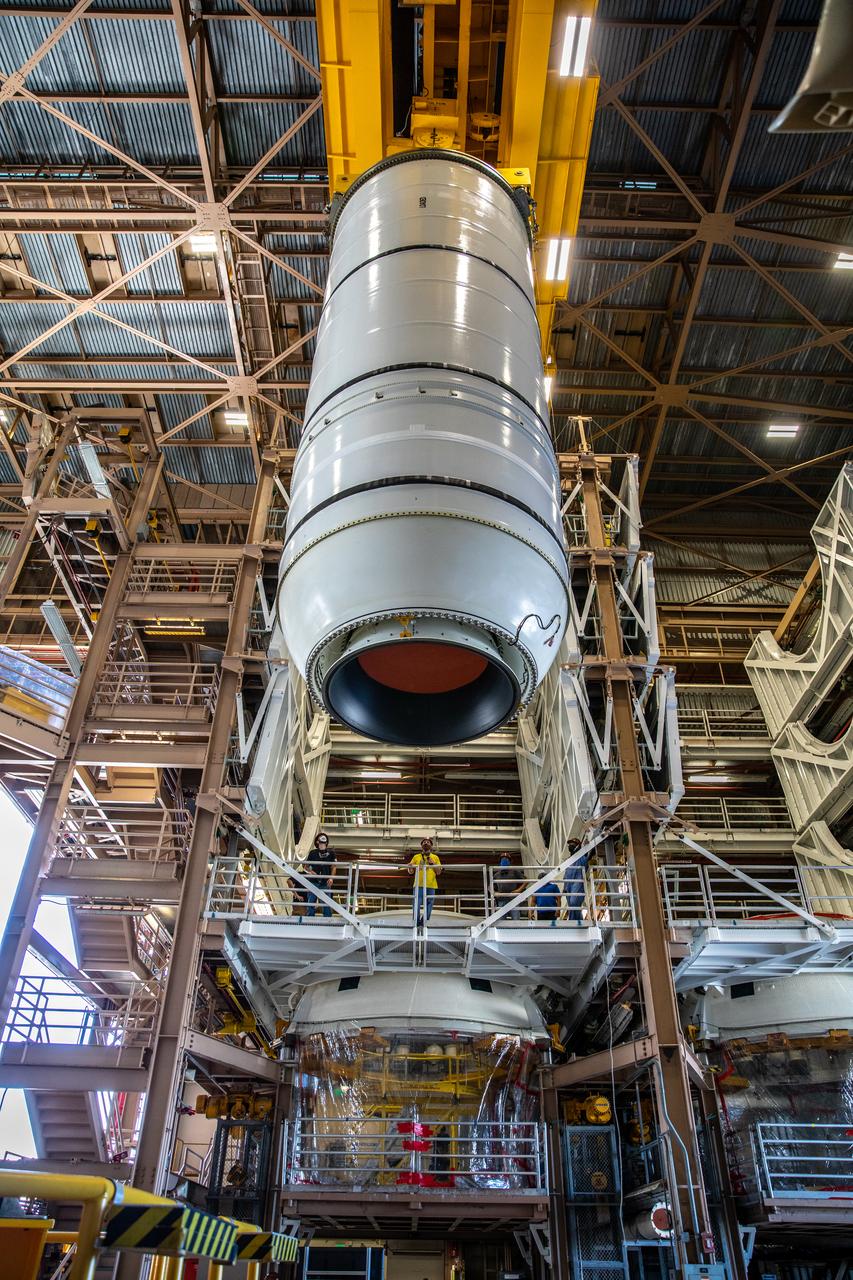
Inside the Rotation, Processing and Surge Facility at NASA’s Kennedy Space Center in Florida, technicians begin to mate the right-hand motor segment – one of five segments that make up one of two solid rocket boosters for the agency’s Space Launch System (SLS) – to the rocket’s right-hand aft skirt on June 24, 2020. Once the aft segments are mated to the two aft skirts, they will be moved to the Vehicle Assembly Building for stacking on the mobile launcher. Manufactured by Northrop Grumman in Utah, the twin boosters provide more than 75 percent of the total SLS thrust at launch. Under the Artemis program, NASA will land the first woman and the next man on the Moon by 2024. The first in a series of increasingly complex missions, Artemis I will test the Orion spacecraft and SLS as an integrated system ahead of crewed flights to the Moon.

Inside the Rotation, Processing and Surge Facility at NASA’s Kennedy Space Center in Florida, the right-hand motor segment – one of five segments that make up one of two solid rocket boosters for the agency’s Space Launch System (SLS) – is mated to the rocket’s right-hand aft skirt on June 24, 2020. Once the aft segments are mated to the two aft skirts, they will be moved to the Vehicle Assembly Building for stacking on the mobile launcher. Manufactured by Northrop Grumman in Utah, the twin boosters provide more than 75 percent of the total SLS thrust at launch. Under the Artemis program, NASA will land the first woman and the next man on the Moon by 2024. The first in a series of increasingly complex missions, Artemis I will test the Orion spacecraft and SLS as an integrated system ahead of crewed flights to the Moon.
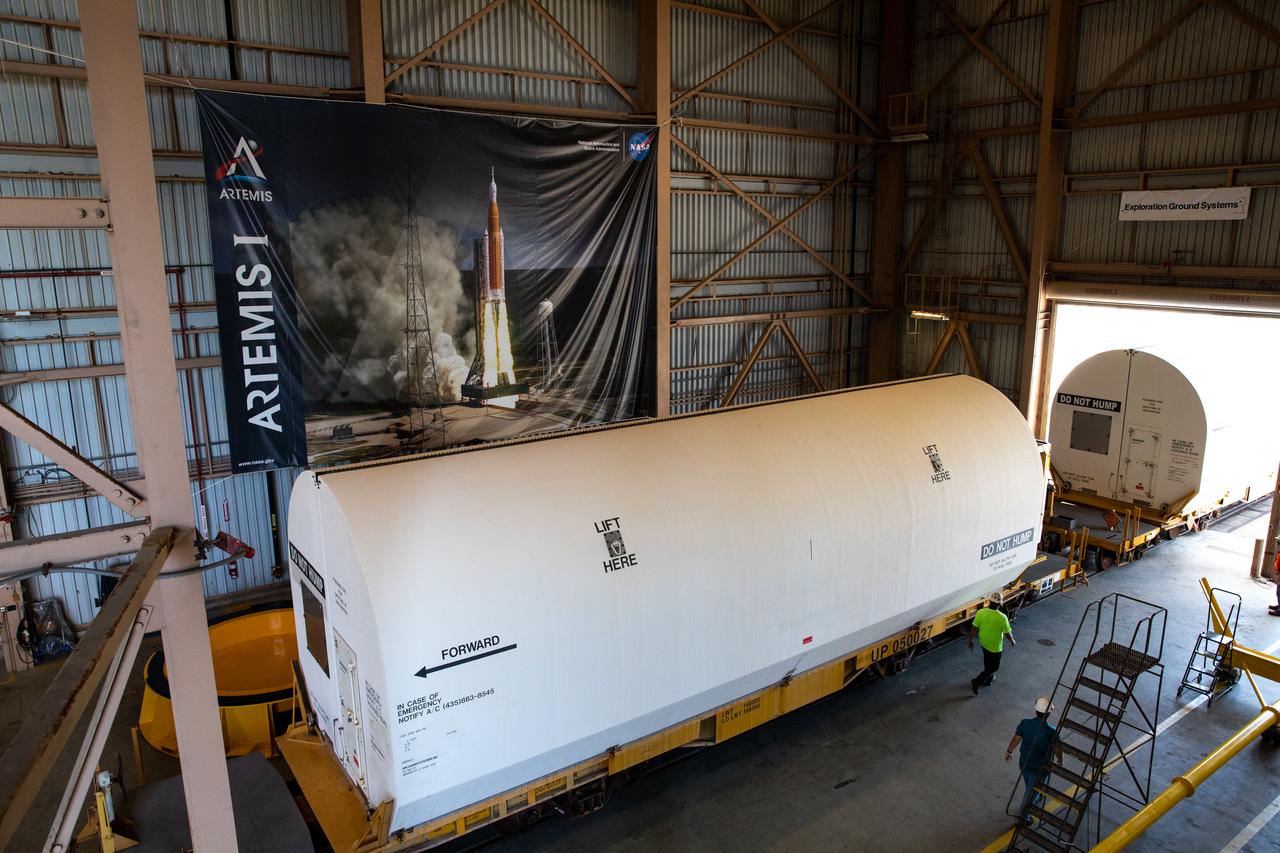
The shipping container that held the right-hand motor segment – one of five segments that make up one of two solid rocket boosters for the agency’s Space Launch System (SLS) – is photographed inside the Rotation, Processing and Surge Facility (RPSF) at NASA’s Kennedy Space Center in Florida on June 24, 2020. The boosters, manufactured by Northrop Grumman in Utah, recently arrived at Kennedy for processing ahead of the Artemis I launch. While in the RPSF, the booster aft segments will be mated to the rocket’s two aft skirts before they are moved to the Vehicle Assembly Building for stacking on the mobile launcher. Together, the twin boosters provide more than 75 percent of the total SLS thrust at launch. The first in a series of increasingly complex missions, Artemis I will test the Orion spacecraft and SLS as an integrated system ahead of crewed flights to the Moon.
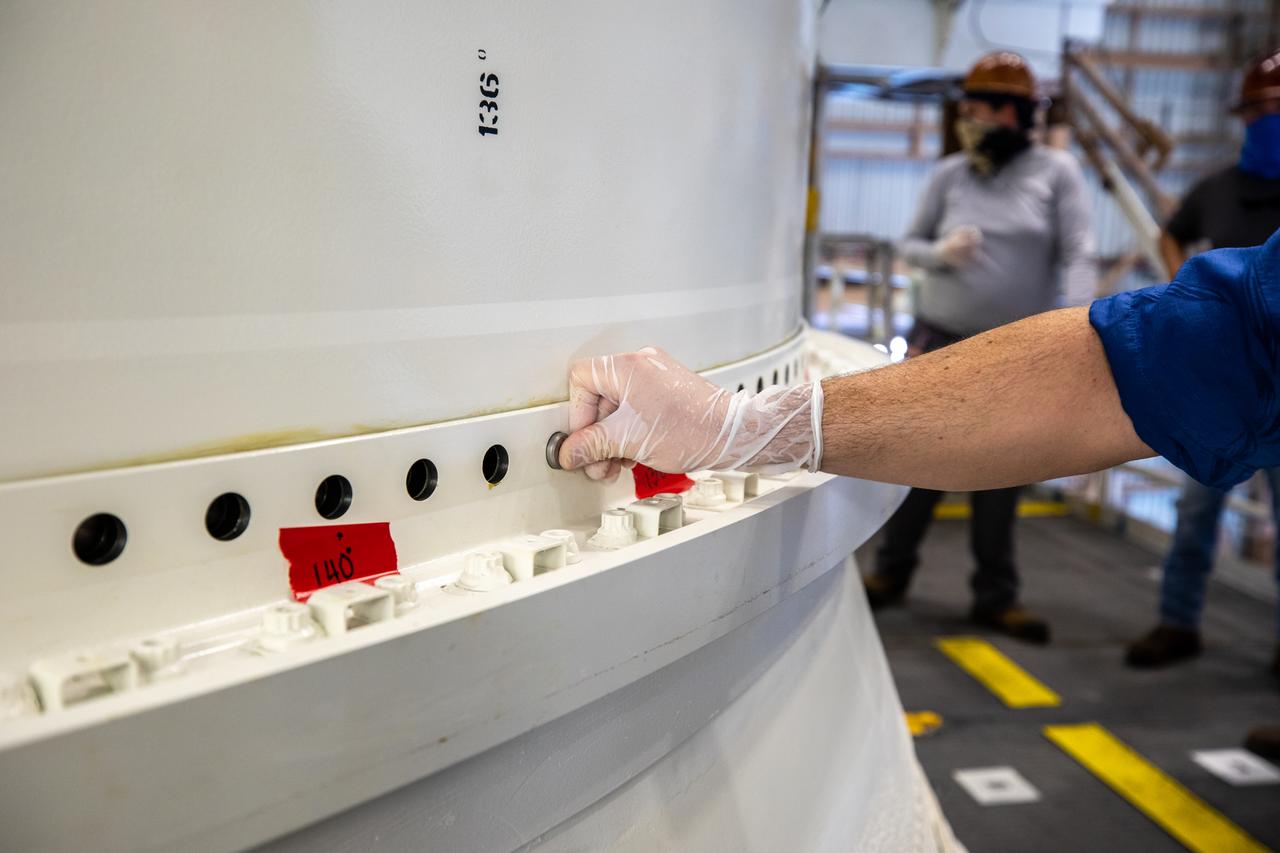
Inside the Rotation, Processing and Surge Facility at NASA’s Kennedy Space Center in Florida, Pablo Martinez, a handling, mechanical and structures engineer on the Jacobs Technology Inc. Test and Operations Support Contract, inserts the first of many pins that will secure the Space Launch System’s (SLS) right-hand motor segment to the rocket’s right-hand aft skirt. The right-hand motor segment is one of five segments that makes up one of two solid rocket boosters. Once the aft segments are mated to the two aft skirts, they will be moved to the Vehicle Assembly Building for stacking on the mobile launcher. Manufactured by Northrop Grumman in Utah, the twin boosters provide more than 75 percent of the total SLS thrust at launch. Under the Artemis program, NASA will land the first woman and the next man on the Moon by 2024. The first in a series of increasingly complex missions, Artemis I will test the Orion spacecraft and SLS as an integrated system ahead of crewed flights to the Moon.
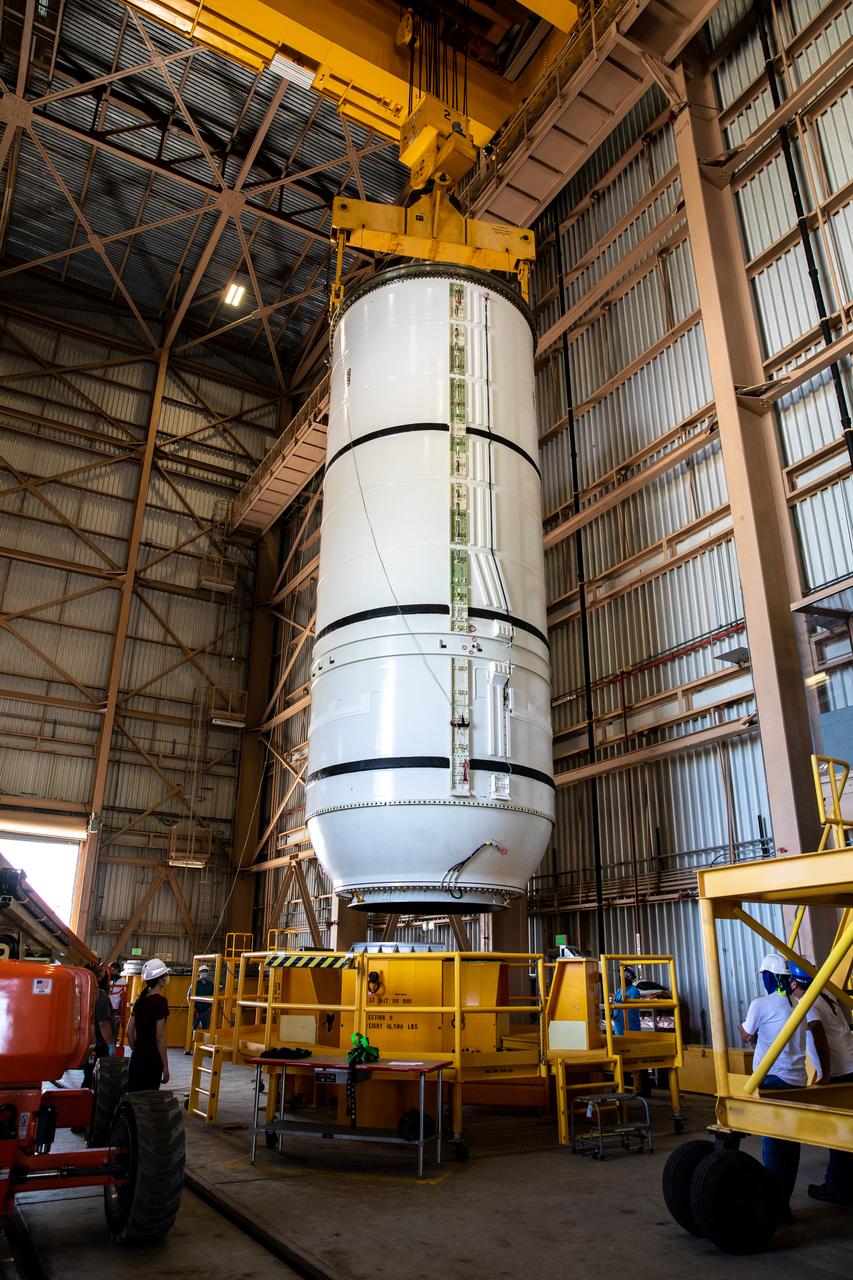
Inside the Rotation, Processing and Surge Facility at NASA’s Kennedy Space Center in Florida, technicians prepare to mate the right-hand motor segment – one of five segments that make up one of two solid rocket boosters for the agency’s Space Launch System (SLS) – to the rocket’s right-hand aft skirt on June 24, 2020. Once the booster aft segments are mated to the two aft skirts, they will be moved to the Vehicle Assembly Building for stacking on the mobile launcher. Manufactured by Northrop Grumman in Utah, the twin boosters provide more than 75 percent of the total SLS thrust at launch. Under the Artemis program, NASA will land the first woman and the next man on the Moon by 2024. The first in a series of increasingly complex missions, Artemis I will test the Orion spacecraft and SLS as an integrated system ahead of crewed flights to the Moon.
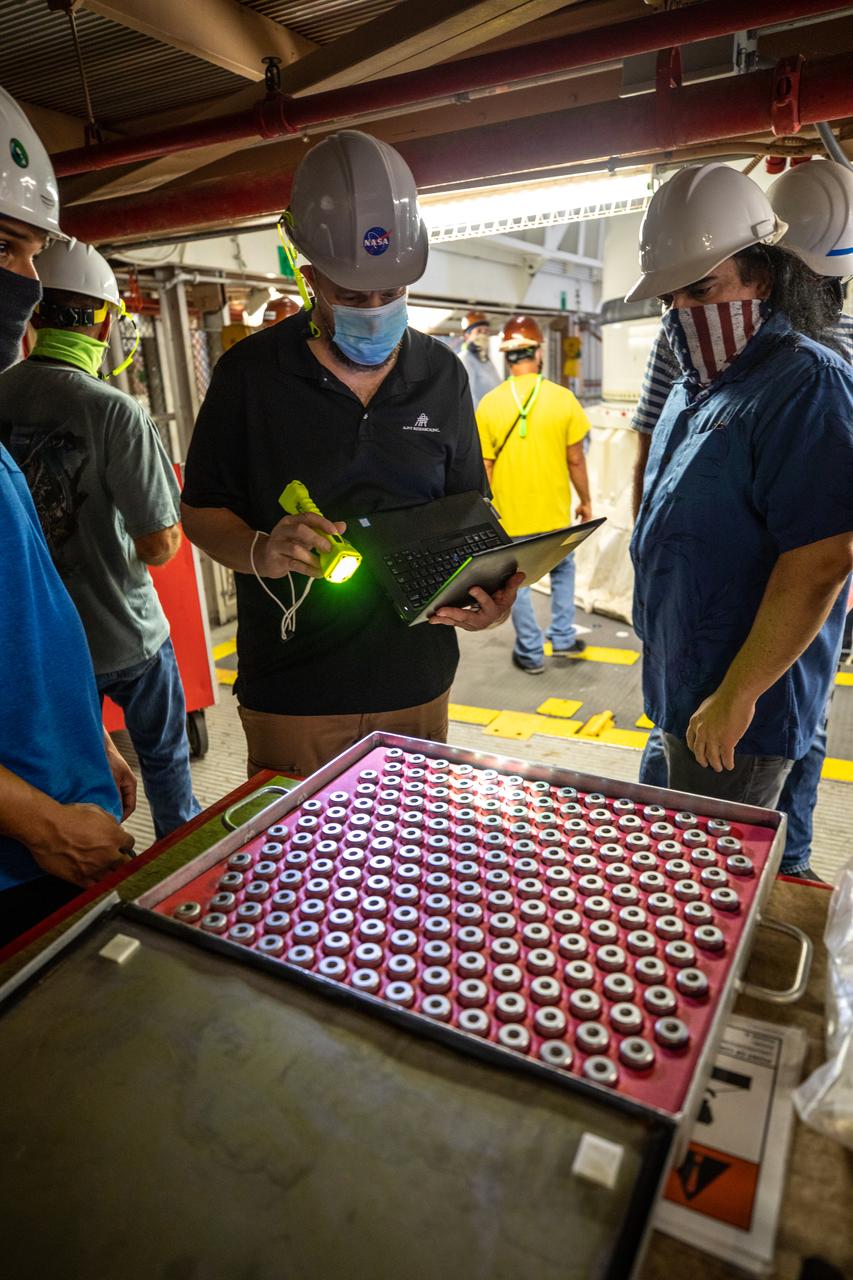
Inside the Rotation, Processing and Surge Facility at NASA’s Kennedy Space Center in Florida, technicians inspect the pins that will be used to secure the right-hand motor segment – one of five segments that make up one of two solid rocket boosters for the agency’s Space Launch System (SLS) – to the right-hand aft skirt on June 24, 2020. Once the aft segments are mated to the two aft skirts, they will be moved to the Vehicle Assembly Building for stacking on the mobile launcher. Manufactured by Northrop Grumman in Utah, the twin boosters provide more than 75 percent of the total SLS thrust at launch. Under the Artemis program, NASA will land the first woman and the next man on the Moon by 2024. The first in a series of increasingly complex missions, Artemis I will test the Orion spacecraft and SLS as an integrated system ahead of crewed flights to the Moon.

Inside the Rotation, Processing and Surge Facility at NASA’s Kennedy Space Center in Florida, the right-hand motor segment – one of five segments that make up one of two solid rocket boosters for the agency’s Space Launch System (SLS) – is mated to the rocket’s right-hand aft skirt on June 24, 2020. Once the aft segments are mated to the two aft skirts, they will be moved to the Vehicle Assembly Building for stacking on the mobile launcher. Manufactured by Northrop Grumman in Utah, the twin boosters provide more than 75 percent of the total SLS thrust at launch. Under the Artemis program, NASA will land the first woman and the next man on the Moon by 2024. The first in a series of increasingly complex missions, Artemis I will test the Orion spacecraft and SLS as an integrated system ahead of crewed flights to the Moon.
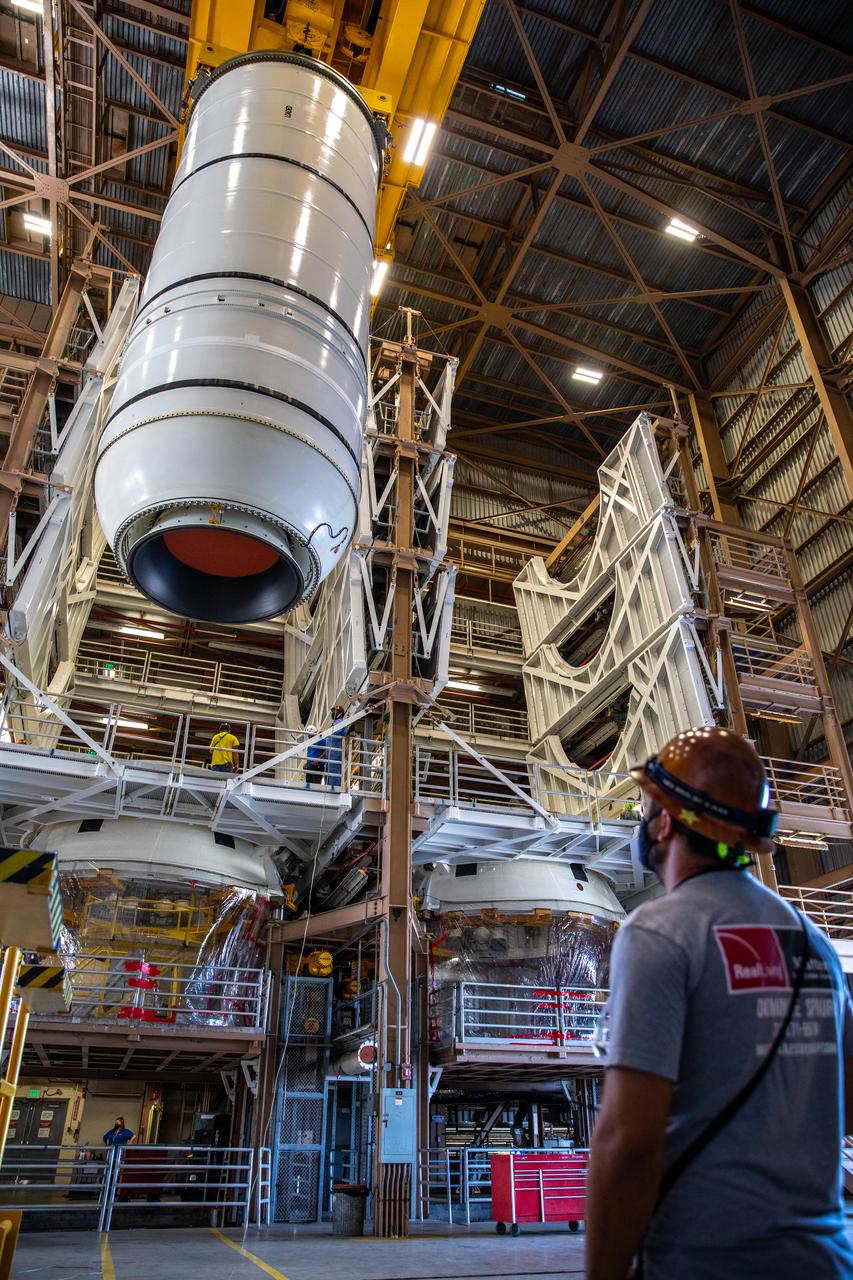
Inside the Rotation, Processing and Surge Facility at NASA’s Kennedy Space Center in Florida, technicians mate the right-hand motor segment – one of five segments that make up one of two solid rocket boosters for the agency’s Space Launch System (SLS) – to the rocket’s right-hand aft skirt on June 24, 2020. Once the aft segments are mated to the two aft skirts, they will be moved to the Vehicle Assembly Building for stacking on the mobile launcher. Manufactured by Northrop Grumman in Utah, the twin boosters provide more than 75 percent of the total SLS thrust at launch. Under the Artemis program, NASA will land the first woman and the next man on the Moon by 2024. The first in a series of increasingly complex missions, Artemis I will test the Orion spacecraft and SLS as an integrated system ahead of crewed flights to the Moon.
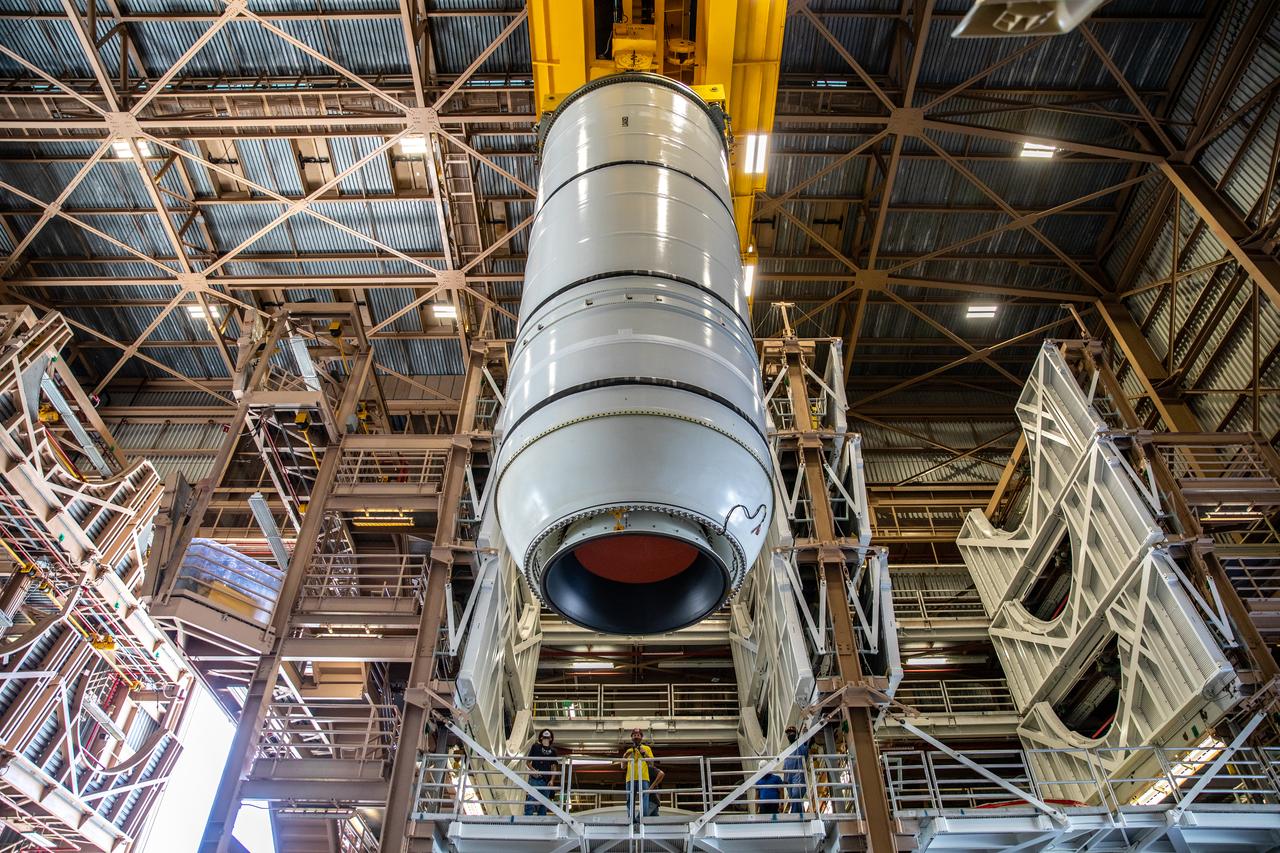
Inside the Rotation, Processing and Surge Facility at NASA’s Kennedy Space Center in Florida, technicians mate the right-hand motor segment – one of five segments that make up one of two solid rocket boosters for the agency’s Space Launch System (SLS) – to the rocket’s right-hand aft skirt on June 24, 2020. Once the aft segments are mated to the two aft skirts, they will be moved to the Vehicle Assembly Building for stacking on the mobile launcher. Manufactured by Northrop Grumman in Utah, the twin boosters provide more than 75 percent of the total SLS thrust at launch. Under the Artemis program, NASA will land the first woman and the next man on the Moon by 2024. The first in a series of increasingly complex missions, Artemis I will test the Orion spacecraft and SLS as an integrated system ahead of crewed flights to the Moon.
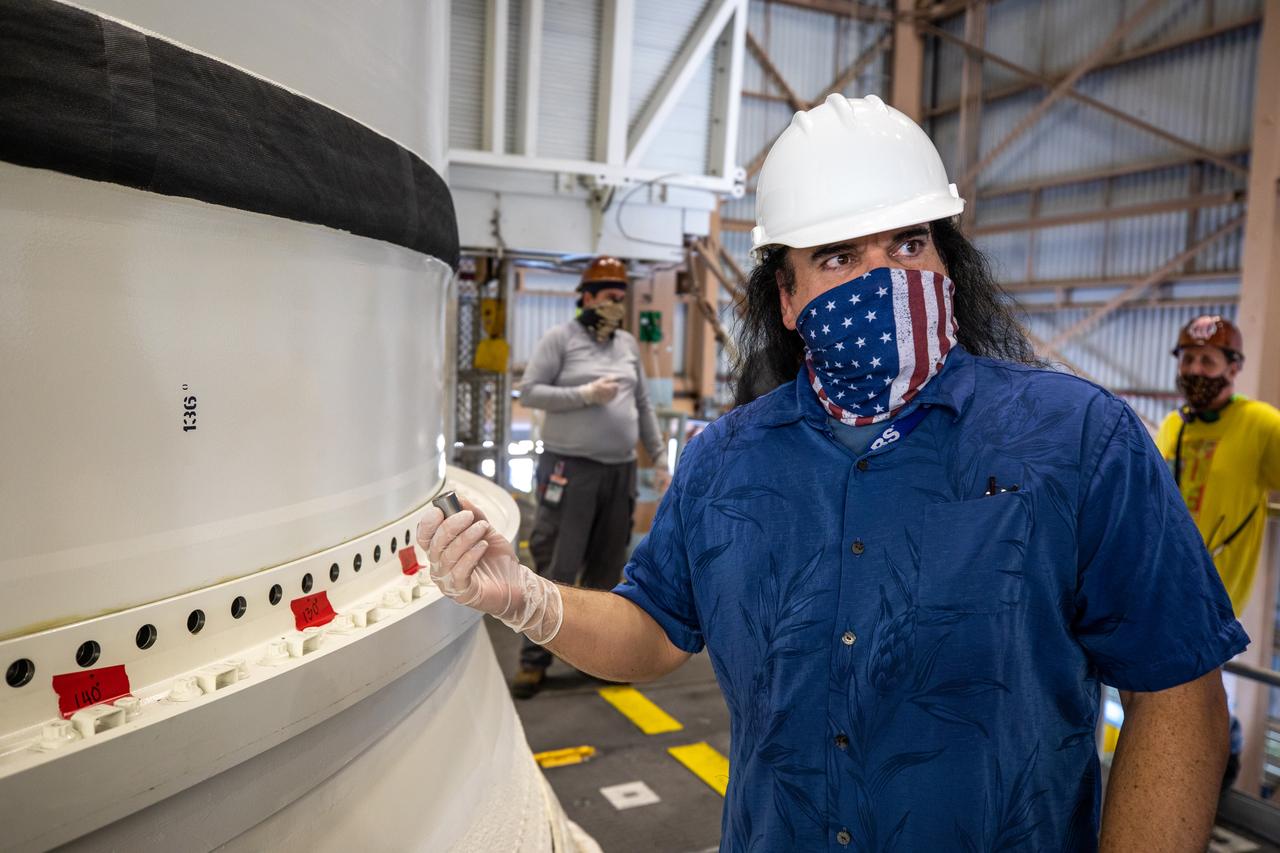
Inside the Rotation, Processing and Surge Facility at NASA’s Kennedy Space Center in Florida, Pablo Martinez, a handling, mechanical and structures engineer on the Jacobs Technology Inc. Test and Operations Support Contract, prepares to insert the first of many pins that will secure the Space Launch System’s (SLS) right-hand motor segment to the rocket’s right-hand aft skirt. The right-hand motor segment is one of five segments that makes up one of two solid rocket boosters. Once the aft segments are mated to the two aft skirts, they will be moved to the Vehicle Assembly Building for stacking on the mobile launcher. Manufactured by Northrop Grumman in Utah, the twin boosters provide more than 75 percent of the total SLS thrust at launch. Under the Artemis program, NASA will land the first woman and the next man on the Moon by 2024. The first in a series of increasingly complex missions, Artemis I will test the Orion spacecraft and SLS as an integrated system ahead of crewed flights to the Moon.
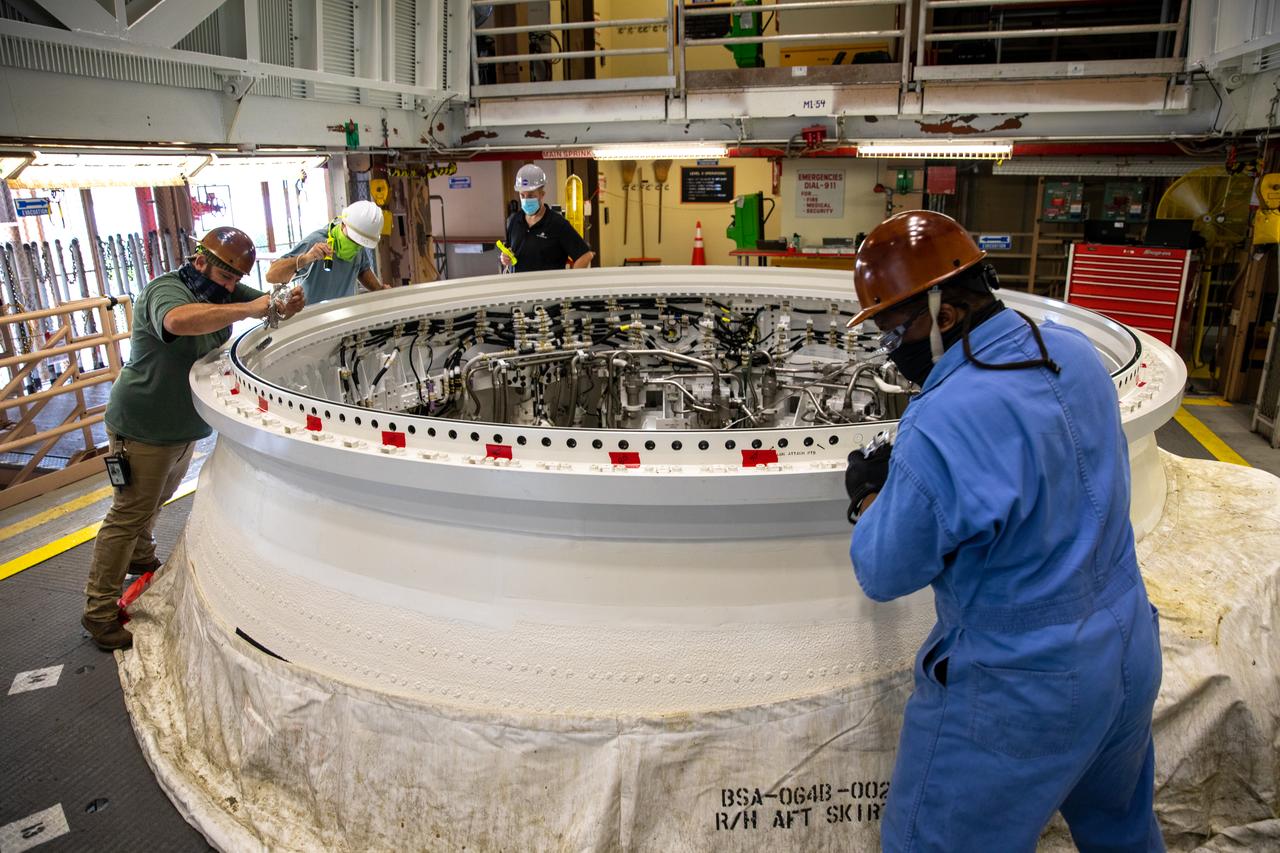
Inside the Rotation, Processing and Surge Facility at NASA’s Kennedy Space Center in Florida, technicians inspect the Space Launch System’s (SLS) right-hand aft skirt prior to mating it with the rocket’s right-hand motor segment – one of five segments that make up one of two solid rocket boosters – on June 24, 2020. Once the two aft skirts are mated to the aft segments, they will be moved to the Vehicle Assembly Building for stacking on the mobile launcher. Manufactured by Northrop Grumman in Utah, the twin boosters provide more than 75 percent of the total SLS thrust at launch. Under the Artemis program, NASA will land the first woman and the next man on the Moon by 2024. The first in a series of increasingly complex missions, Artemis I will test the Orion spacecraft and SLS as an integrated system ahead of crewed flights to the Moon.
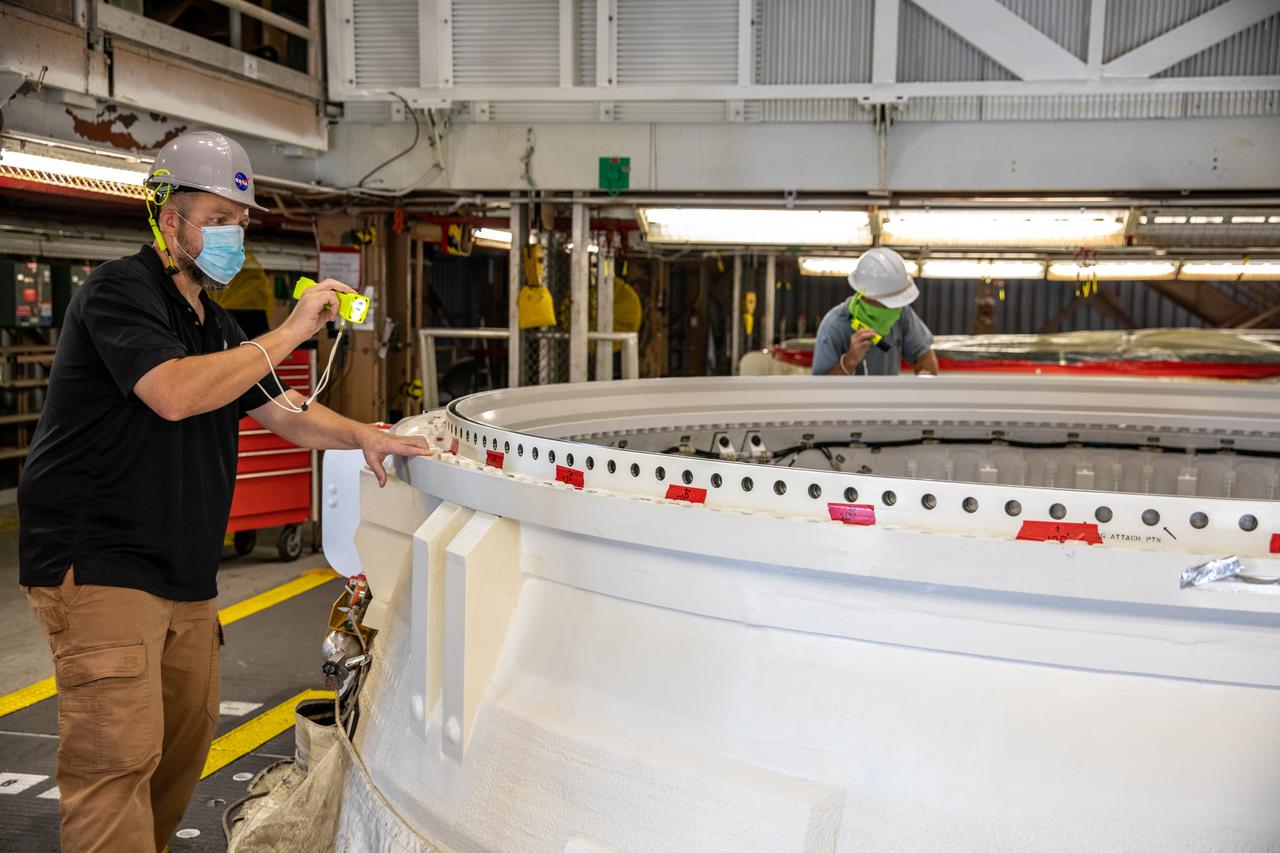
Brendan Deuble, a handling, mechanical and structures engineer on the Jacobs Technology Inc. Test and Operations Support Contract, inspects the Space Launch System’s (SLS) right-hand aft skirt inside the Rotation, Processing and Surge Facility (RPSF) at NASA’s Kennedy Space Center in Florida on June 24, 2020. While in the RPSF, the aft skirt will be mated with the rocket’s right-hand motor segment – one of five segments that make up one of two solid rocket boosters. Once the two aft skirts are mated with the aft segments, they will be moved to the Vehicle Assembly Building for stacking on the mobile launcher. Manufactured by Northrop Grumman in Utah, the twin boosters provide more than 75 percent of the total SLS thrust at launch. Under the Artemis program, NASA will land the first woman and the next man on the Moon by 2024. The first in a series of increasingly complex missions, Artemis I will test the Orion spacecraft and SLS as an integrated system ahead of crewed flights to the Moon.

Inside the Rotation, Processing and Surge Facility at NASA’s Kennedy Space Center in Florida, the right-hand motor segment – one of five segments that make up one of two solid rocket boosters for the agency’s Space Launch System (SLS) – is mated to the rocket’s right-hand aft skirt on June 24, 2020. Once the aft segments are mated to the two aft skirts, they will be moved to the Vehicle Assembly Building for stacking on the mobile launcher. Manufactured by Northrop Grumman in Utah, the twin boosters provide more than 75 percent of the total SLS thrust at launch. Under the Artemis program, NASA will land the first woman and the next man on the Moon by 2024. The first in a series of increasingly complex missions, Artemis I will test the Orion spacecraft and SLS as an integrated system ahead of crewed flights to the Moon.
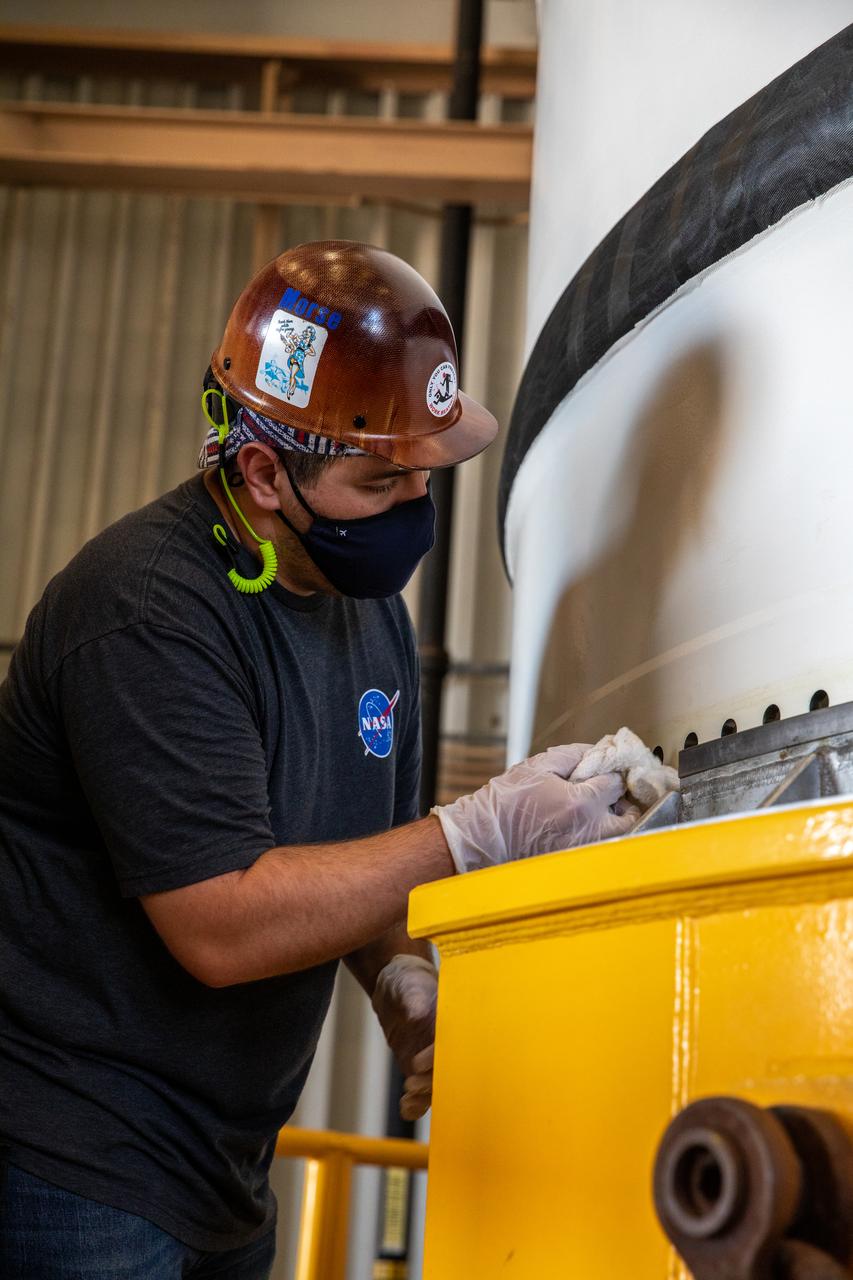
Inside the Rotation, Processing and Surge Facility at NASA’s Kennedy Space Center in Florida, a technician inspects and removes grease from the right-hand motor segment – one of five segments that make up one of two solid rocket boosters for the agency’s Space Launch System (SLS) – in preparation for mating to the rocket’s right-hand aft skirt on June 24, 2020. Once the booster aft segments are mated to the two aft skirts, they will be moved to the Vehicle Assembly Building for stacking on the mobile launcher. Manufactured by Northrop Grumman in Utah, the twin boosters provide more than 75 percent of the total SLS thrust at launch. Under the Artemis program, NASA will land the first woman and the next man on the Moon by 2024. The first in a series of increasingly complex missions, Artemis I will test the Orion spacecraft and SLS as an integrated system ahead of crewed flights to the Moon.
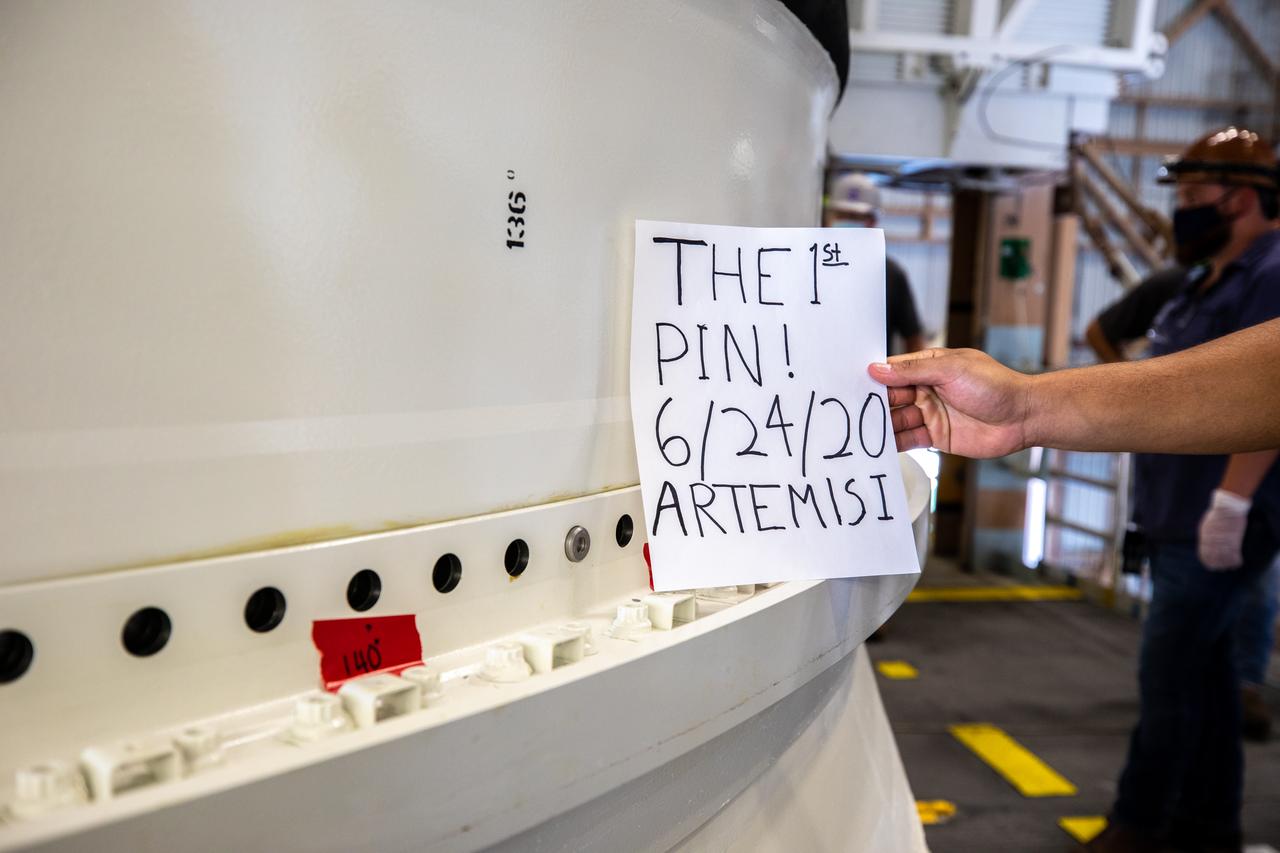
Inside the Rotation, Processing and Surge Facility at NASA’s Kennedy Space Center in Florida, the first of many pins that will secure the right-hand motor segment – one of five segments that make up one of two solid rocket boosters for the agency’s Space Launch System (SLS) – to the rocket’s right-hand aft skirt is inserted on June 24, 2020. Once the aft segments are mated to the two aft skirts, they will be moved to the Vehicle Assembly Building for stacking on the mobile launcher. Manufactured by Northrop Grumman in Utah, the twin boosters provide more than 75 percent of the total SLS thrust at launch. Under the Artemis program, NASA will land the first woman and the next man on the Moon by 2024. The first in a series of increasingly complex missions, Artemis I will test the Orion spacecraft and SLS as an integrated system ahead of crewed flights to the Moon.
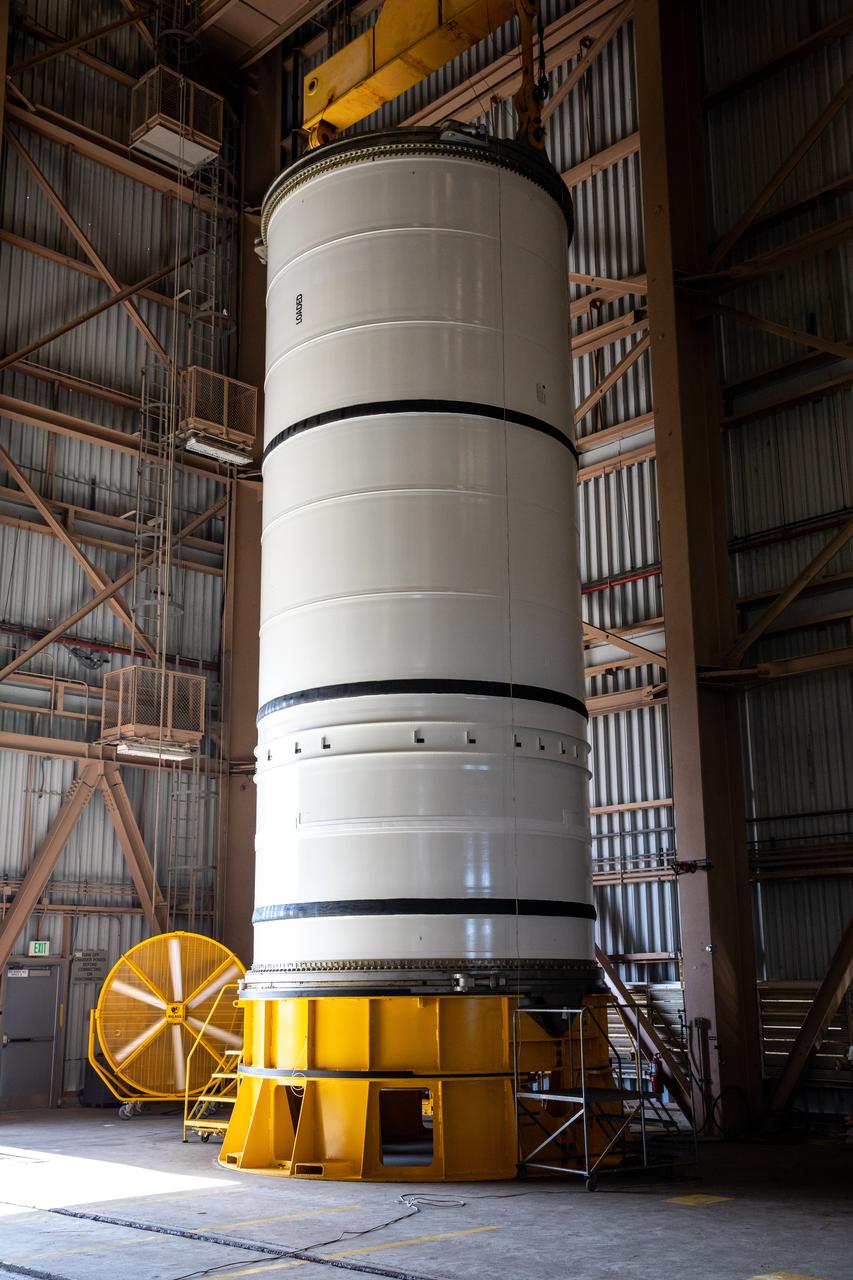
Inside the Rotation, Processing and Surge Facility at NASA’s Kennedy Space Center in Florida, the right-hand motor segment – one of five segments that make up one of two solid rocket boosters for the agency’s Space Launch System (SLS) – is prepped for mating to the rocket’s right-hand aft skirt on June 24, 2020. Once the booster aft segments are mated to the two aft skirts, they will be moved to the Vehicle Assembly Building for stacking on the mobile launcher. Manufactured by Northrop Grumman in Utah, the twin boosters provide more than 75 percent of the total SLS thrust at launch. Under the Artemis program, NASA will land the first woman and the next man on the Moon by 2024. The first in a series of increasingly complex missions, Artemis I will test the Orion spacecraft and SLS as an integrated system ahead of crewed flights to the Moon.

CAPE CANAVERAL, Fla. – At the Astrotech payload processing facility in Titusville, Fla., workers attach the upper segment of the transportation canister to the lower segments around the Space Tracking and Surveillance System – Demonstrators, or STSS Demo, spacecraft. The STSS Demo is a space-based sensor component of a layered Ballistic Missile Defense System designed for the overall mission of detecting, tracking and discriminating ballistic missiles. STSS is capable of tracking objects after boost phase and provides trajectory information to other sensors. It will be launched by NASA for the Missile Defense Agency between 8 and 8:58 a.m. EDT Sept. 18. Approved for Public Release 09-MDA-04886 (10 SEPT 09) Photo credit: NASA/Kim Shiflett
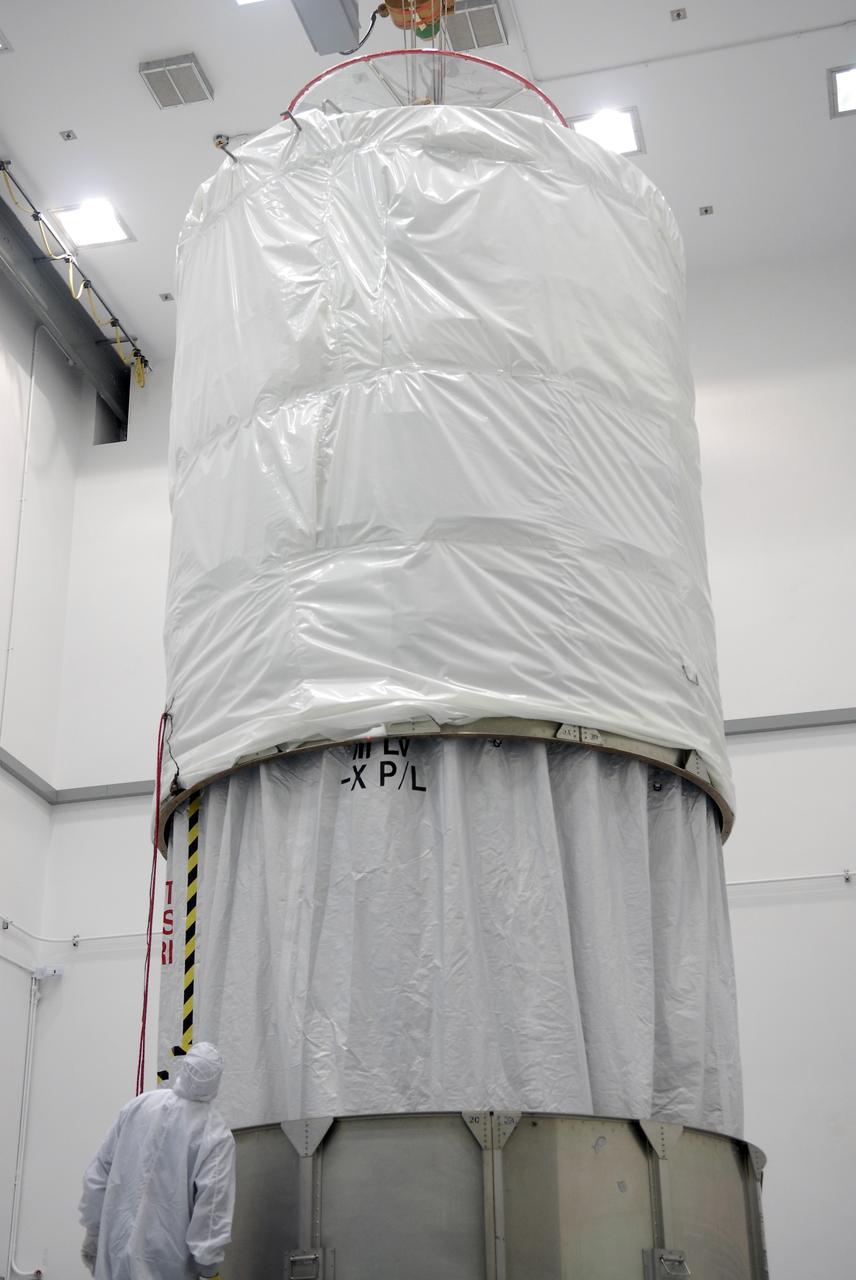
CAPE CANAVERAL, Fla. – At the Astrotech payload processing facility in Titusville, Fla., the upper segment of the transportation canister is lowered over the Space Tracking and Surveillance System – Demonstrators, or STSS Demo, spacecraft. It will be installed onto the lower segments already in place. The STSS Demo is a space-based sensor component of a layered Ballistic Missile Defense System designed for the overall mission of detecting, tracking and discriminating ballistic missiles. STSS is capable of tracking objects after boost phase and provides trajectory information to other sensors. It will be launched by NASA for the Missile Defense Agency between 8 and 8:58 a.m. EDT Sept. 18. Approved for Public Release 09-MDA-04886 (10 SEPT 09) Photo credit: NASA/Kim Shiflett
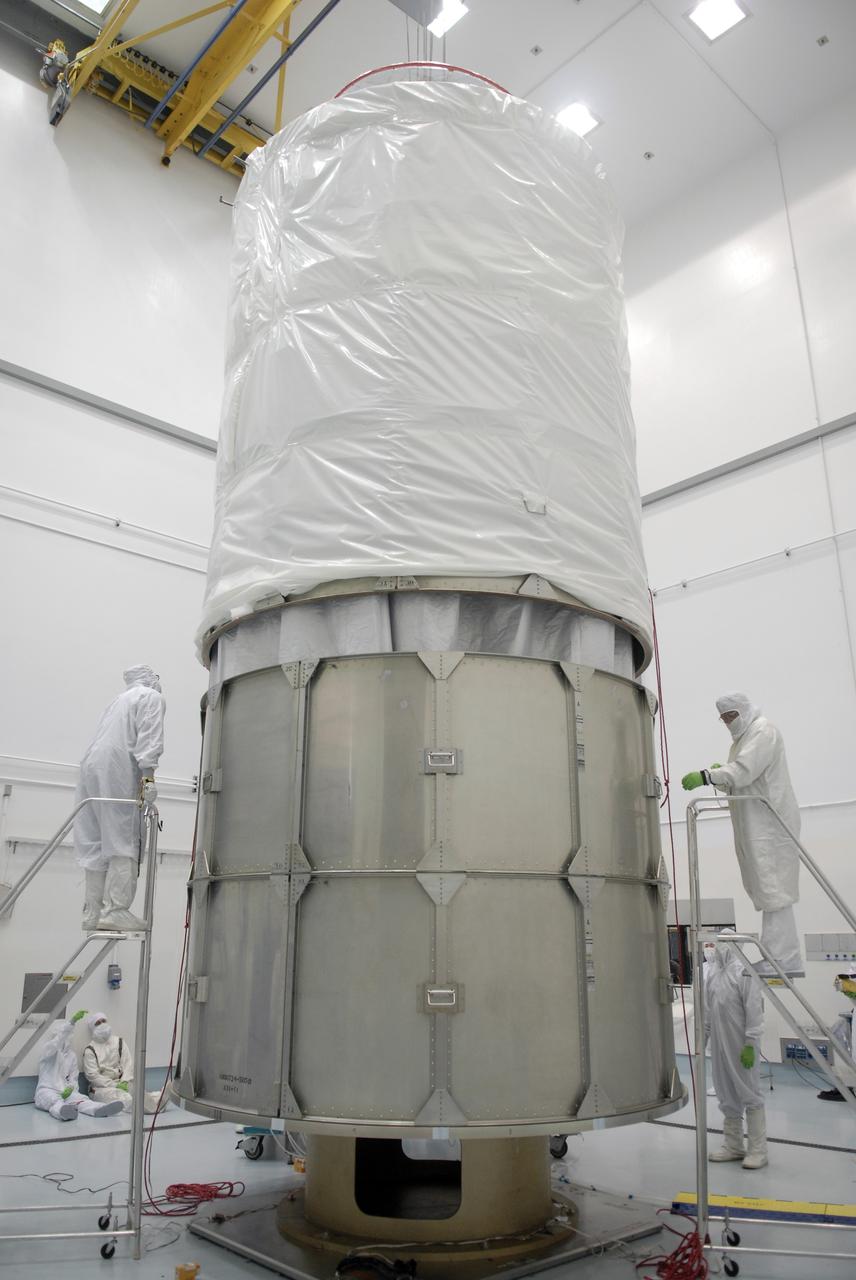
CAPE CANAVERAL, Fla. – At the Astrotech payload processing facility in Titusville, Fla., the upper segment of the transportation canister is lowered over the Space Tracking and Surveillance System – Demonstrators, or STSS Demo, spacecraft. It will be installed onto the lower segments already in place. The STSS Demo is a space-based sensor component of a layered Ballistic Missile Defense System designed for the overall mission of detecting, tracking and discriminating ballistic missiles. STSS is capable of tracking objects after boost phase and provides trajectory information to other sensors. It will be launched by NASA for the Missile Defense Agency between 8 and 8:58 a.m. EDT Sept. 18. Approved for Public Release 09-MDA-04886 (10 SEPT 09) Photo credit: NASA/Kim Shiflett
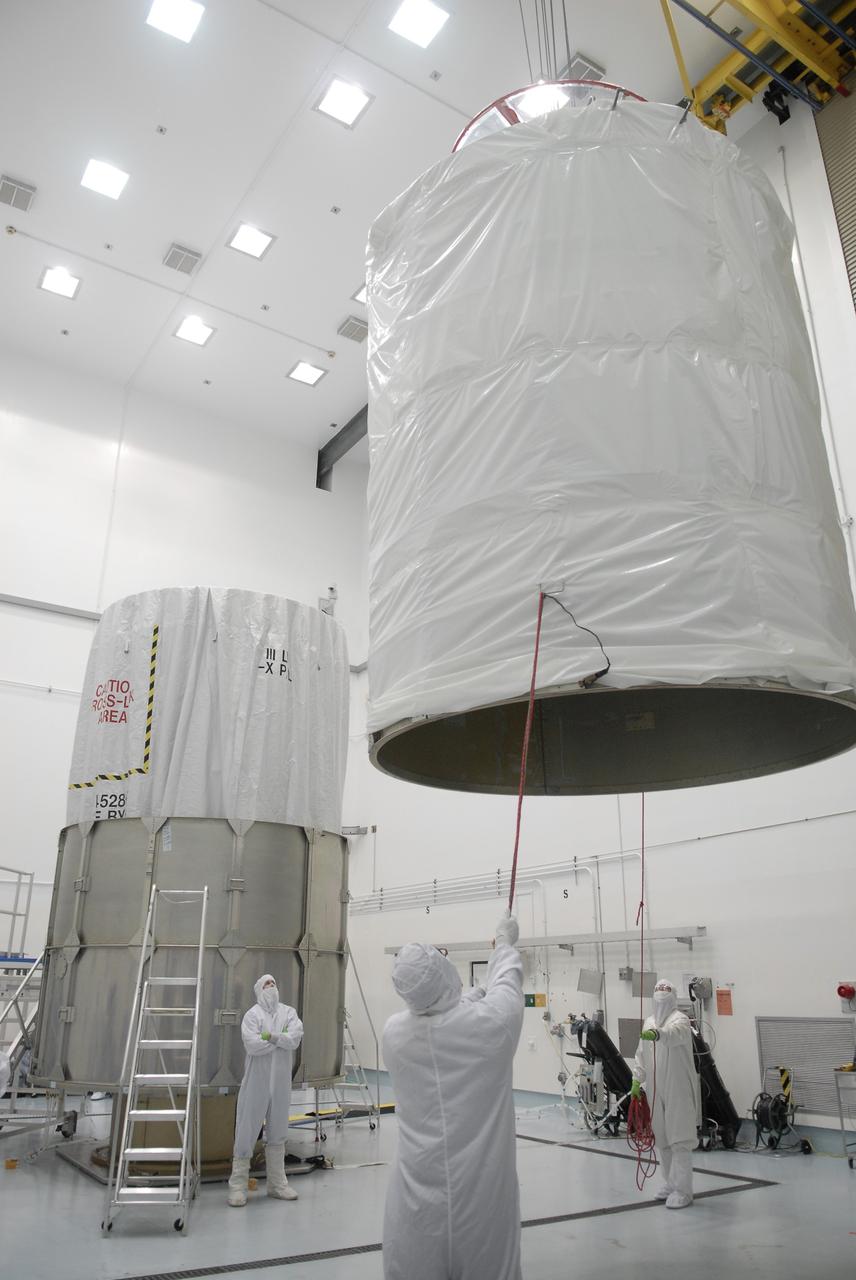
CAPE CANAVERAL, Fla. – At the Astrotech payload processing facility in Titusville, Fla., the upper segment of the transportation canister is moved toward the Space Tracking and Surveillance System – Demonstrators, or STSS Demo, spacecraft, at left. The STSS Demo is a space-based sensor component of a layered Ballistic Missile Defense System designed for the overall mission of detecting, tracking and discriminating ballistic missiles. STSS is capable of tracking objects after boost phase and provides trajectory information to other sensors. It will be launched by NASA for the Missile Defense Agency between 8 and 8:58 a.m. EDT Sept. 18. Approved for Public Release 09-MDA-04886 (10 SEPT 09) Photo credit: NASA/Kim Shiflett
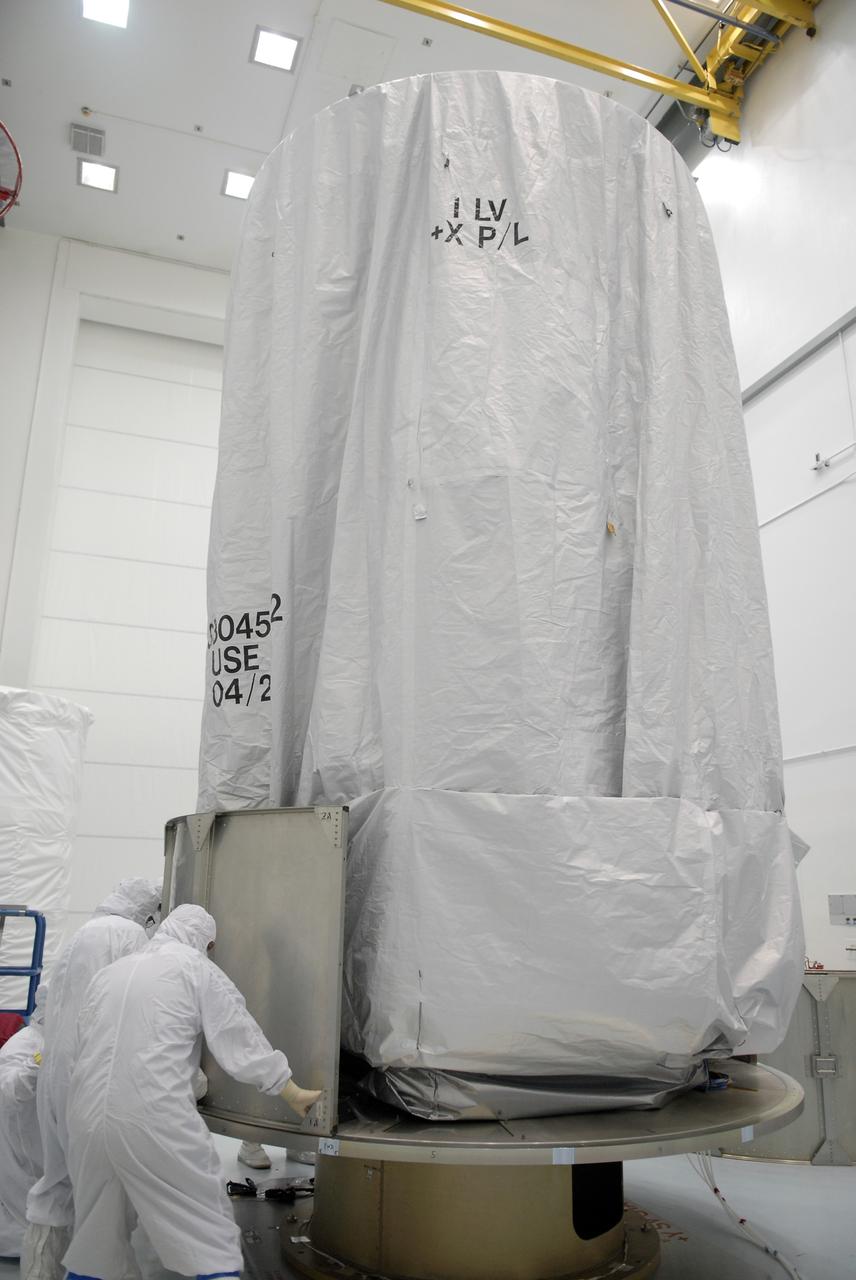
CAPE CANAVERAL, Fla. – At the Astrotech payload processing facility in Titusville, Fla., workers place the first segments of the transportation canister around the base of the Space Tracking and Surveillance System – Demonstrators, or STSS Demo, spacecraft. The STSS Demo is a space-based sensor component of a layered Ballistic Missile Defense System designed for the overall mission of detecting, tracking and discriminating ballistic missiles. STSS is capable of tracking objects after boost phase and provides trajectory information to other sensors. It will be launched by NASA for the Missile Defense Agency between 8 and 8:58 a.m. EDT Sept. 18. Approved for Public Release 09-MDA-04886 (10 SEPT 09) Photo credit: NASA/Kim Shiflett

CAPE CANAVERAL, Fla. – At the Astrotech payload processing facility in Titusville, Fla., workers place the second row of segments of the transportation canister around the Space Tracking and Surveillance System – Demonstrators, or STSS Demo, spacecraft. The STSS Demo is a space-based sensor component of a layered Ballistic Missile Defense System designed for the overall mission of detecting, tracking and discriminating ballistic missiles. STSS is capable of tracking objects after boost phase and provides trajectory information to other sensors. It will be launched by NASA for the Missile Defense Agency between 8 and 8:58 a.m. EDT Sept. 18. Approved for Public Release 09-MDA-04886 (10 SEPT 09) Photo credit: NASA/Kim Shiflett
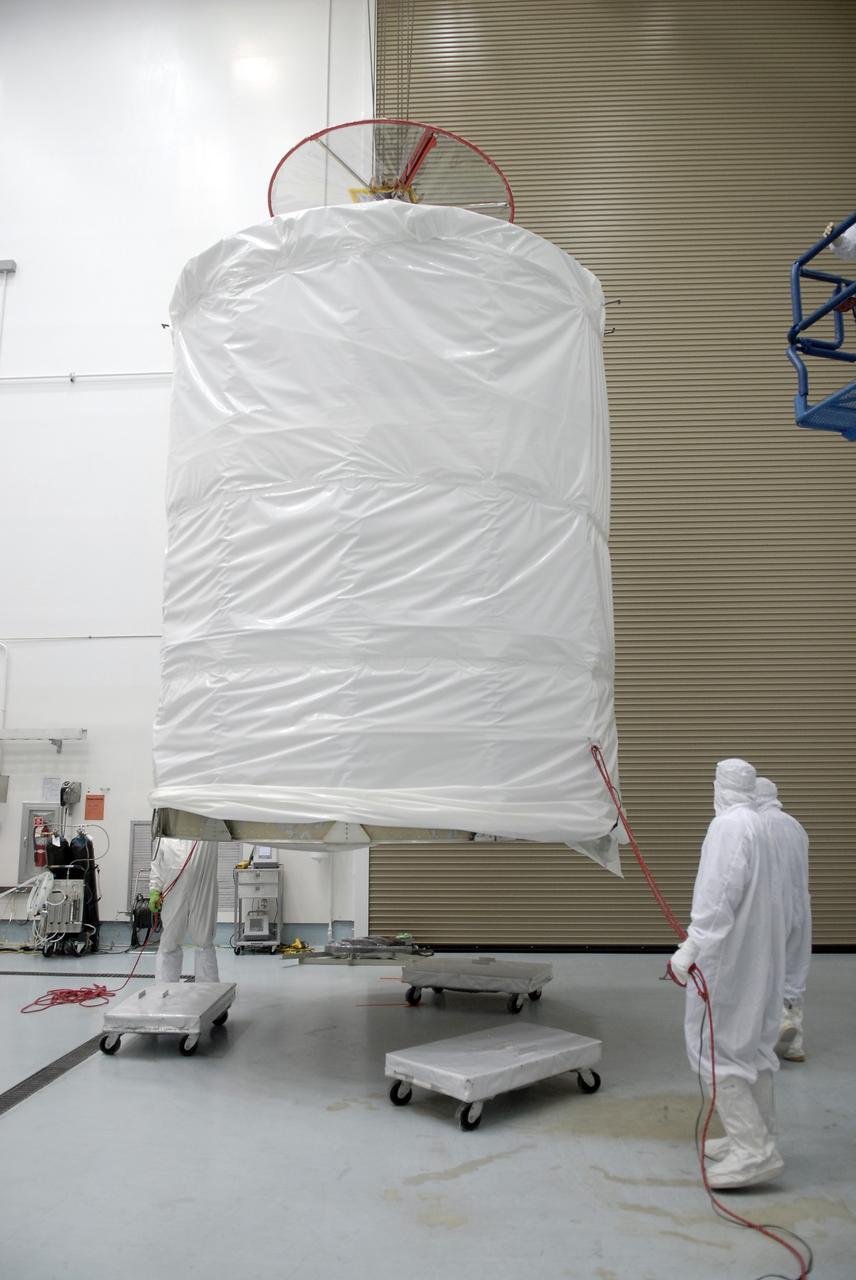
CAPE CANAVERAL, Fla. – At the Astrotech payload processing facility in Titusville, Fla., the upper segment of the transportation canister is lifted to be placed on the top of the Space Tracking and Surveillance System – Demonstrators, or STSS Demo, spacecraft. The STSS Demo is a space-based sensor component of a layered Ballistic Missile Defense System designed for the overall mission of detecting, tracking and discriminating ballistic missiles. STSS is capable of tracking objects after boost phase and provides trajectory information to other sensors. It will be launched by NASA for the Missile Defense Agency between 8 and 8:58 a.m. EDT Sept. 18. Approved for Public Release 09-MDA-04886 (10 SEPT 09) Photo credit: NASA/Kim Shiflett
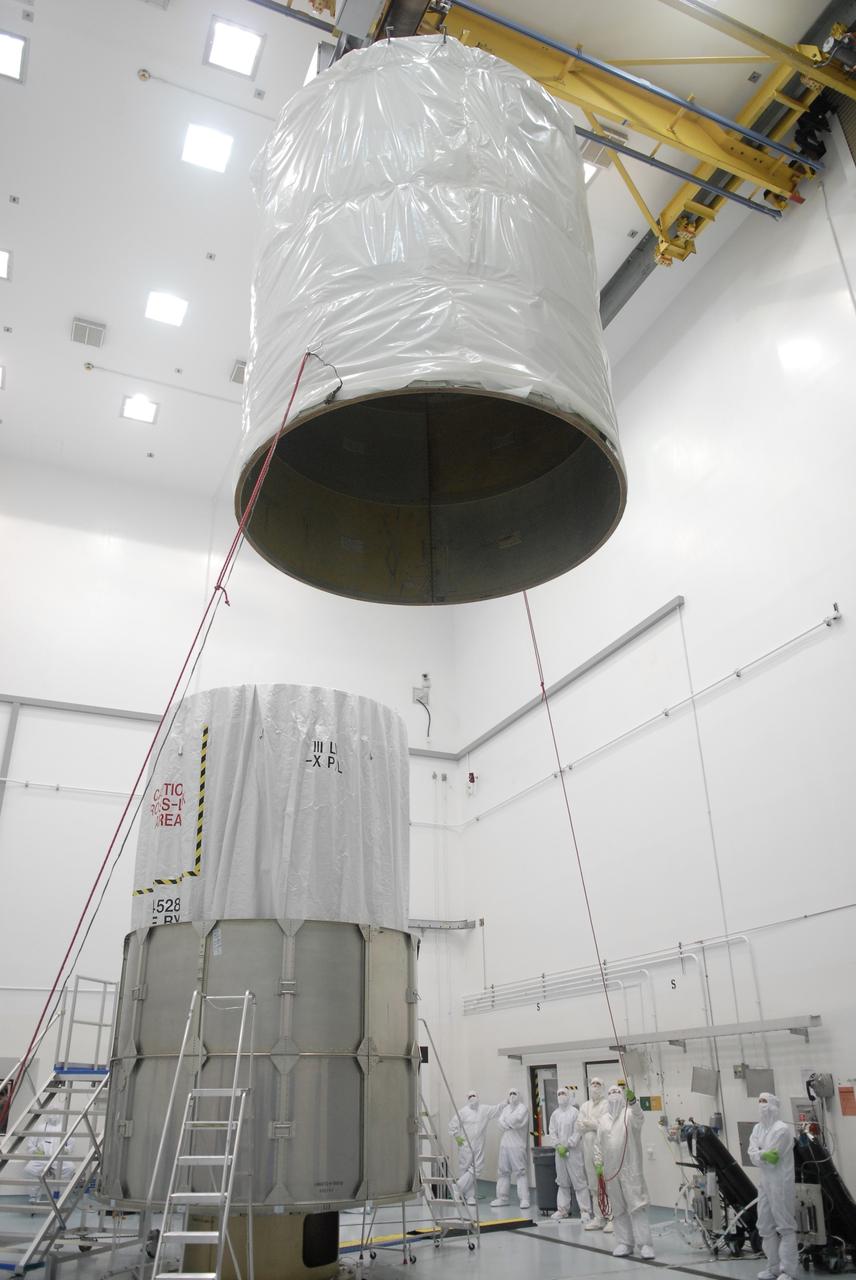
CAPE CANAVERAL, Fla. – At the Astrotech payload processing facility in Titusville, Fla., the upper segment of the transportation canister is moved toward the Space Tracking and Surveillance System – Demonstrators, or STSS Demo, spacecraft, at bottom left. The STSS Demo is a space-based sensor component of a layered Ballistic Missile Defense System designed for the overall mission of detecting, tracking and discriminating ballistic missiles. STSS is capable of tracking objects after boost phase and provides trajectory information to other sensors. It will be launched by NASA for the Missile Defense Agency between 8 and 8:58 a.m. EDT Sept. 18. Approved for Public Release 09-MDA-04886 (10 SEPT 09) Photo credit: NASA/Kim Shiflett

CAPE CANAVERAL, Fla. – At the Astrotech payload processing facility in Titusville, Fla., workers maneuver one of the second-row segments of the transportation canister that will be placed around the Space Tracking and Surveillance System – Demonstrators, or STSS Demo, spacecraft. The STSS Demo is a space-based sensor component of a layered Ballistic Missile Defense System designed for the overall mission of detecting, tracking and discriminating ballistic missiles. STSS is capable of tracking objects after boost phase and provides trajectory information to other sensors. It will be launched by NASA for the Missile Defense Agency between 8 and 8:58 a.m. EDT Sept. 18. Approved for Public Release 09-MDA-04886 (10 SEPT 09) Photo credit: NASA/Kim Shiflett
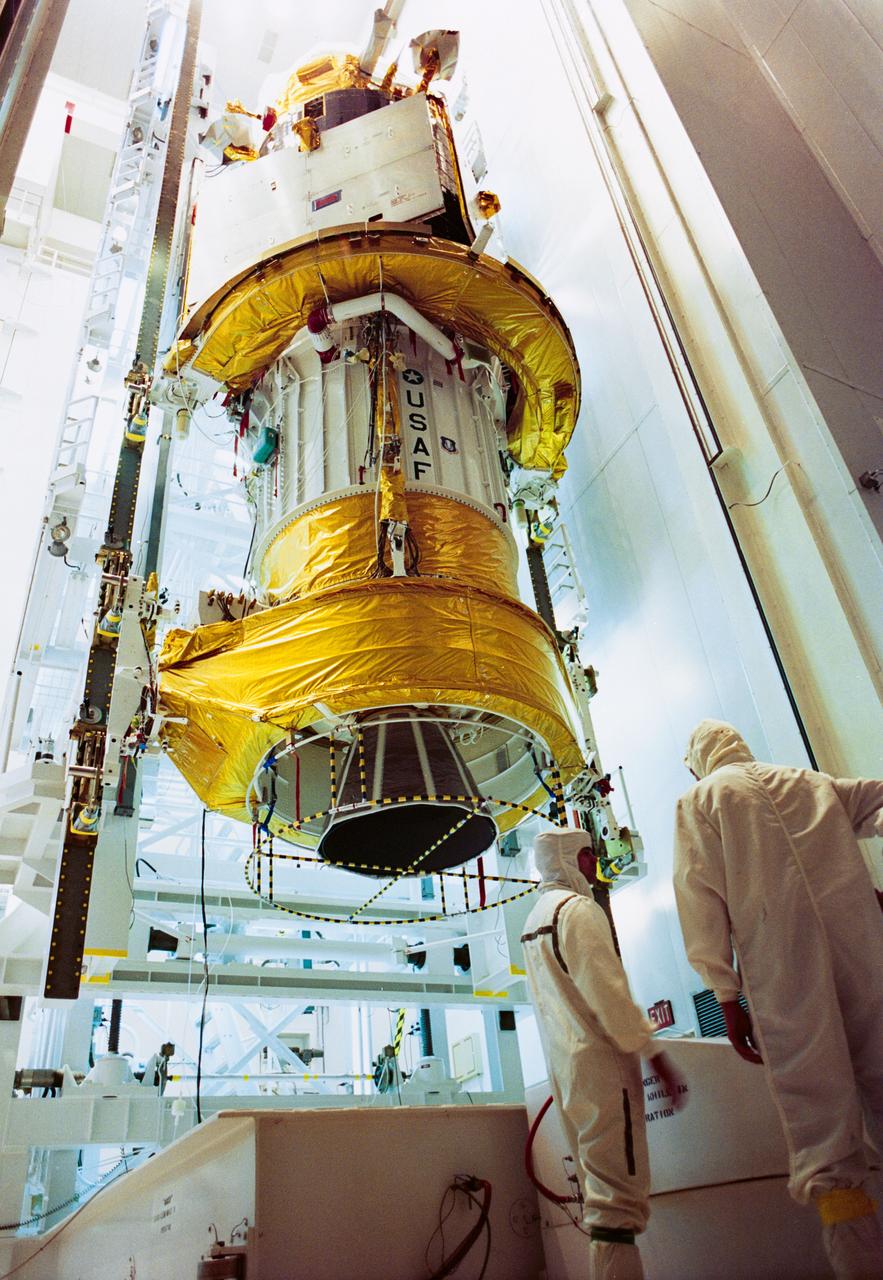
S91-50773 (19 Oct 1991) --- At a processing facility on Cape Canaveral Air Force Station, the Defense Support Program (DSP) satellite is being transferred into the payload canister transporter for shipment to Launch Pad 39A at KSC. The DSP will be deployed during Space Shuttle Mission STS-44 later this year. It is a surveillance satellite, developed for the Department of Defense, which can detect missile and space launches, as well as nuclear detonations. The Inertial Upper Stage which will boost the DSP satellite to its proper orbital position is the lower portion of the payload. DSP satellites have comprised the spaceborne segment of NORAD's (North American Air Defense Command) Tactical Warning and Attack Assessment System since 1970. STS- 44, carrying a crew of six, will be a ten-day flight.
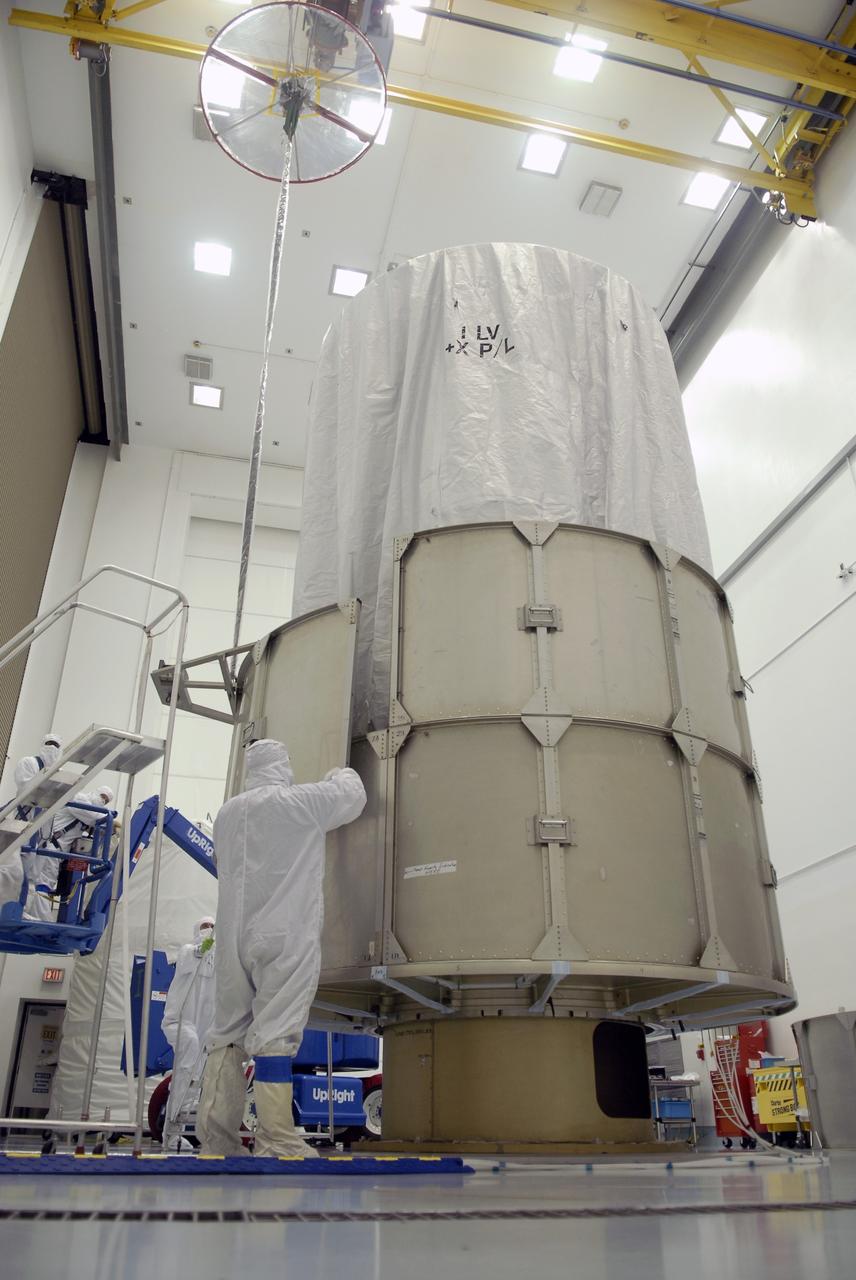
CAPE CANAVERAL, Fla. – At the Astrotech payload processing facility in Titusville, Fla., workers maneuver one of the second-row segments of the transportation canister that will be placed around the Space Tracking and Surveillance System – Demonstrators, or STSS Demo, spacecraft. The STSS Demo is a space-based sensor component of a layered Ballistic Missile Defense System designed for the overall mission of detecting, tracking and discriminating ballistic missiles. STSS is capable of tracking objects after boost phase and provides trajectory information to other sensors. It will be launched by NASA for the Missile Defense Agency between 8 and 8:58 a.m. EDT Sept. 18. Approved for Public Release 09-MDA-04886 (10 SEPT 09) Photo credit: NASA/Kim Shiflett