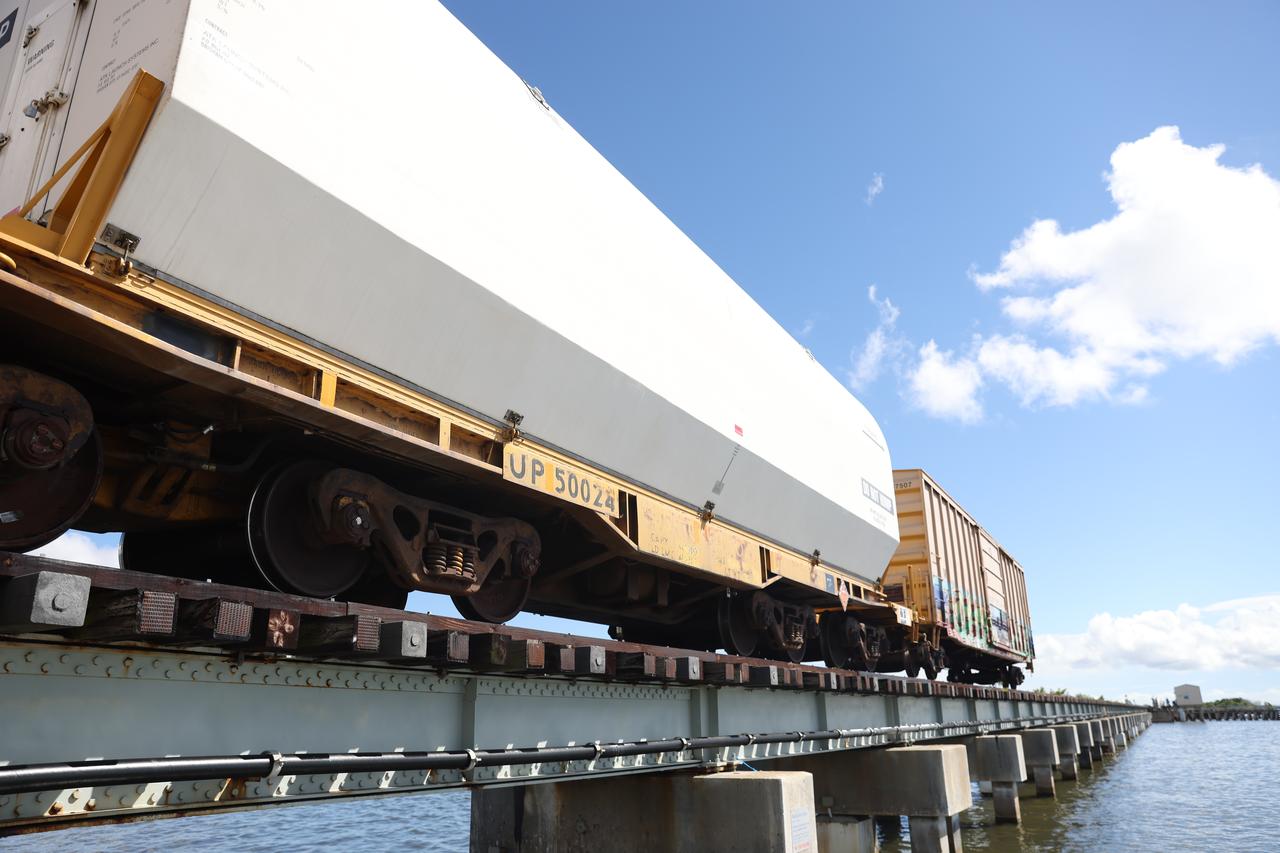
The 10 booster motor segments that will form the NASA Space Launch System rocket’s twin, five-segment solid rocket boosters for the agency’s Artemis II mission, arrive at Kennedy Space Center on Thursday, Sept. 28, 2023. Due to their weight, the booster motor segments traveled by rail across eight states in specialized transporters to the Florida spaceport. Teams with NASA’s Exploration Ground Systems will process each of the segments at Kennedy in preparation for launch. Artemis II astronauts Reid Wiseman, Victor Glover, Christina Koch, and Jeremy Hansen will blast off from Kennedy, traveling around the Moon on the first crewed mission under Artemis that will test all of the Orion spacecraft’s systems.
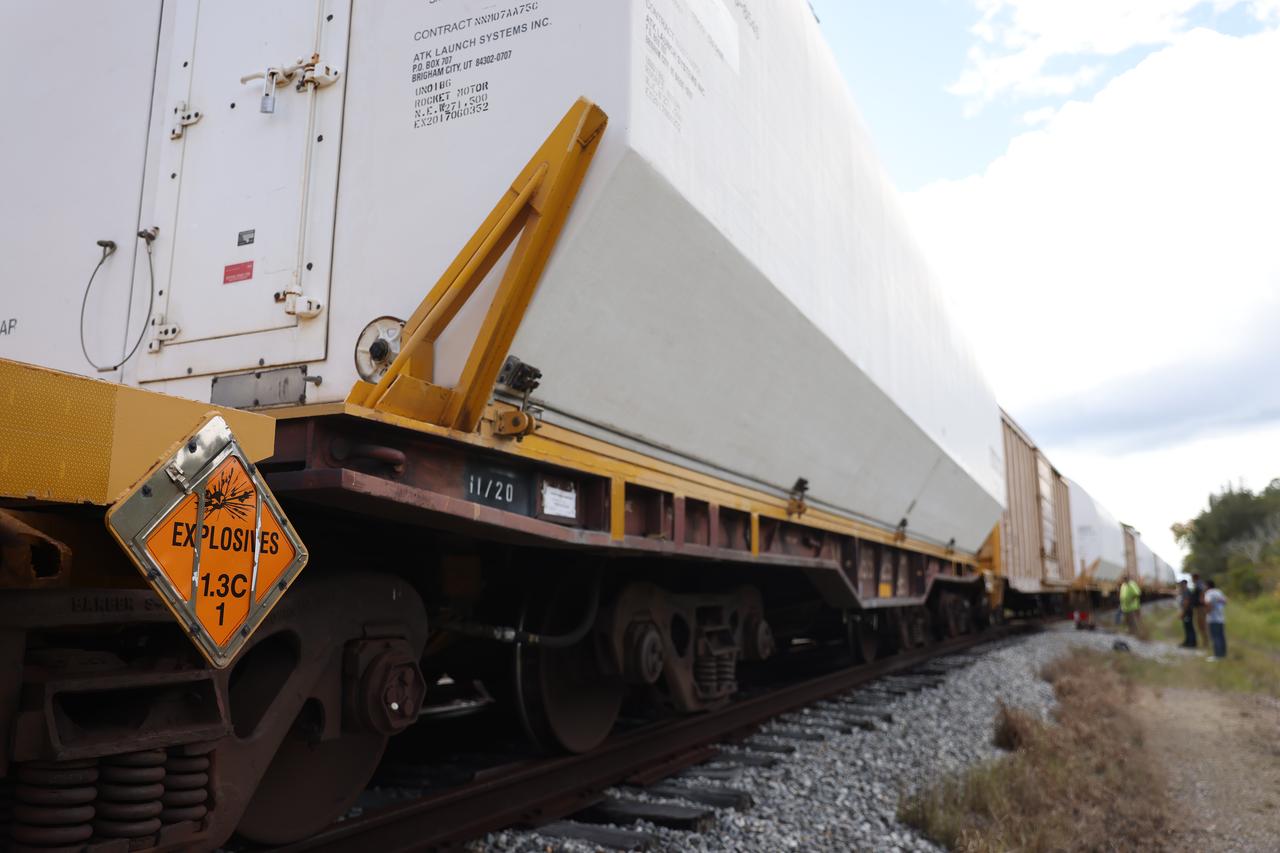
The 10 booster motor segments that will form the NASA Space Launch System rocket’s twin, five-segment solid rocket boosters for the agency’s Artemis II mission, arrive at Kennedy Space Center on Thursday, Sept. 28, 2023. Due to their weight, the booster motor segments traveled by rail across eight states in specialized transporters to the Florida spaceport. Teams with NASA’s Exploration Ground Systems will process each of the segments at Kennedy in preparation for launch. Artemis II astronauts Reid Wiseman, Victor Glover, Christina Koch, and Jeremy Hansen will blast off from Kennedy, traveling around the Moon on the first crewed mission under Artemis that will test all of the Orion spacecraft’s systems.
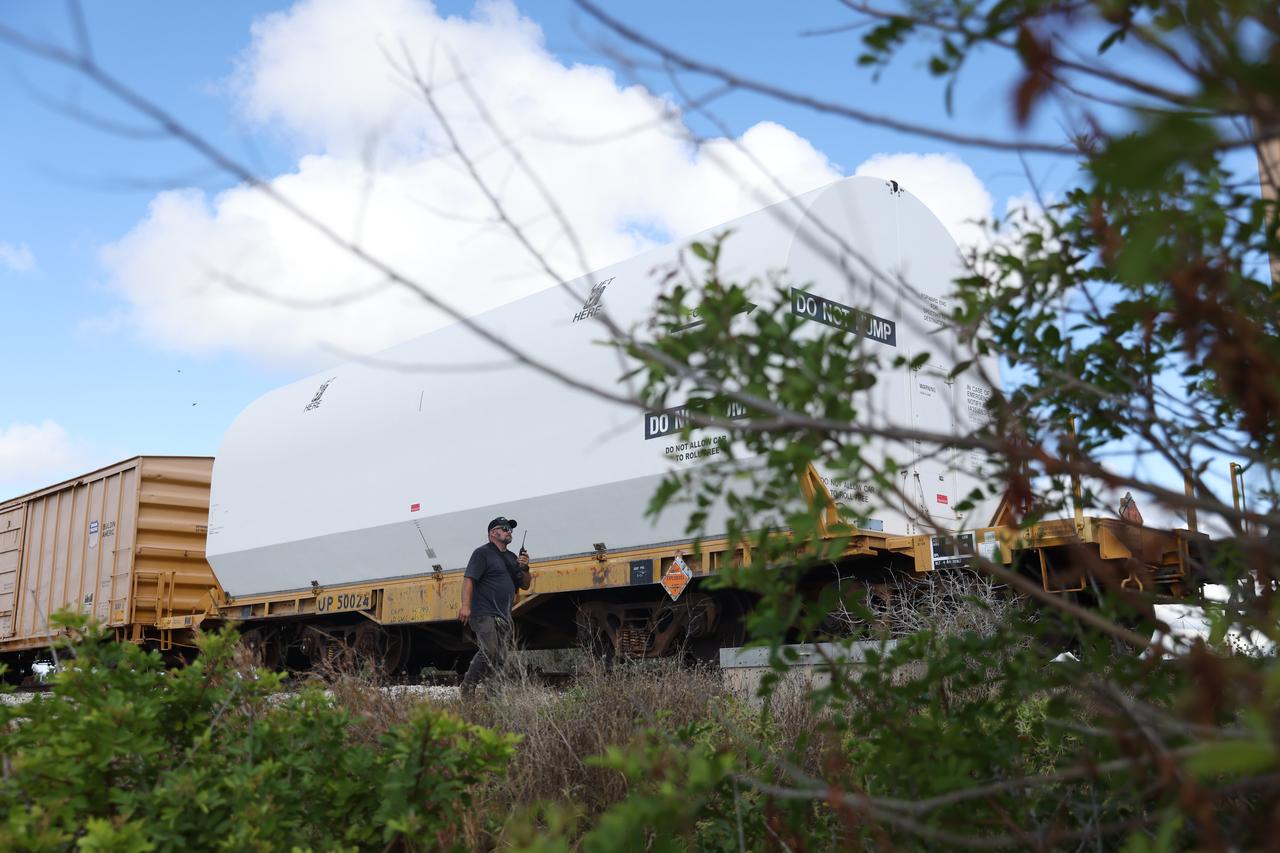
The 10 booster motor segments that will form the NASA Space Launch System rocket’s twin, five-segment solid rocket boosters for the agency’s Artemis II mission, arrive at Kennedy Space Center on Thursday, Sept. 28, 2023. Due to their weight, the booster motor segments traveled by rail across eight states in specialized transporters to the Florida spaceport. Teams with NASA’s Exploration Ground Systems will process each of the segments at Kennedy in preparation for launch. Artemis II astronauts Reid Wiseman, Victor Glover, Christina Koch, and Jeremy Hansen will blast off from Kennedy, traveling around the Moon on the first crewed mission under Artemis that will test all of the Orion spacecraft’s systems.
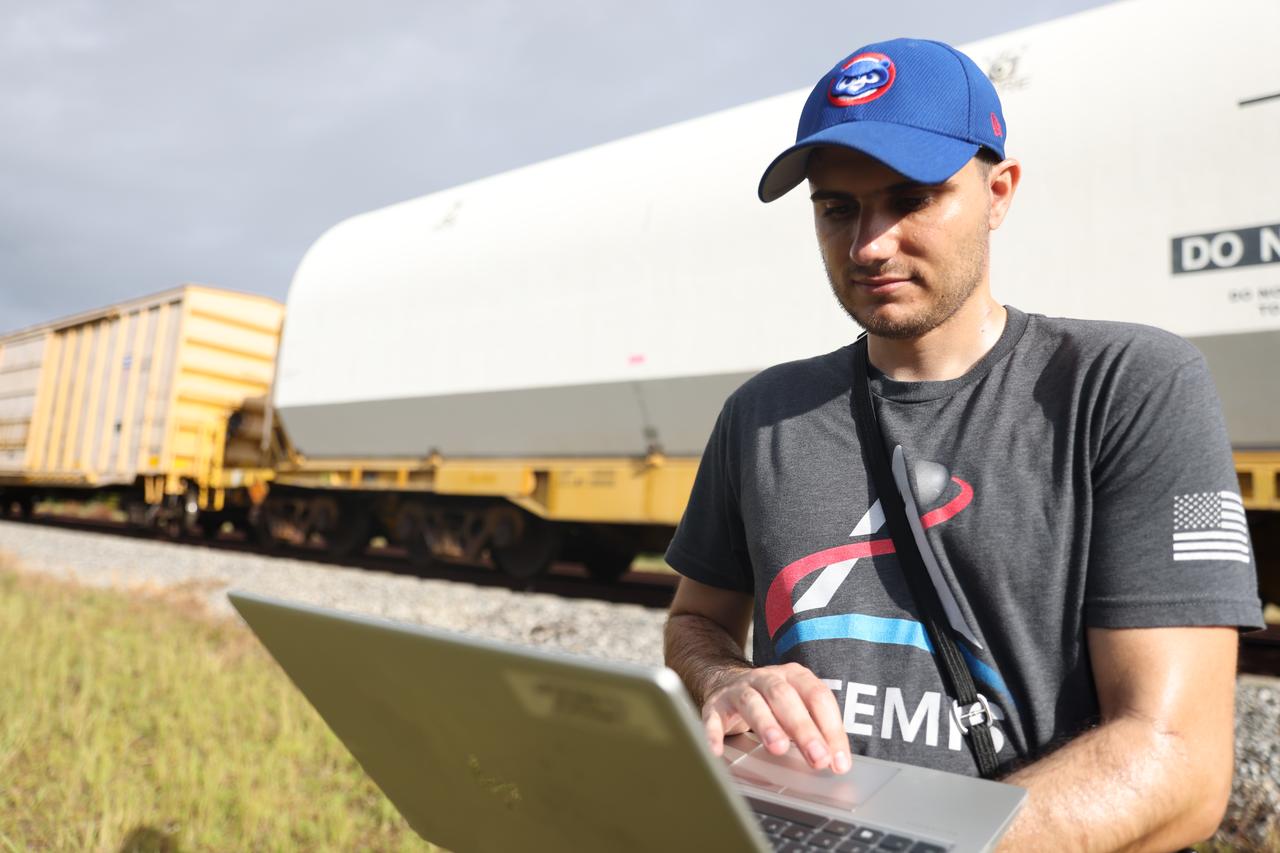
The 10 booster motor segments that will form the NASA Space Launch System rocket’s twin, five-segment solid rocket boosters for the agency’s Artemis II mission, arrive at Kennedy Space Center on Thursday, Sept. 28, 2023. Due to their weight, the booster motor segments traveled by rail across eight states in specialized transporters to the Florida spaceport. Teams with NASA’s Exploration Ground Systems will process each of the segments at Kennedy in preparation for launch. Artemis II astronauts Reid Wiseman, Victor Glover, Christina Koch, and Jeremy Hansen will blast off from Kennedy, traveling around the Moon on the first crewed mission under Artemis that will test all of the Orion spacecraft’s systems.
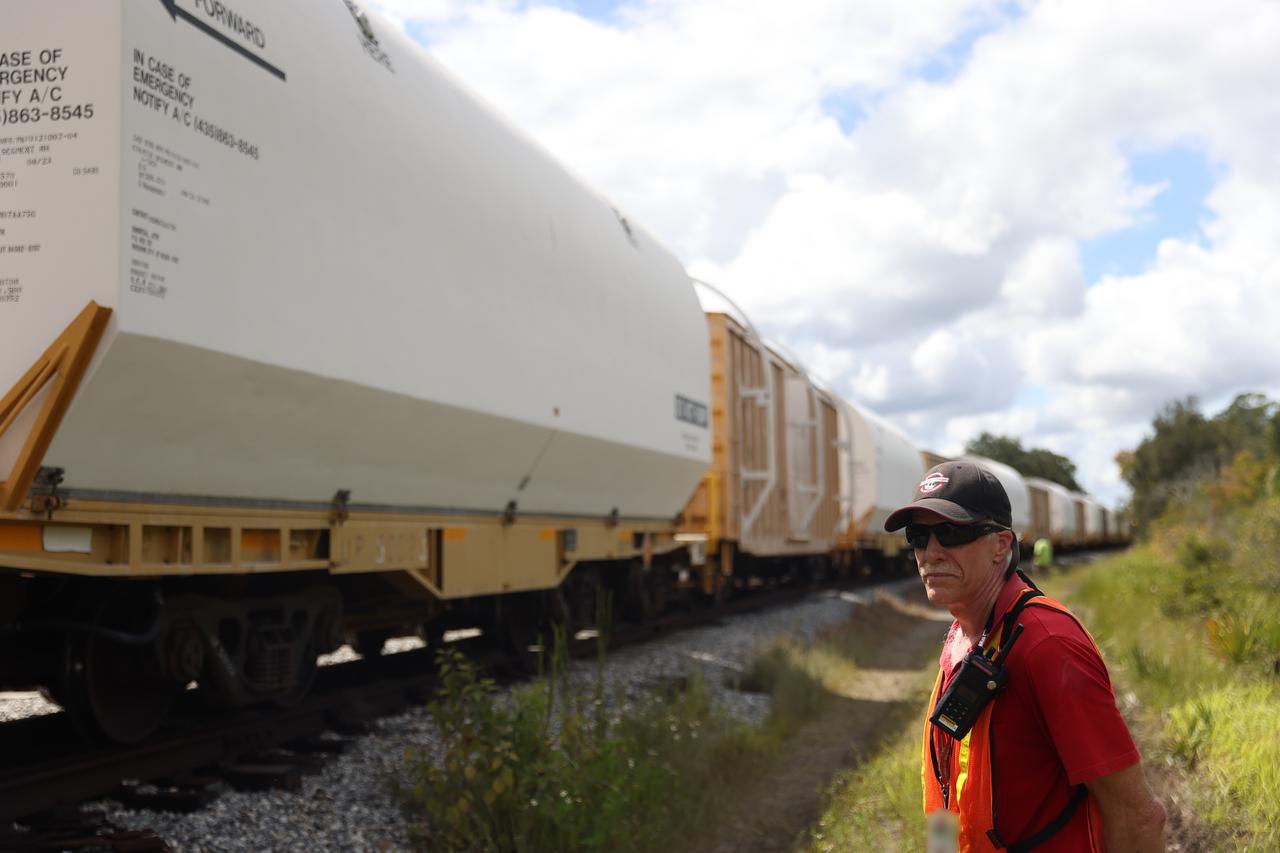
The 10 booster motor segments that will form the NASA Space Launch System rocket’s twin, five-segment solid rocket boosters for the agency’s Artemis II mission, arrive at Kennedy Space Center on Thursday, Sept. 28, 2023. Due to their weight, the booster motor segments traveled by rail across eight states in specialized transporters to the Florida spaceport. Teams with NASA’s Exploration Ground Systems will process each of the segments at Kennedy in preparation for launch. Artemis II astronauts Reid Wiseman, Victor Glover, Christina Koch, and Jeremy Hansen will blast off from Kennedy, traveling around the Moon on the first crewed mission under Artemis that will test all of the Orion spacecraft’s systems.

The 10 booster motor segments that will form the NASA Space Launch System rocket’s twin, five-segment solid rocket boosters for the agency’s Artemis II mission, arrive at Kennedy Space Center on Thursday, Sept. 28, 2023. Due to their weight, the booster motor segments traveled by rail across eight states in specialized transporters to the Florida spaceport. Teams with NASA’s Exploration Ground Systems will process each of the segments at Kennedy in preparation for launch. Artemis II astronauts Reid Wiseman, Victor Glover, Christina Koch, and Jeremy Hansen will blast off from Kennedy, traveling around the Moon on the first crewed mission under Artemis that will test all of the Orion spacecraft’s systems.
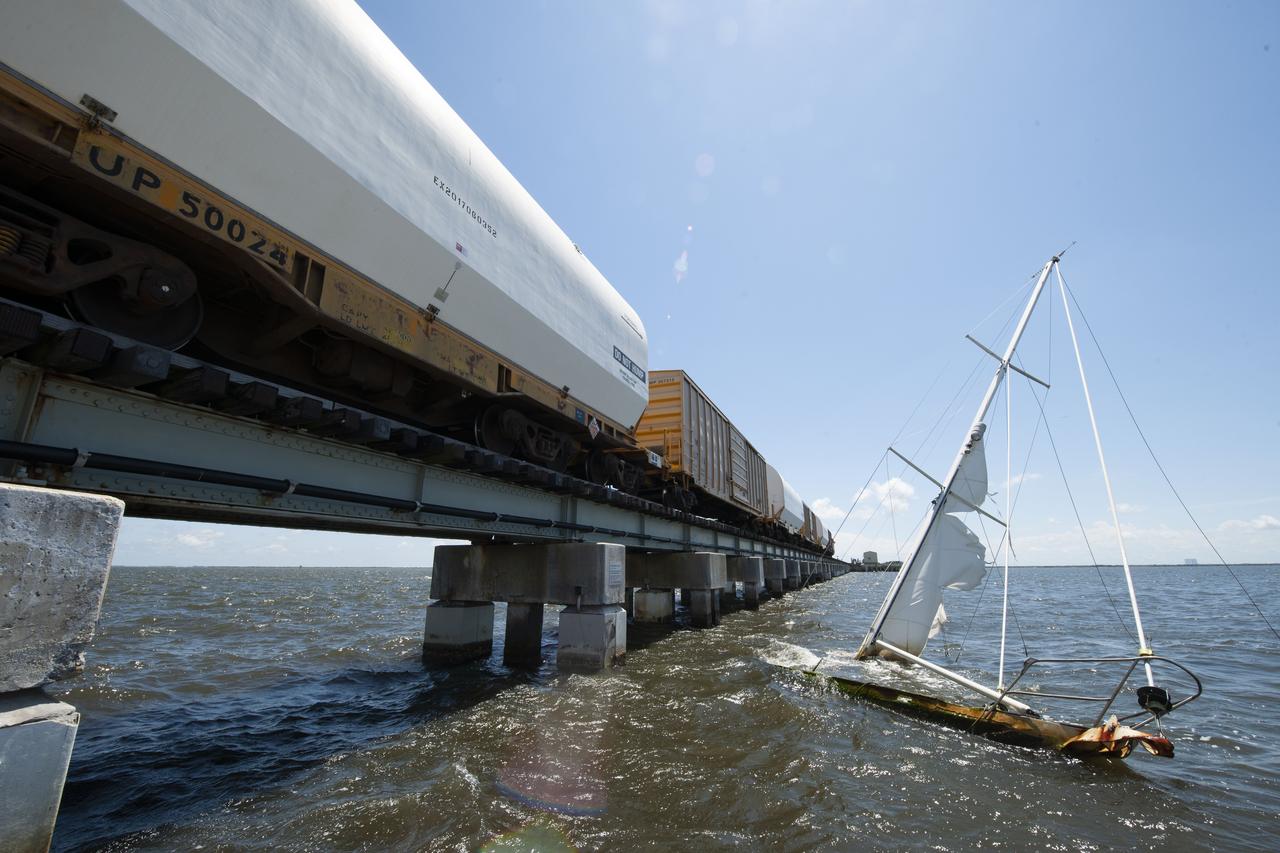
Twin rocket boosters for NASA’s Space Launch System (SLS) that will power Artemis missions to the Moon have arrived at the agency’s Kennedy Space Center in Florida. The two motor segments, each comprised of five segments, arrived at Kennedy’s Rotation, Processing and Surge Facility (RPSF) on June 15, 2020, by train from a Northrop Grumman manufacturing facility in Promontory, Utah. The booster segments will remain in the RPSF for inspection prior to processing until it’s time to move them to the Vehicle Assembly Building for stacking on the mobile launcher. This is the first piece of flight hardware to arrive at Kennedy by train for the Artemis program, but NASA’s Exploration Ground Systems (EGS) can expect to receive additional hardware soon, including the Launch Vehicle Service Adapter and the rocket’s core stage. NASA is working toward an Artemis I launch date in 2021, keeping the program moving at the best possible pace toward the earliest possible opportunity.
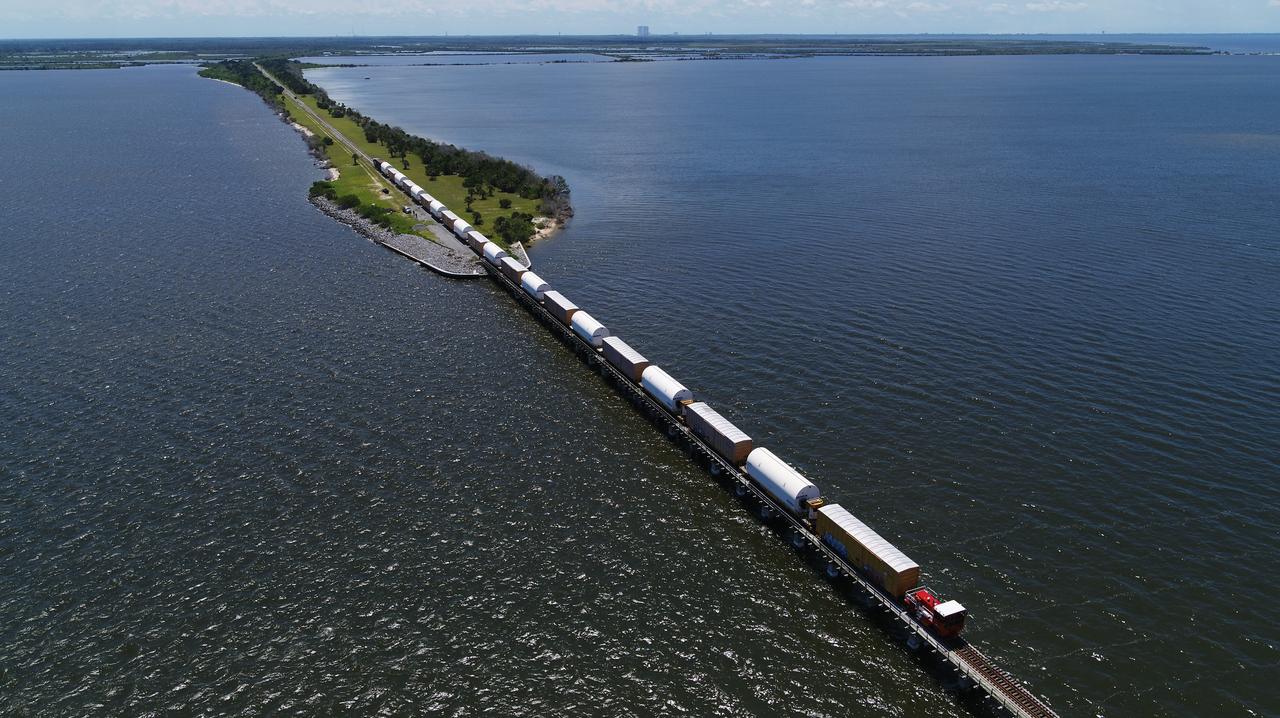
Twin rocket boosters for NASA’s Space Launch System (SLS) that will power Artemis missions to the Moon have arrived at the agency’s Kennedy Space Center in Florida. The two motor segments, each comprised of five segments, arrived at Kennedy’s Rotation, Processing and Surge Facility (RPSF) on June 15, 2020, by train from a Northrop Grumman manufacturing facility in Promontory, Utah. The booster segments will remain in the RPSF for inspection prior to processing until it’s time to move them to the Vehicle Assembly Building for stacking on the mobile launcher. This is the first piece of flight hardware to arrive at Kennedy by train for the Artemis program, but NASA’s Exploration Ground Systems (EGS) can expect to receive additional hardware soon, including the Launch Vehicle Service Adapter and the rocket’s core stage. NASA is working toward an Artemis I launch date in 2021, keeping the program moving at the best possible pace toward the earliest possible opportunity.
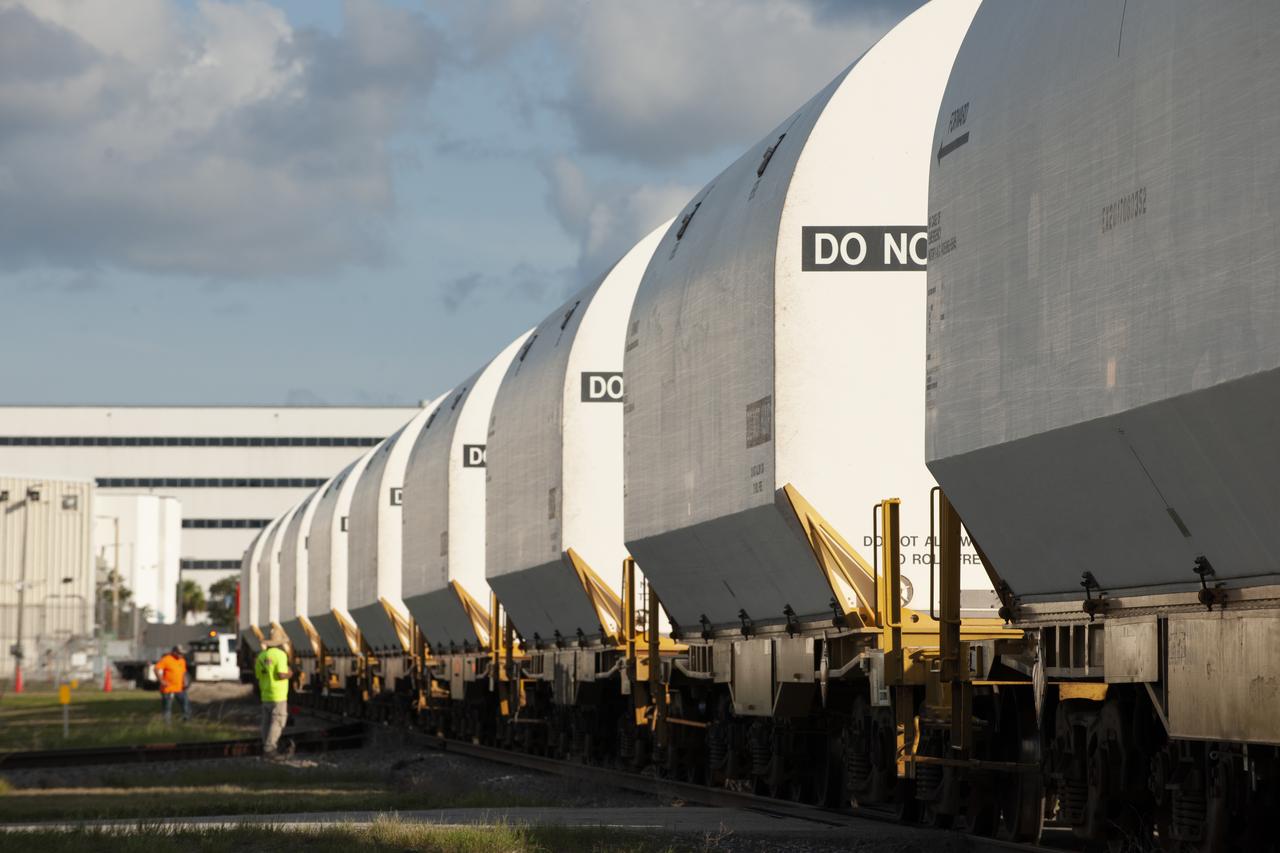
Twin rocket boosters for NASA’s Space Launch System (SLS) that will power Artemis missions to the Moon have arrived at the agency’s Kennedy Space Center in Florida. The two motor segments, each comprised of five segments, arrived at Kennedy’s Rotation, Processing and Surge Facility (RPSF) on June 15, 2020, by train from a Northrop Grumman manufacturing facility in Promontory, Utah. The booster segments will remain in the RPSF for inspection prior to processing until it’s time to move them to the Vehicle Assembly Building for stacking on the mobile launcher. This is the first piece of flight hardware to arrive at Kennedy by train for the Artemis program, but NASA’s Exploration Ground Systems (EGS) can expect to receive additional hardware soon, including the Launch Vehicle Service Adapter and the rocket’s core stage. NASA is working toward an Artemis I launch date in 2021, keeping the program moving at the best possible pace toward the earliest possible opportunity.
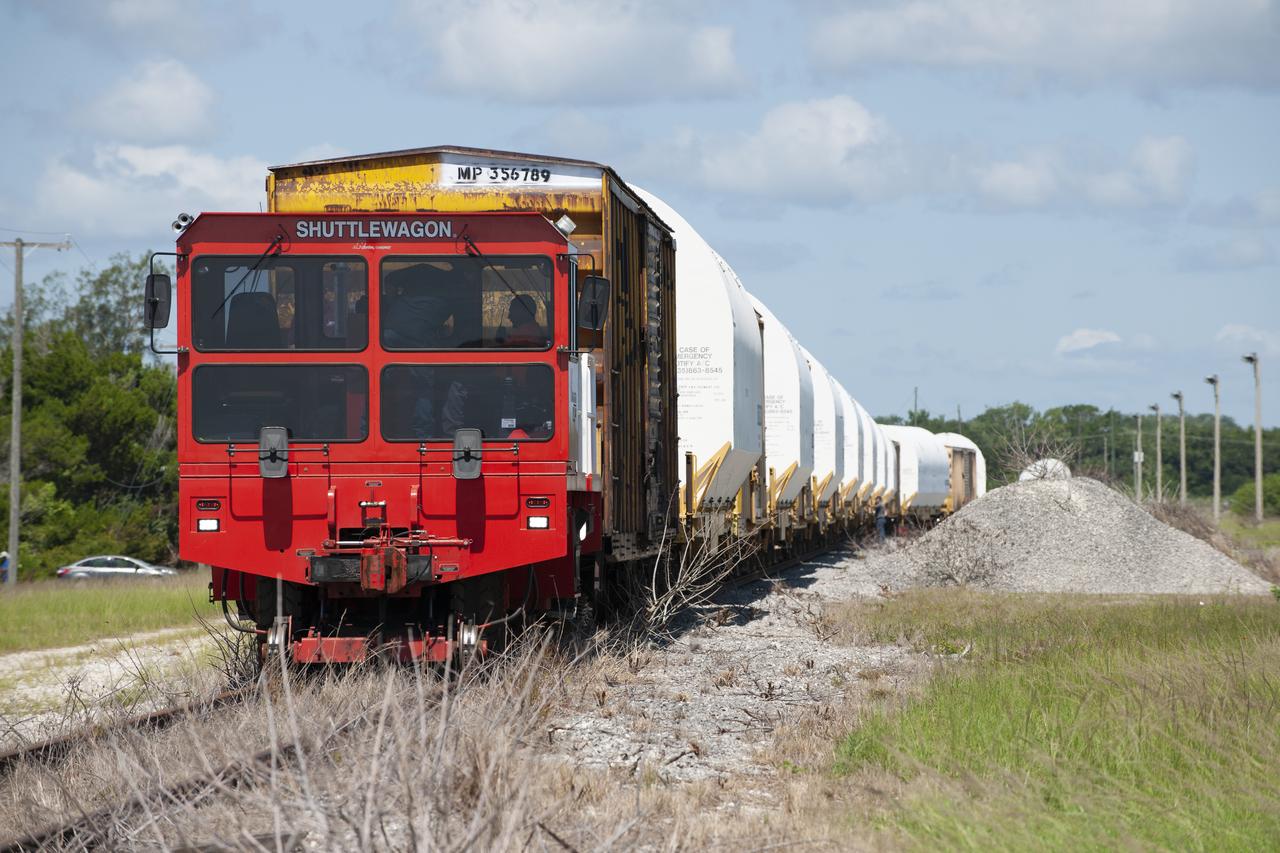
Twin rocket boosters for NASA’s Space Launch System (SLS) that will power Artemis missions to the Moon have arrived at the agency’s Kennedy Space Center in Florida. The two motor segments, each comprised of five segments, arrived at Kennedy’s Rotation, Processing and Surge Facility (RPSF) on June 15, 2020, by train from a Northrop Grumman manufacturing facility in Promontory, Utah. The booster segments will remain in the RPSF for inspection prior to processing until it’s time to move them to the Vehicle Assembly Building for stacking on the mobile launcher. This is the first piece of flight hardware to arrive at Kennedy by train for the Artemis program, but NASA’s Exploration Ground Systems (EGS) can expect to receive additional hardware soon, including the Launch Vehicle Service Adapter and the rocket’s core stage. NASA is working toward an Artemis I launch date in 2021, keeping the program moving at the best possible pace toward the earliest possible opportunity.
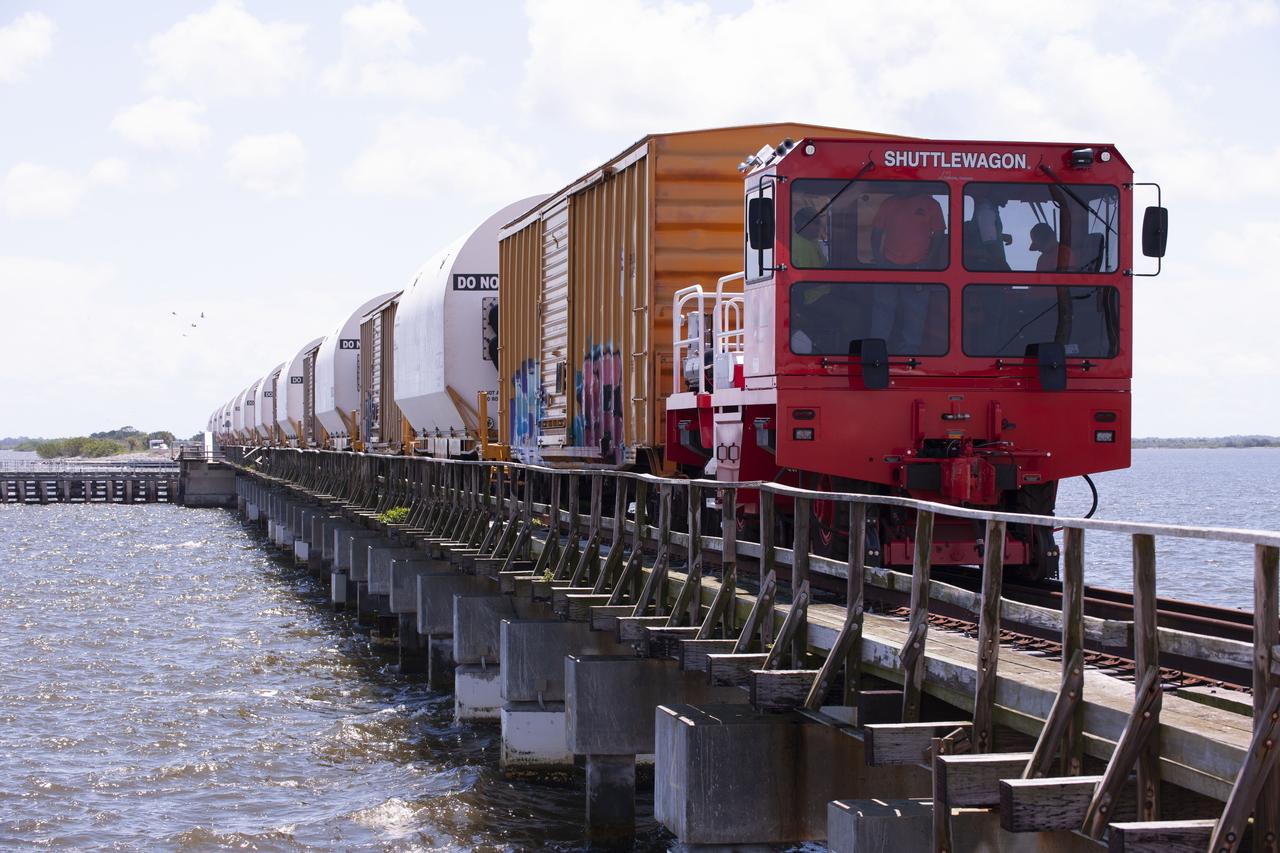
Twin rocket boosters for NASA’s Space Launch System (SLS) that will power Artemis missions to the Moon have arrived at the agency’s Kennedy Space Center in Florida. The two motor segments, each comprised of five segments, arrived at Kennedy’s Rotation, Processing and Surge Facility (RPSF) on June 15, 2020, by train from a Northrop Grumman manufacturing facility in Promontory, Utah. The booster segments will remain in the RPSF for inspection prior to processing until it’s time to move them to the Vehicle Assembly Building for stacking on the mobile launcher. This is the first piece of flight hardware to arrive at Kennedy by train for the Artemis program, but NASA’s Exploration Ground Systems (EGS) can expect to receive additional hardware soon, including the Launch Vehicle Service Adapter and the rocket’s core stage. NASA is working toward an Artemis I launch date in 2021, keeping the program moving at the best possible pace toward the earliest possible opportunity.
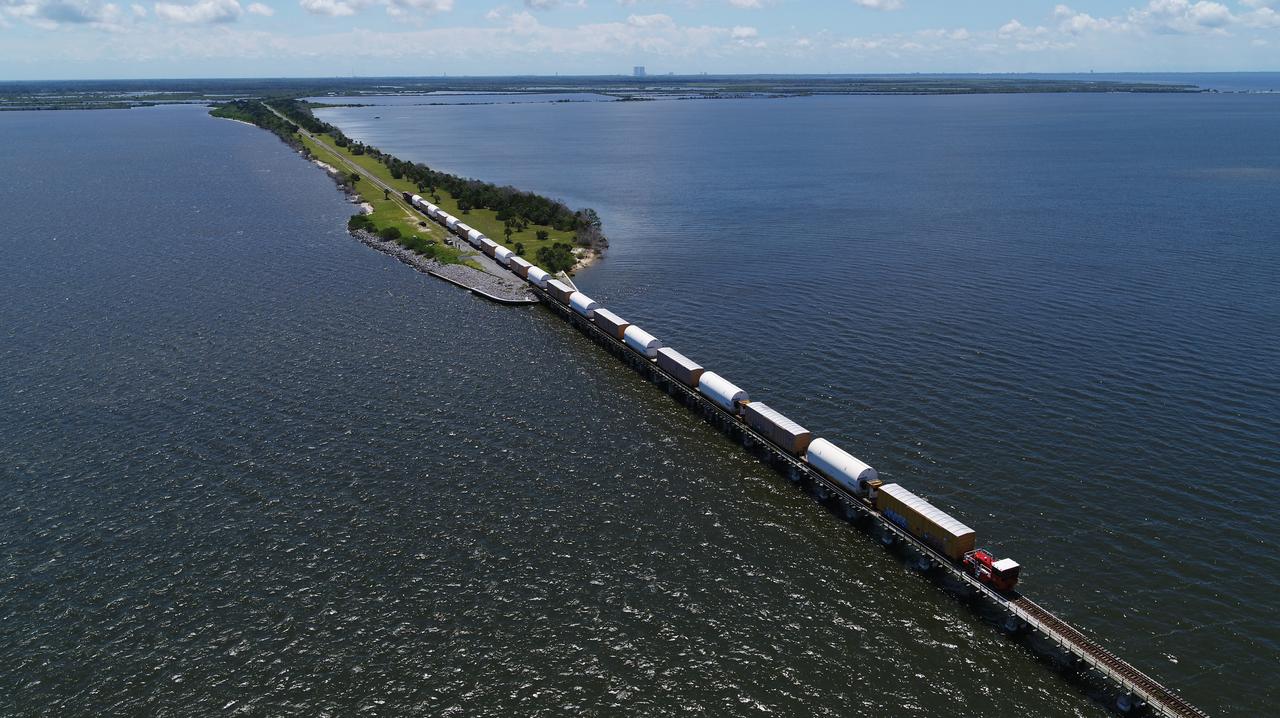
Twin rocket boosters for NASA’s Space Launch System (SLS) that will power Artemis missions to the Moon have arrived at the agency’s Kennedy Space Center in Florida. The two motor segments, each comprised of five segments, arrived at Kennedy’s Rotation, Processing and Surge Facility (RPSF) on June 15, 2020, by train from a Northrop Grumman manufacturing facility in Promontory, Utah. The booster segments will remain in the RPSF for inspection prior to processing until it’s time to move them to the Vehicle Assembly Building for stacking on the mobile launcher. This is the first piece of flight hardware to arrive at Kennedy by train for the Artemis program, but NASA’s Exploration Ground Systems (EGS) can expect to receive additional hardware soon, including the Launch Vehicle Service Adapter and the rocket’s core stage. NASA is working toward an Artemis I launch date in 2021, keeping the program moving at the best possible pace toward the earliest possible opportunity.
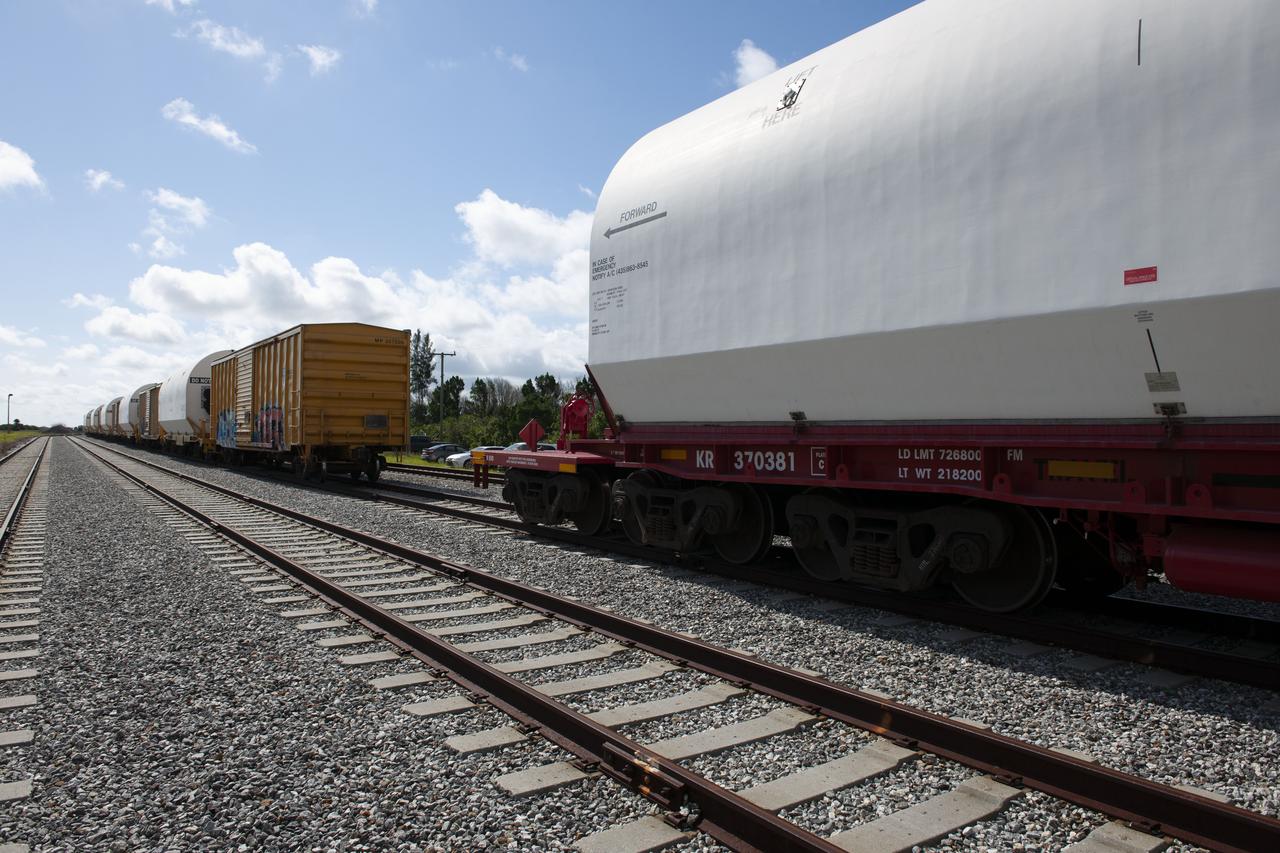
Twin rocket boosters for NASA’s Space Launch System (SLS) that will power Artemis missions to the Moon have arrived at the agency’s Kennedy Space Center in Florida. The two motor segments, each comprised of five segments, arrived at Kennedy’s Rotation, Processing and Surge Facility (RPSF) on June 15, 2020, by train from a Northrop Grumman manufacturing facility in Promontory, Utah. The booster segments will remain in the RPSF for inspection prior to processing until it’s time to move them to the Vehicle Assembly Building for stacking on the mobile launcher. This is the first piece of flight hardware to arrive at Kennedy by train for the Artemis program, but NASA’s Exploration Ground Systems (EGS) can expect to receive additional hardware soon, including the Launch Vehicle Service Adapter and the rocket’s core stage. NASA is working toward an Artemis I launch date in 2021, keeping the program moving at the best possible pace toward the earliest possible opportunity.
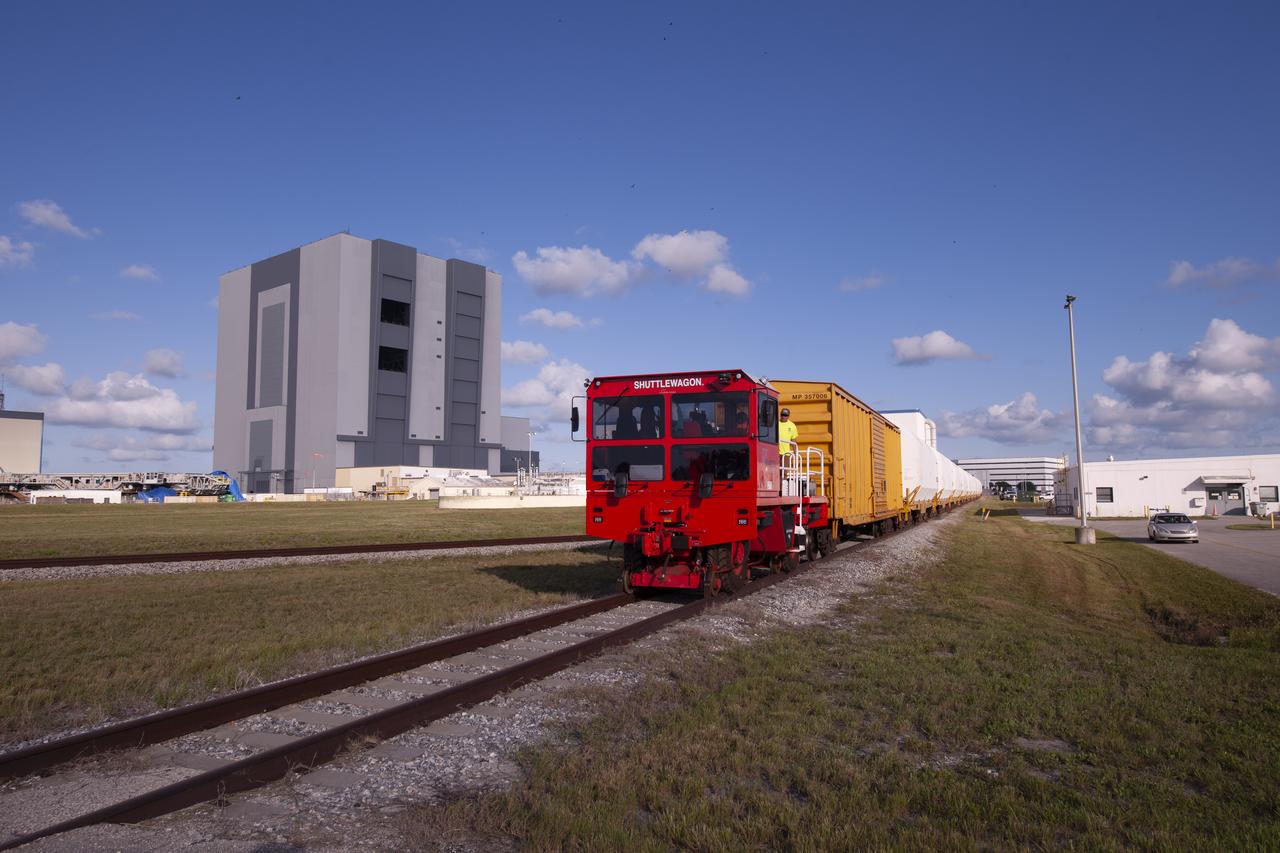
Twin rocket boosters for NASA’s Space Launch System (SLS) that will power Artemis missions to the Moon have arrived at the agency’s Kennedy Space Center in Florida. The two motor segments, each comprised of five segments, arrived at Kennedy’s Rotation, Processing and Surge Facility (RPSF) on June 15, 2020, by train from a Northrop Grumman manufacturing facility in Promontory, Utah. The booster segments will remain in the RPSF for inspection prior to processing until it’s time to move them to the Vehicle Assembly Building for stacking on the mobile launcher. This is the first piece of flight hardware to arrive at Kennedy by train for the Artemis program, but NASA’s Exploration Ground Systems (EGS) can expect to receive additional hardware soon, including the Launch Vehicle Service Adapter and the rocket’s core stage. NASA is working toward an Artemis I launch date in 2021, keeping the program moving at the best possible pace toward the earliest possible opportunity.
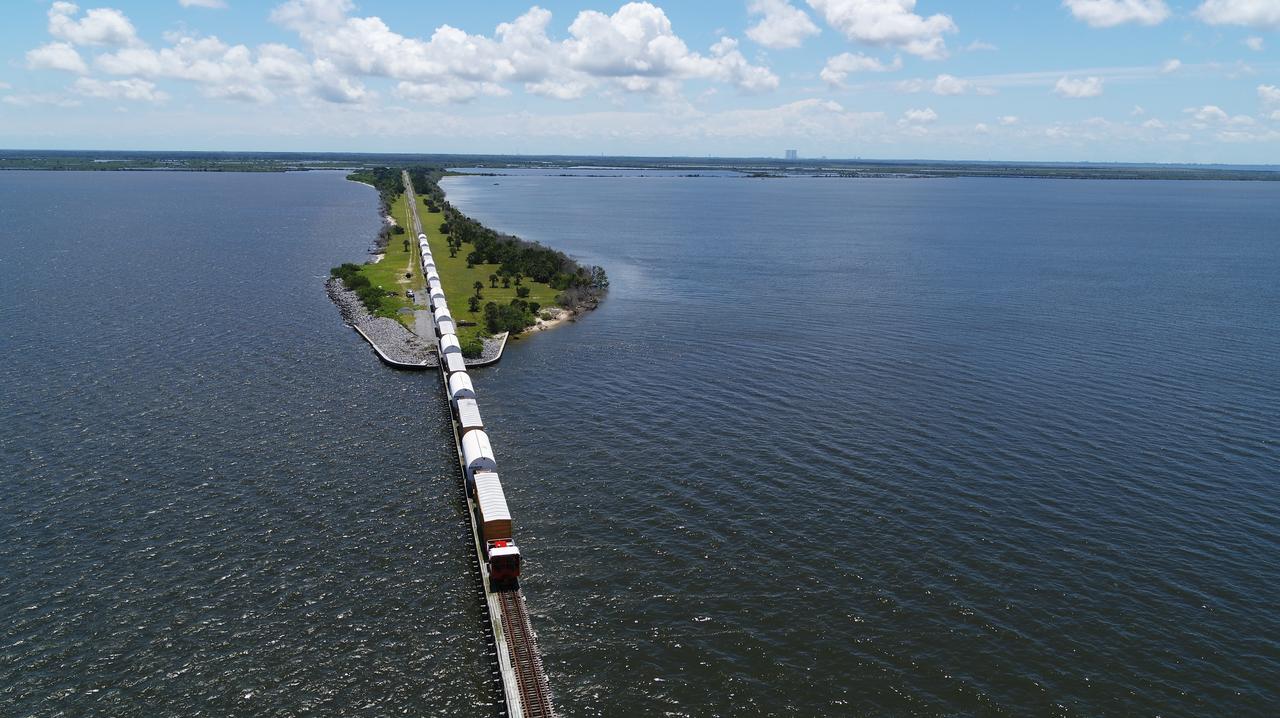
Twin rocket boosters for NASA’s Space Launch System (SLS) that will power Artemis missions to the Moon have arrived at the agency’s Kennedy Space Center in Florida. The two motor segments, each comprised of five segments, arrived at Kennedy’s Rotation, Processing and Surge Facility (RPSF) on June 15, 2020, by train from a Northrop Grumman manufacturing facility in Promontory, Utah. The booster segments will remain in the RPSF for inspection prior to processing until it’s time to move them to the Vehicle Assembly Building for stacking on the mobile launcher. This is the first piece of flight hardware to arrive at Kennedy by train for the Artemis program, but NASA’s Exploration Ground Systems (EGS) can expect to receive additional hardware soon, including the Launch Vehicle Service Adapter and the rocket’s core stage. NASA is working toward an Artemis I launch date in 2021, keeping the program moving at the best possible pace toward the earliest possible opportunity.
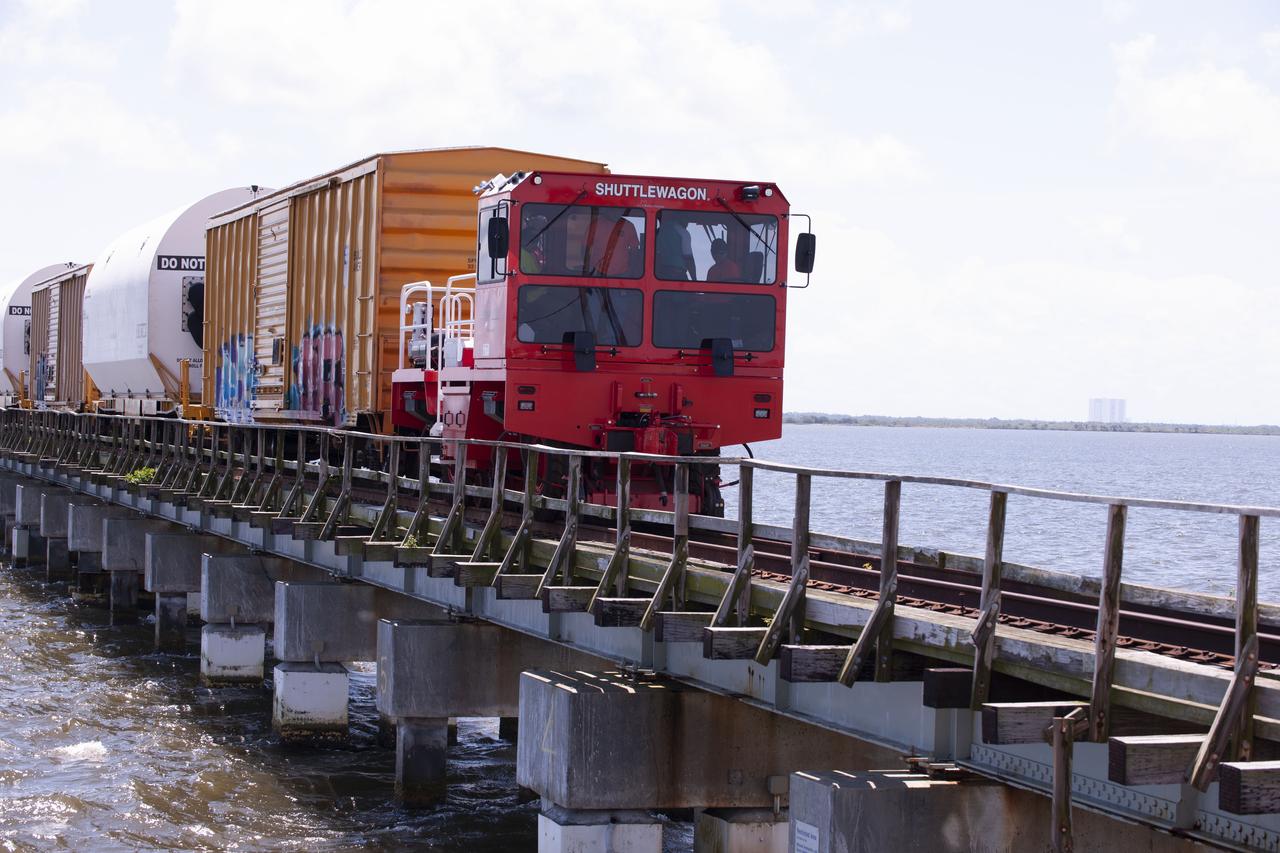
Twin rocket boosters for NASA’s Space Launch System (SLS) that will power Artemis missions to the Moon have arrived at the agency’s Kennedy Space Center in Florida. The two motor segments, each comprised of five segments, arrived at Kennedy’s Rotation, Processing and Surge Facility (RPSF) on June 15, 2020, by train from a Northrop Grumman manufacturing facility in Promontory, Utah. The booster segments will remain in the RPSF for inspection prior to processing until it’s time to move them to the Vehicle Assembly Building for stacking on the mobile launcher. This is the first piece of flight hardware to arrive at Kennedy by train for the Artemis program, but NASA’s Exploration Ground Systems (EGS) can expect to receive additional hardware soon, including the Launch Vehicle Service Adapter and the rocket’s core stage. NASA is working toward an Artemis I launch date in 2021, keeping the program moving at the best possible pace toward the earliest possible opportunity.
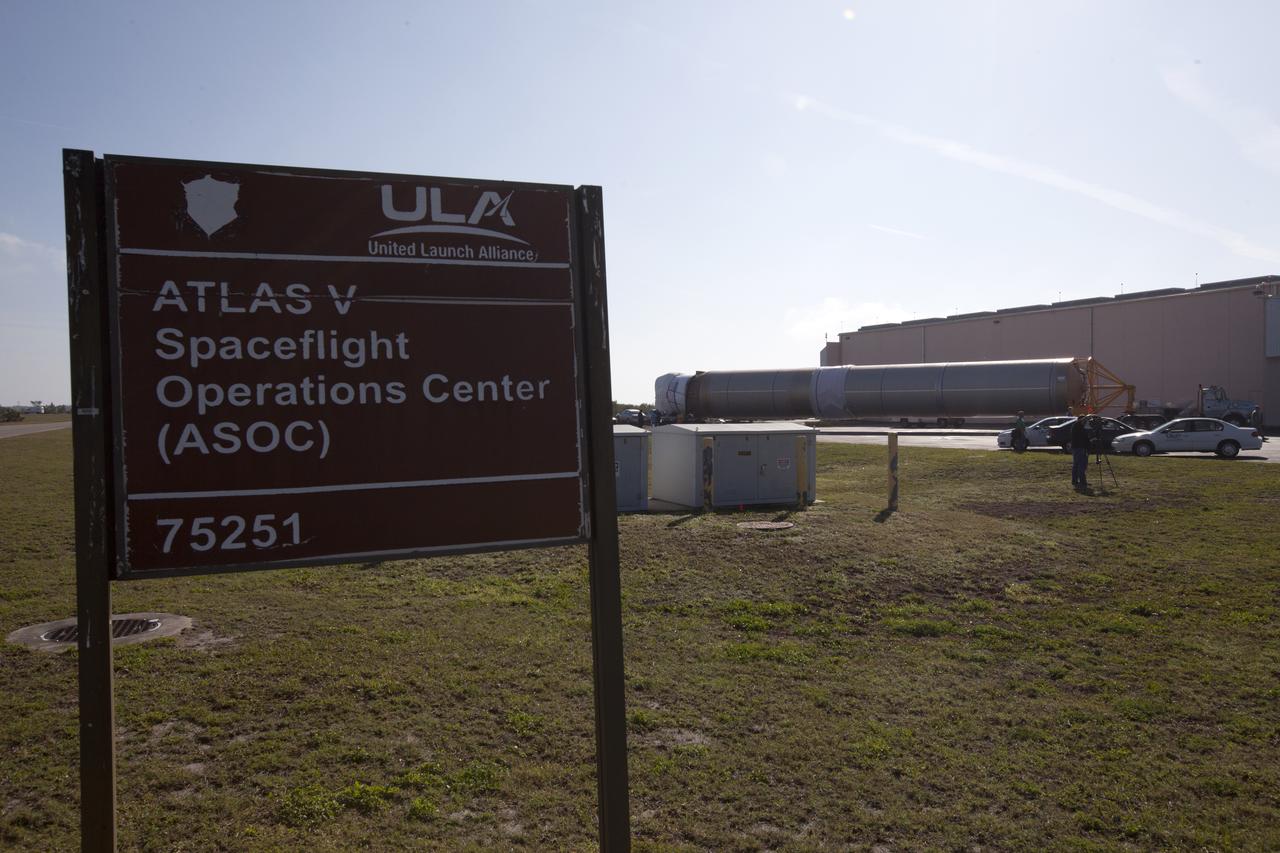
A United Launch Alliance (ULA) Atlas V booster arrives at Cape Canaveral Air Force Station's Atlas Spaceflight Operations Center (ASOC). The Atlas V will undergo final testing in that facility. When processing in the ASOC is complete, the Atlas booster will be moved to the Vertical Integration Facility for stacking at Space Launch Complex 41. Scheduled to launch March 19, 2017, the Atlas will launch a Cygnus spacecraft on the Orbital ATK CRS-7 mission to deliver thousands of pounds of supplies, equipment and scientific research materials to the International Space Station.
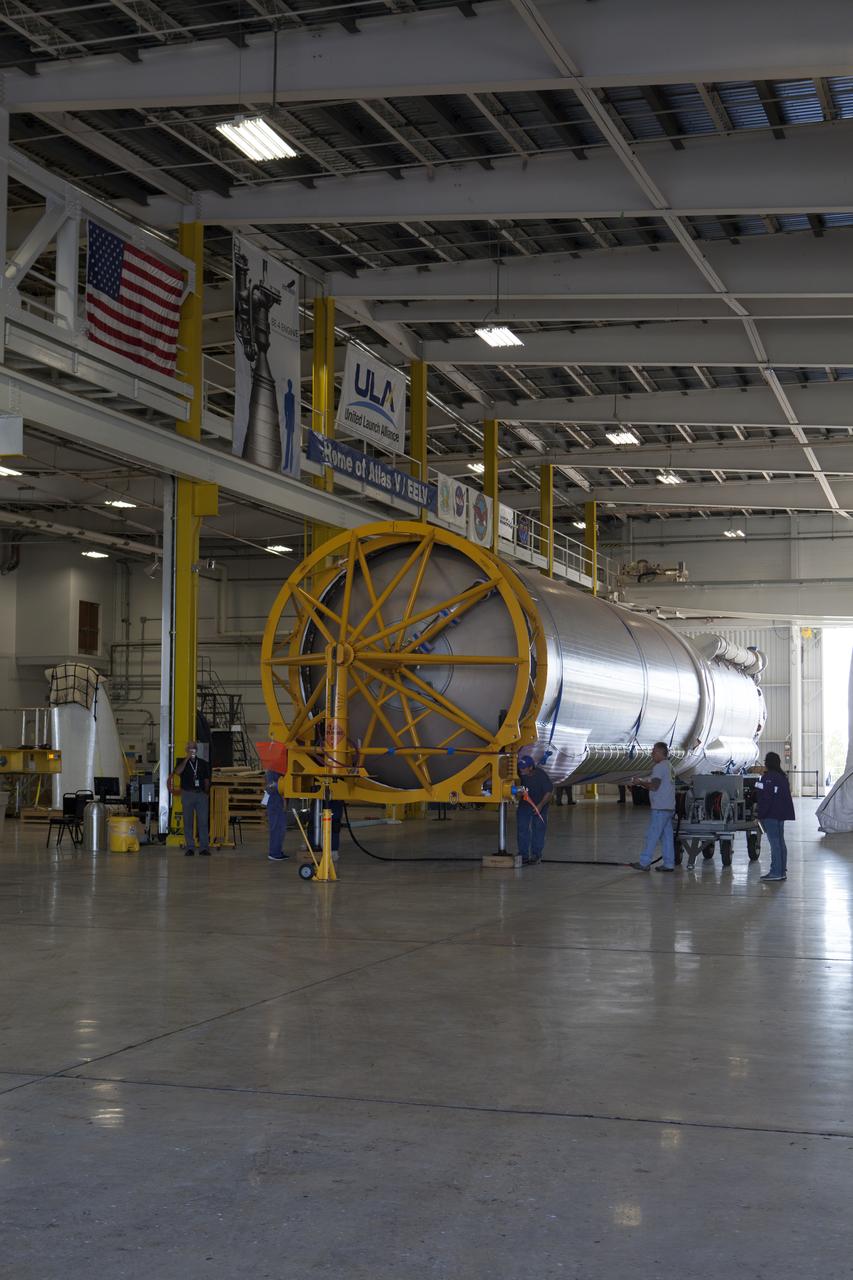
A United Launch Alliance (ULA) Atlas V booster arrives at Cape Canaveral Air Force Station's Atlas Spaceflight Operations Center (ASOC). The Atlas V will undergo final testing in that facility. When processing in the ASOC is complete, the Atlas booster will be moved to the Vertical Integration Facility for stacking at Space Launch Complex 41. Scheduled to launch March 19, 2017, the Atlas will launch a Cygnus spacecraft on the Orbital ATK CRS-7 mission to deliver thousands of pounds of supplies, equipment and scientific research materials to the International Space Station.
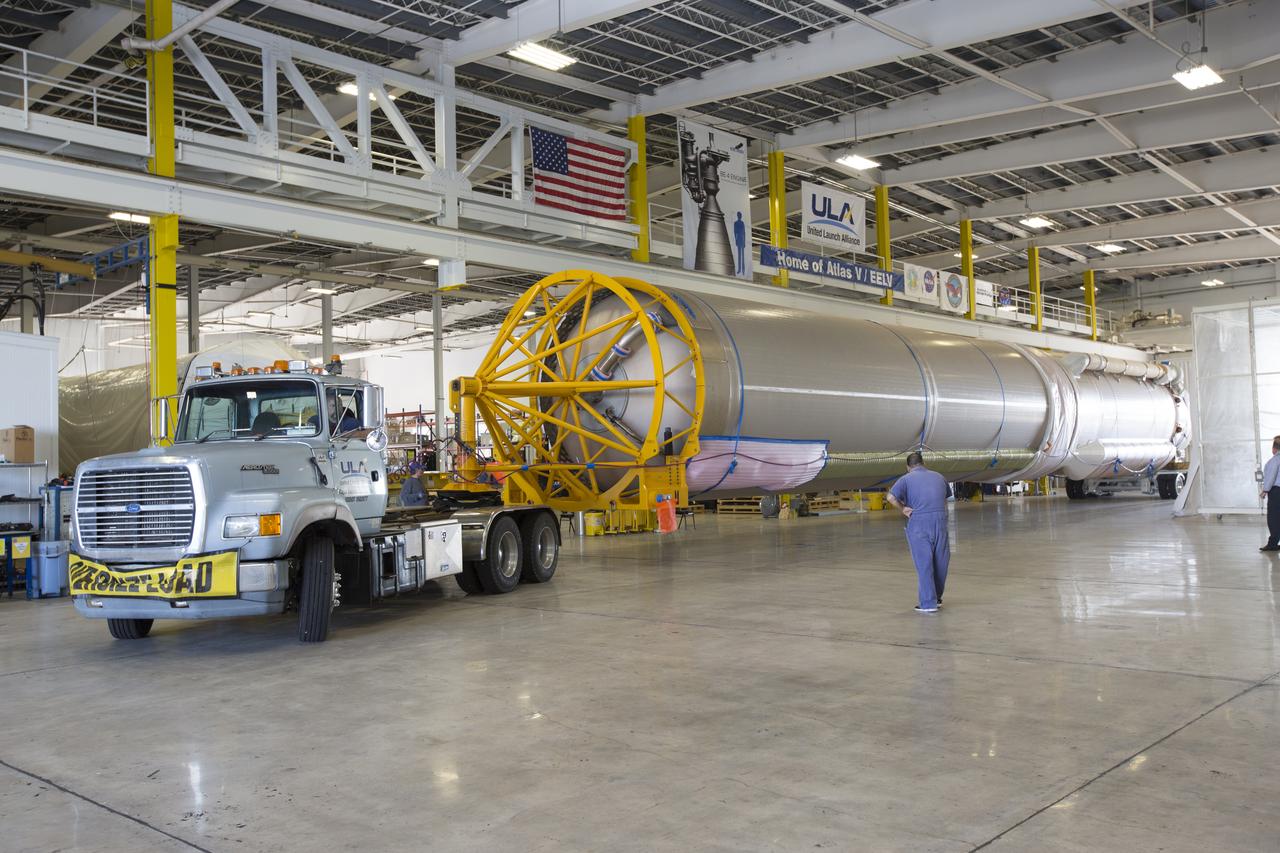
A United Launch Alliance (ULA) Atlas V booster arrives at Cape Canaveral Air Force Station's Atlas Spaceflight Operations Center (ASOC). The Atlas V will undergo final testing in that facility. When processing in the ASOC is complete, the Atlas booster will be moved to the Vertical Integration Facility for stacking at Space Launch Complex 41. Scheduled to launch March 19, 2017, the Atlas will launch a Cygnus spacecraft on the Orbital ATK CRS-7 mission to deliver thousands of pounds of supplies, equipment and scientific research materials to the International Space Station.
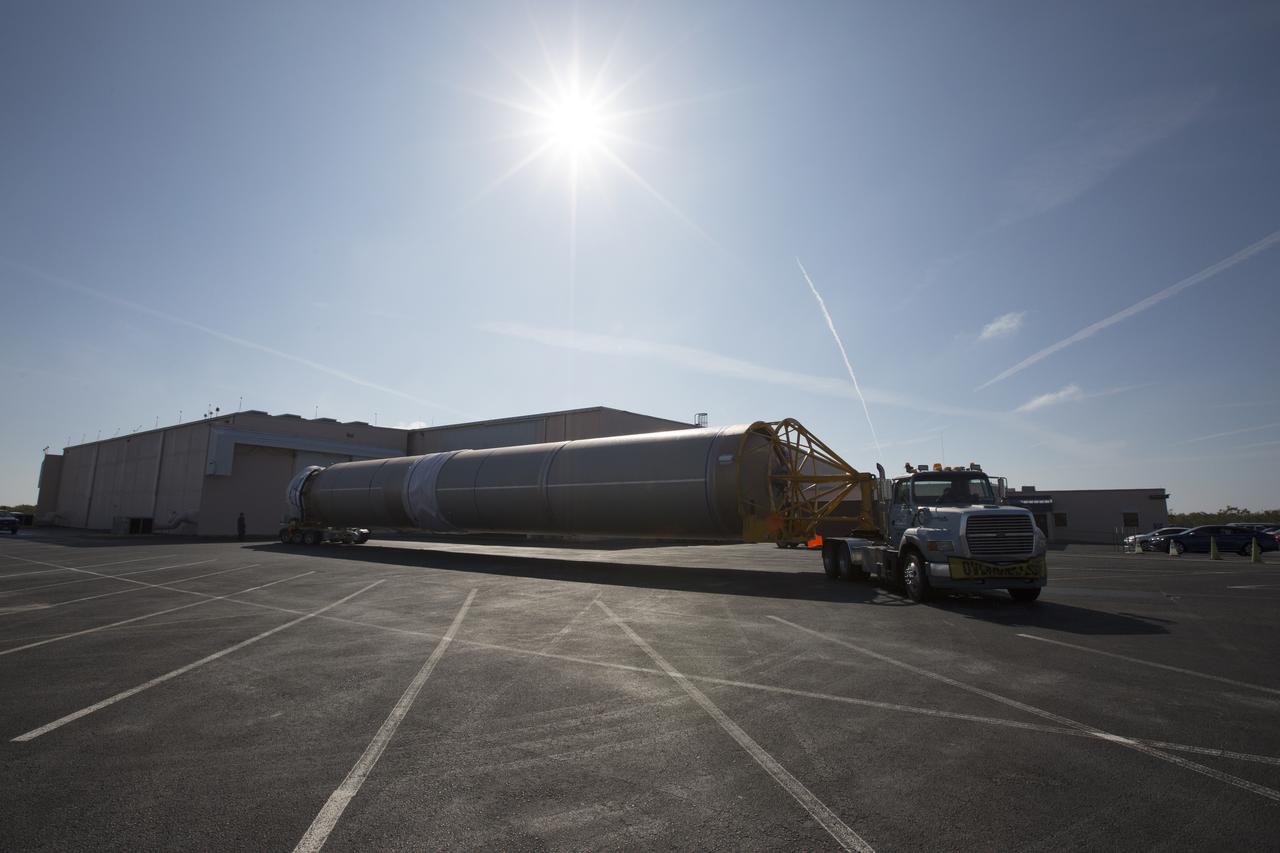
A United Launch Alliance (ULA) Atlas V booster arrives at Cape Canaveral Air Force Station's Atlas Spaceflight Operations Center (ASOC). The Atlas V will undergo final testing in that facility. When processing in the ASOC is complete, the Atlas booster will be moved to the Vertical Integration Facility for stacking at Space Launch Complex 41. Scheduled to launch March 19, 2017, the Atlas will launch a Cygnus spacecraft on the Orbital ATK CRS-7 mission to deliver thousands of pounds of supplies, equipment and scientific research materials to the International Space Station.
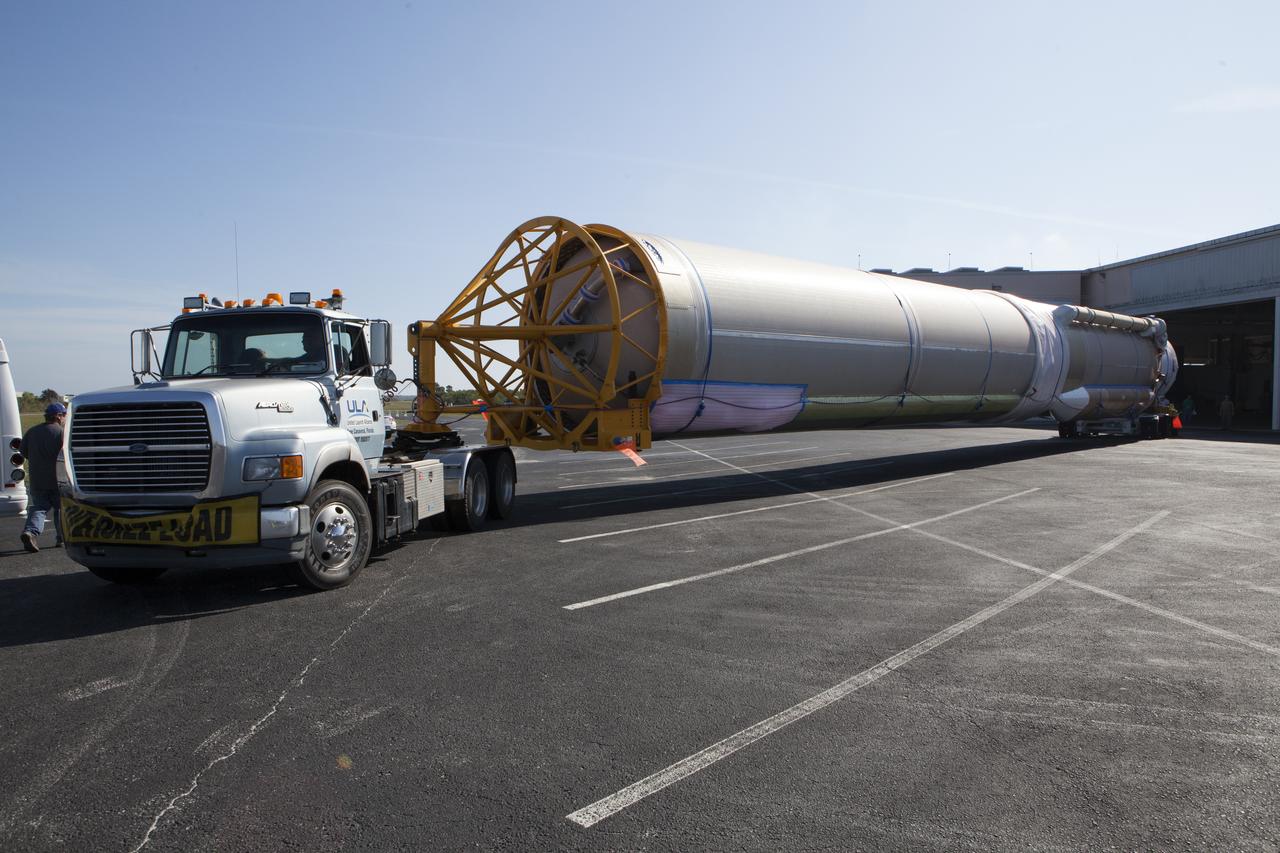
A United Launch Alliance (ULA) Atlas V booster arrives at Cape Canaveral Air Force Station's Atlas Spaceflight Operations Center (ASOC). The Atlas V will undergo final testing in that facility. When processing in the ASOC is complete, the Atlas booster will be moved to the Vertical Integration Facility for stacking at Space Launch Complex 41. Scheduled to launch March 19, 2017, the Atlas will launch a Cygnus spacecraft on the Orbital ATK CRS-7 mission to deliver thousands of pounds of supplies, equipment and scientific research materials to the International Space Station.
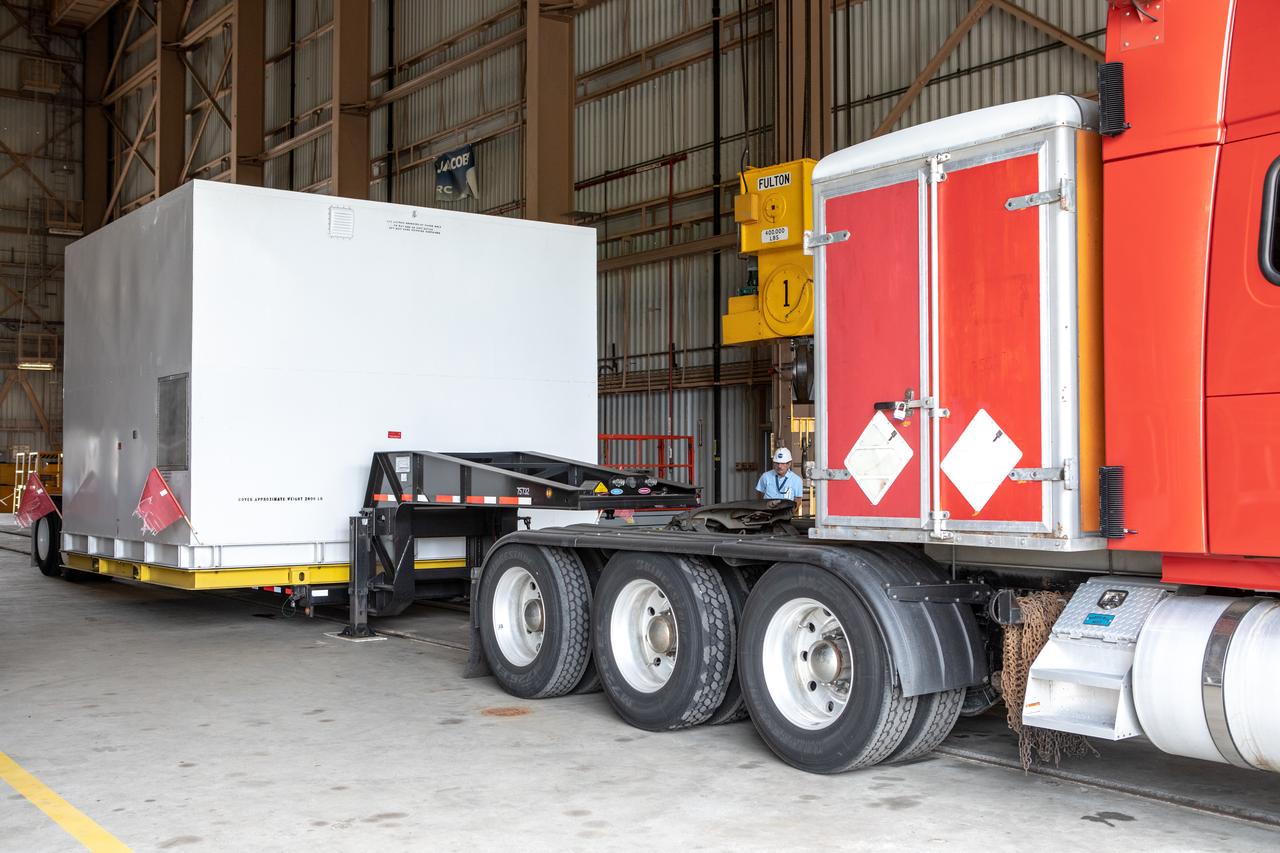
The first of two Northrop Grumman aft exit cones for the Space Launch System’s solid rocket boosters arrives by truck in its shipping container at the Rotation, Processing and Surge Facility at NASA's Kennedy Space Center in Florida on Nov. 4, 2019. The aft exit cone was shipped from Promontory, Utah. It will be checked out and prepared for the Artemis I uncrewed test flight. The aft exit cones sit at the bottommost part of the twin boosters. They are attached to the aft skirts, which contain the booster separation motors. The exit cones help to protect the aft skirts during launch.
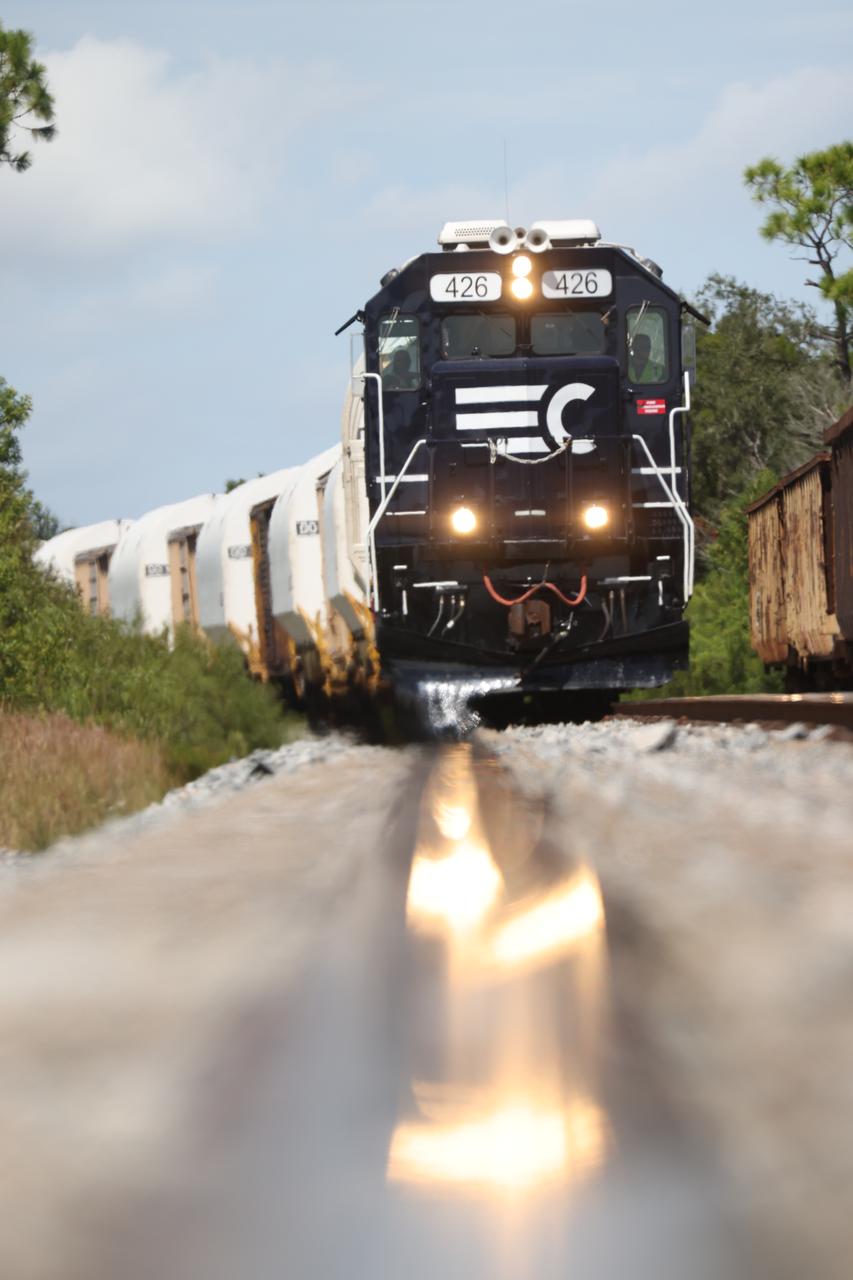
The 10 booster motor segments that will form the NASA Space Launch System rocket’s twin, five-segment solid rocket boosters for the agency’s Artemis II mission, arrive at Kennedy Space Center on Monday, Sept. 25, 2023. Due to their weight, the booster motor segments traveled by rail across eight states in specialized transporters to the Florida spaceport. Teams with NASA’s Exploration Ground Systems will process each of the segments at Kennedy in preparation for launch. Artemis II astronauts Reid Wiseman, Victor Glover, Christina Koch, and Jeremy Hansen will blast off from Kennedy, traveling around the Moon on the first crewed mission under Artemis that will test all of the Orion spacecraft’s systems.

The 10 booster motor segments that will form the NASA Space Launch System rocket’s twin, five-segment solid rocket boosters for the agency’s Artemis II mission, arrive at Kennedy Space Center on Monday, Sept. 25, 2023. Due to their weight, the booster motor segments traveled by rail across eight states in specialized transporters to the Florida spaceport. Teams with NASA’s Exploration Ground Systems will process each of the segments at Kennedy in preparation for launch. Artemis II astronauts Reid Wiseman, Victor Glover, Christina Koch, and Jeremy Hansen will blast off from Kennedy, traveling around the Moon on the first crewed mission under Artemis that will test all of the Orion spacecraft’s systems.
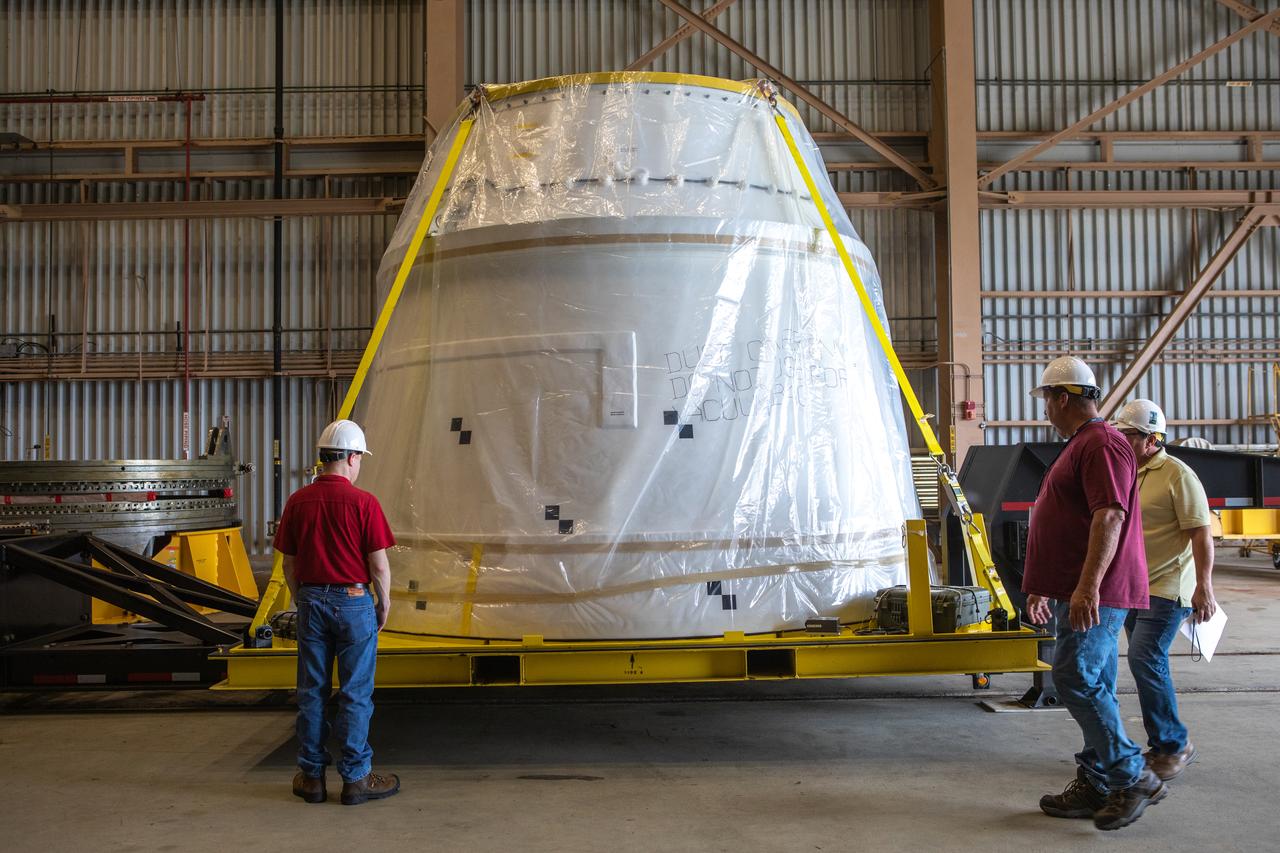
The shipping container cover has been removed from the first Northrop Grumman aft exit cone to arrive for the Space Launch System’s solid rocket boosters inside the Rotation, Processing and Surge Facility at NASA’s Kennedy Space Center in Florida on Nov. 4, 2019. The aft exit cone was shipped from Promontory, Utah. It will be checked out and prepared for the Artemis I uncrewed test flight. The aft exit cones sit at the bottommost part of the twin boosters. They are attached to the aft skirts, which contain the booster separation motors. The exit cones help to protect the aft skirts during launch.
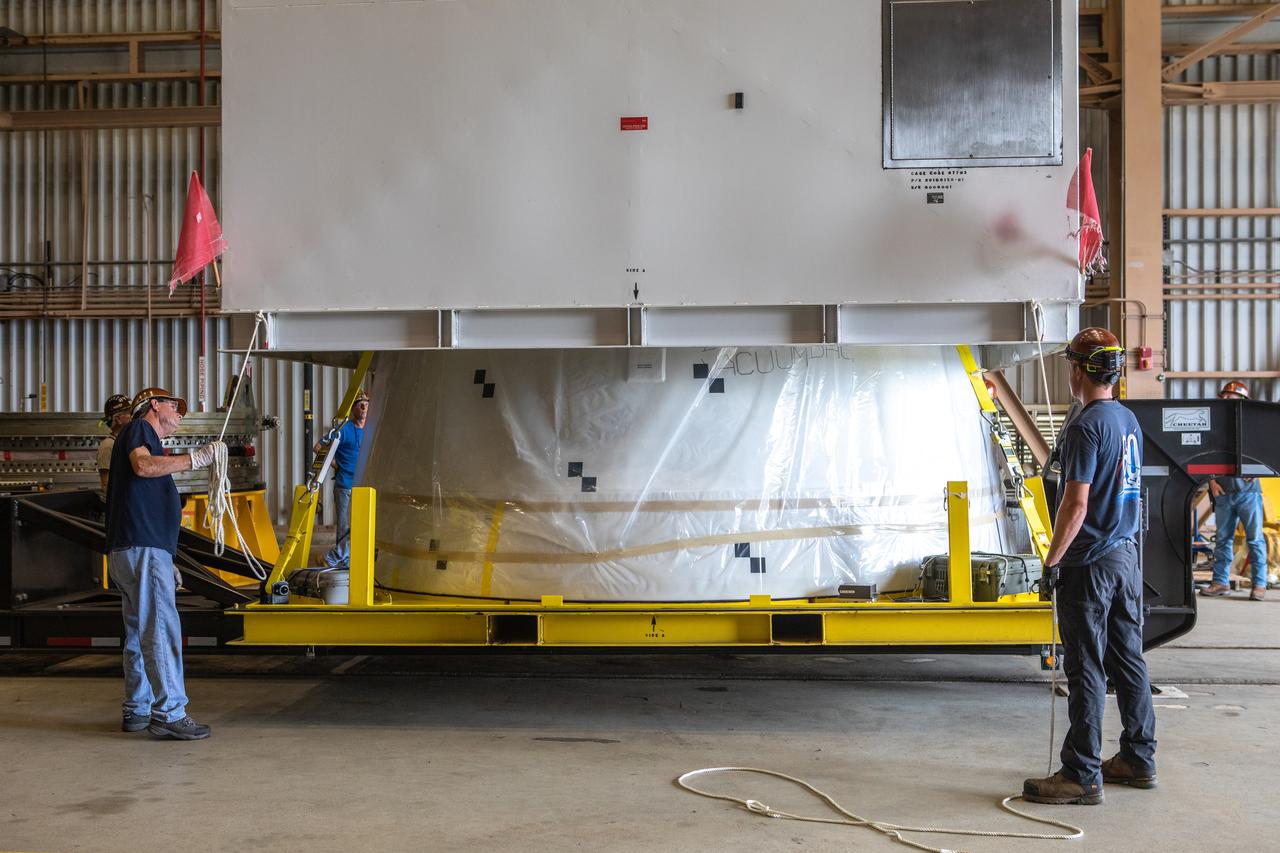
Workers assist with removal of the shipping container cover from the first Northrop Grumman aft exit cone to arrive for the Space Launch System’s solid rocket boosters inside the Rotation, Processing and Surge Facility at NASA’s Kennedy Space Center in Florida on Nov. 4, 2019. The aft exit cone was shipped from Promontory, Utah. It will be checked out and prepared for the Artemis I uncrewed test flight. The aft exit cones sit at the bottommost part of the twin boosters. They are attached to the aft skirts, which contain the booster separation motors. The exit cones help to protect the aft skirts during launch.
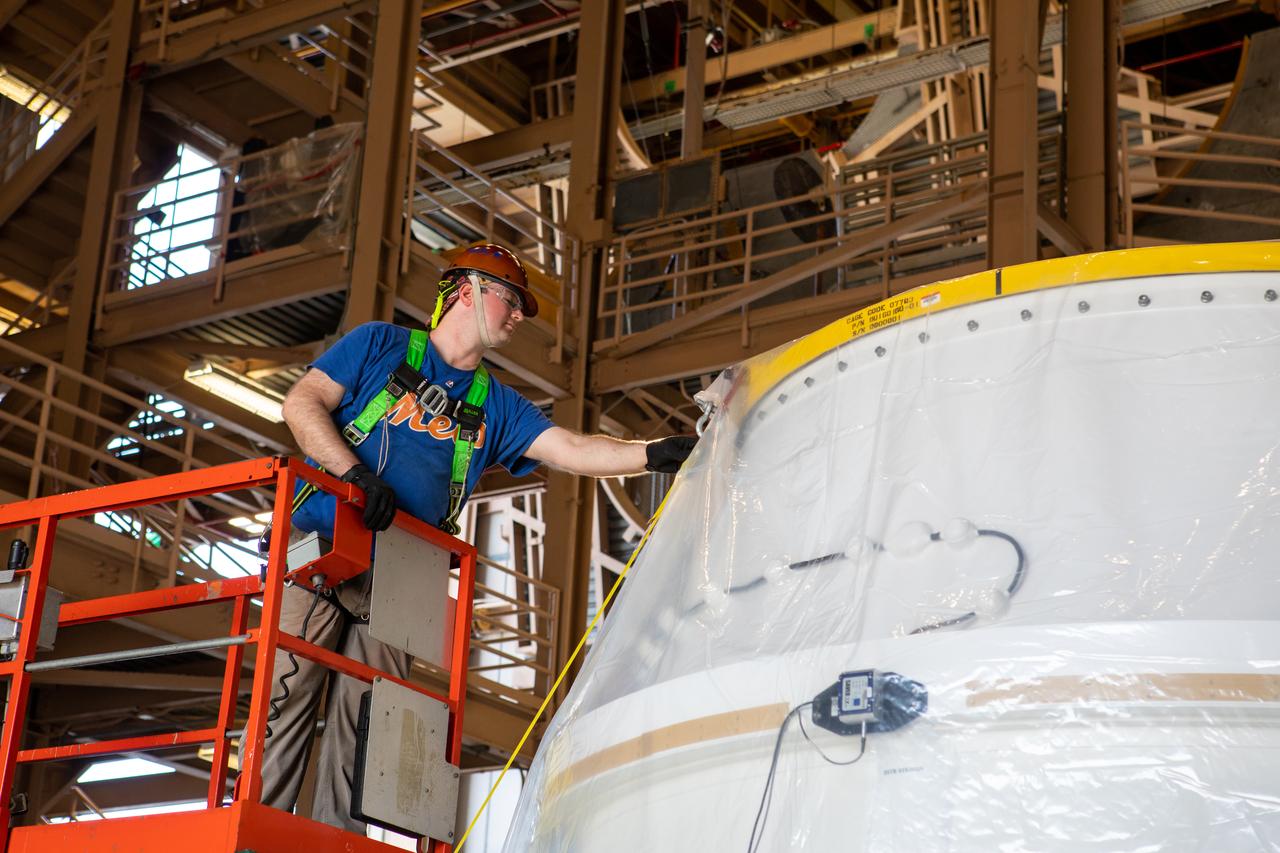
A worker removes one of the securing straps from the second of two Northrop Grumman-manufactured aft exit cones to arrive for the Space Launch System’s solid rocket boosters inside the Rotation, Processing and Surge Facility at NASA’s Kennedy Space Center in Florida on Dec. 9, 2019. The right aft exit cone was shipped from Promontory, Utah. It will be checked out and prepared for the Artemis I uncrewed test flight. The aft exit cones sit at the bottommost part of the twin boosters. The cones help provide added thrust for the boosters, while protecting the aft skirts from the thermal environment during launch.
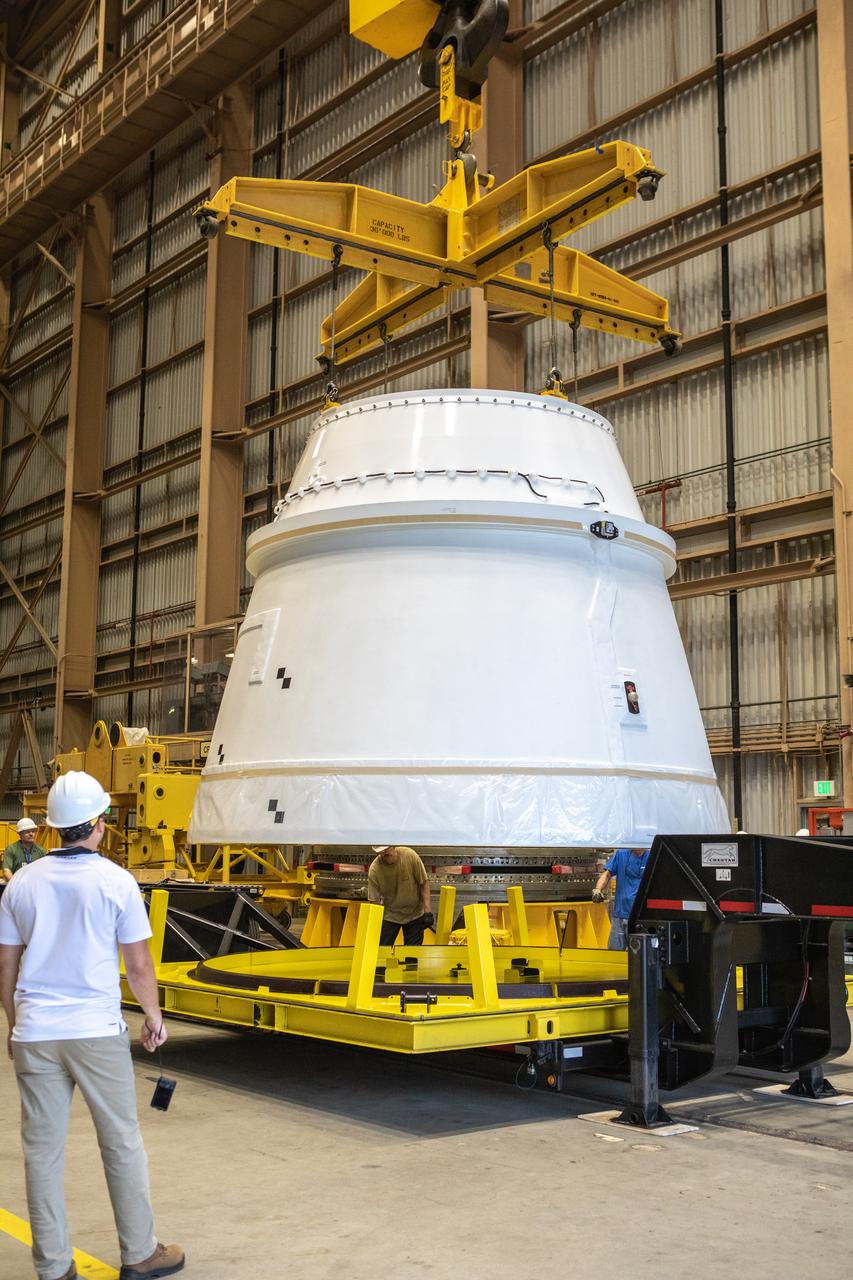
A crane is used to lift the first Northrop Grumman aft exit cone to arrive for the Space Launch System’s solid rocket boosters away from its shipping base inside the Rotation, Processing and Surge Facility at NASA’s Kennedy Space Center in Florida on Nov. 4, 2019. The aft exit cone was shipped from Promontory, Utah. It will be checked out and prepared for the Artemis I uncrewed test flight. The aft exit cones sit at the bottommost part of the twin boosters. They are attached to the aft skirts, which contain the booster separation motors. The exit cones help to protect the aft skirts during launch.
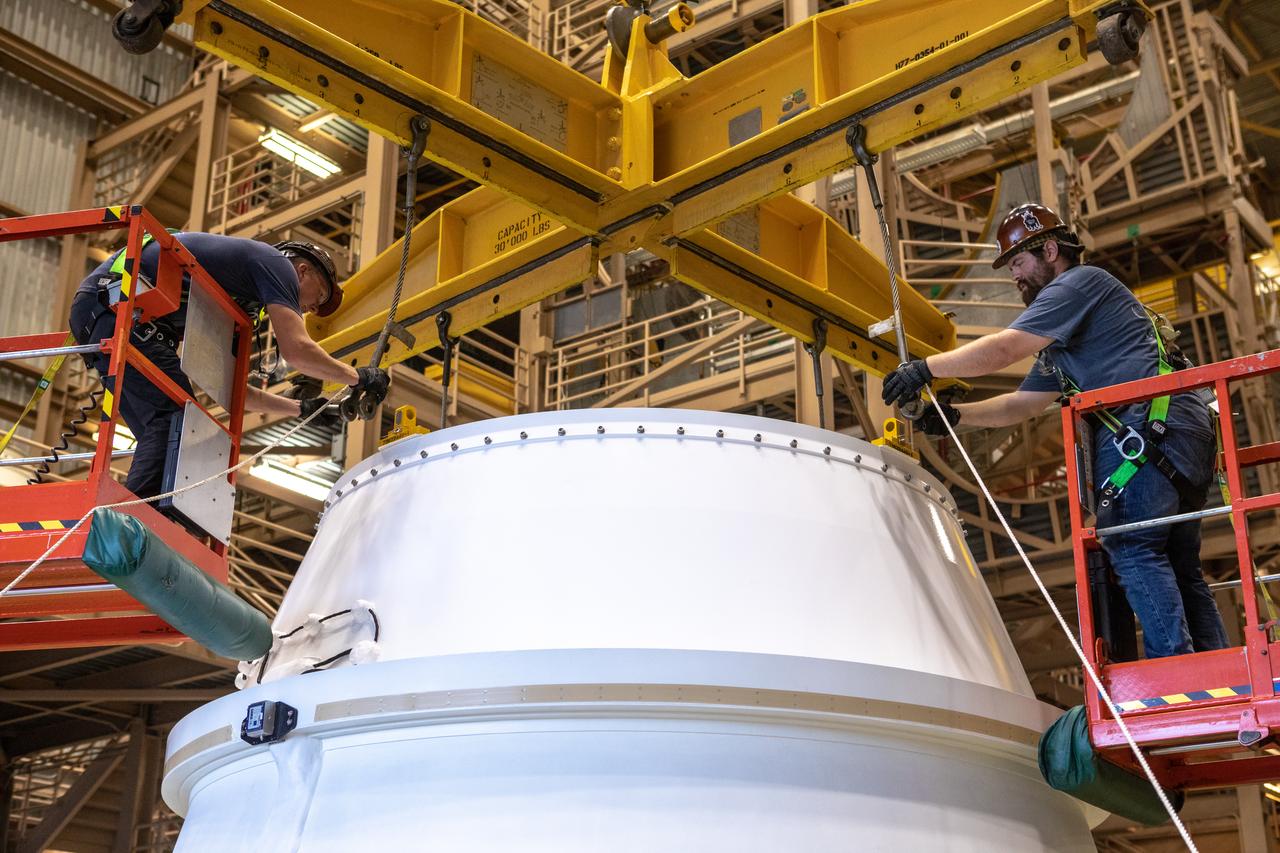
Workers attach a crane to the first Northrop Grumman aft exit cone to arrive for the Space Launch System’s solid rocket boosters inside the Rotation, Processing and Surge Facility at NASA’s Kennedy Space Center in Florida on Nov. 4, 2019. The aft exit cone was shipped from Promontory, Utah. It will be checked out and prepared for the Artemis I uncrewed test flight. The aft exit cones sit at the bottommost part of the twin boosters. They are attached to the aft skirts, which contain the booster separation motors. The exit cones help to protect the aft skirts during launch.
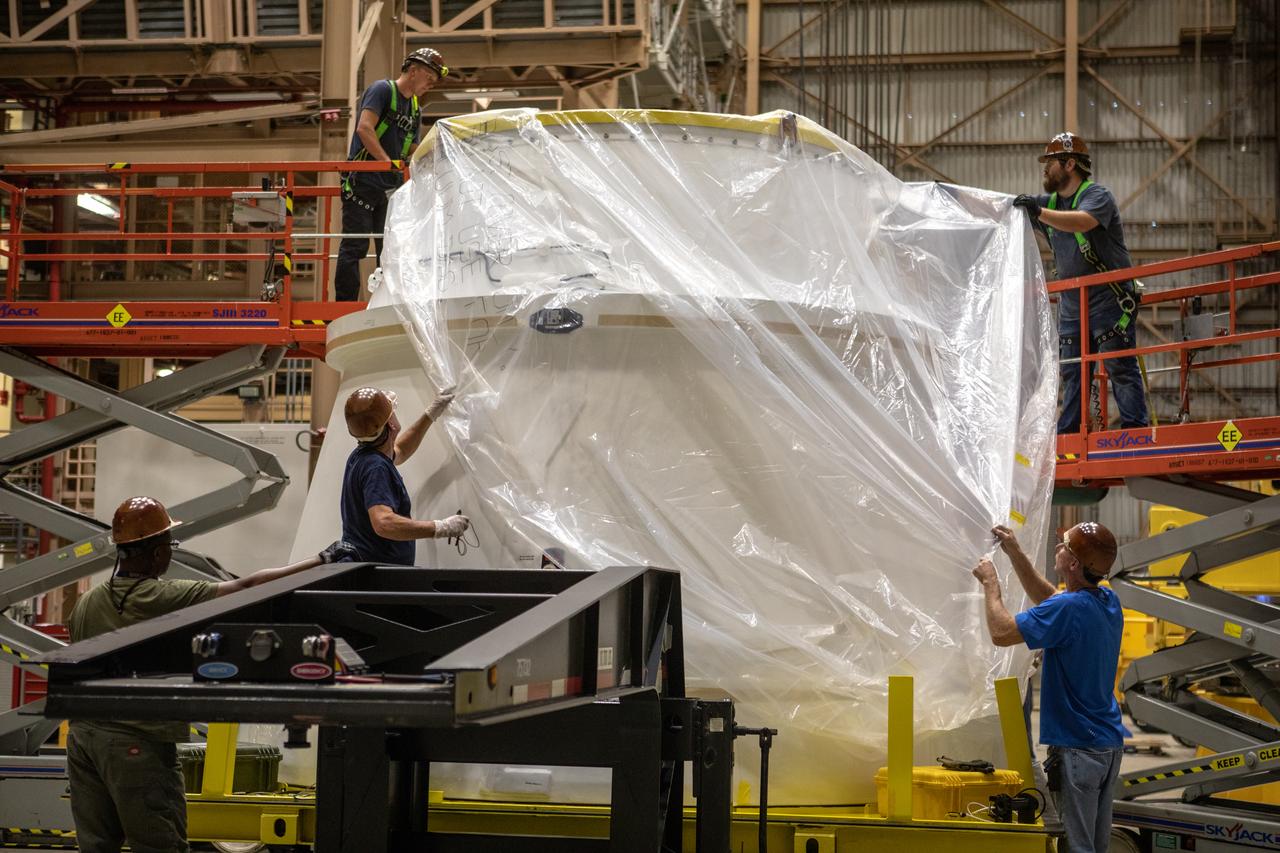
Workers remove the protective cover from the first Northrop Grumman aft exit cone to arrive for the Space Launch System’s solid rocket boosters inside the Rotation, Processing and Surge Facility at NASA’s Kennedy Space Center in Florida on Nov. 4, 2019. The aft exit cone was shipped from Promontory, Utah. It will be checked out and prepared for the Artemis I uncrewed test flight. The aft exit cones sit at the bottommost part of the twin boosters. They are attached to the aft skirts, which contain the booster separation motors. The exit cones help to protect the aft skirts during launch.
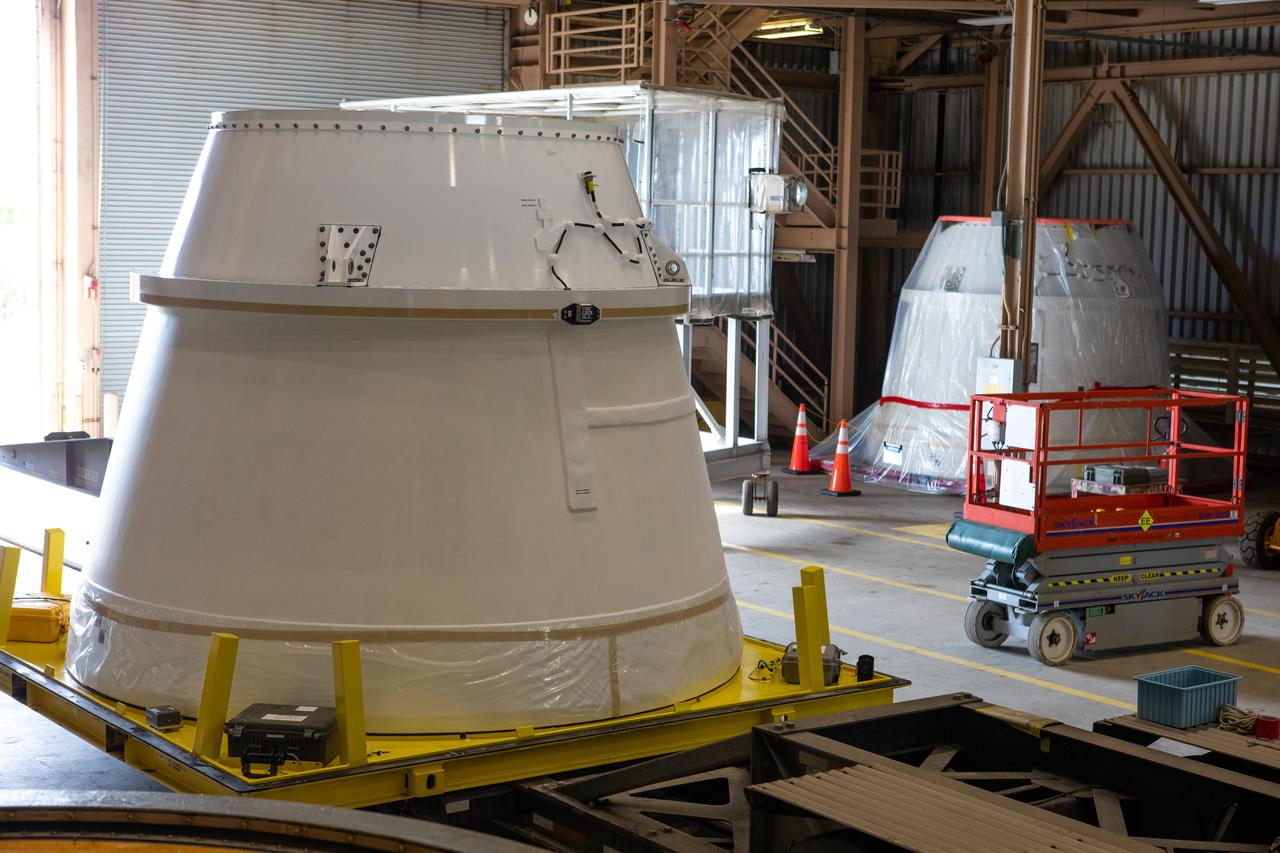
Both of the Northrop Grumman-manufactured aft exit cones for the Space Launch System’s solid rocket boosters are in view inside the Rotation, Processing and Surge Facility at NASA’s Kennedy Space Center in Florida on Dec. 9, 2019. Both arrived from Promontory, Utah. The right aft exit cone is in the foreground, and the left aft exit cone is in the background. They will be checked out and prepared for the Artemis I uncrewed test flight. The aft exit cones sit at the bottommost part of the twin boosters. The cones help provide added thrust for the boosters, while protecting the aft skirts from the thermal environment during launch.
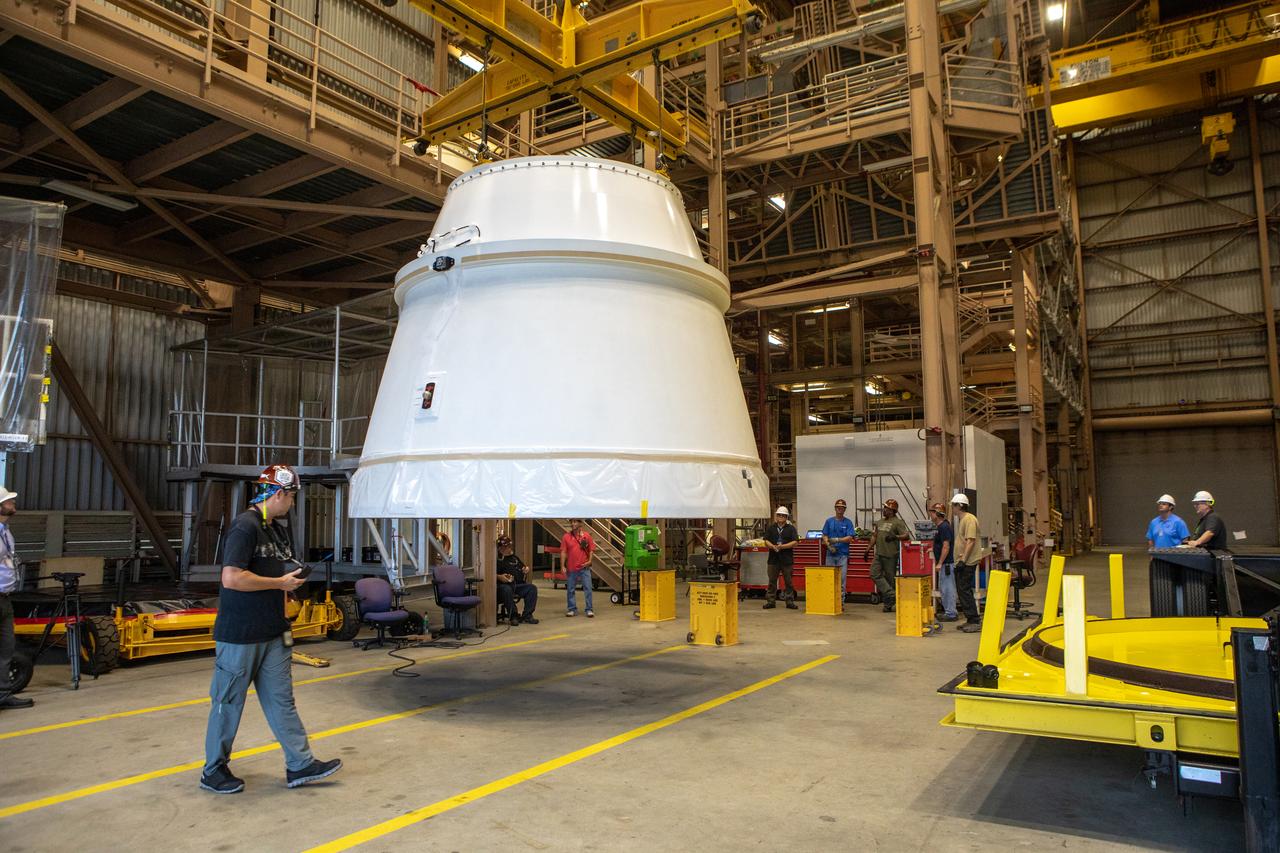
The first Northrop Grumman aft exit cone to arrive for the Space Launch System’s solid rocket boosters is moved by crane inside the Rotation, Processing and Surge Facility at NASA’s Kennedy Space Center in Florida on Nov. 4, 2019. The aft exit cone was shipped from Promontory, Utah. It will be checked out and prepared for the Artemis I uncrewed test flight. The aft exit cones sit at the bottommost part of the twin boosters. They are attached to the aft skirts, which contain the booster separation motors. The exit cones help to protect the aft skirts during launch.
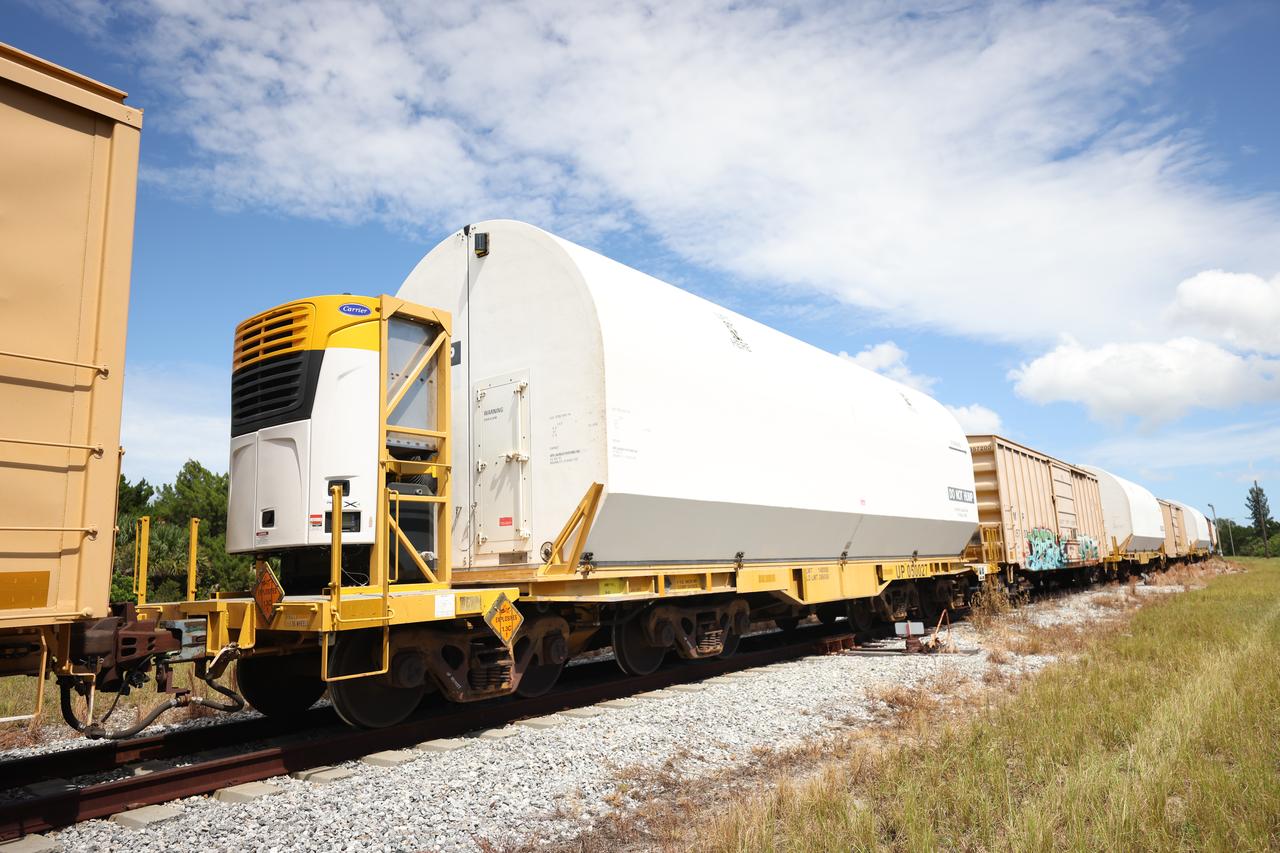
The 10 booster motor segments that will form the NASA Space Launch System rocket’s twin, five-segment solid rocket boosters for the agency’s Artemis II mission, arrive at Kennedy Space Center on Monday, Sept. 25, 2023. Due to their weight, the booster motor segments traveled by rail across eight states in specialized transporters to the Florida spaceport. Teams with NASA’s Exploration Ground Systems will process each of the segments at Kennedy in preparation for launch. Artemis II astronauts Reid Wiseman, Victor Glover, Christina Koch, and Jeremy Hansen will blast off from Kennedy, traveling around the Moon on the first crewed mission under Artemis that will test all of the Orion spacecraft’s systems.
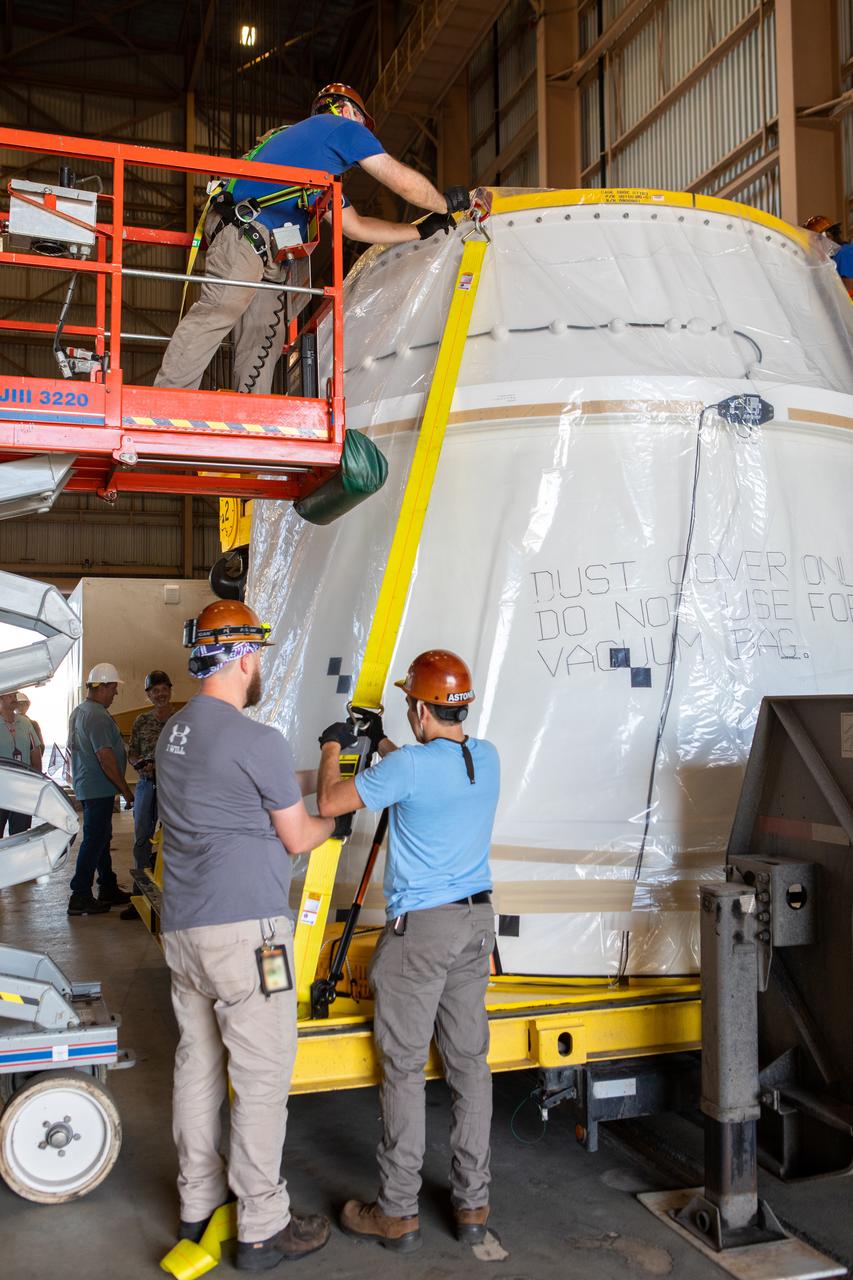
Workers remove the securing straps from the second of two Northrop Grumman-manufactured aft exit cones to arrive for the Space Launch System’s solid rocket boosters inside the Rotation, Processing and Surge Facility at NASA’s Kennedy Space Center in Florida on Dec. 9, 2019. The right aft exit cone was shipped from Promontory, Utah. It will be checked out and prepared for the Artemis I uncrewed test flight. The aft exit cones sit at the bottommost part of the twin boosters. The cones help provide added thrust for the boosters, while protecting the aft skirts from the thermal environment during launch.
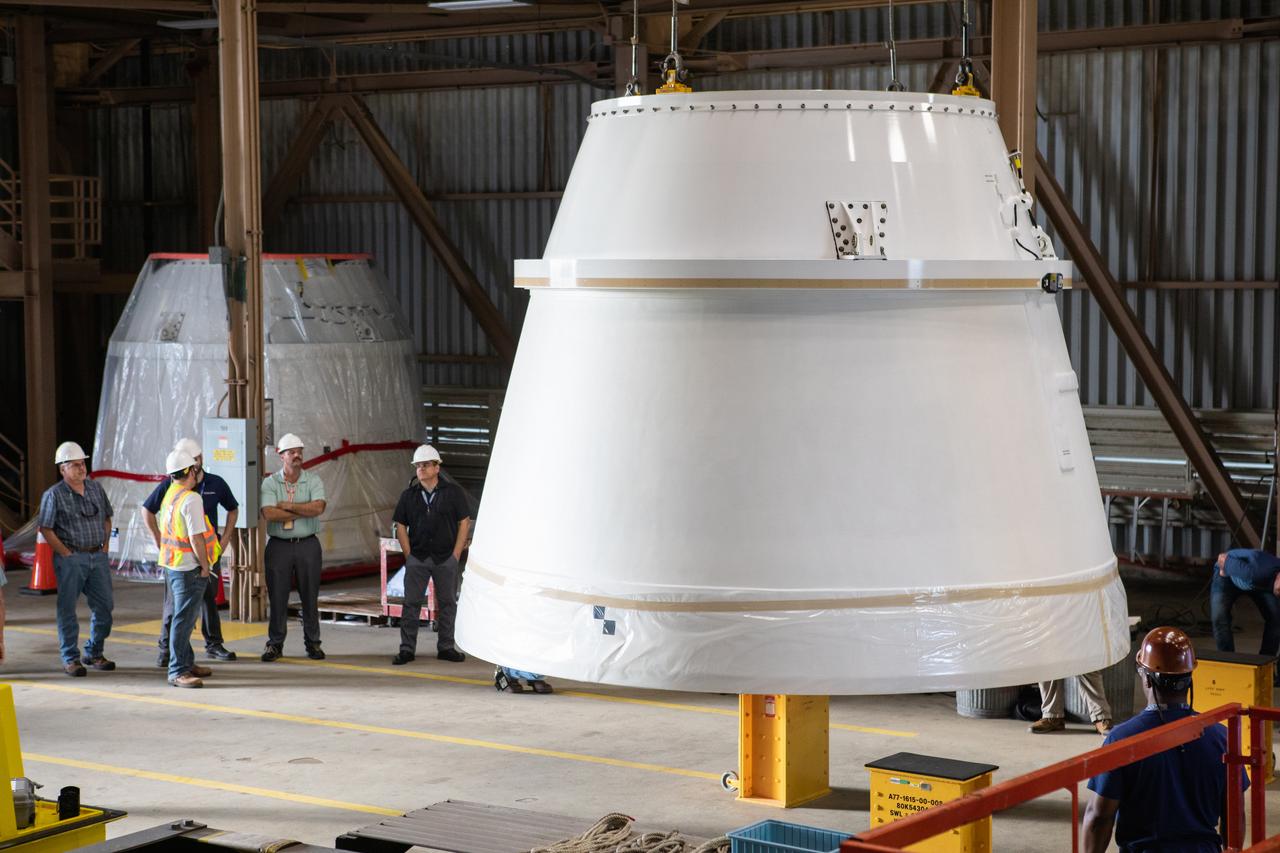
The second of two Northrop Grumman-manufactured aft exit cones to arrive for the Space Launch System’s solid rocket boosters is moved by crane inside the Rotation, Processing and Surge Facility at NASA’s Kennedy Space Center in Florida on Dec. 9, 2019. Both aft exit cone were shipped from Promontory, Utah. The left aft exit cone is in view in the background. They will be checked out and prepared for the Artemis I uncrewed test flight. The aft exit cones sit at the bottommost part of the twin boosters. The cones help provide added thrust for the boosters, while protecting the aft skirts from the thermal environment during launch.
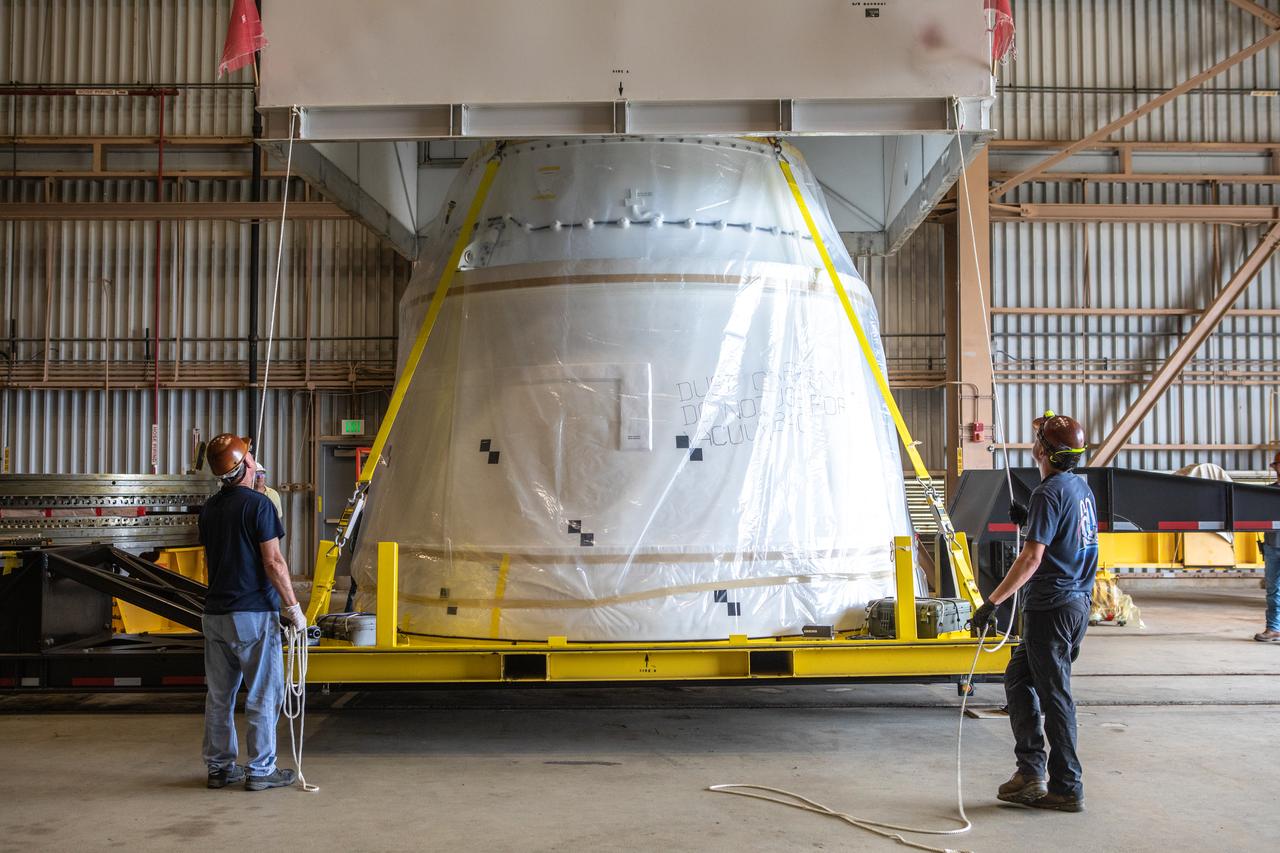
Workers assist with removal of the shipping container cover from the first Northrop Grumman aft exit cone to arrive for the Space Launch System’s solid rocket boosters inside the Rotation, Processing and Surge Facility at NASA’s Kennedy Space Center in Florida on Nov. 4, 2019. The aft exit cone was shipped from Promontory, Utah. It will be checked out and prepared for the Artemis I uncrewed test flight. The aft exit cones sit at the bottommost part of the twin boosters. They are attached to the aft skirts, which contain the booster separation motors. The exit cones help to protect the aft skirts during launch.
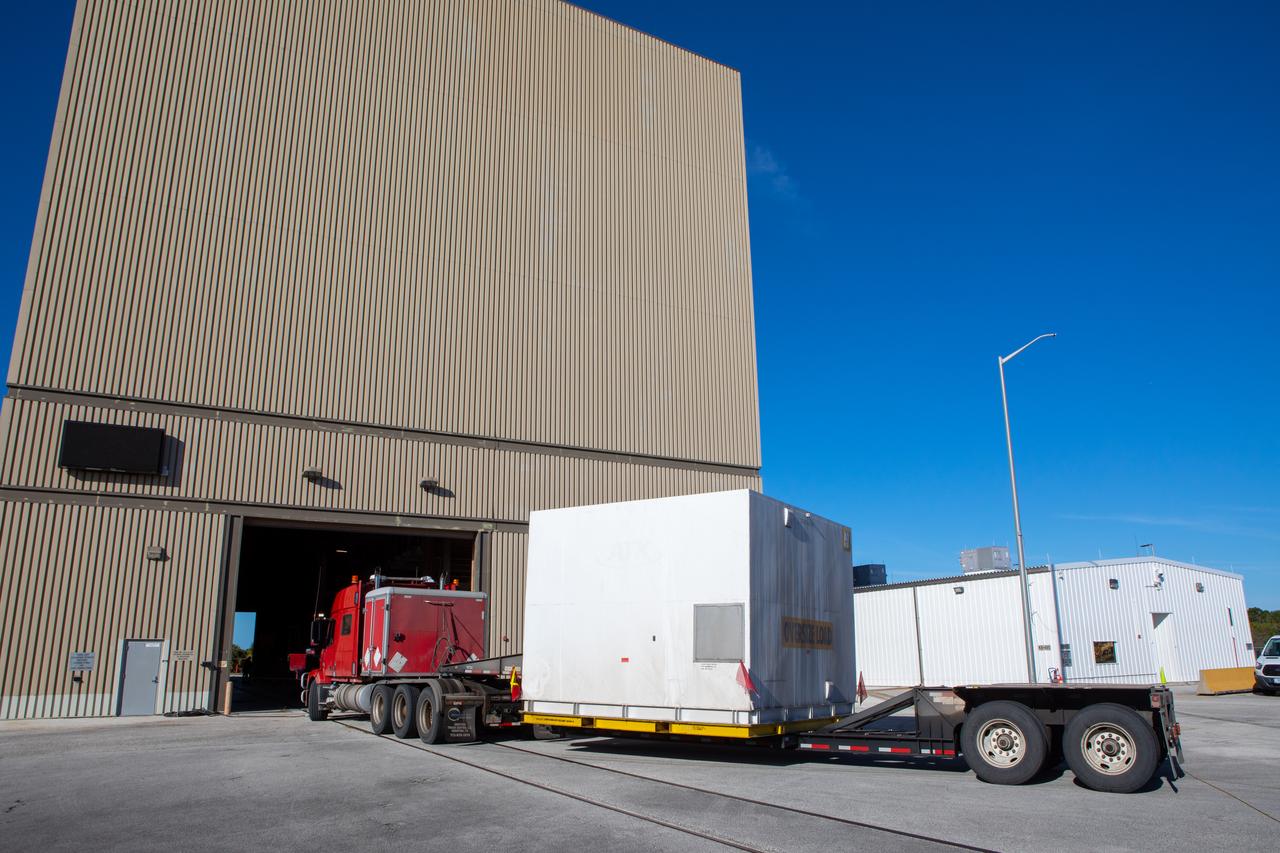
The second of two Northrop Grumman-manufactured aft exit cones for the Space Launch System’s solid rocket boosters arrives by truck in its shipping container at the Rotation, Processing and Surge Facility at NASA's Kennedy Space Center in Florida on Dec. 9, 2019. The right aft exit cone was shipped from Promontory, Utah. It will be checked out and prepared for the Artemis I uncrewed test flight. The aft exit cones sit at the bottommost part of the twin boosters. The cones help provide added thrust for the boosters, while protecting the aft skirts from the thermal environment during launch.
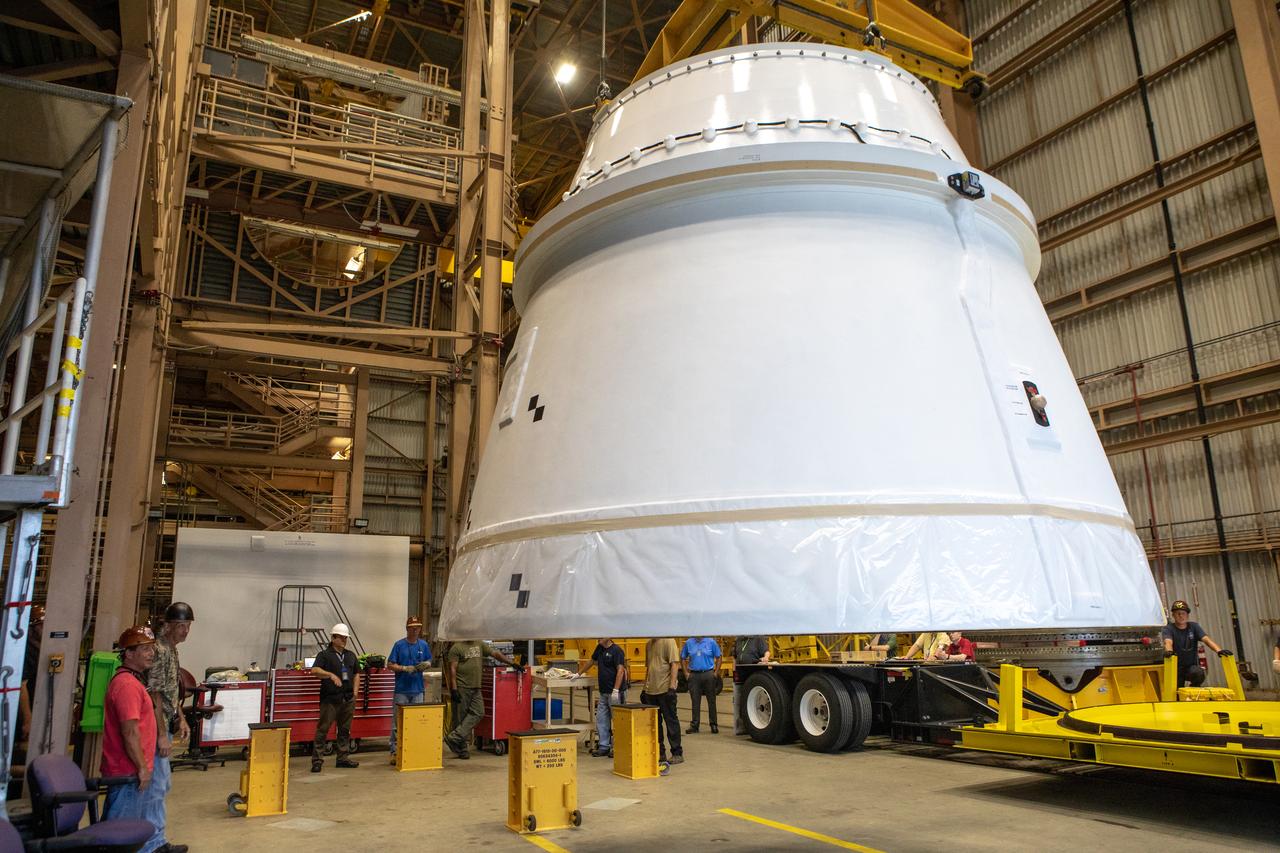
The first Northrop Grumman aft exit cone to arrive for the Space Launch System’s solid rocket boosters is moved by crane inside the Rotation, Processing and Surge Facility at NASA’s Kennedy Space Center in Florida on Nov. 4, 2019. The aft exit cone was shipped from Promontory, Utah. It will be checked out and prepared for the Artemis I uncrewed test flight. The aft exit cones sit at the bottommost part of the twin boosters. They are attached to the aft skirts, which contain the booster separation motors. The exit cones help to protect the aft skirts during launch.
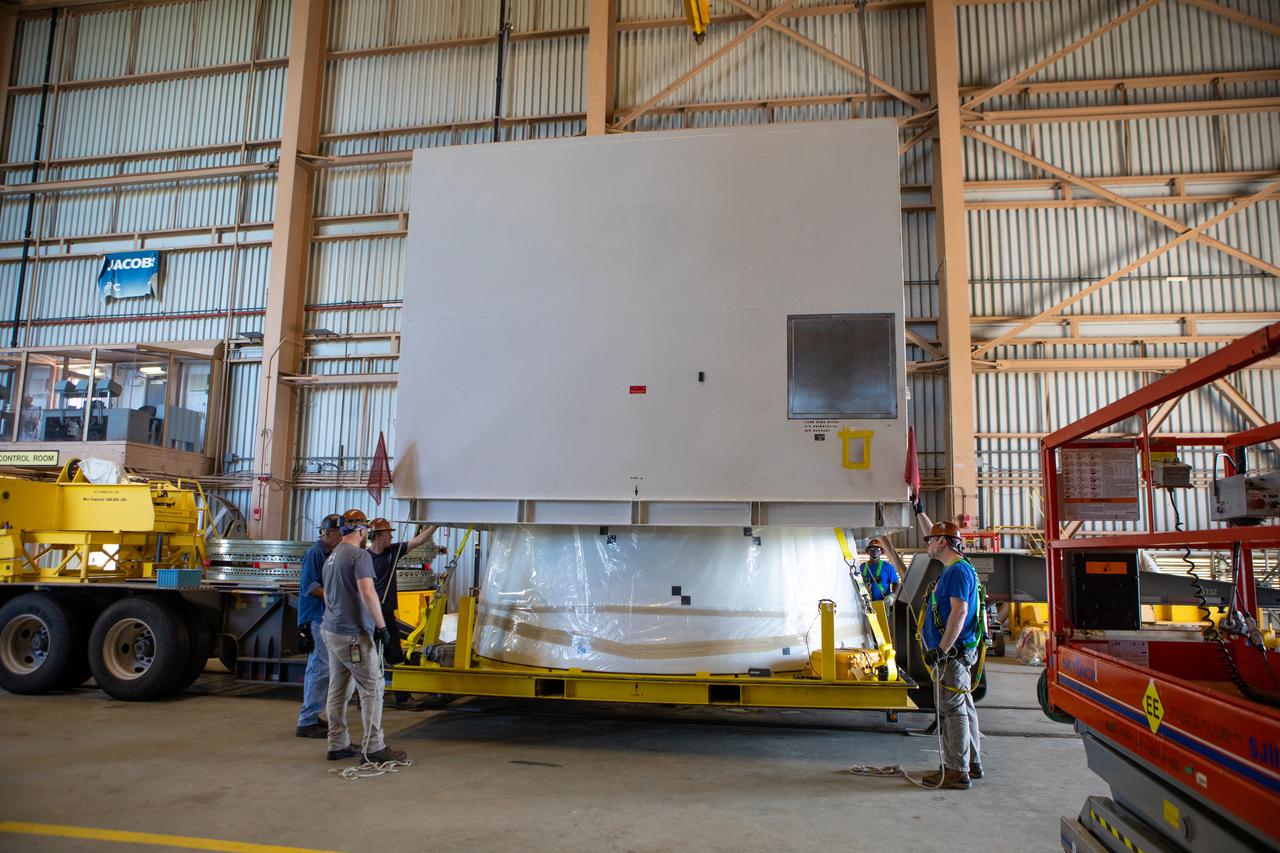
Workers assist with removal of the shipping container cover from the second Northrop Grumman-manufactured aft exit cone to arrive for the Space Launch System’s solid rocket boosters inside the Rotation, Processing and Surge Facility at NASA’s Kennedy Space Center in Florida on Dec. 9, 2019. The right aft exit cone was shipped from Promontory, Utah. It will be checked out and prepared for the Artemis I uncrewed test flight. The aft exit cones sit at the bottommost part of the twin boosters. The cones help provide added thrust for the boosters, while protecting the aft skirts from the thermal environment during launch.
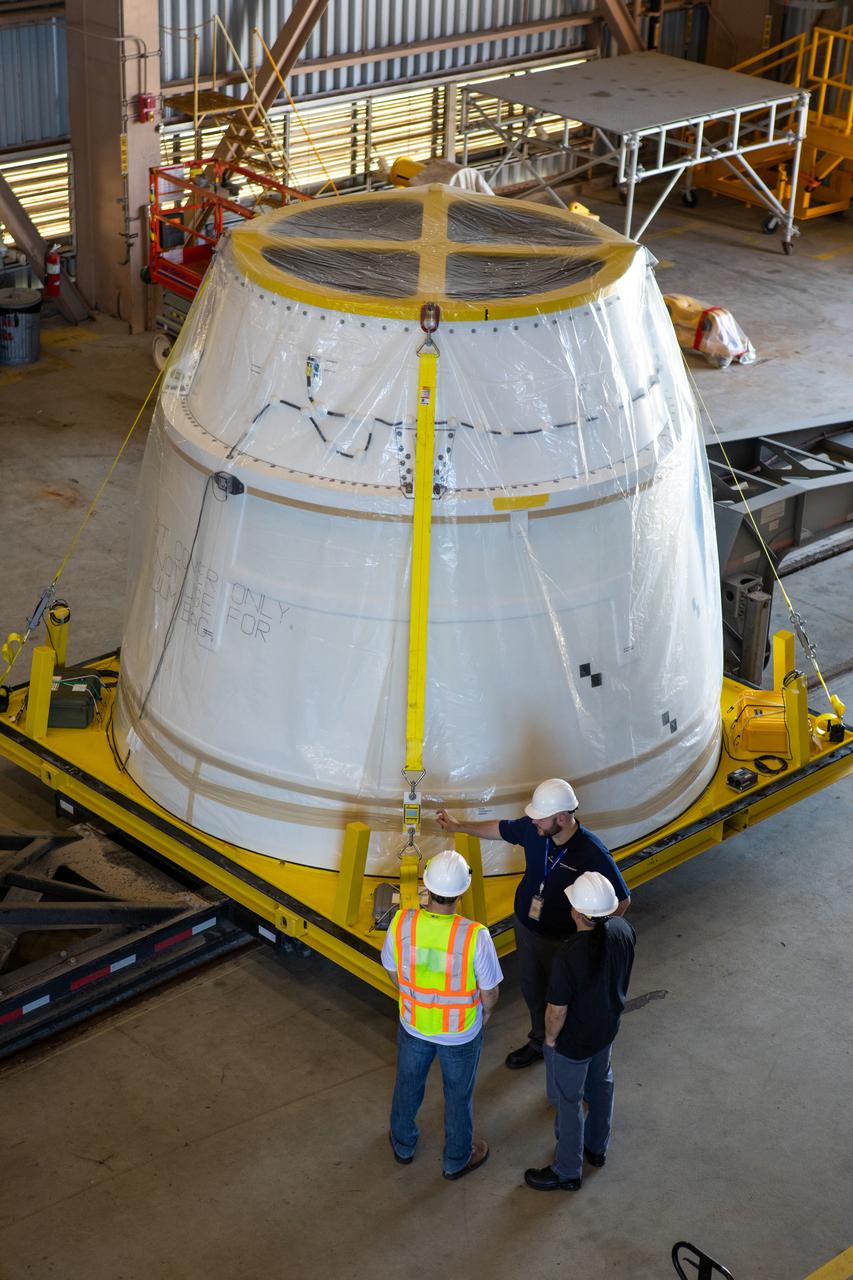
The shipping container has been removed from the second of two Northrop Grumman-manufactured aft exit cones to arrive for the Space Launch System’s solid rocket boosters inside the Rotation, Processing and Surge Facility at NASA’s Kennedy Space Center in Florida on Dec. 9, 2019. The right aft exit cone was shipped from Promontory, Utah. It will be checked out and prepared for the Artemis I uncrewed test flight. The aft exit cones sit at the bottommost part of the twin boosters. The cones help provide added thrust for the boosters, while protecting the aft skirts from the thermal environment during launch.
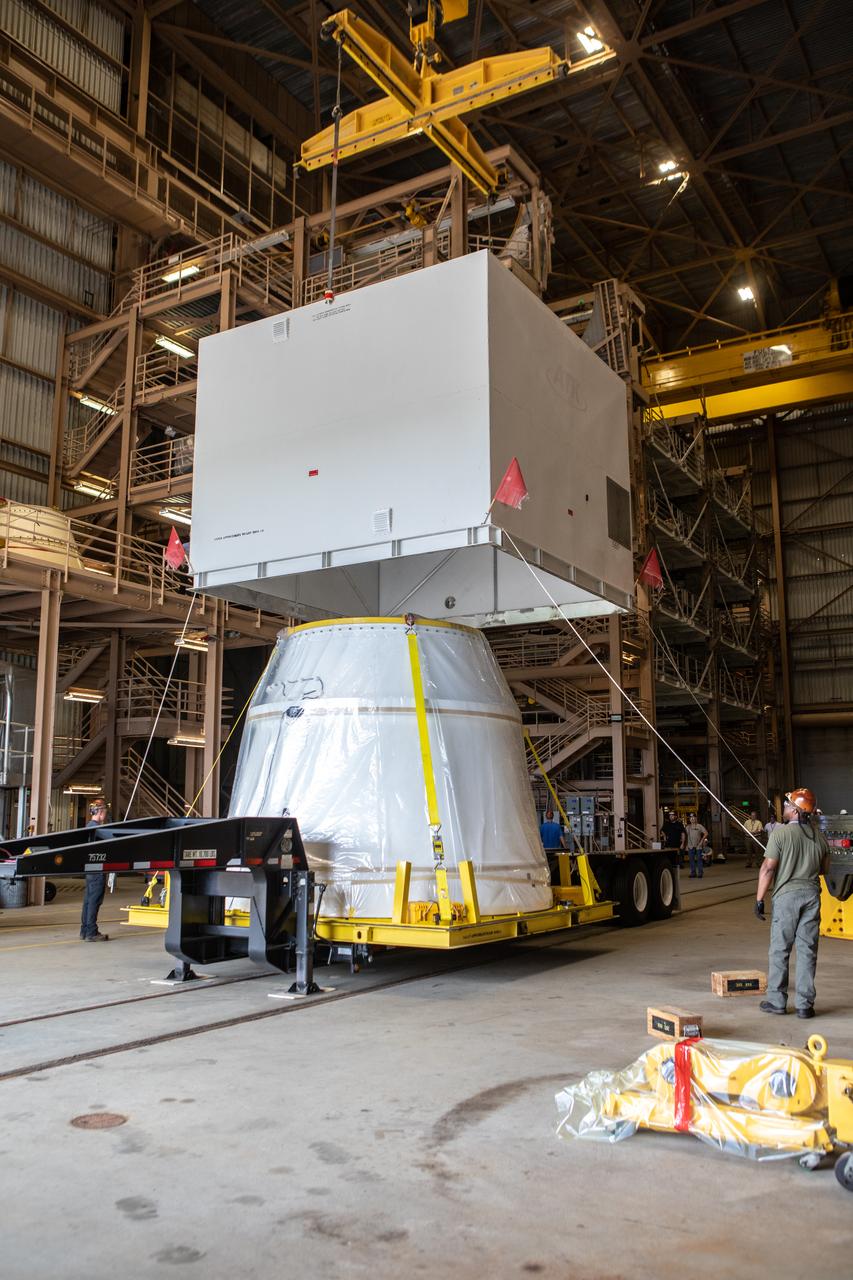
Workers assist as a crane is used to lift up the shipping container cover from the first Northrop Grumman aft exit cone to arrive for the Space Launch System’s solid rocket boosters inside the Rotation, Processing and Surge Facility at NASA’s Kennedy Space Center in Florida on Nov. 4, 2019. The aft exit cone was shipped from Promontory, Utah. It will be checked out and prepared for the Artemis I uncrewed test flight. The aft exit cones sit at the bottommost part of the twin boosters. They are attached to the aft skirts, which contain the booster separation motors. The exit cones help to protect the aft skirts during launch.
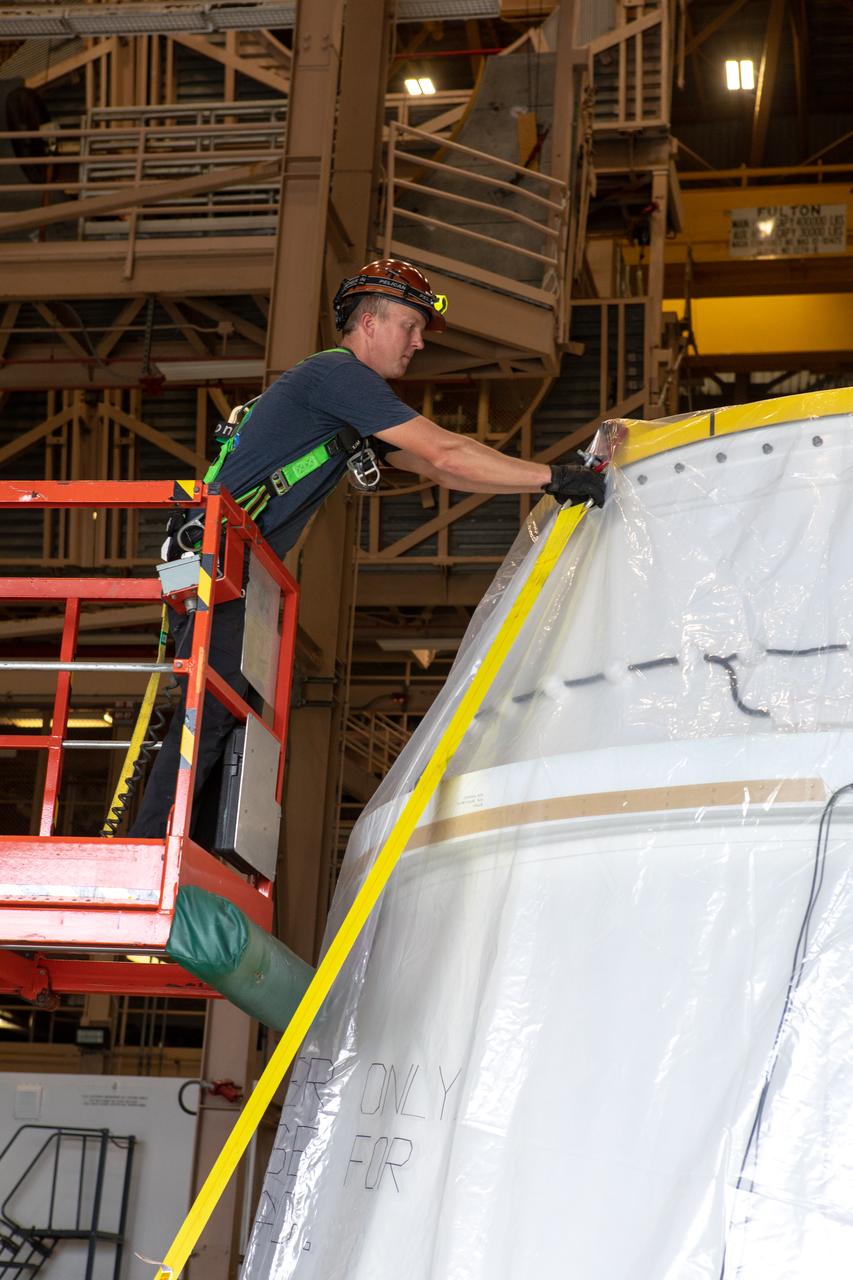
A worker removes one of the securing straps from the first Northrop Grumman aft exit cone to arrive for the Space Launch System’s solid rocket boosters inside the Rotation, Processing and Surge Facility at NASA’s Kennedy Space Center in Florida on Nov. 4, 2019. The aft exit cone was shipped from Promontory, Utah. It will be checked out and prepared for the Artemis I uncrewed test flight. The aft exit cones sit at the bottommost part of the twin boosters. They are attached to the aft skirts, which contain the booster separation motors. The exit cones help to protect the aft skirts during launch.
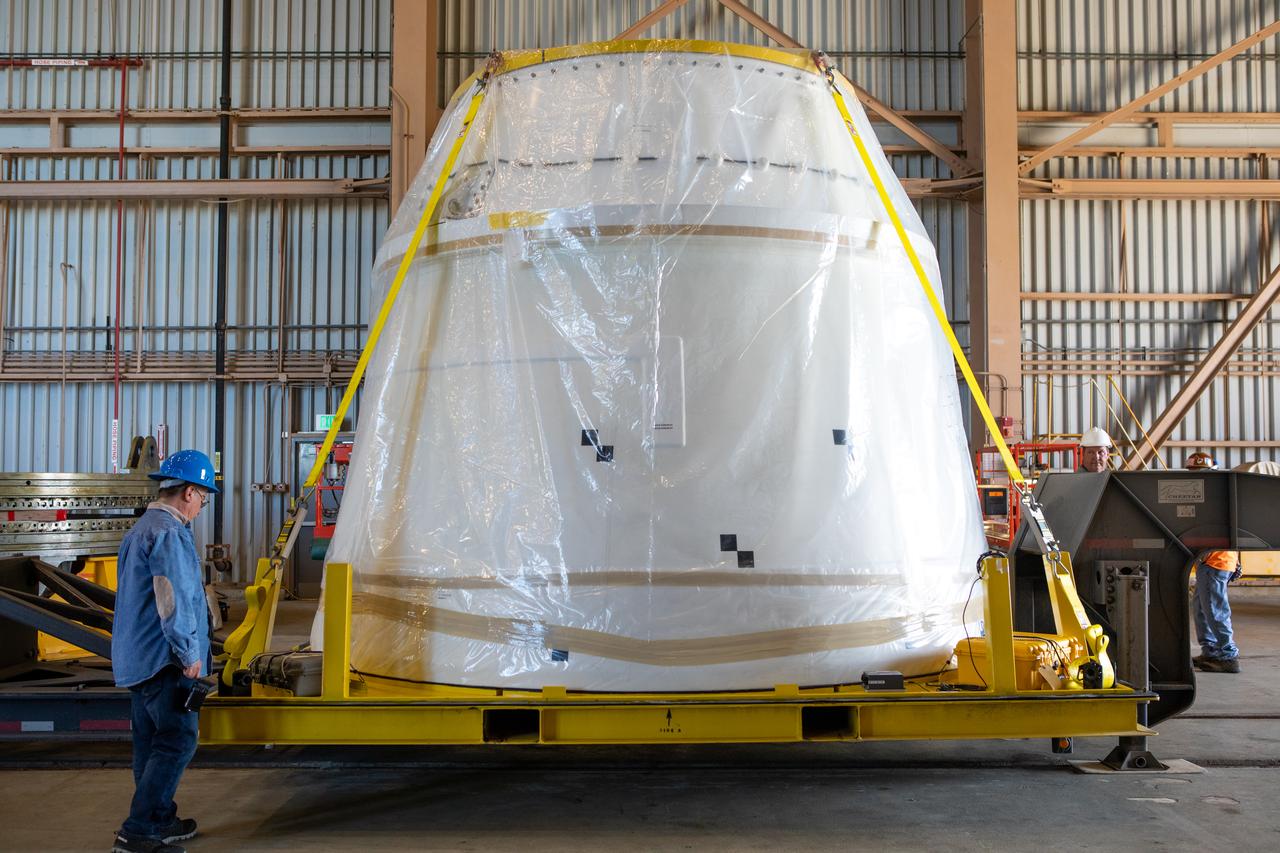
The shipping container has been removed from the second of two Northrop Grumman-manufactured aft exit cones to arrive for the Space Launch System’s solid rocket boosters inside the Rotation, Processing and Surge Facility at NASA’s Kennedy Space Center in Florida on Dec. 9, 2019. The right aft exit cone was shipped from Promontory, Utah. It will be checked out and prepared for the Artemis I uncrewed test flight. The aft exit cones sit at the bottommost part of the twin boosters. The cones help provide added thrust for the boosters, while protecting the aft skirts from the thermal environment during launch.
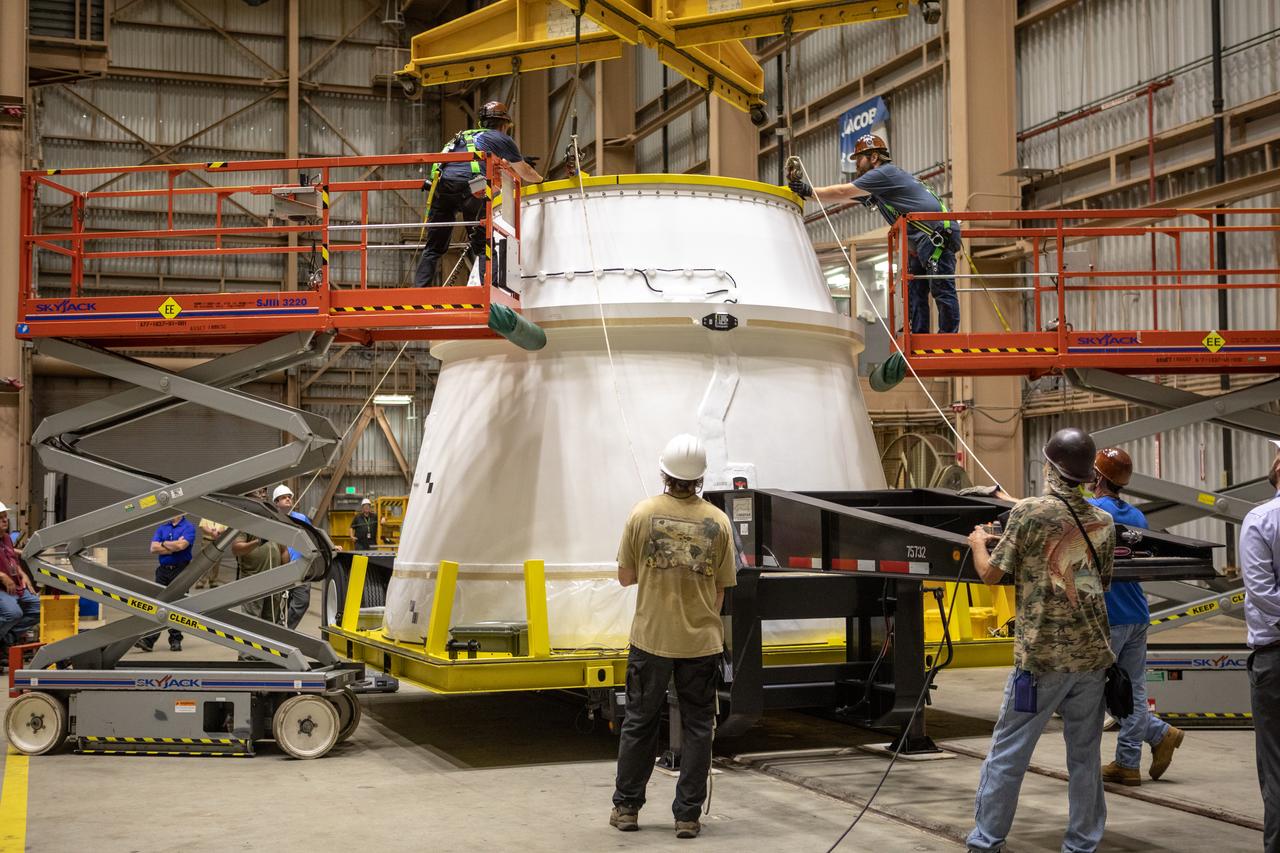
Workers attach a crane to the first Northrop Grumman aft exit cone to arrive for the Space Launch System’s solid rocket boosters inside the Rotation, Processing and Surge Facility at NASA’s Kennedy Space Center in Florida on Nov. 4, 2019. The aft exit cone was shipped from Promontory, Utah. It will be checked out and prepared for the Artemis I uncrewed test flight. The aft exit cones sit at the bottommost part of the twin boosters. They are attached to the aft skirts, which contain the booster separation motors. The exit cones help to protect the aft skirts during launch.
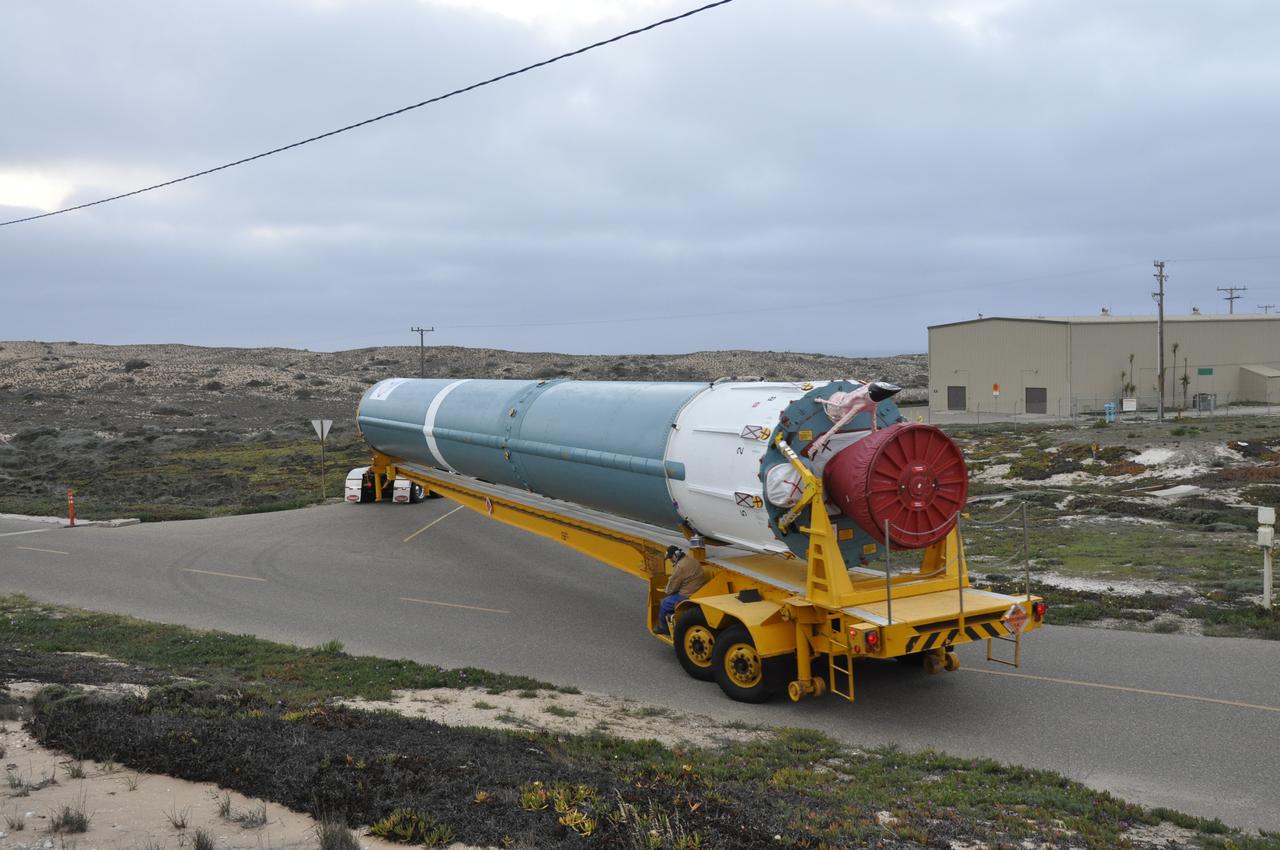
VANDENBERG AIR FORCE BASE, Calif. – The Delta first-stage booster for NASA's Orbiting Carbon Observatory-2 mission, or OCO-2, arrives at the Horizontal Processing Facility at Space Launch Complex 2 on Vandenberg Air Force Base in California. OCO-2 is scheduled to launch aboard a United Launch Alliance Delta II rocket in July. The observatory will collect precise global measurements of carbon dioxide in the Earth's atmosphere and provide scientists with a better idea of the chemical compound's impacts on climate change. Scientists will analyze this data to improve our understanding of the natural processes and human activities that regulate the abundance and distribution of this important atmospheric gas. To learn more about OCO-2, visit http://oco.jpl.nasa.gov. Photo credit: NASA/Randy Beaudoin
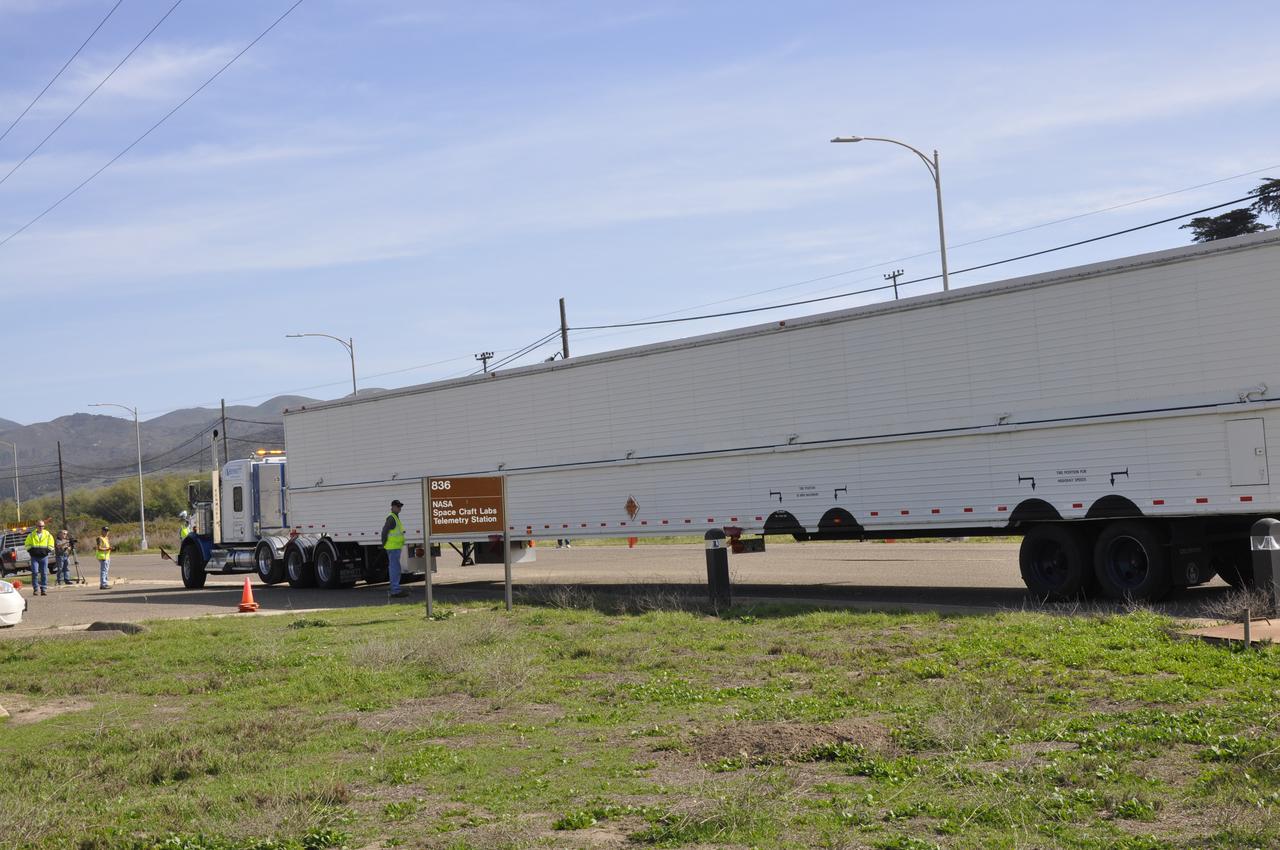
VANDENBERG AIR FORCE BASE, Calif. – The truck transporting the Delta first-stage booster for NASA's Orbiting Carbon Observatory-2 mission, or OCO-2, arrives outside the Building 836 hangar at Space Launch Complex 2 on Vandenberg Air Force Base in California. OCO-2 is scheduled to launch aboard a United Launch Alliance Delta II rocket in July. The observatory will collect precise global measurements of carbon dioxide in the Earth's atmosphere and provide scientists with a better idea of the chemical compound's impacts on climate change. Scientists will analyze this data to improve our understanding of the natural processes and human activities that regulate the abundance and distribution of this important atmospheric gas. To learn more about OCO-2, visit http://oco.jpl.nasa.gov. Photo credit: NASA/Randy Beaudoin
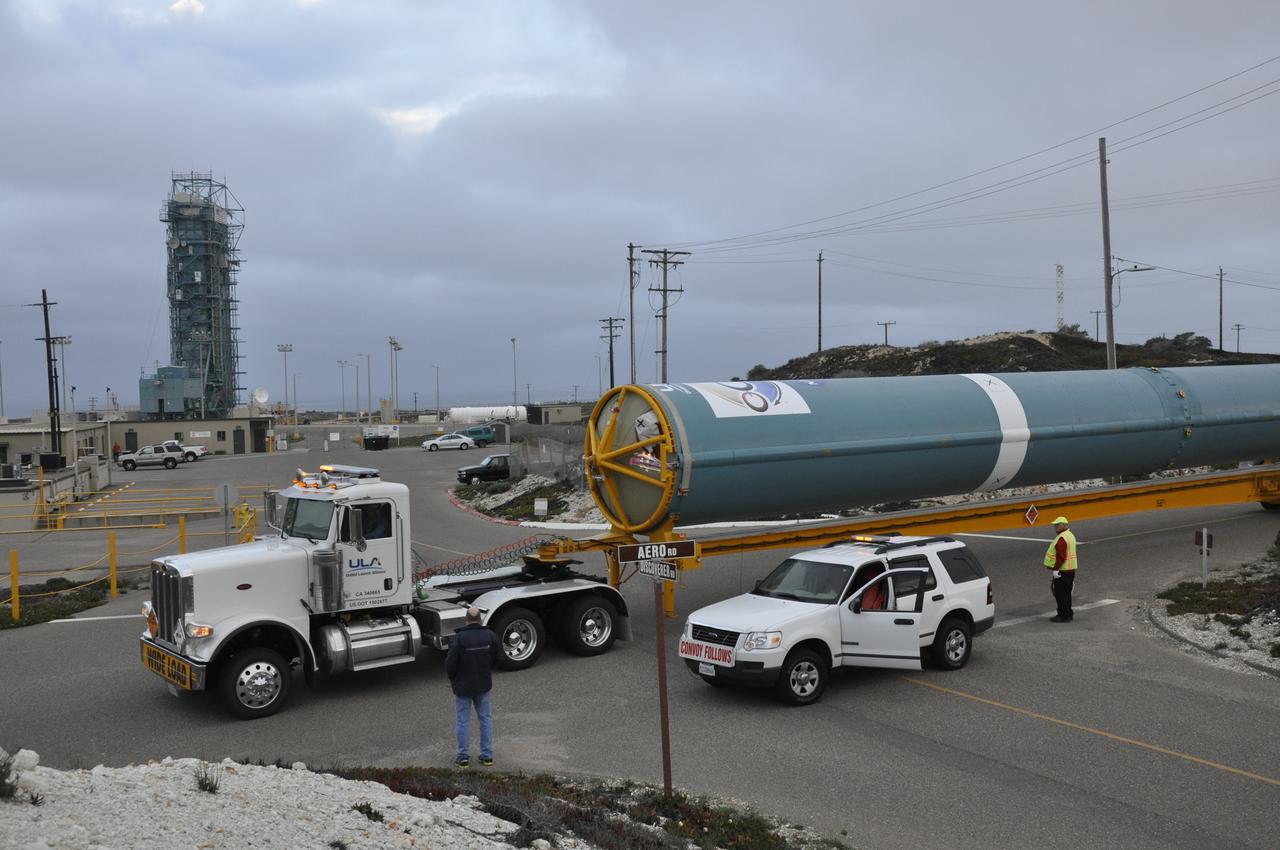
VANDENBERG AIR FORCE BASE, Calif. – The Delta first-stage booster for NASA's Orbiting Carbon Observatory-2 mission, or OCO-2, arrives at the Horizontal Processing Facility at Space Launch Complex 2 on Vandenberg Air Force Base in California. OCO-2 is scheduled to launch aboard a United Launch Alliance Delta II rocket in July. The observatory will collect precise global measurements of carbon dioxide in the Earth's atmosphere and provide scientists with a better idea of the chemical compound's impacts on climate change. Scientists will analyze this data to improve our understanding of the natural processes and human activities that regulate the abundance and distribution of this important atmospheric gas. To learn more about OCO-2, visit http://oco.jpl.nasa.gov. Photo credit: NASA/Randy Beaudoin
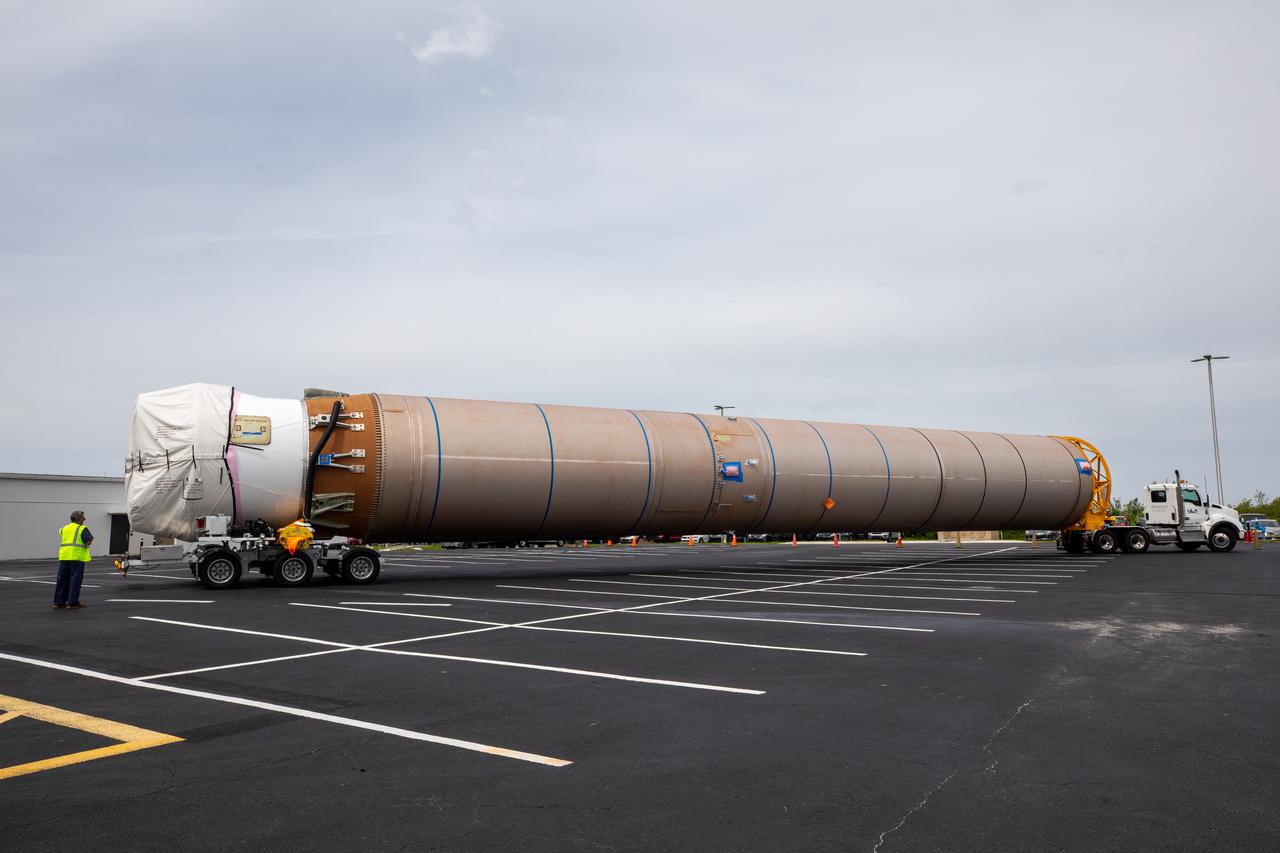
The United Launch Alliance (ULA) Atlas V booster and Centaur upper stage for Boeing's CST-100 Starliner Crew Flight Test (CFT) arrive at the Atlas Spaceflight Operations Center at Space Launch Complex 41 (SLC-41) at Cape Canaveral Space Force Station on June 21, 2021. Starliner's first flight with astronauts aboard, CFT will launch from SLC-41. The flight test will demonstrate the ability of the Atlas V and Starliner to safely carry astronauts to and from the International Space Station for the agency's Commercial Crew Program.

The SpaceX Falcon 9 first stage booster that will launch NASA’s SpaceX Crew-1 mission arrived in Florida Tuesday, July 14, 2020. The rocket was shipped from the SpaceX facility in McGregor, Texas, and will now undergo prelaunch processing in the company’s facility on nearby Cape Canaveral Air Force Station.
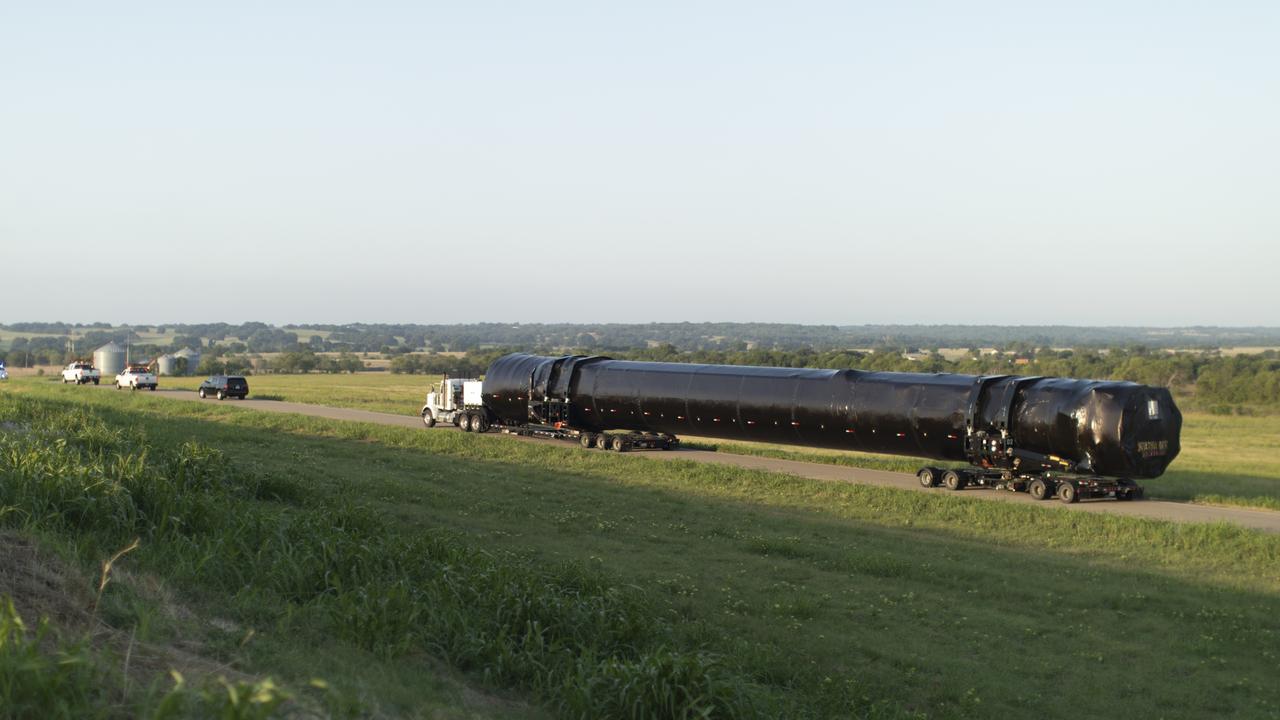
The SpaceX Falcon 9 first stage booster that will launch NASA’s SpaceX Crew-1 mission arrived in Florida Tuesday, July 14, 2020. The rocket was shipped from the SpaceX facility in McGregor, Texas, and will now undergo prelaunch processing in the company’s facility on nearby Cape Canaveral Air Force Station.
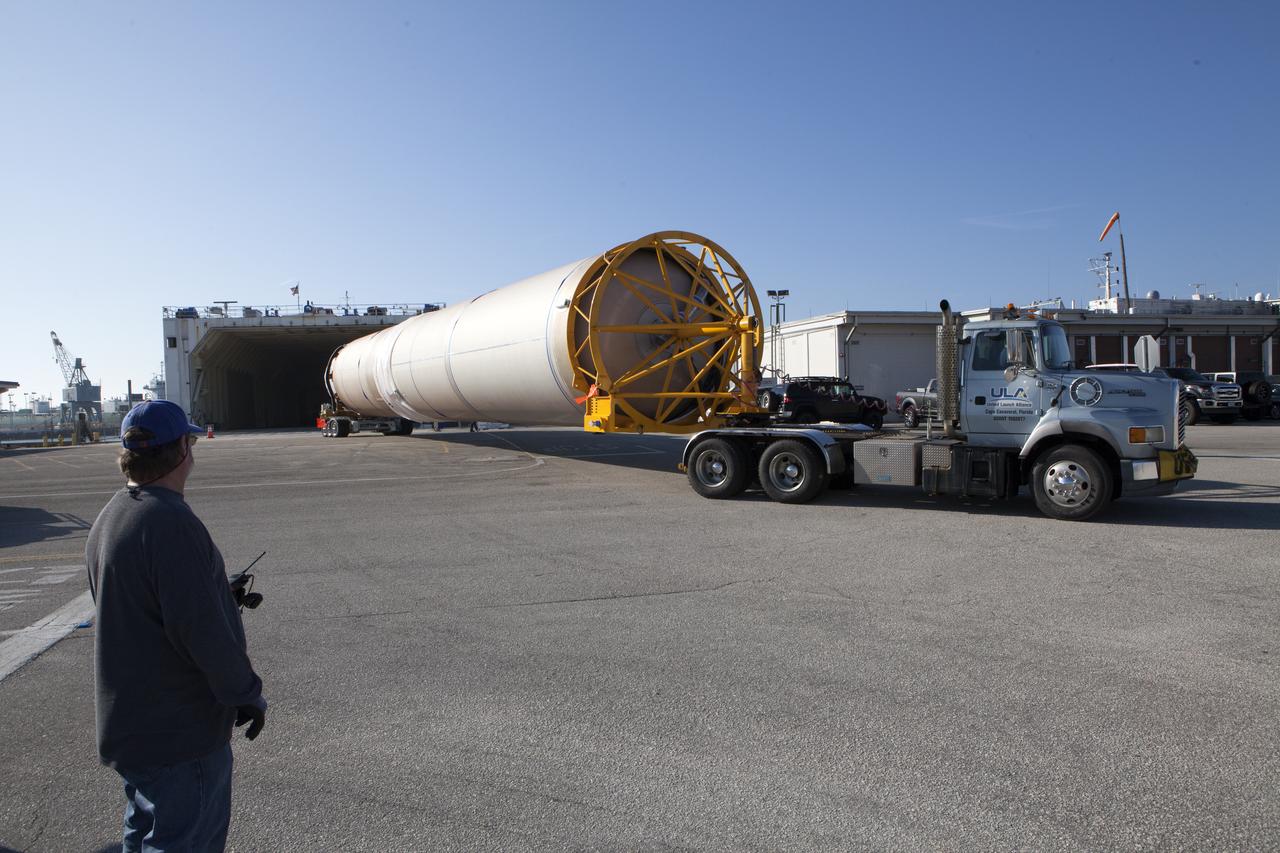
The United Launch Alliance (ULA) Atlas V booster arrives for the Orbital ATK CRS-7 commercial resupply mission to the International Space Station. A transport truck is taking the Atlas V from the Mariner cargo ship in the background, to the hangar at the Atlas Spaceflight Operations Center (ASOC), located south of Space Launch Complex 41 at Cape Canaveral Air Force Station. Scheduled to launch March 19, 2017, the Orbital ATK CRS-7 mission will lift off atop the ULA Atlas V rocket to deliver thousands of pounds of supplies, equipment and scientific research materials that improve life on Earth and drive progress toward future space exploration.
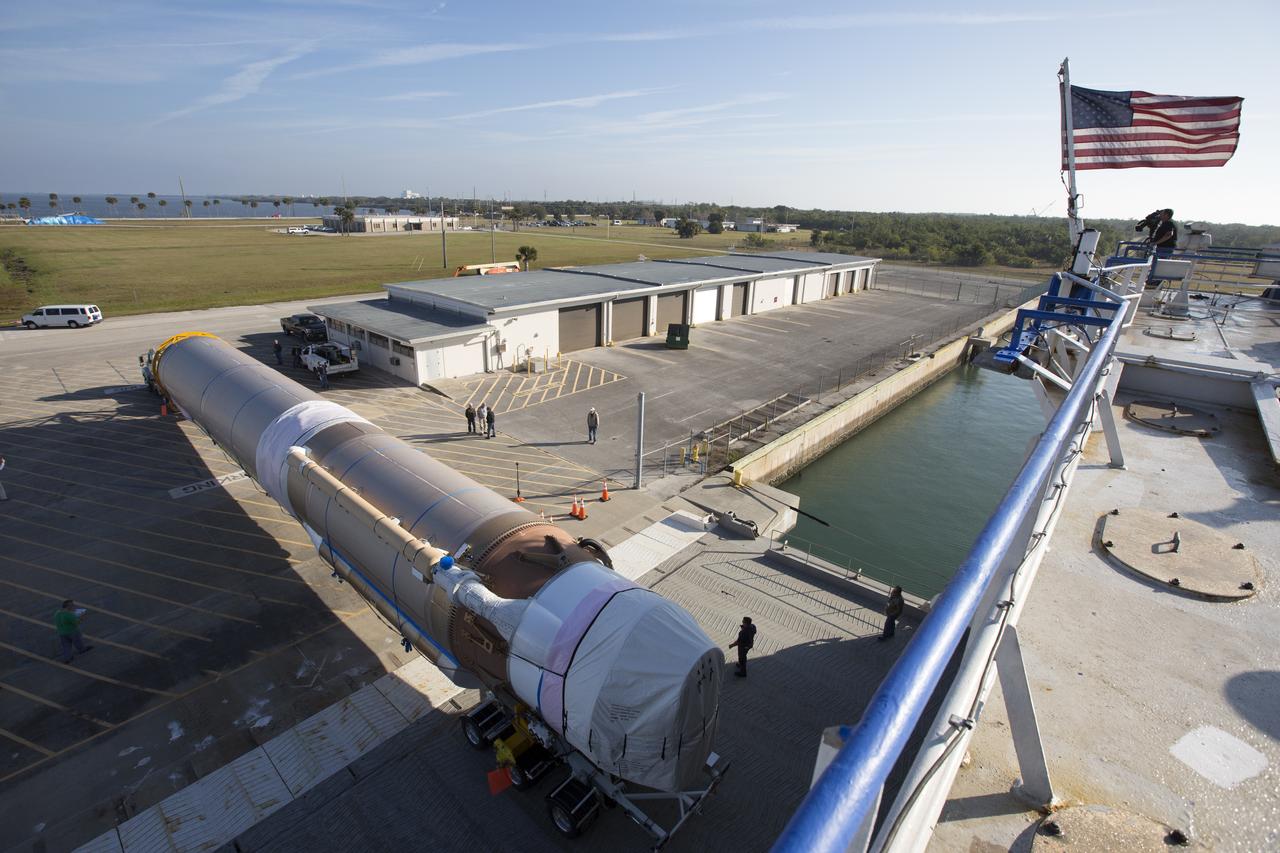
The United Launch Alliance (ULA) Atlas V booster arrives for the Orbital ATK CRS-7 commercial resupply mission to the International Space Station. A transport truck is taking the Atlas V from the Mariner cargo ship in the background, to the hangar at the Atlas Spaceflight Operations Center (ASOC), located south of Space Launch Complex 41 at Cape Canaveral Air Force Station. Scheduled to launch March 19, 2017, the Orbital ATK CRS-7 mission will lift off atop the ULA Atlas V rocket to deliver thousands of pounds of supplies, equipment and scientific research materials that improve life on Earth and drive progress toward future space exploration.
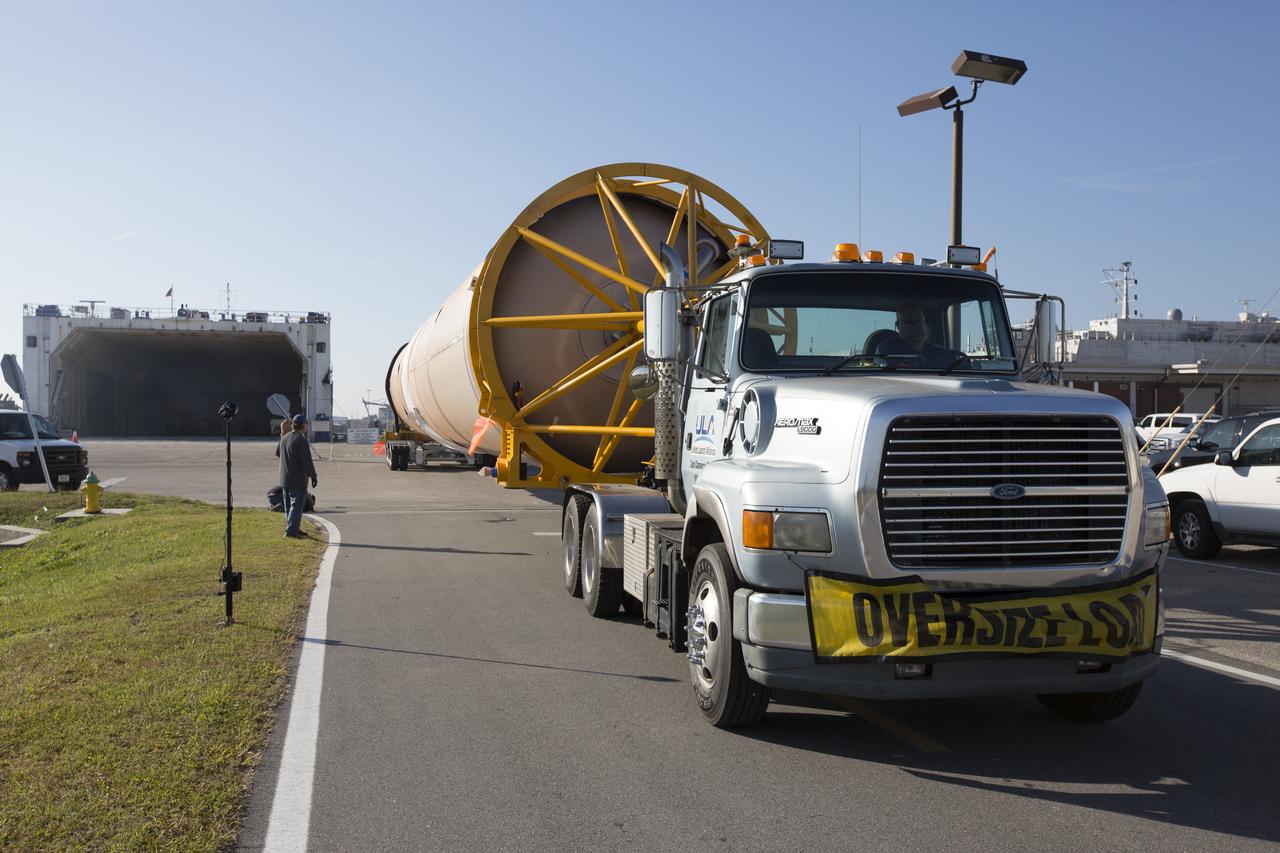
The United Launch Alliance (ULA) Atlas V booster arrives for the Orbital ATK CRS-7 commercial resupply mission to the International Space Station. A transport truck is taking the Atlas V from the Mariner cargo ship in the background, to the hangar at the Atlas Spaceflight Operations Center (ASOC), located south of Space Launch Complex 41 at Cape Canaveral Air Force Station. Scheduled to launch March 19, 2017, a Cygnus spacecraft on the Orbital ATK CRS-7 mission will lift off atop the ULA Atlas V rocket to deliver thousands of pounds of supplies, equipment and scientific research materials that improve life on Earth and drive progress toward future space exploration.
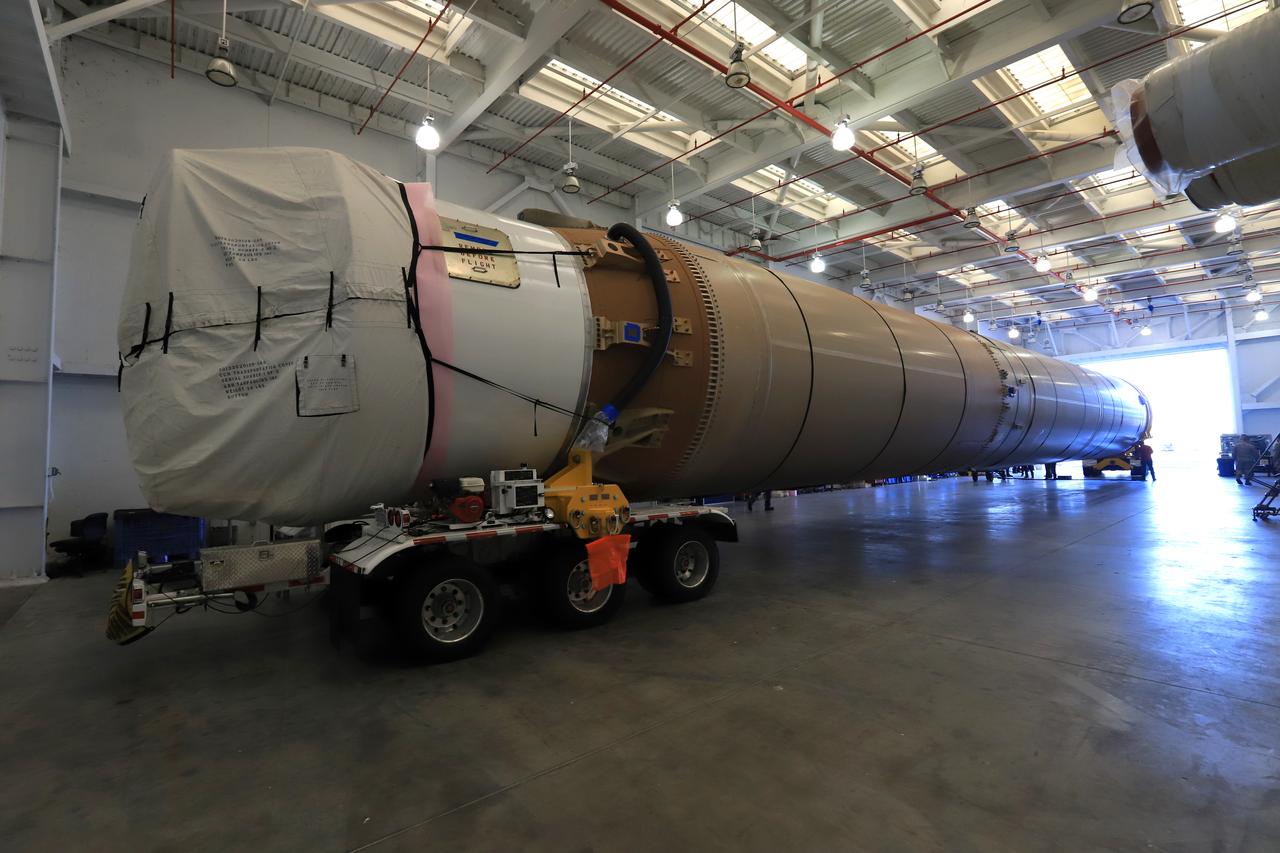
The first stage of the rocket that will launch Boeing's CST-100 Starliner spacecraft to the International Space Station on the company's uncrewed Orbital Flight Test arrives at the United Launch Alliance (ULA) Atlas Spaceflight Operations Center (ASOC) at Cape Canaveral Air Force Station in Florida on Dec. 7, 2018. The ULA Atlas V first stage booster was shipped aboard the company's Mariner cargo vessel from the company's manufacturing plant in Decatur, Alabama. It is the final piece of hardware that ULA needs to launch the first Boeing Starliner. Inside the ASOC, the booster will be inspected and checked out.
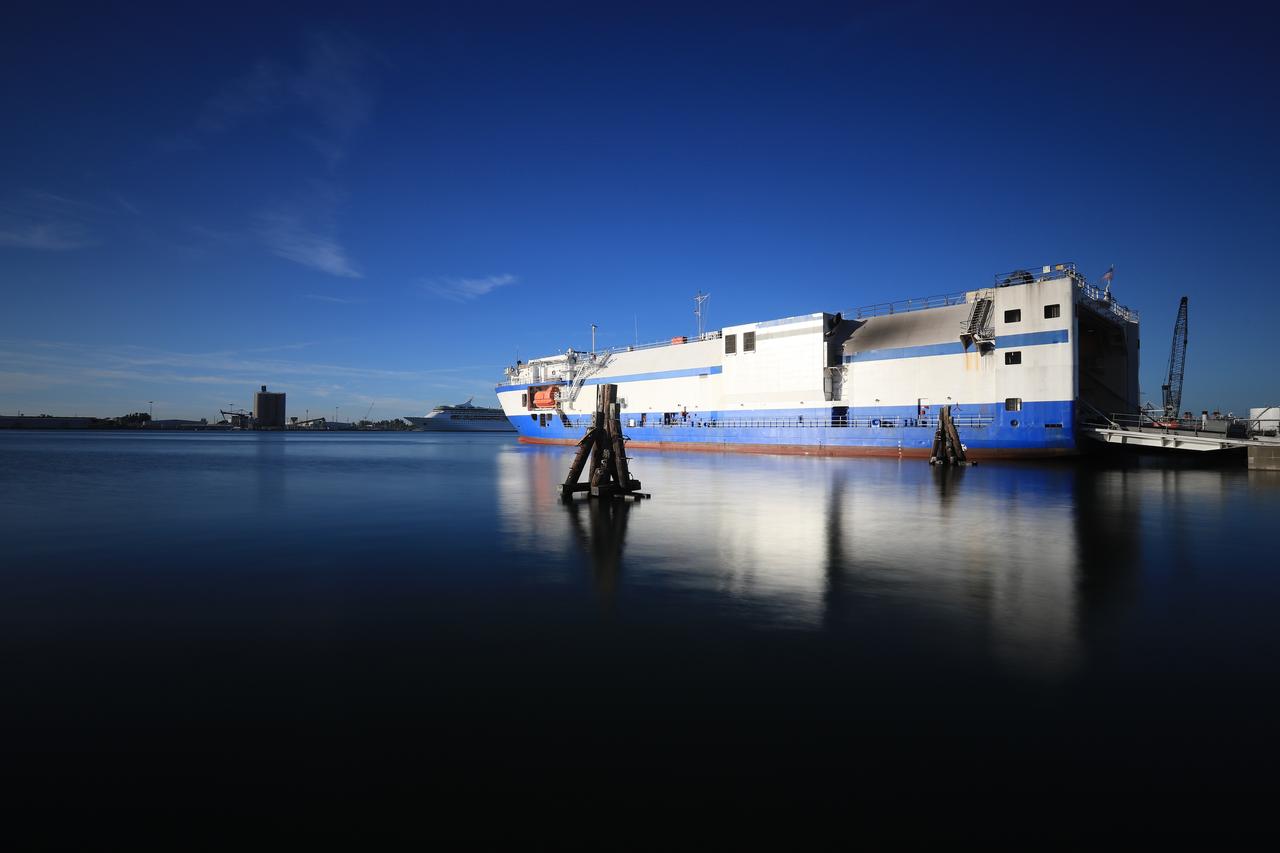
The United Launch Alliance (ULA) Mariner cargo vessel arrives at Cape Canaveral Air Force Station in Florida on Dec. 7, 2018, carrying the first stage of the rocket that will launch Boeing's CST-100 Starliner spacecraft to the International Space Station on the company's uncrewed Orbital Flight Test. The ULA Atlas V first stage booster was shipped from the company's manufacturing plant in Decatur, Alabama. It is the final piece of hardware that ULA needs to launch the first Boeing Starliner. The booster will be transported to the Atlas Spaceflight Operations Center for receiving inspections and checkout.
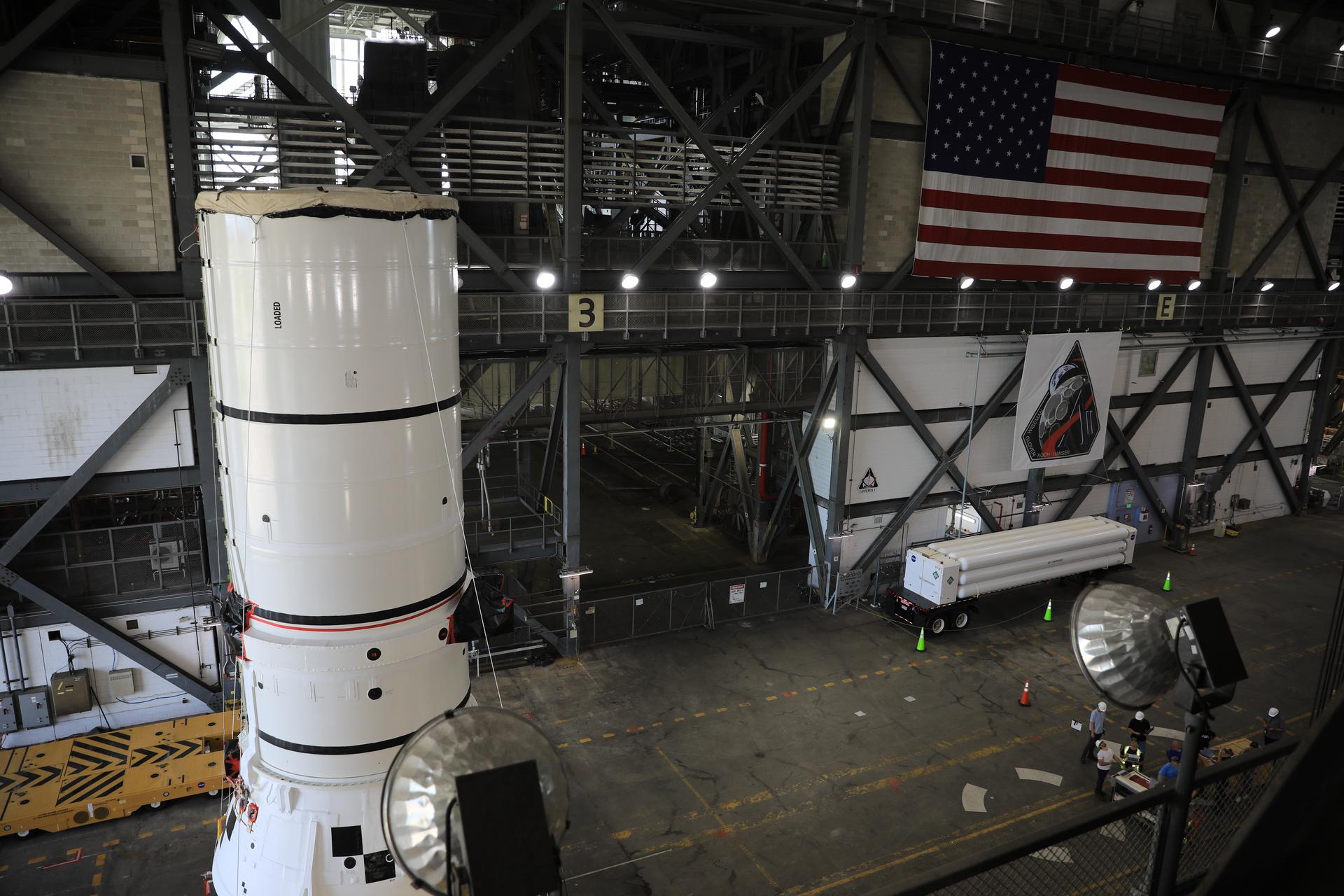
The left-hand aft assembly solid rocket booster segment for NASA’s Artemis III SLS (Space Launch System) rocket arrives at the agency’s Vehicle Assembly Building at NASA’s Kennedy Space Center in Florida on Monday, July 6, 2026, ahead of stacking on top of the mobile launcher for the Artemis III mission. The twin boosters, manufactured by Northrop Grumman in Utah, will provide more than 75 percent of the SLS rocket’s total thrust at launch. The Artemis III mission will launch crew in the Orion spacecraft on top of the SLS rocket to test rendezvous and docking capabilities between Orion and commercial spacecraft needed to land astronauts on the Moon.
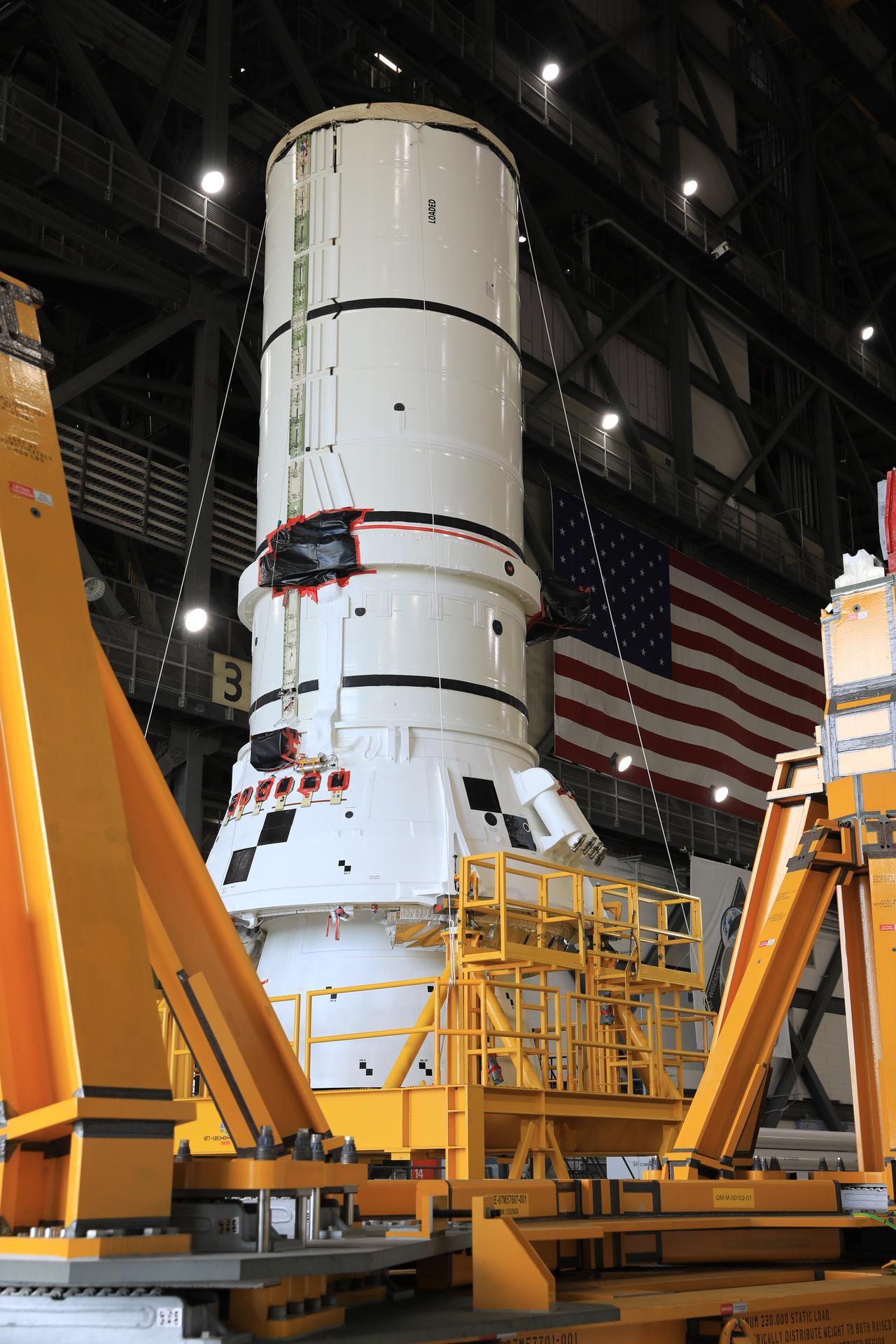
The left-hand aft assembly solid rocket booster segment for NASA’s Artemis III SLS (Space Launch System) rocket arrives at the agency’s Vehicle Assembly Building at NASA’s Kennedy Space Center in Florida on Monday, July 6, 2026, ahead of stacking on top of the mobile launcher for the Artemis III mission. The twin boosters, manufactured by Northrop Grumman in Utah, will provide more than 75 percent of the SLS rocket’s total thrust at launch. The Artemis III mission will launch crew in the Orion spacecraft on top of the SLS rocket to test rendezvous and docking capabilities between Orion and commercial spacecraft needed to land astronauts on the Moon.
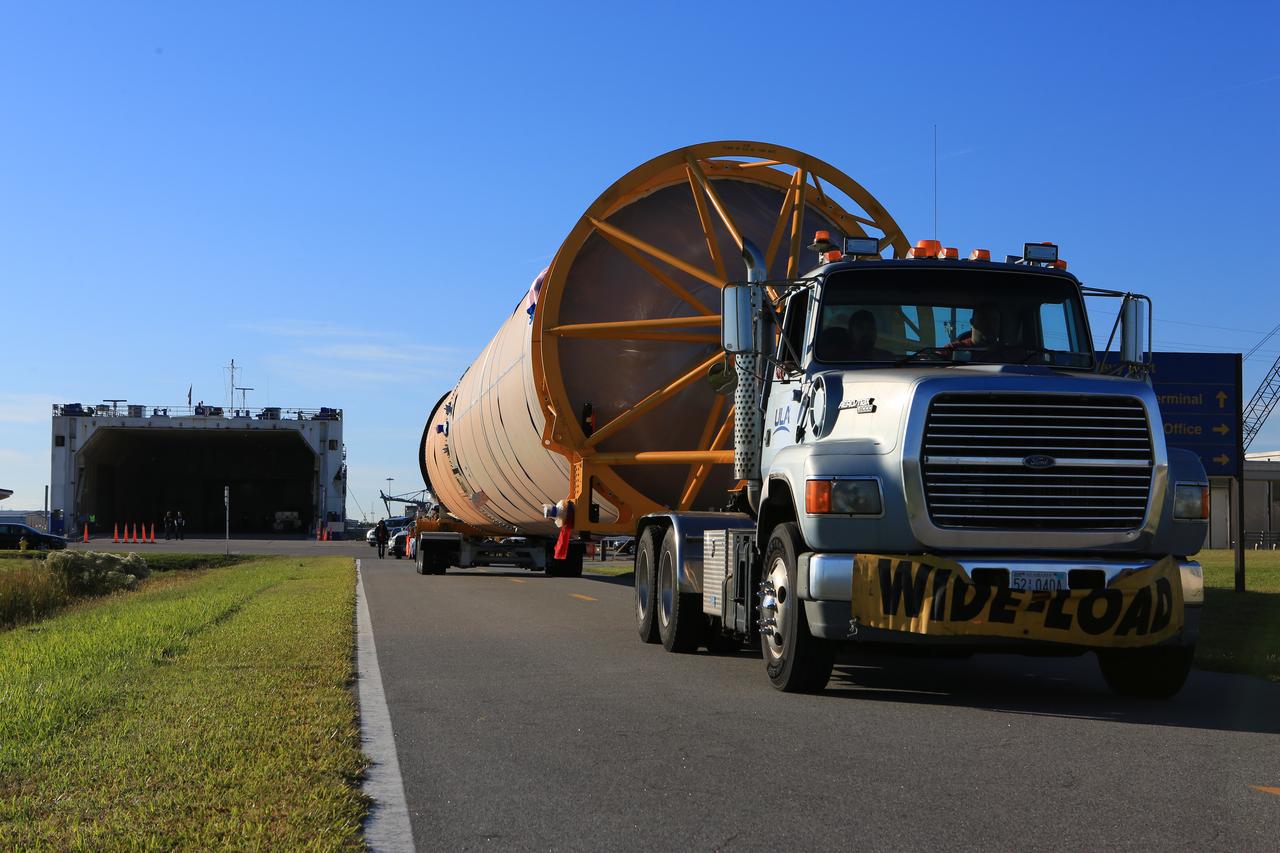
The first stage of the rocket that will launch Boeing's CST-100 Starliner spacecraft to the International Space Station on the company's uncrewed Orbital Flight Test arrives at Cape Canaveral Air Force Station in Florida on Dec. 7, 2018. The United Launch Alliance (ULA) Atlas V first stage booster was shipped aboard ULA's Mariner cargo vessel from the company's manufacturing plant in Decatur, Alabama. It is the final piece of hardware that ULA needs to launch the first Boeing Starliner. The booster will be transported to the Atlas Spaceflight Operations Center for receiving inspections and checkout.
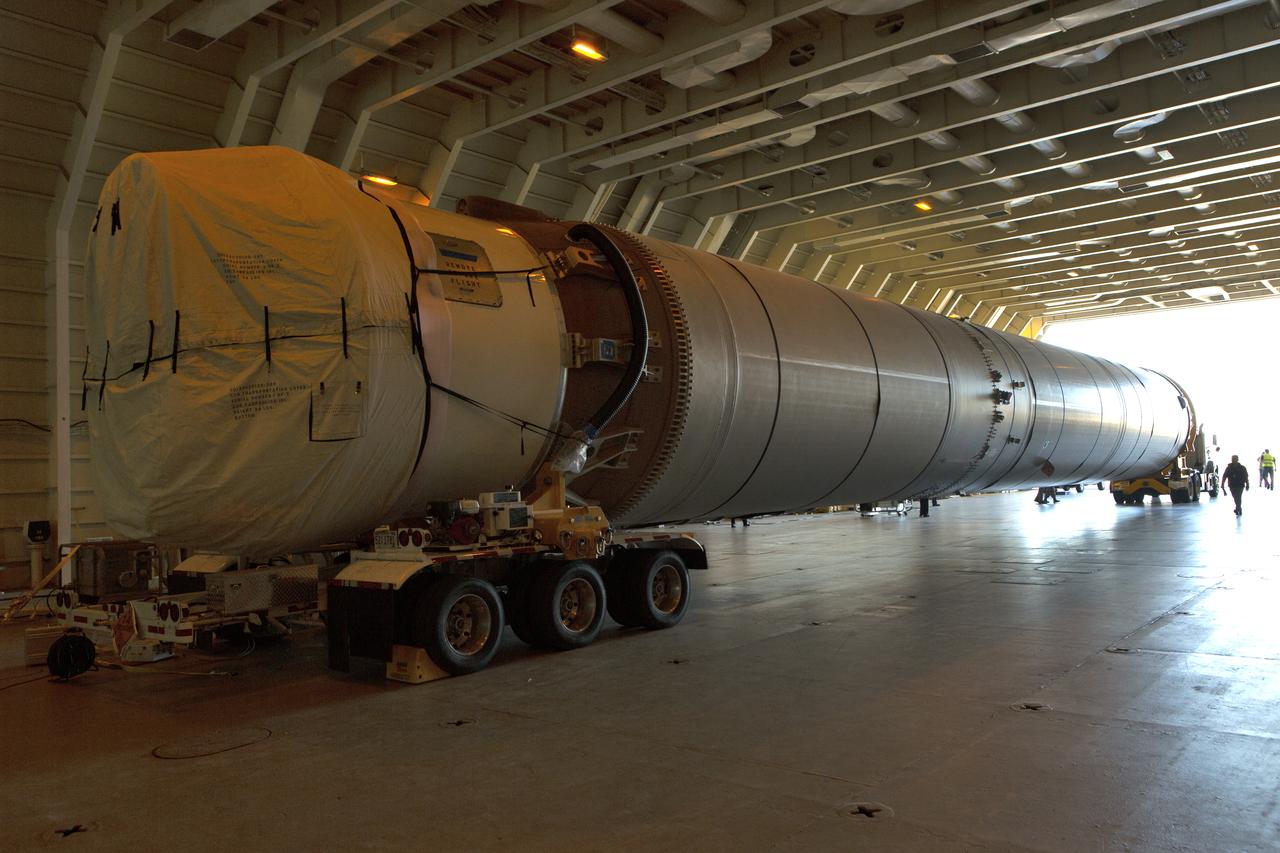
The first stage of the rocket that will launch Boeing's CST-100 Starliner spacecraft to the International Space Station on the company's uncrewed Orbital Flight Test arrives at Cape Canaveral Air Force Station in Florida on Dec. 7, 2018. The United Launch Alliance (ULA) Atlas V first stage booster was shipped aboard ULA's Mariner cargo vessel from the company's manufacturing plant in Decatur, Alabama. It is the final piece of hardware that ULA needs to launch the first Boeing Starliner. The booster will be transported to the Atlas Spaceflight Operations Center for receiving inspections and checkout.
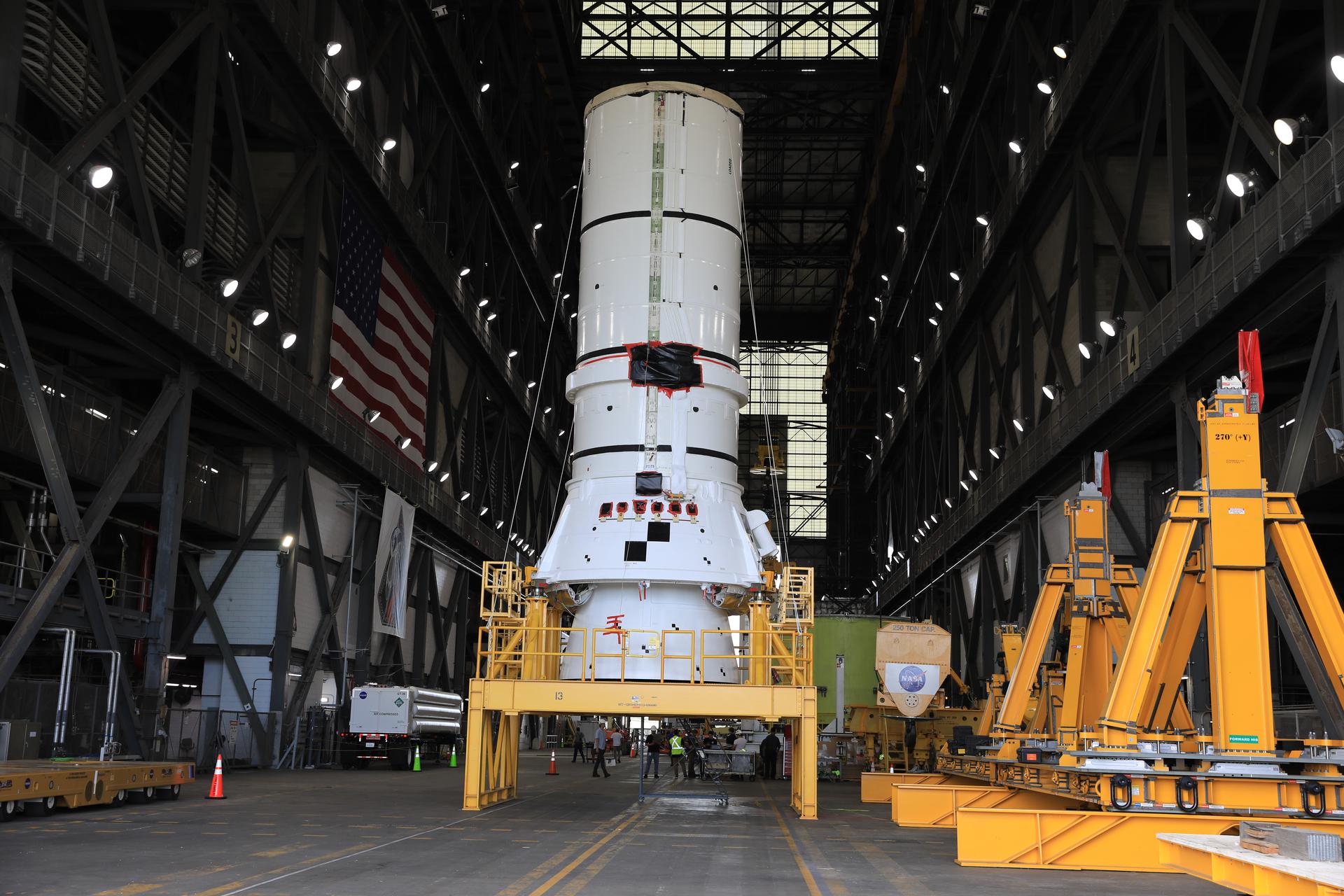
The left-hand aft assembly solid rocket booster segment for NASA’s Artemis III SLS (Space Launch System) rocket arrives at the agency’s Vehicle Assembly Building at NASA’s Kennedy Space Center in Florida on Monday, July 6, 2026, ahead of stacking on top of the mobile launcher for the Artemis III mission. The twin boosters, manufactured by Northrop Grumman in Utah, will provide more than 75 percent of the SLS rocket’s total thrust at launch. The Artemis III mission will launch crew in the Orion spacecraft on top of the SLS rocket to test rendezvous and docking capabilities between Orion and commercial spacecraft needed to land astronauts on the Moon.
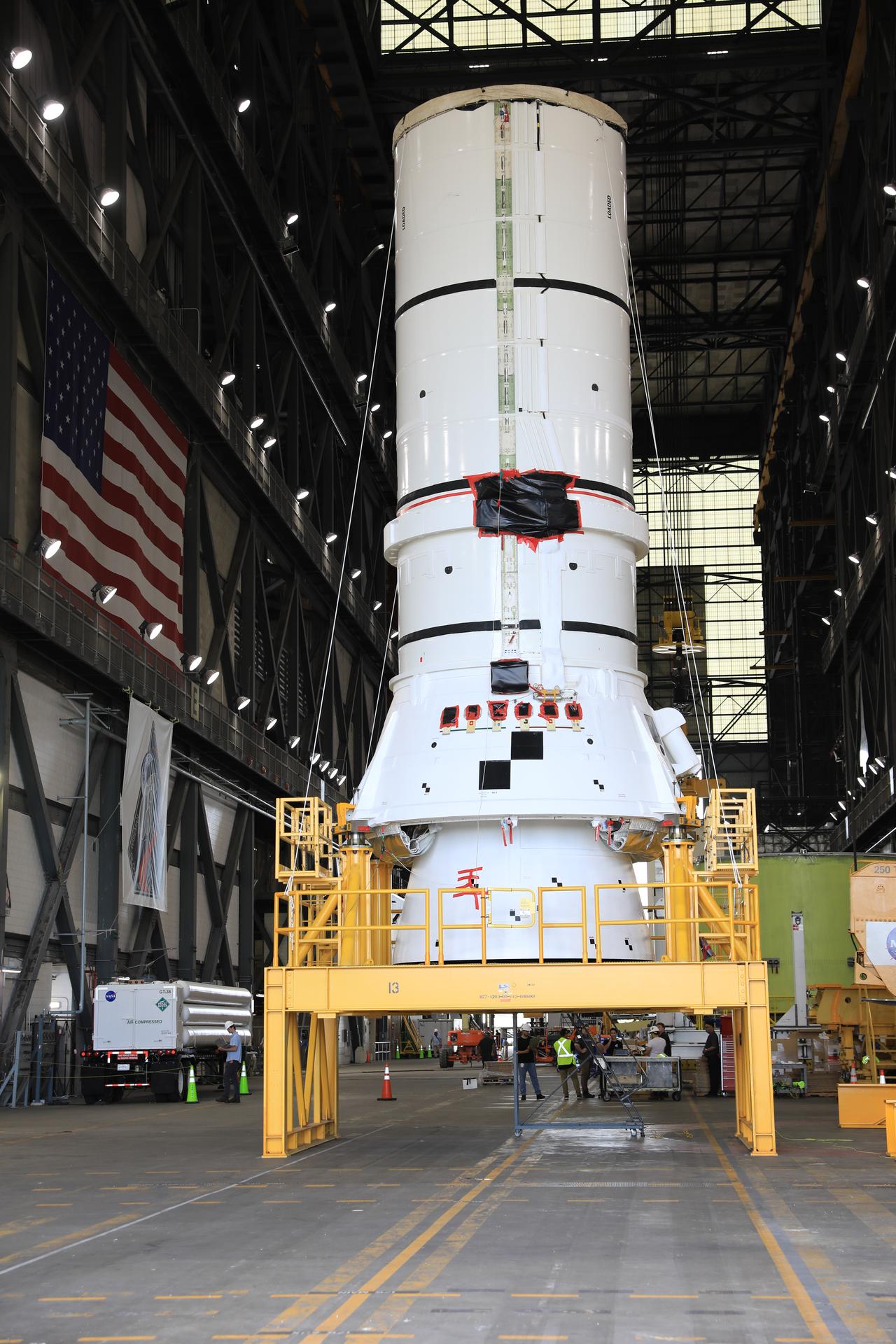
The left-hand aft assembly solid rocket booster segment for NASA’s Artemis III SLS (Space Launch System) rocket arrives at the agency’s Vehicle Assembly Building at NASA’s Kennedy Space Center in Florida on Monday, July 6, 2026, ahead of stacking on top of the mobile launcher for the Artemis III mission. The twin boosters, manufactured by Northrop Grumman in Utah, will provide more than 75 percent of the SLS rocket’s total thrust at launch. The Artemis III mission will launch crew in the Orion spacecraft on top of the SLS rocket to test rendezvous and docking capabilities between Orion and commercial spacecraft needed to land astronauts on the Moon.
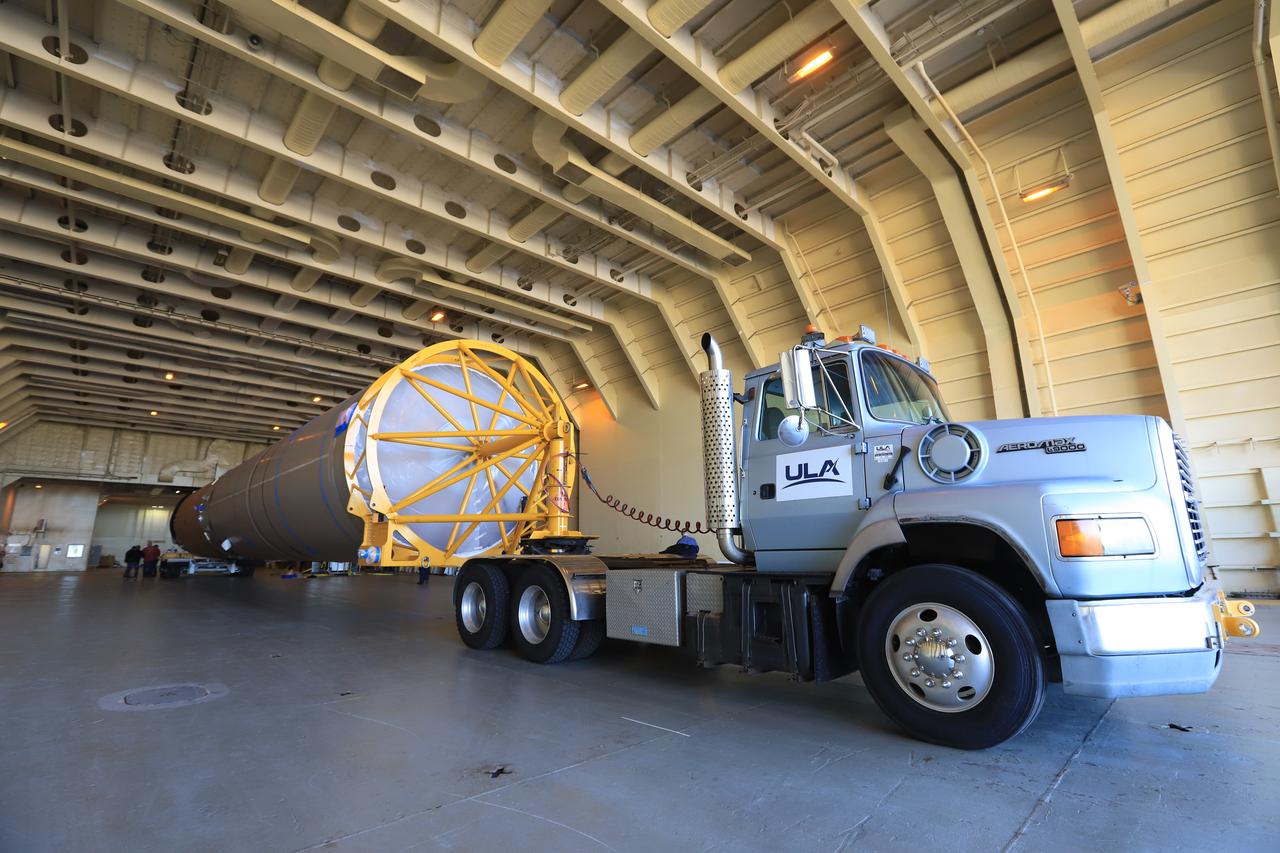
The first stage of the rocket that will launch Boeing's CST-100 Starliner spacecraft to the International Space Station on the company's uncrewed Orbital Flight Test arrived at Cape Canaveral Air Force Station in Florida on Dec. 7, 2018. The United Launch Alliance (ULA) Atlas V first stage booster was shipped aboard ULA's Mariner cargo vessel from the company's manufacturing plant in Decatur, Alabama. It is the final piece of hardware that ULA needs to launch the first Boeing Starliner. The booster will be transported to the Atlas Spaceflight Operations Center for receiving inspections and checkout.
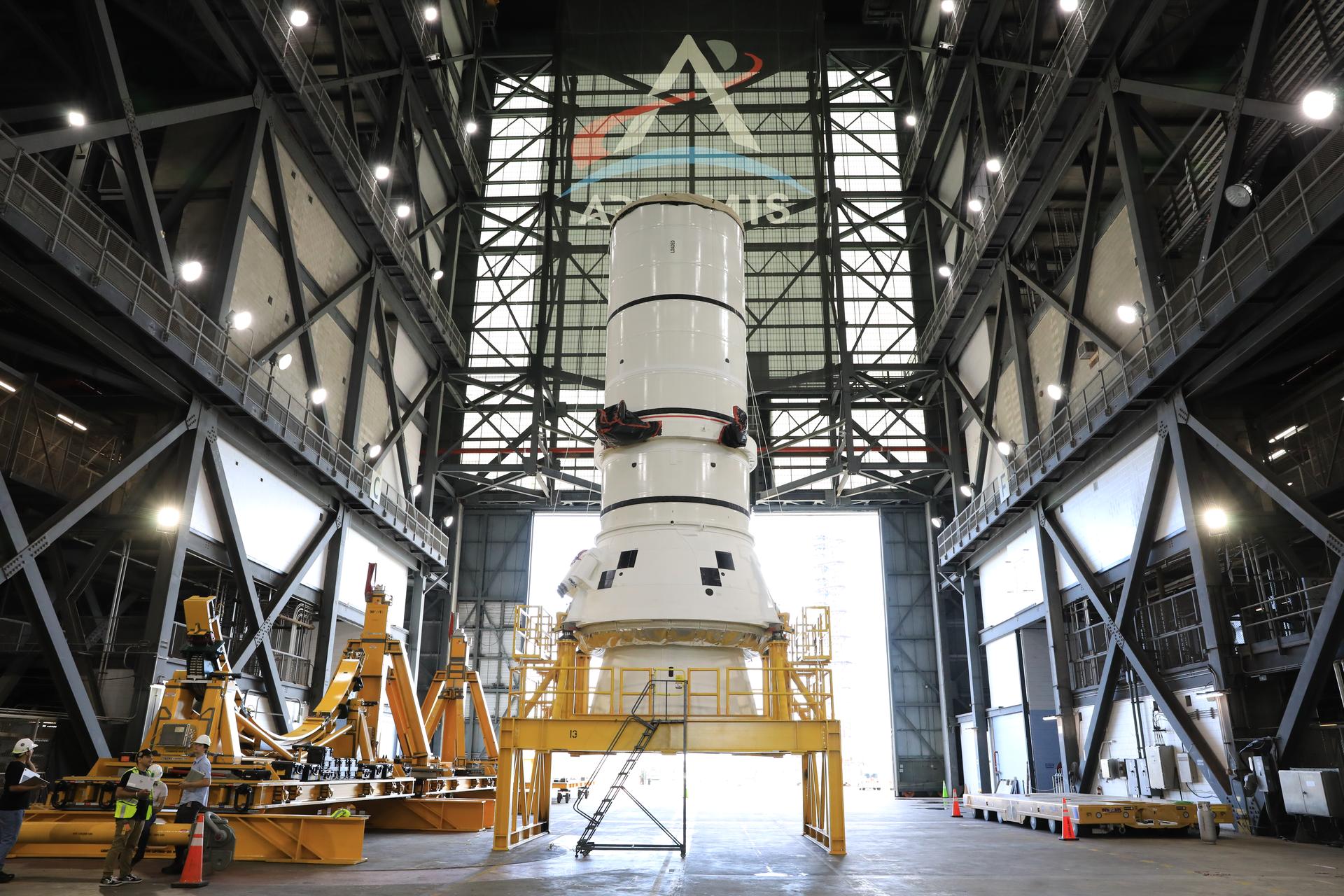
The left-hand aft assembly solid rocket booster segment for NASA’s Artemis III SLS (Space Launch System) rocket arrives at the agency’s Vehicle Assembly Building at NASA’s Kennedy Space Center in Florida on Monday, July 6, 2026, ahead of stacking on top of the mobile launcher for the Artemis III mission. The twin boosters, manufactured by Northrop Grumman in Utah, will provide more than 75 percent of the SLS rocket’s total thrust at launch. The Artemis III mission will launch crew in the Orion spacecraft on top of the SLS rocket to test rendezvous and docking capabilities between Orion and commercial spacecraft needed to land astronauts on the Moon.
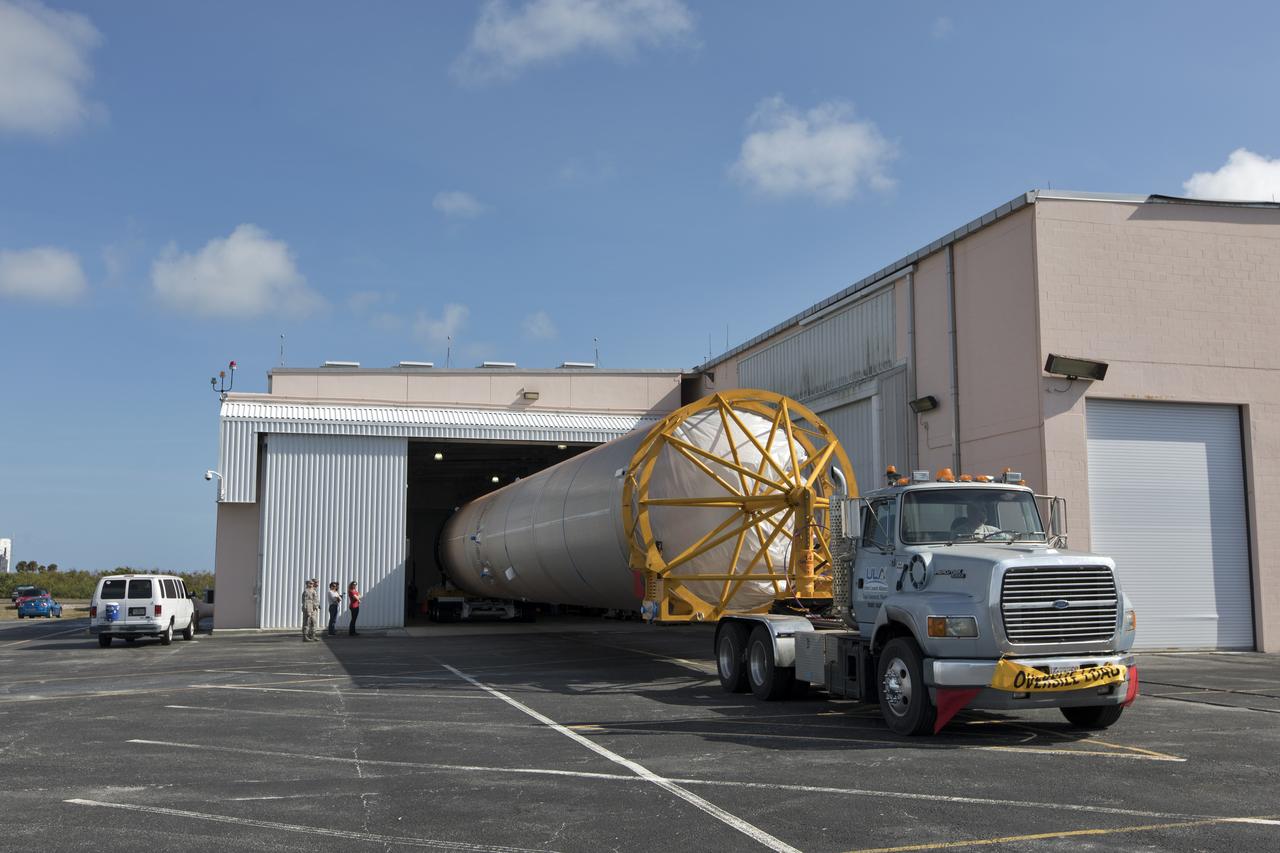
The United Launch Alliance Atlas V booster for NOAA's Geostationary Operational Environmental Satellite-S (GOES-S) arrives at the Atlas Spaceflight Operations Center near Space Launch Complex 41 at Cape Canaveral Air Force Station in Florida. GOES-S is the second in a series of four advanced geostationary weather satellites. The satellite is slated to launch aboard the Atlas V rocket March 1.
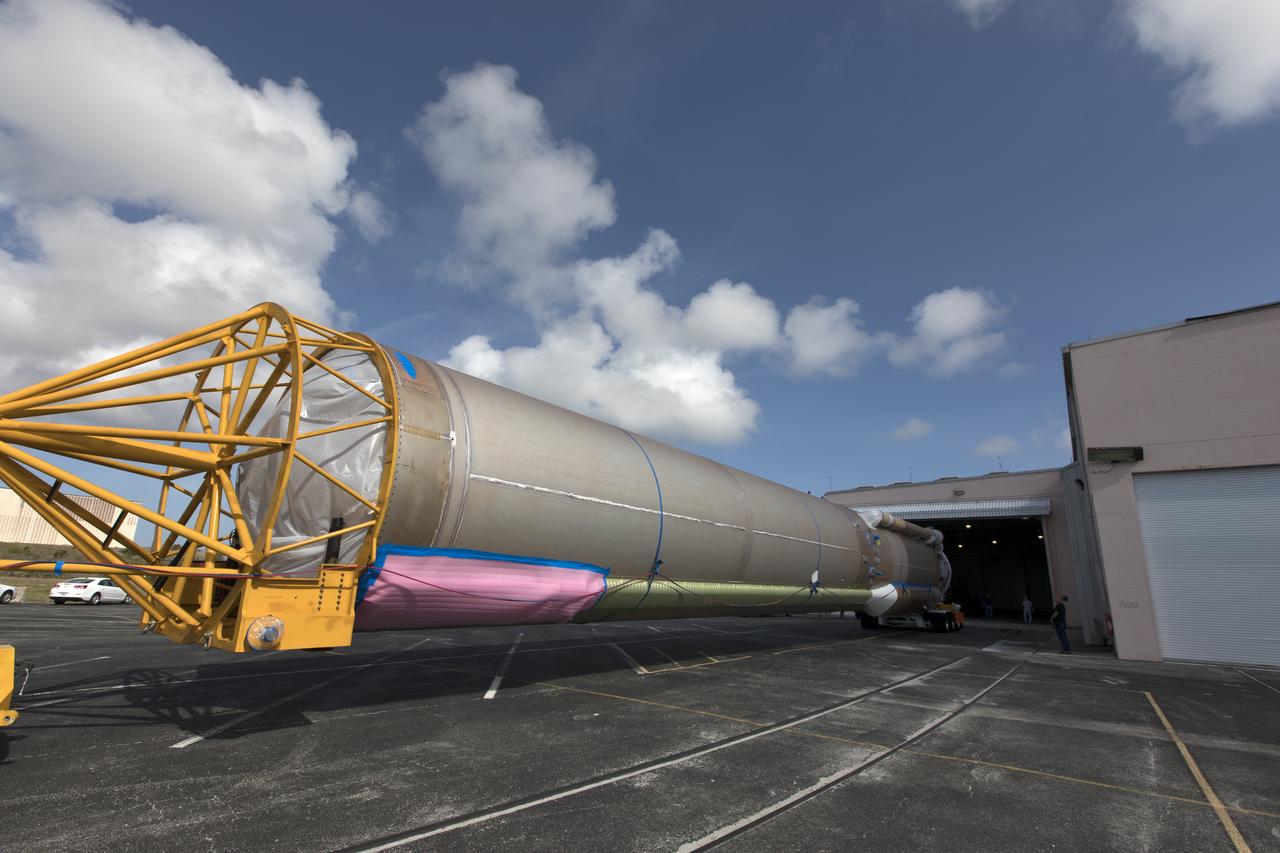
The United Launch Alliance Atlas V booster for NOAA's Geostationary Operational Environmental Satellite-S (GOES-S) arrives at the Atlas Spaceflight Operations Center near Space Launch Complex 41 at Cape Canaveral Air Force Station in Florida. GOES-S is the second in a series of four advanced geostationary weather satellites. The satellite is slated to launch aboard the Atlas V rocket March 1.

After being offloaded from the Mariner transport ship at the Army Wharf at Cape Canaveral Air Force Station in Florida, the United Launch Alliance Atlas V booster for NOAA's Geostationary Operational Environmental Satellite-S (GOES-S) arrives in the area of the Atlas Spaceflight Operations Center near Space Launch Complex 41 at CCAFS. GOES-S is the second in a series of four advanced geostationary weather satellites. The satellite is slated to launch aboard the Atlas V rocket March 1.
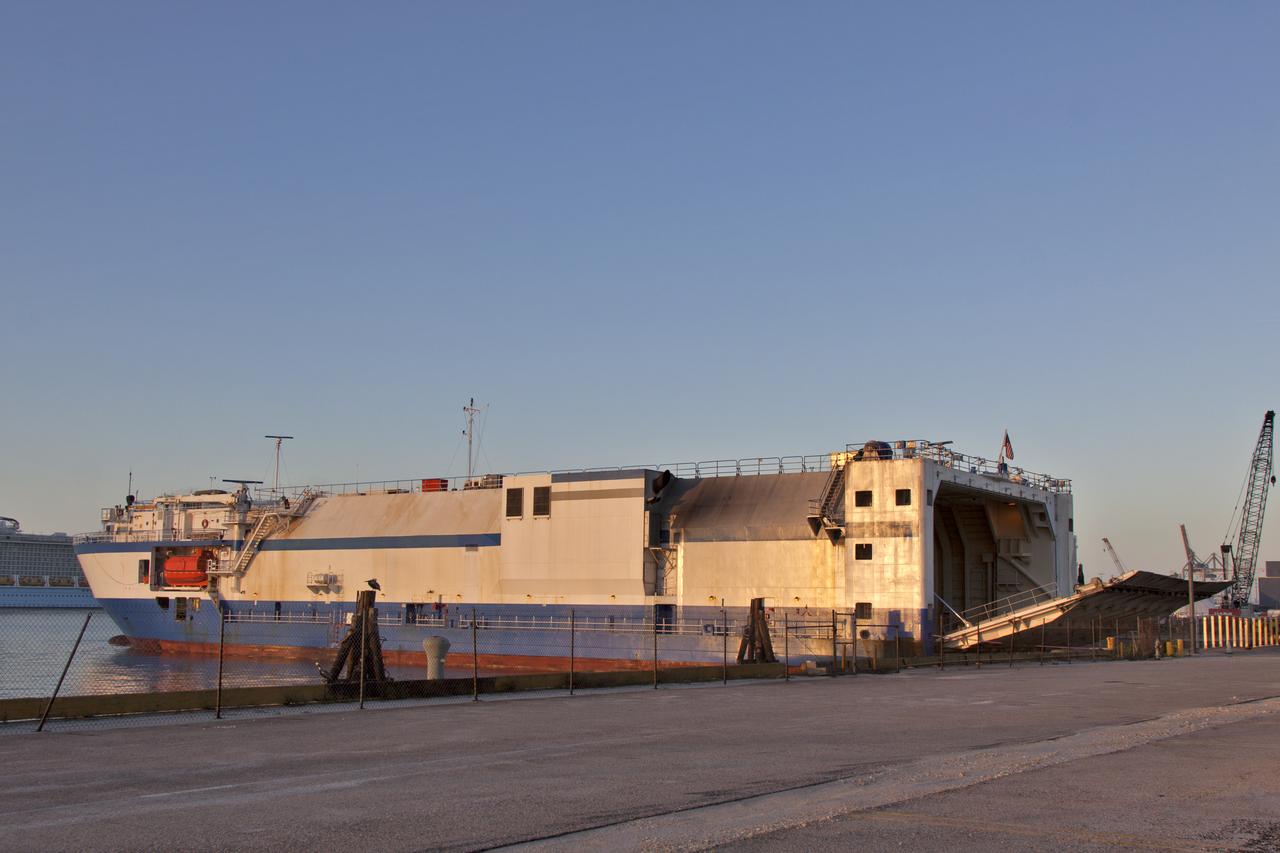
The Mariner transport ship arrives at the Army Wharf at Cape Canaveral Air Force Station in Florida, carrying the United Launch Alliance Atlas V booster and Centaur stage for NOAA's Geostationary Operational Environmental Satellite-S (GOES-S). They will be offloaded and transported to the Atlas Spaceflight Operations Center near Space Launch Complex 41 at CCAFS. GOES-S is the second in a series of four advanced geostationary weather satellites. The satellite is slated to launch aboard the Atlas V rocket March 1.
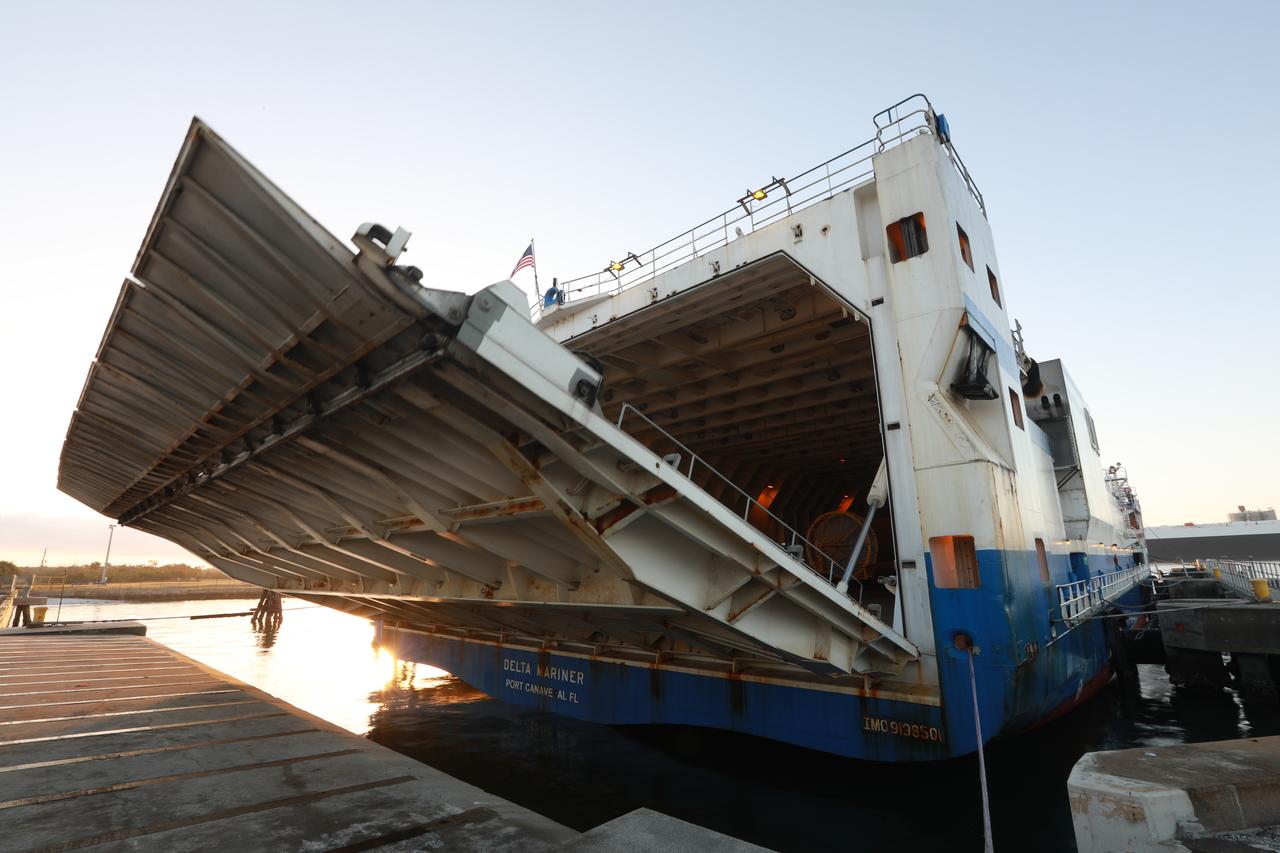
The Mariner transport ship arrives at the Army Wharf at Cape Canaveral Air Force Station in Florida, carrying the United Launch Alliance Atlas V booster and Centaur stage for NOAA's Geostationary Operational Environmental Satellite-S (GOES-S). They will be offloaded and transported to the Atlas Spaceflight Operations Center near Space Launch Complex 41 at CCAFS. GOES-S is the second in a series of four advanced geostationary weather satellites. The satellite is slated to launch aboard the Atlas V rocket March 1.
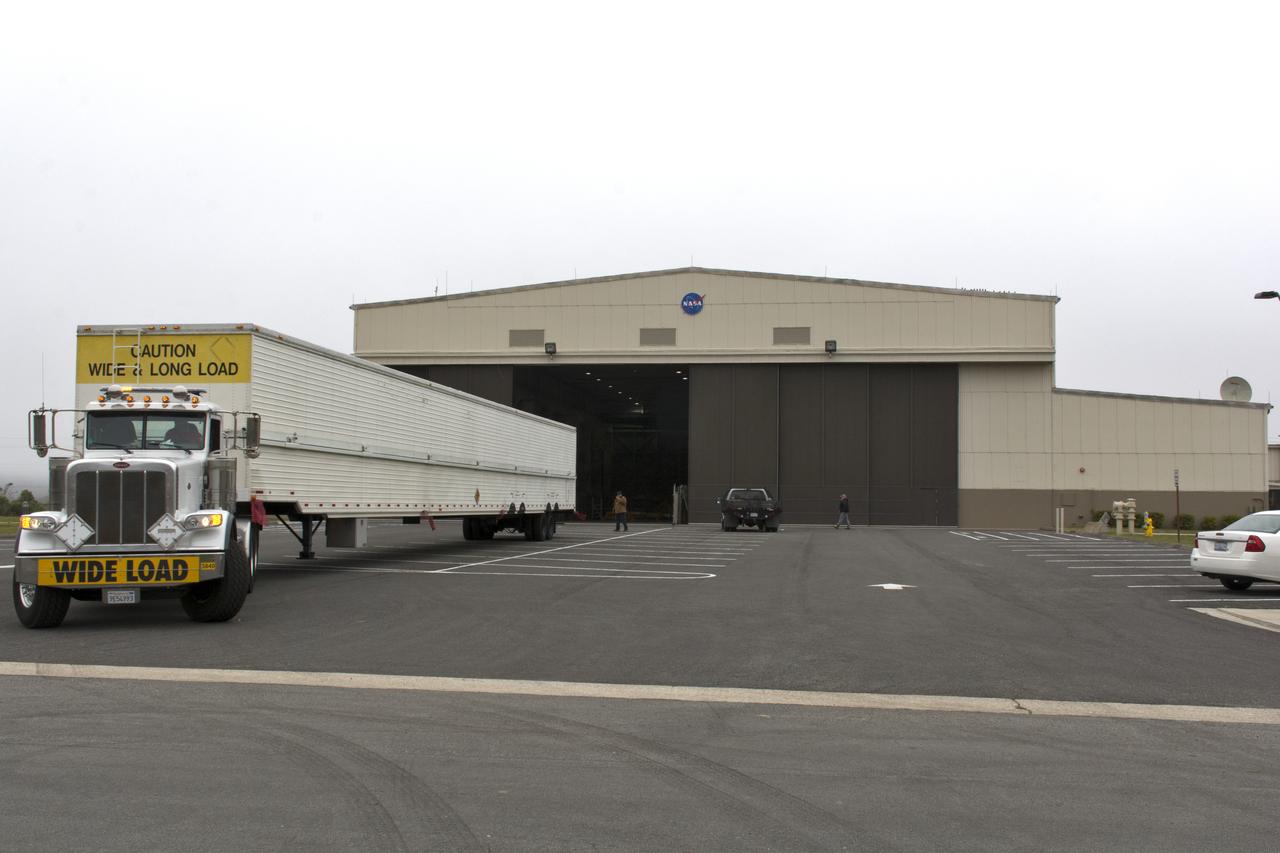
A United Launch Alliance Delta II booster arrives at NASA's Building 836, the Spacecraft Labs Telemetry Station at Vandenberg Air Force Base in California. It will be offloaded and begin preliminary checkouts and preflight processing for launch of the agency's Ice, Cloud and land Elevation Satellite-2, or ICESat-2. Liftoff from Space Launch Complex-2 at Vandenberg is scheduled for Sept. 12, 2018, and will be the last for the venerable Delta II rocket. Once in orbit, the satellite is designed to measure the height of a changing Earth, one laser pulse at a time, 10,000 laser pulses a second. The satellite will carry a single instrument, the Advanced Topographic Laser Altimeter System. ICESat-2 will help scientists investigate why, and how much, Earth's frozen and icy areas are changing. These area make up Earth's the cryosphere.
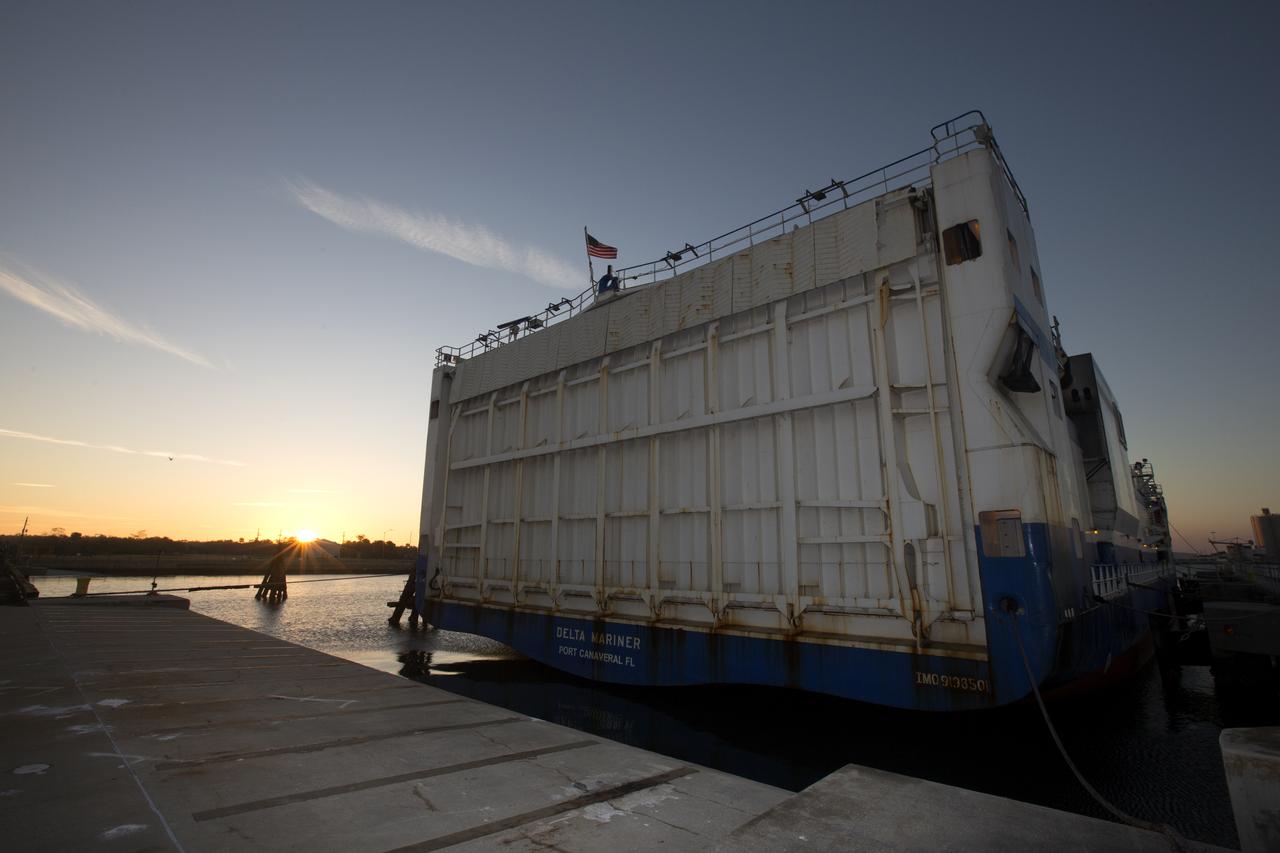
The Mariner cargo ship arrives at the Army Outpost wharf at Port Canaveral, Florida, near the Kennedy Space Center. Aboard is the United Launch Alliance (ULA) Atlas V booster for the Orbital ATK CRS-7 commercial resupply mission to the International Space Station. After the rocket is offloaded, a transport truck will take the Atlas V to the hangar at the Atlas Spaceflight Operations Center (ASOC), located south of Space Launch Complex 41 at Cape Canaveral Air Force Station. Scheduled to launch a Cygnus spacecraft on March 19, 2017, the Orbital ATK CRS-7 mission will deliver thousands of pounds of supplies, equipment and scientific research materials that improve life on Earth and drive progress toward future space exploration.
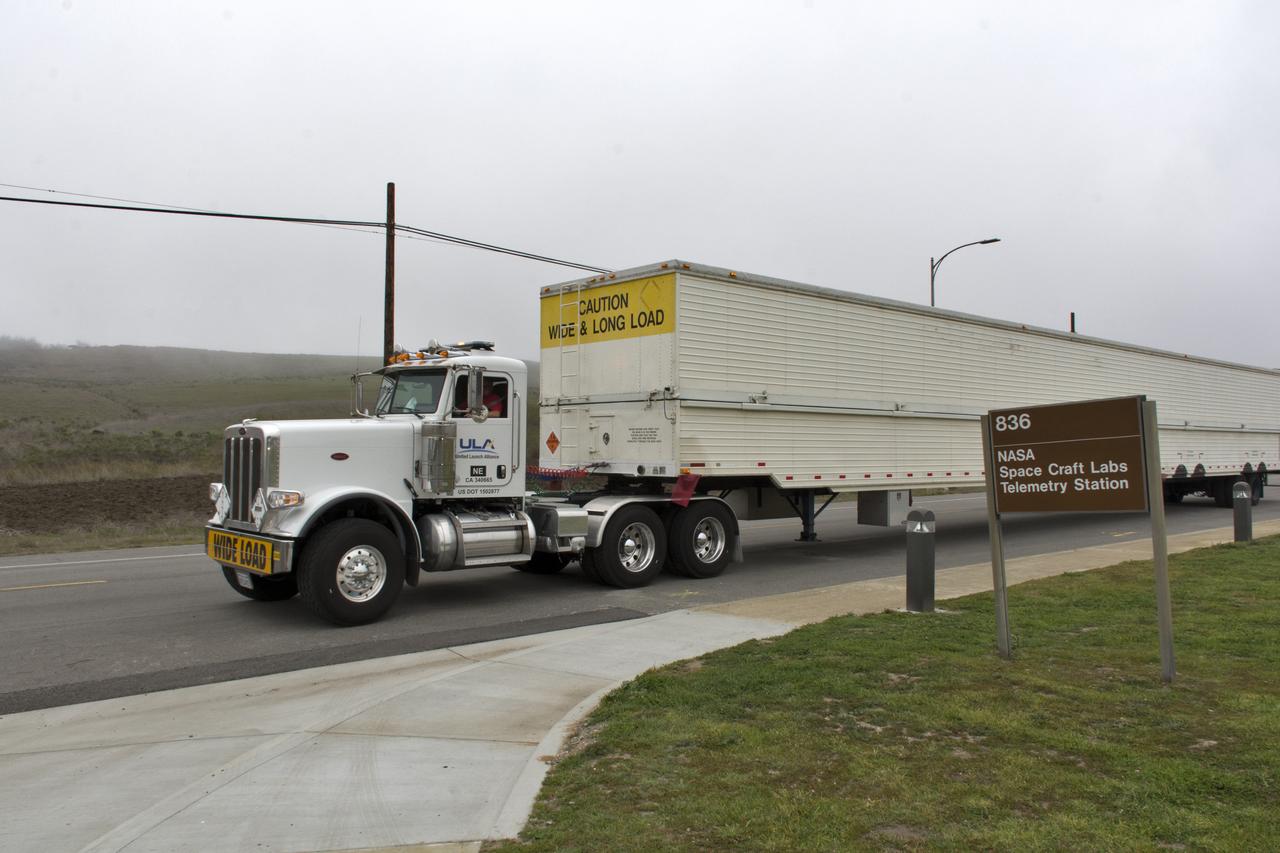
A United Launch Alliance Delta II booster arrives at NASA's Building 836, the Spacecraft Labs Telemetry Station at Vandenberg Air Force Base in California. It will be offloaded and begin preliminary checkouts and preflight processing for launch of the agency's Ice, Cloud and land Elevation Satellite-2, or ICESat-2. Liftoff from Space Launch Complex-2 at Vandenberg is scheduled for Sept. 12, 2018, and will be the last for the venerable Delta II rocket. Once in orbit, the satellite is designed to measure the height of a changing Earth, one laser pulse at a time, 10,000 laser pulses a second. The satellite will carry a single instrument, the Advanced Topographic Laser Altimeter System. ICESat-2 will help scientists investigate why, and how much, Earth's frozen and icy areas are changing. These area make up Earth's the cryosphere.
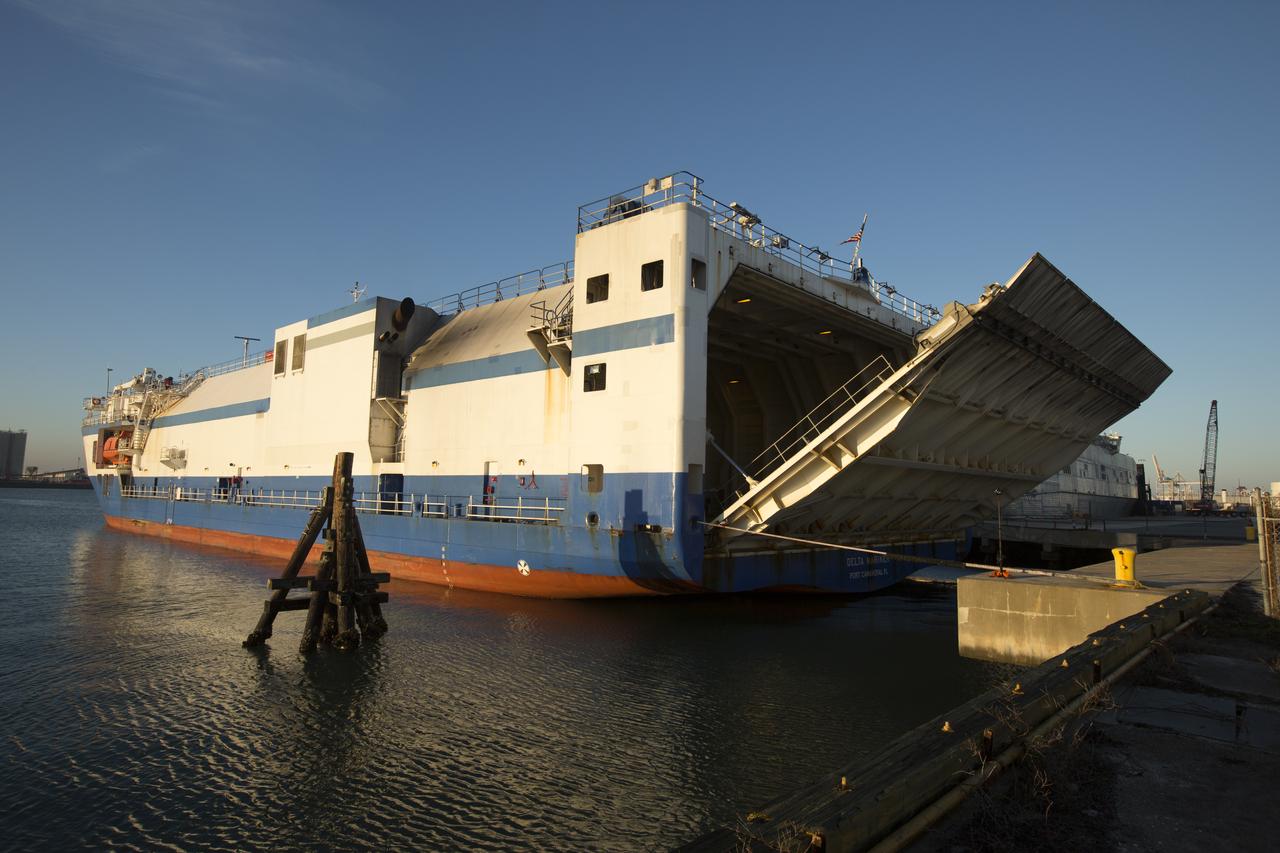
The Mariner cargo ship arrives at the Army Outpost wharf at Port Canaveral, Florida, near the Kennedy Space Center. Aboard is the United Launch Alliance (ULA) Atlas V booster for the Orbital ATK CRS-7 commercial resupply mission to the International Space Station. After the rocket is offloaded, a transport truck will take the Atlas V to the hangar at the Atlas Spaceflight Operations Center (ASOC), located south of Space Launch Complex 41 at Cape Canaveral Air Force Station. Scheduled to launch a Cygnus spacecraft on March 19, 2017, the Orbital ATK CRS-7 mission will deliver thousands of pounds of supplies, equipment and scientific research materials that improve life on Earth and drive progress toward future space exploration.
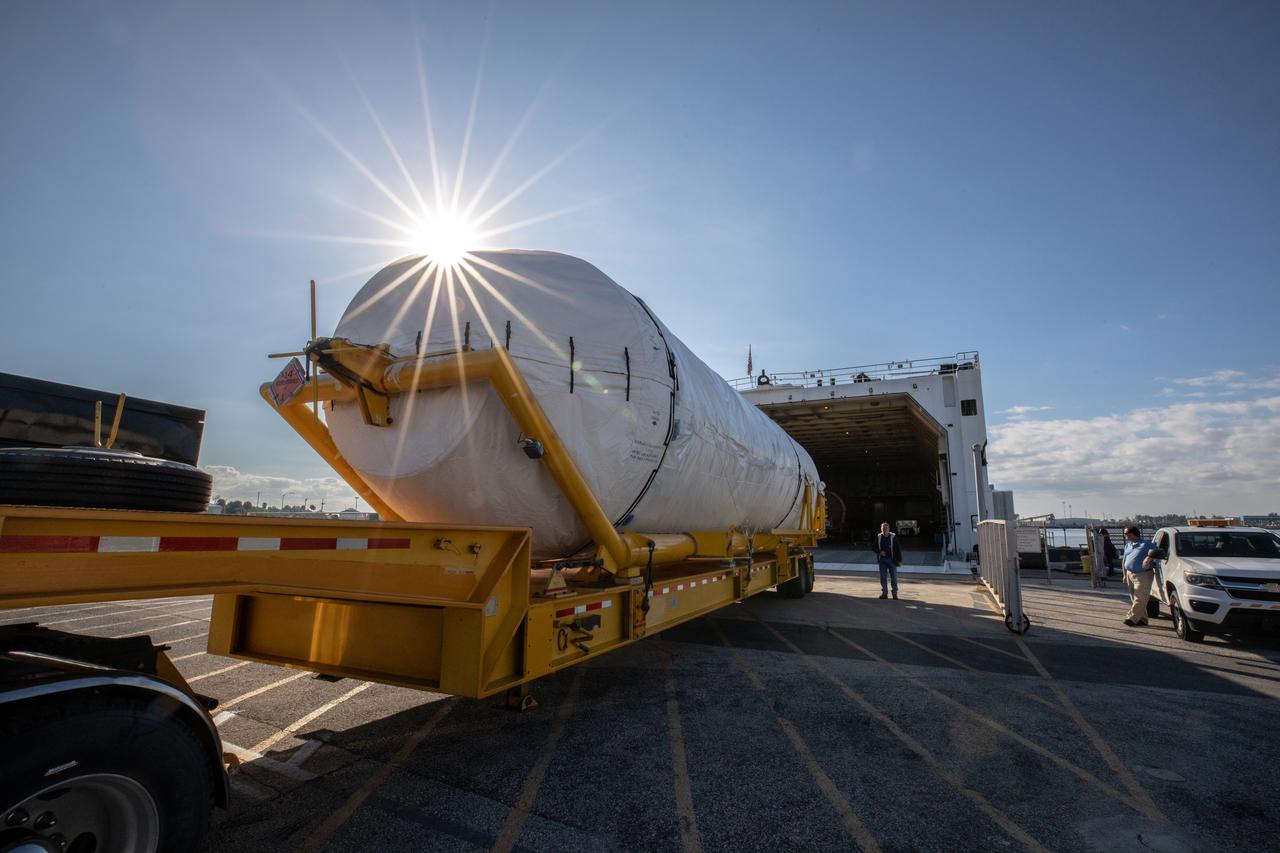
The United Launch Alliance Centaur upper stage that will help launch the Solar Orbiter spacecraft is removed from the company’s Rocketship vessel upon its arrival at Florida’s Port Canaveral on Nov. 21, 2019. Also onboard is the Atlas V rocket’s first-stage booster. Once offloaded, the booster was transported to the Atlas Spaceflight Operations Center and the Centaur was transported to a separate facility, both at nearby Cape Canaveral Air Force Station. Solar Orbiter is a European Space Agency mission with strong NASA participation. The mission aims to study the Sun, its outer atmosphere and solar winds. The spacecraft will provide the first images of the Sun’s poles. NASA’s Launch Services Program based at Kennedy is managing the launch. Liftoff is scheduled for Feb. 5, 2020, from Launch Complex 41 at Cape Canaveral Air Force Station aboard the ULA Atlas V rocket.
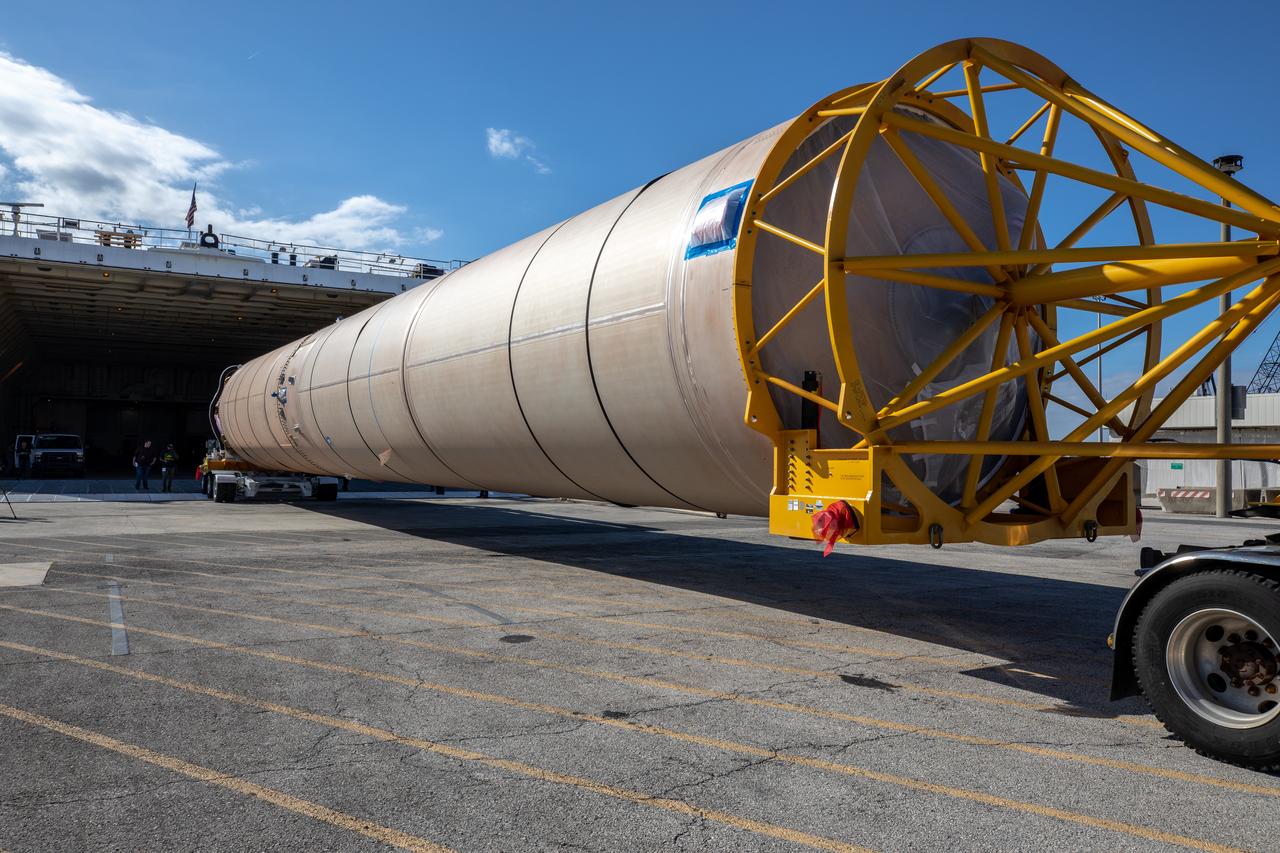
The United Launch Alliance Atlas V booster that will launch the Solar Orbiter spacecraft is removed from the company’s Rocketship vessel upon its arrival at Florida’s Port Canaveral on Nov. 21, 2019. Once offloaded, the booster was transported to the Atlas Spaceflight Operations Center at nearby Cape Canaveral Air Force Station. Solar Orbiter is a European Space Agency mission with strong NASA participation. The mission aims to study the Sun, its outer atmosphere and solar winds. The spacecraft will provide the first images of the Sun’s poles. NASA’s Launch Services Program based at Kennedy is managing the launch. Liftoff is scheduled for Feb. 5, 2020, from Launch Complex 41 at Cape Canaveral Air Force Station aboard the ULA Atlas V rocket.
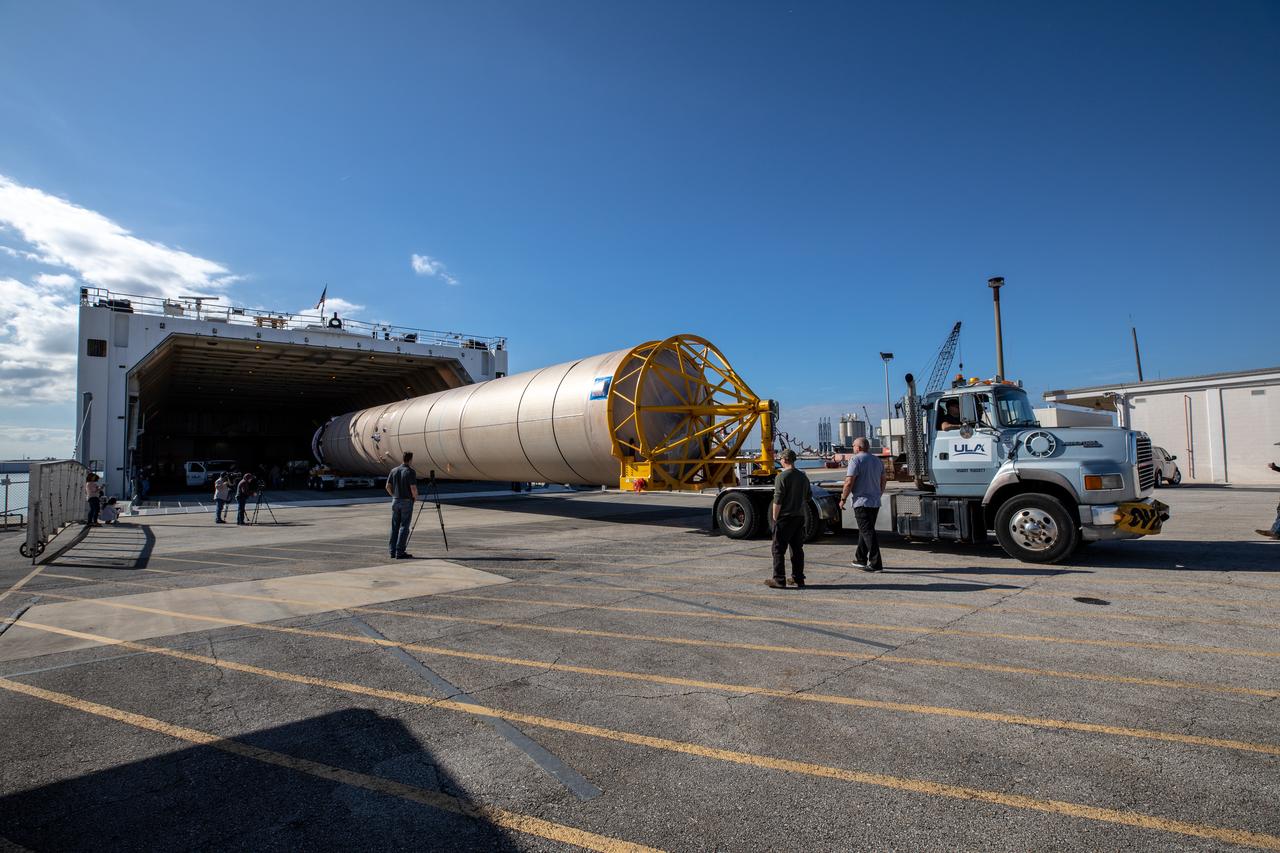
The United Launch Alliance Atlas V booster that will launch the Solar Orbiter spacecraft is removed from the company’s Rocketship vessel upon its arrival at Florida’s Port Canaveral on Nov. 21, 2019. Once offloaded, the booster was transported to the Atlas Spaceflight Operations Center at nearby Cape Canaveral Air Force Station. Solar Orbiter is a European Space Agency mission with strong NASA participation. The mission aims to study the Sun, its outer atmosphere and solar winds. The spacecraft will provide the first images of the Sun’s poles. NASA’s Launch Services Program based at Kennedy is managing the launch. Liftoff is scheduled for Feb. 5, 2020, from Launch Complex 41 at Cape Canaveral Air Force Station aboard the ULA Atlas V rocket.
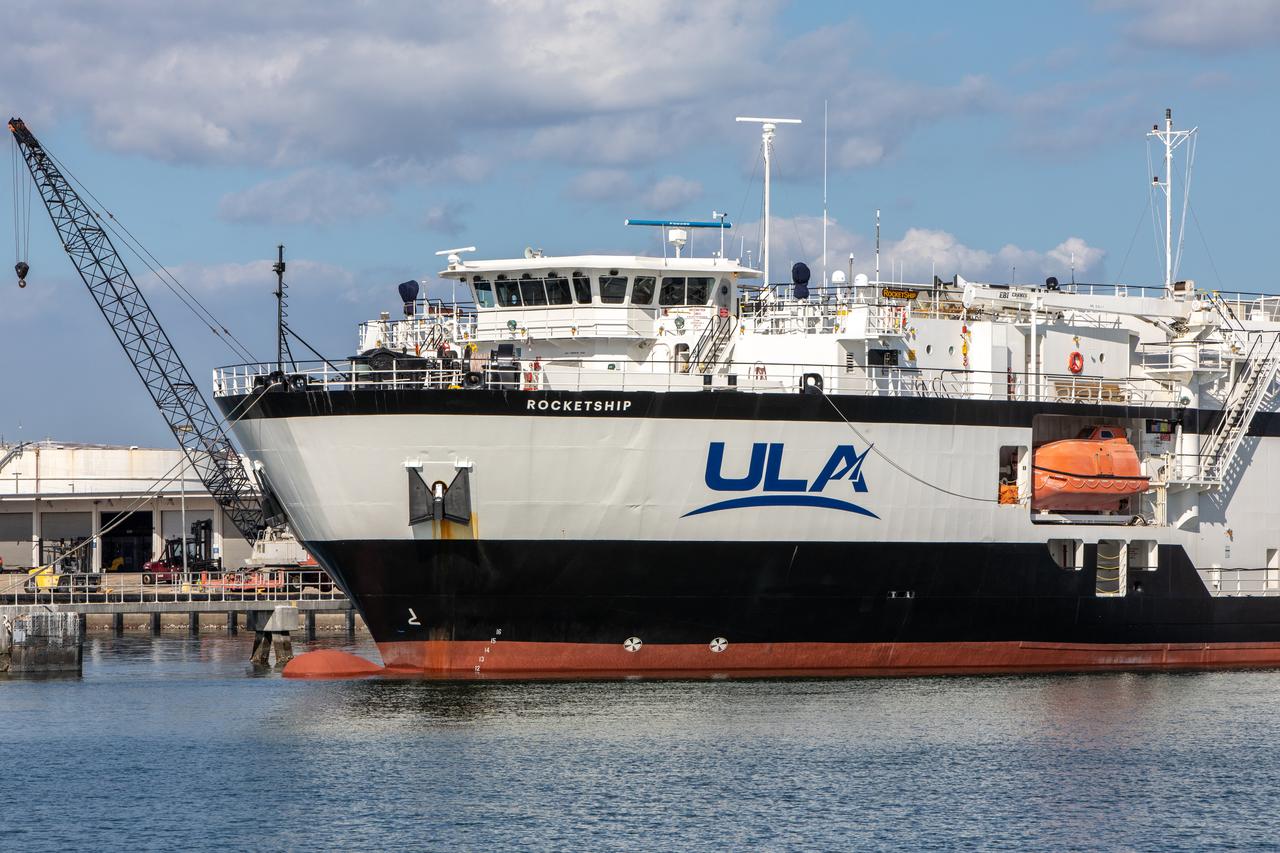
The United Launch Alliance cargo vessel, Rocketship, is docked at Florida’s Port Canaveral on Nov. 21, 2019, after arriving with the Atlas V booster and Centaur upper stage that will launch the Solar Orbiter spacecraft. Once offloaded, the booster was transported to the Atlas Spaceflight Operations Center and the Centaur was transported to a separate facility, both at nearby Cape Canaveral Air Force Station. Solar Orbiter is a European Space Agency mission with strong NASA participation. The mission aims to study the Sun, its outer atmosphere and solar winds. The spacecraft will provide the first images of the Sun’s poles. NASA’s Launch Services Program based at Kennedy is managing the launch. Liftoff is scheduled for Feb. 5, 2020, from Cape Canaveral Air Force Station aboard the ULA Atlas V rocket.
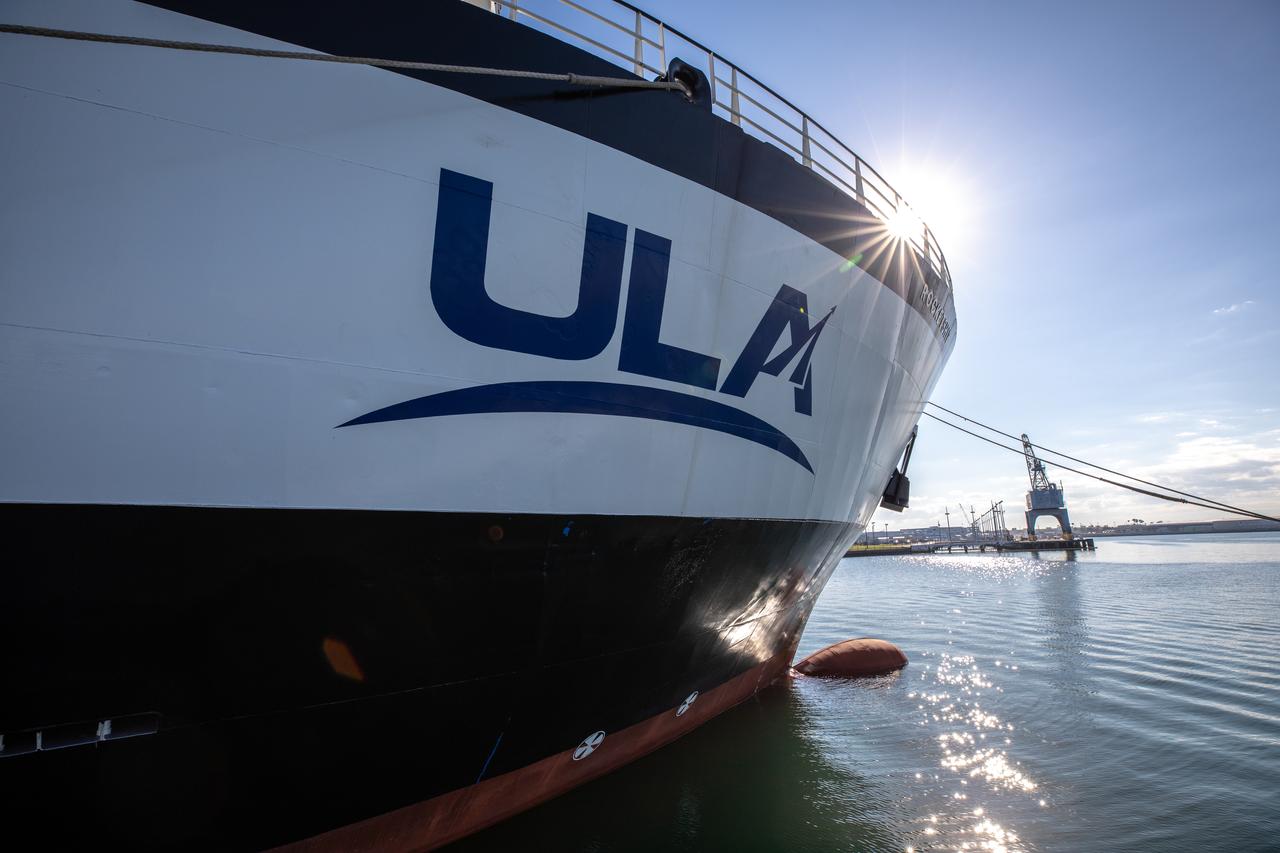
The United Launch Alliance cargo vessel, Rocketship, is docked at Florida’s Port Canaveral on Nov. 21, 2019, after arriving with the Atlas V booster and Centaur upper stage that will launch the Solar Orbiter spacecraft. Once offloaded, the booster was transported to the Atlas Spaceflight Operations Center and the Centaur was transported to a separate facility, both at nearby Cape Canaveral Air Force Station. Solar Orbiter is a European Space Agency mission with strong NASA participation. The mission aims to study the Sun, its outer atmosphere and solar winds. The spacecraft will provide the first images of the Sun’s poles. NASA’s Launch Services Program based at Kennedy is managing the launch. Liftoff is scheduled for Feb. 5, 2020, from Cape Canaveral Air Force Station aboard the ULA Atlas V rocket.
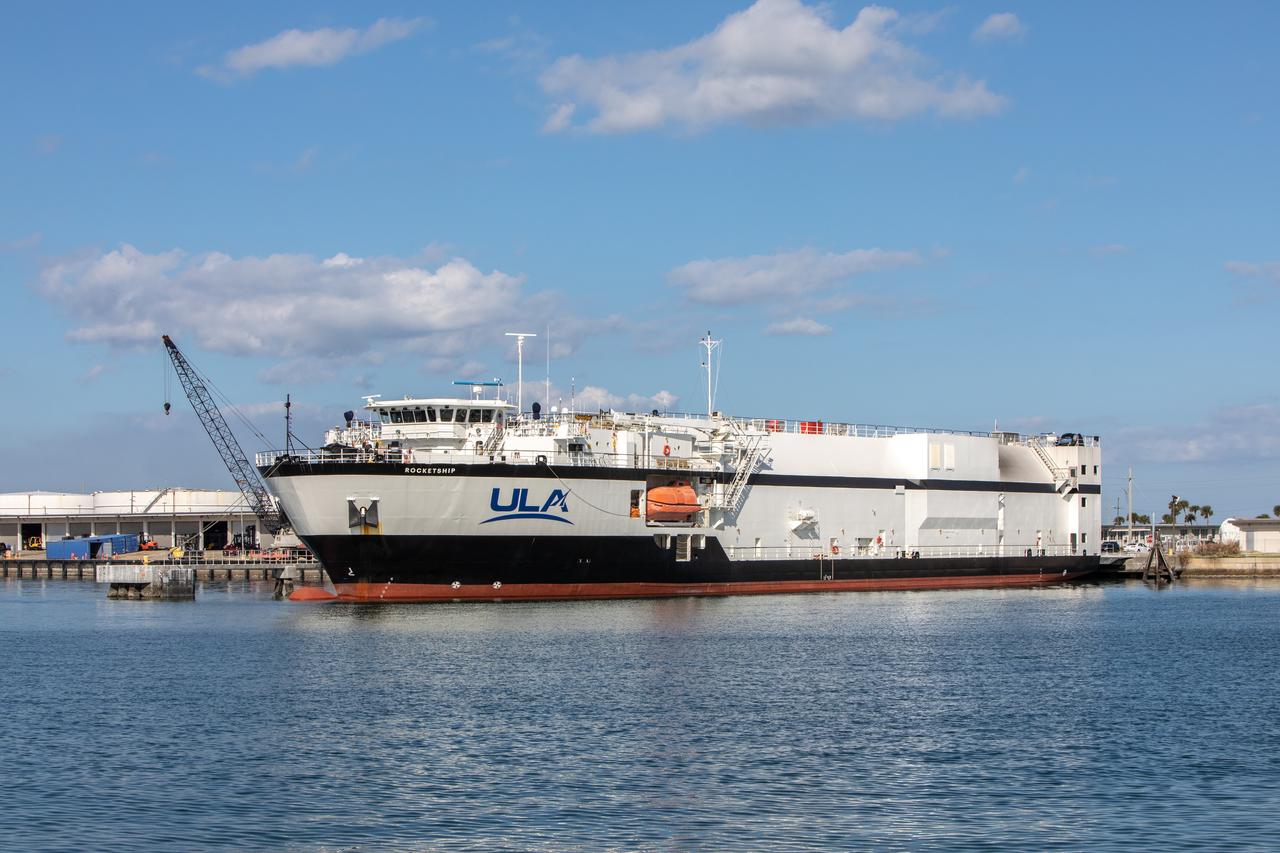
The United Launch Alliance cargo vessel, Rocketship, is docked at Florida’s Port Canaveral on Nov. 21, 2019, after arriving with the Atlas V booster and Centaur upper stage that will launch the Solar Orbiter spacecraft. Once offloaded, the booster was transported to the Atlas Spaceflight Operations Center and the Centaur was transported to a separate facility, both at nearby Cape Canaveral Air Force Station. Solar Orbiter is a European Space Agency mission with strong NASA participation. The mission aims to study the Sun, its outer atmosphere and solar winds. The spacecraft will provide the first images of the Sun’s poles. NASA’s Launch Services Program based at Kennedy is managing the launch. Liftoff is scheduled for Feb. 5, 2020, from Cape Canaveral Air Force Station aboard the ULA Atlas V rocket.
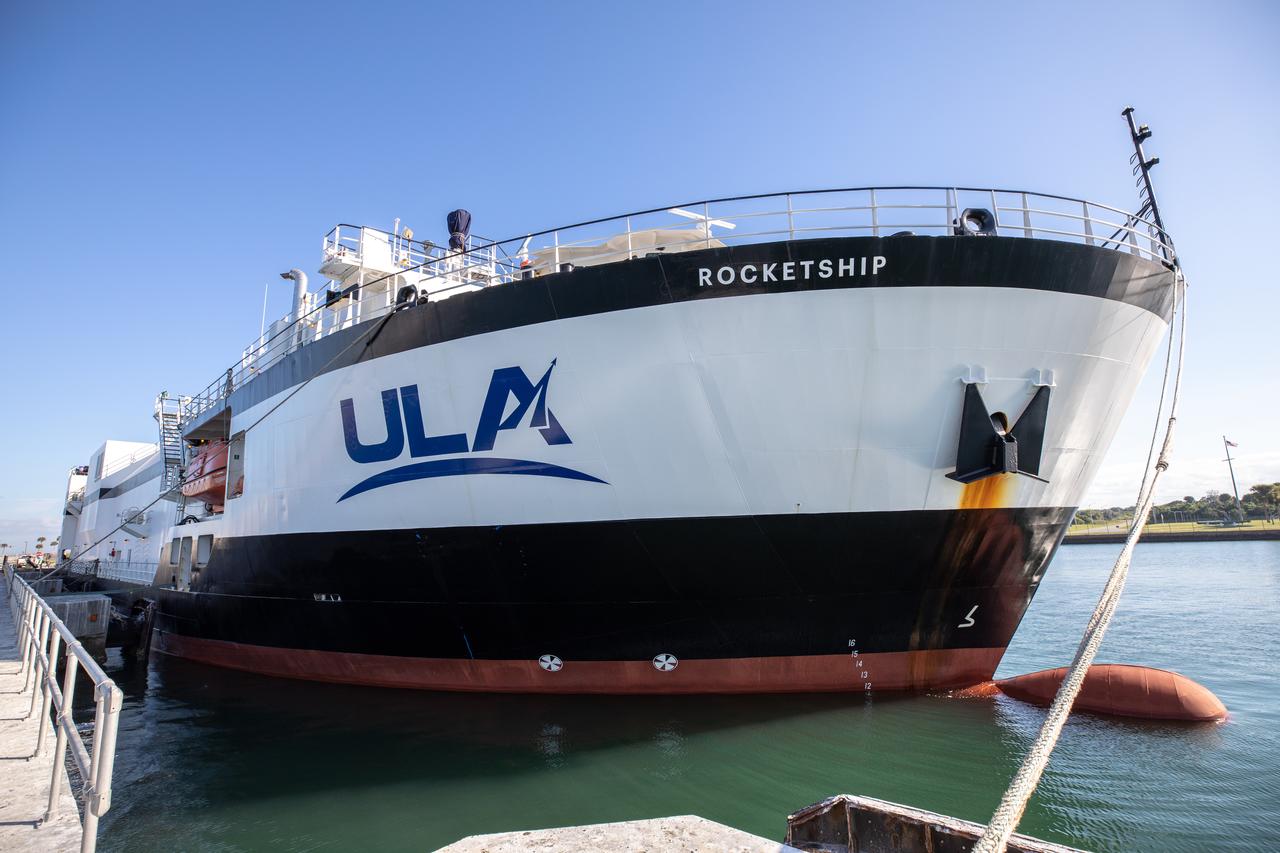
The United Launch Alliance cargo vessel, Rocketship, is docked at Florida’s Port Canaveral on Nov. 21, 2019, after arriving with the Atlas V booster and Centaur upper stage that will launch the Solar Orbiter spacecraft. Once offloaded, the booster was transported to the Atlas Spaceflight Operations Center and the Centaur was transported to a separate facility, both at nearby Cape Canaveral Air Force Station. Solar Orbiter is a European Space Agency mission with strong NASA participation. The mission aims to study the Sun, its outer atmosphere and solar winds. The spacecraft will provide the first images of the Sun’s poles. NASA’s Launch Services Program based at Kennedy is managing the launch. Liftoff is scheduled for Feb. 5, 2020, from Cape Canaveral Air Force Station aboard the ULA Atlas V rocket.
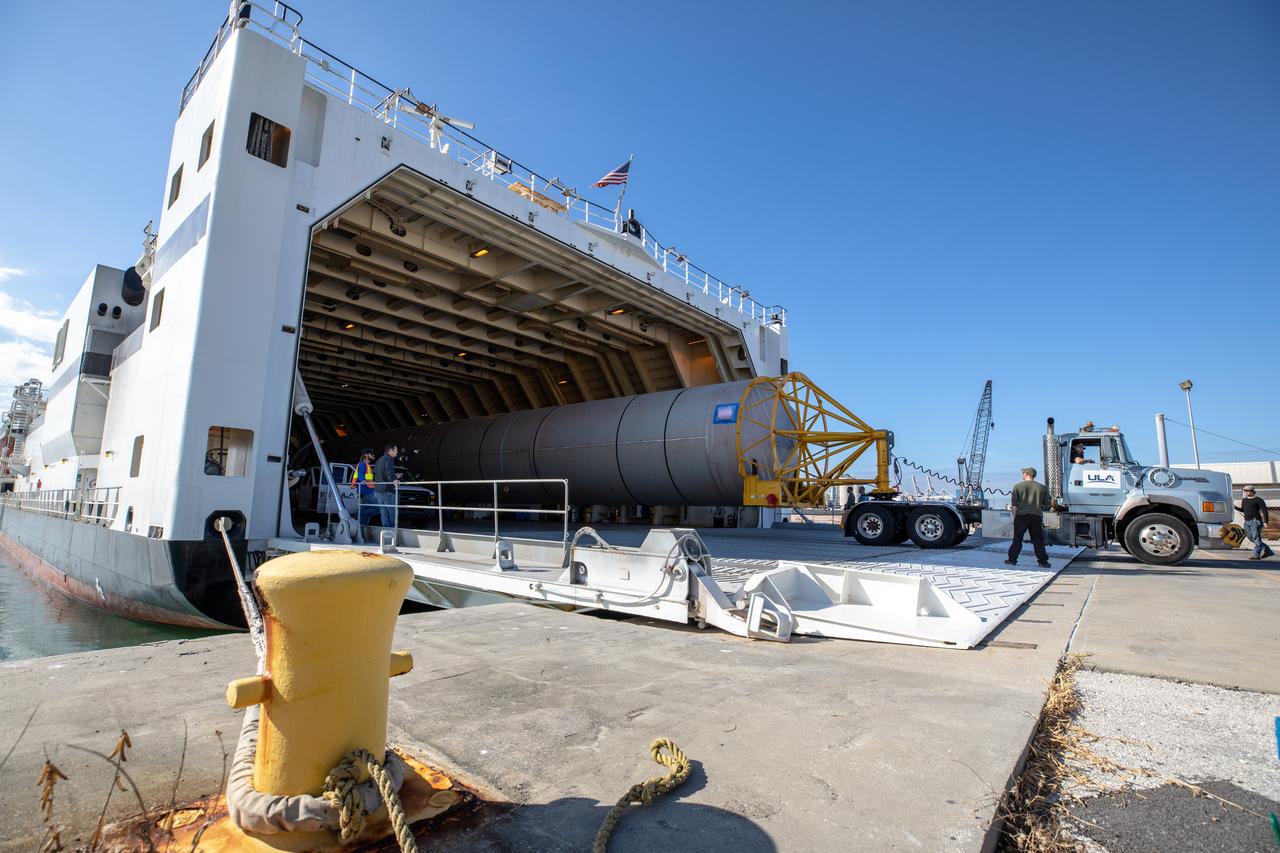
The United Launch Alliance Atlas V booster that will launch the Solar Orbiter spacecraft is removed from the company’s Rocketship vessel upon its arrival at Florida’s Port Canaveral on Nov. 21, 2019. Once offloaded, the booster was transported to the Atlas Spaceflight Operations Center at nearby Cape Canaveral Air Force Station. Solar Orbiter is a European Space Agency mission with strong NASA participation. The mission aims to study the Sun, its outer atmosphere and solar winds. The spacecraft will provide the first images of the Sun’s poles. NASA’s Launch Services Program based at Kennedy is managing the launch. Liftoff is scheduled for Feb. 5, 2020, from Launch Complex 41 at Cape Canaveral Air Force Station aboard the ULA Atlas V rocket.
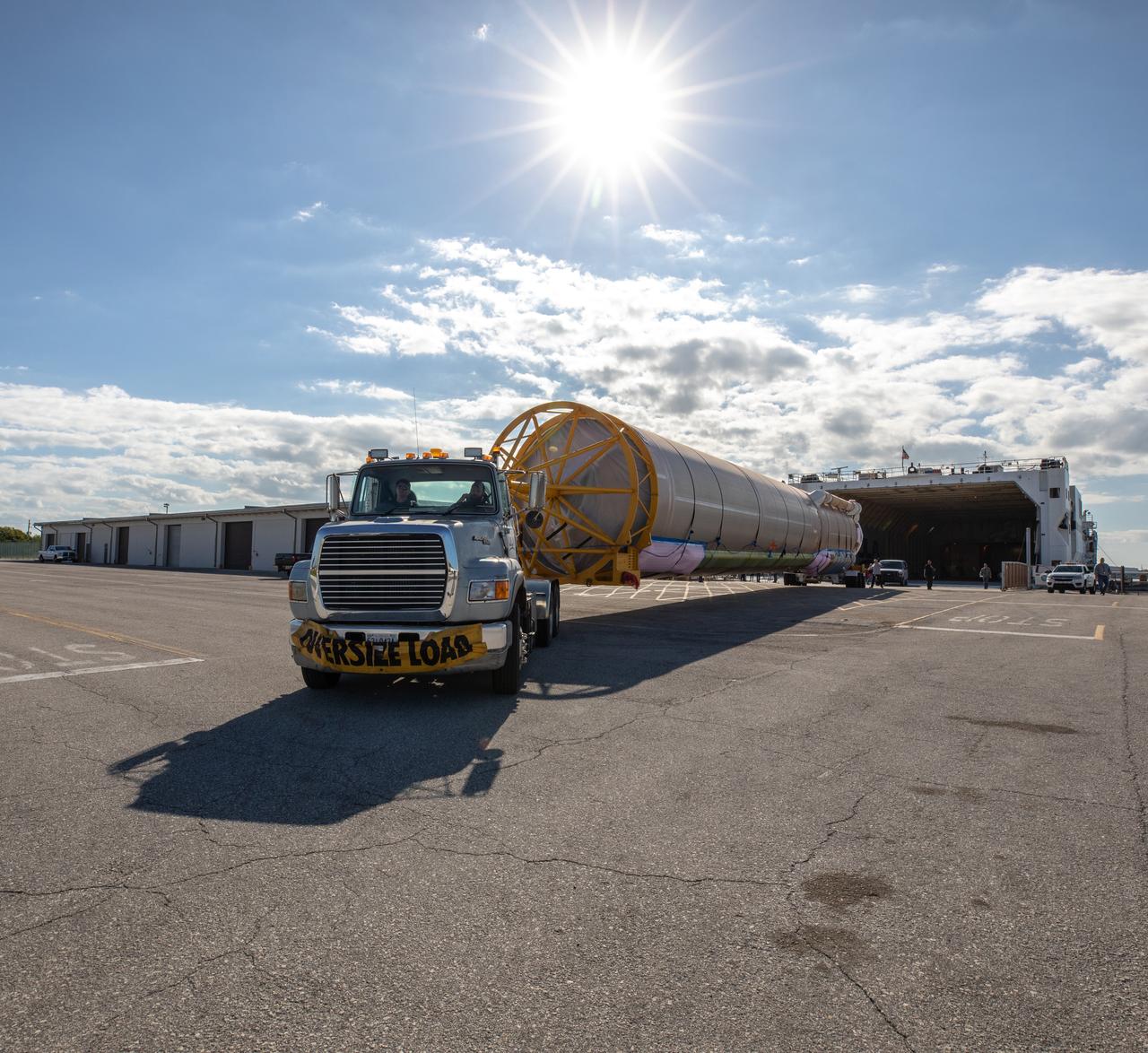
The United Launch Alliance Atlas V booster that will launch the Solar Orbiter spacecraft is removed from the company’s Rocketship vessel upon its arrival at Florida’s Port Canaveral on Nov. 21, 2019. Once offloaded, the booster was transported to the Atlas Spaceflight Operations Center at nearby Cape Canaveral Air Force Station. Solar Orbiter is a European Space Agency mission with strong NASA participation. The mission aims to study the Sun, its outer atmosphere and solar winds. The spacecraft will provide the first images of the Sun’s poles. NASA’s Launch Services Program based at Kennedy is managing the launch. Liftoff is scheduled for Feb. 5, 2020, from Launch Complex 41 at Cape Canaveral Air Force Station aboard the ULA Atlas V rocket.
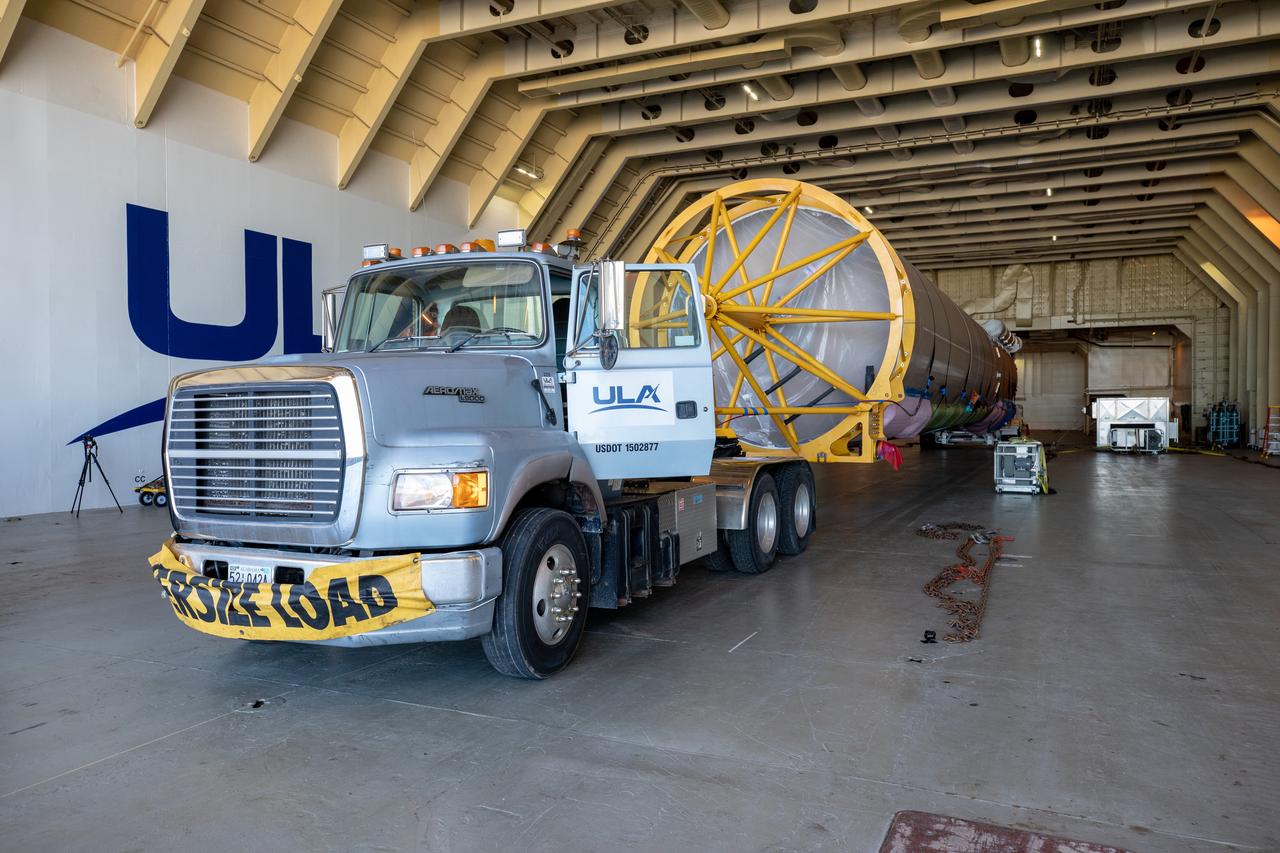
The United Launch Alliance Atlas V booster that will launch the Solar Orbiter spacecraft is removed from the company’s Rocketship vessel upon its arrival at Florida’s Port Canaveral on Nov. 21, 2019. Once offloaded, the booster was transported to the Atlas Spaceflight Operations Center at nearby Cape Canaveral Air Force Station. Solar Orbiter is a European Space Agency mission with strong NASA participation. The mission aims to study the Sun, its outer atmosphere and solar winds. The spacecraft will provide the first images of the Sun’s poles. NASA’s Launch Services Program based at Kennedy is managing the launch. Liftoff is scheduled for Feb. 5, 2020, from Launch Complex 41 at Cape Canaveral Air Force Station aboard the ULA Atlas V rocket.
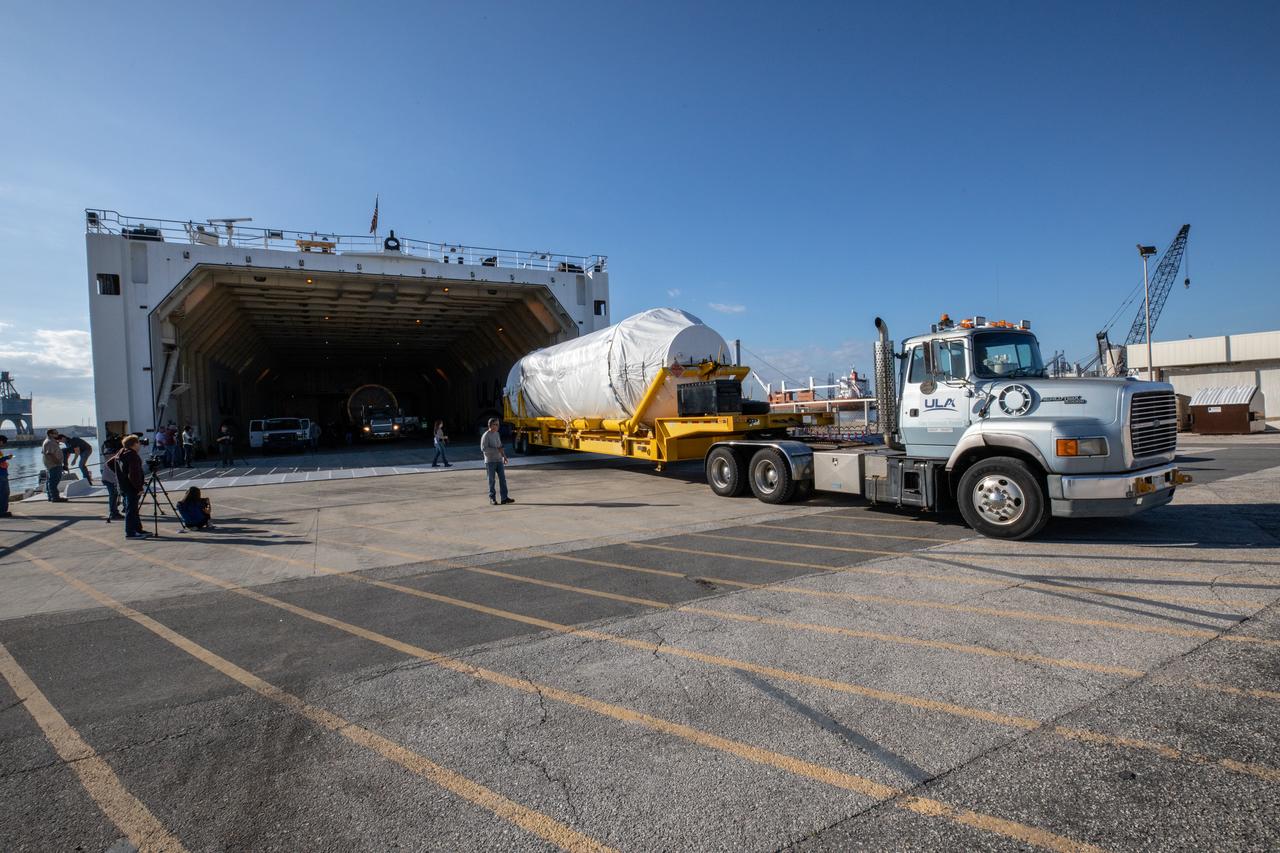
The United Launch Alliance Centaur upper stage that will help launch the Solar Orbiter spacecraft is removed from the company’s Rocketship vessel upon its arrival at Florida’s Port Canaveral on Nov. 21, 2019. Also onboard is the Atlas V rocket’s first-stage booster. Once offloaded, the booster was transported to the Atlas Spaceflight Operations Center and the Centaur was transported to a separate facility, both at nearby Cape Canaveral Air Force Station. Solar Orbiter is a European Space Agency mission with strong NASA participation. The mission aims to study the Sun, its outer atmosphere and solar winds. The spacecraft will provide the first images of the Sun’s poles. NASA’s Launch Services Program based at Kennedy is managing the launch. Liftoff is scheduled for Feb. 5, 2020, from Launch Complex 41 at Cape Canaveral Air Force Station aboard the ULA Atlas V rocket.
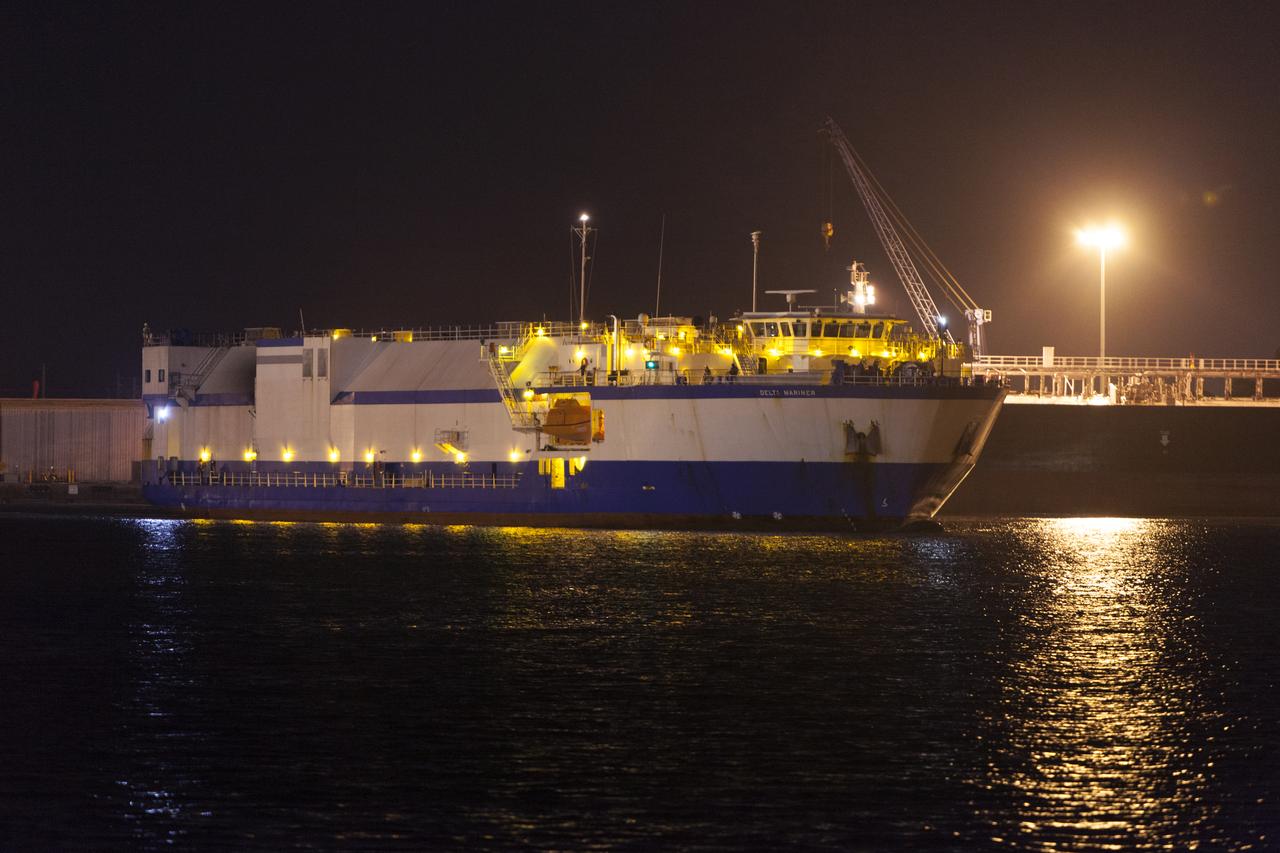
The United Launch Alliance (ULA) Mariner arrives at Port Canaveral in Florida carrying two of the three Delta IV Heavy Common Booster Cores for NASA's upcoming Parker Solar Probe mission. The mission will perform the closest-ever observations of a star when it travels through the Sun's atmosphere, called the corona. The probe will rely on measurements and imaging to revolutionize our understanding of the corona and the Sun-Earth connection. Liftoff atop the Delta IV rocket is scheduled to take place from Cape Canaveral's Space Launch Complex 37 in summer 2018.
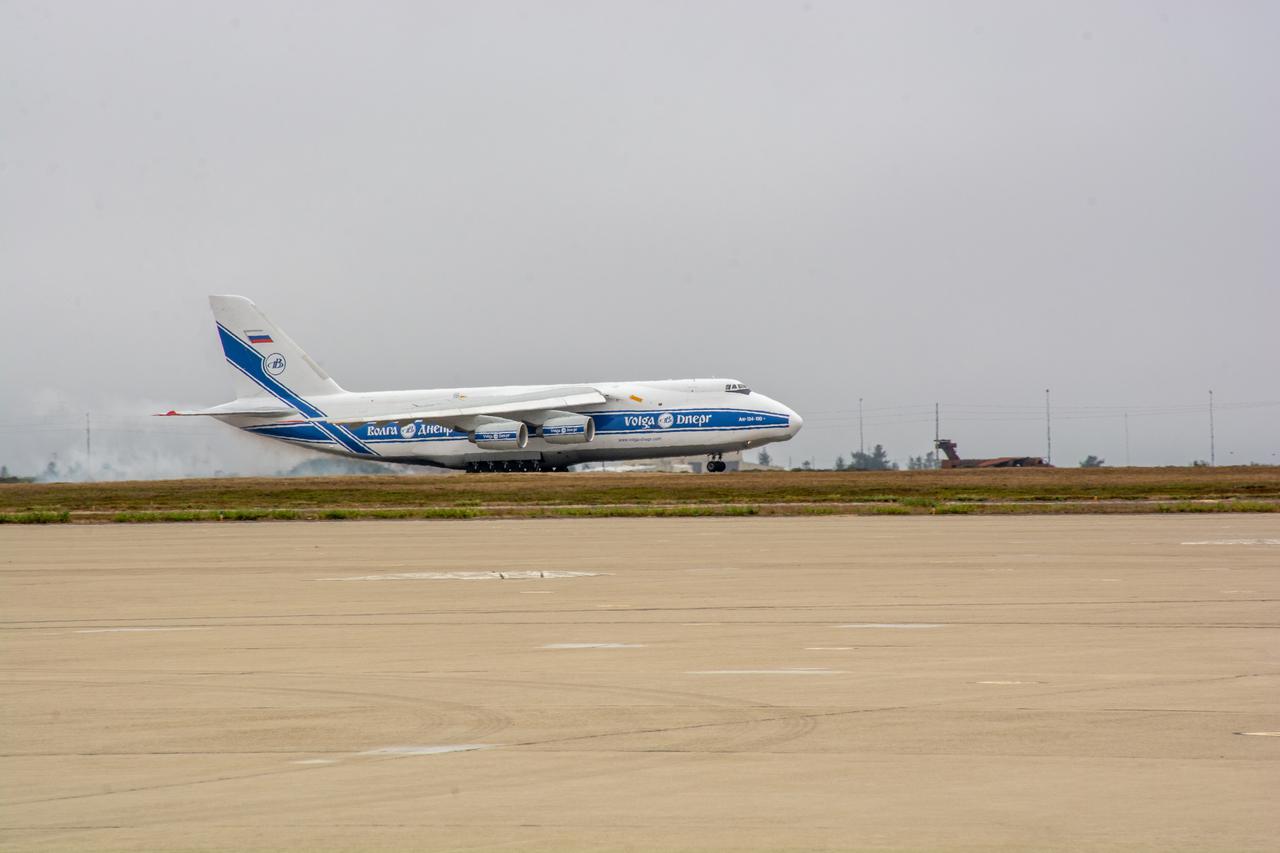
The United Launch Alliance (ULA) Atlas V booster for NASA’s Landsat 9 mission arrives aboard an Antonov 124 cargo aircraft at Vandenberg Space Force Base in California, on June 28, 2021. The Landsat 9 mission will launch atop a ULA Atlas V rocket from Vandenberg in September 2021. The launch is being managed by NASA’s Launch Services Program based at Kennedy Space Center. The Landsat 9 satellite will continue the nearly 50-year legacy of previous Landsat missions. It will monitor key natural and economic resources from orbit. Landsat 9 is managed by the agency’s Goddard Space Flight Center in Greenbelt, Maryland. The satellite will carry two instruments: the Operational Land Imager 2, which collects images of Earth’s landscapes in visible, near infrared and shortwave infrared light, and the Thermal Infrared Sensor 2, which measures the temperature of land surfaces. Like its predecessors, Landsat 9 is a joint mission between NASA and the U.S. Geological Survey.
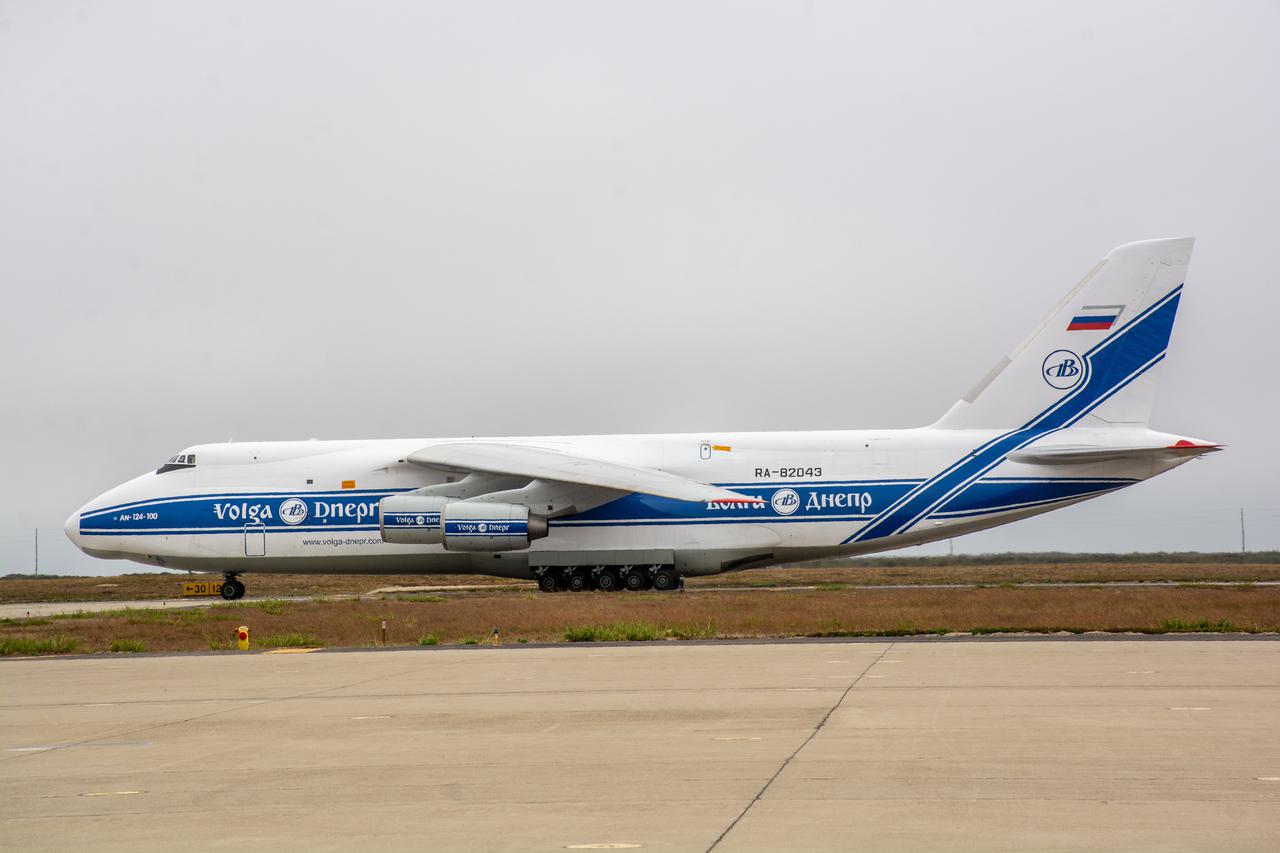
The United Launch Alliance (ULA) Atlas V booster for NASA’s Landsat 9 mission arrives aboard an Antonov 124 cargo aircraft at Vandenberg Space Force Base in California, on June 28, 2021. The Landsat 9 mission will launch atop a ULA Atlas V rocket from Vandenberg in September 2021. The launch is being managed by NASA’s Launch Services Program based at Kennedy Space Center. The Landsat 9 satellite will continue the nearly 50-year legacy of previous Landsat missions. It will monitor key natural and economic resources from orbit. Landsat 9 is managed by the agency’s Goddard Space Flight Center in Greenbelt, Maryland. The satellite will carry two instruments: the Operational Land Imager 2, which collects images of Earth’s landscapes in visible, near infrared and shortwave infrared light, and the Thermal Infrared Sensor 2, which measures the temperature of land surfaces. Like its predecessors, Landsat 9 is a joint mission between NASA and the U.S. Geological Survey.
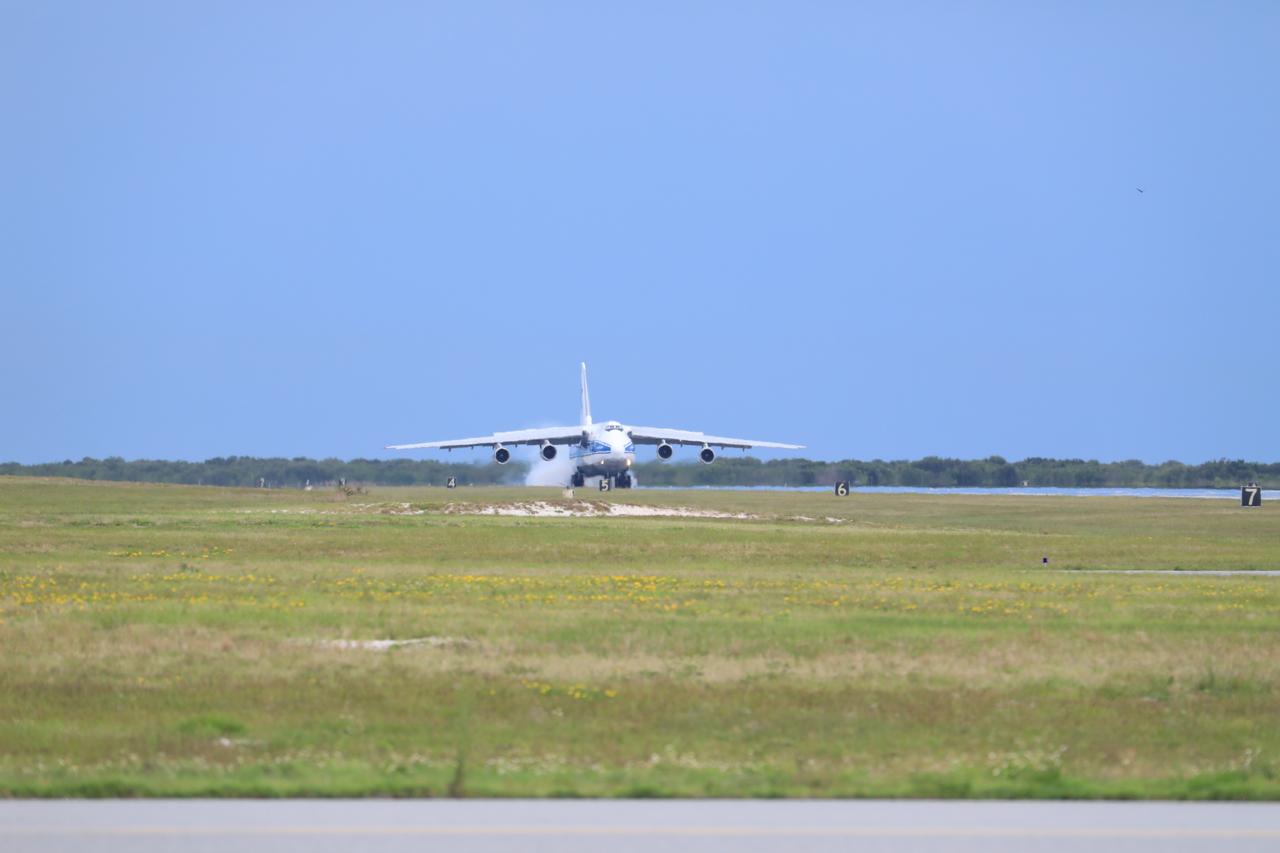
The Antonov 124 cargo aircraft, carrying the United Launch Alliance booster for NASA’s Mars Perseverance rover, touches down on the Skid Strip at Cape Canaveral Air Force Station (CCAFS) in Florida on May 18, 2020. The Mars Perseverance rover is scheduled to launch in mid-July atop a United Launch Alliance Atlas V 541 rocket from Pad 41 at CCAFS. The rover is part of NASA’s Mars Exploration Program, a long-term effort of robotic exploration of the Red Planet. The rover will search for habitable conditions in the ancient past and signs of past microbial life on Mars. The Launch Services Program at Kennedy is responsible for launch management.
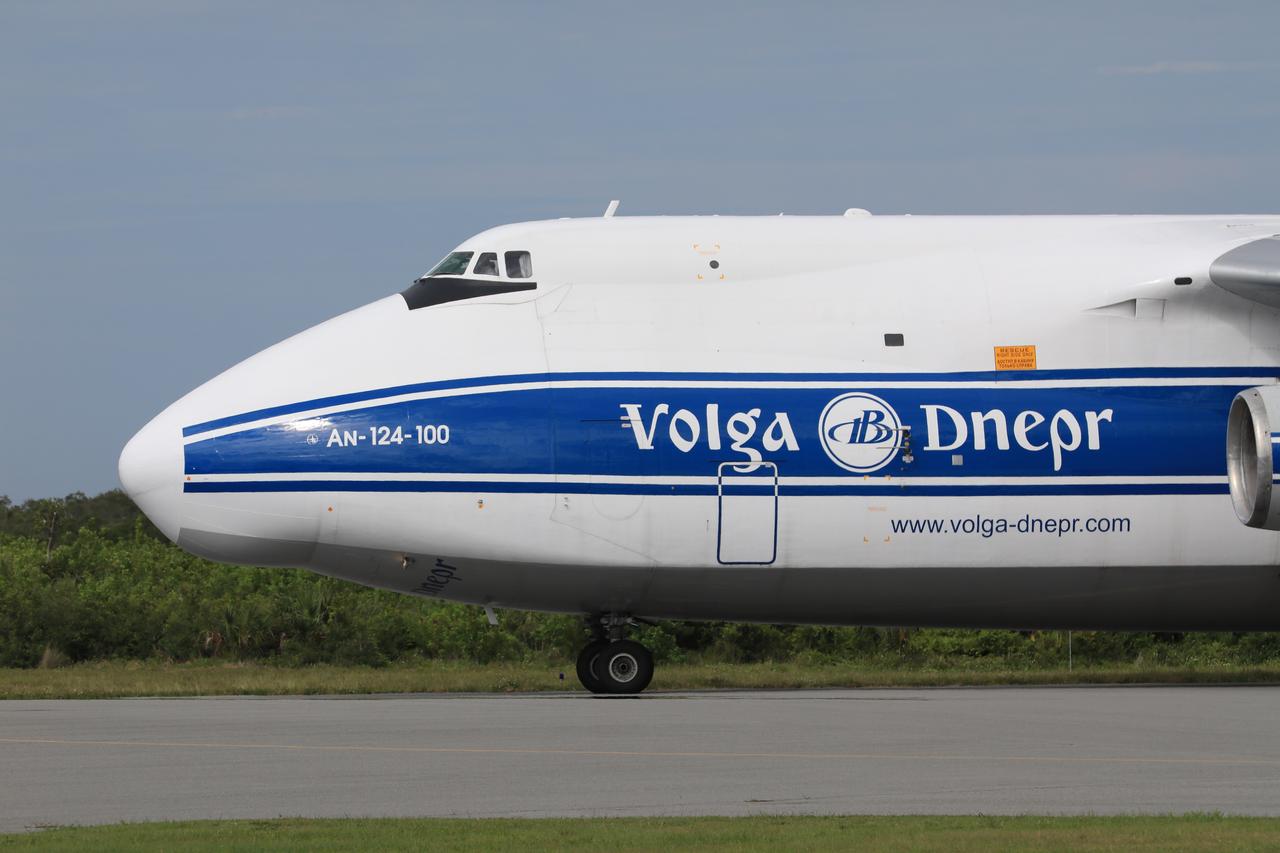
The Antonov 124 cargo aircraft, carrying the United Launch Alliance booster for NASA’s Mars Perseverance rover, taxis off the runway at the Skid Strip at Cape Canaveral Air Force Station (CCAFS) in Florida on May 18, 2020. The Mars Perseverance rover is scheduled to launch in mid-July atop a United Launch Alliance Atlas V 541 rocket from Pad 41 at CCAFS. The rover is part of NASA’s Mars Exploration Program, a long-term effort of robotic exploration of the Red Planet. The rover will search for habitable conditions in the ancient past and signs of past microbial life on Mars. The Launch Services Program at Kennedy is responsible for launch management.
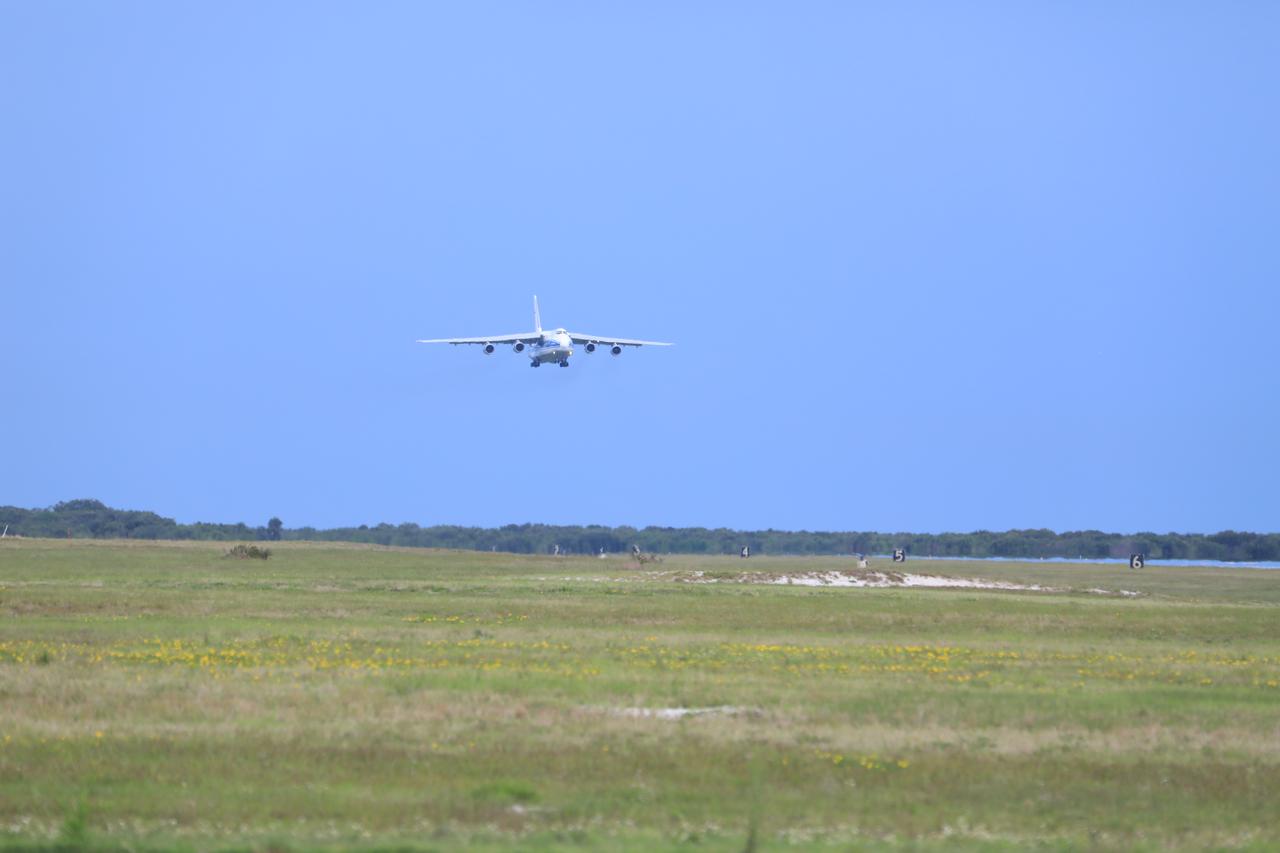
The Antonov 124 cargo aircraft, carrying the United Launch Alliance booster for NASA’s Mars Perseverance rover, descends toward the Skid Strip at Cape Canaveral Air Force Station (CCAFS) in Florida on May 18, 2020. The Mars Perseverance rover is scheduled to launch in mid-July atop a United Launch Alliance Atlas V 541 rocket from Pad 41 at CCAFS. The rover is part of NASA’s Mars Exploration Program, a long-term effort of robotic exploration of the Red Planet. The rover will search for habitable conditions in the ancient past and signs of past microbial life on Mars. The Launch Services Program at Kennedy is responsible for launch management.
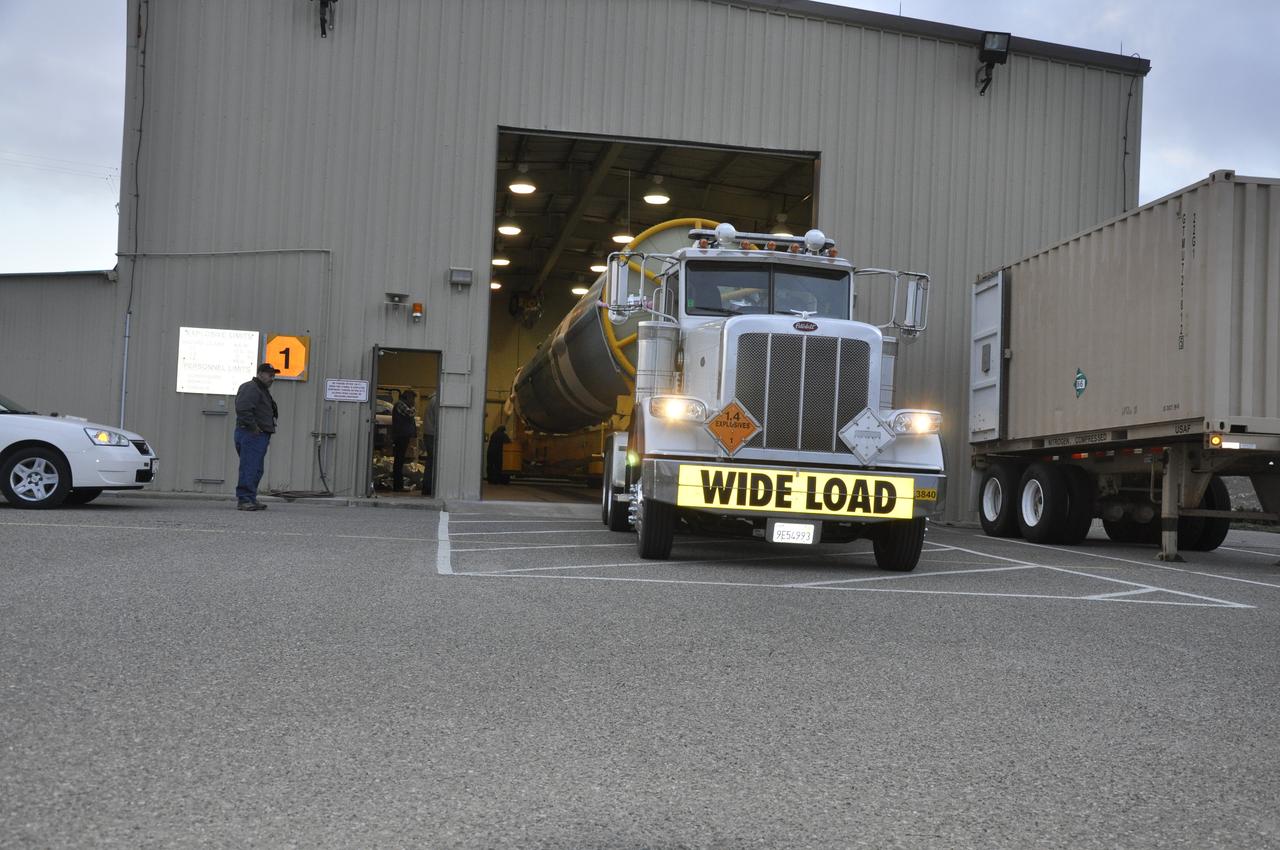
VANDENBERG AIR FORCE BASE, Calif. – The Delta first-stage booster for NASA's Orbiting Carbon Observatory-2 mission, or OCO-2, is positioned inside the Horizontal Processing Facility at Space Launch Complex 2 on Vandenberg Air Force Base in California. OCO-2 is scheduled to launch aboard a United Launch Alliance Delta II rocket in July. The observatory will collect precise global measurements of carbon dioxide in the Earth's atmosphere and provide scientists with a better idea of the chemical compound's impacts on climate change. Scientists will analyze this data to improve our understanding of the natural processes and human activities that regulate the abundance and distribution of this important atmospheric gas. To learn more about OCO-2, visit http://oco.jpl.nasa.gov. Photo credit: NASA/Randy Beaudoin
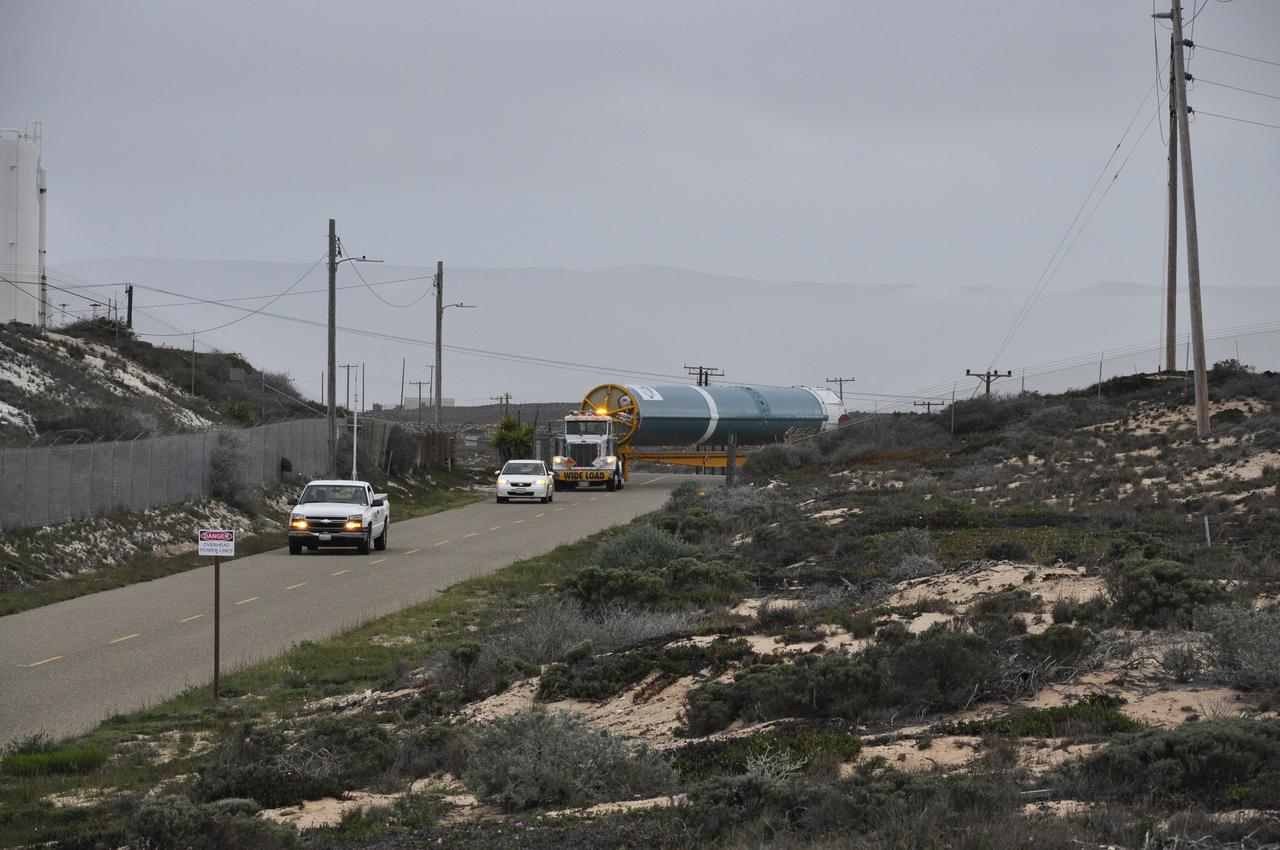
VANDENBERG AIR FORCE BASE, Calif. – The Delta first-stage booster for NASA's Orbiting Carbon Observatory-2 mission, or OCO-2, is towed to the Horizontal Processing Facility at Space Launch Complex 2 on Vandenberg Air Force Base in California. OCO-2 is scheduled to launch aboard a United Launch Alliance Delta II rocket in July. The observatory will collect precise global measurements of carbon dioxide in the Earth's atmosphere and provide scientists with a better idea of the chemical compound's impacts on climate change. Scientists will analyze this data to improve our understanding of the natural processes and human activities that regulate the abundance and distribution of this important atmospheric gas. To learn more about OCO-2, visit http://oco.jpl.nasa.gov. Photo credit: NASA/Randy Beaudoin
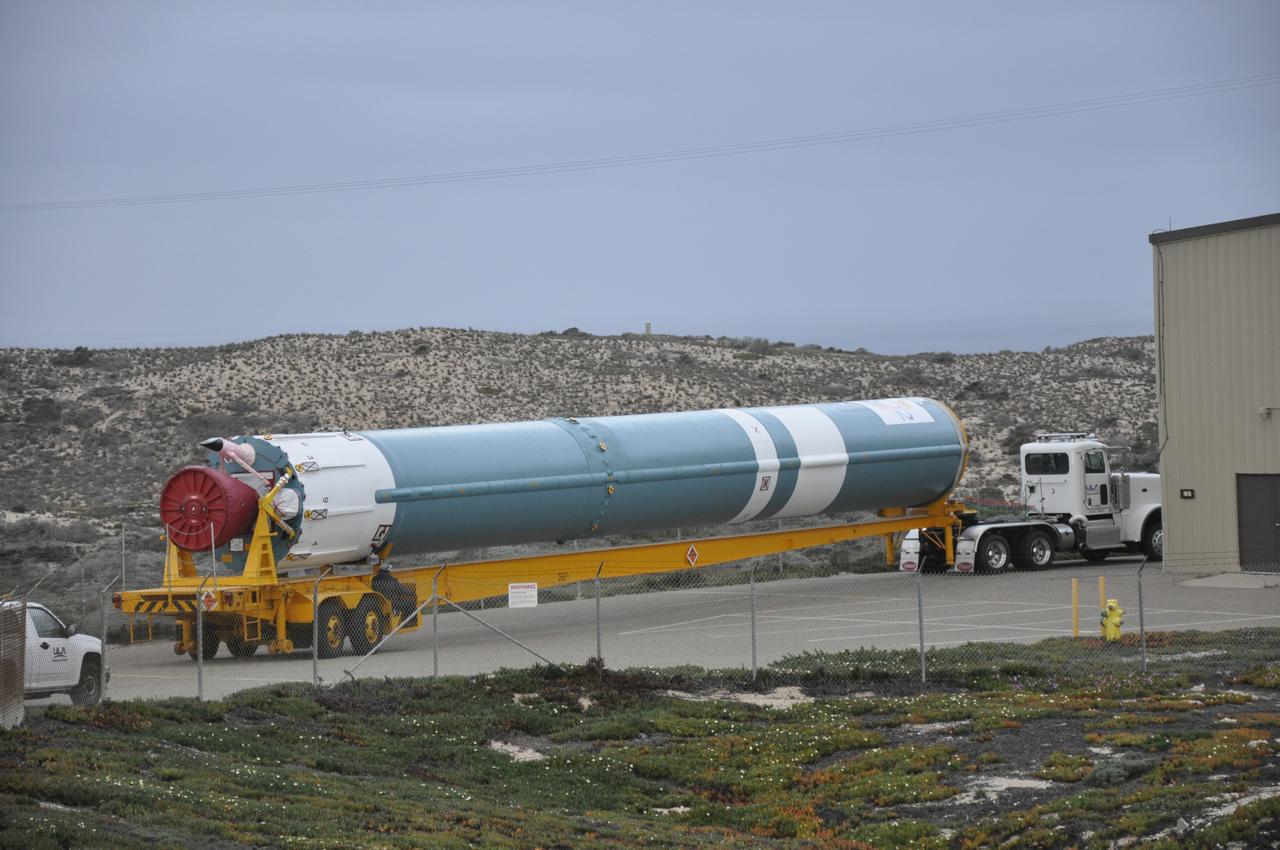
VANDENBERG AIR FORCE BASE, Calif. – The Delta first-stage booster for NASA's Orbiting Carbon Observatory-2 mission, or OCO-2, secured in a transportation hardware cradle, is towed to the Horizontal Processing Facility at Space Launch Complex 2 on Vandenberg Air Force Base in California. OCO-2 is scheduled to launch aboard a United Launch Alliance Delta II rocket in July. The observatory will collect precise global measurements of carbon dioxide in the Earth's atmosphere and provide scientists with a better idea of the chemical compound's impacts on climate change. Scientists will analyze this data to improve our understanding of the natural processes and human activities that regulate the abundance and distribution of this important atmospheric gas. To learn more about OCO-2, visit http://oco.jpl.nasa.gov. Photo credit: NASA/Randy Beaudoin
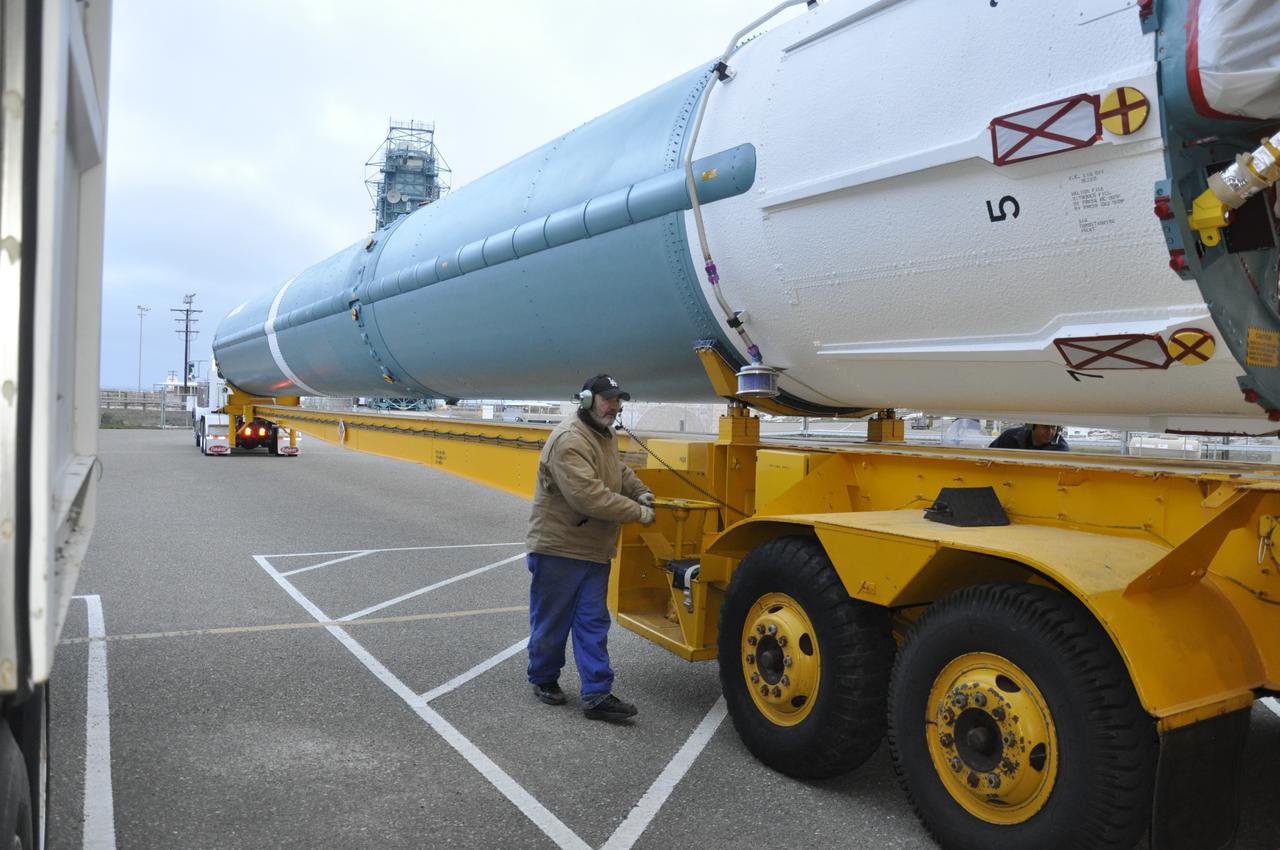
VANDENBERG AIR FORCE BASE, Calif. – A worker surveys the Delta first-stage booster for NASA's Orbiting Carbon Observatory-2 mission, or OCO-2, secured in a transportation hardware cradle, that he delivered to the Horizontal Processing Facility at Space Launch Complex 2 on Vandenberg Air Force Base in California. OCO-2 is scheduled to launch aboard a United Launch Alliance Delta II rocket in July. The observatory will collect precise global measurements of carbon dioxide in the Earth's atmosphere and provide scientists with a better idea of the chemical compound's impacts on climate change. Scientists will analyze this data to improve our understanding of the natural processes and human activities that regulate the abundance and distribution of this important atmospheric gas. To learn more about OCO-2, visit http://oco.jpl.nasa.gov. Photo credit: NASA/Randy Beaudoin

VANDENBERG AIR FORCE BASE, Calif. – A worker maneuvers the transporter towing the Delta first-stage booster for NASA's Orbiting Carbon Observatory-2 mission, or OCO-2, at the Horizontal Processing Facility at Space Launch Complex 2 on Vandenberg Air Force Base in California. OCO-2 is scheduled to launch aboard a United Launch Alliance Delta II rocket in July. The observatory will collect precise global measurements of carbon dioxide in the Earth's atmosphere and provide scientists with a better idea of the chemical compound's impacts on climate change. Scientists will analyze this data to improve our understanding of the natural processes and human activities that regulate the abundance and distribution of this important atmospheric gas. To learn more about OCO-2, visit http://oco.jpl.nasa.gov. Photo credit: NASA/Randy Beaudoin
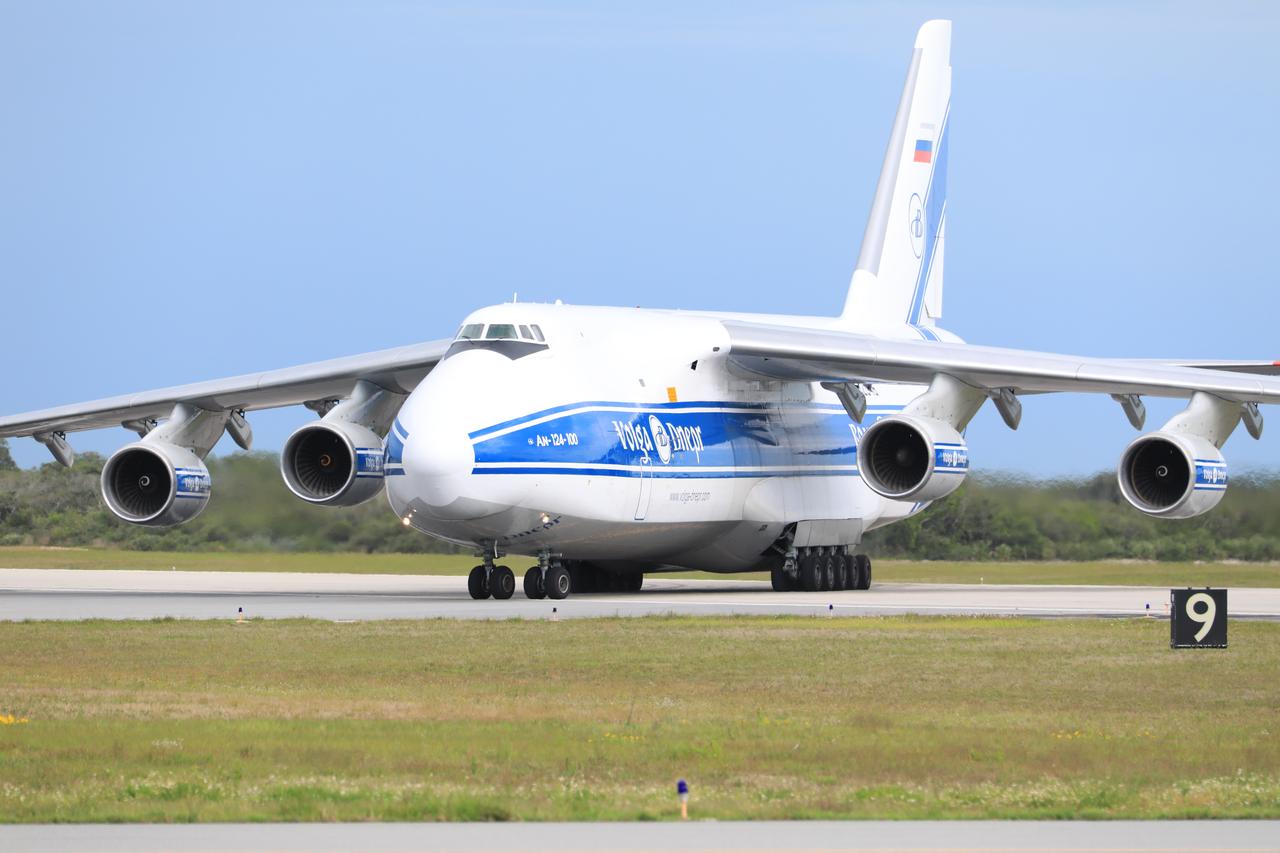
The Antonov 124 cargo aircraft, carrying the United Launch Alliance booster for NASA’s Mars Perseverance rover, taxis off the runway at the Skid Strip at Cape Canaveral Air Force Station (CCAFS) in Florida on May 18, 2020. The Mars Perseverance rover is scheduled to launch in mid-July atop a United Launch Alliance Atlas V 541 rocket from Pad 41 at CCAFS. The rover is part of NASA’s Mars Exploration Program, a long-term effort of robotic exploration of the Red Planet. The rover will search for habitable conditions in the ancient past and signs of past microbial life on Mars. The Launch Services Program at Kennedy is responsible for launch management.
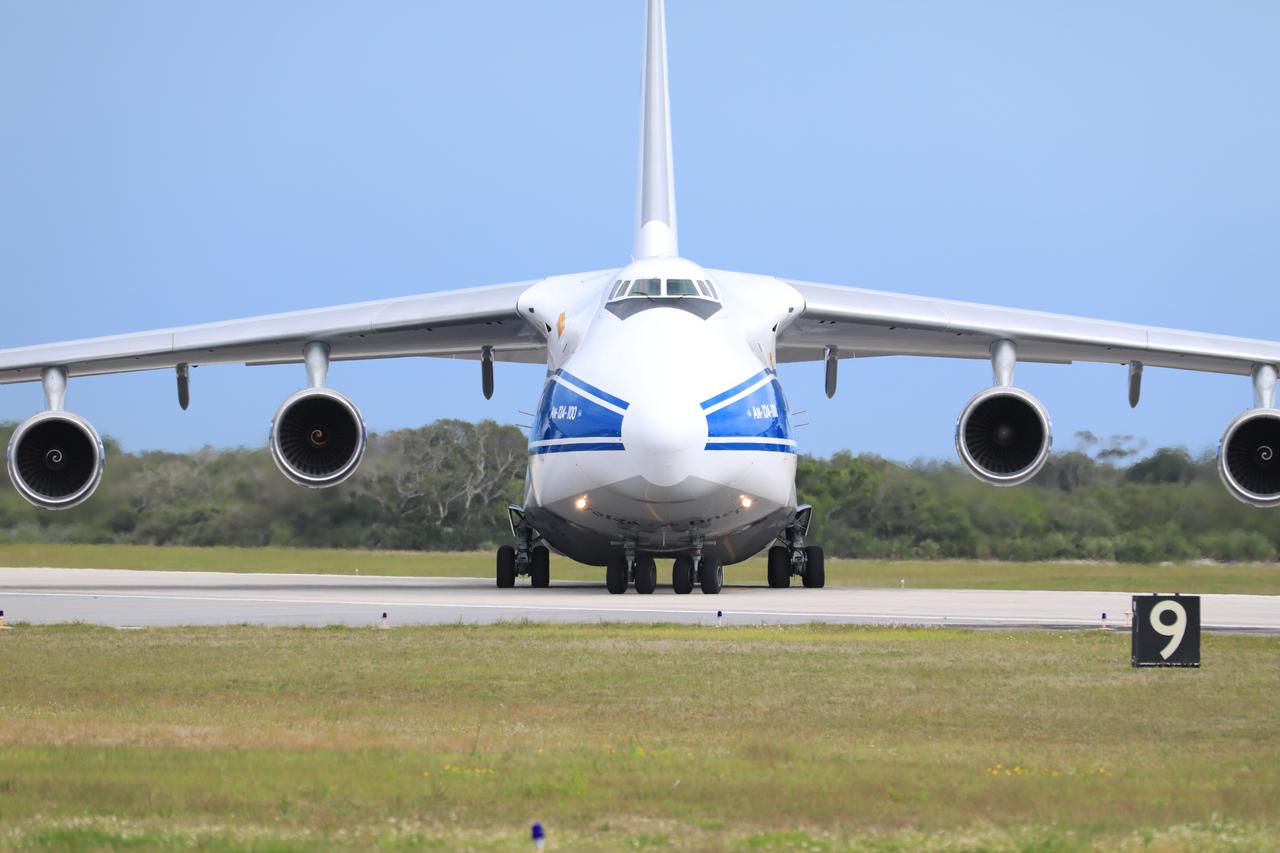
The Antonov 124 cargo aircraft, carrying the United Launch Alliance booster for NASA’s Mars Perseverance rover, taxis off the runway at the Skid Strip at Cape Canaveral Air Force Station (CCAFS) in Florida on May 18, 2020. The Mars Perseverance rover is scheduled to launch in mid-July atop a United Launch Alliance Atlas V 541 rocket from Pad 41 at CCAFS. The rover is part of NASA’s Mars Exploration Program, a long-term effort of robotic exploration of the Red Planet. The rover will search for habitable conditions in the ancient past and signs of past microbial life on Mars. The Launch Services Program at Kennedy is responsible for launch management.
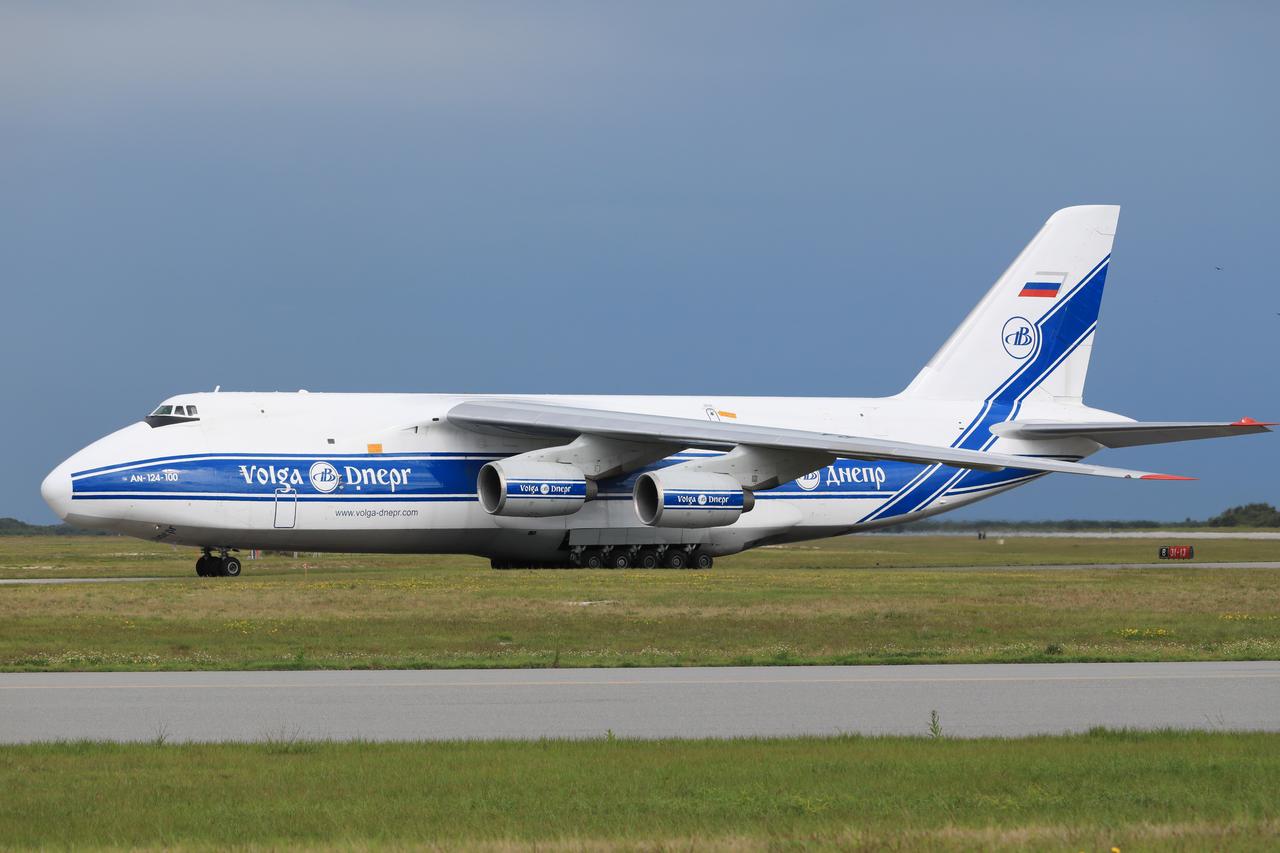
The Antonov 124 cargo aircraft, carrying the United Launch Alliance booster for NASA’s Mars Perseverance rover, taxis off the runway at the Skid Strip at Cape Canaveral Air Force Station (CCAFS) in Florida on May 18, 2020. The Mars Perseverance rover is scheduled to launch in mid-July atop a United Launch Alliance Atlas V 541 rocket from Pad 41 at CCAFS. The rover is part of NASA’s Mars Exploration Program, a long-term effort of robotic exploration of the Red Planet. The rover will search for habitable conditions in the ancient past and signs of past microbial life on Mars. The Launch Services Program at Kennedy is responsible for launch management.
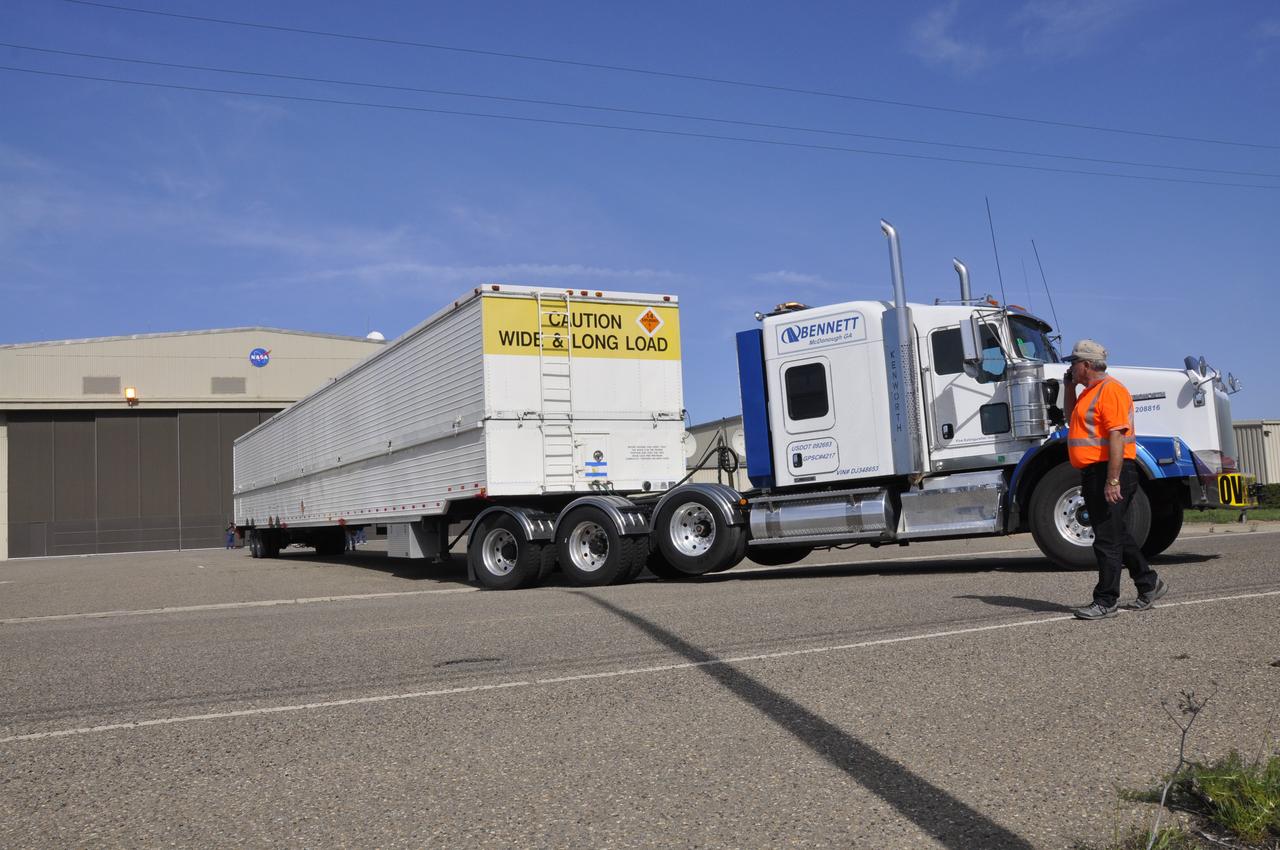
VANDENBERG AIR FORCE BASE, Calif. – The truck transporting the Delta first-stage booster for NASA's Orbiting Carbon Observatory-2 mission, or OCO-2, backs toward the Building 836 hangar at Space Launch Complex 2 on Vandenberg Air Force Base in California. OCO-2 is scheduled to launch aboard a United Launch Alliance Delta II rocket in July. The observatory will collect precise global measurements of carbon dioxide in the Earth's atmosphere and provide scientists with a better idea of the chemical compound's impacts on climate change. Scientists will analyze this data to improve our understanding of the natural processes and human activities that regulate the abundance and distribution of this important atmospheric gas. To learn more about OCO-2, visit http://oco.jpl.nasa.gov. Photo credit: NASA/Randy Beaudoin
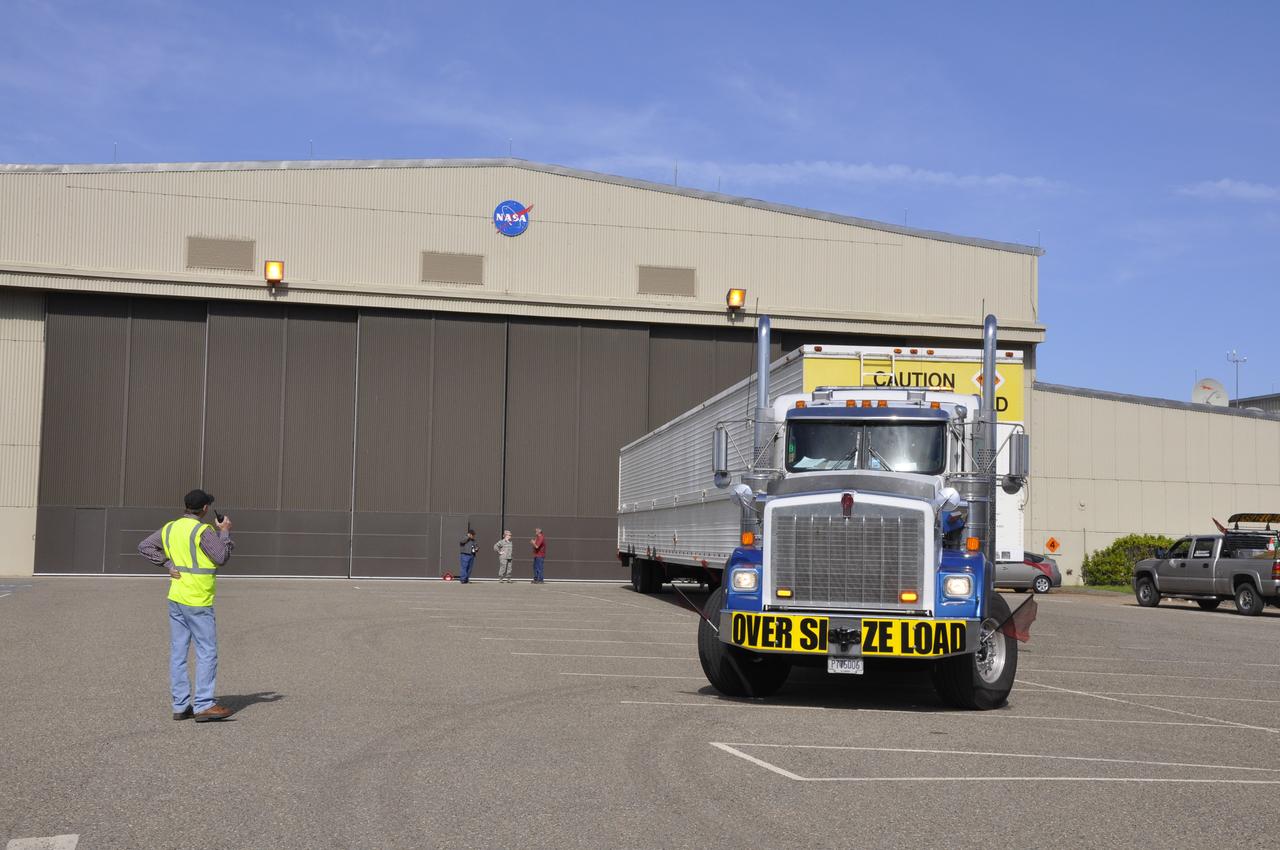
VANDENBERG AIR FORCE BASE, Calif. – Preparations are underway to offload the Delta first-stage booster for NASA's Orbiting Carbon Observatory-2 mission, or OCO-2, into the Building 836 hangar at Space Launch Complex 2 on Vandenberg Air Force Base in California. OCO-2 is scheduled to launch aboard a United Launch Alliance Delta II rocket in July. The observatory will collect precise global measurements of carbon dioxide in the Earth's atmosphere and provide scientists with a better idea of the chemical compound's impacts on climate change. Scientists will analyze this data to improve our understanding of the natural processes and human activities that regulate the abundance and distribution of this important atmospheric gas. To learn more about OCO-2, visit http://oco.jpl.nasa.gov. Photo credit: NASA/Randy Beaudoin
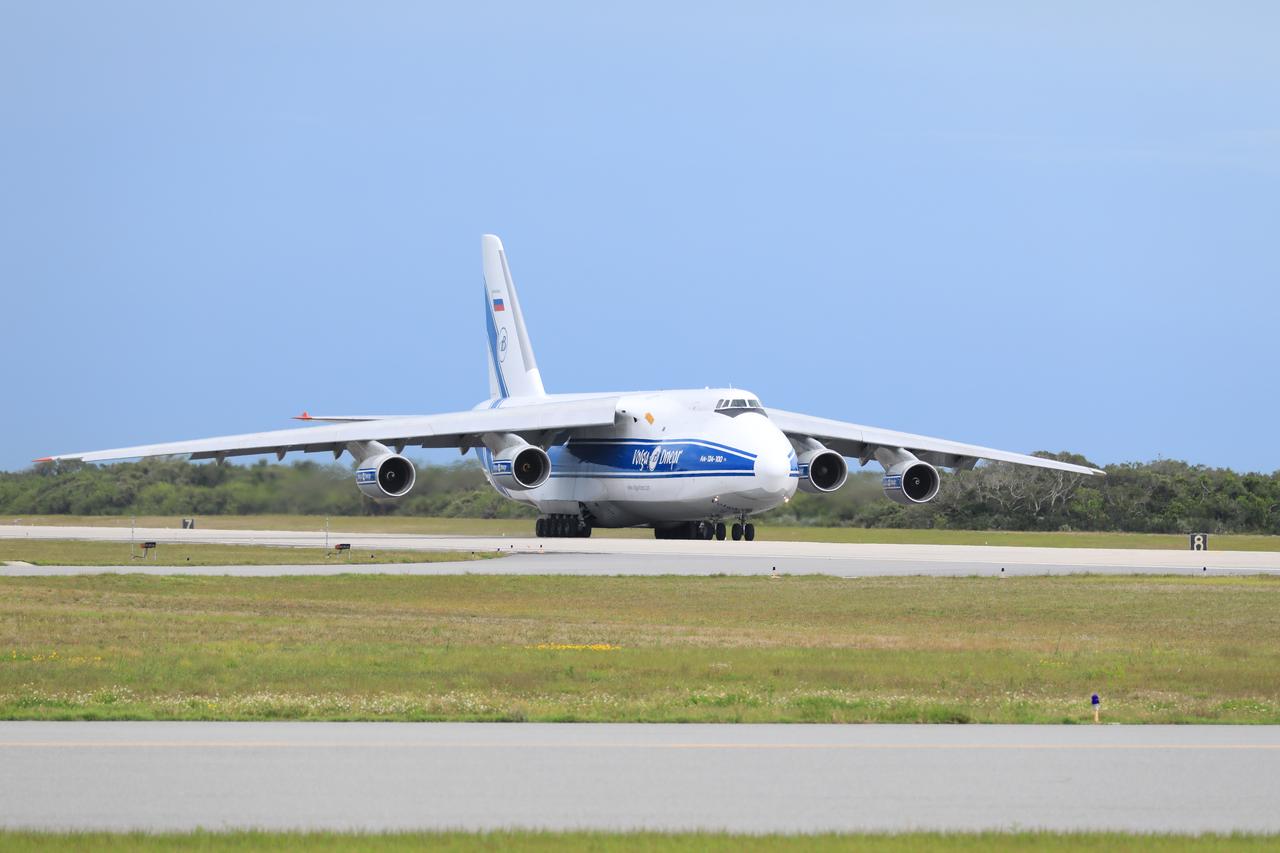
The Antonov 124 cargo aircraft, carrying the United Launch Alliance booster for NASA’s Mars Perseverance rover, touches down on the Skid Strip at Cape Canaveral Air Force Station (CCAFS) in Florida on May 18, 2020. The Mars Perseverance rover is scheduled to launch in mid-July atop a United Launch Alliance Atlas V 541 rocket from Pad 41 at CCAFS. The rover is part of NASA’s Mars Exploration Program, a long-term effort of robotic exploration of the Red Planet. The rover will search for habitable conditions in the ancient past and signs of past microbial life on Mars. The Launch Services Program at Kennedy is responsible for launch management.