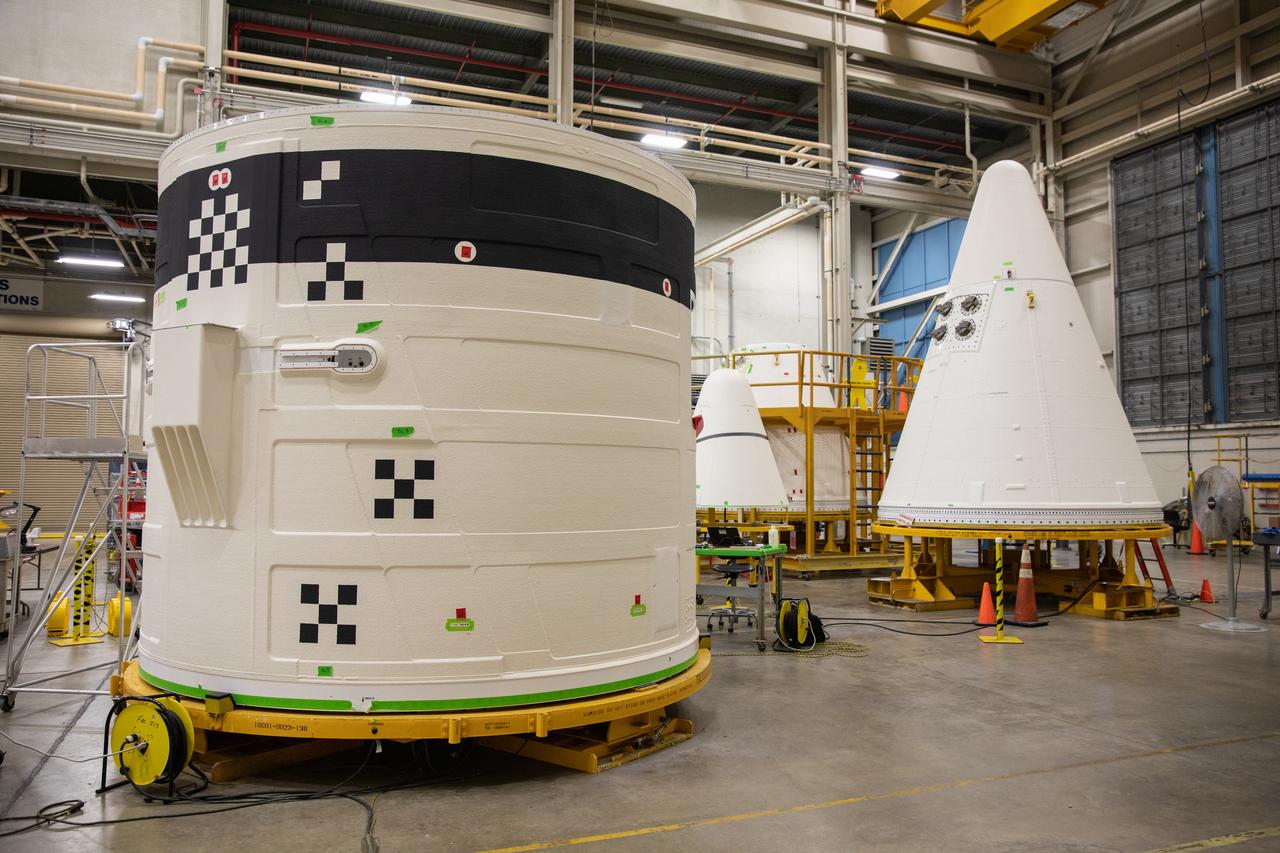
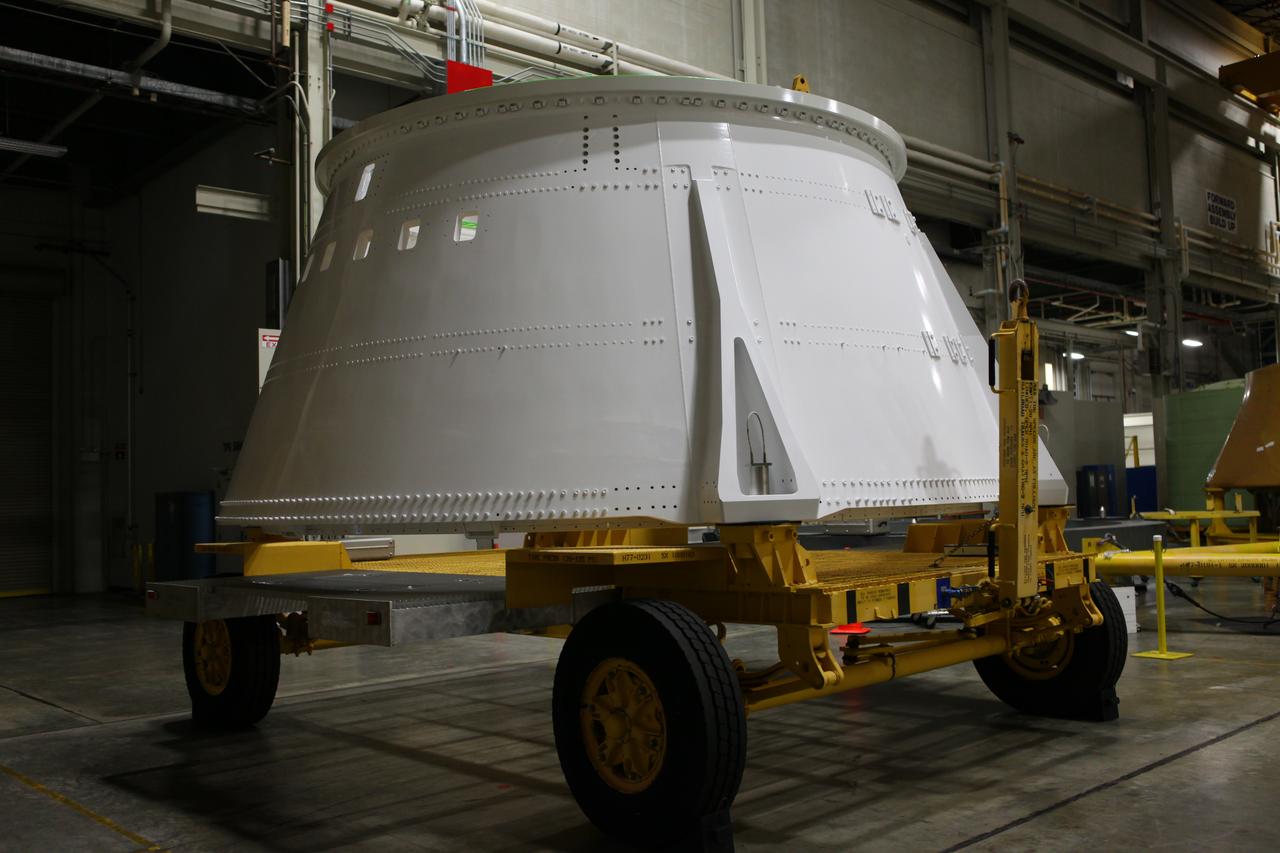
A forward skirt and two nose cones for the Space Launch System’s (SLS) two solid boosters are in view inside the Booster Fabrication Facility at NASA’s Kennedy Space Center in Florida on Oct. 16, 2019. Segments of the boosters are being inspected and prepared for Artemis I, the agency’s first uncrewed flight of Orion atop the SLS. The forward skirt houses booster avionics that communicate with the SLS avionics to monitor booster conditions and steer the booster exhaust nozzle. The nose cone, along with a frustrum, will serve as the aerodynamic fairing for the boosters during launch.
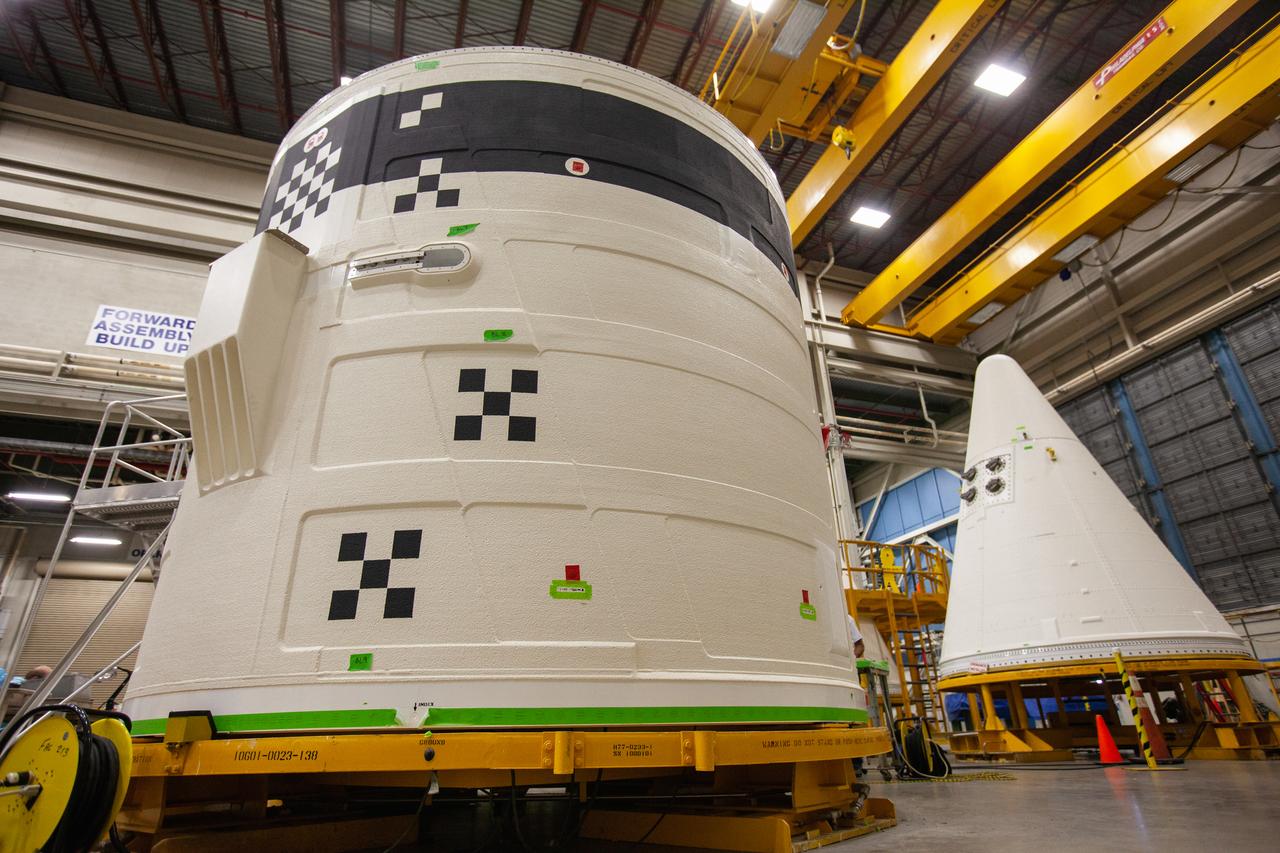
The forward skirt for one of the Space Launch System’s (SLS) two solid boosters is inside the Booster Fabrication Facility at NASA’s Kennedy Space Center in Florida on Oct. 16, 2019. Segments of the boosters are being inspected and prepared for Artemis I, the agency’s first uncrewed flight of Orion atop the SLS. The forward skirt houses booster avionics that communicate with the SLS avionics to monitor booster conditions and steer the booster exhaust nozzle.
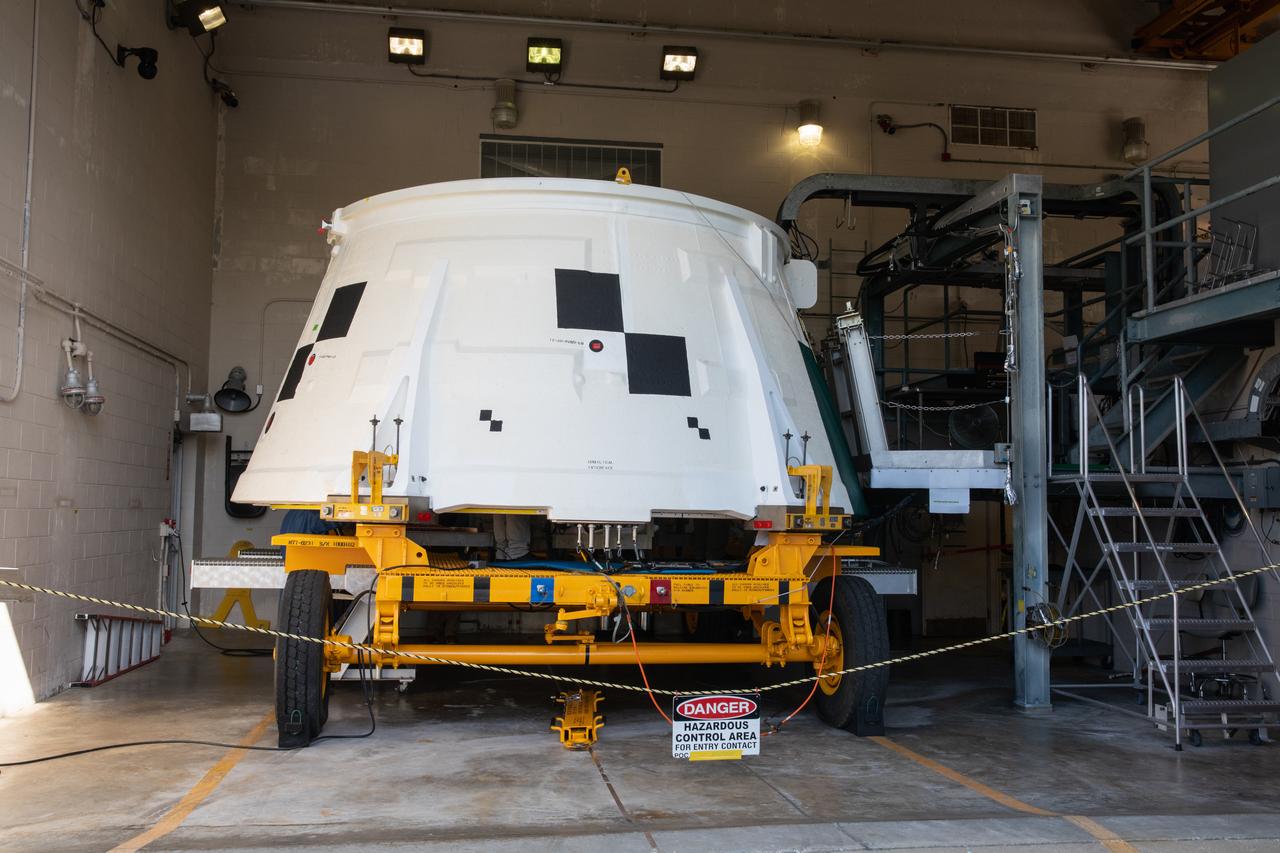
The aft skirt for one of the Space Launch System’s (SLS) two solid rocket boosters is inside the Booster Fabrication Facility at NASA’s Kennedy Space Center in Florida on Oct. 16, 2019. Segments of the boosters are being inspected and prepared for Artemis I, the agency’s first uncrewed flight of Orion atop the SLS. The aft skirts contain the thrust vector control system that steers the booster’s nozzles based on commands from the booster avionics during launch.
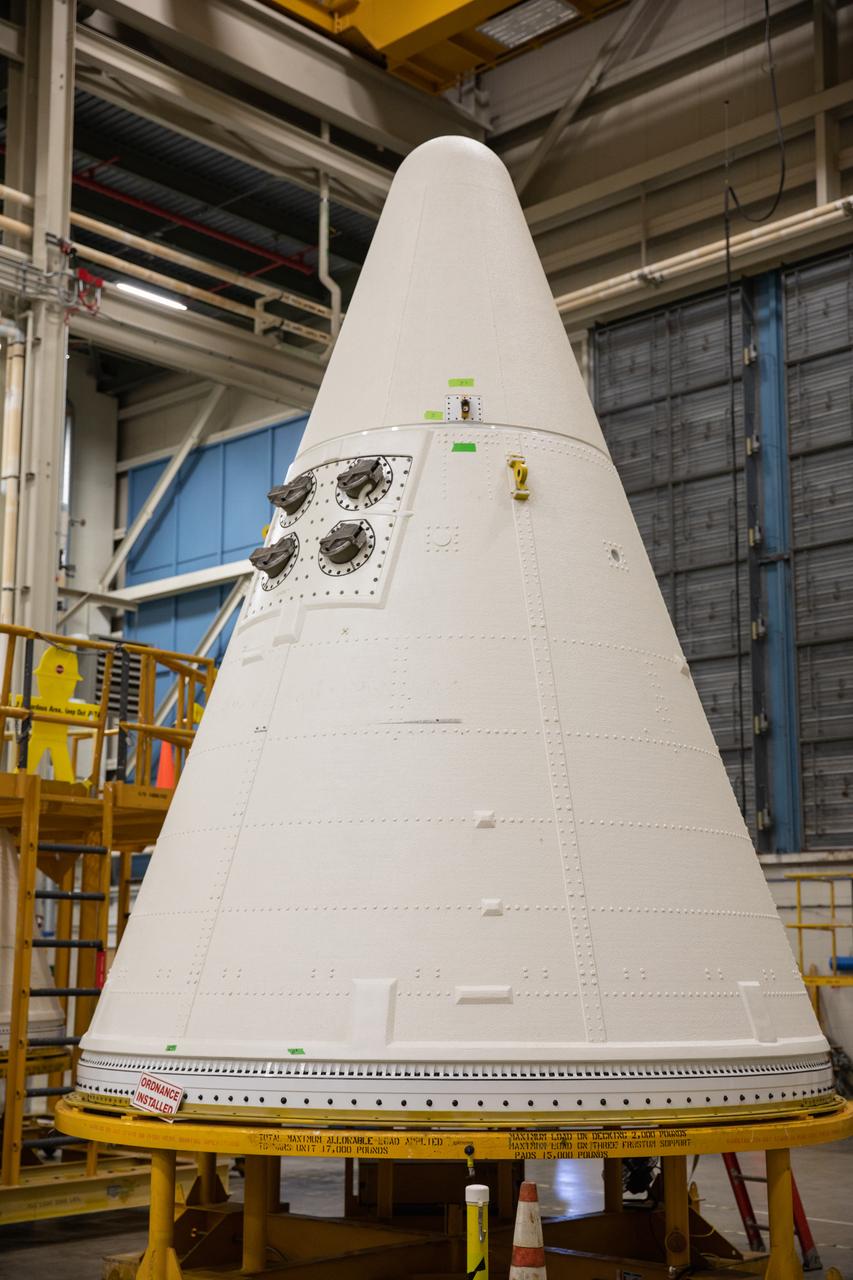
A nose cone for one of the Space Launch System’s (SLS) two solid rocket boosters is inside the Booster Fabrication Facility at NASA’s Kennedy Space Center in Florida on Oct. 16, 2019. Segments of the boosters are being inspected and prepared for Artemis I, the agency’s first uncrewed flight of Orion atop the SLS. The nose cone, along with a frustrum, will serve as the aerodynamic fairing for the boosters during launch.
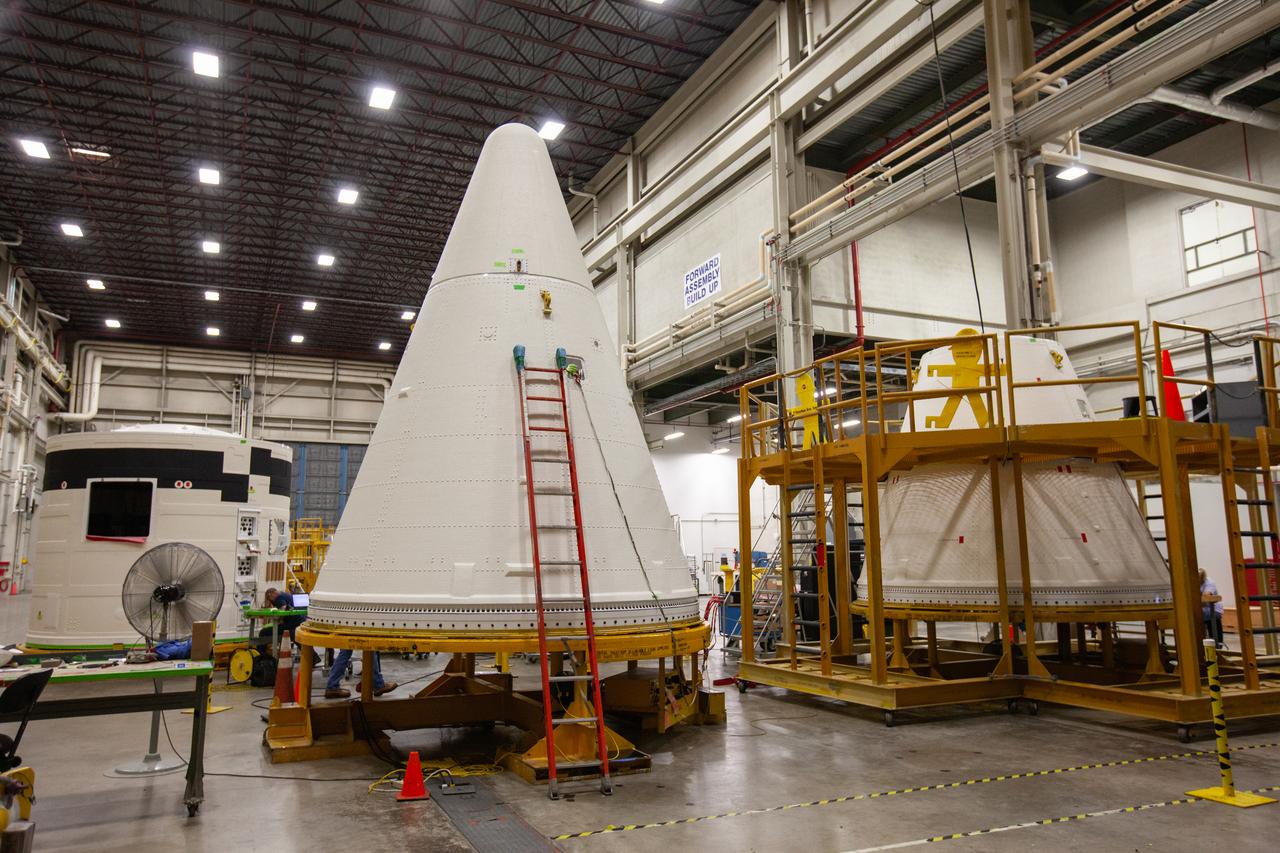
A nose cone for one of the Space Launch System’s (SLS) two solid rocket boosters is inside the Booster Fabrication Facility at NASA’s Kennedy Space Center in Florida on Oct. 16, 2019. Segments of the boosters are being inspected and prepared for Artemis I, the agency’s first uncrewed flight of Orion atop the SLS. The nose cone, along with a frustrum, will serve as the aerodynamic fairing for the boosters during launch.
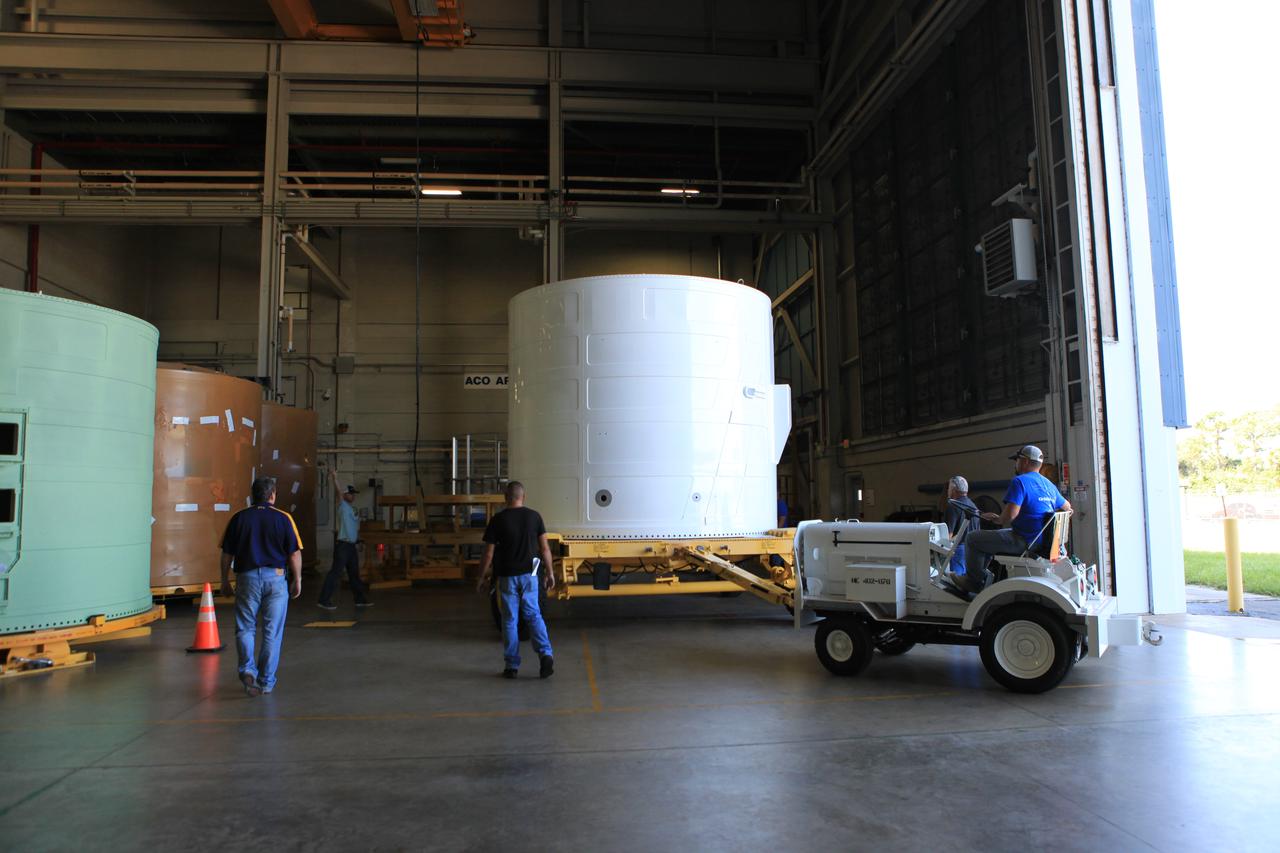
The Exploration Mission-1 (EM-1) left-hand forward skirt for NASA's Space Launch System (SLS) solid rocket boosters arrives inside the high bay at the Booster Fabrication Facility (BFF) at NASA's Kennedy Space Center in Florida. In the BFF, the forward skirt will be inspected and prepared for use on the left-hand solid rocket booster for EM-1. NASA's Orion spacecraft will fly atop the SLS rocket on its first uncrewed flight test.
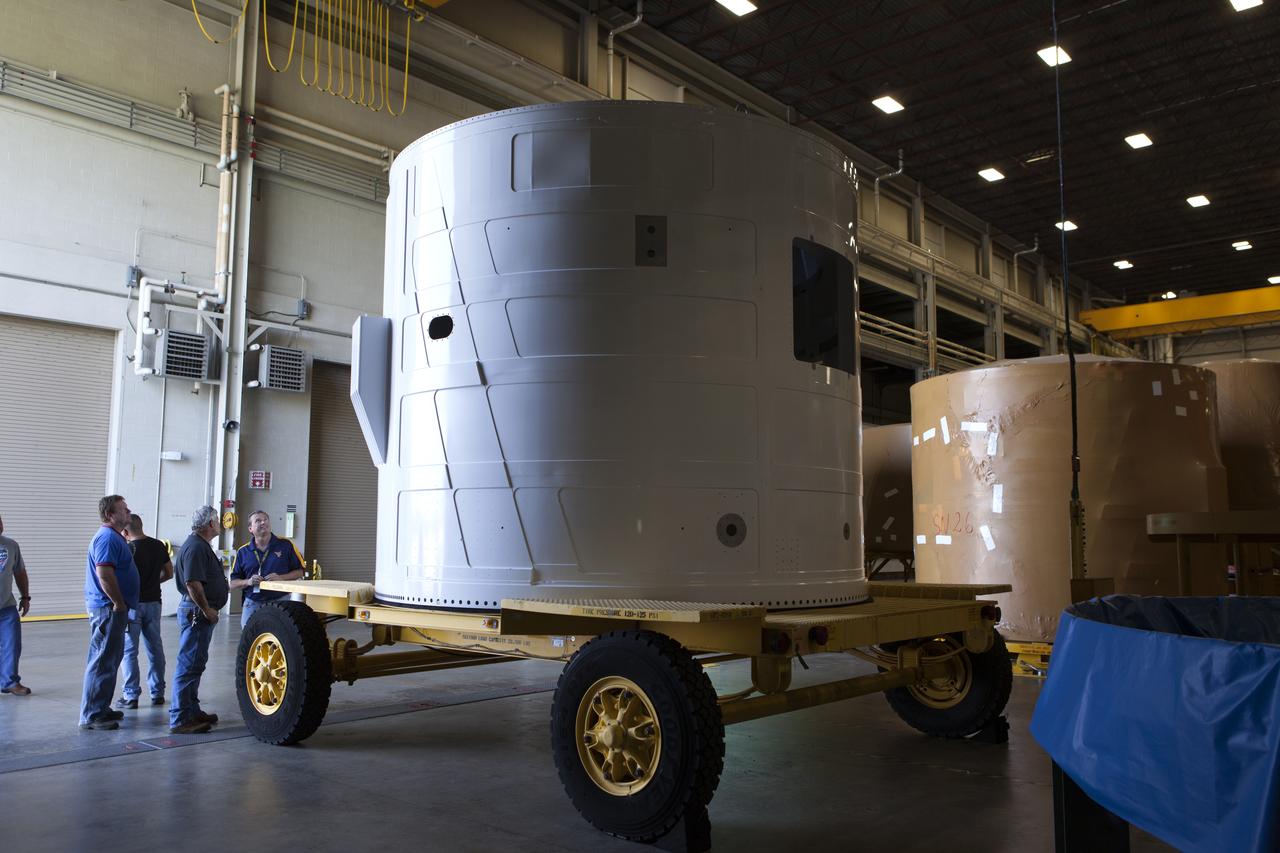
The Exploration Mission-1 (EM-1) left-hand forward skirt for NASA's Space Launch System (SLS) solid rocket boosters arrives inside the high bay at the Booster Fabrication Facility (BFF) at NASA's Kennedy Space Center in Florida. In the BFF, the forward skirt will be inspected and prepared for use on the left-hand solid rocket booster for EM-1. NASA's Orion spacecraft will fly atop the SLS rocket on its first uncrewed flight test.
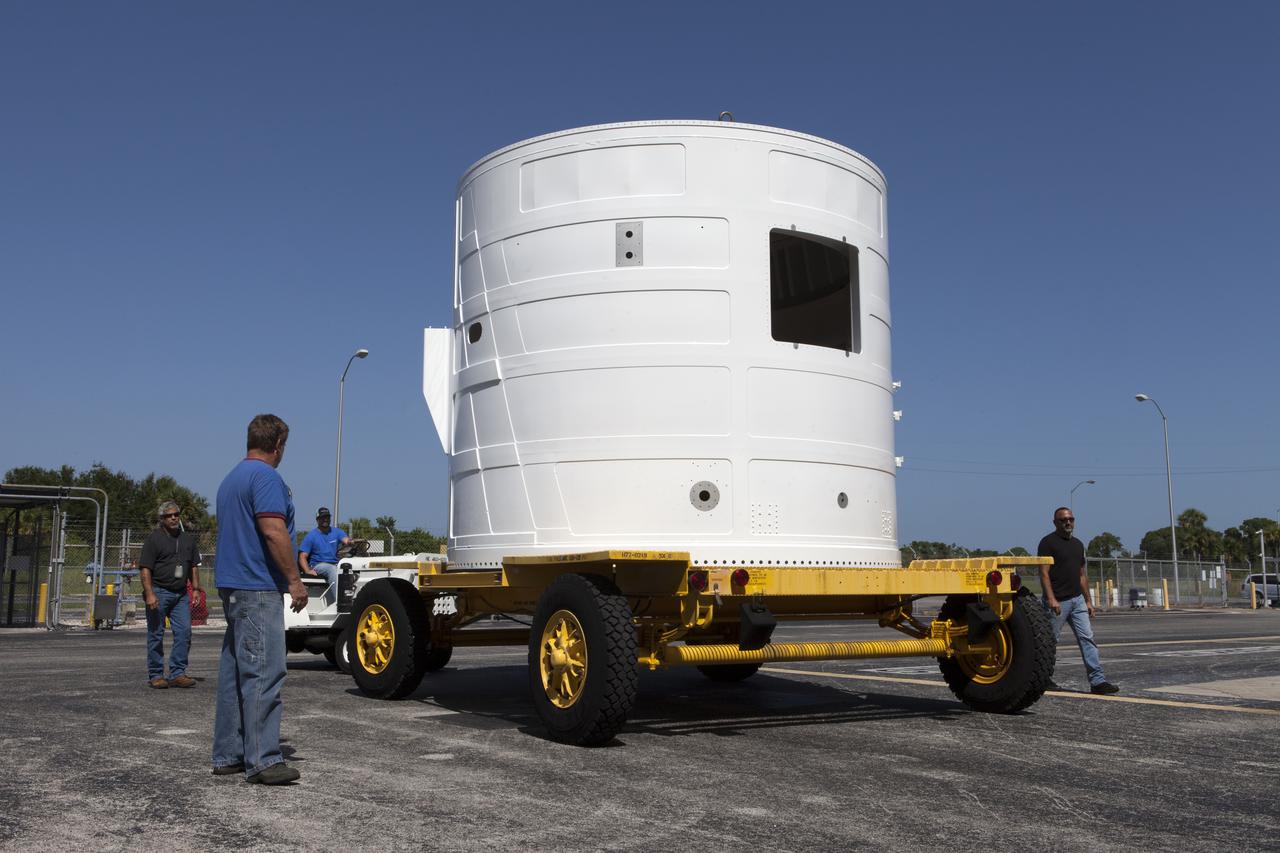
The Exploration Mission-1 (EM-1) left-hand forward skirt for NASA's Space Launch System (SLS) solid rocket boosters arrives at the Booster Fabrication Facility (BFF) at NASA's Kennedy Space Center in Florida from Hangar AE at Cape Canaveral Air Force Station. In the BFF, the forward skirt will be inspected and prepared for use on the left-hand solid rocket booster for EM-1. NASA's Orion spacecraft will fly atop the SLS rocket on its first uncrewed flight test.
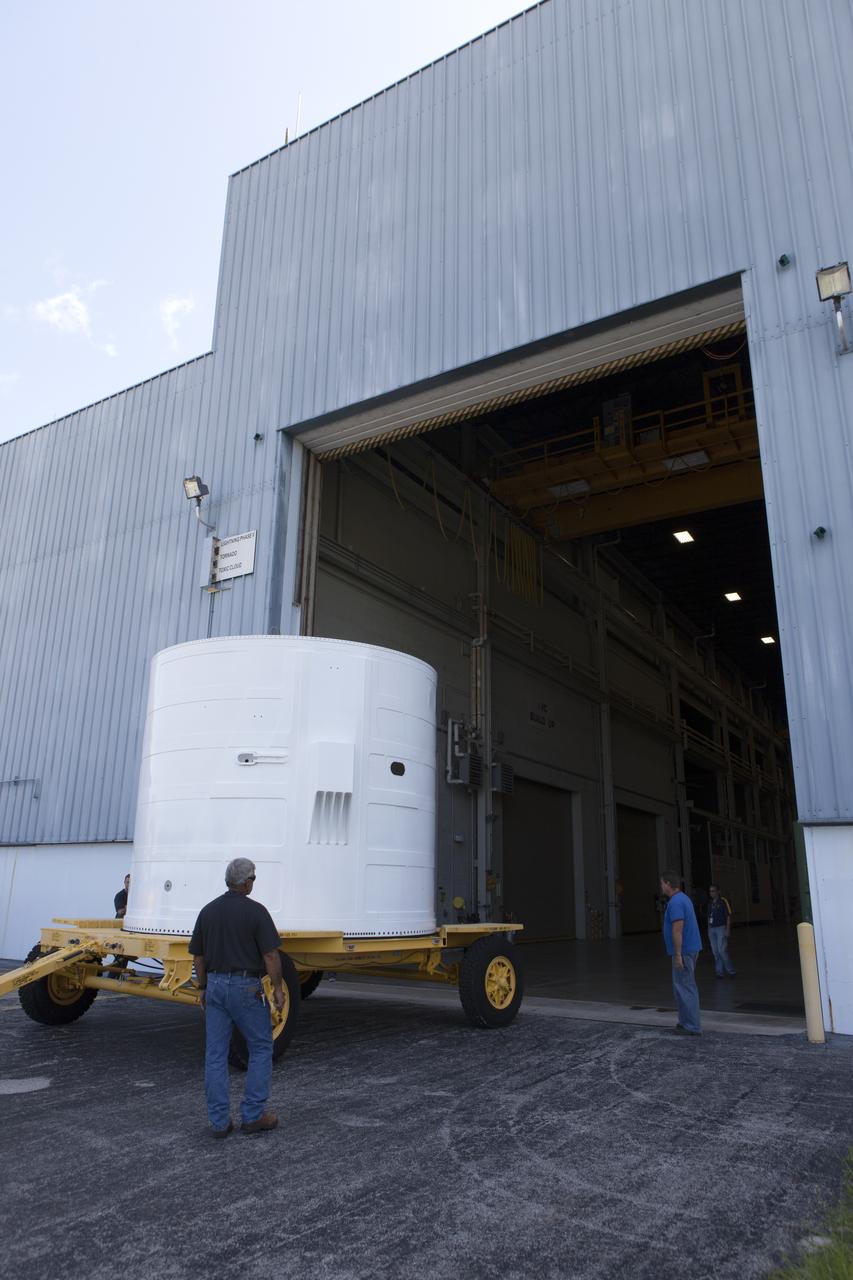
The Exploration Mission-1 (EM-1) left-hand forward skirt for NASA's Space Launch System (SLS) solid rocket boosters arrives at the entrance to the high bay at the Booster Fabrication Facility (BFF) at NASA's Kennedy Space Center in Florida. In the BFF, the forward skirt will be inspected and prepared for use on the left-hand solid rocket booster for EM-1. NASA's Orion spacecraft will fly atop the SLS rocket on its first uncrewed flight test.
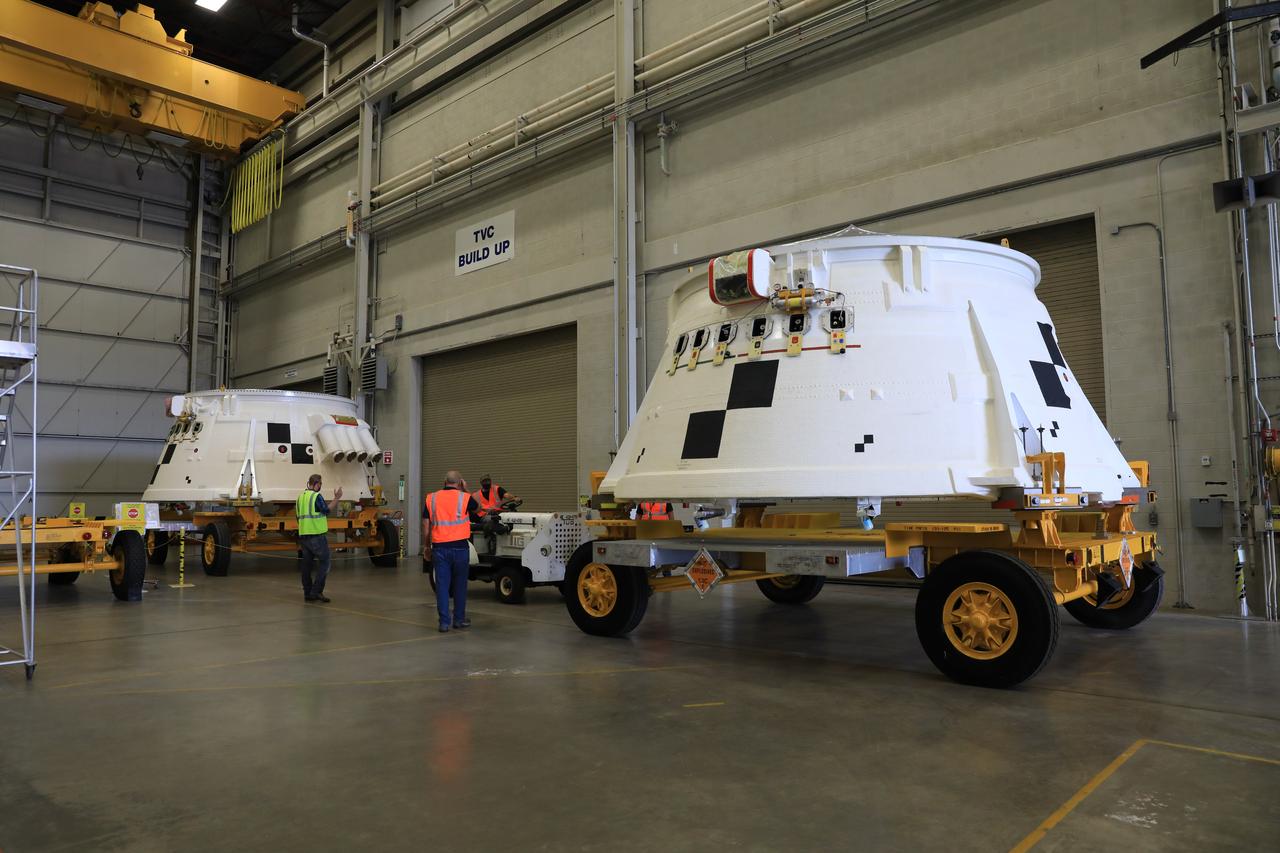
Inside the Booster Fabrication Facility at NASA's Kennedy Space Center in Florida, the Artemis I aft skirts for the agency's Space Launch System (SLS) rocket’s twin solid rocket boosters are moved out of their test cells and are being readied for their move to the Rotation, Processing and Surge Facility (RPSF) on June 9, 2020. The aft skirts were refurbished by Northrop Grumman. They house the thrust vector control system, which controls 70 percent of the steering during initial ascent of the SLS rocket. The segments will remain in the RPSF until ready for stacking with the forward and aft parts of the boosters on the mobile launcher in High Bay 3 of the Vehicle Assembly Building. Through the Artemis Program, NASA is working to land the first woman and next man on the Moon by 2024.
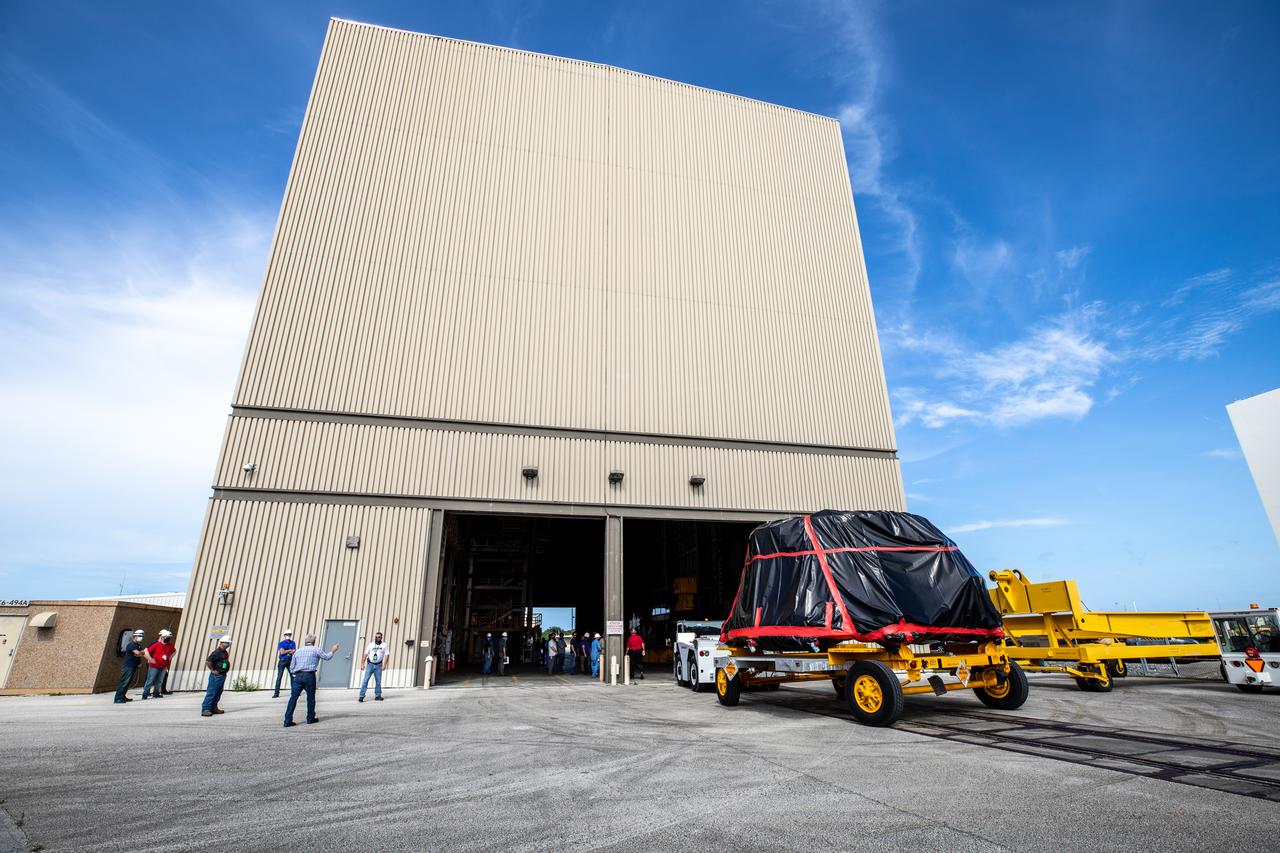
The first of two Artemis I aft skirts for NASA’s Space Launch System (SLS) rocket’s twin solid rocket boosters arrives at the Rotation, Processing and Surge Facility (RPSF) at the agency’s Kennedy Space Center in Florida on June 10, 2020. They were transported from the Booster Fabrication Facility. The aft skirts were refurbished by Northrop Grumman. They house the thrust vector control system, which controls 70 percent of the steering during initial ascent of the SLS rocket. The segments will remain in the RPSF until ready for stacking with the forward and aft parts of the boosters on the mobile launcher in High Bay 3 of the Vehicle Assembly Building. Through the Artemis Program, NASA is working to land the first woman and next man on the Moon by 2024.
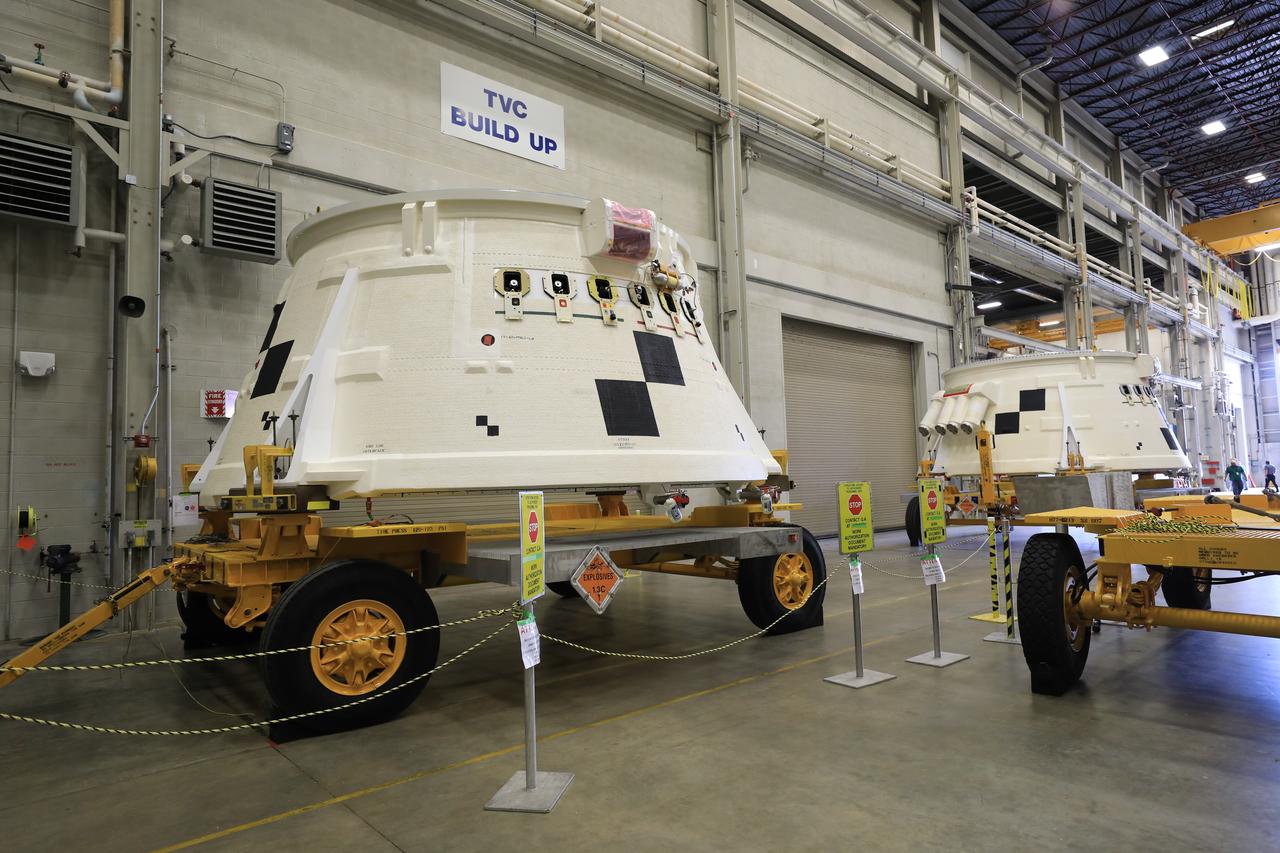
Inside the Booster Fabrication Facility at NASA's Kennedy Space Center in Florida, the Artemis I aft skirts for the agency's Space Launch System (SLS) rocket’s twin solid rocket boosters are being readied for their move to the Rotation, Processing and Surge Facility (RPSF) on June 9, 2020. In view at left is the left aft skirt assembly, and at far right is the right aft skirt assembly. The aft skirts were refurbished by Northrop Grumman. They house the thrust vector control system, which controls 70 percent of the steering during initial ascent of the SLS rocket. The segments will remain in the RPSF until ready for stacking with the forward and aft parts of the boosters on the mobile launcher in High Bay 3 of the Vehicle Assembly Building. Through the Artemis Program, NASA is working to land the first woman and next man on the Moon by 2024.
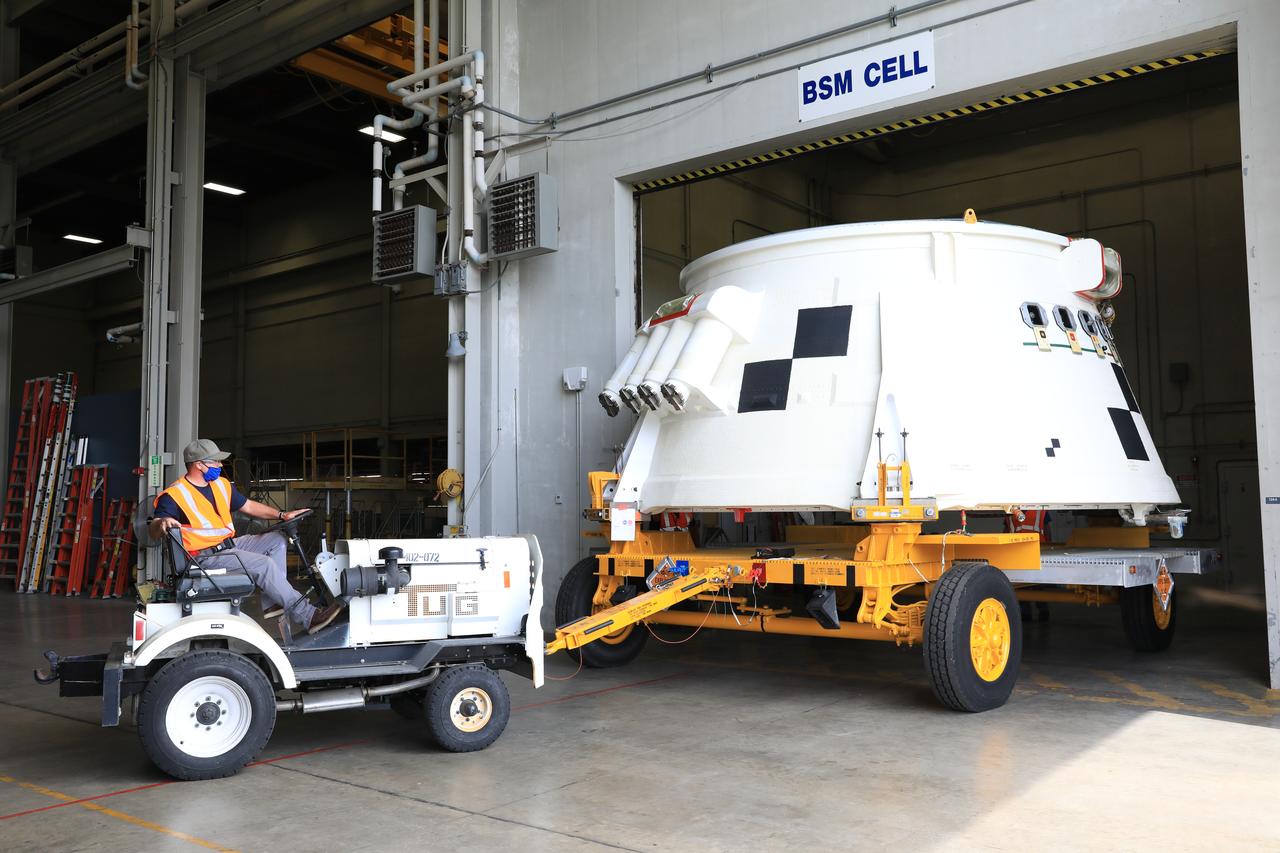
Inside the Booster Fabrication Facility at NASA's Kennedy Space Center in Florida, the Artemis I aft skirts for the agency's Space Launch System (SLS) rocket’s twin solid rocket boosters are being readied for their move to the Rotation, Processing and Surge Facility (RPSF) on June 9, 2020. In view, the left aft skirt assembly is attached to a move vehicle and moved out of a test cell. The aft skirts were refurbished by Northrop Grumman. They house the thrust vector control system, which controls 70 percent of the steering during initial ascent of the SLS rocket. The segments will remain in the RPSF until ready for stacking with the forward and aft parts of the boosters on the mobile launcher in High Bay 3 of the Vehicle Assembly Building. Through the Artemis Program, NASA is working to land the first woman and next man on the Moon by 2024.

Inside the Booster Fabrication Facility at NASA's Kennedy Space Center in Florida, the Artemis I aft skirts for the agency's Space Launch System (SLS) rocket’s twin solid rocket boosters are being readied for their move to the Rotation, Processing and Surge Facility (RPSF) on June 9, 2020. In view at left is the left aft skirt assembly. Behind it to the right is the right aft skirt assembly. Also in view at far right, are the Artemis I forward assemblies, with the left assembly in front and the right assembly behind it. The aft skirts were refurbished by Northrop Grumman. They house the thrust vector control system, which controls 70 percent of the steering during initial ascent of the SLS rocket. The segments will remain in the RPSF until ready for stacking with the forward and aft parts of the boosters on the mobile launcher in High Bay 3 of the Vehicle Assembly Building. Through the Artemis Program, NASA is working to land the first woman and next man on the Moon by 2024.
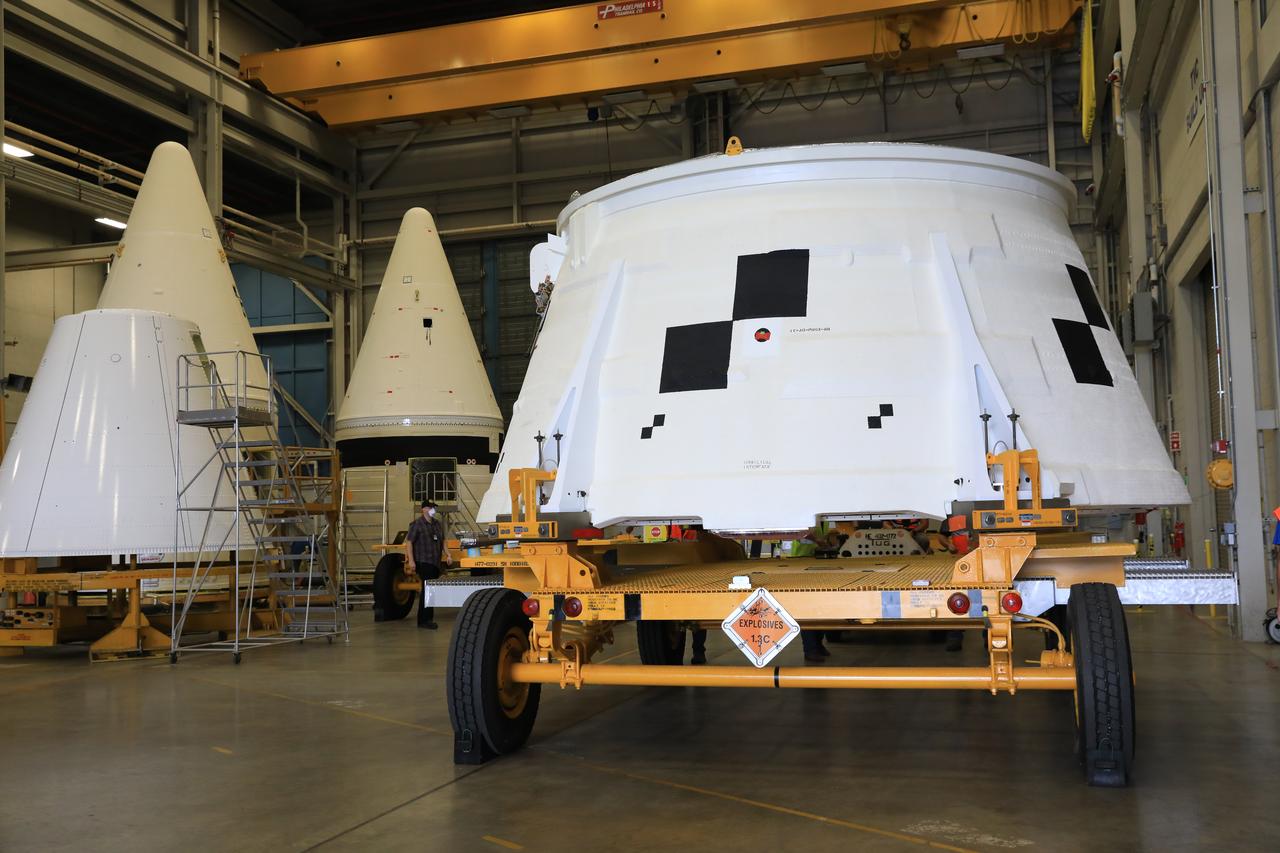
Inside the Booster Fabrication Facility at NASA's Kennedy Space Center in Florida, the Artemis I aft skirts for the agency's Space Launch System (SLS) rocket’s twin solid rocket boosters are moved out of their test cells and are being readied for their move to the Rotation, Processing and Surge Facility (RPSF) on June 9, 2020. In view at right is the right aft skirt. In view at left are the two Artemis I forward assemblies. The aft skirts were refurbished by Northrop Grumman. They house the thrust vector control system, which controls 70 percent of the steering during initial ascent of the SLS rocket. The segments will remain in the RPSF until ready for stacking with the forward and aft parts of the boosters on the mobile launcher in High Bay 3 of the Vehicle Assembly Building. Through the Artemis Program, NASA is working to land the first woman and next man on the Moon by 2024.
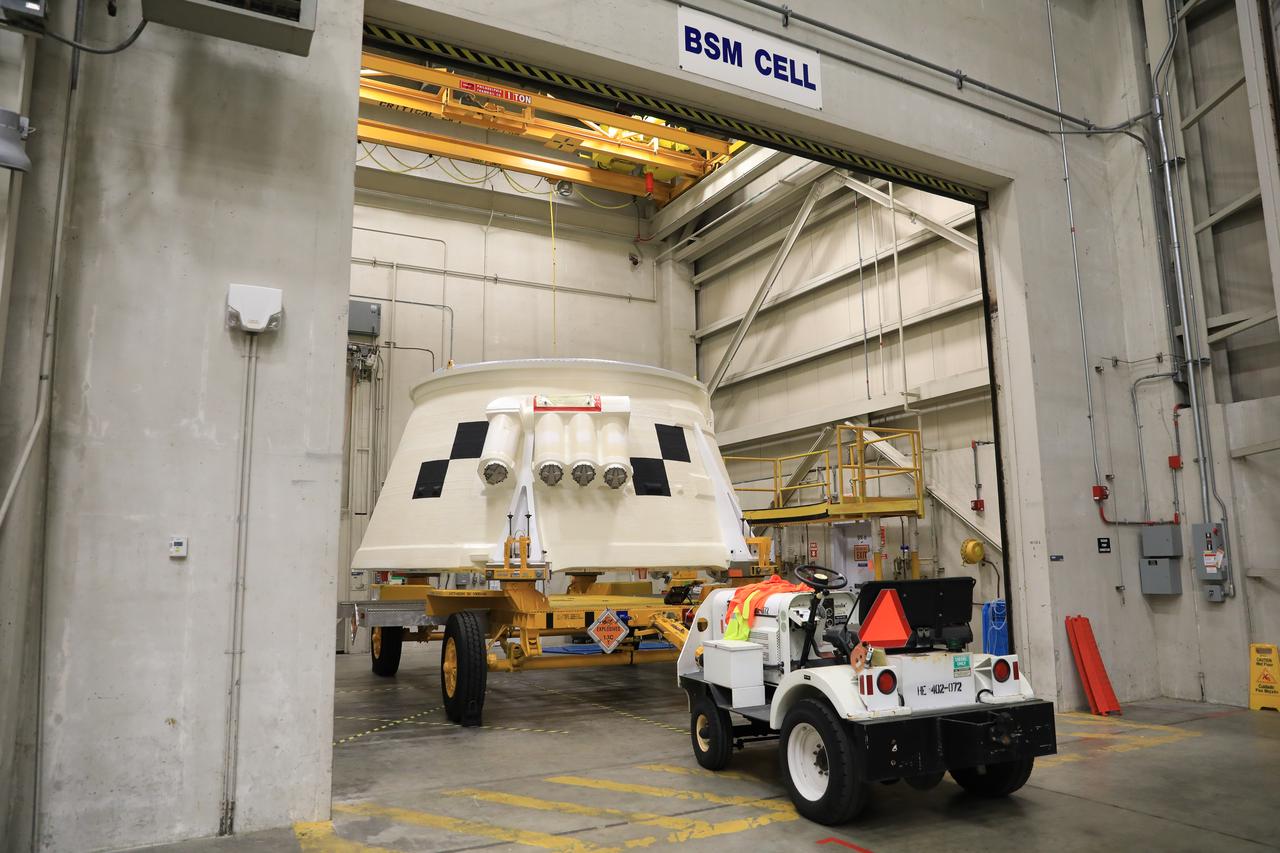
Inside the Booster Fabrication Facility at NASA's Kennedy Space Center in Florida, the Artemis I aft skirts for the agency's Space Launch System (SLS) rocket’s twin solid rocket boosters are being readied for their move to the Rotation, Processing and Surge Facility (RPSF) on June 9, 2020. In view, the left aft skirt assembly is attached to a move vehicle in a test cell. The aft skirts were refurbished by Northrop Grumman. They house the thrust vector control system, which controls 70 percent of the steering during initial ascent of the SLS rocket. The segments will remain in the RPSF until ready for stacking with the forward and aft parts of the boosters on the mobile launcher in High Bay 3 of the Vehicle Assembly Building. Through the Artemis Program, NASA is working to land the first woman and next man on the Moon by 2024.
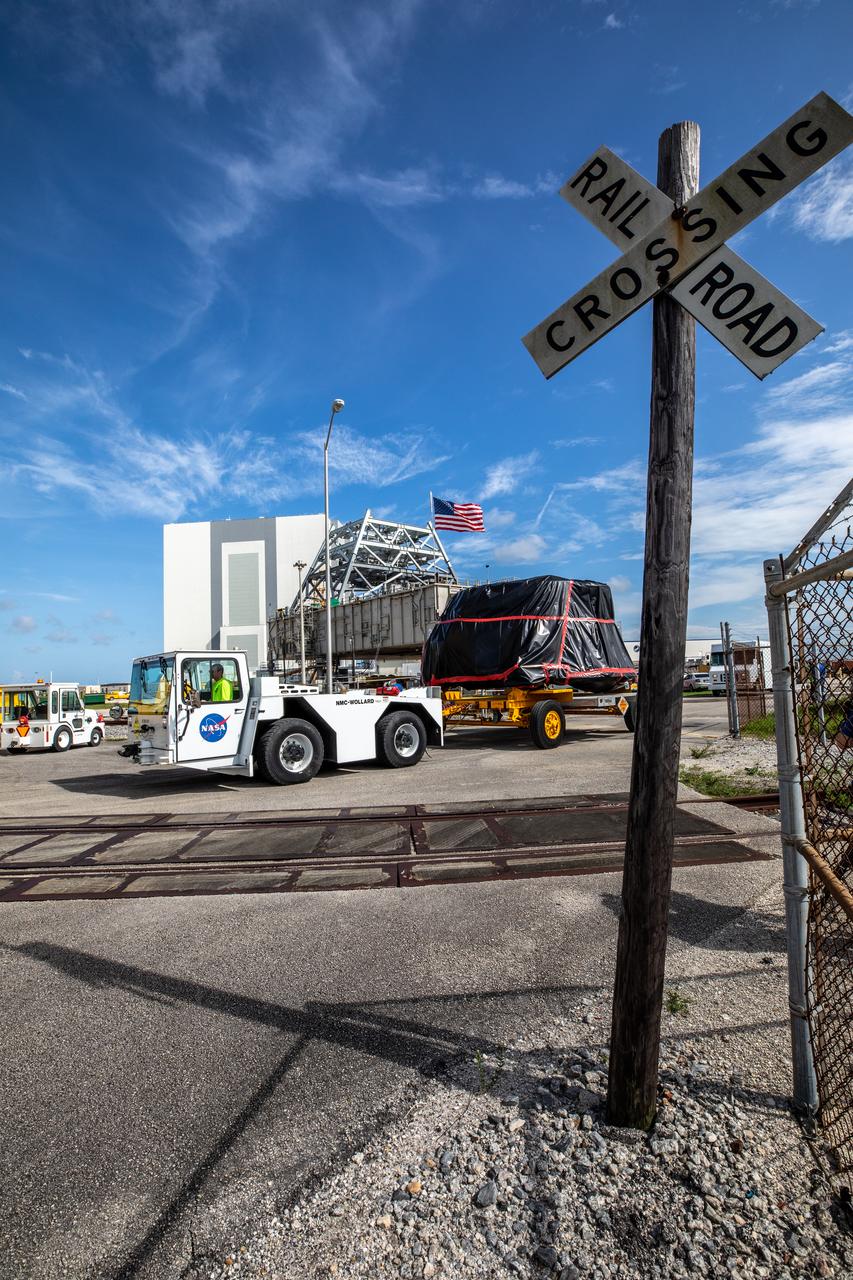
One of two Artemis I aft skirts for NASA’s Space Launch System (SLS) rocket’s twin solid rocket boosters crosses a railroad track on its way to the Rotation, Processing and Surge Facility (RPSF) at the agency’s Kennedy Space Center in Florida on June 10, 2020. They were transported from the Booster Fabrication Facility. The aft skirts were refurbished by Northrop Grumman. They house the thrust vector control system, which controls 70 percent of the steering during initial ascent of the SLS rocket. The segments will remain in the RPSF until ready for stacking with the forward and aft parts of the boosters on the mobile launcher in High Bay 3 of the Vehicle Assembly Building. Through the Artemis Program, NASA is working to land the first woman and next man on the Moon by 2024.
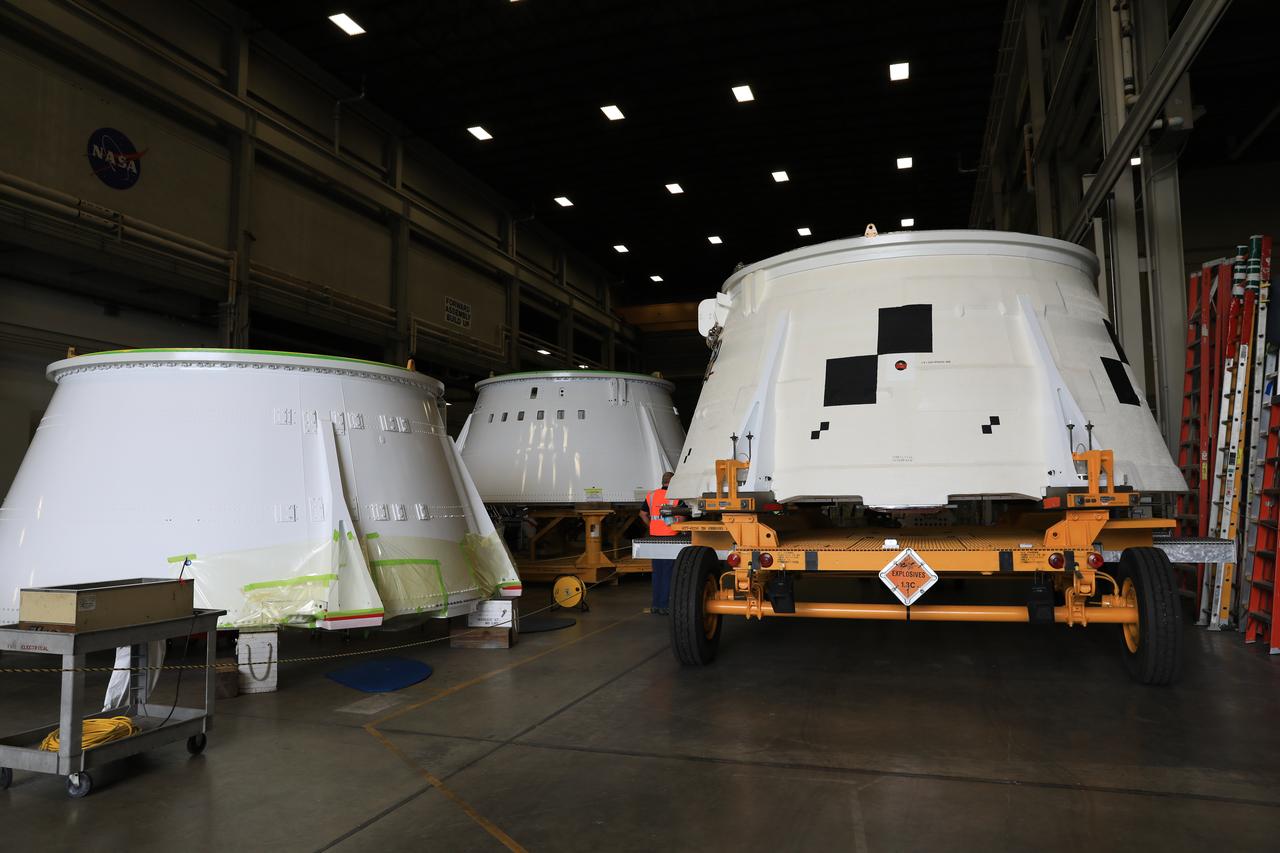
Inside the Booster Fabrication Facility at NASA's Kennedy Space Center in Florida, the Artemis I aft skirts for the agency's Space Launch System (SLS) rocket’s twin solid rocket boosters are being readied for their move to the Rotation, Processing and Surge Facility (RPSF) on June 9, 2020. In view, the left aft skirt assembly is attached to a move vehicle and moved out of a test cell. The Artemis II aft skirt structures are in view at left. The aft skirts were refurbished by Northrop Grumman. They house the thrust vector control system, which controls 70 percent of the steering during initial ascent of the SLS rocket. The segments will remain in the RPSF until ready for stacking with the forward and aft parts of the boosters on the mobile launcher in High Bay 3 of the Vehicle Assembly Building. Through the Artemis Program, NASA is working to land the first woman and next man on the Moon by 2024.
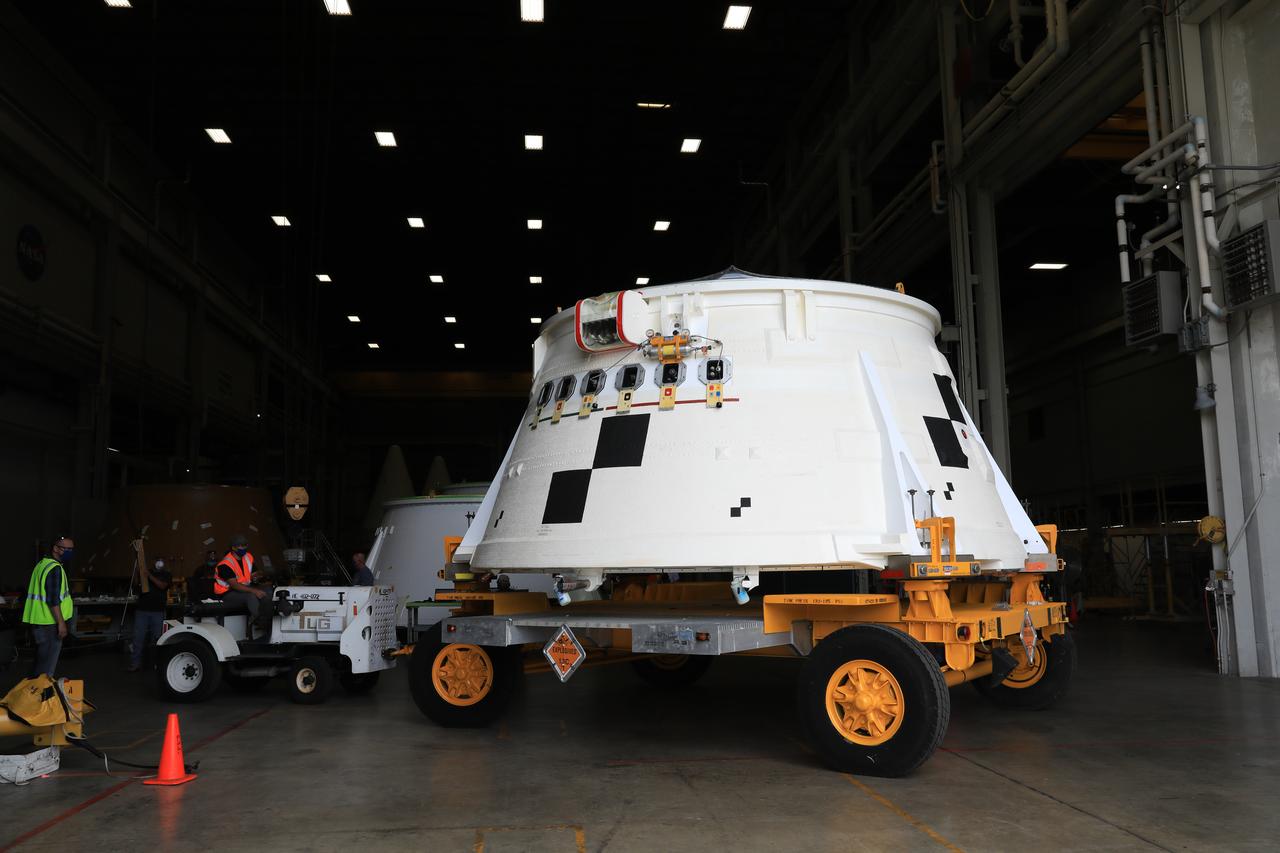
Inside the Booster Fabrication Facility at NASA's Kennedy Space Center in Florida, the Artemis I aft skirts for the agency's Space Launch System (SLS) rocket’s twin solid rocket boosters are being readied for their move to the Rotation, Processing and Surge Facility (RPSF) on June 9, 2020. In view, the left aft skirt assembly is attached to a move vehicle and moved out of a test cell. The aft skirts were refurbished by Northrop Grumman. They house the thrust vector control system, which controls 70 percent of the steering during initial ascent of the SLS rocket. The segments will remain in the RPSF until ready for stacking with the forward and aft parts of the boosters on the mobile launcher in High Bay 3 of the Vehicle Assembly Building. Through the Artemis Program, NASA is working to land the first woman and next man on the Moon by 2024.
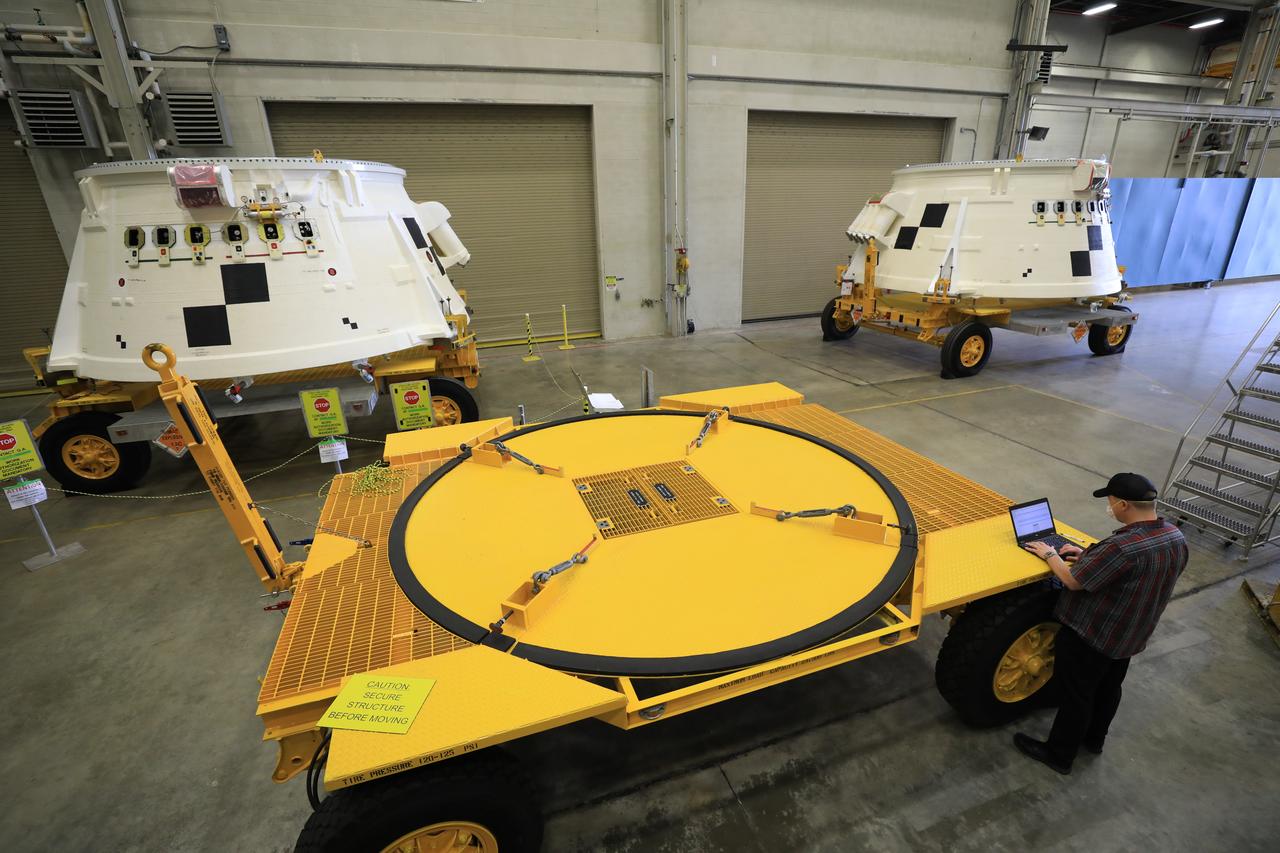
Inside the Booster Fabrication Facility at NASA's Kennedy Space Center in Florida, the Artemis I aft skirts for the agency's Space Launch System (SLS) rocket’s twin solid rocket boosters are being readied for their move to the Rotation, Processing and Surge Facility (RPSF) on June 9, 2020. In view at left is the left aft skirt assembly, and at right is the right aft skirt assembly. The aft skirts were refurbished by Northrop Grumman. They house the thrust vector control system, which controls 70 percent of the steering during initial ascent of the SLS rocket. The segments will remain in the RPSF until ready for stacking with the forward and aft parts of the boosters on the mobile launcher in High Bay 3 of the Vehicle Assembly Building. Through the Artemis Program, NASA is working to land the first woman and next man on the Moon by 2024.
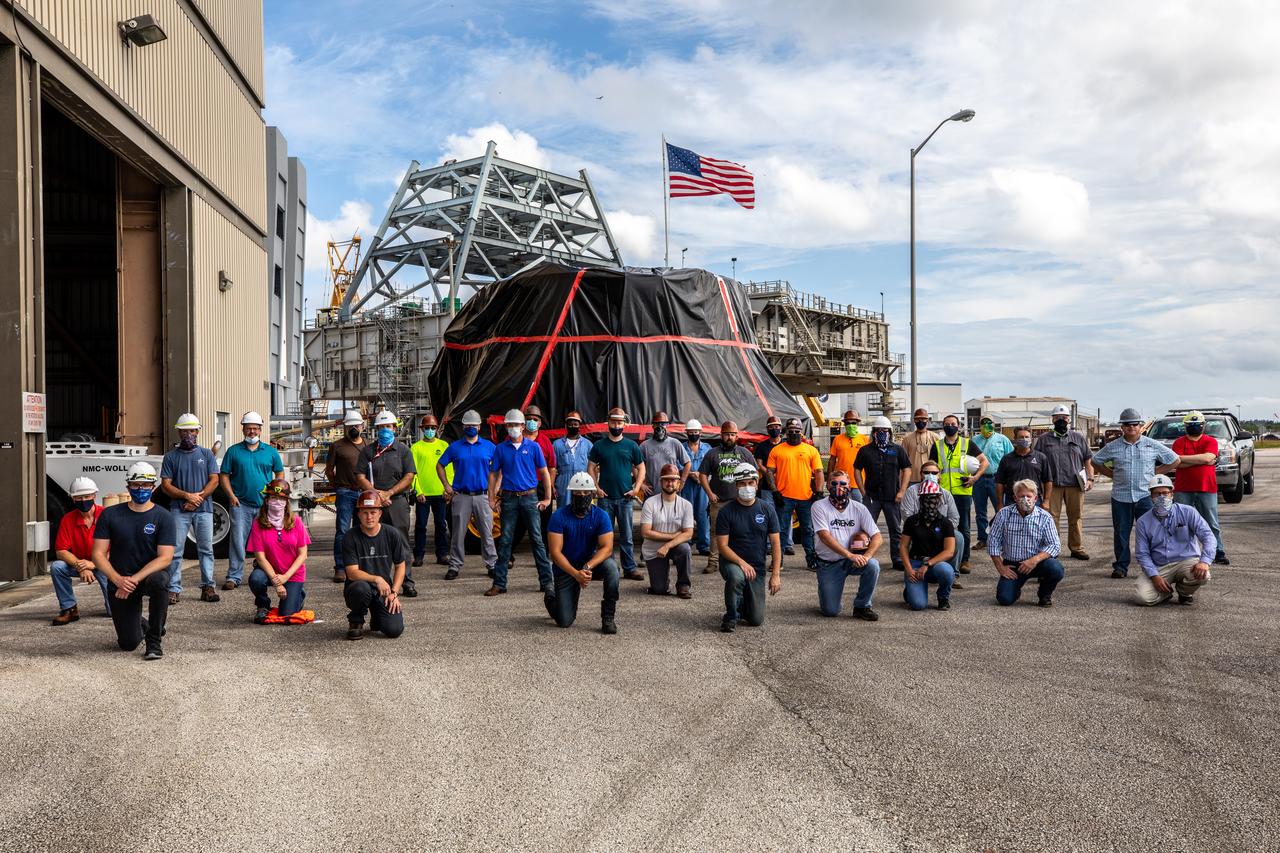
Exploration Ground Systems workers gather in front of the Rotation, Processing and Surge Facility (RPSF) at NASA’s Kennedy Space Center in Florida on June 10, 2020, to mark the arrival of the Artemis I aft skirts for the agency's Space Launch System (SLS) rocket’s twin solid rocket boosters. The aft skirts were moved from the Booster Fabrication Facility. The aft skirts were refurbished by Northrop Grumman. They house the thrust vector control system, which controls 70 percent of the steering during initial ascent of the SLS rocket. The segments will remain in the RPSF until ready for stacking with the forward and aft parts of the boosters on the mobile launcher in High Bay 3 of the Vehicle Assembly Building. Through the Artemis Program, NASA is working to land the first woman and next man on the Moon by 2024.
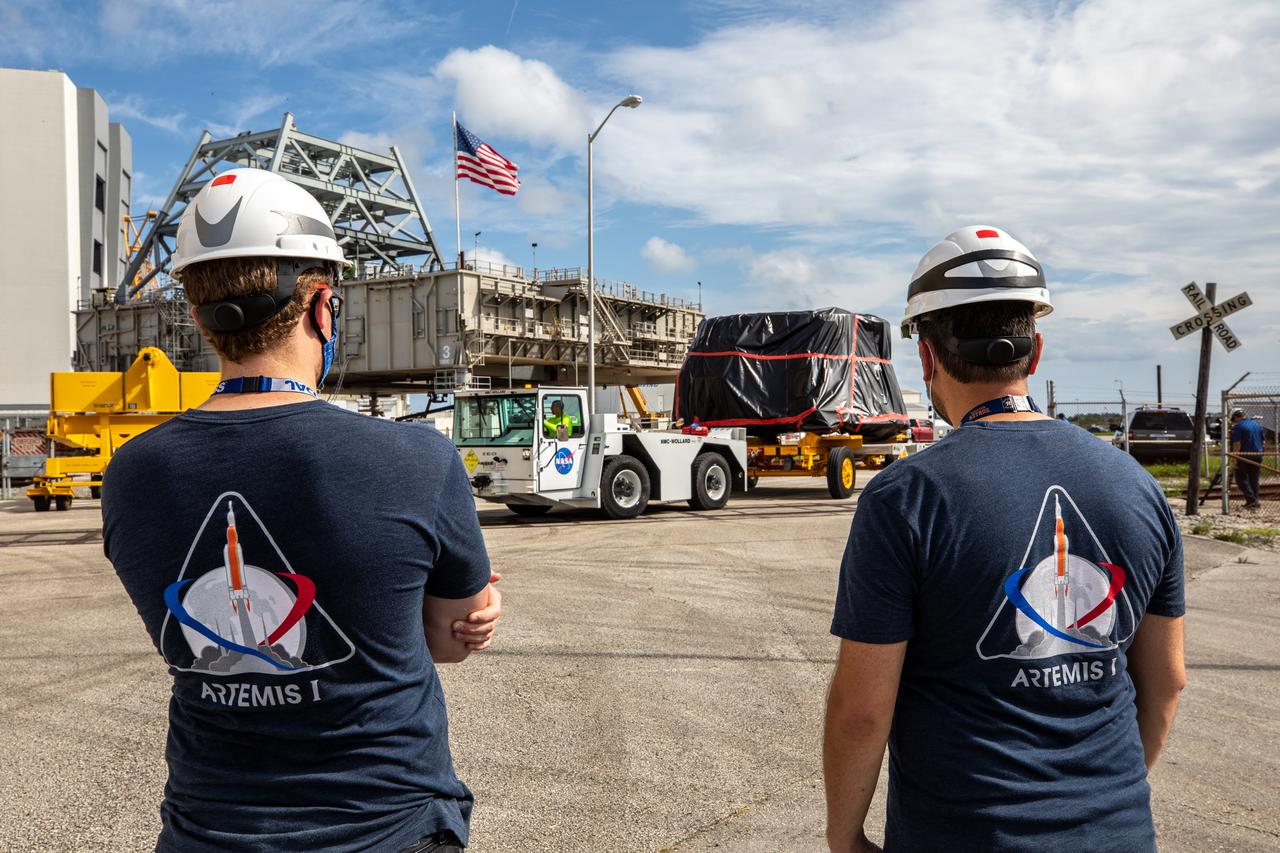
Exploration Ground Systems workers watch as the first of two Artemis I aft skirts for NASA’s Space Launch System (SLS) rocket’s twin solid rocket boosters crosses a railroad track on its way to the Rotation, Processing and Surge Facility (RPSF) at the agency’s Kennedy Space Center in Florida on June 10, 2020. They were transported from the Booster Fabrication Facility. The aft skirts were refurbished by Northrop Grumman. They house the thrust vector control system, which controls 70 percent of the steering during initial ascent of the SLS rocket. The segments will remain in the RPSF until ready for stacking with the forward and aft parts of the boosters on the mobile launcher in High Bay 3 of the Vehicle Assembly Building. Through the Artemis Program, NASA is working to land the first woman and next man on the Moon by 2024.
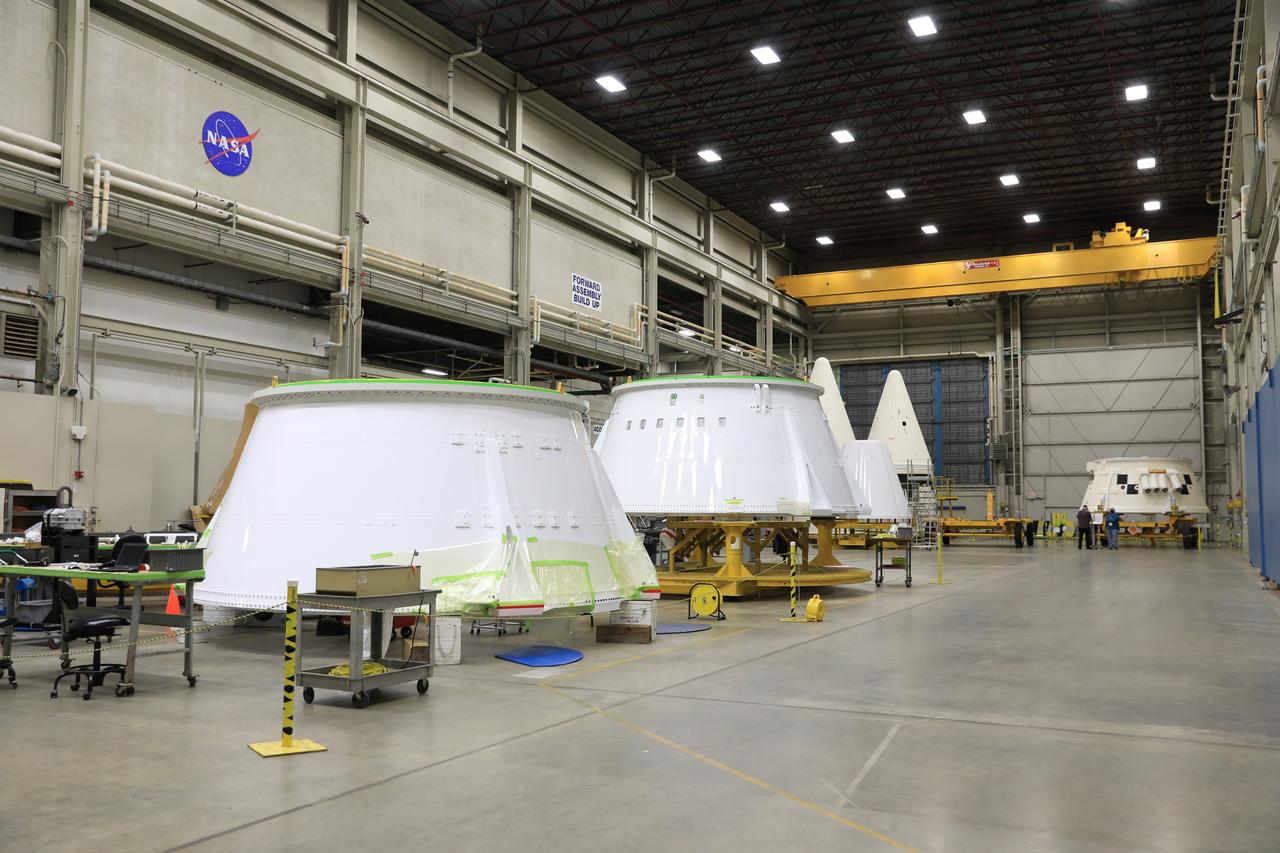
Inside the Booster Fabrication Facility (BFF) at NASA's Kennedy Space Center in Florida, the Artemis II aft skirt structures for the agency's Space Launch System (SLS) rocket’s twin solid rocket boosters are in view at left. Behind them are the two Artemis I forward assemblies. At far right, in the distance, is the right aft skirt assembly. In the BFF, the two aft skirt assemblies are being readied for their move to the Rotation, Processing and Surge Facility (RPSF) on June 9, 2020. The aft skirts were refurbished by Northrop Grumman. They house the thrust vector control system, which controls 70 percent of the steering during initial ascent of the SLS rocket. The segments will remain in the RPSF until ready for stacking with the forward and aft parts of the boosters on the mobile launcher in High Bay 3 of the Vehicle Assembly Building. Through the Artemis Program, NASA is working to land the first woman and next man on the Moon by 2024.
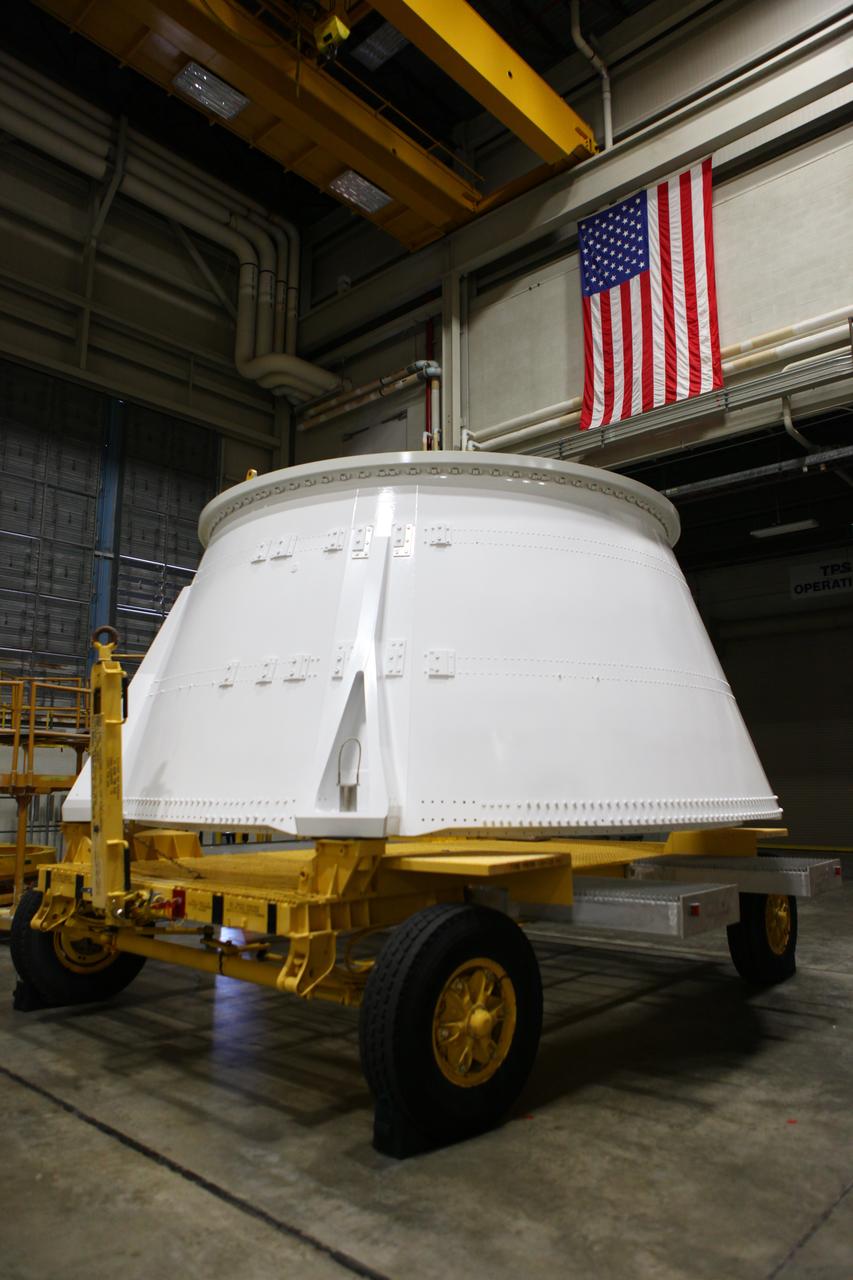
The right hand aft skirt for NASA's Space Launch System (SLS) rocket has been refurbished and painted and is ready for the assembly process in the Booster Fabrication Facility at the agency's Kennedy Space Center in Florida. The aft skirt was refurbished and painted in support facilities at the Hangar AF facility at Cape Canaveral Air Force Station in Florida. The space shuttle-era aft skirt will be used on the right hand booster of the SLS for Exploration Mission 1 (EM-1). NASA is preparing for EM-1, deep space missions, and the Journey to Mars.
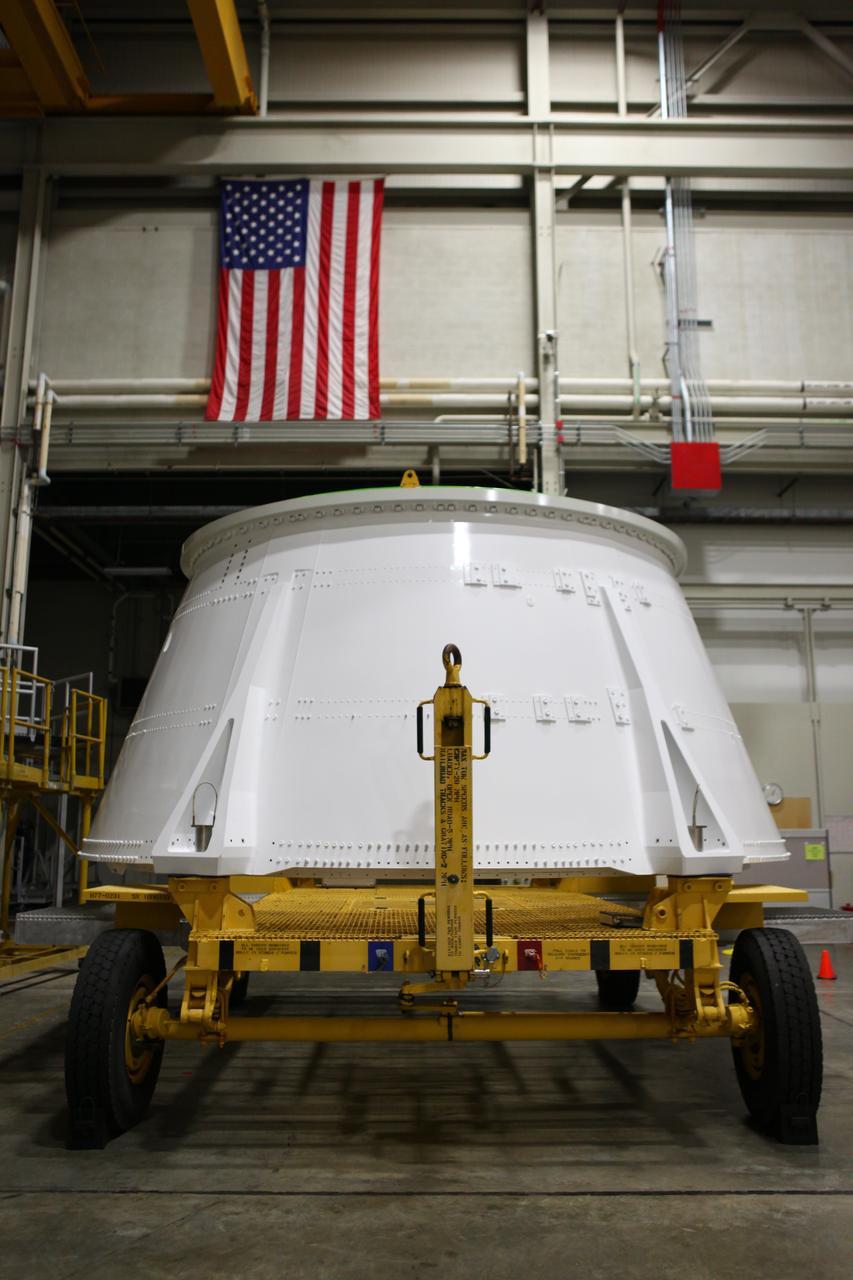
The right hand aft skirt for NASA's Space Launch System (SLS) rocket has been refurbished and painted and is ready for the assembly process in the Booster Fabrication Facility at the agency's Kennedy Space Center in Florida. The aft skirt was refurbished and painted in support facilities at the Hangar AF facility at Cape Canaveral Air Force Station in Florida. The space shuttle-era aft skirt will be used on the right hand booster of the SLS for Exploration Mission 1 (EM-1). NASA is preparing for EM-1, deep space missions, and the Journey to Mars.
The right hand aft skirt for NASA's Space Launch System (SLS) rocket has been refurbished and painted and is ready for the assembly process in the Booster Fabrication Facility at the agency's Kennedy Space Center in Florida. The aft skirt was refurbished and painted in support facilities at the Hangar AF facility at Cape Canaveral Air Force Station in Florida. The space shuttle-era aft skirt will be used on the right hand booster of the SLS for Exploration Mission 1 (EM-1). NASA is preparing for EM-1, deep space missions, and the Journey to Mars.
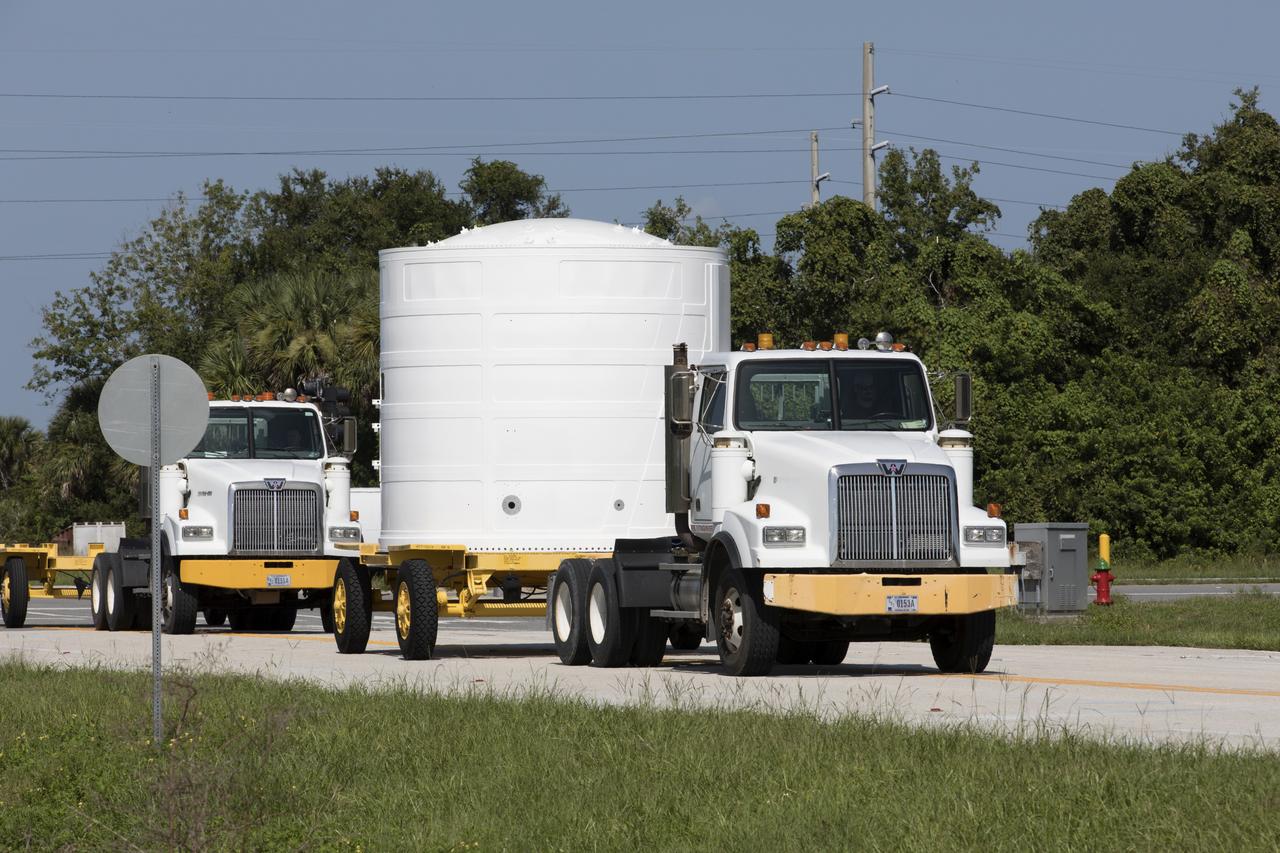
The Exploration Mission-1 (EM-1) left-hand forward skirt for NASA's Space Launch System (SLS) solid rocket boosters is transported by truck to the Booster Fabrication Facility (BFF) at NASA's Kennedy Space Center in Florida from Hangar AE at Cape Canaveral Air Force Station. In the BFF, the forward skirt will be inspected and prepared for use on the left-hand solid rocket booster for EM-1. NASA's Orion spacecraft will fly atop the SLS rocket on its first uncrewed flight test.
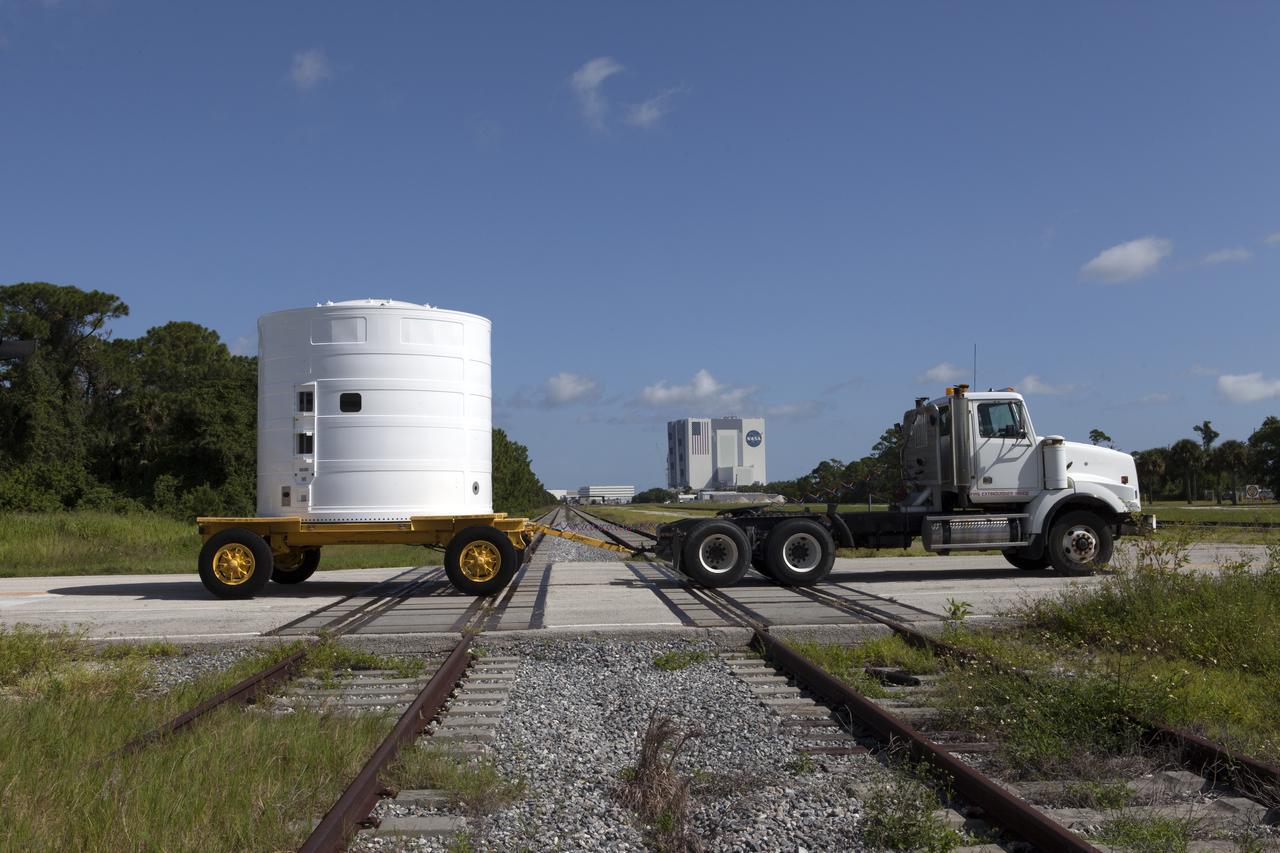
The Exploration Mission-1 (EM-1) left-hand forward skirt for NASA's Space Launch System (SLS) solid rocket boosters is transported by truck to the Booster Fabrication Facility (BFF) at NASA's Kennedy Space Center in Florida from Hangar AE at Cape Canaveral Air Force Station. In the BFF, the forward skirt will be inspected and prepared for use on the left-hand solid rocket booster for EM-1. NASA's Orion spacecraft will fly atop the SLS rocket on its first uncrewed flight test.
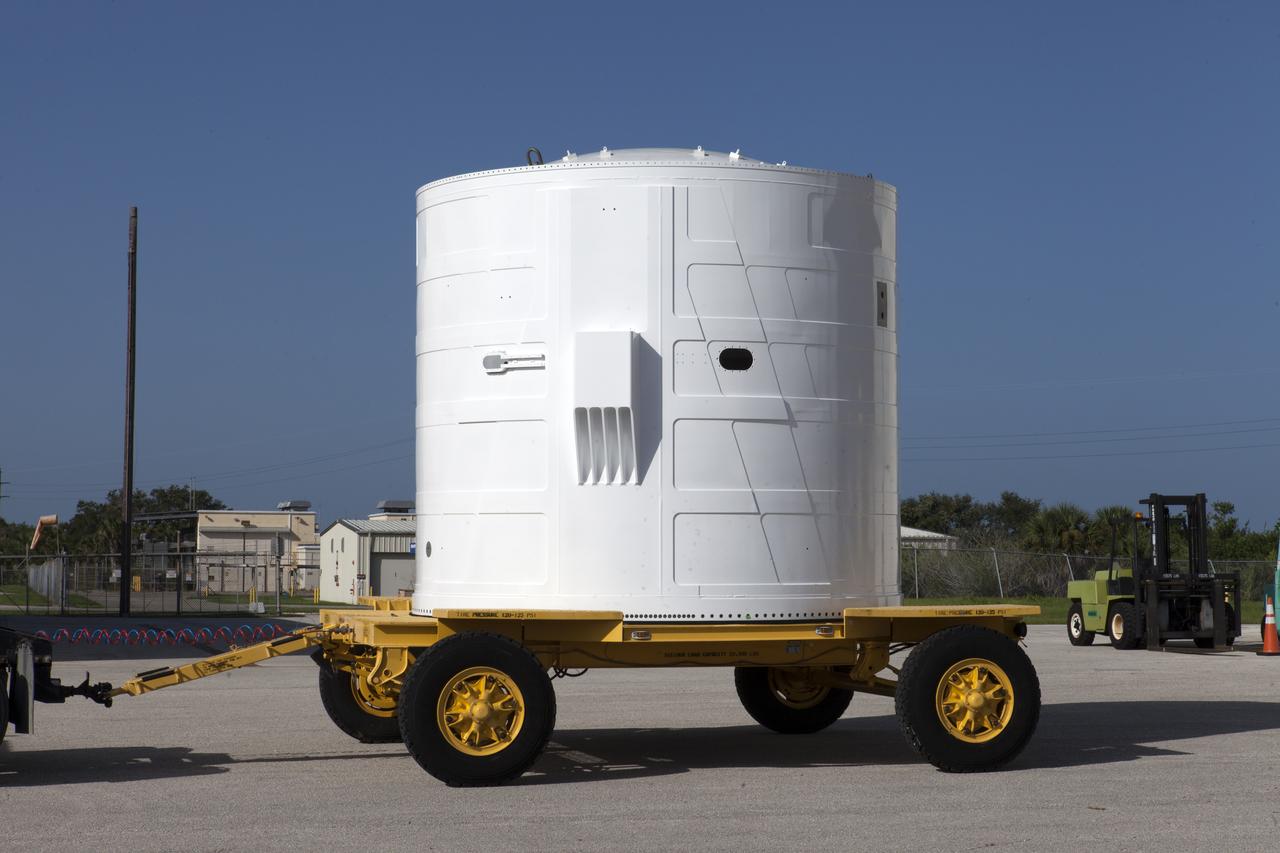
The Exploration Mission-1 (EM-1) left-hand forward skirt for NASA's Space Launch System (SLS) solid rocket boosters is prepared for its move from Hangar AE at Cape Canaveral Air Force Station in Florida, to the Booster Fabrication Facility (BFF) at Kennedy Space Center. In the BFF, the forward skirt will be inspected and prepared for use on the left-hand solid rocket booster for EM-1. NASA's Orion spacecraft will fly atop the SLS rocket on its first uncrewed flight test.
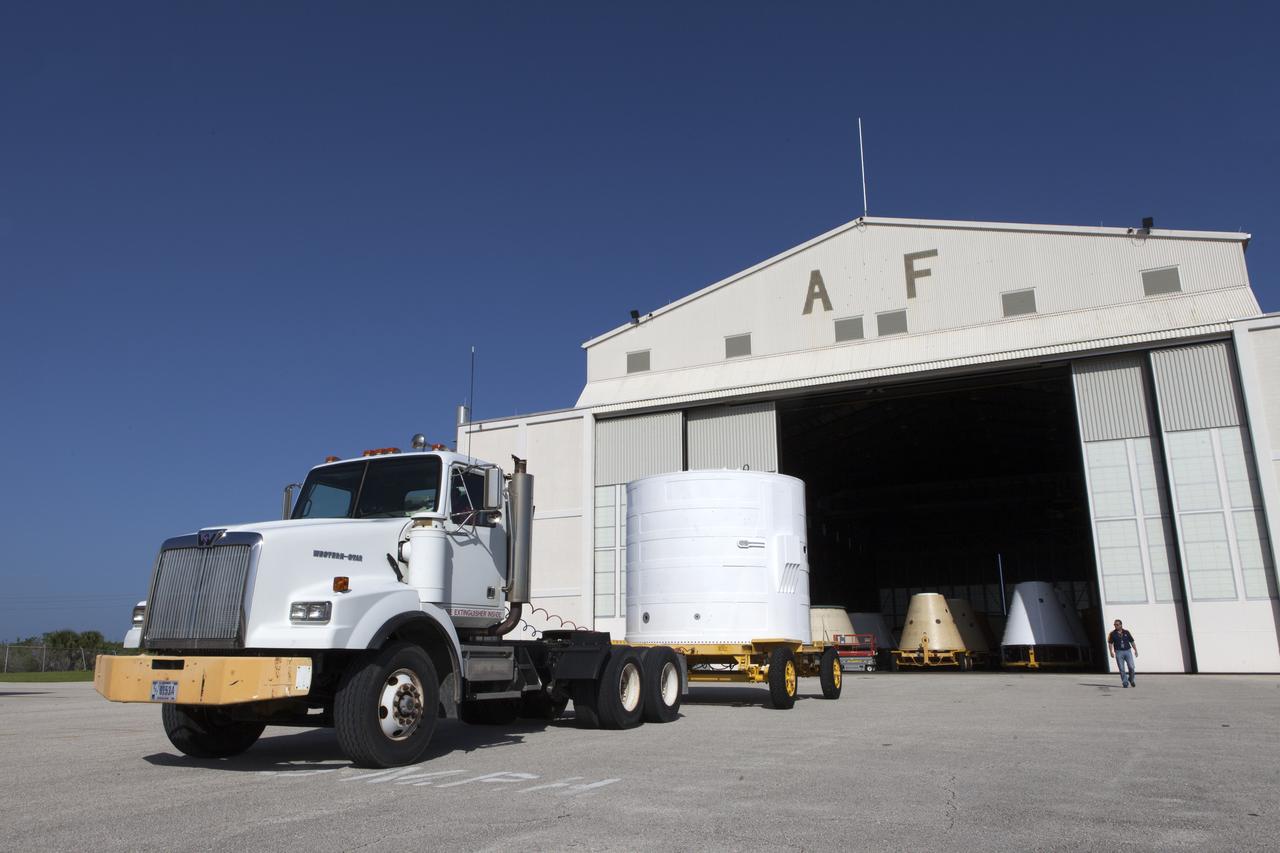
The Exploration Mission-1 (EM-1) left-hand forward skirt for NASA's Space Launch System (SLS) solid rocket boosters is moved out of Hangar AE at Cape Canaveral Air Force Station in Florida, for transport to the Booster Fabrication Facility (BFF) at Kennedy Space Center. In the BFF, the forward skirt will be inspected and prepared for use on the left-hand solid rocket booster for EM-1. NASA's Orion spacecraft will fly atop the SLS rocket on its first uncrewed flight test.
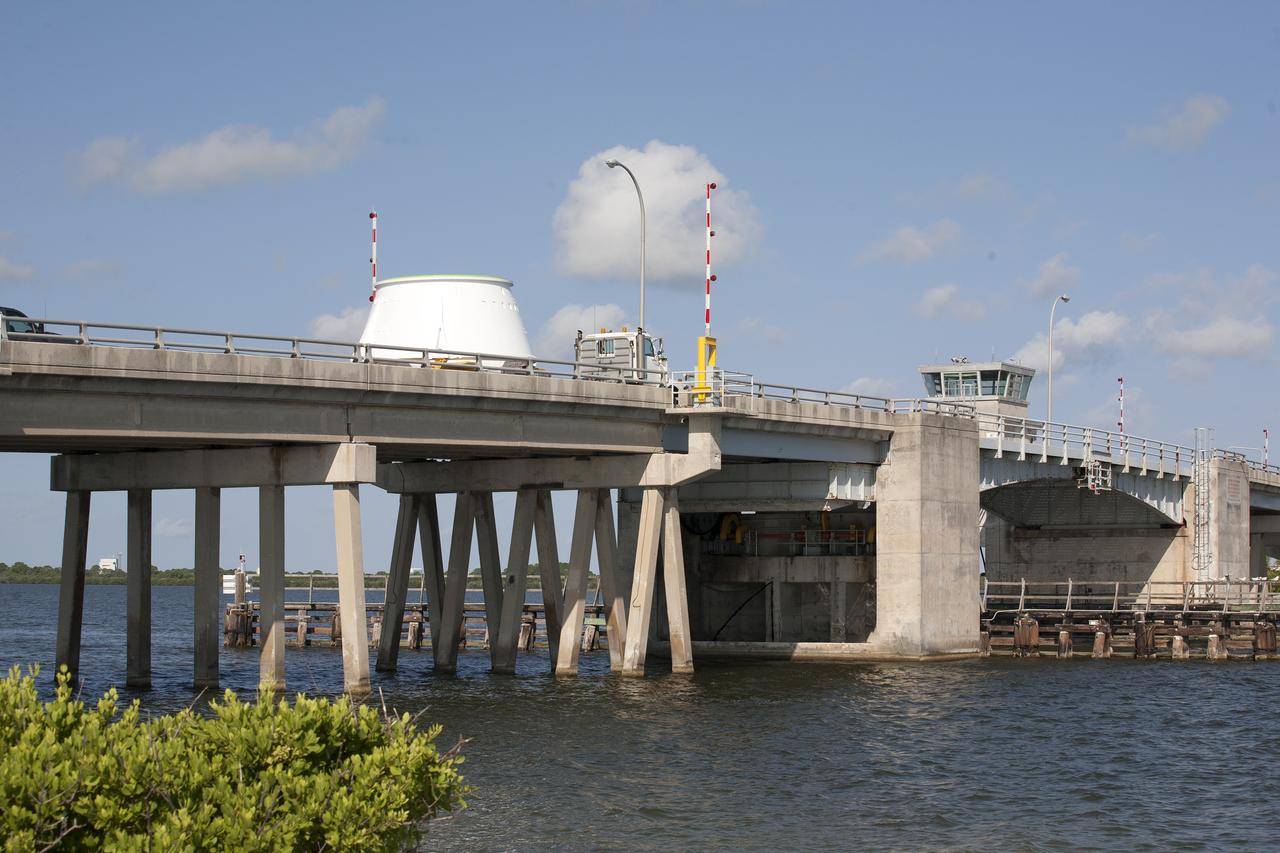
The left hand aft skirt for NASA’s Space Launch System (SLS) rocket is transported across the Roy D. Bridges Bridge from the Hangar AF facility at Cape Canaveral Air Force Station in Florida, on its way to the Booster Fabrication Facility at the agency’s Kennedy Space Center. The space shuttle-era aft skirt, was inspected, resurfaced, primed and painted for use on the left hand booster of the SLS rocket for Exploration Mission 1 (EM-1). NASA is preparing for EM-1, deep-space missions, and the journey to Mars.
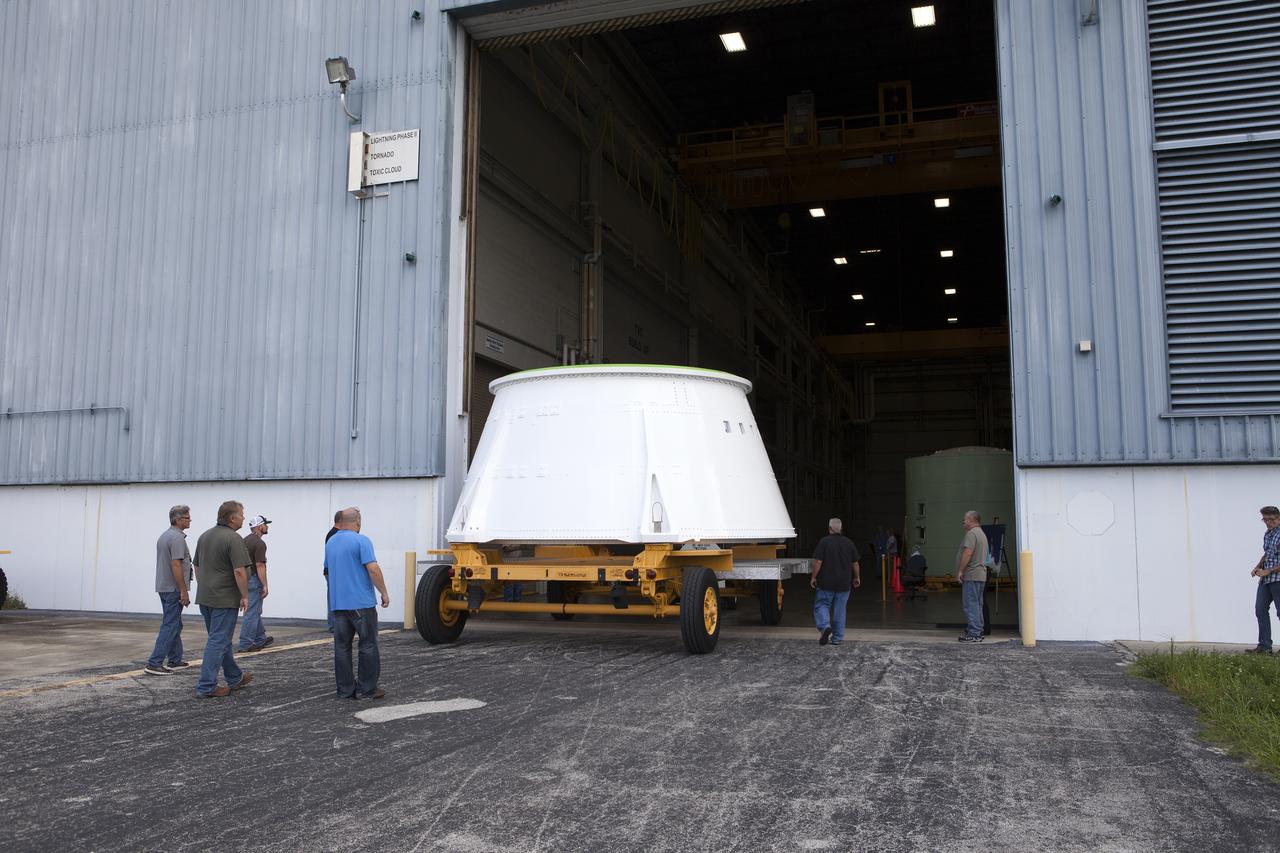
The left hand aft skirt for NASA’s Space Launch System (SLS) rocket is moved inside the Booster Fabrication Facility at the agency’s Kennedy Space Center in Florida. The aft skirt arrived from the Hangar AF facility at Cape Canaveral Air Force Station. The space shuttle-era aft skirt, was inspected, resurfaced, primed and painted for use on the left hand booster of the SLS rocket for Exploration Mission 1 (EM-1). NASA is preparing for EM-1, deep-space missions, and the journey to Mars.
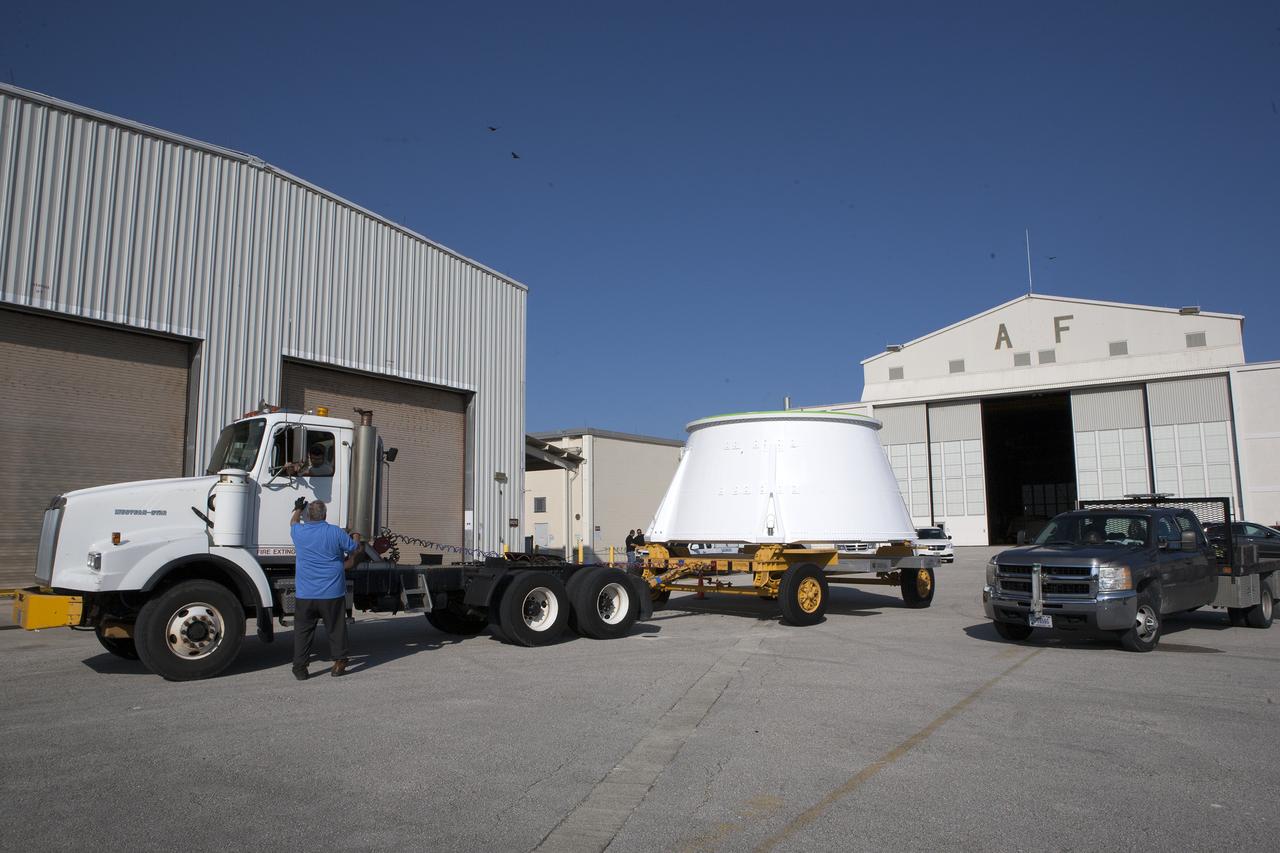
The left hand aft skirt for NASA’s Space Launch System (SLS) rocket is prepared for the move from the Hangar AF facility at Cape Canaveral Air Force Station in Florida, to the Booster Fabrication Facility at the agency’s Kennedy Space Center. The space shuttle-era aft skirt, was inspected, resurfaced, primed and painted for use on the left hand booster of the SLS rocket for Exploration Mission 1 (EM-1). NASA is preparing for EM-1, deep-space missions, and the journey to Mars.
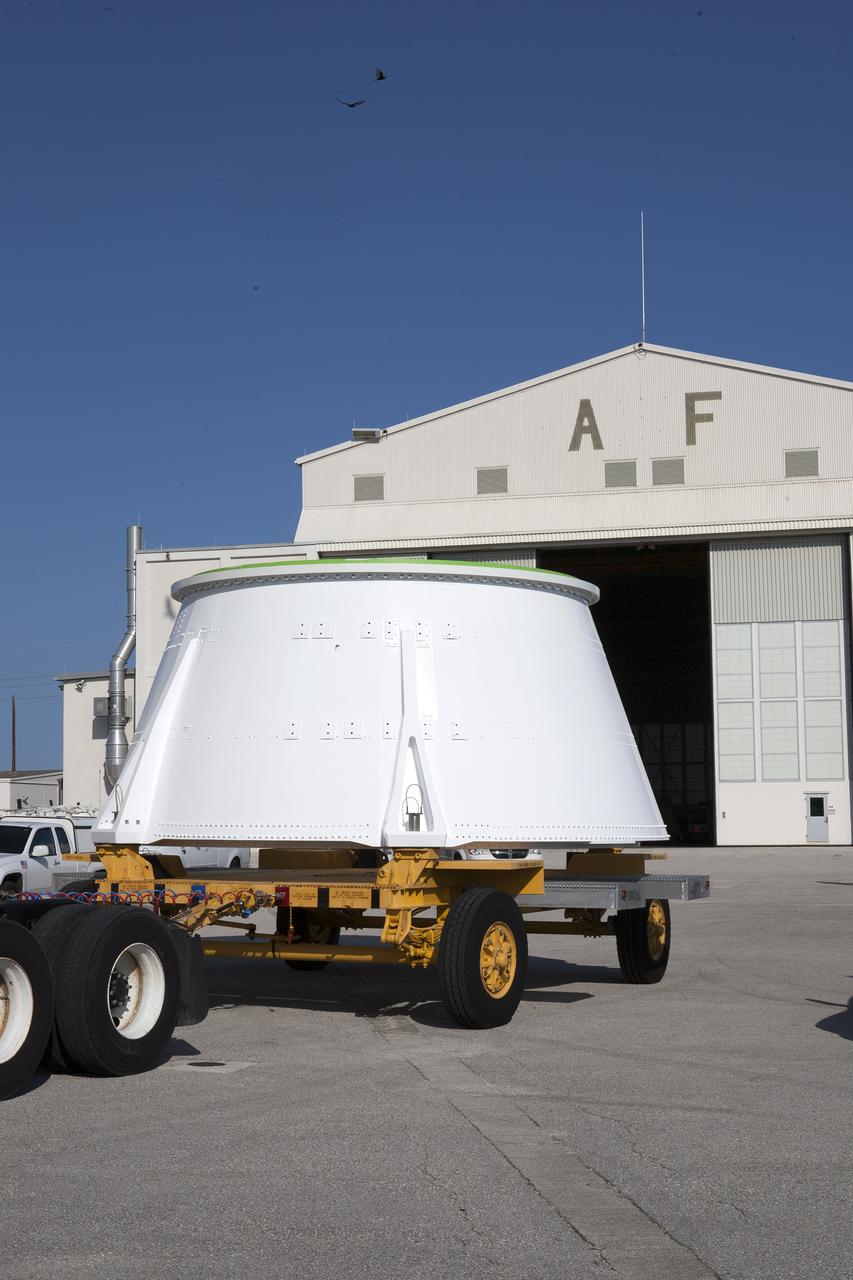
The left hand aft skirt for NASA’s Space Launch System (SLS) rocket is prepared for the move from the Hangar AF facility at Cape Canaveral Air Force Station in Florida, to the Booster Fabrication Facility at the agency’s Kennedy Space Center. The space shuttle-era aft skirt, was inspected, resurfaced, primed and painted for use on the left hand booster of the SLS rocket for Exploration Mission 1 (EM-1). NASA is preparing for EM-1, deep-space missions, and the journey to Mars

The left hand aft skirt for NASA’s Space Launch System (SLS) rocket arrives at the Booster Fabrication Facility at the agency’s Kennedy Space Center in Florida, from the Hangar AF facility at Cape Canaveral Air Force Station. The space shuttle-era aft skirt, was inspected, resurfaced, primed and painted for use on the left hand booster of the SLS rocket for Exploration Mission 1 (EM-1). NASA is preparing for EM-1, deep-space missions, and the journey to Mars.
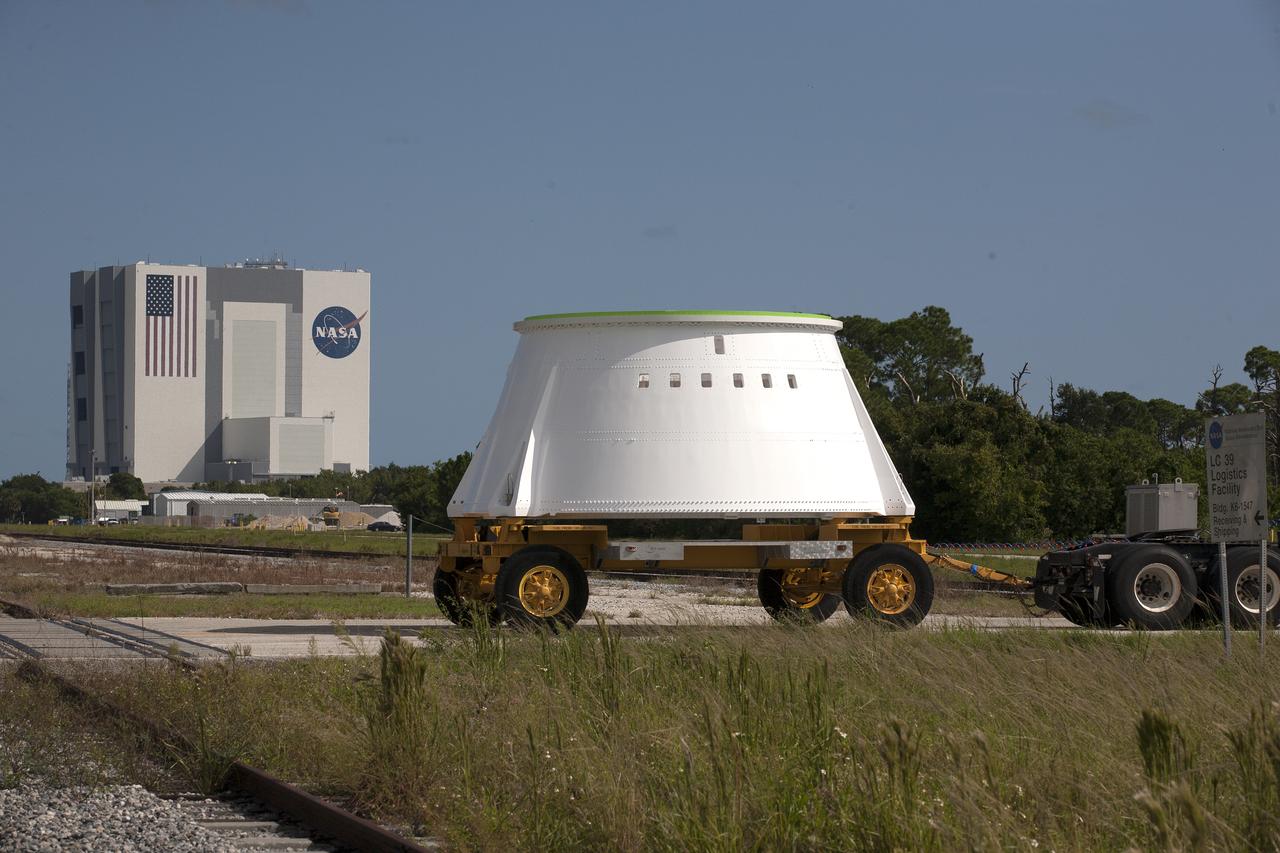
The left hand aft skirt for NASA’s Space Launch System (SLS) rocket arrives at the agency’s Kennedy Space Center in Florida, from the Hangar AF facility at Cape Canaveral Air Force Station. The aft skirt will be transported to the Booster Fabrication Facility. The space shuttle-era aft skirt, was inspected, resurfaced, primed and painted for use on the left hand booster of the SLS rocket for Exploration Mission 1 (EM-1). NASA is preparing for EM-1, deep-space missions, and the journey to Mars.
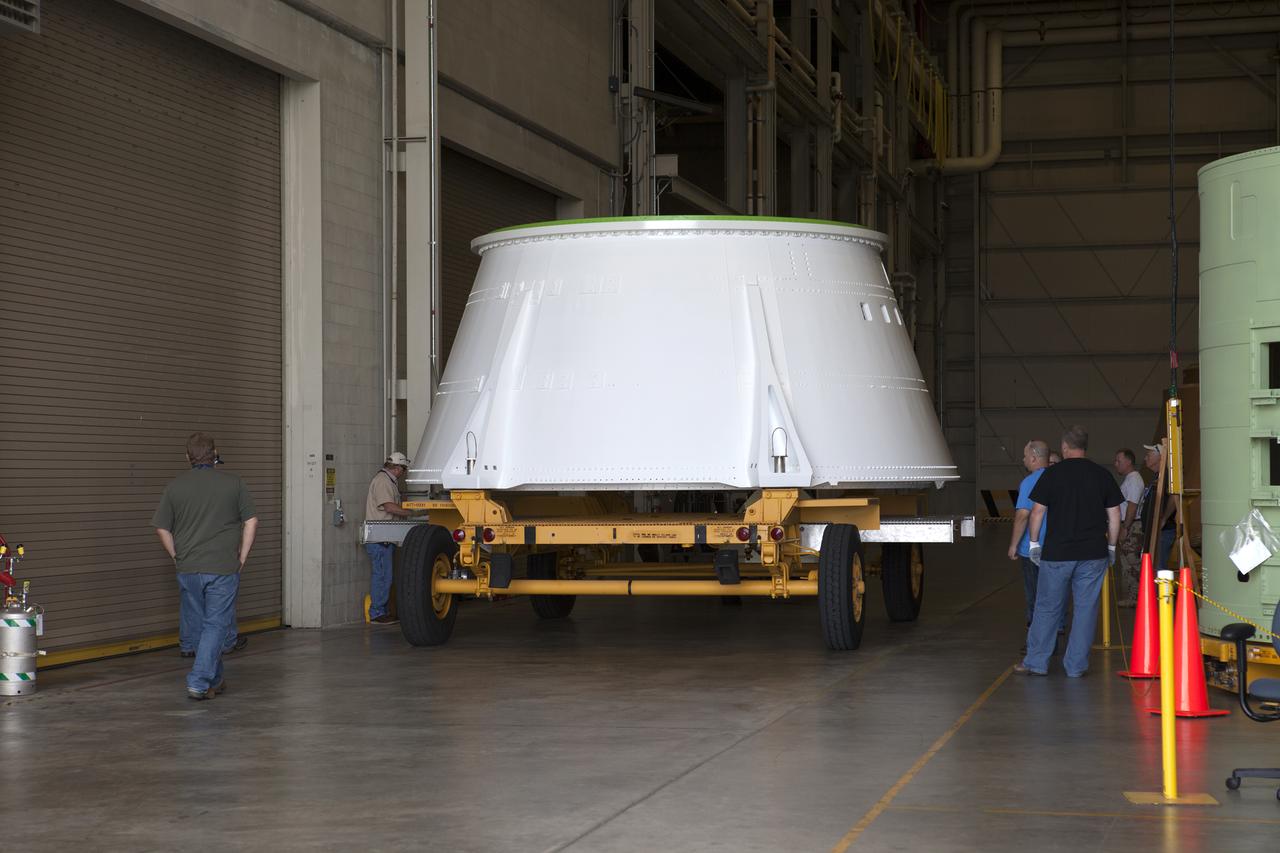
The left hand aft skirt for NASA’s Space Launch System (SLS) rocket is moved inside the Booster Fabrication Facility at the agency’s Kennedy Space Center in Florida. The aft skirt arrived from the Hangar AF facility at Cape Canaveral Air Force Station. The space shuttle-era aft skirt, was inspected, resurfaced, primed and painted for use on the left hand booster of the SLS rocket for Exploration Mission 1 (EM-1). NASA is preparing for EM-1, deep-space missions, and the journey to Mars.
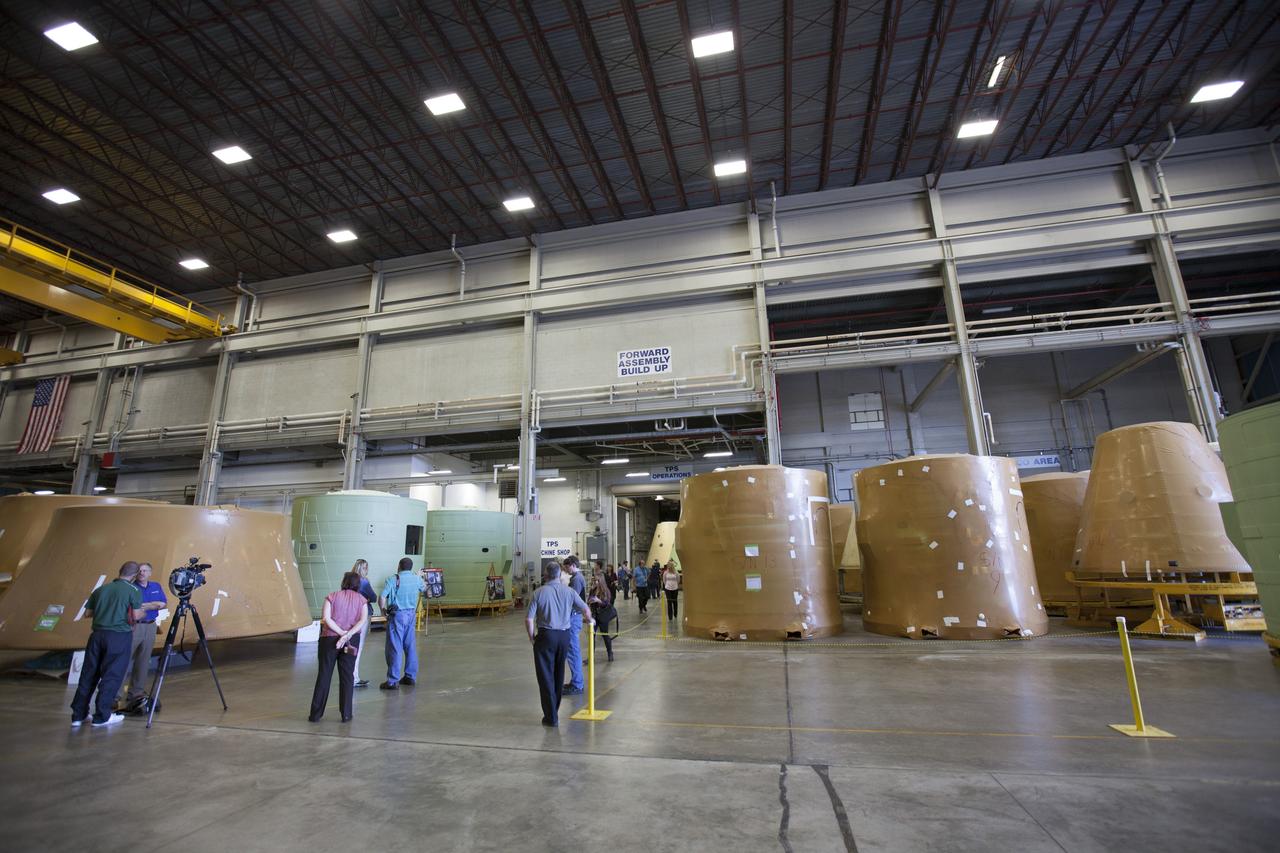
Members of the news media view forward booster segments (painted green) for NASA’s Space Launch System rocket boosters inside the Booster Fabrication Facility (BFF) at NASA’s Kennedy Space Center in Florida. Orbital ATK is a contractor for NASA’s Marshall Space Flight Center in Alabama, and operates the BFF to prepare aft booster segments and hardware for the SLS rocket boosters. The SLS rocket and Orion spacecraft will launch on Exploration Mission-1 in 2018. The Ground Systems Development and Operations Program is preparing the infrastructure to process and launch spacecraft for deep-space missions and the journey to Mars.
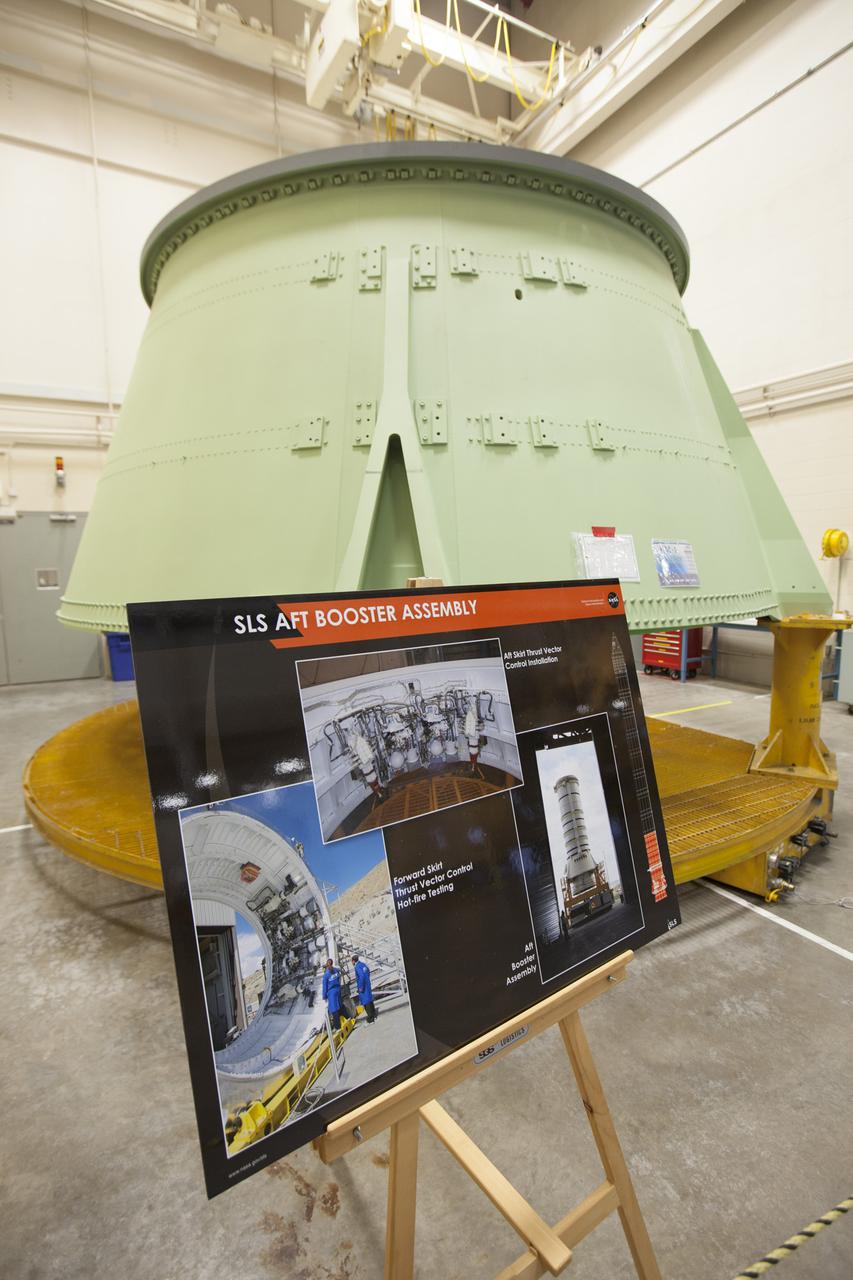
The right-hand aft skirt, one part of the aft booster assembly for NASA’s Space Launch System solid rocket boosters, is in view in a processing cell inside the Booster Fabrication Facility (BFF) at NASA’s Kennedy Space Center in Florida. Orbital ATK is a contractor for NASA’s Marshall Space Flight Center in Alabama, and operates the BFF to prepare aft booster segments and hardware for the SLS rocket boosters. The SLS rocket and Orion spacecraft will launch on Exploration Mission-1 in 2018. The Ground Systems Development and Operations Program is preparing the infrastructure to process and launch spacecraft for deep-space missions and the journey to Mars.
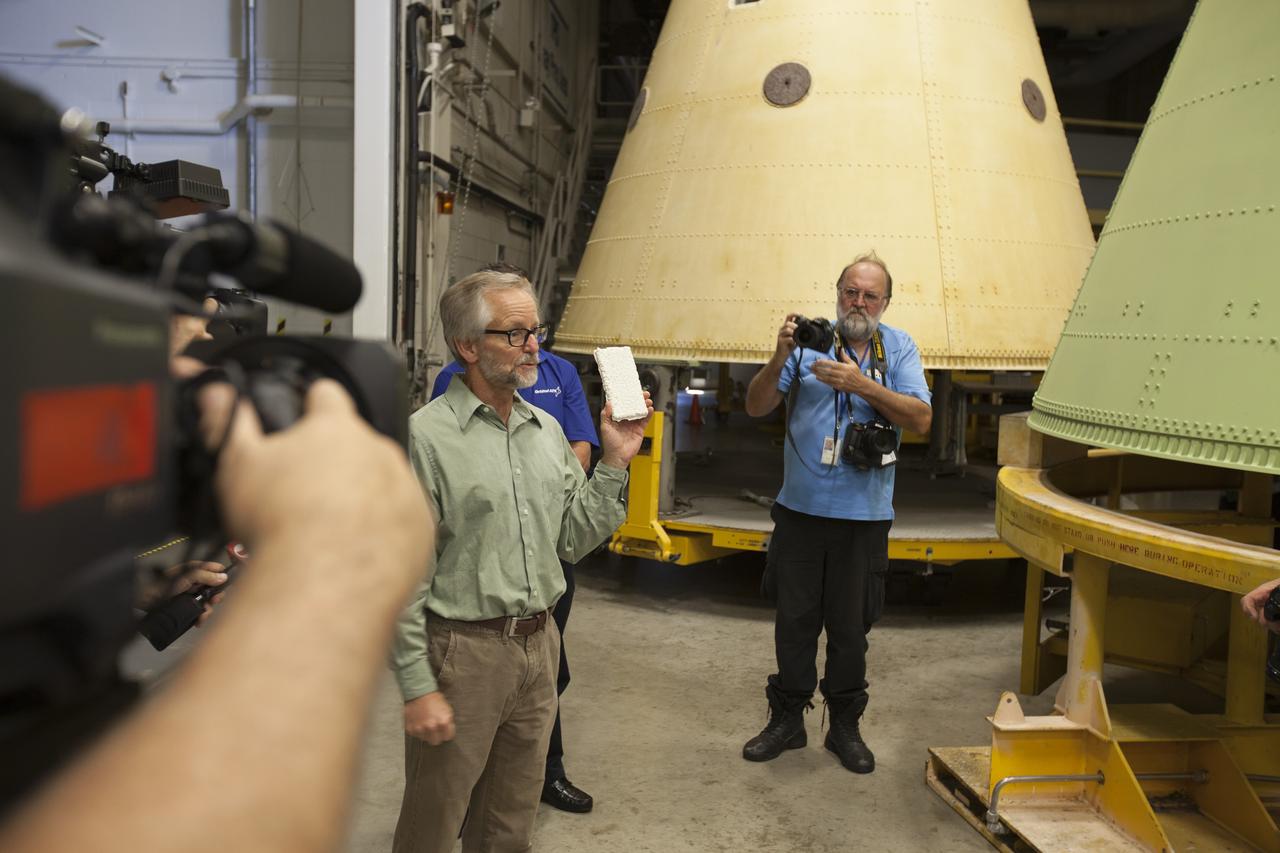
Inside the Booster Fabrication Facility (BFF) at NASA’s Kennedy Space Center in Florida, Jeff Cook, a thermal protection system specialist with Orbital ATK, displays a sample of the painted thermal protection system that is being applied to booster segments. Members of the news media toured the BFF. Orbital ATK is a contractor for NASA’s Marshall Space Flight Center in Alabama, and operates the BFF to prepare aft booster segments and hardware for the SLS rocket boosters. The SLS rocket and Orion spacecraft will launch on Exploration Mission-1 in 2018. The Ground Systems Development and Operations Program is preparing the infrastructure to process and launch spacecraft for deep-space missions and the journey to Mars.
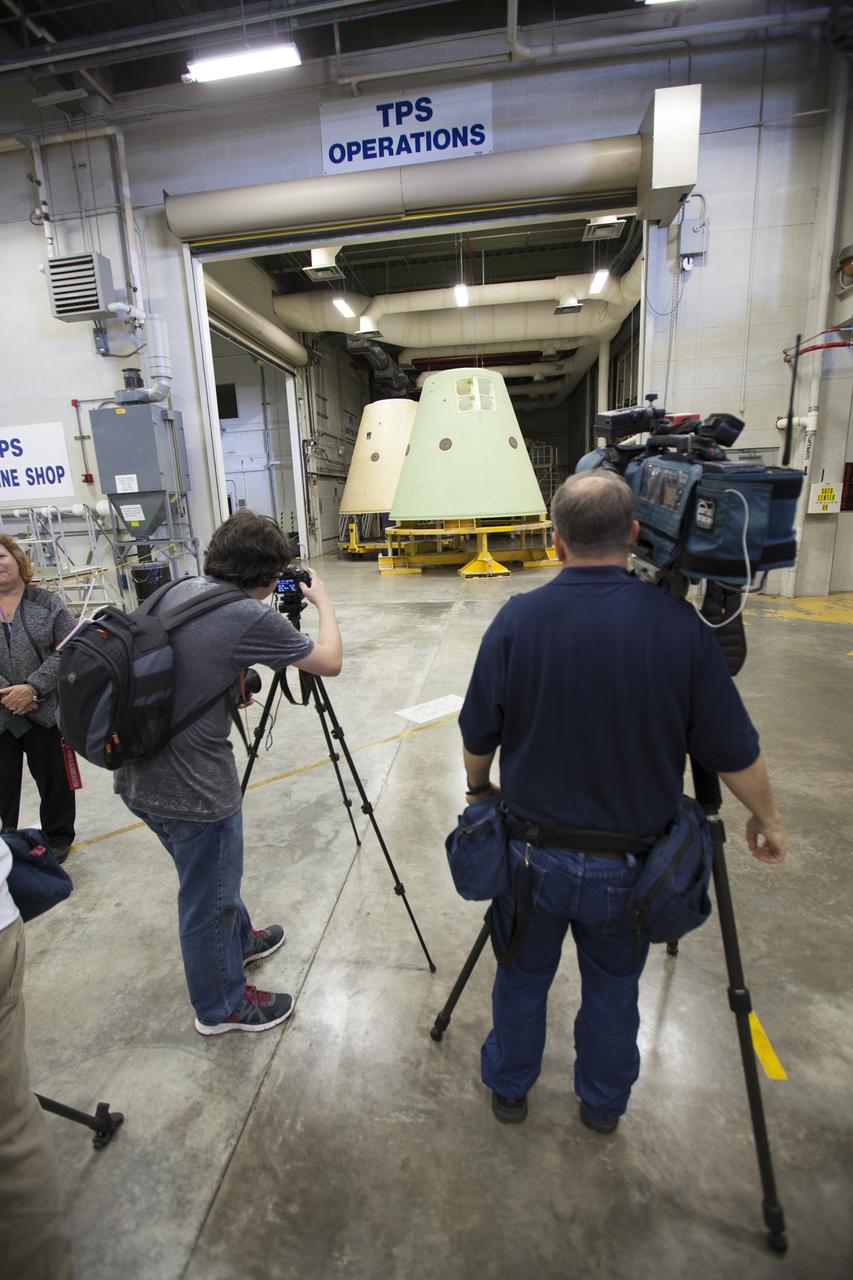
Inside the Booster Fabrication Facility (BFF) at NASA’s Kennedy Space Center in Florida, members of the news media photograph a frustrum that will be stacked atop a forward skirt for one of NASA’s Space Launch System (SLS) solid rocket boosters. Orbital ATK is a contractor for NASA’s Marshall Space Flight Center in Alabama, and operates the BFF to prepare aft booster segments and hardware for the SLS solid rocket boosters. The SLS rocket and Orion spacecraft will launch on Exploration Mission-1 in 2018. The Ground Systems Development and Operations Program is preparing the infrastructure to process and launch spacecraft on deep-space missions and the journey to Mars.
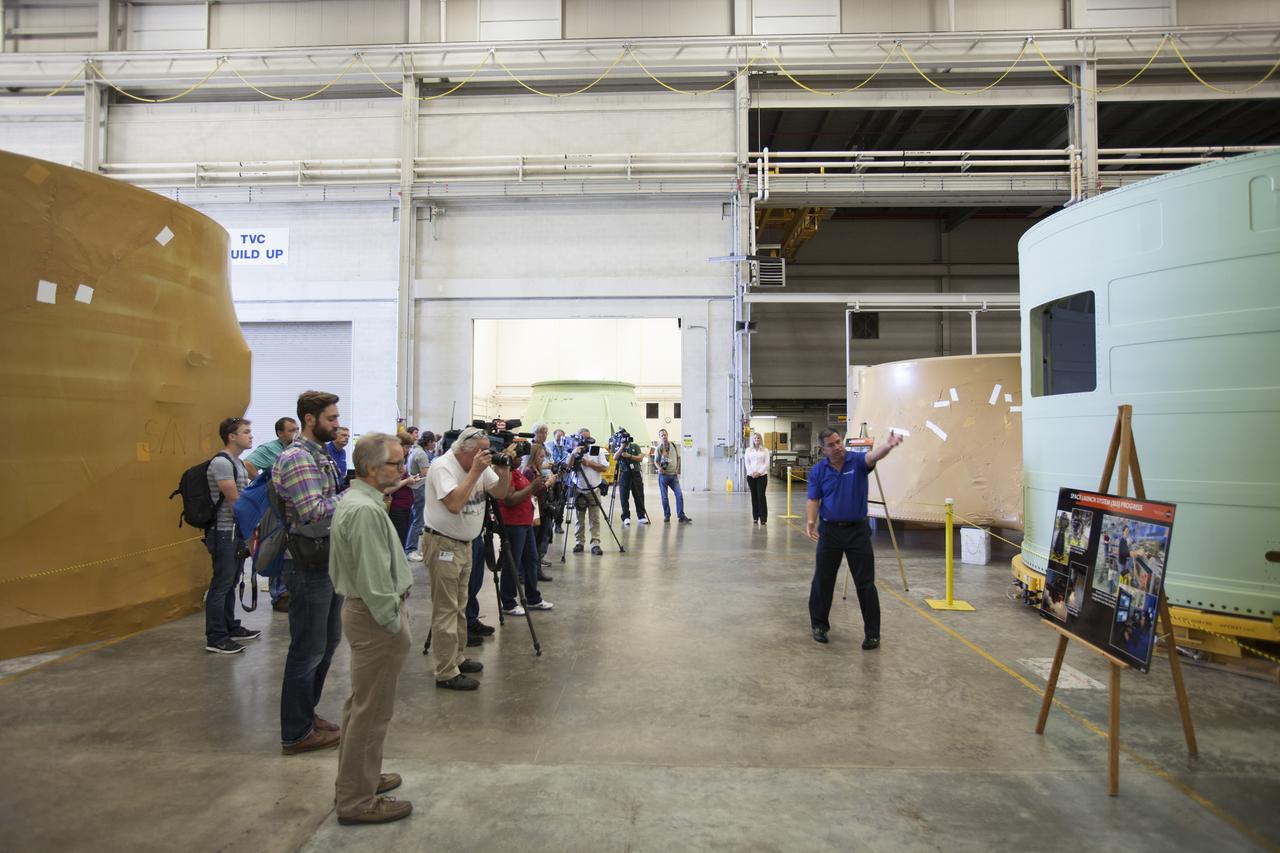
Inside the Booster Fabrication Facility (BFF) at NASA’s Kennedy Space Center in Florida, members of the news media view a forward skirt that will be used on a solid rocket booster for NASA’s Space Launch System (SLS) rocket. Orbital ATK is a contractor for NASA’s Marshall Space Flight Center in Alabama, and operates the BFF to prepare aft booster segments and hardware for the SLS solid rocket boosters. Rick Serfozo, Orbital ATK Florida site director, talks to the media. The SLS rocket and Orion spacecraft will launch on Exploration Mission-1 in 2018. The Ground Systems Development and Operations Program is preparing the infrastructure to process and launch spacecraft for deep-space missions and the journey to Mars.
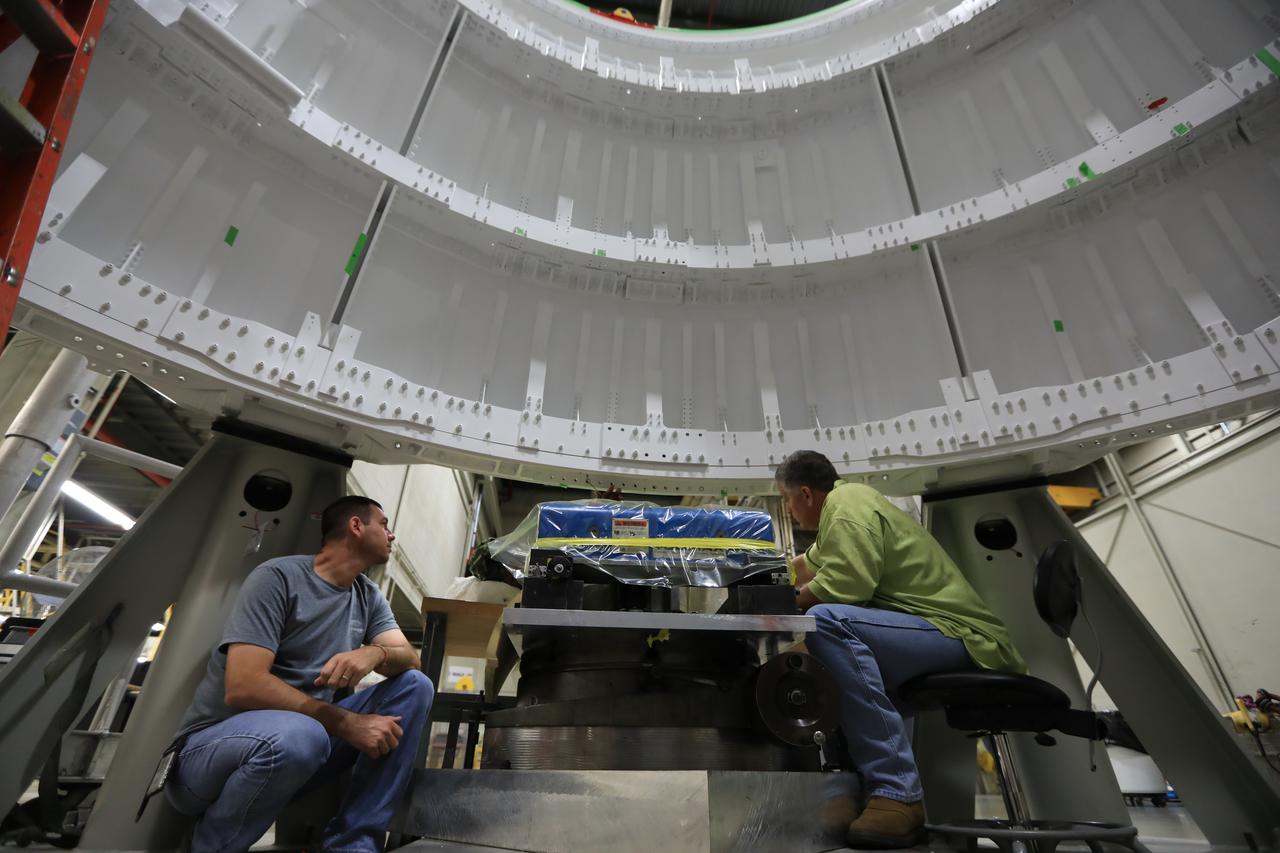
Inside the Booster Fabrication Facility at NASA's Kennedy Space Center in Florida, the left hand aft skirt for the agency's Space Launch System (SLS) rocket is ready for the assembly process. From left, are Chad Goetz, quality technician with Orbital ATK, and Robbie Blaue, quality assurance specialist with the Defense Contract Management Agency. The aft skirt was refurbished and painted in support facilities at the Hangar AF facility at Cape Canaveral Air Force Station in Florida. The space shuttle-era aft skirt will be used on the left hand booster of the SLS for Exploration Mission 1 (EM-1). NASA is preparing for EM-1, deep space missions, and the Journey to Mars.
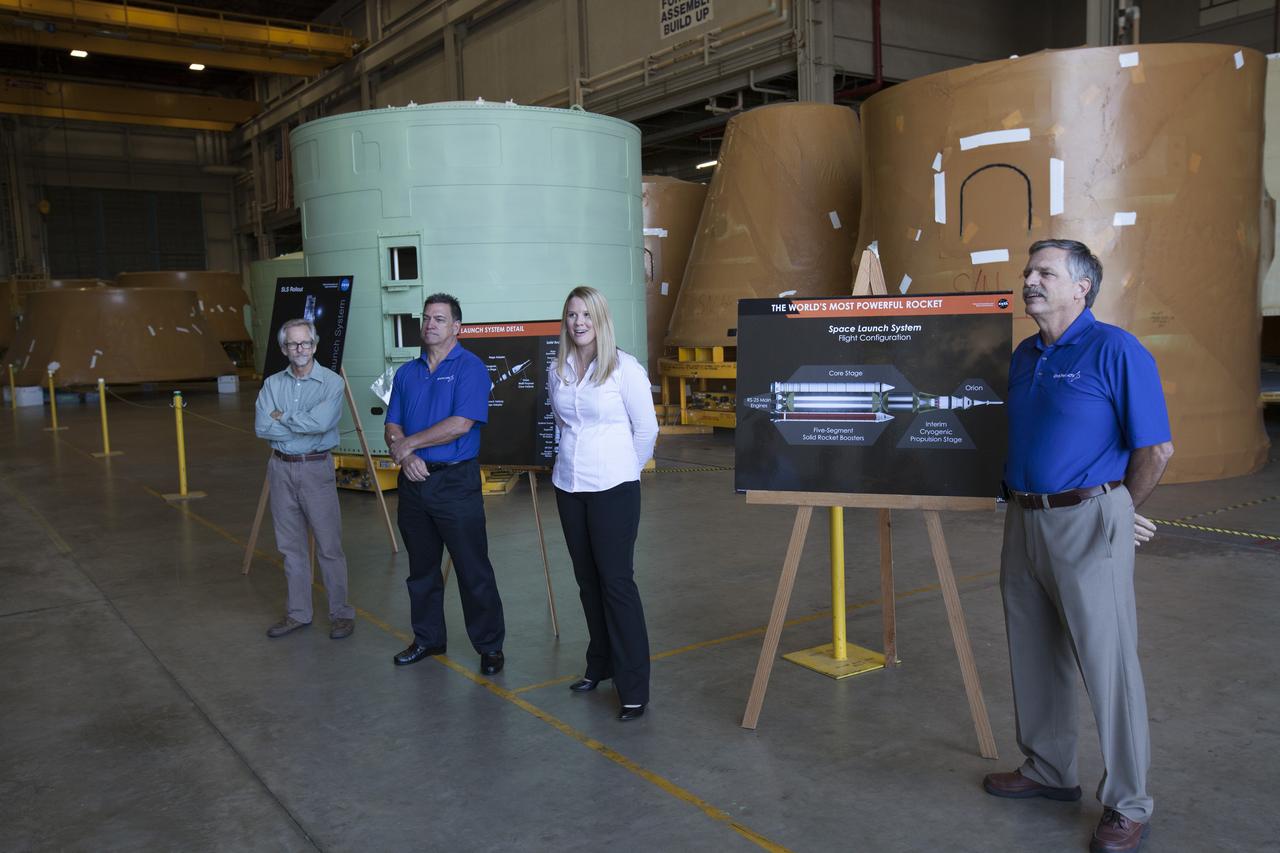
Bethany March, an element integration engineer at NASA’s Marshall Space Flight Center (MSFC) in Alabama, speaks to members of the news media during a tour of the Booster Fabrication Facility (BFF) at NASA’s Kennedy Space Center in Florida. Orbital ATK is a contractor for MSFC, and operates the BFF to prepare aft booster segments and hardware for the agency’s Space Launch System (SLS) solid rocket boosters. To her right is Rick Serfozo, Orbital ATK Florida site director. The SLS rocket and Orion spacecraft will launch on Exploration Mission-1 in 2018. The Ground Systems Development and Operations Program is preparing the infrastructure to process and launch spacecraft for deep-space missions and the journey to Mars.
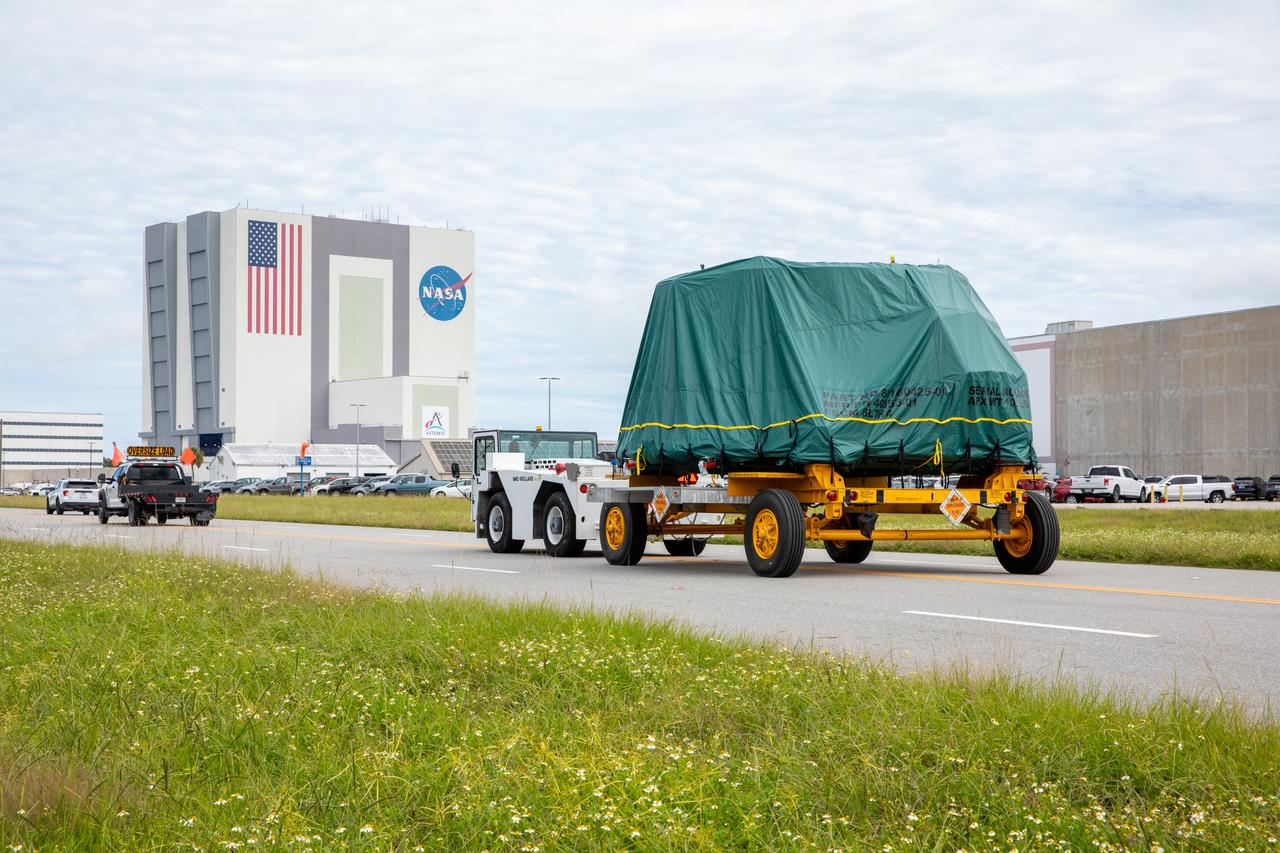
One of two Artemis II aft skirts for NASA's Space Launch System (SLS) rocket’s twin solid rocket boosters is transported from the Booster Fabrication Facility to the Rotation Processing and Surge Facility (RPSF) at the agency’s Kennedy Space Center in Florida on Monday, Sept. 25, 2023. The aft skirts were refurbished by Northrop Grumman and house the thrust vector control system, which controls 70 percent of the steering during initial ascent of the SLS rocket. The segments will remain in the RPSF until ready for stacking with the forward and aft parts of the boosters on the mobile launcher in High Bay 3 of the Vehicle Assembly Building. Artemis II astronauts Reid Wiseman, Victor Glover, Christina Koch, and Jeremy Hansen will launch from Kennedy, traveling around the Moon on the first crewed mission under Artemis that will test all of the Orion spacecraft’s systems.
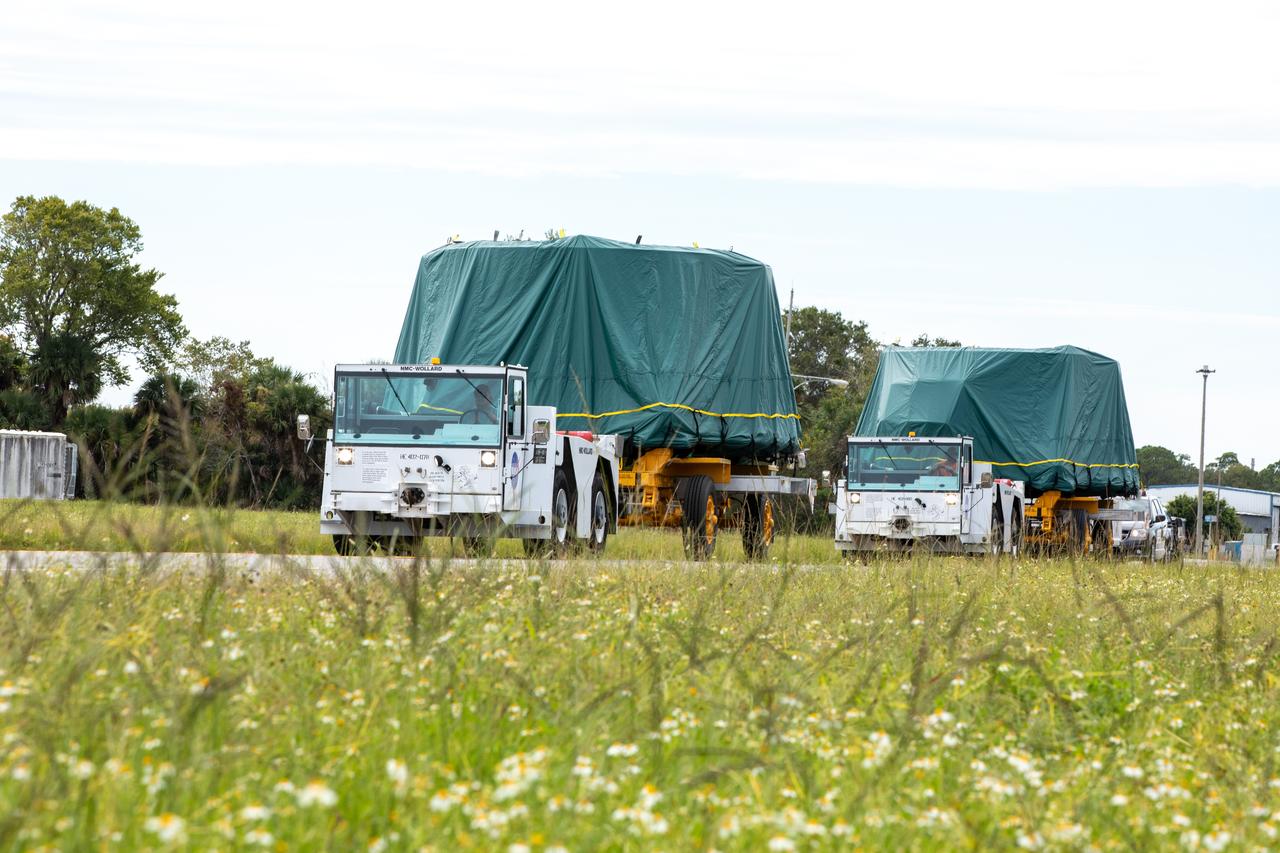
The Artemis II aft skirts for NASA's Space Launch System (SLS) rocket’s twin solid rocket boosters are transported from the Booster Fabrication Facility to the Rotation Processing and Surge Facility (RPSF) at the agency’s Kennedy Space Center in Florida on Monday, Sept. 25, 2023. The aft skirts were refurbished by Northrop Grumman and house the thrust vector control system, which controls 70 percent of the steering during initial ascent of the SLS rocket. The segments will remain in the RPSF until ready for stacking with the forward and aft parts of the boosters on the mobile launcher in High Bay 3 of the Vehicle Assembly Building. Artemis II astronauts Reid Wiseman, Victor Glover, Christina Koch, and Jeremy Hansen will launch from Kennedy, traveling around the Moon on the first crewed mission under Artemis that will test all of the Orion spacecraft’s systems.

One of two Artemis II aft skirts for NASA’s Space Launch System (SLS) rocket’s twin solid rocket boosters crosses railroad tracks on its way from the Booster Fabrication Facility to the Rotation Processing and Surge Facility (RPSF) at the agency’s Kennedy Space Center in Florida on Monday, Sept. 25, 2023. The aft skirts were refurbished by Northrop Grumman and house the thrust vector control system, which controls 70 percent of the steering during initial ascent of the SLS rocket. The segments will remain in the RPSF until ready for stacking with the forward and aft parts of the boosters on the mobile launcher in High Bay 3 of the Vehicle Assembly Building. Artemis II astronauts Reid Wiseman, Victor Glover, Christina Koch, and Jeremy Hansen will launch from Kennedy, traveling around the Moon on the first crewed mission under Artemis that will test all of the Orion spacecraft’s systems.
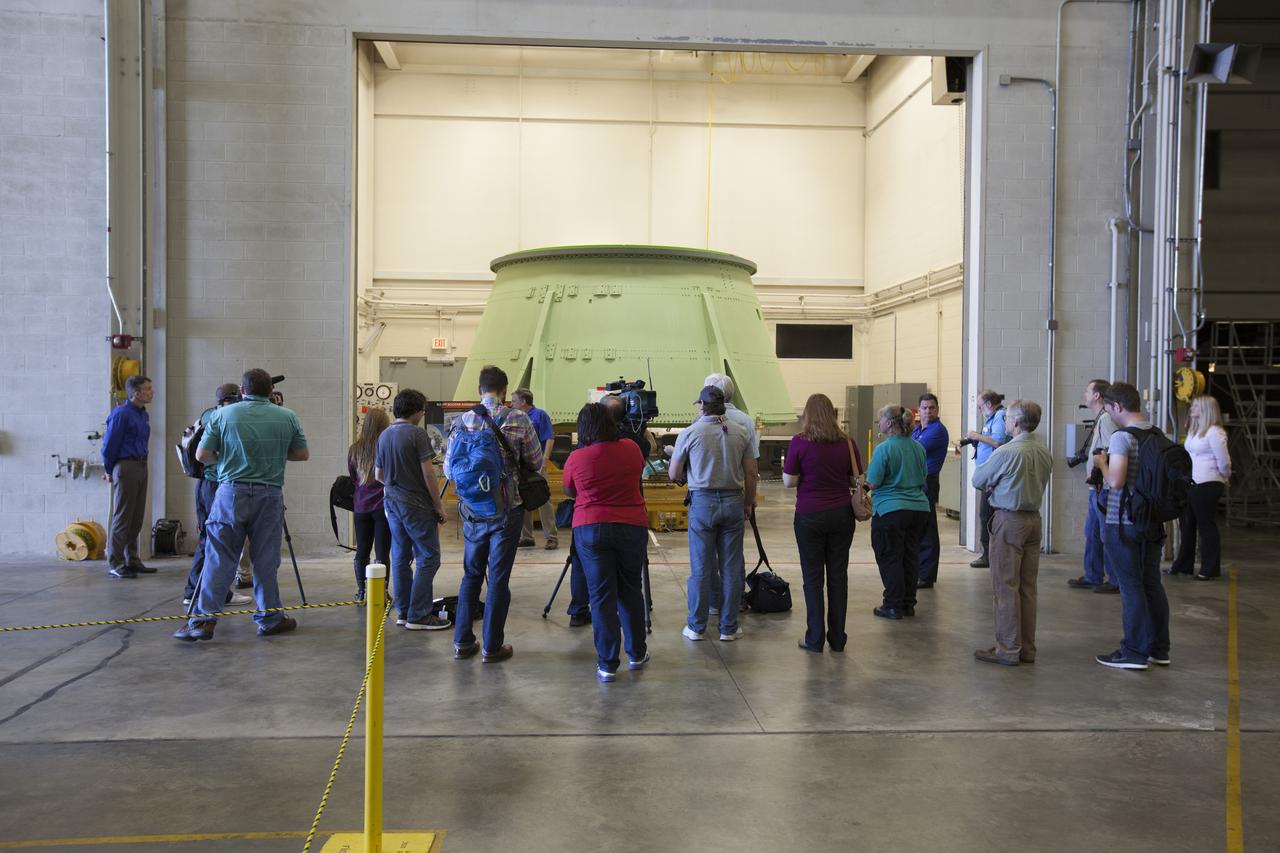
Inside the Booster Fabrication Facility (BFF) at NASA’s Kennedy Space Center in Florida, members of the news media view the right-hand aft skirt that will be used on a solid rocket booster for NASA’s Space Launch System (SLS) rocket. Orbital ATK is contractor for NASA’s Marshall Space Flight Center in Alabama, and operates the BFF to prepare aft booster segments and hardware for the SLS solid rocket boosters. At far right, in the royal blue shirt, Rick Serfozo, Orbital ATK Florida site director, talks to the media. The SLS rocket and Orion spacecraft will launch on Exploration Mission-1 in 2018. The Ground Systems Development and Operations Program is preparing the infrastructure to process and launch spacecraft for deep-space missions and the journey to Mars.
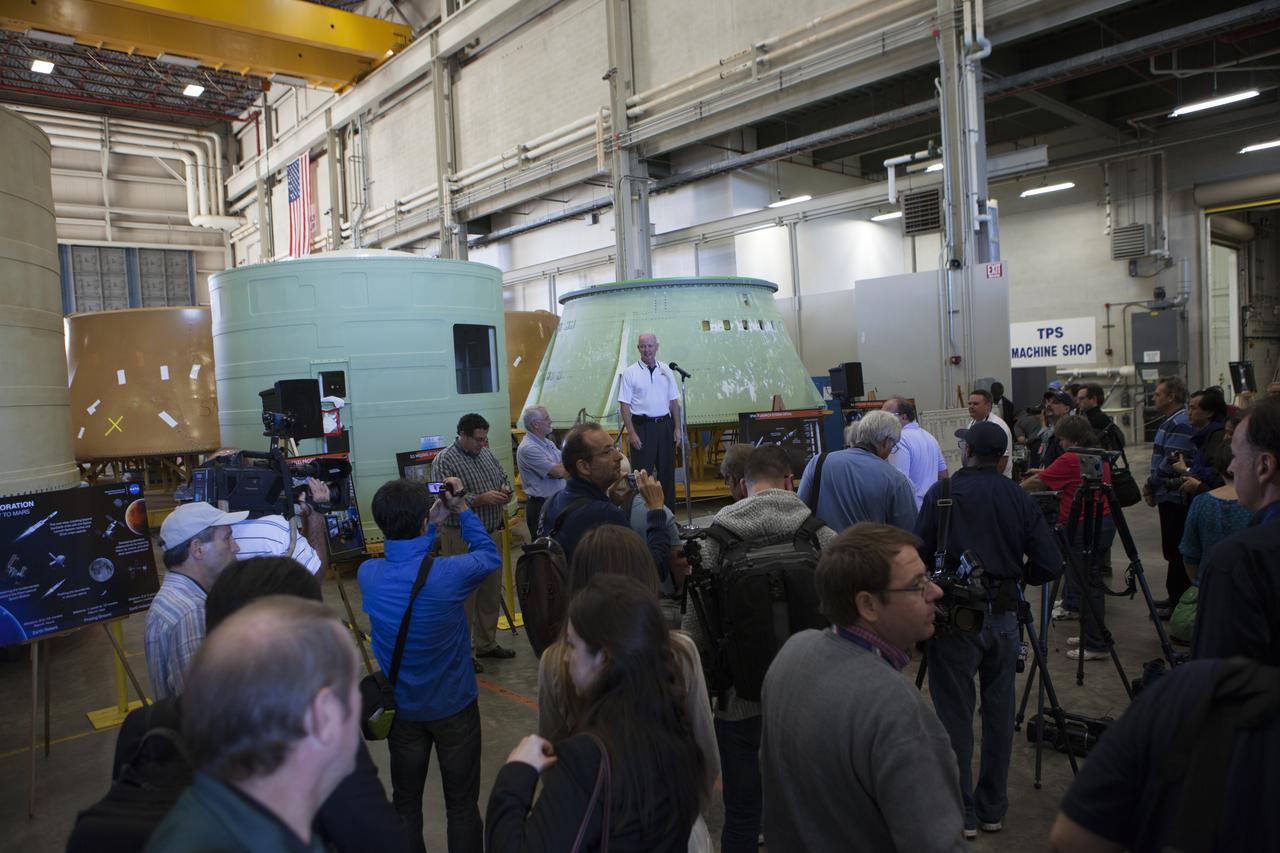
At NASA's Kennedy Space Center in Florida, members of the news media are briefed on the agency's Space Launch System SLS Program by former astronaut Brian Duffy who is now vice president and program manager of Exploration Systems at Alliant Techsystems Inc. ATK. The briefing took place in the spaceport's Booster Fabrication Facility BFF. During the Space Shuttle Program, the facility was used for processing forward segments and aft skirts for the solid rocket boosters. The BFF will serve a similar role for the SLS. Orion is the exploration spacecraft designed to carry astronauts to destinations not yet explored by humans, including an asteroid and Mars. It will have emergency abort capability, sustain the crew during space travel and provide safe re-entry from deep space return velocities. The first unpiloted flight test of Orion is scheduled to launch Dec. 4, 2014 atop a United Launch Alliance Delta IV Heavy rocket, and in 2018 on NASA’s Space Launch System rocket.
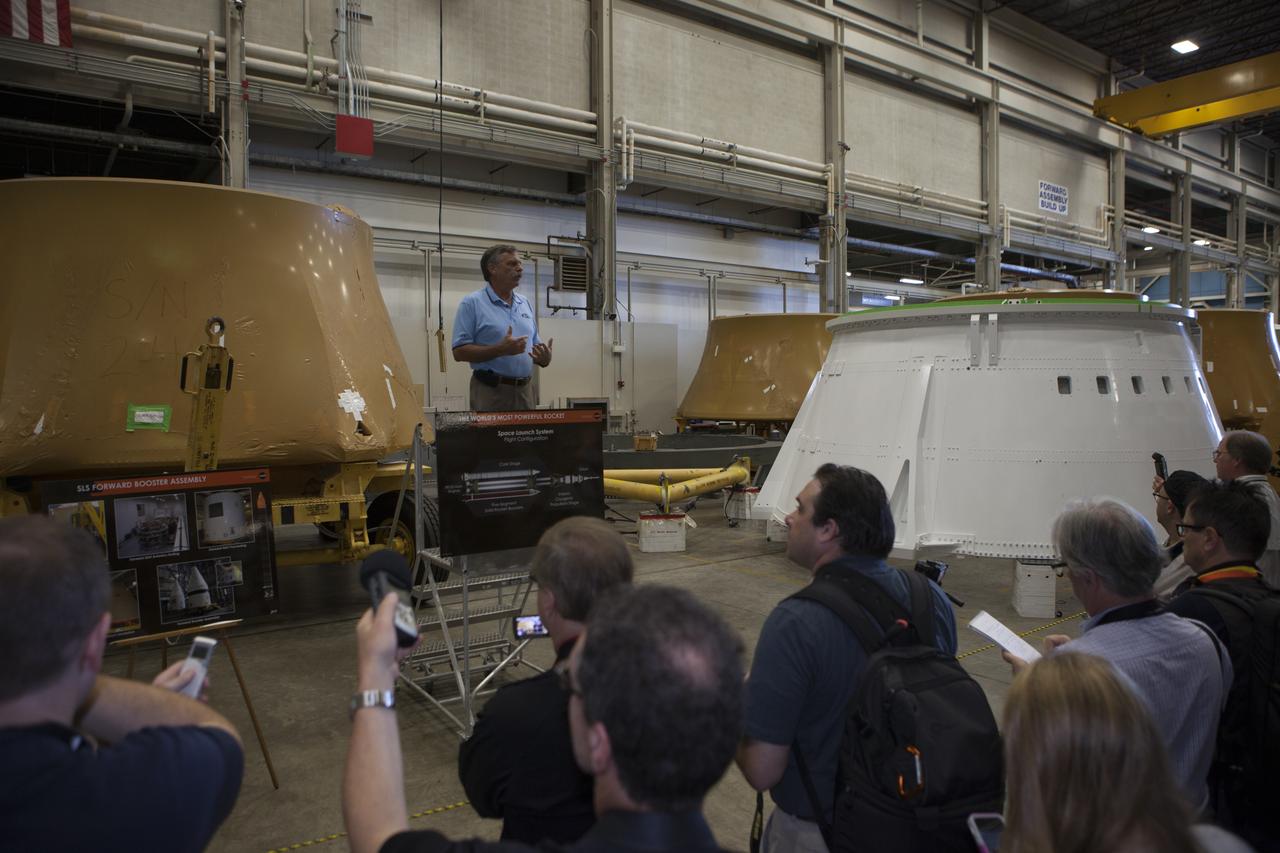
At NASA's Kennedy Space Center in Florida, members of the news media are briefed on the agency's Space Launch System SLS Program by Larry Clark, engineering manager for Alliant Techsystems Inc. ATK. The briefing took place in the spaceport's Booster Fabrication Facility BFF. During the Space Shuttle Program, the facility was used for processing forward segments and aft skirts for the solid rocket boosters. The BFF will serve a similar role for the SLS. Orion is the exploration spacecraft designed to carry astronauts to destinations not yet explored by humans, including an asteroid and Mars. It will have emergency abort capability, sustain the crew during space travel and provide safe re-entry from deep space return velocities. The first unpiloted flight test of Orion is scheduled to launch Dec. 4, 2014 atop a United Launch Alliance Delta IV Heavy rocket, and in 2018 on NASA’s Space Launch System rocket.
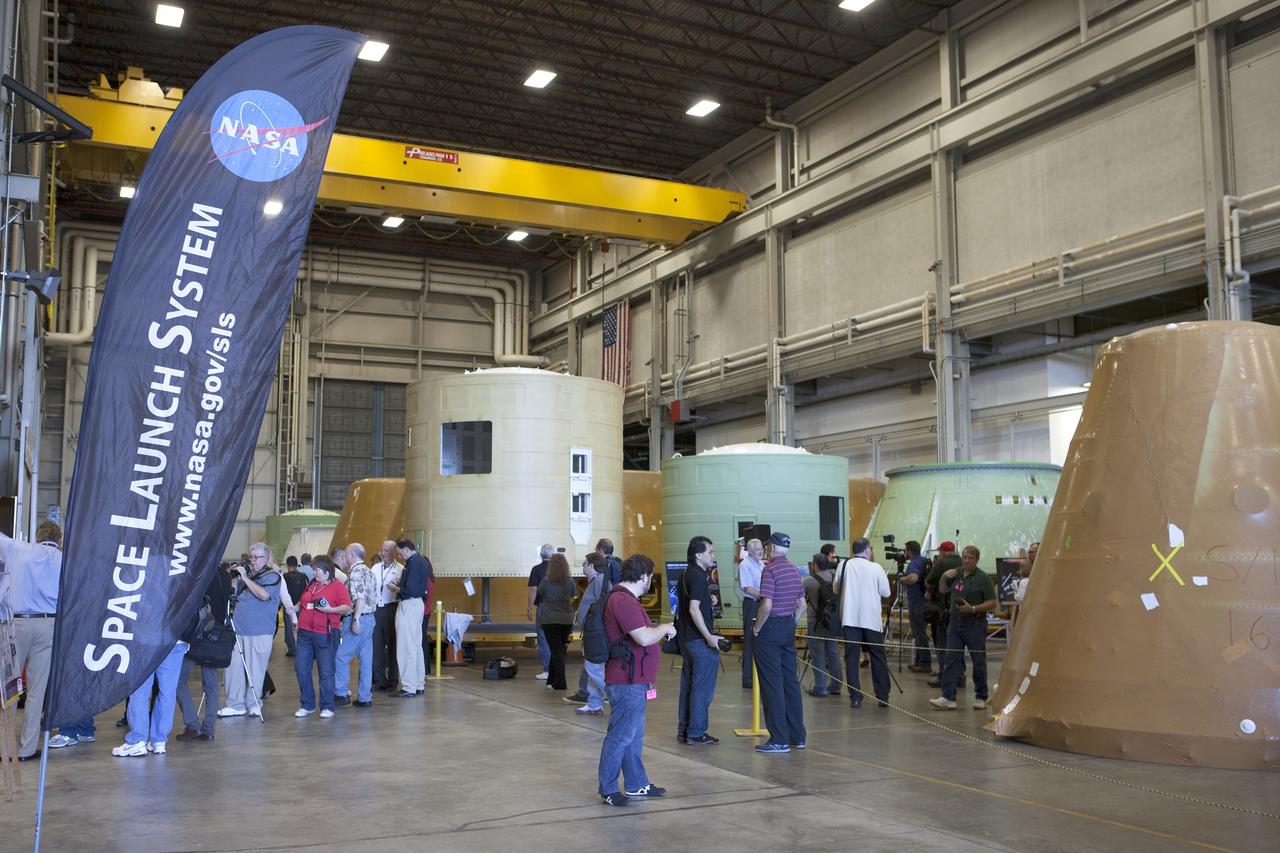
CAPE CANAVERAL, Fla. – At NASA's Kennedy Space Center in Florida, members of the news media tour the spaceport's Booster Fabrication Facility BFF. During the Space Shuttle Program, the facility was used for processing forward segments and aft skirts for the solid rocket boosters. The BFF will serve a similar role for the SLS. Orion is the exploration spacecraft designed to carry astronauts to destinations not yet explored by humans, including an asteroid and Mars. It will have emergency abort capability, sustain the crew during space travel and provide safe re-entry from deep space return velocities. The first unpiloted flight test of Orion is scheduled to launch Dec. 4, 2014 atop a United Launch Alliance Delta IV Heavy rocket, and in 2018 on NASA’s Space Launch System rocket. For more information, visit www.nasa.gov/orion Photo credit: NASA/Kim Shiflett
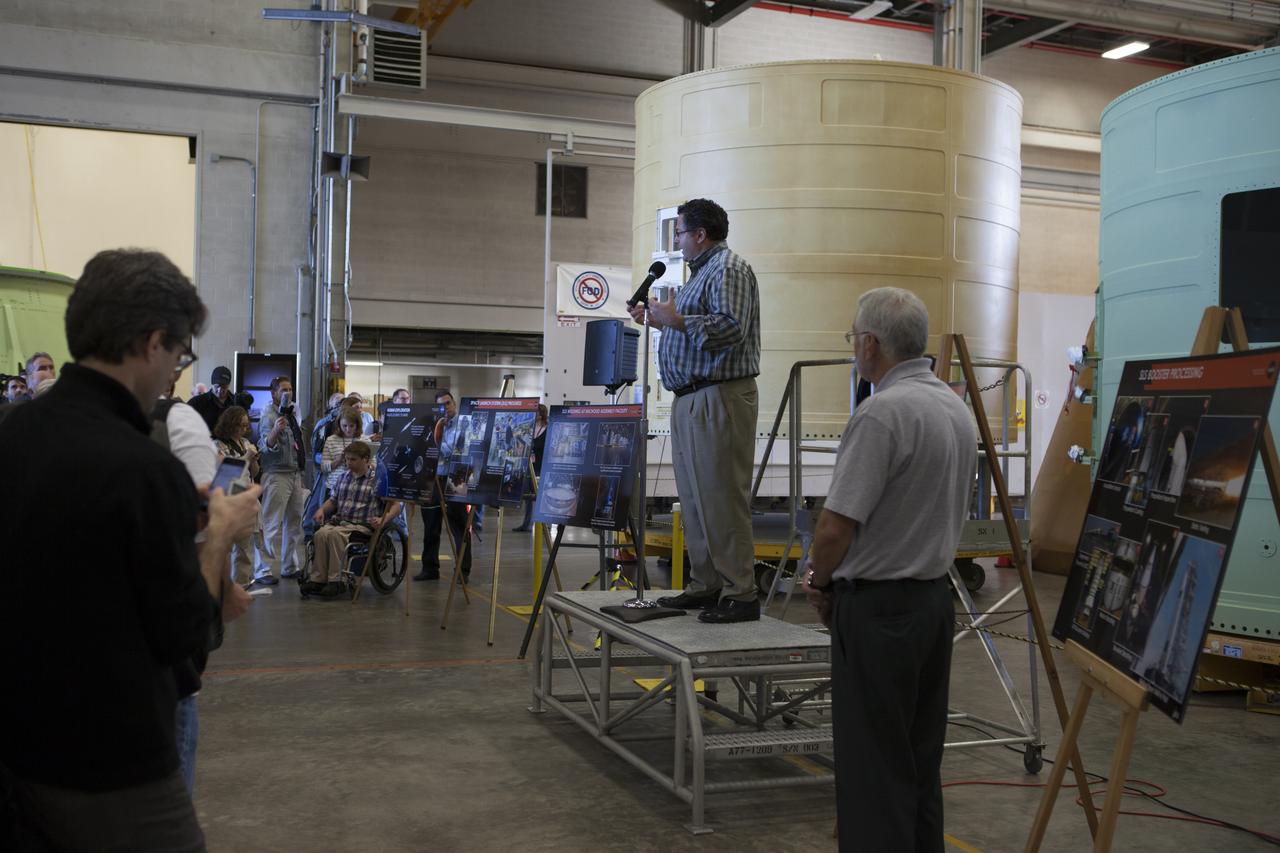
At NASA's Kennedy Space Center in Florida, members of the news media are briefed on the agency's Space Launch System SLS Program by Todd May, program manager for Space Launch Systems SLS at NASA's Marshall Space Flight Center in Huntsville, Alabama. The briefing took place in the spaceport's Booster Fabrication Facility BFF. During the Space Shuttle Program, the facility was used for processing forward segments and aft skirts for the solid rocket boosters. The BFF will serve a similar role for the SLS. Orion is the exploration spacecraft designed to carry astronauts to destinations not yet explored by humans, including an asteroid and Mars. It will have emergency abort capability, sustain the crew during space travel and provide safe re-entry from deep space return velocities. The first unpiloted flight test of Orion is scheduled to launch Dec. 4, 2014 atop a United Launch Alliance Delta IV Heavy rocket, and in 2018 on NASA’s Space Launch System rocket.
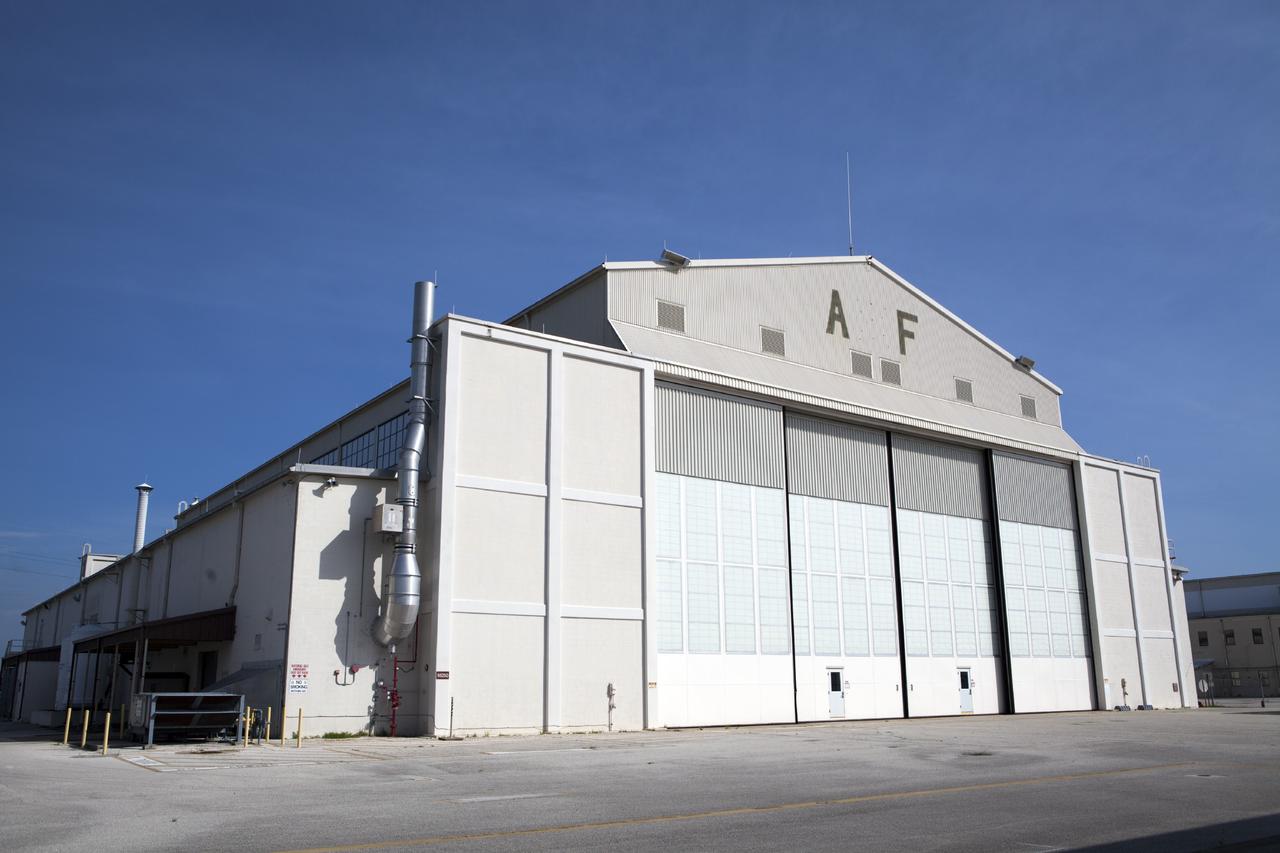
CAPE CANAVERAL, Fla. – An exterior view of Hangar AF at Cape Canaveral Air Force Station in Florida. The facility may be used by the Ground Systems Development and Operations Program at Kennedy Space Center for production activities for NASA’s Space Launch System, or SLS. The booster aft and forward skirts and case stiffener attach ring may be processed in the hangar, as well as refurbishment of the frustrum, before they are transferred to the Booster Fabrication Facility for buildup. The SLS rocket will launch the Orion spacecraft on an uncrewed flight test scheduled for 2017. Orion ’s first unpiloted test flight, Exploration Flight Test 1, is scheduled to launch in 2014 atop a Delta IV rocket. For more information, visit http://www.nasa.gov/orion. Photo credit: NASA/Dimitri Gerondidakis
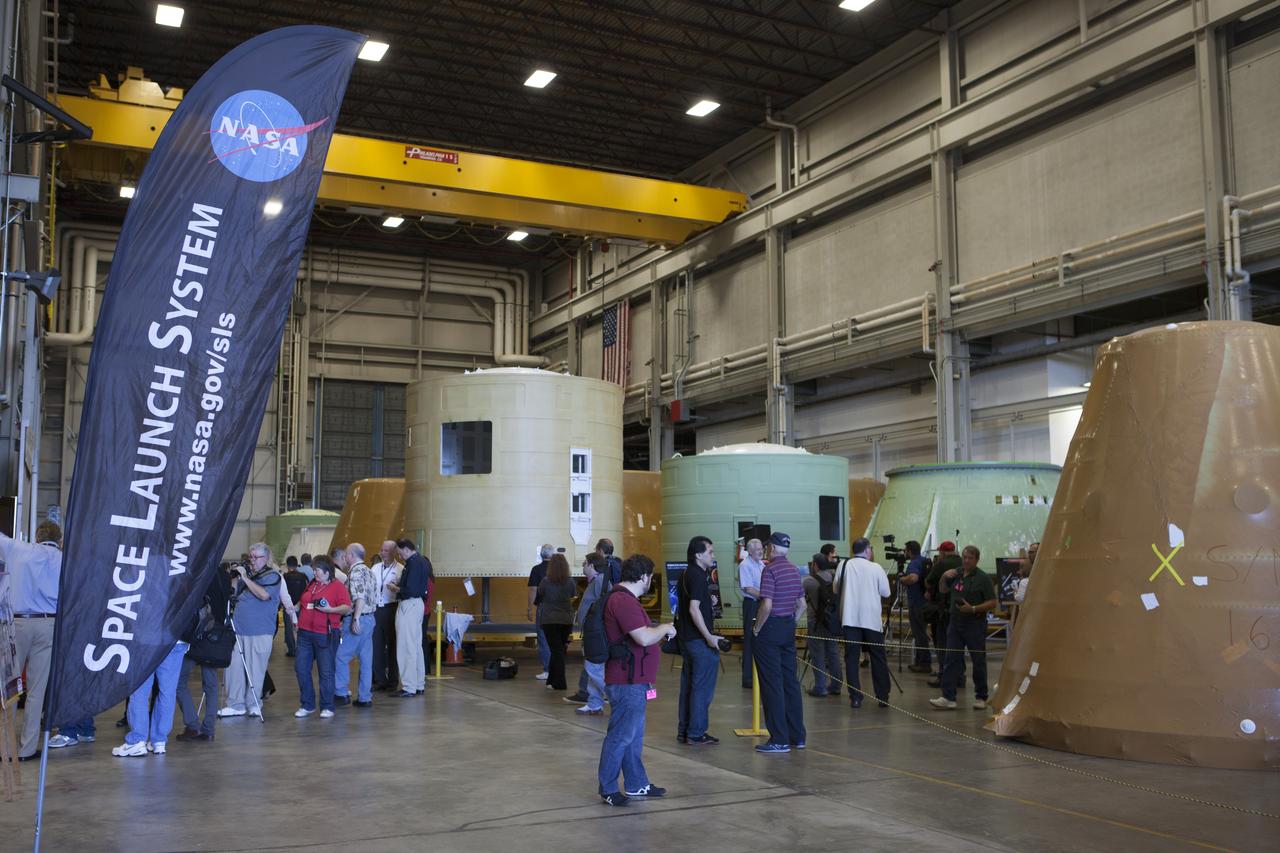
At NASA's Kennedy Space Center in Florida, members of the news media tour the spaceport's Booster Fabrication Facility BFF. During the Space Shuttle Program, the facility was used for processing forward segments and aft skirts for the solid rocket boosters. The BFF will serve a similar role for the SLS. Orion is the exploration spacecraft designed to carry astronauts to destinations not yet explored by humans, including an asteroid and Mars. It will have emergency abort capability, sustain the crew during space travel and provide safe re-entry from deep space return velocities. The first unpiloted flight test of Orion is scheduled to launch Dec. 4, 2014 atop a United Launch Alliance Delta IV Heavy rocket, and in 2018 on NASA’s Space Launch System rocket.
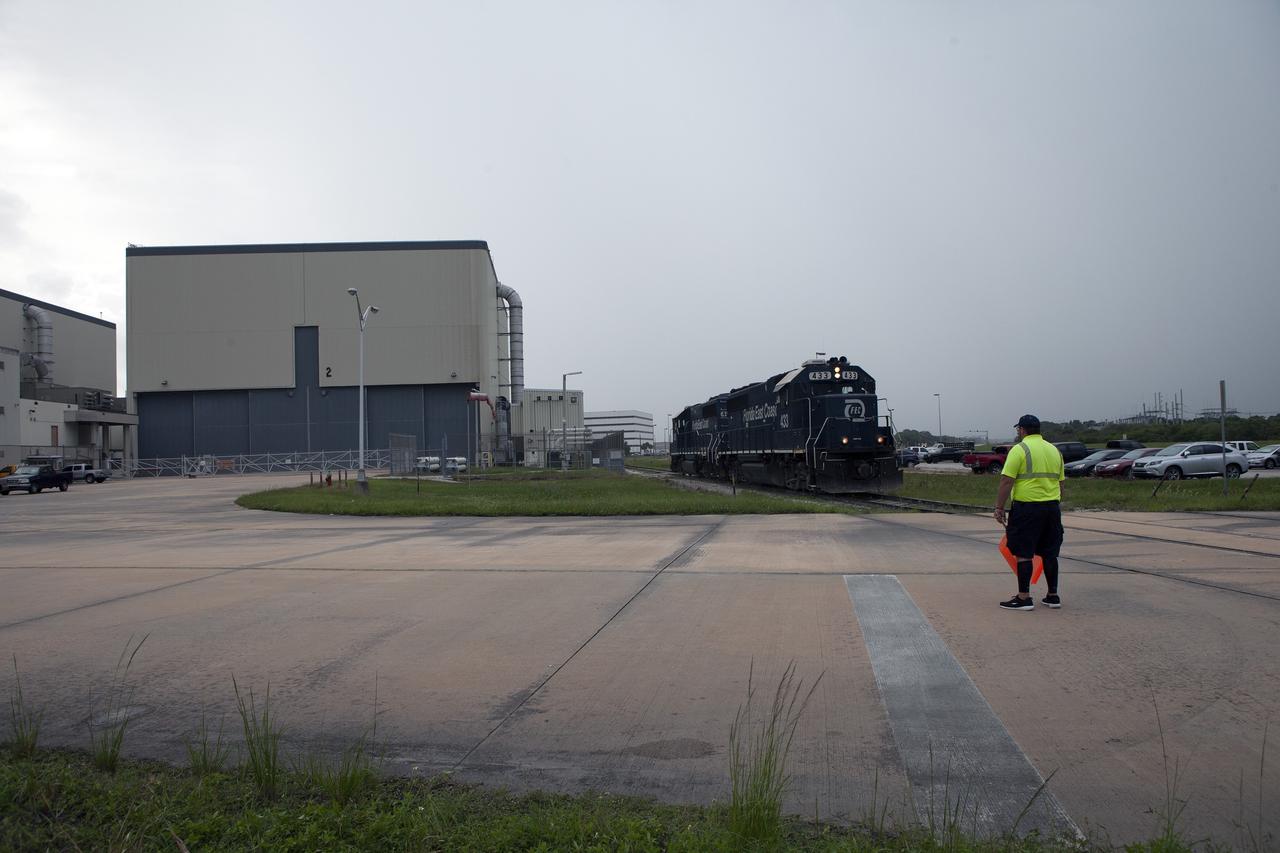
CAPE CANAVERAL, Fla. – Coupled Florida East Coast Railway, or FEC, locomotives No. 433 and No. 428 make the first run past the Orbiter Processing Facility and Thermal Protection System Facility in Launch Complex 39 at NASA’s Kennedy Space Center in Florida during the Rail Vibration Test for the Canaveral Port Authority. Seismic monitors are collecting data as the train passes by. The purpose of the test is to collect amplitude, frequency and vibration test data utilizing two Florida East Coast locomotives operating on KSC tracks to ensure that future railroad operations will not affect launch vehicle processing at the center. Buildings instrumented for the test include the Rotation Processing Surge Facility, Thermal Protection Systems Facility, Vehicle Assembly Building, Orbiter Processing Facility and Booster Fabrication Facility. Photo credit: NASA/Daniel Casper
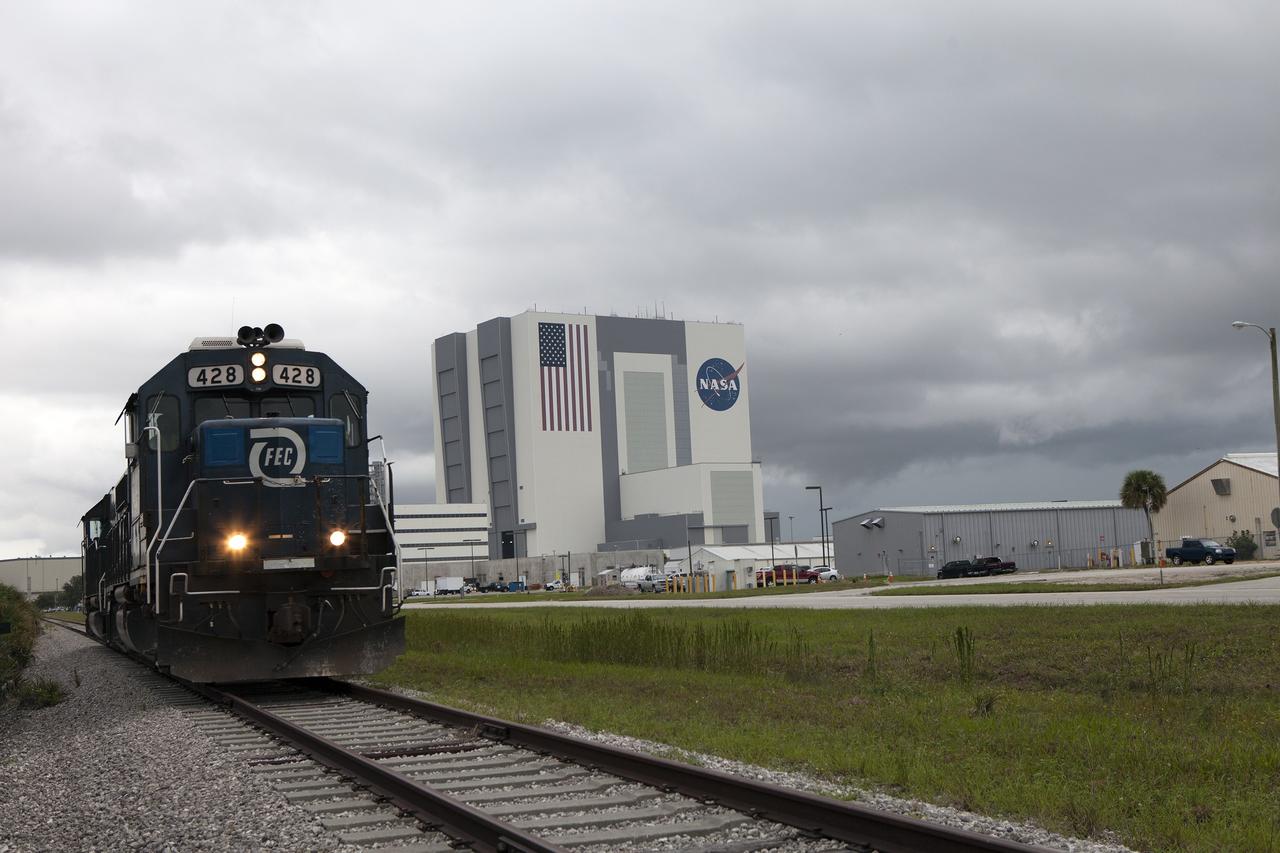
CAPE CANAVERAL, Fla. – Coupled Florida East Coast Railway, or FEC, locomotives No. 433 and No. 428 pass the Vehicle Assembly Building in Launch Complex 39 at NASA’s Kennedy Space Center in Florida on their way to NASA's Locomotive Maintenance Facility. Kennedy's Center Planning and Development Directorate has enlisted the locomotives to support a Rail Vibration Test for the Canaveral Port Authority. The purpose of the test is to collect amplitude, frequency and vibration test data utilizing two Florida East Coast locomotives operating on KSC tracks to ensure that future railroad operations will not affect launch vehicle processing at the center. Buildings instrumented for the test include the Rotation Processing Surge Facility, Thermal Protection Systems Facility, Vehicle Assembly Building, Orbiter Processing Facility and Booster Fabrication Facility. Photo credit: NASA/Daniel Casper
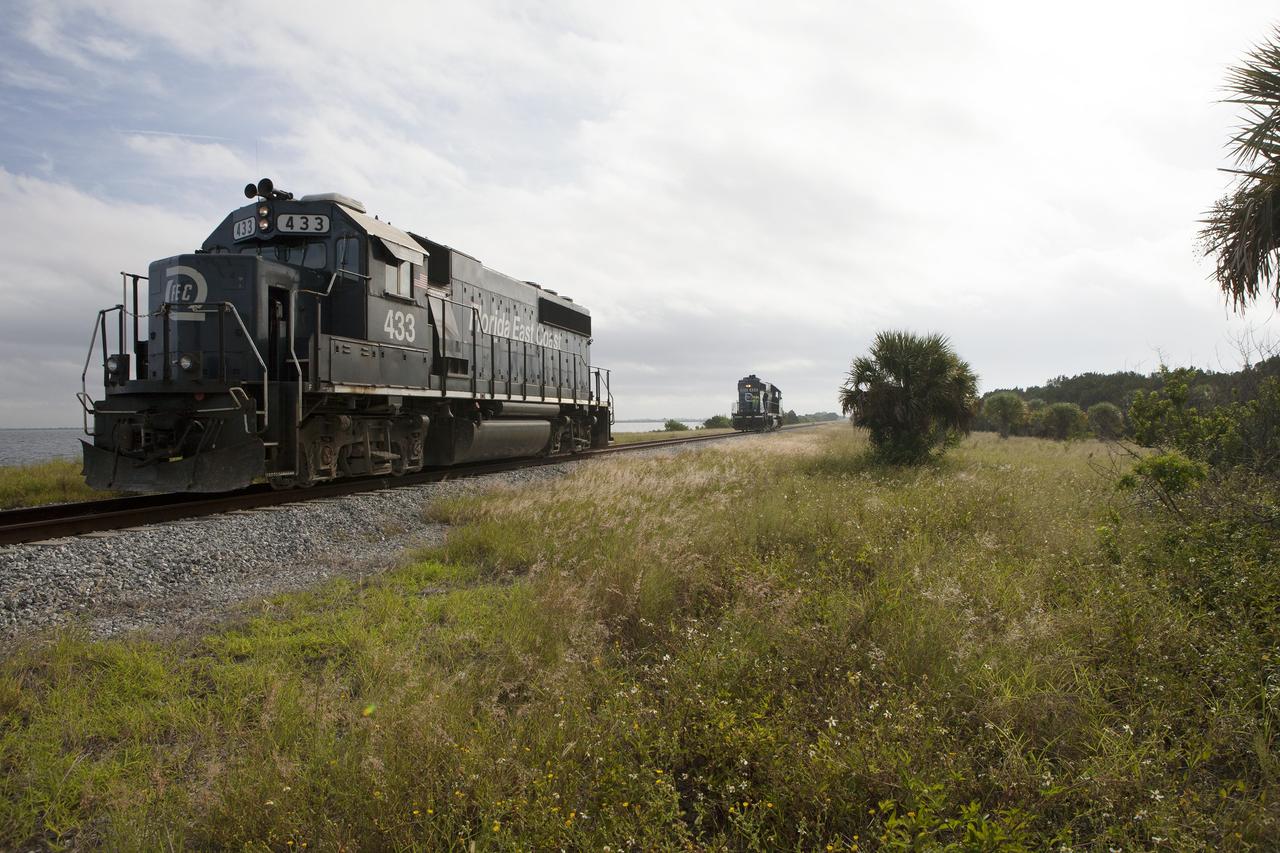
CAPE CANAVERAL, Fla. – Operations are underway to couple Florida East Coast Railway, or FEC, locomotives No. 433 and No. 428 on the track alongside the Indian River, north of Launch Complex 39 at NASA’s Kennedy Space Center in Florida. Kennedy's Center Planning and Development Directorate has enlisted the locomotives to support a Rail Vibration Test for the Canaveral Port Authority. The purpose of the test is to collect amplitude, frequency and vibration test data utilizing two Florida East Coast locomotives operating on KSC tracks to ensure that future railroad operations will not affect launch vehicle processing at the center. Buildings instrumented for the test include the Rotation Processing Surge Facility, Thermal Protection Systems Facility, Vehicle Assembly Building, Orbiter Processing Facility and Booster Fabrication Facility. Photo credit: NASA/Daniel Casper
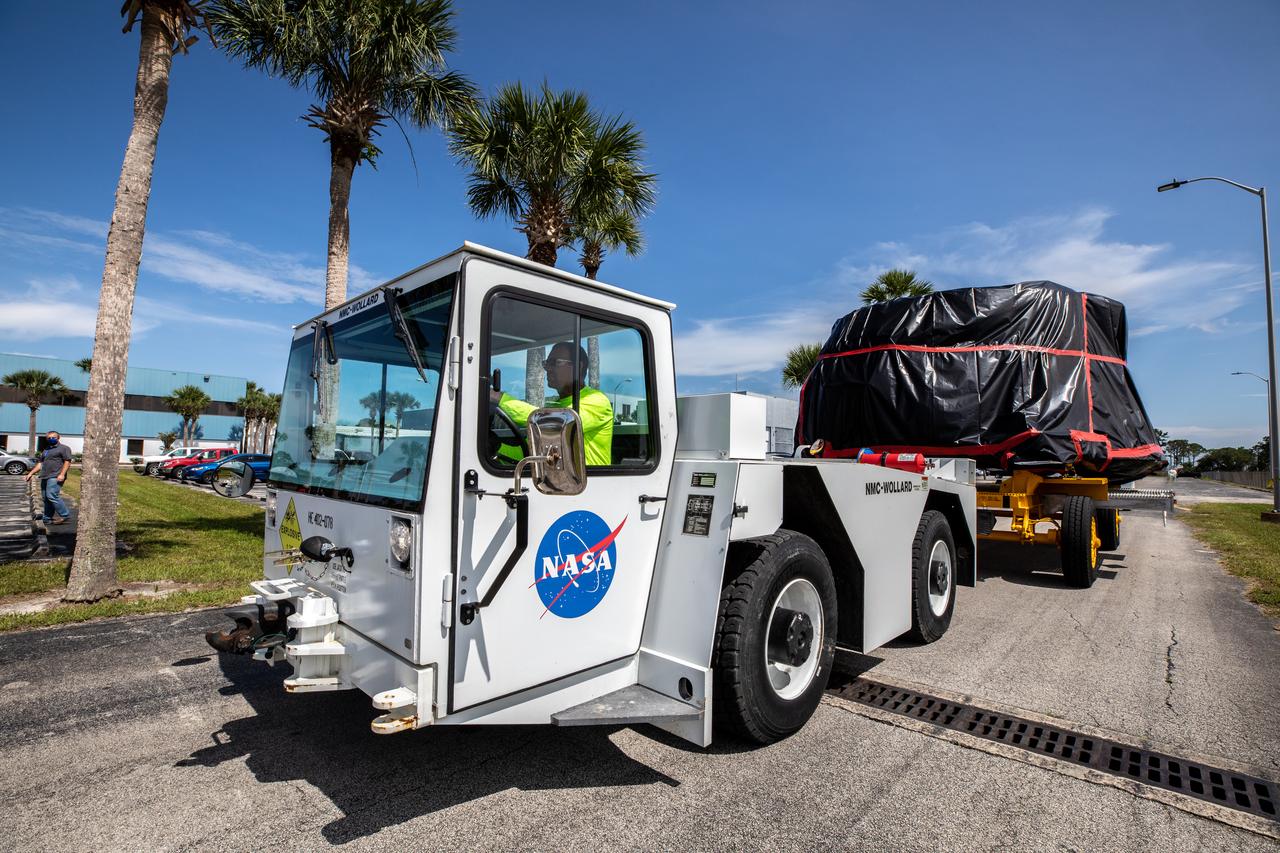
The Artemis I aft skirts for NASA's Space Launch System (SLS) rocket’s twin solid rocket boosters are transported to the Rotation Processing and Surge Facility (RPSF) at the agency’s Kennedy Space Center in Florida on June 10, 2020. The aft skirts were refurbished by Northrop Grumman. They house the thrust vector control system, which controls 70 percent of the steering during initial ascent of the SLS rocket. The segments will remain in the RPSF until ready for stacking with the forward and aft parts of the boosters on the mobile launcher in High Bay 3 of the Vehicle Assembly Building. Through the Artemis Program, NASA is working to land the first woman and next man on the Moon by 2024.

The Artemis I aft skirts for NASA's Space Launch System (SLS) rocket’s twin solid rocket boosters are transported to the Rotation Processing and Surge Facility (RPSF) at the agency’s Kennedy Space Center in Florida on June 10, 2020. The aft skirts were refurbished by Northrop Grumman. They house the thrust vector control system, which controls 70 percent of the steering during initial ascent of the SLS rocket. The segments will remain in the RPSF until ready for stacking with the forward and aft parts of the boosters on the mobile launcher in High Bay 3 of the Vehicle Assembly Building. Through the Artemis Program, NASA is working to land the first woman and next man on the Moon by 2024.
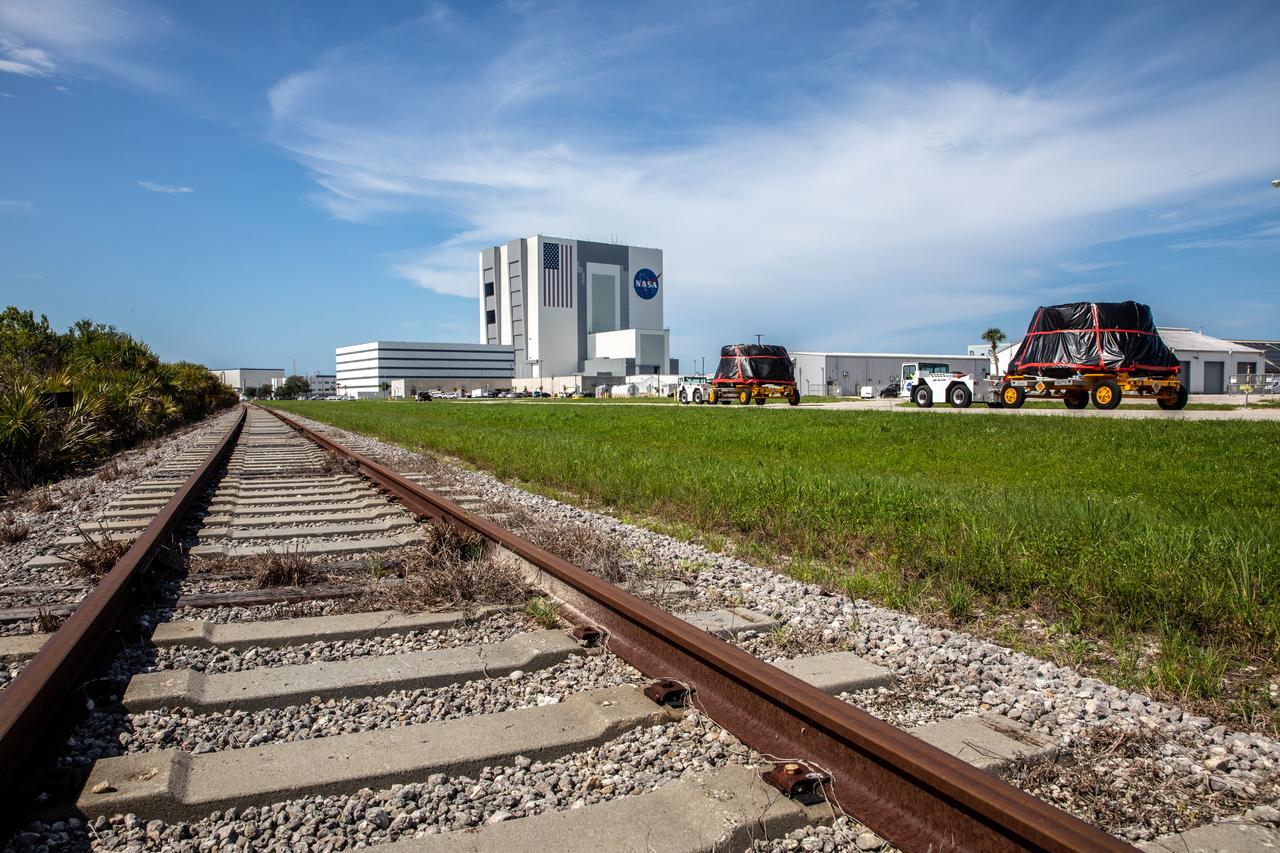
The Artemis I aft skirts for NASA’s Space Launch System (SLS) rocket’s twin solid rocket boosters are moved along the road to the Rotation, Processing and Surge Facility (RPSF) at the agency’s Kennedy Space Center in Florida on June 10, 2020. The aft skirts were refurbished by Northrop Grumman. They house the thrust vector control system, which controls 70 percent of the steering during initial ascent of the SLS rocket. The aft skirts will remain in the RPSF until ready for stacking with the forward and aft parts of the boosters on the mobile launcher in High Bay 3 of the Vehicle Assembly Building. Through the Artemis Program, NASA is working to land the first woman and next man on the Moon by 2024.
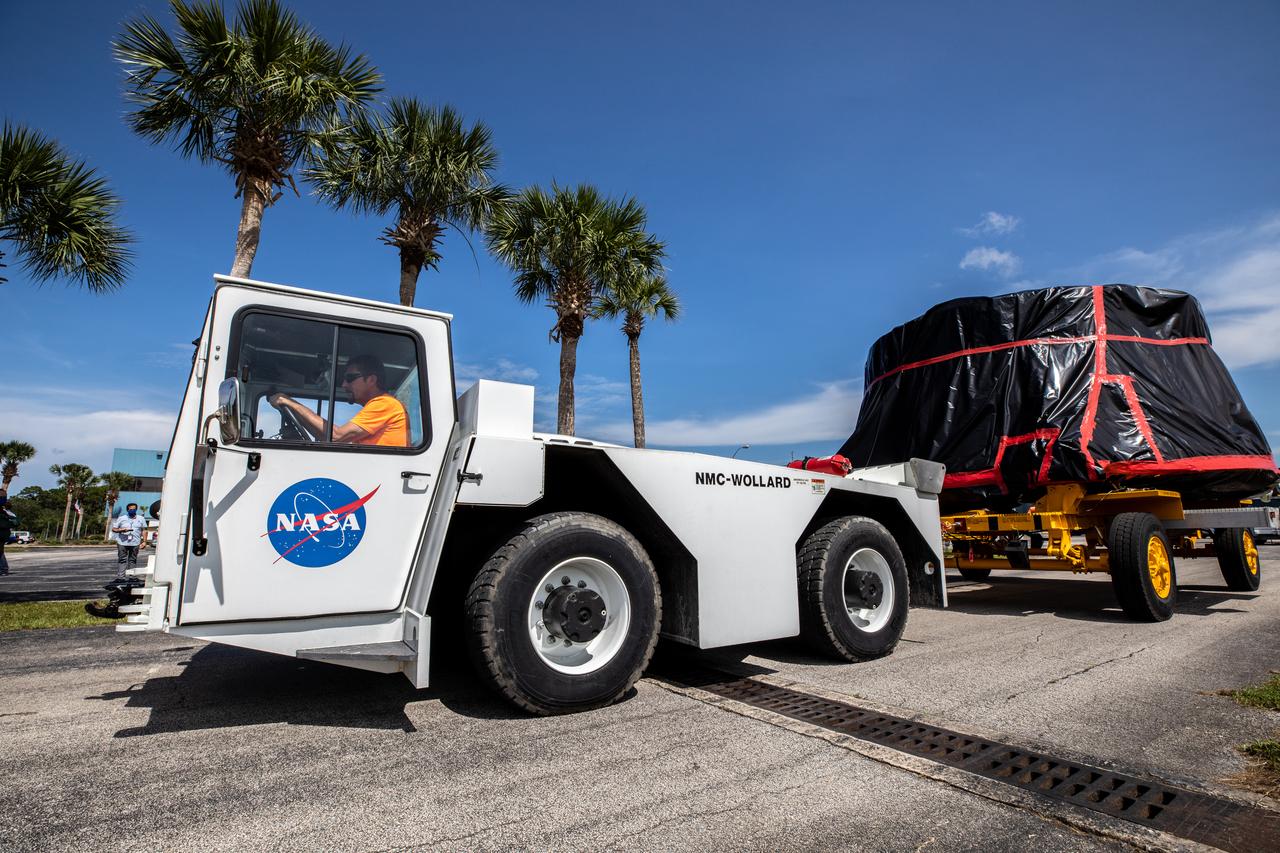
The Artemis I aft skirts for NASA's Space Launch System (SLS) rocket’s twin solid rocket boosters are transported to the Rotation Processing and Surge Facility (RPSF) at the agency’s Kennedy Space Center in Florida on June 10, 2020. The aft skirts were refurbished by Northrop Grumman. They house the thrust vector control system, which controls 70 percent of the steering during initial ascent of the SLS rocket. The segments will remain in the RPSF until ready for stacking with the forward and aft parts of the boosters on the mobile launcher in High Bay 3 of the Vehicle Assembly Building. Through the Artemis Program, NASA is working to land the first woman and next man on the Moon by 2024.
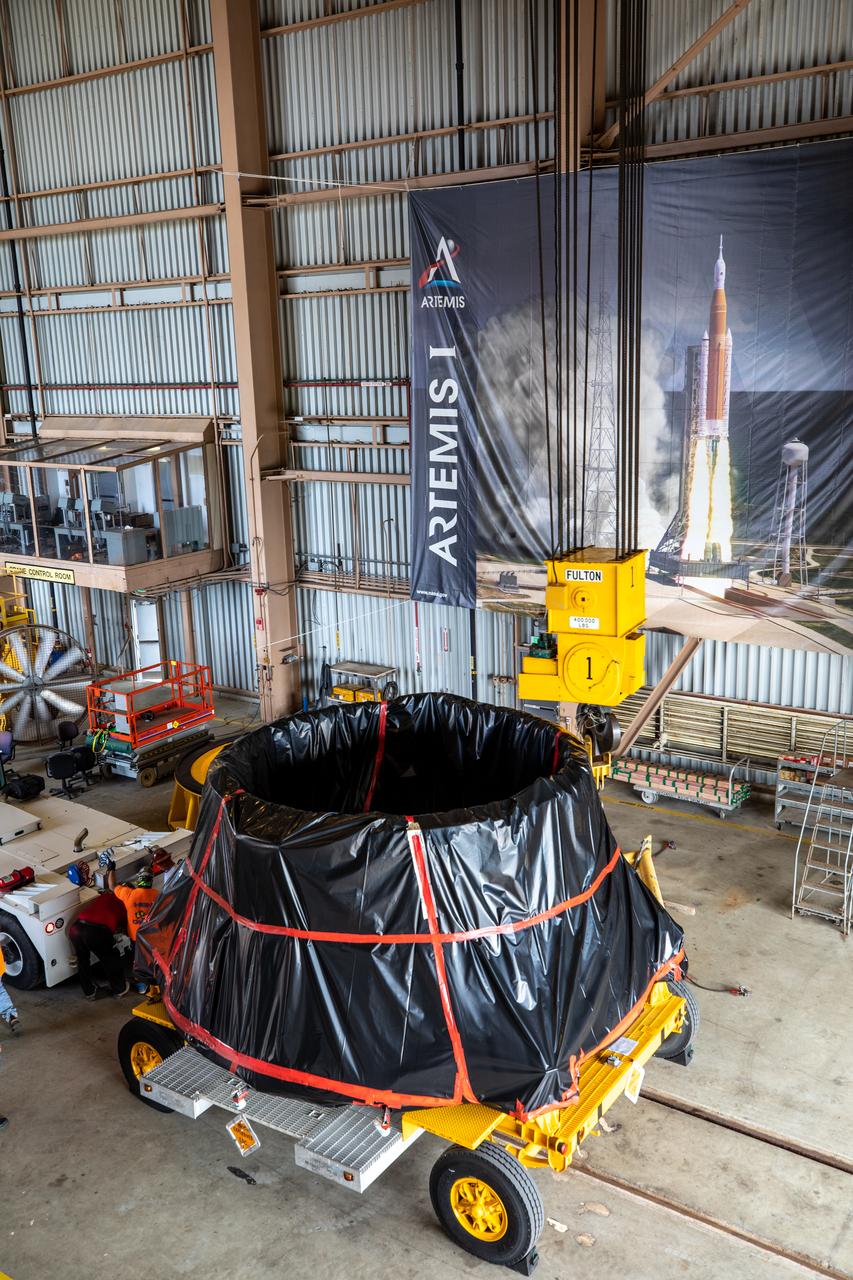
The first of two Artemis I aft skirts for NASA's Space Launch System (SLS) rocket’s twin solid rocket boosters is moved into the Rotation Processing and Surge Facility (RPSF) at the agency’s Kennedy Space Center in Florida on June 10, 2020. The aft skirts were refurbished by Northrop Grumman. They house the thrust vector control system, which controls 70 percent of the steering during initial ascent of the SLS rocket. The segments will remain in the RPSF until ready for stacking with the forward and aft parts of the boosters on the mobile launcher in High Bay 3 of the Vehicle Assembly Building. Through the Artemis Program, NASA is working to land the first woman and next man on the Moon by 2024.
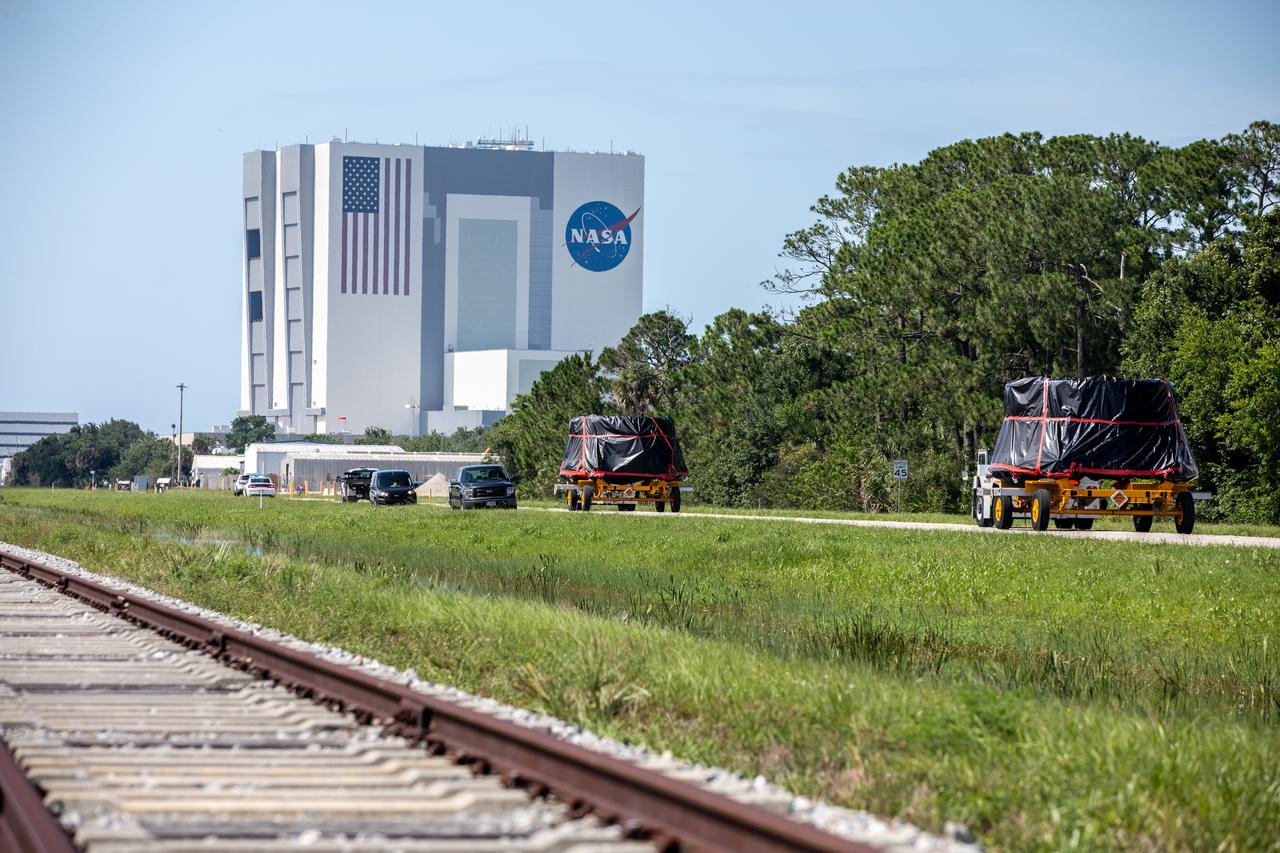
The Artemis I aft skirts for NASA’s Space Launch System (SLS) rocket’s twin solid rocket boosters are moved along the road to the Rotation, Processing and Surge Facility (RPSF) at the agency’s Kennedy Space Center in Florida on June 10, 2020. The aft skirts were refurbished by Northrop Grumman. They house the thrust vector control system, which controls 70 percent of the steering during initial ascent of the SLS rocket. The aft skirts will remain in the RPSF until ready for stacking with the forward and aft parts of the boosters on the mobile launcher in High Bay 3 of the Vehicle Assembly Building. Through the Artemis Program, NASA is working to land the first woman and next man on the Moon by 2024.

The Artemis I aft skirts for the NASA’s Space Launch System (SLS) rocket’s twin solid rocket boosters are moved along the road to the Rotation, Processing and Surge Facility (RPSF) at NASA’s Kennedy Space Center in Florida on June 10, 2020. In the background is the iconic Vehicle Assembly Building (VAB). The aft skirts were refurbished by Northrop Grumman. They house the thrust vector control system, which controls 70 percent of the steering during initial ascent of the SLS rocket. The aft skirts will remain in the RPSF until ready for stacking with the forward and aft parts of the boosters on the mobile launcher in High Bay 3 of the VAB. Through the Artemis Program, NASA is working to land the first woman and next man on the Moon by 2024.
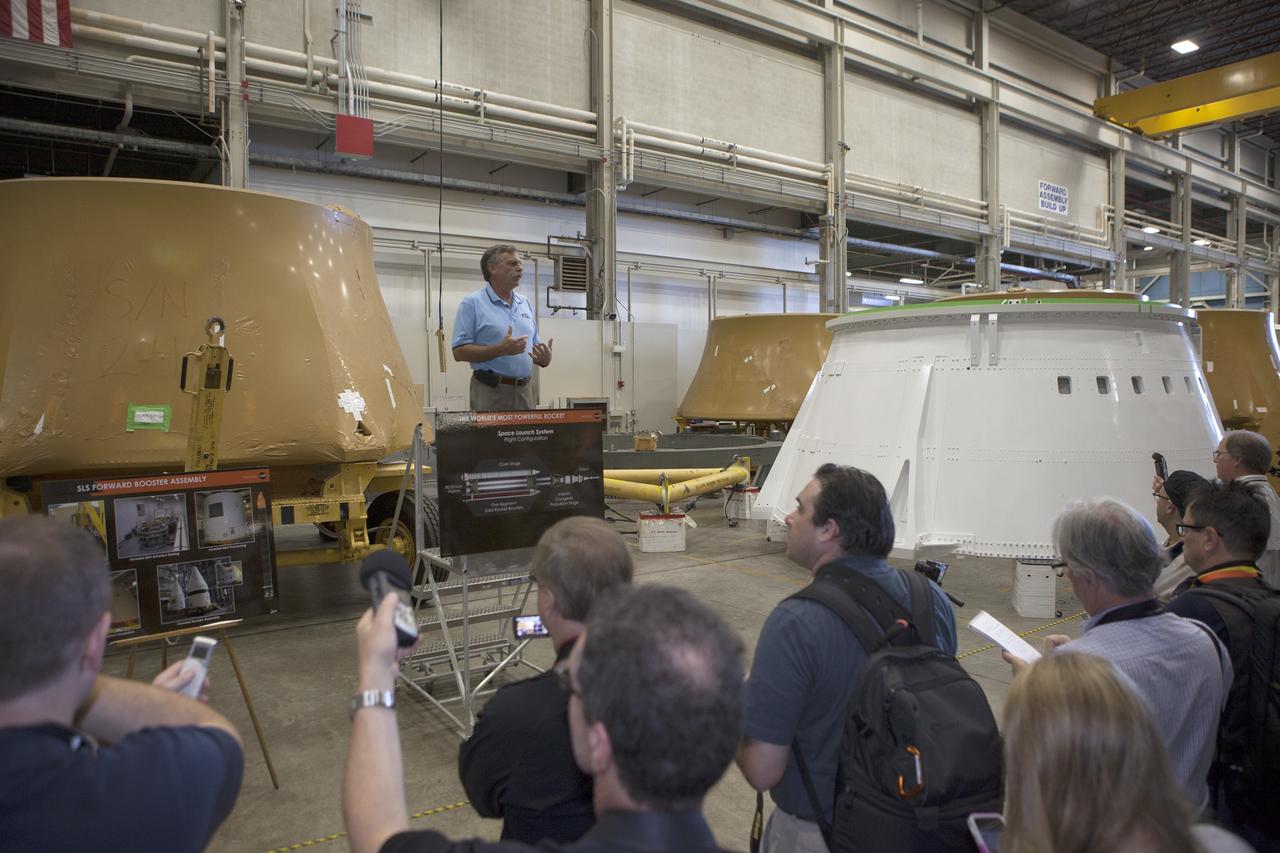
CAPE CANAVERAL, Fla. – At NASA's Kennedy Space Center in Florida, members of the news media are briefed on the agency's Space Launch System SLS Program by Larry Clark, engineering manager for Alliant Techsystems Inc. ATK. The briefing took place in the spaceport's Booster Fabrication Facility BFF. During the Space Shuttle Program, the facility was used for processing forward segments and aft skirts for the solid rocket boosters. The BFF will serve a similar role for the SLS. Orion is the exploration spacecraft designed to carry astronauts to destinations not yet explored by humans, including an asteroid and Mars. It will have emergency abort capability, sustain the crew during space travel and provide safe re-entry from deep space return velocities. The first unpiloted flight test of Orion is scheduled to launch Dec. 4, 2014 atop a United Launch Alliance Delta IV Heavy rocket, and in 2018 on NASA’s Space Launch System rocket. For more information, visit www.nasa.gov/orion Photo credit: NASA/Kim Shiflett
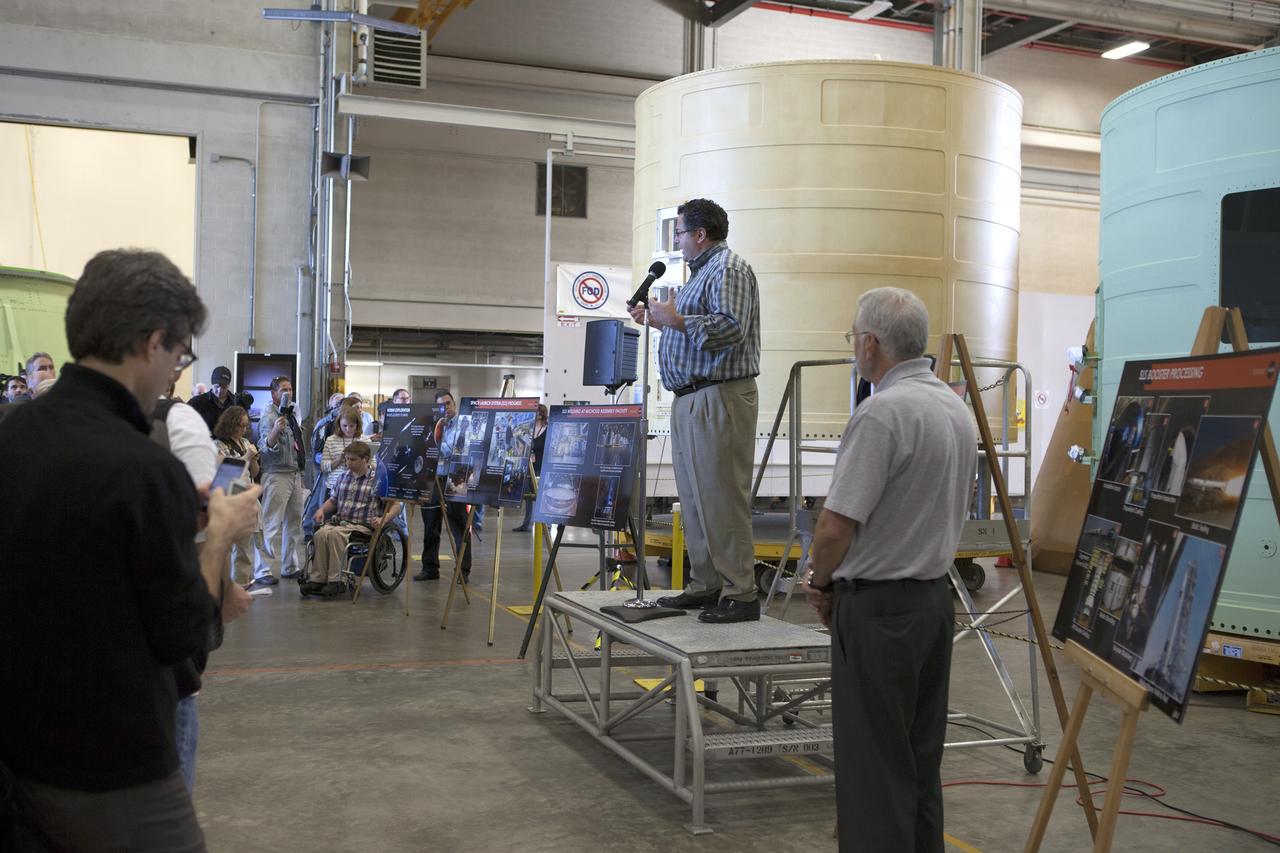
CAPE CANAVERAL, Fla. – At NASA's Kennedy Space Center in Florida, members of the news media are briefed on the agency's Space Launch System SLS Program Todd May, program manager for Space Launch Systems SLS at NASA's Marshall Space Flight Center in Huntsville, Alabama. The briefing took place in the spaceport's Booster Fabrication Facility BFF. During the Space Shuttle Program, the facility was used for processing forward segments and aft skirts for the solid rocket boosters. The BFF will serve a similar role for the SLS. Orion is the exploration spacecraft designed to carry astronauts to destinations not yet explored by humans, including an asteroid and Mars. It will have emergency abort capability, sustain the crew during space travel and provide safe re-entry from deep space return velocities. The first unpiloted flight test of Orion is scheduled to launch Dec. 4, 2014 atop a United Launch Alliance Delta IV Heavy rocket, and in 2018 on NASA’s Space Launch System rocket. For more information, visit www.nasa.gov/orion Photo credit: NASA/Kim Shiflett
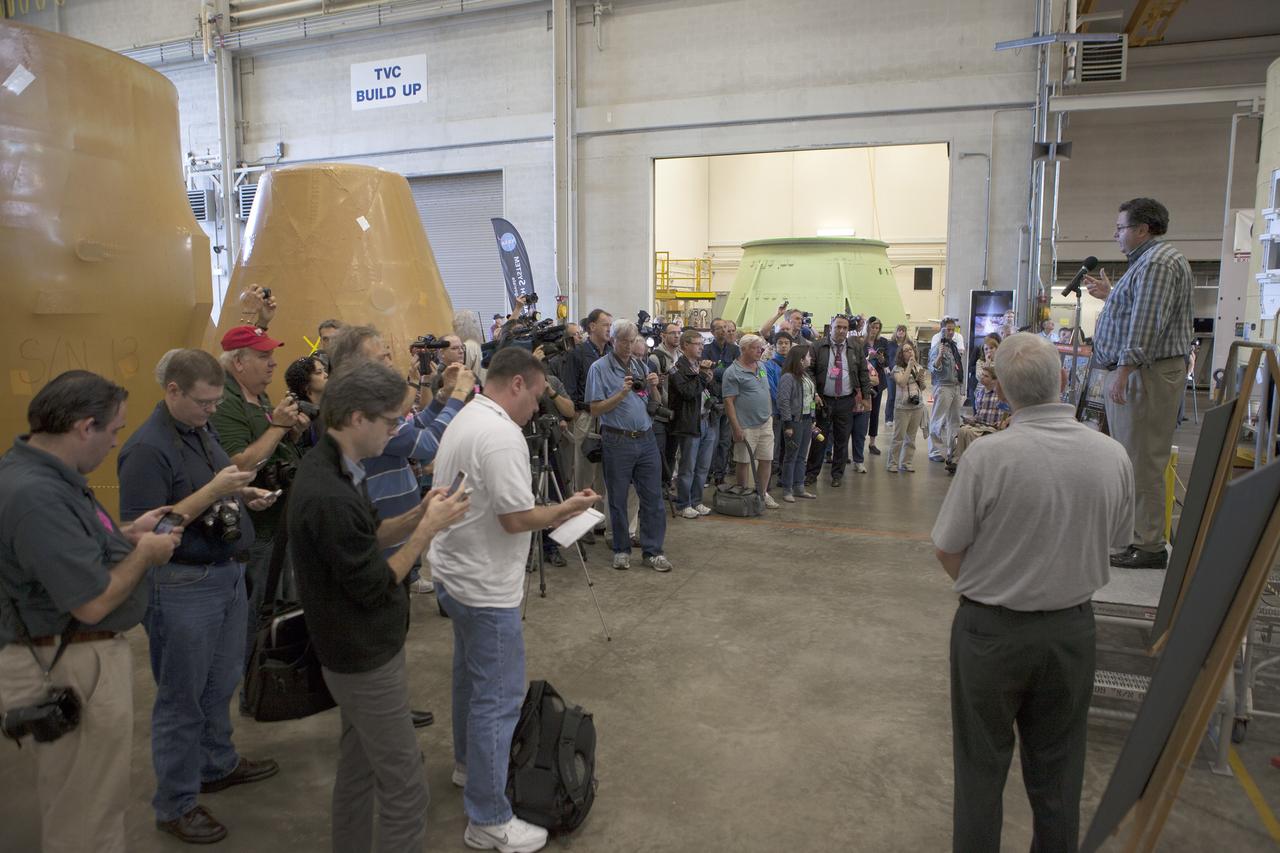
CAPE CANAVERAL, Fla. – At NASA's Kennedy Space Center in Florida, members of the news media are briefed on the agency's Space Launch System SLS Program Todd May, program manager for Space Launch Systems SLS at NASA's Marshall Space Flight Center in Huntsville, Alabama. The briefing took place in the spaceport's Booster Fabrication Facility BFF. During the Space Shuttle Program, the facility was used for processing forward segments and aft skirts for the solid rocket boosters. The BFF will serve a similar role for the SLS. Orion is the exploration spacecraft designed to carry astronauts to destinations not yet explored by humans, including an asteroid and Mars. It will have emergency abort capability, sustain the crew during space travel and provide safe re-entry from deep space return velocities. The first unpiloted flight test of Orion is scheduled to launch Dec. 4, 2014 atop a United Launch Alliance Delta IV Heavy rocket, and in 2018 on NASA’s Space Launch System rocket. For more information, visit www.nasa.gov/orion Photo credit: NASA/Kim Shiflett
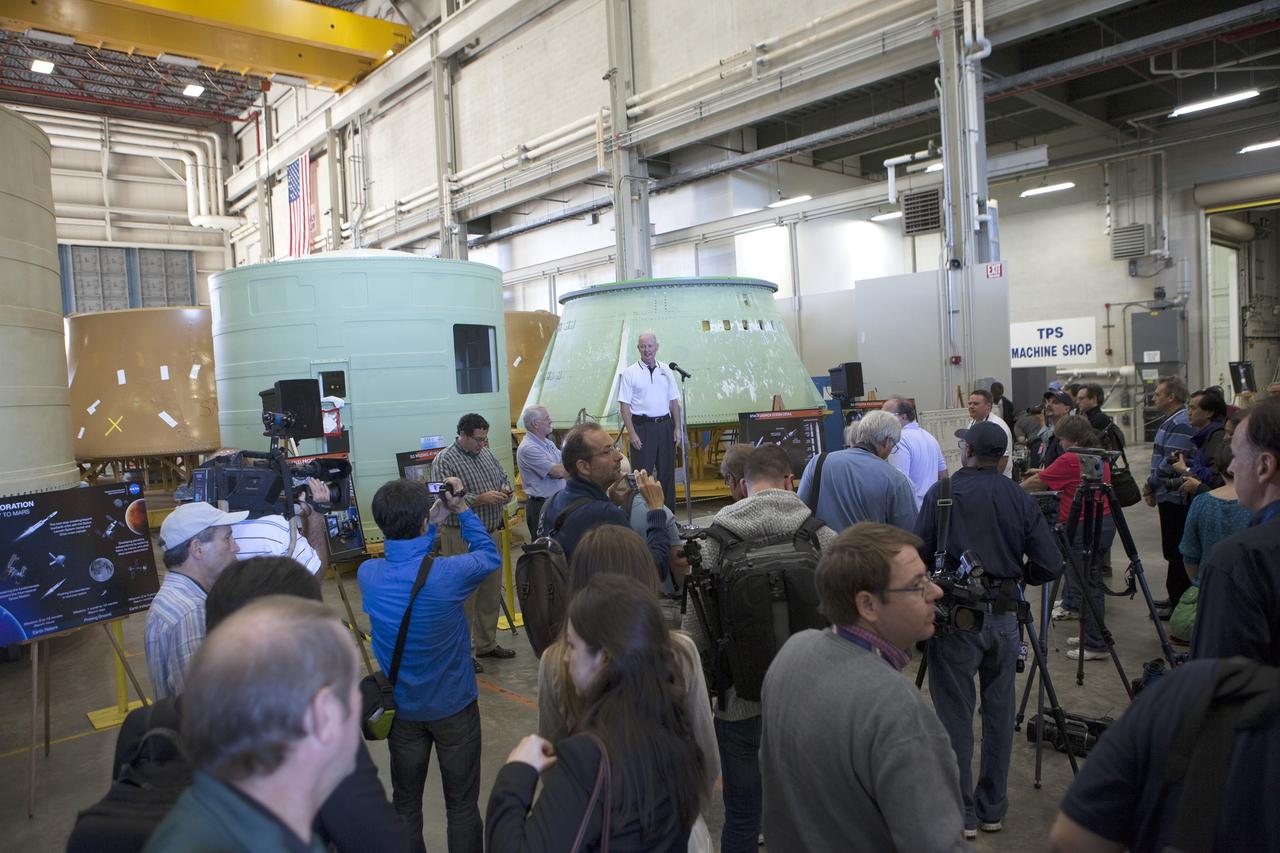
CAPE CANAVERAL, Fla. – At NASA's Kennedy Space Center in Florida, members of the news media are briefed on the agency's Space Launch System SLS Program by former astronaut Brian Duffy who is now vice president and program manager of Exploration Systems at Alliant Techsystems Inc. ATK. The briefing took place in the spaceport's Booster Fabrication Facility BFF. During the Space Shuttle Program, the facility was used for processing forward segments and aft skirts for the solid rocket boosters. The BFF will serve a similar role for the SLS. Orion is the exploration spacecraft designed to carry astronauts to destinations not yet explored by humans, including an asteroid and Mars. It will have emergency abort capability, sustain the crew during space travel and provide safe re-entry from deep space return velocities. The first unpiloted flight test of Orion is scheduled to launch Dec. 4, 2014 atop a United Launch Alliance Delta IV Heavy rocket, and in 2018 on NASA’s Space Launch System rocket. For more information, visit www.nasa.gov/orion Photo credit: NASA/Kim Shiflett
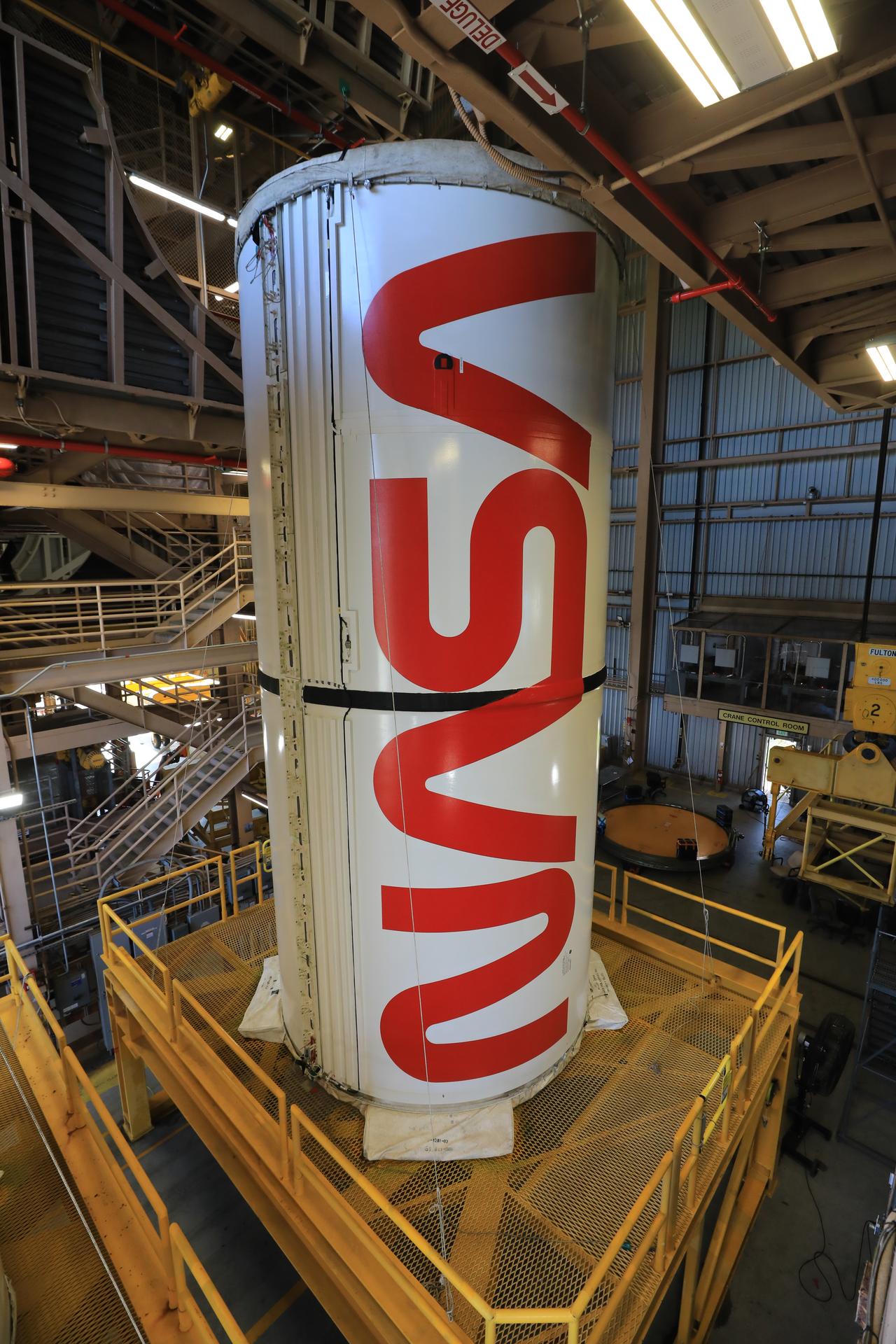
The right center center solid rocket booster segment, containing the NASA “worm” insignia, and the left center center solid rocket booster segment for the agency’s Artemis III SLS (Space Launch System) rocket undergo processing inside the Rotation, Processing and Surge Facility at the agency’s Kennedy Space Center in Florida on Friday, July 24, 2026. The SLS rocket’s twin boosters, manufactured by Northrop Grumman in Utah, will provide more than 75 percent of the SLS rocket’s total thrust at launch. The Artemis III mission will launch crew in the Orion spacecraft on top of the SLS rocket to test rendezvous and docking capabilities between Orion and commercial spacecraft needed to land astronauts on the Moon.
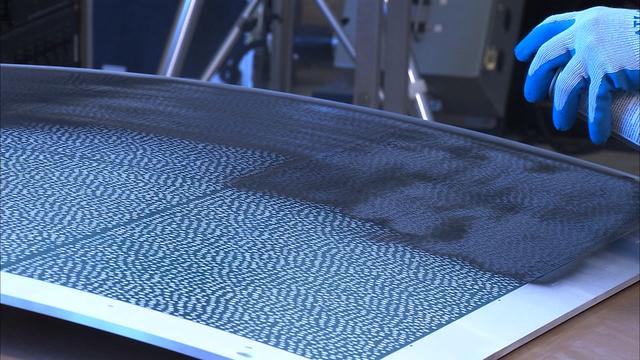
Under the goals of the Vision for Space Exploration, Ares I is a chief component of the cost-effective space transportation infrastructure being developed by NASA's Constellation Program. This transportation system will safely and reliably carry human explorers back to the moon, and then onward to Mars and other destinations in the solar system. The Ares I effort includes multiple project element teams at NASA centers and contract organizations around the nation, and is managed by the Exploration Launch Projects Office at NASA's Marshall Space Flight Center (MFSC). ATK Launch Systems near Brigham City, Utah, is the prime contractor for the first stage booster. ATK's subcontractor, United Space Alliance of Houston, is designing, developing and testing the parachutes at its facilities at NASA's Kennedy Space Center in Florida. NASA's Johnson Space Center in Houston hosts the Constellation Program and Orion Crew Capsule Project Office and provides test instrumentation and support personnel. Together, these teams are developing vehicle hardware, evolving proven technologies, and testing components and systems. Their work builds on powerful, reliable space shuttle propulsion elements and nearly a half-century of NASA space flight experience and technological advances. Ares I is an inline, two-stage rocket configuration topped by the Crew Exploration Vehicle, its service module, and a launch abort system. This HD video image depicts a manufactured aluminum panel, that will fabricate the Ares I upper stage barrel, undergoing a confidence panel test. In this test, the bent aluminum is stressed to breaking point and thoroughly examined. The panels are manufactured by AMRO Manufacturing located in El Monte, California. (Highest resolution available)
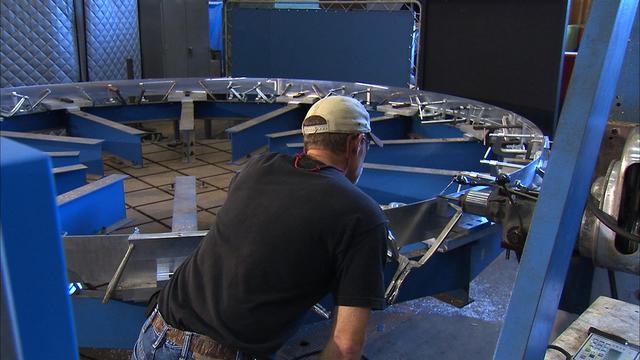
Under the goals of the Vision for Space Exploration, Ares I is a chief component of the cost-effective space transportation infrastructure being developed by NASA's Constellation Program. This transportation system will safely and reliably carry human explorers back to the moon, and then onward to Mars and other destinations in the solar system. The Ares I effort includes multiple project element teams at NASA centers and contract organizations around the nation, and is managed by the Exploration Launch Projects Office at NASA's Marshall Space Flight Center (MFSC). ATK Launch Systems near Brigham City, Utah, is the prime contractor for the first stage booster. ATK's subcontractor, United Space Alliance of Houston, is designing, developing and testing the parachutes at its facilities at NASA's Kennedy Space Center in Florida. NASA's Johnson Space Center in Houston hosts the Constellation Program and Orion Crew Capsule Project Office and provides test instrumentation and support personnel. Together, these teams are developing vehicle hardware, evolving proven technologies, and testing components and systems. Their work builds on powerful, reliable space shuttle propulsion elements and nearly a half-century of NASA space flight experience and technological advances. Ares I is an inline, two-stage rocket configuration topped by the Crew Exploration Vehicle, its service module, and a launch abort system. This HD video image depicts the preparation and placement of a confidence ring for friction stir welding used in manufacturing aluminum panels that will fabricate the Ares I upper stage barrel. The aluminum panels are manufactured and subjected to confidence tests during which the bent aluminum is stressed to breaking point and thoroughly examined. The panels are manufactured by AMRO Manufacturing located in El Monte, California. (Highest resolution available)
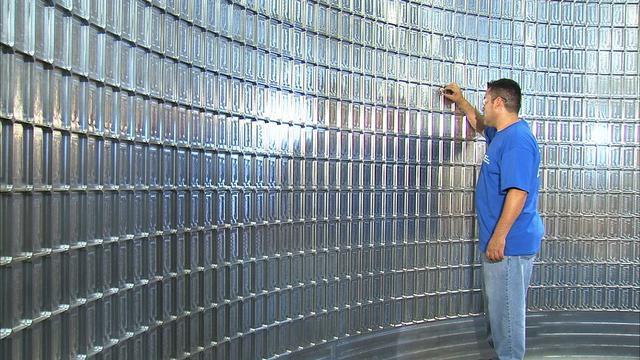
Under the goals of the Vision for Space Exploration, Ares I is a chief component of the cost-effective space transportation infrastructure being developed by NASA's Constellation Program. This transportation system will safely and reliably carry human explorers back to the moon, and then onward to Mars and other destinations in the solar system. The Ares I effort includes multiple project element teams at NASA centers and contract organizations around the nation, and is managed by the Exploration Launch Projects Office at NASA's Marshall Space Flight Center (MFSC). ATK Launch Systems near Brigham City, Utah, is the prime contractor for the first stage booster. ATK's subcontractor, United Space Alliance of Houston, is designing, developing and testing the parachutes at its facilities at NASA's Kennedy Space Center in Florida. NASA's Johnson Space Center in Houston hosts the Constellation Program and Orion Crew Capsule Project Office and provides test instrumentation and support personnel. Together, these teams are developing vehicle hardware, evolving proven technologies, and testing components and systems. Their work builds on powerful, reliable space shuttle propulsion elements and nearly a half-century of NASA space flight experience and technological advances. Ares I is an inline, two-stage rocket configuration topped by the Crew Exploration Vehicle, its service module, and a launch abort system. This HD video image depicts a manufactured panel that will be used for the Ares I upper stage barrel fabrication. The aluminum panels are manufacturing process demonstration articles that will undergo testing until perfected. The panels are built by AMRO Manufacturing located in El Monte, California. (Highest resolution available)
Under the goals of the Vision for Space Exploration, Ares I is a chief component of the cost-effective space transportation infrastructure being developed by NASA's Constellation Program. This transportation system will safely and reliably carry human explorers back to the moon, and then onward to Mars and other destinations in the solar system. The Ares I effort includes multiple project element teams at NASA centers and contract organizations around the nation, and is managed by the Exploration Launch Projects Office at NASA's Marshall Space Flight Center (MFSC). ATK Launch Systems near Brigham City, Utah, is the prime contractor for the first stage booster. ATK's subcontractor, United Space Alliance of Houston, is designing, developing and testing the parachutes at its facilities at NASA's Kennedy Space Center in Florida. NASA's Johnson Space Center in Houston hosts the Constellation Program and Orion Crew Capsule Project Office and provides test instrumentation and support personnel. Together, these teams are developing vehicle hardware, evolving proven technologies, and testing components and systems. Their work builds on powerful, reliable space shuttle propulsion elements and nearly a half-century of NASA space flight experience and technological advances. Ares I is an inline, two-stage rocket configuration topped by the Crew Exploration Vehicle, its service module, and a launch abort system. This HD video image depicts a manufactured aluminum panel that will be used to fabricate the Ares I upper stage barrel, undergoing a confidence panel test. In this test, the bent aluminum is stressed to breaking point and thoroughly examined. The panels are manufactured by AMRO Manufacturing located in El Monte, California. (Highest resolution available)
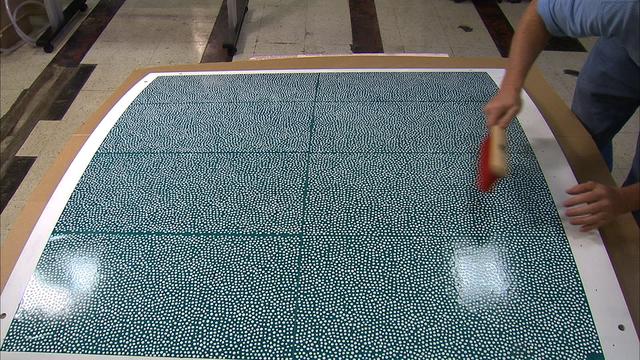
Under the goals of the Vision for Space Exploration, Ares I is a chief component of the cost-effective space transportation infrastructure being developed by NASA's Constellation Program. This transportation system will safely and reliably carry human explorers back to the moon, and then onward to Mars and other destinations in the solar system. The Ares I effort includes multiple project element teams at NASA centers and contract organizations around the nation, and is managed by the Exploration Launch Projects Office at NASA's Marshall Space Flight Center (MFSC). ATK Launch Systems near Brigham City, Utah, is the prime contractor for the first stage booster. ATK's subcontractor, United Space Alliance of Houston, is designing, developing and testing the parachutes at its facilities at NASA's Kennedy Space Center in Florida. NASA's Johnson Space Center in Houston hosts the Constellation Program and Orion Crew Capsule Project Office and provides test instrumentation and support personnel. Together, these teams are developing vehicle hardware, evolving proven technologies, and testing components and systems. Their work builds on powerful, reliable space shuttle propulsion elements and nearly a half-century of NASA space flight experience and technological advances. Ares I is an inline, two-stage rocket configuration topped by the Crew Exploration Vehicle, its service module, and a launch abort system. This HD video image, depicts a manufactured aluminum panel, that will be used to fabricate the Ares I upper stage barrel, undergoing a confidence panel test. In this test, the bent aluminum is stressed to breaking point and thoroughly examined. The panels are manufactured by AMRO Manufacturing located in El Monte, California. (Highest resolution available)

Under the goals of the Vision for Space Exploration, Ares I is a chief component of the cost-effective space transportation infrastructure being developed by NASA's Constellation Program. This transportation system will safely and reliably carry human explorers back to the moon, and then onward to Mars and other destinations in the solar system. The Ares I effort includes multiple project element teams at NASA centers and contract organizations around the nation, and is managed by the Exploration Launch Projects Office at NASA's Marshall Space Flight Center (MFSC). ATK Launch Systems near Brigham City, Utah, is the prime contractor for the first stage booster. ATK's subcontractor, United Space Alliance of Houston, is designing, developing and testing the parachutes at its facilities at NASA's Kennedy Space Center in Florida. NASA's Johnson Space Center in Houston hosts the Constellation Program and Orion Crew Capsule Project Office and provides test instrumentation and support personnel. Together, these teams are developing vehicle hardware, evolving proven technologies, and testing components and systems. Their work builds on powerful, reliable space shuttle propulsion elements and nearly a half-century of NASA space flight experience and technological advances. Ares I is an inline, two-stage rocket configuration topped by the Crew Exploration Vehicle, its service module, and a launch abort system. This HD video image depicts a manufactured aluminum panel, that will fabricate the Ares I upper stage barrel, undergoing a confidence panel test. In this test, bent aluminum is stressed to breaking point and thoroughly examined. The panels are manufactured by AMRO Manufacturing located in El Monte, California. (Highest resolution available)
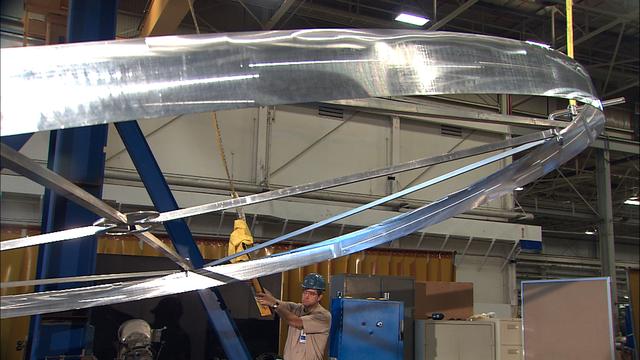
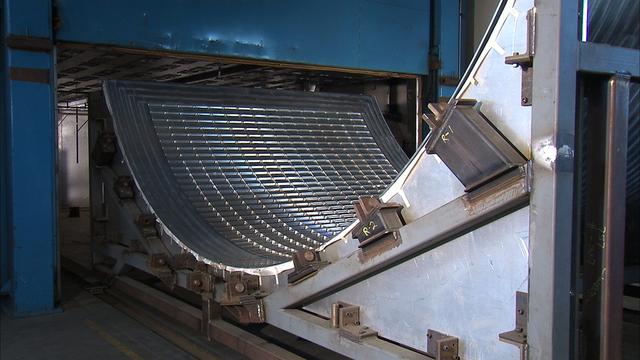
Under the goals of the Vision for Space Exploration, Ares I is a chief component of the cost-effective space transportation infrastructure being developed by NASA's Constellation Program. This transportation system will safely and reliably carry human explorers back to the moon, and then onward to Mars and other destinations in the solar system. The Ares I effort includes multiple project element teams at NASA centers and contract organizations around the nation, and is managed by the Exploration Launch Projects Office at NASA's Marshall Space Flight Center (MFSC). ATK Launch Systems near Brigham City, Utah, is the prime contractor for the first stage booster. ATK's subcontractor, United Space Alliance of Houston, is designing, developing and testing the parachutes at its facilities at NASA's Kennedy Space Center in Florida. NASA's Johnson Space Center in Houston hosts the Constellation Program and Orion Crew Capsule Project Office and provides test instrumentation and support personnel. Together, these teams are developing vehicle hardware, evolving proven technologies, and testing components and systems. Their work builds on powerful, reliable space shuttle propulsion elements and nearly a half-century of NASA space flight experience and technological advances. Ares I is an inline, two-stage rocket configuration topped by the Crew Exploration Vehicle, its service module, and a launch abort system. This HD video image depicts friction stir welding used in manufacturing aluminum panels that will fabricate the Ares I upper stage barrel. The aluminum panels are subjected to confidence panel tests during which the bent aluminum is stressed to breaking point and thoroughly examined. The panels are manufactured by AMRO Manufacturing located in El Monte, California. (Highest resolution available)
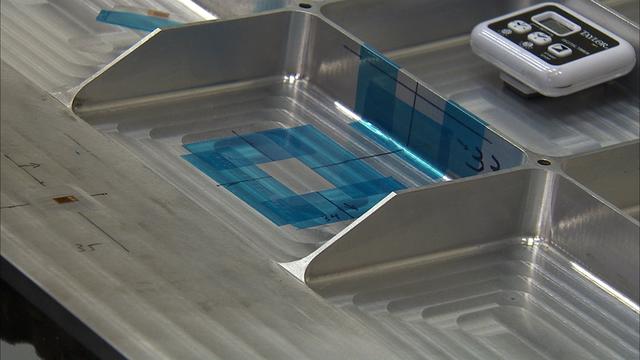
Under the goals of the Vision for Space Exploration, Ares I is a chief component of the cost-effective space transportation infrastructure being developed by NASA's Constellation Program. This transportation system will safely and reliably carry human explorers back to the moon, and then onward to Mars and other destinations in the solar system. The Ares I effort includes multiple project element teams at NASA centers and contract organizations around the nation, and is managed by the Exploration Launch Projects Office at NASA's Marshall Space Flight Center (MFSC). ATK Launch Systems near Brigham City, Utah, is the prime contractor for the first stage booster. ATK's subcontractor, United Space Alliance of Houston, is designing, developing and testing the parachutes at its facilities at NASA's Kennedy Space Center in Florida. NASA's Johnson Space Center in Houston hosts the Constellation Program and Orion Crew Capsule Project Office and provides test instrumentation and support personnel. Together, these teams are developing vehicle hardware, evolving proven technologies, and testing components and systems. Their work builds on powerful, reliable space shuttle propulsion elements and nearly a half-century of NASA space flight experience and technological advances. Ares I is an inline, two-stage rocket configuration topped by the Crew Exploration Vehicle, its service module, and a launch abort system. This HD video image depicts confidence testing of a manufactured aluminum panel that will fabricate the Ares I upper stage barrel. In this test, bent aluminum is stressed to breaking point and thoroughly examined. The panels are manufactured by AMRO Manufacturing located in El Monte, California. (Highest resolution available)
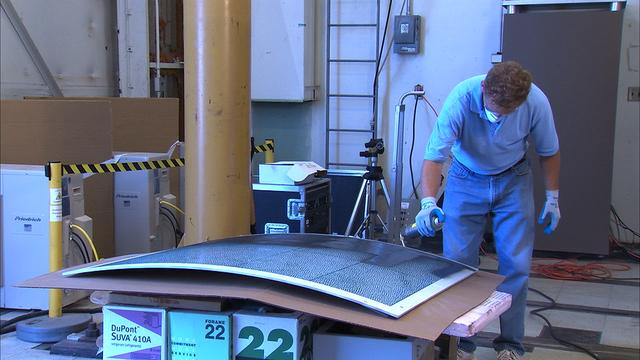
Under the goals of the Vision for Space Exploration, Ares I is a chief component of the cost-effective space transportation infrastructure being developed by NASA's Constellation Program. This transportation system will safely and reliably carry human explorers back to the moon, and then onward to Mars and other destinations in the solar system. The Ares I effort includes multiple project element teams at NASA centers and contract organizations around the nation, and is managed by the Exploration Launch Projects Office at NASA's Marshall Space Flight Center (MFSC). ATK Launch Systems near Brigham City, Utah, is the prime contractor for the first stage booster. ATK's subcontractor, United Space Alliance of Houston, is designing, developing and testing the parachutes at its facilities at NASA's Kennedy Space Center in Florida. NASA's Johnson Space Center in Houston hosts the Constellation Program and Orion Crew Capsule Project Office and provides test instrumentation and support personnel. Together, these teams are developing vehicle hardware, evolving proven technologies, and testing components and systems. Their work builds on powerful, reliable space shuttle propulsion elements and nearly a half-century of NASA space flight experience and technological advances. Ares I is an inline, two-stage rocket configuration topped by the Crew Exploration Vehicle, its service module, and a launch abort system. This HD video image depicts a manufactured aluminum panel that will be used to fabricate the Ares I upper stage barrel, undergoing a confidence panel test. In this test, the bent aluminum is stressed to breaking point and thoroughly examined. The panels are manufactured by AMRO Manufacturing located in El Monte, California.
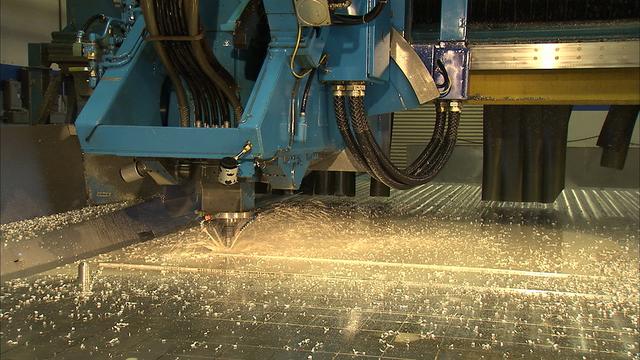
Under the goals of the Vision for Space Exploration, Ares I is a chief component of the cost-effective space transportation infrastructure being developed by NASA's Constellation Program. This transportation system will safely and reliably carry human explorers back to the moon, and then onward to Mars and other destinations in the solar system. The Ares I effort includes multiple project element teams at NASA centers and contract organizations around the nation, and is managed by the Exploration Launch Projects Office at NASA's Marshall Space Flight Center (MFSC). ATK Launch Systems near Brigham City, Utah, is the prime contractor for the first stage booster. ATK's subcontractor, United Space Alliance of Houston, is designing, developing and testing the parachutes at its facilities at NASA's Kennedy Space Center in Florida. NASA's Johnson Space Center in Houston hosts the Constellation Program and Orion Crew Capsule Project Office and provides test instrumentation and support personnel. Together, these teams are developing vehicle hardware, evolving proven technologies, and testing components and systems. Their work builds on powerful, reliable space shuttle propulsion elements and nearly a half-century of NASA space flight experience and technological advances. Ares I is an inline, two-stage rocket configuration topped by the Crew Exploration Vehicle, its service module, and a launch abort system. In this HD video image, processes for upper stage barrel fabrication are talking place. Aluminum panels are manufacturing process demonstration articles that will undergo testing until perfected. The panels are built by AMRO Manufacturing located in El Monte, California. (Largest resolution available)
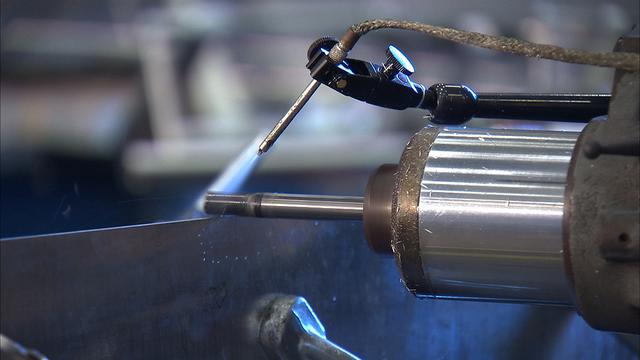
Under the goals of the Vision for Space Exploration, Ares I is a chief component of the cost-effective space transportation infrastructure being developed by NASA's Constellation Program. This transportation system will safely and reliably carry human explorers back to the moon, and then onward to Mars and other destinations in the solar system. The Ares I effort includes multiple project element teams at NASA centers and contract organizations around the nation, and is managed by the Exploration Launch Projects Office at NASA's Marshall Space Flight Center (MFSC). ATK Launch Systems near Brigham City, Utah, is the prime contractor for the first stage booster. ATK's subcontractor, United Space Alliance of Houston, is designing, developing and testing the parachutes at its facilities at NASA's Kennedy Space Center in Florida. NASA's Johnson Space Center in Houston hosts the Constellation Program and Orion Crew Capsule Project Office and provides test instrumentation and support personnel. Together, these teams are developing vehicle hardware, evolving proven technologies, and testing components and systems. Their work builds on powerful, reliable space shuttle propulsion elements and nearly a half-century of NASA space flight experience and technological advances. Ares I is an inline, two-stage rocket configuration topped by the Crew Exploration Vehicle, its service module, and a launch abort system. This HD video image depicts friction stir welding used in manufacturing aluminum panels that will fabricate the Ares I upper stage barrel. The panels are subjected to confidence tests in which the bent aluminum is stressed to breaking point and thoroughly examined. The panels are manufactured by AMRO Manufacturing located in El Monte, California. (Highest resolution available)