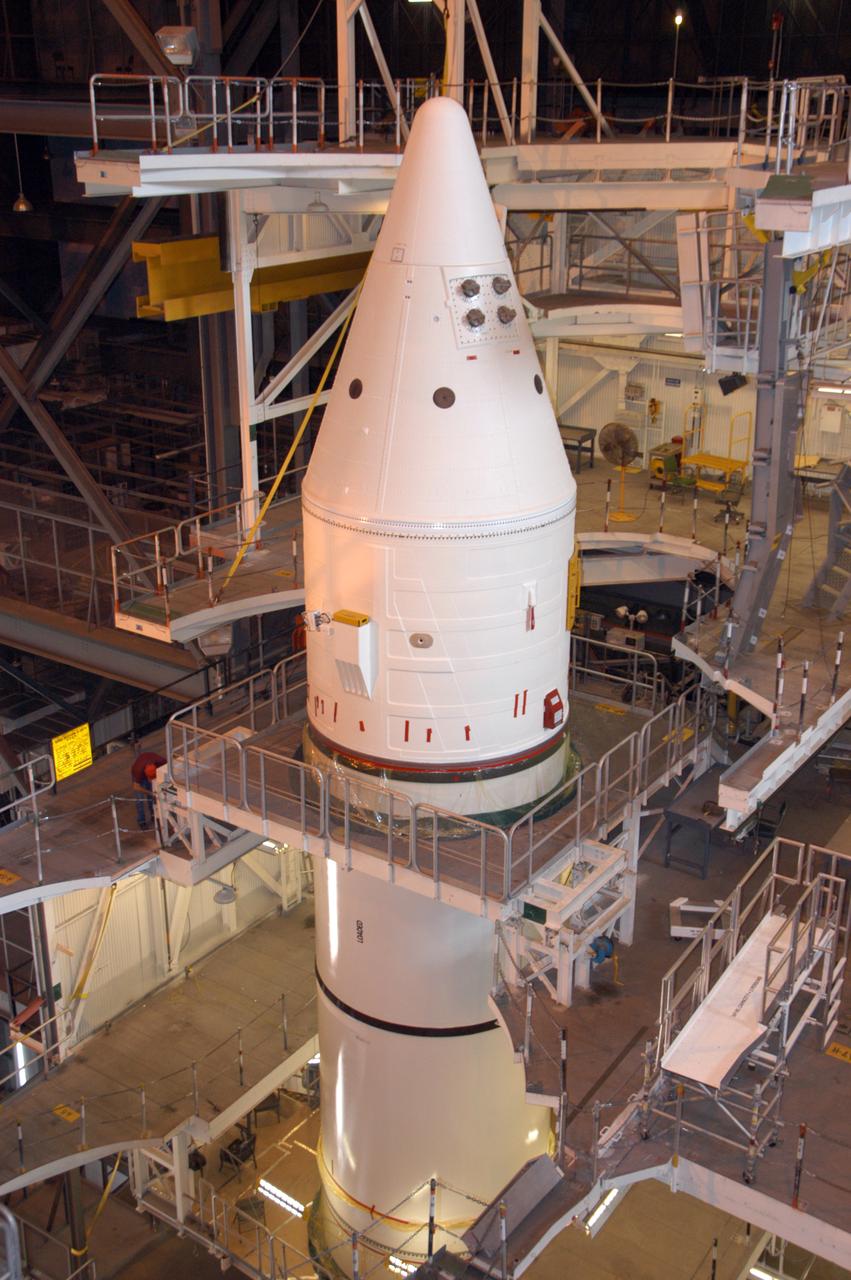
Workers continue stacking the solid rocket boosters in highbay 1 inside Kennedy Space Center's Vehicle Assembly Building. The solid rocket boosters are being prepared for NASA's next Space Shuttle launch, mission STS-117. The mission is scheduled to launch aboard Atlantis no earlier than March 16, 2007.
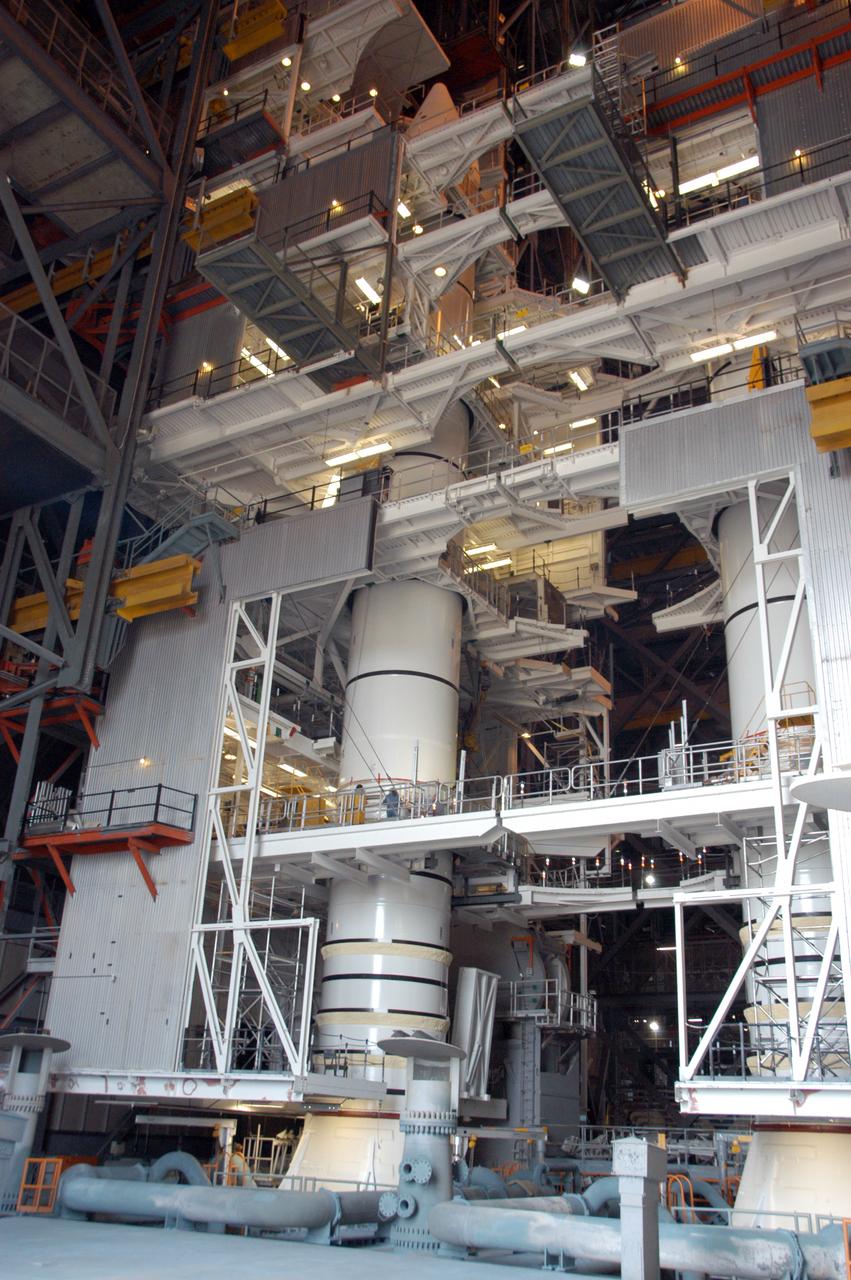
Workers continue stacking the twin solid rocket boosters in highbay 1 inside Kennedy Space Center's Vehicle Assembly Building. The solid rocket boosters are being prepared for NASA's next Space Shuttle launch, mission STS-117. The mission is scheduled to launch aboard Atlantis no earlier than March 16, 2007.
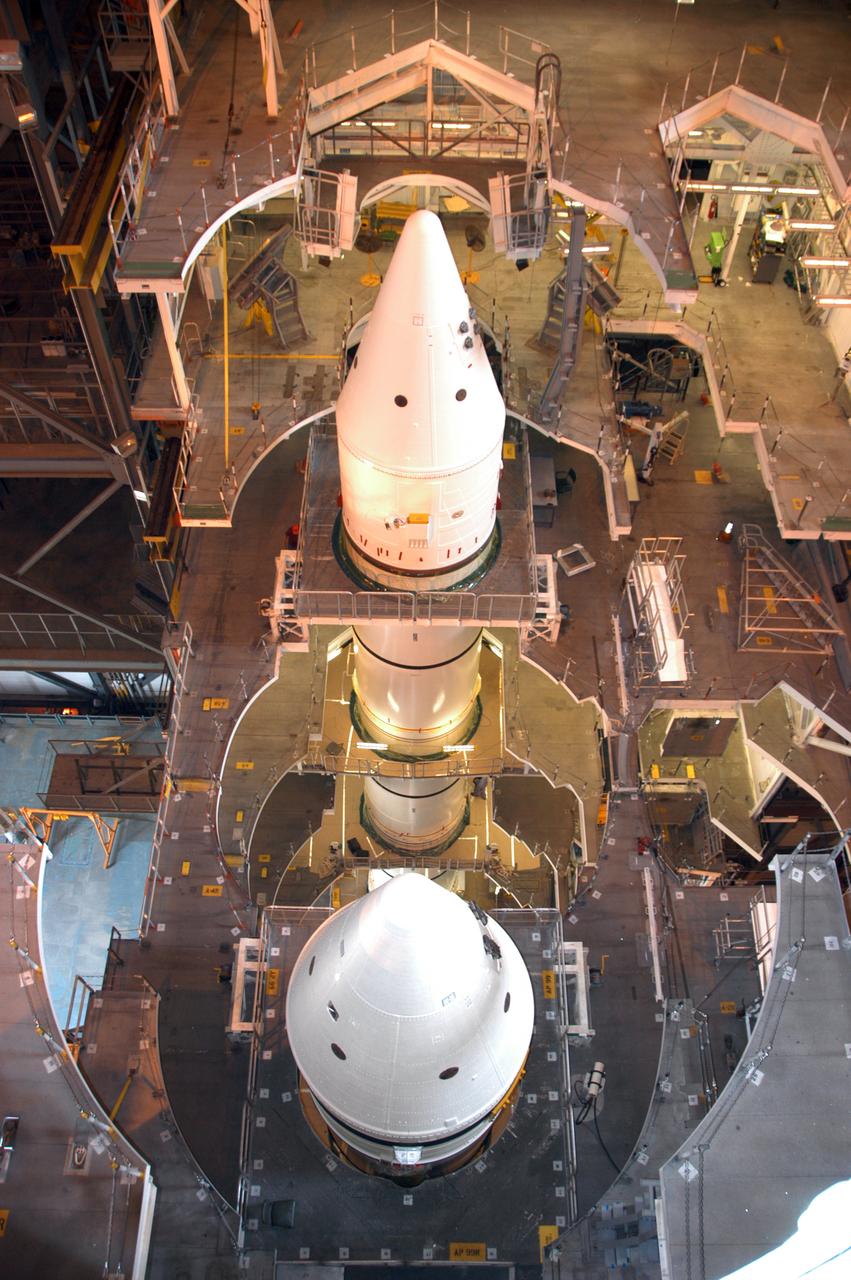
Lighting inside Kennedy Space Center's Vehicle Assembly Building seems to bathe the highbay 1 area in a golden hue as workers continue stacking the twin solid rocket boosters. The solid rocket boosters are being prepared for NASA's next Space Shuttle launch, mission STS-117. The mission is scheduled to launch aboard Atlantis no earlier than March 16, 2007.

Teams from NASA’s Exploration Ground Systems and Space Launch System (SLS) practice SLS booster stacking with pathfinders inside Kennedy Space Center’s Vehicle Assembly Building on Nov. 19, 2019. Using overhead cranes and booster handling activities, the teams focused on procedures for mating a center segment onto a cylinder that simulated another segment. The exercise was performed around the clock, operating three shifts per day. SLS will launch the first woman and next man to the Moon by 2024 through the Artemis program.
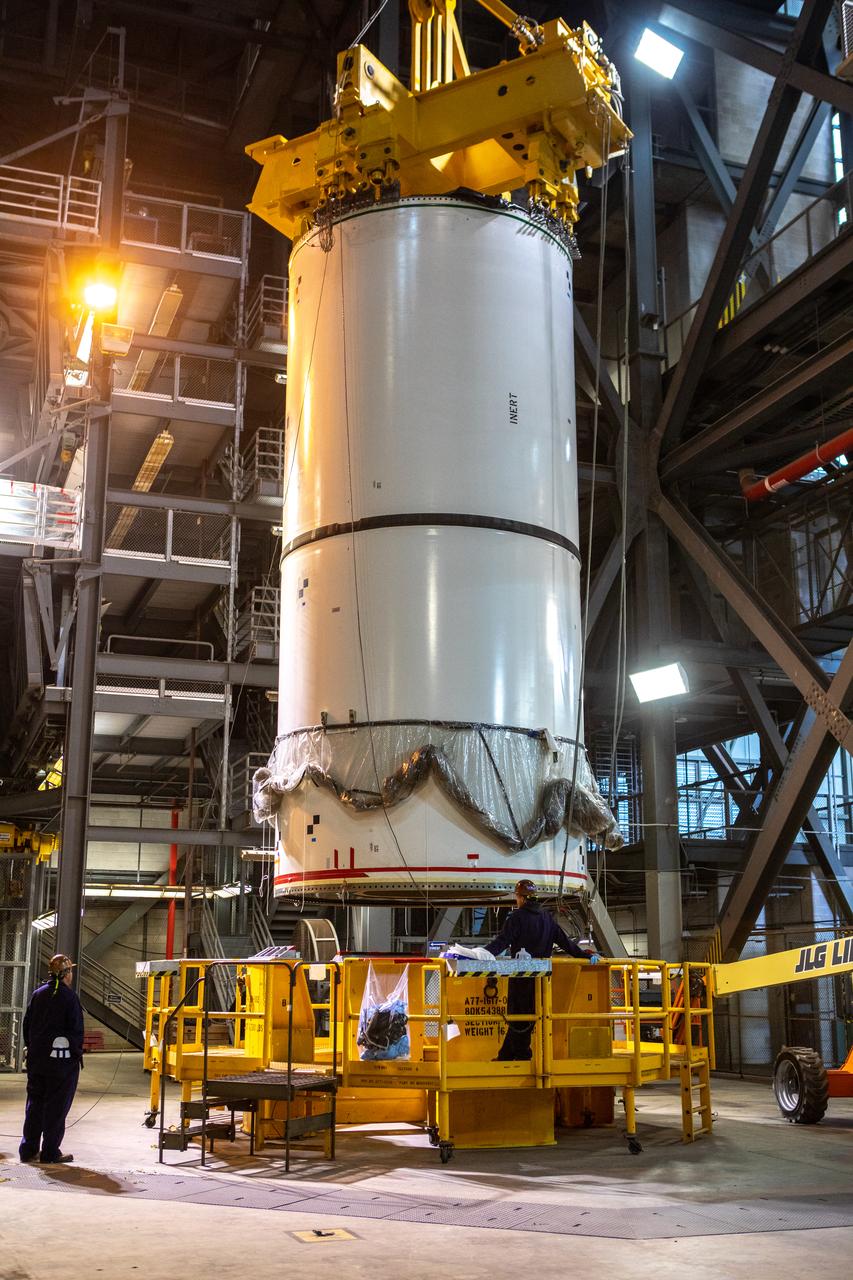
Teams from NASA’s Exploration Ground Systems and Space Launch System (SLS) practice SLS booster stacking with pathfinders inside Kennedy Space Center’s Vehicle Assembly Building on Nov. 19, 2019. Using overhead cranes and booster handling activities, the teams focused on procedures for mating a center segment onto a cylinder that simulated another segment. The exercise was performed around the clock, operating three shifts per day. SLS will launch the first woman and next man to the Moon by 2024 through the Artemis program.

Teams from NASA’s Exploration Ground Systems and Space Launch System (SLS) practice SLS booster stacking with pathfinders inside Kennedy Space Center’s Vehicle Assembly Building on Nov. 19, 2019. Using overhead cranes and booster handling activities, the teams focused on procedures for mating a center segment onto a cylinder that simulated another segment. The exercise was performed around the clock, operating three shifts per day. SLS will launch the first woman and next man to the Moon by 2024 through the Artemis program.

Teams from NASA’s Exploration Ground Systems and Space Launch System (SLS) practice SLS booster stacking with pathfinders inside Kennedy Space Center’s Vehicle Assembly Building on Nov. 19, 2019. Using overhead cranes and booster handling activities, the teams focused on procedures for mating a center segment onto a cylinder that simulated another segment. The exercise was performed around the clock, operating three shifts per day. SLS will launch the first woman and next man to the Moon by 2024 through the Artemis program.

Teams from NASA’s Exploration Ground Systems and Space Launch System (SLS) practice SLS booster stacking with pathfinders inside Kennedy Space Center’s Vehicle Assembly Building on Nov. 19, 2019. Using overhead cranes and booster handling activities, the teams focused on procedures for mating a center segment onto a cylinder that simulated another segment. The exercise was performed around the clock, operating three shifts per day. SLS will launch the first woman and next man to the Moon by 2024 through the Artemis program.

Teams from NASA’s Exploration Ground Systems and Space Launch System (SLS) practice SLS booster stacking with pathfinders inside Kennedy Space Center’s Vehicle Assembly Building on Nov. 19, 2019. Using overhead cranes and booster handling activities, the teams focused on procedures for mating a center segment onto a cylinder that simulated another segment. The exercise was performed around the clock, operating three shifts per day. SLS will launch the first woman and next man to the Moon by 2024 through the Artemis program.

Teams from NASA’s Exploration Ground Systems and Space Launch System (SLS) practice SLS booster stacking with pathfinders inside Kennedy Space Center’s Vehicle Assembly Building on Nov. 19, 2019. Using overhead cranes and booster handling activities, the teams focused on procedures for mating a center segment onto a cylinder that simulated another segment. The exercise was performed around the clock, operating three shifts per day. SLS will launch the first woman and next man to the Moon by 2024 through the Artemis program.

Teams from NASA’s Exploration Ground Systems and Space Launch System (SLS) practice SLS booster stacking with pathfinders inside Kennedy Space Center’s Vehicle Assembly Building on Nov. 19, 2019. Using overhead cranes and booster handling activities, the teams focused on procedures for mating a center segment onto a cylinder that simulated another segment. The exercise was performed around the clock, operating three shifts per day. SLS will launch the first woman and next man to the Moon by 2024 through the Artemis program.

Teams from NASA’s Exploration Ground Systems and Space Launch System (SLS) practice SLS booster stacking with pathfinders inside Kennedy Space Center’s Vehicle Assembly Building on Nov. 19, 2019. Using overhead cranes and booster handling activities, the teams focused on procedures for mating a center segment onto a cylinder that simulated another segment. The exercise was performed around the clock, operating three shifts per day. SLS will launch the first woman and next man to the Moon by 2024 through the Artemis program.
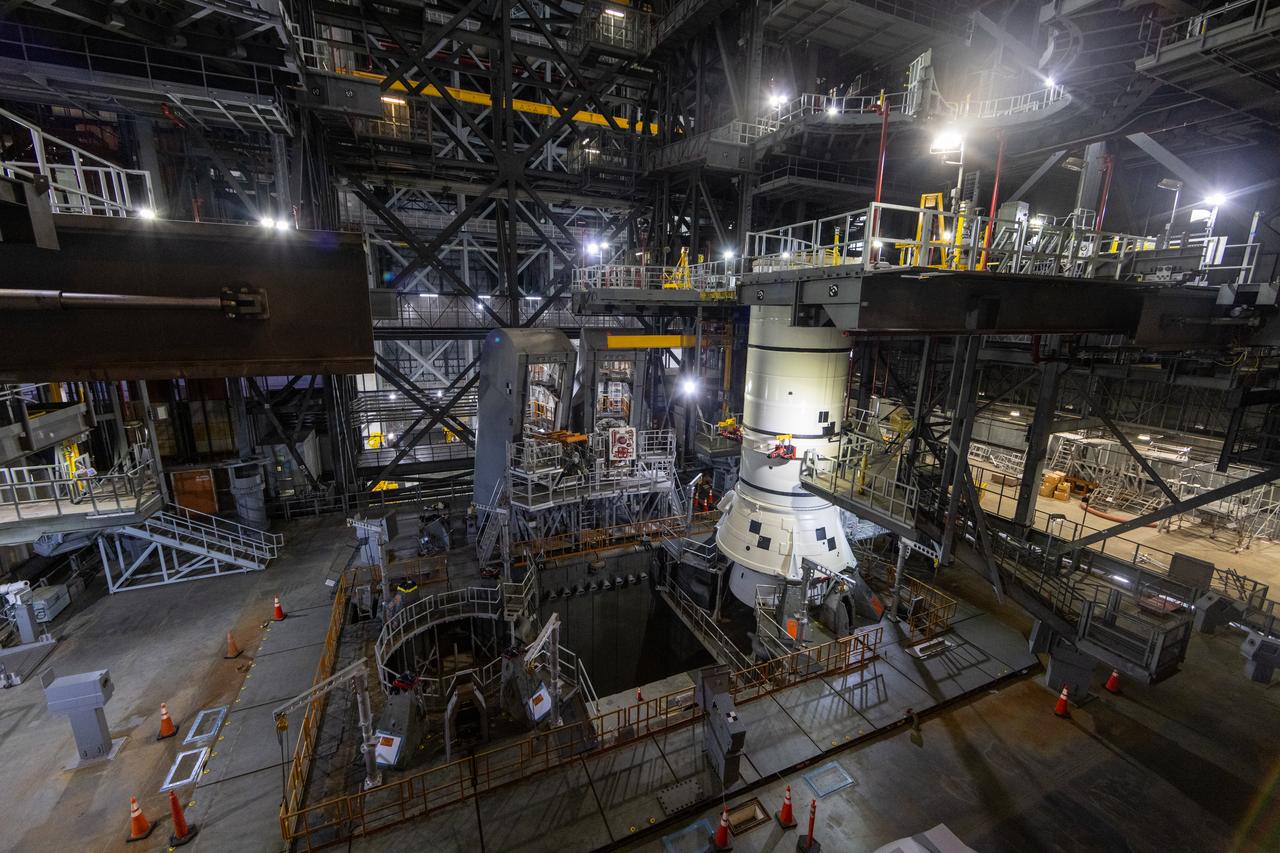
Engineers and technicians with the Exploration Ground Systems Program stack the first Moon rocket segment – the left aft assembly for the Artemis II SLS (Space Launch System) solid rocket booster onto mobile launcher 1 inside the Vehicle Assembly Building at NASA’s Kennedy Space Center on Wednesday, Nov. 20, 2024. The first of 10 booster segments to be stacked, the boosters will help support the remaining rocket components and the Orion spacecraft during final assembly of the Artemis II Moon rocket and provide more than 75 percent of the total SLS thrust during liftoff from NASA Kennedy’s Launch Pad 39B.
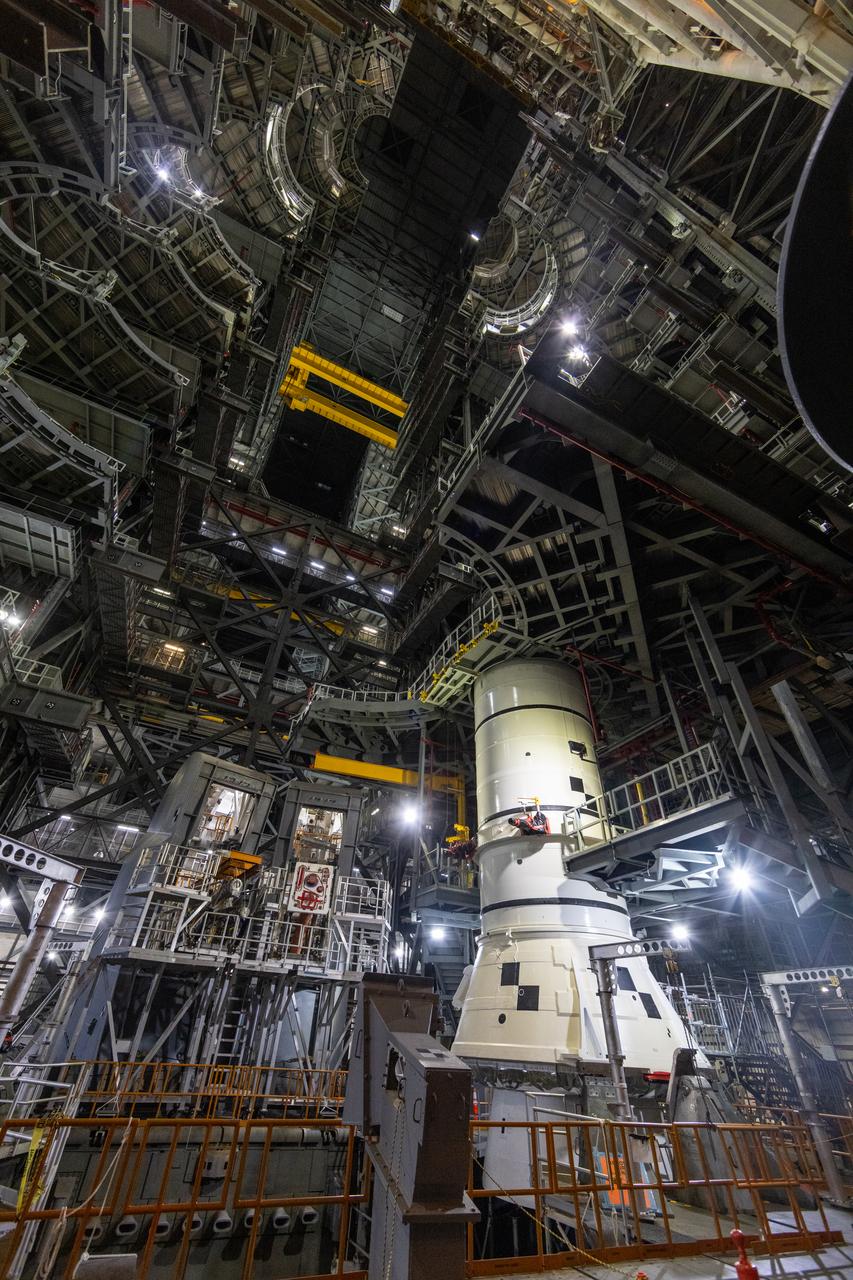
Engineers and technicians with the Exploration Ground Systems Program stack the first Moon rocket segment – the left aft assembly for the Artemis II SLS (Space Launch System) solid rocket booster onto mobile launcher 1 inside the Vehicle Assembly Building at NASA’s Kennedy Space Center on Wednesday, Nov. 20, 2024. The first of 10 booster segments to be stacked, the boosters will help support the remaining rocket components and the Orion spacecraft during final assembly of the Artemis II Moon rocket and provide more than 75 percent of the total SLS thrust during liftoff from NASA Kennedy’s Launch Pad 39B.

Engineers and technicians with NASA’s Exploration Ground Systems Program complete stacking of the first Moon rocket segments – the left and right aft assemblies for the agency’s Artemis II SLS (Space Launch System) solid rocket boosters – onto mobile launcher 1 inside the Vehicle Assembly Building at Kennedy Space Center on Friday, Nov. 22, 2024. The first two of 10 booster segments to be stacked, the boosters will help support the remaining rocket components and the Orion spacecraft during final assembly of the Artemis II Moon rocket and provide more than 75 percent of the total SLS thrust during liftoff from NASA Kennedy’s Launch Pad 39B.
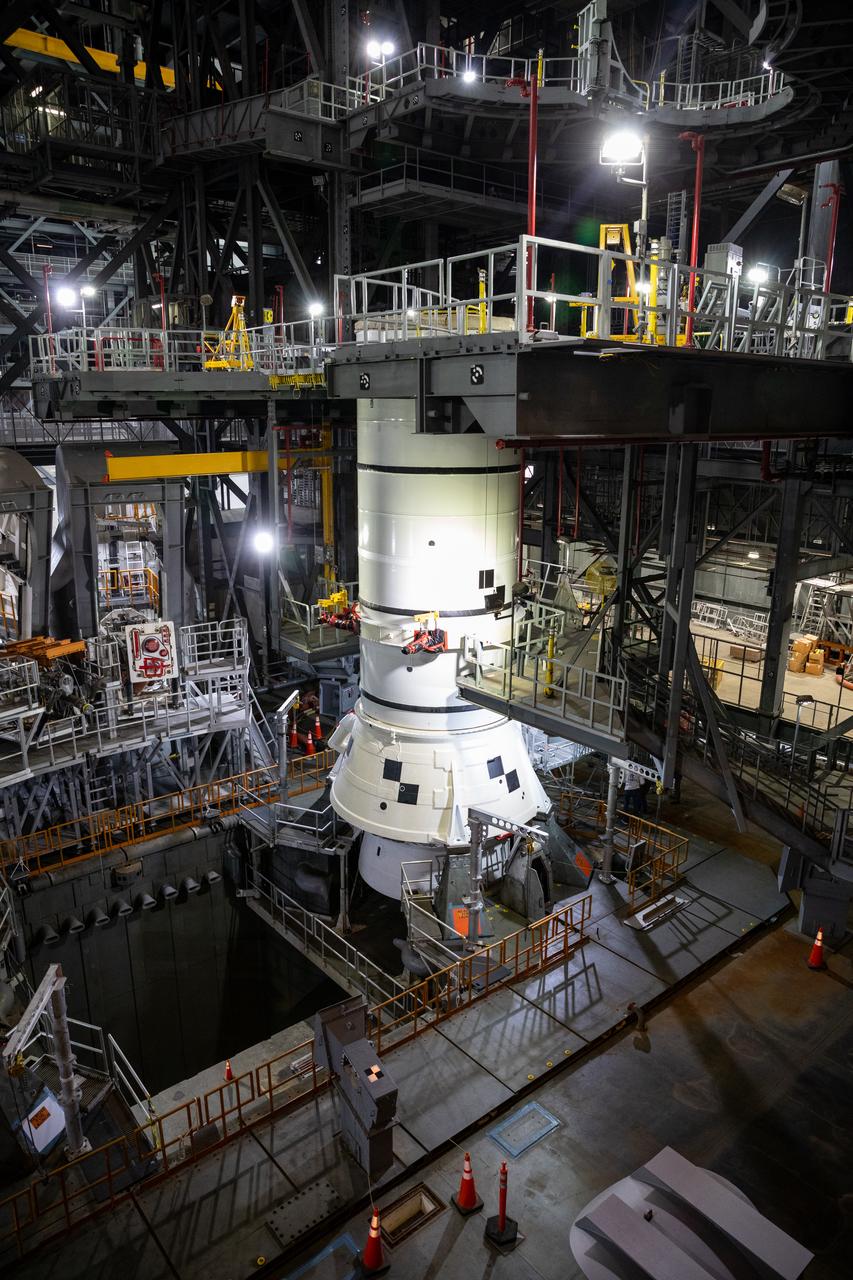
Engineers and technicians with the Exploration Ground Systems Program stack the first Moon rocket segment – the left aft assembly for the Artemis II SLS (Space Launch System) solid rocket booster onto mobile launcher 1 inside the Vehicle Assembly Building at NASA’s Kennedy Space Center on Wednesday, Nov. 20, 2024. The first of 10 booster segments to be stacked, the boosters will help support the remaining rocket components and the Orion spacecraft during final assembly of the Artemis II Moon rocket and provide more than 75 percent of the total SLS thrust during liftoff from NASA Kennedy’s Launch Pad 39B.

Engineers and technicians with NASA’s Exploration Ground Systems Program complete stacking of the first Moon rocket segments – the left and right aft assemblies for the agency’s Artemis II SLS (Space Launch System) solid rocket boosters – onto mobile launcher 1 inside the Vehicle Assembly Building at Kennedy Space Center on Friday, Nov. 22, 2024. The first two of 10 booster segments to be stacked, the boosters will help support the remaining rocket components and the Orion spacecraft during final assembly of the Artemis II Moon rocket and provide more than 75 percent of the total SLS thrust during liftoff from NASA Kennedy’s Launch Pad 39B.
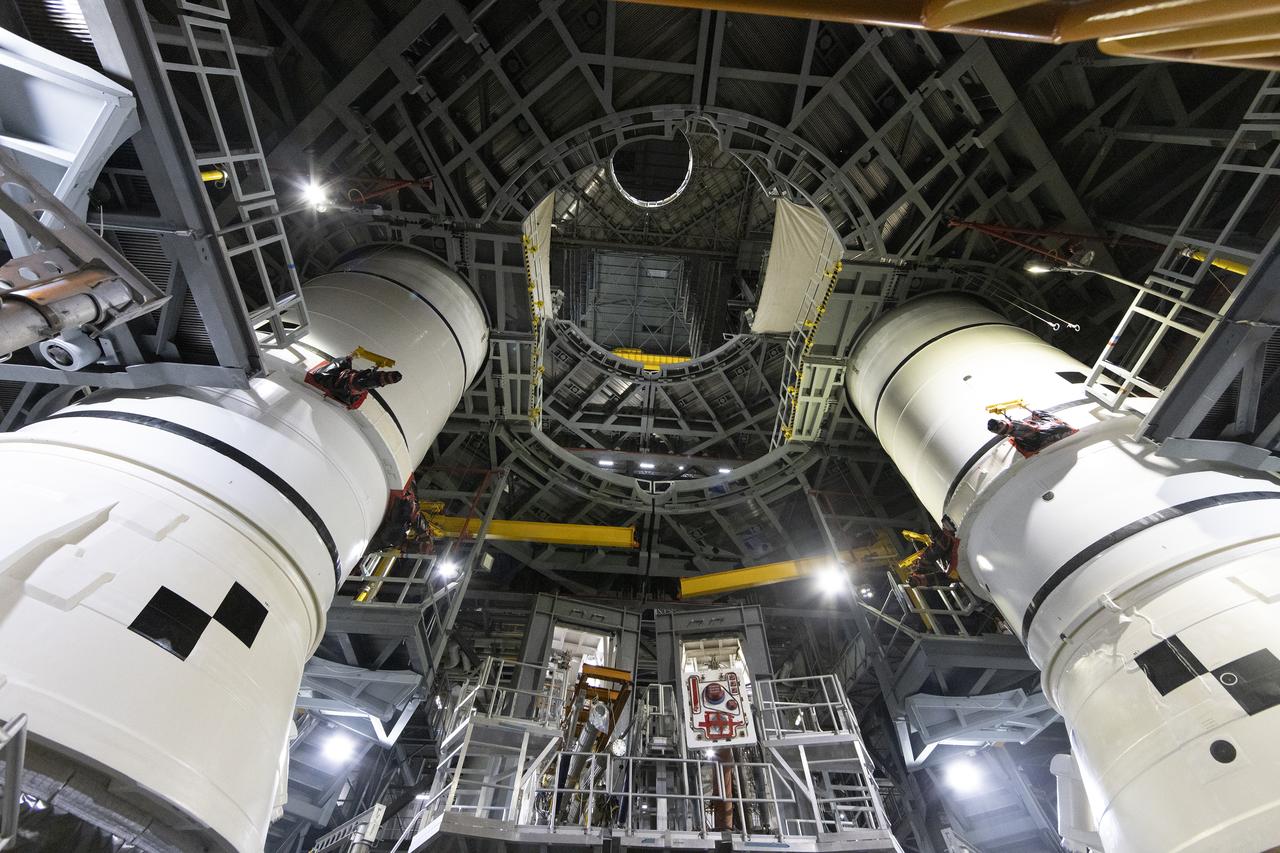
Engineers and technicians with NASA’s Exploration Ground Systems Program complete stacking of the first Moon rocket segments – the left and right aft assemblies for the agency’s Artemis II SLS (Space Launch System) solid rocket boosters – onto mobile launcher 1 inside the Vehicle Assembly Building at Kennedy Space Center on Friday, Nov. 22, 2024. The first two of 10 booster segments to be stacked, the boosters will help support the remaining rocket components and the Orion spacecraft during final assembly of the Artemis II Moon rocket and provide more than 75 percent of the total SLS thrust during liftoff from NASA Kennedy’s Launch Pad 39B.
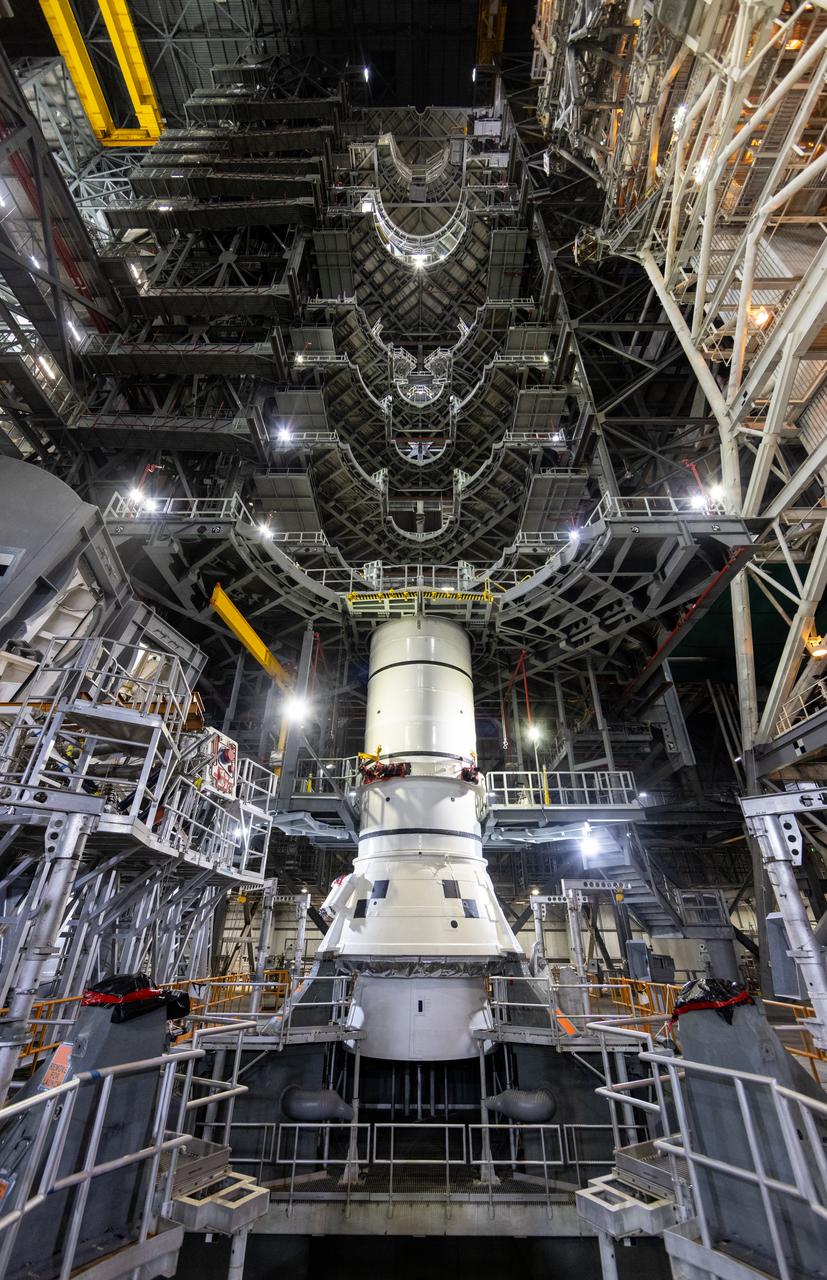
Engineers and technicians with the Exploration Ground Systems Program stack the first Moon rocket segment – the left aft assembly for the Artemis II SLS (Space Launch System) solid rocket booster onto mobile launcher 1 inside the Vehicle Assembly Building at NASA’s Kennedy Space Center on Wednesday, Nov. 20, 2024. The first of 10 booster segments to be stacked, the boosters will help support the remaining rocket components and the Orion spacecraft during final assembly of the Artemis II Moon rocket and provide more than 75 percent of the total SLS thrust during liftoff from NASA Kennedy’s Launch Pad 39B.
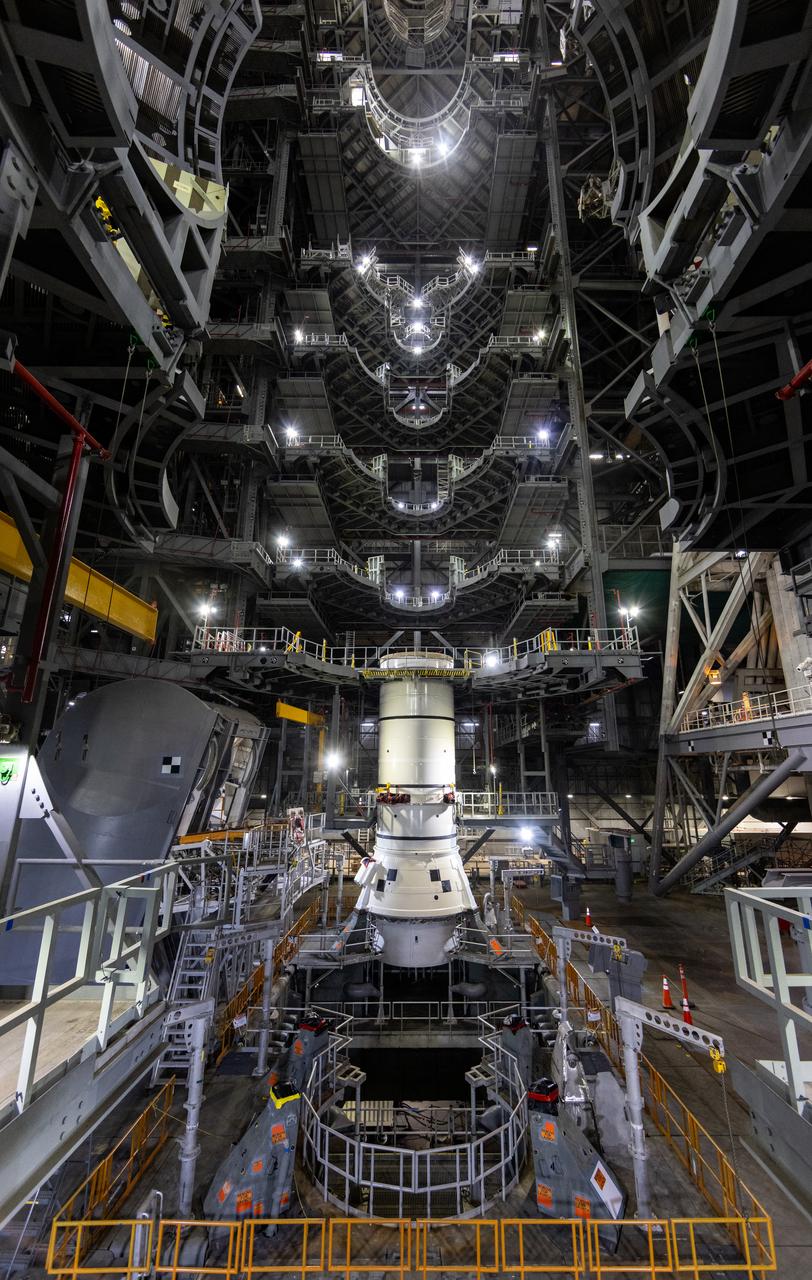
Engineers and technicians with the Exploration Ground Systems Program stack the first Moon rocket segment – the left aft assembly for the Artemis II SLS (Space Launch System) solid rocket booster onto mobile launcher 1 inside the Vehicle Assembly Building at NASA’s Kennedy Space Center on Wednesday, Nov. 20, 2024. The first of 10 booster segments to be stacked, the boosters will help support the remaining rocket components and the Orion spacecraft during final assembly of the Artemis II Moon rocket and provide more than 75 percent of the total SLS thrust during liftoff from NASA Kennedy’s Launch Pad 39B.
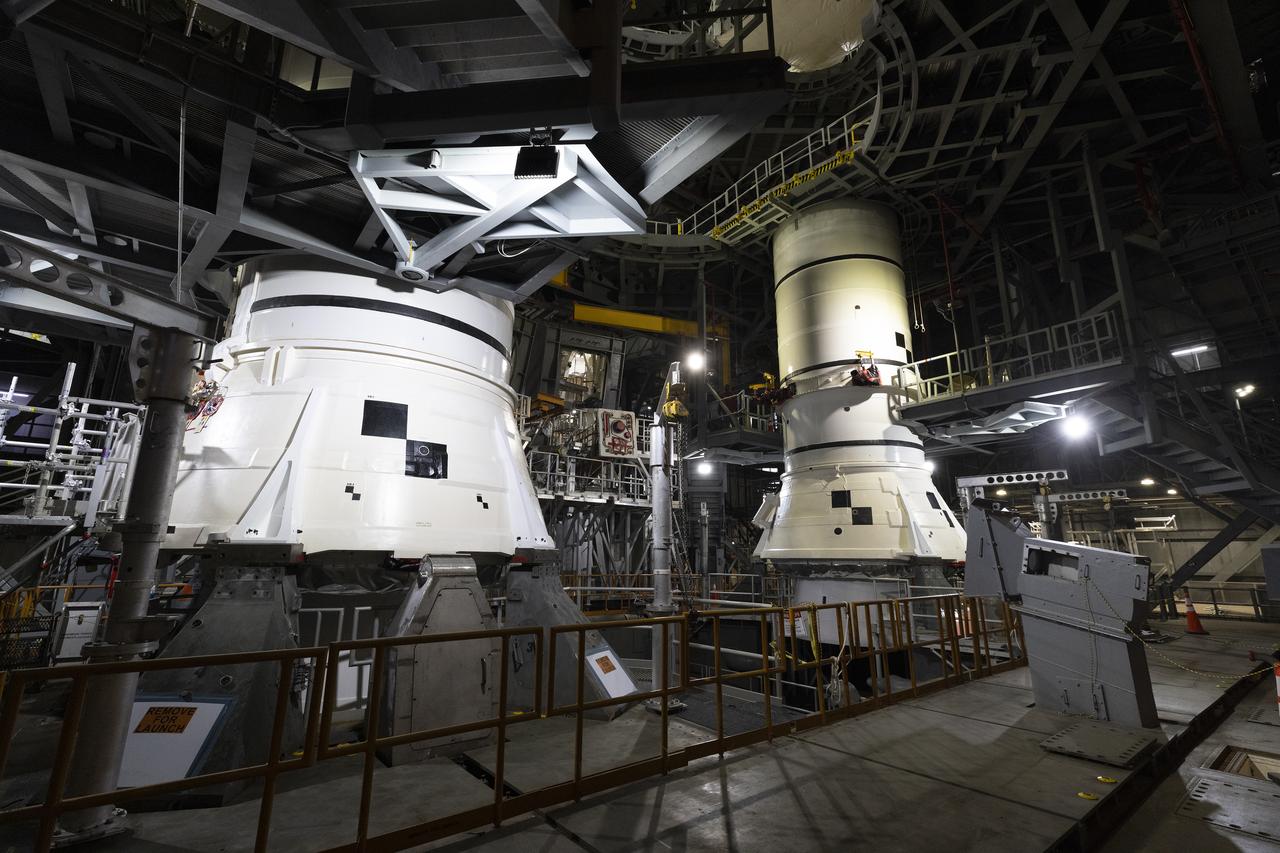
Engineers and technicians with NASA’s Exploration Ground Systems Program complete stacking of the first Moon rocket segments – the left and right aft assemblies for the agency’s Artemis II SLS (Space Launch System) solid rocket boosters – onto mobile launcher 1 inside the Vehicle Assembly Building at Kennedy Space Center on Friday, Nov. 22, 2024. The first two of 10 booster segments to be stacked, the boosters will help support the remaining rocket components and the Orion spacecraft during final assembly of the Artemis II Moon rocket and provide more than 75 percent of the total SLS thrust during liftoff from NASA Kennedy’s Launch Pad 39B.
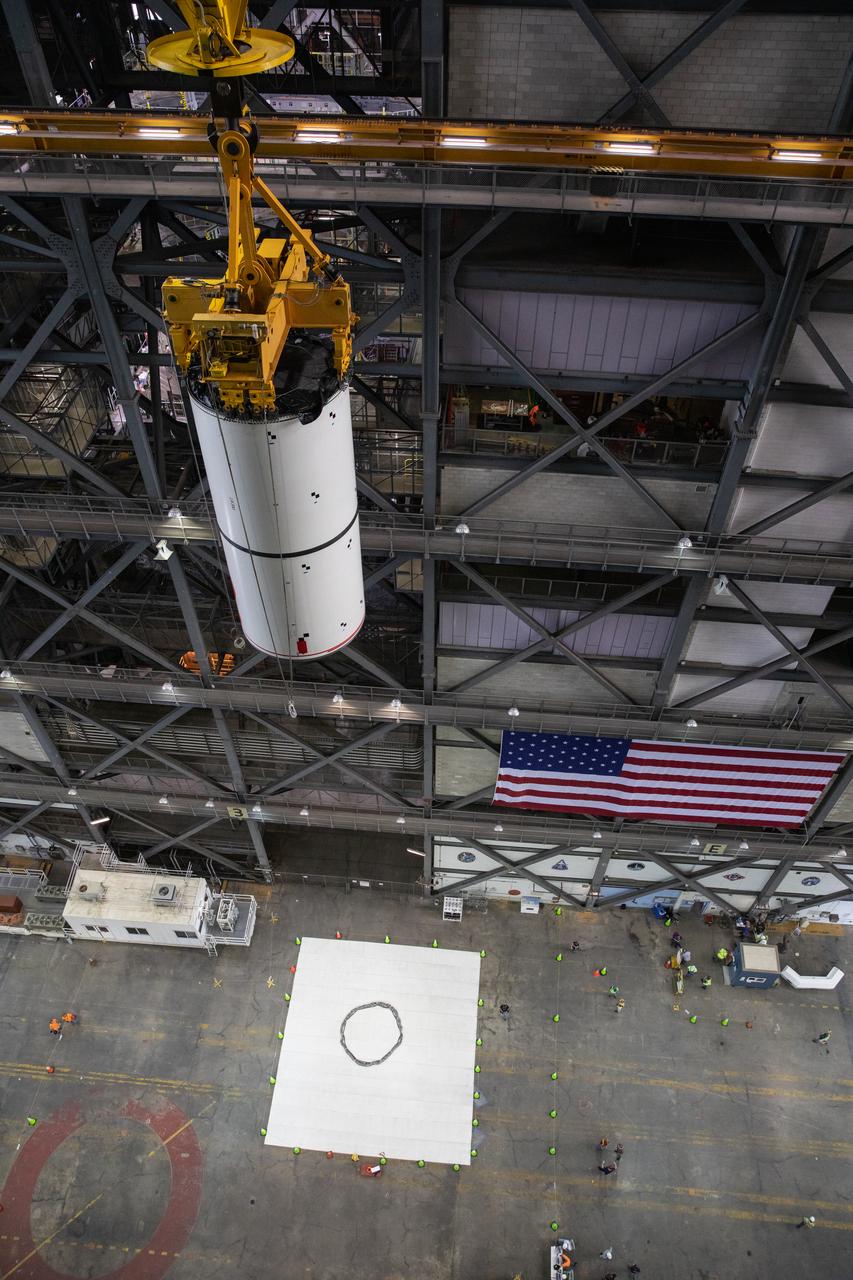
Technicians with NASA’s Exploration Ground Systems rehearse booster stacking operations inside the Vehicle Assembly Building (VAB) at the agency’s Kennedy Space Center in Florida on Sept. 14, 2020, in preparation for Artemis I. The exercise involved using booster segment mock-ups, referred to as pathfinders. During the rehearsal, an aft pathfinder segment was prepared in High Bay 4 of the VAB, after which a team of crane operators moved it over to High Bay 3, where it was placed on the mobile launcher. Careful measurements were then taken before the team added a center pathfinder to the stack. Stacking of the actual Space Launch System (SLS) booster segments will occur later this year, when the rocket’s core stage arrives at Kennedy. Artemis I is the first in a series of increasingly complex missions that will test SLS and the Orion spacecraft as an integrated system prior to crewed flights to the Moon.
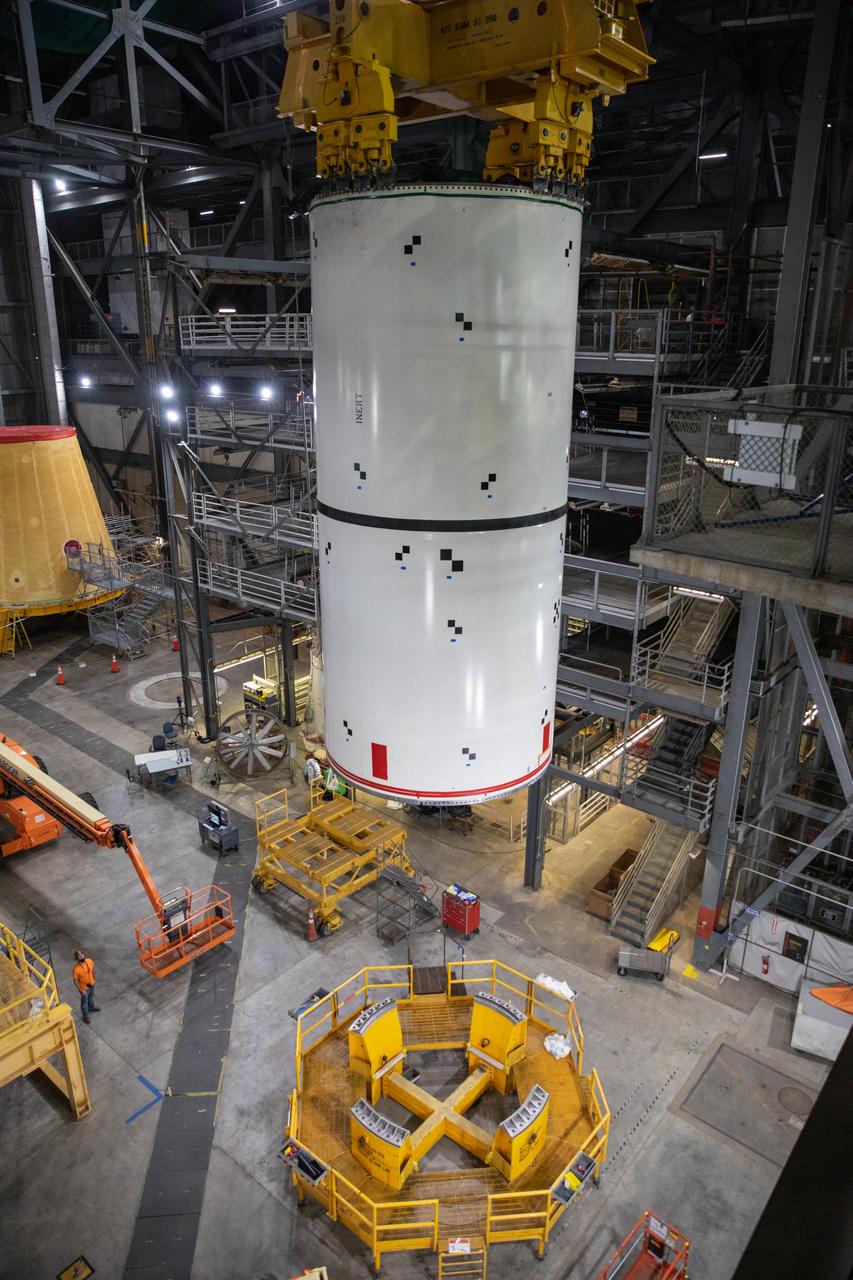
Technicians with NASA’s Exploration Ground Systems rehearse booster stacking operations inside the Vehicle Assembly Building (VAB) at the agency’s Kennedy Space Center in Florida on Sept. 14, 2020, in preparation for Artemis I. The exercise involved using booster segment mock-ups, referred to as pathfinders. During the rehearsal, an aft pathfinder segment was prepared in High Bay 4 of the VAB, after which a team of crane operators moved it over to High Bay 3, where it was placed on the mobile launcher. Careful measurements were then taken before the team added a center pathfinder to the stack. Stacking of the actual Space Launch System (SLS) booster segments will occur later this year, when the rocket’s core stage arrives at Kennedy. Artemis I is the first in a series of increasingly complex missions that will test SLS and the Orion spacecraft as an integrated system prior to crewed flights to the Moon.
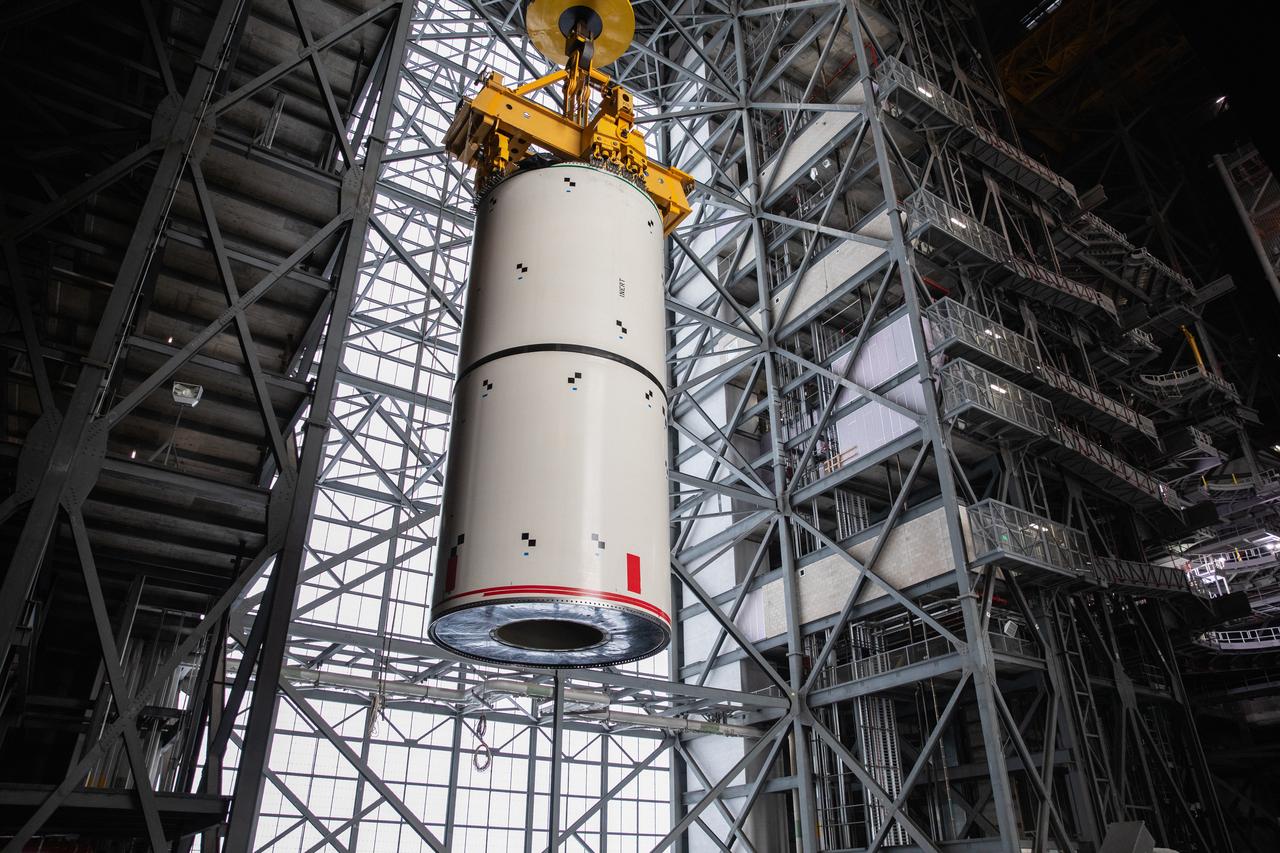
Technicians with NASA’s Exploration Ground Systems rehearse booster stacking operations inside the Vehicle Assembly Building (VAB) at the agency’s Kennedy Space Center in Florida on Sept. 14, 2020, in preparation for Artemis I. The exercise involved using booster segment mock-ups, referred to as pathfinders. During the rehearsal, an aft pathfinder segment was prepared in High Bay 4 of the VAB, after which a team of crane operators moved it over to High Bay 3, where it was placed on the mobile launcher. Careful measurements were then taken before the team added a center pathfinder to the stack. Stacking of the actual Space Launch System (SLS) booster segments will occur later this year, when the rocket’s core stage arrives at Kennedy. Artemis I is the first in a series of increasingly complex missions that will test SLS and the Orion spacecraft as an integrated system prior to crewed flights to the Moon.
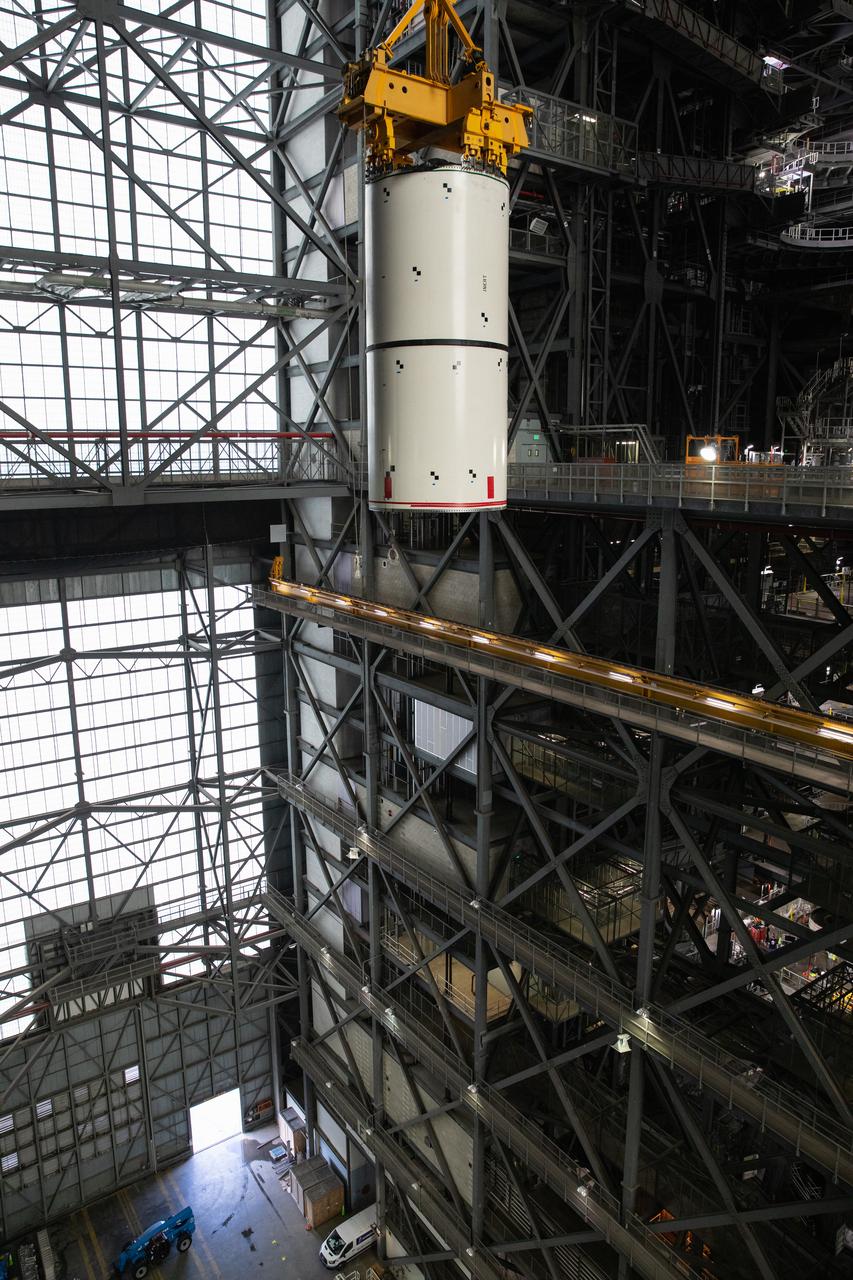
Technicians with NASA’s Exploration Ground Systems rehearse booster stacking operations inside the Vehicle Assembly Building (VAB) at the agency’s Kennedy Space Center in Florida on Sept. 14, 2020, in preparation for Artemis I. The exercise involved using booster segment mock-ups, referred to as pathfinders. During the rehearsal, an aft pathfinder segment was prepared in High Bay 4 of the VAB, after which a team of crane operators moved it over to High Bay 3, where it was placed on the mobile launcher. Careful measurements were then taken before the team added a center pathfinder to the stack. Stacking of the actual Space Launch System (SLS) booster segments will occur later this year, when the rocket’s core stage arrives at Kennedy. Artemis I is the first in a series of increasingly complex missions that will test SLS and the Orion spacecraft as an integrated system prior to crewed flights to the Moon.
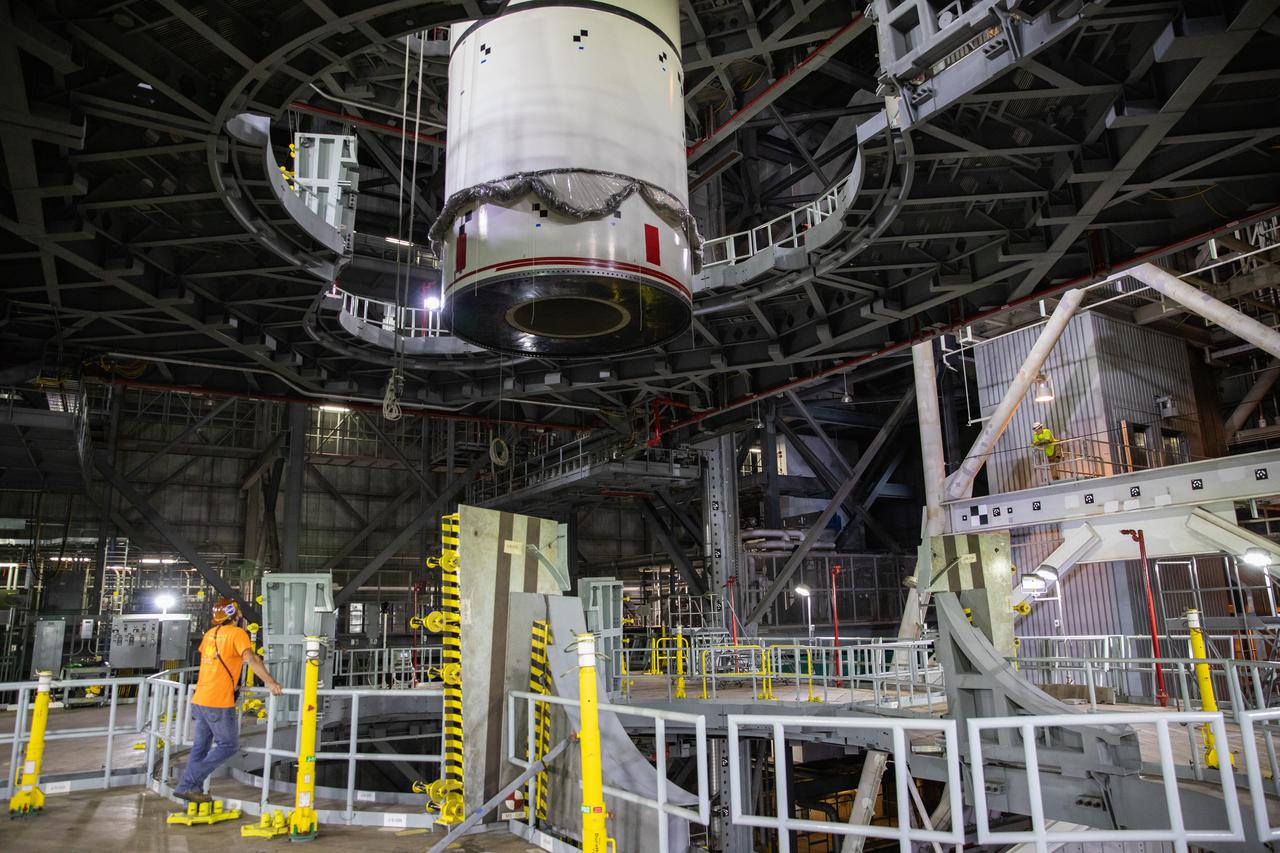
Technicians with NASA’s Exploration Ground Systems lower a mock-up, or pathfinder, of the Space Launch System’s (SLS) center booster segment onto an aft pathfinder segment inside the Vehicle Assembly Building (VAB) at the agency’s Kennedy Space Center in Florida on Sept. 14, 2020. Teams rehearsed stacking both pathfinder segments on top of the mobile launcher in High Bay 3 of the VAB in preparation for the Artemis I launch. Stacking of the actual SLS booster segments will occur later this year, when the rocket’s core stage arrives at Kennedy. Artemis I is the first in a series of increasingly complex missions that will test SLS and the Orion spacecraft as an integrated system prior to crewed flights to the Moon.
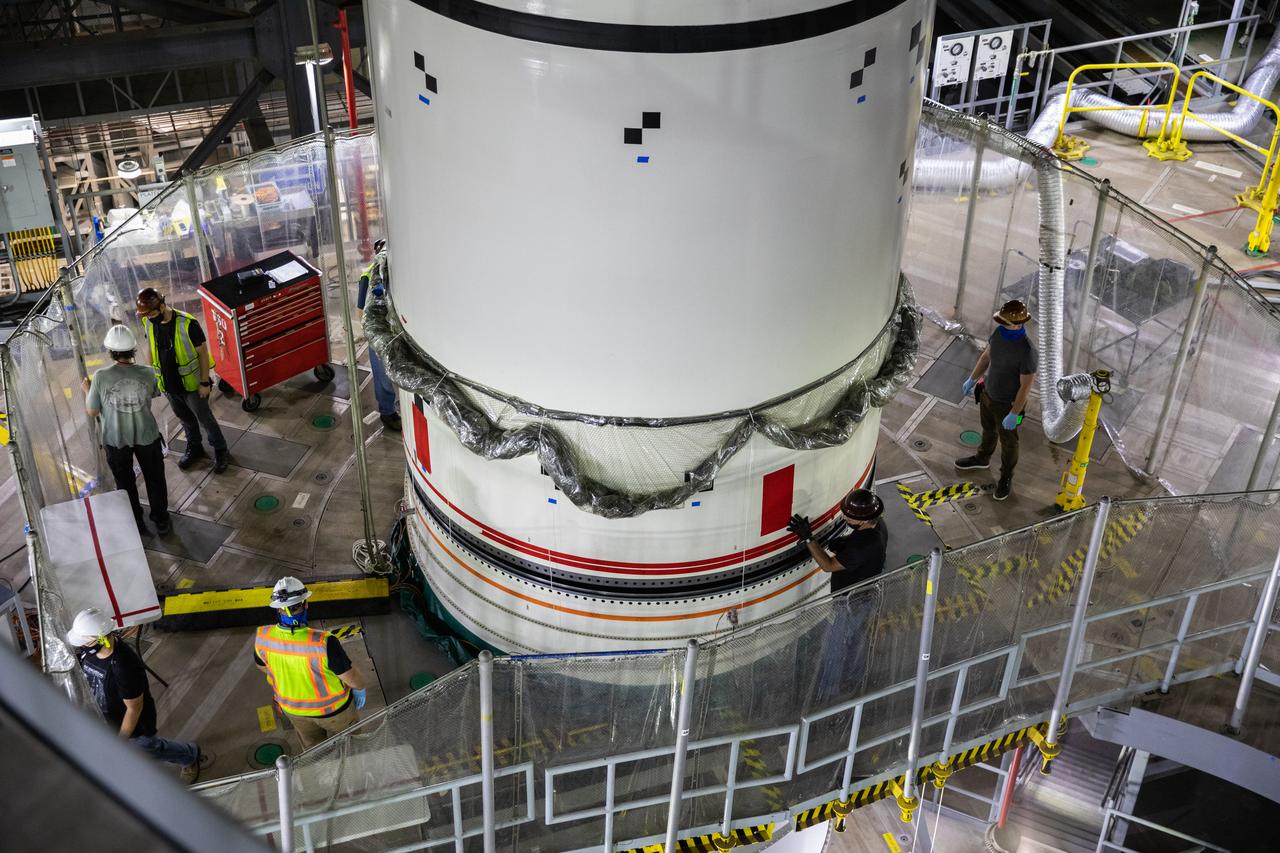
Technicians with NASA’s Exploration Ground Systems lower a mock-up, or pathfinder, of the Space Launch System’s (SLS) center booster segment onto an aft pathfinder segment inside the Vehicle Assembly Building (VAB) at the agency’s Kennedy Space Center in Florida on Sept. 14, 2020. Teams rehearsed stacking both pathfinder segments on top of the mobile launcher in High Bay 3 of the VAB in preparation for the Artemis I launch. Stacking of the actual SLS booster segments will occur later this year, when the rocket’s core stage arrives at Kennedy. Artemis I is the first in a series of increasingly complex missions that will test SLS and the Orion spacecraft as an integrated system prior to crewed flights to the Moon.
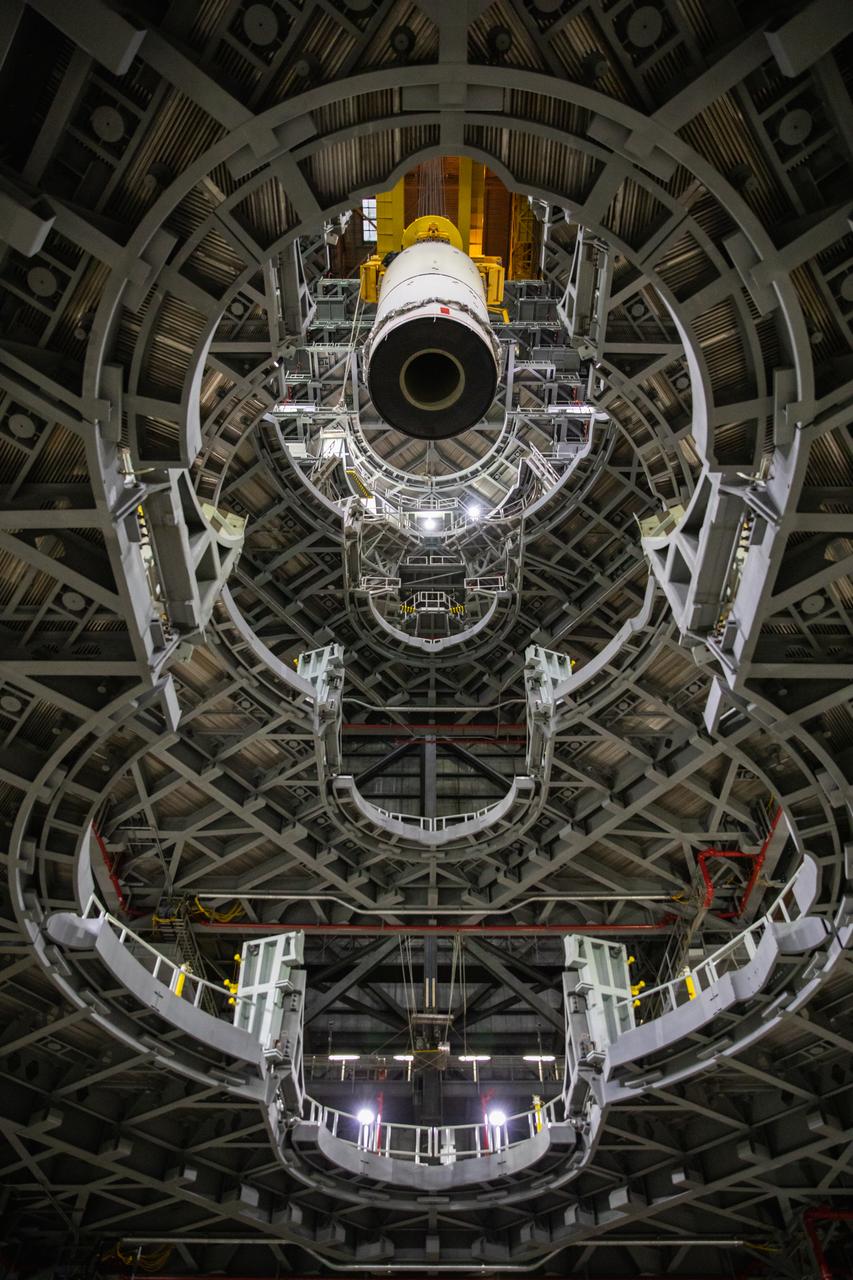
Technicians with NASA’s Exploration Ground Systems prepare to lower a mock-up, or pathfinder, of the Space Launch System’s (SLS) center booster segment onto an aft pathfinder segment inside the Vehicle Assembly Building (VAB) at the agency’s Kennedy Space Center in Florida on Sept. 14, 2020. Teams rehearsed stacking both pathfinder segments on top of the mobile launcher in High Bay 3 of the VAB in preparation for the Artemis I launch. Stacking of the actual SLS booster segments will occur later this year, when the rocket’s core stage arrives at Kennedy. Artemis I is the first in a series of increasingly complex missions that will test SLS and the Orion spacecraft as an integrated system prior to crewed flights to the Moon.
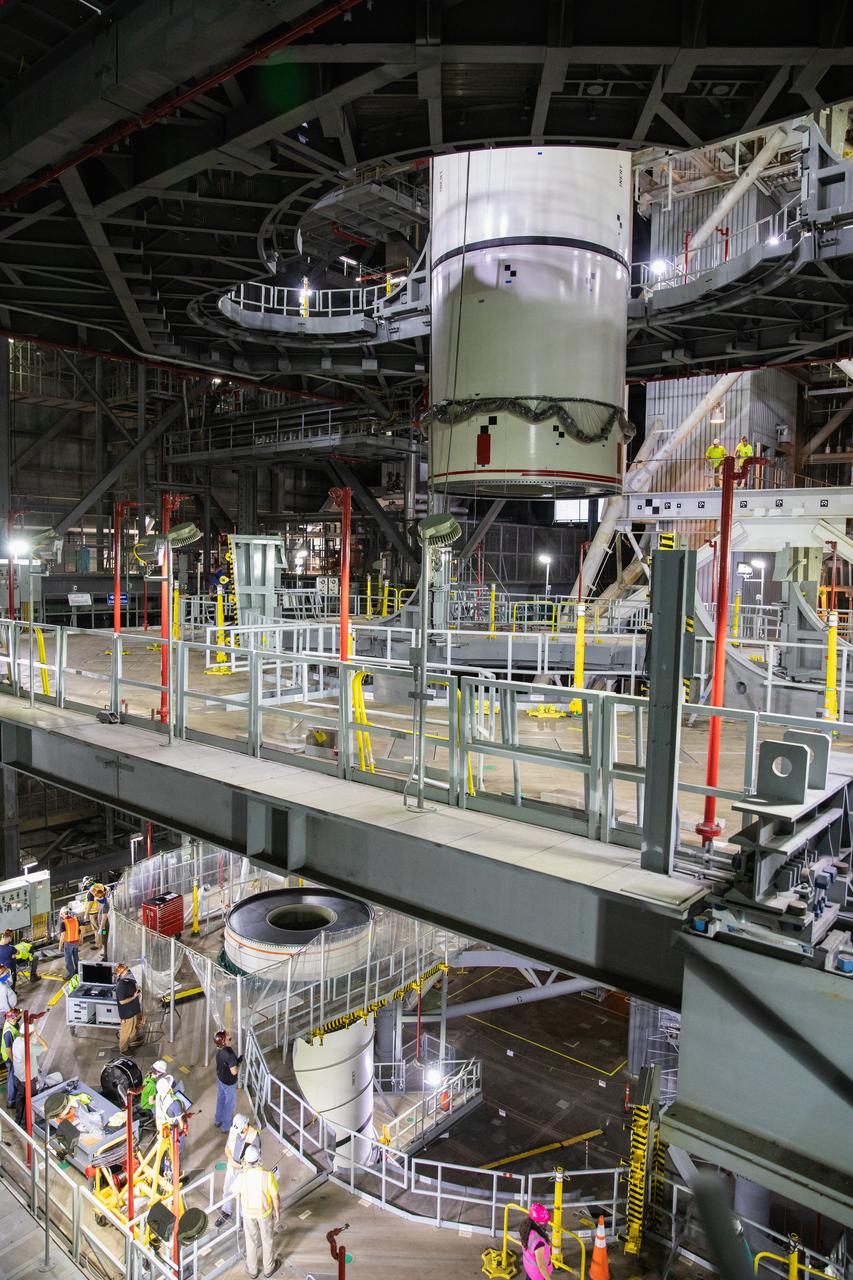
Technicians with NASA’s Exploration Ground Systems lower a mock-up, or pathfinder, of the Space Launch System’s (SLS) center booster segment onto an aft pathfinder segment inside the Vehicle Assembly Building (VAB) at the agency’s Kennedy Space Center in Florida on Sept. 14, 2020. Teams rehearsed stacking both pathfinder segments on top of the mobile launcher in High Bay 3 of the VAB in preparation for the Artemis I launch. Stacking of the actual SLS booster segments will occur later this year, when the rocket’s core stage arrives at Kennedy. Artemis I is the first in a series of increasingly complex missions that will test SLS and the Orion spacecraft as an integrated system prior to crewed flights to the Moon.
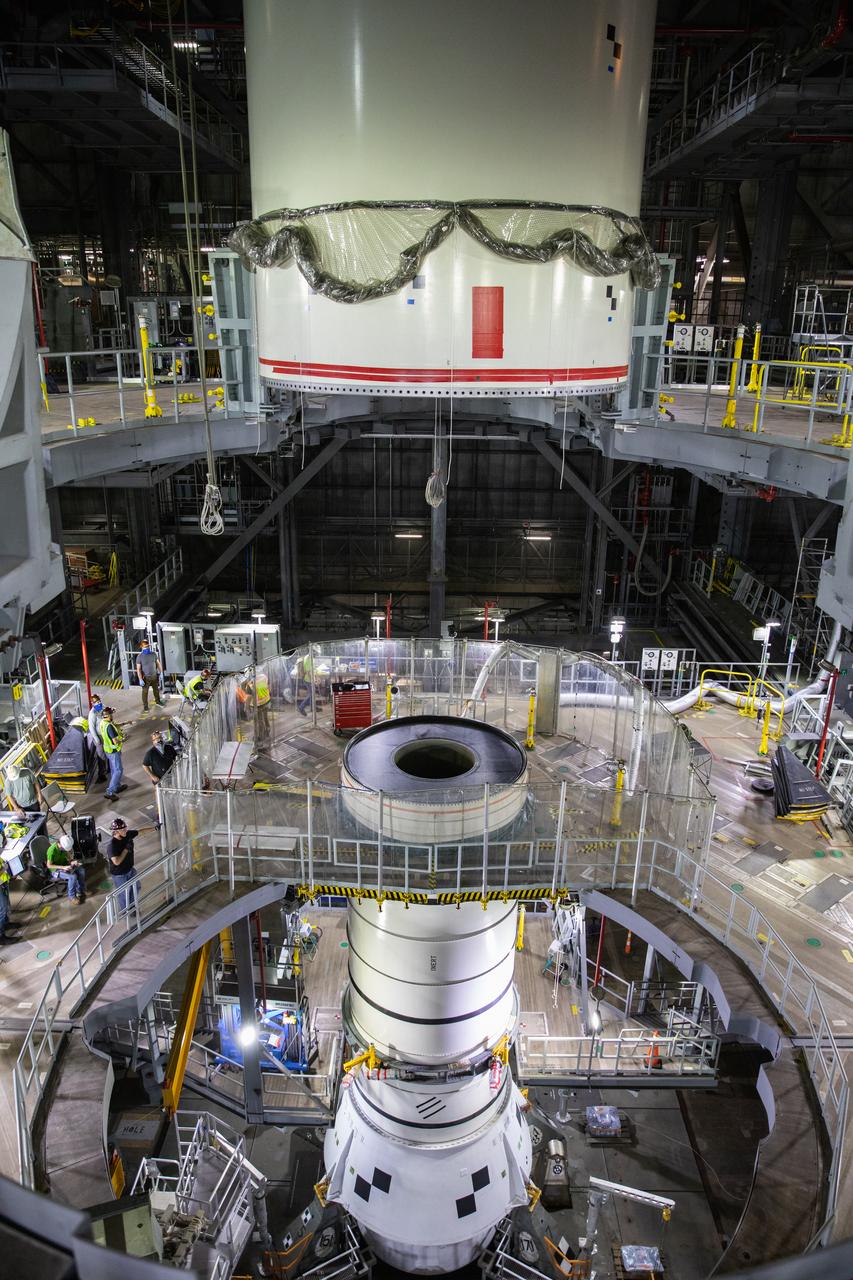
Technicians with NASA’s Exploration Ground Systems lower a mock-up, or pathfinder, of the Space Launch System’s (SLS) center booster segment onto an aft pathfinder segment inside the Vehicle Assembly Building (VAB) at the agency’s Kennedy Space Center in Florida on Sept. 14, 2020. Teams rehearsed stacking both pathfinder segments on top of the mobile launcher in High Bay 3 of the VAB in preparation for the Artemis I launch. Stacking of the actual SLS booster segments will occur later this year, when the rocket’s core stage arrives at Kennedy. Artemis I is the first in a series of increasingly complex missions that will test SLS and the Orion spacecraft as an integrated system prior to crewed flights to the Moon.

Technicians with NASA’s Exploration Ground Systems lower a mock-up, or pathfinder, of the Space Launch System’s (SLS) center booster segment onto an aft pathfinder segment inside the Vehicle Assembly Building (VAB) at the agency’s Kennedy Space Center in Florida on Sept. 14, 2020. Teams rehearsed stacking both pathfinder segments on top of the mobile launcher in High Bay 3 of the VAB in preparation for the Artemis I launch. Stacking of the actual SLS booster segments will occur later this year, when the rocket’s core stage arrives at Kennedy. Artemis I is the first in a series of increasingly complex missions that will test SLS and the Orion spacecraft as an integrated system prior to crewed flights to the Moon.
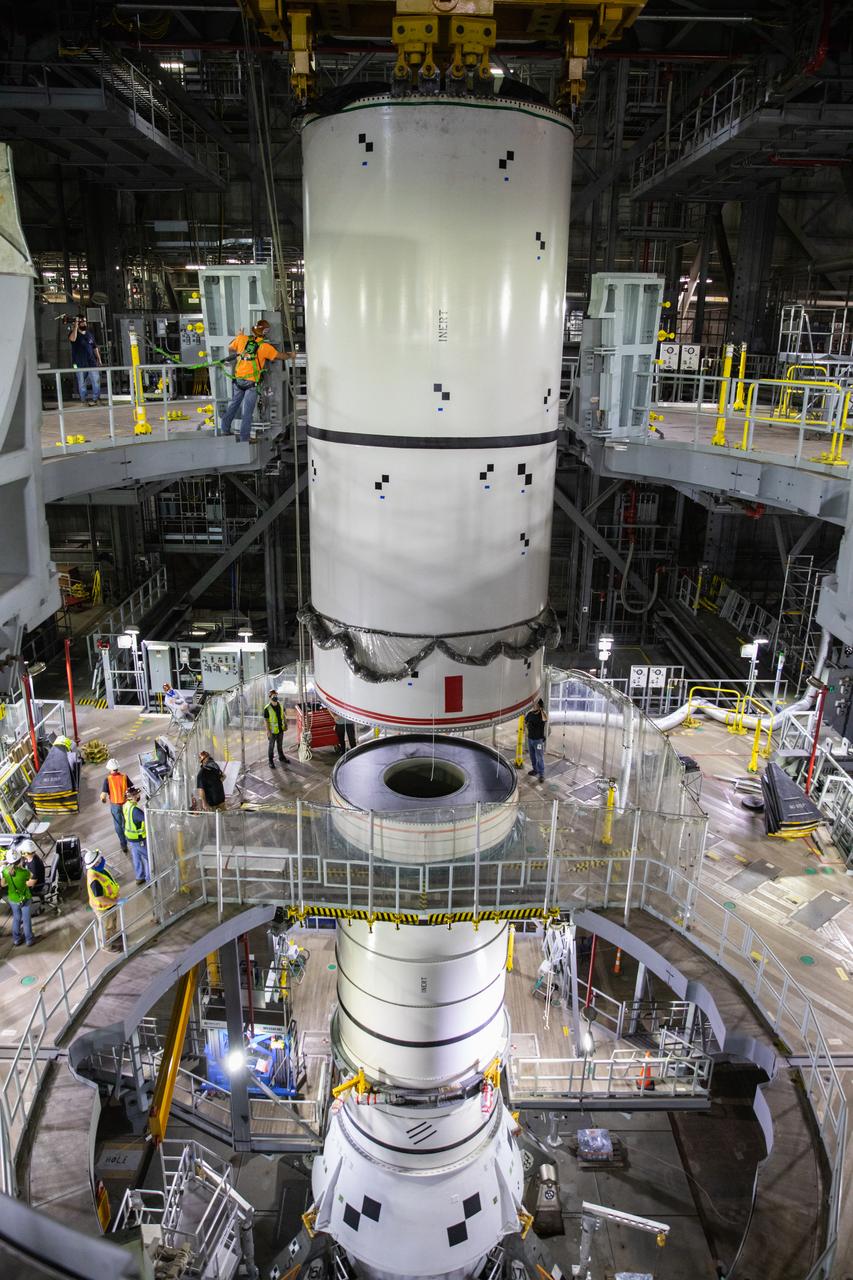
Technicians with NASA’s Exploration Ground Systems lower a mock-up, or pathfinder, of the Space Launch System’s (SLS) center booster segment onto an aft pathfinder segment inside the Vehicle Assembly Building (VAB) at the agency’s Kennedy Space Center in Florida on Sept. 14, 2020. Teams rehearsed stacking both pathfinder segments on top of the mobile launcher in High Bay 3 of the VAB in preparation for the Artemis I launch. Stacking of the actual SLS booster segments will occur later this year, when the rocket’s core stage arrives at Kennedy. Artemis I is the first in a series of increasingly complex missions that will test SLS and the Orion spacecraft as an integrated system prior to crewed flights to the Moon.
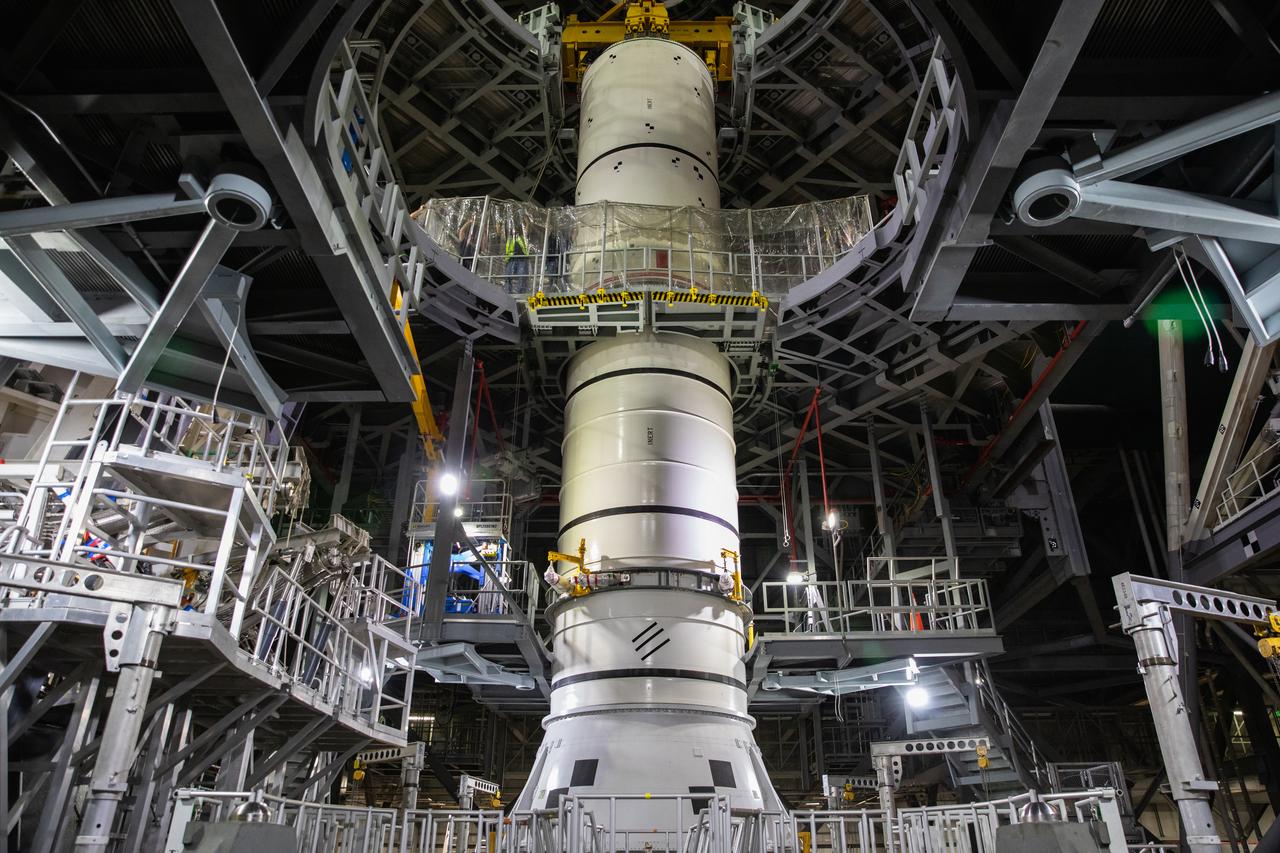
Technicians with NASA’s Exploration Ground Systems lower a mock-up, or pathfinder, of the Space Launch System’s (SLS) center booster segment onto an aft pathfinder segment inside the Vehicle Assembly Building (VAB) at the agency’s Kennedy Space Center in Florida on Sept. 14, 2020. Teams rehearsed stacking both pathfinder segments on top of the mobile launcher in High Bay 3 of the VAB in preparation for the Artemis I launch. Stacking of the actual SLS booster segments will occur later this year, when the rocket’s core stage arrives at Kennedy. Artemis I is the first in a series of increasingly complex missions that will test SLS and the Orion spacecraft as an integrated system prior to crewed flights to the Moon.
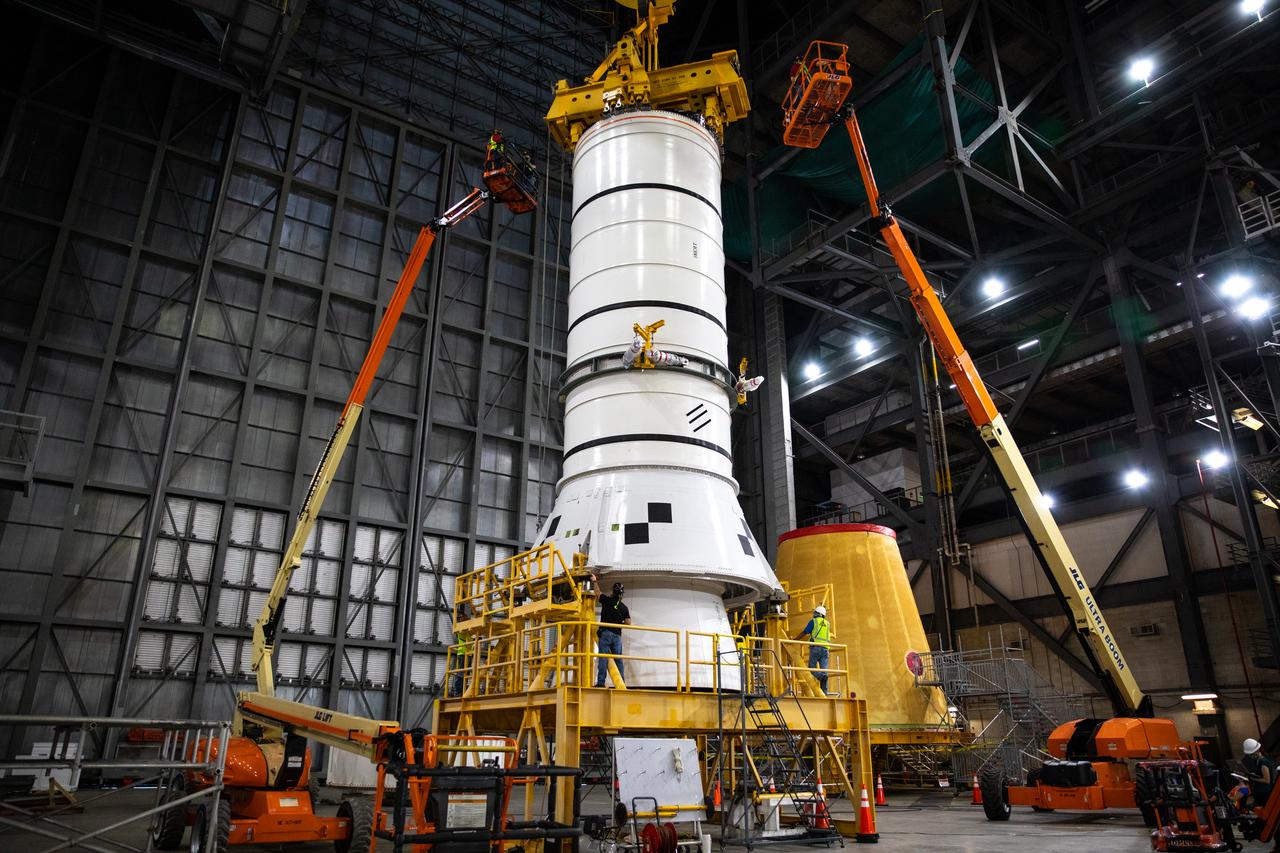
Technicians with NASA’s Exploration Ground Systems rehearse booster stacking operations inside the Vehicle Assembly Building (VAB) at the agency’s Kennedy Space Center in Florida on Sept. 11, 2020, in preparation for Artemis I. The exercise involved using booster segment mock-ups, referred to as pathfinders. During this rehearsal, an aft pathfinder segment was prepared in High Bay 4 of the VAB, after which a team of crane operators moved it over to High Bay 3, where it was placed on the mobile launcher. Stacking of the actual Space Launch System (SLS) booster segments will occur later this year, before the rocket’s core stage arrives at Kennedy. Artemis I is the first in a series of increasingly complex missions that will test SLS and the Orion spacecraft as an integrated system prior to crewed flights to the Moon.
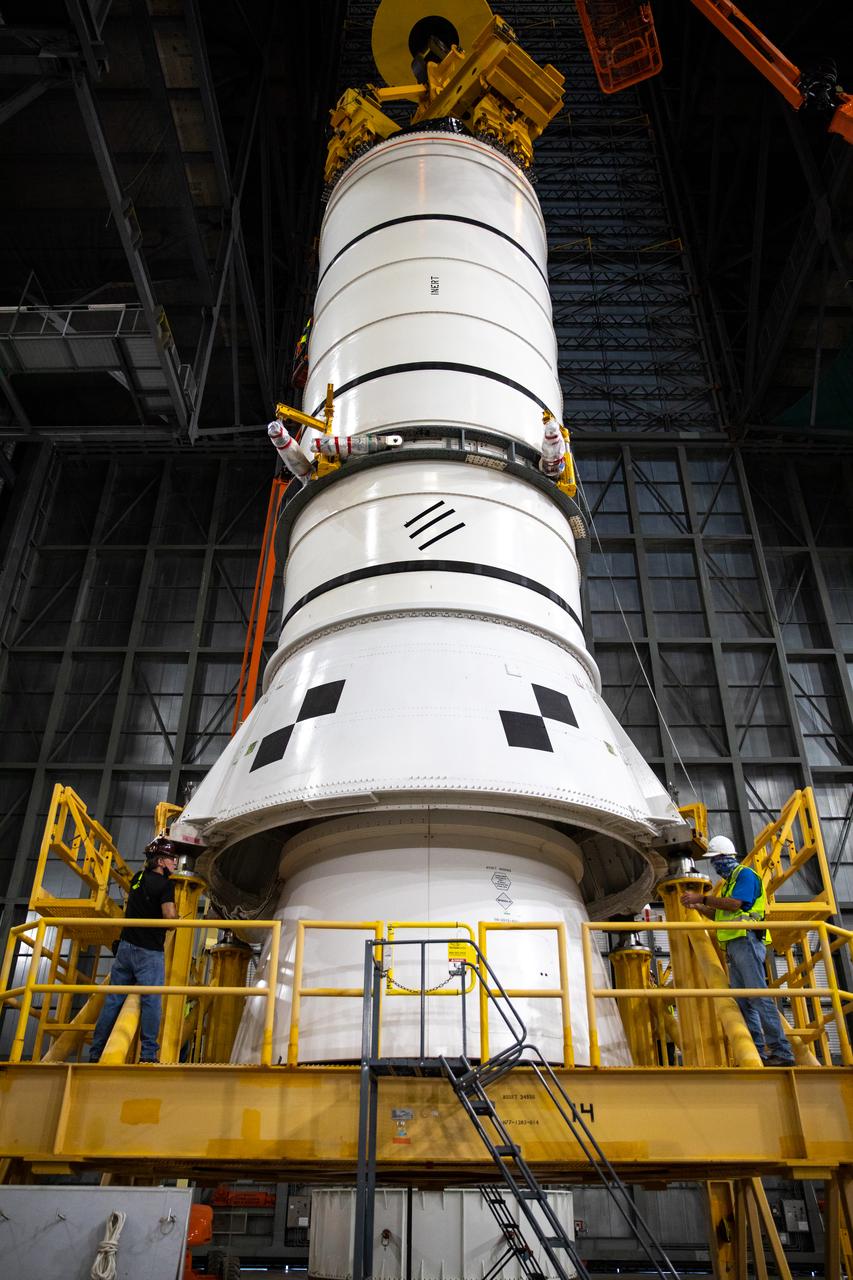
Technicians with NASA’s Exploration Ground Systems rehearse booster stacking operations inside the Vehicle Assembly Building (VAB) at the agency’s Kennedy Space Center in Florida on Sept. 11, 2020, in preparation for Artemis I. The exercise involved using booster segment mock-ups, referred to as pathfinders. During this rehearsal, an aft pathfinder segment was prepared in High Bay 4 of the VAB, after which a team of crane operators moved it over to High Bay 3, where it was placed on the mobile launcher. Stacking of the actual Space Launch System (SLS) booster segments will occur later this year, before the rocket’s core stage arrives at Kennedy. Artemis I is the first in a series of increasingly complex missions that will test SLS and the Orion spacecraft as an integrated system prior to crewed flights to the Moon.
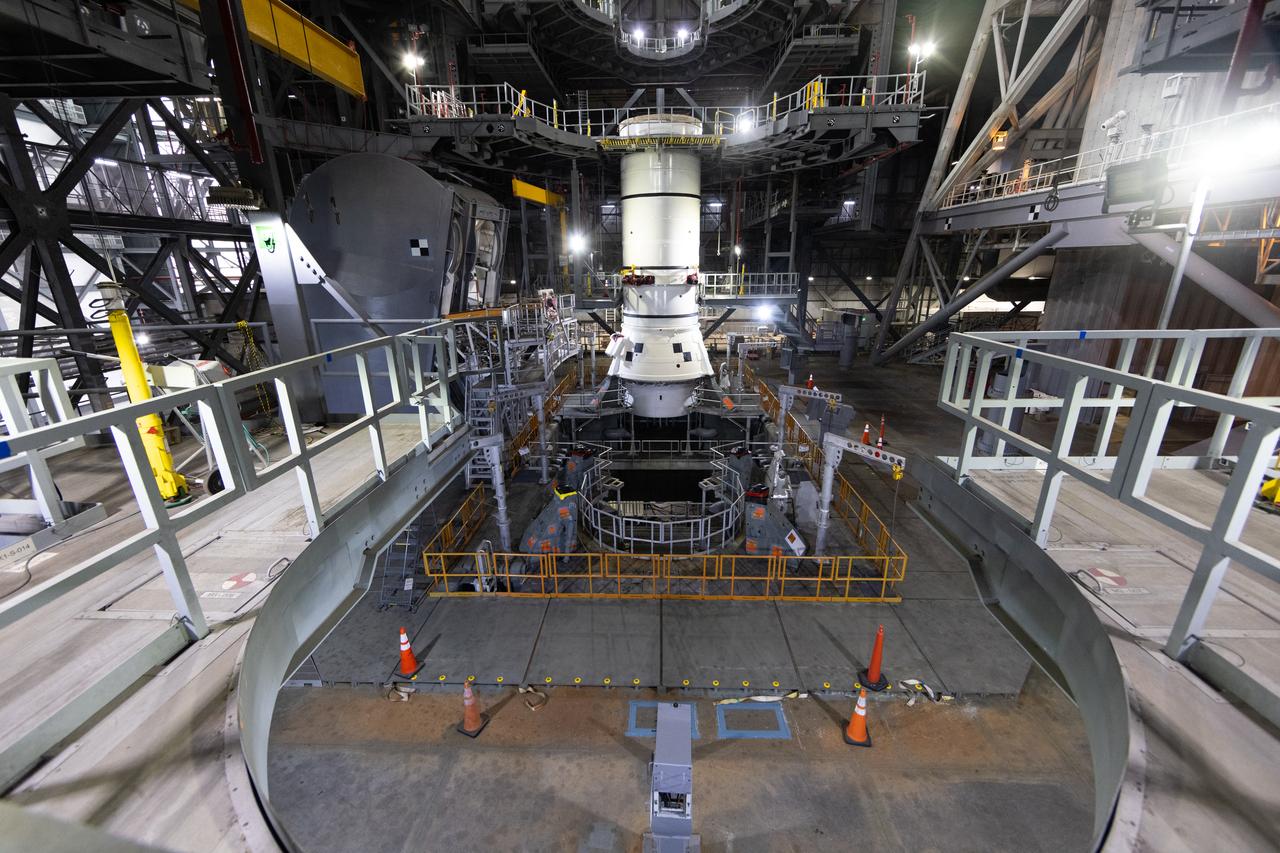
Engineers and technicians with the Exploration Ground Systems Program stack the first Moon rocket segment – the left aft assembly for the Artemis II SLS (Space Launch System) solid rocket booster onto mobile launcher 1 inside the Vehicle Assembly Building at NASA’s Kennedy Space Center on Wednesday, Nov. 20, 2024.
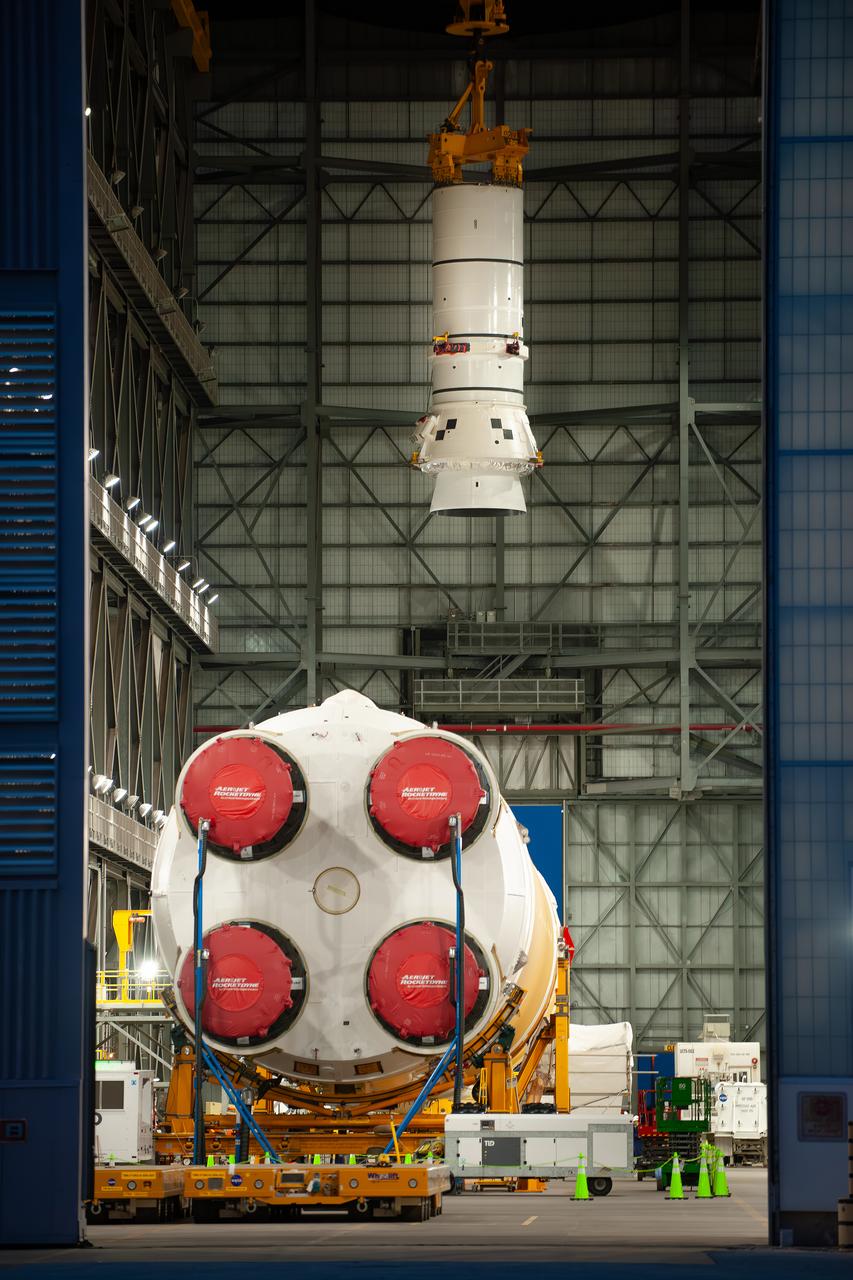
Down the transfer aisle from the Artemis II SLS (Space Launch System) core stage, an overhead crane hoists the left aft assembly, or bottom portion of the solid rocket boosters for the SLS Moon rocket inside the Vehicle Assembly Building at NASA’s Kennedy Space Center on Tuesday, Nov. 19, 2024. The crane will lift the aft assembly on top of the mobile launcher 1 followed by the right aft assembly and stack the remaining booster segments for the Artemis II mission.

Crane operators and ground support personnel practice lifting and stacking mock-ups of solid rocket booster (SRB) segments in High Bay 4 inside the Vehicle Assembly Building at NASA’s Kennedy Space Center in Florida. The training will help workers prepare for SRB stacking operations for the agency's Space Launch System SLS) rocket. The SLS will launch the Orion spacecraft on its first integrated flight, Exploration Mission-1.
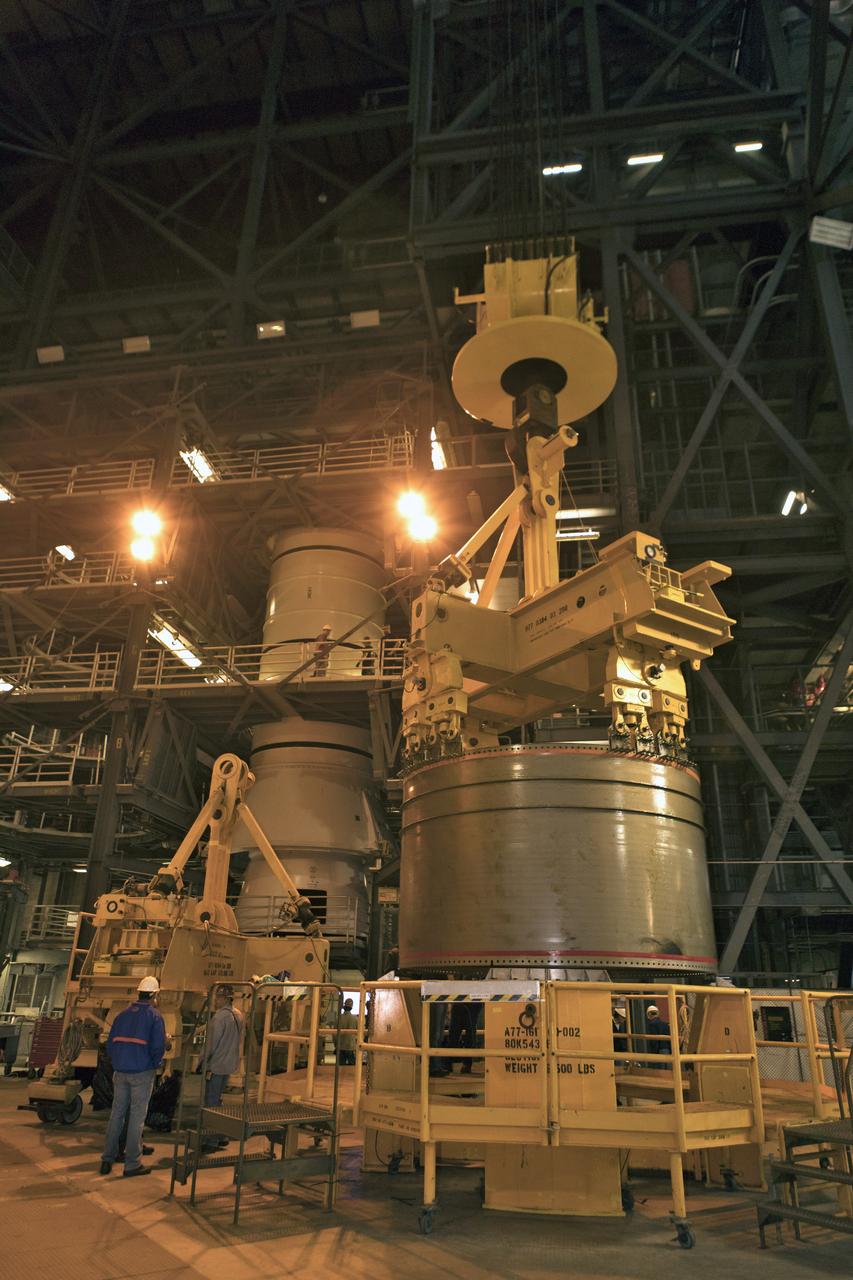
Crane operators and ground support personnel practice lifting and stacking mock-ups of solid rocket booster (SRB) segments in High Bay 4 inside the Vehicle Assembly Building at NASA’s Kennedy Space Center in Florida. The training will help workers prepare for SRB stacking operations for the agency's Space Launch System SLS) rocket. The SLS will launch the Orion spacecraft on its first integrated flight, Exploration Mission-1.
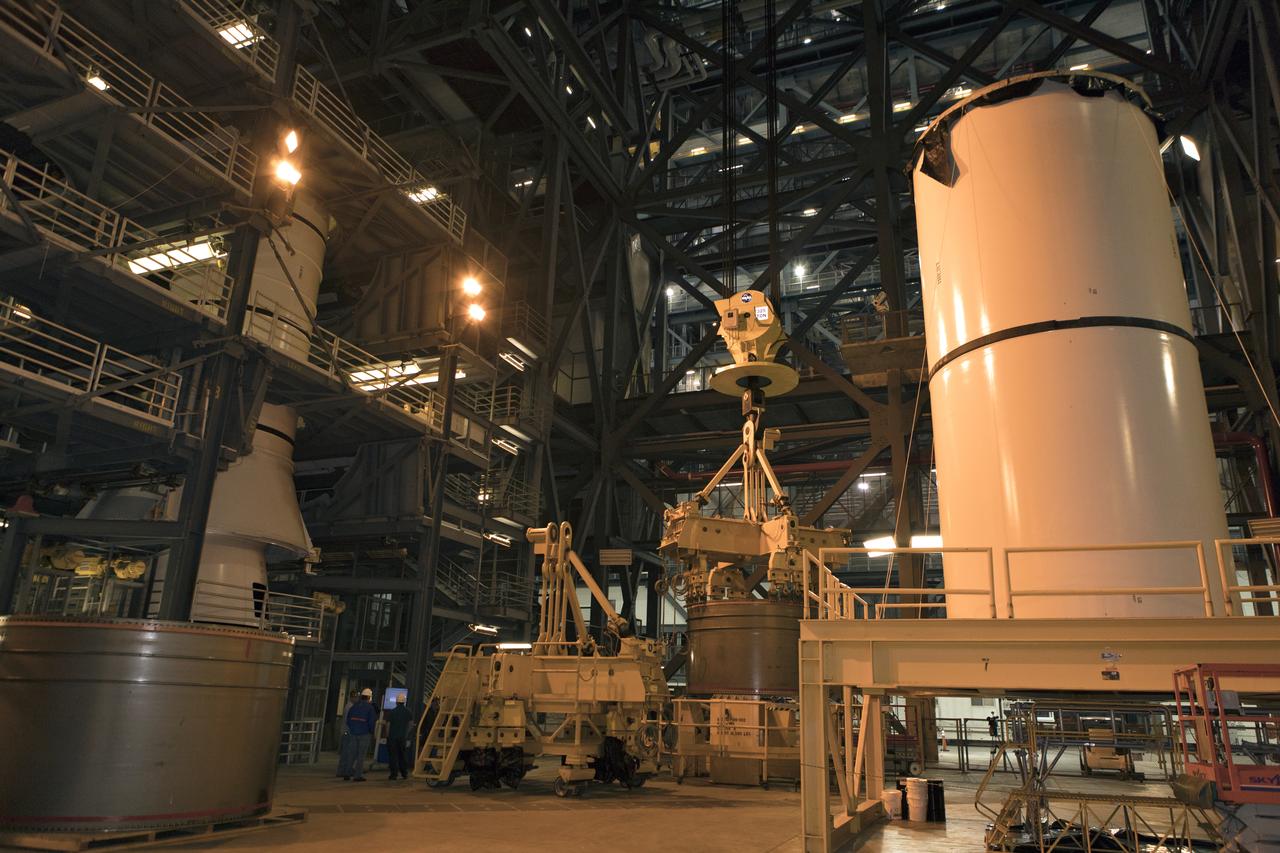
Crane operators and ground support personnel practice lifting and stacking mock-ups of solid rocket booster (SRB) segments in High Bay 4 inside the Vehicle Assembly Building at NASA’s Kennedy Space Center in Florida. The training will help workers prepare for SRB stacking operations for the agency's Space Launch System SLS) rocket. The SLS will launch the Orion spacecraft on its first integrated flight, Exploration Mission-1.

Crane operators and ground support personnel practice lifting and stacking mock-ups of solid rocket booster (SRB) segments in High Bay 4 inside the Vehicle Assembly Building at NASA’s Kennedy Space Center in Florida. The training will help workers prepare for SRB stacking operations for the agency's Space Launch System SLS) rocket. The SLS will launch the Orion spacecraft on its first integrated flight, Exploration Mission-1.
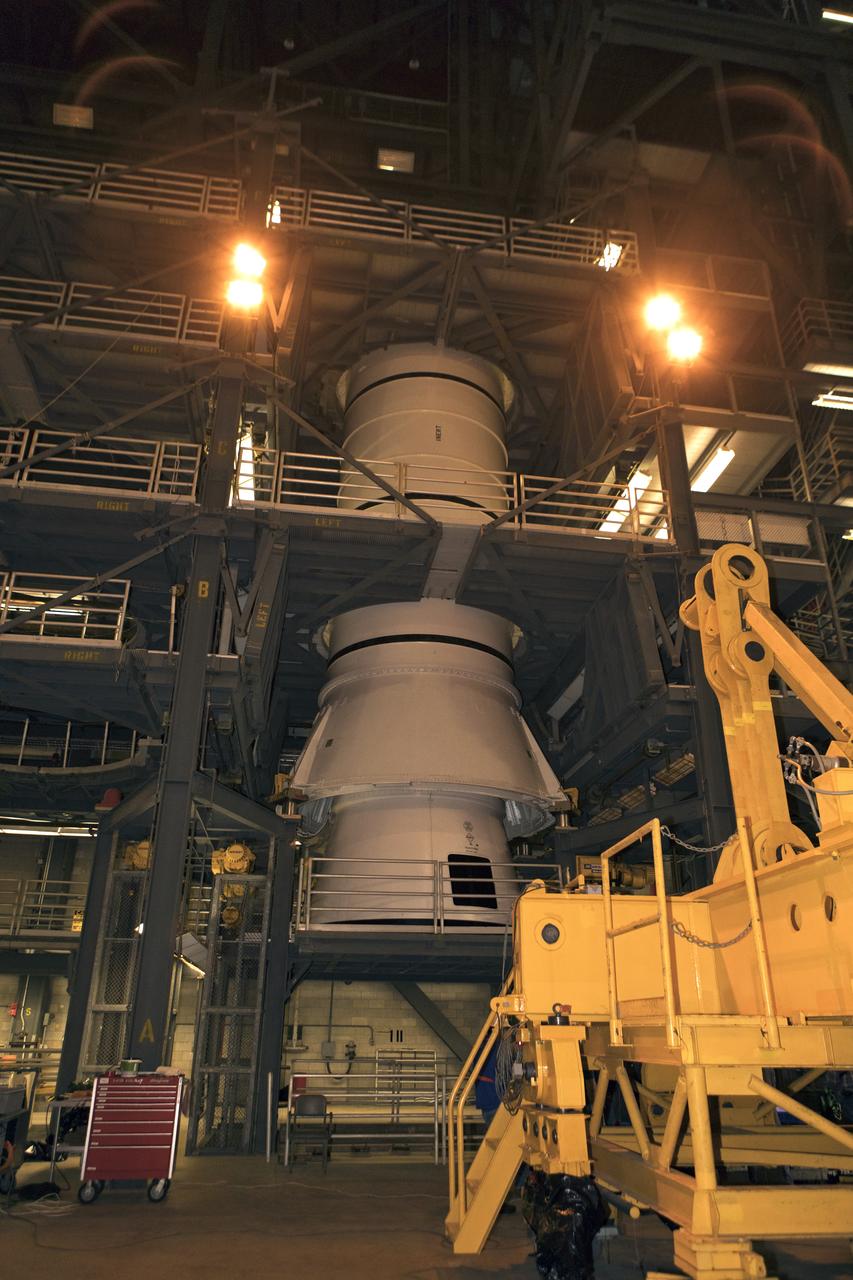
Crane operators and ground support personnel practice lifting and stacking mock-ups of solid rocket booster (SRB) segments in High Bay 4 inside the Vehicle Assembly Building at NASA’s Kennedy Space Center in Florida. The training will help workers prepare for SRB stacking operations for the agency's Space Launch System SLS) rocket. The SLS will launch the Orion spacecraft on its first integrated flight, Exploration Mission-1.
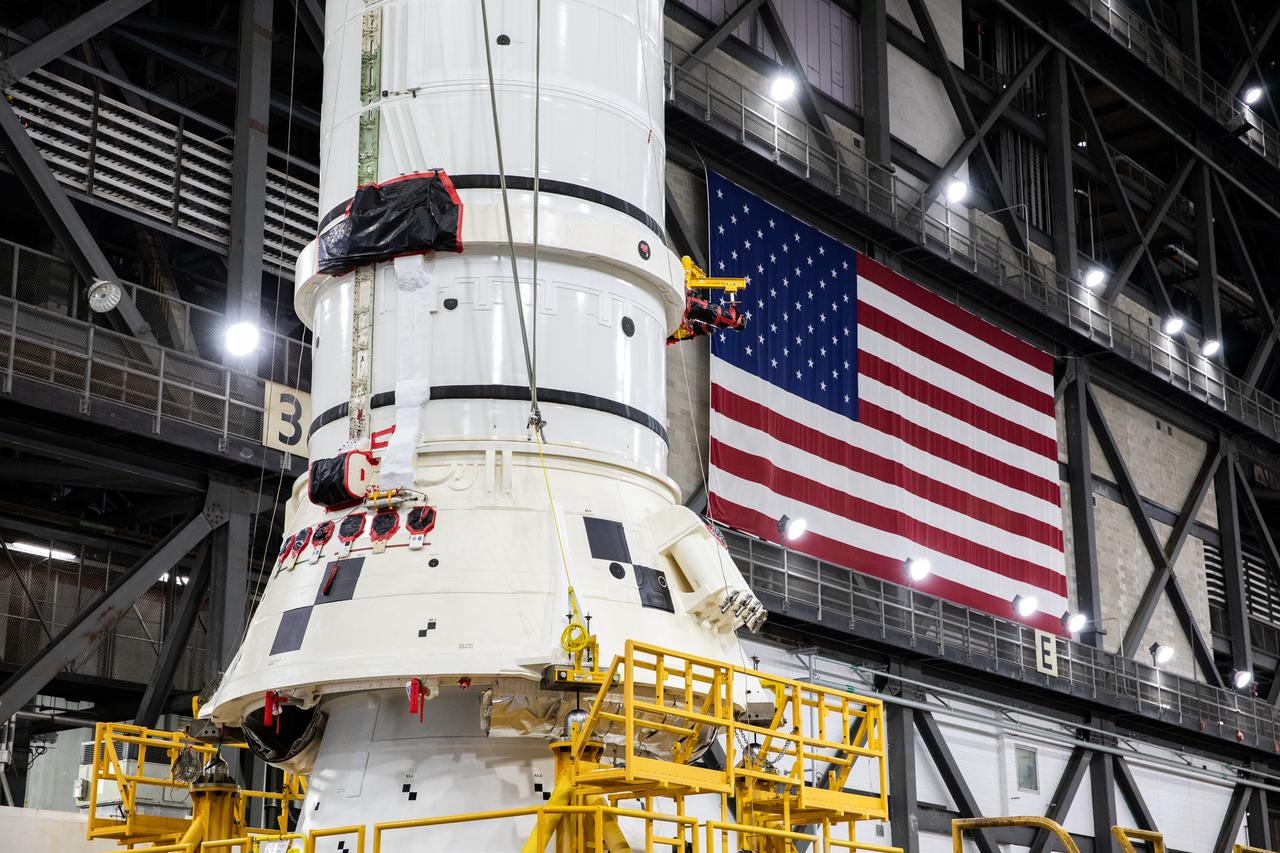
Engineers and technicians with the Exploration Ground Systems Program attach an overhead crane to the left aft assembly, or bottom portion of the solid rocket boosters for the SLS (Space Launch System) rocket, inside the Vehicle Assembly Building at NASA’s Kennedy Space Center on Tuesday, Nov. 19, 2024. The crane will lift the aft assembly on top of mobile launcher 1 followed by the right aft assembly and stack the remaining booster segments for the Artemis II mission.
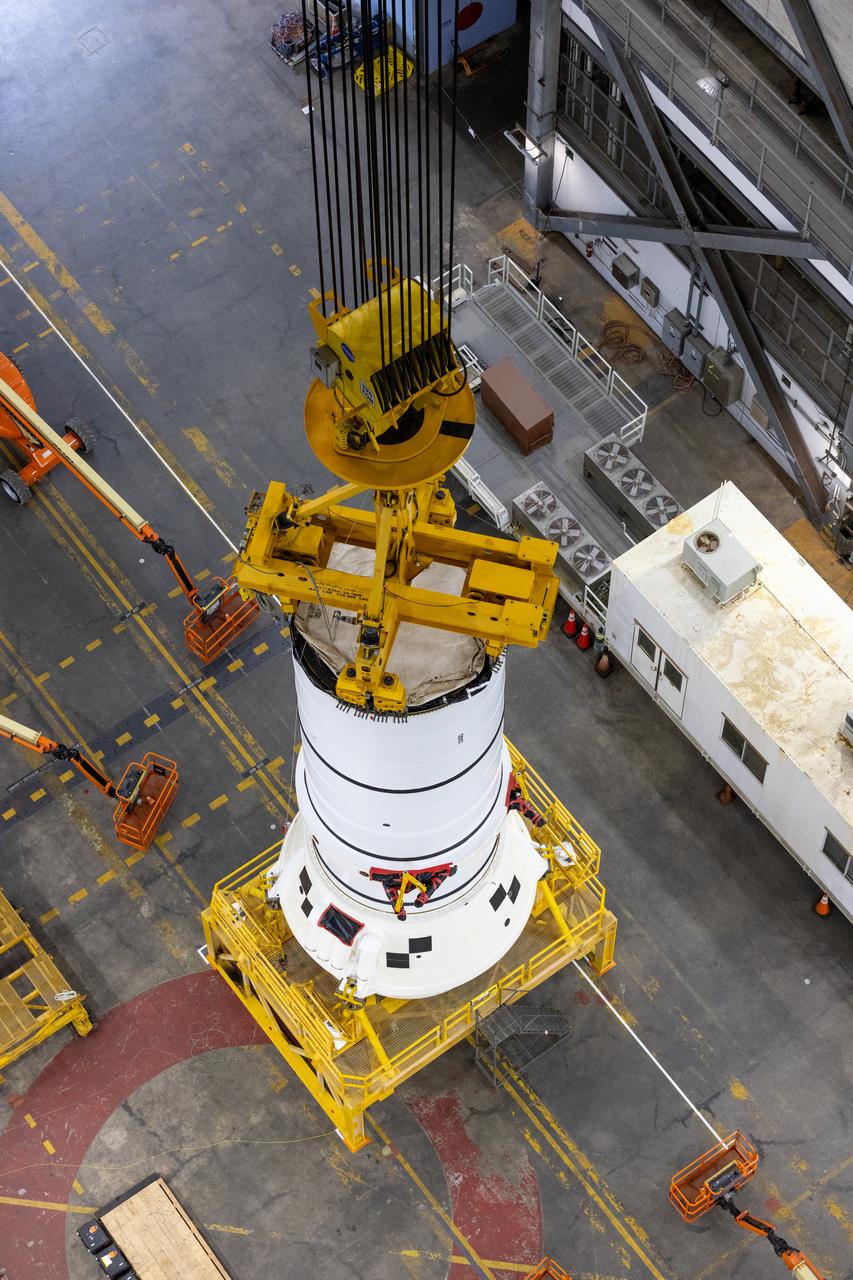
Engineers and technicians with the Exploration Ground Systems Program attach an overhead crane to the left aft assembly, or bottom portion of the solid rocket boosters for the SLS (Space Launch System) rocket inside the Vehicle Assembly Building at NASA’s Kennedy Space Center on Tuesday, Nov. 19, 2024. The crane will lift the aft assembly on top of mobile launcher 1 followed by the right aft assembly and stack the remaining booster segments for the Artemis II mission.
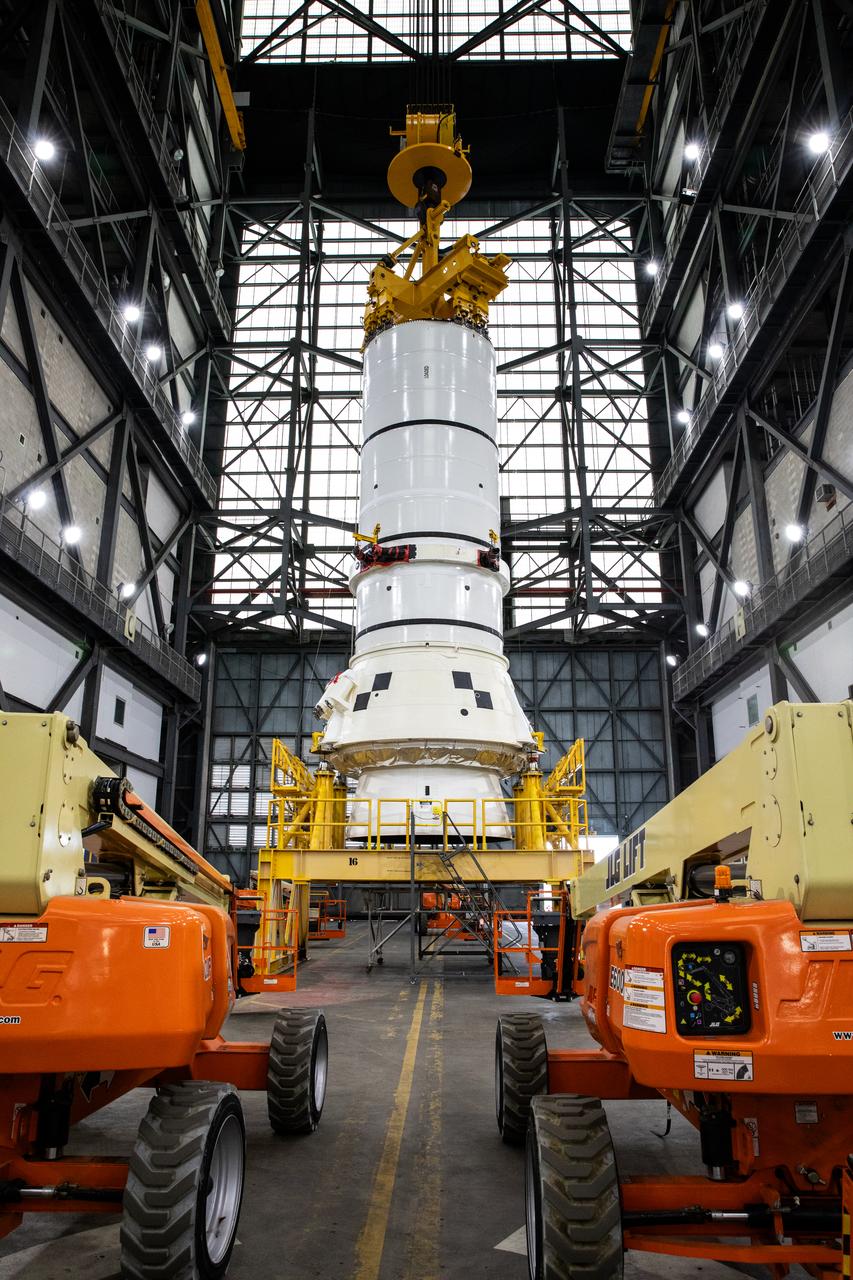
Engineers and technicians with the Exploration Ground Systems Program attach an overhead crane to the left aft assembly, or bottom portion of the solid rocket boosters for the SLS (Space Launch System) rocket, inside the Vehicle Assembly Building at NASA’s Kennedy Space Center on Tuesday, Nov. 19, 2024. The crane will lift the aft assembly on top of mobile launcher 1 followed by the right aft assembly and stack the remaining booster segments for the Artemis II mission.
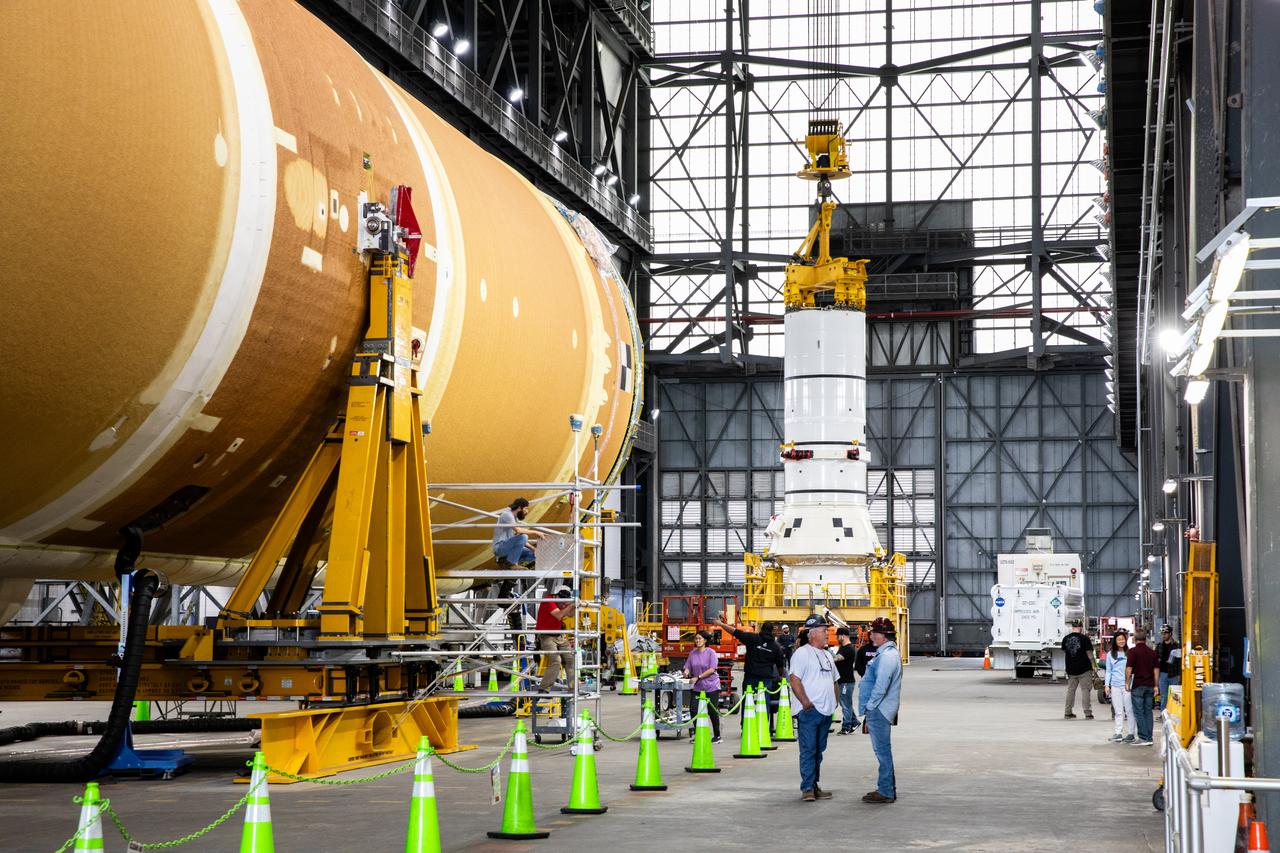
Down the transfer aisle from the Artemis II SLS (Space Launch System) core stage, engineers and technicians with the Exploration Ground Systems Program attach an overhead crane to the left aft assembly, or bottom portion of the solid rocket boosters for the SLS rocket, inside the Vehicle Assembly Building at NASA’s Kennedy Space Center on Tuesday, Nov. 19, 2024. The crane will lift the aft assembly on top of the mobile launcher 1 followed by the right aft assembly and stack the remaining booster segments for the Artemis II mission.
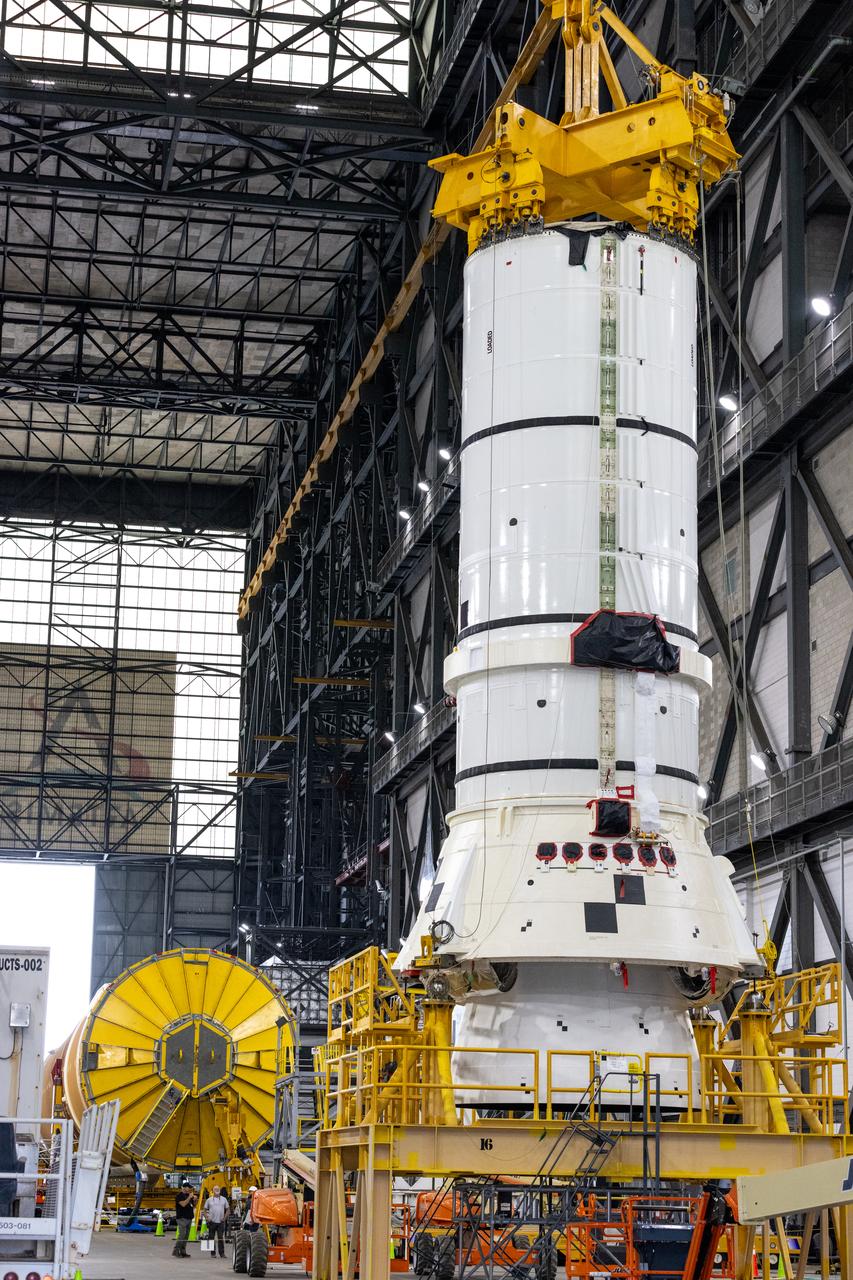
Down the transfer aisle from the Artemis II SLS (Space Launch System) core stage, engineers and technicians with the Exploration Ground Systems Program attach an overhead crane to the left aft assembly, or bottom portion of the solid rocket boosters for the SLS rocket inside the Vehicle Assembly Building at NASA’s Kennedy Space Center on Tuesday, Nov. 19, 2024. The crane will lift the aft assembly on top of the mobile launcher 1 followed by the right aft assembly and stack the remaining booster segments for the Artemis II mission.

Engineers and technicians with the Exploration Ground Systems Program attach an overhead crane to the left aft assembly, or bottom portion of the solid rocket boosters for the SLS (Space Launch System) rocket, inside the Vehicle Assembly Building at NASA’s Kennedy Space Center on Tuesday, Nov. 19, 2024. The crane will lift the aft assembly on top of mobile launcher 1 followed by the right aft assembly and stack the remaining booster segments for the Artemis II mission.
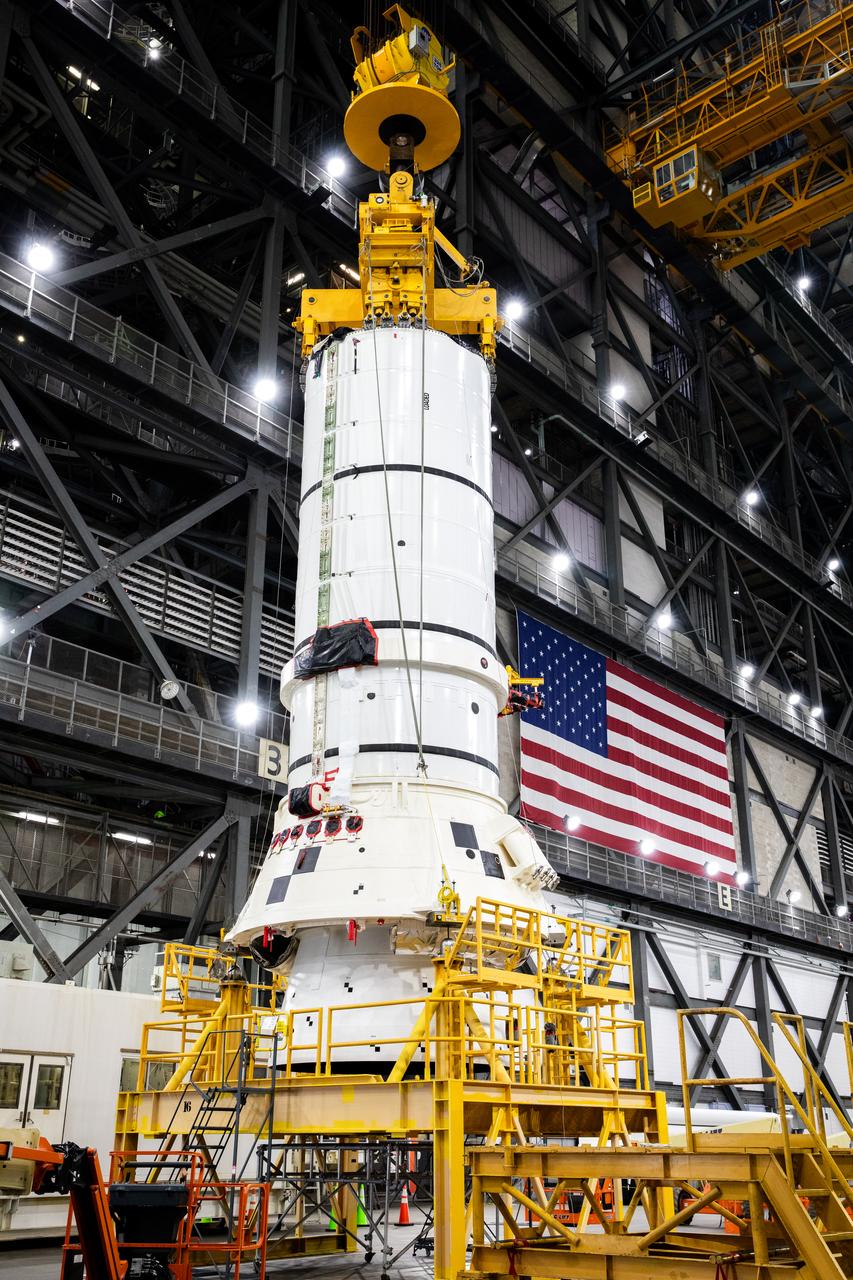
Engineers and technicians with the Exploration Ground Systems Program attach an overhead crane to the left aft assembly, or bottom portion of the solid rocket boosters for the SLS (Space Launch System) rocket, inside the Vehicle Assembly Building at NASA’s Kennedy Space Center on Tuesday, Nov. 19, 2024. The crane will lift the aft assembly on top of mobile launcher 1 followed by the right aft assembly and stack the remaining booster segments for the Artemis II mission.
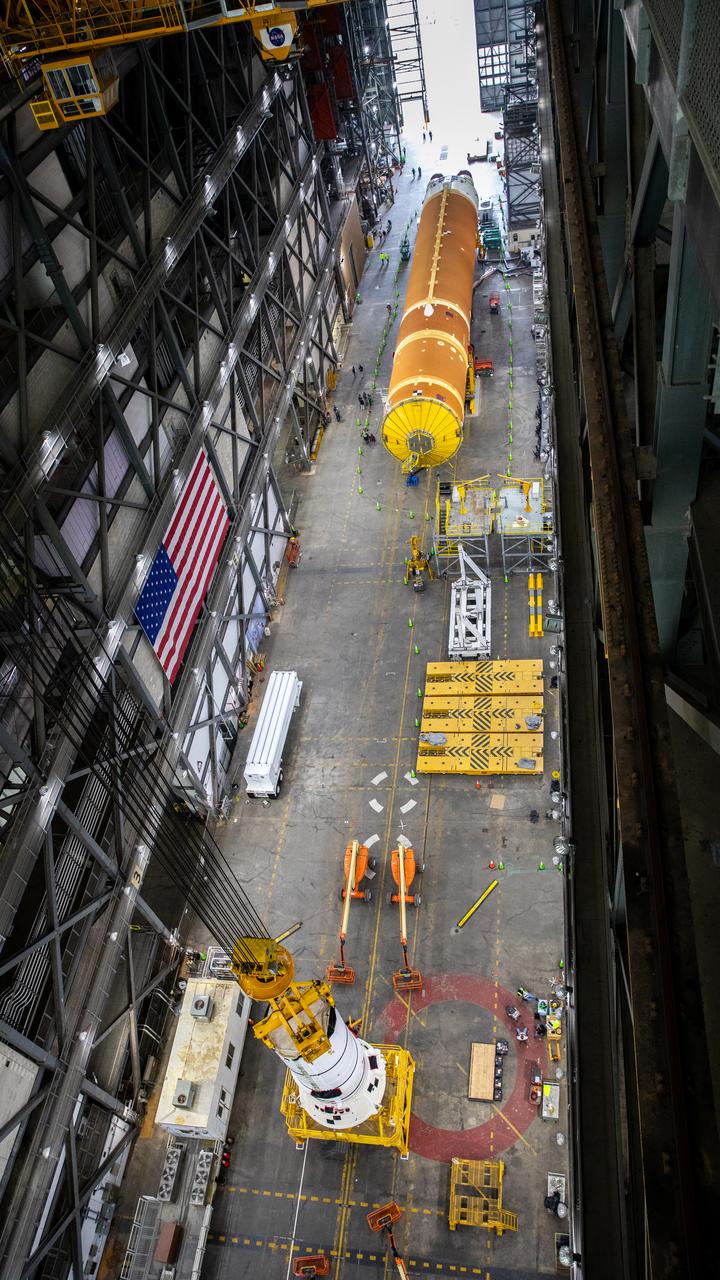
Down the transfer aisle from the Artemis II SLS (Space Launch System) core stage, engineers and technicians with the Exploration Ground Systems Program attach an overhead crane to the left aft assembly, or bottom portion of the solid rocket boosters for the SLS rocket inside the Vehicle Assembly Building at NASA’s Kennedy Space Center on Tuesday, Nov. 19, 2024. The crane will lift the aft assembly on top of the mobile launcher 1 followed by the right aft assembly and stack the remaining booster segments for the Artemis II mission.
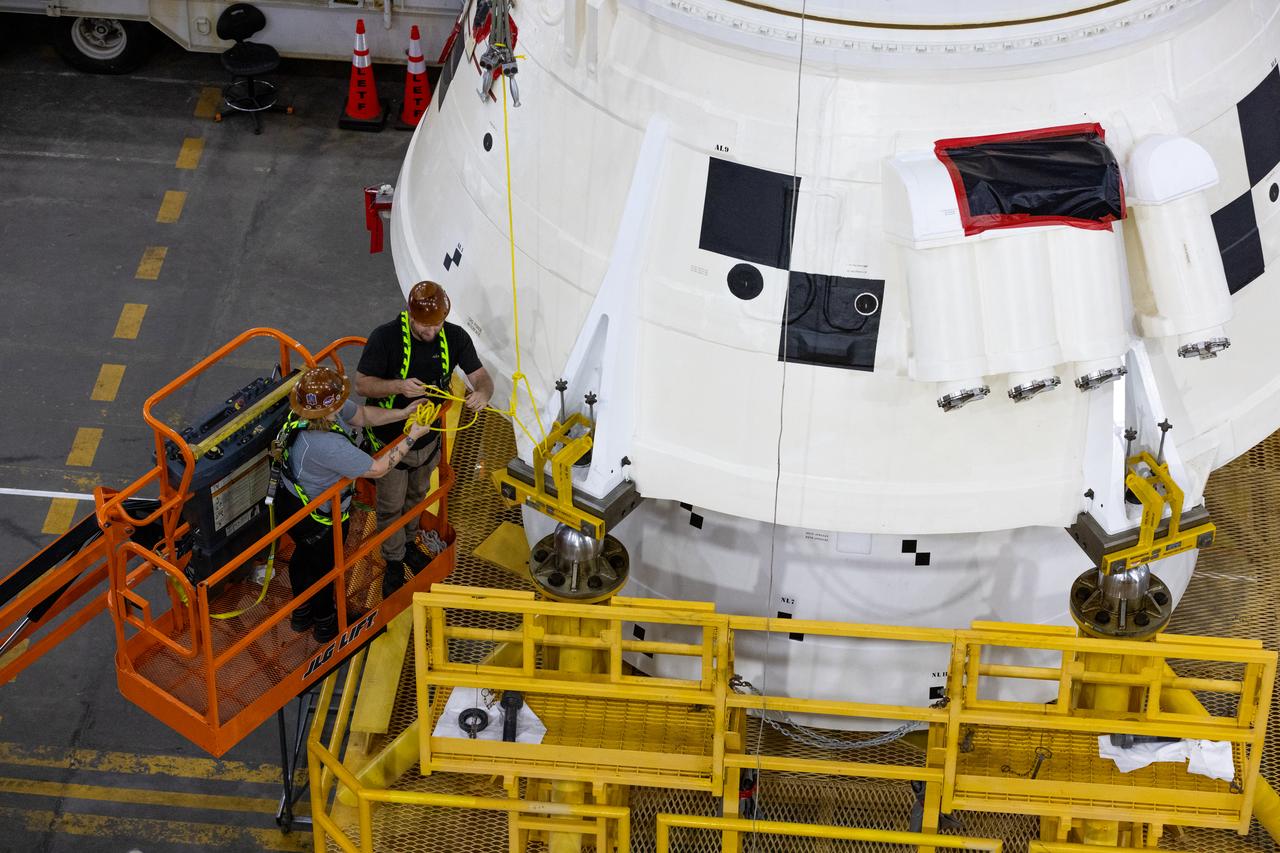
Engineers and technicians with the Exploration Ground Systems Program attach an overhead crane to the left aft assembly, or bottom portion of the solid rocket boosters for the SLS (Space Launch System) rocket, inside the Vehicle Assembly Building at NASA’s Kennedy Space Center on Tuesday, Nov. 19, 2024. The crane will lift the aft assembly on top of mobile launcher 1 followed by the right aft assembly and stack the remaining booster segments for the Artemis II mission.

During a training exercise, technicians with NASA’s Exploration Ground Systems lower a mock-up of the Space Launch System (SLS) aft booster segment, referred to as a pathfinder, onto the mobile launcher in Kennedy Space Center’s Vehicle Assembly Building (VAB) on Sept. 11, 2020. The rehearsal involved teams preparing the aft pathfinder segment in High Bay 4 of the VAB, lifting and moving it over to High Bay 3, and placing it on the mobile launcher in preparation for Artemis I. Stacking of the actual booster segments will occur later this year, before the SLS core stage arrives at the Florida spaceport. Artemis I is the first in a series of increasingly complex missions that will test SLS and the Orion spacecraft as an integrated system prior to crewed flights to the Moon.
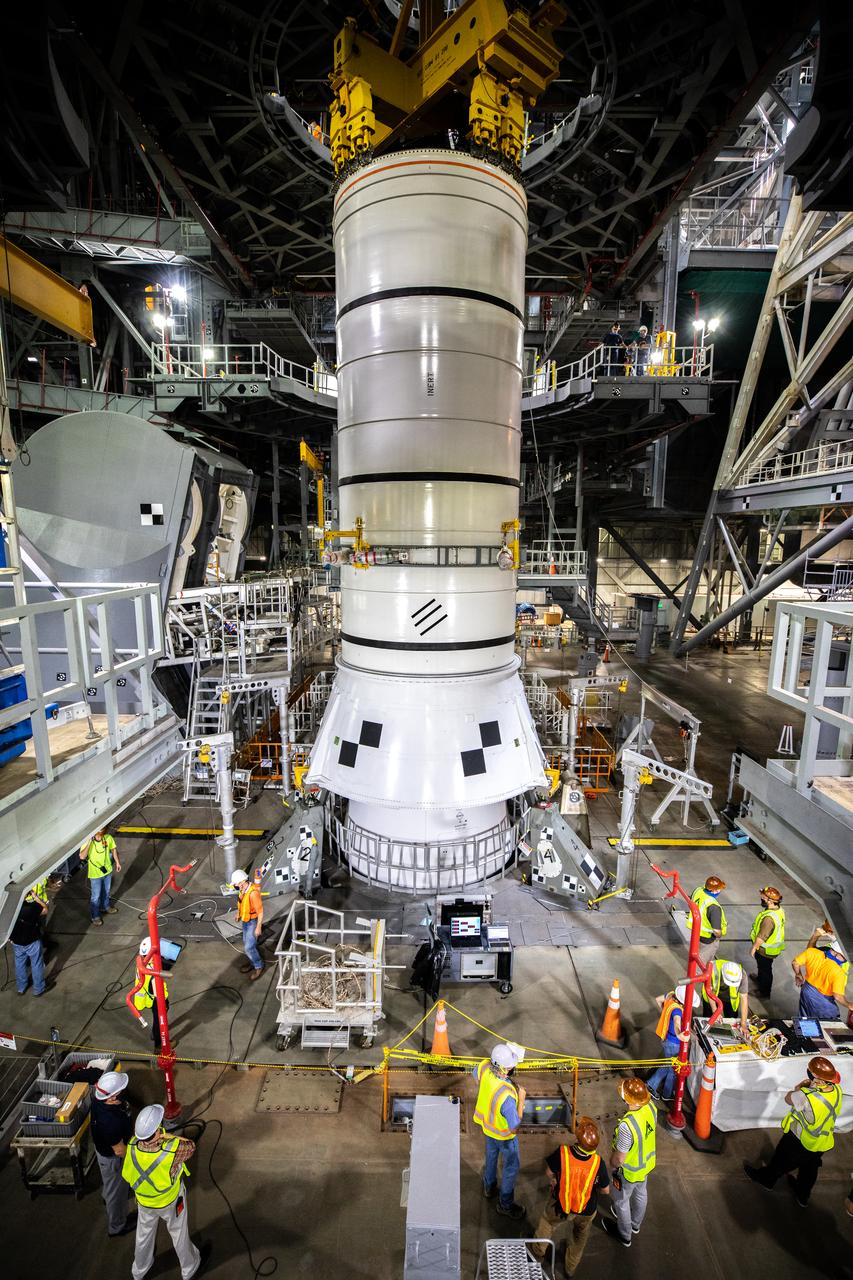
During a training exercise, technicians with NASA’s Exploration Ground Systems lower a mock-up of the Space Launch System (SLS) aft booster segment, referred to as a pathfinder, onto the mobile launcher in Kennedy Space Center’s Vehicle Assembly Building (VAB) on Sept. 11, 2020. The rehearsal involved teams preparing the aft pathfinder segment in High Bay 4 of the VAB, lifting and moving it over to High Bay 3, and placing it on the mobile launcher in preparation for Artemis I. Stacking of the actual booster segments will occur later this year, before the SLS core stage arrives at the Florida spaceport. Artemis I is the first in a series of increasingly complex missions that will test SLS and the Orion spacecraft as an integrated system prior to crewed flights to the Moon.
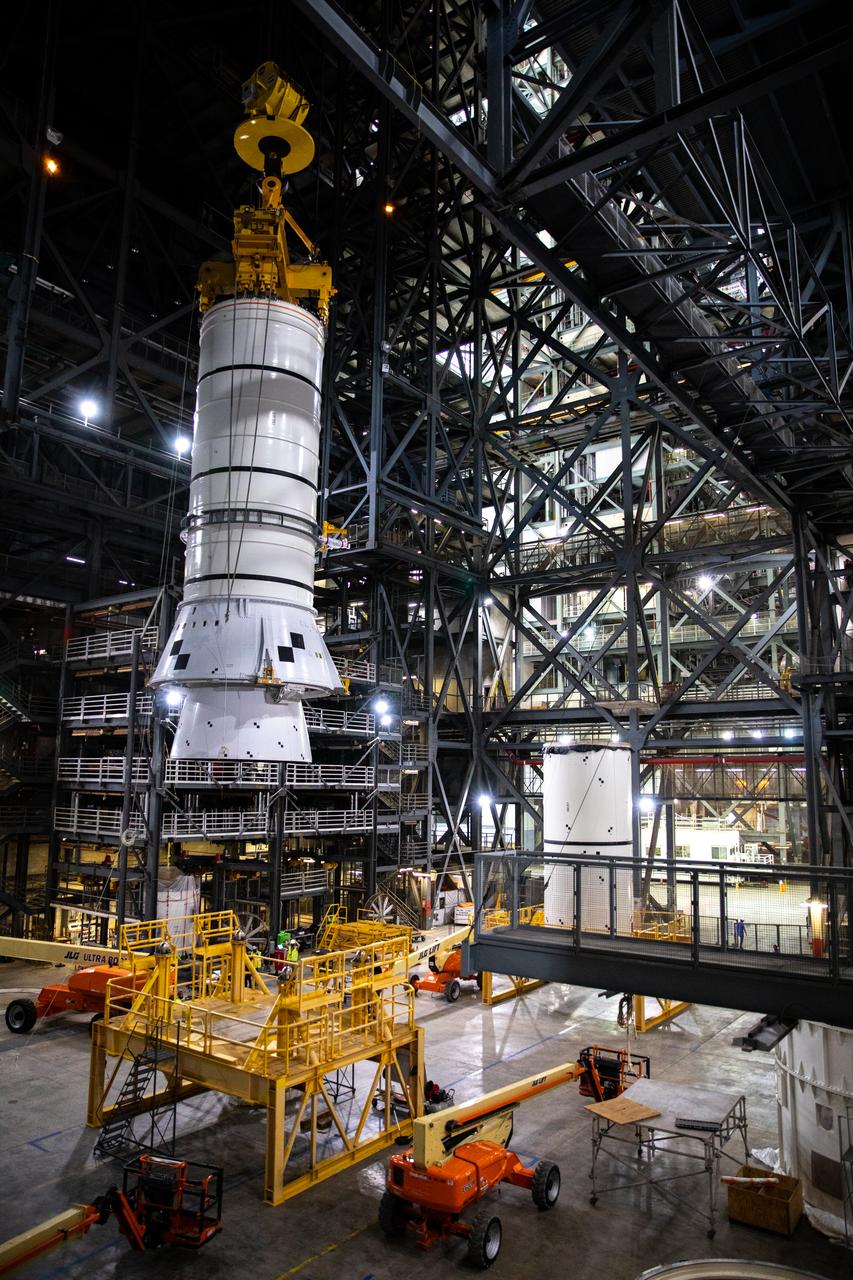
Technicians with NASA’s Exploration Ground Systems rehearse lifting operations using a mock-up of the Space Launch System (SLS) aft booster segment, referred to as a pathfinder, inside the Vehicle Assembly Building (VAB) at the agency’s Kennedy Space Center in Florida on Sept. 11, 2020, in preparation for Artemis I. The exercise involved preparing the aft pathfinder segment in High Bay 4 of the VAB and moving it over to High Bay 3, where it was placed on the mobile launcher. Stacking of the actual booster segments will occur later this year, before the SLS core stage arrives at Kennedy. Artemis I is the first in a series of increasingly complex missions that will test SLS and the Orion spacecraft as an integrated system prior to crewed flights to the Moon.
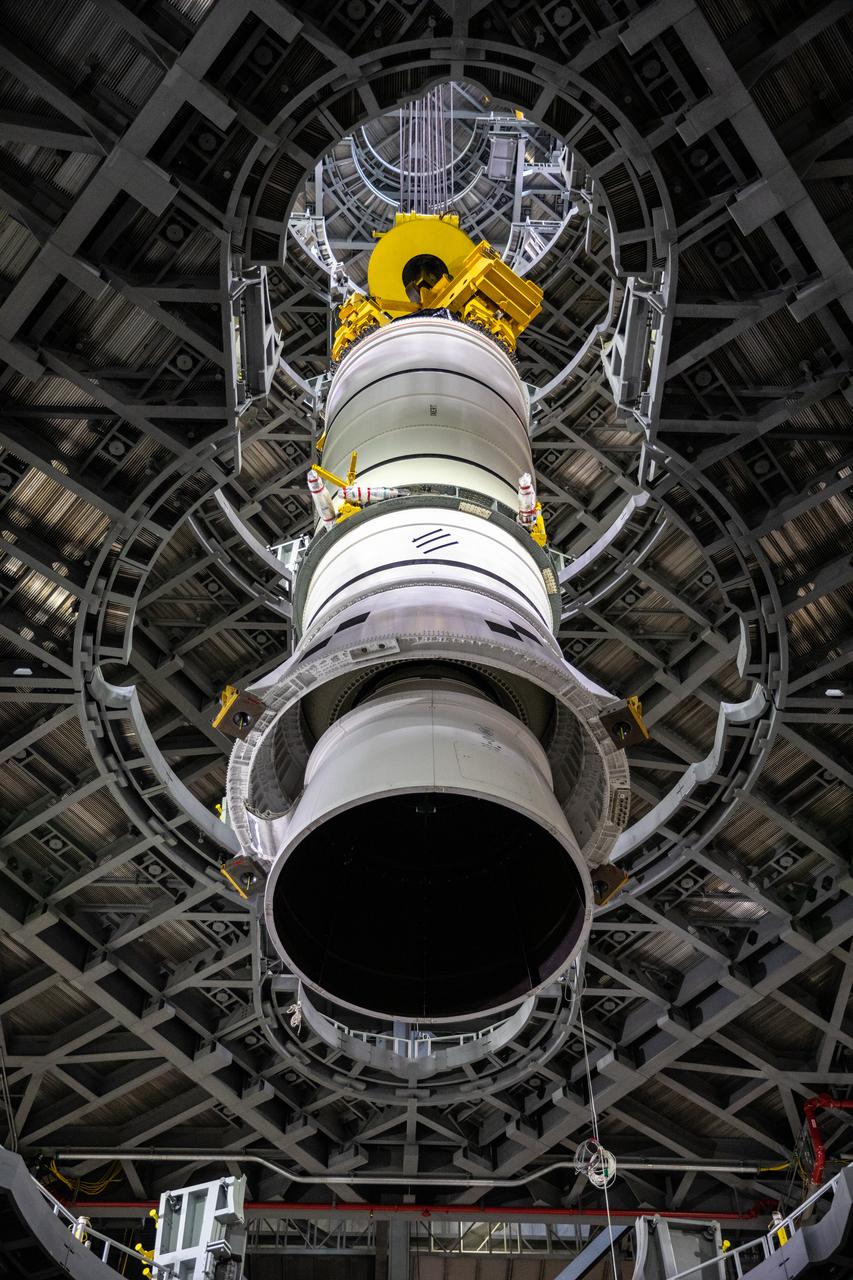
During a training exercise, technicians with NASA’s Exploration Ground Systems lower a mock-up of the Space Launch System (SLS) aft booster segment, referred to as a pathfinder, onto the mobile launcher in Kennedy Space Center’s Vehicle Assembly Building (VAB) on Sept. 11, 2020. The rehearsal involved teams preparing the aft pathfinder segment in High Bay 4 of the VAB, lifting and moving it over to High Bay 3, and placing it on the mobile launcher in preparation for Artemis I. Stacking of the actual booster segments will occur later this year, before the SLS core stage arrives at the Florida spaceport. Artemis I is the first in a series of increasingly complex missions that will test SLS and the Orion spacecraft as an integrated system prior to crewed flights to the Moon.
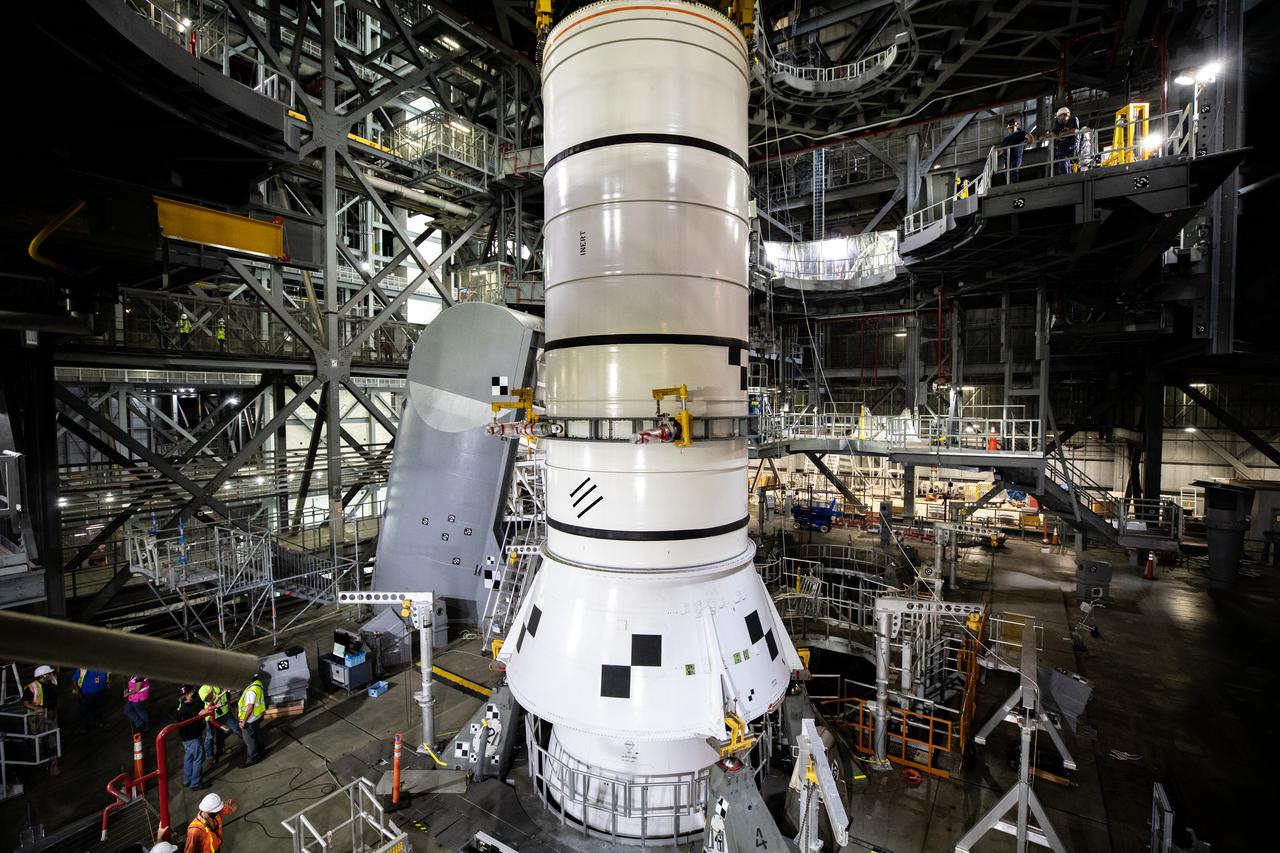
During a training exercise, technicians with NASA’s Exploration Ground Systems lower a mock-up of the Space Launch System (SLS) aft booster segment, referred to as a pathfinder, onto the mobile launcher in Kennedy Space Center’s Vehicle Assembly Building (VAB) on Sept. 11, 2020. The rehearsal involved teams preparing the aft pathfinder segment in High Bay 4 of the VAB, lifting and moving it over to High Bay 3, and placing it on the mobile launcher in preparation for Artemis I. Stacking of the actual booster segments will occur later this year, before the SLS core stage arrives at the Florida spaceport. Artemis I is the first in a series of increasingly complex missions that will test SLS and the Orion spacecraft as an integrated system prior to crewed flights to the Moon.
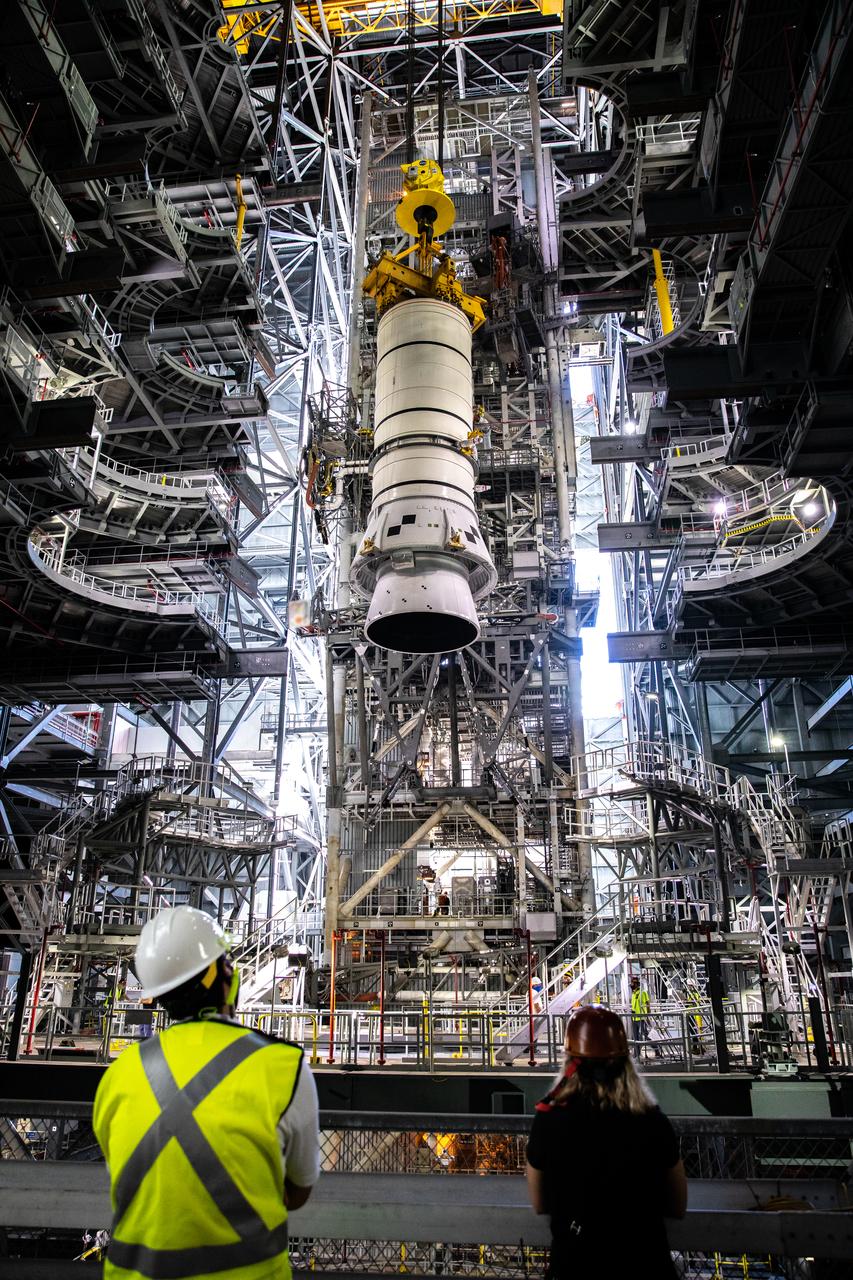
During a training exercise, technicians with NASA’s Exploration Ground Systems lower a mock-up of the Space Launch System (SLS) aft booster segment, referred to as a pathfinder, onto the mobile launcher in Kennedy Space Center’s Vehicle Assembly Building (VAB) on Sept. 11, 2020. The rehearsal involved teams preparing the aft pathfinder segment in High Bay 4 of the VAB, lifting and moving it over to High Bay 3, and placing it on the mobile launcher in preparation for Artemis I. Stacking of the actual booster segments will occur later this year, before the SLS core stage arrives at the Florida spaceport. Artemis I is the first in a series of increasingly complex missions that will test SLS and the Orion spacecraft as an integrated system prior to crewed flights to the Moon.
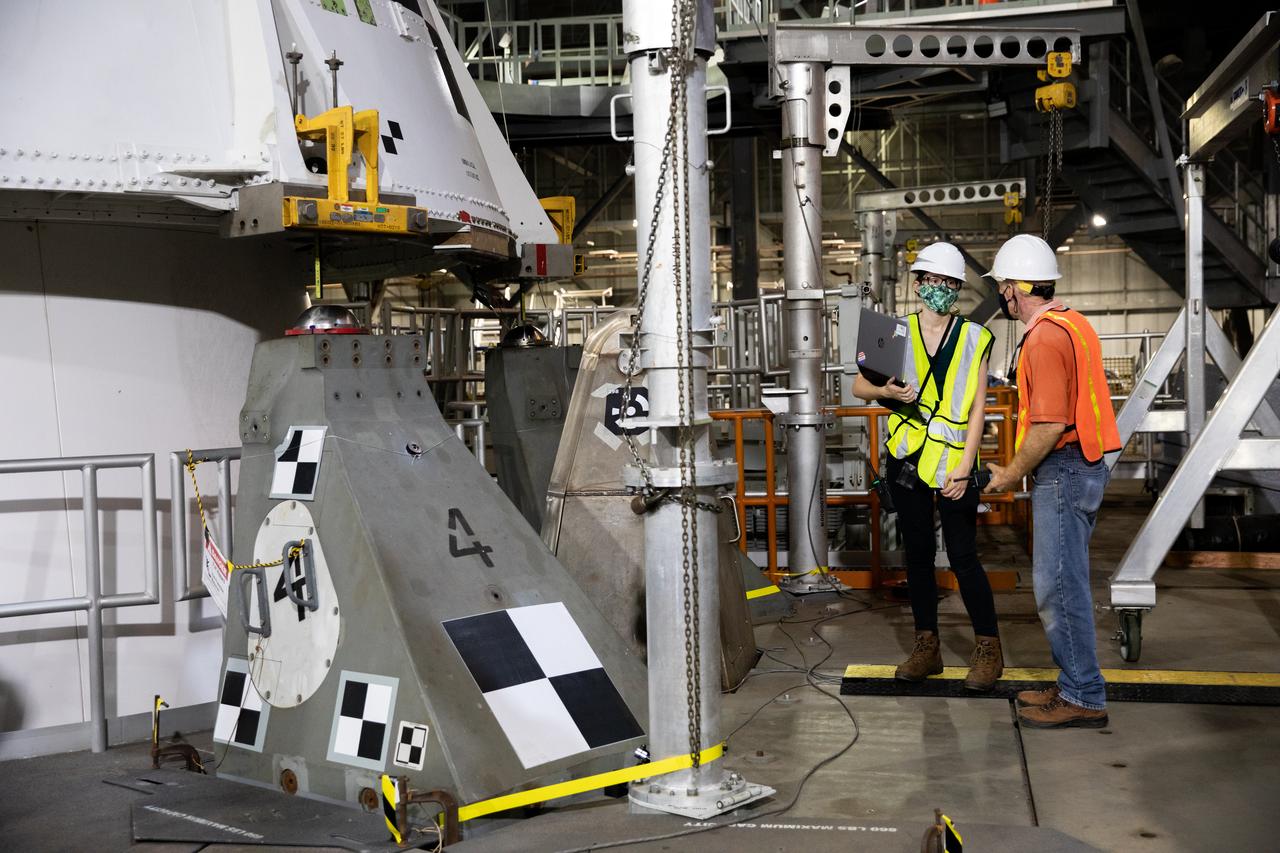
During a training exercise on Sept. 11, 2020, inside the Vehicle Assembly (VAB) at NASA’s Kennedy Space Center in Florida, technicians with the agency’s Exploration Ground Systems verify a mock-up of the Space Launch System (SLS) aft booster segment, referred to as a pathfinder, was placed on the mobile launcher correctly. The rehearsal involved teams preparing the aft pathfinder segment in High Bay 4 of the VAB, lifting and moving it over to High Bay 3, and lowering it onto the mobile launcher in preparation for Artemis I. Stacking of the actual booster segments will occur later this year, before the SLS core stage arrives at the Florida spaceport. Artemis I is the first in a series of increasingly complex missions that will test SLS and the Orion spacecraft as an integrated system prior to crewed flights to the Moon.
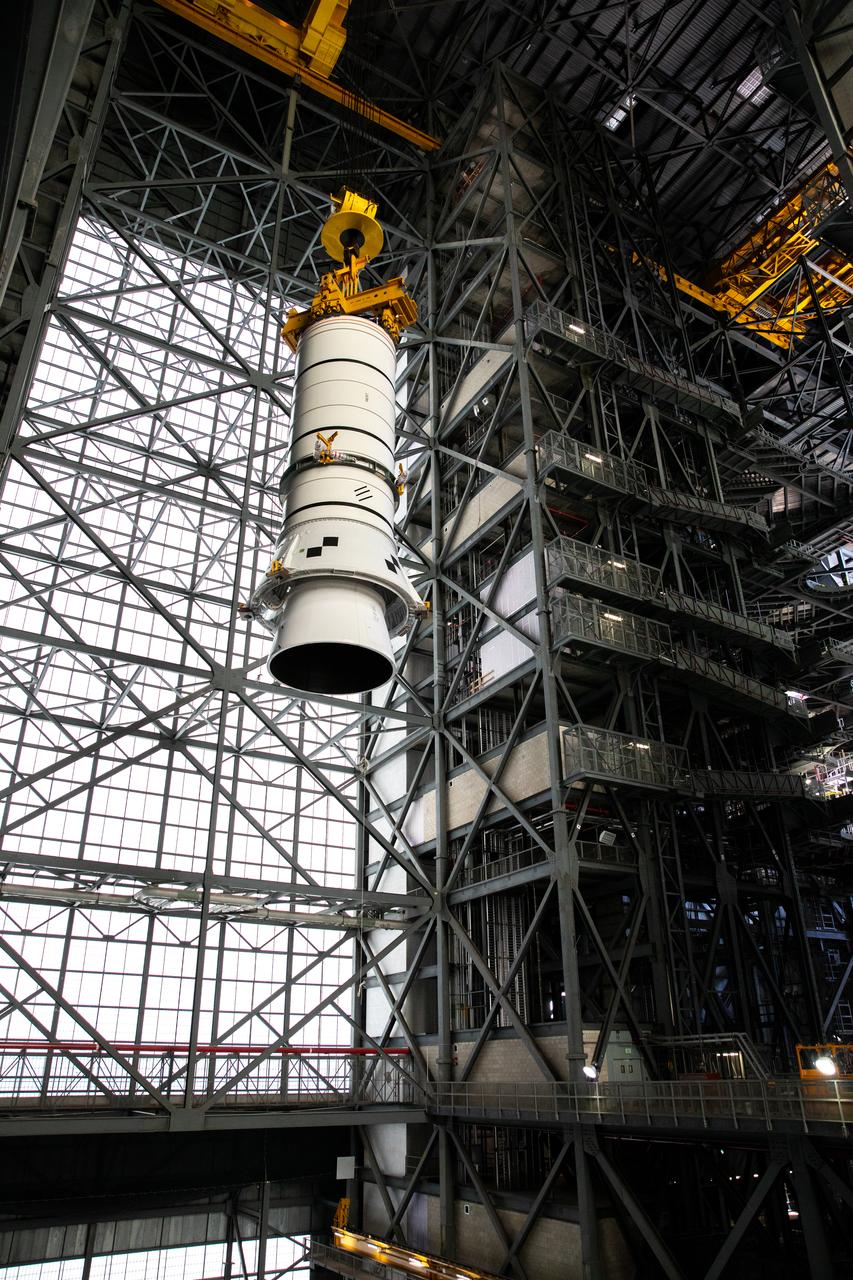
Technicians with NASA’s Exploration Ground Systems rehearse lifting operations using a mock-up of the Space Launch System (SLS) aft booster segment, referred to as a pathfinder, inside the Vehicle Assembly Building (VAB) at the agency’s Kennedy Space Center in Florida on Sept. 11, 2020, in preparation for Artemis I. The exercise involved preparing the aft pathfinder segment in High Bay 4 of the VAB and moving it over to High Bay 3, where it was placed on the mobile launcher. Stacking of the actual booster segments will occur later this year, before the SLS core stage arrives at Kennedy. Artemis I is the first in a series of increasingly complex missions that will test SLS and the Orion spacecraft as an integrated system prior to crewed flights to the Moon.
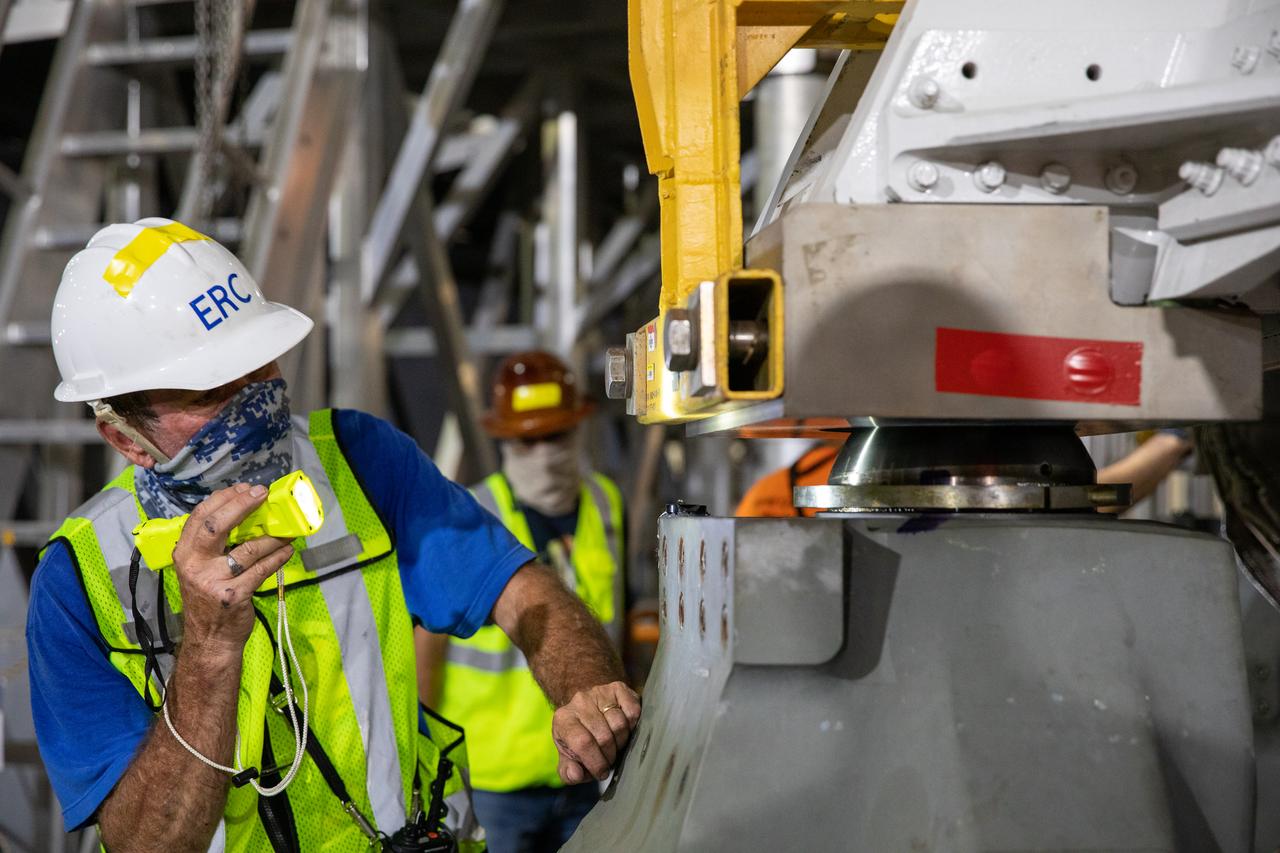
During a training exercise on Sept. 11, 2020, inside the Vehicle Assembly (VAB) at NASA’s Kennedy Space Center in Florida, a technician with the agency’s Exploration Ground Systems verifies a mock-up of the Space Launch System (SLS) aft booster segment, referred to as a pathfinder, was placed on the mobile launcher correctly. The rehearsal involved teams preparing the aft pathfinder segment in High Bay 4 of the VAB, lifting and moving it over to High Bay 3, and lowering it onto the mobile launcher in preparation for Artemis I. Stacking of the actual booster segments will occur later this year, before the SLS core stage arrives at the Florida spaceport. Artemis I is the first in a series of increasingly complex missions that will test SLS and the Orion spacecraft as an integrated system prior to crewed flights to the Moon.
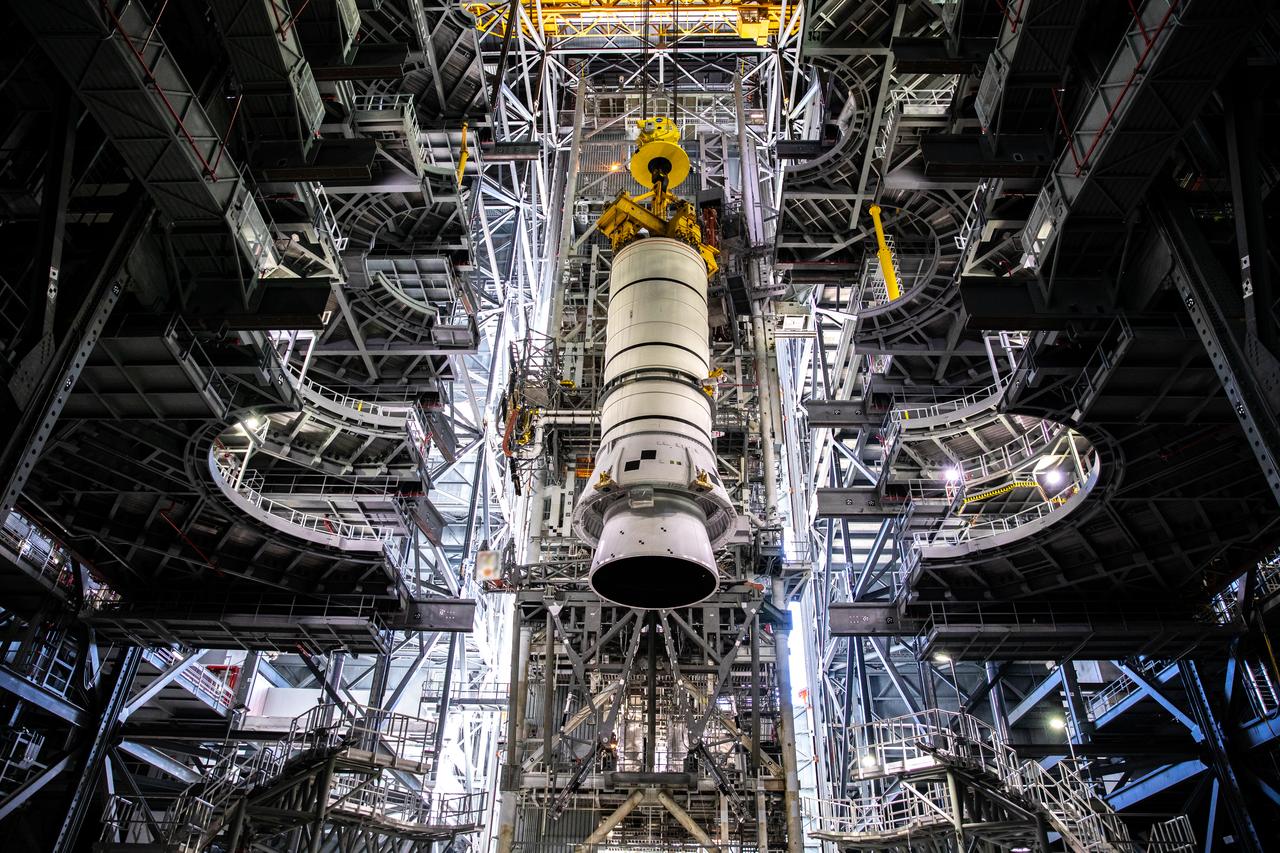
During a training exercise, technicians with NASA’s Exploration Ground Systems lower a mock-up of the Space Launch System (SLS) aft booster segment, referred to as a pathfinder, onto the mobile launcher in Kennedy Space Center’s Vehicle Assembly Building (VAB) on Sept. 11, 2020. The rehearsal involved teams preparing the aft pathfinder segment in High Bay 4 of the VAB, lifting and moving it over to High Bay 3, and placing it on the mobile launcher in preparation for Artemis I. Stacking of the actual booster segments will occur later this year, before the SLS core stage arrives at the Florida spaceport. Artemis I is the first in a series of increasingly complex missions that will test SLS and the Orion spacecraft as an integrated system prior to crewed flights to the Moon.
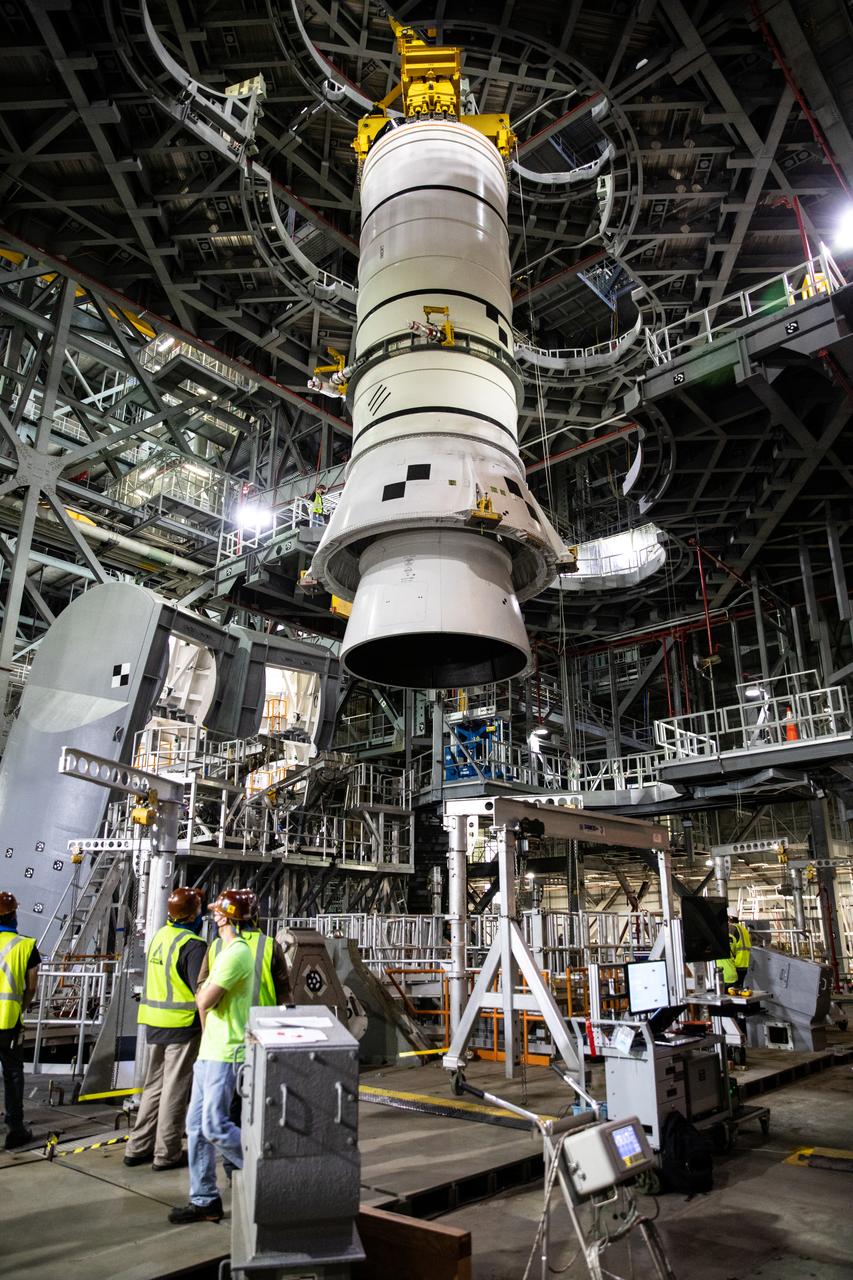
During a training exercise, technicians with NASA’s Exploration Ground Systems lower a mock-up of the Space Launch System (SLS) aft booster segment, referred to as a pathfinder, onto the mobile launcher in Kennedy Space Center’s Vehicle Assembly Building (VAB) on Sept. 11, 2020. The rehearsal involved teams preparing the aft pathfinder segment in High Bay 4 of the VAB, lifting and moving it over to High Bay 3, and placing it on the mobile launcher in preparation for Artemis I. Stacking of the actual booster segments will occur later this year, before the SLS core stage arrives at the Florida spaceport. Artemis I is the first in a series of increasingly complex missions that will test SLS and the Orion spacecraft as an integrated system prior to crewed flights to the Moon.
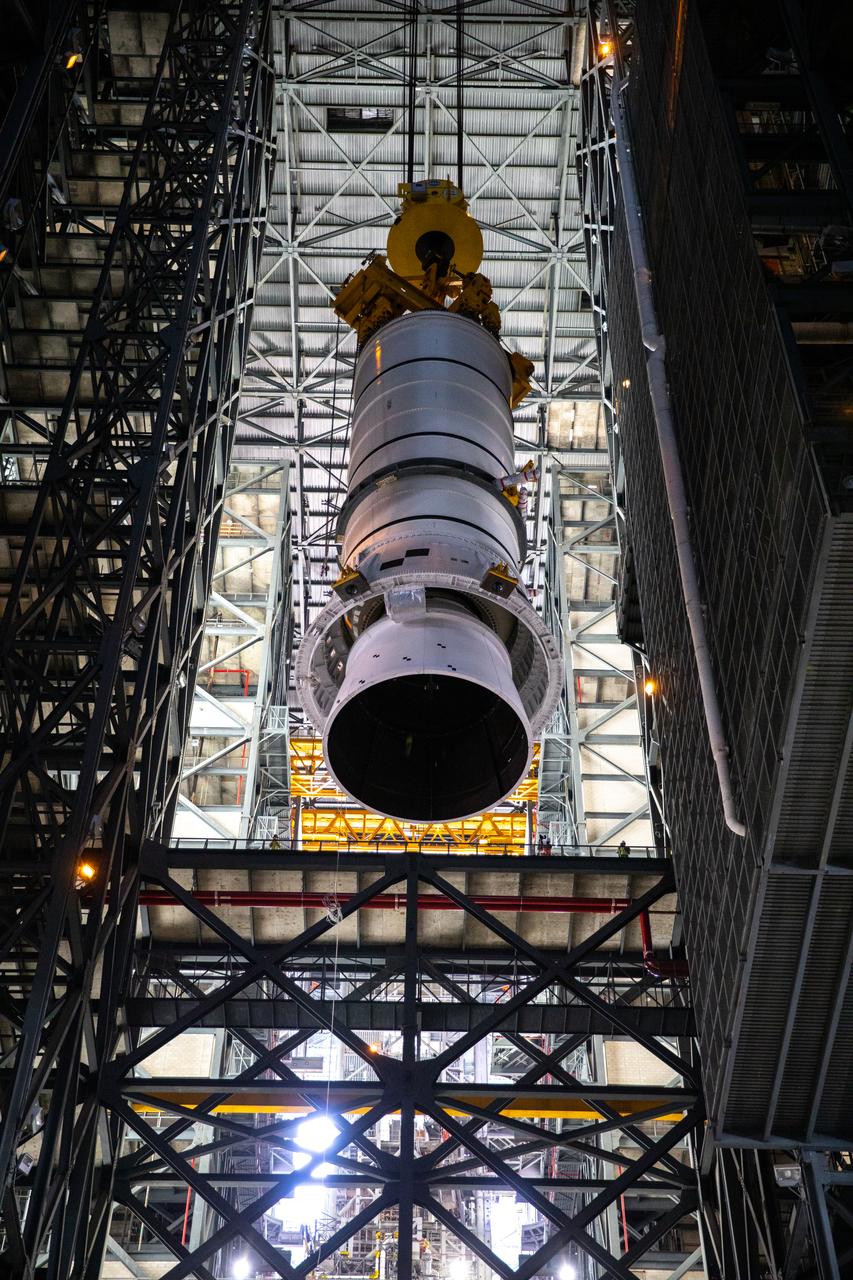
Technicians with NASA’s Exploration Ground Systems rehearse lifting operations using a mock-up of the Space Launch System (SLS) aft booster segment, referred to as a pathfinder, inside the Vehicle Assembly Building (VAB) at the agency’s Kennedy Space Center in Florida on Sept. 11, 2020, in preparation for Artemis I. The exercise involved preparing the aft pathfinder segment in High Bay 4 of the VAB and moving it over to High Bay 3, where it was placed on the mobile launcher. Stacking of the actual booster segments will occur later this year, before the SLS core stage arrives at Kennedy. Artemis I is the first in a series of increasingly complex missions that will test SLS and the Orion spacecraft as an integrated system prior to crewed flights to the Moon.
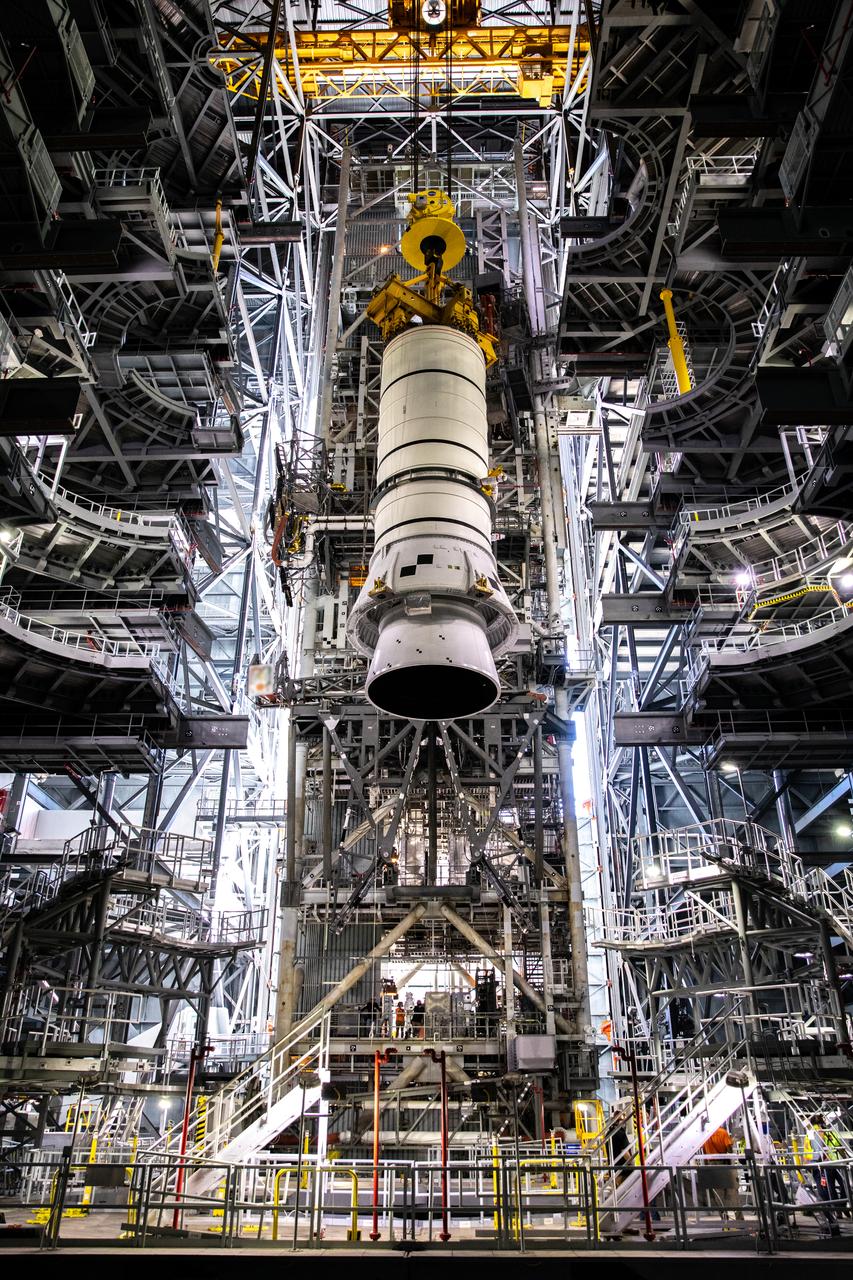
During a training exercise, technicians with NASA’s Exploration Ground Systems prepare to lower a mock-up of the Space Launch System (SLS) aft booster segment, referred to as a pathfinder, onto the mobile launcher in Kennedy Space Center’s Vehicle Assembly Building (VAB) on Sept. 11, 2020. The rehearsal involved teams preparing the aft pathfinder segment in High Bay 4 of the VAB, lifting and moving it over to High Bay 3, and placing it on the mobile launcher in preparation for Artemis I. Stacking of the actual booster segments will occur later this year, beforewhen the SLS core stage arrives at the Florida spaceport. Artemis I is the first in a series of increasingly complex missions that will test SLS and the Orion spacecraft as an integrated system prior to crewed flights to the Moon.
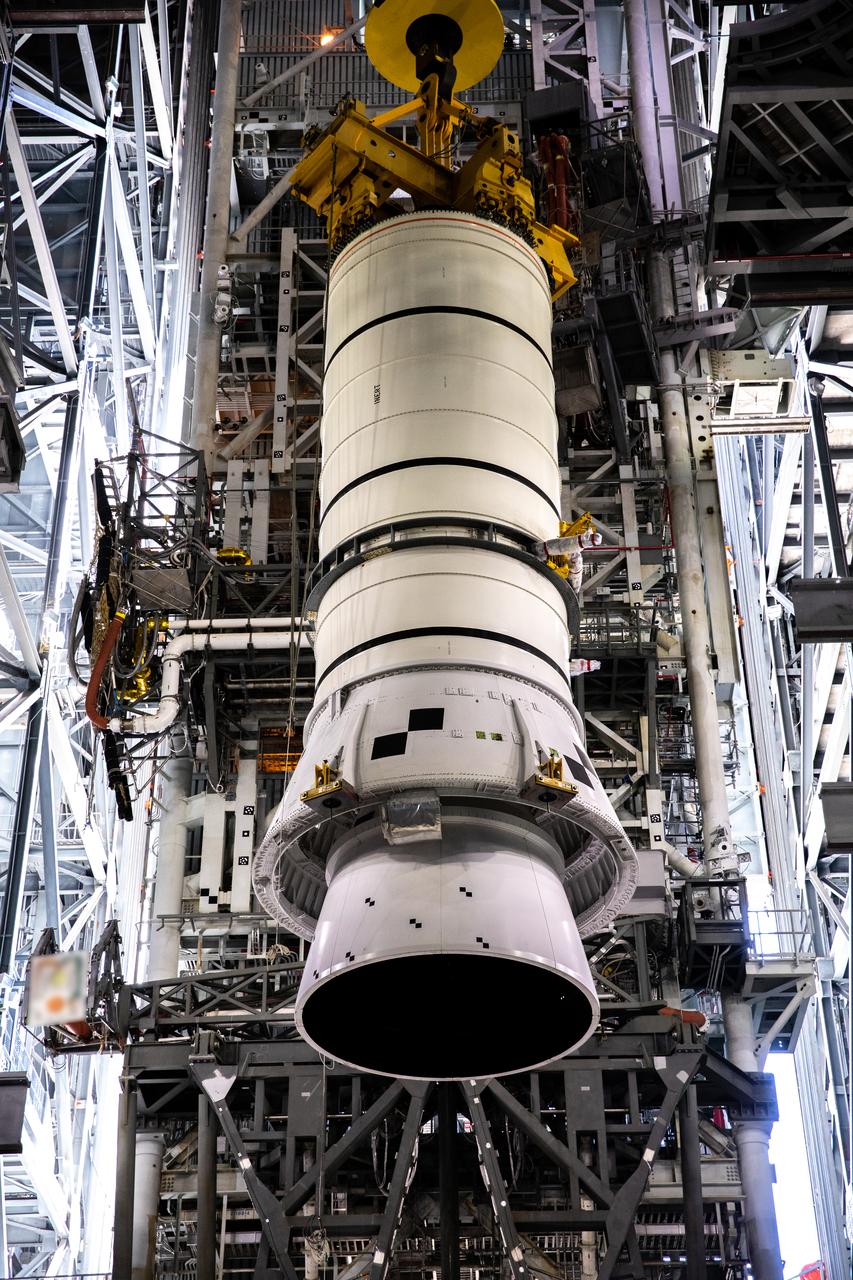
During a training exercise, technicians with NASA’s Exploration Ground Systems prepare to lower a mock-up of the Space Launch System (SLS) aft booster segment, referred to as a pathfinder, onto the mobile launcher in Kennedy Space Center’s Vehicle Assembly Building (VAB) on Sept. 11, 2020. The rehearsal involved teams preparing the aft pathfinder segment in High Bay 4 of the VAB, lifting and moving it over to High Bay 3, and placing it on the mobile launcher in preparation for Artemis I. Stacking of the actual booster segments will occur later this year, before the SLS core stage arrives at the Florida spaceport. Artemis I is the first in a series of increasingly complex missions that will test SLS and the Orion spacecraft as an integrated system prior to crewed flights to the Moon.
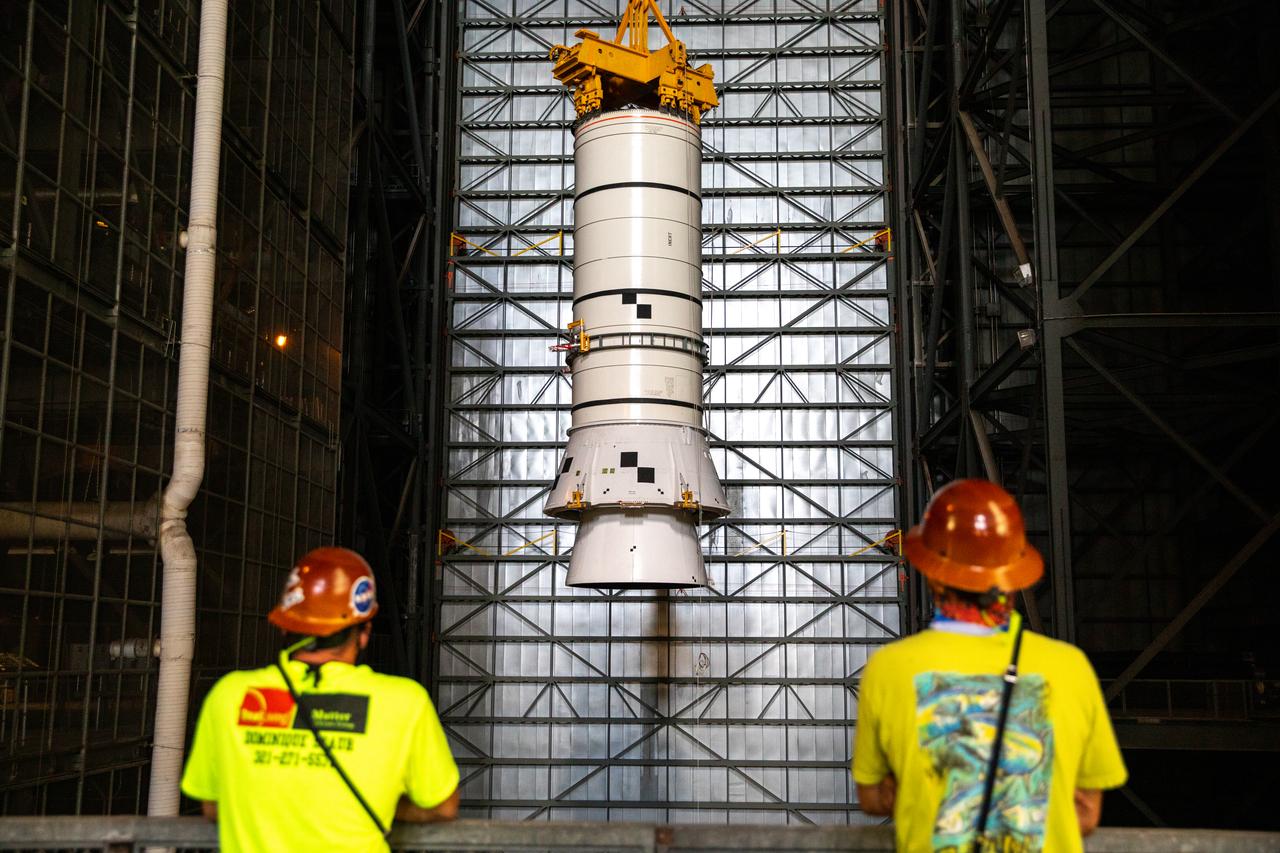
Technicians with NASA’s Exploration Ground Systems rehearse lifting operations using a mock-up of the Space Launch System (SLS) aft booster segment, referred to as a pathfinder, inside the Vehicle Assembly Building (VAB) at the agency’s Kennedy Space Center in Florida on Sept. 11, 2020, in preparation for Artemis I. The exercise involved preparing the aft pathfinder segment in High Bay 4 of the VAB and moving it over to High Bay 3, where it was placed on the mobile launcher. Stacking of the actual booster segments will occur later this year, before the SLS core stage arrives at Kennedy. Artemis I is the first in a series of increasingly complex missions that will test SLS and the Orion spacecraft as an integrated system prior to crewed flights to the Moon.
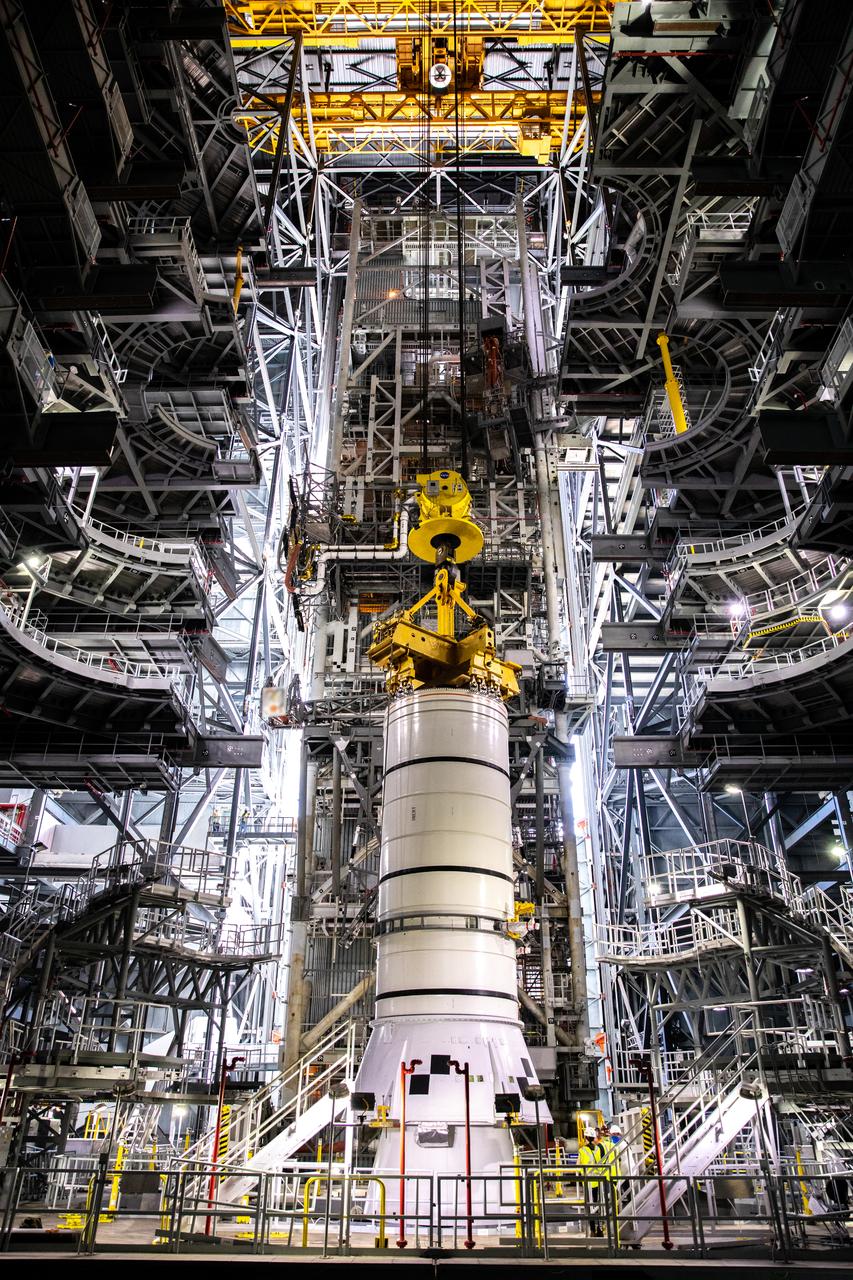
During a training exercise, technicians with NASA’s Exploration Ground Systems lower a mock-up of the Space Launch System (SLS) aft booster segment, referred to as a pathfinder, onto the mobile launcher in Kennedy Space Center’s Vehicle Assembly Building (VAB) on Sept. 11, 2020. The rehearsal involved teams preparing the aft pathfinder segment in High Bay 4 of the VAB, lifting and moving it over to High Bay 3, and placing it on the mobile launcher in preparation for Artemis I. Stacking of the actual booster segments will occur later this year, before the SLS core stage arrives at the Florida spaceport. Artemis I is the first in a series of increasingly complex missions that will test SLS and the Orion spacecraft as an integrated system prior to crewed flights to the Moon.

During a training exercise, technicians with NASA’s Exploration Ground Systems lower a mock-up of the Space Launch System (SLS) aft booster segment, referred to as a pathfinder, onto the mobile launcher in Kennedy Space Center’s Vehicle Assembly Building (VAB) on Sept. 11, 2020. The rehearsal involved teams preparing the aft pathfinder segment in High Bay 4 of the VAB, lifting and moving it over to High Bay 3, and placing it on the mobile launcher in preparation for Artemis I. Stacking of the actual booster segments will occur later this year, before the SLS core stage arrives at the Florida spaceport. Artemis I is the first in a series of increasingly complex missions that will test SLS and the Orion spacecraft as an integrated system prior to crewed flights to the Moon.
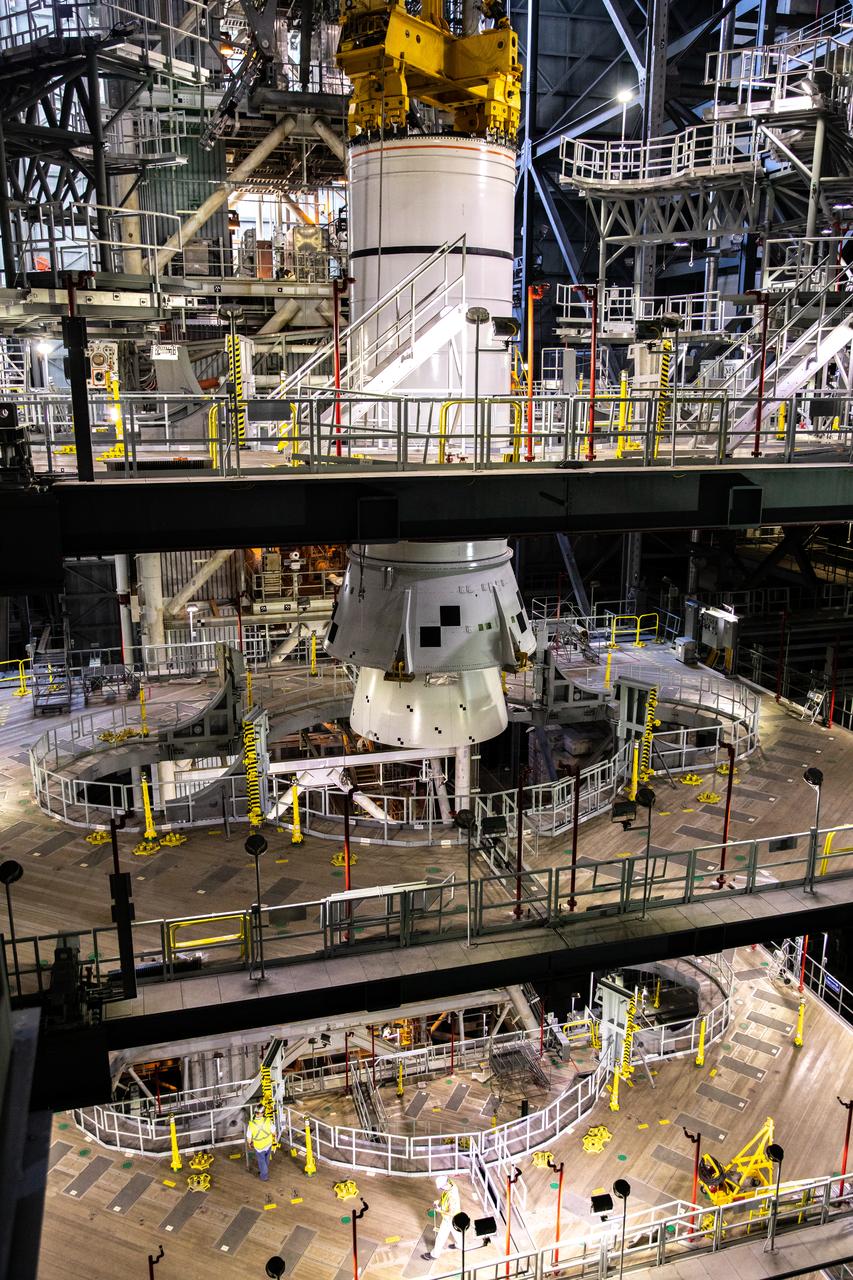
During a training exercise, technicians with NASA’s Exploration Ground Systems lower a mock-up of the Space Launch System (SLS) aft booster segment, referred to as a pathfinder, onto the mobile launcher in Kennedy Space Center’s Vehicle Assembly Building (VAB) on Sept. 11, 2020. The rehearsal involved teams preparing the aft pathfinder segment in High Bay 4 of the VAB, lifting and moving it over to High Bay 3, and placing it on the mobile launcher in preparation for Artemis I. Stacking of the actual booster segments will occur later this year, before the SLS core stage arrives at the Florida spaceport. Artemis I is the first in a series of increasingly complex missions that will test SLS and the Orion spacecraft as an integrated system prior to crewed flights to the Moon.
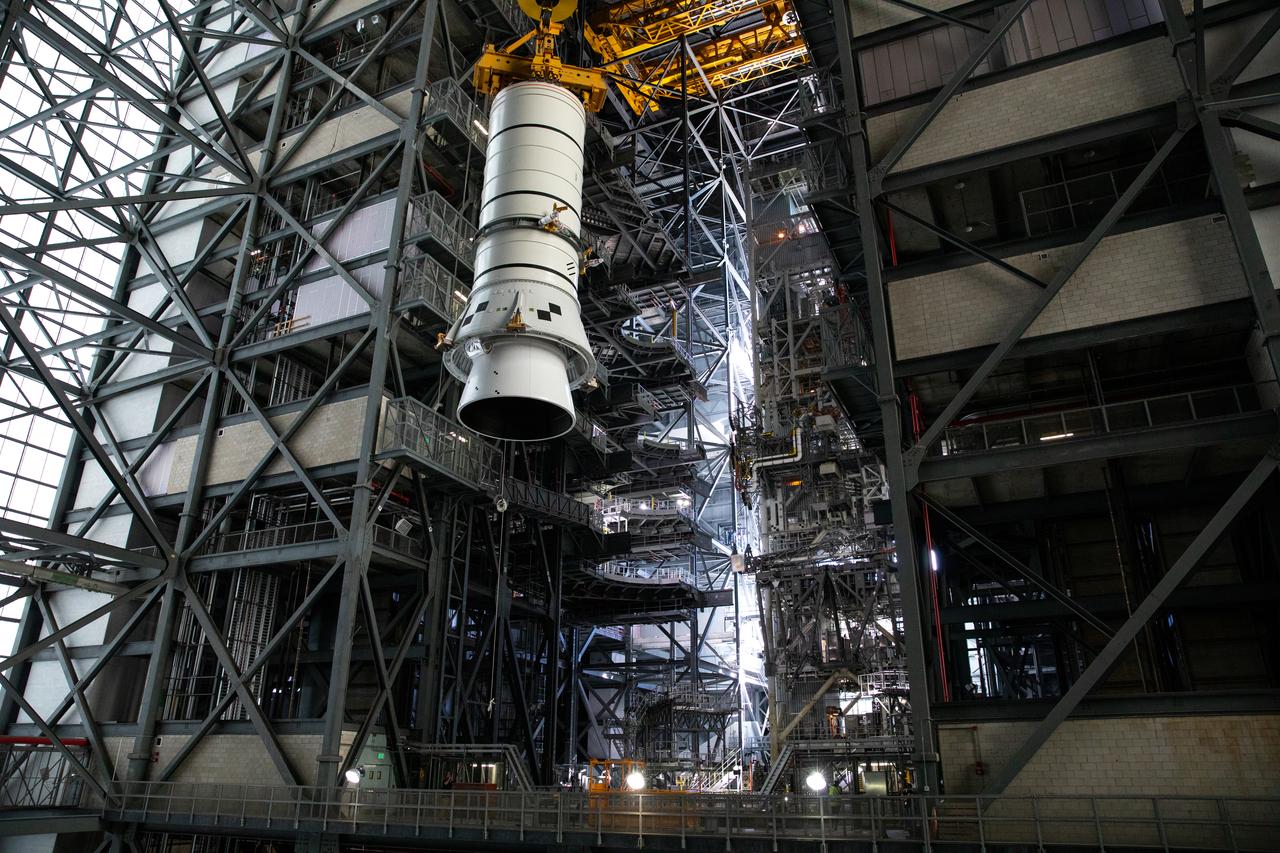
Technicians with NASA’s Exploration Ground Systems rehearse lifting operations using a mock-up of the Space Launch System (SLS) aft booster segment, referred to as a pathfinder, inside the Vehicle Assembly Building (VAB) at the agency’s Kennedy Space Center in Florida on Sept. 11, 2020, in preparation for Artemis I. The exercise involved preparing the aft pathfinder segment in High Bay 4 of the VAB and moving it over to High Bay 3, where it was placed on the mobile launcher. Stacking of the actual booster segments will occur later this year, before the SLS core stage arrives at Kennedy. Artemis I is the first in a series of increasingly complex missions that will test SLS and the Orion spacecraft as an integrated system prior to crewed flights to the Moon.
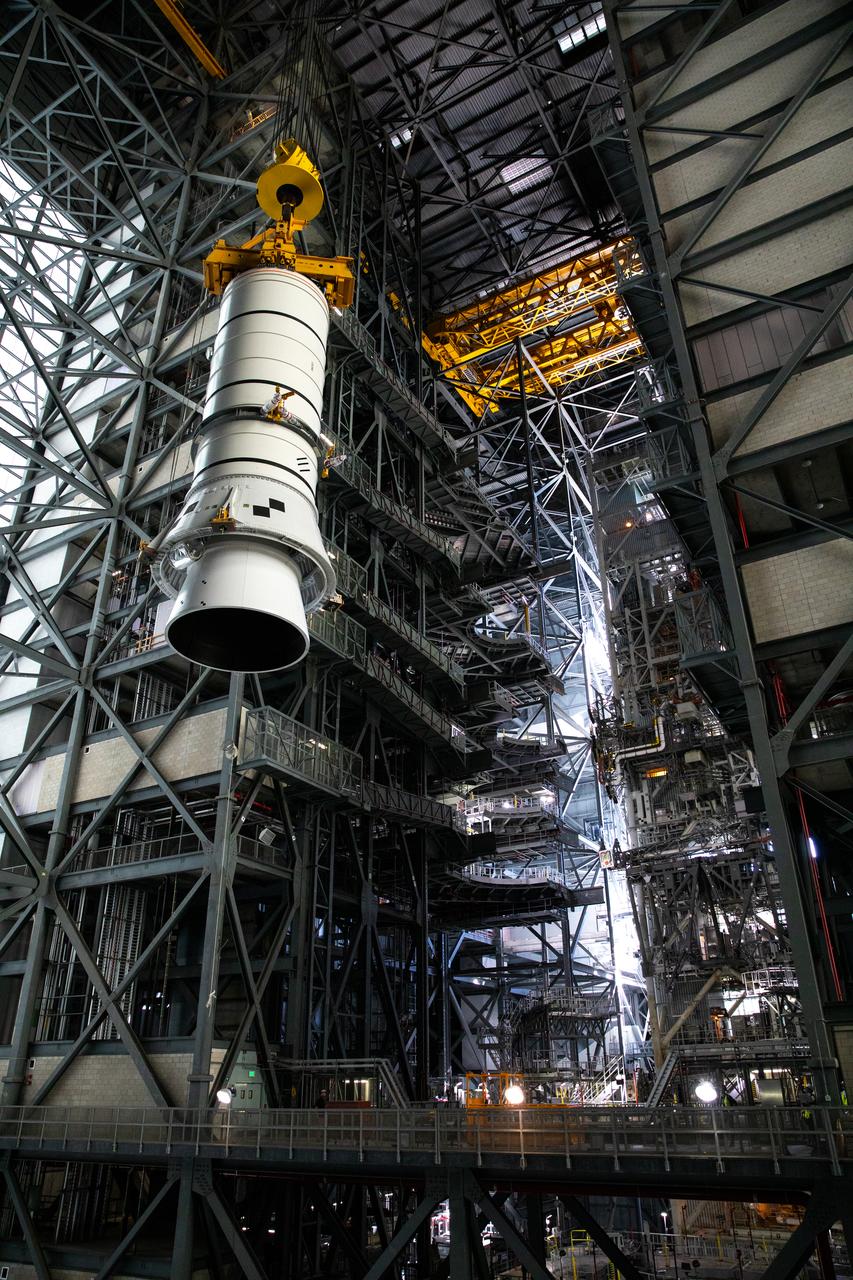
Technicians with NASA’s Exploration Ground Systems rehearse lifting operations using a mock-up of the Space Launch System (SLS) aft booster segment, referred to as a pathfinder, inside the Vehicle Assembly Building (VAB) at the agency’s Kennedy Space Center in Florida on Sept. 11, 2020, in preparation for Artemis I. The exercise involved preparing the aft pathfinder segment in High Bay 4 of the VAB and moving it over to High Bay 3, where it was placed on the mobile launcher. Stacking of the actual booster segments will occur later this year, before the SLS core stage arrives at Kennedy. Artemis I is the first in a series of increasingly complex missions that will test SLS and the Orion spacecraft as an integrated system prior to crewed flights to the Moon.
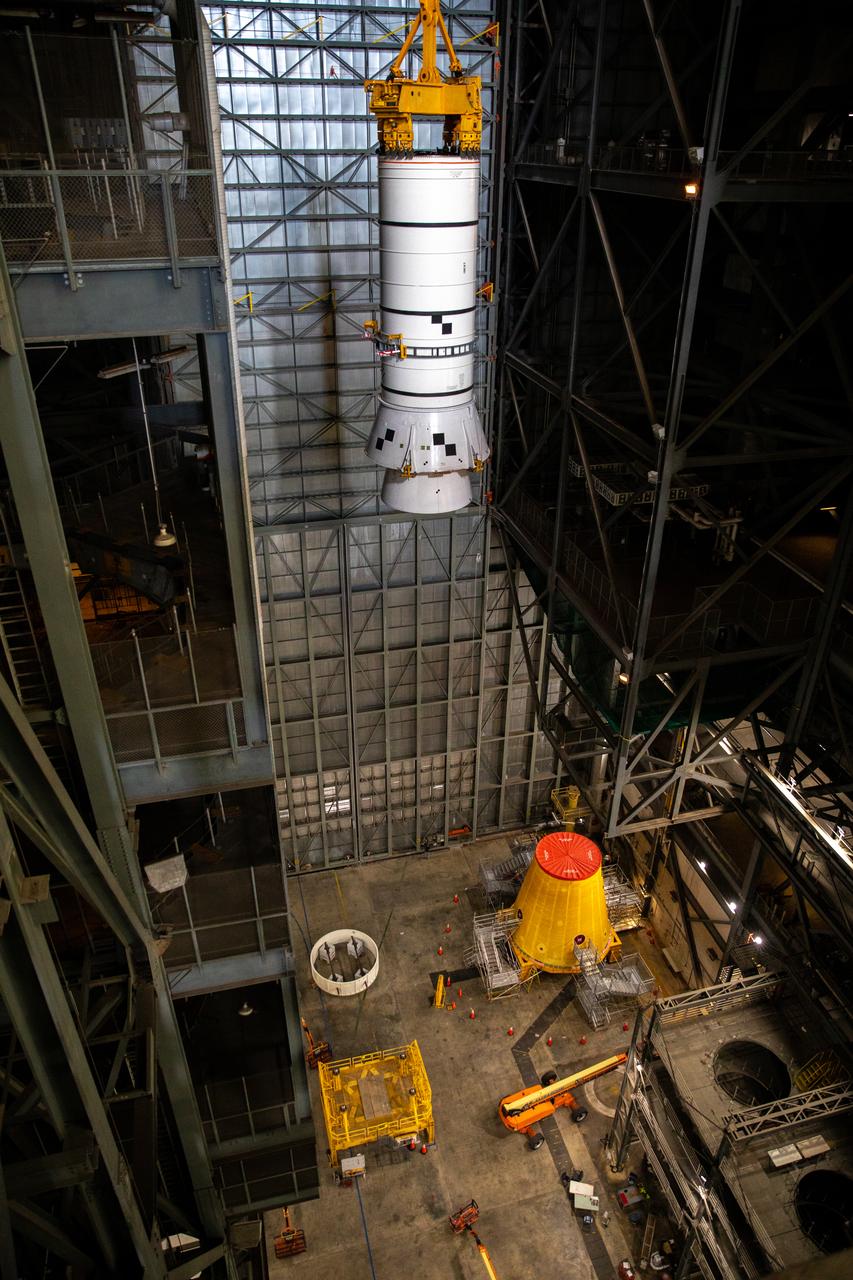
Technicians with NASA’s Exploration Ground Systems rehearse lifting operations using a mock-up of the Space Launch System (SLS) aft booster segment, referred to as a pathfinder, inside the Vehicle Assembly Building (VAB) at the agency’s Kennedy Space Center in Florida on Sept. 11, 2020, in preparation for Artemis I. The exercise involved preparing the aft pathfinder segment in High Bay 4 of the VAB and moving it over to High Bay 3, where it was placed on the mobile launcher. Stacking of the actual booster segments will occur later this year, before the SLS core stage arrives at Kennedy. Artemis I is the first in a series of increasingly complex missions that will test SLS and the Orion spacecraft as an integrated system prior to crewed flights to the Moon.
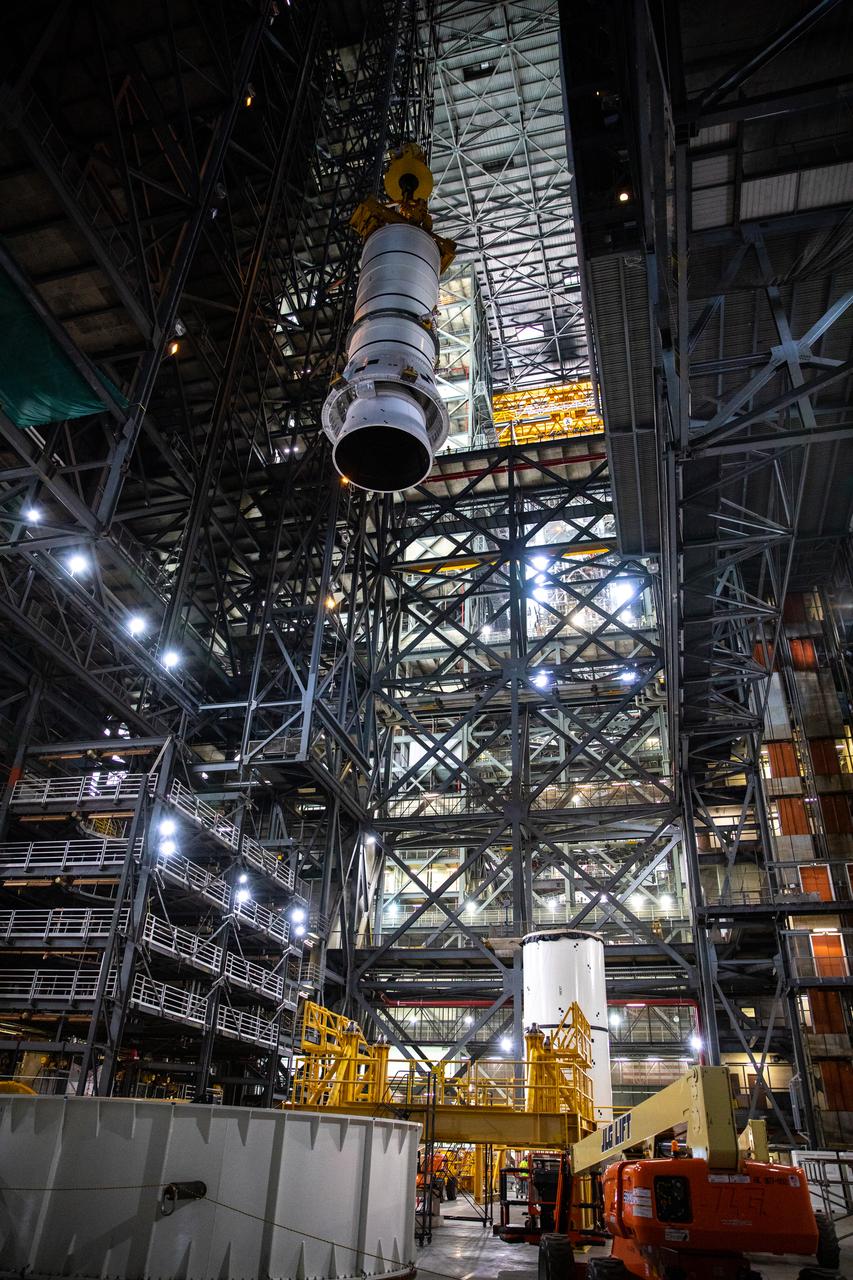
Technicians with NASA’s Exploration Ground Systems rehearse lifting operations using a mock-up of the Space Launch System (SLS) aft booster segment, referred to as a pathfinder, inside the Vehicle Assembly Building (VAB) at the agency’s Kennedy Space Center in Florida on Sept. 11, 2020, in preparation for Artemis I. The exercise involved preparing the aft pathfinder segment in High Bay 4 of the VAB and moving it over to High Bay 3, where it was placed on the mobile launcher. Stacking of the actual booster segments will occur later this year, before the SLS core stage arrives at Kennedy. Artemis I is the first in a series of increasingly complex missions that will test SLS and the Orion spacecraft as an integrated system prior to crewed flights to the Moon.
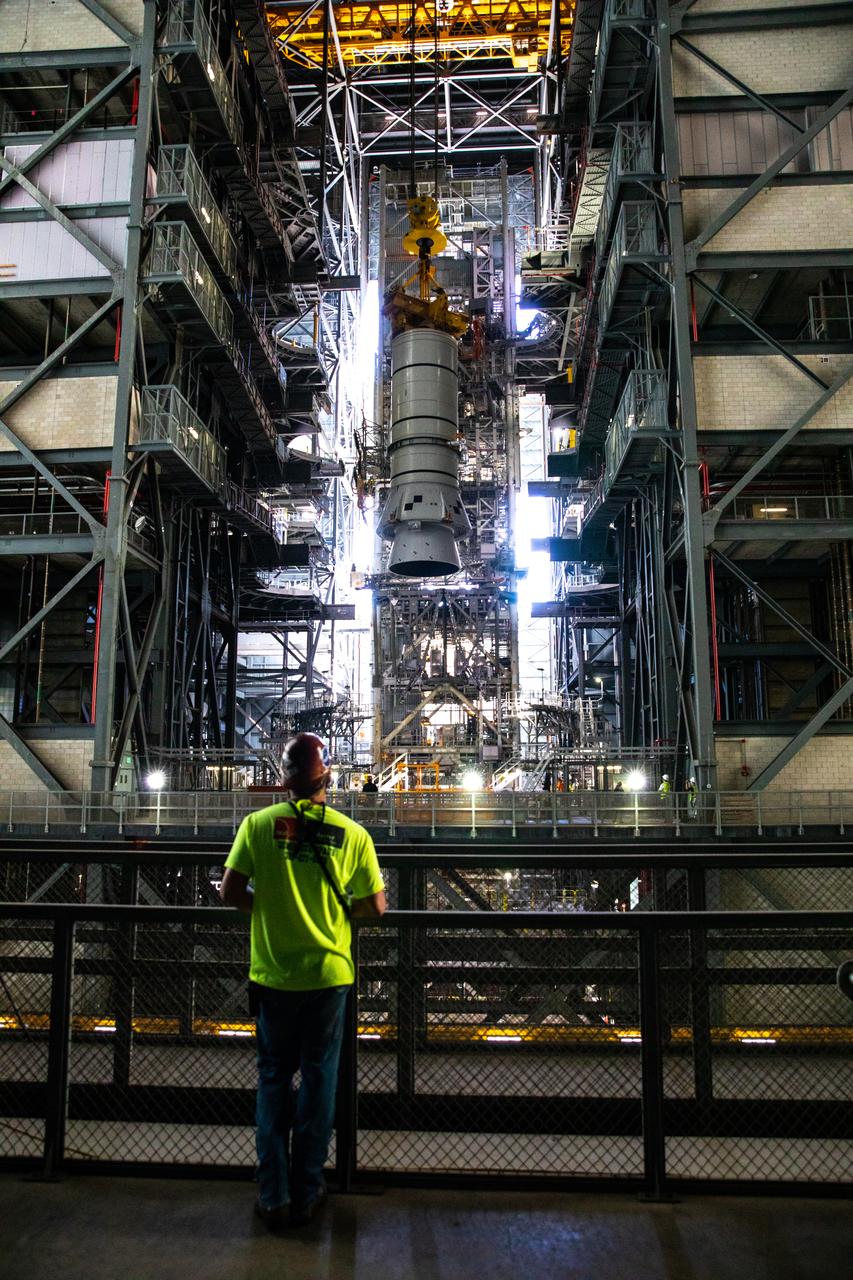
During a training exercise, technicians with NASA’s Exploration Ground Systems prepare to lower a mock-up of the Space Launch System (SLS) aft booster segment, referred to as a pathfinder, onto the mobile launcher in Kennedy Space Center’s Vehicle Assembly Building (VAB) on Sept. 11, 2020. The rehearsal involved teams preparing the aft pathfinder segment in High Bay 4 of the VAB, lifting and moving it over to High Bay 3, and placing it on the mobile launcher in preparation for Artemis I. Stacking of the actual booster segments will occur later this year, before the SLS core stage arrives at the Florida spaceport. Artemis I is the first in a series of increasingly complex missions that will test SLS and the Orion spacecraft as an integrated system prior to crewed flights to the Moon.
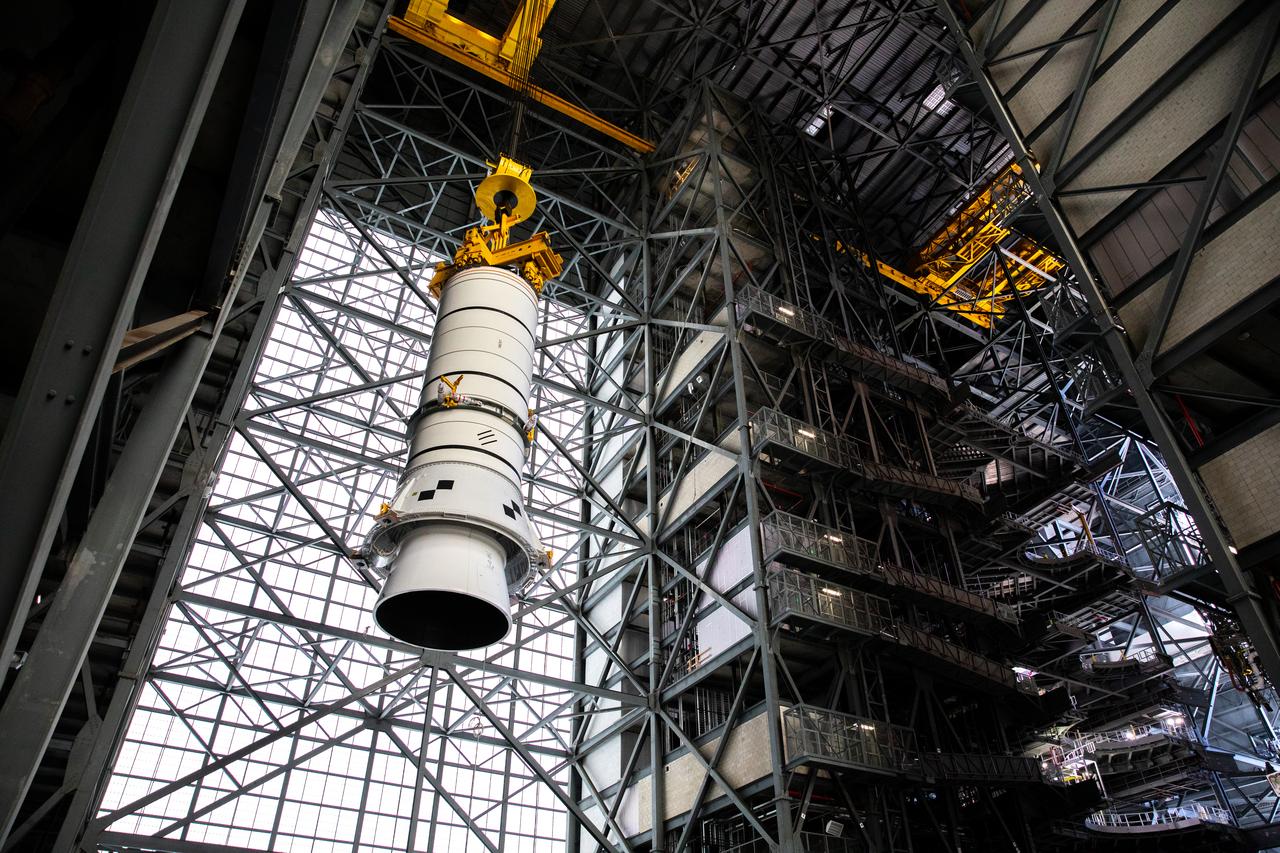
Technicians with NASA’s Exploration Ground Systems rehearse lifting operations using a mock-up of the Space Launch System (SLS) aft booster segment, referred to as a pathfinder, inside the Vehicle Assembly Building (VAB) at the agency’s Kennedy Space Center in Florida on Sept. 11, 2020, in preparation for Artemis I. The exercise involved preparing the aft pathfinder segment in High Bay 4 of the VAB and moving it over to High Bay 3, where it was placed on the mobile launcher. Stacking of the actual booster segments will occur later this year, before the SLS core stage arrives at Kennedy. Artemis I is the first in a series of increasingly complex missions that will test SLS and the Orion spacecraft as an integrated system prior to crewed flights to the Moon.

The twin boosters for NASA’s Space Launch System (SLS) for Artemis I are in view in High Bay 3 of the Vehicle Assembly Building at NASA’s Kennedy Space Center in Florida on Jan. 26, 2021. Work is in progress to lower the right-hand center center booster segment onto the center aft booster segment on the mobile launcher. Workers with Exploration Ground Systems and contractor Jacobs teams will stack the twin five-segment boosters on the mobile launcher in High Bay 3 over a number of weeks. When the core stage arrives, it will join the boosters on the mobile launcher, followed by the interim cryogenic propulsion stage and Orion spacecraft. Manufactured by Northrop Grumman in Utah, the twin boosters provide more than 75 percent of the total SLS thrust at launch. The SLS is managed by Marshall Space Flight Center in Huntsville, Alabama. Under the Artemis program, NASA will land the first woman and the next man on the Moon by 2024. The first in a series of increasingly complex missions, Artemis I will test the Orion spacecraft and SLS as an integrated system ahead of crewed flights to the Moon.
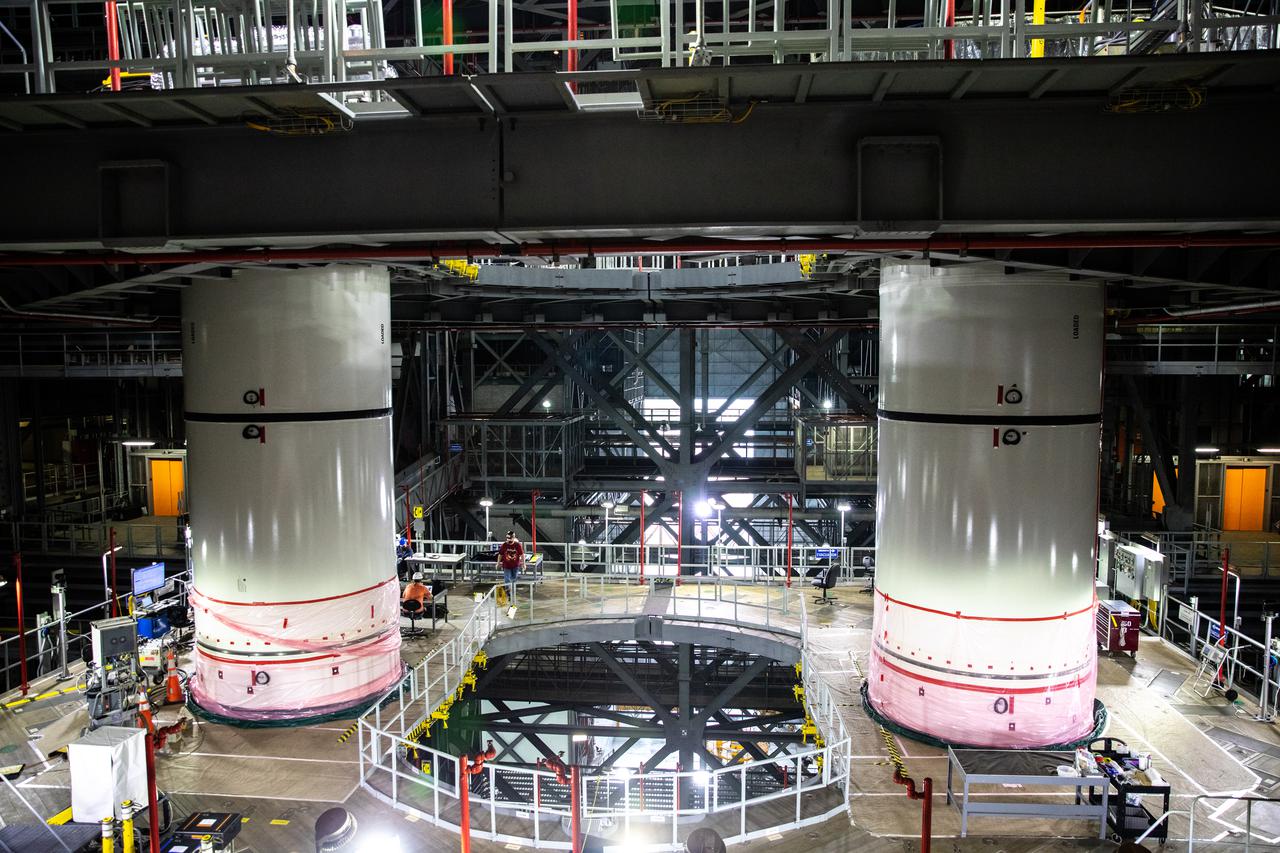
The twin boosters for NASA’s Space Launch System (SLS) for Artemis I are in view in High Bay 3 of the Vehicle Assembly Building at NASA’s Kennedy Space Center in Florida on Jan. 26, 2021. Work is in progress to lower the right-hand center center booster segment onto the center aft booster segment on the mobile launcher. Workers with Exploration Ground Systems and contractor Jacobs teams will stack the twin five-segment boosters on the mobile launcher in High Bay 3 over a number of weeks. When the core stage arrives, it will join the boosters on the mobile launcher, followed by the interim cryogenic propulsion stage and Orion spacecraft. Manufactured by Northrop Grumman in Utah, the twin boosters provide more than 75 percent of the total SLS thrust at launch. The SLS is managed by Marshall Space Flight Center in Huntsville, Alabama. Under the Artemis program, NASA will land the first woman and the next man on the Moon by 2024. The first in a series of increasingly complex missions, Artemis I will test the Orion spacecraft and SLS as an integrated system ahead of crewed flights to the Moon.
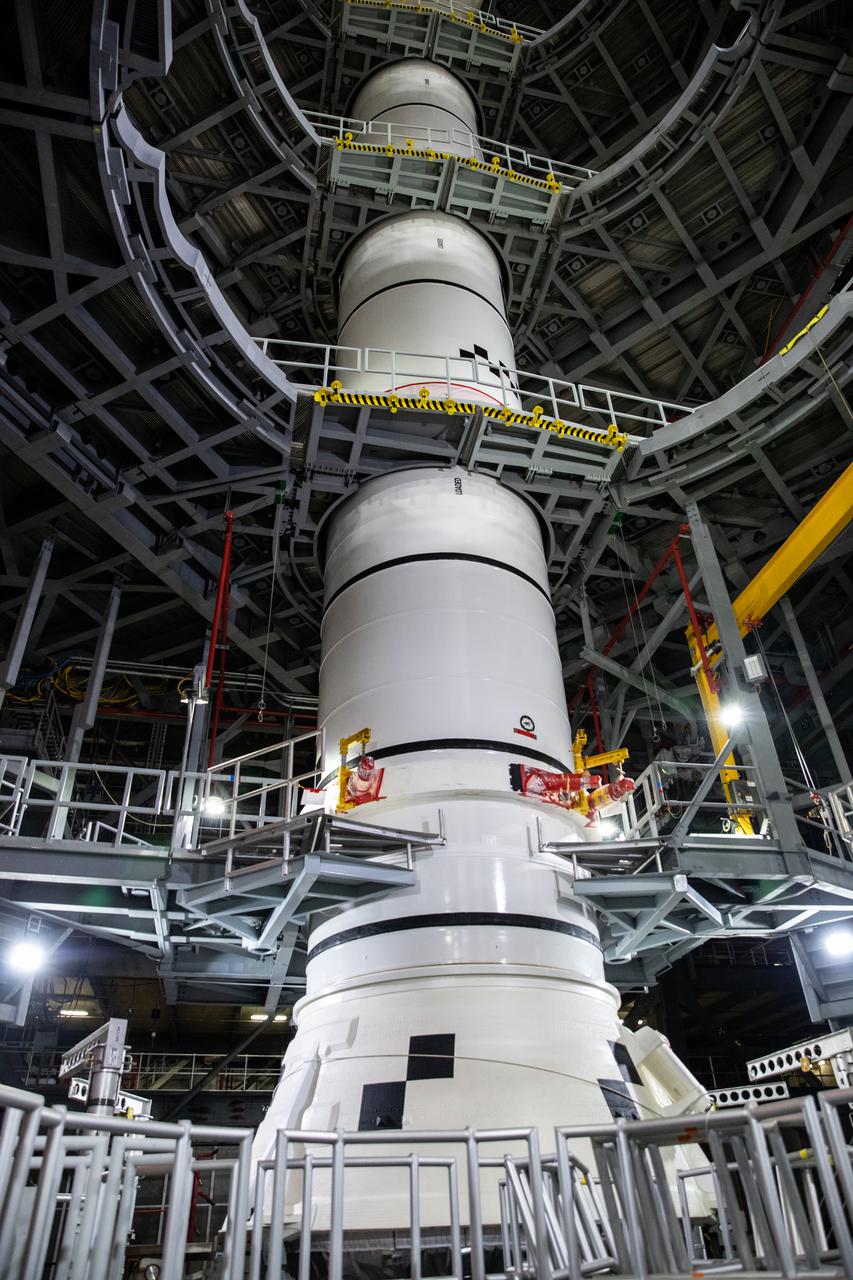
In High Bay 3 of the Vehicle Assembly Building at NASA’s Kennedy Space Center in Florida, the right-hand center center booster segment for Artemis I is lowered onto the center aft booster segment on the mobile launcher for the Space Launch System (SLS) on Jan. 26, 2021. Workers with Exploration Ground Systems and contractor Jacobs teams will stack the twin five-segment boosters on the mobile launcher in High Bay 3 over a number of weeks. When the core stage arrives, it will join the boosters on the mobile launcher, followed by the interim cryogenic propulsion stage and Orion spacecraft. Manufactured by Northrop Grumman in Utah, the twin boosters provide more than 75 percent of the total SLS thrust at launch. The SLS is managed by Marshall Space Flight Center in Huntsville, Alabama. Under the Artemis program, NASA will land the first woman and the next man on the Moon by 2024. The first in a series of increasingly complex missions, Artemis I will test the Orion spacecraft and SLS as an integrated system ahead of crewed flights to the Moon.
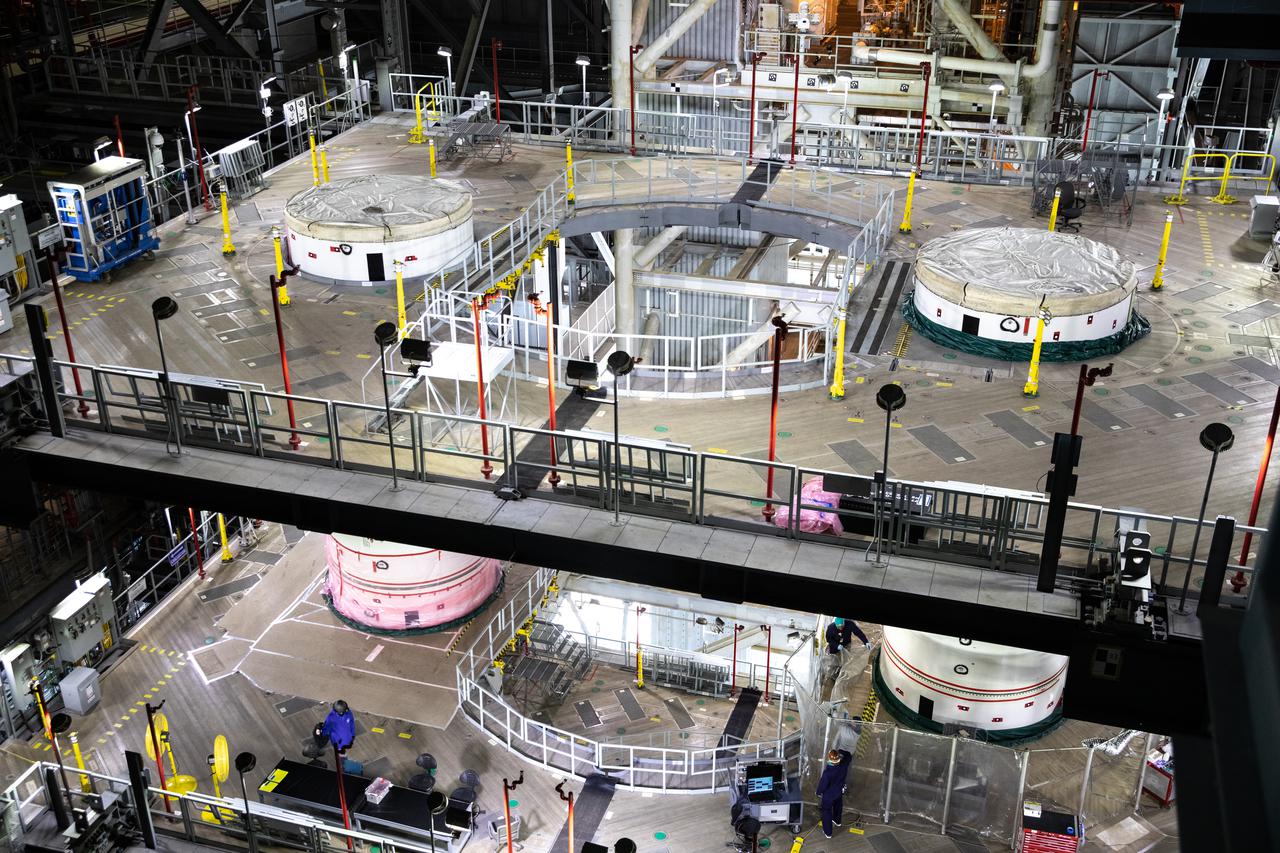
In High Bay 3 of the Vehicle Assembly Building at NASA’s Kennedy Space Center in Florida, the right-hand forward center booster segment for Artemis I is lowered onto the center center booster segment on the mobile launcher for the Space Launch System (SLS) on Feb. 4, 2021. Workers with Exploration Ground Systems and contractor Jacobs teams will stack the twin five-segment boosters on the mobile launcher in High Bay 3 over a number of weeks. When the core stage arrives, it will join the boosters on the mobile launcher, followed by the interim cryogenic propulsion stage and Orion spacecraft. Manufactured by Northrop Grumman in Utah, the twin boosters provide more than 75 percent of the total SLS thrust at launch. The SLS is managed by Marshall Space Flight Center in Huntsville, Alabama. Under the Artemis program, NASA will land the first woman and the next man on the Moon by 2024. The first in a series of increasingly complex missions, Artemis I will test the Orion spacecraft and SLS as an integrated system ahead of crewed flights to the Moon.
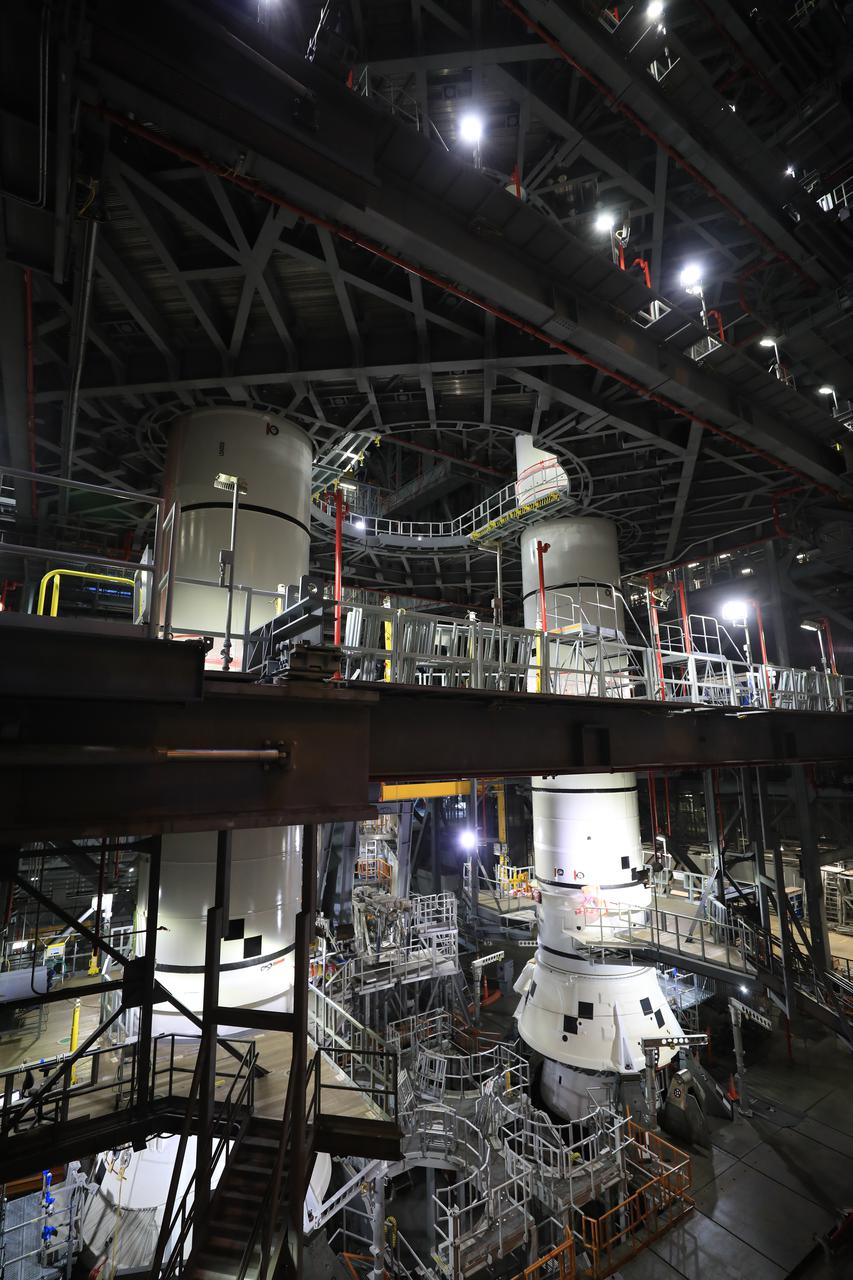
In High Bay 3 of the Vehicle Assembly Building at NASA’s Kennedy Space Center in Florida, the left-hand center center booster segment for Artemis I is lowered onto the center aft booster segment on the mobile launcher for the Space Launch System (SLS) on Jan. 21, 2021. Workers with Exploration Ground Systems and contractor Jacobs teams will stack the twin five-segment boosters on the mobile launcher in High Bay 3 over a number of weeks. When the core stage arrives, it will join the boosters on the mobile launcher, followed by the interim cryogenic propulsion stage and Orion spacecraft. Manufactured by Northrop Grumman in Utah, the twin boosters provide more than 75 percent of the total SLS thrust at launch. The SLS is managed by Marshall Space Flight Center in Huntsville, Alabama. Under the Artemis program, NASA will land the first woman and the next man on the Moon by 2024. The first in a series of increasingly complex missions, Artemis I will test the Orion spacecraft and SLS as an integrated system ahead of crewed flights to the Moon.
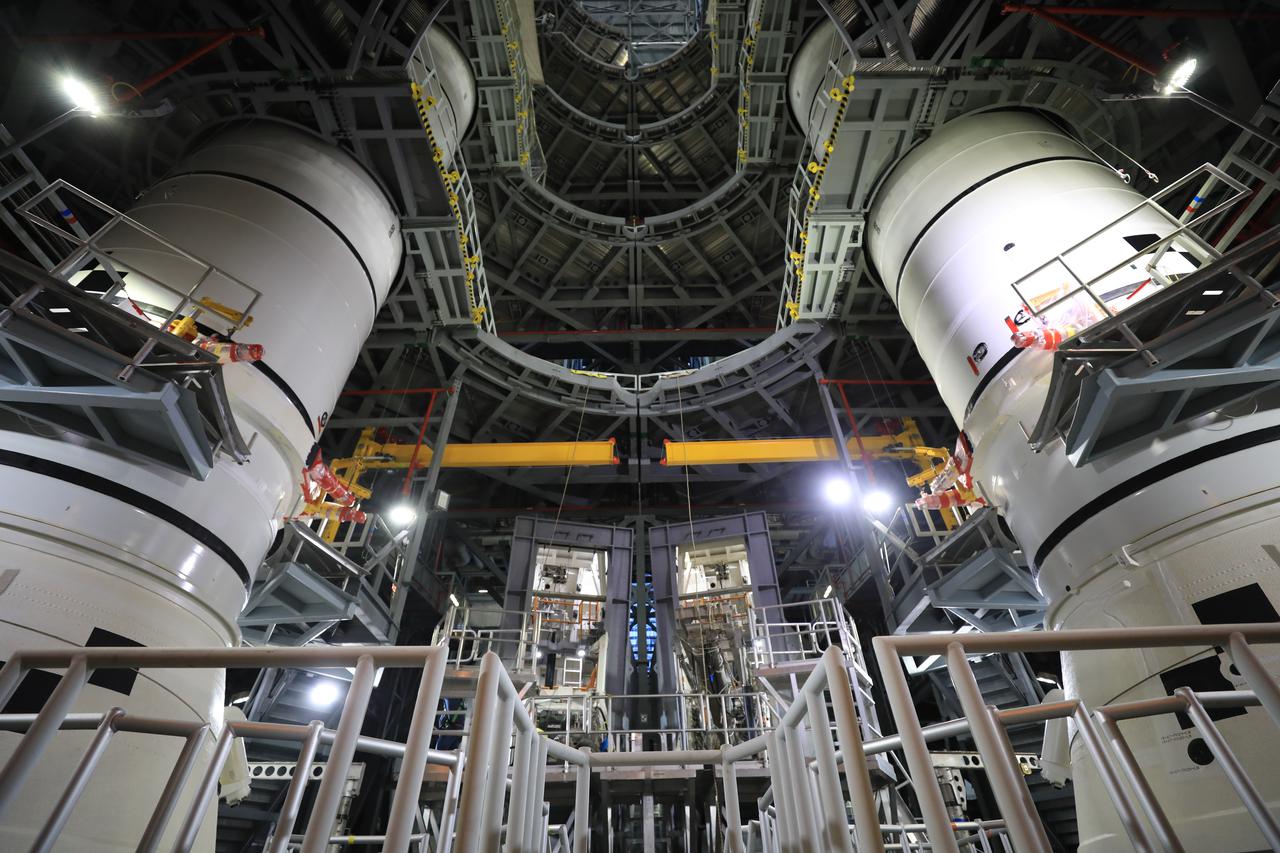
In High Bay 3 of the Vehicle Assembly Building at NASA’s Kennedy Space Center in Florida, the left-hand center center booster segment for Artemis I is lowered onto the center aft booster segment on the mobile launcher for the Space Launch System (SLS) on Jan. 21, 2021. Workers with Exploration Ground Systems and contractor Jacobs teams will stack the twin five-segment boosters on the mobile launcher in High Bay 3 over a number of weeks. When the core stage arrives, it will join the boosters on the mobile launcher, followed by the interim cryogenic propulsion stage and Orion spacecraft. Manufactured by Northrop Grumman in Utah, the twin boosters provide more than 75 percent of the total SLS thrust at launch. The SLS is managed by Marshall Space Flight Center in Huntsville, Alabama. Under the Artemis program, NASA will land the first woman and the next man on the Moon by 2024. The first in a series of increasingly complex missions, Artemis I will test the Orion spacecraft and SLS as an integrated system ahead of crewed flights to the Moon.
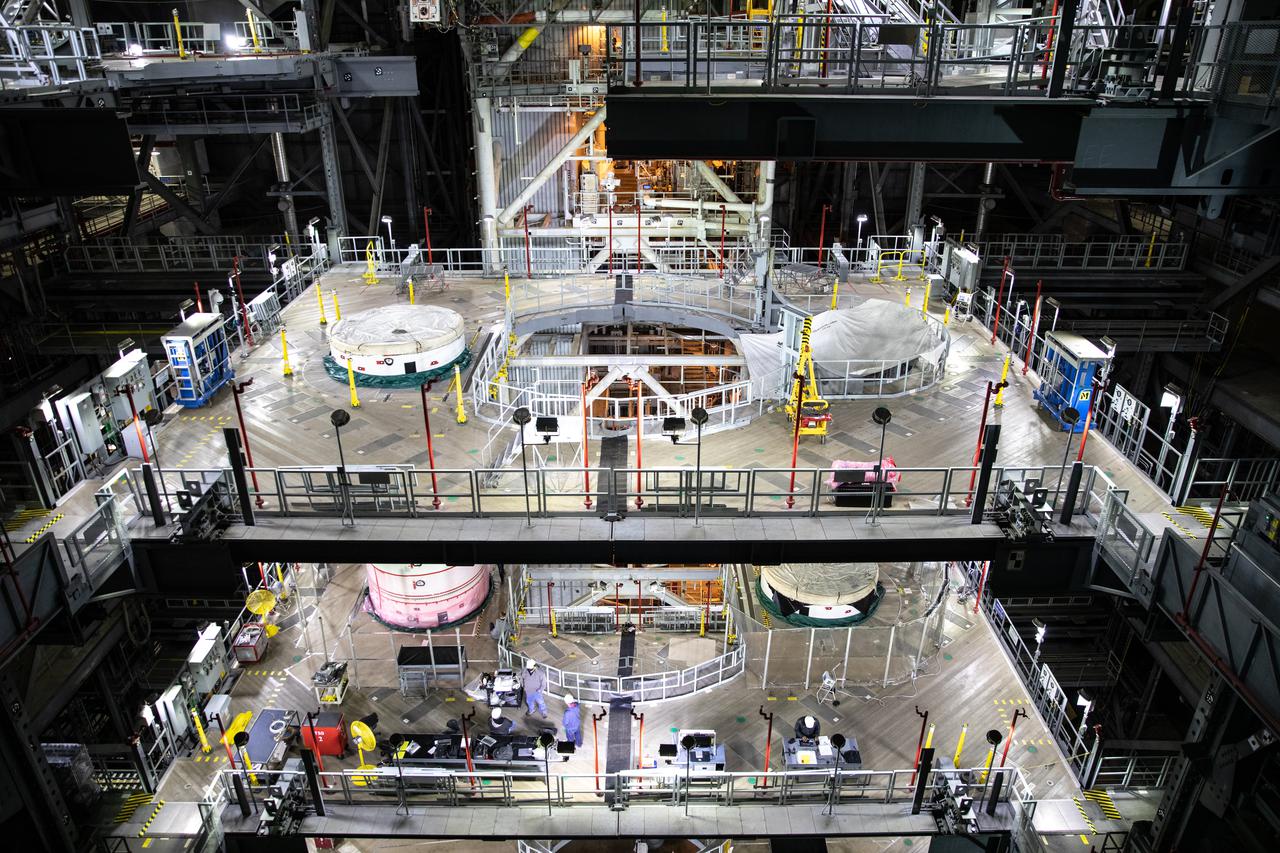
In High Bay 3 of the Vehicle Assembly Building at NASA’s Kennedy Space Center in Florida, the left-hand forward center booster segment for Artemis I is lowered onto the center center booster segment on the mobile launcher for the Space Launch System (SLS) on Jan. 29, 2021. Workers with Exploration Ground Systems and contractor Jacobs teams will stack the twin five-segment boosters on the mobile launcher in High Bay 3 over a number of weeks. When the core stage arrives, it will join the boosters on the mobile launcher, followed by the interim cryogenic propulsion stage and Orion spacecraft. Manufactured by Northrop Grumman in Utah, the twin boosters provide more than 75 percent of the total SLS thrust at launch. The SLS is managed by Marshall Space Flight Center in Huntsville, Alabama. Under the Artemis program, NASA will land the first woman and the next man on the Moon by 2024. The first in a series of increasingly complex missions, Artemis I will test the Orion spacecraft and SLS as an integrated system ahead of crewed flights to the Moon.

In High Bay 3 of the Vehicle Assembly Building at NASA’s Kennedy Space Center in Florida, the right-hand forward center booster segment for Artemis I is lowered onto the center center booster segment on the mobile launcher for the Space Launch System (SLS) on Feb. 4, 2021. Workers with Exploration Ground Systems and contractor Jacobs teams will stack the twin five-segment boosters on the mobile launcher in High Bay 3 over a number of weeks. When the core stage arrives, it will join the boosters on the mobile launcher, followed by the interim cryogenic propulsion stage and Orion spacecraft. Manufactured by Northrop Grumman in Utah, the twin boosters provide more than 75 percent of the total SLS thrust at launch. The SLS is managed by Marshall Space Flight Center in Huntsville, Alabama. Under the Artemis program, NASA will land the first woman and the next man on the Moon by 2024. The first in a series of increasingly complex missions, Artemis I will test the Orion spacecraft and SLS as an integrated system ahead of crewed flights to the Moon.

A close-up view in High Bay 3 of the Vehicle Assembly Building at NASA’s Kennedy Space Center in Florida, as the left-hand center center booster segment for Artemis I is lowered onto the center aft booster segment on the mobile launcher for the Space Launch System (SLS) on Jan. 21, 2021. Workers with Exploration Ground Systems and contractor Jacobs teams will stack the twin five-segment boosters on the mobile launcher in High Bay 3 over a number of weeks. When the core stage arrives, it will join the boosters on the mobile launcher, followed by the interim cryogenic propulsion stage and Orion spacecraft. Manufactured by Northrop Grumman in Utah, the twin boosters provide more than 75 percent of the total SLS thrust at launch. The SLS is managed by Marshall Space Flight Center in Huntsville, Alabama. Under the Artemis program, NASA will land the first woman and the next man on the Moon by 2024. The first in a series of increasingly complex missions, Artemis I will test the Orion spacecraft and SLS as an integrated system ahead of crewed flights to the Moon.
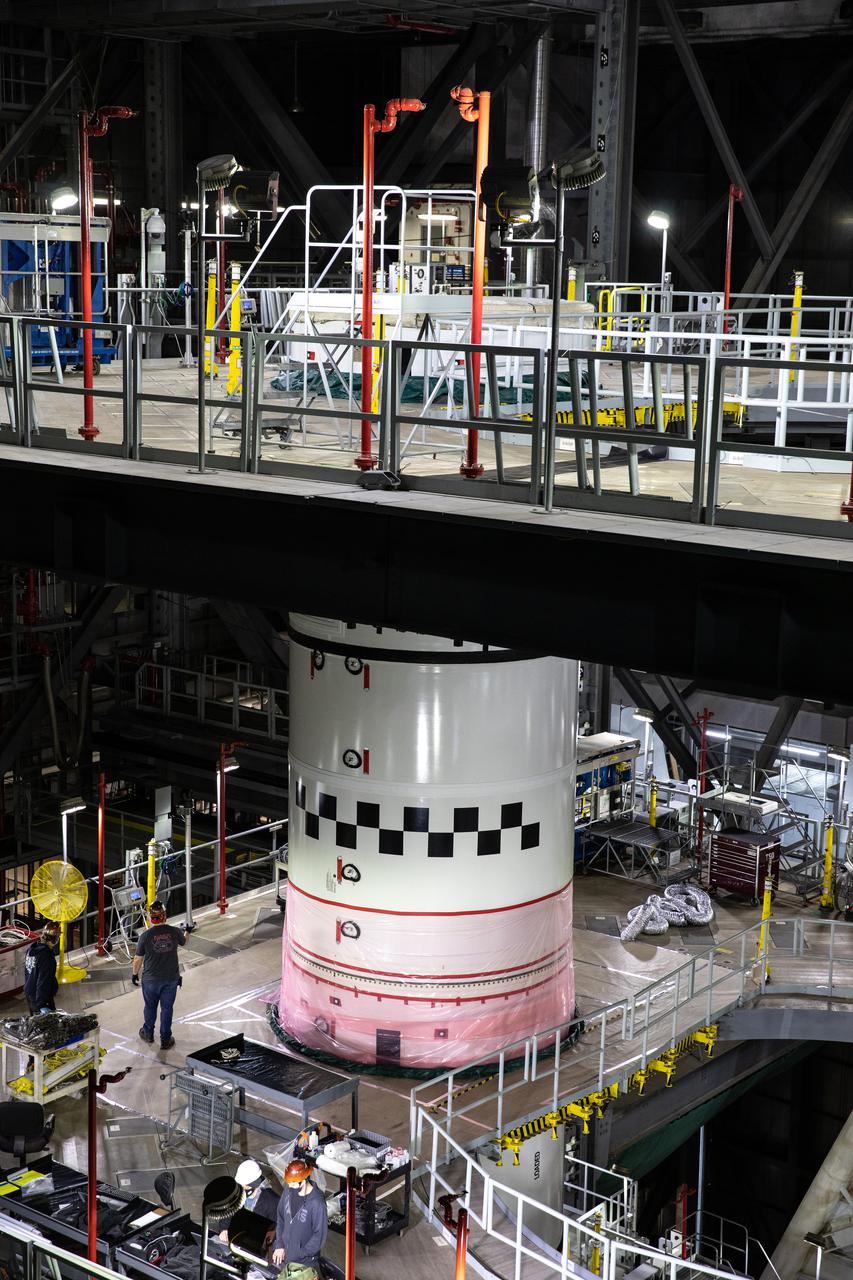
A close-up view in High Bay 3 of the Vehicle Assembly Building at NASA’s Kennedy Space Center in Florida, as the left-hand forward center booster segment for Artemis I is lowered onto the center center booster segment on the mobile launcher for the Space Launch System (SLS) on Jan. 29, 2021. Workers with Exploration Ground Systems and contractor Jacobs teams will stack the twin five-segment boosters on the mobile launcher in High Bay 3 over a number of weeks. When the core stage arrives, it will join the boosters on the mobile launcher, followed by the interim cryogenic propulsion stage and Orion spacecraft. Manufactured by Northrop Grumman in Utah, the twin boosters provide more than 75 percent of the total SLS thrust at launch. The SLS is managed by Marshall Space Flight Center in Huntsville, Alabama. Under the Artemis program, NASA will land the first woman and the next man on the Moon by 2024. The first in a series of increasingly complex missions, Artemis I will test the Orion spacecraft and SLS as an integrated system ahead of crewed flights to the Moon.
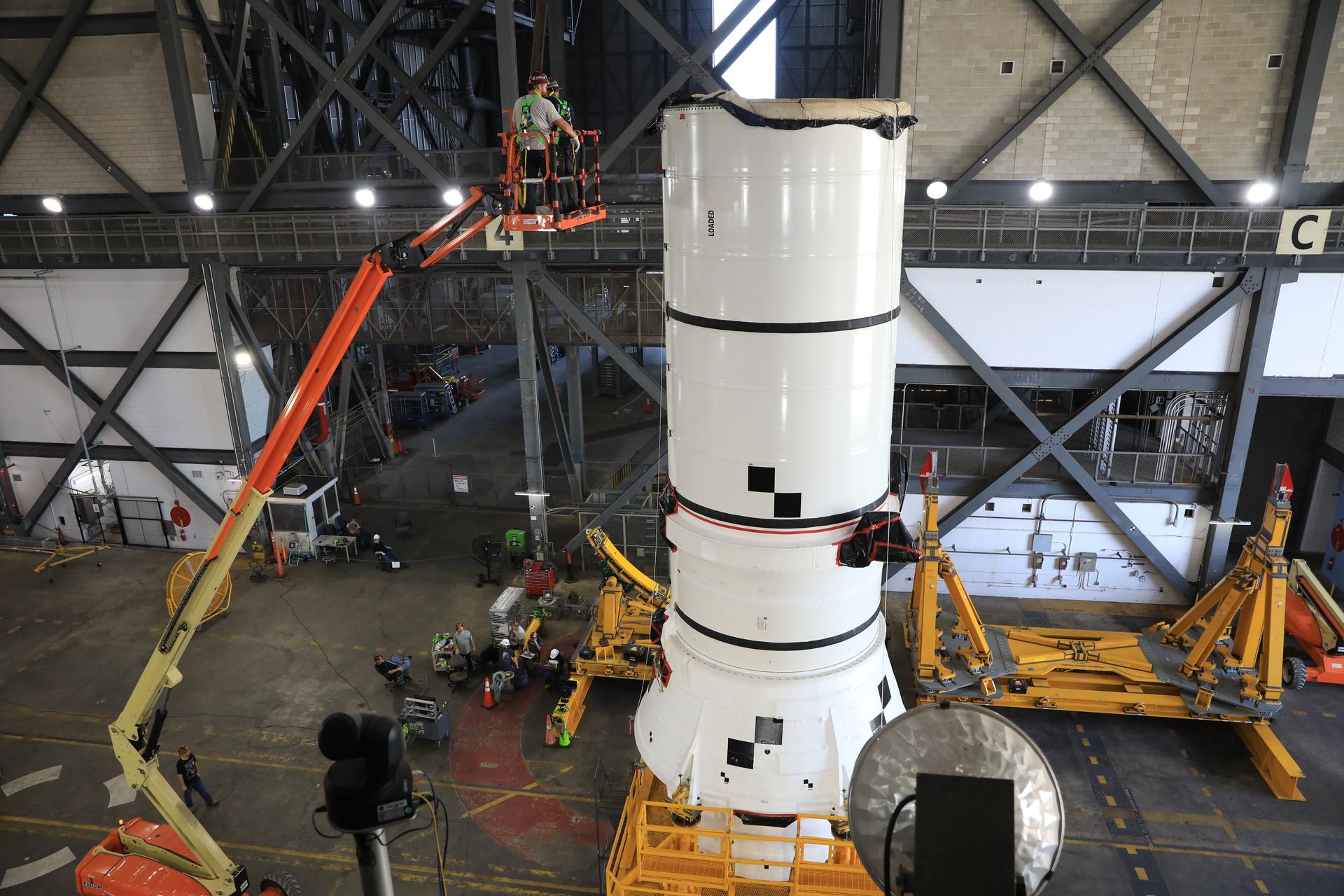
The right-hand aft assembly solid rocket booster segment for NASA’s Artemis III SLS (Space Launch System) rocket arrives at the agency’s Vehicle Assembly Building at NASA’s Kennedy Space Center in Florida on Thursday, July 9, 2026, ahead of stacking on top of the mobile launcher for the Artemis III mission. The twin boosters, manufactured by Northrop Grumman in Utah, will provide more than 75 percent of the SLS rocket’s total thrust at launch. The Artemis III mission will launch crew in the Orion spacecraft on top of the SLS rocket to test rendezvous and docking capabilities between Orion and commercial spacecraft needed to land astronauts on the Moon.
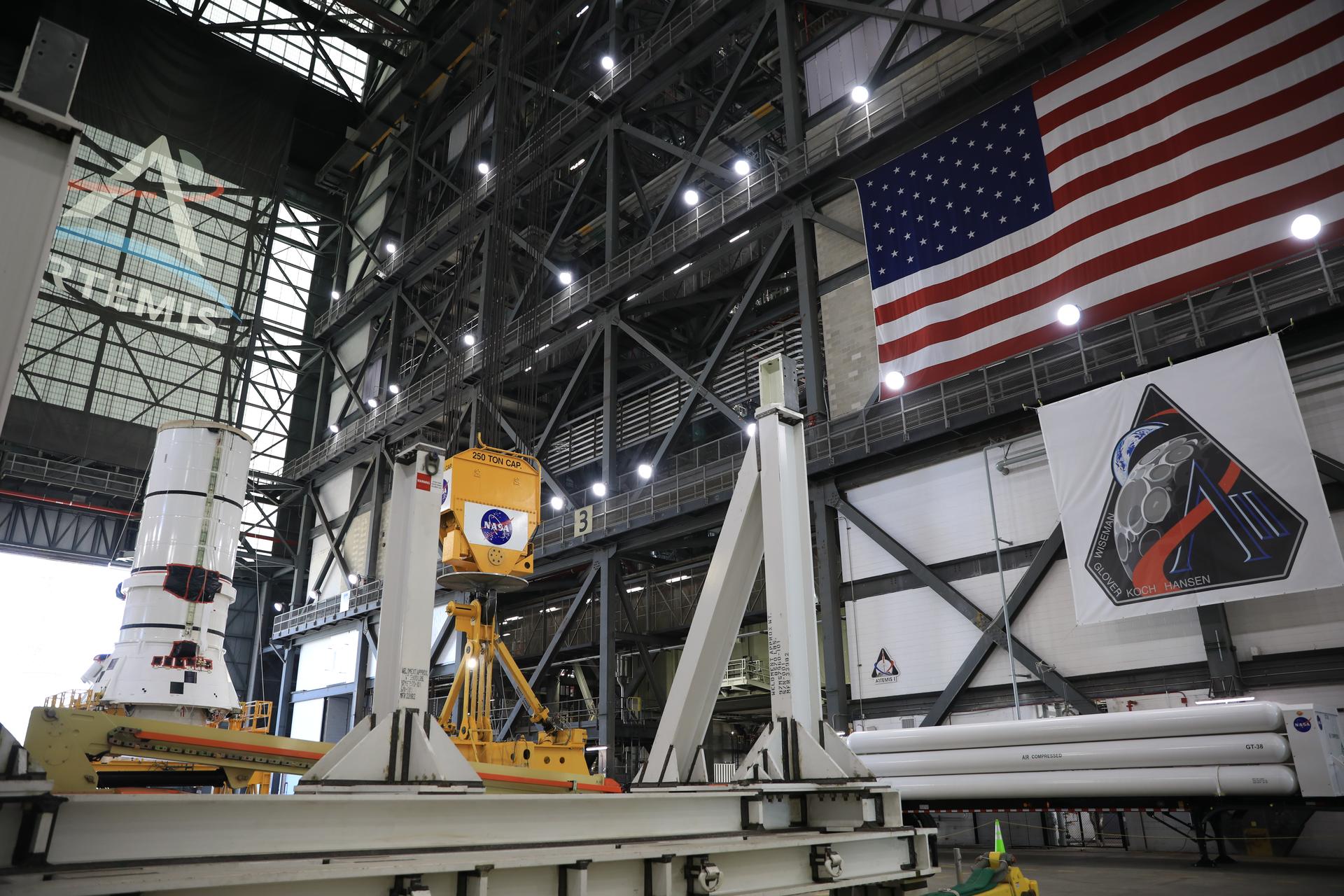
The right-hand aft assembly solid rocket booster segment for NASA’s Artemis III SLS (Space Launch System) rocket arrives at the agency’s Vehicle Assembly Building at NASA’s Kennedy Space Center in Florida on Thursday, July 9, 2026, ahead of stacking on top of the mobile launcher for the Artemis III mission. The twin boosters, manufactured by Northrop Grumman in Utah, will provide more than 75 percent of the SLS rocket’s total thrust at launch. The Artemis III mission will launch crew in the Orion spacecraft on top of the SLS rocket to test rendezvous and docking capabilities between Orion and commercial spacecraft needed to land astronauts on the Moon.
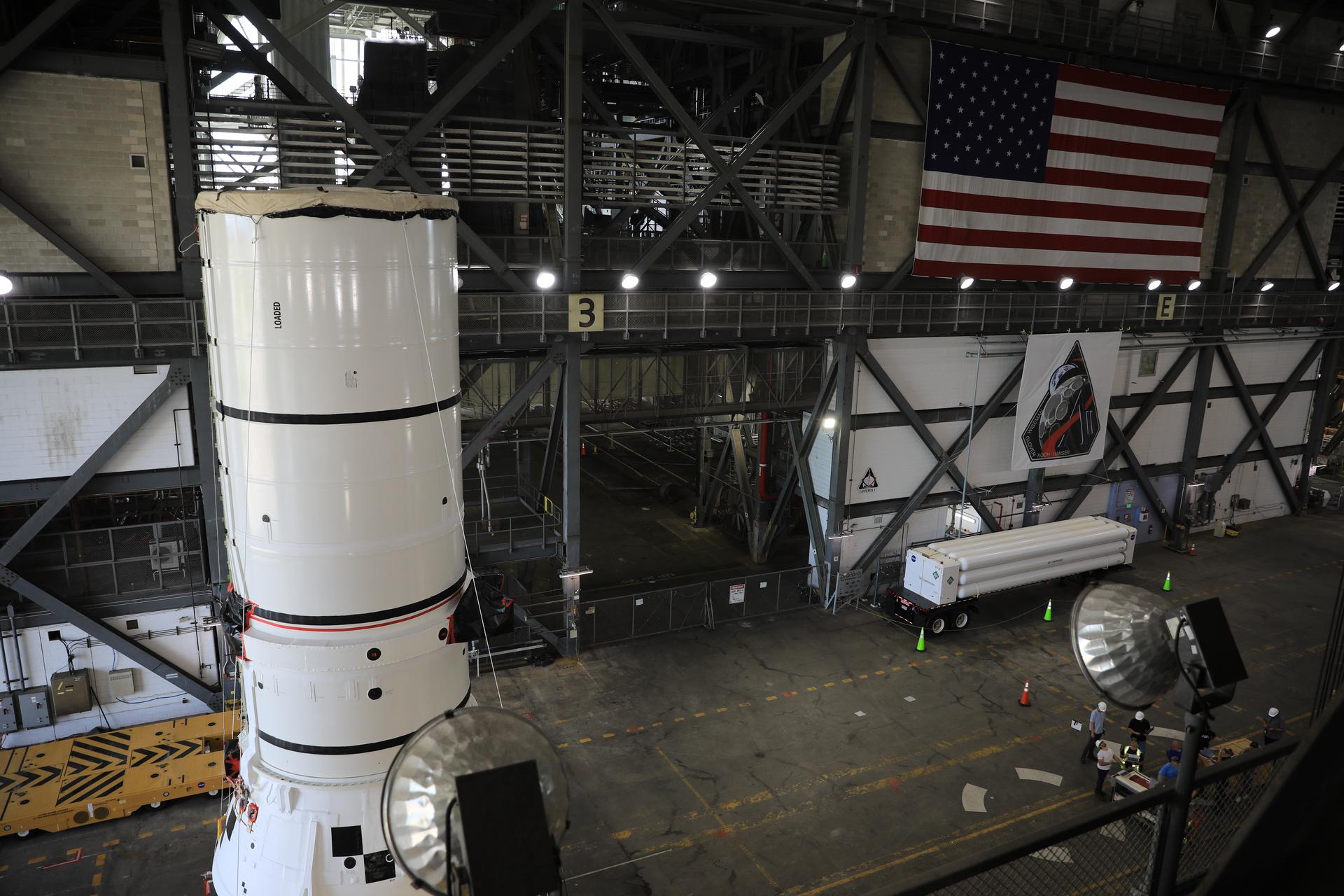
The left-hand aft assembly solid rocket booster segment for NASA’s Artemis III SLS (Space Launch System) rocket arrives at the agency’s Vehicle Assembly Building at NASA’s Kennedy Space Center in Florida on Monday, July 6, 2026, ahead of stacking on top of the mobile launcher for the Artemis III mission. The twin boosters, manufactured by Northrop Grumman in Utah, will provide more than 75 percent of the SLS rocket’s total thrust at launch. The Artemis III mission will launch crew in the Orion spacecraft on top of the SLS rocket to test rendezvous and docking capabilities between Orion and commercial spacecraft needed to land astronauts on the Moon.
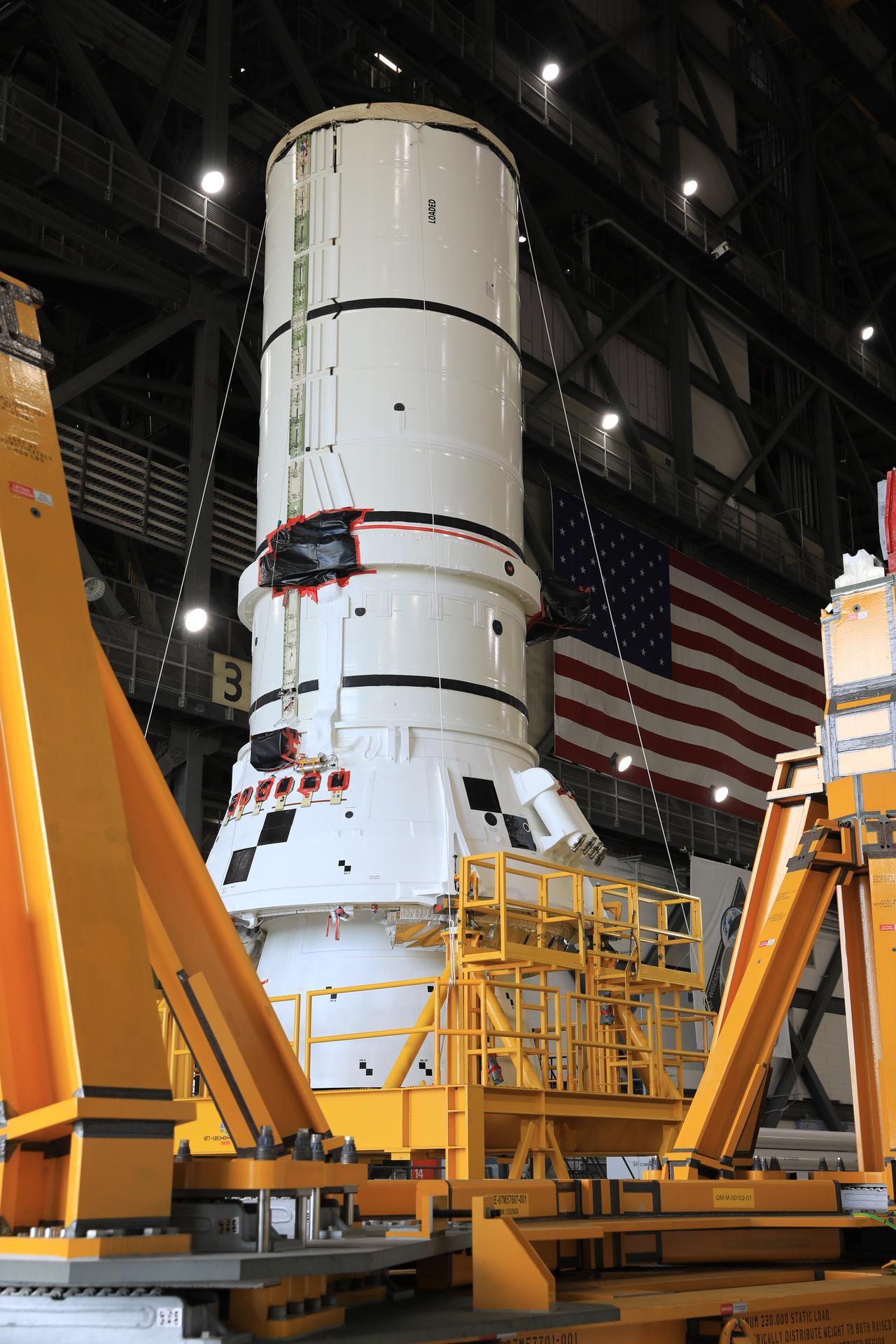
The left-hand aft assembly solid rocket booster segment for NASA’s Artemis III SLS (Space Launch System) rocket arrives at the agency’s Vehicle Assembly Building at NASA’s Kennedy Space Center in Florida on Monday, July 6, 2026, ahead of stacking on top of the mobile launcher for the Artemis III mission. The twin boosters, manufactured by Northrop Grumman in Utah, will provide more than 75 percent of the SLS rocket’s total thrust at launch. The Artemis III mission will launch crew in the Orion spacecraft on top of the SLS rocket to test rendezvous and docking capabilities between Orion and commercial spacecraft needed to land astronauts on the Moon.
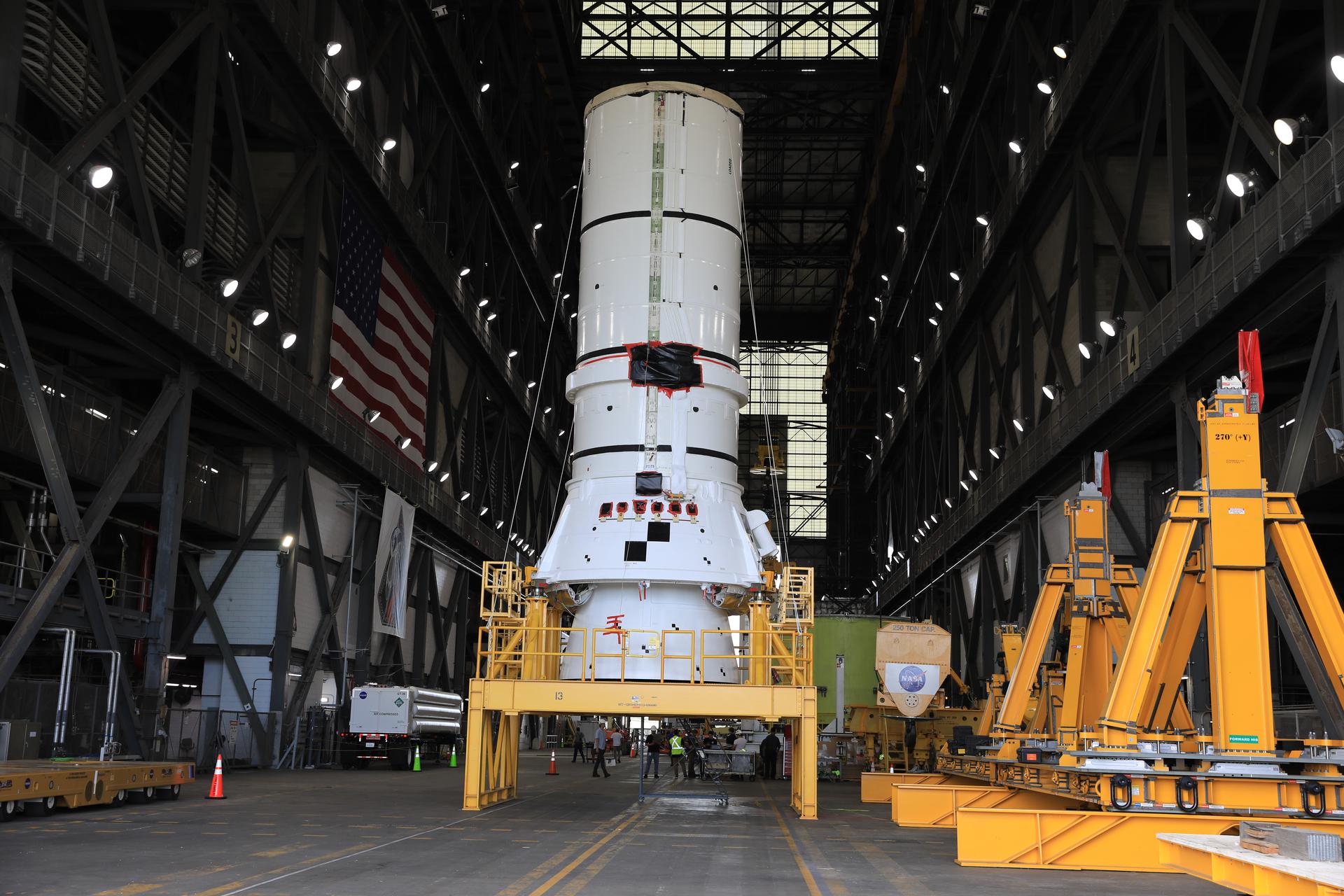
The left-hand aft assembly solid rocket booster segment for NASA’s Artemis III SLS (Space Launch System) rocket arrives at the agency’s Vehicle Assembly Building at NASA’s Kennedy Space Center in Florida on Monday, July 6, 2026, ahead of stacking on top of the mobile launcher for the Artemis III mission. The twin boosters, manufactured by Northrop Grumman in Utah, will provide more than 75 percent of the SLS rocket’s total thrust at launch. The Artemis III mission will launch crew in the Orion spacecraft on top of the SLS rocket to test rendezvous and docking capabilities between Orion and commercial spacecraft needed to land astronauts on the Moon.
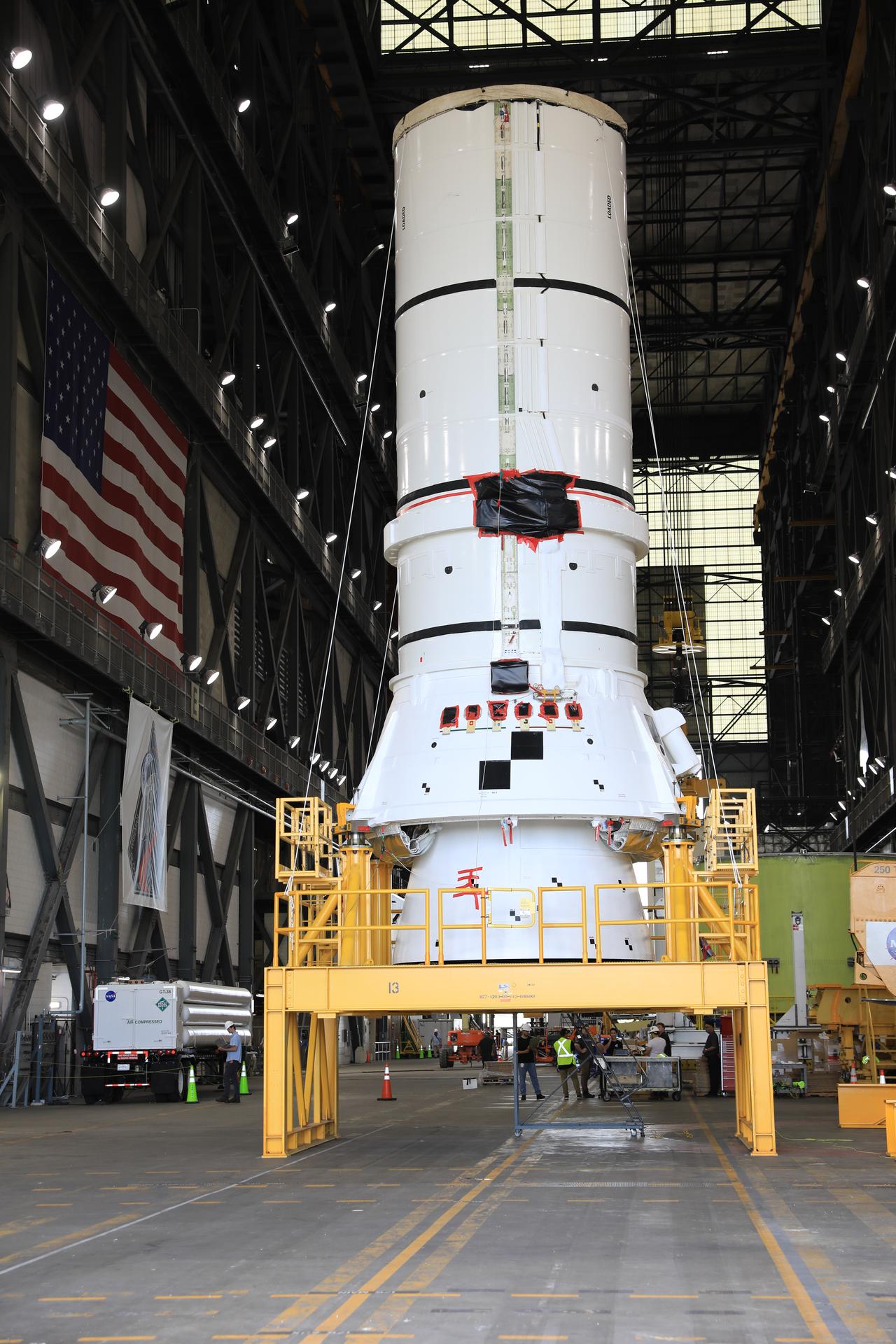
The left-hand aft assembly solid rocket booster segment for NASA’s Artemis III SLS (Space Launch System) rocket arrives at the agency’s Vehicle Assembly Building at NASA’s Kennedy Space Center in Florida on Monday, July 6, 2026, ahead of stacking on top of the mobile launcher for the Artemis III mission. The twin boosters, manufactured by Northrop Grumman in Utah, will provide more than 75 percent of the SLS rocket’s total thrust at launch. The Artemis III mission will launch crew in the Orion spacecraft on top of the SLS rocket to test rendezvous and docking capabilities between Orion and commercial spacecraft needed to land astronauts on the Moon.
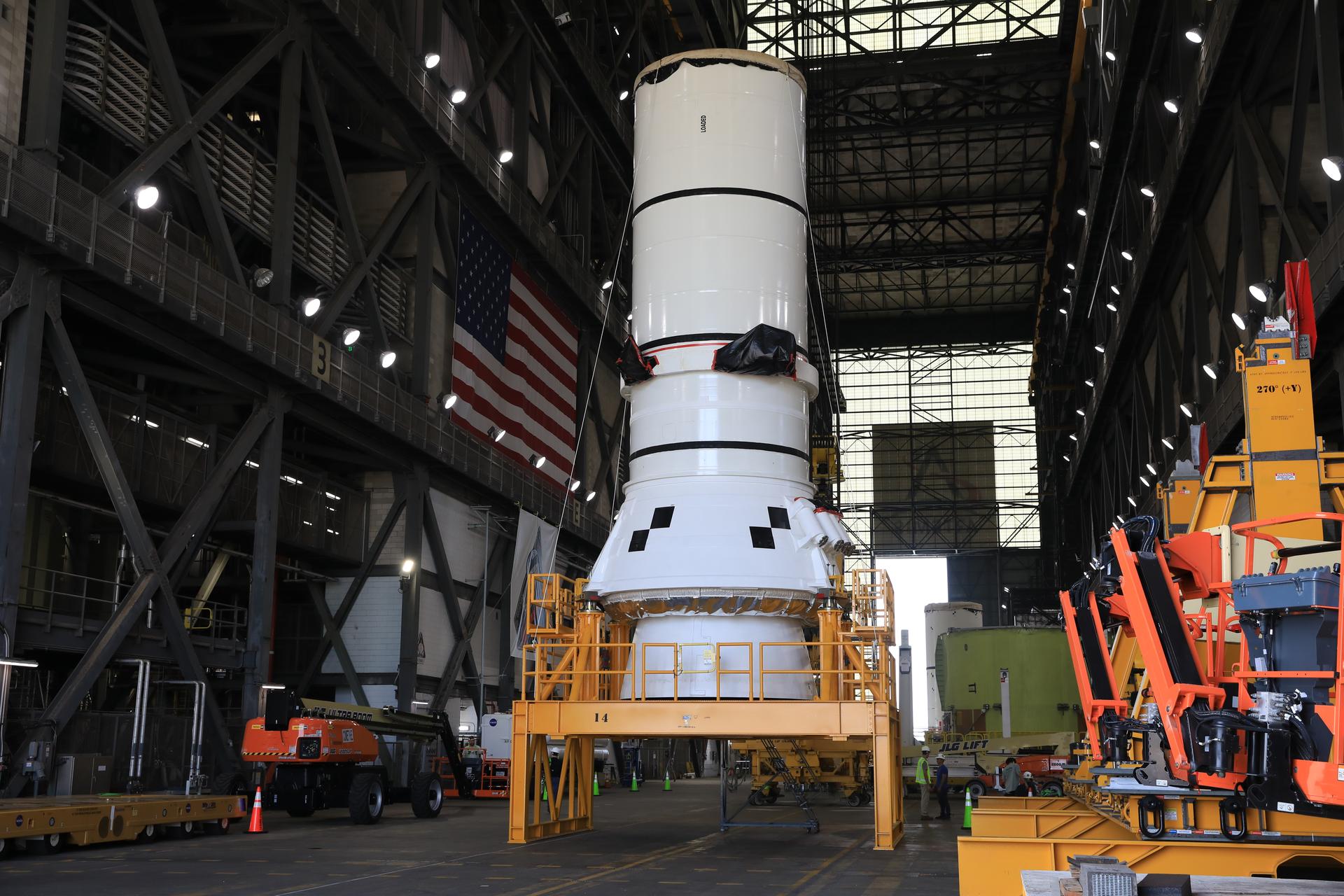
The right-hand aft assembly solid rocket booster segment for NASA’s Artemis III SLS (Space Launch System) rocket arrives at the agency’s Vehicle Assembly Building at NASA’s Kennedy Space Center in Florida on Thursday, July 9, 2026, ahead of stacking on top of the mobile launcher for the Artemis III mission. The twin boosters, manufactured by Northrop Grumman in Utah, will provide more than 75 percent of the SLS rocket’s total thrust at launch. The Artemis III mission will launch crew in the Orion spacecraft on top of the SLS rocket to test rendezvous and docking capabilities between Orion and commercial spacecraft needed to land astronauts on the Moon.
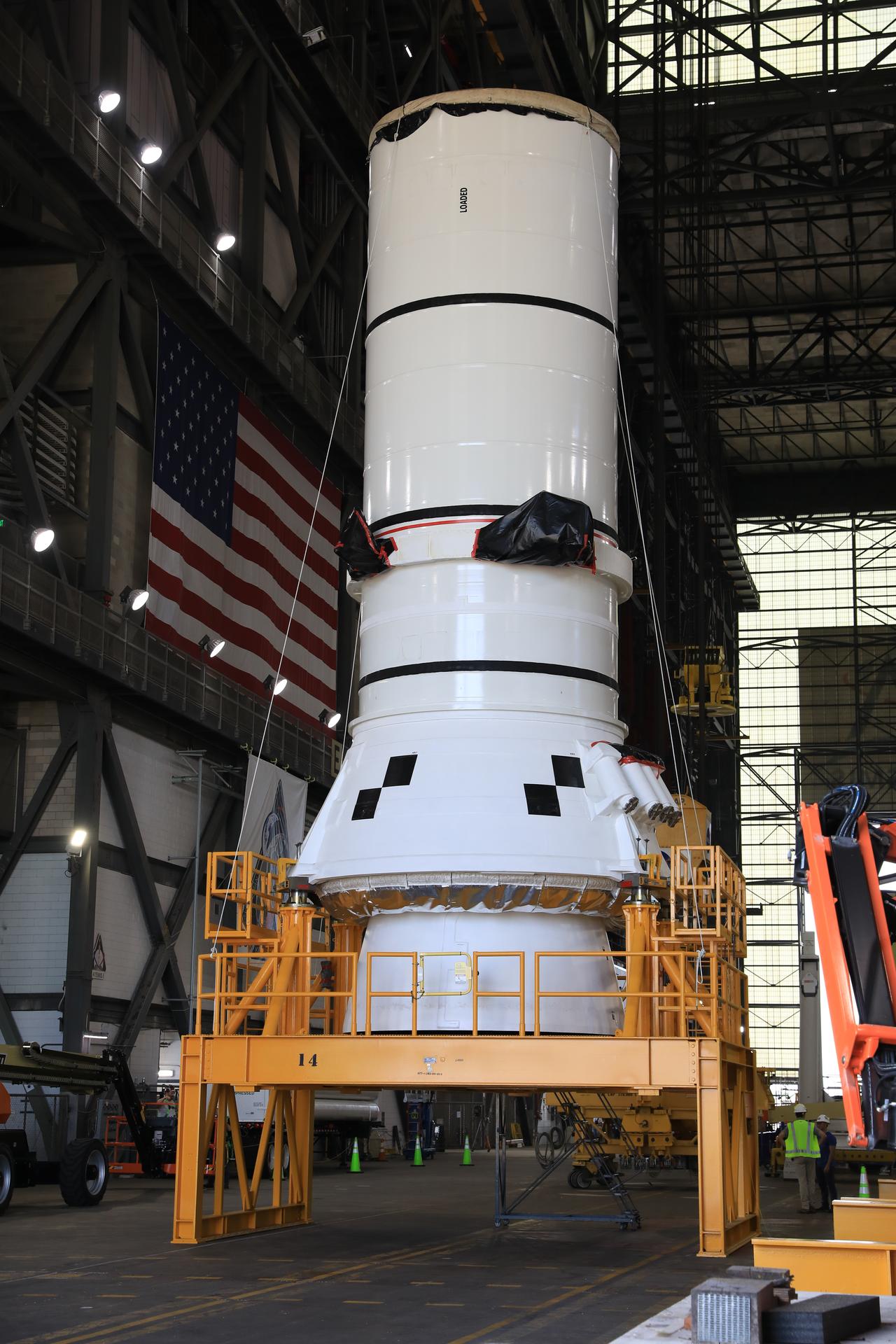
The right-hand aft assembly solid rocket booster segment for NASA’s Artemis III SLS (Space Launch System) rocket arrives at the agency’s Vehicle Assembly Building at NASA’s Kennedy Space Center in Florida on Thursday, July 9, 2026, ahead of stacking on top of the mobile launcher for the Artemis III mission. The twin boosters, manufactured by Northrop Grumman in Utah, will provide more than 75 percent of the SLS rocket’s total thrust at launch. The Artemis III mission will launch crew in the Orion spacecraft on top of the SLS rocket to test rendezvous and docking capabilities between Orion and commercial spacecraft needed to land astronauts on the Moon.
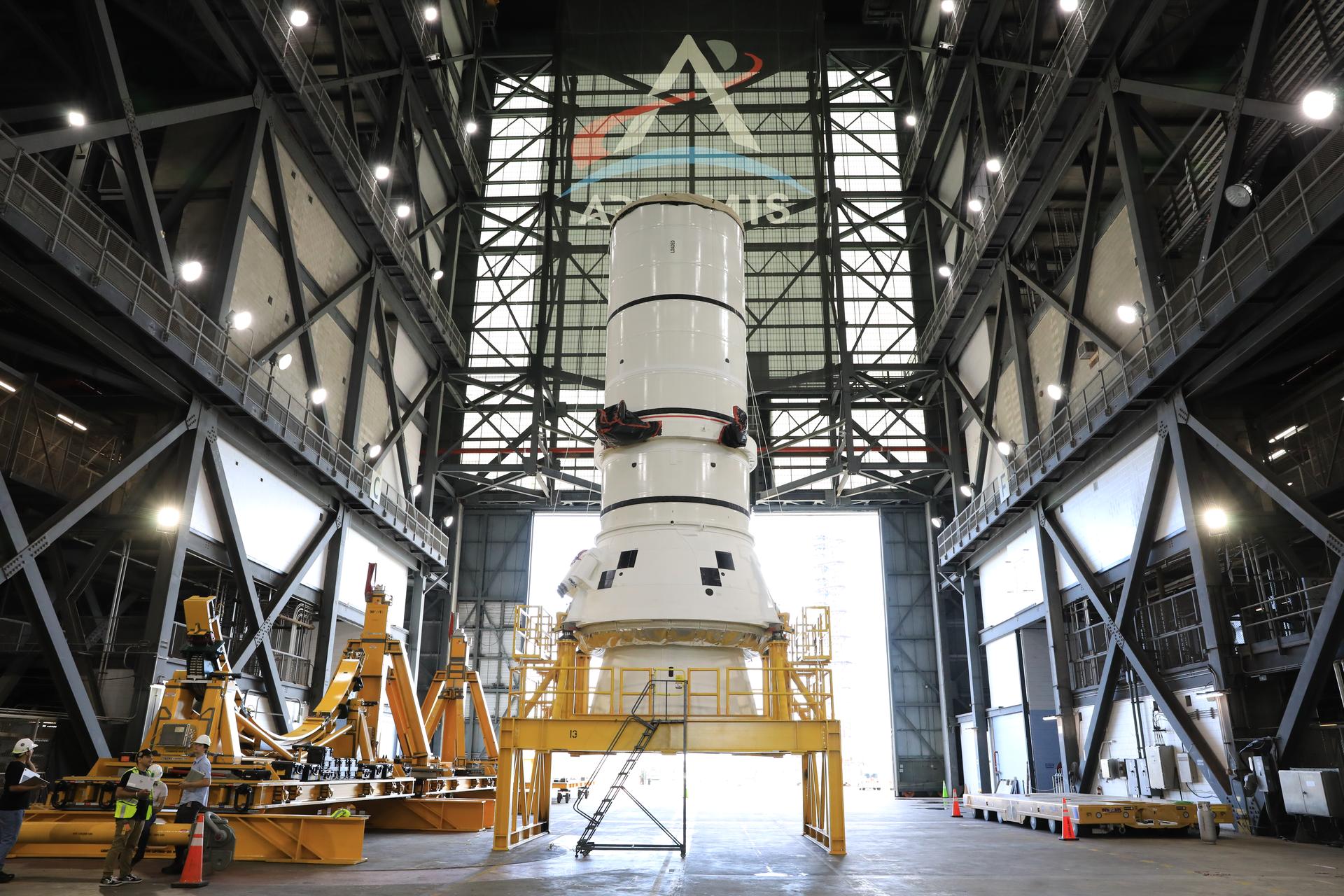
The left-hand aft assembly solid rocket booster segment for NASA’s Artemis III SLS (Space Launch System) rocket arrives at the agency’s Vehicle Assembly Building at NASA’s Kennedy Space Center in Florida on Monday, July 6, 2026, ahead of stacking on top of the mobile launcher for the Artemis III mission. The twin boosters, manufactured by Northrop Grumman in Utah, will provide more than 75 percent of the SLS rocket’s total thrust at launch. The Artemis III mission will launch crew in the Orion spacecraft on top of the SLS rocket to test rendezvous and docking capabilities between Orion and commercial spacecraft needed to land astronauts on the Moon.

In High Bay 3 of the Vehicle Assembly Building at NASA’s Kennedy Space Center in Florida, the right-hand center aft booster segment for Artemis I is stacked on the mobile launcher for the Space Launch System (SLS) on Jan. 7, 2021. Also in view is the left-hand booster stack. Workers with Exploration Ground Systems and contractor Jacobs teams will stack the twin five-segment boosters on the mobile launcher in High Bay 3 over a number of weeks. When the core stage arrives, it will join the boosters on the mobile launcher, followed by the interim cryogenic propulsion stage and Orion spacecraft. Manufactured by Northrop Grumman in Utah, the twin boosters provide more than 75 percent of the total SLS thrust at launch. The SLS is managed by Marshall Space Flight Center in Huntsville, Alabama. Under the Artemis program, NASA will land the first woman and the next man on the Moon by 2024. The first in a series of increasingly complex missions, Artemis I will test the Orion spacecraft and SLS as an integrated system ahead of crewed flights to the Moon.
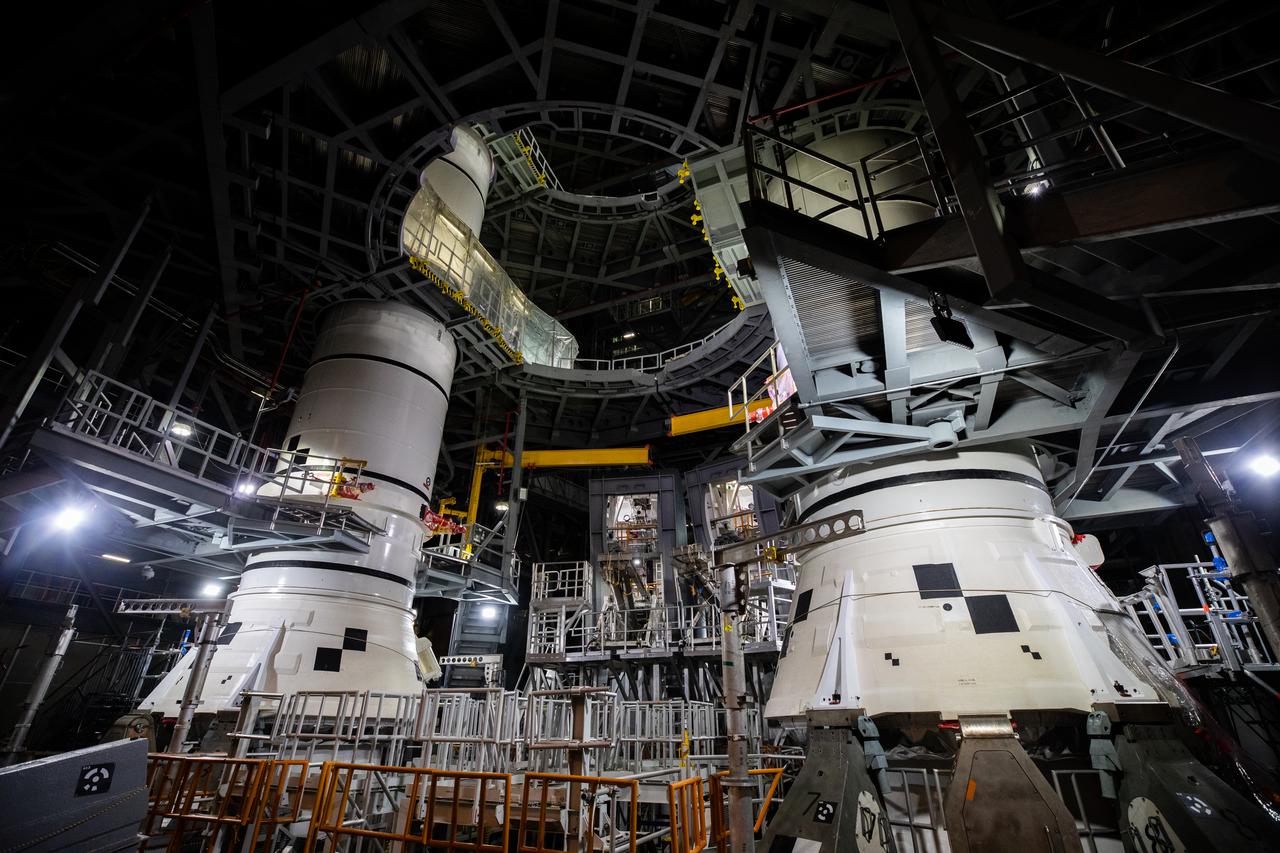
In High Bay 3 of the Vehicle Assembly Building at NASA’s Kennedy Space Center in Florida, the right-hand center aft booster segment for Artemis I is lowered onto the aft booster segment on the mobile launcher for the Space Launch System (SLS) on Jan. 12, 2021. Also in view at left, is the left-hand booster stack. Workers with Exploration Ground Systems and contractor Jacobs teams will stack the twin five-segment boosters on the mobile launcher in High Bay 3 over a number of weeks. When the core stage arrives, it will join the boosters on the mobile launcher, followed by the interim cryogenic propulsion stage and Orion spacecraft. Manufactured by Northrop Grumman in Utah, the twin boosters provide more than 75 percent of the total SLS thrust at launch. The SLS is managed by Marshall Space Flight Center in Huntsville, Alabama. Under the Artemis program, NASA will land the first woman and the next man on the Moon by 2024. The first in a series of increasingly complex missions, Artemis I will test the Orion spacecraft and SLS as an integrated system ahead of crewed flights to the Moon.
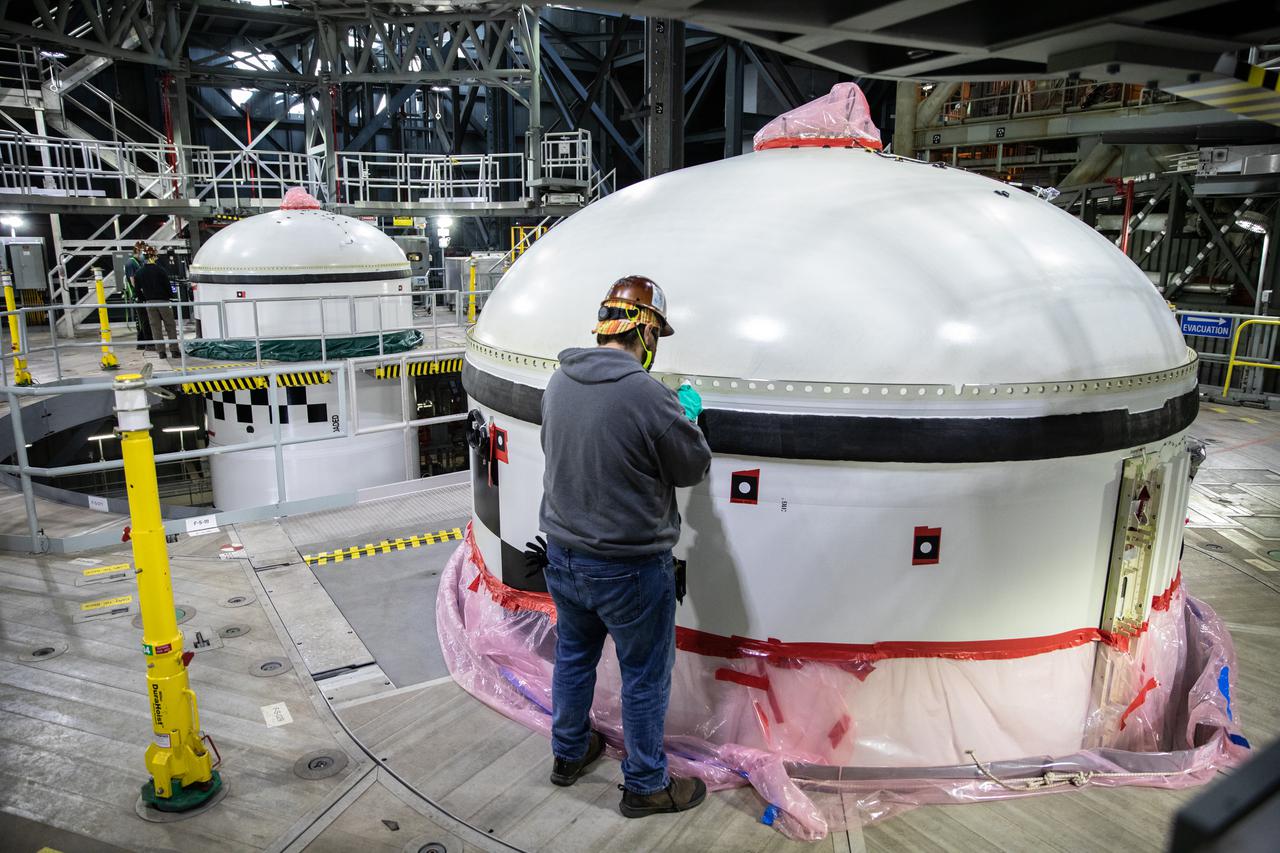
In High Bay 3 of the Vehicle Assembly Building at NASA’s Kennedy Space Center in Florida, a worker checks the right-hand forward segment on the center forward segment of the booster for Artemis I. The forward segments were lowered onto the twin solid rocket boosters on the mobile launcher (ML) for the Space Launch System (SLS) on Feb. 24, 2021. Workers with Exploration Ground Systems and contractor Jacobs teams are completing the stacking of the boosters. When the core stage arrives, it will join the boosters on the ML, followed by the interim cryogenic propulsion stage and Orion spacecraft. Manufactured by Northrop Grumman in Utah, the twin boosters provide more than 75 percent of the total SLS thrust at launch. The SLS is managed by Marshall Space Flight Center in Huntsville, Alabama. Under the Artemis program, NASA will land the first woman and the next man on the Moon by 2024. The first in a series of increasingly complex missions, Artemis I will test the Orion spacecraft and SLS as an integrated system ahead of crewed flights to the Moon.
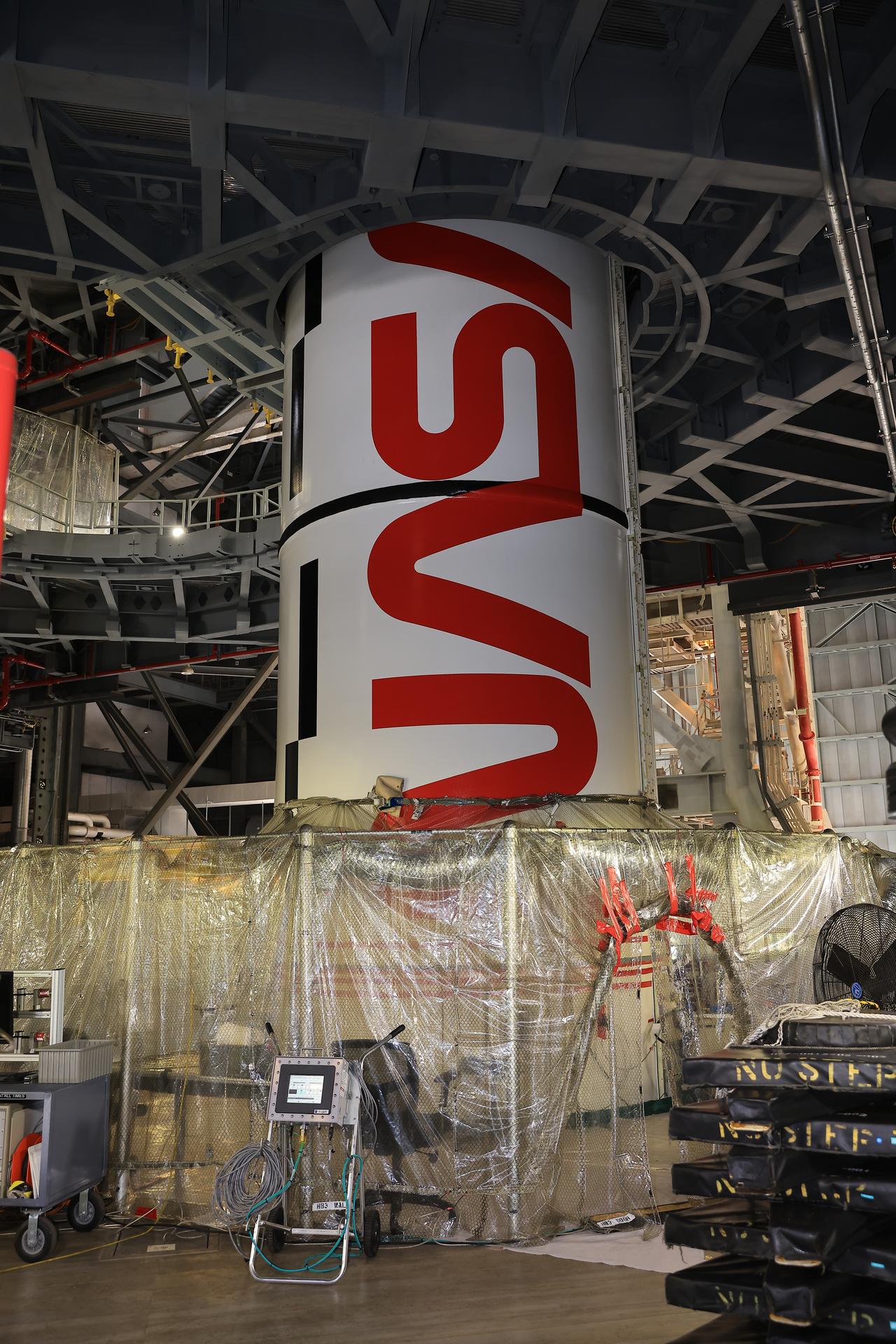
Technicians inside the Vehicle Assembly Building at NASA’s Kennedy Space Center in Florida complete integration of the right center center solid rocket booster segment onto the right aft center booster segment for the Artemis III SLS (Space Launch System) rocket on the mobile launcher inside High Bay 3 on Friday, Aug. 28, 2026. The twin boosters, comprising of five segments each manufactured by Northrop Grumman in Utah, will provide more than 75 percent of the SLS rocket’s total thrust at launch. The Artemis III mission will launch crew in the Orion spacecraft on top of the SLS rocket to test rendezvous and docking capabilities between Orion and commercial spacecraft needed to land astronauts on the Moon.
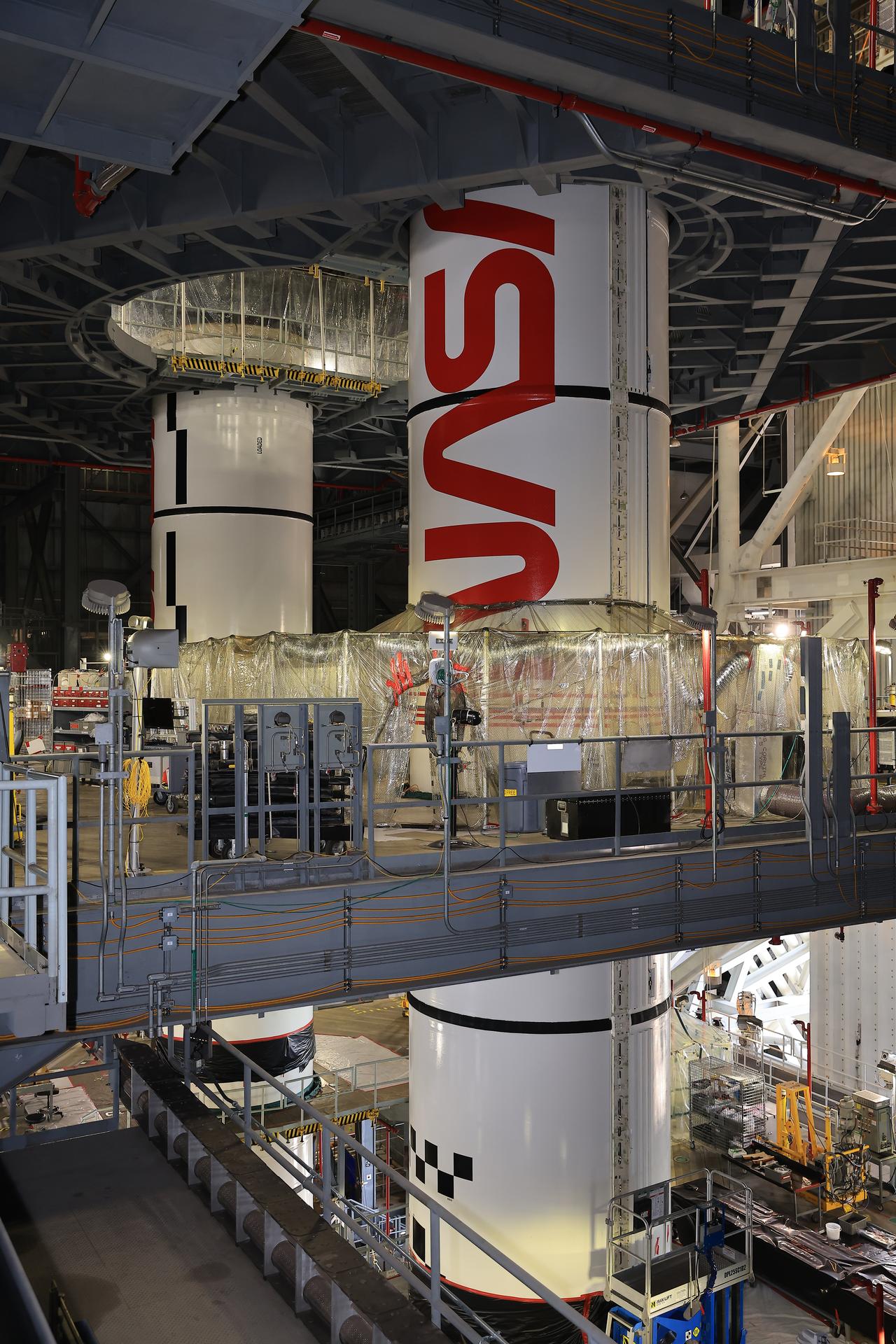
Technicians inside the Vehicle Assembly Building at NASA’s Kennedy Space Center in Florida complete integration of the left and right center center solid rocket booster segment onto the left and right aft center booster segment for the Artemis III SLS (Space Launch System) rocket on the mobile launcher inside High Bay 3 on Friday, Aug. 28, 2026. The twin boosters, comprising of five segments each manufactured by Northrop Grumman in Utah, will provide more than 75 percent of the SLS rocket’s total thrust at launch. The Artemis III mission will launch crew in the Orion spacecraft on top of the SLS rocket to test rendezvous and docking capabilities between Orion and commercial spacecraft needed to land astronauts on the Moon.
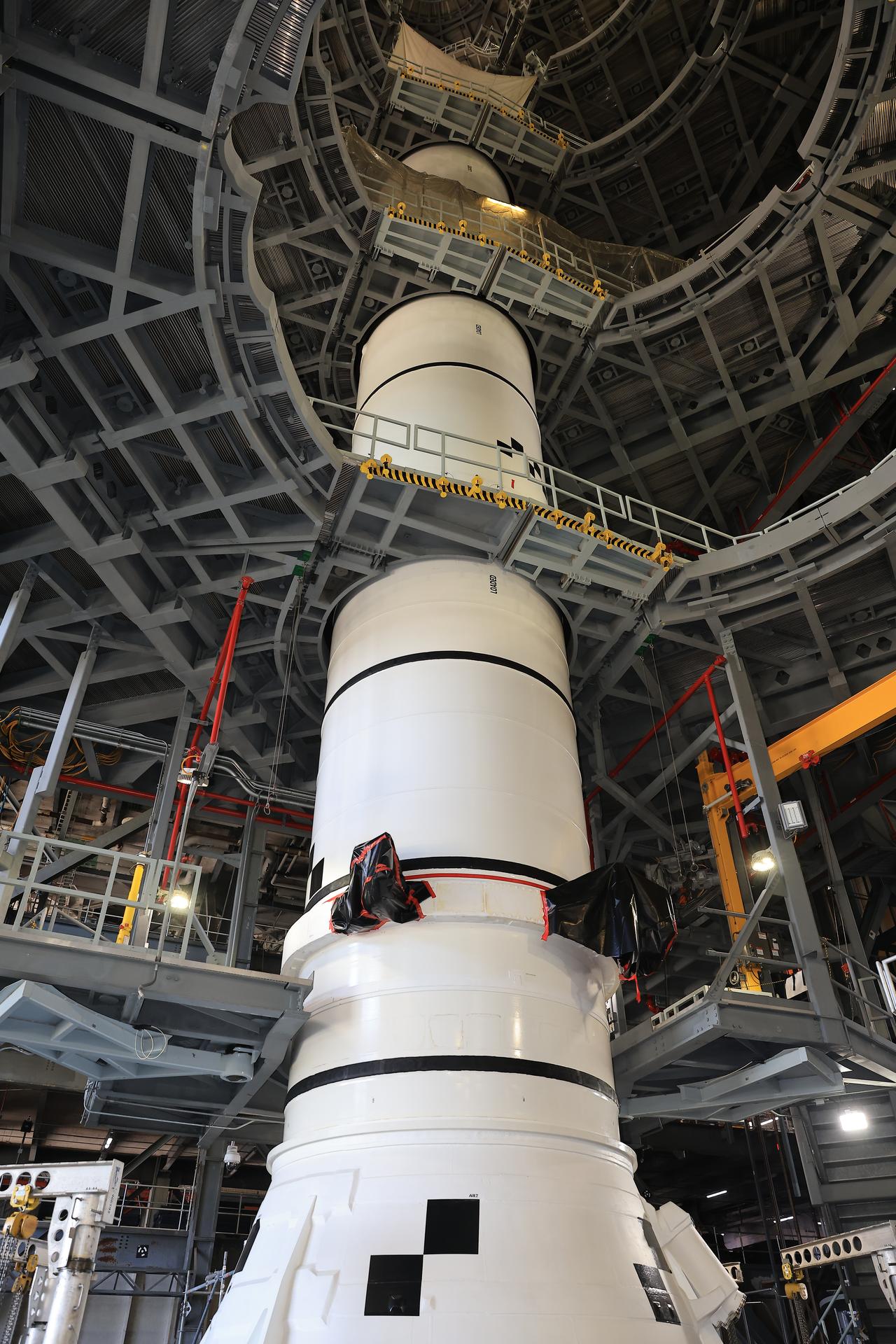
Technicians inside the Vehicle Assembly Building at NASA’s Kennedy Space Center in Florida complete integration of the right center center solid rocket booster segment onto the right aft center booster segment for the Artemis III SLS (Space Launch System) rocket on the mobile launcher inside High Bay 3 on Friday, Aug. 28, 2026. The twin boosters, comprising of five segments each manufactured by Northrop Grumman in Utah, will provide more than 75 percent of the SLS rocket’s total thrust at launch. The Artemis III mission will launch crew in the Orion spacecraft on top of the SLS rocket to test rendezvous and docking capabilities between Orion and commercial spacecraft needed to land astronauts on the Moon.