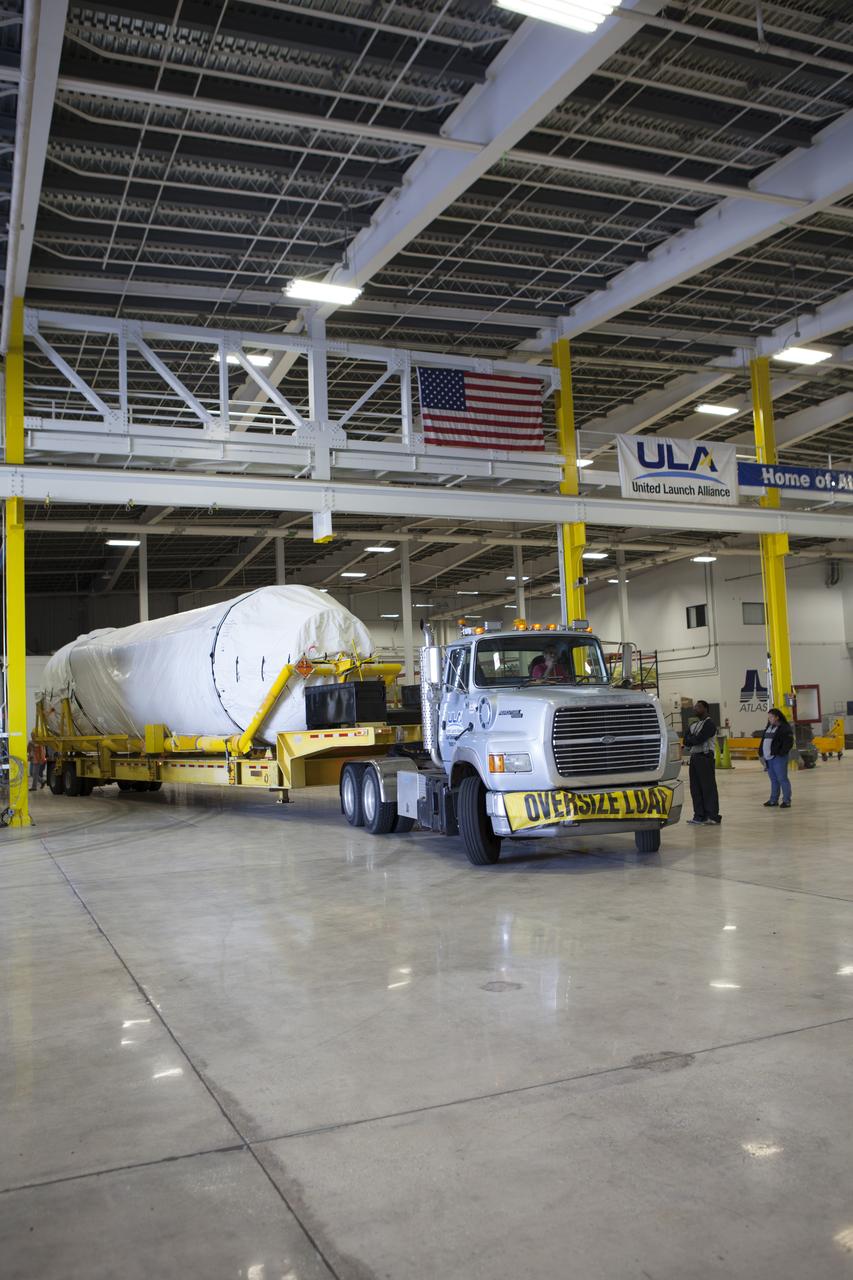
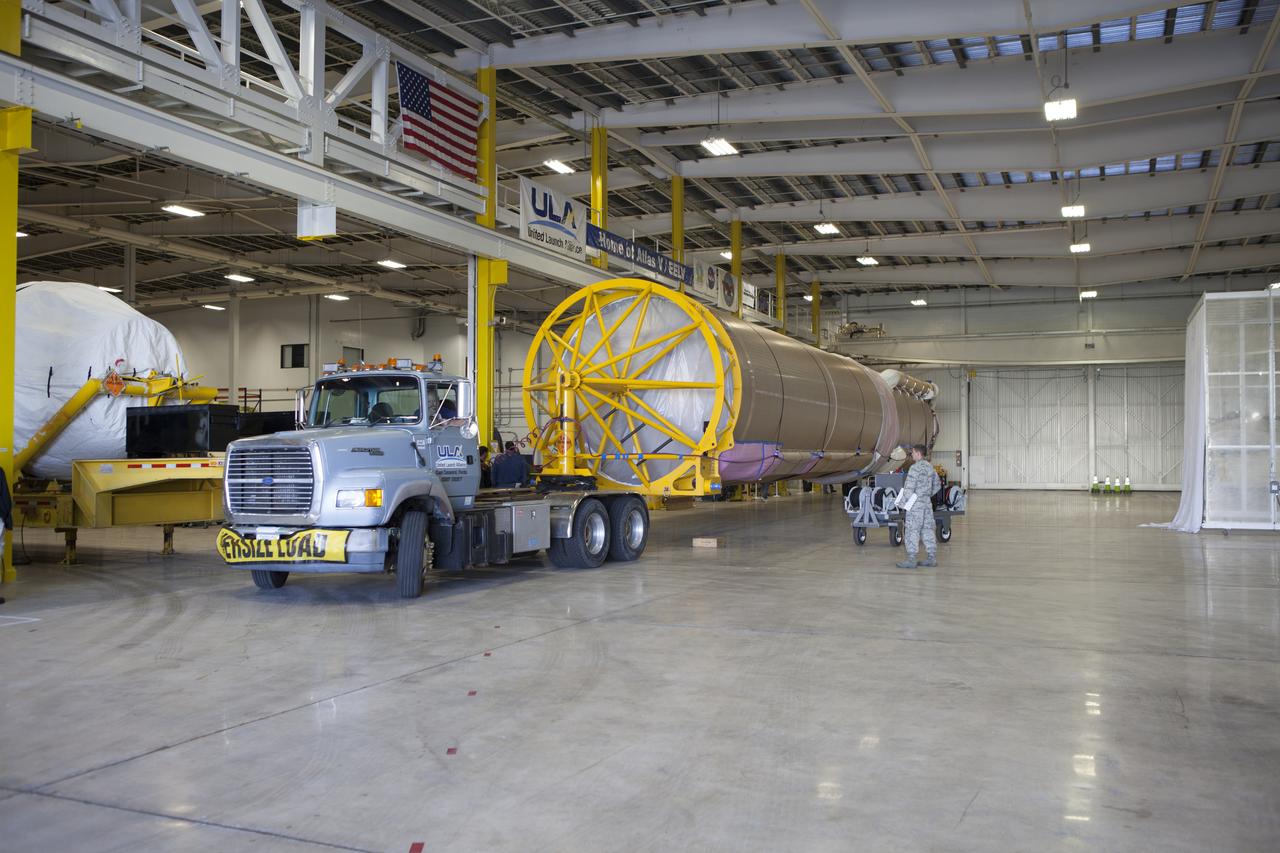
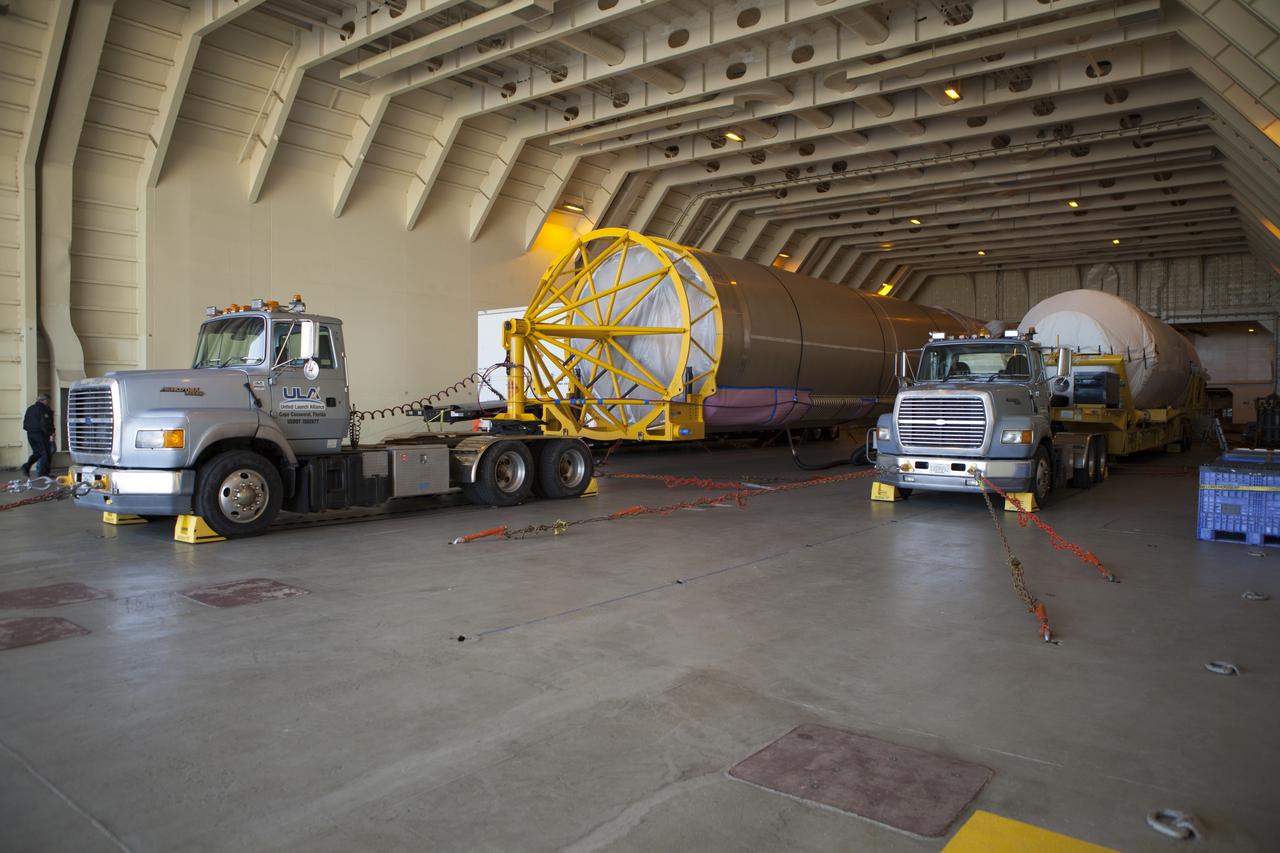
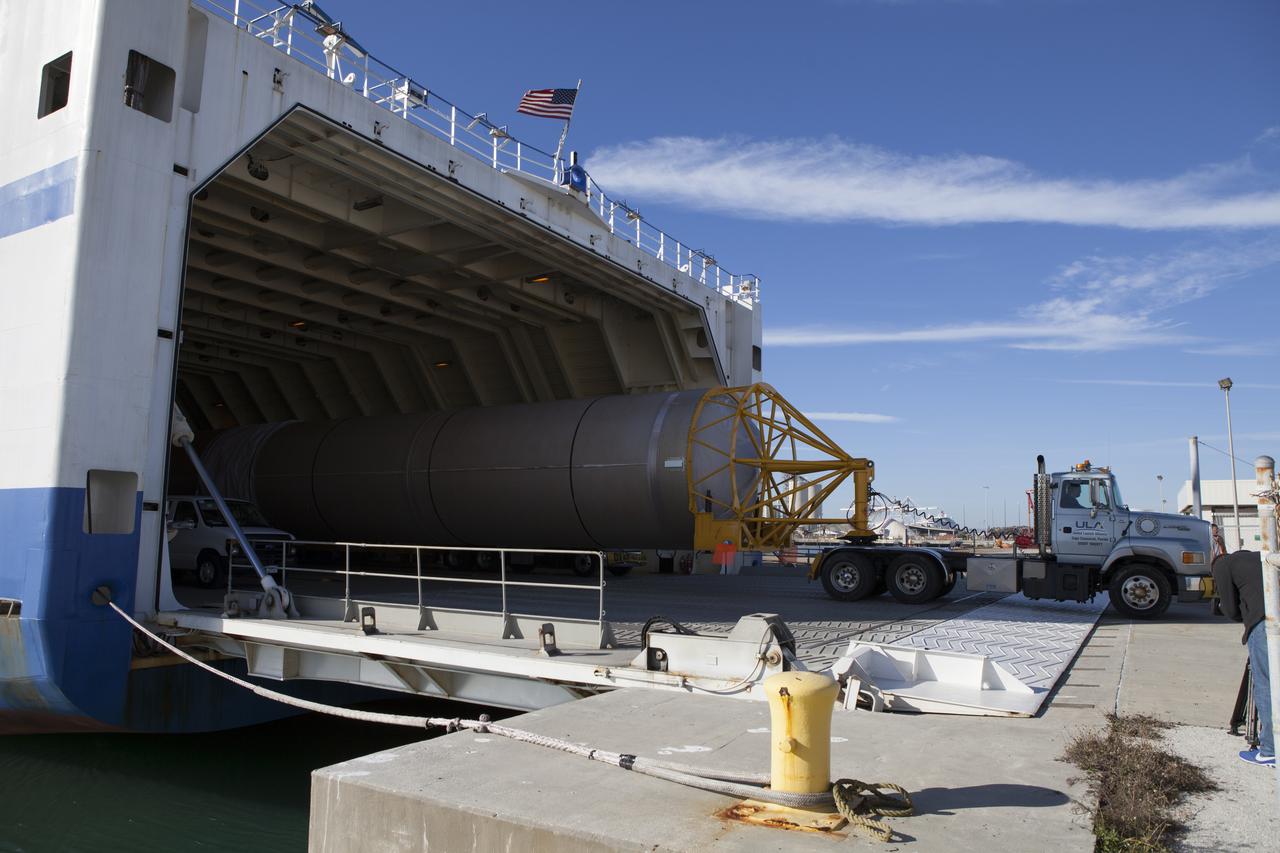
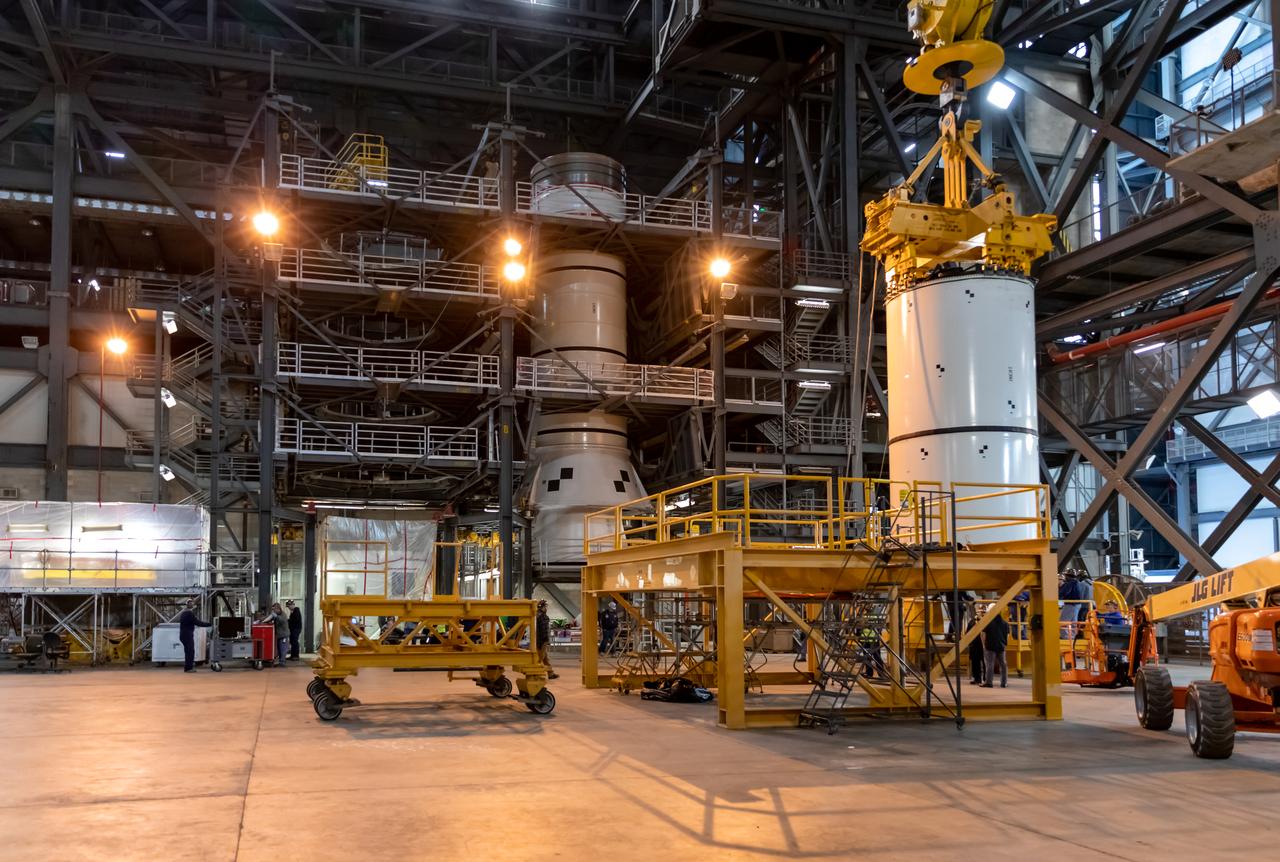
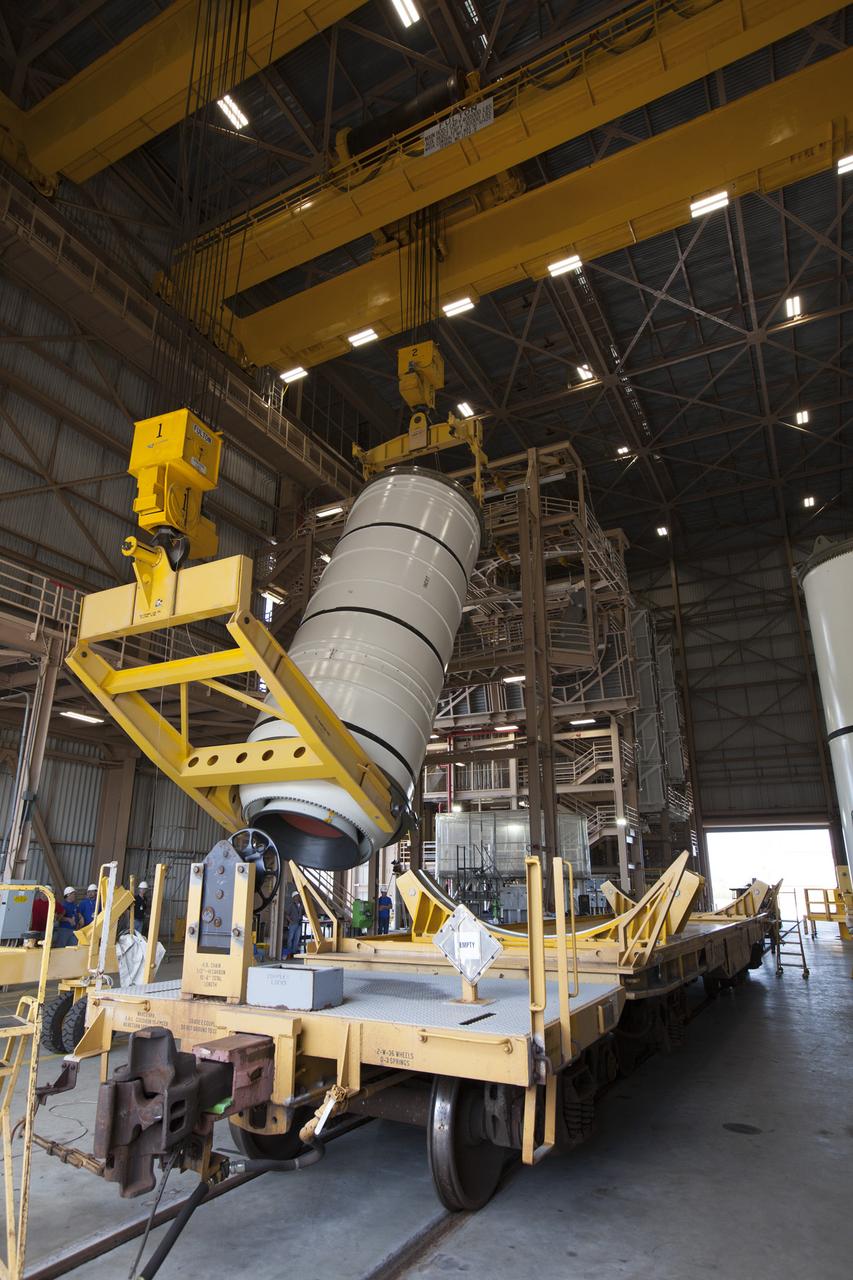
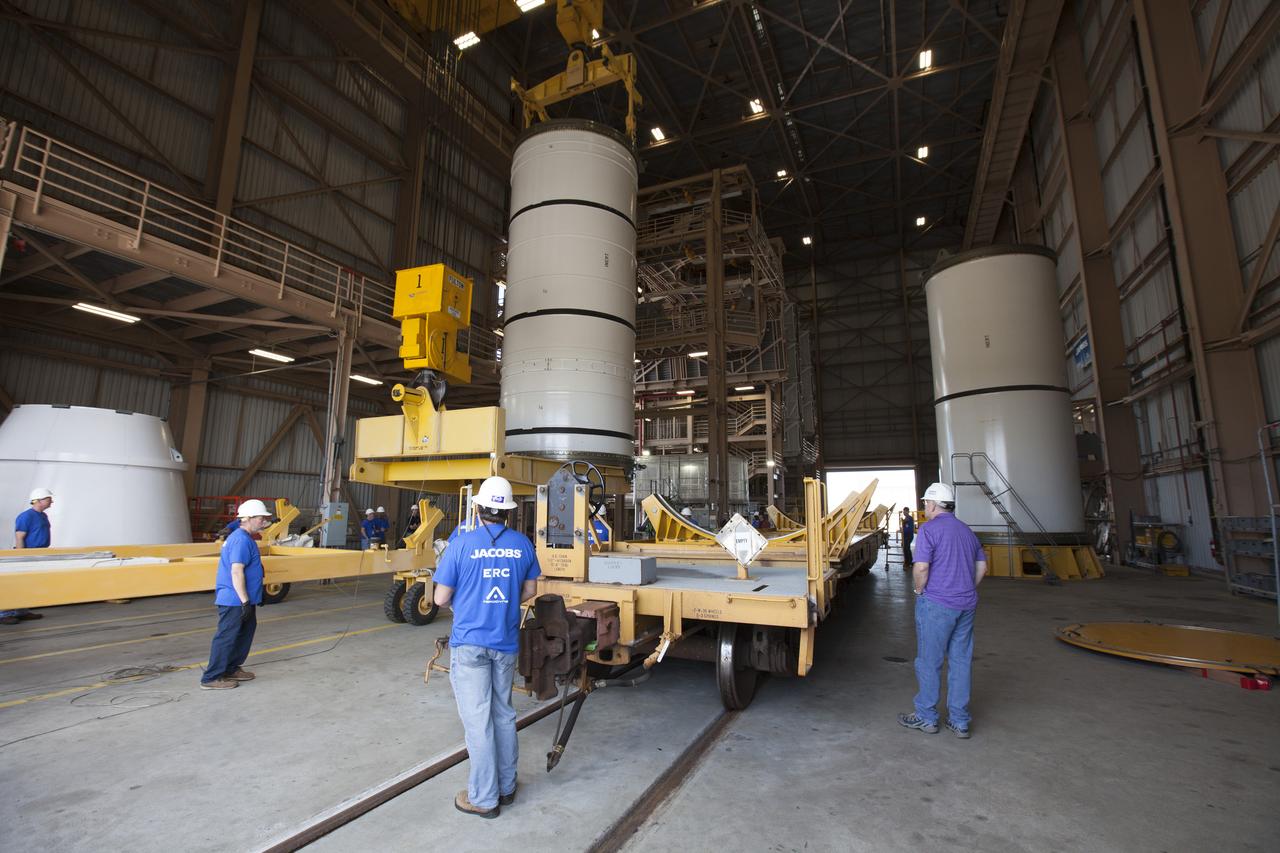
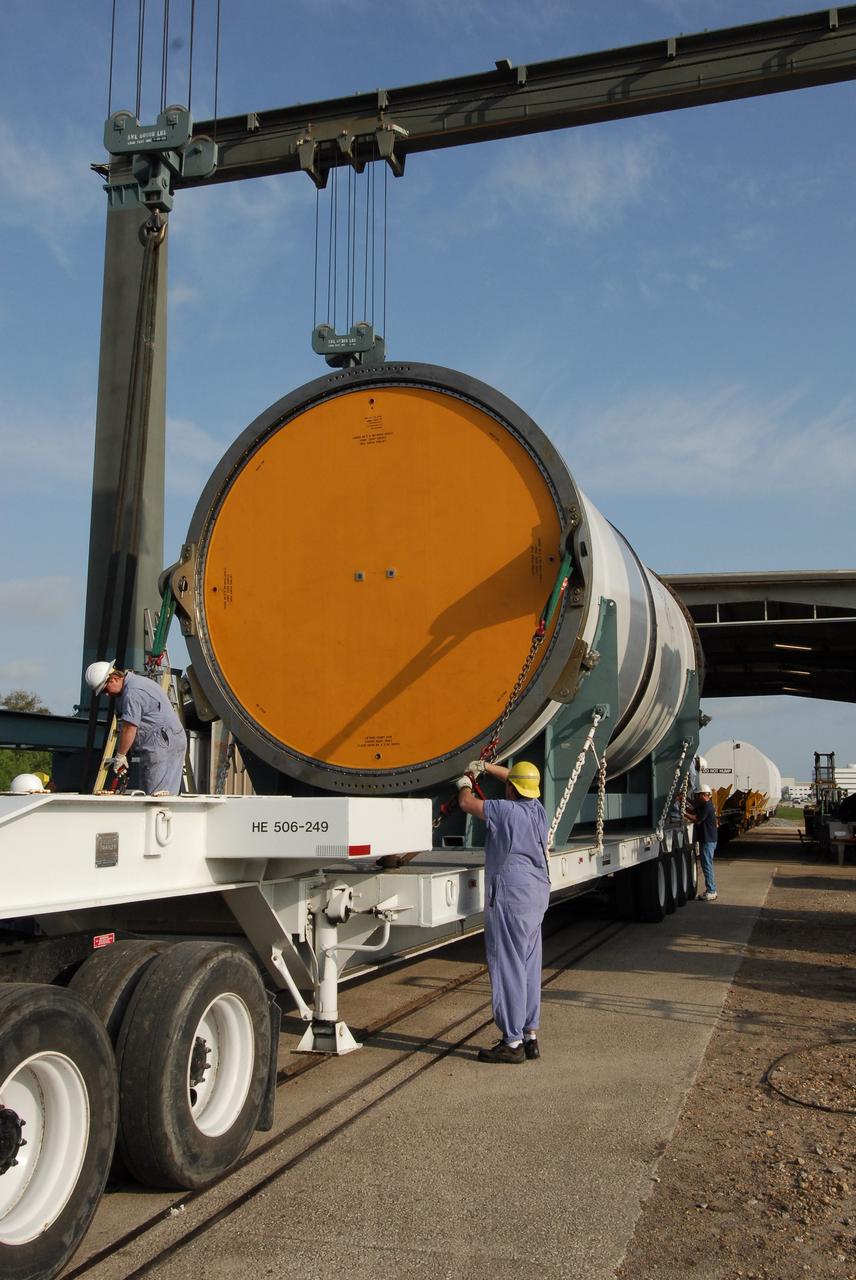
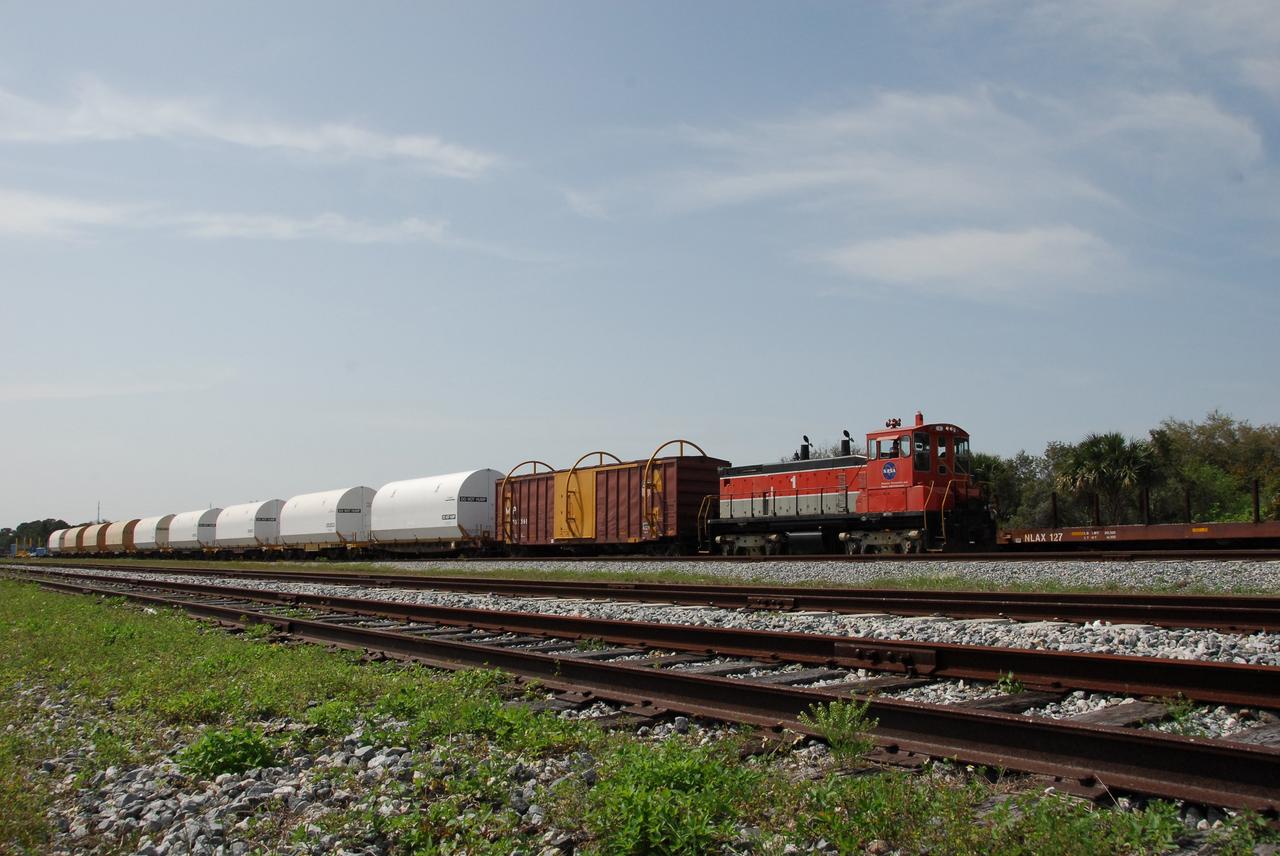
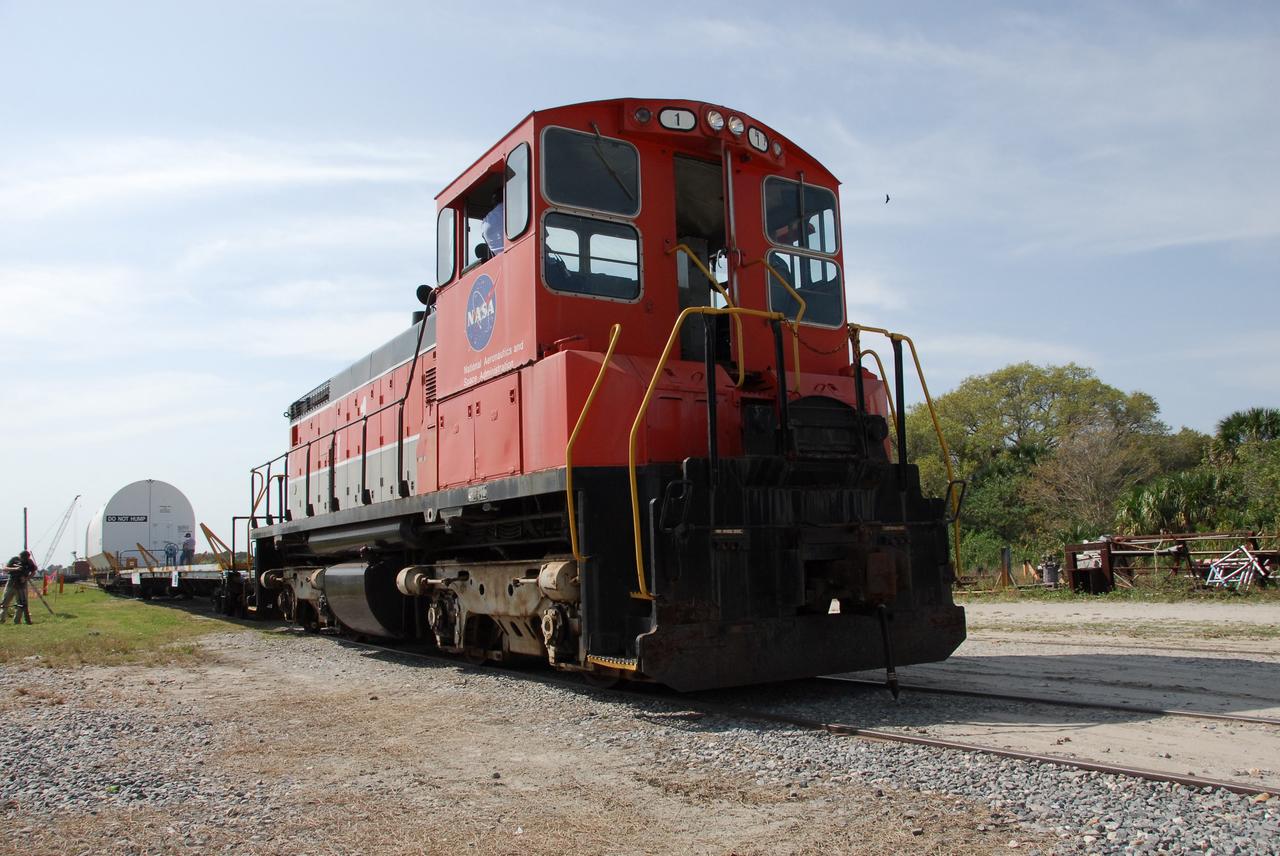
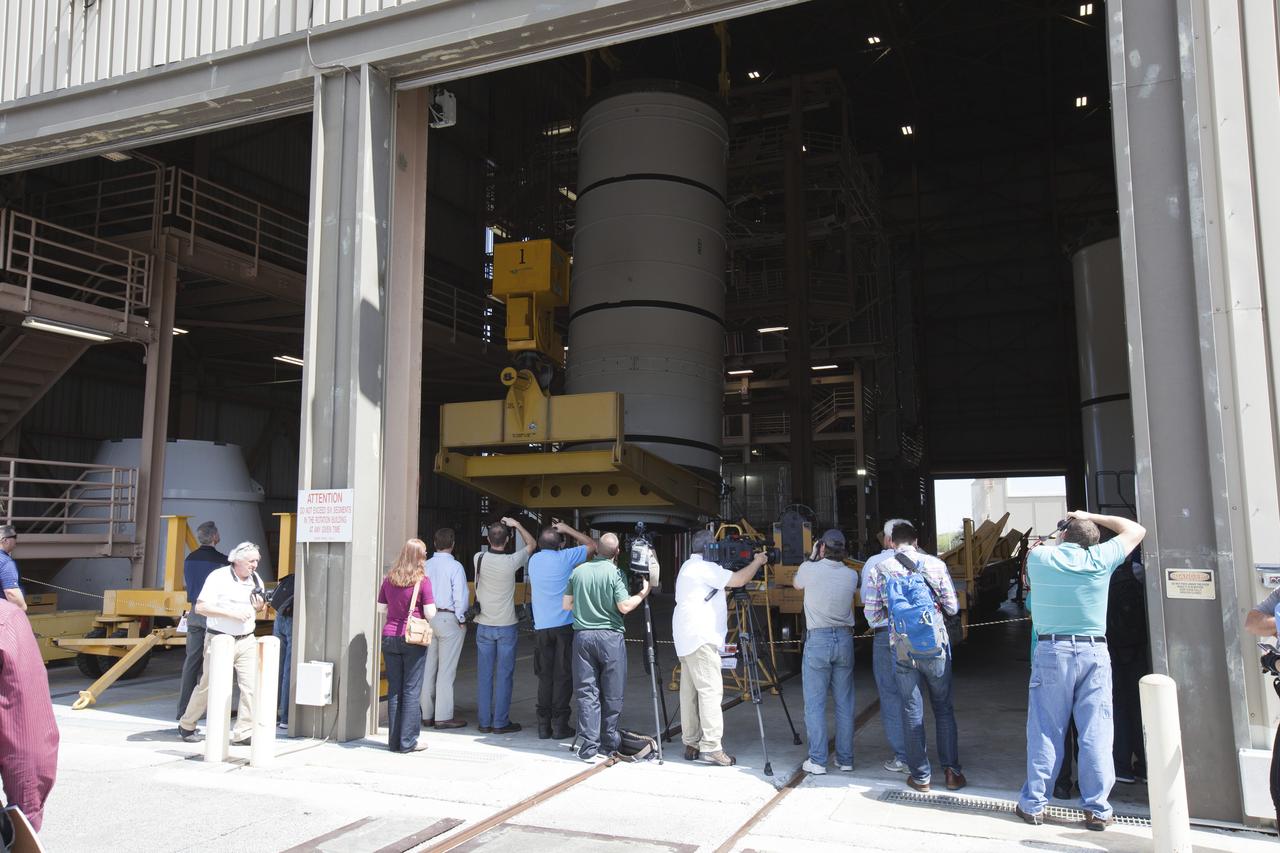
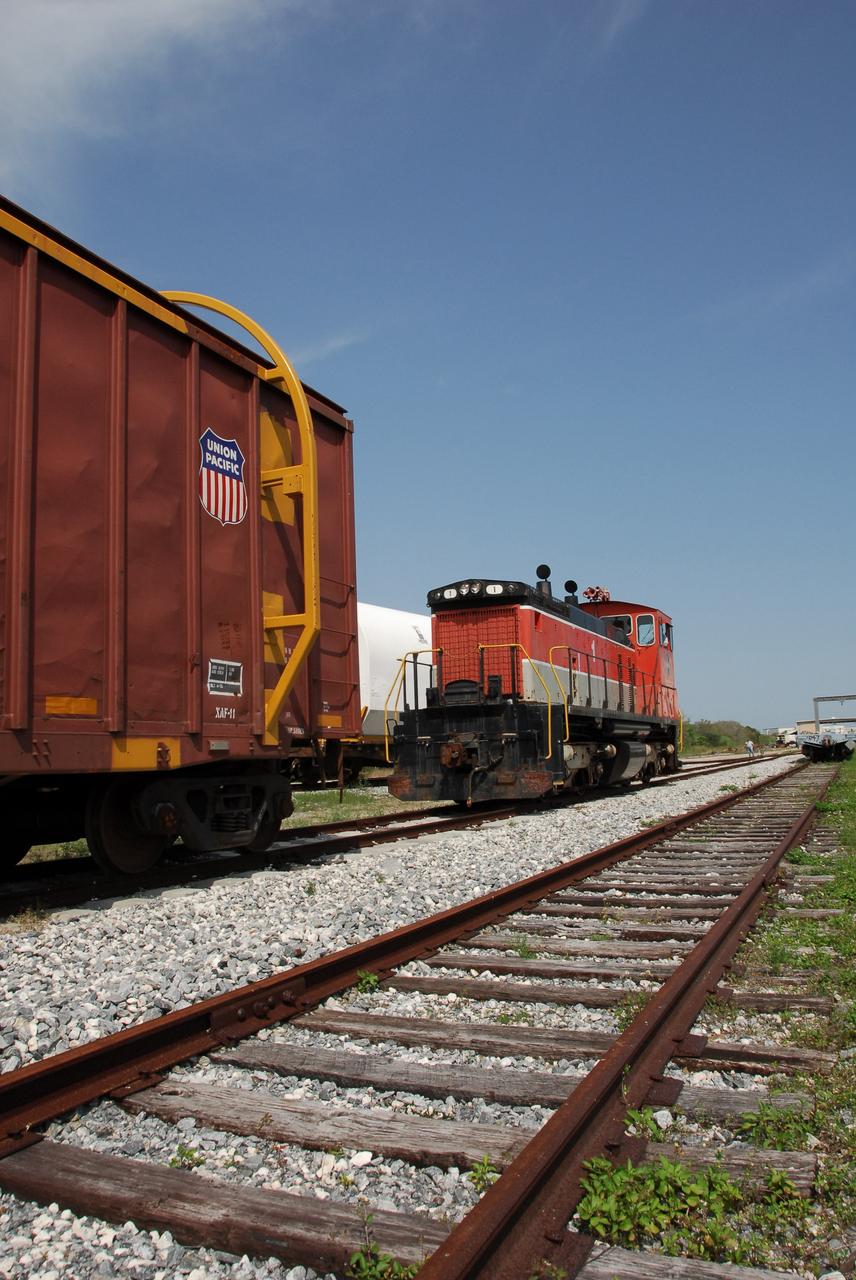
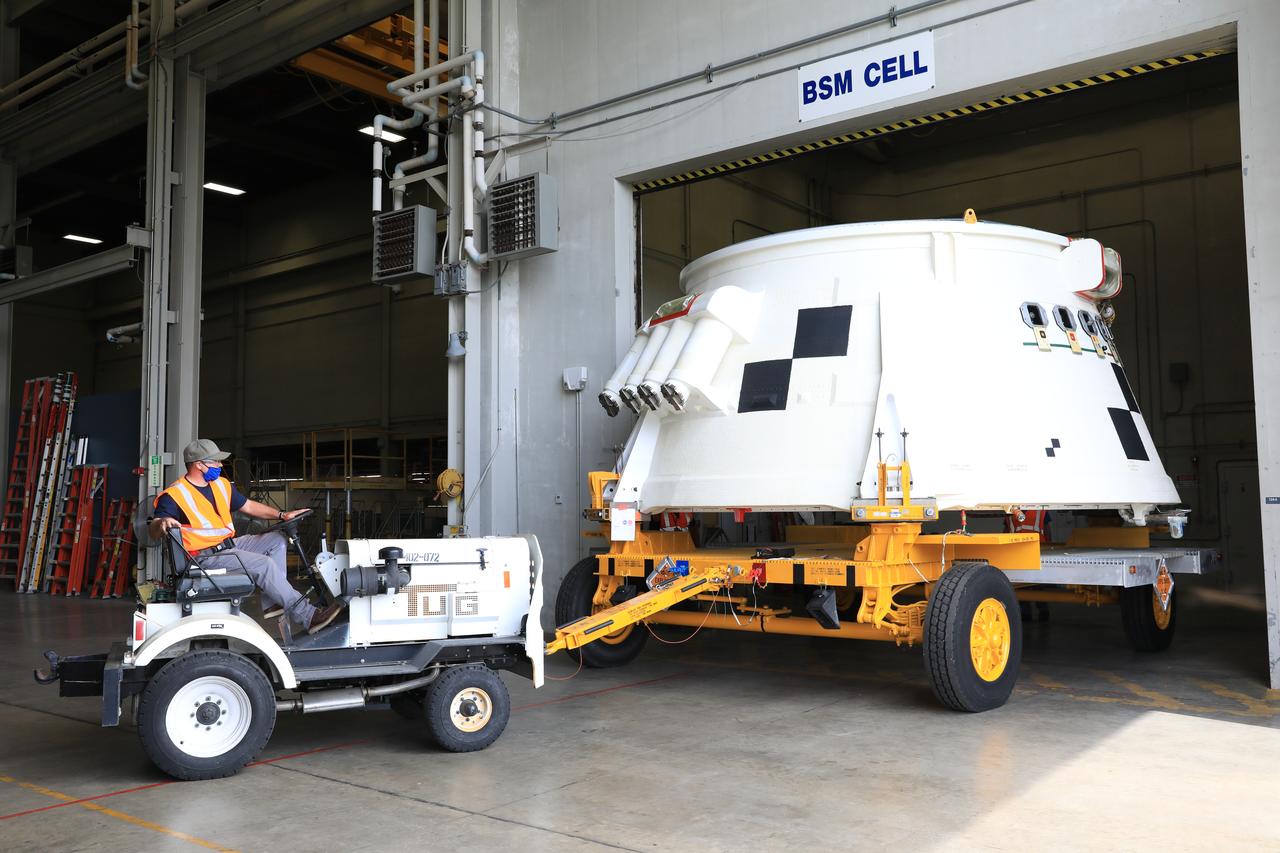
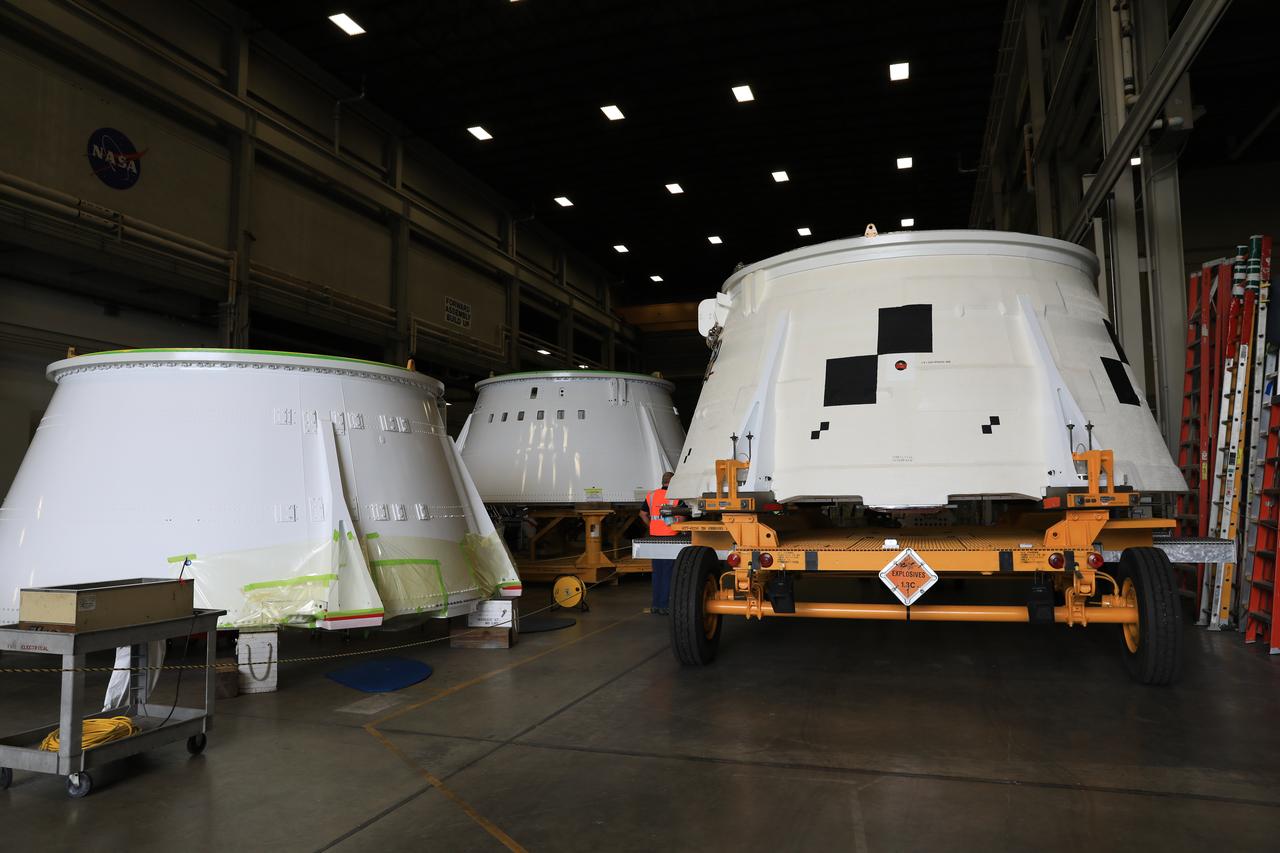
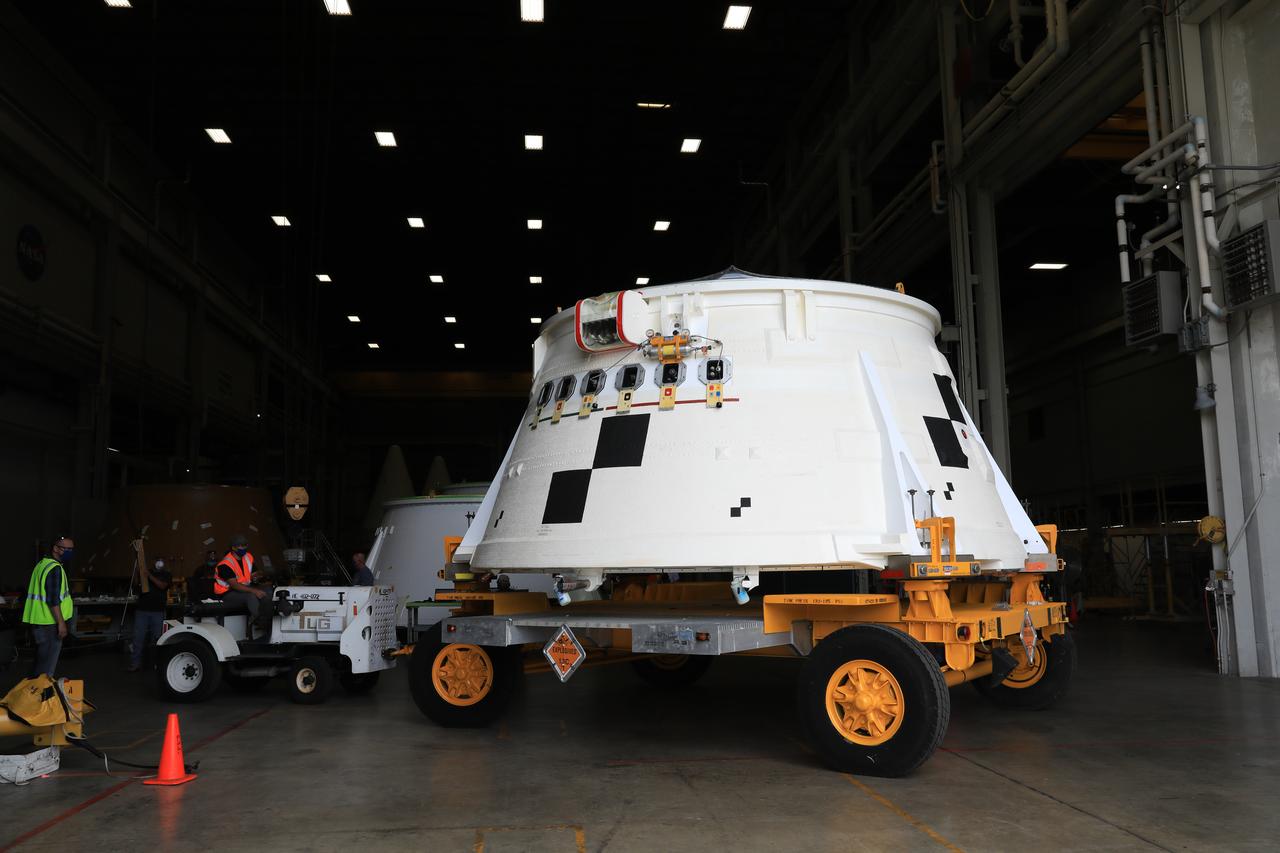
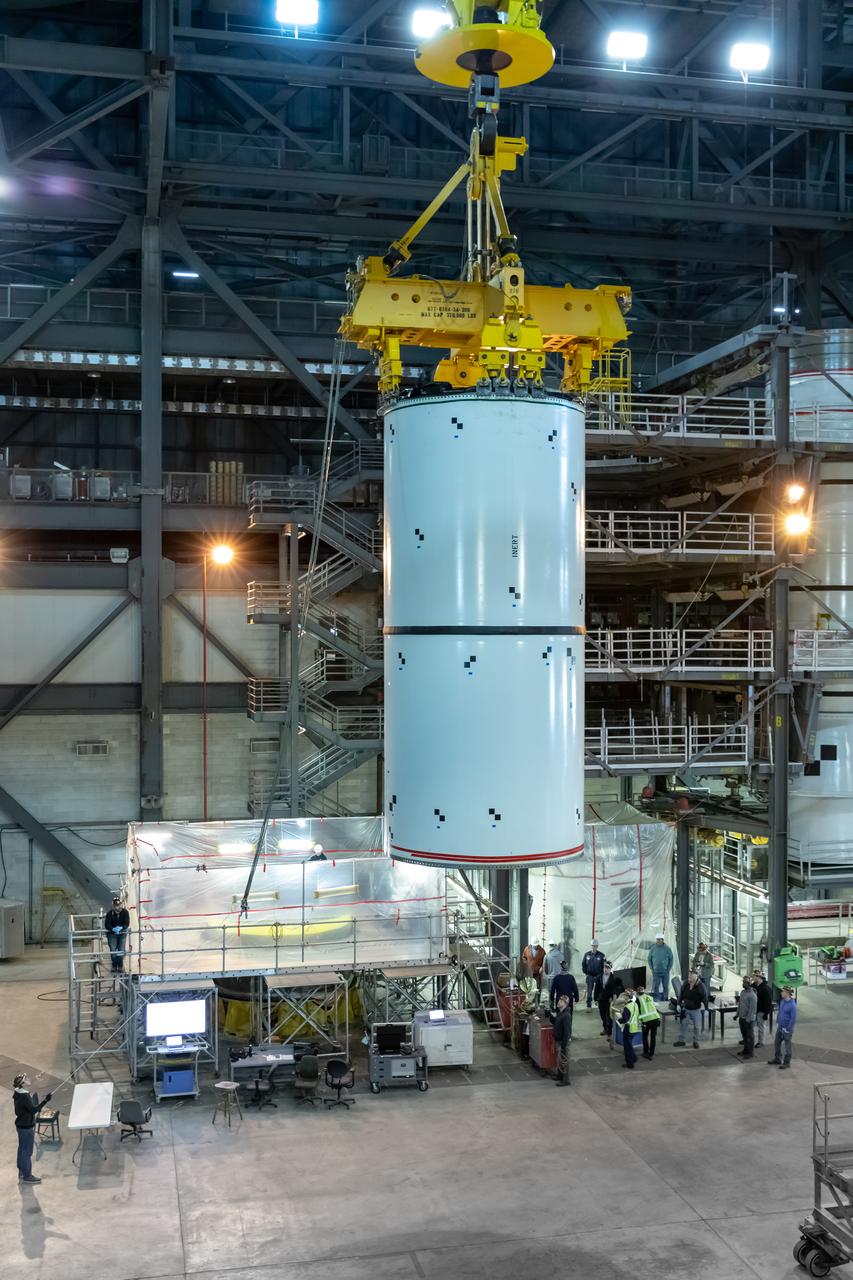
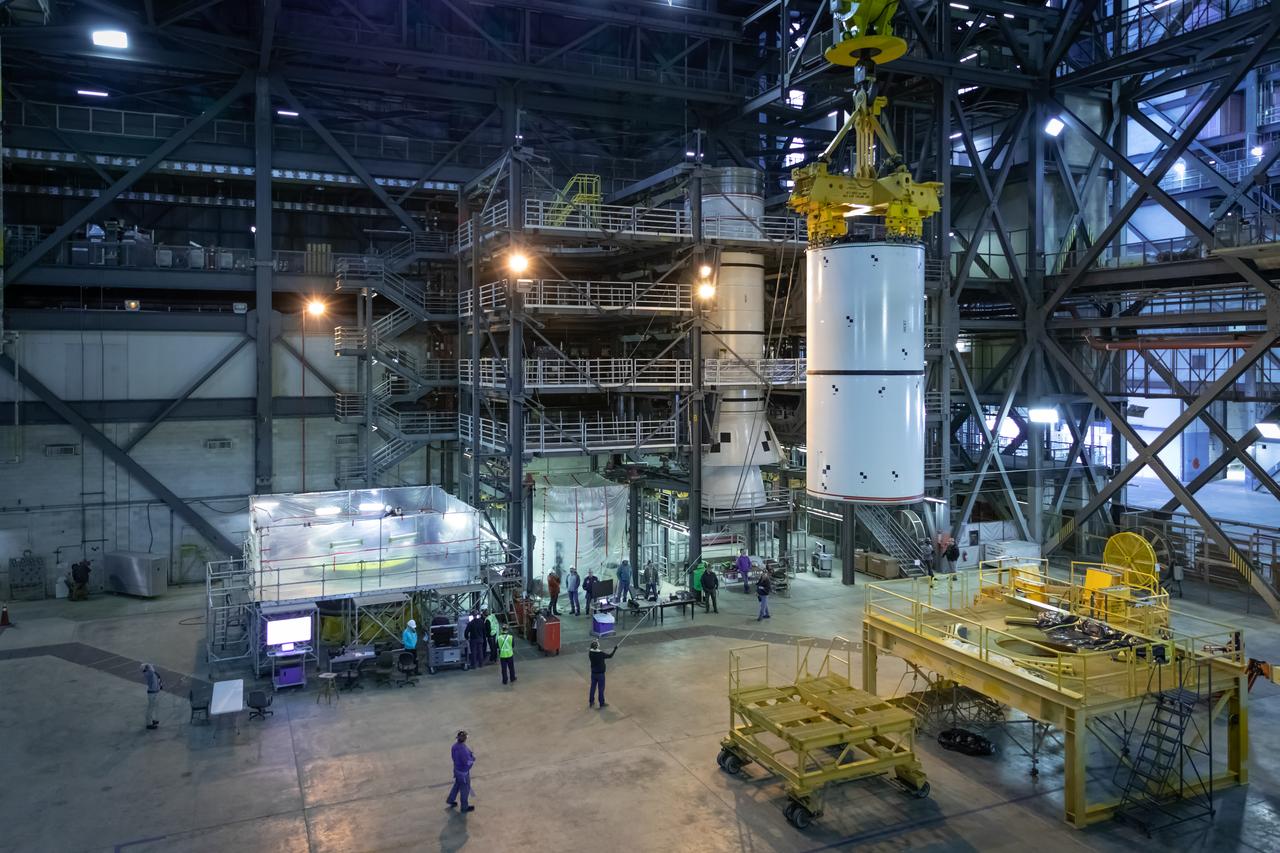
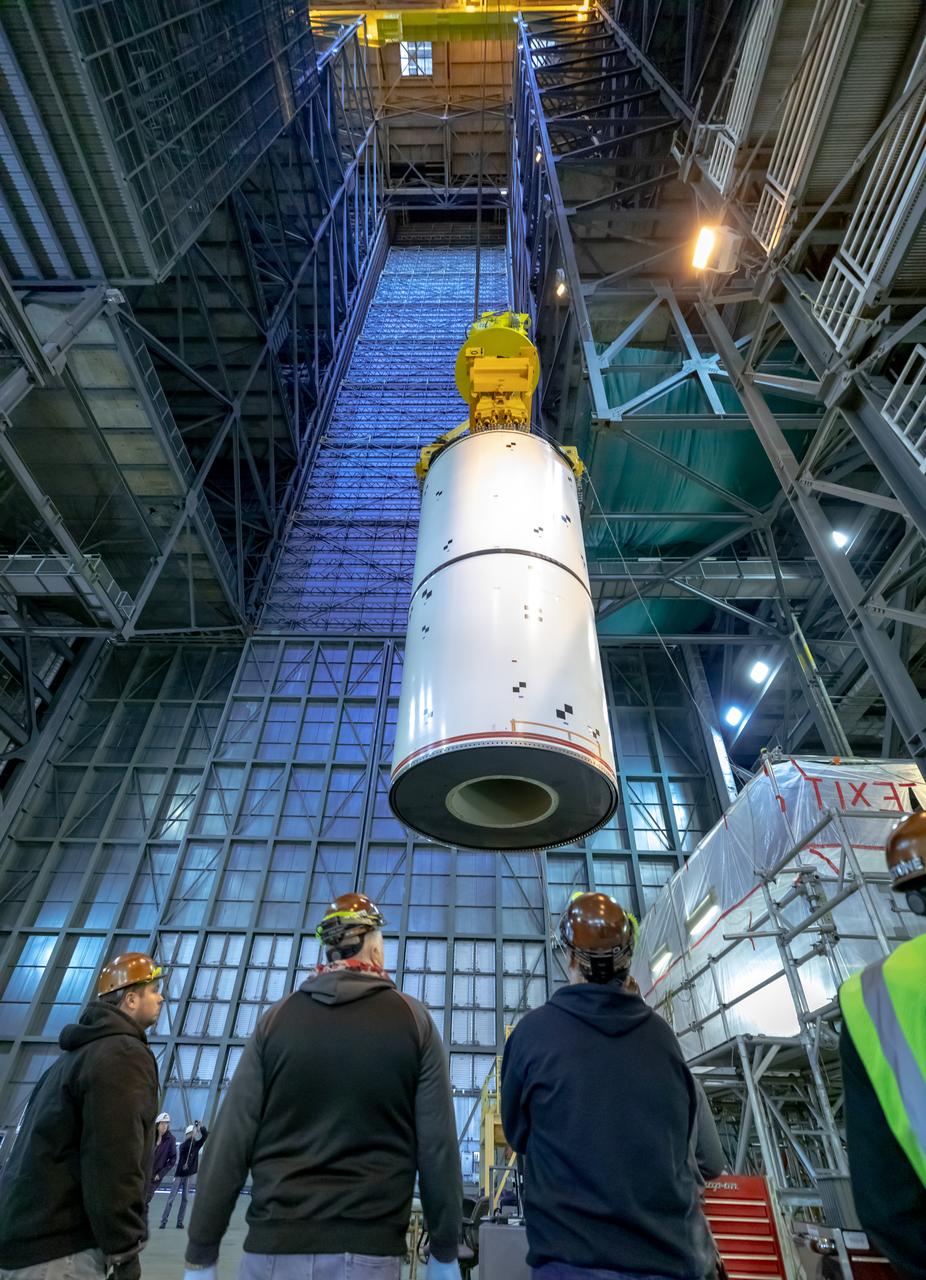
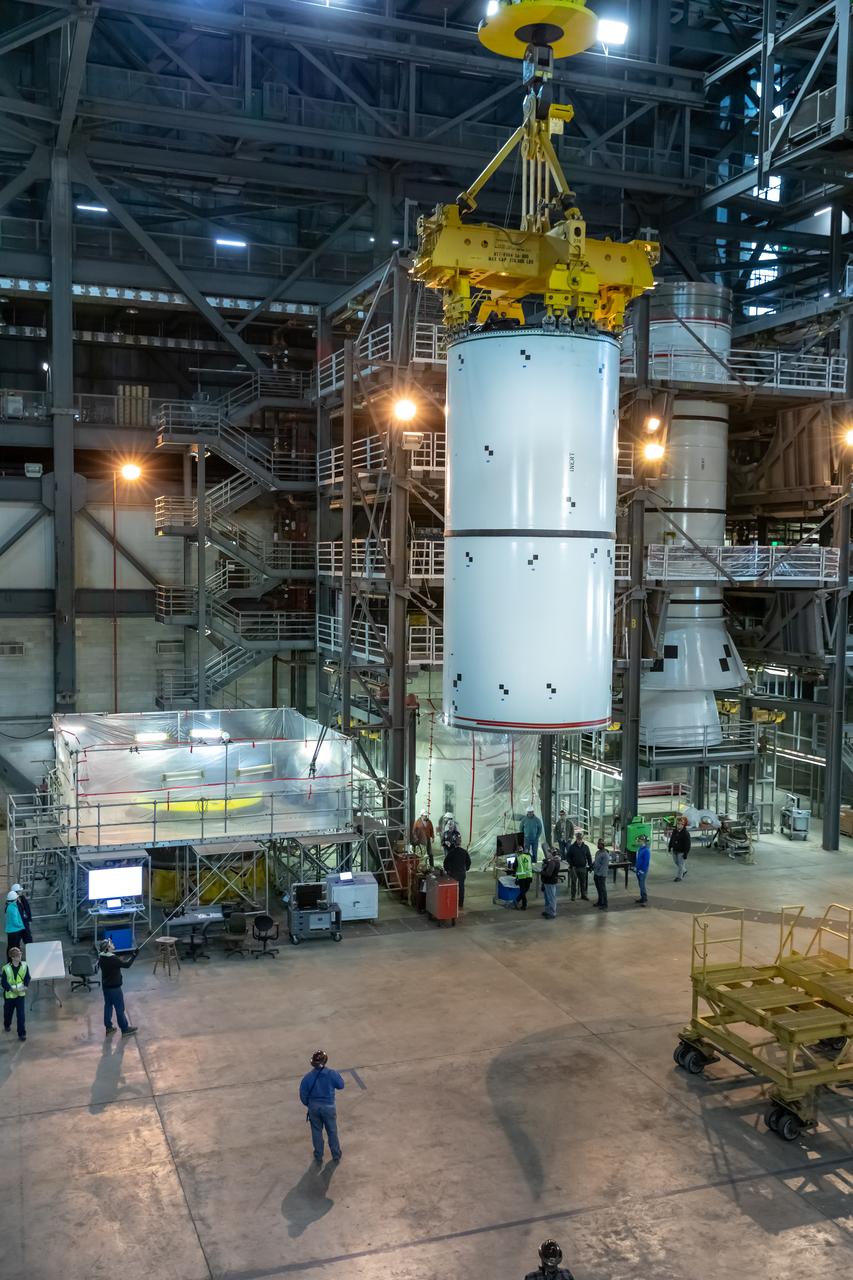
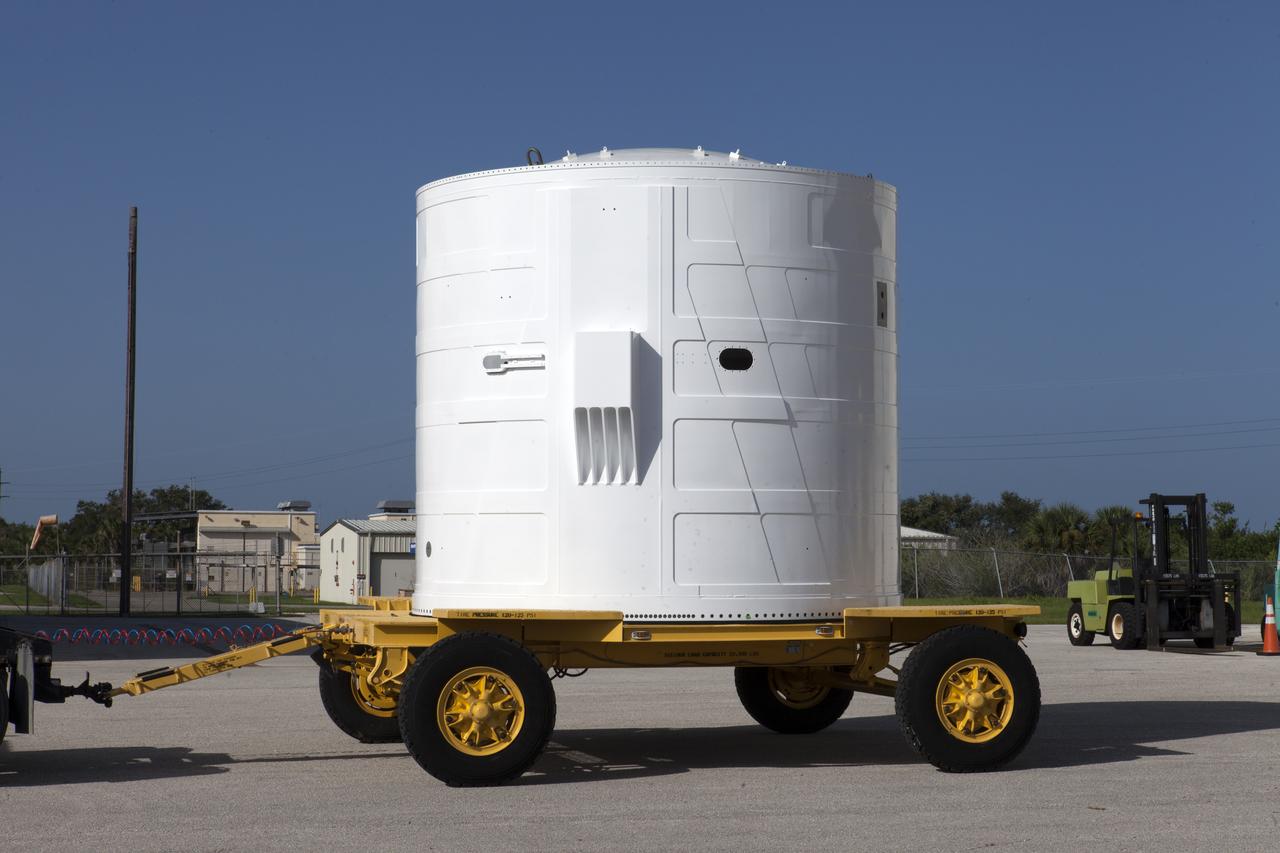
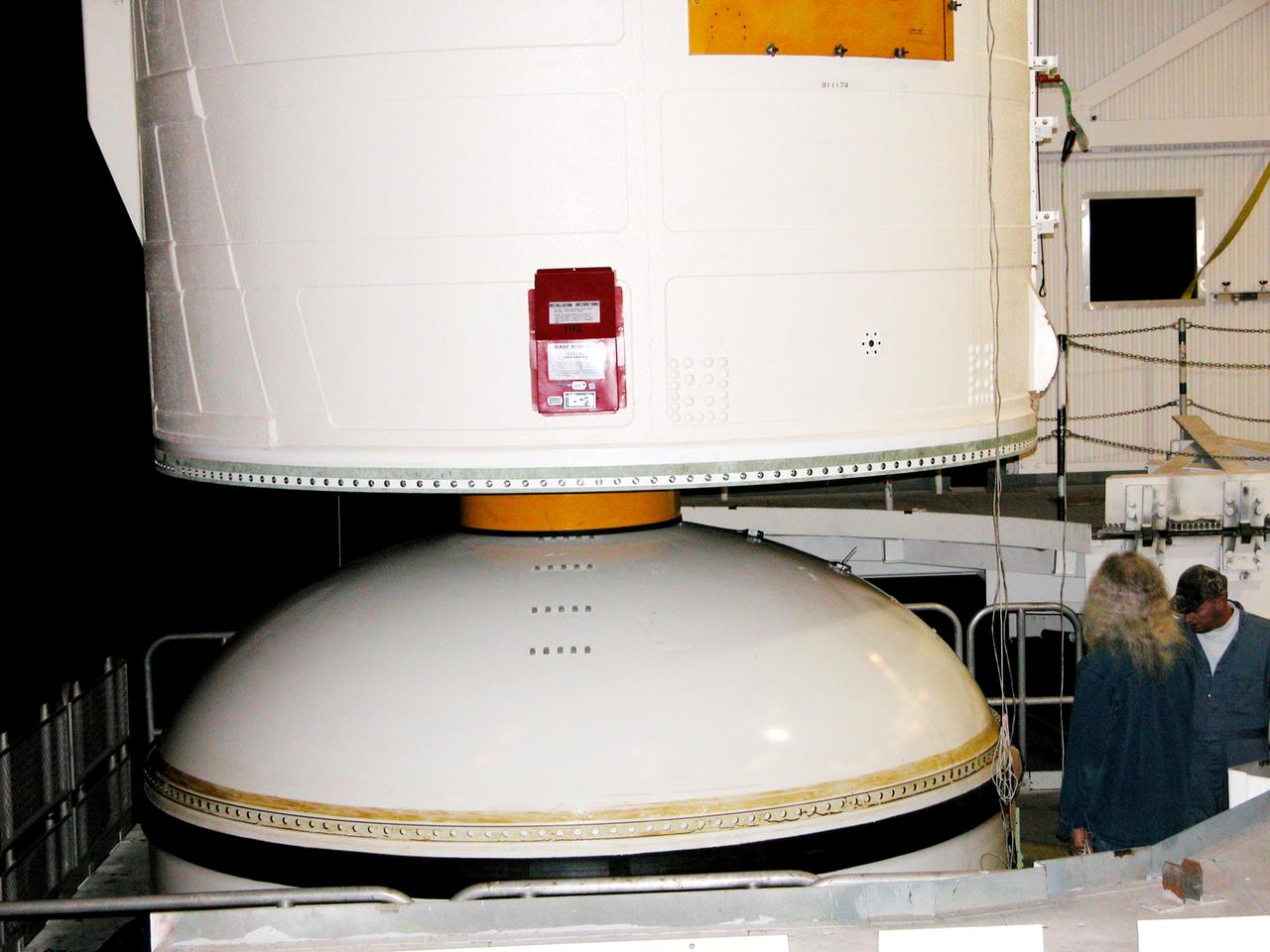
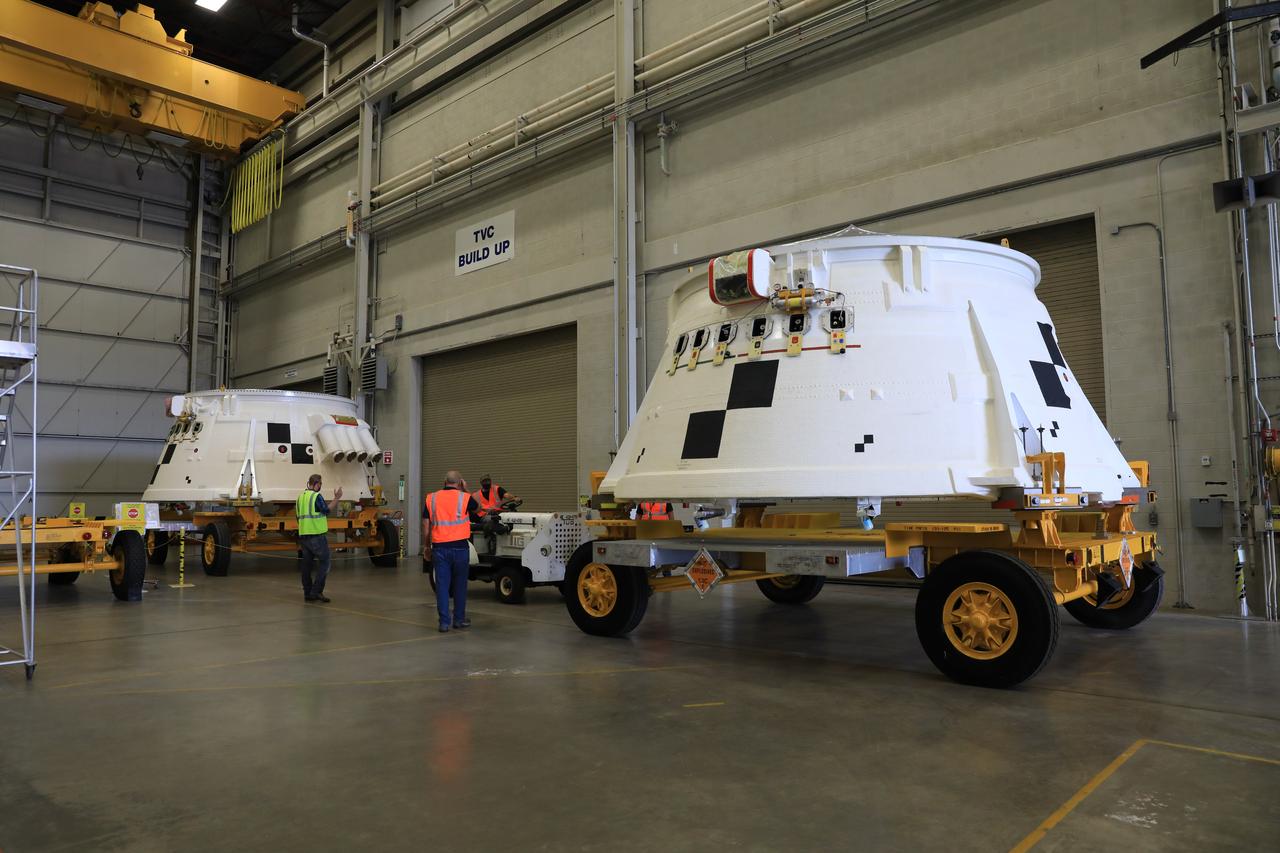
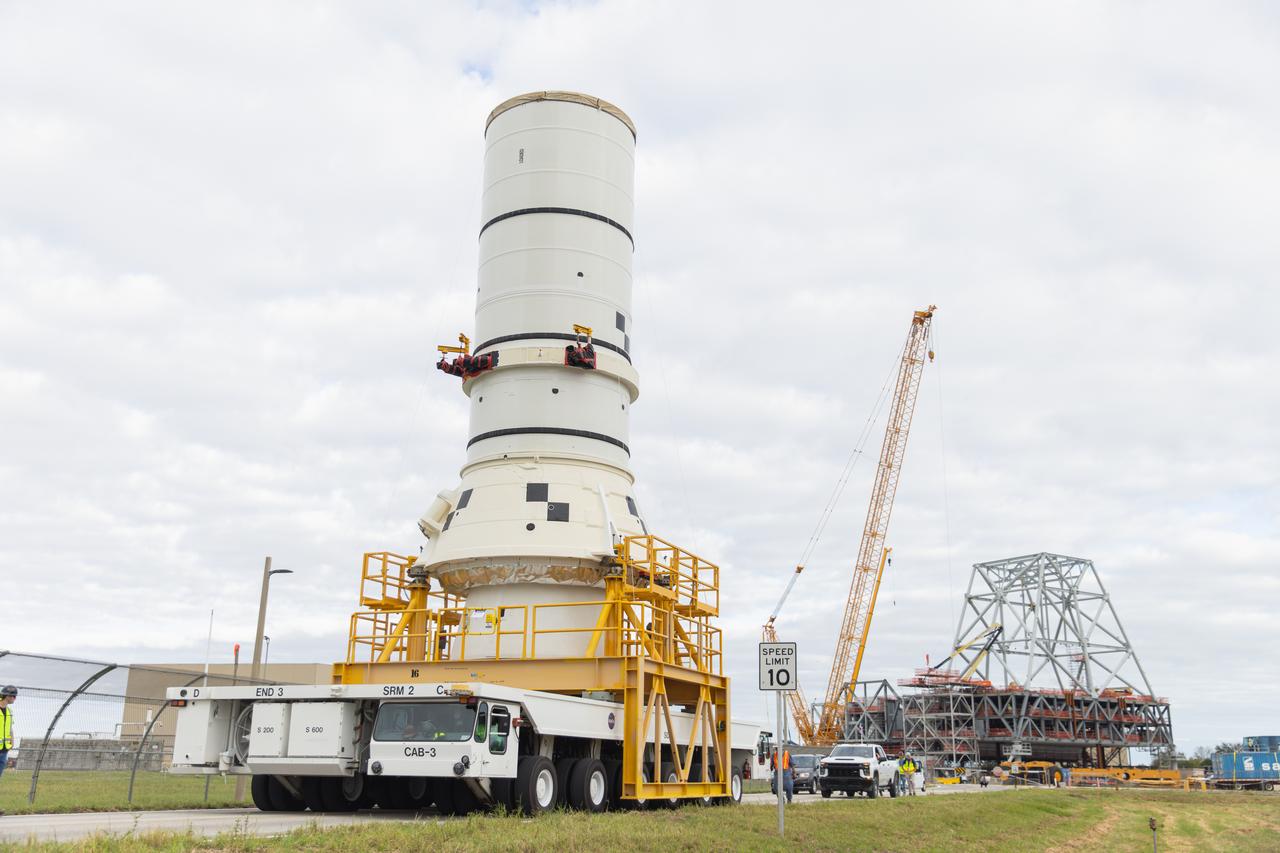
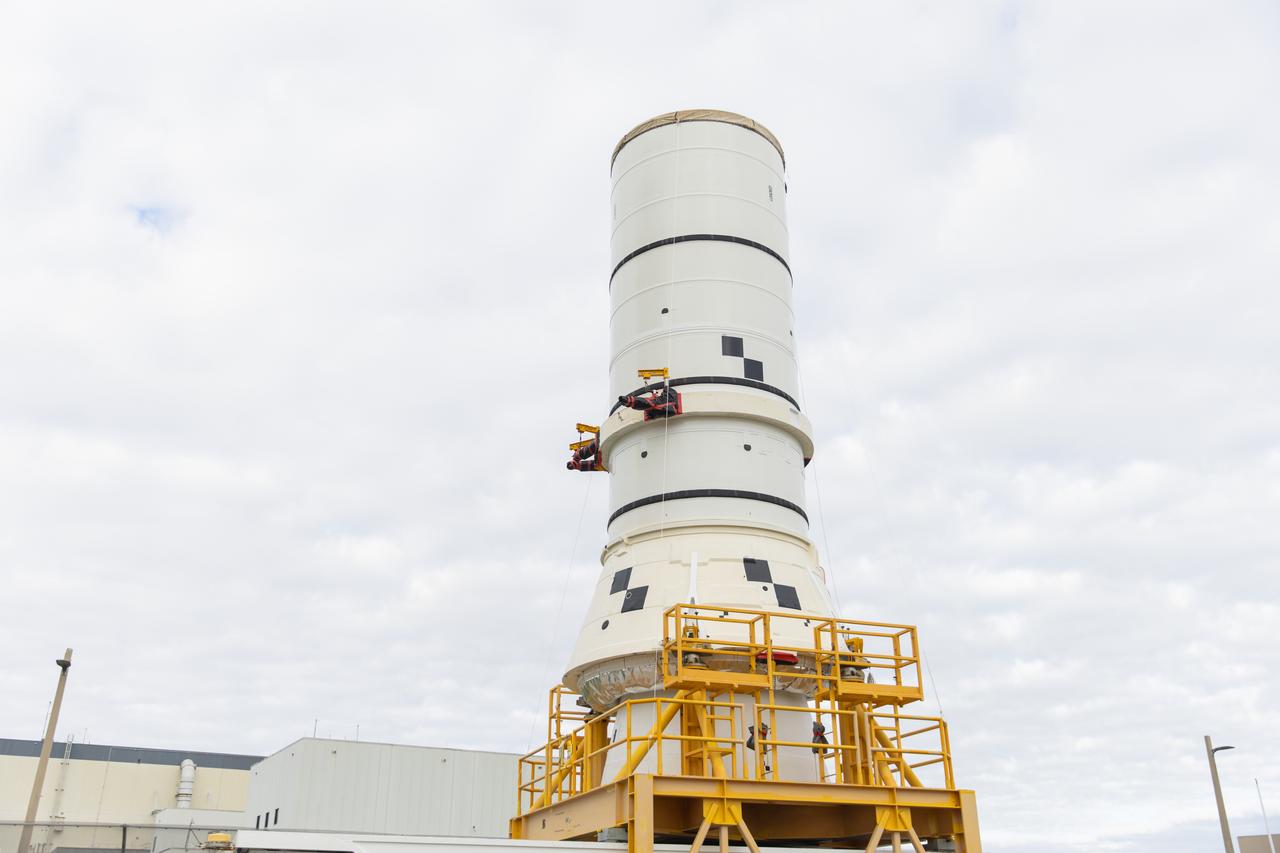
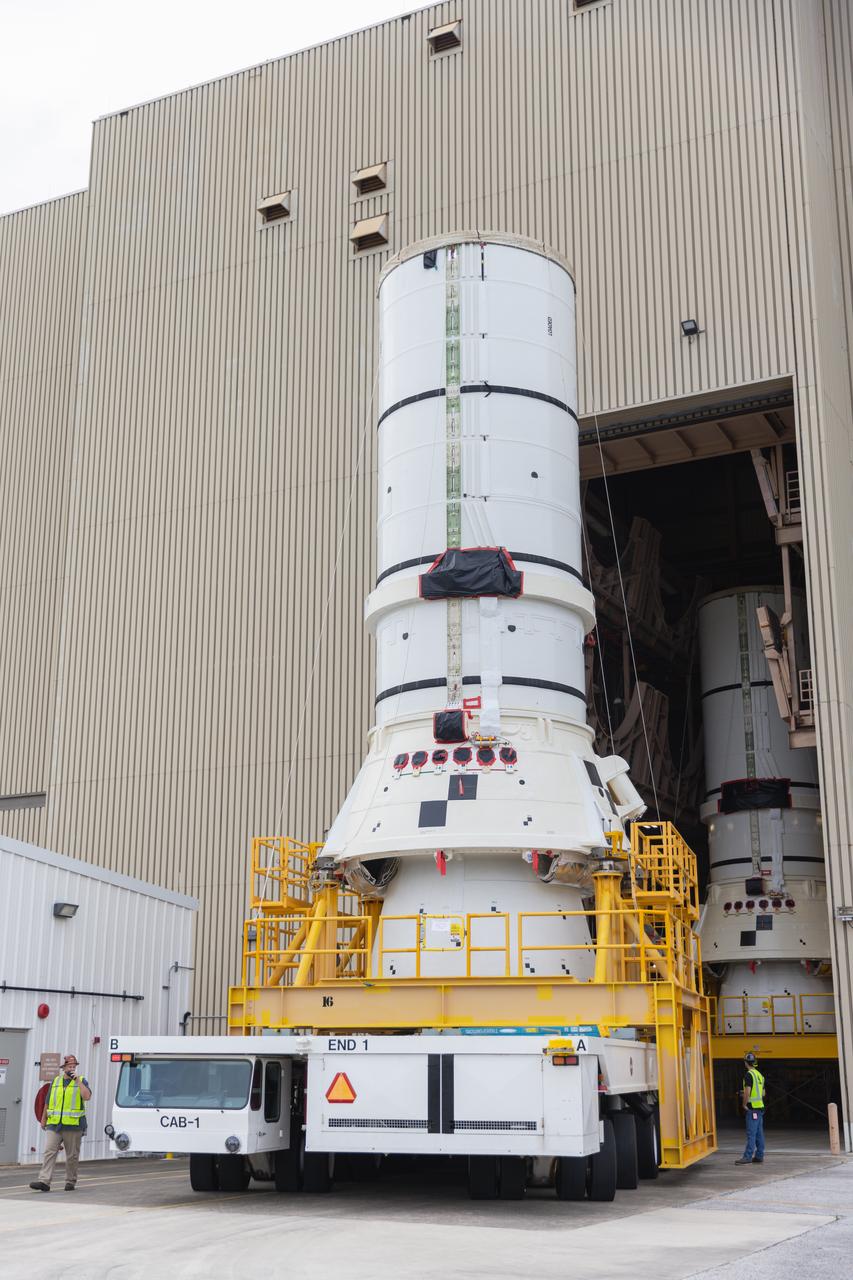
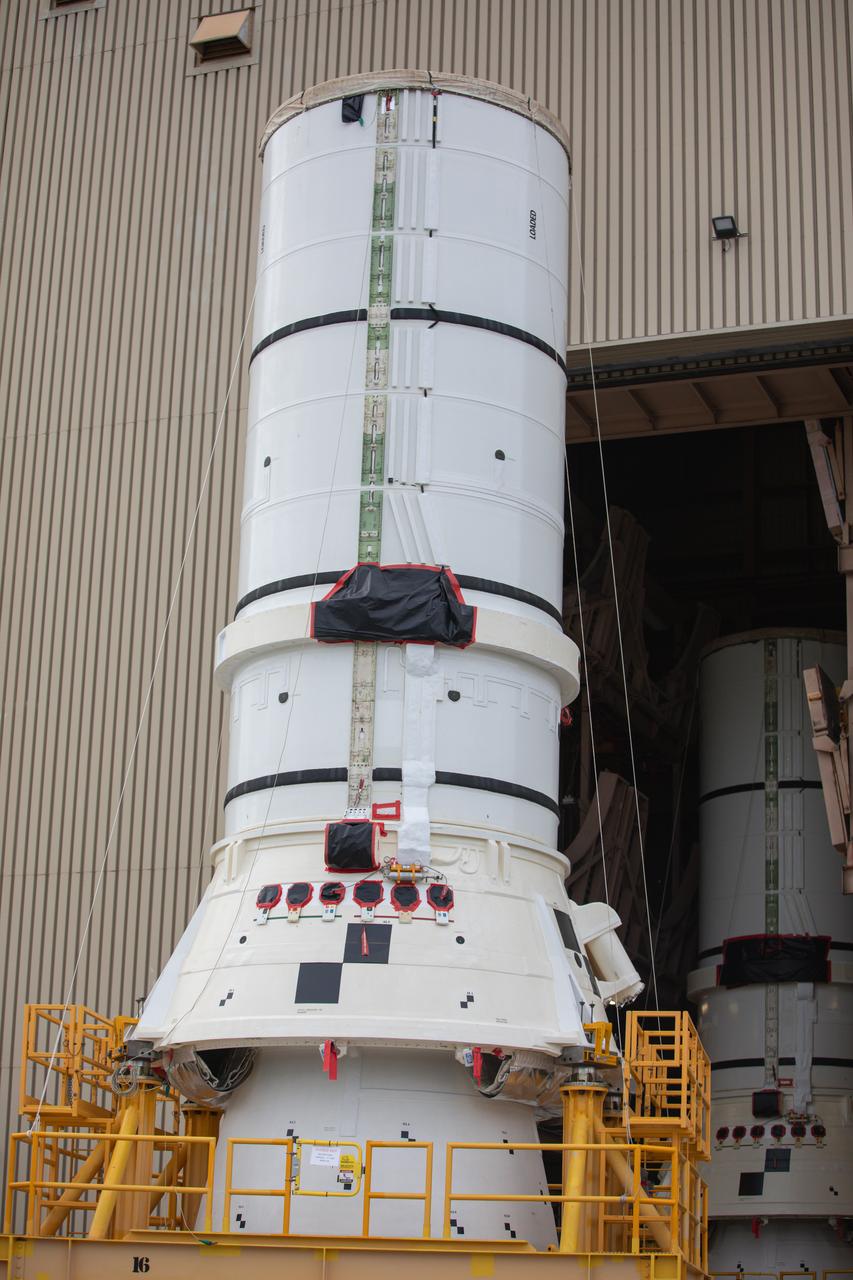
The left aft assembly of the SLS (Space Launch System) solid rocket boosters for the Artemis II mission is moved from the Rotation, Processing and Surge Facility to the Vehicle Assembly Building at NASA’s Kennedy Space Center in Florida on Monday, Nov. 18, 2024. The aft assembly will be lifted atop the mobile launcher, followed by the right aft assembly and remaining booster segments.
Artemis II Booster Move
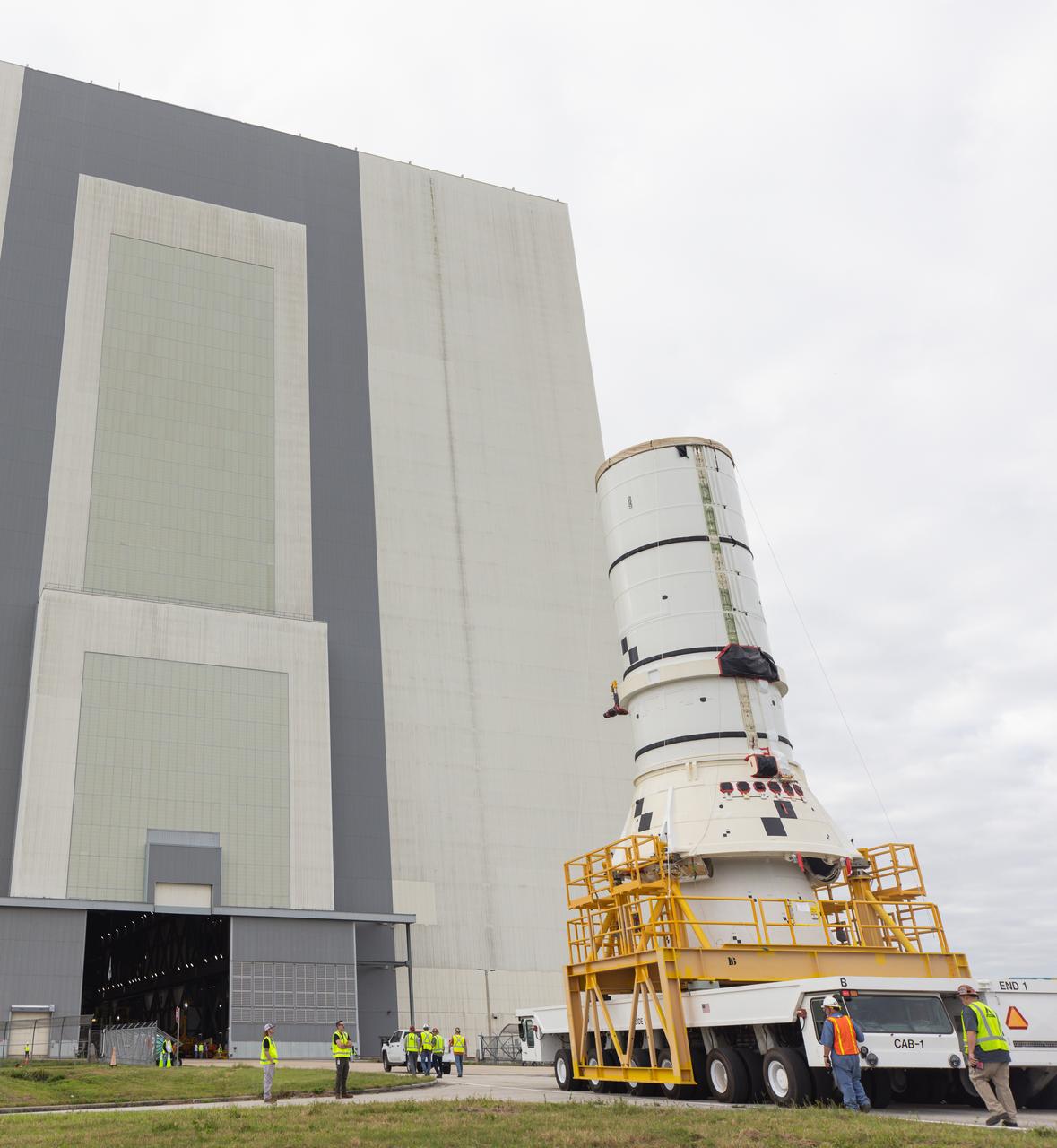
The left aft assembly of the SLS (Space Launch System) solid rocket boosters for the Artemis II mission is moved from the Rotation, Processing and Surge Facility to the Vehicle Assembly Building at NASA’s Kennedy Space Center in Florida on Monday, Nov. 18, 2024. The aft assembly will be lifted atop the mobile launcher, followed by the right aft assembly and remaining booster segments.
Artemis II Booster Move
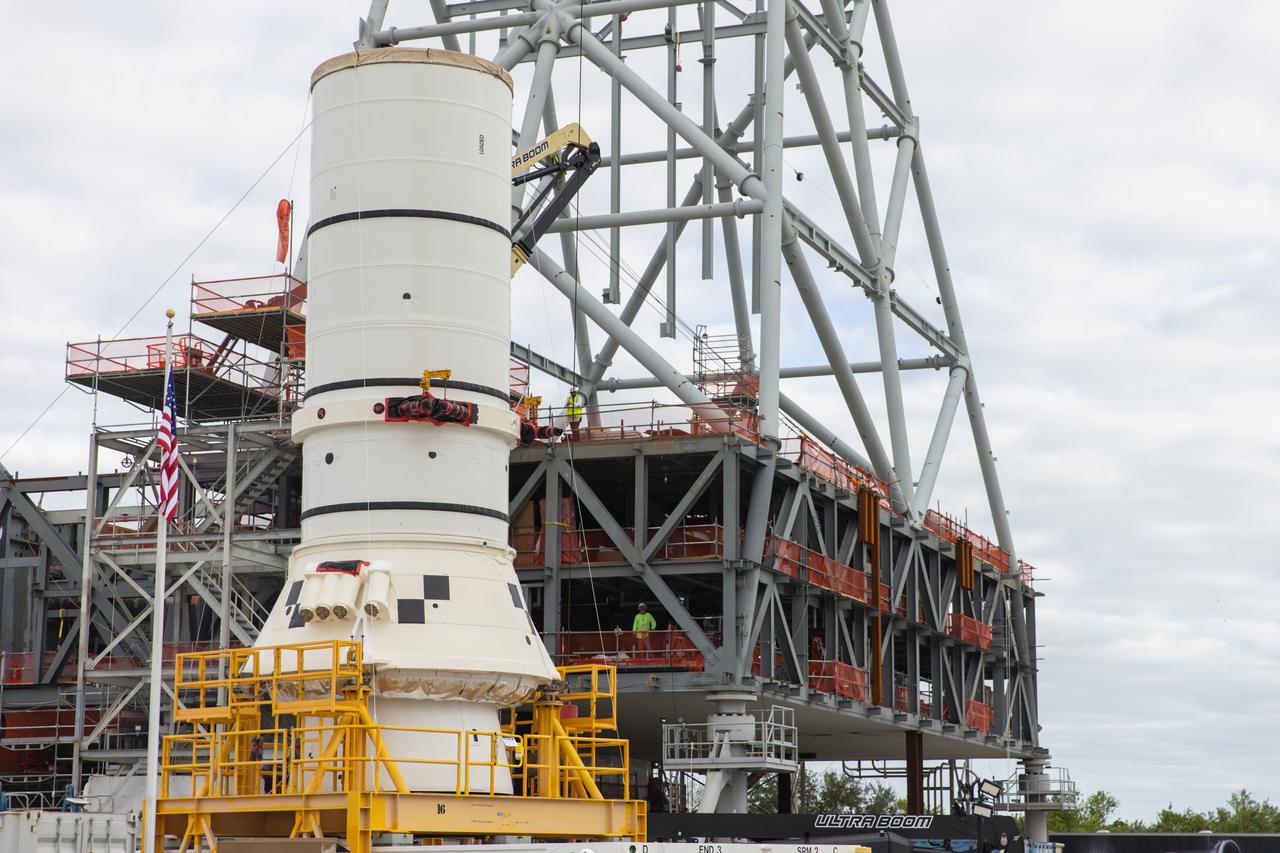
The left aft assembly of the SLS (Space Launch System) solid rocket boosters for the Artemis II mission is moved from the Rotation, Processing and Surge Facility to the Vehicle Assembly Building at NASA’s Kennedy Space Center in Florida on Monday, Nov. 18, 2024. The aft assembly will be lifted atop the mobile launcher, followed by the right aft assembly and remaining booster segments.
Artemis II Booster Move
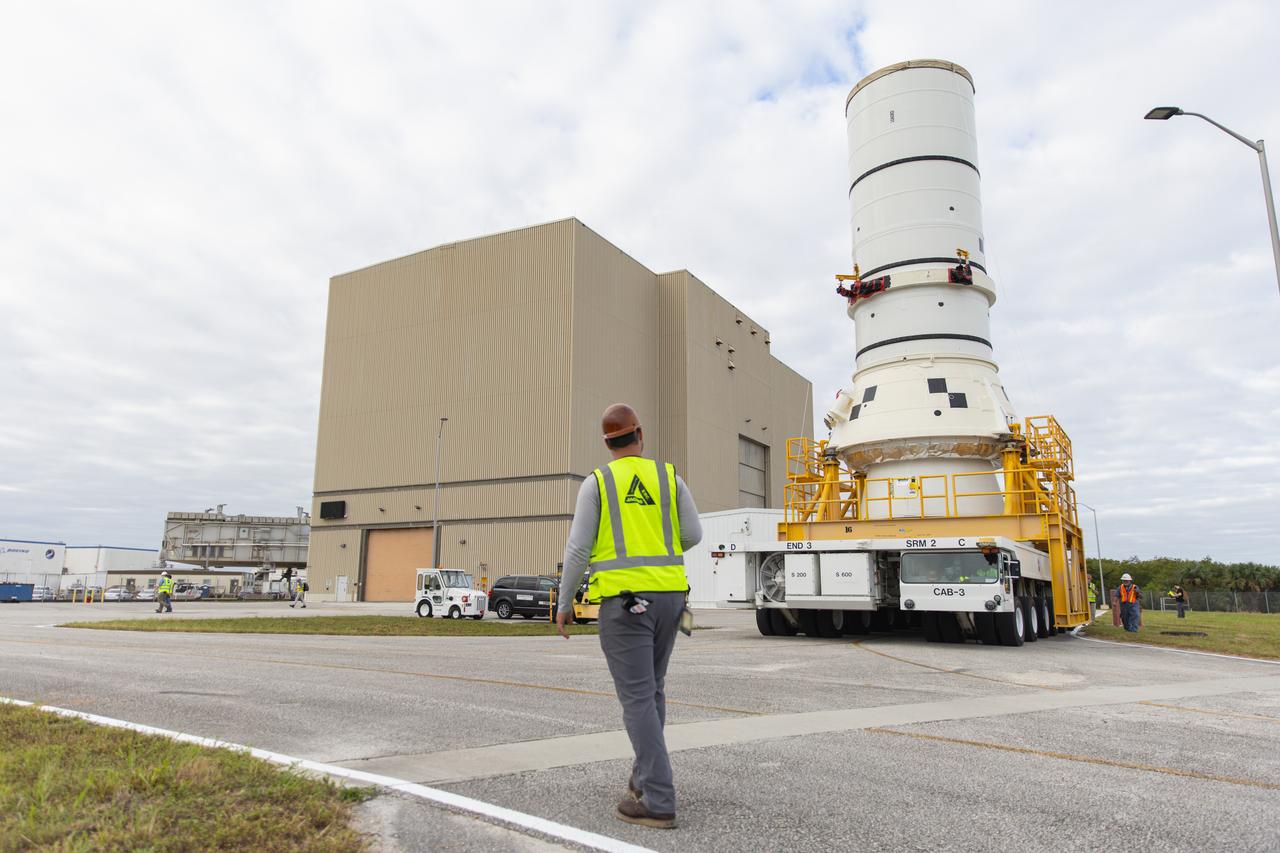
The left aft assembly of the SLS (Space Launch System) solid rocket boosters for the Artemis II mission is moved from the Rotation, Processing and Surge Facility to the Vehicle Assembly Building at NASA’s Kennedy Space Center in Florida on Monday, Nov. 18, 2024. The aft assembly will be lifted atop the mobile launcher, followed by the right aft assembly and remaining booster segments.
Artemis II Booster Move
The left aft assembly of the SLS (Space Launch System) solid rocket boosters for the Artemis II mission is moved from the Rotation, Processing and Surge Facility to the Vehicle Assembly Building at NASA’s Kennedy Space Center in Florida on Monday, Nov. 18, 2024. The aft assembly will be lifted atop the mobile launcher, followed by the right aft assembly and remaining booster segments.
Artemis II Booster Move
The left aft assembly of the SLS (Space Launch System) solid rocket boosters for the Artemis II mission is moved from the Rotation, Processing and Surge Facility to the Vehicle Assembly Building at NASA’s Kennedy Space Center in Florida on Monday, Nov. 18, 2024. The aft assembly will be lifted atop the mobile launcher, followed by the right aft assembly and remaining booster segments.
Artemis II Booster Move
The left aft assembly of the SLS (Space Launch System) solid rocket boosters for the Artemis II mission is moved from the Rotation, Processing and Surge Facility to the Vehicle Assembly Building at NASA’s Kennedy Space Center in Florida on Monday, Nov. 18, 2024. The aft assembly will be lifted atop the mobile launcher, followed by the right aft assembly and remaining booster segments.
Artemis II Booster Move
The left aft assembly of the SLS (Space Launch System) solid rocket boosters for the Artemis II mission is moved from the Rotation, Processing and Surge Facility to the Vehicle Assembly Building at NASA’s Kennedy Space Center in Florida on Monday, Nov. 18, 2024. The aft assembly will be lifted atop the mobile launcher, followed by the right aft assembly and remaining booster segments.
Artemis II Booster Move
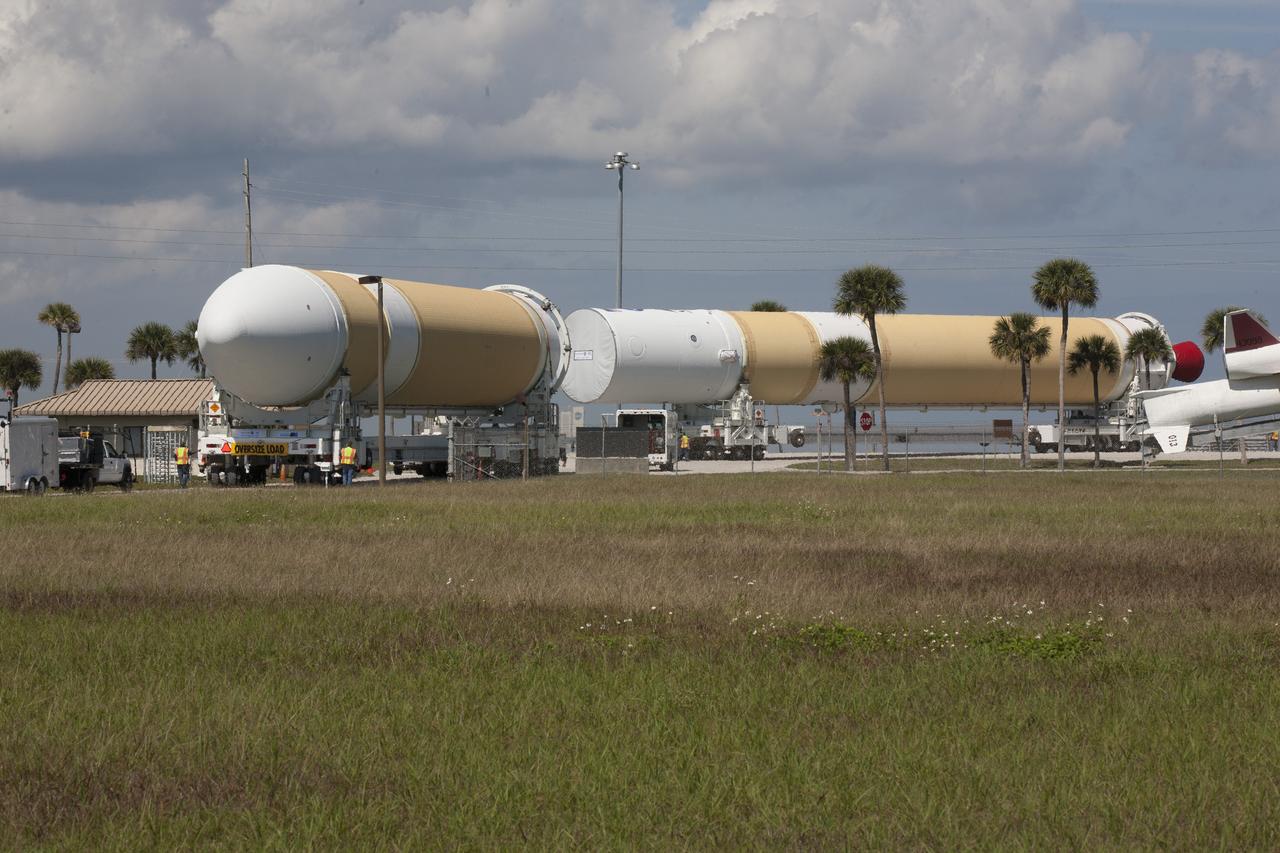
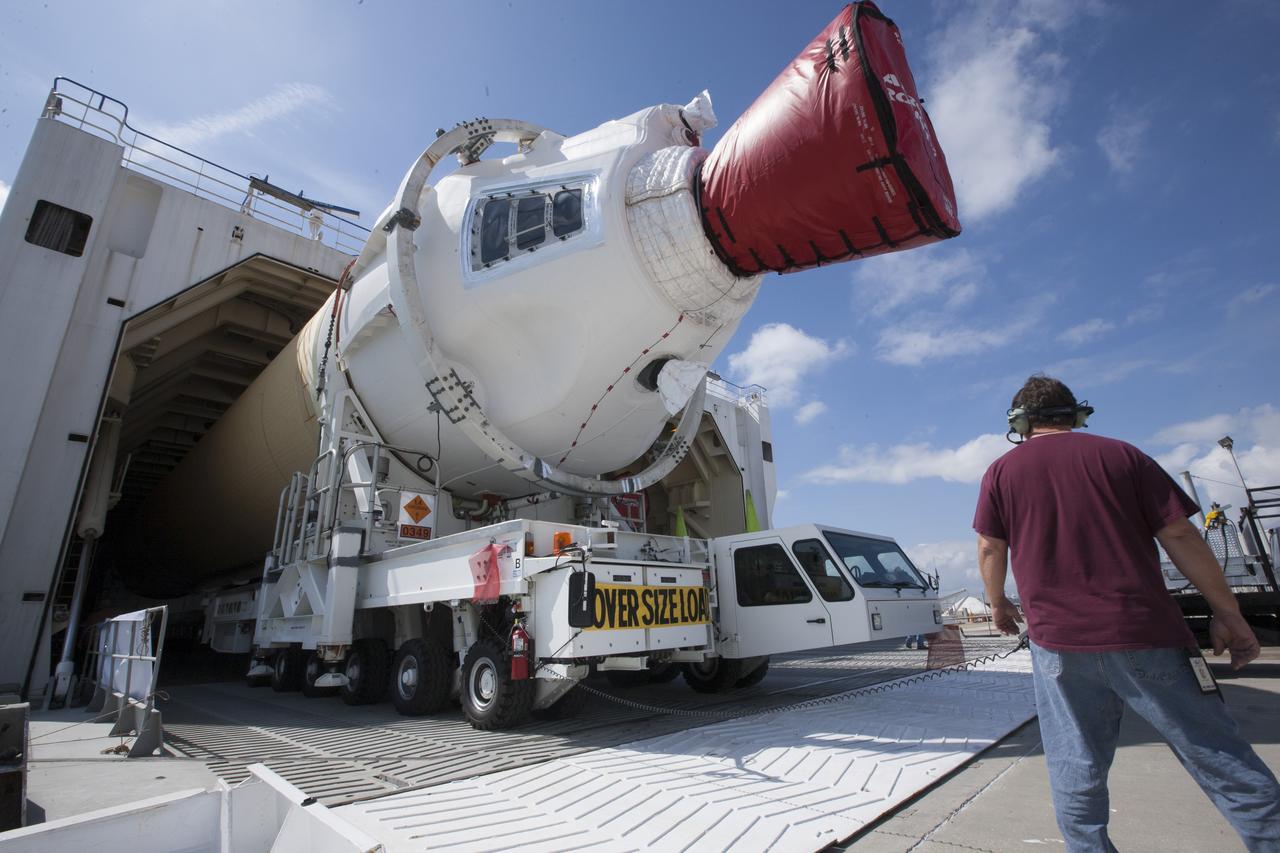
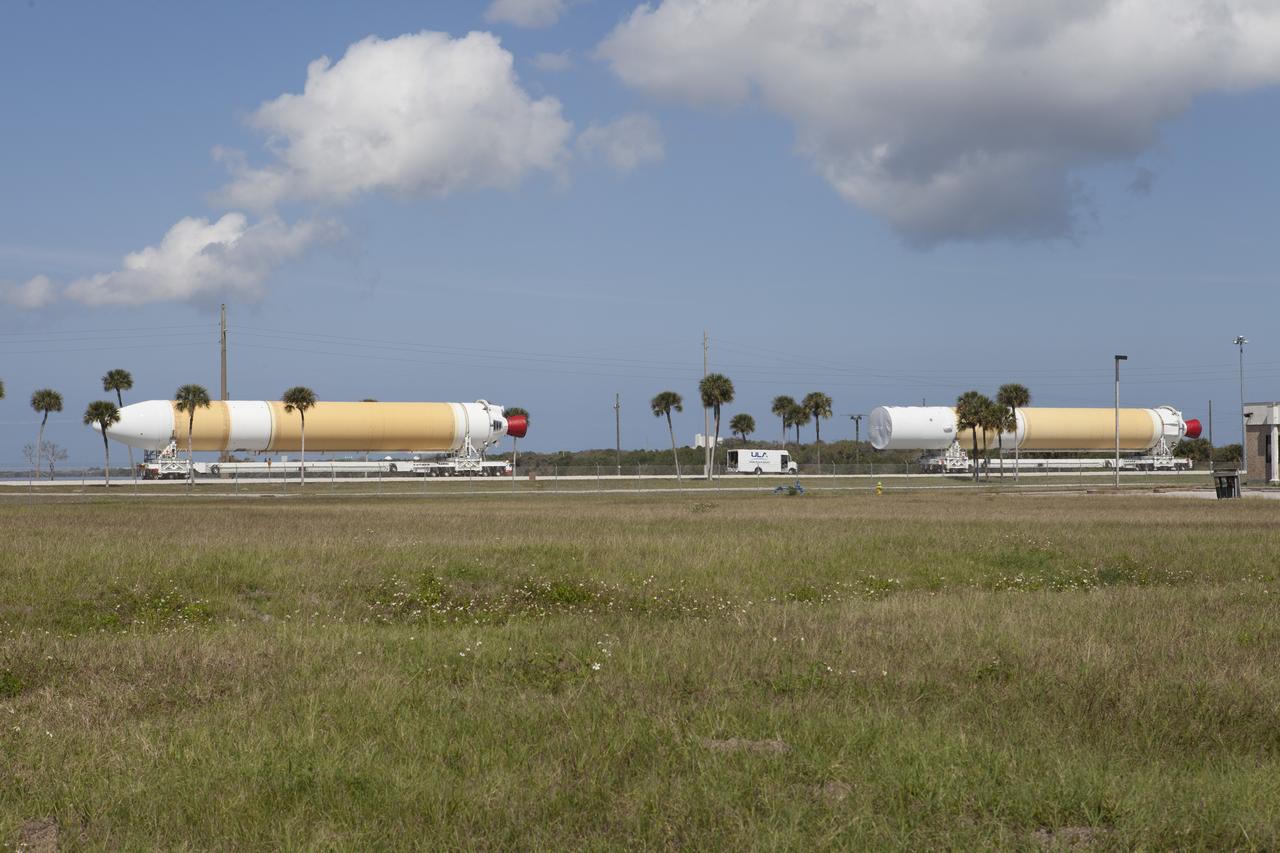
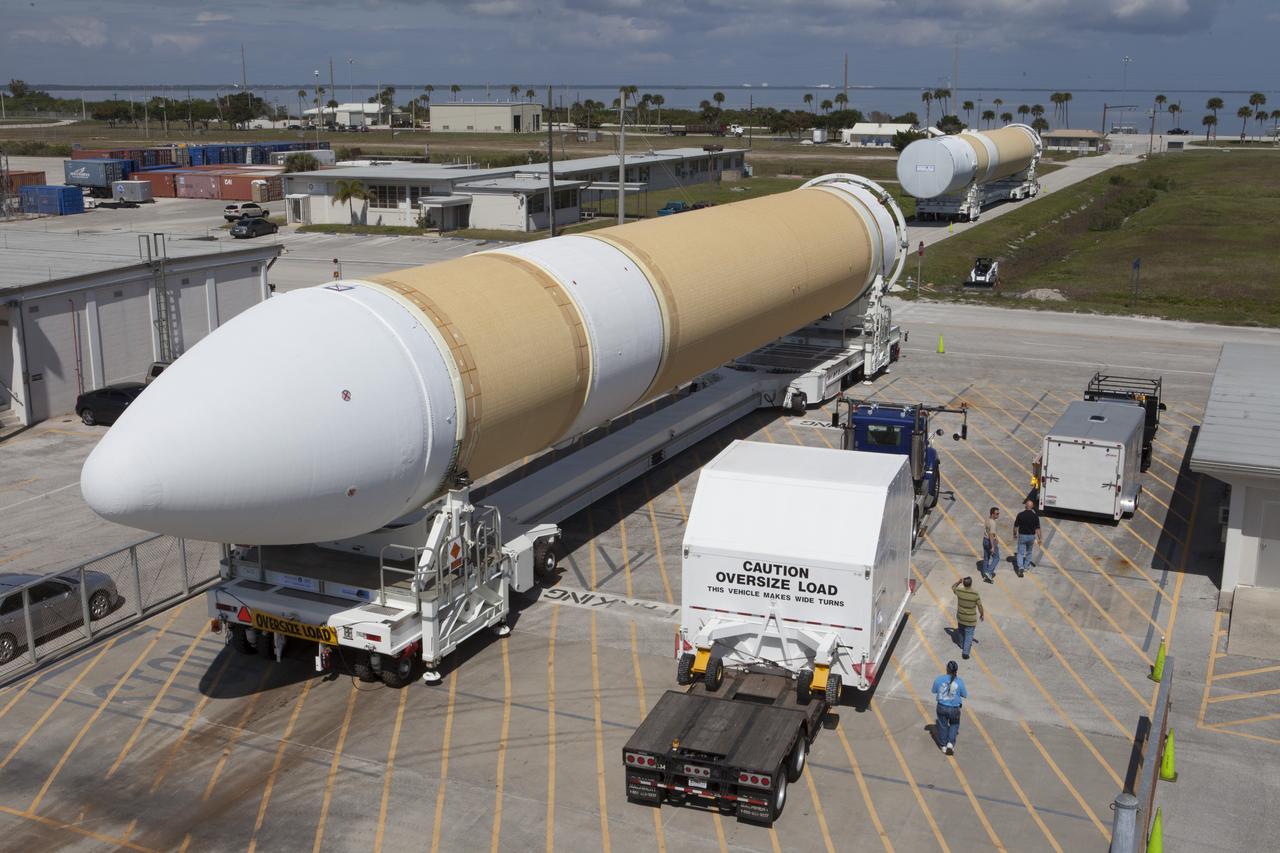
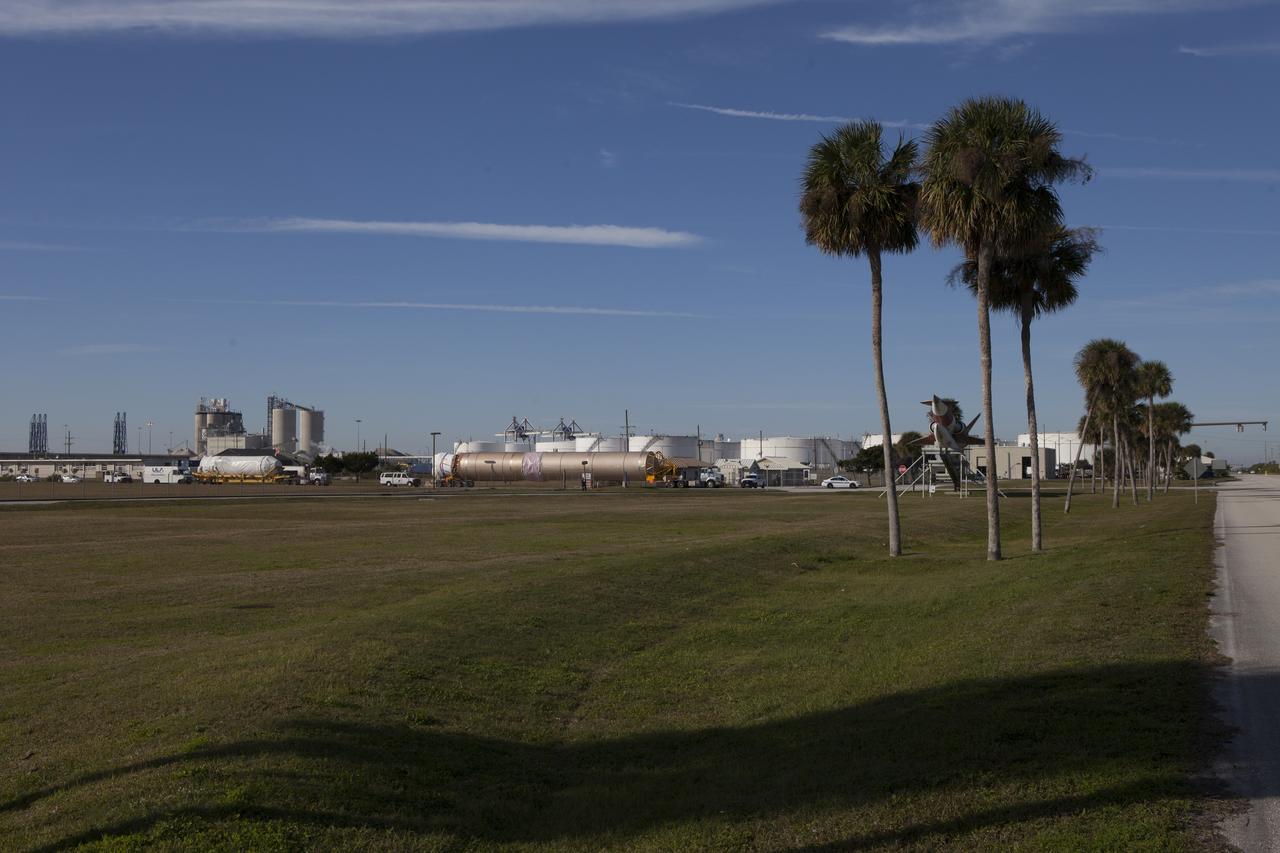
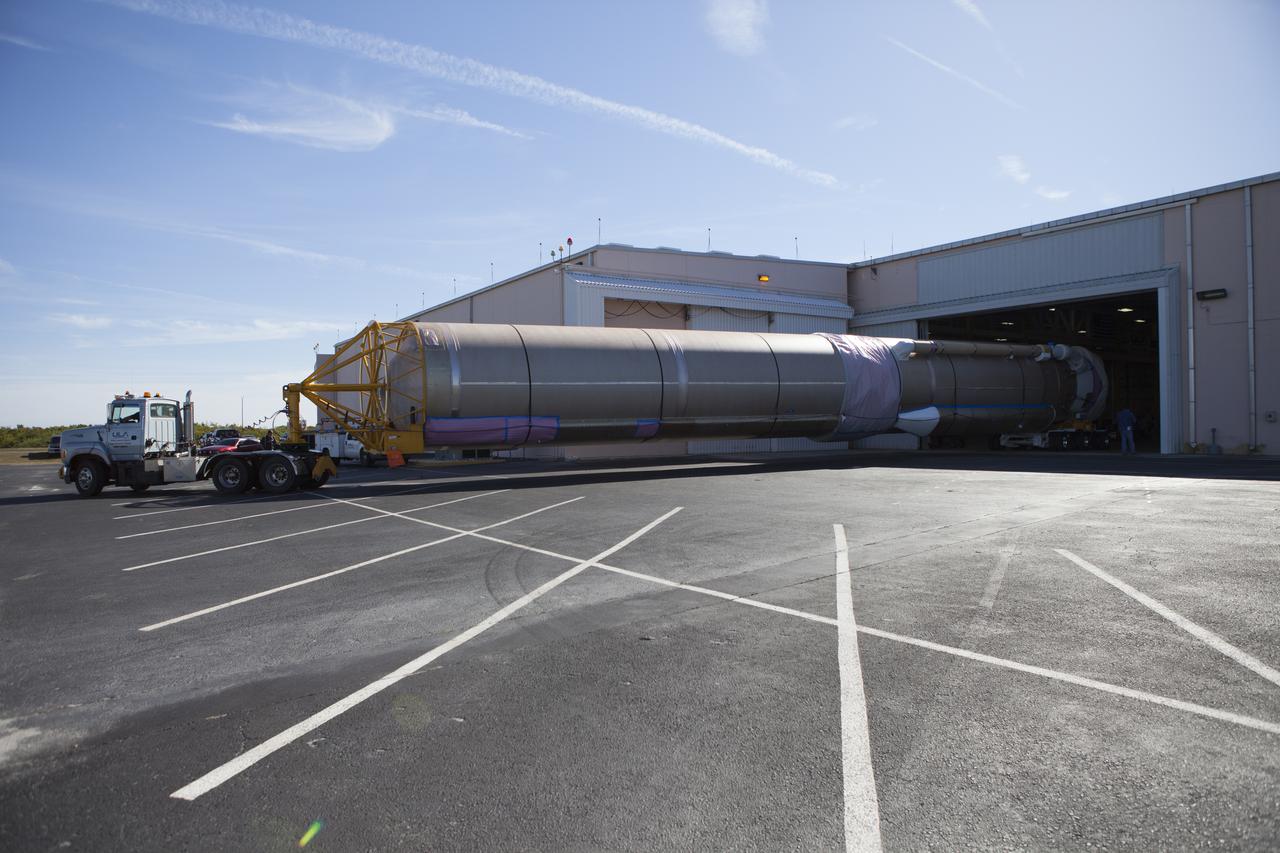
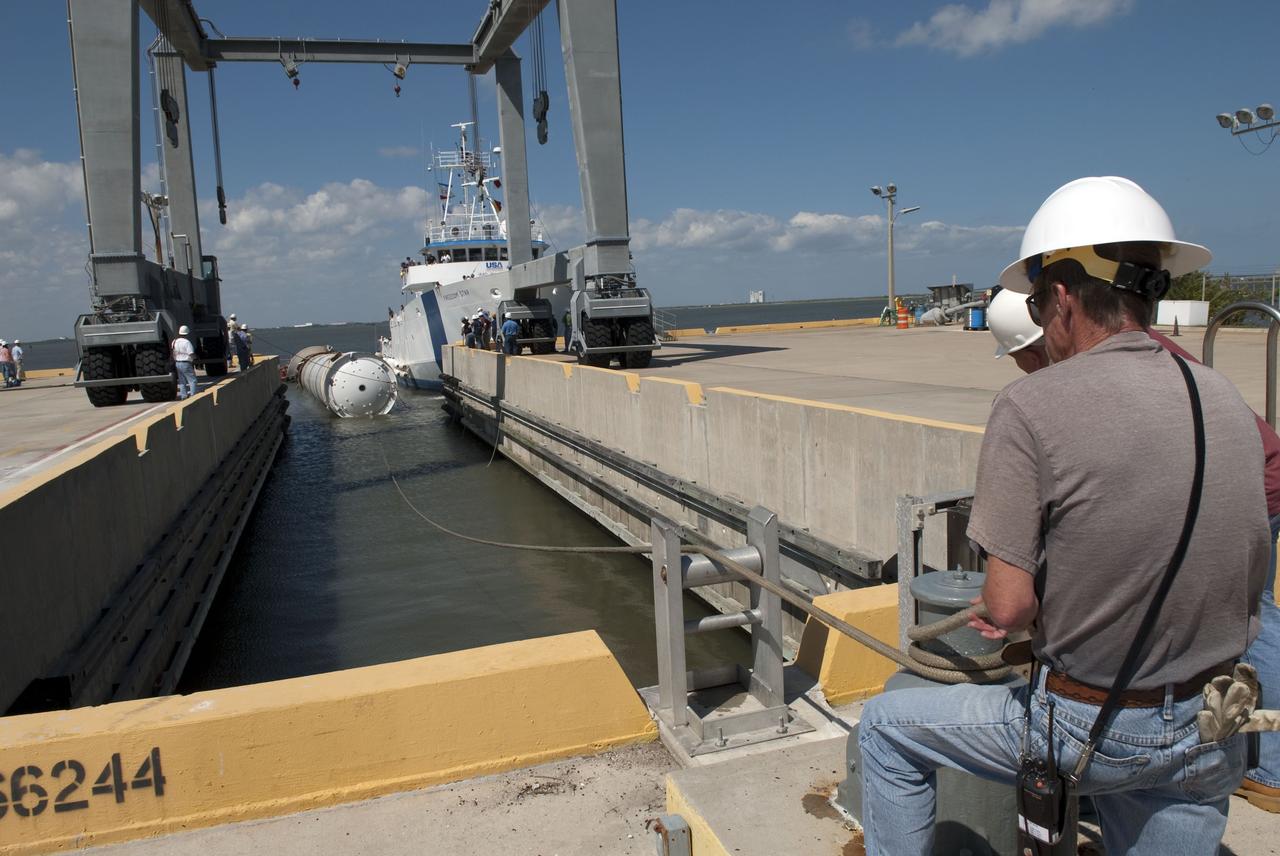
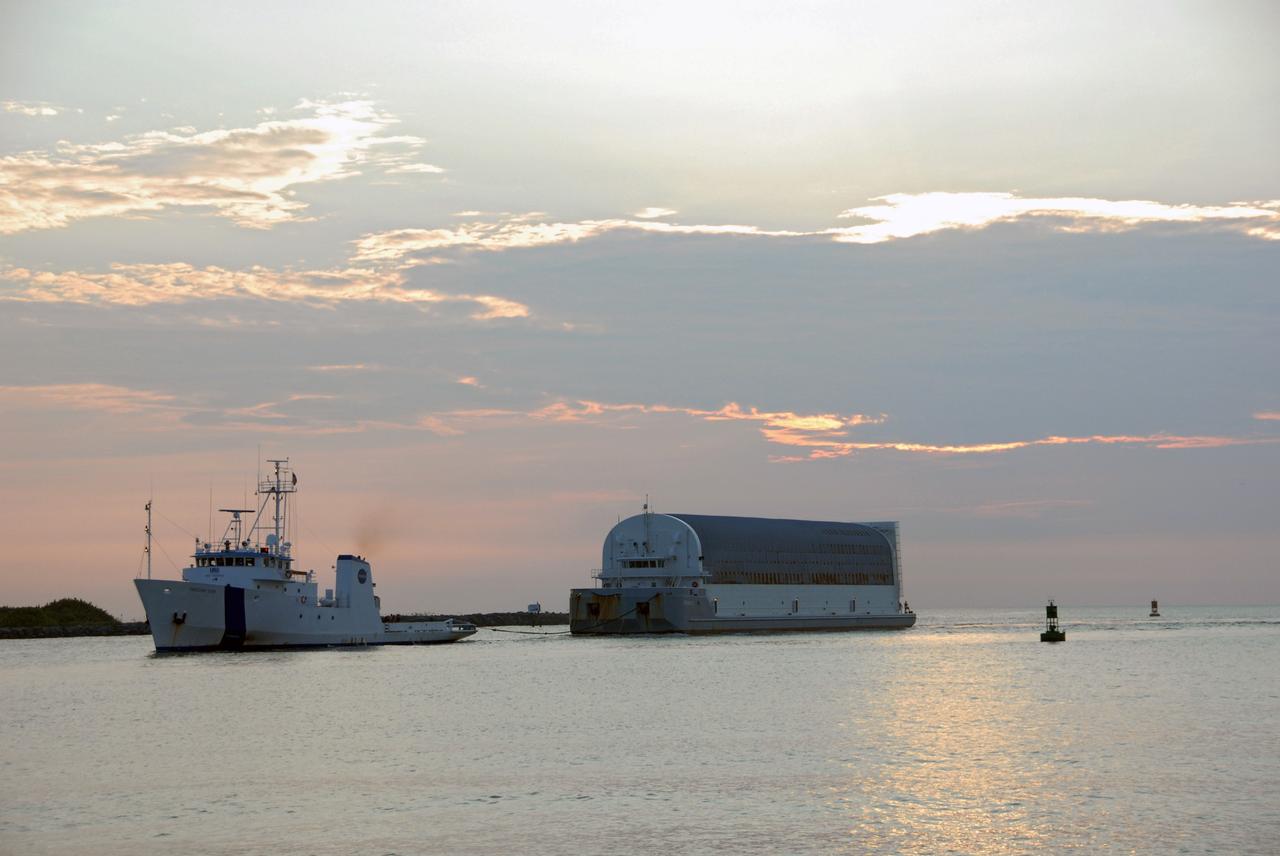
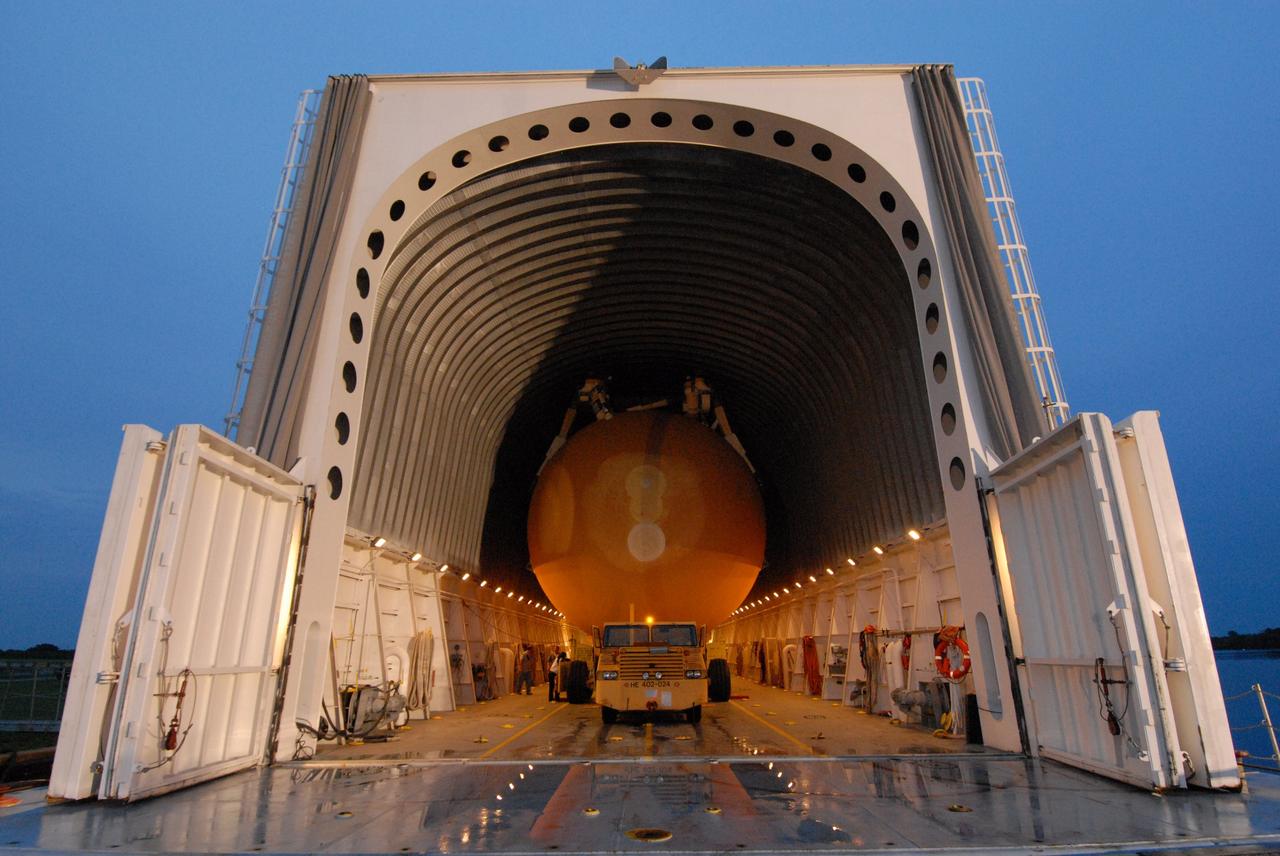
CAPE CANAVERAL, Fla. – Two of the three United Launch Alliance Delta IV heavy boosters for NASA’s upcoming Exploration Flight Test-1, or EFT-1, mission with the Orion spacecraft, arrived by barge at the U.S. Army Outpost wharf at Port Canaveral in Florida. The core booster, shown in this photo, and starboard booster were offloaded and transported to the Horizontal Integration Facility, or HIF, at Space Launch Complex 37 on Cape Canaveral Air Force Station. The port booster and the upper stage are planned to be shipped to Cape Canaveral in April. At the HIF, all three boosters will be processed and checked out before being moved to the nearby launch pad and hoisted into position. During the EFT-1 mission, Orion will travel farther into space than any human spacecraft has gone in more than 40 years. The data gathered during the flight will influence design decisions, validate existing computer models and innovative new approaches to space systems development, as well as reduce overall mission risks and costs for later Orion flights. Liftoff of Orion on EFT-1 is planned for fall 2014. Photo credit: NASA/Kim Shiflett
Orion Core Stage & Booster Offload, Move to HIF
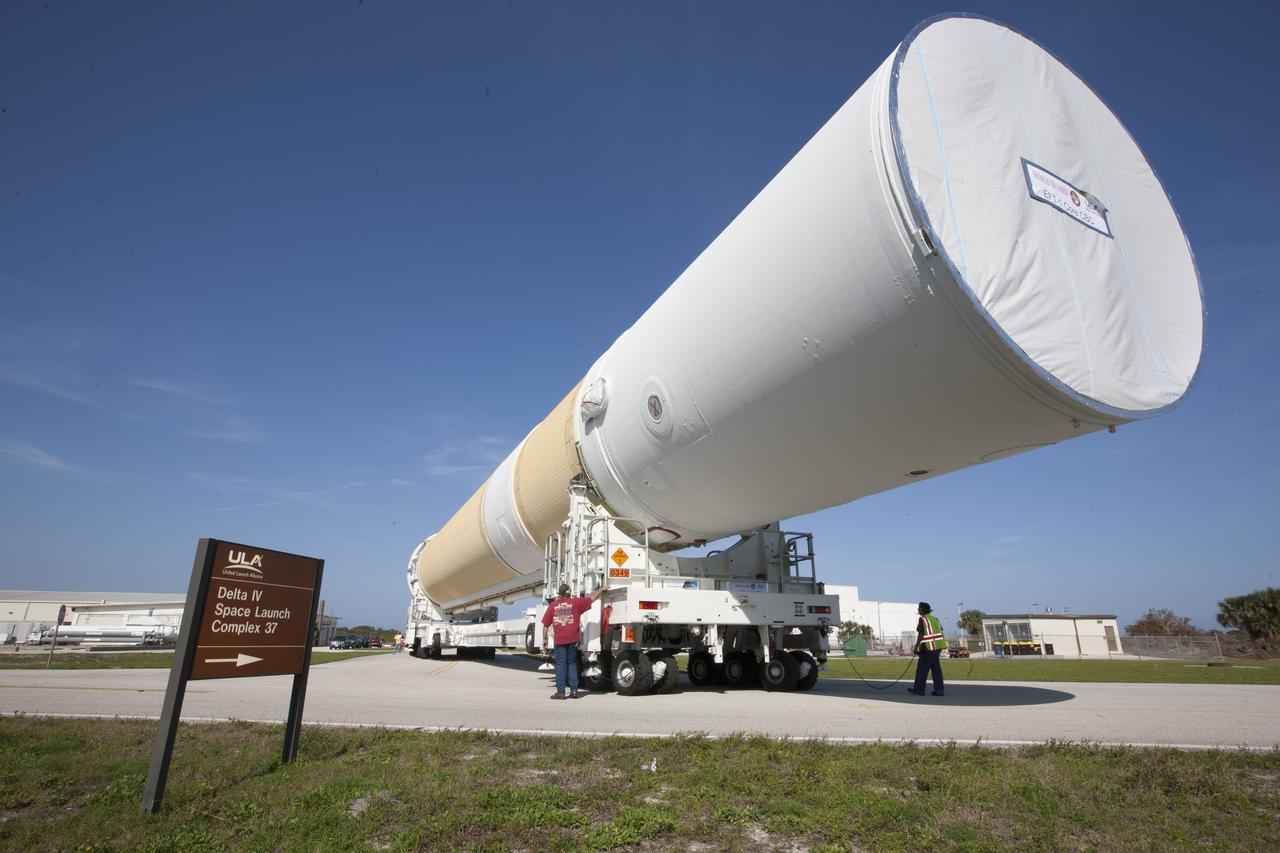
CAPE CANAVERAL, Fla. – Two of the three United Launch Alliance Delta IV heavy boosters for NASA’s upcoming Exploration Flight Test-1, or EFT-1, mission with the Orion spacecraft, arrived by barge at the U.S. Army Outpost wharf at Port Canaveral in Florida. The core booster and starboard booster were offloaded and are being transported to the Horizontal Integration Facility, or HIF, at Space Launch Complex 37 on Cape Canaveral Air Force Station. The port booster and the upper stage are planned to be shipped to Cape Canaveral in April. At the HIF, all three boosters will be processed and checked out before being moved to the nearby launch pad and hoisted into position. During the EFT-1 mission, Orion will travel farther into space than any human spacecraft has gone in more than 40 years. The data gathered during the flight will influence design decisions, validate existing computer models and innovative new approaches to space systems development, as well as reduce overall mission risks and costs for later Orion flights. Liftoff of Orion on EFT-1 is planned for fall 2014. Photo credit: NASA/Kim Shiflett
Orion Core Stage & Booster Offload, Move to HIF
CAPE CANAVERAL, Fla. – Two of the three United Launch Alliance Delta IV heavy boosters for NASA’s upcoming Exploration Flight Test-1, or EFT-1, mission with the Orion spacecraft, arrived by barge at the U.S. Army Outpost wharf at Port Canaveral in Florida. The core booster and starboard booster were offloaded and are being transported to the Horizontal Integration Facility, or HIF, at Space Launch Complex 37 on Cape Canaveral Air Force Station. The port booster and the upper stage are planned to be shipped to Cape Canaveral in April. At the HIF, all three boosters will be processed and checked out before being moved to the nearby launch pad and hoisted into position. During the EFT-1 mission, Orion will travel farther into space than any human spacecraft has gone in more than 40 years. The data gathered during the flight will influence design decisions, validate existing computer models and innovative new approaches to space systems development, as well as reduce overall mission risks and costs for later Orion flights. Liftoff of Orion on EFT-1 is planned for fall 2014. Photo credit: NASA/Kim Shiflett
Orion Core Stage & Booster Offload, Move to HIF
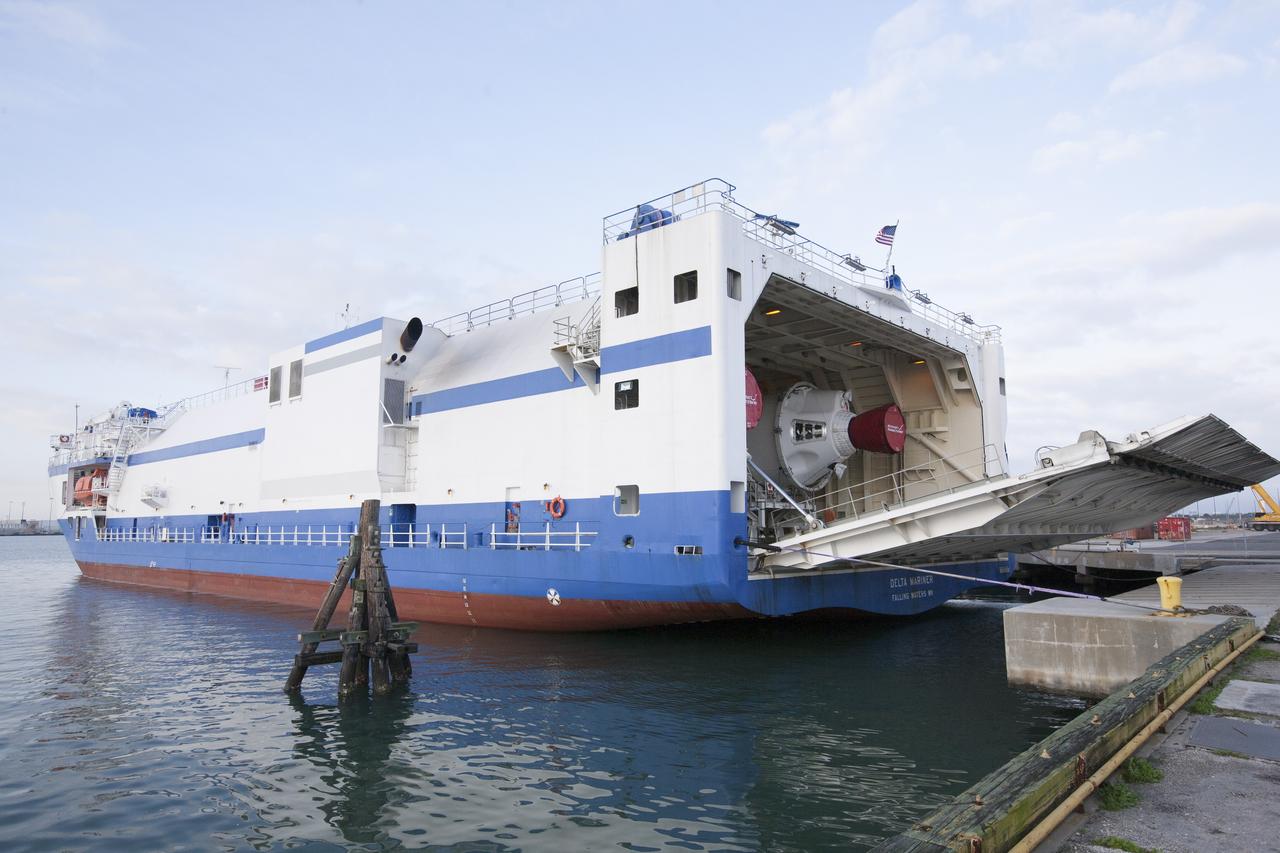
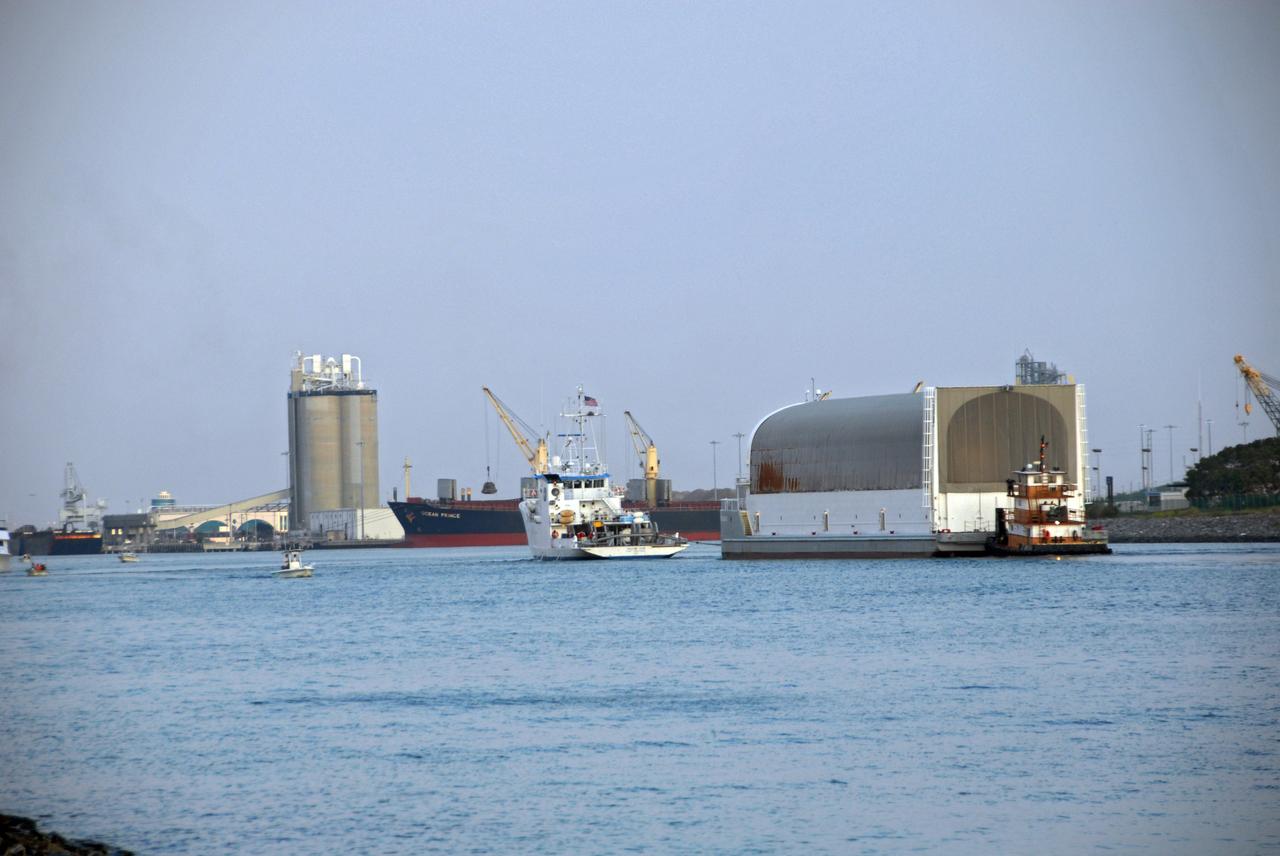
CAPE CANAVERAL, Fla. – A barge arrives at the U.S. Army Outpost wharf at Port Canaveral in Florida, carrying two of the three United Launch Alliance Delta IV heavy boosters for NASA’s upcoming Exploration Flight Test-1, or EFT-1, mission with the Orion spacecraft. The core booster and starboard booster will be offloaded and then transported to the Horizontal Integration Facility, or HIF, at Space Launch Complex 37 on Cape Canaveral Air Force Station. The port booster and the upper stage are planned to be shipped to Cape Canaveral in April. At the HIF, all three boosters will be processed and checked out before being moved to the nearby launch pad and hoisted into position. During the EFT-1 mission, Orion will travel farther into space than any human spacecraft has gone in more than 40 years. The data gathered during the flight will influence design decisions, validate existing computer models and innovative new approaches to space systems development, as well as reduce overall mission risks and costs for later Orion flights. Liftoff of Orion on EFT-1 is planned for fall 2014. Photo credit: NASA/Kim Shiflett
Orion Core Stage & Booster Offload, Move to HIF
CAPE CANAVERAL, Fla. – Two of the three United Launch Alliance Delta IV heavy boosters for NASA’s upcoming Exploration Flight Test-1, or EFT-1, mission with the Orion spacecraft, arrived by barge at the U.S. Army Outpost wharf at Port Canaveral in Florida. The core booster and starboard booster were offloaded and are being transported to the Horizontal Integration Facility, or HIF, at Space Launch Complex 37 on Cape Canaveral Air Force Station. The port booster and the upper stage are planned to be shipped to Cape Canaveral in April. At the HIF, all three boosters will be processed and checked out before being moved to the nearby launch pad and hoisted into position. During the EFT-1 mission, Orion will travel farther into space than any human spacecraft has gone in more than 40 years. The data gathered during the flight will influence design decisions, validate existing computer models and innovative new approaches to space systems development, as well as reduce overall mission risks and costs for later Orion flights. Liftoff of Orion on EFT-1 is planned for fall 2014. Photo credit: NASA/Kim Shiflett
Orion Core Stage & Booster Offload, Move to HIF
CAPE CANAVERAL, Fla. – A barge arrives at the U.S. Army Outpost wharf at Port Canaveral in Florida, carrying two of the three United Launch Alliance Delta IV heavy boosters for NASA’s upcoming Exploration Flight Test-1, or EFT-1, mission with the Orion spacecraft. The core booster and starboard booster will be offloaded and then transported to the Horizontal Integration Facility, or HIF, at Space Launch Complex 37 on Cape Canaveral Air Force Station. The port booster and the upper stage are planned to be shipped to Cape Canaveral in April. At the HIF, all three boosters will be processed and checked out before being moved to the nearby launch pad and hoisted into position. During the EFT-1 mission, Orion will travel farther into space than any human spacecraft has gone in more than 40 years. The data gathered during the flight will influence design decisions, validate existing computer models and innovative new approaches to space systems development, as well as reduce overall mission risks and costs for later Orion flights. Liftoff of Orion on EFT-1 is planned for fall 2014. Photo credit: NASA/Kim Shiflett
Orion Core Stage & Booster Offload, Move to HIF
CAPE CANAVERAL, Fla. – Two of the three United Launch Alliance Delta IV heavy boosters for NASA’s upcoming Exploration Flight Test-1, or EFT-1, mission with the Orion spacecraft, have arrived by barge at the U.S. Army Outpost wharf at Port Canaveral in Florida. The core booster and starboard booster will be offloaded and then transported to the Horizontal Integration Facility, or HIF, at Space Launch Complex 37 on Cape Canaveral Air Force Station. The port booster and the upper stage are planned to be shipped to Cape Canaveral in April. At the HIF, all three boosters will be processed and checked out before being moved to the nearby launch pad and hoisted into position. During the EFT-1 mission, Orion will travel farther into space than any human spacecraft has gone in more than 40 years. The data gathered during the flight will influence design decisions, validate existing computer models and innovative new approaches to space systems development, as well as reduce overall mission risks and costs for later Orion flights. Liftoff of Orion on EFT-1 is planned for fall 2014. Photo credit: NASA/Kim Shiflett
Orion Core Stage & Booster Offload, Move to HIF
CAPE CANAVERAL, Fla. – Two of the three United Launch Alliance Delta IV heavy boosters for NASA’s upcoming Exploration Flight Test-1, or EFT-1, mission with the Orion spacecraft, have arrived by barge at the U.S. Army Outpost wharf at Port Canaveral in Florida. The core booster and starboard booster are being offloaded and will be transported to the Horizontal Integration Facility, or HIF, at Space Launch Complex 37 on Cape Canaveral Air Force Station. The port booster and the upper stage are planned to be shipped to Cape Canaveral in April. At the HIF, all three boosters will be processed and checked out before being moved to the nearby launch pad and hoisted into position. During the EFT-1 mission, Orion will travel farther into space than any human spacecraft has gone in more than 40 years. The data gathered during the flight will influence design decisions, validate existing computer models and innovative new approaches to space systems development, as well as reduce overall mission risks and costs for later Orion flights. Liftoff of Orion on EFT-1 is planned for fall 2014. Photo credit: NASA/Kim Shiflett
Orion Core Stage & Booster Offload, Move to HIF
CAPE CANAVERAL, Fla. – A barge arrives at the U.S. Army Outpost wharf at Port Canaveral in Florida, carrying two of the three United Launch Alliance Delta IV heavy boosters for NASA’s upcoming Exploration Flight Test-1, or EFT-1, mission with the Orion spacecraft. The core booster and starboard booster will be offloaded and then transported to the Horizontal Integration Facility, or HIF, at Space Launch Complex 37 on Cape Canaveral Air Force Station. The port booster and the upper stage are planned to be shipped to Cape Canaveral in April. At the HIF, all three boosters will be processed and checked out before being moved to the nearby launch pad and hoisted into position. During the EFT-1 mission, Orion will travel farther into space than any human spacecraft has gone in more than 40 years. The data gathered during the flight will influence design decisions, validate existing computer models and innovative new approaches to space systems development, as well as reduce overall mission risks and costs for later Orion flights. Liftoff of Orion on EFT-1 is planned for fall 2014. Photo credit: NASA/Kim Shiflett
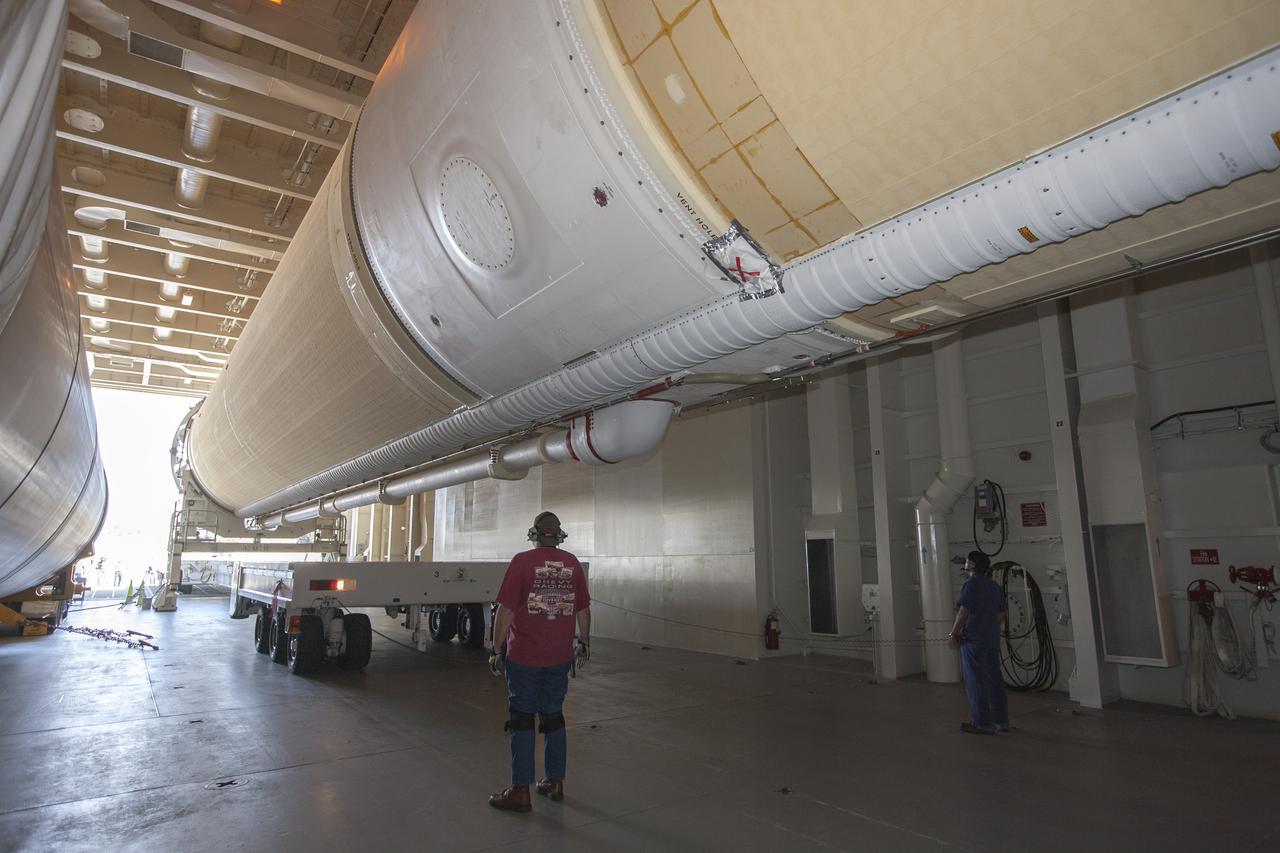
Orion Core Stage & Booster Offload, Move to HIF
CAPE CANAVERAL, Fla. – Two of the three United Launch Alliance Delta IV heavy boosters for NASA’s upcoming Exploration Flight Test-1, or EFT-1, mission with the Orion spacecraft, have arrived by barge at the U.S. Army Outpost wharf at Port Canaveral in Florida. The core booster and starboard booster are being offloaded and will be transported to the Horizontal Integration Facility, or HIF, at Space Launch Complex 37 on Cape Canaveral Air Force Station. The port booster and the upper stage are planned to be shipped to Cape Canaveral in April. At the HIF, all three boosters will be processed and checked out before being moved to the nearby launch pad and hoisted into position. During the EFT-1 mission, Orion will travel farther into space than any human spacecraft has gone in more than 40 years. The data gathered during the flight will influence design decisions, validate existing computer models and innovative new approaches to space systems development, as well as reduce overall mission risks and costs for later Orion flights. Liftoff of Orion on EFT-1 is planned for fall 2014. Photo credit: NASA/Kim Shiflett
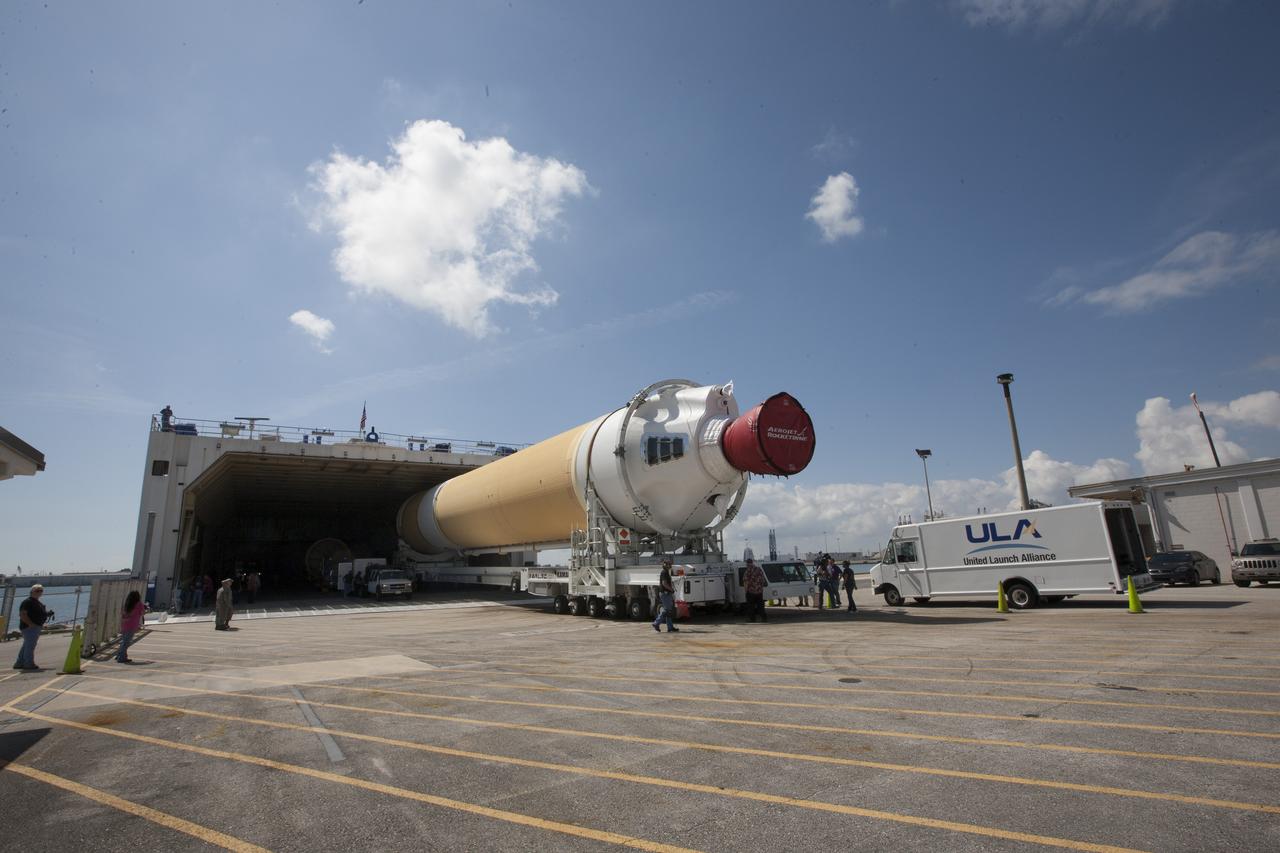
Orion Core Stage & Booster Offload, Move to HIF
CAPE CANAVERAL, Fla. – Two of the three United Launch Alliance Delta IV heavy boosters for NASA’s upcoming Exploration Flight Test-1, or EFT-1, mission with the Orion spacecraft, have arrived by barge at the U.S. Army Outpost wharf at Port Canaveral in Florida. The core booster and starboard booster are being offloaded and will be transported to the Horizontal Integration Facility, or HIF, at Space Launch Complex 37 on Cape Canaveral Air Force Station. The port booster and the upper stage are planned to be shipped to Cape Canaveral in April. At the HIF, all three boosters will be processed and checked out before being moved to the nearby launch pad and hoisted into position. During the EFT-1 mission, Orion will travel farther into space than any human spacecraft has gone in more than 40 years. The data gathered during the flight will influence design decisions, validate existing computer models and innovative new approaches to space systems development, as well as reduce overall mission risks and costs for later Orion flights. Liftoff of Orion on EFT-1 is planned for fall 2014. Photo credit: NASA/Kim Shiflett
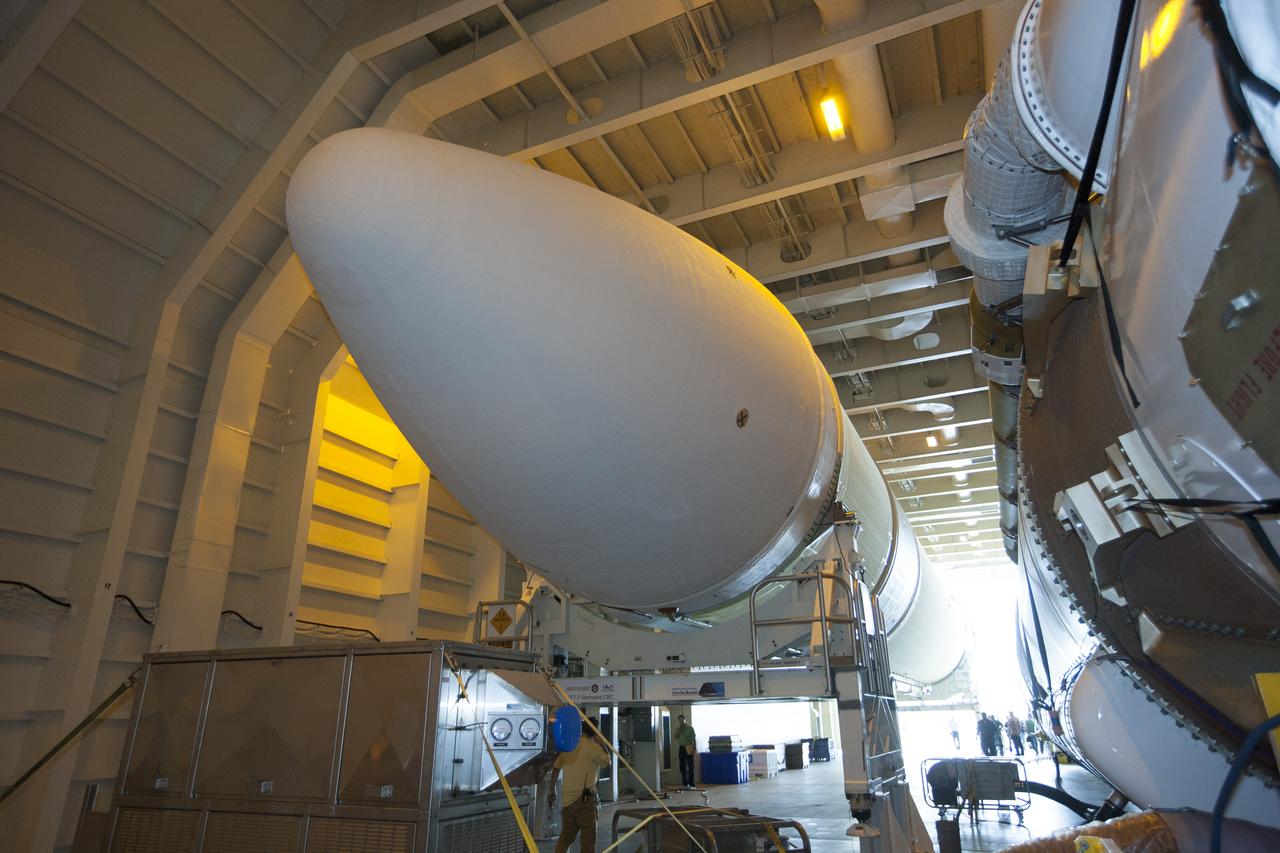
Orion Core Stage & Booster Offload, Move to HIF
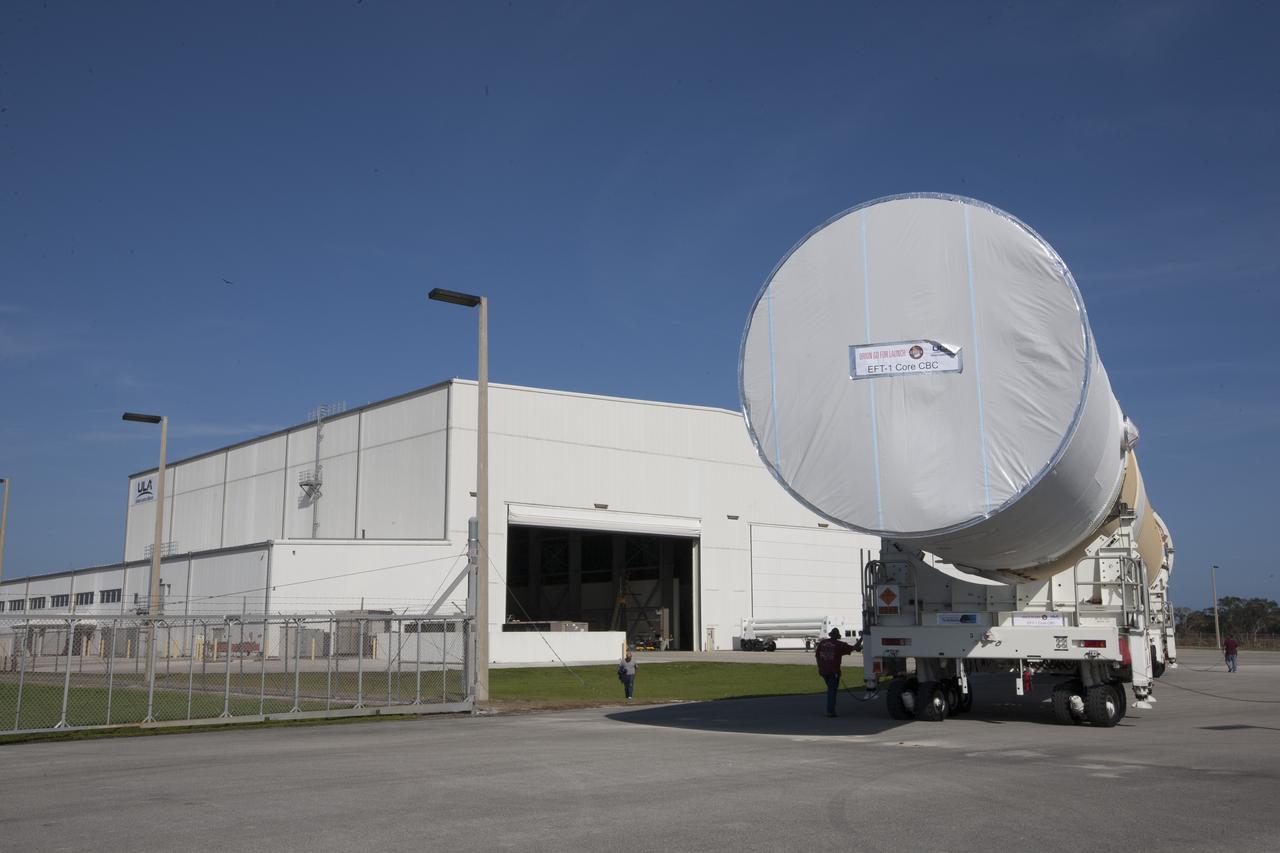
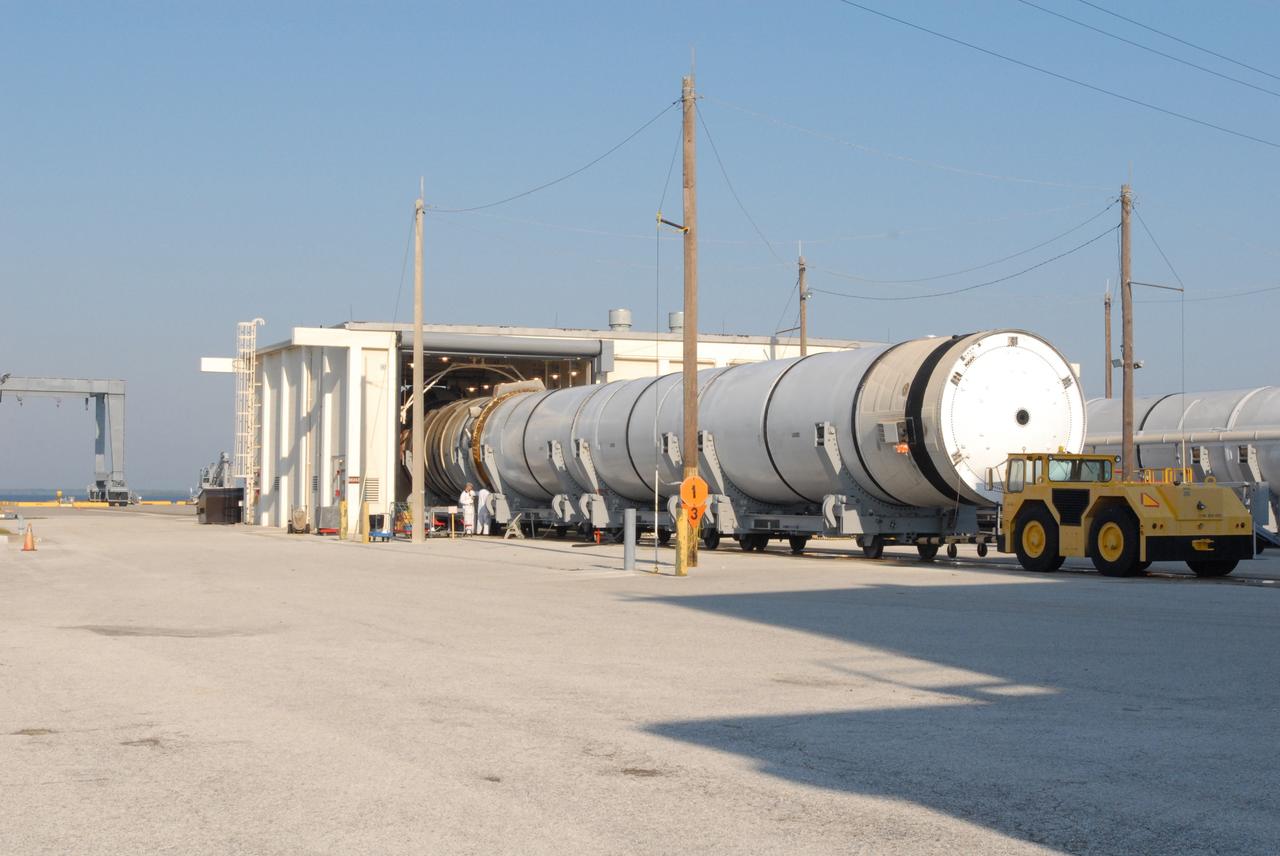
CAPE CANAVERAL, Fla. – The core booster for the United Launch Alliance Delta IV heavy for NASA’s upcoming Exploration Flight Test-1, or EFT-1, mission with the Orion spacecraft, was transported to the Horizontal Integration Facility, or HIF, at Space Launch Complex 37 on Cape Canaveral Air Force Station in Florida. The core booster and starboard booster arrived by barge at the U.S. Army Outpost wharf at Port Canaveral. The port booster and the upper stage are planned to be shipped to Cape Canaveral in April. At the HIF, all three boosters will be processed and checked out before being moved to the nearby launch pad and hoisted into position. During the EFT-1 mission, Orion will travel farther into space than any human spacecraft has gone in more than 40 years. The data gathered during the flight will influence design decisions, validate existing computer models and innovative new approaches to space systems development, as well as reduce overall mission risks and costs for later Orion flights. Liftoff of Orion on EFT-1 is planned for fall 2014. Photo credit: NASA/Kim Shiflett
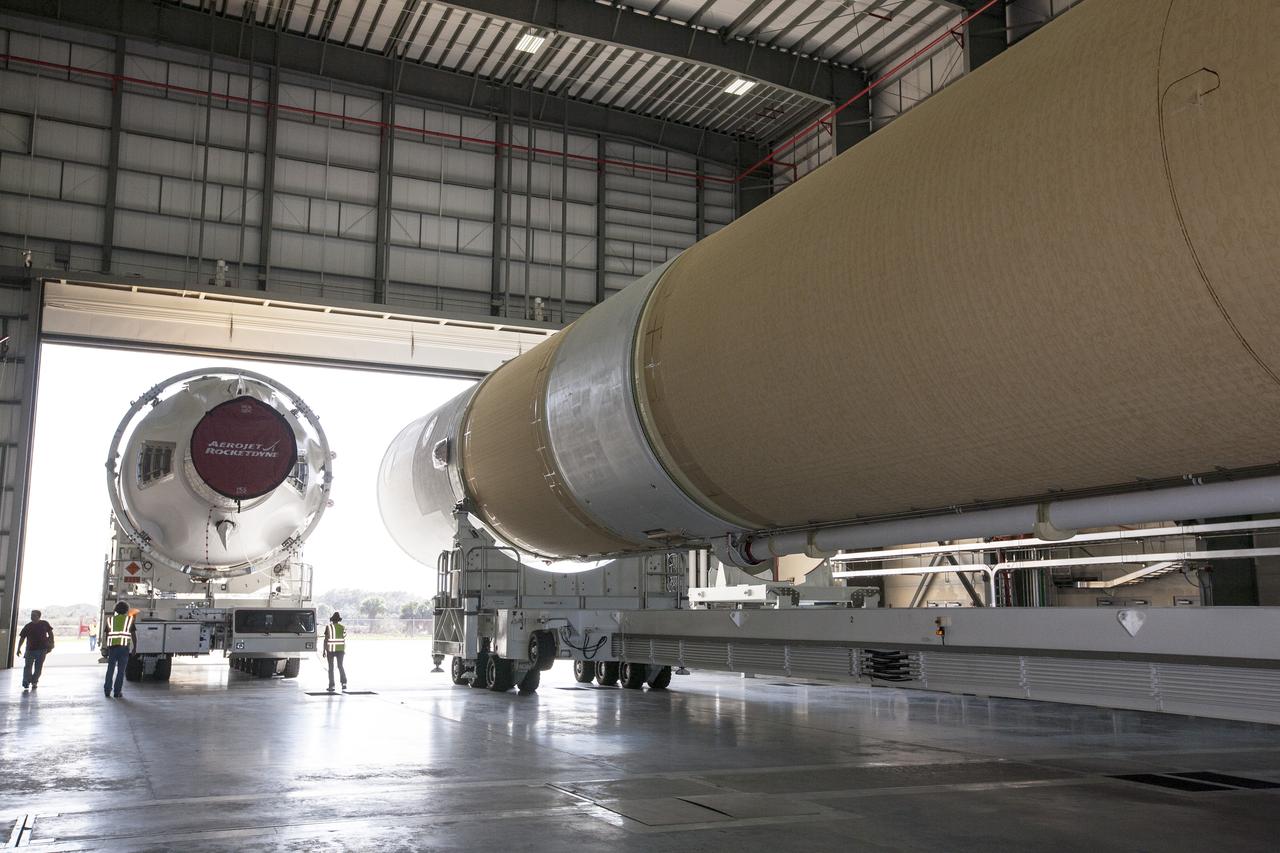
Orion Core Stage & Booster Offload, Move to HIF
CAPE CANAVERAL, Fla. – Two of the three United Launch Alliance Delta IV heavy boosters for NASA’s upcoming Exploration Flight Test-1, or EFT-1, mission with the Orion spacecraft, arrived by barge at the U.S. Army Outpost wharf at Port Canaveral in Florida. The core booster and starboard booster were offloaded and are being transported to the Horizontal Integration Facility, or HIF, at Space Launch Complex 37 on Cape Canaveral Air Force Station. The port booster and the upper stage are planned to be shipped to Cape Canaveral in April. At the HIF, all three boosters will be processed and checked out before being moved to the nearby launch pad and hoisted into position. During the EFT-1 mission, Orion will travel farther into space than any human spacecraft has gone in more than 40 years. The data gathered during the flight will influence design decisions, validate existing computer models and innovative new approaches to space systems development, as well as reduce overall mission risks and costs for later Orion flights. Liftoff of Orion on EFT-1 is planned for fall 2014. Photo credit: NASA/Kim Shiflett
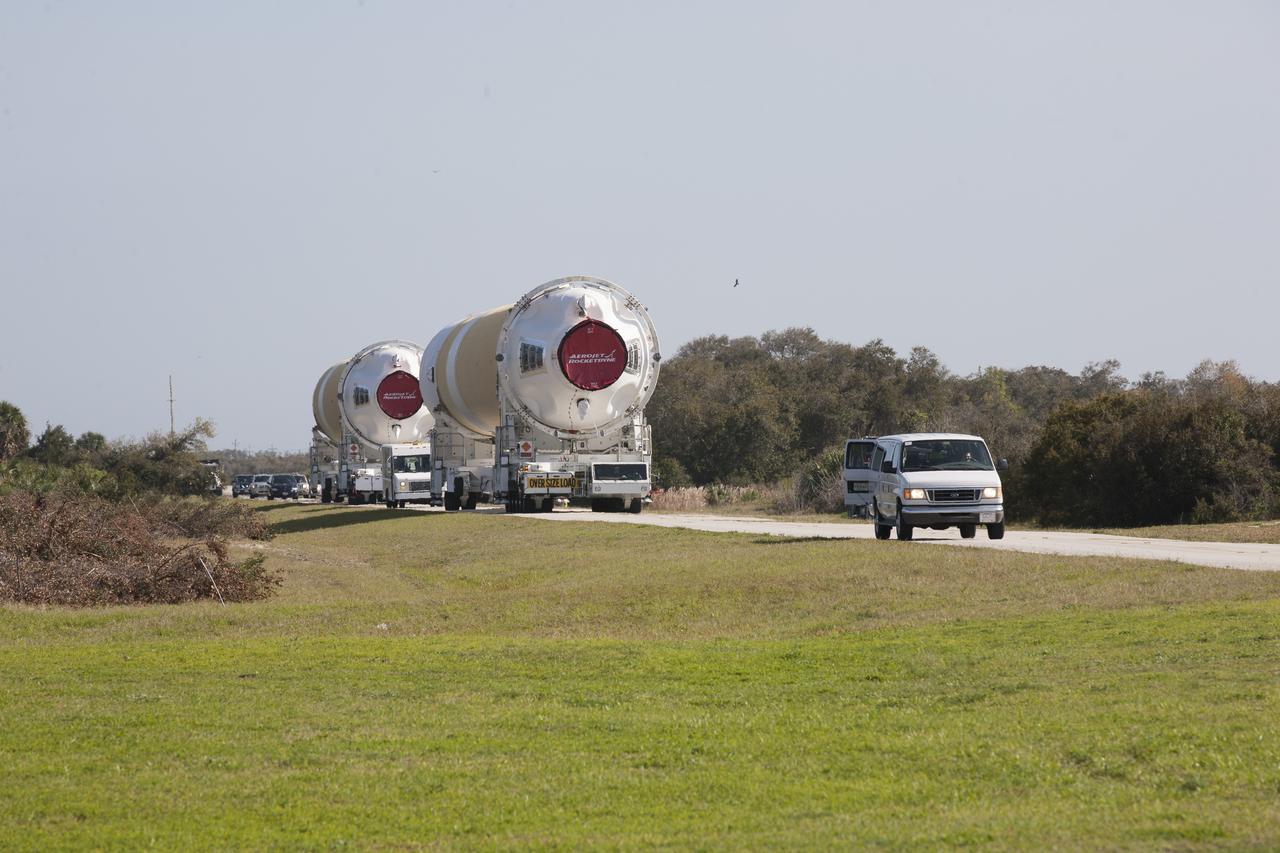
Orion Core Stage & Booster Offload, Move to HIF
CAPE CANAVERAL, Fla. – Two of the three United Launch Alliance Delta IV heavy boosters for NASA’s upcoming Exploration Flight Test-1, or EFT-1, mission with the Orion spacecraft, have arrived by barge at the U.S. Army Outpost wharf at Port Canaveral in Florida. The core booster and starboard booster are being offloaded and will be transported to the Horizontal Integration Facility, or HIF, at Space Launch Complex 37 on Cape Canaveral Air Force Station. The port booster and the upper stage are planned to be shipped to Cape Canaveral in April. At the HIF, all three boosters will be processed and checked out before being moved to the nearby launch pad and hoisted into position. During the EFT-1 mission, Orion will travel farther into space than any human spacecraft has gone in more than 40 years. The data gathered during the flight will influence design decisions, validate existing computer models and innovative new approaches to space systems development, as well as reduce overall mission risks and costs for later Orion flights. Liftoff of Orion on EFT-1 is planned for fall 2014. Photo credit: NASA/Kim Shiflett
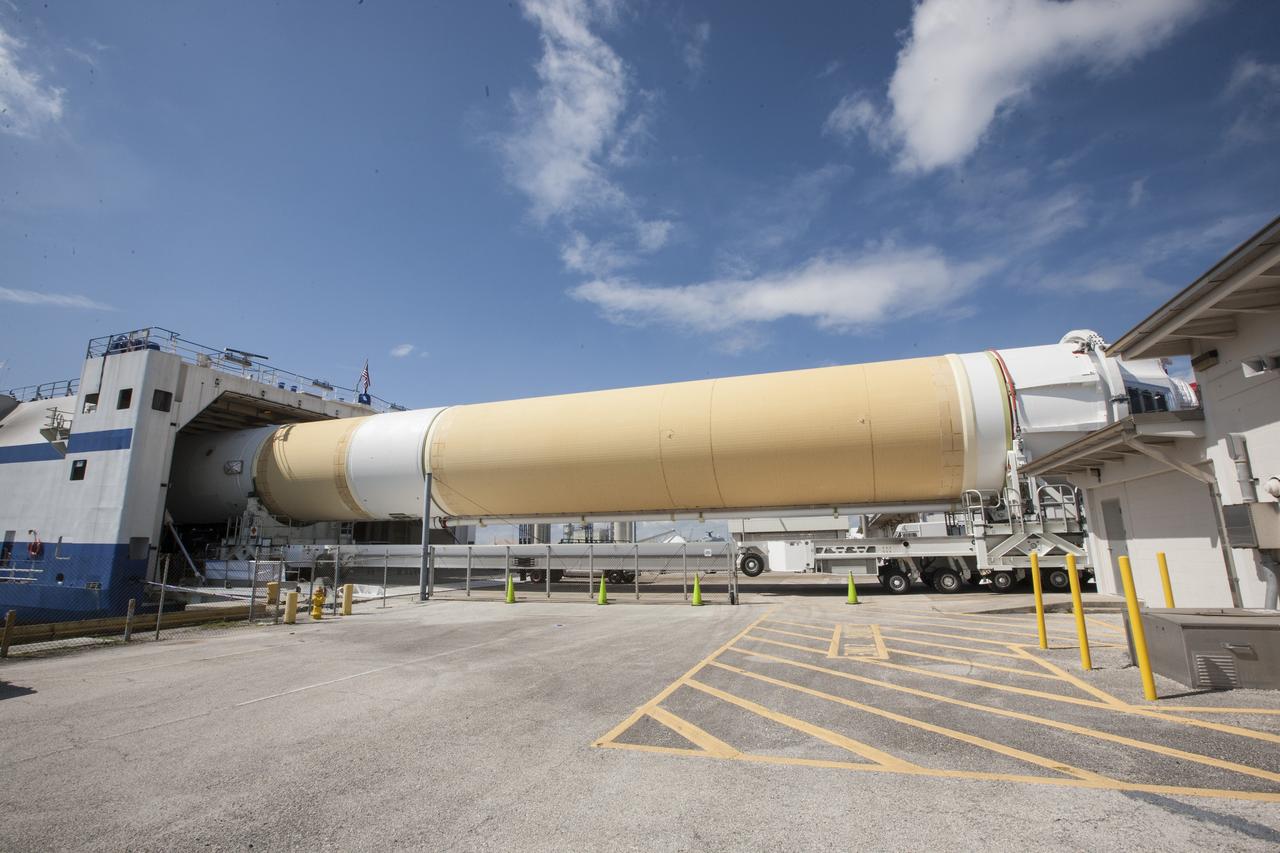
Orion Core Stage & Booster Offload, Move to HIF
CAPE CANAVERAL, Fla. – Two of the three United Launch Alliance Delta IV heavy boosters for NASA’s upcoming Exploration Flight Test-1, or EFT-1, mission with the Orion spacecraft, have arrived by barge at the U.S. Army Outpost wharf at Port Canaveral in Florida. The core booster and starboard booster will be offloaded and then transported to the Horizontal Integration Facility, or HIF, at Space Launch Complex 37 on Cape Canaveral Air Force Station. The port booster and the upper stage are planned to be shipped to Cape Canaveral in April. At the HIF, all three boosters will be processed and checked out before being moved to the nearby launch pad and hoisted into position. During the EFT-1 mission, Orion will travel farther into space than any human spacecraft has gone in more than 40 years. The data gathered during the flight will influence design decisions, validate existing computer models and innovative new approaches to space systems development, as well as reduce overall mission risks and costs for later Orion flights. Liftoff of Orion on EFT-1 is planned for fall 2014. Photo credit: NASA/Kim Shiflett
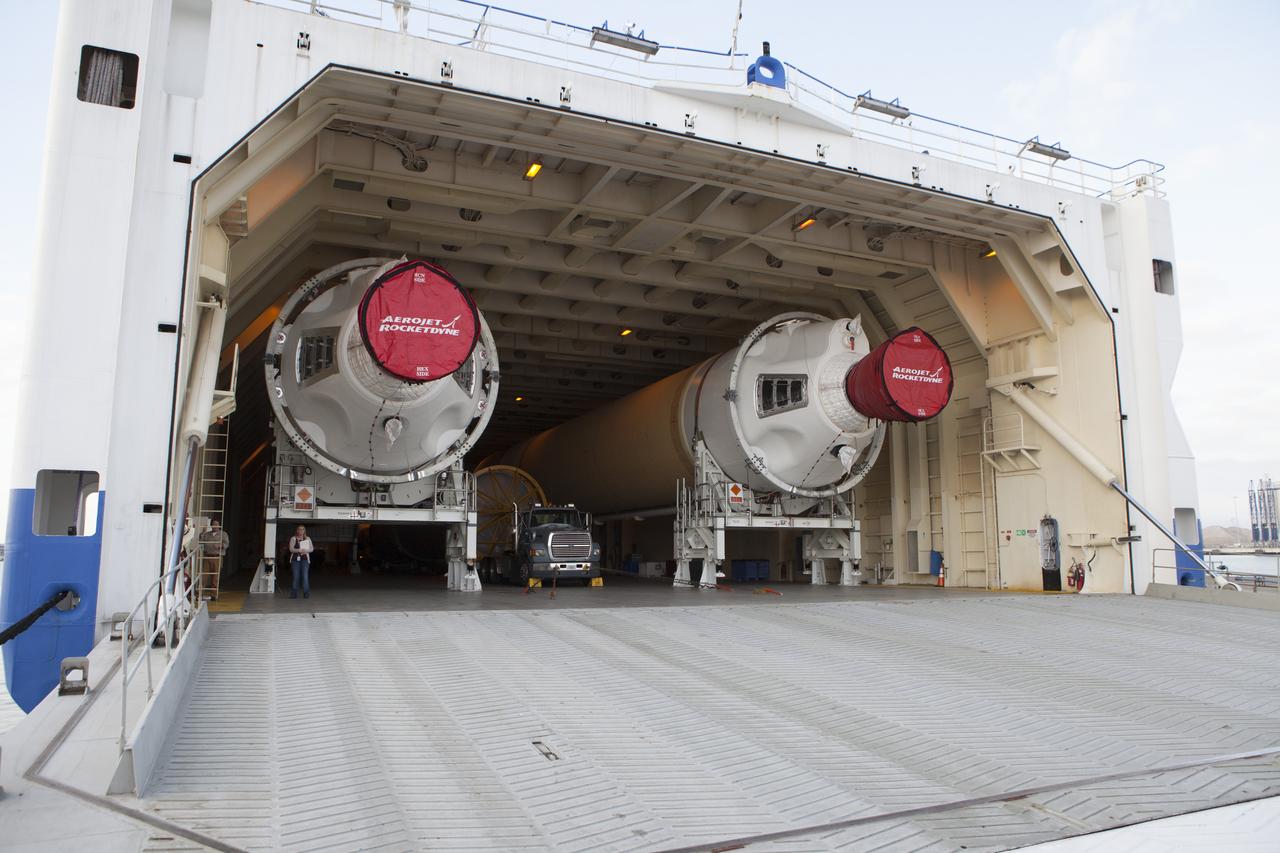
Orion Core Stage & Booster Offload, Move to HIF
CAPE CANAVERAL, Fla. – Two of the three United Launch Alliance Delta IV heavy boosters for NASA’s upcoming Exploration Flight Test-1, or EFT-1, mission with the Orion spacecraft, were transported to the Horizontal Integration Facility, or HIF, at Space Launch Complex 37 on Cape Canaveral Air Force Station in Florida. The core booster and starboard booster arrived by barge at the U.S. Army Outpost wharf at Port Canaveral. The port booster and the upper stage are planned to be shipped to Cape Canaveral in April. At the HIF, all three boosters will be processed and checked out before being moved to the nearby launch pad and hoisted into position. During the EFT-1 mission, Orion will travel farther into space than any human spacecraft has gone in more than 40 years. The data gathered during the flight will influence design decisions, validate existing computer models and innovative new approaches to space systems development, as well as reduce overall mission risks and costs for later Orion flights. Liftoff of Orion on EFT-1 is planned for fall 2014. Photo credit: NASA/Kim Shiflett
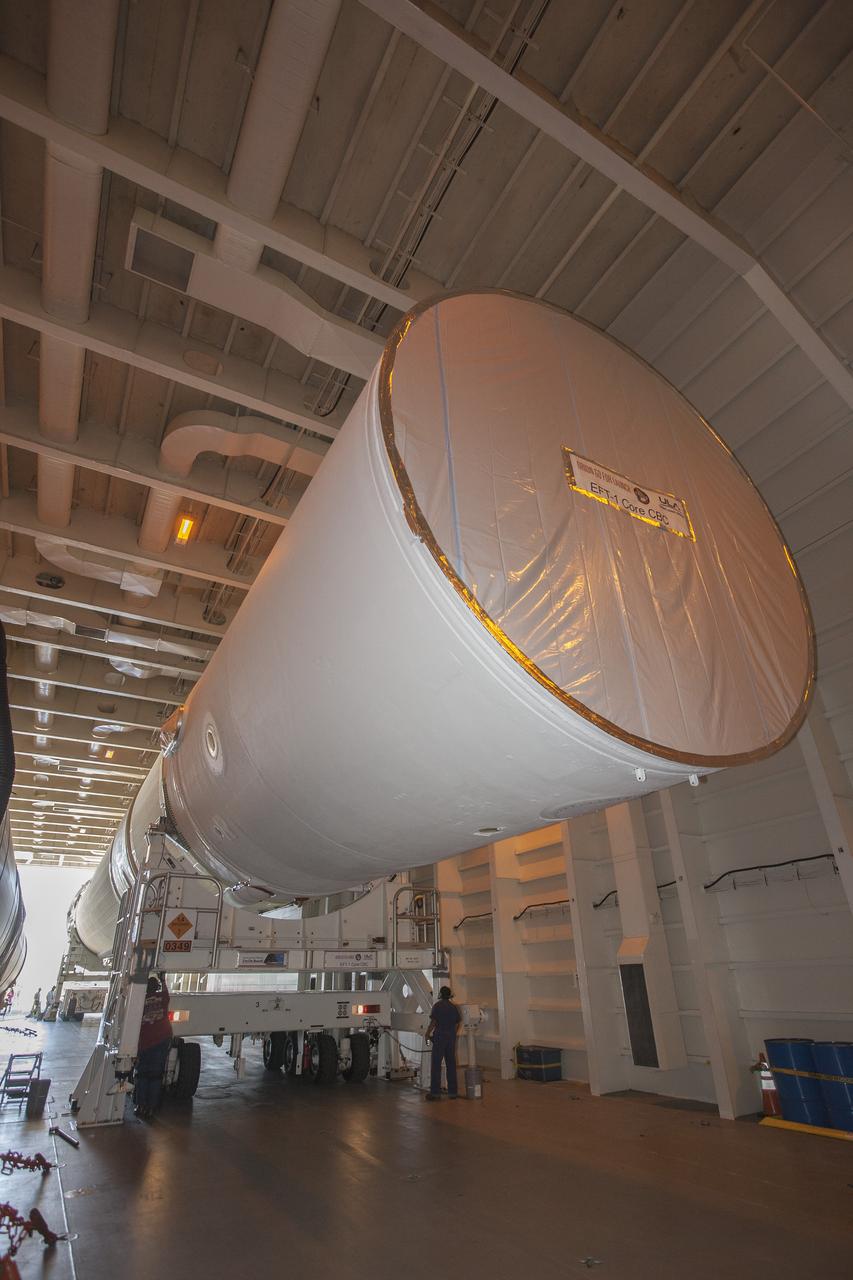
Orion Core Stage & Booster Offload, Move to HIF
CAPE CANAVERAL, Fla. – Two of the three United Launch Alliance Delta IV heavy boosters for NASA’s upcoming Exploration Flight Test-1, or EFT-1, mission with the Orion spacecraft, arrived by barge at the U.S. Army Outpost wharf at Port Canaveral in Florida. The core booster, shown in this photo, and starboard booster were offloaded and will be transported to the Horizontal Integration Facility, or HIF, at Space Launch Complex 37 on Cape Canaveral Air Force Station. The port booster and the upper stage are planned to be shipped to Cape Canaveral in April. At the HIF, all three boosters will be processed and checked out before being moved to the nearby launch pad and hoisted into position. During the EFT-1 mission, Orion will travel farther into space than any human spacecraft has gone in more than 40 years. The data gathered during the flight will influence design decisions, validate existing computer models and innovative new approaches to space systems development, as well as reduce overall mission risks and costs for later Orion flights. Liftoff of Orion on EFT-1 is planned for fall 2014. Photo credit: NASA/Kim Shiflett
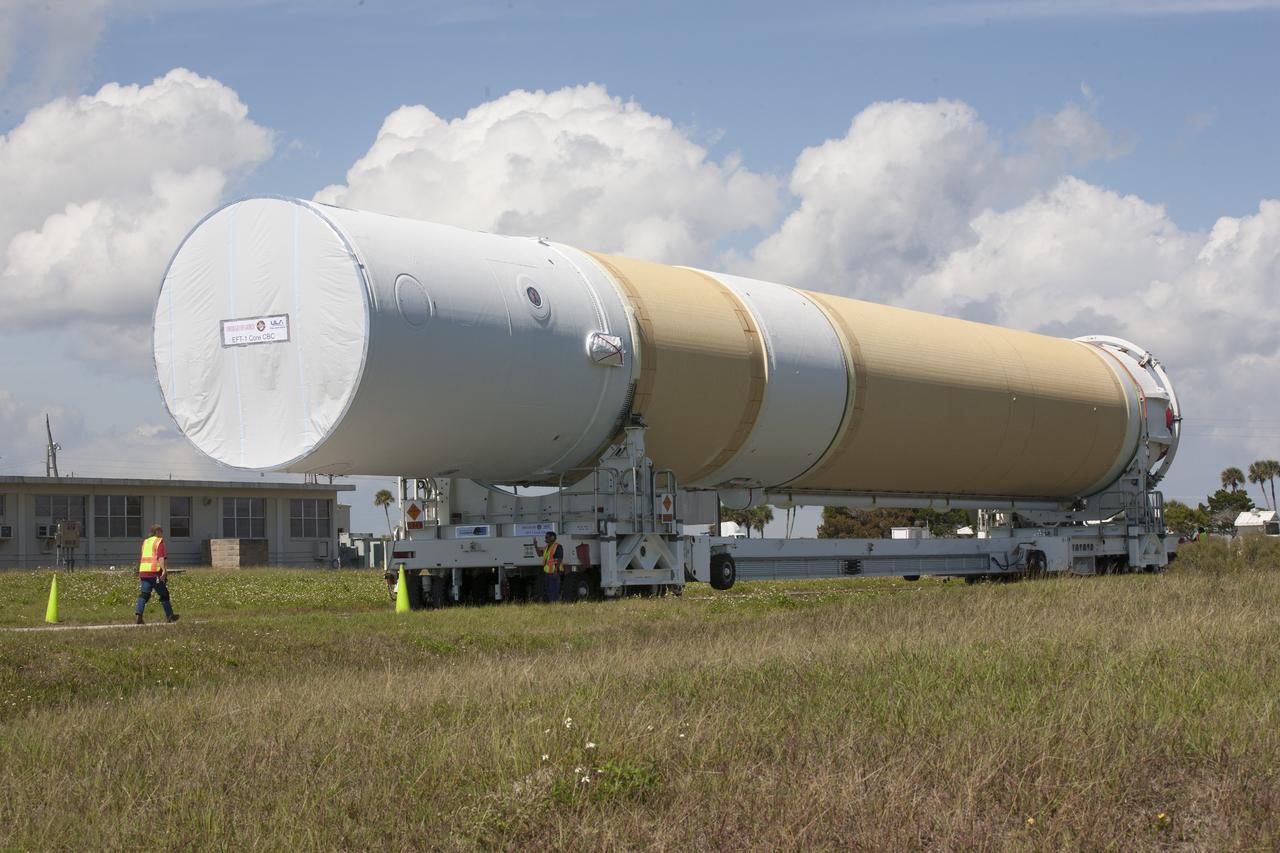
Orion Core Stage & Booster Offload, Move to HIF
CAPE CANAVERAL, Fla. – Two of the three United Launch Alliance Delta IV heavy boosters for NASA’s upcoming Exploration Flight Test-1, or EFT-1, mission with the Orion spacecraft, have arrived by barge at the U.S. Army Outpost wharf at Port Canaveral in Florida. The core booster and starboard booster will be offloaded and then transported to the Horizontal Integration Facility, or HIF, at Space Launch Complex 37 on Cape Canaveral Air Force Station. The port booster and the upper stage are planned to be shipped to Cape Canaveral in April. At the HIF, all three boosters will be processed and checked out before being moved to the nearby launch pad and hoisted into position. During the EFT-1 mission, Orion will travel farther into space than any human spacecraft has gone in more than 40 years. The data gathered during the flight will influence design decisions, validate existing computer models and innovative new approaches to space systems development, as well as reduce overall mission risks and costs for later Orion flights. Liftoff of Orion on EFT-1 is planned for fall 2014. Photo credit: NASA/Kim Shiflett
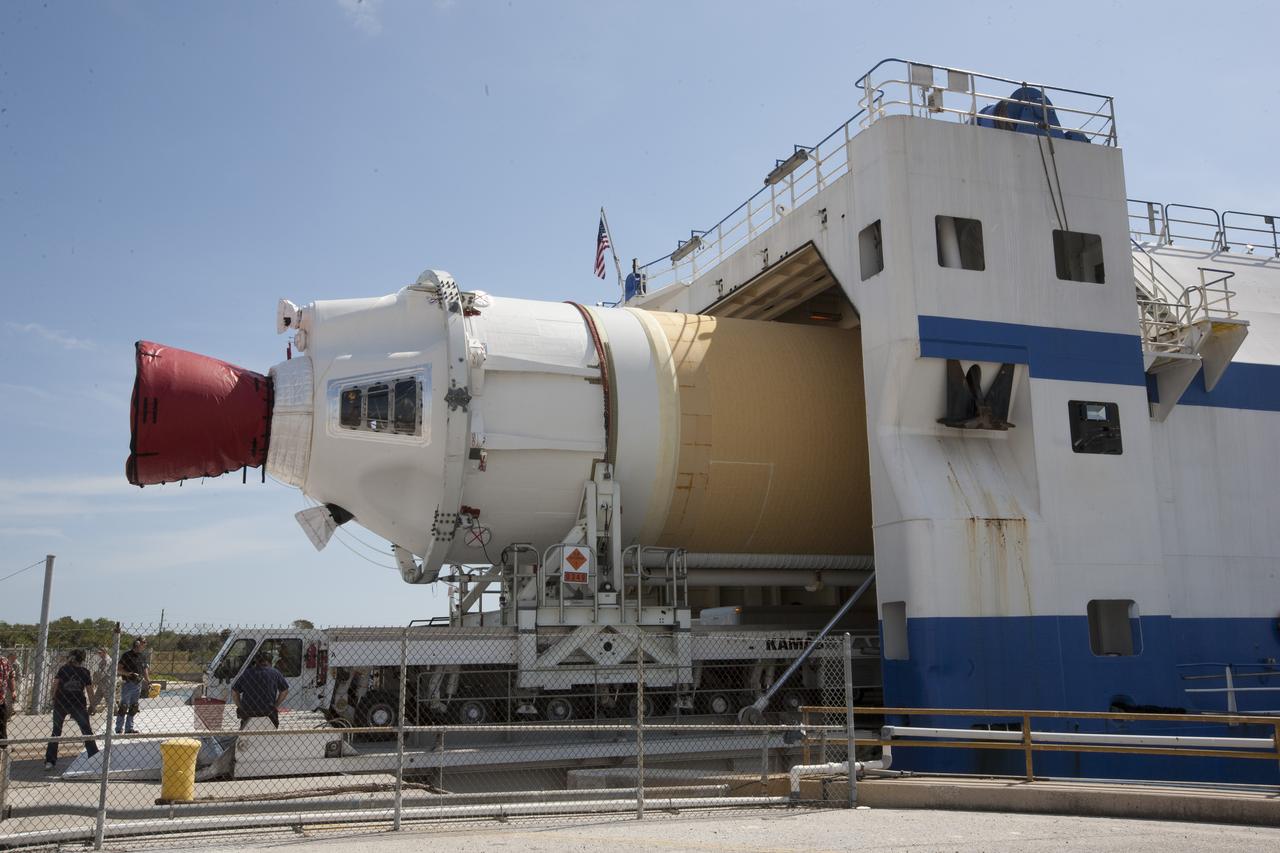
Orion Core Stage & Booster Offload, Move to HIF
CAPE CANAVERAL, Fla. – Two of the three United Launch Alliance Delta IV heavy boosters for NASA’s upcoming Exploration Flight Test-1, or EFT-1, mission with the Orion spacecraft, arrived by barge at the U.S. Army Outpost wharf at Port Canaveral in Florida. The core booster and starboard booster have been offloaded and will be transported to the Horizontal Integration Facility, or HIF, at Space Launch Complex 37 on Cape Canaveral Air Force Station. The port booster and the upper stage are planned to be shipped to Cape Canaveral in April. At the HIF, all three boosters will be processed and checked out before being moved to the nearby launch pad and hoisted into position. During the EFT-1 mission, Orion will travel farther into space than any human spacecraft has gone in more than 40 years. The data gathered during the flight will influence design decisions, validate existing computer models and innovative new approaches to space systems development, as well as reduce overall mission risks and costs for later Orion flights. Liftoff of Orion on EFT-1 is planned for fall 2014. Photo credit: NASA/Kim Shiflett
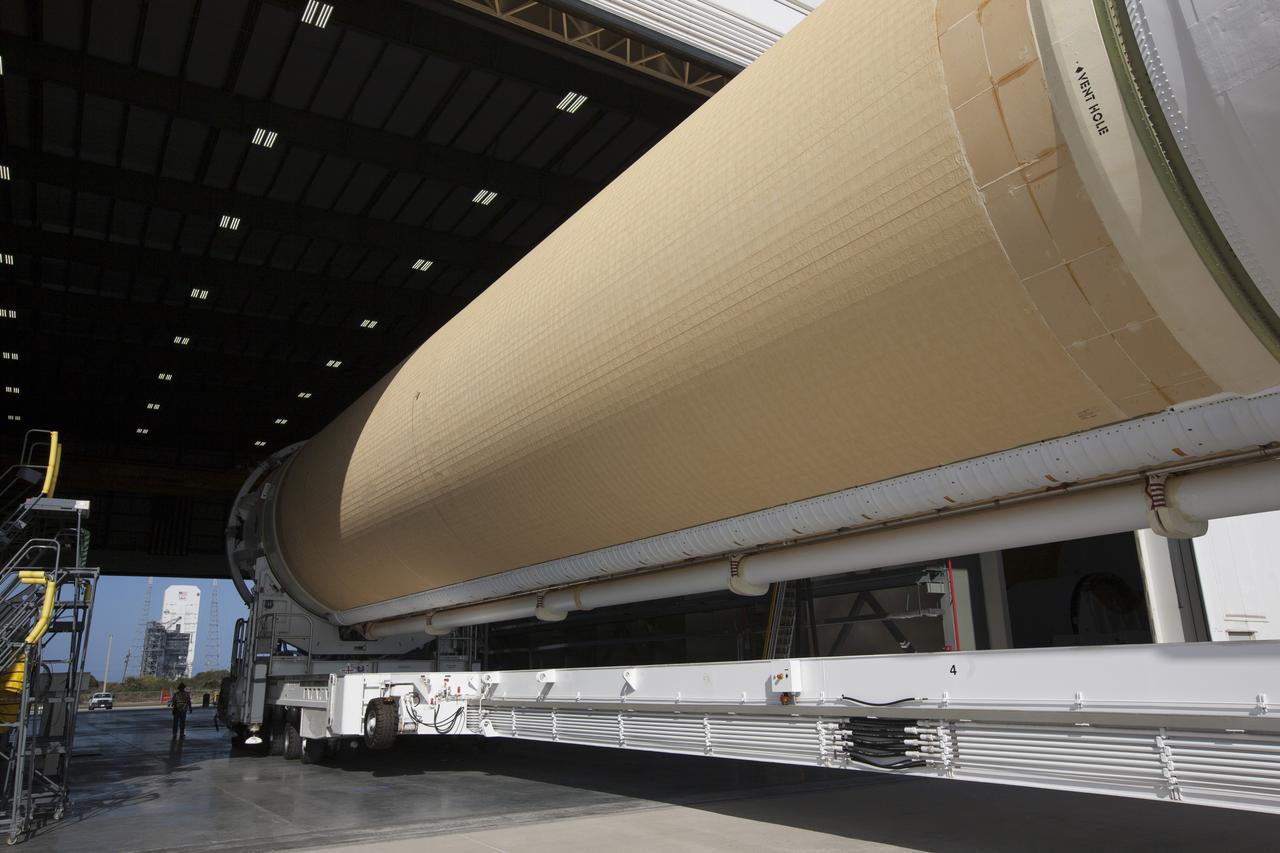
Orion Core Stage & Booster Offload, Move to HIF
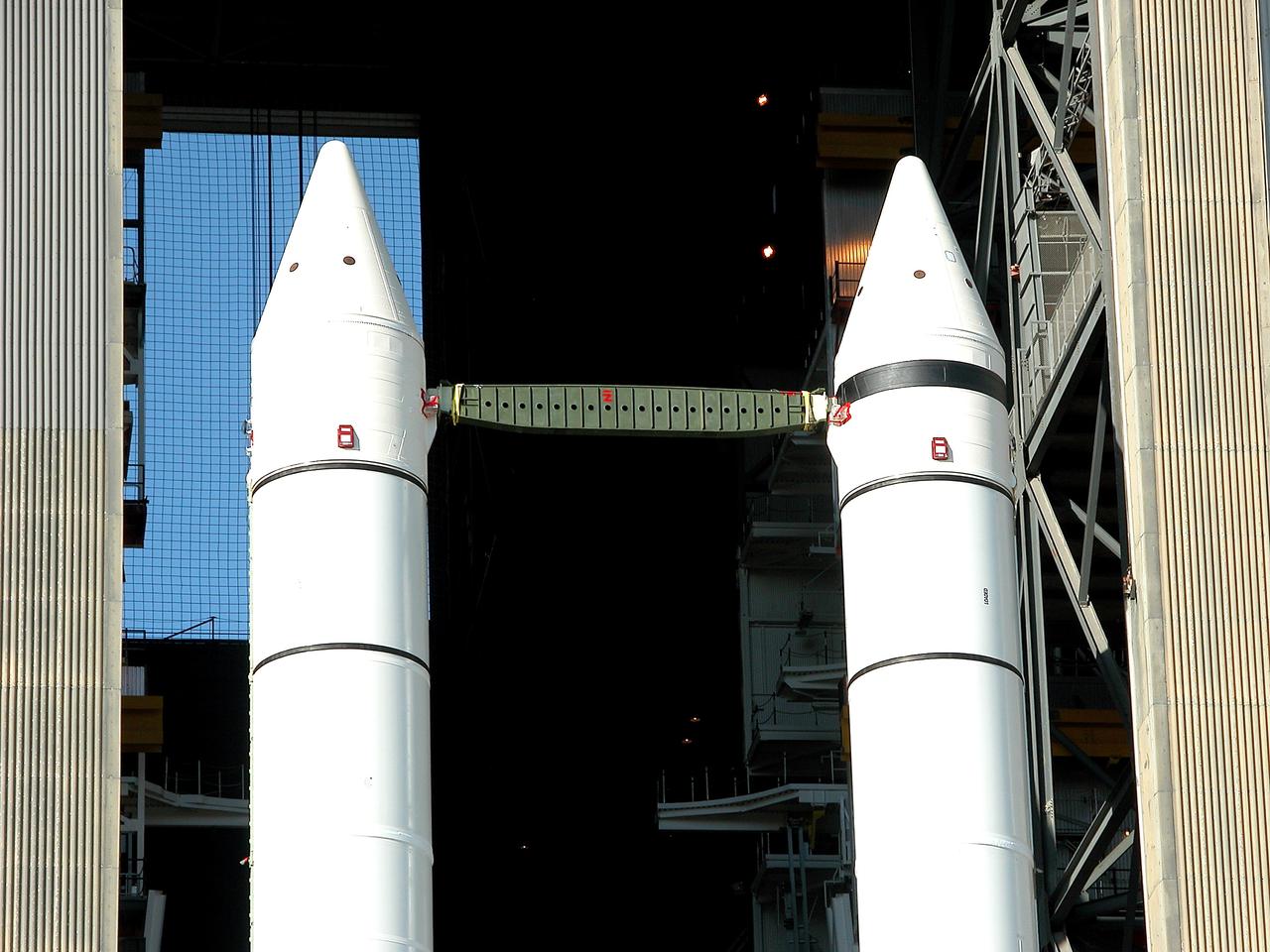
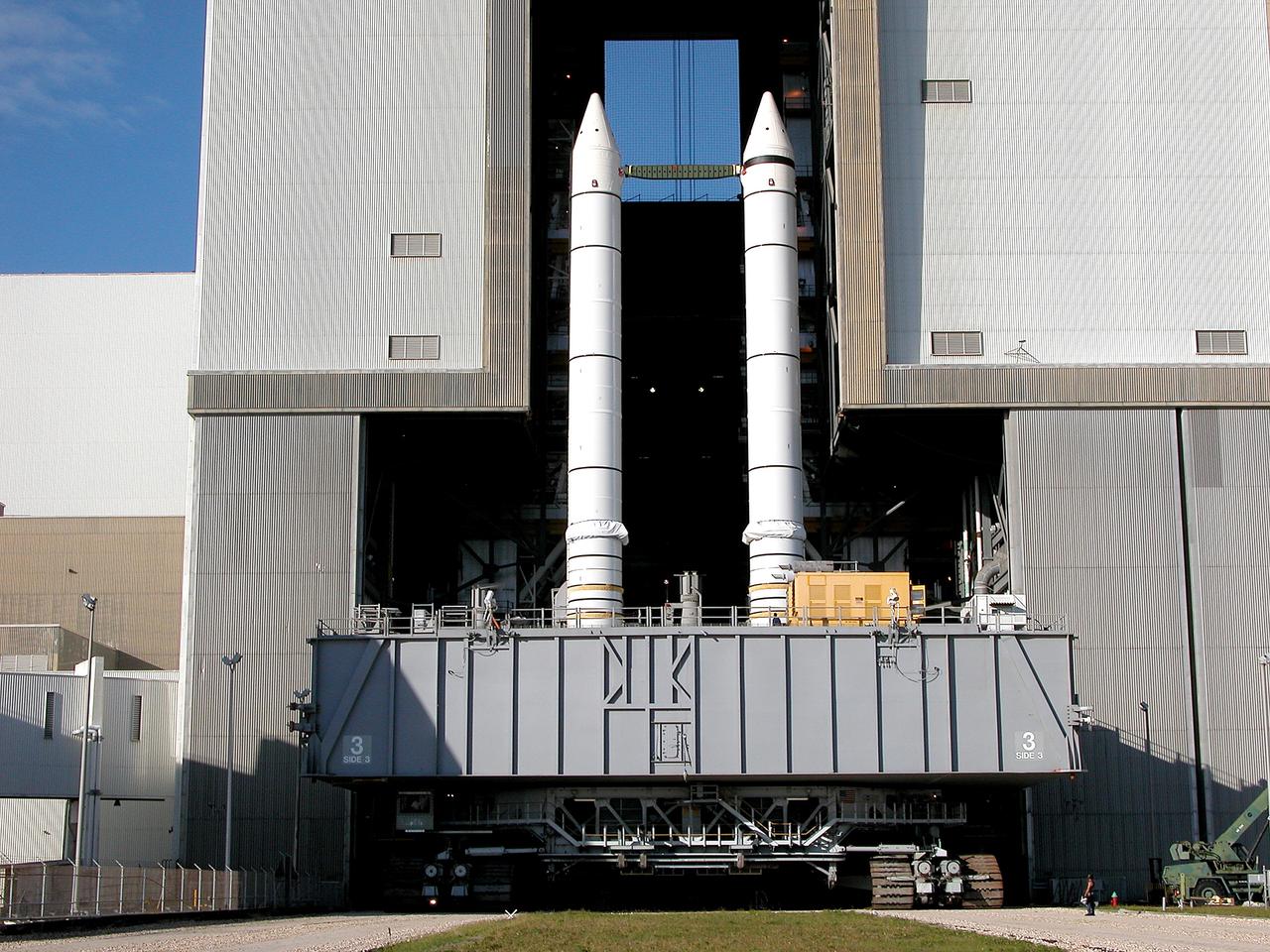
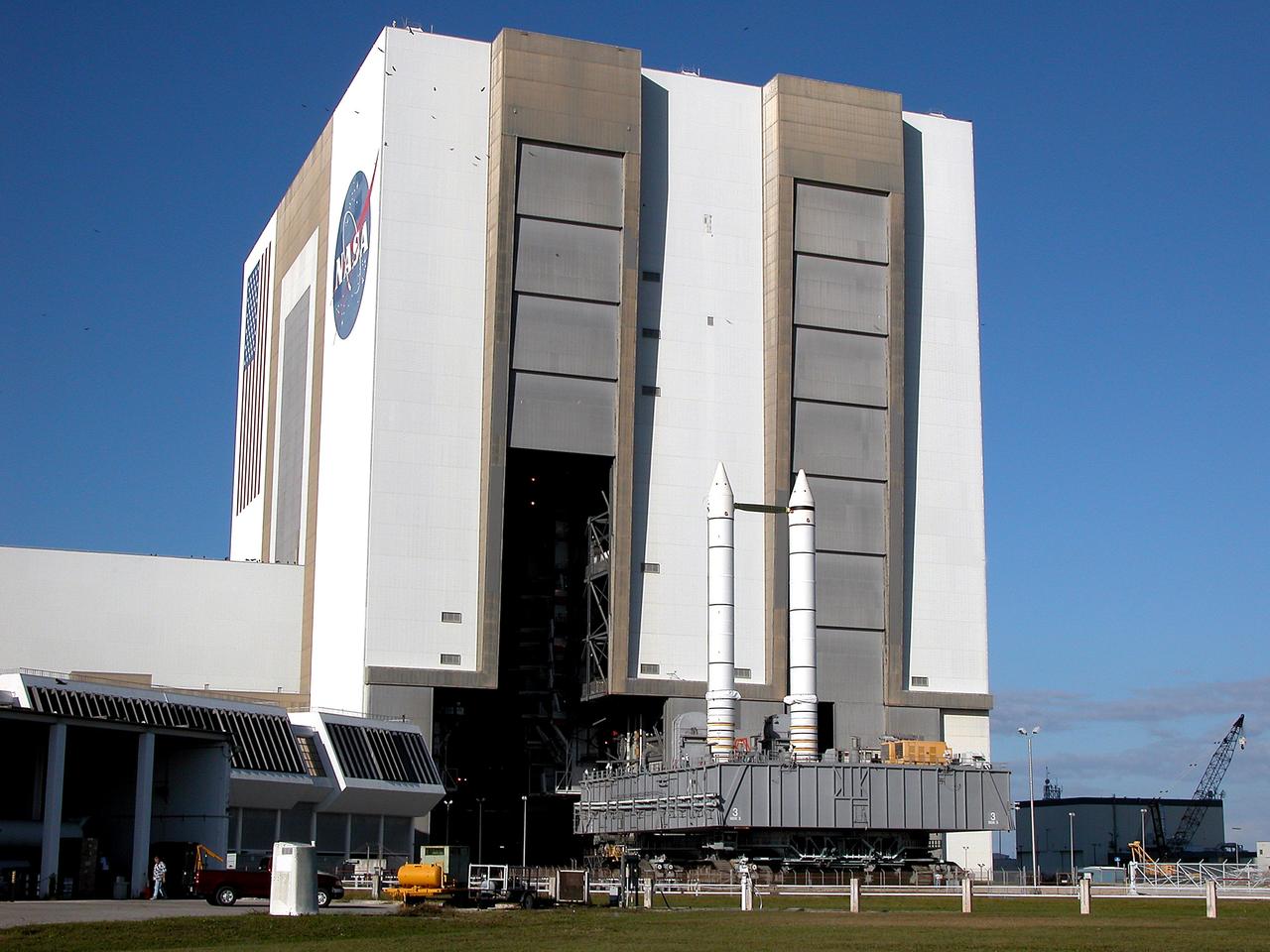
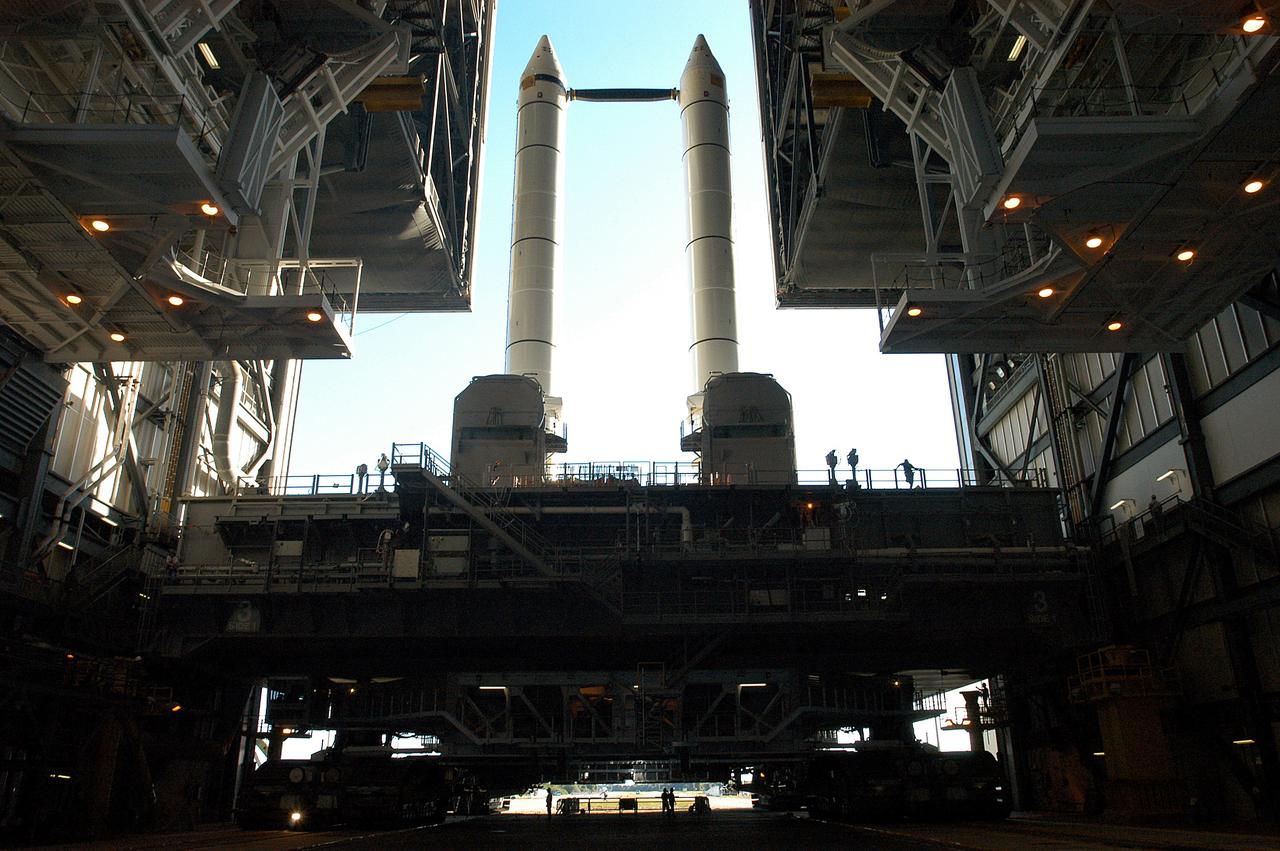
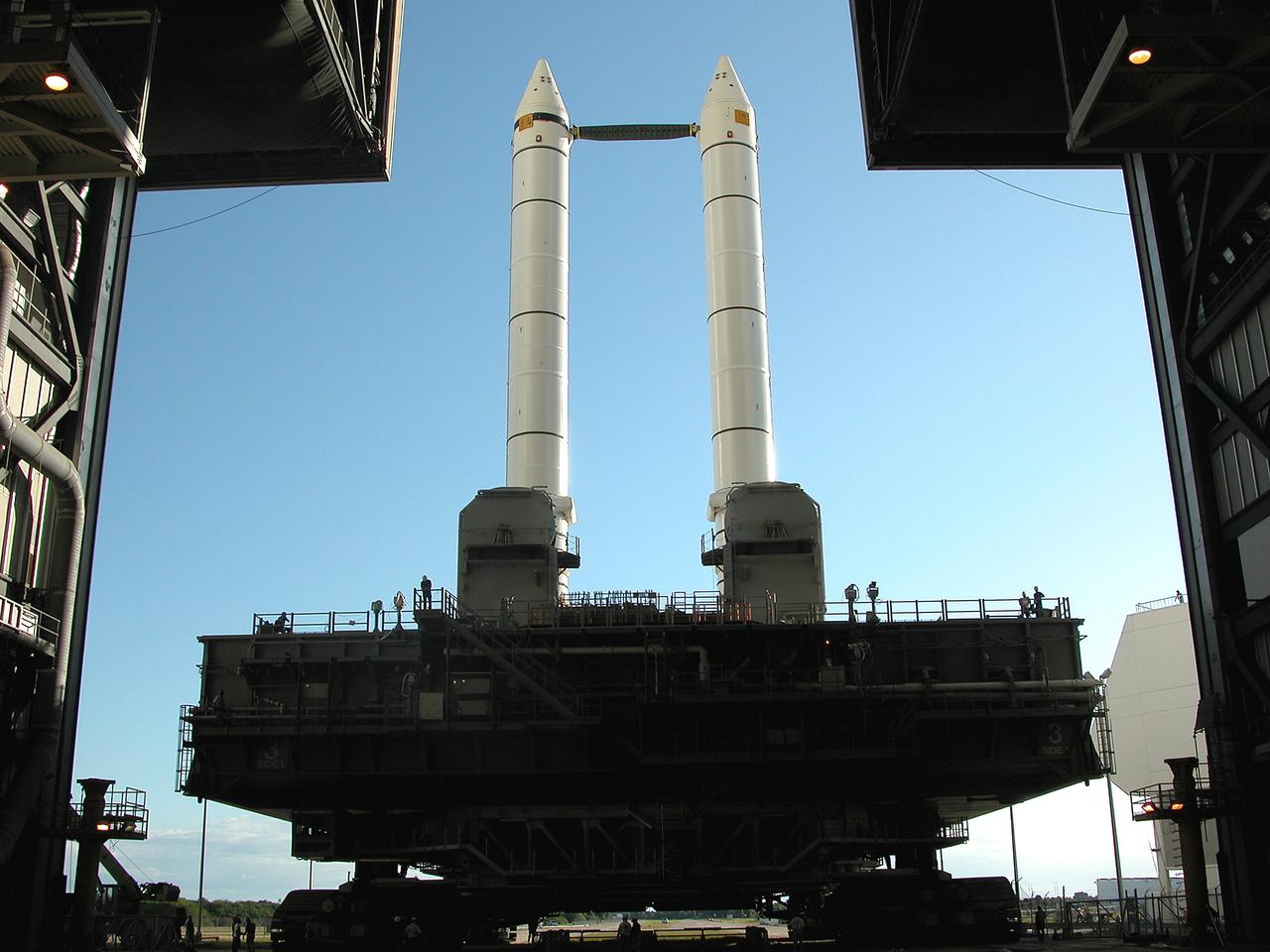
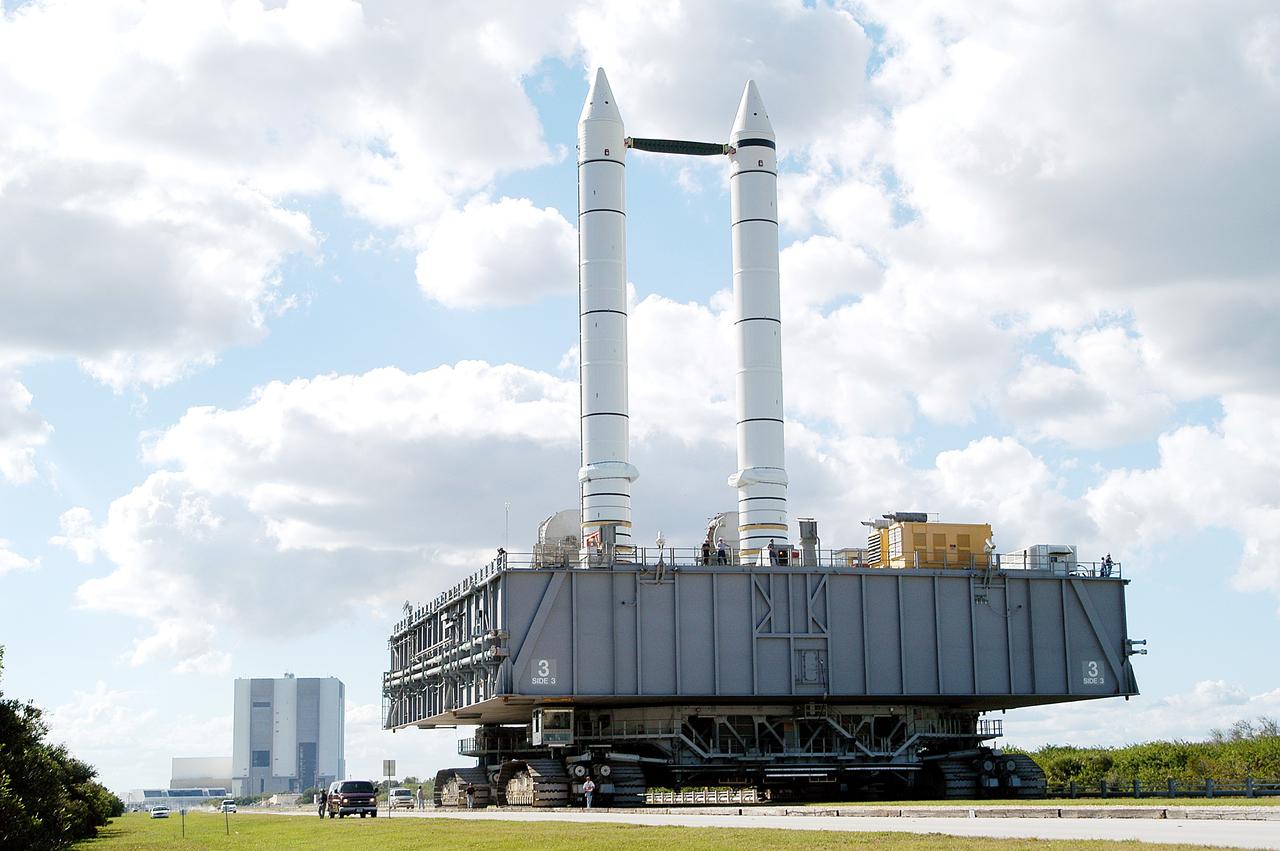
KENNEDY SPACE CENTER, FLA. -  As the crawler transporter slowly moves the Mobile Launcher Platform (MLP) out of the Vehicle Assembly Building, the two solid rocket boosters on top are framed in the doorway.  The move is in support of engineering analysis vibration tests on the crawler and MLP.  The crawler is moving at various speeds up to 1 mph in an effort to achieve vibration data gathering goals as it leaves the VAB and then returns.  The boosters are braced at the top for stability.  The primary purpose of these rollout tests is to gather data to develop future maintenance requirements on the transport equipment and the flight hardware. Various parts of the MLP and crawler transporter have been instrumented with vibration data collection equipment.
KENNEDY SPACE CENTER, FLA. - As the crawler transporter slowly moves the Mobile Launcher Platform (MLP) out of the Vehicle Assembly Building, the two solid rocket boosters on top are framed in the doorway. The move is in support of engineering analysis vibration tests on the crawler and MLP. The crawler is moving at various speeds up to 1 mph in an effort to achieve vibration data gathering goals as it leaves the VAB and then returns. The boosters are braced at the top for stability. The primary purpose of these rollout tests is to gather data to develop future maintenance requirements on the transport equipment and the flight hardware. Various parts of the MLP and crawler transporter have been instrumented with vibration data collection equipment.
KENNEDY SPACE CENTER, FLA. -  As the crawler transporter slowly moves the Mobile Launcher Platform (MLP) out of the Vehicle Assembly Building, the two solid rocket boosters on top are framed in the doorway.  The move is in support of engineering analysis vibration tests on the crawler and MLP. The crawler is moving at various speeds up to 1 mph in an effort to achieve vibration data gathering goals as it leaves the VAB and then returns.  The boosters are braced at the top for stability.  The primary purpose of these rollout tests is to gather data to develop future maintenance requirements on the transport equipment and the flight hardware. Various parts of the MLP and crawler transporter have been instrumented with vibration data collection equipment.
KENNEDY SPACE CENTER, FLA. - As the crawler transporter slowly moves the Mobile Launcher Platform (MLP) out of the Vehicle Assembly Building, the two solid rocket boosters on top are framed in the doorway. The move is in support of engineering analysis vibration tests on the crawler and MLP. The crawler is moving at various speeds up to 1 mph in an effort to achieve vibration data gathering goals as it leaves the VAB and then returns. The boosters are braced at the top for stability. The primary purpose of these rollout tests is to gather data to develop future maintenance requirements on the transport equipment and the flight hardware. Various parts of the MLP and crawler transporter have been instrumented with vibration data collection equipment.
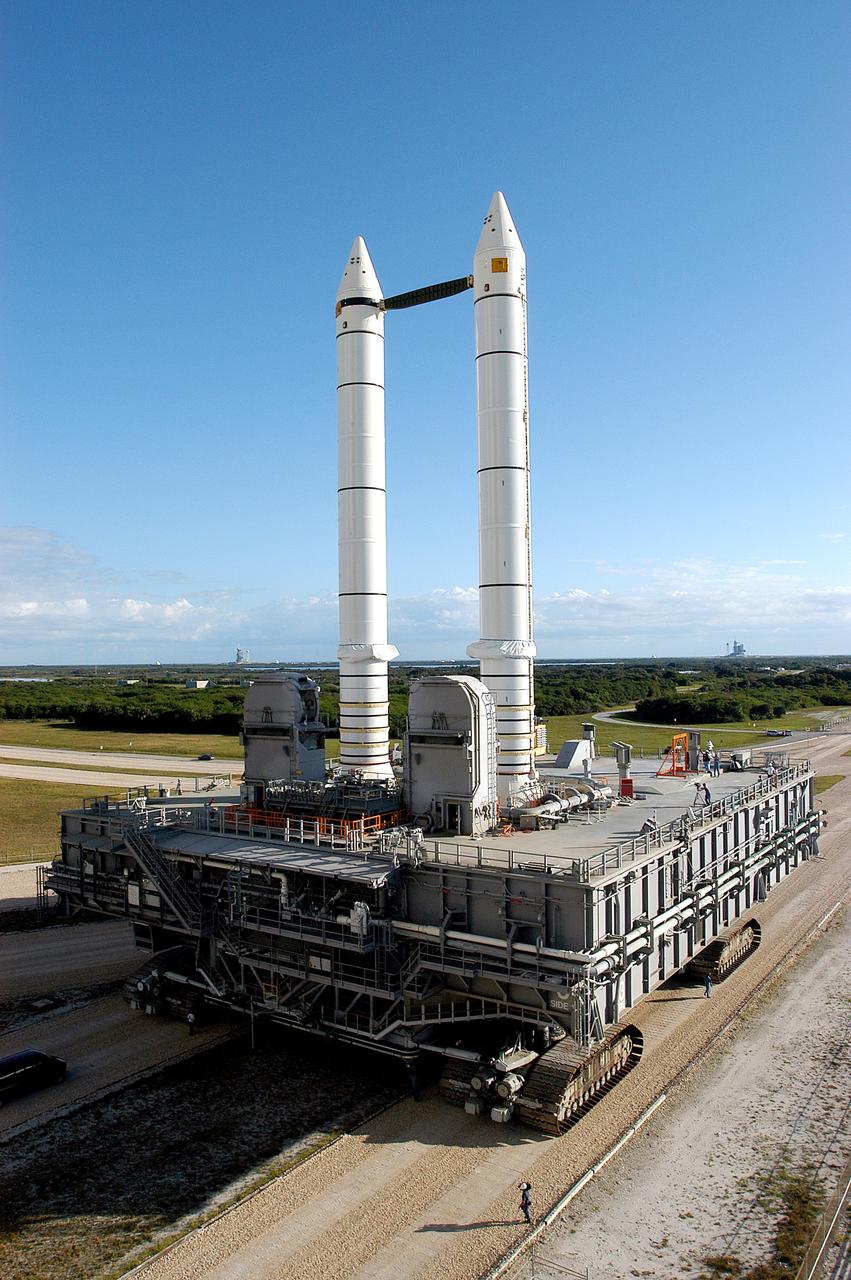
KENNEDY SPACE CENTER, FLA. -  The crawler transporter has slowly moved the Mobile Launcher Platform (MLP), carrying a set of twin solid rocket boosters, out of the Vehicle Assembly Building (VAB) in support of engineering analysis vibration tests on the crawler and MLP. The crawler is moving at various speeds up to 1 mph in an effort to achieve vibration data gathering goals as it leaves the VAB and then returns.  The boosters are braced at the top for stability.  The primary purpose of these rollout tests is to gather data to develop future maintenance requirements on the transport equipment and the flight hardware. Various parts of the MLP and crawler transporter have been instrumented with vibration data collection equipment.
KENNEDY SPACE CENTER, FLA. - The crawler transporter has slowly moved the Mobile Launcher Platform (MLP), carrying a set of twin solid rocket boosters, out of the Vehicle Assembly Building (VAB) in support of engineering analysis vibration tests on the crawler and MLP. The crawler is moving at various speeds up to 1 mph in an effort to achieve vibration data gathering goals as it leaves the VAB and then returns. The boosters are braced at the top for stability. The primary purpose of these rollout tests is to gather data to develop future maintenance requirements on the transport equipment and the flight hardware. Various parts of the MLP and crawler transporter have been instrumented with vibration data collection equipment.
KENNEDY SPACE CENTER, FLA. -  The crawler transporter slowly moves the Mobile Launcher Platform (MLP), carrying a set of twin solid rocket boosters, out of the Vehicle Assembly Building (VAB) in support of engineering analysis vibration tests on the crawler and MLP.   The crawler is moving at various speeds up to 1 mph in an effort to achieve vibration data gathering goals as it leaves the VAB and then returns.  The boosters are braced at the top for stability.  The primary purpose of these rollout tests is to gather data to develop future maintenance requirements on the transport equipment and the flight hardware. Various parts of the MLP and crawler transporter have been instrumented with vibration data collection equipment.
KENNEDY SPACE CENTER, FLA. - The crawler transporter slowly moves the Mobile Launcher Platform (MLP), carrying a set of twin solid rocket boosters, out of the Vehicle Assembly Building (VAB) in support of engineering analysis vibration tests on the crawler and MLP. The crawler is moving at various speeds up to 1 mph in an effort to achieve vibration data gathering goals as it leaves the VAB and then returns. The boosters are braced at the top for stability. The primary purpose of these rollout tests is to gather data to develop future maintenance requirements on the transport equipment and the flight hardware. Various parts of the MLP and crawler transporter have been instrumented with vibration data collection equipment.
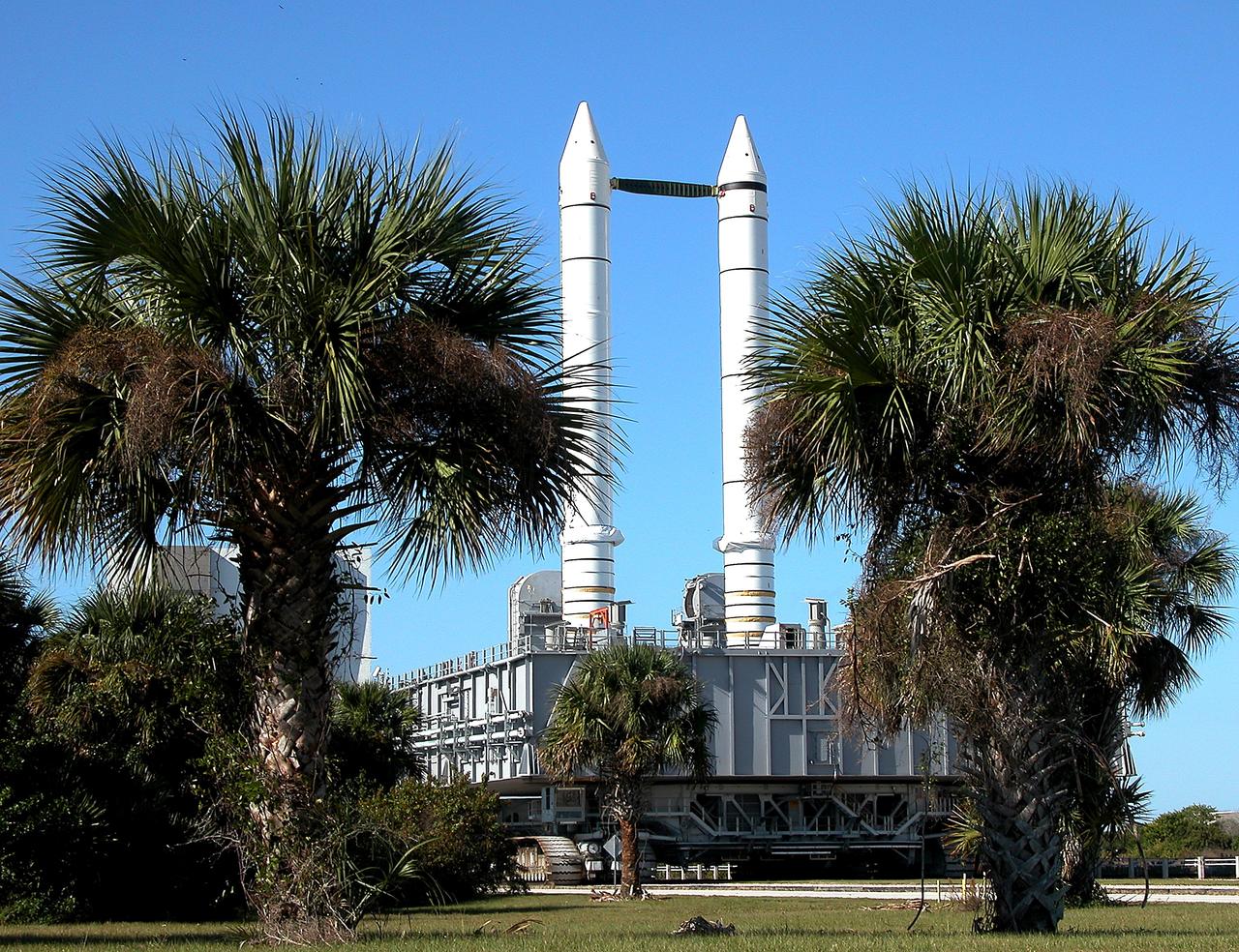
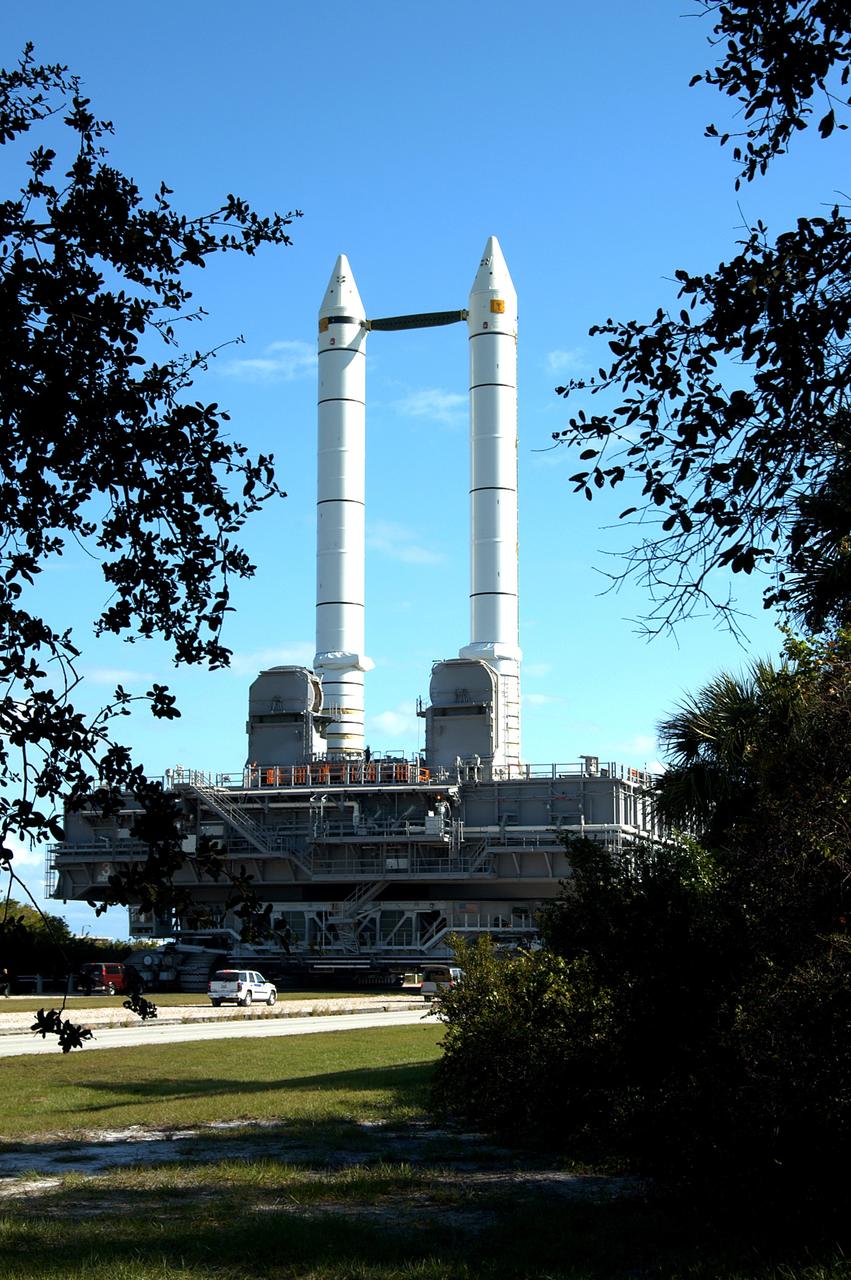
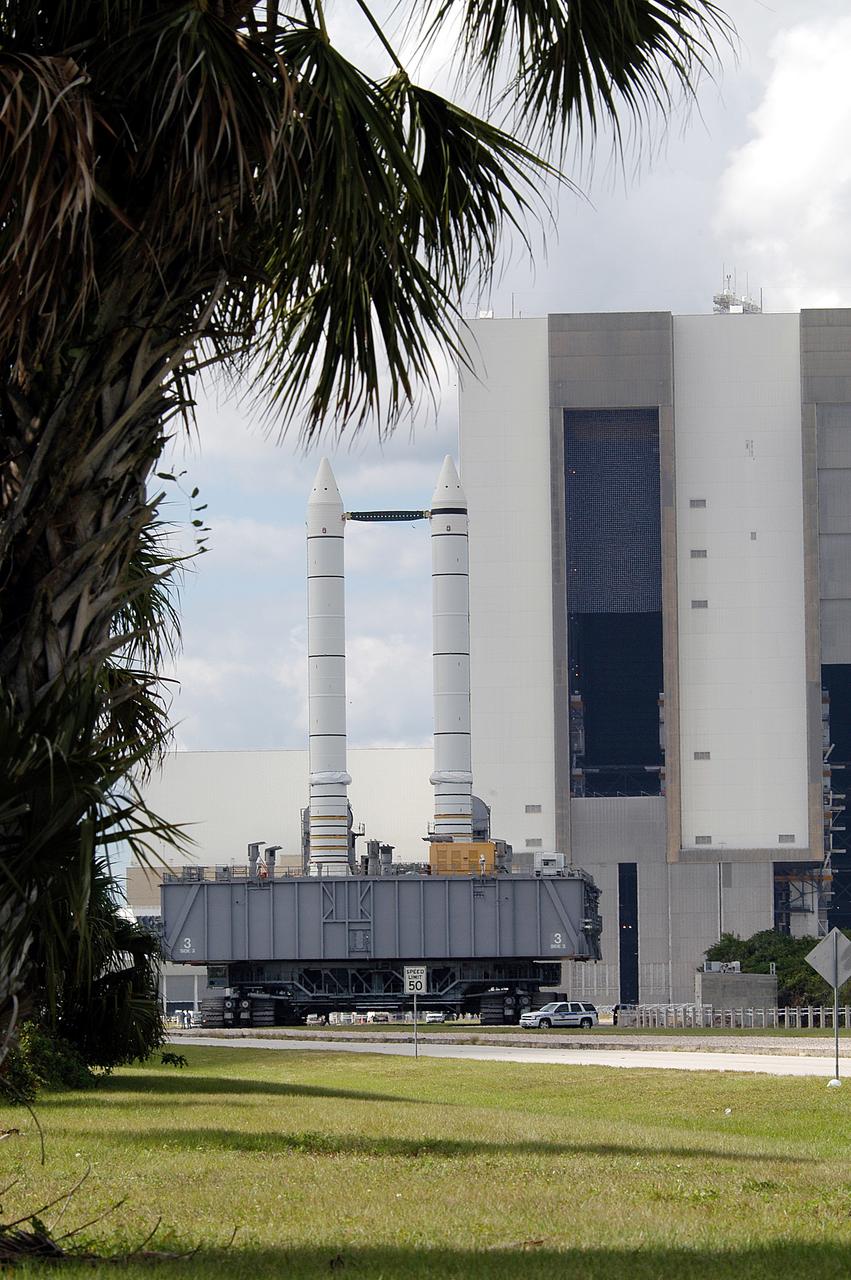
KENNEDY SPACE CENTER, FLA. -  Framed between palm trees, solid rocket boosters loom above the Mobile Launcher Platform (MLP) as the crawler transporter slowly moves it along the crawlerway.  The journey is in support of engineering analysis vibration tests on the crawler and MLP.  The crawler is moving at various speeds up to 1 mph in an effort to achieve vibration data gathering goals as it leaves the VAB and then returns.  The boosters are braced at the top for stability. The primary purpose of these rollout tests is to gather data to develop future maintenance requirements on the transport equipment and the flight hardware. Various parts of the MLP and crawler transporter have been instrumented with vibration data collection equipment.
KENNEDY SPACE CENTER, FLA. - Framed between palm trees, solid rocket boosters loom above the Mobile Launcher Platform (MLP) as the crawler transporter slowly moves it along the crawlerway. The journey is in support of engineering analysis vibration tests on the crawler and MLP. The crawler is moving at various speeds up to 1 mph in an effort to achieve vibration data gathering goals as it leaves the VAB and then returns. The boosters are braced at the top for stability. The primary purpose of these rollout tests is to gather data to develop future maintenance requirements on the transport equipment and the flight hardware. Various parts of the MLP and crawler transporter have been instrumented with vibration data collection equipment.
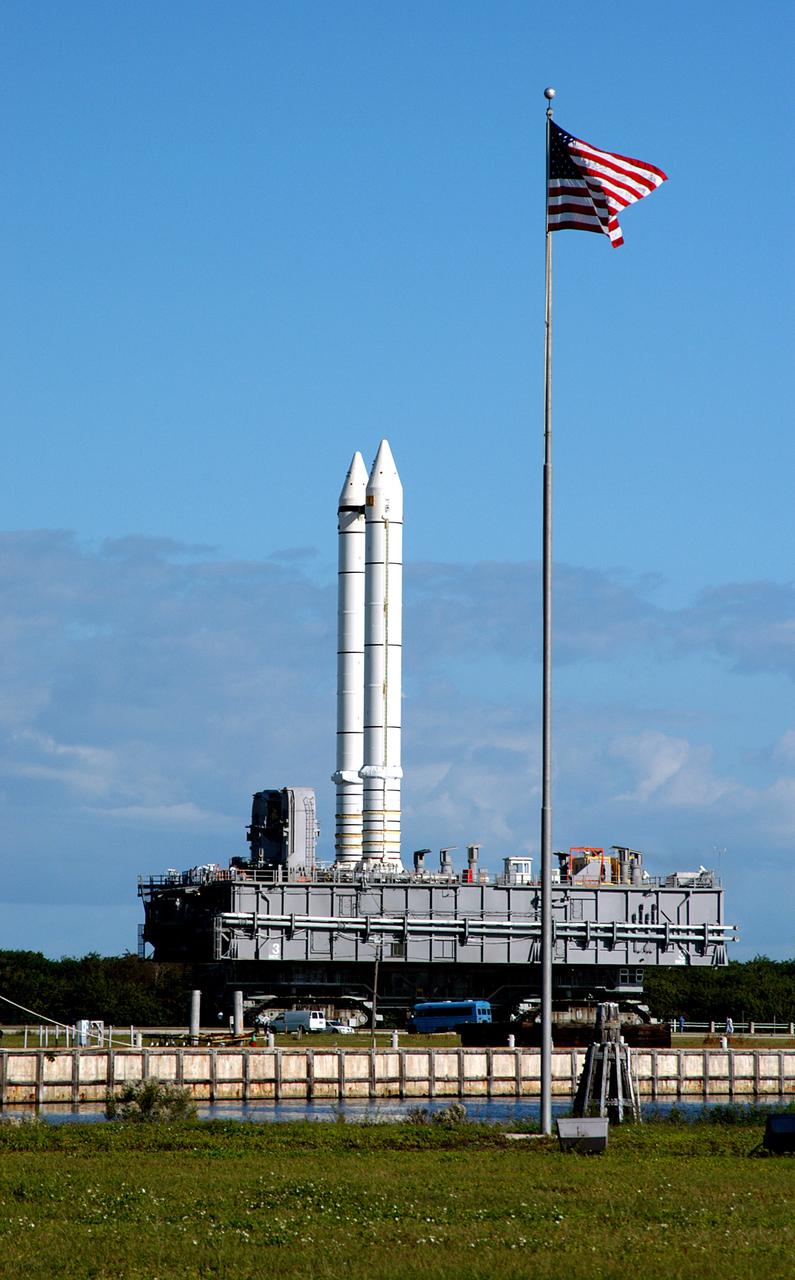
KENNEDY SPACE CENTER, FLA. - Carrying a set of twin solid rocket boosters, the crawler transporter slowly moves the Mobile Launcher Platform (MLP) past the NASA-KSC News Center where the U.S. flag flies daily.  The journey is in support of engineering analysis vibration tests on the crawler and MLP. The crawler is moving at various speeds up to 1 mph in an effort to achieve vibration data gathering goals as it leaves the VAB and then returns.  The boosters are braced at the top for stability.  The primary purpose of these rollout tests is to gather data to develop future maintenance requirements on the transport equipment and the flight hardware. Various parts of the MLP and crawler transporter have been instrumented with vibration data collection equipment.
KENNEDY SPACE CENTER, FLA. - Carrying a set of twin solid rocket boosters, the crawler transporter slowly moves the Mobile Launcher Platform (MLP) past the NASA-KSC News Center where the U.S. flag flies daily. The journey is in support of engineering analysis vibration tests on the crawler and MLP. The crawler is moving at various speeds up to 1 mph in an effort to achieve vibration data gathering goals as it leaves the VAB and then returns. The boosters are braced at the top for stability. The primary purpose of these rollout tests is to gather data to develop future maintenance requirements on the transport equipment and the flight hardware. Various parts of the MLP and crawler transporter have been instrumented with vibration data collection equipment.
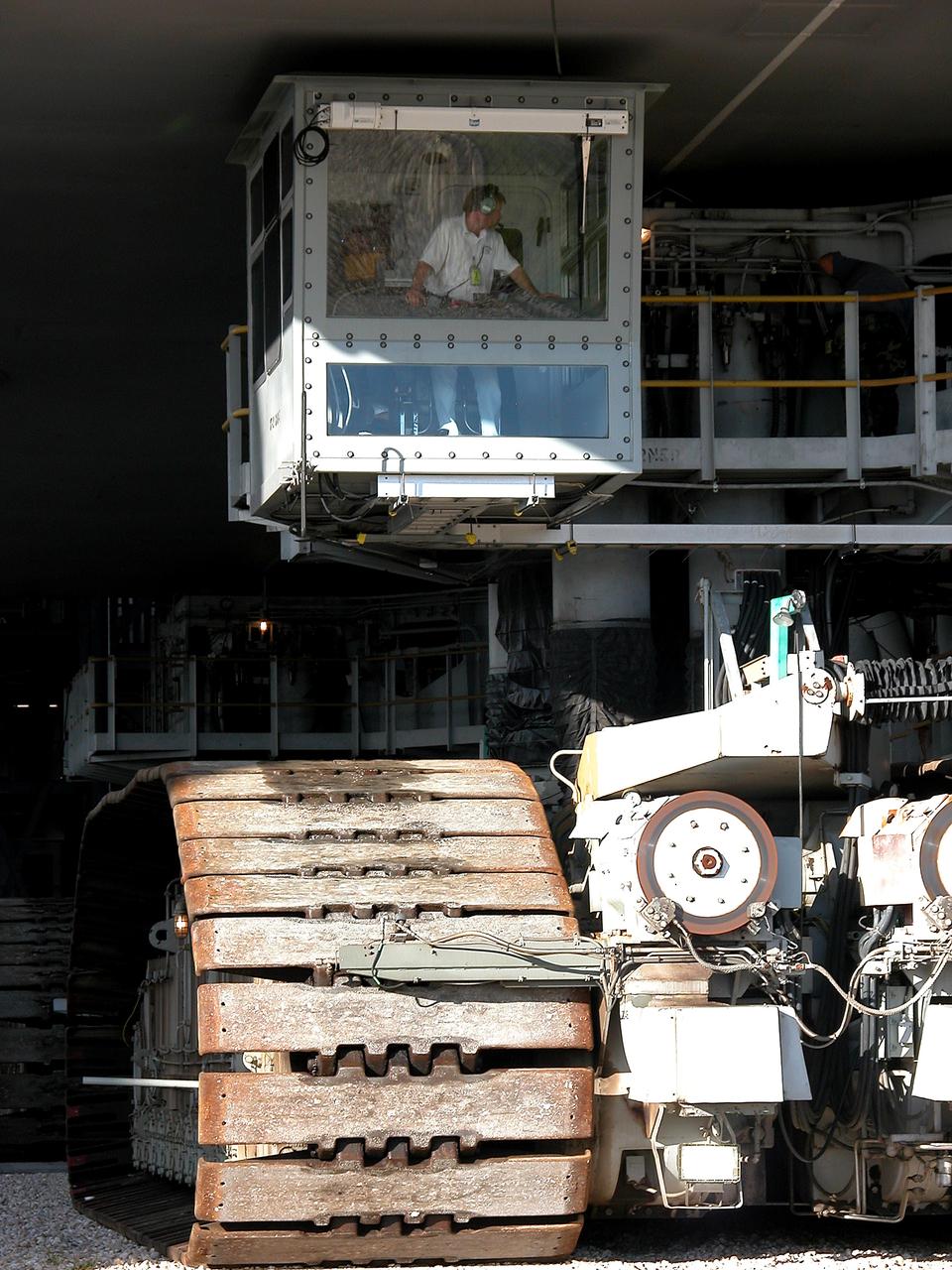
KENNEDY SPACE CENTER, FLA. -  As the crawler transporter slowly moves the Mobile Launcher Platform (MLP) out of the Vehicle Assembly Building, the driver of the front control cab can be seen.  The MLP is carrying two solid rocket boosters for engineering analysis vibration tests on the crawler and MLP.    The crawler is moving at various speeds up to 1 mph in an effort to achieve vibration data gathering goals as it leaves the VAB and then returns.  The boosters are braced at the top for stability.  The primary purpose of these rollout tests is to gather data to develop future maintenance requirements on the transport equipment and the flight hardware. Various parts of the MLP and crawler transporter have been instrumented with vibration data collection equipment.
KENNEDY SPACE CENTER, FLA. - As the crawler transporter slowly moves the Mobile Launcher Platform (MLP) out of the Vehicle Assembly Building, the driver of the front control cab can be seen. The MLP is carrying two solid rocket boosters for engineering analysis vibration tests on the crawler and MLP. The crawler is moving at various speeds up to 1 mph in an effort to achieve vibration data gathering goals as it leaves the VAB and then returns. The boosters are braced at the top for stability. The primary purpose of these rollout tests is to gather data to develop future maintenance requirements on the transport equipment and the flight hardware. Various parts of the MLP and crawler transporter have been instrumented with vibration data collection equipment.
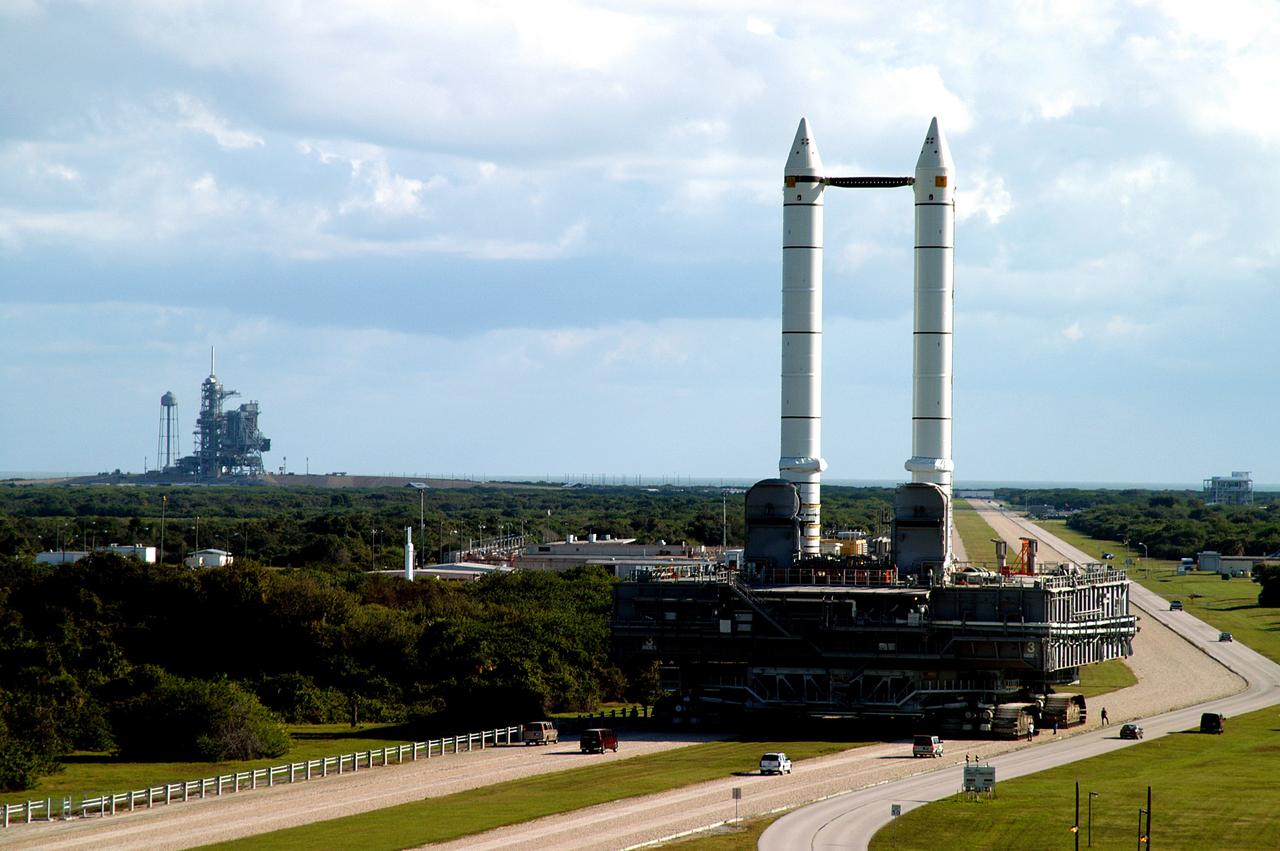
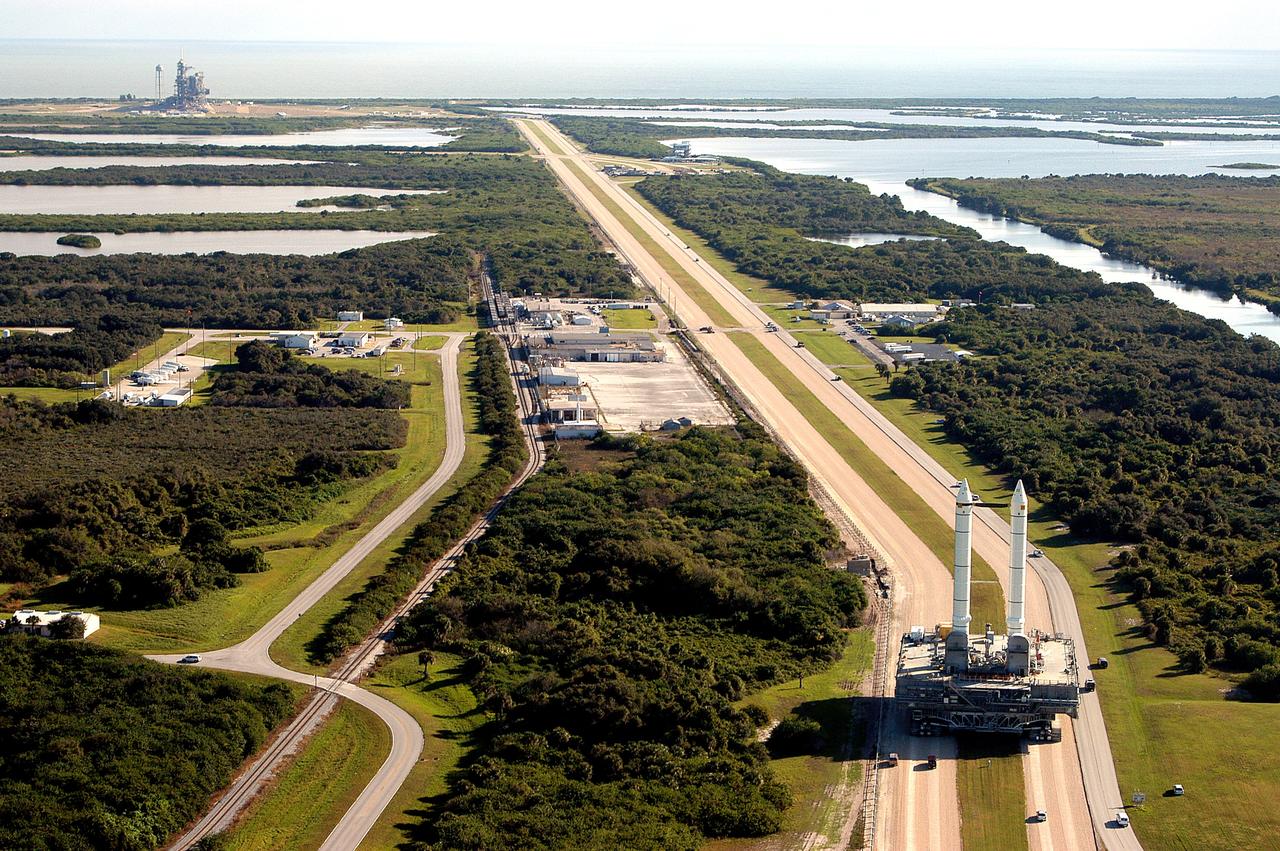
KENNEDY SPACE CENTER, FLA. -  The crawler transporter slowly moves the Mobile Launcher Platform (MLP), carrying a set of twin solid rocket boosters, along the crawlerway in support of engineering analysis vibration tests on the crawler and MLP.   In the distance, at left, is Launch Pad 39A. The crawler is moving at various speeds up to 1 mph in an effort to achieve vibration data gathering goals as it leaves the VAB and then returns.  The boosters are braced at the top for stability.  The primary purpose of these rollout tests is to gather data to develop future maintenance requirements on the transport equipment and the flight hardware. Various parts of the MLP and crawler transporter have been instrumented with vibration data collection equipment.
KENNEDY SPACE CENTER, FLA. - The crawler transporter slowly moves the Mobile Launcher Platform (MLP), carrying a set of twin solid rocket boosters, along the crawlerway in support of engineering analysis vibration tests on the crawler and MLP. In the distance, at left, is Launch Pad 39A. The crawler is moving at various speeds up to 1 mph in an effort to achieve vibration data gathering goals as it leaves the VAB and then returns. The boosters are braced at the top for stability. The primary purpose of these rollout tests is to gather data to develop future maintenance requirements on the transport equipment and the flight hardware. Various parts of the MLP and crawler transporter have been instrumented with vibration data collection equipment.
KENNEDY SPACE CENTER, FLA. -   The crawler transporter is slowly moving the Mobile Launcher Platform (MLP), carrying a set of twin solid rocket boosters, out of the Vehicle Assembly Building (VAB) in support of engineering analysis vibration tests on the crawler and MLP. The crawler is moving at various speeds up to 1 mph in an effort to achieve vibration data gathering goals as it leaves the VAB and then returns.  The boosters are braced at the top for stability.  The primary purpose of these rollout tests is to gather data to develop future maintenance requirements on the transport equipment and the flight hardware. Various parts of the MLP and crawler transporter have been instrumented with vibration data collection equipment.
KENNEDY SPACE CENTER, FLA. - The crawler transporter is slowly moving the Mobile Launcher Platform (MLP), carrying a set of twin solid rocket boosters, out of the Vehicle Assembly Building (VAB) in support of engineering analysis vibration tests on the crawler and MLP. The crawler is moving at various speeds up to 1 mph in an effort to achieve vibration data gathering goals as it leaves the VAB and then returns. The boosters are braced at the top for stability. The primary purpose of these rollout tests is to gather data to develop future maintenance requirements on the transport equipment and the flight hardware. Various parts of the MLP and crawler transporter have been instrumented with vibration data collection equipment.
KENNEDY SPACE CENTER, FLA. -  The crawler transporter slowly moves the Mobile Launcher Platform (MLP), carrying a set of twin solid rocket boosters, away from the Vehicle Assembly Building (VAB) in support of engineering analysis vibration tests on the crawler and MLP.   The crawler is moving at various speeds up to 1 mph in an effort to achieve vibration data gathering goals as it leaves the VAB and then returns.  The boosters are braced at the top for stability.  The primary purpose of these rollout tests is to gather data to develop future maintenance requirements on the transport equipment and the flight hardware. Various parts of the MLP and crawler transporter have been instrumented with vibration data collection equipment.
KENNEDY SPACE CENTER, FLA. - The crawler transporter slowly moves the Mobile Launcher Platform (MLP), carrying a set of twin solid rocket boosters, away from the Vehicle Assembly Building (VAB) in support of engineering analysis vibration tests on the crawler and MLP. The crawler is moving at various speeds up to 1 mph in an effort to achieve vibration data gathering goals as it leaves the VAB and then returns. The boosters are braced at the top for stability. The primary purpose of these rollout tests is to gather data to develop future maintenance requirements on the transport equipment and the flight hardware. Various parts of the MLP and crawler transporter have been instrumented with vibration data collection equipment.
KENNEDY SPACE CENTER, FLA. -   The crawler transporter slowly moves the Mobile Launcher Platform (MLP), carrying a set of twin solid rocket boosters, along the crawlerway in support of engineering analysis vibration tests on the crawler and MLP.  The crawler is moving at various speeds up to 1 mph in an effort to achieve vibration data gathering goals as it leaves the VAB and then returns.  The boosters are braced at the top for stability.  The primary purpose of these rollout tests is to gather data to develop future maintenance requirements on the transport equipment and the flight hardware. Various parts of the MLP and crawler transporter have been instrumented with vibration data collection equipment.
KENNEDY SPACE CENTER, FLA. - The crawler transporter slowly moves the Mobile Launcher Platform (MLP), carrying a set of twin solid rocket boosters, along the crawlerway in support of engineering analysis vibration tests on the crawler and MLP. The crawler is moving at various speeds up to 1 mph in an effort to achieve vibration data gathering goals as it leaves the VAB and then returns. The boosters are braced at the top for stability. The primary purpose of these rollout tests is to gather data to develop future maintenance requirements on the transport equipment and the flight hardware. Various parts of the MLP and crawler transporter have been instrumented with vibration data collection equipment.
KENNEDY SPACE CENTER, FLA. -  The crawler transporter slowly moves the Mobile Launcher Platform (MLP), carrying a set of twin solid rocket boosters, away from the Vehicle Assembly Building (VAB) in support of engineering analysis vibration tests on the crawler and MLP.   The crawler is moving at various speeds up to 1 mph in an effort to achieve vibration data gathering goals as it leaves the VAB and then returns.  The boosters are braced at the top for stability.  The primary purpose of these rollout tests is to gather data to develop future maintenance requirements on the transport equipment and the flight hardware. Various parts of the MLP and crawler transporter have been instrumented with vibration data collection equipment.
KENNEDY SPACE CENTER, FLA. - The crawler transporter slowly moves the Mobile Launcher Platform (MLP), carrying a set of twin solid rocket boosters, away from the Vehicle Assembly Building (VAB) in support of engineering analysis vibration tests on the crawler and MLP. The crawler is moving at various speeds up to 1 mph in an effort to achieve vibration data gathering goals as it leaves the VAB and then returns. The boosters are braced at the top for stability. The primary purpose of these rollout tests is to gather data to develop future maintenance requirements on the transport equipment and the flight hardware. Various parts of the MLP and crawler transporter have been instrumented with vibration data collection equipment.
KENNEDY SPACE CENTER, FLA. -  The crawler transporter slowly moves the Mobile Launcher Platform (MLP), carrying a set of twin solid rocket boosters, away from the Vehicle Assembly Building (VAB) in support of engineering analysis vibration tests on the crawler and MLP.  On either side of the boosters on the horizon can be seen the two launch pads. The crawler is moving at various speeds up to 1 mph in an effort to achieve vibration data gathering goals as it leaves the VAB and then returns.  The boosters are braced at the top for stability.  The primary purpose of these rollout tests is to gather data to develop future maintenance requirements on the transport equipment and the flight hardware. Various parts of the MLP and crawler transporter have been instrumented with vibration data collection equipment.
KENNEDY SPACE CENTER, FLA. - The crawler transporter slowly moves the Mobile Launcher Platform (MLP), carrying a set of twin solid rocket boosters, away from the Vehicle Assembly Building (VAB) in support of engineering analysis vibration tests on the crawler and MLP. On either side of the boosters on the horizon can be seen the two launch pads. The crawler is moving at various speeds up to 1 mph in an effort to achieve vibration data gathering goals as it leaves the VAB and then returns. The boosters are braced at the top for stability. The primary purpose of these rollout tests is to gather data to develop future maintenance requirements on the transport equipment and the flight hardware. Various parts of the MLP and crawler transporter have been instrumented with vibration data collection equipment.
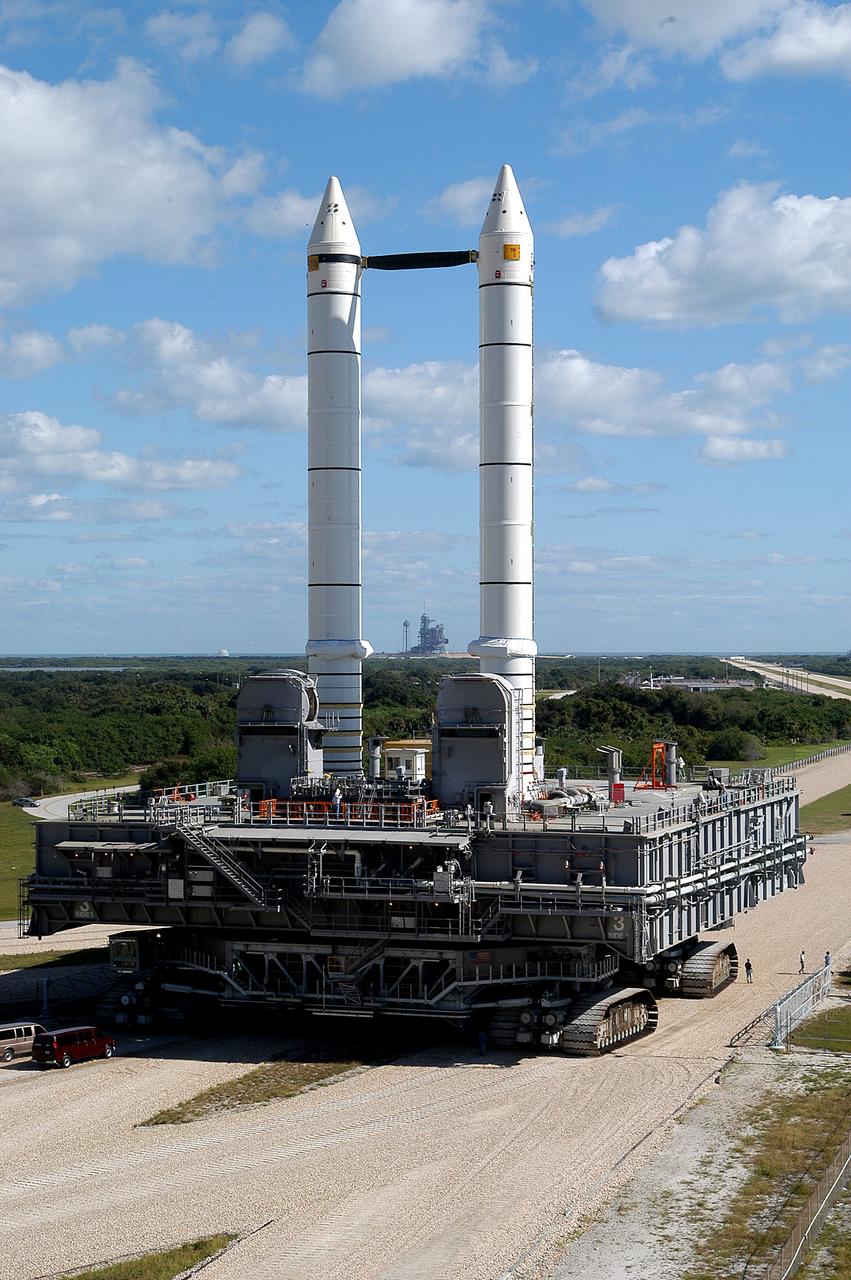
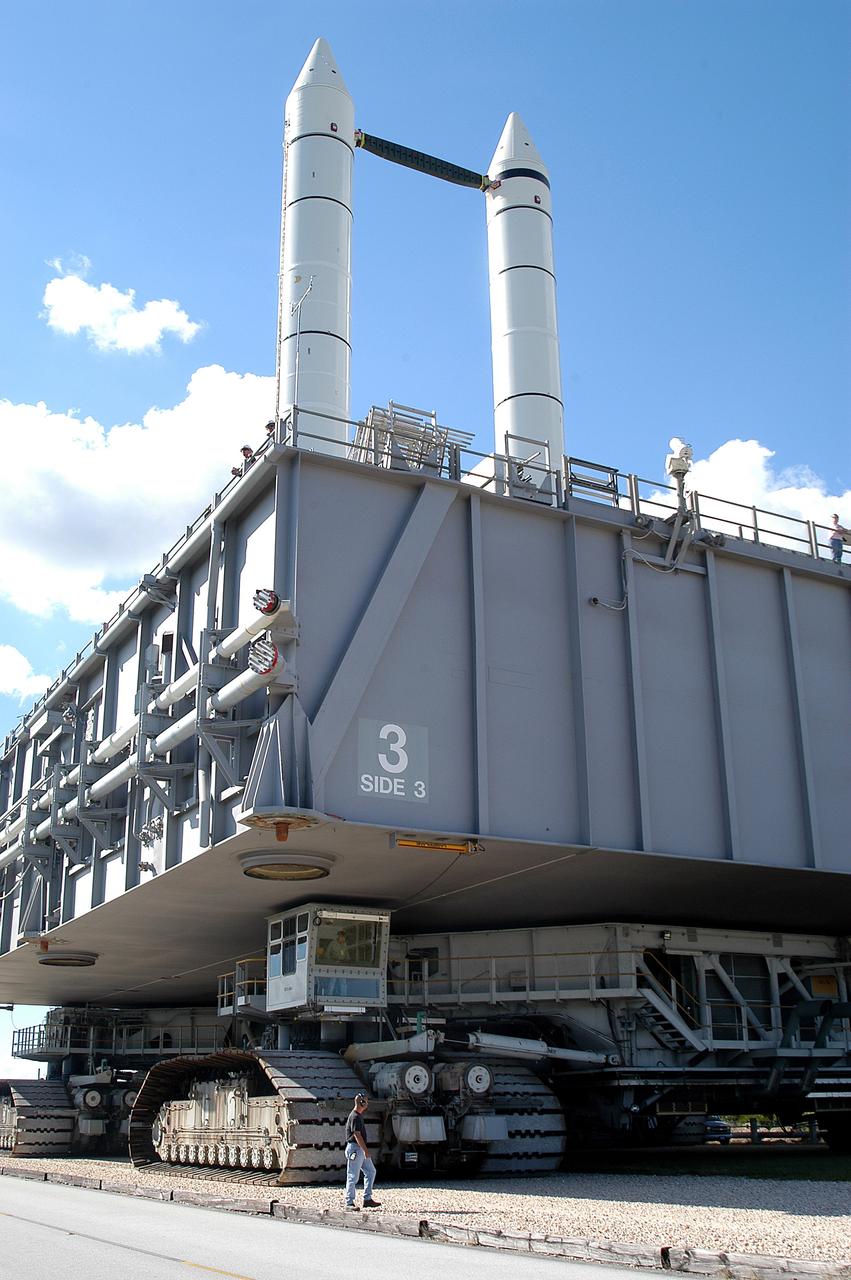
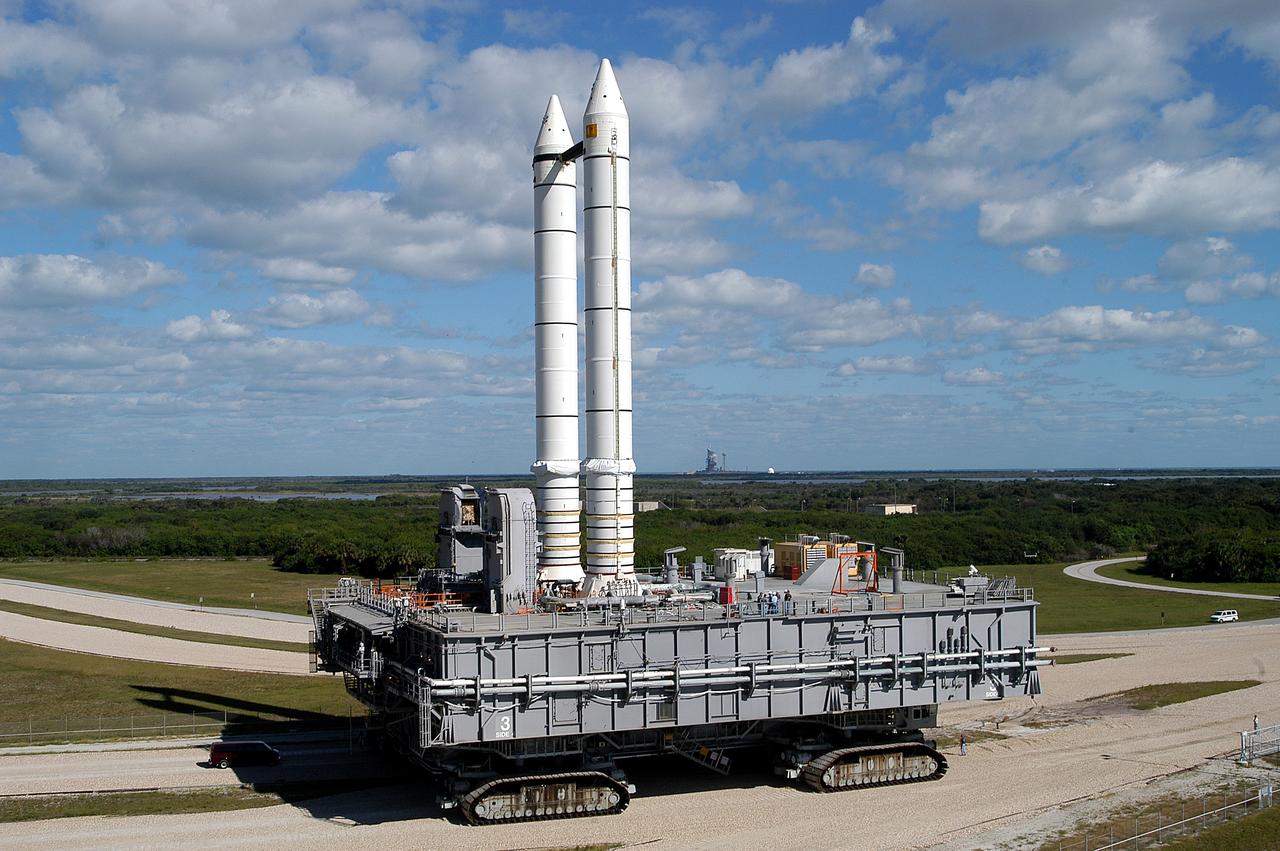
KENNEDY SPACE CENTER, FLA. -  Mobile Launcher Platform (MLP) number 3 and a set of twin solid rocket boosters, atop the crawler-transporter, inch along the crawlerway in support of the second engineering analysis vibration test on the crawler and MLP. The crawler is moving at various speeds up to 1 mph in an effort to achieve vibration data gathering goals as it leaves the VAB, travels toward Launch Pad 39A (framed between the boosters), and then returns.  The boosters are braced at the top for stability.  The primary purpose of these rollout tests is to gather data to develop future maintenance requirements on the transport equipment and the flight hardware. Various parts of the MLP and crawler transporter have been instrumented with vibration data collection equipment.
KENNEDY SPACE CENTER, FLA. - Mobile Launcher Platform (MLP) number 3 and a set of twin solid rocket boosters, atop the crawler-transporter, inch along the crawlerway in support of the second engineering analysis vibration test on the crawler and MLP. The crawler is moving at various speeds up to 1 mph in an effort to achieve vibration data gathering goals as it leaves the VAB, travels toward Launch Pad 39A (framed between the boosters), and then returns. The boosters are braced at the top for stability. The primary purpose of these rollout tests is to gather data to develop future maintenance requirements on the transport equipment and the flight hardware. Various parts of the MLP and crawler transporter have been instrumented with vibration data collection equipment.
KENNEDY SPACE CENTER, FLA. -  The crawler transporter slowly moves the Mobile Launcher Platform (MLP), carrying a set of twin solid rocket boosters, away from the Vehicle Assembly Building (VAB) in support of engineering analysis vibration tests on the crawler and MLP.   In the distance, at left, is Launch Pad 39A.  The water on the right of the crawlerway is the Banana River.  The crawler is moving at various speeds up to 1 mph in an effort to achieve vibration data gathering goals as it leaves the VAB and then returns.  The boosters are braced at the top for stability.  The primary purpose of these rollout tests is to gather data to develop future maintenance requirements on the transport equipment and the flight hardware. Various parts of the MLP and crawler transporter have been instrumented with vibration data collection equipment.
KENNEDY SPACE CENTER, FLA. - The crawler transporter slowly moves the Mobile Launcher Platform (MLP), carrying a set of twin solid rocket boosters, away from the Vehicle Assembly Building (VAB) in support of engineering analysis vibration tests on the crawler and MLP. In the distance, at left, is Launch Pad 39A. The water on the right of the crawlerway is the Banana River. The crawler is moving at various speeds up to 1 mph in an effort to achieve vibration data gathering goals as it leaves the VAB and then returns. The boosters are braced at the top for stability. The primary purpose of these rollout tests is to gather data to develop future maintenance requirements on the transport equipment and the flight hardware. Various parts of the MLP and crawler transporter have been instrumented with vibration data collection equipment.
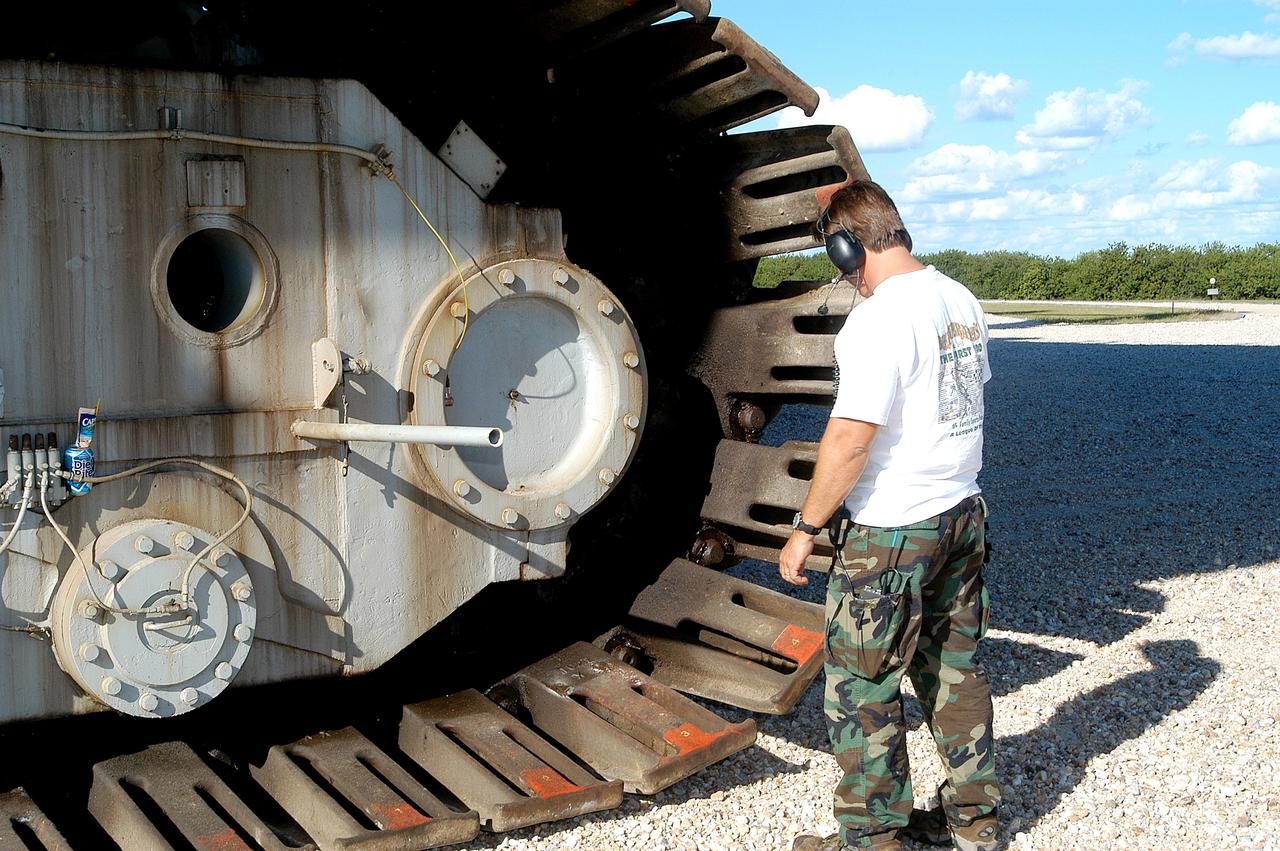
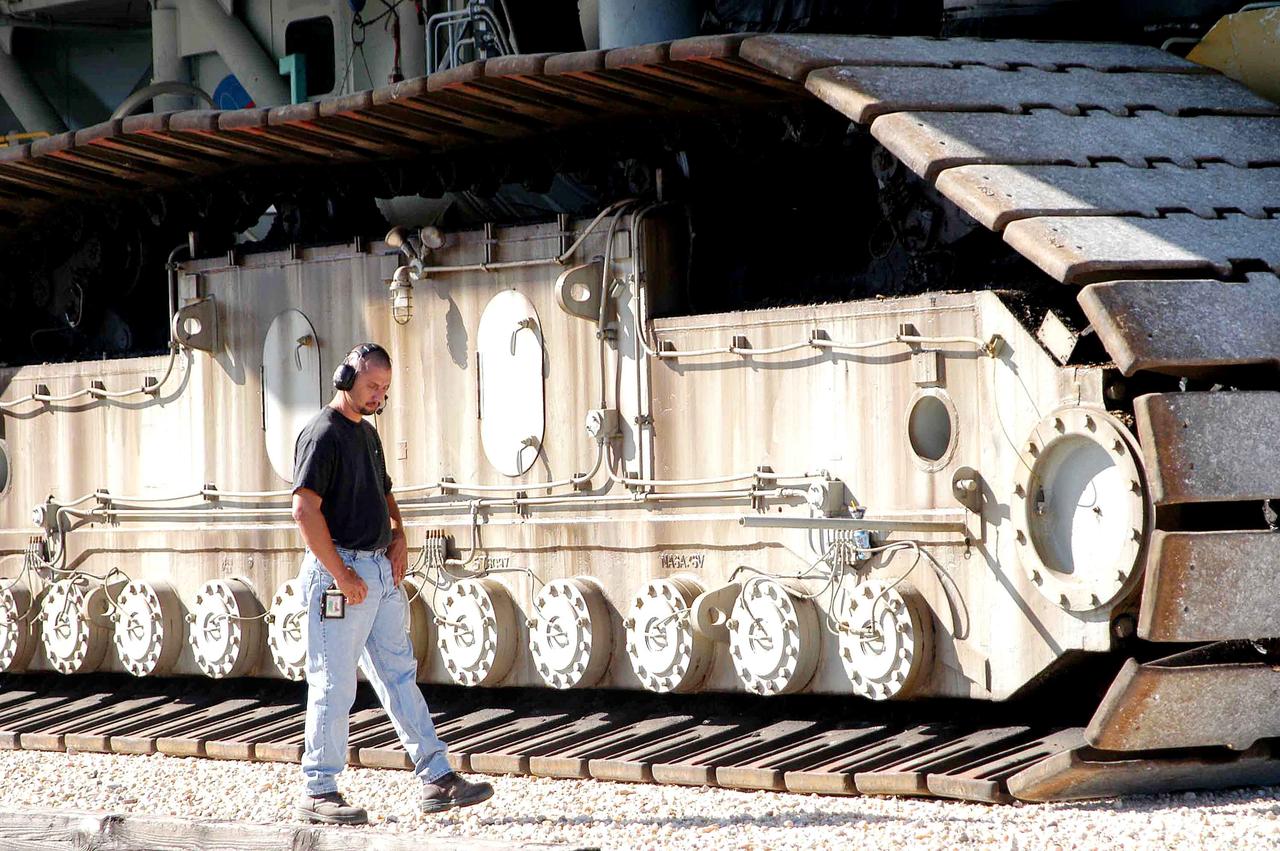
KENNEDY SPACE CENTER, FLA. - A Kennedy Space Center technician inspects the shoes on one of eight tracks of a crawler-transporter (CT).  The CT is moving Mobile Launcher Platform (MLP) number 3 with a set of twin solid rocket boosters bolted on top to the intersection in the crawlerway in support of the second engineering analysis vibration test on the crawler and MLP.  The crawler is moving at various speeds up to 1 mph in an effort to achieve vibration data gathering goals as it leaves the VAB, travels toward Launch Pad 39A and then returns. The boosters are braced at the top for stability. The primary purpose of these rollout tests is to gather data to develop future maintenance requirements on the transport equipment and the flight hardware. Various parts of the MLP and crawler transporter have been instrumented with vibration data collection equipment.
KENNEDY SPACE CENTER, FLA. - A Kennedy Space Center technician inspects the shoes on one of eight tracks of a crawler-transporter (CT). The CT is moving Mobile Launcher Platform (MLP) number 3 with a set of twin solid rocket boosters bolted on top to the intersection in the crawlerway in support of the second engineering analysis vibration test on the crawler and MLP. The crawler is moving at various speeds up to 1 mph in an effort to achieve vibration data gathering goals as it leaves the VAB, travels toward Launch Pad 39A and then returns. The boosters are braced at the top for stability. The primary purpose of these rollout tests is to gather data to develop future maintenance requirements on the transport equipment and the flight hardware. Various parts of the MLP and crawler transporter have been instrumented with vibration data collection equipment.
KENNEDY SPACE CENTER, FLA. - A Kennedy Space Center technician monitors the performance of a crawler-transporter as it moves Mobile Launcher Platform (MLP) number 3, with a set of twin solid rocket boosters bolted atop, to the intersection in the crawlerway during the second engineering analysis vibration test on the crawler and MLP.  The crawler is moving at various speeds up to 1 mph in an effort to achieve vibration data gathering goals as it leaves the VAB, travels toward Launch Pad 39A, and then returns. The boosters are braced at the top for stability. The primary purpose of these rollout tests is to gather data to develop future maintenance requirements on the transport equipment and the flight hardware. Various parts of the MLP and crawler transporter have been instrumented with vibration data collection equipment.
KENNEDY SPACE CENTER, FLA. - A Kennedy Space Center technician monitors the performance of a crawler-transporter as it moves Mobile Launcher Platform (MLP) number 3, with a set of twin solid rocket boosters bolted atop, to the intersection in the crawlerway during the second engineering analysis vibration test on the crawler and MLP. The crawler is moving at various speeds up to 1 mph in an effort to achieve vibration data gathering goals as it leaves the VAB, travels toward Launch Pad 39A, and then returns. The boosters are braced at the top for stability. The primary purpose of these rollout tests is to gather data to develop future maintenance requirements on the transport equipment and the flight hardware. Various parts of the MLP and crawler transporter have been instrumented with vibration data collection equipment.
KENNEDY SPACE CENTER, FLA. - A Kennedy Space Center technician walks towards the intersection of the crawlerway beside a crawler-transporter moving Mobile Launcher Platform (MLP) number 3, with a set of twin solid rocket boosters bolted atop, during the second engineering analysis vibration test on the crawler and MLP.  The crawler is moving at various speeds up to 1 mph in an effort to achieve vibration data gathering goals as it leaves the VAB, travels toward Launch Pad 39A, and then returns. The boosters are braced at the top for stability. The primary purpose of these rollout tests is to gather data to develop future maintenance requirements on the transport equipment and the flight hardware. Various parts of the MLP and crawler transporter have been instrumented with vibration data collection equipment.
KENNEDY SPACE CENTER, FLA. - A Kennedy Space Center technician walks towards the intersection of the crawlerway beside a crawler-transporter moving Mobile Launcher Platform (MLP) number 3, with a set of twin solid rocket boosters bolted atop, during the second engineering analysis vibration test on the crawler and MLP. The crawler is moving at various speeds up to 1 mph in an effort to achieve vibration data gathering goals as it leaves the VAB, travels toward Launch Pad 39A, and then returns. The boosters are braced at the top for stability. The primary purpose of these rollout tests is to gather data to develop future maintenance requirements on the transport equipment and the flight hardware. Various parts of the MLP and crawler transporter have been instrumented with vibration data collection equipment.
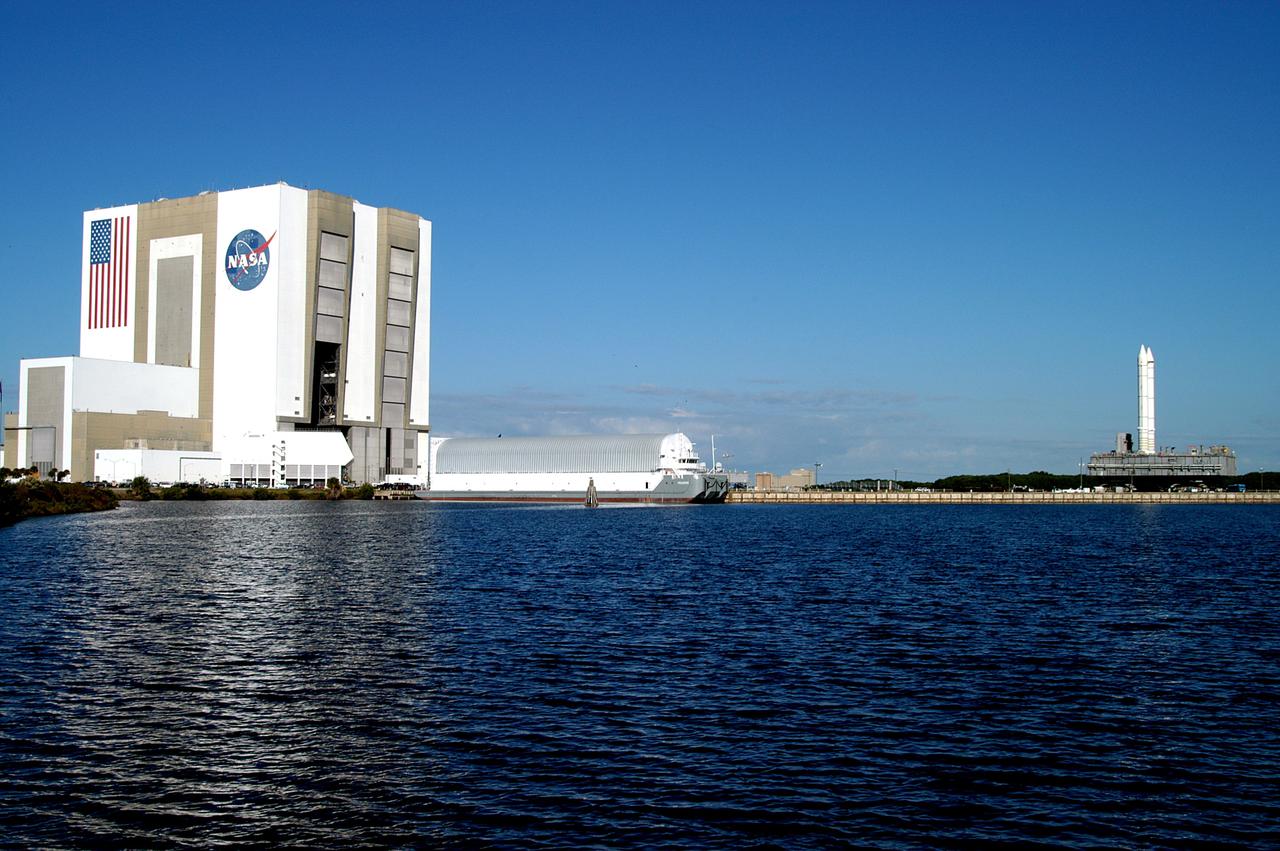
KENNEDY SPACE CENTER, FLA. - Viewed across the turn basin in the Launch Complex 39 Area, the crawler transporter slowly moves the Mobile Launcher Platform (MLP), carrying a set of twin solid rocket boosters, away from the Vehicle Assembly Building (VAB).  The journey is in support of engineering analysis vibration tests on the crawler and MLP.  The water on the right of the crawlerway is the Banana River.  The crawler is moving at various speeds up to 1 mph in an effort to achieve vibration data gathering goals as it leaves the VAB and then returns.  The boosters are braced at the top for stability.  The primary purpose of these rollout tests is to gather data to develop future maintenance requirements on the transport equipment and the flight hardware. Various parts of the MLP and crawler transporter have been instrumented with vibration data collection equipment.
KENNEDY SPACE CENTER, FLA. - Viewed across the turn basin in the Launch Complex 39 Area, the crawler transporter slowly moves the Mobile Launcher Platform (MLP), carrying a set of twin solid rocket boosters, away from the Vehicle Assembly Building (VAB). The journey is in support of engineering analysis vibration tests on the crawler and MLP. The water on the right of the crawlerway is the Banana River. The crawler is moving at various speeds up to 1 mph in an effort to achieve vibration data gathering goals as it leaves the VAB and then returns. The boosters are braced at the top for stability. The primary purpose of these rollout tests is to gather data to develop future maintenance requirements on the transport equipment and the flight hardware. Various parts of the MLP and crawler transporter have been instrumented with vibration data collection equipment.
KENNEDY SPACE CENTER, FLA. -  Mobile Launcher Platform (MLP) number 3 and a set of twin solid rocket boosters, atop the crawler-transporter, crawls away from the Vehicle Assembly Building in support of the second engineering analysis vibration test on the crawler and MLP. The crawler is moving at various speeds up to 1 mph in an effort to achieve vibration data gathering goals as it leaves the VAB, travels toward Launch Pad 39A and then returns.  The boosters are braced at the top for stability.  The primary purpose of these rollout tests is to gather data to develop future maintenance requirements on the transport equipment and the flight hardware. Various parts of the MLP and crawler transporter have been instrumented with vibration data collection equipment.
KENNEDY SPACE CENTER, FLA. - Mobile Launcher Platform (MLP) number 3 and a set of twin solid rocket boosters, atop the crawler-transporter, crawls away from the Vehicle Assembly Building in support of the second engineering analysis vibration test on the crawler and MLP. The crawler is moving at various speeds up to 1 mph in an effort to achieve vibration data gathering goals as it leaves the VAB, travels toward Launch Pad 39A and then returns. The boosters are braced at the top for stability. The primary purpose of these rollout tests is to gather data to develop future maintenance requirements on the transport equipment and the flight hardware. Various parts of the MLP and crawler transporter have been instrumented with vibration data collection equipment.
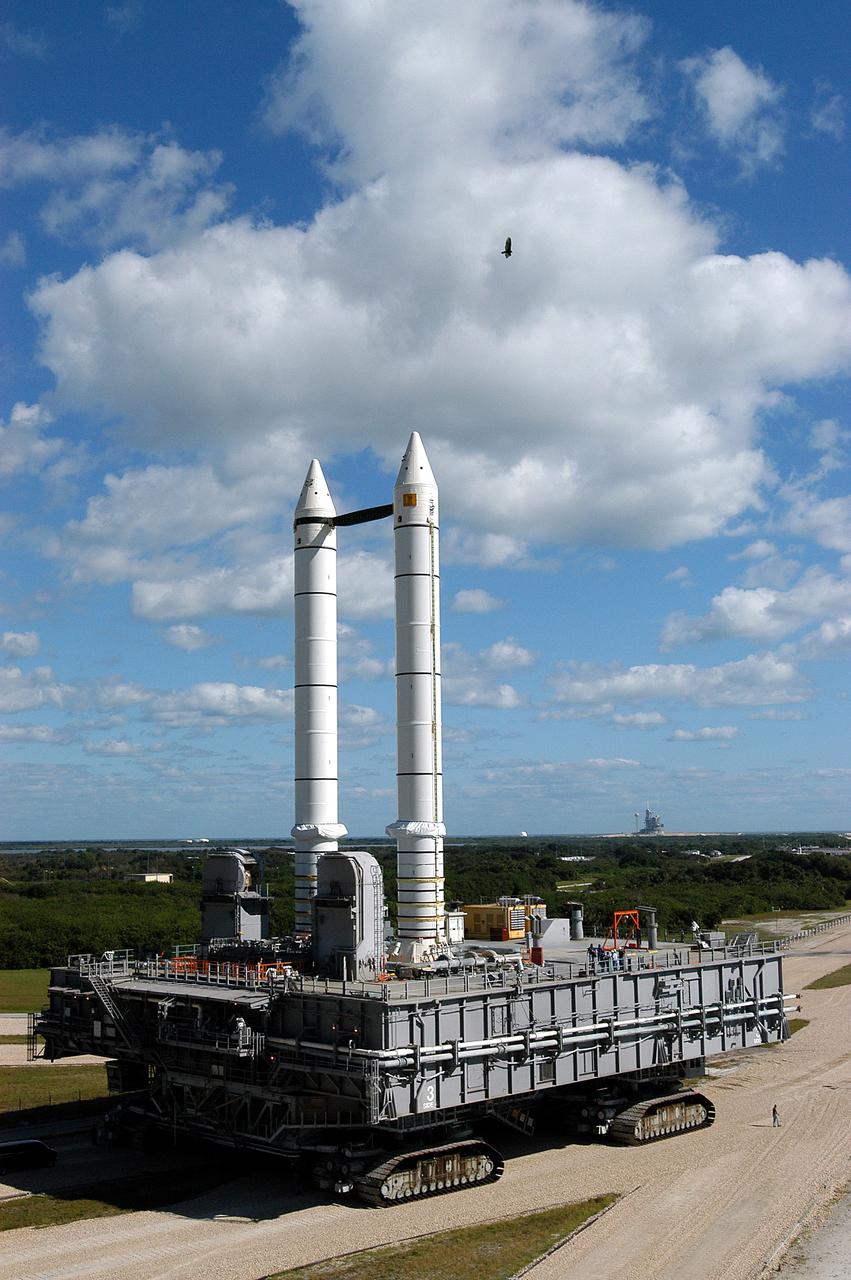
KENNEDY SPACE CENTER, FLA. -  A high-flying bird takes a closer look at the Mobile Launcher Platform (MLP) number 3 with twin solid rocket boosters bolted to it as it crawls toward Launch Pad 39A, in the background.  The crawler is moving along the crawlerway at various speeds up to 1 mph in an effort to achieve vibration data gathering goals as it travels toward Launch Pad 39A and then returns.  The boosters are braced at the top for stability.  The primary purpose of these rollout tests is to gather data to develop future maintenance requirements on the transport equipment and the flight hardware. Various parts of the MLP and crawler transporter have been instrumented with vibration data collection equipment.
KENNEDY SPACE CENTER, FLA. - A high-flying bird takes a closer look at the Mobile Launcher Platform (MLP) number 3 with twin solid rocket boosters bolted to it as it crawls toward Launch Pad 39A, in the background. The crawler is moving along the crawlerway at various speeds up to 1 mph in an effort to achieve vibration data gathering goals as it travels toward Launch Pad 39A and then returns. The boosters are braced at the top for stability. The primary purpose of these rollout tests is to gather data to develop future maintenance requirements on the transport equipment and the flight hardware. Various parts of the MLP and crawler transporter have been instrumented with vibration data collection equipment.
KENNEDY SPACE CENTER, FLA. -  Mobile Launcher Platform (MLP) number 3 and a set of twin solid rocket boosters, atop the crawler-transporter, inch along the crawlerway in support of the second engineering analysis vibration test on the crawler and MLP. The crawler is moving at various speeds up to 1 mph in an effort to achieve vibration data gathering goals as it leaves the VAB, travels toward Launch Pad 39A (on the horizon) and then returns.  The boosters are braced at the top for stability.  The primary purpose of these rollout tests is to gather data to develop future maintenance requirements on the transport equipment and the flight hardware. Various parts of the MLP and crawler transporter have been instrumented with vibration data collection equipment.
KENNEDY SPACE CENTER, FLA. - Mobile Launcher Platform (MLP) number 3 and a set of twin solid rocket boosters, atop the crawler-transporter, inch along the crawlerway in support of the second engineering analysis vibration test on the crawler and MLP. The crawler is moving at various speeds up to 1 mph in an effort to achieve vibration data gathering goals as it leaves the VAB, travels toward Launch Pad 39A (on the horizon) and then returns. The boosters are braced at the top for stability. The primary purpose of these rollout tests is to gather data to develop future maintenance requirements on the transport equipment and the flight hardware. Various parts of the MLP and crawler transporter have been instrumented with vibration data collection equipment.
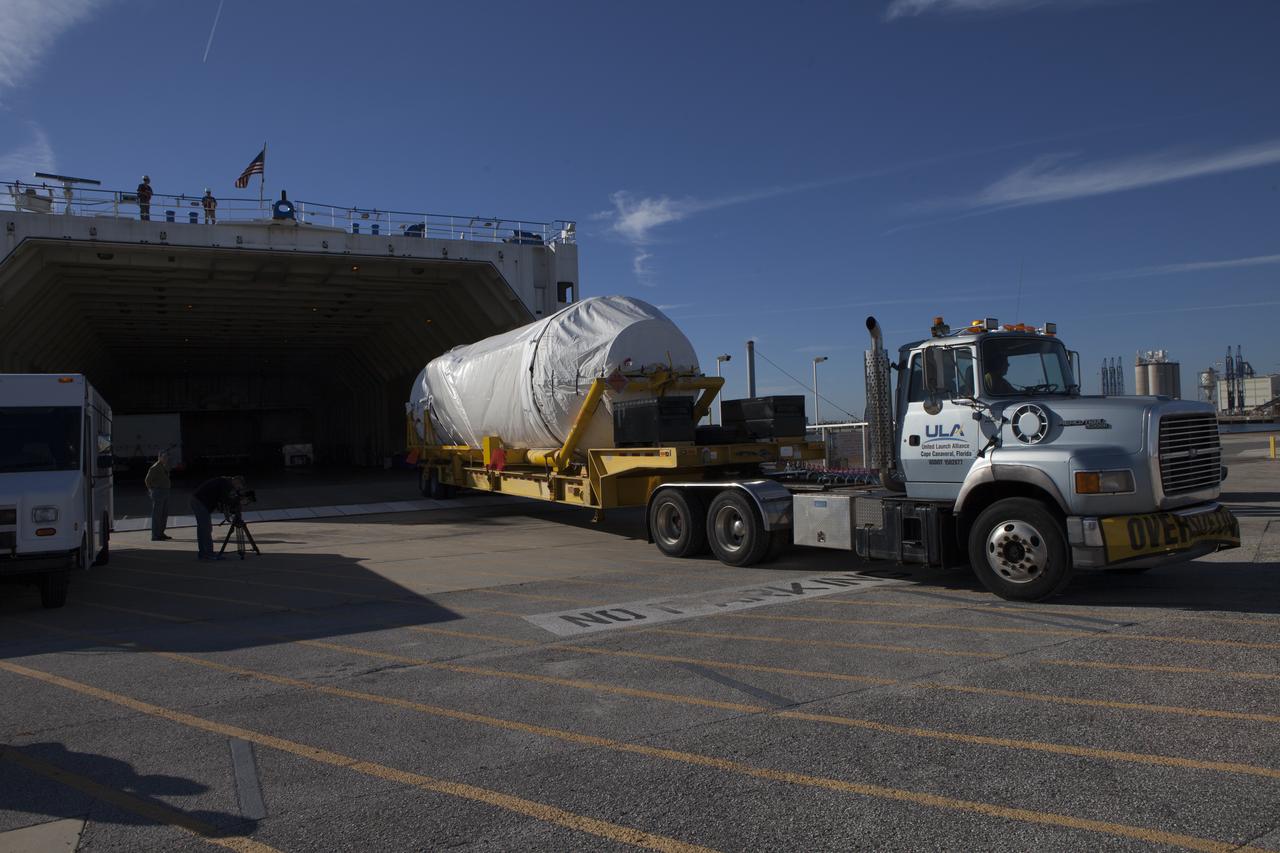
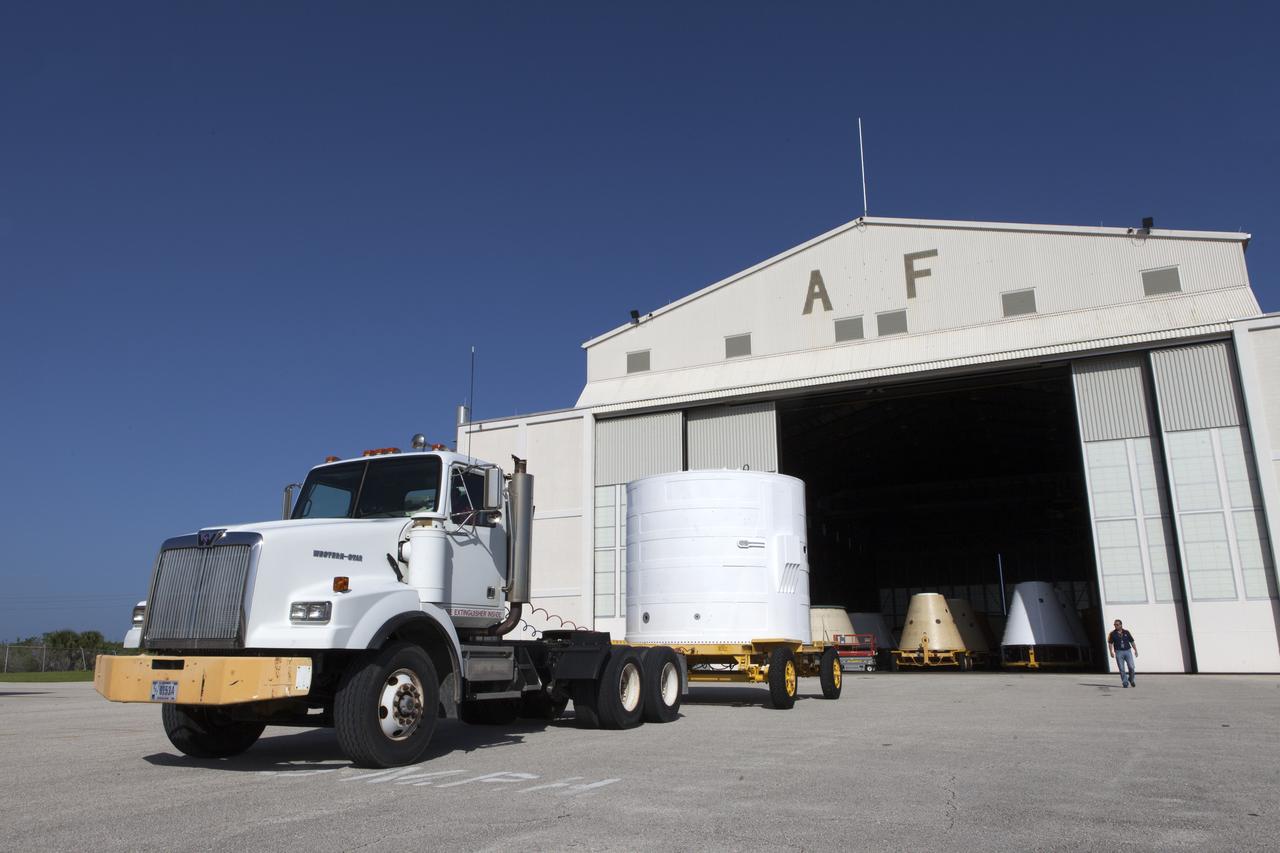
A truck positions a Centaur upper stage inside the hangar at the Atlas V Spaceflight Operations Center at Cape Canaveral Air Force Station. The upper stage will be used as part of the Atlas V rocket that will be used to launch NASA's Magnetospheric Multiscale mission.
MMS Atlas V Booster Arrival & Move to ASOC
A truck positions an Atlas V booster stage inside the hangar at the Atlas V Spaceflight Operations Center at Cape Canaveral Air Force Station. The rocket will be used to launch NASA's Magnetospheric Multiscale mission.
MMS Atlas V Booster Arrival & Move to ASOC
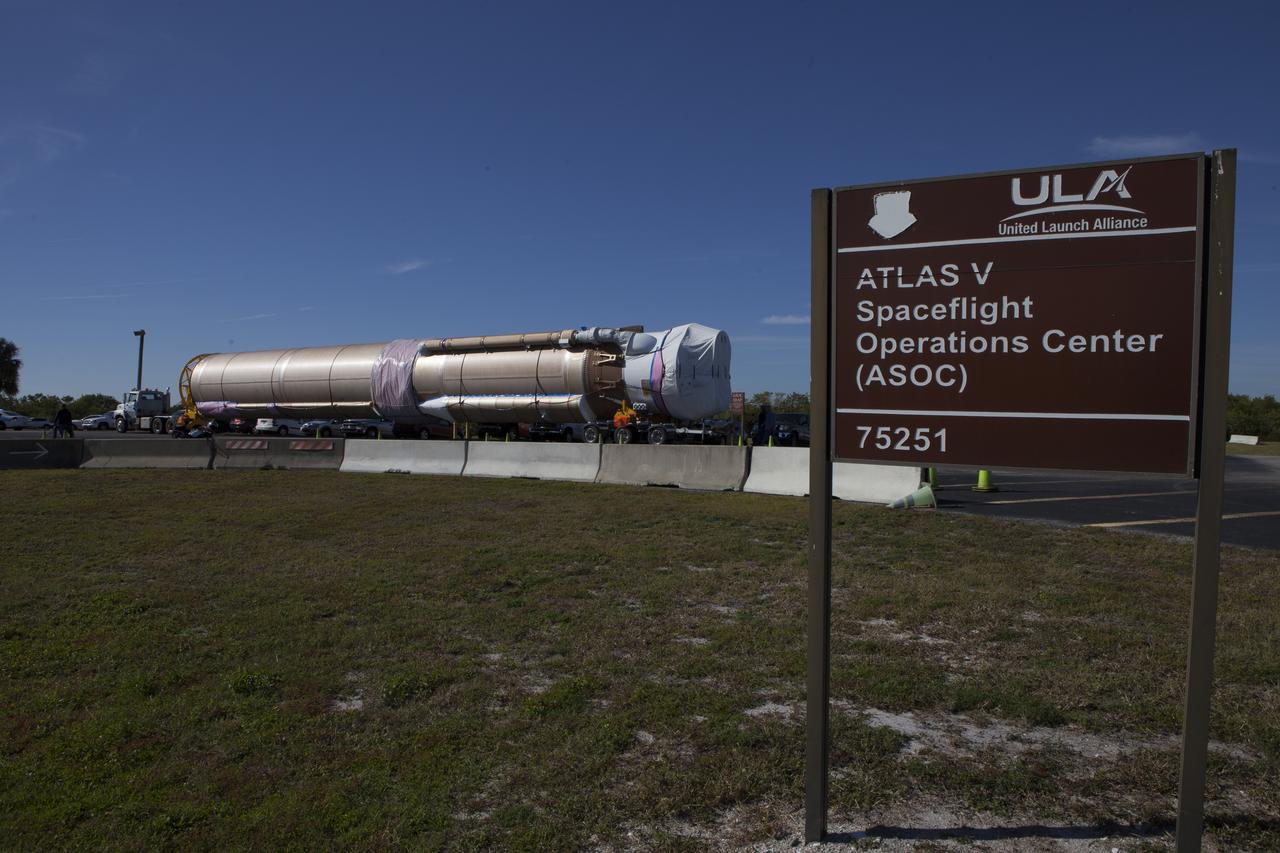
Trucks transport the Atlas V rocket and Centaur upper stage from the United Launch Alliance Delta Mariner to the Atlas V Spaceflight Operations Center at Cape Canaveral Air Force Station. The rocket will be used to launch NASA's Magnetospheric Multiscale mission.
MMS Atlas V Booster Arrival & Move to ASOC
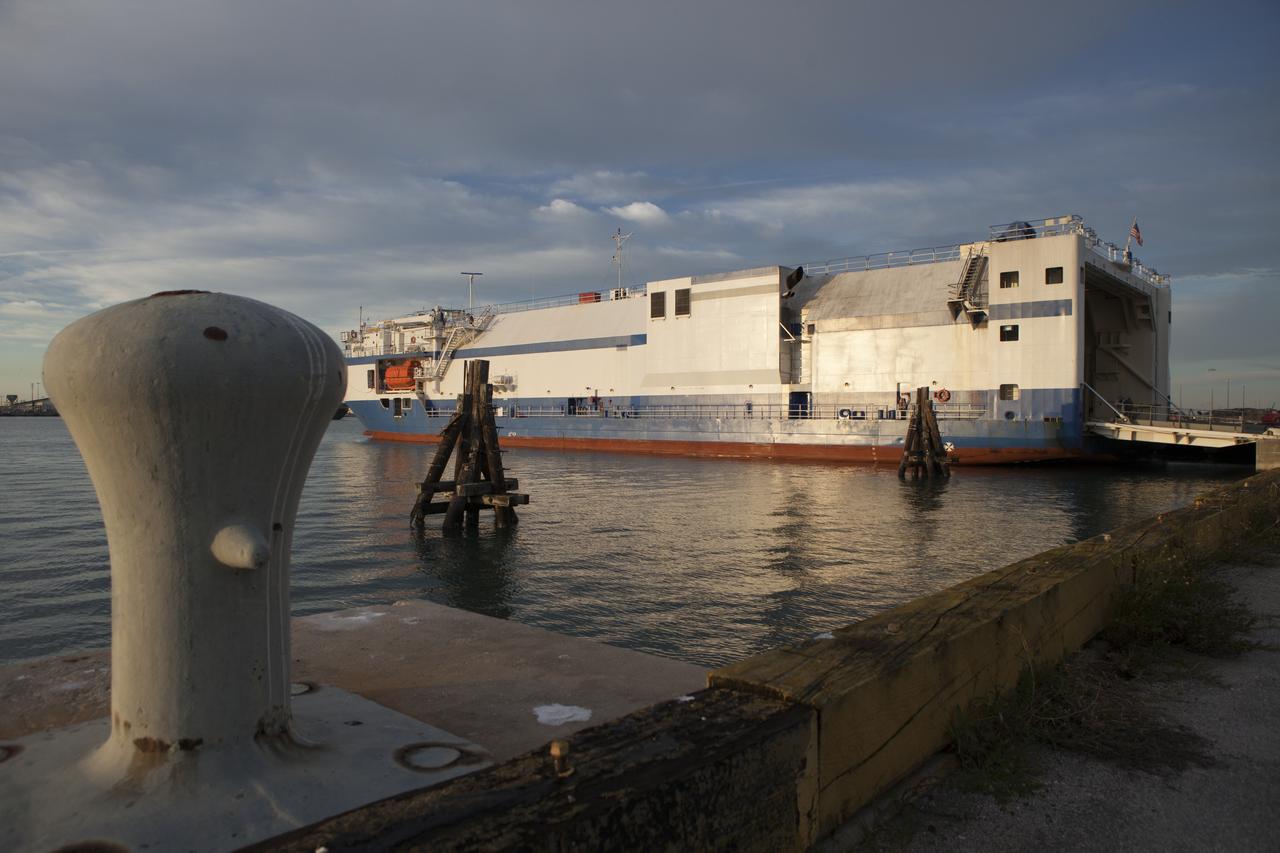
The United Launch Alliance Delta Mariner arrives at Port Canaveral to deliver the Atlas V rocket that will be used to launch NASA's Magnetospheric Multiscale mission.
MMS Atlas V Booster Arrival & Move to ASOC
A truck begins to transport a Centaur upper stage from the United Launch Alliance Delta Mariner to the Atlas V Spaceflight Operations Center at Cape Canaveral Air Force Station. The rocket will be used to launch NASA's Magnetospheric Multiscale mission.
MMS Atlas V Booster Arrival & Move to ASOC
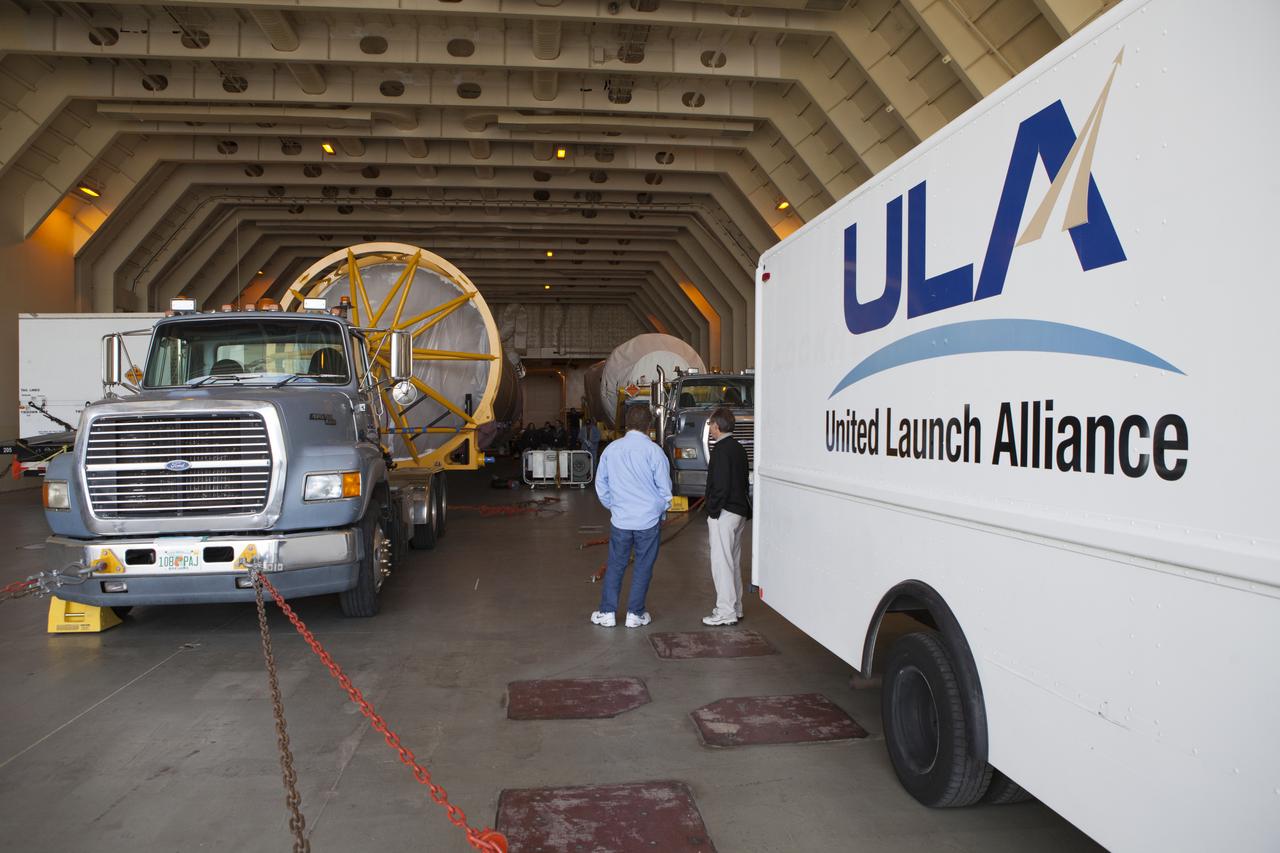
Trucks inside the United Launch Alliance Delta Mariner prepare to transport the Atlas V rocket and Centaur upper stage that will be used to launch NASA's Magnetospheric Multiscale mission.
MMS Atlas V Booster Arrival & Move to ASOC
Trucks inside the United Launch Alliance Delta Mariner prepare to transport the Atlas V rocket and Centaur upper stage that will be used to launch NASA's Magnetospheric Multiscale mission.
MMS Atlas V Booster Arrival & Move to ASOC
Trucks transport the Atlas V rocket and Centaur upper stage from the United Launch Alliance Delta Mariner to the Atlas V Spaceflight Operations Center at Cape Canaveral Air Force Station. The rocket will be used to launch NASA's Magnetospheric Multiscale mission.
MMS Atlas V Booster Arrival & Move to ASOC
A truck begins to transport the Atlas V booster stage from the United Launch Alliance Delta Mariner. The rocket will be used to launch NASA's Magnetospheric Multiscale mission.
MMS Atlas V Booster Arrival & Move to ASOC
A truck positions an Atlas V booster stage inside the hangar at the Atlas V Spaceflight Operations Center at Cape Canaveral Air Force Station. The rocket will be used to launch NASA's Magnetospheric Multiscale mission.
MMS Atlas V Booster Arrival & Move to ASOC
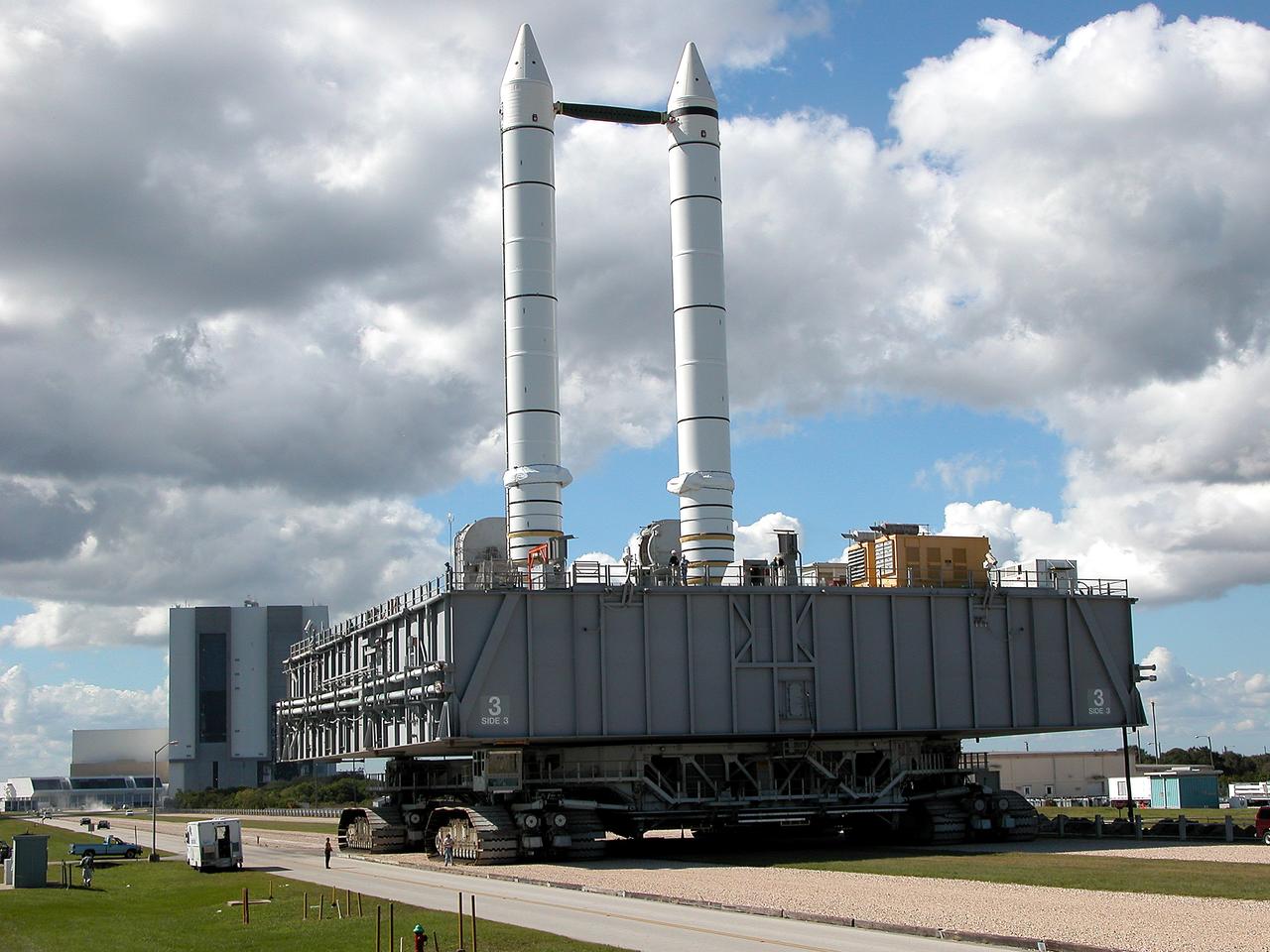
KENNEDY SPACE CENTER, FLA. - A crawler-transporter carrying Mobile Launcher Platform (MLP) number 3, with a set of twin solid rocket boosters bolted atop, crawls to the intersection in the crawlerway in support of the second engineering analysis vibration test on the crawler and MLP.  From this perspective, the Launch Control Center (left) and the 525-foot-tall Vehicle Assembly Building (right) in the background appear dwarfed by the 184-foot-tall boosters. The crawler is moving at various speeds up to 1 mph in an effort to achieve vibration data gathering goals as it leaves the VAB, travels toward Launch Pad 39A and then returns. The boosters are braced at the top for stability. The primary purpose of these rollout tests is to gather data to develop future maintenance requirements on the transport equipment and the flight hardware. Various parts of the MLP and crawler transporter have been instrumented with vibration data collection equipment.
KENNEDY SPACE CENTER, FLA. - A crawler-transporter carrying Mobile Launcher Platform (MLP) number 3, with a set of twin solid rocket boosters bolted atop, crawls to the intersection in the crawlerway in support of the second engineering analysis vibration test on the crawler and MLP. From this perspective, the Launch Control Center (left) and the 525-foot-tall Vehicle Assembly Building (right) in the background appear dwarfed by the 184-foot-tall boosters. The crawler is moving at various speeds up to 1 mph in an effort to achieve vibration data gathering goals as it leaves the VAB, travels toward Launch Pad 39A and then returns. The boosters are braced at the top for stability. The primary purpose of these rollout tests is to gather data to develop future maintenance requirements on the transport equipment and the flight hardware. Various parts of the MLP and crawler transporter have been instrumented with vibration data collection equipment.
KENNEDY SPACE CENTER, FLA. - The crawler-transporter carrying Mobile Launcher Platform (MLP) number 3, with a set of twin solid rocket boosters bolted atop, crawls to the intersection in the crawlerway in support of the second engineering analysis vibration test on the crawler and MLP.  From this perspective, the Launch Control Center (left) and the 525-foot-tall Vehicle Assembly Building (right) in the background appear dwarfed by the 184-foot-tall boosters. The crawler is moving at various speeds up to 1 mph in an effort to achieve vibration data gathering goals as it leaves the VAB, travels toward Launch Pad 39A and then returns. The boosters are braced at the top for stability. The primary purpose of these rollout tests is to gather data to develop future maintenance requirements on the transport equipment and the flight hardware. Various parts of the MLP and crawler transporter have been instrumented with vibration data collection equipment.
KENNEDY SPACE CENTER, FLA. - The crawler-transporter carrying Mobile Launcher Platform (MLP) number 3, with a set of twin solid rocket boosters bolted atop, crawls to the intersection in the crawlerway in support of the second engineering analysis vibration test on the crawler and MLP. From this perspective, the Launch Control Center (left) and the 525-foot-tall Vehicle Assembly Building (right) in the background appear dwarfed by the 184-foot-tall boosters. The crawler is moving at various speeds up to 1 mph in an effort to achieve vibration data gathering goals as it leaves the VAB, travels toward Launch Pad 39A and then returns. The boosters are braced at the top for stability. The primary purpose of these rollout tests is to gather data to develop future maintenance requirements on the transport equipment and the flight hardware. Various parts of the MLP and crawler transporter have been instrumented with vibration data collection equipment.
In High Bay 4 of the Vehicle Assembly Building at NASA’s Kennedy Space Center in Florida, a crane is used to lift Space Launch System (SLS) solid rocket booster pathfinder segments and move them to be added atop other booster pathfinder segments during a training exercise on Jan. 8, 2020. A team of engineers with Exploration Ground Systems and crane operators and technicians with contractor Jacobs are practicing lifting, moving and stacking maneuvers, using important ground support equipment to train employees and certify all the equipment works properly. The booster pathfinders are inert, full-scale replicas of the actual booster hardware that will be attached to the SLS rocket for Artemis missions. The five-segment, 17-story-tall twin boosters will provide 3.6 million pounds of thrust each at liftoff to help launch Orion on Artemis I, its first uncrewed mission beyond the Moon.
EGS Booster Segrment Training
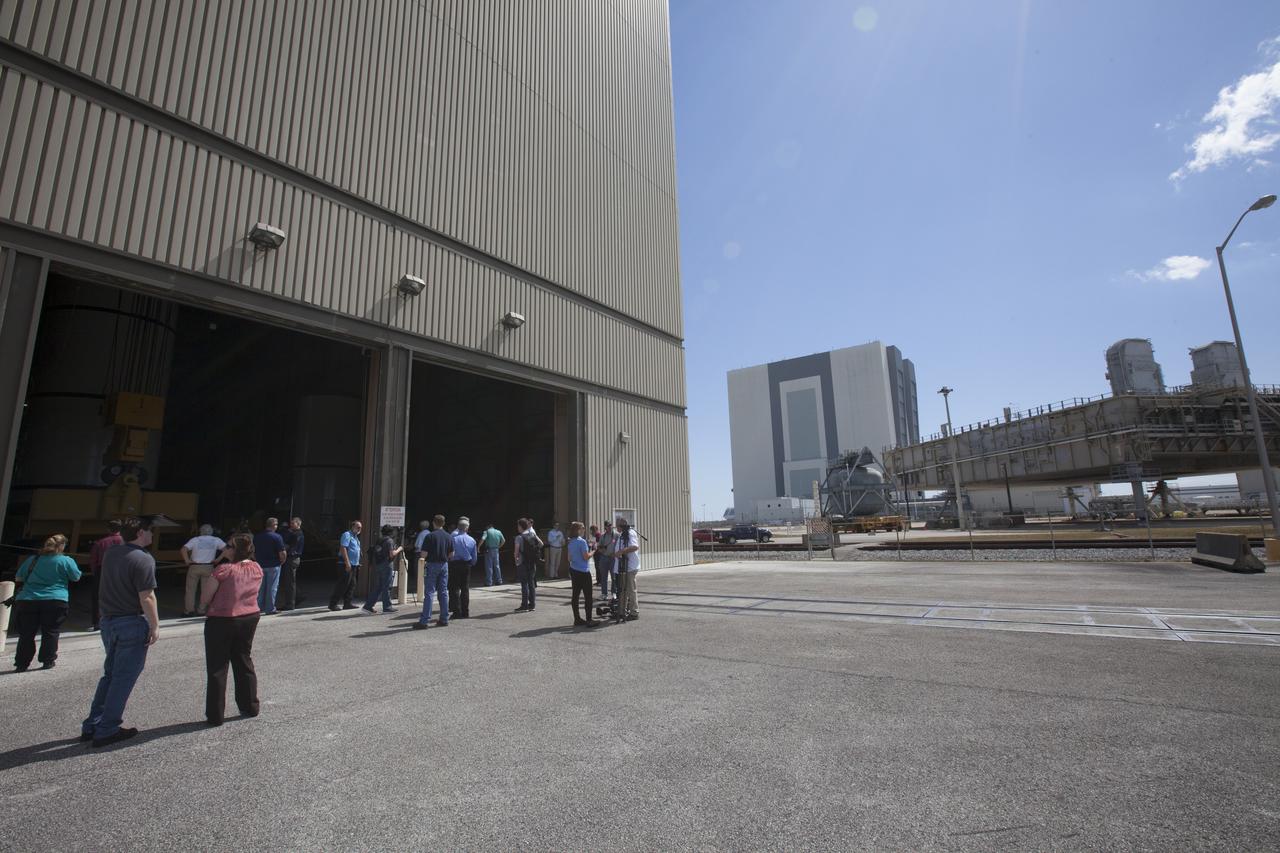
During a media tour of the Rotation, Processing and Surge Facility (RPSF) at NASA’s Kennedy Space Center in Florida, two cranes are used to lift one of two pathfinders, or test versions, of solid rocket booster segments for NASA’s Space Launch System rocket into the vertical position. The pathfinder booster segment will be moved to the other end of the RPSF and secured on a test stand. The Ground Systems Development and Operations Program and Jacobs Engineering, on the Test and Operations Support Contract, will prepare the booster segments, which are inert, for a series of lifts, moves and stacking operations to prepare for Exploration Mission-1, deep-space missions and the journey to Mars.
SRB Processing Facilities Media Event
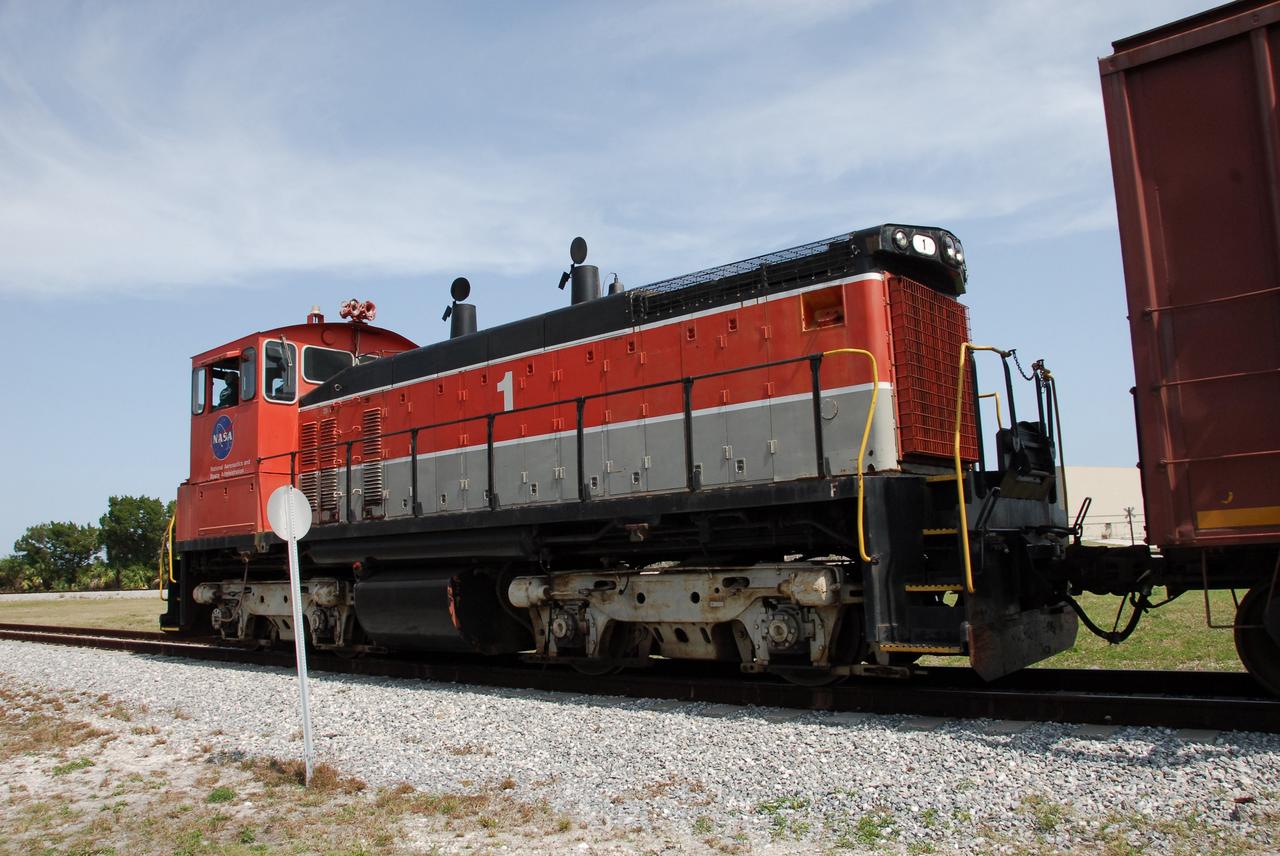
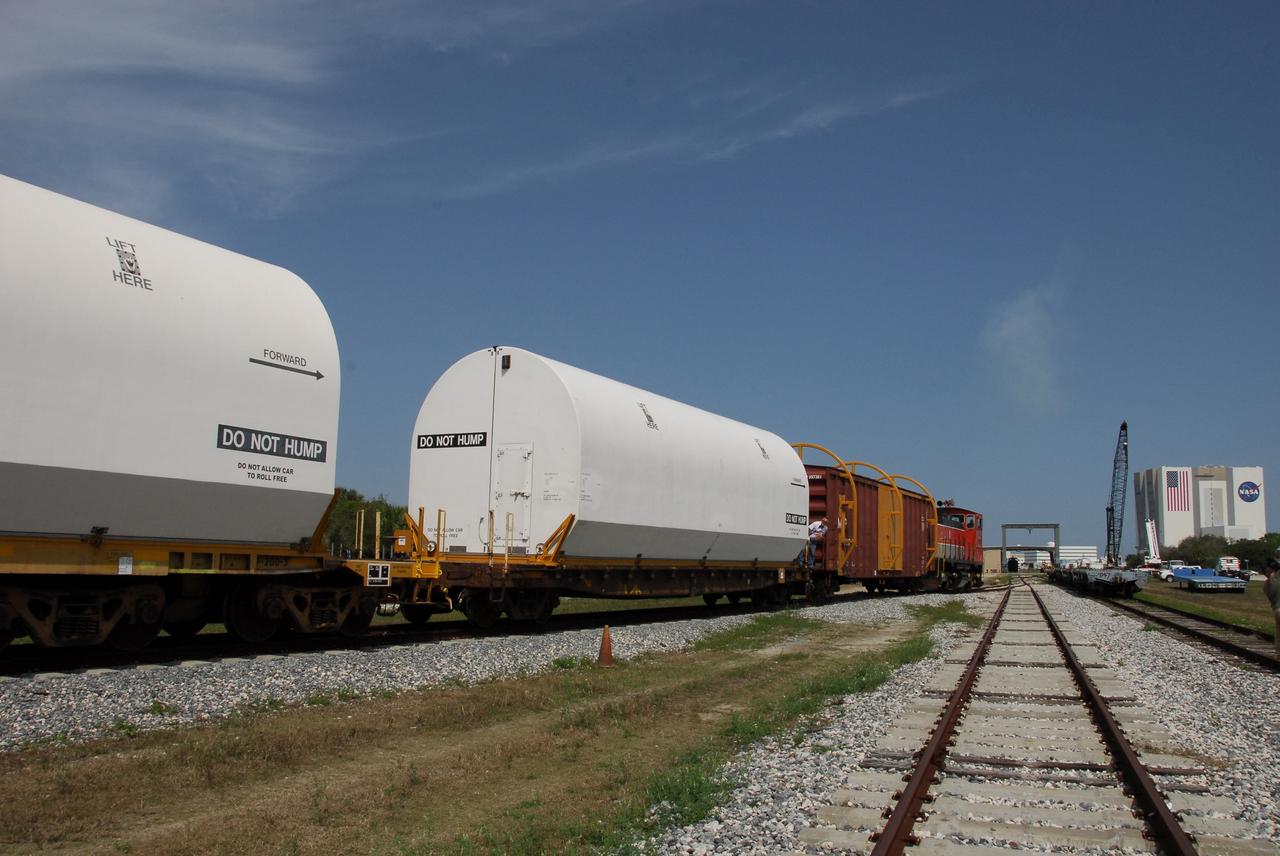
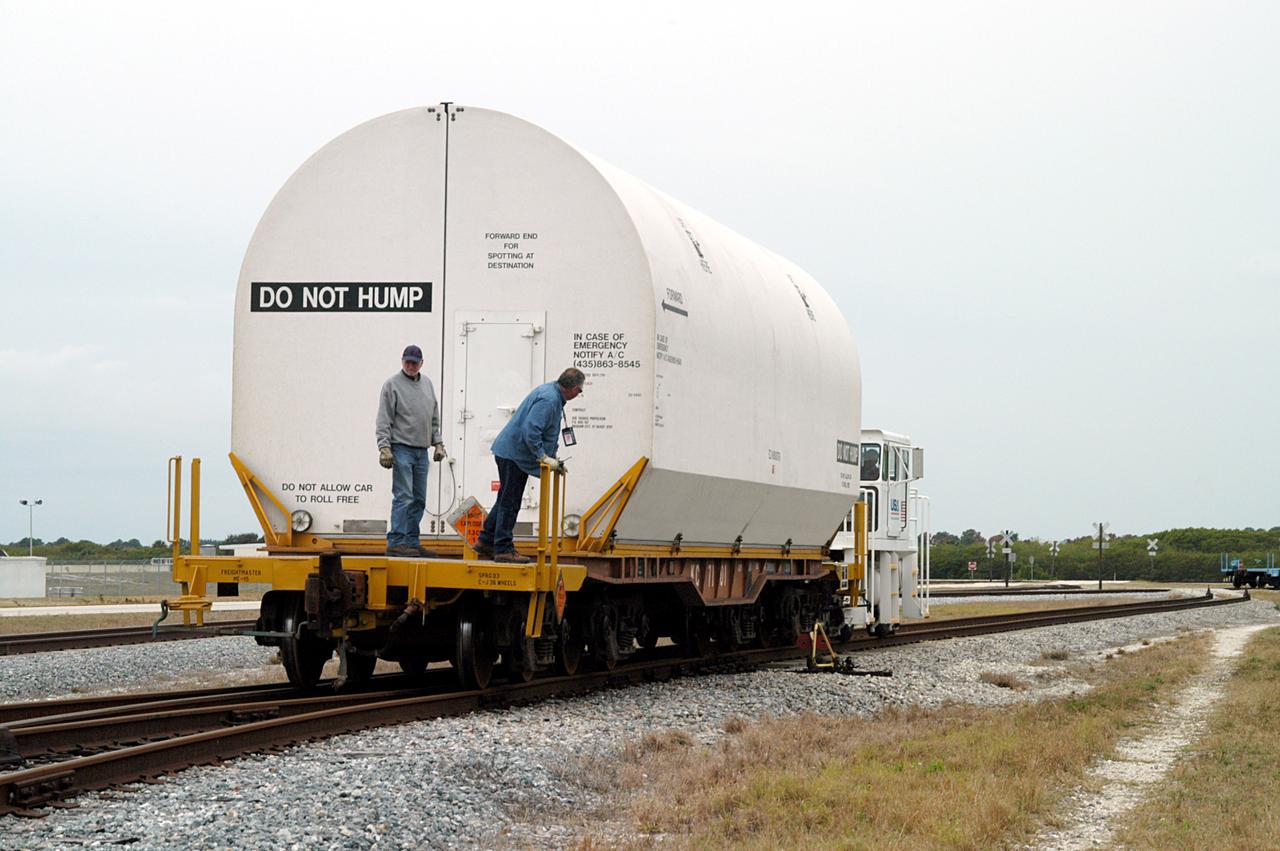
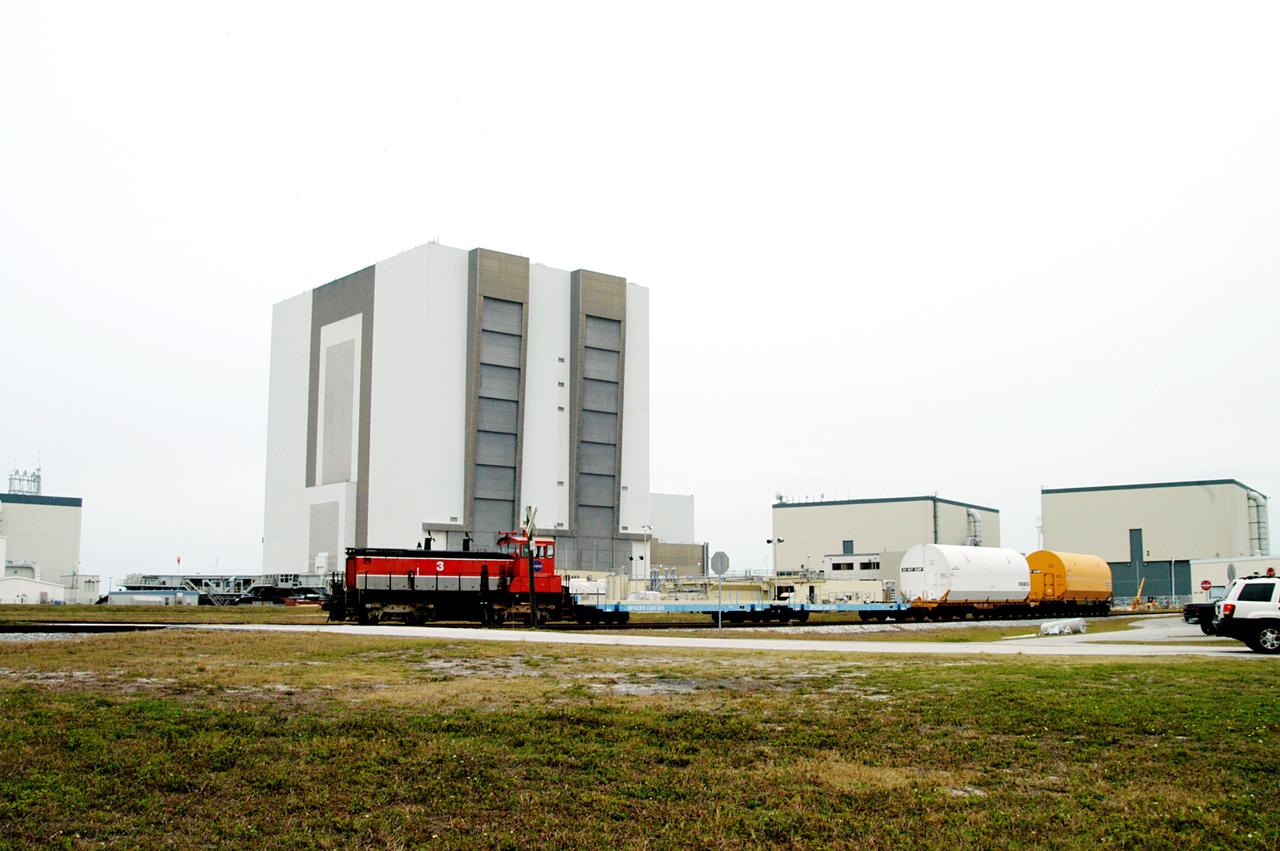
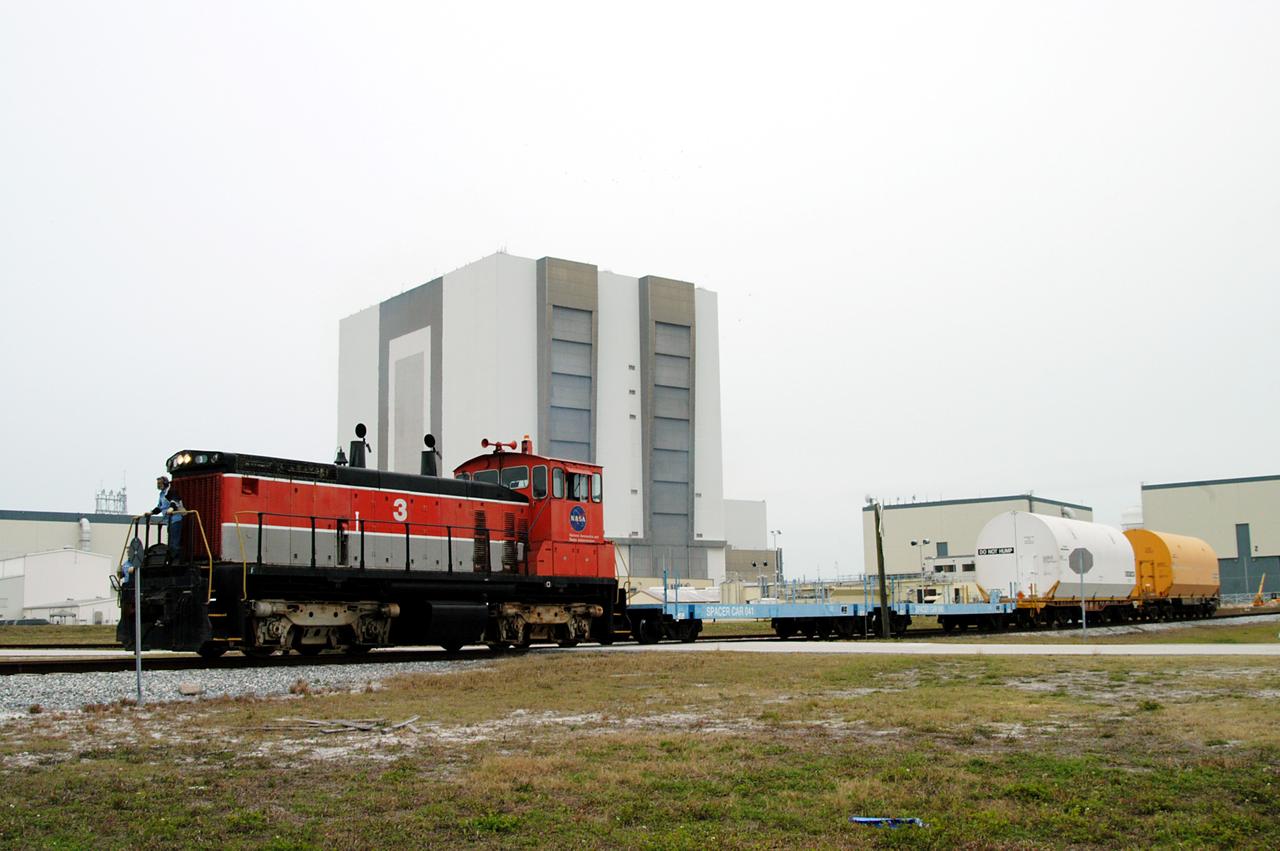
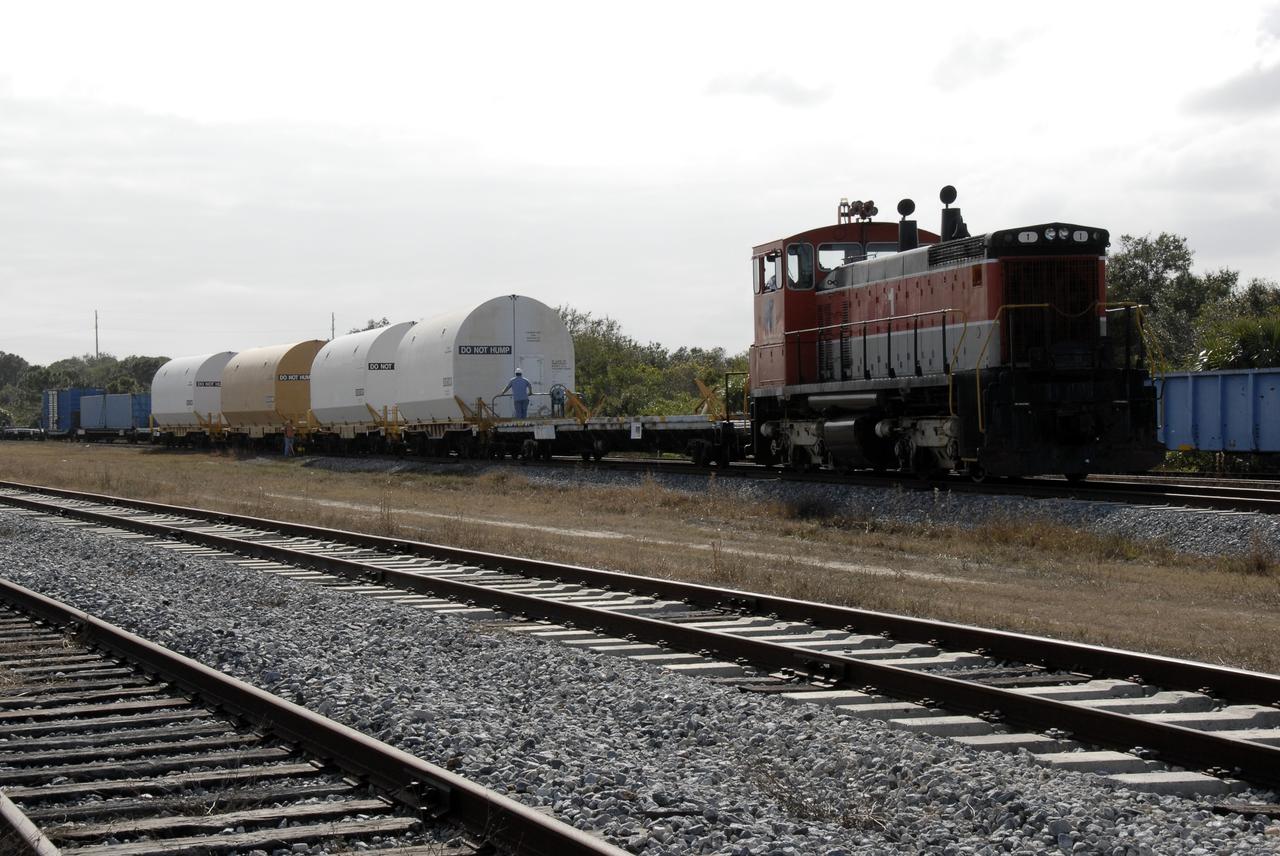
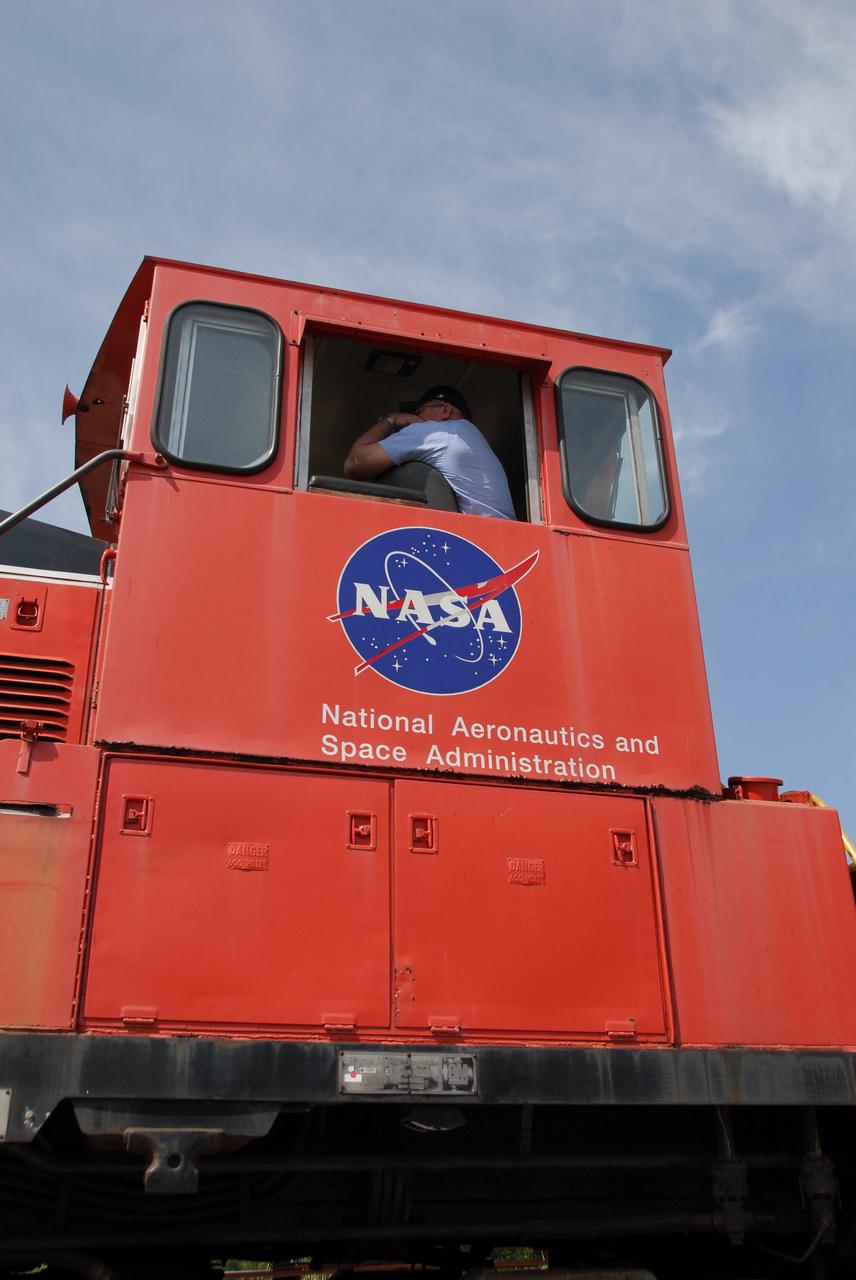
KENNEDY SPACE CENTER, FLA. --  The NASA Railroad train moves along the track through NASA's Kennedy Space Center.  In the distance, at right, is the Vehicle Assembly Building. The train is hauling the solid rocket booster segments from the STS-122 mission.  After a mission, the spent boosters are recovered, cleaned, disassembled, refurbished and reused after each launch. After hydrolasing the interior of each segment, they are placed on flatbed trucks. The individual booster segments are transferred to a railhead located at the railroad yard.  The covered segments will be moved to Titusville for interchange with Florida East Coast Railway to begin the trip back to the Thiokol plant in Wa¬satch, Utah.   Photo credit: NASA/Jack Pfaller
KSC-08pd0637
Engineers and technicians with Jacobs Engineering on the Test and Operations Contract monitor the progress as a crane is used to move one of two pathfinders, or test versions, of solid rocket booster segments for NASA’s Space Launch System (SLS) rocket. At far right, the first pathfinder booster segment has been secured in the vertical position on a test stand. Inside the RPSF, the Ground Systems Development and Operations Program and Jacobs will prepare the booster segments, which are inert, for a series of lifts, moves and stacking operations to prepare for Exploration Mission-1, deep-space missions and the journey to Mars.
SRB Processing Facilities Media Event
KENNEDY SPACE CENTER, FLA. --  The NASA Railroad train moves along the track away from NASA Kennedy Space Center's railroad yard.  The train is hauling the solid rocket booster segments from the STS-122 mission. After a mission, the spent boosters are recovered, cleaned, disassembled, refurbished and reused after each launch. After hydrolasing the interior of each segment, they are placed on flatbed trucks. The individual booster segments are transferred to a railhead located at the railroad yard.  The covered segments will be moved to Titusville for interchange with Florida East Coast Railway to begin the trip back to the Thiokol plant in Wa¬satch, Utah.   Photo credit: NASA/Jack Pfaller
KSC-08pd0635
Members of the news media watch as two cranes are used to lift one of two pathfinders, or test versions, of solid rocket booster segments for NASA’s Space Launch System (SLS) rocket into the vertical position inside the Rotation, Processing and Surge Facility at NASA’s Kennedy Space Center in Florida. The pathfinder booster segment will be moved to the other end of the RPSF and secured on a test stand. The Ground Systems Development and Operations Program and Jacobs Engineering, on the Test and Operations Support Contract, will prepare the booster segments, which are inert, for a series of lifts, moves and stacking operations to prepare for Exploration Mission-1, deep-space missions and the journey to Mars.
SRB Processing Facilities Media Event
KENNEDY SPACE CENTER, FLA. --   The NASA Railroad train moves along the track in NASA Kennedy Space Center's railroad yard. The train is hauling the solid rocket booster segments from the STS-122 mission.  After a mission, the spent boosters are recovered, cleaned, disassembled, refurbished and reused after each launch. After hydrolasing the interior of each segment, they are placed on flatbed trucks. The individual booster segments are transferred to a railhead located at the railroad yard.  The covered segments will be moved to Titusville for interchange with Florida East Coast Railway to begin the trip back to the Thiokol plant in Wa¬satch, Utah.   Photo credit: NASA/Jack Pfaller
KSC-08pd0636
KENNEDY SPACE CENTER, FLA. --   Workers at the Railroad yard at NASA's Kennedy Space Center prepare one of the segments of a solid rocket booster from the STS-122 mission to be moved onto a railroad car for transportation to Utah.  After a mission, the spent boosters are recovered, cleaned, disassembled, refurbished and reused after each launch. After hydrolasing the interior of each segment, they are placed on flatbed trucks. The individual booster segments are transferred to a railhead located at the railroad yard.  The covered segments will be moved to Titusville for interchange with Florida East Coast Railway to begin the trip back to the Thiokol plant in Wa¬satch, Utah.   Photo credit: NASA/Jack Pfaller
KSC-08pd0622
KENNEDY SPACE CENTER, FLA. --  The NASA Railroad train moves along the track through NASA's Kennedy Space Center.  The train is hauling the solid rocket booster segments from the STS-122 mission.  After a mission, the spent boosters are recovered, cleaned, disassembled, refurbished and reused after each launch. After hydrolasing the interior of each segment, they are placed on flatbed trucks. The individual booster segments are transferred to a railhead located at the railroad yard.  The covered segments will be moved to Titusville for interchange with Florida East Coast Railway to begin the trip back to the Thiokol plant in Wa¬satch, Utah.   Photo credit: NASA/Jack Pfaller
KSC-08pd0638
KENNEDY SPACE CENTER, FLA. --   The NASA Railroad train moves along the track through NASA Kennedy Space Center's Launch Complex 39 Area.  The train is hauling the solid rocket booster segments from the STS-122 mission.  After a mission, the spent boosters are recovered, cleaned, disassembled, refurbished and reused after each launch. After hydrolasing the interior of each segment, they are placed on flatbed trucks. The individual booster segments are transferred to a railhead located at the railroad yard.  The covered segments will be moved to Titusville for interchange with Florida East Coast Railway to begin the trip back to the Thiokol plant in Wa¬satch, Utah.   Photo credit: NASA/Jack Pfaller
KSC-08pd0642
Members of the news media watch as a crane is used to move one of two pathfinders, or test versions, of solid rocket booster segments for NASA’s Space Launch System rocket to a test stand in the Rotation, Processing and Surge Facility at NASA’s Kennedy Space Center in Florida. Inside the RPSF, the Ground Systems Development and Operations Program and Jacobs Engineering, on the Test and Operations Support Contract, will prepare the booster segments, which are inert, for a series of lifts, moves and stacking operations to prepare for Exploration Mission-1, deep-space missions and the journey to Mars.
SRB Processing Facilities Media Event
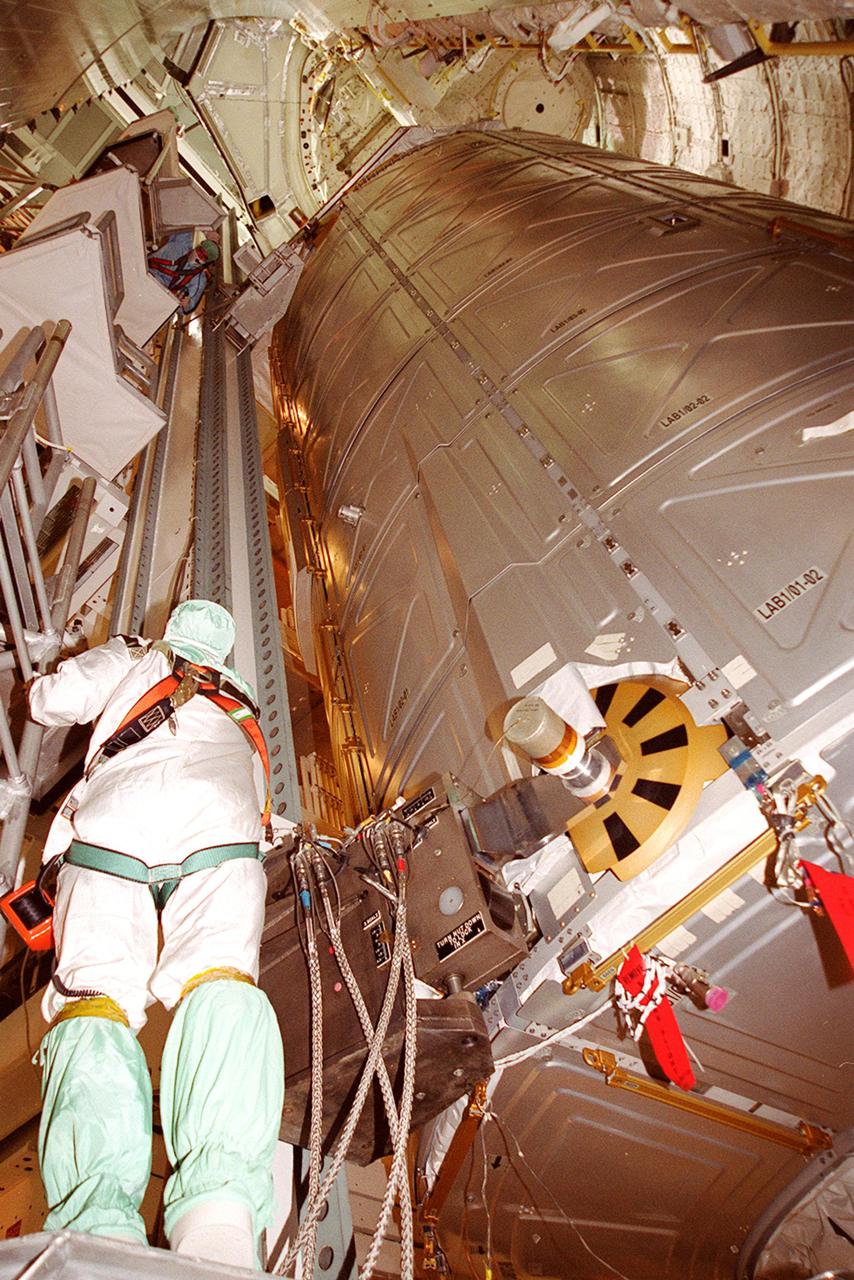
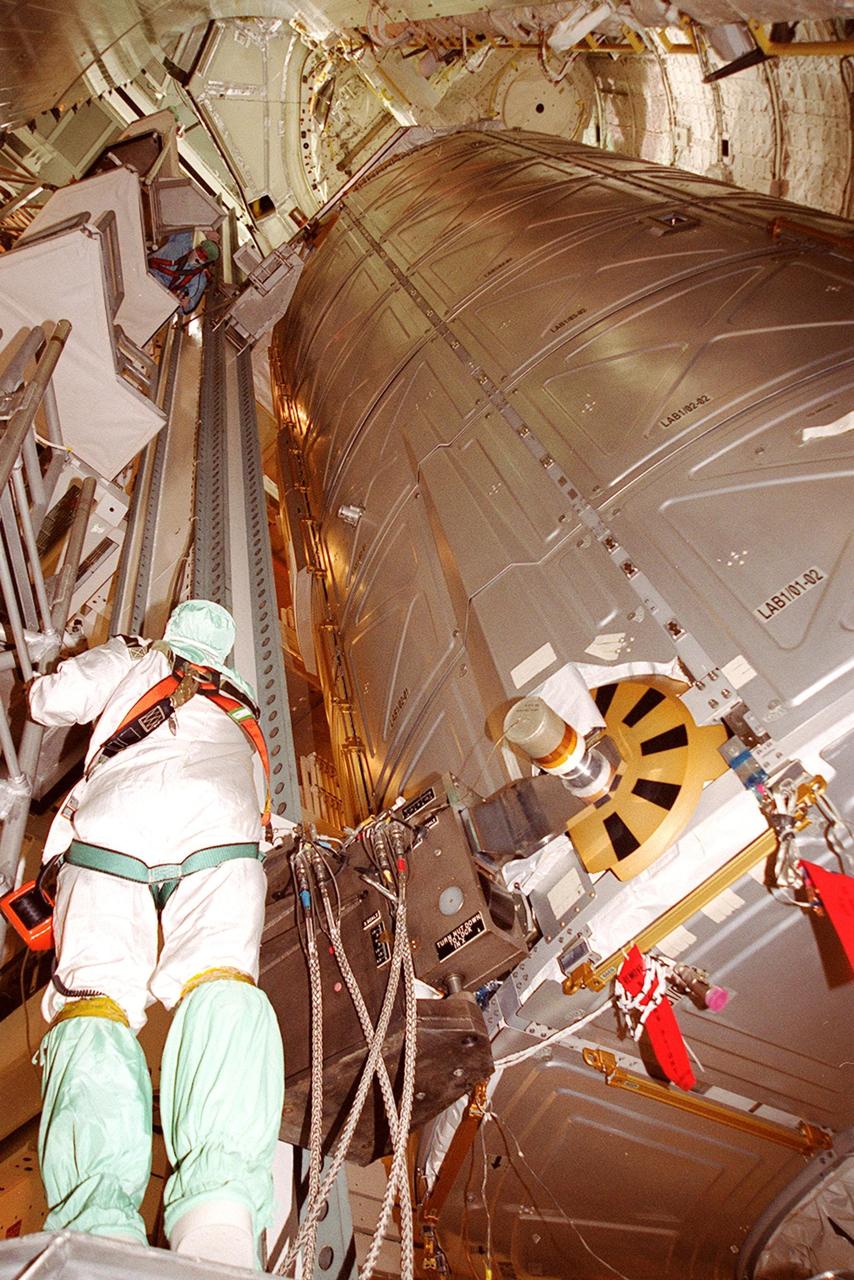
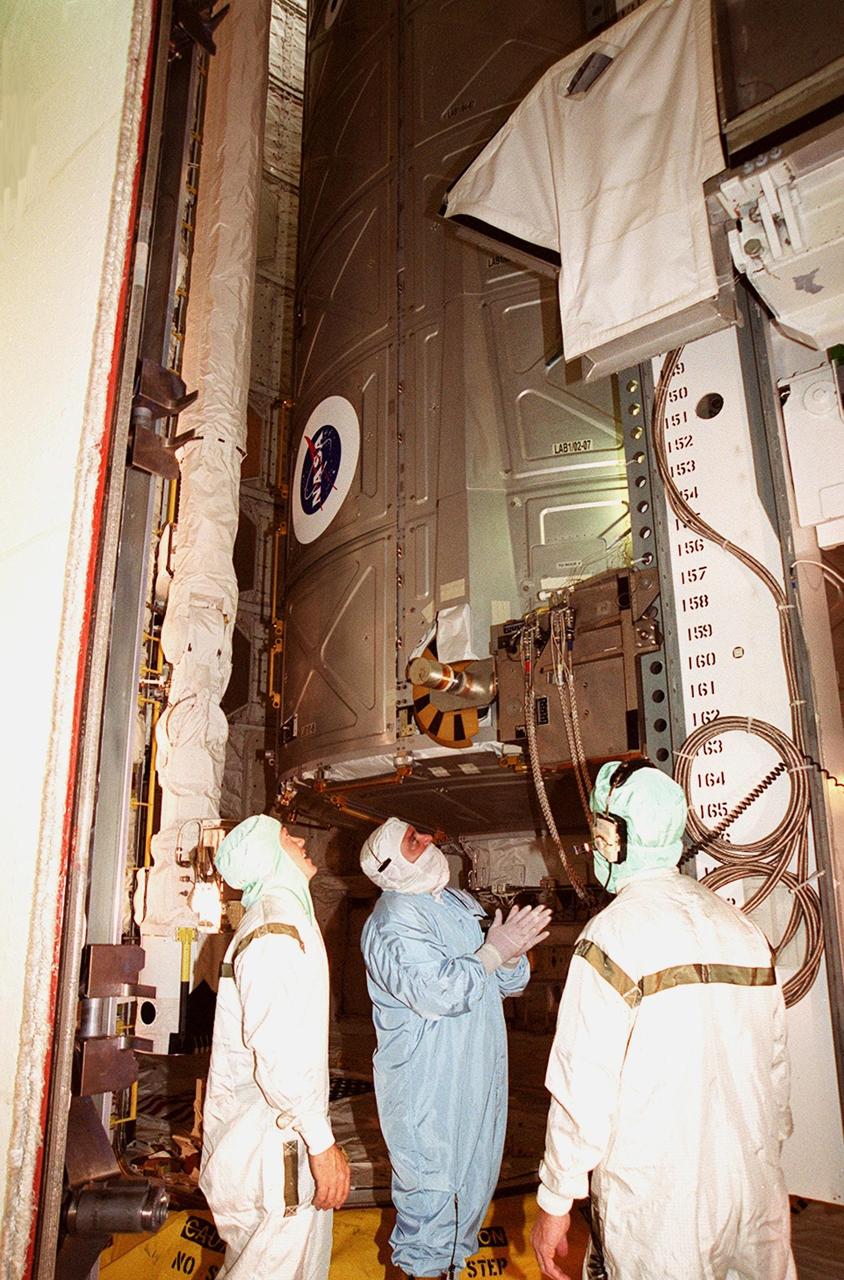
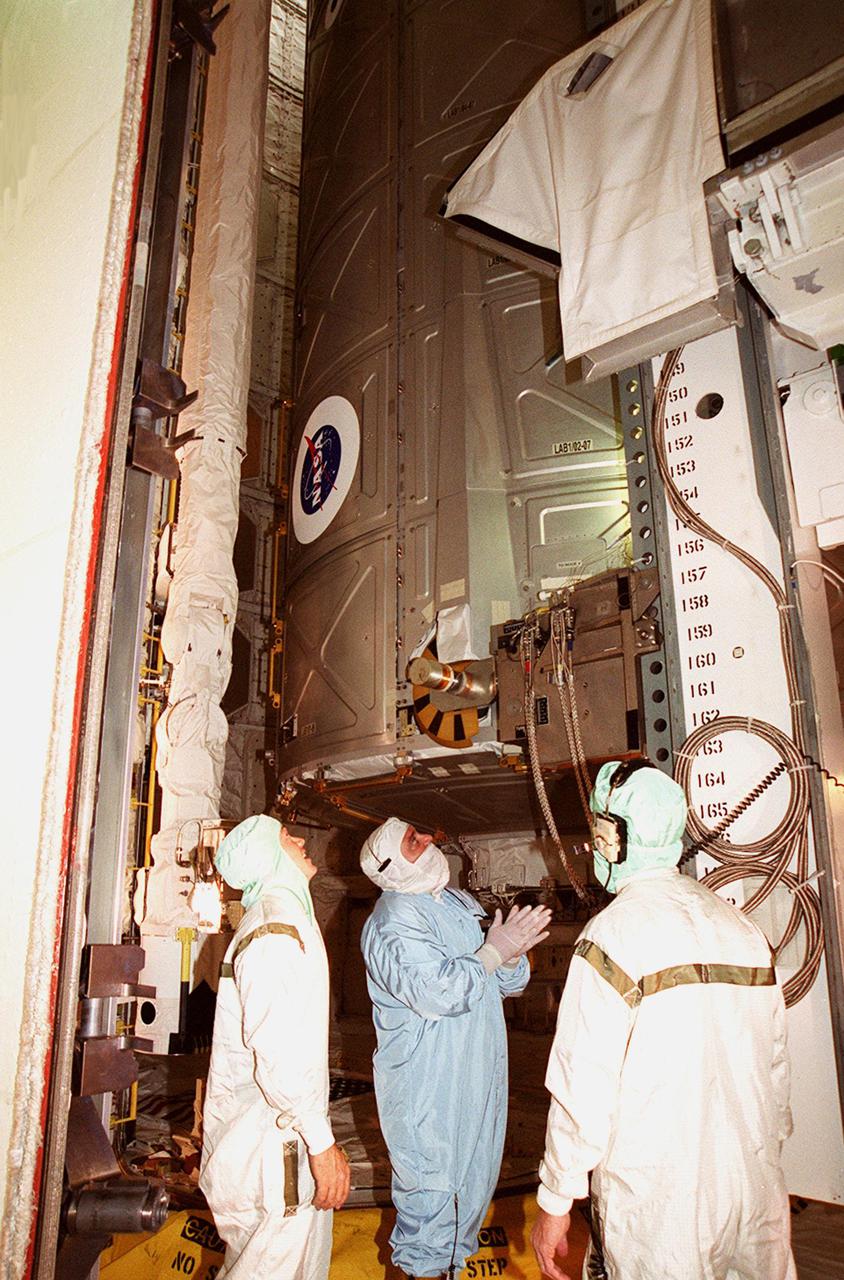
The U.S. Lab Destiny is ready to be moved from Atlantis’ payload bay into the Payload Changeout Room. After the move, Atlantis will roll back to the Vehicle Assembly Building to allow workers to conduct inspections, continuity checks and X-ray analysis on the 36 solid rocket booster cables located inside each booster’s system tunnel. An extensive evaluation of NASA’s SRB cable inventory revealed conductor damage in four (of about 200) cables on the shelf. Shuttle managers decided to prove the integrity of the system tunnel cables already on Atlantis
KSC01pp0125
The U.S. Lab Destiny is ready to be moved from Atlantis’ payload bay into the Payload Changeout Room. After the move, Atlantis will roll back to the Vehicle Assembly Building to allow workers to conduct inspections, continuity checks and X-ray analysis on the 36 solid rocket booster cables located inside each booster’s system tunnel. An extensive evaluation of NASA’s SRB cable inventory revealed conductor damage in four (of about 200) cables on the shelf. Shuttle managers decided to prove the integrity of the system tunnel cables already on Atlantis
KSC-01PP-0125
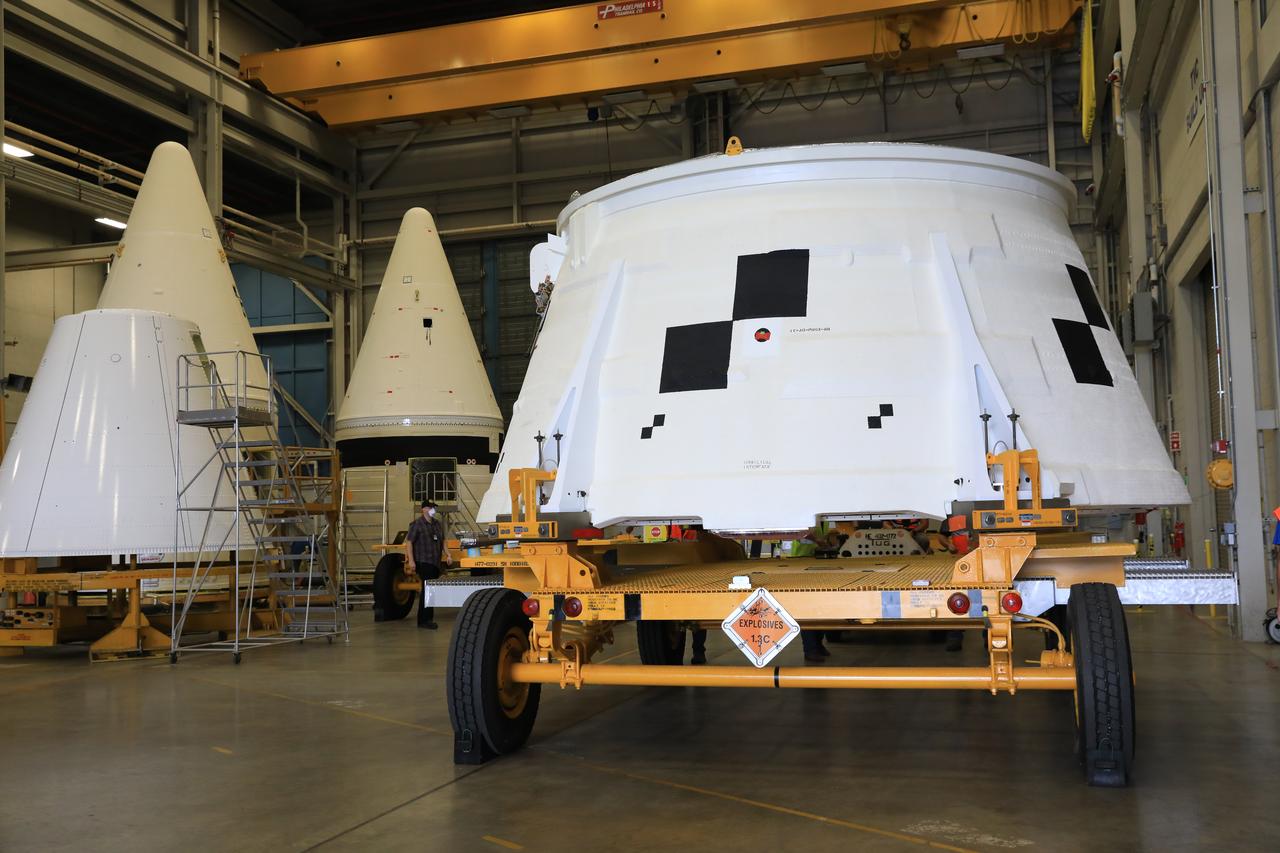
Inside the Booster Fabrication Facility at NASA's Kennedy Space Center in Florida, the Artemis I aft skirts for the agency's Space Launch System (SLS) rocket’s twin solid rocket boosters are being readied for their move to the Rotation, Processing and Surge Facility (RPSF) on June 9, 2020. In view, the left aft skirt assembly is attached to a move vehicle and moved out of a test cell. The aft skirts were refurbished by Northrop Grumman. They house the thrust vector control system, which controls 70 percent of the steering during initial ascent of the SLS rocket. The segments will remain in the RPSF until ready for stacking with the forward and aft parts of the boosters on the mobile launcher in High Bay 3 of the Vehicle Assembly Building. Through the Artemis Program, NASA is working to land the first woman and next man on the Moon by 2024.
Aft Skirt Delivery for Artemis I - Prep for RPSF
Inside the Booster Fabrication Facility at NASA's Kennedy Space Center in Florida, the Artemis I aft skirts for the agency's Space Launch System (SLS) rocket’s twin solid rocket boosters are being readied for their move to the Rotation, Processing and Surge Facility (RPSF) on June 9, 2020. In view, the left aft skirt assembly is attached to a move vehicle and moved out of a test cell. The aft skirts were refurbished by Northrop Grumman. They house the thrust vector control system, which controls 70 percent of the steering during initial ascent of the SLS rocket. The segments will remain in the RPSF until ready for stacking with the forward and aft parts of the boosters on the mobile launcher in High Bay 3 of the Vehicle Assembly Building. Through the Artemis Program, NASA is working to land the first woman and next man on the Moon by 2024.
Aft Skirt Delivery for Artemis I - Prep for RPSF
Inside the Booster Fabrication Facility at NASA's Kennedy Space Center in Florida, the Artemis I aft skirts for the agency's Space Launch System (SLS) rocket’s twin solid rocket boosters are being readied for their move to the Rotation, Processing and Surge Facility (RPSF) on June 9, 2020. In view, the left aft skirt assembly is attached to a move vehicle and moved out of a test cell. The Artemis II aft skirt structures are in view at left. The aft skirts were refurbished by Northrop Grumman. They house the thrust vector control system, which controls 70 percent of the steering during initial ascent of the SLS rocket. The segments will remain in the RPSF until ready for stacking with the forward and aft parts of the boosters on the mobile launcher in High Bay 3 of the Vehicle Assembly Building. Through the Artemis Program, NASA is working to land the first woman and next man on the Moon by 2024.
Aft Skirt Delivery for Artemis I - Prep for RPSF
In High Bay 4 of the Vehicle Assembly Building at NASA’s Kennedy Space Center in Florida, a crane moves Space Launch System (SLS) solid rocket booster pathfinder segments to stack them atop other pathfinder segments during a training exercise on Jan. 8, 2020. A team of engineers with Exploration Ground Systems and crane operators and technicians with contractor Jacobs are practicing lifting, moving and stacking maneuvers, using important ground support equipment to train employees and certify all the equipment works properly. The booster pathfinders are inert, full-scale replicas of the actual booster hardware that will be attached to the SLS rocket for Artemis missions. The five-segment, 17-story-tall twin boosters will provide 3.6 million pounds of thrust each at liftoff to help launch Orion on Artemis I, its first uncrewed mission beyond the Moon.
EGS Booster Segrment Training
In High Bay 4 of the Vehicle Assembly Building at NASA’s Kennedy Space Center in Florida, a crane moves Space Launch System (SLS) solid rocket booster pathfinder segments toward a platform during a training exercise on Jan. 8, 2020. A team of engineers with Exploration Ground Systems and crane operators and technicians with contractor Jacobs are practicing lifting, moving and stacking maneuvers, using important ground support equipment to train employees and certify all the equipment works properly. The booster pathfinders are inert, full-scale replicas of the actual booster hardware that will be attached to the SLS rocket for Artemis missions. The five-segment, 17-story-tall twin boosters will provide 3.6 million pounds of thrust each at liftoff to help launch Orion on Artemis I, its first uncrewed mission beyond the Moon.
EGS Booster Segrment Training
In High Bay 4 of the Vehicle Assembly Building at NASA’s Kennedy Space Center in Florida, a team of engineers with Exploration Ground Systems and contractor Jacobs participate in Space Launch System (SLS) solid rocket booster pathfinder stacking during a training exercise on Jan. 8, 2020. A crane is used to lift up two pathfinder segments and move them to a platform. The booster pathfinders are inert, full-scale replicas of the actual booster hardware that will be attached to the SLS rocket for Artemis missions. The team is practicing lifting, moving and stacking maneuvers, using important ground support equipment to train employees and certify all the equipment works properly. The five-segment, 17-story-tall twin boosters will provide 3.6 million pounds of thrust each at liftoff to help launch Orion on Artemis I, its first uncrewed mission beyond the Moon.
EGS Booster Segrment Training
In High Bay 4 of the Vehicle Assembly Building at NASA’s Kennedy Space Center in Florida, a crane moves Space Launch System (SLS) solid rocket booster pathfinder segments toward a platform during a training exercise on Jan. 8, 2020. A team of engineers with Exploration Ground Systems and crane operators and technicians with contractor Jacobs are practicing lifting, moving and stacking maneuvers, using important ground support equipment to train employees and certify all the equipment works properly. The booster pathfinders are inert, full-scale replicas of the actual booster hardware that will be attached to the SLS rocket for Artemis missions. The five-segment, 17-story-tall twin boosters will provide 3.6 million pounds of thrust each at liftoff to help launch Orion on Artemis I, its first uncrewed mission beyond the Moon.
EGS Booster Segrment Training
The Exploration Mission-1 (EM-1) left-hand forward skirt for NASA's Space Launch System (SLS) solid rocket boosters is prepared for its move from Hangar AE at Cape Canaveral Air Force Station in Florida, to the Booster Fabrication Facility (BFF) at Kennedy Space Center. In the BFF, the forward skirt will be inspected and prepared for use on the left-hand solid rocket booster for EM-1. NASA's Orion spacecraft will fly atop the SLS rocket on its first uncrewed flight test.
Orion EM-1 Forward Skirt Move from Hangar AF to BFF
The Exploration Mission-1 (EM-1) left-hand forward skirt for NASA's Space Launch System (SLS) solid rocket boosters is moved out of Hangar AE at Cape Canaveral Air Force Station in Florida, for transport to the Booster Fabrication Facility (BFF) at Kennedy Space Center. In the BFF, the forward skirt will be inspected and prepared for use on the left-hand solid rocket booster for EM-1. NASA's Orion spacecraft will fly atop the SLS rocket on its first uncrewed flight test.
Orion EM-1 Forward Skirt Move from Hangar AF to BFF
KENNEDY SPACE CENTER, FLA. -  In the Vehicle Assembly Building, the forward assembly (nose cap and frustum) is moved away from the solid rocket booster (SRB).  The destacking is part of time and cycle activities.  The SRB was part of the stack on Atlantis originally scheduled for a March 1, 2003, launch on mission STS-114.  The SRBs and external tank were demated in February 2003.   The mission is now scheduled to occur no earlier than Sept. 12, 2004, on Atlantis.
KENNEDY SPACE CENTER, FLA. - In the Vehicle Assembly Building, the forward assembly (nose cap and frustum) is moved away from the solid rocket booster (SRB). The destacking is part of time and cycle activities. The SRB was part of the stack on Atlantis originally scheduled for a March 1, 2003, launch on mission STS-114. The SRBs and external tank were demated in February 2003. The mission is now scheduled to occur no earlier than Sept. 12, 2004, on Atlantis.
KENNEDY SPACE CENTER, FLA. - Moving past the 525-foot-high Vehicle Assembly Building, the red NASA engine pulls several containers enclosing segments of a solid rocket booster being returned to Utah for testing.  The segments were part of the STS-114 stack.  It is the first time actual flight segments that had been stacked for flight in the VAB are being returned for testing.  They will undergo firing, which will enable inspectors to check the viability of the solid and verify the life expectancy for stacked segments.
KENNEDY SPACE CENTER, FLA. - Moving past the 525-foot-high Vehicle Assembly Building, the red NASA engine pulls several containers enclosing segments of a solid rocket booster being returned to Utah for testing. The segments were part of the STS-114 stack. It is the first time actual flight segments that had been stacked for flight in the VAB are being returned for testing. They will undergo firing, which will enable inspectors to check the viability of the solid and verify the life expectancy for stacked segments.
KENNEDY SPACE CENTER, FLA. - Workers ride the rails along with a container enclosing a segment of a solid rocket booster being moved to the main track.  Several segments are being returned to Utah for testing.  The segments were part of the STS-114 stack.  It is the first time actual flight segments that had been stacked for flight in the VAB are being returned for testing.  They will undergo firing, which will enable inspectors to check the viability of the solid and verify the life expectancy for stacked segments.
KENNEDY SPACE CENTER, FLA. - Workers ride the rails along with a container enclosing a segment of a solid rocket booster being moved to the main track. Several segments are being returned to Utah for testing. The segments were part of the STS-114 stack. It is the first time actual flight segments that had been stacked for flight in the VAB are being returned for testing. They will undergo firing, which will enable inspectors to check the viability of the solid and verify the life expectancy for stacked segments.
KENNEDY SPACE CENTER, FLA. - The red NASA engine moves forward past the Vehicle Assembly Building with its cargo of containers enclosing segments of a solid rocket booster being returned to Utah for testing.  The segments were part of the STS-114 stack.  It is the first time actual flight segments that had been stacked for flight in the VAB are being returned for testing.  They will undergo firing, which will enable inspectors to check the viability of the solid and verify the life expectancy for stacked segments.
KENNEDY SPACE CENTER, FLA. - The red NASA engine moves forward past the Vehicle Assembly Building with its cargo of containers enclosing segments of a solid rocket booster being returned to Utah for testing. The segments were part of the STS-114 stack. It is the first time actual flight segments that had been stacked for flight in the VAB are being returned for testing. They will undergo firing, which will enable inspectors to check the viability of the solid and verify the life expectancy for stacked segments.
CAPE CANAVERAL, Fla. –  At Hangar AF at Cape Canaveral Air Force Station in Florida, two spent solid rocket boosters from space shuttle Endeavour, which launched Nov. 14 on the STS-126 mission, move into the hangar for inspection. The space shuttle’s solid rocket booster casings and associated flight hardware are recovered at sea after being jettisoned. The boosters impact the Atlantic Ocean approximately seven minutes after liftoff. After their recovery and transport to Hangar AF, the boosters are cleaned, inspected, disassembled, refurbished and reloaded with solid propellant for reuse.  Photo credit: NASA/Jim Grossmann
KSC-08pd3763
CAPE CANAVERAL, Fla. -- The left spent booster used during space shuttle Discovery's final launch is moved into a hoisting slip at the Solid Rocket Booster Disassembly Facility at Hangar AF on Cape Canaveral Air Force Station in Florida.          The shuttle's two solid rocket booster casings and associated flight hardware are recovered in the Atlantic Ocean after every launch by Freedom Star and Liberty Star. The boosters impact the Atlantic about seven minutes after liftoff and the retrieval ships are stationed about 10 miles from the impact area at the time of splashdown. After the spent segments are processed, they will be transported to Utah, where they will be refurbished and stored, if needed. Photo credit: NASA/Jim Grossmann
KSC-2011-1909
CAPE CANAVERAL, Fla. --   From the NASA Railroad yard at NASA's Kennedy Space Center, the locomotive moves the train carrying the solid rocket booster, or SRB, segments from the STS-126 launch.  The segments will be taken to Utah. After a mission, the spent boosters are recovered, cleaned, disassembled, refurbished and reused for another launch. After the segments are  hydrolased inside, they are placed on flatbed trucks and transferred to the NASA Railroad yard. The NASA Railroad locomotive backs up the rail cars and the segments are lowered onto the cars. After being covered for the trip, the segments are moved to Titusville for interchange with Florida East Coast Railway to begin the trip back to Utah.  Photo credit: NASA/Kim Shiflett
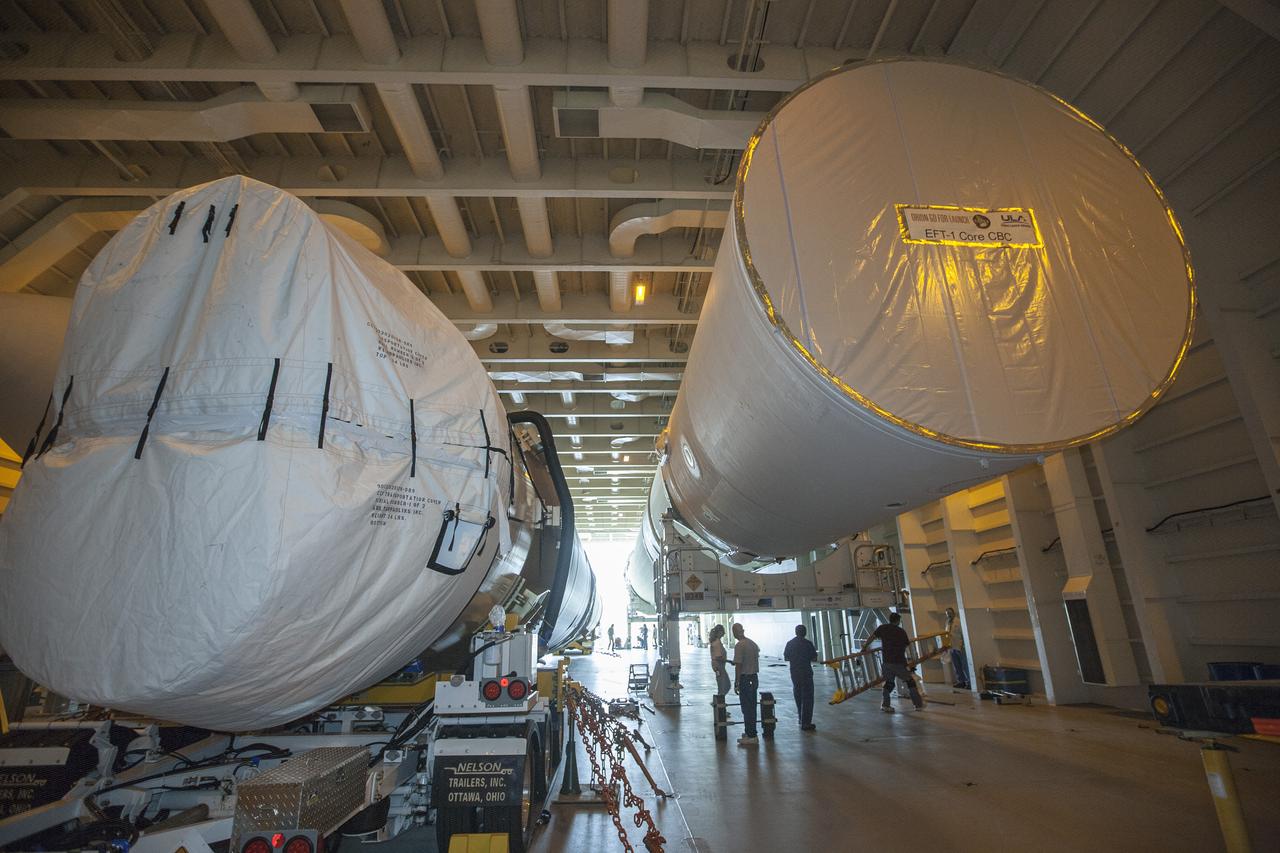
KSC-08pd4068
CAPE CANAVERAL, Fla. –   The external fuel tank for space shuttle Atlantis' STS-125 mission to NASA's Hubble Space Telescope arrives at Port Canaveral, Fla., towed on the Pegasus barge by a solid rocket booster retrieval ship. The tank will be towed to the turn basin in the Launch Complex 39 Area at NASA's Kennedy Space Center, offloaded and moved to the Vehicle Assembly Building.  Once inside the building, the tank will be raised to vertical, lifted and moved into a checkout cell.  Stacking of the tank and solid rocket boosters is planned to start Aug. 7.  Atlantis is targeted to launch Oct. 8.  Photo credit: NASA/Jack Pfaller
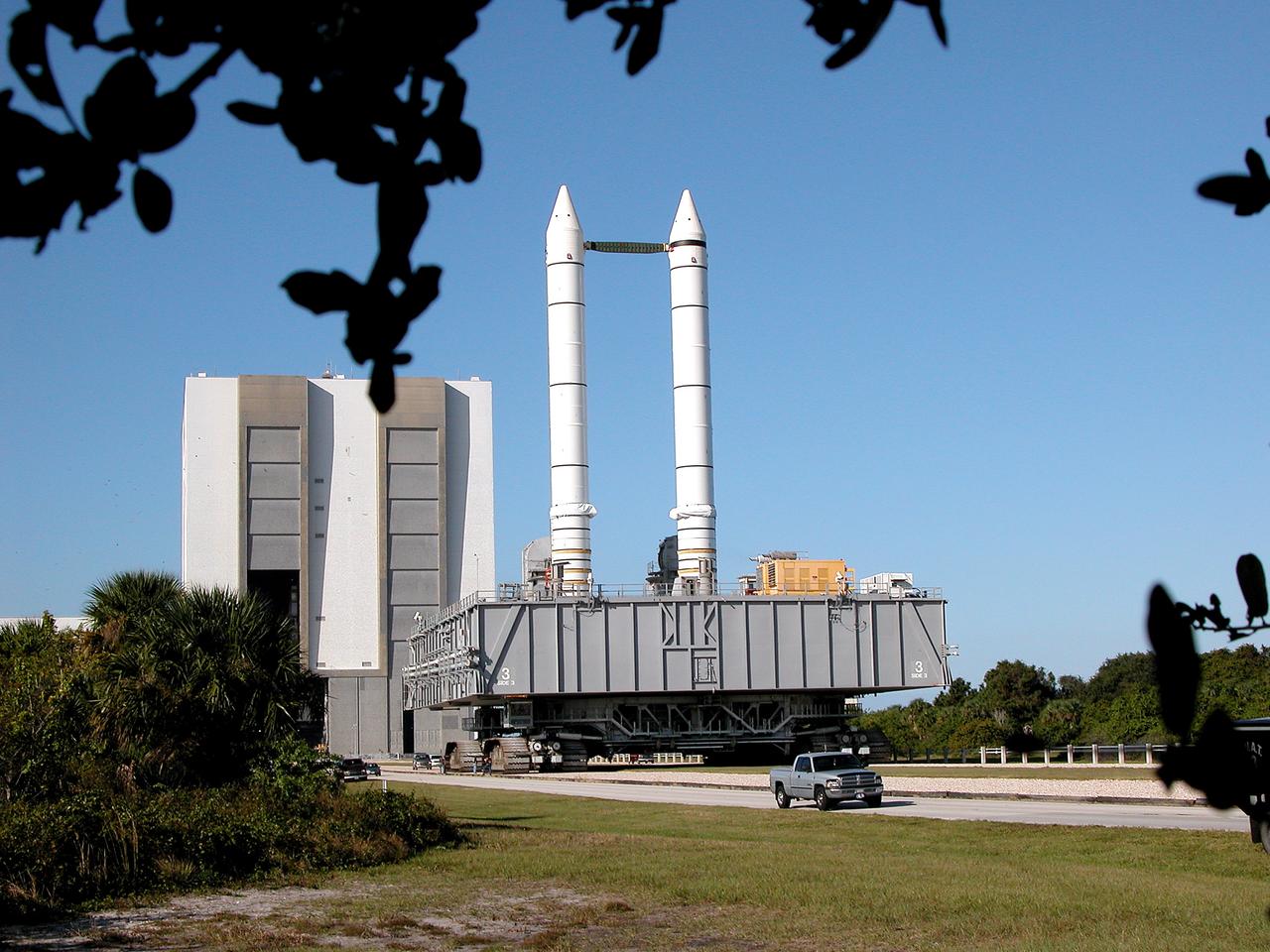
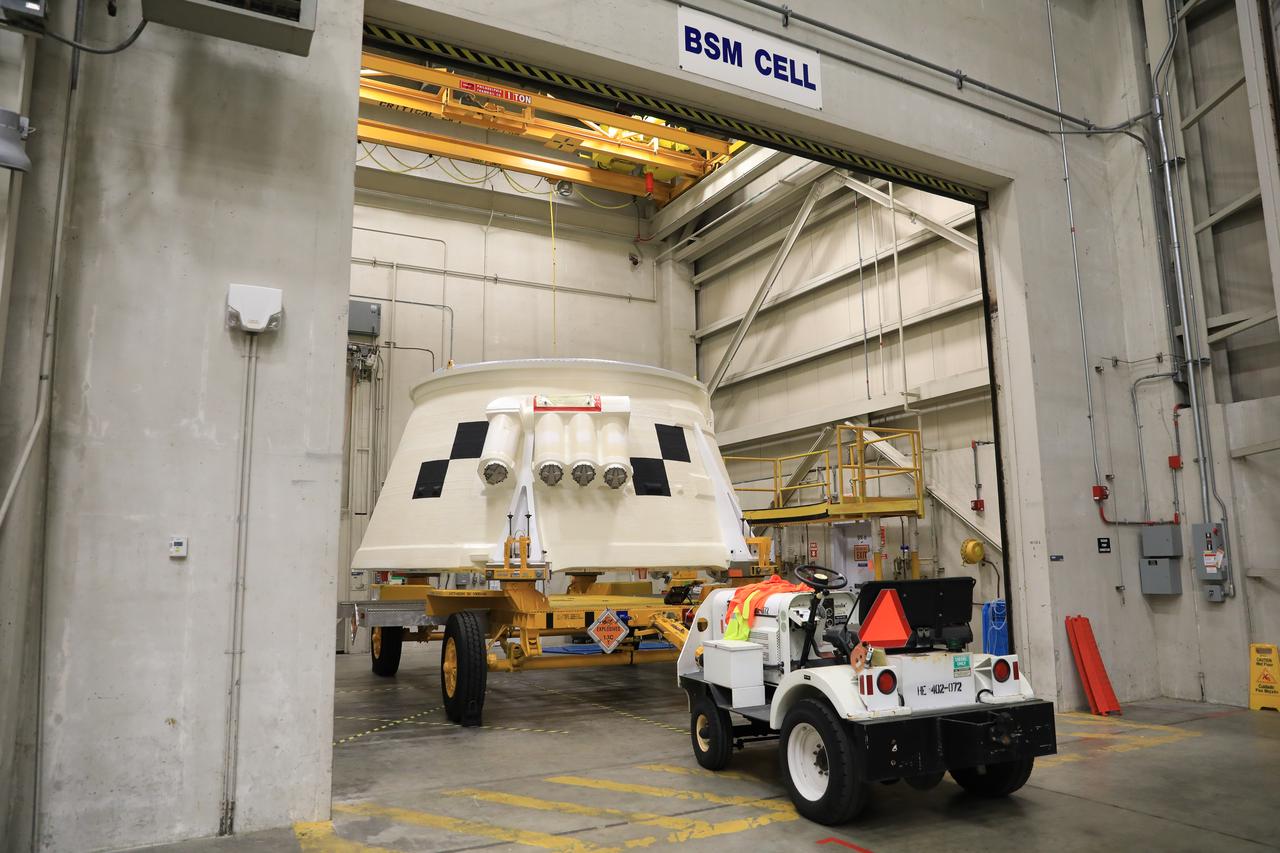
KSC-08pd1972
CAPE CANAVERAL, Fla. –   The external fuel tank for space shuttle Atlantis' STS-125 mission to NASA's Hubble Space Telescope arrives at Port Canaveral, Fla., towed on the Pegasus barge by a solid rocket booster retrieval ship. The tank will be towed to the turn basin in the Launch Complex 39 Area at NASA's Kennedy Space Center, offloaded and moved to the Vehicle Assembly Building.  Once inside the building, the tank will be raised to vertical, lifted and moved into a checkout cell.  Stacking of the tank and solid rocket boosters is planned to start Aug. 7.  Atlantis is targeted to launch Oct. 8.  Photo credit: NASA/Jack Pfaller
KSC-08pd1971
Workers in the Payload Changeout Room check the Payload Ground Handling Mechanism that will move the U.S. Lab Destiny out of Atlantis’ payload bay and into the PCR. After the move, Atlantis will roll back to the Vehicle Assembly Building to allow workers to conduct inspections, continuity checks and X-ray analysis on the 36 solid rocket booster cables located inside each booster’s system tunnel. An extensive evaluation of NASA’s SRB cable inventory revealed conductor damage in four (of about 200) cables on the shelf. Shuttle managers decided to prove the integrity of the system tunnel cables already on Atlantis
KSC-01PP-0126
Workers in the Payload Changeout Room check the Payload Ground Handling Mechanism that will move the U.S. Lab Destiny out of Atlantis’ payload bay and into the PCR. After the move, Atlantis will roll back to the Vehicle Assembly Building to allow workers to conduct inspections, continuity checks and X-ray analysis on the 36 solid rocket booster cables located inside each booster’s system tunnel. An extensive evaluation of NASA’s SRB cable inventory revealed conductor damage in four (of about 200) cables on the shelf. Shuttle managers decided to prove the integrity of the system tunnel cables already on Atlantis
KSC01pp0126
CAPE CANAVERAL, Fla. –   In the Launch Complex 39 Area at NASA's Kennedy Space Center, the external tank for space shuttle Atlantis' STS-125 mission to NASA's Hubble Space Telescope is ready to be moved off the Pegasus barge and moved to the Vehicle Assembly Building.   Inside the building, the tank will be raised to vertical, lifted and moved into a checkout cell.  Stacking of the tank and solid rocket boosters is scheduled for Aug. 7.  Atlantis is targeted to launch Oct. 8.  Photo credit: NASA/Amanda Diller
KSC-08pd1980
Inside the Booster Fabrication Facility at NASA's Kennedy Space Center in Florida, the Artemis I aft skirts for the agency's Space Launch System (SLS) rocket’s twin solid rocket boosters are moved out of their test cells and are being readied for their move to the Rotation, Processing and Surge Facility (RPSF) on June 9, 2020. In view at right is the right aft skirt. In view at left are the two Artemis I forward assemblies. The aft skirts were refurbished by Northrop Grumman. They house the thrust vector control system, which controls 70 percent of the steering during initial ascent of the SLS rocket. The segments will remain in the RPSF until ready for stacking with the forward and aft parts of the boosters on the mobile launcher in High Bay 3 of the Vehicle Assembly Building. Through the Artemis Program, NASA is working to land the first woman and next man on the Moon by 2024.
Aft Skirt Delivery for Artemis I - Prep for RPSF
Inside the Booster Fabrication Facility at NASA's Kennedy Space Center in Florida, the Artemis I aft skirts for the agency's Space Launch System (SLS) rocket’s twin solid rocket boosters are being readied for their move to the Rotation, Processing and Surge Facility (RPSF) on June 9, 2020. In view, the left aft skirt assembly is attached to a move vehicle in a test cell. The aft skirts were refurbished by Northrop Grumman. They house the thrust vector control system, which controls 70 percent of the steering during initial ascent of the SLS rocket. The segments will remain in the RPSF until ready for stacking with the forward and aft parts of the boosters on the mobile launcher in High Bay 3 of the Vehicle Assembly Building. Through the Artemis Program, NASA is working to land the first woman and next man on the Moon by 2024.
Aft Skirt Delivery for Artemis I - Prep for RPSF
CAPE CANAVERAL, Fla. – At the Parachute Refurbishment Facility at NASA's Kennedy Space Center in Florida, the parachutes recovered from sea after the launch of space shuttle Endeavour on the STS-126 mission are moved through the 30,000-gallon washer.  The parachutes are used to slow the descent of the solid rocket boosters that are jettisoned during liftoff.  After washing, the monorail will move the parachutes into a huge dryer heated with 140-degree air at 13,000 cubic feet per minute. One pilot, one drogue and three main canopies per booster slow the booster’s fall from about 360 mph to 50 mph.  After the chutes are cleaned and repaired, they must be carefully packed into their bags so they will deploy correctly the next time they are used. Photo credit: NASA/Jim Grossmann
KSC-08pd3747
KENNEDY SPACE CENTER, FLA. --  The NASA Railroad train moves along the track through NASA's Kennedy Space Center.  Behind it is the Operations and Support Building I in the Launch Complex 39 Area.  The train is hauling the solid rocket booster segments from the STS-122 mission. After a mission, the spent boosters are recovered, cleaned, disassembled, refurbished and reused after each launch. After hydrolasing the interior of each segment, they are placed on flatbed trucks. The individual booster segments are transferred to a railhead located at the railroad yard.  The covered segments will be moved to Titusville for interchange with Florida East Coast Railway to begin the trip back to the Thiokol plant in Wa¬satch, Utah.   Photo credit: NASA/Jack Pfaller
KSC-08pd0639
CAPE CANAVERAL, Fla. – At the Parachute Refurbishment Facility at NASA's Kennedy Space Center in Florida, a worker checks the parachute lines, recovered from sea after the launch of space shuttle Endeavour on the STS-126 mission, as they move into the 30,000-gallon washer. The parachutes are used to slow the descent of the solid rocket boosters that are jettisoned during liftoff.  After washing, the monorail will move the parachutes into a huge dryer heated with 140-degree air at 13,000 cubic feet per minute. One pilot, one drogue and three main canopies per booster slow the booster’s fall from about 360 mph to 50 mph.  After the chutes are cleaned and repaired, they must be carefully packed into their bags so they will deploy correctly the next time they are used. Photo credit: NASA/Jim Grossmann
KSC-08pd3746