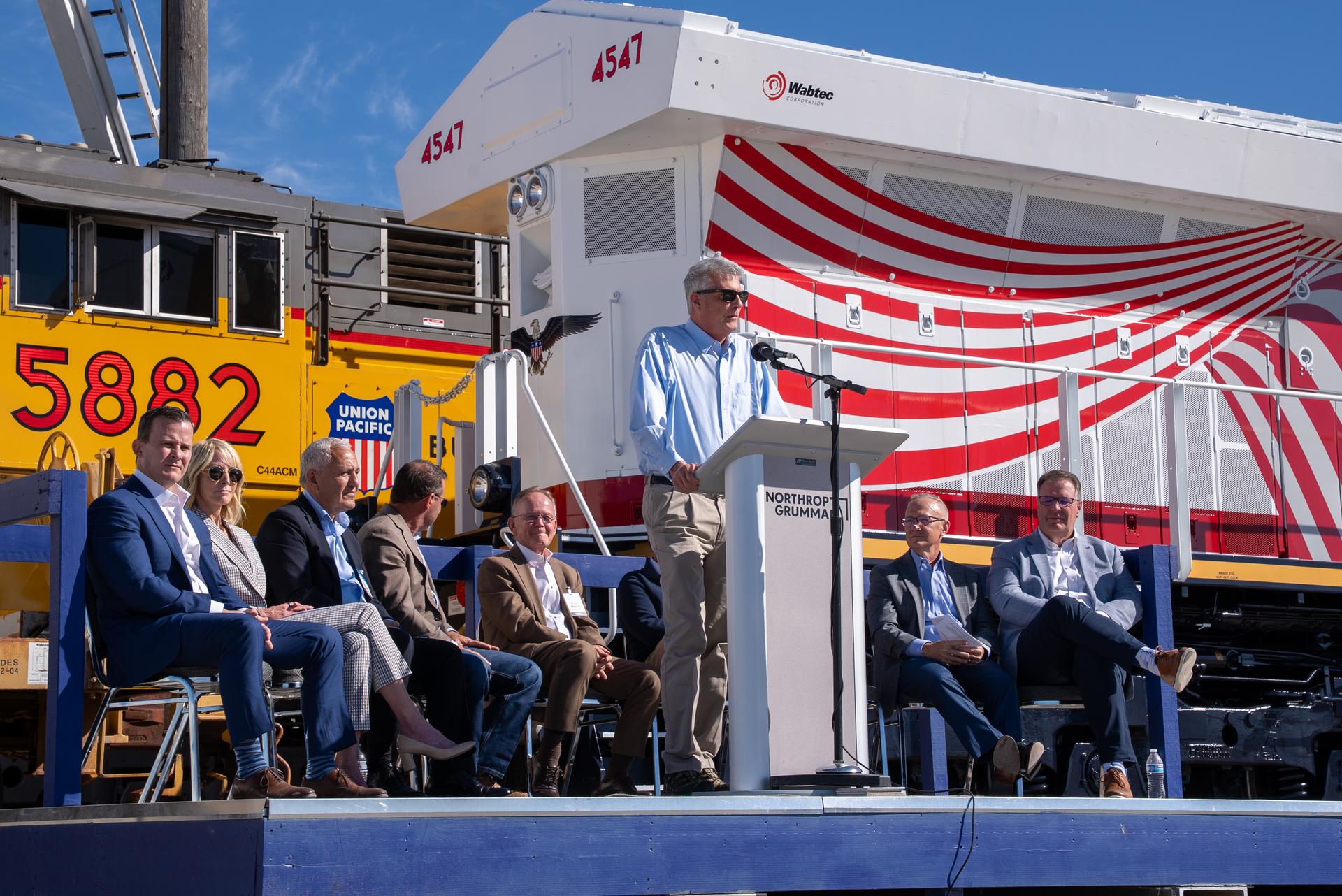
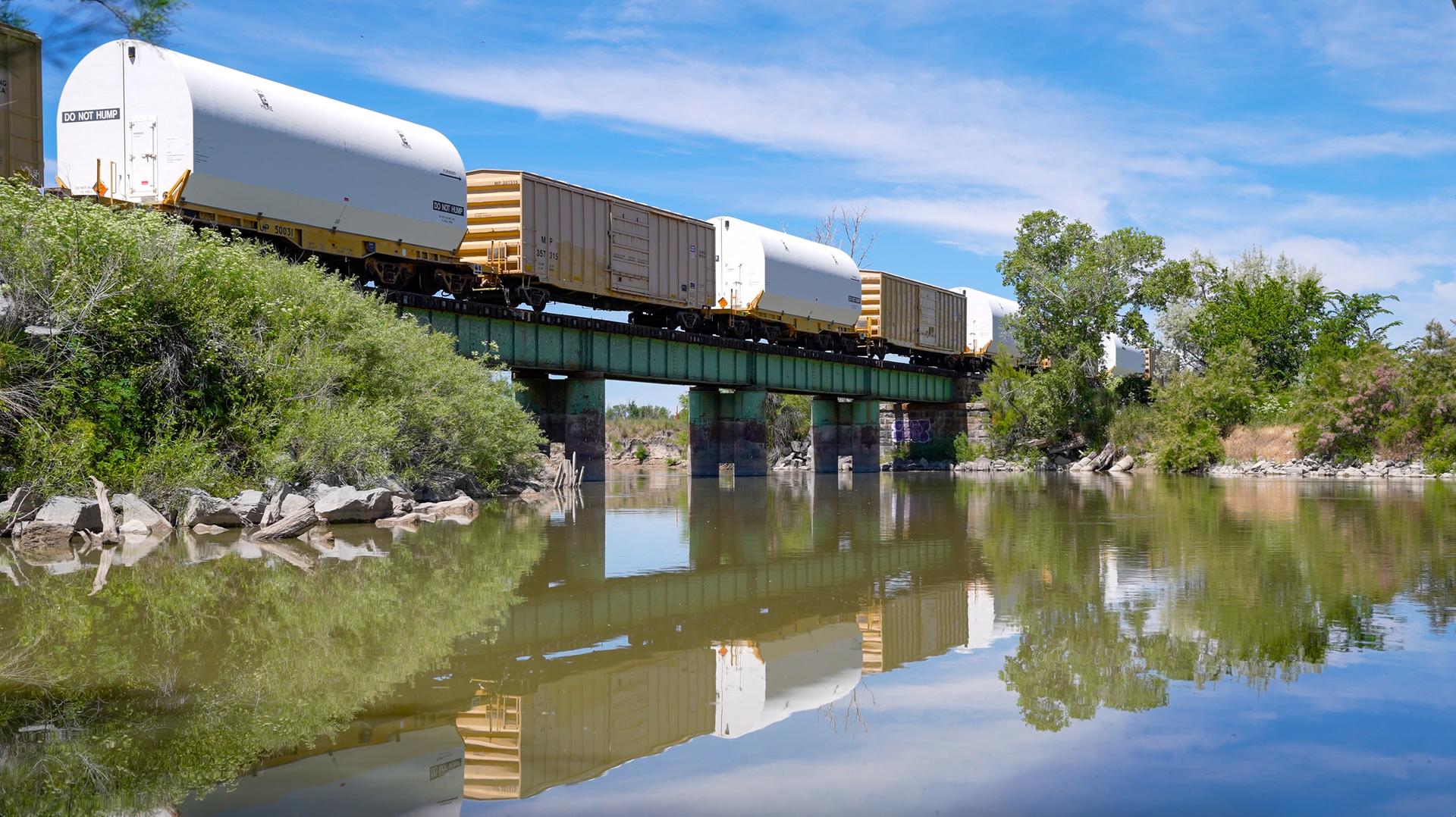
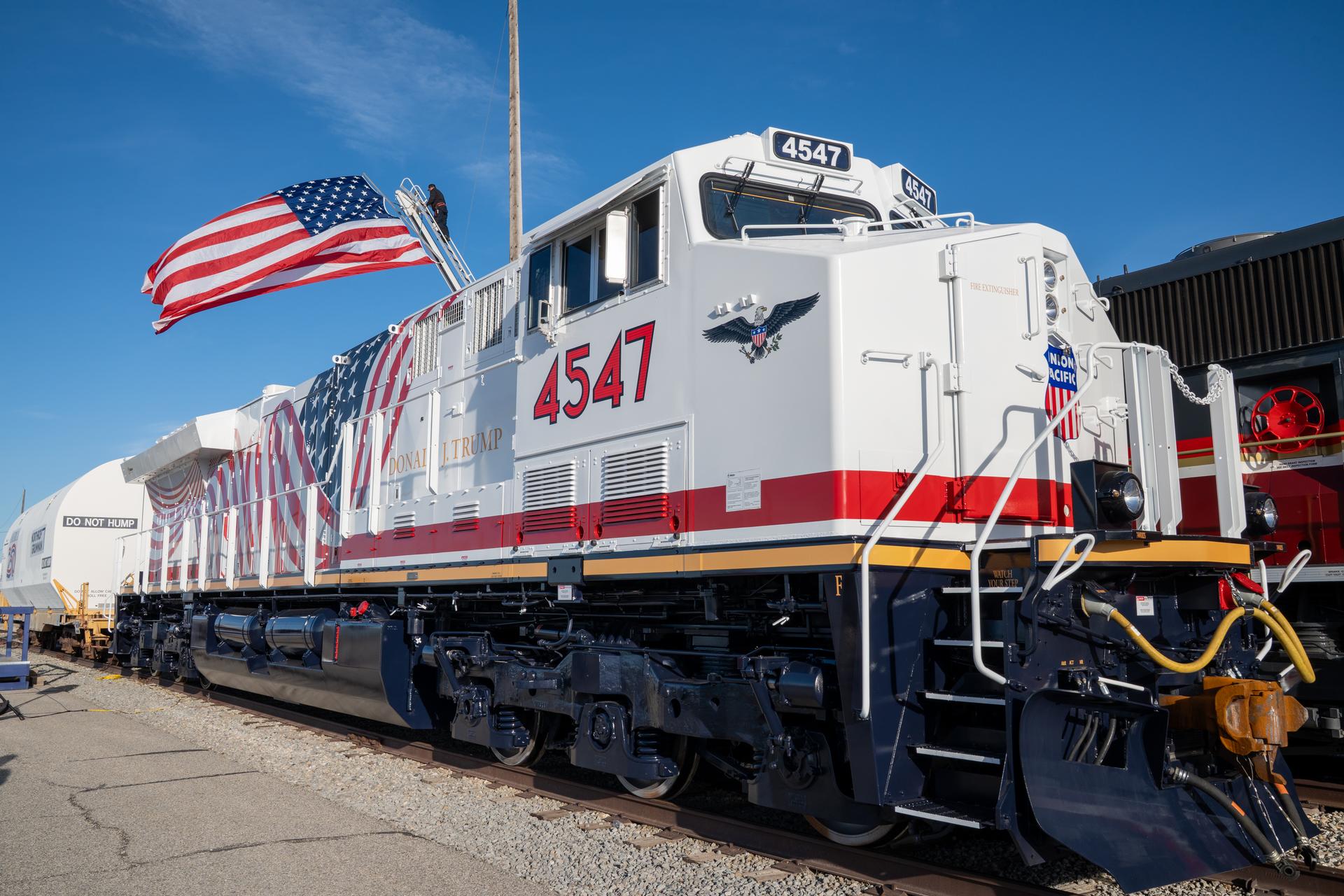
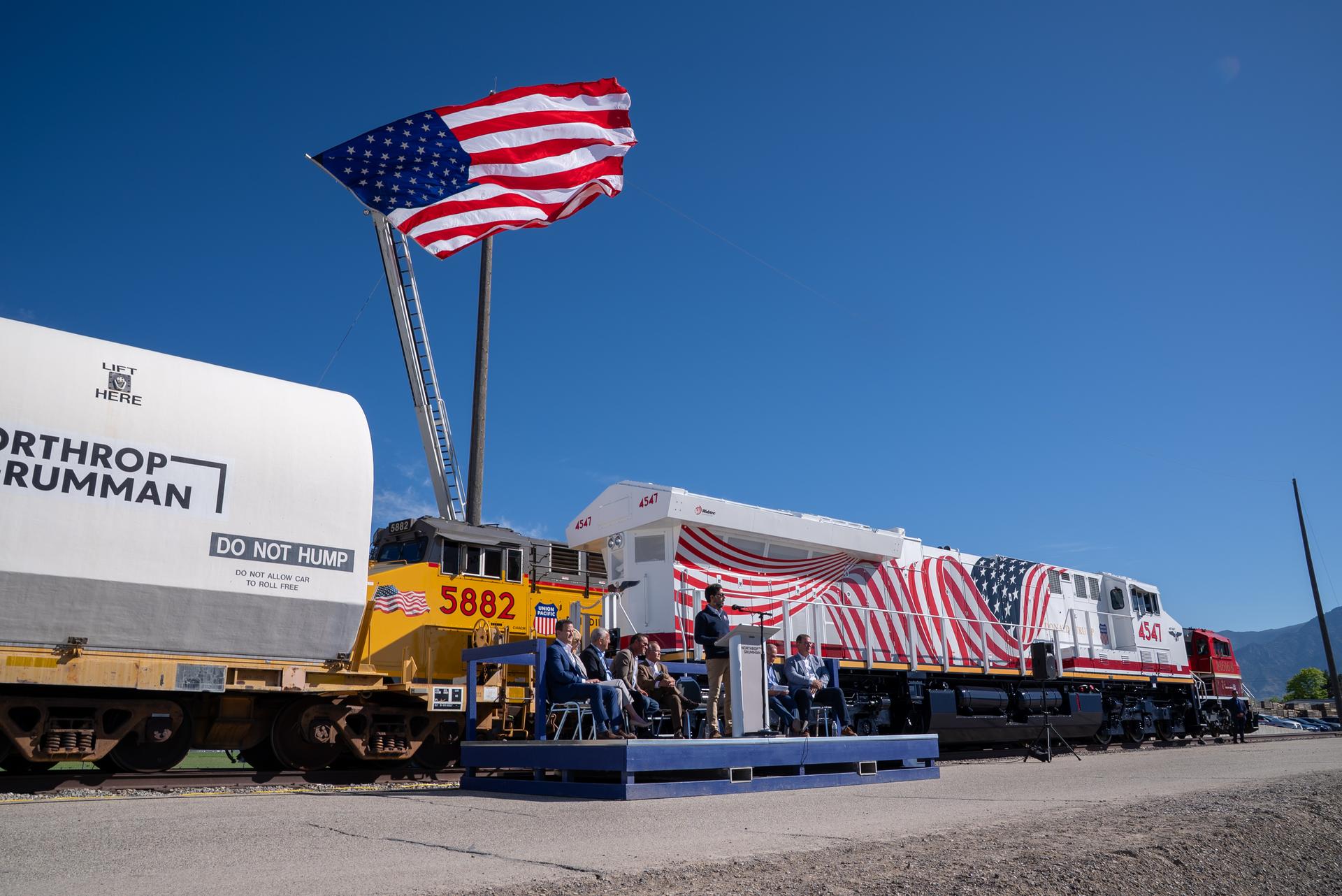
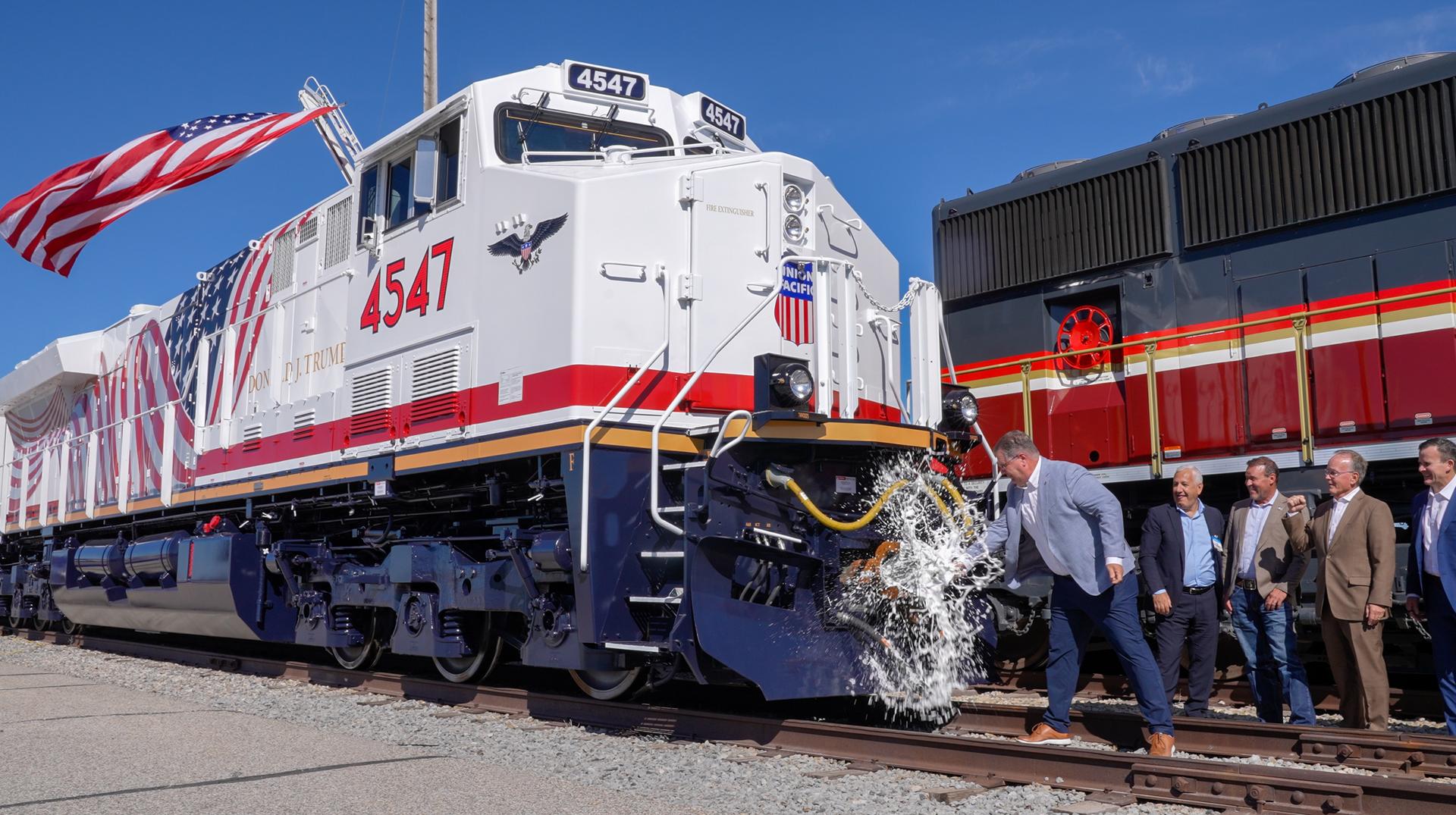
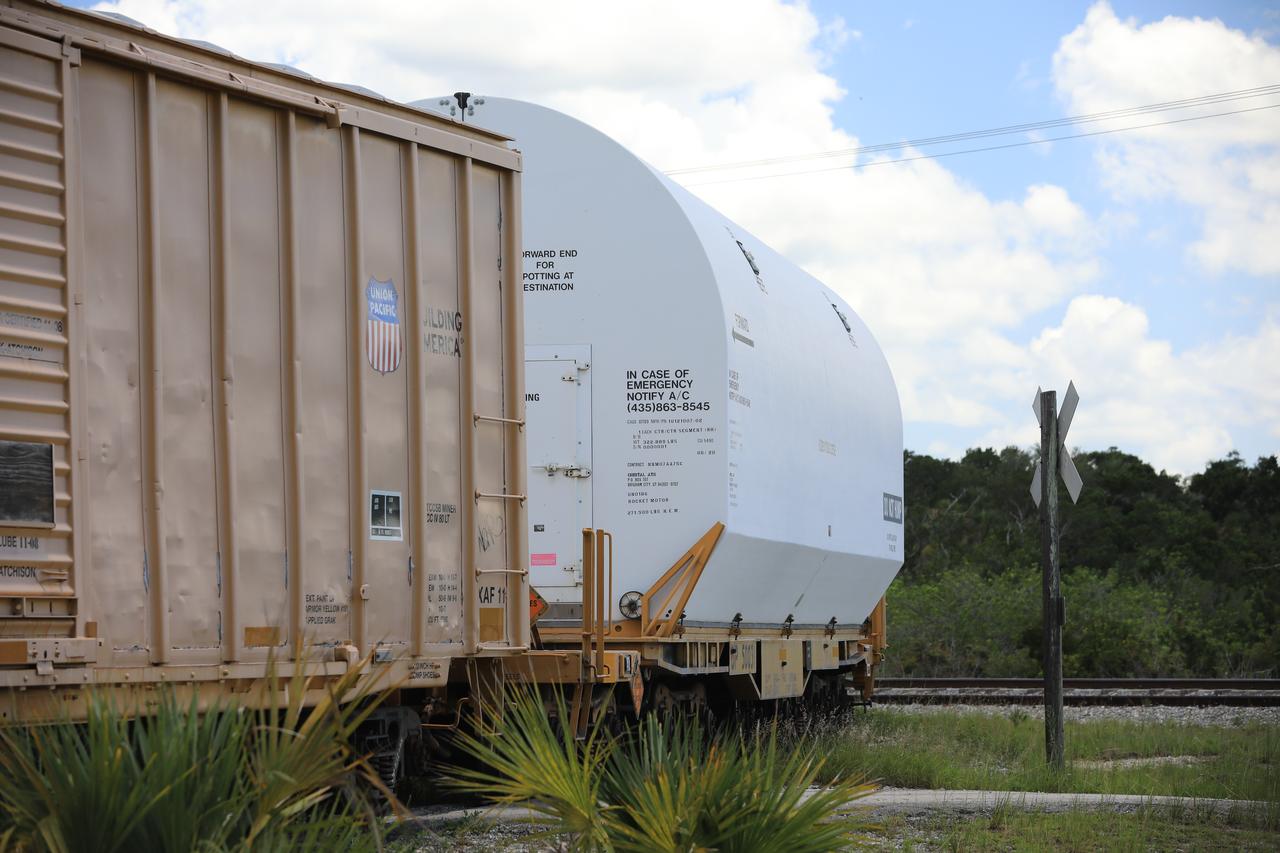
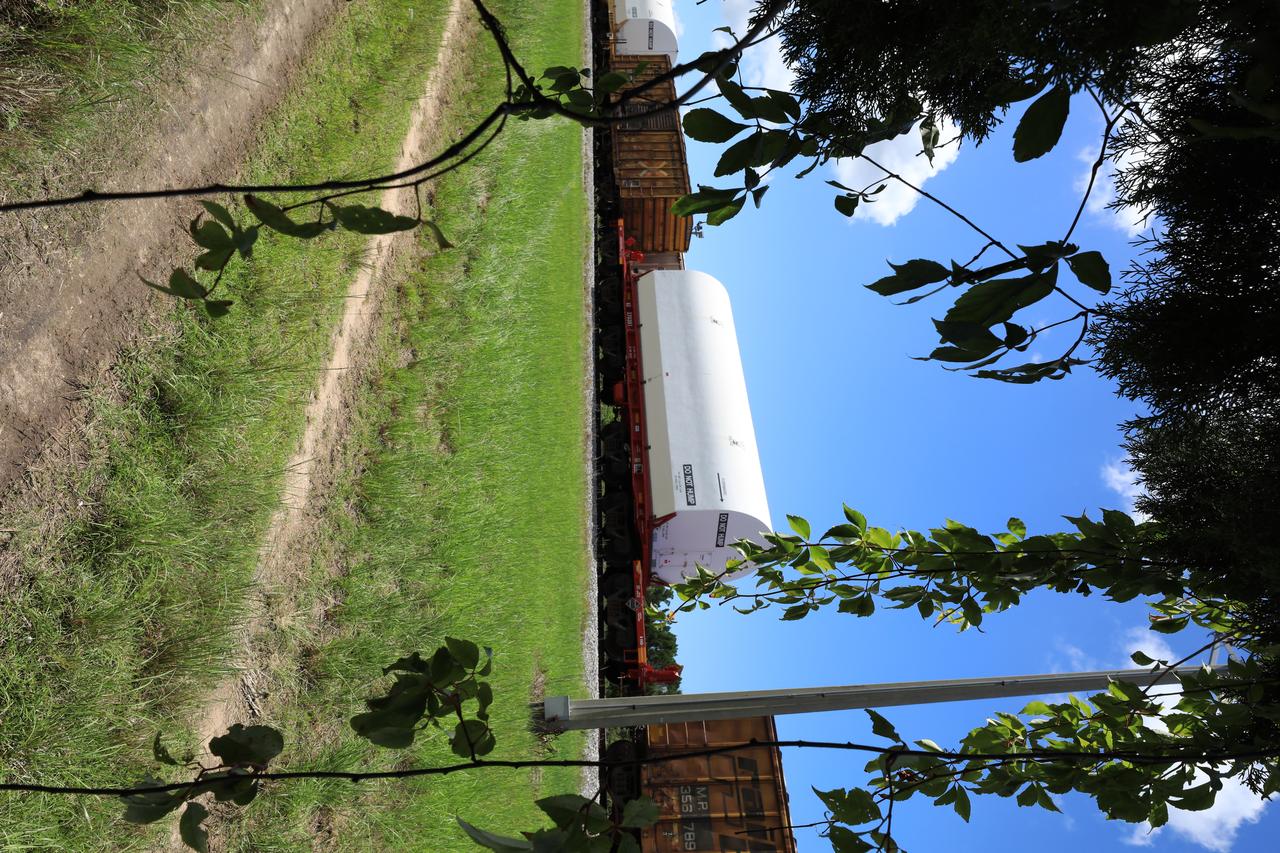
These images capture the final booster motor segments for NASA’s Artemis III mission departing Northrop Grumman’s Railyard Shipping Facility in Corinne, Utah, June 2. The eight segments will form the twin five-segment solid rocket boosters for the agency’s SLS (Space Launch System) rocket, providing more than 75% of the vehicle’s total thrust at liftoff. Due to their immense size and weight, the booster segments are transported in specialized carriers and are being hauled by Union Pacific Railroad’s newest commemorative locomotive, No. 4547. Marking its inaugural mission, the locomotive will deliver the flight hardware to NASA’s Kennedy Space Center in Florida, where stacking operations for Artemis III are set to begin later this year.
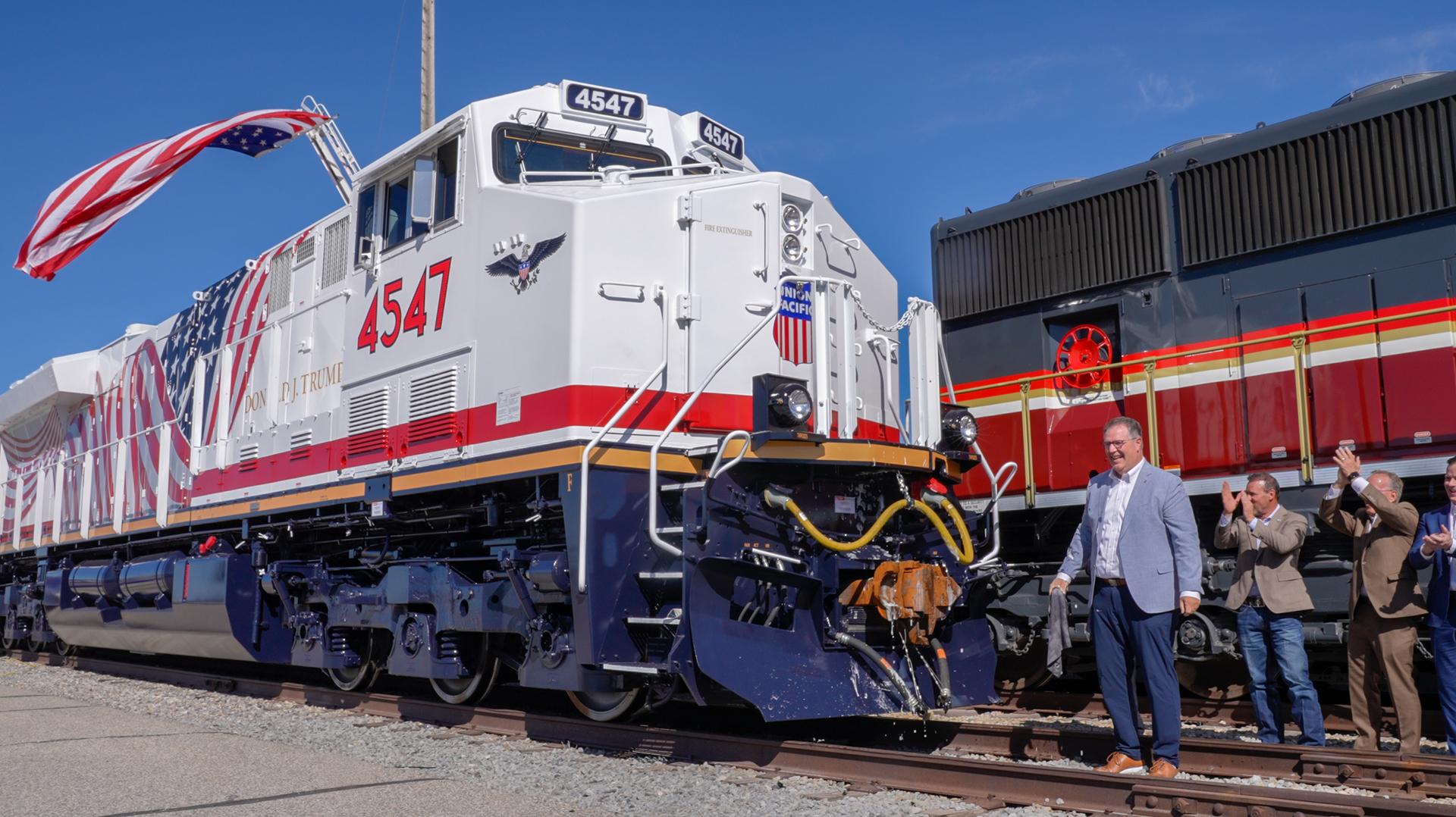
These images capture the final booster motor segments for NASA’s Artemis III mission departing Northrop Grumman’s Railyard Shipping Facility in Corinne, Utah, June 2. The eight segments will form the twin five-segment solid rocket boosters for the agency’s SLS (Space Launch System) rocket, providing more than 75% of the vehicle’s total thrust at liftoff. Due to their immense size and weight, the booster segments are transported in specialized carriers and are being hauled by Union Pacific Railroad’s newest commemorative locomotive, No. 4547. Marking its inaugural mission, the locomotive will deliver the flight hardware to NASA’s Kennedy Space Center in Florida, where stacking operations for Artemis III are set to begin later this year.
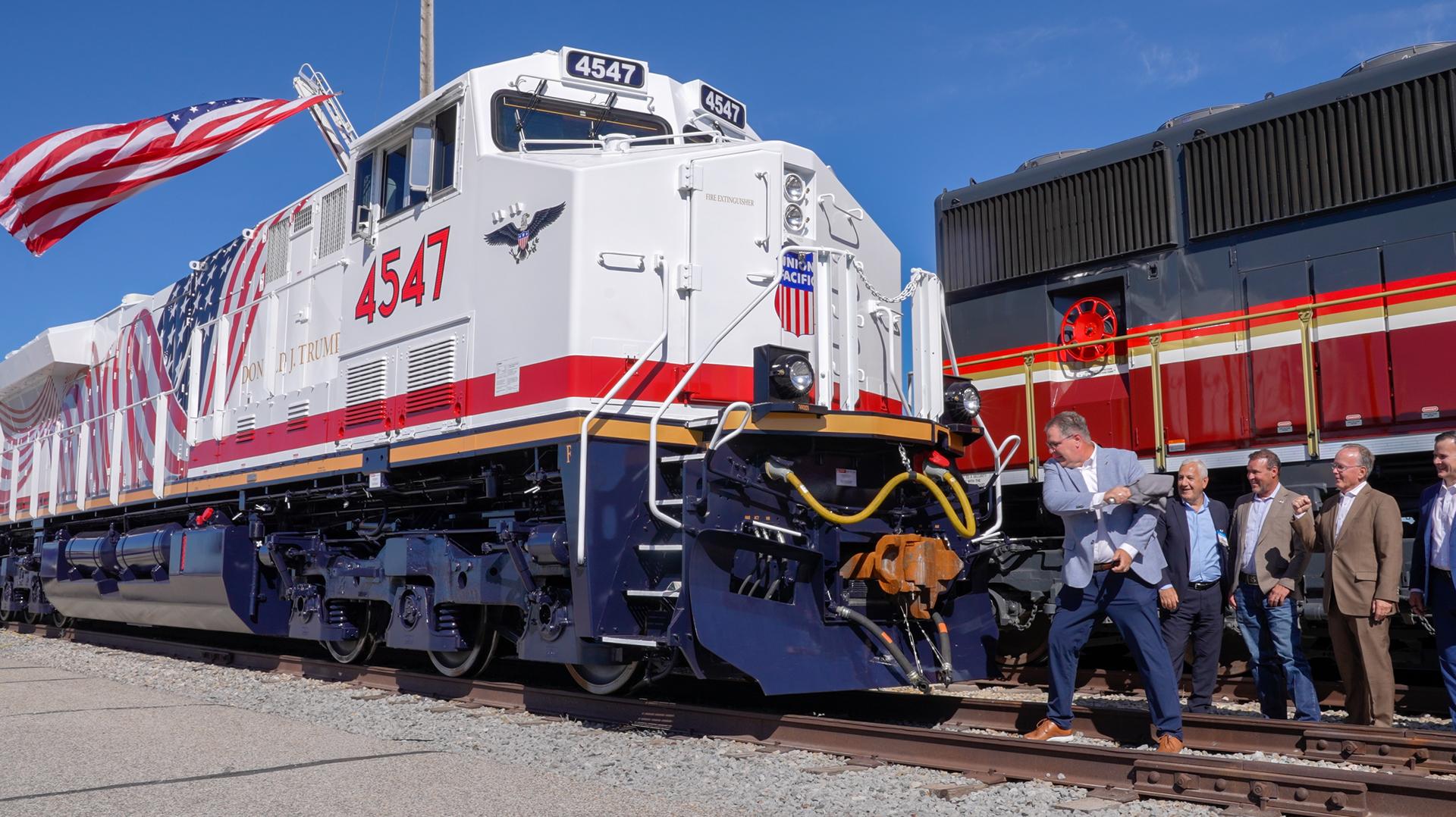
These images capture the final booster motor segments for NASA’s Artemis III mission departing Northrop Grumman’s Railyard Shipping Facility in Corinne, Utah, June 2. The eight segments will form the twin five-segment solid rocket boosters for the agency’s SLS (Space Launch System) rocket, providing more than 75% of the vehicle’s total thrust at liftoff. Due to their immense size and weight, the booster segments are transported in specialized carriers and are being hauled by Union Pacific Railroad’s newest commemorative locomotive, No. 4547. Marking its inaugural mission, the locomotive will deliver the flight hardware to NASA’s Kennedy Space Center in Florida, where stacking operations for Artemis III are set to begin later this year.
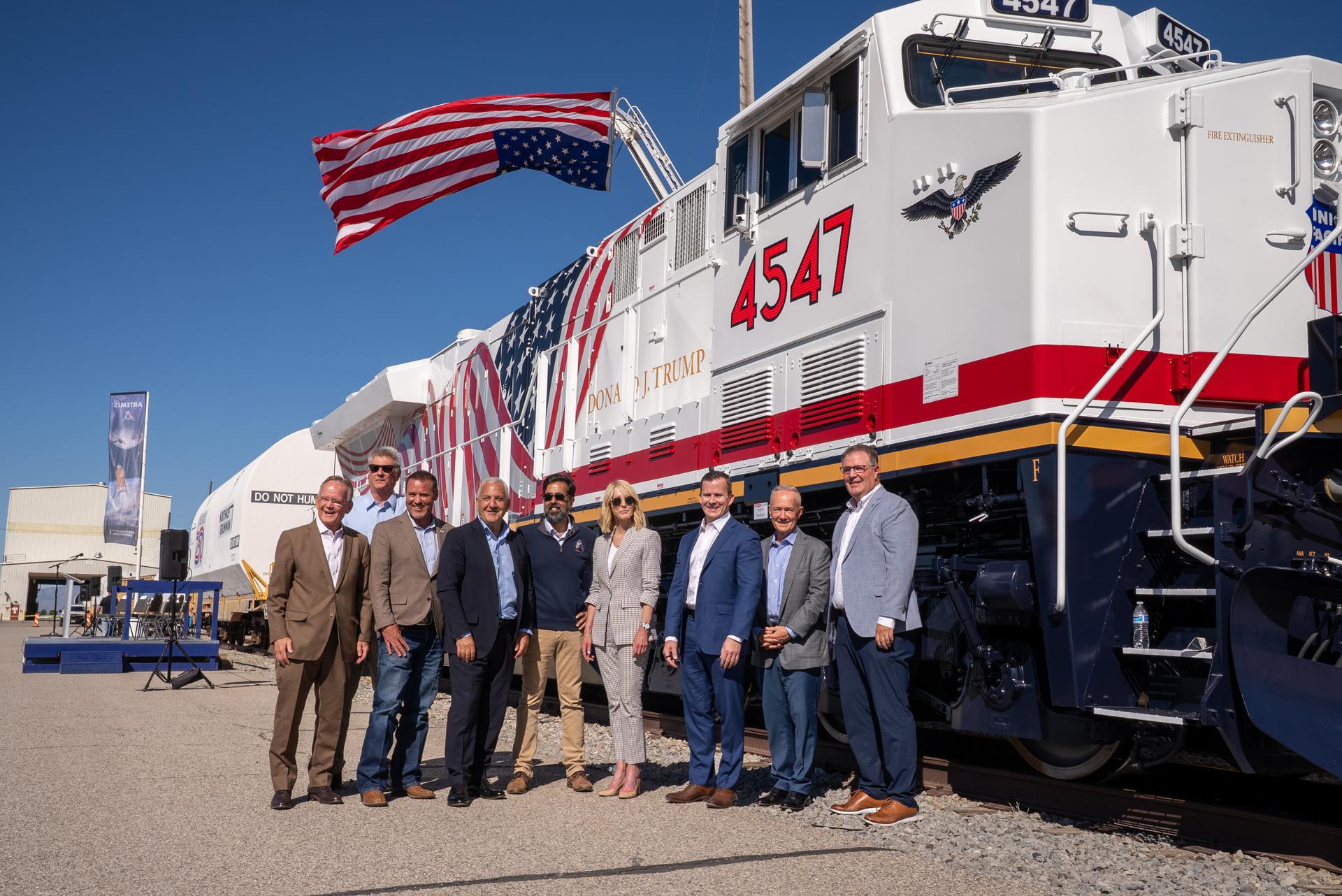
These images capture the final booster motor segments for NASA’s Artemis III mission departing Northrop Grumman’s Railyard Shipping Facility in Corinne, Utah, June 2. The eight segments will form the twin five-segment solid rocket boosters for the agency’s SLS (Space Launch System) rocket, providing more than 75% of the vehicle’s total thrust at liftoff. Due to their immense size and weight, the booster segments are transported in specialized carriers and are being hauled by Union Pacific Railroad’s newest commemorative locomotive, No. 4547. Marking its inaugural mission, the locomotive will deliver the flight hardware to NASA’s Kennedy Space Center in Florida, where stacking operations for Artemis III are set to begin later this year.
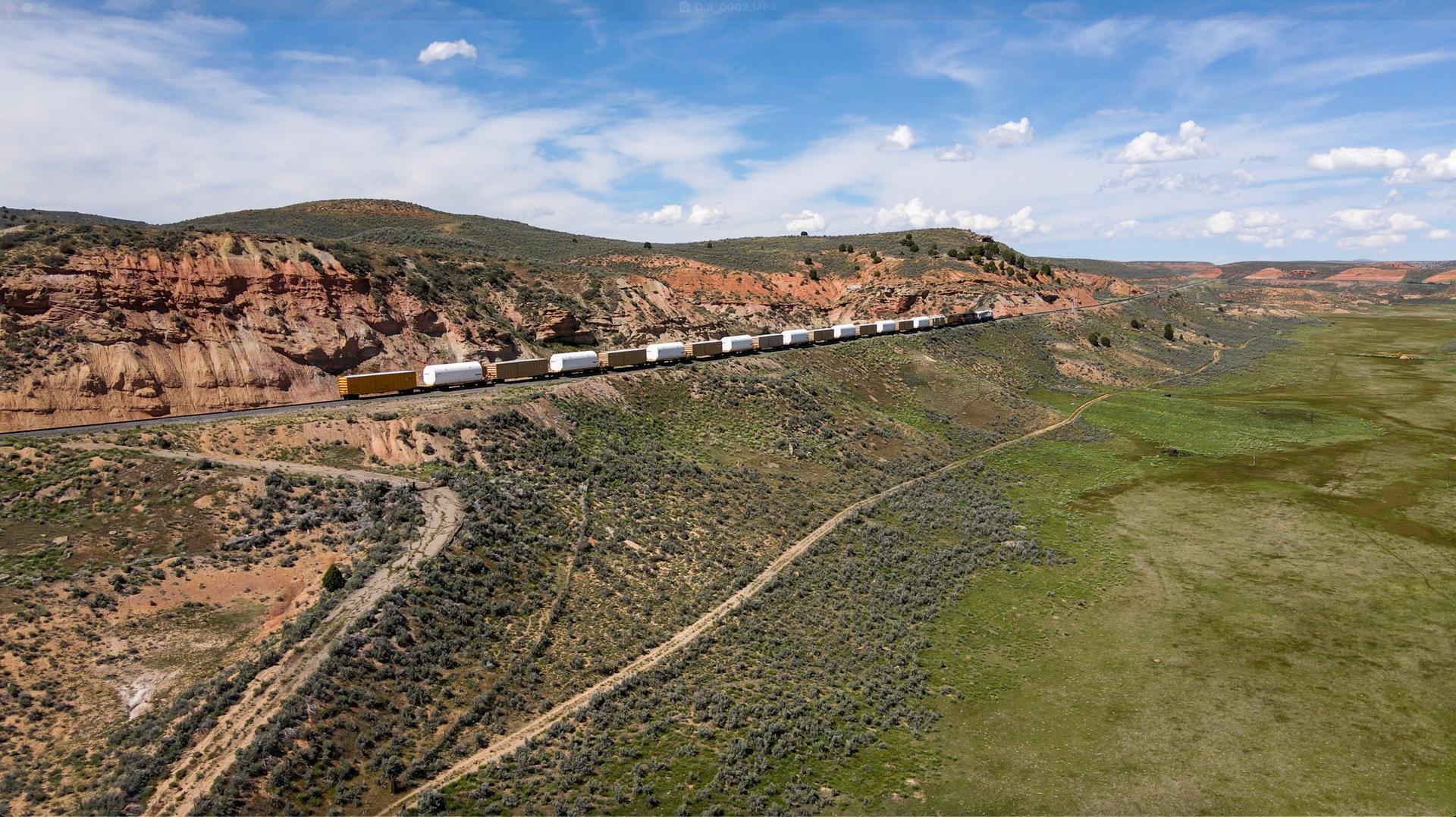
These images capture the final booster motor segments for NASA’s Artemis III mission departing Northrop Grumman’s Railyard Shipping Facility in Corinne, Utah, June 2. The eight segments will form the twin five-segment solid rocket boosters for the agency’s SLS (Space Launch System) rocket, providing more than 75% of the vehicle’s total thrust at liftoff. Due to their immense size and weight, the booster segments are transported in specialized carriers and are being hauled by Union Pacific Railroad’s newest commemorative locomotive, No. 4547. Marking its inaugural mission, the locomotive will deliver the flight hardware to NASA’s Kennedy Space Center in Florida, where stacking operations for Artemis III are set to begin later this year.
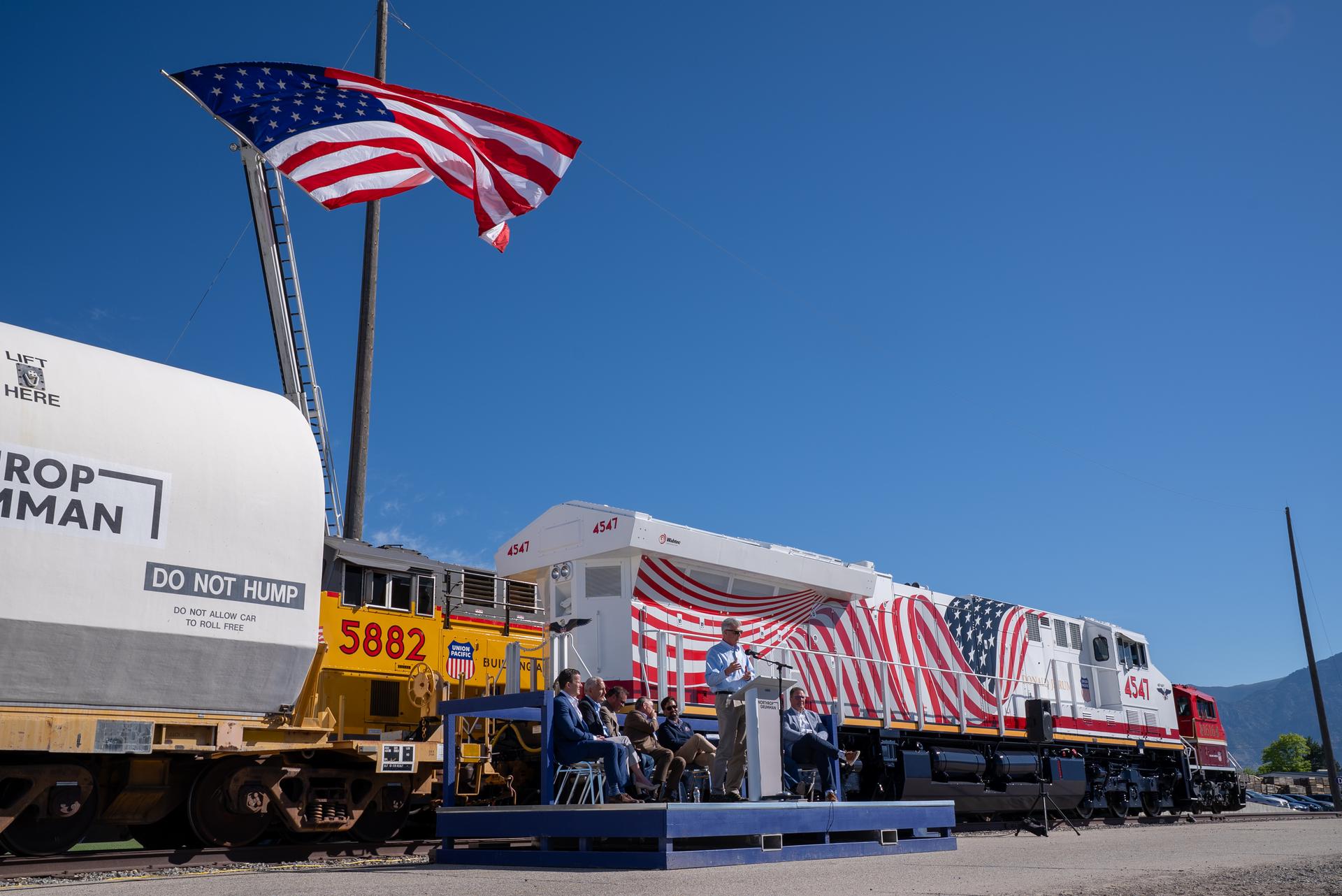
These images capture the final booster motor segments for NASA’s Artemis III mission departing Northrop Grumman’s Railyard Shipping Facility in Corinne, Utah, June 2. The eight segments will form the twin five-segment solid rocket boosters for the agency’s SLS (Space Launch System) rocket, providing more than 75% of the vehicle’s total thrust at liftoff. Due to their immense size and weight, the booster segments are transported in specialized carriers and are being hauled by Union Pacific Railroad’s newest commemorative locomotive, No. 4547. Marking its inaugural mission, the locomotive will deliver the flight hardware to NASA’s Kennedy Space Center in Florida, where stacking operations for Artemis III are set to begin later this year.
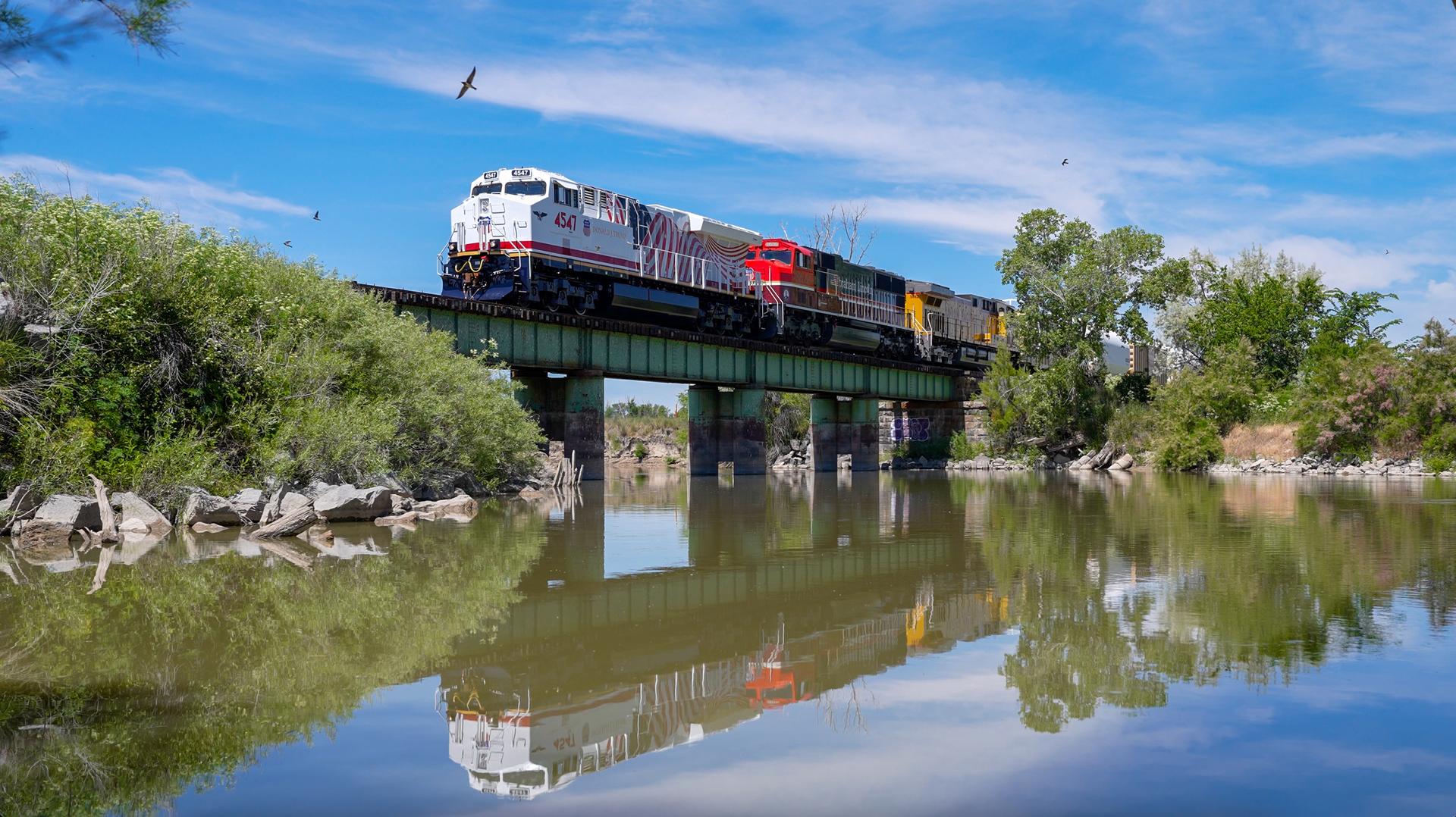
These images capture the final booster motor segments for NASA’s Artemis III mission departing Northrop Grumman’s Railyard Shipping Facility in Corinne, Utah, June 2. The eight segments will form the twin five-segment solid rocket boosters for the agency’s SLS (Space Launch System) rocket, providing more than 75% of the vehicle’s total thrust at liftoff. Due to their immense size and weight, the booster segments are transported in specialized carriers and are being hauled by Union Pacific Railroad’s newest commemorative locomotive, No. 4547. Marking its inaugural mission, the locomotive will deliver the flight hardware to NASA’s Kennedy Space Center in Florida, where stacking operations for Artemis III are set to begin later this year.

These images capture the final booster motor segments for NASA’s Artemis III mission departing Northrop Grumman’s Railyard Shipping Facility in Corinne, Utah, June 2. The eight segments will form the twin five-segment solid rocket boosters for the agency’s SLS (Space Launch System) rocket, providing more than 75% of the vehicle’s total thrust at liftoff. Due to their immense size and weight, the booster segments are transported in specialized carriers and are being hauled by Union Pacific Railroad’s newest commemorative locomotive, No. 4547. Marking its inaugural mission, the locomotive will deliver the flight hardware to NASA’s Kennedy Space Center in Florida, where stacking operations for Artemis III are set to begin later this year.
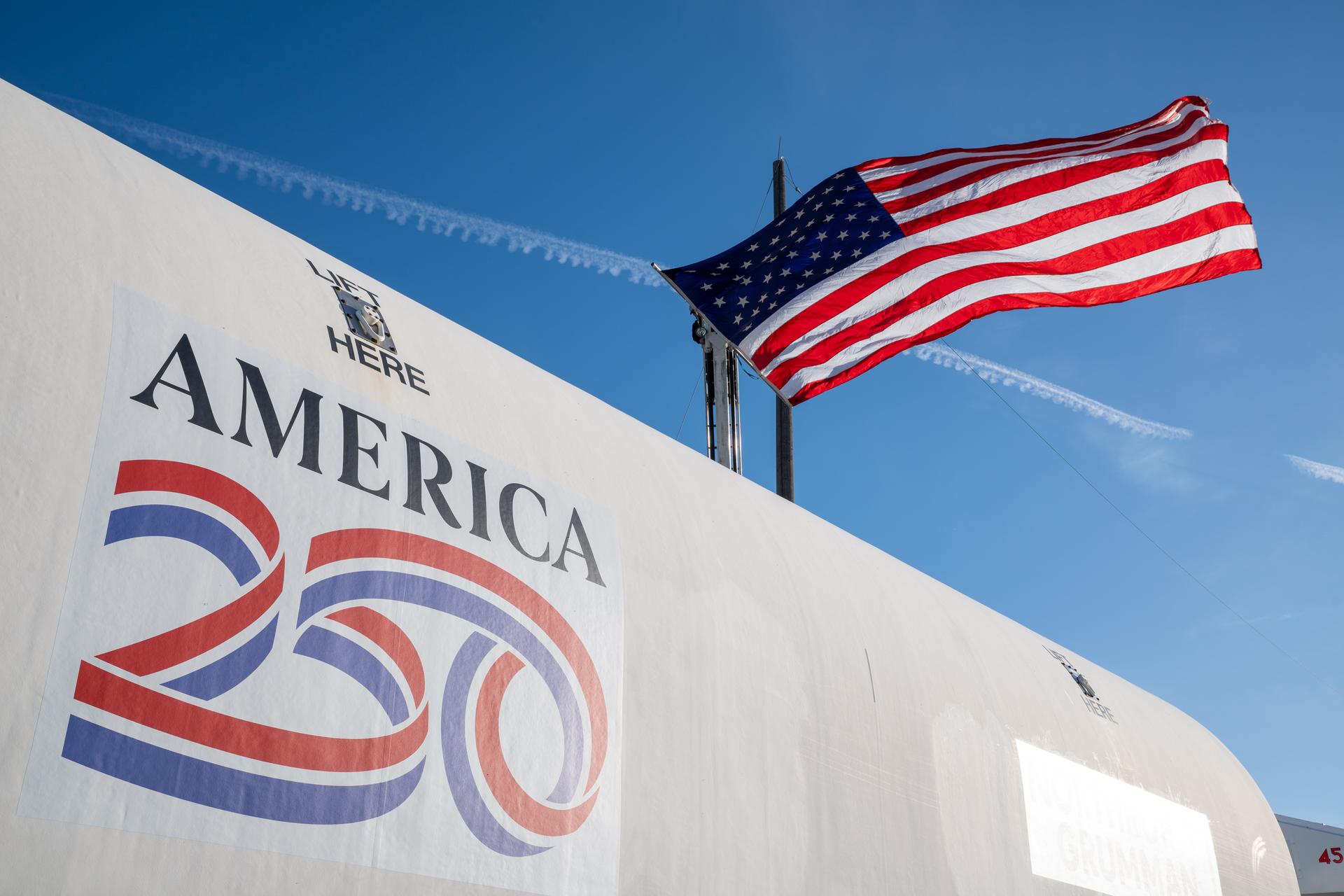
These images capture the final booster motor segments for NASA’s Artemis III mission departing Northrop Grumman’s Railyard Shipping Facility in Corinne, Utah, June 2. The eight segments will form the twin five-segment solid rocket boosters for the agency’s SLS (Space Launch System) rocket, providing more than 75% of the vehicle’s total thrust at liftoff. Due to their immense size and weight, the booster segments are transported in specialized carriers and are being hauled by Union Pacific Railroad’s newest commemorative locomotive, No. 4547. Marking its inaugural mission, the locomotive will deliver the flight hardware to NASA’s Kennedy Space Center in Florida, where stacking operations for Artemis III are set to begin later this year.
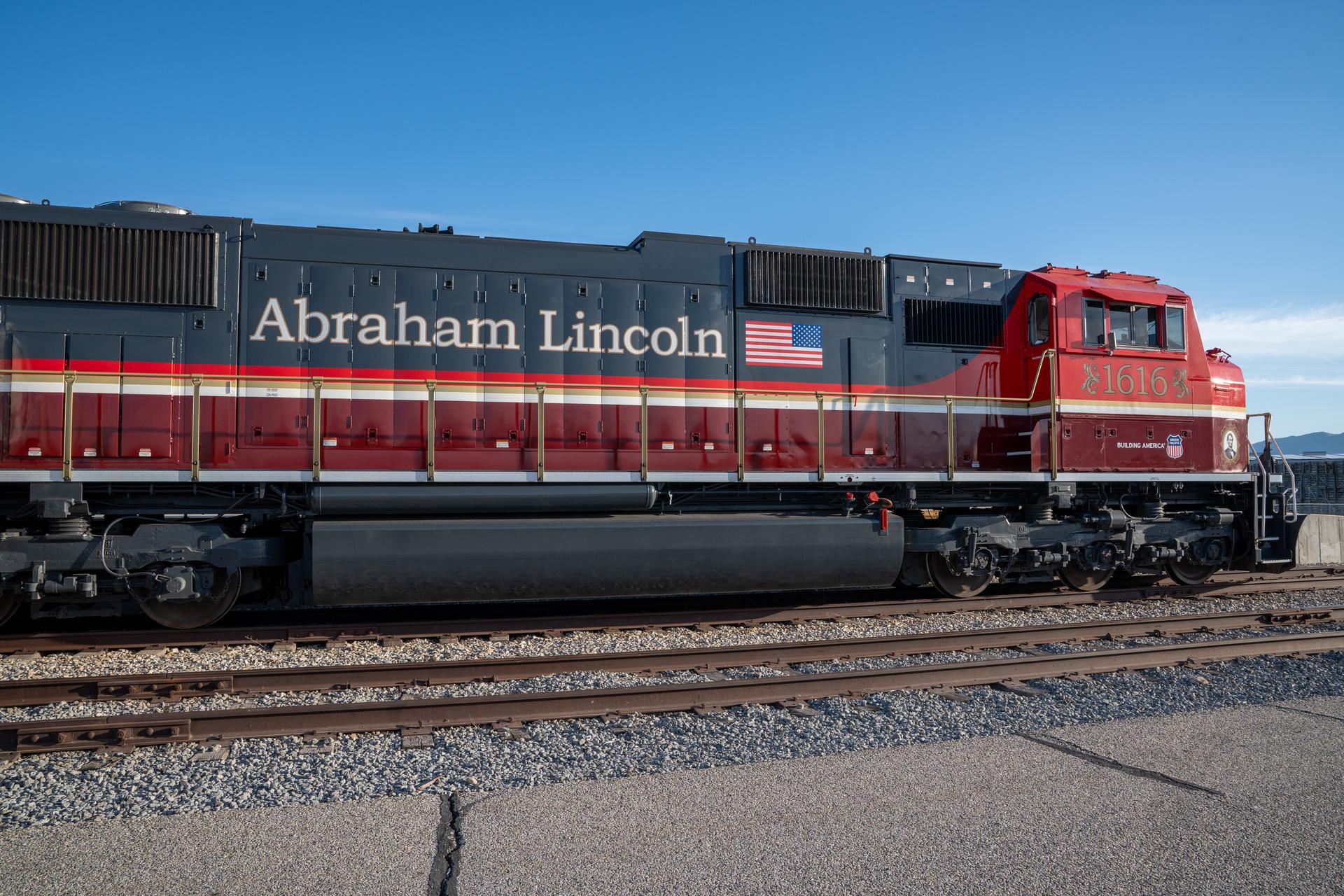
These images capture the final booster motor segments for NASA’s Artemis III mission departing Northrop Grumman’s Railyard Shipping Facility in Corinne, Utah, June 2. The eight segments will form the twin five-segment solid rocket boosters for the agency’s SLS (Space Launch System) rocket, providing more than 75% of the vehicle’s total thrust at liftoff. Due to their immense size and weight, the booster segments are transported in specialized carriers and are being hauled by Union Pacific Railroad’s newest commemorative locomotive, No. 4547. Marking its inaugural mission, the locomotive will deliver the flight hardware to NASA’s Kennedy Space Center in Florida, where stacking operations for Artemis III are set to begin later this year.
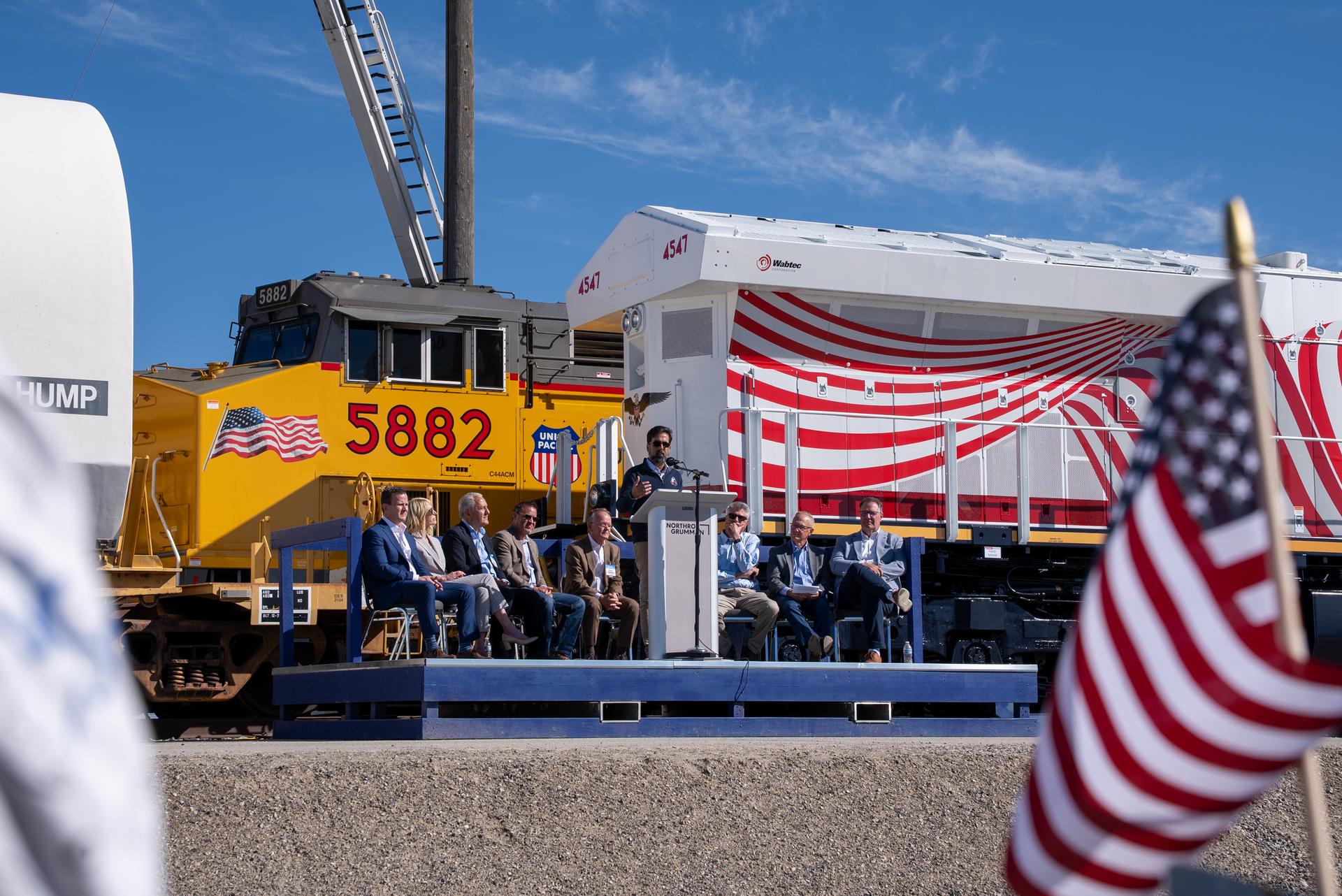
These images capture the final booster motor segments for NASA’s Artemis III mission departing Northrop Grumman’s Railyard Shipping Facility in Corinne, Utah, June 2. The eight segments will form the twin five-segment solid rocket boosters for the agency’s SLS (Space Launch System) rocket, providing more than 75% of the vehicle’s total thrust at liftoff. Due to their immense size and weight, the booster segments are transported in specialized carriers and are being hauled by Union Pacific Railroad’s newest commemorative locomotive, No. 4547. Marking its inaugural mission, the locomotive will deliver the flight hardware to NASA’s Kennedy Space Center in Florida, where stacking operations for Artemis III are set to begin later this year.
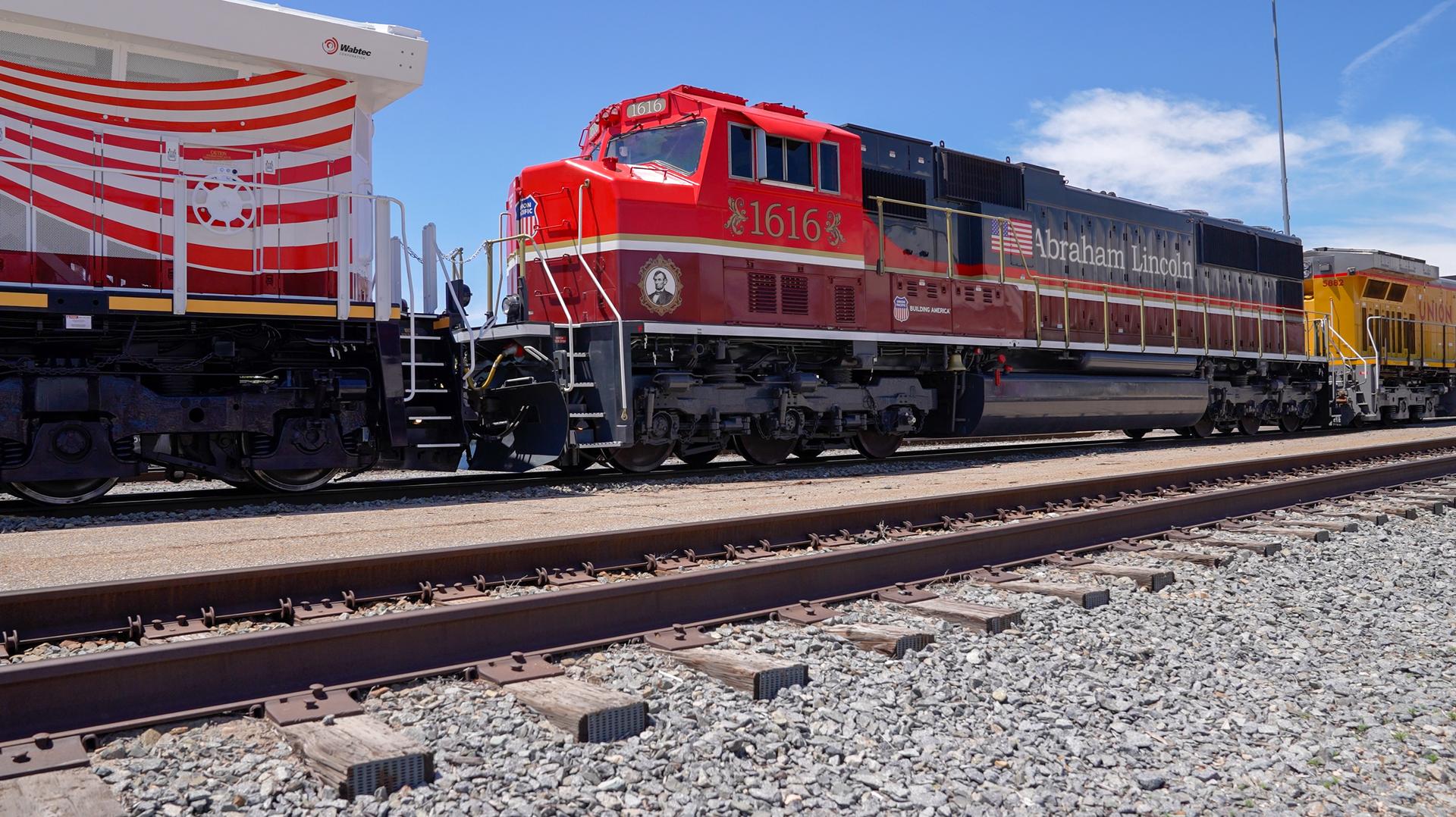
These images capture the final booster motor segments for NASA’s Artemis III mission departing Northrop Grumman’s Railyard Shipping Facility in Corinne, Utah, June 2. The eight segments will form the twin five-segment solid rocket boosters for the agency’s SLS (Space Launch System) rocket, providing more than 75% of the vehicle’s total thrust at liftoff. Due to their immense size and weight, the booster segments are transported in specialized carriers and are being hauled by Union Pacific Railroad’s newest commemorative locomotive, No. 4547. Marking its inaugural mission, the locomotive will deliver the flight hardware to NASA’s Kennedy Space Center in Florida, where stacking operations for Artemis III are set to begin later this year.
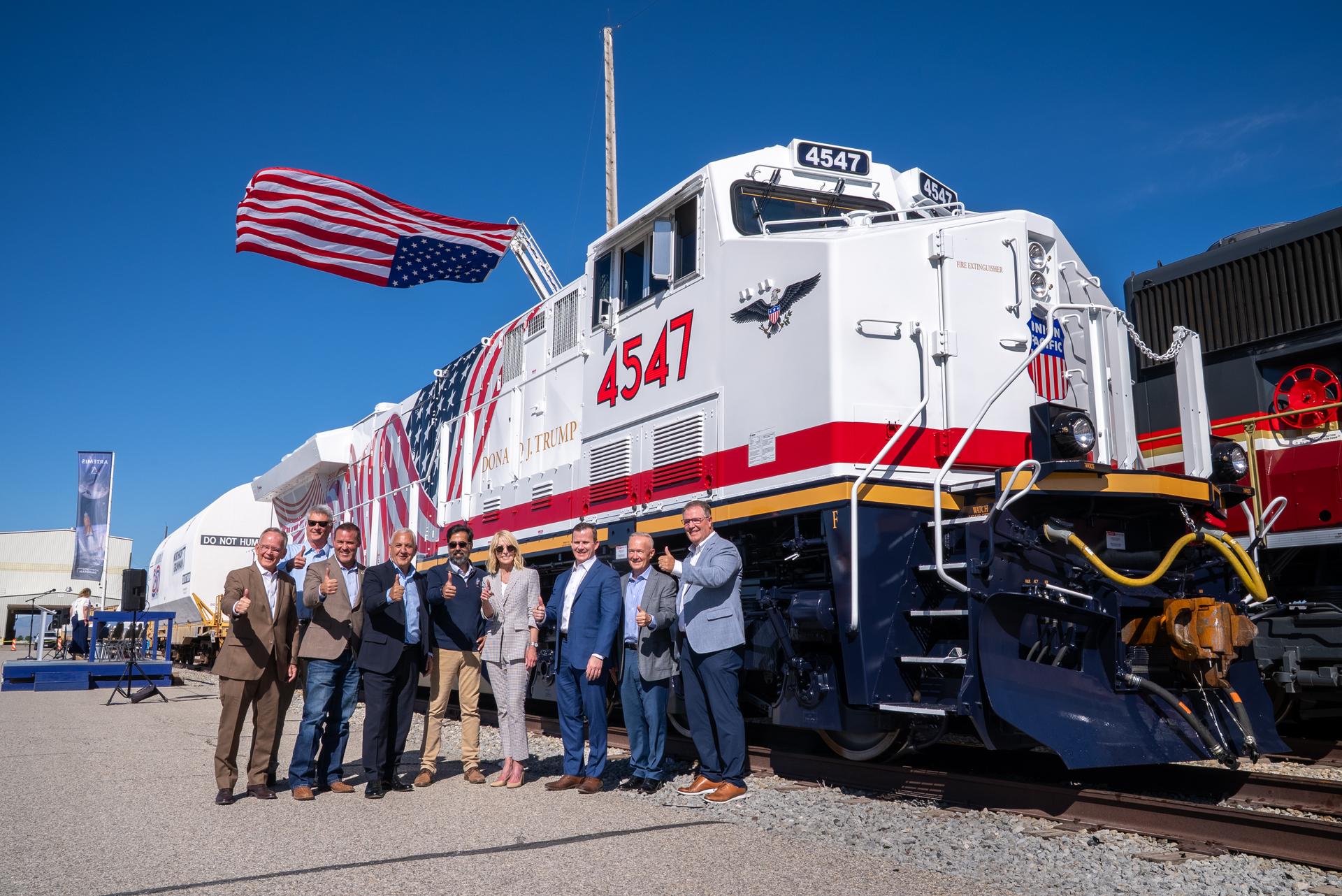
These images capture the final booster motor segments for NASA’s Artemis III mission departing Northrop Grumman’s Railyard Shipping Facility in Corinne, Utah, June 2. The eight segments will form the twin five-segment solid rocket boosters for the agency’s SLS (Space Launch System) rocket, providing more than 75% of the vehicle’s total thrust at liftoff. Due to their immense size and weight, the booster segments are transported in specialized carriers and are being hauled by Union Pacific Railroad’s newest commemorative locomotive, No. 4547. Marking its inaugural mission, the locomotive will deliver the flight hardware to NASA’s Kennedy Space Center in Florida, where stacking operations for Artemis III are set to begin later this year.
These images capture the final booster motor segments for NASA’s Artemis III mission departing Northrop Grumman’s Railyard Shipping Facility in Corinne, Utah, June 2. The eight segments will form the twin five-segment solid rocket boosters for the agency’s SLS (Space Launch System) rocket, providing more than 75% of the vehicle’s total thrust at liftoff. Due to their immense size and weight, the booster segments are transported in specialized carriers and are being hauled by Union Pacific Railroad’s newest commemorative locomotive, No. 4547. Marking its inaugural mission, the locomotive will deliver the flight hardware to NASA’s Kennedy Space Center in Florida, where stacking operations for Artemis III are set to begin later this year.
These images capture the final booster motor segments for NASA’s Artemis III mission departing Northrop Grumman’s Railyard Shipping Facility in Corinne, Utah, June 2. The eight segments will form the twin five-segment solid rocket boosters for the agency’s SLS (Space Launch System) rocket, providing more than 75% of the vehicle’s total thrust at liftoff. Due to their immense size and weight, the booster segments are transported in specialized carriers and are being hauled by Union Pacific Railroad’s newest commemorative locomotive, No. 4547. Marking its inaugural mission, the locomotive will deliver the flight hardware to NASA’s Kennedy Space Center in Florida, where stacking operations for Artemis III are set to begin later this year.
These images capture the final booster motor segments for NASA’s Artemis III mission departing Northrop Grumman’s Railyard Shipping Facility in Corinne, Utah, June 2. The eight segments will form the twin five-segment solid rocket boosters for the agency’s SLS (Space Launch System) rocket, providing more than 75% of the vehicle’s total thrust at liftoff. Due to their immense size and weight, the booster segments are transported in specialized carriers and are being hauled by Union Pacific Railroad’s newest commemorative locomotive, No. 4547. Marking its inaugural mission, the locomotive will deliver the flight hardware to NASA’s Kennedy Space Center in Florida, where stacking operations for Artemis III are set to begin later this year.
These images capture the final booster motor segments for NASA’s Artemis III mission departing Northrop Grumman’s Railyard Shipping Facility in Corinne, Utah, June 2. The eight segments will form the twin five-segment solid rocket boosters for the agency’s SLS (Space Launch System) rocket, providing more than 75% of the vehicle’s total thrust at liftoff. Due to their immense size and weight, the booster segments are transported in specialized carriers and are being hauled by Union Pacific Railroad’s newest commemorative locomotive, No. 4547. Marking its inaugural mission, the locomotive will deliver the flight hardware to NASA’s Kennedy Space Center in Florida, where stacking operations for Artemis III are set to begin later this year.
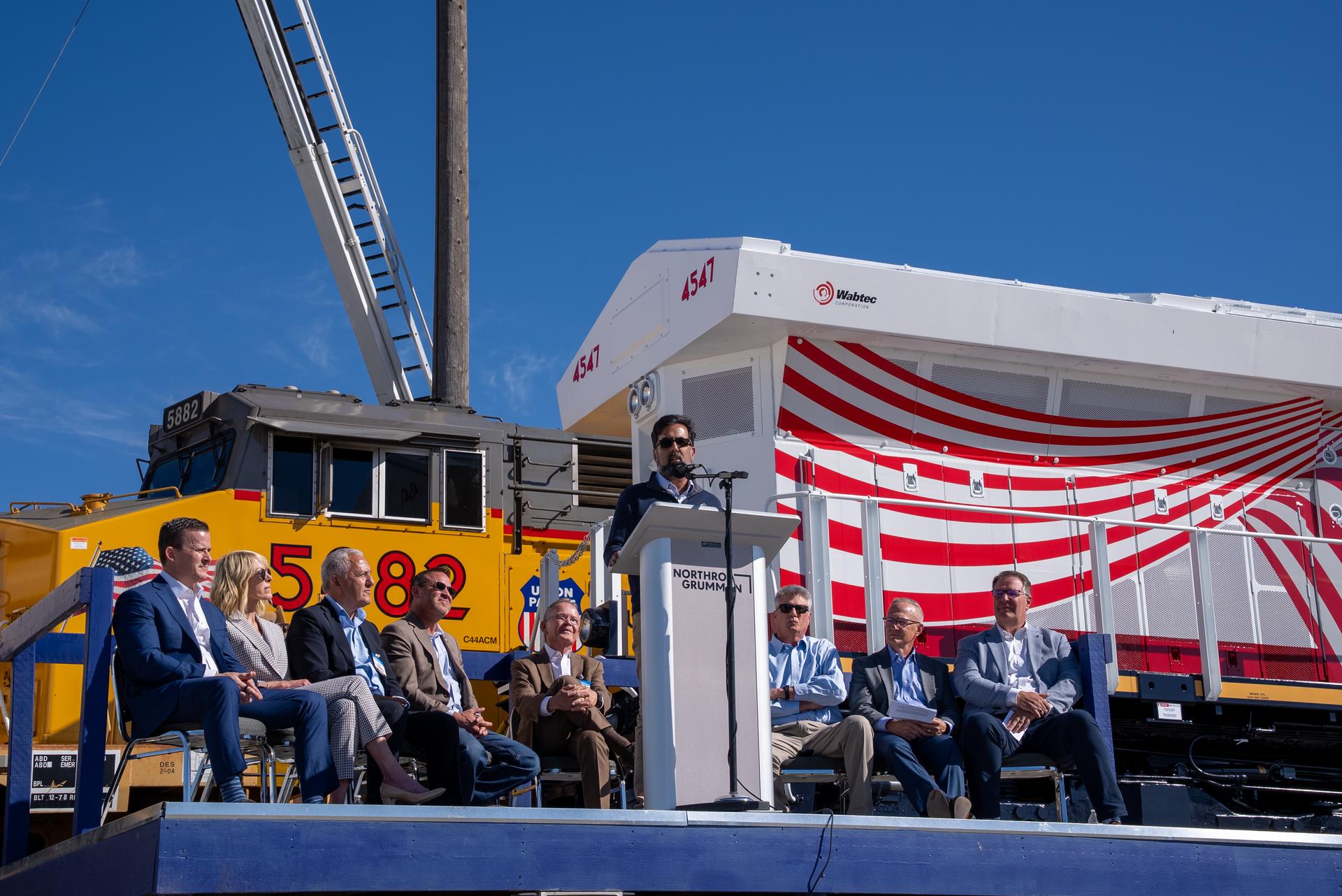
These images capture the final booster motor segments for NASA’s Artemis III mission departing Northrop Grumman’s Railyard Shipping Facility in Corinne, Utah, June 2. The eight segments will form the twin five-segment solid rocket boosters for the agency’s SLS (Space Launch System) rocket, providing more than 75% of the vehicle’s total thrust at liftoff. Due to their immense size and weight, the booster segments are transported in specialized carriers and are being hauled by Union Pacific Railroad’s newest commemorative locomotive, No. 4547. Marking its inaugural mission, the locomotive will deliver the flight hardware to NASA’s Kennedy Space Center in Florida, where stacking operations for Artemis III are set to begin later this year.
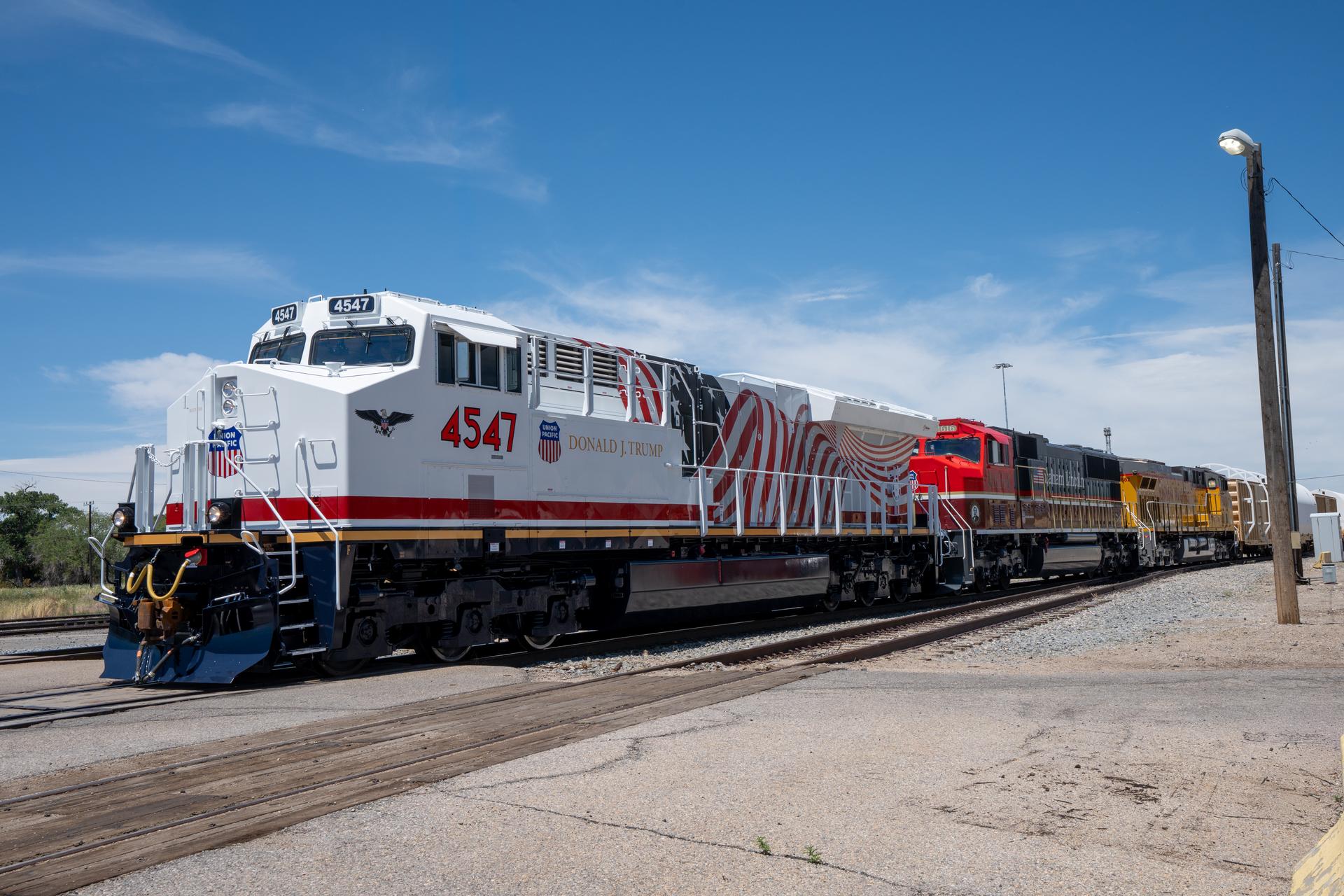
These images capture the final booster motor segments for NASA’s Artemis III mission departing Northrop Grumman’s Railyard Shipping Facility in Corinne, Utah, June 2. The eight segments will form the twin five-segment solid rocket boosters for the agency’s SLS (Space Launch System) rocket, providing more than 75% of the vehicle’s total thrust at liftoff. Due to their immense size and weight, the booster segments are transported in specialized carriers and are being hauled by Union Pacific Railroad’s newest commemorative locomotive, No. 4547. Marking its inaugural mission, the locomotive will deliver the flight hardware to NASA’s Kennedy Space Center in Florida, where stacking operations for Artemis III are set to begin later this year.
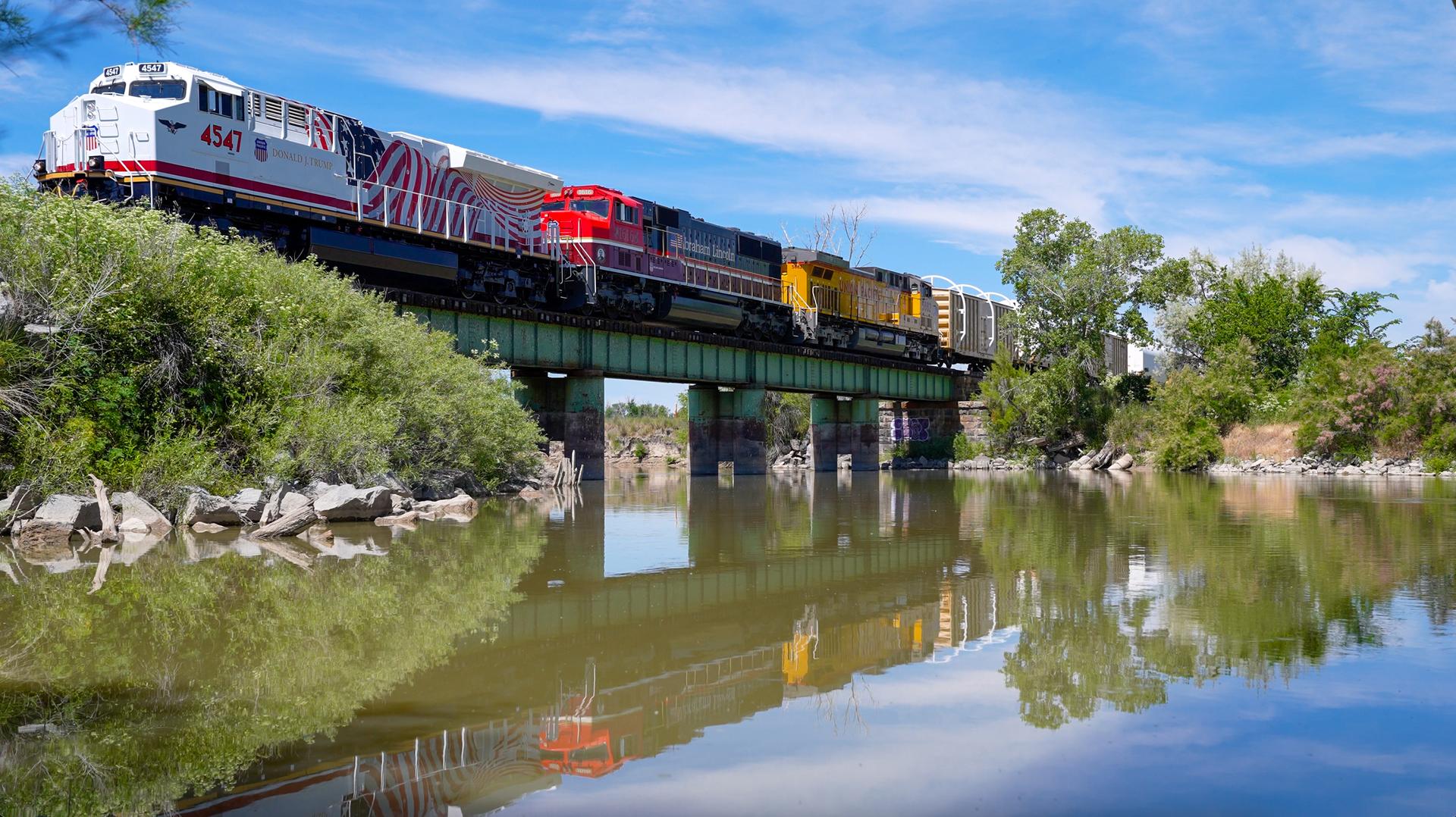
These images capture the final booster motor segments for NASA’s Artemis III mission departing Northrop Grumman’s Railyard Shipping Facility in Corinne, Utah, June 2. The eight segments will form the twin five-segment solid rocket boosters for the agency’s SLS (Space Launch System) rocket, providing more than 75% of the vehicle’s total thrust at liftoff. Due to their immense size and weight, the booster segments are transported in specialized carriers and are being hauled by Union Pacific Railroad’s newest commemorative locomotive, No. 4547. Marking its inaugural mission, the locomotive will deliver the flight hardware to NASA’s Kennedy Space Center in Florida, where stacking operations for Artemis III are set to begin later this year.
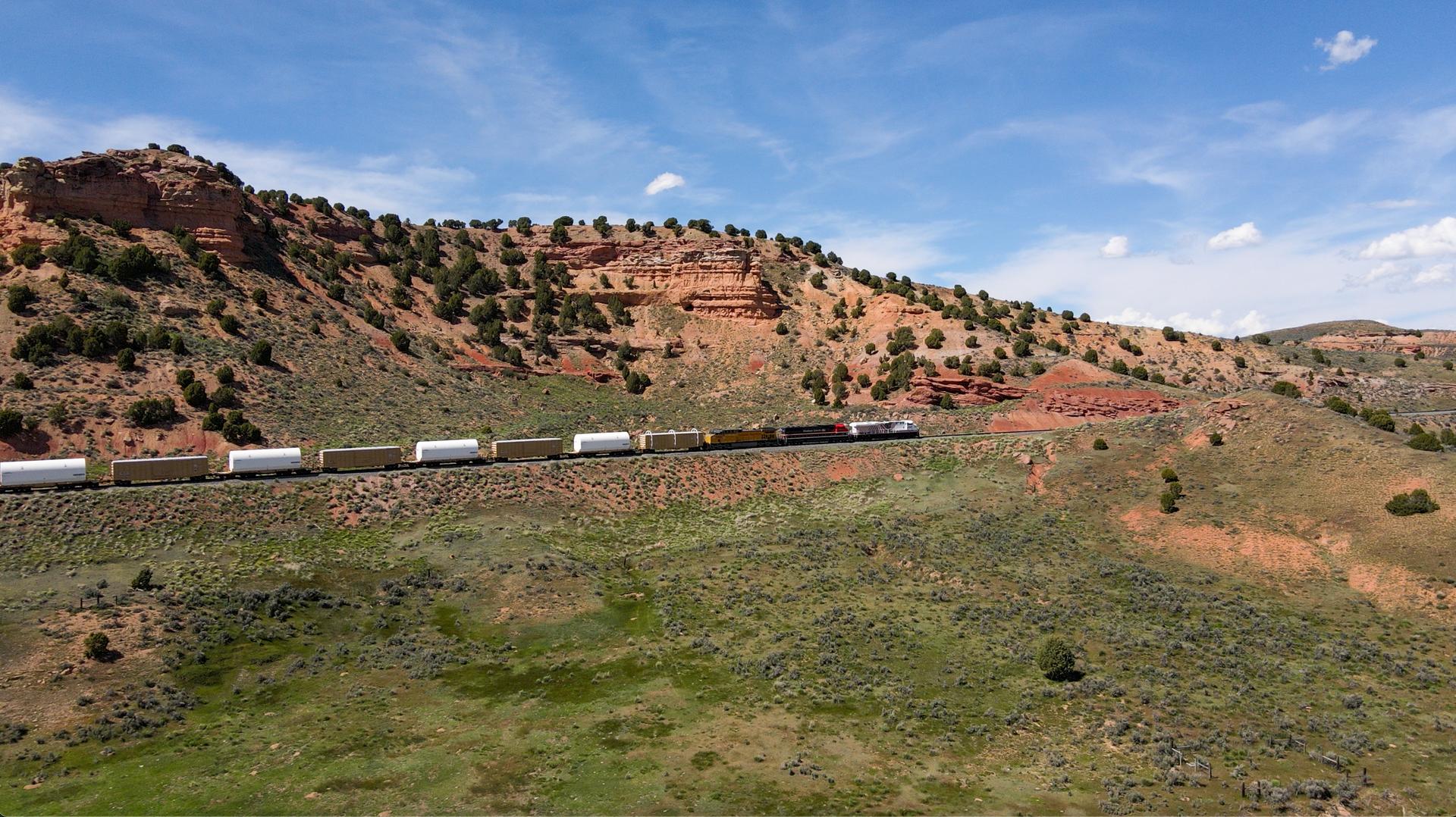
These images capture the final booster motor segments for NASA’s Artemis III mission departing Northrop Grumman’s Railyard Shipping Facility in Corinne, Utah, June 2. The eight segments will form the twin five-segment solid rocket boosters for the agency’s SLS (Space Launch System) rocket, providing more than 75% of the vehicle’s total thrust at liftoff. Due to their immense size and weight, the booster segments are transported in specialized carriers and are being hauled by Union Pacific Railroad’s newest commemorative locomotive, No. 4547. Marking its inaugural mission, the locomotive will deliver the flight hardware to NASA’s Kennedy Space Center in Florida, where stacking operations for Artemis III are set to begin later this year.
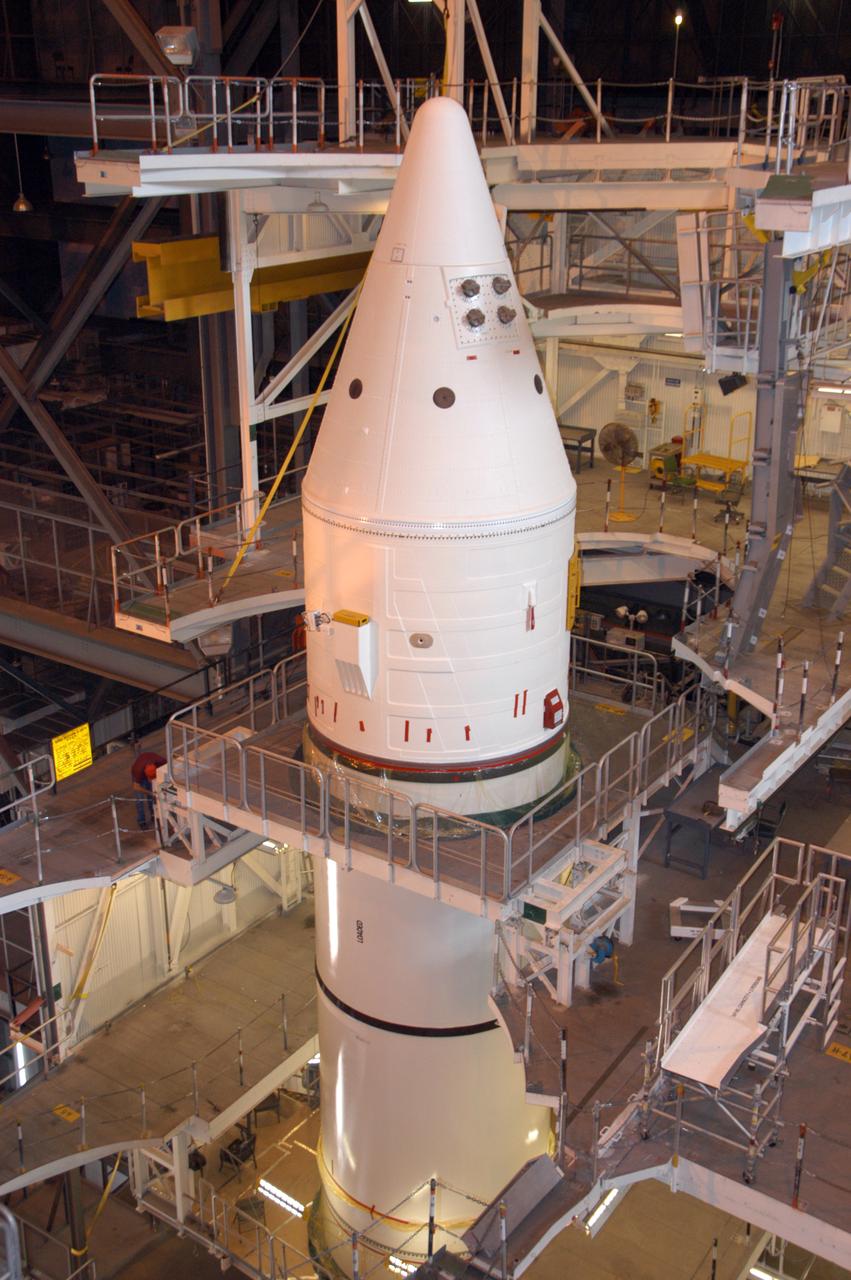
Workers continue stacking the solid rocket boosters in highbay 1 inside Kennedy Space Center's Vehicle Assembly Building. The solid rocket boosters are being prepared for NASA's next Space Shuttle launch, mission STS-117. The mission is scheduled to launch aboard Atlantis no earlier than March 16, 2007.
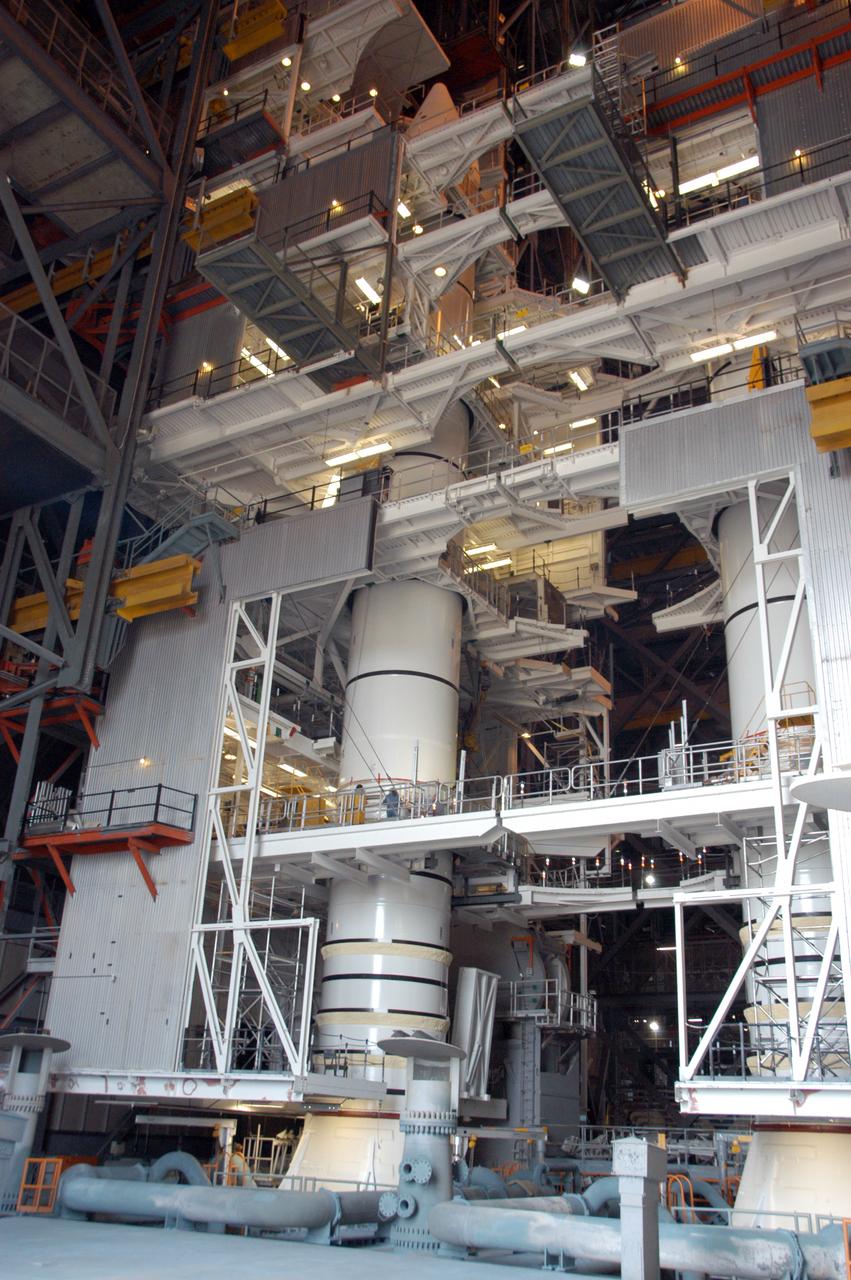
Workers continue stacking the twin solid rocket boosters in highbay 1 inside Kennedy Space Center's Vehicle Assembly Building. The solid rocket boosters are being prepared for NASA's next Space Shuttle launch, mission STS-117. The mission is scheduled to launch aboard Atlantis no earlier than March 16, 2007.
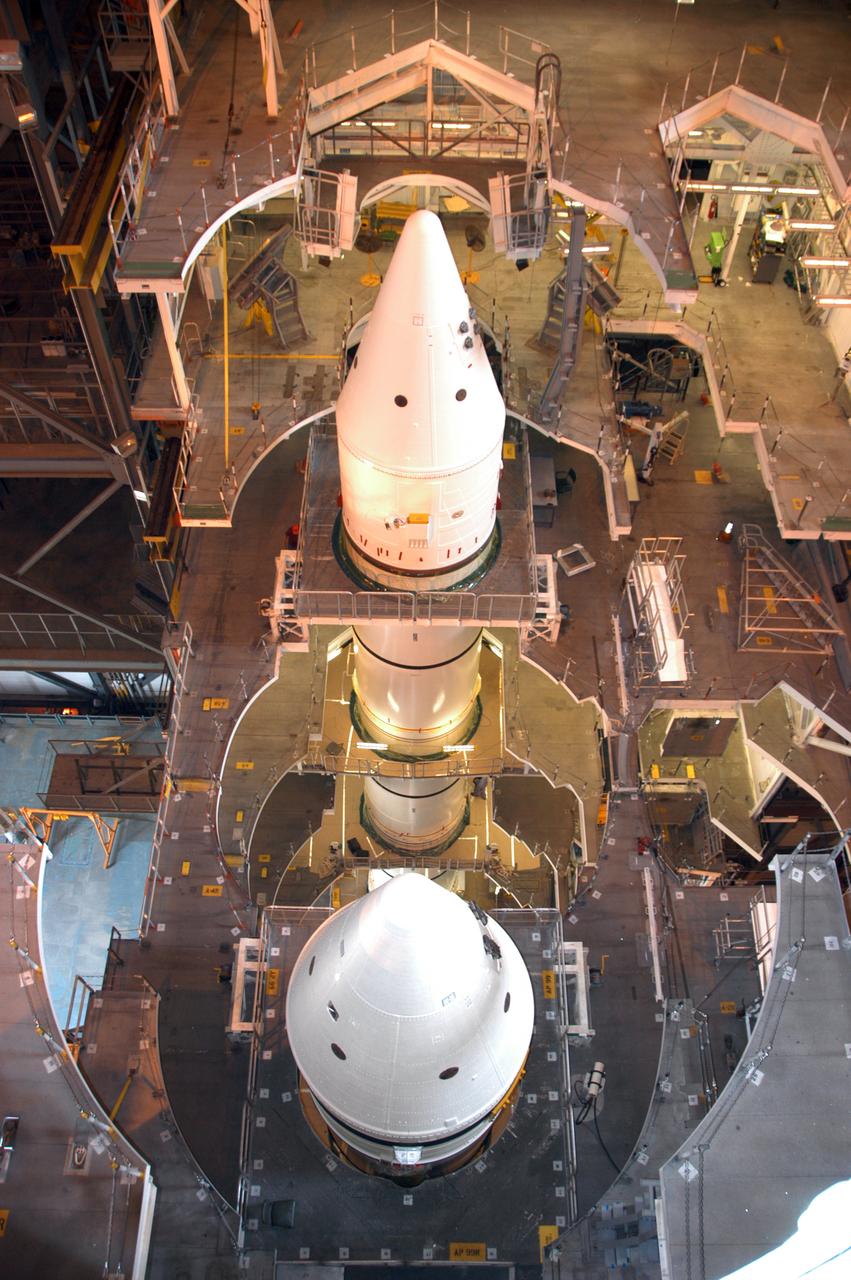
Lighting inside Kennedy Space Center's Vehicle Assembly Building seems to bathe the highbay 1 area in a golden hue as workers continue stacking the twin solid rocket boosters. The solid rocket boosters are being prepared for NASA's next Space Shuttle launch, mission STS-117. The mission is scheduled to launch aboard Atlantis no earlier than March 16, 2007.
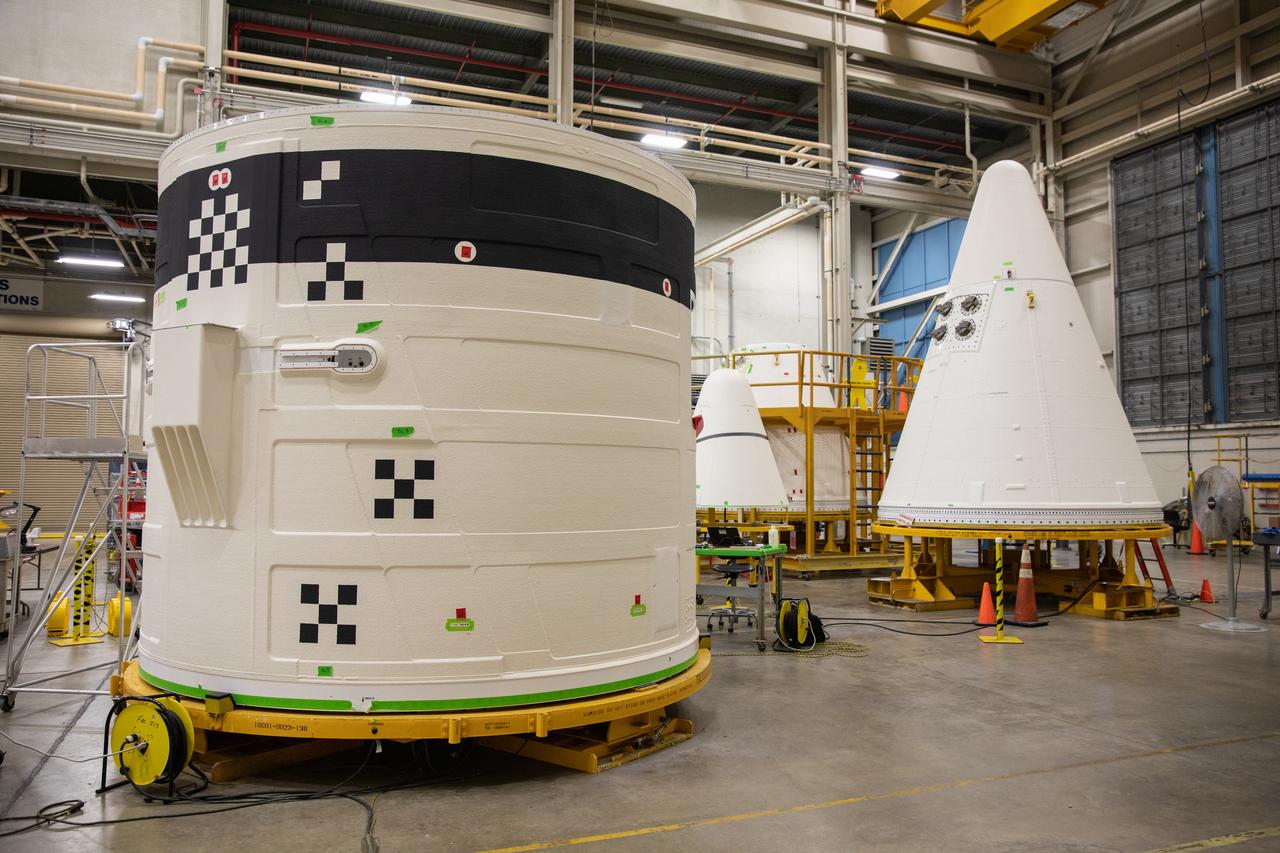
A forward skirt and two nose cones for the Space Launch System’s (SLS) two solid boosters are in view inside the Booster Fabrication Facility at NASA’s Kennedy Space Center in Florida on Oct. 16, 2019. Segments of the boosters are being inspected and prepared for Artemis I, the agency’s first uncrewed flight of Orion atop the SLS. The forward skirt houses booster avionics that communicate with the SLS avionics to monitor booster conditions and steer the booster exhaust nozzle. The nose cone, along with a frustrum, will serve as the aerodynamic fairing for the boosters during launch.
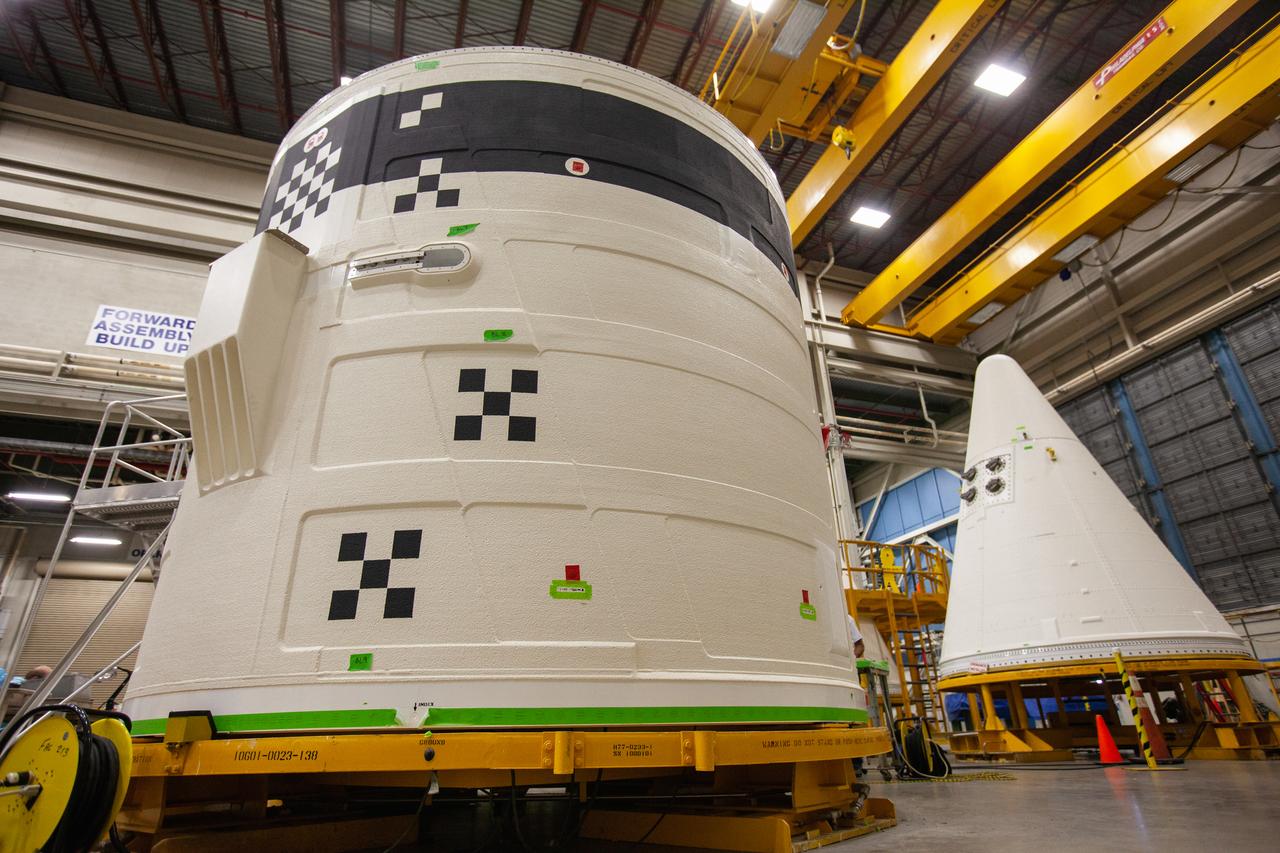
The forward skirt for one of the Space Launch System’s (SLS) two solid boosters is inside the Booster Fabrication Facility at NASA’s Kennedy Space Center in Florida on Oct. 16, 2019. Segments of the boosters are being inspected and prepared for Artemis I, the agency’s first uncrewed flight of Orion atop the SLS. The forward skirt houses booster avionics that communicate with the SLS avionics to monitor booster conditions and steer the booster exhaust nozzle.
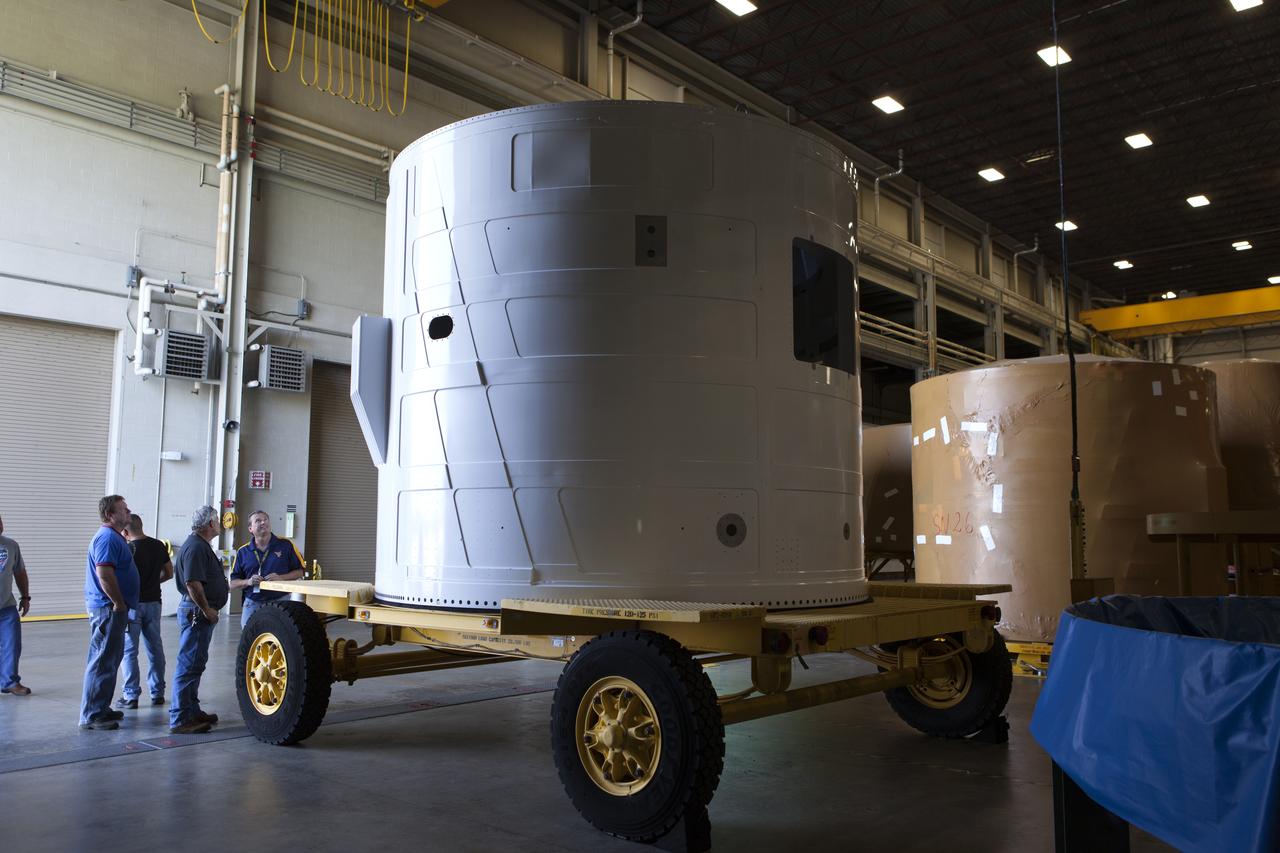
The Exploration Mission-1 (EM-1) left-hand forward skirt for NASA's Space Launch System (SLS) solid rocket boosters arrives inside the high bay at the Booster Fabrication Facility (BFF) at NASA's Kennedy Space Center in Florida. In the BFF, the forward skirt will be inspected and prepared for use on the left-hand solid rocket booster for EM-1. NASA's Orion spacecraft will fly atop the SLS rocket on its first uncrewed flight test.
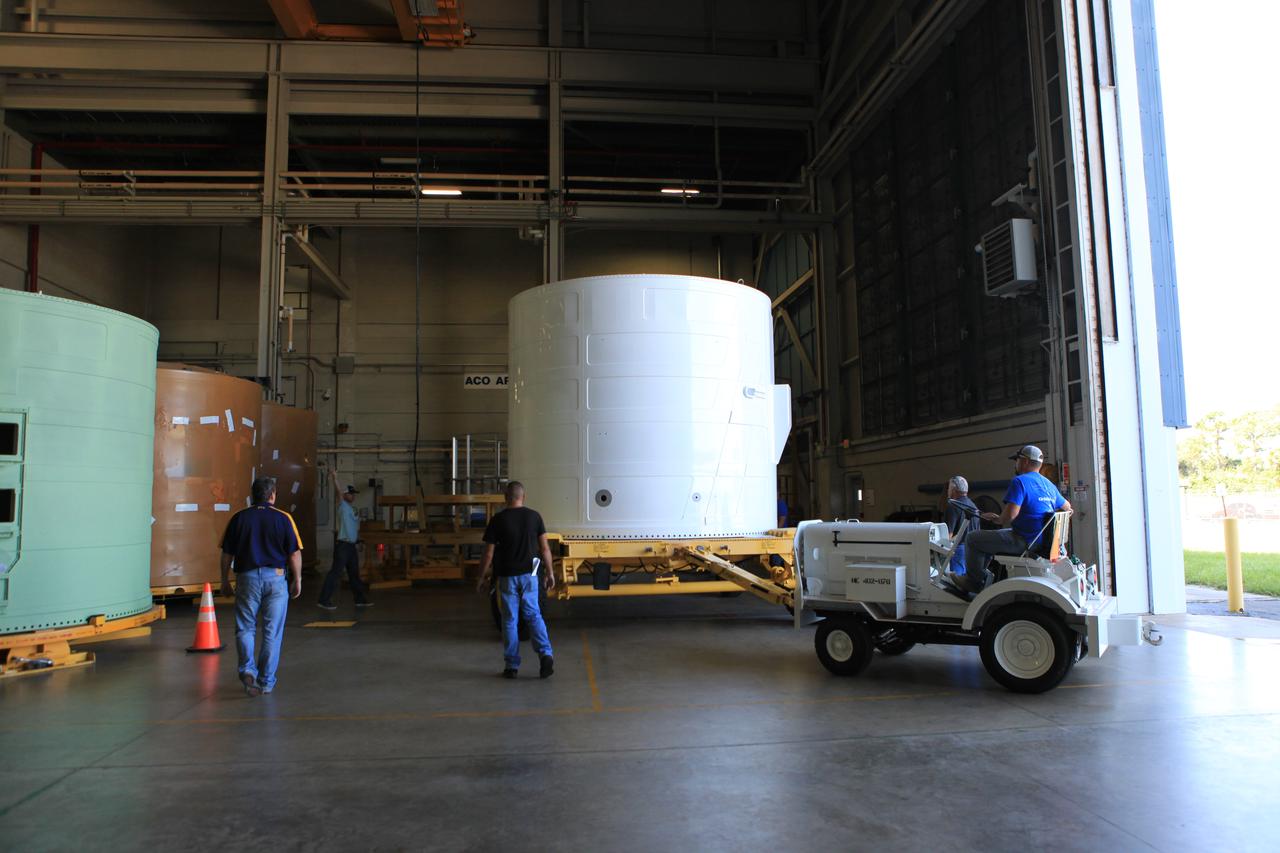
The Exploration Mission-1 (EM-1) left-hand forward skirt for NASA's Space Launch System (SLS) solid rocket boosters arrives inside the high bay at the Booster Fabrication Facility (BFF) at NASA's Kennedy Space Center in Florida. In the BFF, the forward skirt will be inspected and prepared for use on the left-hand solid rocket booster for EM-1. NASA's Orion spacecraft will fly atop the SLS rocket on its first uncrewed flight test.
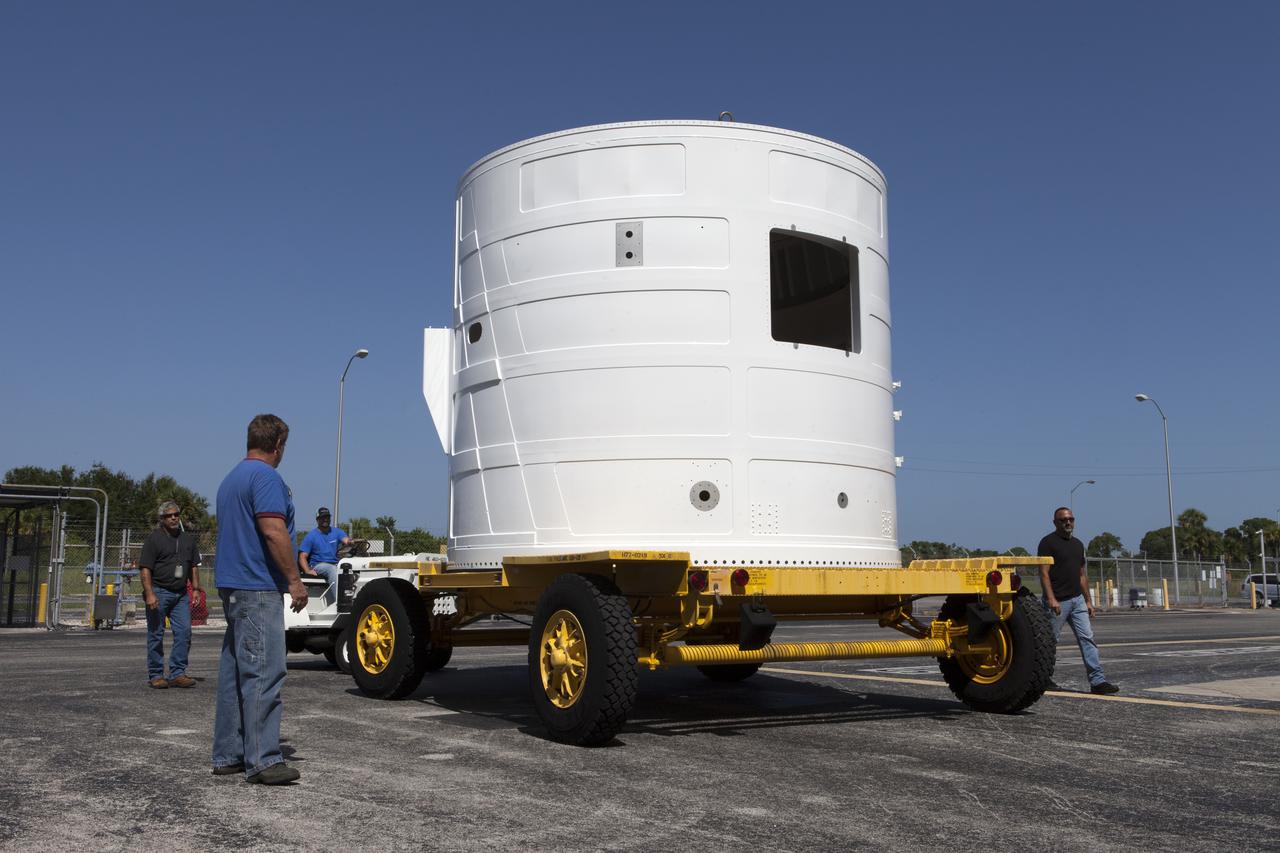
The Exploration Mission-1 (EM-1) left-hand forward skirt for NASA's Space Launch System (SLS) solid rocket boosters arrives at the Booster Fabrication Facility (BFF) at NASA's Kennedy Space Center in Florida from Hangar AE at Cape Canaveral Air Force Station. In the BFF, the forward skirt will be inspected and prepared for use on the left-hand solid rocket booster for EM-1. NASA's Orion spacecraft will fly atop the SLS rocket on its first uncrewed flight test.
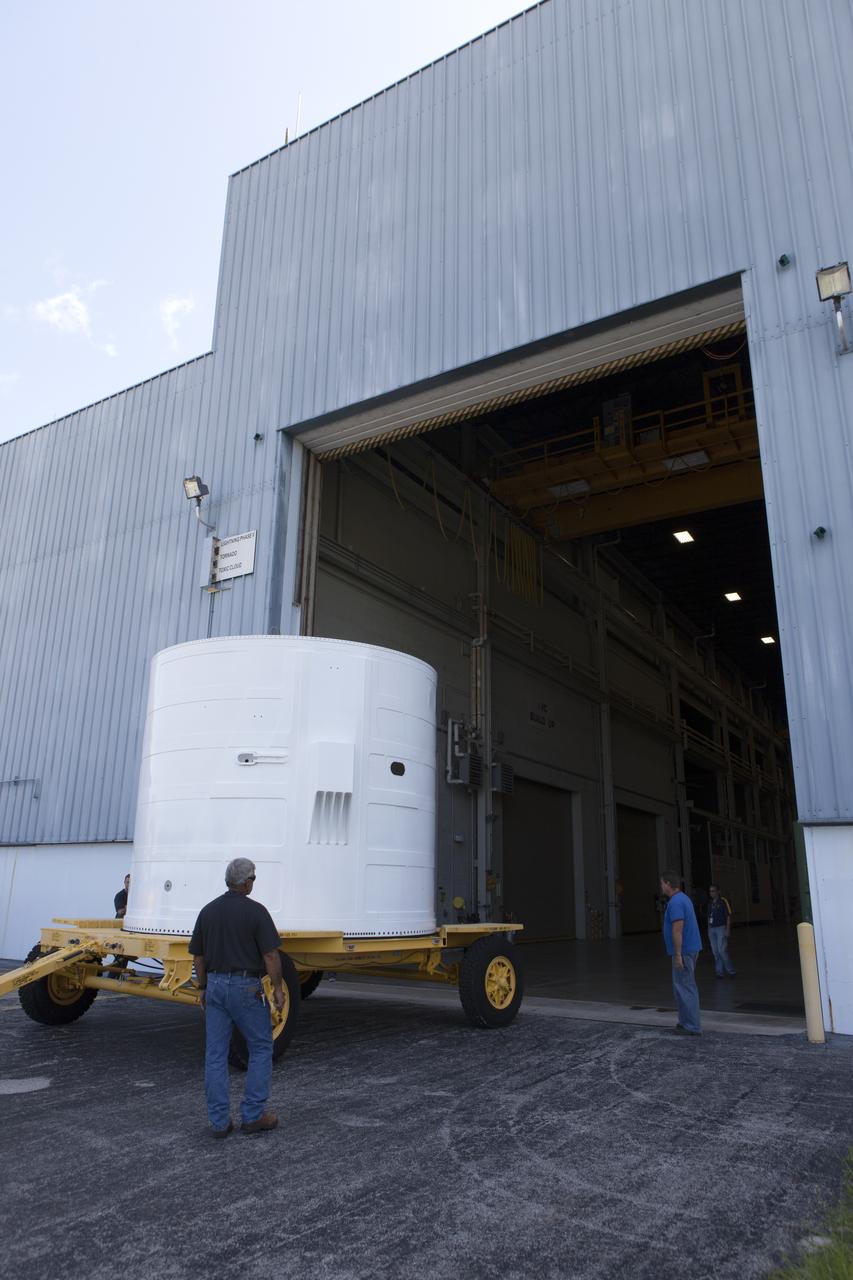
The Exploration Mission-1 (EM-1) left-hand forward skirt for NASA's Space Launch System (SLS) solid rocket boosters arrives at the entrance to the high bay at the Booster Fabrication Facility (BFF) at NASA's Kennedy Space Center in Florida. In the BFF, the forward skirt will be inspected and prepared for use on the left-hand solid rocket booster for EM-1. NASA's Orion spacecraft will fly atop the SLS rocket on its first uncrewed flight test.
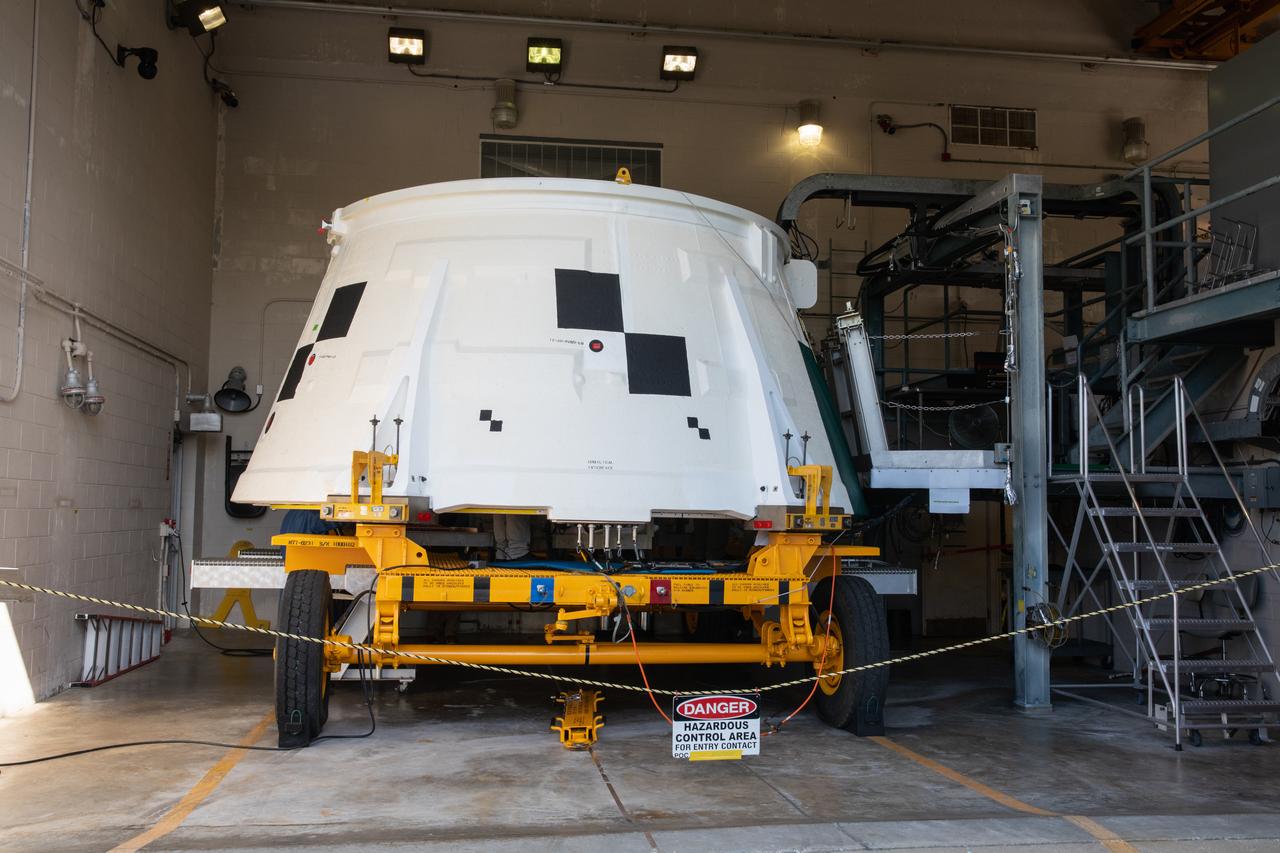
The aft skirt for one of the Space Launch System’s (SLS) two solid rocket boosters is inside the Booster Fabrication Facility at NASA’s Kennedy Space Center in Florida on Oct. 16, 2019. Segments of the boosters are being inspected and prepared for Artemis I, the agency’s first uncrewed flight of Orion atop the SLS. The aft skirts contain the thrust vector control system that steers the booster’s nozzles based on commands from the booster avionics during launch.
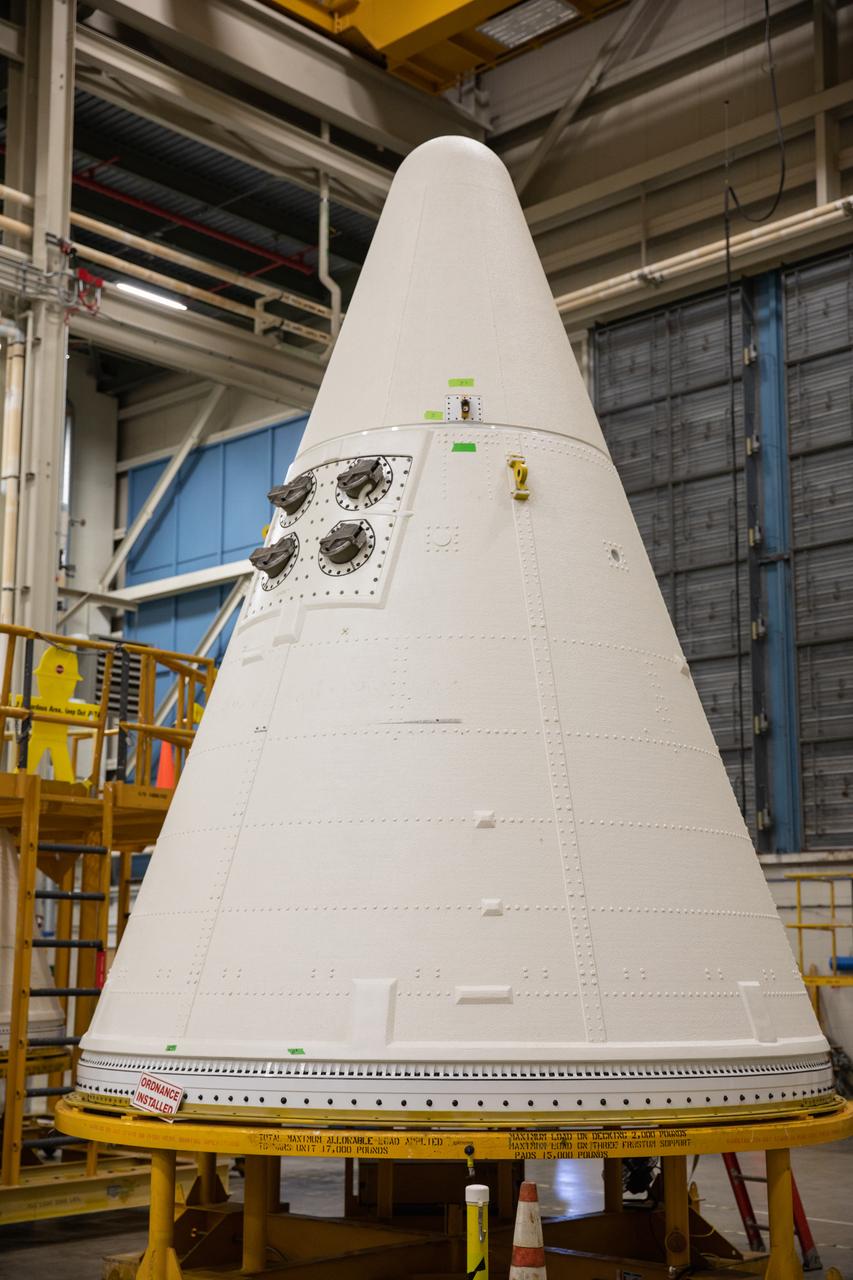
A nose cone for one of the Space Launch System’s (SLS) two solid rocket boosters is inside the Booster Fabrication Facility at NASA’s Kennedy Space Center in Florida on Oct. 16, 2019. Segments of the boosters are being inspected and prepared for Artemis I, the agency’s first uncrewed flight of Orion atop the SLS. The nose cone, along with a frustrum, will serve as the aerodynamic fairing for the boosters during launch.
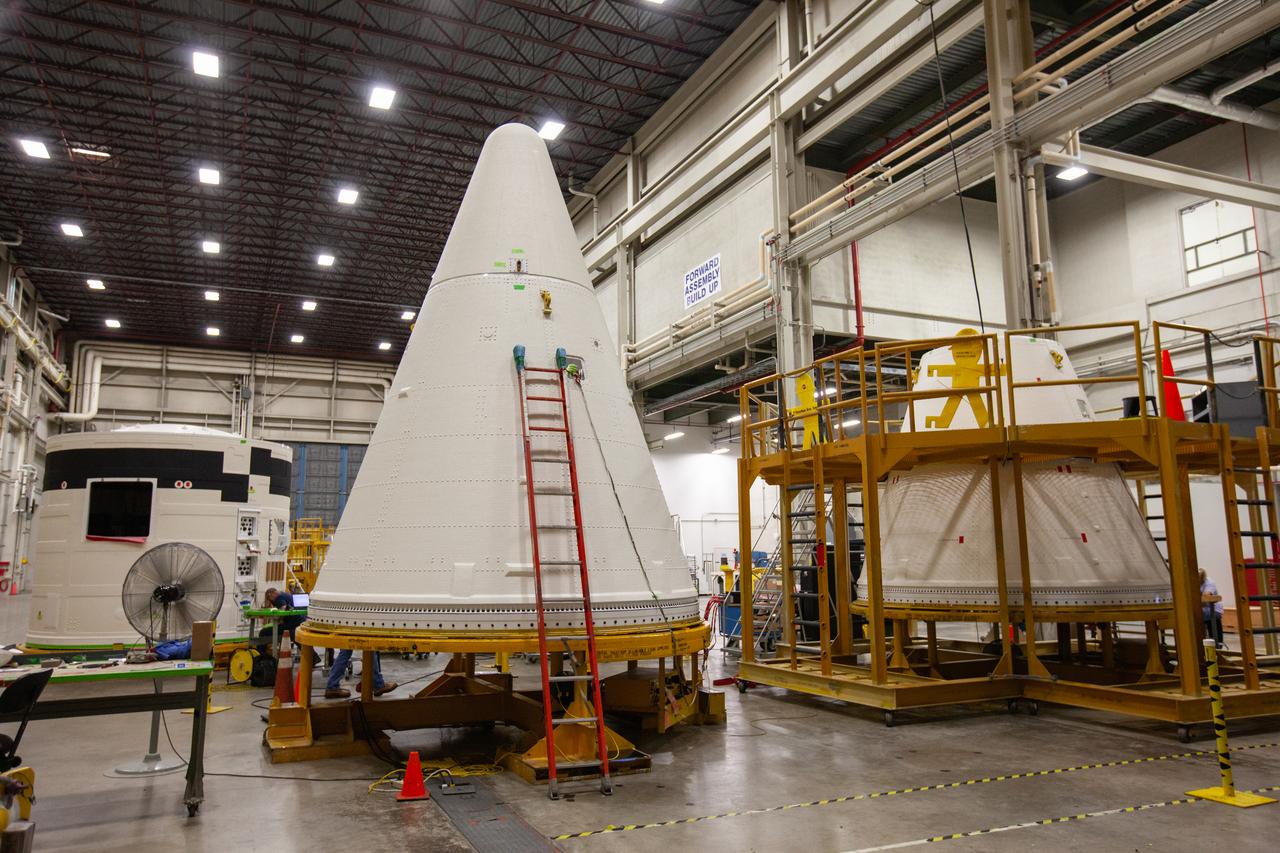
A nose cone for one of the Space Launch System’s (SLS) two solid rocket boosters is inside the Booster Fabrication Facility at NASA’s Kennedy Space Center in Florida on Oct. 16, 2019. Segments of the boosters are being inspected and prepared for Artemis I, the agency’s first uncrewed flight of Orion atop the SLS. The nose cone, along with a frustrum, will serve as the aerodynamic fairing for the boosters during launch.
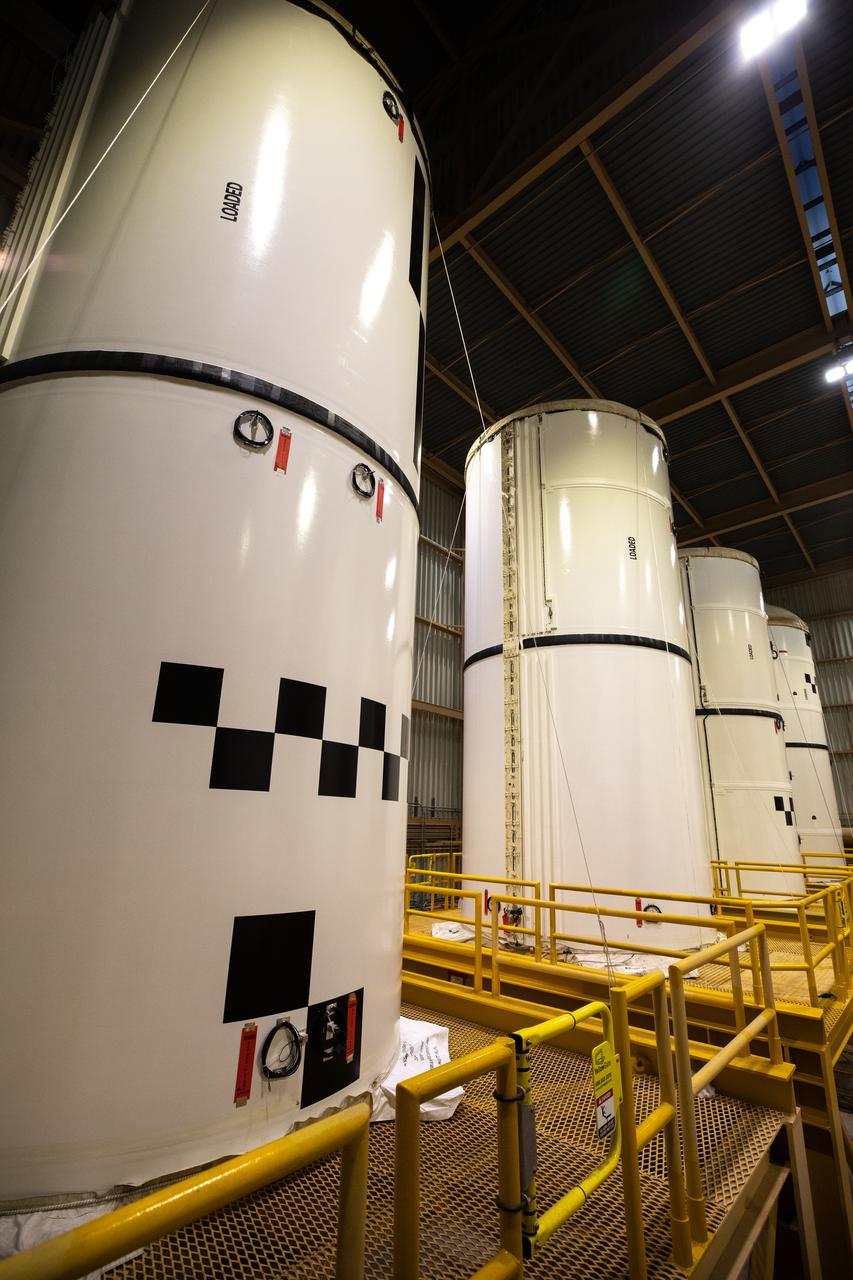
Inside the Rotation, Processing and Surge Facility at NASA’s Kennedy Space Center in Florida on Nov. 17, 2020, the left and right booster segments for the Space Launch System are being prepared for their move to the Vehicle Assembly Building (VAB). Workers with Exploration Ground Systems and contractor Jacobs teams will stack the twin five-segment boosters on the mobile launcher inside the VAB over a number of weeks. When the core stage arrives, it will join the boosters on the mobile launcher, followed by the interim cryogenic propulsion stage and Orion spacecraft. Manufactured by Northrop Grumman in Utah, the twin boosters provide more than 75 percent of the total SLS thrust at launch. Under the Artemis program, NASA will land the first woman and the next man on the Moon by 2024. The first in a series of increasingly complex missions, Artemis I will test the Orion spacecraft and SLS as an integrated system ahead of crewed flights to the Moon.
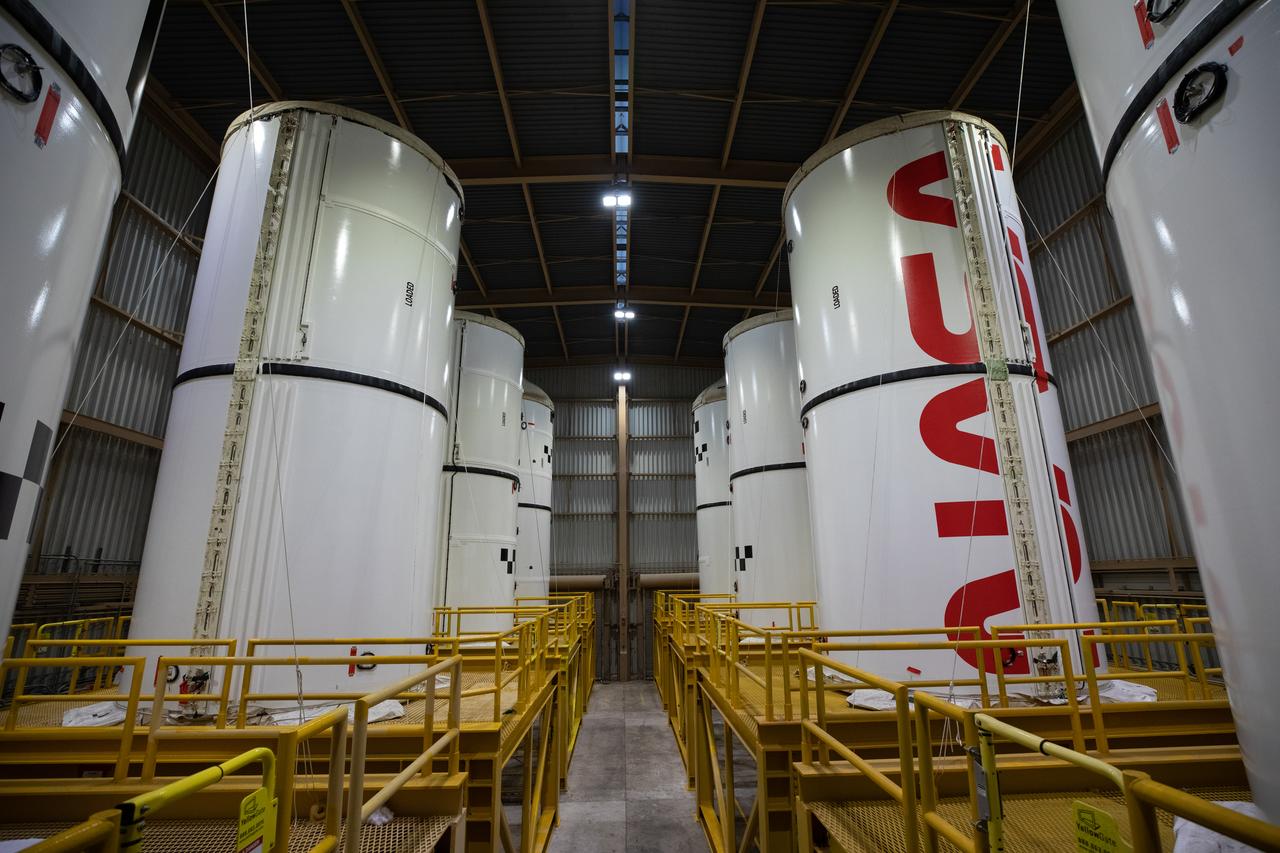
Inside the Rotation, Processing and Surge Facility at NASA’s Kennedy Space Center in Florida on Nov. 17, 2020, the left and right booster segments for the Space Launch System are being prepared for their move to the Vehicle Assembly Building (VAB). Workers with Exploration Ground Systems and contractor Jacobs teams will stack the twin five-segment boosters on the mobile launcher inside the VAB over a number of weeks. When the core stage arrives, it will join the boosters on the mobile launcher, followed by the interim cryogenic propulsion stage and Orion spacecraft. Manufactured by Northrop Grumman in Utah, the twin boosters provide more than 75 percent of the total SLS thrust at launch. Under the Artemis program, NASA will land the first woman and the next man on the Moon by 2024. The first in a series of increasingly complex missions, Artemis I will test the Orion spacecraft and SLS as an integrated system ahead of crewed flights to the Moon.
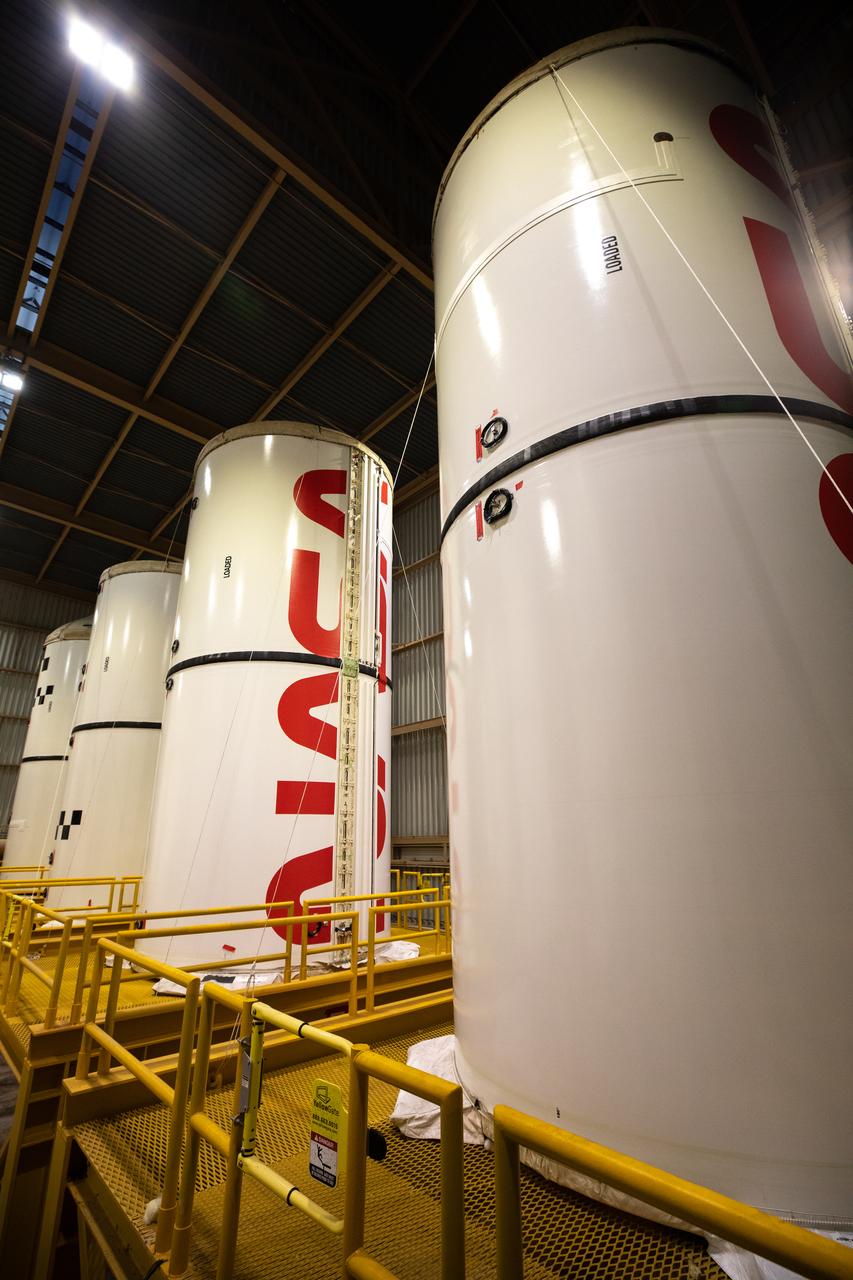
Inside the Rotation, Processing and Surge Facility at NASA’s Kennedy Space Center in Florida on Nov. 17, 2020, the left and right booster segments for the Space Launch System are being prepared for their move to the Vehicle Assembly Building (VAB). Workers with Exploration Ground Systems and contractor Jacobs teams will stack the twin five-segment boosters on the mobile launcher inside the VAB over a number of weeks. When the core stage arrives, it will join the boosters on the mobile launcher, followed by the interim cryogenic propulsion stage and Orion spacecraft. Manufactured by Northrop Grumman in Utah, the twin boosters provide more than 75 percent of the total SLS thrust at launch. Under the Artemis program, NASA will land the first woman and the next man on the Moon by 2024. The first in a series of increasingly complex missions, Artemis I will test the Orion spacecraft and SLS as an integrated system ahead of crewed flights to the Moon.
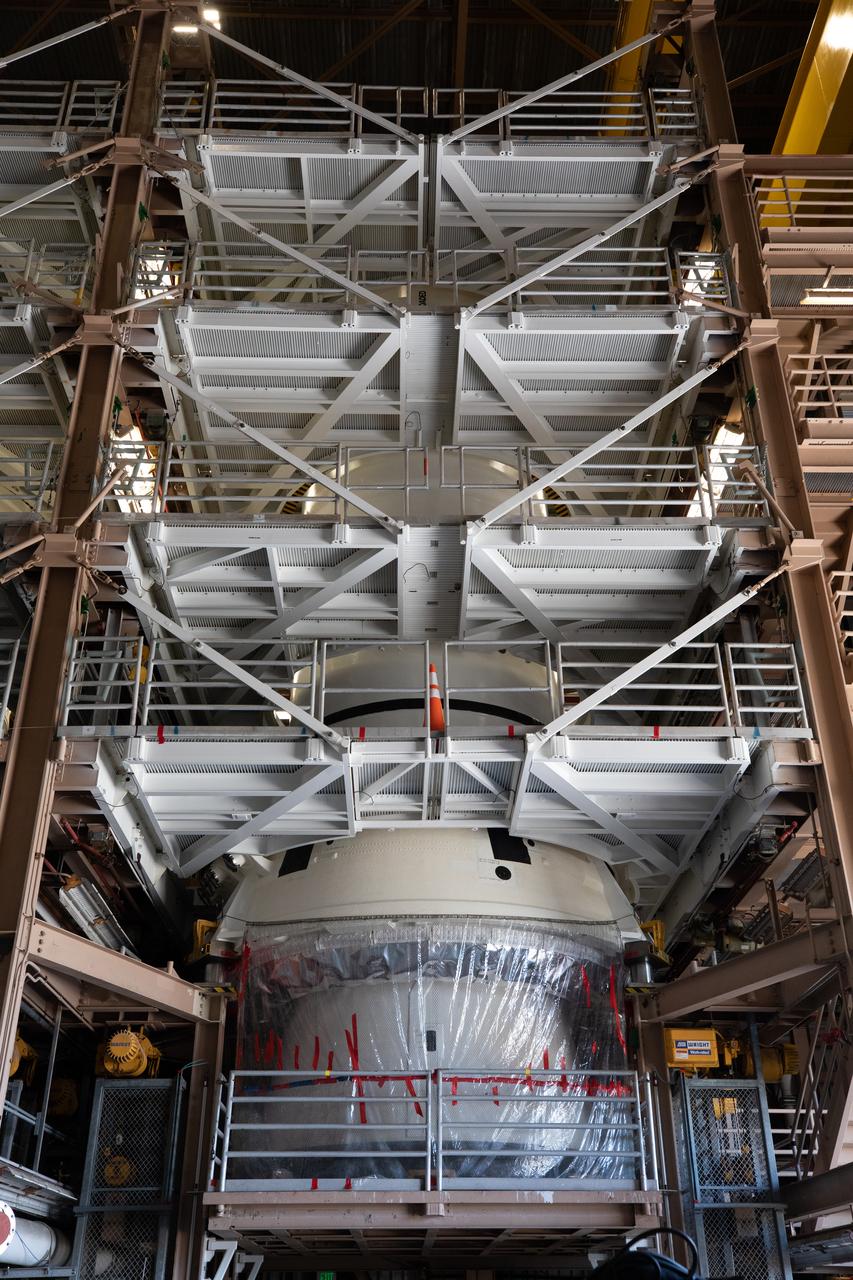
In view inside the Rotation, Processing and Surge Facility at NASA’s Kennedy Space Center in Florida on Nov. 17, 2020, one of the twin booster segments for the Space Launch System is being prepared for its move to the Vehicle Assembly Building (VAB). Workers with Exploration Ground Systems and contractor Jacobs teams will stack the twin five-segment boosters on the mobile launcher inside the VAB over a number of weeks. When the core stage arrives, it will join the boosters on the mobile launcher, followed by the interim cryogenic propulsion stage and Orion spacecraft. Manufactured by Northrop Grumman in Utah, the twin boosters provide more than 75 percent of the total SLS thrust at launch. Under the Artemis program, NASA will land the first woman and the next man on the Moon by 2024. The first in a series of increasingly complex missions, Artemis I will test the Orion spacecraft and SLS as an integrated system ahead of crewed flights to the Moon.
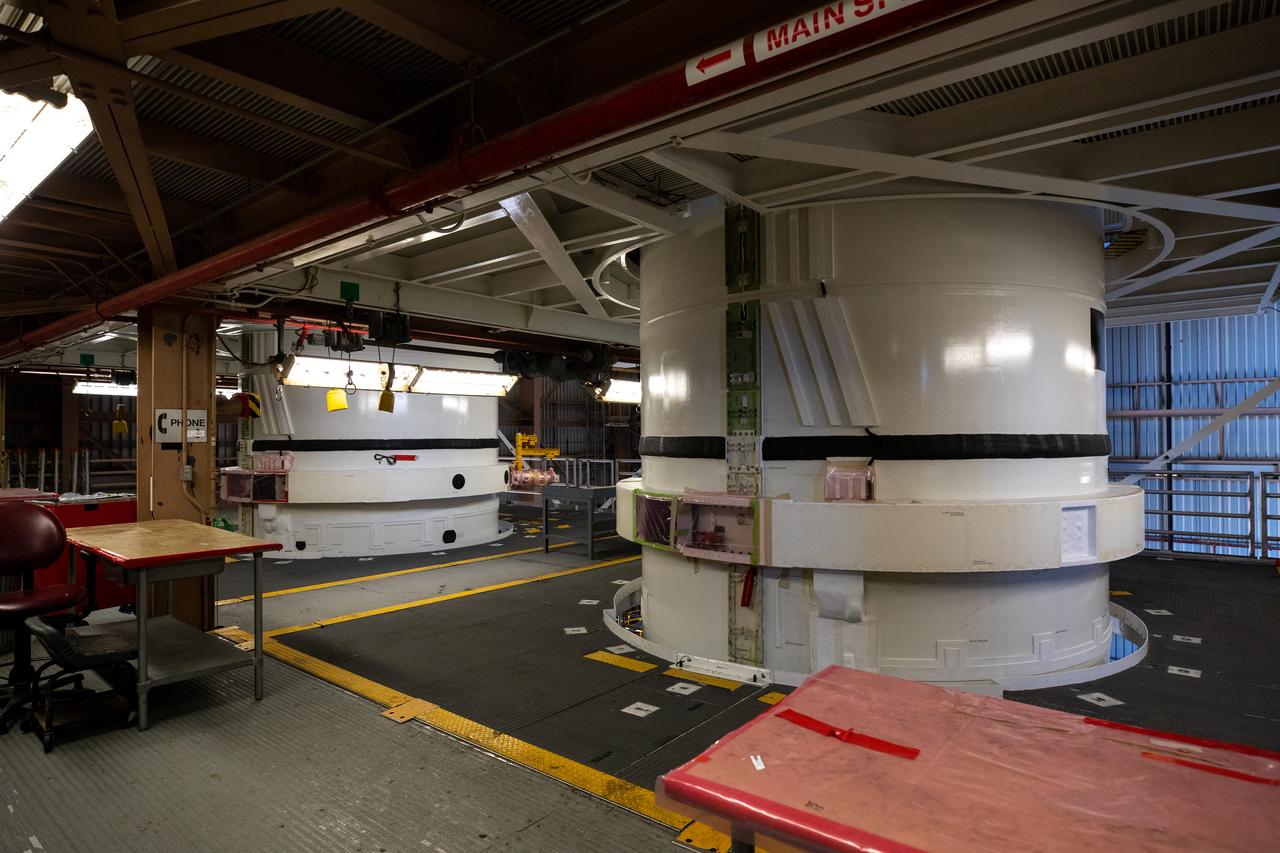
In view inside the Rotation, Processing and Surge Facility at NASA’s Kennedy Space Center in Florida on Nov. 17, 2020, are portions of the left and right booster segments for the Space Launch System being prepared for their move to the Vehicle Assembly Building (VAB). Workers with Exploration Ground Systems and contractor Jacobs teams will stack the twin five-segment boosters on the mobile launcher inside the VAB over a number of weeks. When the core stage arrives, it will join the boosters on the mobile launcher, followed by the interim cryogenic propulsion stage and Orion spacecraft. Manufactured by Northrop Grumman in Utah, the twin boosters provide more than 75 percent of the total SLS thrust at launch. Under the Artemis program, NASA will land the first woman and the next man on the Moon by 2024. The first in a series of increasingly complex missions, Artemis I will test the Orion spacecraft and SLS as an integrated system ahead of crewed flights to the Moon.
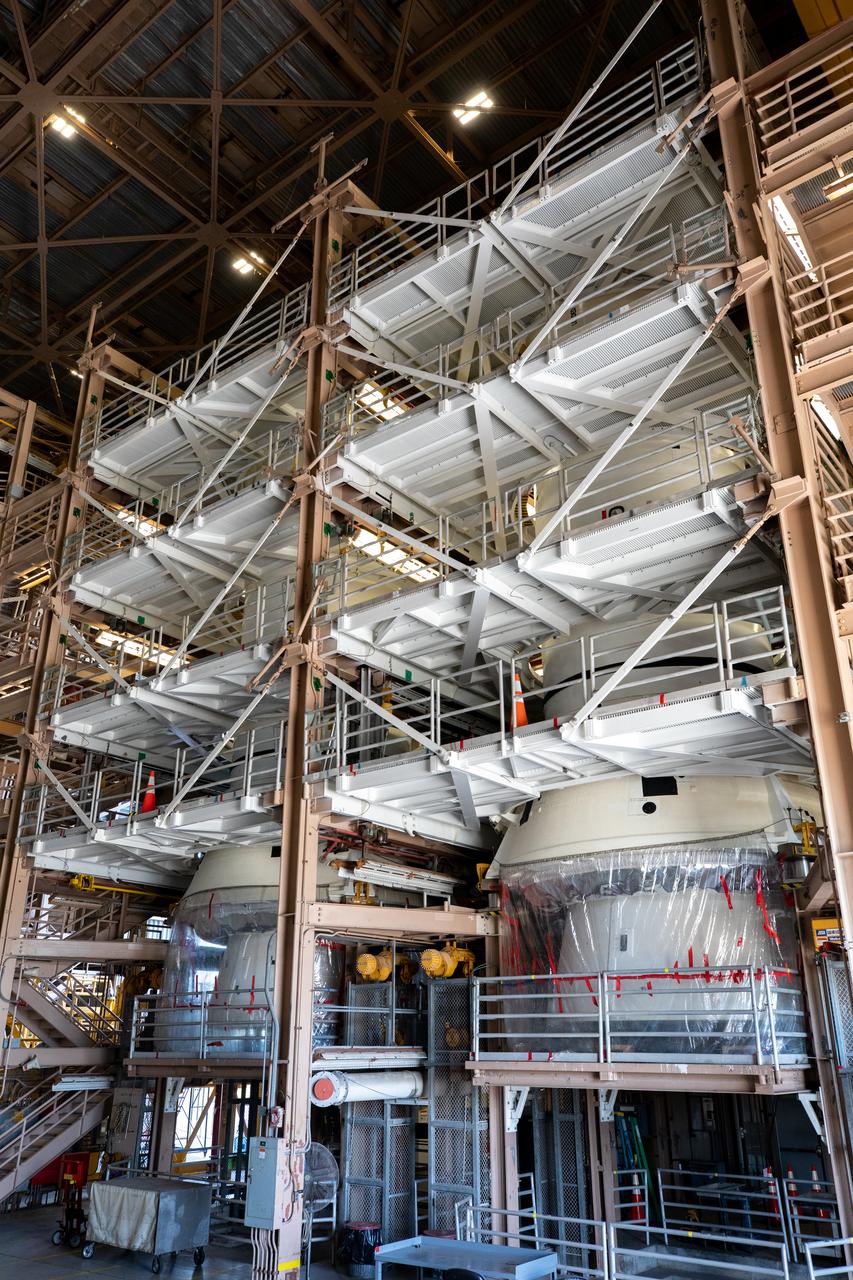
Inside the Rotation, Processing and Surge Facility at NASA’s Kennedy Space Center in Florida on Nov. 17, 2020, the left and right booster segments for the Space Launch System are being prepared for their move to the Vehicle Assembly Building (VAB). Workers with Exploration Ground Systems and contractor Jacobs teams will stack the twin five-segment boosters on the mobile launcher inside the VAB over a number of weeks. When the core stage arrives, it will join the boosters on the mobile launcher, followed by the interim cryogenic propulsion stage and Orion spacecraft. Manufactured by Northrop Grumman in Utah, the twin boosters provide more than 75 percent of the total SLS thrust at launch. Under the Artemis program, NASA will land the first woman and the next man on the Moon by 2024. The first in a series of increasingly complex missions, Artemis I will test the Orion spacecraft and SLS as an integrated system ahead of crewed flights to the Moon.
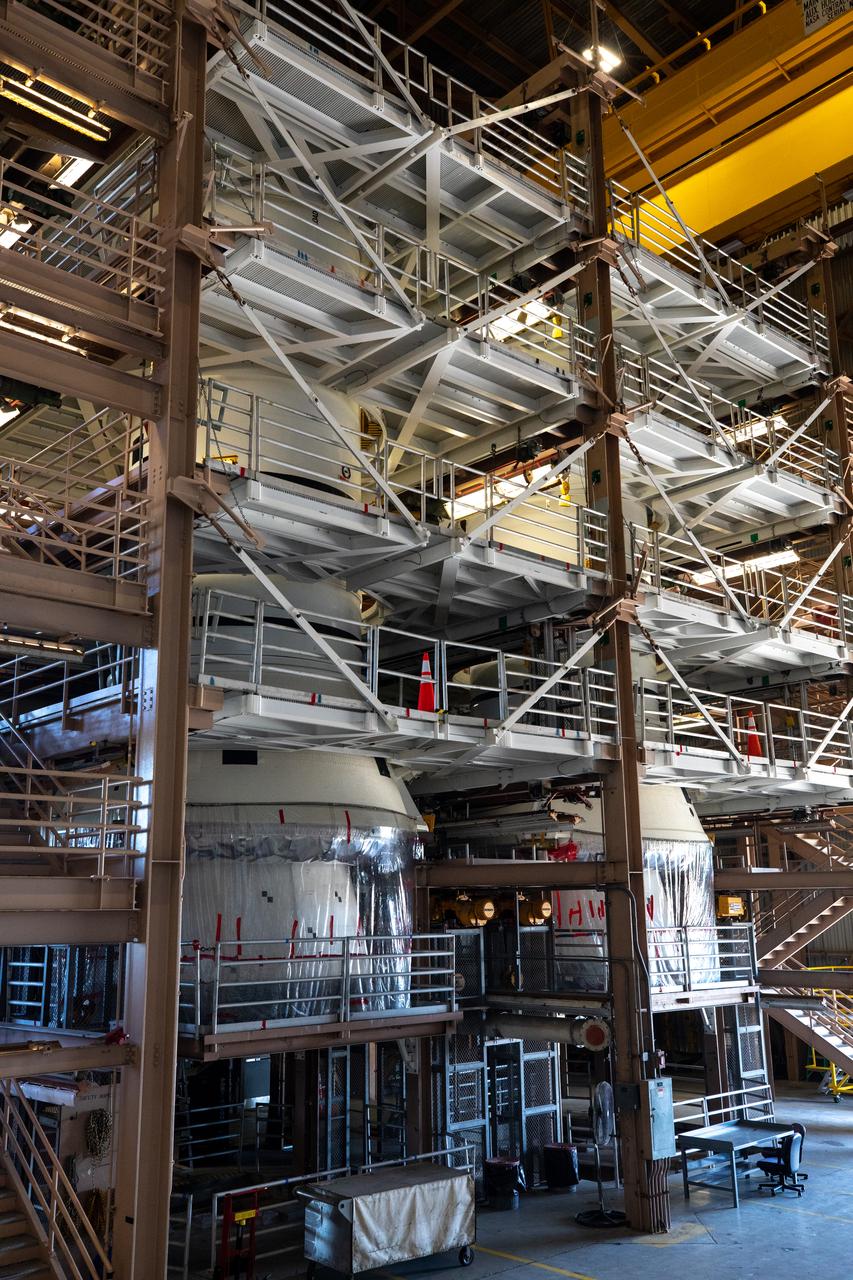
Inside the Rotation, Processing and Surge Facility at NASA’s Kennedy Space Center in Florida on Nov. 17, 2020, the left and right booster segments for the Space Launch System are being prepared for their move to the Vehicle Assembly Building (VAB). Workers with Exploration Ground Systems and contractor Jacobs teams will stack the twin five-segment boosters on the mobile launcher inside the VAB over a number of weeks. When the core stage arrives, it will join the boosters on the mobile launcher, followed by the interim cryogenic propulsion stage and Orion spacecraft. Manufactured by Northrop Grumman in Utah, the twin boosters provide more than 75 percent of the total SLS thrust at launch. Under the Artemis program, NASA will land the first woman and the next man on the Moon by 2024. The first in a series of increasingly complex missions, Artemis I will test the Orion spacecraft and SLS as an integrated system ahead of crewed flights to the Moon.
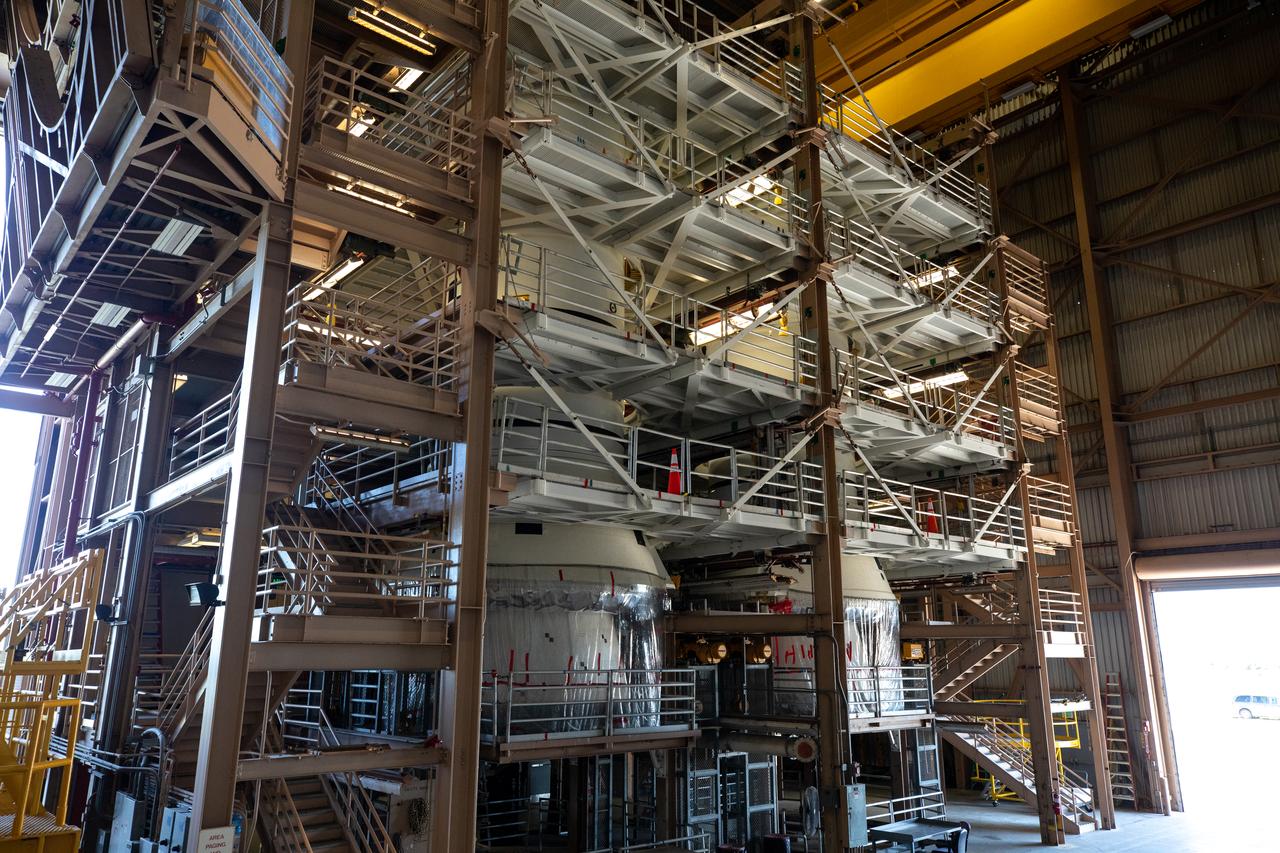
Inside the Rotation, Processing and Surge Facility at NASA’s Kennedy Space Center in Florida on Nov. 17, 2020, the left and right booster segments for the Space Launch System are being prepared for their move to the Vehicle Assembly Building (VAB). Workers with Exploration Ground Systems and contractor Jacobs teams will stack the twin five-segment boosters on the mobile launcher inside the VAB over a number of weeks. When the core stage arrives, it will join the boosters on the mobile launcher, followed by the interim cryogenic propulsion stage and Orion spacecraft. Manufactured by Northrop Grumman in Utah, the twin boosters provide more than 75 percent of the total SLS thrust at launch. Under the Artemis program, NASA will land the first woman and the next man on the Moon by 2024. The first in a series of increasingly complex missions, Artemis I will test the Orion spacecraft and SLS as an integrated system ahead of crewed flights to the Moon.
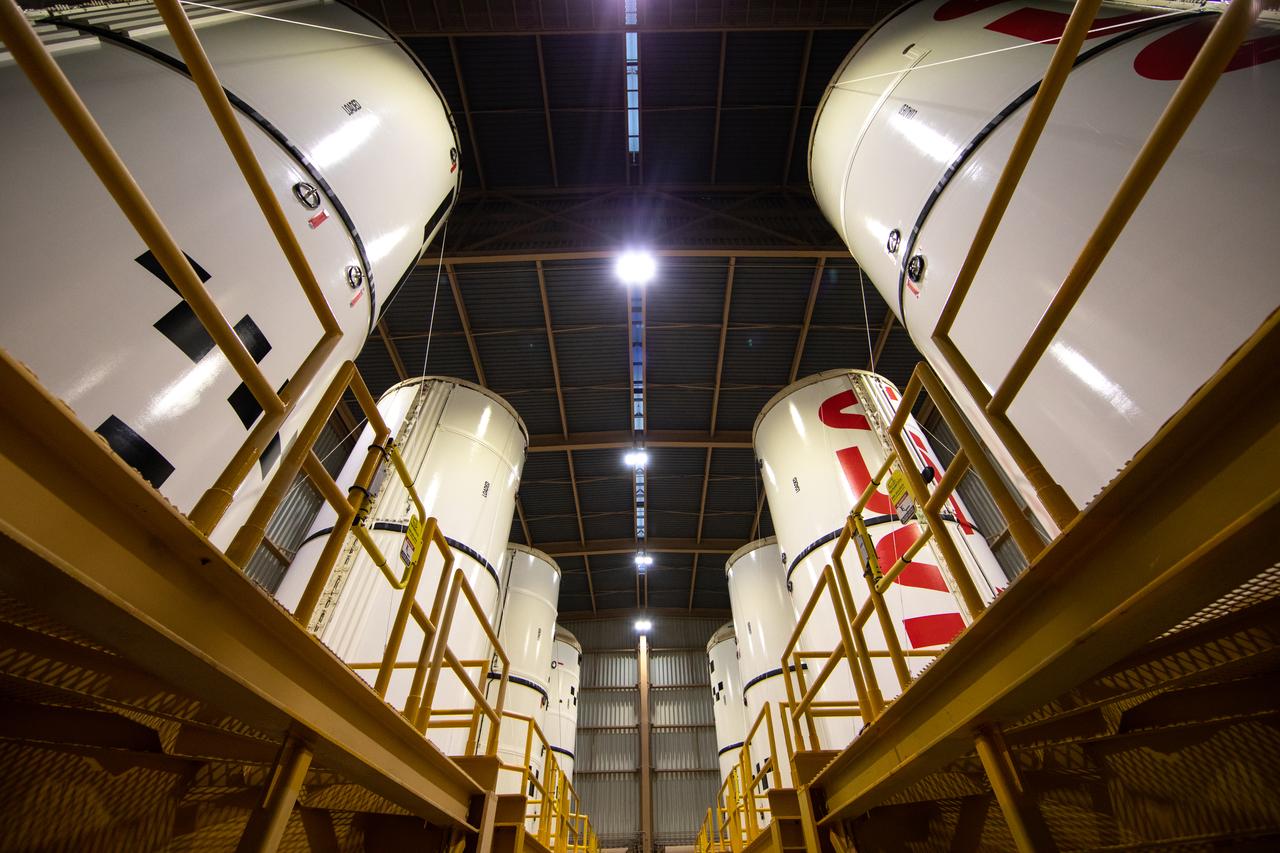
Inside the Rotation, Processing and Surge Facility at NASA’s Kennedy Space Center in Florida on Nov. 17, 2020, the left and right booster segments for the Space Launch System are being prepared for their move to the Vehicle Assembly Building (VAB). Workers with Exploration Ground Systems and contractor Jacobs teams will stack the twin five-segment boosters on the mobile launcher inside the VAB over a number of weeks. When the core stage arrives, it will join the boosters on the mobile launcher, followed by the interim cryogenic propulsion stage and Orion spacecraft. Manufactured by Northrop Grumman in Utah, the twin boosters provide more than 75 percent of the total SLS thrust at launch. Under the Artemis program, NASA will land the first woman and the next man on the Moon by 2024. The first in a series of increasingly complex missions, Artemis I will test the Orion spacecraft and SLS as an integrated system ahead of crewed flights to the Moon.

Teams from NASA’s Exploration Ground Systems and Space Launch System (SLS) practice SLS booster stacking with pathfinders inside Kennedy Space Center’s Vehicle Assembly Building on Nov. 19, 2019. Using overhead cranes and booster handling activities, the teams focused on procedures for mating a center segment onto a cylinder that simulated another segment. The exercise was performed around the clock, operating three shifts per day. SLS will launch the first woman and next man to the Moon by 2024 through the Artemis program.
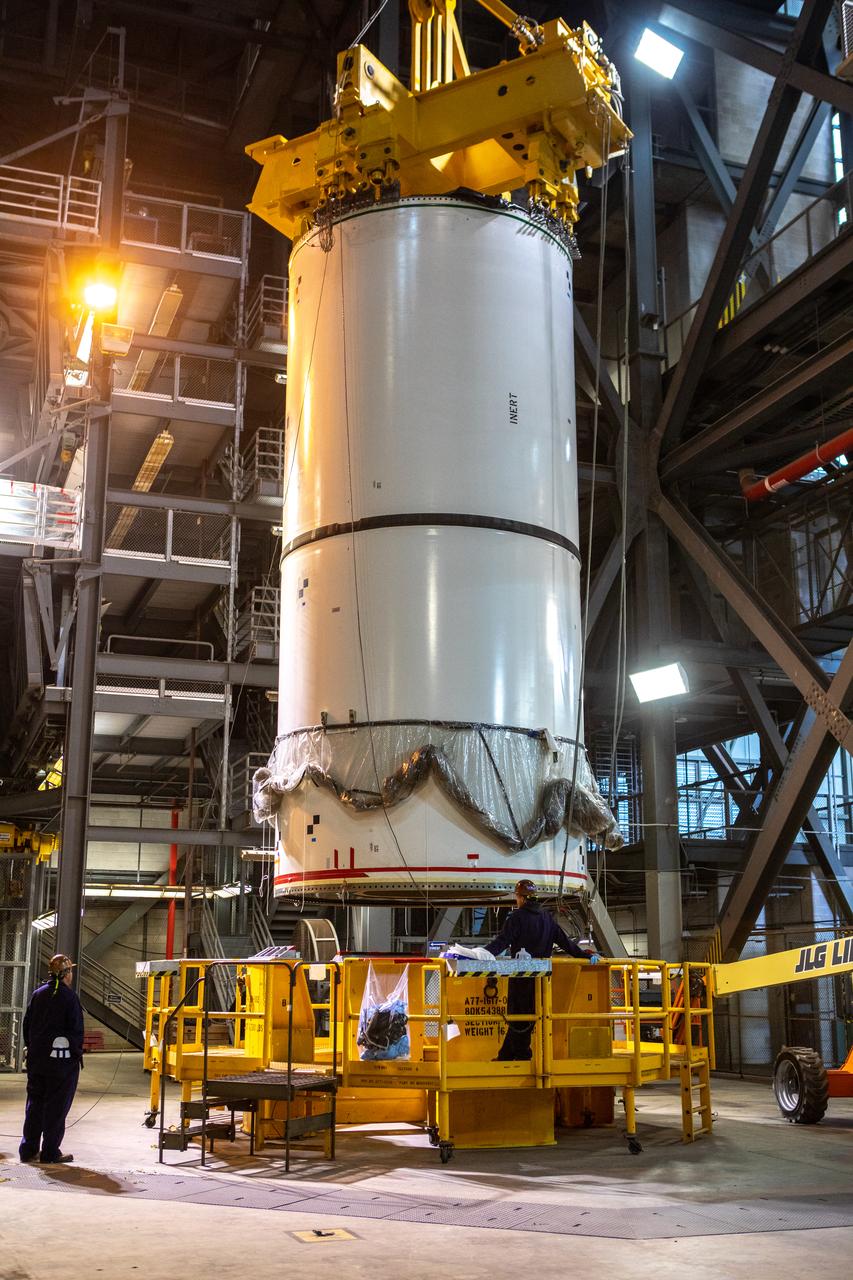
Teams from NASA’s Exploration Ground Systems and Space Launch System (SLS) practice SLS booster stacking with pathfinders inside Kennedy Space Center’s Vehicle Assembly Building on Nov. 19, 2019. Using overhead cranes and booster handling activities, the teams focused on procedures for mating a center segment onto a cylinder that simulated another segment. The exercise was performed around the clock, operating three shifts per day. SLS will launch the first woman and next man to the Moon by 2024 through the Artemis program.

Teams from NASA’s Exploration Ground Systems and Space Launch System (SLS) practice SLS booster stacking with pathfinders inside Kennedy Space Center’s Vehicle Assembly Building on Nov. 19, 2019. Using overhead cranes and booster handling activities, the teams focused on procedures for mating a center segment onto a cylinder that simulated another segment. The exercise was performed around the clock, operating three shifts per day. SLS will launch the first woman and next man to the Moon by 2024 through the Artemis program.

Teams from NASA’s Exploration Ground Systems and Space Launch System (SLS) practice SLS booster stacking with pathfinders inside Kennedy Space Center’s Vehicle Assembly Building on Nov. 19, 2019. Using overhead cranes and booster handling activities, the teams focused on procedures for mating a center segment onto a cylinder that simulated another segment. The exercise was performed around the clock, operating three shifts per day. SLS will launch the first woman and next man to the Moon by 2024 through the Artemis program.

Teams from NASA’s Exploration Ground Systems and Space Launch System (SLS) practice SLS booster stacking with pathfinders inside Kennedy Space Center’s Vehicle Assembly Building on Nov. 19, 2019. Using overhead cranes and booster handling activities, the teams focused on procedures for mating a center segment onto a cylinder that simulated another segment. The exercise was performed around the clock, operating three shifts per day. SLS will launch the first woman and next man to the Moon by 2024 through the Artemis program.

Teams from NASA’s Exploration Ground Systems and Space Launch System (SLS) practice SLS booster stacking with pathfinders inside Kennedy Space Center’s Vehicle Assembly Building on Nov. 19, 2019. Using overhead cranes and booster handling activities, the teams focused on procedures for mating a center segment onto a cylinder that simulated another segment. The exercise was performed around the clock, operating three shifts per day. SLS will launch the first woman and next man to the Moon by 2024 through the Artemis program.

Teams from NASA’s Exploration Ground Systems and Space Launch System (SLS) practice SLS booster stacking with pathfinders inside Kennedy Space Center’s Vehicle Assembly Building on Nov. 19, 2019. Using overhead cranes and booster handling activities, the teams focused on procedures for mating a center segment onto a cylinder that simulated another segment. The exercise was performed around the clock, operating three shifts per day. SLS will launch the first woman and next man to the Moon by 2024 through the Artemis program.

Teams from NASA’s Exploration Ground Systems and Space Launch System (SLS) practice SLS booster stacking with pathfinders inside Kennedy Space Center’s Vehicle Assembly Building on Nov. 19, 2019. Using overhead cranes and booster handling activities, the teams focused on procedures for mating a center segment onto a cylinder that simulated another segment. The exercise was performed around the clock, operating three shifts per day. SLS will launch the first woman and next man to the Moon by 2024 through the Artemis program.

Teams from NASA’s Exploration Ground Systems and Space Launch System (SLS) practice SLS booster stacking with pathfinders inside Kennedy Space Center’s Vehicle Assembly Building on Nov. 19, 2019. Using overhead cranes and booster handling activities, the teams focused on procedures for mating a center segment onto a cylinder that simulated another segment. The exercise was performed around the clock, operating three shifts per day. SLS will launch the first woman and next man to the Moon by 2024 through the Artemis program.
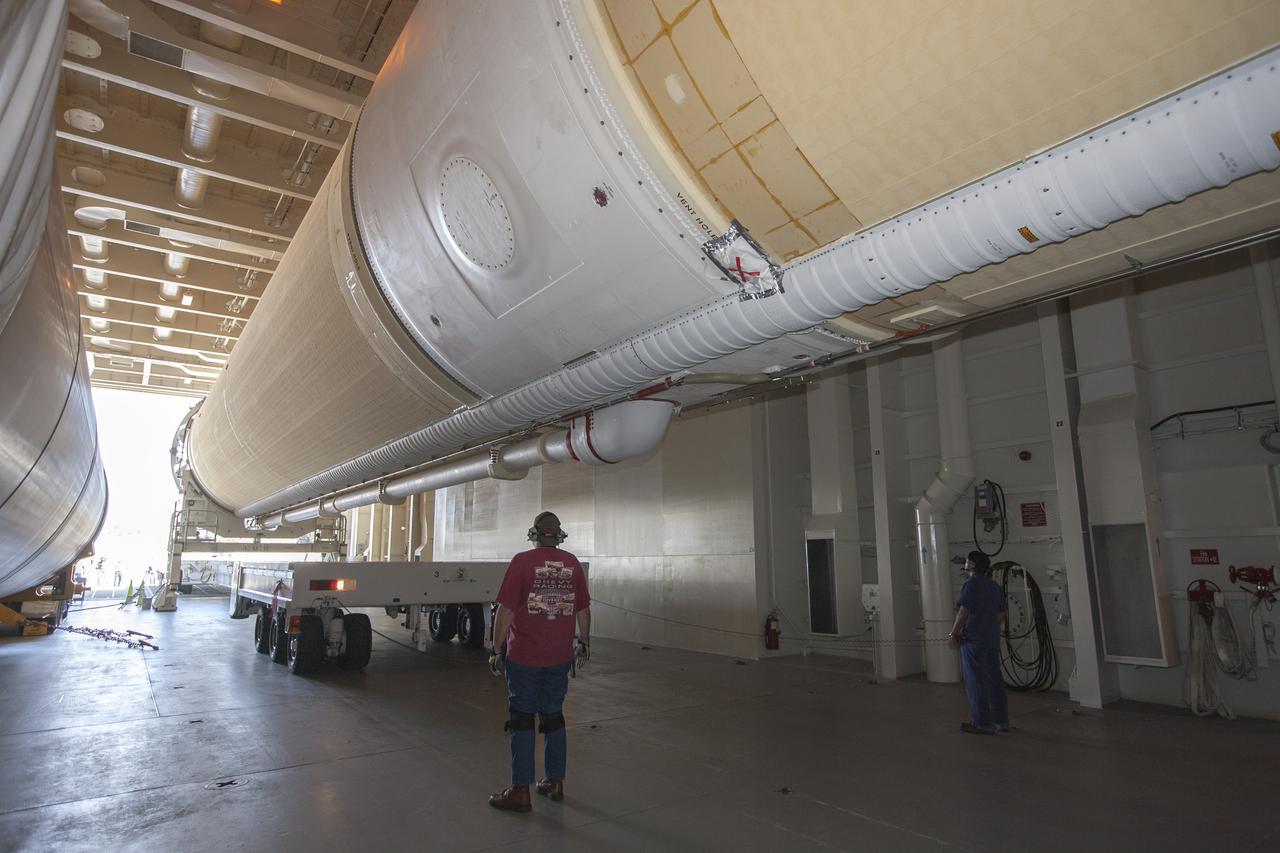
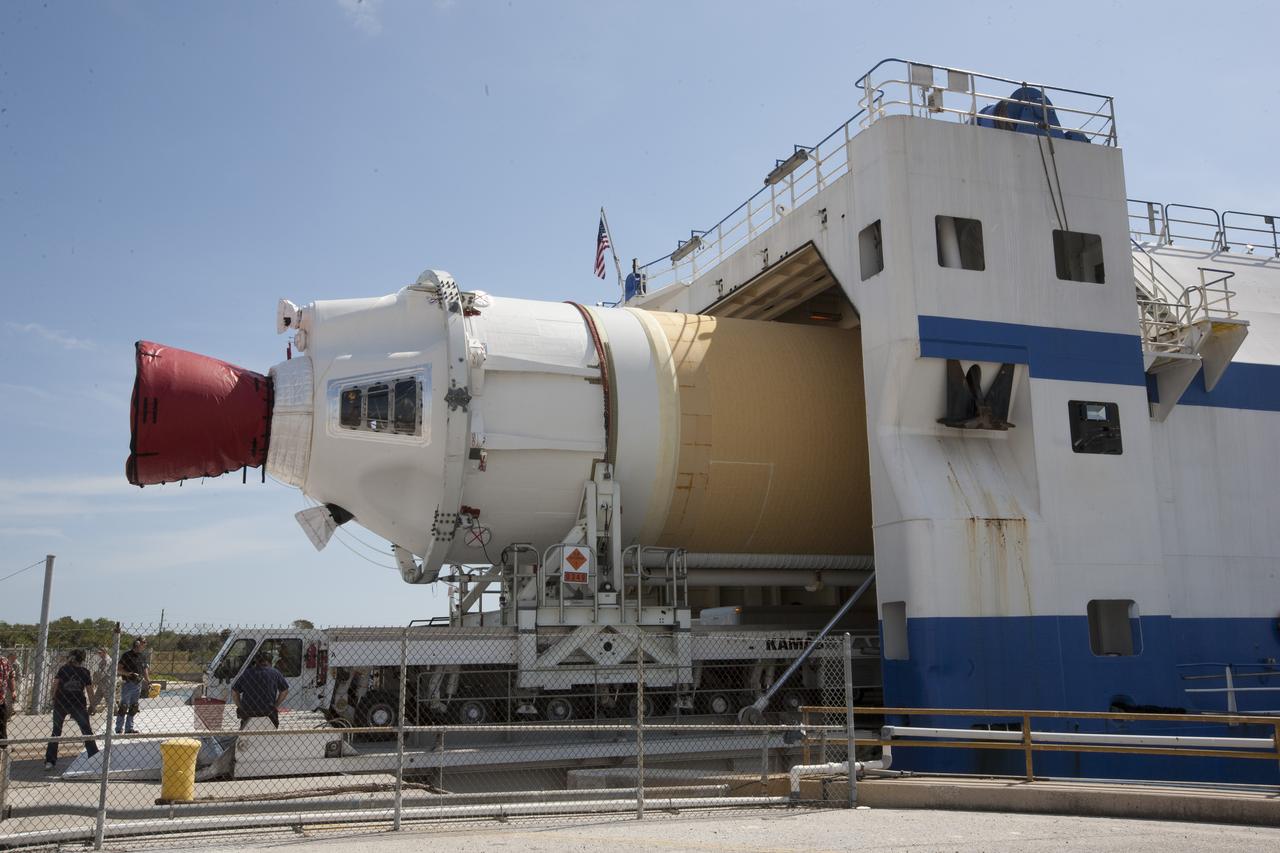
CAPE CANAVERAL, Fla. – Two of the three United Launch Alliance Delta IV heavy boosters for NASA’s upcoming Exploration Flight Test-1, or EFT-1, mission with the Orion spacecraft, have arrived by barge at the U.S. Army Outpost wharf at Port Canaveral in Florida. The core booster and starboard booster will be offloaded and then transported to the Horizontal Integration Facility, or HIF, at Space Launch Complex 37 on Cape Canaveral Air Force Station. The port booster and the upper stage are planned to be shipped to Cape Canaveral in April. At the HIF, all three boosters will be processed and checked out before being moved to the nearby launch pad and hoisted into position. During the EFT-1 mission, Orion will travel farther into space than any human spacecraft has gone in more than 40 years. The data gathered during the flight will influence design decisions, validate existing computer models and innovative new approaches to space systems development, as well as reduce overall mission risks and costs for later Orion flights. Liftoff of Orion on EFT-1 is planned for fall 2014. Photo credit: NASA/Kim Shiflett
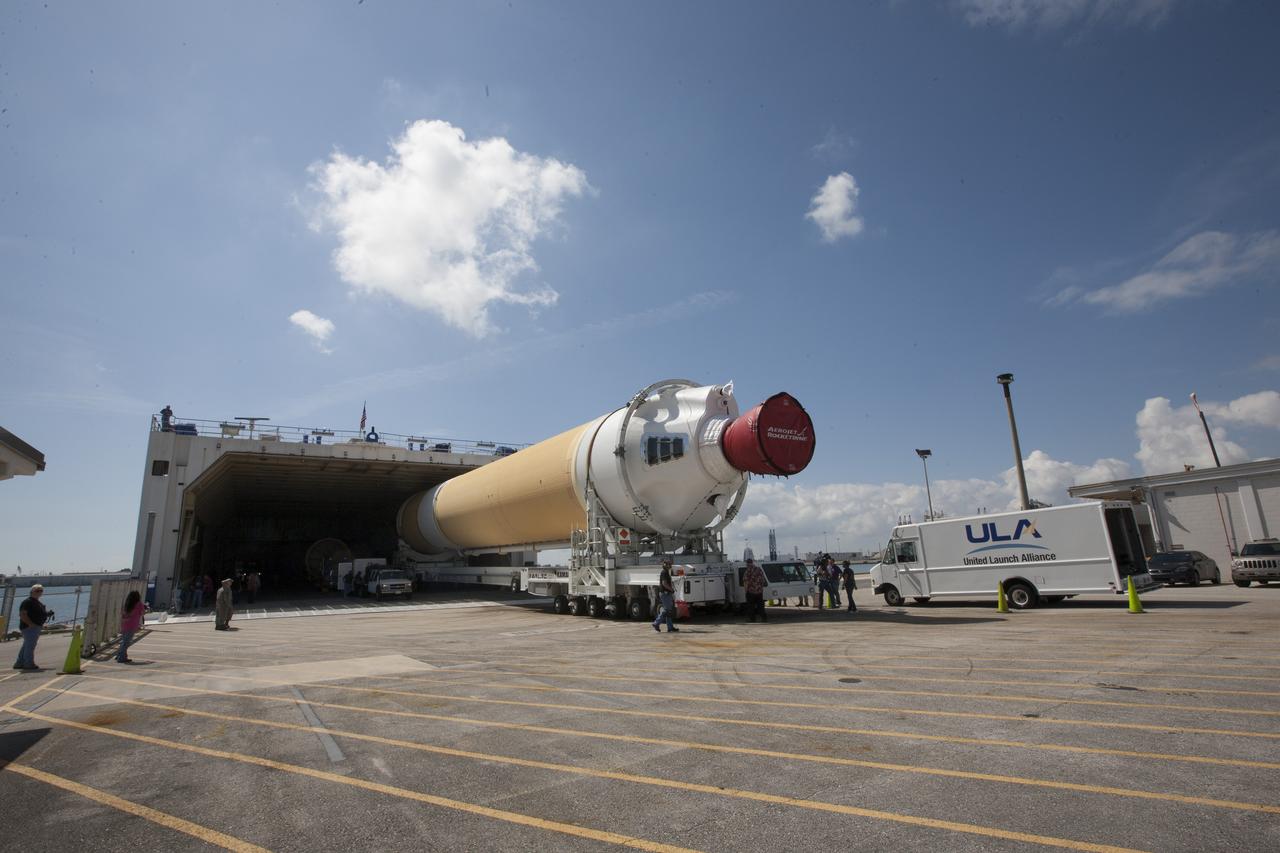
CAPE CANAVERAL, Fla. – Two of the three United Launch Alliance Delta IV heavy boosters for NASA’s upcoming Exploration Flight Test-1, or EFT-1, mission with the Orion spacecraft, have arrived by barge at the U.S. Army Outpost wharf at Port Canaveral in Florida. The core booster and starboard booster are being offloaded and will be transported to the Horizontal Integration Facility, or HIF, at Space Launch Complex 37 on Cape Canaveral Air Force Station. The port booster and the upper stage are planned to be shipped to Cape Canaveral in April. At the HIF, all three boosters will be processed and checked out before being moved to the nearby launch pad and hoisted into position. During the EFT-1 mission, Orion will travel farther into space than any human spacecraft has gone in more than 40 years. The data gathered during the flight will influence design decisions, validate existing computer models and innovative new approaches to space systems development, as well as reduce overall mission risks and costs for later Orion flights. Liftoff of Orion on EFT-1 is planned for fall 2014. Photo credit: NASA/Kim Shiflett
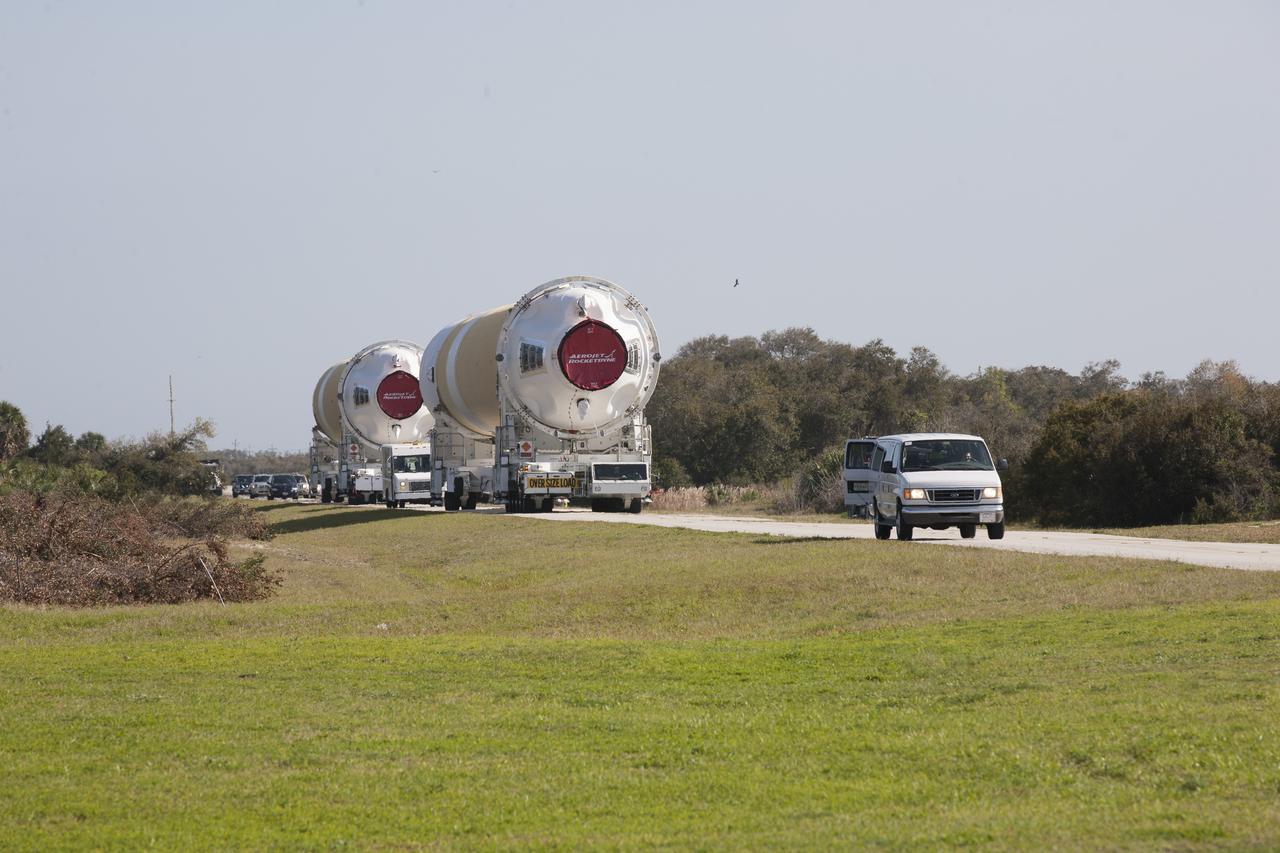
CAPE CANAVERAL, Fla. – Two of the three United Launch Alliance Delta IV heavy boosters for NASA’s upcoming Exploration Flight Test-1, or EFT-1, mission with the Orion spacecraft, arrived by barge at the U.S. Army Outpost wharf at Port Canaveral in Florida. The core booster and starboard booster were offloaded and are being transported to the Horizontal Integration Facility, or HIF, at Space Launch Complex 37 on Cape Canaveral Air Force Station. The port booster and the upper stage are planned to be shipped to Cape Canaveral in April. At the HIF, all three boosters will be processed and checked out before being moved to the nearby launch pad and hoisted into position. During the EFT-1 mission, Orion will travel farther into space than any human spacecraft has gone in more than 40 years. The data gathered during the flight will influence design decisions, validate existing computer models and innovative new approaches to space systems development, as well as reduce overall mission risks and costs for later Orion flights. Liftoff of Orion on EFT-1 is planned for fall 2014. Photo credit: NASA/Kim Shiflett
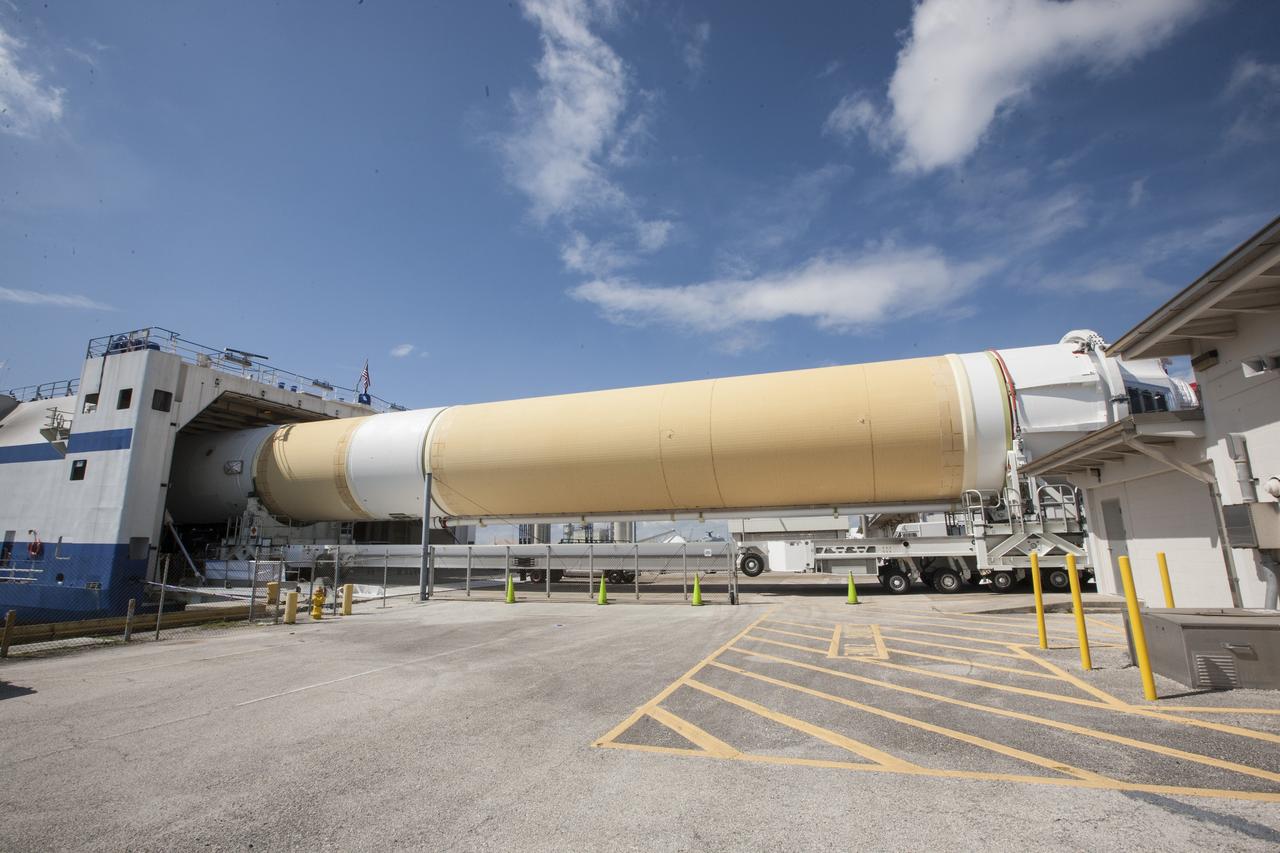
CAPE CANAVERAL, Fla. – Two of the three United Launch Alliance Delta IV heavy boosters for NASA’s upcoming Exploration Flight Test-1, or EFT-1, mission with the Orion spacecraft, have arrived by barge at the U.S. Army Outpost wharf at Port Canaveral in Florida. The core booster and starboard booster are being offloaded and will be transported to the Horizontal Integration Facility, or HIF, at Space Launch Complex 37 on Cape Canaveral Air Force Station. The port booster and the upper stage are planned to be shipped to Cape Canaveral in April. At the HIF, all three boosters will be processed and checked out before being moved to the nearby launch pad and hoisted into position. During the EFT-1 mission, Orion will travel farther into space than any human spacecraft has gone in more than 40 years. The data gathered during the flight will influence design decisions, validate existing computer models and innovative new approaches to space systems development, as well as reduce overall mission risks and costs for later Orion flights. Liftoff of Orion on EFT-1 is planned for fall 2014. Photo credit: NASA/Kim Shiflett
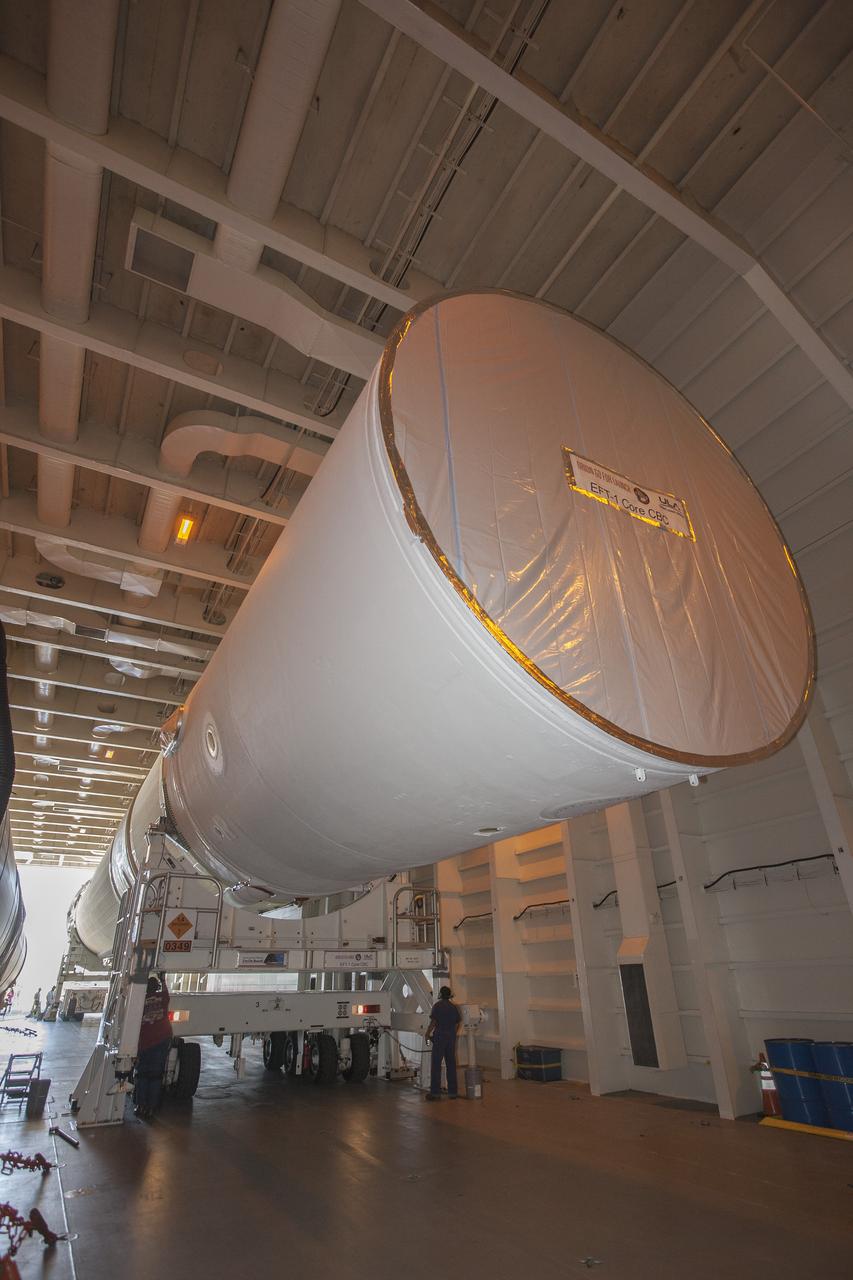
CAPE CANAVERAL, Fla. – Two of the three United Launch Alliance Delta IV heavy boosters for NASA’s upcoming Exploration Flight Test-1, or EFT-1, mission with the Orion spacecraft, have arrived by barge at the U.S. Army Outpost wharf at Port Canaveral in Florida. The core booster and starboard booster will be offloaded and then transported to the Horizontal Integration Facility, or HIF, at Space Launch Complex 37 on Cape Canaveral Air Force Station. The port booster and the upper stage are planned to be shipped to Cape Canaveral in April. At the HIF, all three boosters will be processed and checked out before being moved to the nearby launch pad and hoisted into position. During the EFT-1 mission, Orion will travel farther into space than any human spacecraft has gone in more than 40 years. The data gathered during the flight will influence design decisions, validate existing computer models and innovative new approaches to space systems development, as well as reduce overall mission risks and costs for later Orion flights. Liftoff of Orion on EFT-1 is planned for fall 2014. Photo credit: NASA/Kim Shiflett
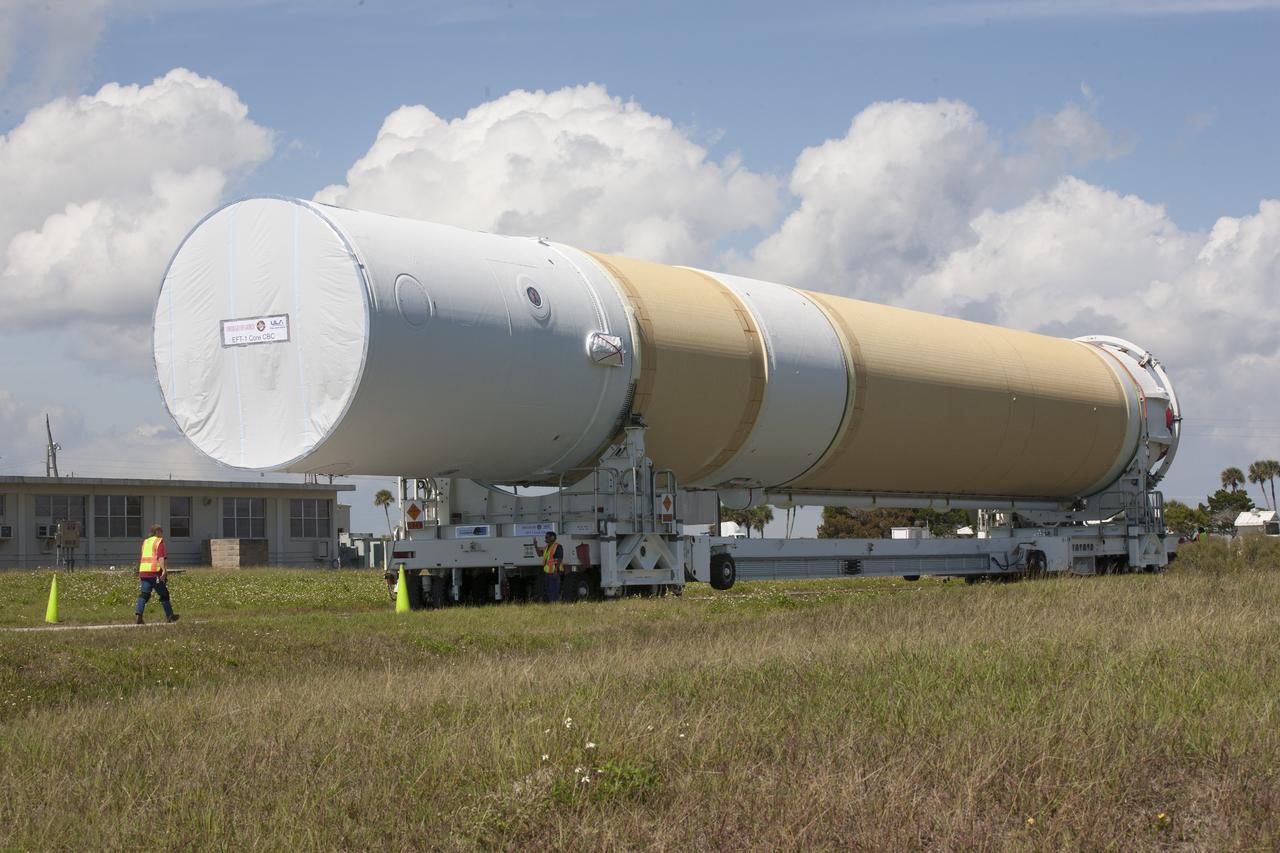
CAPE CANAVERAL, Fla. – Two of the three United Launch Alliance Delta IV heavy boosters for NASA’s upcoming Exploration Flight Test-1, or EFT-1, mission with the Orion spacecraft, arrived by barge at the U.S. Army Outpost wharf at Port Canaveral in Florida. The core booster, shown in this photo, and starboard booster were offloaded and will be transported to the Horizontal Integration Facility, or HIF, at Space Launch Complex 37 on Cape Canaveral Air Force Station. The port booster and the upper stage are planned to be shipped to Cape Canaveral in April. At the HIF, all three boosters will be processed and checked out before being moved to the nearby launch pad and hoisted into position. During the EFT-1 mission, Orion will travel farther into space than any human spacecraft has gone in more than 40 years. The data gathered during the flight will influence design decisions, validate existing computer models and innovative new approaches to space systems development, as well as reduce overall mission risks and costs for later Orion flights. Liftoff of Orion on EFT-1 is planned for fall 2014. Photo credit: NASA/Kim Shiflett
CAPE CANAVERAL, Fla. – Two of the three United Launch Alliance Delta IV heavy boosters for NASA’s upcoming Exploration Flight Test-1, or EFT-1, mission with the Orion spacecraft, have arrived by barge at the U.S. Army Outpost wharf at Port Canaveral in Florida. The core booster and starboard booster are being offloaded and will be transported to the Horizontal Integration Facility, or HIF, at Space Launch Complex 37 on Cape Canaveral Air Force Station. The port booster and the upper stage are planned to be shipped to Cape Canaveral in April. At the HIF, all three boosters will be processed and checked out before being moved to the nearby launch pad and hoisted into position. During the EFT-1 mission, Orion will travel farther into space than any human spacecraft has gone in more than 40 years. The data gathered during the flight will influence design decisions, validate existing computer models and innovative new approaches to space systems development, as well as reduce overall mission risks and costs for later Orion flights. Liftoff of Orion on EFT-1 is planned for fall 2014. Photo credit: NASA/Kim Shiflett
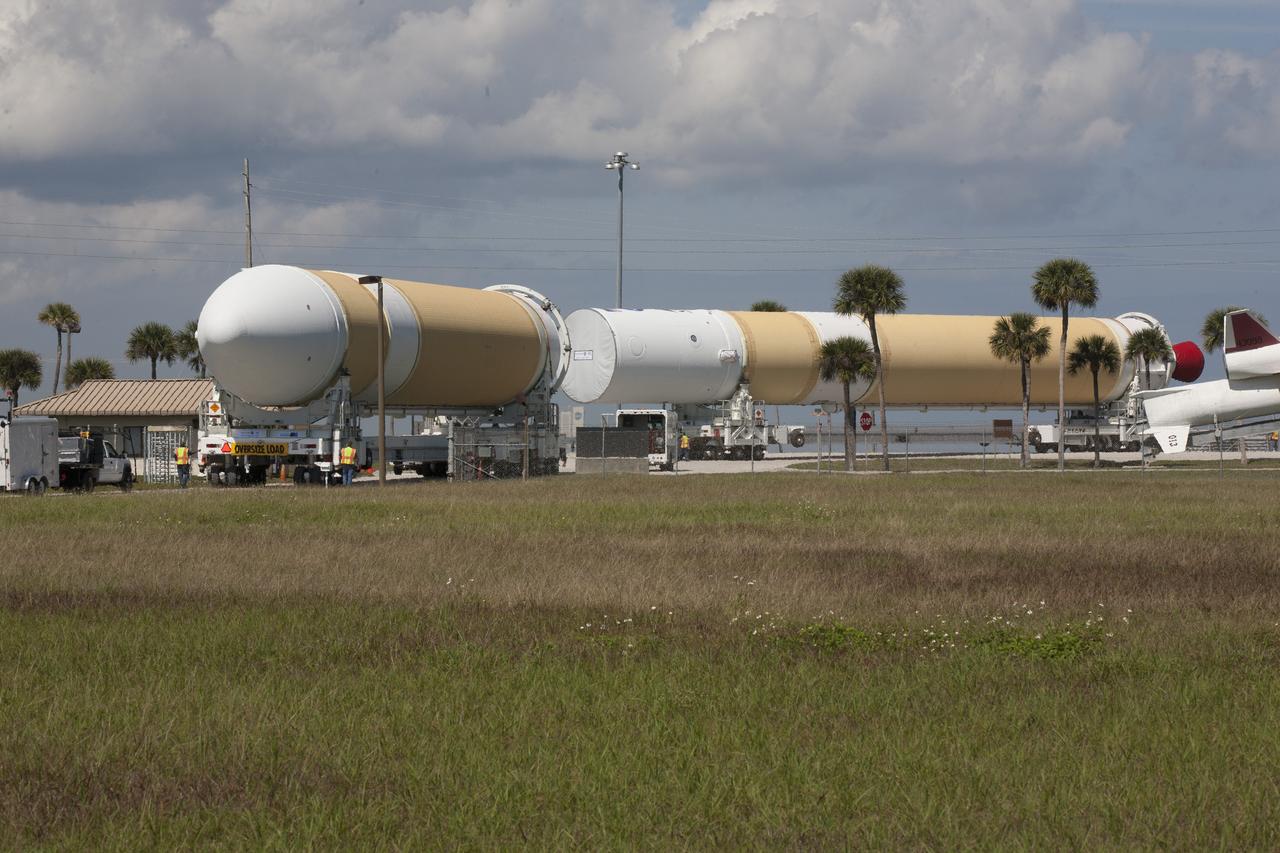
CAPE CANAVERAL, Fla. – Two of the three United Launch Alliance Delta IV heavy boosters for NASA’s upcoming Exploration Flight Test-1, or EFT-1, mission with the Orion spacecraft, arrived by barge at the U.S. Army Outpost wharf at Port Canaveral in Florida. The core booster and starboard booster were offloaded and are being transported to the Horizontal Integration Facility, or HIF, at Space Launch Complex 37 on Cape Canaveral Air Force Station. The port booster and the upper stage are planned to be shipped to Cape Canaveral in April. At the HIF, all three boosters will be processed and checked out before being moved to the nearby launch pad and hoisted into position. During the EFT-1 mission, Orion will travel farther into space than any human spacecraft has gone in more than 40 years. The data gathered during the flight will influence design decisions, validate existing computer models and innovative new approaches to space systems development, as well as reduce overall mission risks and costs for later Orion flights. Liftoff of Orion on EFT-1 is planned for fall 2014. Photo credit: NASA/Kim Shiflett
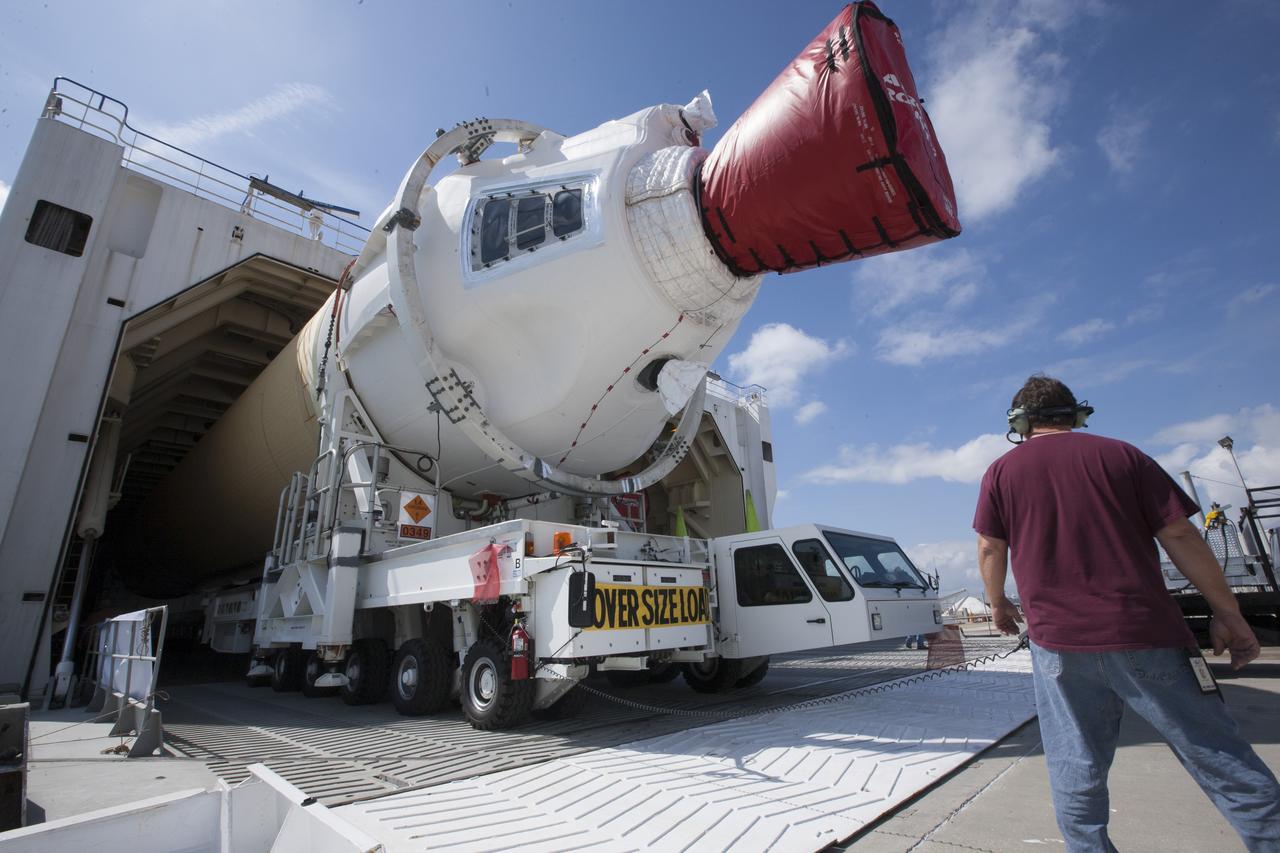
CAPE CANAVERAL, Fla. – Two of the three United Launch Alliance Delta IV heavy boosters for NASA’s upcoming Exploration Flight Test-1, or EFT-1, mission with the Orion spacecraft, have arrived by barge at the U.S. Army Outpost wharf at Port Canaveral in Florida. The core booster and starboard booster are being offloaded and will be transported to the Horizontal Integration Facility, or HIF, at Space Launch Complex 37 on Cape Canaveral Air Force Station. The port booster and the upper stage are planned to be shipped to Cape Canaveral in April. At the HIF, all three boosters will be processed and checked out before being moved to the nearby launch pad and hoisted into position. During the EFT-1 mission, Orion will travel farther into space than any human spacecraft has gone in more than 40 years. The data gathered during the flight will influence design decisions, validate existing computer models and innovative new approaches to space systems development, as well as reduce overall mission risks and costs for later Orion flights. Liftoff of Orion on EFT-1 is planned for fall 2014. Photo credit: NASA/Kim Shiflett
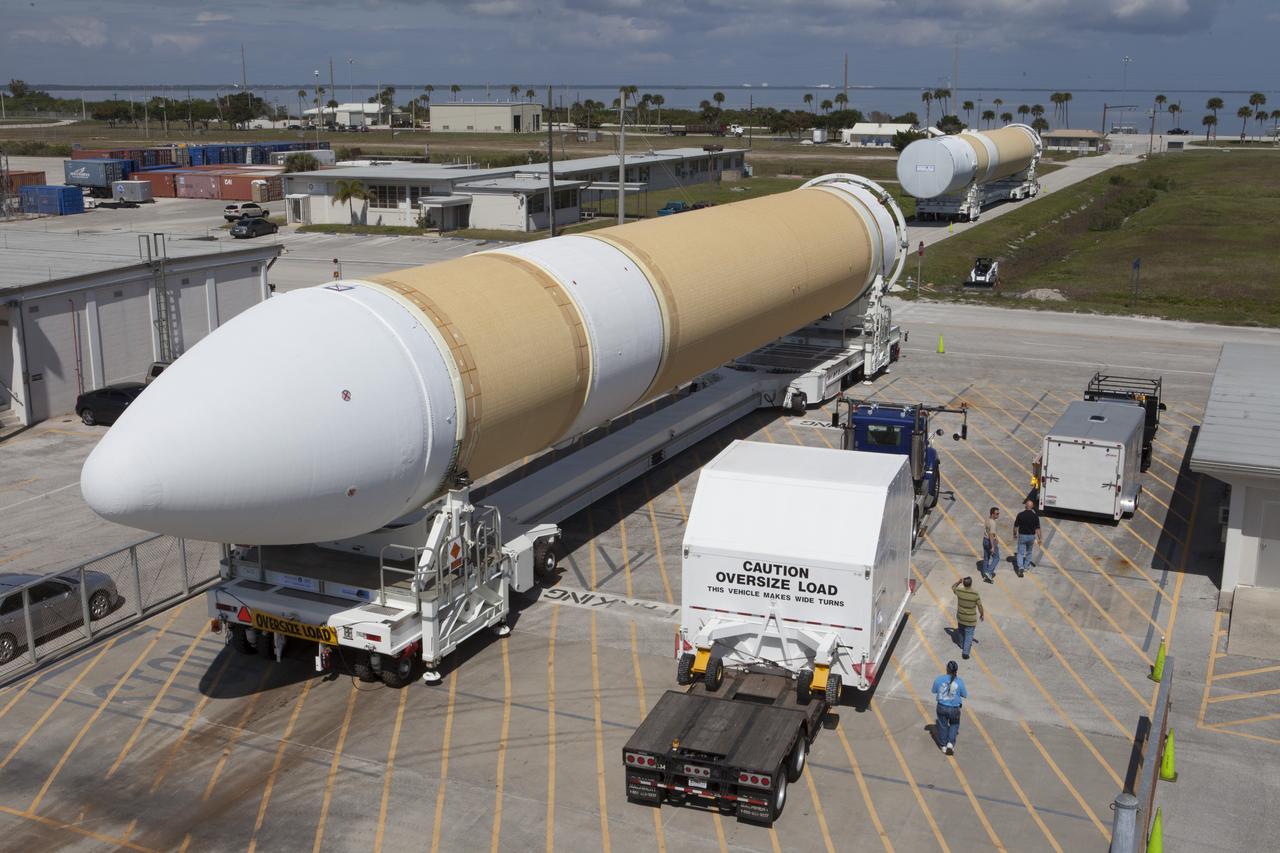
CAPE CANAVERAL, Fla. – Two of the three United Launch Alliance Delta IV heavy boosters for NASA’s upcoming Exploration Flight Test-1, or EFT-1, mission with the Orion spacecraft, arrived by barge at the U.S. Army Outpost wharf at Port Canaveral in Florida. The core booster and starboard booster have been offloaded and will be transported to the Horizontal Integration Facility, or HIF, at Space Launch Complex 37 on Cape Canaveral Air Force Station. The port booster and the upper stage are planned to be shipped to Cape Canaveral in April. At the HIF, all three boosters will be processed and checked out before being moved to the nearby launch pad and hoisted into position. During the EFT-1 mission, Orion will travel farther into space than any human spacecraft has gone in more than 40 years. The data gathered during the flight will influence design decisions, validate existing computer models and innovative new approaches to space systems development, as well as reduce overall mission risks and costs for later Orion flights. Liftoff of Orion on EFT-1 is planned for fall 2014. Photo credit: NASA/Kim Shiflett
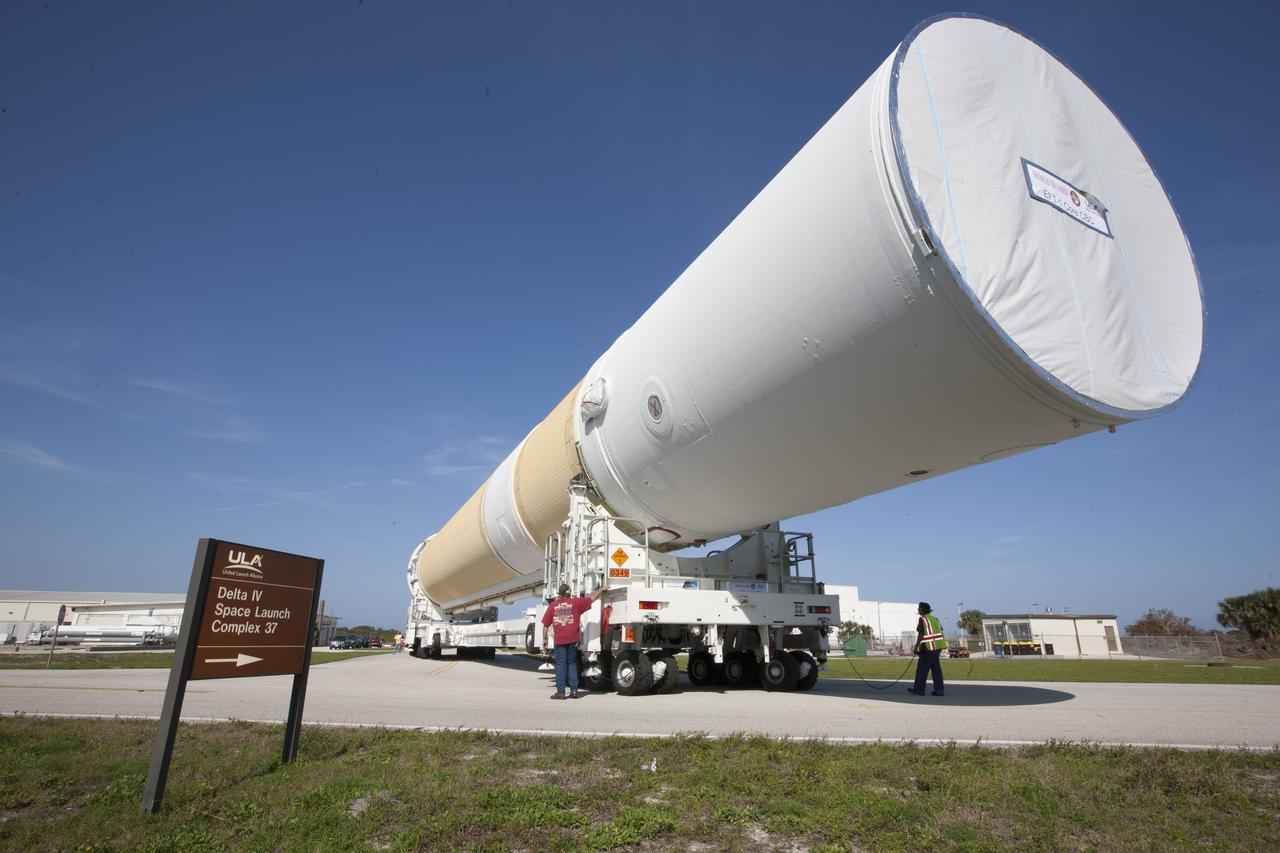
CAPE CANAVERAL, Fla. – Two of the three United Launch Alliance Delta IV heavy boosters for NASA’s upcoming Exploration Flight Test-1, or EFT-1, mission with the Orion spacecraft, arrived by barge at the U.S. Army Outpost wharf at Port Canaveral in Florida. The core booster and starboard booster were offloaded and are being transported to the Horizontal Integration Facility, or HIF, at Space Launch Complex 37 on Cape Canaveral Air Force Station. The port booster and the upper stage are planned to be shipped to Cape Canaveral in April. At the HIF, all three boosters will be processed and checked out before being moved to the nearby launch pad and hoisted into position. During the EFT-1 mission, Orion will travel farther into space than any human spacecraft has gone in more than 40 years. The data gathered during the flight will influence design decisions, validate existing computer models and innovative new approaches to space systems development, as well as reduce overall mission risks and costs for later Orion flights. Liftoff of Orion on EFT-1 is planned for fall 2014. Photo credit: NASA/Kim Shiflett
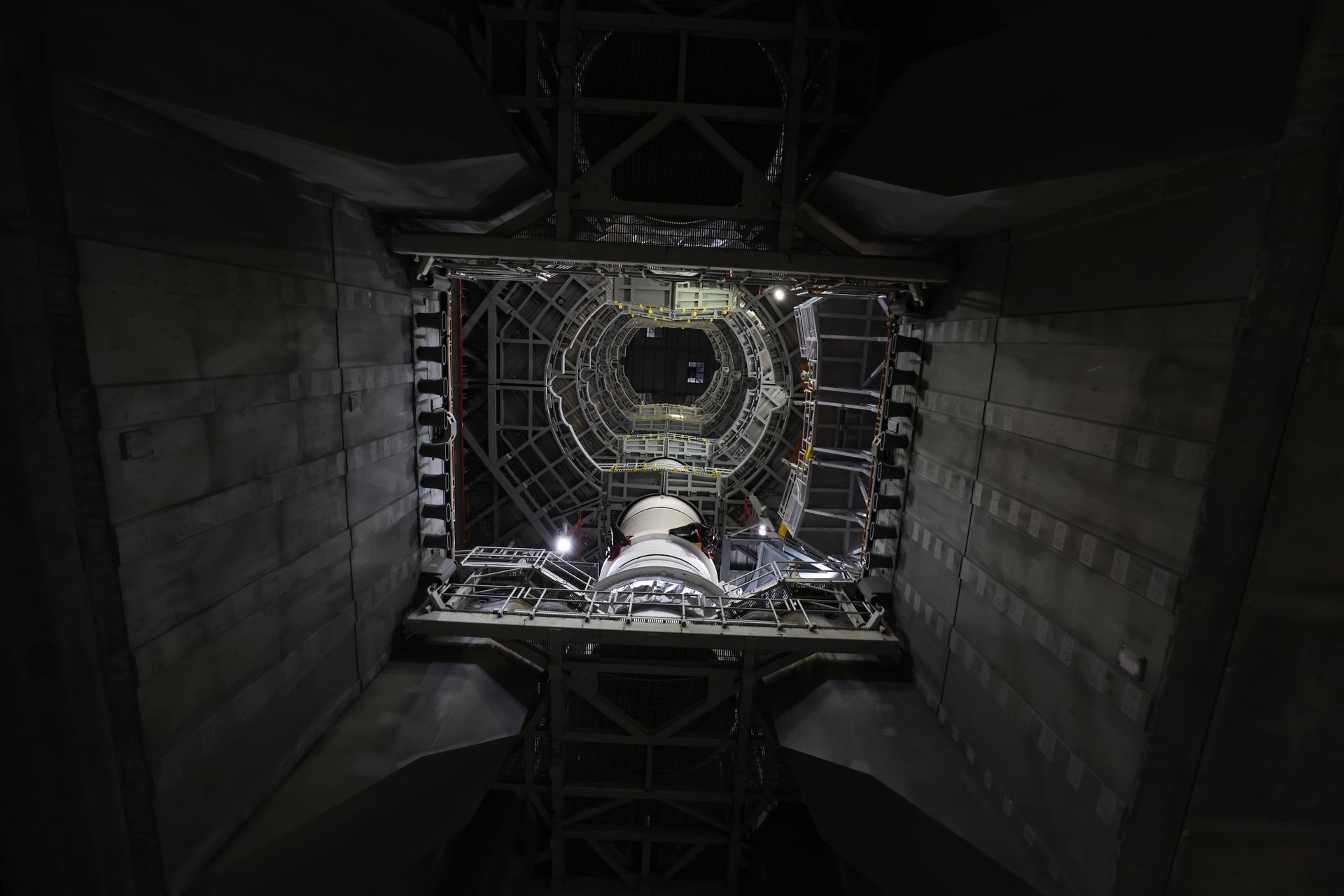
In High Bay 3 of the Vehicle Assembly Building at NASA’s Kennedy Space Center in Florida, portions of the solid rocket booster right forward center booster for Artemis III is integrated onto the right booster segments on the mobile launcher for the SLS (Space Launch System) rocket on Friday, Sept. 11, 2026. The twin boosters, comprising of five segments each manufactured by Northrop Grumman in Utah, will provide more than 75 percent of the SLS rocket’s total thrust at launch. The Artemis III mission will launch crew in the Orion spacecraft on top of the SLS rocket to test rendezvous and docking capabilities between Orion and commercial spacecraft needed to land astronauts on the Moon.
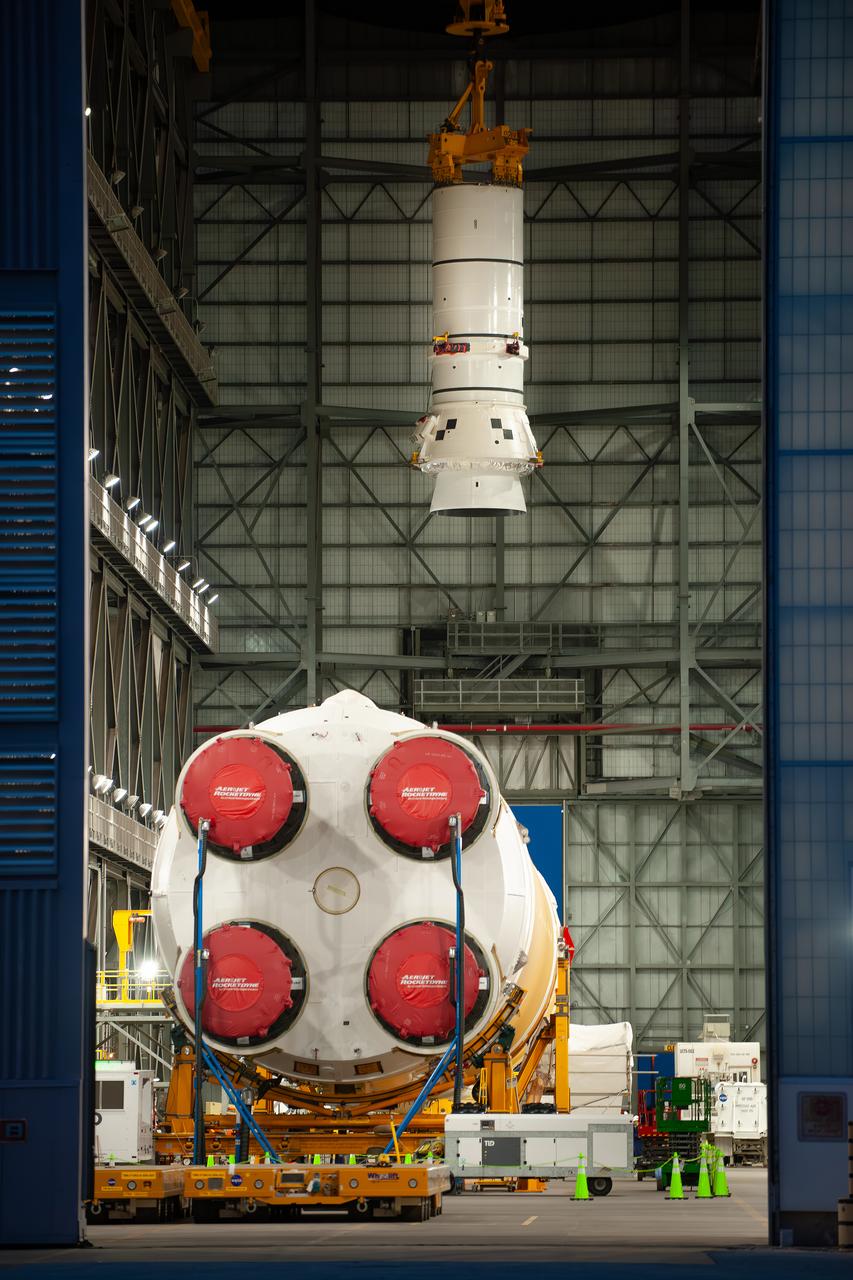
Down the transfer aisle from the Artemis II SLS (Space Launch System) core stage, an overhead crane hoists the left aft assembly, or bottom portion of the solid rocket boosters for the SLS Moon rocket inside the Vehicle Assembly Building at NASA’s Kennedy Space Center on Tuesday, Nov. 19, 2024. The crane will lift the aft assembly on top of the mobile launcher 1 followed by the right aft assembly and stack the remaining booster segments for the Artemis II mission.

Marshall team members participate in SpaceX booster review meeting for the Commercial Crew Program. The Commercial Crew Program is primarily based at NASA’s Kennedy Space Center in Florida, the space agency’s premier launch site. About 350 people are working in the Commercial Crew Program for NASA, with almost half involved in the work at other NASA centers, including Marshall and Johnson Space Center in Houston.
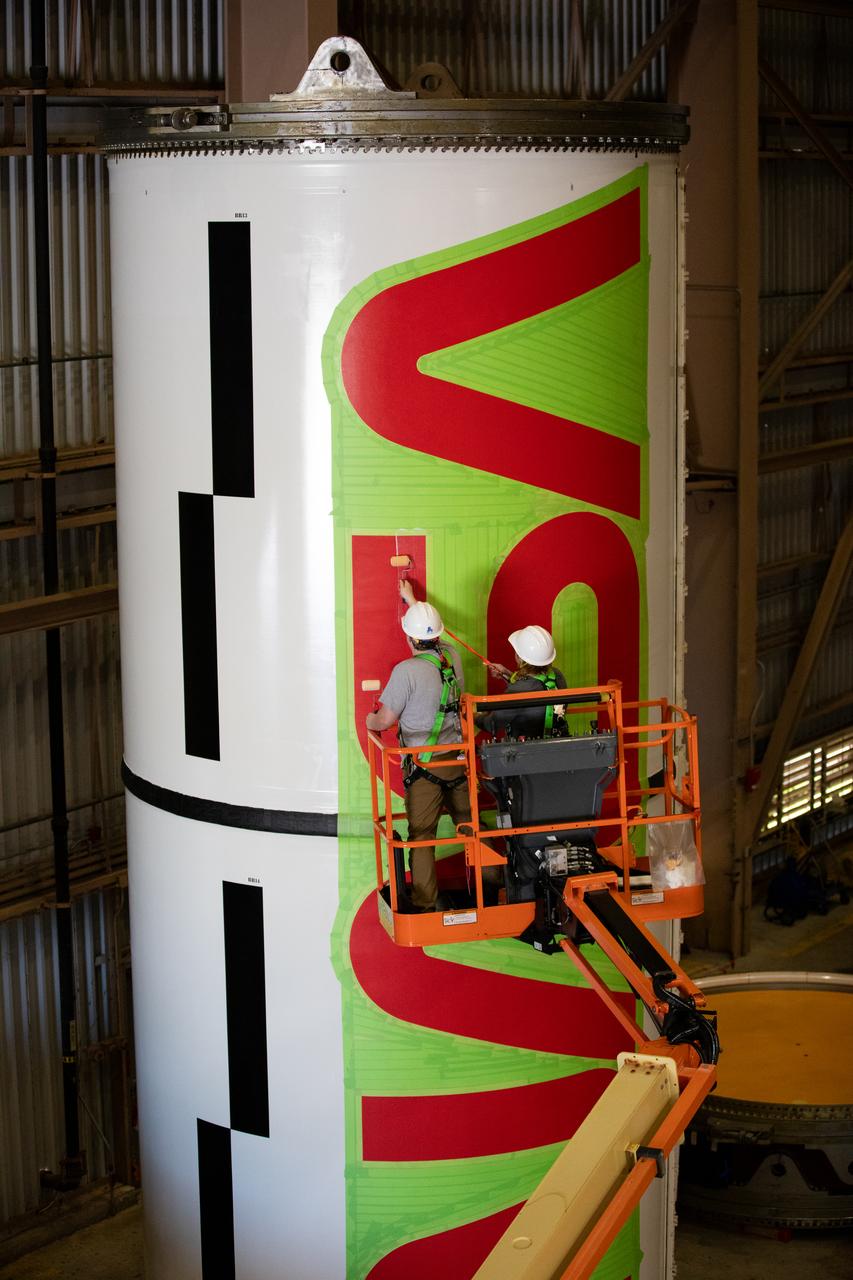
Workers with NASA’s Exploration Ground Systems (EGS) paint the bright red NASA “worm” logo on the side of an Artemis II solid rocket booster segment inside the Rotation, Processing and Surge Facility (RPSF) at Kennedy Space Center in Florida on Tuesday, Jan. 30, 2024. The EGS team used a laser projector to mask off the logo with tape, then painted the first coat of the iconic design. The booster segments will help propel the Space Launch System (SLS) rocket on the Artemis II mission to send four astronauts around the Moon as part of the agency’s effort to establish a long-term science and exploration presence at the Moon, and eventually Mars.
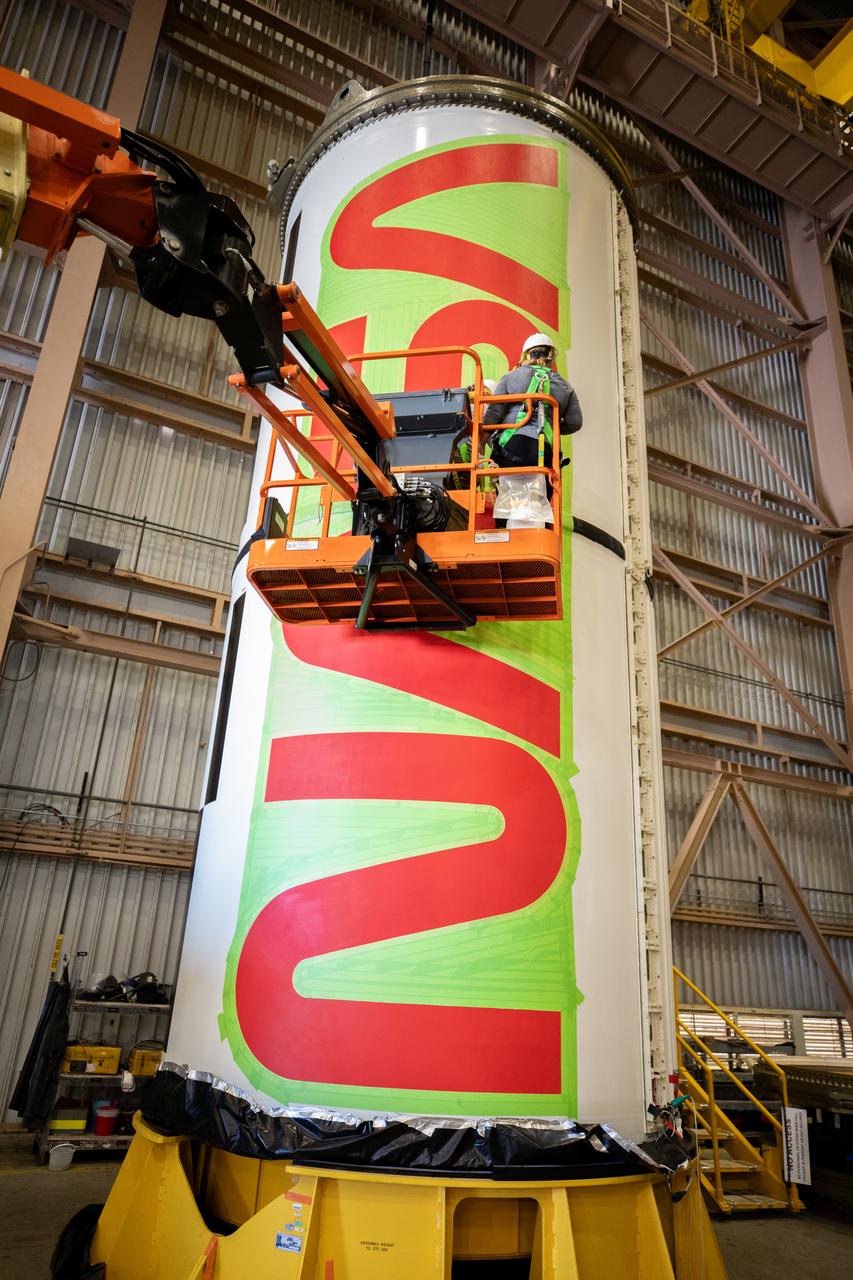
Workers with NASA’s Exploration Ground Systems (EGS) paint the bright red NASA “worm” logo on the side of an Artemis II solid rocket booster segment inside the Rotation, Processing and Surge Facility (RPSF) at Kennedy Space Center in Florida on Tuesday, Jan. 30, 2024. The EGS team used a laser projector to mask off the logo with tape, then painted the first coat of the iconic design. The booster segments will help propel the Space Launch System (SLS) rocket on the Artemis II mission to send four astronauts around the Moon as part of the agency’s effort to establish a long-term science and exploration presence at the Moon, and eventually Mars.
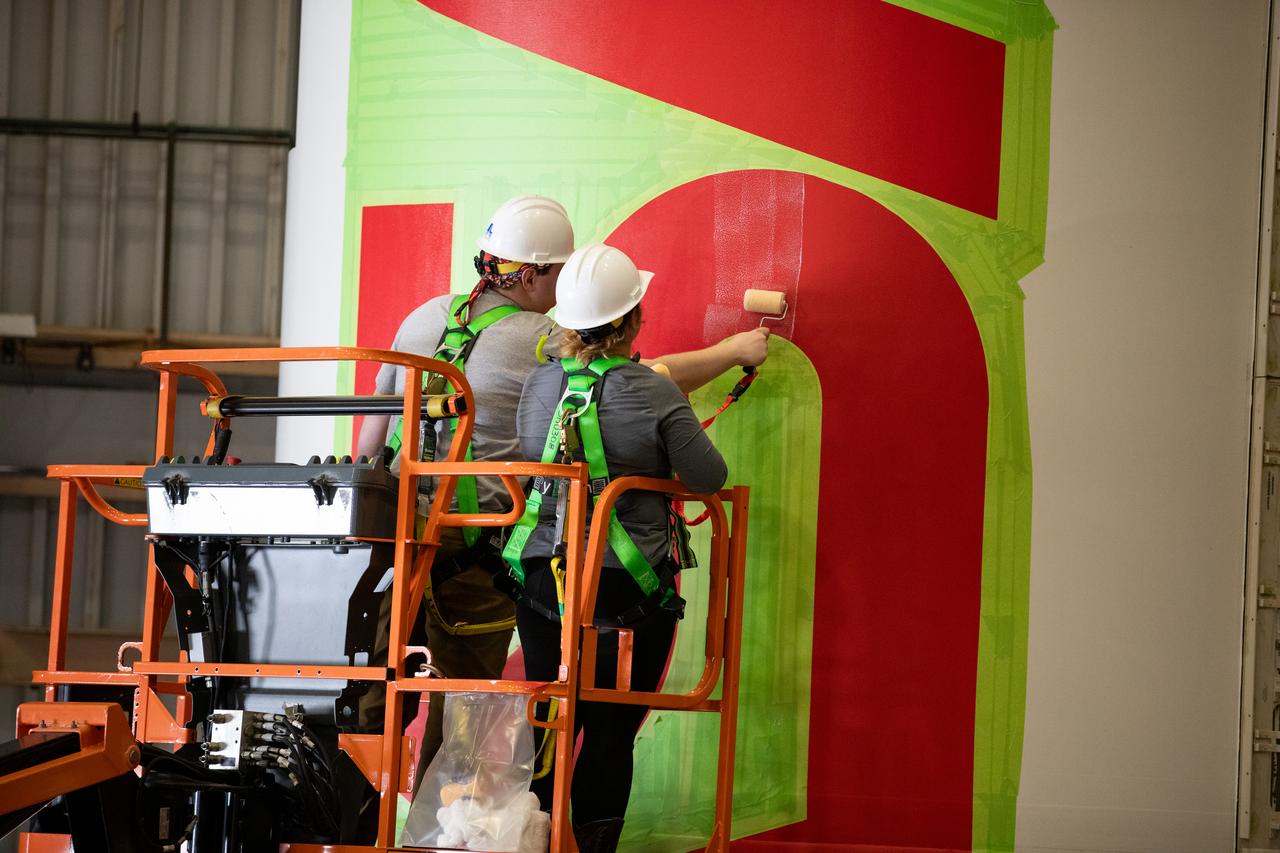
Workers with NASA’s Exploration Ground Systems (EGS) paint the bright red NASA “worm” logo on the side of an Artemis II solid rocket booster segment inside the Rotation, Processing and Surge Facility (RPSF) at Kennedy Space Center in Florida on Tuesday, Jan. 30, 2024. The EGS team used a laser projector to mask off the logo with tape, then painted the first coat of the iconic design. The booster segments will help propel the Space Launch System (SLS) rocket on the Artemis II mission to send four astronauts around the Moon as part of the agency’s effort to establish a long-term science and exploration presence at the Moon, and eventually Mars.
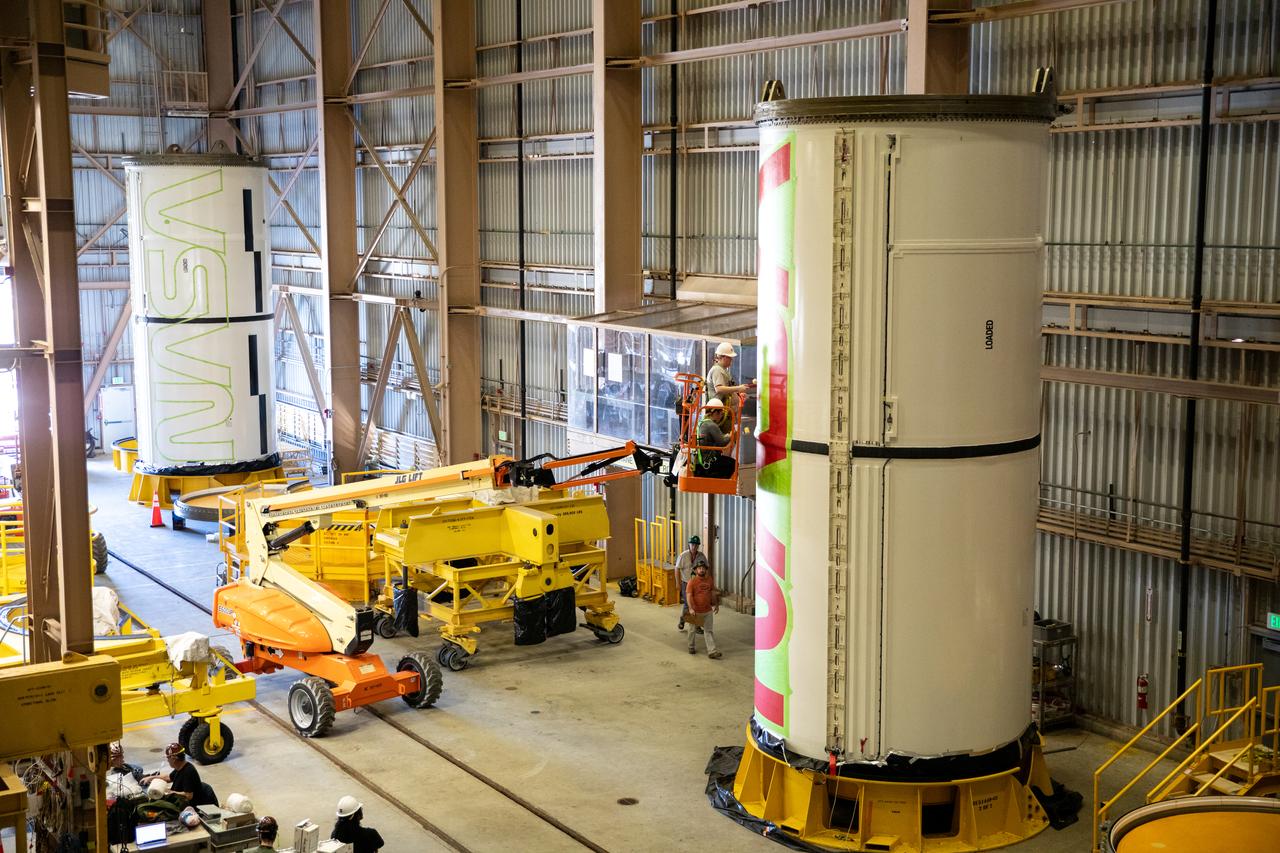
Workers with NASA’s Exploration Ground Systems (EGS) paint the bright red NASA “worm” logo on the side of an Artemis II solid rocket booster segment inside the Rotation, Processing and Surge Facility (RPSF) at Kennedy Space Center in Florida on Tuesday, Jan. 30, 2024. The EGS team used a laser projector to mask off the logo with tape, then painted the first coat of the iconic design. The booster segments will help propel the Space Launch System (SLS) rocket on the Artemis II mission to send four astronauts around the Moon as part of the agency’s effort to establish a long-term science and exploration presence at the Moon, and eventually Mars.
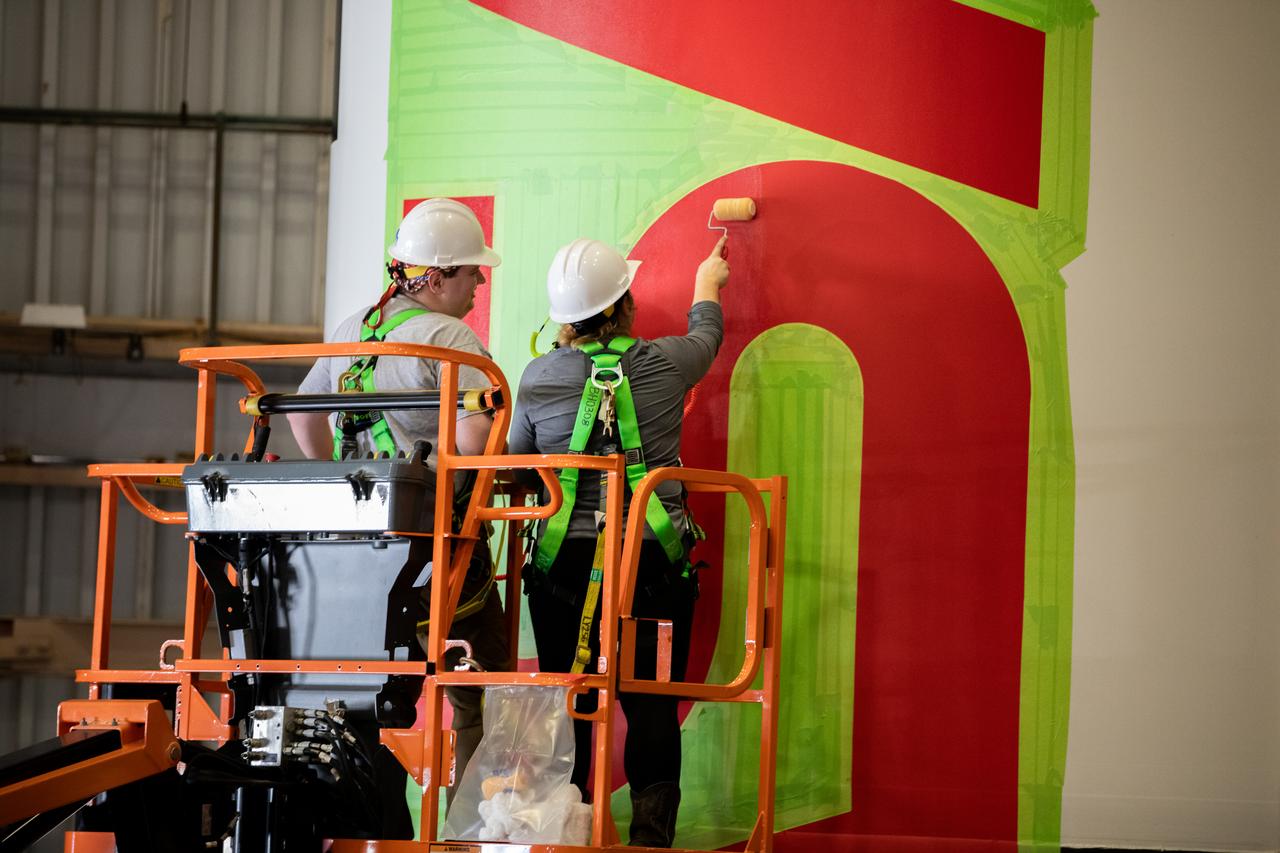
Workers with NASA’s Exploration Ground Systems (EGS) paint the bright red NASA “worm” logo on the side of an Artemis II solid rocket booster segment inside the Rotation, Processing and Surge Facility (RPSF) at Kennedy Space Center in Florida on Tuesday, Jan. 30, 2024. The EGS team used a laser projector to mask off the logo with tape, then painted the first coat of the iconic design. The booster segments will help propel the Space Launch System (SLS) rocket on the Artemis II mission to send four astronauts around the Moon as part of the agency’s effort to establish a long-term science and exploration presence at the Moon, and eventually Mars.
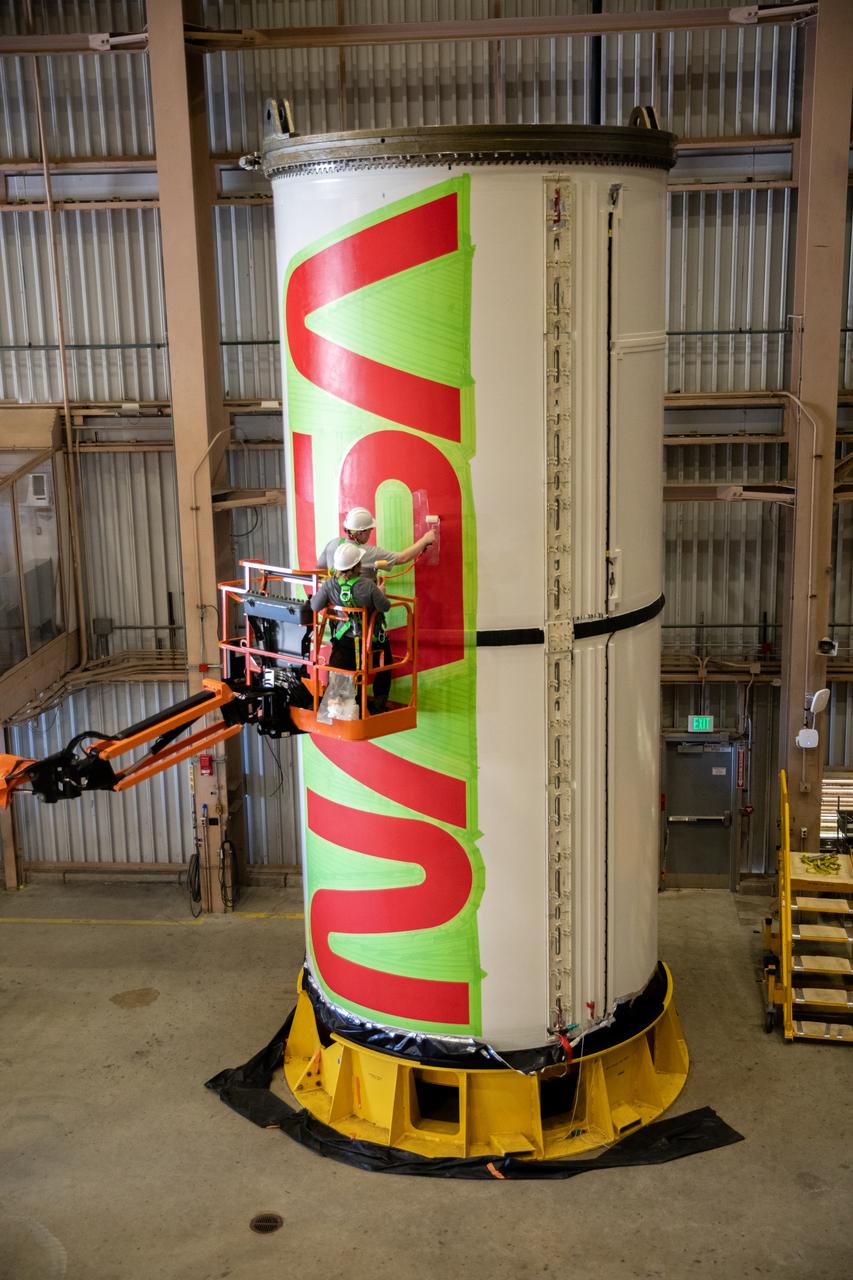
Workers with NASA’s Exploration Ground Systems (EGS) paint the bright red NASA “worm” logo on the side of an Artemis II solid rocket booster segment inside the Rotation, Processing and Surge Facility (RPSF) at Kennedy Space Center in Florida on Tuesday, Jan. 30, 2024. The EGS team used a laser projector to mask off the logo with tape, then painted the first coat of the iconic design. The booster segments will help propel the Space Launch System (SLS) rocket on the Artemis II mission to send four astronauts around the Moon as part of the agency’s effort to establish a long-term science and exploration presence at the Moon, and eventually Mars.
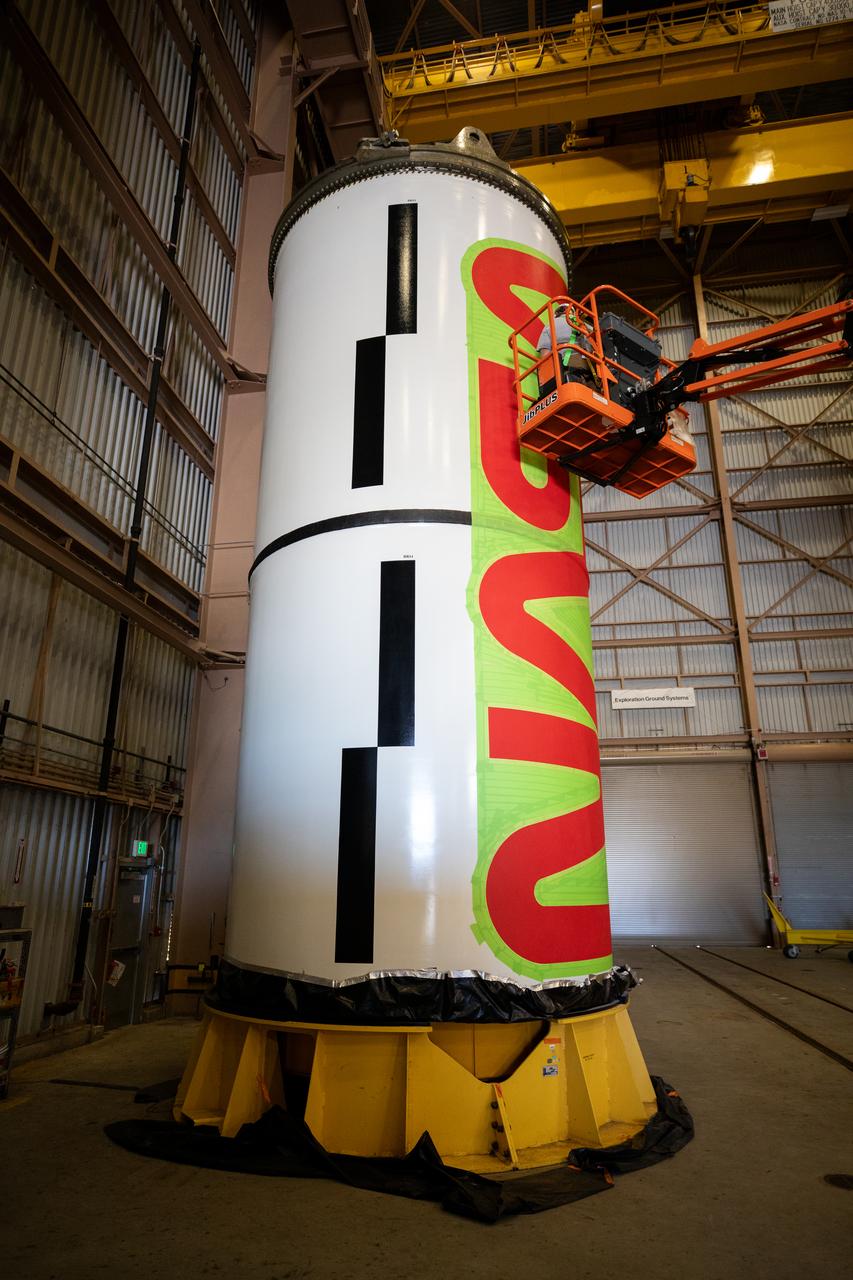
Workers with NASA’s Exploration Ground Systems (EGS) paint the bright red NASA “worm” logo on the side of an Artemis II solid rocket booster segment inside the Rotation, Processing and Surge Facility (RPSF) at Kennedy Space Center in Florida on Tuesday, Jan. 30, 2024. The EGS team used a laser projector to mask off the logo with tape, then painted the first coat of the iconic design. The booster segments will help propel the Space Launch System (SLS) rocket on the Artemis II mission to send four astronauts around the Moon as part of the agency’s effort to establish a long-term science and exploration presence at the Moon, and eventually Mars.
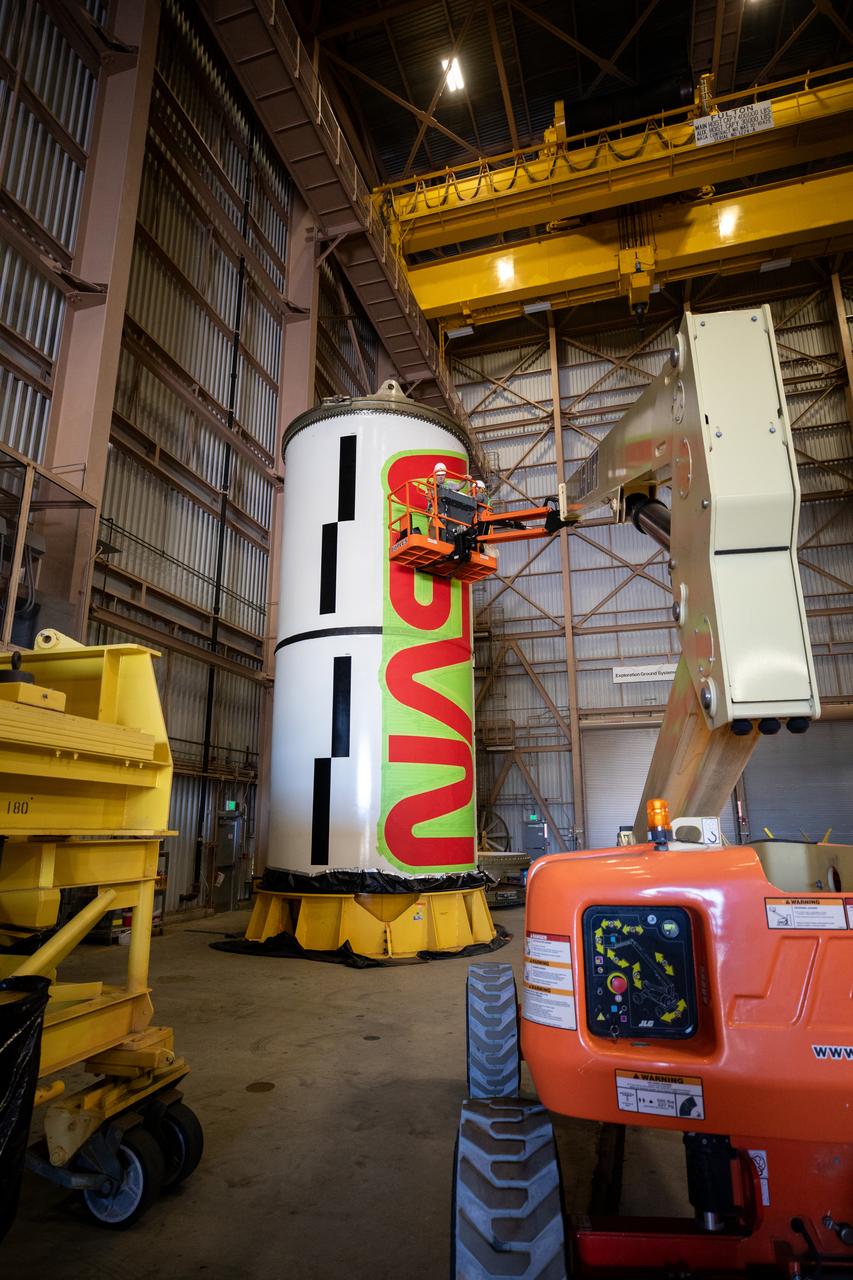
Workers with NASA’s Exploration Ground Systems (EGS) paint the bright red NASA “worm” logo on the side of an Artemis II solid rocket booster segment inside the Rotation, Processing and Surge Facility (RPSF) at Kennedy Space Center in Florida on Tuesday, Jan. 30, 2024. The EGS team used a laser projector to mask off the logo with tape, then painted the first coat of the iconic design. The booster segments will help propel the Space Launch System (SLS) rocket on the Artemis II mission to send four astronauts around the Moon as part of the agency’s effort to establish a long-term science and exploration presence at the Moon, and eventually Mars.
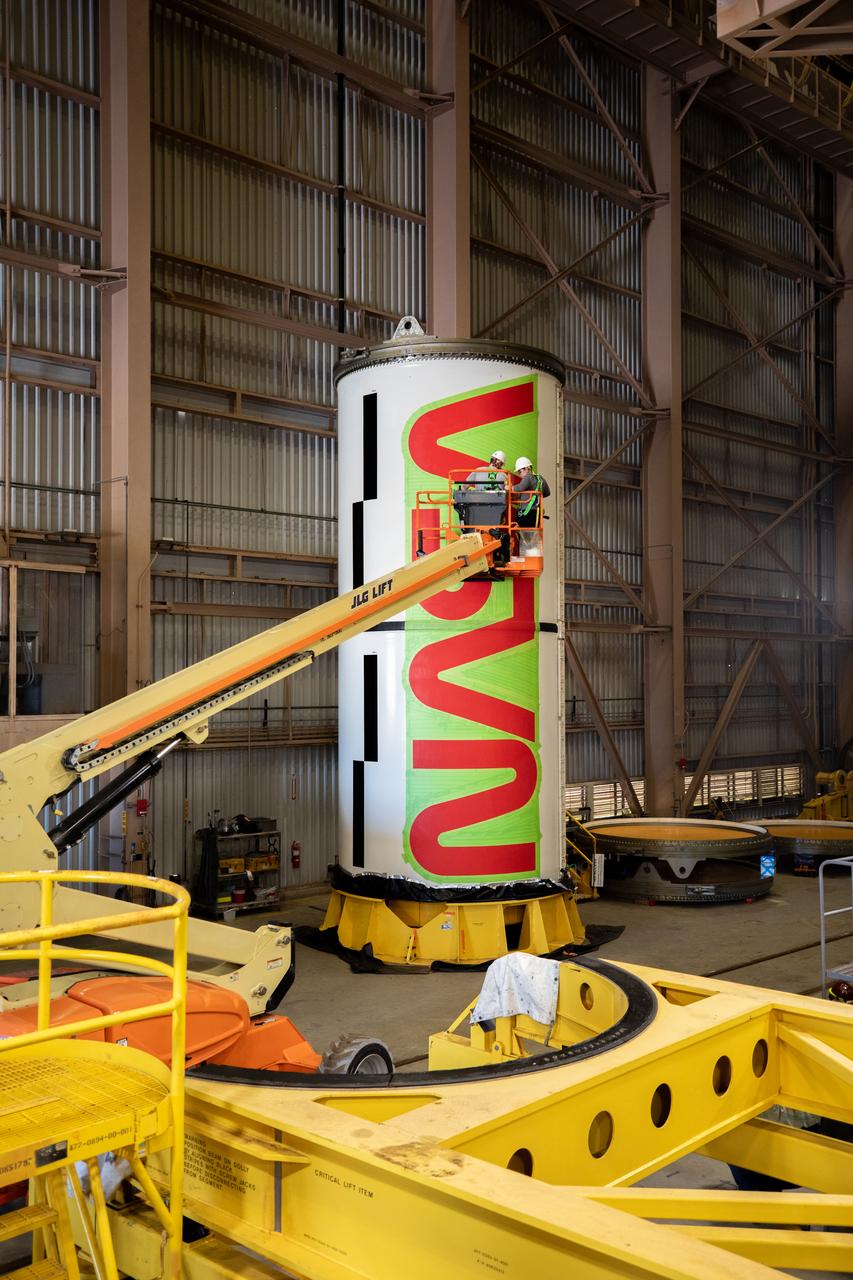
Workers with NASA’s Exploration Ground Systems (EGS) paint the bright red NASA “worm” logo on the side of an Artemis II solid rocket booster segment inside the Rotation, Processing and Surge Facility (RPSF) at Kennedy Space Center in Florida on Tuesday, Jan. 30, 2024. The EGS team used a laser projector to mask off the logo with tape, then painted the first coat of the iconic design. The booster segments will help propel the Space Launch System (SLS) rocket on the Artemis II mission to send four astronauts around the Moon as part of the agency’s effort to establish a long-term science and exploration presence at the Moon, and eventually Mars.
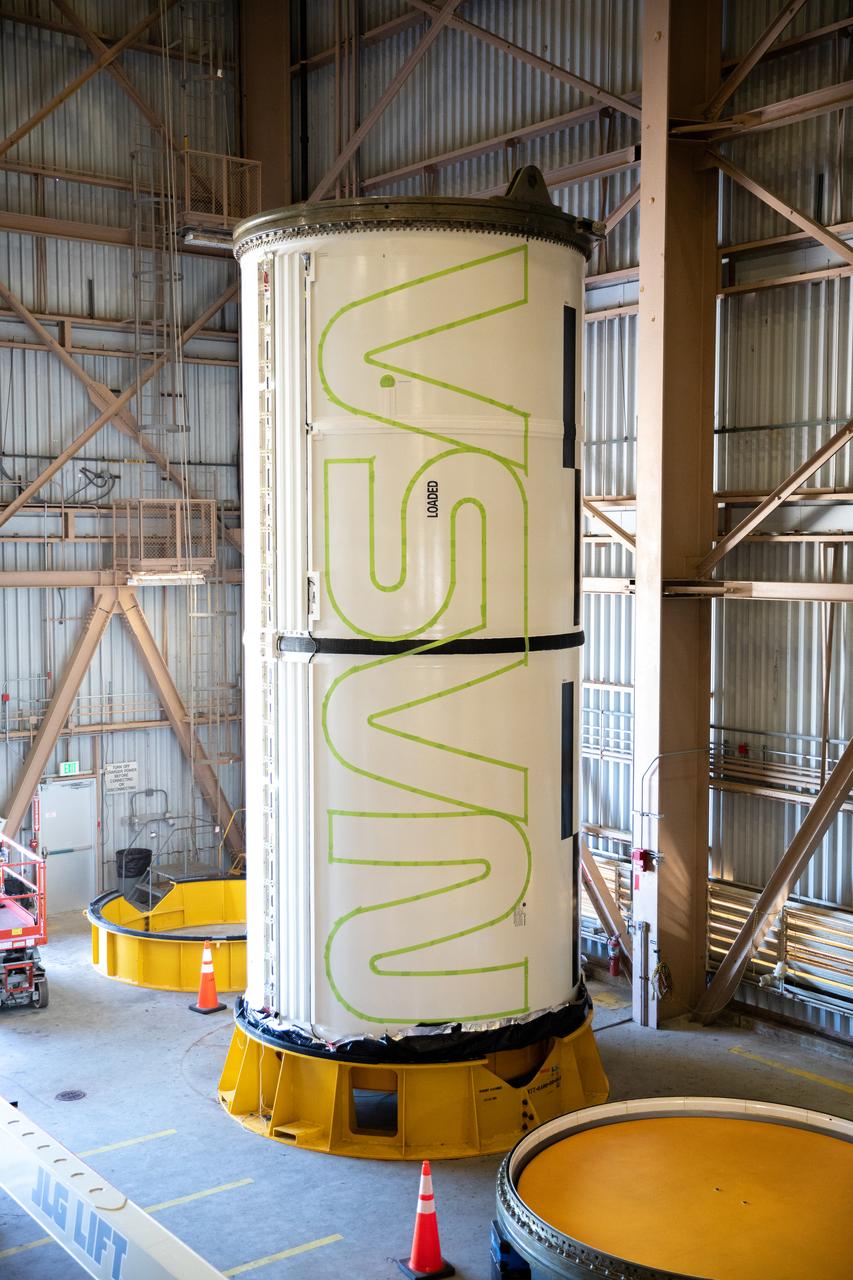
Workers with NASA’s Exploration Ground Systems (EGS) paint the bright red NASA “worm” logo on the side of an Artemis II solid rocket booster segment inside the Rotation, Processing and Surge Facility (RPSF) at Kennedy Space Center in Florida on Tuesday, Jan. 30, 2024. The EGS team used a laser projector to mask off the logo with tape, then painted the first coat of the iconic design. The booster segments will help propel the Space Launch System (SLS) rocket on the Artemis II mission to send four astronauts around the Moon as part of the agency’s effort to establish a long-term science and exploration presence at the Moon, and eventually Mars.
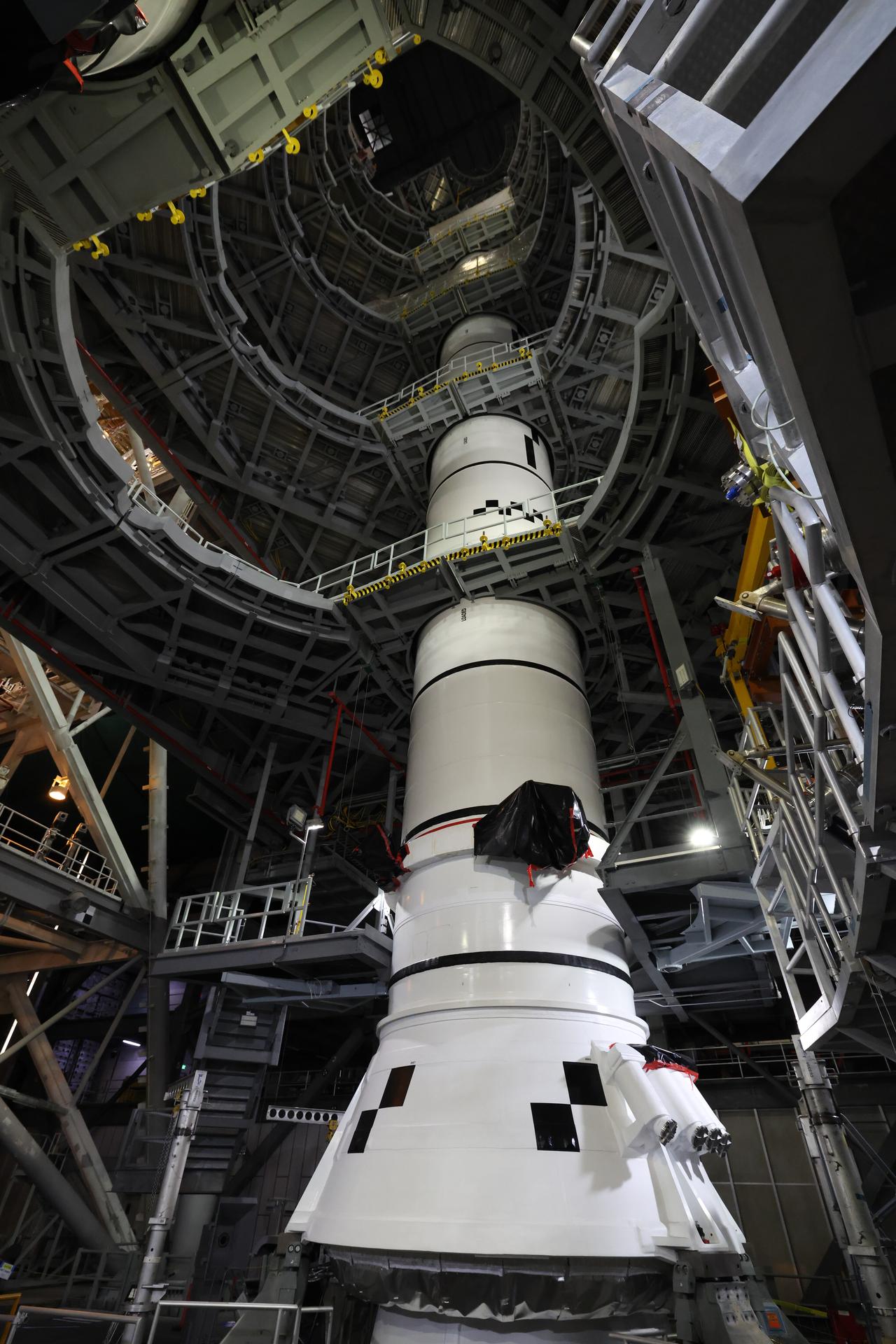
In High Bay 3 of the Vehicle Assembly Building at NASA’s Kennedy Space Center in Florida, the right forward center booster for Artemis III is integrated onto the right booster segments on the mobile launcher for the SLS (Space Launch System) rocket on Friday, Sept. 11, 2026. The twin boosters, comprising of five segments each manufactured by Northrop Grumman in Utah, will provide more than 75 percent of the SLS rocket’s total thrust at launch. The Artemis III mission will launch crew in the Orion spacecraft on top of the SLS rocket to test rendezvous and docking capabilities between Orion and commercial spacecraft needed to land astronauts on the Moon.
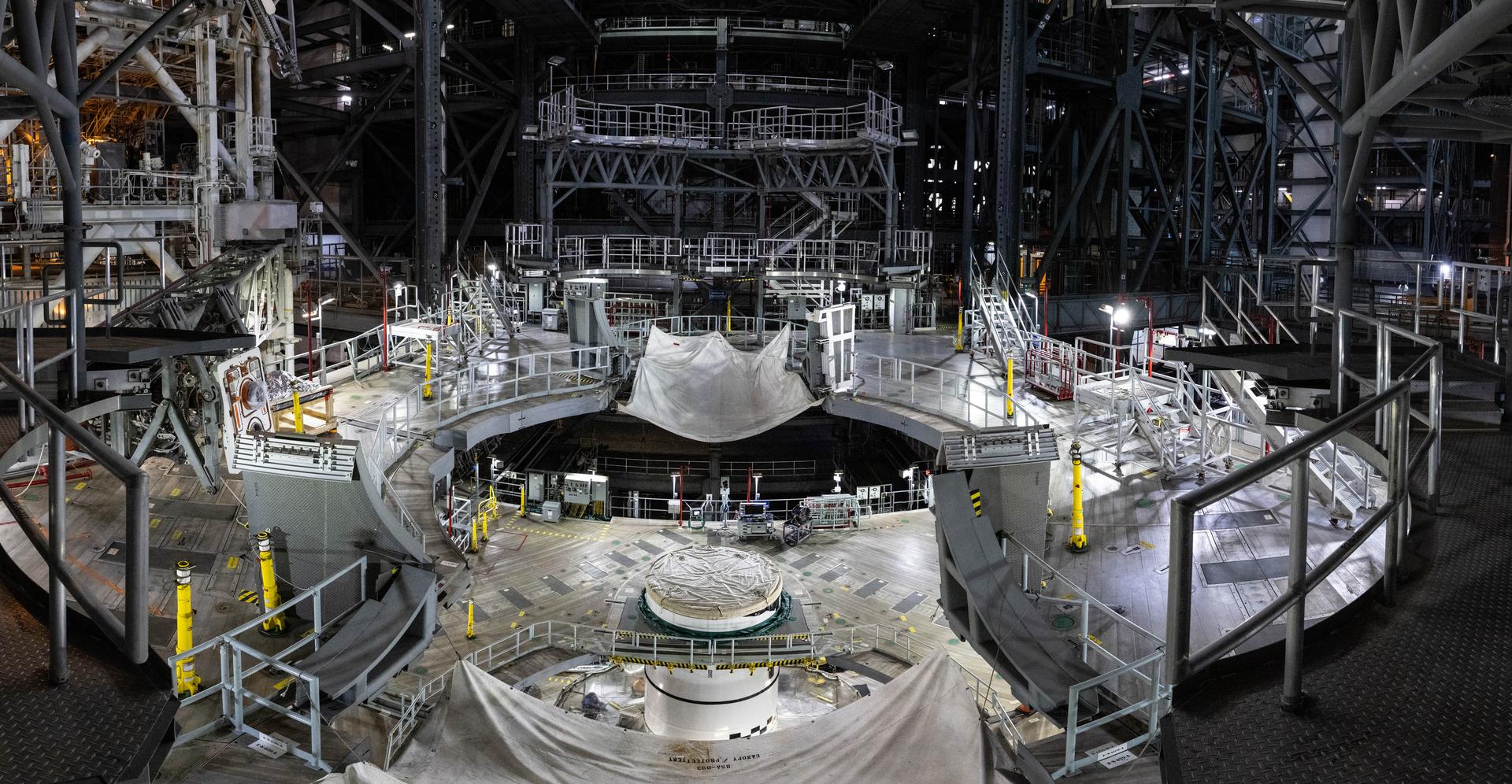
In High Bay 3 of the Vehicle Assembly Building at NASA’s Kennedy Space Center in Florida, the right forward center booster for Artemis III is integrated onto the right booster segments on the mobile launcher for the SLS (Space Launch System) rocket on Friday, Sept. 11, 2026. The twin boosters, comprising of five segments each manufactured by Northrop Grumman in Utah, will provide more than 75 percent of the SLS rocket’s total thrust at launch. The Artemis III mission will launch crew in the Orion spacecraft on top of the SLS rocket to test rendezvous and docking capabilities between Orion and commercial spacecraft needed to land astronauts on the Moon.
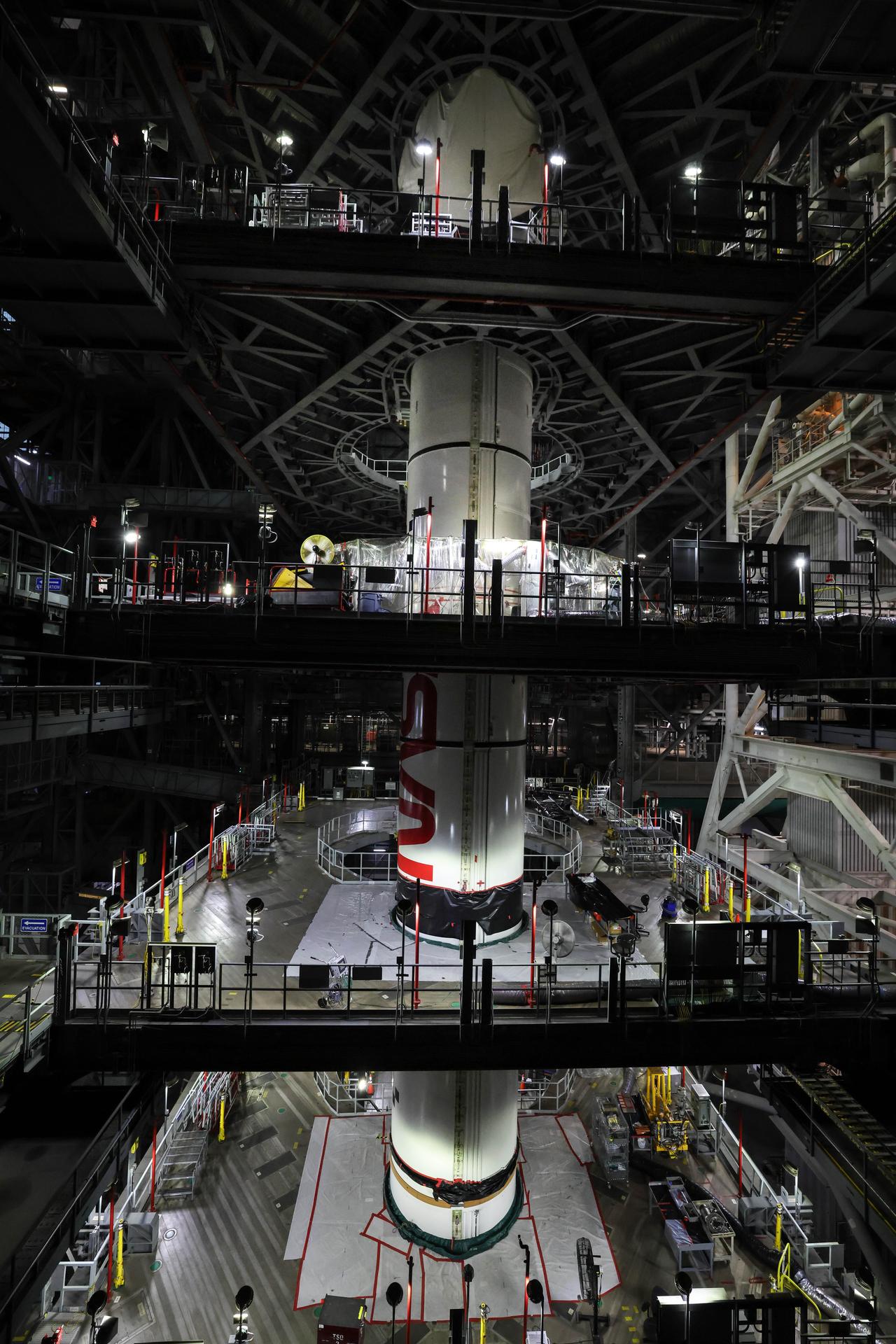
In High Bay 3 of the Vehicle Assembly Building at NASA’s Kennedy Space Center in Florida, the right forward center booster for Artemis III is integrated onto the right booster segments on the mobile launcher for the SLS (Space Launch System) rocket on Friday, Sept. 11, 2026. The twin boosters, comprising of five segments each manufactured by Northrop Grumman in Utah, will provide more than 75 percent of the SLS rocket’s total thrust at launch. The Artemis III mission will launch crew in the Orion spacecraft on top of the SLS rocket to test rendezvous and docking capabilities between Orion and commercial spacecraft needed to land astronauts on the Moon.
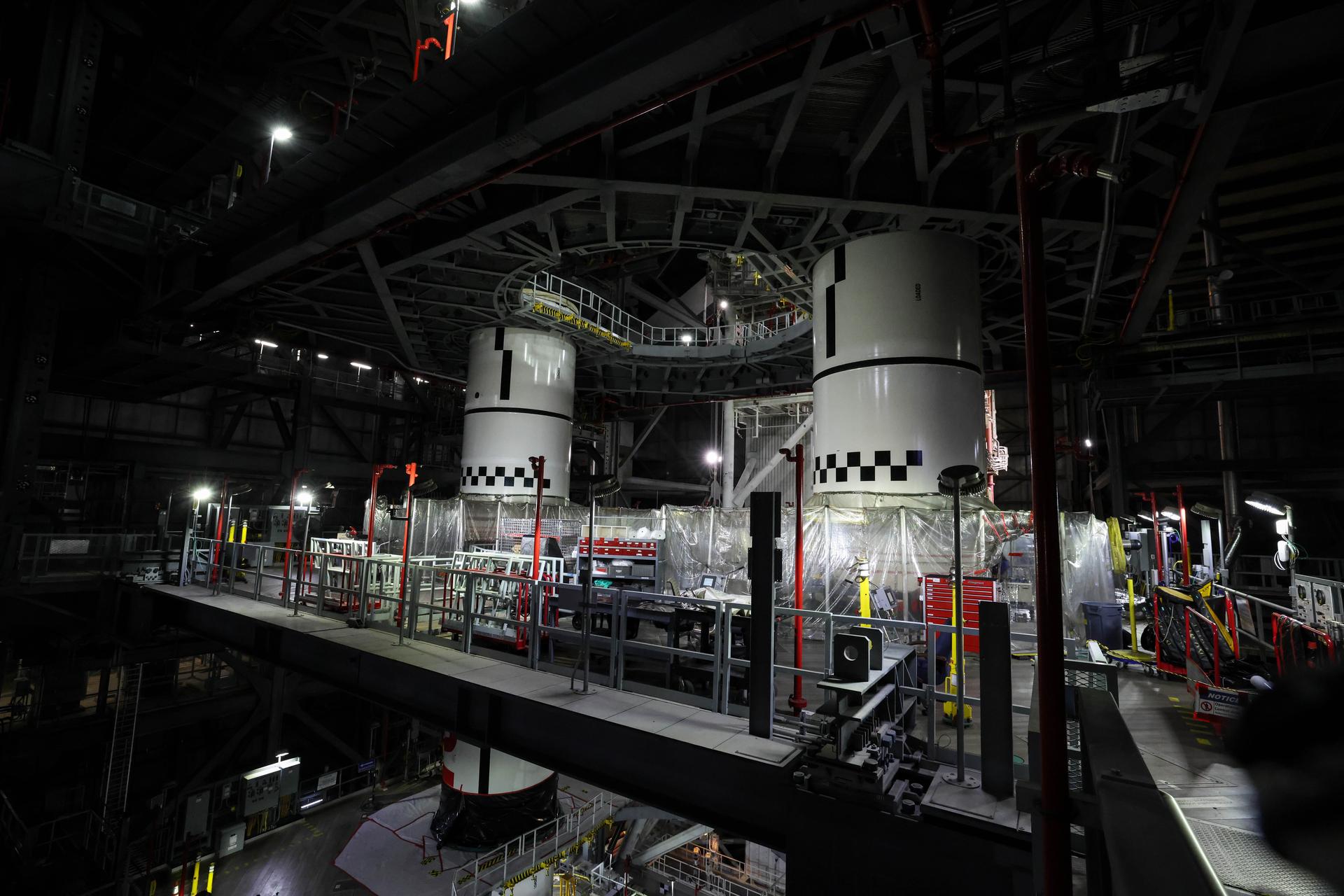
In High Bay 3 of the Vehicle Assembly Building at NASA’s Kennedy Space Center in Florida, the left and right forward center boosters for Artemis III are integrated onto the booster segments on the mobile launcher for the SLS (Space Launch System) rocket on Friday, Sept. 11, 2026. The twin boosters, comprising of five segments each manufactured by Northrop Grumman in Utah, will provide more than 75 percent of the SLS rocket’s total thrust at launch. The Artemis III mission will launch crew in the Orion spacecraft on top of the SLS rocket to test rendezvous and docking capabilities between Orion and commercial spacecraft needed to land astronauts on the Moon.
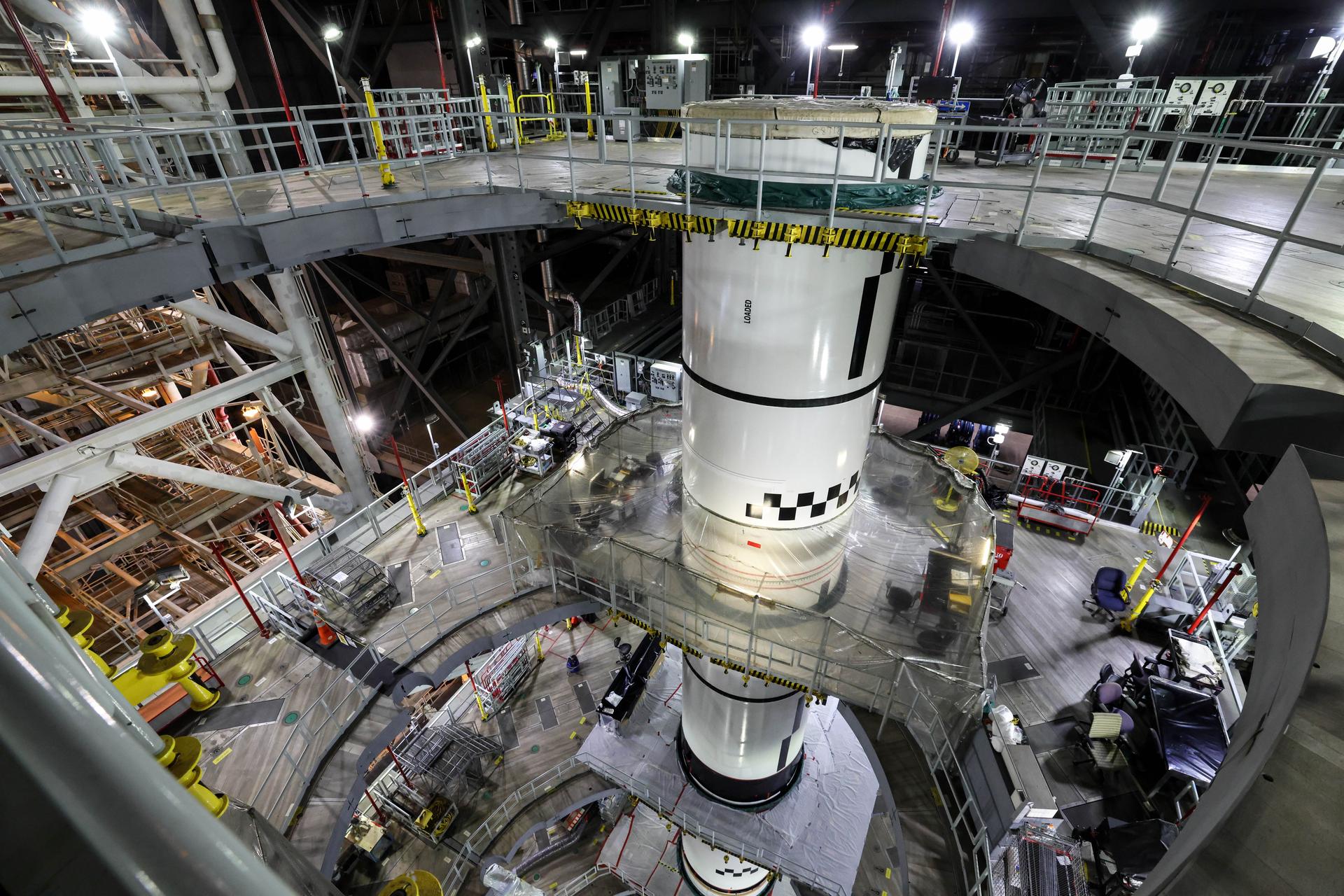
In High Bay 3 of the Vehicle Assembly Building at NASA’s Kennedy Space Center in Florida, the right forward center booster for Artemis III is integrated onto the right booster segments on the mobile launcher for the SLS (Space Launch System) rocket on Friday, Sept. 11, 2026. The twin boosters, comprising of five segments each manufactured by Northrop Grumman in Utah, will provide more than 75 percent of the SLS rocket’s total thrust at launch. The Artemis III mission will launch crew in the Orion spacecraft on top of the SLS rocket to test rendezvous and docking capabilities between Orion and commercial spacecraft needed to land astronauts on the Moon.
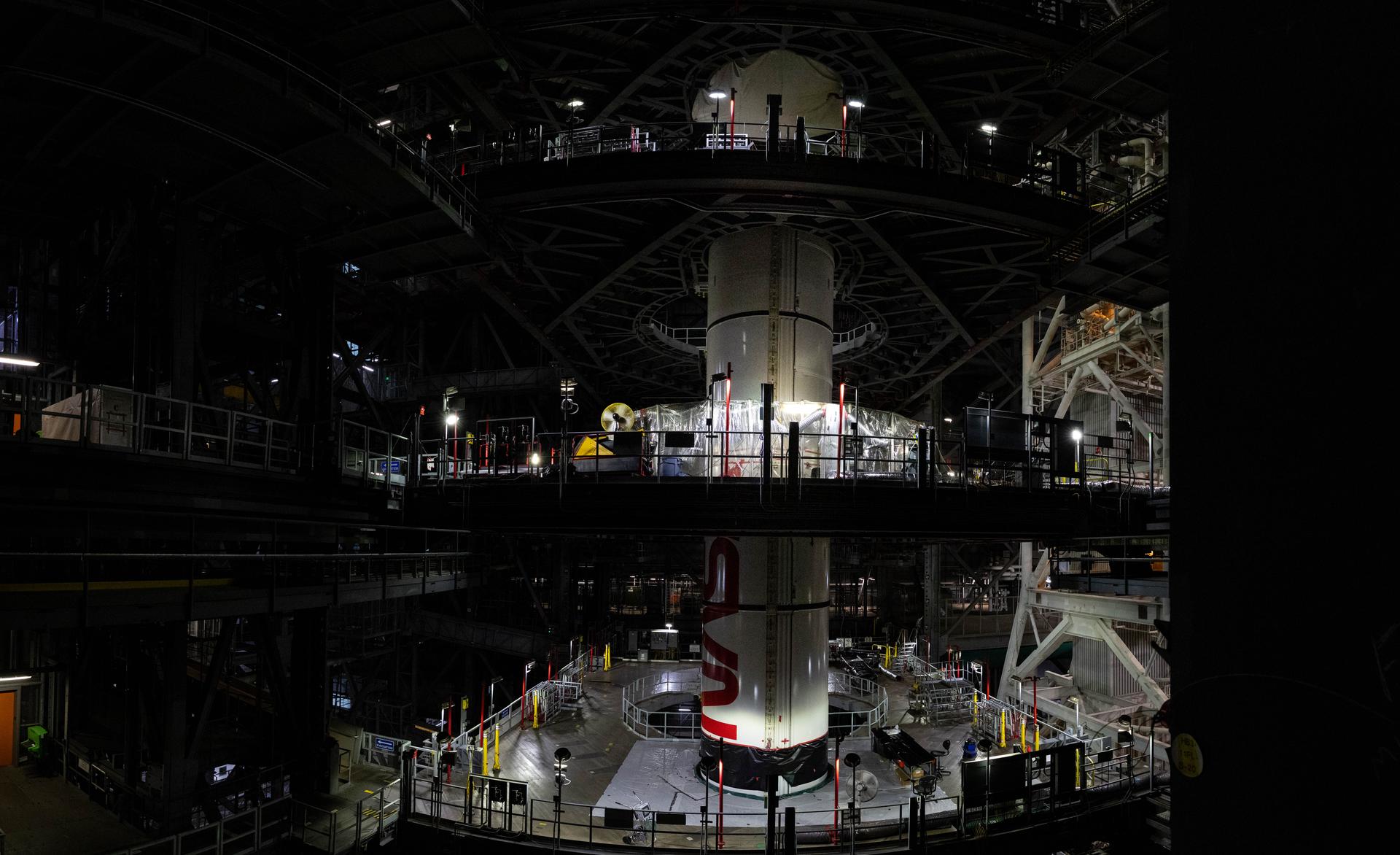
In High Bay 3 of the Vehicle Assembly Building at NASA’s Kennedy Space Center in Florida, the right forward center booster for Artemis III is integrated onto the right booster segments on the mobile launcher for the SLS (Space Launch System) rocket on Friday, Sept. 11, 2026. The twin boosters, comprising of five segments each manufactured by Northrop Grumman in Utah, will provide more than 75 percent of the SLS rocket’s total thrust at launch. The Artemis III mission will launch crew in the Orion spacecraft on top of the SLS rocket to test rendezvous and docking capabilities between Orion and commercial spacecraft needed to land astronauts on the Moon.
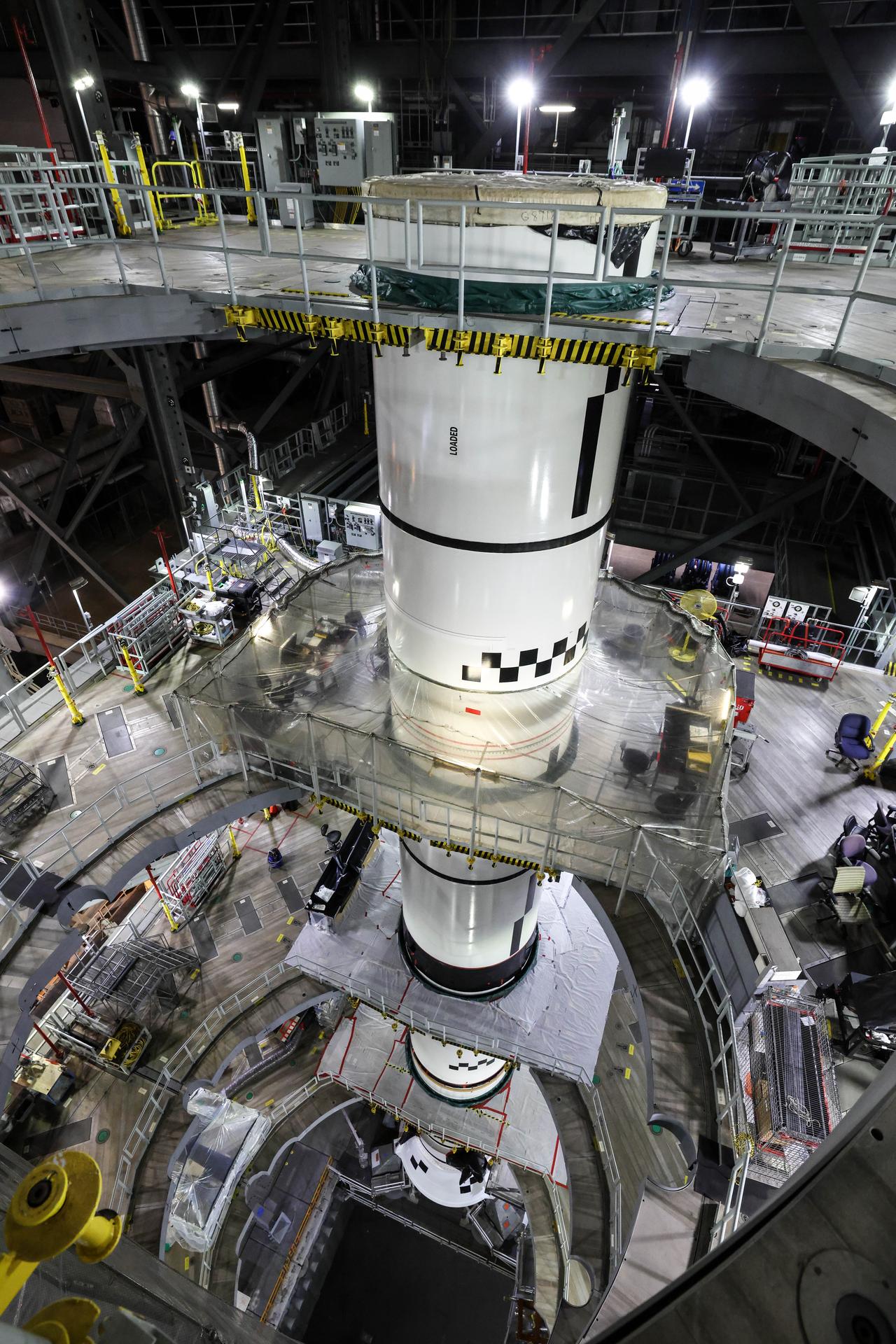
In High Bay 3 of the Vehicle Assembly Building at NASA’s Kennedy Space Center in Florida, the right forward center booster for Artemis III is integrated onto the right booster segments on the mobile launcher for the SLS (Space Launch System) rocket on Friday, Sept. 11, 2026. The twin boosters, comprising of five segments each manufactured by Northrop Grumman in Utah, will provide more than 75 percent of the SLS rocket’s total thrust at launch. The Artemis III mission will launch crew in the Orion spacecraft on top of the SLS rocket to test rendezvous and docking capabilities between Orion and commercial spacecraft needed to land astronauts on the Moon.
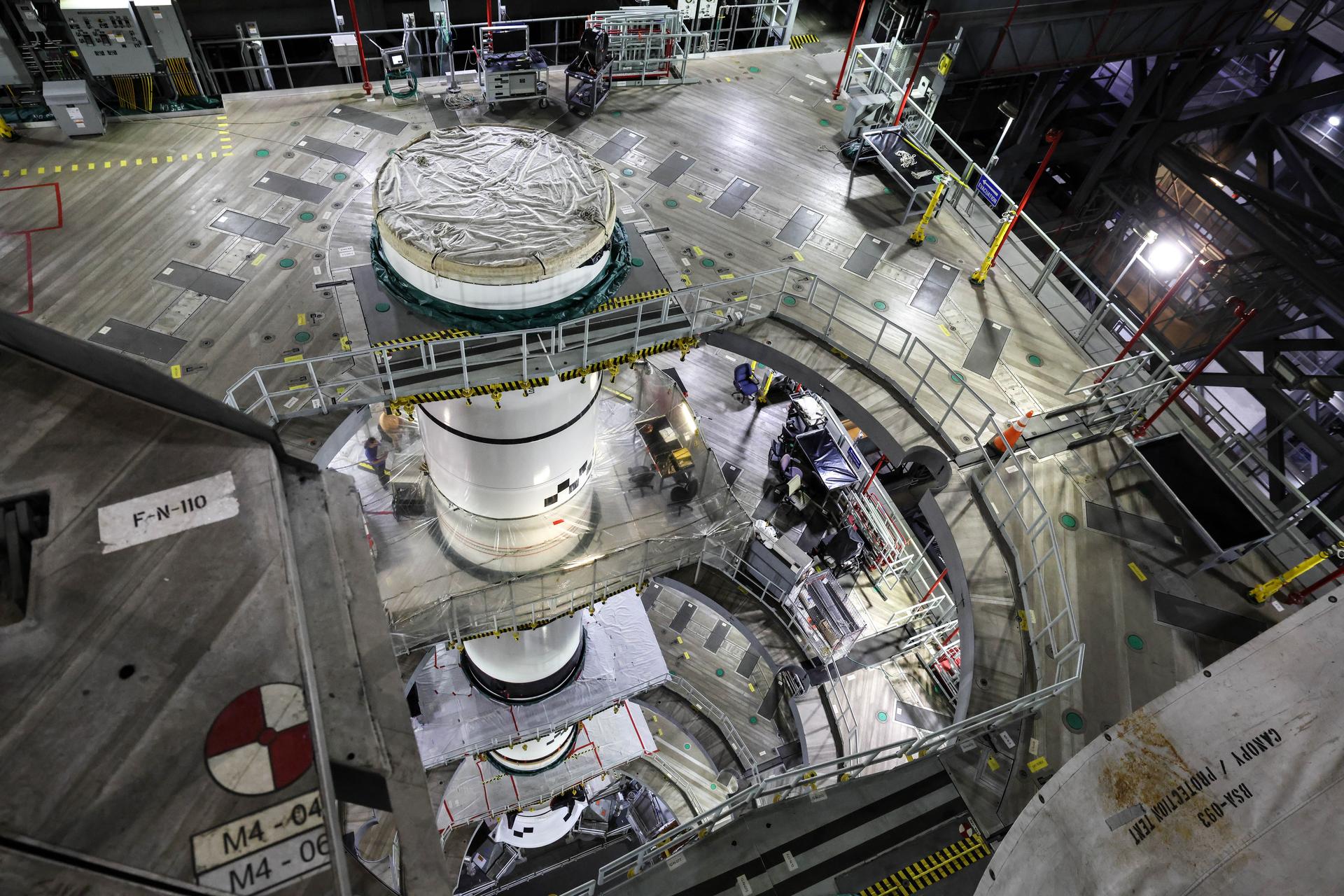
In High Bay 3 of the Vehicle Assembly Building at NASA’s Kennedy Space Center in Florida, the right forward center booster for Artemis III is integrated onto the right booster segments on the mobile launcher for the SLS (Space Launch System) rocket on Friday, Sept. 11, 2026. The twin boosters, comprising of five segments each manufactured by Northrop Grumman in Utah, will provide more than 75 percent of the SLS rocket’s total thrust at launch. The Artemis III mission will launch crew in the Orion spacecraft on top of the SLS rocket to test rendezvous and docking capabilities between Orion and commercial spacecraft needed to land astronauts on the Moon.
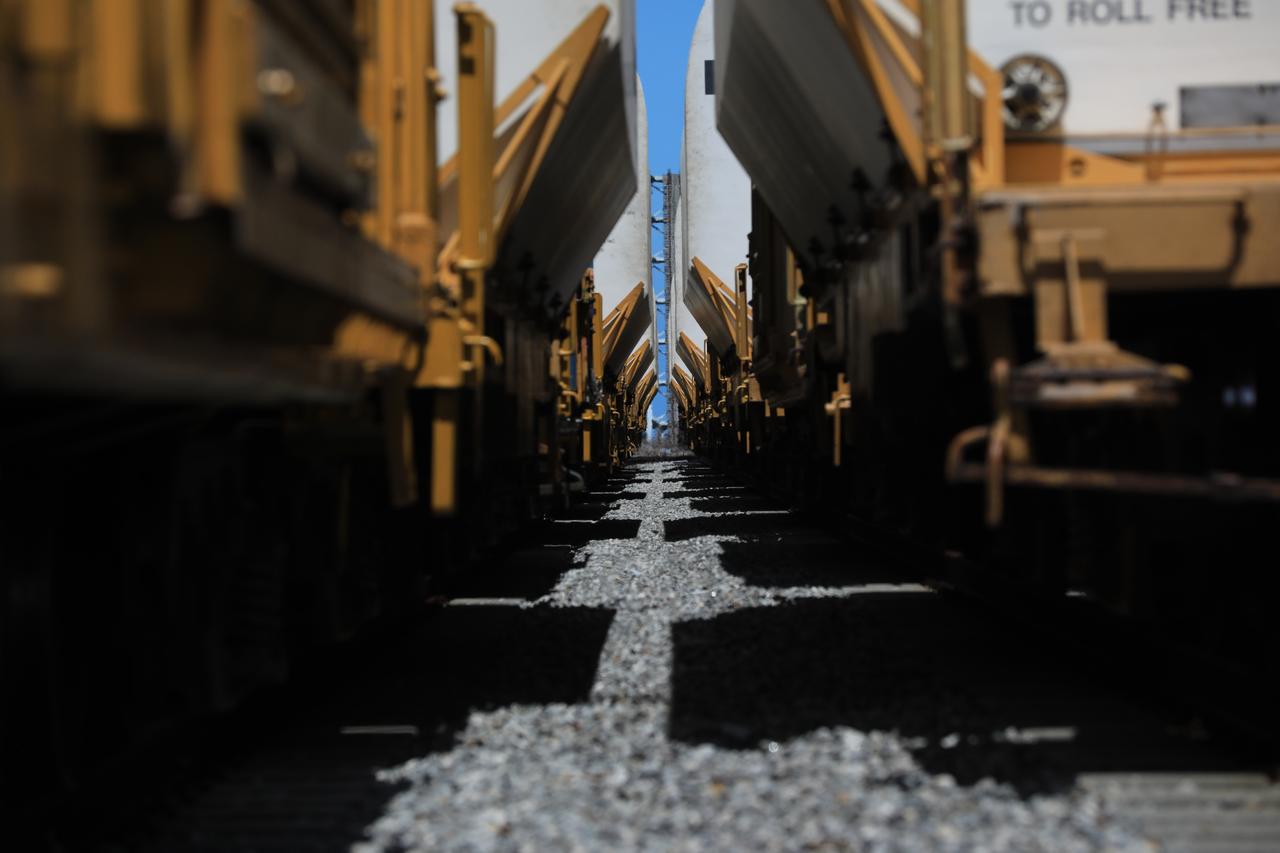
The train carrying the two solid rocket boosters that will power NASA’s Space Launch System (SLS) for Artemis missions to the Moon arrives at the Jay Jay rail yard – the connecting link between Kennedy Space Center and the Florida East Coast railway – in Titusville, Florida, on June 12, 2020. The boosters, each comprised of five motor segments, traveled from a Northrop Grumman manufacturing facility in Promontory, Utah, to Kennedy’s Rotation, Processing and Surge Facility, where teams with NASA’s Exploration Ground Systems will process the segments before moving them to the Vehicle Assembly Building for stacking on the mobile launcher. Under the Artemis program, NASA will land the first woman and the next man on the Moon by 2024. The first in a series of increasingly complex missions, Artemis I will test the Orion spacecraft and SLS as an integrated system ahead of crewed flights to the Moon.
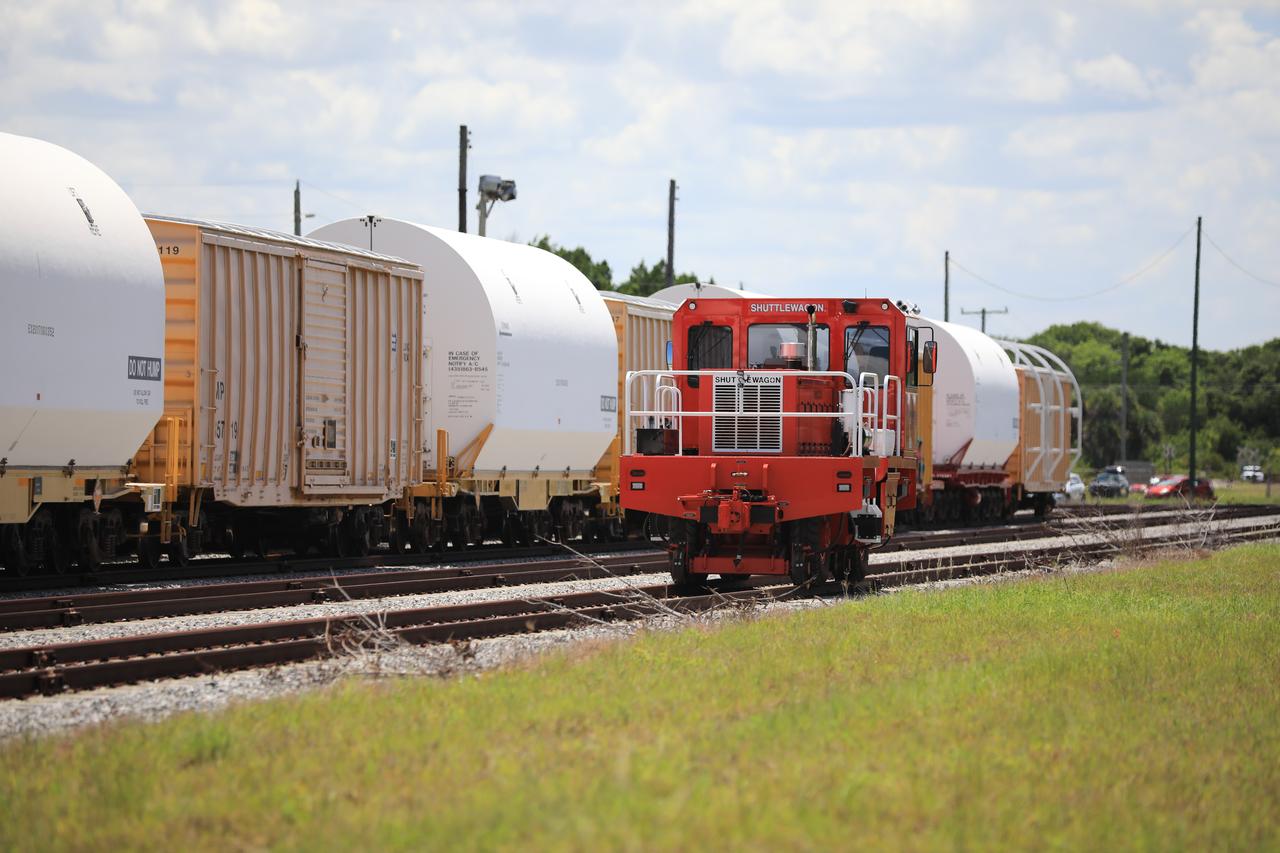
The train carrying the two solid rocket boosters that will power NASA’s Space Launch System (SLS) for Artemis missions to the Moon arrives at the Jay Jay rail yard – the connecting link between Kennedy Space Center and the Florida East Coast railway – in Titusville, Florida, on June 12, 2020. The boosters, each comprised of five motor segments, traveled from a Northrop Grumman manufacturing facility in Promontory, Utah, to Kennedy’s Rotation, Processing and Surge Facility, where teams with NASA’s Exploration Ground Systems will process the segments before moving them to the Vehicle Assembly Building for stacking on the mobile launcher. Under the Artemis program, NASA will land the first woman and the next man on the Moon by 2024. The first in a series of increasingly complex missions, Artemis I will test the Orion spacecraft and SLS as an integrated system ahead of crewed flights to the Moon.
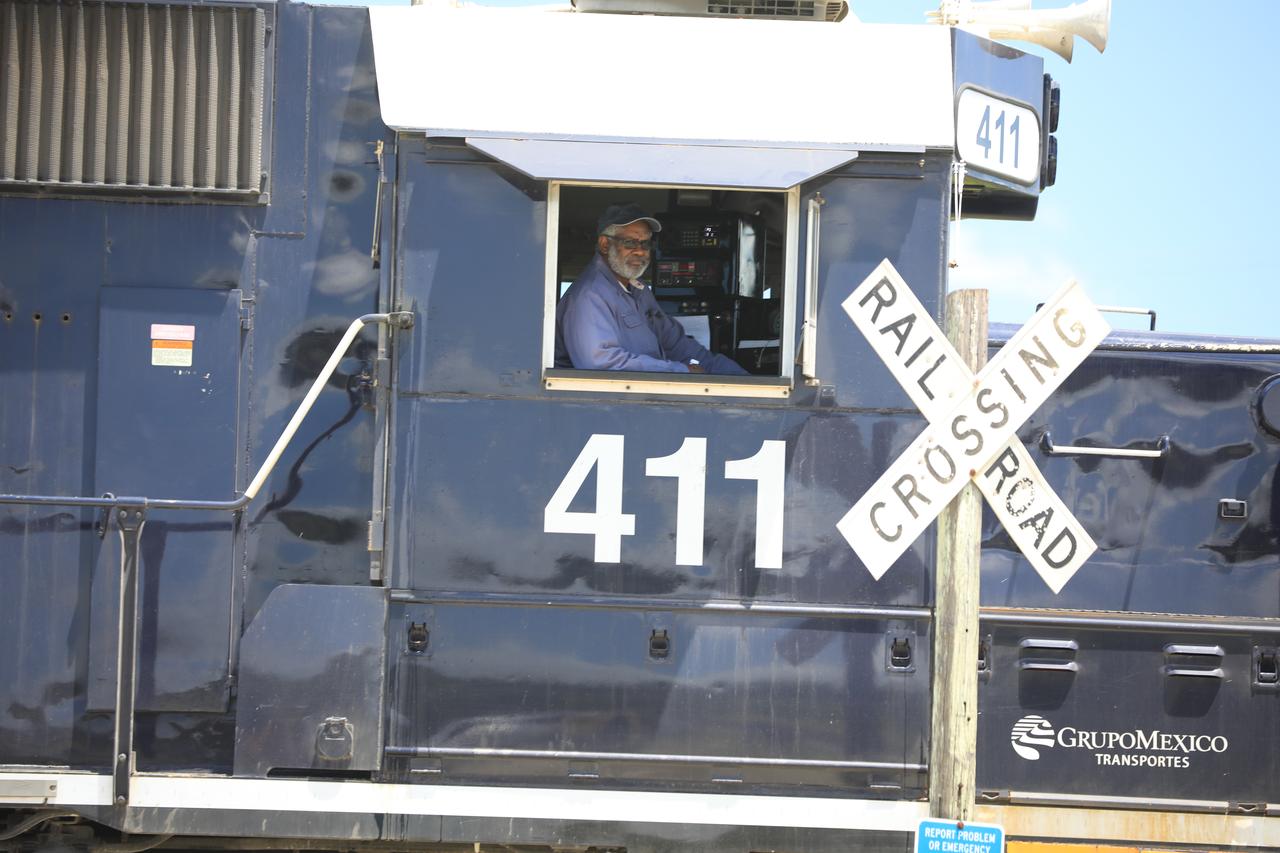
The train carrying the two solid rocket boosters that will power NASA’s Space Launch System (SLS) for Artemis missions to the Moon arrives at the Jay Jay rail yard – the connecting link between Kennedy Space Center and the Florida East Coast railway – in Titusville, Florida, on June 12, 2020. The boosters, each comprised of five motor segments, traveled from a Northrop Grumman manufacturing facility in Promontory, Utah, to Kennedy’s Rotation, Processing and Surge Facility, where teams with NASA’s Exploration Ground Systems will process the segments before moving them to the Vehicle Assembly Building for stacking on the mobile launcher. Under the Artemis program, NASA will land the first woman and the next man on the Moon by 2024. The first in a series of increasingly complex missions, Artemis I will test the Orion spacecraft and SLS as an integrated system ahead of crewed flights to the Moon.
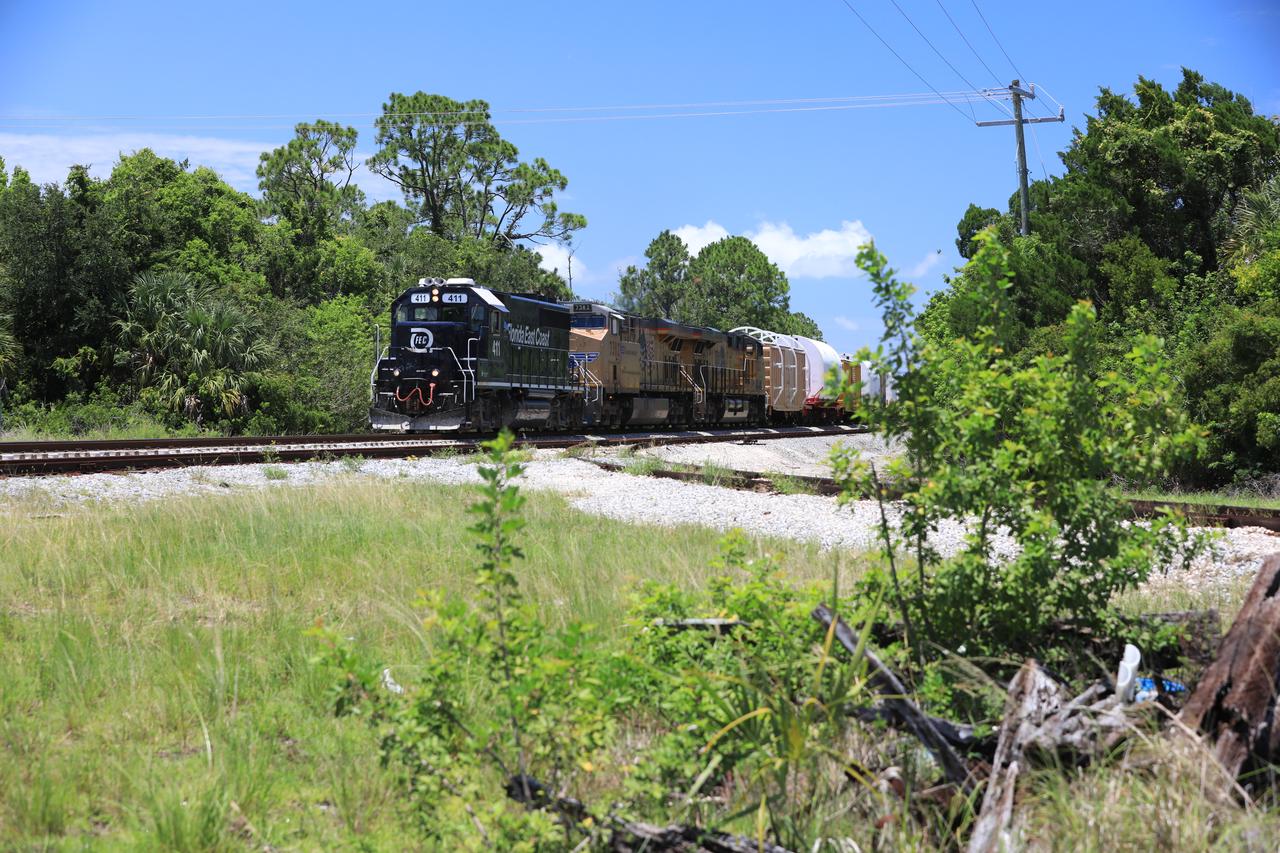
The train carrying the two solid rocket boosters that will power NASA’s Space Launch System (SLS) for Artemis missions to the Moon arrives at the Jay Jay rail yard – the connecting link between Kennedy Space Center and the Florida East Coast railway – in Titusville, Florida, on June 12, 2020. The boosters, each comprised of five motor segments, traveled from a Northrop Grumman manufacturing facility in Promontory, Utah, to Kennedy’s Rotation, Processing and Surge Facility, where teams with NASA’s Exploration Ground Systems will process the segments before moving them to the Vehicle Assembly Building for stacking on the mobile launcher. Under the Artemis program, NASA will land the first woman and the next man on the Moon by 2024. The first in a series of increasingly complex missions, Artemis I will test the Orion spacecraft and SLS as an integrated system ahead of crewed flights to the Moon.
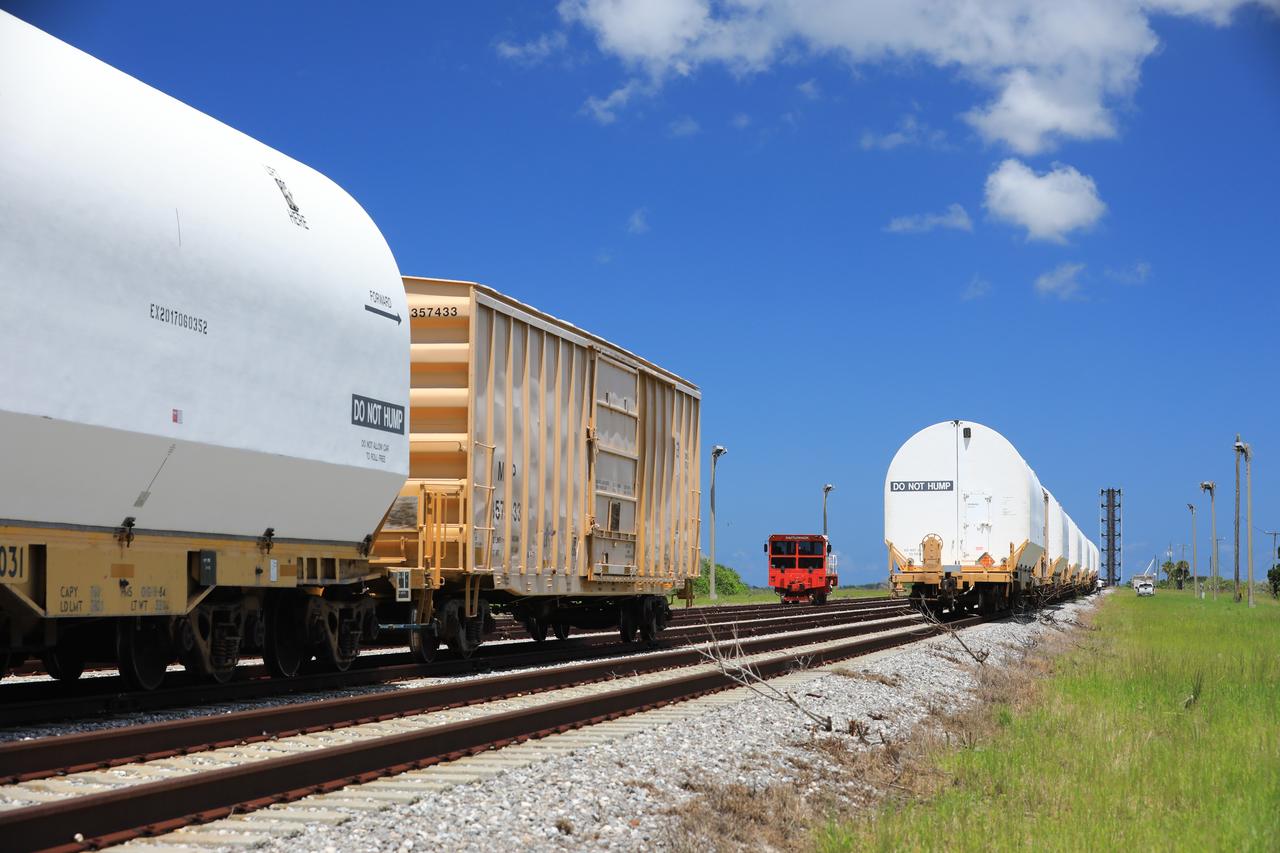
The train carrying the two solid rocket boosters that will power NASA’s Space Launch System (SLS) for Artemis missions to the Moon arrives at the Jay Jay rail yard – the connecting link between Kennedy Space Center and the Florida East Coast railway – in Titusville, Florida, on June 12, 2020. The boosters, each comprised of five motor segments, traveled from a Northrop Grumman manufacturing facility in Promontory, Utah, to Kennedy’s Rotation, Processing and Surge Facility, where teams with NASA’s Exploration Ground Systems will process the segments before moving them to the Vehicle Assembly Building for stacking on the mobile launcher. Under the Artemis program, NASA will land the first woman and the next man on the Moon by 2024. The first in a series of increasingly complex missions, Artemis I will test the Orion spacecraft and SLS as an integrated system ahead of crewed flights to the Moon.
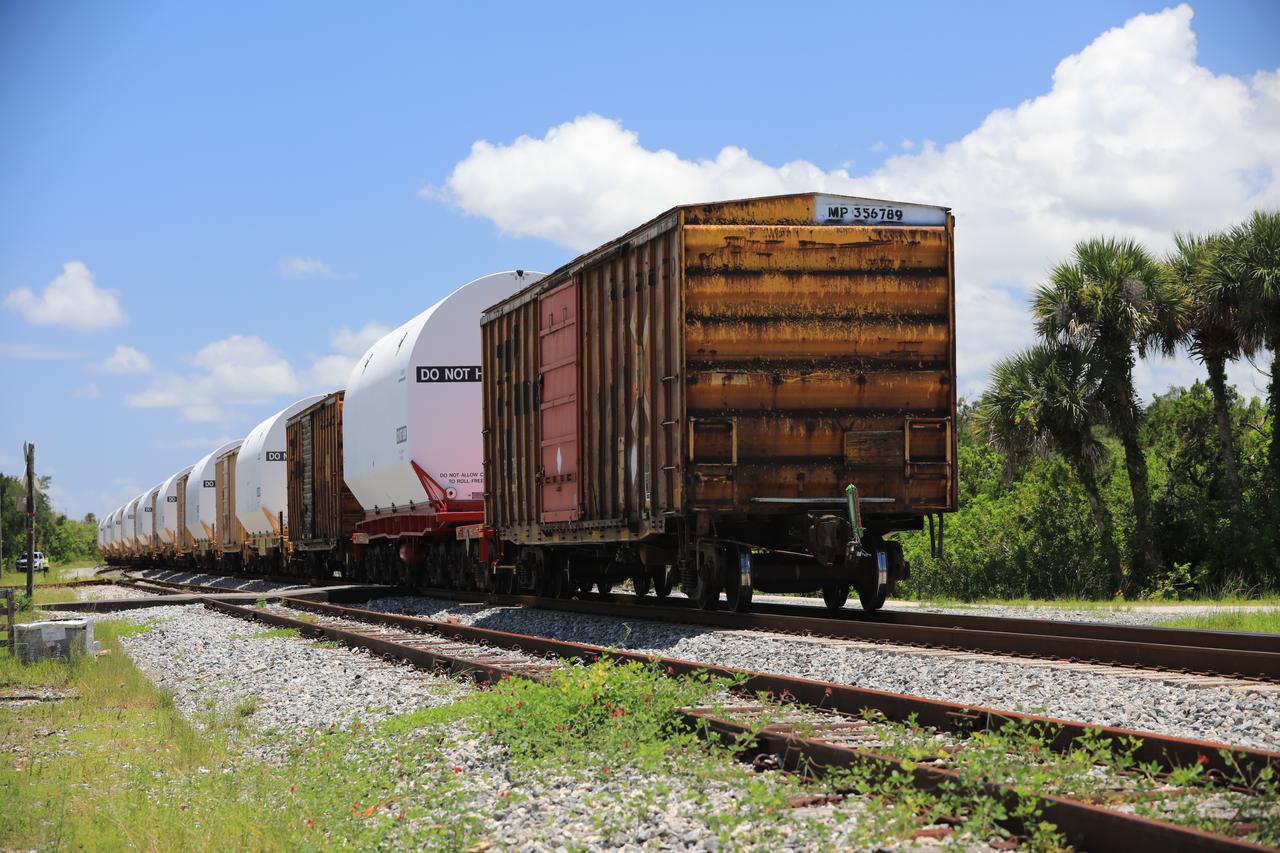
The train carrying the two solid rocket boosters that will power NASA’s Space Launch System (SLS) for Artemis missions to the Moon arrives at the Jay Jay rail yard – the connecting link between Kennedy Space Center and the Florida East Coast railway – in Titusville, Florida, on June 12, 2020. The boosters, each comprised of five motor segments, traveled from a Northrop Grumman manufacturing facility in Promontory, Utah, to Kennedy’s Rotation, Processing and Surge Facility, where teams with NASA’s Exploration Ground Systems will process the segments before moving them to the Vehicle Assembly Building for stacking on the mobile launcher. Under the Artemis program, NASA will land the first woman and the next man on the Moon by 2024. The first in a series of increasingly complex missions, Artemis I will test the Orion spacecraft and SLS as an integrated system ahead of crewed flights to the Moon.
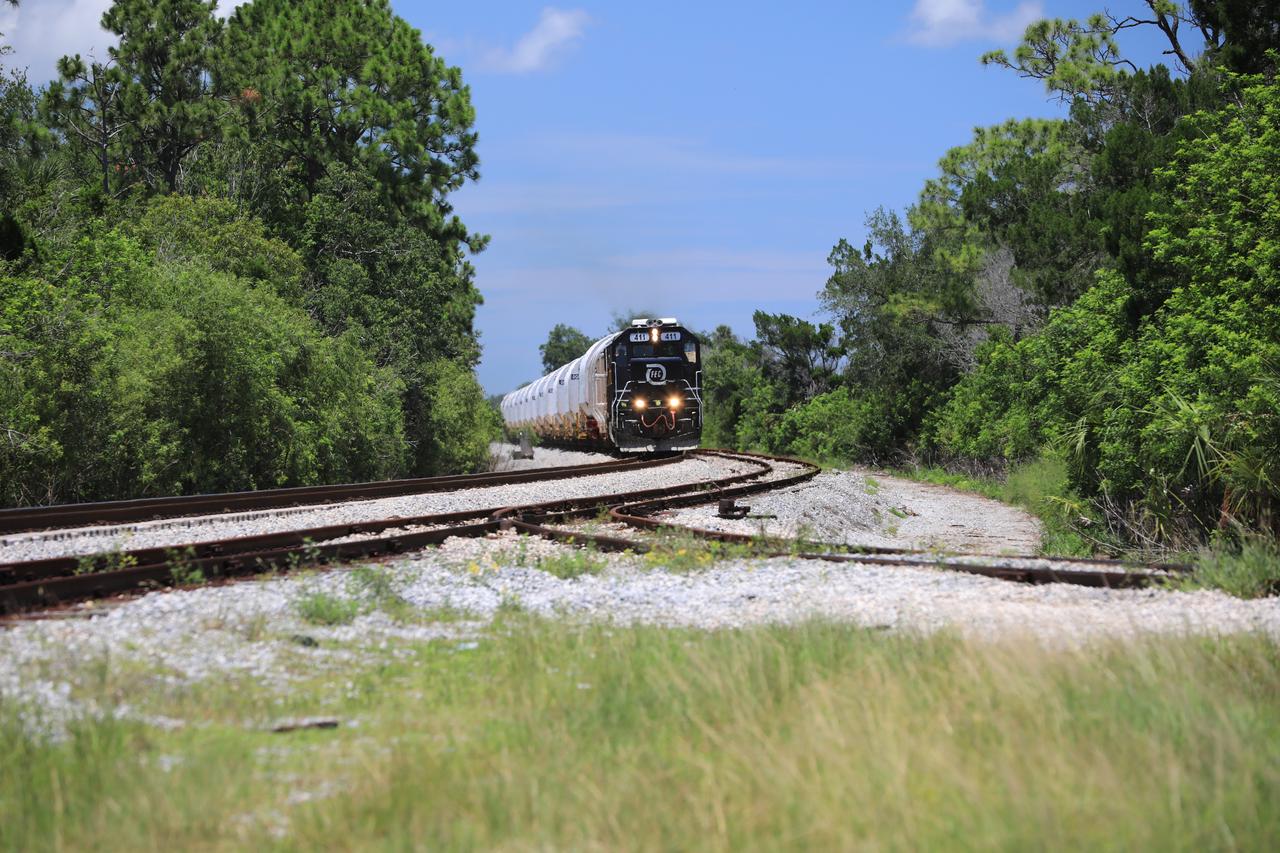
The train carrying the two solid rocket boosters that will power NASA’s Space Launch System (SLS) for Artemis missions to the Moon arrives at the Jay Jay rail yard – the connecting link between Kennedy Space Center and the Florida East Coast railway – in Titusville, Florida, on June 12, 2020. The boosters, each comprised of five motor segments, traveled from a Northrop Grumman manufacturing facility in Promontory, Utah, to Kennedy’s Rotation, Processing and Surge Facility, where teams with NASA’s Exploration Ground Systems will process the segments before moving them to the Vehicle Assembly Building for stacking on the mobile launcher. Under the Artemis program, NASA will land the first woman and the next man on the Moon by 2024. The first in a series of increasingly complex missions, Artemis I will test the Orion spacecraft and SLS as an integrated system ahead of crewed flights to the Moon.
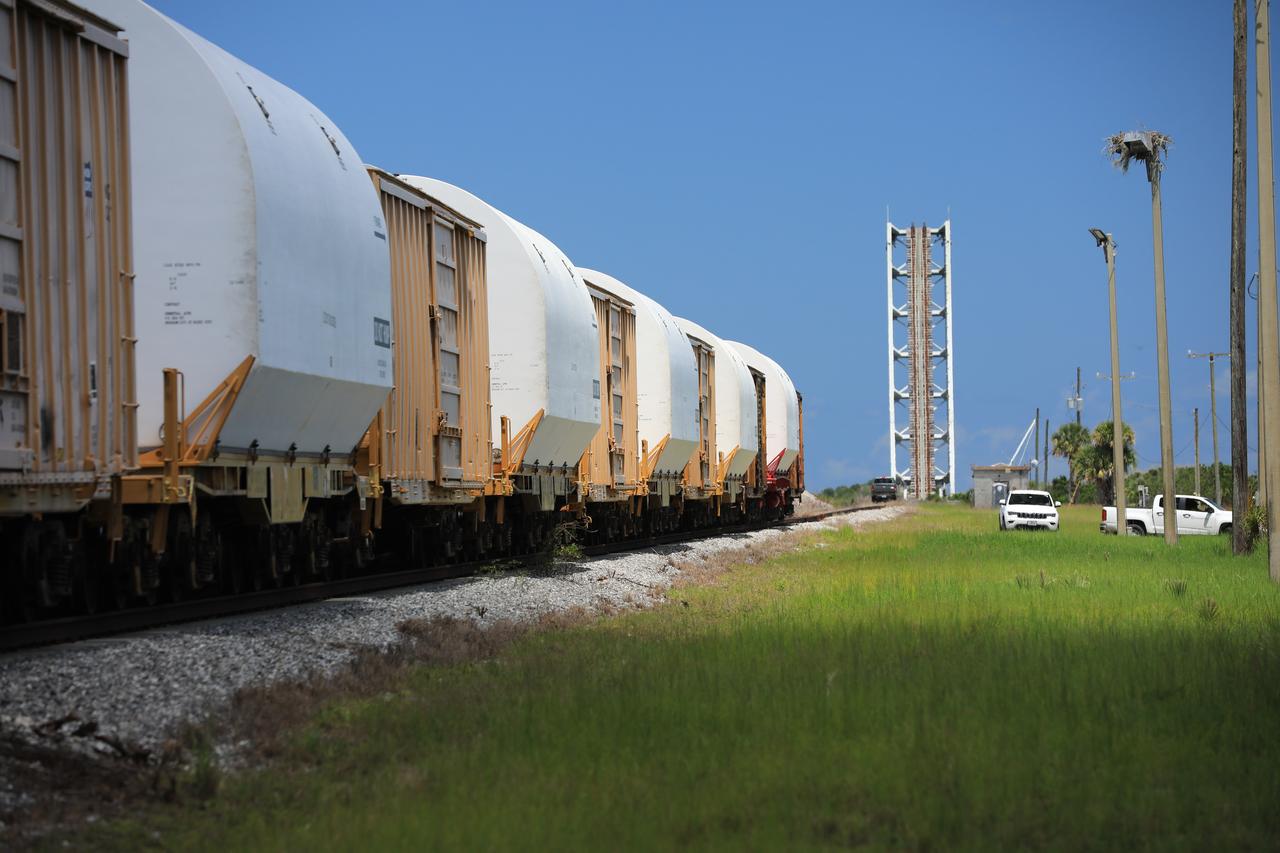
The train carrying the two solid rocket boosters that will power NASA’s Space Launch System (SLS) for Artemis missions to the Moon arrives at the Jay Jay rail yard – the connecting link between Kennedy Space Center and the Florida East Coast railway – in Titusville, Florida, on June 12, 2020. The boosters, each comprised of five motor segments, traveled from a Northrop Grumman manufacturing facility in Promontory, Utah, to Kennedy’s Rotation, Processing and Surge Facility, where teams with NASA’s Exploration Ground Systems will process the segments before moving them to the Vehicle Assembly Building for stacking on the mobile launcher. Under the Artemis program, NASA will land the first woman and the next man on the Moon by 2024. The first in a series of increasingly complex missions, Artemis I will test the Orion spacecraft and SLS as an integrated system ahead of crewed flights to the Moon.
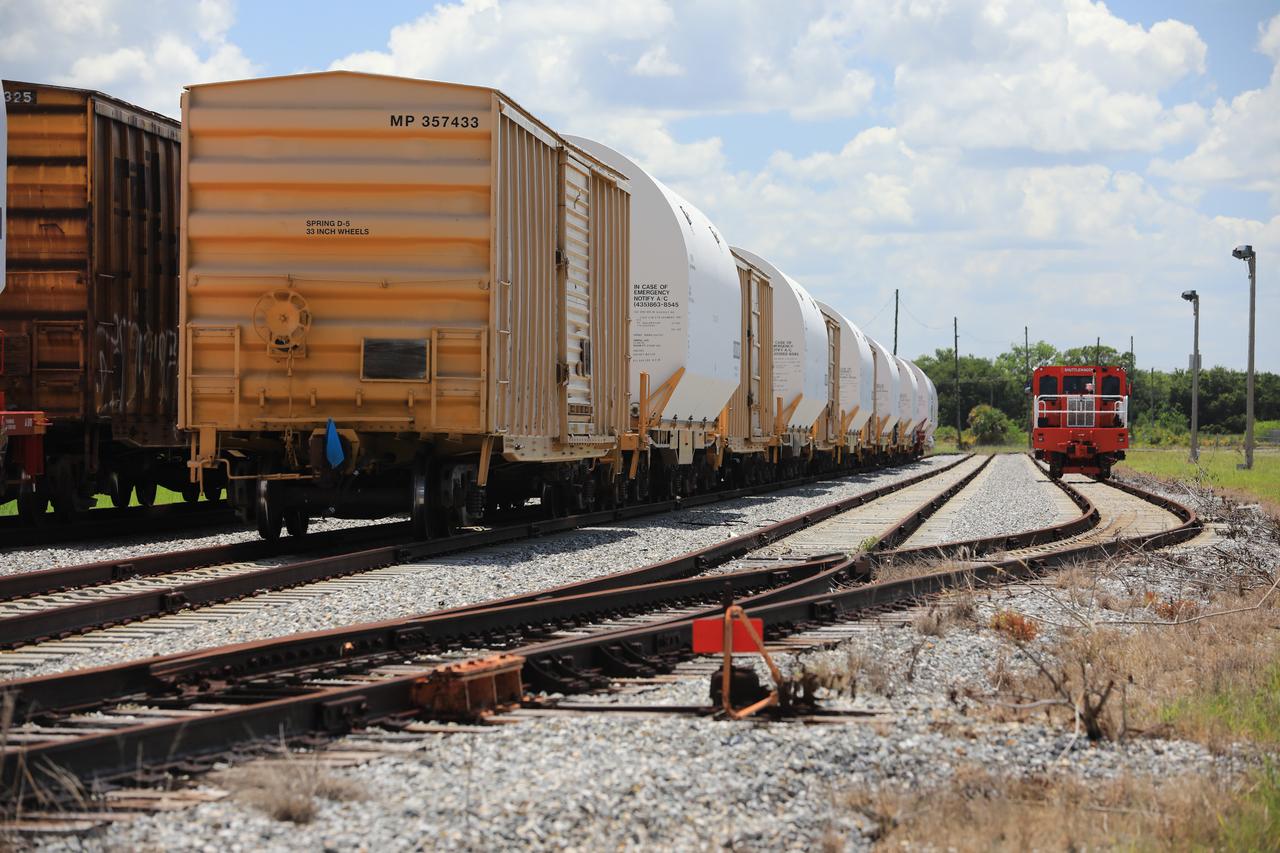
The train carrying the two solid rocket boosters that will power NASA’s Space Launch System (SLS) for Artemis missions to the Moon arrives at the Jay Jay rail yard – the connecting link between Kennedy Space Center and the Florida East Coast railway – in Titusville, Florida, on June 12, 2020. The boosters, each comprised of five motor segments, traveled from a Northrop Grumman manufacturing facility in Promontory, Utah, to Kennedy’s Rotation, Processing and Surge Facility, where teams with NASA’s Exploration Ground Systems will process the segments before moving them to the Vehicle Assembly Building for stacking on the mobile launcher. Under the Artemis program, NASA will land the first woman and the next man on the Moon by 2024. The first in a series of increasingly complex missions, Artemis I will test the Orion spacecraft and SLS as an integrated system ahead of crewed flights to the Moon.
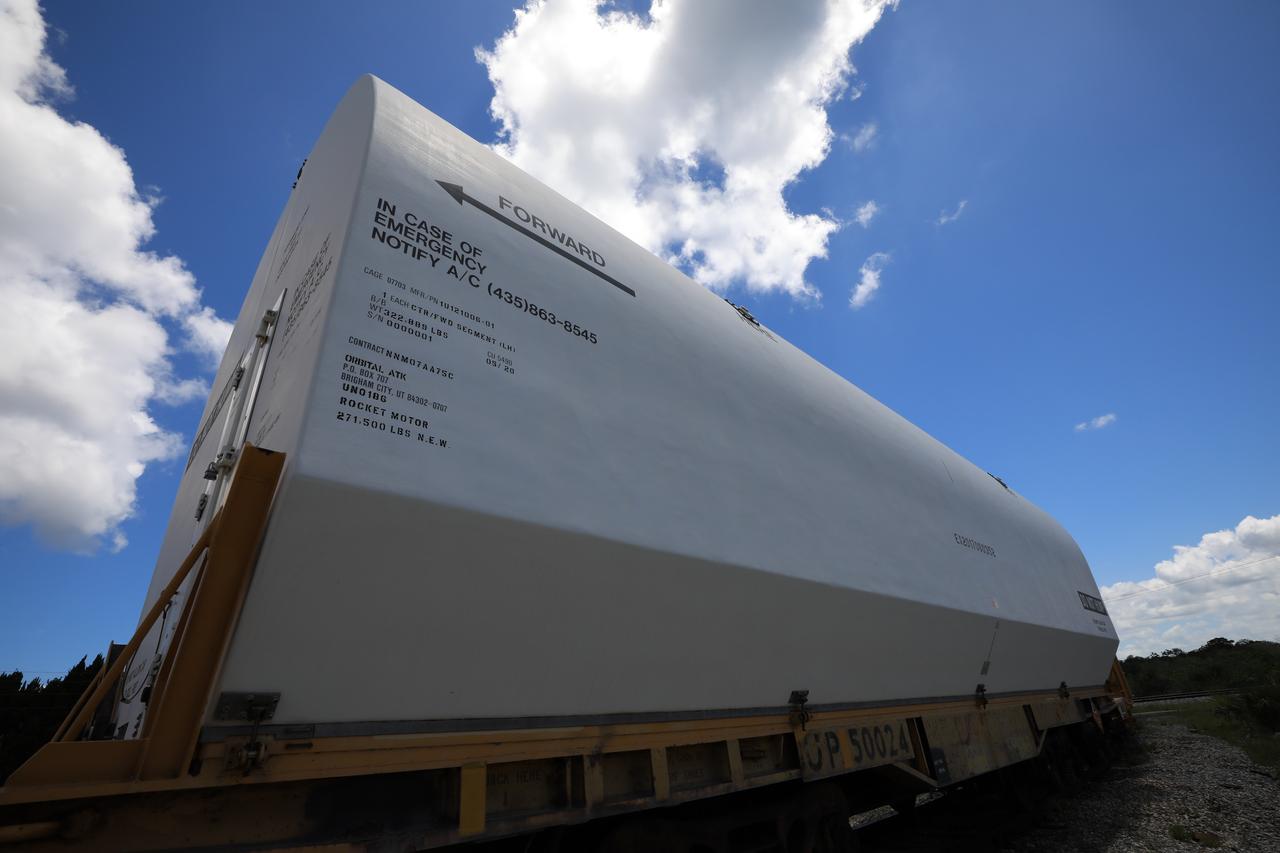
The train carrying the two solid rocket boosters that will power NASA’s Space Launch System (SLS) for Artemis missions to the Moon arrives at the Jay Jay rail yard – the connecting link between Kennedy Space Center and the Florida East Coast railway – in Titusville, Florida, on June 12, 2020. The boosters, each comprised of five motor segments, traveled from a Northrop Grumman manufacturing facility in Promontory, Utah, to Kennedy’s Rotation, Processing and Surge Facility, where teams with NASA’s Exploration Ground Systems will process the segments before moving them to the Vehicle Assembly Building for stacking on the mobile launcher. Under the Artemis program, NASA will land the first woman and the next man on the Moon by 2024. The first in a series of increasingly complex missions, Artemis I will test the Orion spacecraft and SLS as an integrated system ahead of crewed flights to the Moon.
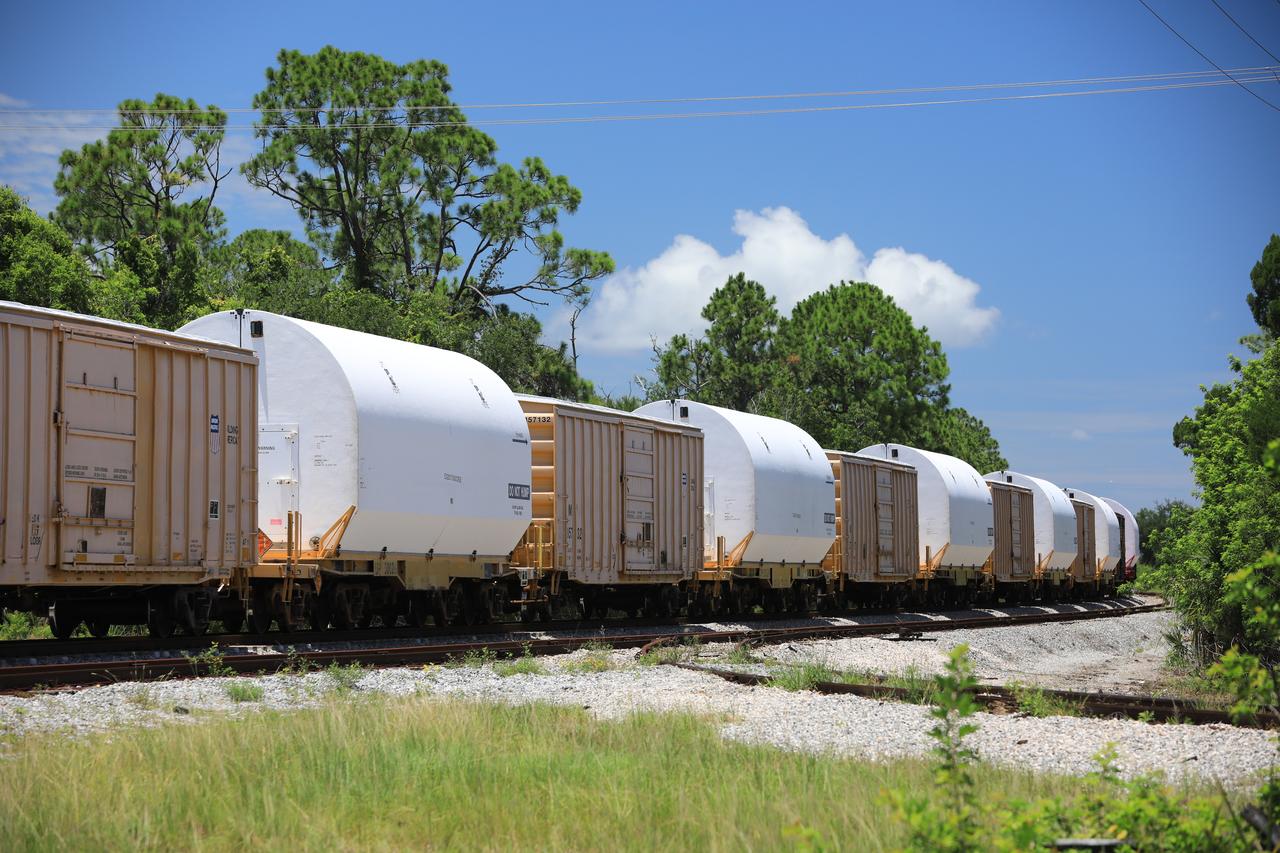
The train carrying the two solid rocket boosters that will power NASA’s Space Launch System (SLS) for Artemis missions to the Moon arrives at the Jay Jay rail yard – the connecting link between Kennedy Space Center and the Florida East Coast railway – in Titusville, Florida, on June 12, 2020. The boosters, each comprised of five motor segments, traveled from a Northrop Grumman manufacturing facility in Promontory, Utah, to Kennedy’s Rotation, Processing and Surge Facility, where teams with NASA’s Exploration Ground Systems will process the segments before moving them to the Vehicle Assembly Building for stacking on the mobile launcher. Under the Artemis program, NASA will land the first woman and the next man on the Moon by 2024. The first in a series of increasingly complex missions, Artemis I will test the Orion spacecraft and SLS as an integrated system ahead of crewed flights to the Moon.
The train carrying the two solid rocket boosters that will power NASA’s Space Launch System (SLS) for Artemis missions to the Moon arrives at the Jay Jay rail yard – the connecting link between Kennedy Space Center and the Florida East Coast railway – in Titusville, Florida, on June 12, 2020. The boosters, each comprised of five motor segments, traveled from a Northrop Grumman manufacturing facility in Promontory, Utah, to Kennedy’s Rotation, Processing and Surge Facility, where teams with NASA’s Exploration Ground Systems will process the segments before moving them to the Vehicle Assembly Building for stacking on the mobile launcher. Under the Artemis program, NASA will land the first woman and the next man on the Moon by 2024. The first in a series of increasingly complex missions, Artemis I will test the Orion spacecraft and SLS as an integrated system ahead of crewed flights to the Moon.
The train carrying the two solid rocket boosters that will power NASA’s Space Launch System (SLS) for Artemis missions to the Moon arrives at the Jay Jay rail yard – the connecting link between Kennedy Space Center and the Florida East Coast railway – in Titusville, Florida, on June 12, 2020. The boosters, each comprised of five motor segments, traveled from a Northrop Grumman manufacturing facility in Promontory, Utah, to Kennedy’s Rotation, Processing and Surge Facility, where teams with NASA’s Exploration Ground Systems will process the segments before moving them to the Vehicle Assembly Building for stacking on the mobile launcher. Under the Artemis program, NASA will land the first woman and the next man on the Moon by 2024. The first in a series of increasingly complex missions, Artemis I will test the Orion spacecraft and SLS as an integrated system ahead of crewed flights to the Moon.
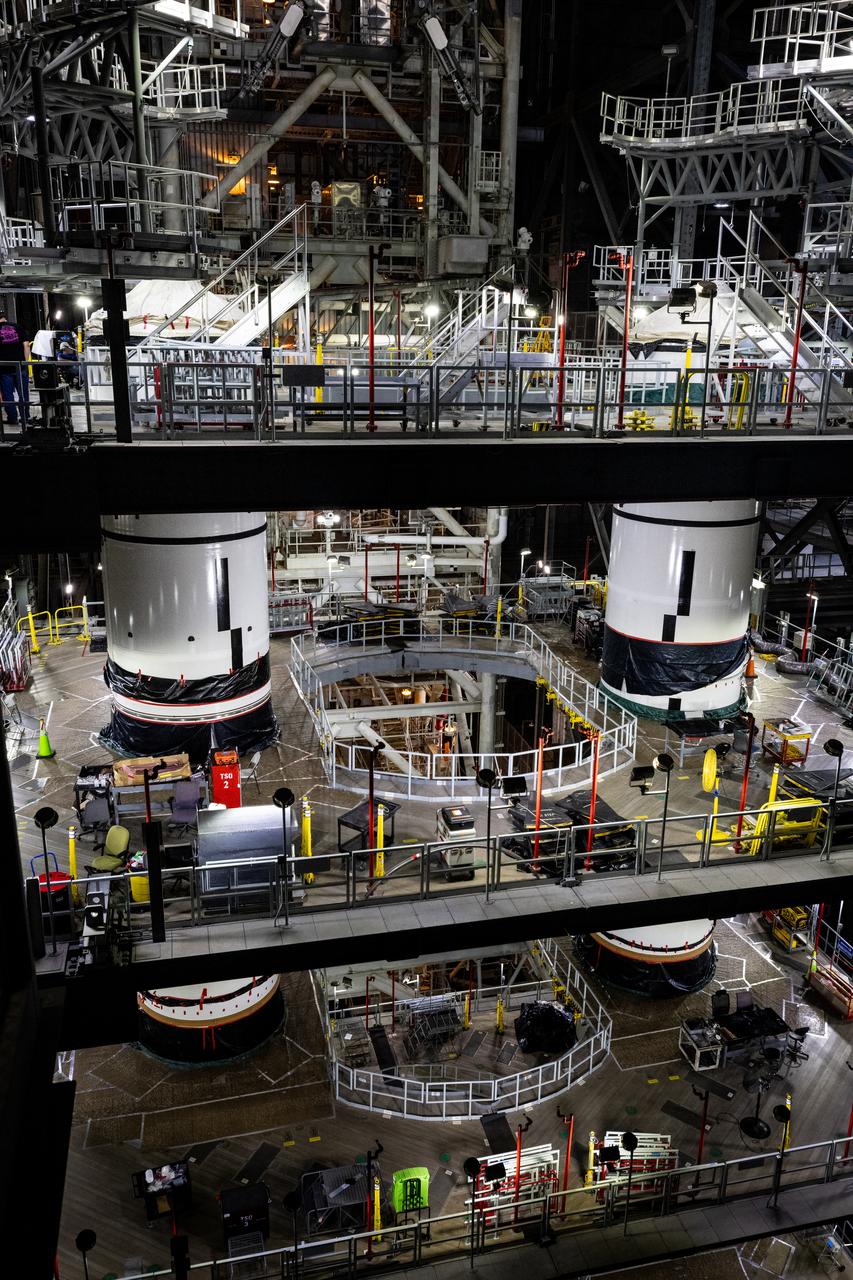
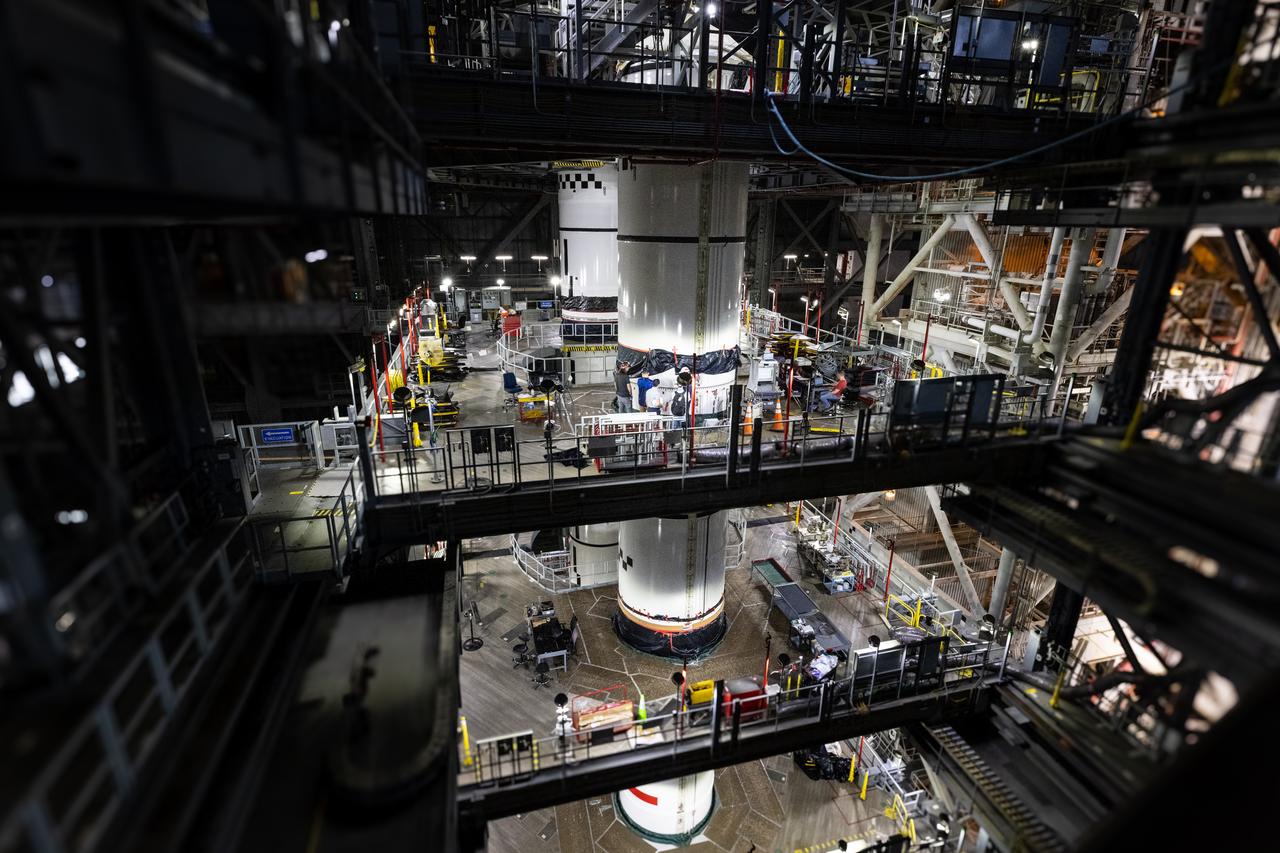
Technicians with Exploration Ground Systems integrate the right forward segment atop the center forward segment on NASA’s SLS (Space Launch System) Moon rocket booster inside the Vehicle Assembly Building’s High Bay 3 at Kennedy Space Center in Florida on Friday, Feb. 14, 2025. The twin solid boosters, five segments on each side, will help support the remaining rocket components and the Orion spacecraft during final assembly of the Artemis II Moon rocket and provide more than 75 percent of the total SLS thrust during liftoff from NASA Kennedy’s Launch Pad 39B.
Technicians with Exploration Ground Systems integrate the right forward segment atop the center forward segment on NASA’s SLS (Space Launch System) Moon rocket booster inside the Vehicle Assembly Building’s High Bay 3 at Kennedy Space Center in Florida on Friday, Feb. 14, 2025. The twin solid boosters, five segments on each side, will help support the remaining rocket components and the Orion spacecraft during final assembly of the Artemis II Moon rocket and provide more than 75 percent of the total SLS thrust during liftoff from NASA Kennedy’s Launch Pad 39B.
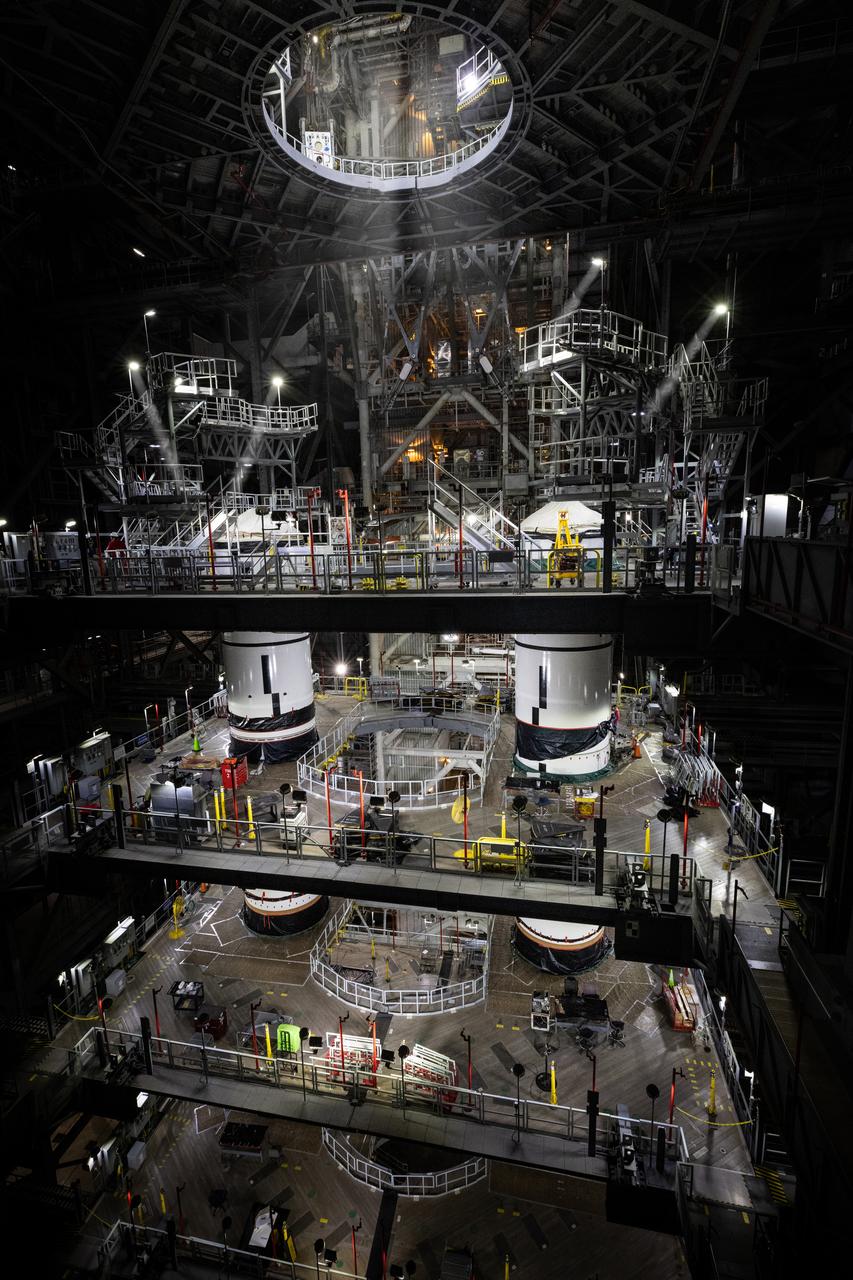
Technicians with Exploration Ground Systems integrate the right forward segment atop the center forward segment on NASA’s SLS (Space Launch System) Moon rocket booster inside the Vehicle Assembly Building’s High Bay 3 at Kennedy Space Center in Florida on Friday, Feb. 14, 2025. The twin solid boosters, five segments on each side, will help support the remaining rocket components and the Orion spacecraft during final assembly of the Artemis II Moon rocket and provide more than 75 percent of the total SLS thrust during liftoff from NASA Kennedy’s Launch Pad 39B.
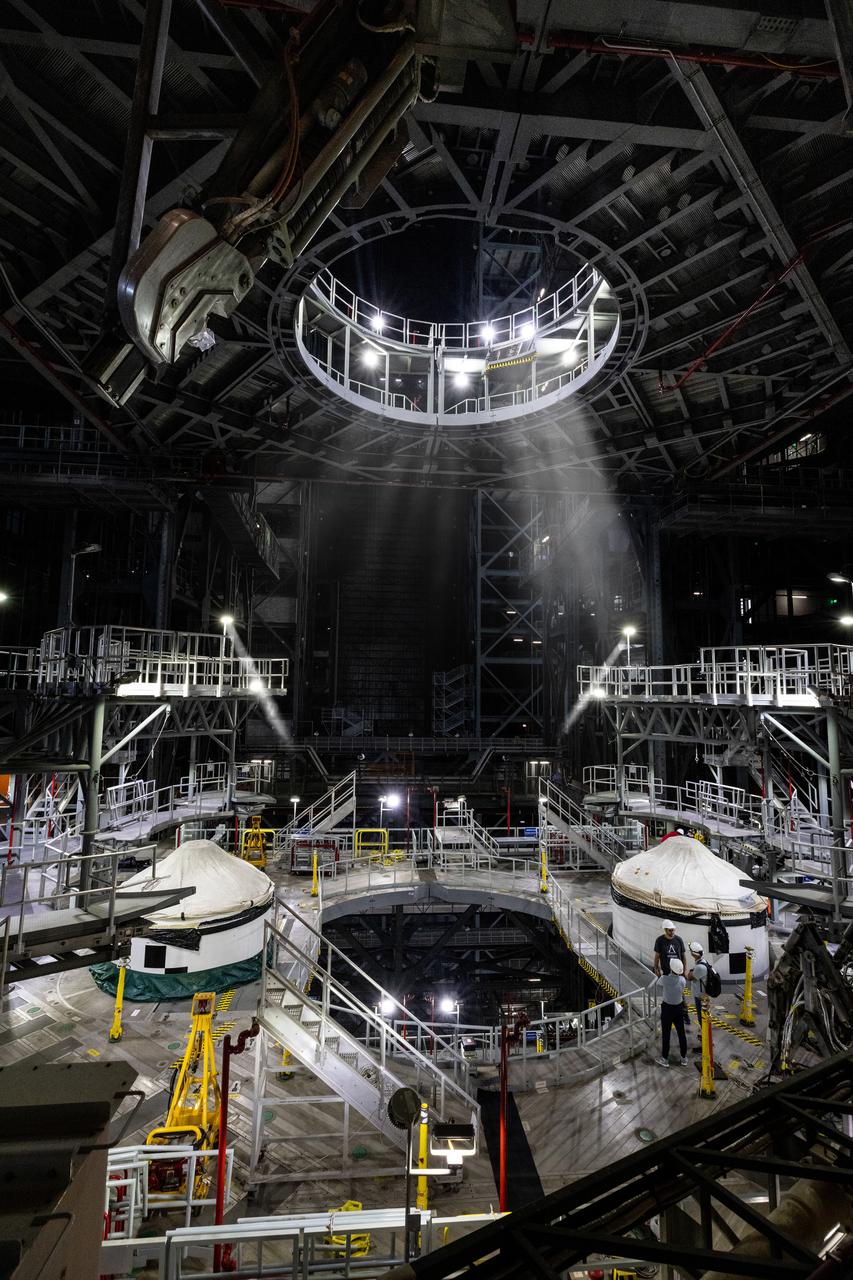
Technicians with Exploration Ground Systems integrate the right forward segment atop the center forward segment on NASA’s SLS (Space Launch System) Moon rocket booster inside the Vehicle Assembly Building’s High Bay 3 at Kennedy Space Center in Florida on Friday, Feb. 14, 2025. The twin solid boosters, five segments on each side, will help support the remaining rocket components and the Orion spacecraft during final assembly of the Artemis II Moon rocket and provide more than 75 percent of the total SLS thrust during liftoff from NASA Kennedy’s Launch Pad 39B.