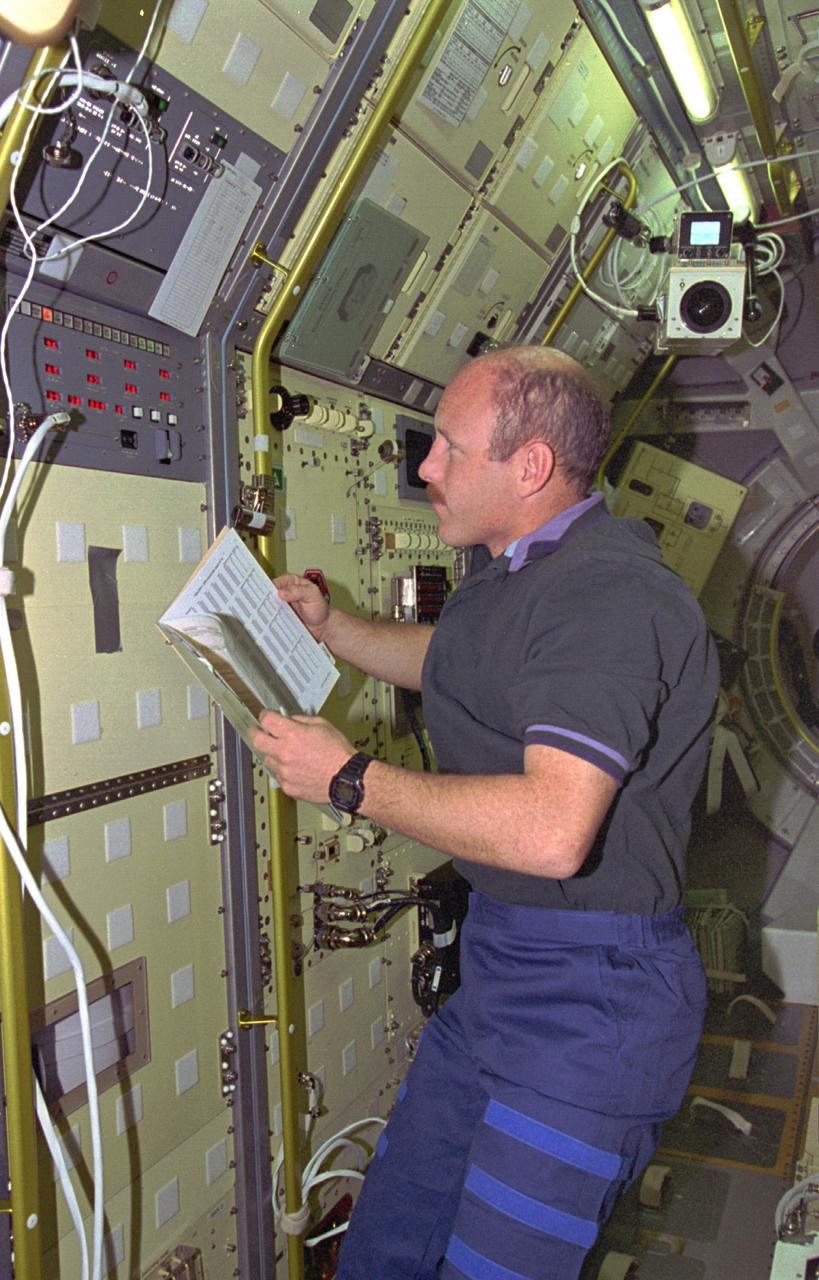
STS073-363-032 (20 October - 5 November 1995) --- Astronaut Kenneth D. Bowersox, STS-73 mission commander, studies the movement of fluids in microgravity at the Geophysical Fluid Flow Cell (GFFC) workstation in the science module of the Earth-orbiting Space Shuttle Columbia. Bowersox was joined by four other NASA astronauts and two guest researchers for almost 16-days of Earth-orbit research in support of the U.S. Microgravity Laboratory (USML-2) mission.
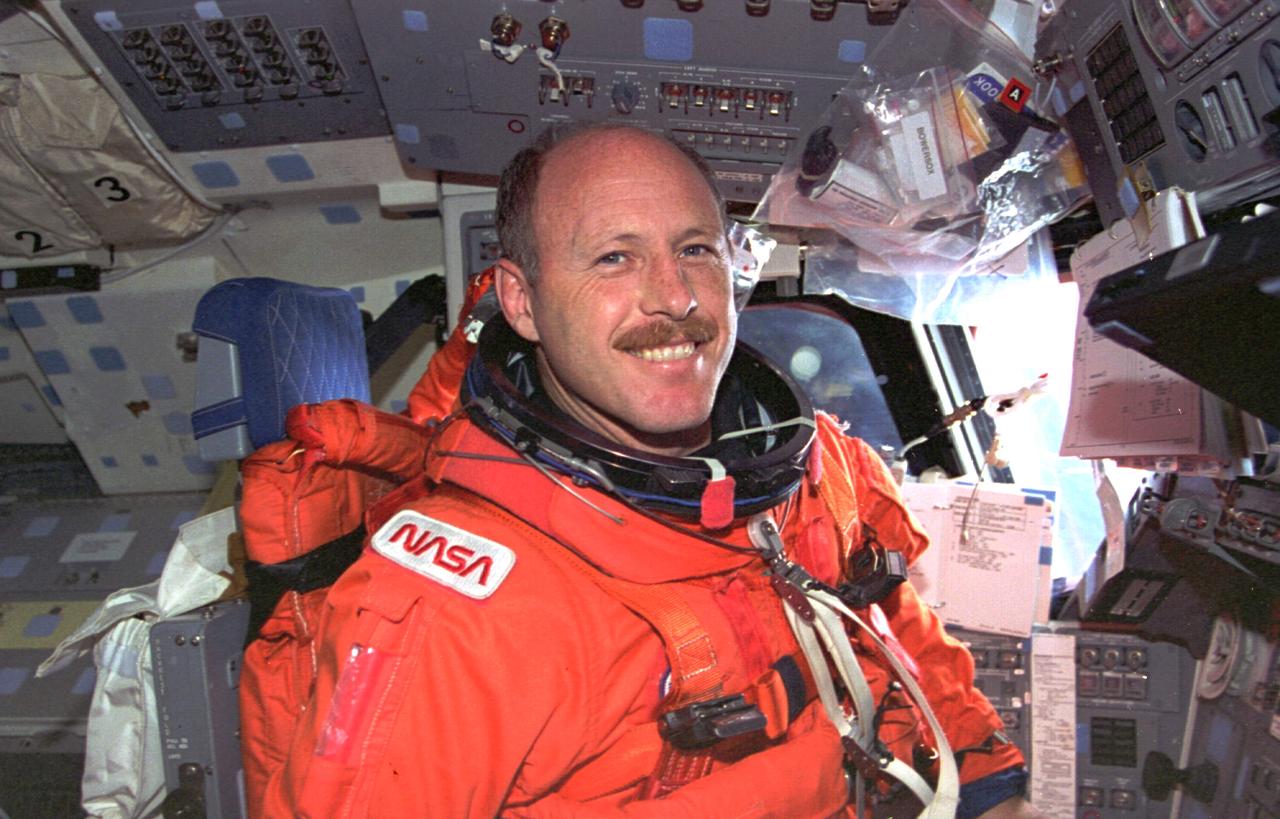
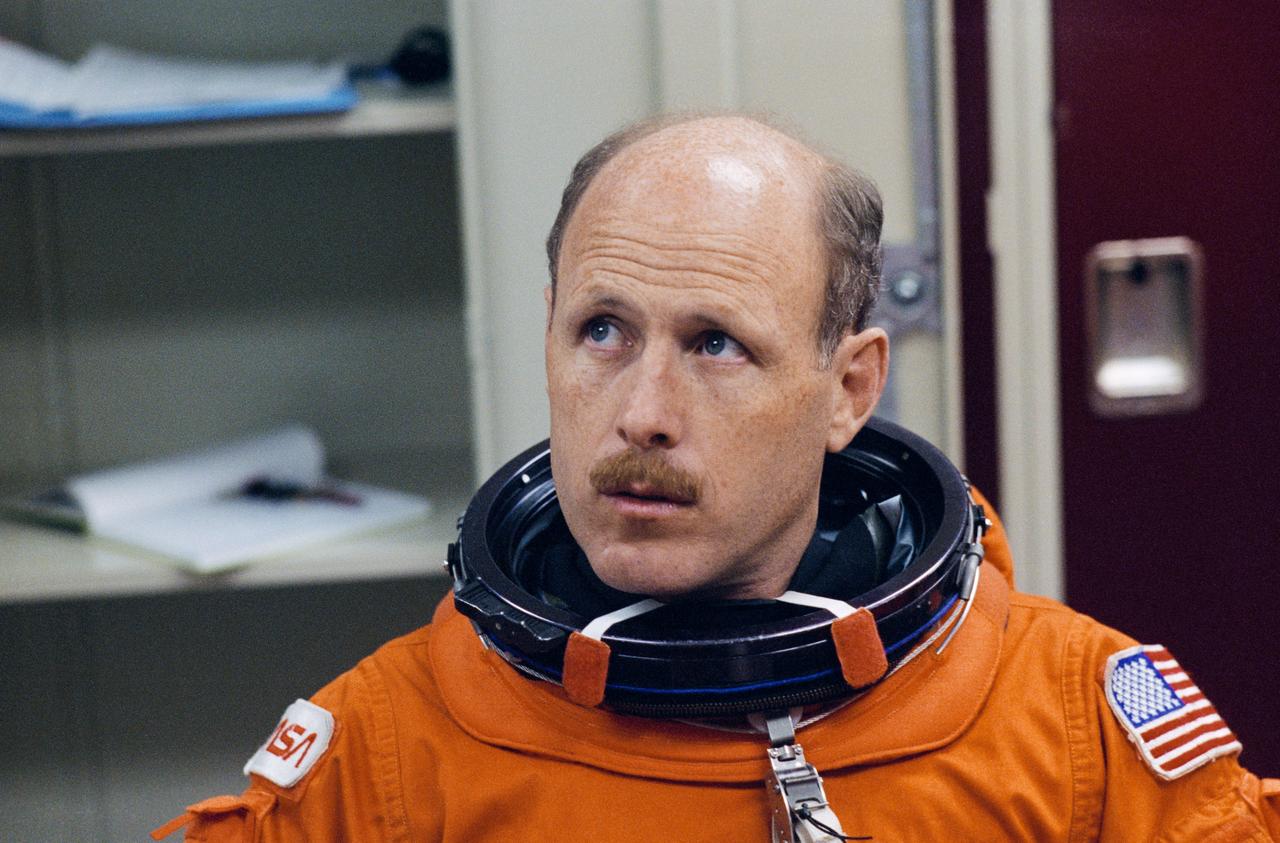
STS073-164-025 (5 November 1995) --- The countenance of astronaut Kenneth D. Bowersox signifies the near completion of a successful 16-day mission in Earth-orbit aboard the Space Shuttle Columbia. Bowersox, attired in the shuttle launch and entry garment, mans the commander's station prior to the entry phase of the flight.
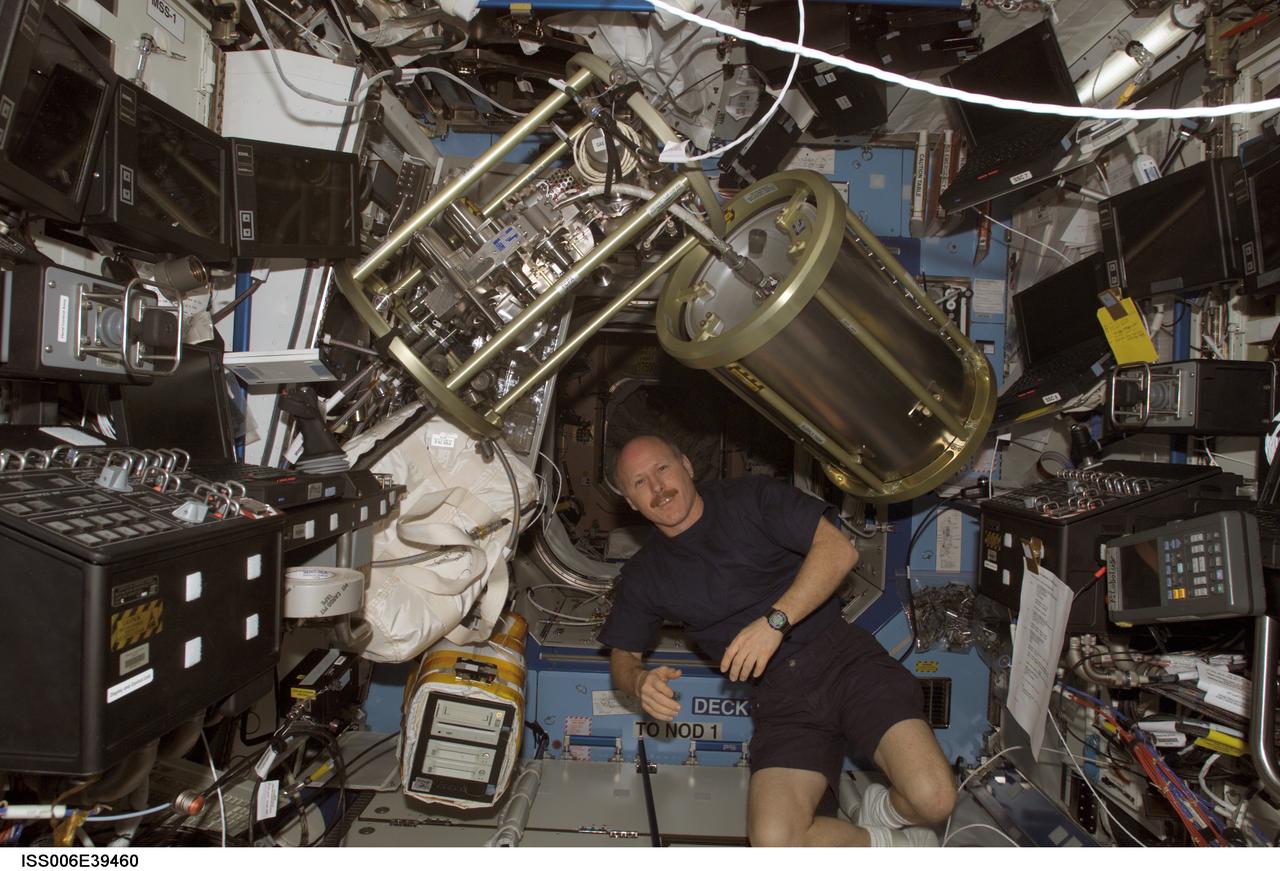
ISS006-E-39460 (18 March 2003) --- Astronaut Kenneth D. Bowersox, Expedition Six mission commander, is pictured in the Destiny laboratory on the International Space Station (ISS). The supply tank and Fluid Control Pump Assembly (FCPA), which are a part of the Internal Thermal Control System (ITCS), are visible floating freeing above Bowersox.
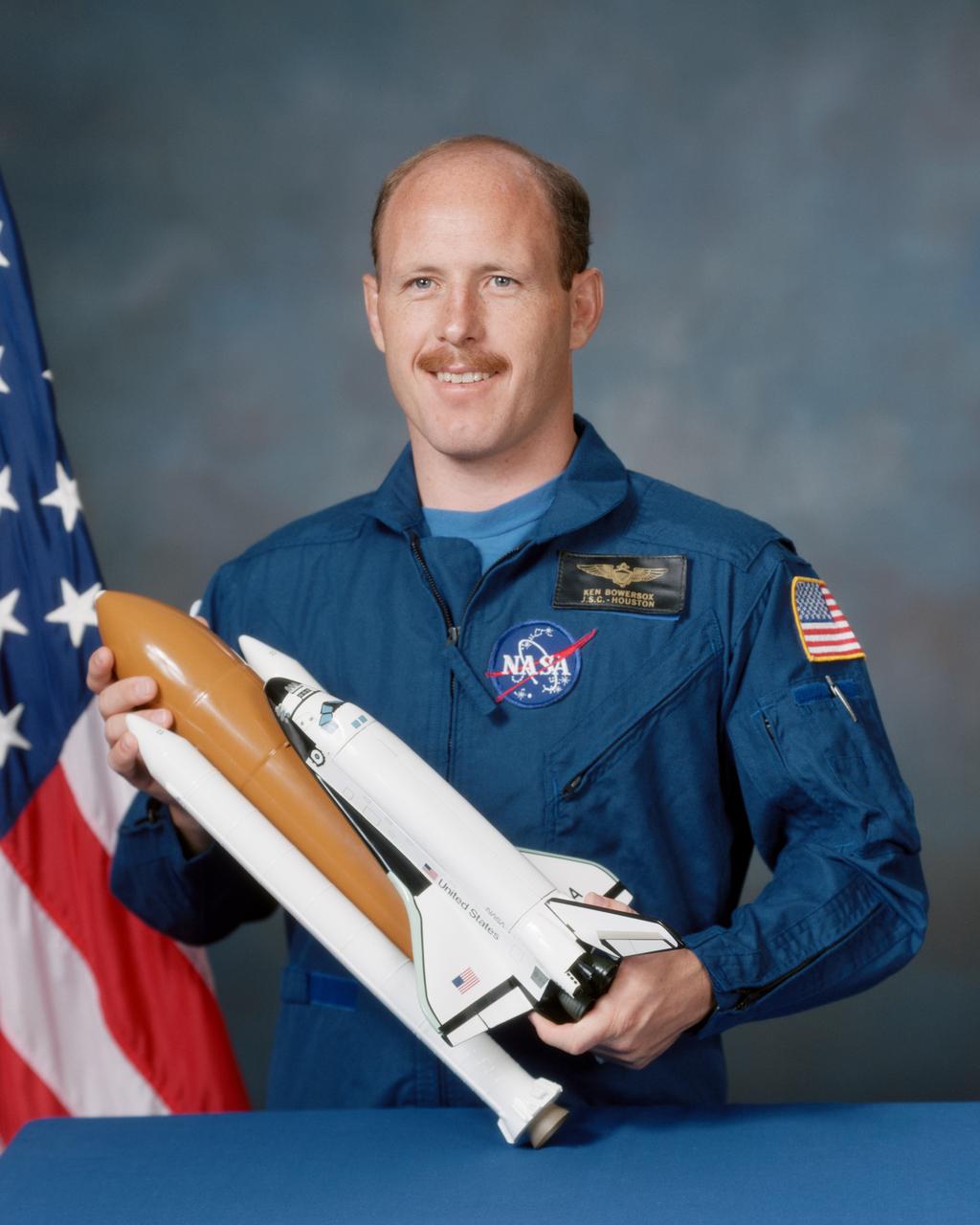
S87-45887 (October 1987) --- Astronaut Kenneth D. Bowersox, pilot.
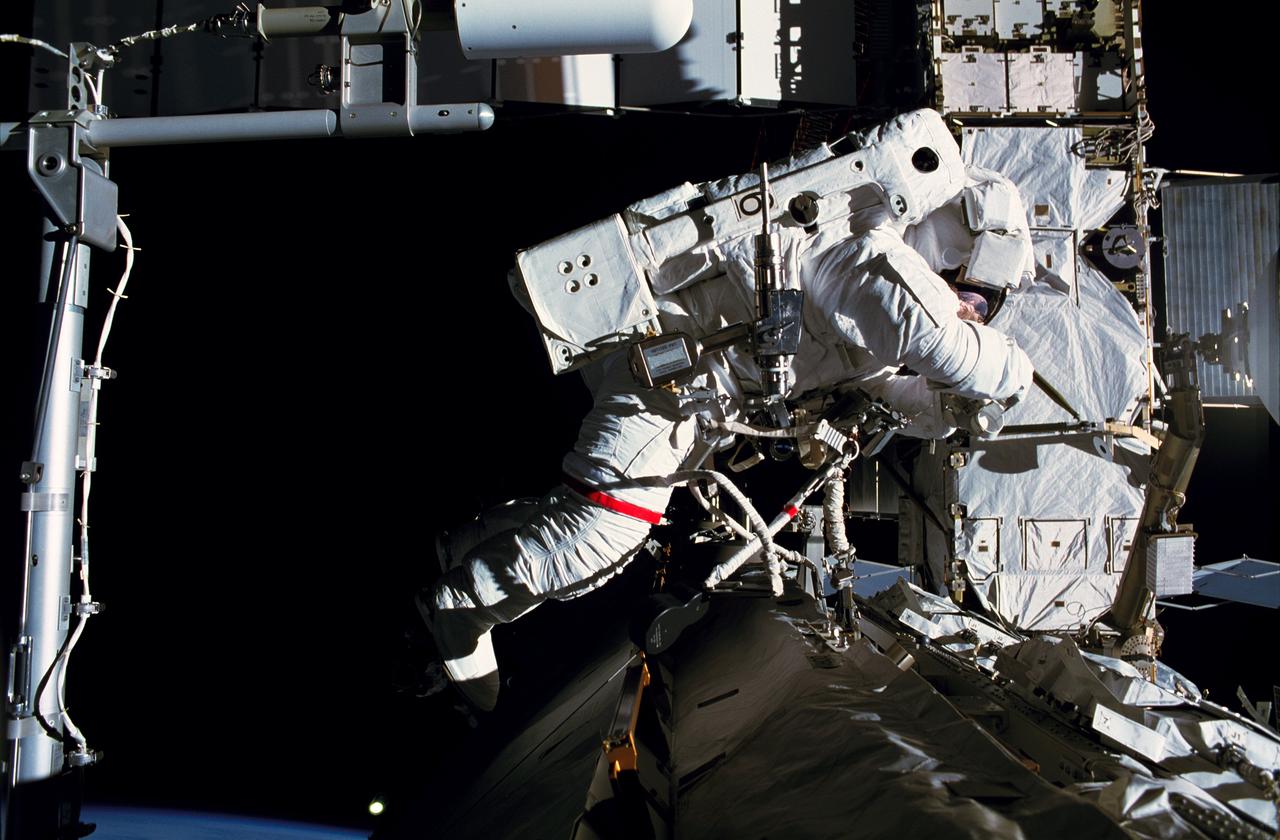
ISS006-344-010 (15 January 2003) --- Astronaut Kenneth D. Bowersox, Expedition 6 mission commander, performs P1 (P-One) Truss Zenith launch lock releases on the International Space Station (ISS) during a session of extravehicular activity (EVA). Astronaut Donald R. Pettit (out of frame), NASA ISS science officer, joined Bowersox on the spacewalk.
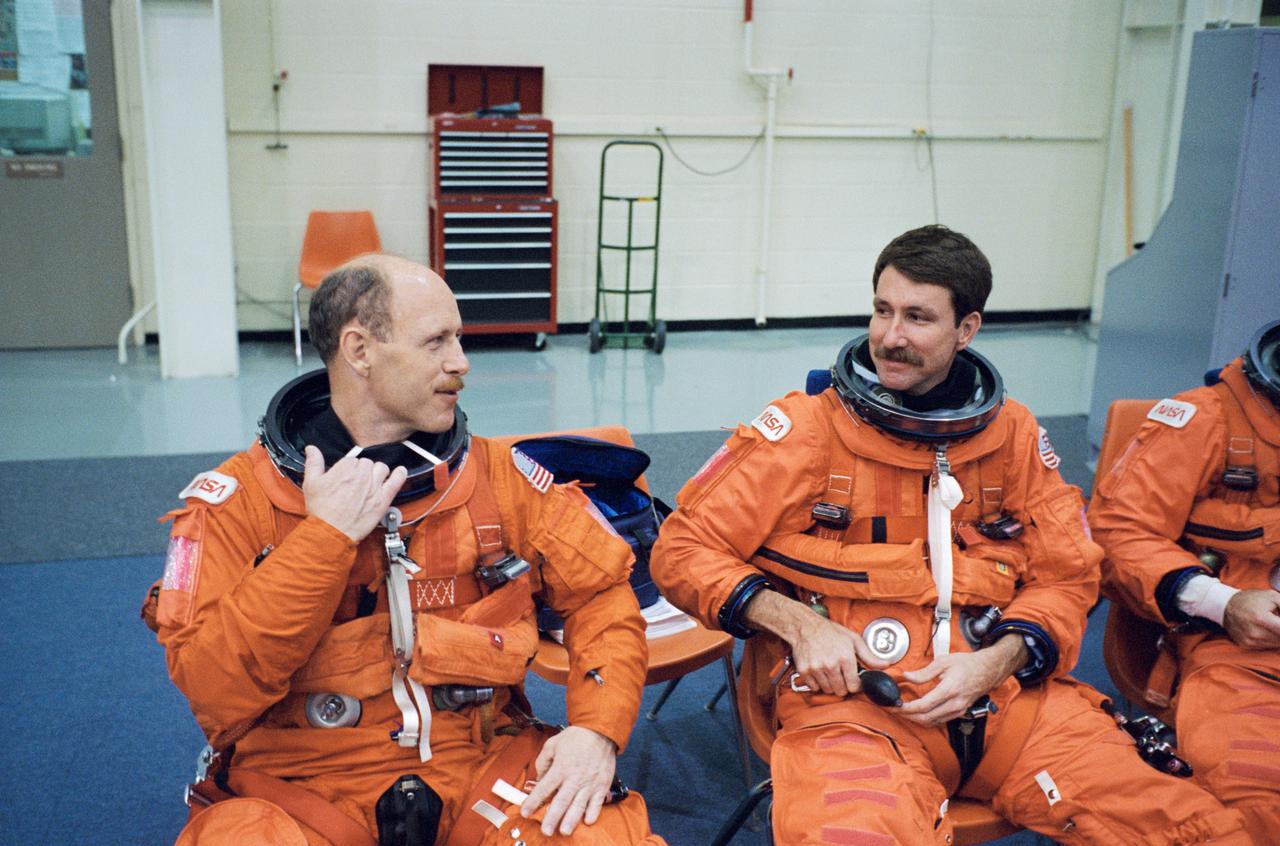
S95-09140 (27 Apr. 1995) --- Attired in training versions of the Space Shuttle partial pressure launch and entry garment, astronauts Kenneth D. Bowersox (left) and Kent V. Rominger prepare to rehearse an emergency situation with the Space Shuttle. The two are commander and pilot, respectively, for the United States Microgravity Laboratory (USML-2) mission. Bowersox was pilot for the USML-1 mission. The emergency egress training exercises took place in the Systems Integration Facility at the Johnson Space Center (JSC).
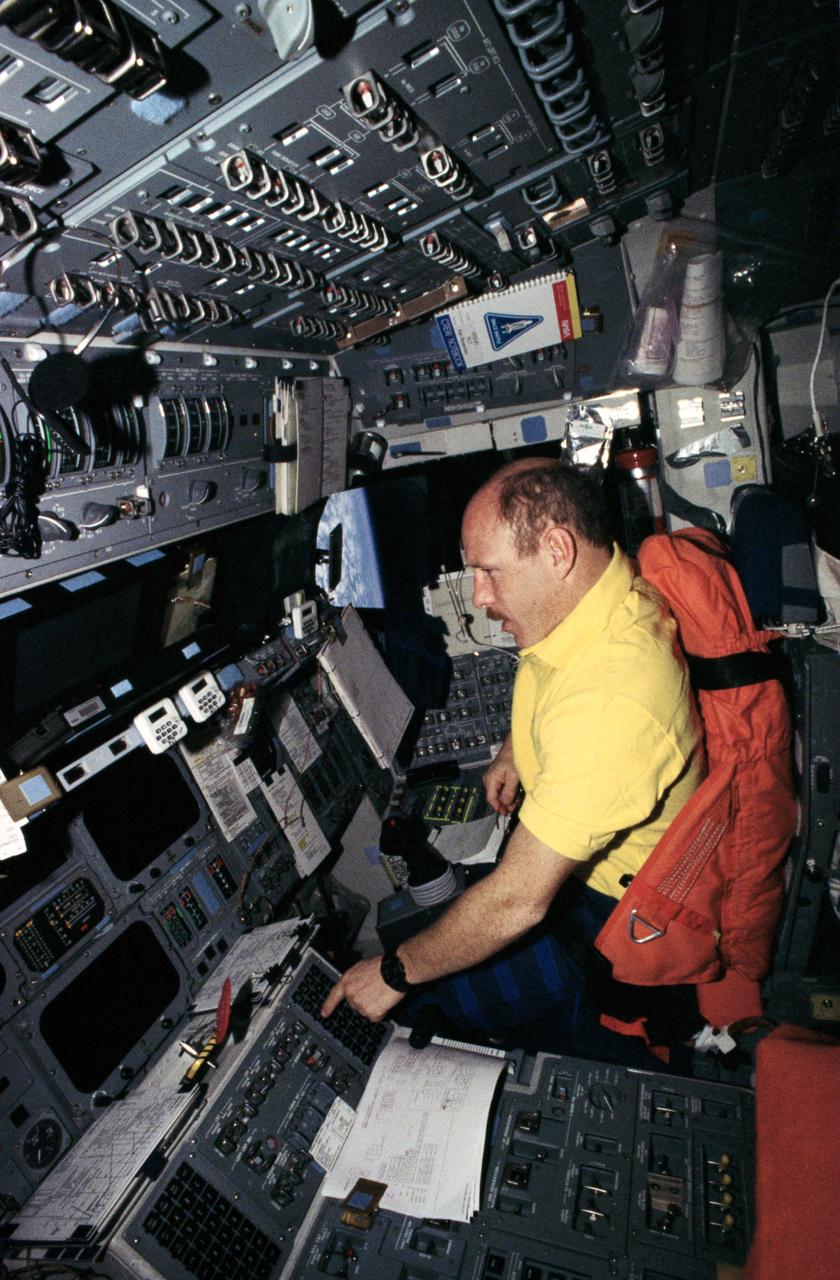
STS061-53-010 (4 Dec 1993) --- Astronaut Kenneth D. Bowersox mans the pilot's station on the Space Shuttle Endeavour during the eleven-day mission to service the Hubble Space Telescope (HST). Bowersox was one of three crew members who remained in the crew cabin while astronauts conducted a total of five space walks to perform various tasks on the HST.
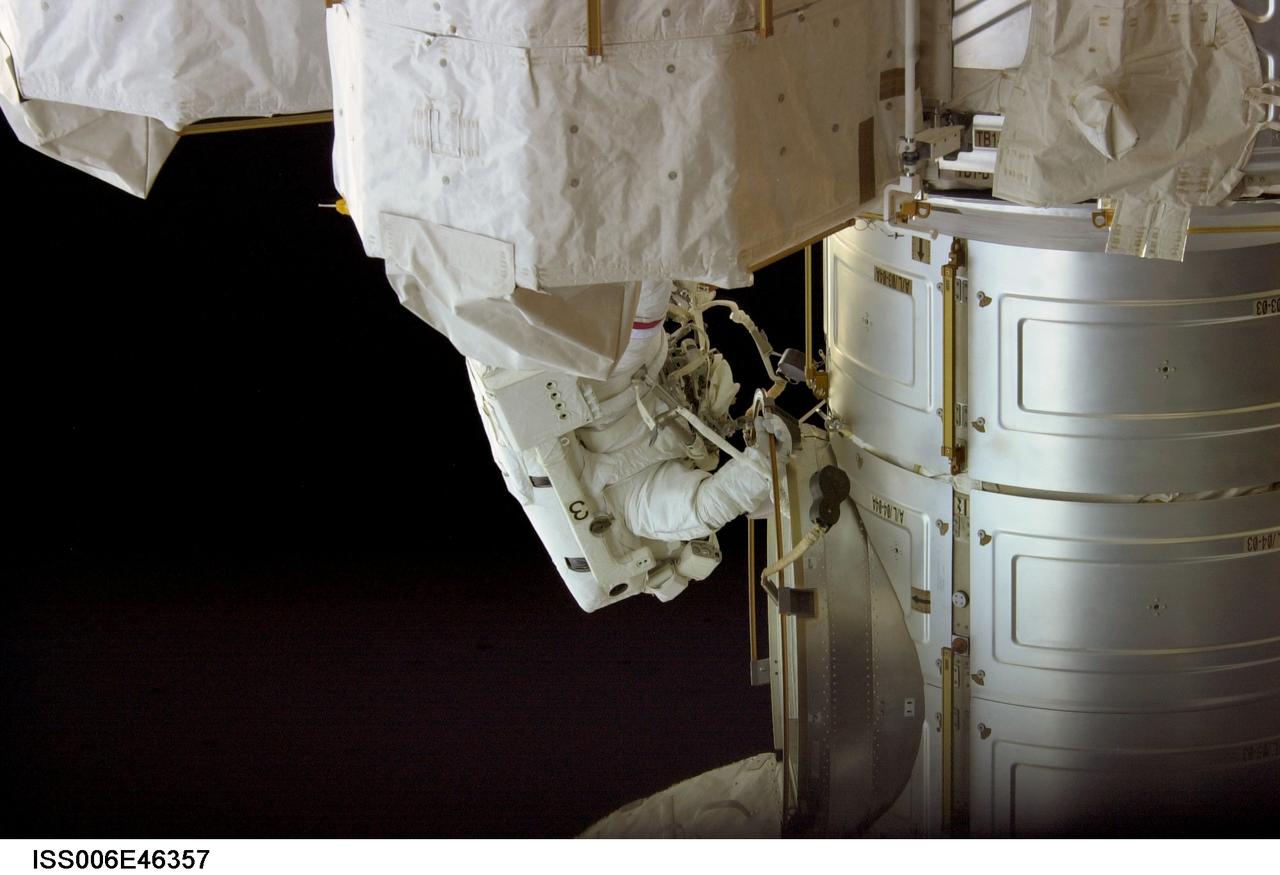
ISS006-E-46357 (8 April 2003) --- Astronaut Kenneth D. Bowersox, Expedition Six mission commander, emerges from the Quest airlock on the International Space Station (ISS) to begin a session of extravehicular activity (EVA) to perform a variety of maintenance tasks. Astronaut Donald R. Pettit (out of frame), NASA ISS science officer, joined Bowersox on the spacewalk.
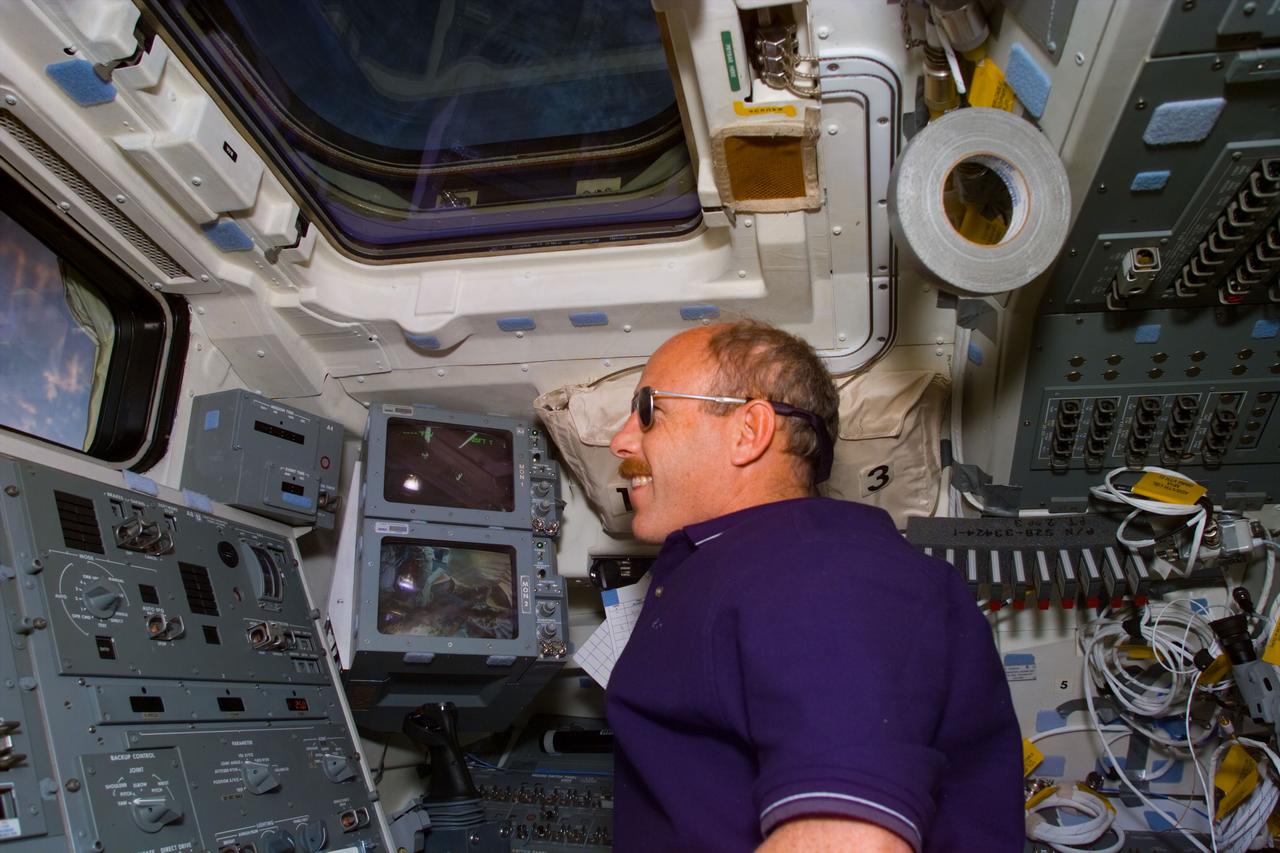
S82-E-5007 (12 Feb. 1997) --- Astronaut Kenneth D. Bowersox, who served as pilot for the 1993 servicing mission to the Hubble Space Telescope (HST) appears to be pondering scheduled duties when the Space Shuttle Discovery makes a rendezvous in space with HST later in the week. Bowersox is mission commander and will remain in the Space Shuttle Discovery's cabin while four crew mates at various times perform Extravehicular Activities (EVA) to accomplish a series of servicing tasks on the giant telescope. This view was taken with an Electronic Still Camera (ESC).
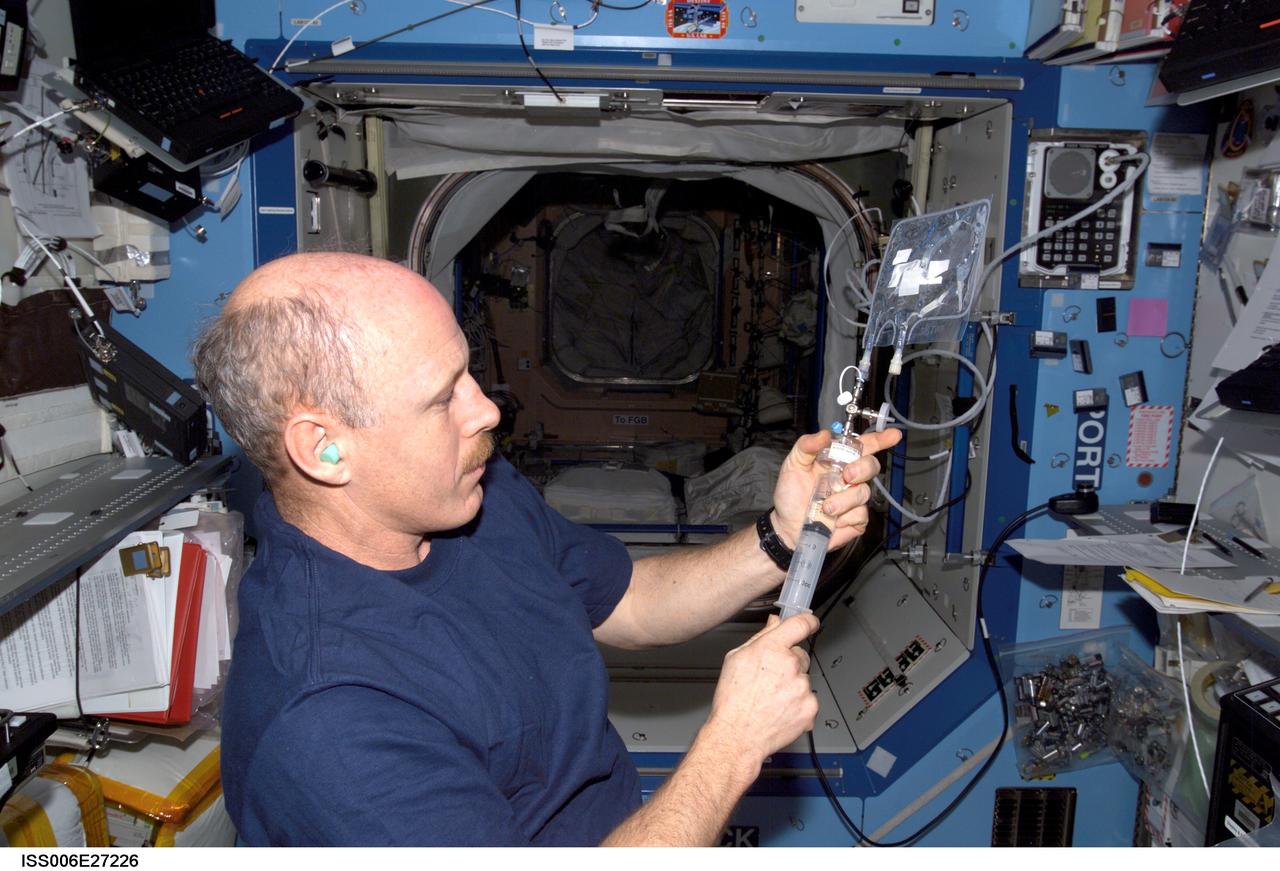
ISS006-E-27226 (17 February 2003) --- Astronaut Kenneth D. Bowersox, Expedition Six mission commander, uses the water microbiology kit (WMK) to collect water samples for in-flight chemistry/microbiology analysis in the Destiny laboratory on the International Space Station (ISS).
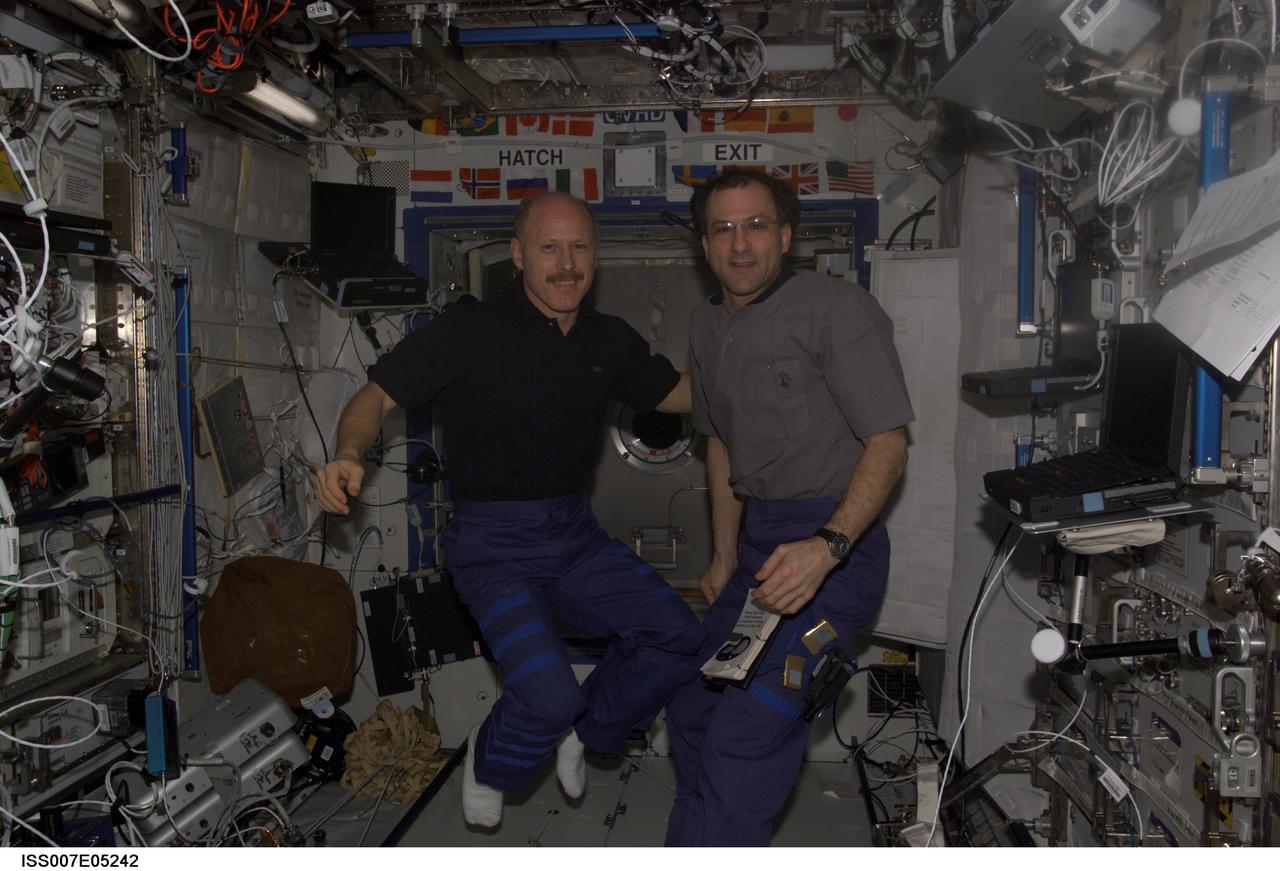
ISS007-E-05242 (3 May 2003) --- Astronauts Kenneth D. Bowersox (left) and Donald R. Pettit, Expedition Six mission commander and NASA ISS science officer, respectively, are pictured in the Destiny laboratory on the International Space Station (ISS).

Ken Bowersox, acting Associate Administrator for NASA's Human Exploration and Operations Mission Directorate, speaks about NASA’s Moon to Mars Exploration Plans during a keynote at the 70th International Astronautical Congress, Monday, Oct. 21, 2019 at the Walter E. Washington Convention Center in Washington. Photo Credit: (NASA/Joel Kowsky)
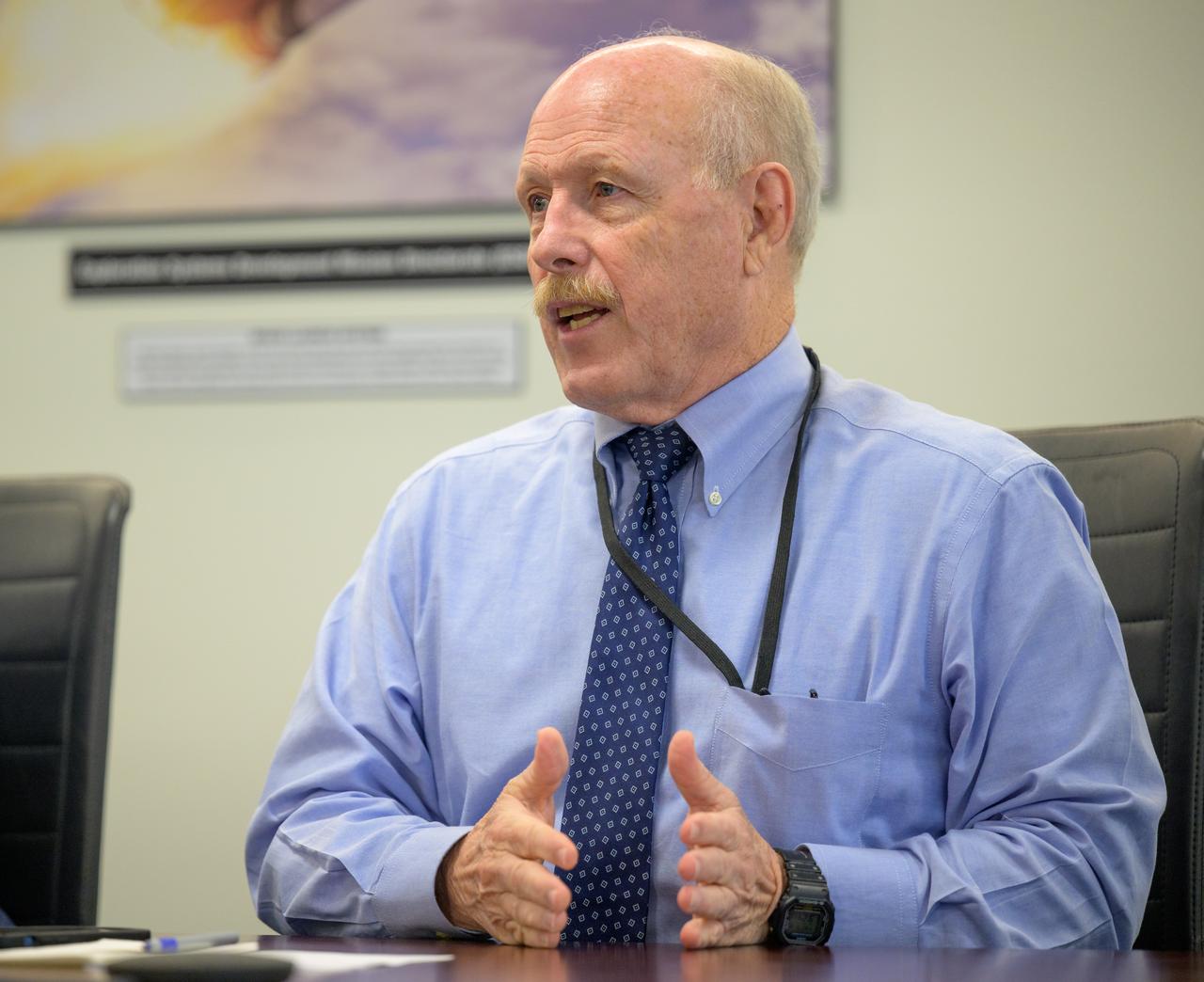
Associate Administrator for NASA's Space Operations Mission Directorate Kenneth Bowersox speaks with acting NASA Administrator Sean Duffy, Friday, July 18, 2025, at the Mary W. Jackson NASA Headquarters Building in Washington. Photo Credit: (NASA/Bill Ingalls)
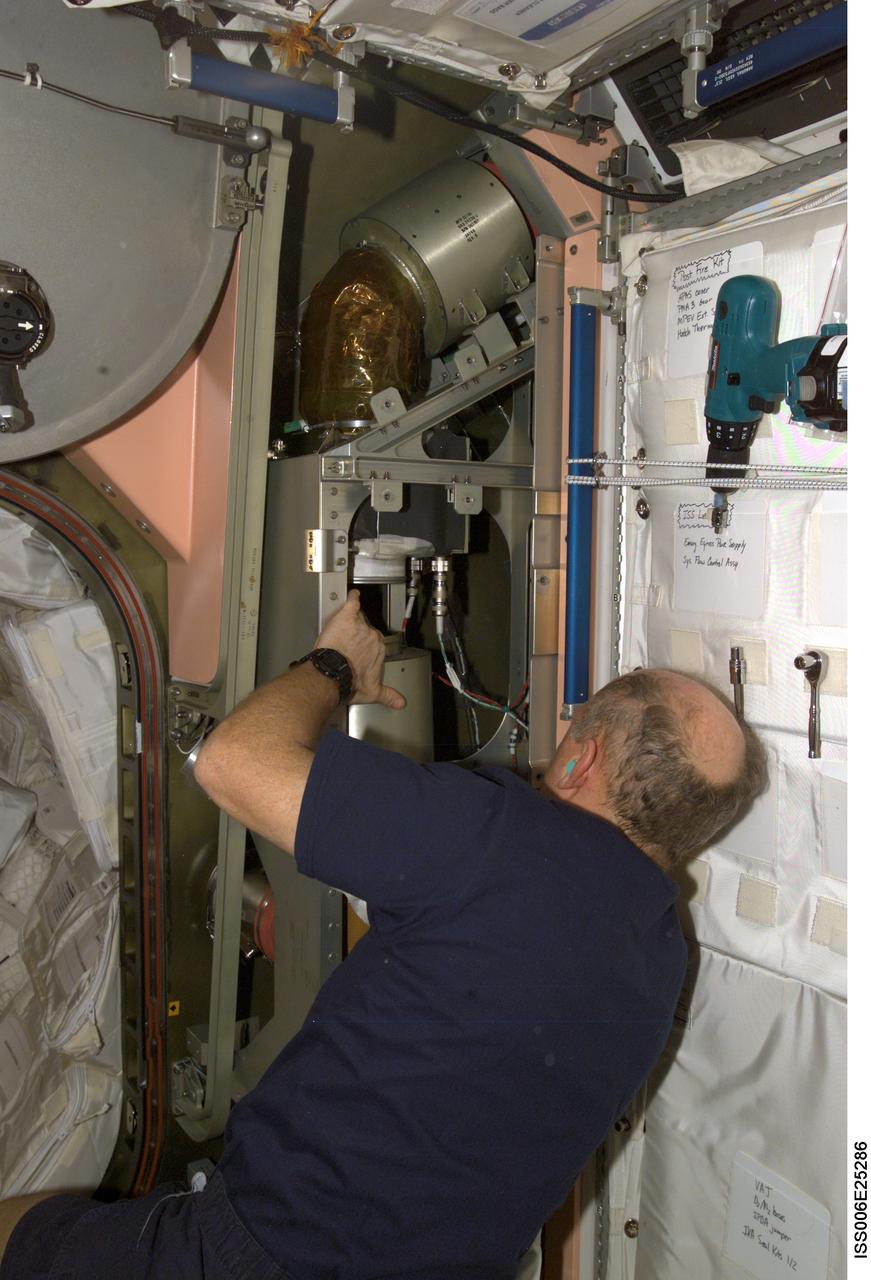
ISS006-E-25286 (12 February 2003) --- Astronaut Kenneth D. Bowersox, Expedition Six mission commander, performs routine maintenance on the air handler system in the Unity node on the International Space Station (ISS).
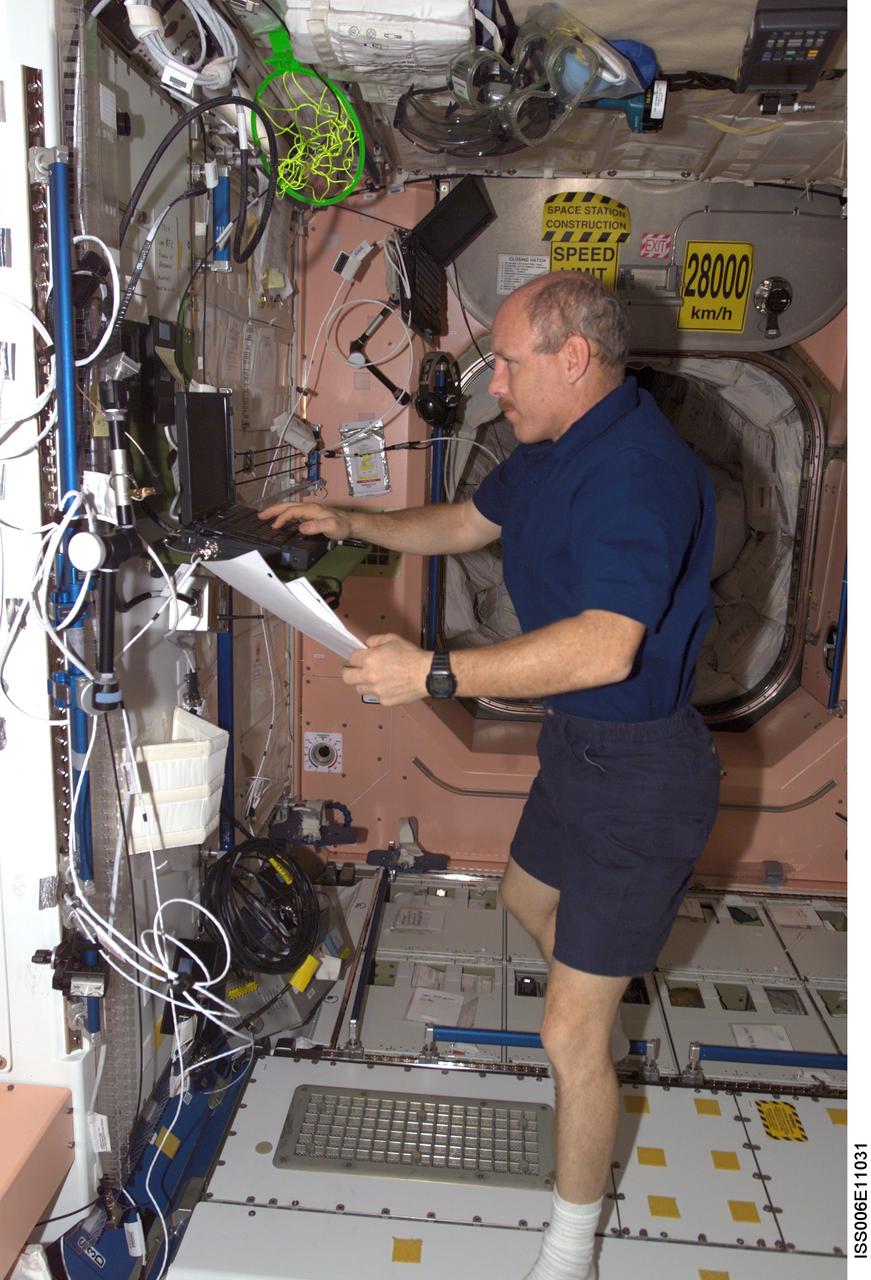
ISS006-E-11031 (26 December 2002) --- Astronaut Kenneth D. Bowersox, Expedition Six mission commander, works in the Unity node on the International Space Station (ISS).
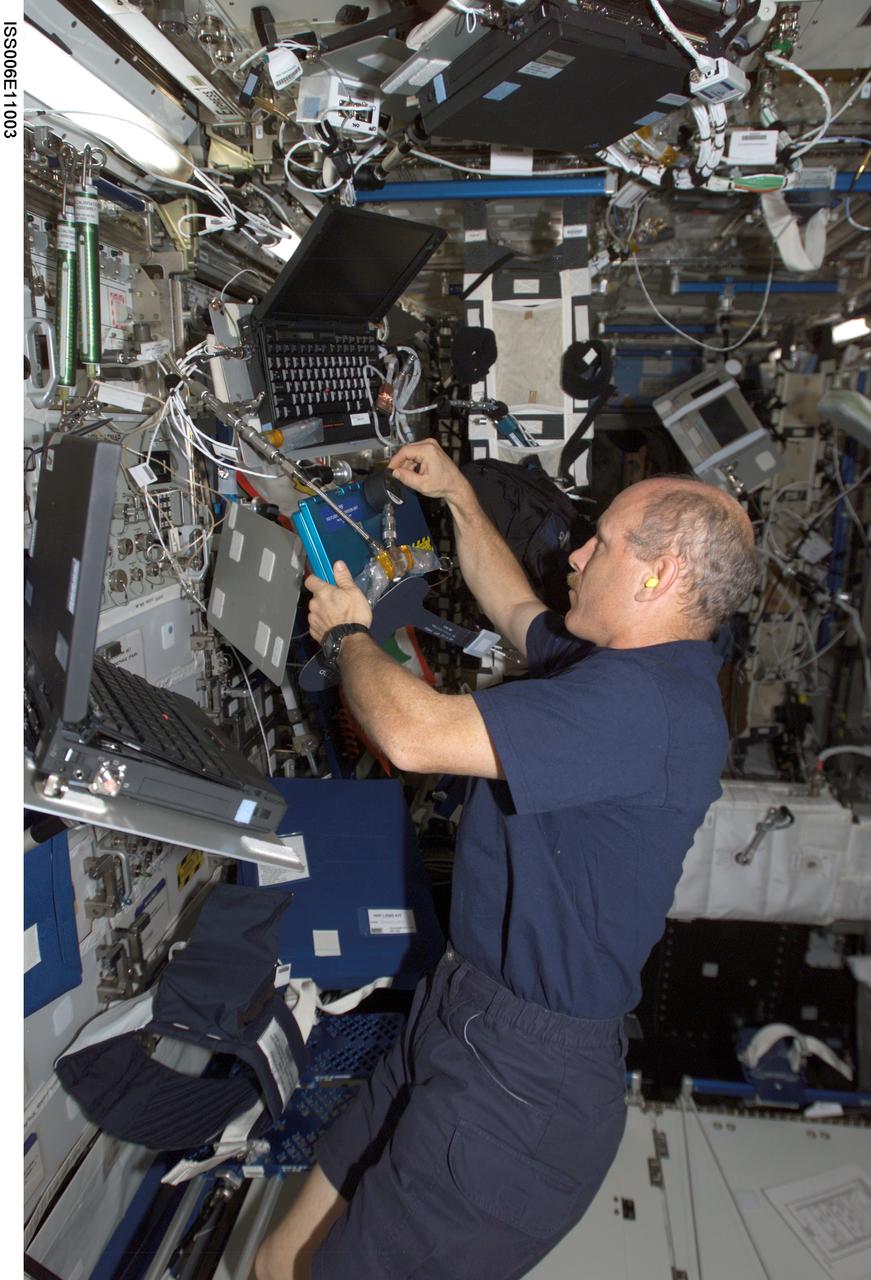
ISS006-E-11003 (24 December 2002) --- Astronaut Kenneth D. Bowersox, Expedition Six mission commander, works in the Destiny laboratory on the International Space Station (ISS).
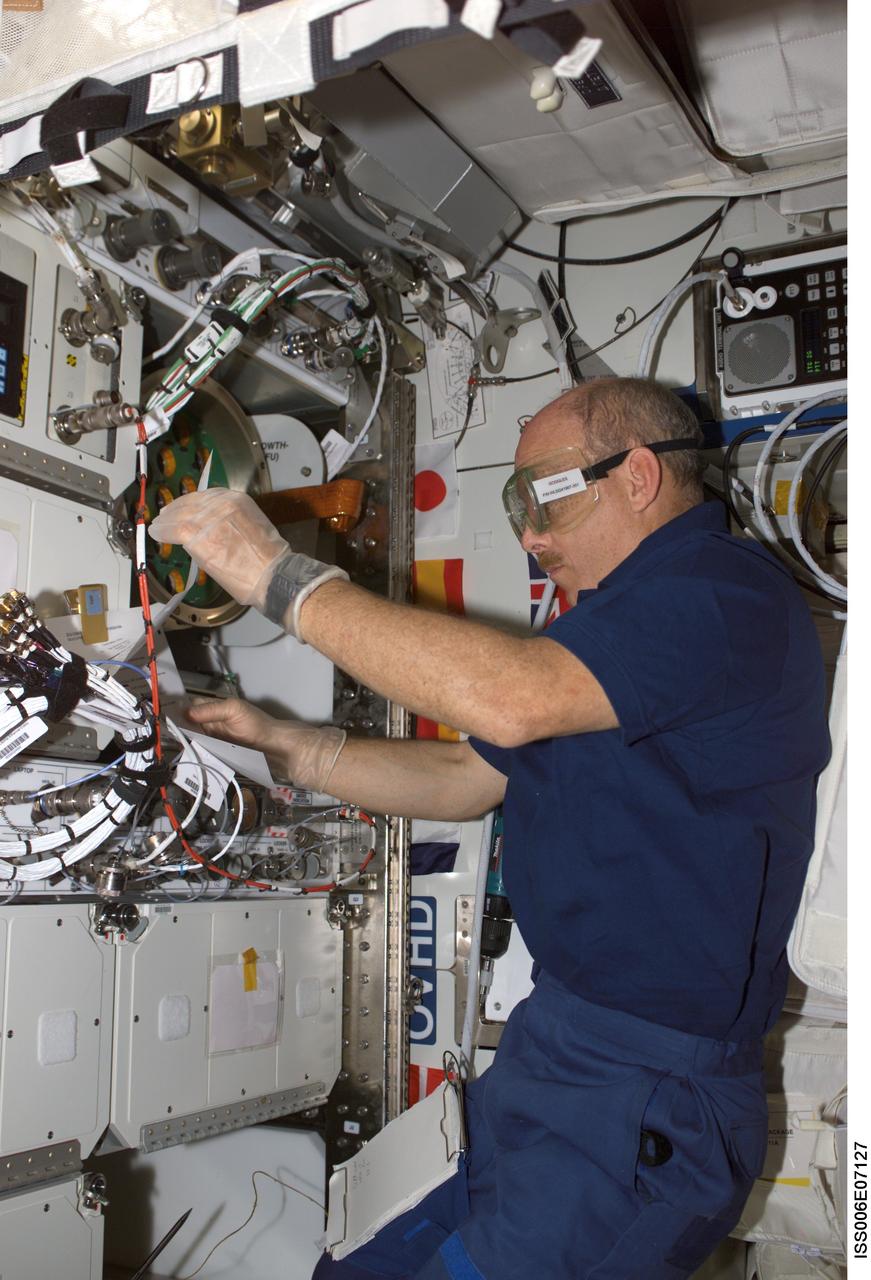
ISS006-E-07127 (5 December 2002) --- Astronaut Kenneth D. Bowersox, Expedition Six mission commander, works with the Zeolite Crystal Growth (ZCG) experiment in the Destiny laboratory on the International Space Station (ISS).
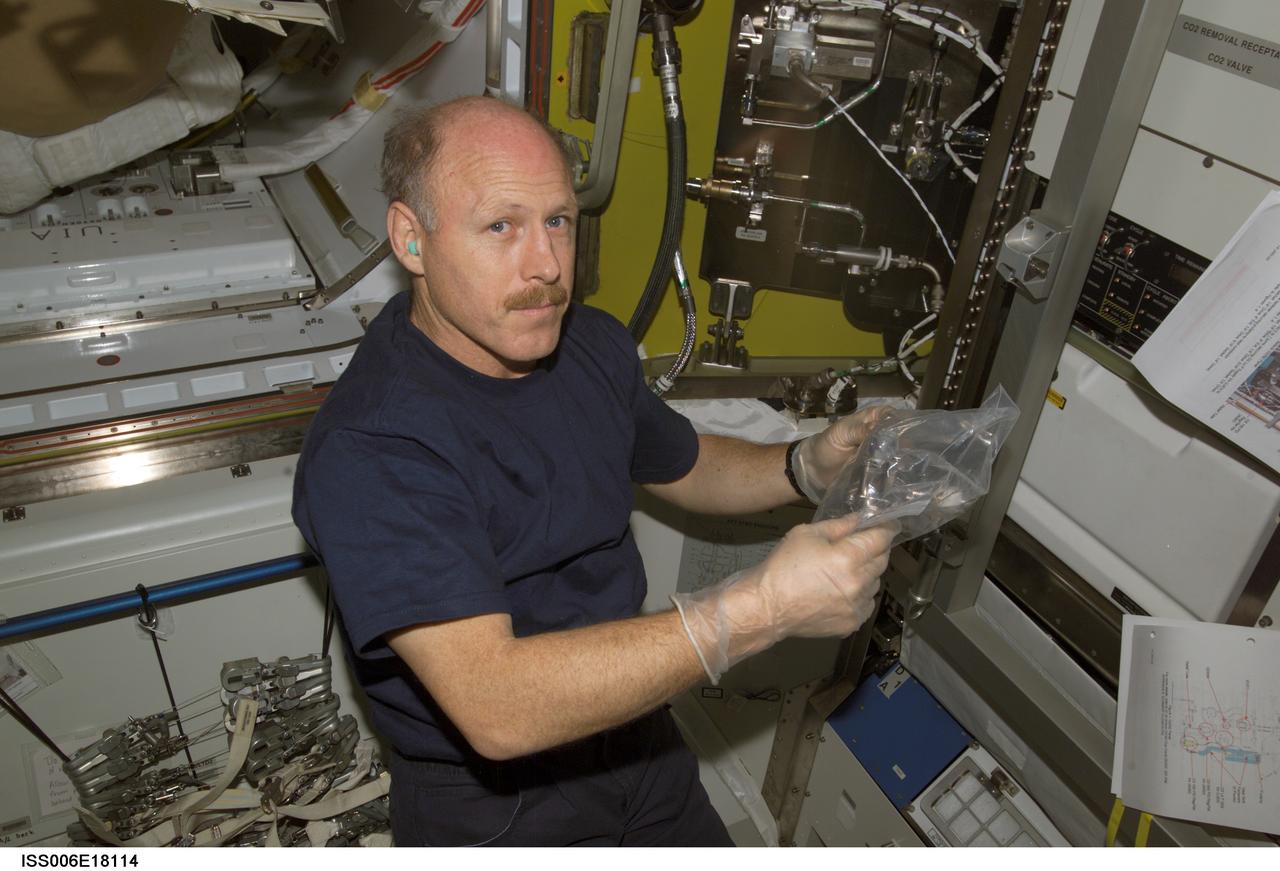
ISS006-E-18114 (18 January 2003) --- Astronaut Kenneth D. Bowersox, Expedition Six mission commander, is pictured in the Quest Airlock on the International Space Station (ISS).
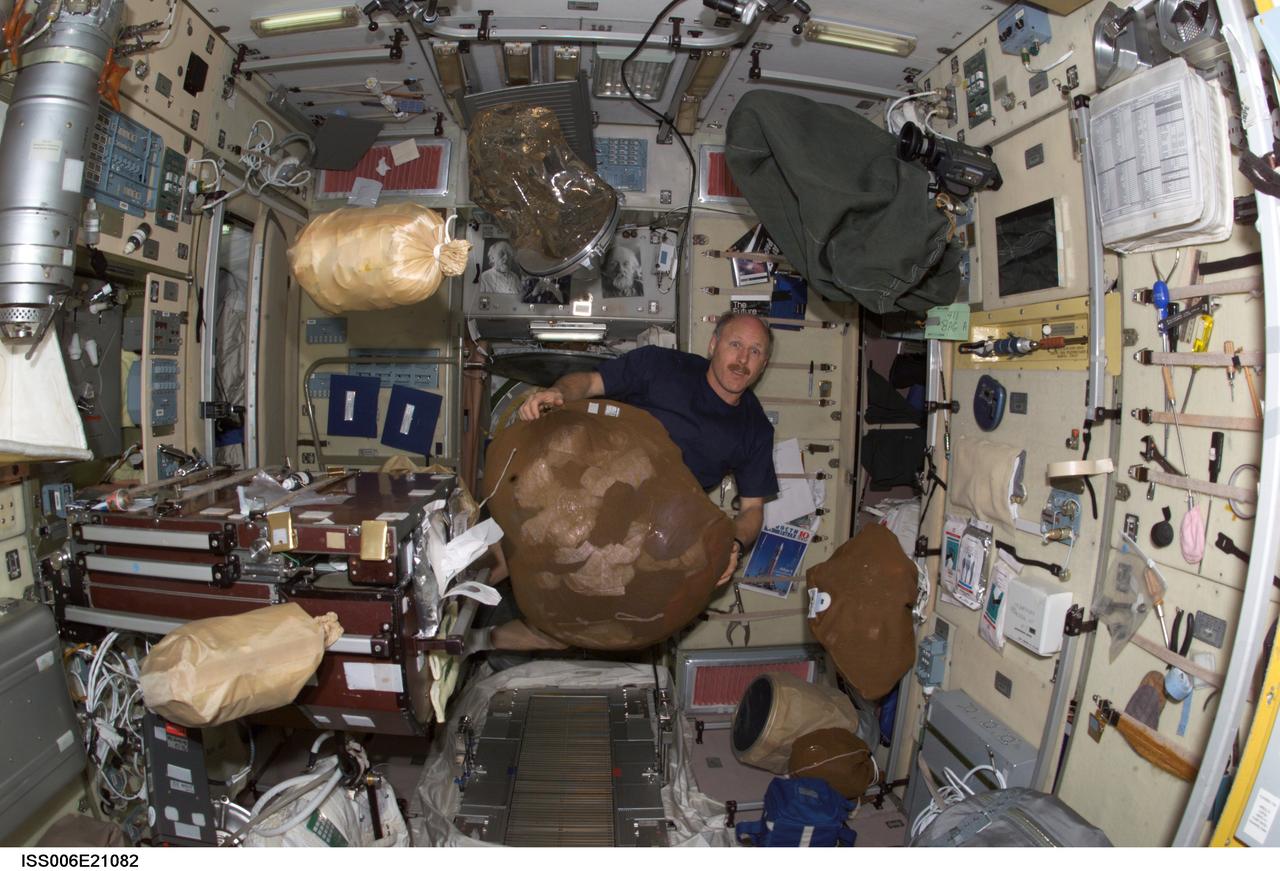
ISS006-E-21082 (28 January 2003) --- Astronaut Kenneth D. Bowersox, Expedition Six mission commander, moves bagged items from the Progress 9 to the Zvezda Service Module on the International Space Station (ISS).
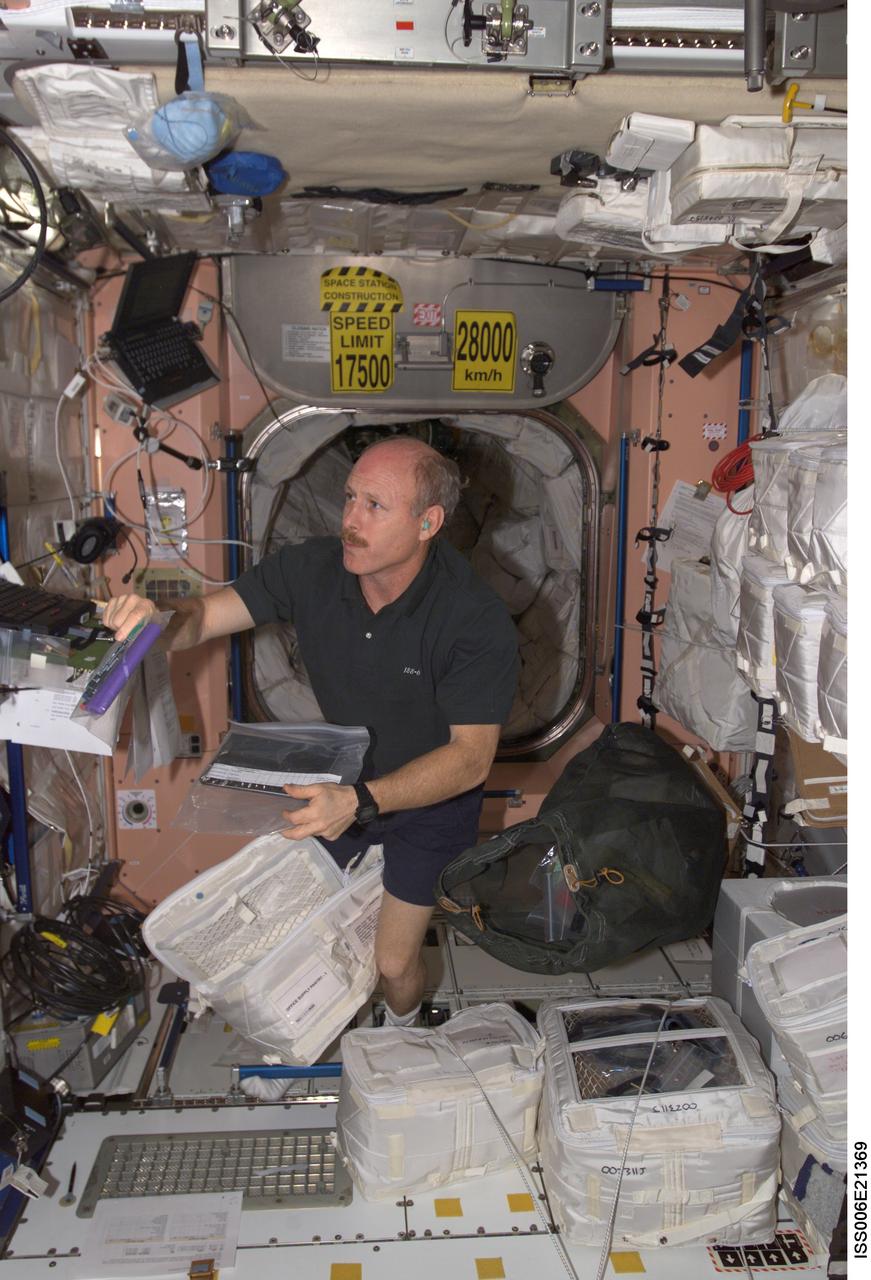
ISS006-E-21369 (31 January 2003) --- Astronaut Kenneth D. Bowersox, Expedition Six mission commander, moves toward a computer in the Unity node on the International Space Station (ISS).
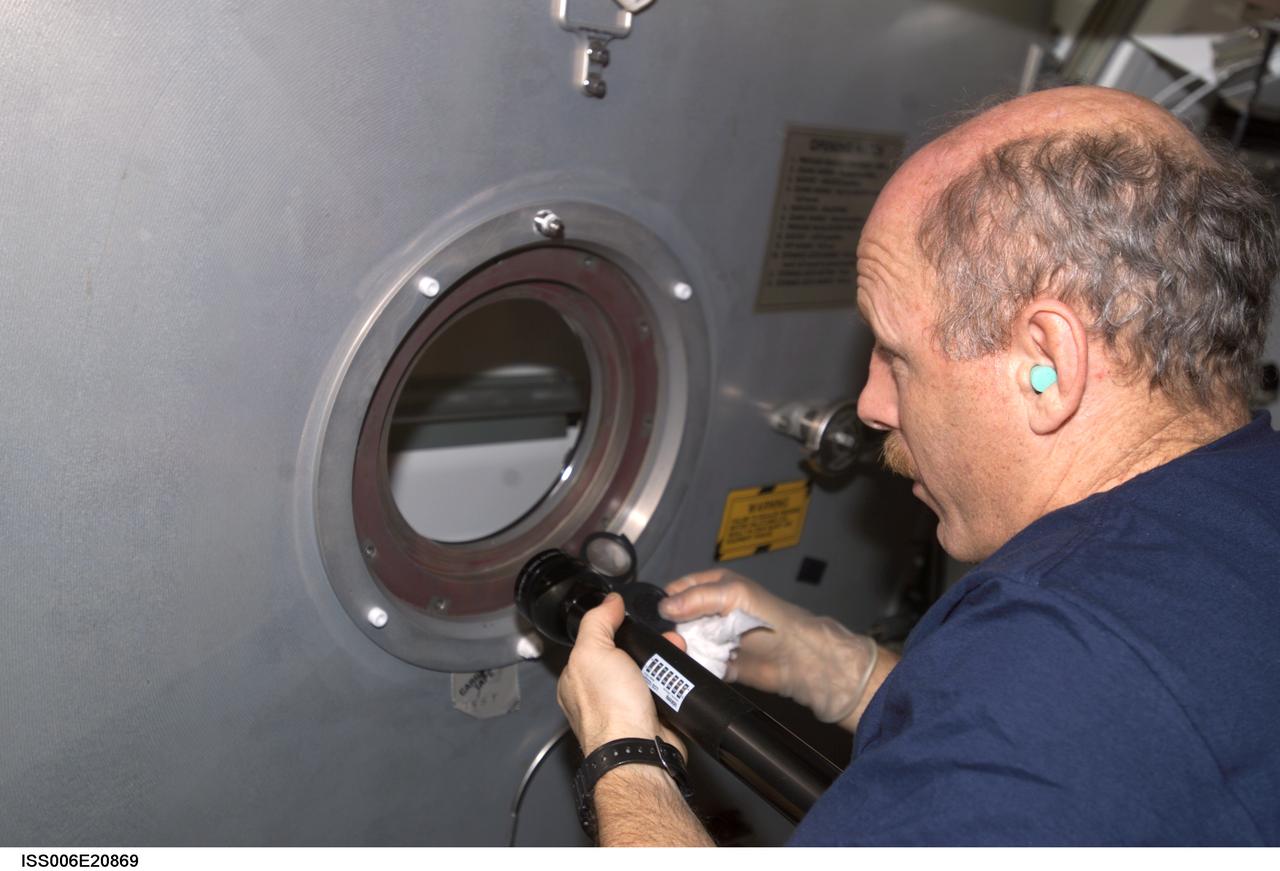
ISS006-E-20869 (26 January 2003) --- Astronaut Kenneth D. Bowersox, Expedition Six mission commander, holds a flashlight as he looks through a portal in the Zvezda Service Module on the International Space Station (ISS).
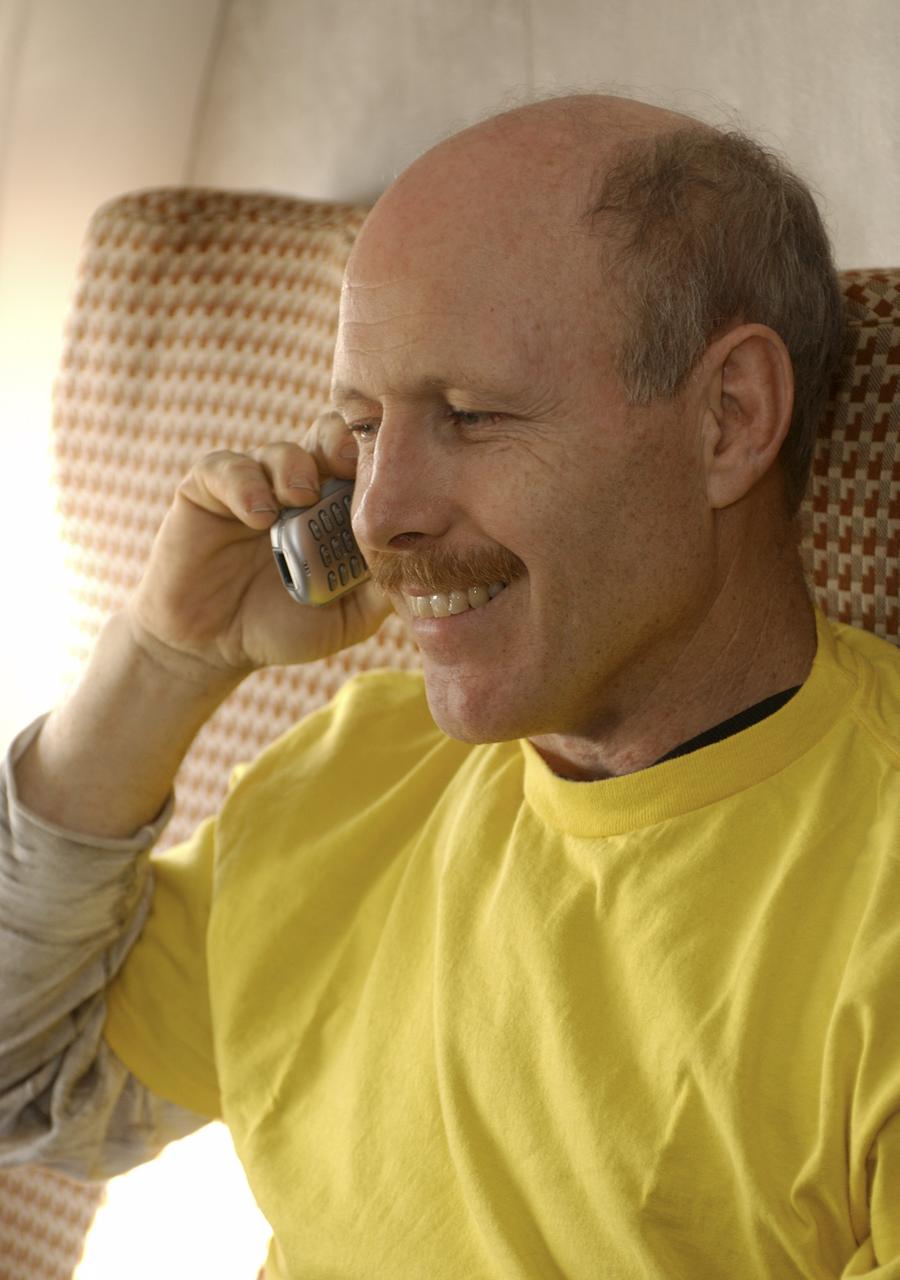
Expedition 6 Commander Ken Bowersox calls his wife Annie from the airplane prior to departure from Astana, Kazakhstan to Moscow, Tuesday, May 4, 2003. Photo Credit: (NASA/Bill Ingalls)
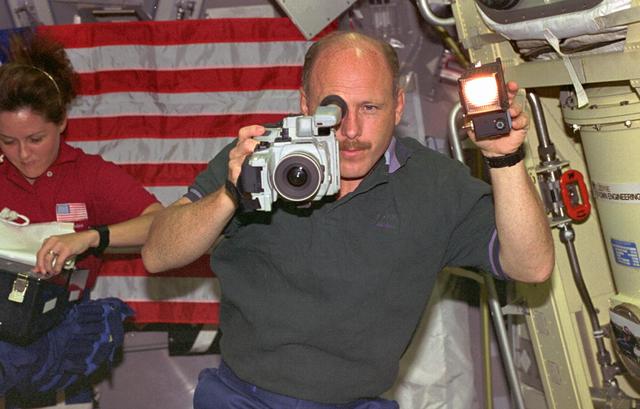
STS073-230-014 (20 October - 5 November 1995) --- Astronaut Kenneth D. Bowersox, STS-73 mission commander, uses a camcorder to record United States Microgravity Laboratory 2 (USML-2) activities onboard the Space Shuttle Columbia. Nearby, astronaut Kathryn C. Thornton, payload commander, prepares to open a supply chest to support one of many science experiments conducted by the seven-member crew during the 16-day USML-2 flight.
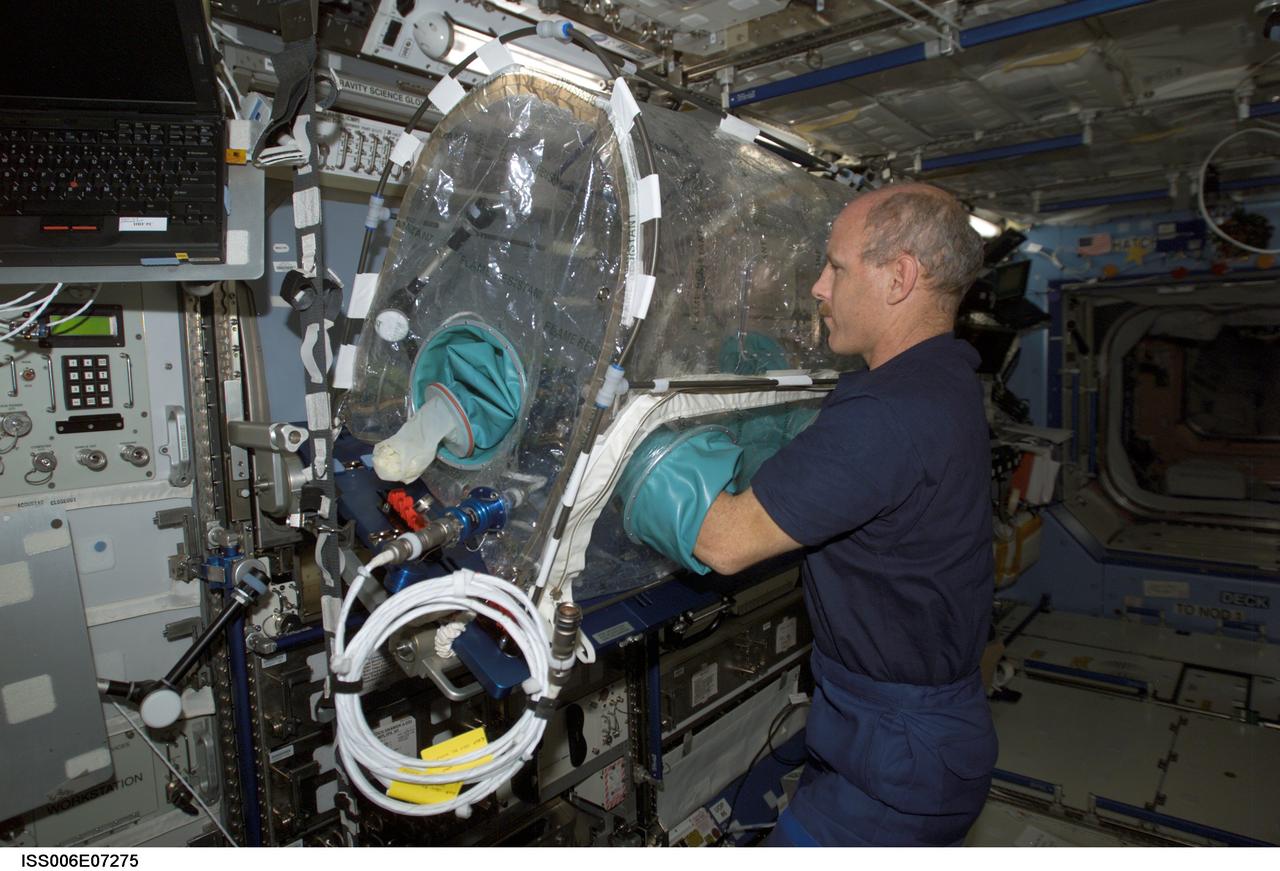
ISS006-E-07275 (16 December 2002) --- Astronaut Kenneth D. Bowersox, Expedition Six mission commander, works with an experiment in a portable glovebox facility called the Maintenance Work Area (MWA) in the Destiny laboratory on the International Space Station (ISS).
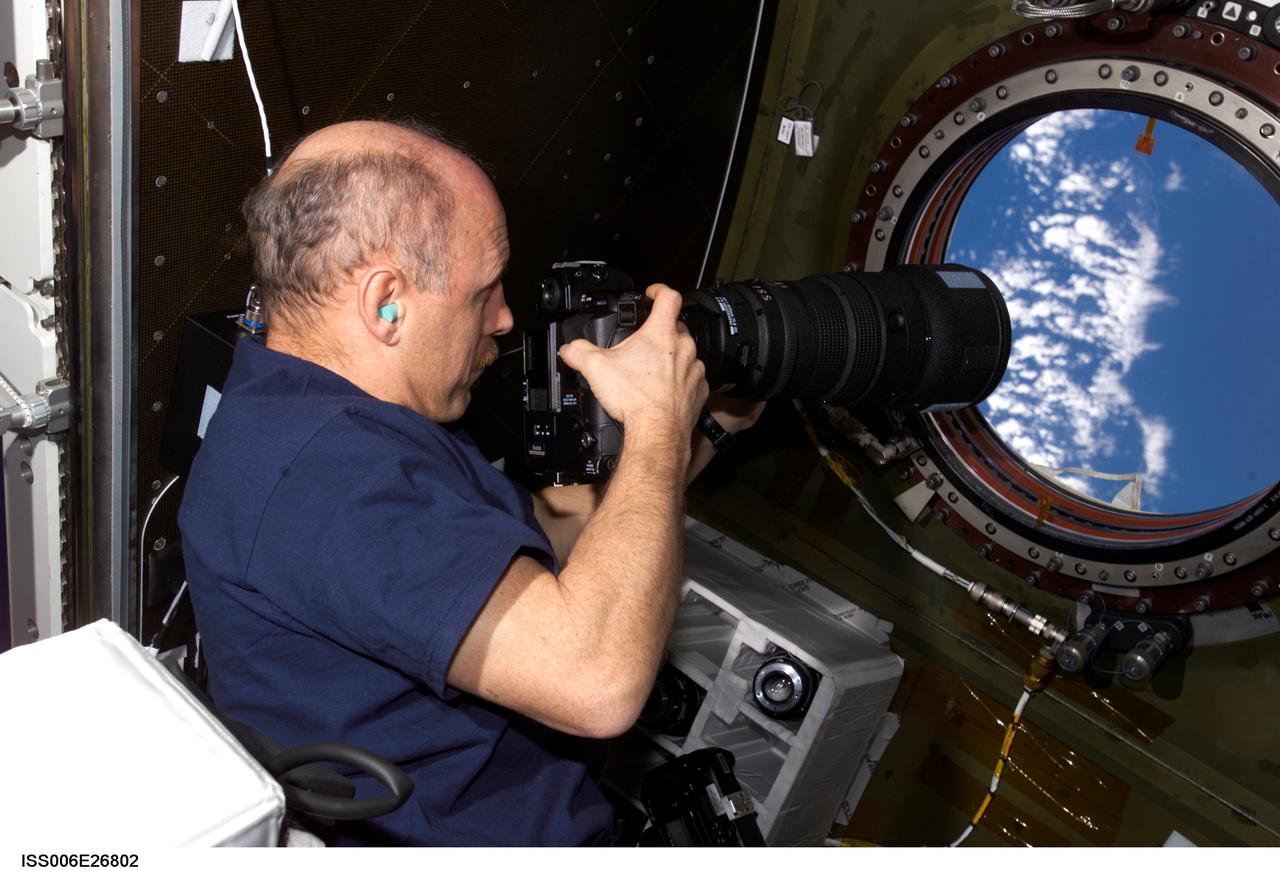
ISS006-E-26802 (14 February 2003) --- Astronaut Kenneth D. Bowersox, Expedition Six mission commander, uses a still camera to photograph the topography of a point on Earth from the nadir window in the Destiny laboratory on the International Space Station (ISS).
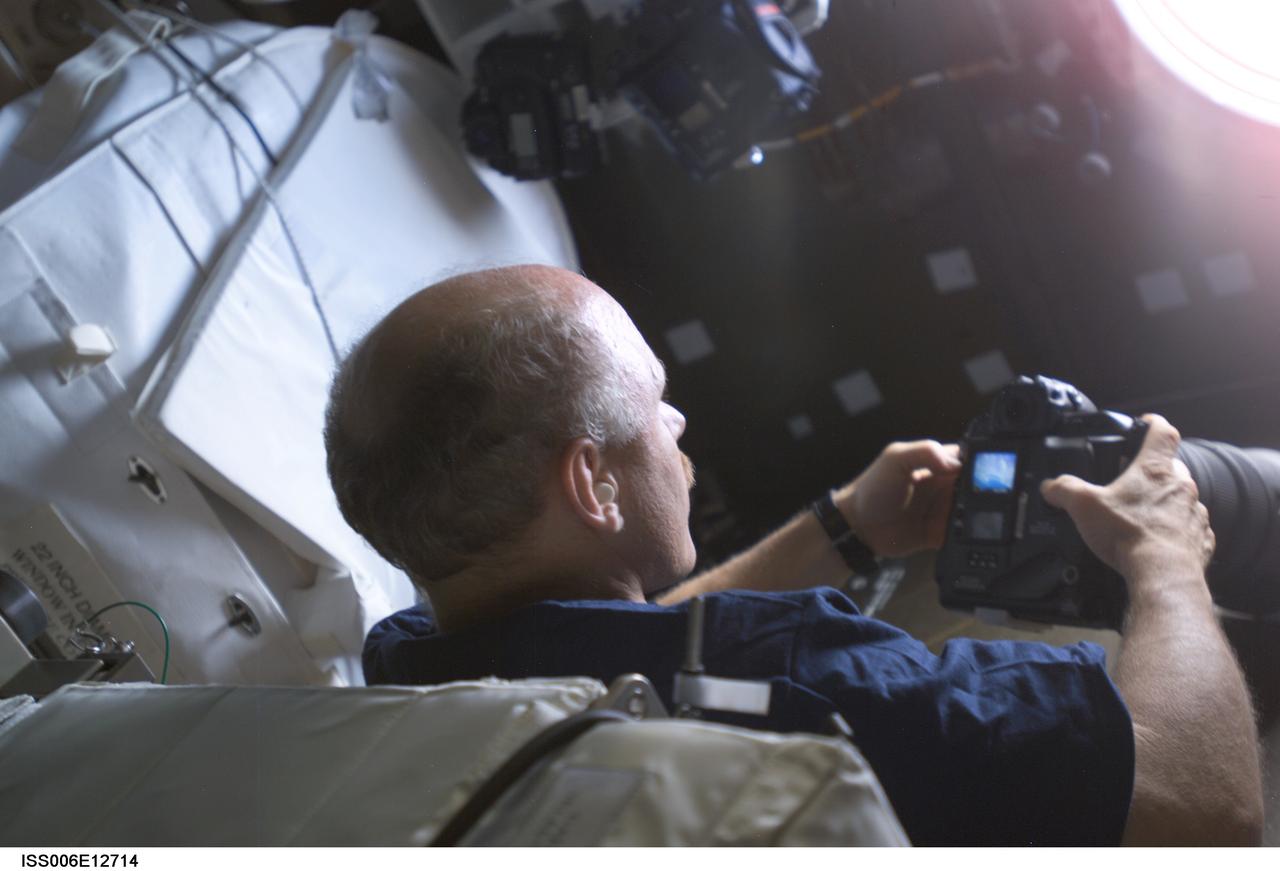
ISS006-E-12714 (27 December 2002) --- Astronaut Kenneth D. Bowersox, Expedition Six mission commander, holds a still camera as he studies the topography of a point on Earth from the nadir window in the Destiny laboratory on the International Space Station (ISS).
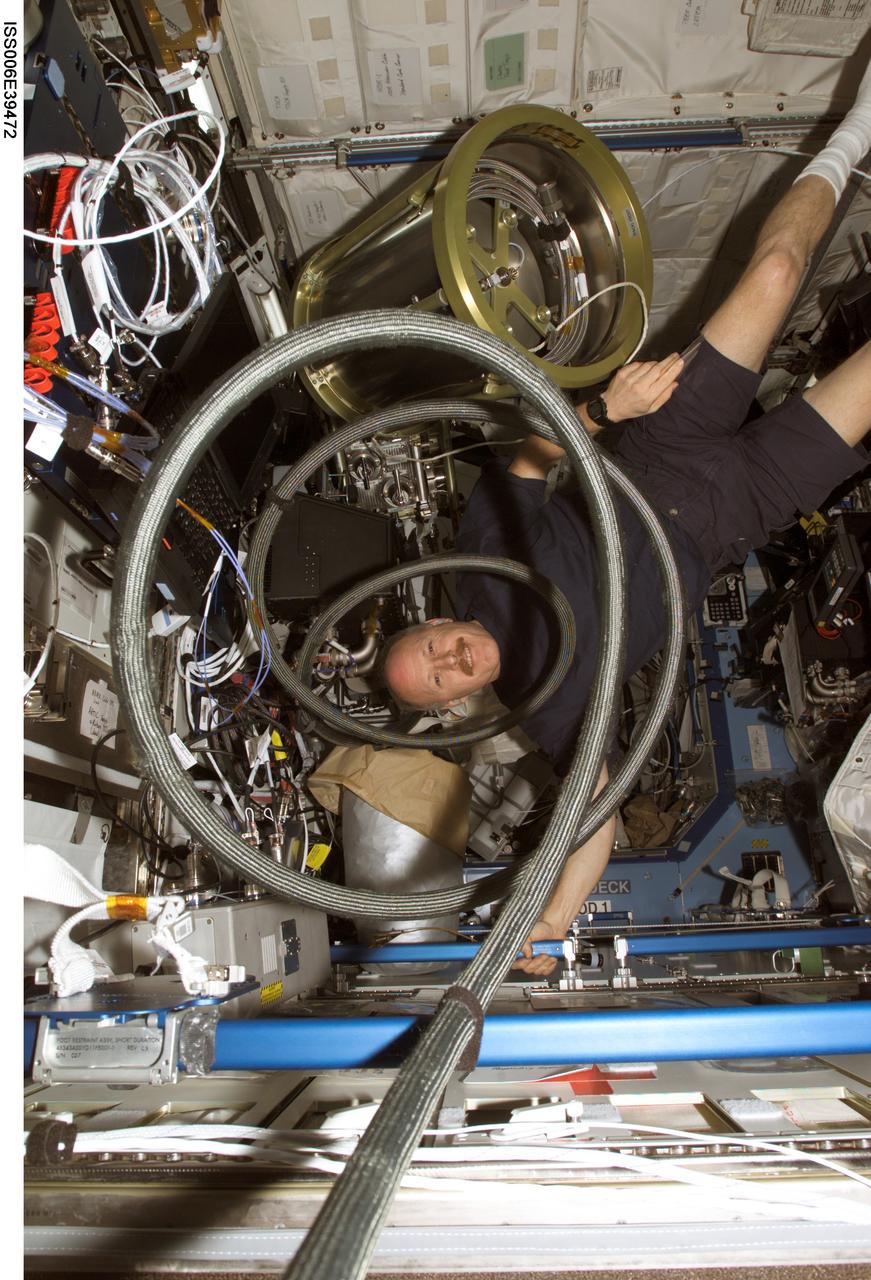
ISS006-E-39472 (18 March 2003) --- Astronaut Kenneth D. Bowersox, Expedition Six mission commander, floats with a supply tank, which is a part of the Internal Thermal Control System (ITCS) in the Destiny laboratory on the International Space Station (ISS).
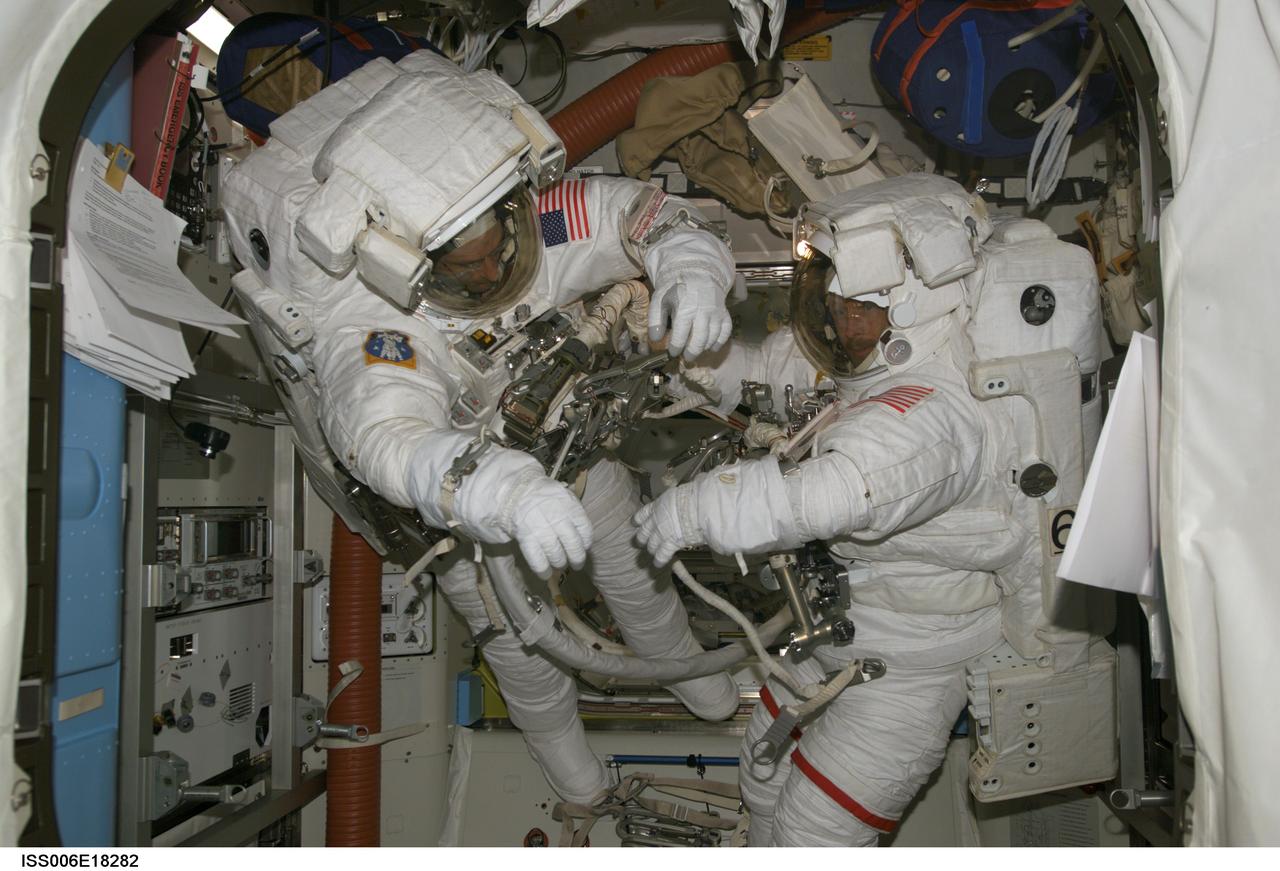
ISS006-E-18282 (13 January 2003) --- Astronauts Kenneth D. Bowersox (right) and Donald R. Pettit, Expedition Six mission commander and NASA ISS science officer, respectively, are pictured in the Quest Airlock on the International Space Station (ISS). Bowersox and Pettit are wearing their Extravehicular Mobility Unit (EMU) spacesuits as they prepare for the mission's only scheduled session of extravehicular activity (EVA) on January 15, 2003.
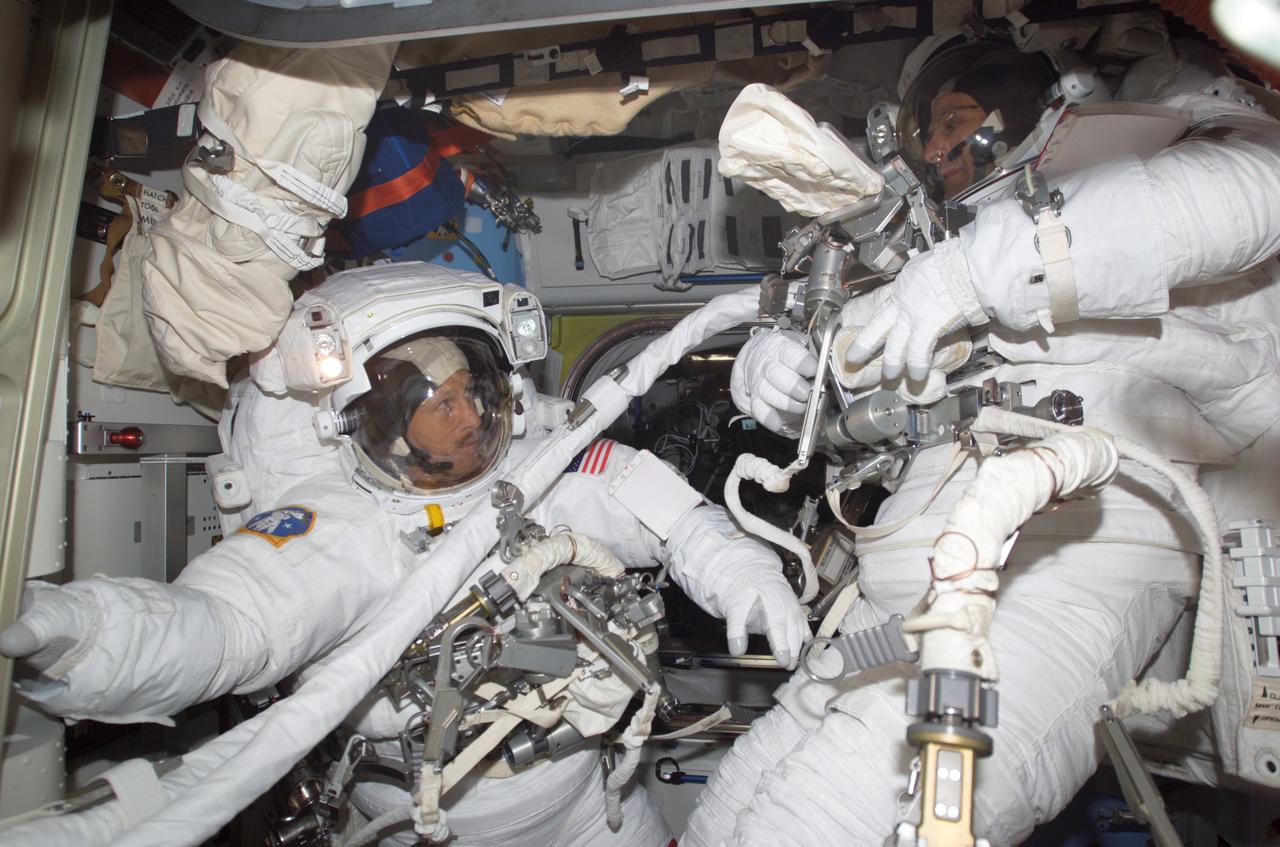
ISS006-E-18284 (13 January 2003) --- Astronauts Kenneth D. Bowersox (left) and Donald R. Pettit, Expedition 6 mission commander and NASA ISS science officer, respectively, are pictured in the Quest Airlock on the International Space Station (ISS). Bowersox and Pettit are wearing their Extravehicular Mobility Unit (EMU) spacesuits as they prepare for the mission’s only scheduled session of extravehicular activity (EVA) on January 15, 2003.
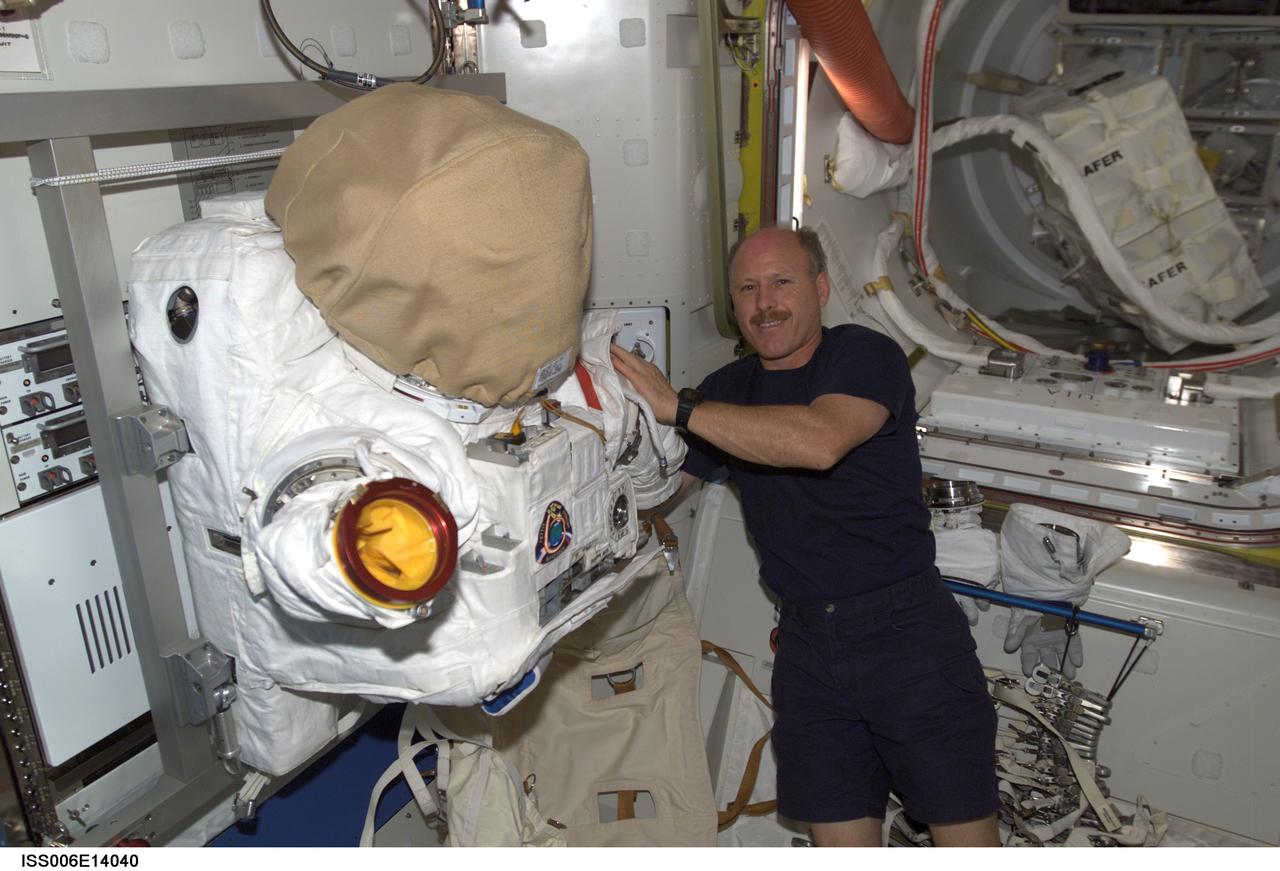
ISS006-E-14040 (4 January 2003) --- Astronaut Kenneth D. Bowersox, Expedition Six mission commander, is pictured near the torso portion of an Extravehicular Mobility Unit (EMU) spacesuit stored in the Quest Airlock on the International Space Station (ISS). Bowersox and Donald R. Pettit, NASA ISS science officer, are scheduled for the mission’s only spacewalk on January 15, 2003 where they will continue outfitting the station’s Port One (P1) truss.
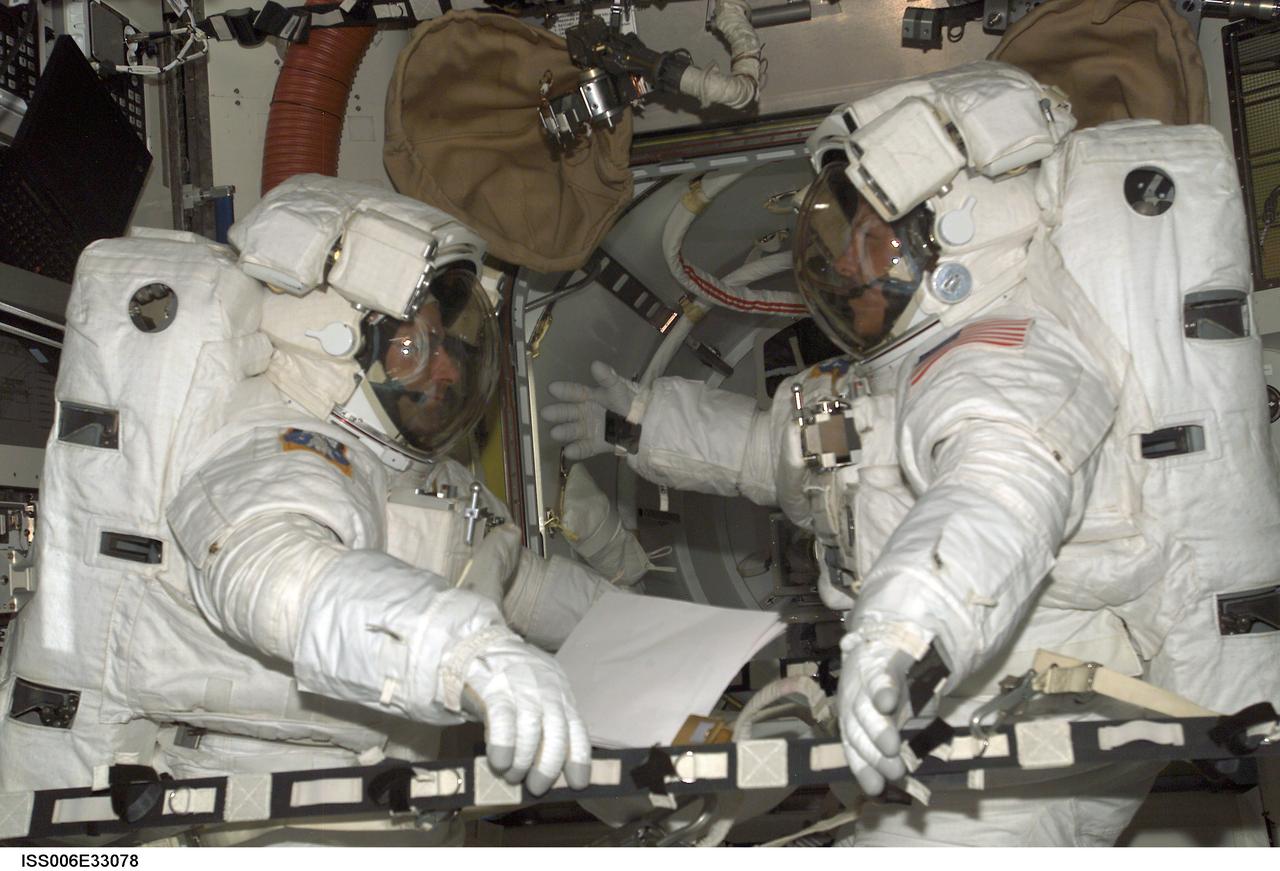
ISS006-E-33078 (24 February 2003) --- Astronauts Kenneth D. Bowersox (right) and Donald R. Pettit, Expedition Six mission commander and NASA ISS science officer, respectively, participate in a scheduled extravehicular activity (EVA) development test objective (DTO) in the Quest Airlock on the International Space Station (ISS). The test demonstrated the ability of two crewmembers to safely get into the American Extravehicular Mobility Unit (EMU) spacesuit without the assistance of a third crewmember; that ability is a prerequisite to sending smaller crews to ISS while the space shuttle fleet remains grounded during the investigation of the Columbia accident. Bowersox and Pettit helped each other into their EMU spacesuits, donned jet backpacks called Simplified Aid for EVA Rescue (SAFER), set up the necessary equipment for a pre-breathe of oxygen to purge nitrogen from their bloodstreams, and then got out of the spacesuits.
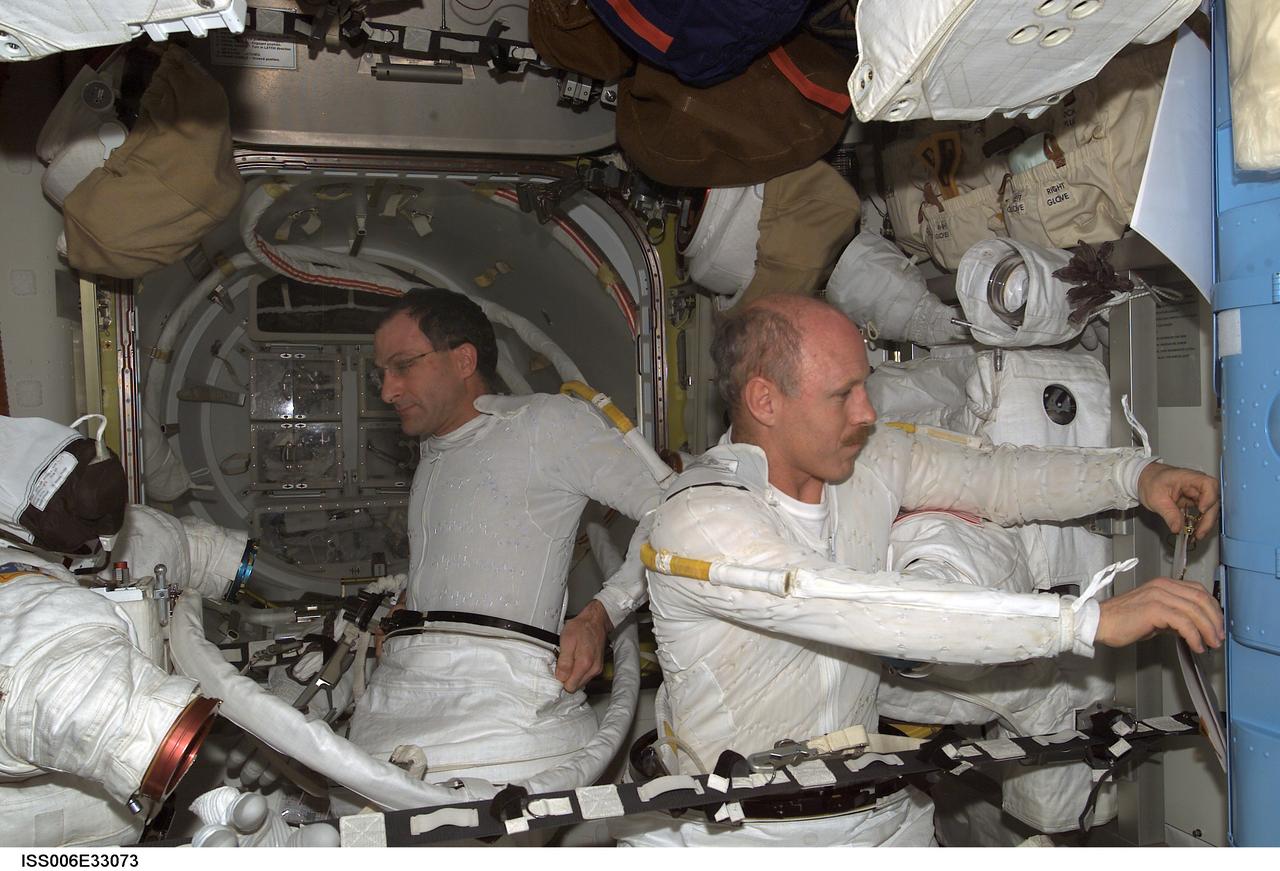
ISS006-E-33073 (24 February 2003) --- Astronauts Kenneth D. Bowersox (right) and Donald R. Pettit, Expedition Six mission commander and NASA ISS science officer, respectively, participate in a scheduled extravehicular activity (EVA) development test objective (DTO) in the Quest Airlock on the International Space Station (ISS). The test demonstrated the ability of two crewmembers to safely get into the American Extravehicular Mobility Unit (EMU) spacesuit without the assistance of a third crewmember; that ability is a prerequisite to sending smaller crews to ISS while the space shuttle fleet remains grounded during the investigation of the Columbia accident. Bowersox and Pettit helped each other into their EMU spacesuits, donned jet backpacks called Simplified Aid for EVA Rescue (SAFER), set up the necessary equipment for a pre-breathe of oxygen to purge nitrogen from their bloodstreams, and then got out of the spacesuits.
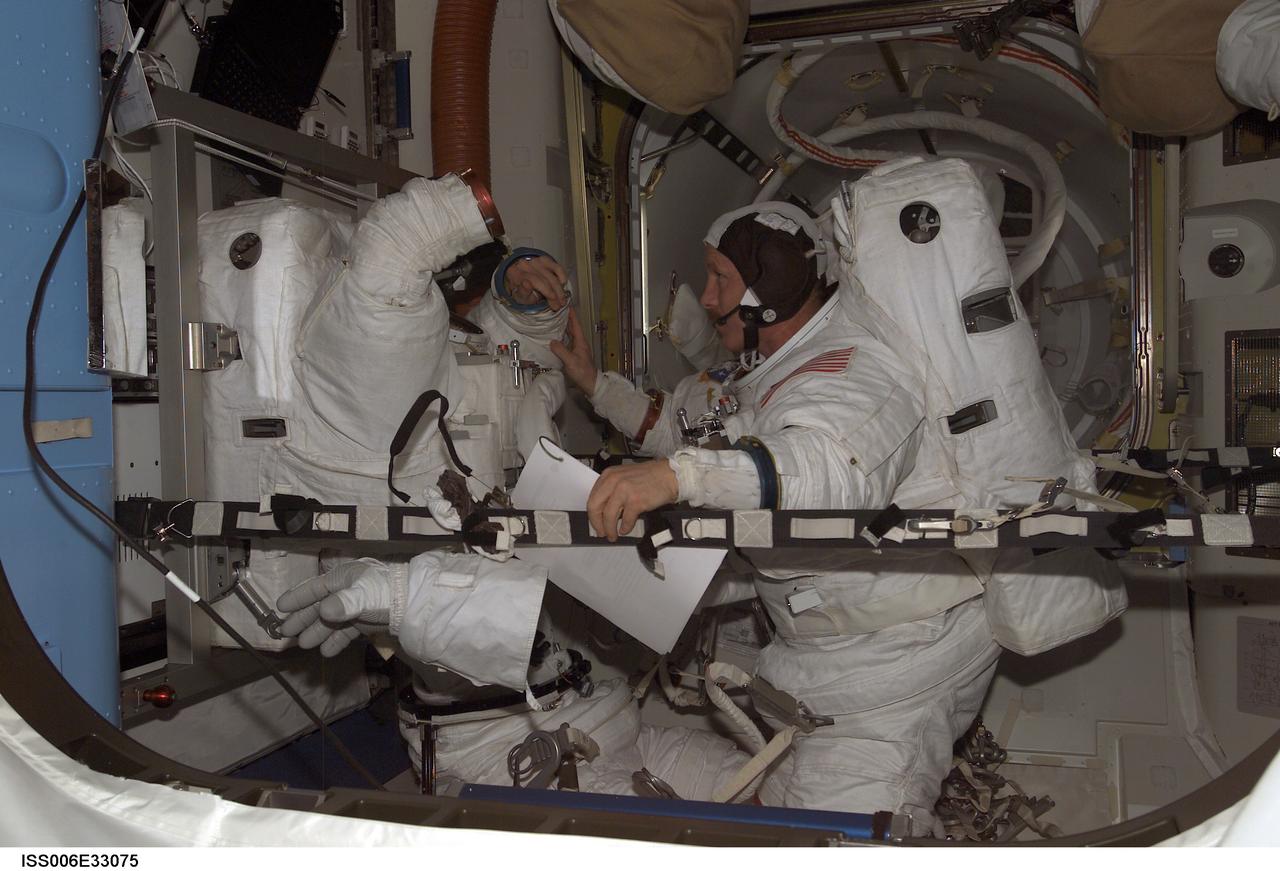
ISS006-E-33075 (24 February 2003) --- Astronauts Kenneth D. Bowersox (right) and Donald R. Pettit, Expedition Six mission commander and NASA ISS science officer, respectively, participate in a scheduled extravehicular activity (EVA) development test objective (DTO) in the Quest Airlock on the International Space Station (ISS). The test demonstrated the ability of two crewmembers to safely get into the American Extravehicular Mobility Unit (EMU) spacesuit without the assistance of a third crewmember; that ability is a prerequisite to sending smaller crews to ISS while the space shuttle fleet remains grounded during the investigation of the Columbia accident. Bowersox and Pettit helped each other into their EMU spacesuits, donned jet backpacks called Simplified Aid for EVA Rescue (SAFER), set up the necessary equipment for a pre-breathe of oxygen to purge nitrogen from their bloodstreams, and then got out of the spacesuits.
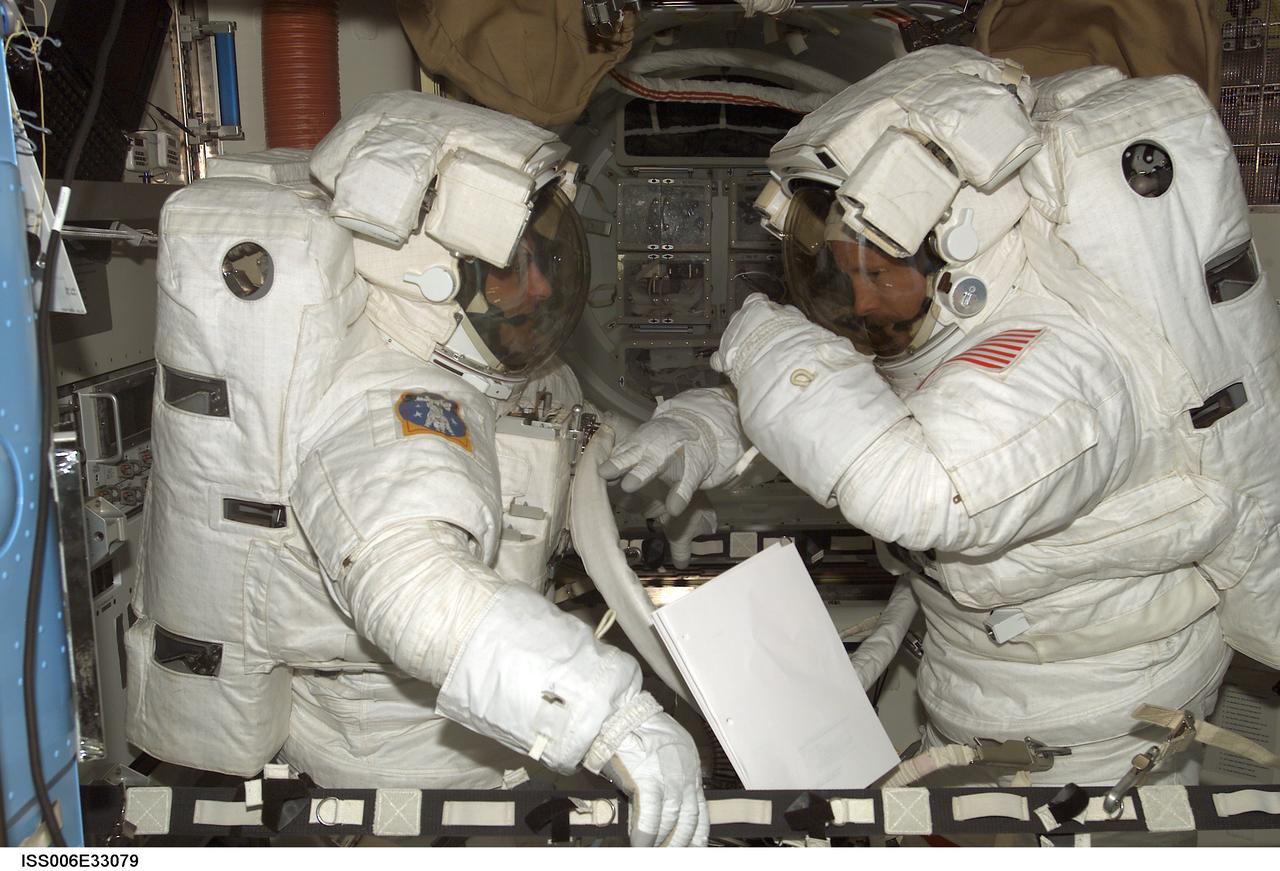
ISS006-E-33079 (24 February 2003) --- Astronauts Kenneth D. Bowersox (right) and Donald R. Pettit, Expedition Six mission commander and NASA ISS science officer, respectively, participate in a scheduled extravehicular activity (EVA) development test objective (DTO) in the Quest Airlock on the International Space Station (ISS). The test demonstrated the ability of two crewmembers to safely get into the American Extravehicular Mobility Unit (EMU) spacesuit without the assistance of a third crewmember; that ability is a prerequisite to sending smaller crews to ISS while the space shuttle fleet remains grounded during the investigation of the Columbia accident. Bowersox and Pettit helped each other into their EMU spacesuits, donned jet backpacks called Simplified Aid for EVA Rescue (SAFER), set up the necessary equipment for a pre-breathe of oxygen to purge nitrogen from their bloodstreams, and then got out of the spacesuits.
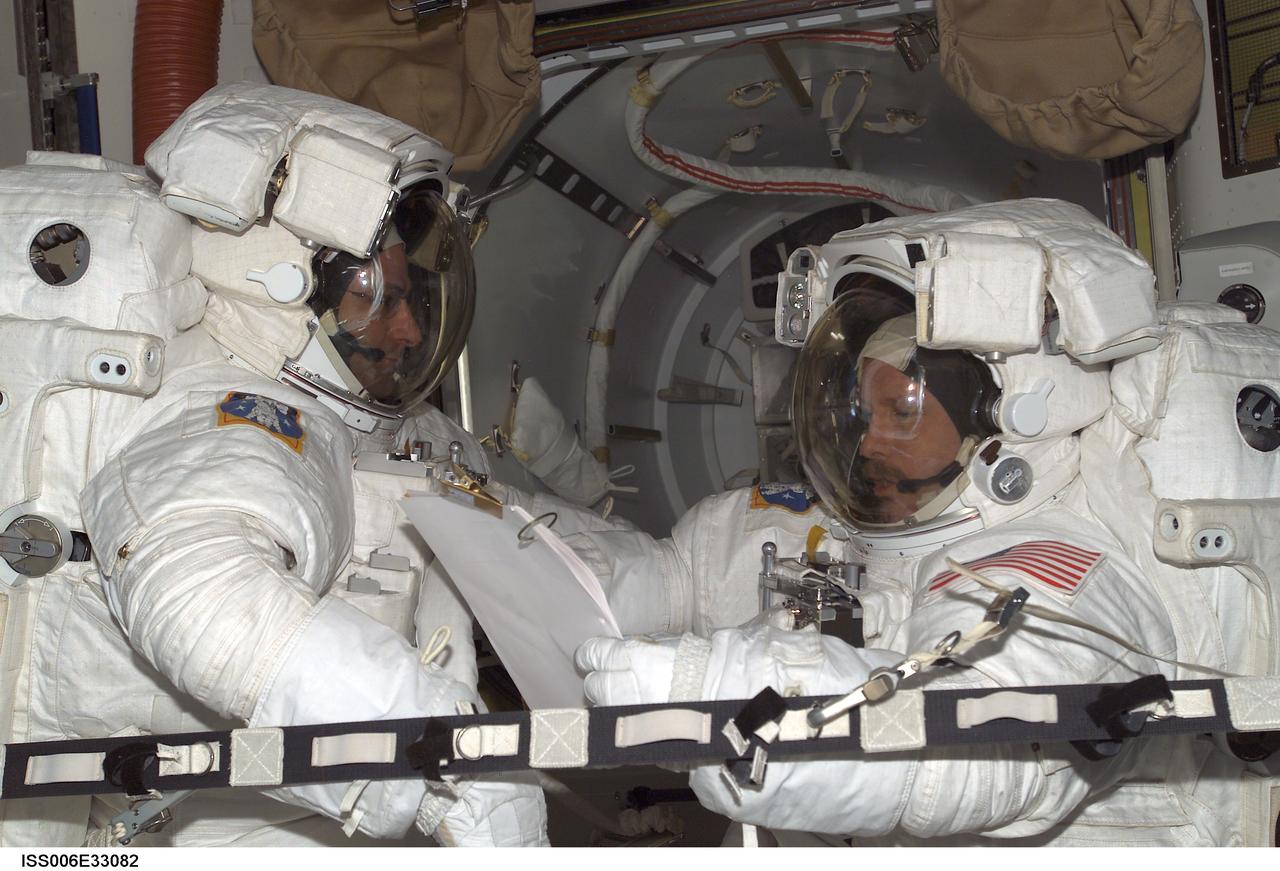
ISS006-E-33082 (24 February 2003) --- Astronauts Kenneth D. Bowersox (right) and Donald R. Pettit, Expedition Six mission commander and NASA ISS science officer, respectively, participate in a scheduled extravehicular activity (EVA) development test objective (DTO) in the Quest Airlock on the International Space Station (ISS). The test demonstrated the ability of two crewmembers to safely get into the American Extravehicular Mobility Unit (EMU) spacesuit without the assistance of a third crewmember; that ability is a prerequisite to sending smaller crews to ISS while the space shuttle fleet remains grounded during the investigation of the Columbia accident. Bowersox and Pettit helped each other into their EMU spacesuits, donned jet backpacks called Simplified Aid for EVA Rescue (SAFER), set up the necessary equipment for a pre-breathe of oxygen to purge nitrogen from their bloodstreams, and then got out of the spacesuits.
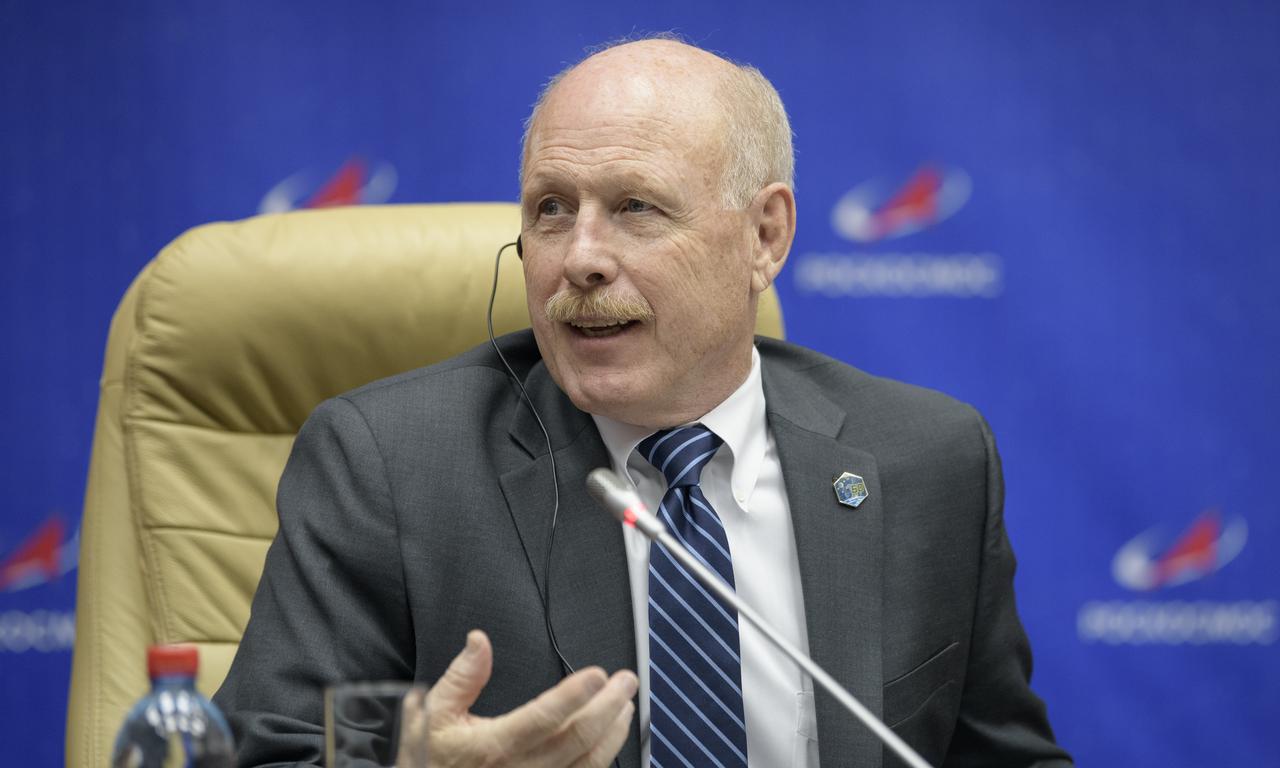
NASA acting Associate Administrator for Human Exploration and Operations Mission Directorate Kenneth Bowersox gives remarks during a post launch press conference, Thursday, Sept. 26, 2019 at the Baikonur Hotel Hotel in Baikonur, Kazakhstan. A few hours earlier the Soyuz MS-15 spacecraft successfully launched from the Baikonur Cosmodrome with Expedition 61 crewmembers Jessica Meir of NASA and Oleg Skripochka of Roscosmos, and spaceflight participant Hazzaa Ali Almansoori of the United Arab Emirates. Photo Credit: (NASA/Bill Ingalls)
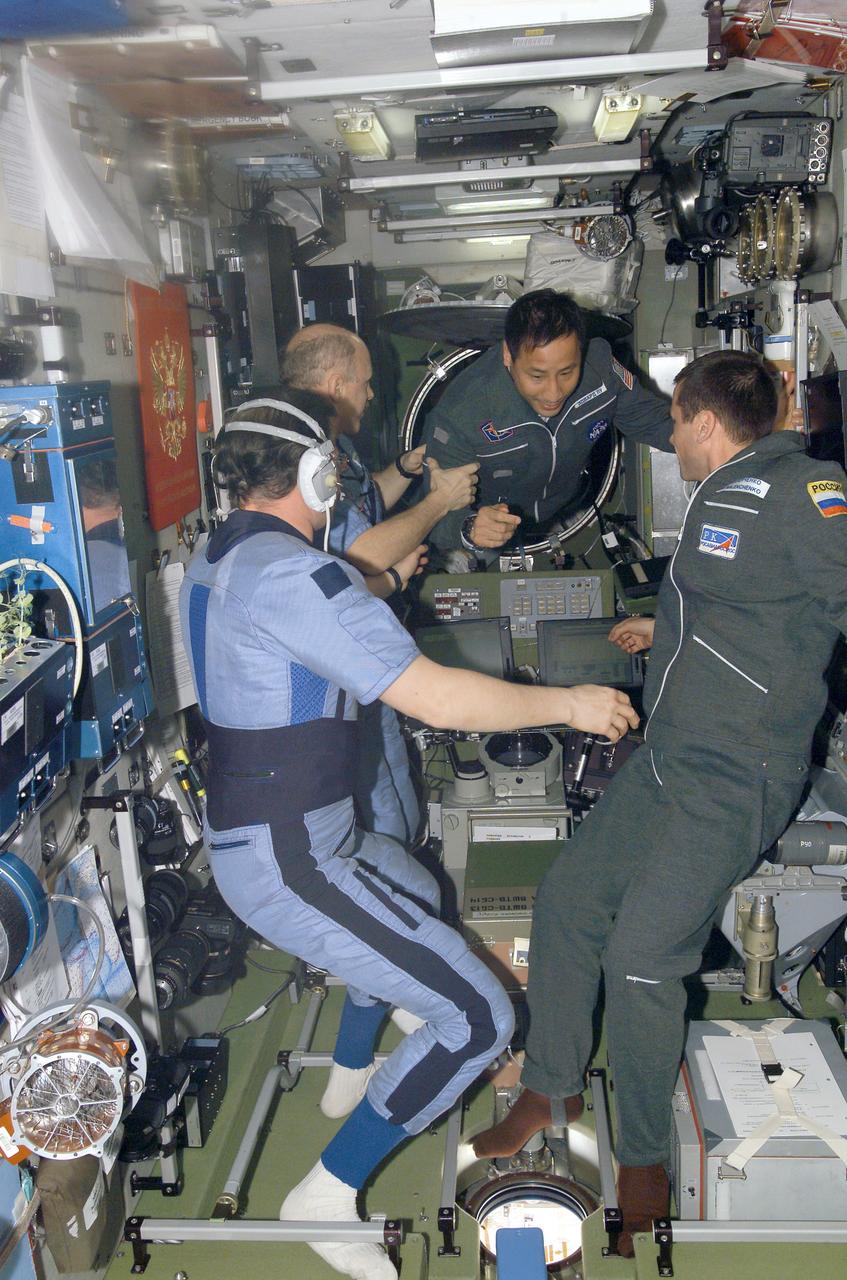
ISS006-E-50604 (28 April 2003) --- Astronaut Edward T. Lu, Expedition 7 NASA ISS science officer and flight engineer, floats into the Zvezda Service Module on the International Space Station (ISS), assisted by astronaut Kenneth D. Bowersox, Expedition 6 mission commander. Also pictured are cosmonauts Nikolai M. Budarin (left foreground), Expedition 6 flight engineer, and Yuri I. Malenchenko, Expedition 7 mission commander. Astronaut Donald R. Pettit (out of view), Expedition 6 NASA ISS science officer, photographed this image. Budarin and Malenchenko represent Rosaviakosmos.
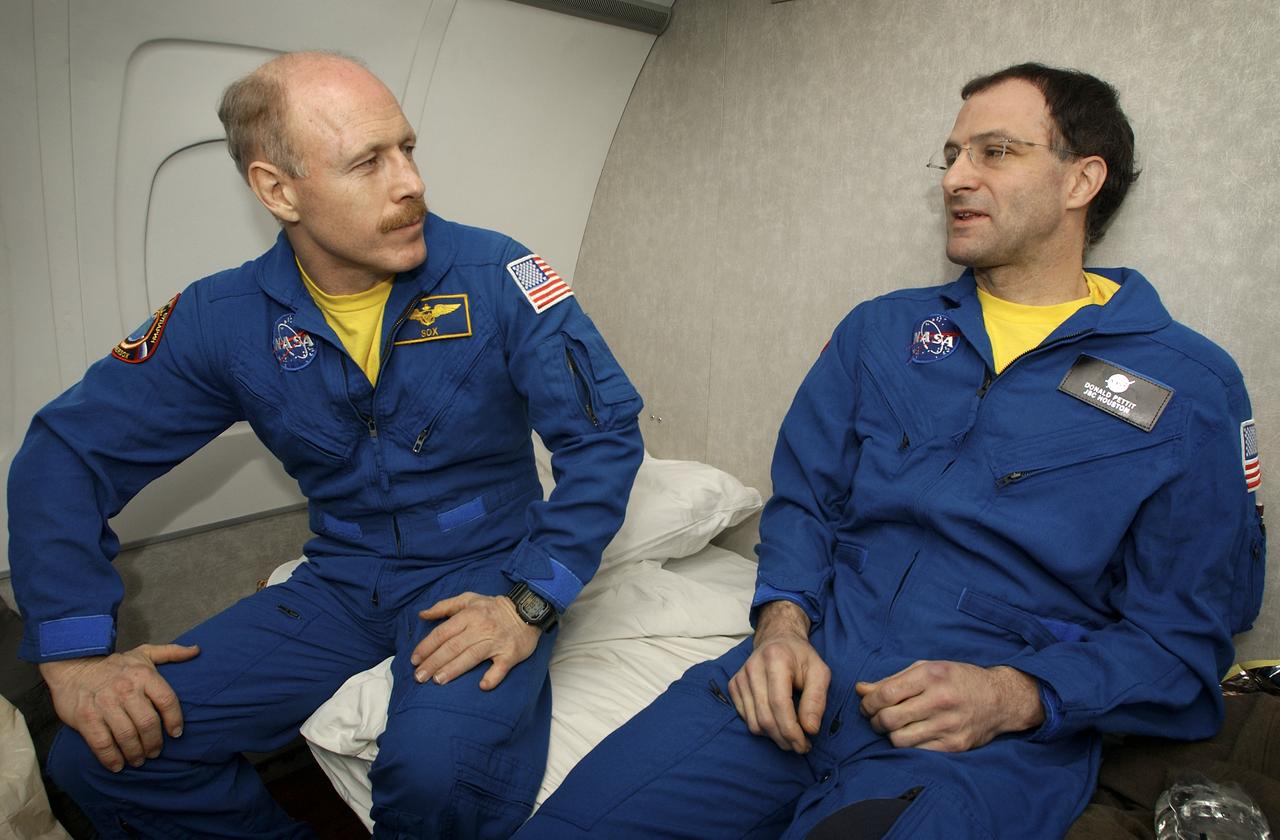
Expedition 6 Commander Ken Bowersox, left and NASA Internationl Space Station Science Officer Don Pettit talk about their landing during the flight from Kazakhstan to Moscow, Tuesday, May 4, 2003. Photo Credit: (NASA/Bill Ingalls)
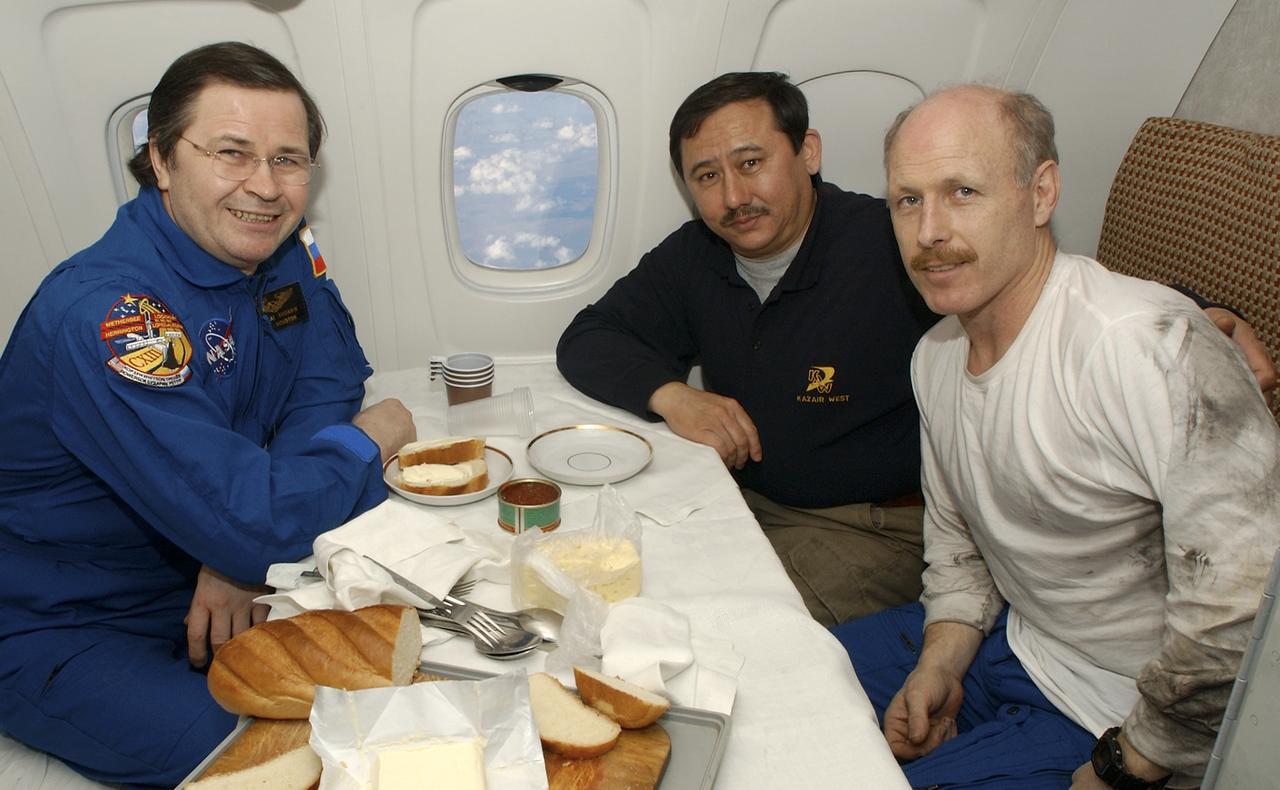
Expedition 6 Flight Engineer Nikolai Budarin, left, Cosmonaut Talgat Musabayev, and Commander Ken Bowersox, right, share a meal onboard the aircraft during their flight from Kazakhstan to Moscow on Tuesday, May 4, 2003. Photo Credit: (NASA/Bill Ingalls)
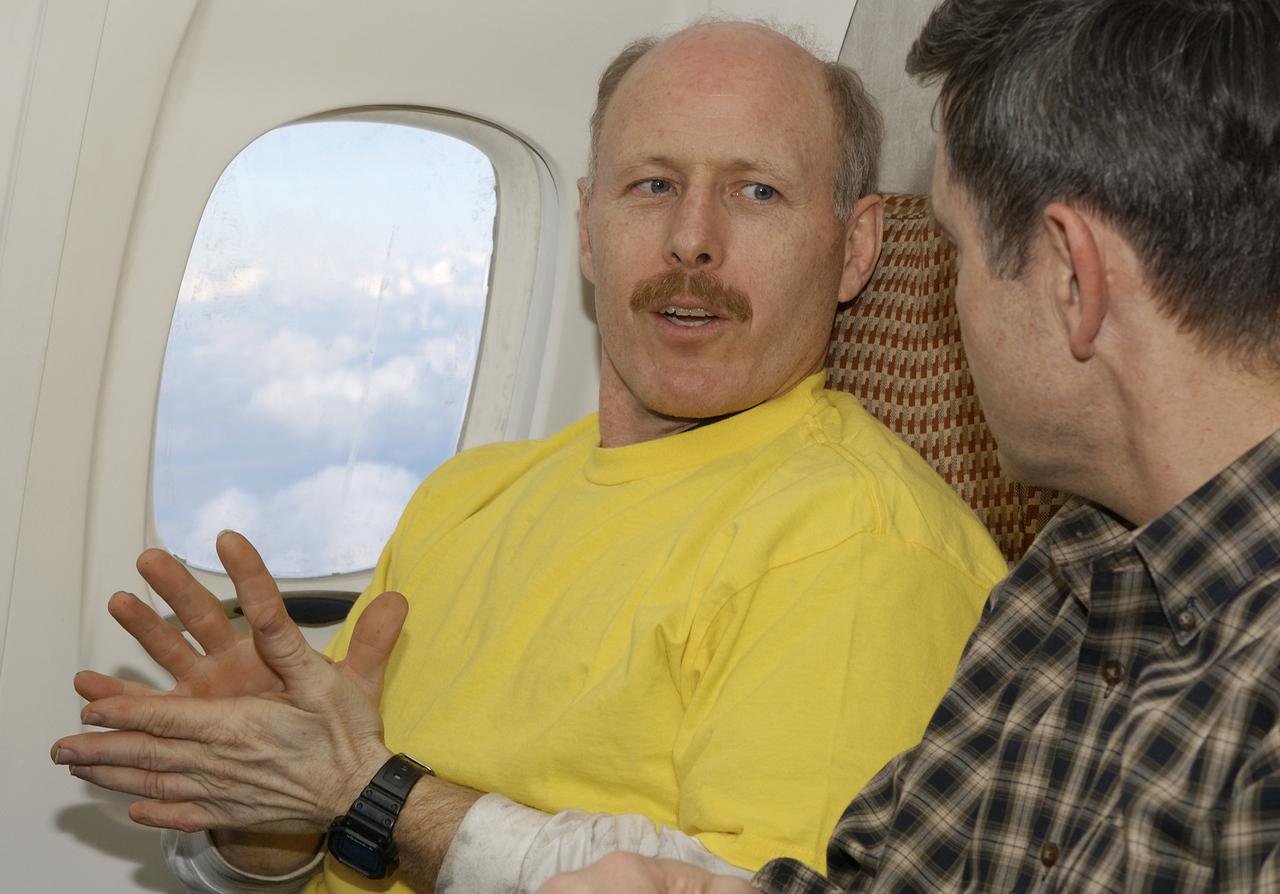
Expedition 6 Commander Ken Bowersox, left, talks about his mission with Bob Cabana, Director of Flight Crew Operations while on the airplane flying from Astana, Kazakhstan to Moscow on Tuesday, May 4, 2003. Photo Credit: (NASA/Bill Ingalls)
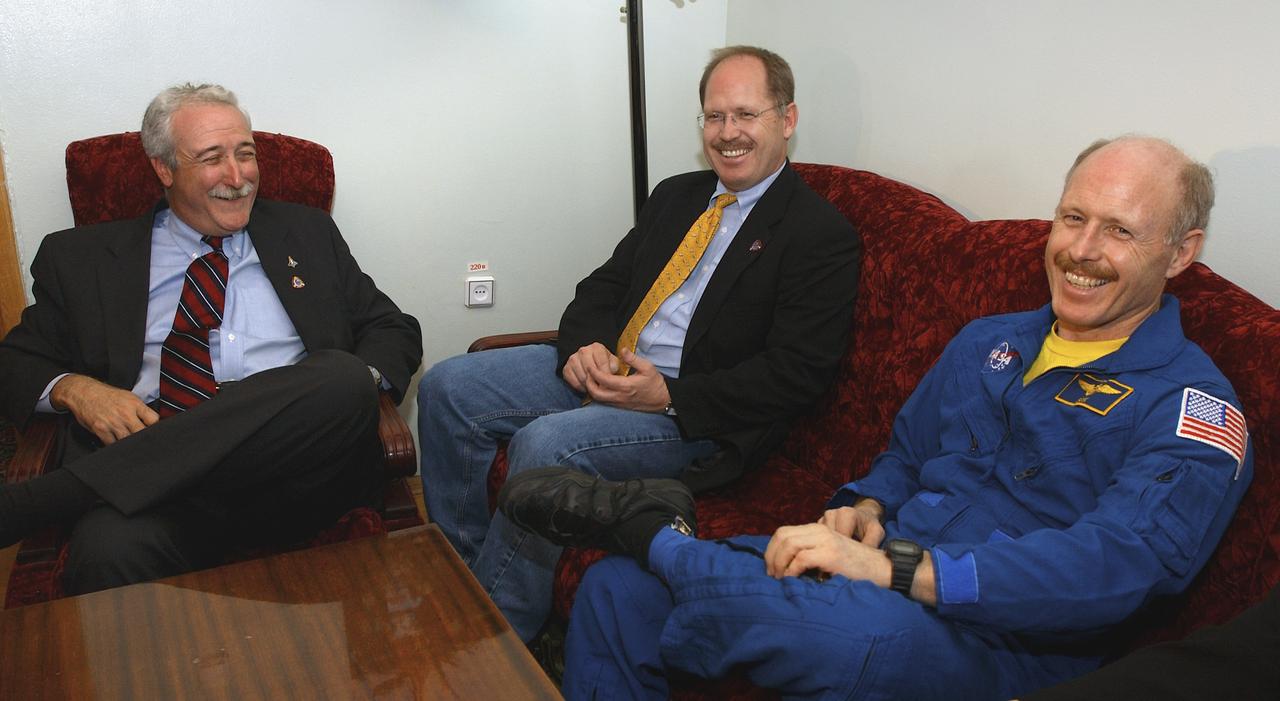
NASA Administrator Sean O'Keefe, left, visits with Expedition 6 Commander Ken Bowersox, far right and his brother on Tuesday, May 4, 2003, in Star City, Russia. Photo Credit: (NASA/Bill Ingalls)
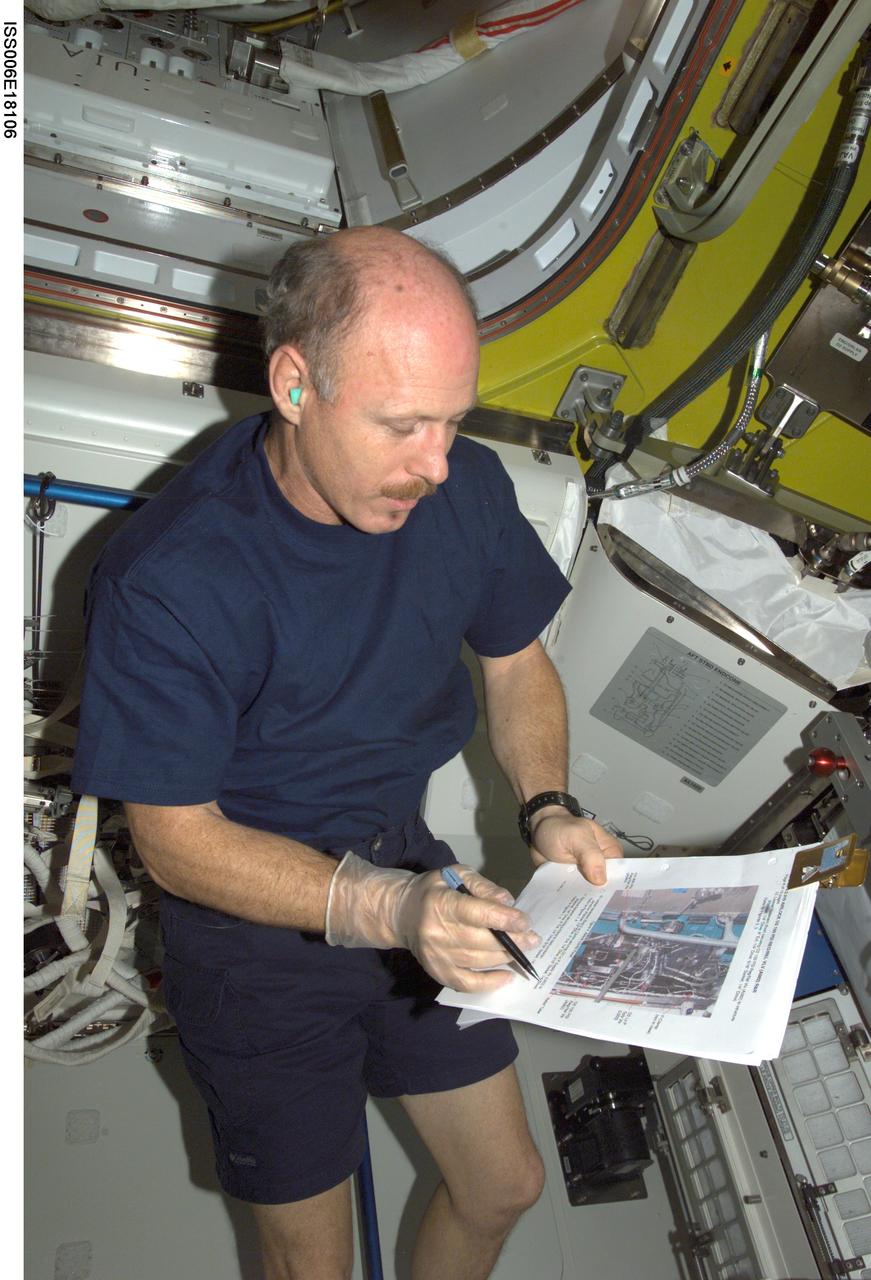
ISS006-E-18106 (18 January 2003) --- Astronaut Kenneth D. Bowersox, Expedition Six mission commander, looks over paperwork in the Quest Airlock on the International Space Station (ISS).
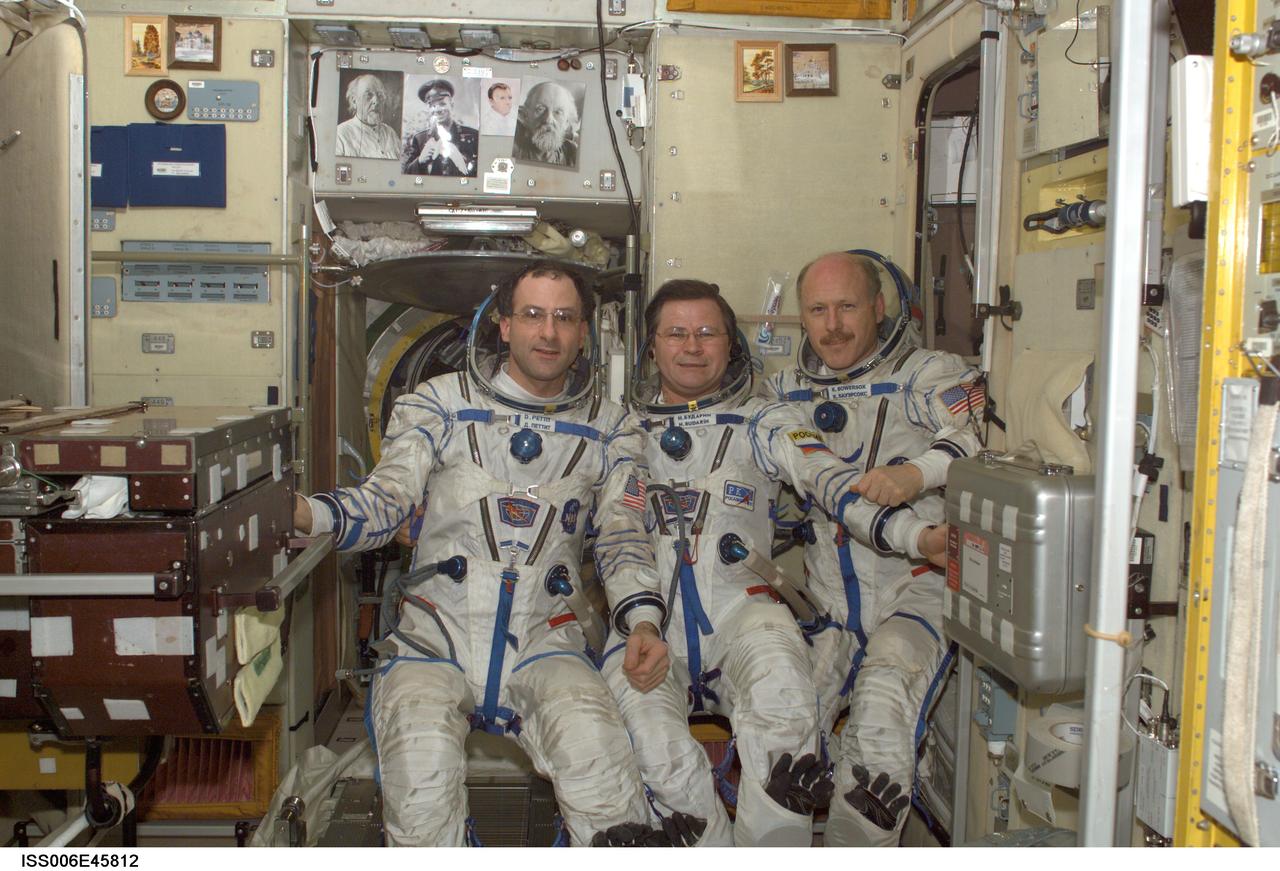
ISS006-E-45812 (14 April 2003) --- Attired in their Russian Sokol suits, the Expedition Six crewmembers pose for a crew photo in the Zvezda Service Module on the International Space Station (ISS). From the left are astronaut Donald R. Pettit, NASA ISS science officer; cosmonaut Nikolai M. Budarin, flight engineer; and astronaut Kenneth D. Bowersox, mission commander. The crewmembers are making preparations for their return flight home scheduled for May 3, 2003. Budarin represents Rosaviakosmos.
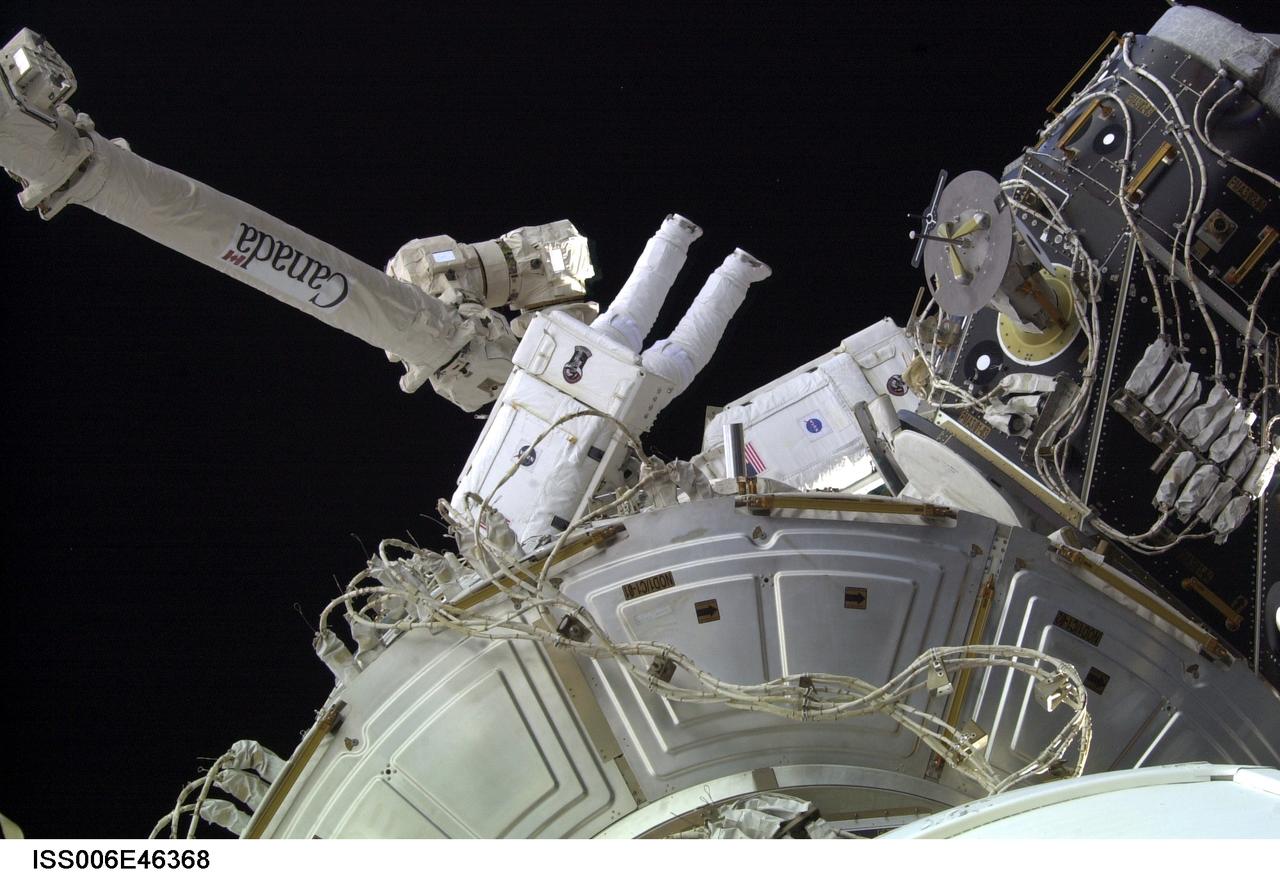
ISS006-E-46368 (8 April 2003) --- Astronauts Donald R. Pettit (left), Expedition Six NASA ISS science officer, and Kenneth D. Bowersox, mission commander, work in tandem on a session of extravehicular activity (EVA) as they perform a variety of maintenance tasks on the International Space Station (ISS). The spacewalk began at 7:40 a.m. (CDT) and ended at 2:06 p.m. (CDT) on April 8, 2003.
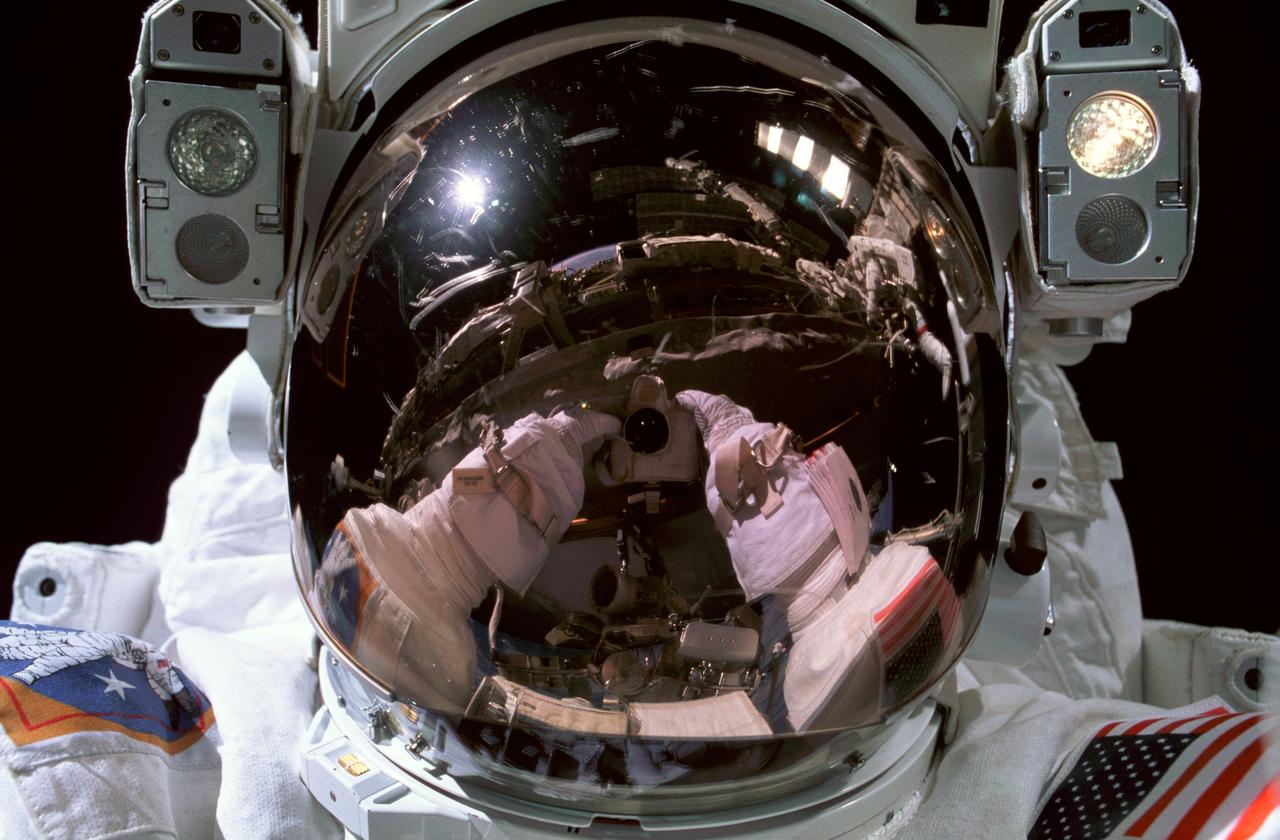
ISS006-344-011 (15 January 2003) --- Astronaut Donald R. Pettit, Expedition 6 NASA ISS science officer, photographs his helmet visor during a session of extravehicular activity (EVA). Pettit’s arms and camera are visible in the reflection of his helmet visor. Astronaut Kenneth D. Bowersox, mission commander, is also visible in visor reflection, upper right.
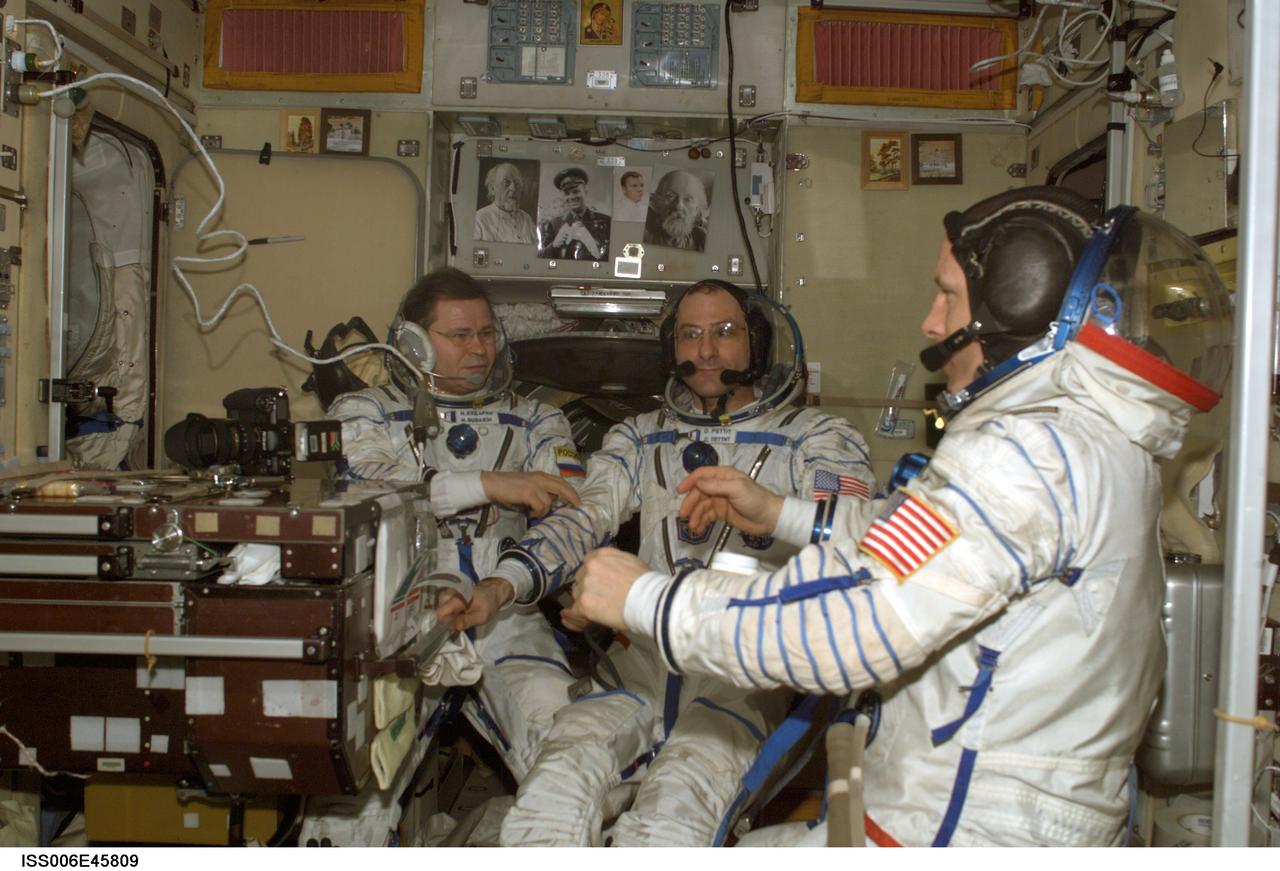
ISS006-E-45809 (14 April 2003) --- Attired in their Russian Sokol suits, the Expedition Six crewmembers are pictured in the Zvezda Service Module on the International Space Station (ISS) as they rehearse for their return flight home onboard the Soyuz TMA-1 spacecraft scheduled for May 3, 2003. From the left are cosmonaut Nikolai M. Budarin, flight engineer; astronauts Donald R. Pettit, NASA ISS science officer, and Kenneth D. Bowersox, mission commander. Budarin represents Rosaviakosmos.
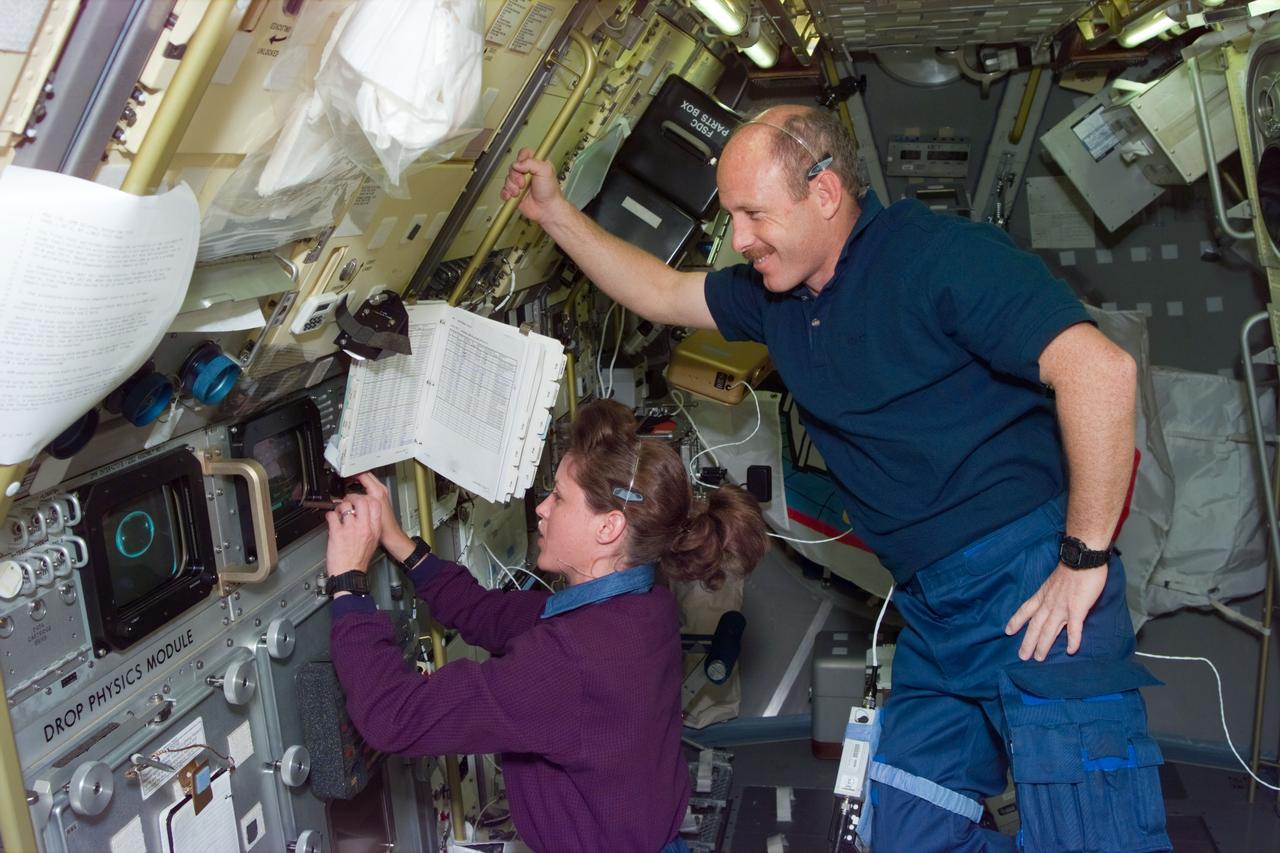
STS073-E-5311 (3 Nov. 1995) --- Astronaut Kathryn C. Thornton, STS-73 payload commander, works at the Drop Physics Module (DPM) on the portside of the science module supporting the U.S. Microgravity Laboratory (USML-2). Astronaut Kenneth D. Bowersox, mission commander, looks on. Five NASA astronauts and two payload specialists are in the last few days of a scheduled 16-day mission. This frame was exposed with the Electronic Still Camera (ESC).
S95-09132 (27 Apr. 1995) --- As he watches one his STS-73 crew mates rappel from the top of a ?troubled Shuttle,? astronaut Kenneth D. Bowersox, mission commander, prepares to participate in an emergency egress training session in the Johnson Space Center?s (JSC) Systems Integration Facility. Five astronauts and two payload specialists from the private sector will fly aboard the Space Shuttle Columbia later this year to support the United States Microgravity Laboratory (USML-2) mission.

ISS006-E-25010 (7 February 2003) --- Astronaut Kenneth D. Bowersox, Expedition Six mission commander, conducts a Foot/Ground Reaction Forces During Spaceflight (FOOT) – Electromyography (EMG) calibration at the Human Research Facility (HRF) rack in the Destiny laboratory on the International Space Station (ISS). This experiment determines the change in joint angles (muscle activity) of the ankle, knee, and hip.
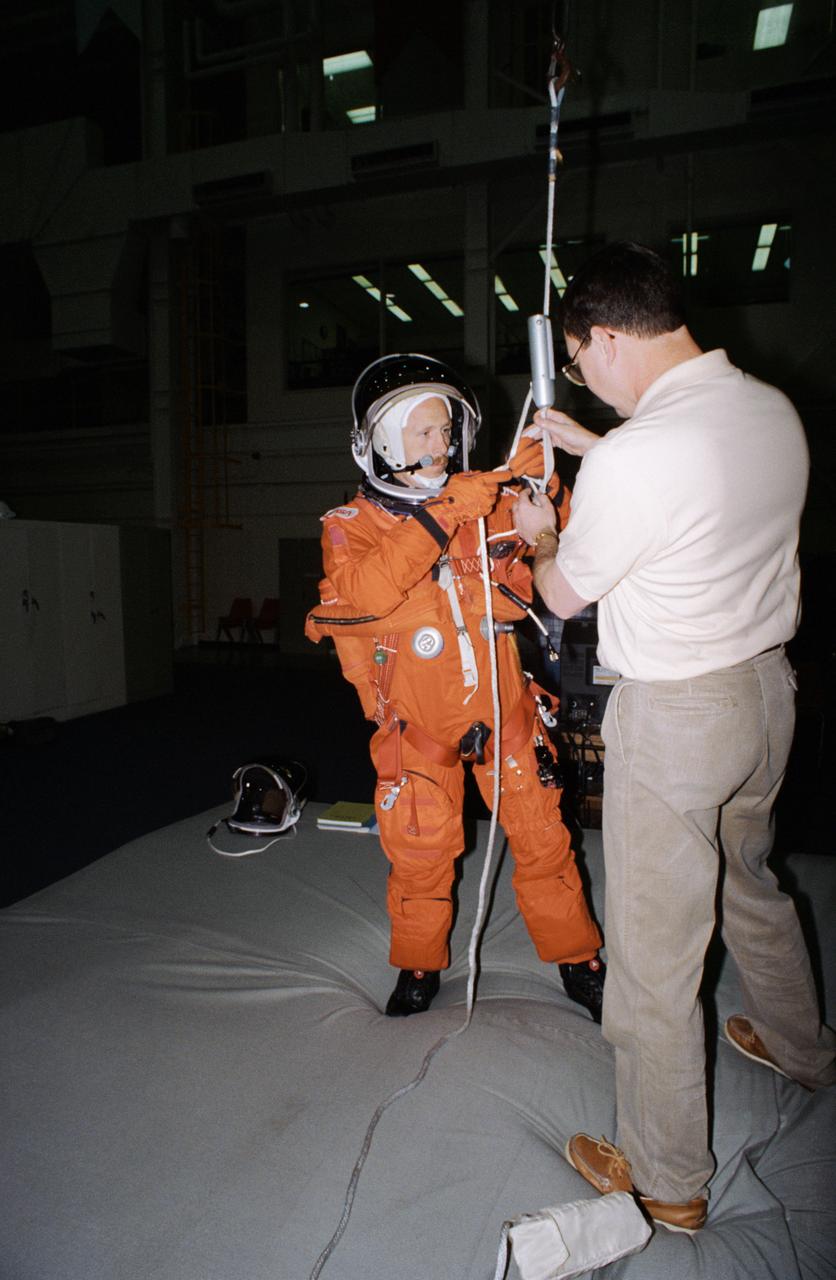
S95-09153 (27 Apr. 1995) --- Astronaut Kenneth D. Bowersox has just translated from the top of a Shuttle mockup-trainer using a Sky-genie device during emergency egress training with his six STS-73 crew mates. He is assisted here by Scott Gill, a member of the STS-73 training staff. The seven will fly aboard the Space Shuttle Columbia later this year to support the United States Microgravity Laboratory (USML-2) mission.
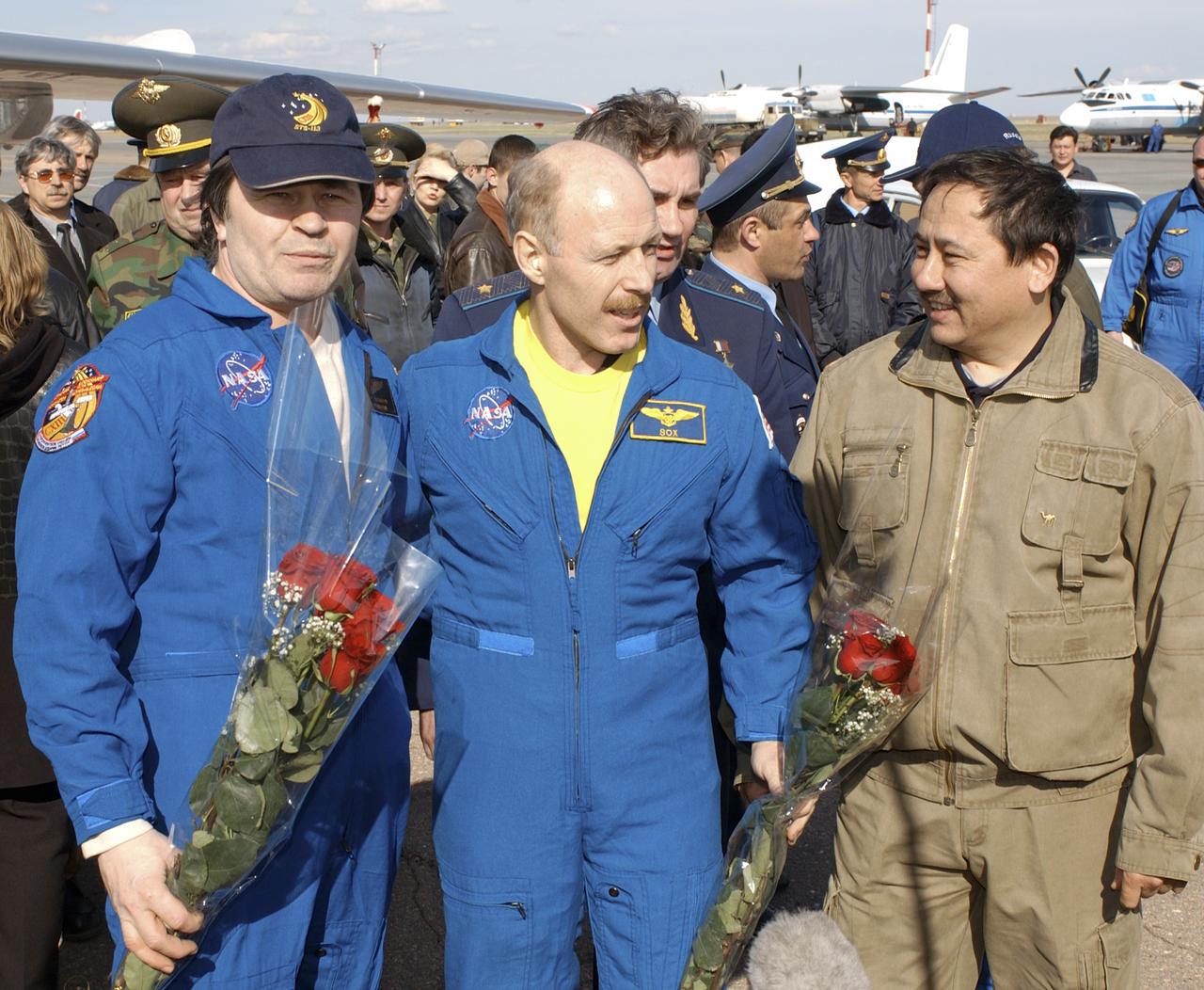
Expedition 6 Flight Engineer Nikolai Budarin, left, and Commander Ken Bowersox are greeted by Cosmonaut Talgat Musabayev, right, on Tuesday, May 4, 2003, after their arrival in Astana, Kazakhstan. The Expedition 6 Soyuz capsule landed in Kazakhstan. Photo Credit: (NASA/Bill Ingalls)
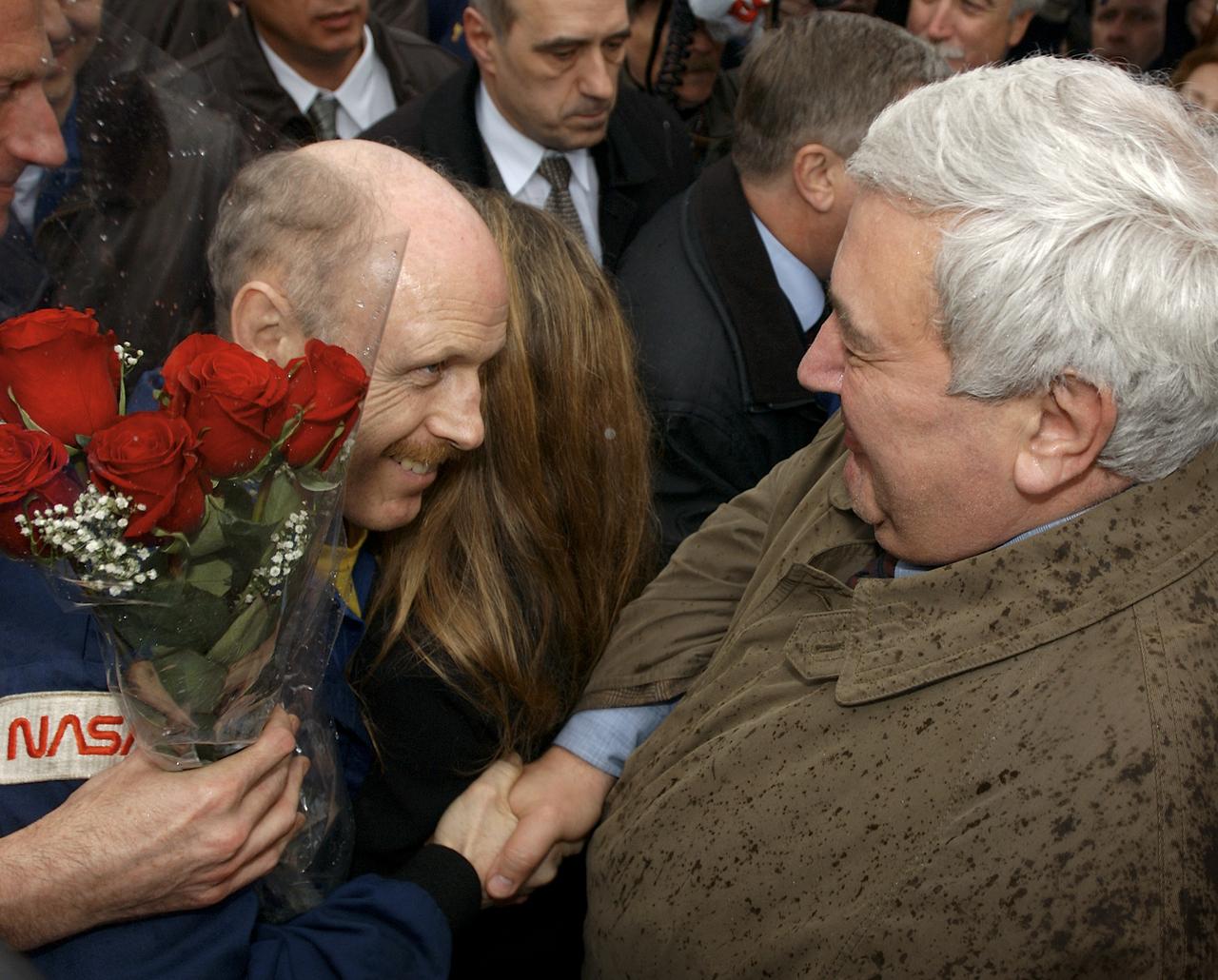
Expedition 6 Commander Ken Bowersox is hugged by his wife Annie as he shakes hands with Russian Federal Space Agency Director Yuri Koptev, right, after returning, Tuesday, May 4, 2003, to Star City, Russia. Photo Credit: (NASA/Bill Ingalls)
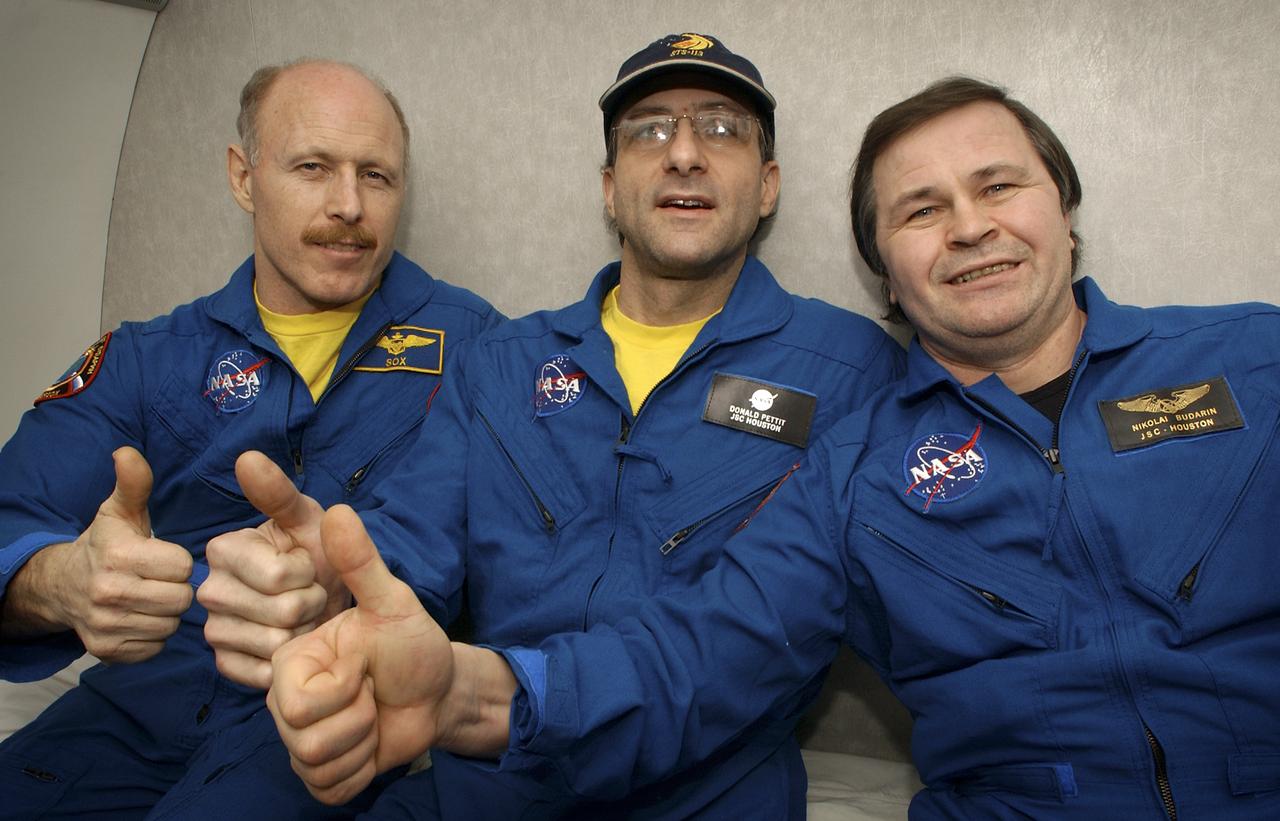
Expedition 6 Commander Ken Bowersox, left, NASA International Space Station Science Officer Don Pettit and Flight Engineer Nikolai Budarin, right, celebrate their mission onboard an aircraft flight from Kazakhstan to Moscow on Tuesday, May 4, 2003. Photo Credit: (NASA/Bill Ingalls)
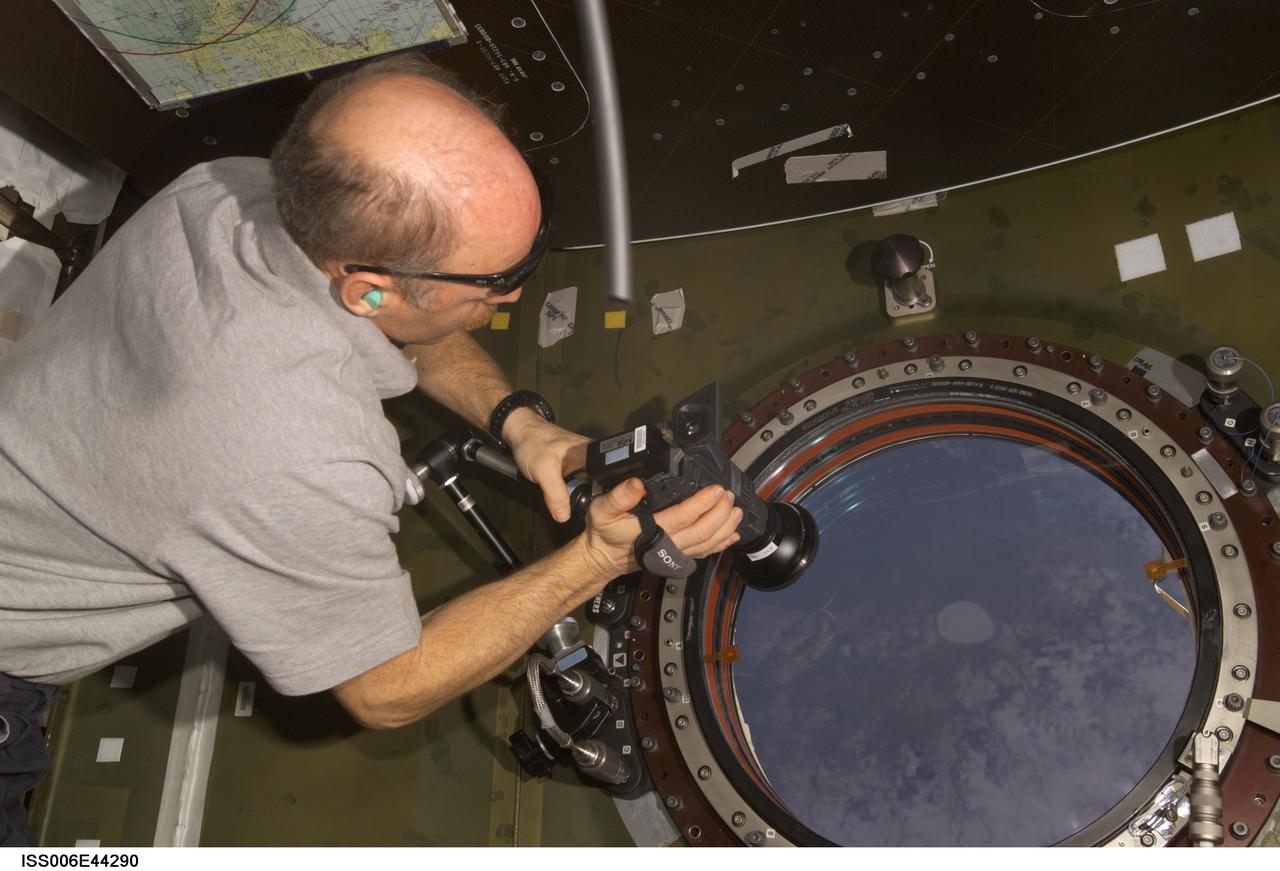
ISS006-E-44290 (5 April 2003) --- Astronaut Kenneth D. Bowersox, Expedition Six mission commander, uses a camera to photograph the topography of a point on Earth from the nadir window in the Destiny laboratory on the International Space Station (ISS).
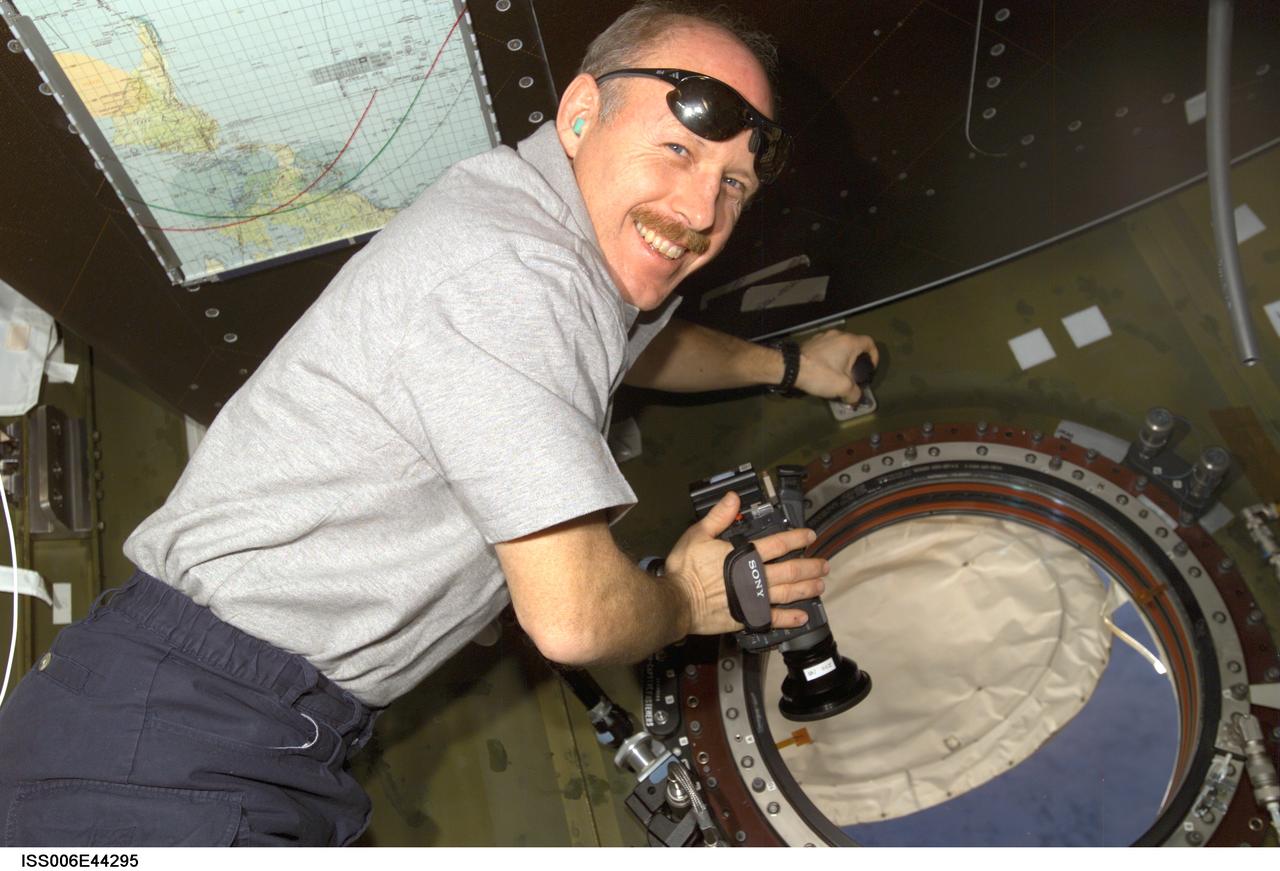
ISS006-E-44295 (5 April 2003) --- Astronaut Kenneth D. Bowersox, Expedition 6 mission commander, holds a camera prior to photographing the topography of a point on Earth from the nadir window in the Destiny laboratory on the International Space Station (ISS).
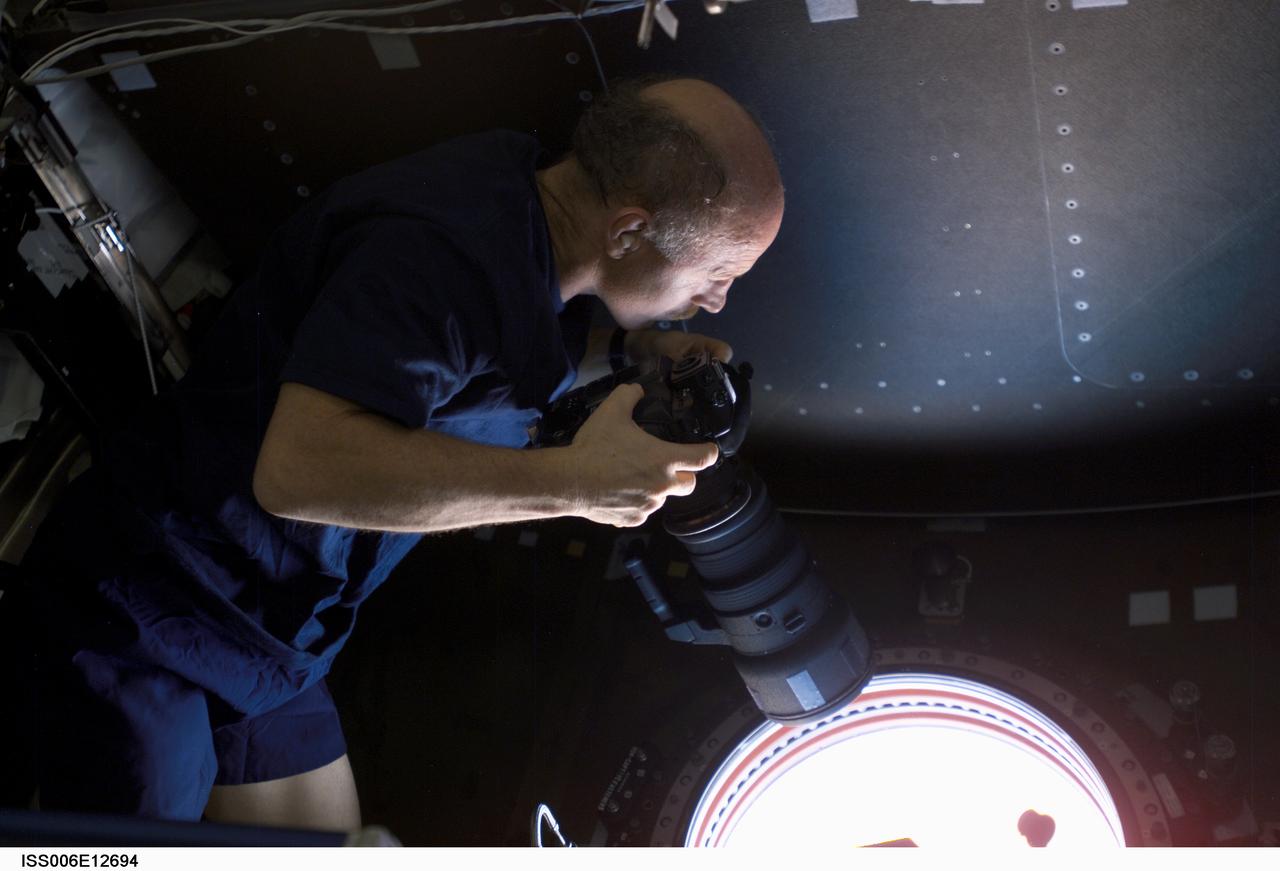
ISS006-E-12694 (16 December 2002) --- Astronaut Kenneth D. Bowersox, Expedition Six mission commander, uses a still camera to photograph the topography of a point on Earth from the nadir window in the Destiny laboratory on the International Space Station (ISS).
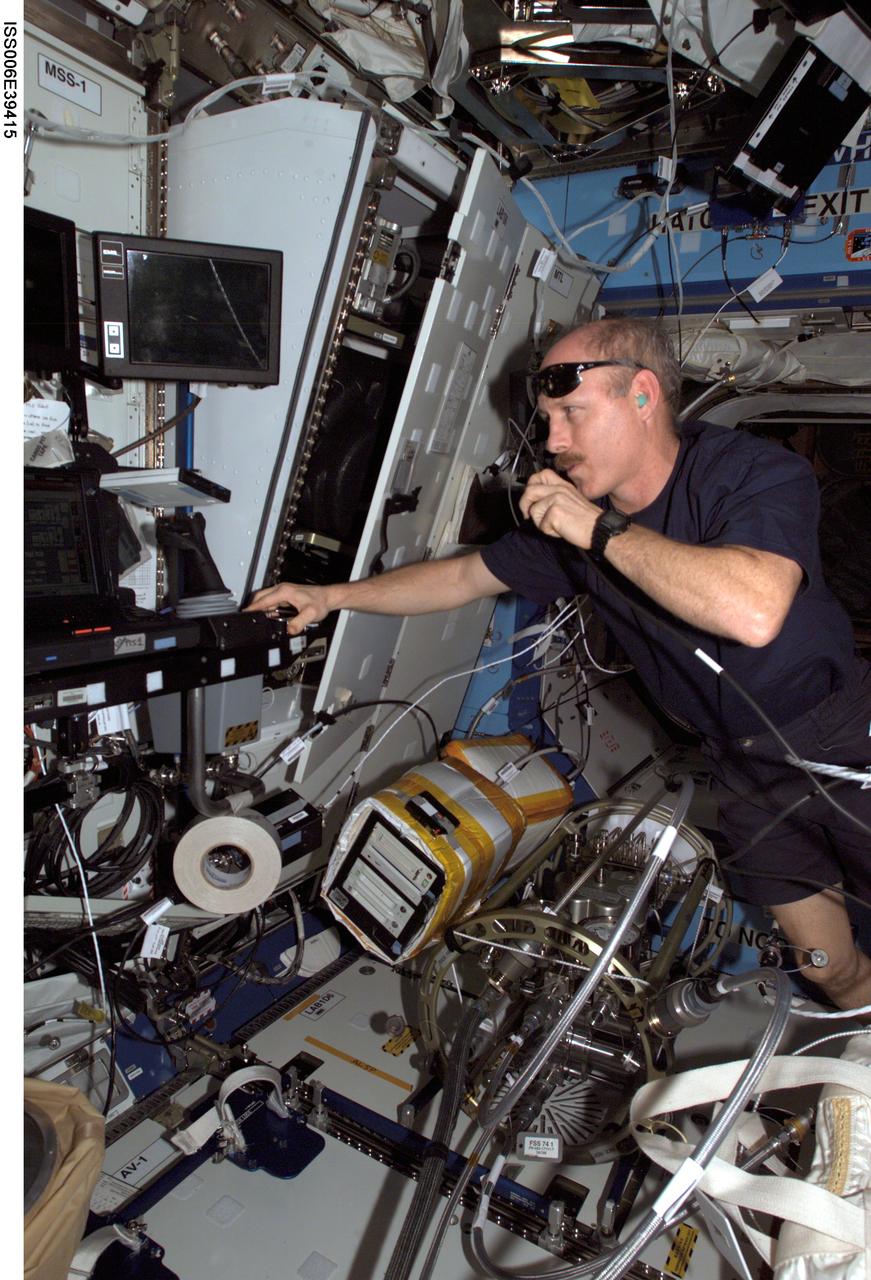
ISS006-E-39415 (17 March 2003) --- Astronaut Kenneth D. Bowersox, Expedition Six mission commander, works at the Space Station Remote Manipulator System (SSRMS) or Canadarm2 workstation as he talks into a communication system in the Destiny laboratory on the International Space Station (ISS).
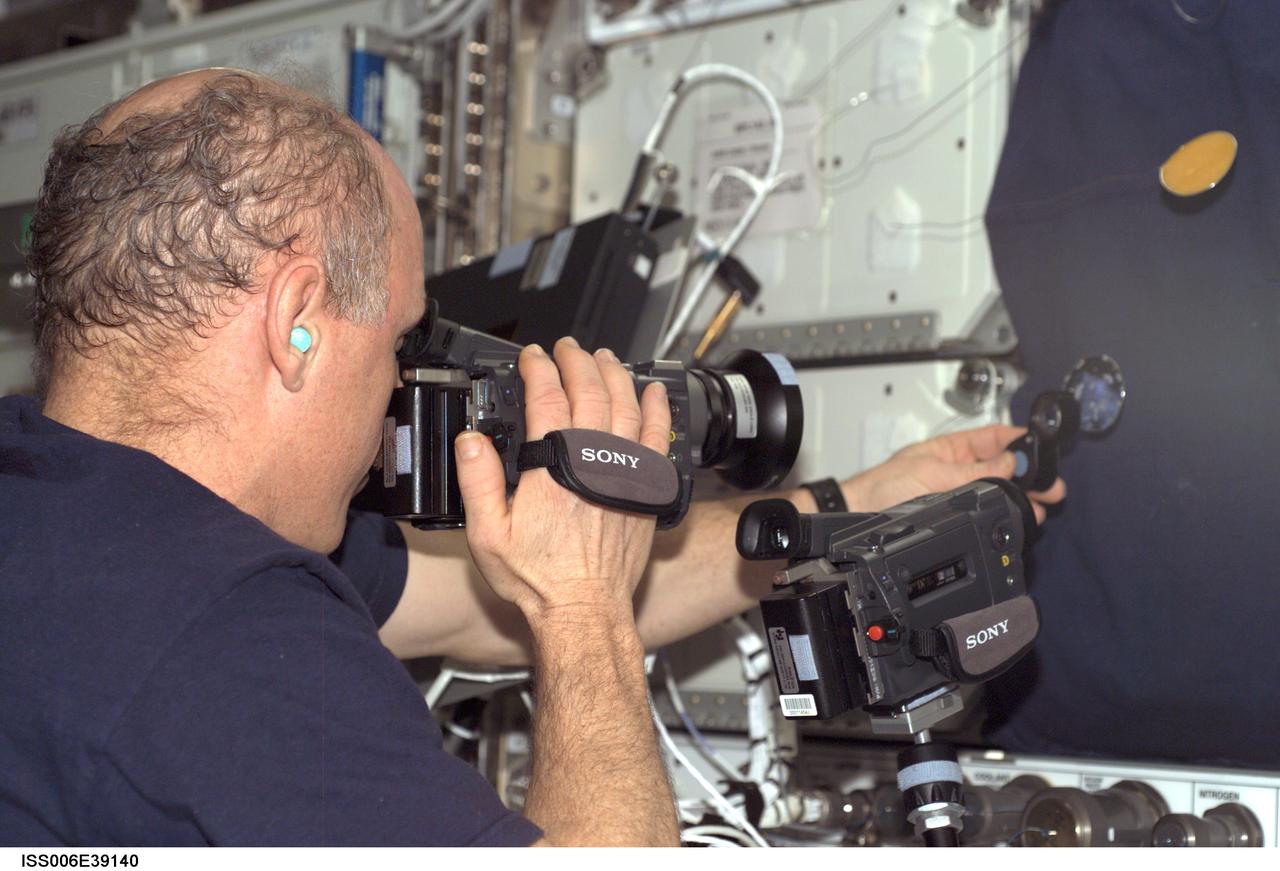
ISS006-E-39140 (12 March 2003) --- Astronaut Kenneth D. Bowersox, Expedition Six mission commander, photographs a water bubble within a 50-millimeter metal loop. The experiment took place in the Destiny laboratory on the International Space Station (ISS).
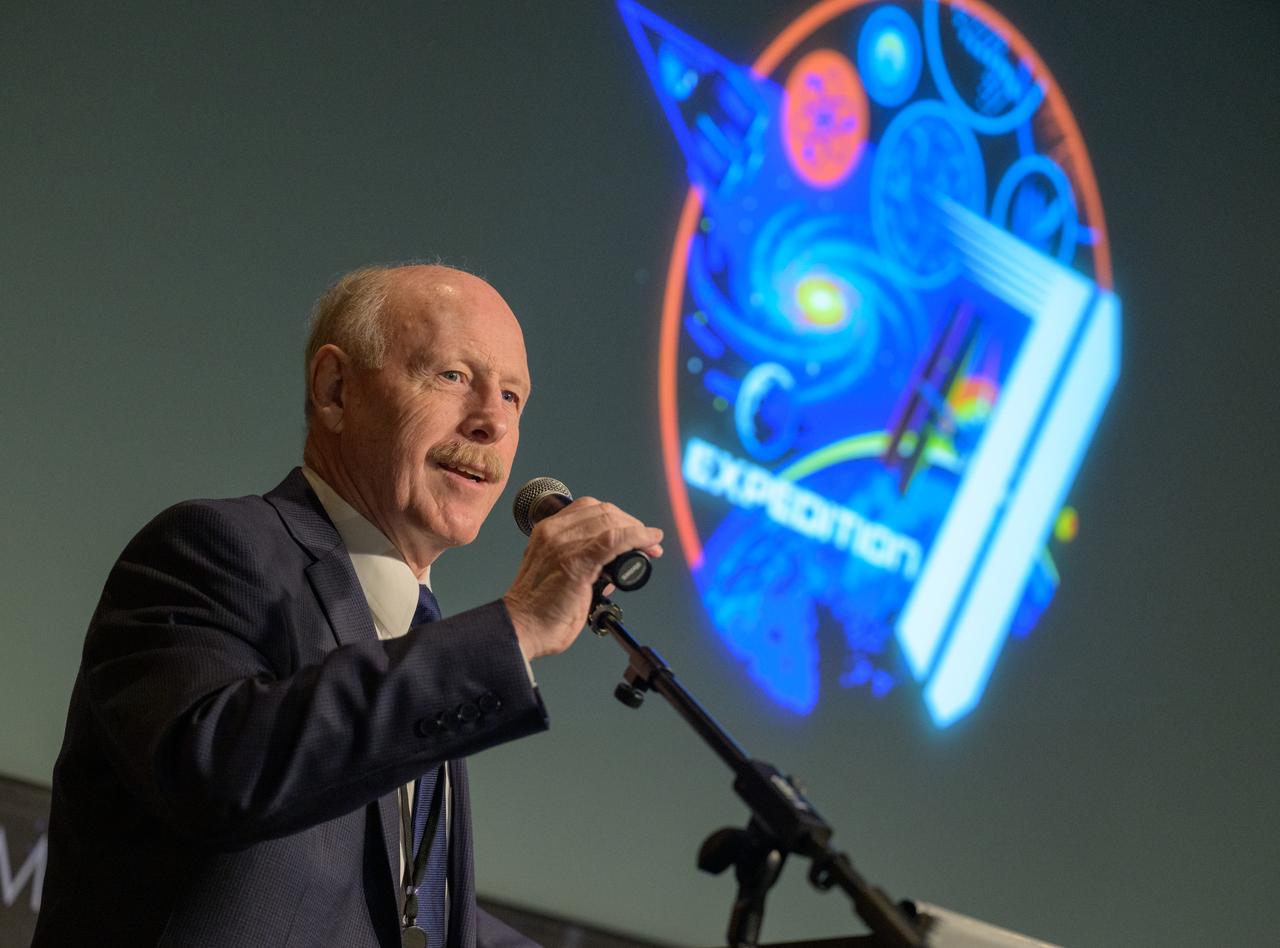
NASA Associate Administrator for the Space Operations Mission Directorate Ken Bowersox gives introductions during an Expedition 71 postflight event, Monday, March 3, 2025, at the Mary W. Jackson NASA Headquarters Building in Washington. Matthew Dominick, Jeanette Epps, Michael Barratt, and Tracy Dyson served as part of Expedition 71 aboard the International Space Station. Photo Credit: (NASA/Bill Ingalls)
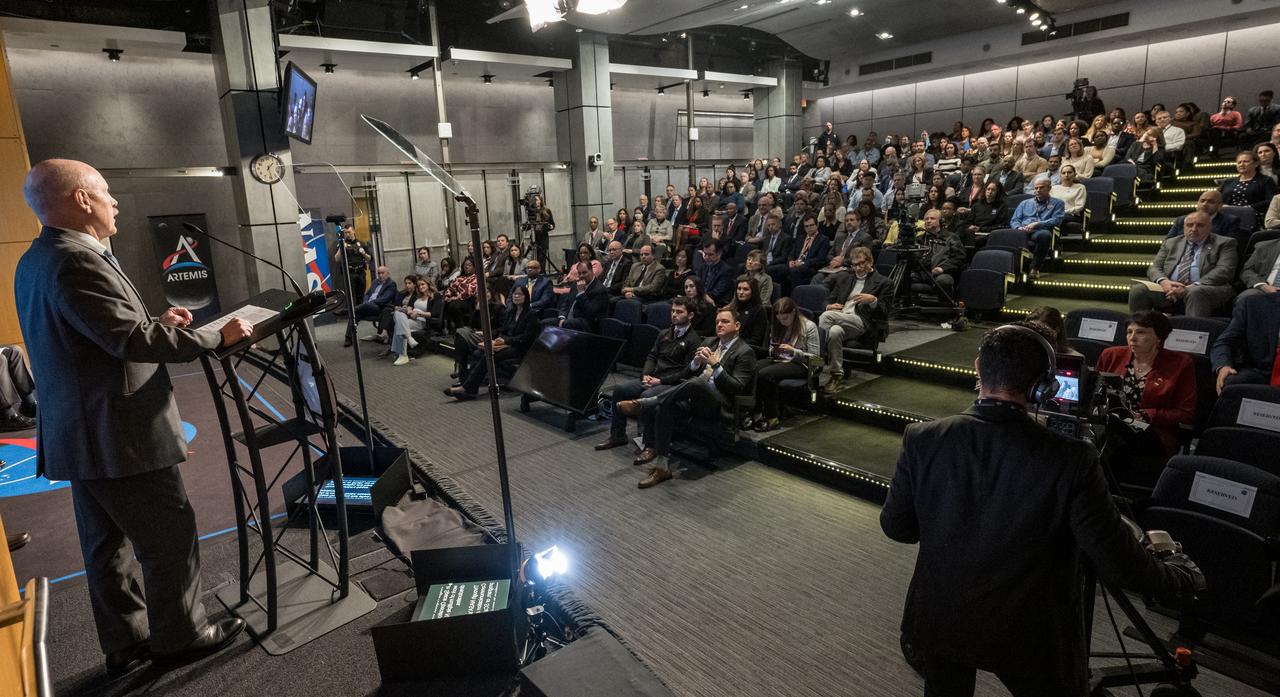
NASA Associate Administrator for Space Operations, Ken Bowersox, discusses the agency’s goals during the annual State of NASA address, Monday, March 11, 2024, at the Mary W. Jackson NASA Headquarters Building in Washington. NASA leaders discussed plans for promoting U.S. leadership in space exploration, improving life on Earth through science and innovation, humanity’s return to the Moon under the Artemis campaign, aeronautics, and more. Photo Credit: (NASA/Bill Ingalls)
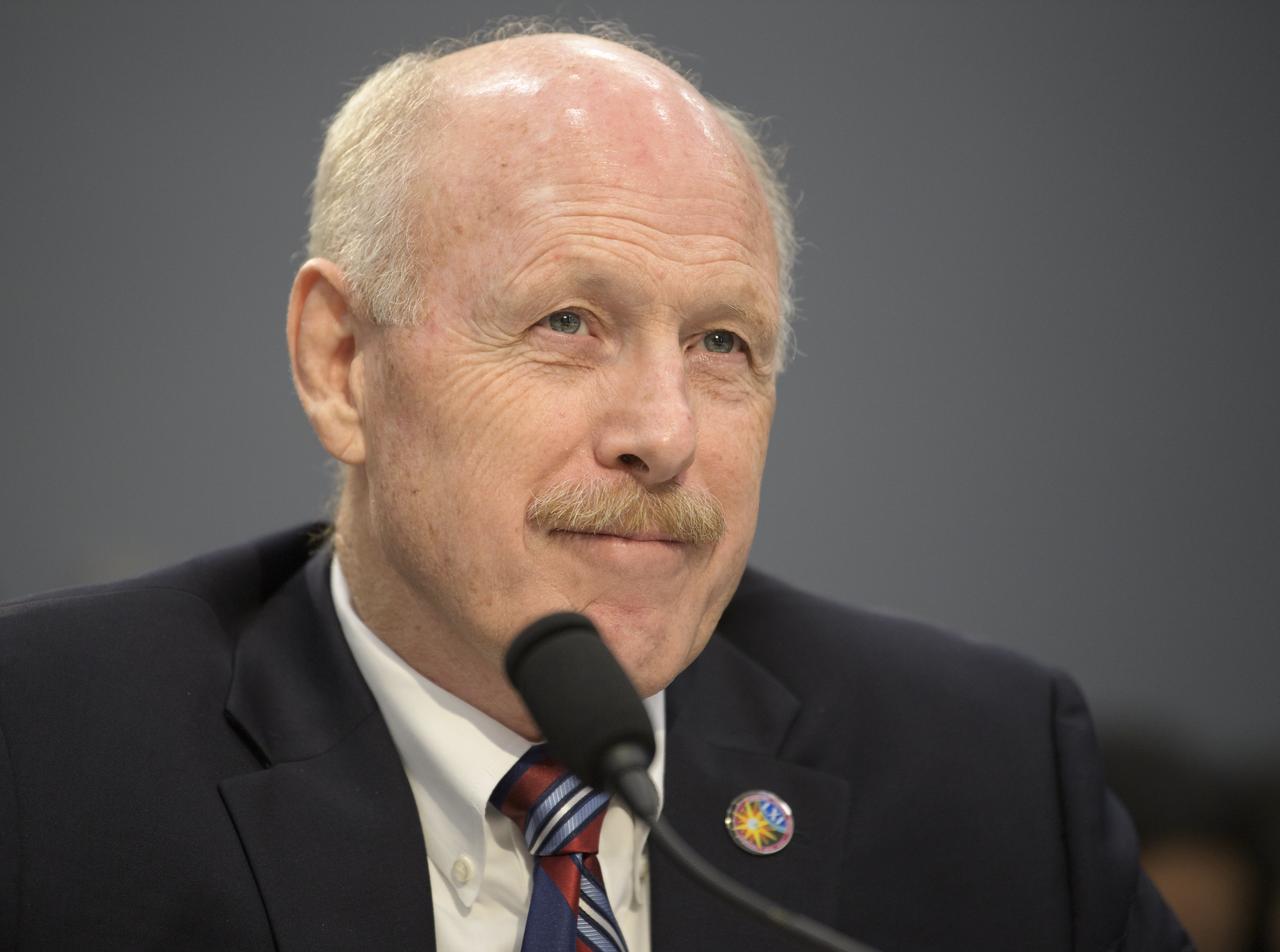
NASA acting Associate Administrator for Human Exploration and Operations Ken Bowersox testifies during a House subcommittee on Commerce, Justice, Science, and Related Agencies hearing titled “NASA’s Proposal to Advance the Next Moon Landing by Four Years”, Wednesday, Oct. 16, 2019, Rayburn House Office Building in Washington. Photo Credit: (NASA/Bill Ingalls)

NASA Associate Administrator for Space Operations, Ken Bowersox, discusses the agency’s goals during the annual State of NASA address, Monday, March 11, 2024, at the Mary W. Jackson NASA Headquarters Building in Washington. NASA leaders discussed plans for promoting U.S. leadership in space exploration, improving life on Earth through science and innovation, humanity’s return to the Moon under the Artemis campaign, aeronautics, and more. Photo Credit: (NASA/Bill Ingalls)

Expedition 68 astronaut Frank Rubio of NASA, assisted by NASA ISS Program Manager Joel Montalbano, left, and NASA Deputy Associate Administrator for Human Exploration and Operations Mission Directorate Ken Bowersox, right, walks to board the Soyuz MS-22 spacecraft for launch, Wednesday, Sept. 21, 2022, at the Baikonur Cosmodrome in Kazakhstan. Rubio, Prokopyev and Petelin launched onboard the Soyuz rocket from the Baikonur Cosmodrome for a mission on the International Space Station. Photo Credit: (NASA/Bill Ingalls)
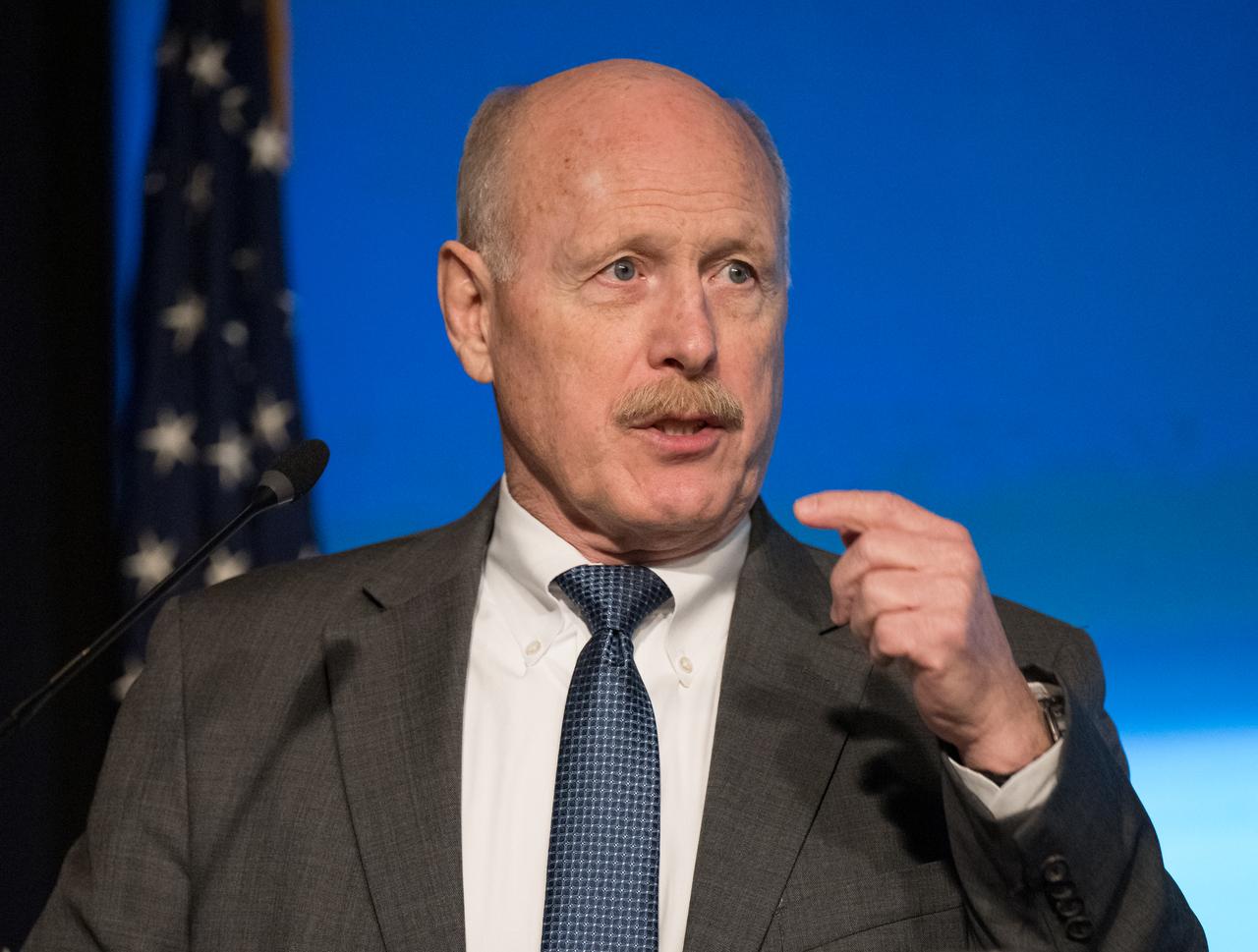
NASA Associate Administrator for Space Operations, Ken Bowersox, discusses the agency’s goals during the annual State of NASA address, Monday, March 11, 2024, at the Mary W. Jackson NASA Headquarters Building in Washington. NASA leaders discussed plans for promoting U.S. leadership in space exploration, improving life on Earth through science and innovation, humanity’s return to the Moon under the Artemis campaign, aeronautics, and more. Photo Credit: (NASA/Bill Ingalls)
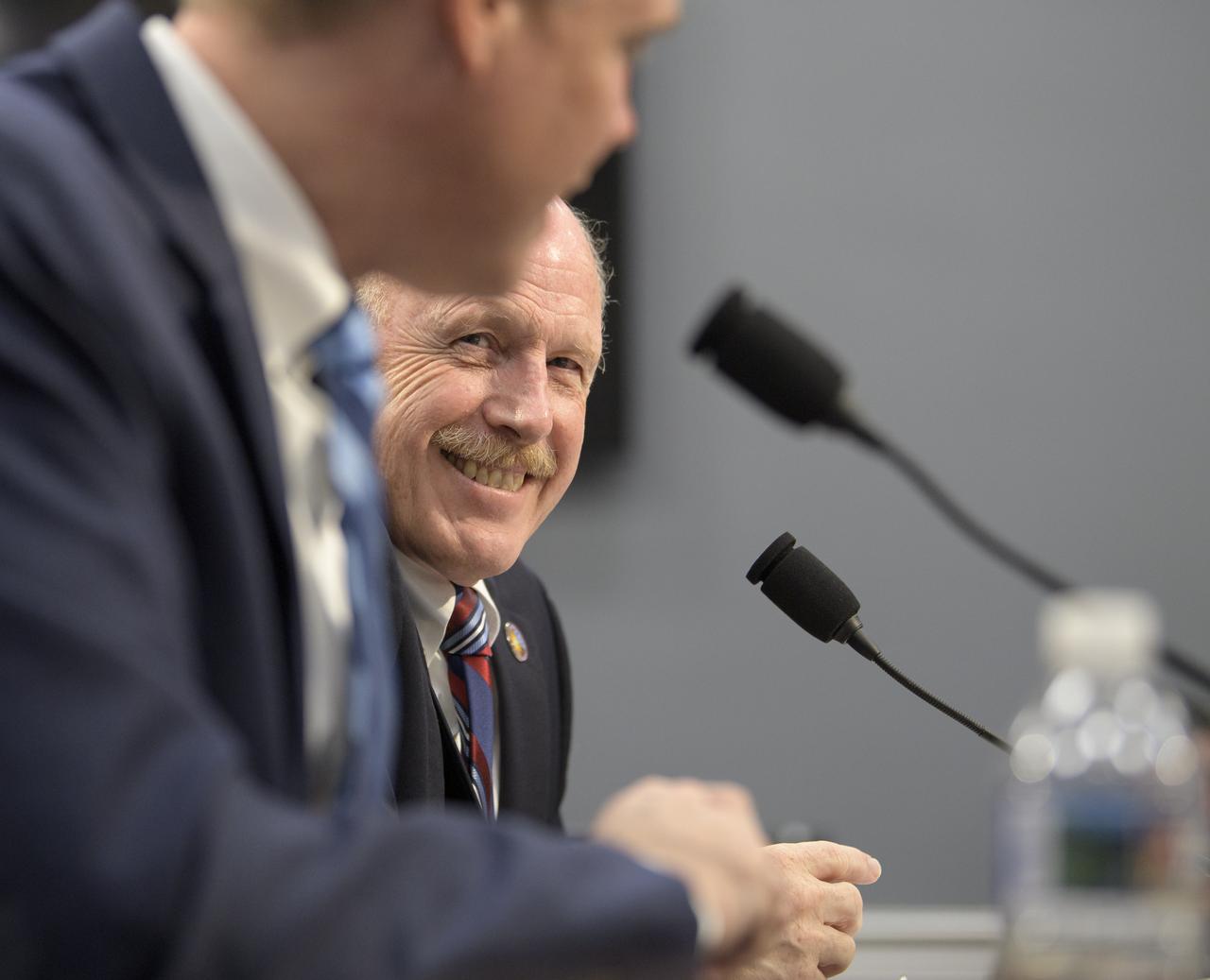
NASA acting Associate Administrator for Human Exploration and Operations Ken Bowersox testifies during a House subcommittee on Commerce, Justice, Science, and Related Agencies hearing titled “NASA’s Proposal to Advance the Next Moon Landing by Four Years”, Wednesday, Oct. 16, 2019, Rayburn House Office Building in Washington. Photo Credit: (NASA/Bill Ingalls)
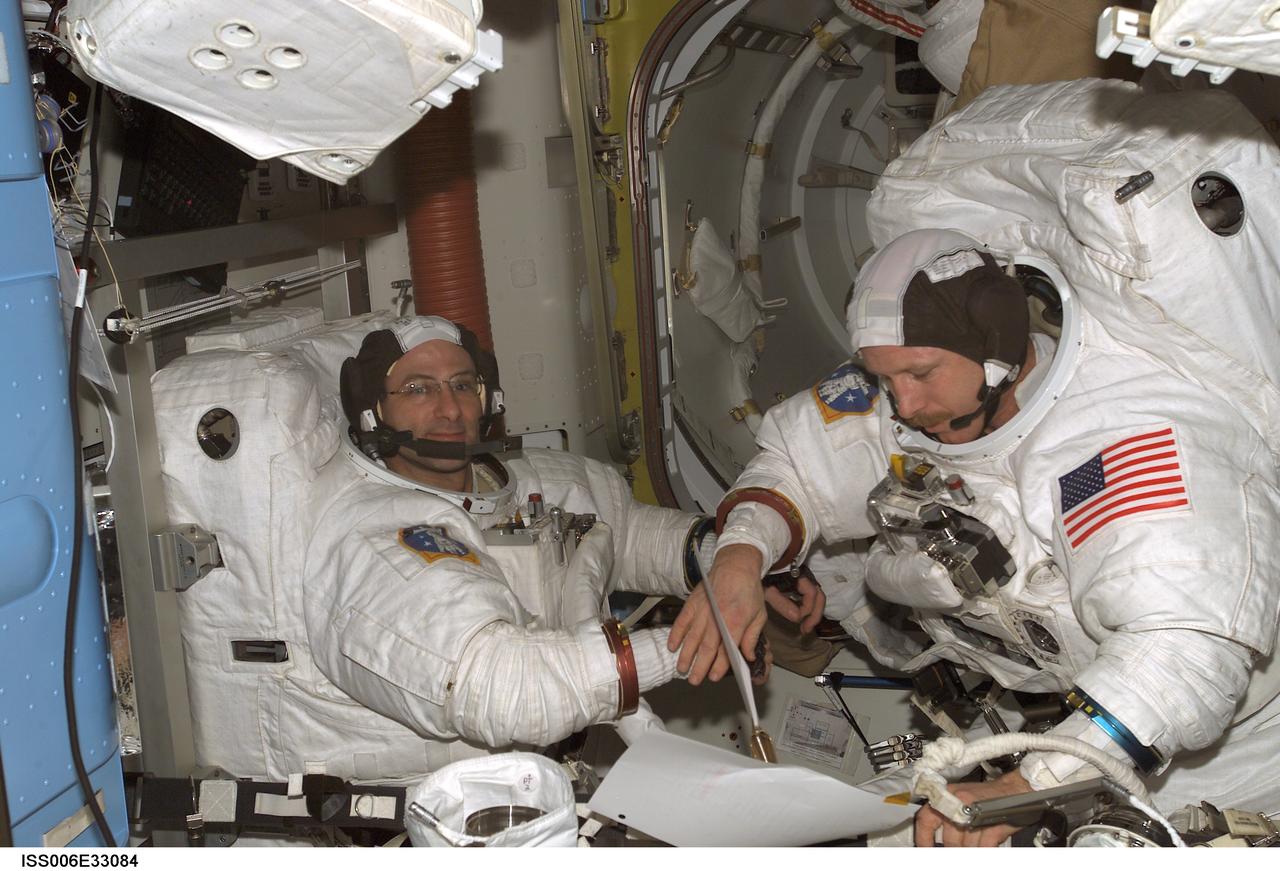
ISS006-E-33084 (24 February 2003) --- Astronauts Kenneth D. Bowersox (right) and Donald R. Pettit, Expedition Six mission commander and NASA ISS science officer, respectively, participate in a scheduled extravehicular activity (EVA) development test objective (DTO) in the Quest Airlock on the International Space Station (ISS). The test demonstrated the ability of two crewmembers to safely get into the American Extravehicular Mobility Unit (EMU) spacesuit without the assistance of a third crewmember; that ability is a prerequisite to sending smaller crews to ISS while the space shuttle fleet remains grounded during the investigation of the Columbia accident. Bowersox and Pettit helped each other into their EMU spacesuits, donned jet backpacks called Simplified Aid for EVA Rescue (SAFER), set up the necessary equipment for a pre-breathe of oxygen to purge nitrogen from their bloodstreams, and then got out of the spacesuits.
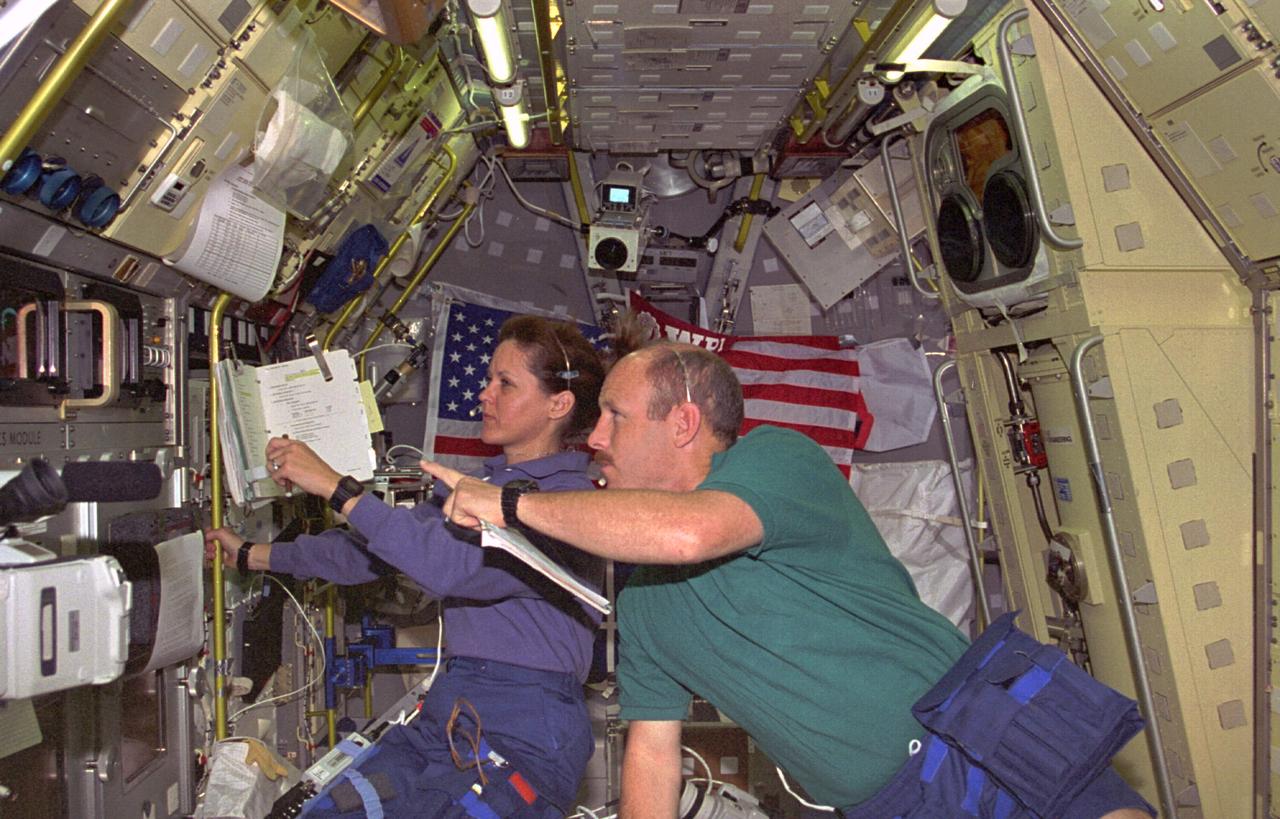
STS073-229-014 (20 October - 5 November 1995) --- Astronauts Kathryn C. Thornton, STS-73 payload commander, and Kenneth D. Bowersox, mission commander, observe a liquid drop's activity at the Drop Physics Module (DPM) in the science module aboard the Earth-orbiting Space Shuttle Columbia. The drop is partially visible at the center of the left edge of the frame. The two were joined by three other NASA astronauts and two guest researchers for almost 16-days of in-orbit research in support of the U.S. Microgravity Laboratory (USML-2) mission.
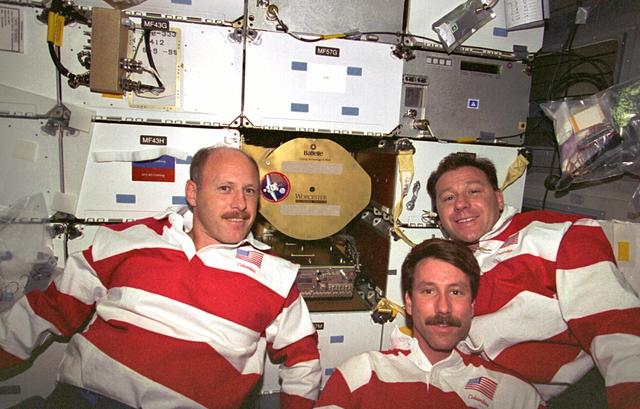
STS073-337-021 (20 October - 5 November 1995) --- Three members of the crew check out the Zeolite Crystal Growth (ZCG) on the middeck of the Earth-orbiting Space Shuttle Columbia. Left to right are astronauts Kenneth D. Bowersox and Kent V. Rominger, mission commander and pilot, respectively, and payload specialist Albert Sacco Jr. ZCG evaluated Zeolite crystallization and growth in the microgravity environment aboard Columbia in order to achieve high yields of large, nearly perfect crystals in space. Zeolites are complex arrangements of silica and alumina that occur naturally as well as synthetically.
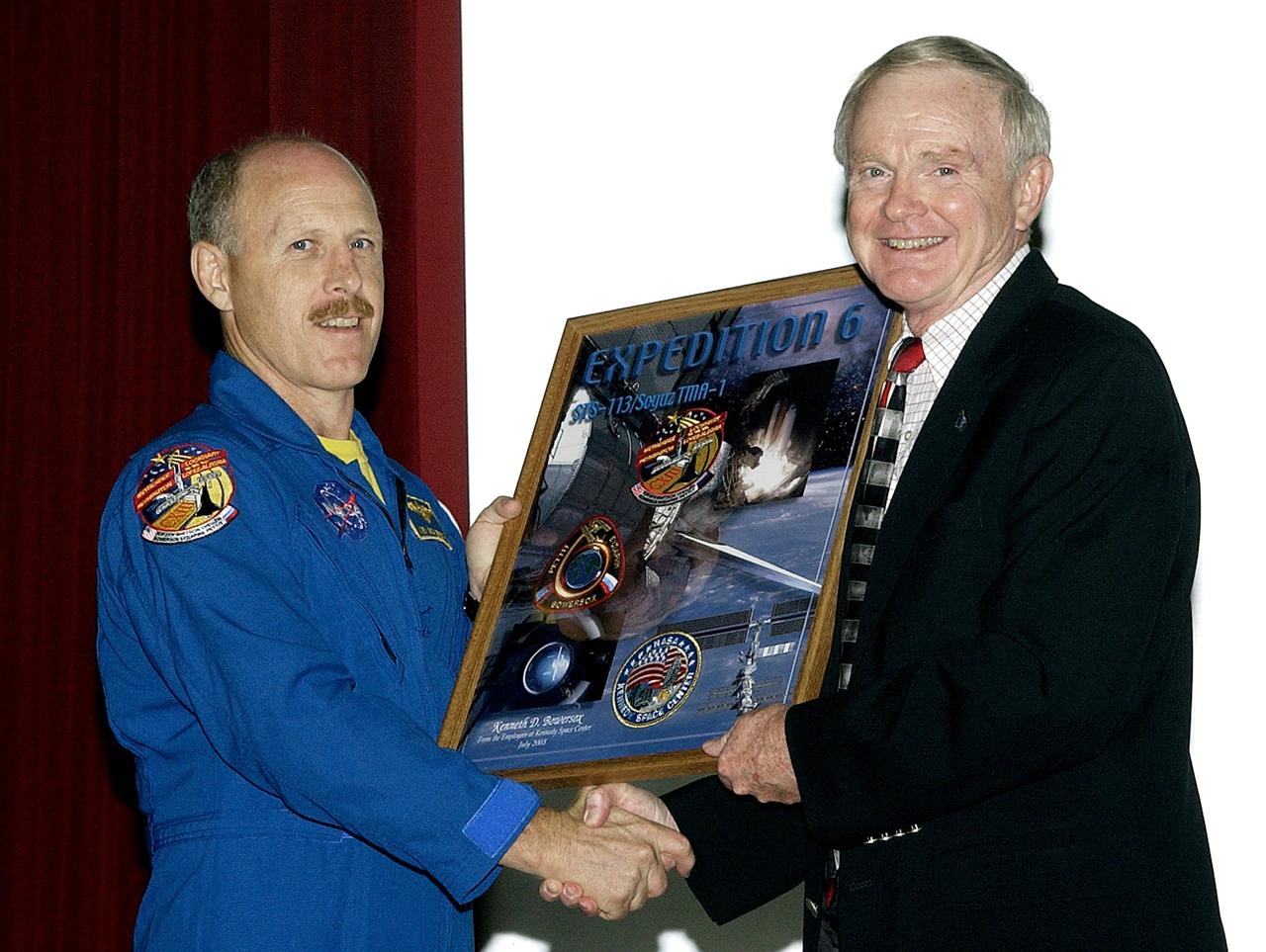
KENNEDY SPACE CENTER, FLA. - Expedition 6 Commander Ken Bowersox (left) accepts from Center Director Roy Bridges Jr. a framed graphic commemorating his stay on the International Space Station. Bowersox spoke to KSC employees about his mission and residence on the Station from November 25, 2002, to May 3, 2003.
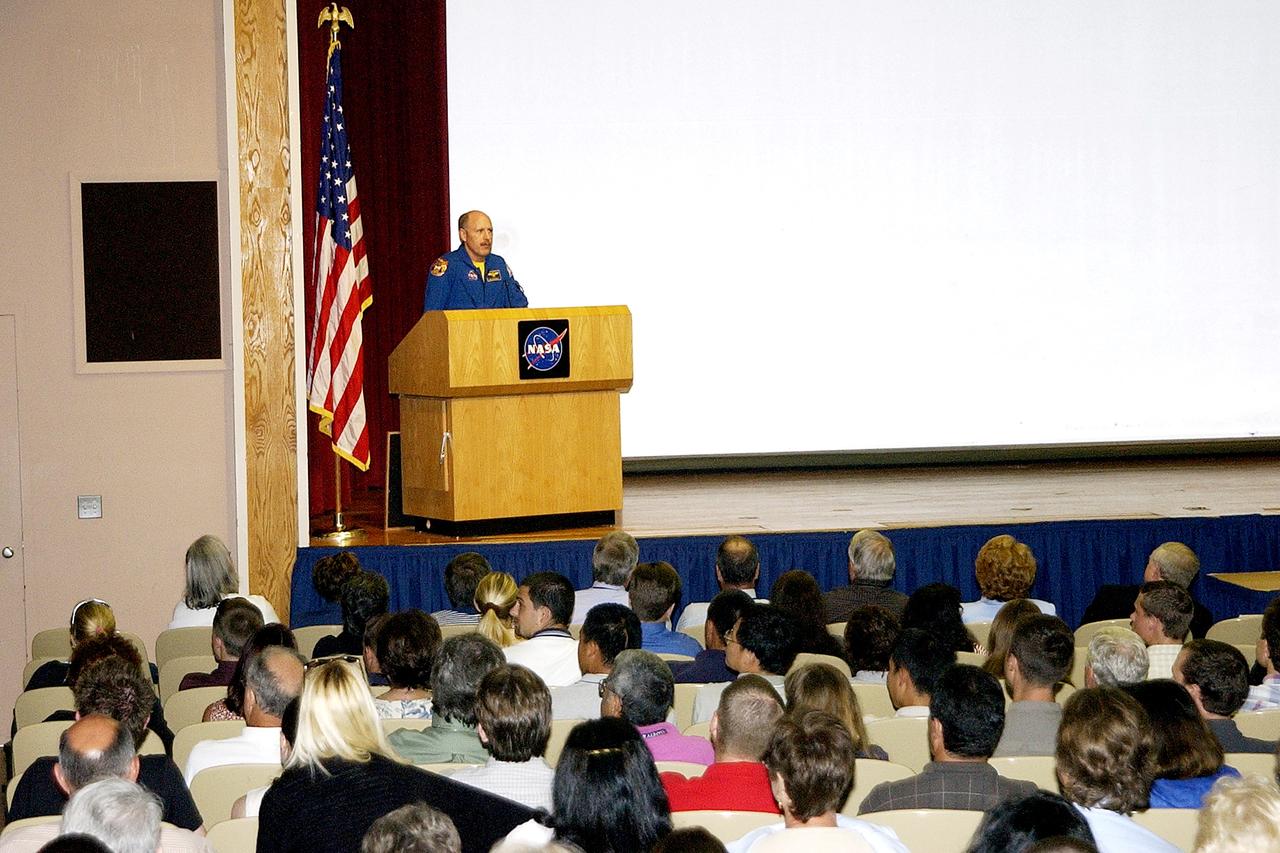
KENNEDY SPACE CENTER, FLA. - Expedition 6 Commander Ken Bowersox speaks to KSC employees about his mission and residence on the International Space Station from November 25, 2002, to May 3, 2003.
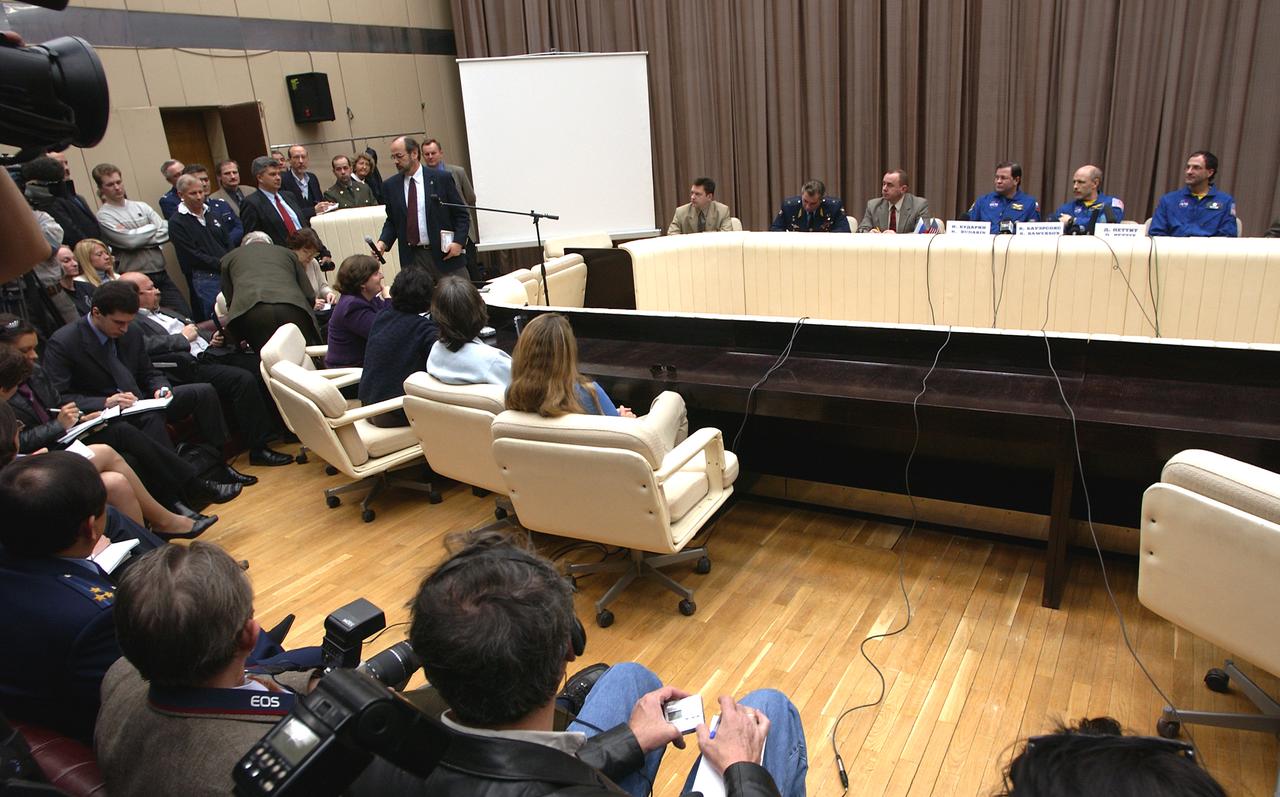
Expedition 6 Flight Engineer Nikolai Budarin, left, Commander Ken Bowersox and NASA International Space Station Science Officer Don Pettit, right, answer questions during a press conference at the Gagarin Cosmonaut Training Center in Star City, Russia, Thursday, May 6, 2003. Photo Credit: (NASA/Bill Ingalls)
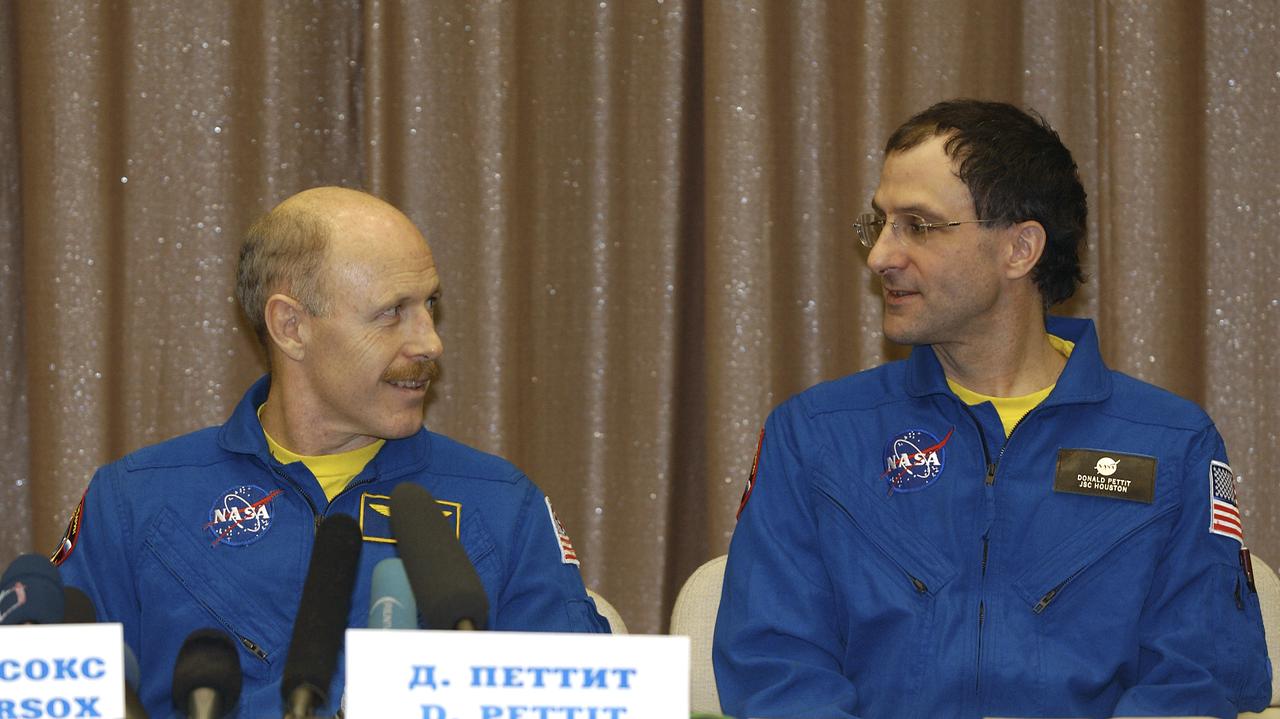
Expedition 6 Commander Ken Bowersox, left and NASA International Space Station Science Officer Don Pettit speak during a press conference at the Gagarin Cosmonaut Training Center in Star City, Russia, Thursday, May 6, 2003. Photo Credit: (NASA/Bill Ingalls)
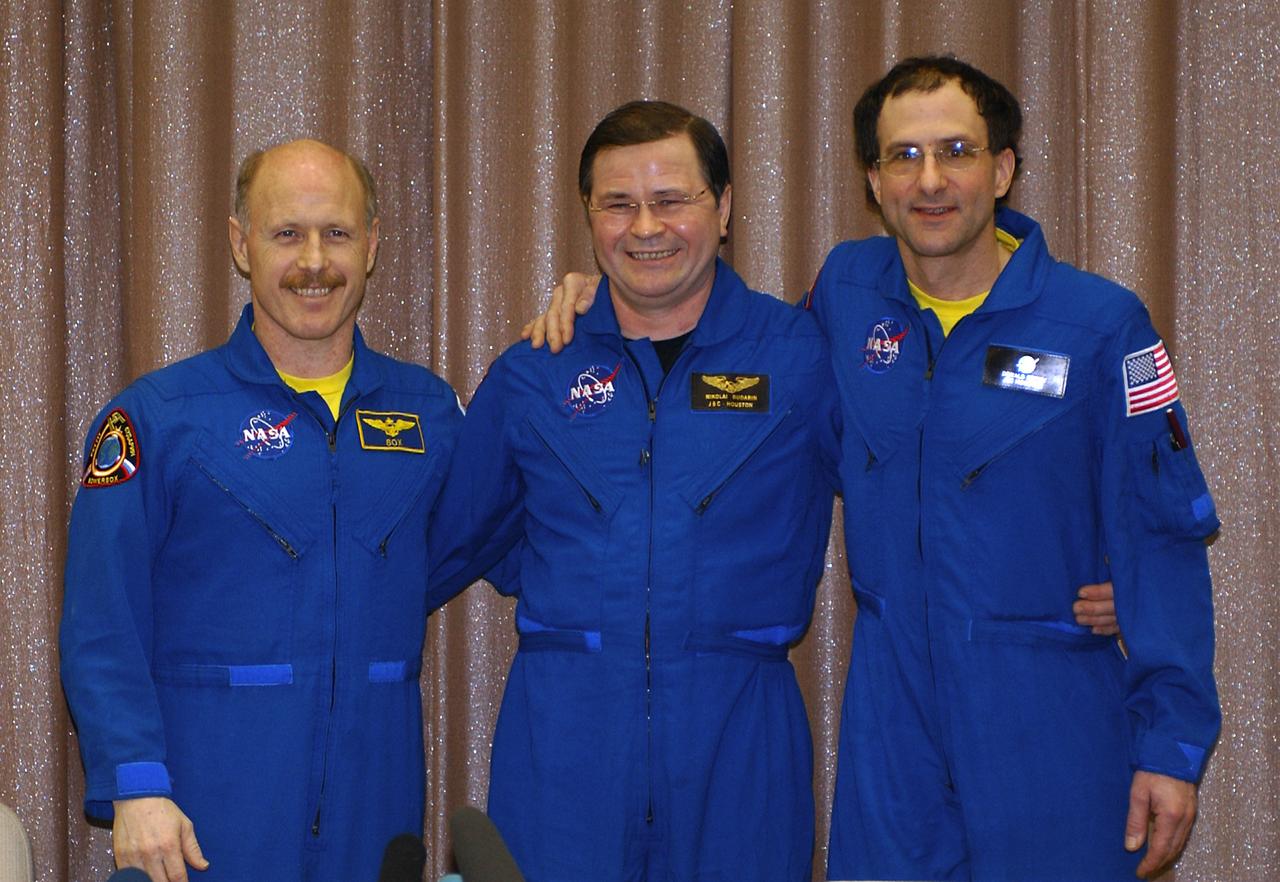
Expedition 6 Flight Engineer Nikolai Budarin, left, Commander Ken Bowersox and International Space Station Science Officer Don Pettit, right, pose for photos at a press conference at the Gagarin Cosmonaut Training Center in Star City, Russia, Thursday, May 6, 2003. Photo Credit: (NASA/Bill Ingalls)
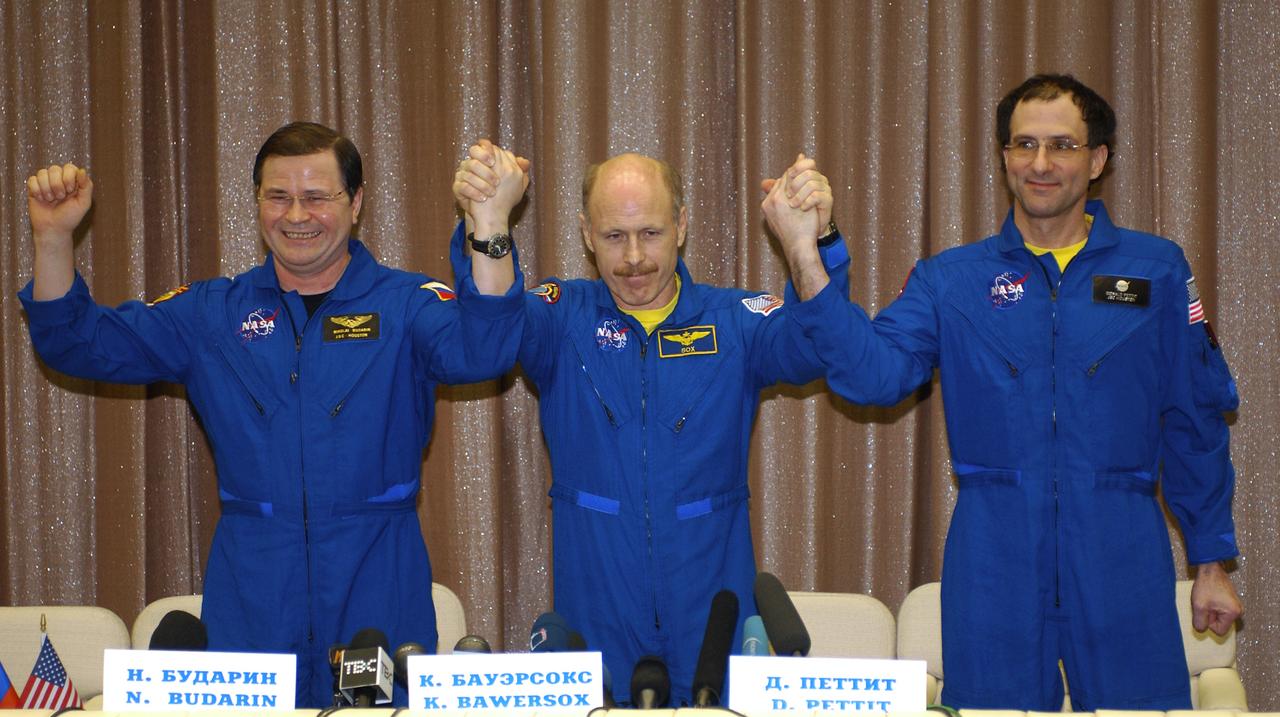
Expedition 6 Flight Engineer Nikolai Budarin, left, Commander Ken Bowersox and International Space Station Science Officer Don Pettit, right, pose for photos at a press conference at the Gagarin Cosmonaut Training Center in Star City, Russia, Thursday, May 6, 2003. Photo Credit: (NASA/Bill Ingalls)
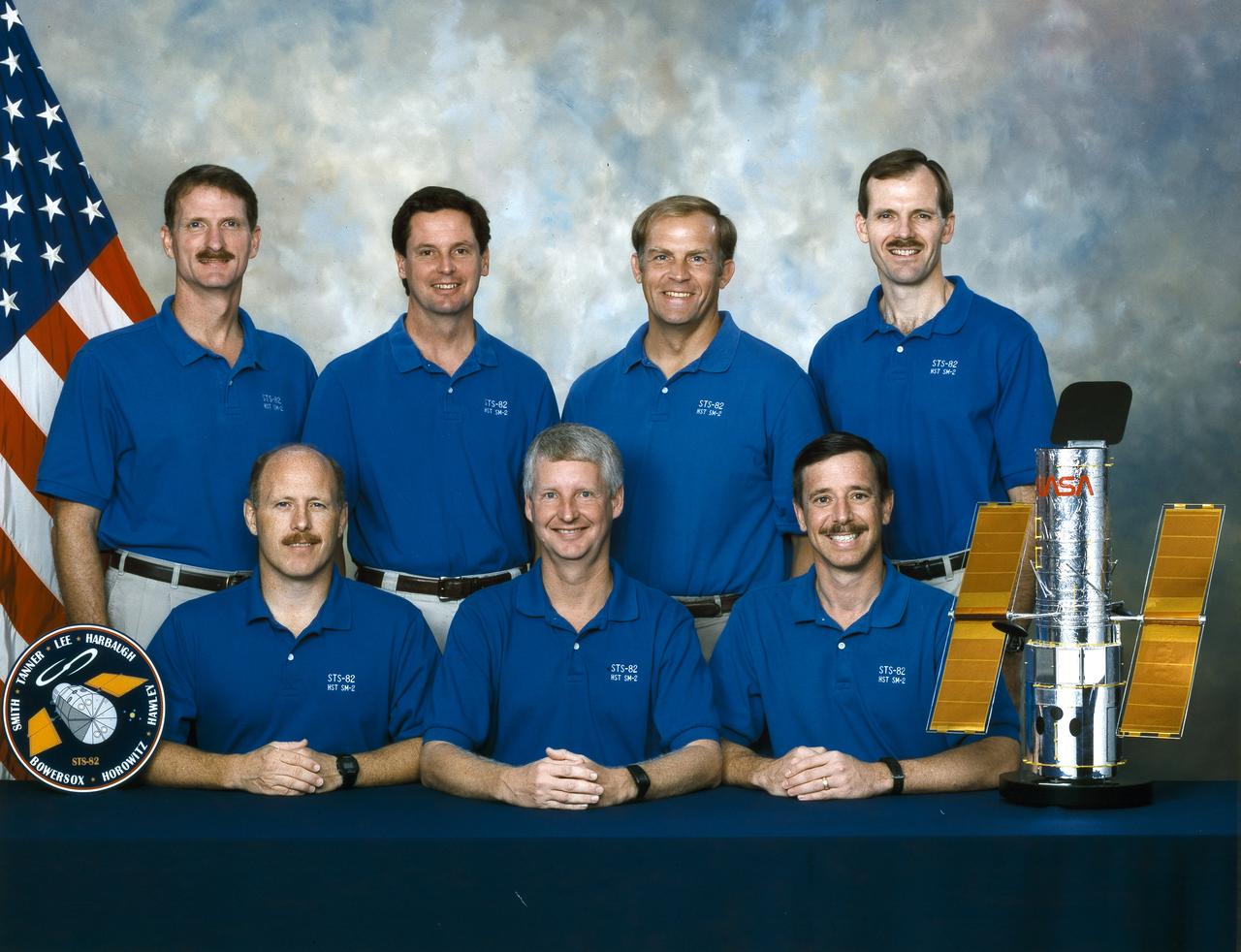
The crew assigned to the STS-82 mission included (seated front left to right) Kenneth D. Bowersox, commander; Steven A. Hawley, mission specialist; and Scott J. Horowitz, pilot. On the back row (left to right) are Joseph R. Tanner, mission specialist; Gregory J. Harbaugh, mission specialist; Mark C. Lee, payload commander; and Steven L. Smith, mission specialist. Launched aboard the Space Shuttle Discovery on February 11, 1997 at 3:55:17 am (EST), the STS-82 mission served as the second Hubble Space telescope servicing mission.
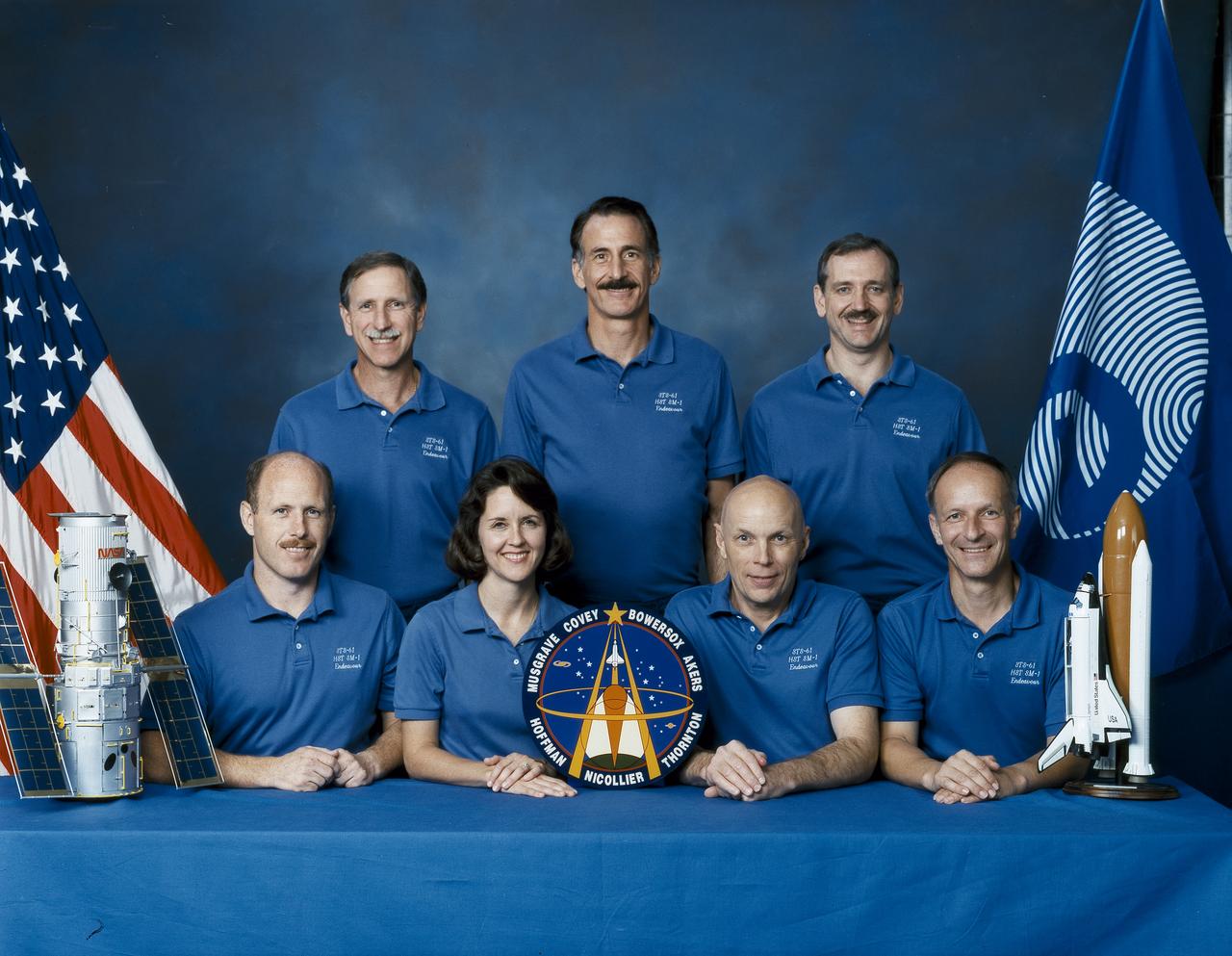
Astronauts included in the STS-61 crew portrait include (standing in rear left to right) Richard O. Covey, commander; and mission specialists Jeffrey A. Hoffman, and Thomas D. Akers. Seated left to right are Kenneth D. Bowersox, pilot; Kathryn C. Thornton, mission specialist; F. Story Musgrave, payload commander; and Claude Nicollier, mission specialist. Launched aboard the Space Shuttle Endeavor on December 2, 1993 at 4:27:00 am (EST), the STS-61 mission was the first Hubble Space Telescope (HST) servicing mission, and the last mission of 1993.
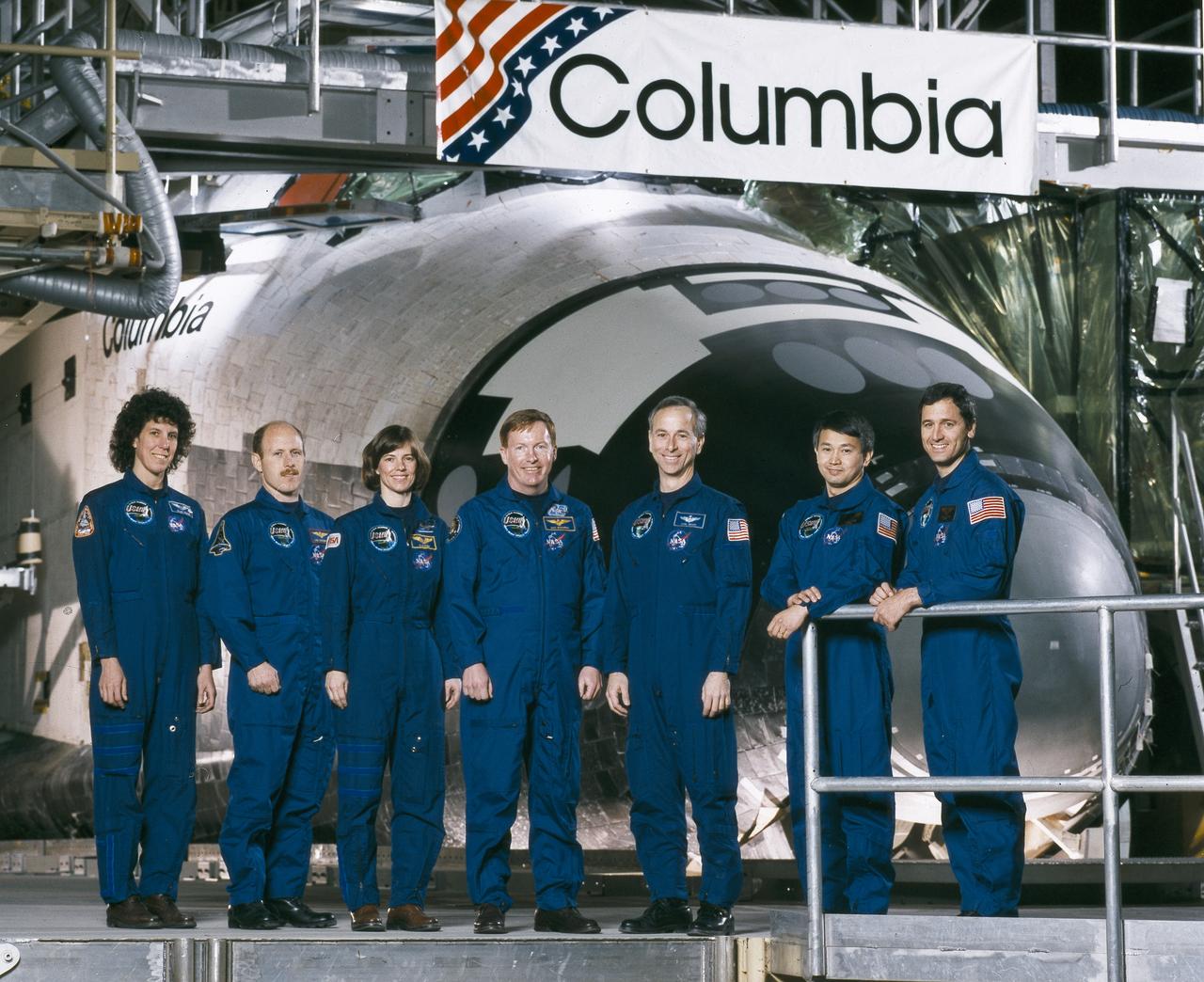
The STS-50 crew portrait includes (from left to right): Ellen S. Baker, mission specialist; Kenneth D. Bowersox, pilot; Bonnie J. Dunbar, payload commander; Richard N. Richards, commander; Carl J. Meade, mission specialist; Eugene H. Trinh, payload specialist; and Lawrence J. DeLucas, payload specialist. Launched aboard the Space Shuttle Columbia on June 25, 1992 at 12:12:23 pm (EDT), the primary payload for the mission was the U.S. Microgravity Laboratory-1 (USML-1) featuring a pressurized Spacelab module.
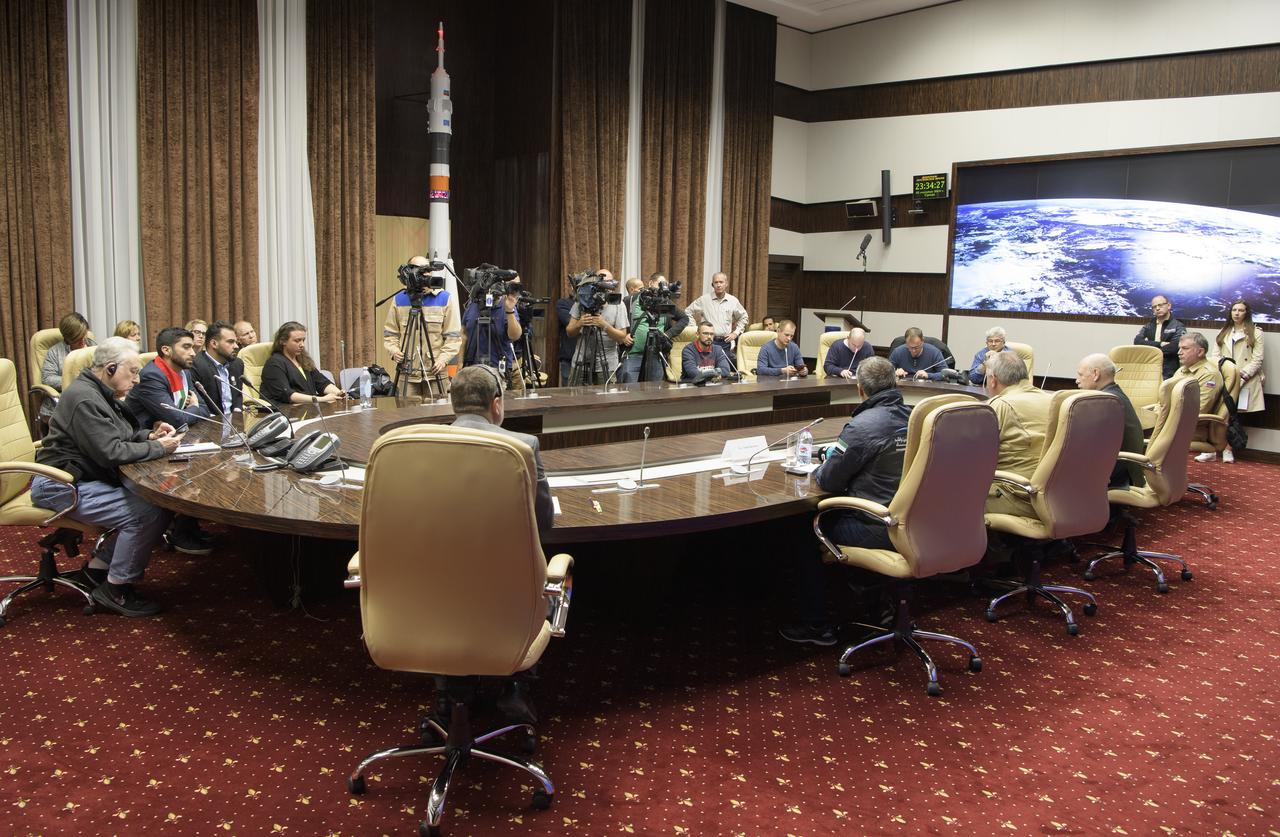
NASA acting Associate Administrator for Human Exploration and Operations Mission Directorate Kenneth Bowersox, Roscosmos Director General Dmitry Rogozin, and UAE Space Agency Chairman Ahmad Belhoul give remarks during a post launch press conference, Thursday, Sept. 26, 2019 at the Baikonur Hotel Hotel in Baikonur, Kazakhstan. A few hours earlier the Soyuz MS-15 spacecraft successfully launched from the Baikonur Cosmodrome with Expedition 61 crewmembers Jessica Meir of NASA and Oleg Skripochka of Roscosmos, and spaceflight participant Hazzaa Ali Almansoori of the United Arab Emirates. Photo Credit: (NASA/Bill Ingalls)
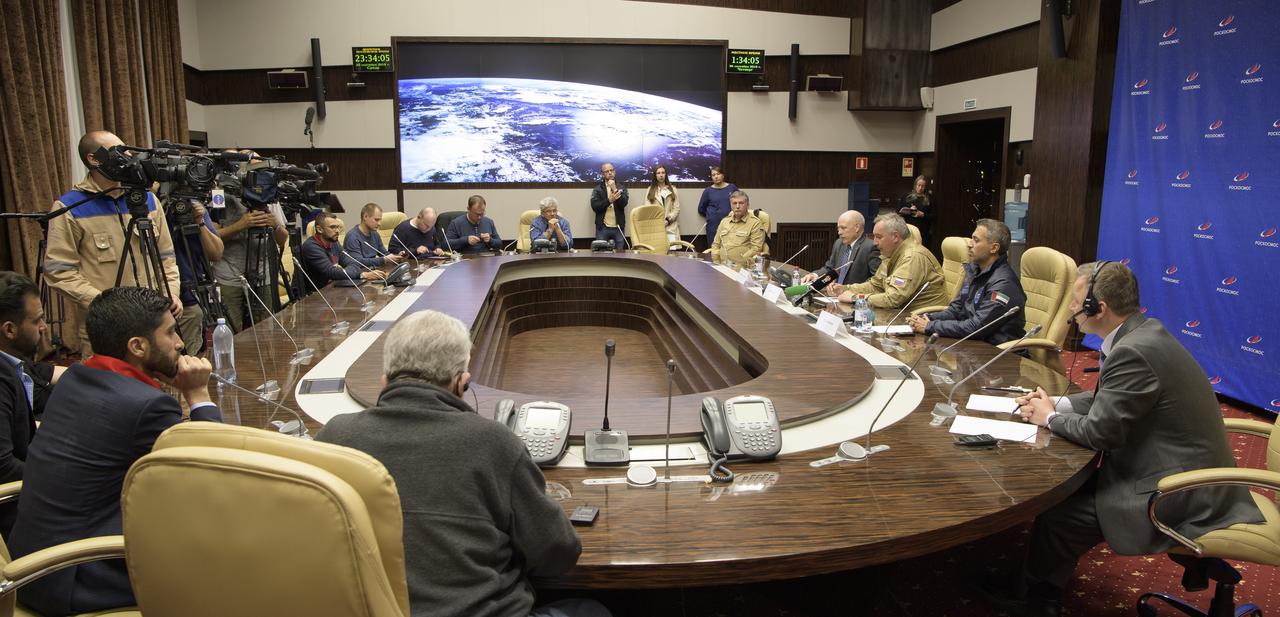
NASA acting Associate Administrator for Human Exploration and Operations Mission Directorate Kenneth Bowersox, Roscosmos Director General Dmitry Rogozin, and UAE Space Agency Chairman Ahmad Belhoul give remarks during a post launch press conference, Thursday, Sept. 26, 2019 at the Baikonur Hotel Hotel in Baikonur, Kazakhstan. A few hours earlier the Soyuz MS-15 spacecraft successfully launched from the Baikonur Cosmodrome with Expedition 61 crewmembers Jessica Meir of NASA and Oleg Skripochka of Roscosmos, and spaceflight participant Hazzaa Ali Almansoori of the United Arab Emirates. Photo Credit: (NASA/Bill Ingalls)
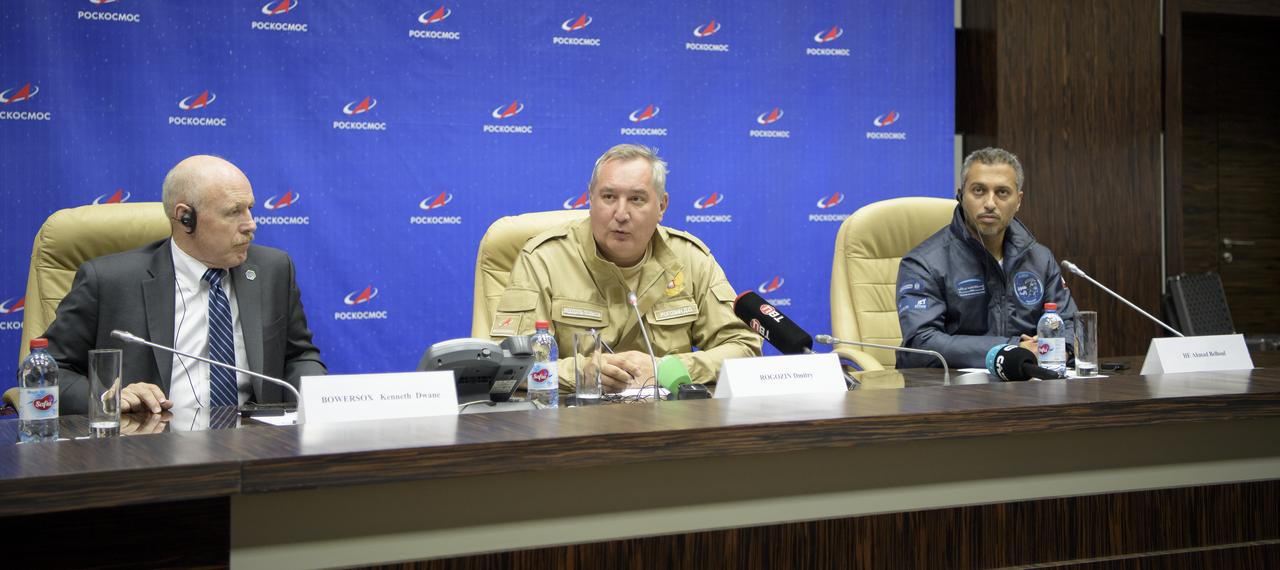
NASA acting Associate Administrator for Human Exploration and Operations Mission Directorate Kenneth Bowersox, left, Roscosmos Director General Dmitry Rogozin, center, and UAE Space Agency Chairman Ahmad Belhoul give remarks during a post launch press conference, Thursday, Sept. 26, 2019 at the Baikonur Hotel Hotel in Baikonur, Kazakhstan. A few hours earlier the Soyuz MS-15 spacecraft successfully launched from the Baikonur Cosmodrome with Expedition 61 crewmembers Jessica Meir of NASA and Oleg Skripochka of Roscosmos, and spaceflight participant Hazzaa Ali Almansoori of the United Arab Emirates. Photo Credit: (NASA/Bill Ingalls)
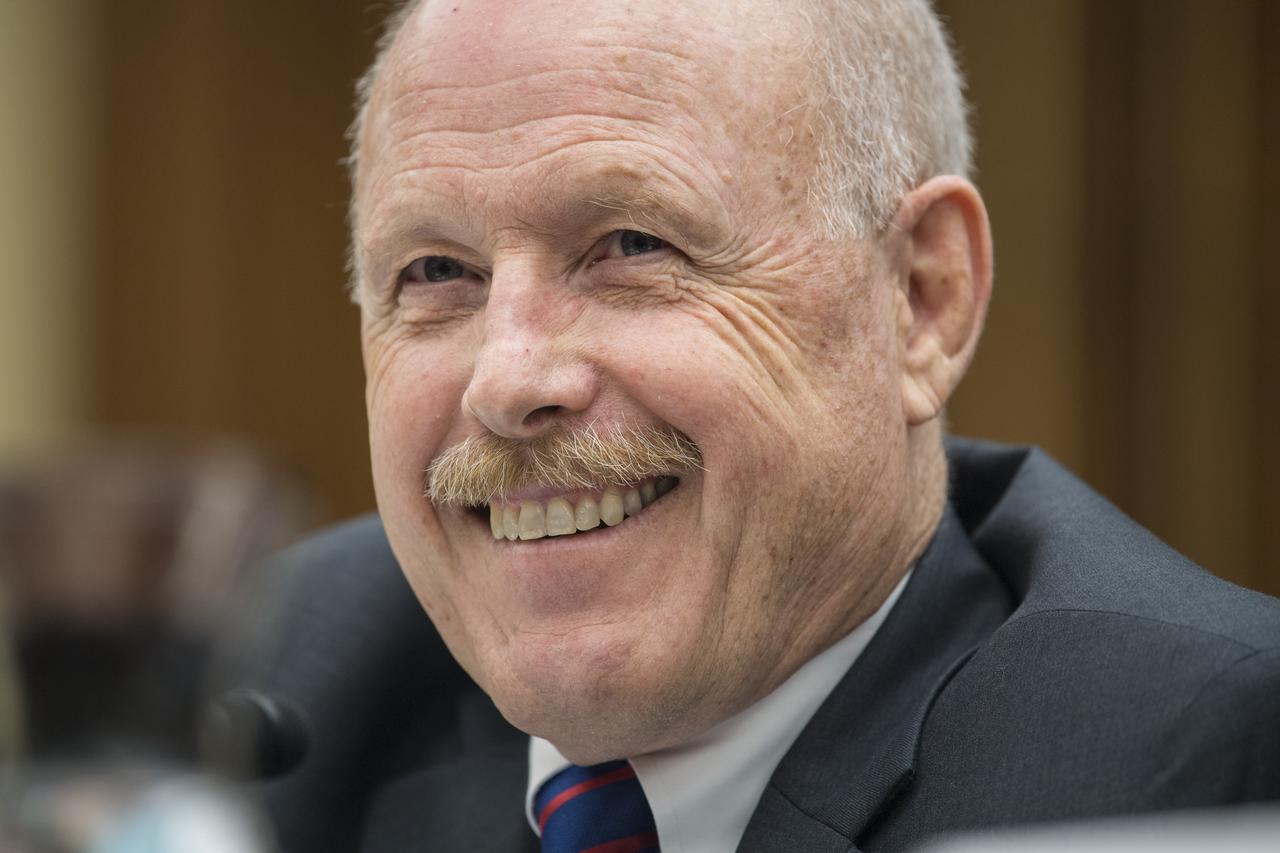
Acting NASA Associate Administrator for Human Exploration and Operations, Ken Bowersox, reacts during a Space and Aeronautics Subcommittee of the House Science, Space, and Technology Committee hearing titled, “Developing Core Capabilities for Deep Space Exploration: An Update on NASA's SLS, Orion, and Exploration Ground Systems," Wednesday, September 18, 2019 at the Rayburn House Office Building in Washington. Photo Credit: (NASA/Aubrey Gemignani)
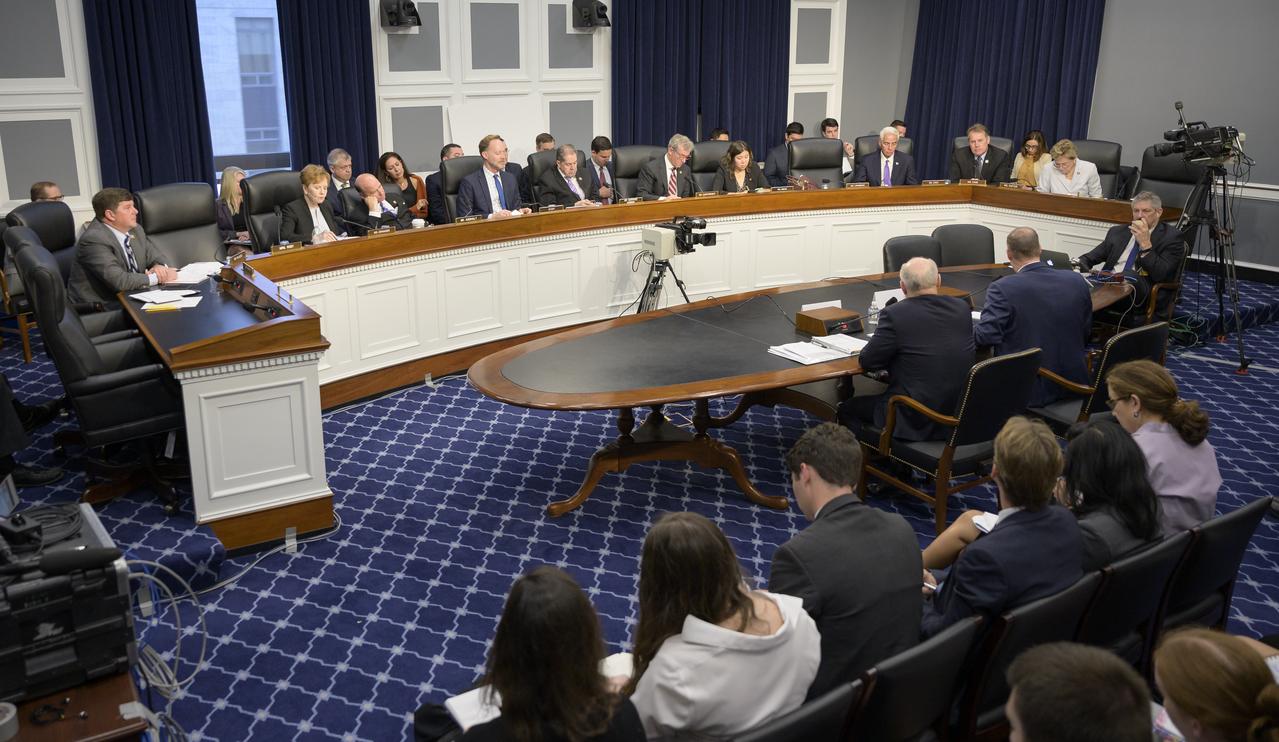
NASA Administrator Jim Bridenstine and NASA acting Associate Administrator for Human Exploration and Operations Ken Bowersox testify during a House subcommittee on Commerce, Justice, Science, and Related Agencies hearing titled “NASA’s Proposal to Advance the Next Moon Landing by Four Years”, Wednesday, Oct. 16, 2019, Rayburn House Office Building in Washington. Photo Credit: (NASA/Bill Ingalls)

Acting NASA Associate Administrator for Human Exploration and Operations, Ken Bowersox, testifies during a Space and Aeronautics Subcommittee of the House Science, Space, and Technology Committee hearing titled, “Developing Core Capabilities for Deep Space Exploration: An Update on NASA's SLS, Orion, and Exploration Ground Systems," Wednesday, September 18, 2019 at the Rayburn House Office Building in Washington. Photo Credit: (NASA/Aubrey Gemignani)

Acting NASA Associate Administrator for Human Exploration and Operations, Ken Bowersox, testifies during a Space and Aeronautics Subcommittee of the House Science, Space, and Technology Committee hearing titled, “Developing Core Capabilities for Deep Space Exploration: An Update on NASA's SLS, Orion, and Exploration Ground Systems," Wednesday, September 18, 2019 at the Rayburn House Office Building in Washington. Photo Credit: (NASA/Aubrey Gemignani)
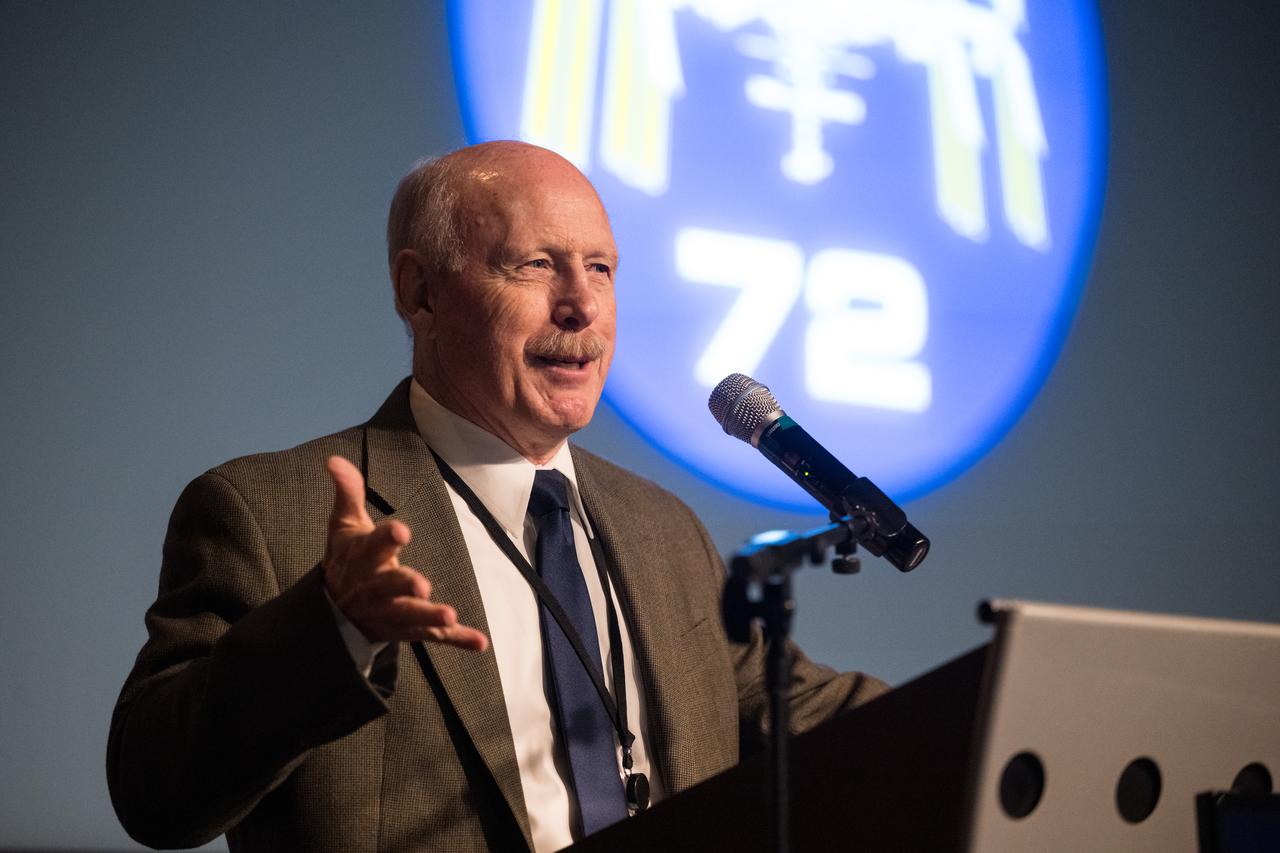
Ken Bowersox, associate administrator for NASA's Space Operations Mission Directorate, provides opening remarks for an employee engagement event featuring the crew of Expedition 72, Wednesday, Sept. 17, 2025, at the Mary W. Jackson NASA Headquarters building in Washington. Nick Hague, Suni Williams, Butch Wilmore, and Don Pettit served as part of Expedition 72 onboard the orbiting laboratory. Photo Credit: (NASA/Aubrey Gemignani)

Acting NASA Associate Administrator for Human Exploration and Operations, Ken Bowersox, testifies during a Space and Aeronautics Subcommittee of the House Science, Space, and Technology Committee hearing titled, “Developing Core Capabilities for Deep Space Exploration: An Update on NASA's SLS, Orion, and Exploration Ground Systems," Wednesday, September 18, 2019 at the Rayburn House Office Building in Washington. Photo Credit: (NASA/Aubrey Gemignani)

Ken Bowersox, associate administrator for NASA’s Space Operations Mission Directorate, right, is seen alongside Dwight Deneal, assistant administrator for NASA’s Office of Small Business Programs, second from right, and Casey Swails, NASA deputy associate administrator, as he speaks with Administrator of the Small Business Administration Kelly Loeffler during a visit to the Space Operations Center, Wednesday, April 16, 2025, at the Mary W. Jackson NASA Headquarters building in Washington. Photo Credit: (NASA/Joel Kowsky)
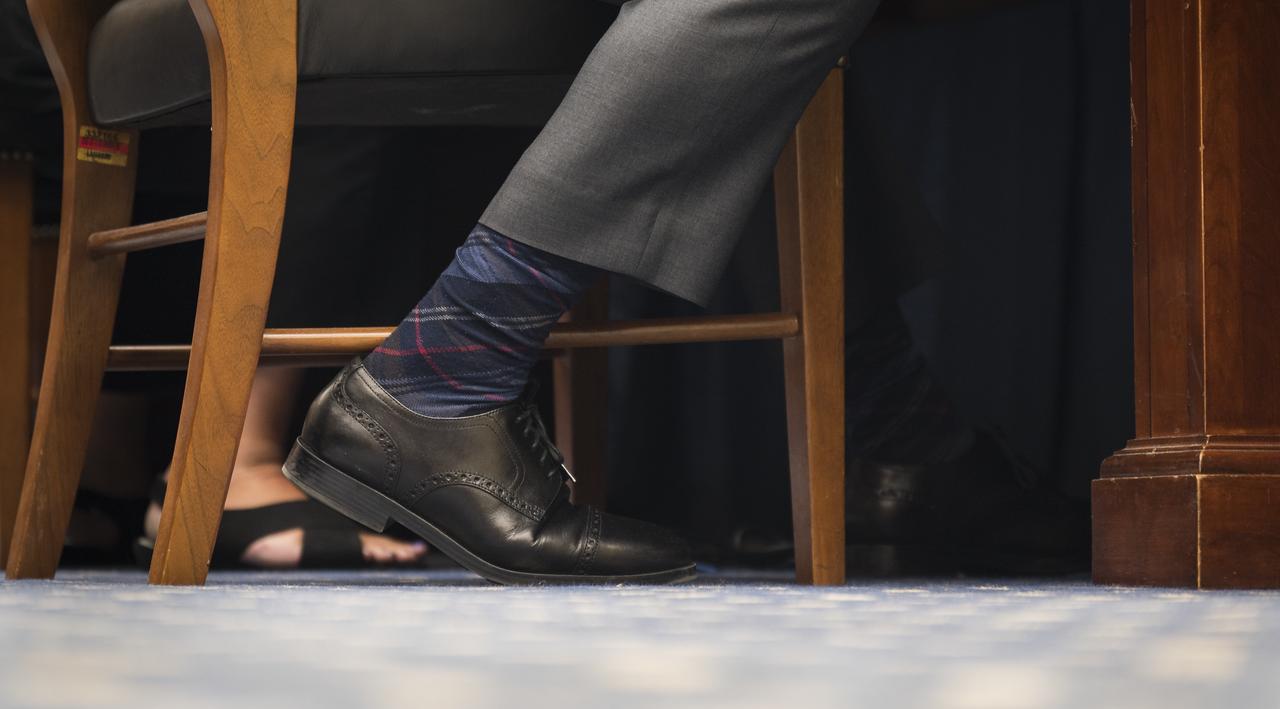
Acting NASA Associate Administrator for Human Exploration and Operations, Ken Bowersox, shoes are seen during a Space and Aeronautics Subcommittee of the House Science, Space, and Technology Committee hearing titled, “Developing Core Capabilities for Deep Space Exploration: An Update on NASA's SLS, Orion, and Exploration Ground Systems," Wednesday, September 18, 2019 at the Rayburn House Office Building in Washington. Photo Credit: (NASA/Aubrey Gemignani)

Acting NASA Associate Administrator for Human Exploration and Operations, Ken Bowersox, testifies during a Space and Aeronautics Subcommittee of the House Science, Space, and Technology Committee hearing titled, “Developing Core Capabilities for Deep Space Exploration: An Update on NASA's SLS, Orion, and Exploration Ground Systems," Wednesday, September 18, 2019 at the Rayburn House Office Building in Washington. Photo Credit: (NASA/Aubrey Gemignani)
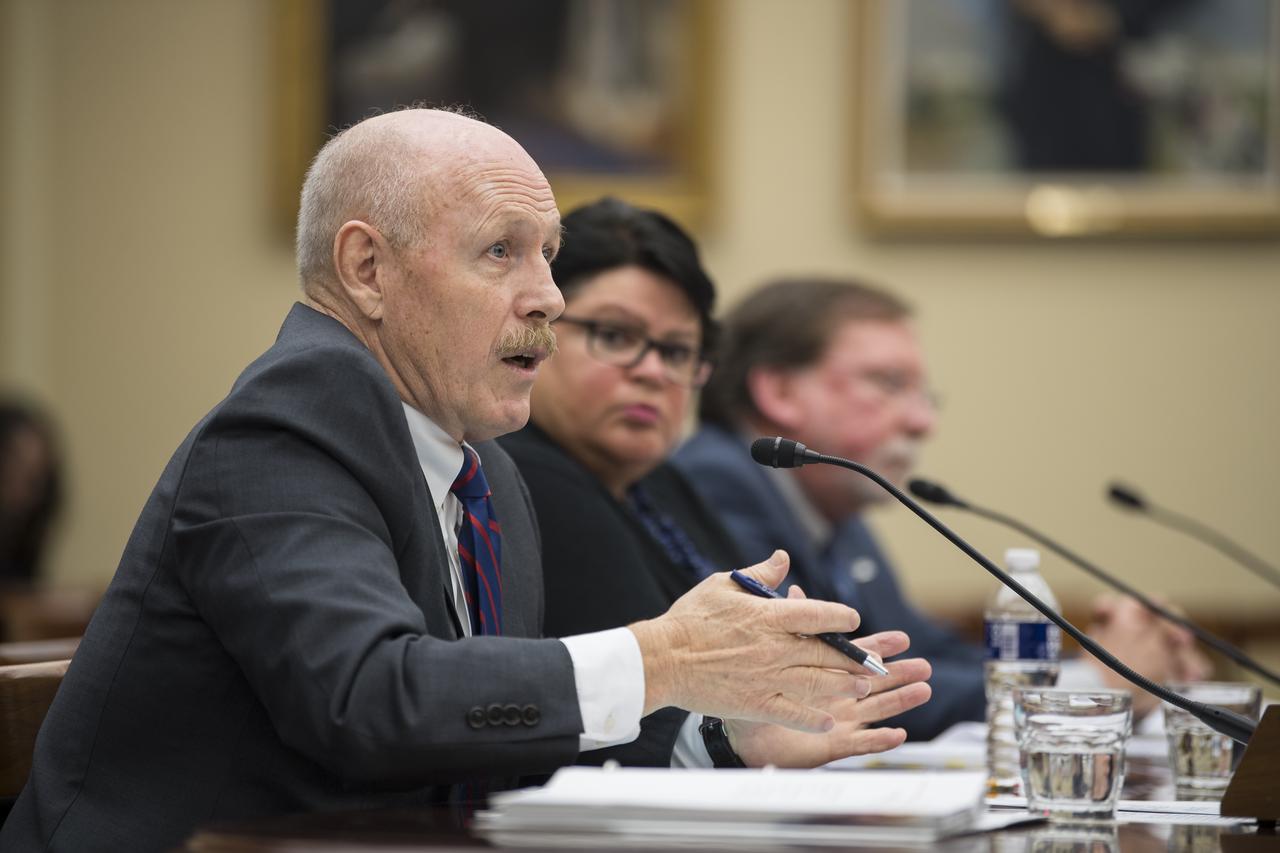
Acting NASA Associate Administrator for Human Exploration and Operations, Ken Bowersox, testifies during a Space and Aeronautics Subcommittee of the House Science, Space, and Technology Committee hearing titled, “Developing Core Capabilities for Deep Space Exploration: An Update on NASA's SLS, Orion, and Exploration Ground Systems," Wednesday, September 18, 2019 at the Rayburn House Office Building in Washington. Photo Credit: (NASA/Aubrey Gemignani)
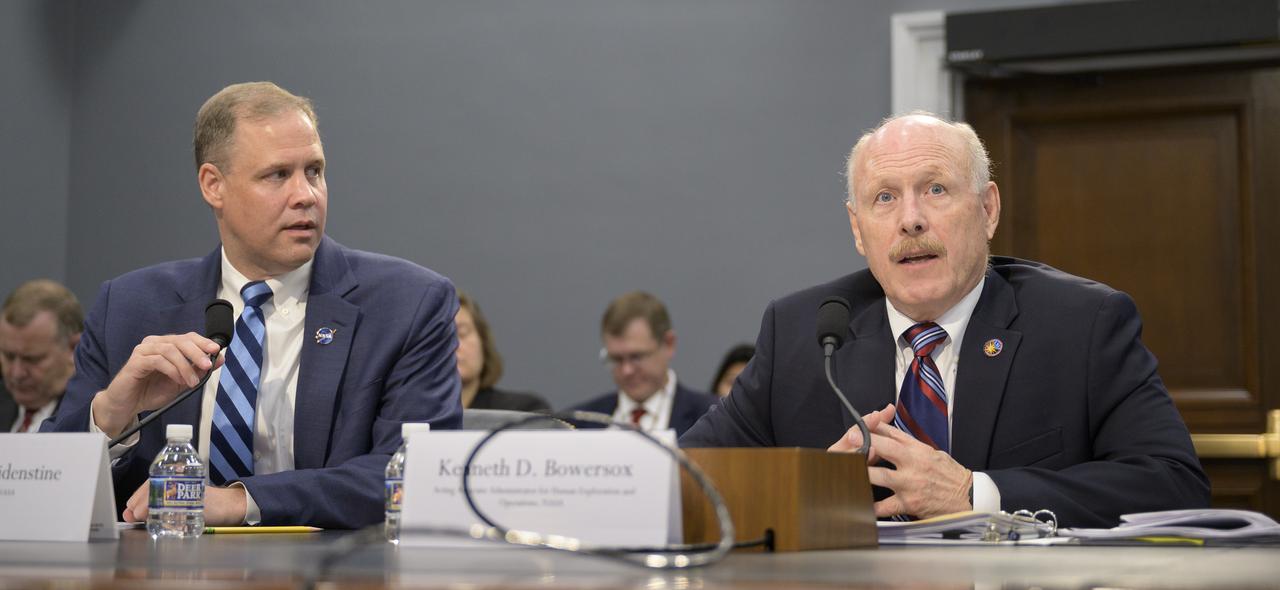
NASA Administrator Jim Bridenstine, left, and NASA acting Associate Administrator for Human Exploration and Operations Ken Bowersox testify during a House subcommittee on Commerce, Justice, Science, and Related Agencies hearing titled “NASA’s Proposal to Advance the Next Moon Landing by Four Years”, Wednesday, Oct. 16, 2019, Rayburn House Office Building in Washington. Photo Credit: (NASA/Bill Ingalls)
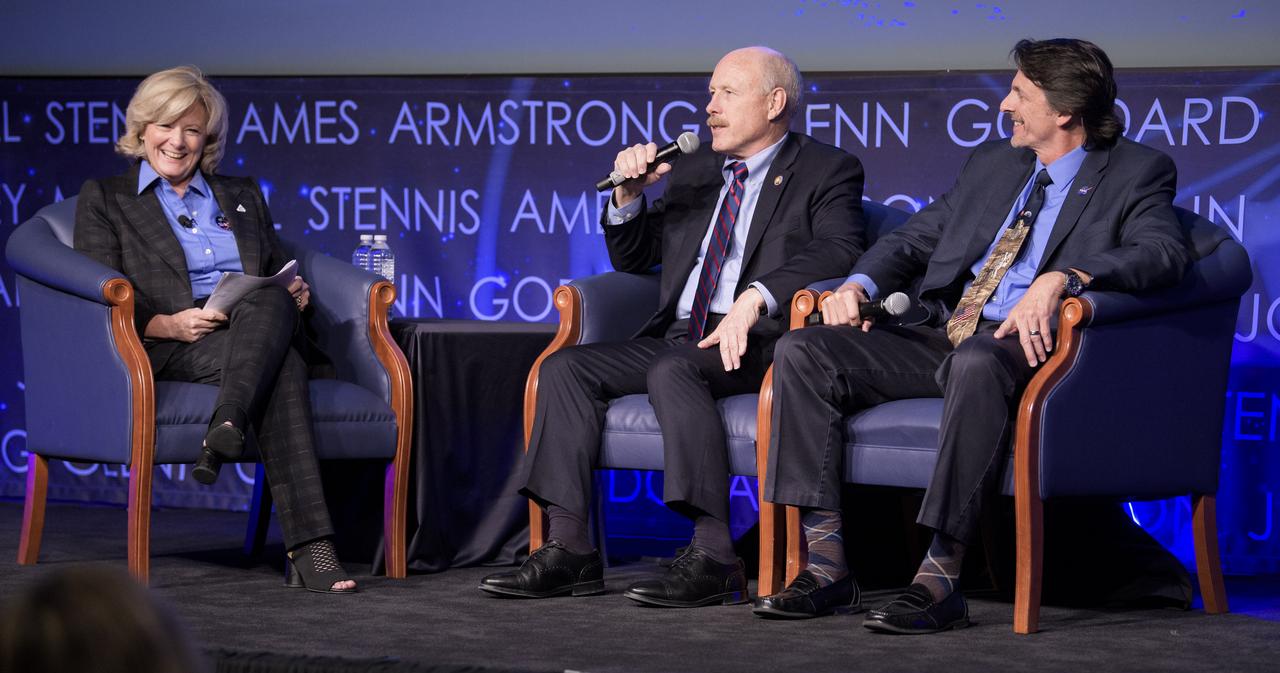
Jody Singer, Director of NASA’s Marshall Space Flight Center, left, Ken Bowersox, acting Associate Administrator for NASA's Human Exploration and Operations Mission Directorate, center, and Steve Clarke, Deputy Associate Administrator for Exploration in NASA’s Science Mission Directorate, right, discuss the agency’s Artemis program during an interactive STEM discussion with students attending the 70th International Astronautical Congress, Wednesday, Oct. 23, 2019, at NASA Headquarters in Washington. Photo Credit: (NASA/Joel Kowsky)

Acting NASA Associate Administrator for Human Exploration and Operations, Ken Bowersox, takes notes during a Space and Aeronautics Subcommittee of the House Science, Space, and Technology Committee hearing titled, “Developing Core Capabilities for Deep Space Exploration: An Update on NASA's SLS, Orion, and Exploration Ground Systems," Wednesday, September 18, 2019 at the Rayburn House Office Building in Washington. Photo Credit: (NASA/Aubrey Gemignani)

Acting NASA Associate Administrator for Human Exploration and Operations, Ken Bowersox, testifies during a Space and Aeronautics Subcommittee of the House Science, Space, and Technology Committee hearing titled, “Developing Core Capabilities for Deep Space Exploration: An Update on NASA's SLS, Orion, and Exploration Ground Systems," Wednesday, September 18, 2019 at the Rayburn House Office Building in Washington. Photo Credit: (NASA/Aubrey Gemignani)
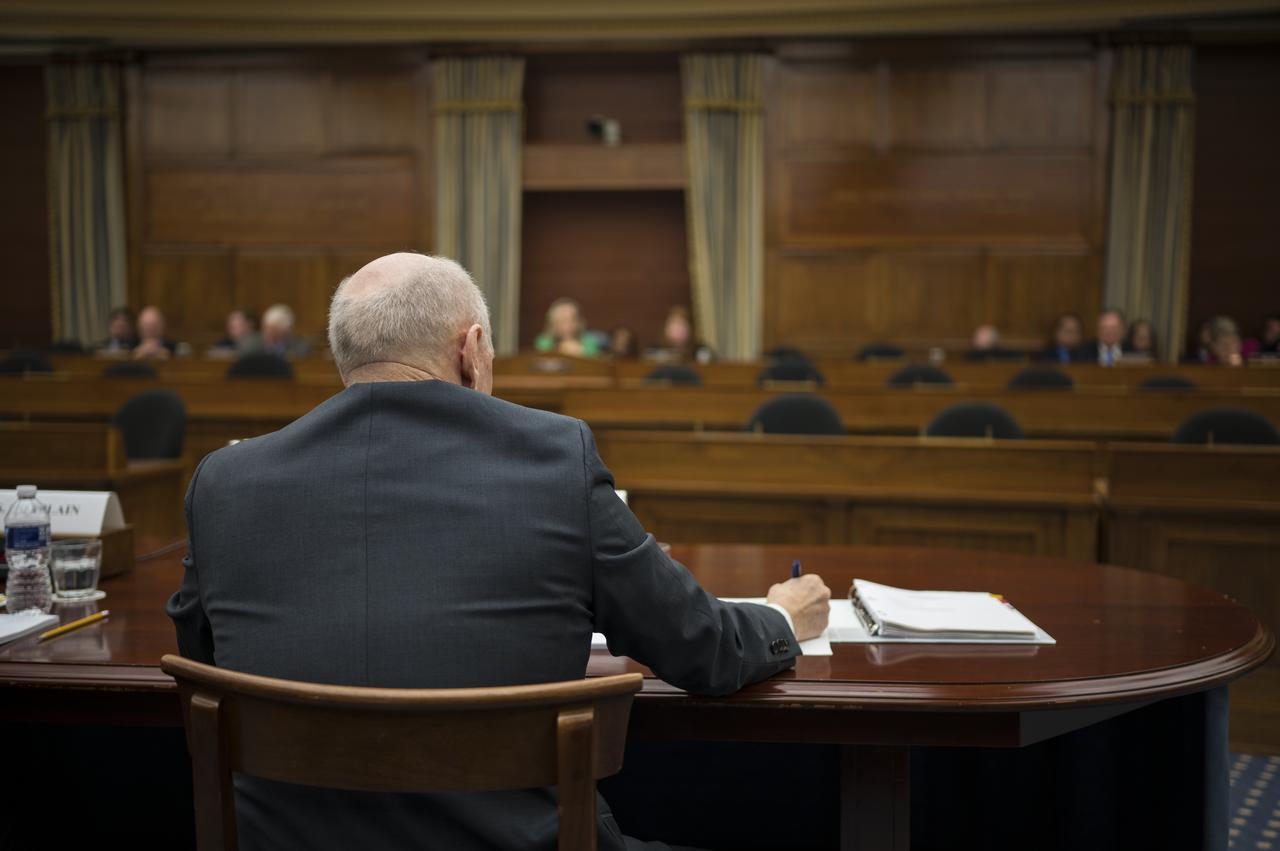
Acting NASA Associate Administrator for Human Exploration and Operations, Ken Bowersox, takes notes during a Space and Aeronautics Subcommittee of the House Science, Space, and Technology Committee hearing titled, “Developing Core Capabilities for Deep Space Exploration: An Update on NASA's SLS, Orion, and Exploration Ground Systems," Wednesday, September 18, 2019 at the Rayburn House Office Building in Washington. Photo Credit: (NASA/Aubrey Gemignani)
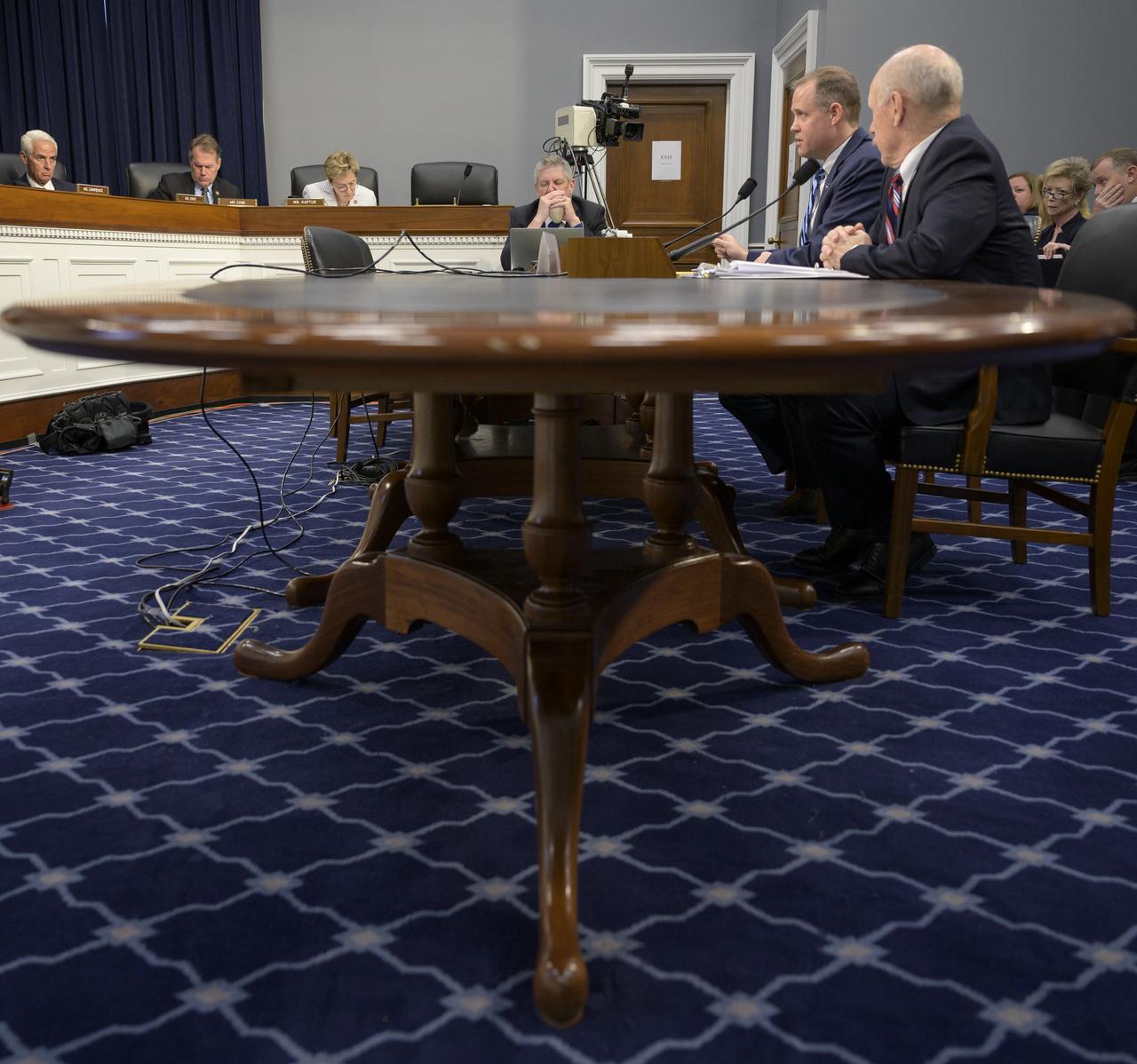
NASA Administrator Jim Bridenstine, left, and NASA acting Associate Administrator for Human Exploration and Operations Ken Bowersox testify during a House subcommittee on Commerce, Justice, Science, and Related Agencies hearing titled “NASA’s Proposal to Advance the Next Moon Landing by Four Years”, Wednesday, Oct. 16, 2019, Rayburn House Office Building in Washington. Photo Credit: (NASA/Bill Ingalls)

Steve Clarke, Deputy Associate Administrator for Exploration in NASA’s Science Mission Directorate, right, is seen with Ken Bowersox, acting Associate Administrator for NASA's Human Exploration and Operations Mission Directorate, center, and Jody Singer, Director of NASA’s Marshall Space Flight Center, left, during an interactive STEM discussion with students attending the 70th International Astronautical Congress, Wednesday, Oct. 23, 2019, at NASA Headquarters in Washington. Photo Credit: (NASA/Joel Kowsky)

Acting NASA Associate Administrator for Human Exploration and Operations, Ken Bowersox, testifies during a Space and Aeronautics Subcommittee of the House Science, Space, and Technology Committee hearing titled, “Developing Core Capabilities for Deep Space Exploration: An Update on NASA's SLS, Orion, and Exploration Ground Systems," Wednesday, September 18, 2019 at the Rayburn House Office Building in Washington. Photo Credit: (NASA/Aubrey Gemignani)
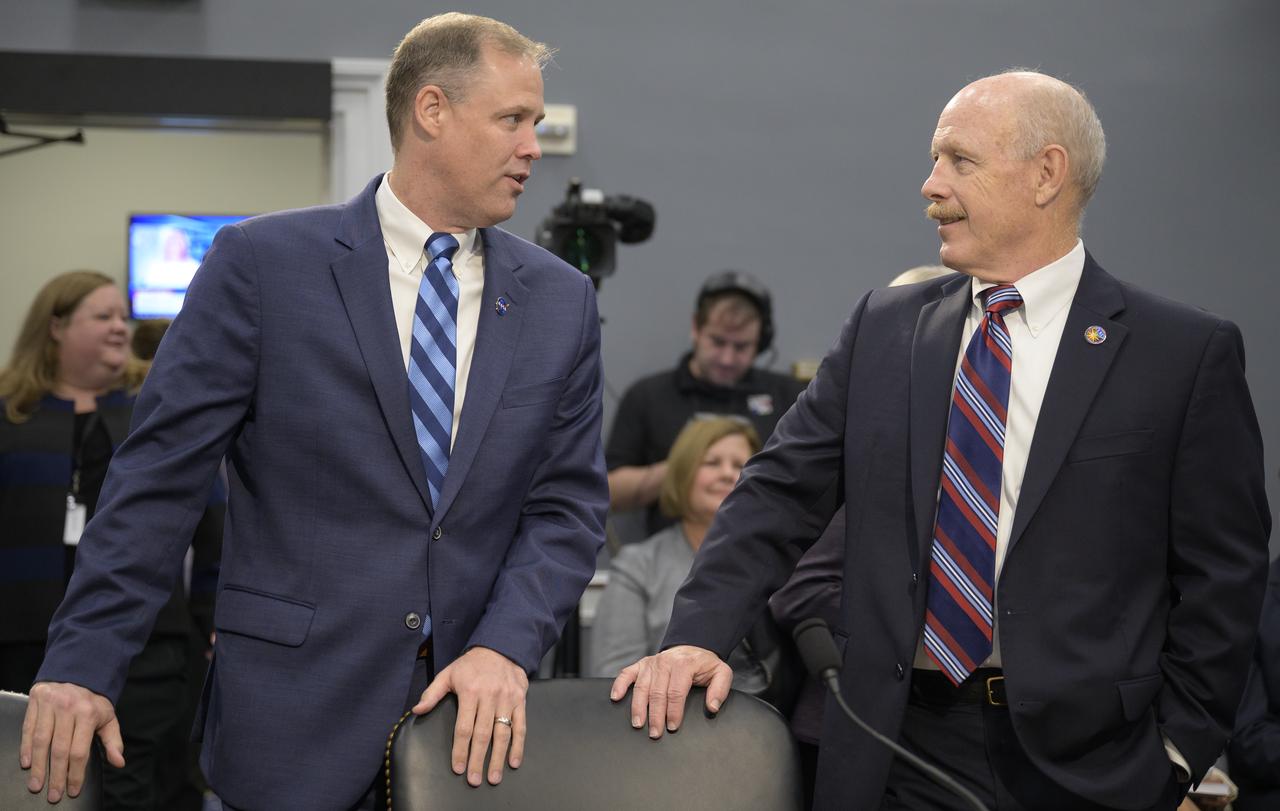
NASA Administrator Jim Bridenstine, left, and NASA acting Associate Administrator for Human Exploration and Operations Ken Bowersox talk prior to the start of a House subcommittee on Commerce, Justice, Science, and Related Agencies hearing titled “NASA’s Proposal to Advance the Next Moon Landing by Four Years”, Wednesday, Oct. 16, 2019, Rayburn House Office Building in Washington. Photo Credit: (NASA/Bill Ingalls)
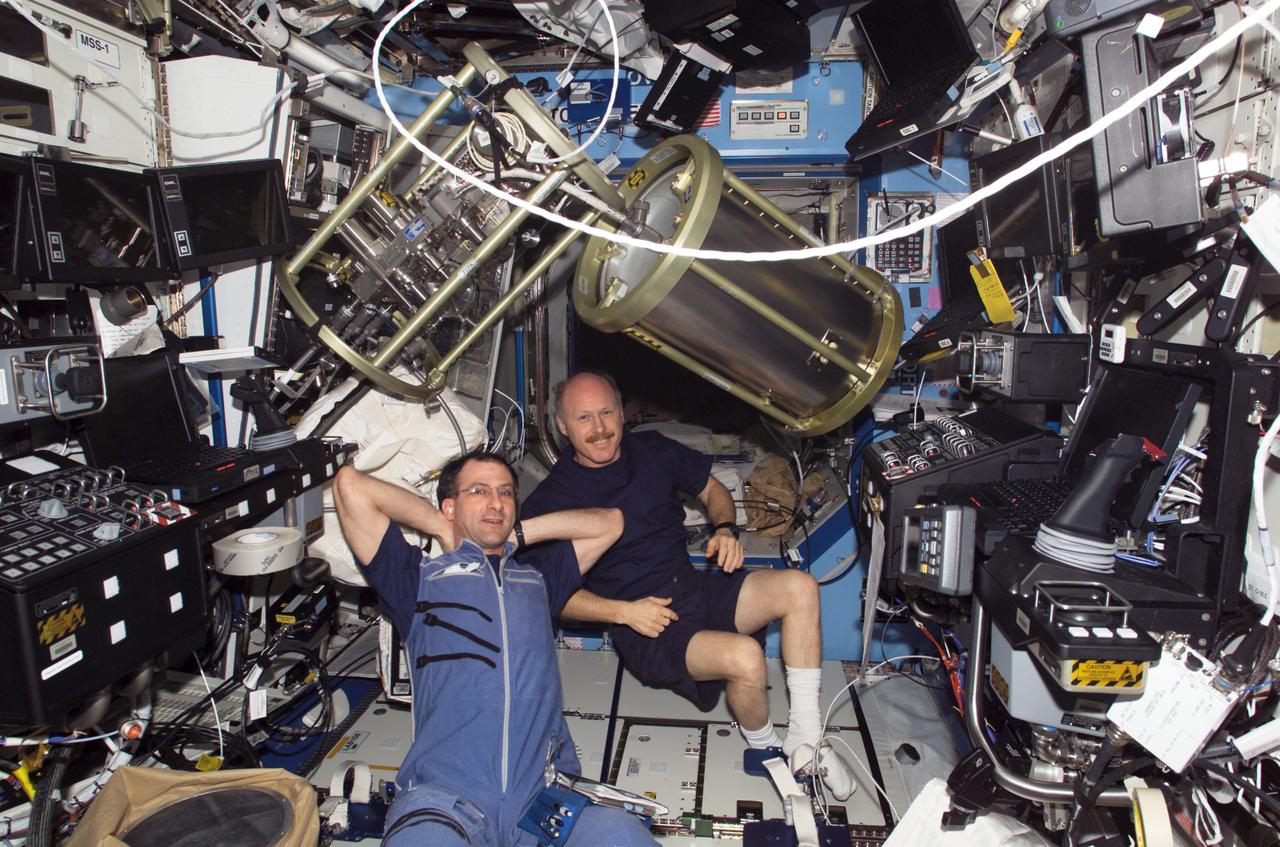
ISS006-E-39461 (18 March 2003) --- Astronauts Donald R. Pettit (left), Expedition 6 NASA ISS Science Officer, and Kenneth D. Bowersox, mission commander, are pictured in the Destiny laboratory on the International Space Station (ISS). The supply tank and Fluid Control Pump Assembly (FCPA), which are a part of the Internal Thermal Control System (ITCS), are visible floating freeing above them.