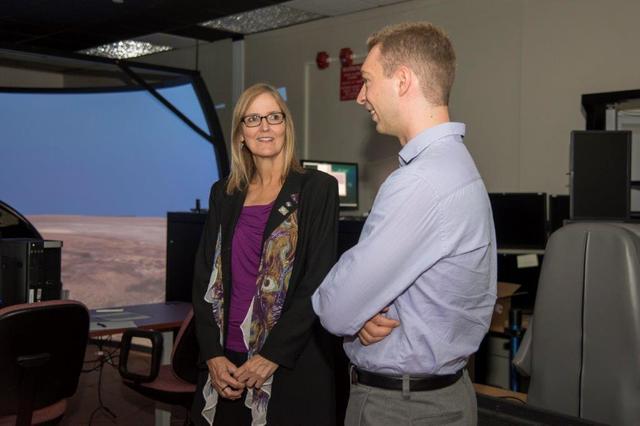
Jesse Brady, an early career NASA employee at NASA’s Armstrong Flight Research Center at Edwards, California, discusses a NASA aircraft simulation project with NASA Acting Deputy Chief Technologist Vicki Crisp. The simulation accesses aircraft controllability with limited pilot visibility, using only front view cameras and side windows.
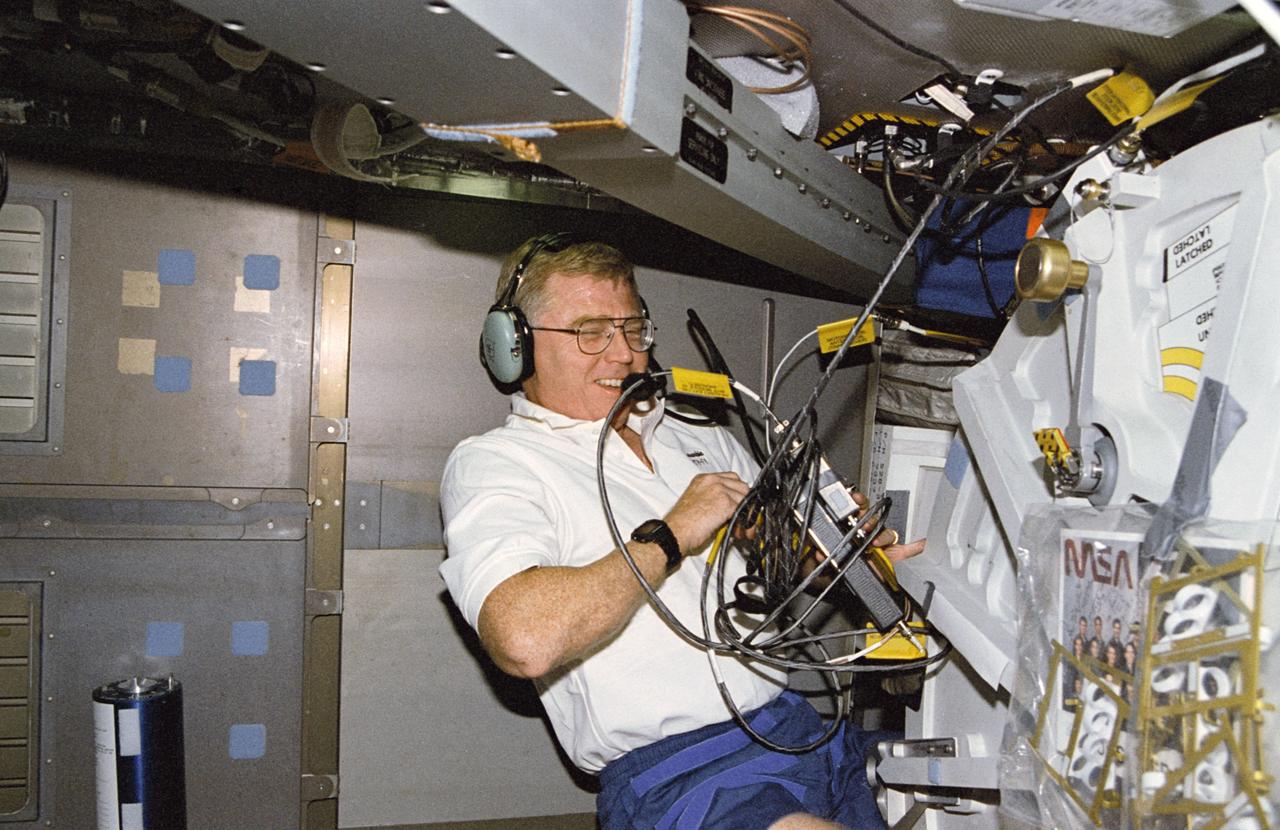
STS078-429-017 (20 June-7 July 1996) --- Aboard the middeck of the Earth-orbiting space shuttle Columbia, astronaut Charles J. Brady, mission specialist and a licensed amateur radio operator or "ham", talks to students on Earth. Some of the crew members devoted some of their off-duty time to continue a long-standing Shuttle tradition of communicating with students and other hams between their shifts of assigned duty. Brady joined four other NASA astronauts and two international payload specialists for almost 17-days of research in support of the Life and Microgravity Spacelab (LMS-1) mission.
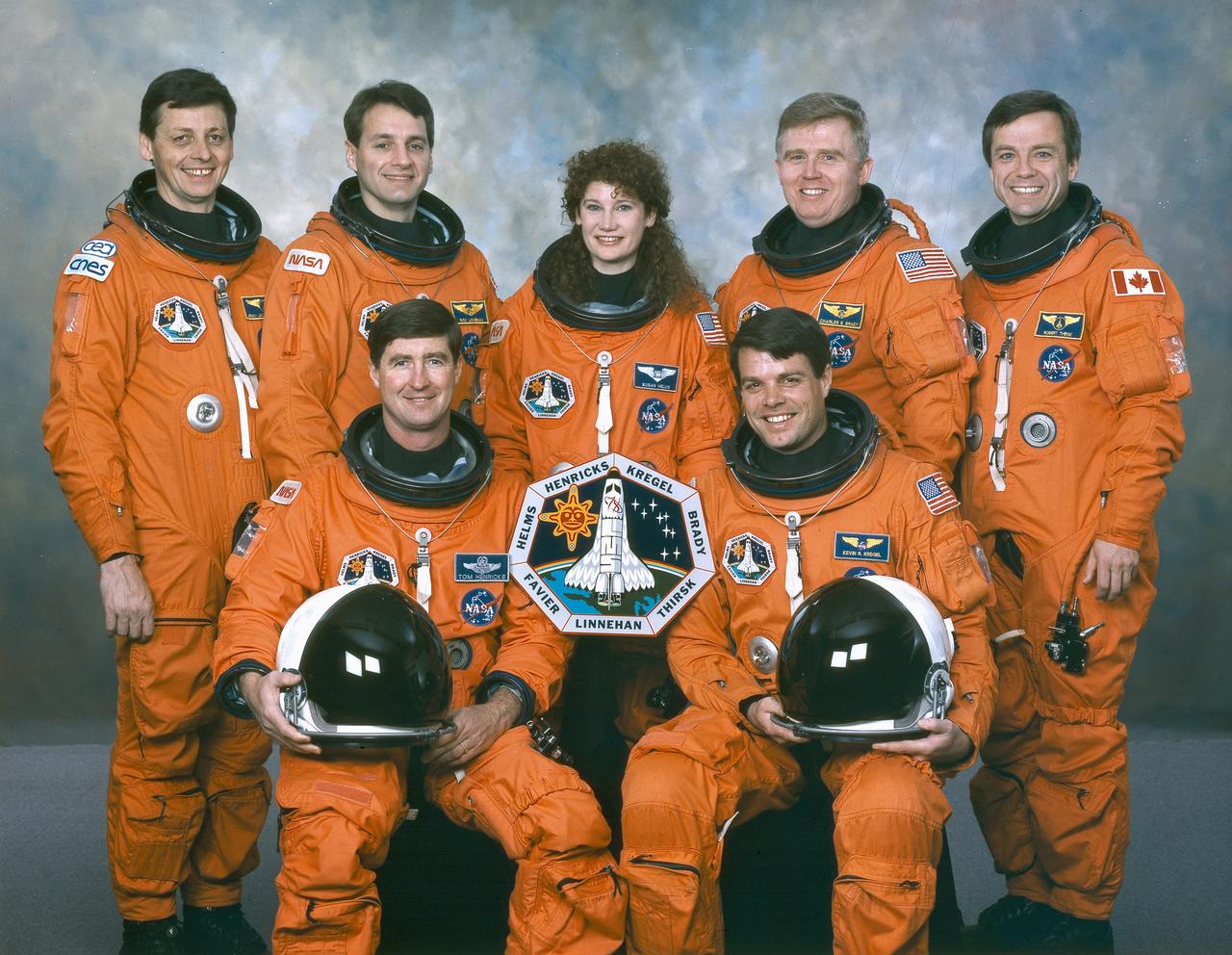
The crew assigned to the STS-78 mission included (seated left to right) Terrence T. (Tom) Henricks, commander; and Kevin R. Kregel, pilot. Standing, left to right, are Jean-Jacques Favier (CNES), payload specialist; Richard M. Linneham, mission specialist; Susan J. Helms, payload commander; Charles E. Brady, mission specialist; and Robert Brent Thirsk (CSA). Launched aboard the Space Shuttle Columbia on June 20, 1996 at 10:49:00 am (EDT), the STS-78 mission’s primary payloads was the Life and Microgravity Spacelab (LMS). Five space agencies (NASA/USA, European Space Agency/Europe (ESA), French Space Agency/France, Canadian Space Agency /Canada, and Italian Space Agency/Italy) along with research scientists from 10 countries worked together on the design, development and construction of the LMS.
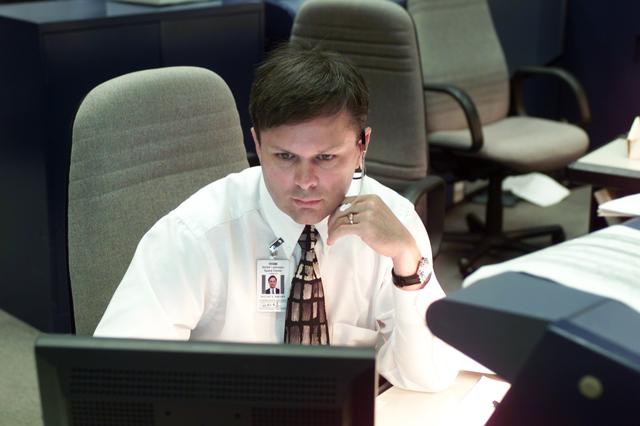
JSC2001-E-21555 (13 July 2001) --- David A. Brady intently watches the monitor at his console in Houston's Mission Control Center (MCC) during the STS-104 mission.
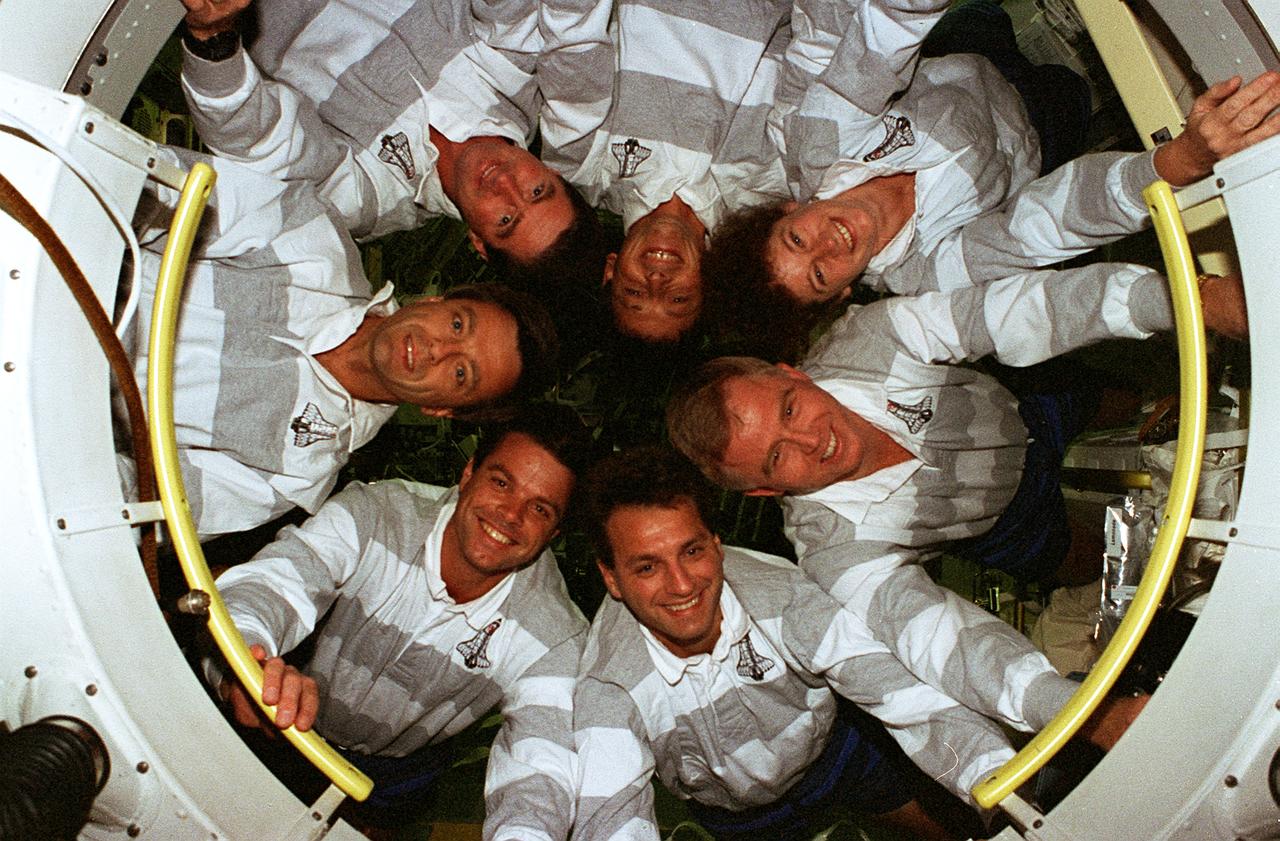
STS078-428-015 (20 June-7 July 1996) --- The crewmembers chose the Life and Microgravity Spacelab (LMS-1) Science Module as a backdrop for their traditional inflight portrait. Hold picture vertically with payload commander Susan J. Helms in lower right. Clockwise from astronaut Helms are Charles J. Brady, Richard M. Linnehan, Kevin R. Kregel, Canadian payload specialist Robert B. Thirsk, Terence T. (Tom) Henricks and French payload specialist Jean-Jacques Favier. Henricks and Kregel are commander and pilot, respectively, with Linnehan and Brady serving as mission specialists.
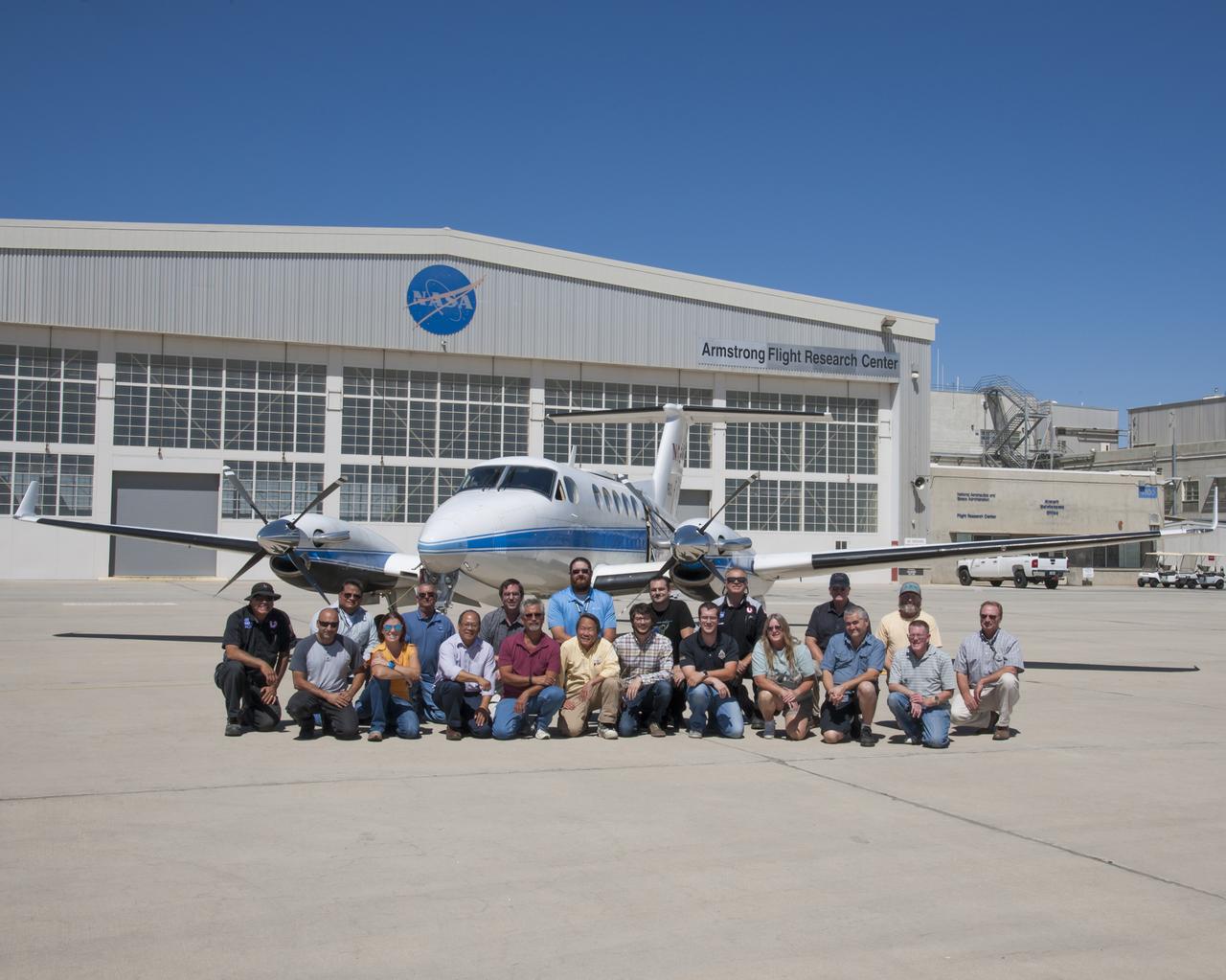
The Advanced Data Acquisition and Telemetry System team includes front row from left Mario Soto, Sam Habbal, Tiffany Titas, RIchard Hang, Randy Torres, Thang Quach, Otto Schnarr, Matthew Waldersen, Karen Estes, Andy Olvera, Stanley Wertenberger and Rick Cordes. In the second row from left are John Atherly, Doug Boston, Tom Horn, Brady Rennie, Chris Birkinbine, Jim McNally, Martin Munday and Tony Lorek.

In the Kennedy Space Center’s Press Site auditorium, David Brady, assistant program scientist for the International Space Station Program, speaks to members of the media during a prelaunch news conference for the SpaceX CRS-15 Commercial Resupply Services mission to the International Space Station. A SpaceX Dragon spacecraft is scheduled to be launched from Space Launch Complex 40 at Cape Canaveral Air Force Station. The SpaceX Falcon 9 rocket will lift off on the company's 15th Commercial Resupply Services mission to the space station.
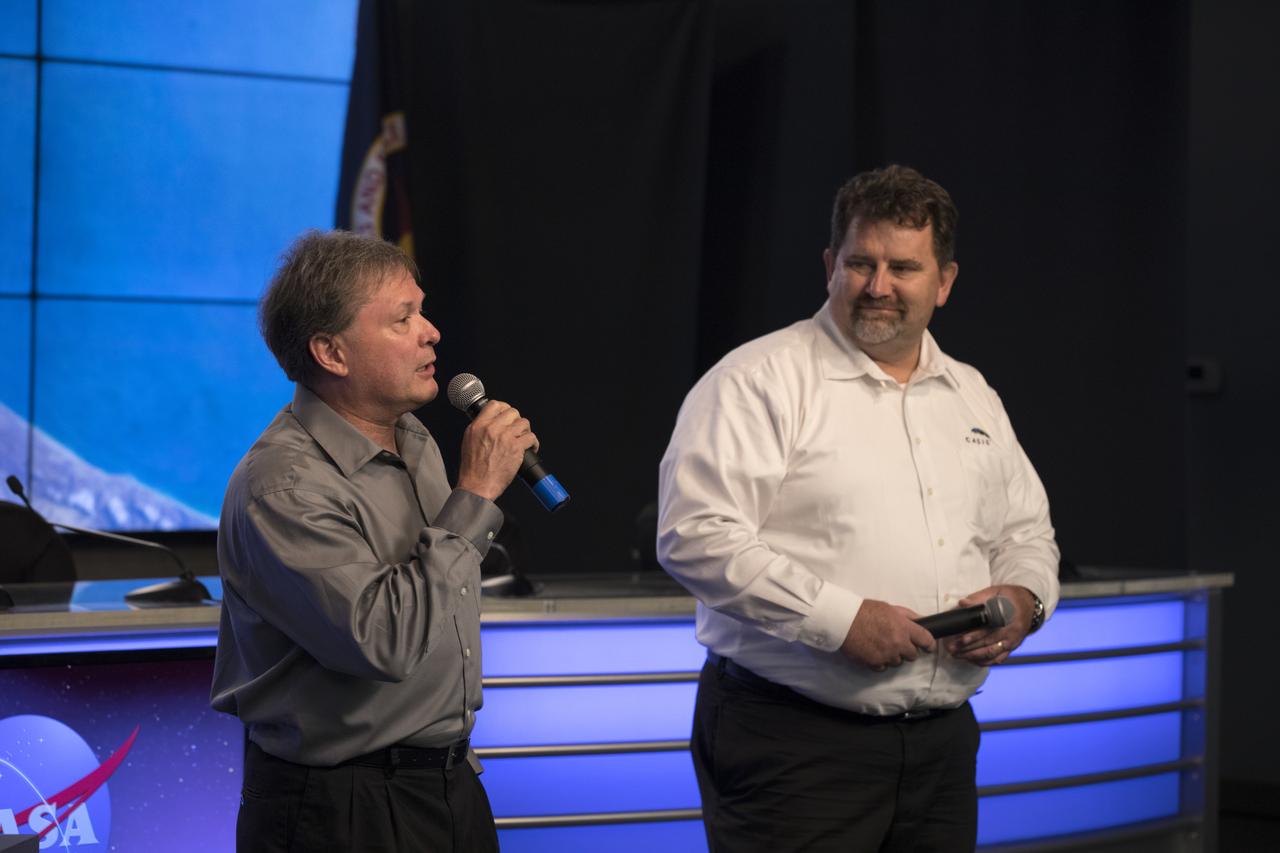
David Brady, assistant program scientist for the International Space Station Program at NASA’s Johnson Space Center left, speaks to members of the media during a briefing in the Kennedy Space Center’s Press Site auditorium. At right is Mike Roberts, deputy chief scientist, Center for the Advancement of Science in Space (CASIS). The briefing focused on research planned for launch to the International Space Station. The scientific materials and supplies will be aboard a SpaceX Dragon spacecraft scheduled for liftoff from Cape Canaveral Air Force Station's Space Launch Complex 40. The SpaceX Falcon 9 rocket will launch the company's 15th Commercial Resupply Services mission to the space station.
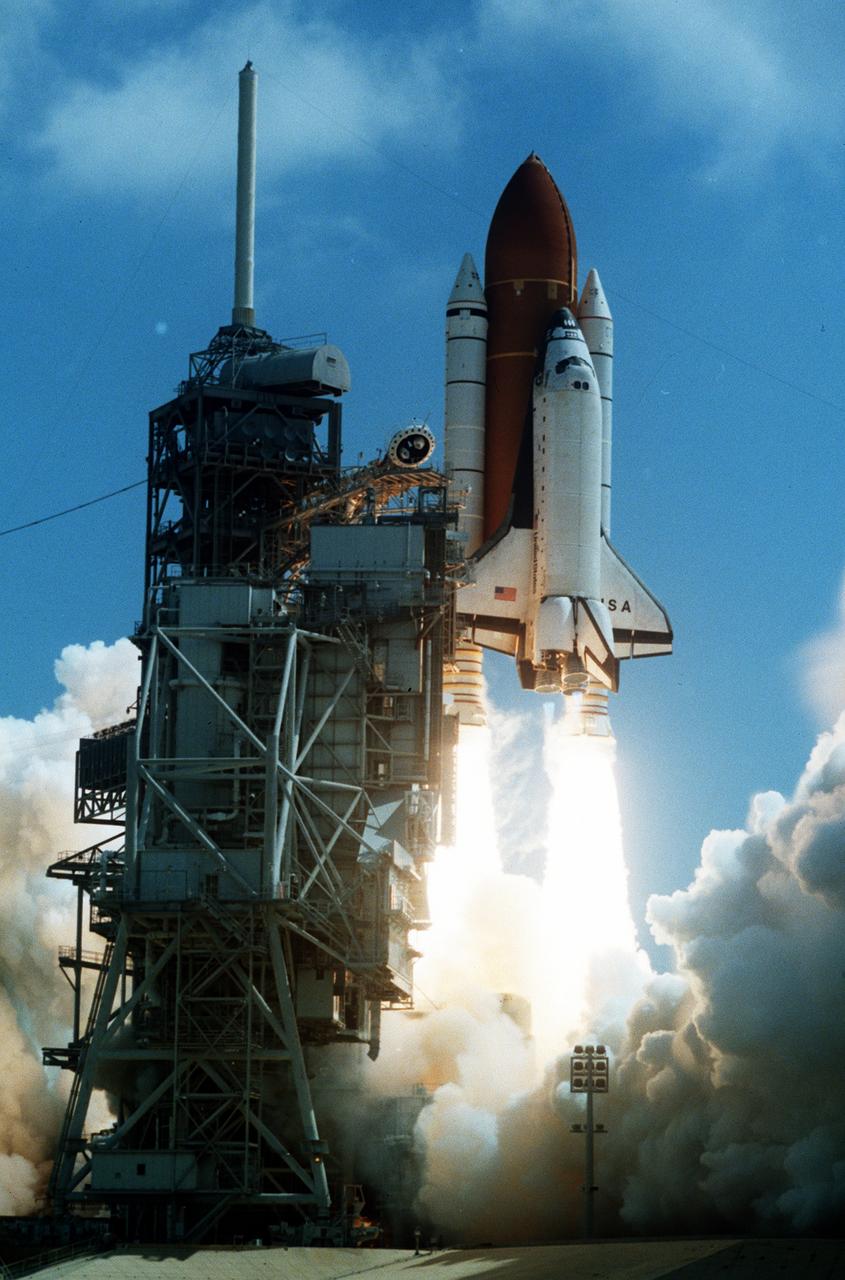
STS078-S-008 (20 June 1996) --- With an international payload and crew aboard, the Space Shuttle Columbia lifts off from Launch Pad 39B, at the Kennedy Space Center (KSC). Possibly expected to be NASA's longest duration Shuttle flight to date, the mission officially began at 10:49:00 a.m. (EDT), June 20, 1996. Onboard for Columbia’s 20th flight were astronauts Terence T. (Tom) Henricks, mission commander; Kevin R. Kregel, pilot; Susan J. Helms, payload commander; and Richard M. Linnehan and Charles E. Brady, Jr., both mission specialists, along with payload specialists Jean-Jacques Favier of the French Space Agency (CNES) and Robert B. Thirsk of the Canadian Space Agency (CSA). Flying in Columbia’s payload bay is the Life and Microgravity Spacelab (LMS), carrying a complement of United States and international experiments.
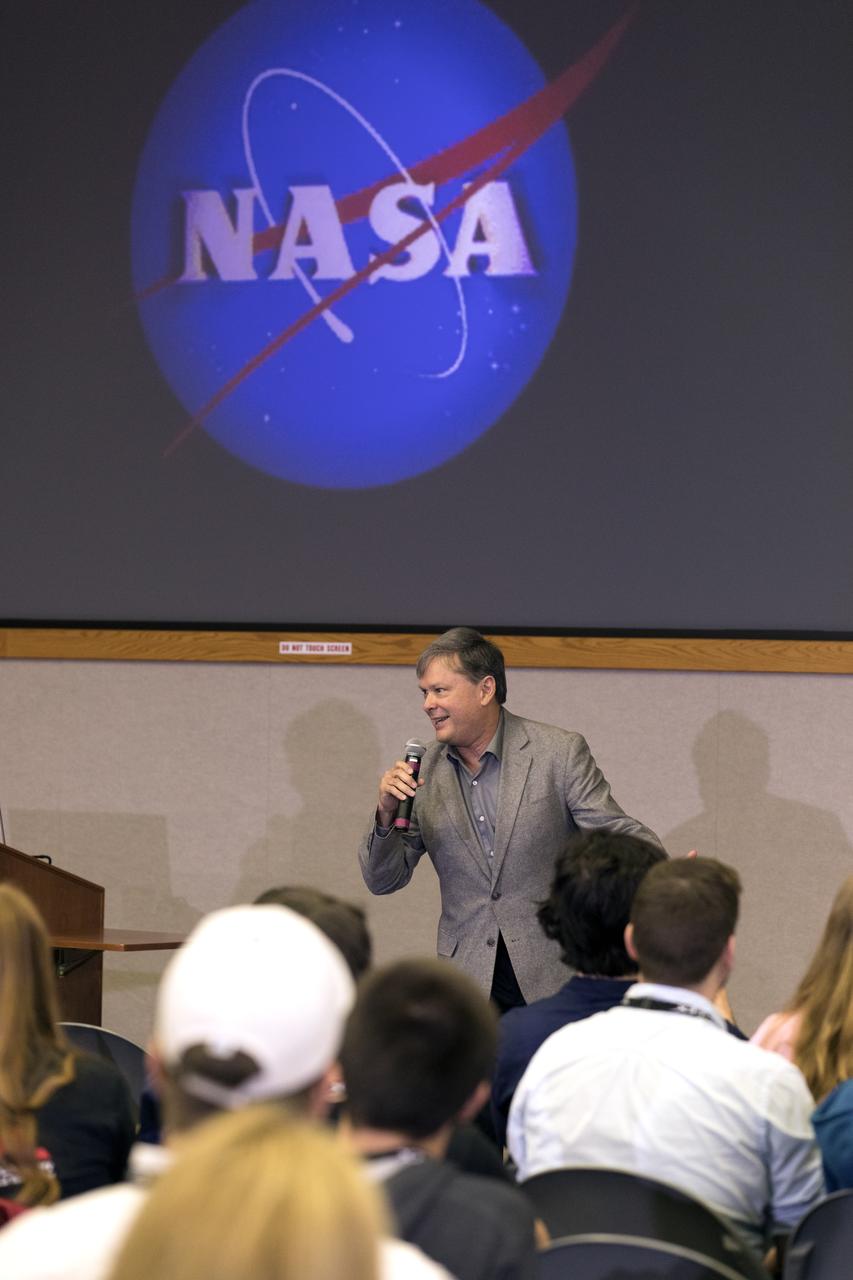
David Brady, ISS assistant program scientist, speaks to members of the media Thursday, Feb. 28, in the Kennedy Space Center’s Mission Briefing Room of the Neil Armstrong Operations and Checkout Building. The briefing focused on launch of the SpaceX Demo-1 Commercial Crew Program mission to the International Space Station. The inaugural flight of the Crew Dragon, known as Demo-1, will be uncrewed, lifting off atop a SpaceX Falcon 9 rocket from Launch Complex 39A at Kennedy Saturday, March 2, at 2:49 a.m. EST. The mission is designed to validate end-to-end systems and capabilities, leading to certification to fly crew. NASA has worked with SpaceX and Boeing in developing the CCP spacecraft to facilitate new human spaceflight systems launching from U.S. soil with the goal of safe, reliable and cost-effective access to low-Earth orbit destinations such as the space station.
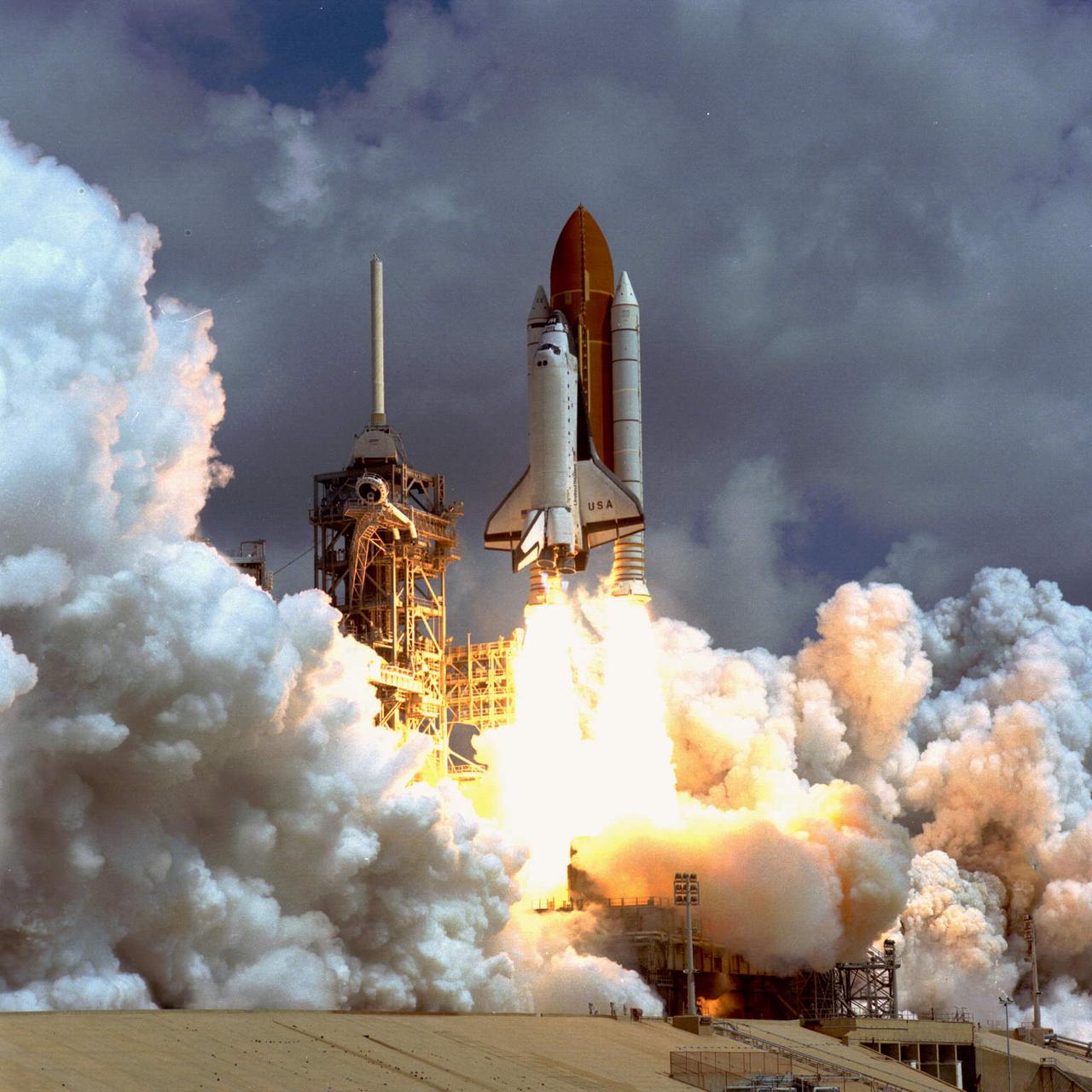
STS078-S-009 (20 June 1996) --- With an international payload and crew aboard, the Space Shuttle Columbia lifts off from Launch Pad 39B, at the Kennedy Space Center (KSC). Possibly expected to be NASA's longest duration Shuttle flight to date, the mission officially began at 10:49:00 a.m. (EDT), June 20, 1996. Onboard for Columbia’s 20th flight were astronauts Terence T. (Tom) Henricks, mission commander; Kevin R. Kregel, pilot; Susan J. Helms, payload commander; and Richard M. Linnehan and Charles E. Brady, Jr., both mission specialists, along with payload specialists Jean-Jacques Favier of the French Space Agency (CNES) and Robert B. Thirsk of the Canadian Space Agency (CSA). Flying in Columbia’s payload bay is the Life and Microgravity Spacelab (LMS), carrying a complement of United States and international experiments.
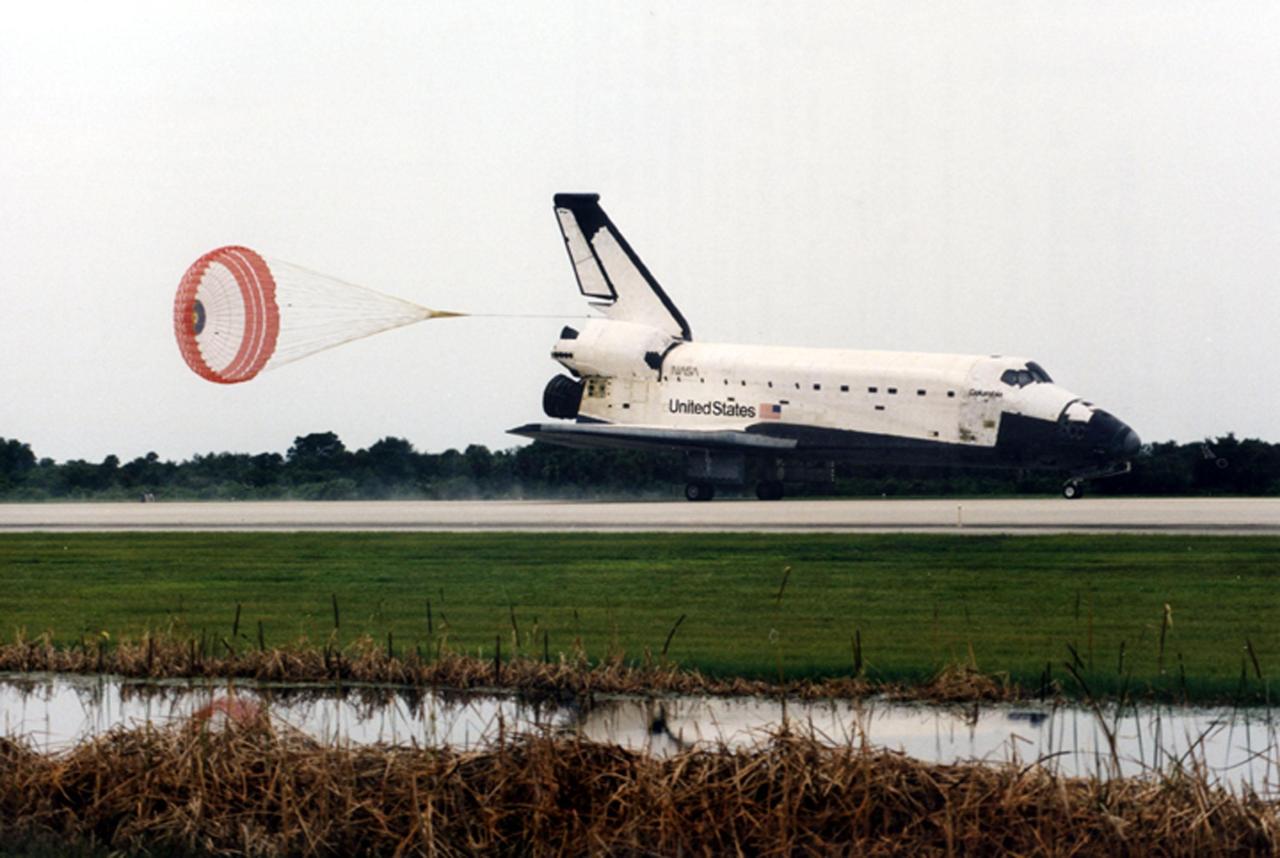
KENNEDY SPACE CENTER, FLA. -- The drag chute pops open as the orbiter Columbia glides down Runway 33 of the Kennedy Space Center's Shuttle Landing Facility. Main gear touchdown occurred at 8:36 a.m. EDT, July 7, 1996. A mission duration of 16 days, 21 hours, and 47 minutes made STS-78 the longest Shuttle flight to date. On board are a crew of seven: mission Commander Terence "Tom" Henricks; Pilot Kevin R. Kregel; Payload Commander Susan J. Helms; Mission Specialists Richard M. Linnehan and Charles E. Brady Jr.; and Payload Specialist Jean-Jacques Favier, representing the French Space Agency (CNES) and Robert Brent Thirsk, of the Canadian Space Agency (CSA) . The primary payload of the 78th Shuttle flight was the Life and Microgravity Spacelab (LMS)
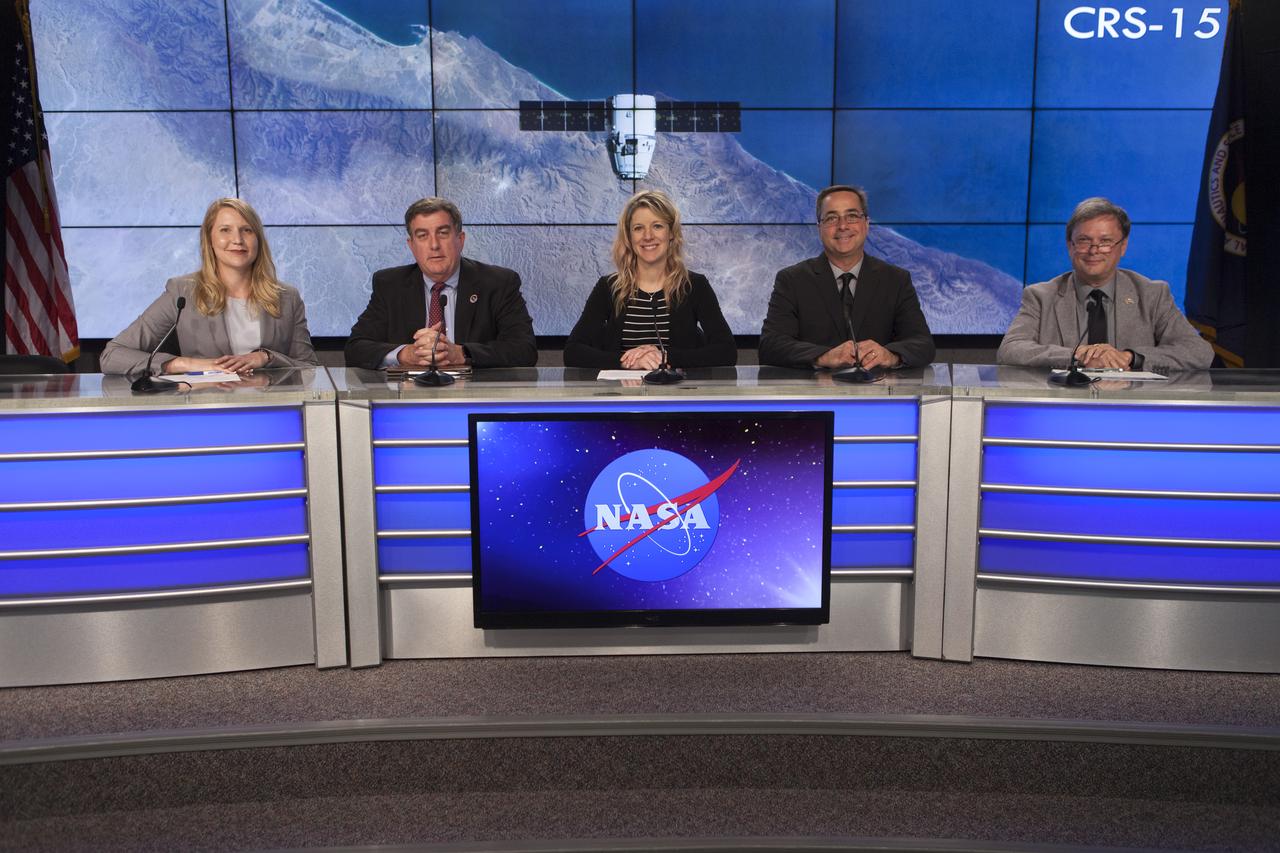
In the Kennedy Space Center’s Press Site auditorium, agency and industry leaders speak to members of the media during a prelaunch news conference for the SpaceX CRS-15 Commercial Resupply Services mission to the International Space Station. From left are: Stephanie Schierholz of NASA Communications,Kirk Shireman, NASA manager of the International Space Station Program, Jessica Jensen, director of Dragon Mission Management for SpaceX, Mike McAleenan, launch weather officer for the U.S. Air Force 45th Weather Squadron at Cape Canaveral Air Force Station, and David Brady, assistant program scientist for the International Space Station Program. A SpaceX Dragon spacecraft is scheduled to be launched from Space Launch Complex 40 at Cape Canaveral Air Force Station. The SpaceX Falcon 9 rocket will lift off on the company's 15th Commercial Resupply Services mission to the space station.
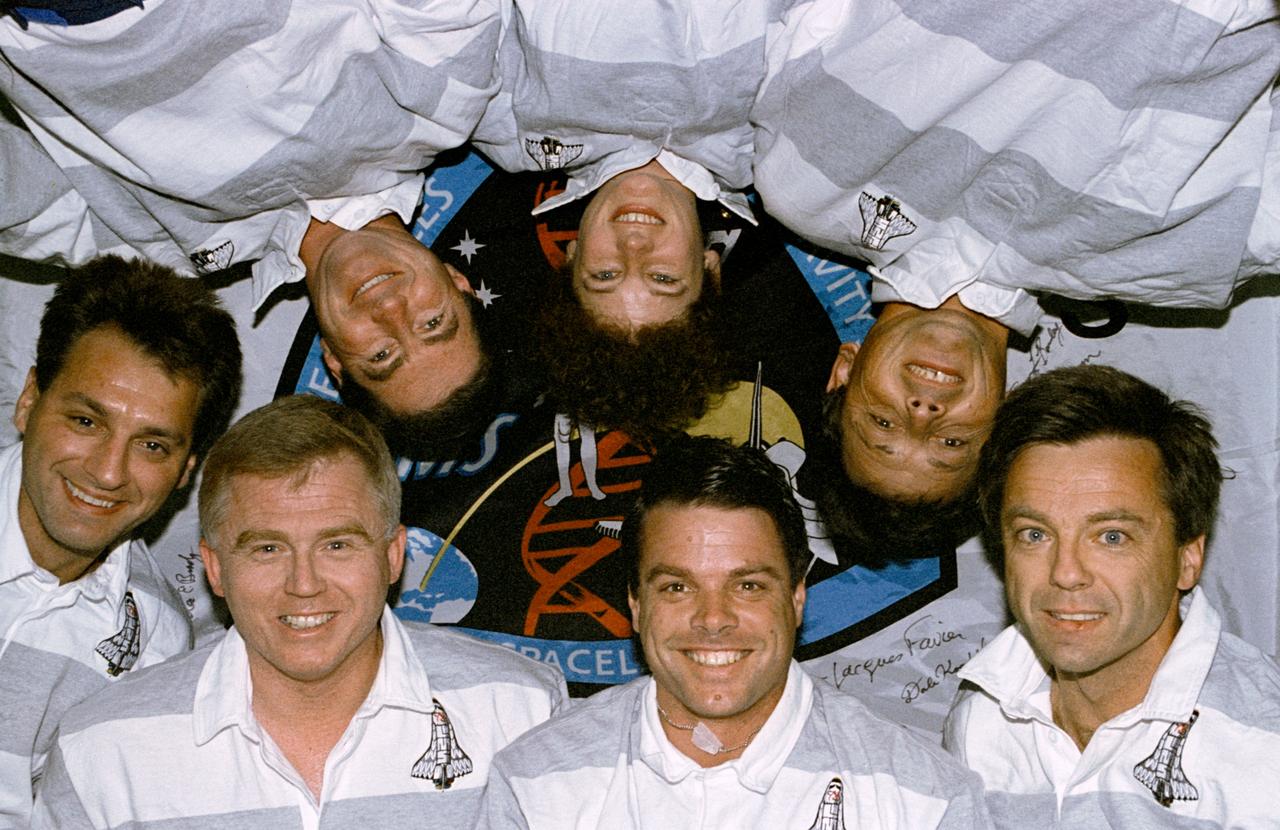
STS078-397-030 (20 June - 7 July 1996) --- Five NASA astronauts and two international payload specialists take a break from a Shuttle duration record-breaker flight to pose for the traditional inflight crew portrait. The photograph should be oriented with payload commander Susan J. Helms at bottom center. Others, clockwise, are French payload specialist Jean-Jacques Favier, Canadian payload specialist Robert B. Thirsk; and astronauts Kevin R. Kregel, pilot; and Charles J. (Chuck) Brady and Richard M. Linnehan, both mission specialists, and Terence T. (Tom) Henricks, mission commander. The crew chose the Life and Microgravity Spacelab (LMS-1) Science Module, situated in the Space Shuttle Columbia's cargo bay, for the portrait setting.
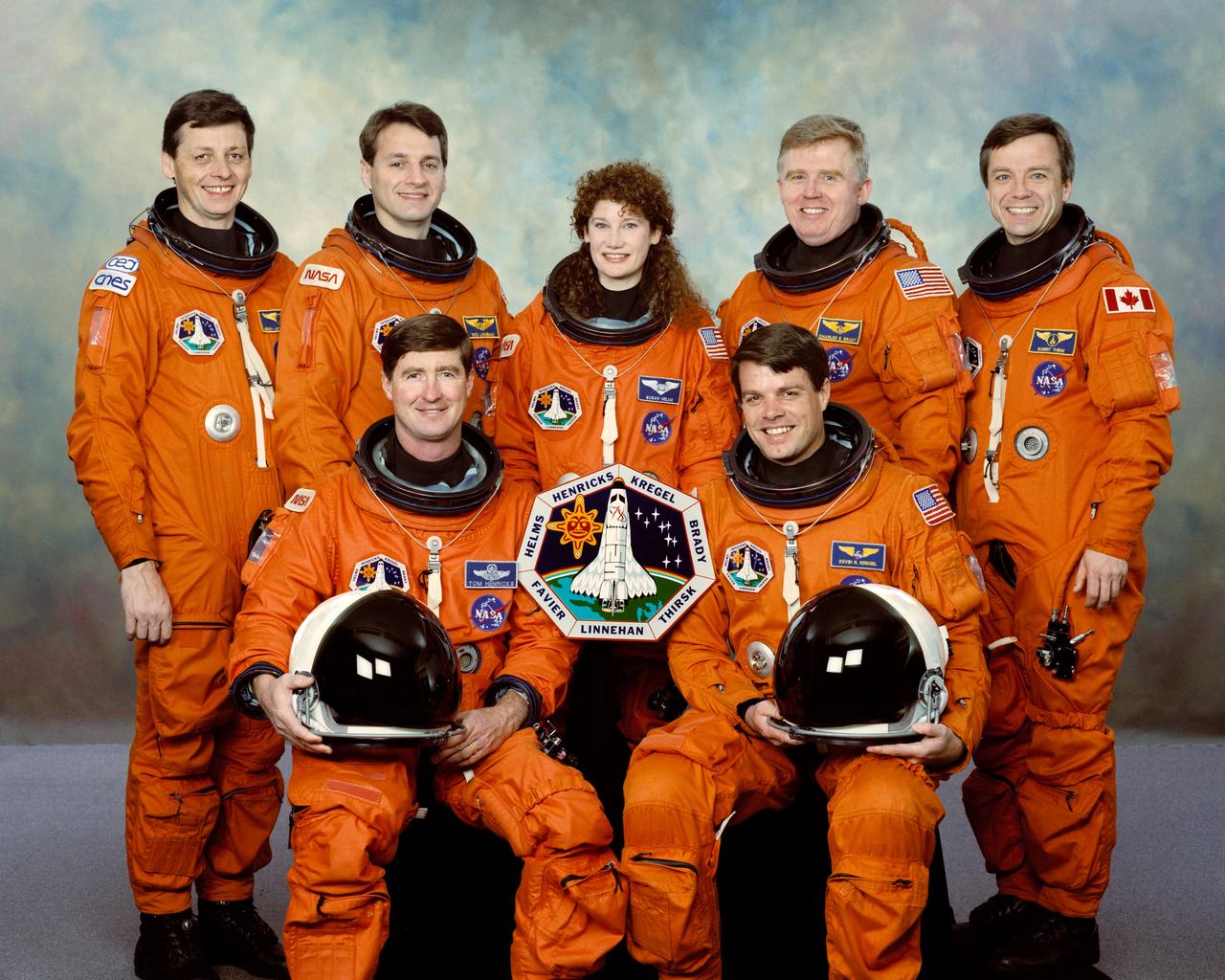
STS078-S-002 (April 1996) --- These seven crew members will spend 16 days aboard the Space Shuttle Columbia, scheduled for launch in early summer 1996. Seated are astronauts Terrence T. (Tom) Henricks (left), mission commander, and Kevin R. Kregel, pilot. Standing, from the left, are payload specialist Jean-Jacques Favier, along with astronauts Richard M. Linnehan, Susan J. Helms and Charles E. Brady, Jr., all mission specialists; and payload specialist Robert B. Thirsk. Thirsk is with the Canadian Space Agency (CSA) and Favier is with the French Atomic Energy Commission (FAEC) and represents the French Space Agency (CNES). The twentieth flight of the Space Shuttle Columbia will be devoted to the Life and Microgravity Spacelab (LMS).
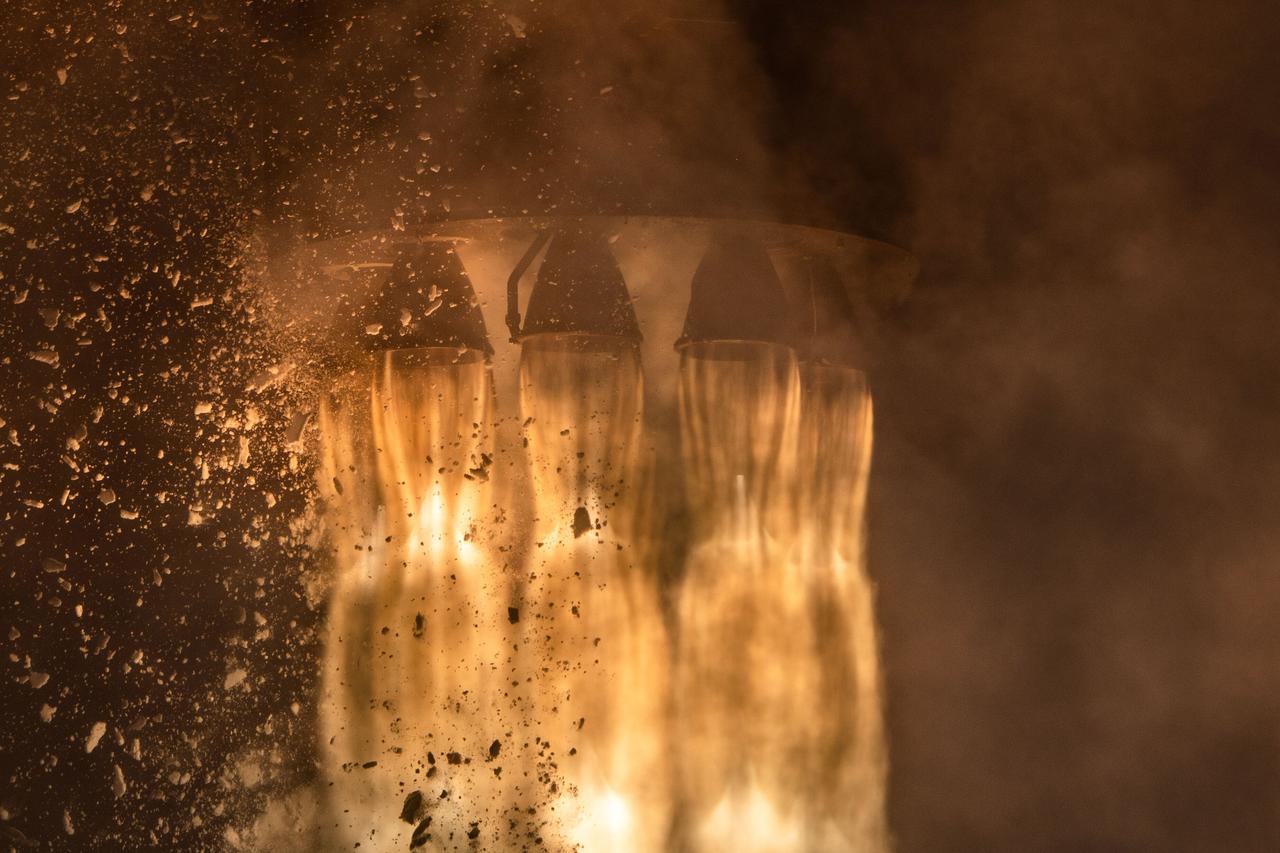
A Rocket Lab Electron rocket’s nine first-stage Rutherford engines ignite as NASA’s Educational Launch of Nanosatellites-19 (ELaNa-19) payload lifts off at 6:33 a.m. UTC on Dec. 17 (1:33 p.m. EST on Dec. 16) from Launch Complex-1, located at Māhia Peninsula in New Zealand. The liftoff marks the first flight of a payload under NASA’s Venture Class Launch Services (VCLS). Managed by NASA’s Launch Services Program at Kennedy Space Center in Florida, VCLS was developed to provide increased access to space specifically for these small spacecraft, called CubeSats.
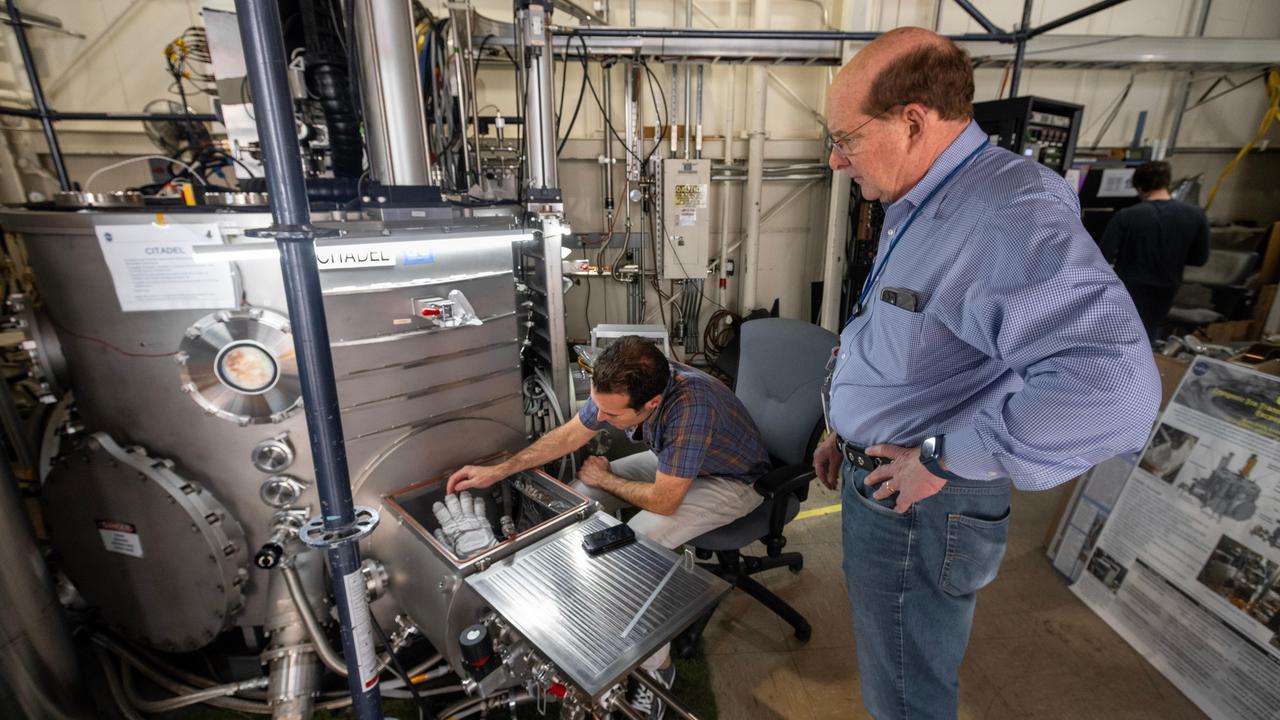
Spacesuit engineer Shane McFarland, left, of the Advanced Suit Team at NASA's Johnson Space Center prepares an astronaut glove for thermal vacuum testing inside a chamber at the agency's Jet Propulsion Laboratory in Southern California on Nov. 1, 2023. Tim Brady of the NASA Engineering and Safety Center (NESC), which spearheaded the glove testing campaign, looks on as McFarland positions the glove in a load lock – one of four small drawer-like chambers through which test materials are inserted into the larger main chamber of a facility called CITADEL (Cryogenic Ice Testing, Acquisition Development, and Excavation Laboratory). The glove was tested at vacuum and temperatures as low as minus 352 degrees Fahrenheit (minus 213 degrees Celsius) – temperatures as frigid as those Artemis III astronauts could experience on the Moon's South Pole. Built to prepare potential future robotic spacecraft for the frosty, low-pressure conditions on ocean worlds like Jupiter's frozen moon Europa, CITADEL has also proven key to evaluating how astronaut gloves and boots hold up in extraordinary cold. The NASA Engineering and Safety Center spearheaded a glove testing campaign in CITADEL from October 2023 to March 2024. Part of a spacesuit design called the Extravehicular Mobility Unit, the gloves tested in the chamber are the sixth version of a glove NASA began using in the 1980s. The testing in CITADEL showed that the legacy glove would not meet thermal requirements in the more challenging lunar South Pole environment. In addition to spotting vulnerabilities with existing suits, the CITADEL experiments will help NASA develop this unique test capability and prepare criteria for standardized, repeatable, and inexpensive test methods for the next-generation lunar suit being built by Axiom Space. https://photojournal.jpl.nasa.gov/catalog/PIA26591