Breaking Mercury
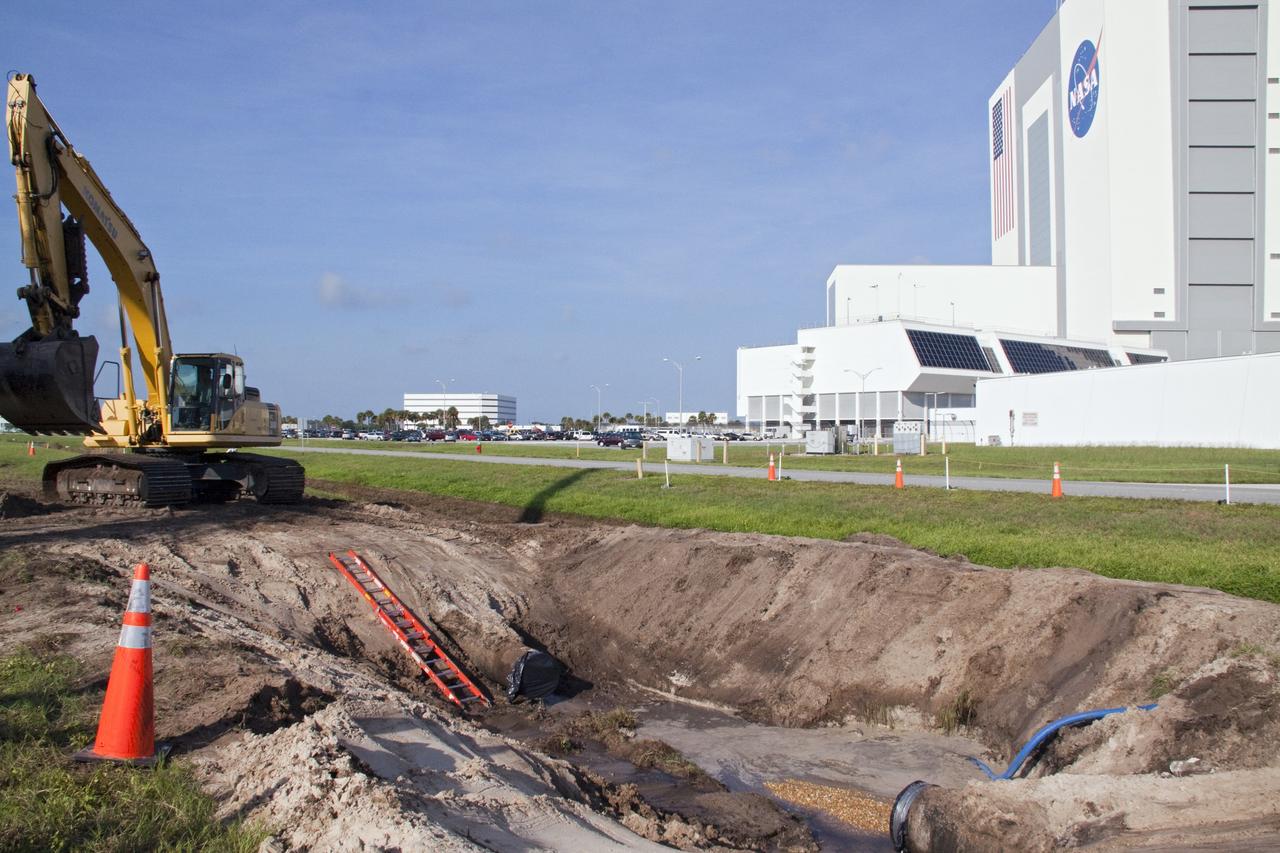
CAPE CANAVERAL, Fla. -- At NASA's Kennedy Space Center in Florida, a work crew has removed a large section of a 24-inch cast iron water main pipe located in the Launch Complex-39 Turn Basin area, across from the Vehicle Assembly Building and the Launch Control Center. Kennedy was closed to non-essential personnel the morning of Sept. 8 while crews assessed the break and restored water to the center. Photo credit: NASA/Jack Pfaller
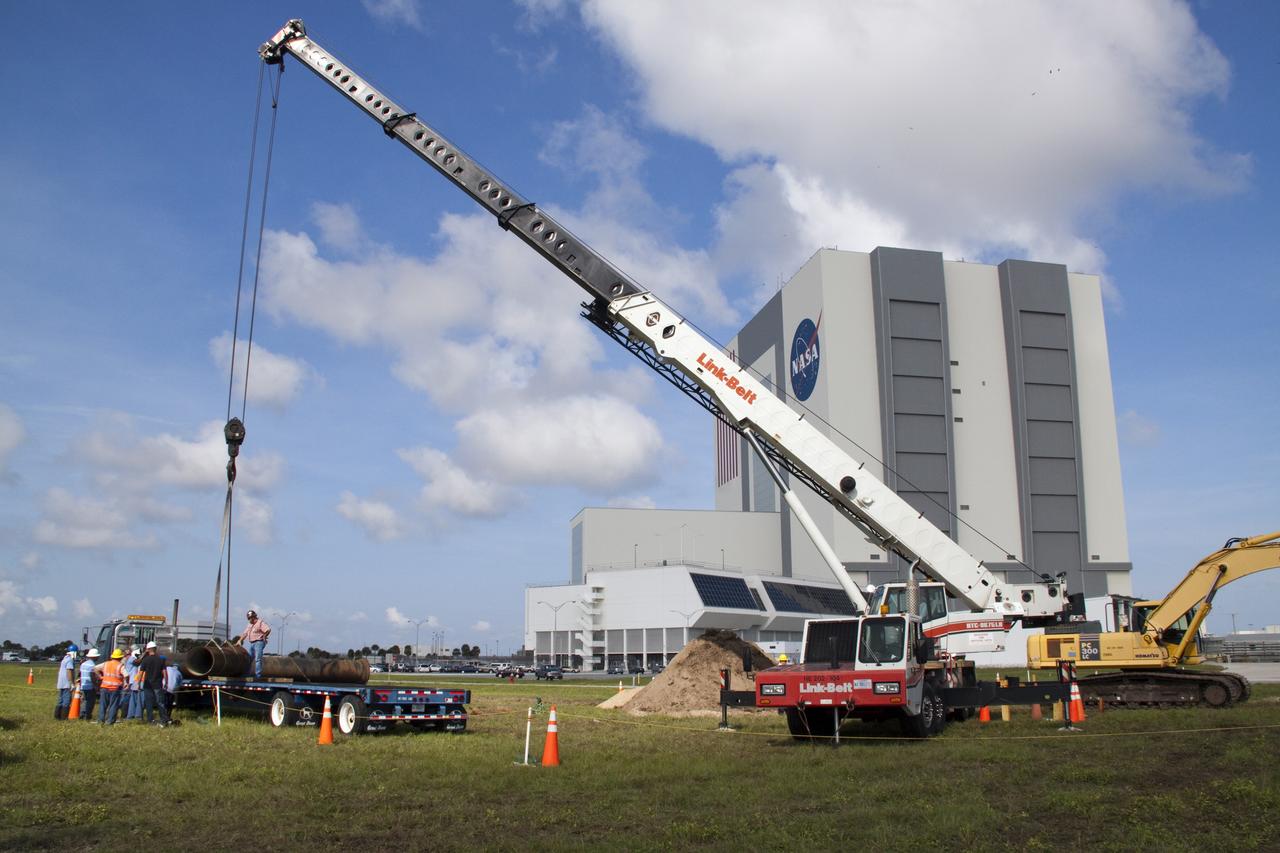
CAPE CANAVERAL, Fla. --In the Launch Complex-39 Turn Basin area, across from the Vehicle Assembly Building at NASA's Kennedy Space Center in Florida, workers, assisted by an overhead crane maneuver the replacement section of a 24-inch cast iron water main pipe off of a transport truck. Kennedy was closed to non-essential personnel the morning of Sept. 8 while crews assessed the water main break and restored water to the center. Photo credit: NASA/Jack Pfaller
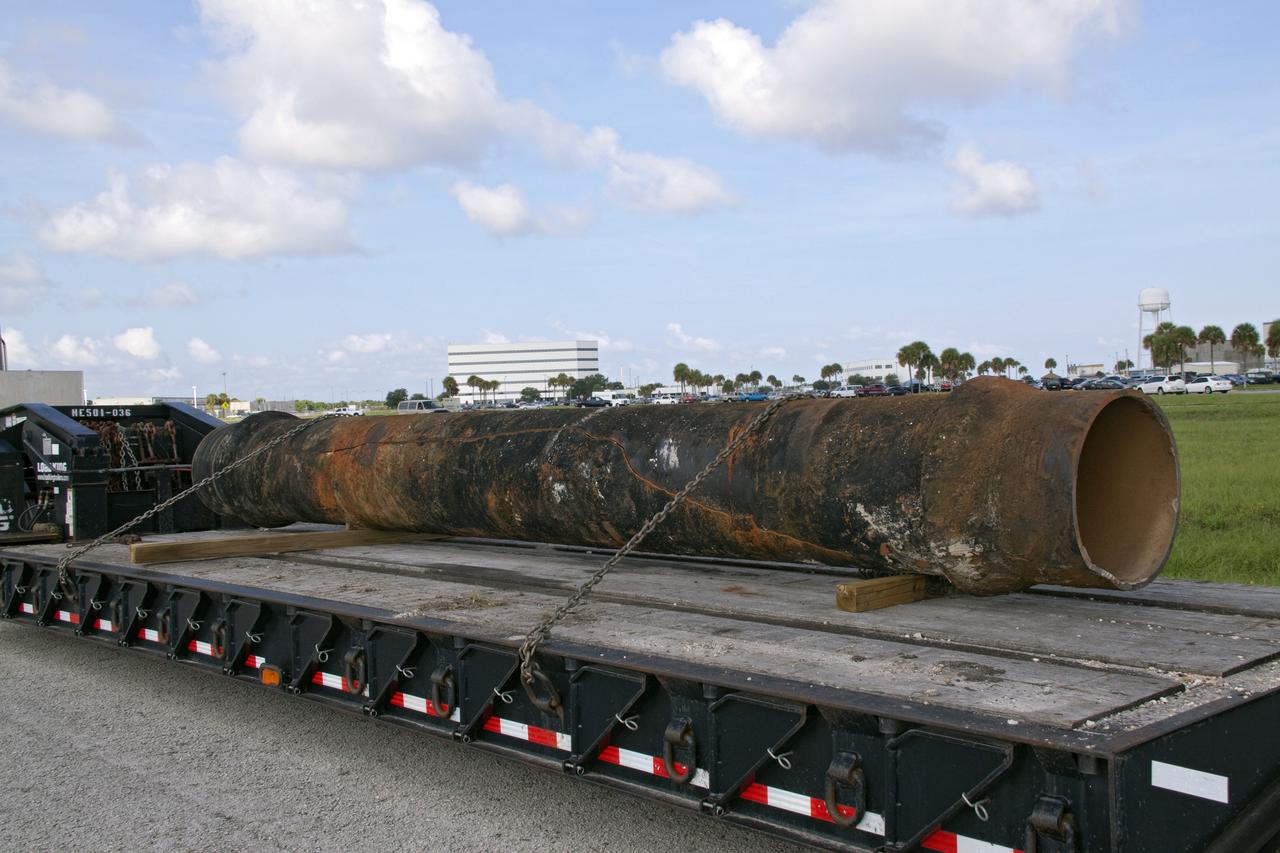
CAPE CANAVERAL, Fla. -- In the Launch Complex-39 Turn Basin area, across from the Vehicle Assembly Building at NASA's Kennedy Space Center in Florida, the section of a 24-inch cast iron water main pipe that failed is hauled away by a transport truck. Kennedy was closed to non-essential personnel the morning of Sept. 8 while crews assessed the water main break and restored water to the center. Photo credit: NASA/Jack Pfaller
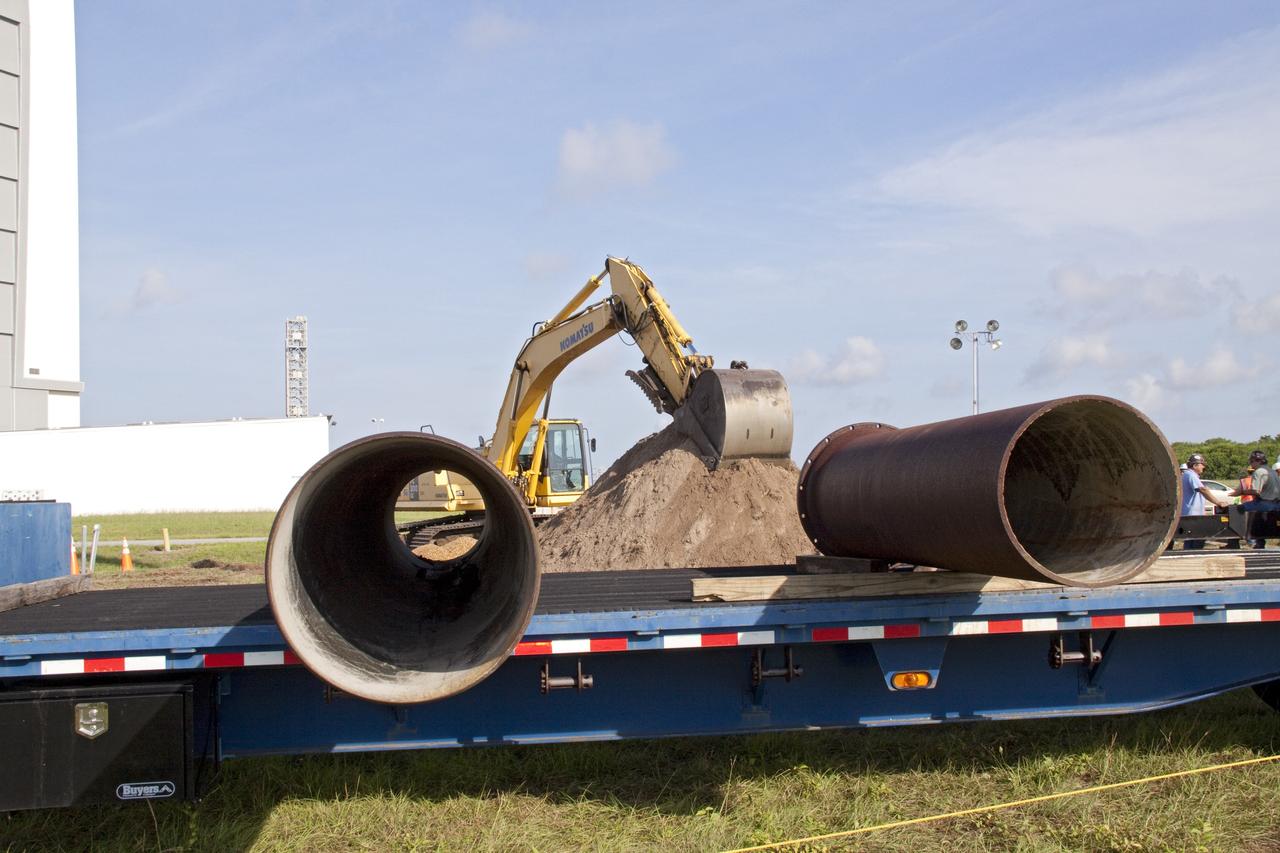
CAPE CANAVERAL, Fla. -- In the Launch Complex-39 Turn Basin area, across from the Vehicle Assembly Building at NASA's Kennedy Space Center in Florida, replacement sections of a 24-inch cast iron water main pipe awaits installation. Kennedy was closed to non-essential personnel the morning of Sept. 8 while crews assessed the water main break and restored water to the center. Photo credit: NASA/Jack Pfaller
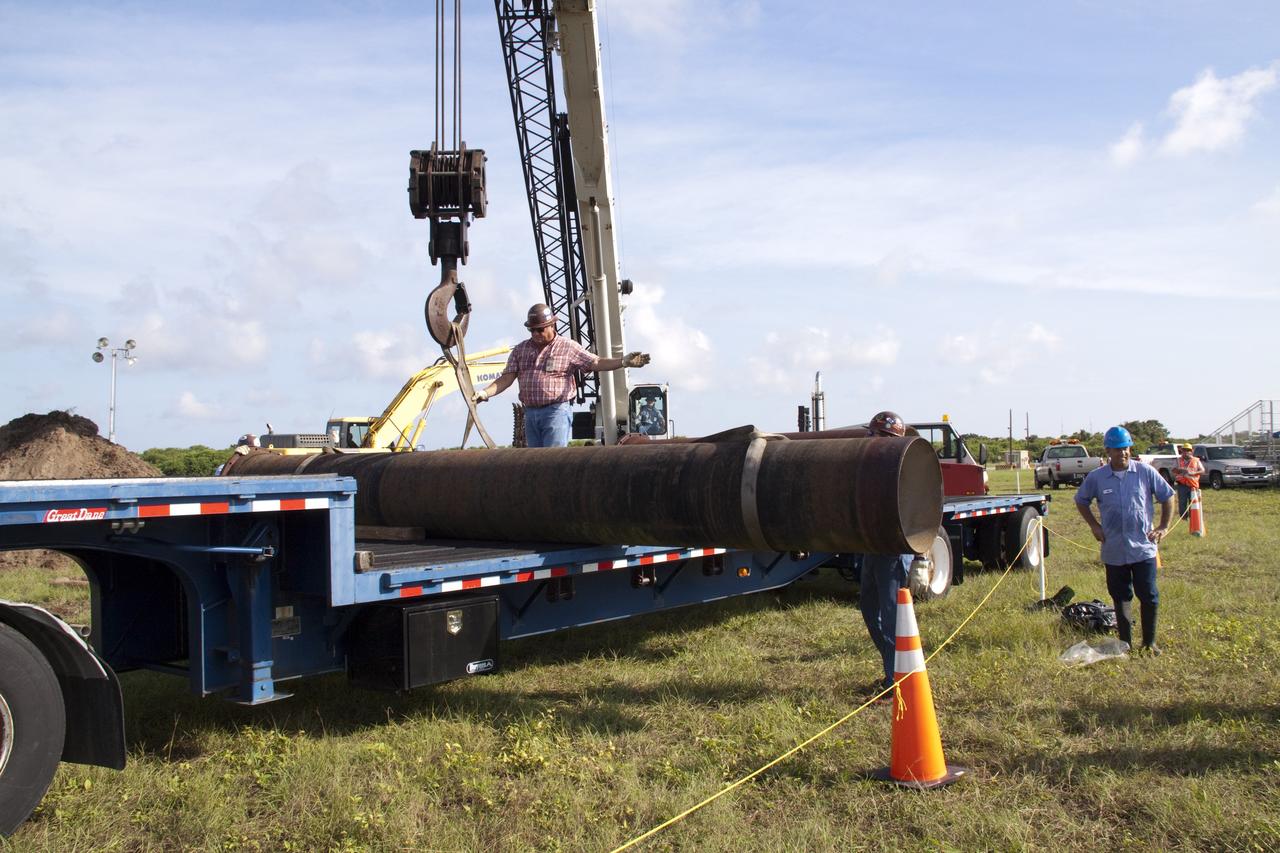
CAPE CANAVERAL, Fla. -- In the Launch Complex-39 Turn Basin area, across from the Vehicle Assembly Building at NASA's Kennedy Space Center in Florida, workers maneuver the replacement sections of a 24-inch cast iron water main pipe off of a transport truck. Kennedy was closed to non-essential personnel the morning of Sept. 8 while crews assessed the water main break and restored water to the center. Photo credit: NASA/Jack Pfaller
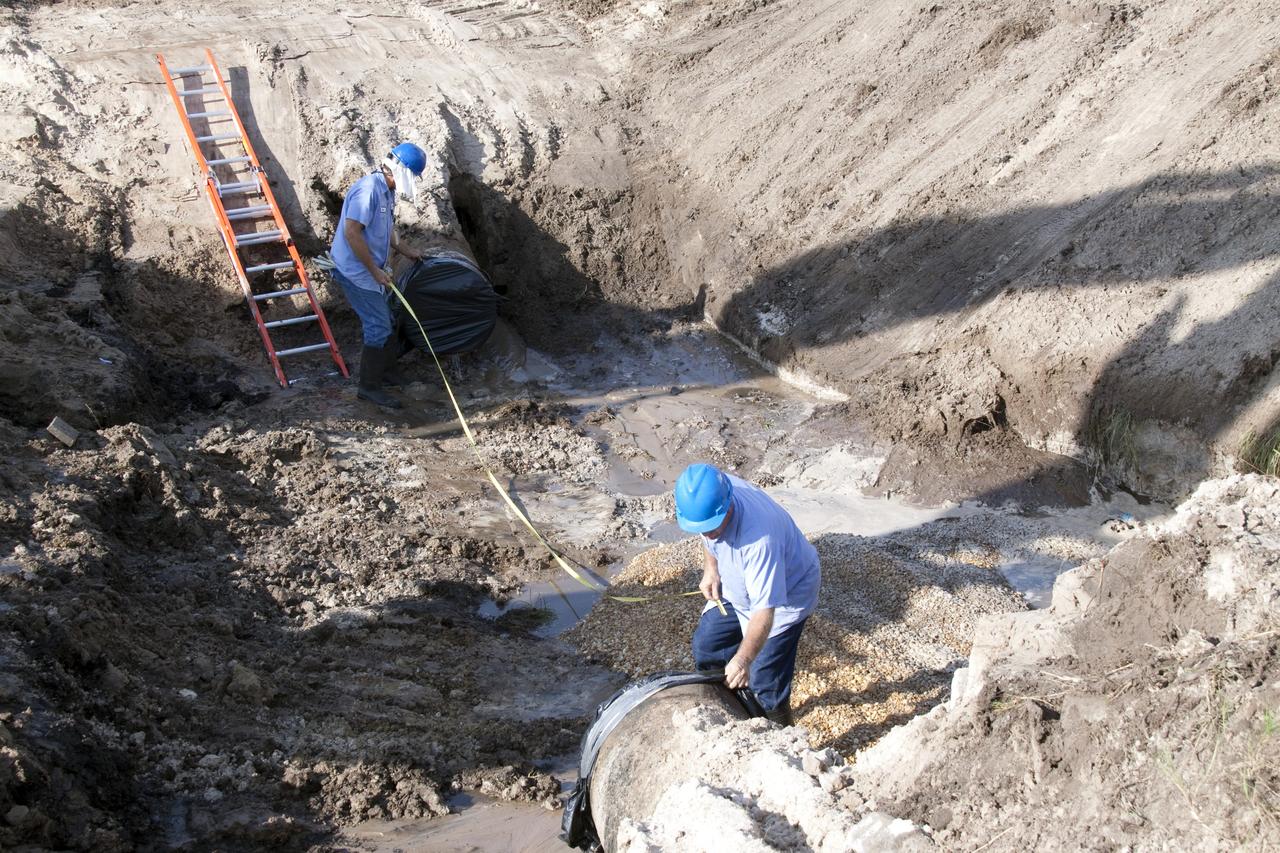
CAPE CANAVERAL, Fla. -- In the Launch Complex-39 Turn Basin area, across from the Vehicle Assembly Building at NASA's Kennedy Space Center in Florida, workers take measurements for replacement sections of a 24-inch cast iron water main pipe. Kennedy was closed to non-essential personnel the morning of Sept. 8 while crews assessed the water main break and restored water to the center. Photo credit: NASA/Jack Pfaller
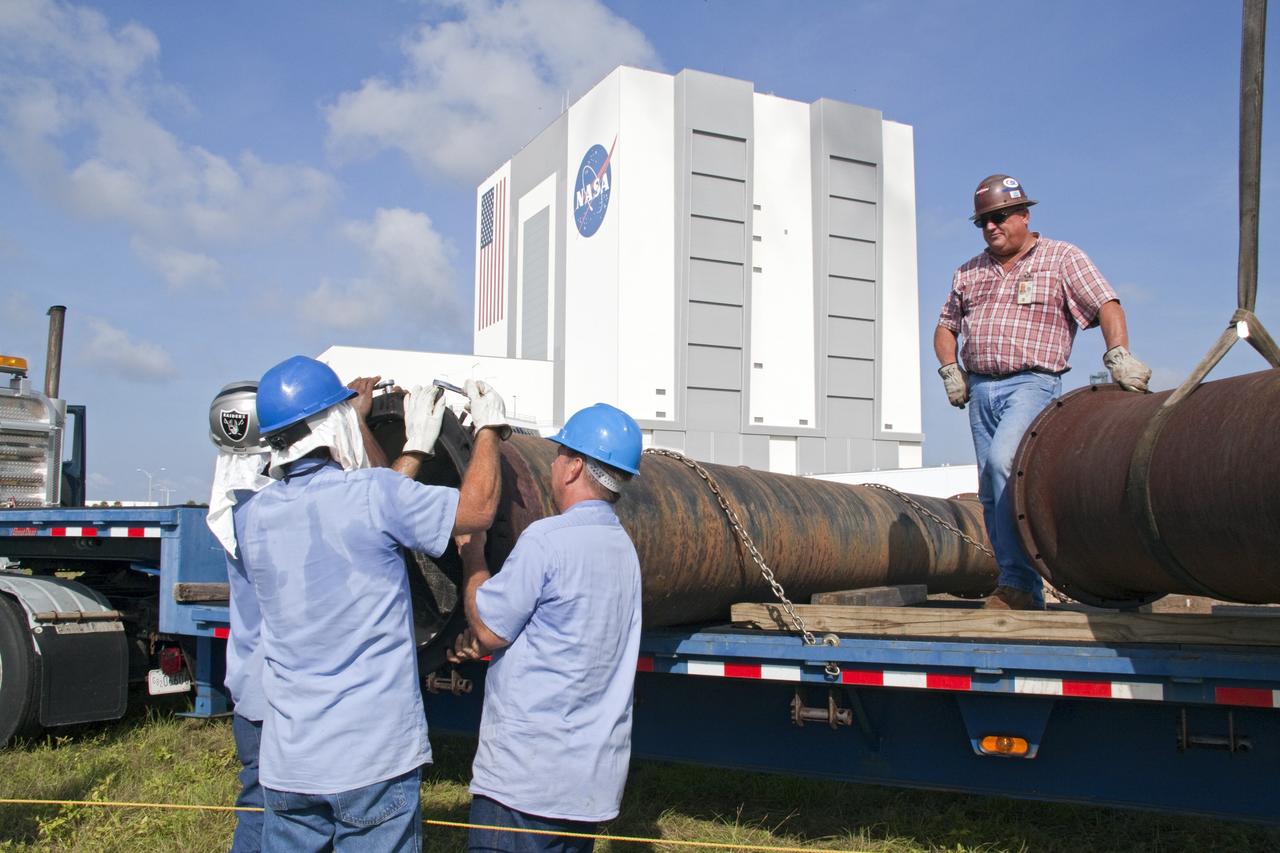
CAPE CANAVERAL, Fla. -- In the Launch Complex-39 Turn Basin area, across from the Vehicle Assembly Building at NASA's Kennedy Space Center in Florida, workers maneuver the replacement section of a 24-inch cast iron water main pipe off of a transport truck. Kennedy was closed to non-essential personnel the morning of Sept. 8 while crews assessed the water main break and restored water to the center. Photo credit: NASA/Jack Pfaller
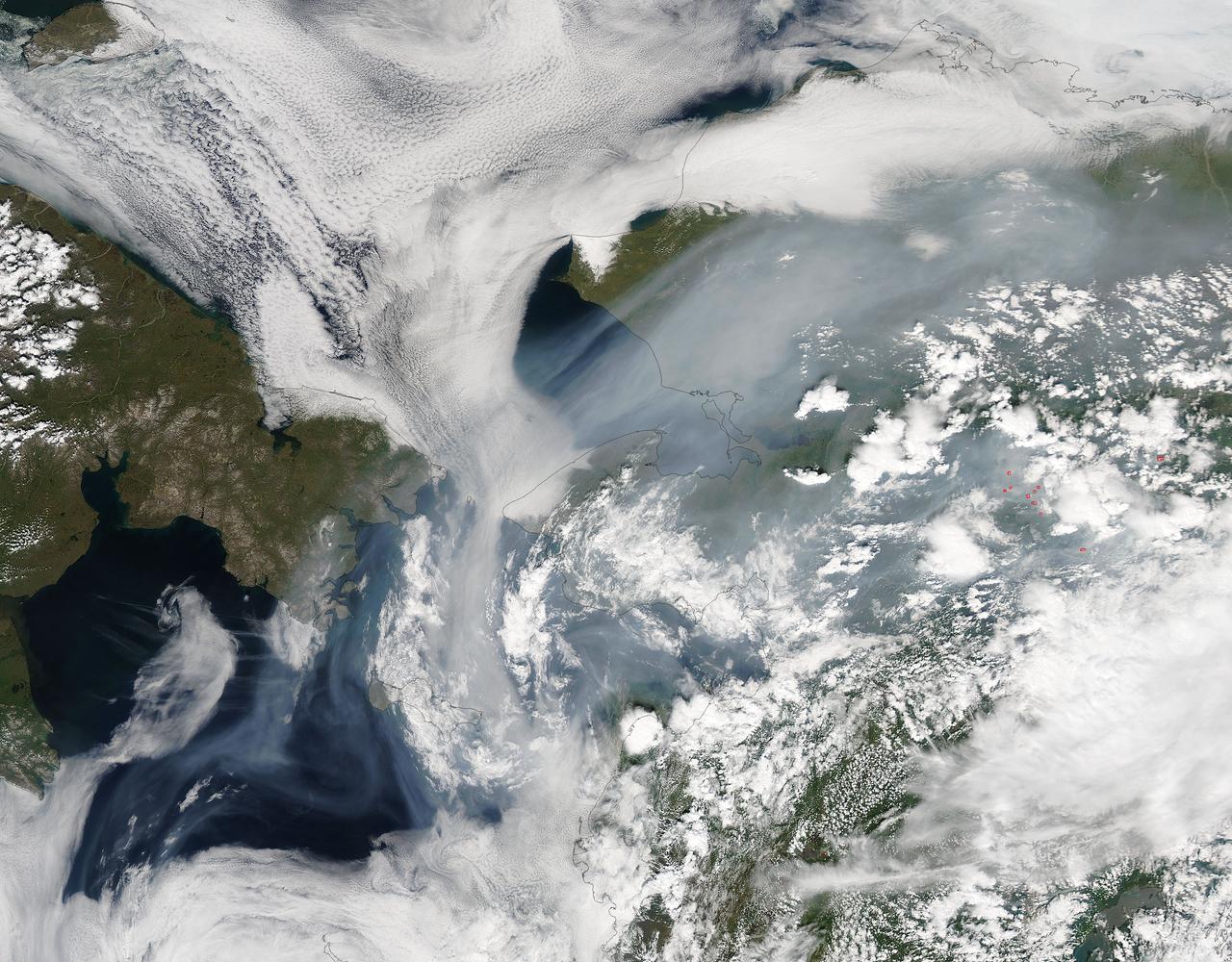
Fires have raged throughout Alaska in 2015. The Moderate Resolution Imaging Spectroradiometer (MODIS) on NASA’s Aqua satellite acquired this image on July 14, 2015. Actively burning areas, detected by the thermal bands on MODIS, are outlined in red. According to the most recent update (July 16, 2015) from the Alaska Interagency Coordination Center, about 304 fires were actively burning when MODIS imaged the area. To date, fires have charred a total of 4,854,924 acres in Alaska. The worst fire season in Alaska's history was in 2004. At this point in time, 2015 is a month ahead of the totals in 2004 putting it on track surpass the fire totals in 2004. The amount of acreage burned in Alaska during June 2015 shattered the previous acreage record set in June 2004 by more than 700,000 acres delivering a sobering piece of news for Alaskan residents. Credit: NASA/GSFC/Jeff Schmaltz/MODIS Land Rapid Response Team <b><a href="http://www.nasa.gov/audience/formedia/features/MP_Photo_Guidelines.html" rel="nofollow">NASA image use policy.</a></b> <b><a href="http://www.nasa.gov/centers/goddard/home/index.html" rel="nofollow">NASA Goddard Space Flight Center</a></b> enables NASA’s mission through four scientific endeavors: Earth Science, Heliophysics, Solar System Exploration, and Astrophysics. Goddard plays a leading role in NASA’s accomplishments by contributing compelling scientific knowledge to advance the Agency’s mission. <b>Follow us on <a href="http://twitter.com/NASAGoddardPix" rel="nofollow">Twitter</a></b> <b>Like us on <a href="http://www.facebook.com/pages/Greenbelt-MD/NASA-Goddard/395013845897?ref=tsd" rel="nofollow">Facebook</a></b> <b>Find us on <a href="http://instagrid.me/nasagoddard/?vm=grid" rel="nofollow">Instagram</a></b>
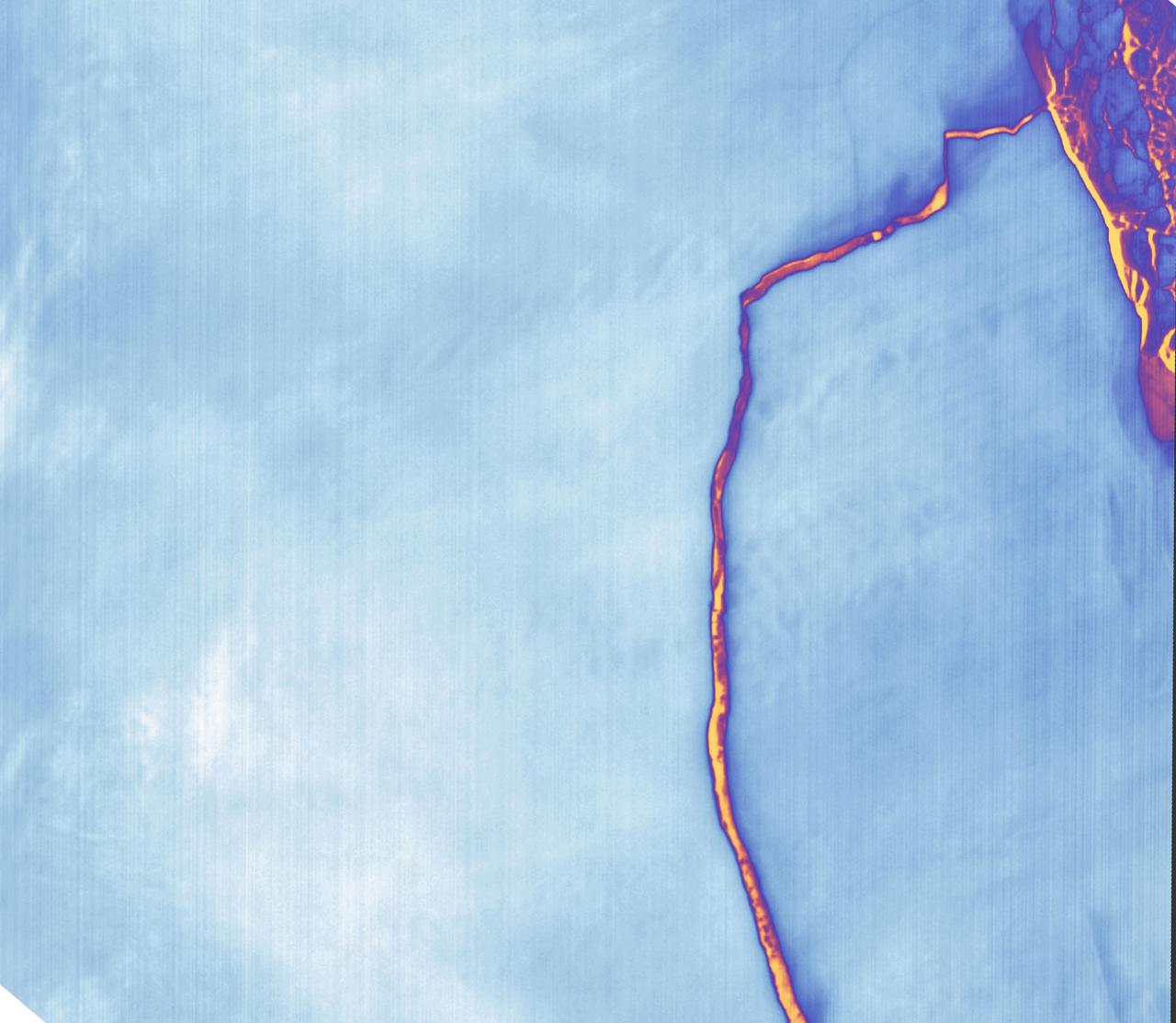
Sometime between July 10 and July 12, an iceberg about the size of Delaware split off from Antarctica’s Larsen C ice shelf. Now that nearly 5,800 square kilometers (2,200 square miles) of ice has broken away, the Larsen C shelf area has shrunk by approximately 10 percent. This false-color image was captured by Landsat’s Thermal Infrared Sensor (TIRS). It shows the relative warmth or coolness of the landscape. Orange indicates where the surface is the warmest, most notably the mélange between the new berg and the ice shelf. Light blues and whites are the coldest areas, including the ice shelf and the iceberg. On July 13, the U.S. National Ice Center issued a press release confirming the new iceberg and officially naming it A-68. Credit: NASA Earth Observatory images by Joshua Stevens, using Landsat data from the U.S. Geological Survey <b><a href="http://www.nasa.gov/audience/formedia/features/MP_Photo_Guidelines.html" rel="nofollow">NASA image use policy.</a></b> <b><a href="http://www.nasa.gov/centers/goddard/home/index.html" rel="nofollow">NASA Goddard Space Flight Center</a></b> enables NASA’s mission through four scientific endeavors: Earth Science, Heliophysics, Solar System Exploration, and Astrophysics. Goddard plays a leading role in NASA’s accomplishments by contributing compelling scientific knowledge to advance the Agency’s mission. <b>Follow us on <a href="http://twitter.com/NASAGoddardPix" rel="nofollow">Twitter</a></b> <b>Like us on <a href="http://www.facebook.com/pages/Greenbelt-MD/NASA-Goddard/395013845897?ref=tsd" rel="nofollow">Facebook</a></b> <b>Find us on <a href="http://instagrid.me/nasagoddard/?vm=grid" rel="nofollow">Instagram</a></b>
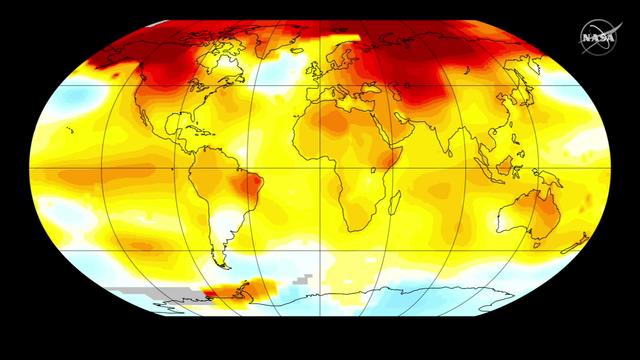
Two key climate change indicators -- global surface temperatures and Arctic sea ice extent -- have broken numerous records through the first half of 2016, according to NASA analyses of ground-based observations and satellite data. Each of the first six months of 2016 set a record as the warmest respective month globally in the modern temperature record, which dates to 1880, according to scientists at NASA's Goddard Institute for Space Studies (GISS) in New York. The six-month period from January to June was also the planet's warmest half-year on record, with an average temperature 1.3 degrees Celsius (2.4 degrees Fahrenheit) warmer than the late nineteenth century. Read more: <a href="http://go.nasa.gov/29SQngq" rel="nofollow">go.nasa.gov/29SQngq</a> Credit: NASA/Goddard <b><a href="http://www.nasa.gov/audience/formedia/features/MP_Photo_Guidelines.html" rel="nofollow">NASA image use policy.</a></b> <b><a href="http://www.nasa.gov/centers/goddard/home/index.html" rel="nofollow">NASA Goddard Space Flight Center</a></b> enables NASA’s mission through four scientific endeavors: Earth Science, Heliophysics, Solar System Exploration, and Astrophysics. Goddard plays a leading role in NASA’s accomplishments by contributing compelling scientific knowledge to advance the Agency’s mission. <b>Follow us on <a href="http://twitter.com/NASAGoddardPix" rel="nofollow">Twitter</a></b> <b>Like us on <a href="http://www.facebook.com/pages/Greenbelt-MD/NASA-Goddard/395013845897?ref=tsd" rel="nofollow">Facebook</a></b> <b>Find us on <a href="http://instagrid.me/nasagoddard/?vm=grid" rel="nofollow">Instagram</a></b>
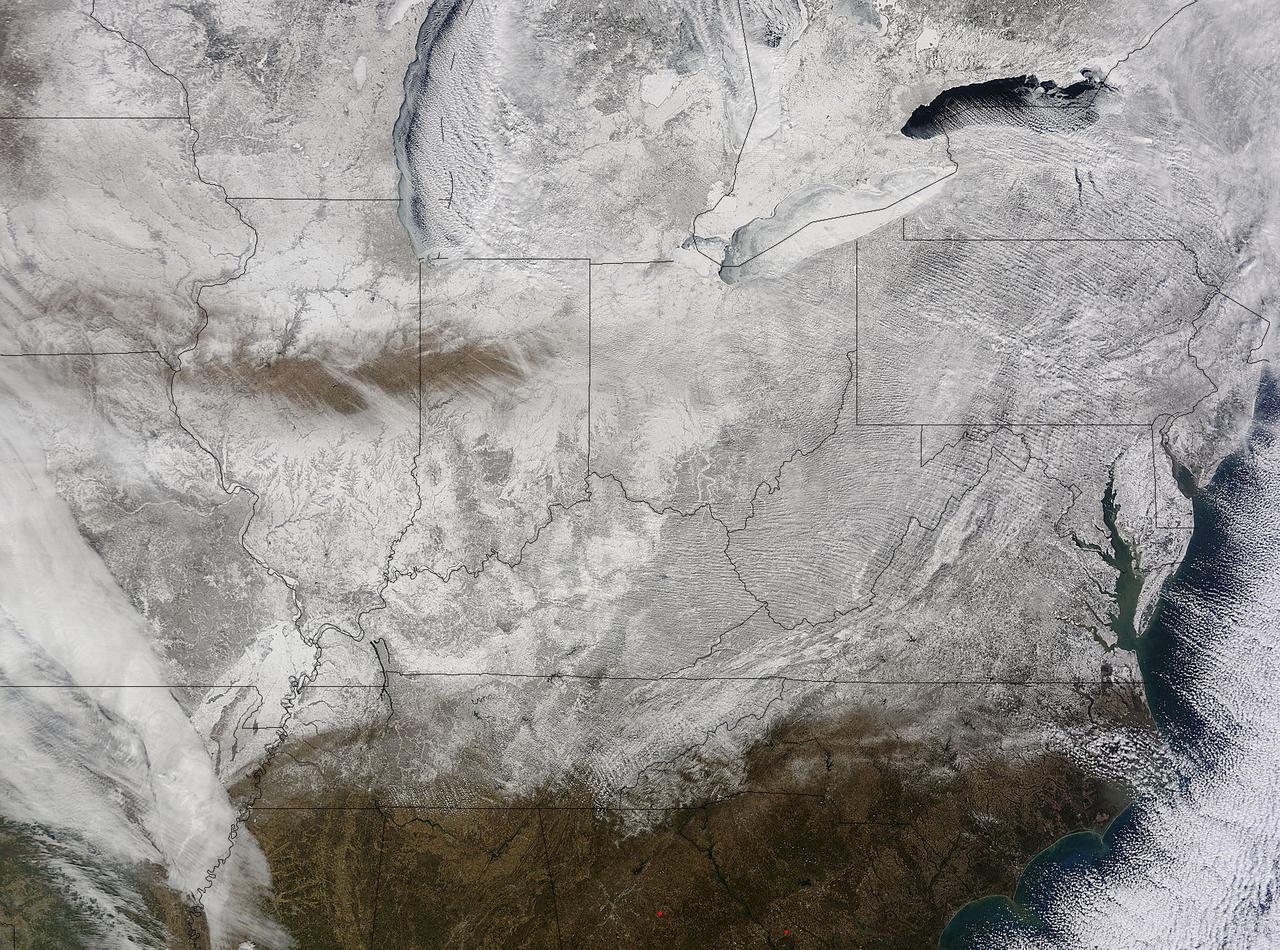
NASA's Terra satellite captured an image of the snow-covered eastern U.S. that looks like the states have been sitting in a freezer. In addition to the snow cover, Arctic and Siberian air masses have settled in over the Eastern U.S. triggering many record low temperatures in many states. On Feb. 19 at 16:40 UTC (11:40 a.m. EST), the Moderate Resolution Imaging Spectroradiometer (MODIS) instrument that flies aboard NASA's Terra satellite captured a picture of the snowy landscape. The snow cover combined with the frosty air mass made the eastern U.S. feel like the inside of freezer. The MODIS image was created at NASA's Goddard Space Flight Center in Greenbelt, Maryland. On the morning of Feb. 20, NOAA's Weather Prediction Center (WPC) noted, "There were widespread subzero overnight lows Thursday night (Feb. 19) extending from Illinois to western Virginia, and numerous record lows were set. Bitterly-cold arctic air is setting numerous temperature records across the eastern U.S. and will keep temperatures well below normal on Friday (Feb. 20)." In Baltimore, Maryland, a low temperature of 1F broke the record low for coldest morning recorded at the Thurgood Marshall Baltimore Washington-International Airport. In Louisville, Kentucky, temperatures dropped to -6F, breaking the old record low of 0F, according to meteorologist Brian Goode of WAVE-TV. Meanwhile, Richmond Kentucky bottomed out at a frigid -32F. In North Carolina, a record low temperature was set at Charlotte where the overnight temperature bottomed out at 7F breaking the old record of 13F in 1896. In Asheville, temperatures dropped to just 4F breaking the old record of 10F in 1979. Temperature records for Asheville extend back to 1876. Several records were also broken in Georgia, according to Matt Daniel, a meteorologist at WMAZ-TV, Macon Georgia, who cited data from the National Weather Service. Daniel said that Macon set a new record low when the temperature dropped to 18F, beating the previous record of 21F set in 1958. Athens broke a new record low, too dropping to 14F and beating the old record of 18F set in 1958/1928. NOAA's NPC noted that "Highs on Friday (Feb. 20) will struggle to get out of the teens from the Ohio Valley to the Mid-Atlantic region. After Friday, temperatures are forecast to moderate and get closer to February averages as a storm system approaches from the west." Image Credit: NASA Goddard MODIS Rapid Response Team <b><a href="http://www.nasa.gov/audience/formedia/features/MP_Photo_Guidelines.html" rel="nofollow">NASA image use policy.</a></b> <b><a href="http://www.nasa.gov/centers/goddard/home/index.html" rel="nofollow">NASA Goddard Space Flight Center</a></b> enables NASA’s mission through four scientific endeavors: Earth Science, Heliophysics, Solar System Exploration, and Astrophysics. Goddard plays a leading role in NASA’s accomplishments by contributing compelling scientific knowledge to advance the Agency’s mission. <b>Follow us on <a href="http://twitter.com/NASAGoddardPix" rel="nofollow">Twitter</a></b> <b>Like us on <a href="http://www.facebook.com/pages/Greenbelt-MD/NASA-Goddard/395013845897?ref=tsd" rel="nofollow">Facebook</a></b> <b>Find us on <a href="http://instagram.com/nasagoddard?vm=grid" rel="nofollow">Instagram</a></b>
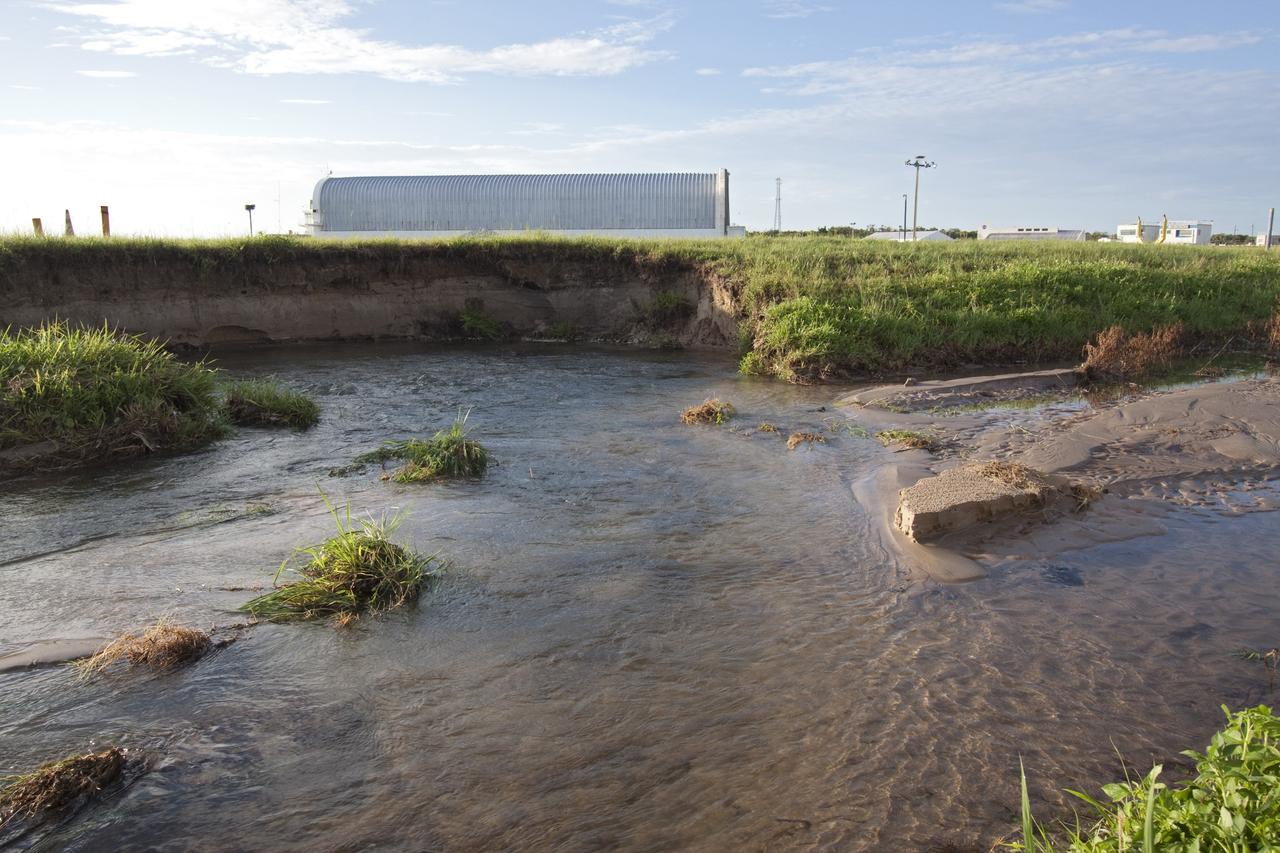
CAPE CANAVERAL, Fla. -- In the LC-39 Complex Turn Basin area across from the Vehicle Assembly Building at NASA's Kennedy Space Center in Florida, a major water main leak in a 24-inch pipe caused soil to wash away near the Press Site. The center was closed for the morning while workers assessed and repaired the break. In the background is the Pegasus barge docked at the Turn Basin which is used to deliver the space shuttle external fuel tank. Photo credit: NASA/Jack Pfaller
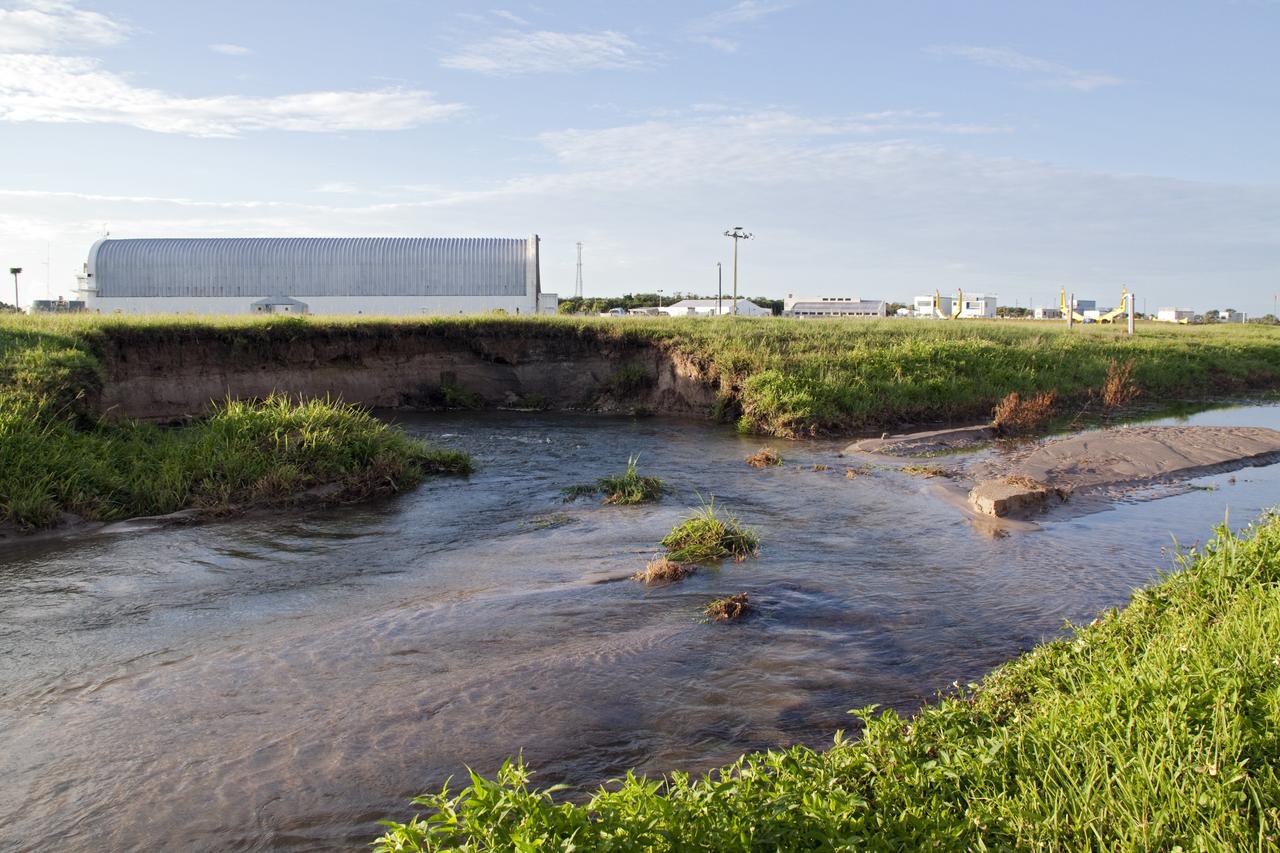
CAPE CANAVERAL, Fla. -- In the LC-39 Complex Turn Basin area across from the Vehicle Assembly Building at NASA's Kennedy Space Center in Florida, a major water main leak in a 24-inch pipe caused soil to wash away near the Press Site. The center was closed for the morning while workers assessed and repaired the break. In the background is the Pegasus barge docked at the Turn Basin which is used to deliver the space shuttle external fuel tank. Photo credit: NASA/Jack Pfaller
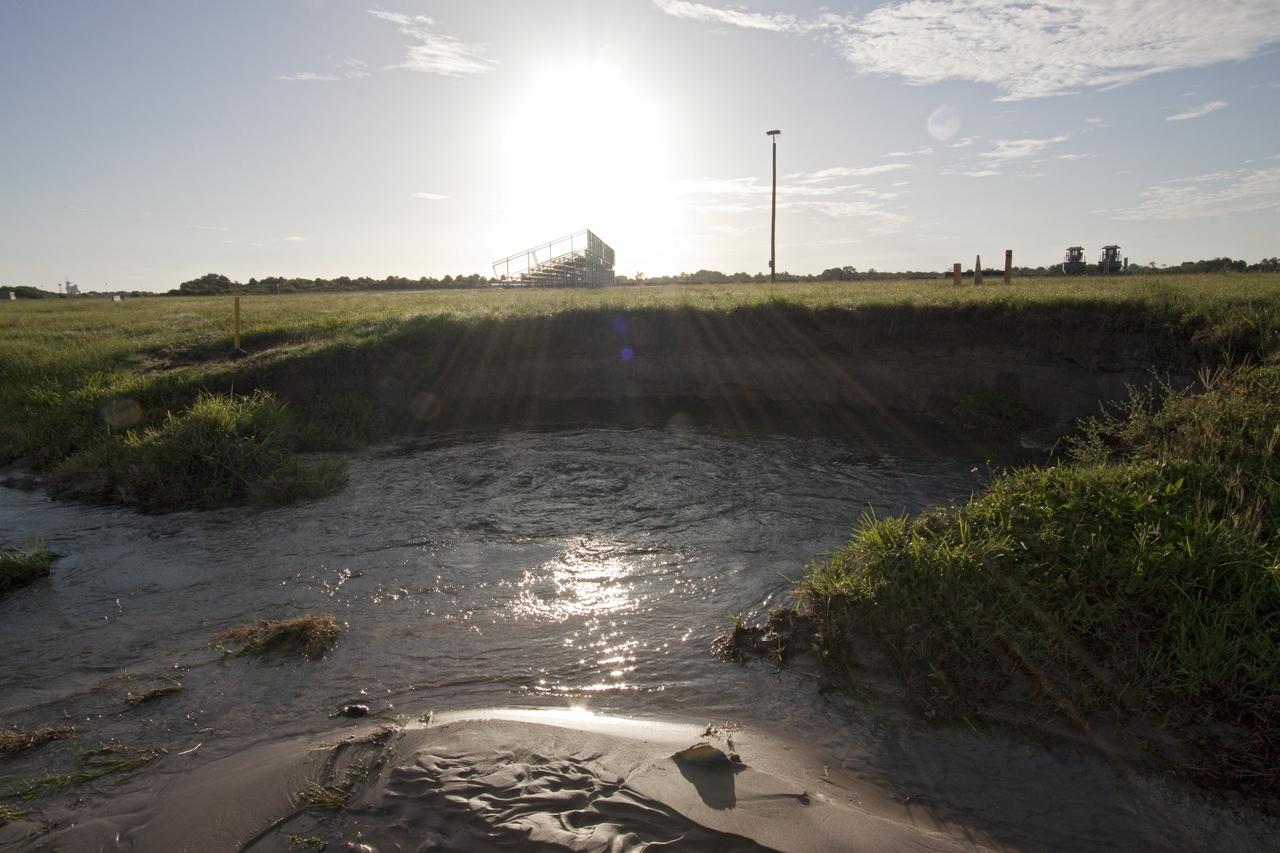
CAPE CANAVERAL, Fla. -- Looking towards a shuttle launch viewing stand is the result of a major water main leak in a 24-inch pipe that caused soil to wash away near the Press Site in the LC-39 Complex Turn Basin area across from the Vehicle Assembly Building at NASA's Kennedy Space Center in Florida. The center was closed for the morning while workers assessed and repaired the break. Photo credit: NASA/Jack Pfaller
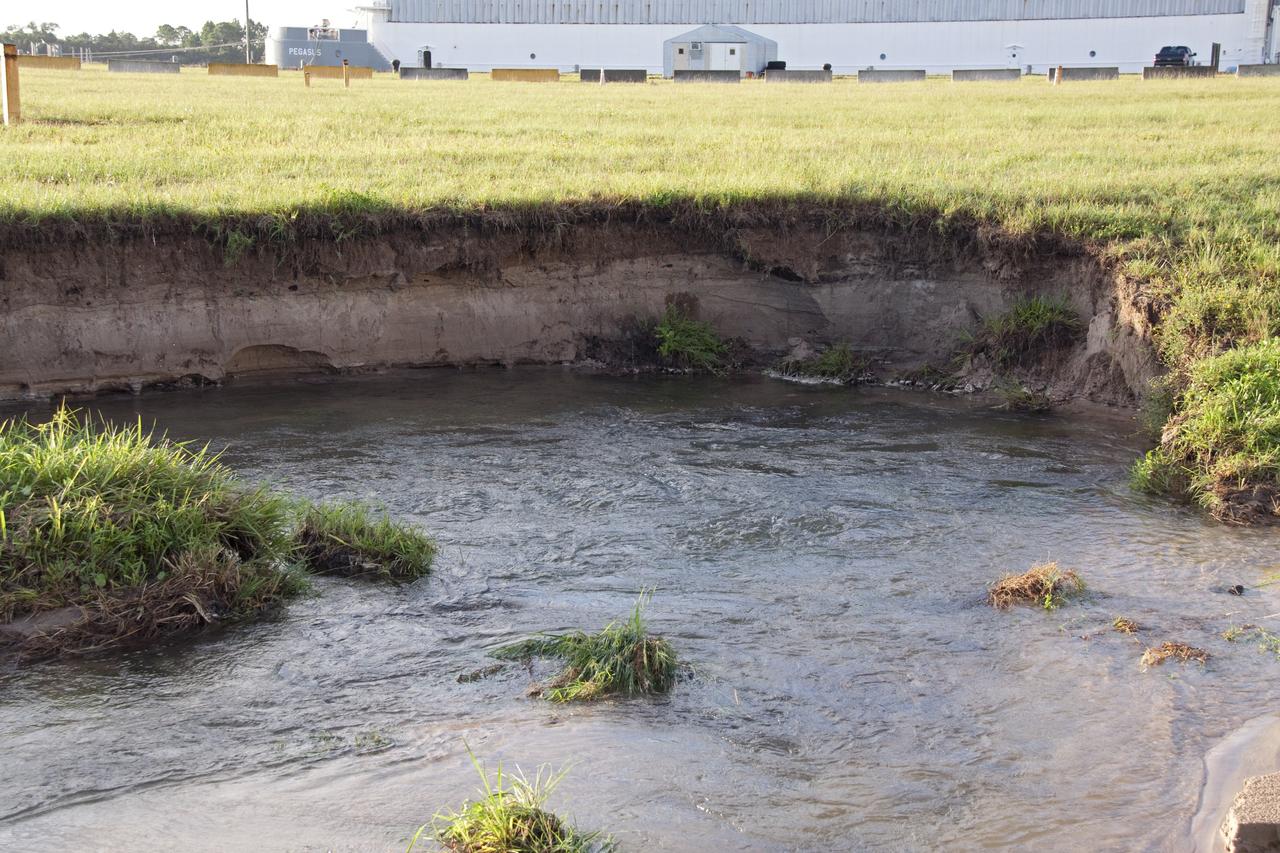
CAPE CANAVERAL, Fla. -- In the LC-39 Complex Turn Basin area across from the Vehicle Assembly Building at NASA's Kennedy Space Center in Florida, a major water main leak in a 24-inch pipe caused soil to wash away near the Press Site. The center was closed for the morning while workers assessed and repaired the break. In the background is the Pegasus barge docked at the Turn Basin which is used to deliver the space shuttle external fuel tank. Photo credit: NASA/Jack Pfaller
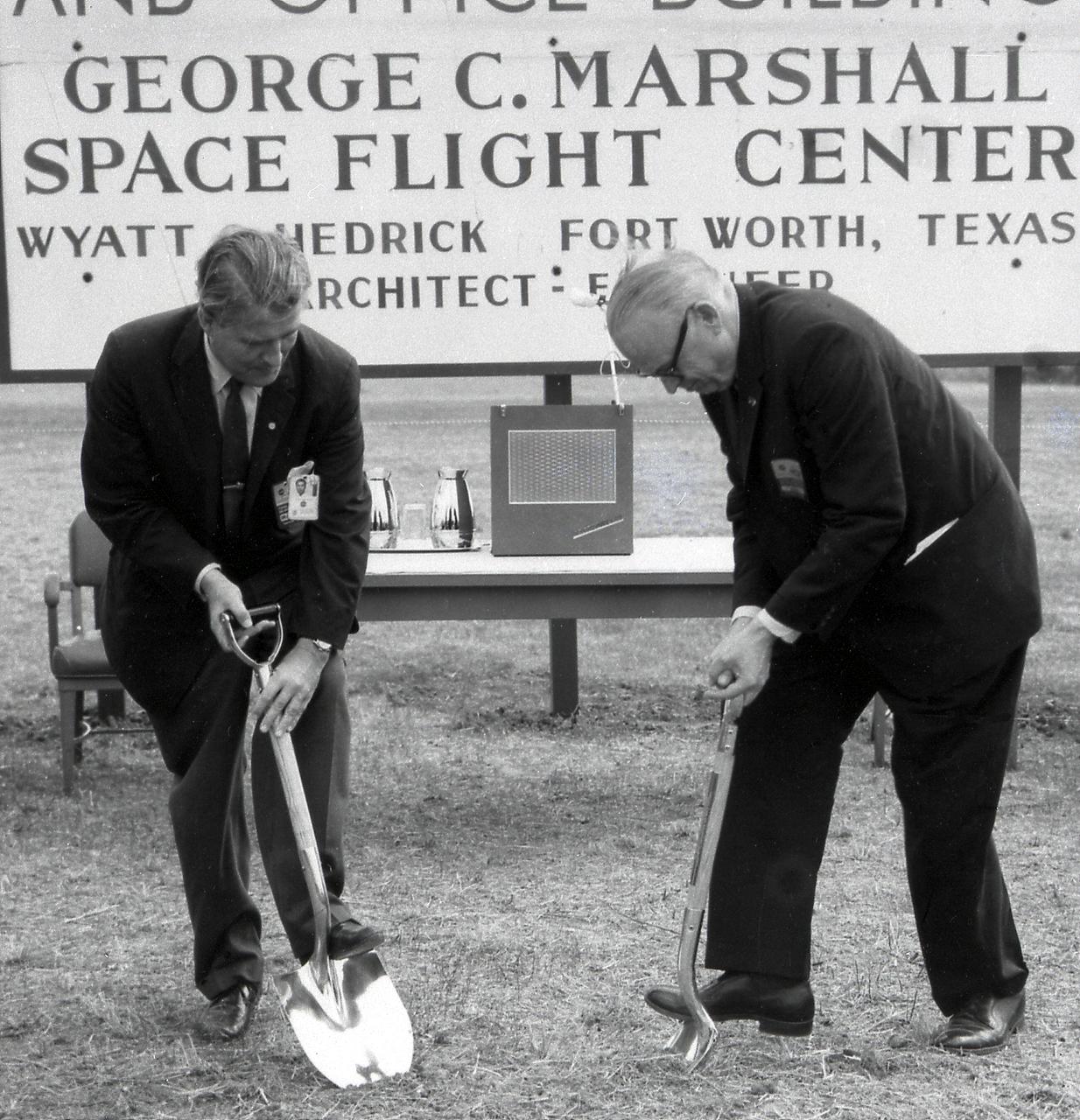
Dr. Wernher von Braun, Director of Marshall Space Flight Center (MSFC), teams up with Senator Robert S. Kerr, a chairman of the Senate Committee on Aeronautical and Space Sciences to break ground for MSFC's new Central Laboratory and Office Facility.
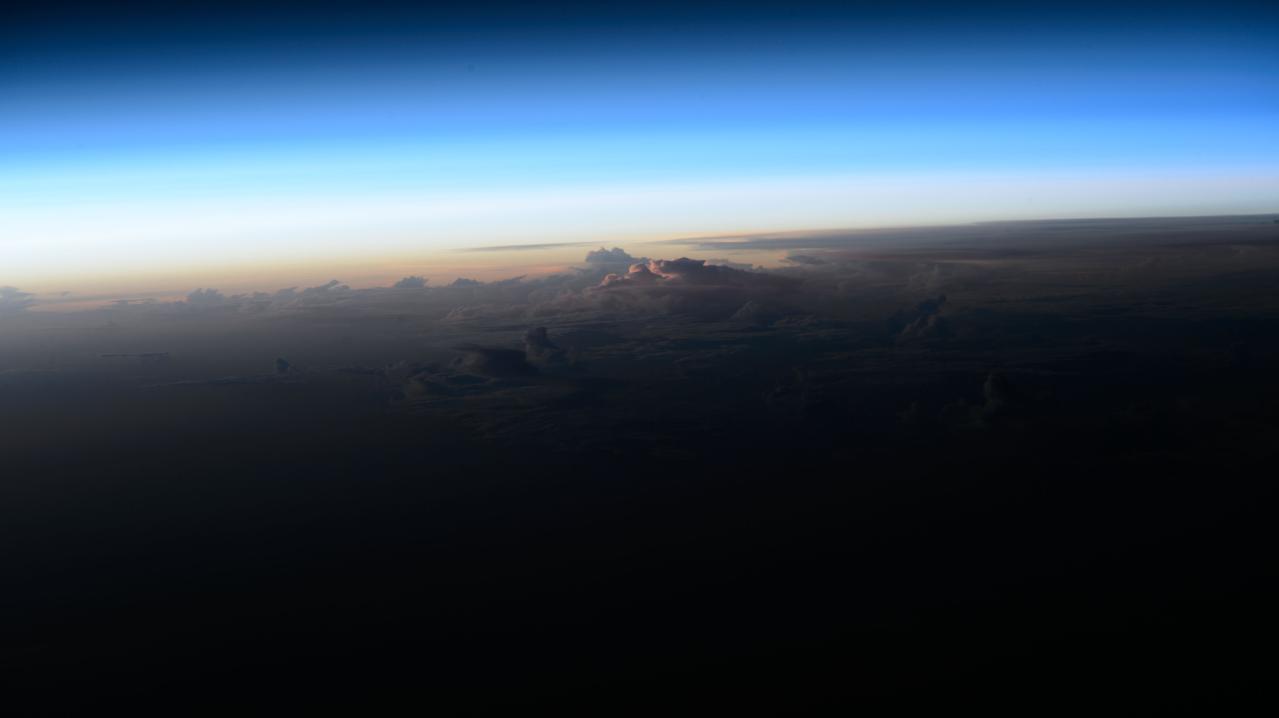
iss073e0028091 (May 11, 2025) --- An orbital sunrise breaks above the clouds in this photograph from the International Space Station as it soared 259 miles over the Atlantic Ocean due west of the African island nation of Cabo Verde.
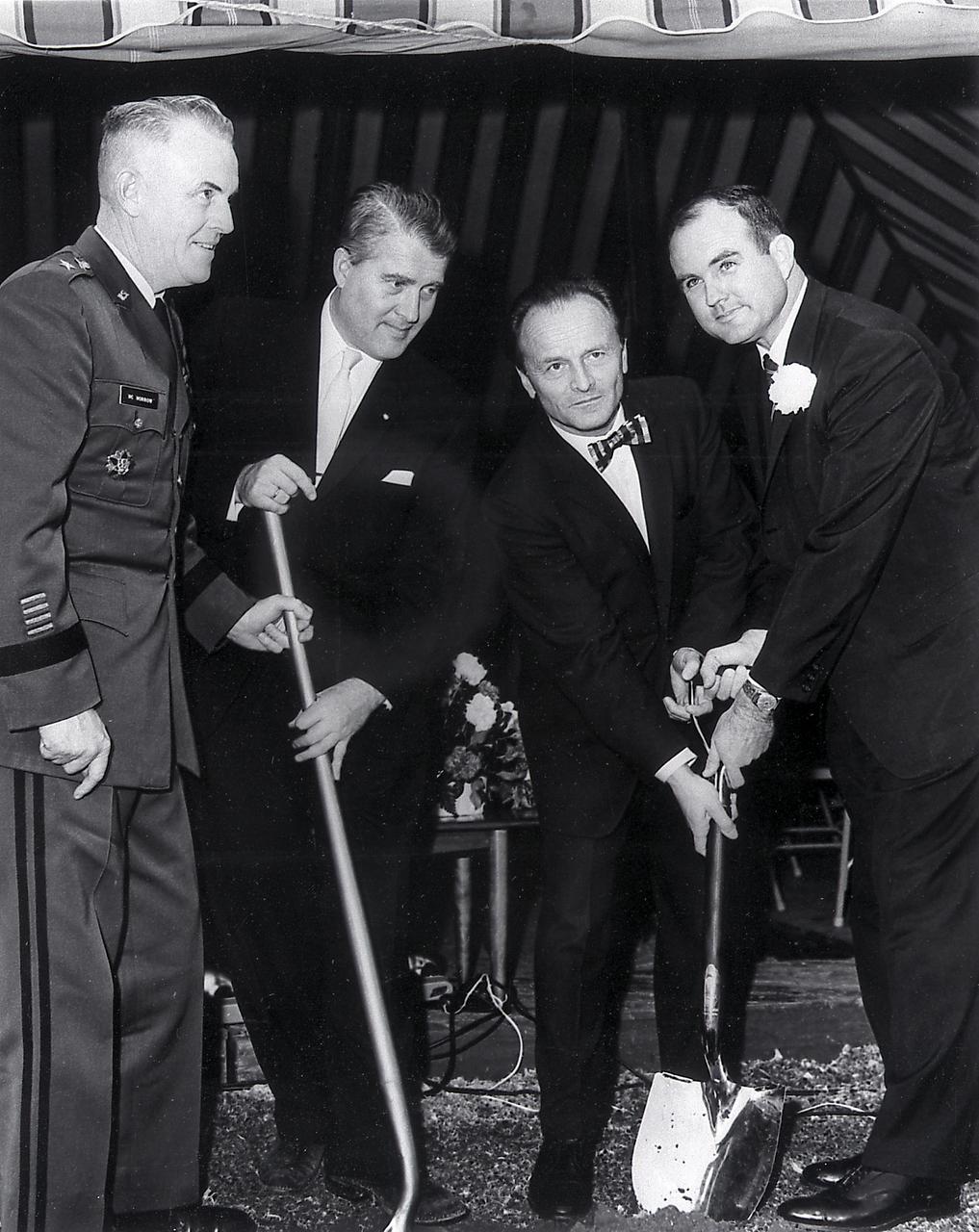
Dr. von Braun, Major General Francis McMorrow, and Alabama Governor, John Patterson (far left) participated in the ground breaking ceremony for the University of Alabama Research Institute in Huntsville, December 20, 1962.
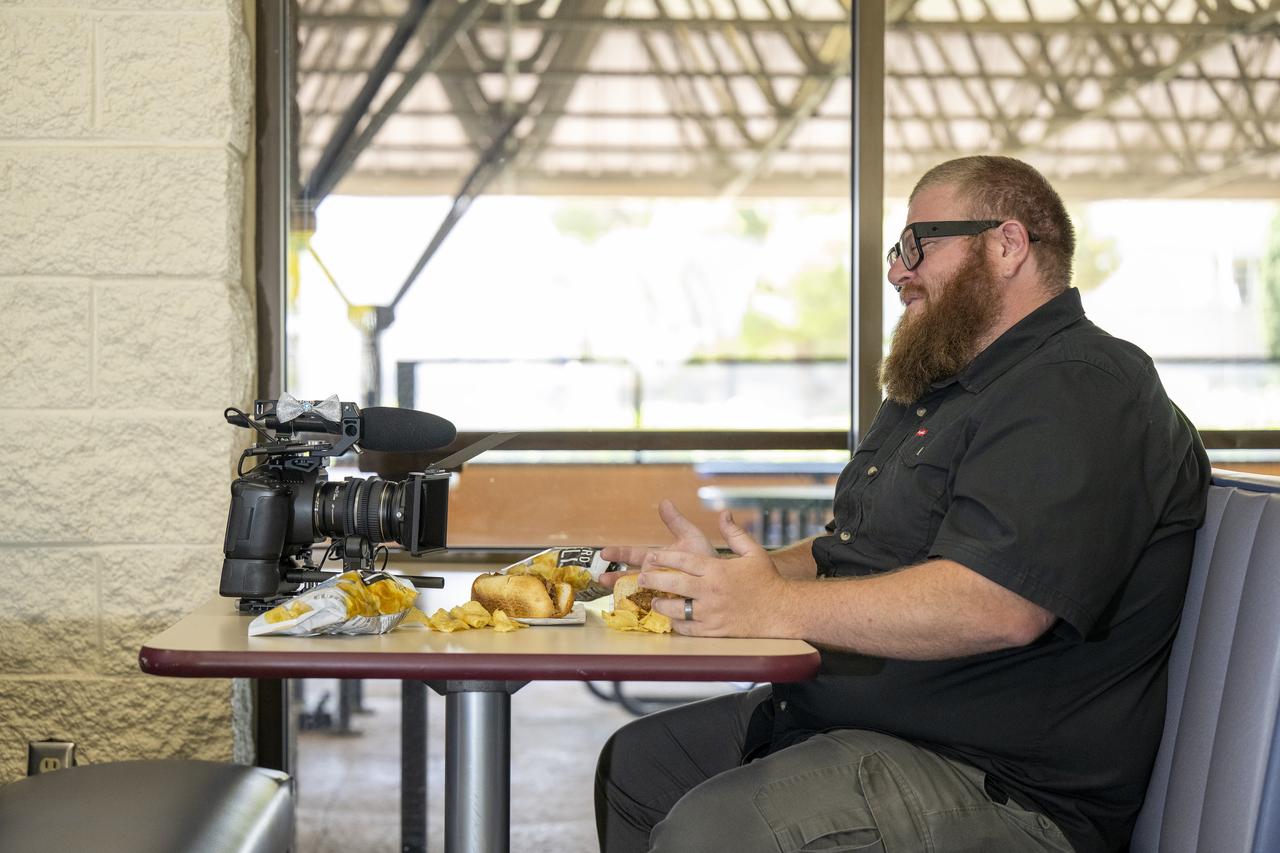
NASA videographer Jacob Shaw shares a moment with his constant companion during a break in the cafeteria at NASA’s Armstrong Flight Research Center in Edwards, California, on May 21, 2025. Shaw recently earned first place in NASA’s 2024 Videographer of the Year Awards – documentation category – for his film, “Reflections,” which chronicles the 2024 Airborne Science mission PACE-PAX – short for Plankton, Aerosol, Cloud, ocean Ecosystem Postlaunch Airborne eXperiment.

This artist's concept portrays the plan for the new Engineering Directorate office to be constructed at the Marshall Space Flight Center. The first of several new buildings to be constructed as replacements for older Center facilities, the 5-story, 139,000-square-foot building will house approximately 500 current Marshall employees that provide development and research engineering services for the Marshall Center. Ground breaking ceremonies took place on June 10, 2003 at the construction site, southwest of the Martin and Rideout Roads intersection on Redstone Arsenal. GSC Construction of Waynesboro, Georgia has been selected as the contractor for the facility, which is scheduled for a September 2004 completion.
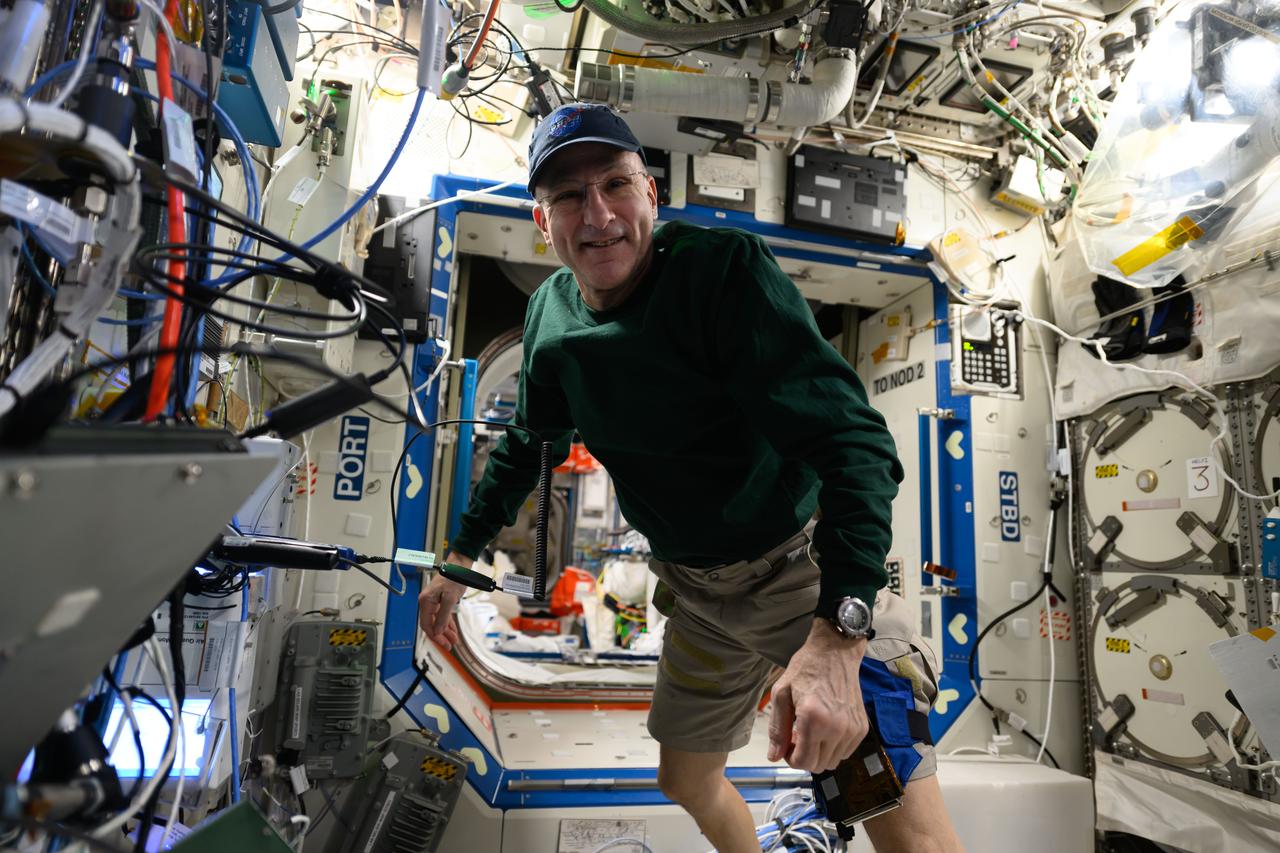
iss072e188983 (Nov. 15, 2024) --- NASA astronaut and Expedition 72 Flight Engineer Don Pettit takes a break and poses for a portrait aboard the International Space Station's Destiny laboratory module.
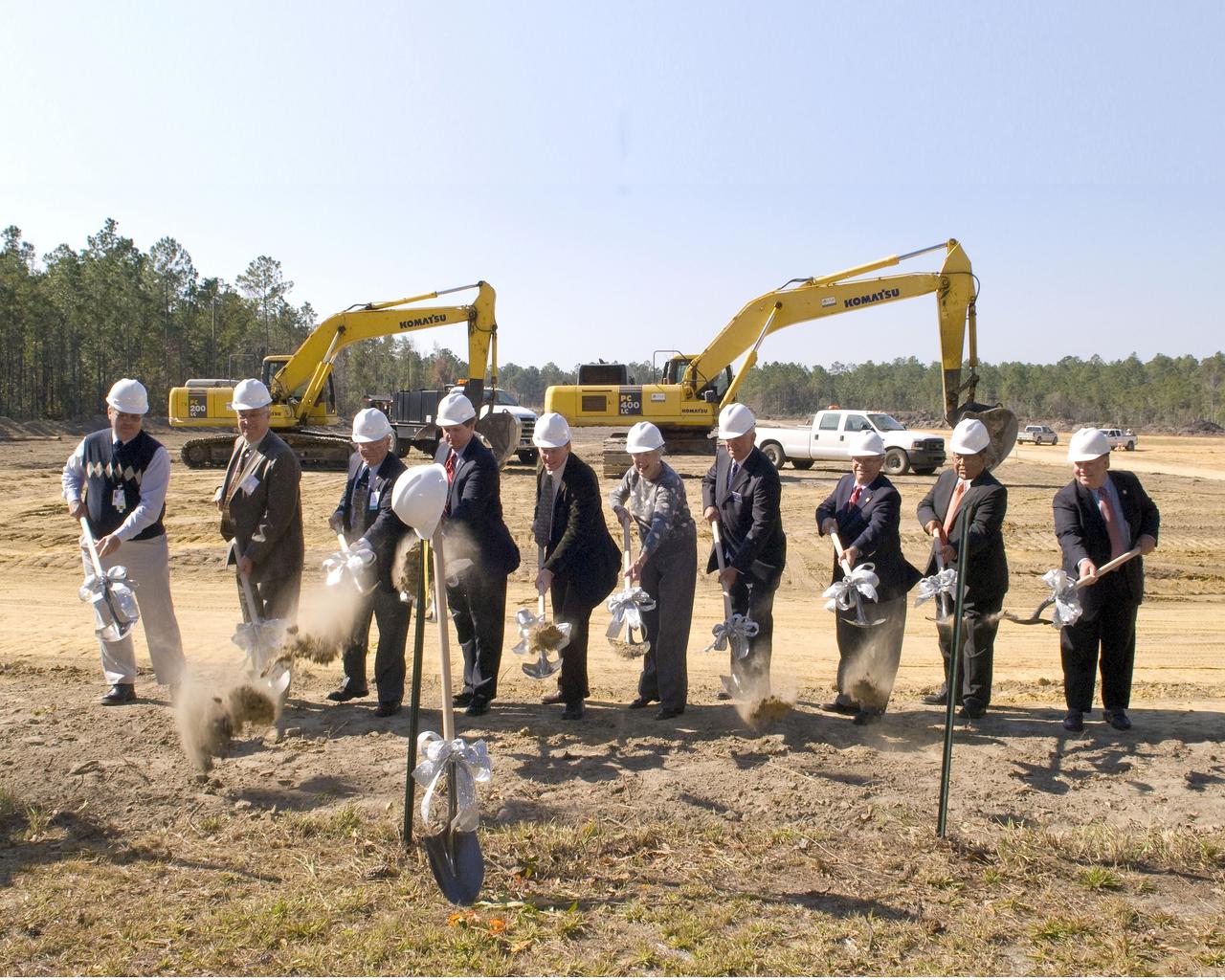
Community leaders from Mississippi and Louisiana break ground for the new INFINITY at NASA Stennis Space Center facility during a Nov. 20 ceremony. Groundbreaking participants included (l to r): Gottfried Construction representative John Smith, Mississippi Highway Commissioner Wayne Brown, INFINITY board member and Apollo 13 astronaut Fred Haise, Stennis Director Gene Goldman, Studio South representative David Hardy, Leo Seal Jr. family representative Virginia Wagner, Hancock Bank President George Schloegel, Mississippi Rep. J.P. Compretta, Mississippi Band of Choctaw Indians representative Charlie Benn and Louisiana Sen. A.G. Crowe.
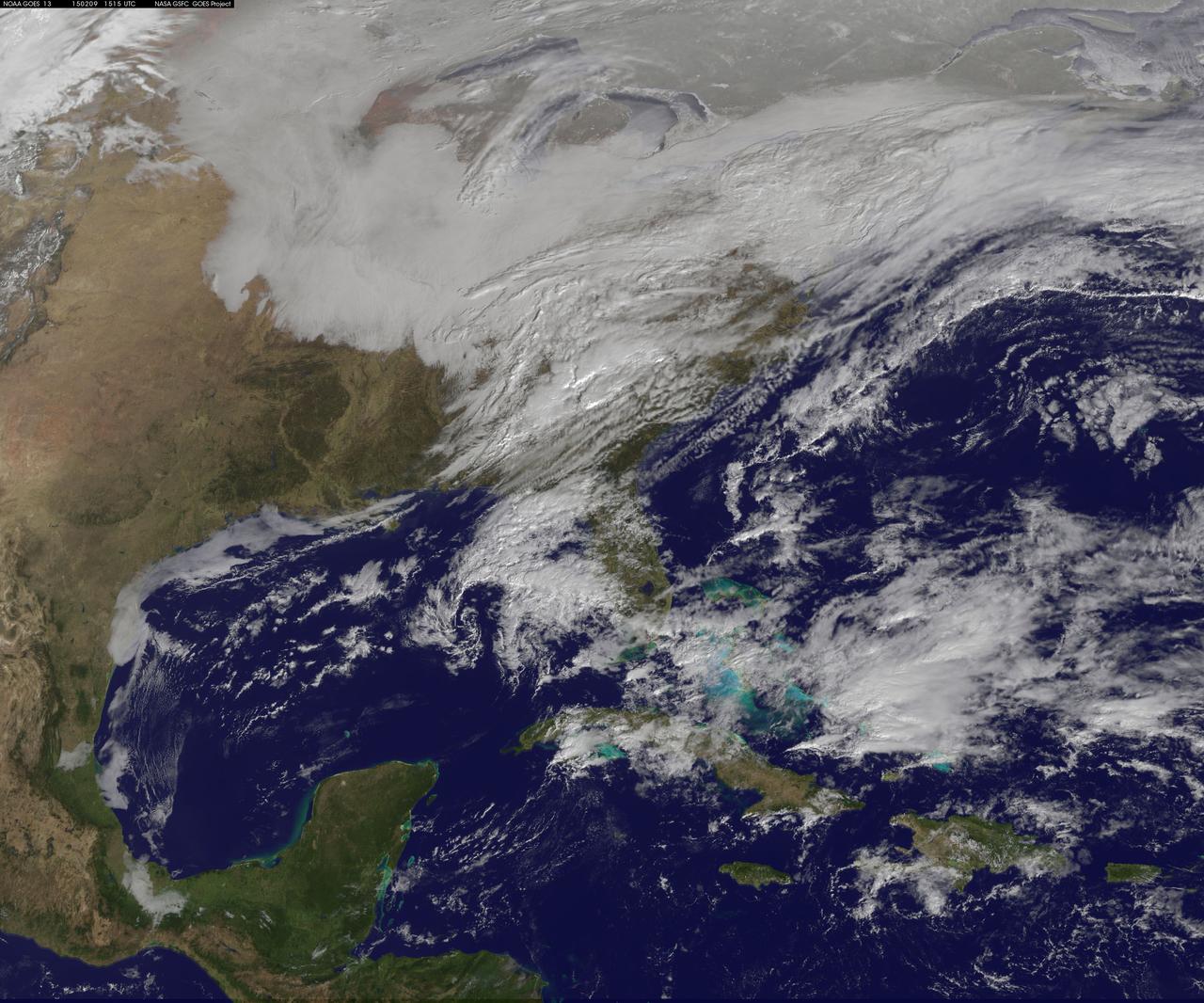
Another large snowstorm affecting New England was dropping more snow on the region and breaking records on February 9, as NOAA's GOES-East satellite captured an image of the clouds associated with the storm system. On Feb. 9, NOAA's National Weather Service in Boston, Massachusetts noted that "The 30-day snowfall total at Boston ending 7 a.m. this morning is 61.6 inches. This exceeds the previous maximum 30 day snowfall total on record at Boston, which was 58.8 inches ending Feb 7 1978." The GOES-East image was created by NASA/NOAA's GOES Project at NASA's Goddard Space Flight Center in Greenbelt, Maryland. It showed a blanket of clouds over the U.S. northeast that stretched down to the Mid-Atlantic where there was no snow on the ground in Washington, D.C. NOAA's National Weather Service Weather Prediction Center provided a look at the extent of the storm system and noted "Heavy snow will impact portions of New York State and New England as the new week begins. Freezing rain will spread from western Pennsylvania to Long Island, with rain for the mid-Atlantic states." The low pressure area bringing the snow to the northeast was located in central Pennsylvania. A cold front extended southward from the low across the Tennessee Valley while a stationary boundary extended eastward from the low across the central mid-Atlantic. To create the image, NASA/NOAA's GOES Project takes the cloud data from NOAA's GOES-East satellite and overlays it on a true-color image of land and ocean created by data from the Moderate Resolution Imaging Spectroradiometer, or MODIS, instrument that flies aboard NASA's Aqua and Terra satellites. Together, those data created the entire picture of the storm. NOAA's GOES satellites provide the kind of continuous monitoring necessary for intensive data analysis. Geostationary describes an orbit in which a satellite is always in the same position with respect to the rotating Earth. This allows GOES to hover continuously over one position on Earth's surface, appearing stationary. As a result, GOES provide a constant vigil for the atmospheric triggers for severe weather conditions such as tornadoes, flash floods, hail storms and hurricanes. For updated information about the storm system, visit NOAA's NWS website: <a href="http://www.weather.gov" rel="nofollow">www.weather.gov</a> For more information about GOES satellites, visit: <a href="http://www.goes.noaa.gov/" rel="nofollow">www.goes.noaa.gov/</a> or goes.gsfc.nasa.gov/ Rob Gutro NASA's Goddard Space Flight Center <b><a href="http://goes.gsfc.nasa.gov/" rel="nofollow">Credit: NOAA/NASA GOES Project</a></b> <b><a href="http://www.nasa.gov/audience/formedia/features/MP_Photo_Guidelines.html" rel="nofollow">NASA image use policy.</a></b> <b><a href="http://www.nasa.gov/centers/goddard/home/index.html" rel="nofollow">NASA Goddard Space Flight Center</a></b> enables NASA’s mission through four scientific endeavors: Earth Science, Heliophysics, Solar System Exploration, and Astrophysics. Goddard plays a leading role in NASA’s accomplishments by contributing compelling scientific knowledge to advance the Agency’s mission. <b>Follow us on <a href="http://twitter.com/NASAGoddardPix" rel="nofollow">Twitter</a></b> <b>Like us on <a href="http://www.facebook.com/pages/Greenbelt-MD/NASA-Goddard/395013845897?ref=tsd" rel="nofollow">Facebook</a></b> <b>Find us on <a href="http://instagram.com/nasagoddard?vm=grid" rel="nofollow">Instagram</a></b>
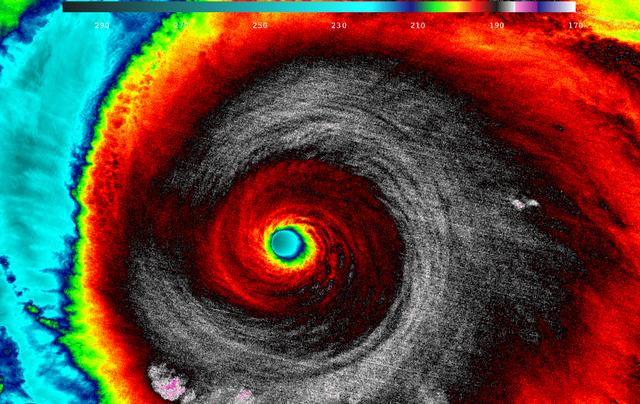
When NASA-NOAA's Suomi NPP satellite passed over Patricia on October 23 at 5:20 a.m. EDT the VIIRS instrument that flies aboard Suomi NPP looked at the storm in infrared light. Cloud top temperatures of thunderstorms around the eyewall were between 180K (-135.7F/ -93.1C) and 190 Kelvin (-117.7F/ -83.1C). Credit: UW/CIMSS/William Straka III Read more: <a href="http://www.nasa.gov/f…/goddard/patricia-eastern-pacific-2015" rel="nofollow">www.nasa.gov/f…/goddard/patricia-eastern-pacific-2015</a>
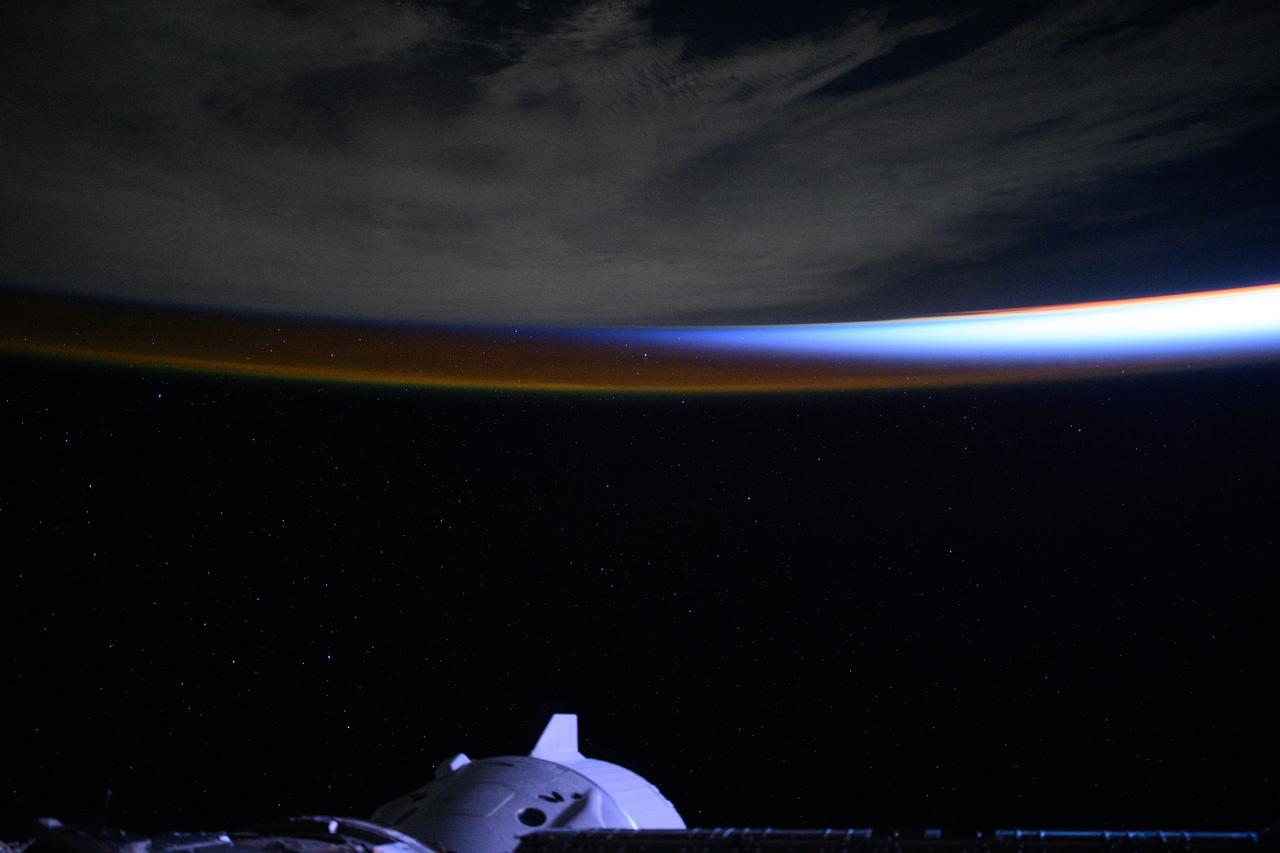
iss073e0203873 (May 19, 2025) --- An orbital sunrise breaks above a cloudy Atlantic Ocean and intersects with Earth's atmospheric glow in this photograph from the International Space Station as it orbited 268 miles overhead. At bottom, is the SpaceX Dragon crew spacecraft docked to the orbital outpost's forward port on the Harmony module.
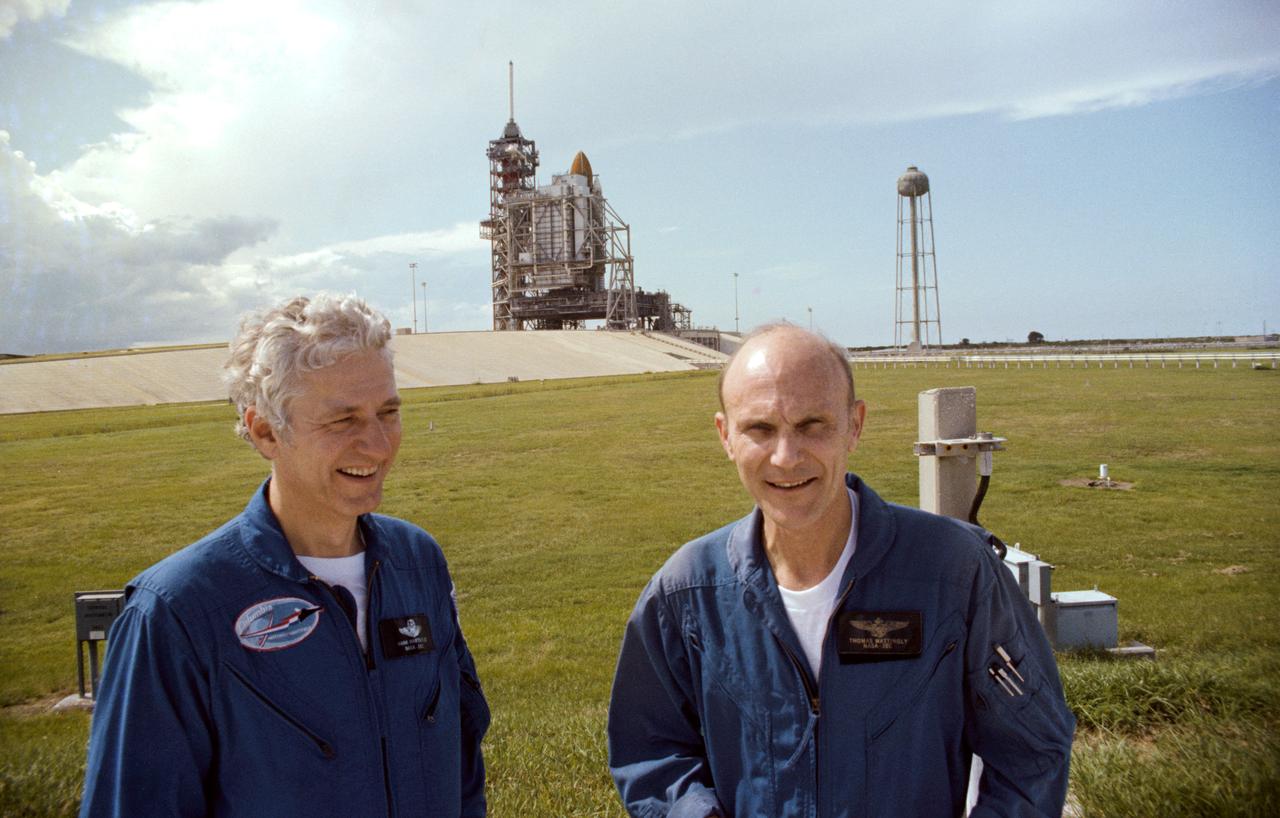
Astronauts Thomas K. Mattingly, II., right, and Henry Hartsfield, Jr. pose for news photographers in front of the Space Shuttle vehicle during break in the countdown demonstration test (CDDT) for STS-4.
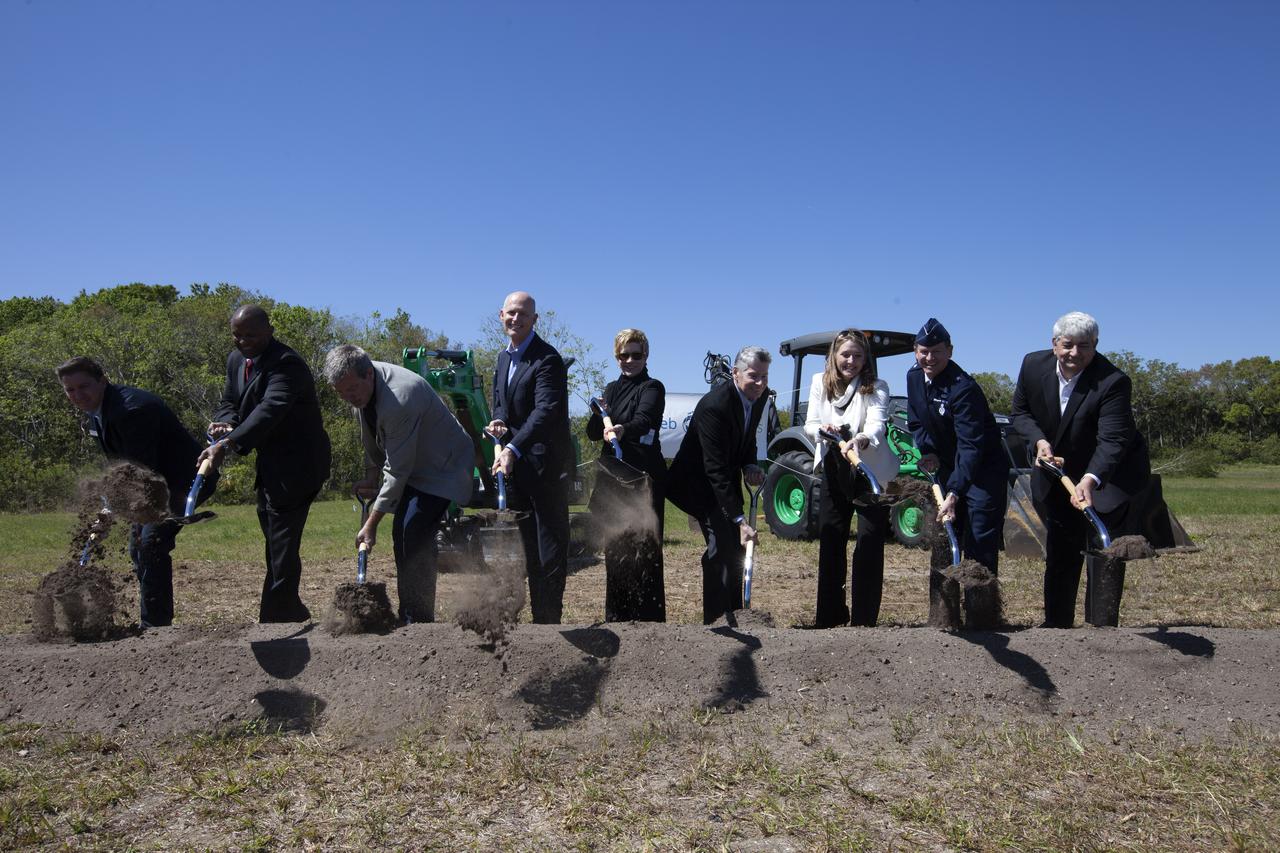
Officials break ground for a 150,000-square-foot manufacturing facility for OneWeb Satellites at Exploration Park at NASA's Kennedy Space Center. The company, in partnership with Airbus, is building a 150,000-square-foot factory to manufacture satellites that will connect all areas of the world to the Internet wirelessly. The officials are, from left, John Saul, operations manager of Hensell-Phelps; Kelvin Manning, associate director of NASA's Kennedy Space Center; Brian Holz, CEO of OneWeb Satellites; Rick Scott, governor of Florida; Lynda Weatherman, president and CEO of the Economic Development Council of the Space Coast; Mike Cosentino, president, Airbus Defense and Space; Cissy Procter, executive director of the Florida Department of Economic Activity; Gen. Wayne Monteith, commander of the 45th Space Wing of the U.S. Air Force; and Jim Kuzma, COO of Space Florida. Photo credit: NASA/Kim Shiflett
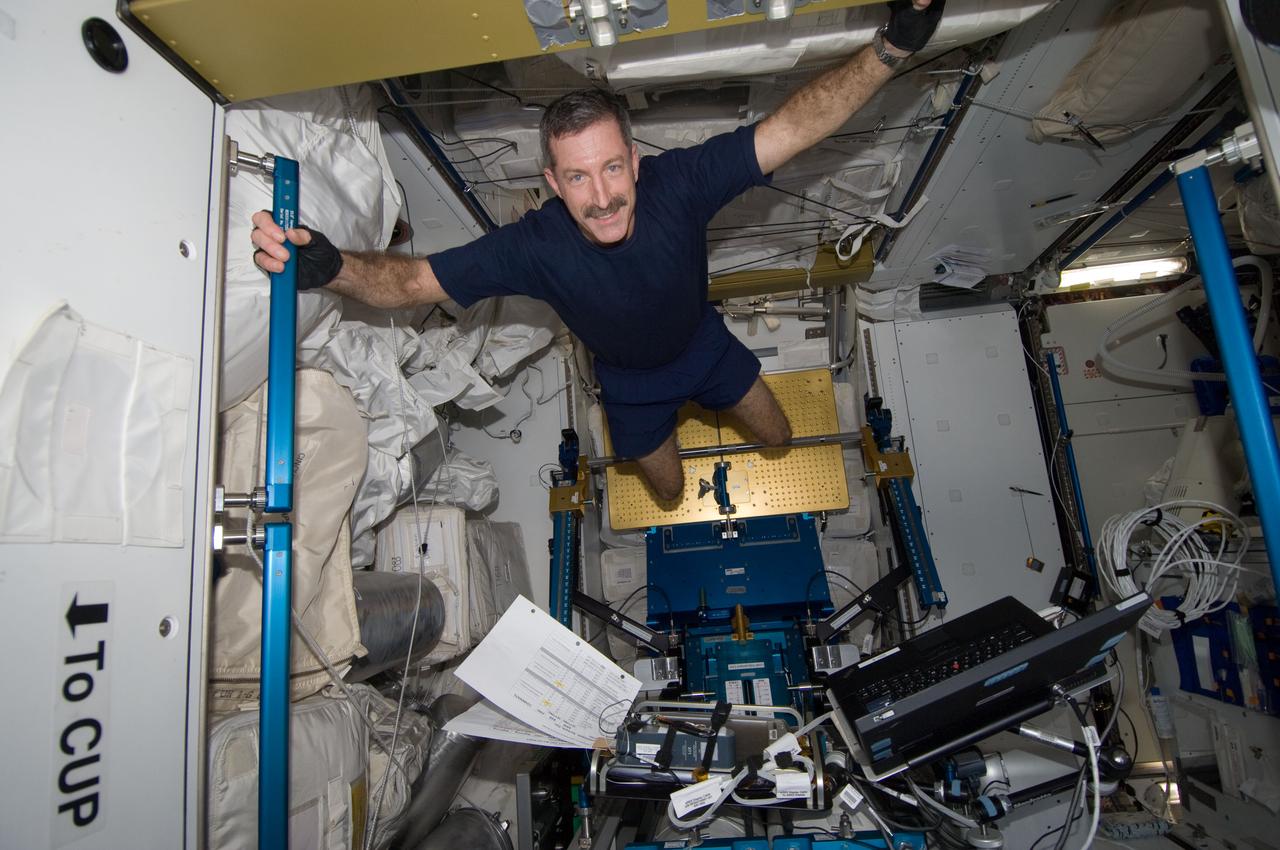
ISS030-E-012709 (18 Dec. 2011) --- NASA astronaut Dan Burbank, Expedition 30 commander, takes a break during an exercise session using the advanced Resistive Exercise Device (aRED) in the Tranquility node of the International Space Station.
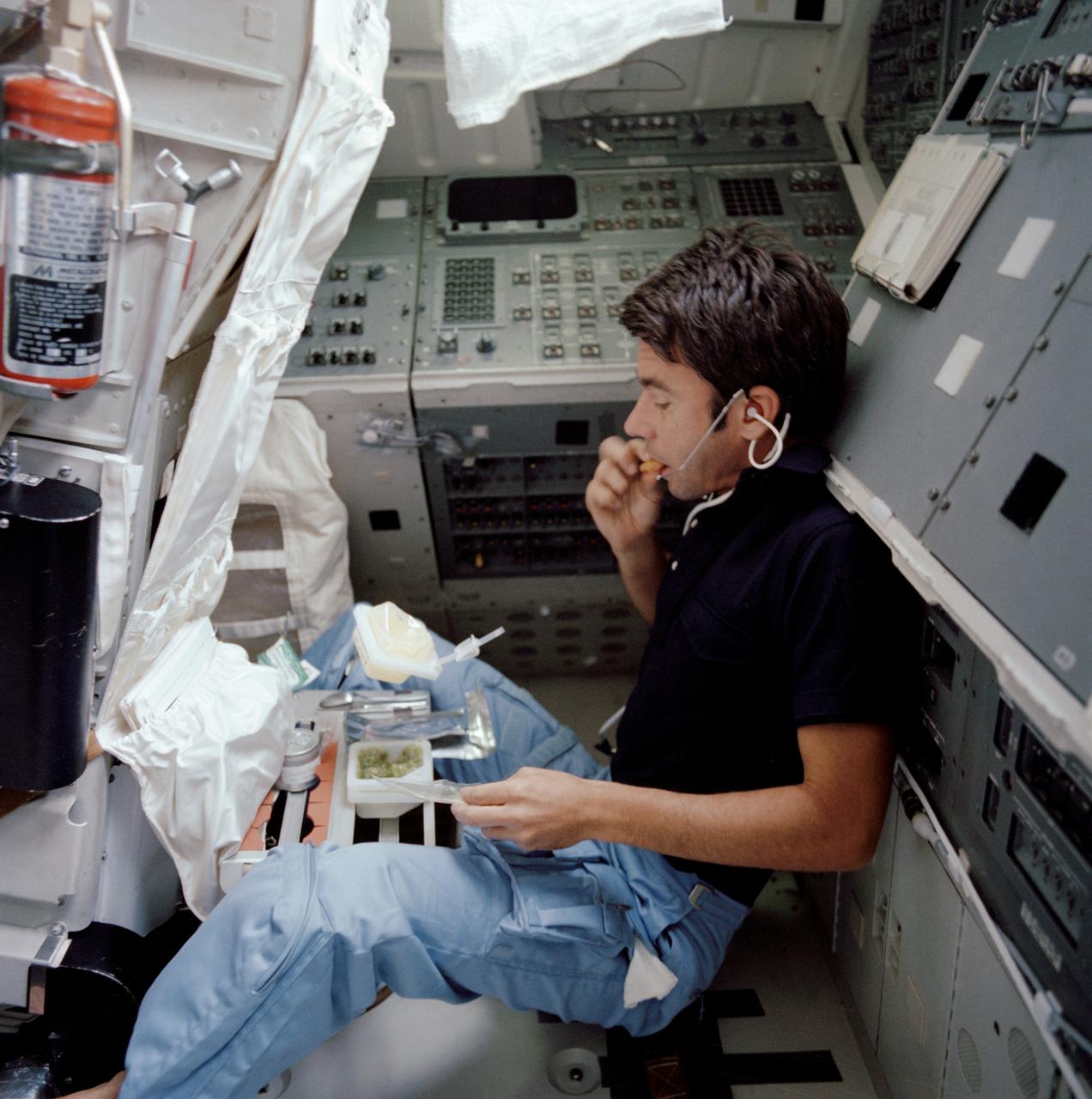
STS005-45-1821 (11-16 Nov. 1982) --- Astronaut William B. Lenoir, STS-5 mission specialist, takes a break to eat his meal on the space shuttle Columbia. Wet trash stowage bags float freely around him and a fire extinguisher hangs on the wall in front of him. Photo credit: NASA
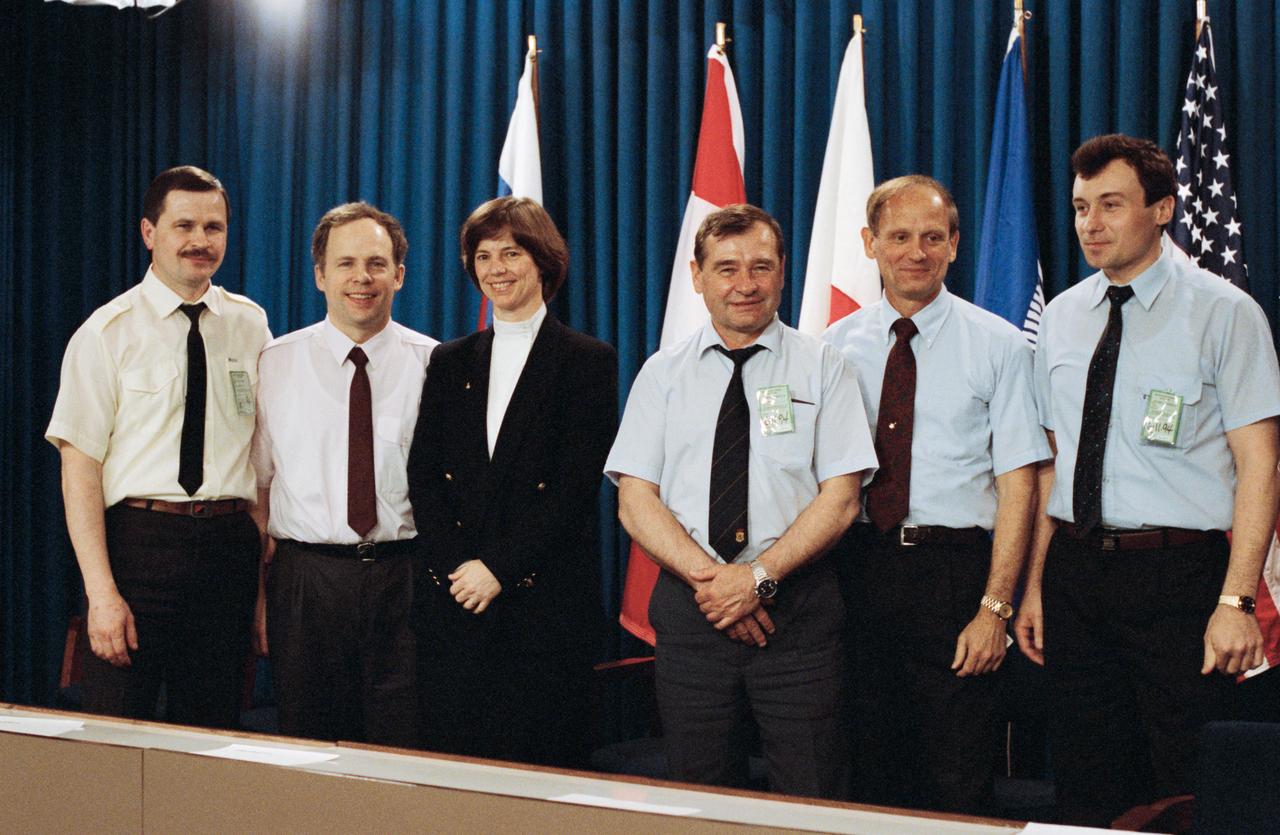
Crew members for two joint Space Shuttle/Mir missions greet the press during a break in medical operations training at JSC. Left to right are Nikolai M. Budarin, Anatoly Y. Solovyev, Bonnie J. Dunbar, Gennadiy M. Strekalov, Norman E. Thagard and Vladimir N. Dezhurov.
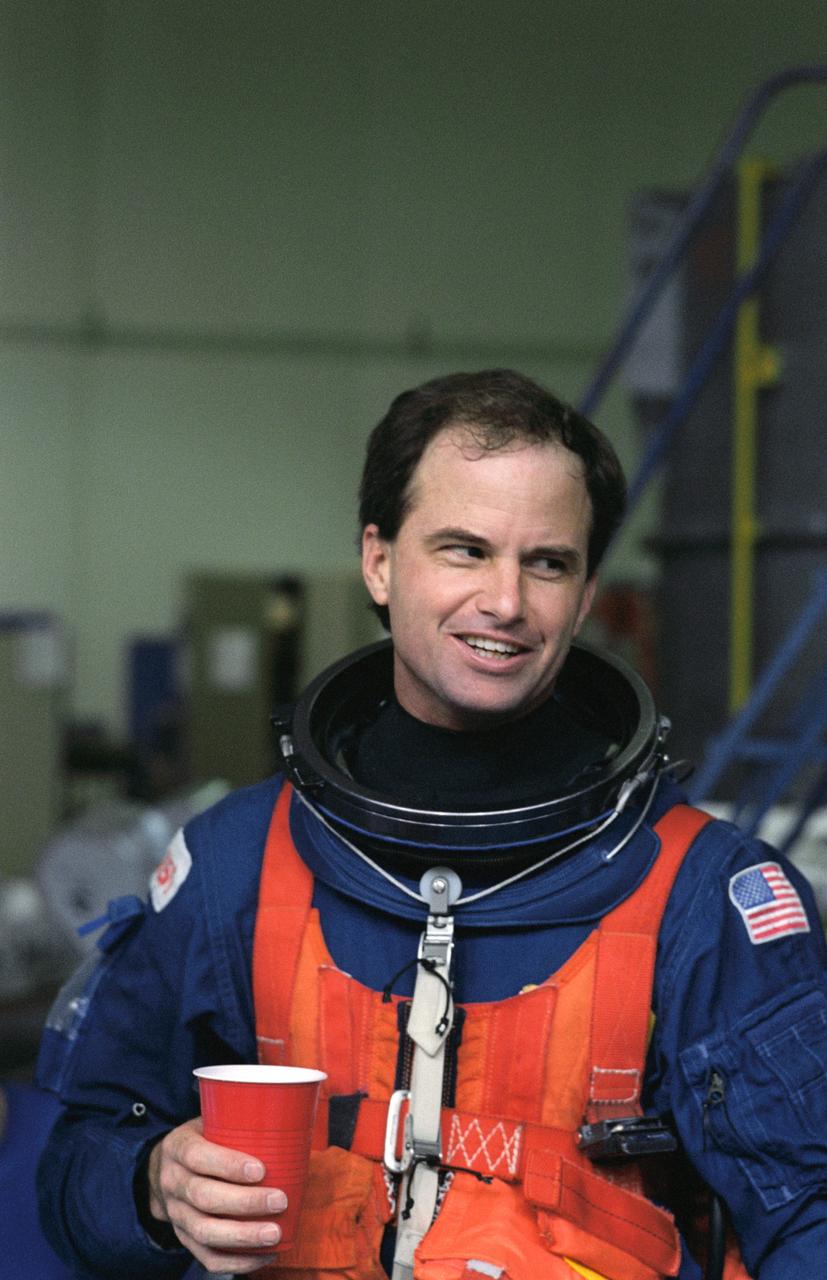
S93-50720 (22 Dec 1993) --- Astronaut Kevin P. Chilton, pilot, takes a break during emergency bailout training at the Johnson Space Center's (JSC) Weightless Environment Training Facility (WET-F). Chilton and five other NASA astronauts are scheduled to fly aboard the Space Shuttle Endeavour next year.
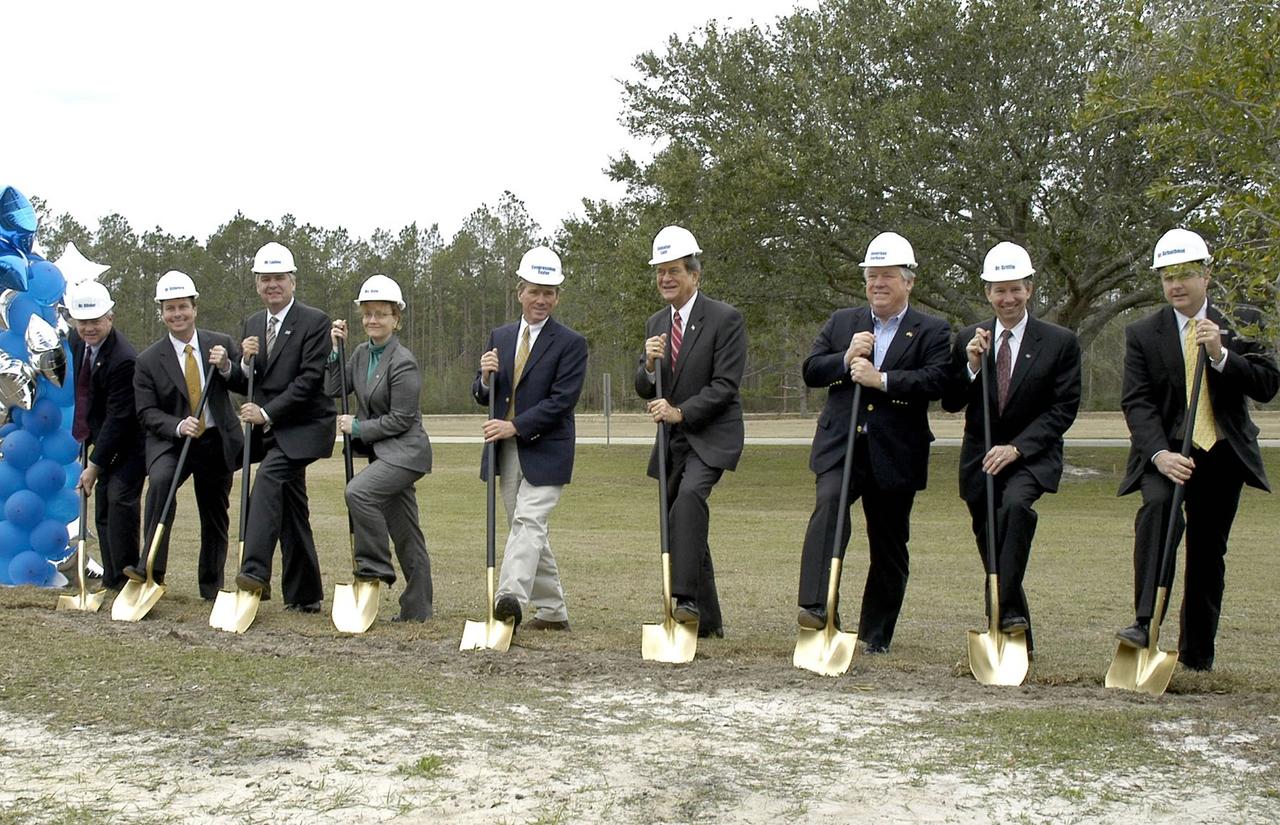
NASA officials and elected leaders were on hand for the groundbreaking ceremony of the NASA Shared Services Center Feb. 24, 2006, on the grounds of Stennis Space Center. The NSSC provides agency centralized administrative processing, human resources, procurement and financial services. From left, Louisiana Economic Development Secretary Mike Olivier, Stennis Space Center Director Rick Gilbrech, Computer Sciences Corp. President Michael Laphen, NASA Deputy Administrator Shana Dale, Rep. Gene Taylor, Sen. Trent Lott, Mississippi Gov. Haley Barbour, NASA Administrator Mike Griffin and Shared Services Center Executive Director Arbuthnot use golden shovels to break ground at the site.
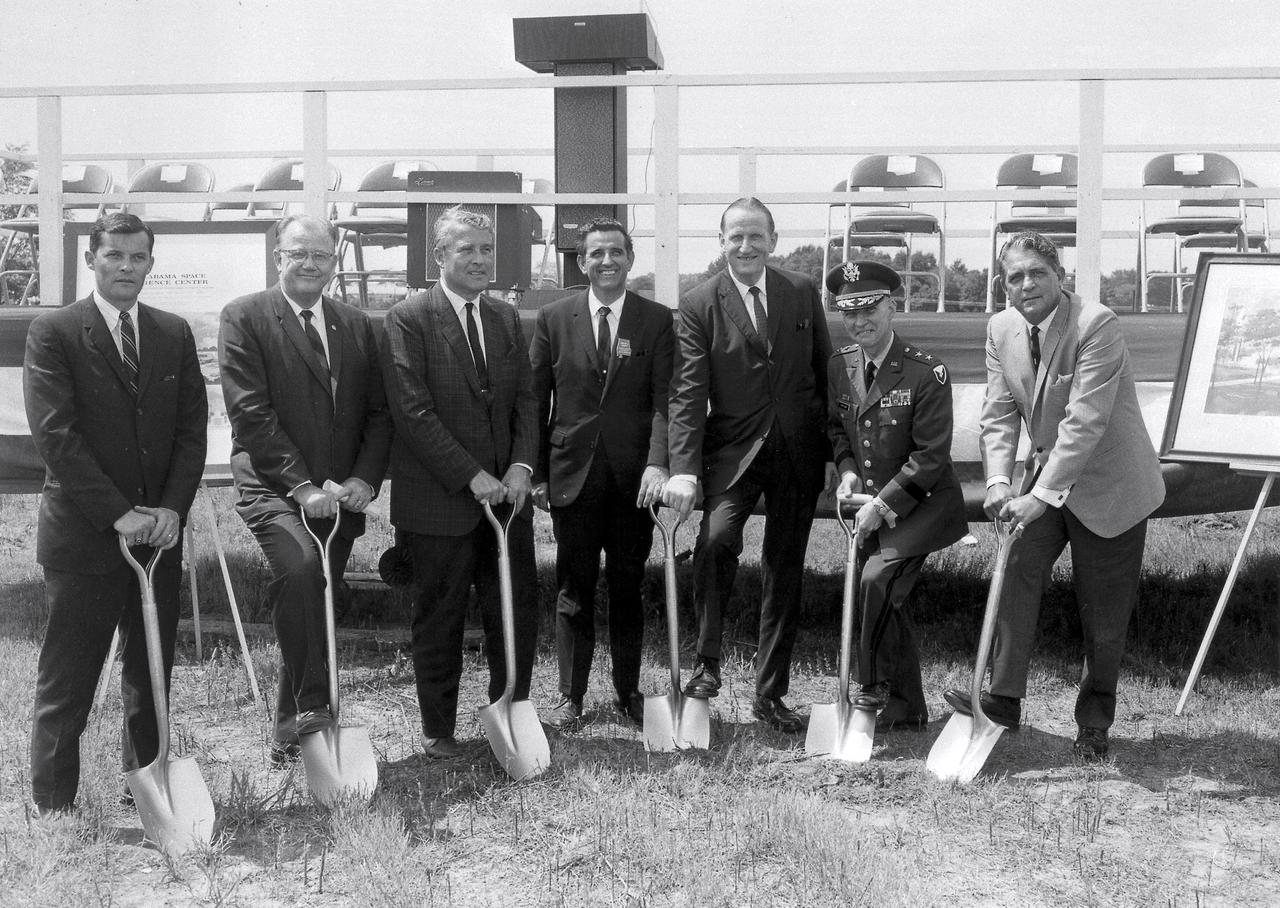
Ground breaking ceremony for the Alabama Space Science Center, later renamed the U.S. Space and Rocket Center. Shown in this picture, left to right, are Edward O. Buckbee, Space Center Director; Jack Giles, Alabama State Senator of Huntsville; Dr. Wernher on Braun, Marshall Space Flight Center (MSFC) Director; Martin Darity, head of the Alabama Publicity Bureau (representing Governor Albert Brewer); James Allen, former Lieutenant governor, chairman of the Alabama Space Science Exhibit Commission; Major General Charles Eifler, commanding general of the Army Ordnance Missile Command; and Huntsville Mayor Glenrn Hearn. (Courtesy of Huntsville/Madison County Public Library)

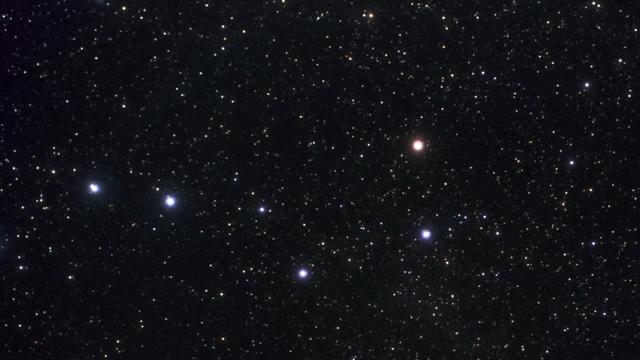
The Cassini spacecraft takes a break from the Saturn system to check out the Seven Sisters.
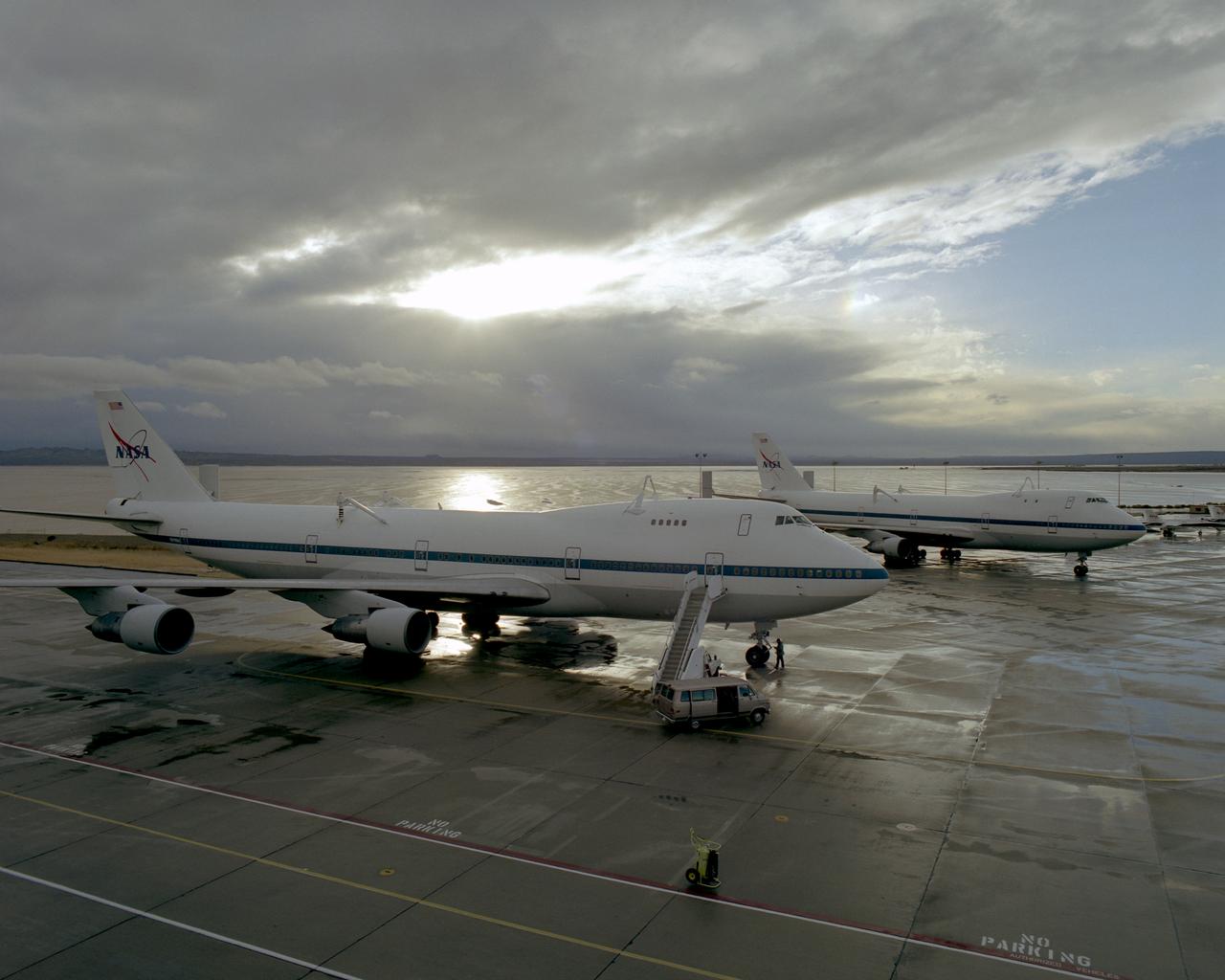
The sun begins to break through the clouds over NASA's two 747 Shuttle Carrier Aircraft on the NASA Dryden ramp after a rain shower in February 2001.
By pushing NASA’s Hubble Space Telescope to its limits, an international team of astronomers has shattered the cosmic distance record by measuring the farthest galaxy ever seen in the universe. This surprisingly bright infant galaxy, named GN-z11, is seen as it was 13.4 billion years in the past, just 400 million years after the Big Bang. GN-z11 is located in the direction of the constellation of Ursa Major. Read more: <a href="http://go.nasa.gov/1oSqHad" rel="nofollow">go.nasa.gov/1oSqHad</a> <b><a href="http://www.nasa.gov/audience/formedia/features/MP_Photo_Guidelines.html" rel="nofollow">NASA image use policy.</a></b> <b><a href="http://www.nasa.gov/centers/goddard/home/index.html" rel="nofollow">NASA Goddard Space Flight Center</a></b> enables NASA’s mission through four scientific endeavors: Earth Science, Heliophysics, Solar System Exploration, and Astrophysics. Goddard plays a leading role in NASA’s accomplishments by contributing compelling scientific knowledge to advance the Agency’s mission. <b>Follow us on <a href="http://twitter.com/NASAGoddardPix" rel="nofollow">Twitter</a></b> <b>Like us on <a href="http://www.facebook.com/pages/Greenbelt-MD/NASA-Goddard/395013845897?ref=tsd" rel="nofollow">Facebook</a></b> <b>Find us on <a href="http://instagrid.me/nasagoddard/?vm=grid" rel="nofollow">Instagram</a></b>
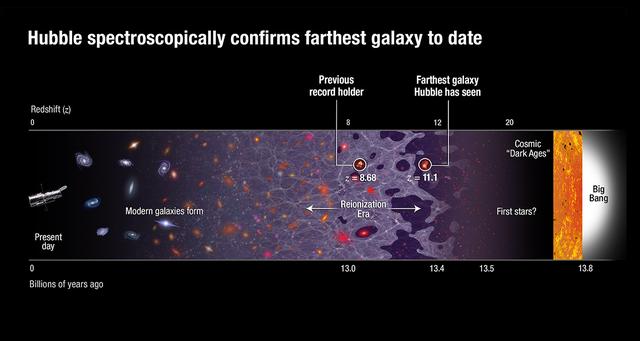
By pushing NASA’s Hubble Space Telescope to its limits, an international team of astronomers has shattered the cosmic distance record by measuring the farthest galaxy ever seen in the universe. This surprisingly bright infant galaxy, named GN-z11, is seen as it was 13.4 billion years in the past, just 400 million years after the Big Bang. GN-z11 is located in the direction of the constellation of Ursa Major. Read more: <a href="http://go.nasa.gov/1oSqHad" rel="nofollow">go.nasa.gov/1oSqHad</a>

After years of tests and development, NASA’s Balloon Program team is on the cusp of expanding the envelope in high-altitude, heavy-lift ballooning with its super pressure balloon (SPB) technology. NASA’s scientific balloon experts are in Wanaka, New Zealand, prepping for the fourth flight of an 18.8 million-cubic-foot (532,000 cubic-meter) balloon, with the ambitious goal of achieving an ultra-long-duration flight of up to 100 days at mid-latitudes. Launch of the pumpkin-shaped, football stadium-size balloon is scheduled for sometime after April 1, 2016, from Wanaka Airport, pending final checkouts and flight readiness of the balloon and supporting systems. Once launched, the SPB, which is made from 22-acres of polyethylene film – similar to a sandwich bag, but stronger and more durable – will ascend to a nearly constant float altitude of 110,000 feet (33.5 km). The balloon will travel eastward carrying a 2,260-pound (1,025 kg) payload consisting of tracking, communications and scientific instruments. NASA expects the SPB to circumnavigate the globe once every one to three weeks, depending on wind speeds in the stratosphere. Read more: <a href="http://go.nasa.gov/1p56xKR" rel="nofollow">go.nasa.gov/1p56xKR</a> <b><a href="http://www.nasa.gov/audience/formedia/features/MP_Photo_Guidelines.html" rel="nofollow">NASA image use policy.</a></b> <b><a href="http://www.nasa.gov/centers/goddard/home/index.html" rel="nofollow">NASA Goddard Space Flight Center</a></b> enables NASA’s mission through four scientific endeavors: Earth Science, Heliophysics, Solar System Exploration, and Astrophysics. Goddard plays a leading role in NASA’s accomplishments by contributing compelling scientific knowledge to advance the Agency’s mission. <b>Follow us on <a href="http://twitter.com/NASAGoddardPix" rel="nofollow">Twitter</a></b> <b>Like us on <a href="http://www.facebook.com/pages/Greenbelt-MD/NASA-Goddard/395013845897?ref=tsd" rel="nofollow">Facebook</a></b> <b>Find us on <a href="http://instagrid.me/nasagoddard/?vm=grid" rel="nofollow">Instagram</a></b>

After years of tests and development, NASA’s Balloon Program team is on the cusp of expanding the envelope in high-altitude, heavy-lift ballooning with its super pressure balloon (SPB) technology. NASA’s scientific balloon experts are in Wanaka, New Zealand, prepping for the fourth flight of an 18.8 million-cubic-foot (532,000 cubic-meter) balloon, with the ambitious goal of achieving an ultra-long-duration flight of up to 100 days at mid-latitudes. Launch of the pumpkin-shaped, football stadium-size balloon is scheduled for sometime after April 1, 2016, from Wanaka Airport, pending final checkouts and flight readiness of the balloon and supporting systems. Once launched, the SPB, which is made from 22-acres of polyethylene film – similar to a sandwich bag, but stronger and more durable – will ascend to a nearly constant float altitude of 110,000 feet (33.5 km). The balloon will travel eastward carrying a 2,260-pound (1,025 kg) payload consisting of tracking, communications and scientific instruments. NASA expects the SPB to circumnavigate the globe once every one to three weeks, depending on wind speeds in the stratosphere. Read more: <a href="http://go.nasa.gov/1p56xKR" rel="nofollow">go.nasa.gov/1p56xKR</a> <b><a href="http://www.nasa.gov/audience/formedia/features/MP_Photo_Guidelines.html" rel="nofollow">NASA image use policy.</a></b> <b><a href="http://www.nasa.gov/centers/goddard/home/index.html" rel="nofollow">NASA Goddard Space Flight Center</a></b> enables NASA’s mission through four scientific endeavors: Earth Science, Heliophysics, Solar System Exploration, and Astrophysics. Goddard plays a leading role in NASA’s accomplishments by contributing compelling scientific knowledge to advance the Agency’s mission. <b>Follow us on <a href="http://twitter.com/NASAGoddardPix" rel="nofollow">Twitter</a></b> <b>Like us on <a href="http://www.facebook.com/pages/Greenbelt-MD/NASA-Goddard/395013845897?ref=tsd" rel="nofollow">Facebook</a></b> <b>Find us on <a href="http://instagrid.me/nasagoddard/?vm=grid" rel="nofollow">Instagram</a></b>
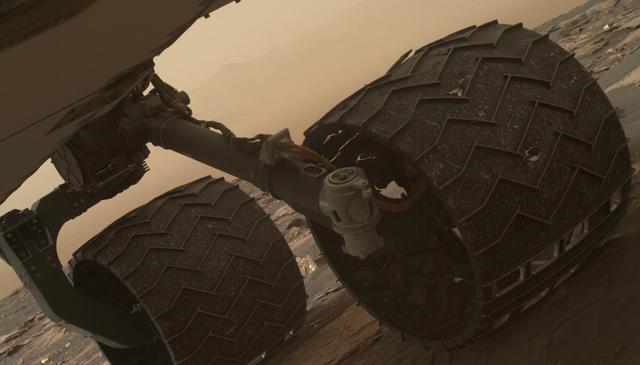
Two of the raised treads, called grousers, on the left middle wheel of NASA's Curiosity Mars rover broke during the first quarter of 2017, including the one seen partially detached at the top of the wheel in this image from the Mars Hand Lens Imager (MAHLI) camera on the rover's arm. This image was taken on March 19, 2017, as part of a set used by rover team members to inspect the condition of the rover's six wheels during the 1,641st Martian day, or sol, of Curiosity's work on Mars. Holes and tears in the wheels worsened significantly during 2013 as Curiosity was crossing terrain studded with sharp rocks on the route from near its 2012 landing site to the base of Mount Sharp. Team members have used MAHLI systematically since then to watch for when any of the zig-zag shaped grousers begin to break. The last prior set of wheel-inspection images from before Sol 1641 was taken on Jan. 27, 2017, (Sol 1591) and revealed no broken grousers. Longevity testing with identical aluminum wheels on Earth indicates that when three grousers on a given wheel have broken, that wheel has reached about 60 percent of its useful life. Curiosity has driven well over 60 percent of the amount needed for reaching all the geological layers planned as the mission's science destinations, so the start of seeing broken grousers is not expected to affect the mission's operations. Curiosity's six aluminum wheels are about 20 inches (50 centimeters) in diameter and 16 inches (40 centimeters) wide. Each of the six wheels has its own drive motor, and the four corner wheels also have steering motors. http://photojournal.jpl.nasa.gov/catalog/PIA21486
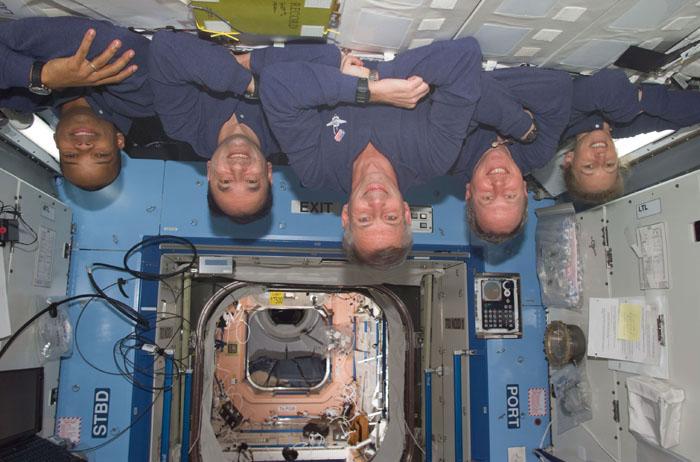
STS98-E-5284 (15 February 2001) --- These five astronauts take a break from Destiny laboratory installation work as they near an end to their several days' visit aboard the International Space Station (ISS). From the left are astronauts Robert L. Curbeam, Mark L. Polansky, Kenneth D. Cockrell, Thomas D. Jones and Marsha S. Ivins. Their posed position might be termed "upside down" on Earth, but in their weightless environment the arrangement makes for no one-gravity complications like blood rushing to the head, etc. The scene was recorded with a digital still camera.
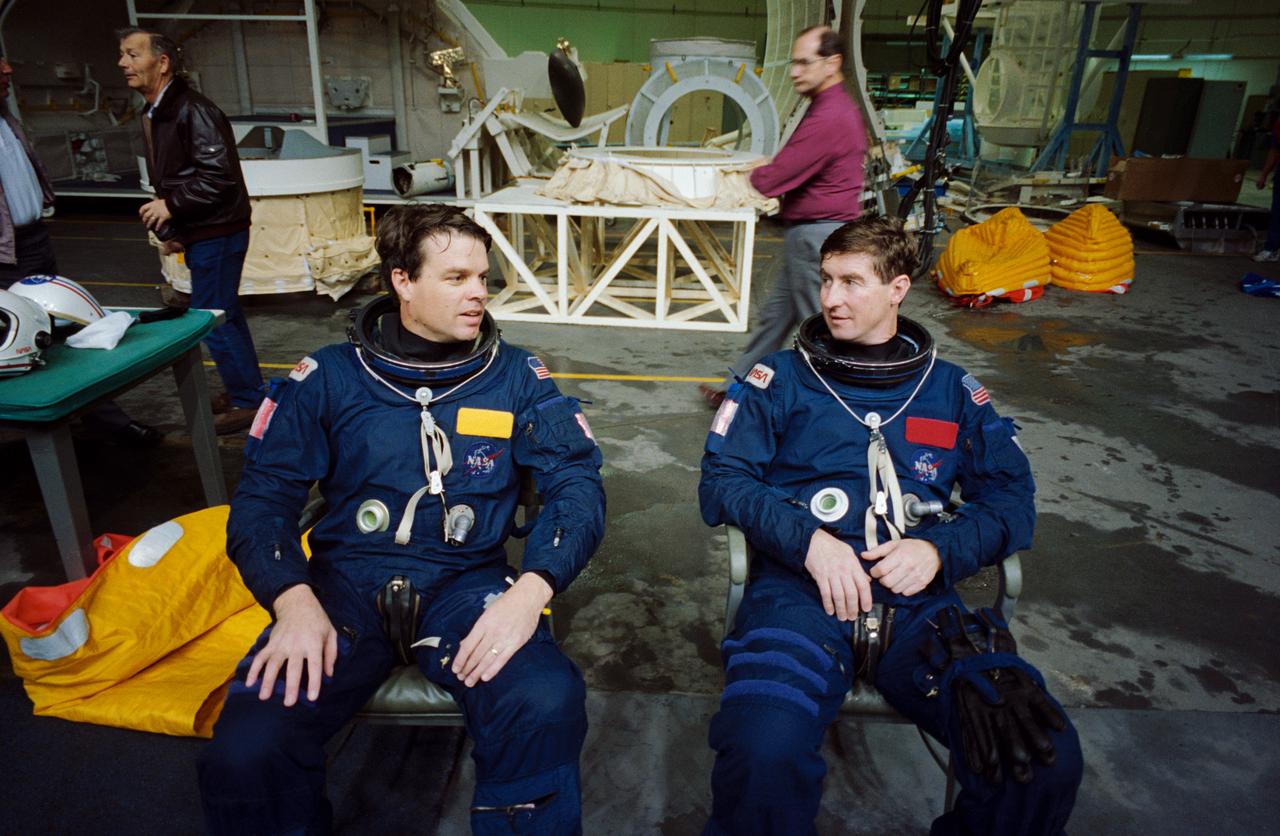
S95-03470 (16 FEB 1995) --- Attired in blue training versions of the orange Shuttle launch and entry garments, astronauts Terence T. (Tom) Henricks, right, and Kevin R. Kregel take a break during a bailout training session at the Johnson Space Center's (JSC) Weightless Environment Training Facility (WET-F). Assigned as commander and pilot, respectively, for the STS-70 mission, the two later joined their crew mates in making use of a nearby 25-feet deep pool to practice parachute landings in water and subsequent deployment of life rafts.
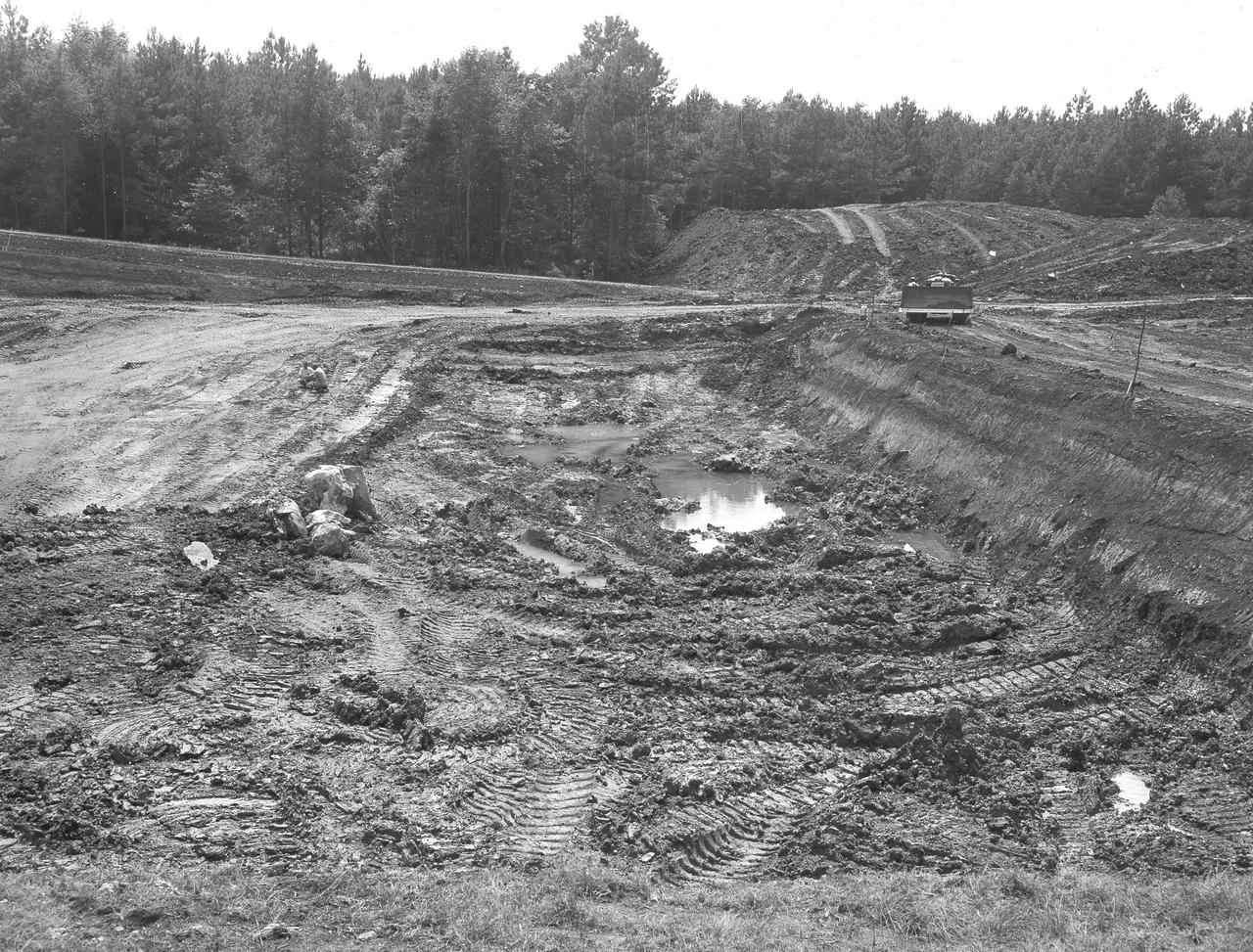
At its founding, the Marshall Space Flight Center (MSFC) inherited the Army’s Jupiter and Redstone test stands, but much larger facilities were needed for the giant stages of the Saturn V. From 1960 to 1964, the existing stands were remodeled and a sizable new test area was developed. The new comprehensive test complex for propulsion and structural dynamics was unique within the nation and the free world, and they remain so today because they were constructed with foresight to meet the future as well as on going needs. Construction of the S-IC Static test stand complex began in 1961 in the west test area of MSFC, and was completed in 1964. The S-IC static test stand was designed to develop and test the 138-ft long and 33-ft diameter Saturn V S-IC first stage, or booster stage, weighing in at 280,000 pounds. Required to hold down the brute force of a 7,500,000-pound thrust produced by 5 F-1 engines, the S-IC static test stand was designed and constructed with the strength of hundreds of tons of steel and 12,000,000 pounds of cement, planted down to bedrock 40 feet below ground level. The foundation walls, constructed with concrete and steel, are 4 feet thick. The base structure consists of four towers with 40-foot-thick walls extending upward 144 feet above ground level. The structure was topped by a crane with a 135-foot boom. With the boom in the upright position, the stand was given an overall height of 405 feet, placing it among the highest structures in Alabama at the time. In this photo, taken July 10, 1961, actual ground breaking has occurred for the S-IC test stand site.
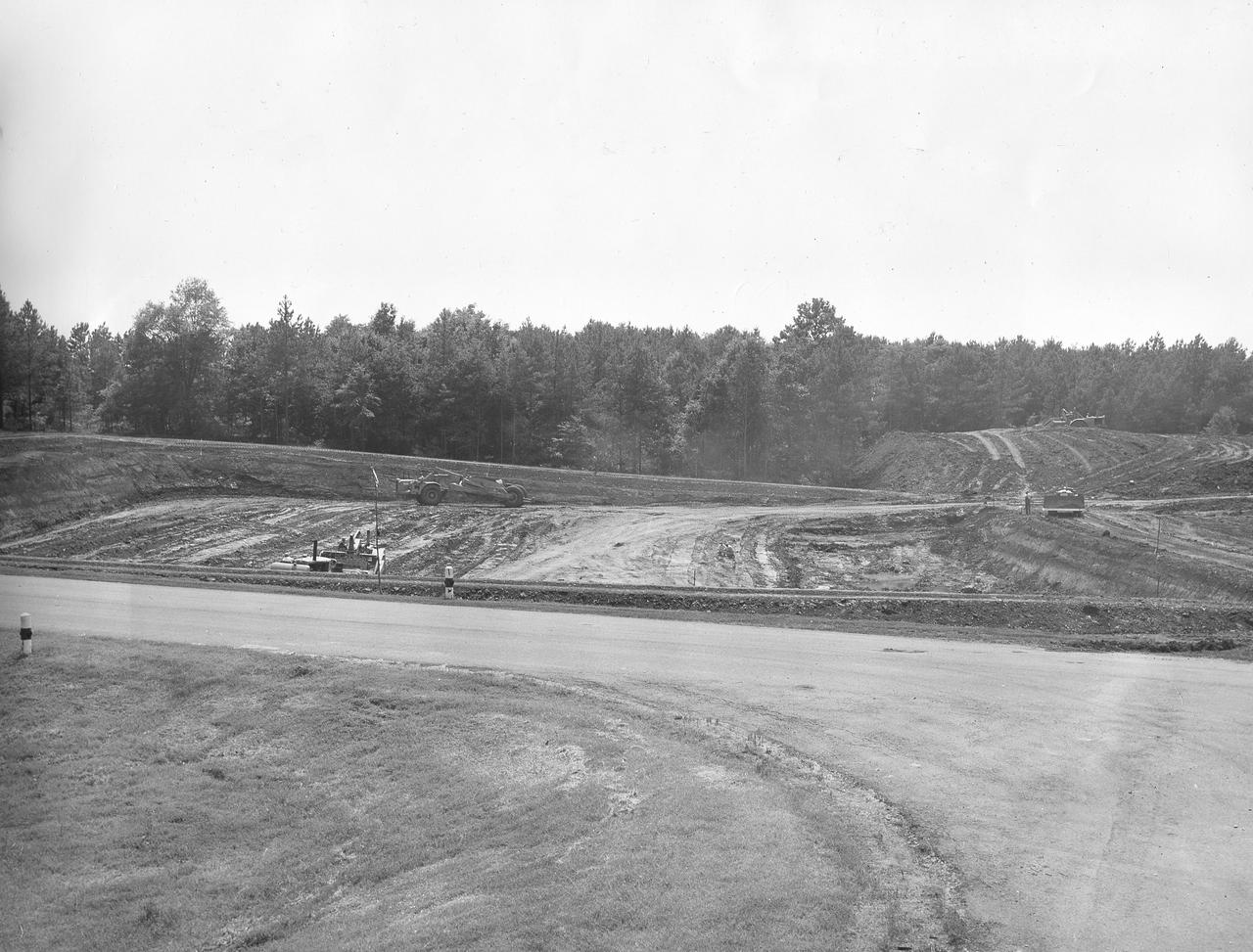
At its founding, the Marshall Space Flight Center (MSFC) inherited the Army’s Jupiter and Redstone test stands, but much larger facilities were needed for the giant stages of the Saturn V. From 1960 to 1964, the existing stands were remodeled and a sizable new test area was developed. The new comprehensive test complex for propulsion and structural dynamics was unique within the nation and the free world, and they remain so today because they were constructed with foresight to meet the future as well as on going needs. Construction of the S-IC Static test stand complex began in 1961 in the west test area of MSFC, and was completed in 1964. The S-IC static test stand was designed to develop and test the 138-ft long and 33-ft diameter Saturn V S-IC first stage, or booster stage, weighing in at 280,000 pounds. Required to hold down the brute force of a 7,500,000-pound thrust produced by 5 F-1 engines, the S-IC static test stand was designed and constructed with the strength of hundreds of tons of steel and 12,000,000 pounds of cement, planted down to bedrock 40 feet below ground level. The foundation walls, constructed with concrete and steel, are 4 feet thick. The base structure consists of four towers with 40-foot-thick walls extending upward 144 feet above ground level. The structure was topped by a crane with a 135-foot boom. With the boom in the upright position, the stand was given an overall height of 405 feet, placing it among the highest structures in Alabama at the time. In this photo, taken July 10, 1961, actual ground breaking has occurred for the S-IC test stand site.
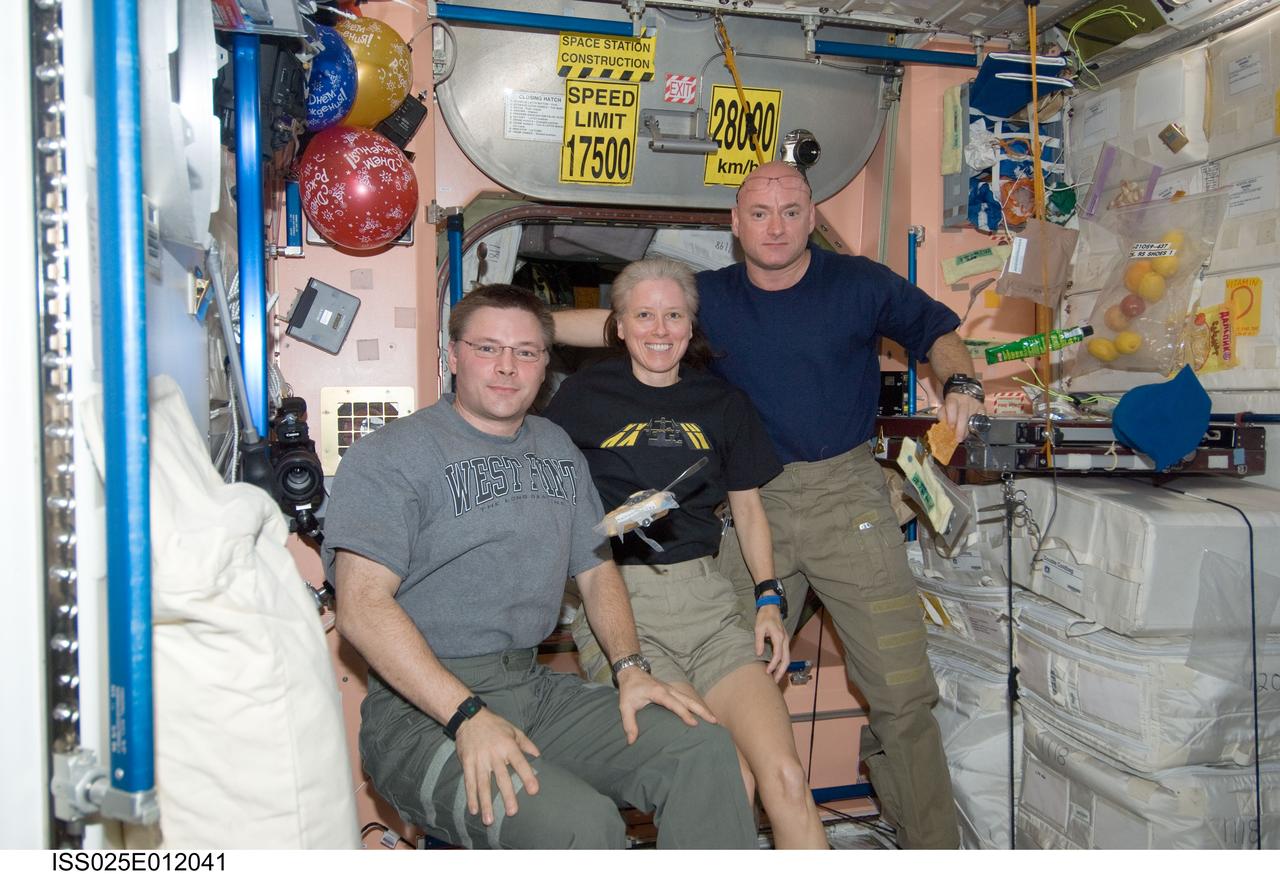
ISS025-E-012041 (7 Nov. 2010) --- NASA astronaut Doug Wheelock (left), Expedition 25 commander; along with NASA astronauts Shannon Walker and Scott Kelly, both flight engineers, pose for a photo in the Unity node of the International Space Station.
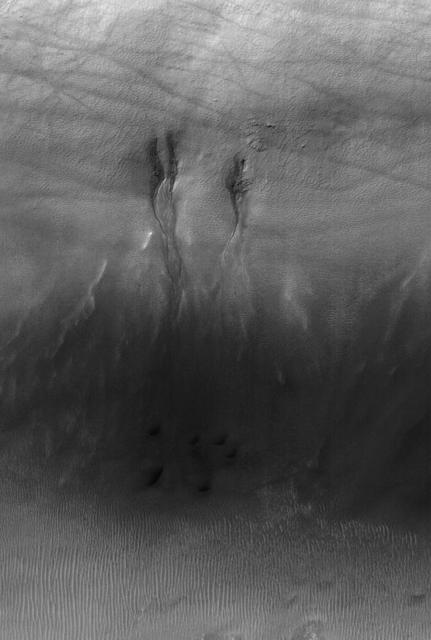
This MOC image shows gullies in the north wall of a crater south of Proctor Crater in Noachis Terra. Dark streaks cutting across the scene were formed by passing dust devils
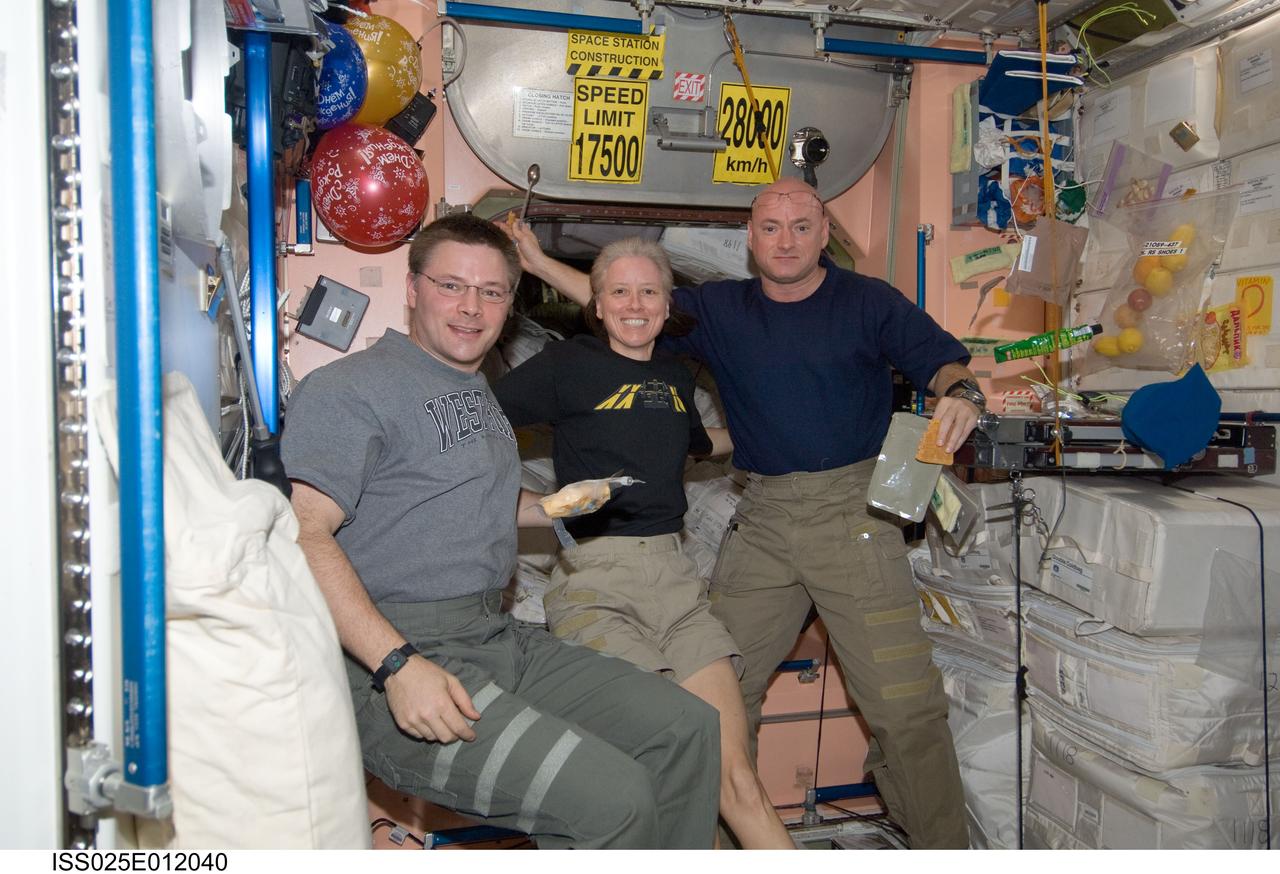
ISS025-E-012040 (7 Nov. 2010) --- NASA astronaut Doug Wheelock (left), Expedition 25 commander; along with NASA astronauts Shannon Walker and Scott Kelly, both flight engineers, pose for a photo in the Unity node of the International Space Station.
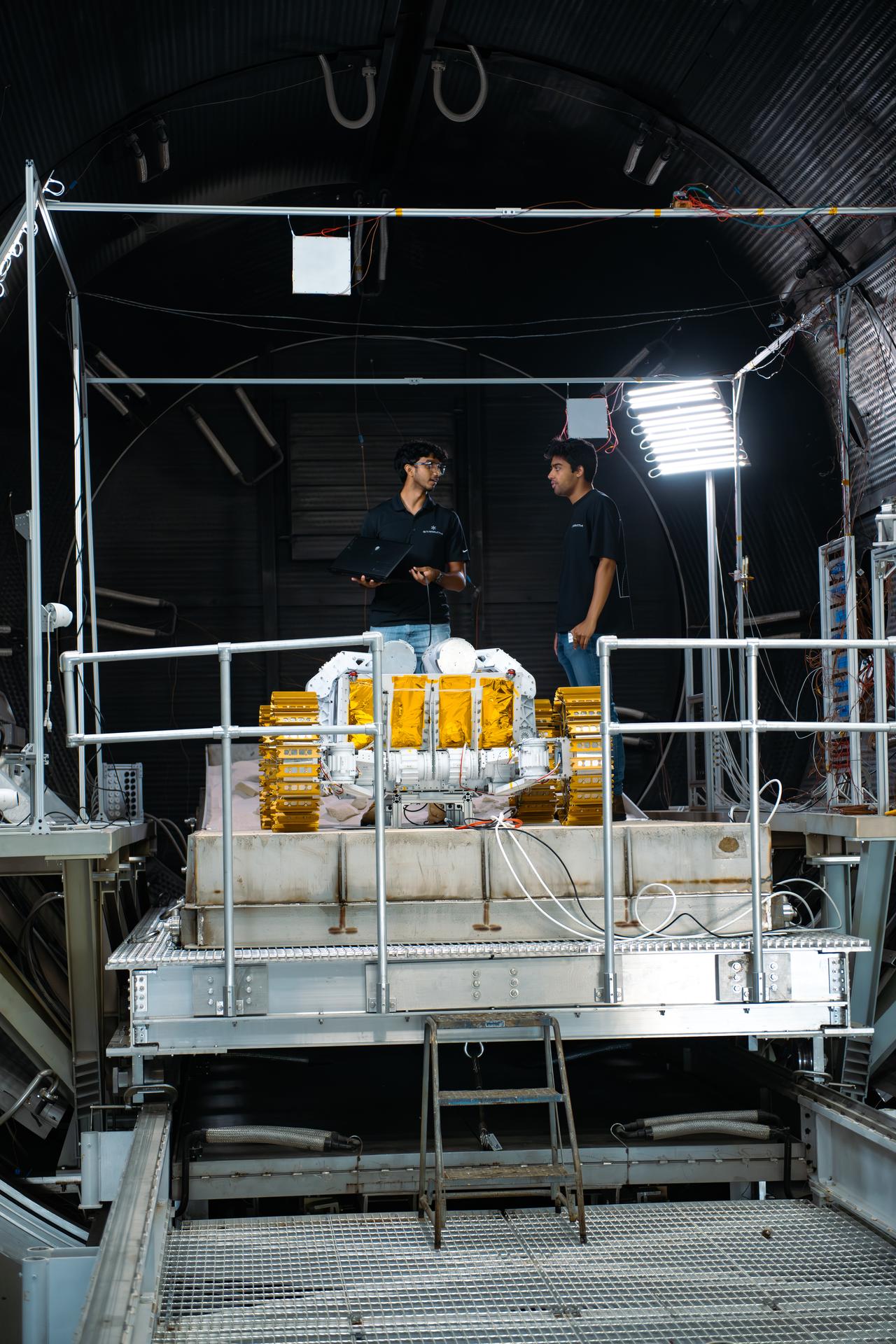
On July 30, 2025, members of the Starpath team discuss what final preparations need to be made before the chamber is closed for testing of their rover at NASA’s Marshall Space Flight Center in Huntsville, Alabama. The technology startup headquartered in Hawthorne, California, won second place overall at the Break the Ice Lunar Challenge’s live demonstration and finale in June 2024. This competition, one of NASA’s Centennial Challenges, tasked competitors to design, build, and demonstrate robotic technologies that could excavate and transport the icy, rocky dirt – otherwise known as regolith – found on the Moon. Starpath’s visit to NASA Marshall was part of their prize opportunity to test their upgraded lunar regolith excavation and transportation rover in the center’s 20-foot thermal vacuum chamber. For more information, contact NASA Marshall’s Office of Communications at 256-544-0034.
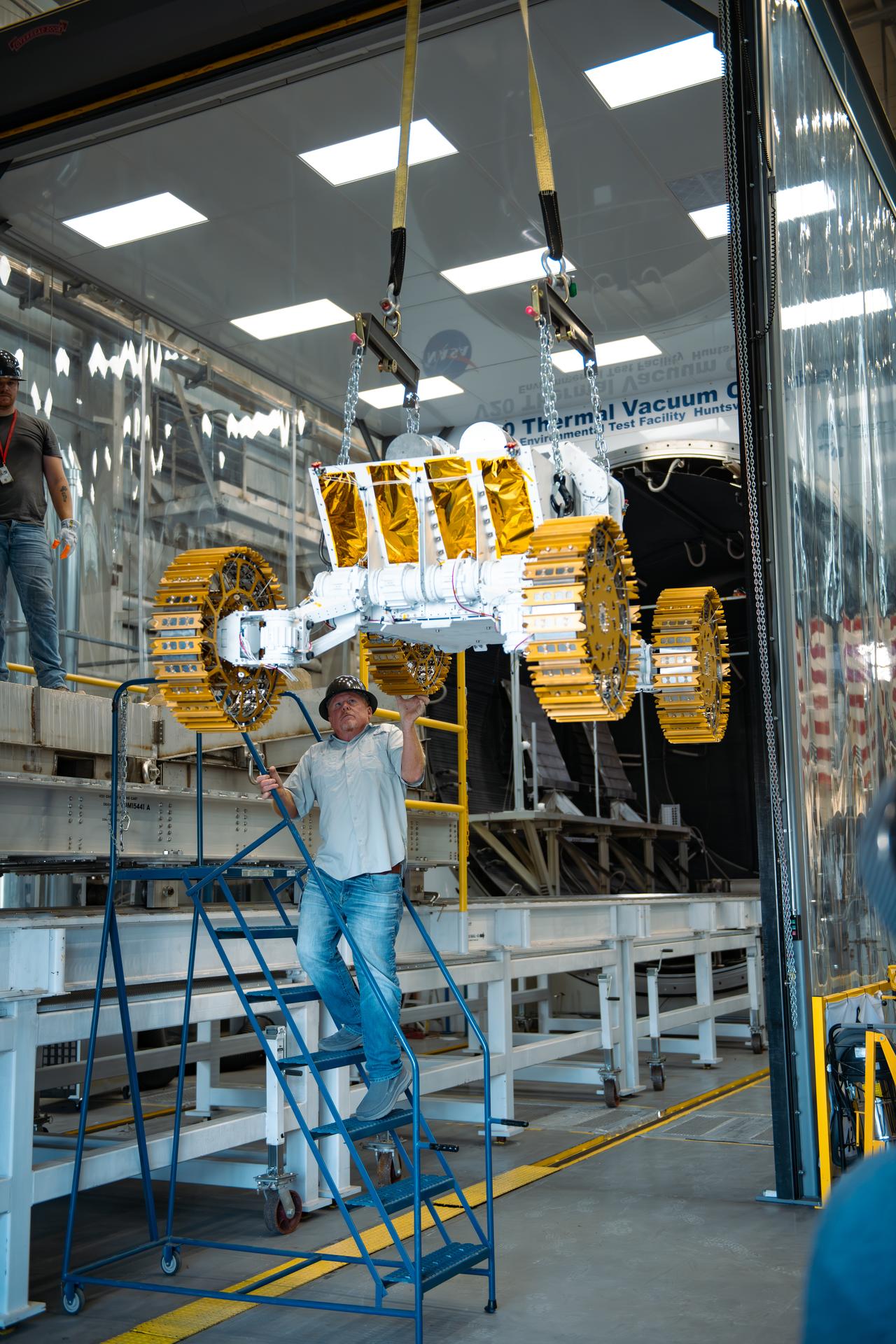
NASA test engineers with the Environmental Test Facility at NASA’s Marshall Space Flight Center situate the rover over the concrete slab that it will operate on before removing the suspension straps that lifted it onto the platform. The technology startup headquartered in Hawthorne, California, won second place overall at the agency’s Break the Ice Lunar Challenge’s live demonstration and finale in June 2024. This competition, one of NASA’s Centennial Challenges, tasked competitors to design, build, and demonstrate robotic technologies that could excavate and transport the icy, rocky dirt – otherwise known as regolith – found on the Moon. Starpath’s visit to NASA Marshall was part of their prize opportunity to test their upgraded lunar regolith excavation and transportation rover in the center’s 20-foot thermal vacuum chamber. For more information, contact NASA Marshall’s Office of Communications at 256-544-0034.
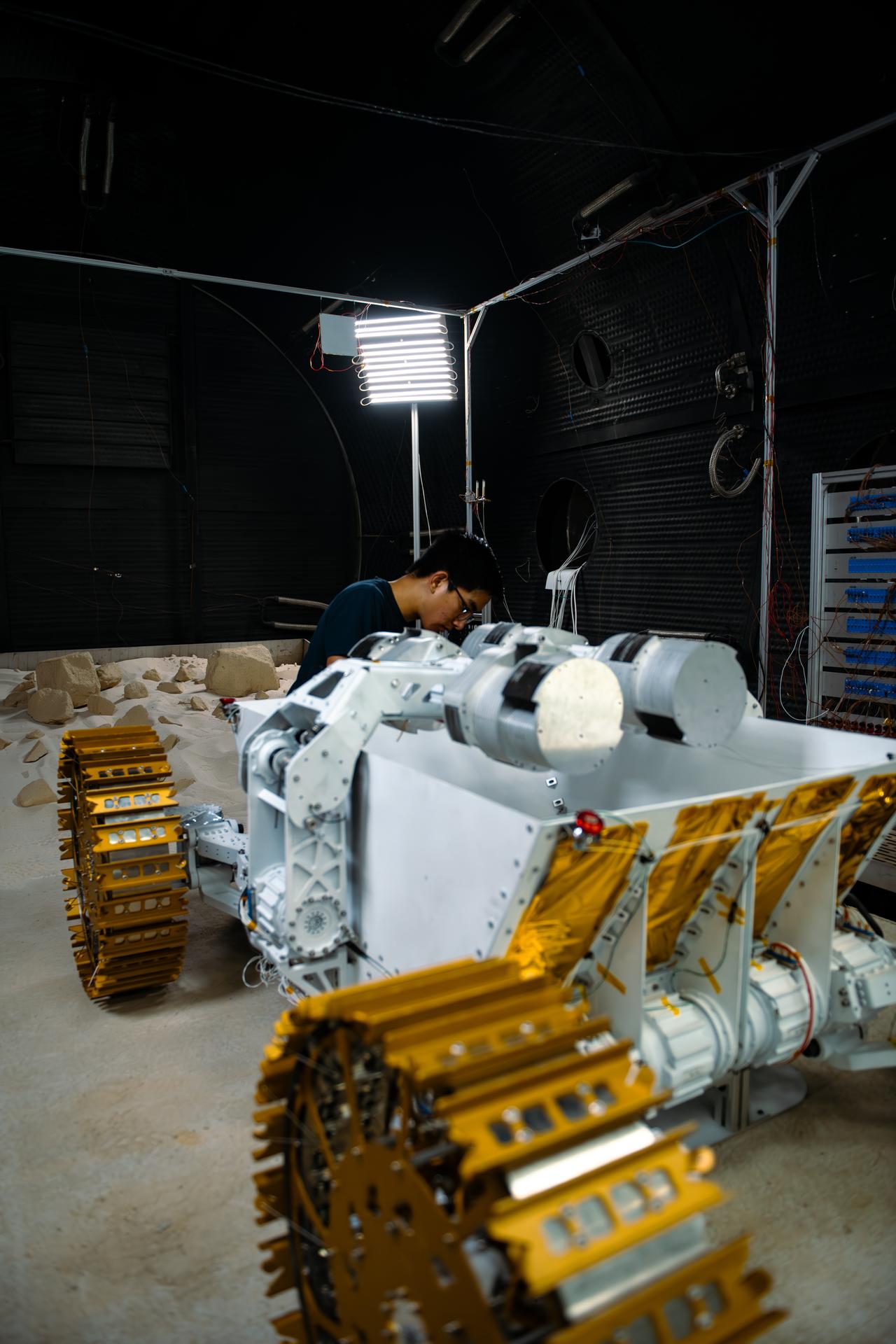
Starpath’s rover sits on a concrete slab that will be used to mimic the rugged lunar surface within a vacuum chamber at NASA’s Marshall Space Flight Center in Huntsville, Alabama, on July 30, 2025. The slab features a sandy, rocky terrain, and lamps within the chamber will turn on and off to simulate sunlight. The technology startup headquartered in Hawthorne, California, won second place overall at the agency’s Break the Ice Lunar Challenge’s live demonstration and finale in June 2024. This competition, one of NASA’s Centennial Challenges, tasked competitors to design, build, and demonstrate robotic technologies that could excavate and transport the icy, rocky dirt – otherwise known as regolith – found on the Moon. Starpath’s visit to NASA Marshall was part of their prize opportunity to test their upgraded lunar regolith excavation and transportation rover in the center’s 20-foot thermal vacuum chamber. For more information, contact NASA Marshall’s Office of Communications at 256-544-0034
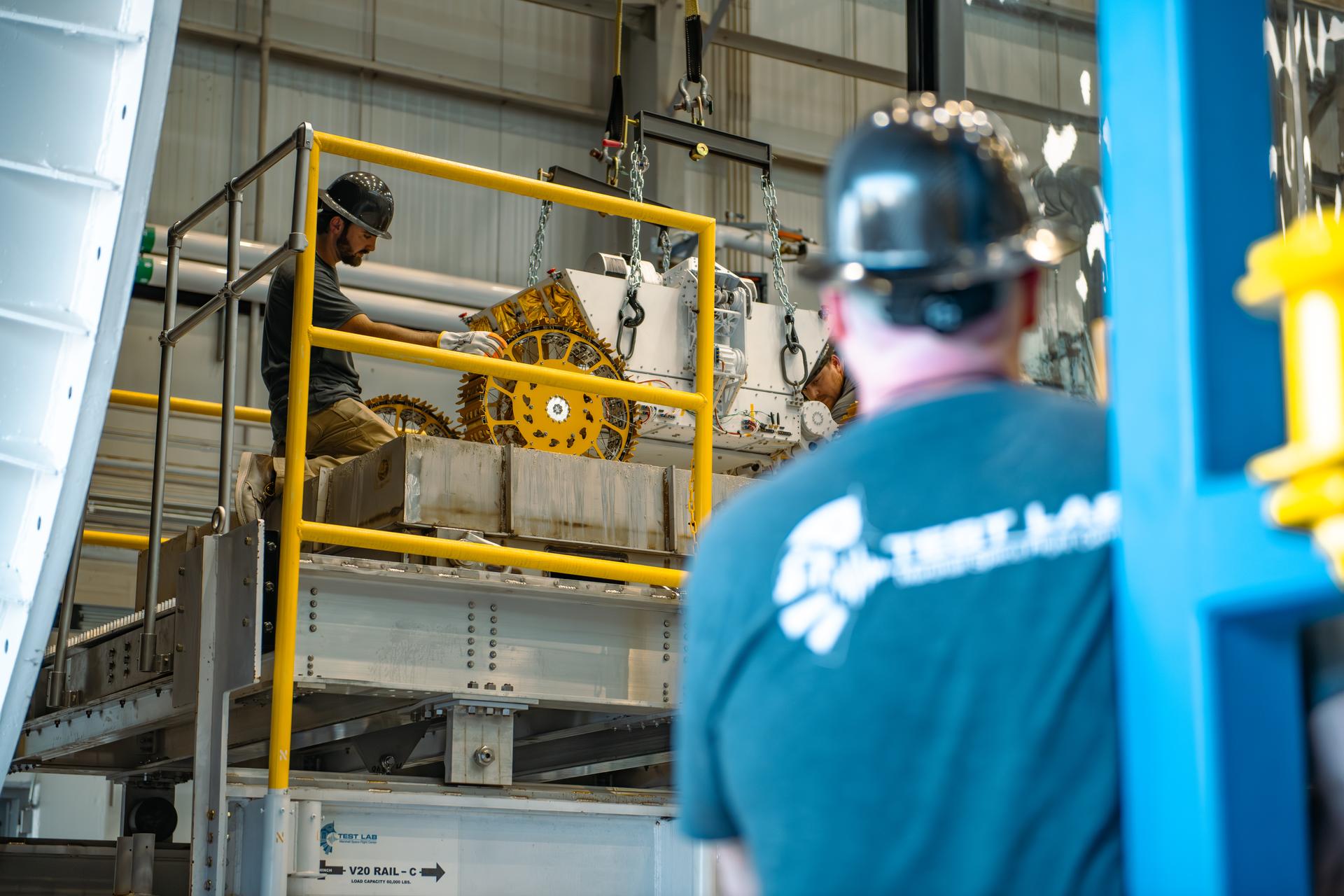
Employees from Environmental Test Facility at NASA’s Marshall Space Flight Center in Huntsville, Alabama, work with the Starpath team on July 30, 2025, to carefully maneuver the rover onto a platform that will slide the rover into the chamber. The technology startup headquartered in Hawthorne, California, won second place overall at the agency’s Break the Ice Lunar Challenge’s live demonstration and finale in June 2024. Their visit to NASA Marshall was part of their prize opportunity to test their upgraded lunar regolith excavation and transportation rover in the center’s 20-foot thermal vacuum chamber. The competition, one of NASA’s Centennial Challenges, tasked competitors to design, build, and demonstrate robotic technologies that could excavate and transport the icy, rocky dirt – otherwise known as regolith – found on the Moon. For more information, contact NASA Marshall’s Office of Communications at 256-544-0034.
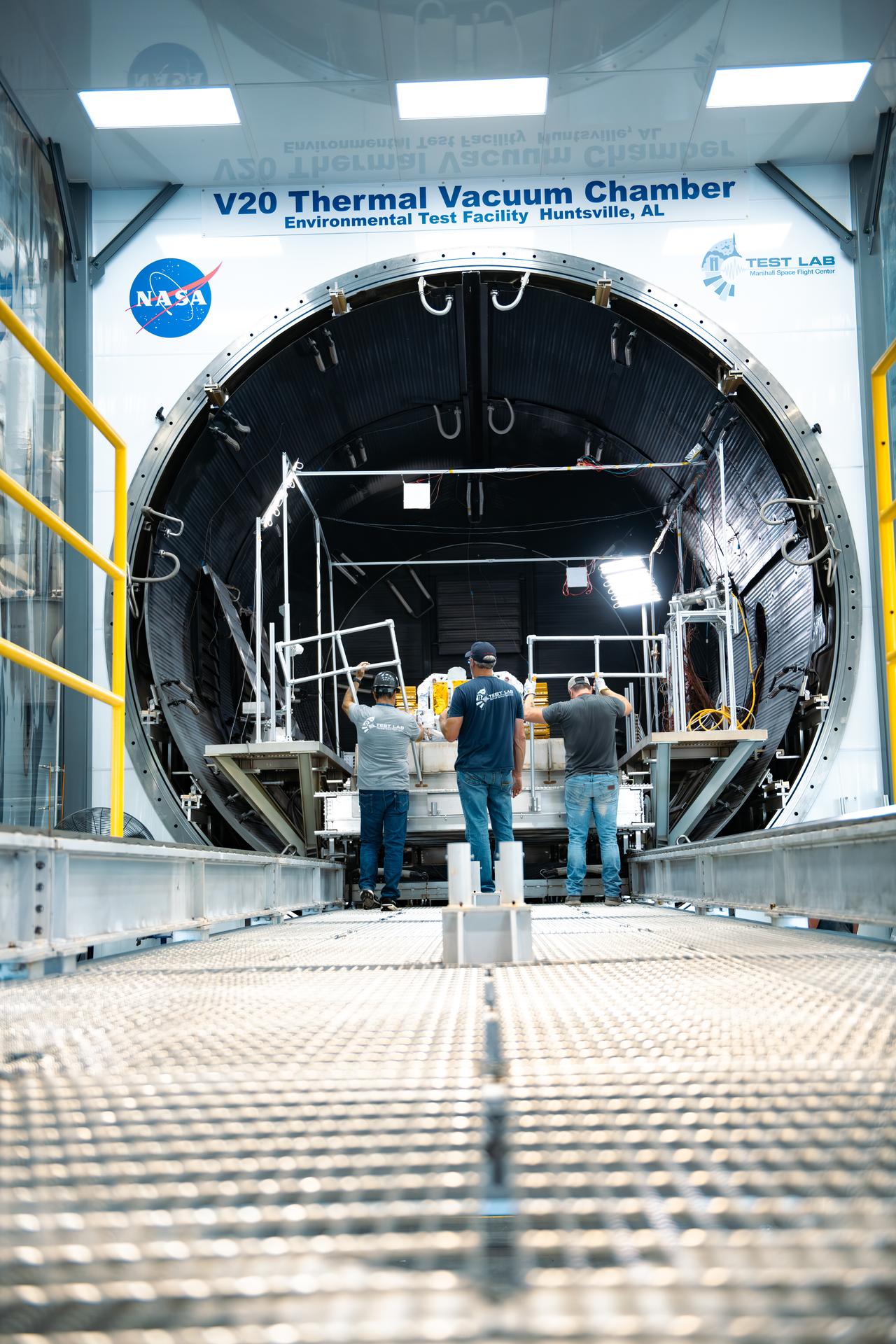
NASA Environmental Test Facility employees at the agency’s Marshall Space Flight Center in Huntsville, Alabama, work with members from the Starpath team to push the sliding platform into the thermal vacuum chamber, with the heavy rover and concrete slab in tow. The technology startup headquartered in Hawthorne, California, won second place overall at the agency’s Break the Ice Lunar Challenge’s live demonstration and finale in June 2024. This competition, one of NASA’s Centennial Challenges, tasked competitors to design, build, and demonstrate robotic technologies that could excavate and transport the icy, rocky dirt – otherwise known as regolith – found on the Moon. Starpath’s visit to NASA Marshall was part of their prize opportunity to test their upgraded lunar regolith excavation and transportation rover in the center’s 20-foot thermal vacuum chamber. For more information, contact NASA Marshall’s Office of Communications at 256-544-0034.
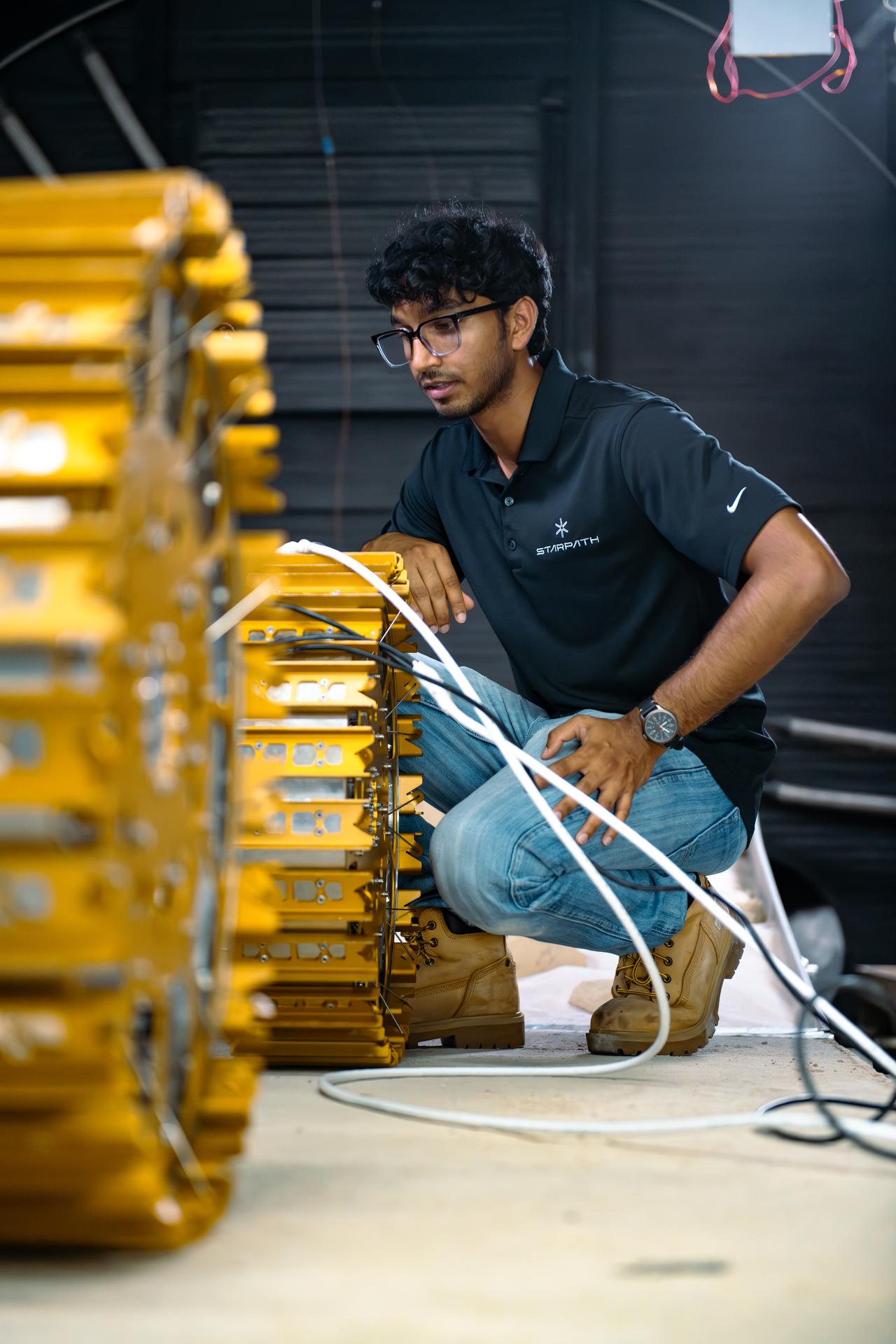
Starpath mechanical engineer Josh Kavilaveettil monitors a component of the rover, attached to wires, in preparation for testing at NASA’s Marshall Space Flight Center in Huntsville, Alabama on July 30, 2025. The technology startup headquartered in Hawthorne, California, won second place overall at the agency’s Break the Ice Lunar Challenge’s live demonstration and finale in June 2024. This competition, one of NASA’s Centennial Challenges, tasked competitors to design, build, and demonstrate robotic technologies that could excavate and transport the icy, rocky dirt – otherwise known as regolith – found on the Moon. Starpath’s visit to NASA Marshall was part of their prize opportunity to test their upgraded lunar regolith excavation and transportation rover in the center’s 20-foot thermal vacuum chamber. For more information, contact NASA Marshall’s Office of Communications at 256-544-0034.
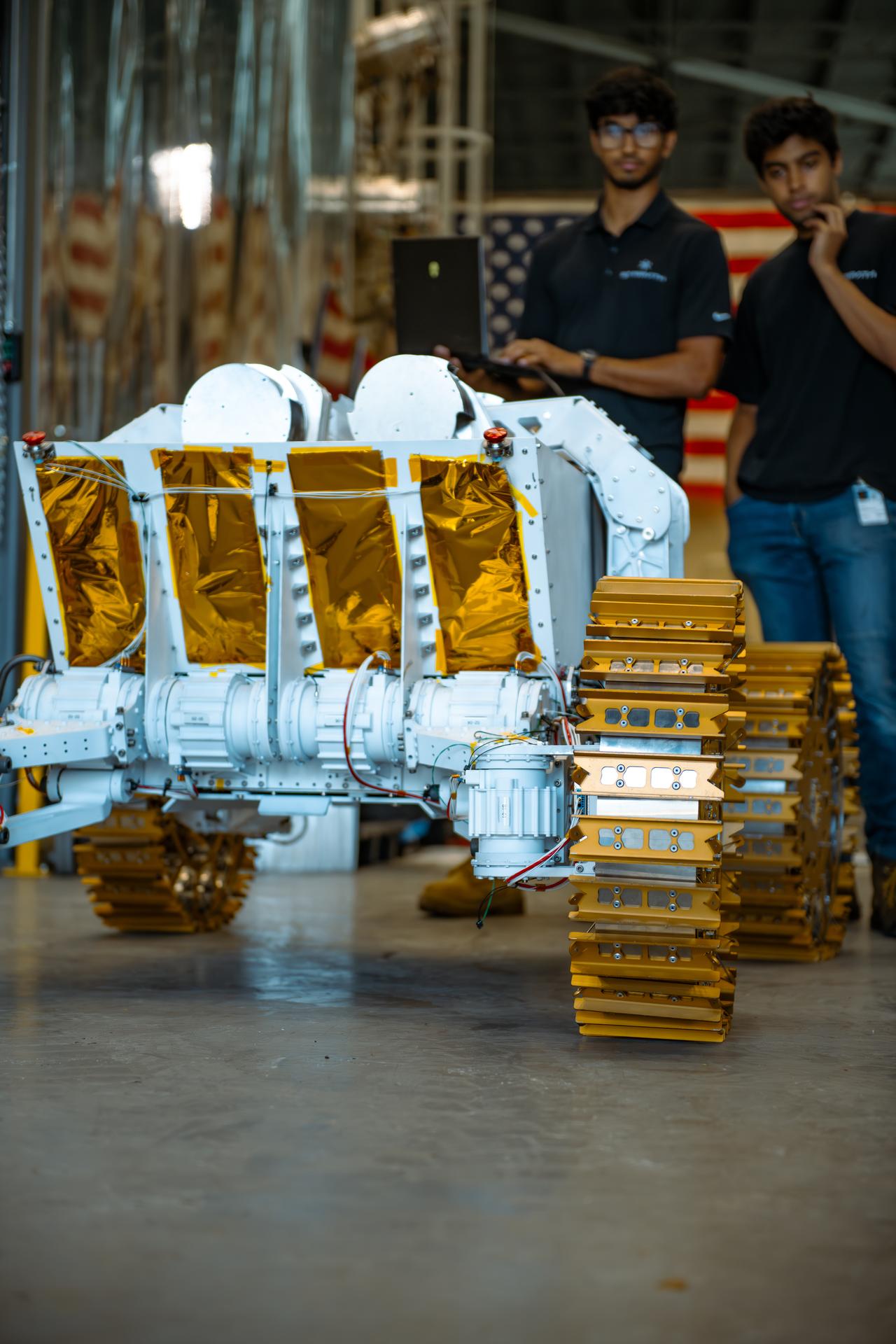
Members of the small business Starpath remotely operate the rover and run data in preparation for its entrance to the V20 Thermal Vacuum Chamber at NASA’s Marshall Space Flight Center in Huntsville, Alabama, on July 30, 2025. The technology startup headquartered in Hawthorne, California, won second place overall at the agency’s Break the Ice Lunar Challenge’s live demonstration and finale in June 2024. Their visit to NASA Marshall was part of their prize opportunity to test their upgraded lunar regolith excavation and transportation rover in the center’s 20-foot thermal vacuum chamber. The competition, one of NASA’s Centennial Challenges, tasked competitors to design, build, and demonstrate robotic technologies that could excavate and transport the icy, rocky dirt – otherwise known as regolith – found on the Moon. For more information, contact NASA Marshall’s Office of Communications at 256-544-0034.
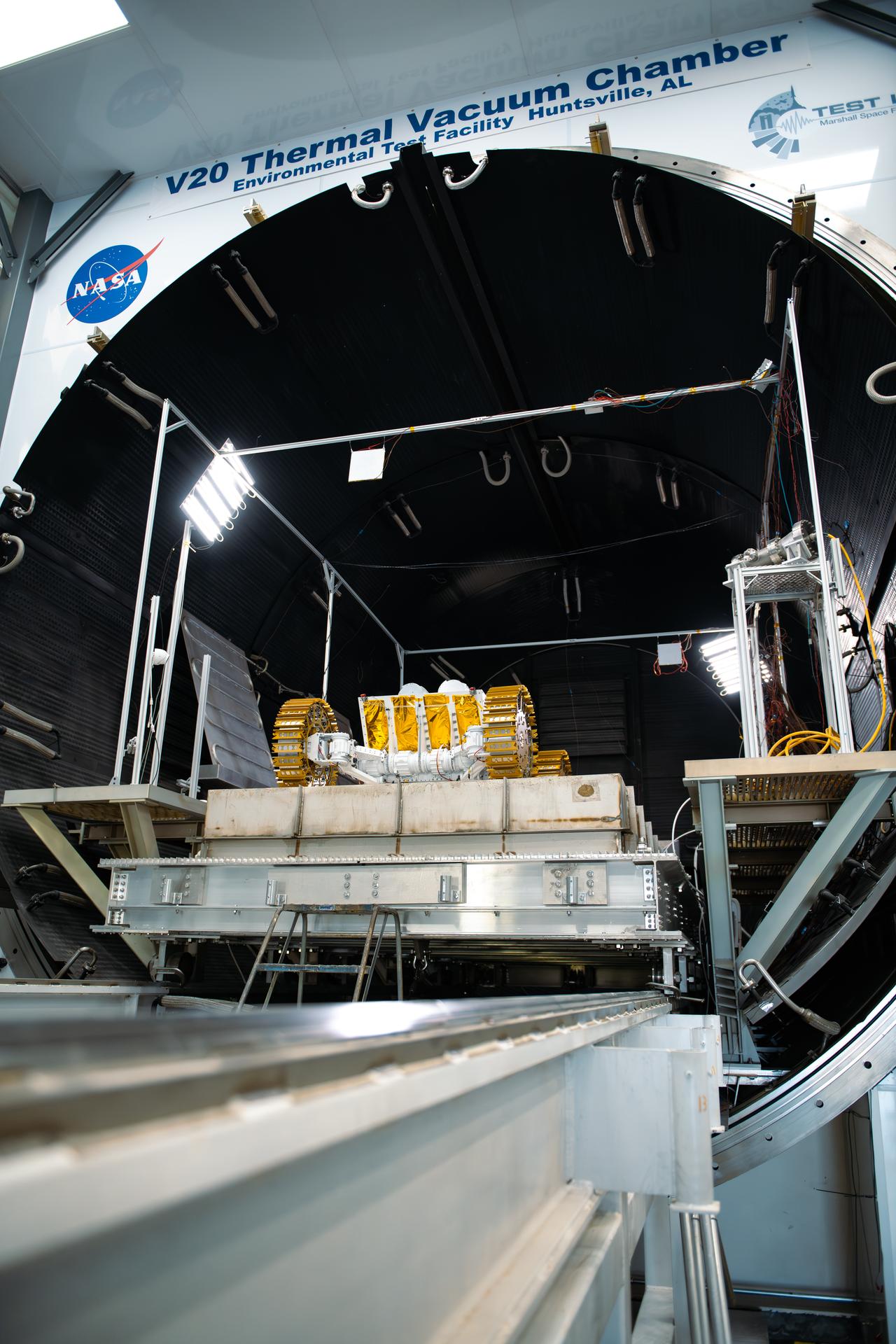
Starpath’s rover sits atop a concrete slab at the mouth of the thermal vacuum chamber, ready to be closed in and commence testing at NASA’s Marshall Space Flight Center in Huntsville, Alabama, on July 30, 2025. The technology startup headquartered in Hawthorne, California, won second place overall at the Break the Ice Lunar Challenge’s live demonstration and finale in June 2024. This competition, one of NASA’s Centennial Challenges, tasked competitors to design, build, and demonstrate robotic technologies that could excavate and transport the icy, rocky dirt – otherwise known as regolith – found on the Moon. Starpath’s visit to NASA Marshall was part of their prize opportunity to test their upgraded lunar regolith excavation and transportation rover in the center’s 20-foot thermal vacuum chamber. For more information, contact NASA Marshall’s Office of Communications at 256-544-0034.
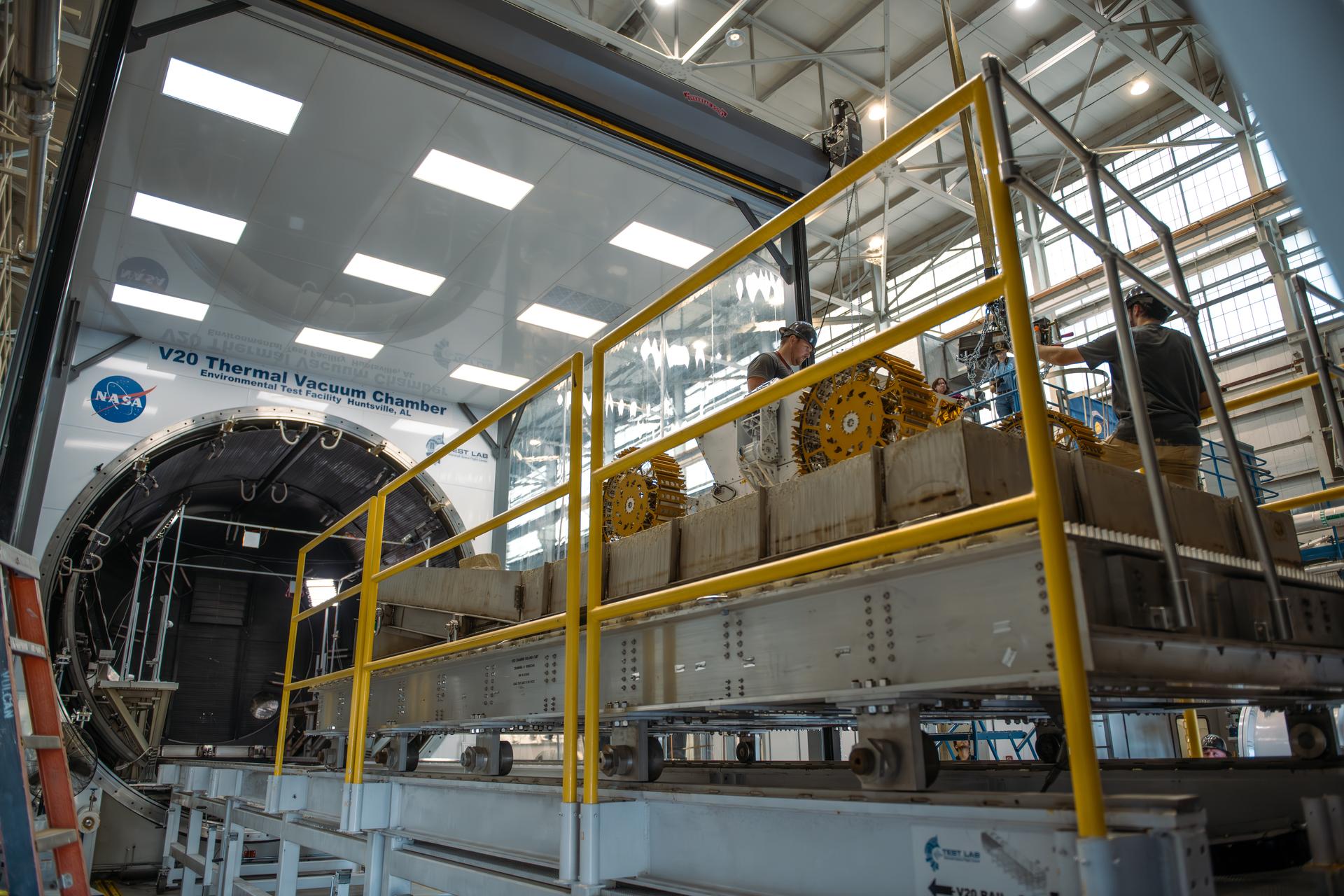
Starpath’s rover freely rests on a concrete slab at the end of a platform at NASA’s Marshall Space Flight Center in Huntsville, Alabama. The large metal structure will slide into the chamber, bringing the rover and concrete slab with it. The technology startup headquartered in Hawthorne, California, won second place overall at the agency’s Break the Ice Lunar Challenge’s live demonstration and finale in June 2024. This competition, one of NASA’s Centennial Challenges, tasked competitors to design, build, and demonstrate robotic technologies that could excavate and transport the icy, rocky dirt – otherwise known as regolith – found on the Moon. Starpath’s visit to NASA Marshall was part of their prize opportunity to test their upgraded lunar regolith excavation and transportation rover in the center’s 20-foot thermal vacuum chamber. For more information, contact NASA Marshall’s Office of Communications at 256-544-0034.
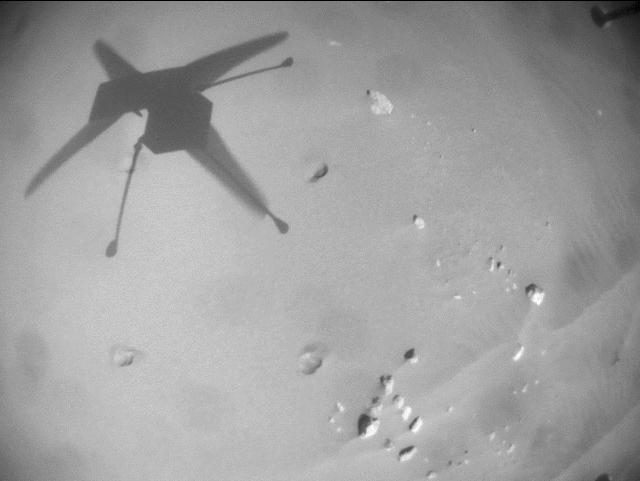
This animated GIF was generated using imagery acquired by the navigation camera aboard NASA's Ingenuity Mars Helicopter during its 25th flight on April 18, 2022. Covering a distance of 2,310 feet (704 meters) and at a speed of 12 mph (5.5 meters per second), it was the Red Planet rotorcraft's longest and fastest flight to date. The first frame of the clip shows the view about one second into the flight. After reaching an altitude of 33 feet (10 meters), the helicopter heads southwest, accelerating to its maximum speed in less than three seconds. Ingenuity first flies over a group of sand ripples then, about halfway through the video, several rock fields. Finally, relatively flat and featureless terrain appears below, making a good landing spot. The video of the 161.3-second flight was speeded up approximately five times, reducing it to less than 35 seconds. Ingenuity's navigation camera has been programmed to deactivate whenever the rotorcraft is within 3 feet (1 meter) of the surface. This helps ensure any dust kicked up during takeoff and landing won't interfere with the navigation system as it tracks features on the ground. Movie available at https://photojournal.jpl.nasa.gov/catalog/PIA25321
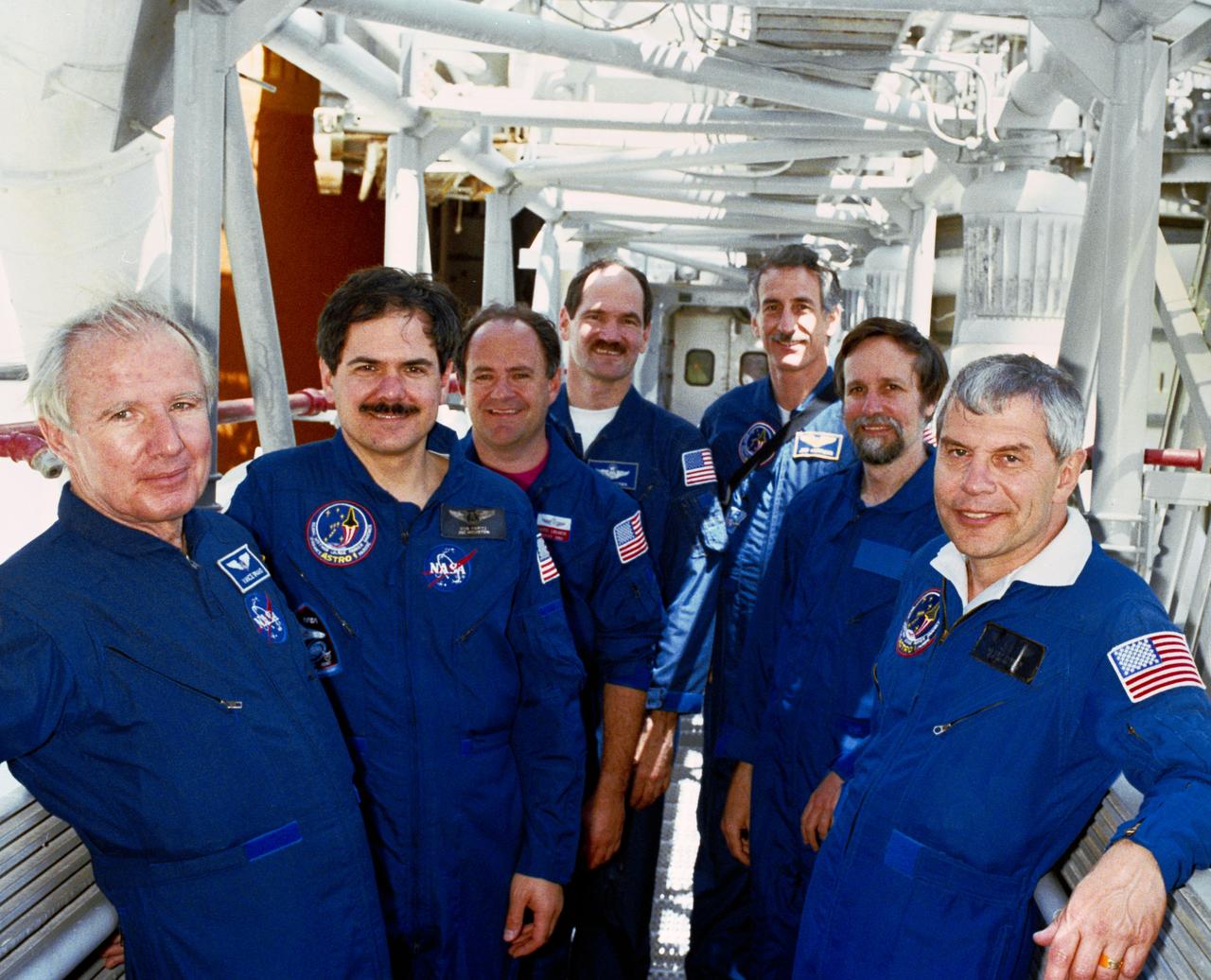
S90-38029 (21 May 1990) --- STS-35 Columbia, Orbiter Vehicle (OV) 102, crewmembers commander Vance D. Brand, pilot Guy S. Gardner, mission specialists Jeffrey A. Hoffman, John M. Lounge, Robert A. R. Parker, payload specialists Samuel T. Durrance and Ronald A. Parise and backup payload specialist Kenneth Nordsieck take a break from training activities and pose on the 195-Floor Level on Launch Pad 39A at the Kennedy Space Center (KSC). On left from front to back are Brand, Parise, Lounge and Gardner and on right from front to back are Parker, Nordsieck, and Hoffman. View provided by KSC with alternate number KSC-90PC-670.
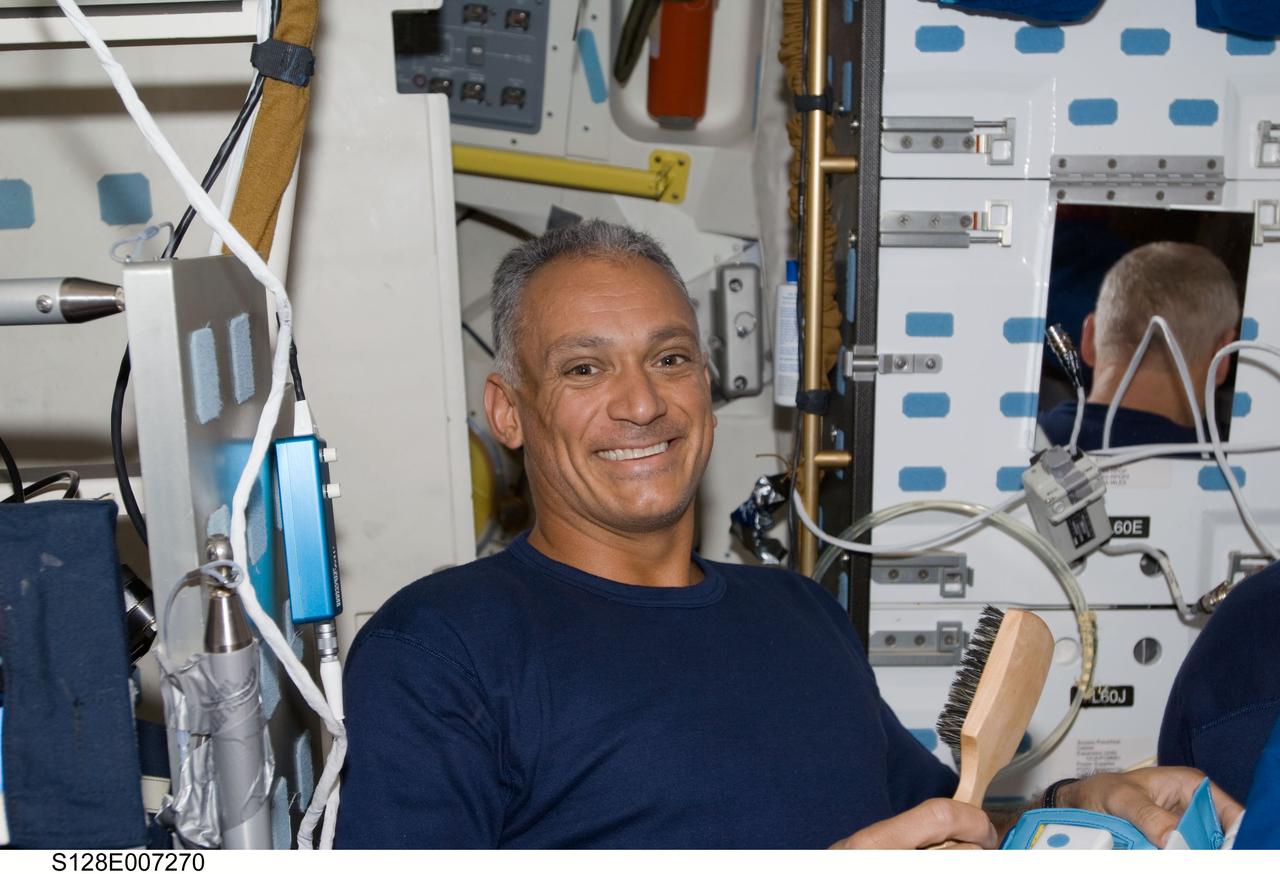
S128-E-007270 (4 Sept. 2009) --- During some off duty time on the middeck of the Space Shuttle Discovery, astronaut John "Danny" Olivas, STS-128 mission specialist, uses a mirror as he brushes his hair. The crew has passed its mid point in the scheduled 13-day mission and Olivas has participated in two sessions of extravehicular activity and eyes the final of three spacewalks on Sept. 5 to continue exterior work on the International Space Station.
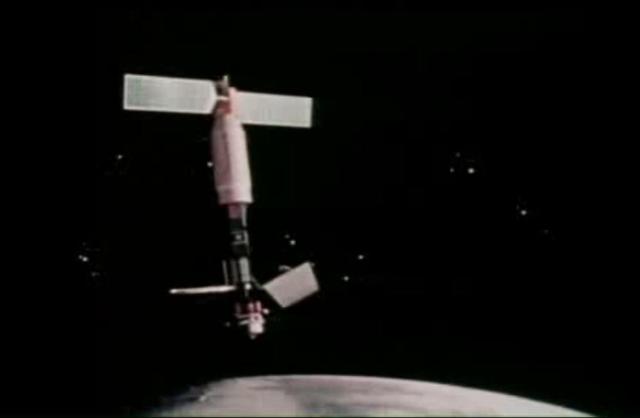
Seasat, built and managed by NASA Jet Propulsion Laboratory JPL, was launched thirty-five years ago, on June 27, 1978. It was the first satellite designed for remote sensing of the Earth oceans using many ground-breaking technologies.

Acquired by NASA Terra spacecraft, this image shows the west coast of Greenland, one of Earth premiere incubators for icebergs -- large blocks of land ice that break off from glaciers or ice shelves and float in the ocean.
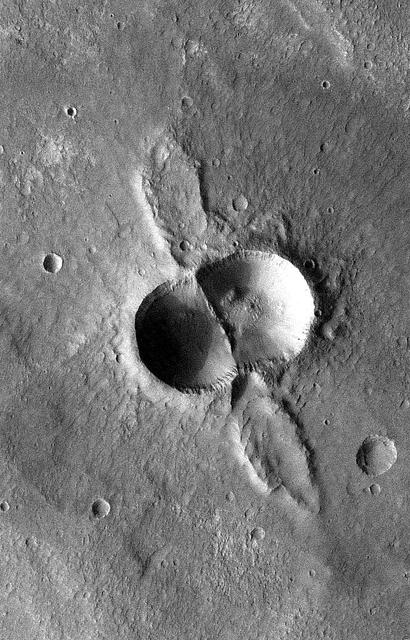
If a meteorite breaks in two shortly before hitting the ground, the typical bowl shape of a single impact crater becomes doubled. This image is from NASA Mars Odyssey, one of an All Star set.
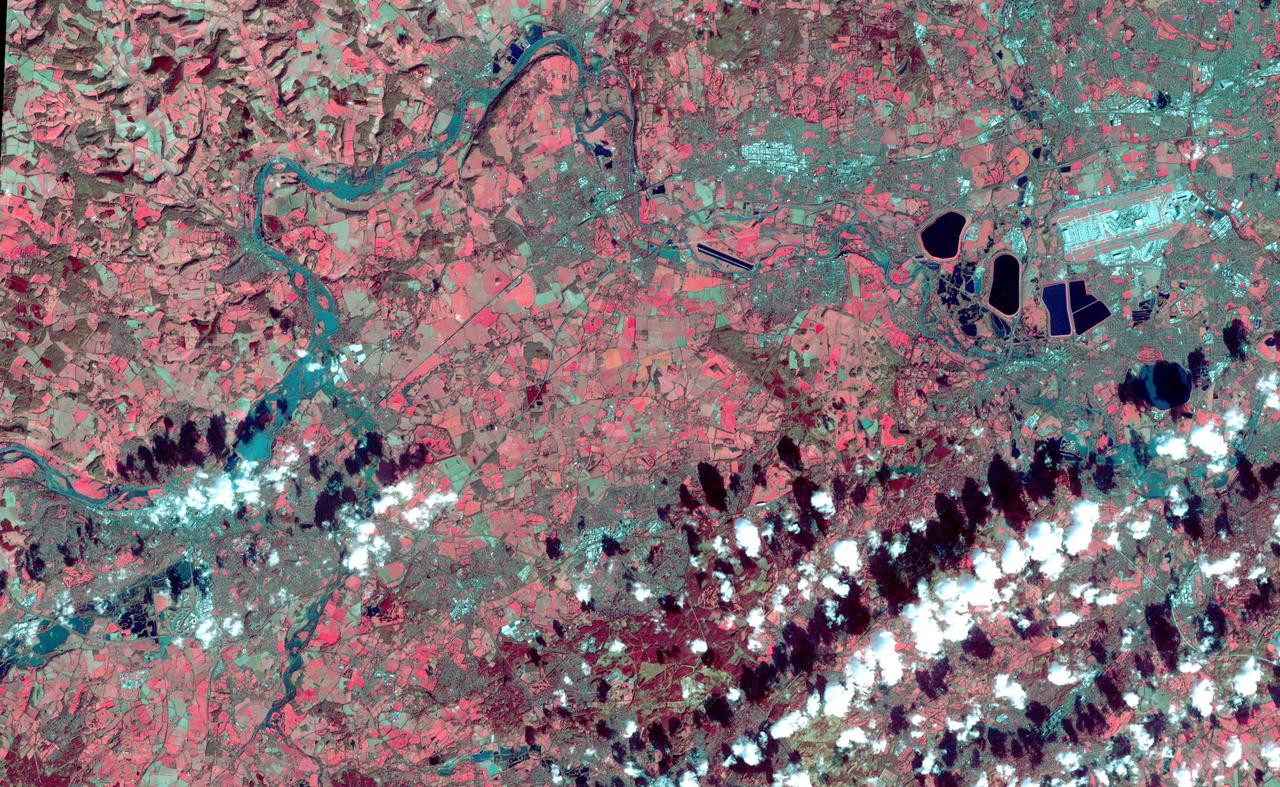
This image acquired by NASA Terra spacecraft depicts the high water levels and flooding along the Thames River west of London as record-breaking rains covered the United Kingdom in January and February.

Ignited by lightning strikes during a record-breaking heat wave, the Biscuit Fire became Oregon largest wildfire of the past century. NASA Terra spacecraft acquired these image between mid July and early September 2002.
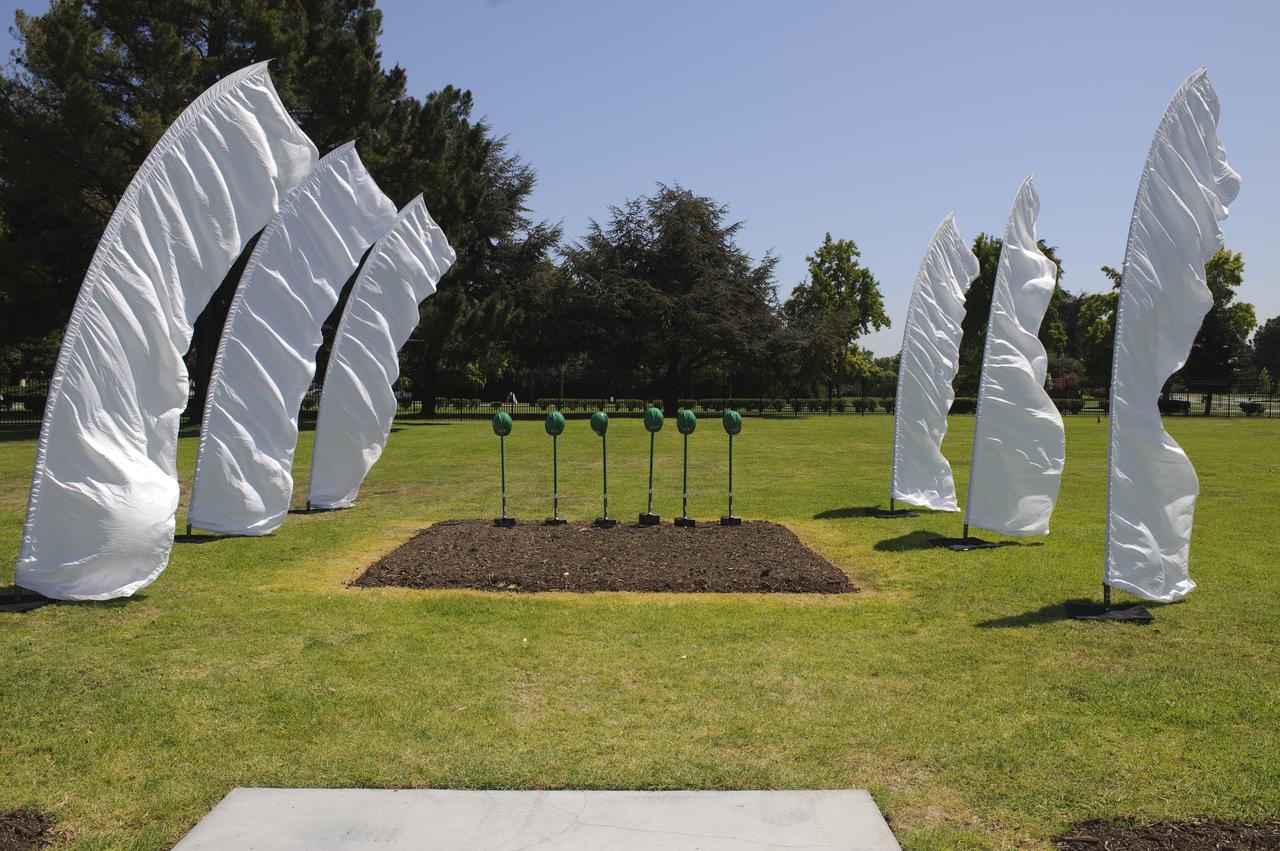
Sustainability Base Ground Breaking ceremony
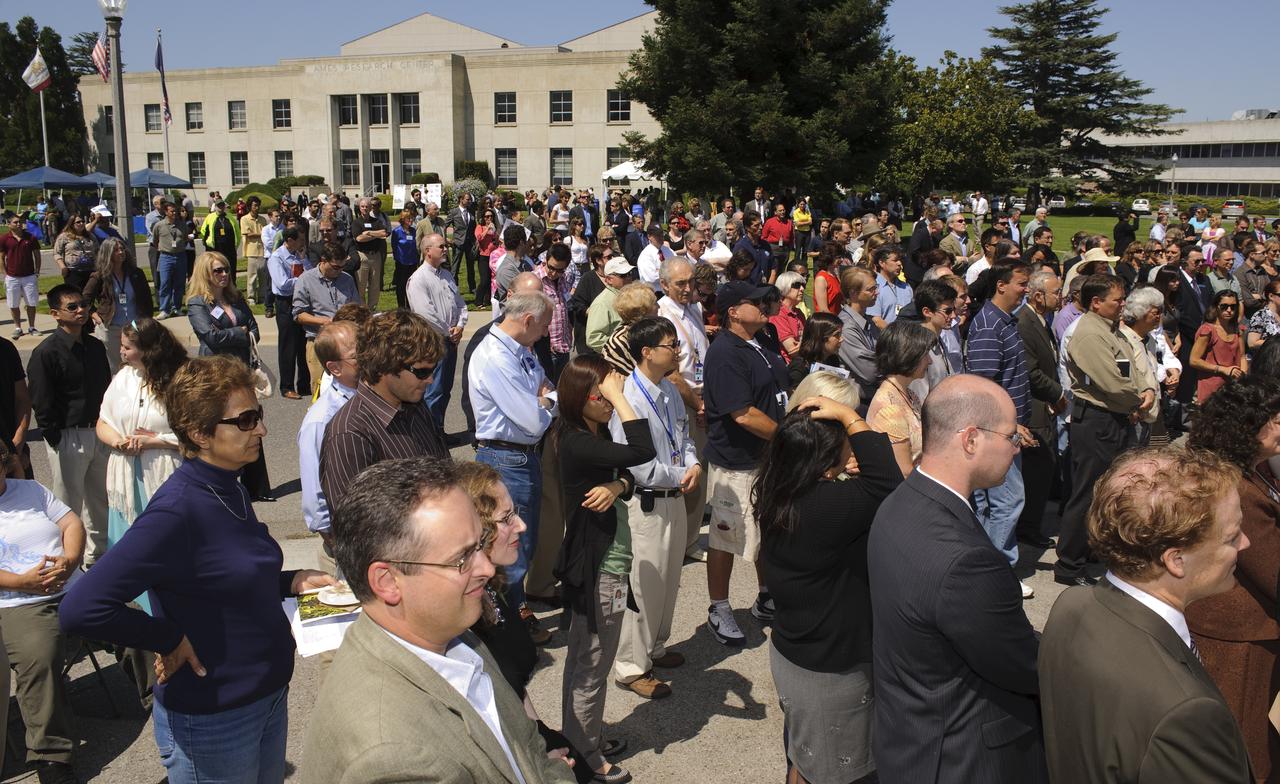
Sustainability Base Ground Breaking ceremony
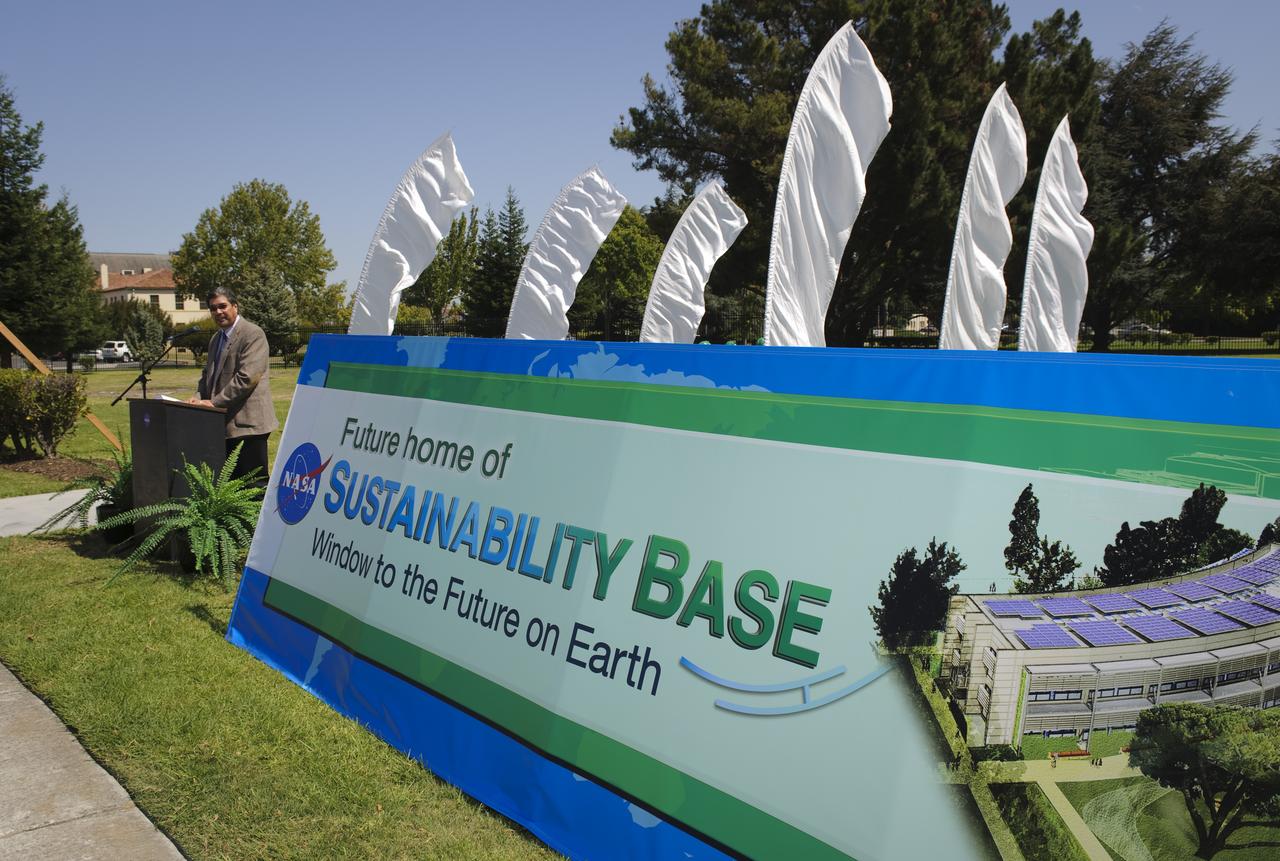
Sustainability Base Ground Breaking ceremony
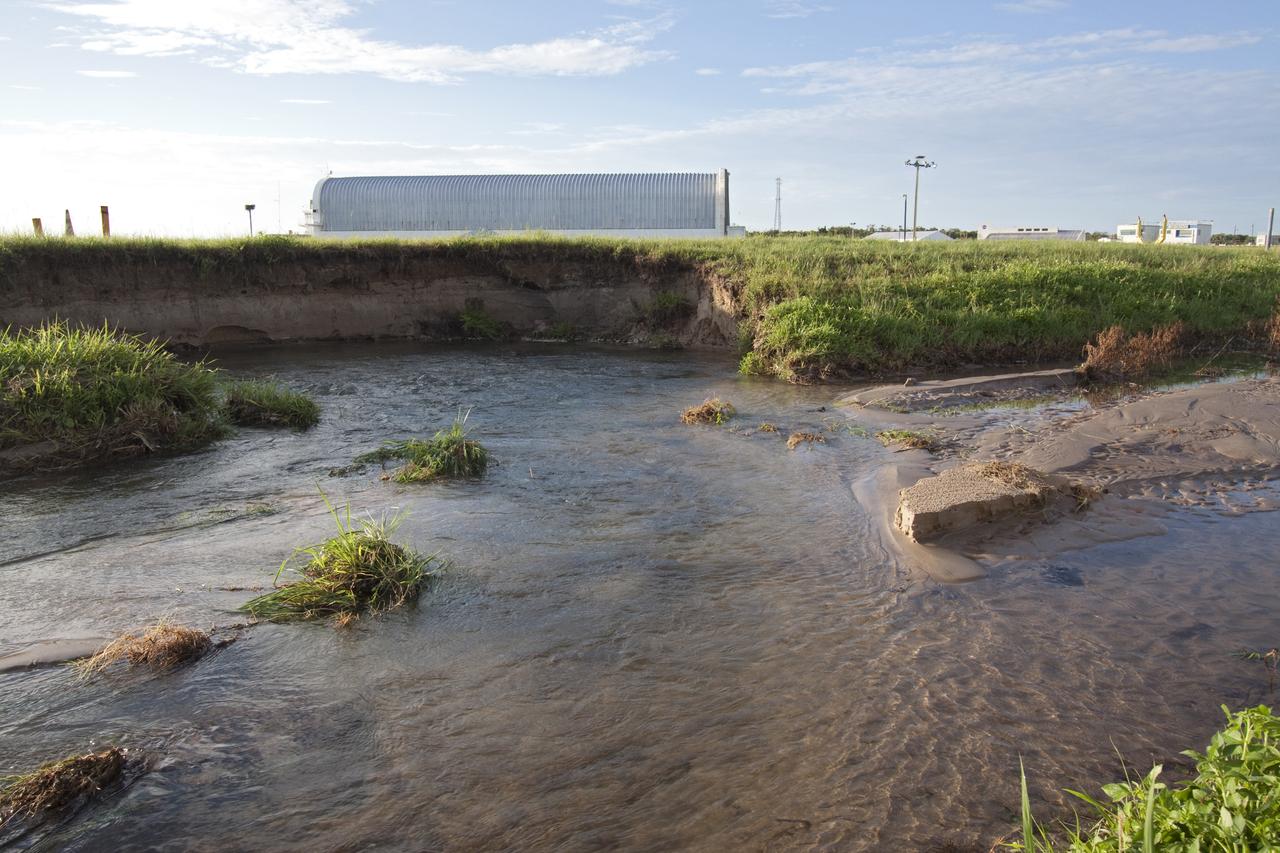
WATER MAIN BREAK AT KSC - SATURN CAUSEWAY
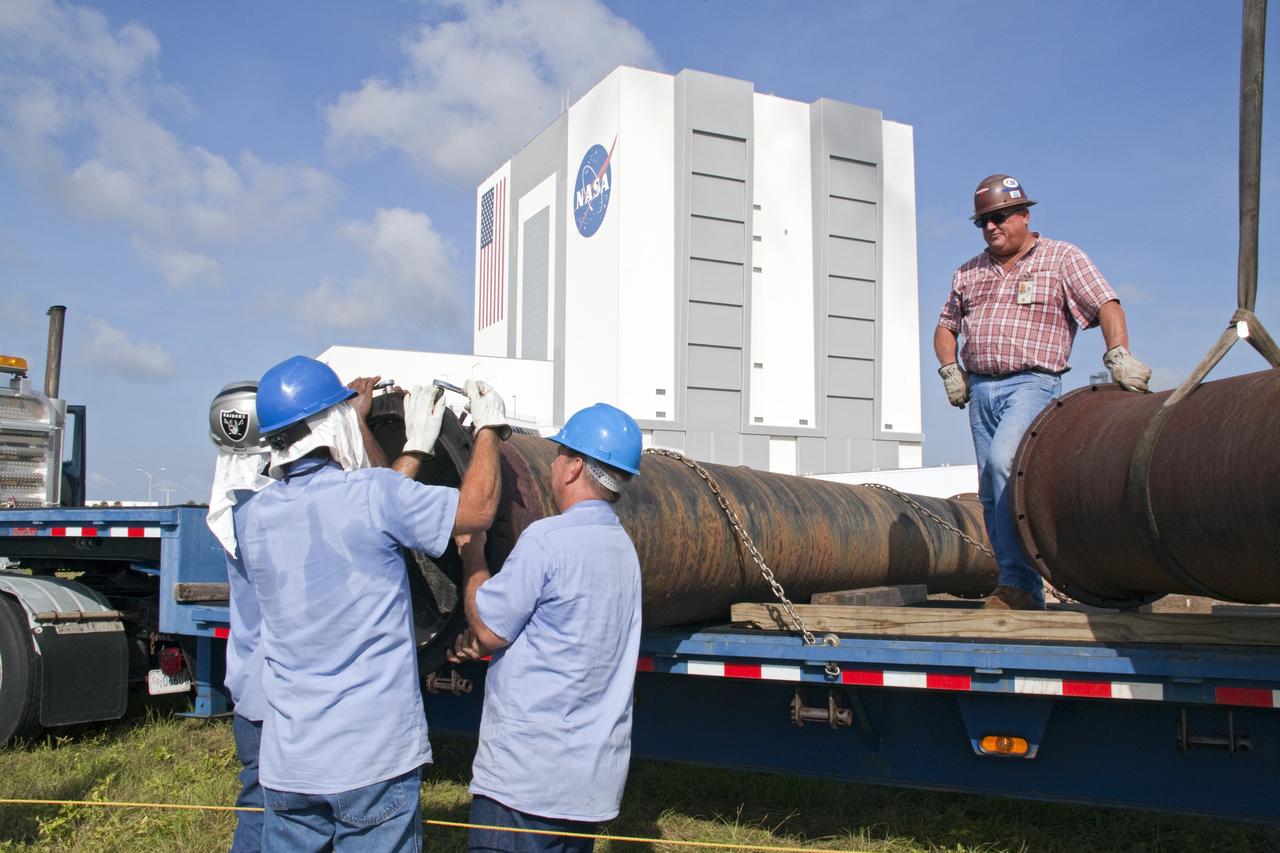
WATER MAIN BREAK REPAIRS AT KSC-LC39
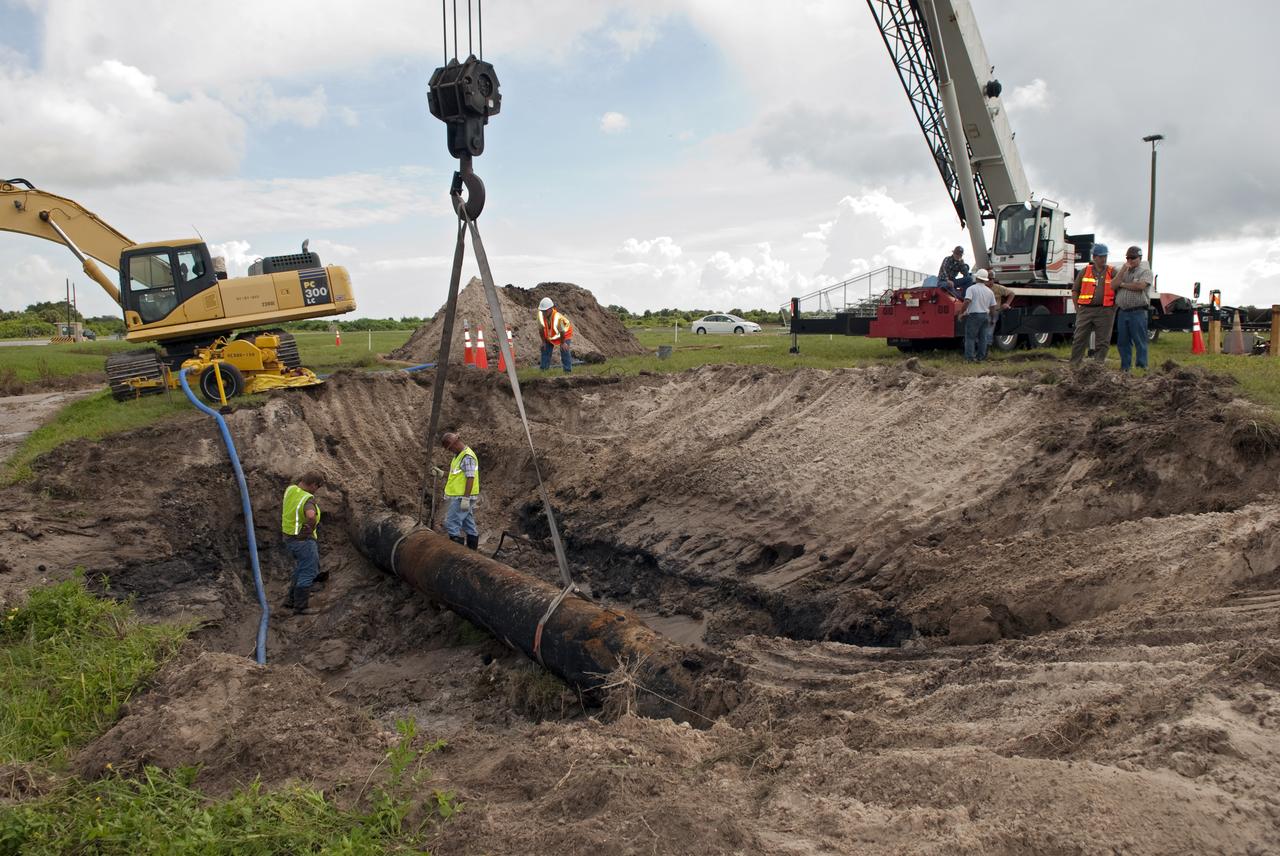
WATER MAIN BREAK REPAIRS ON SATURN CAUSEWAY
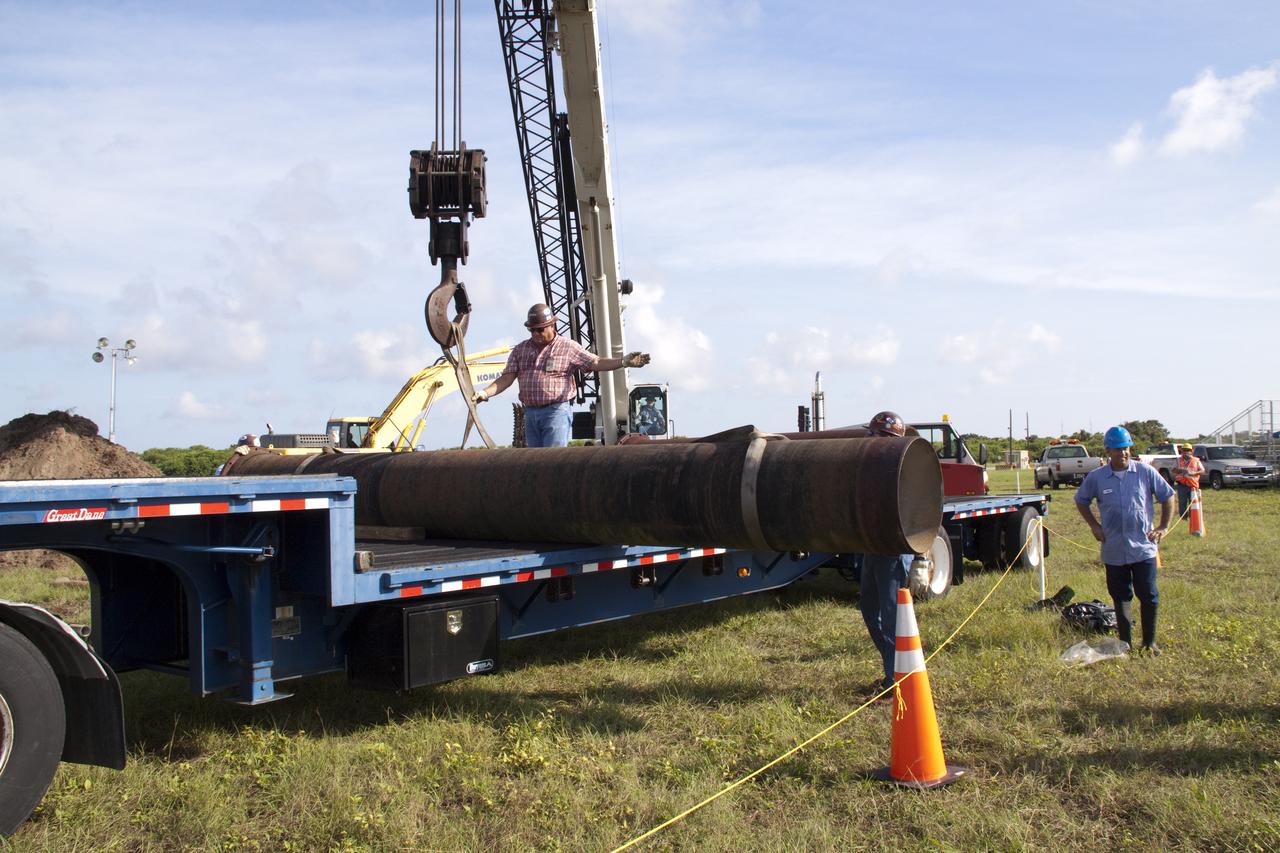
WATER MAIN BREAK REPAIRS AT KSC-LC39
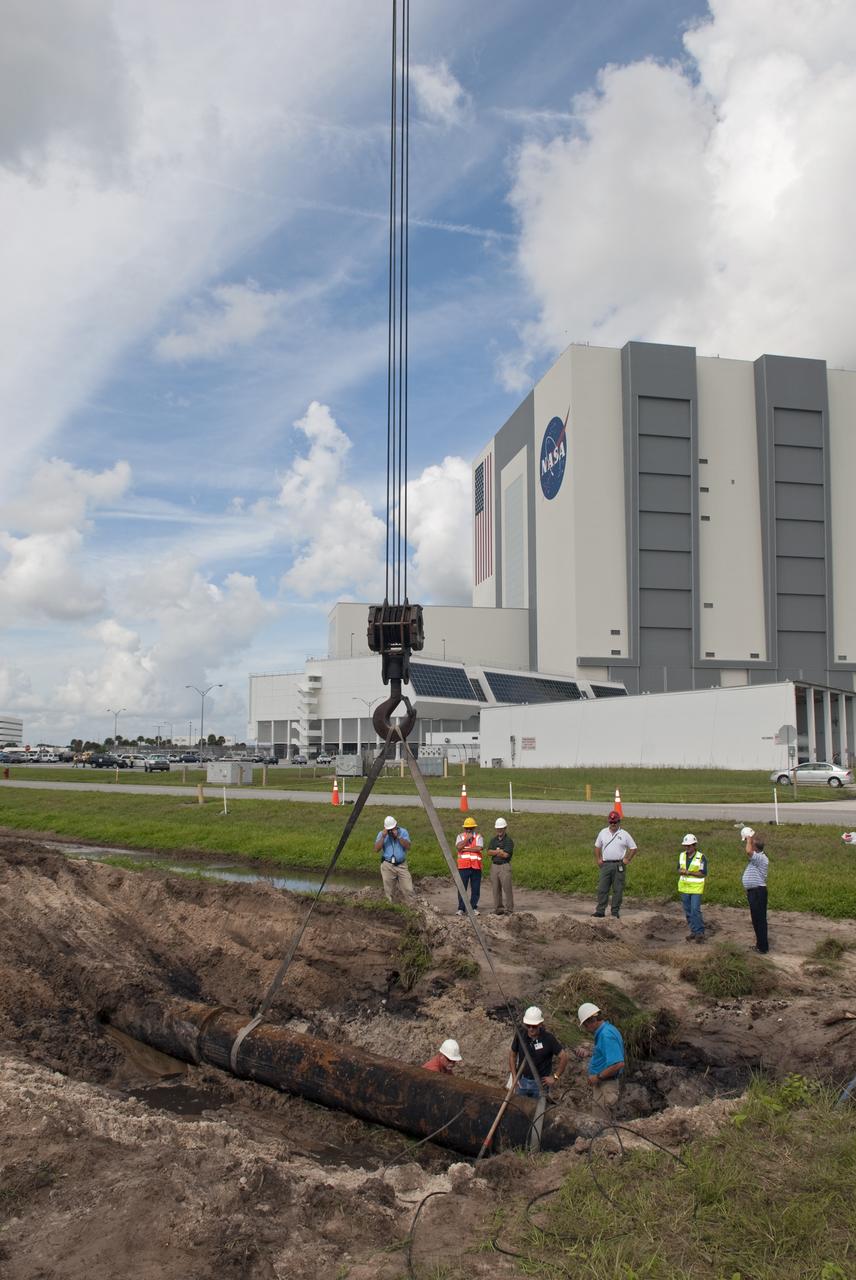
WATER MAIN BREAK REPAIRS ON SATURN CAUSEWAY
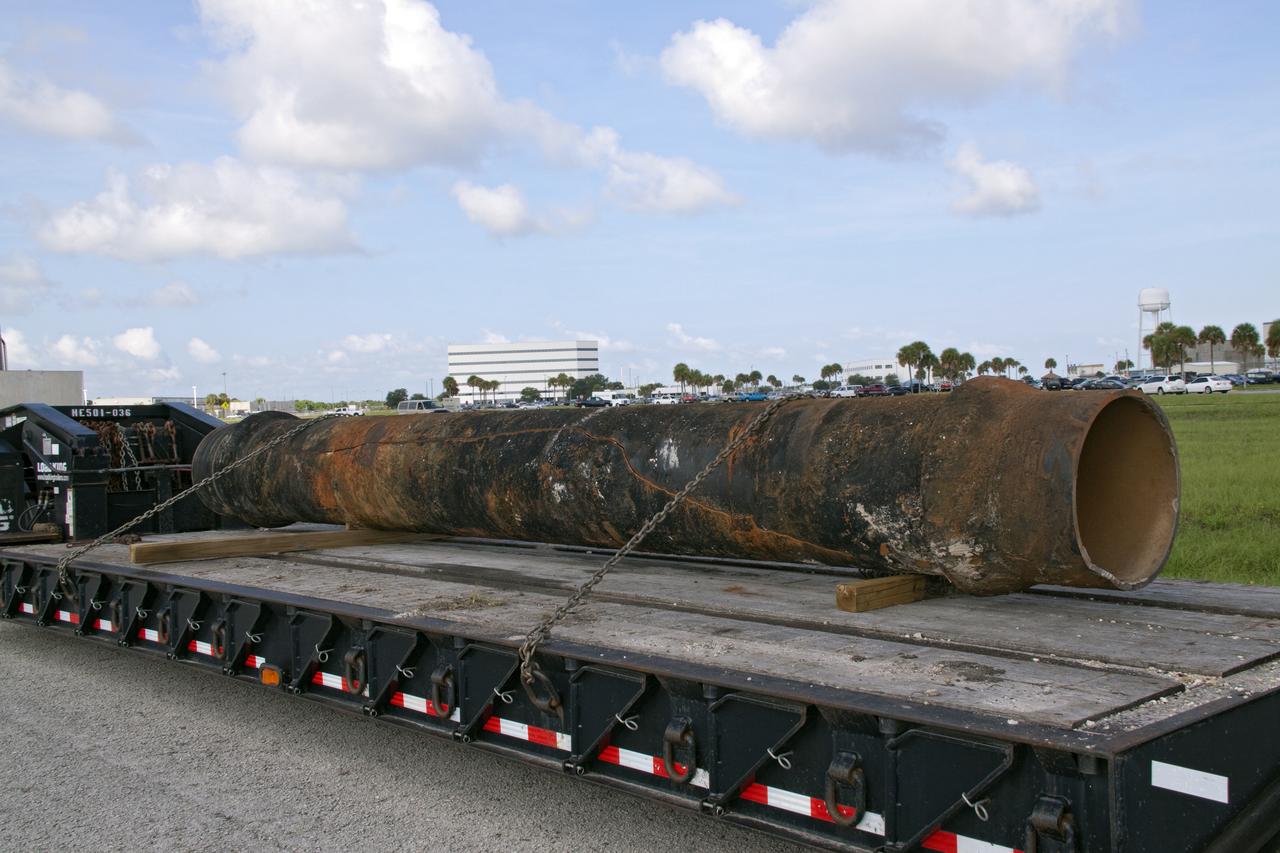
WATER MAIN BREAK REPAIRS AT KSC-LC39
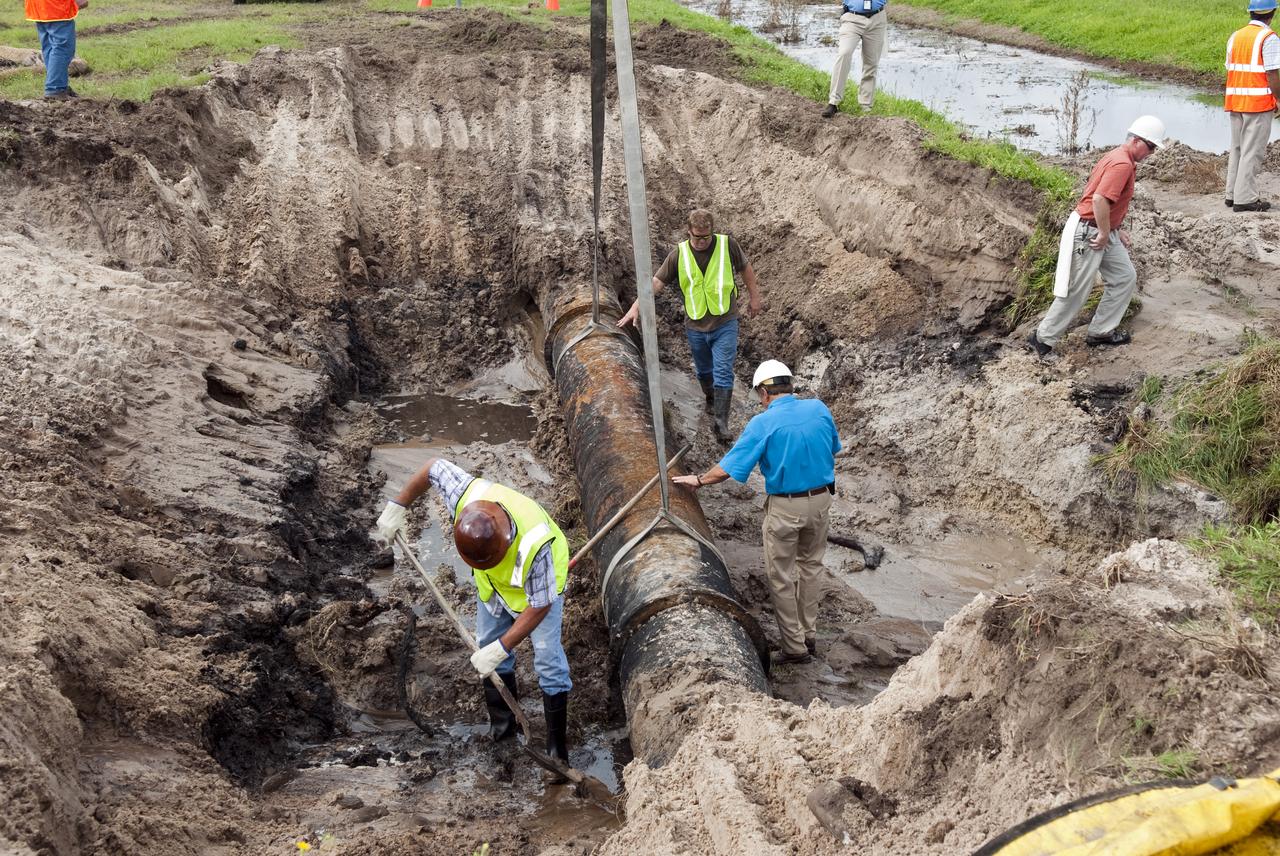
WATER MAIN BREAK REPAIRS ON SATURN CAUSEWAY
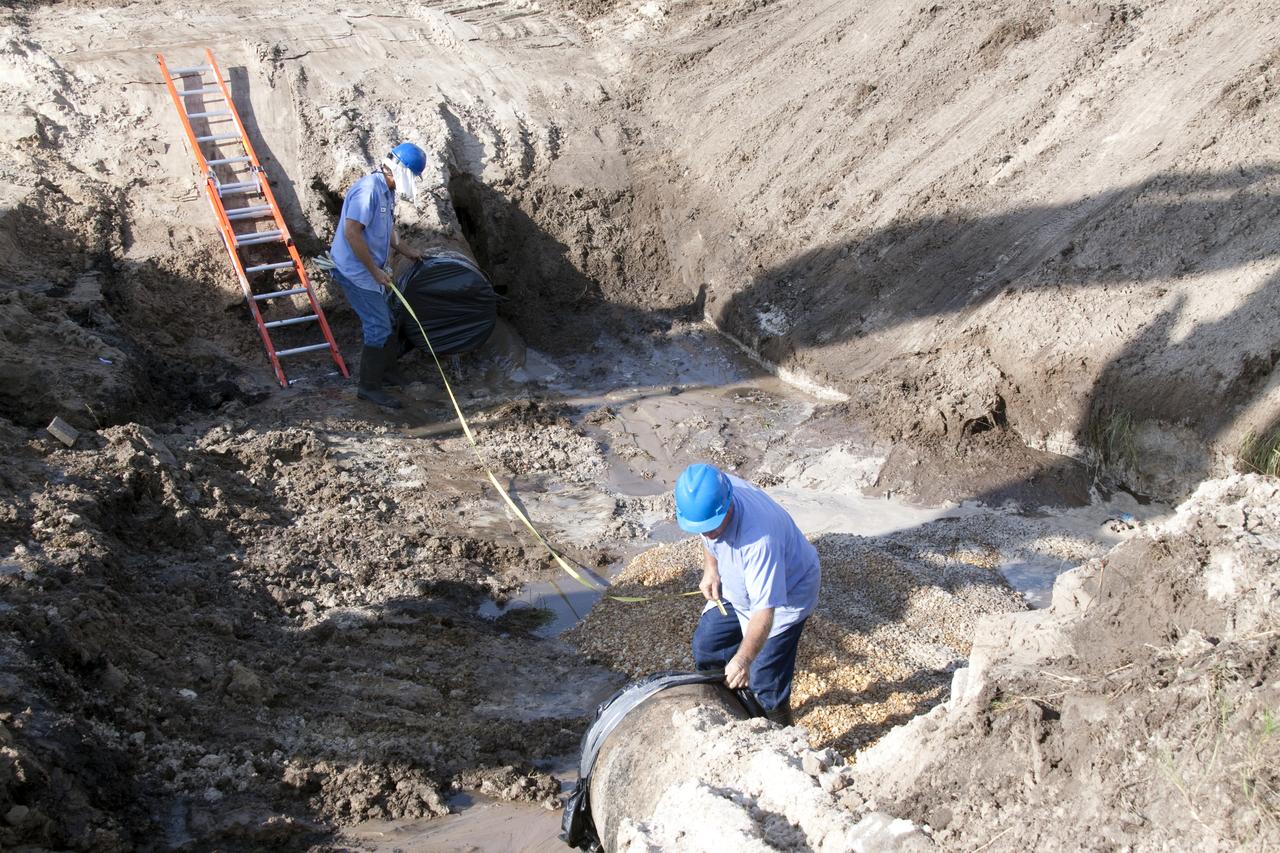
WATER MAIN BREAK REPAIRS AT KSC-LC39
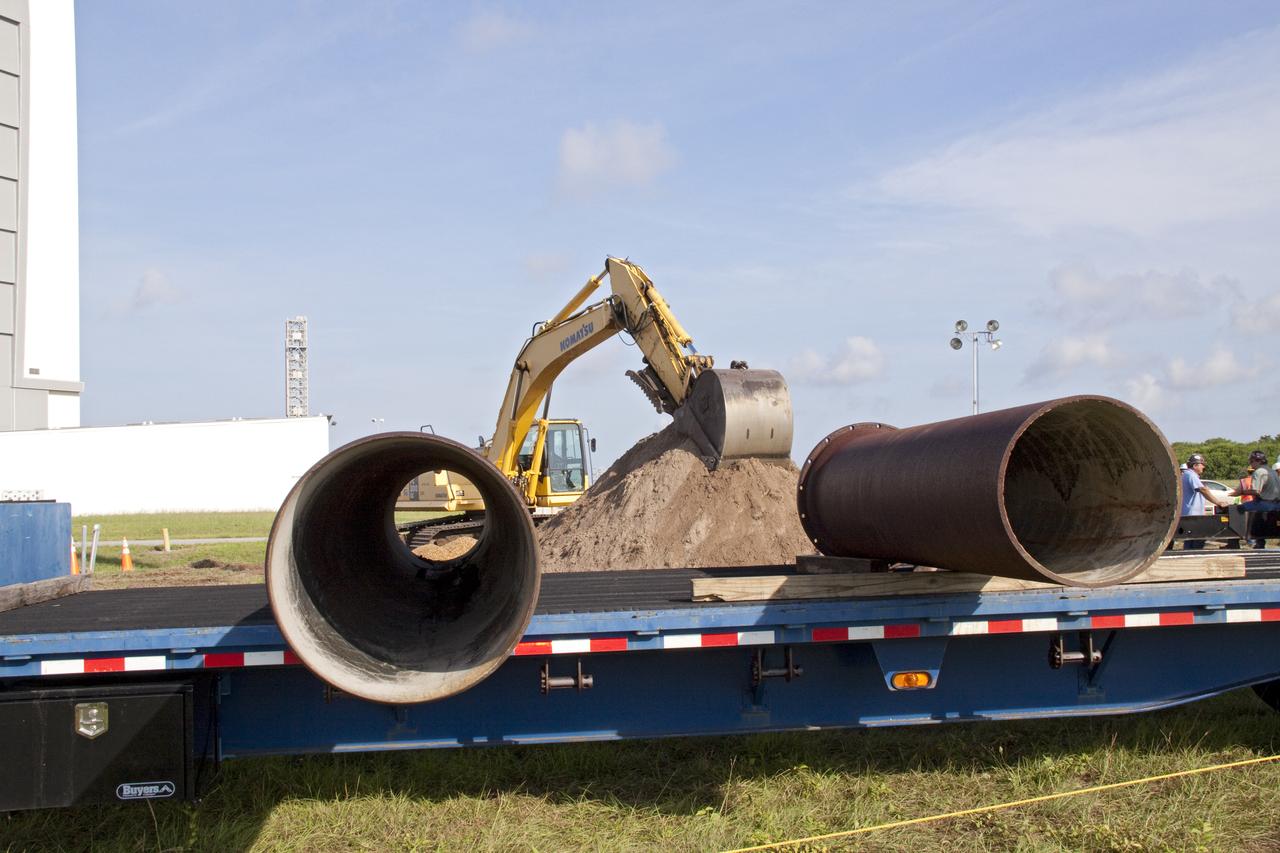
WATER MAIN BREAK REPAIRS AT KSC-LC39

WATER MAIN BREAK REPAIRS ON SATURN CAUSEWAY
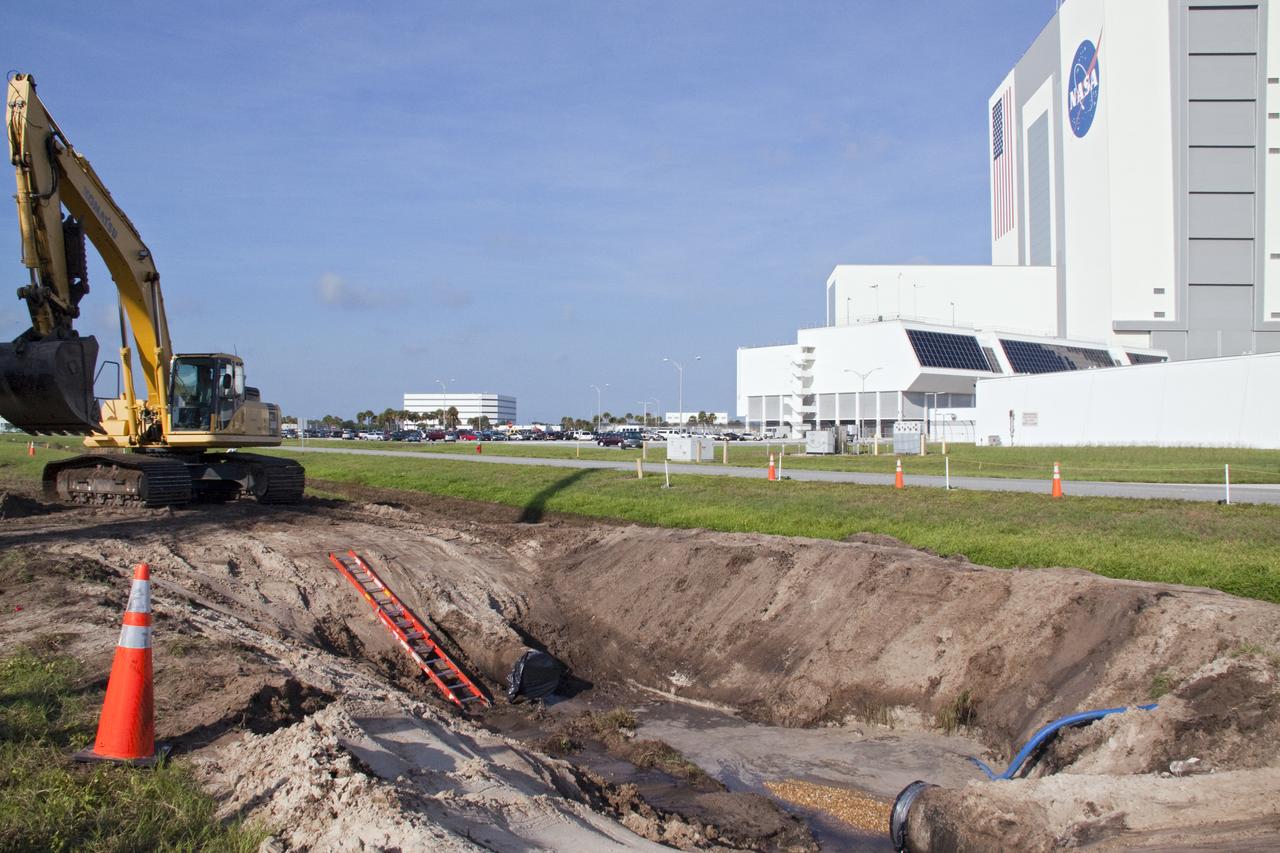
WATER MAIN BREAK REPAIRS AT KSC-LC39
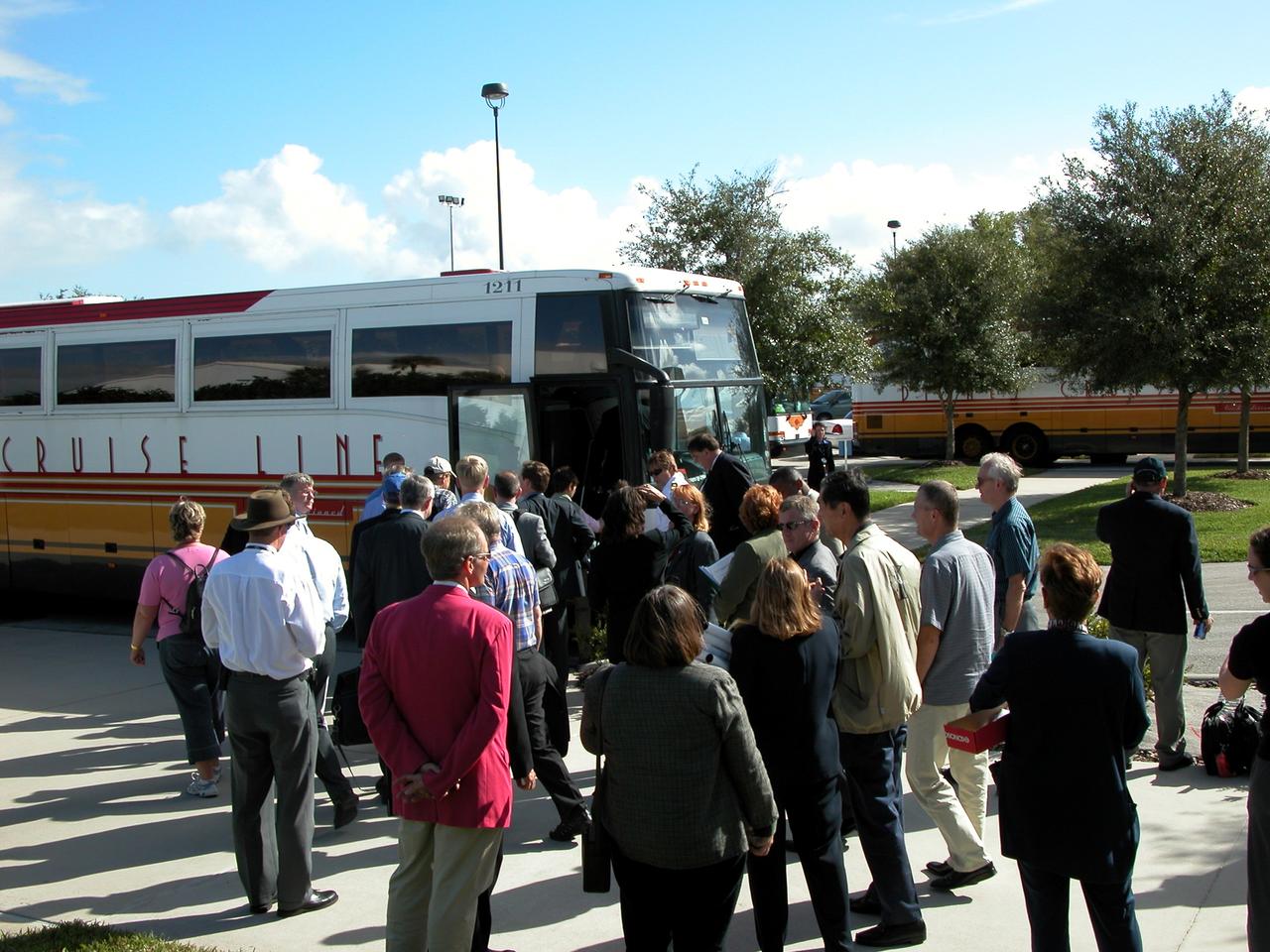
KENNEDY SPACE CENTER, FLA. - After their tour of KSC, members of the North American Treaty Organization (NATO) Parliamentary Assembly board their tour bus to return to Orlando. The Parliamentarians are meeting in Orlando this year for their 49th annual gathering. They chose to visit KSC with their families during their one-day excursion break from meetings.

KENNEDY SPACE CENTER, FLA. - During their tour of KSC, members of the North American Treaty Organization (NATO) Parliamentary Assembly get a close look at wheels used on an orbiter. The Parliamentarians are meeting in Orlando this year for their 49th annual gathering. They chose to visit KSC with their families during their one-day excursion break from meetings.
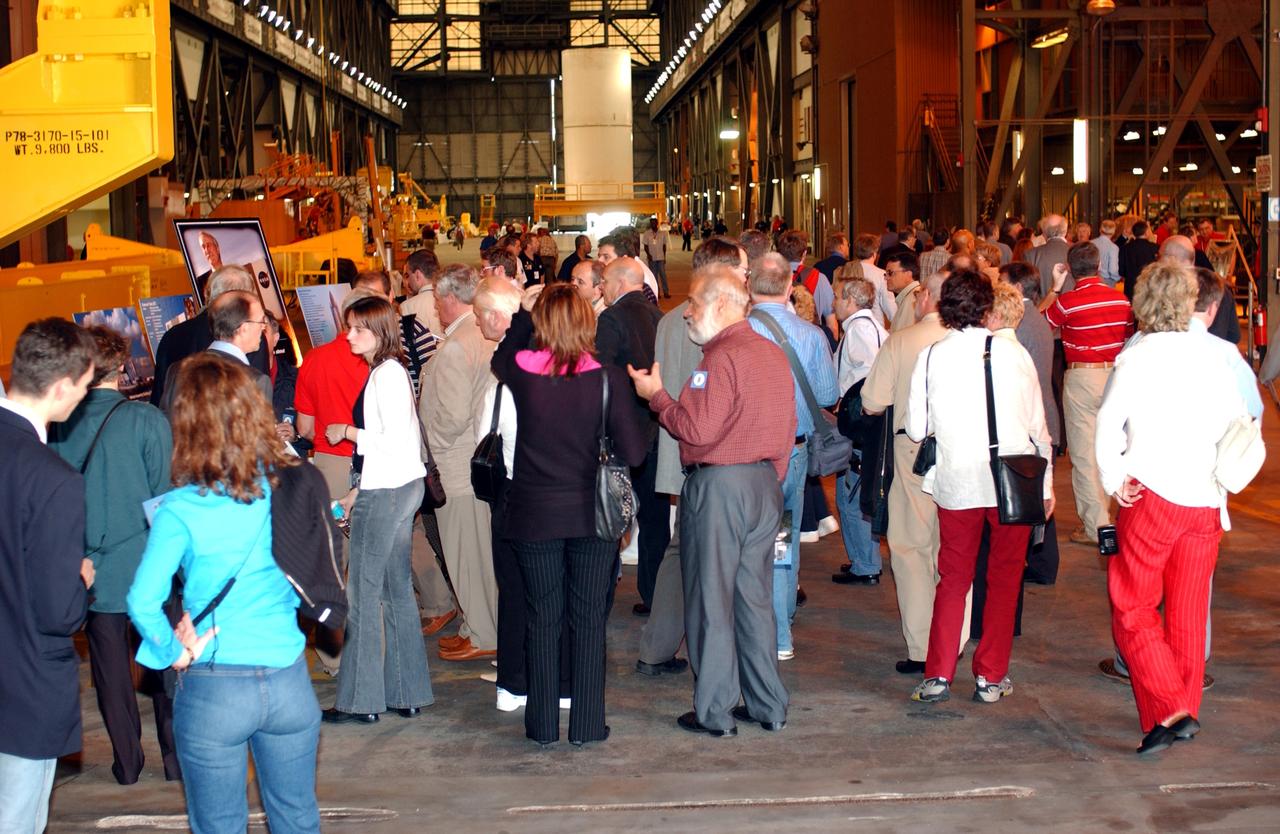
KENNEDY SPACE CENTER, FLA. - Members of the North American Treaty Organization (NATO) Parliamentary Assembly visit the Vehicle Assembly Building during their tour of KSC. The Parliamentarians are meeting in Orlando this year for their 49th annual gathering. They chose to visit KSC with their families during their one-day excursion break from meetings.

Brian Holz, CEO of OneWeb Satellites, speaks during the groundbreaking ceremony at Kennedy's Exploration Park for OneWeb. The company, in partnership with Airbus, is building a 150,000-square-foot factory to manufacture satellites that will connect all areas of the world to the Internet wirelessly. Photo credit: NASA/Kim Shiflett
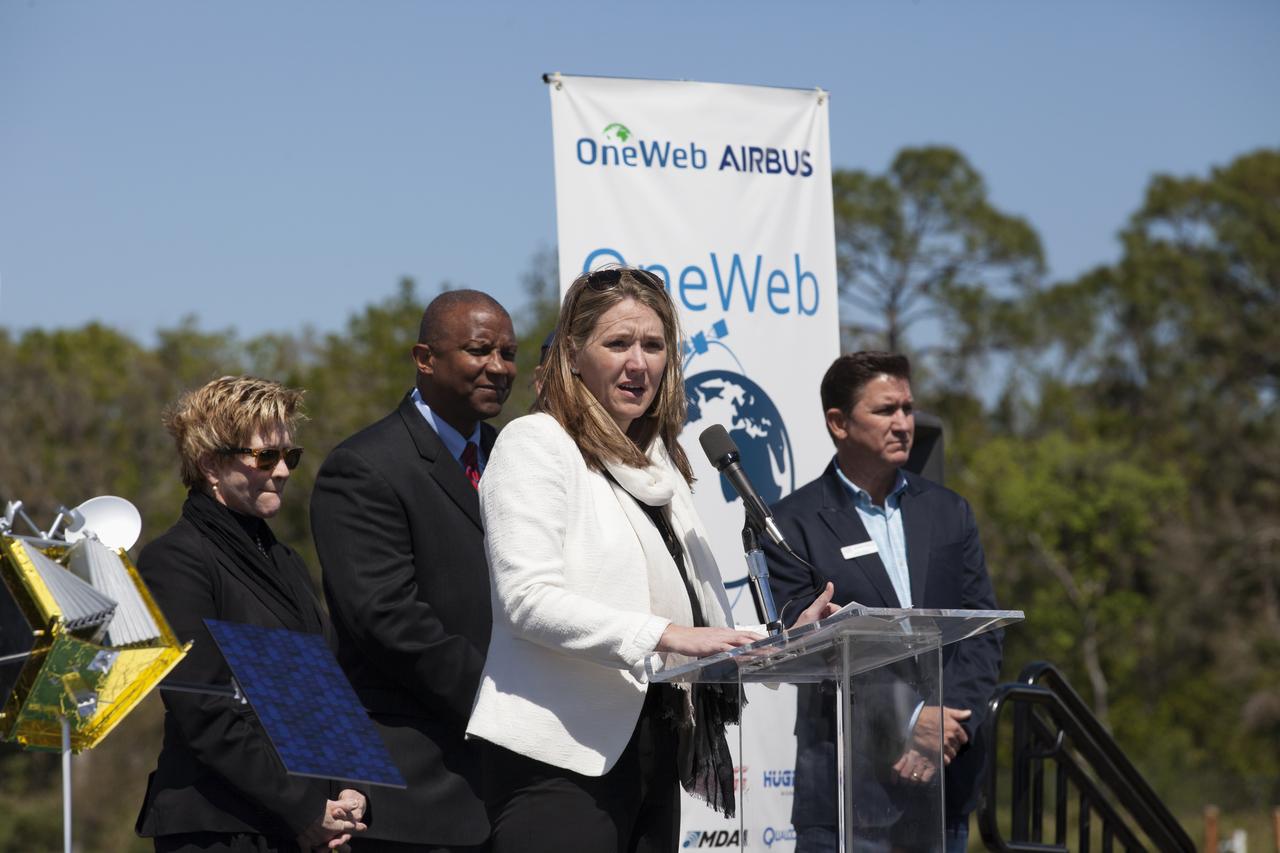
Cissy Procter, executive director of the Florida Department of Economic Activity, speaks during the groundbreaking ceremony at Kennedy's Exploration Park for OneWeb. The company, in partnership with Airbus, is building a 150,000-square-foot factory to manufacture satellites that will connect all areas of the world to the Internet wirelessly. Photo credit: NASA/Kim Shiflett
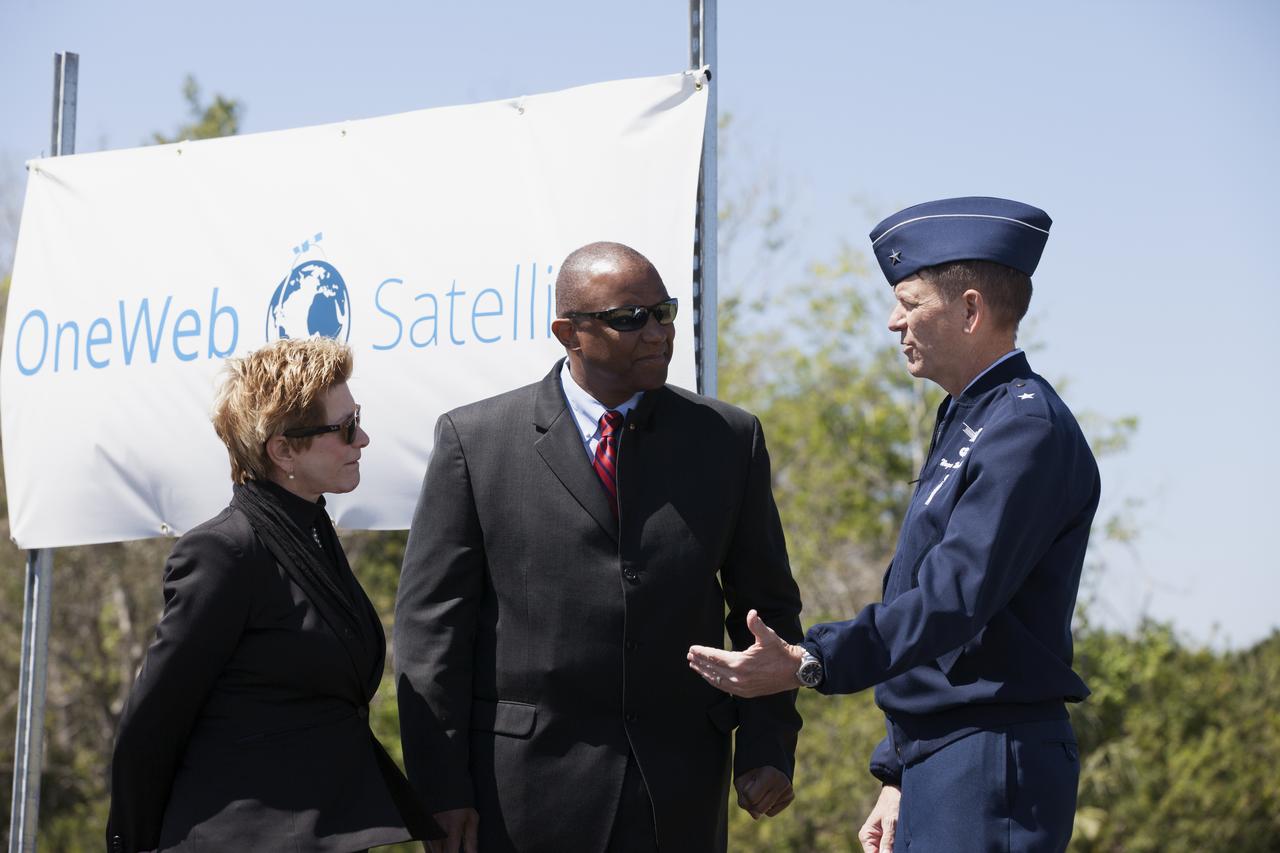
Lynda Weatherman, president and CEO of the Economic Development Council of the Space Coast, talks with Kelvin Manning, associate director of NASA's Kennedy Space Center, and Gen. Wayne Monteith, commander of the 45th Space Wing of the U.S. Air Force, prior to a groundbreaking ceremony at Kennedy's Exploration Park for OneWeb. The company, in partnership with Airbus, is building a 150,000-square-foot factory to manufacture satellites that will connect all areas of the world to the Internet wirelessly. Photo credit: NASA/Kim Shiflett
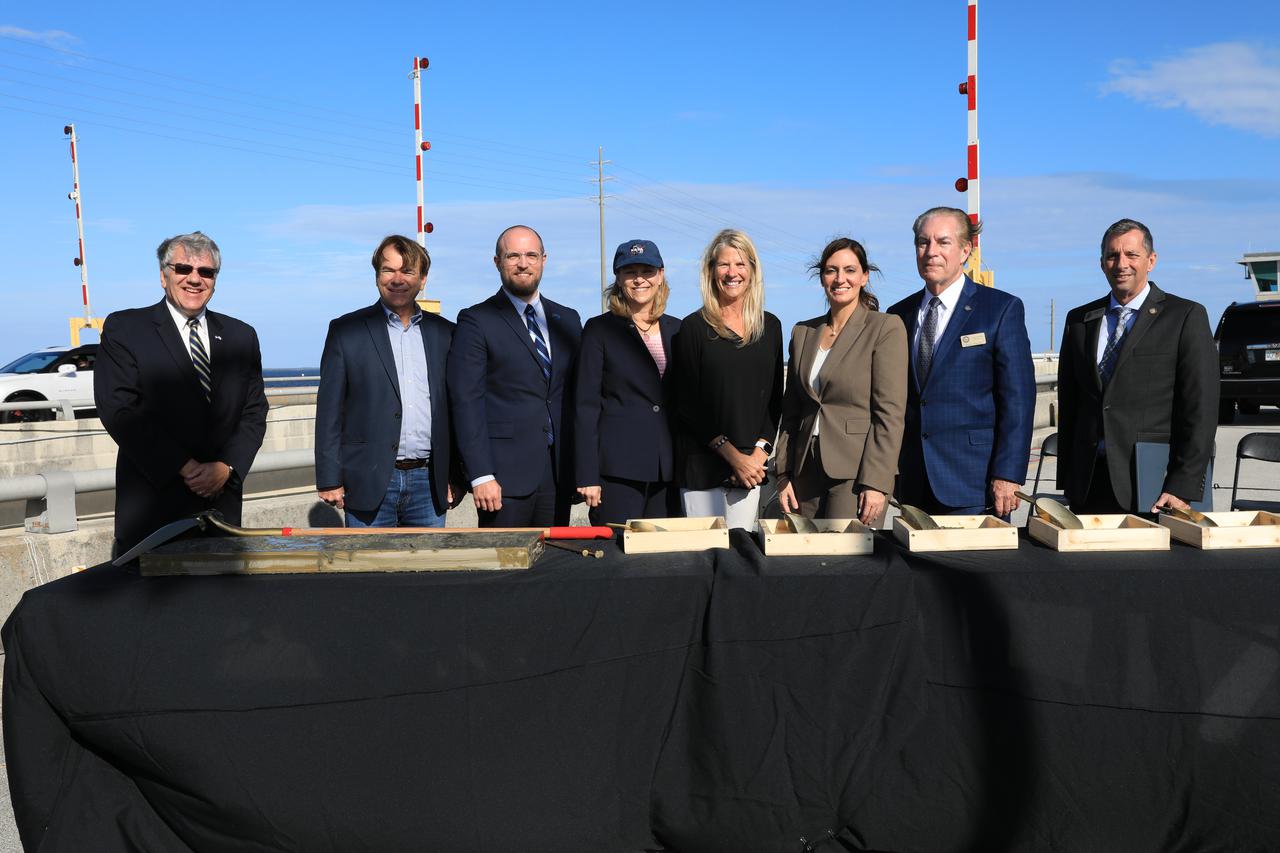
Center Director Janet Petro joins partners and elected officials for a groundbreaking ceremony on a new NASA Causeway bridge over the Indian River leading to NASA’s Kennedy Space Center on Merritt Island in Florida. The construction is made possible through a $90M Infrastructure for Rebuilding America (INFRA) grant, which was awarded thanks to an extensive effort by NASA, the State of Florida – through Florida Department of Transportation and Space Florida – as well as support from industry partners, other local, state, and federal government agencies. The new bridge enables Kennedy’s growth as a multi-user spaceport and will allow NASA to better support the space industry. Construction is scheduled to take several years. To commemorate the day, speakers left a handprint and signed their name in cement.
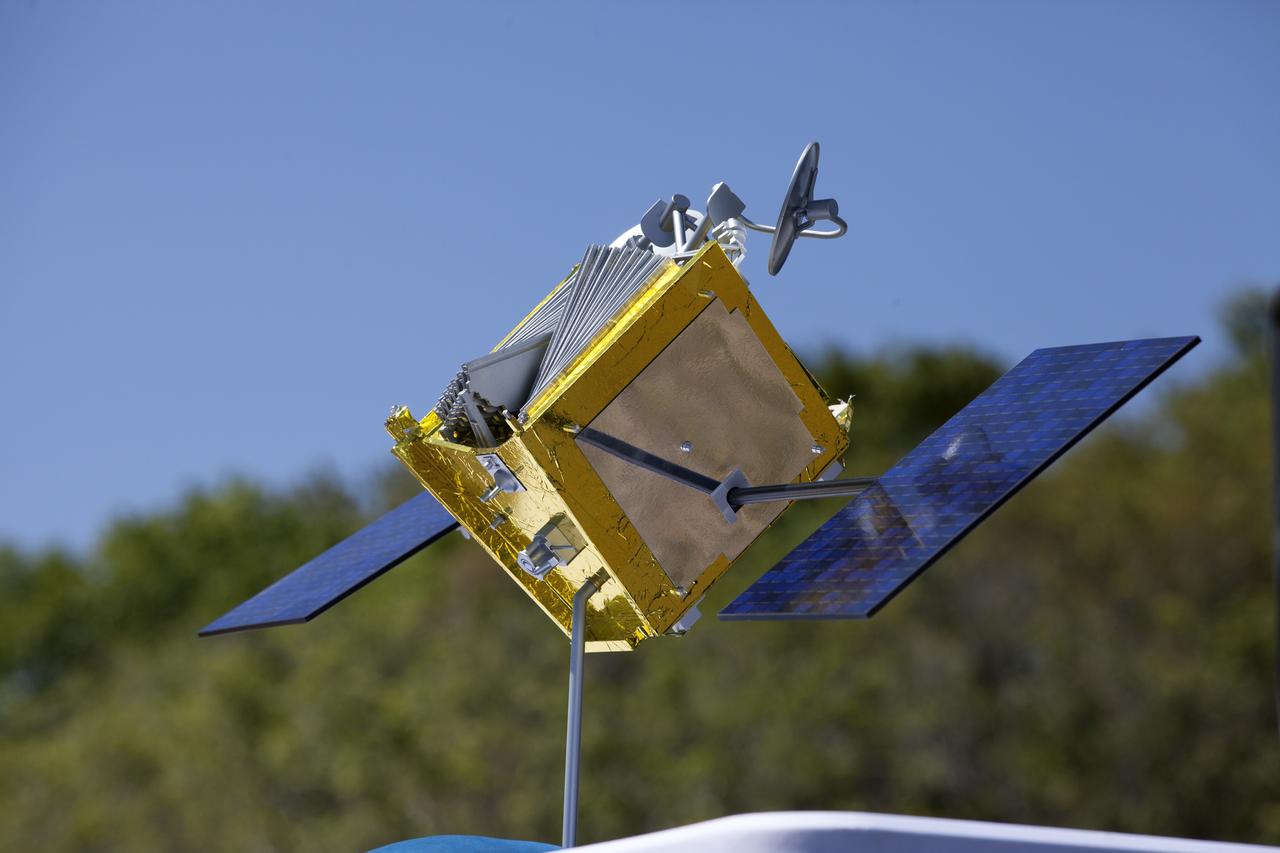
A model of a OneWeb satellite like those the company will build to will connect all areas of the world to the Internet wirelessly. The company plans to launch 2,000 of the satellites as part of its constellation. The satellites will be built at a new factory at Exploration Park at NASA's Kennedy Space Center. The company held a groundbreaking ceremony for the factory. Photo credit: NASA/Kim Shiflett
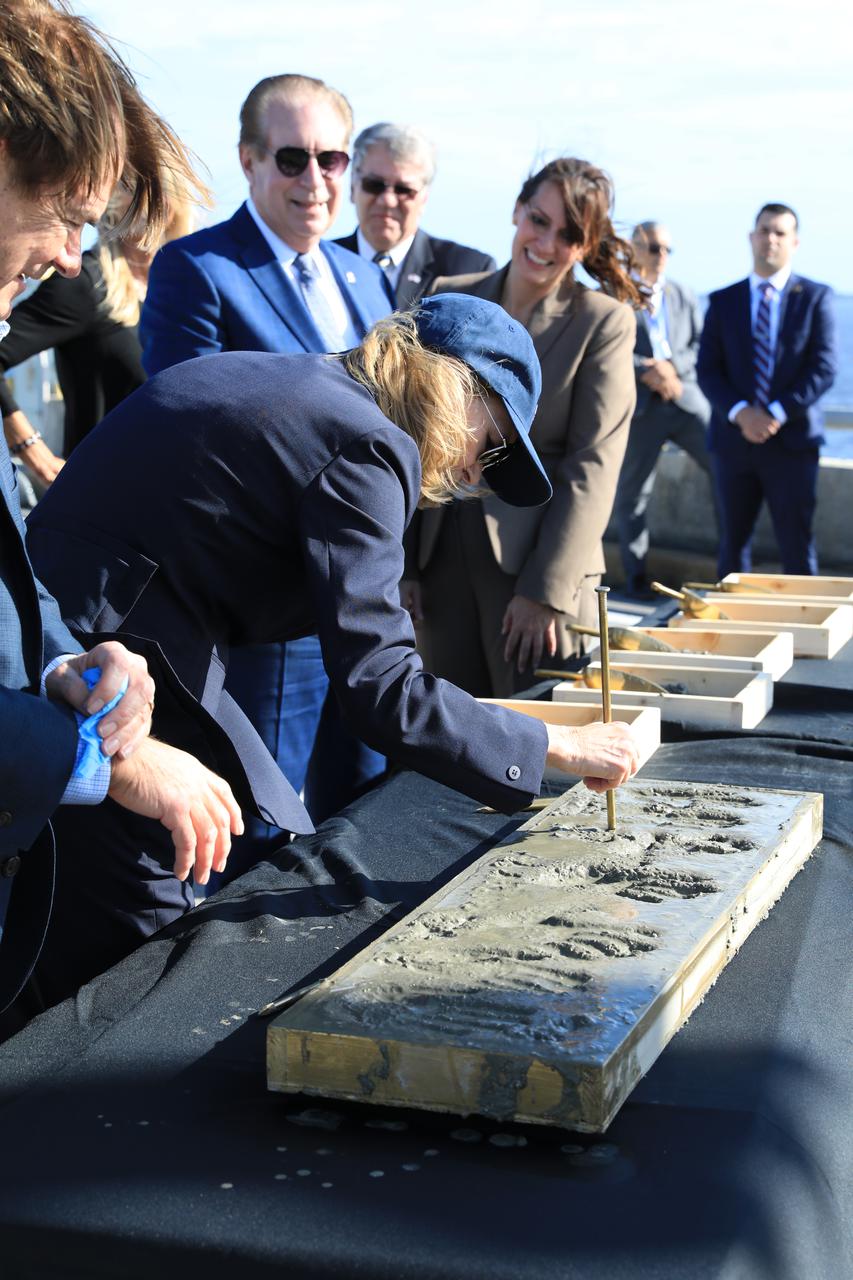
Center Director Janet Petro joins partners and elected officials for a groundbreaking ceremony on a new NASA Causeway bridge over the Indian River leading to NASA’s Kennedy Space Center on Merritt Island in Florida. The construction is made possible through a $90M Infrastructure for Rebuilding America (INFRA) grant, which was awarded thanks to an extensive effort by NASA, the State of Florida – through Florida Department of Transportation and Space Florida – as well as support from industry partners, other local, state, and federal government agencies. The new bridge enables Kennedy’s growth as a multi-user spaceport and will allow NASA to better support the space industry. Construction is scheduled to take several years. To commemorate the day, speakers left a handprint and signed their name in cement.
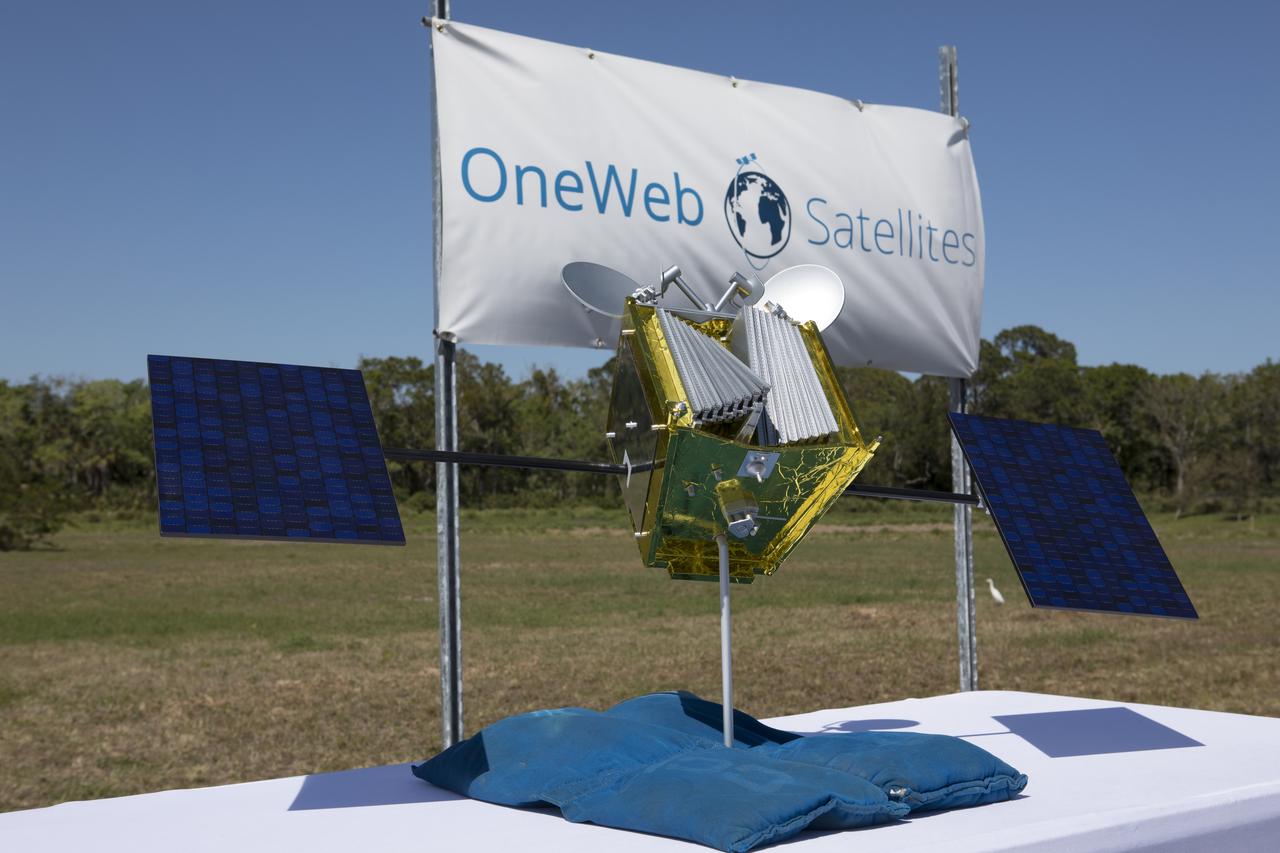
A model of a OneWeb satellite like those the company will build to will connect all areas of the world to the Internet wirelessly. The company plans to launch 2,000 of the satellites as part of its constellation. The satellites will be built at a new factory at Exploration Park at NASA's Kennedy Space Center. The company held a groundbreaking ceremony for the factory. Photo credit: NASA/Kim Shiflett

A contingent of young stars and star-forming gas clouds is sticking out of one of the Milky Way's spiral arms like a splinter protruding from a plank of wood. Stretching some 3,000 light-years, this is the first major structure identified with such a dramatically different orientation relative to the arm. The background image shows the location of the splinter in the Milky Way. The yellow region in the center of the image is the galaxy's bright and crowded center. The galaxy's arms spiral around the center, and are full of stars and star-forming clouds of gas and dust. A key property of spiral arms is how tightly they wind around a galaxy. This characteristic is measured by the arm's pitch angle. A circle has a pitch angle of 0 degrees; as the spiral becomes more open, the pitch angle increases. Most models of the Milky Way suggest that the Sagittarius Arm forms a spiral that has a pitch angle of about 12 degrees, but the protruding structure has a pitch angle of nearly 60 degrees. Similar structures – sometimes called spurs or feathers – are commonly found jutting out of the arms of other spiral galaxies. For decades scientists have wondered whether our Milky Way's spiral arms are also dotted with these structures or if they are relatively smooth. https://photojournal.jpl.nasa.gov/catalog/PIA24576
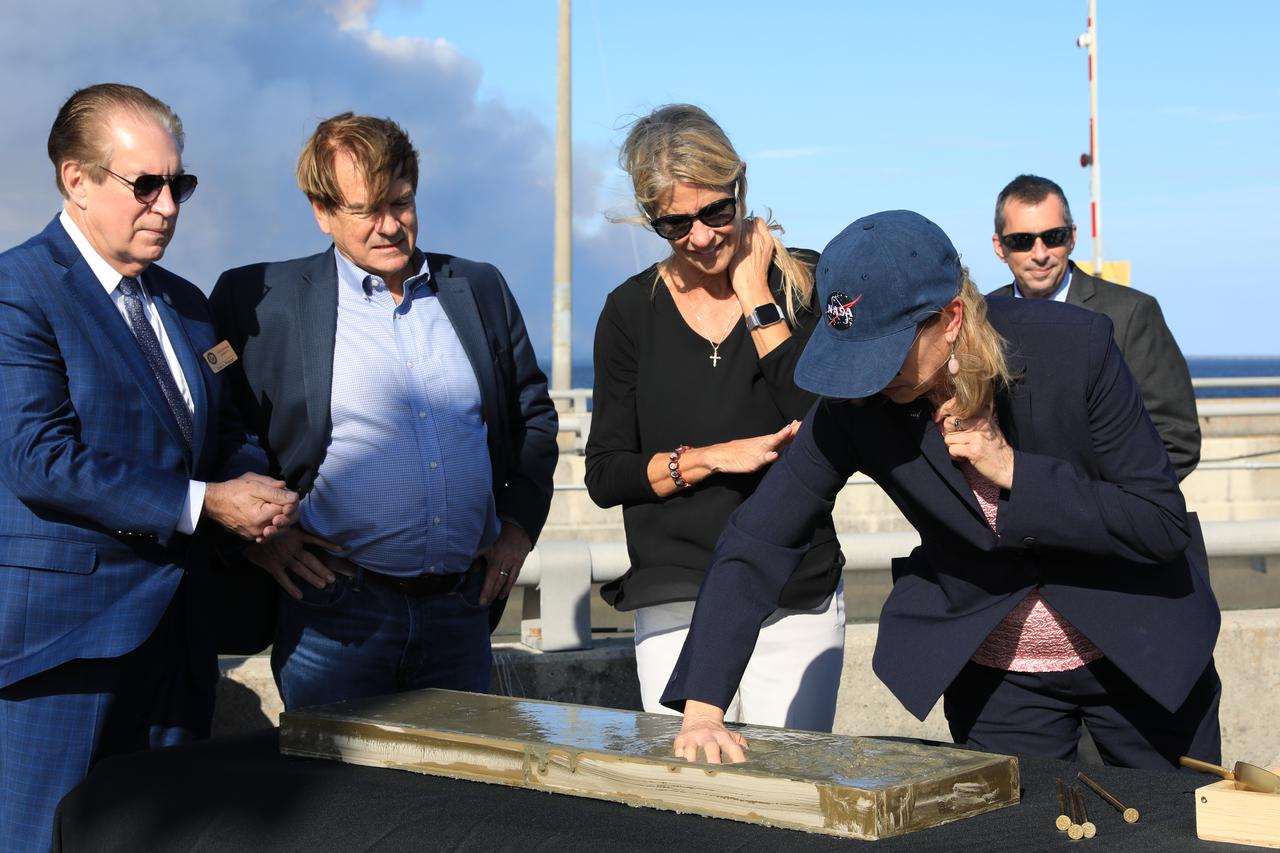
Center Director Janet Petro joins partners and elected officials for a groundbreaking ceremony on a new NASA Causeway bridge over the Indian River leading to NASA’s Kennedy Space Center on Merritt Island in Florida. The construction is made possible through a $90M Infrastructure for Rebuilding America (INFRA) grant, which was awarded thanks to an extensive effort by NASA, the State of Florida – through Florida Department of Transportation and Space Florida – as well as support from industry partners, other local, state, and federal government agencies. The new bridge enables Kennedy’s growth as a multi-user spaceport and will allow NASA to better support the space industry. Construction is scheduled to take several years. To commemorate the day, speakers left a handprint and signed their name in cement.
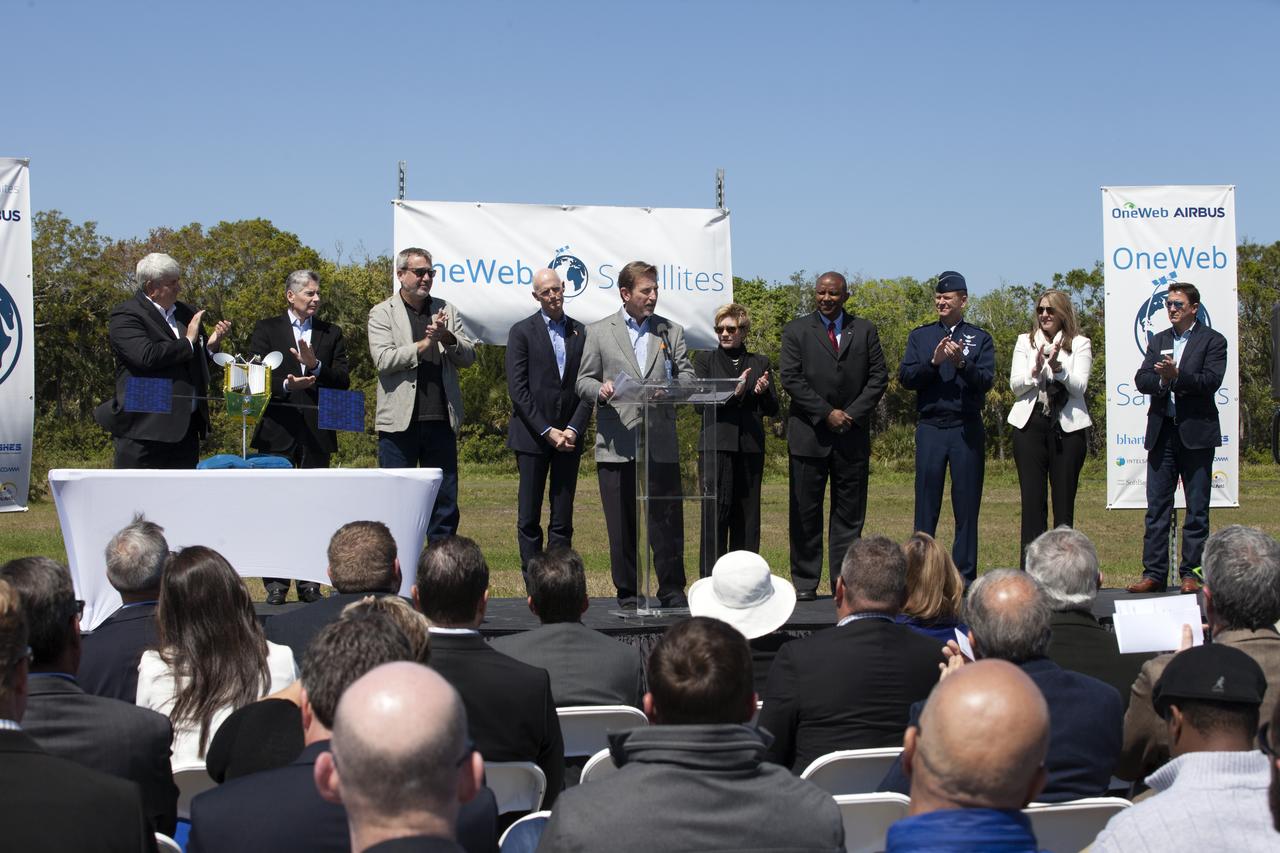
Dale Ketchum of Space Florida opens the groundbreaking ceremony at Kennedy's Exploration Park for OneWeb. The company, in partnership with Airbus, is building a 150,000-square-foot factory to manufacture satellites that will connect all areas of the world to the Internet wirelessly. Behind him are, from left, Jim Kuzma, COO of Space Florida; Mike Cosentino, president, Airbus Defense and Space; Brian Holz, CEO of OneWeb Satellites; Rick Scott, governor of Florida; Lynda Weatherman, president and CEO of the Economic Development Council of the Space Coast; Kelvin Manning, associate director of NASA's Kennedy Space Center; Gen. Wayne Monteith, commander of the 45th Space Wing of the U.S. Air Force; Cissy Procter, executive director of the Florida Department of Economic Activity; and John Saul, operations manager of Hensell-Phelps. Photo credit: NASA/Kim Shiflett
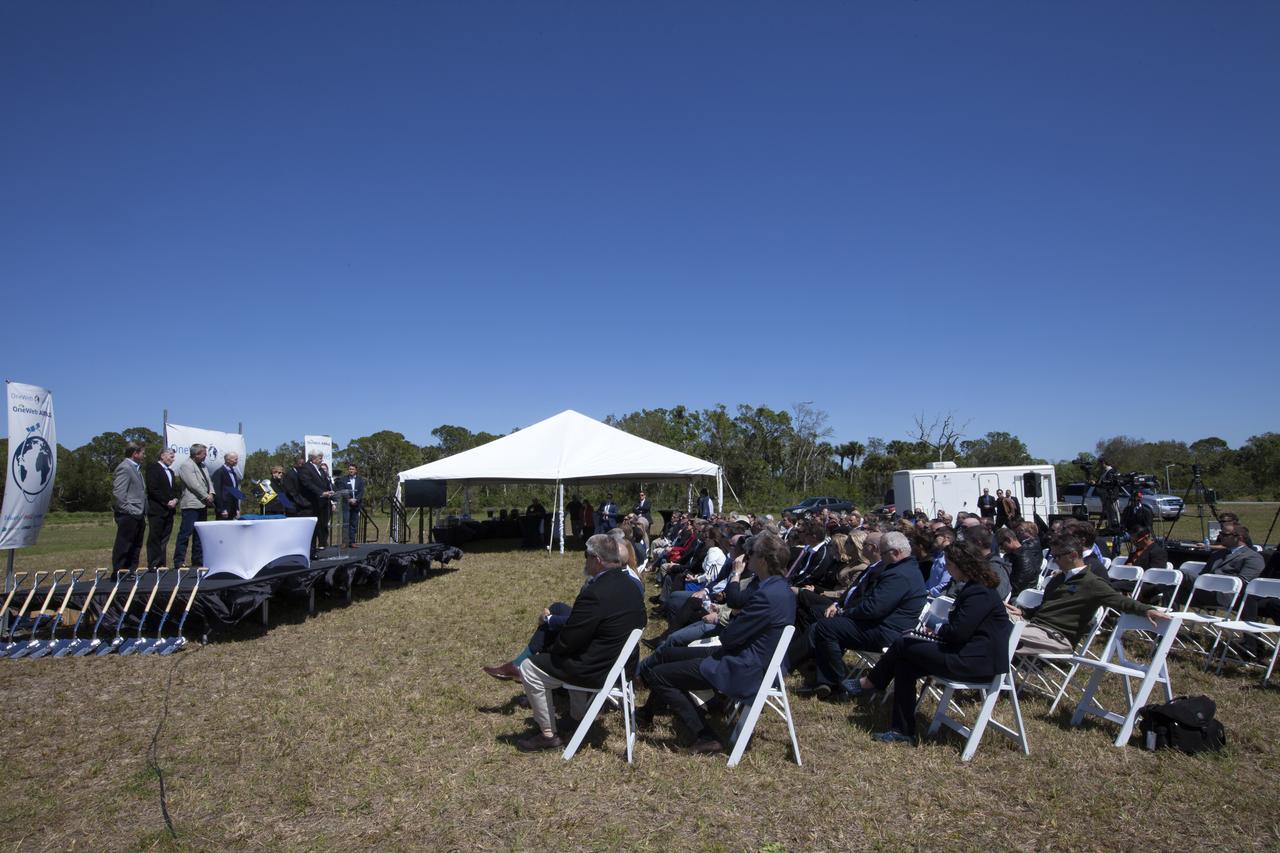
Jim Kuzma, COO of Space Florida, speaks during the groundbreaking ceremony at Kennedy's Exploration Park for OneWeb. The company, in partnership with Airbus, is building a 150,000-square-foot factory to manufacture satellites that will connect all areas of the world to the Internet wirelessly. Photo credit: NASA/Kim Shiflett
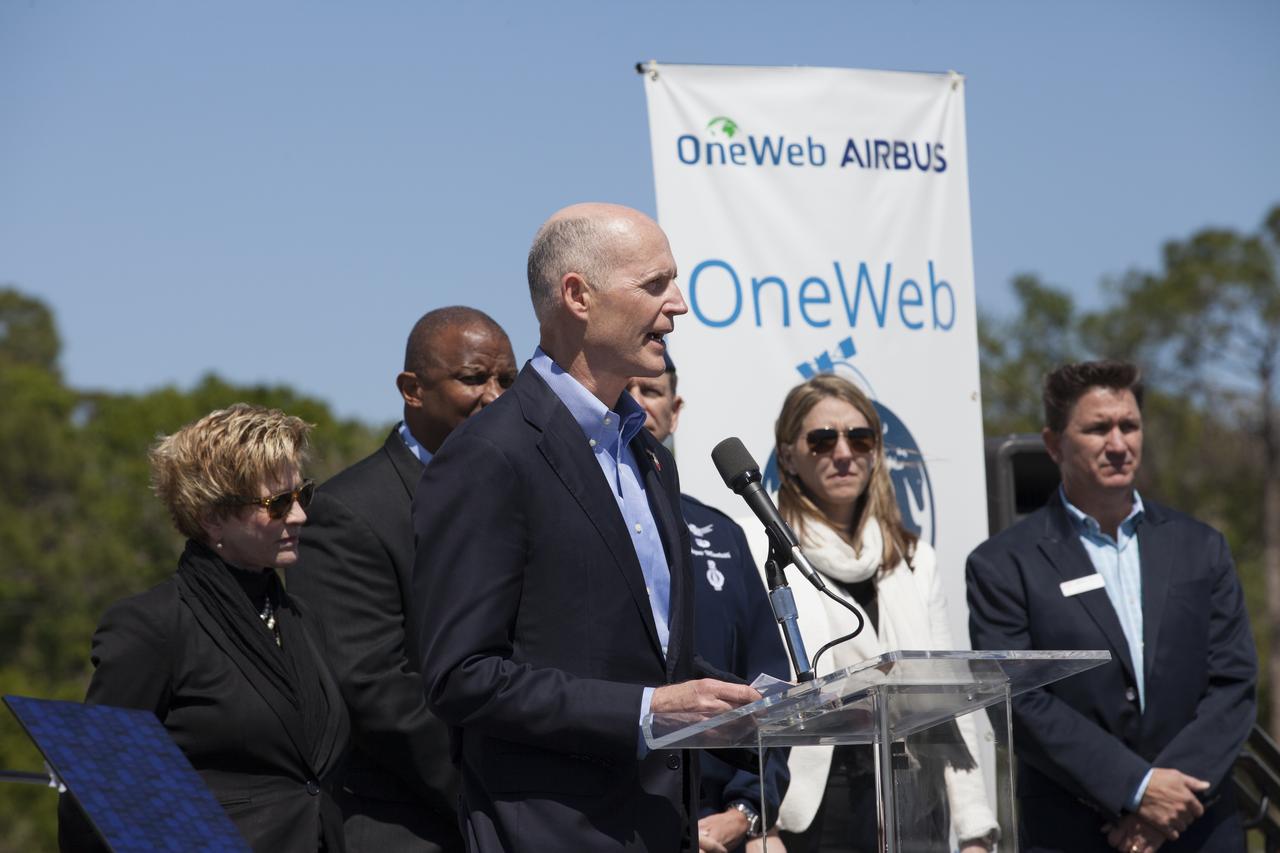
Florida Governor Rick Scott speaks during the groundbreaking ceremony at Kennedy's Exploration Park for OneWeb. The company, in partnership with Airbus, is building a 150,000-square-foot factory to manufacture satellites that will connect all areas of the world to the Internet wirelessly. Photo credit: NASA/Kim Shiflett

Commemorating the NACA Aircraft Engine Research Laboratory Ground Breaking Ceremony
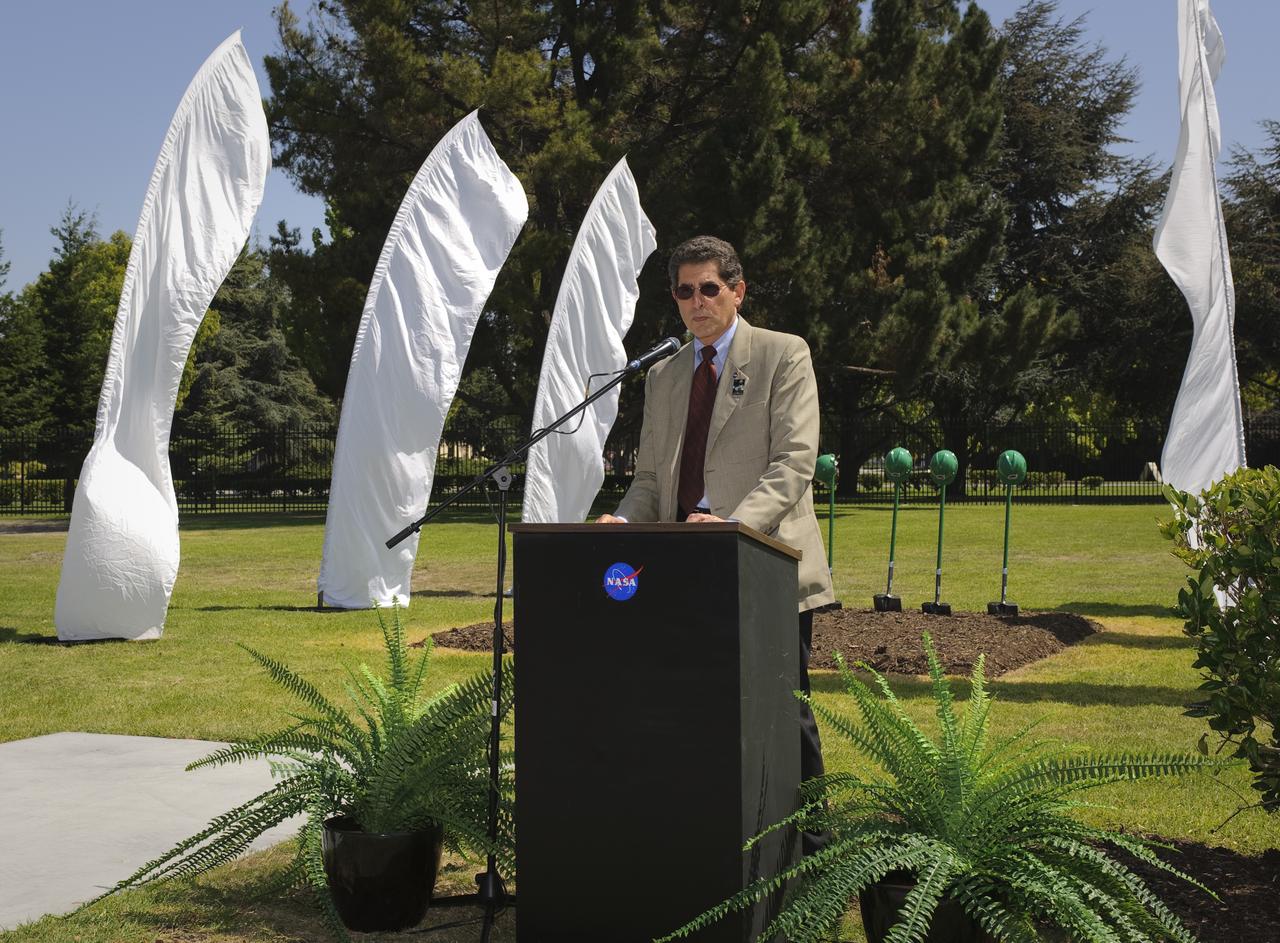
Sustainability Base Ground Breaking ceremony with Steve Zornetzer, Ames Associate Director
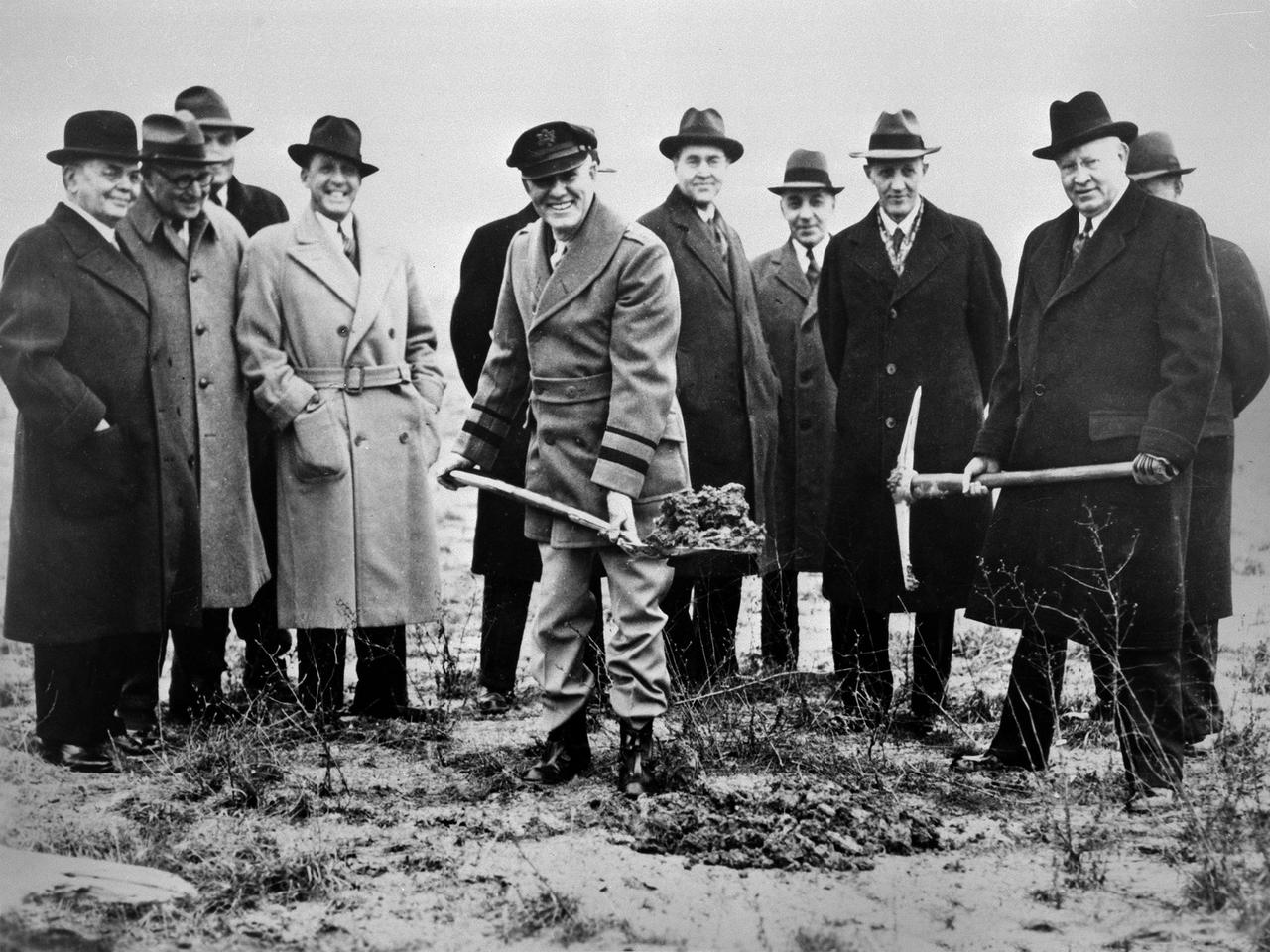
Local politicians and National Advisory Committee for Aeronautics (NACA) officials were on hand for the January 23, 1941 groundbreaking for the NACA’s Aircraft Engine Research Laboratory (AERL). The NACA was established in 1915 to coordinate the nation’s aeronautical research. The committee opened a research laboratory at Langley Field in 1920. By the late 1930s, however, European nations, Germany in particular, were building faster and higher flying aircraft. The NACA decided to expand with a new Ames Aeronautical Laboratory dedicated to high-speed flight and the AERL to handle engine-related research. The NACA examined a number of Midwest locations for its new engine lab before deciding on Cleveland. At the time, Cleveland possessed the nation’s most advanced airport, several key aircraft manufacturing companies, and was home to the National Air Races. Local officials were also able to broker a deal with the power company to discount its electricity rates if the large wind tunnels were operated overnight. The decision was made in October 1940, and the groundbreaking alongside the airport took place on January 23, 1941. From left to right: William Hopkins, John Berry, Ray Sharp, Frederick Crawford, George Brett, Edward Warner, Sydney Kraus, Edward Blythin, and George Lewis
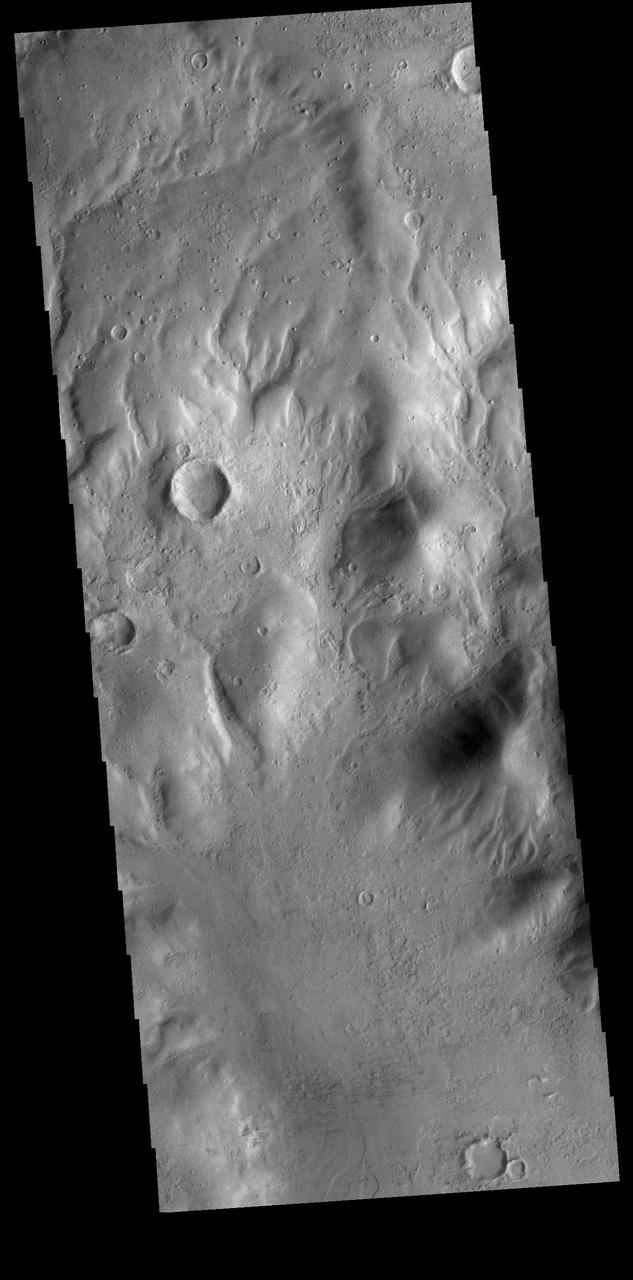
Today's VIS image shows several small channels. These channels are along the break in topography, that leads down into Argyre Planitia. Argyre Planitia and Hellas Planitia are deep basins in the southern hemisphere. Orbit Number: 74586 Latitude: -34.8073 Longitude: 318.916 Instrument: VIS Captured: 2018-10-07 16:02 https://photojournal.jpl.nasa.gov/catalog/PIA22857
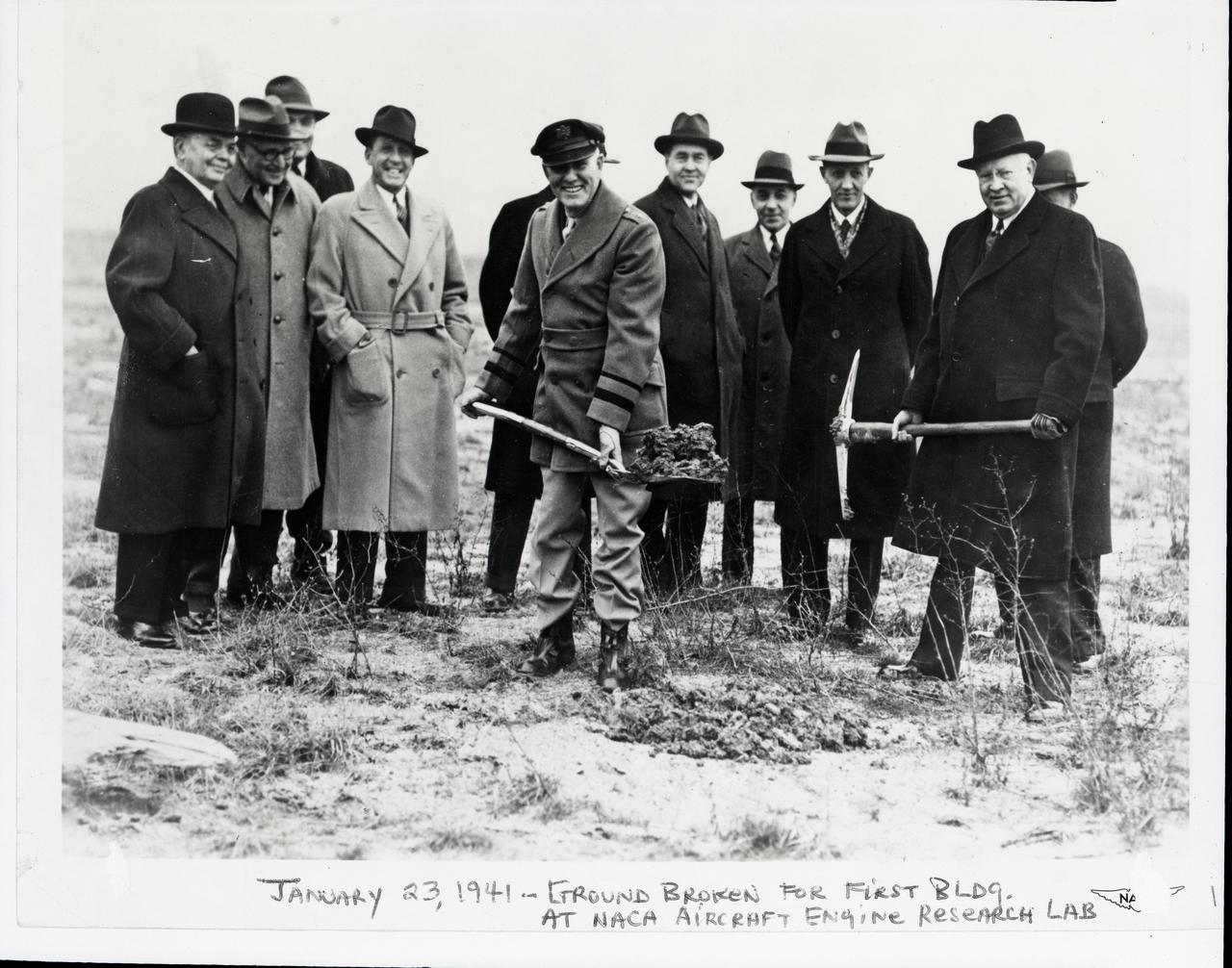
January 23, 1941 groundbreaking ceremony at the NACA Aircraft Engine Research Laboratory: left to right (does not include two individuals obscured from view behind Maj. Brett and Dr. Lewis): • William R. Hopkins – Cleveland City Manager from 1924-1930, was personally responsible for planning and acquiring the land for the Cleveland Airport. The airport’s huge capacity for handling aircraft was one factor in selecting Cleveland for the site of the research center. The Cleveland Airport was renamed Cleveland Hopkins airport in his honor in 1951. • Major John Berry – Cleveland Airport Manager • Edward R. Sharp – GRC’s first director, serving from 1942 to his retirement in 1961. He came to Cleveland in 1941 as the construction manager for the new facility. • Frederick C. Crawford – President of Thompson Products, which became the Thompson-Ramo-Woolridge Corporation (TRW) in 1958. Crawford was, at the time, also president of the Cleveland Chamber of Commerce. He began in 1939 to campaign for Cleveland as the location for the new NACA facility. • Major George H. Brett – A Cleveland native, Brett served in WWI and was commanding officer at Wright Field in Dayton, Ohio before becoming chief of the Army Air Corps. • Dr. Edward P. Warner – Acting chairman of the NACA. • Captain Sydney M. Kraus – Officer in charge of Navy procurement • Edward Blythin – Mayor of Cleveland • Dr. George Lewis – Director of Aeronautical Research for the NACA from 1924-1947, Lewis devoted his life to building a scientific basis for aeronautical engineering. The Cleveland laboratory was renamed the Lewis Flight Propulsion Laboratory in his honor in 1948. A description of the event, based on newspaper accounts and later NASA publications is as follows: On January 23, 1941, a brief groundbreaking ceremony at the site marked the start of construction. Dr. George W. Lewis, director of research for the NACA, loosened the soil with a
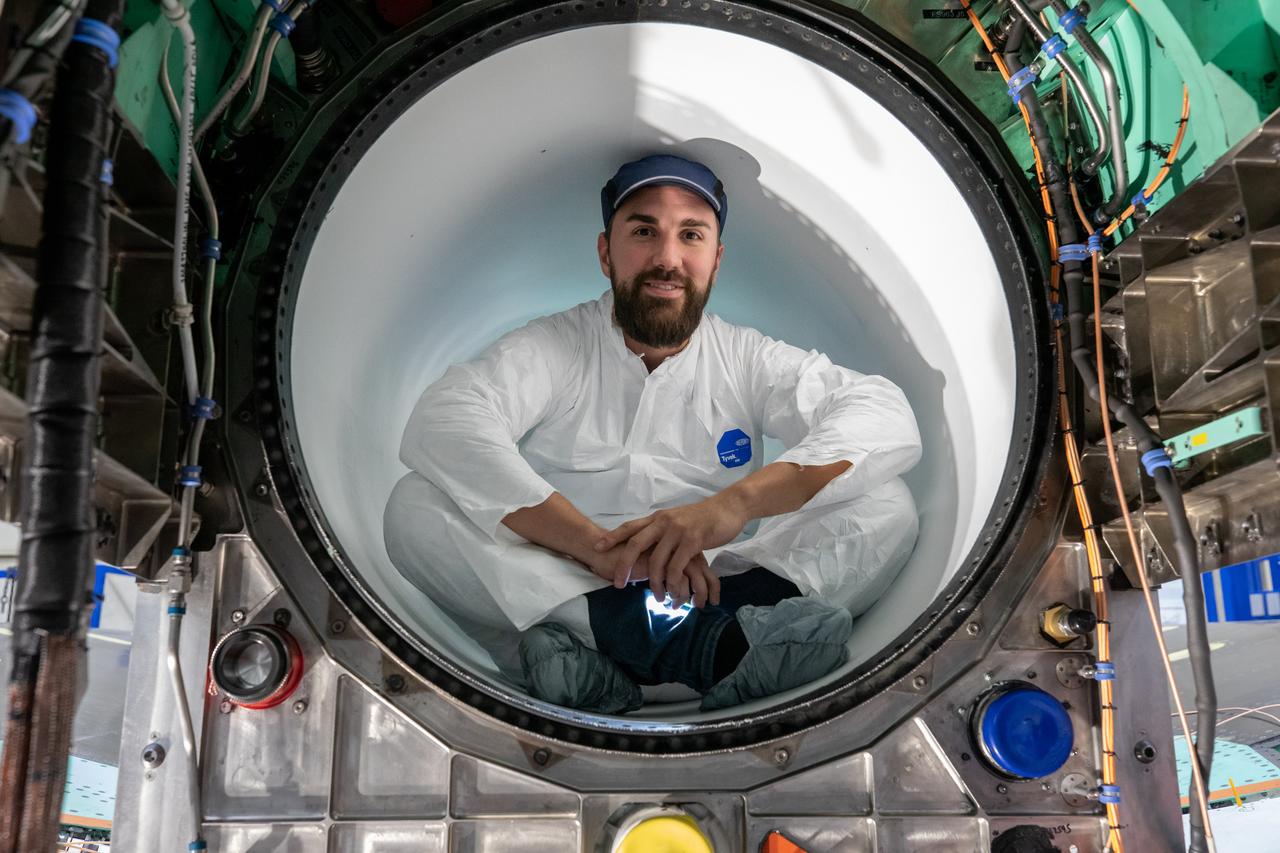
A Lockheed Martin Skunk Works technician takes a break for a photo. Note that the technician is wearing protective clean gear while sitting inside the X-59 engine inlet. Wearing this gear reduces the chance of any foreign objects from damaging the engine inlet.