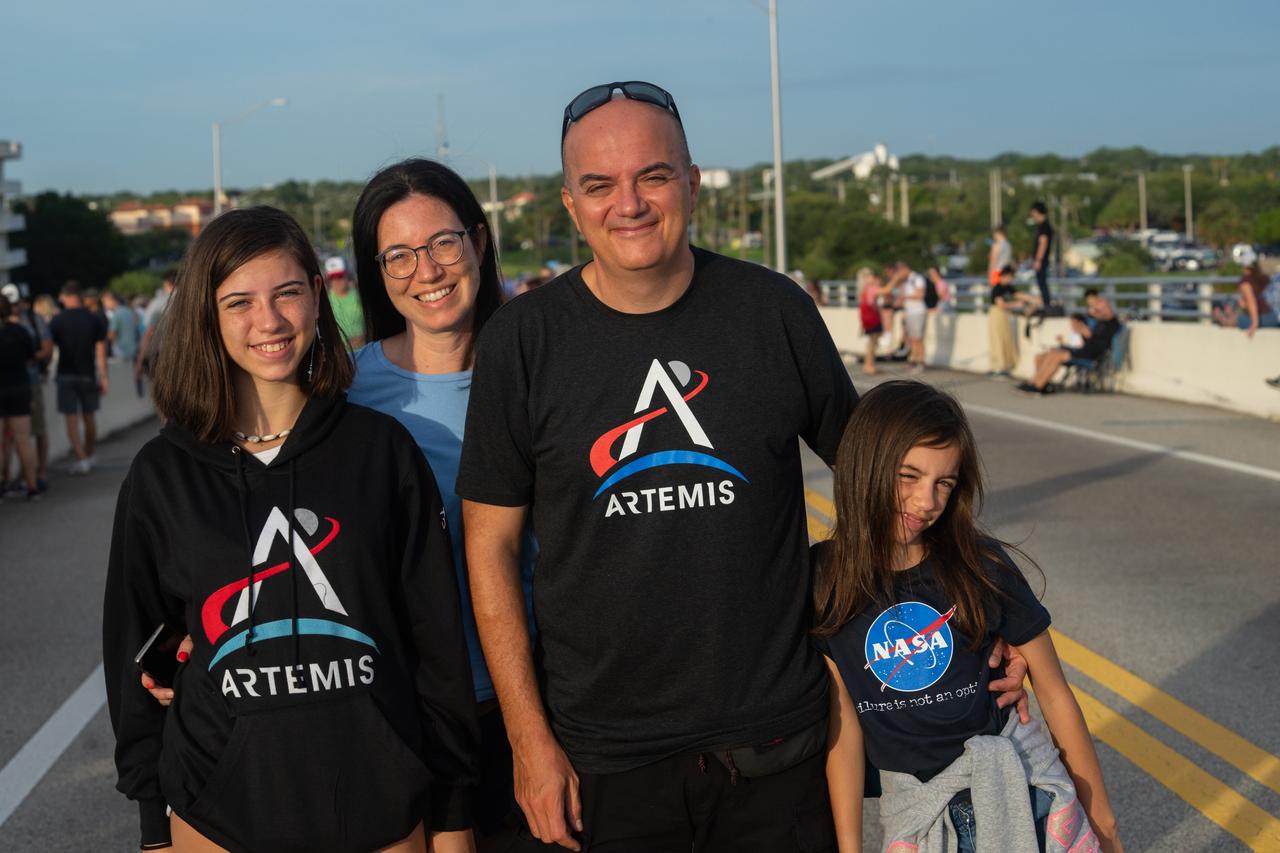
A family wearing NASA and Artemis shirts are on the Max Brewer Bridge in Titusville, Florida, to witness the launch of NASA’s Artemis I mission on Aug. 29, 2022. The launch was waved off for the day. The first in a series of increasingly complex missions, Artemis I will provide a foundation for human deep space exploration and demonstrate our commitment and capability to extend human presence to the Moon and beyond. The primary goal of Artemis I is to thoroughly test the integrated systems before crewed missions by operating the spacecraft in a deep space environment, testing Orion’s heat shield, and recovering the crew module after reentry, descent, and splashdown.
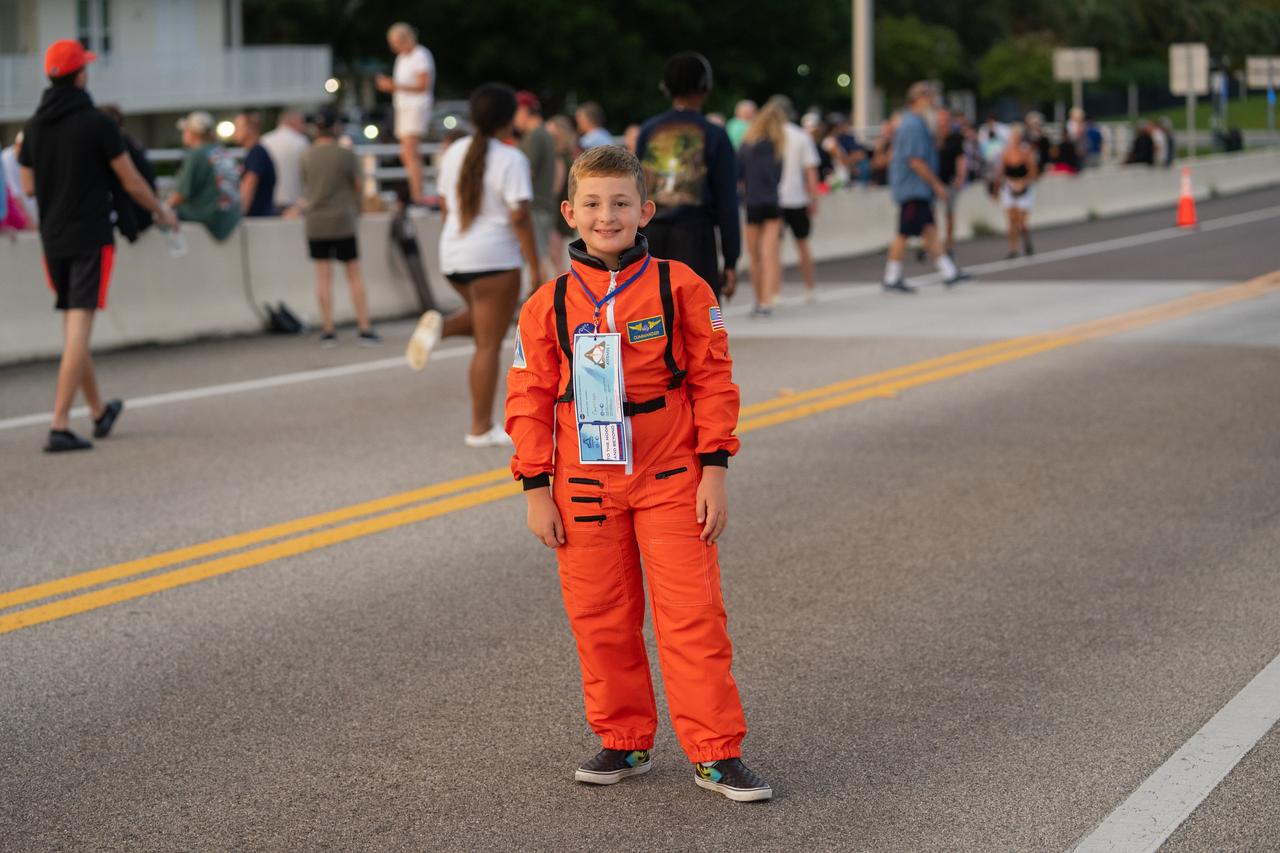
A young child dressed in an astronaut spacesuit is one of the spectators gathering on the Max Brewer Bridge in Titusville, Florida, to witness NASA’s Artemis I launch on Aug. 29, 2022. The launch was waved off for the day at the agency’s Kennedy Space Center. The first in a series of increasingly complex missions, Artemis I will provide a foundation for human deep space exploration and demonstrate our commitment and capability to extend human presence to the Moon and beyond. The primary goal of Artemis I is to thoroughly test the integrated systems before crewed missions by operating the spacecraft in a deep space environment, testing Orion’s heat shield, and recovering the crew module after reentry, descent, and splashdown.

A young child waving an Artemis flag poses with members of the Titusville Police Dept. on the Max Brewer Bridge on Aug. 29, 2022, during Artemis I countdown festivities. The launch was waved off for the day at the agency’s Kennedy Space Center. The first in a series of increasingly complex missions, Artemis I will provide a foundation for human deep space exploration and demonstrate our commitment and capability to extend human presence to the Moon and beyond. The primary goal of Artemis I is to thoroughly test the integrated systems before crewed missions by operating the spacecraft in a deep space environment, testing Orion’s heat shield, and recovering the crew module after reentry, descent, and splashdown.

Dr. von Braun was honored with a series of farewell events and ceremonies prior to his reassignment to NASA Headquarters in Washington, D.C. Dr. von Braun speaks to the crowd in front of the Madison County Courthouse in Huntsville, Alabama. Alabama Governor Brewer and U.S. Senator Sparkman are in the foreground.

In 1970 Marshall Space Flight Center (MSFC) Director Dr. Wernher von Braun (right) was reassigned to NASA Headquarters to serve as Deputy Associate Administrator for Plarning. Prior to his transfer, Dr. von Braun was honored for his career in Huntsville, Alabama, with the celebration of "Wernher von Braun Day." Among those participating were Alabama Governor Albert Brewer (left) and Alabama Senator John Sparkman (center). (Courtesy of Huntsville/Madison County Public library)
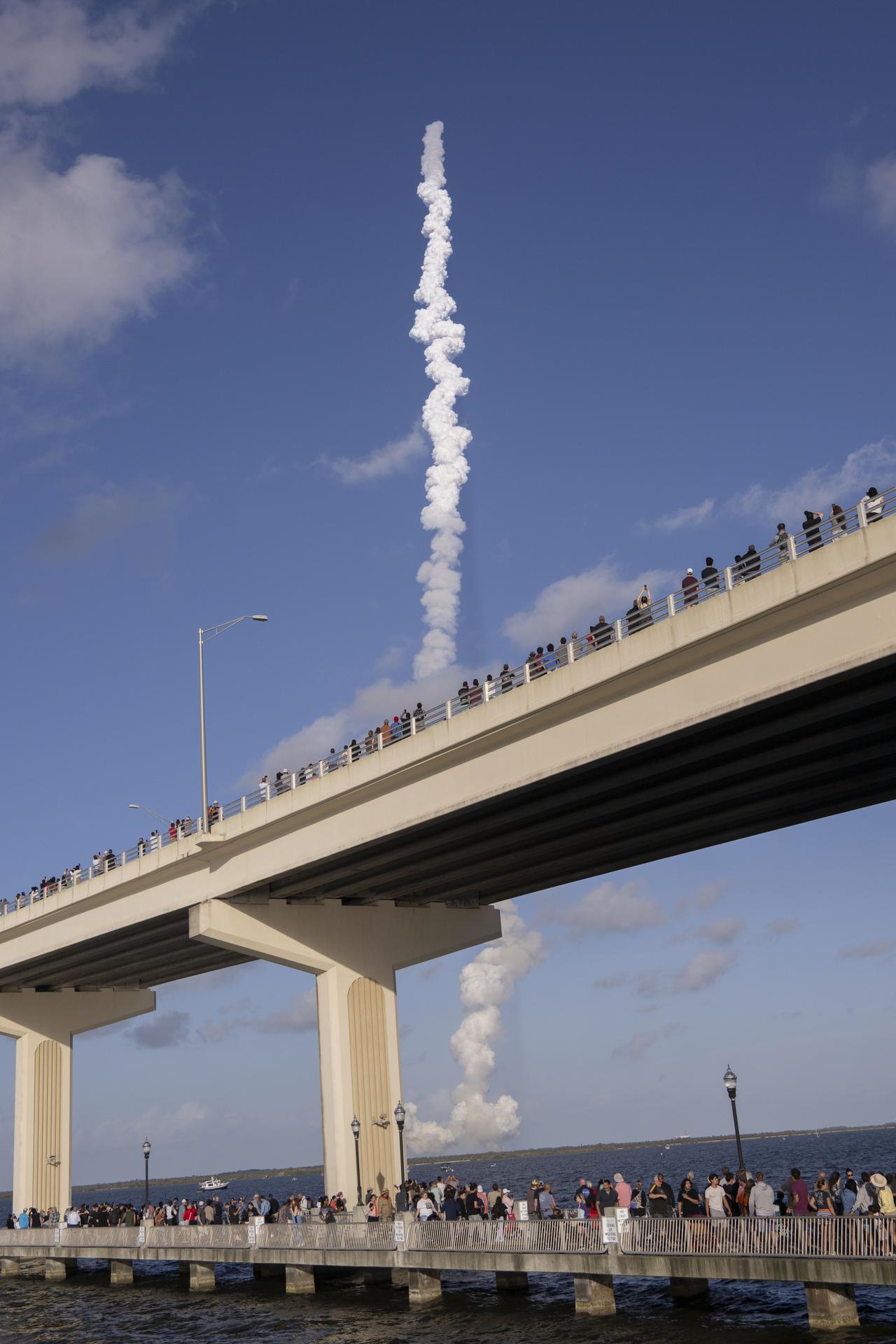
Crowds gather at the Max A. Brewer Bridge in Titusville to watch the launch of NASA’s SLS (Space Launch System) rocket with the Orion spacecraft carrying Artemis II Commander Reid Wiseman, Pilot Victor Glover, and Mission Specialist Christina Koch from NASA, along with Mission Specialist Jeremy Hansen from the CSA (Canadian Space Agency), on Wednesday, April 1, 2026, from Launch Complex 39B at NASA Kennedy. The Artemis II test flight will take the crew members on a 10-day journey around the Moon and back.
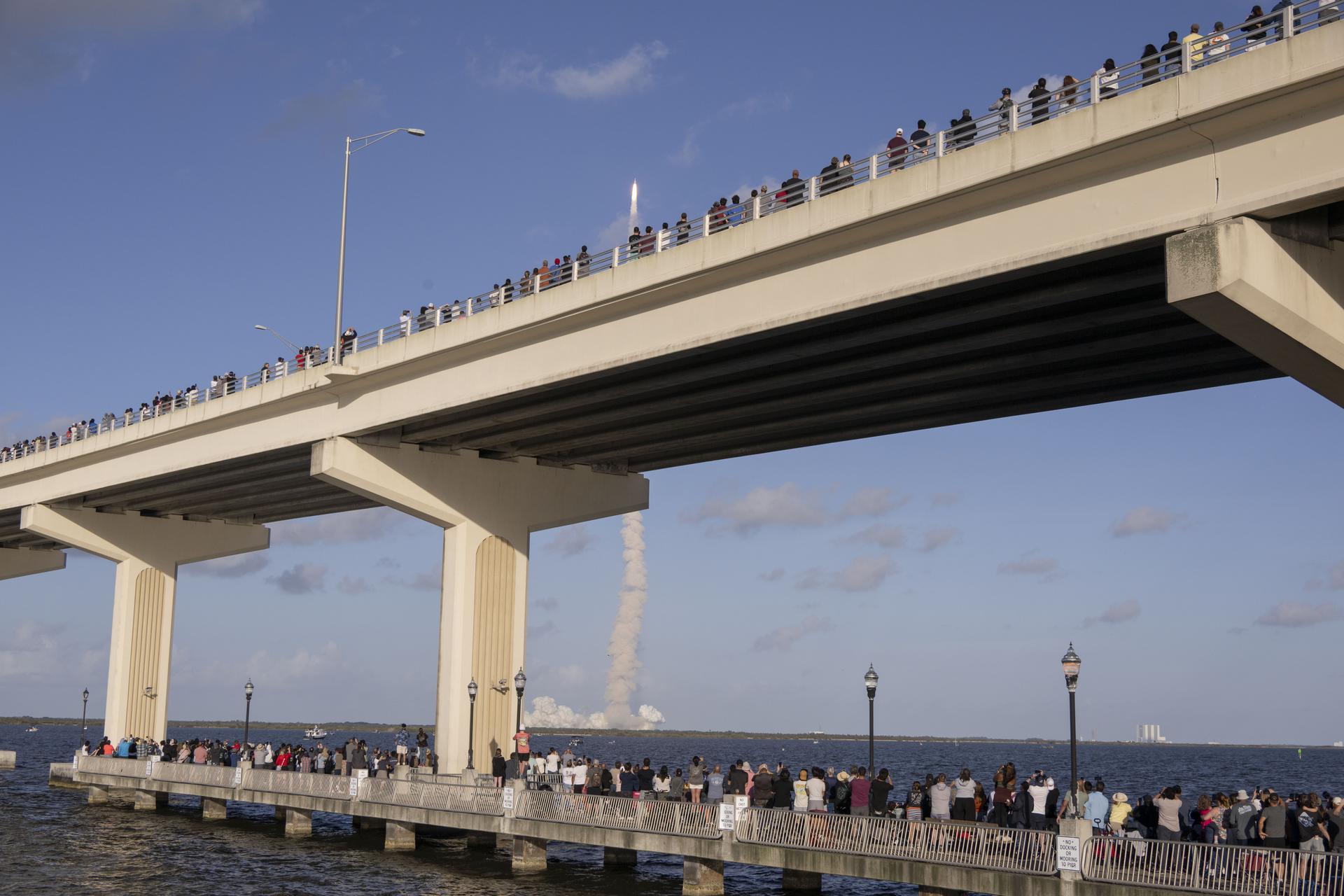
Crowds gather at the Max A. Brewer Bridge in Titusville to watch the launch of NASA’s SLS (Space Launch System) rocket with the Orion spacecraft carrying Artemis II Commander Reid Wiseman, Pilot Victor Glover, and Mission Specialist Christina Koch from NASA, along with Mission Specialist Jeremy Hansen from the CSA (Canadian Space Agency), on Wednesday, April 1, 2026, from Launch Complex 39B at NASA Kennedy. The Artemis II test flight will take the crew members on a 10-day journey around the Moon and back.
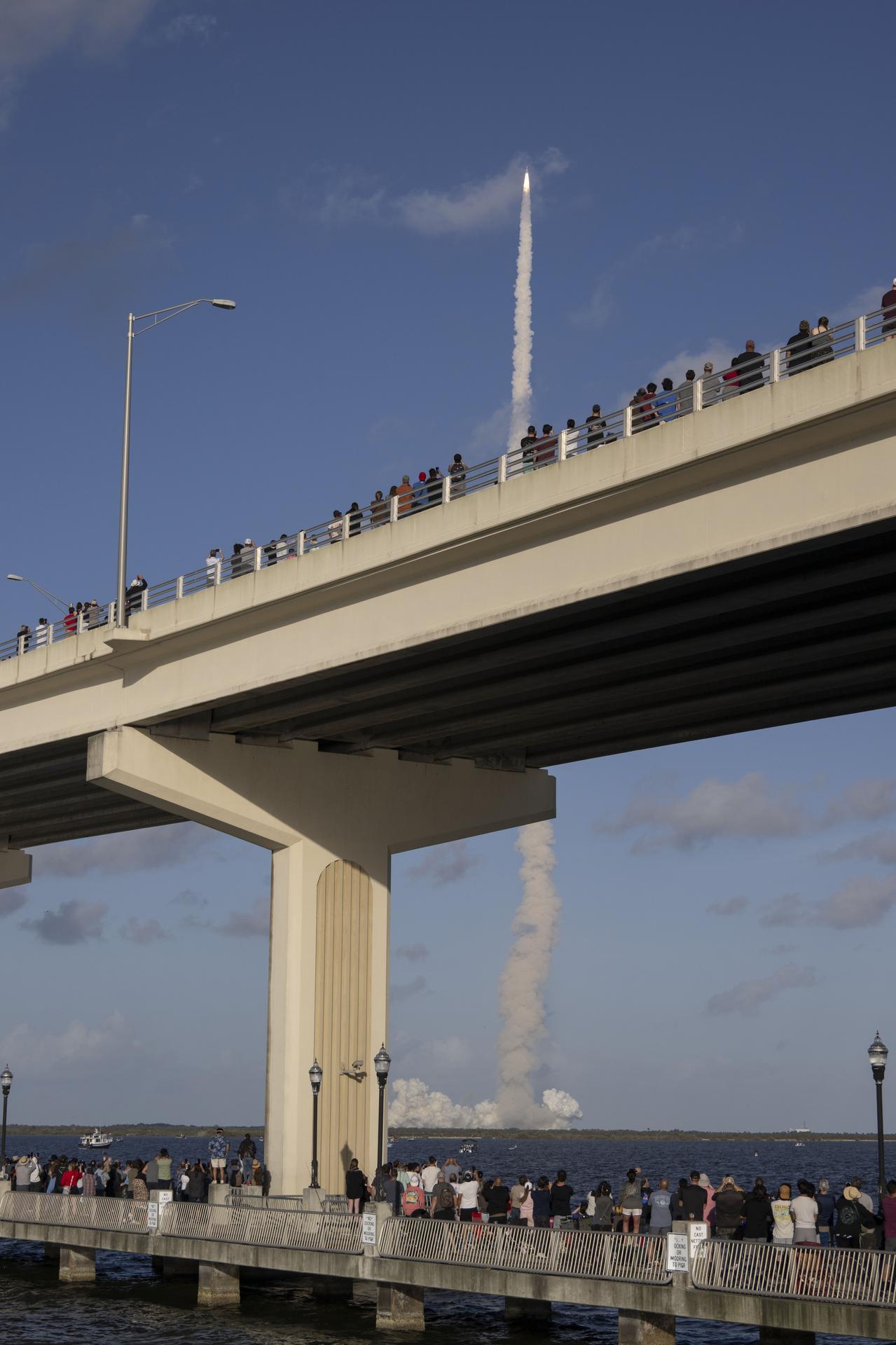
Crowds gather at the Max A. Brewer Bridge in Titusville to watch the launch of NASA’s SLS (Space Launch System) rocket with the Orion spacecraft carrying Artemis II Commander Reid Wiseman, Pilot Victor Glover, and Mission Specialist Christina Koch from NASA, along with Mission Specialist Jeremy Hansen from the CSA (Canadian Space Agency), on Wednesday, April 1, 2026, from Launch Complex 39B at NASA Kennedy. The Artemis II test flight will take the crew members on a 10-day journey around the Moon and back.
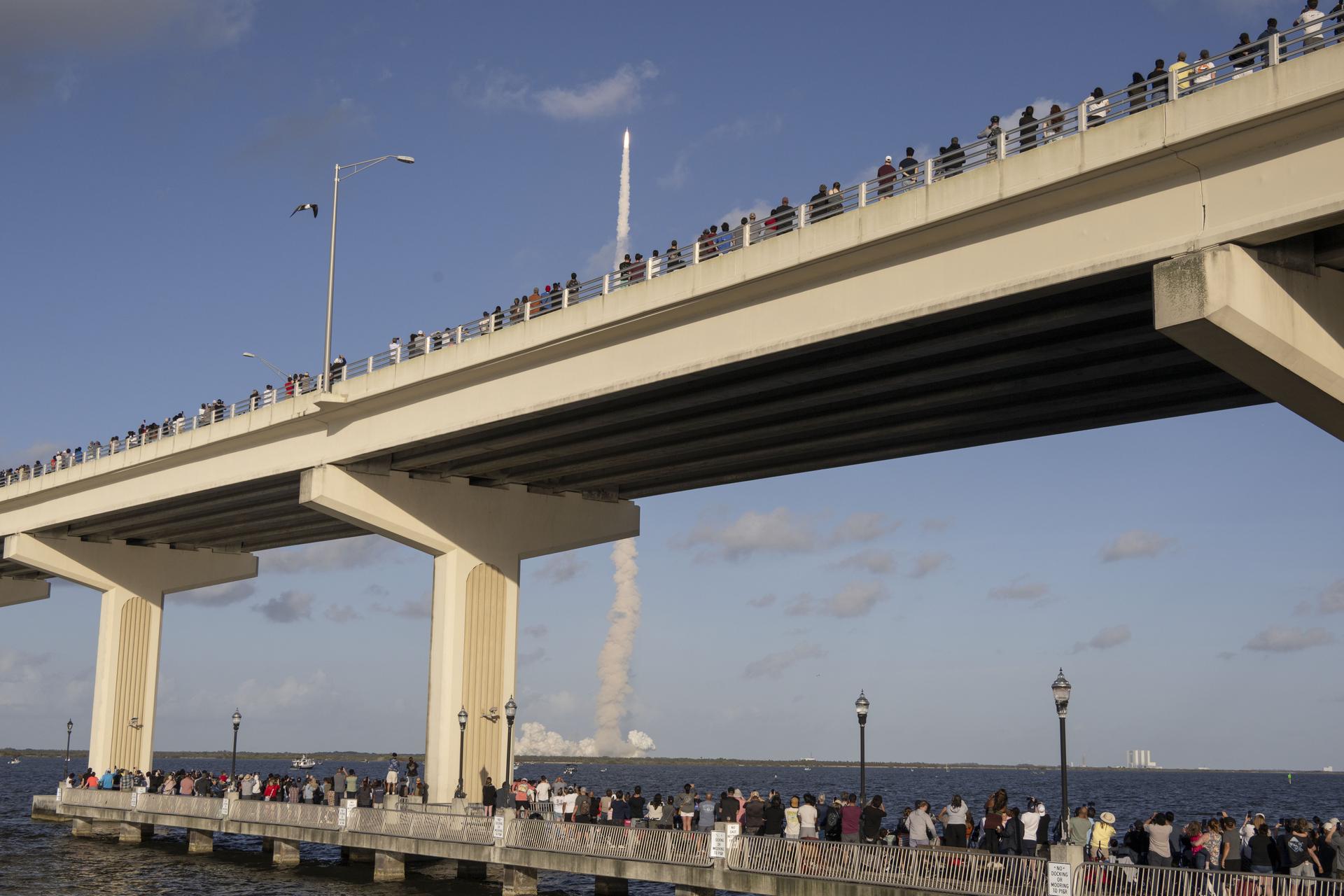
Crowds gather at the Max A. Brewer Bridge in Titusville to watch the launch of NASA’s SLS (Space Launch System) rocket with the Orion spacecraft carrying Artemis II Commander Reid Wiseman, Pilot Victor Glover, and Mission Specialist Christina Koch from NASA, along with Mission Specialist Jeremy Hansen from the CSA (Canadian Space Agency), on Wednesday, April 1, 2026, from Launch Complex 39B at NASA Kennedy. The Artemis II test flight will take the crew members on a 10-day journey around the Moon and back.
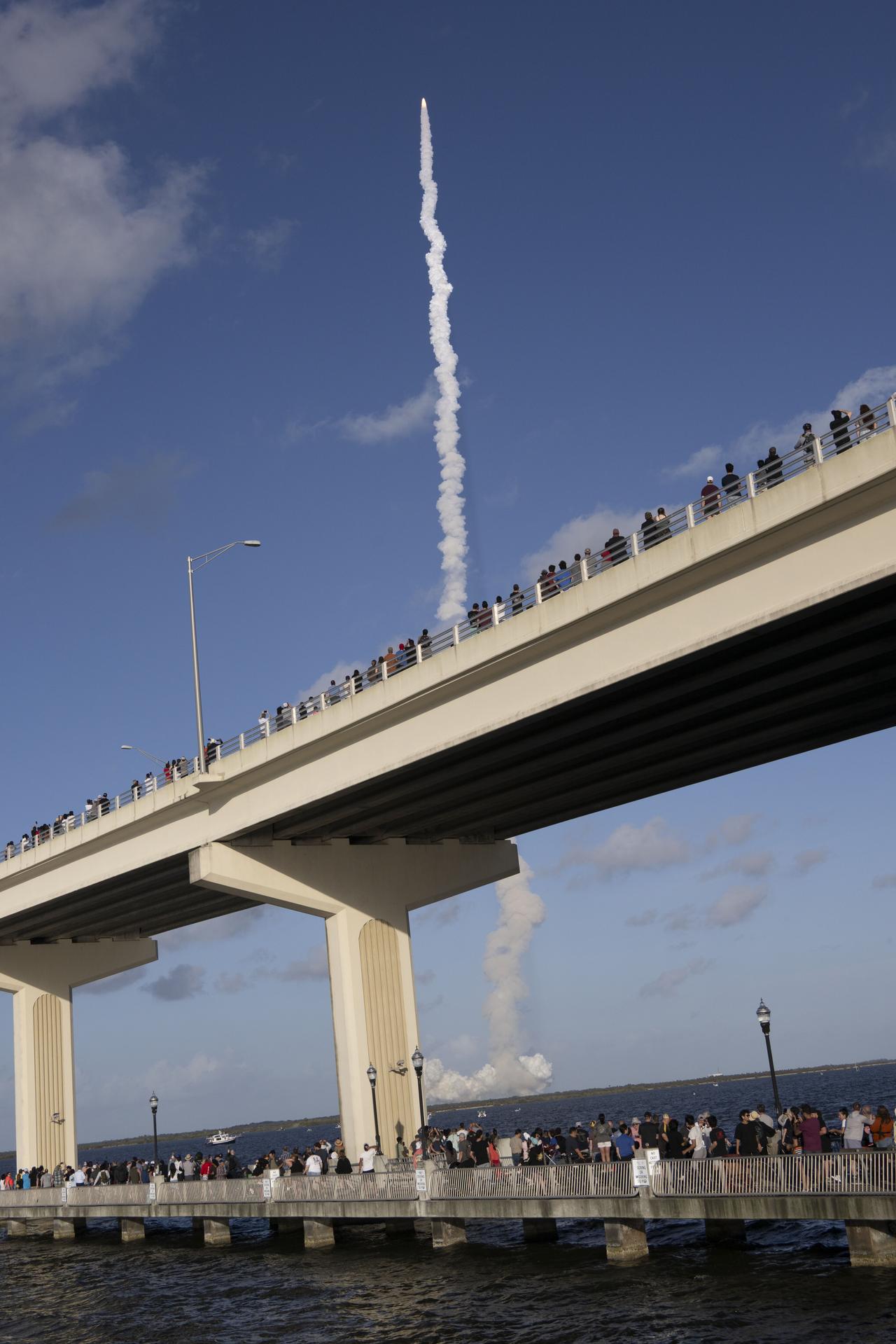
Crowds gather at the Max A. Brewer Bridge in Titusville to watch the launch of NASA’s SLS (Space Launch System) rocket with the Orion spacecraft carrying Artemis II Commander Reid Wiseman, Pilot Victor Glover, and Mission Specialist Christina Koch from NASA, along with Mission Specialist Jeremy Hansen from the CSA (Canadian Space Agency), on Wednesday, April 1, 2026, from Launch Complex 39B at NASA Kennedy. The Artemis II test flight will take the crew members on a 10-day journey around the Moon and back.
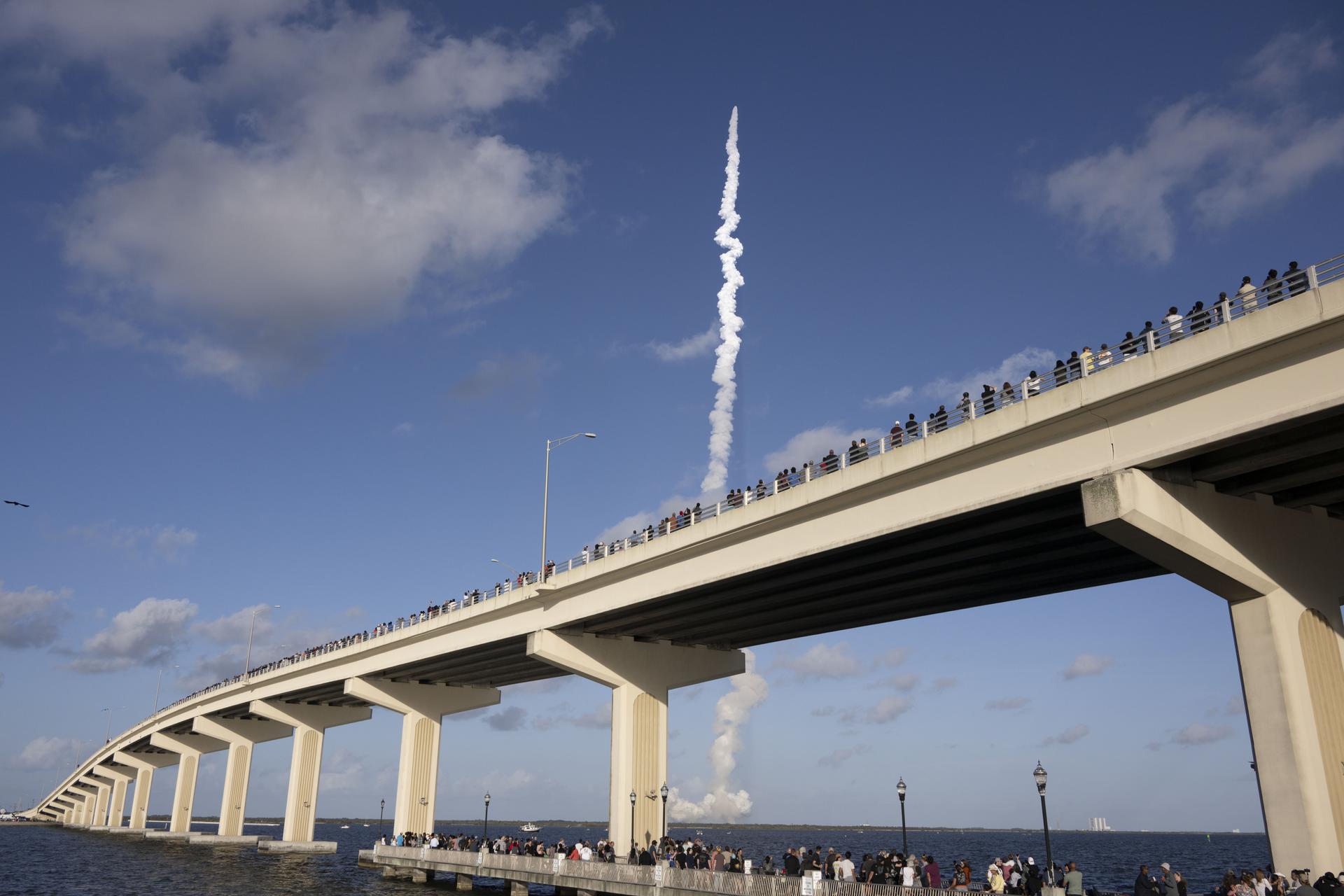
Crowds gather at the Max A. Brewer Bridge in Titusville to watch the launch of NASA’s SLS (Space Launch System) rocket with the Orion spacecraft carrying Artemis II Commander Reid Wiseman, Pilot Victor Glover, and Mission Specialist Christina Koch from NASA, along with Mission Specialist Jeremy Hansen from the CSA (Canadian Space Agency), on Wednesday, April 1, 2026, from Launch Complex 39B at NASA Kennedy. The Artemis II test flight will take the crew members on a 10-day journey around the Moon and back.
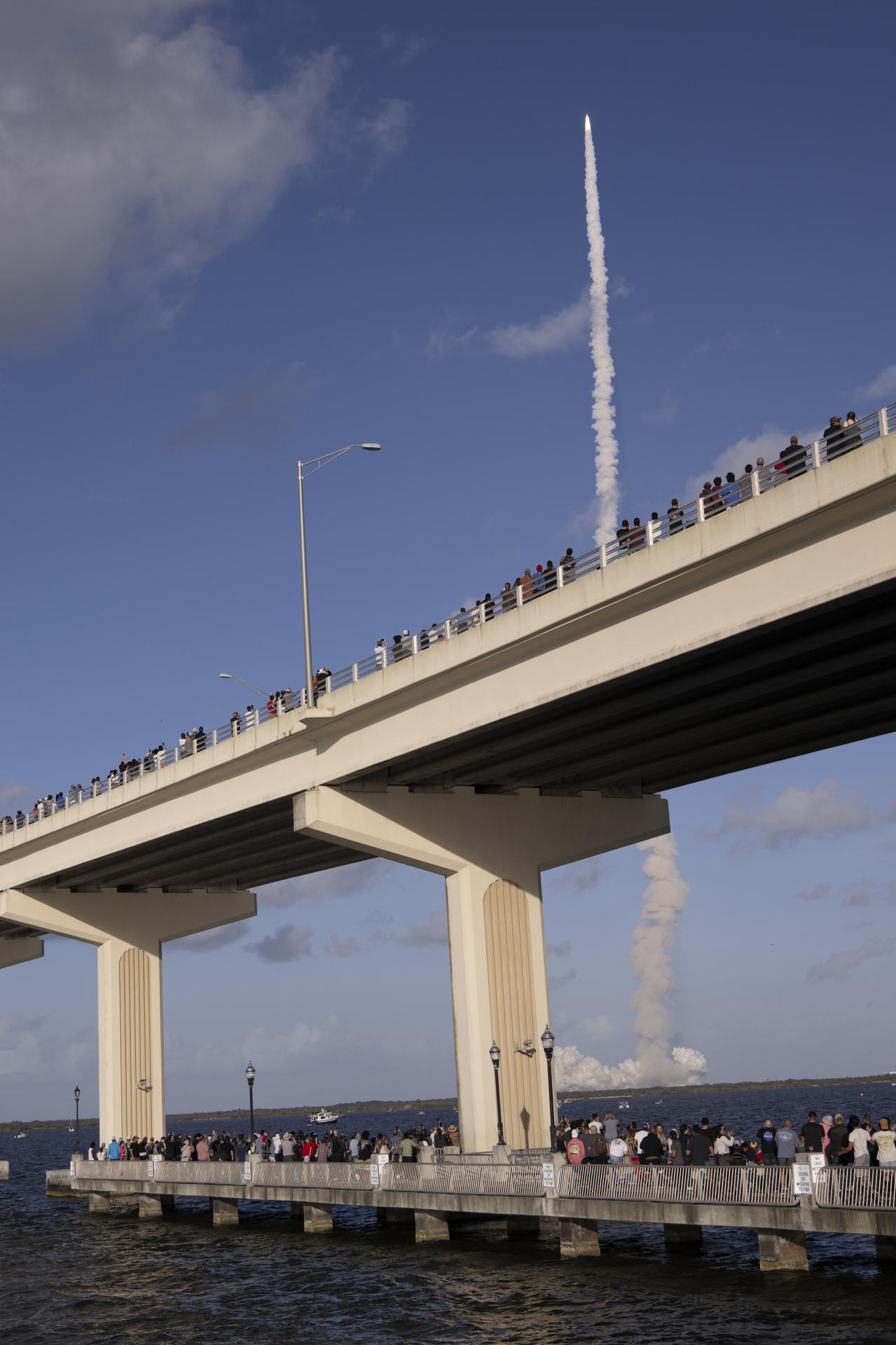
Crowds gather at the Max A. Brewer Bridge in Titusville to watch the launch of NASA’s SLS (Space Launch System) rocket with the Orion spacecraft carrying Artemis II Commander Reid Wiseman, Pilot Victor Glover, and Mission Specialist Christina Koch from NASA, along with Mission Specialist Jeremy Hansen from the CSA (Canadian Space Agency), on Wednesday, April 1, 2026, from Launch Complex 39B at NASA Kennedy. The Artemis II test flight will take the crew members on a 10-day journey around the Moon and back.
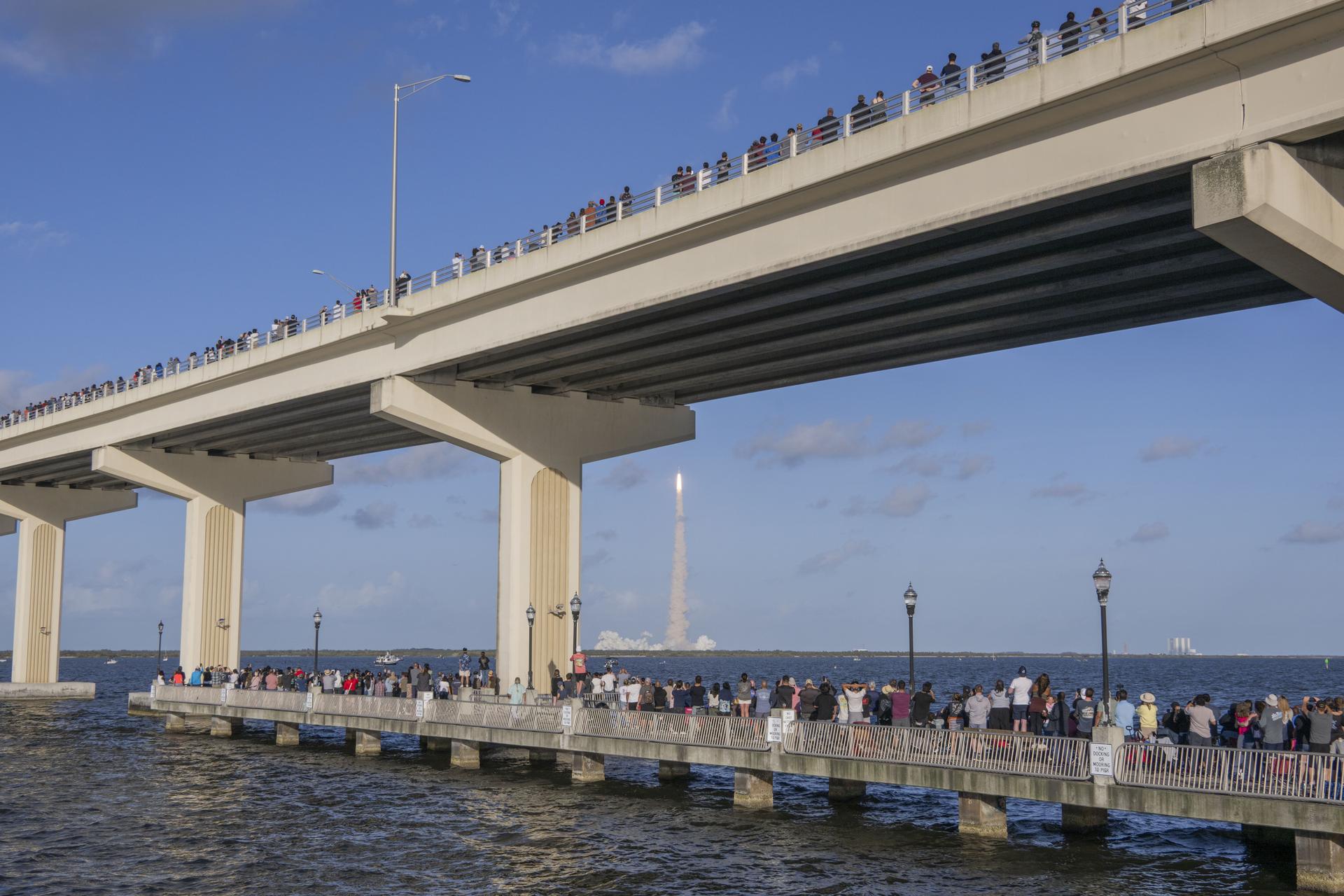
Crowds gather at the Max A. Brewer Bridge in Titusville to watch the launch of NASA’s SLS (Space Launch System) rocket with the Orion spacecraft carrying Artemis II Commander Reid Wiseman, Pilot Victor Glover, and Mission Specialist Christina Koch from NASA, along with Mission Specialist Jeremy Hansen from the CSA (Canadian Space Agency), on Wednesday, April 1, 2026, from Launch Complex 39B at NASA Kennedy. The Artemis II test flight will take the crew members on a 10-day journey around the Moon and back.
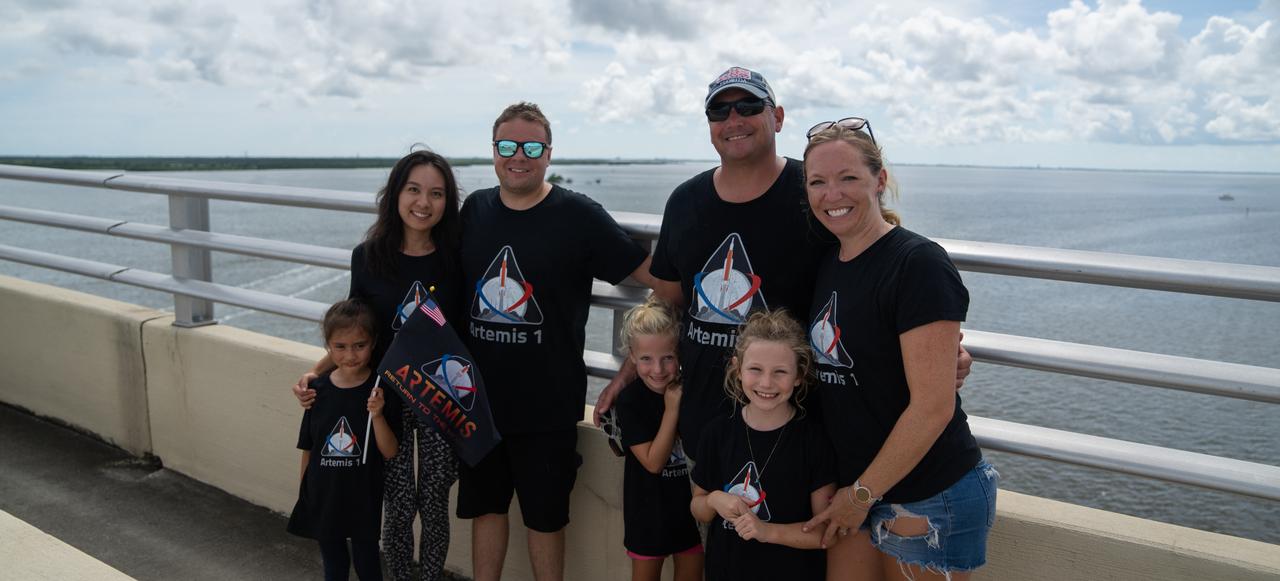
A family wearing matching Artemis shirts are on the Max Brewer Bridge in Titusville, Florida, to witness the launch of NASA’s Artemis I mission on Sept. 3, 2022. The launch was waived off for the day. The first in a series of increasingly complex missions, Artemis I will provide a foundation for human deep space exploration and demonstrate our commitment and capability to extend human presence to the Moon and beyond. The primary goal of Artemis I is to thoroughly test the integrated systems before crewed missions by operating the spacecraft in a deep space environment, testing Orion’s heat shield, and recovering the crew module after reentry, descent, and splashdown.

A group of young children with an Artemis flag are photographed on the Max Brewer Bridge in Titusville, Florida, as they wait to watch the launch of NASA’s Artemis I mission on Sept. 3, 2022. The launch was waived off for the day. The first in a series of increasingly complex missions, Artemis I will provide a foundation for human deep space exploration and demonstrate our commitment and capability to extend human presence to the Moon and beyond. The primary goal of Artemis I is to thoroughly test the integrated systems before crewed missions by operating the spacecraft in a deep space environment, testing Orion’s heat shield, and recovering the crew module after reentry, descent, and splashdown.
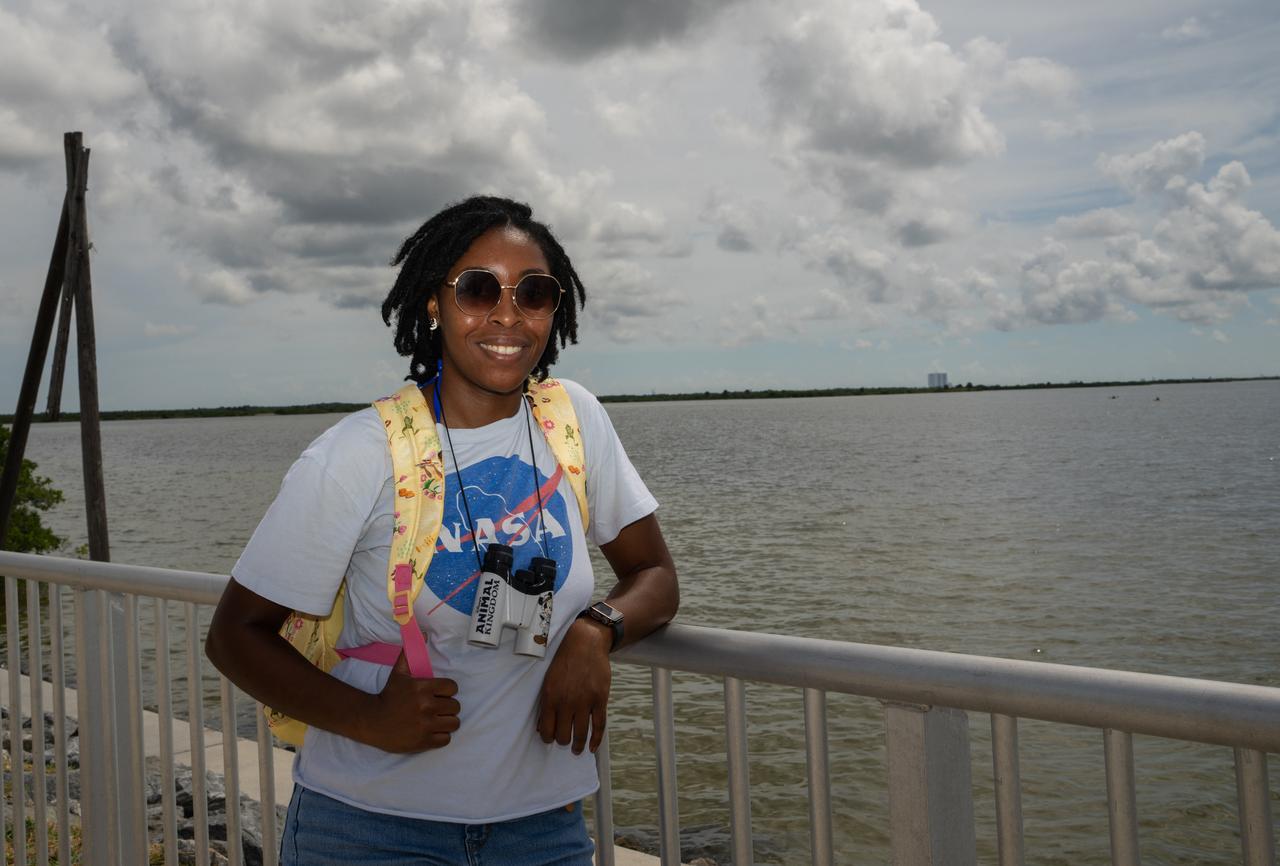
A woman wearing a NASA shirt is on the Max Brewer Bridge in Titusville, Florida, waiting to witness the launch of NASA’s Artemis I mission on Sept. 3, 2022. The launch was waived off for the day. The first in a series of increasingly complex missions, Artemis I will provide a foundation for human deep space exploration and demonstrate our commitment and capability to extend human presence to the Moon and beyond. The primary goal of Artemis I is to thoroughly test the integrated systems before crewed missions by operating the spacecraft in a deep space environment, testing Orion’s heat shield, and recovering the crew module after reentry, descent, and splashdown.
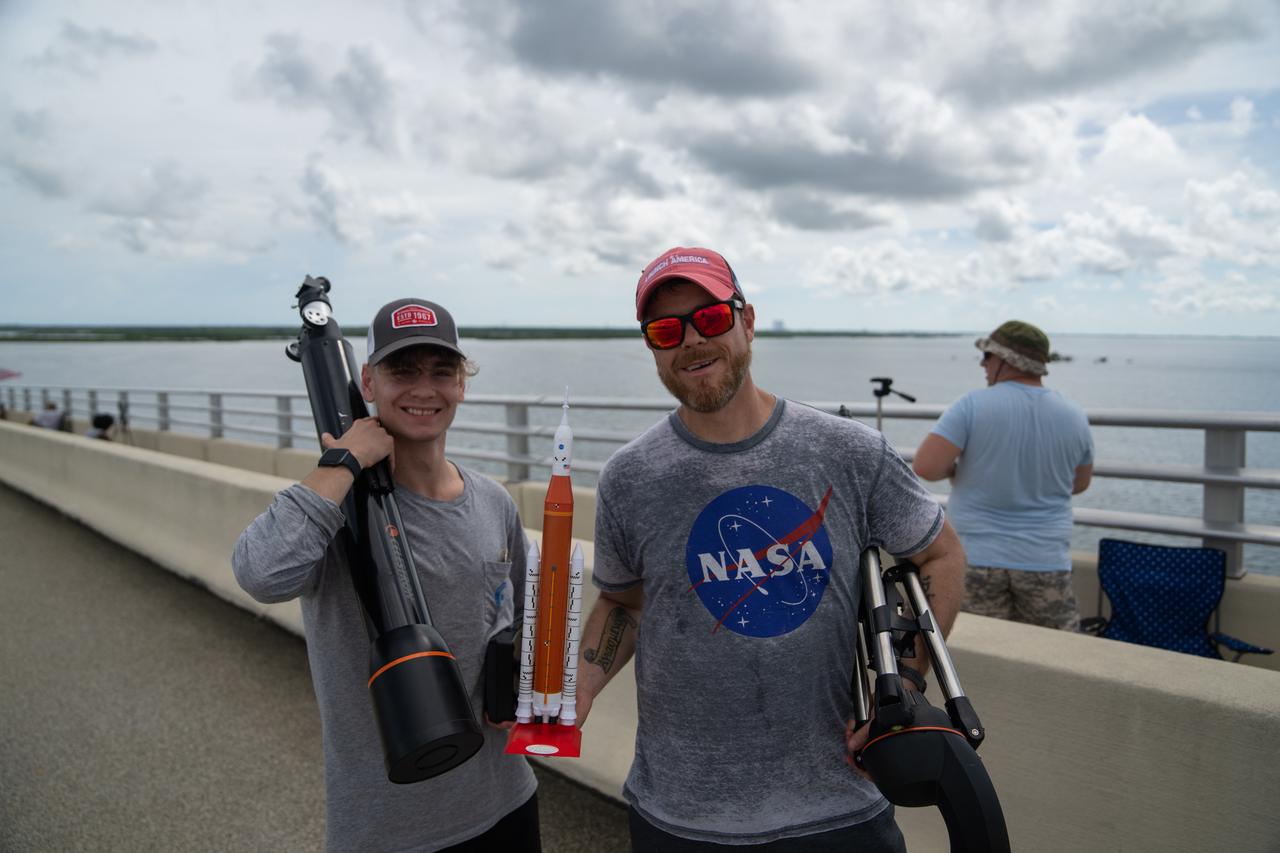
Two individuals wearing NASA shirts and holding a model Space Launch System rocket are on the Max Brewer Bridge in Titusville, Florida, to witness the launch of NASA’s Artemis I mission on Sept. 3, 2022. The launch was waived off for the day. The first in a series of increasingly complex missions, Artemis I will provide a foundation for human deep space exploration and demonstrate our commitment and capability to extend human presence to the Moon and beyond. The primary goal of Artemis I is to thoroughly test the integrated systems before crewed missions by operating the spacecraft in a deep space environment, testing Orion’s heat shield, and recovering the crew module after reentry, descent, and splashdown.

The rising Sun illuminates the sky on Tuesday, March 24, 2026, as NASA’s Artemis II SLS (Space Launch System) rocket and Orion spacecraft stand vertical at Launch Complex 39B at NASA’s Kennedy Space Center in Florida. The Artemis II test flight will take Commander Reid Wiseman, Pilot Victor Glover, and Mission Specialist Christina Koch from NASA, and Mission Specialist Jeremy Hansen from the CSA (Canadian Space Agency), around the Moon and back to Earth with launch opportunities beginning in April 2026.
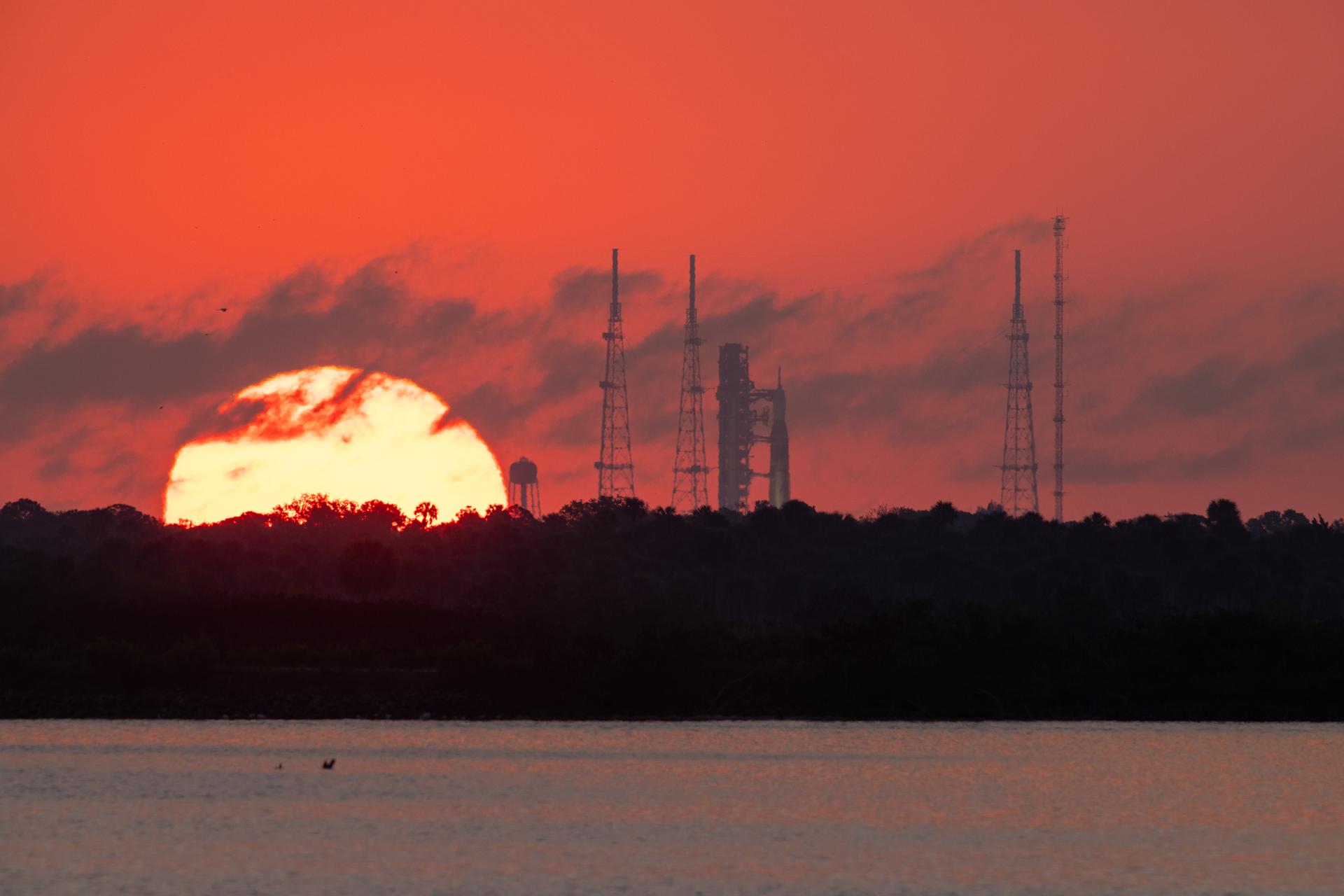
The Sun rises behind NASA’s Artemis II SLS (Space Launch System) rocket and Orion spacecraft at Launch Complex 39B at NASA’s Kennedy Space Center in Florida on Tuesday, March 24, 2026. The Artemis II test flight will take Commander Reid Wiseman, Pilot Victor Glover, and Mission Specialist Christina Koch from NASA, and Mission Specialist Jeremy Hansen from the CSA (Canadian Space Agency), around the Moon and back to Earth with launch opportunities beginning in April 2026.

The rising Sun illuminates the sky on Tuesday, March 24, 2026, as NASA’s Artemis II SLS (Space Launch System) rocket and Orion spacecraft stand vertical at Launch Complex 39B at NASA’s Kennedy Space Center in Florida. The Artemis II test flight will take Commander Reid Wiseman, Pilot Victor Glover, and Mission Specialist Christina Koch from NASA, and Mission Specialist Jeremy Hansen from the CSA (Canadian Space Agency), around the Moon and back to Earth with launch opportunities beginning in April 2026.

The Moon shines over the Max Brewer Bridge during the Artemis II wet dress rehearsal on Monday, Feb. 2, 2026, in Titusville, Florida. The bridge spanning the Indian River Lagoon is a popular launch viewing location for Kennedy Space Center and Cape Canaveral Space Force Station.
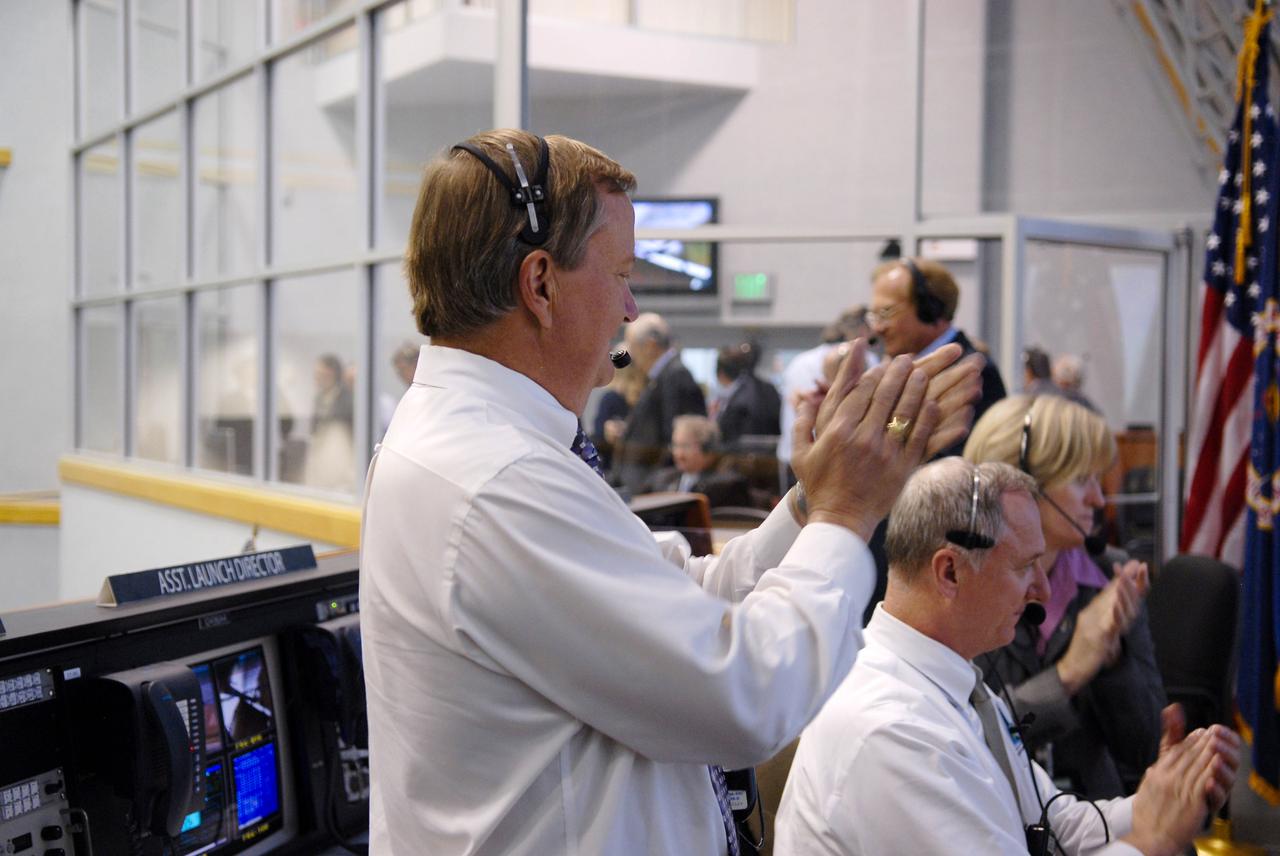
STS129-S-058 (16 Nov. 2009) --- In Firing Room 4 of NASA Kennedy Space Center's Launch Control Center, shuttle launch director Michael Leinbach (standing), assistant launch director Peter Nickolenko and Atlantis flow director Angie Brewer (both seated), applaud the launch team upon the successful launch of Space Shuttle Atlantis. Liftoff of Atlantis from Launch Pad 39A on its STS-129 mission to the International Space Station came at 2:28 p.m. (EST) Nov. 16, 2009.

S71-17356 (January 1971) --- This is a family portrait of astronaut Alan B. Shepard Jr. and his family. Shepard is the commander of the Apollo 14 lunar landing mission. The family includes Mrs. Shepard, the former Louise Brewer; Laura Shepard Snyder (seated on Shepard's left), born on July 2, 1947; Julie Shepard (right foreground), born on March 16, 1951; and Alice Shepard (left foreground), a niece of Mrs. Shepard.
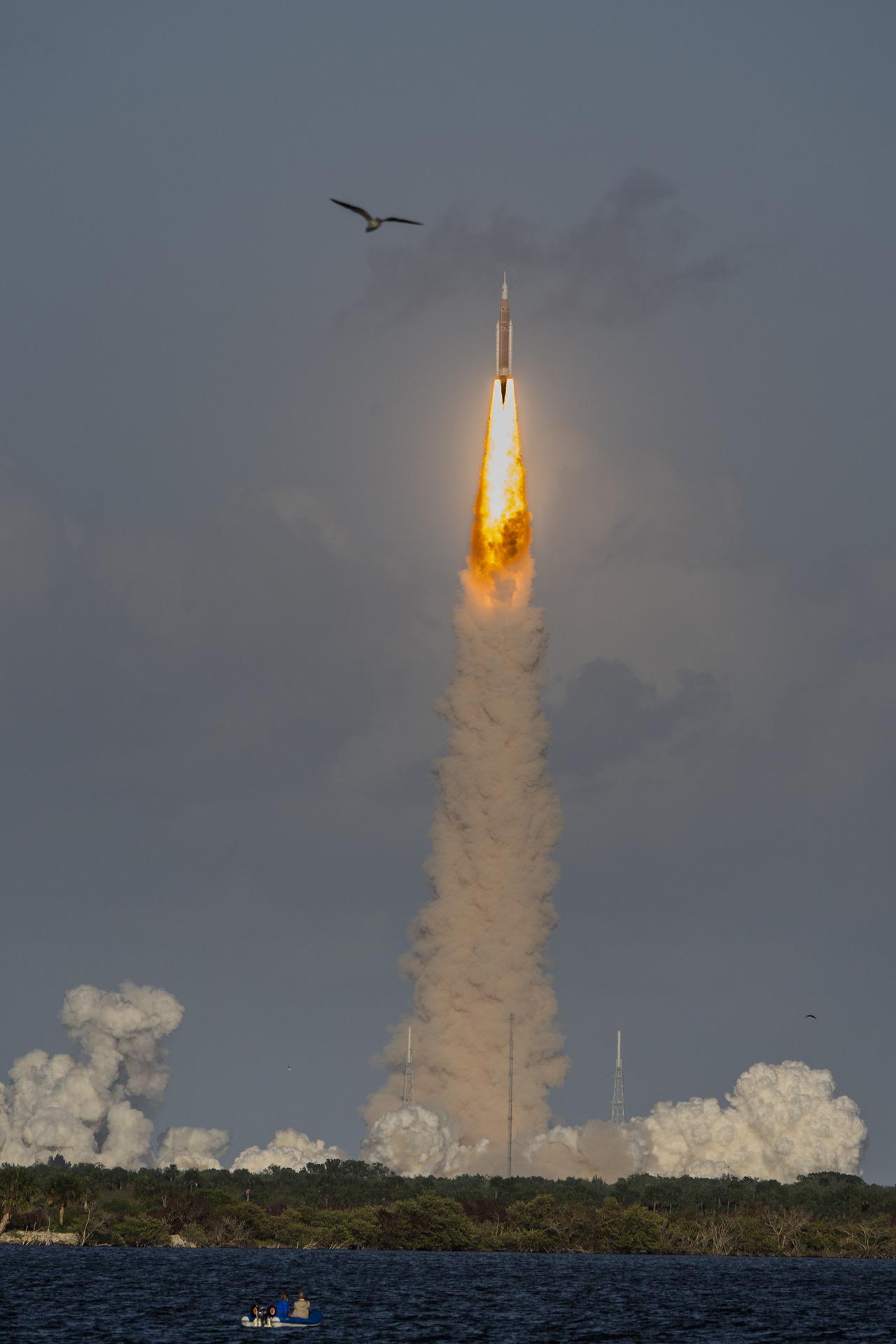
NASA’s SLS (Space Launch System) rocket with the Orion spacecraft carrying Artemis II Commander Reid Wiseman, Pilot Victor Glover, and Mission Specialist Christina Koch from NASA, along with Mission Specialist Jeremy Hansen from the CSA (Canadian Space Agency), lifts off at 6:35 p.m. EDT on Wednesday, April 1, 2026, from Launch Complex 39B at NASA Kennedy. The Artemis II test flight will take the crew members on a 10-day journey around the Moon and back.
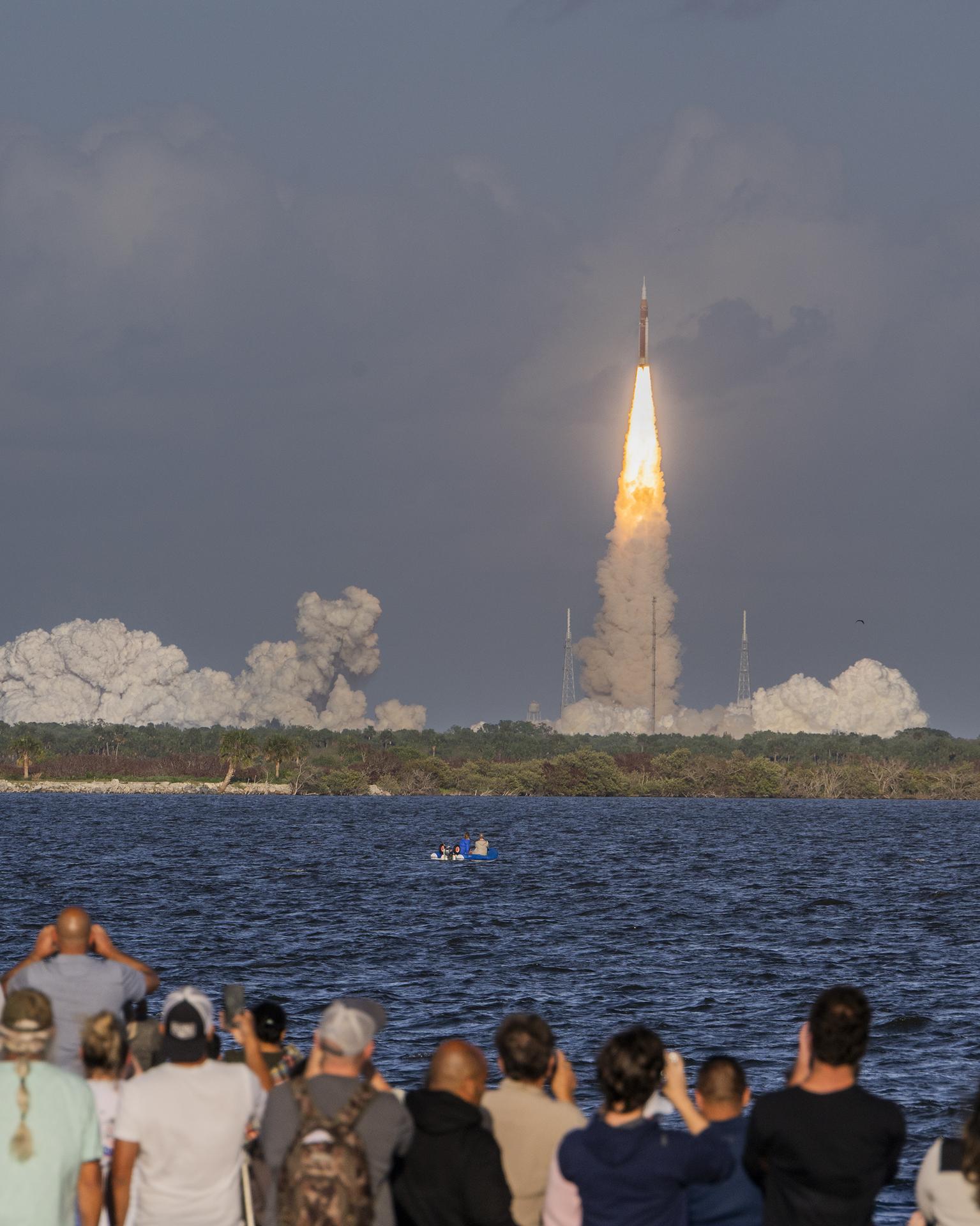
NASA’s SLS (Space Launch System) rocket with the Orion spacecraft carrying Artemis II Commander Reid Wiseman, Pilot Victor Glover, and Mission Specialist Christina Koch from NASA, along with Mission Specialist Jeremy Hansen from the CSA (Canadian Space Agency), lifts off at 6:35 p.m. EDT on Wednesday, April 1, 2026, from Launch Complex 39B at NASA Kennedy. The Artemis II test flight will take the crew members on a 10-day journey around the Moon and back.
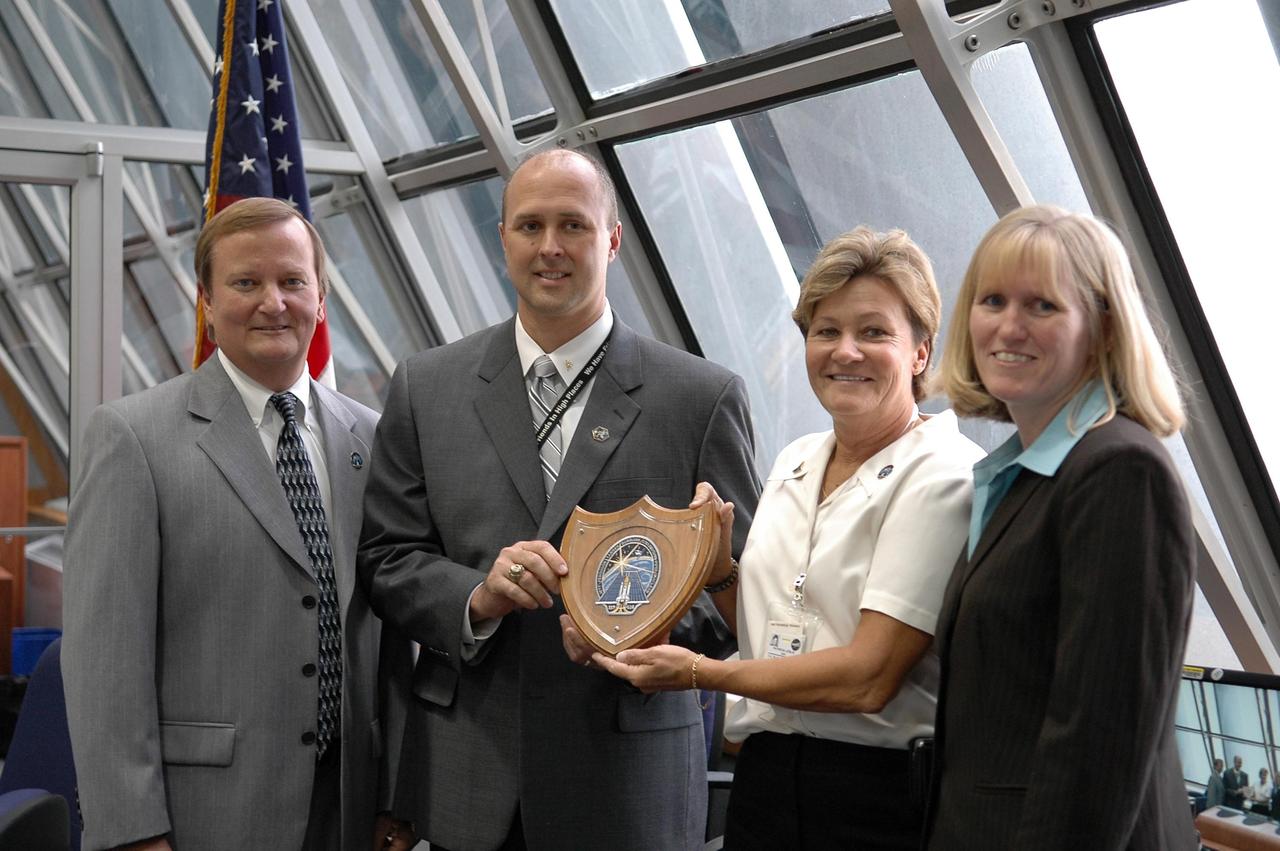
KENNEDY SPACE CENTER, FLA. - Inside the Launch Control Center, Robbie Ashley, STS-115 payload manager, and Pat Lesley, with United Space Alliance, receive a special award from (at left) Shuttle Launch Director Mike Leinbach and (at right) NASA Flow Director Angie Brewer. Mission STS-115 is the 116th space shuttle flight, the 27th flight for orbiter Atlantis, and the 19th U.S. flight to the International Space Station. STS-115 is scheduled to last 11 days with a planned landing at KSC. Photo credit: NASA/Kim Shiflett
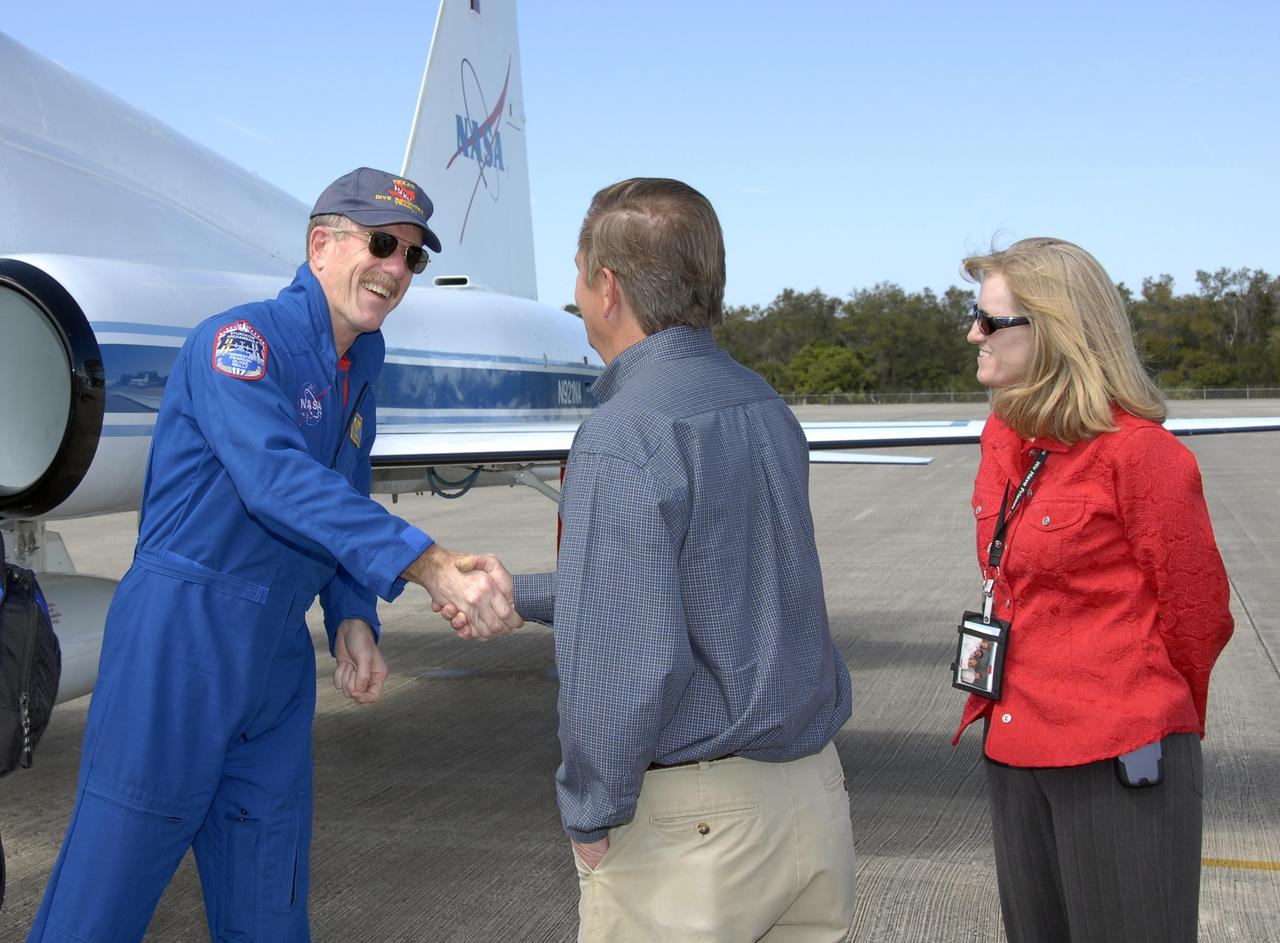
KENNEDY SPACE CENTER, FLA. -- The STS-117 crew arrives at NASA's Kennedy Space Center to take part in the Terminal Countdown Demonstration Test (TCDT), a preparation for the launch March 15 to the International Space Station. Mission Specialist James Reilly is greeted by NASA Launch Director Mike Leinbach and Atlantis (OV104) Flow Director Angela Brewer at the Shuttle Landing Facility. The TCDT includes emergency egress training and a simulated launch countdown. The mission payload aboard Space Shuttle Atlantis is the S3/S4 integrated truss structure, along with a third set of solar arrays and batteries. The crew of six astronauts will install the truss to continue assembly of the station. Photo credit: NASA/Kim Shiflett
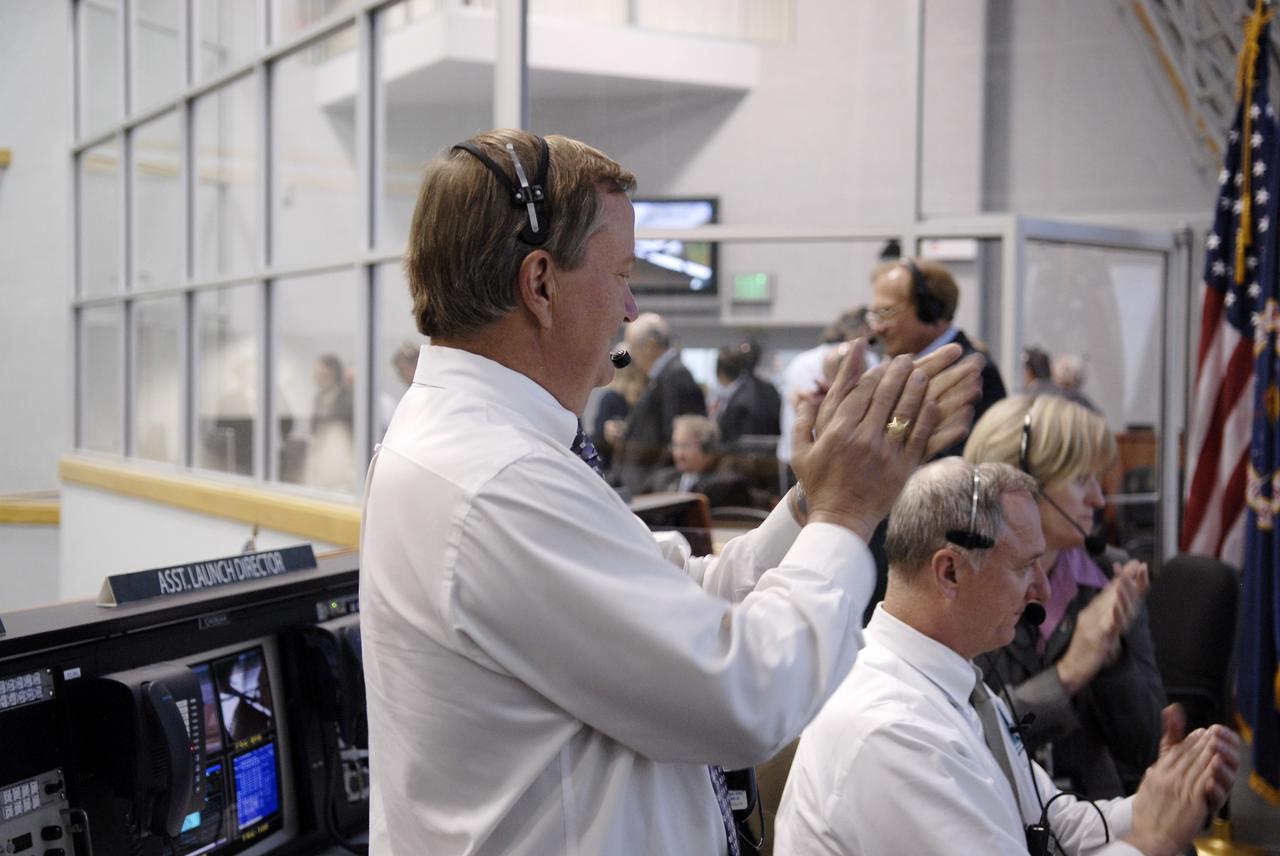
CAPE CANAVERAL, Fla. - In Firing Room 4 of NASA Kennedy Space Center's Launch Control Center, shuttle launch director Michael Leinbach, standing, assistant launch director Peter Nickolenko and shuttle Atlantis flow director Angie Brewer, both seated, applaud the launch team upon the successful launch of space shuttle Atlantis. Liftoff of Atlantis from Launch Pad 39A on its STS-129 mission to the International Space Station came at 2:28 p.m. EST Nov. 16. For information on the STS-129 mission and crew, visit http://www.nasa.gov/mission_pages/shuttle/shuttlemissions/sts129/index.html. Photo credit: NASA/Kim Shiflett
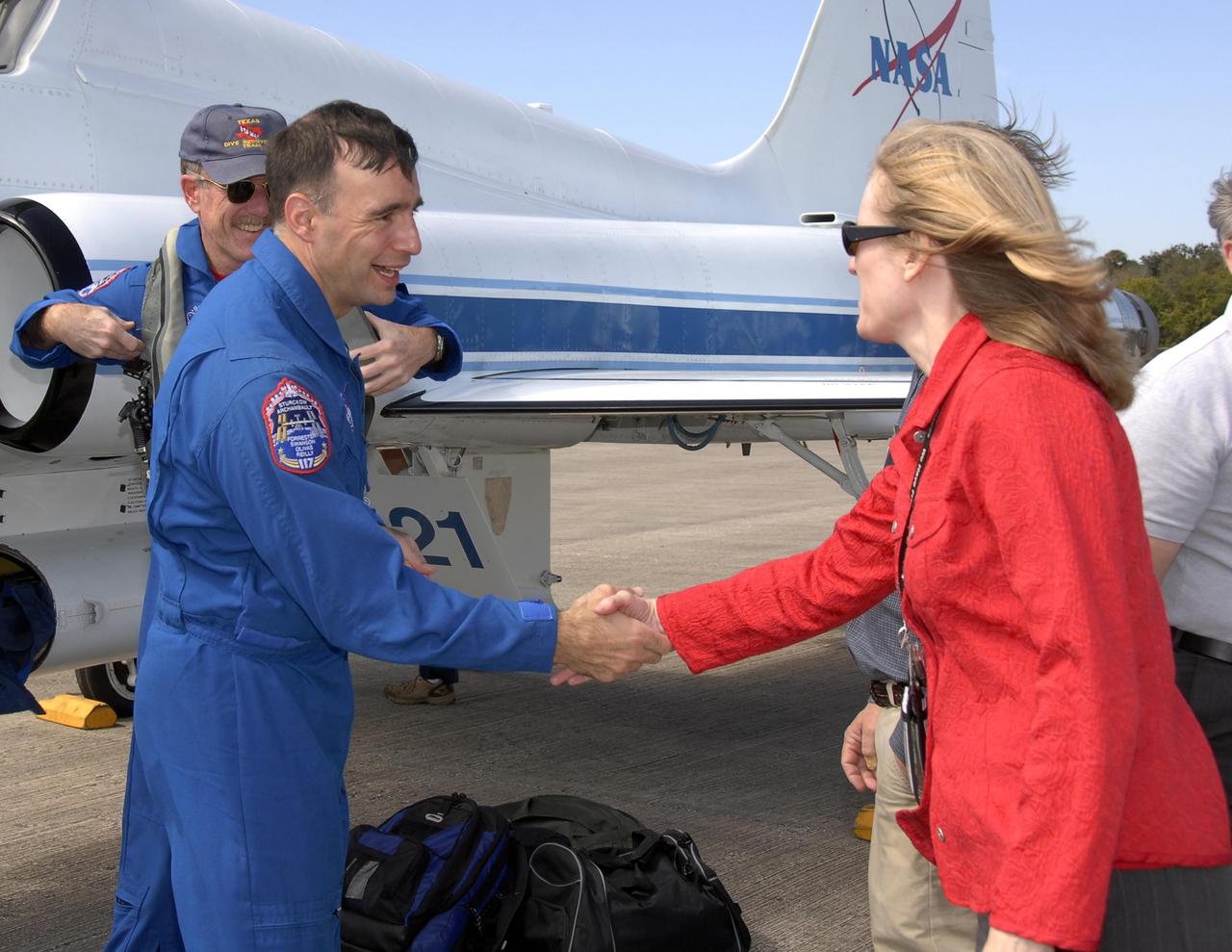
KENNEDY SPACE CENTER, FLA. -- The STS-117 crew arrives at NASA's Kennedy Space Center to take part in the Terminal Countdown Demonstration Test (TCDT), a preparation for the launch March 15 to the International Space Station. Atlantis (OV104) Flow Director Angela Brewer greets Pilot Lee Archambault after he arrives at the Shuttle Landing Facility. The TCDT includes emergency egress training and a simulated launch countdown. The mission payload aboard Space Shuttle Atlantis is the S3/S4 integrated truss structure, along with a third set of solar arrays and batteries. The crew of six astronauts will install the truss to continue assembly of the station. Photo credit: NASA/Kim Shiflett
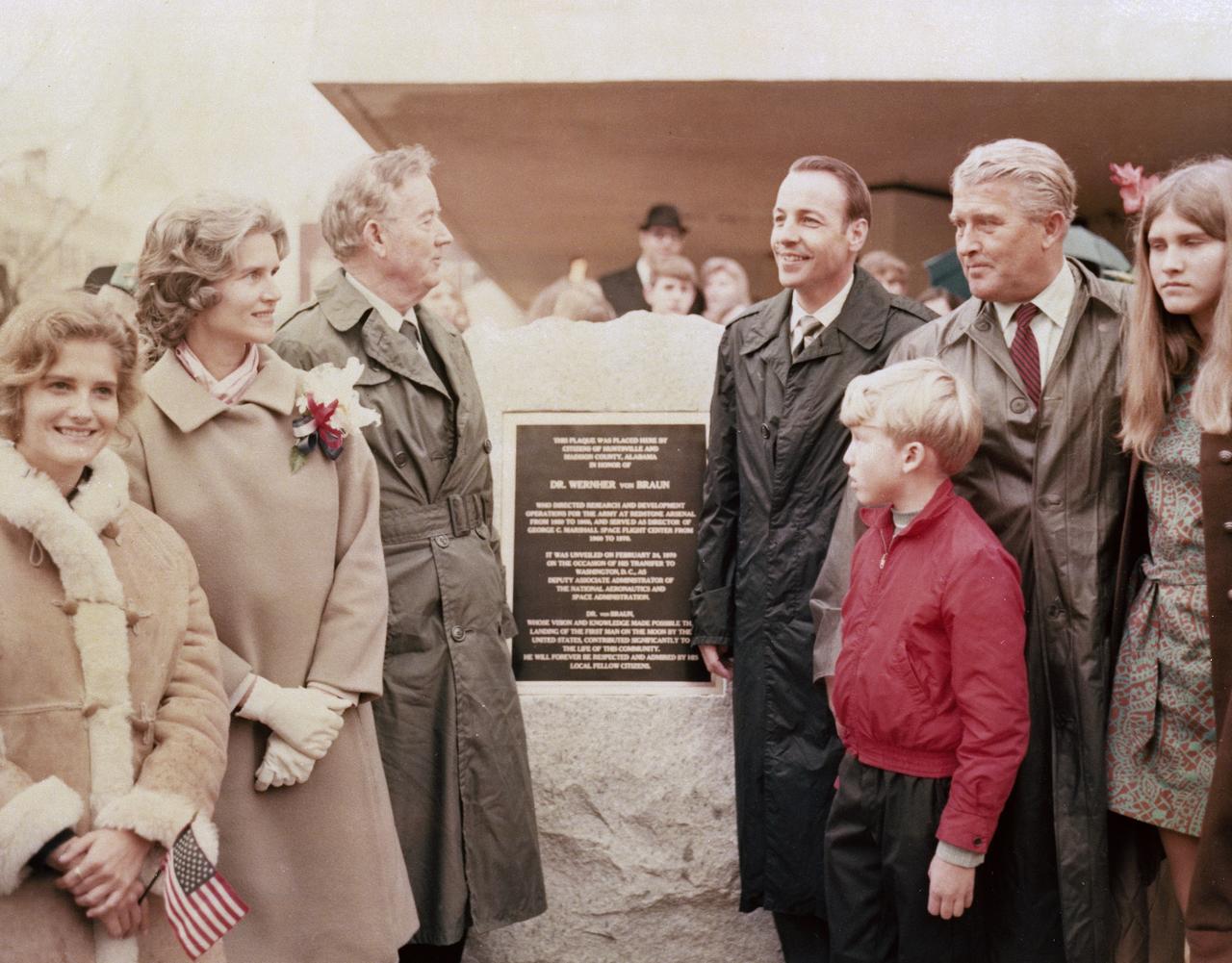
In February 1970, MSFC Director Dr. von Braun was named NASA Deputy Associate Administrator for Plarning and transferred to the Agency's Headquarters in Washington D.C. Prior to his departure, Huntsvillians, along with state local dignitaries, honored his years of service to the Army and NASA with a series of events. One included unveiling a plaque in von Braun's honor. Pictured with Dr. von Braun are (left to right), his daughter Iris, wife Maria, U.S. Senator John Sparkman and Alabama Governor Albert Brewer, Dr. von Braun, son Peter, and daughter Margrit.
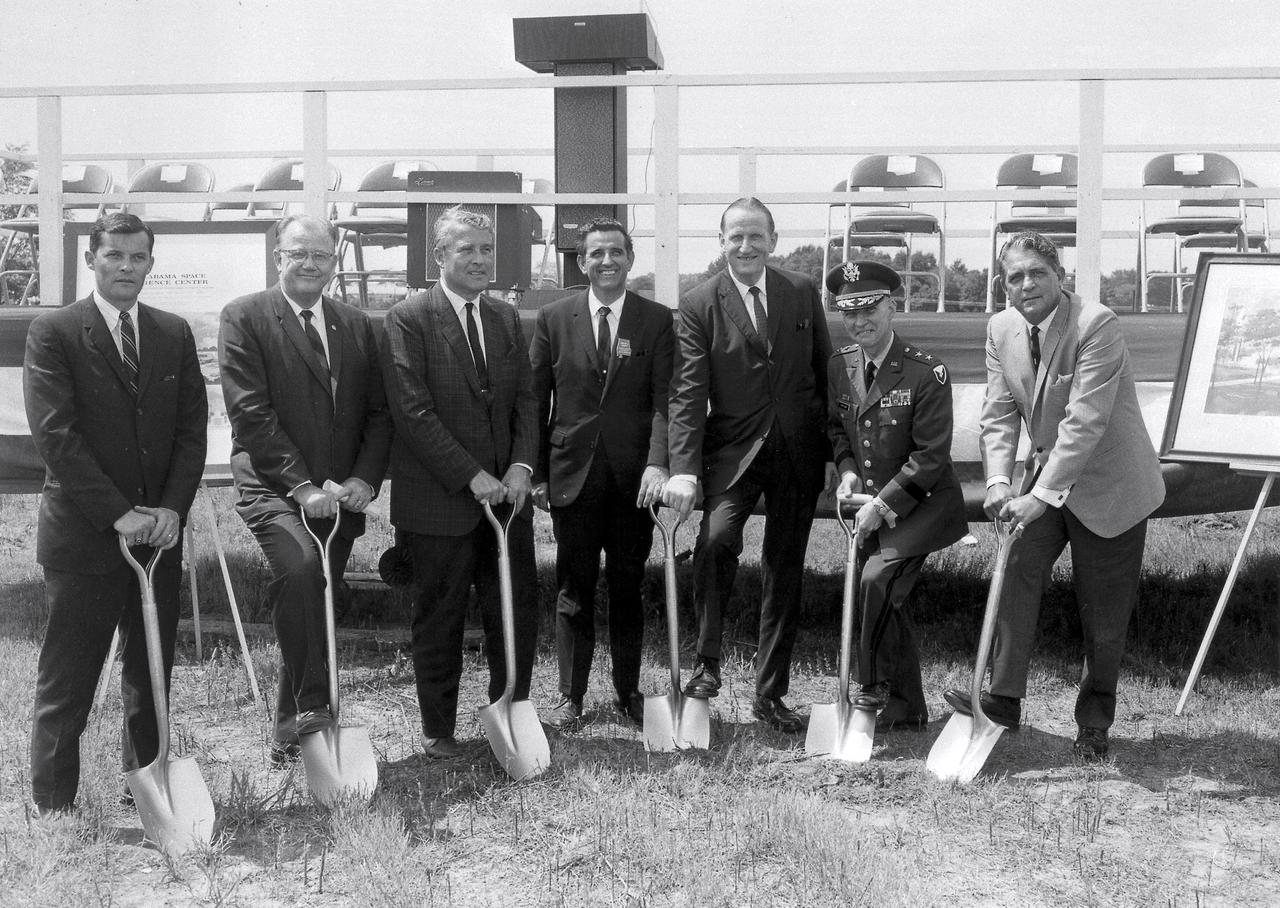
Ground breaking ceremony for the Alabama Space Science Center, later renamed the U.S. Space and Rocket Center. Shown in this picture, left to right, are Edward O. Buckbee, Space Center Director; Jack Giles, Alabama State Senator of Huntsville; Dr. Wernher on Braun, Marshall Space Flight Center (MSFC) Director; Martin Darity, head of the Alabama Publicity Bureau (representing Governor Albert Brewer); James Allen, former Lieutenant governor, chairman of the Alabama Space Science Exhibit Commission; Major General Charles Eifler, commanding general of the Army Ordnance Missile Command; and Huntsville Mayor Glenrn Hearn. (Courtesy of Huntsville/Madison County Public Library)
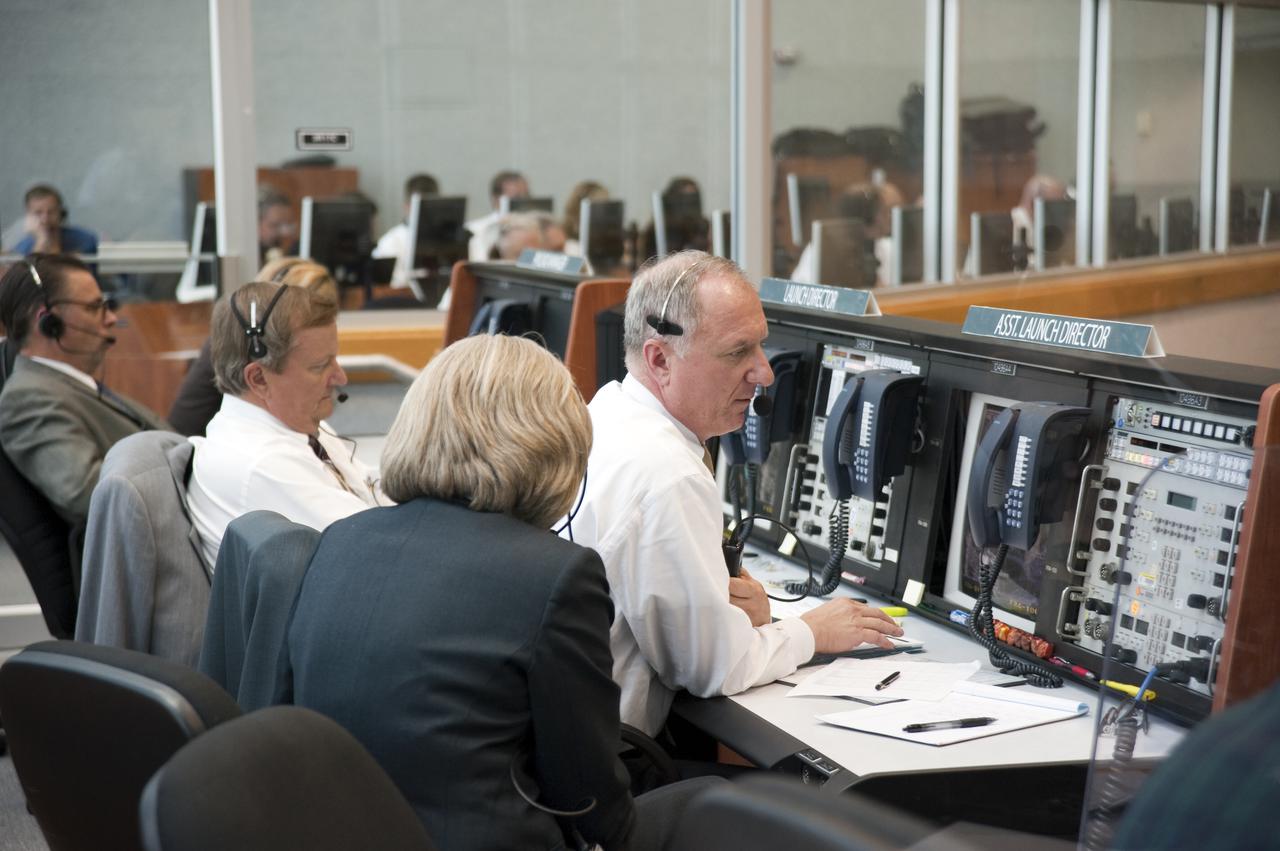
CAPE CANAVERAL, Fla. -- In Firing Room 4 of the Launch Control Center at NASA's Kennedy Space Center in Florida, Shuttle Launch Director Mike Leinbach, Assistant Launch Director Pete Nickolenko and Atlantis Flow Director Angie Brewer keep track of the imminent launch of space shuttle Atlantis on its STS-132 mission to the International Space Station. The launch team worked very few issues during the countdown and picture-perfect weather led to an on-time launch at 2:20 p.m. EDT on May 14. STS-132 is the 132nd shuttle flight, the 32nd for Atlantis and the 34th shuttle mission dedicated to station assembly and maintenance. For more information on the STS-132 mission objectives, payload and crew, visit www.nasa.gov_mission_pages_shuttle_shuttlemissions_sts132_index.html. Photo credit: NASA_Kim Shiflett
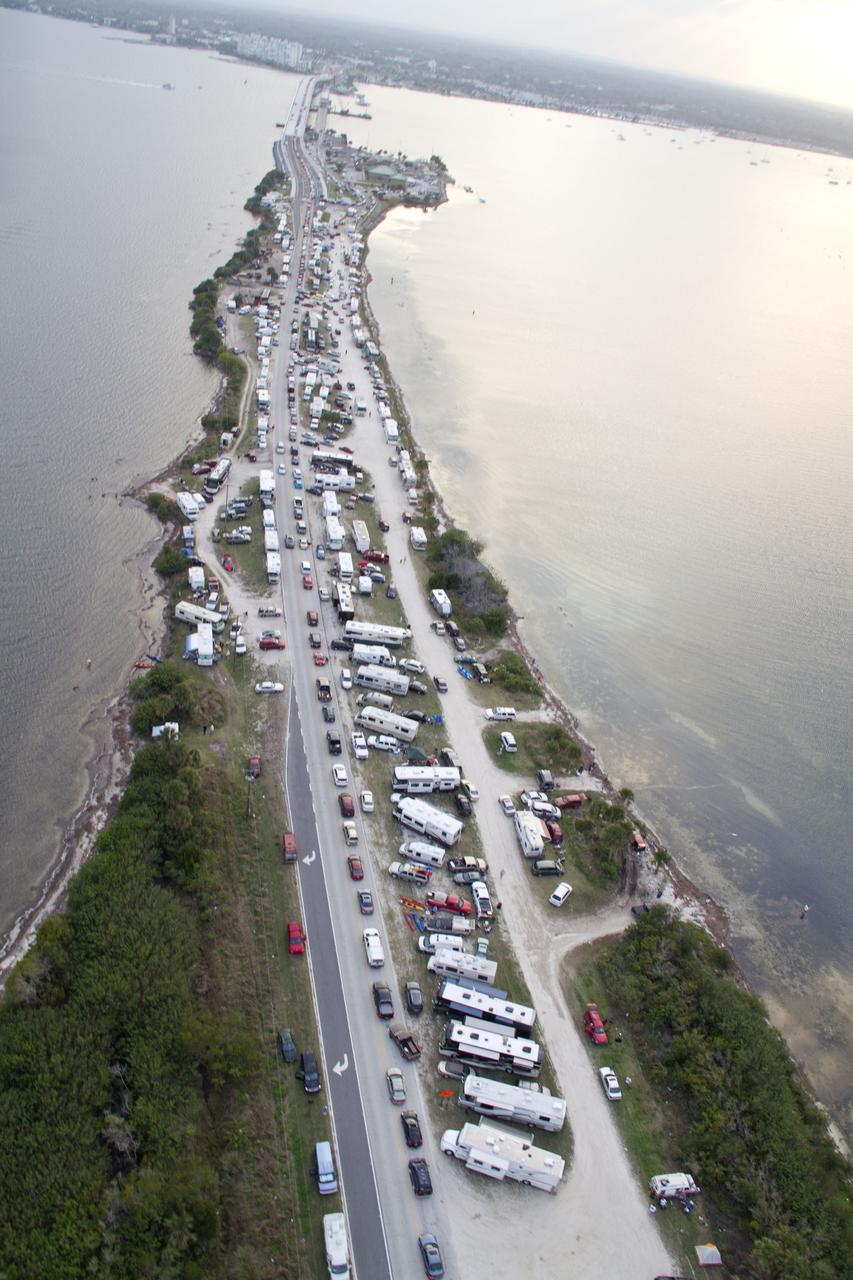
CAPE CANAVERAL, Fla. -- This image of State Road 406, also known as the A. Max Brewer Causeway in Titusville, Florida, was taken from a traffic survey helicopter after the successful launch of space shuttle Discovery at 4:53 p.m. EST on its final flight to the International Space Station. Discovery's six-member crew will deliver the Permanent Multipurpose Module, packed with supplies and critical spare parts, as well as Robonaut 2, the dexterous humanoid astronaut helper, to the orbiting outpost. Discovery is flying on its 39th and final mission and is scheduled to be retired following STS-133. This is the 133rd Space Shuttle Program mission and the 35th shuttle voyage to the space station. For more information on the STS-133 mission, visit www.nasa.gov/mission_pages/shuttle/shuttlemissions/sts133/. Photo credit: NASA/Jack Pfaller
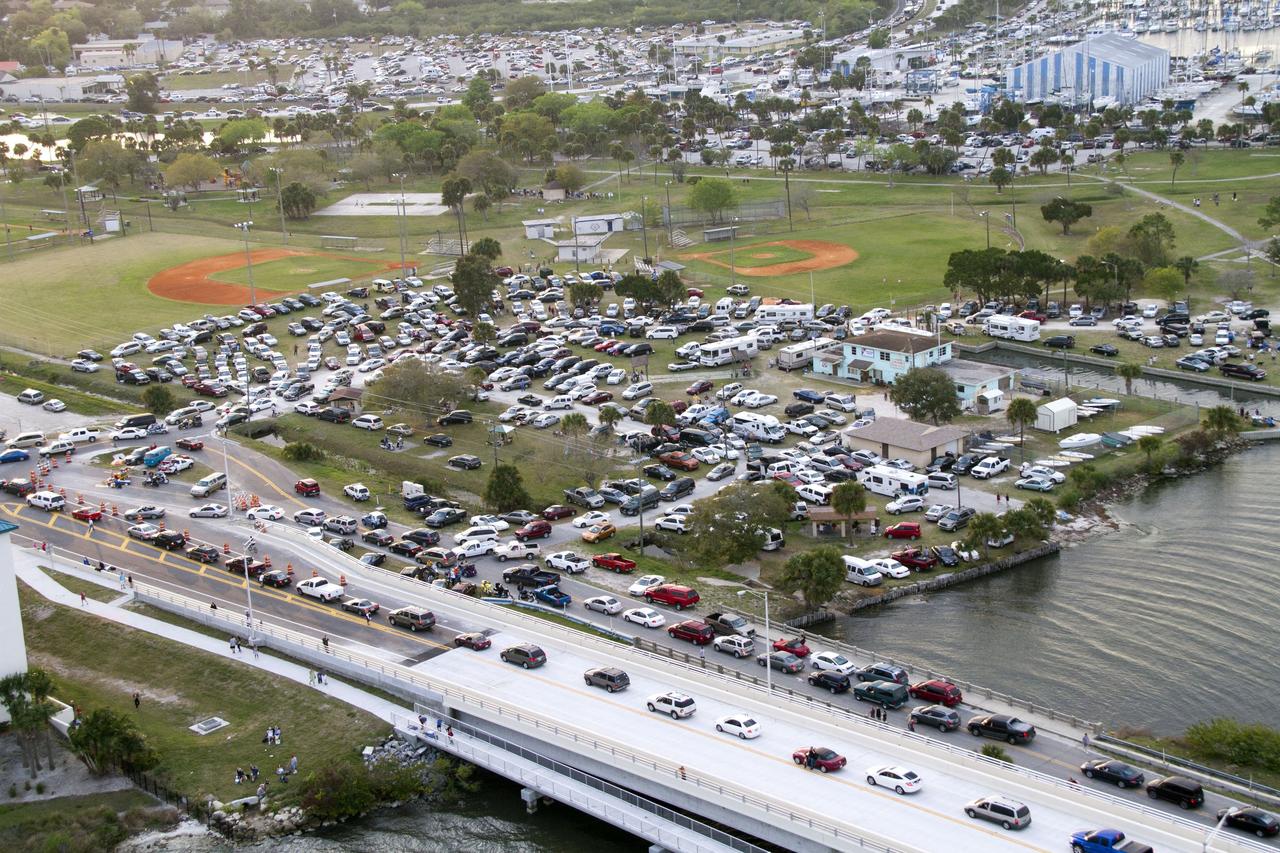
CAPE CANAVERAL, Fla. -- This image of State Road 406, also known as the A. Max Brewer Causeway and surrounding roadways in Titusville, Florida, was taken from a traffic survey helicopter after the successful launch of space shuttle Discovery at 4:53 p.m. EST on its final flight to the International Space Station. Discovery's six-member crew will deliver the Permanent Multipurpose Module, packed with supplies and critical spare parts, as well as Robonaut 2, the dexterous humanoid astronaut helper, to the orbiting outpost. Discovery is flying on its 39th and final mission and is scheduled to be retired following STS-133. This is the 133rd Space Shuttle Program mission and the 35th shuttle voyage to the space station. For more information on the STS-133 mission, visit www.nasa.gov/mission_pages/shuttle/shuttlemissions/sts133/. Photo credit: NASA/Jack Pfaller
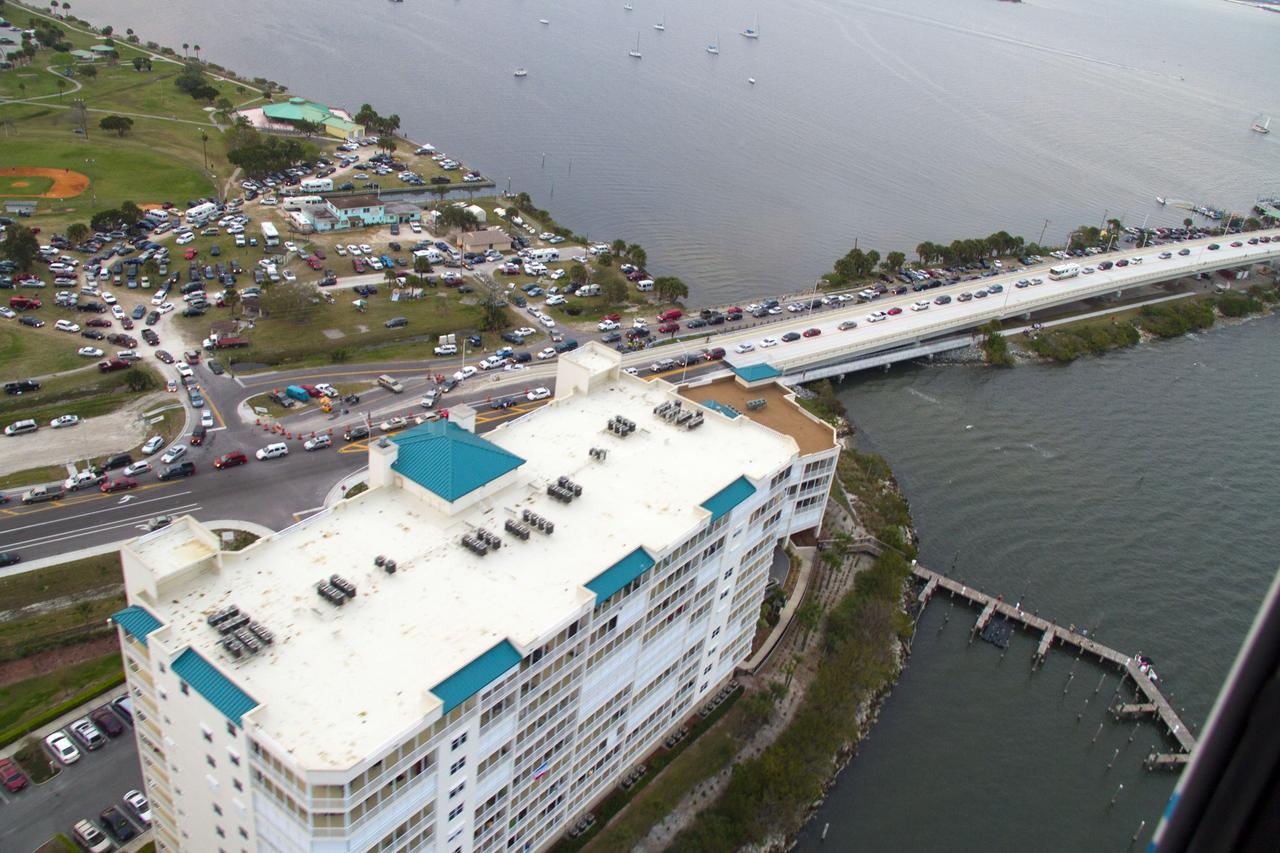
CAPE CANAVERAL, Fla. -- This image of State Road 406, also known as the A. Max Brewer Causeway in Titusville, Florida, was taken from a traffic survey helicopter after the successful launch of space shuttle Discovery at 4:53 p.m. EST on its final flight to the International Space Station. Discovery's six-member crew will deliver the Permanent Multipurpose Module, packed with supplies and critical spare parts, as well as Robonaut 2, the dexterous humanoid astronaut helper, to the orbiting outpost. Discovery is flying on its 39th and final mission and is scheduled to be retired following STS-133. This is the 133rd Space Shuttle Program mission and the 35th shuttle voyage to the space station. For more information on the STS-133 mission, visit www.nasa.gov/mission_pages/shuttle/shuttlemissions/sts133/. Photo credit: NASA/Jack Pfaller

CAPE CANAVERAL, Fla. -- This image of State Road 406, also known as the A. Max Brewer Causeway in Titusville, Florida, was taken from a traffic survey helicopter after the successful launch of space shuttle Discovery at 4:53 p.m. EST on its final flight to the International Space Station. Discovery's six-member crew will deliver the Permanent Multipurpose Module, packed with supplies and critical spare parts, as well as Robonaut 2, the dexterous humanoid astronaut helper, to the orbiting outpost. Discovery is flying on its 39th and final mission and is scheduled to be retired following STS-133. This is the 133rd Space Shuttle Program mission and the 35th shuttle voyage to the space station. For more information on the STS-133 mission, visit www.nasa.gov/mission_pages/shuttle/shuttlemissions/sts133/. Photo credit: NASA/Jack Pfaller

KENNEDY SPACE CENTER, FLA. -- Through the windows of the Launch Control Center, Shuttle Launch Director Mike Leinbach (left) watches the near-perfect launch of Space Shuttle Atlantis on mission STS-117 to the International Space Station. In front of him are Angie Brewer, NASA flow director for Atlantis, and Doug Lyons, assistant launch director. Liftoff from Launch Pad 39A was on-time at 7:38:04 p.m. EDT. The shuttle is delivering a new segment to the starboard side of the International Space Station's backbone, known as the truss. Three spacewalks are planned to install the S3/S4 truss segment, deploy a set of solar arrays and prepare them for operation. STS-117 is the 118th space shuttle flight, the 21st flight to the station, the 28th flight for Atlantis and the first of four flights planned for 2007. Photo credit: NASA/Kim Shiflett
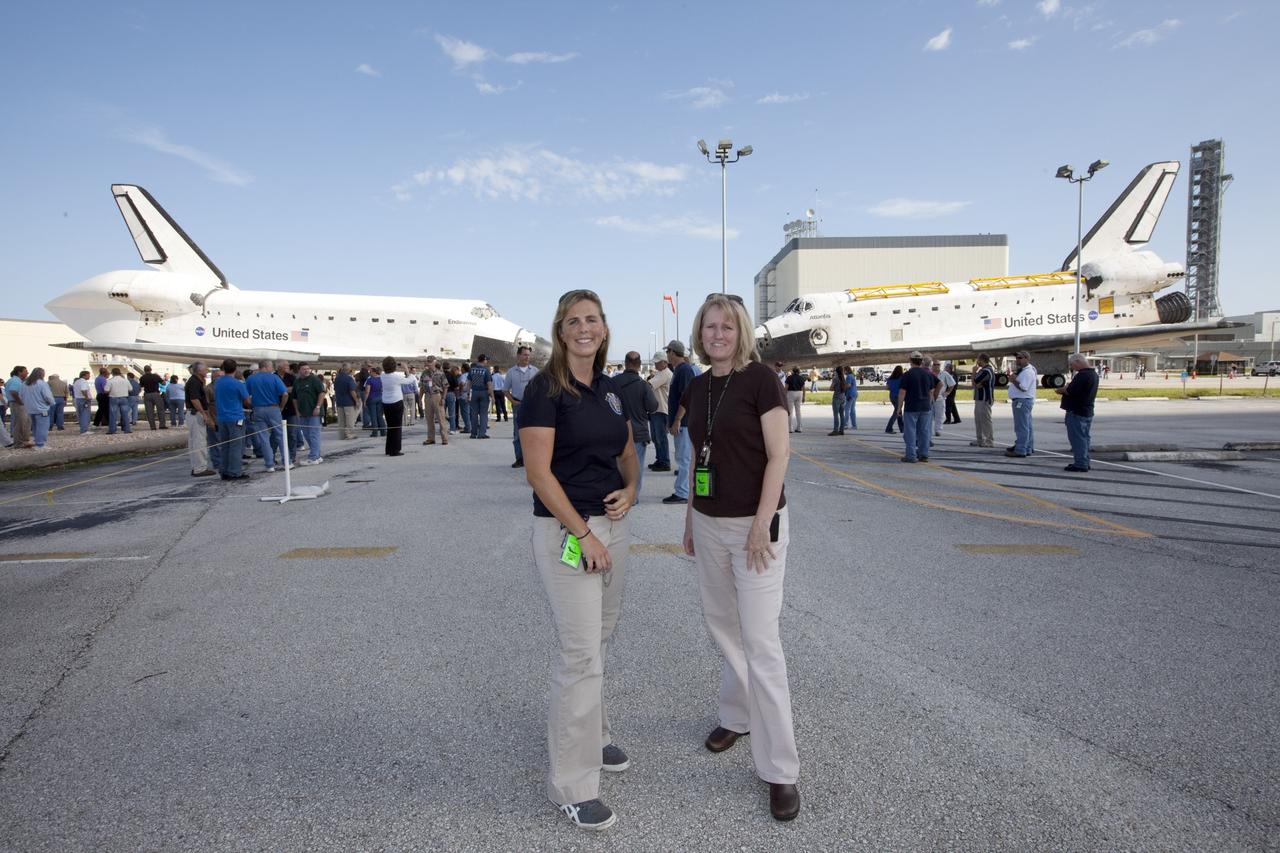
CAPE CANAVERAL, Fla. – Former NASA Endeavour flow director Dana Hutcherson, left, and former NASA Atlantis flow director Angie Brewer, pose with the two spacecraft that were brought together for a brief photo opportunity. Endeavour moved from Bay 2 of the Orbiter Processing Facility OPF to switch places with Atlantis which had been in Vehicle Assembly Building. In the OPF, Atlantis will undergo final preparations for its transfer to the Kennedy Space Center Visitor Complex targeted for November. The work is part of Transition and Retirement of the remaining space shuttles, Atlantis and Endeavour. Atlantis is being prepared for public display at Kennedy's Visitor Complex. Over the course of its 26-year career, Atlantis spent 293 days in space during 33 missions. For more information, visit http://www.nasa.gov/transition Photo credit: NASA/Kim Shiflett
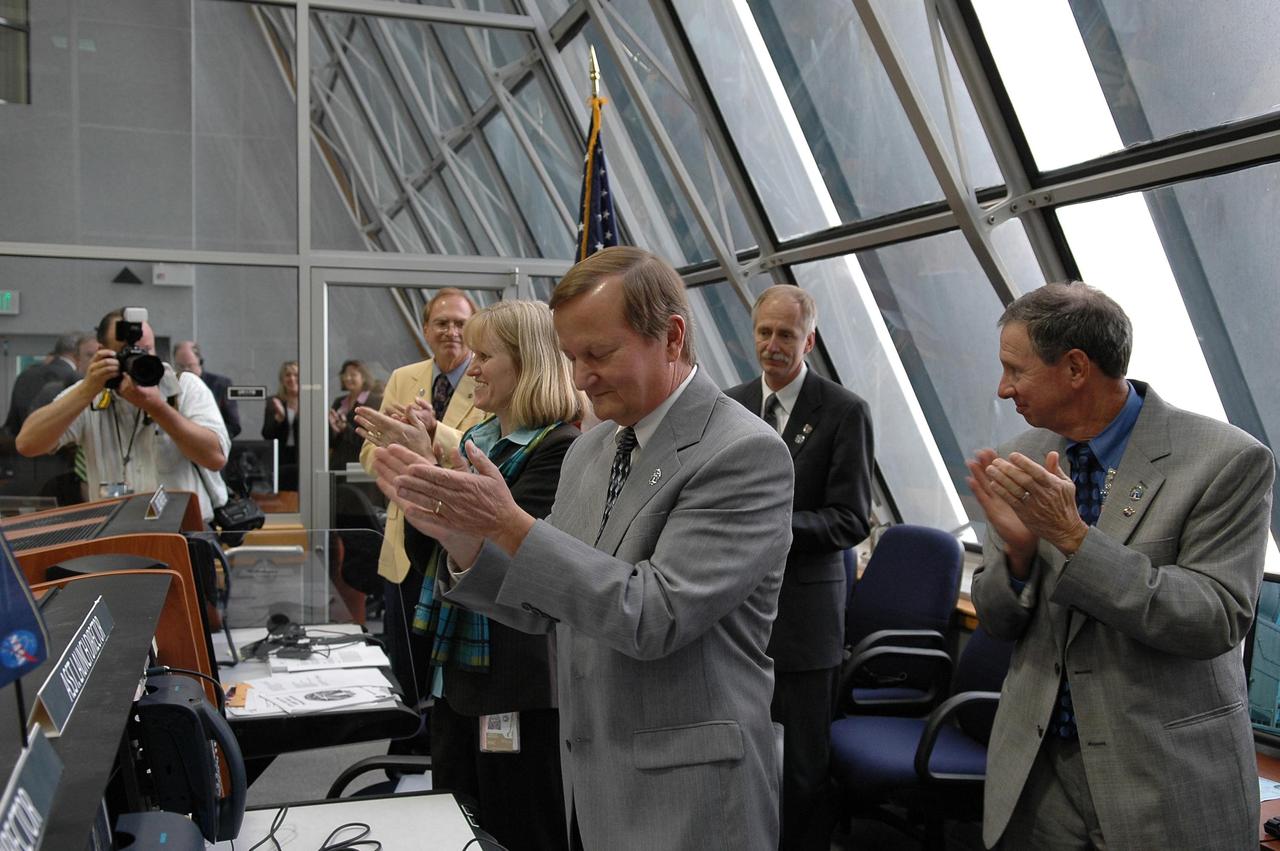
KENNEDY SPACE CENTER, FLA. - Inside the Launch Control Center, NASA and KSC officials applaud the successful launch of Space Shuttle Atlantis on mission STS-115. From right are NASA Administrator Michael Griffin, Associate Administrator for Space Operations Mission William Gerstenmaier, Shuttle Launch Director Mike Leinbach, NASA Flow Director Angie Brewer, and Public Affairs Officer George Diller, who provided commentary leading up to the launch. Mission STS-115 is the 116th space shuttle flight, the 27th flight for orbiter Atlantis, and the 19th U.S. flight to the International Space Station. STS-115 is scheduled to last 11 days with a planned landing at KSC. Photo credit: NASA/Kim Shiflett
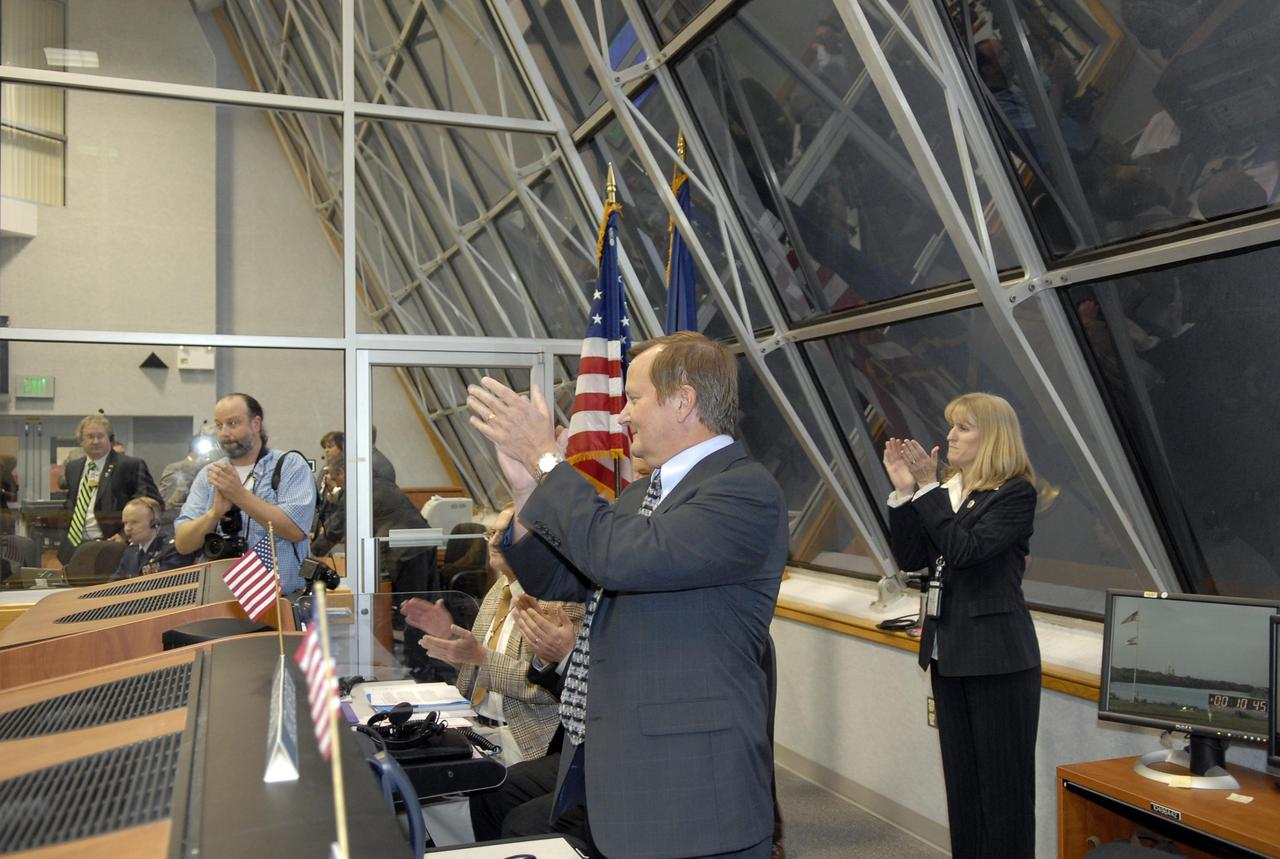
KENNEDY SPACE CENTER, FLA. -- In the Launch Control Center, Shuttle Launch Director Mike Leinbach applauds the team for a successful launch of Space Shuttle Atlantis on mission STS-117 to the International Space Station. At right, Angie Brewer, NASA flow director for Atlantis, also applauds the team. Liftoff from Launch Pad 39A was on-time at 7:38:04 p.m. EDT. The shuttle is delivering a new segment to the starboard side of the International Space Station's backbone, known as the truss. Three spacewalks are planned to install the S3/S4 truss segment, deploy a set of solar arrays and prepare them for operation. STS-117 is the 118th space shuttle flight, the 21st flight to the station, the 28th flight for Atlantis and the first of four flights planned for 2007. Photo credit: NASA/Kim Shiflett
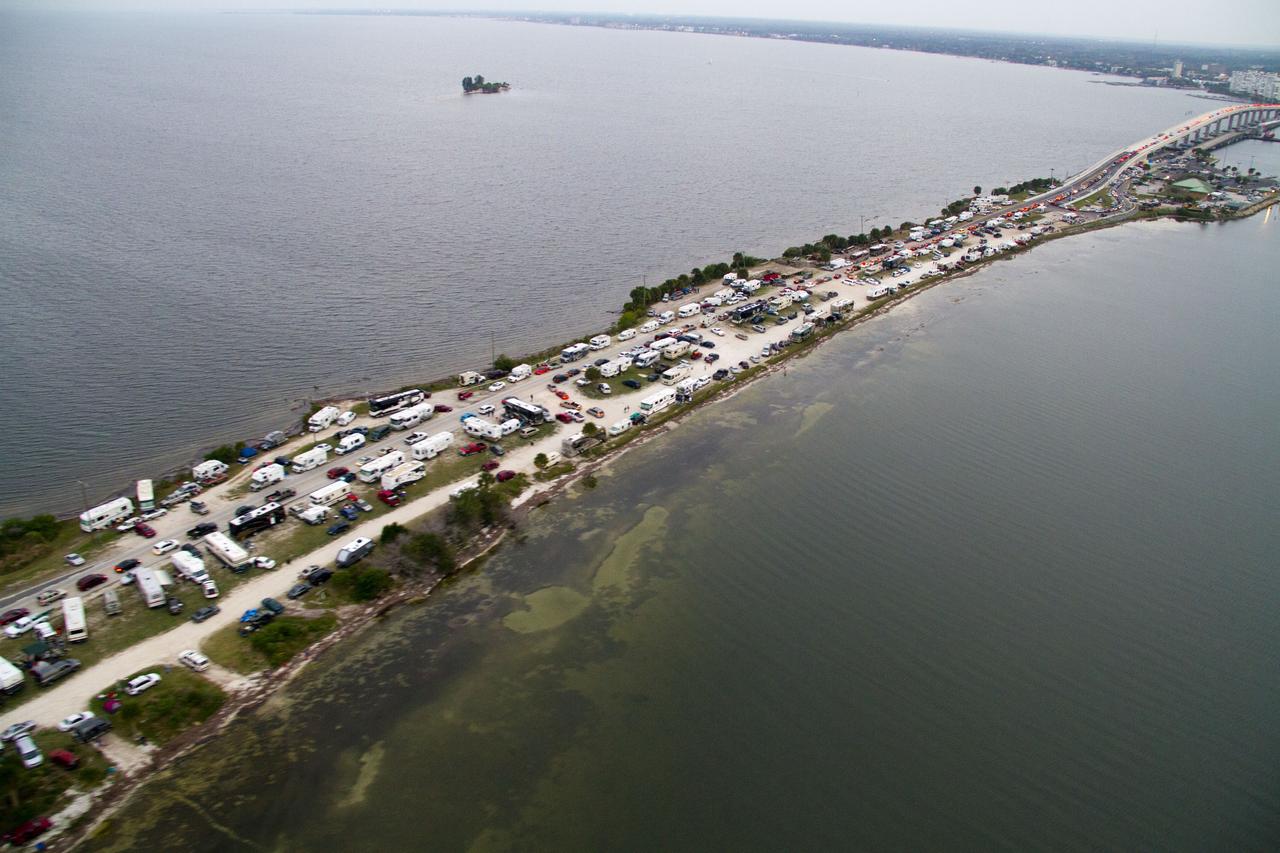
CAPE CANAVERAL, Fla. -- This image of State Road 406, also known as the A. Max Brewer Causeway in Titusville, Florida, was taken from a traffic survey helicopter after the successful launch of space shuttle Discovery at 4:53 p.m. EST on its final flight to the International Space Station.Discovery's six-member crew will deliver the Permanent Multipurpose Module, packed with supplies and critical spare parts, as well as Robonaut 2, the dexterous humanoid astronaut helper, to the orbiting outpost. Discovery is flying on its 39th and final mission and is scheduled to be retired following STS-133. This is the 133rd Space Shuttle Program mission and the 35th shuttle voyage to the space station. For more information on the STS-133 mission, visit www.nasa.gov/mission_pages/shuttle/shuttlemissions/sts133/. Photo credit: NASA/Jack Pfaller
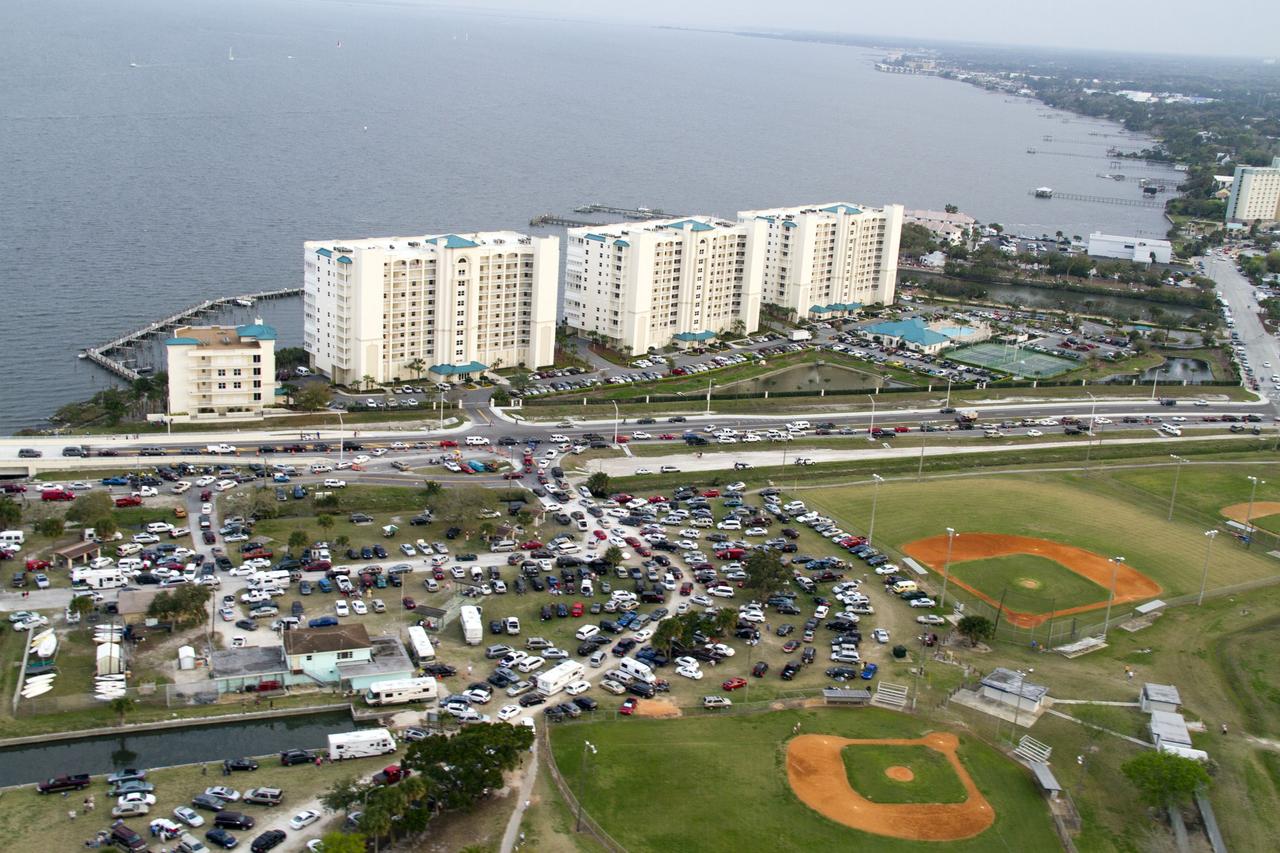
CAPE CANAVERAL, Fla. -- This image of State Road 406, also known as the A. Max Brewer Causeway and surrounding roadways in Titusville, Florida, was taken from a traffic survey helicopter after the successful launch of space shuttle Discovery at 4:53 p.m. EST on its final flight to the International Space Station. Discovery's six-member crew will deliver the Permanent Multipurpose Module, packed with supplies and critical spare parts, as well as Robonaut 2, the dexterous humanoid astronaut helper, to the orbiting outpost. Discovery is flying on its 39th and final mission and is scheduled to be retired following STS-133. This is the 133rd Space Shuttle Program mission and the 35th shuttle voyage to the space station. For more information on the STS-133 mission, visit www.nasa.gov/mission_pages/shuttle/shuttlemissions/sts133/. Photo credit: NASA/Jack Pfaller
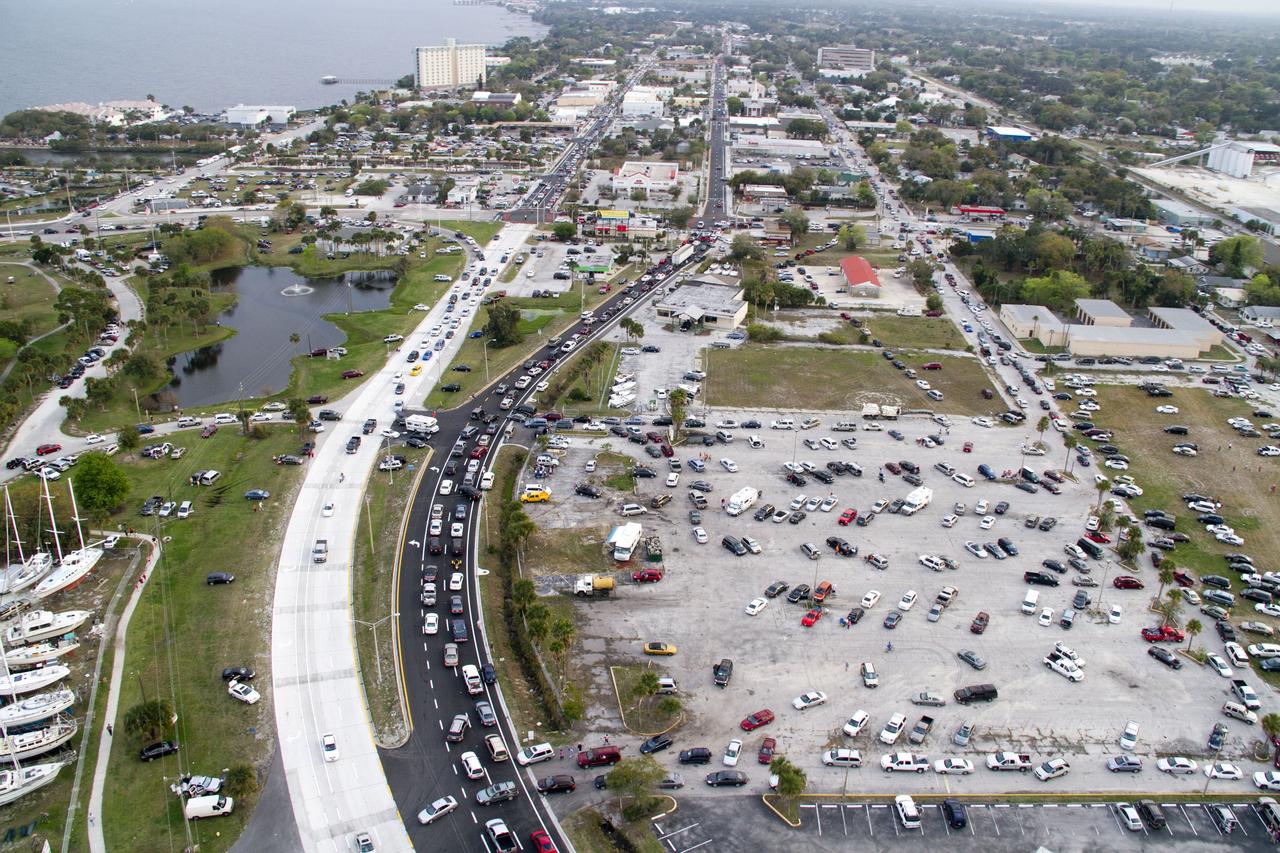
CAPE CANAVERAL, Fla. -- This image of State Road 406, also known as the A. Max Brewer Causeway and surrounding roadways in Titusville, Florida, was taken from a traffic survey helicopter after the successful launch of space shuttle Discovery at 4:53 p.m. EST on its final flight to the International Space Station. Discovery's six-member crew will deliver the Permanent Multipurpose Module, packed with supplies and critical spare parts, as well as Robonaut 2, the dexterous humanoid astronaut helper, to the orbiting outpost. Discovery is flying on its 39th and final mission and is scheduled to be retired following STS-133. This is the 133rd Space Shuttle Program mission and the 35th shuttle voyage to the space station. For more information on the STS-133 mission, visit www.nasa.gov/mission_pages/shuttle/shuttlemissions/sts133/. Photo credit: NASA/Jack Pfaller
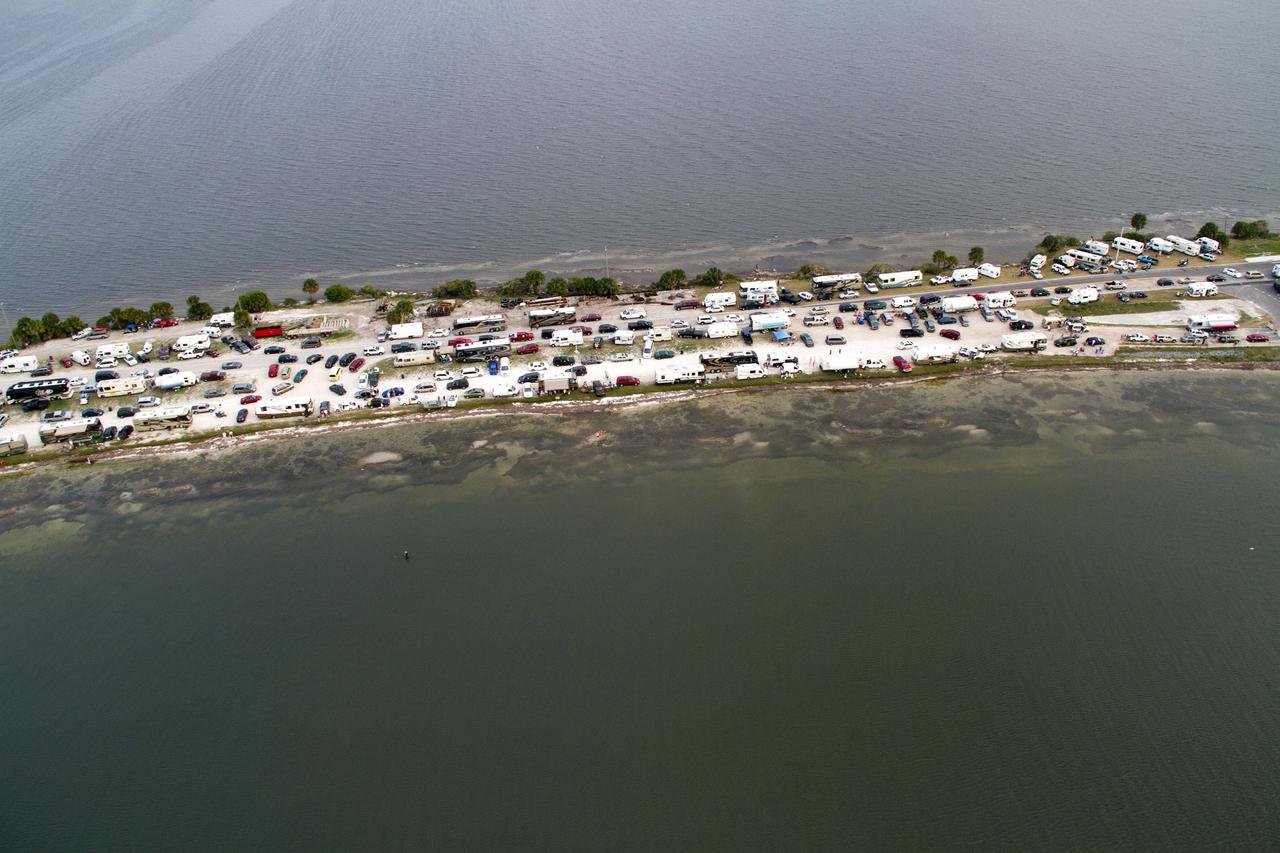
CAPE CANAVERAL, Fla. -- This image of State Road 406, also known as the A. Max Brewer Causeway in Titusville, Florida, was taken from a traffic survey helicopter after the successful launch of space shuttle Discovery at 4:53 p.m. EST on its final flight to the International Space Station. Discovery's six-member crew will deliver the Permanent Multipurpose Module, packed with supplies and critical spare parts, as well as Robonaut 2, the dexterous humanoid astronaut helper, to the orbiting outpost. Discovery is flying on its 39th and final mission and is scheduled to be retired following STS-133. This is the 133rd Space Shuttle Program mission and the 35th shuttle voyage to the space station. For more information on the STS-133 mission, visit www.nasa.gov/mission_pages/shuttle/shuttlemissions/sts133/. Photo credit: NASA/Jack Pfaller
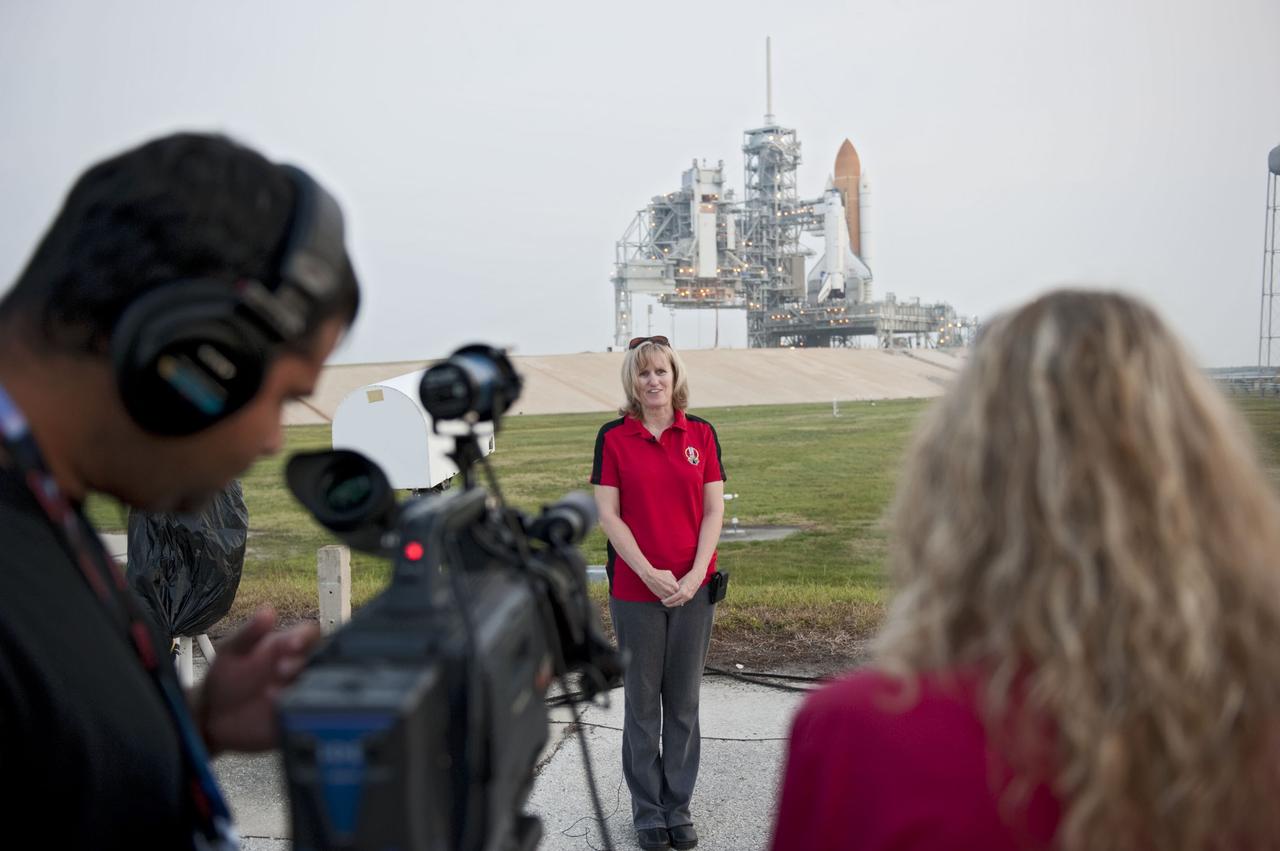
CAPE CANAVERAL, Fla. -- Near Launch Pad 39A at NASA's Kennedy Space Center in Florida, space shuttle Atlantis' Flow Director Angie Brewer speaks to media. The Raffaello multi-purpose logistics module (MPLM) was delivered to the pad overnight and lifted into the payload changeout room. The payload ground-handling mechanism then will be used to transfer Raffaello out of the canister into Atlantis' payload bay. Next, the rotating service structure that protects the shuttle from the elements and provides access will be rotated back into place. In the background is shuttle Atlantis, waiting to launch on the STS-135 mission. Commander Chris Ferguson, Pilot Doug Hurley and Mission Specialists Sandra Magnus and Rex Walheim are targeted to lift off on space shuttle Atlantis July 8, taking with them the MPLM packed with supplies, logistics and spare parts to the International Space Station. The STS-135 mission also will fly a system to investigate the potential for robotically refueling existing satellites and return a failed ammonia pump module to help NASA better understand the failure mechanism and improve pump designs for future systems. STS-135 will be the 33rd flight of Atlantis, the 37th shuttle mission to the space station, and the 135th and final mission of NASA's Space Shuttle Program. For more information visit, www.nasa.gov/mission_pages/shuttle/shuttlemissions/sts135/index.html. Photo credit: NASA/Kim Shiflett
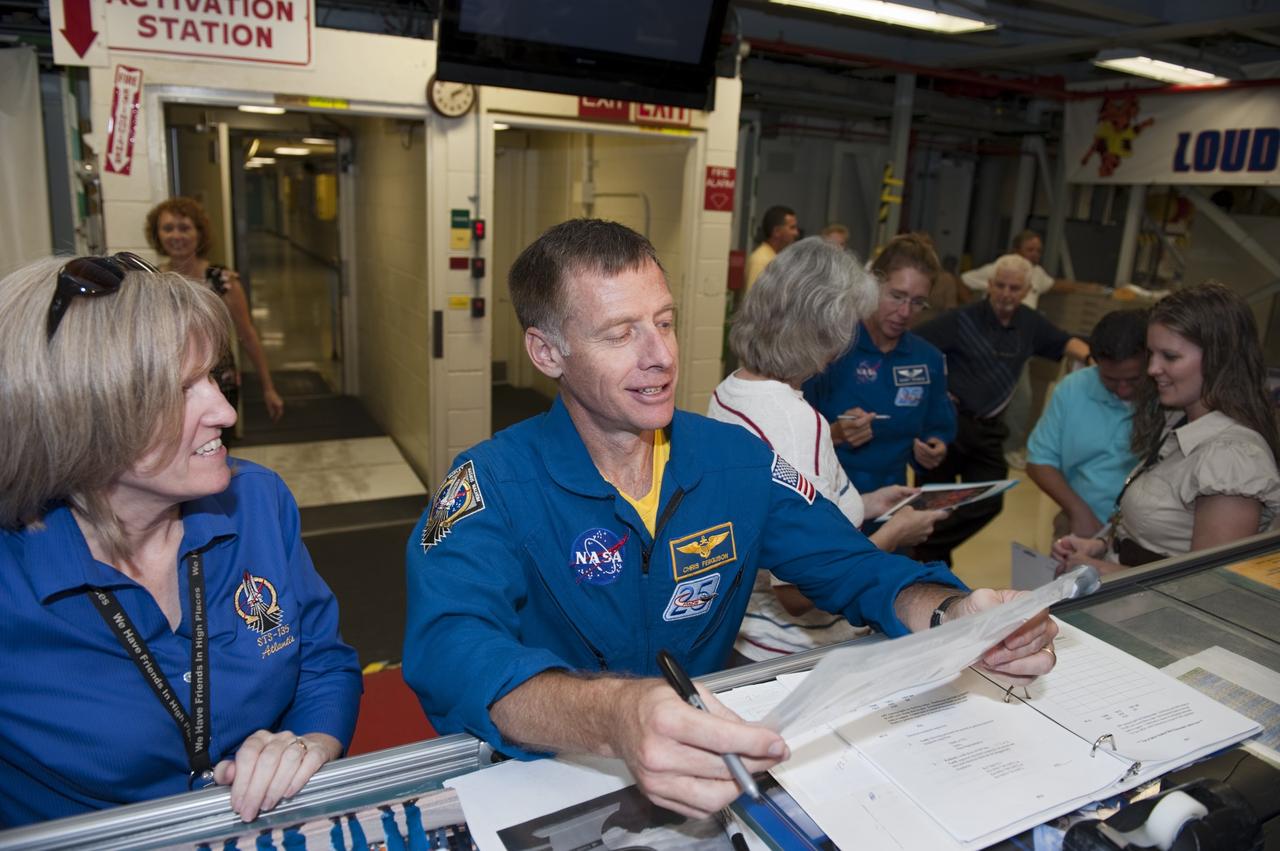
CAPE CANAVERAL, Fla. – STS-135 Commander Chris Ferguson talks with Atlantis Flow Director Angie Brewer, while Mission Specialist Sandra Magnus sign autographs for employees inside Kennedy Space Center's Orbiter Processing Facility-2, where space shuttle Atlantis is being prepared for eventual display at the Kennedy Space Center Visitor Complex in Florida. The astronauts, along with Pilot Doug Hurley, were at the center for the traditional post-flight crew return presentation. STS-135 Mission Specialist Rex Walheim was unable to attend the Kennedy event. In July 2011, Atlantis and its crew delivered to the International Space Station the Raffaello multi-purpose logistics module packed with more than 9,400 pounds of spare parts, equipment and supplies that will sustain station operations for the next year. STS-135 was the 33rd and final flight for Atlantis and the final mission of the Space Shuttle Program. For more information, visit www.nasa.gov/mission_pages/shuttle/shuttlemissions/sts135/index.html. Photo credit: NASA/Kim Shiflett
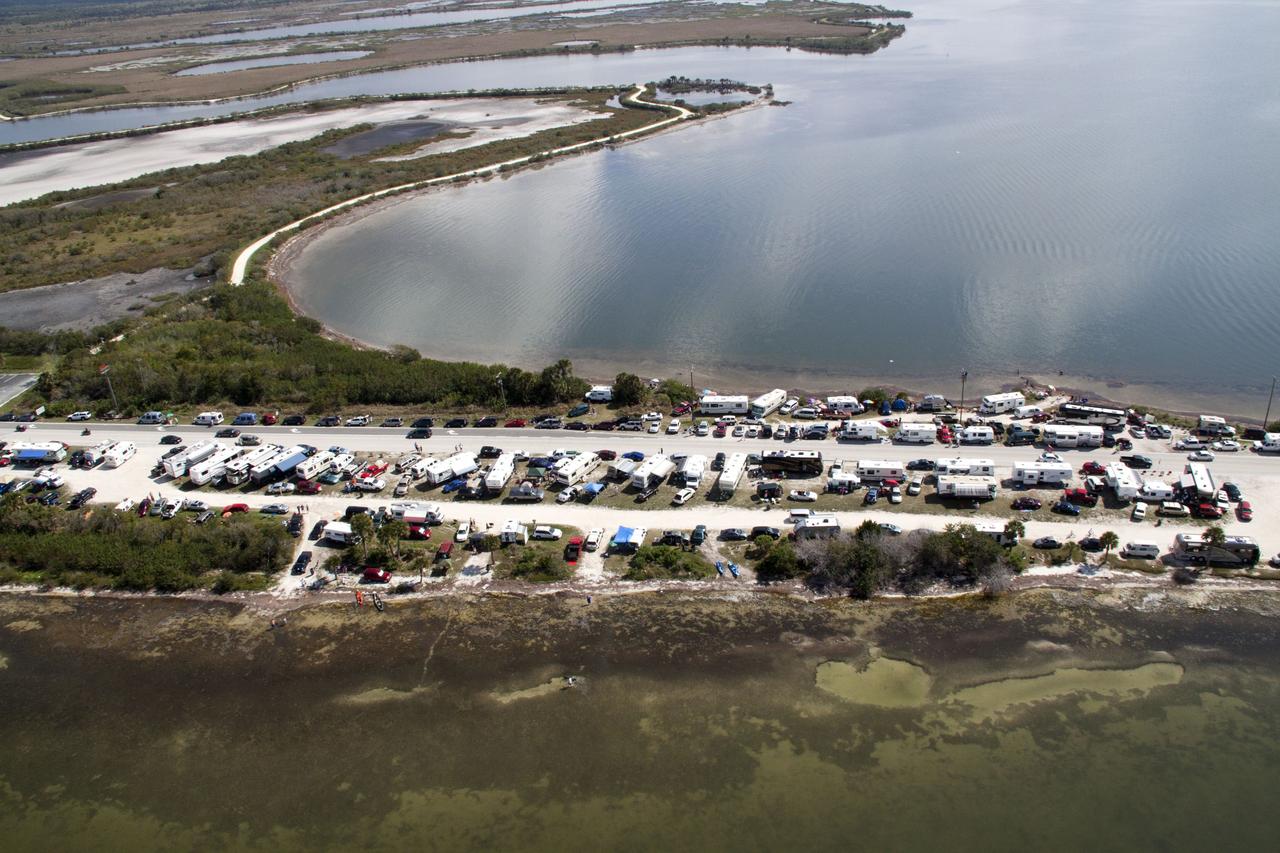
CAPE CANAVERAL, Fla. -- Folks from across the country camped out in communities surrounding NASA's Kennedy Space Center in Florida to witness space shuttle Discovery make history by lifting off on its final scheduled mission from Launch Pad 39A. Seen here, is State Road 406, also known as the A. Max Brewer Causeway, in Titusville, Fla. Liftoff is set for 4:50 p.m. EST on Feb. 24. Discovery and its six-member STS-133 crew will deliver the Permanent Multipurpose Module, packed with supplies and critical spare parts, as well as Robonaut 2, the dexterous humanoid astronaut helper, to the International Space Station. Discovery, which will fly its 39th mission, is scheduled to be retired following STS-133. This will be the 133rd Space Shuttle Program mission and the 35th shuttle voyage to the space station. For more information on the STS-133 mission, visit www.nasa.gov/mission_pages/shuttle/shuttlemissions/sts133/. Photo credit: NASA/Jack Pfaller

CAPE CANAVERAL, Fla. -- After 30 years and 135 missions, residents and visitors to Florida's Space Coast crowd the new A. Max Brewer Bridge in Titusville to see the rocket's red glare of NASA's Space Shuttle Program soar for the last time. Space shuttle Atlantis is scheduled to liftoff at 11:26 a.m. EDT from Launch Pad 39A at NASA's Kennedy Space Center in Florida. On board will be four experienced astronauts -- STS-135 Commander Chris Ferguson, Pilot Doug Hurley, and Mission Specialists Sandy Magnus and Rex Walheim. STS-135 will deliver the Raffaello multi-purpose logistics module packed with supplies and spare parts for the International Space Station. Atlantis also will fly the Robotic Refueling Mission experiment that will investigate the potential for robotically refueling existing satellites in orbit. In addition, Atlantis will return with a failed ammonia pump module to help NASA better understand the failure mechanism and improve pump designs for future systems. STS-135 will be the 33rd flight of Atlantis, the 37th shuttle mission to the space station, and the 135th and final mission of NASA's Space Shuttle Program. For more information visit, www.nasa.gov/mission_pages/shuttle/shuttlemissions/sts135/index.html. Photo credit: NASA/Frank Michaux
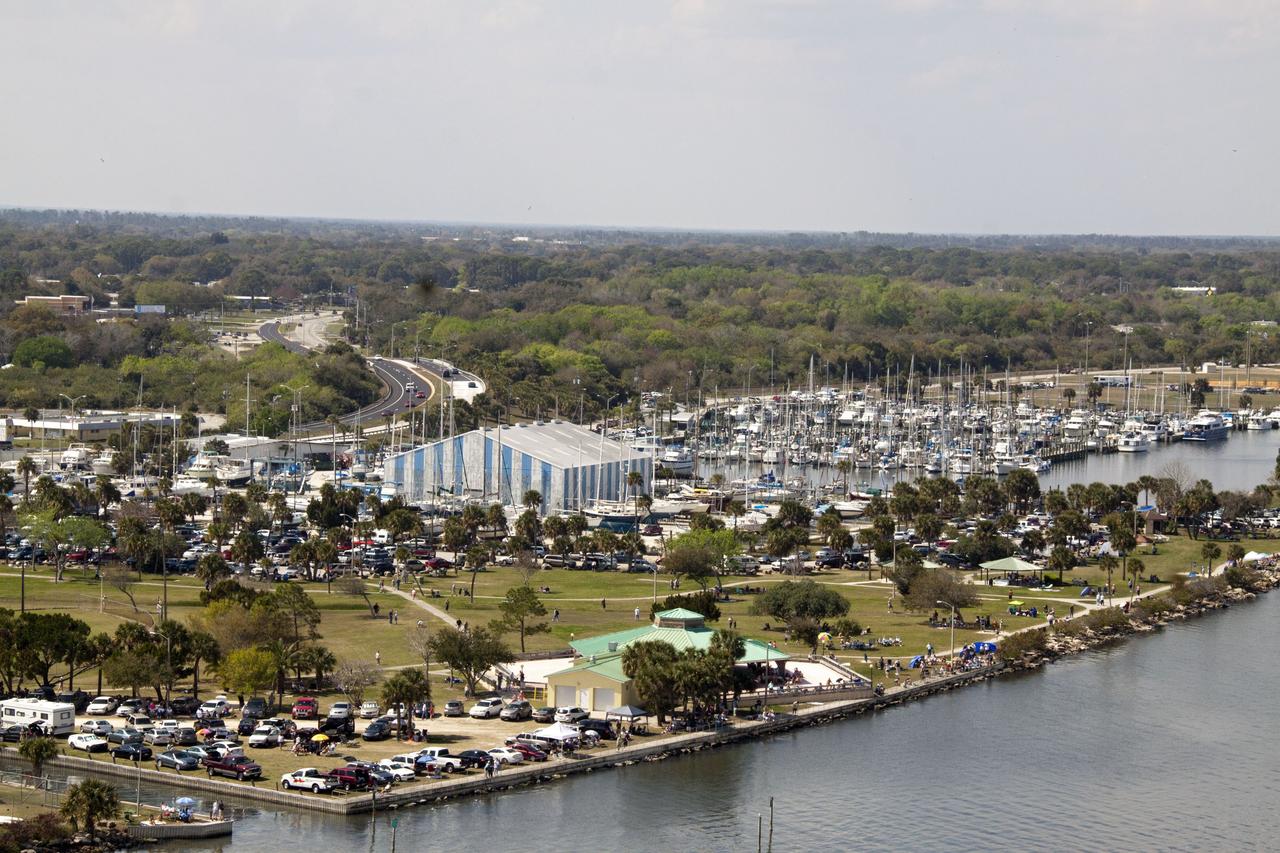
CAPE CANAVERAL, Fla. -- Folks from across the country camped out in communities surrounding NASA's Kennedy Space Center in Florida to witness space shuttle Discovery make history by lifting off on its final scheduled mission from Launch Pad 39A. Seen here is Sand Point Park near U. S. Highway 1 and State Road 406, also known as the A. Max Brewer Causeway, in Titusville, Fla. Liftoff is set for 4:50 p.m. EST on Feb. 24. Discovery and its six-member STS-133 crew will deliver the Permanent Multipurpose Module, packed with supplies and critical spare parts, as well as Robonaut 2, the dexterous humanoid astronaut helper, to the International Space Station. Discovery, which will fly its 39th mission, is scheduled to be retired following STS-133. This will be the 133rd Space Shuttle Program mission and the 35th shuttle voyage to the space station. For more information on the STS-133 mission, visit www.nasa.gov/mission_pages/shuttle/shuttlemissions/sts133/. Photo credit: NASA/Jack Pfaller
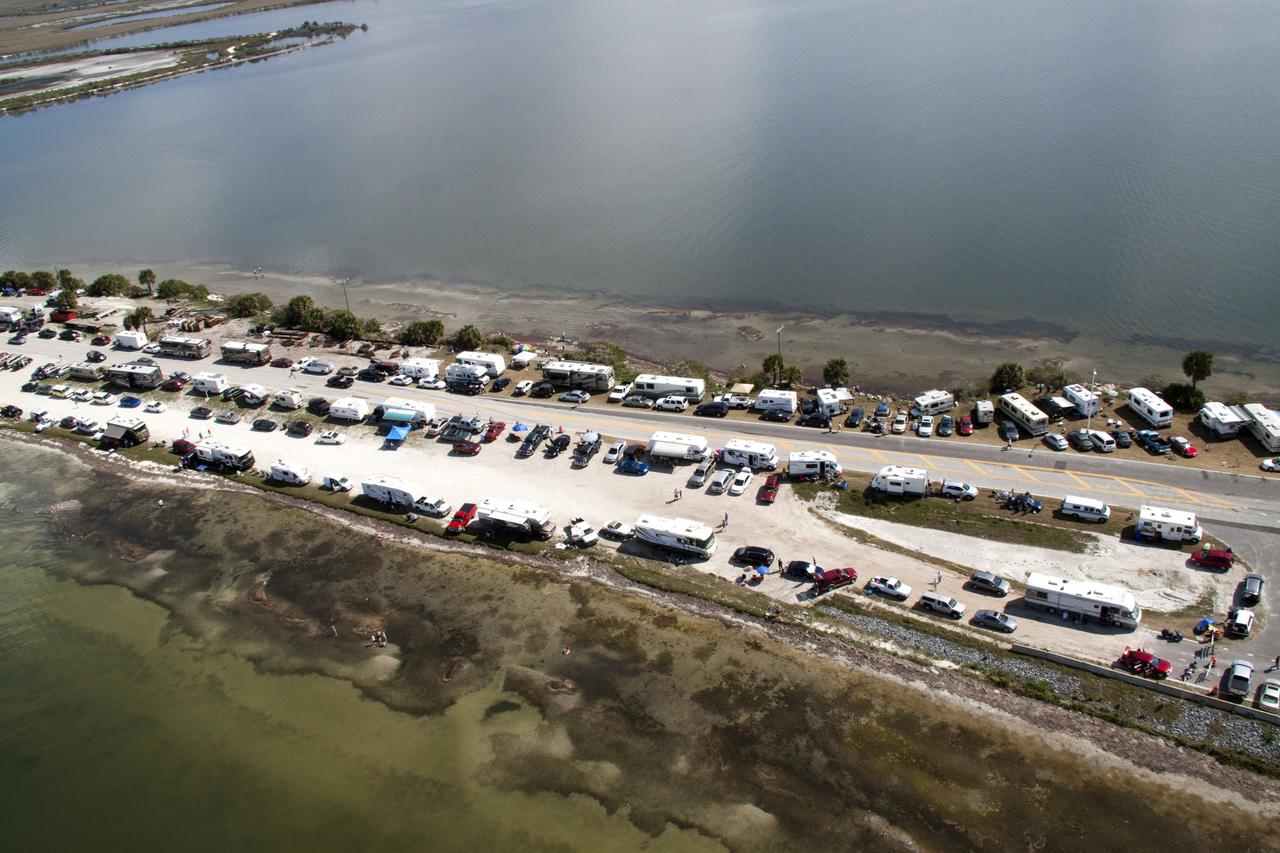
CAPE CANAVERAL, Fla. -- Folks from across the country camped out in communities surrounding NASA's Kennedy Space Center in Florida to witness space shuttle Discovery make history by lifting off on its final scheduled mission from Launch Pad 39A. Seen here, is State Road 406, also known as the A. Max Brewer Causeway, in Titusville, Fla. Liftoff is set for 4:50 p.m. EST on Feb. 24. Discovery and its six-member STS-133 crew will deliver the Permanent Multipurpose Module, packed with supplies and critical spare parts, as well as Robonaut 2, the dexterous humanoid astronaut helper, to the International Space Station. Discovery, which will fly its 39th mission, is scheduled to be retired following STS-133. This will be the 133rd Space Shuttle Program mission and the 35th shuttle voyage to the space station. For more information on the STS-133 mission, visit www.nasa.gov/mission_pages/shuttle/shuttlemissions/sts133/. Photo credit: NASA/Jack Pfaller
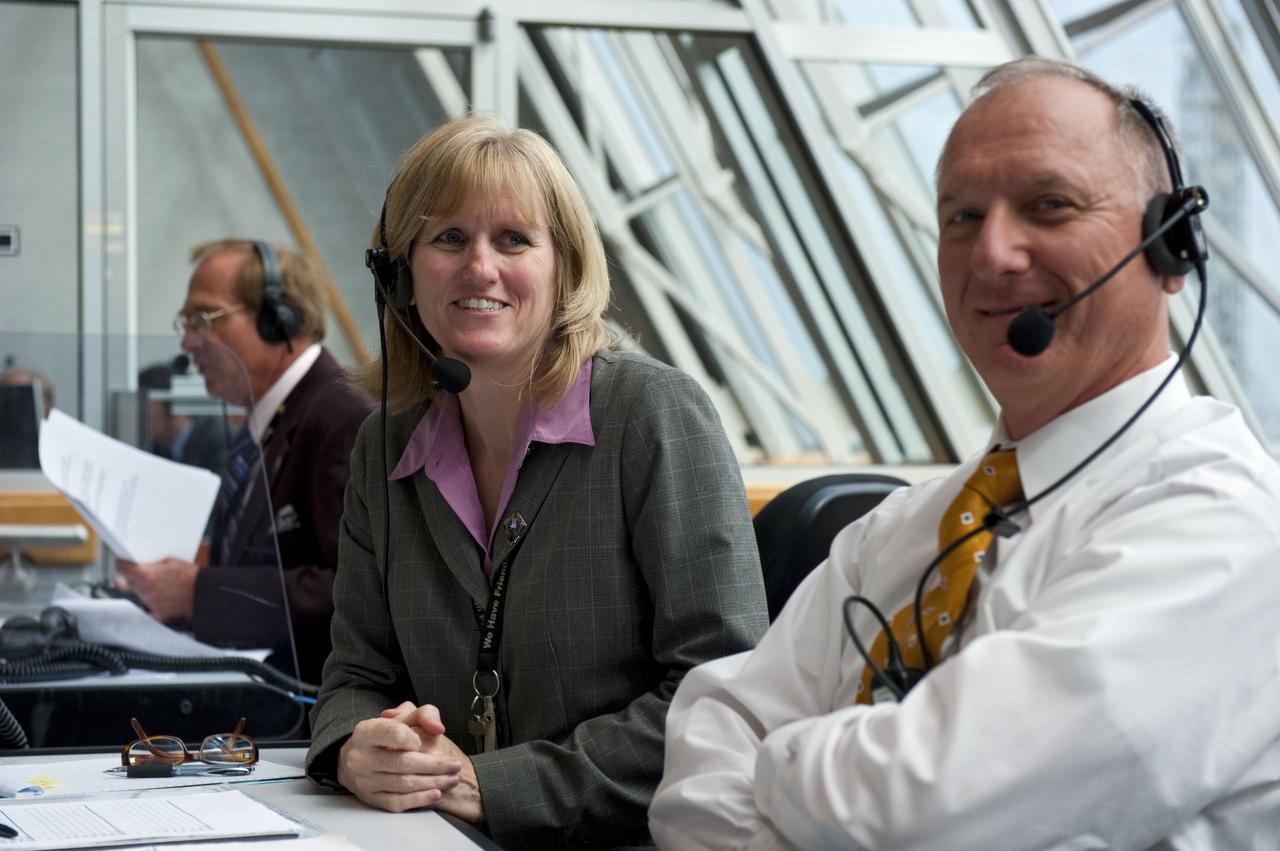
CAPE CANAVERAL, Fla. -- In Firing Room 4 of the Launch Control Center at NASA's Kennedy Space Center in Florida, launch team members monitor the countdown to the launch of space shuttle Atlantis on its STS-135 mission to the International Space Station. Seen here are Assistant Launch Director Pete Nickolenko (right), Atlantis NASA Flow Director Angie Brewer and NASA Commentator and Public Affairs Officer George Diller. Atlantis with its crew of four; Commander Chris Ferguson, Pilot Doug Hurley, Mission Specialists Sandy Magnus and Rex Walheim, lifted off at 11:29 a.m. EDT on July 8, 2011 to deliver the Raffaello multi-purpose logistics module packed with supplies and spare parts for the station. Atlantis also will fly the Robotic Refueling Mission experiment that will investigate the potential for robotically refueling existing satellites in orbit. In addition, Atlantis will return with a failed ammonia pump module to help NASA better understand the failure mechanism and improve pump designs for future systems. STS-135 will be the 33rd flight of Atlantis, the 37th shuttle mission to the space station, and the 135th and final mission of NASA's Space Shuttle Program. For more information, visit www.nasa.gov/mission_pages/shuttle/shuttlemissions/sts135/index.html. Photo credit: NASA/Kim Shiflett
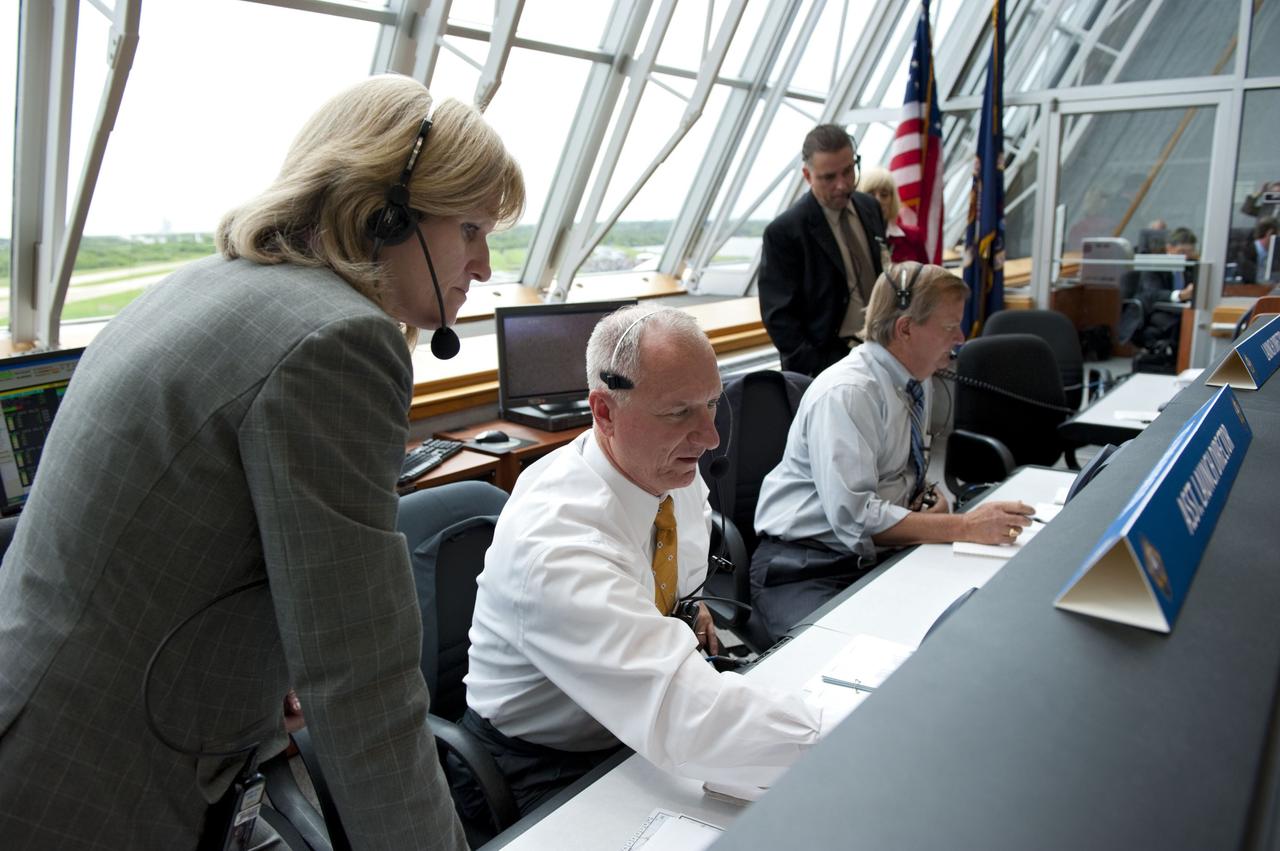
CAPE CANAVERAL, Fla. -- In Firing Room 4 of the Launch Control Center at NASA's Kennedy Space Center in Florida, launch team members monitor the countdown to the launch of space shuttle Atlantis on its STS-135 mission to the International Space Station. Seen here are Atlantis NASA Flow Director Angie Brewer, Assistant Launch Director Pete Nickolenko, Shuttle Launch Director Mike Leinbach and Payloads Launch Manager and Deputy Director of ISS and Spacecraft Processing at Kennedy, Bill Dowdell. Atlantis with its crew of four; Commander Chris Ferguson, Pilot Doug Hurley, Mission Specialists Sandy Magnus and Rex Walheim, lifted off at 11:29 a.m. EDT on July 8, 2011 to deliver the Raffaello multi-purpose logistics module packed with supplies and spare parts for the station. Atlantis also will fly the Robotic Refueling Mission experiment that will investigate the potential for robotically refueling existing satellites in orbit. In addition, Atlantis will return with a failed ammonia pump module to help NASA better understand the failure mechanism and improve pump designs for future systems. STS-135 will be the 33rd flight of Atlantis, the 37th shuttle mission to the space station, and the 135th and final mission of NASA's Space Shuttle Program. For more information, visit www.nasa.gov/mission_pages/shuttle/shuttlemissions/sts135/index.html. Photo credit: NASA/Kim Shiflett
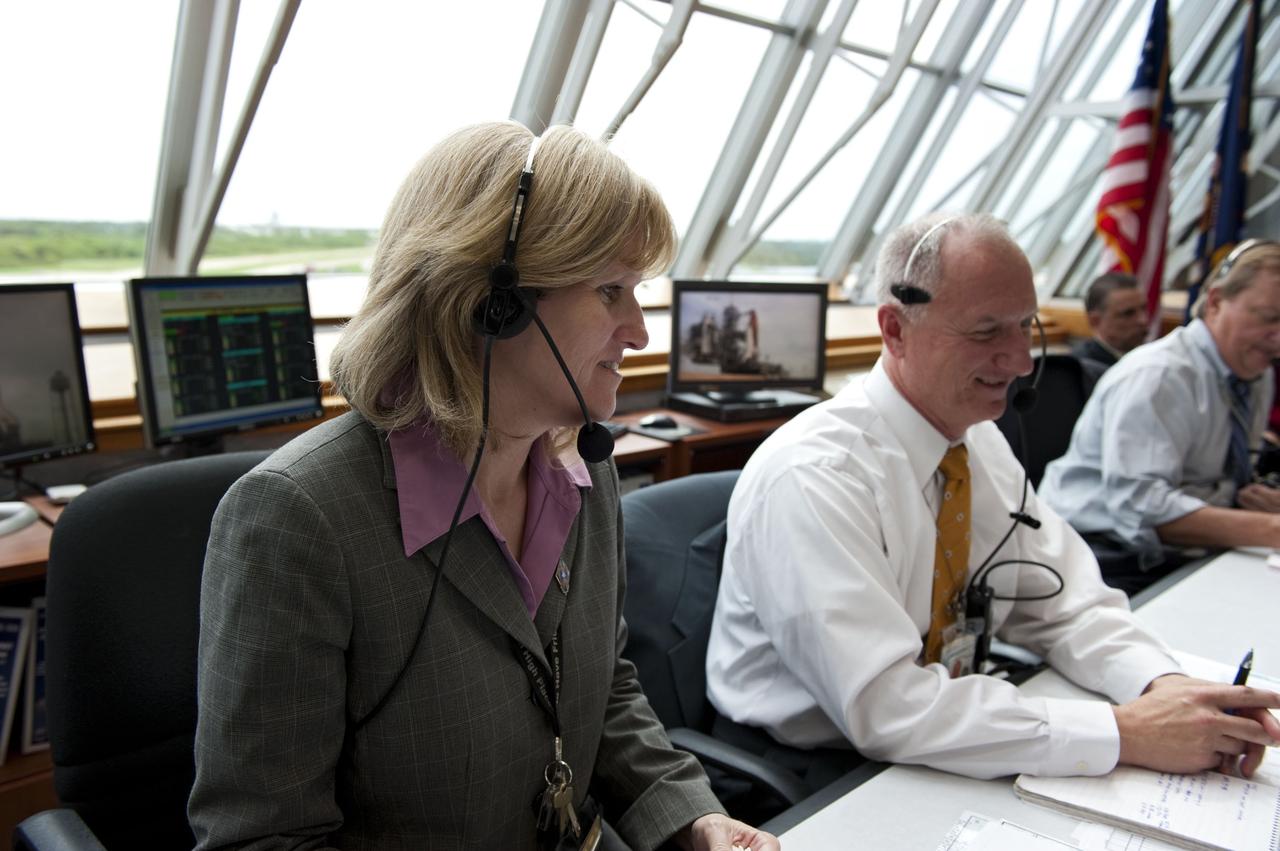
CAPE CANAVERAL, Fla. -- In Firing Room 4 of the Launch Control Center at NASA's Kennedy Space Center in Florida, launch team members monitor the countdown to the launch of space shuttle Atlantis on its STS-135 mission to the International Space Station. Seen here are Atlantis NASA Flow Director Angie Brewer, Assistant Launch Director Pete Nickolenko and Shuttle Launch Director Mike Leinbach (far right). Atlantis with its crew of four; Commander Chris Ferguson, Pilot Doug Hurley, Mission Specialists Sandy Magnus and Rex Walheim, lifted off at 11:29 a.m. EDT on July 8, 2011 to deliver the Raffaello multi-purpose logistics module packed with supplies and spare parts for the station. Atlantis also will fly the Robotic Refueling Mission experiment that will investigate the potential for robotically refueling existing satellites in orbit. In addition, Atlantis will return with a failed ammonia pump module to help NASA better understand the failure mechanism and improve pump designs for future systems. STS-135 will be the 33rd flight of Atlantis, the 37th shuttle mission to the space station, and the 135th and final mission of NASA's Space Shuttle Program. For more information, visit www.nasa.gov/mission_pages/shuttle/shuttlemissions/sts135/index.html. Photo credit: NASA/Kim Shiflett
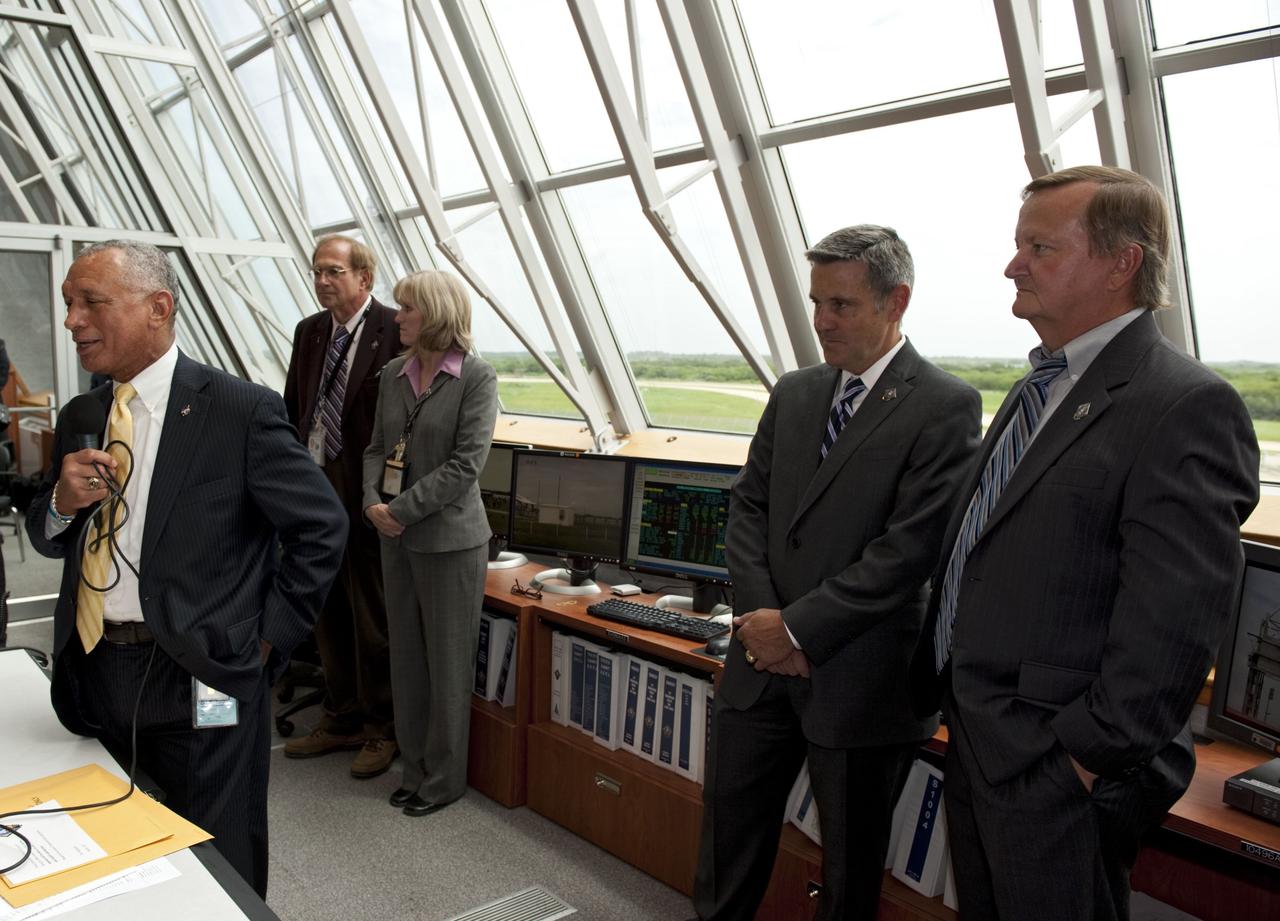
CAPE CANAVERAL, Fla. -- NASA Administrator Charlie Bolden congratulates the launch team in Firing Room 4 of the Launch Control Center following the successful launch of space shuttle Atlantis from NASA's Kennedy Space Center in Florida. Behind Bolden, from left, are STS-135 Launch Commentator George Diller, Atlantis' NASA Flow Director Angie Brewer, Kennedy Space Center Director Bob Cabana and Shuttle Launch Director Mike Leinbach. Atlantis began its final flight, the STS-135 mission to the International Space Station, at 11:29 a.m. EDT on July 8. STS-135 will deliver the Raffaello multi-purpose logistics module packed with supplies and spare parts for the International Space Station. Atlantis also is flying the Robotic Refueling Mission experiment that will investigate the potential for robotically refueling existing satellites in orbit. In addition, Atlantis will return with a failed ammonia pump module to help NASA better understand the failure mechanism and improve pump designs for future systems. STS-135 is the 33rd flight of Atlantis, the 37th shuttle mission to the space station, and the 135th and final mission of NASA's Space Shuttle Program. For more information, visit www.nasa.gov/mission_pages/shuttle/shuttlemissions/sts135/index.html. Photo credit: NASA/Kim Shiflett
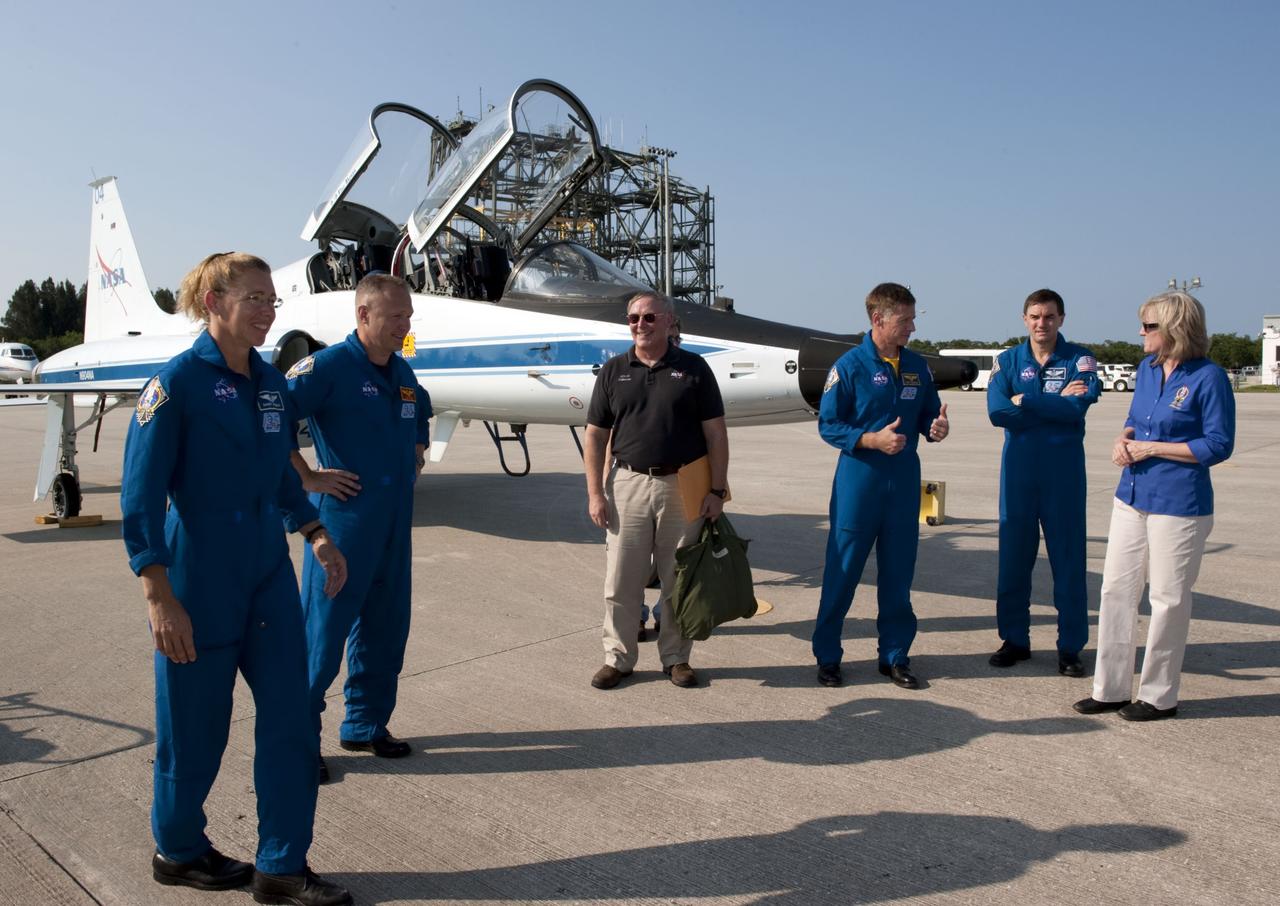
CAPE CANAVERAL, Fla. -- At the Shuttle Landing Facility at NASA's Kennedy Space Center in Florida, NASA Astronaut Jerry Ross (center) and space shuttle Atlantis' NASA Flow Director, Angie Brewer (right) are on hand greet the STS-135 crew. From left are Mission Specialist Sandy Magnus, Pilot Doug Hurley, Commander Chris Ferguson and Mission Specialist Rex Walheim. The crew arrived at Kennedy at about 5:30 p.m. EDT to participate in a launch countdown dress rehearsal called the Terminal Countdown Demonstration Test (TCDT) and related training in preparation for the upcoming STS-135 mission. Atlantis and its crew are targeted to lift off July 8, taking with them the Raffaello multi-purpose logistics module packed with supplies and spare parts to the International Space Station. The STS-135 mission also will fly a system to investigate the potential for robotically refueling existing satellites and return a failed ammonia pump module to help NASA better understand the failure mechanism and improve pump designs for future systems. STS-135 will be the 33rd flight of Atlantis, the 37th shuttle mission to the International Space Station, and the 135th and final mission of NASA's Space Shuttle Program. For more information visit, www.nasa.gov/mission_pages/shuttle/shuttlemissions/sts135/index.html. Photo credit: NASA/Kim Shiflett
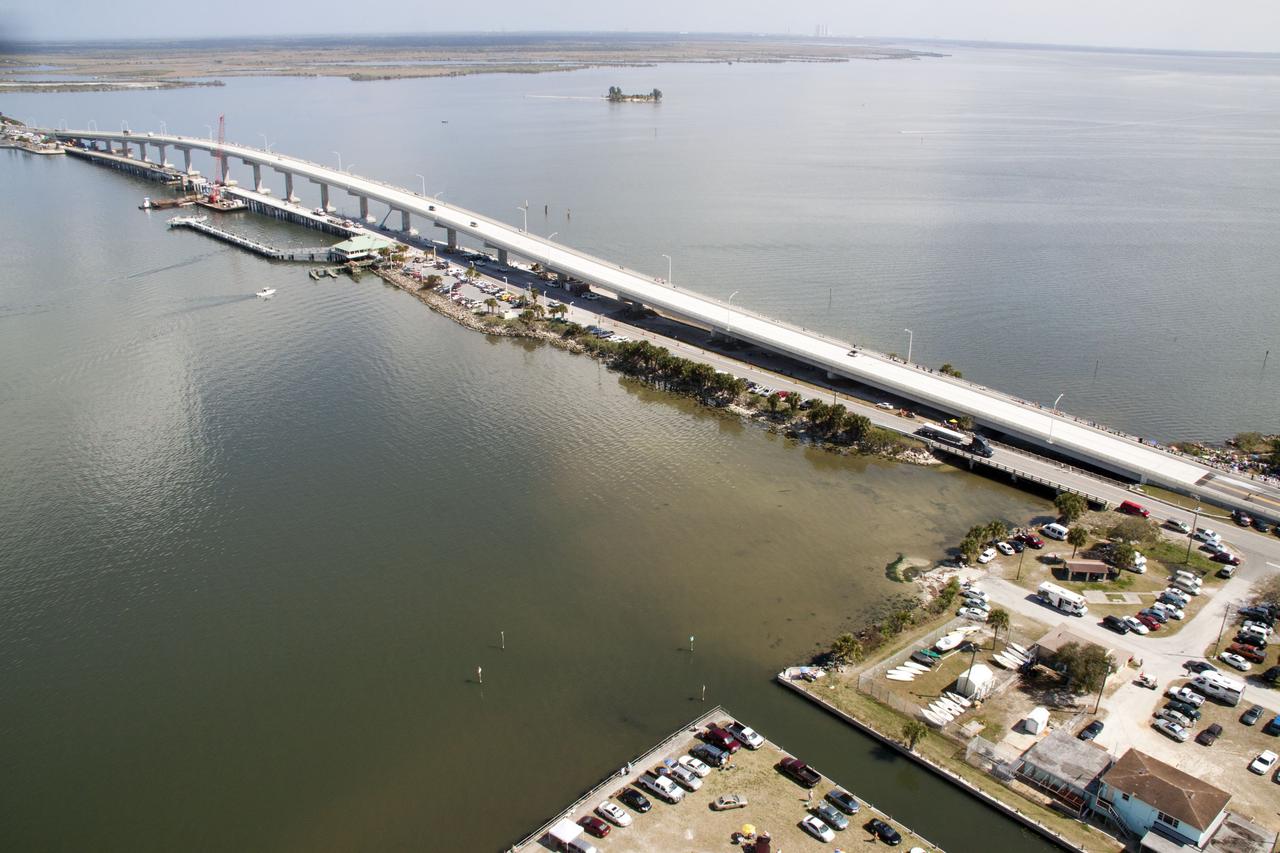
CAPE CANAVERAL, Fla. -- Folks from across the country camped out in communities surrounding NASA's Kennedy Space Center in Florida to witness space shuttle Discovery make history by lifting off on its final scheduled mission from Launch Pad 39A. Seen here, is State Road 406, also known as the A. Max Brewer Causeway, in Titusville, Fla. Liftoff is set for 4:50 p.m. EST on Feb. 24. Discovery and its six-member STS-133 crew will deliver the Permanent Multipurpose Module, packed with supplies and critical spare parts, as well as Robonaut 2, the dexterous humanoid astronaut helper, to the International Space Station. Discovery, which will fly its 39th mission, is scheduled to be retired following STS-133. This will be the 133rd Space Shuttle Program mission and the 35th shuttle voyage to the space station. For more information on the STS-133 mission, visit www.nasa.gov/mission_pages/shuttle/shuttlemissions/sts133/. Photo credit: NASA/Jack Pfaller
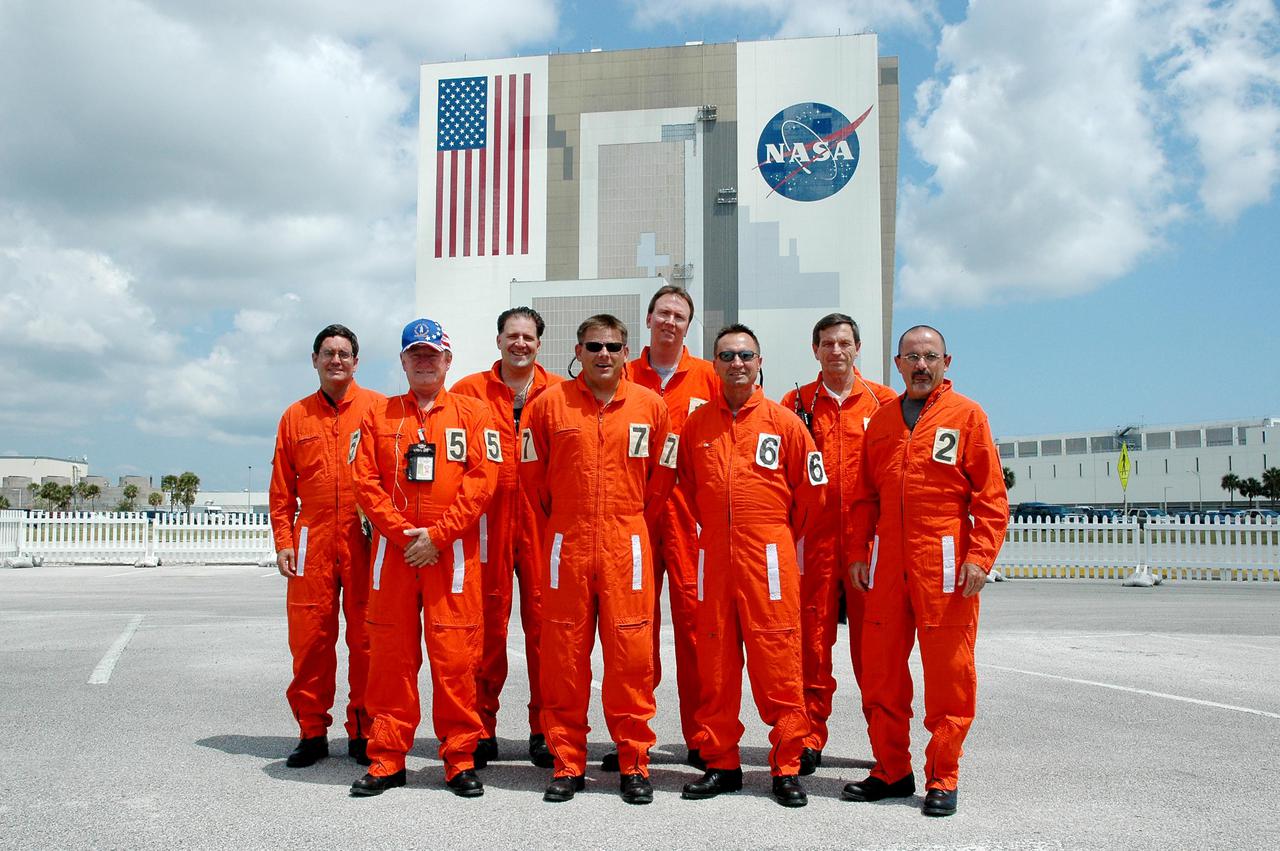
KENNEDY SPACE CENTER, FLA. - Members of the Final Inspection Team pose for a group portrait following their return from Launch Pad 39B where they were supporting an External Tank (ET) tanking test. From left are Robert Speece, NASA; Ray Brewer; United Space Alliance; Mike Payne, NASA; Scott Otto, Lockheed Martin; John Blue, NASA; Doug Powell, Lockheed Martin; William Duckworth, United Space Alliance; and Jorge Rivera, NASA. This team conducts a preflight walkdown of the vehicle and pad during the hold at T-3 hours on launch day. The tanking test is designed to evaluate how the tank, orbiter, solid rocket boosters and ground systems perform under 'cryo-load,' when the tank is filled with the two ultra-low-temperature propellants. The tank filling and draining portion of the test takes about 11 hours. The test also includes a simulated countdown through the hold at T-31 seconds. The test is being conducted to troubleshoot two issues identified by a tanking test held on April 14. Data is being collected to analyze the liquid hydrogen sensors that gave intermittent readings and the liquid hydrogen pressurization relief valve that cycled more times than standard. The tanking tests are part of preparations for Space Shuttle Discovery's Return to Flight mission, STS-114, to the International Space Station. The launch window extends from July 13 through July 31.
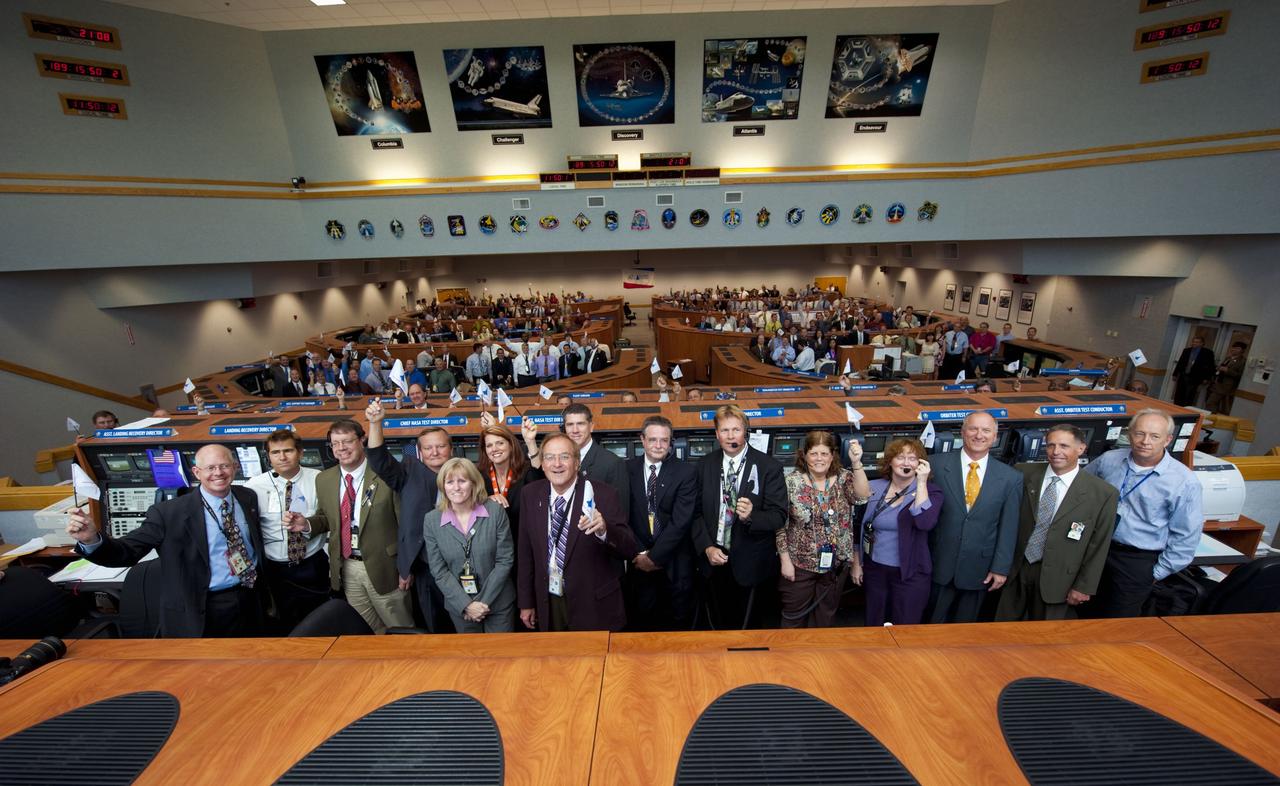
CAPE CANAVERAL, Fla. -- Launch controllers wave their STS-135 shuttle launch team member flags and cheer in Firing Room 4 of the Launch Control Center following the successful launch of space shuttle Atlantis from NASA's Kennedy Space Center in Florida. In the foreground, from left, are NASA Test Directors Steve Payne and Bob Holl; Landing and Recovery Director Greg Gaddis; Shuttle Launch Director Mike Leinbach; Atlantis' NASA Flow Director Angie Brewer; NASA Test Director Charlie Blackwell-Thompson; STS-135 Launch Commentator George Diller; NASA Test Directors Jeremy Graeber, Tim Potter, and Jeff Spaulding; Orbiter Test Conductor Roberta Wyrick; Assistant Orbiter Test Conductor Laurie Sally; Assistant Launch Director Pete Nickolenko; United Space Alliance Vice President of Launch and Recovery Systems Mark Nappi; and United Space Alliance Test Conductor Mark Paxton. Atlantis began its final flight, the STS-135 mission to the International Space Station, at 11:29 a.m. EDT on July 8. STS-135 will deliver the Raffaello multi-purpose logistics module packed with supplies and spare parts for the International Space Station. Atlantis also is flying the Robotic Refueling Mission experiment that will investigate the potential for robotically refueling existing satellites in orbit. In addition, Atlantis will return with a failed ammonia pump module to help NASA better understand the failure mechanism and improve pump designs for future systems. STS-135 is the 33rd flight of Atlantis, the 37th shuttle mission to the space station, and the 135th and final mission of NASA's Space Shuttle Program. For more information, visit www.nasa.gov/mission_pages/shuttle/shuttlemissions/sts135/index.html. Photo credit: NASA/Kim Shiflett