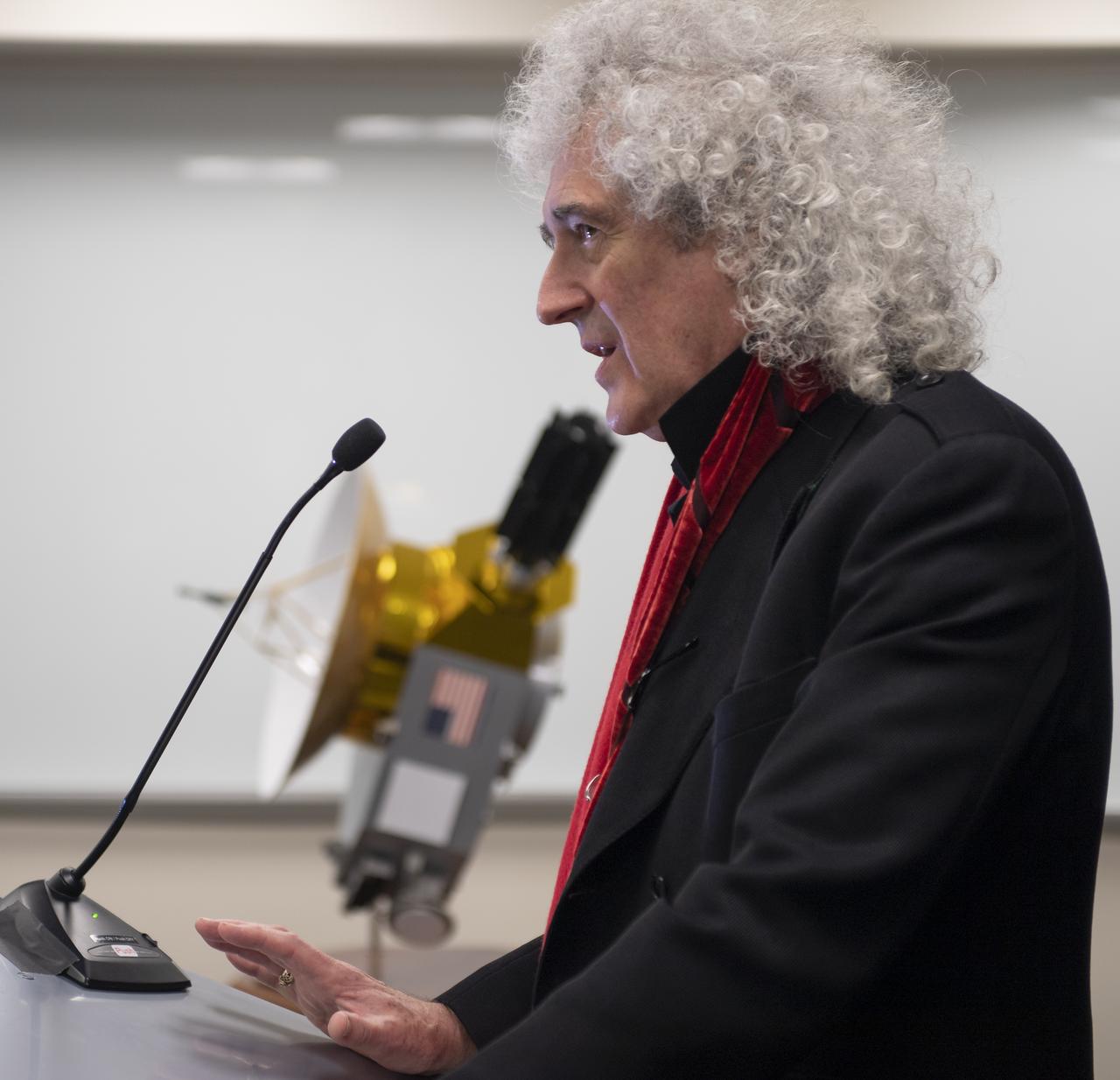
Brian May, lead guitarist of the rock band Queen and astrophysicist discusses the upcoming New Horizons flyby of the Kuiper Belt object Ultima Thule, Monday, Dec. 31, 2018 at Johns Hopkins University Applied Physics Laboratory (APL) in Laurel, Maryland. Photo Credit: (NASA/Bill Ingalls)
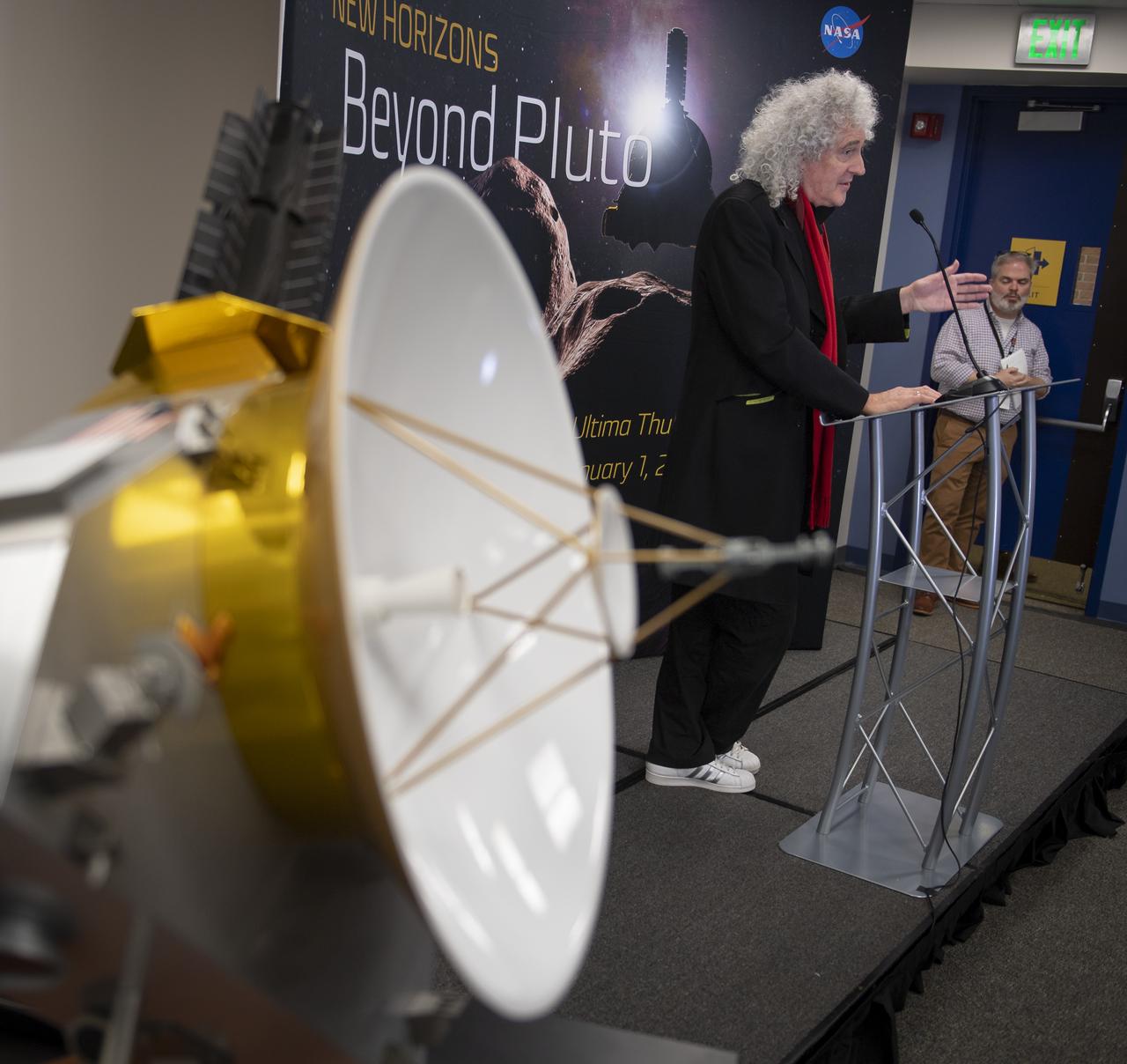
Brian May, lead guitarist of the rock band Queen and astrophysicist discusses the upcoming New Horizons flyby of the Kuiper Belt object Ultima Thule, Monday, Dec. 31, 2018 at Johns Hopkins University Applied Physics Laboratory (APL) in Laurel, Maryland. Photo Credit: (NASA/Bill Ingalls)
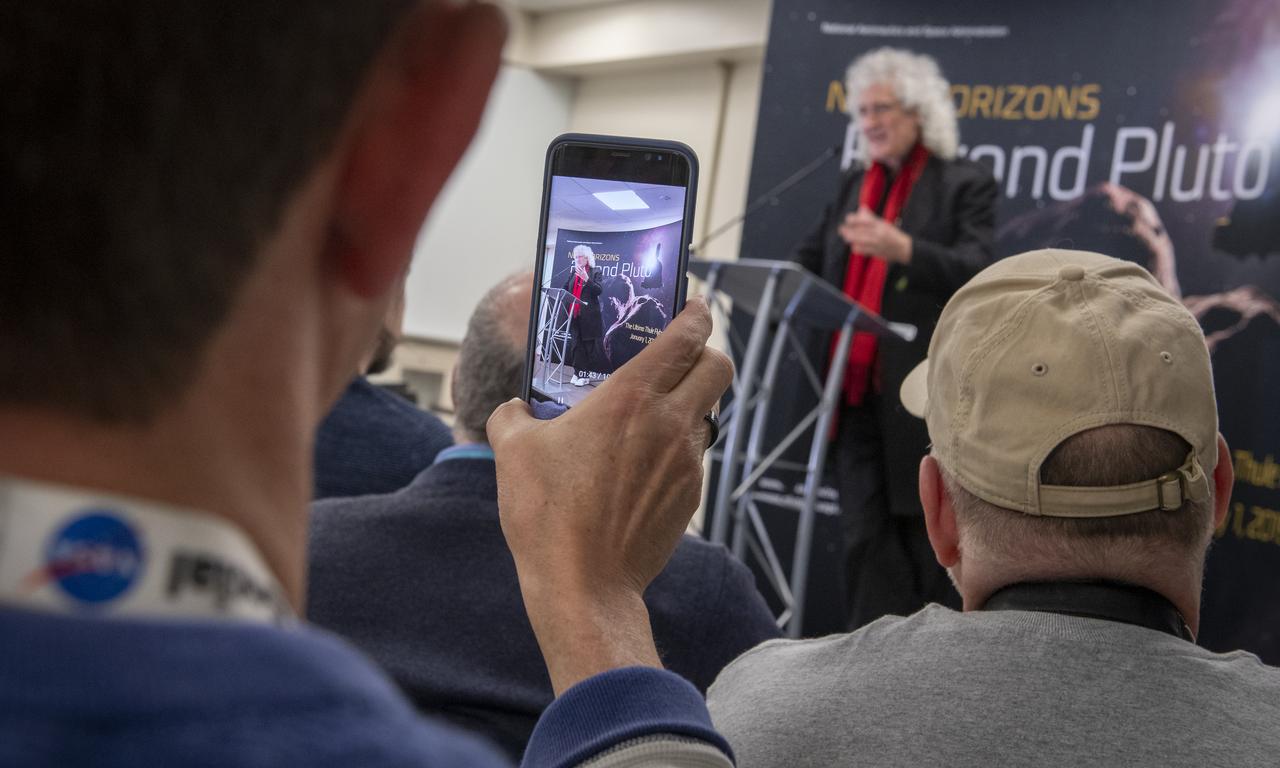
Brian May, lead guitarist of the rock band Queen and astrophysicist discusses the upcoming New Horizons flyby of the Kuiper Belt object Ultima Thule, Monday, Dec. 31, 2018 at Johns Hopkins University Applied Physics Laboratory (APL) in Laurel, Maryland. Photo Credit: (NASA/Bill Ingalls)
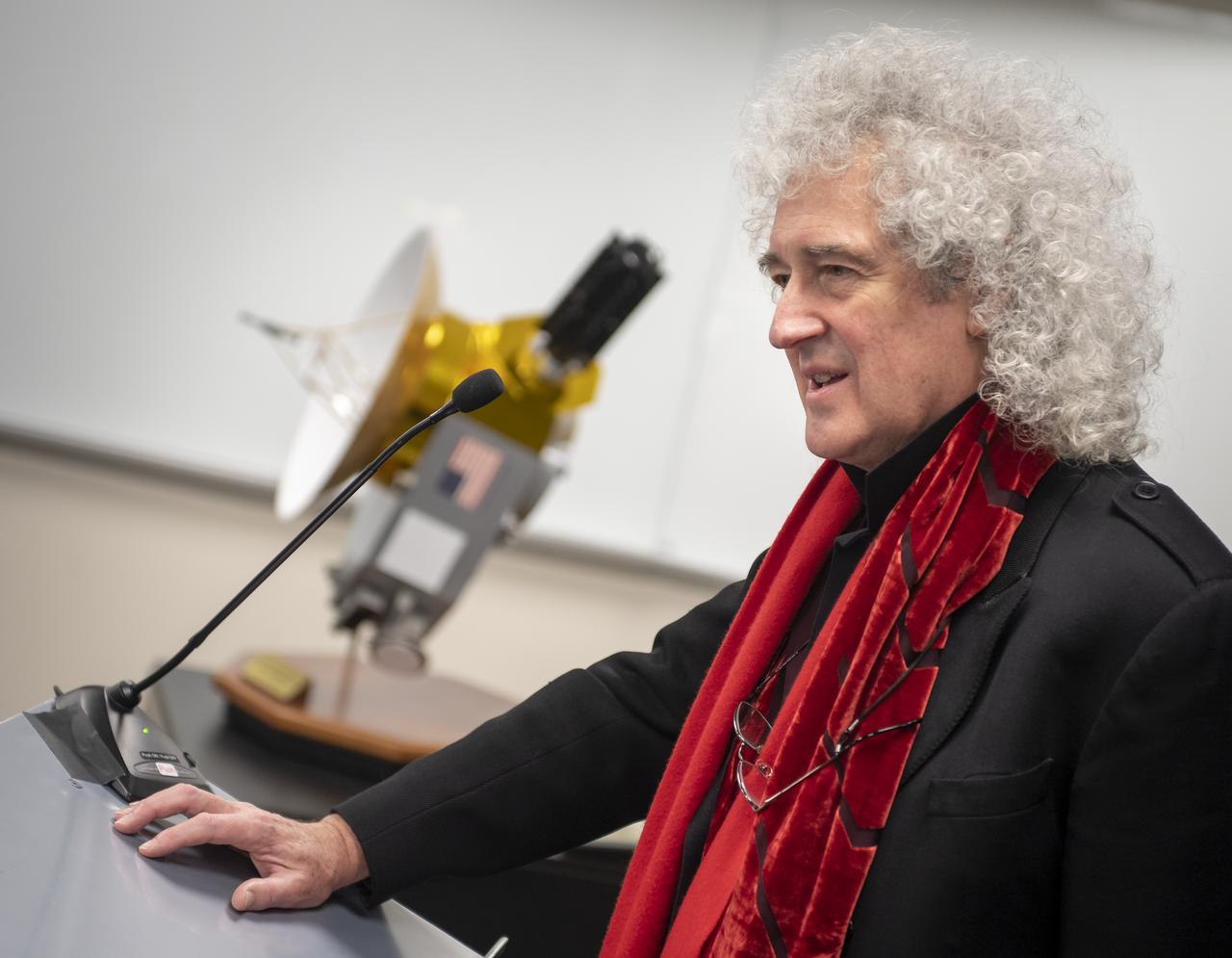
Brian May, lead guitarist of the rock band Queen and astrophysicist discusses the upcoming New Horizons flyby of the Kuiper Belt object Ultima Thule, Monday, Dec. 31, 2018 at Johns Hopkins University Applied Physics Laboratory (APL) in Laurel, Maryland. Photo Credit: (NASA/Bill Ingalls)
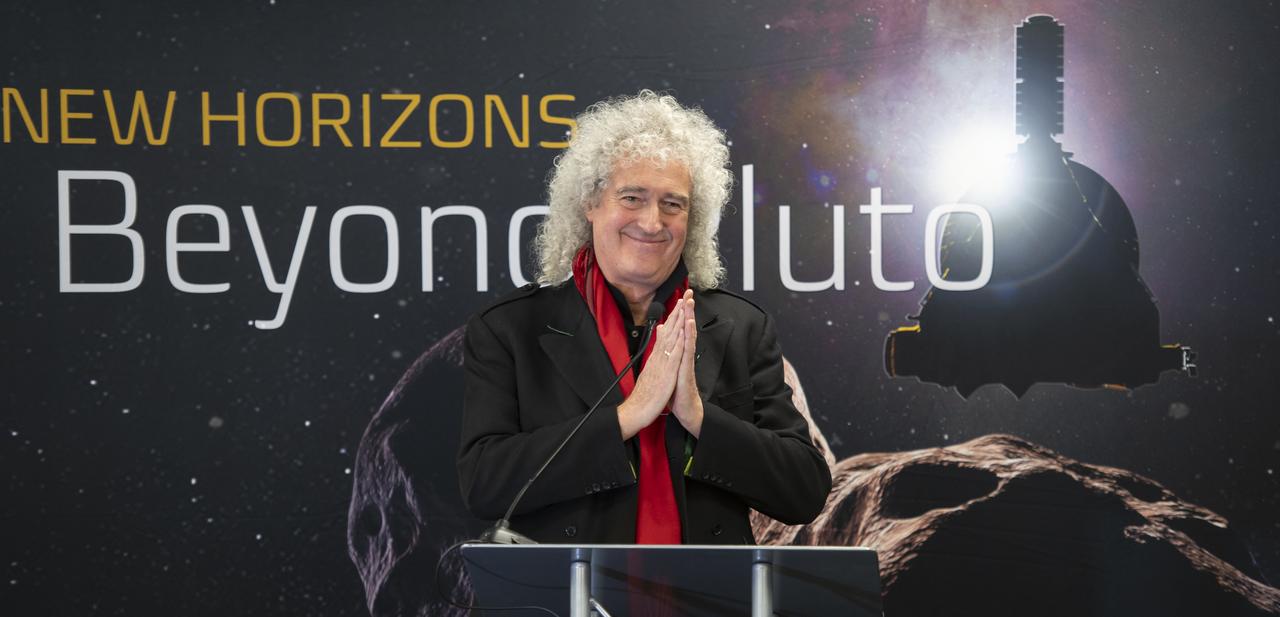
Brian May, lead guitarist of the rock band Queen and astrophysicist discusses the upcoming New Horizons flyby of the Kuiper Belt object Ultima Thule, Monday, Dec. 31, 2018 at Johns Hopkins University Applied Physics Laboratory (APL) in Laurel, Maryland. Photo Credit: (NASA/Bill Ingalls)
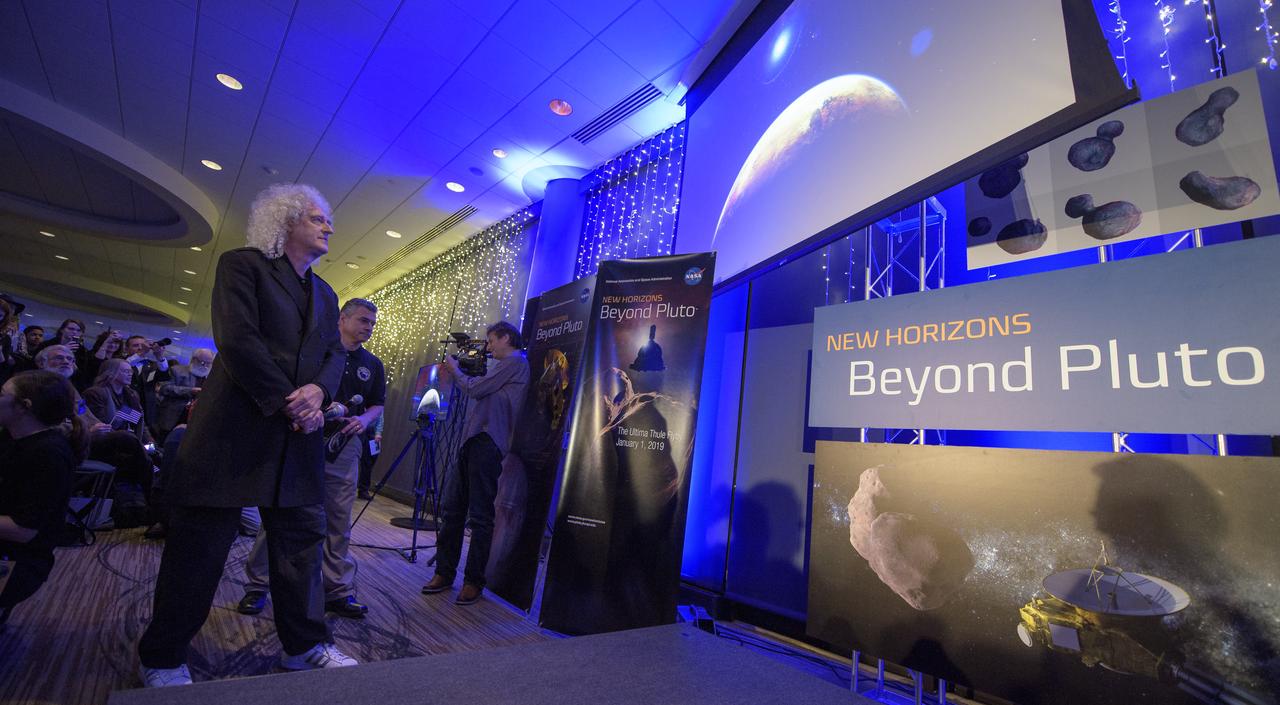
Brian May, lead guitarist of the rock band Queen and astrophysicist shows a video with a new song he wrote for the New Horizons mission, Tuesday, Jan. 1, 2019 at Johns Hopkins University Applied Physics Laboratory (APL) in Laurel, Maryland. Photo Credit: (NASA/Bill Ingalls)
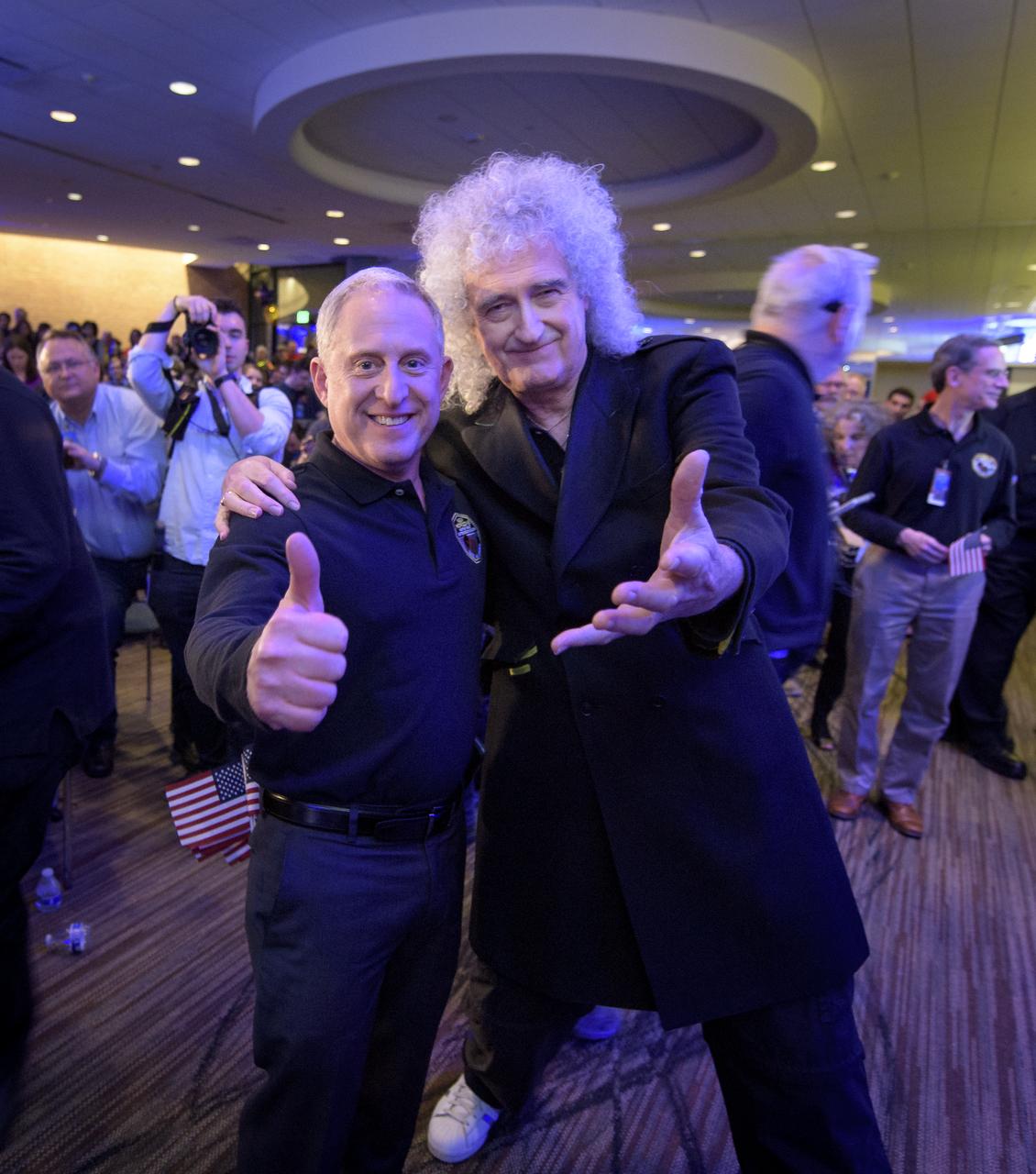
New Horizons principal investigator Alan Stern of the Southwest Research Institute (SwRI), Boulder, CO, left, and Brian May, lead guitarist of the rock band Queen and astrophysicist, pose for a photograph after a New Years event, Tuesday, Jan. 1, 2019 at Johns Hopkins University Applied Physics Laboratory (APL) in Laurel, Maryland. Photo Credit: (NASA/Bill Ingalls)
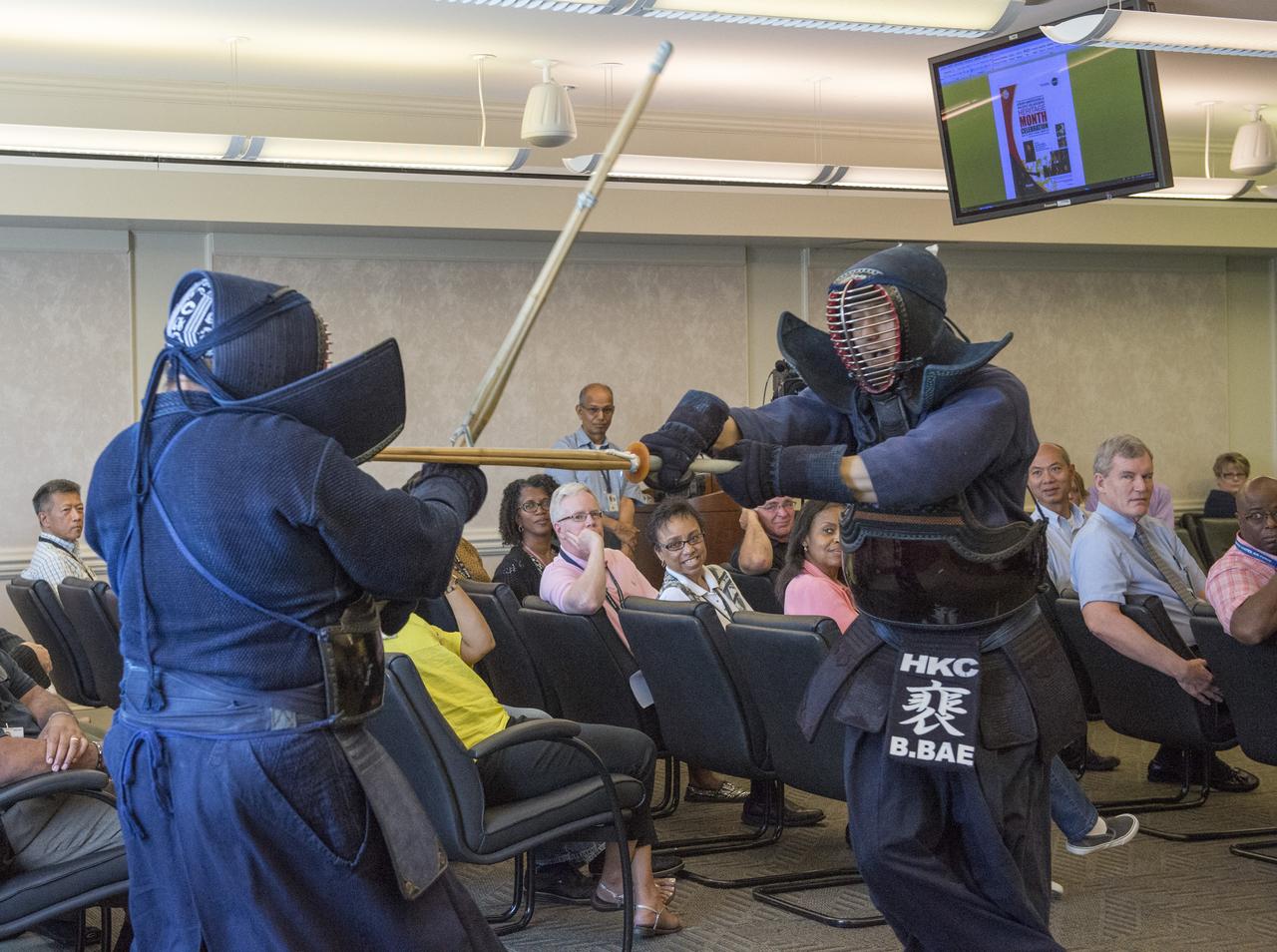
BRIAN BAE, EV41, AND JOHN EARL BROWN, U.S. ARMY, CONDUCT KENDO DEMONSTRATION AT ASIAN AMERICANS AND PACIFIC ISLANDERS MONTH CELEBRATION EVENT MAY 31.
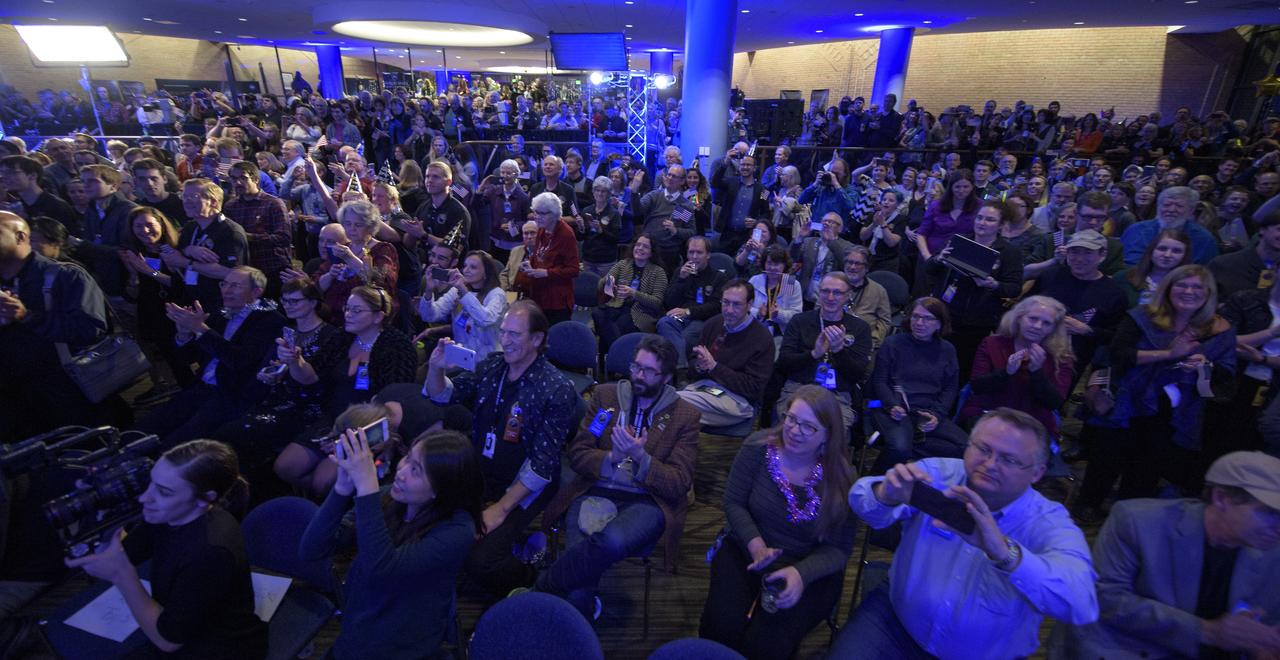
Guests watch as Brian May, lead guitarist of the rock band Queen and astrophysicist shows a video with a new song he wrote for the New Horizons mission, Tuesday, Jan. 1, 2019 at Johns Hopkins University Applied Physics Laboratory (APL) in Laurel, Maryland. Photo Credit: (NASA/Bill Ingalls)
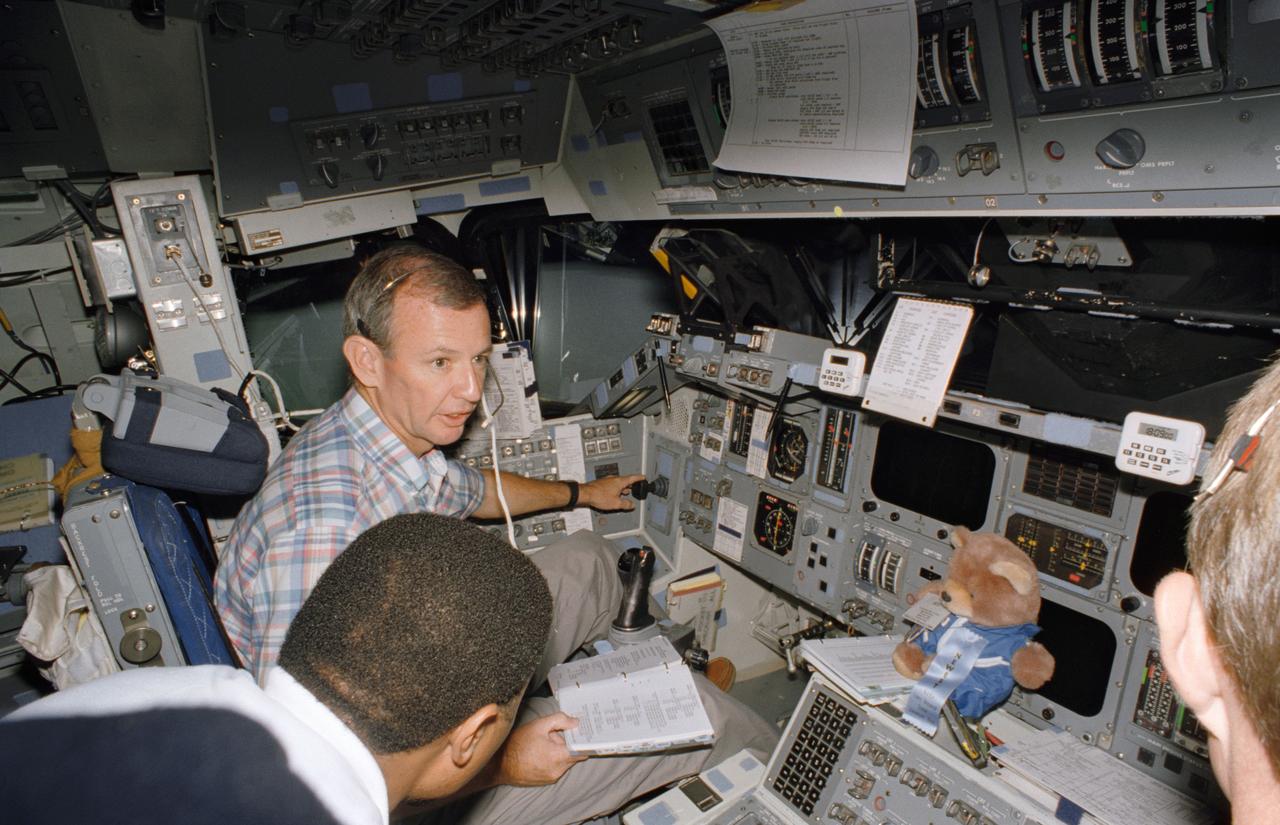
S95-12716 (May 1995) --- Astronauts Brian Duffy, in commander's seat, and Winston E. Scott discuss their scheduled flight aboard the Space Shuttle Endeavour. The two are on the flight deck of the Johnson Space Center's (JSC) fixed base Shuttle Mission Simulator (SMS). Duffy, mission commander, and Scott, mission specialist, will be joined for the winter flight by three other NASA astronauts and an international mission specialist representing NASDA.
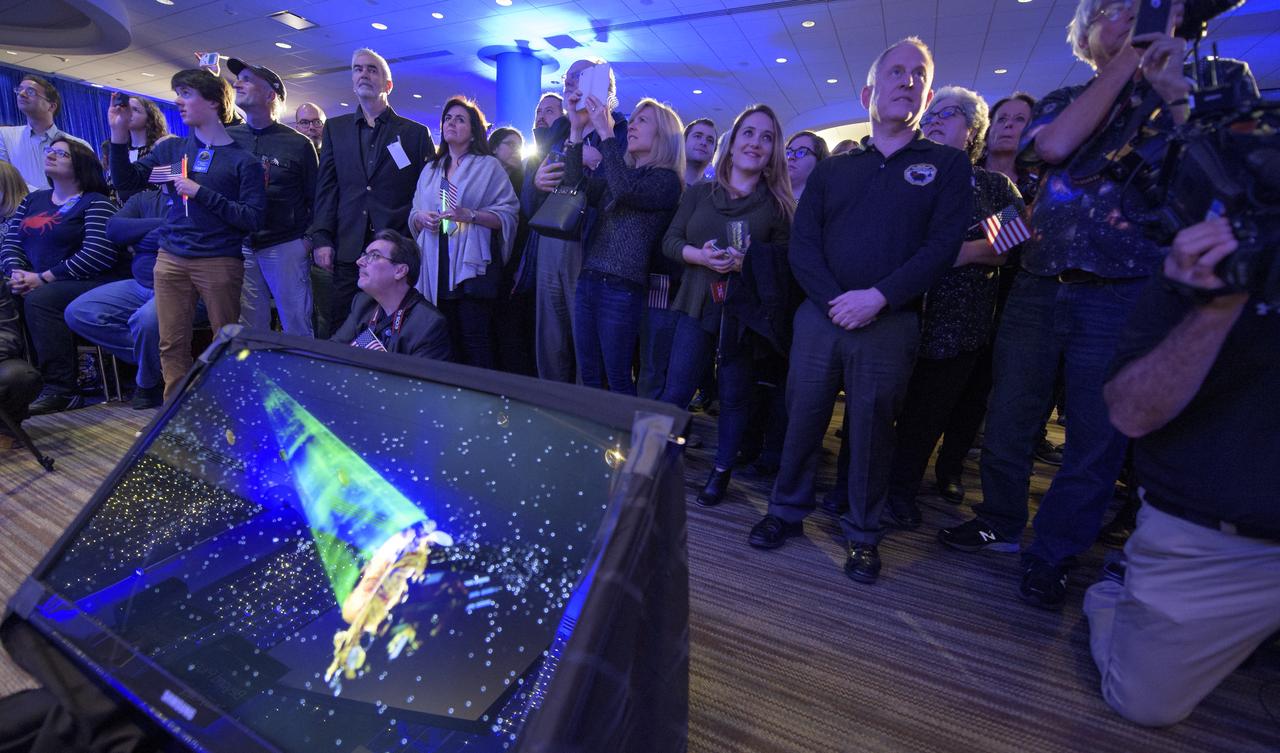
New Horizons principal investigator Alan Stern of the Southwest Research Institute (SwRI), Boulder, CO, right, along with other mission team members and guest watch as Brian May, lead guitarist of the rock band Queen and astrophysicist shows a video with a new song he wrote for the New Horizons mission, Tuesday, Jan. 1, 2019 at Johns Hopkins University Applied Physics Laboratory (APL) in Laurel, Maryland. Photo Credit: (NASA/Bill Ingalls)
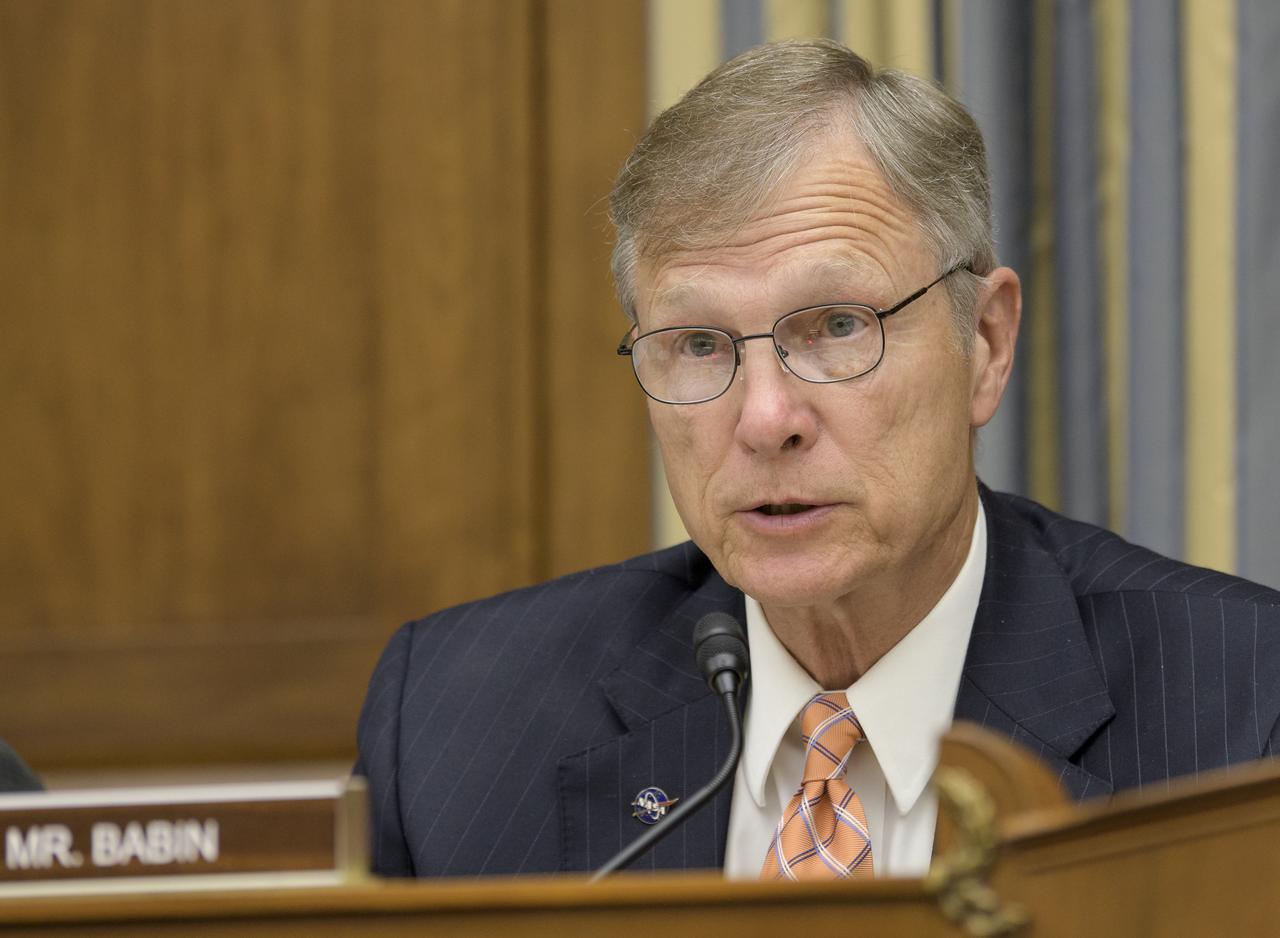
Rep. Brian Babin, R - Texas, gives opening remarks during the House Subcommittee on Space and Aeronautics hearing titled "Keeping our sights on Mars: A Review of NASA's Deep Space Exploration Programs and Lunar Proposal", Wednesday, May 8, 2019 at the Rayburn House Office Building in Washington. Photo Credit: (NASA/Bill Ingalls)
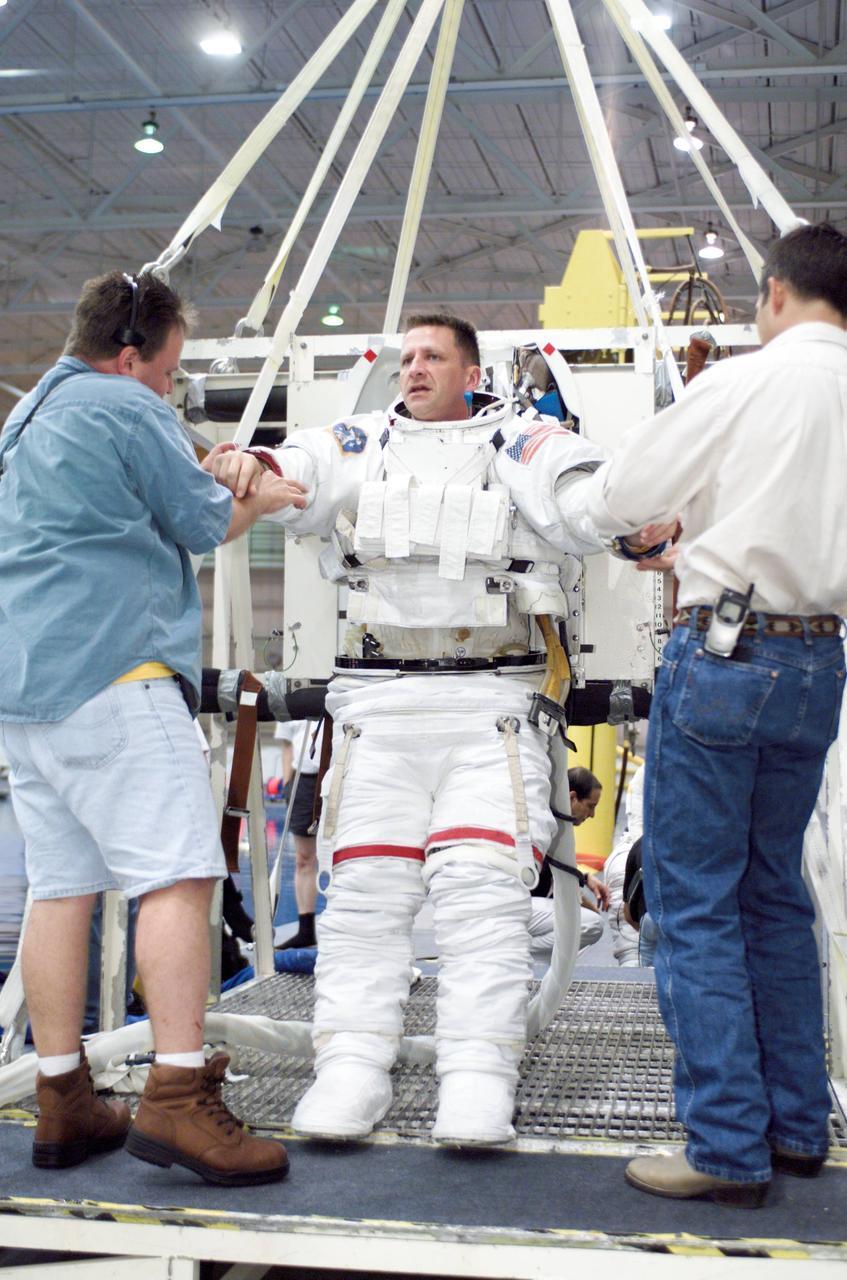
JSC2002-E-23077 (28 May 2002) --- Astronaut Christopher J. (Gus) Loria, STS-113 pilot, is photographed as the final touches are made on the training version of the Extravehicular Mobility Unit (EMU) space suit prior to being submerged in the waters of the Neutral Buoyancy Laboratory (NBL) near the Johnson Space Center (JSC). Fellow crewmember John B. Herrington (right), mission specialist, and United Space Alliance (USA) crew trainer Brian Rhodes assisted Loria.
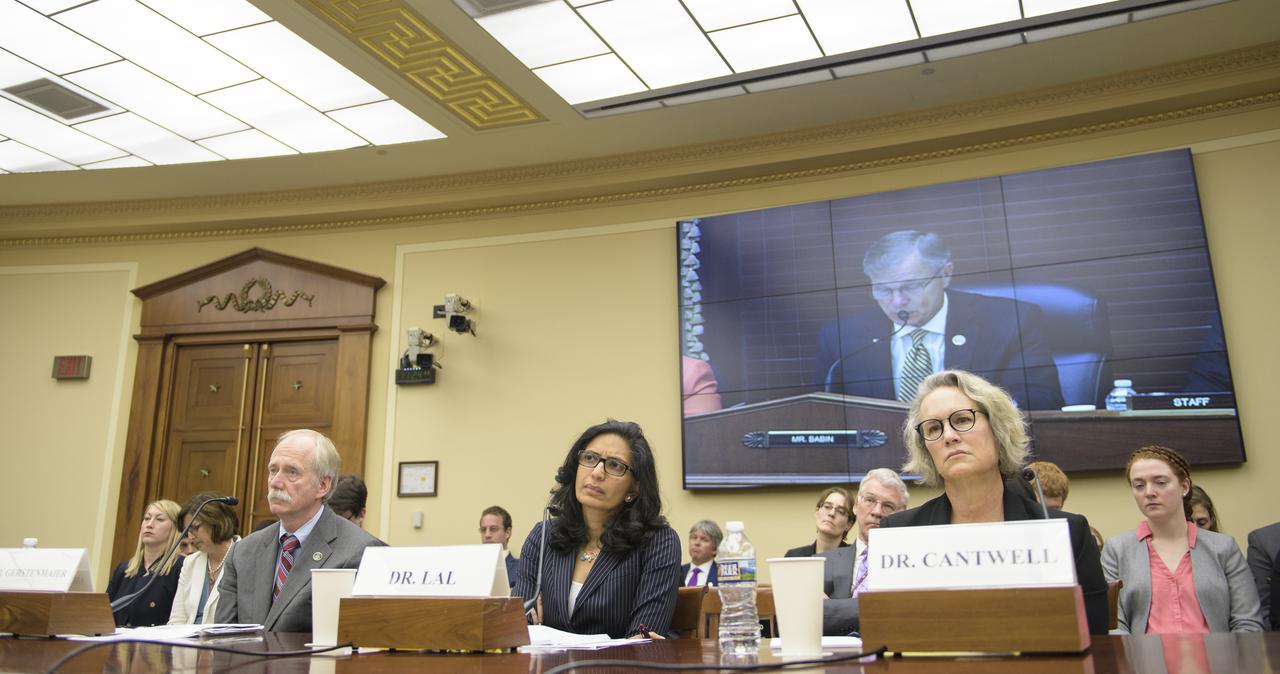
NASA Associate Administrator for the Human Exploration and Operations Mission Directorate William Gerstenmaier, left, Dr. Bhavya Lal, a researcher at the Institute for Defense Analysis's Science and Technology Policy Institute, center, and Dr. Elizabeth Cantwell, chief executive officer at the Arizona State University Research Enterprise, right, listen as Rep. Brian Babin, R-Texas, is seen on screen as he delivers an opening statement during a House Committee on Science, Space, and Technology hearing titled "America's Human Presence in Low-Earth Orbit" on Thursday, May 17, 2018 in the Rayburn House Office Building in Washington. Photo Credit: (NASA/Joel Kowsky)

Chairman of the House Committee on Science Space, and Technology Brian Babin, R-Texas, introduces NASA astronauts Reid Wiseman, commander; Victor Glover, pilot; Christina Koch, mission specialist; and CSA (Canadian Space Agency) astronaut Jeremy Hansen, mission specialist during a meeting with members and staff of the House Science Committee, Tuesday, May 12, 2026, at the Rayburn House Office Building in Washington. NASA’s Artemis II mission took Wiseman, Glover, Koch, and Hansen on a nearly 10-day journey around the Moon and back to Earth in April 2026. Photo Credit: (NASA/Joel Kowsky)

Chairman of the House Committee on Science Space, and Technology Brian Babin, R-Texas, introduces NASA astronauts Reid Wiseman, commander; Victor Glover, pilot; Christina Koch, mission specialist; and CSA (Canadian Space Agency) astronaut Jeremy Hansen, mission specialist during a meeting with members and staff of the House Science Committee, Tuesday, May 12, 2026, at the Rayburn House Office Building in Washington. NASA’s Artemis II mission took Wiseman, Glover, Koch, and Hansen on a nearly 10-day journey around the Moon and back to Earth in April 2026. Photo Credit: (NASA/Joel Kowsky)
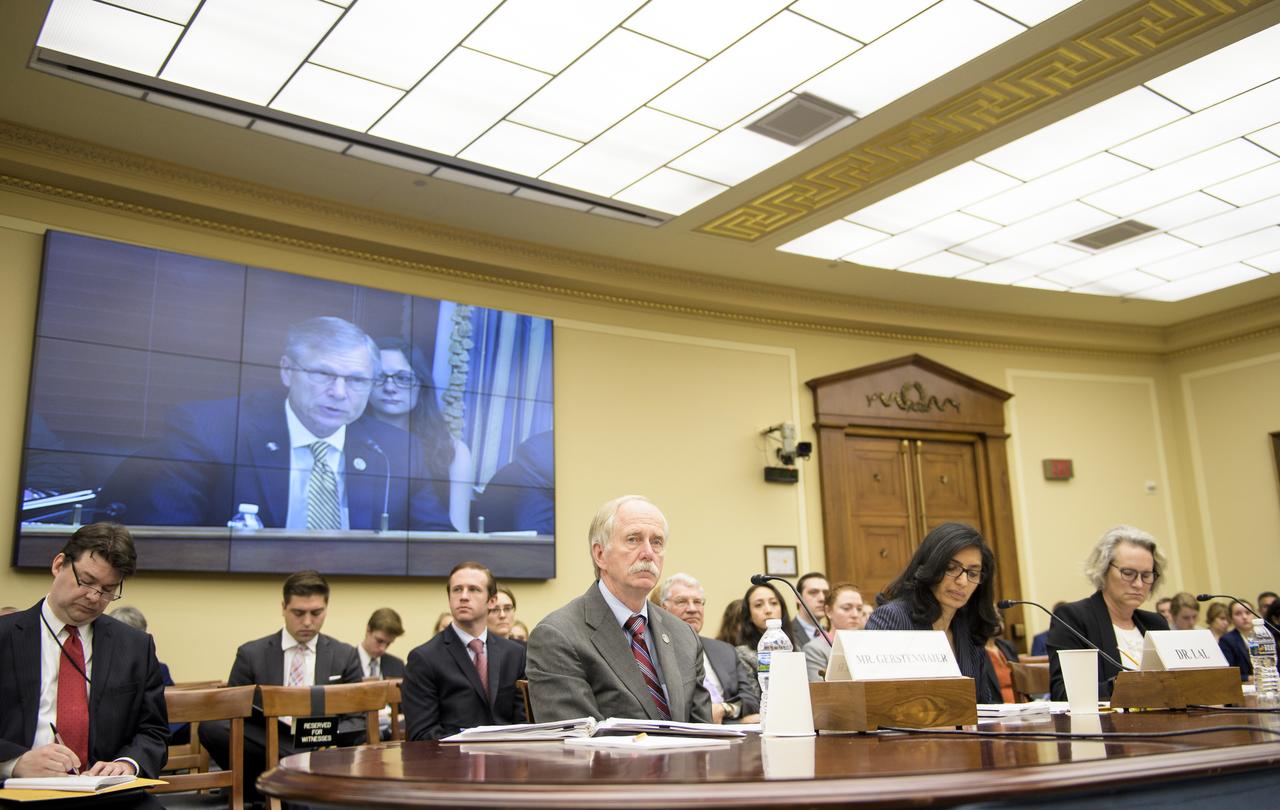
NASA Associate Administrator for the Human Exploration and Operations Mission Directorate William Gerstenmaier, left, Dr. Bhavya Lal, a researcher at the Institute for Defense Analysis's Science and Technology Policy Institute, center, and Dr. Elizabeth Cantwell, chief executive officer at the Arizona State University Research Enterprise, right, listen as Rep. Brian Babin, R-Texas, is seen on screen as he delivers an opening statement during a House Committee on Science, Space, and Technology hearing titled "America's Human Presence in Low-Earth Orbit" on Thursday, May 17, 2018 in the Rayburn House Office Building in Washington. Photo Credit: (NASA/Joel Kowsky)
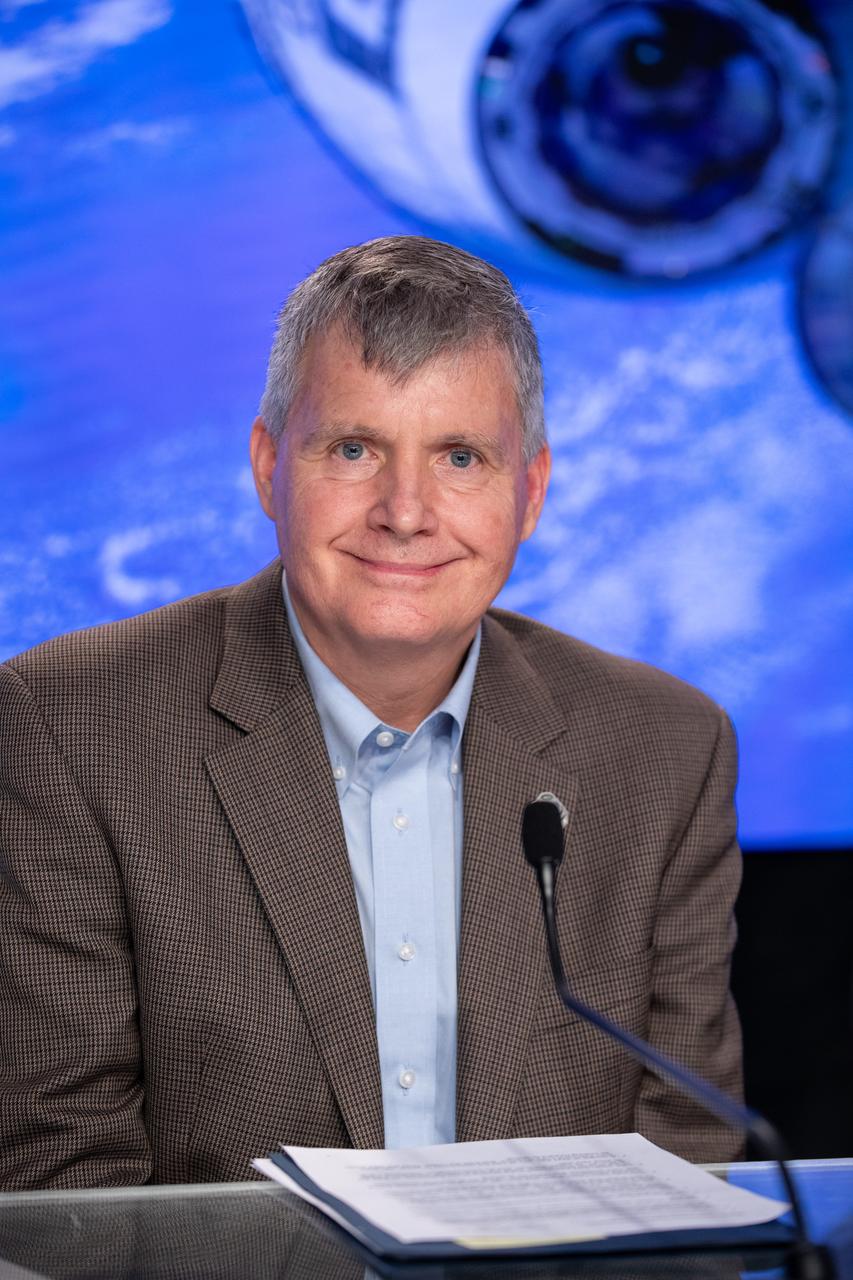
Officials from NASA, Boeing, ULA (United Launch Alliance) , and the U.S. Space Force 45th Weather Squadron participate in a prelaunch briefing for NASA’s Boeing Crew Flight Test at the agency’s Kennedy Space Center in Florida, Friday, May 3, 2024. From left to right at the dais are Megan Cruz, NASA Communications; Bill Nelson, NASA administrator; Steve Stich, manager, NASA’s Commercial Crew Program; Dana Weigel, manager, NASA’s International Space Station Program; Jennifer Buchli, chief scientist, NASA’s International Space Station Program; Mark Nappi, vice president and program manager, Boeing Commercial Crew Program; Gary Wentz, vice president, Government and Commercial Programs, ULA; Brian Cizek, launch weather officer, U.S. Space Force, 45th Weather Squadron. As part of the agency’s Commercial Crew Program, NASA astronauts Butch Wilmore and Suni Williams are the first to launch aboard Boeing’s Starliner spacecraft atop a ULA Atlas V rocket from Space Launch Complex-41 at Cape Canaveral Space Force Station in Florida. Liftoff is scheduled for 10:34 p.m. ET on Monday, May 6.
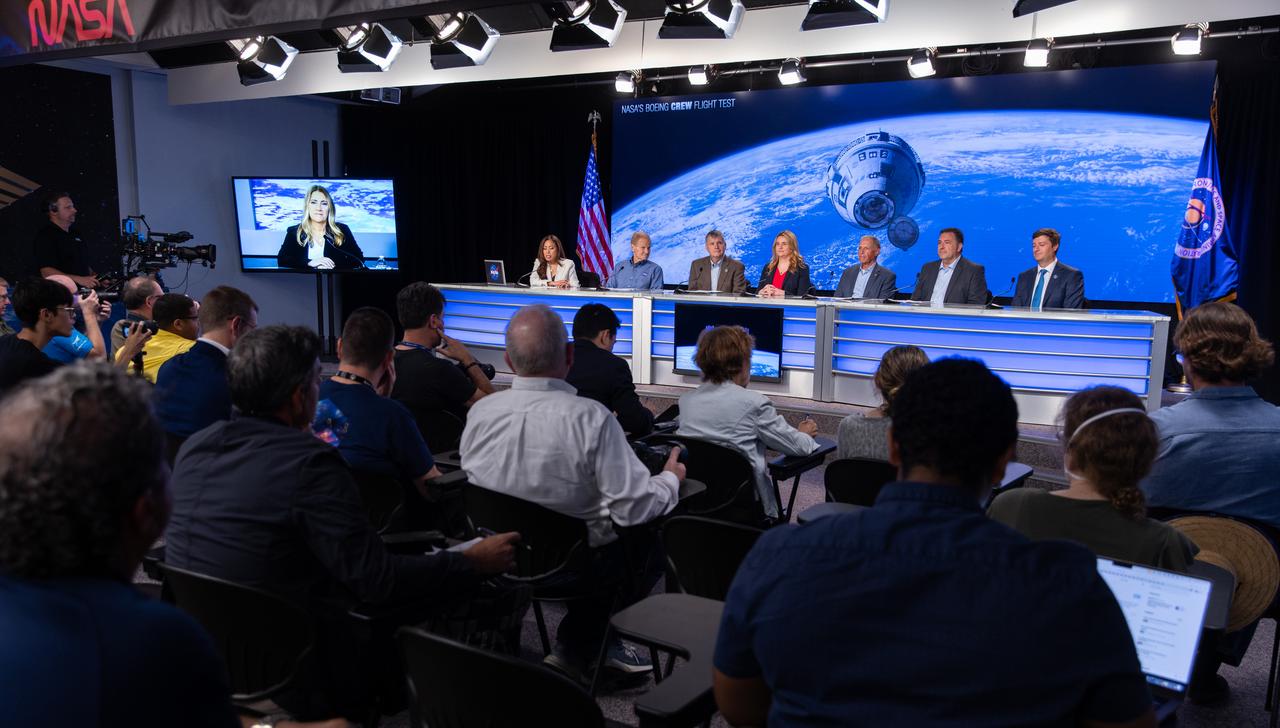
Officials from NASA, Boeing, ULA (United Launch Alliance) , and the U.S. Space Force 45th Weather Squadron participate in a prelaunch briefing for NASA’s Boeing Crew Flight Test at the agency’s Kennedy Space Center in Florida, Friday, May 3, 2024. From left to right at the dais are Megan Cruz, NASA Communications; Bill Nelson, NASA administrator; Steve Stich, manager, NASA’s Commercial Crew Program; Dana Weigel, manager, NASA’s International Space Station Program; Jennifer Buchli, chief scientist, NASA’s International Space Station Program; Mark Nappi, vice president and program manager, Boeing Commercial Crew Program; Gary Wentz, vice president, Government and Commercial Programs, ULA; Brian Cizek, launch weather officer, U.S. Space Force, 45th Weather Squadron. As part of the agency’s Commercial Crew Program, NASA astronauts Butch Wilmore and Suni Williams are the first to launch aboard Boeing’s Starliner spacecraft atop a ULA Atlas V rocket from Space Launch Complex-41 at Cape Canaveral Space Force Station in Florida. Liftoff is scheduled for 10:34 p.m. ET on Monday, May 6.
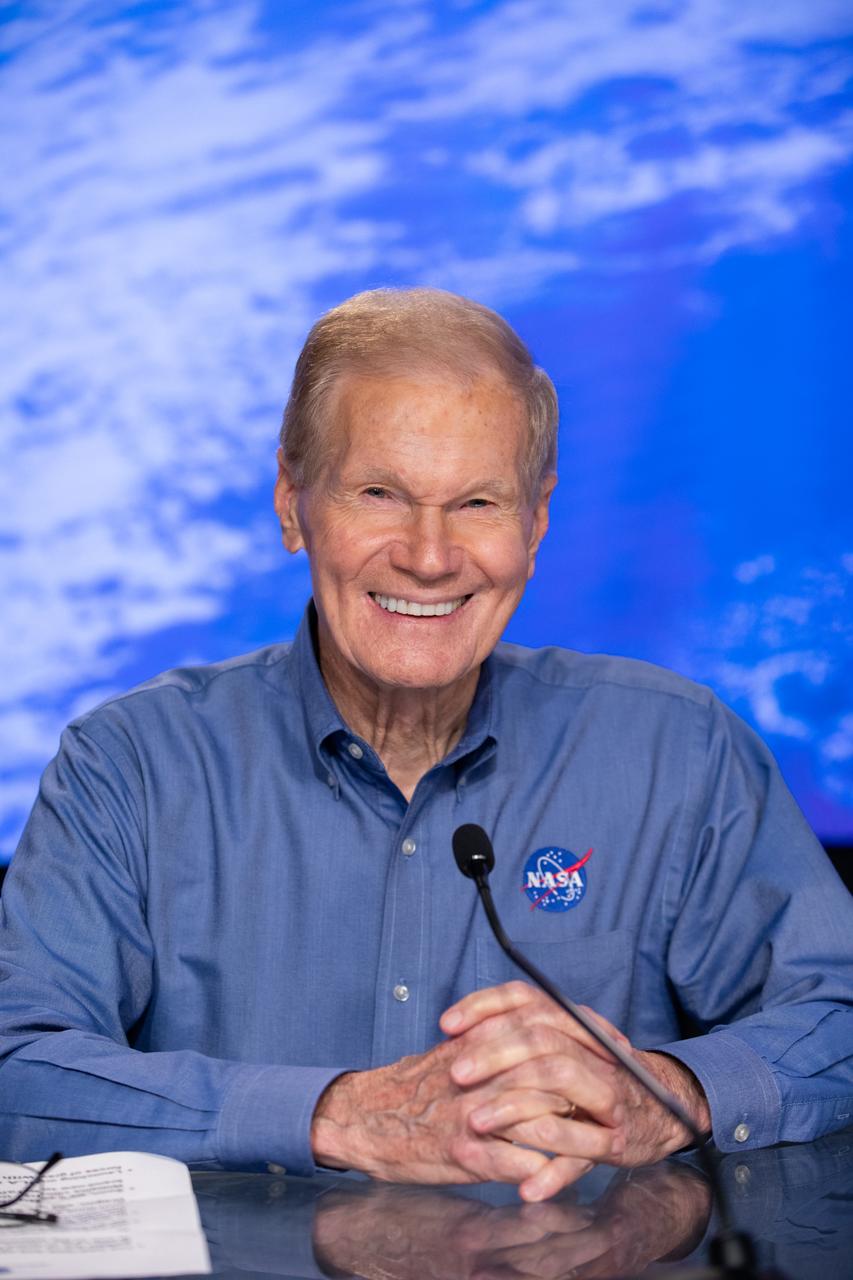
Officials from NASA, Boeing, ULA (United Launch Alliance) , and the U.S. Space Force 45th Weather Squadron participate in a prelaunch briefing for NASA’s Boeing Crew Flight Test at the agency’s Kennedy Space Center in Florida, Friday, May 3, 2024. From left to right at the dais are Megan Cruz, NASA Communications; Bill Nelson, NASA administrator; Steve Stich, manager, NASA’s Commercial Crew Program; Dana Weigel, manager, NASA’s International Space Station Program; Jennifer Buchli, chief scientist, NASA’s International Space Station Program; Mark Nappi, vice president and program manager, Boeing Commercial Crew Program; Gary Wentz, vice president, Government and Commercial Programs, ULA; Brian Cizek, launch weather officer, U.S. Space Force, 45th Weather Squadron. As part of the agency’s Commercial Crew Program, NASA astronauts Butch Wilmore and Suni Williams are the first to launch aboard Boeing’s Starliner spacecraft atop a ULA Atlas V rocket from Space Launch Complex-41 at Cape Canaveral Space Force Station in Florida. Liftoff is scheduled for 10:34 p.m. ET on Monday, May 6.
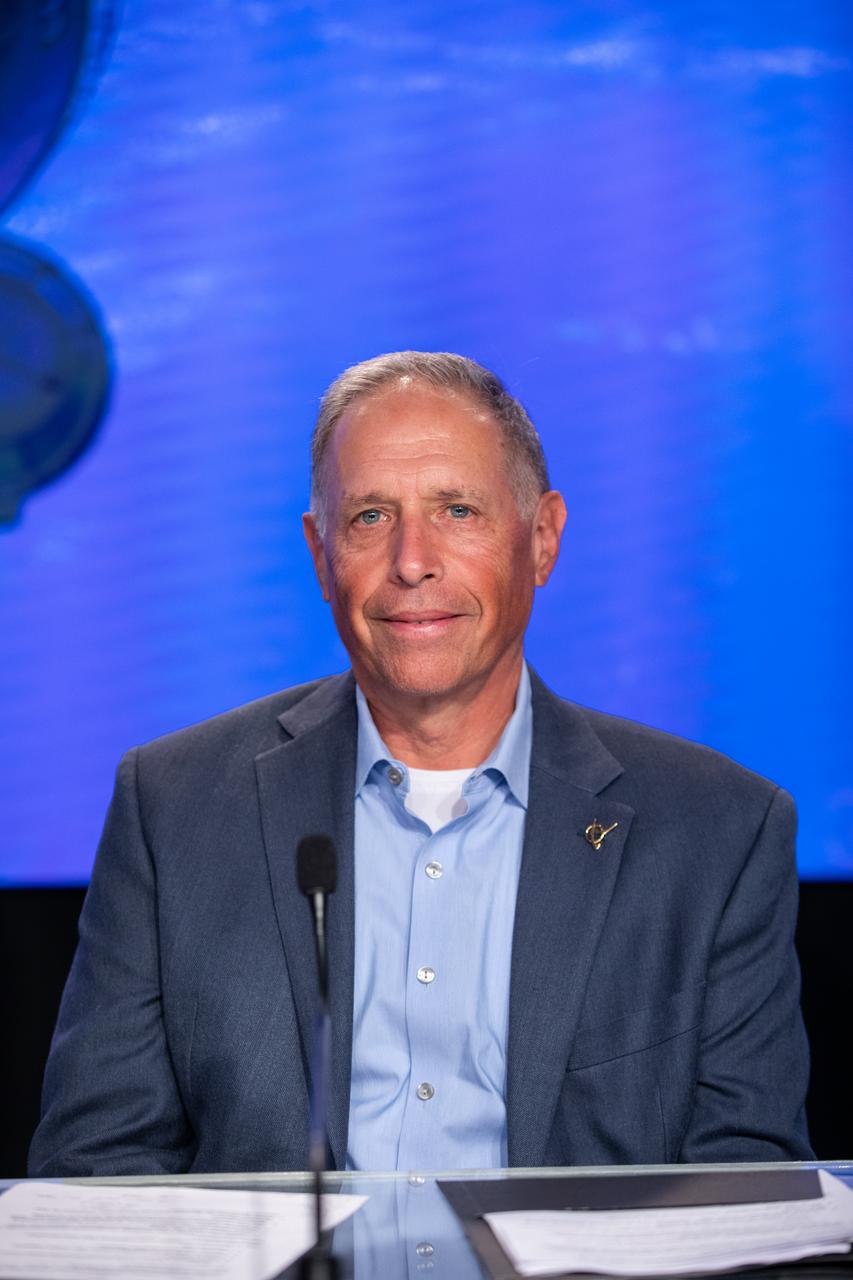
Officials from NASA, Boeing, ULA (United Launch Alliance) , and the U.S. Space Force 45th Weather Squadron participate in a prelaunch briefing for NASA’s Boeing Crew Flight Test at the agency’s Kennedy Space Center in Florida, Friday, May 3, 2024. From left to right at the dais are Megan Cruz, NASA Communications; Bill Nelson, NASA administrator; Steve Stich, manager, NASA’s Commercial Crew Program; Dana Weigel, manager, NASA’s International Space Station Program; Jennifer Buchli, chief scientist, NASA’s International Space Station Program; Mark Nappi, vice president and program manager, Boeing Commercial Crew Program; Gary Wentz, vice president, Government and Commercial Programs, ULA; Brian Cizek, launch weather officer, U.S. Space Force, 45th Weather Squadron. As part of the agency’s Commercial Crew Program, NASA astronauts Butch Wilmore and Suni Williams are the first to launch aboard Boeing’s Starliner spacecraft atop a ULA Atlas V rocket from Space Launch Complex-41 at Cape Canaveral Space Force Station in Florida. Liftoff is scheduled for 10:34 p.m. ET on Monday, May 6.
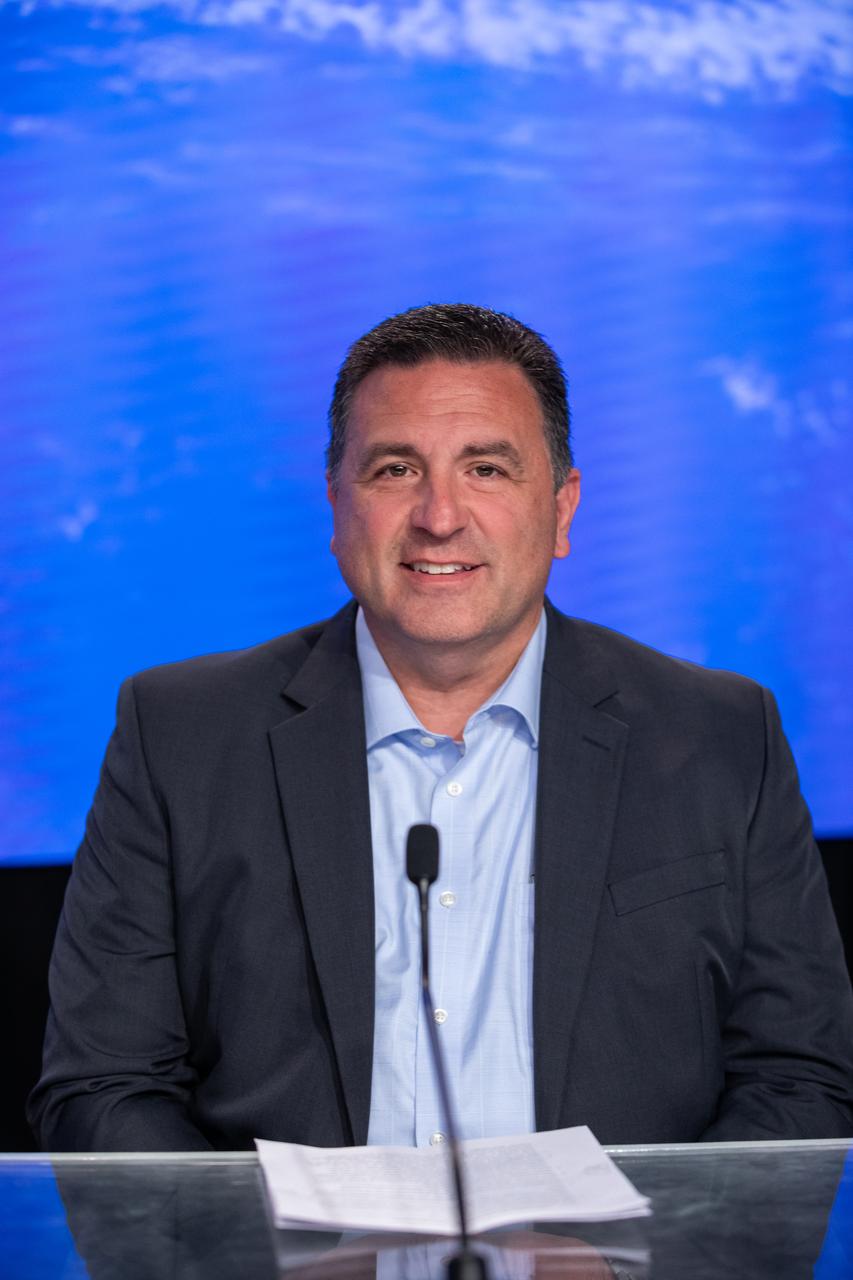
Officials from NASA, Boeing, ULA (United Launch Alliance) , and the U.S. Space Force 45th Weather Squadron participate in a prelaunch briefing for NASA’s Boeing Crew Flight Test at the agency’s Kennedy Space Center in Florida, Friday, May 3, 2024. From left to right at the dais are Megan Cruz, NASA Communications; Bill Nelson, NASA administrator; Steve Stich, manager, NASA’s Commercial Crew Program; Dana Weigel, manager, NASA’s International Space Station Program; Jennifer Buchli, chief scientist, NASA’s International Space Station Program; Mark Nappi, vice president and program manager, Boeing Commercial Crew Program; Gary Wentz, vice president, Government and Commercial Programs, ULA; Brian Cizek, launch weather officer, U.S. Space Force, 45th Weather Squadron. As part of the agency’s Commercial Crew Program, NASA astronauts Butch Wilmore and Suni Williams are the first to launch aboard Boeing’s Starliner spacecraft atop a ULA Atlas V rocket from Space Launch Complex-41 at Cape Canaveral Space Force Station in Florida. Liftoff is scheduled for 10:34 p.m. ET on Monday, May 6.
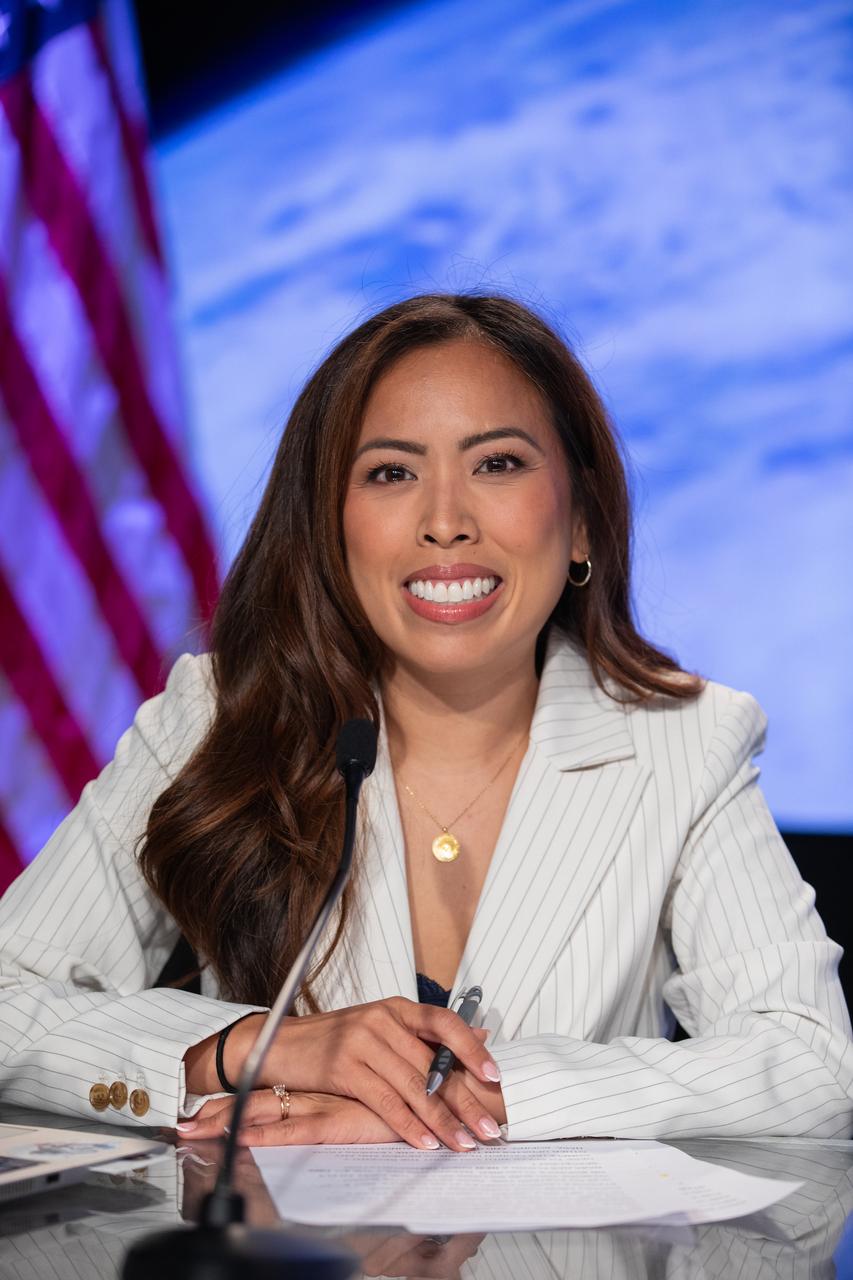
Officials from NASA, Boeing, ULA (United Launch Alliance) , and the U.S. Space Force 45th Weather Squadron participate in a prelaunch briefing for NASA’s Boeing Crew Flight Test at the agency’s Kennedy Space Center in Florida, Friday, May 3, 2024. From left to right at the dais are Megan Cruz, NASA Communications; Bill Nelson, NASA administrator; Steve Stich, manager, NASA’s Commercial Crew Program; Dana Weigel, manager, NASA’s International Space Station Program; Jennifer Buchli, chief scientist, NASA’s International Space Station Program; Mark Nappi, vice president and program manager, Boeing Commercial Crew Program; Gary Wentz, vice president, Government and Commercial Programs, ULA; Brian Cizek, launch weather officer, U.S. Space Force, 45th Weather Squadron. As part of the agency’s Commercial Crew Program, NASA astronauts Butch Wilmore and Suni Williams are the first to launch aboard Boeing’s Starliner spacecraft atop a ULA Atlas V rocket from Space Launch Complex-41 at Cape Canaveral Space Force Station in Florida. Liftoff is scheduled for 10:34 p.m. ET on Monday, May 6.
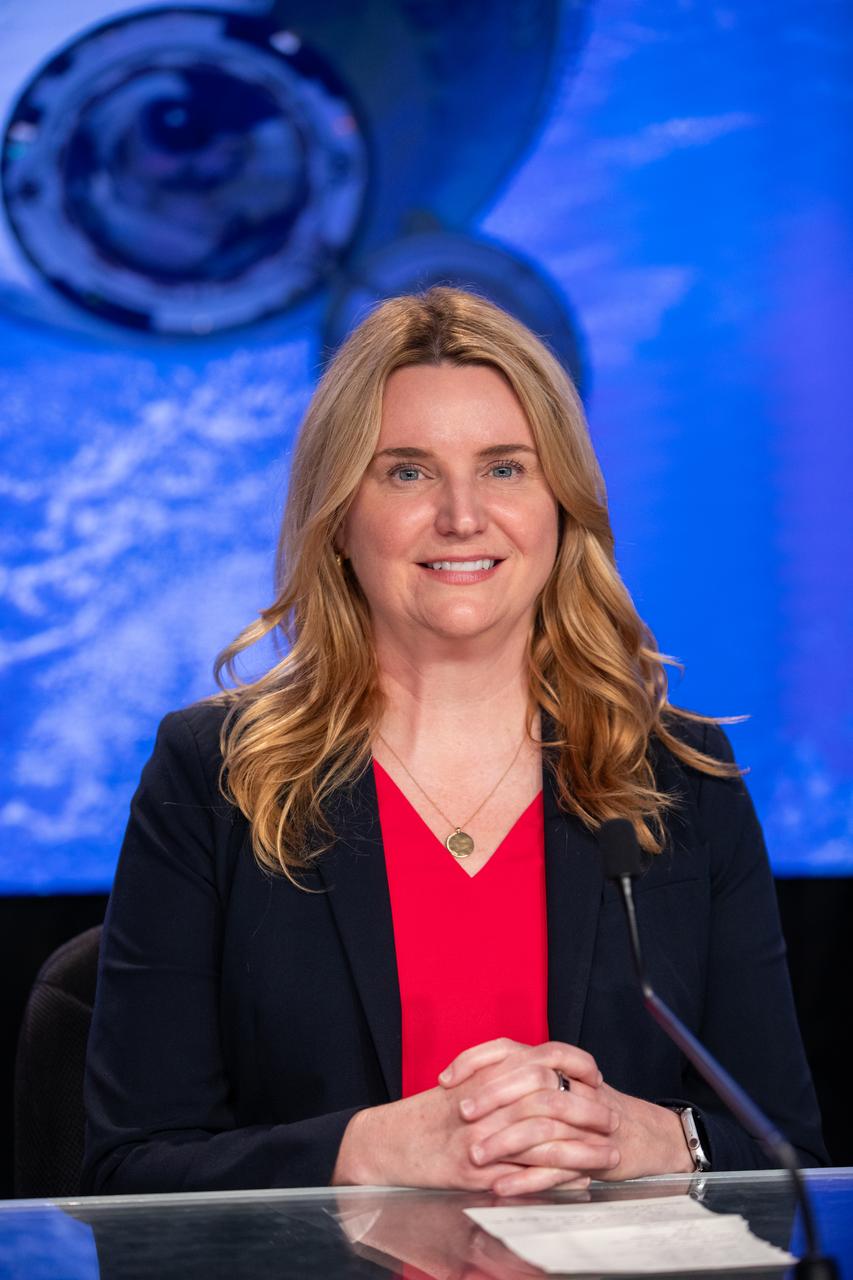
Officials from NASA, Boeing, ULA (United Launch Alliance) , and the U.S. Space Force 45th Weather Squadron participate in a prelaunch briefing for NASA’s Boeing Crew Flight Test at the agency’s Kennedy Space Center in Florida, Friday, May 3, 2024. From left to right at the dais are Megan Cruz, NASA Communications; Bill Nelson, NASA administrator; Steve Stich, manager, NASA’s Commercial Crew Program; Dana Weigel, manager, NASA’s International Space Station Program; Jennifer Buchli, chief scientist, NASA’s International Space Station Program; Mark Nappi, vice president and program manager, Boeing Commercial Crew Program; Gary Wentz, vice president, Government and Commercial Programs, ULA; Brian Cizek, launch weather officer, U.S. Space Force, 45th Weather Squadron. As part of the agency’s Commercial Crew Program, NASA astronauts Butch Wilmore and Suni Williams are the first to launch aboard Boeing’s Starliner spacecraft atop a ULA Atlas V rocket from Space Launch Complex-41 at Cape Canaveral Space Force Station in Florida. Liftoff is scheduled for 10:34 p.m. ET on Monday, May 6.
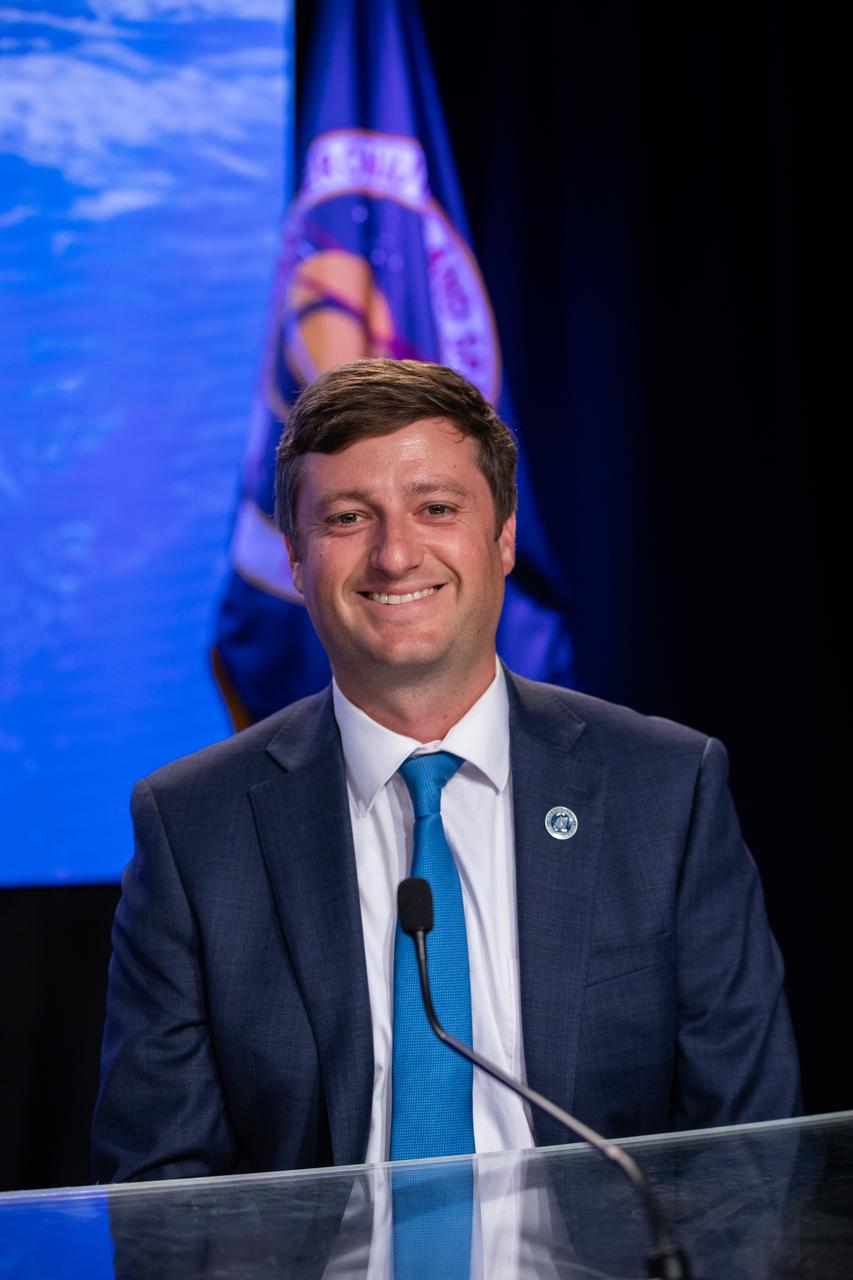
Officials from NASA, Boeing, ULA (United Launch Alliance) , and the U.S. Space Force 45th Weather Squadron participate in a prelaunch briefing for NASA’s Boeing Crew Flight Test at the agency’s Kennedy Space Center in Florida, Friday, May 3, 2024. From left to right at the dais are Megan Cruz, NASA Communications; Bill Nelson, NASA administrator; Steve Stich, manager, NASA’s Commercial Crew Program; Dana Weigel, manager, NASA’s International Space Station Program; Jennifer Buchli, chief scientist, NASA’s International Space Station Program; Mark Nappi, vice president and program manager, Boeing Commercial Crew Program; Gary Wentz, vice president, Government and Commercial Programs, ULA; Brian Cizek, launch weather officer, U.S. Space Force, 45th Weather Squadron. As part of the agency’s Commercial Crew Program, NASA astronauts Butch Wilmore and Suni Williams are the first to launch aboard Boeing’s Starliner spacecraft atop a ULA Atlas V rocket from Space Launch Complex-41 at Cape Canaveral Space Force Station in Florida. Liftoff is scheduled for 10:34 p.m. ET on Monday, May 6.
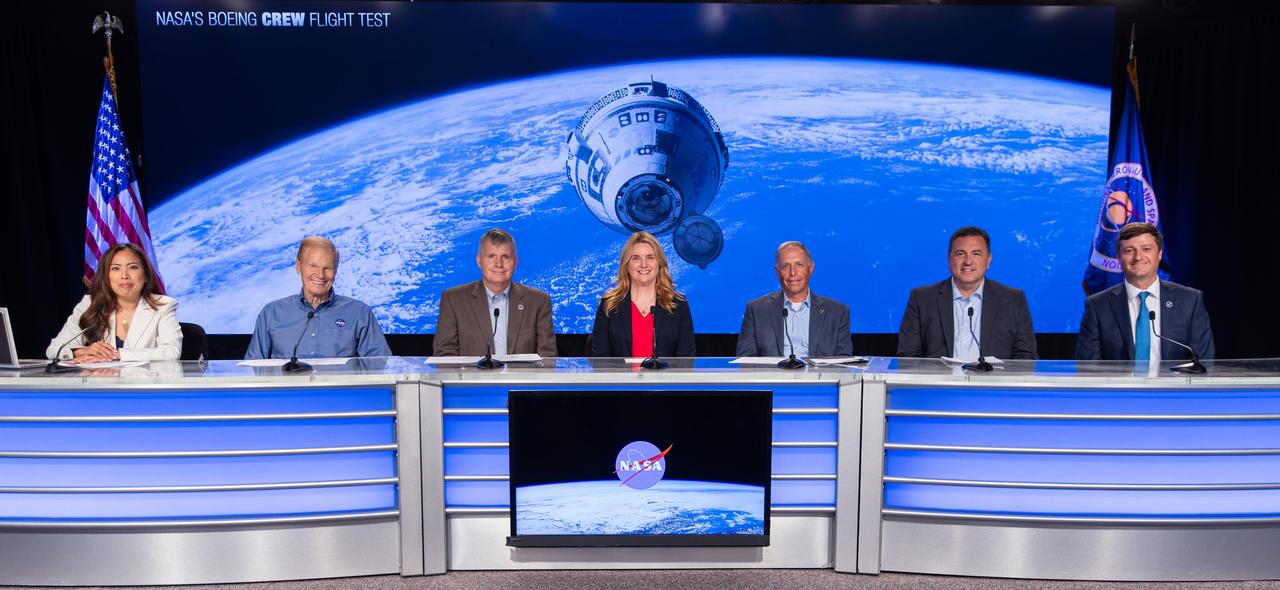
Officials from NASA, Boeing, ULA (United Launch Alliance) , and the U.S. Space Force 45th Weather Squadron participate in a prelaunch briefing for NASA’s Boeing Crew Flight Test at the agency’s Kennedy Space Center in Florida, Friday, May 3, 2024. From left to right at the dais are Megan Cruz, NASA Communications; Bill Nelson, NASA administrator; Steve Stich, manager, NASA’s Commercial Crew Program; Dana Weigel, manager, NASA’s International Space Station Program; Jennifer Buchli, chief scientist, NASA’s International Space Station Program; Mark Nappi, vice president and program manager, Boeing Commercial Crew Program; Gary Wentz, vice president, Government and Commercial Programs, ULA; Brian Cizek, launch weather officer, U.S. Space Force, 45th Weather Squadron. As part of the agency’s Commercial Crew Program, NASA astronauts Butch Wilmore and Suni Williams are the first to launch aboard Boeing’s Starliner spacecraft atop a ULA Atlas V rocket from Space Launch Complex-41 at Cape Canaveral Space Force Station in Florida. Liftoff is scheduled for 10:34 p.m. ET on Monday, May 6.
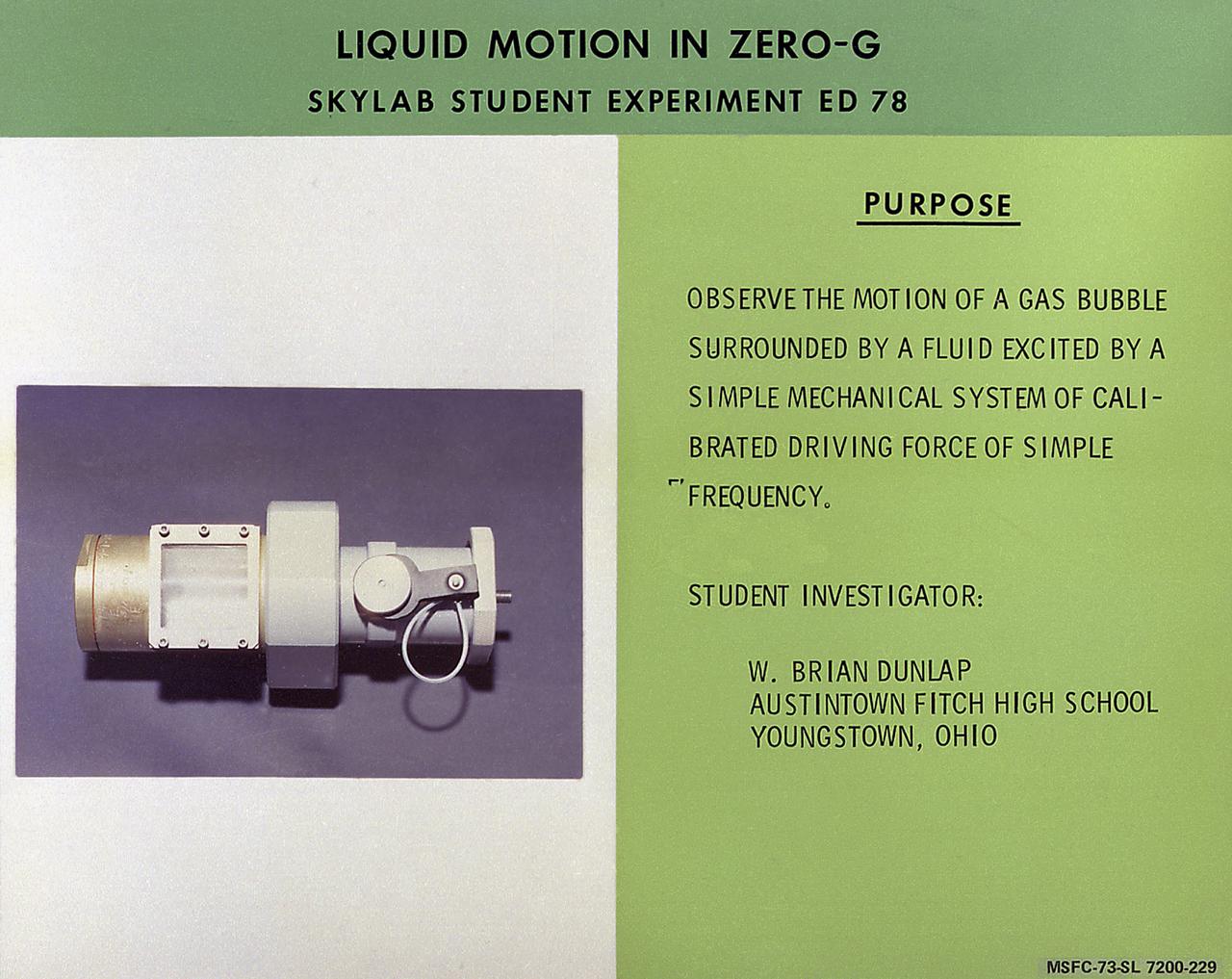
W. Brian Dunlap of Youngstown, Ohio, proposed Skylab student experiment ED-78, Liquid Motion in Zero-G, a study of wave motion in a liquid. He was particularly interested in comparing surface waves over a liquid in zero-gravity with those occurring on Earth. In space, with the absence of gravity, a liquid does not necessarily take the shape of its container as it does on Earth. Adhesion forces may hold the liquid in contact with its container, but the liquid can also assume a free-floating condition. It was in this latter state that Dunlap wished to examine the behavior of surface waves. Data were recorded on videotape and subsequently converted to 16-mm film. Dunlap analyzed these data to determine periods of oscillation of free-floating globules and found agreement with the theory to be much better than expected. In March 1972, NASA and the National Science Teachers Association selected 25 experiment proposals for flight on Skylab. Science advisors from the Marshall Space Flight Center aided and assisted the students in developing the proposals for flight on Skylab.

A mirror set to be installed inside the telescope for NASA's Near-Earth Object Surveyor (NEO Surveyor) is seen during an inspection of the mirror's surface at NASA's Jet Propulsion Laboratory in Southern California on July 17, 2024. Being built in a JPL clean room, the infrared telescope is the spacecraft's only instrument and it will be used to seek out some of the hardest-to-find near-Earth objects that may pose a hazard to our planet. The reflection of principal optical engineer Brian Monacelli can be seen in the mirror. Known as a "three-mirror anastigmat telescope," the instrument will rely on a set of curved mirrors to focus light onto its infrared detectors in such a way that minimizes optical aberrations. Before being installed, the mirrors were examined for any debris or damage. Then, JPL's team of optomechanical technicians and engineers attached the mirrors to the telescope's "optical bench" in August. Next, they will measure the telescope's performance and align the telescope's mirrors. When complete, the telescope will be housed inside an instrument enclosure – being built at JPL in a different clean room – that is fabricated from dark composite material that allows heat to escape, helping to keep the telescope cool and prevent its own heat from obscuring observations. https://photojournal.jpl.nasa.gov/catalog/PIA26386
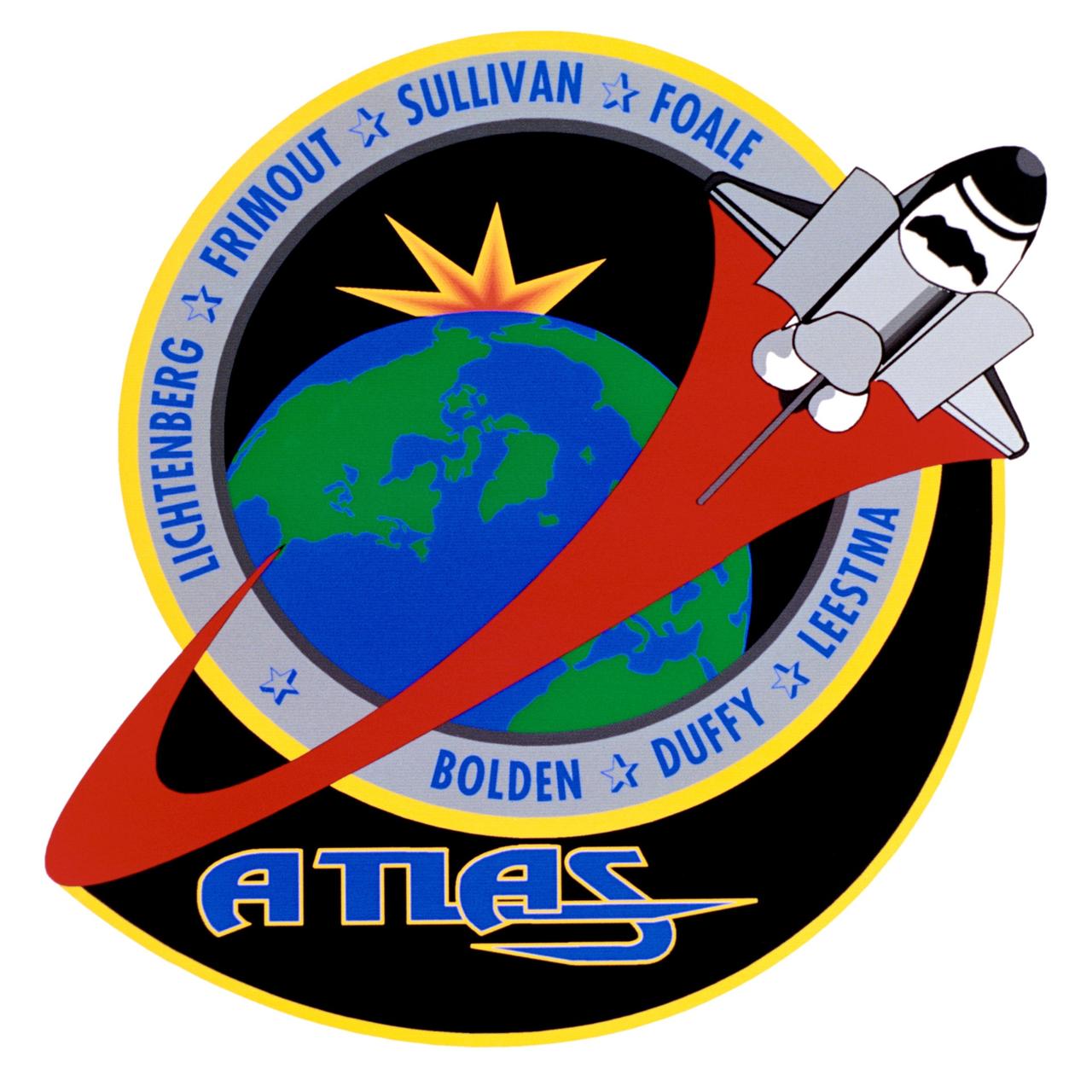
STS045-S-001 (October 1991) --- Designed by the crew members, the patch depicts the space shuttle launching from the Kennedy Space Center (KSC) into a high inclination orbit. From this vantage point, the Atmospheric Laboratory for Applications and Science (ATLAS) payload can view Earth, the sun, and their dynamic interactions against the background of space. Earth is prominently displayed and is the focus of the mission's space plasma physics and Earth sciences observations. The colors of the setting sun, measured by sensitive instruments, provide detailed information about ozone, carbon dioxide and other gases which determine Earth's climate and environment. Encircling the scene are the names of the flight crew members: Charles F. Bolden Jr., commander; Brian Duffy, pilot; C. Michael Foale, David C. Leestma, and Kathryn D. Sullivan, all mission specialists; Dirk Frimout and Byron K. Lichtenberg, payload specialists. The additional star in the ring is to recognize Charles R. Chappell and Michael Lampton, alternate payload specialists, and the entire ATLAS-1 team for its dedication and support of this "Mission to Planet Earth" (MTPE). The NASA insignia design for space shuttle flights is reserved for use by the astronauts and for other official use as the NASA Administrator may authorize. Public availability has been approved only in the form of illustrations by the various news media. When and if there is any change in this policy, which is not anticipated, it will be publicly announced. Photo credit: NASA