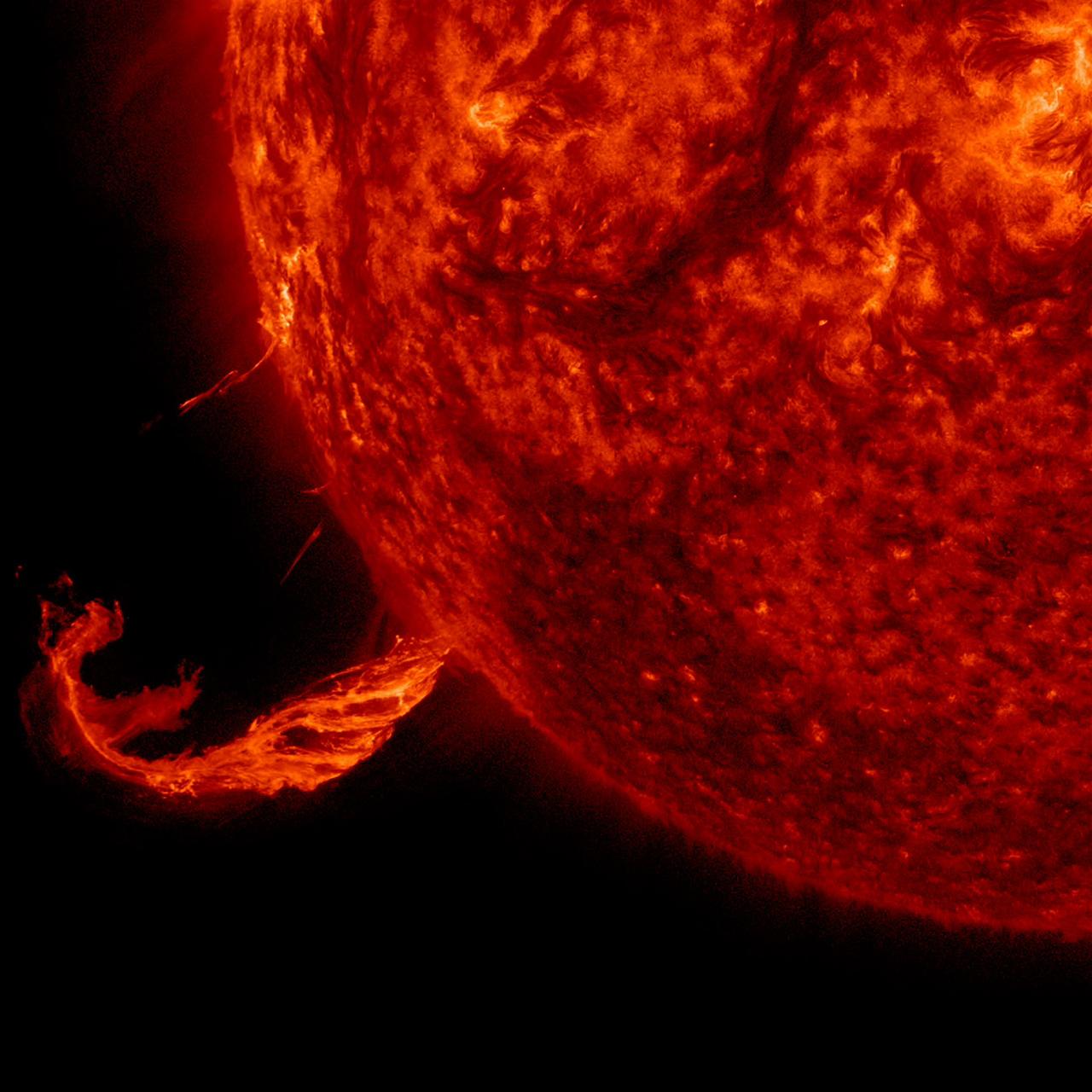
The Sun blew out a coronal mass ejection along with part of a solar filament over a three-hour period (Feb. 24, 2015). While some of the strands fell back into the Sun, a substantial part raced into space in a bright cloud of particles (as observed by the SOHO spacecraft). The activity was captured in a wavelength of extreme ultraviolet light. Because this occurred way over near the edge of the Sun, it was unlikely to have any effect on Earth. Credit: NASA/Solar Dynamics Observatory <b><a href="http://www.nasa.gov/audience/formedia/features/MP_Photo_Guidelines.html" rel="nofollow">NASA image use policy.</a></b> <b><a href="http://www.nasa.gov/centers/goddard/home/index.html" rel="nofollow">NASA Goddard Space Flight Center</a></b> enables NASA’s mission through four scientific endeavors: Earth Science, Heliophysics, Solar System Exploration, and Astrophysics. Goddard plays a leading role in NASA’s accomplishments by contributing compelling scientific knowledge to advance the Agency’s mission. <b>Follow us on <a href="http://twitter.com/NASAGoddardPix" rel="nofollow">Twitter</a></b> <b>Like us on <a href="http://www.facebook.com/pages/Greenbelt-MD/NASA-Goddard/395013845897?ref=tsd" rel="nofollow">Facebook</a></b> <b>Find us on <a href="http://instagram.com/nasagoddard?vm=grid" rel="nofollow">Instagram</a></b>
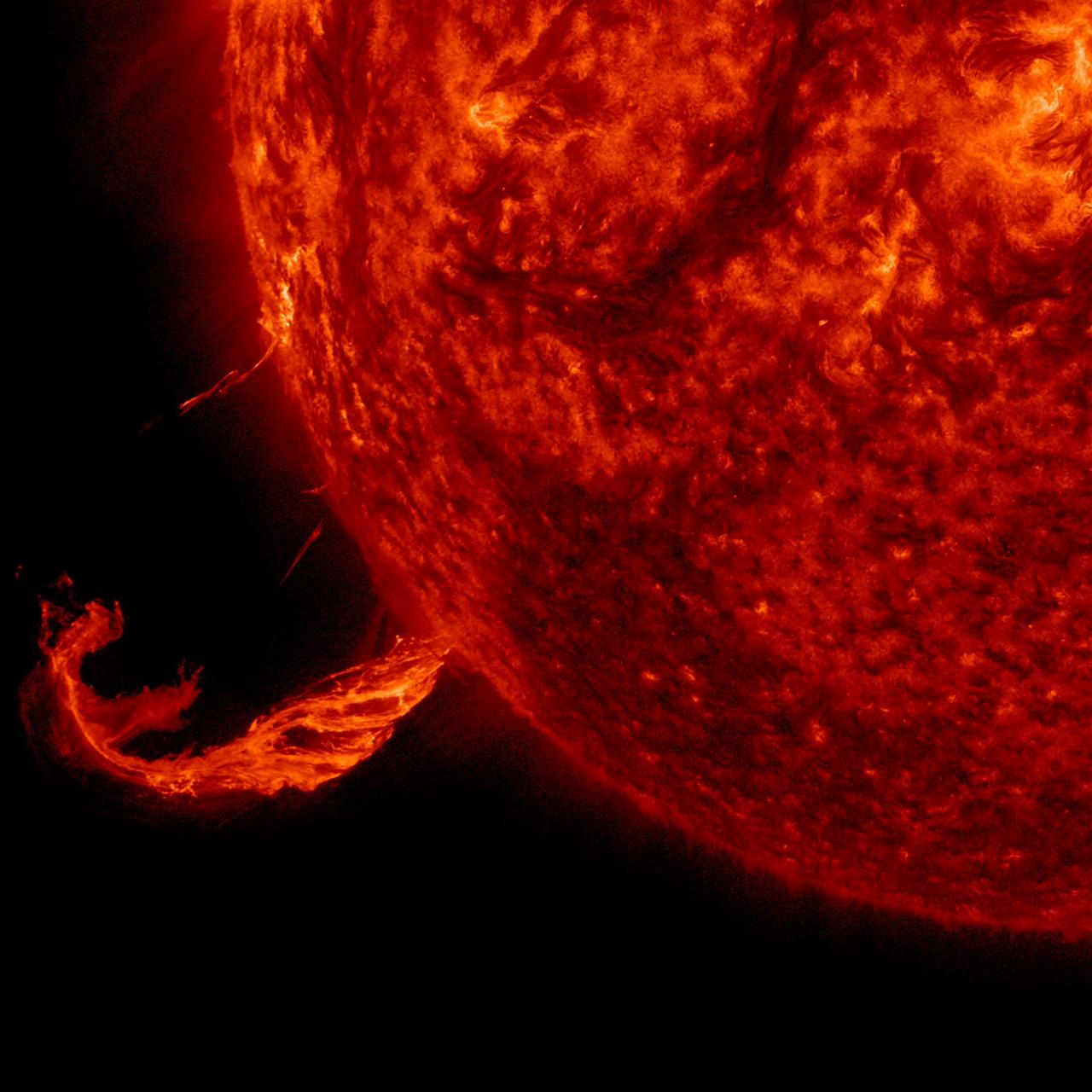
The Sun blew out a coronal mass ejection along with part of a solar filament over a three-hour period (Feb. 24, 2015). While some of the strands fell back into the Sun, a substantial part raced into space in a bright cloud of particles (as observed by the SOHO spacecraft). The activity was captured in a wavelength of extreme ultraviolet light. Because this occurred way over near the edge of the Sun, it was unlikely to have any effect on Earth. Credit: NASA/Solar Dynamics Observatory
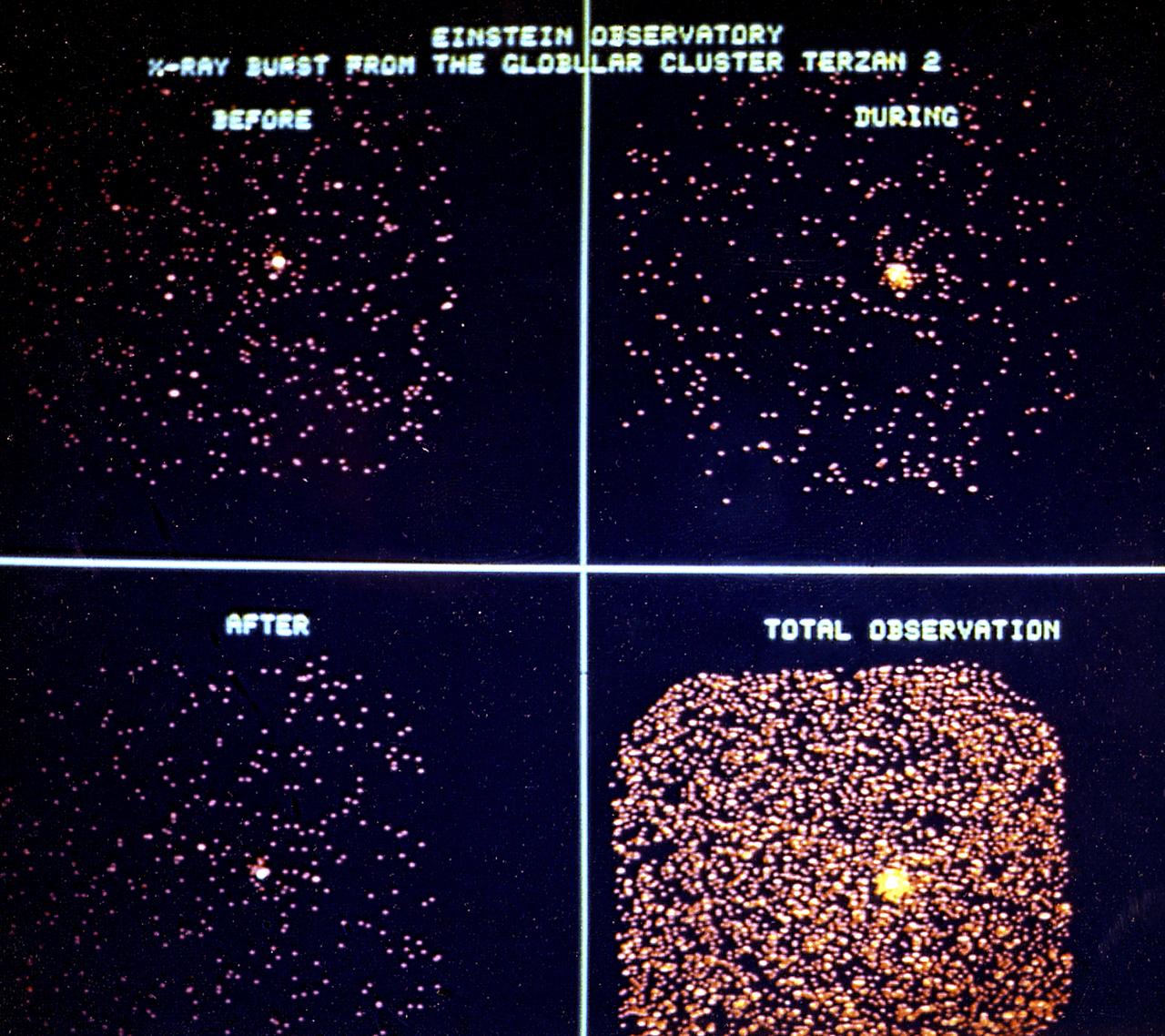
The dramatic change in x-ray emission from the Terzan 2 cluster is shown in this series of 2.5-minute exposures taken with the High Energy Astronomy Observatory (HEAO)-2/Einstein Observatory immediately before, during, and after the burst. Total exposure (20 minutes) of the object, including the outburst, is shown in the fourth photograph. These images represent the first observation of an x-ray burst in progress. The actual burst lasted 50 seconds. Among the rarest, and most bizarre, phenomena observed by x-ray astronomers are the so-called cosmic bursters (x-ray sources that suddenly and dramatically increase in intensity then subside). These sudden bursts of intense x-ray radiation apparently come from compact objects with a diameter smaller than 30 miles (48 kilometers). Yet, despite their minuscule size, a typical x-ray burster can release more x-ray energy in a single brief burst than our Sun does in an entire week. The HEAO-2, the first imaging and largest x-ray telescope built to date, was capable of producing actual photographs of x-ray objects. Shortly after launch, the HEAO-2 was nicknamed the Einstein Observatory by its scientific experimenters in honor of the centernial of the birth of Albert Einstein, whose concepts of relativity and gravitation have influenced much of modern astrophysics, particularly x-ray astronomy. The HEAO was designed and developed by TRW, Inc. under the project management of the Marshall Space Flight Center.