
Brown dwarfs are more massive than planets but not quite as massive as stars. Generally speaking, they have between 13 and 80 times the mass of Jupiter. A brown dwarf becomes a star if its core pressure gets high enough to start nuclear fusion. https://photojournal.jpl.nasa.gov/catalog/PIA23685

The faster a brown dwarf spins, the narrower the different-colored atmospheric bands on it likely become, as shown in this illustration. Some brown dwarfs glow in visible light, but they are typically brightest in infrared wavelengths, which are longer than what human eyes can see. https://photojournal.jpl.nasa.gov/catalog/PIA24380

Barbara L. Brown, director of Exploration Research and Technology Programs at NASA's Kennedy Space Center in Florida, poses for a portrait inside the spaceport’s Space Station Processing Facility High Bay on Aug. 5, 2022. Brown leads processing, assembly, integration, and test of payloads and flight science experiments bound for the International Space Station. Additionally, Brown serves as Kennedy’s lead for the formulation of concepts to support uncrewed operations on the Moon and Mars, directing research, development, testing, and demonstration of flight systems and technologies to advance exploration and space systems. The programs and projects under her purview span NASA’s Exploration Systems, Science, Space Operations, and Space Technology mission directorates.
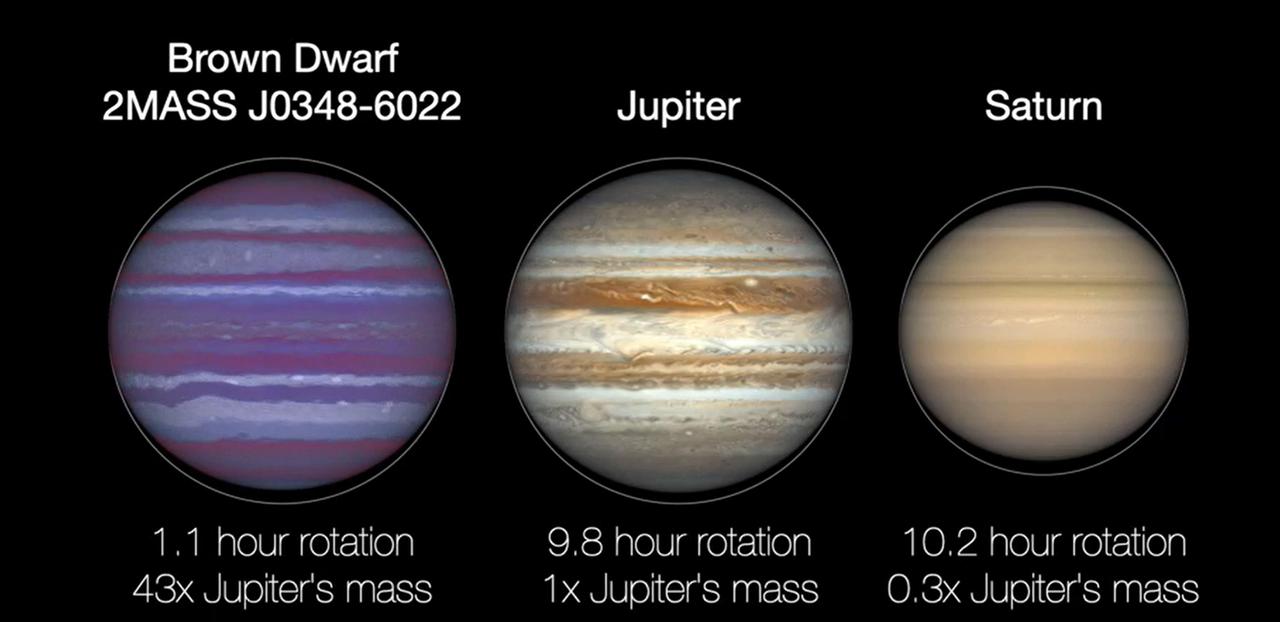
All spinning objects, from carousels to planets, generate centripetal force. If a planet rotates too fast, that force can pull it apart. Before that happens, the planet will experience "flattening," or bulging around its midsection, as seen in this animated illustration of a brown dwarf, Jupiter, and Saturn. Animation available at https://photojournal.jpl.nasa.gov/catalog/PIA24376
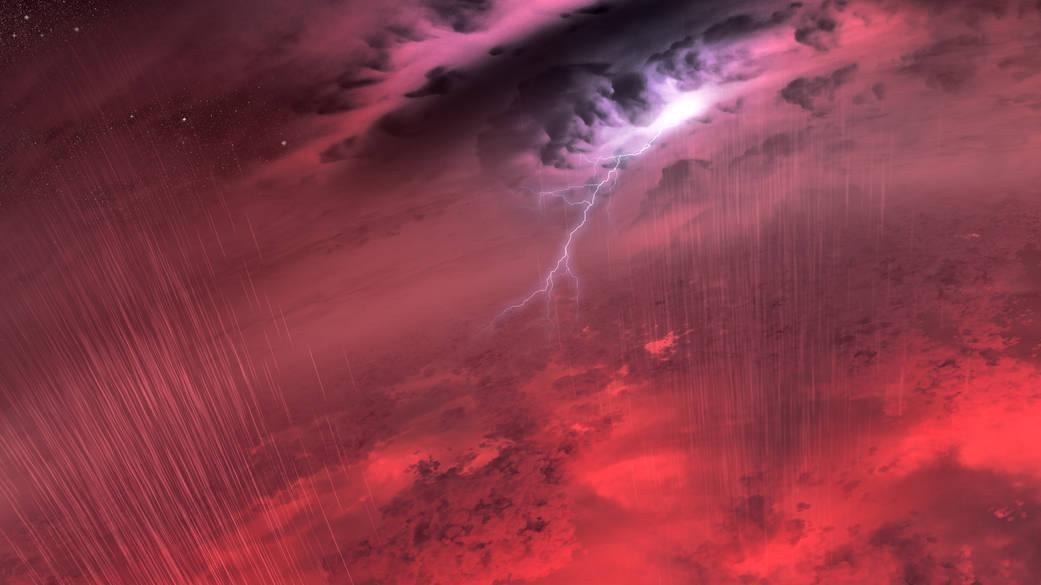
This artist's concept shows what the weather might look like on cool star-like bodies known as brown dwarfs. These giant balls of gas start out life like stars, but lack the mass to sustain nuclear fusion at their cores, and instead, fade and cool with time. Observations from NASA's Spitzer Space Telescope suggest that most brown dwarfs are roiling with one or more planet-size storms akin to Jupiter's "Great Red Spot." https://photojournal.jpl.nasa.gov/catalog/PIA21475

This artist's concept animation shows a brown dwarf with bands of clouds, thought to resemble those seen on Neptune and the other outer planets in the solar system. By using NASA's Spitzer Space Telescope, astronomers have found that the varying glow of brown dwarfs over time can be explained by bands of patchy clouds rotating at different speeds. Videos are available at https://photojournal.jpl.nasa.gov/catalog/PIA21752

Nathaniel Brown, a mechanical design engineer, works the structure design and interfaces for the Lunar Pallet Lander.

This artist's concept shows an auroral display on a brown dwarf. If you could see an aurora on a brown dwarf, it would be a million times brighter than an aurora on Earth. Credits: Chuck Carter and Gregg Hallinan/Caltech --- Mysterious objects called brown dwarfs are sometimes called "failed stars." They are too small to fuse hydrogen in their cores, the way most stars do, but also too large to be classified as planets. But a new study in the journal Nature suggests they succeed in creating powerful auroral displays, similar to the kind seen around the magnetic poles on Earth. "This is a whole new manifestation of magnetic activity for that kind of object," said Leon Harding, a technologist at NASA's Jet Propulsion Laboratory, Pasadena, California, and co-author on the study. On Earth, auroras are created when charged particles from the solar wind enter our planet's magnetosphere, a region where Earth's magnetic field accelerates and sends them toward the poles. There, they collide with atoms of gas in the atmosphere, resulting in a brilliant display of colors in the sky. Read more: <a href="http://www.nasa.gov/jpl/powerful-auroras-found-at-brown-dwarf" rel="nofollow">www.nasa.gov/jpl/powerful-auroras-found-at-brown-dwarf</a> <b><a href="http://www.nasa.gov/audience/formedia/features/MP_Photo_Guidelines.html" rel="nofollow">NASA image use policy.</a></b> <b><a href="http://www.nasa.gov/centers/goddard/home/index.html" rel="nofollow">NASA Goddard Space Flight Center</a></b> enables NASA’s mission through four scientific endeavors: Earth Science, Heliophysics, Solar System Exploration, and Astrophysics. Goddard plays a leading role in NASA’s accomplishments by contributing compelling scientific knowledge to advance the Agency’s mission. <b>Follow us on <a href="http://twitter.com/NASAGoddardPix" rel="nofollow">Twitter</a></b> <b>Like us on <a href="http://www.facebook.com/pages/Greenbelt-MD/NASA-Goddard/395013845897?ref=tsd" rel="nofollow">Facebook</a></b> <b>Find us on <a href="http://instagrid.me/nasagoddard/?vm=grid" rel="nofollow">Instagram</a></b>
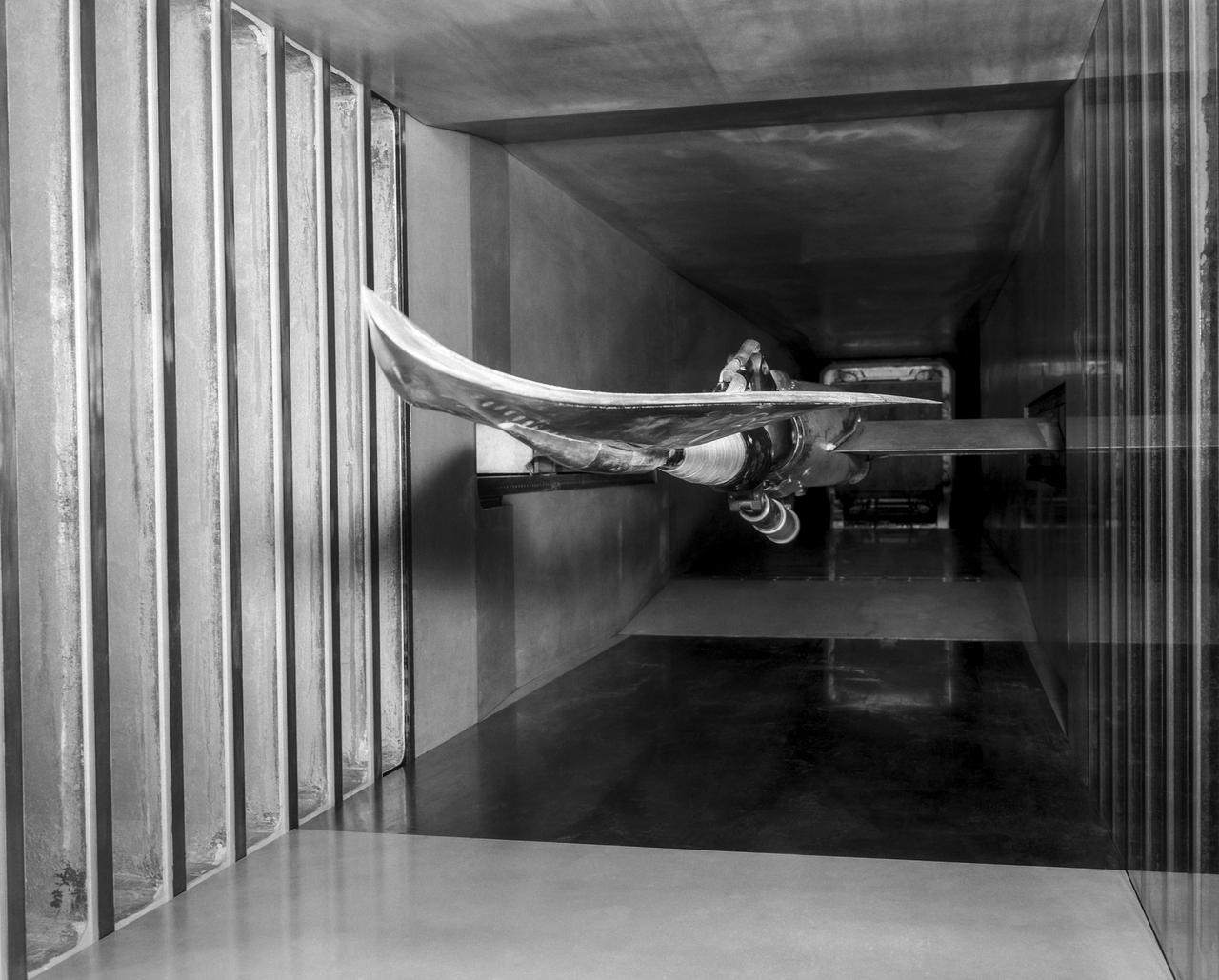
WS-110A "Brown Bomber"
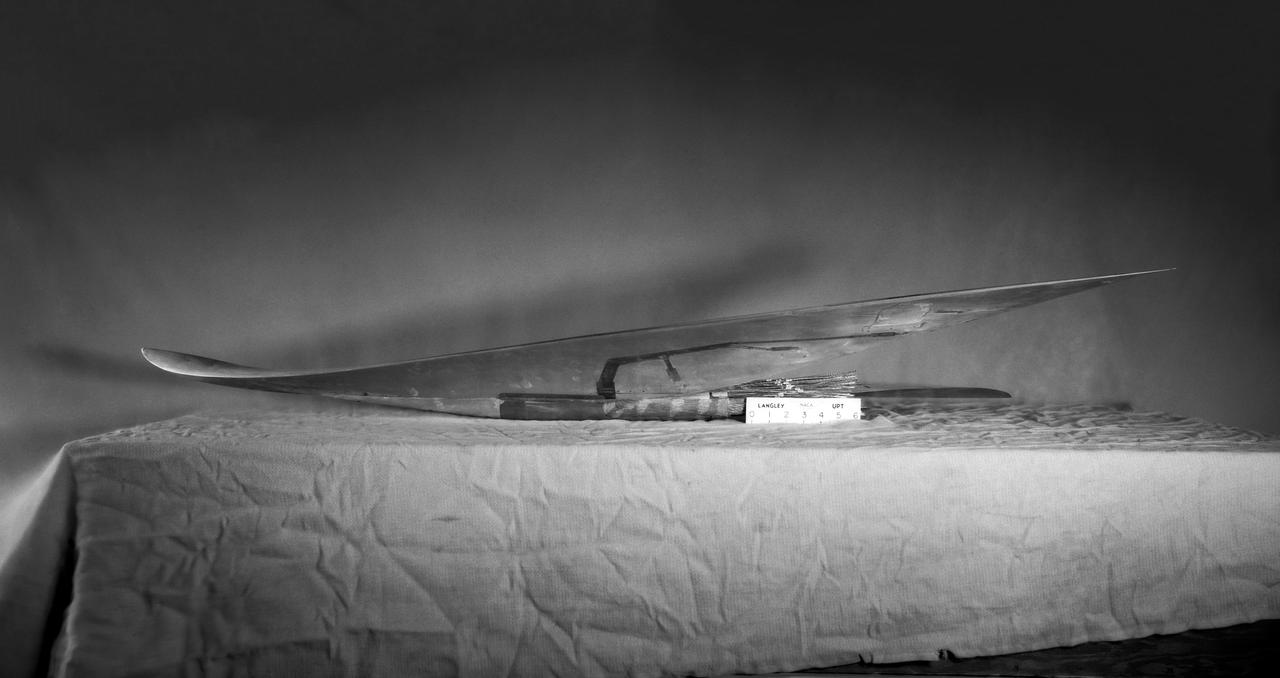
Brown Arrow Wing Bomber
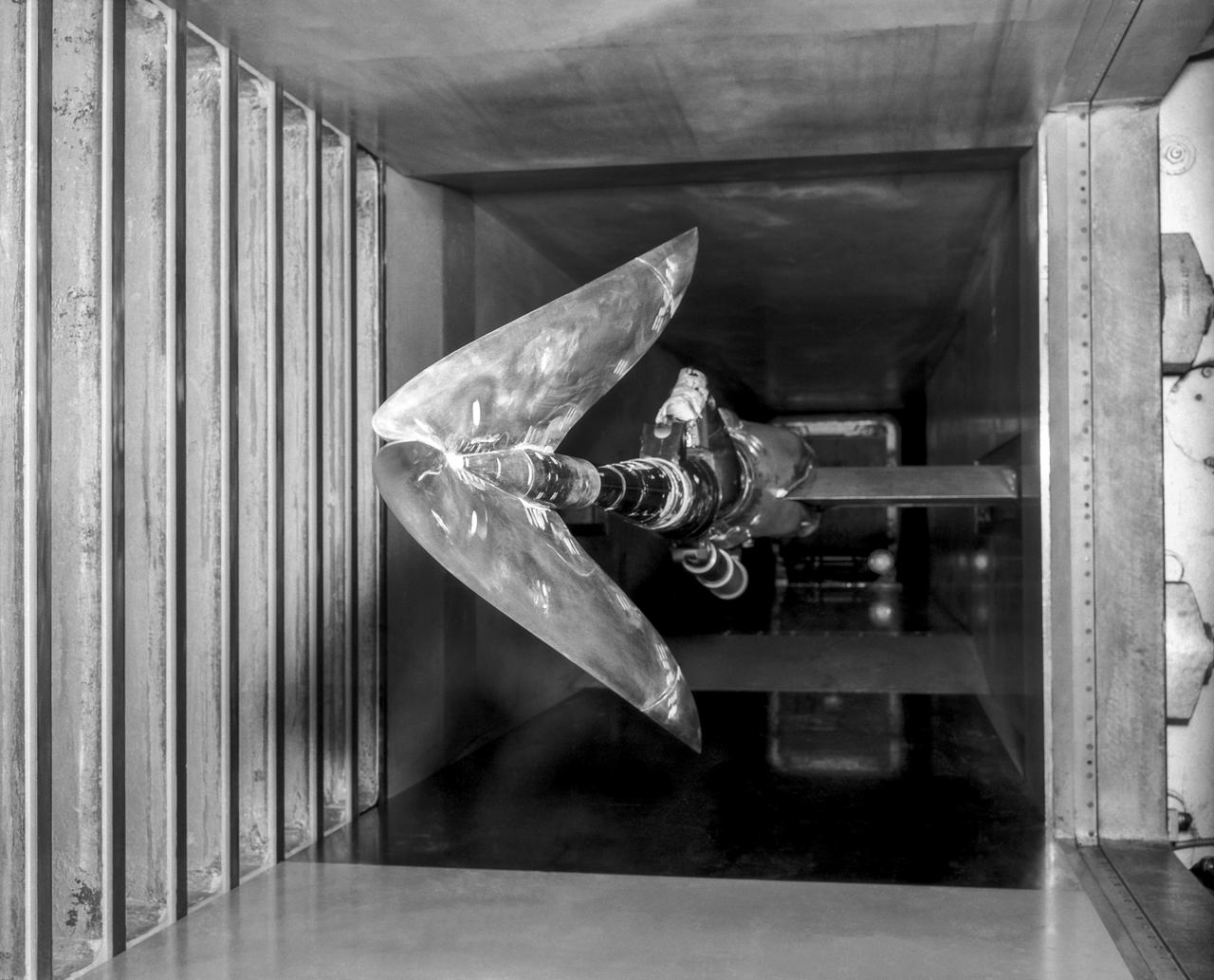
WS-110A "Brown Bomber"
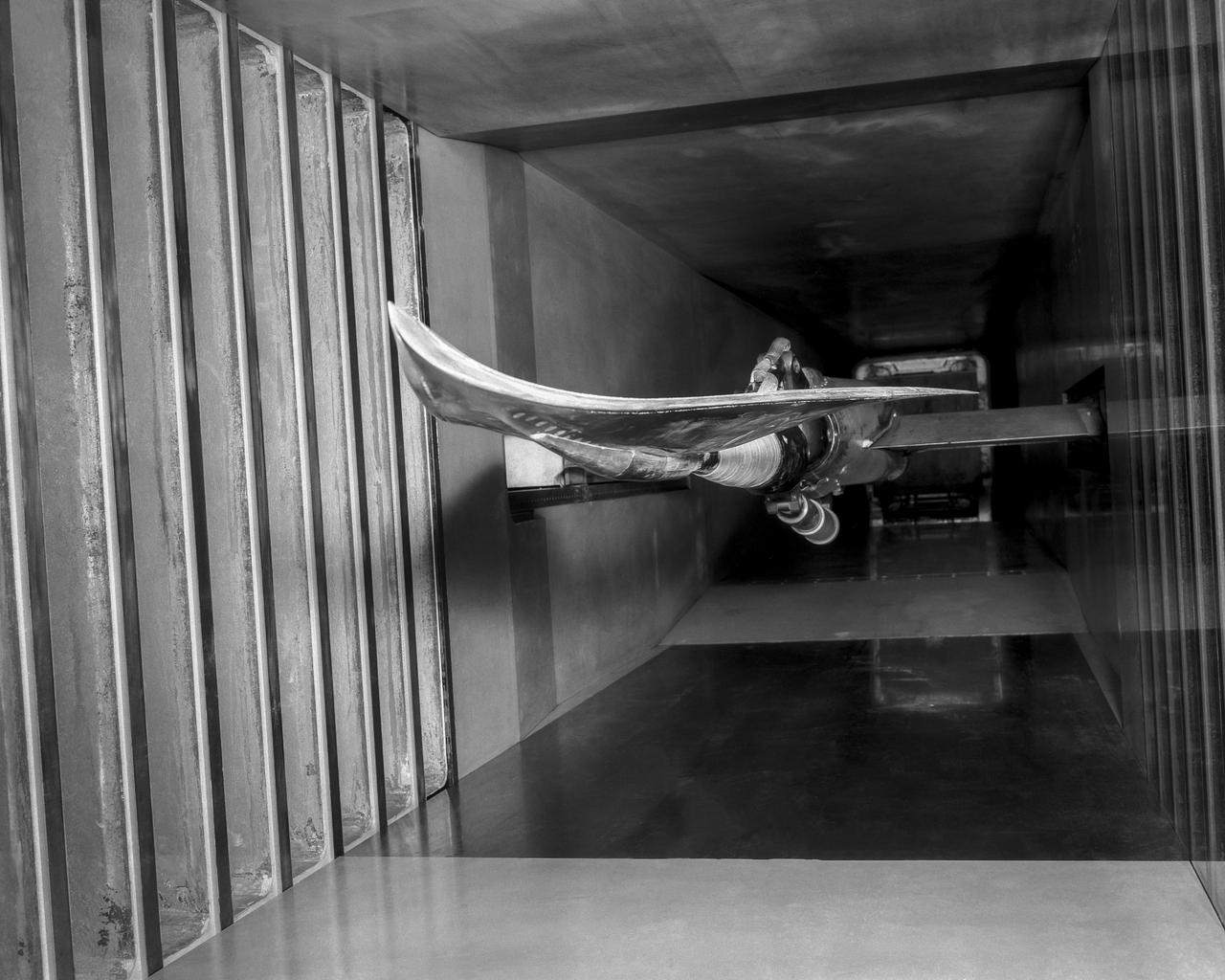
WS-110A "Brown Bomber"
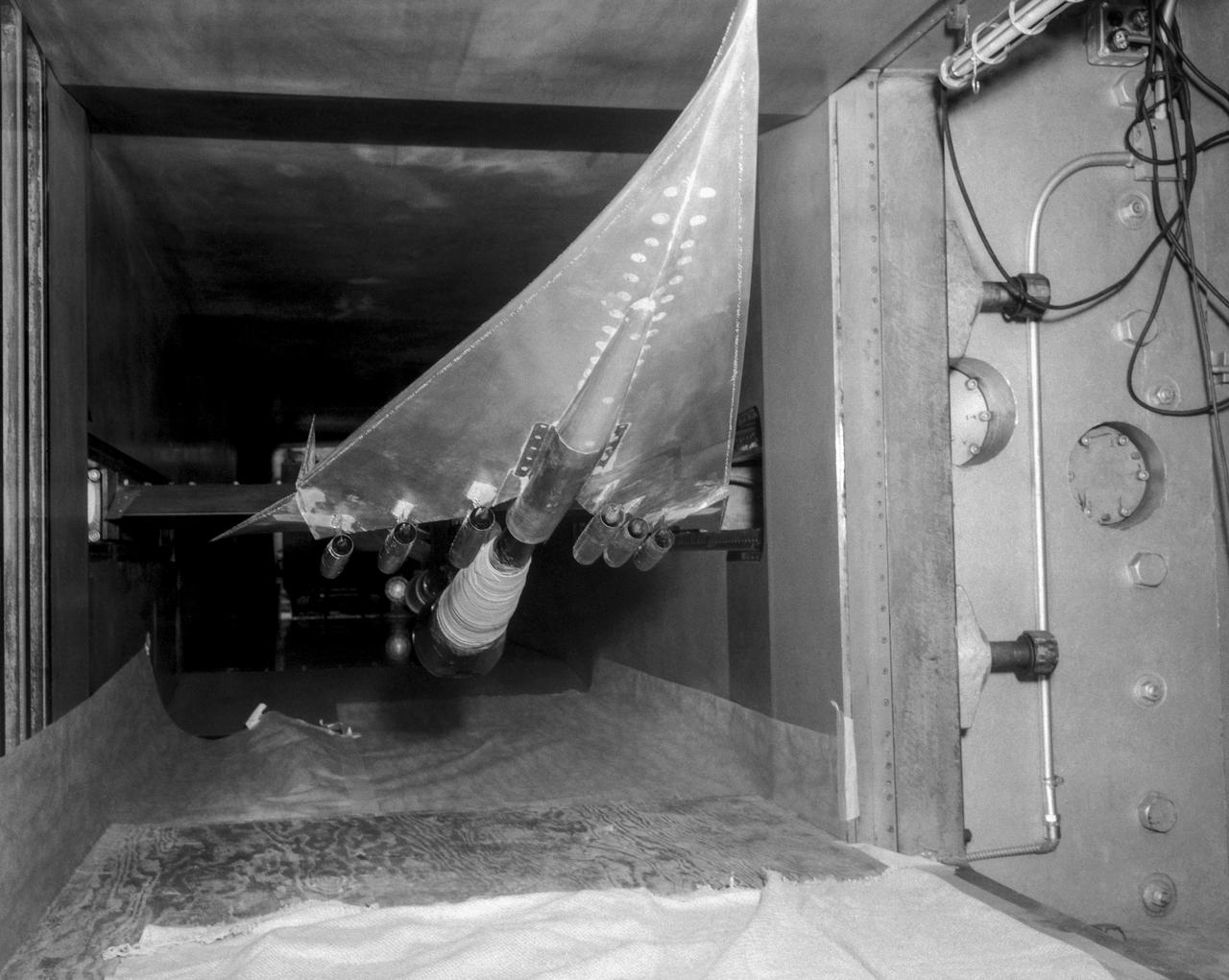
WS-110A "Brown Bomber"
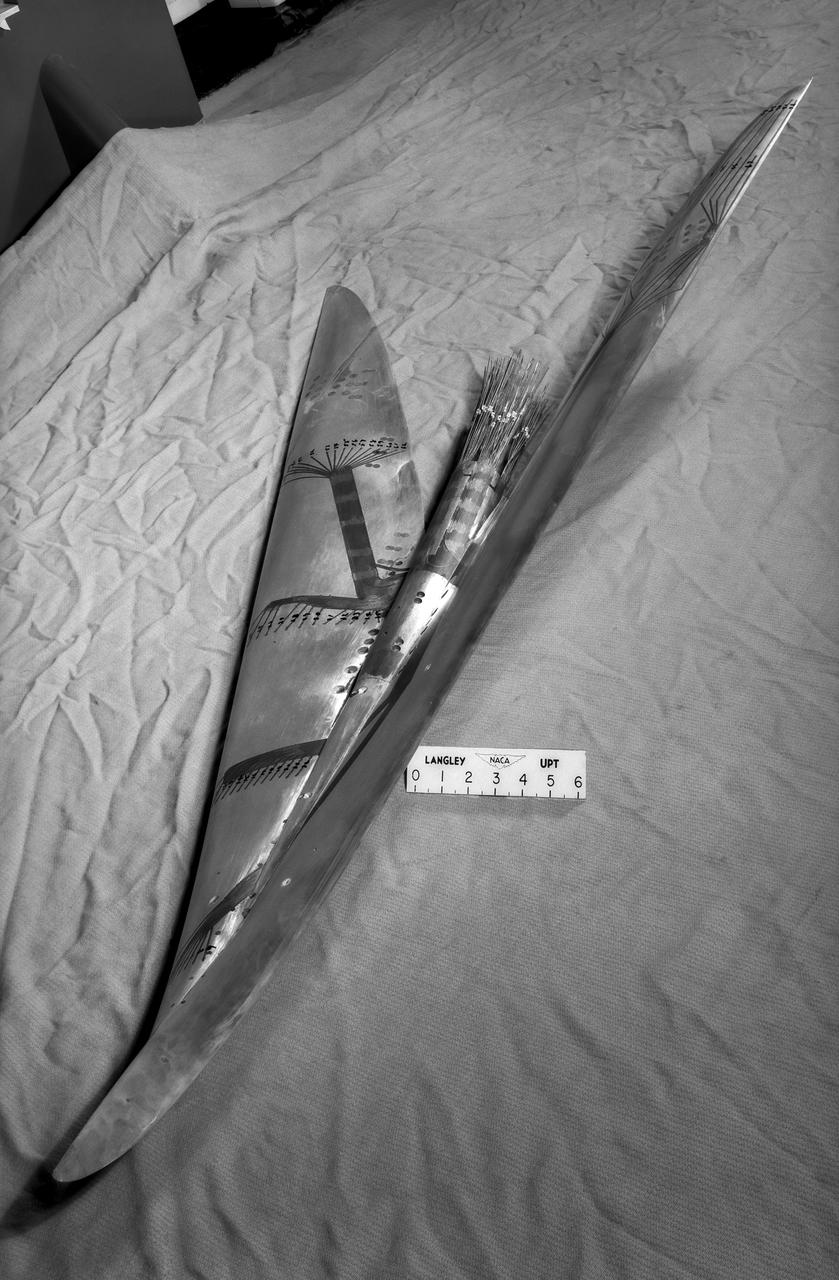
Brown Arrow Wing Bomber
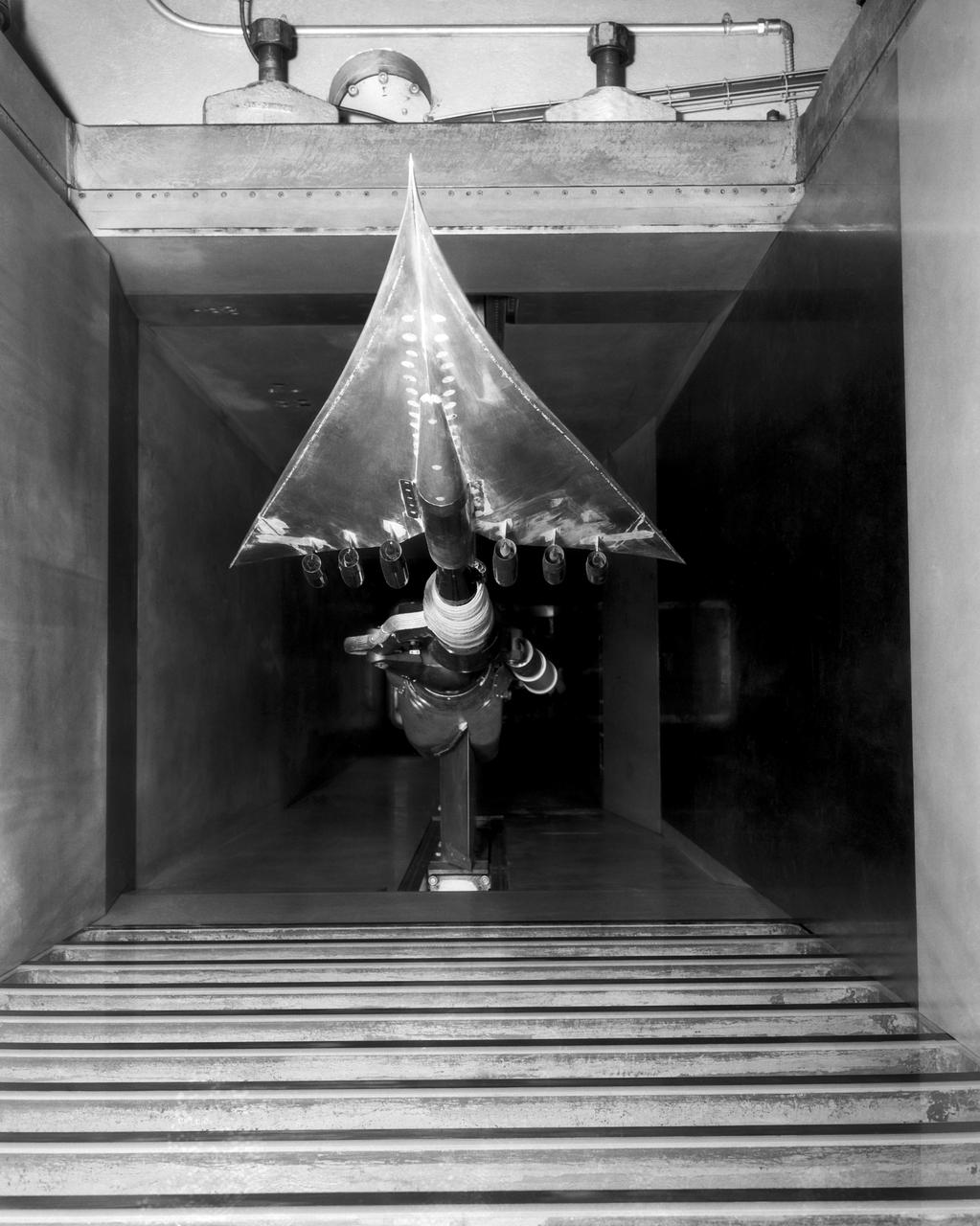
WS-110A "Brown Bomber"
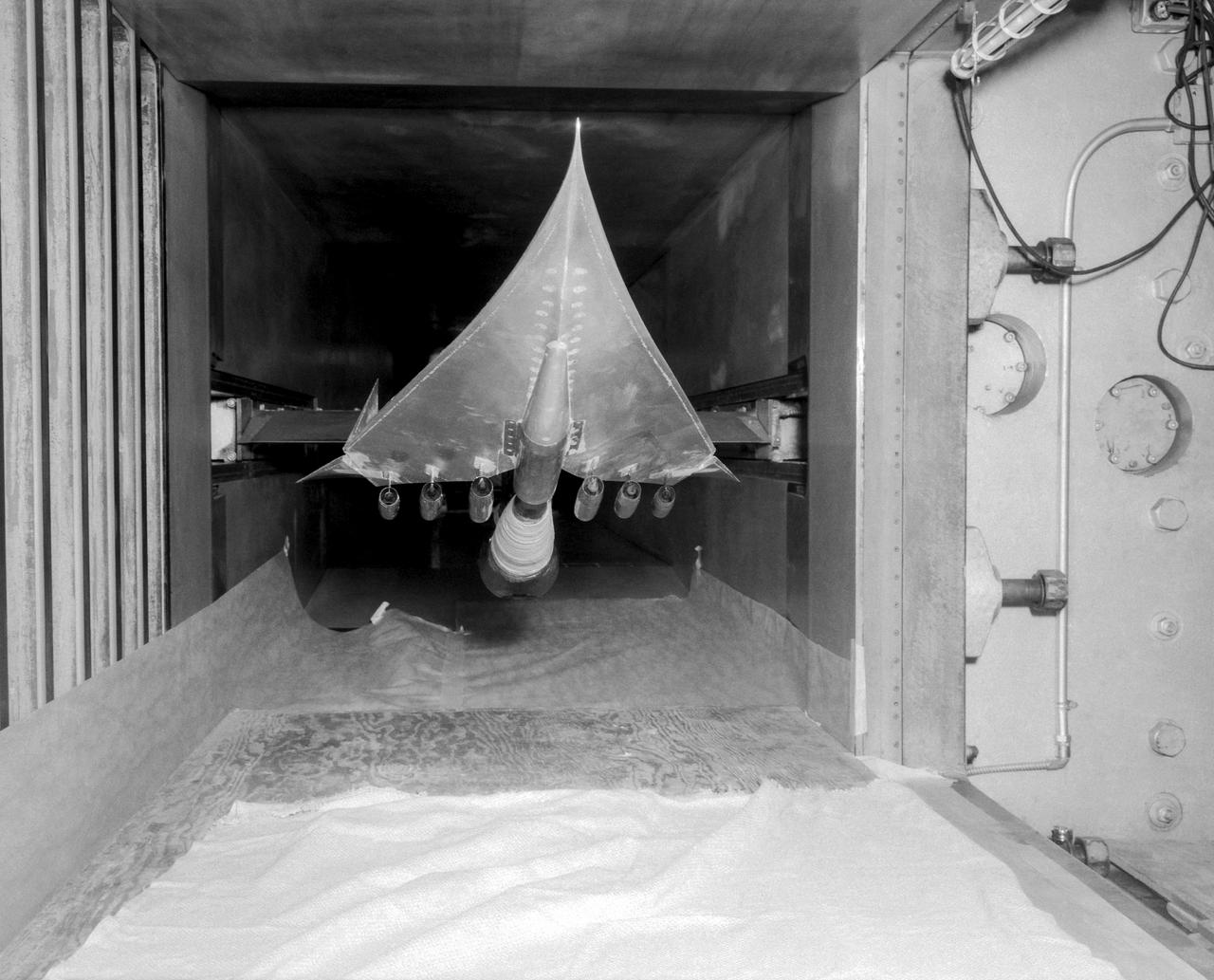
WS-110A "Brown Bomber"
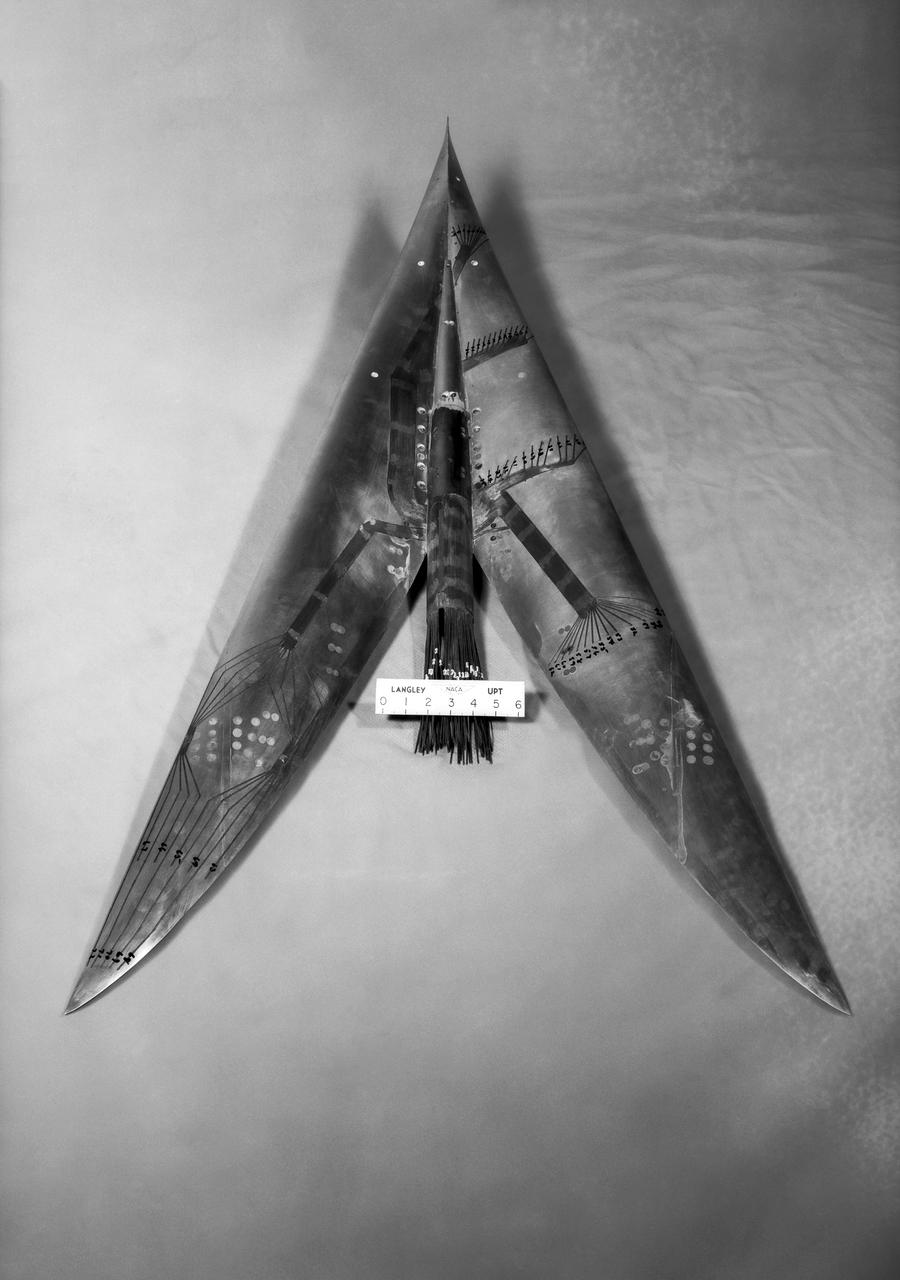
Brown Arrow Wing Bomber
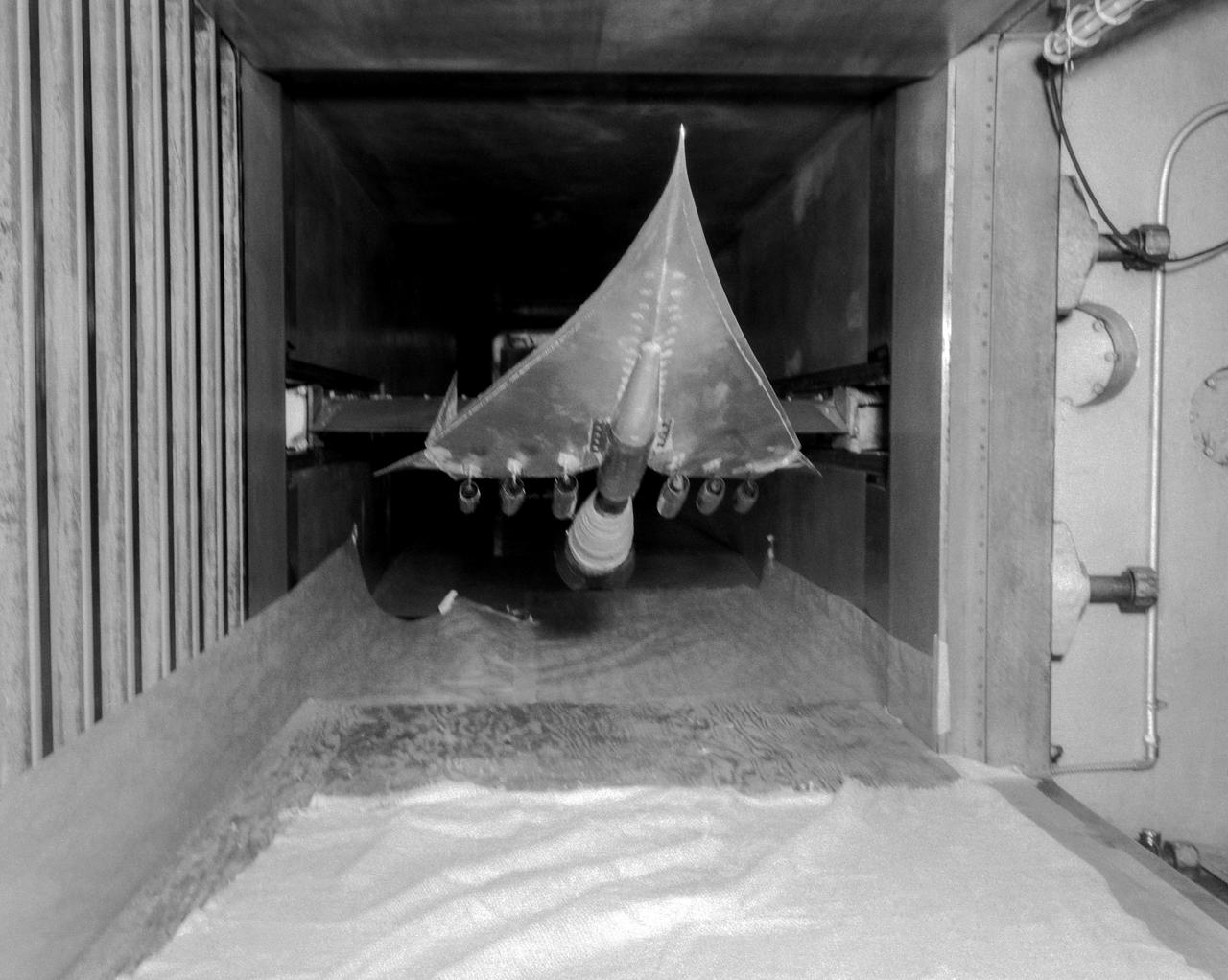
WS-110A "Brown Bomber"
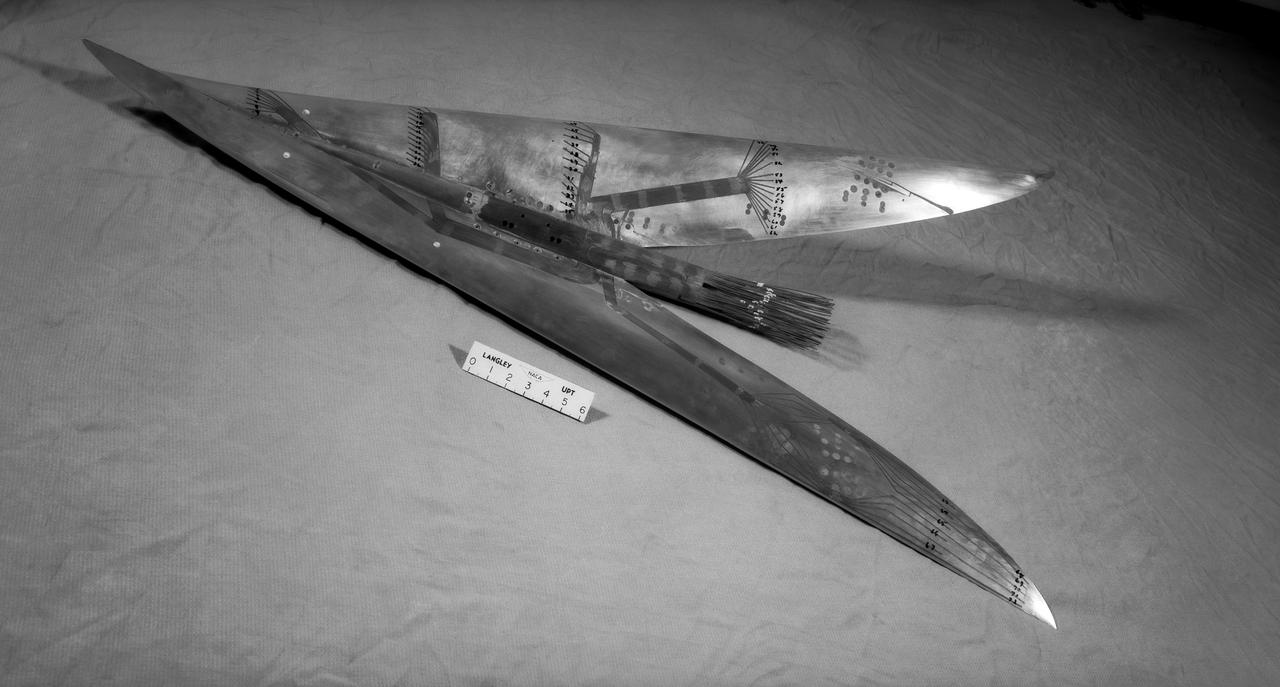
Brown Arrow Wing Bomber
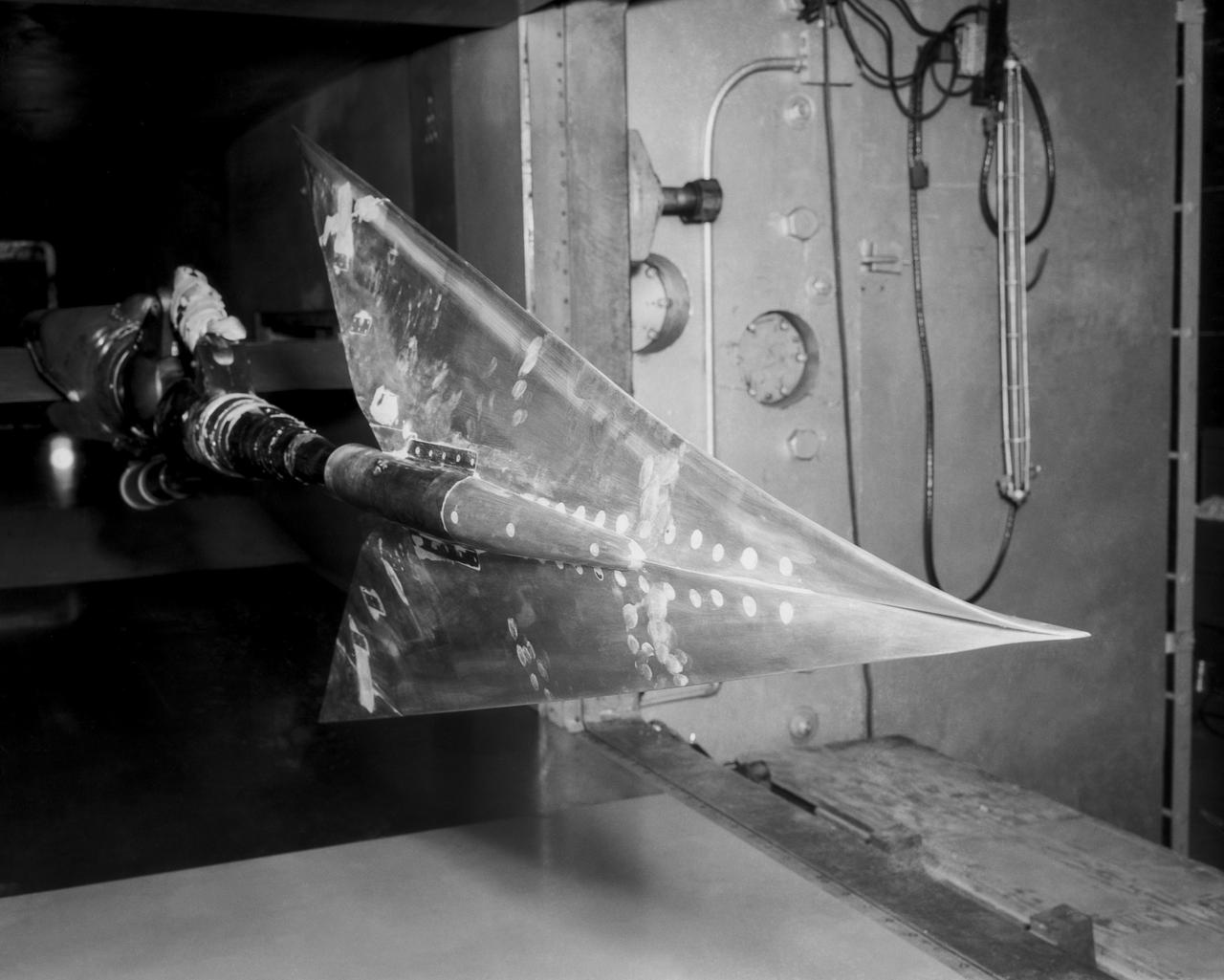
WS-110A "Brown Bomber"
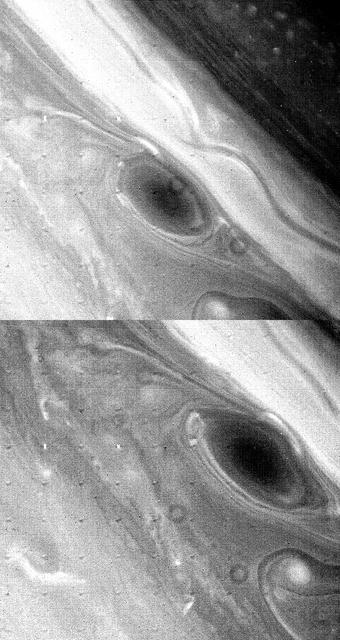
Large Brown Spot in Saturn Atmosphere
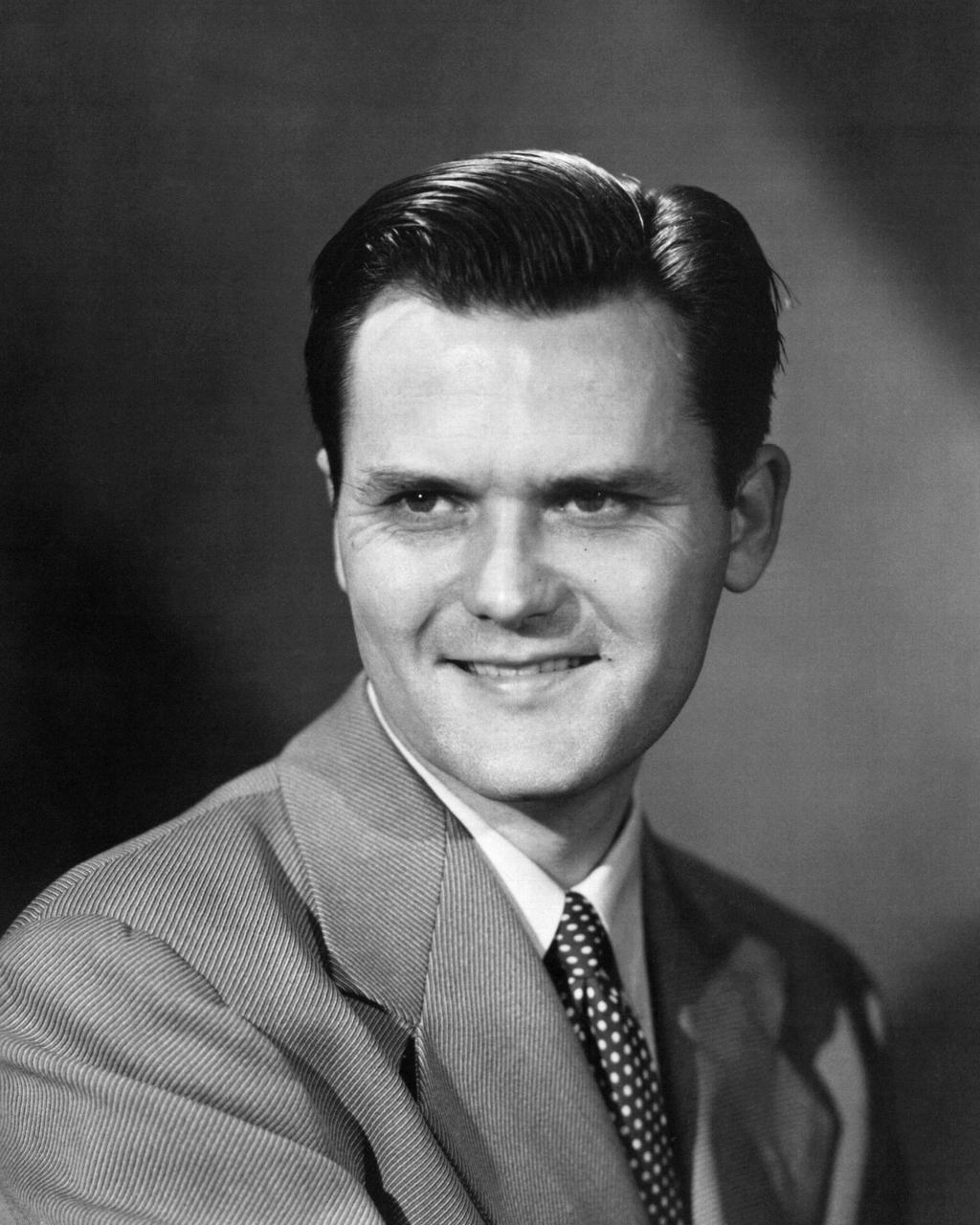
L60-5232 Clinton E. Brown of the Brown Hypersonic Study Group. Photograph published in Engineer in Charge: A History of the Langley Aeronautical Laboratory, 1917-1958 by James R. Hansen. Page 352.
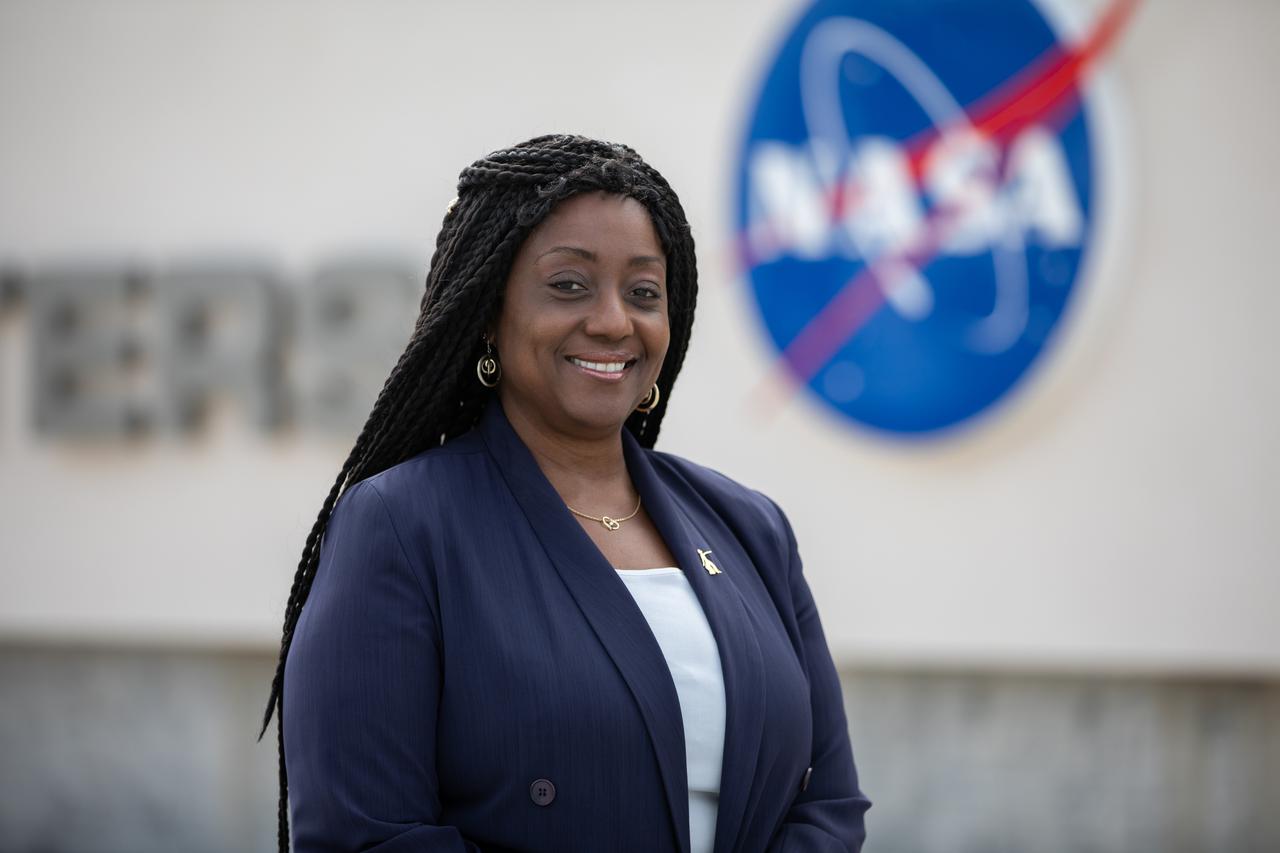
"I’ve worked in many different roles and what drives my passion is learning things that I don’t know. It is a part of my thirst for knowledge and knowing how things work. The harder the problem for me the better. When I first joined NASA as a full time employee, my supervisor would give me an assignment, and I would get it done quickly and come back to his desk and ask, ‘What do you have for me now?’ At one point, after about two months of working for him, he looked at me and kind of sighed. I said, ‘Okay, okay. If you don’t have anything for me right now, is it okay if I see if any of the other supervisors in the building need any help with anything?’ He agreed, and so I approached the other supervisors. "Now, here’s the interesting thing. I was a young Black female in an engineering role that was pretty much dominated by white males at the time, so it was not a norm for there to be females in the building – much less black females. I came to understand later that there was some skepticism on their part that I could do design engineering. I didn’t know that some of them, not all of them, were throwing things at me to show me I wasn’t qualified. But I would tackle their problems the same way I do anything else: if I don’t know it, I’ll go find it. I’ll research. I’ll dig. I’ll look for people that might have some experience that I don’t have and ask them. So, every hard problem that they threw at me, I solved. Eventually, my supervisor told me he didn't know what he was getting into when he agreed to let me go to the other supervisors because now, they were coming to him with their hardest problems, asking, 'Hey, can Barbara help with this?' So, I started to broaden my experience base right away." — Barbara Brown, Director of Exploration Research and Technology Programs, Kennedy Space Center Interviewer: NASA / Tahira Allen
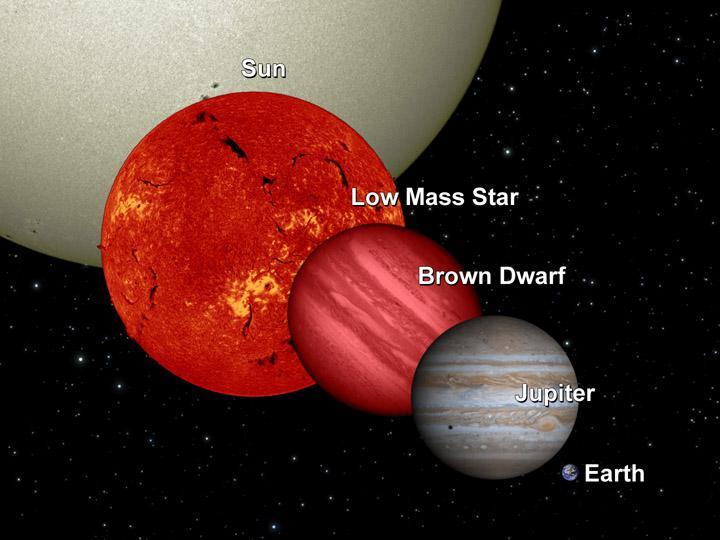
NASA Wide-field Infrared Survey Explorer will uncover many failed stars, or brown dwarfs, in infrared light. This diagram shows a brown dwarf in relation to Earth, Jupiter, a low-mass star and the sun.
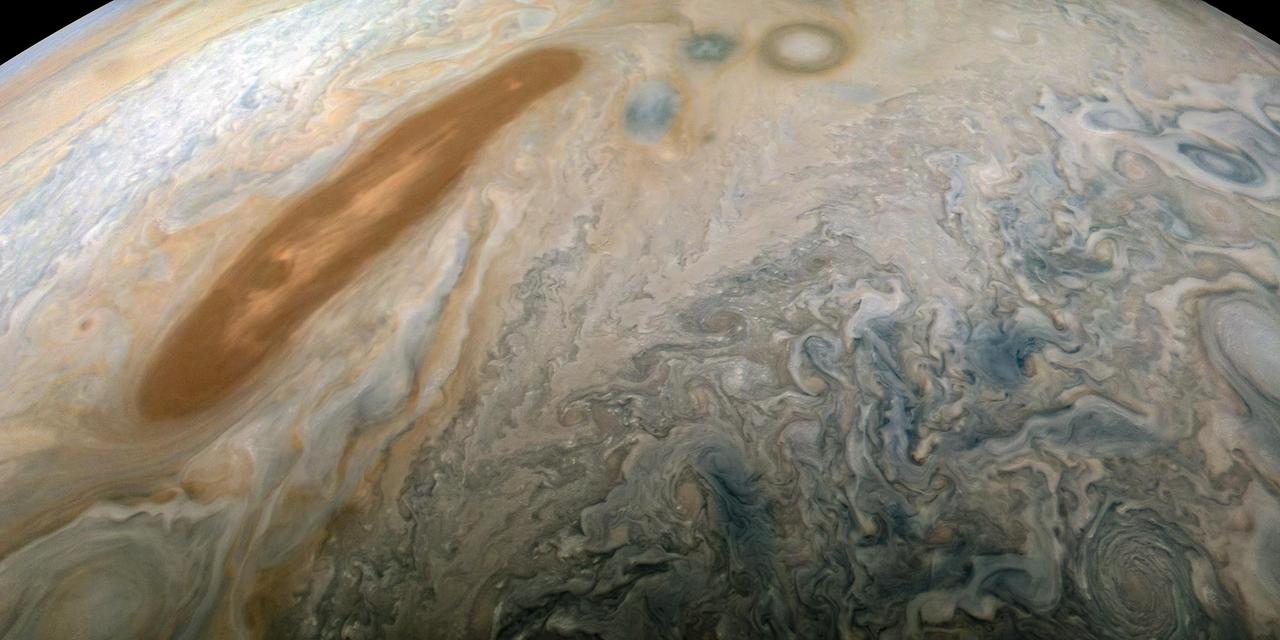
A long, brown oval known as a "brown barge" in Jupiter's North North Equatorial Belt is captured in this color-enhanced image from NASA's Juno spacecraft. This image was taken at 6:01 p.m. PDT (9:01 p.m. EDT) on Sept. 6, 2018, as the spacecraft performed its 15th close flyby of Jupiter. Citizen scientist Kevin M. Gill created this image using data from the spacecraft's JunoCam imager. https://photojournal.jpl.nasa.gov/catalog/PIA22939. - Enhanced image by Kevin M. Gill (CC-BY) based on images provided courtesy of NASA/JPL-Caltech/SwRI/MSSS
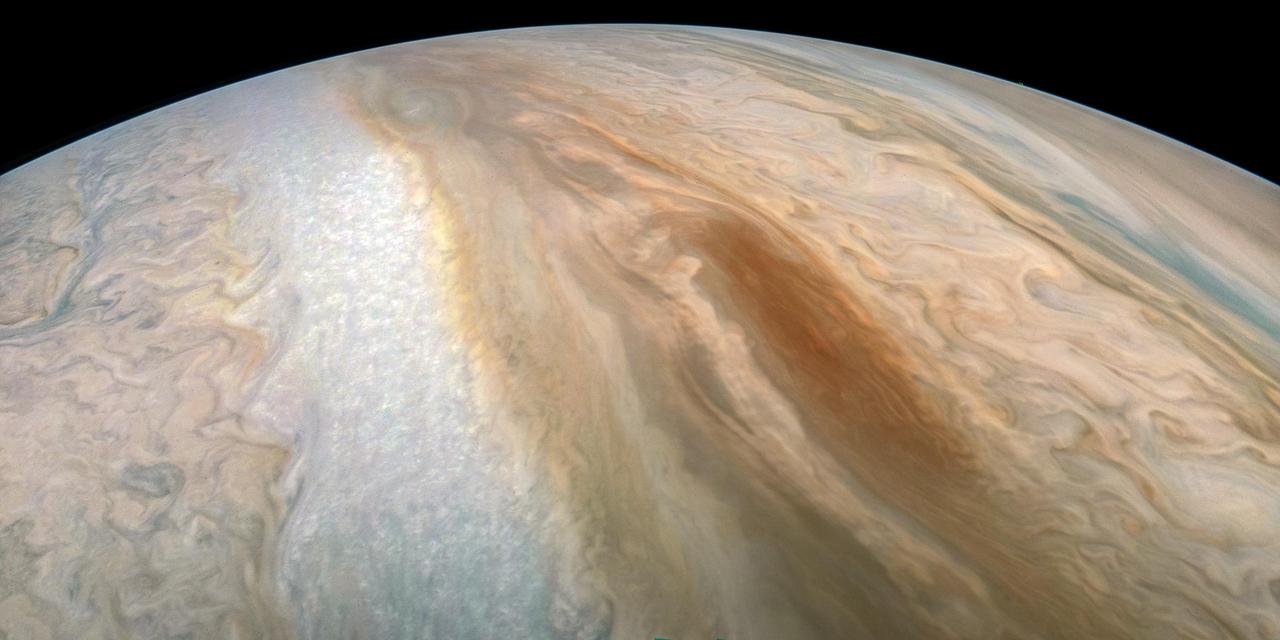
A long, brown oval known as a "brown barge" in Jupiter's South Equatorial Belt is captured in this color-enhanced image from NASA's Juno spacecraft. Brown barges are cyclonic regions that usually lie within Jupiter's dark North Equatorial Belt, although they are sometimes found in the similarly dark South Equatorial Belt as well. They can often be difficult to detect visually because their color blends in with the dark surroundings. At other times, as with this image, the dark belt material recedes, creating a lighter-colored background against which the brown barge is more conspicuous. Brown barges usually dissipate after the entire cloud belt undergoes an upheaval and reorganizes itself. Juno is giving us the first glimpses of the detailed structure within such a barge. This image was taken at 6:26 p.m. PDT on Sept. 6, 2018 (9:26 p.m. EDT) as the spacecraft performed its 15th close flyby of Jupiter. At the time, Juno was 7,425 miles (11,950 kilometers) from the planet's cloud tops, above a southern latitude of approximately 22 degrees. Citizen scientist Kevin M. Gill created this image using data from the spacecraft's JunoCam imager. The image has been rotated 90 degrees to the right from the original image. https://photojournal.jpl.nasa.gov/catalog/PIA22688 . - Enhanced image by Kevin M. Gill (CC-BY) based on images provided courtesy of NASA/JPL-Caltech/SwRI/MSSS
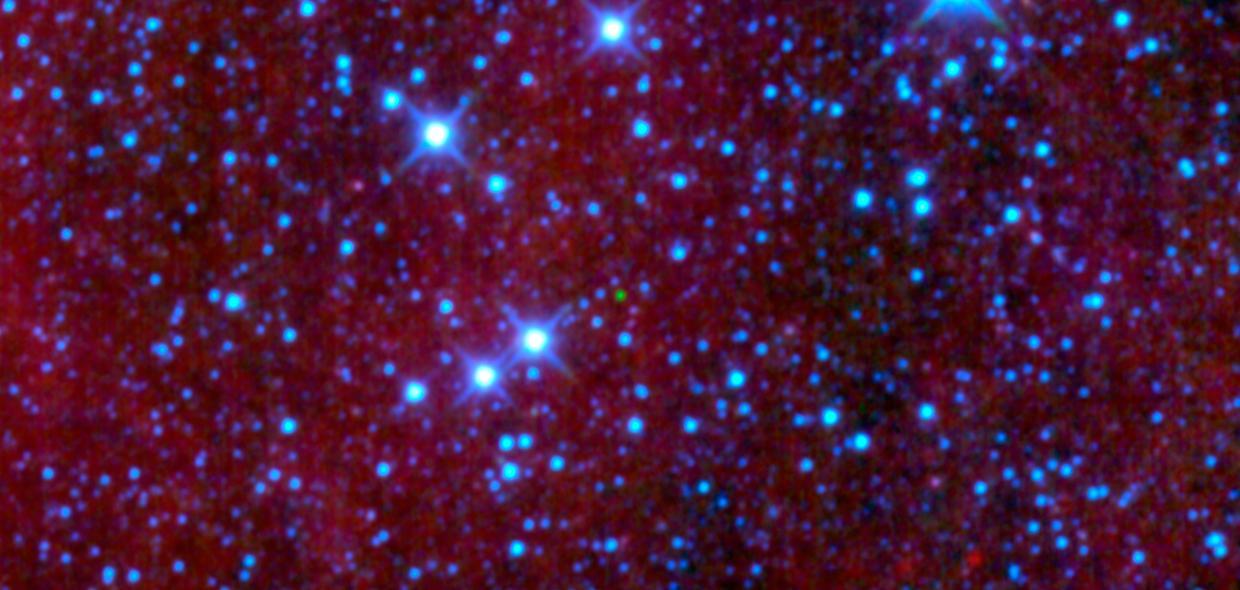
The green dot in the middle of this image might look like an emerald amidst glittering diamonds, but is a dim star belonging to a class called brown dwarfs; it is the first ultra-cool brown dwarf discovered by NASA Wide-field Infrared Survey Explorer.
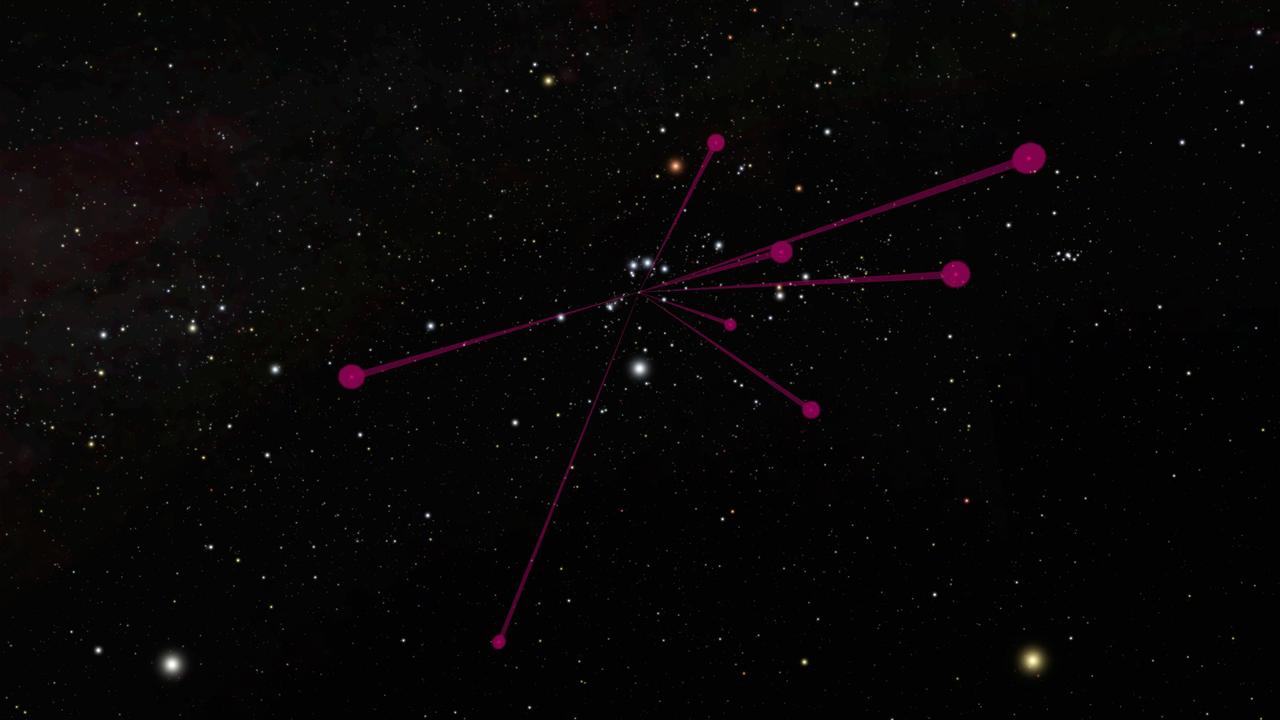
The locations of brown dwarfs discovered by NASA Wide-field Infrared Survey Explorer, or WISE, and mapped by NASA Spitzer Space Telescope, are shown in this diagram as red circles.

This graph shows the brightness variations of the brown dwarf named 2MASSJ22282889-431026 measured simultaneously by both NASA Hubble and Spitzer space telescopes.
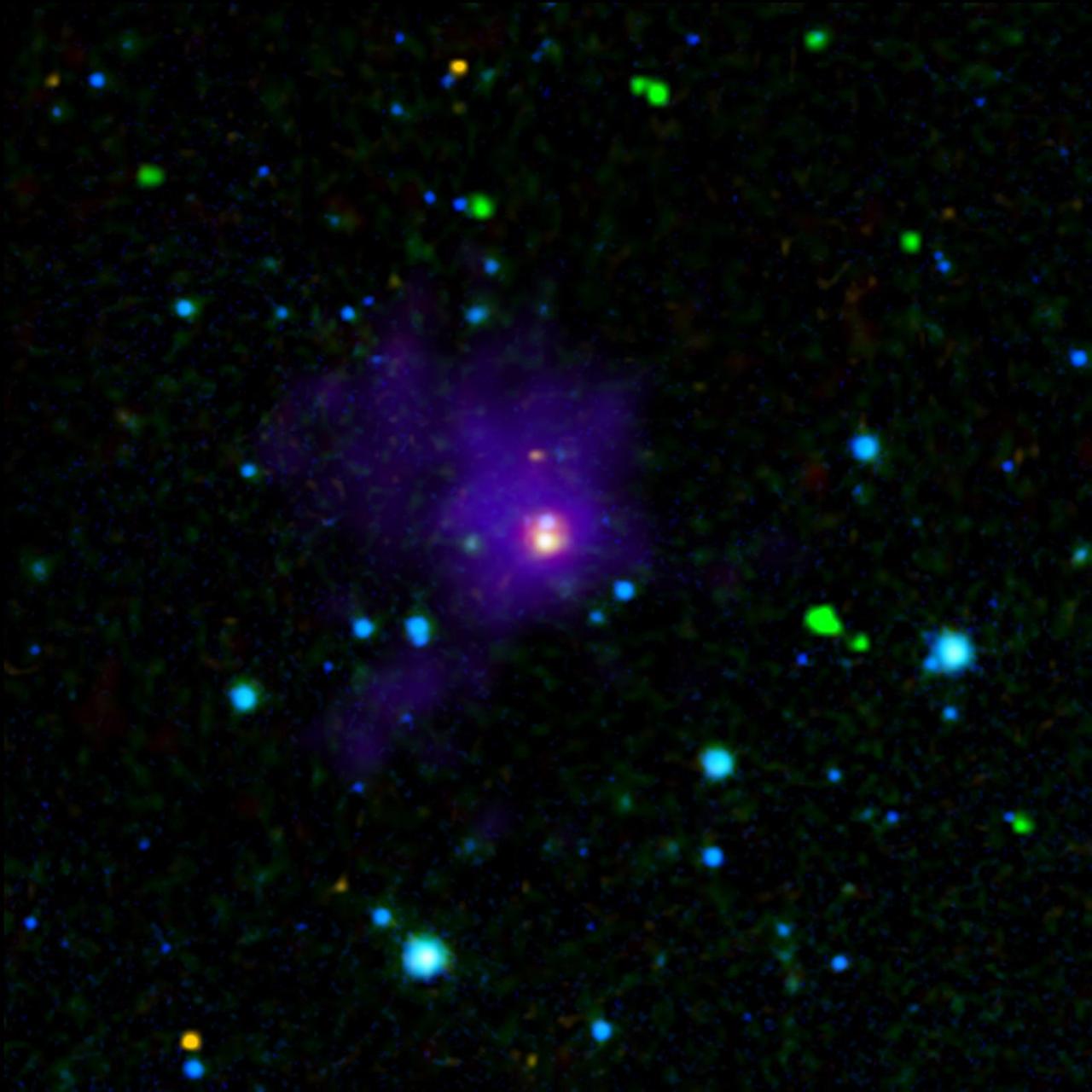
This image from NASA Spitzer Space Telescope shows two young brown dwarfs, objects that fall somewhere between planets and stars in terms of their temperature and mass.

"Engineers and scientists are inherently creative souls. I mean, that’s what we’re doing. We’re creating things. In a lot of instances, we’re creating something literally from an idea to reality. And there is something incredibly exciting about that. So when I talk about the work we do in STEM, I try to focus on the fact that it’s creative. We’re innovators. We’re trying to do something totally new. And when you do that work, it’s usually with other people who are just as excited as you are. We’re bringing all of these creative souls together to pull off something that you couldn’t imagine was possible before. …Yes, you have to be good at math and do the academic work to prepare you to do the kind of work we do. But in the end, it really comes down to unleashing this creativity and bringing minds together to achieve something that hasn’t been done before." NASA Deputy Associate Administrator for STEM Engagement, Kris Brown, poses for a portrait, Monday, February 8, 2021 at the Mary W. Jackson NASA Headquarters building in Washington. Photo Credit: (NASA/Aubrey Gemignani)
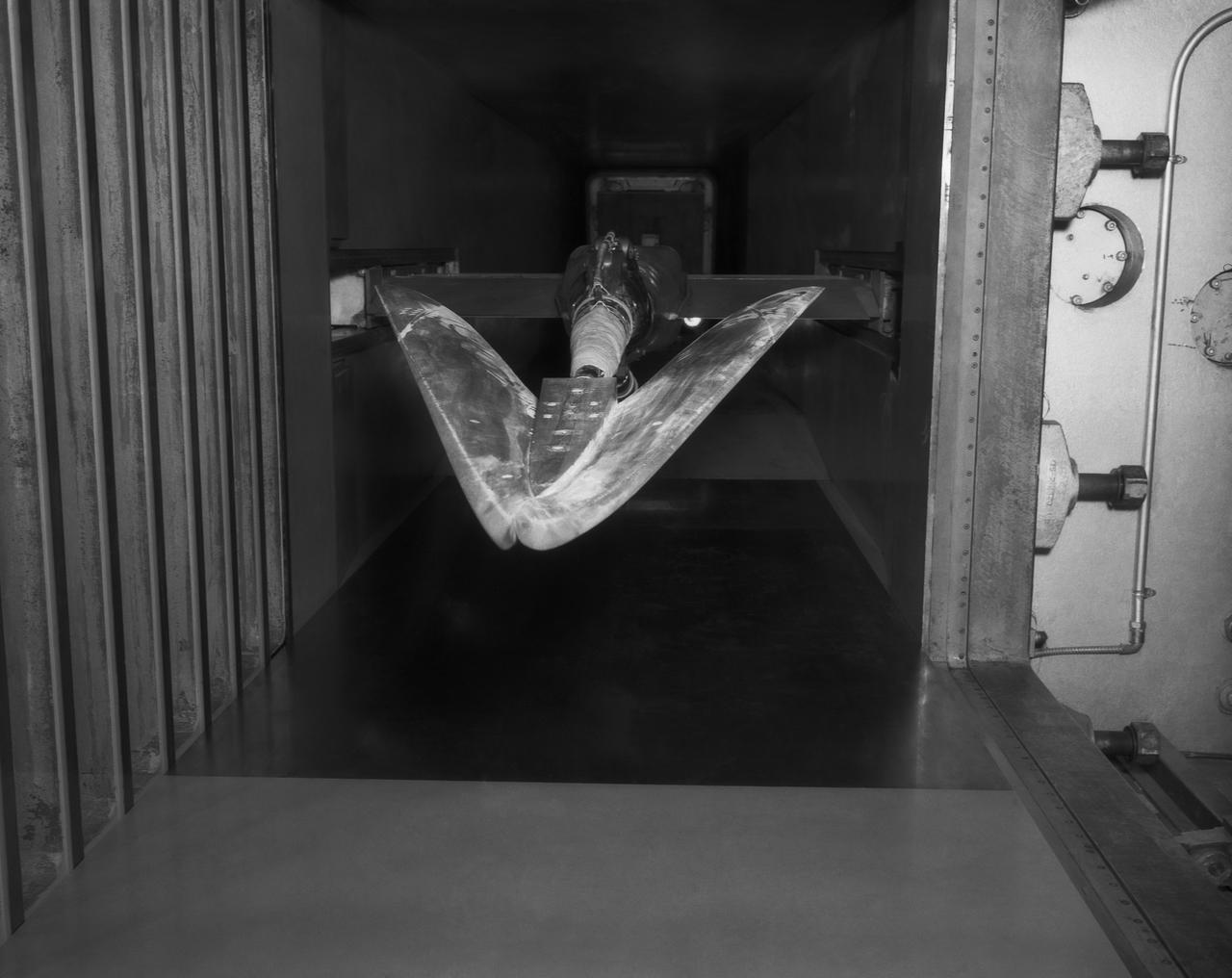
WS-110A Brown Bomber in Unitary Wind Tunnel Low Mach Number Test
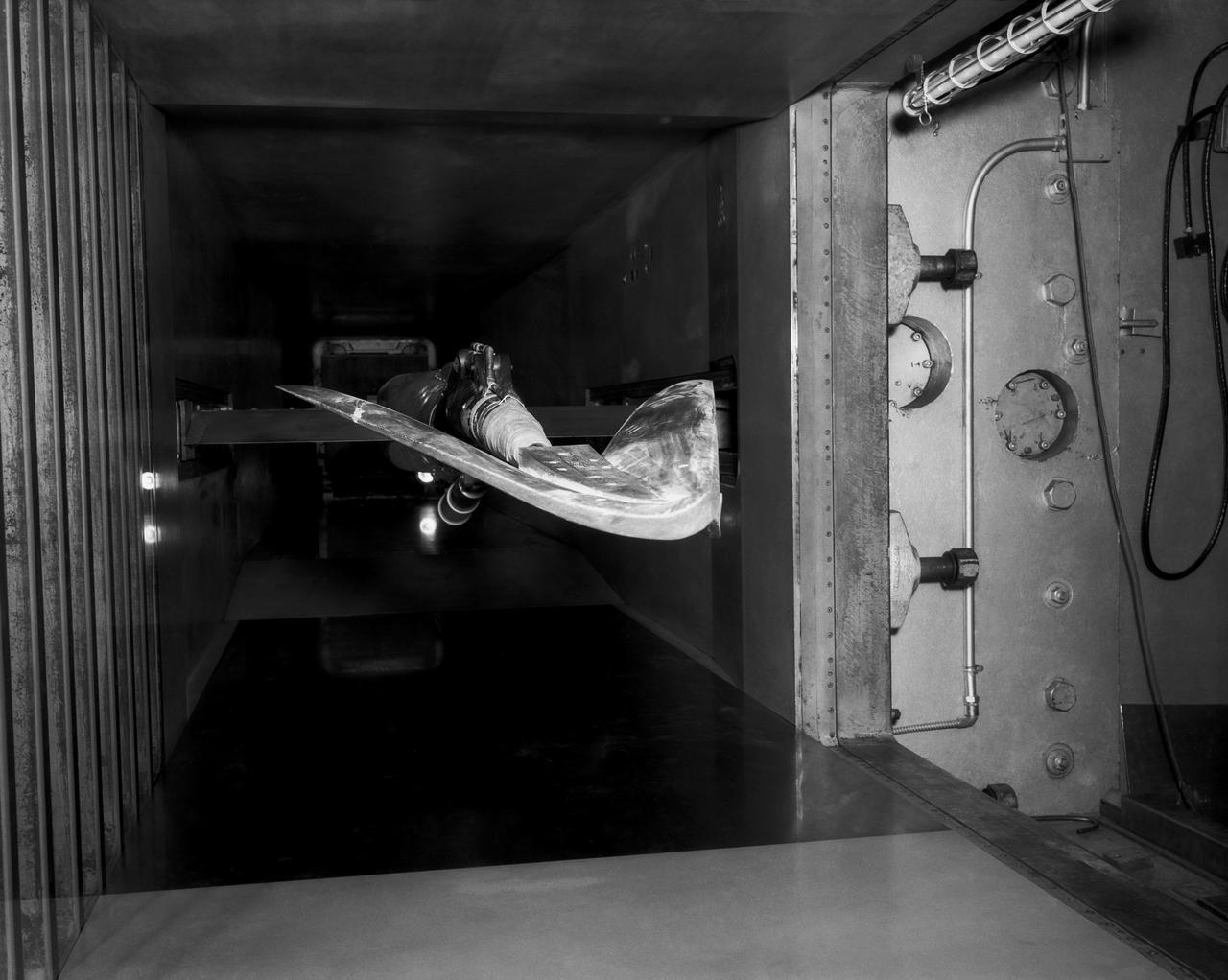
WS-110A Brown Bomber in Unitary Wind Tunnel Low Mach Number Test
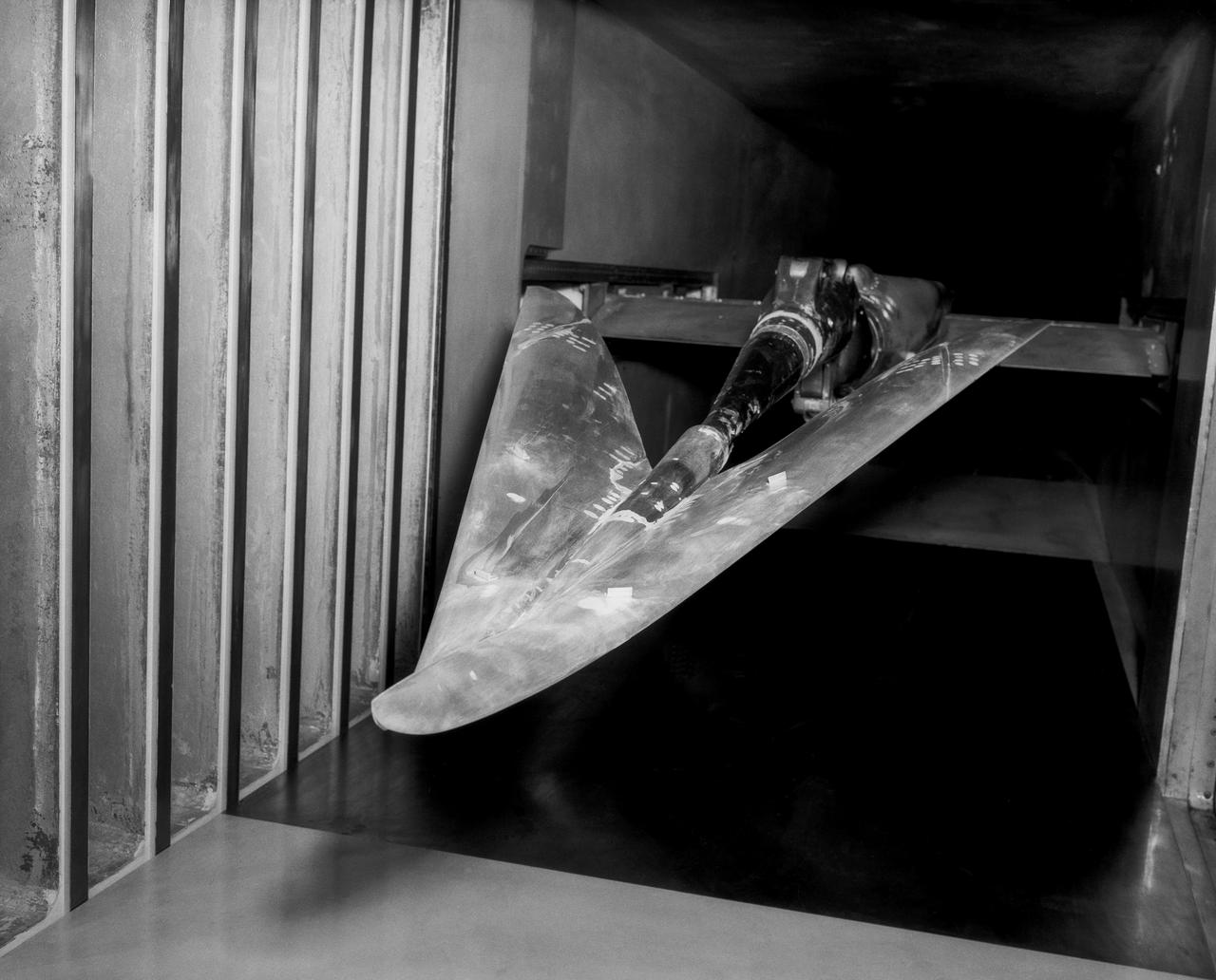
WS-110A Brown Bomber in Unitary Wind Tunnel Low Mach Number Test
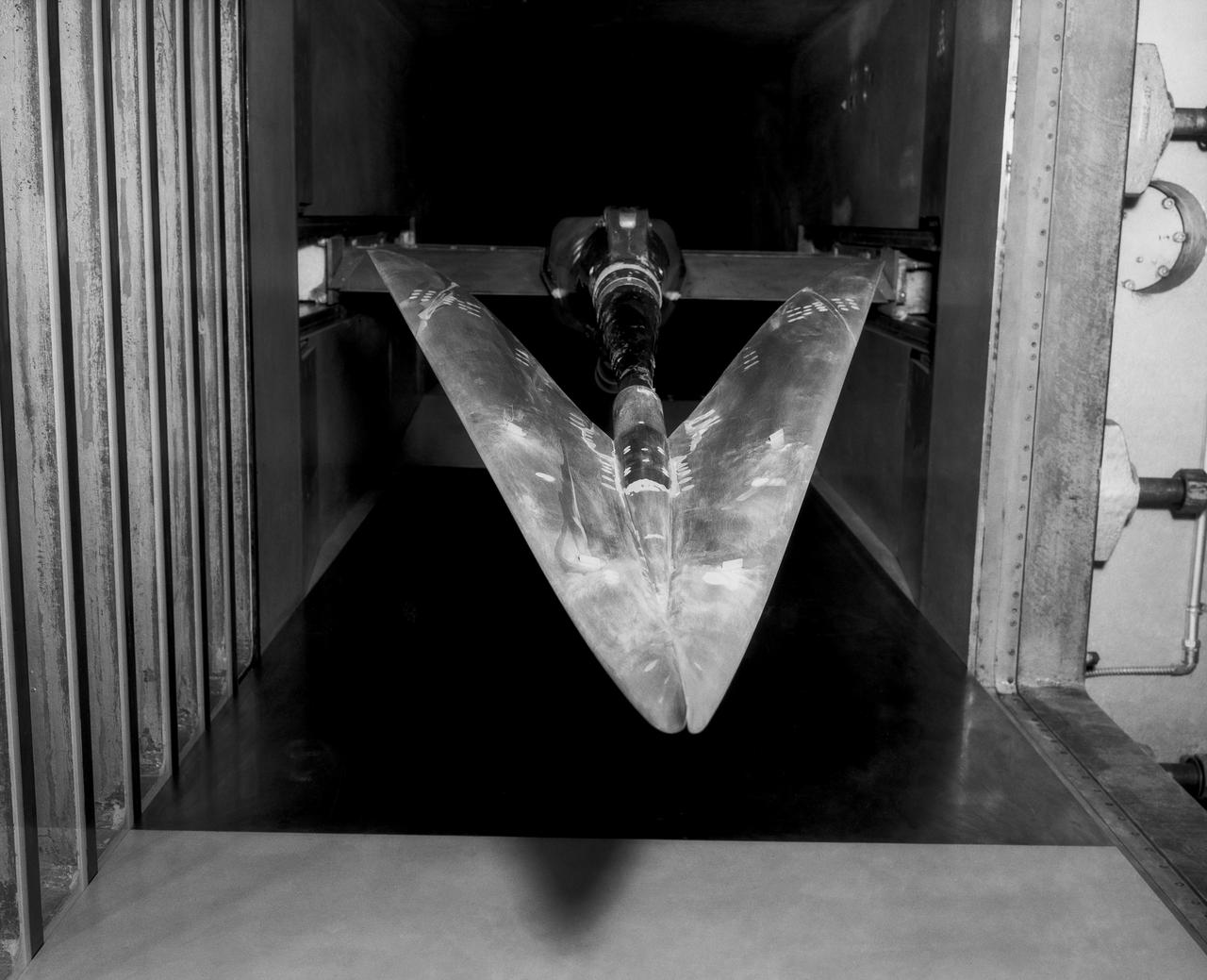
WS-110A Brown Bomber in Unitary Wind Tunnel Low Mach Number Test

For the first time, two space-based telescopes have teamed up with ground-based observatories to observe a microlensing event, a magnification of the light of a distant star due to the gravitational effects of an unseen object in the foreground. In this case, the cause of the microlensing event was a brown dwarf, dubbed OGLE-2015-BLG-1319, orbiting a star. In terms of mass, brown dwarfs fall somewhere between the size of the largest planets and the smallest stars. Curiously, scientists have found that, for stars roughly the mass of our sun, less than 1 percent have a brown dwarf orbiting within 3 AU (1 AU is the distance between Earth and the sun). This newly discovered brown dwarf may fall in that distance range. This microlensing event was observed by ground-based telescopes looking for these uncommon events, and subsequently seen by NASA's Spitzer and Swift space telescopes. As the diagram shows, Spitzer and Swift offer additional vantage points for viewing this chance alignment. While Swift orbits close to Earth, and saw (blue diamonds) essentially the same change in light that the ground-based telescopes measured (grey markers), Spitzer's location much farther away from Earth gave it a very different perspective on the event (red circles). In particular, Spitzer's vantage point resulted in a time lag in the microlensing event it observed, compared to what was seen by Swift and the ground-based telescope. This offset allowed astronomers to determine the distance to OGLE-2015-BLG-1319 as well as its mass: around 30-65 times that of Jupiter. http://photojournal.jpl.nasa.gov/catalog/PIA21077

JANUARY 8, 2013: Astronomers using NASA's Hubble and Spitzer space telescopes have probed the stormy atmosphere of a brown dwarf named 2MASSJ22282889-431026, creating the most detailed "weather map" yet for this class of cool, star-like orbs. The forecast shows wind-driven, planet-sized clouds enshrouding these strange worlds. Brown dwarfs form out of condensing gas, as stars do, but lack the mass to fuse atoms and produce energy. Instead, these objects, which some call failed stars, are more similar to gas planets with their complex, varied atmospheres. The new research is a stepping stone toward a better understanding not only brown dwarfs, but also of the atmospheres of planets beyond our solar system. Hubble and Spitzer simultaneously watched the brown dwarf as its light varied in time, brightening and dimming about every 90 minutes as the body rotated. Astronomers found the timing of this change in brightness depended on whether they looked using different wavelengths of infrared light. The variations are the result of different layers or patches of material swirling around in the brown dwarf in windy storms as large as Earth itself. Spitzer and Hubble see different atmospheric layers because certain infrared wavelengths are blocked by vapors of water and methane high up, while other infrared wavelengths emerge from much deeper layers. Daniel Apai, the principal investigator of the research from the University of Arizona, Tucson, presented the results at the American Astronomical Society meeting on January 8 in Long Beach, Calif. A study describing the results, led by Esther Buenzli, also of the University of Arizona, is published in the Astrophysical Journal Letters. For more information about this study, visit <a href="http://www.nasa.gov/spitzer" rel="nofollow">www.nasa.gov/spitzer</a> . <b><a href="http://www.nasa.gov/audience/formedia/features/MP_Photo_Guidelines.html" rel="nofollow">NASA image use policy.</a></b> <b><a href="http://www.nasa.gov/centers/goddard/home/index.html" rel="nofollow">NASA Goddard Space Flight Center</a></b> enables NASA’s mission through four scientific endeavors: Earth Science, Heliophysics, Solar System Exploration, and Astrophysics. Goddard plays a leading role in NASA’s accomplishments by contributing compelling scientific knowledge to advance the Agency’s mission. <b>Follow us on <a href="http://twitter.com/NASA_GoddardPix" rel="nofollow">Twitter</a></b> <b>Like us on <a href="http://www.facebook.com/pages/Greenbelt-MD/NASA-Goddard/395013845897?ref=tsd" rel="nofollow">Facebook</a></b> <b>Find us on <a href="http://instagram.com/nasagoddard?vm=grid" rel="nofollow">Instagram</a></b>
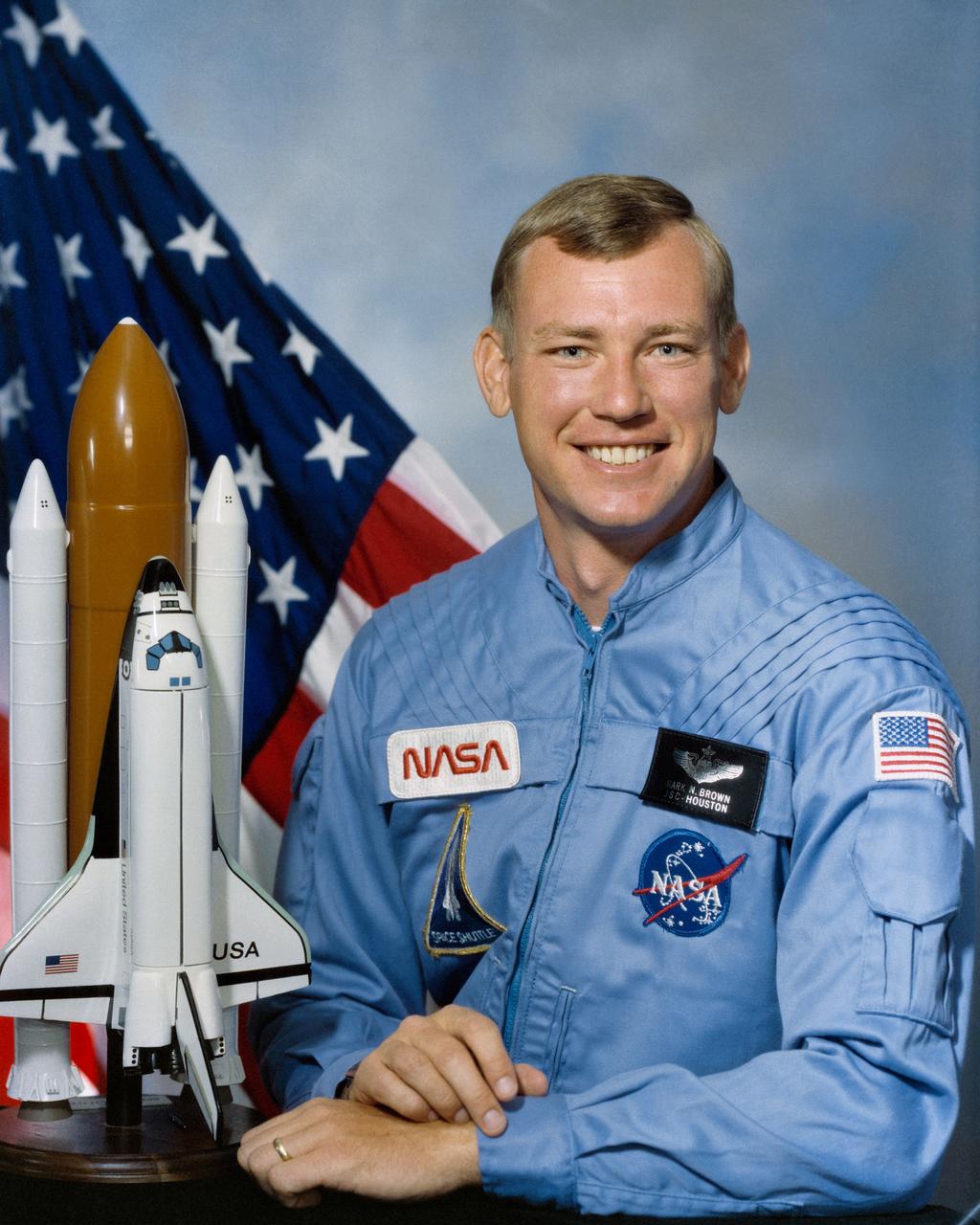
S84-39440 (September 1984) --- Astronaut Mark N. Brown.
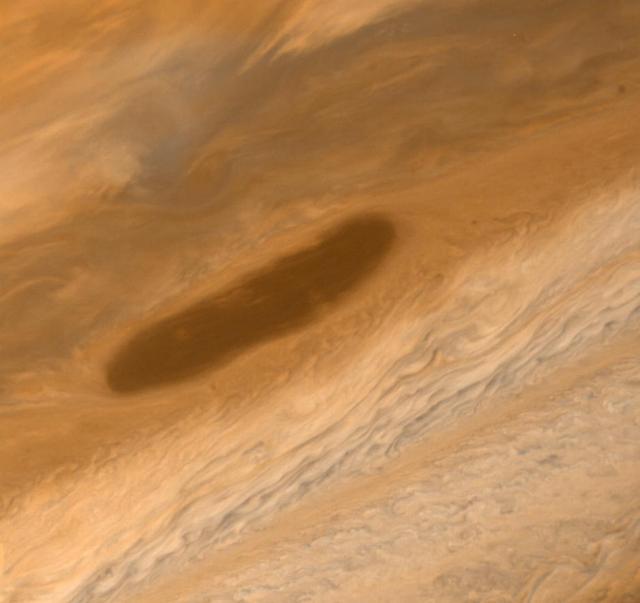
This large brown oval, photographed on Mar. 2, 1979 by NASA Voyager 1. Features of this sort are not rare on Jupiter and have an average lifetime of one to two years. Above the feature is the pale orange North Temperate Belt. http://photojournal.jpl.nasa.gov/catalog/PIA00015
![“I love working in STEM. There's something about working at NASA, where you see new possibilities and amazing things happen all the time. During my first job at NASA [I'll never forget], I was working in the newsroom and was sent a draft press release about the discovery of new exoplanets. I got so excited and thought, I can't believe that I'm one of the first people reading about this discovery, and then tomorrow at noon, it will be released to the public, and everyone will feel this. I felt like an explorer, like I had made this amazing discovery on my own, but really, I was just reviewing a press release. “I get to see that excitement on the faces of the next generation, kids of all ages, when they're able to connect something on their own, or they have this new revelation of the world because that's what the agency has brought to them. That palatable excitement reminds me of how excited I was, and it's this kind of beautiful life cycle because it reenergizes me and gets me excited as well. “NASA is so big on this own, and for kids to feel like they're a part of it, it symbolizes this connection to great exploration and new discoveries. It makes them feel just as important and gets them excited thinking about what they can contribute or about learning something new. I've seen just one spark of curiosity create a great burning love and fire for learning. “Some of the kids I've talked to [during STEM outreach] will tell me they like something, and then I see it's created a more meaningful connection in the neighborhood. They'll dress up as astronauts for Halloween, or when they see me, they'll high-five me and tell me something they learned in science class. It spurs them on to not just make the connection at NASA but make the connection within themselves that they could do this if they wanted to. Not only can they be a part of STEM, but they realize they can also have a variety of interests in their life.” – Katherine Brown, Public Affairs Offi](https://images-assets.nasa.gov/image/NHQ202302280007/NHQ202302280007~medium.jpg)
“I love working in STEM. There's something about working at NASA, where you see new possibilities and amazing things happen all the time. During my first job at NASA [I'll never forget], I was working in the newsroom and was sent a draft press release about the discovery of new exoplanets. I got so excited and thought, I can't believe that I'm one of the first people reading about this discovery, and then tomorrow at noon, it will be released to the public, and everyone will feel this. I felt like an explorer, like I had made this amazing discovery on my own, but really, I was just reviewing a press release. “I get to see that excitement on the faces of the next generation, kids of all ages, when they're able to connect something on their own, or they have this new revelation of the world because that's what the agency has brought to them. That palatable excitement reminds me of how excited I was, and it's this kind of beautiful life cycle because it reenergizes me and gets me excited as well. “NASA is so big on this own, and for kids to feel like they're a part of it, it symbolizes this connection to great exploration and new discoveries. It makes them feel just as important and gets them excited thinking about what they can contribute or about learning something new. I've seen just one spark of curiosity create a great burning love and fire for learning. “Some of the kids I've talked to [during STEM outreach] will tell me they like something, and then I see it's created a more meaningful connection in the neighborhood. They'll dress up as astronauts for Halloween, or when they see me, they'll high-five me and tell me something they learned in science class. It spurs them on to not just make the connection at NASA but make the connection within themselves that they could do this if they wanted to. Not only can they be a part of STEM, but they realize they can also have a variety of interests in their life.” – Katherine Brown, Public Affairs Offi
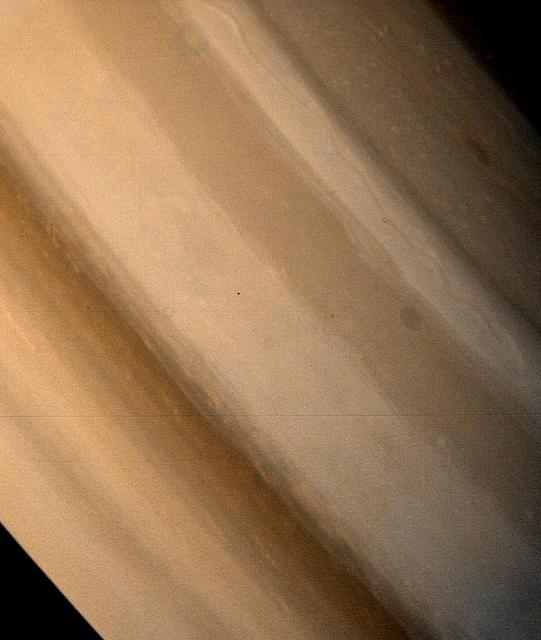
Two brown ovals, at right, some 10,000 km 6,000 miles across, were found at approximately 40 latitude in Saturn northern hemisphere by NASA Voyager 1. The photo was taken on November 7, 1980.
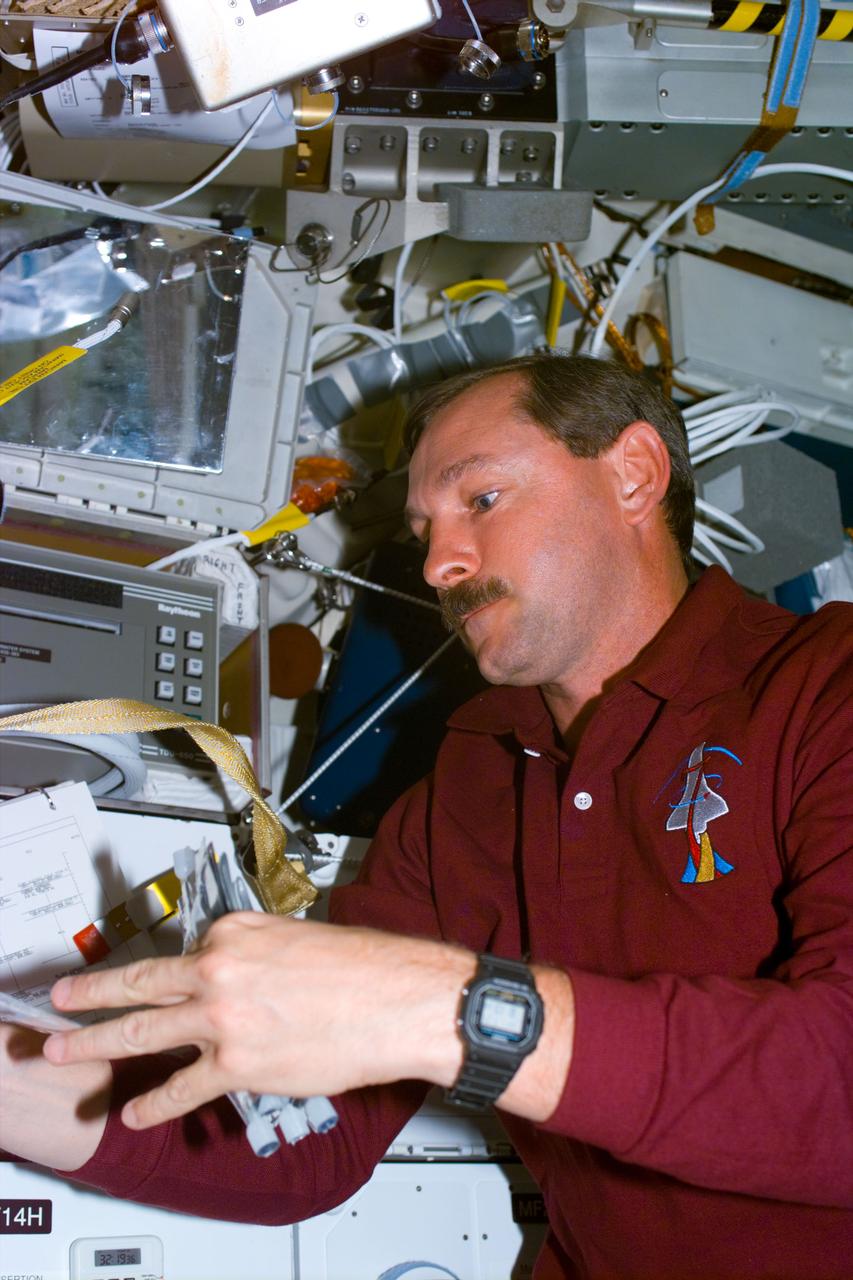
STS095-E-5054 (30 Oct. 1998) --- Astronaut Curtis L. Brown, STS-95 commander, has a handful of vials as he checks a notebook during Flight Day two activity onboard the Space Shuttle Discovery. The photo was taken with an electronic still camera at 10:42:49 GMT, Oct. 30.
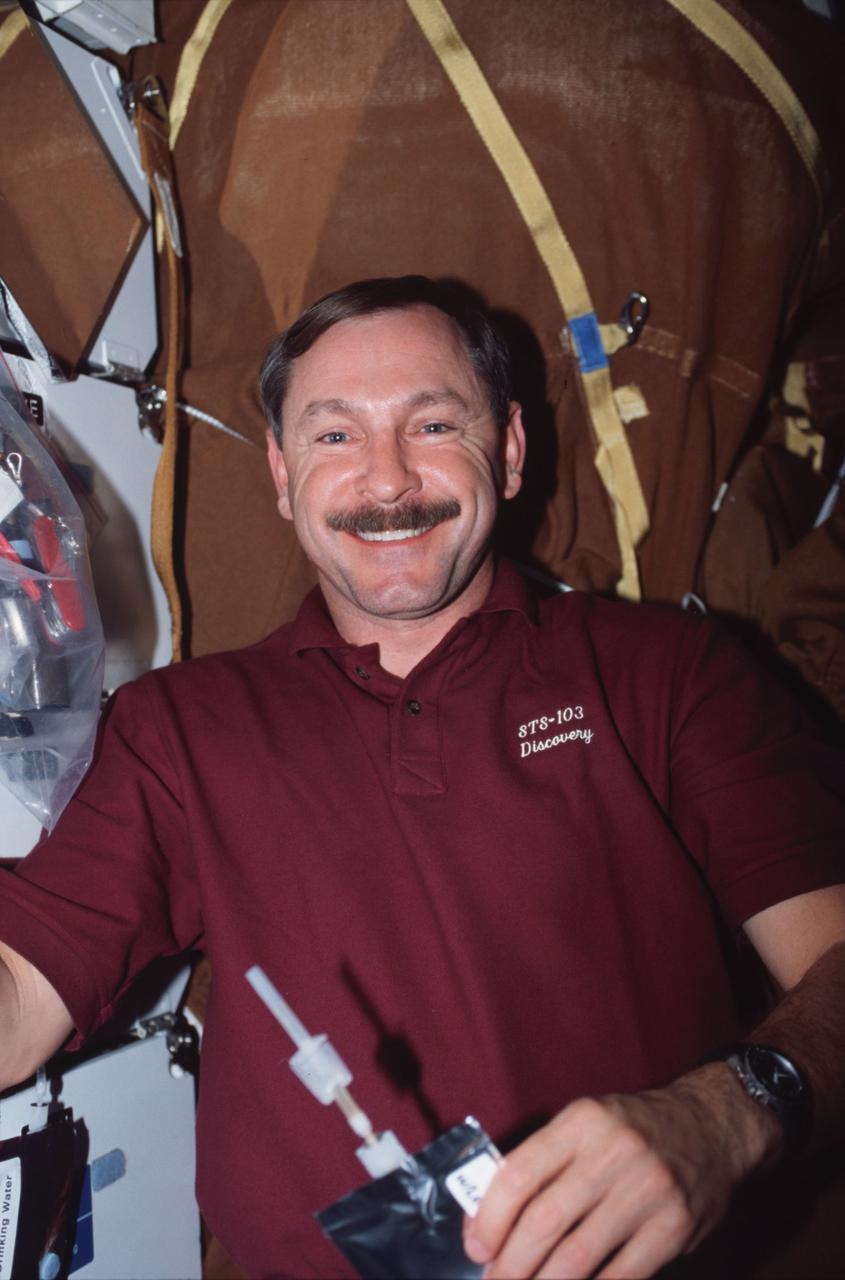
STS103-329-018 (19-27 December 1999) --- Astronaut Curtis L. Brown Jr., mission commander, on Discovery's mid deck holding a drink bag.

STS095-E-5166 (2 Nov. 1998) --- Astronaut Curtis L. Brown Jr. (left), STS-95 commander, and U.S. Sen. John H. Glenn Jr., payload specialist, are seen on the middeck of the Space Shuttle Discovery during Flight Day three activity. Brown has retrieved an experiment from a stowage locker and Glenn works out on the ergometer device. The photo was taken with an electronic still camera (ESC) at 05:55:42 GMT, Nov. 2.

This artist's concept shows a brown dwarf, an object that is at least 13 times the mass of Jupiter but not massive enough to begin nuclear fusion in its core, which is the defining characteristic of a star. Scientist using NASA's Spitzer Space Telescope recently made the first ever direct measurement of wind on a brown dwarf. https://photojournal.jpl.nasa.gov/catalog/PIA23684
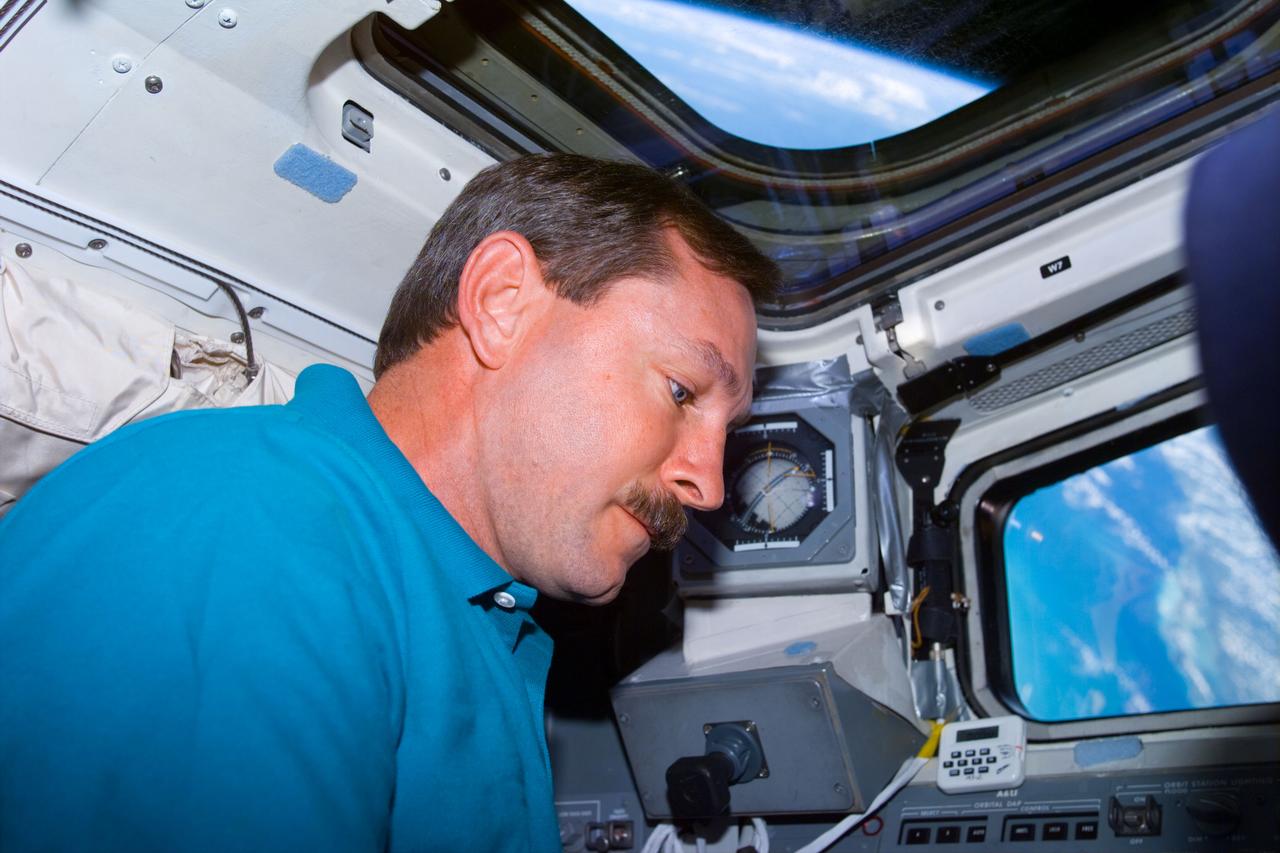
STS095-E-5100 (1 Nov. 1998) --- Astronaut Curtis L. Brown Jr., STS-95 commander, on aft flight deck, as photographed with an electronic still camera (ESC) at 02:12:00 GMT, Nov. 1.

This image shows brown dwarf HIP 79124 B, located 23 times as far from its host star as Earth is from the sun. The vortex coronagraph, an instrument at the W.M. Keck Observatory, was used to suppress light from the much brighter host star, allowing its dim companion to be imaged for the first time. http://photojournal.jpl.nasa.gov/catalog/PIA21417
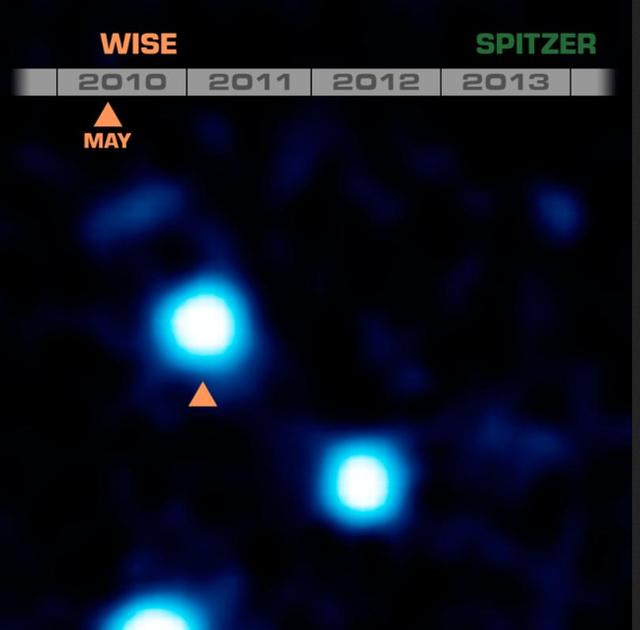
This frame from an animation shows the coldest brown dwarf yet seen, and the fourth closest system to our sun. Called WISE J085510.83-071442.5, this dim object was discovered through its rapid motion across the sky.

This artist illustration shows the atmosphere of a brown dwarf called 2MASSJ22282889-431026, which was observed simultaneously by NASA Spitzer and Hubble space telescopes. The results were unexpected, revealing offset layers of material.
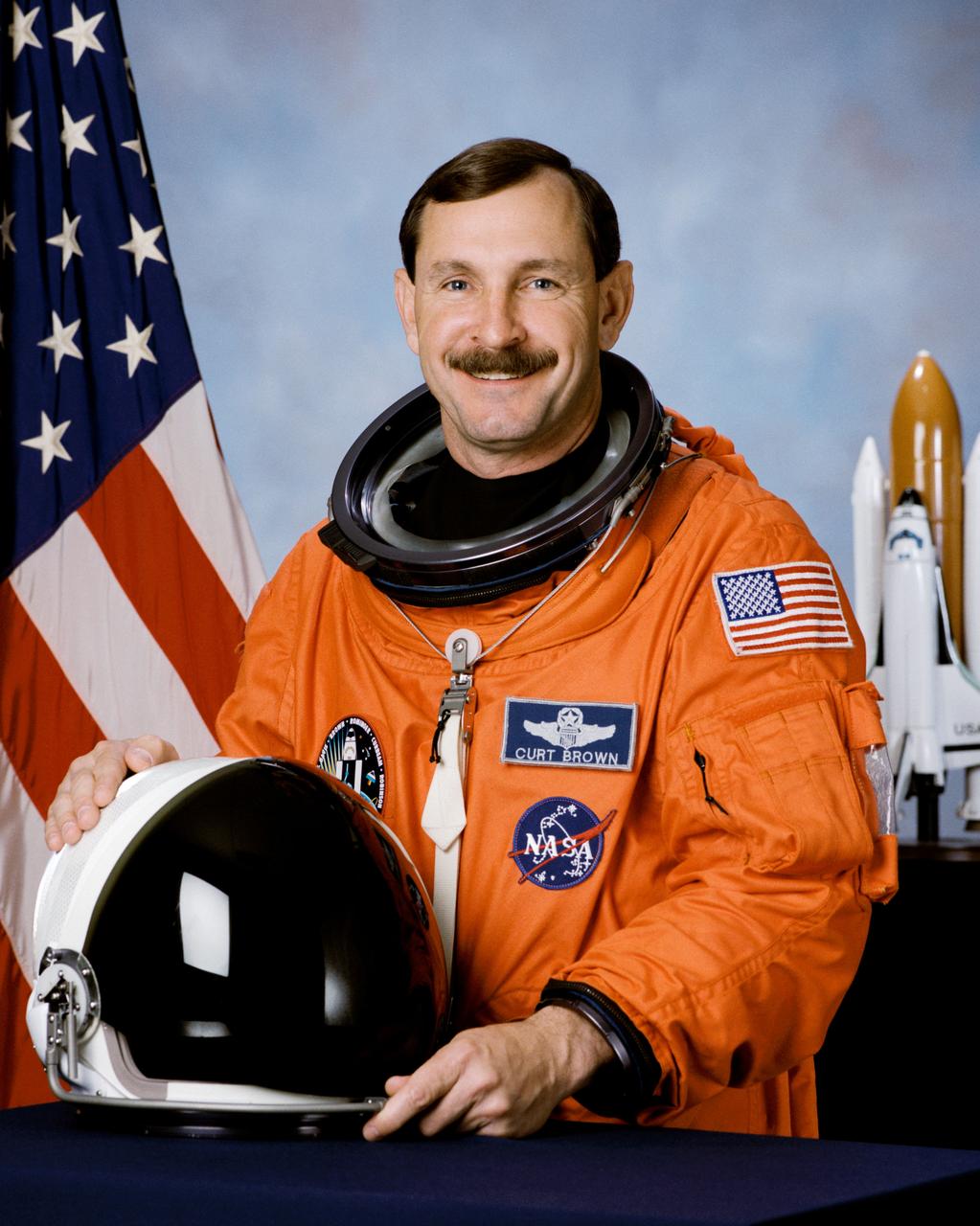
S97-07601 (2 April 1997) --- Astronaut Curtis L. Brown Jr., pilot.
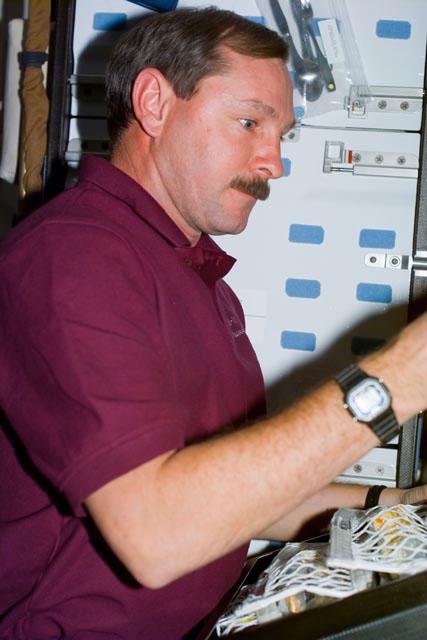
S103-E-5007 (20 December 1999) --- Astronaut Curtis L. Brown, mission commander, retrieves supplies from a mid deck stowage locker onboard the Space Shuttle Discovery. He and six other astronauts will spend a great deal of time later in the week performing a variety of service tasks on the Hubble Space Telescope (HST). As commander of the mission, Brown will remain inside Discovery while several of the other crew members will perform service tasks on HST. The photo was taken with an electronic still camera (ESC) at 16:12:27 GMT, Dec. 20, 1999.

This artist conception based on data from NASA Wide-field Infrared Survey Explorer illustrates what brown dwarfs of different types might look like to a hypothetical interstellar traveler who has flown a spaceship to each one.
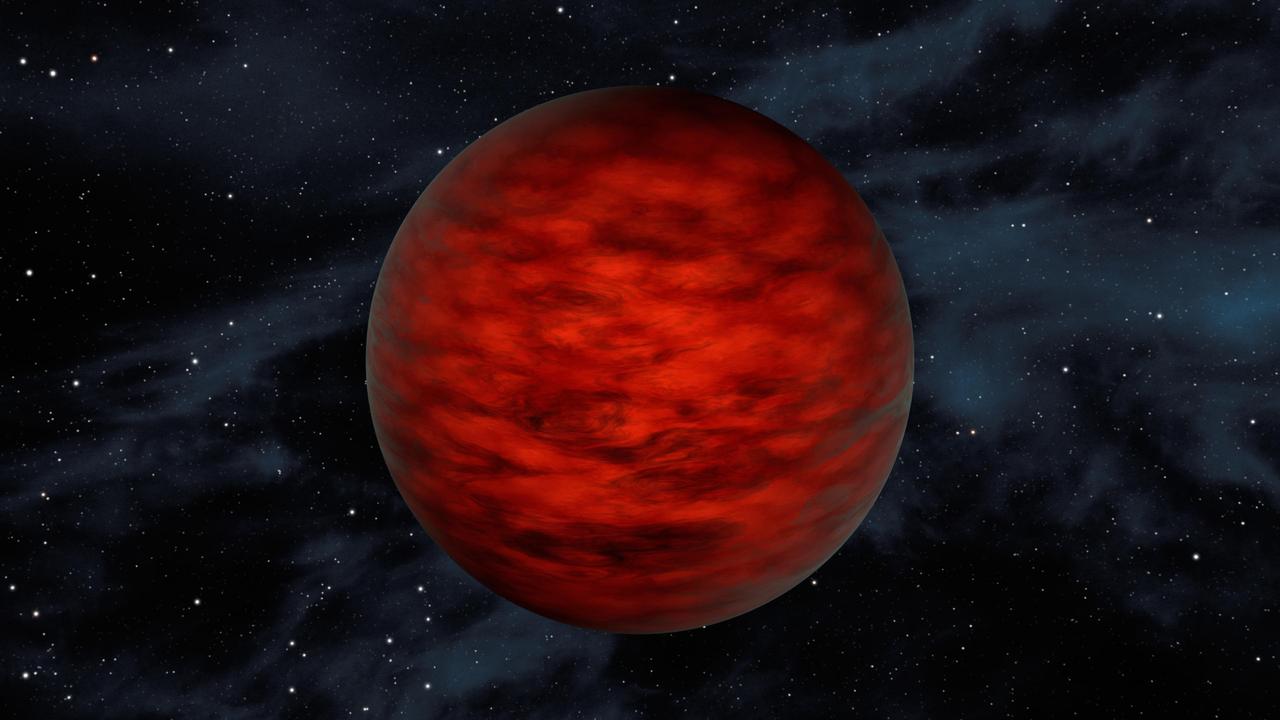
A young, free-floating world sits alone in space in this illustration. The object, called WISEA J114724.10-204021.3, is thought to be an exceptionally low-mass brown dwarf.

This is an illustration of a planet that is four times the mass of Jupiter and orbits 5 billion miles from a brown-dwarf companion the bright red object seen in the background.
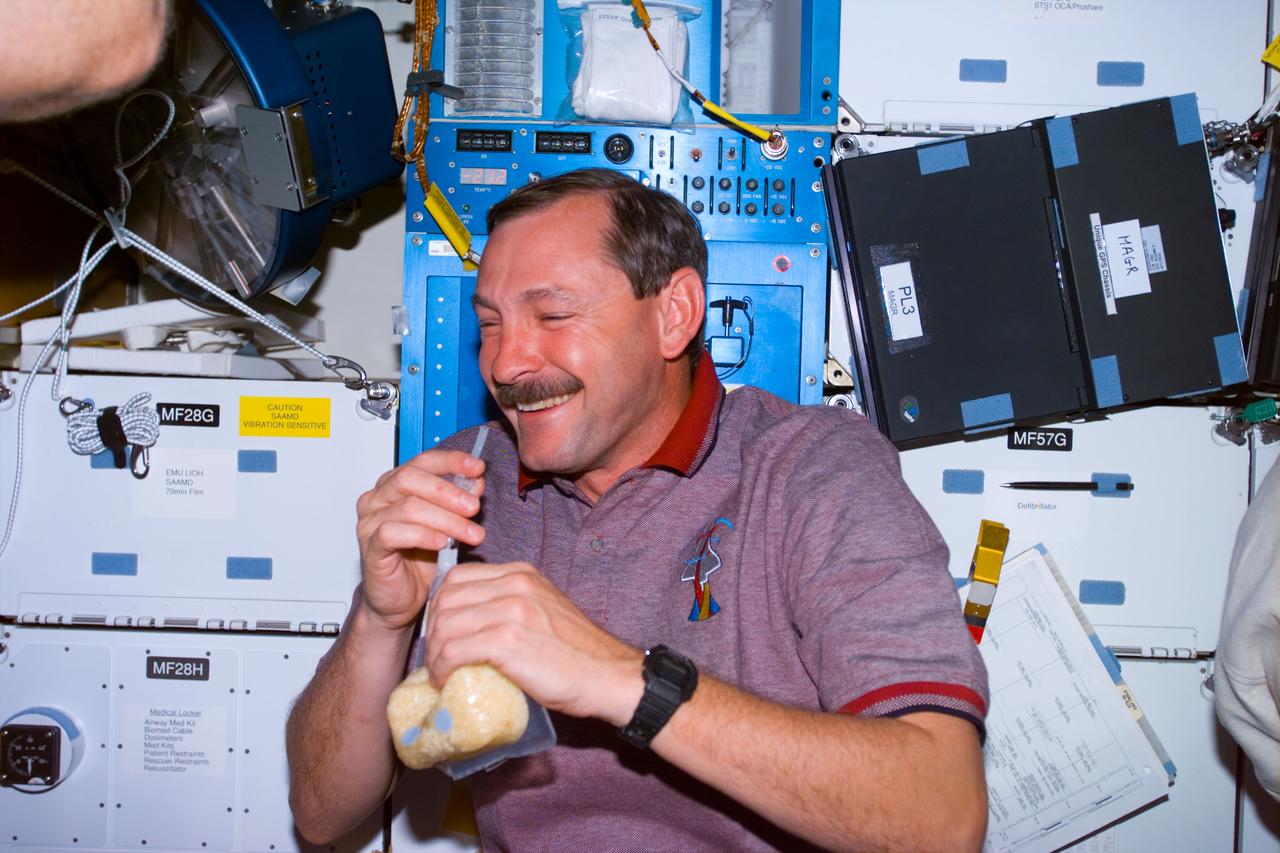
STS095-E-5125 (31 Oct. 1998) --- Astronaut Curtis L. Brown Jr., STS-95 commander, has just added water to a snack at Discovery's galley on the middeck. The photo was taken with an electronic still camera (ESC) at 9:52:32, Oct. 31.
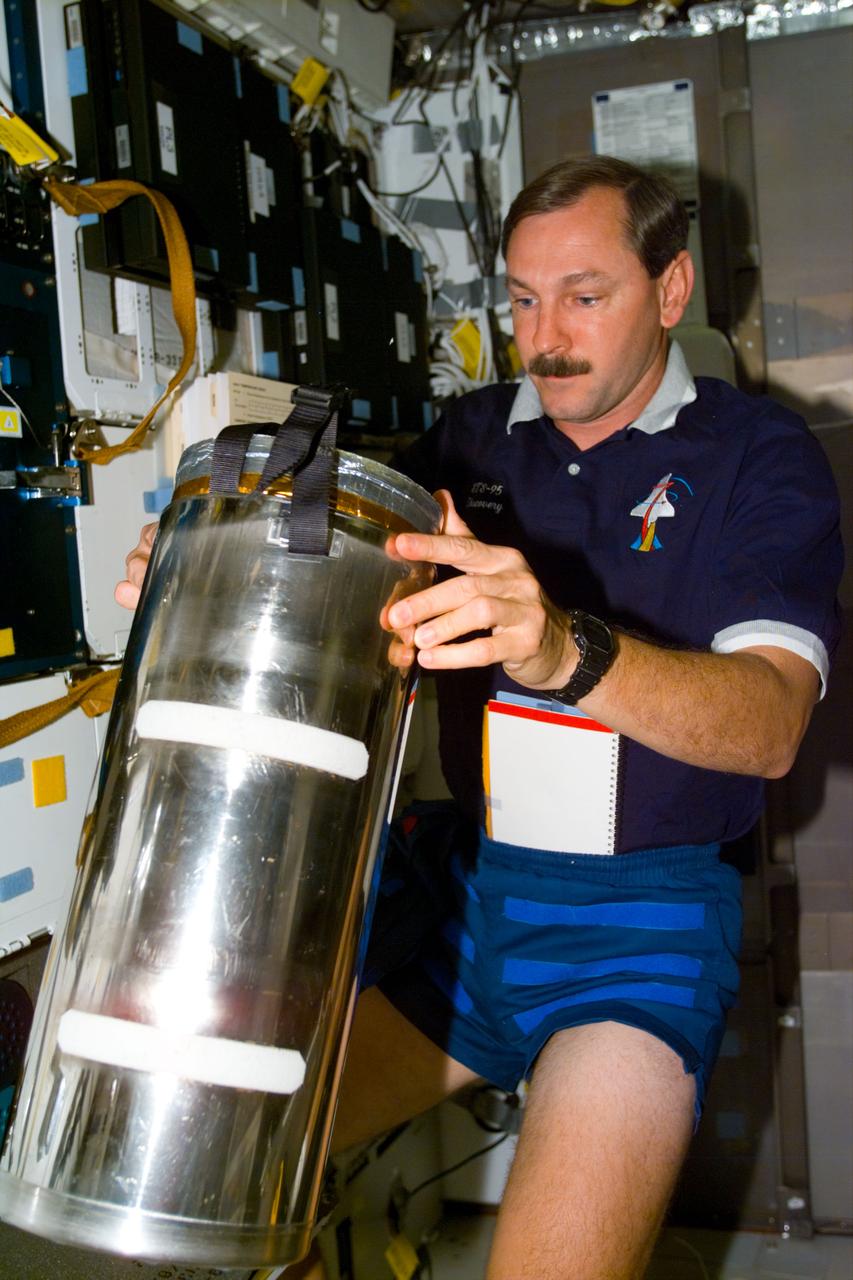
STS095-E-5171 (2 Nov. 1998) --- Astronaut Curtis L. Brown, STS-95 commander, during Flight Day 3 activity aboard the Space Shuttle Discovery. The photo was taken with an electronic still camera (ESC) at 05:57:03 GMT, Nov. 2.
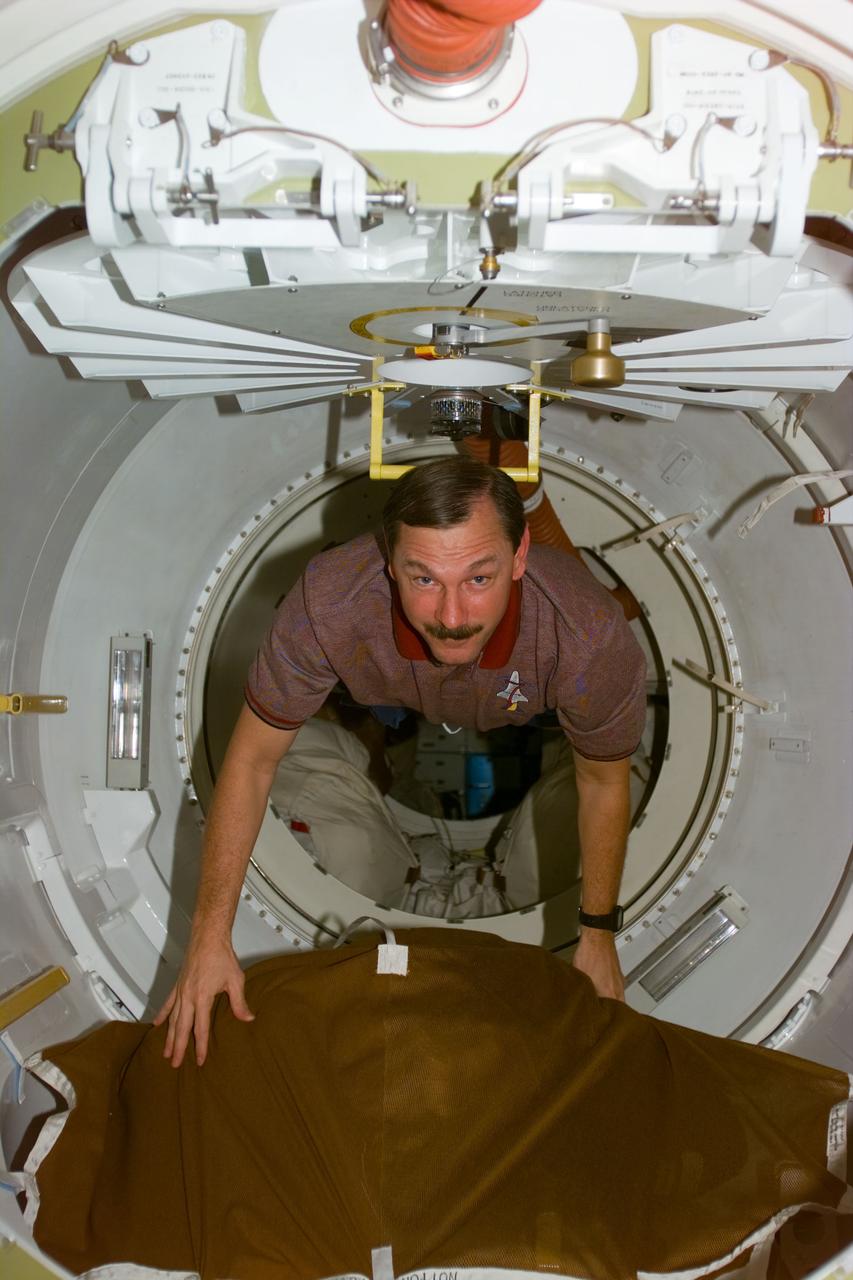
STS095-E-5160 (1 Nov. 1998) --- Astronaut Curtis L. Brown Jr., STS-95 commander, floats through airlock hatchway during Flight Day three activity. The photo was taken with an electronic still camera (ESC) at 01:39:20 GMT, Nov. 1.
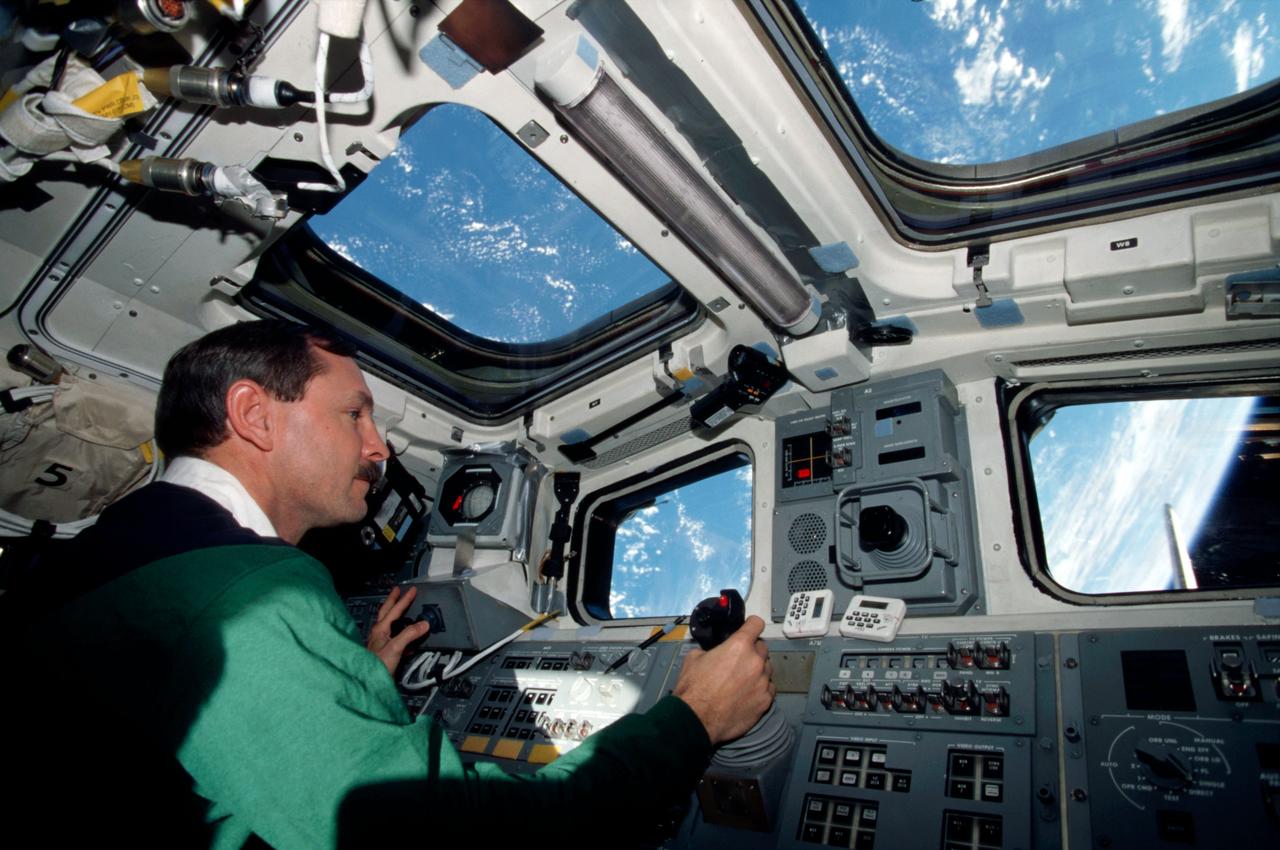
STS095-366-031 (29 Oct-7 Nov 1998) --- Astronaut Curtis L. Brown, Jr., mission commander, operates controls on the aft flight deck of the Space Shuttle Discovery. Brown was joined by four other NASA astronauts and two payload specialists for the nine-day mission.
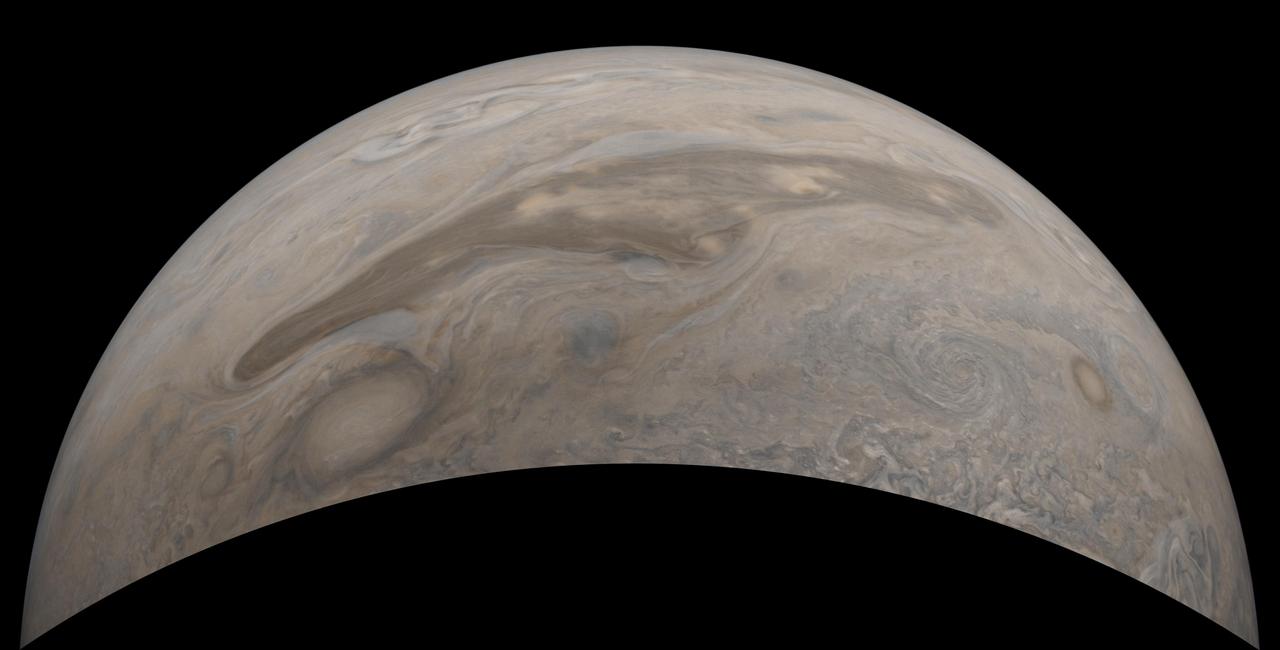
The southern edge of Jupiter's north polar region is captured in this view from NASA's Juno spacecraft. The scene prominently displays a long, brown oval known as a "brown barge" located within a polar jet stream, called "Jet N4." This image was taken at 9:25 a.m. PST on Feb. 12, 2019 (12:25 p.m. EST), as the spacecraft performed its 18th close flyby of Jupiter. At the time, Juno was about 5,000 miles (8,000 kilometers) from the planet's cloud tops, above a latitude of approximately 44 degrees north. https://photojournal.jpl.nasa.gov/catalog/PIA22945. Enhanced image by Gerald Eichstädt and Justin Cowart based on images provided courtesy of NASA/JPL-Caltech/SwRI/MSSS
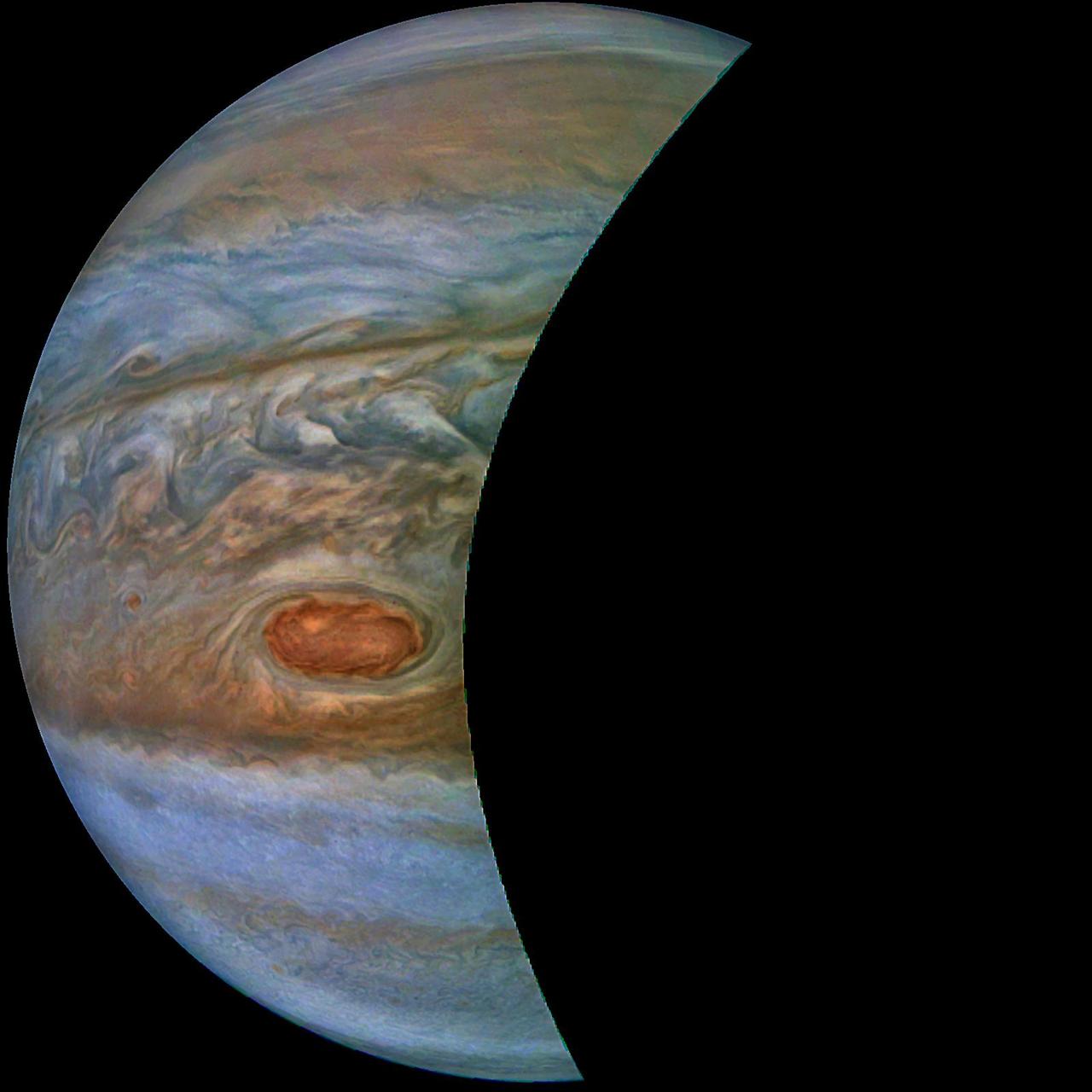
A "brown barge" in Jupiter's South Equatorial Belt is captured in this color-enhanced image from NASA's Juno spacecraft. This color-enhanced image was taken at 10:28 p.m. PDT on July 15, 2018 (1:28 a.m. EDT on July 16), as the spacecraft performed its 14th close flyby of Jupiter. Citizen scientist Joaquin Camarena created this image using data from the spacecraft's JunoCam imager. https://photojournal.jpl.nasa.gov/catalog/PIA22940. Enhanced image by Joaquin Camarena based on images provided courtesy of NASA/JPL-Caltech/SwRI/MSSS
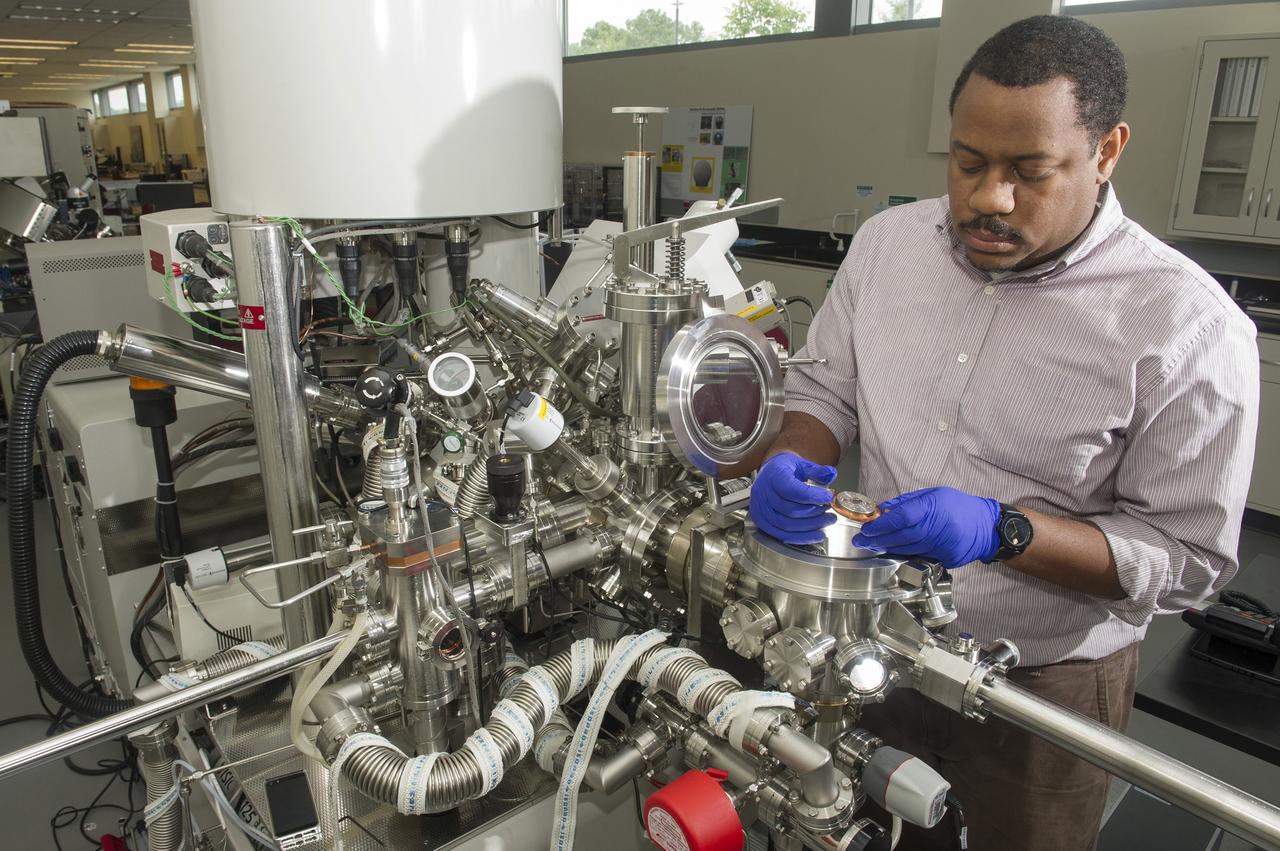
ARTHUR BROWN (AST, AEROSPACE METALLIC MATERIALS) LOADS A CERAMIC COATED SILICON WAFER INTO A KRATOS (ELECTRON SPECTROSCOPY FOR CHEMICAL ANALYSIS) TO PERFORM X-RAY PHOTOELECTRON SPECTROSCOPY (XPS). XPS IS A TECHNIQUE THAT ANALYZES THE SURFACE CHEMISTRY OF A SAMPLE BY IRRADIATING IT WITH X-RAYS AND MEASURING THE NUMBER AND KINETIC ENERGY OF ELECTRON THAT ESCAPE.
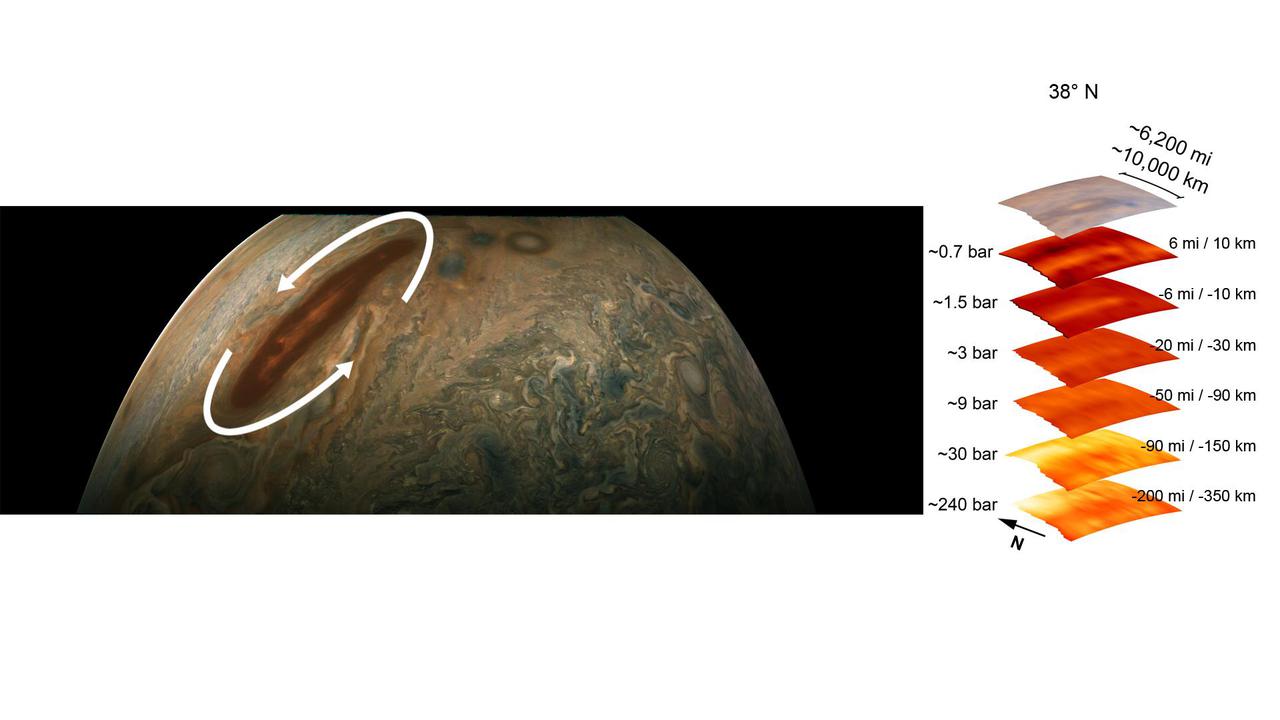
The color-enhanced image on the left is from the JunoCam imager aboard NASA's Juno spacecraft and has been annotated to depict the anticyclonic (counterclockwise) rotation of one of Jupiter's intriguing atmospheric phenomena – a long, brown oval cyclonic region known as a "brown barge." The graphic on the right highlights the large-scale structure of the brown barge as seen by the spacecraft's microwave radiometer (MWR) instrument. Data for the image and the microwave radiometer results were collected during a low flyby of Jupiter. Brown barges usually lie within Jupiter's dark North Equatorial Belt, although they are sometimes found in the similarly dark South Equatorial Belt as well. They can often be difficult to detect visually because their color blends in with the dark surroundings. Brown barges usually dissipate after the entire cloud belt undergoes an upheaval and reorganizes itself. Juno is providing the first glimpses of the detailed structure within such a barge. The radiometer data was acquired from the six channels of MWR. Each MWR channel peers progressively deeper below the visible cloud tops. In fact, the MWR instrument enables Juno to see deeper into Jupiter than any previous spacecraft or Earth-based observations. Unlike Earth, which as a solid surface, Jupiter is a gas giant with no discernable solid surface. So the planetary science community has defined the "base" of Jupiter's atmosphere as the location where its pressure is equivalent to 1 bar. The bar is a metric unit of pressure that, at 14.5 pounds per square inch, is slightly less than the average atmospheric pressure on Earth at sea level. The numbers to the left of each layer of MWR data indicates the pressure that is present at the location in the atmosphere where the MWR reading occurred. The distance measurements to the right of each layer of MWR data provides the distance – either above or below the 1 bar level – at which the corresponding MWR measurement was taken. For context, the top layer in the figure is a visible-light image depicting Jupiter's different levels of clouds, with an average altitude about 6 miles above the 1 bar pressure region. https://photojournal.jpl.nasa.gov/catalog/PIA24974
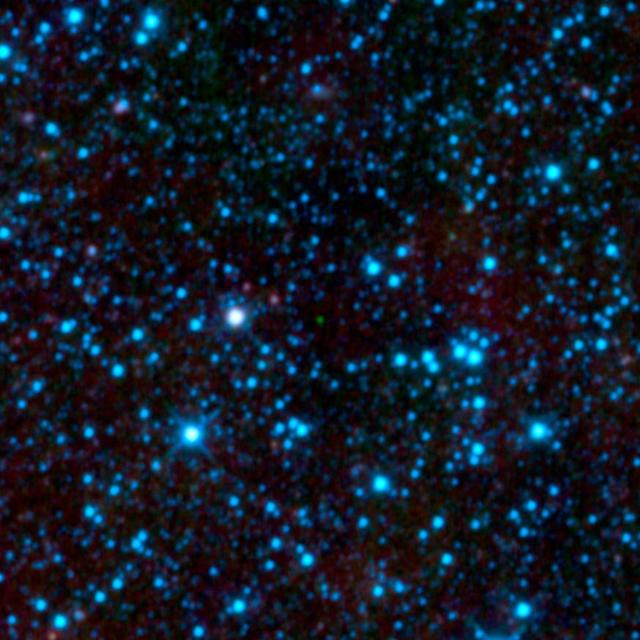
NASA Wide-field Infrared Survey Explorer has uncovered the coldest brown dwarf known so far green dot in very center of this infrared image. WISE 1828+2650 is located in the constellation Lyra. The blue dots are a mix of stars and galaxies.

S85-E-5058 (12 August 1997) --- Astronaut Curtis L. Brown, Jr., commander, performs operations with an experiment called Biological Research in Canisters (BRIC) operations on the mid-deck of the Space Shuttle Discovery during flight day six. The photograph was taken with the Electronic Still Camera (ESC).
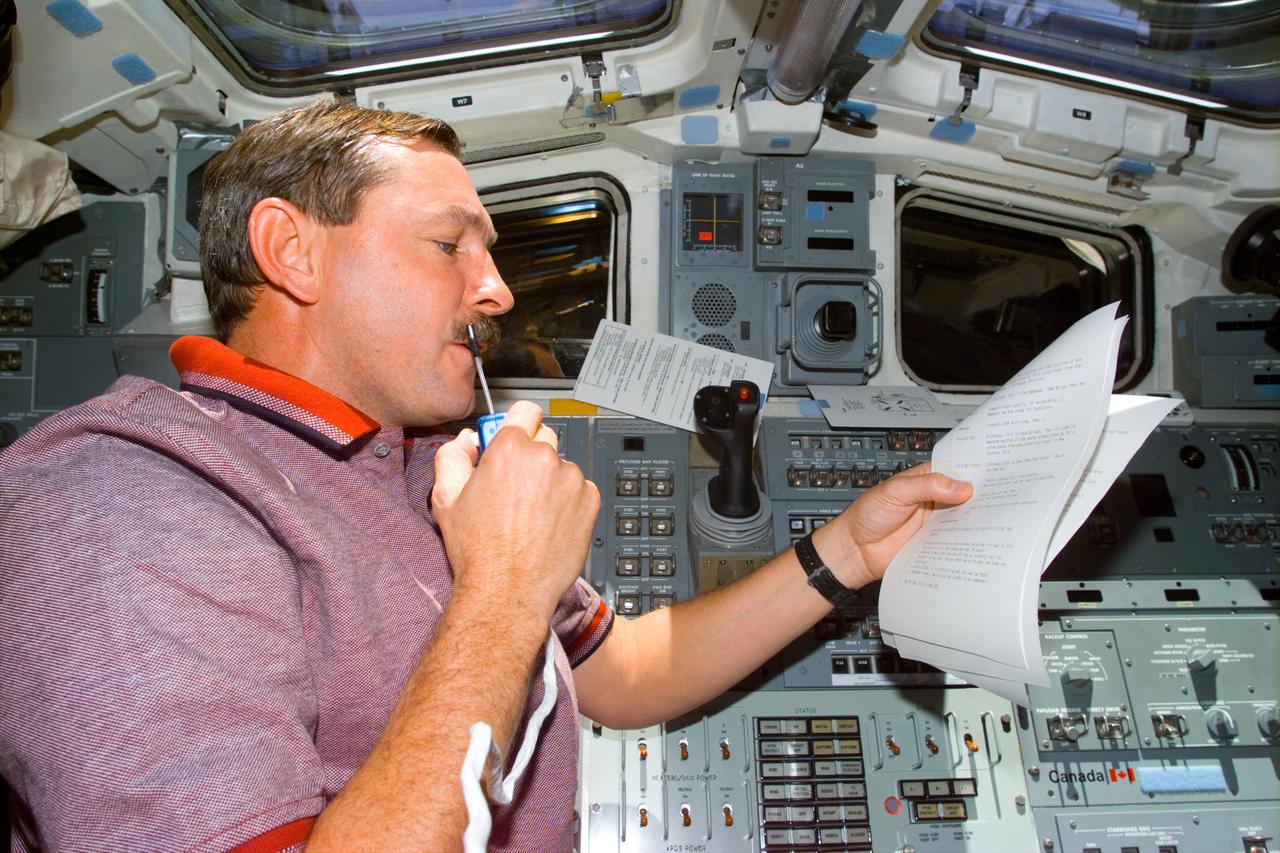
STS095-E-5177 (31 Oct. 1998) --- On Discovery's aft flight deck, astronaut Curtis L. Brown Jr., STS-95 commander, checks over notes with ground controllers in Houston. The photo was taken with an electronic still camera (ESC) at 00:41:51 GMT, Oct. 31.
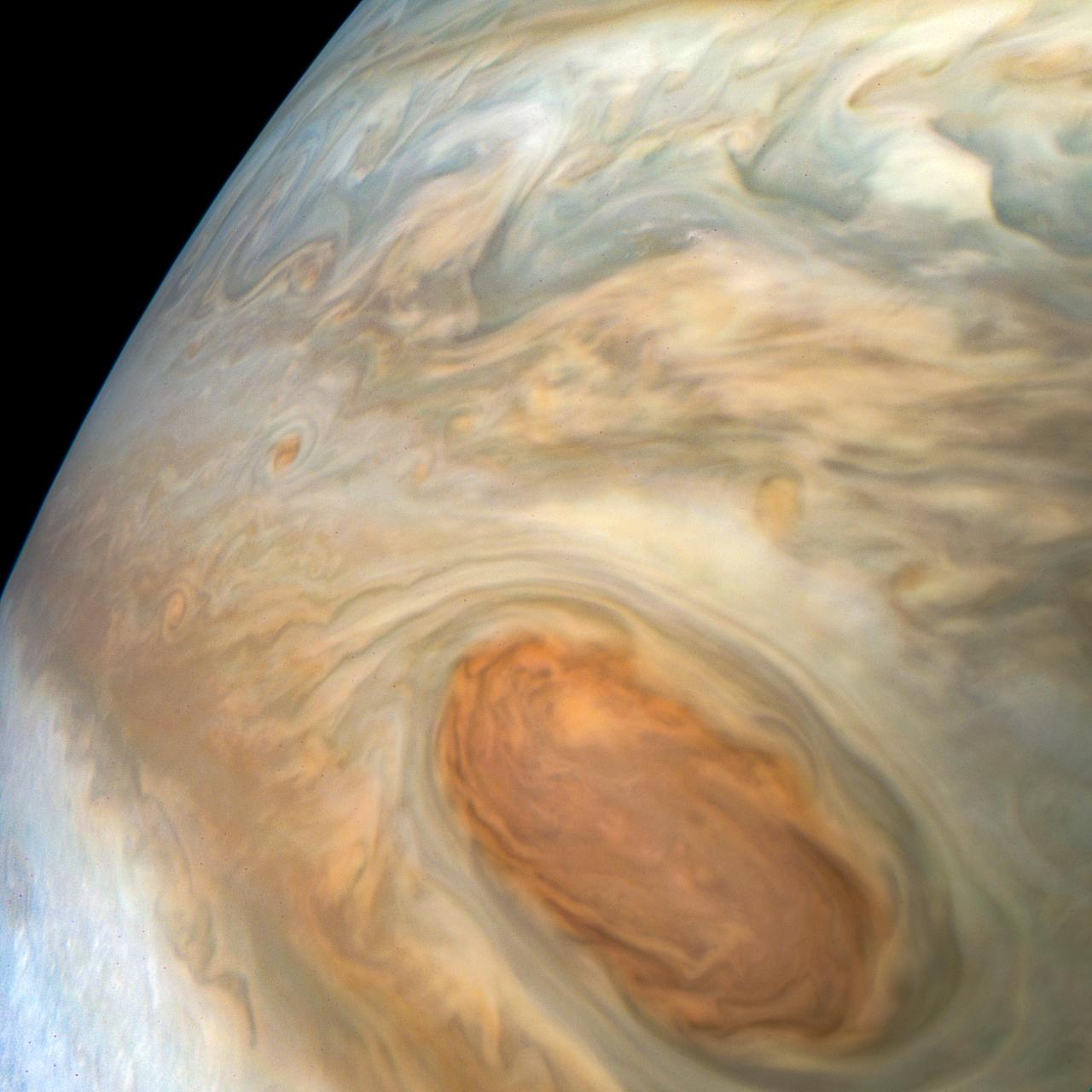
Detailed structure in the clouds of Jupiter's South Equatorial Belt brown barge is visible in this color-enhanced image taken at 10:28 p.m. PDT on July 15, 2018 (1:28 a.m. EDT on July 16), as the spacecraft performed its 14th close flyby of the gas giant planet. Citizen scientist Kevin M. Gill created this image using data from the spacecraft's JunoCam imager. https://photojournal.jpl.nasa.gov/catalog/PIA22941. Enhanced image by Kevin M. Gill (CC-BY) based on images provided courtesy of NASA/JPL-Caltech/SwRI/MSSS
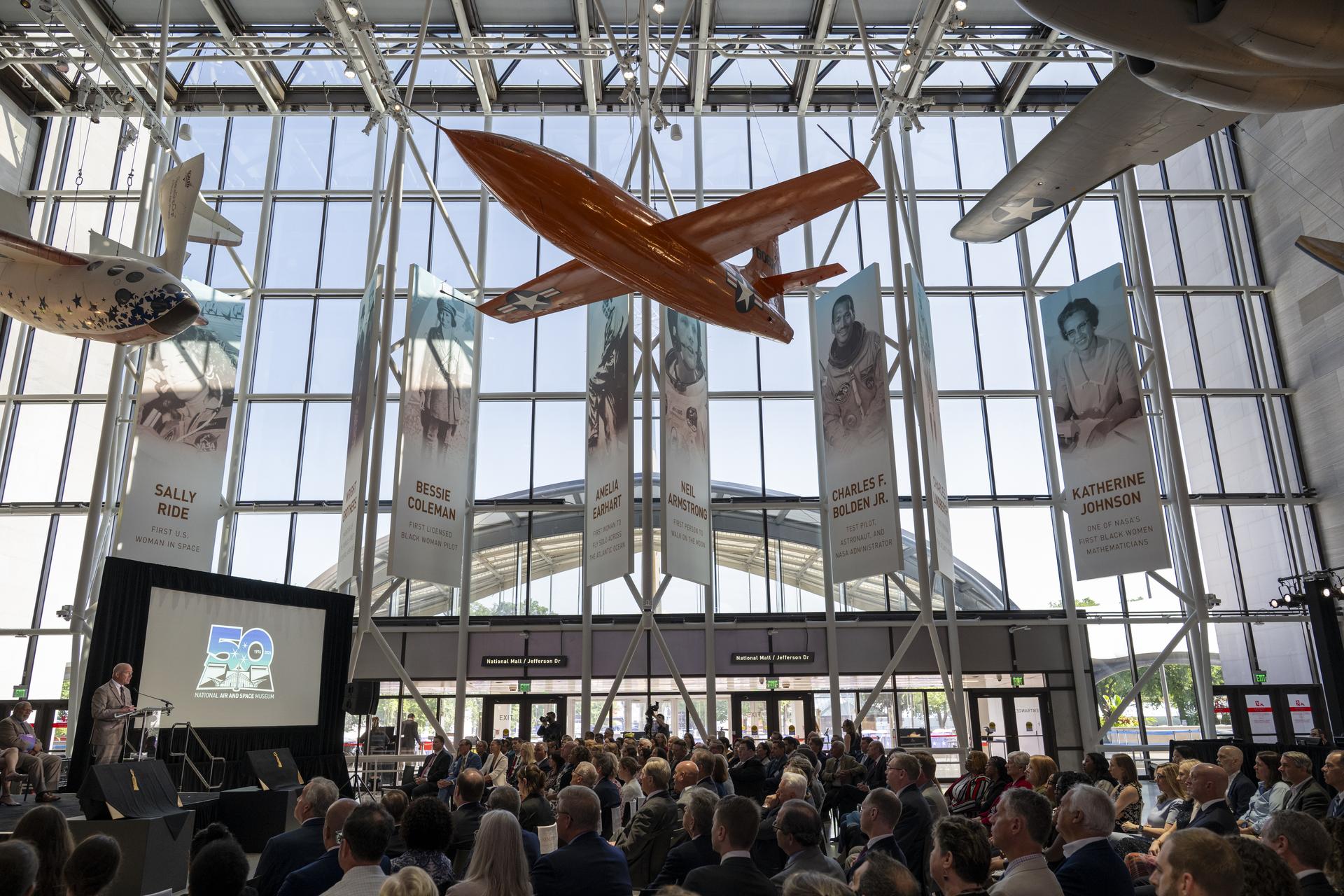
Director of the Smithsonian’s National Air and Space Museum Christopher Browne delivers remarks during the museum’s rededication ceremony Wednesday, July 1, 2026, in Washington. Photo Credit: (NASA/Keegan Barber)
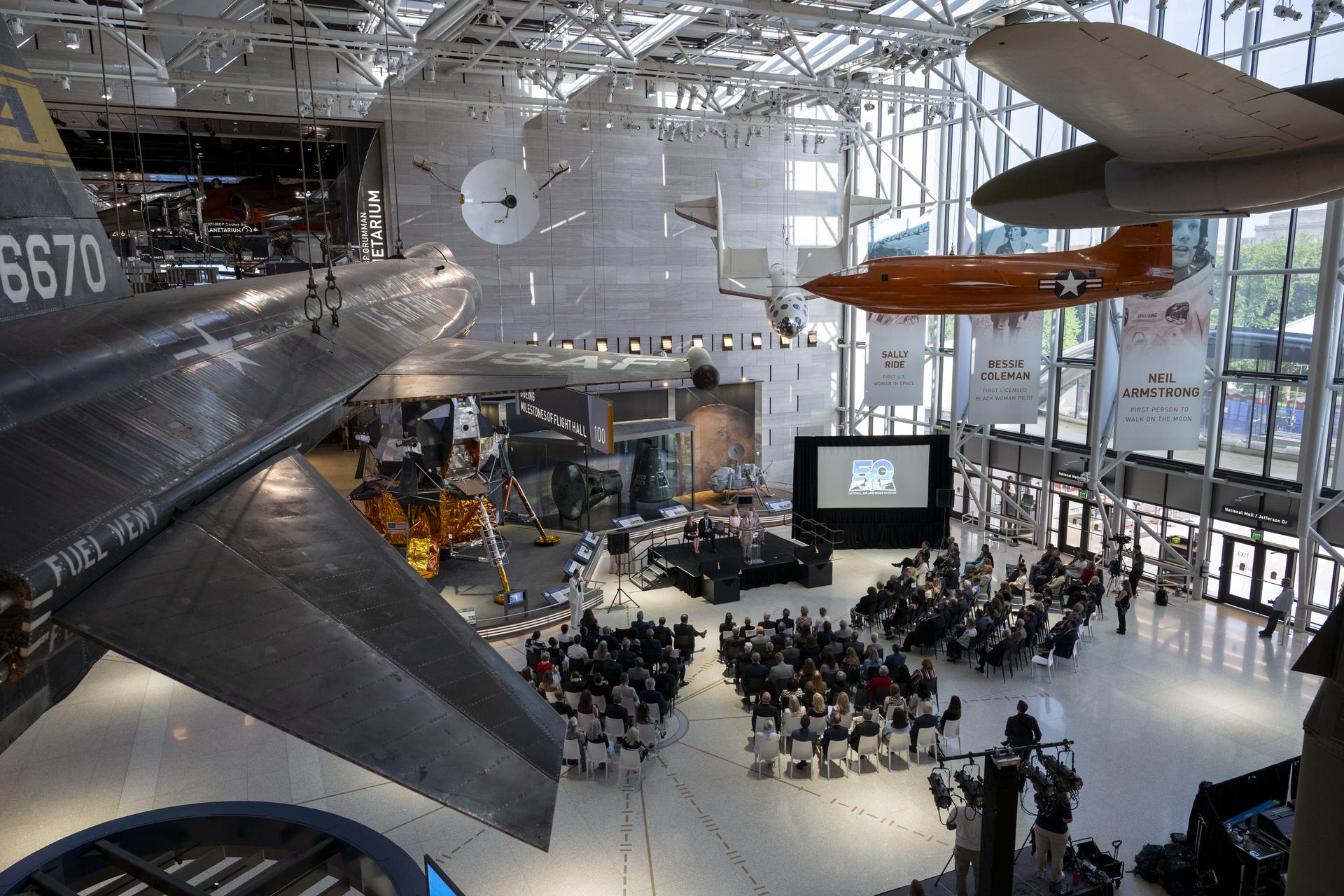
Director of the Smithsonian’s National Air and Space Museum Christopher Browne delivers remarks during the museum’s rededication ceremony Wednesday, July 1, 2026, in Washington. Photo Credit: (NASA/Keegan Barber)
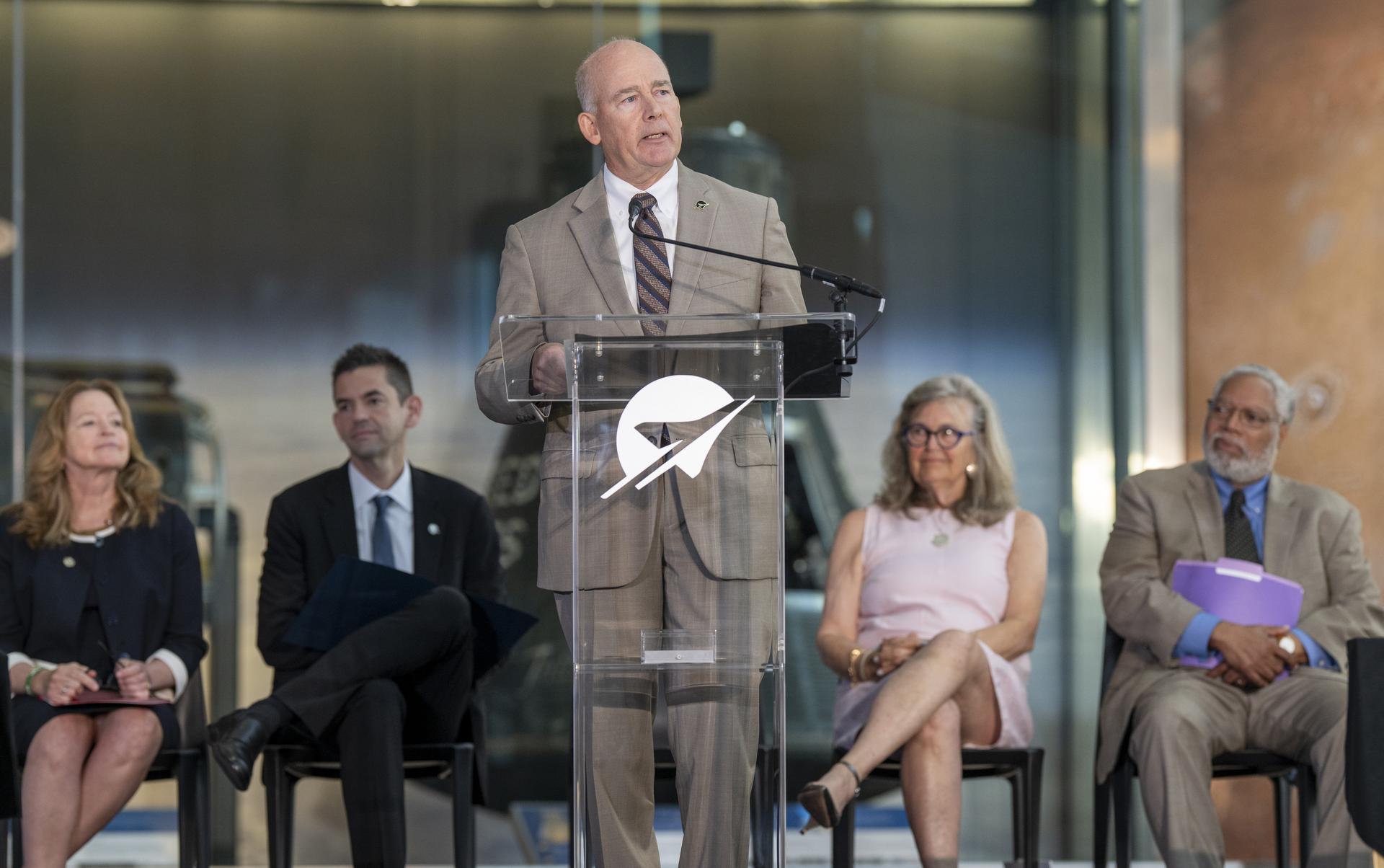
Director of the Smithsonian’s National Air and Space Museum Christopher Browne delivers remarks during the museum’s rededication ceremony Wednesday, July 1, 2026, in Washington. Photo Credit: (NASA/Keegan Barber)
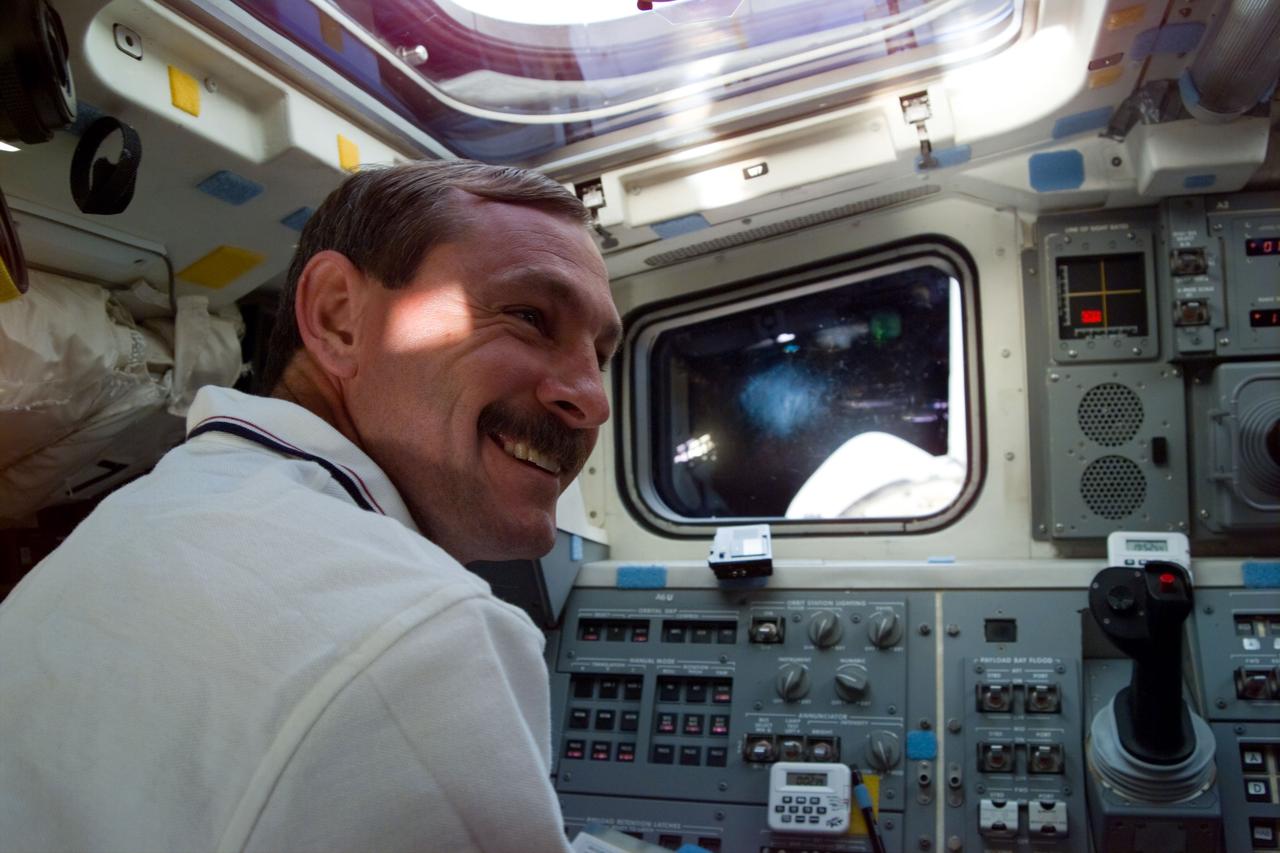
S77-E-5066 (22 May 1996) --- Astronaut Curtis L. Brown, Jr., pilot, is seen on the starboard side of the Space Shuttle Endeavour's aft flight deck just prior to the deployment of the Satellite Test Unit (STU), part of the Passive Aerodynamically Stabilized Magnetically Damped Satellite (PAMS). Brown's image was captured with an Electronic Still Camera (ESC). Minutes later the camera was being used to document the deployment of PAMS-STU. The six-member crew will continue operations (tracking, rendezvousing and station-keeping) with PAMS-STU periodically throughout the remainder of the mission.
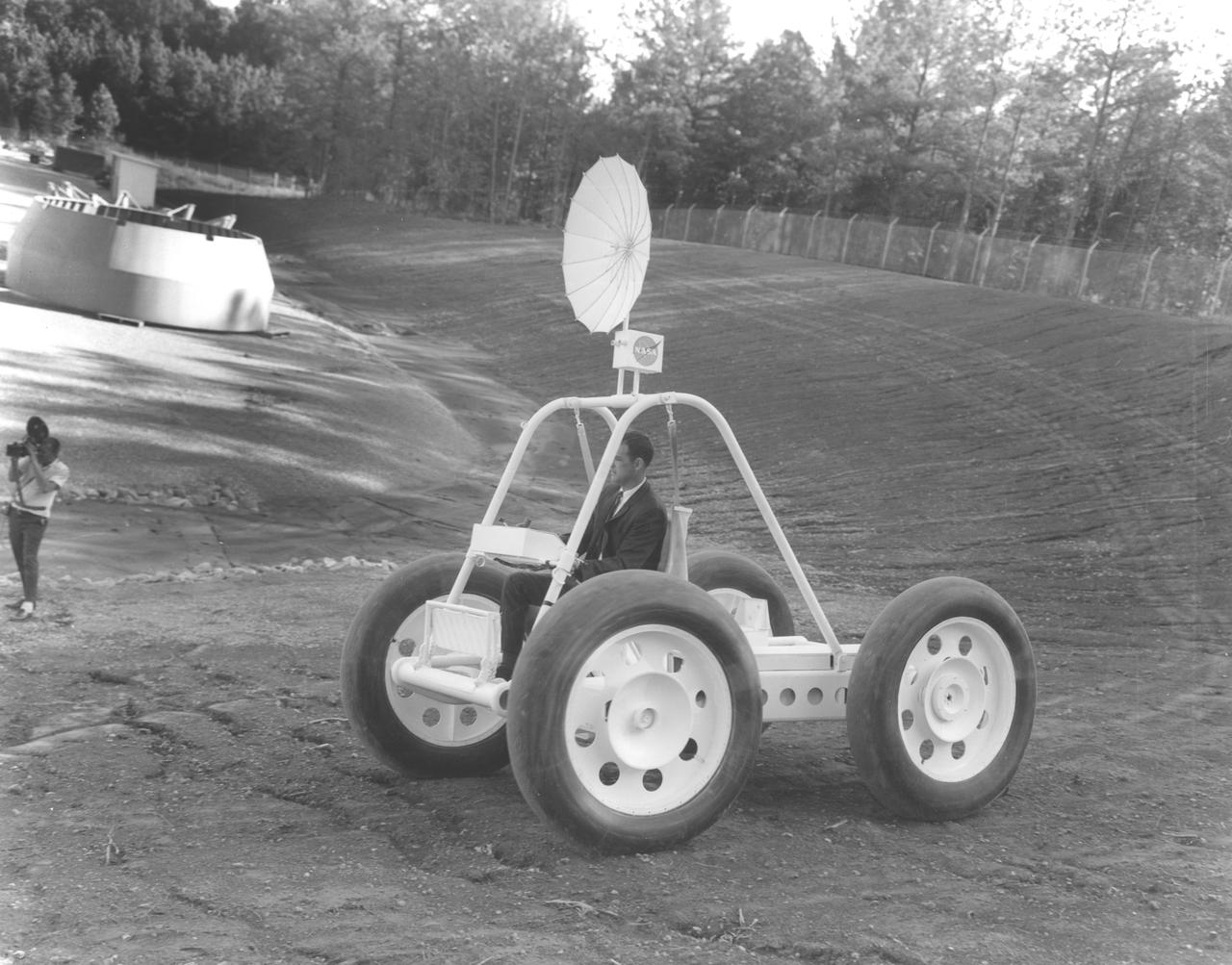
Built by Brown Engineering company of Huntsville, Alabama, a motorized mockup of a small Lunar Roving Vehicle (LRV) is being demonstrated at the Marshall Space Flight Center (MSFC). This particular vehicle weighed about 1200 pounds and is almost 10 feet long, 7-feet and 2-inches wide, and 7-feet and 8-inches high. The LRV was developed under the direction of MSFC to provide astronauts with greater mobility on the lunar surface.
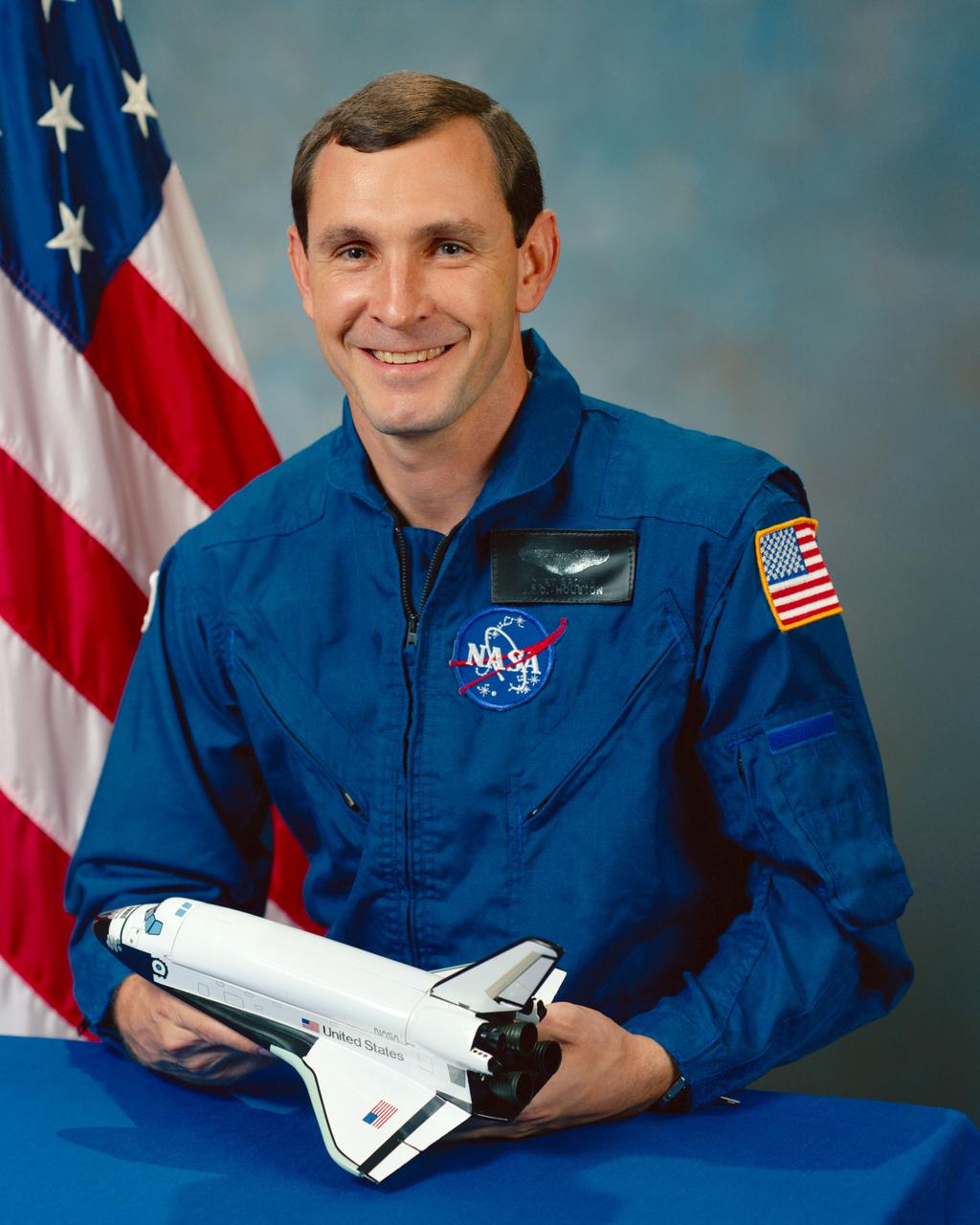
S87-45891 (9 Oct. 1987) --- Astronaut Curtis L. Brown Jr., pilot.
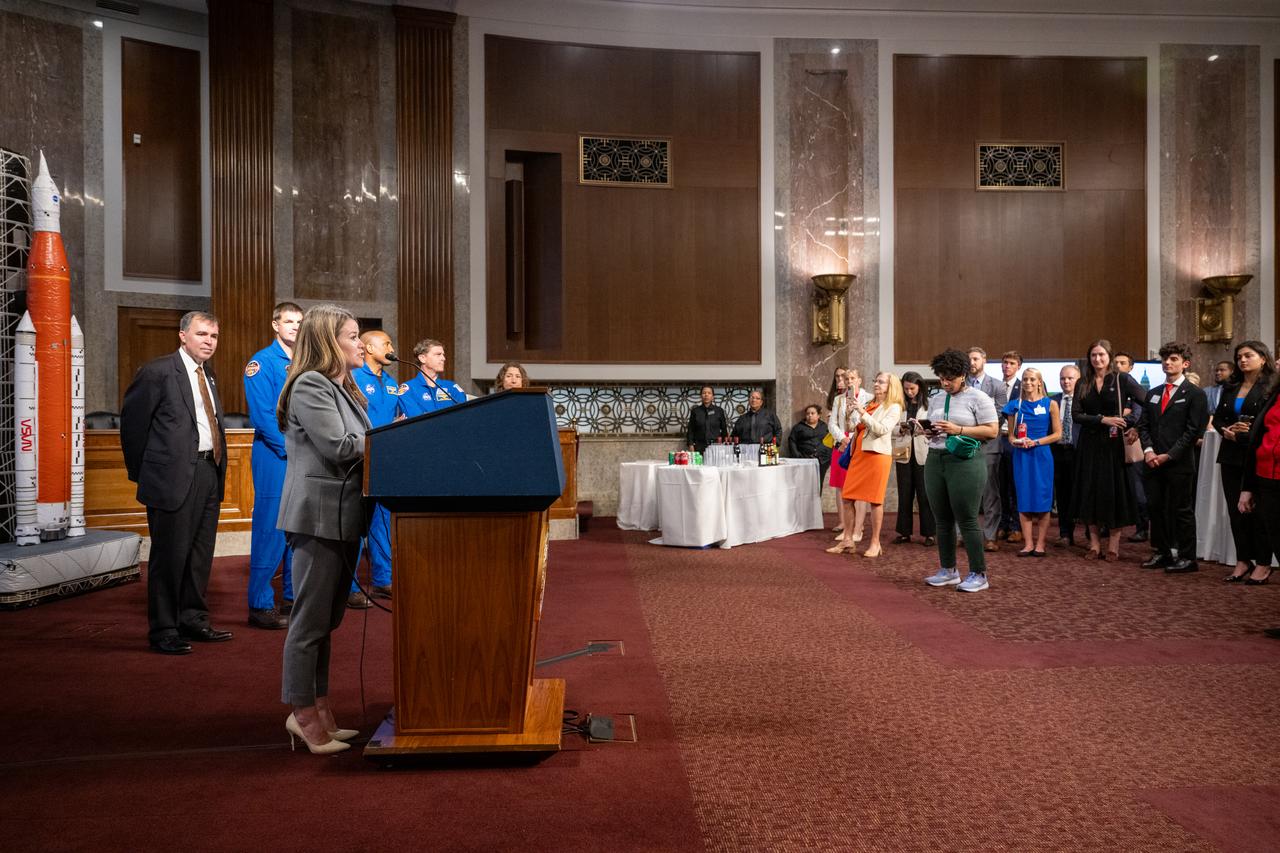
NASA Office of Legislative Affairs Associate Administrator Alicia Brown delivers remarks during a reception with Artemis II crew members Wednesday, June 5, 2024, at the Dirksen Senate Office Building in Washington. Photo Credit: (NASA/Keegan Barber)
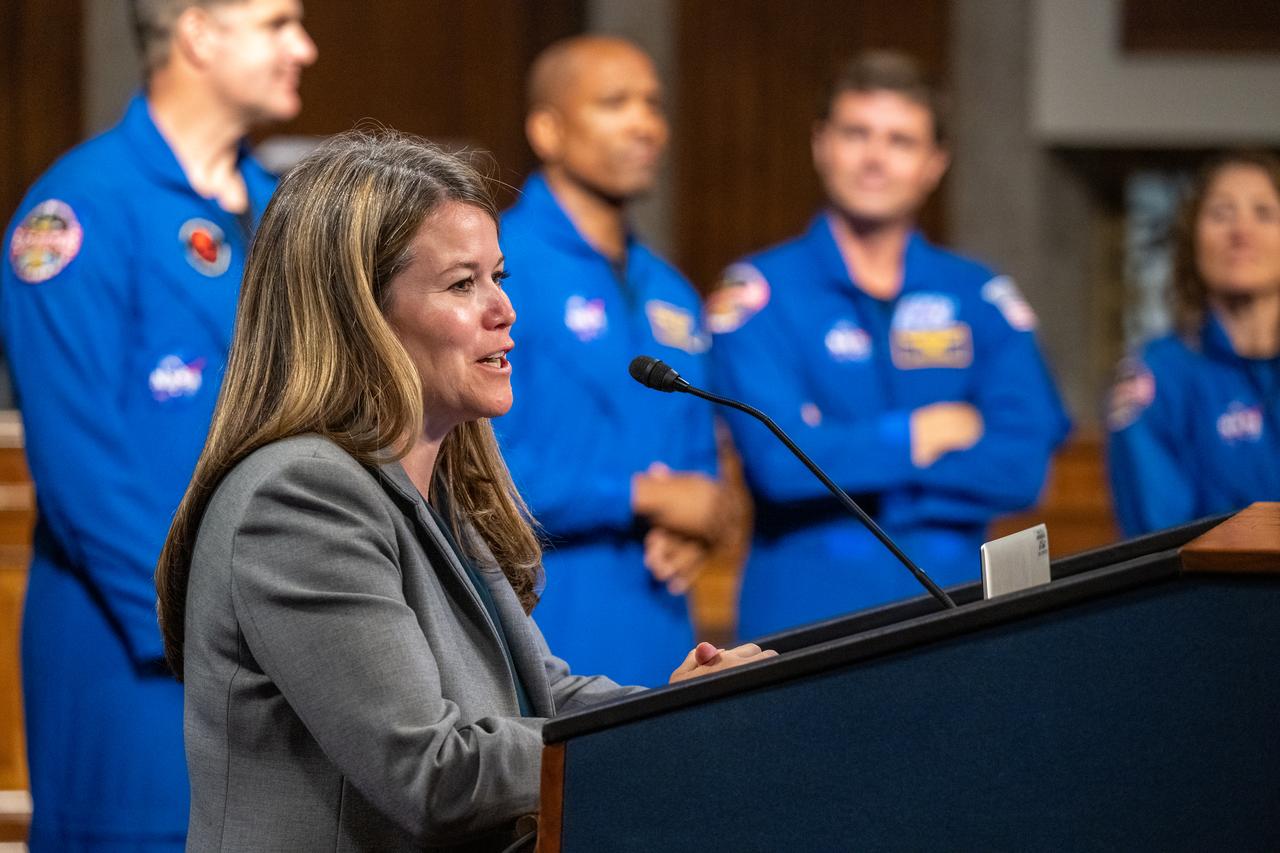
NASA Office of Legislative Affairs Associate Administrator Alicia Brown delivers remarks during a reception with Artemis II crew members Wednesday, June 5, 2024, at the Dirksen Senate Office Building in Washington. Photo Credit: (NASA/Keegan Barber)
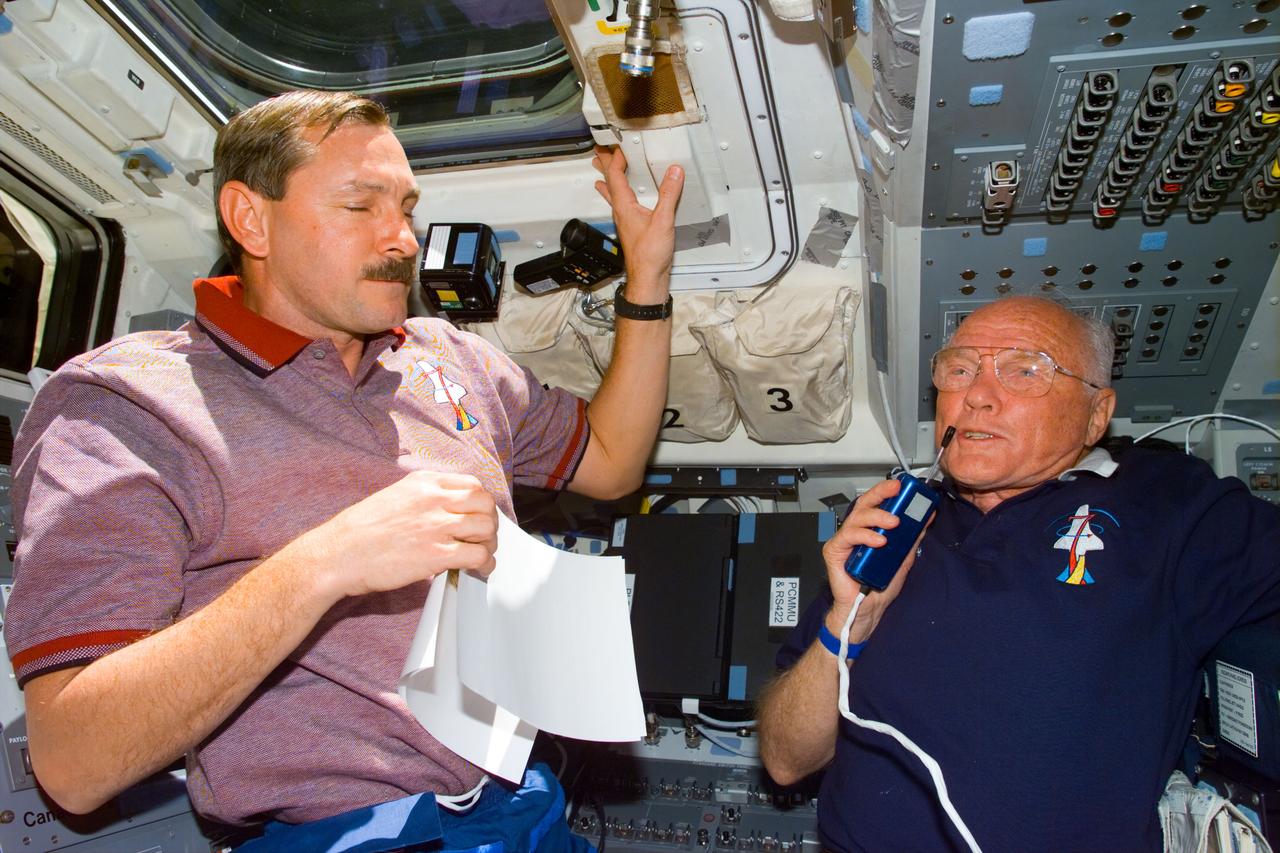
STS095-E-5180 (31 Oct. 1998) --- Astronaut Curtis L. Brown Jr. (left), STS-95 commander, stands by on Discovery's aft flight deck as U.S. Sen. John H. Glenn Jr., payload specialist, talks with ground controllers in Houston. The photo was taken with an electronic still camera (ESC) at 00:48:48 GMT, Oct. 31.
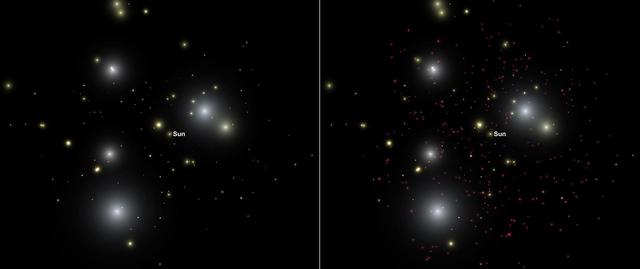
Astronomers think there are roughly as many brown dwarfs as regular stars like our sun, but brown dwarfs are often too cool to find using visible light.
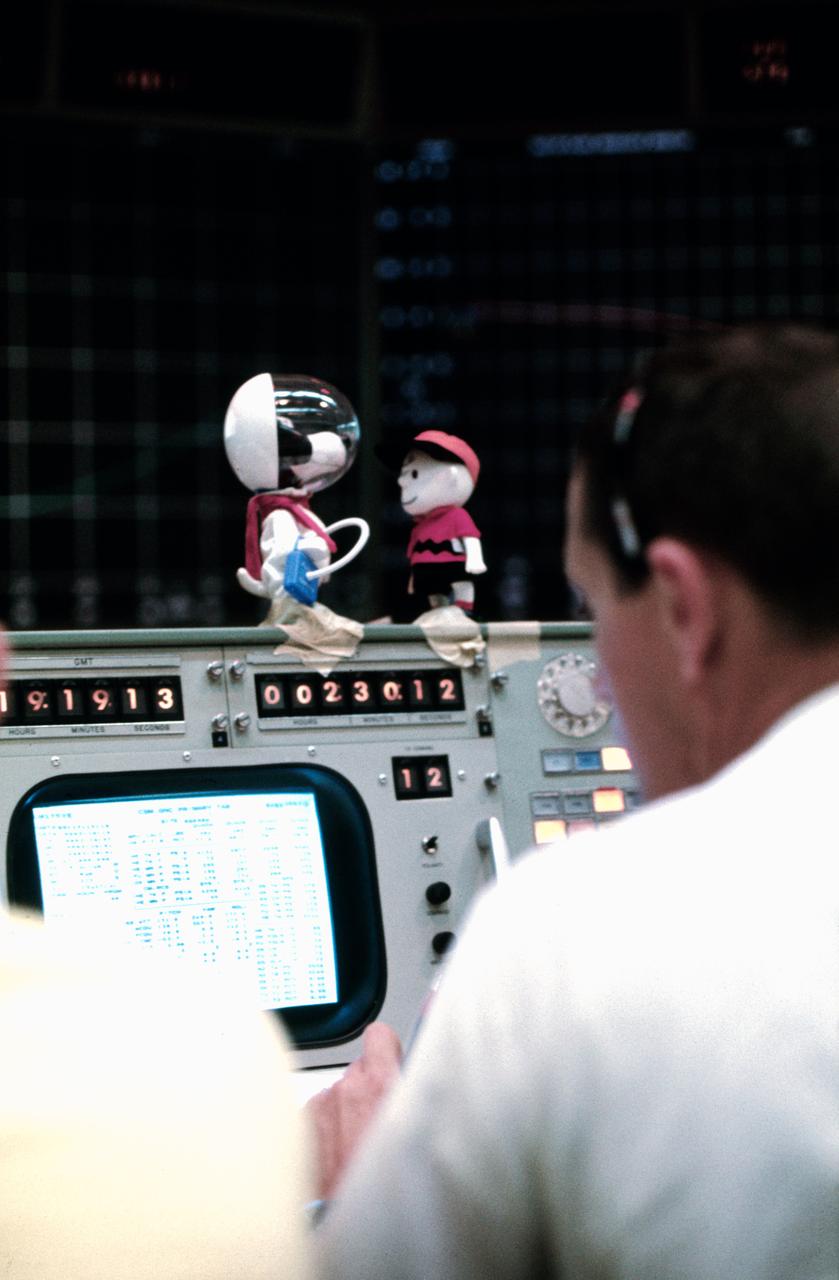
S69-34314 (18 May 1969) --- Replicas of Snoopy and Charlie Brown, the two characters from Charles Schulz's syndicated comic strip, "Peanuts," decorate the top of a console in the Mission Operations Control Room in the Mission Control Center, Building 30, on the first day of the Apollo 10 lunar orbit mission. During lunar orbit operations, the Lunar Module will be called ?Snoopy? when it is separated from the Command and Service Modules. The code words for the Command Module will be ?Charlie Brown?.
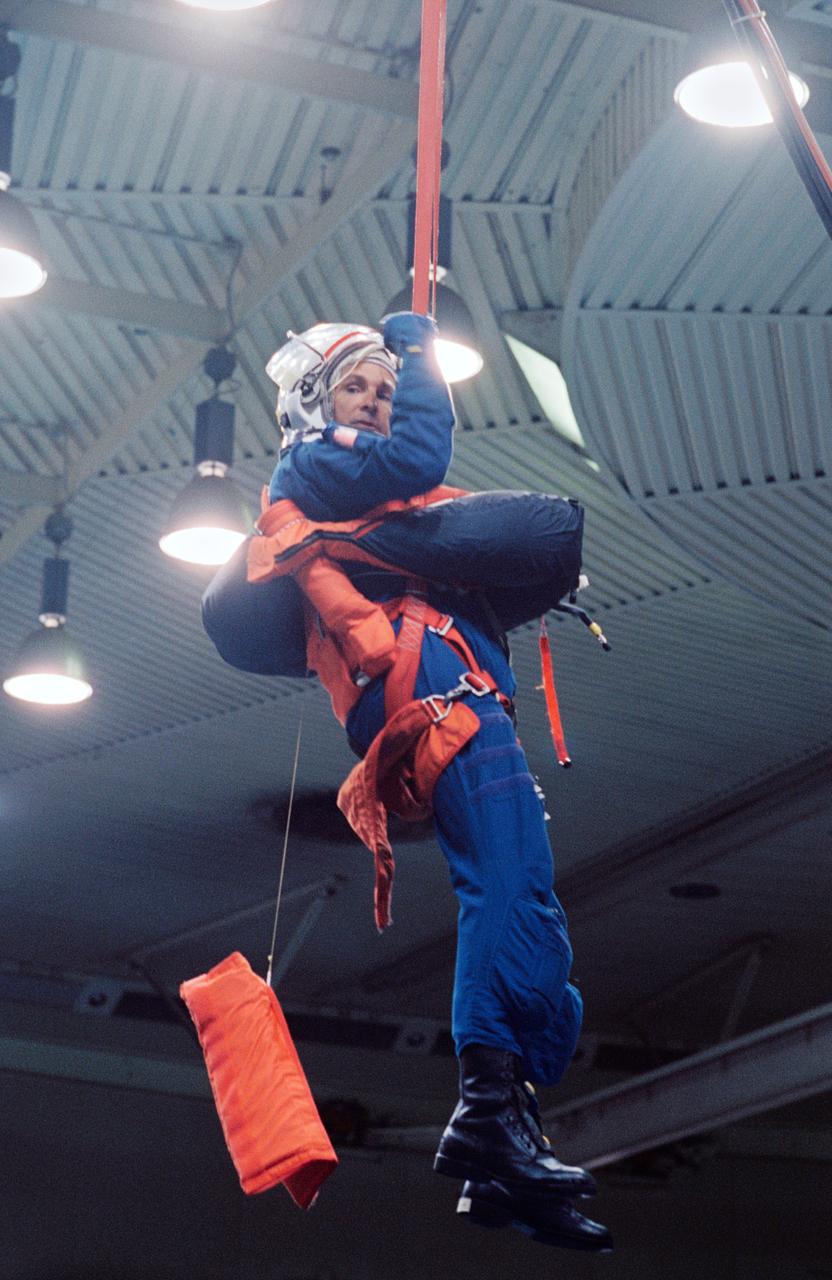
S94-37516 (28 June 1994) --- Astronaut Curtis L. Brown is suspended by a simulated parachute gear during an emergency bailout training exercise in the Johnson Space Center's (JSC) Weightless Environment Training Facility (WET-F). Making his second flight in space, Brown will join four other NASA astronauts and a European mission specialist for a week and a half in space aboard the Space Shuttle Atlantis in support of the Atmospheric Laboratory for Applications and Science (ATLAS-3) mission.
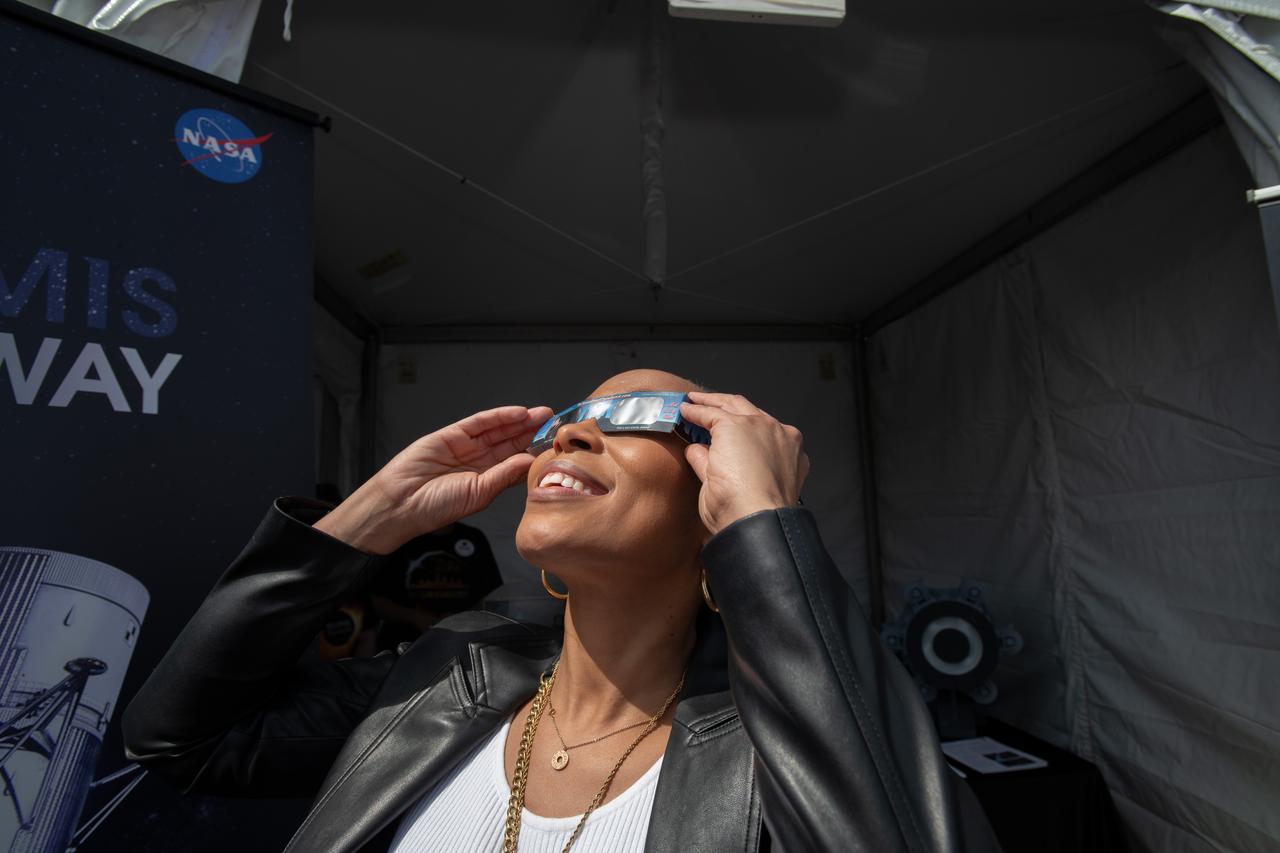
Representative Shontel Brown views the eclipse. NASA Glenn Research Center and the Great Lakes Science Center hosted a three-day celestial celebration in downtown Cleveland, OH. This free, outdoor, family-friendly science and arts festival will feature free concerts, performances, speakers, and hands-on science activities with community partners. A total solar eclipse swept across a narrow portion of the North American continent from Mexico’s Pacific coast to the Atlantic coast of Newfoundland, Canada. A partial solar eclipse was visible across the entire North American continent along with parts of Central America and Europe. Photo Credit: (NASA/Sara Lowthian-Hanna)
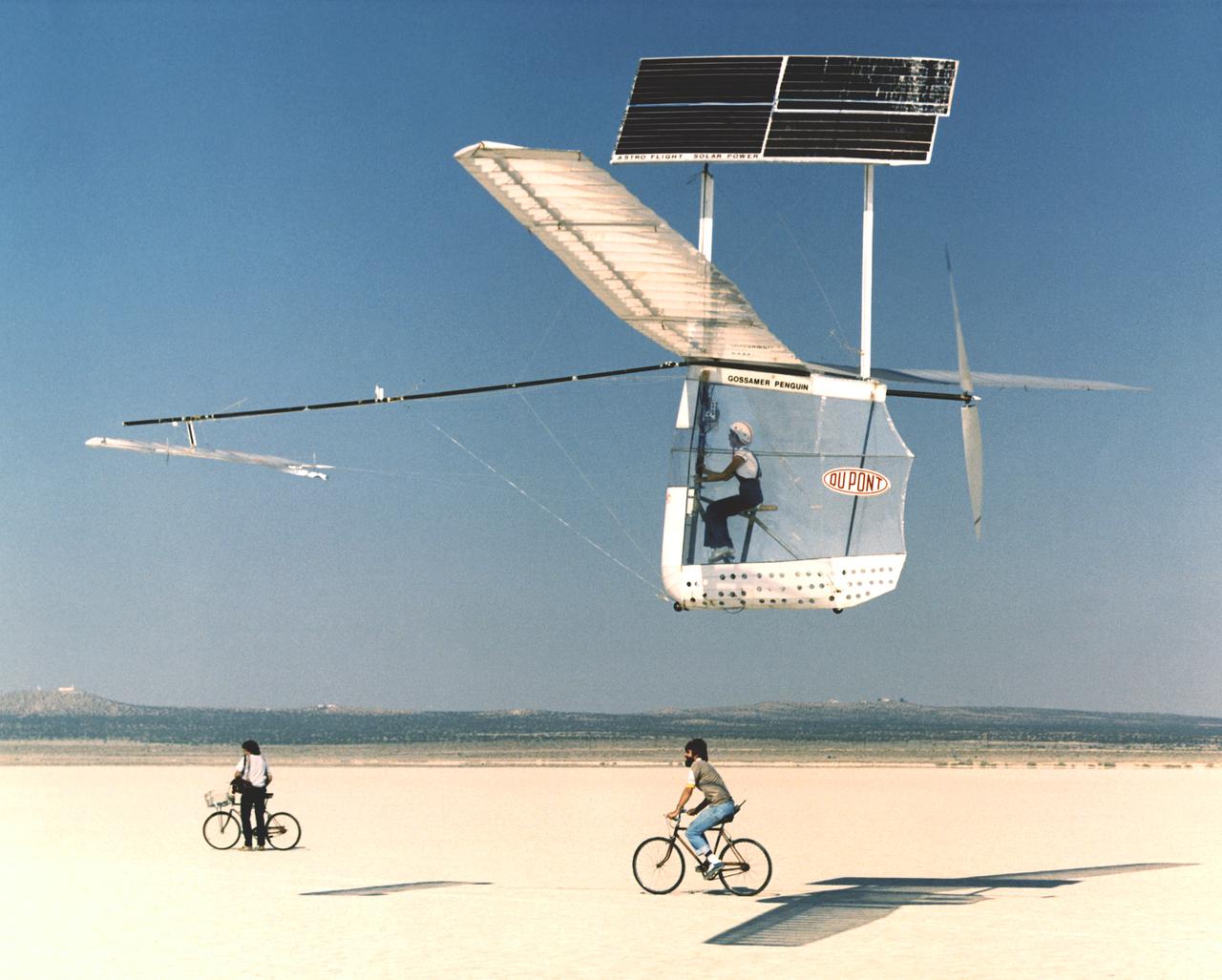
Solar-powered Gossamer Penguin in flight with Janice Brown and Ray Morgan riding chase bicycle.
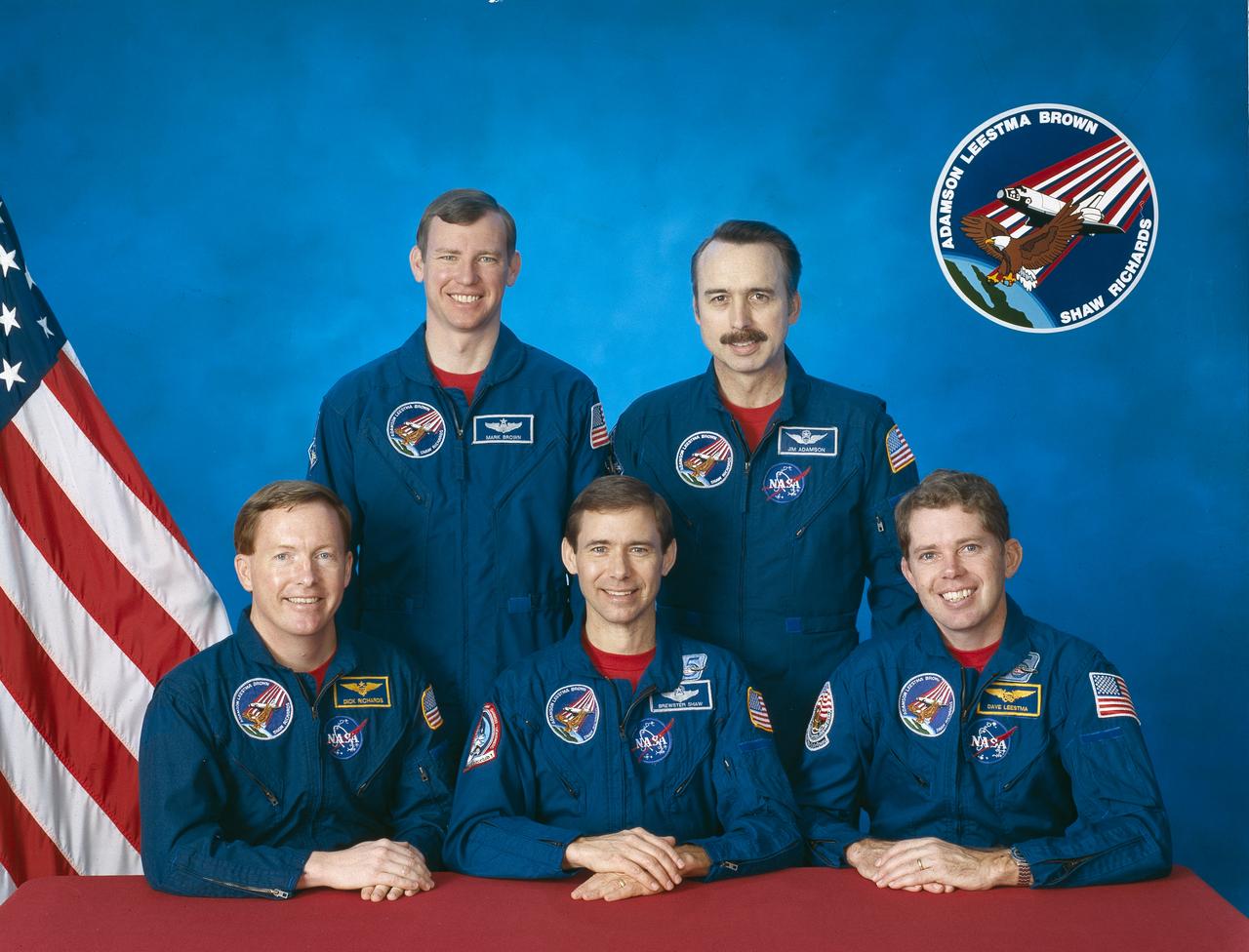
Five astronauts composed the STS-28 crew. Seated from left to right are Richard N. (Dick) Richards, pilot; Brewster H. Shaw, commander; and David C. Leestma, mission specialist 2. Standing, from left to right , are Mark N. Brown, mission specialist 3; and James C. (Jim) Adamson, mission specialist 1. Launched aboard the Space Shuttle Columbia on August 8, 1989, the STS-28 mission was the 4th mission dedicated to the Department of Defense.
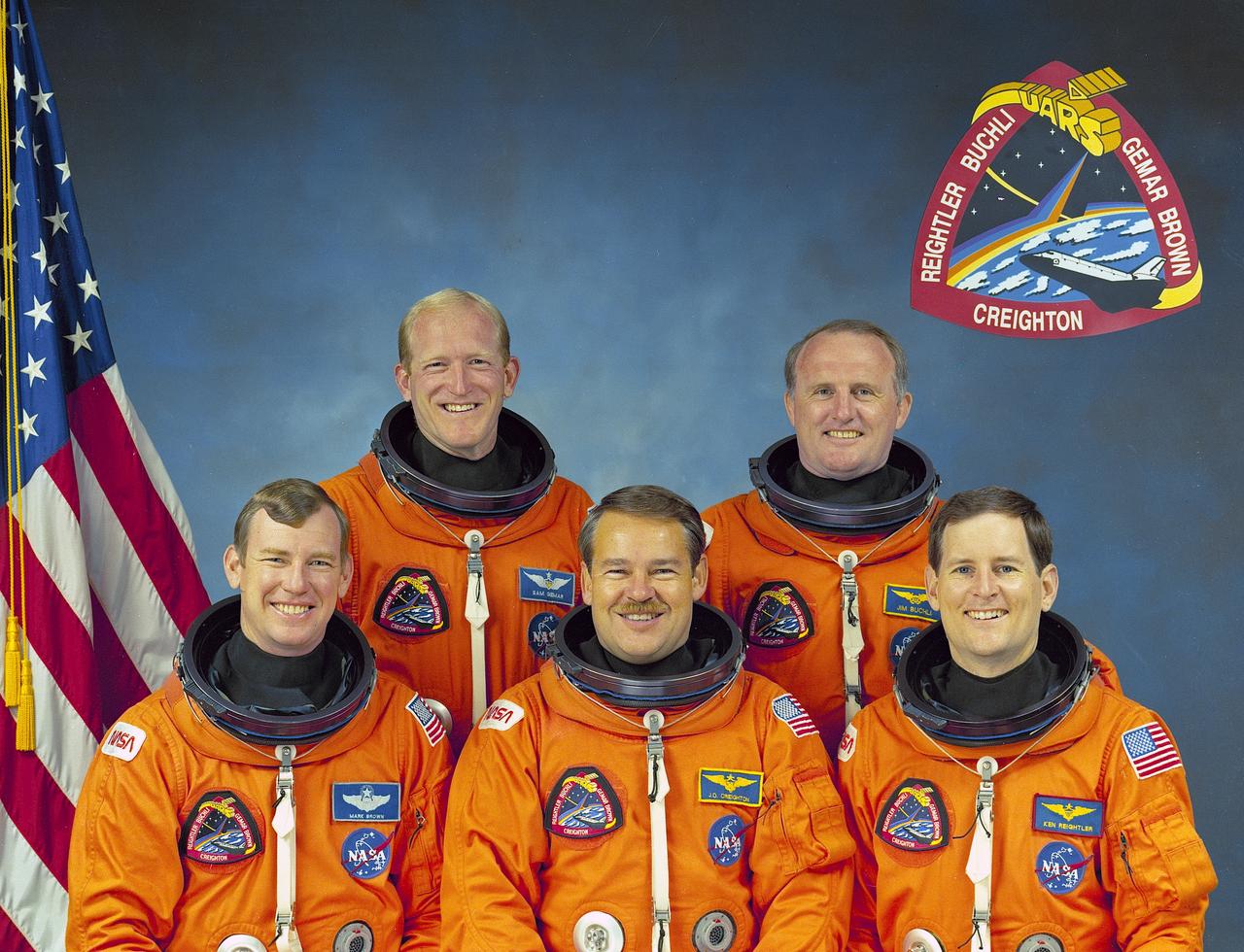
The STS-48 crew portrait includes (front row left to right): Mark N. Brown, mission specialist; John O. Creighton, commander; and Kenneth S. Reightler, pilot. Pictured on the back row (left to right) are mission specialists Charles D. (Sam) Gemar, and James F. Buchli. The crew of five launched aboard the Space Shuttle Discovery on September 12, 1991 at 7:11:04 pm (EDT). The primary payload of the mission was the Upper Atmosphere Research Satellite (UARS).
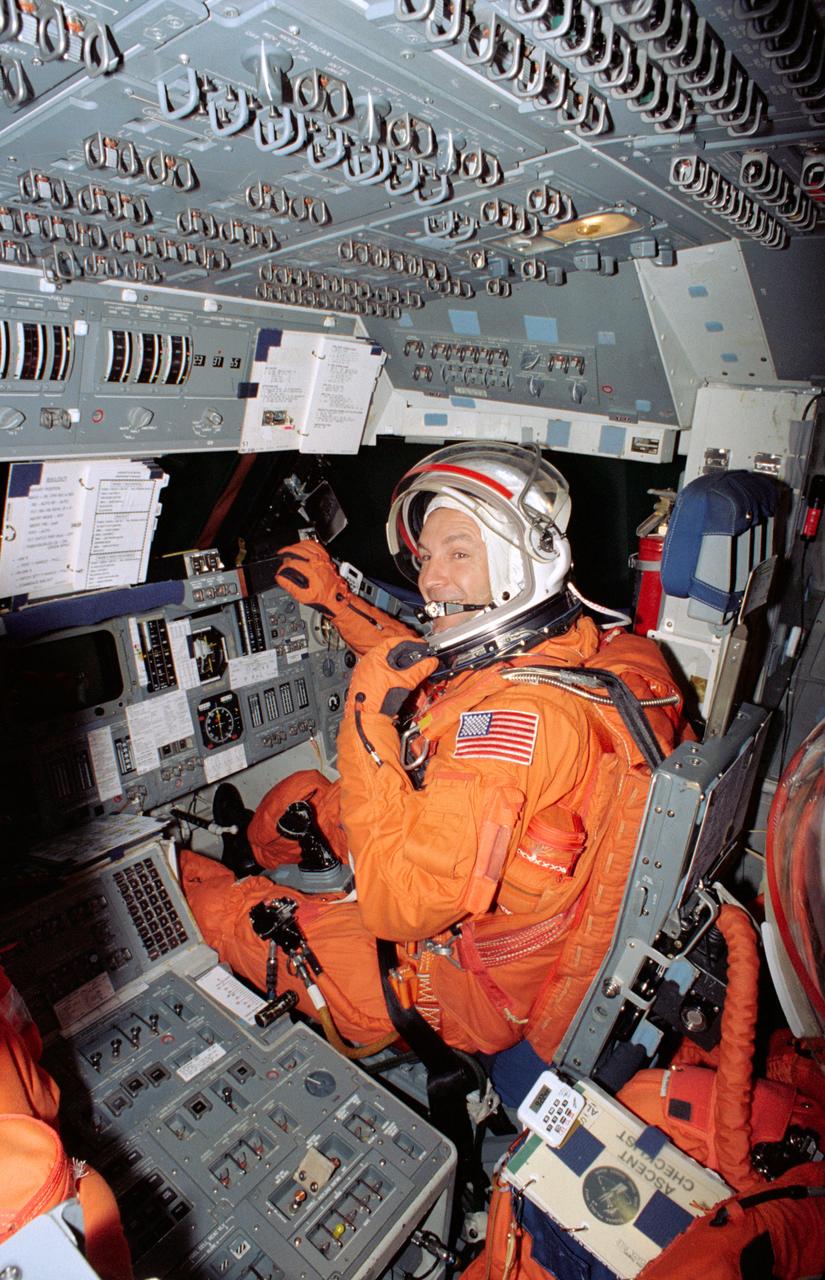
S94-40091 (23 June 1994) --- Astronaut Curtis L. Brown mans the pilot's station of a Shuttle trainer during a rehearsal of procedures to be followed during launch and entry phases of the scheduled November flight of STS-66. This rehearsal, held in the Crew Compartment Trainer (CCT) of the Johnson Space Center's (JSC) Shuttle Mockup and Integration Laboratory, was followed by a training session on emergency egress procedures. Making his second flight in space, Brown will join four other NASA astronauts and a European mission specialist for a week and a half aboard the Space Shuttle Atlantis in Earth-orbit in support of the Atmospheric Laboratory for Applications and Science (ATLAS-3).
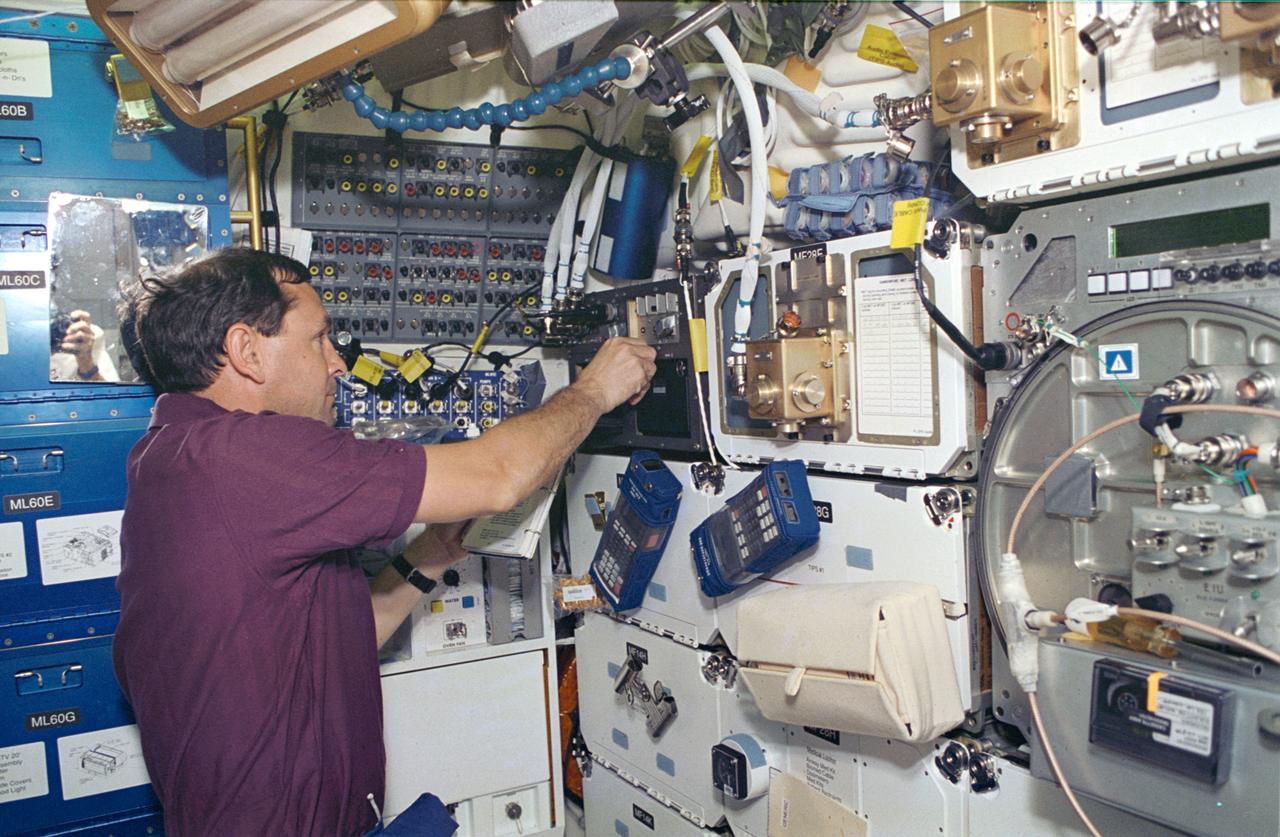
STS066-14-021 (3-14 Nov 1994) --- On the Space Shuttle Atlantis' mid-deck, astronaut Curtis L. Brown, Jr., pilot, works with the Space Acceleration Measurement System (SAMS), which is making its eleventh Shuttle flight. This system supports the Protein Crystal Growth (PCG) experiments onboard by collecting and recording data characterizing the microgravity environment in the Shuttle mid-deck. Brown joined four other NASA astronauts and a European Space Agency (ESA) astronaut for 11-days aboard Atlantis in support of the Atmospheric Laboratory for Applications and Science (ATLAS-3) mission.
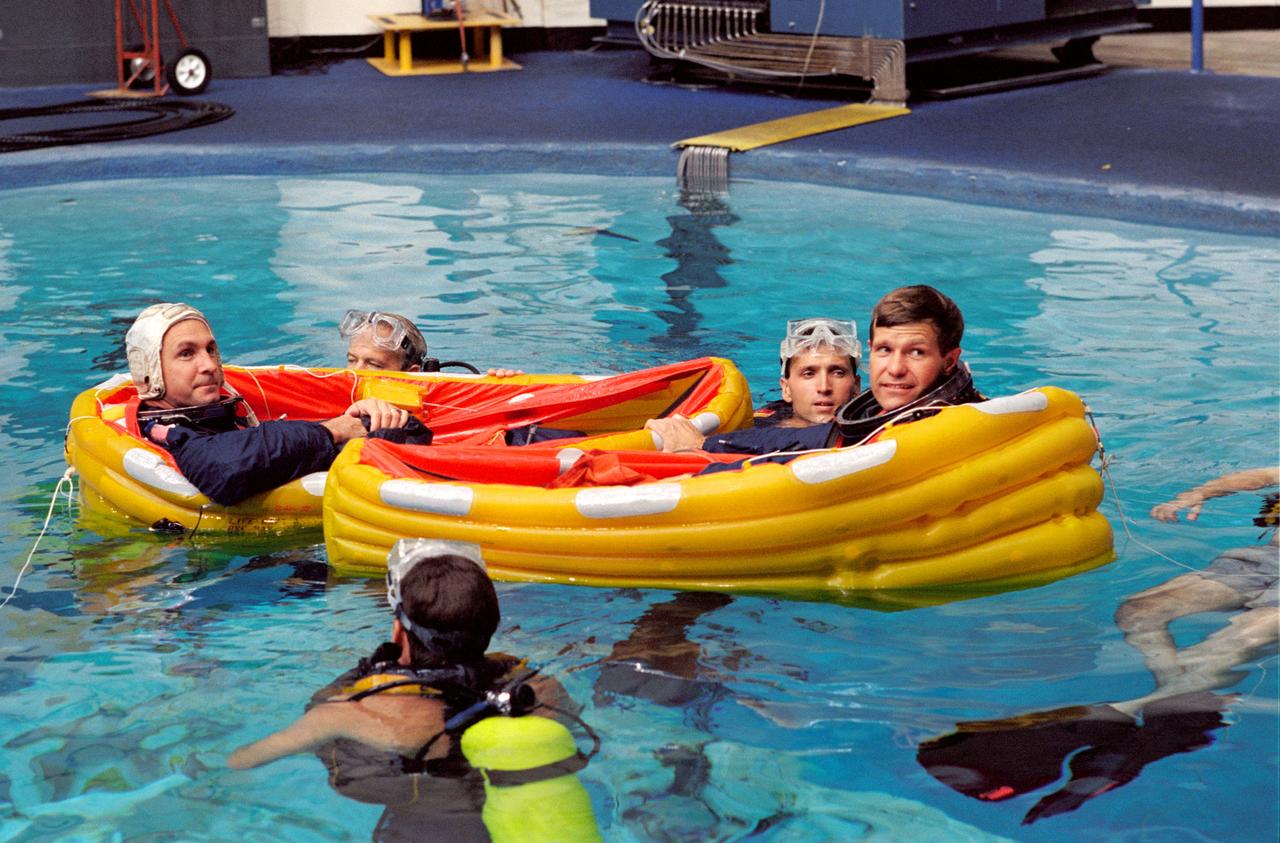
S94-37526 (28 June 1994) --- In separate life rafts, astronauts Donald R. McMonagle (right), mission commander, and Curtis L. Brown, pilot, are assisted by several SCUBA-equipped divers during an emergency bailout training exercise in the Johnson Space Center's (JSC) Weightless Environment Training Facility (WET-F). Making their third and second flights in space, respectively, McMonagle and Brown will be joined by three other NASA astronauts and a European mission specialist for a week and a half in space aboard the Space Shuttle Atlantis. The flight will support the Atmospheric Laboratory for Applications and Science (ATLAS-3) mission.
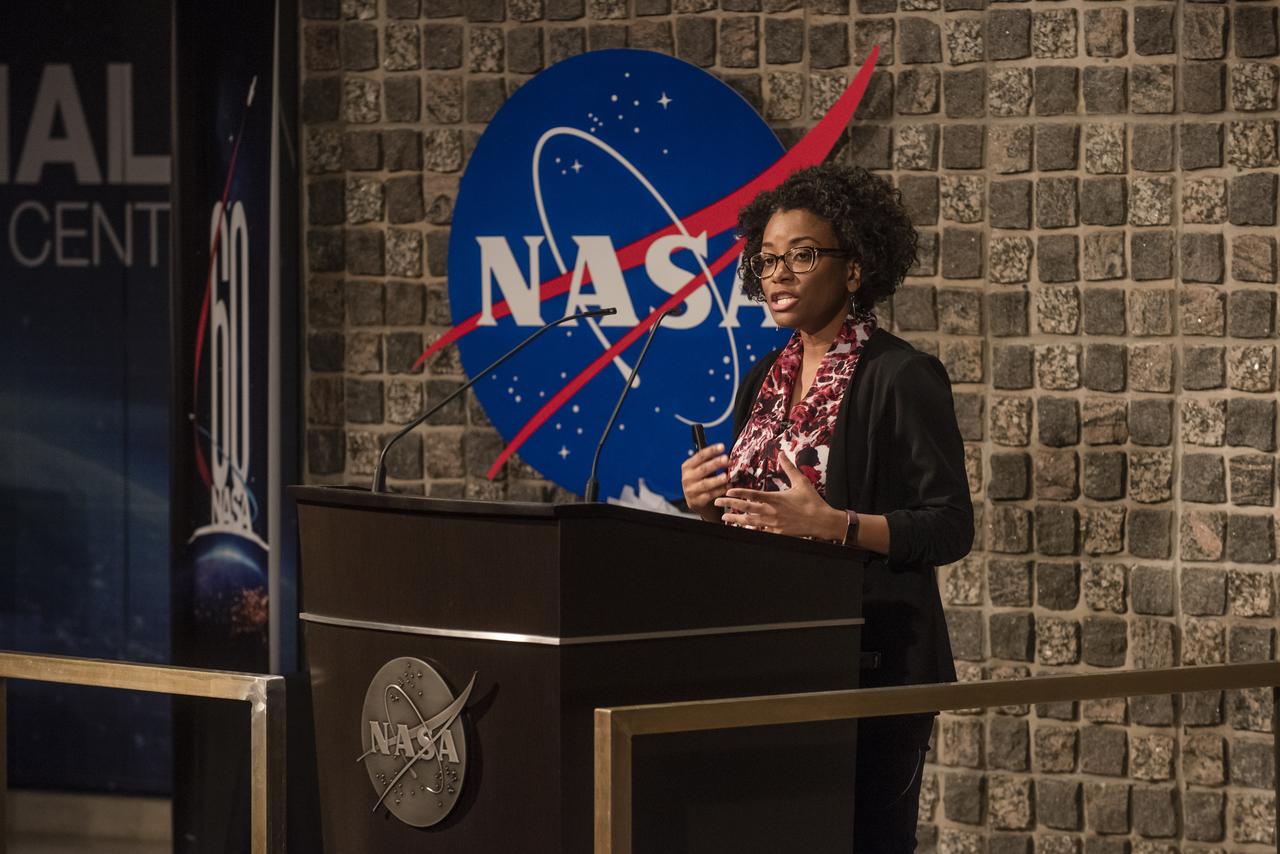
Dr. Shanique Brown, an assistant professor of industrial-organizational psychology at Wayne State University in Detroit, Michigan, delivers the Black History Month keynote address to team members at NASA's Marshall Space Flight Center Feb. 28. Participants mingled with Brown and Marshall leaders after the speech and a panel discussion on diversity and inclusion, and sampled a variety of ethnic foods. The 2019 commemoration, themed "Migrations From Here to There," was organized by Marshall's Office of Diversity and Equal Opportunity
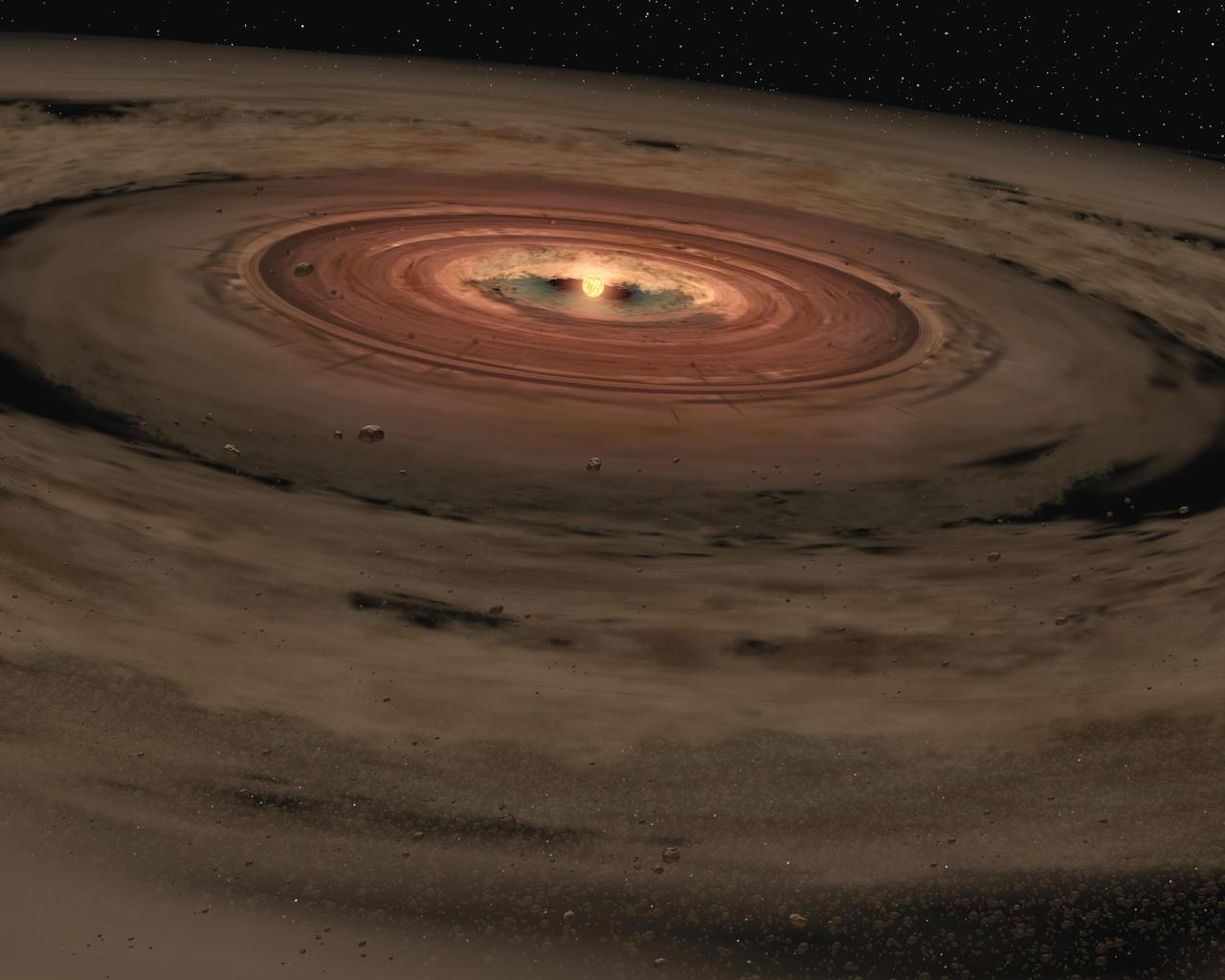
This artist animation shows a brown dwarf surrounded by a swirling disc of planet-building dust. NASA Spitzer Space Telescope spotted such a disc around a surprisingly low-mass brown dwarf, or failed star.
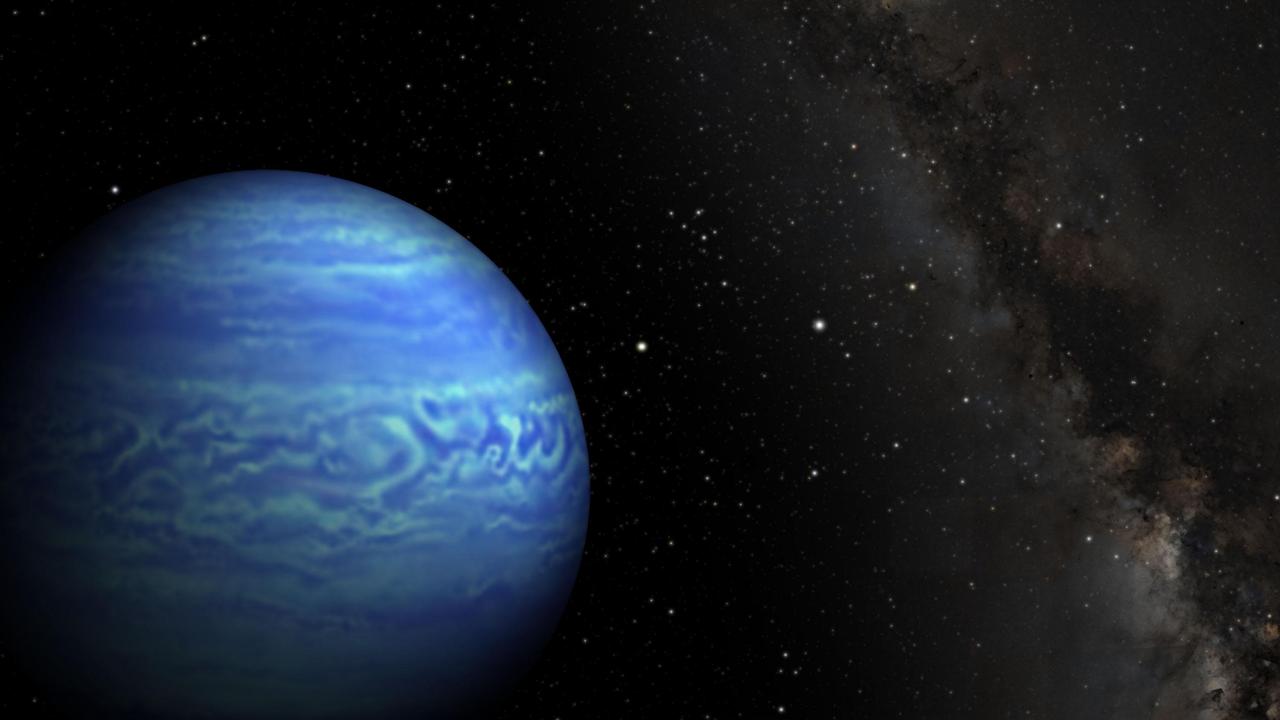
This artist conception shows the object named WISE J085510.83-071442.5, the coldest known brown dwarf. Brown dwarfs are dim star-like bodies that lack the mass to burn nuclear fuel as stars do.
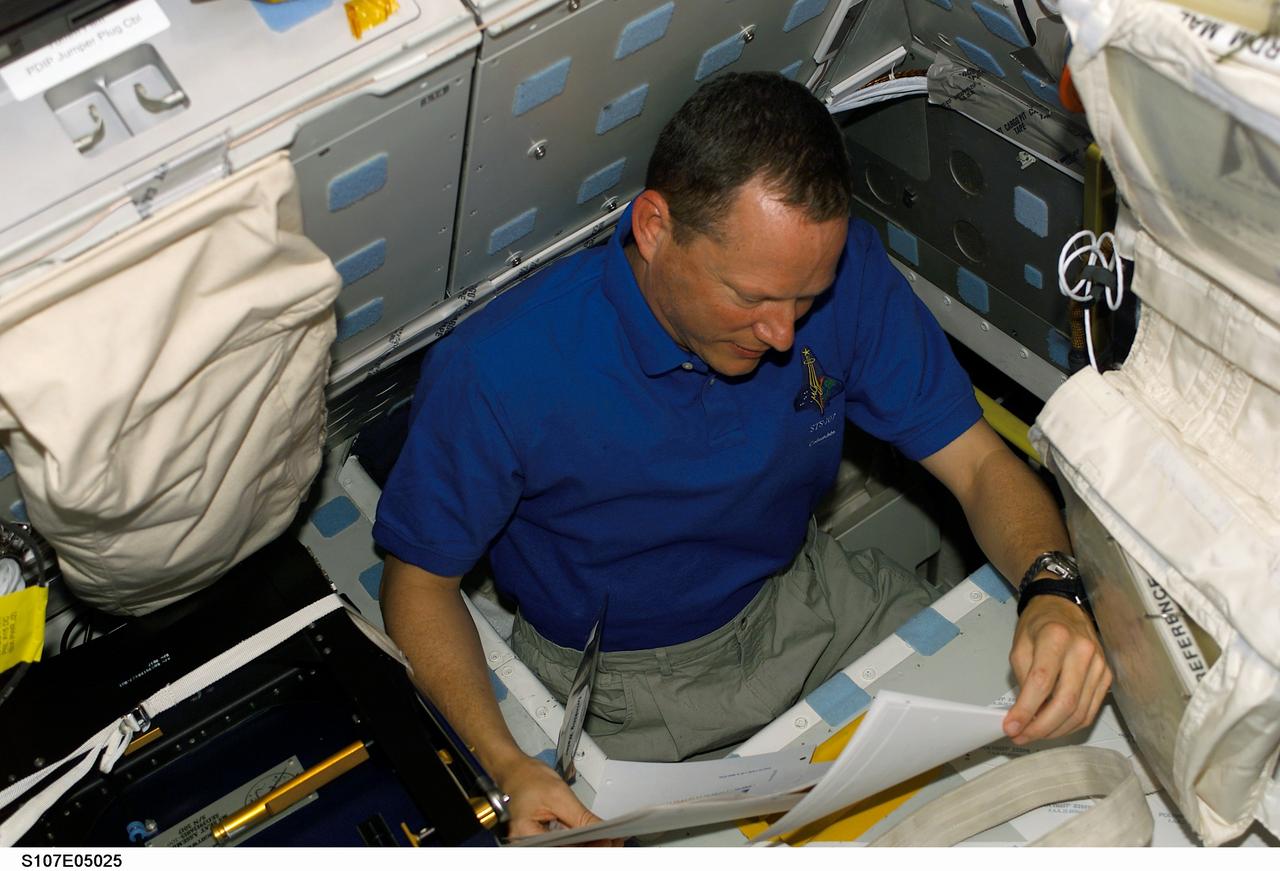
STS107-E-05025 (17 January 2003) --- Astronaut David M. Brown, STS-107 mission specialist, looks over paperwork as he prepares to work with experiments on the SPACEHAB Research Double Module aboard the Space Shuttle Columbia.

STS085-330-034 (7 - 19 August 1997) --- From the left, astronauts Curtis L. Brown, Jr., mission commander; Robert L. Curbeam, Jr., mission specialist; and Kent V. Rominger, pilot, are pictured on the Space Shuttle Discovery's flight deck during a checkout of flight control systems.
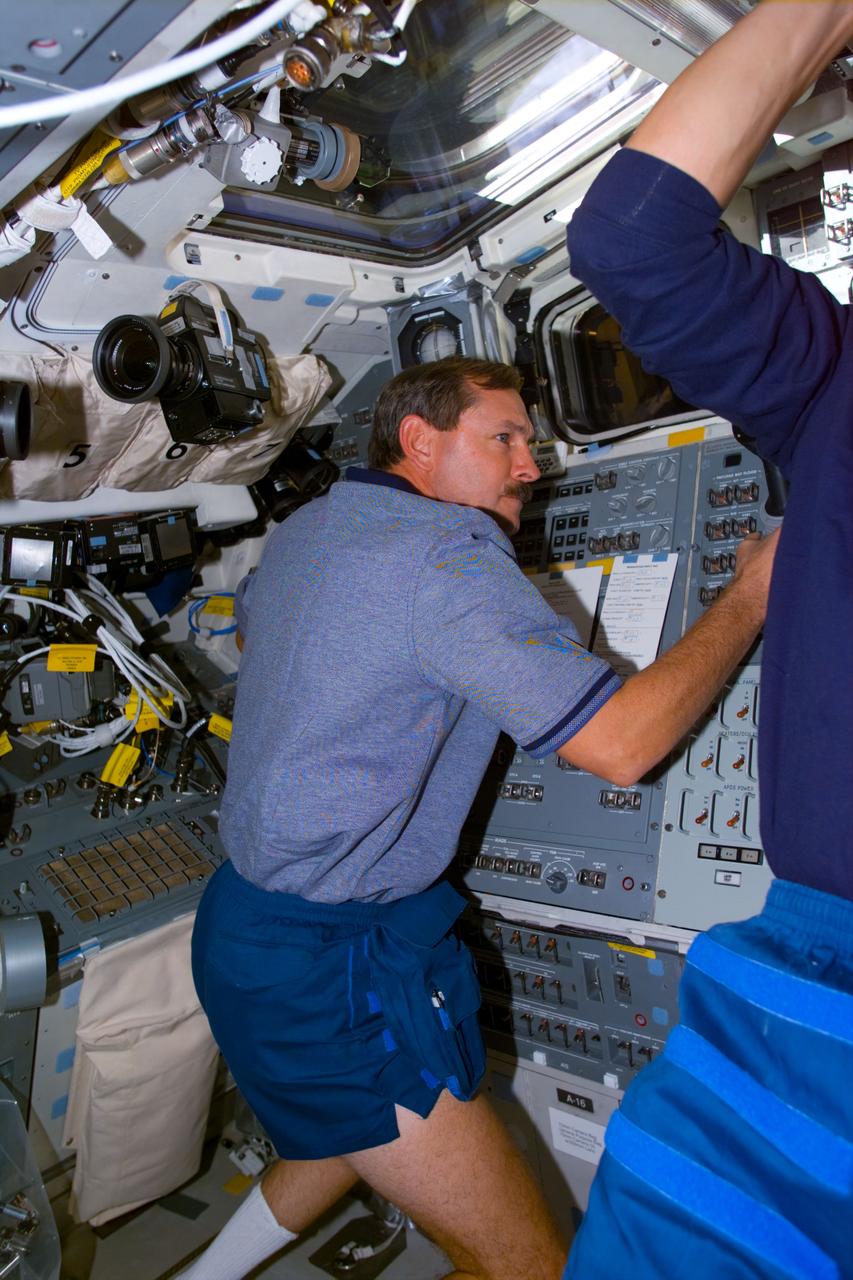
STS095-E-5134 (3 Nov. 1998) --- Astronaut Curtis L. Brown, STS-95 commander, on Discovery's aft flight deck during operations to retrieve the free-flying Spartan 201-05 satellite. The photograph was taken with an electronic still camera (ESC) at 3:17:38 GMT, Nov. 3.
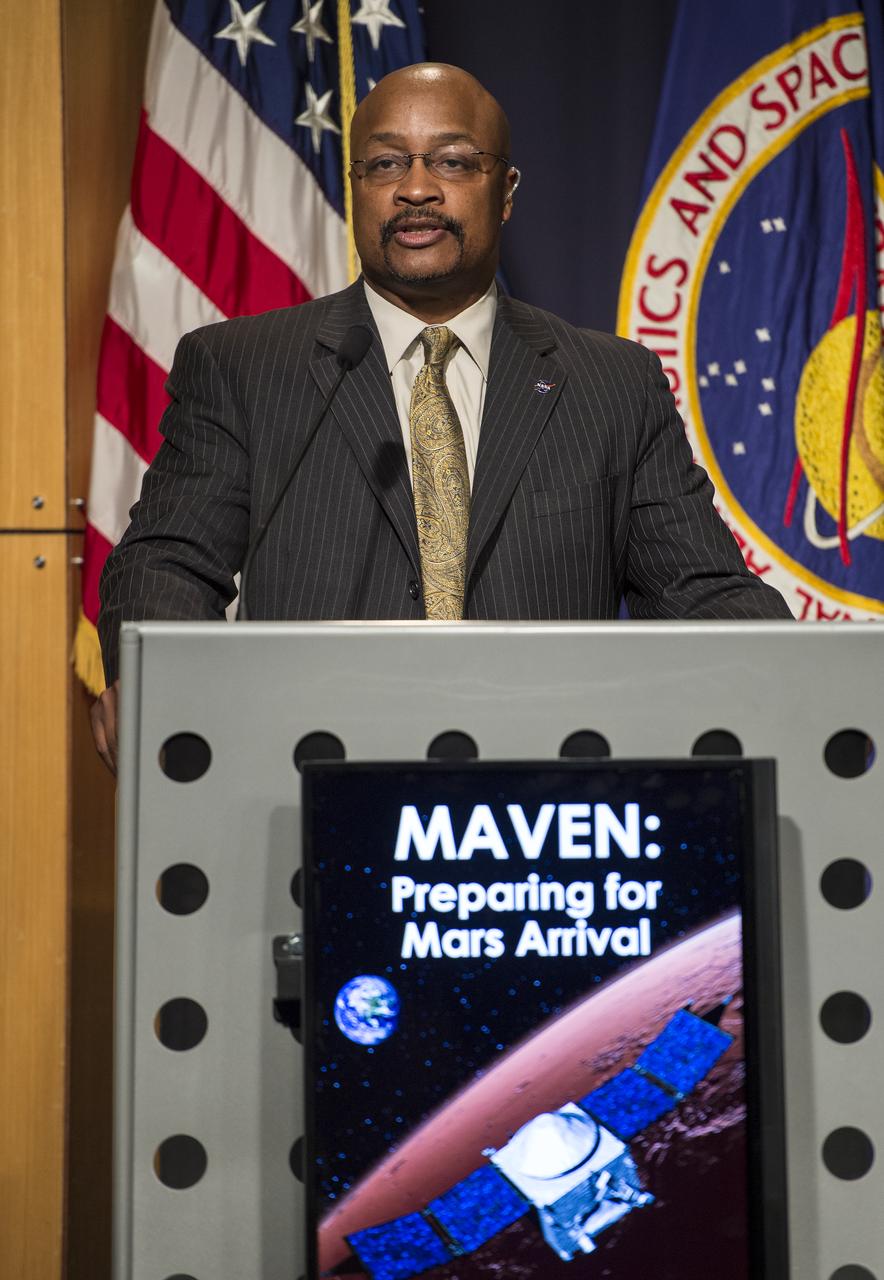
Dwayne Brown, NASA public affairs officer, moderates a media briefing where panelist outlined activities around the Sunday, Sept. 21 orbital insertion at Mars of the agency’s Mars Atmosphere and Volatile EvolutioN (MAVEN) spacecraft, Wednesday, Sept. 17, 2014 at NASA Headquarters in Washington. (Photo credit: NASA/Bill Ingalls)
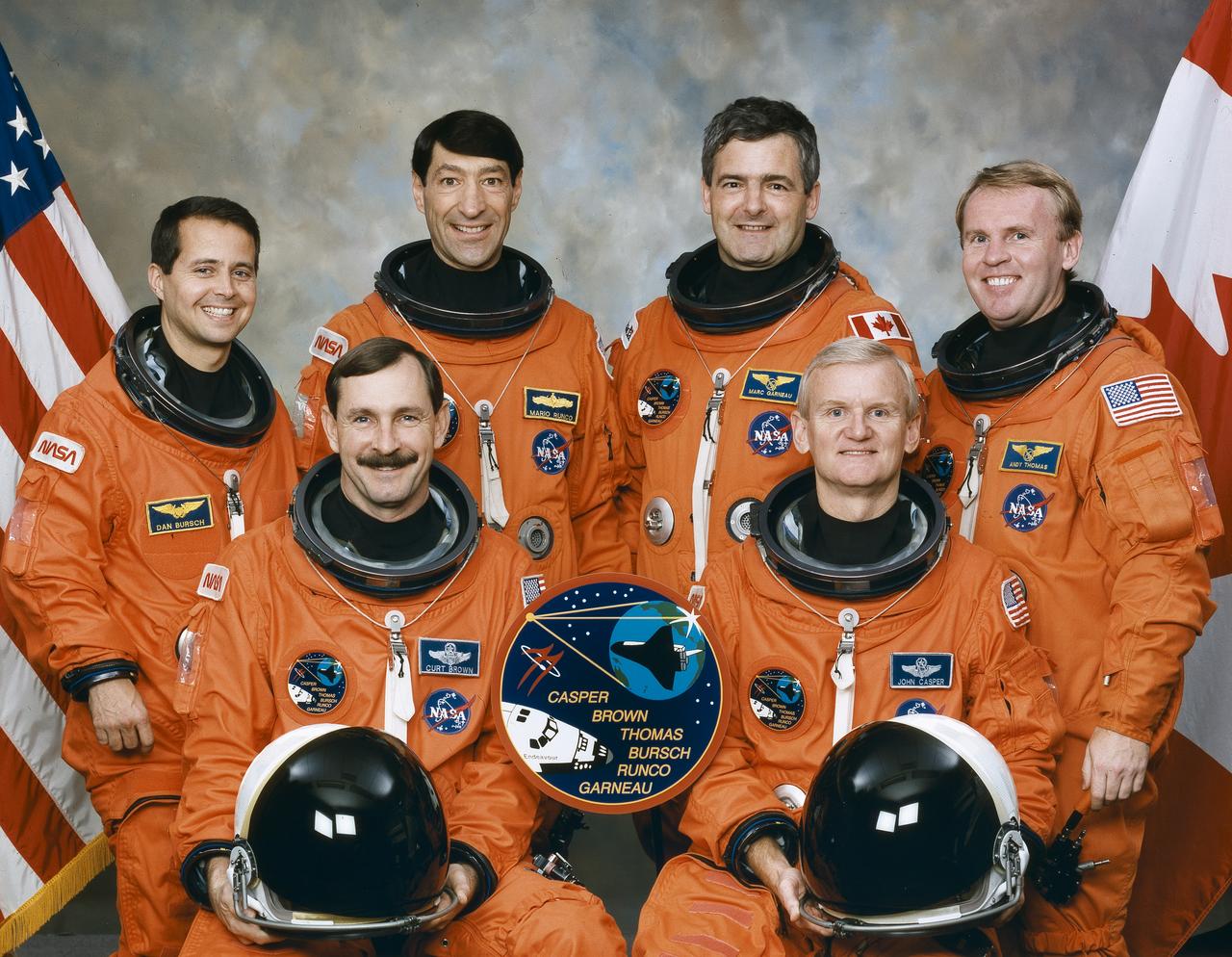
The crew assigned to the STS-77 mission included (seated left to right) Curtis L. Brown, pilot; and John H. Casper, commander. Standing, left to right, are mission specialists Daniel W. Bursch, Mario Runco, Marc Garneau (CSA), and Andrew S. W. Thomas. Launched aboard the Space Shuttle Endeavour on May 19, 1996 at 6:30:00 am (EDT), the STS-77 mission carried three primary payloads; the SPACEHAB-4 pressurized research module, the Inflatable Antenna Experiment (IAE) mounted on a Spartan 207 free-flyer, and a suite of four technology demonstration experiments known as Technology Experiments for Advancing Missions in Space (TEAMS).

United States Senator, Sherrod Brown. addresses the Nuclear Emerging Technologies for Space, NETS 2022 Conference, Cleveland, Ohio

United States Senator, Sherrod Brown. addresses the Nuclear Emerging Technologies for Space, NETS 2022 Conference, Cleveland, Ohio

United States Senator, Sherrod Brown. addresses the Nuclear Emerging Technologies for Space, NETS 2022 Conference, Cleveland, Ohio
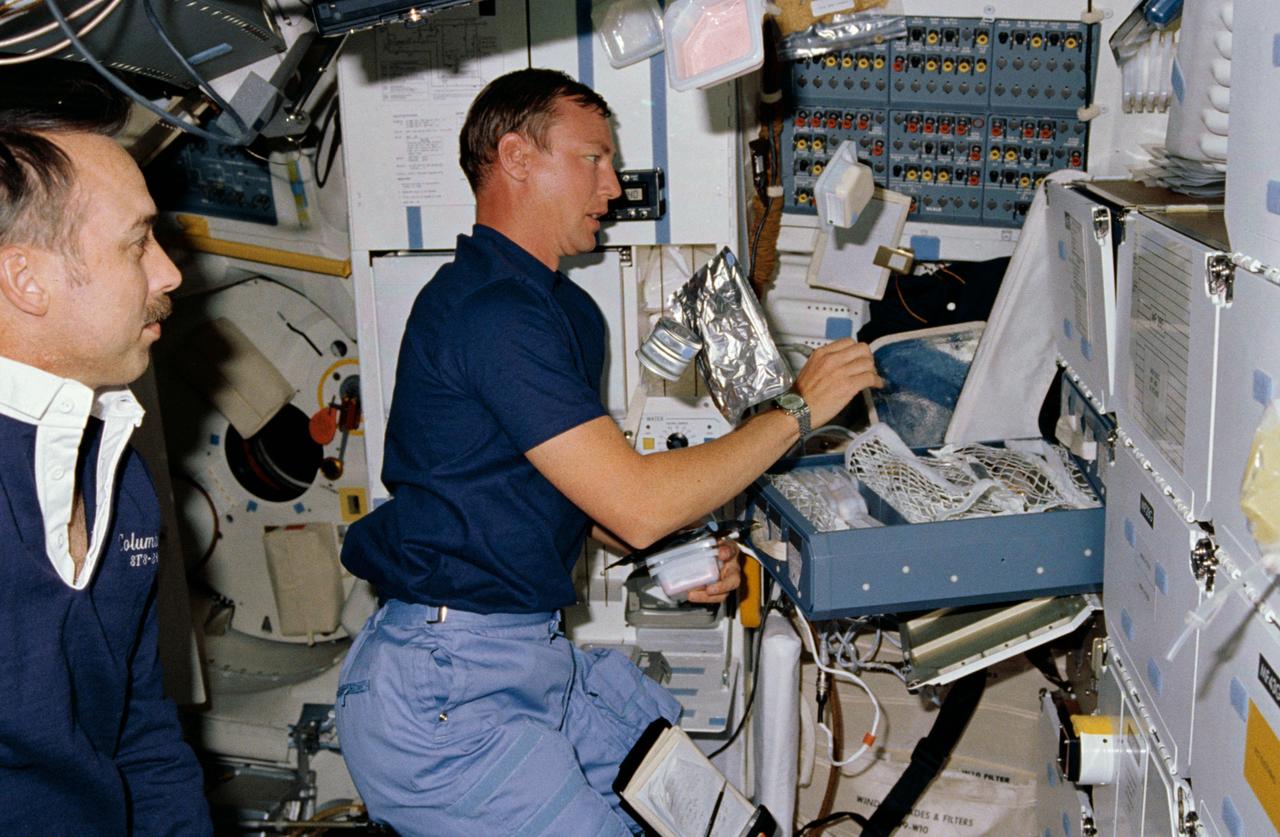
STS028-13-013 (August 1989) --- Astronaut Mark N. Brown, STS-28 mission specialist, assembles various components of a meal at the stowage locker area of Columbia's middeck, as James C. Adamson, mission specialist, looks on.
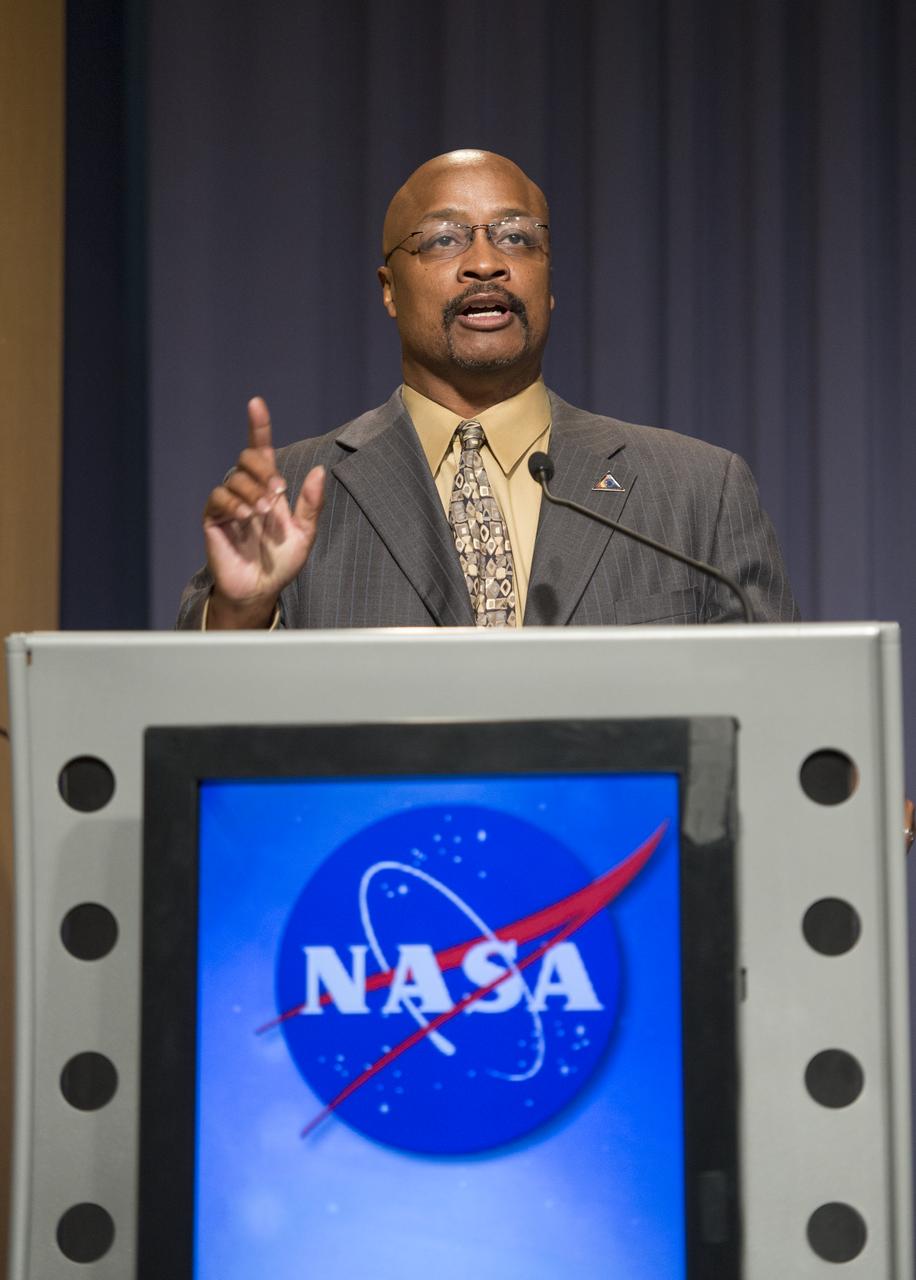
Dwayne Brown, Senior Public Affairs Officer, NASA Science Mission Directorate at NASA Headquarters, kicks off a news conference on NASA's Voyager 1 spacecraft, Thursday, Sept. 12, 2013 in Washington. NASA's Voyager 1 spacecraft officially is the first human-made object to venture into interstellar space. The 36-year-old probe is about 12 billion miles (19 billion kilometers) from our sun. New and unexpected data indicate Voyager 1 has been traveling for about one year through plasma, or ionized gas, present in the space between stars. A report on the analysis of this new data is published in Thursday's edition of the journal Science. Photo Credit: (NASA/Carla Cioffi)
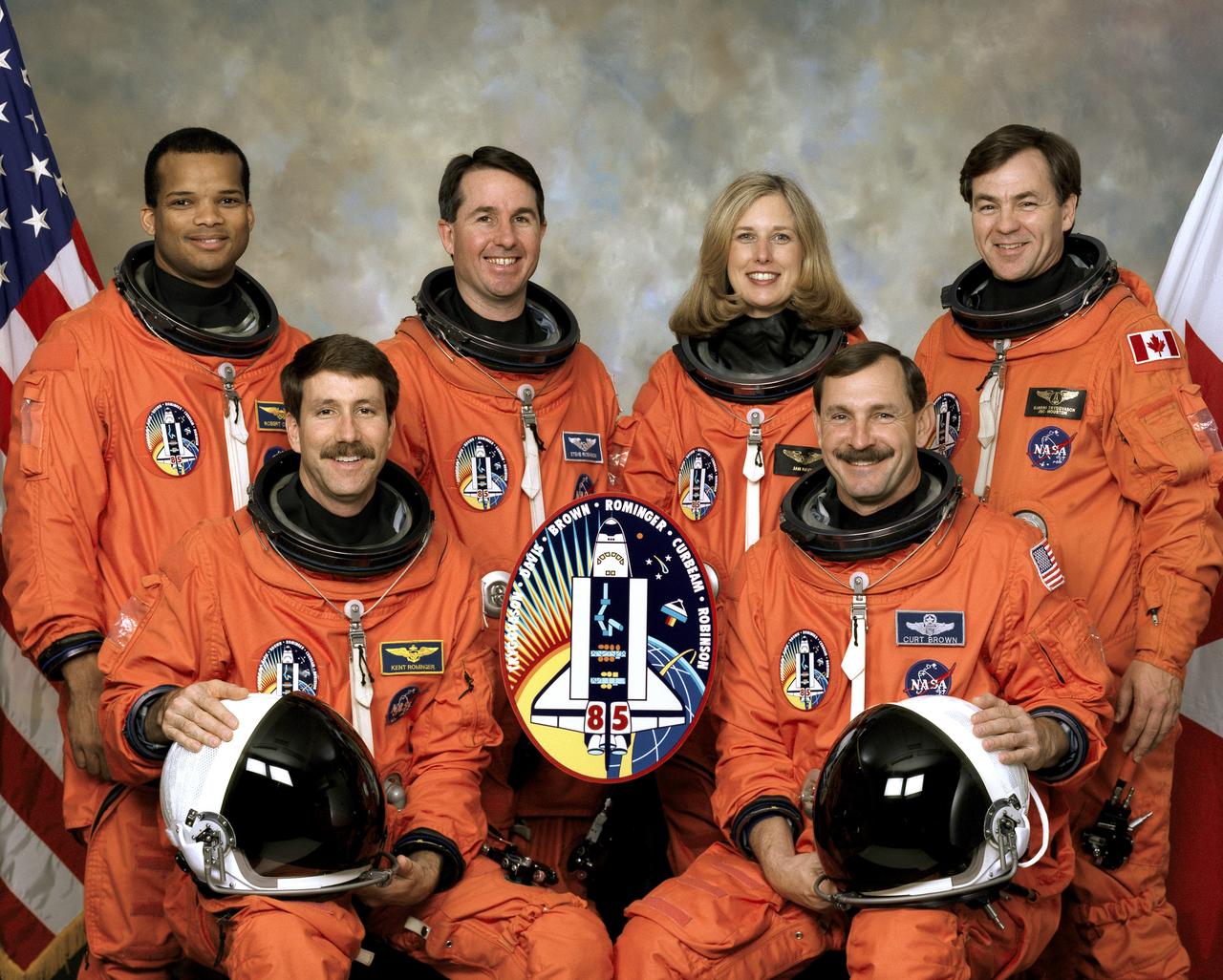
Five NASA astronauts and a Canadian payload specialist pause from their training schedule to pose for the traditional crew portrait for their mission, STS-85. In front are astronauts Curtis L. Brown, Jr. (right), mission commander, and Kent V. Rominger, pilot. On the back row, from the left, are astronauts Robert L. Curbeam, Jr., Stephen K. Robinson, and N. Jan Davis, all mission specialists, along with the Canadian Space Agency’s (CSA) payload specialist, Bjarni Tryggvason. The five launched into space aboard the Space Shuttle Discovery on August 7, 1997 at 10:41:00 a.m. (EDT). Major payloads included the satellite known as Cryogenic Infrared Spectrometers and Telescopes for the Atmosphere-Shuttle Pallet Satellite-2 CRISTA-SPAS-02. CRISTA; a Japanese Manipulator Flight Development (MFD); the Technology Applications and Science (TAS-01); and the International Extreme Ultraviolet Hitchhiker (IEH-02).
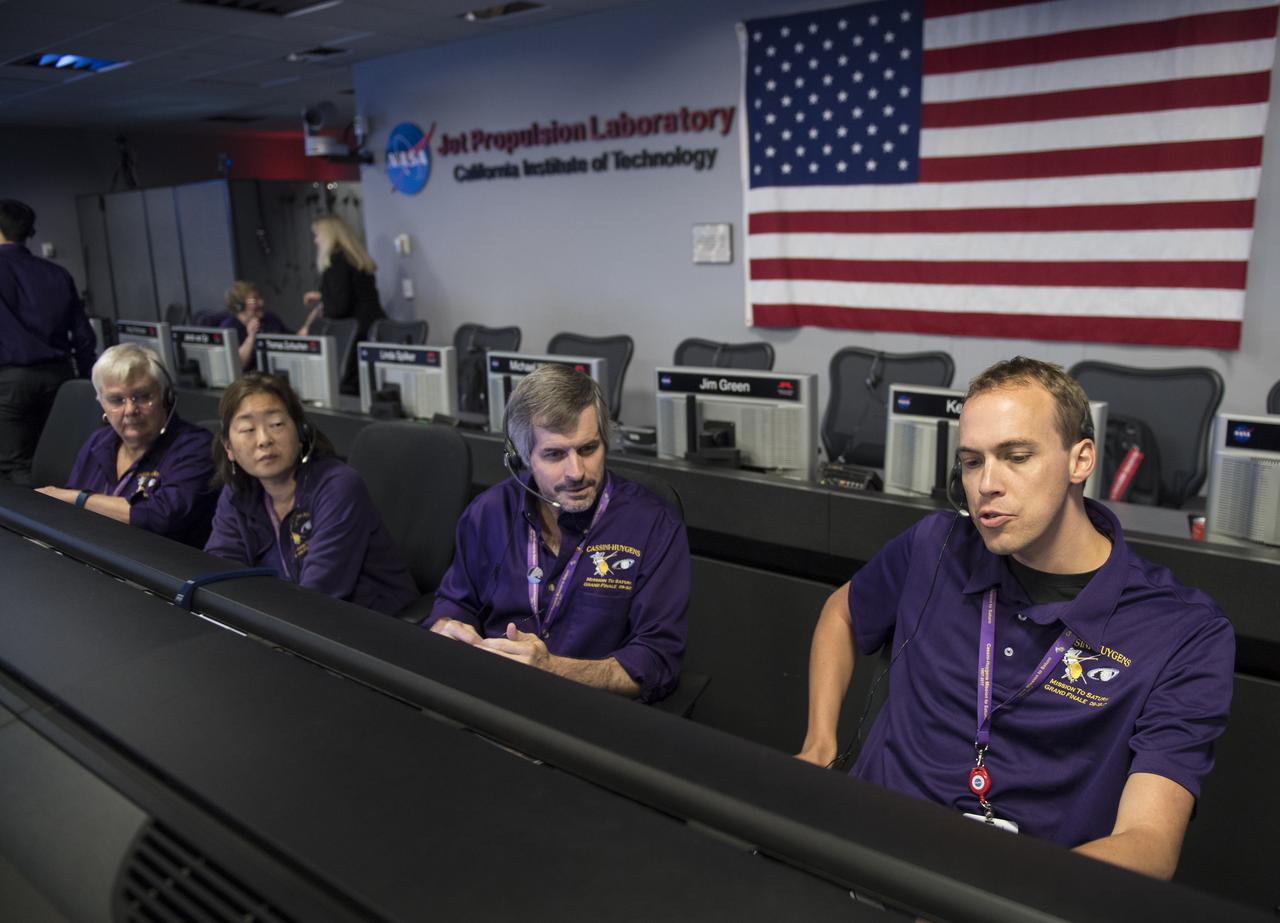
Todd Brown, right, working Cassini's attitude and articulation control subsystems, is seen at his console during the spacecraft's final plunge into Saturn, Friday, Sept. 15, 2017 at NASA's Jet Propulsion Laboratory in Pasadena, California. Since its arrival in 2004, the Cassini-Huygens mission has been a discovery machine, revolutionizing our knowledge of the Saturn system and captivating us with data and images never before obtained with such detail and clarity. On Sept. 15, 2017, operators deliberately plunged the spacecraft into Saturn, as Cassini gathered science until the end. Loss of contact with the Cassini spacecraft occurred at 7:55 a.m. EDT (4:55 a.m. PDT). The “plunge” ensures Saturn’s moons will remain pristine for future exploration. During Cassini’s final days, mission team members from all around the world gathered at NASA’s Jet Propulsion Laboratory, Pasadena, California, to celebrate the achievements of this historic mission. Photo Credit: (NASA/Joel Kowsky)