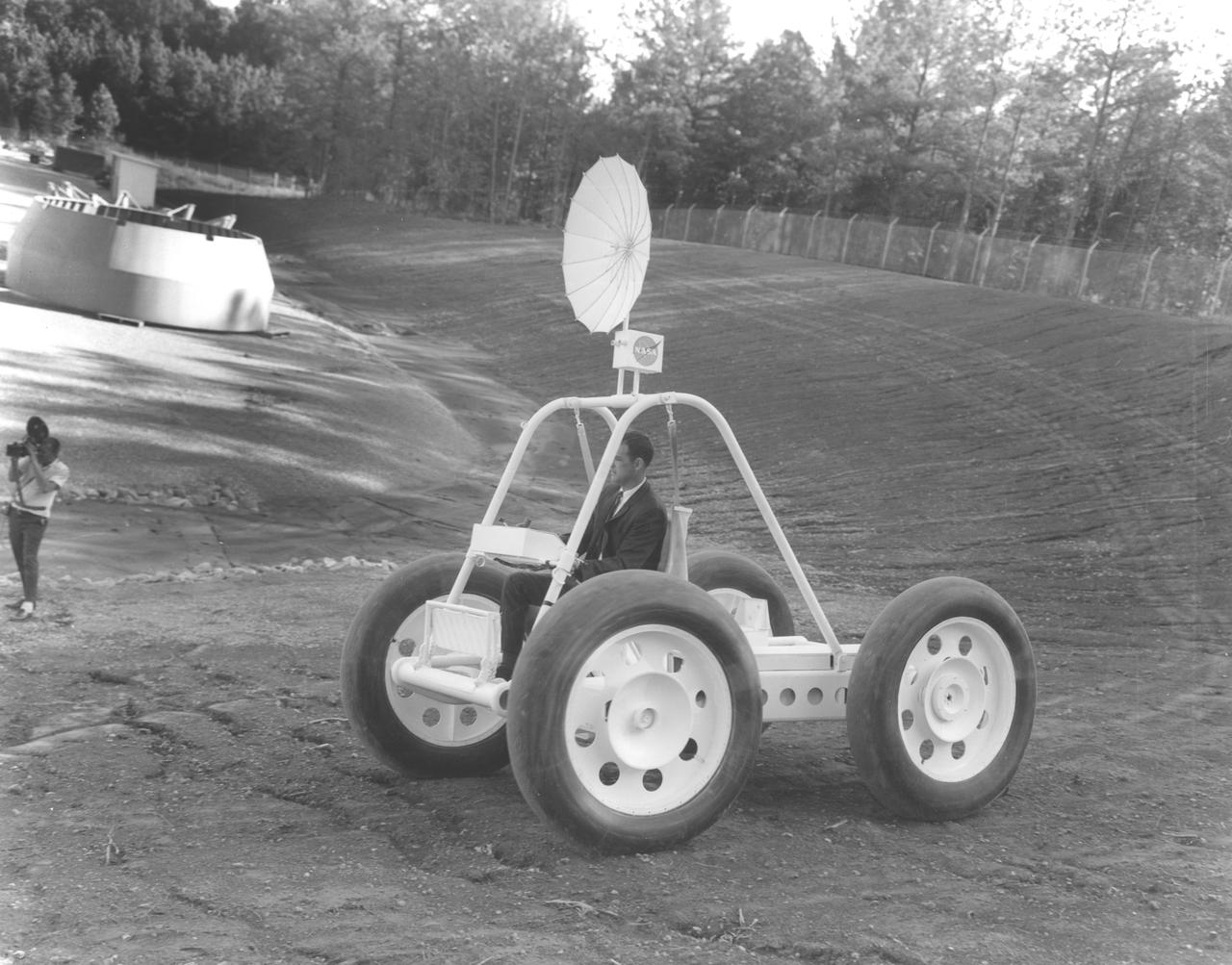
Built by Brown Engineering company of Huntsville, Alabama, a motorized mockup of a small Lunar Roving Vehicle (LRV) is being demonstrated at the Marshall Space Flight Center (MSFC). This particular vehicle weighed about 1200 pounds and is almost 10 feet long, 7-feet and 2-inches wide, and 7-feet and 8-inches high. The LRV was developed under the direction of MSFC to provide astronauts with greater mobility on the lunar surface.
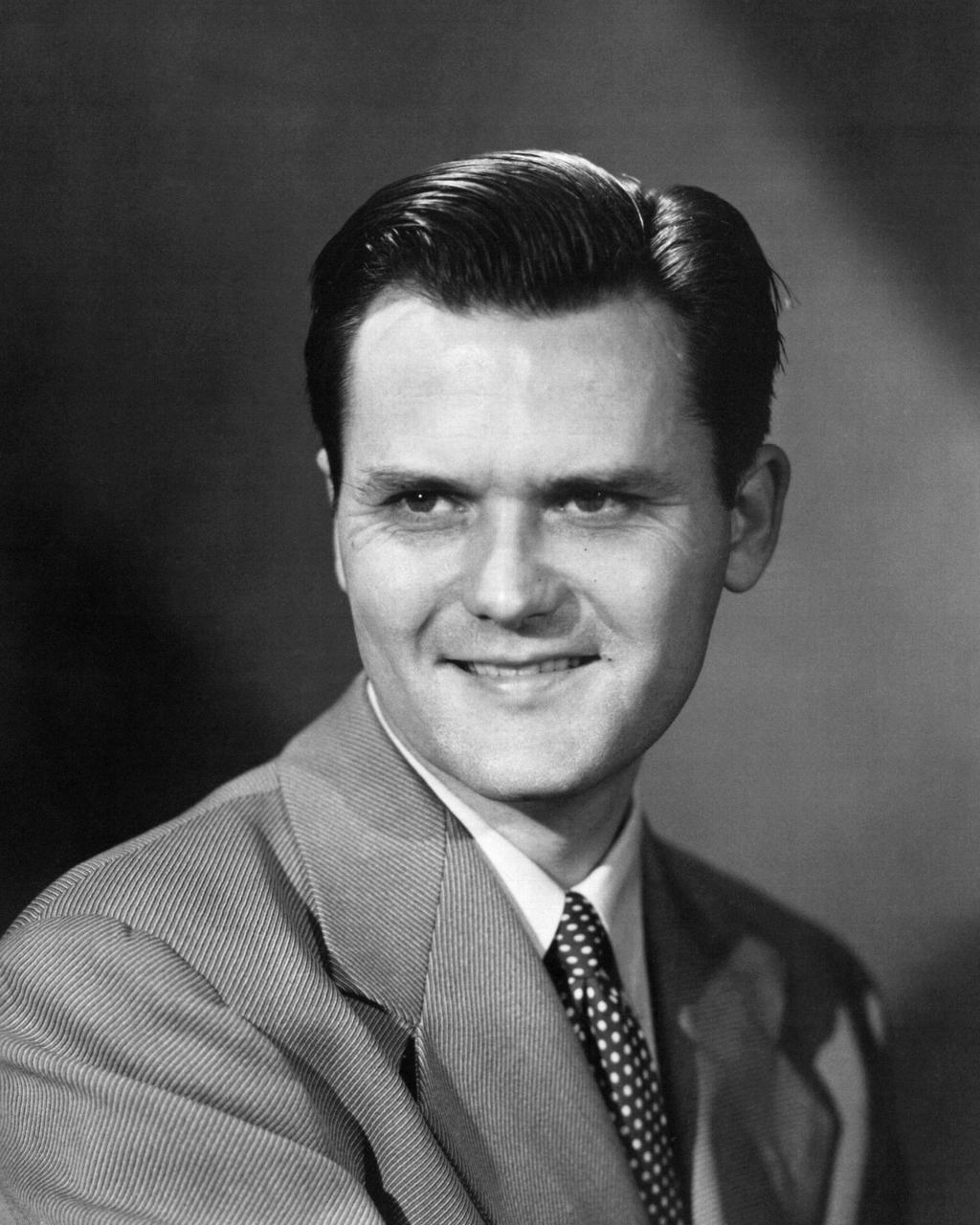
L60-5232 Clinton E. Brown of the Brown Hypersonic Study Group. Photograph published in Engineer in Charge: A History of the Langley Aeronautical Laboratory, 1917-1958 by James R. Hansen. Page 352.
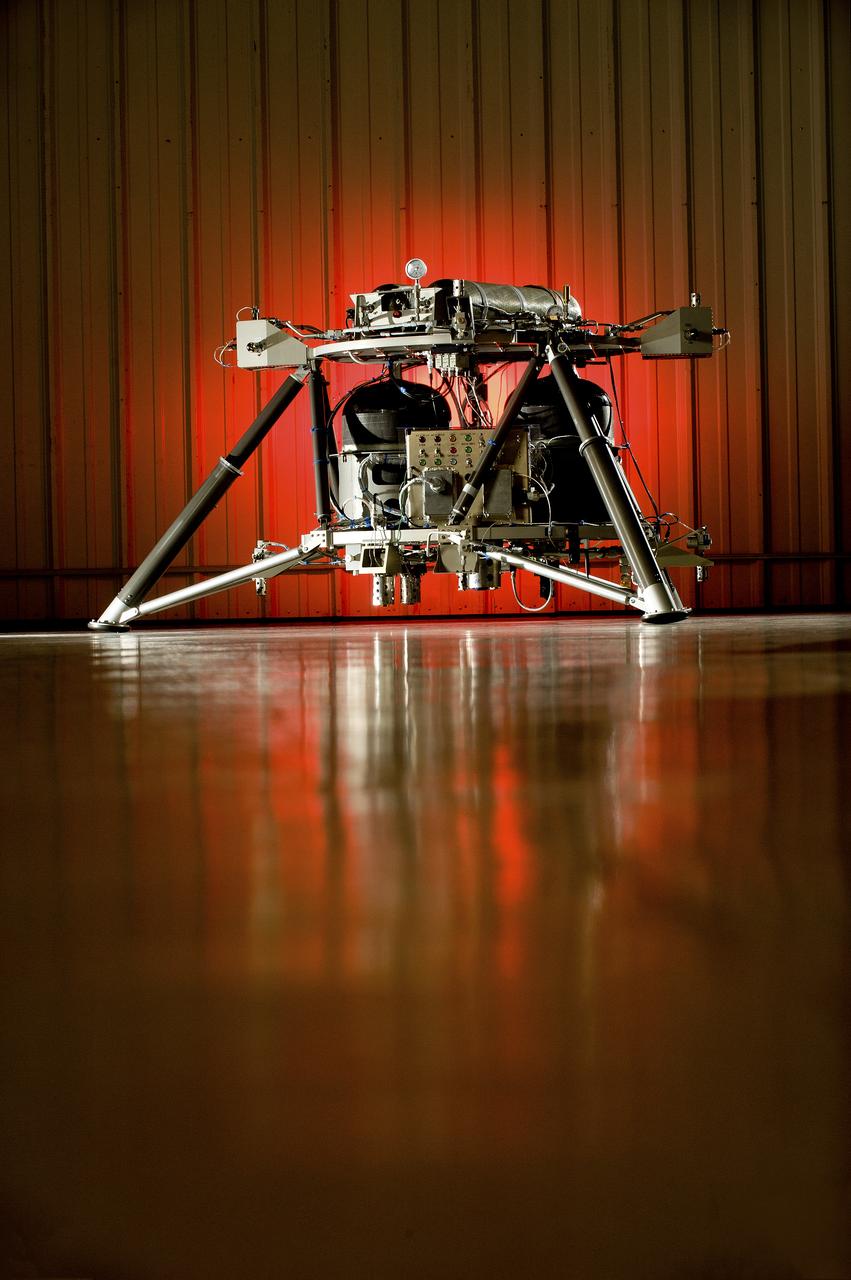
THE HOT FIRE ROBOTIC LANDER PROTOTYPE AT TELEDYNE BROWN ENGINEERING.

Nathaniel Brown, a mechanical design engineer, works the structure design and interfaces for the Lunar Pallet Lander.
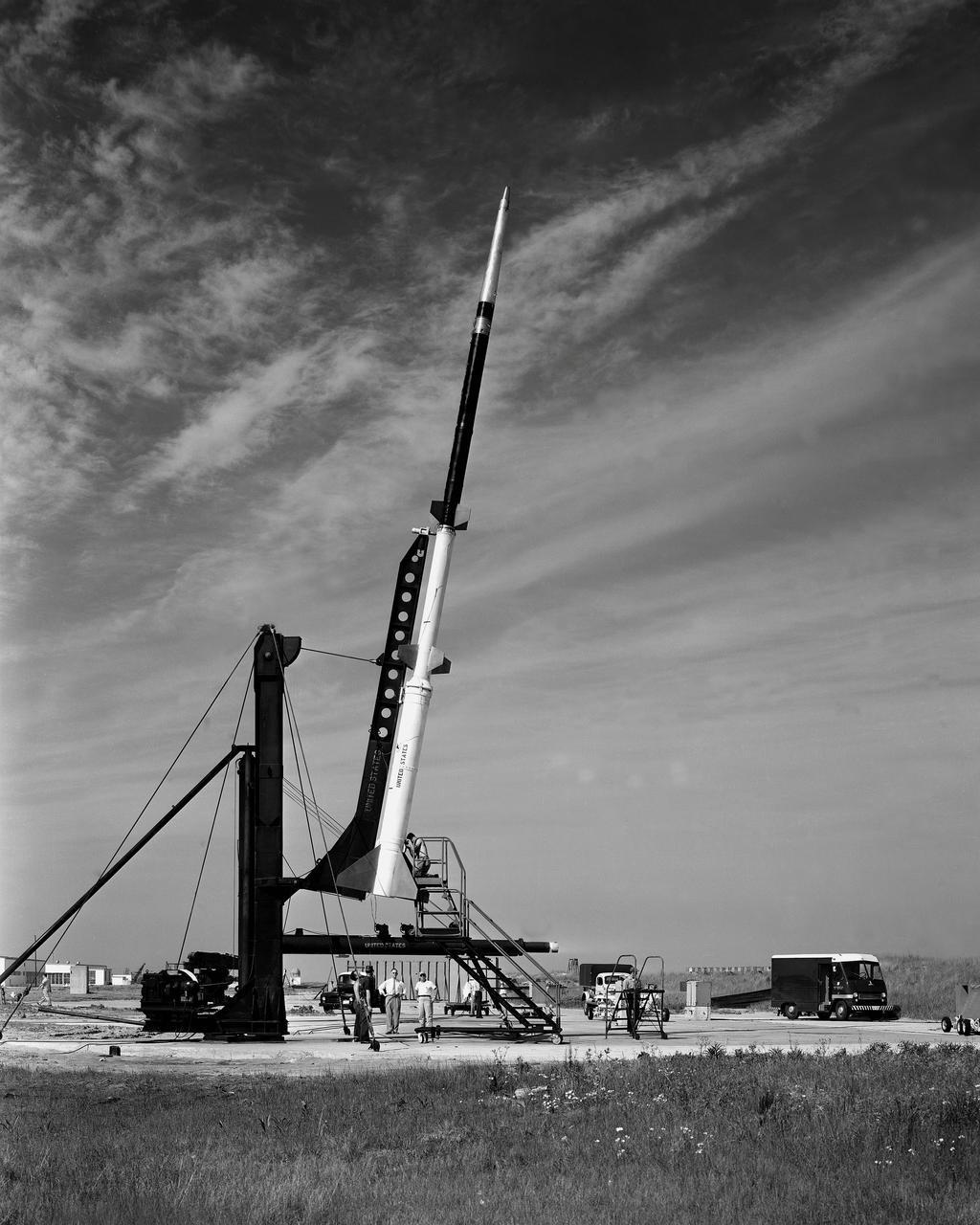
L59-3896 Engineers W. N. Gardner and C.A. Brown, Jr., check operations as Trailblazer 1b is readied for Flight, June 4, 1959. Photograph published in A New Dimension Wallops Island Flight Test Range: The First Fifteen Years by Joseph Shortal. A NASA publication, page 675. D58-3001 Model. Engineers W. N. Gardner and C.A. Brown
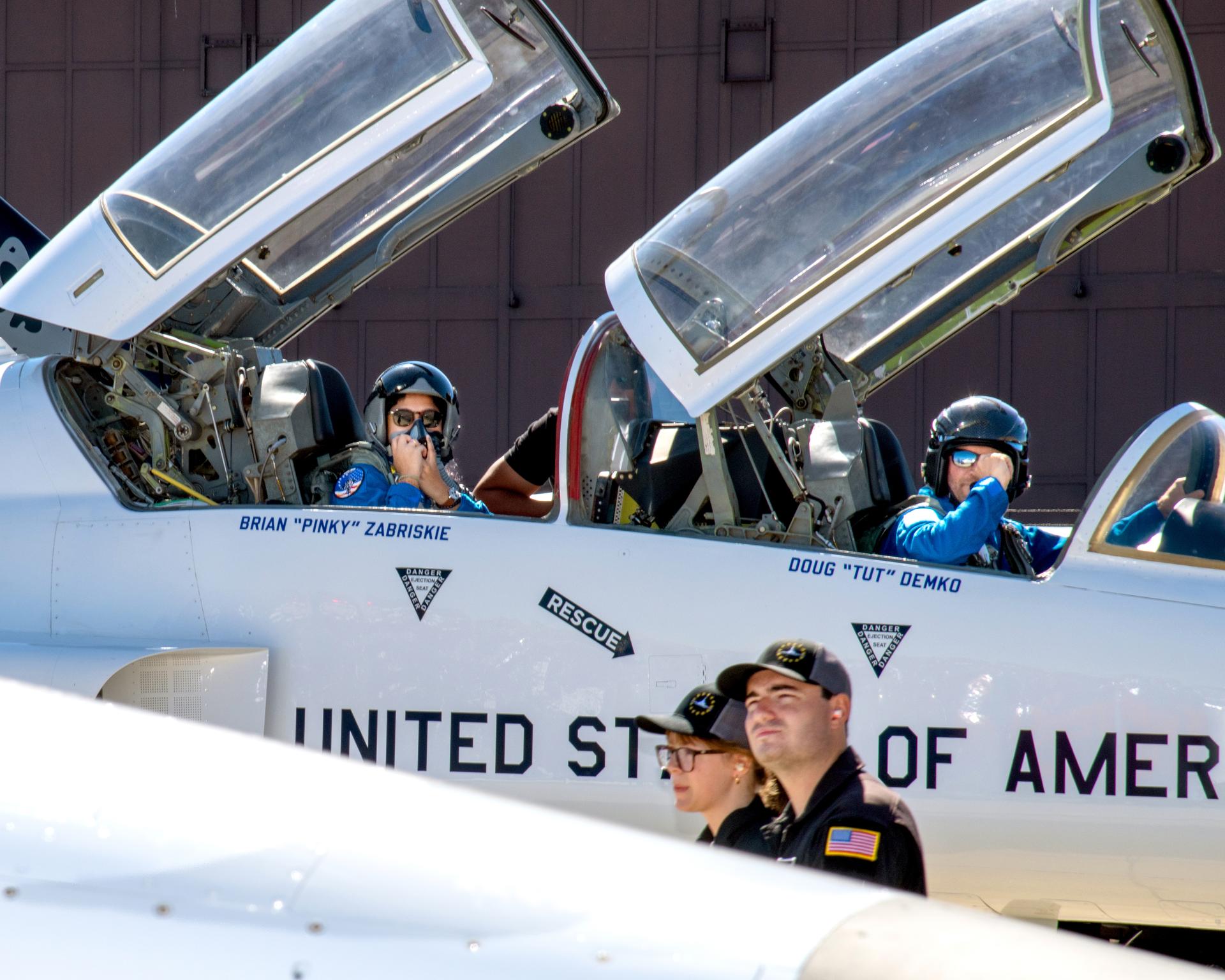
Rider Greeta Thaikattil talks with her pilot, Doug “Tut” Demko before engine start and take off for the Browns Stadium flyover. This was part of the 2026 NASA Inspiration Tours.
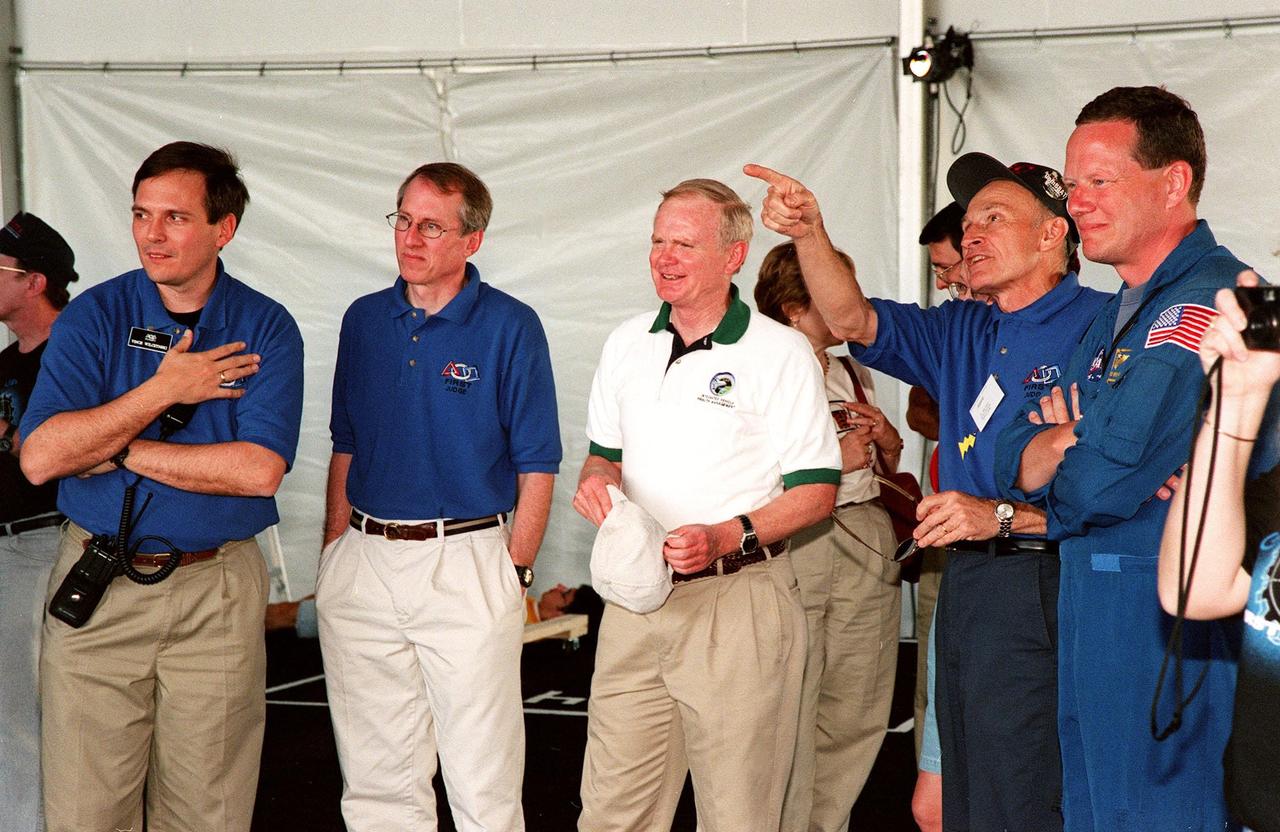
Watching the 1999 FIRST Southeastern Regional robotic competition held at KSC are (left to right) FIRST representative Vince Wilczynski and Executive Director of FIRST David Brown, Center Director Roy Bridges, former KSC Director of Shuttle Processing Robert Sieck (pointing), and astronaut David Brown. FIRST is a nonprofit organization, For Inspiration and Recognition of Science and Technology. The competition comprised 27 teams, pairing high school students with engineer mentors and corporations. Brown and Sieck served as judges for the event that pits gladiator robots against each other in an athletic-style competition. Powered by 12-volt batteries and operated by remote control, the robotic gladiators spend two minutes each trying to grab, claw and hoist large, satin pillows onto their machines. Teams play defense by taking away competitors' pillows and generally harassing opposing machines. The FIRST robotics competition is designed to provide students with a hands-on, inside look at engineering and other professional careers
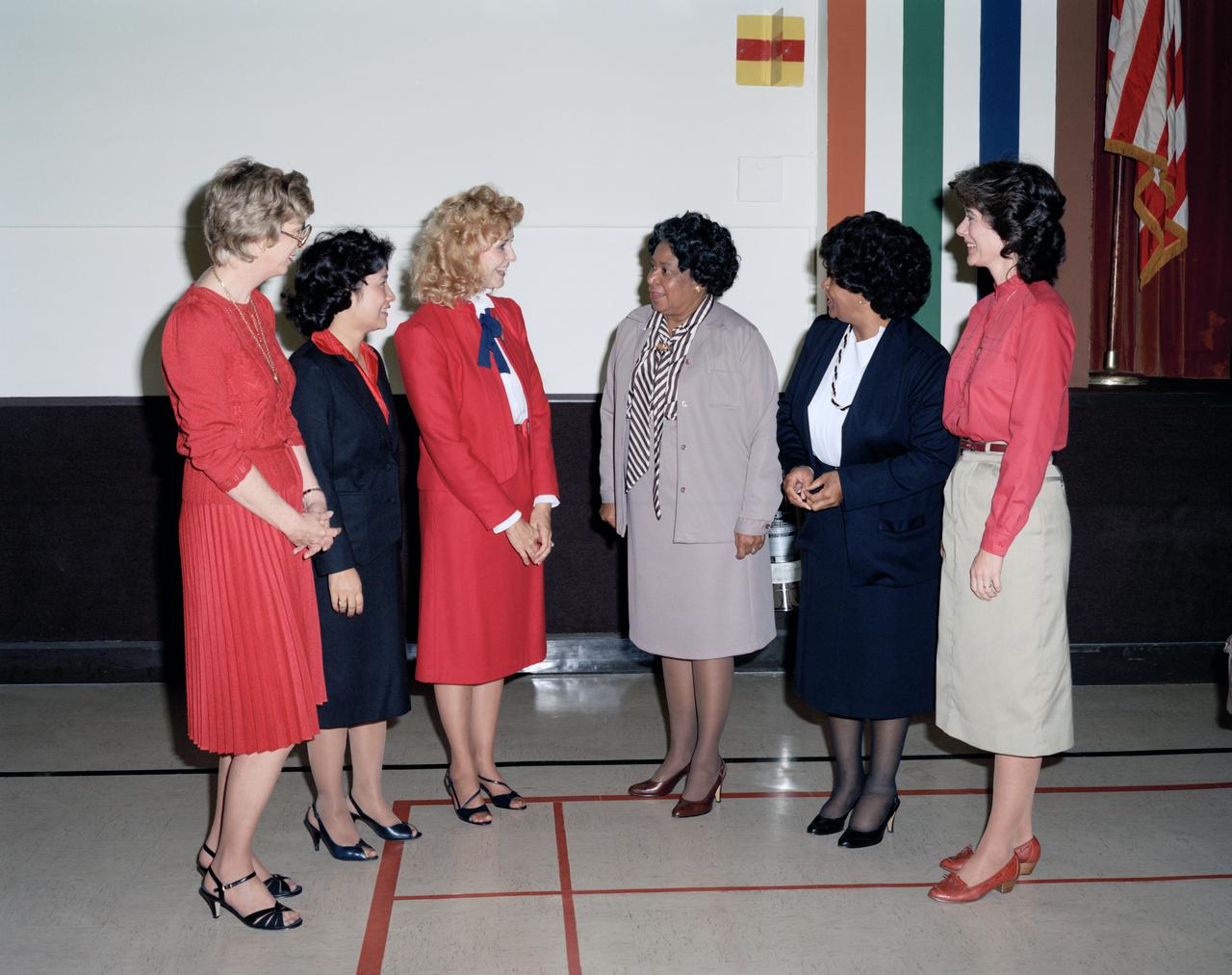
Members of the Langley Federal Women's Program surround Mary Jackson in the brown suit, of the Office of Equal Opportunity Programs. Mary Jackson NASA's first African-American female engineer, and subsequent career supporting the hiring and promotion of other deserving female and minority employees.
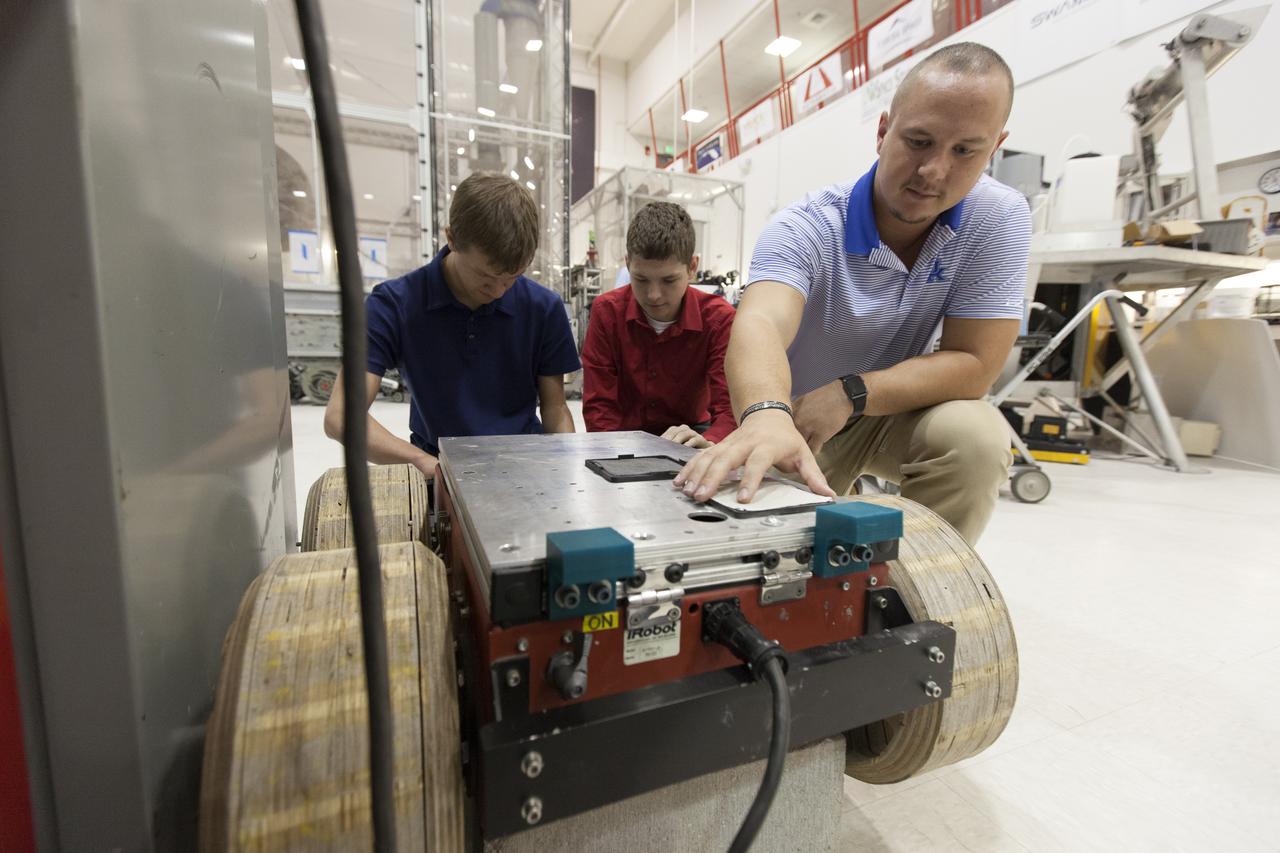
In the Swamp Works laboratory at NASA's Kennedy Space Center in Florida, student interns, from the left, Jeremiah House, Thomas Muller and Austin Langdon are joining agency scientists, contributing in the area of Exploration Research and Technology. House is studying computer/electrical engineering at John Brown University in Siloam Springs, Arkansas. Muller is pursuing a degree in computer engineering and control systems and Florida Tech. Langdon is an electrical engineering major at the University of Kentucky. The agency attracts its future workforce through the NASA Internship, Fellowships and Scholarships, or NIFS, Program.
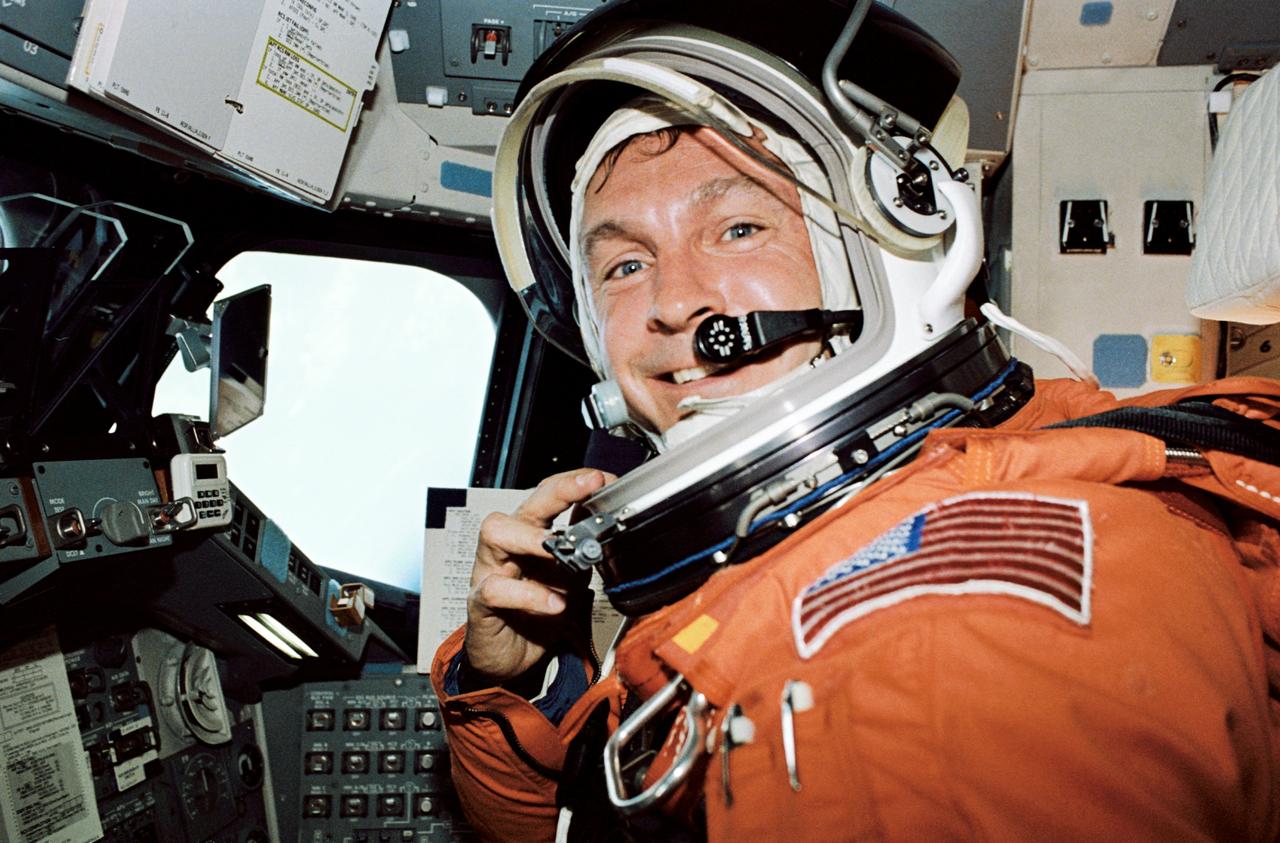
STS047-28-002 (20 Sept. 1992) --- Astronaut Curtis L. Brown, Jr., STS-47 pilot, is photographed at the Space Shuttle Endeavour's pilot station about ten minutes after main engine cutoff on launch day of the eight-day Spacelab-J mission. Wearing the partial-pressure launch and entry suit, Brown shared the forward cabin with astronaut Robert L. Gibson (out of frame at left), mission commander. Endeavour was beginning its second mission in space, this one devoted to research supporting the Spacelab-J mission.
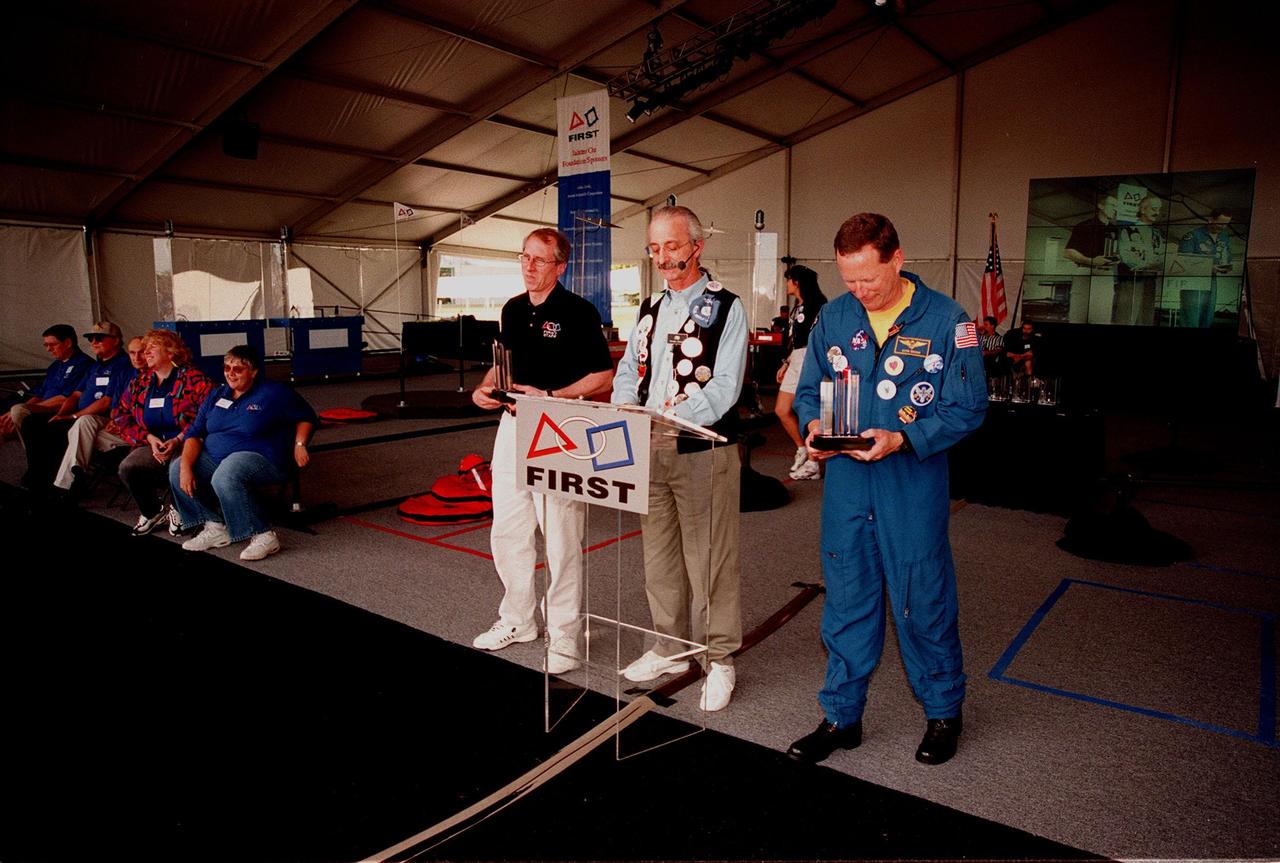
Kicking off the award ceremony at the 1999 FIRST Southeastern Regional robotic competition held at KSC are David Brown, Executive Director of FIRST; Woody Flowers, national advisor for FIRST; and astronaut David Brown. FIRST is a nonprofit organization, For Inspiration and Recognition of Science and Technology, that sponsors the event pitting gladiator robots against each other in an athletic-style competition. The FIRST robotics competition is designed to provide students with a hands-on, inside look at engineering and other professional careers, pairing high school students with engineer mentors and corporations. The regional event comprised 27 teams. Along with the championship award, which went to high school teams in Miami and San German, Puerto Rico, 15 other awards were presented
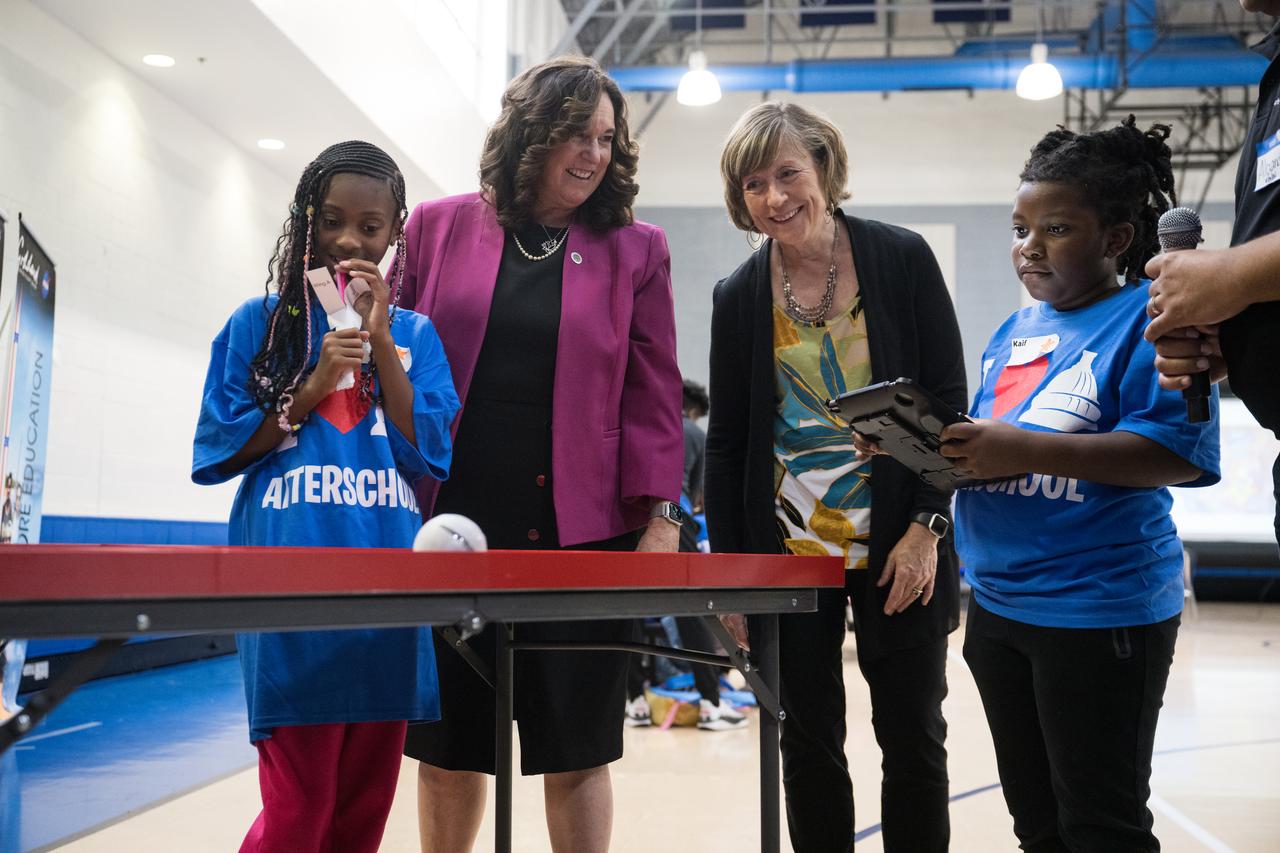
NASA Deputy Associate Administrator for NASA’s Office of STEM Engagement, Kris Brown, second from right, and U.S. Department of Education Deputy Secretary Cindy Marten, second from left, watch as a student operates a robot during a STEM event to kickoff the 21st Century Community Learning Centers NASA and U.S. Department of Education partnership, Monday, Sept. 23, 2024 at Wheatley Education Campus (EC) in Washington. Students engaged in NASA hands-on activities and an engineering design challenge. Photo Credit: (NASA/Aubrey Gemignani)
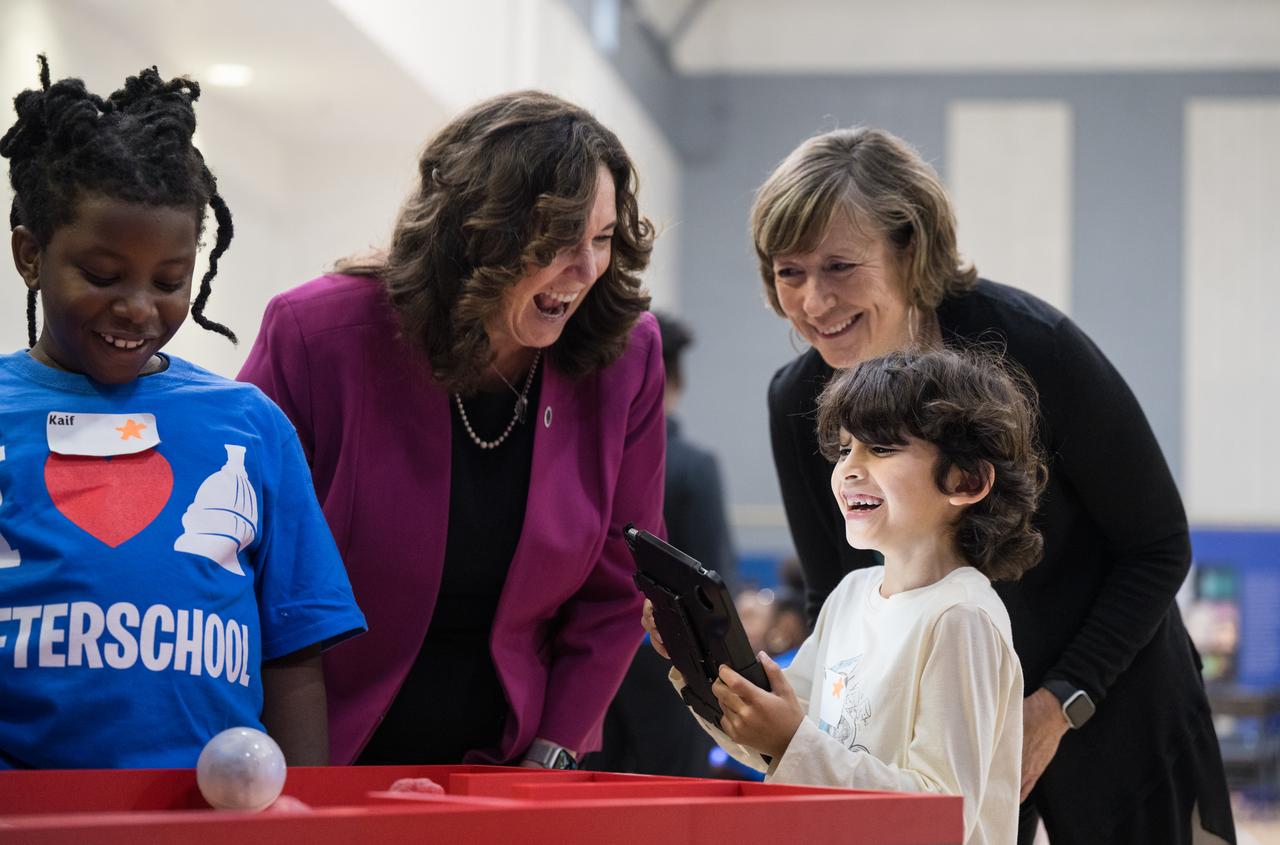
NASA Deputy Associate Administrator for NASA’s Office of STEM Engagement, Kris Brown, right, and U.S. Department of Education Deputy Secretary Cindy Marten, left, watch as a student operates a robot during a STEM event to kickoff the 21st Century Community Learning Centers NASA and U.S. Department of Education partnership, Monday, Sept. 23, 2024 at Wheatley Education Campus (EC) in Washington. Students engaged in NASA hands-on activities and an engineering design challenge. Photo Credit: (NASA/Aubrey Gemignani)
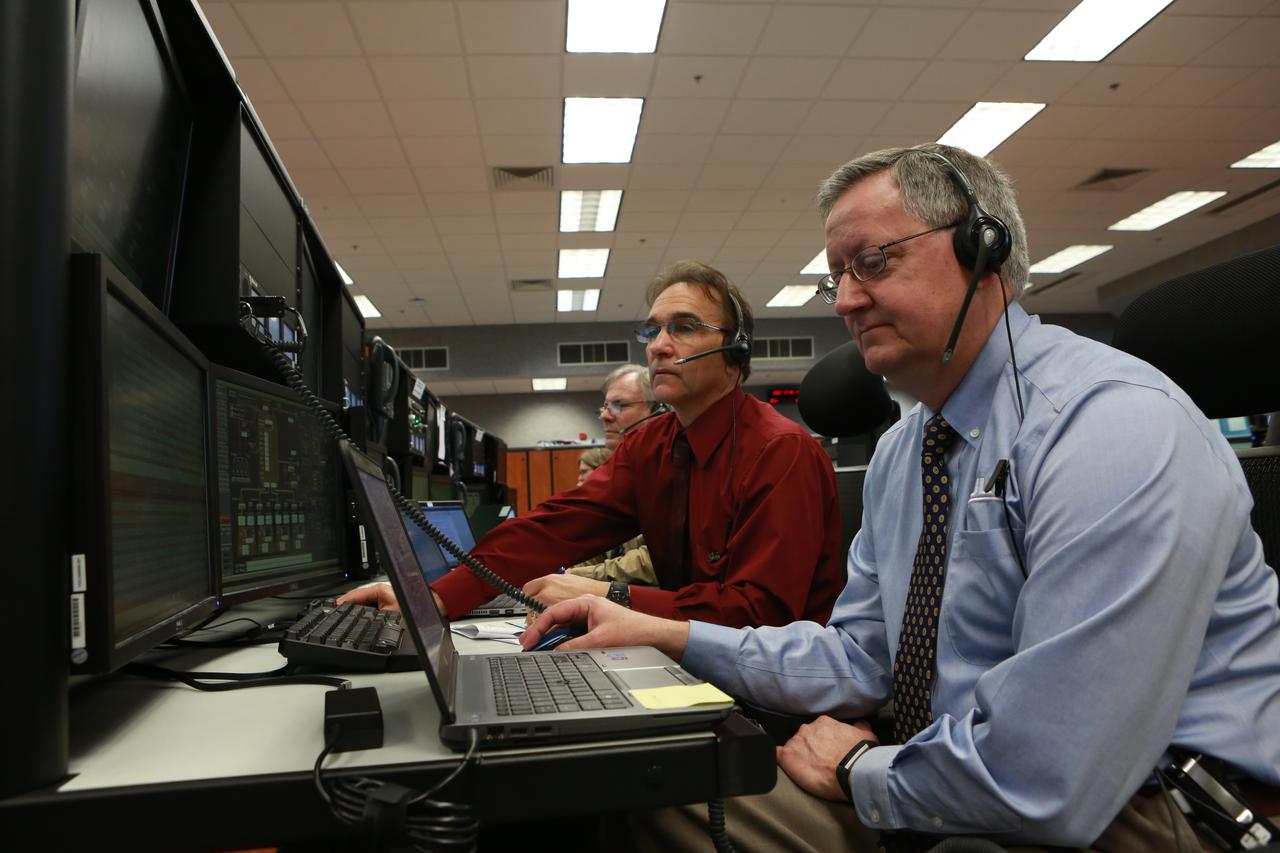
Test Project Engineer Rick Brown, left, and Master Console Operator Jason Robinson, both with Jacobs, monitor operations from their consoles in Firing Room 1 at the Kennedy Space Center's Launch Control Center during a countdown simulation for Exploration Mission 1. It was the agency's first simulation of a portion of the countdown for the first launch of a Space Launch System rocket and Orion spacecraft that will eventually take astronauts beyond low-Earth orbit to destinations such as the Moon and Mars.

NASA Deputy Associate Administrator for NASA’s Office of STEM Engagement, Kris Brown, provides remarks at a kickoff event for the 21st Century Community Learning Centers NASA and Department of Education partnership, Monday, Sept. 23, 2024 at Wheatley Education Campus in Washington. Students engaged in NASA hands-on activities and an engineering design challenge. Photo Credit: (NASA/Aubrey Gemignani)
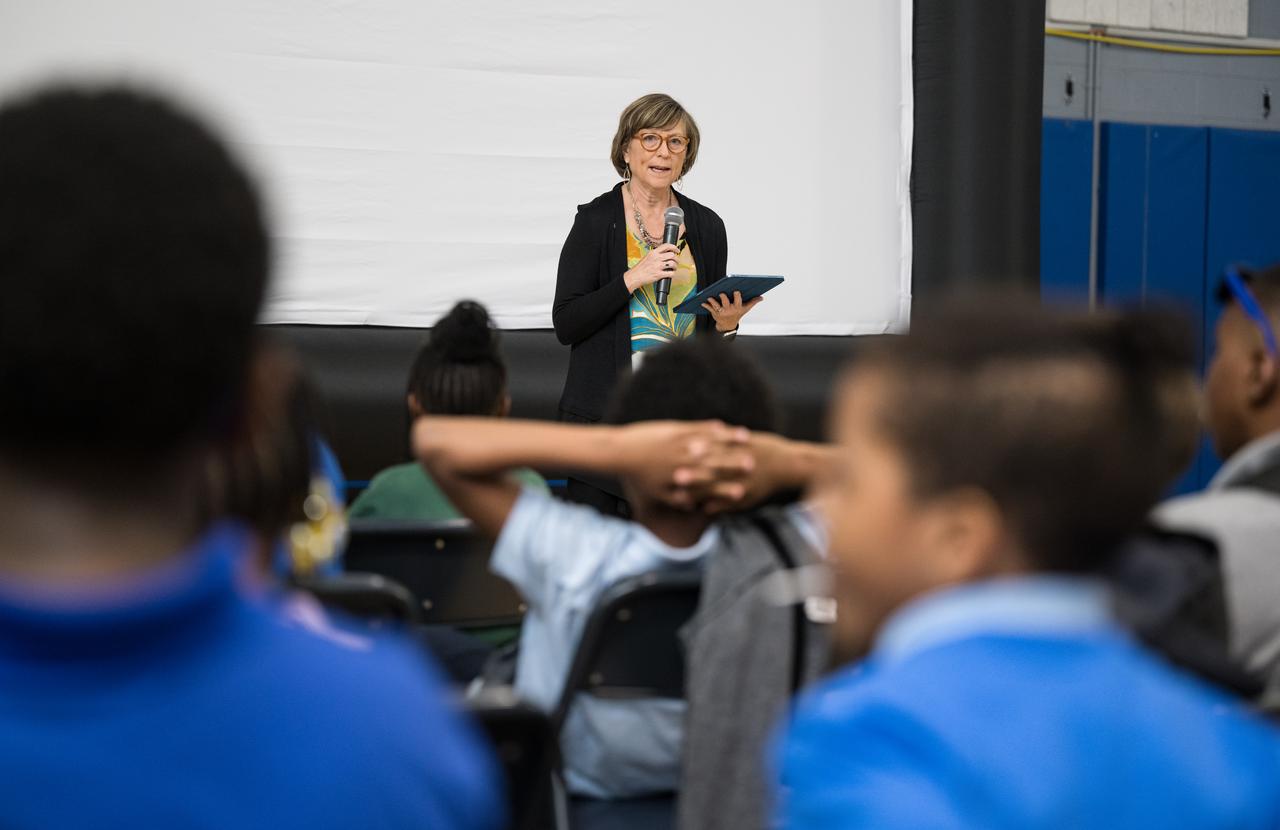
NASA Deputy Associate Administrator for NASA’s Office of STEM Engagement, Kris Brown, provides remarks at a kickoff event for the 21st Century Community Learning Centers NASA and Department of Education partnership, Monday, Sept. 23, 2024 at Wheatley Education Campus in Washington. Students engaged in NASA hands-on activities and an engineering design challenge. Photo Credit: (NASA/Aubrey Gemignani)
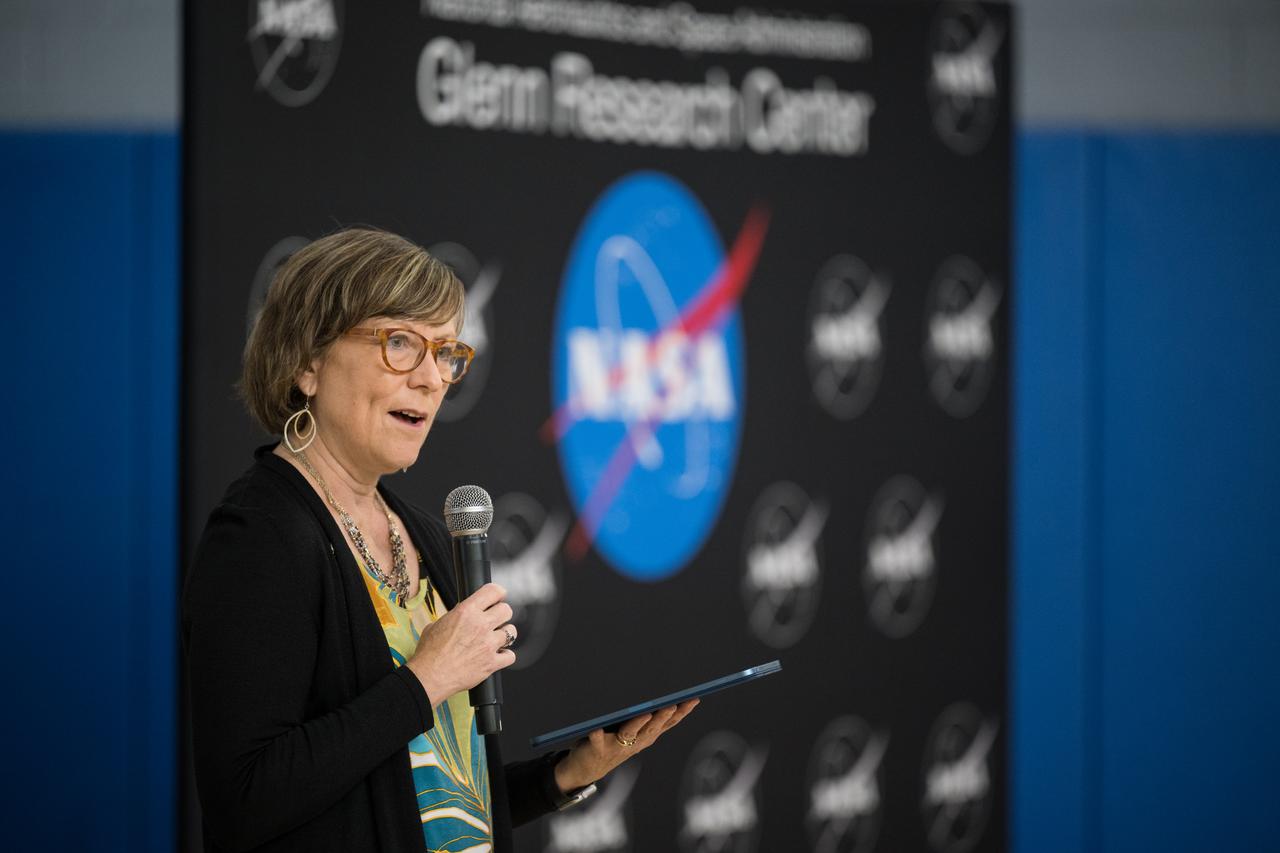
NASA Deputy Associate Administrator for NASA’s Office of STEM Engagement, Kris Brown, provides remarks at a kickoff event for the 21st Century Community Learning Centers NASA and Department of Education partnership, Monday, Sept. 23, 2024 at Wheatley Education Campus in Washington. Students engaged in NASA hands-on activities and an engineering design challenge. Photo Credit: (NASA/Aubrey Gemignani)
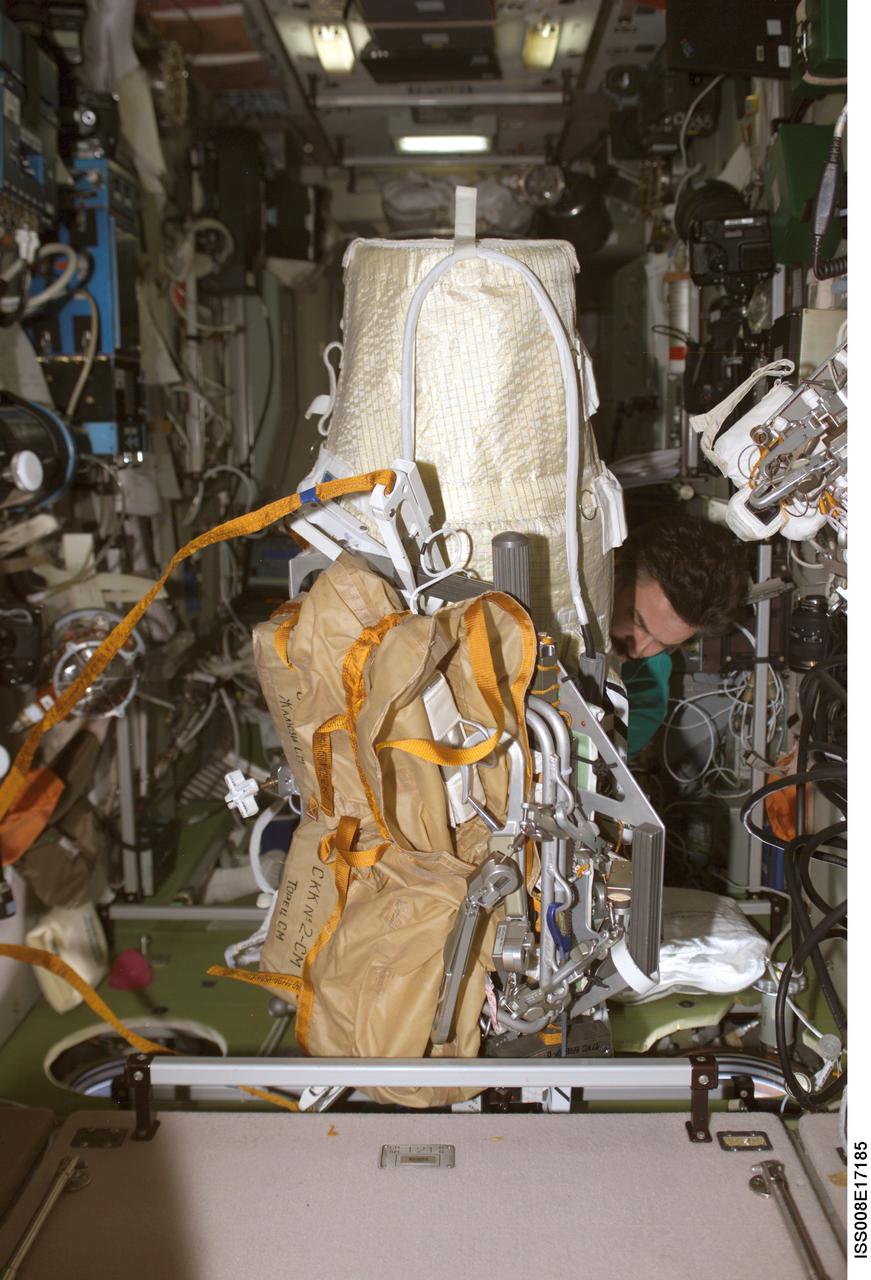
ISS008-E-17185 (24 February 2004) --- Cosmonaut Alexander Y. Kaleri, Expedition 8 flight engineer, works with the extravehicular activity (EVA) bundle in the Zvezda Service Module on the International Space Station (ISS). The Matroshka experiment package is shrouded (aft) with the brown carry bags for the CKK hardware (fwd) along with tools and other needed items. It is all bundled to a Russian EVA integrated equipment carrier. Kaleri represents Rosaviakosmos.
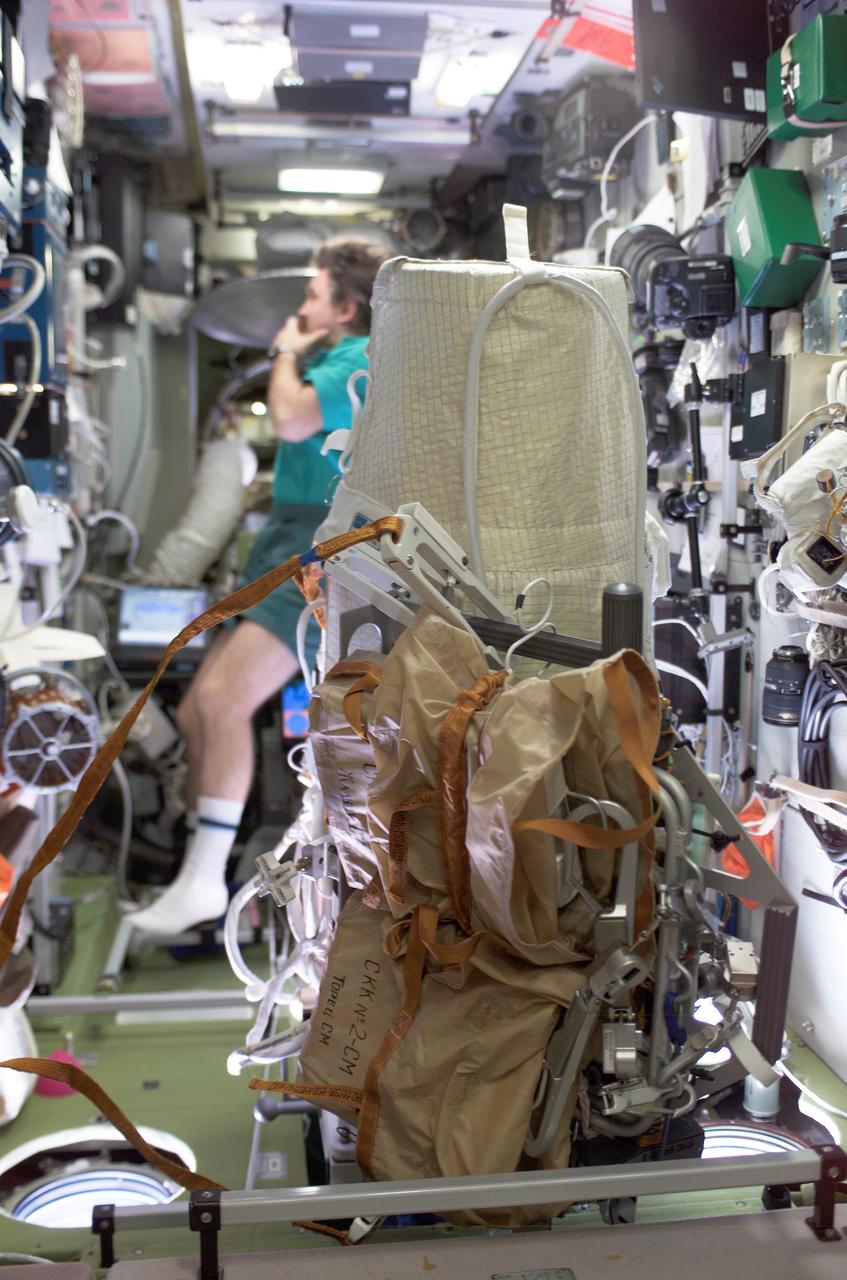
ISS008-E-17183 (24 February 2004) --- This image shows a close-up view of the extravehicular activity (EVA) bundle in the Zvezda Service Module on the International Space Station (ISS). The Matroshka experiment package is shrouded (aft) with the brown carry bags for the CKK hardware (fwd) along with tools and other needed items. It is all bundled to a Russian EVA integrated equipment carrier. Cosmonaut Alexander Y. Kaleri, flight engineer representing Russia’s Federal Space Agency, is in the background.
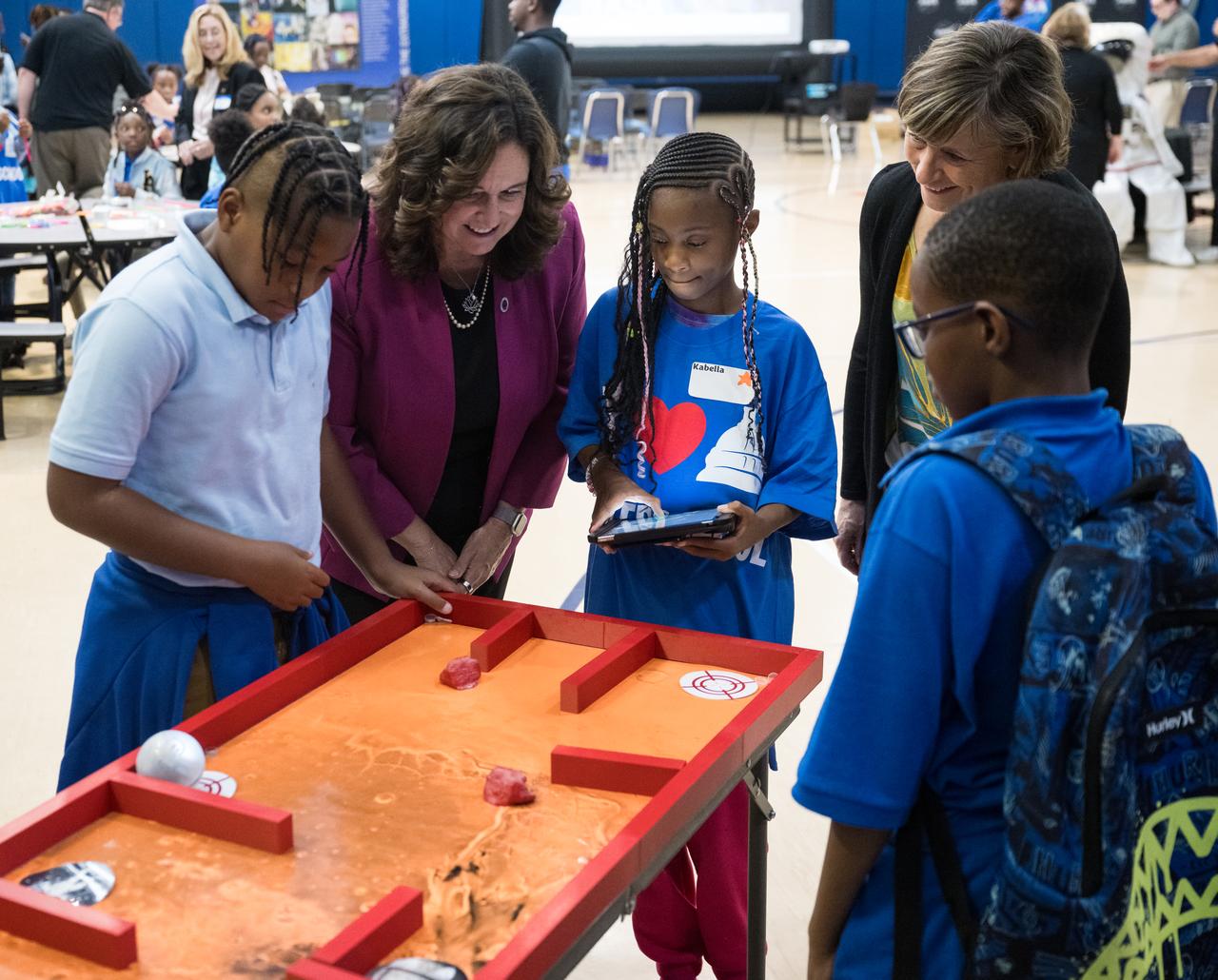
NASA Deputy Associate Administrator for NASA’s Office of STEM Engagement, Kris Brown, second from right, and U.S. Department of Education Deputy Secretary Cindy Marten, second from left, watch as a student operates a robot during a STEM event to kickoff the 21st Century Community Learning Centers NASA and U.S. Department of Education partnership, Monday, Sept. 23, 2024 at Wheatley Education Campus (EC) in Washington. Students engaged in NASA hands-on activities and an engineering design challenge. Photo Credit: (NASA/Aubrey Gemignani)
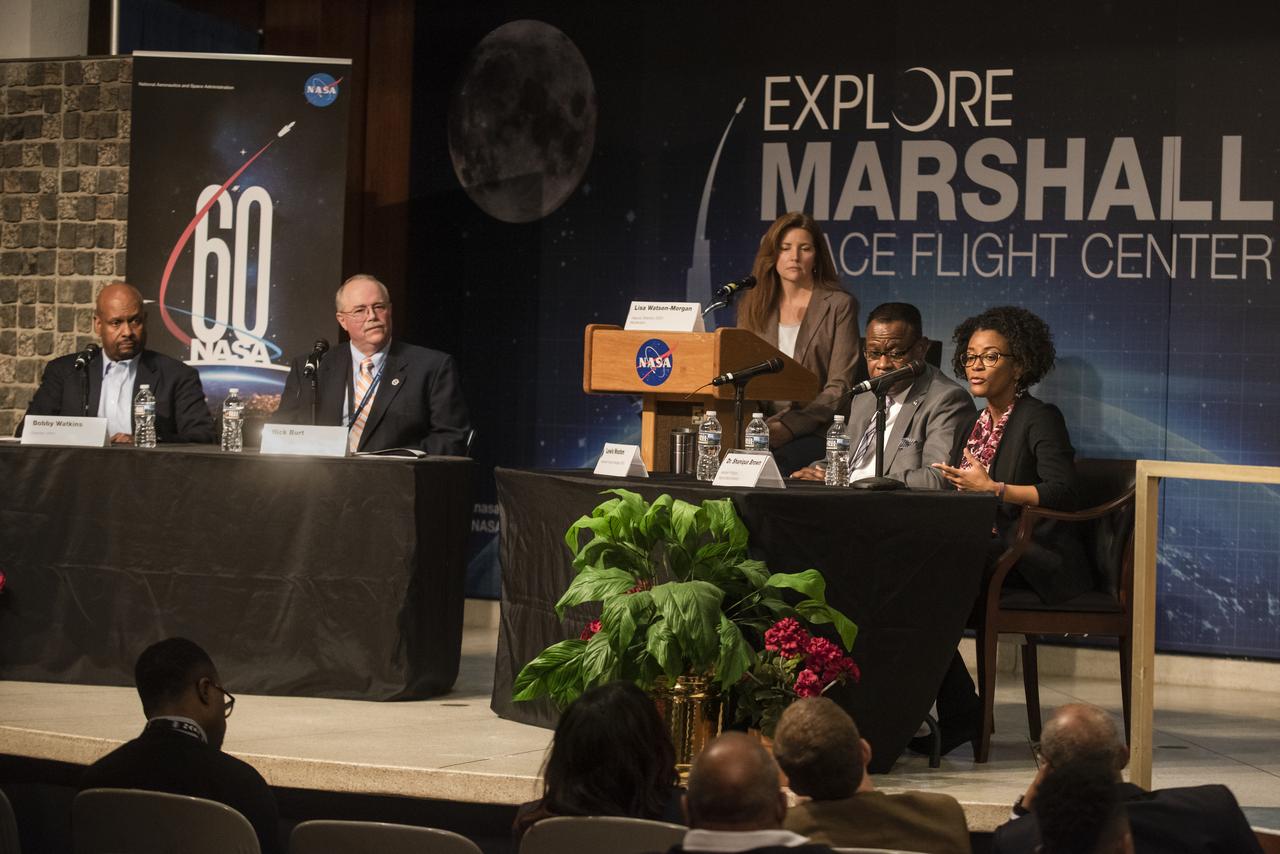
Wayne State University professor Shanique Brown, far right, takes part in a panel discussion on diversity and building strong, inclusive teams. She was joined by, from right, Lewis Wooten, associate program manager for the Space Launch System Program Office at Marshall; moderator Lisa Watson-Morgan, deputy director of Marshall's Engineering Directorate; Rick Burt, director of Marshall's Safety & Mission Assurance Directorate; and Bobby Watkins, director of the Human Exploration Development and Operations Office.
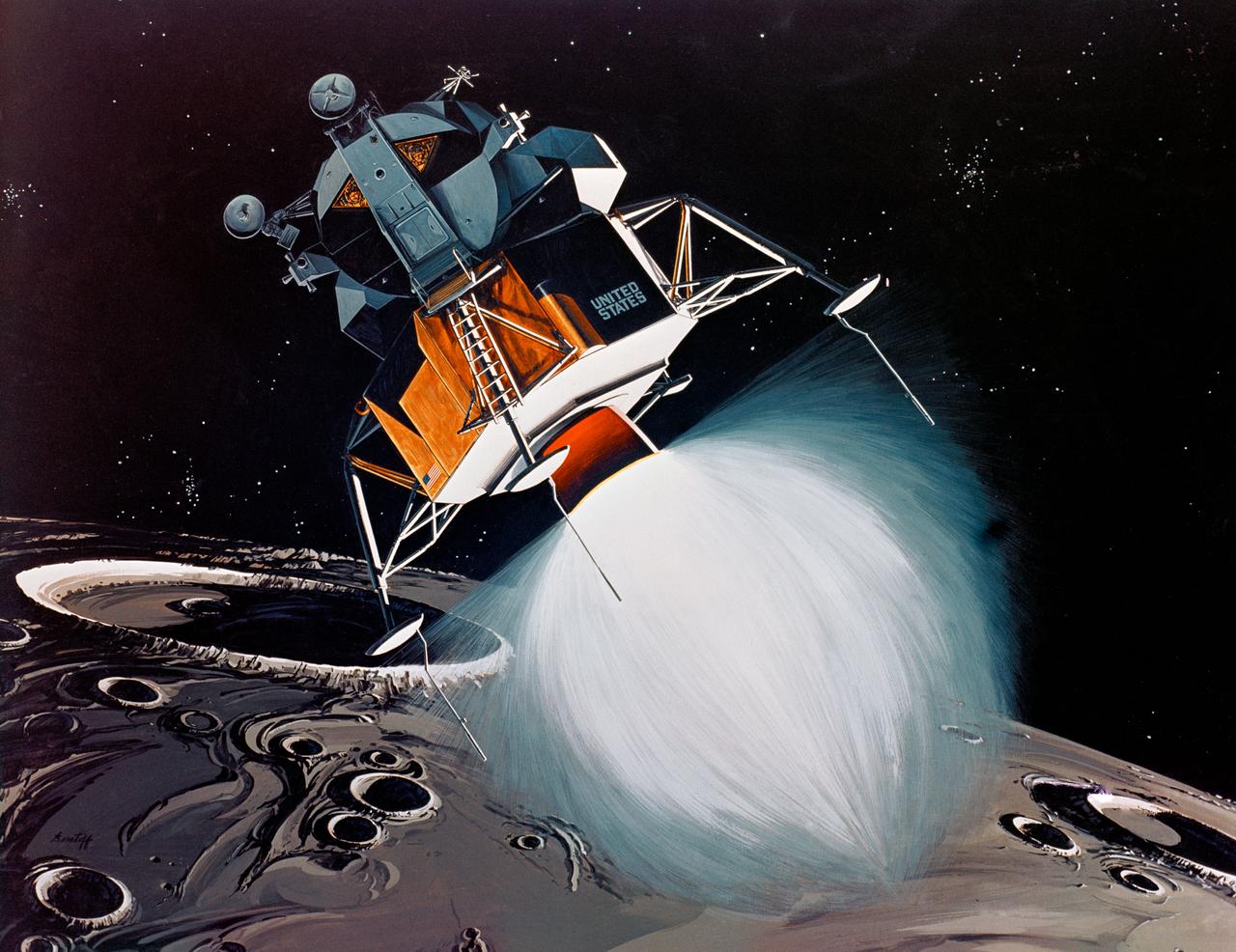
S69-33765 (12 May 1969) --- Artist's concept depicting the firing of the Apollo 10 Lunar Module descent engine for 42 seconds to propel "Snoopy" back into a higher lunar orbit for rendezvous and docking with the Command and Service Modules. Earlier, the LM descent engine will be fired for 27 seconds to take astronauts Thomas P. Stafford, Apollo 10 commander; and Eugene A. Cernan, lunar module pilot, to within 10 miles of the moon's surface. Astronauts John W. Young, command module pilot, will remain in the Command Module, "Charlie Brown," in lunar orbit. Developed by TRW's Systems Group at Redondo Beach, California, under Grumman subcontract, the throttleable descent engine will be used to soft land the LM on the lunar surface during Apollo 11 and subsequent Apollo missions.
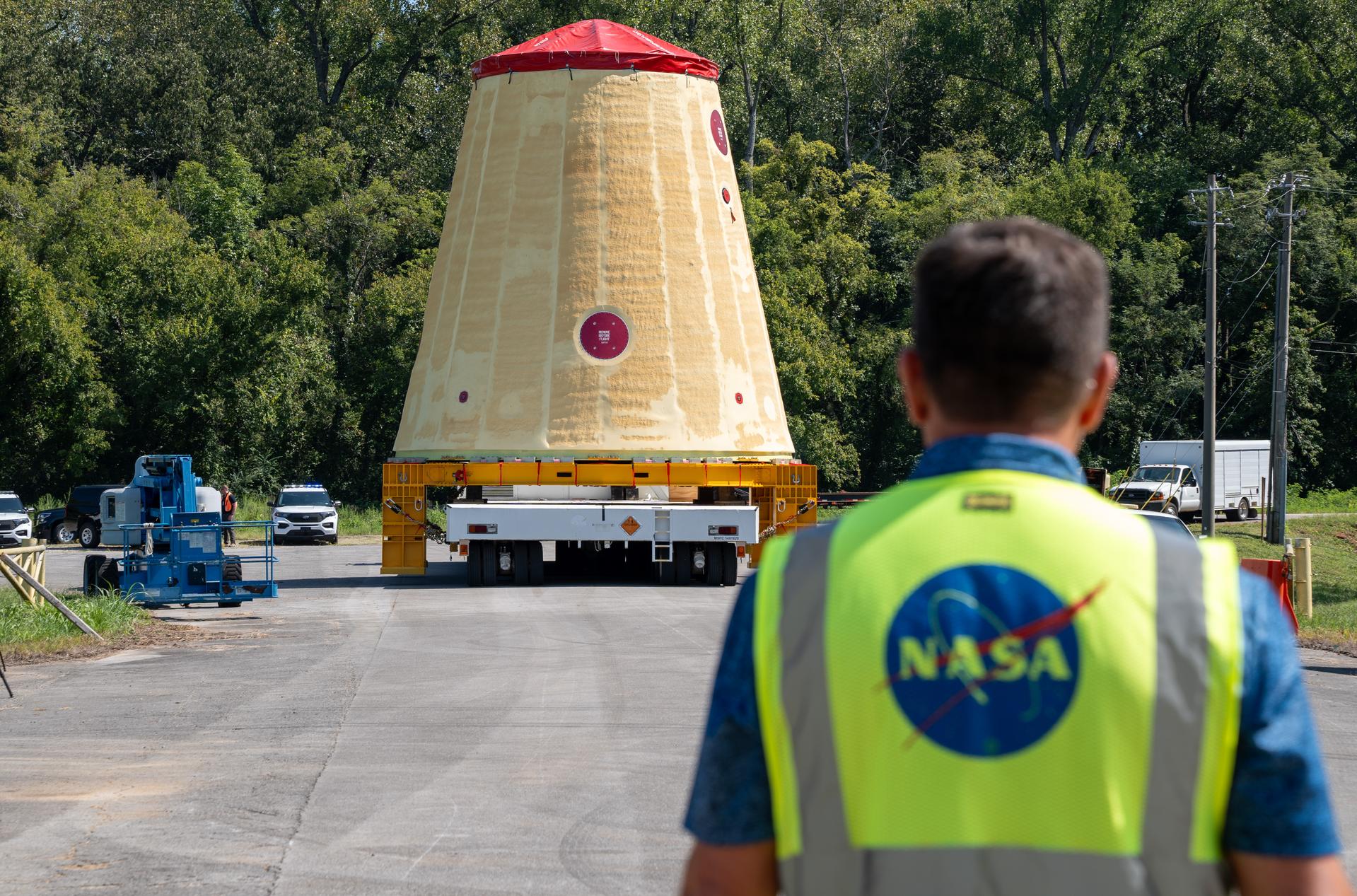
NASA rolled out a key piece of space flight hardware for the SLS (Space Launch System) rocket for the first crewed mission of NASA’s Artemis campaign from Marshall Space Flight Center in Huntsville, Alabama, on Wednesday, Aug. 21 for shipment to the agency’s spaceport in Florida. The cone-shaped launch vehicle stage adapter connects the rocket’s core stage to the upper stage and helps protect the upper stage’s engine that will help propel the Artemis II test flight around the Moon, slated for 2025. Manufactured by prime contractor Teledyne Brown Engineering and the Jacobs Space Exploration Group’s ESSCA (Engineering Services and Science Capability Augmentation) contract using NASA Marshall’s self-reacting friction-stir robotic and vertical weld tools. Crews moved the adapter out of NASA Marshall’s Building 4708 to the agency’s Pegasus barge Aug. 21. The barge will ferry the adapter first to NASA’s Michoud Assembly Facility in New Orleans, where crews will pick up additional SLS hardware for future Artemis missions, before traveling to NASA Kennedy. Once in Florida, the adapter will join the recently delivered core stage. There, teams with NASA’s Exploration Ground Systems will prepare the adapter for stacking and launch.
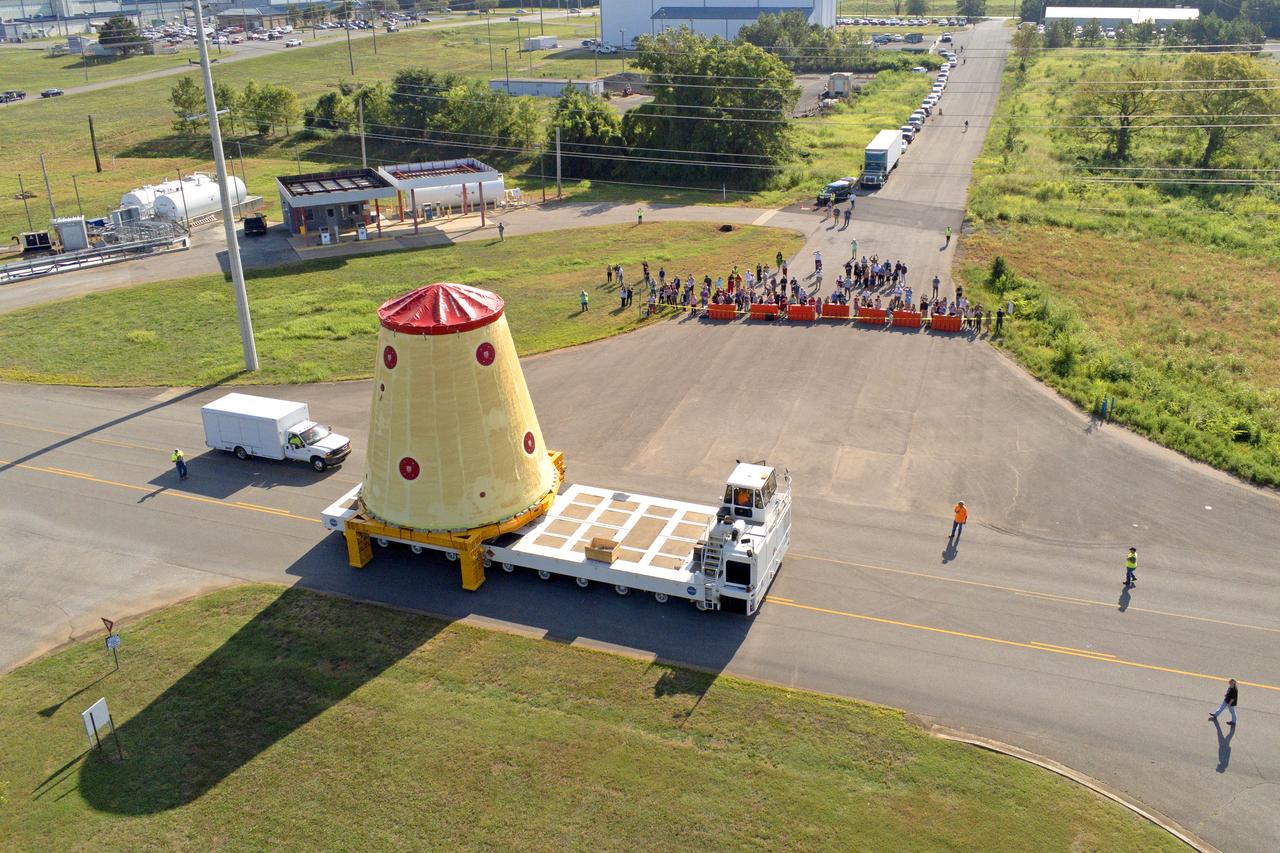
NASA rolled out a key piece of space flight hardware for the SLS (Space Launch System) rocket for the first crewed mission of NASA’s Artemis campaign from Marshall Space Flight Center in Huntsville, Alabama, on Wednesday, Aug. 21 for shipment to the agency’s spaceport in Florida. The cone-shaped launch vehicle stage adapter connects the rocket’s core stage to the upper stage and helps protect the upper stage’s engine that will help propel the Artemis II test flight around the Moon, slated for 2025. Manufactured by prime contractor Teledyne Brown Engineering and the Jacobs Space Exploration Group’s ESSCA (Engineering Services and Science Capability Augmentation) contract using NASA Marshall’s self-reacting friction-stir robotic and vertical weld tools. Crews moved the adapter out of NASA Marshall’s Building 4708 to the agency’s Pegasus barge Aug. 21. The barge will ferry the adapter first to NASA’s Michoud Assembly Facility in New Orleans, where crews will pick up additional SLS hardware for future Artemis missions, before traveling to NASA Kennedy. Once in Florida, the adapter will join the recently delivered core stage. There, teams with NASA’s Exploration Ground Systems will prepare the adapter for stacking and launch.
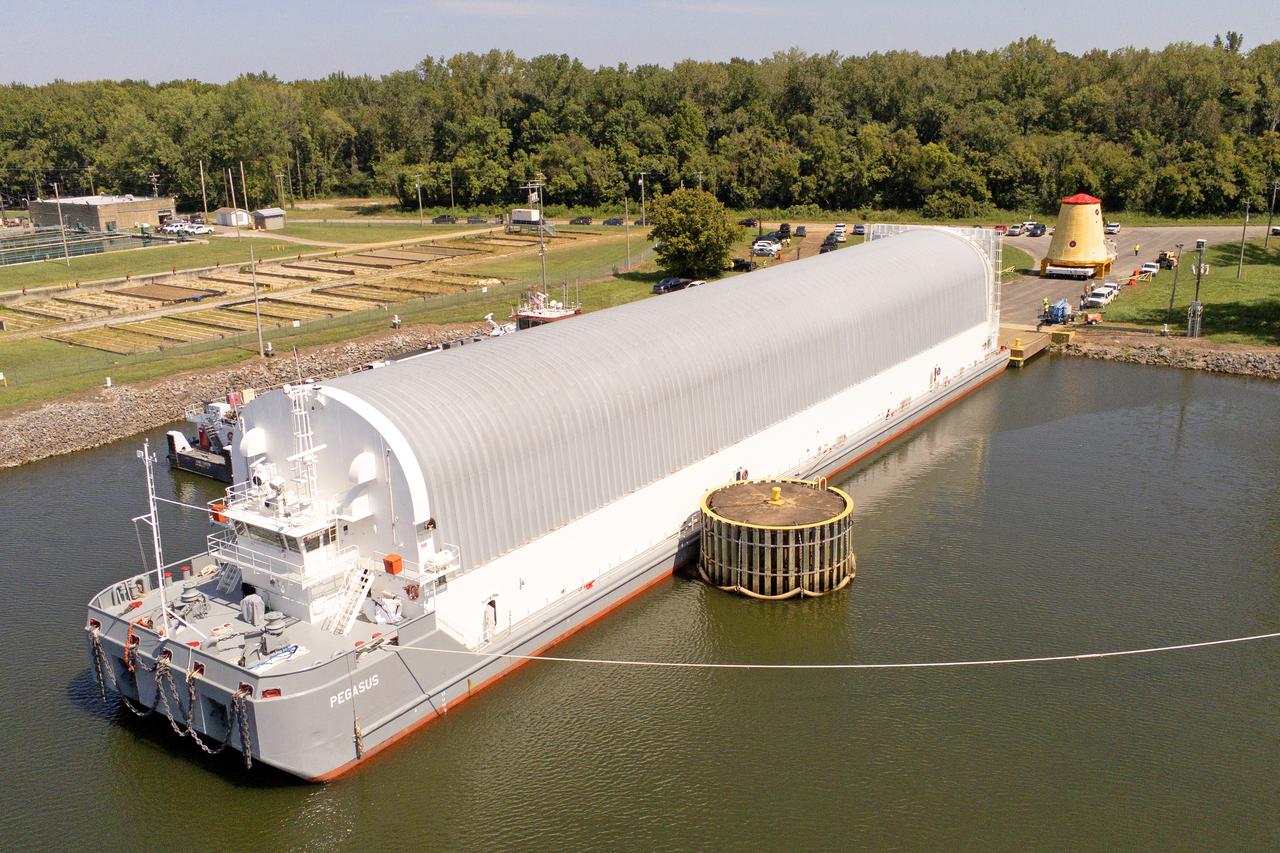
NASA rolled out a key piece of space flight hardware for the SLS (Space Launch System) rocket for the first crewed mission of NASA’s Artemis campaign from Marshall Space Flight Center in Huntsville, Alabama, on Wednesday, Aug. 21 for shipment to the agency’s spaceport in Florida. The cone-shaped launch vehicle stage adapter connects the rocket’s core stage to the upper stage and helps protect the upper stage’s engine that will help propel the Artemis II test flight around the Moon, slated for 2025. Manufactured by prime contractor Teledyne Brown Engineering and the Jacobs Space Exploration Group’s ESSCA (Engineering Services and Science Capability Augmentation) contract using NASA Marshall’s self-reacting friction-stir robotic and vertical weld tools. Crews moved the adapter out of NASA Marshall’s Building 4708 to the agency’s Pegasus barge Aug. 21. The barge will ferry the adapter first to NASA’s Michoud Assembly Facility in New Orleans, where crews will pick up additional SLS hardware for future Artemis missions, before traveling to NASA Kennedy. Once in Florida, the adapter will join the recently delivered core stage. There, teams with NASA’s Exploration Ground Systems will prepare the adapter for stacking and launch.
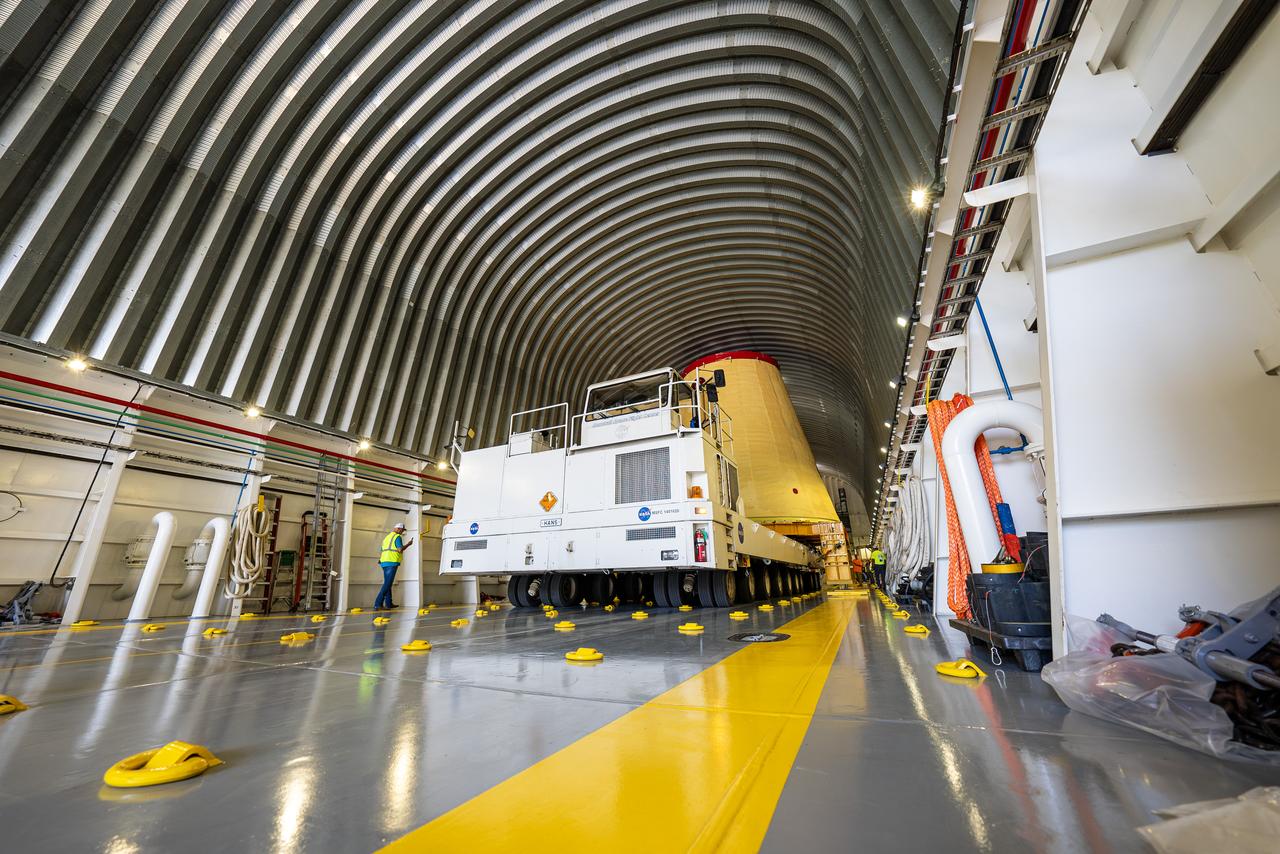
NASA rolled out a key piece of space flight hardware for the SLS (Space Launch System) rocket for the first crewed mission of NASA’s Artemis campaign from Marshall Space Flight Center in Huntsville, Alabama, on Wednesday, Aug. 21 for shipment to the agency’s spaceport in Florida. The cone-shaped launch vehicle stage adapter connects the rocket’s core stage to the upper stage and helps protect the upper stage’s engine that will help propel the Artemis II test flight around the Moon, slated for 2025. Manufactured by prime contractor Teledyne Brown Engineering and the Jacobs Space Exploration Group’s ESSCA (Engineering Services and Science Capability Augmentation) contract using NASA Marshall’s self-reacting friction-stir robotic and vertical weld tools. Crews moved the adapter out of NASA Marshall’s Building 4708 to the agency’s Pegasus barge Aug. 21. The barge will ferry the adapter first to NASA’s Michoud Assembly Facility in New Orleans, where crews will pick up additional SLS hardware for future Artemis missions, before traveling to NASA Kennedy. Once in Florida, the adapter will join the recently delivered core stage. There, teams with NASA’s Exploration Ground Systems will prepare the adapter for stacking and launch.
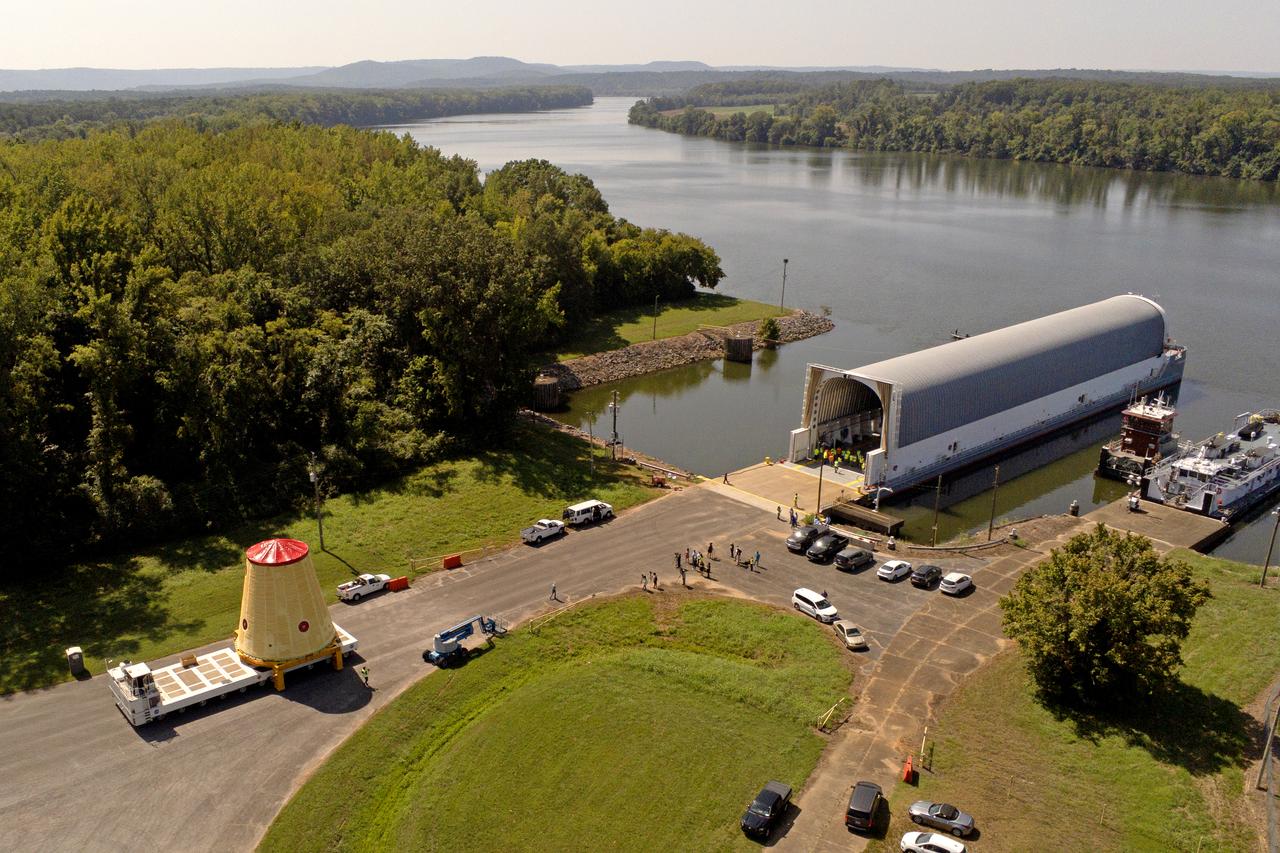
NASA rolled out a key piece of space flight hardware for the SLS (Space Launch System) rocket for the first crewed mission of NASA’s Artemis campaign from Marshall Space Flight Center in Huntsville, Alabama, on Wednesday, Aug. 21 for shipment to the agency’s spaceport in Florida. The cone-shaped launch vehicle stage adapter connects the rocket’s core stage to the upper stage and helps protect the upper stage’s engine that will help propel the Artemis II test flight around the Moon, slated for 2025. Manufactured by prime contractor Teledyne Brown Engineering and the Jacobs Space Exploration Group’s ESSCA (Engineering Services and Science Capability Augmentation) contract using NASA Marshall’s self-reacting friction-stir robotic and vertical weld tools. Crews moved the adapter out of NASA Marshall’s Building 4708 to the agency’s Pegasus barge Aug. 21. The barge will ferry the adapter first to NASA’s Michoud Assembly Facility in New Orleans, where crews will pick up additional SLS hardware for future Artemis missions, before traveling to NASA Kennedy. Once in Florida, the adapter will join the recently delivered core stage. There, teams with NASA’s Exploration Ground Systems will prepare the adapter for stacking and launch.
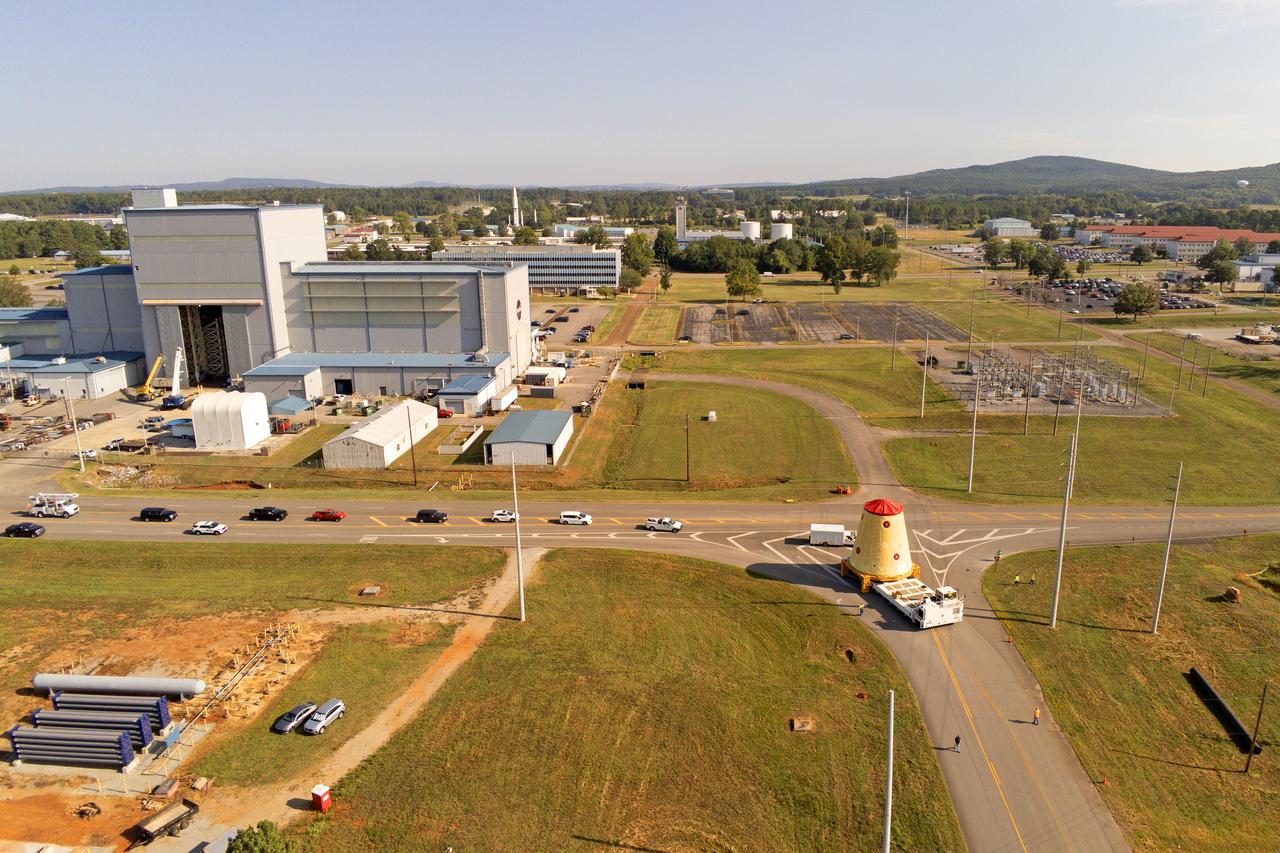
NASA rolled out a key piece of space flight hardware for the SLS (Space Launch System) rocket for the first crewed mission of NASA’s Artemis campaign from Marshall Space Flight Center in Huntsville, Alabama, on Wednesday, Aug. 21 for shipment to the agency’s spaceport in Florida. The cone-shaped launch vehicle stage adapter connects the rocket’s core stage to the upper stage and helps protect the upper stage’s engine that will help propel the Artemis II test flight around the Moon, slated for 2025. Manufactured by prime contractor Teledyne Brown Engineering and the Jacobs Space Exploration Group’s ESSCA (Engineering Services and Science Capability Augmentation) contract using NASA Marshall’s self-reacting friction-stir robotic and vertical weld tools. Crews moved the adapter out of NASA Marshall’s Building 4708 to the agency’s Pegasus barge Aug. 21. The barge will ferry the adapter first to NASA’s Michoud Assembly Facility in New Orleans, where crews will pick up additional SLS hardware for future Artemis missions, before traveling to NASA Kennedy. Once in Florida, the adapter will join the recently delivered core stage. There, teams with NASA’s Exploration Ground Systems will prepare the adapter for stacking and launch.
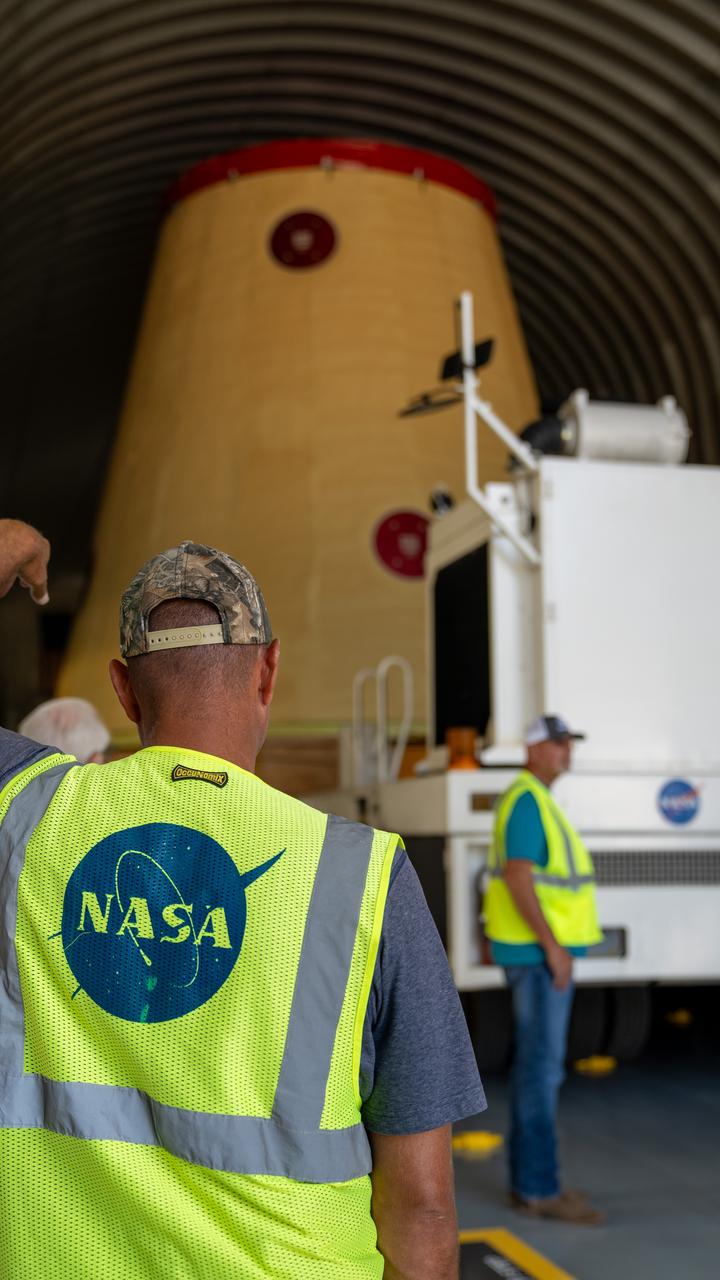
NASA rolled out a key piece of space flight hardware for the SLS (Space Launch System) rocket for the first crewed mission of NASA’s Artemis campaign from Marshall Space Flight Center in Huntsville, Alabama, on Wednesday, Aug. 21 for shipment to the agency’s spaceport in Florida. The cone-shaped launch vehicle stage adapter connects the rocket’s core stage to the upper stage and helps protect the upper stage’s engine that will help propel the Artemis II test flight around the Moon, slated for 2025. Manufactured by prime contractor Teledyne Brown Engineering and the Jacobs Space Exploration Group’s ESSCA (Engineering Services and Science Capability Augmentation) contract using NASA Marshall’s self-reacting friction-stir robotic and vertical weld tools. Crews moved the adapter out of NASA Marshall’s Building 4708 to the agency’s Pegasus barge Aug. 21. The barge will ferry the adapter first to NASA’s Michoud Assembly Facility in New Orleans, where crews will pick up additional SLS hardware for future Artemis missions, before traveling to NASA Kennedy. Once in Florida, the adapter will join the recently delivered core stage. There, teams with NASA’s Exploration Ground Systems will prepare the adapter for stacking and launch.
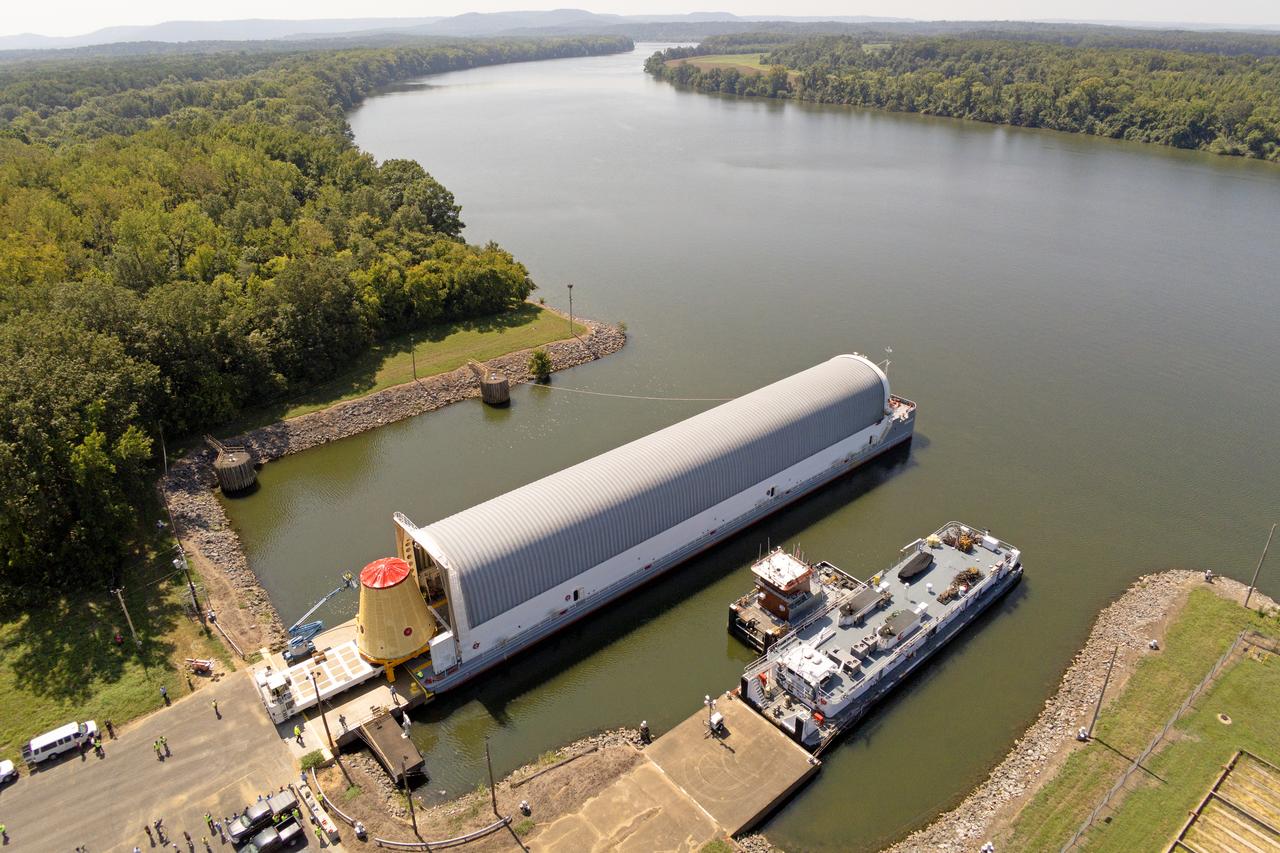
NASA rolled out a key piece of space flight hardware for the SLS (Space Launch System) rocket for the first crewed mission of NASA’s Artemis campaign from Marshall Space Flight Center in Huntsville, Alabama, on Wednesday, Aug. 21 for shipment to the agency’s spaceport in Florida. The cone-shaped launch vehicle stage adapter connects the rocket’s core stage to the upper stage and helps protect the upper stage’s engine that will help propel the Artemis II test flight around the Moon, slated for 2025. Manufactured by prime contractor Teledyne Brown Engineering and the Jacobs Space Exploration Group’s ESSCA (Engineering Services and Science Capability Augmentation) contract using NASA Marshall’s self-reacting friction-stir robotic and vertical weld tools. Crews moved the adapter out of NASA Marshall’s Building 4708 to the agency’s Pegasus barge Aug. 21. The barge will ferry the adapter first to NASA’s Michoud Assembly Facility in New Orleans, where crews will pick up additional SLS hardware for future Artemis missions, before traveling to NASA Kennedy. Once in Florida, the adapter will join the recently delivered core stage. There, teams with NASA’s Exploration Ground Systems will prepare the adapter for stacking and launch.
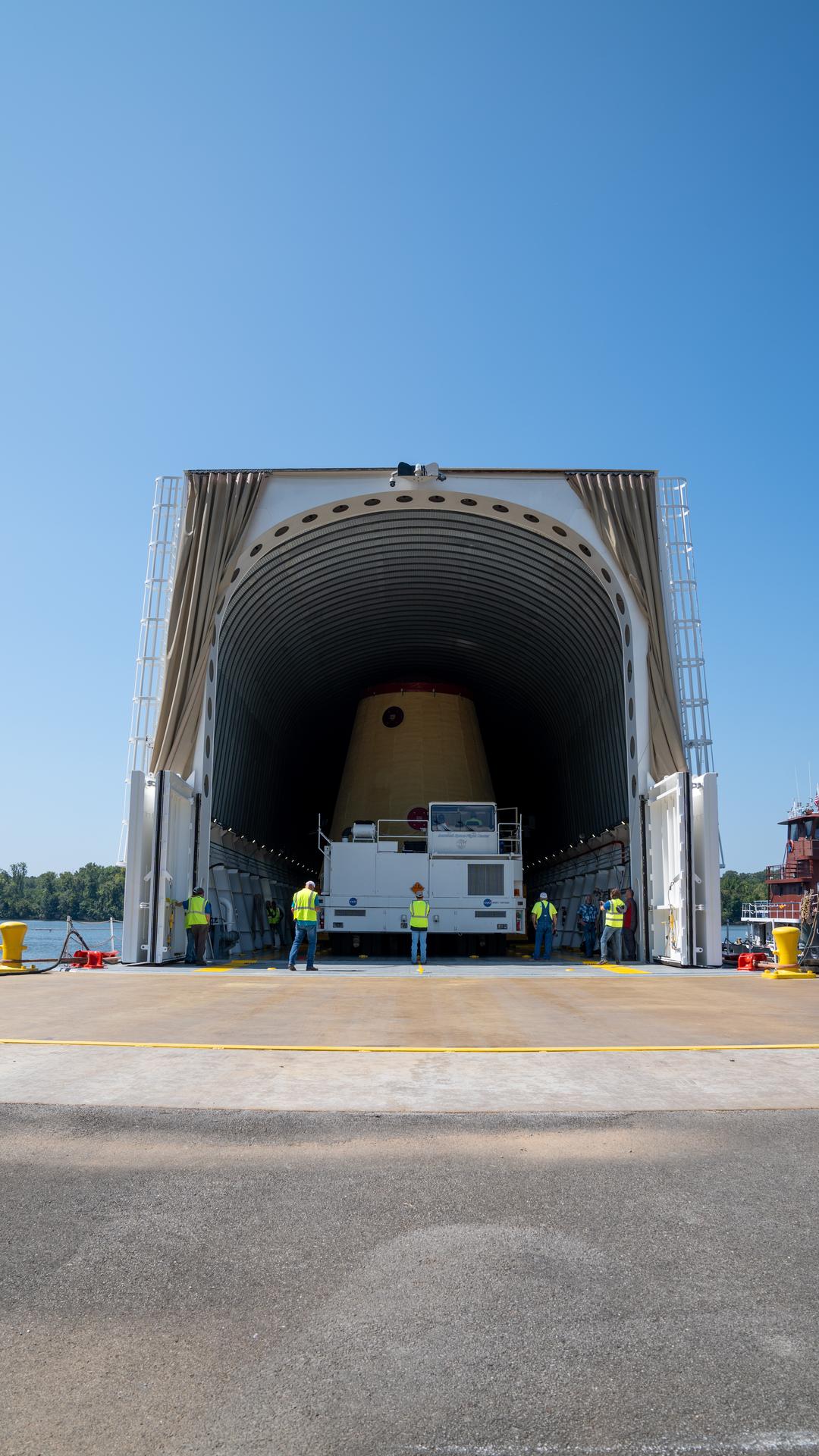
NASA rolled out a key piece of space flight hardware for the SLS (Space Launch System) rocket for the first crewed mission of NASA’s Artemis campaign from Marshall Space Flight Center in Huntsville, Alabama, on Wednesday, Aug. 21 for shipment to the agency’s spaceport in Florida. The cone-shaped launch vehicle stage adapter connects the rocket’s core stage to the upper stage and helps protect the upper stage’s engine that will help propel the Artemis II test flight around the Moon, slated for 2025. Manufactured by prime contractor Teledyne Brown Engineering and the Jacobs Space Exploration Group’s ESSCA (Engineering Services and Science Capability Augmentation) contract using NASA Marshall’s self-reacting friction-stir robotic and vertical weld tools. Crews moved the adapter out of NASA Marshall’s Building 4708 to the agency’s Pegasus barge Aug. 21. The barge will ferry the adapter first to NASA’s Michoud Assembly Facility in New Orleans, where crews will pick up additional SLS hardware for future Artemis missions, before traveling to NASA Kennedy. Once in Florida, the adapter will join the recently delivered core stage. There, teams with NASA’s Exploration Ground Systems will prepare the adapter for stacking and launch.
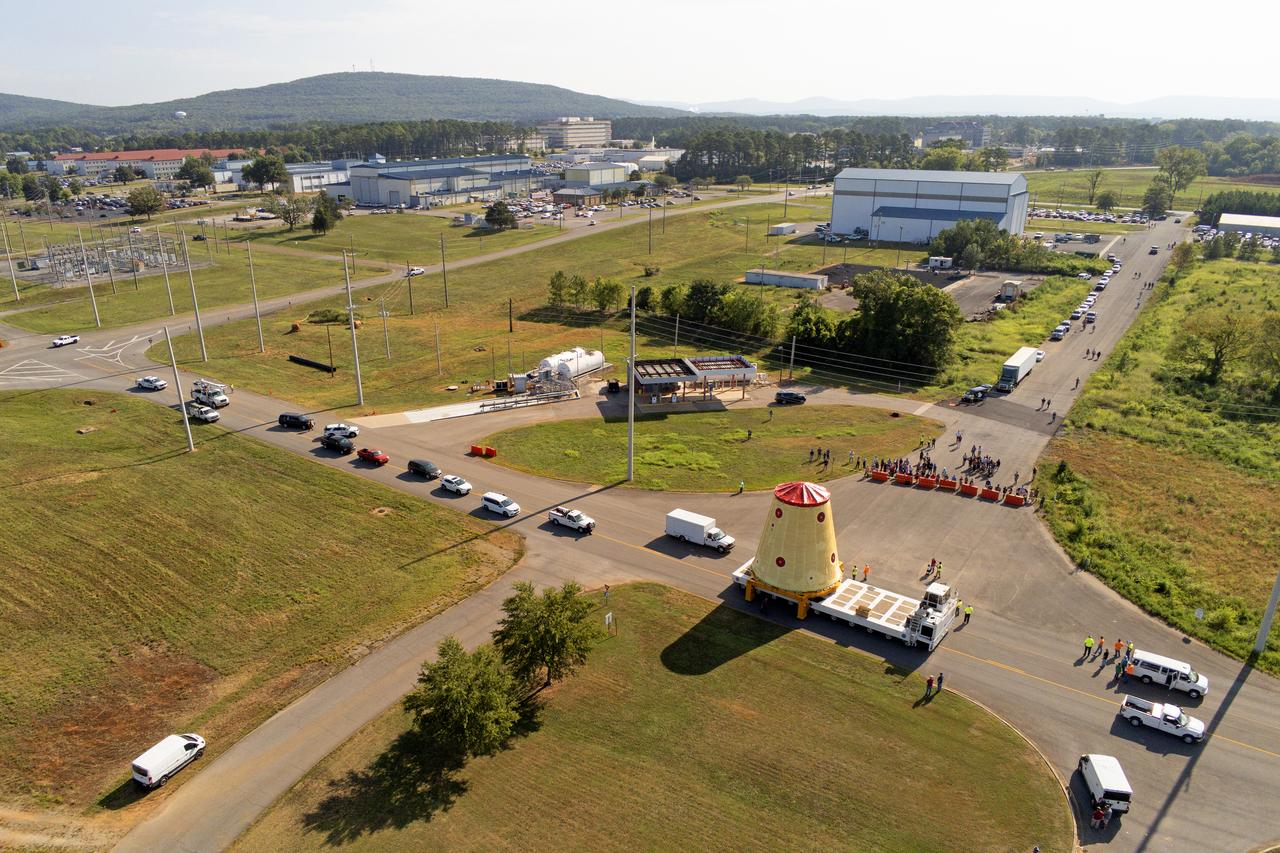
NASA rolled out a key piece of space flight hardware for the SLS (Space Launch System) rocket for the first crewed mission of NASA’s Artemis campaign from Marshall Space Flight Center in Huntsville, Alabama, on Wednesday, Aug. 21 for shipment to the agency’s spaceport in Florida. The cone-shaped launch vehicle stage adapter connects the rocket’s core stage to the upper stage and helps protect the upper stage’s engine that will help propel the Artemis II test flight around the Moon, slated for 2025. Manufactured by prime contractor Teledyne Brown Engineering and the Jacobs Space Exploration Group’s ESSCA (Engineering Services and Science Capability Augmentation) contract using NASA Marshall’s self-reacting friction-stir robotic and vertical weld tools. Crews moved the adapter out of NASA Marshall’s Building 4708 to the agency’s Pegasus barge Aug. 21. The barge will ferry the adapter first to NASA’s Michoud Assembly Facility in New Orleans, where crews will pick up additional SLS hardware for future Artemis missions, before traveling to NASA Kennedy. Once in Florida, the adapter will join the recently delivered core stage. There, teams with NASA’s Exploration Ground Systems will prepare the adapter for stacking and launch.
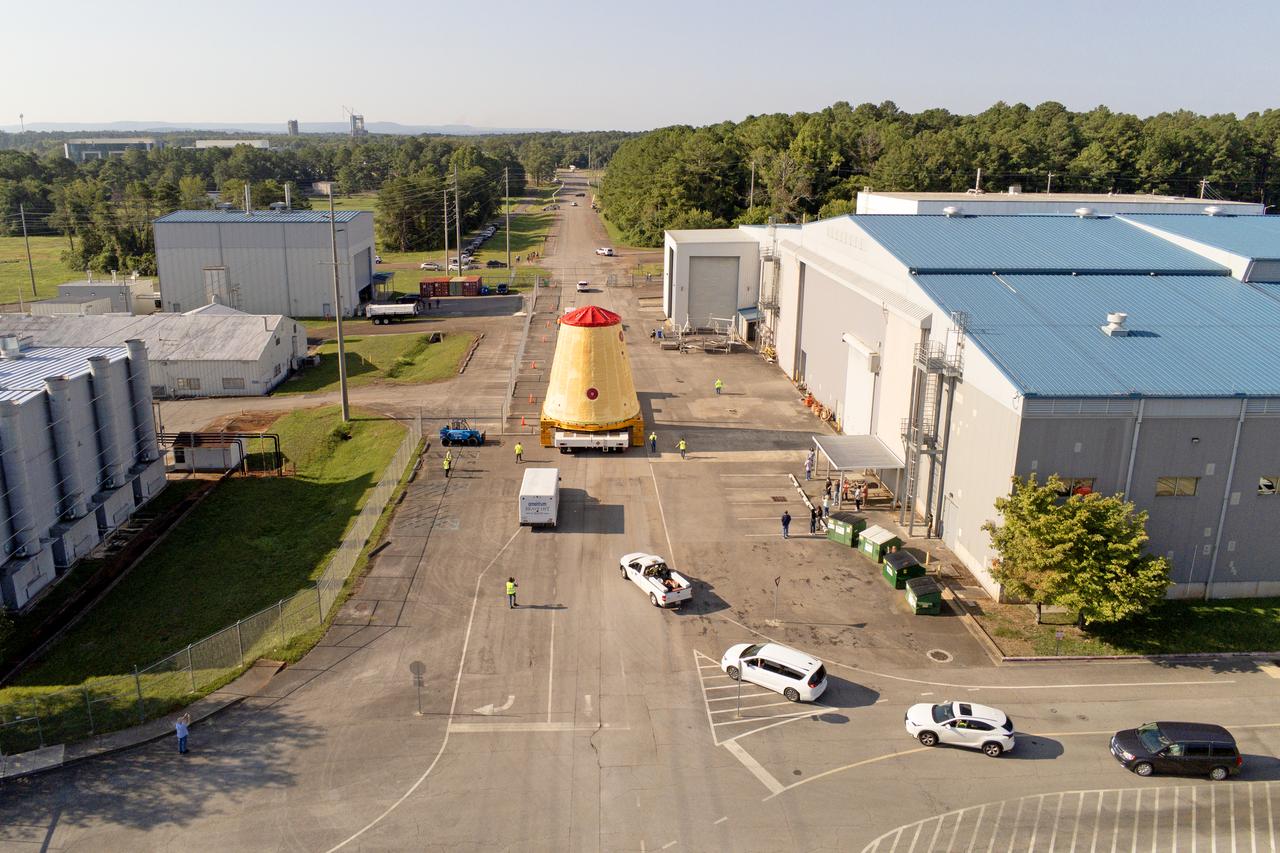
NASA rolled out a key piece of space flight hardware for the SLS (Space Launch System) rocket for the first crewed mission of NASA’s Artemis campaign from Marshall Space Flight Center in Huntsville, Alabama, on Wednesday, Aug. 21 for shipment to the agency’s spaceport in Florida. The cone-shaped launch vehicle stage adapter connects the rocket’s core stage to the upper stage and helps protect the upper stage’s engine that will help propel the Artemis II test flight around the Moon, slated for 2025. Manufactured by prime contractor Teledyne Brown Engineering and the Jacobs Space Exploration Group’s ESSCA (Engineering Services and Science Capability Augmentation) contract using NASA Marshall’s self-reacting friction-stir robotic and vertical weld tools. Crews moved the adapter out of NASA Marshall’s Building 4708 to the agency’s Pegasus barge Aug. 21. The barge will ferry the adapter first to NASA’s Michoud Assembly Facility in New Orleans, where crews will pick up additional SLS hardware for future Artemis missions, before traveling to NASA Kennedy. Once in Florida, the adapter will join the recently delivered core stage. There, teams with NASA’s Exploration Ground Systems will prepare the adapter for stacking and launch.
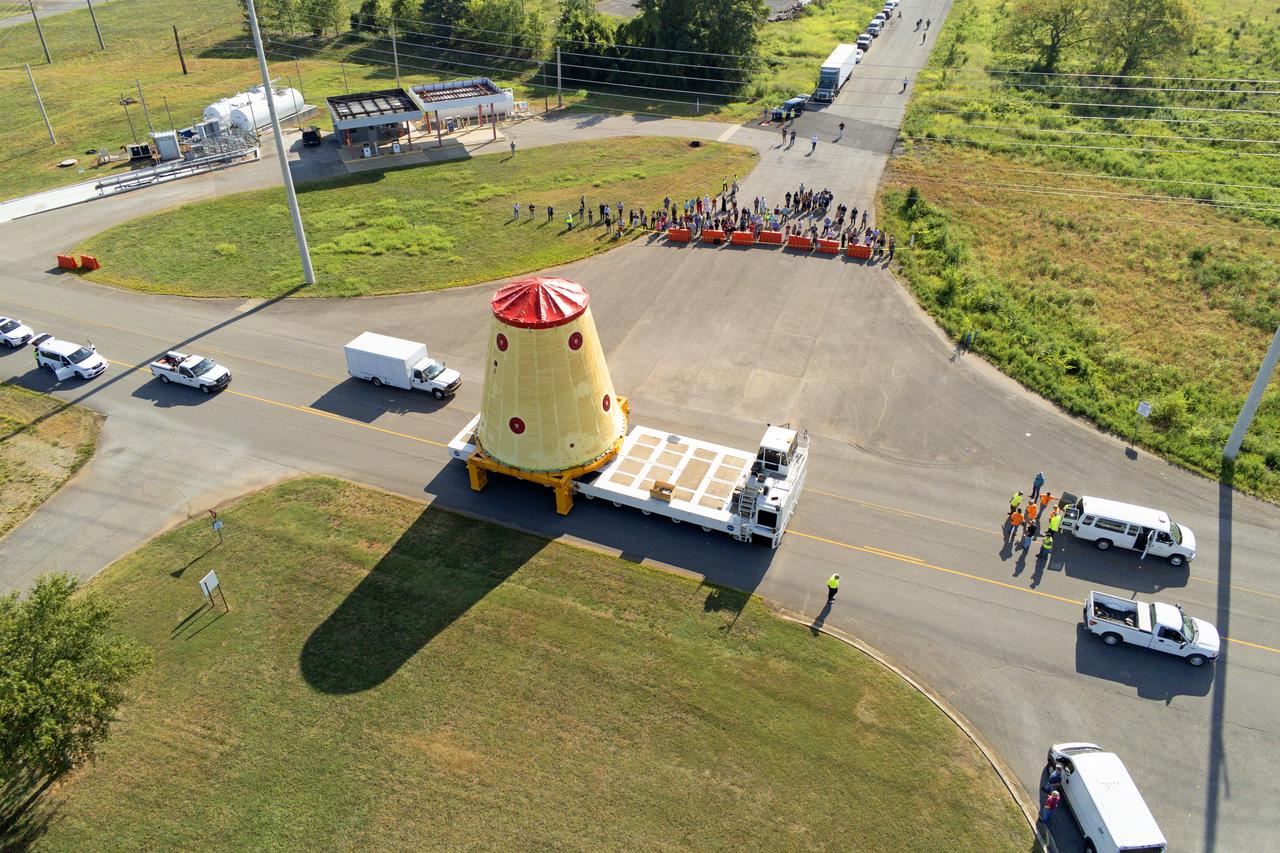
NASA rolled out a key piece of space flight hardware for the SLS (Space Launch System) rocket for the first crewed mission of NASA’s Artemis campaign from Marshall Space Flight Center in Huntsville, Alabama, on Wednesday, Aug. 21 for shipment to the agency’s spaceport in Florida. The cone-shaped launch vehicle stage adapter connects the rocket’s core stage to the upper stage and helps protect the upper stage’s engine that will help propel the Artemis II test flight around the Moon, slated for 2025. Manufactured by prime contractor Teledyne Brown Engineering and the Jacobs Space Exploration Group’s ESSCA (Engineering Services and Science Capability Augmentation) contract using NASA Marshall’s self-reacting friction-stir robotic and vertical weld tools. Crews moved the adapter out of NASA Marshall’s Building 4708 to the agency’s Pegasus barge Aug. 21. The barge will ferry the adapter first to NASA’s Michoud Assembly Facility in New Orleans, where crews will pick up additional SLS hardware for future Artemis missions, before traveling to NASA Kennedy. Once in Florida, the adapter will join the recently delivered core stage. There, teams with NASA’s Exploration Ground Systems will prepare the adapter for stacking and launch.
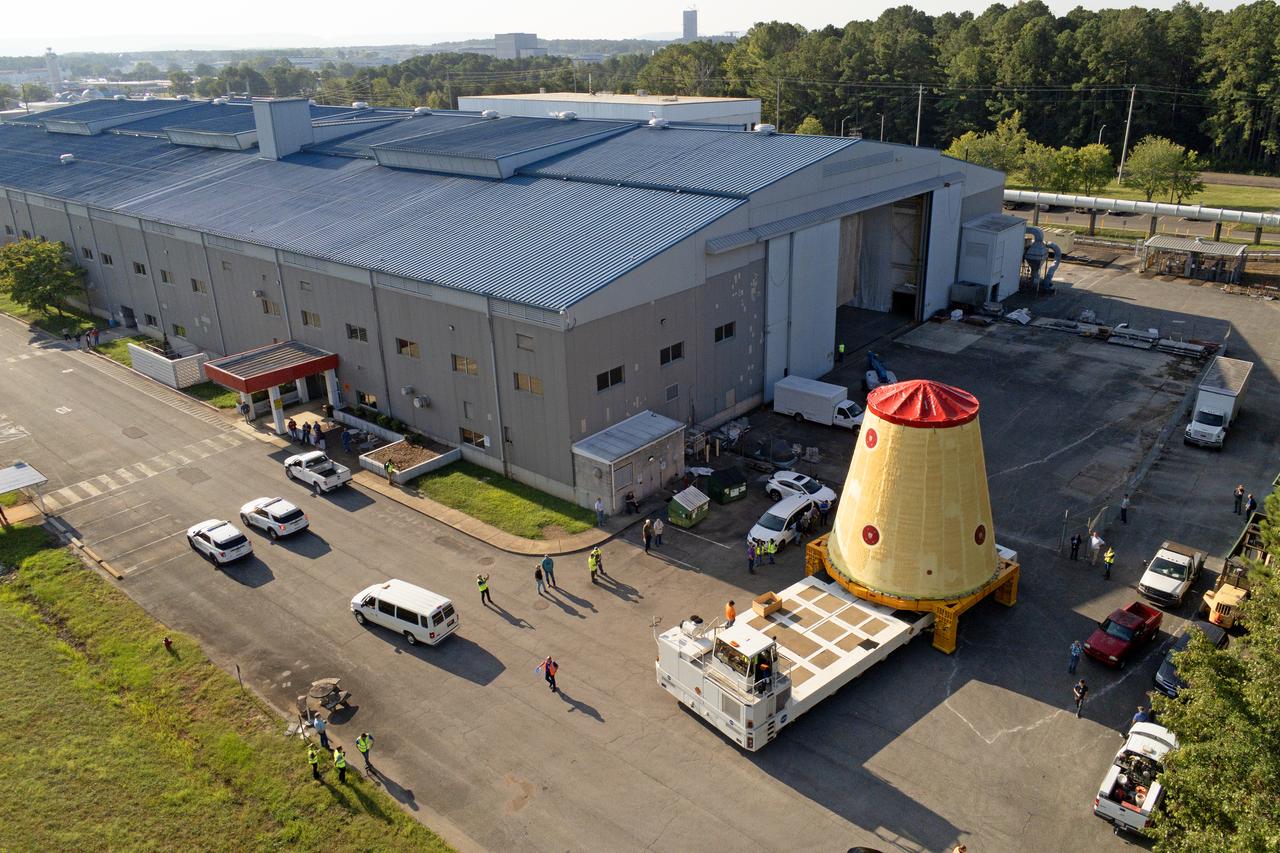
NASA rolled out a key piece of space flight hardware for the SLS (Space Launch System) rocket for the first crewed mission of NASA’s Artemis campaign from Marshall Space Flight Center in Huntsville, Alabama, on Wednesday, Aug. 21 for shipment to the agency’s spaceport in Florida. The cone-shaped launch vehicle stage adapter connects the rocket’s core stage to the upper stage and helps protect the upper stage’s engine that will help propel the Artemis II test flight around the Moon, slated for 2025. Manufactured by prime contractor Teledyne Brown Engineering and the Jacobs Space Exploration Group’s ESSCA (Engineering Services and Science Capability Augmentation) contract using NASA Marshall’s self-reacting friction-stir robotic and vertical weld tools. Crews moved the adapter out of NASA Marshall’s Building 4708 to the agency’s Pegasus barge Aug. 21. The barge will ferry the adapter first to NASA’s Michoud Assembly Facility in New Orleans, where crews will pick up additional SLS hardware for future Artemis missions, before traveling to NASA Kennedy. Once in Florida, the adapter will join the recently delivered core stage. There, teams with NASA’s Exploration Ground Systems will prepare the adapter for stacking and launch.
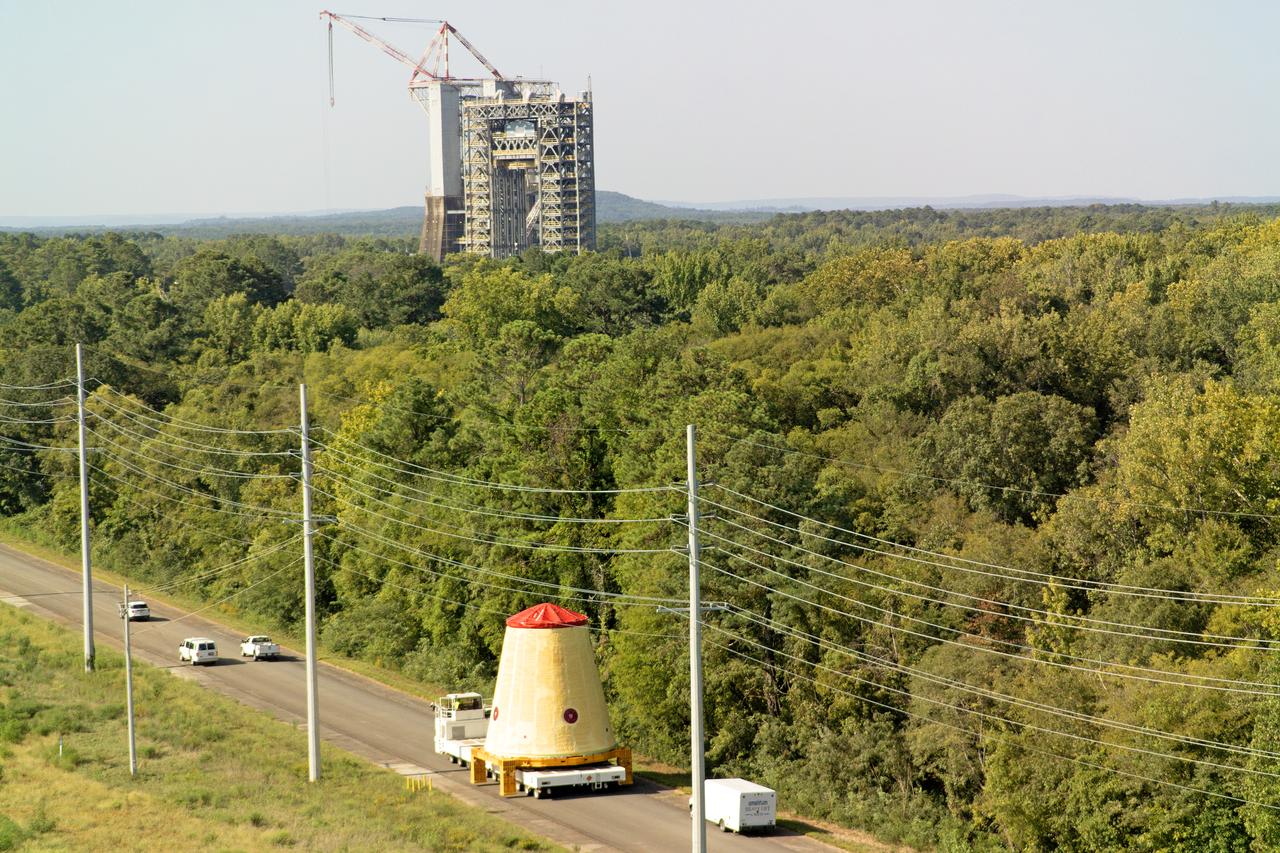
NASA rolled out a key piece of space flight hardware for the SLS (Space Launch System) rocket for the first crewed mission of NASA’s Artemis campaign from Marshall Space Flight Center in Huntsville, Alabama, on Wednesday, Aug. 21 for shipment to the agency’s spaceport in Florida. The cone-shaped launch vehicle stage adapter connects the rocket’s core stage to the upper stage and helps protect the upper stage’s engine that will help propel the Artemis II test flight around the Moon, slated for 2025. Manufactured by prime contractor Teledyne Brown Engineering and the Jacobs Space Exploration Group’s ESSCA (Engineering Services and Science Capability Augmentation) contract using NASA Marshall’s self-reacting friction-stir robotic and vertical weld tools. Crews moved the adapter out of NASA Marshall’s Building 4708 to the agency’s Pegasus barge Aug. 21. The barge will ferry the adapter first to NASA’s Michoud Assembly Facility in New Orleans, where crews will pick up additional SLS hardware for future Artemis missions, before traveling to NASA Kennedy. Once in Florida, the adapter will join the recently delivered core stage. There, teams with NASA’s Exploration Ground Systems will prepare the adapter for stacking and launch.
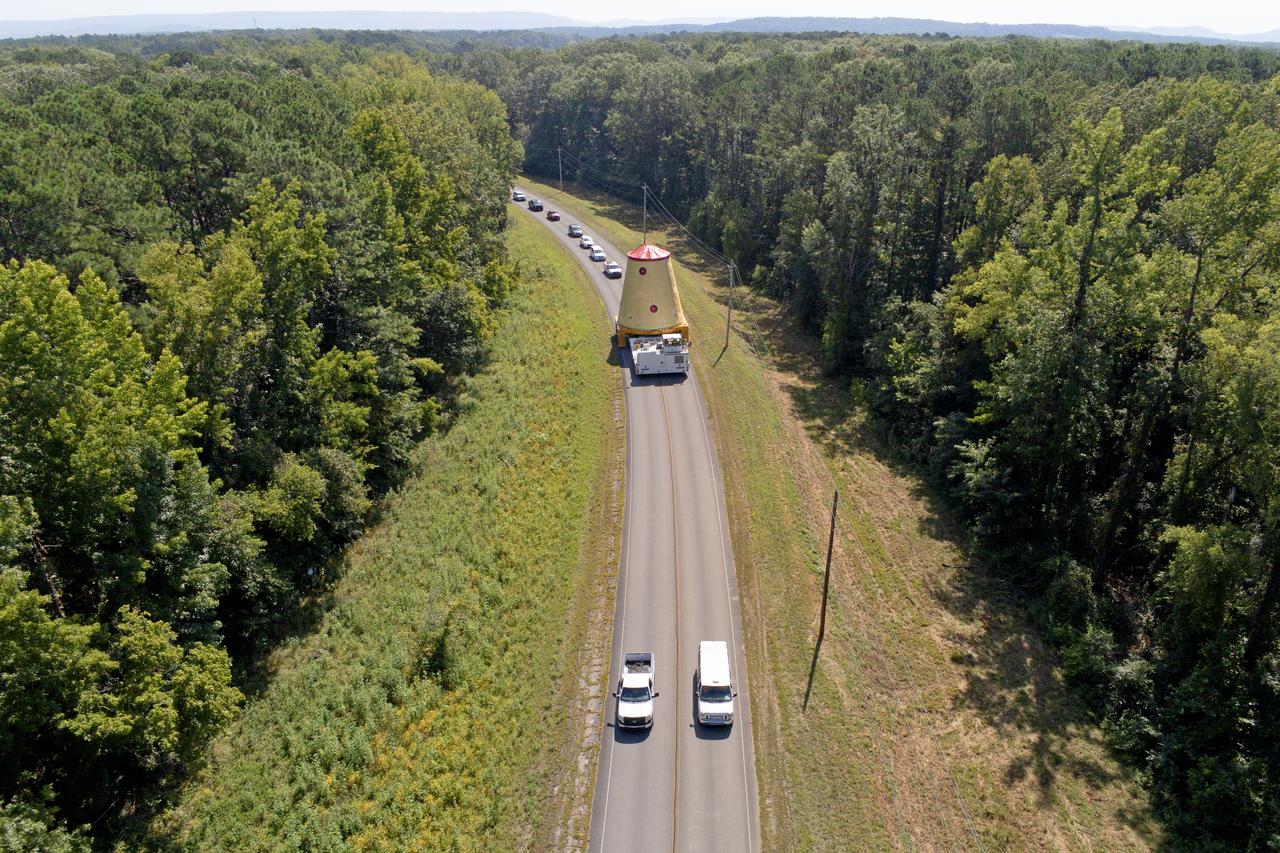
NASA rolled out a key piece of space flight hardware for the SLS (Space Launch System) rocket for the first crewed mission of NASA’s Artemis campaign from Marshall Space Flight Center in Huntsville, Alabama, on Wednesday, Aug. 21 for shipment to the agency’s spaceport in Florida. The cone-shaped launch vehicle stage adapter connects the rocket’s core stage to the upper stage and helps protect the upper stage’s engine that will help propel the Artemis II test flight around the Moon, slated for 2025. Manufactured by prime contractor Teledyne Brown Engineering and the Jacobs Space Exploration Group’s ESSCA (Engineering Services and Science Capability Augmentation) contract using NASA Marshall’s self-reacting friction-stir robotic and vertical weld tools. Crews moved the adapter out of NASA Marshall’s Building 4708 to the agency’s Pegasus barge Aug. 21. The barge will ferry the adapter first to NASA’s Michoud Assembly Facility in New Orleans, where crews will pick up additional SLS hardware for future Artemis missions, before traveling to NASA Kennedy. Once in Florida, the adapter will join the recently delivered core stage. There, teams with NASA’s Exploration Ground Systems will prepare the adapter for stacking and launch.
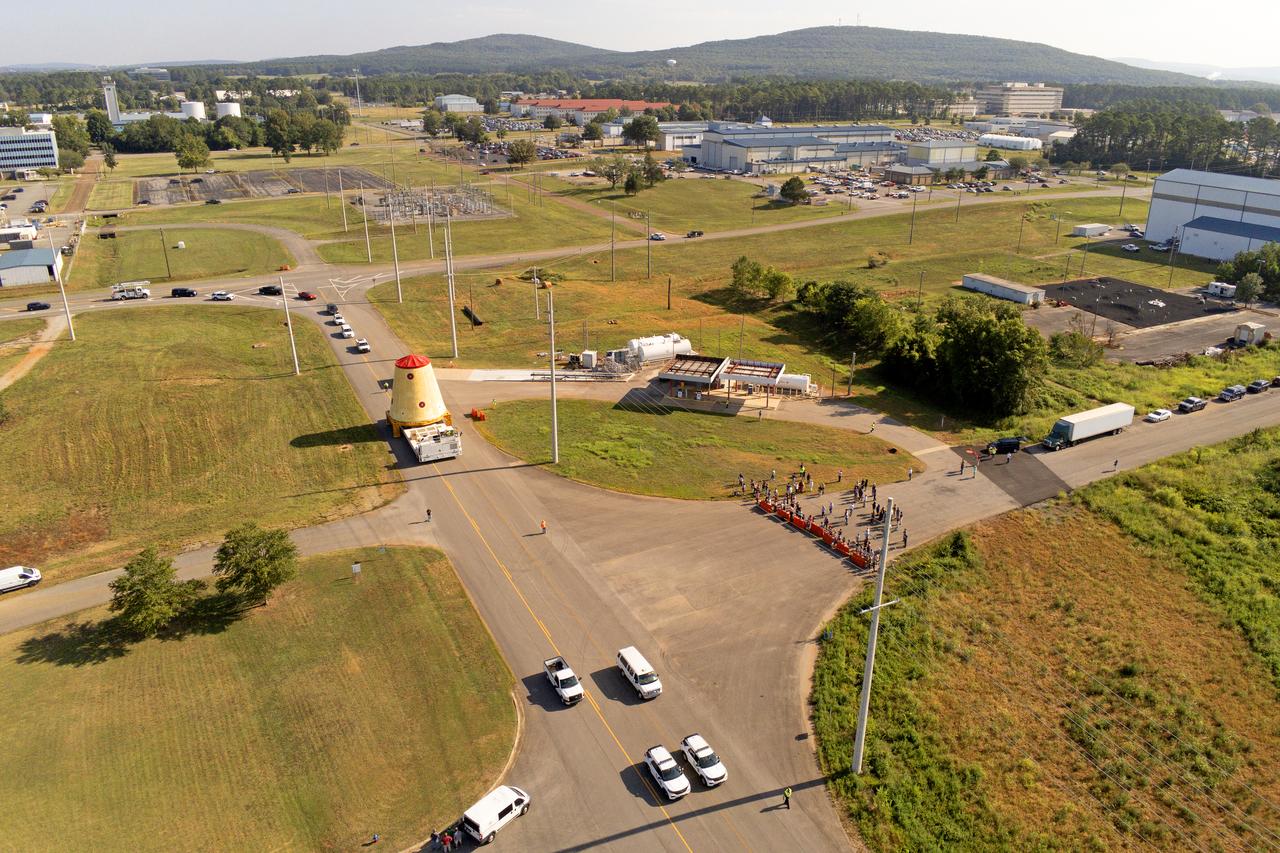
NASA rolled out a key piece of space flight hardware for the SLS (Space Launch System) rocket for the first crewed mission of NASA’s Artemis campaign from Marshall Space Flight Center in Huntsville, Alabama, on Wednesday, Aug. 21 for shipment to the agency’s spaceport in Florida. The cone-shaped launch vehicle stage adapter connects the rocket’s core stage to the upper stage and helps protect the upper stage’s engine that will help propel the Artemis II test flight around the Moon, slated for 2025. Manufactured by prime contractor Teledyne Brown Engineering and the Jacobs Space Exploration Group’s ESSCA (Engineering Services and Science Capability Augmentation) contract using NASA Marshall’s self-reacting friction-stir robotic and vertical weld tools. Crews moved the adapter out of NASA Marshall’s Building 4708 to the agency’s Pegasus barge Aug. 21. The barge will ferry the adapter first to NASA’s Michoud Assembly Facility in New Orleans, where crews will pick up additional SLS hardware for future Artemis missions, before traveling to NASA Kennedy. Once in Florida, the adapter will join the recently delivered core stage. There, teams with NASA’s Exploration Ground Systems will prepare the adapter for stacking and launch.
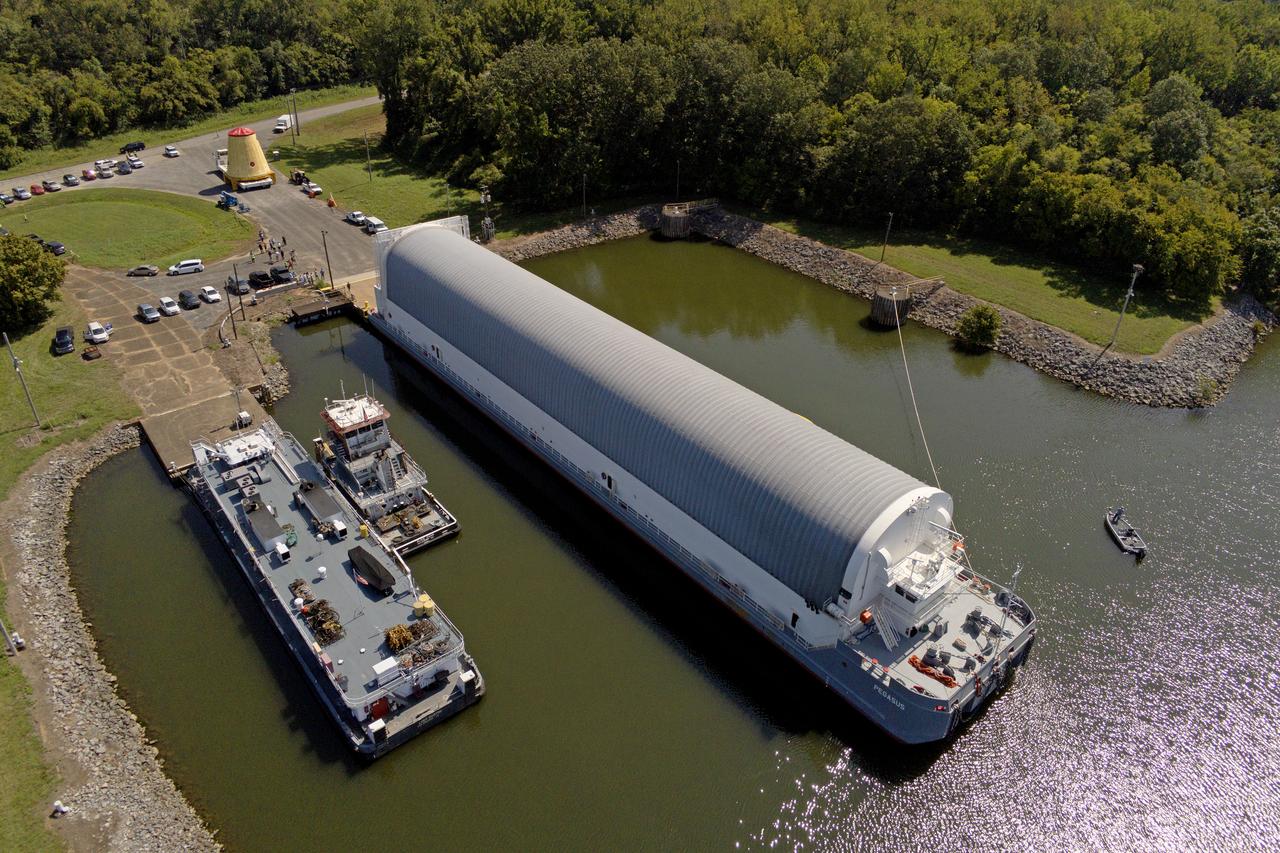
NASA rolled out a key piece of space flight hardware for the SLS (Space Launch System) rocket for the first crewed mission of NASA’s Artemis campaign from Marshall Space Flight Center in Huntsville, Alabama, on Wednesday, Aug. 21 for shipment to the agency’s spaceport in Florida. The cone-shaped launch vehicle stage adapter connects the rocket’s core stage to the upper stage and helps protect the upper stage’s engine that will help propel the Artemis II test flight around the Moon, slated for 2025. Manufactured by prime contractor Teledyne Brown Engineering and the Jacobs Space Exploration Group’s ESSCA (Engineering Services and Science Capability Augmentation) contract using NASA Marshall’s self-reacting friction-stir robotic and vertical weld tools. Crews moved the adapter out of NASA Marshall’s Building 4708 to the agency’s Pegasus barge Aug. 21. The barge will ferry the adapter first to NASA’s Michoud Assembly Facility in New Orleans, where crews will pick up additional SLS hardware for future Artemis missions, before traveling to NASA Kennedy. Once in Florida, the adapter will join the recently delivered core stage. There, teams with NASA’s Exploration Ground Systems will prepare the adapter for stacking and launch.

NASA rolled out a key piece of space flight hardware for the SLS (Space Launch System) rocket for the first crewed mission of NASA’s Artemis campaign from Marshall Space Flight Center in Huntsville, Alabama, on Wednesday, Aug. 21 for shipment to the agency’s spaceport in Florida. The cone-shaped launch vehicle stage adapter connects the rocket’s core stage to the upper stage and helps protect the upper stage’s engine that will help propel the Artemis II test flight around the Moon, slated for 2025. Manufactured by prime contractor Teledyne Brown Engineering and the Jacobs Space Exploration Group’s ESSCA (Engineering Services and Science Capability Augmentation) contract using NASA Marshall’s self-reacting friction-stir robotic and vertical weld tools. Crews moved the adapter out of NASA Marshall’s Building 4708 to the agency’s Pegasus barge Aug. 21. The barge will ferry the adapter first to NASA’s Michoud Assembly Facility in New Orleans, where crews will pick up additional SLS hardware for future Artemis missions, before traveling to NASA Kennedy. Once in Florida, the adapter will join the recently delivered core stage. There, teams with NASA’s Exploration Ground Systems will prepare the adapter for stacking and launch.
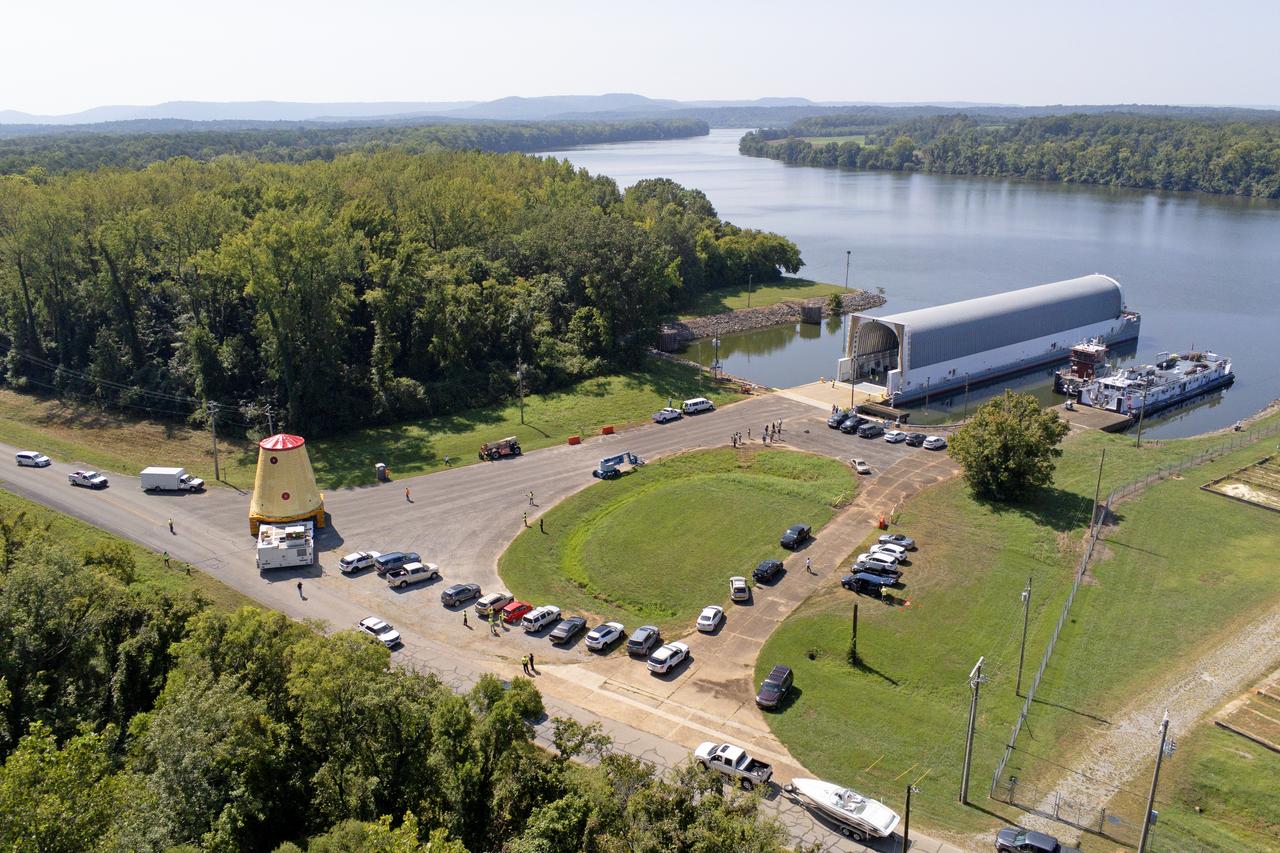
NASA rolled out a key piece of space flight hardware for the SLS (Space Launch System) rocket for the first crewed mission of NASA’s Artemis campaign from Marshall Space Flight Center in Huntsville, Alabama, on Wednesday, Aug. 21 for shipment to the agency’s spaceport in Florida. The cone-shaped launch vehicle stage adapter connects the rocket’s core stage to the upper stage and helps protect the upper stage’s engine that will help propel the Artemis II test flight around the Moon, slated for 2025. Manufactured by prime contractor Teledyne Brown Engineering and the Jacobs Space Exploration Group’s ESSCA (Engineering Services and Science Capability Augmentation) contract using NASA Marshall’s self-reacting friction-stir robotic and vertical weld tools. Crews moved the adapter out of NASA Marshall’s Building 4708 to the agency’s Pegasus barge Aug. 21. The barge will ferry the adapter first to NASA’s Michoud Assembly Facility in New Orleans, where crews will pick up additional SLS hardware for future Artemis missions, before traveling to NASA Kennedy. Once in Florida, the adapter will join the recently delivered core stage. There, teams with NASA’s Exploration Ground Systems will prepare the adapter for stacking and launch.
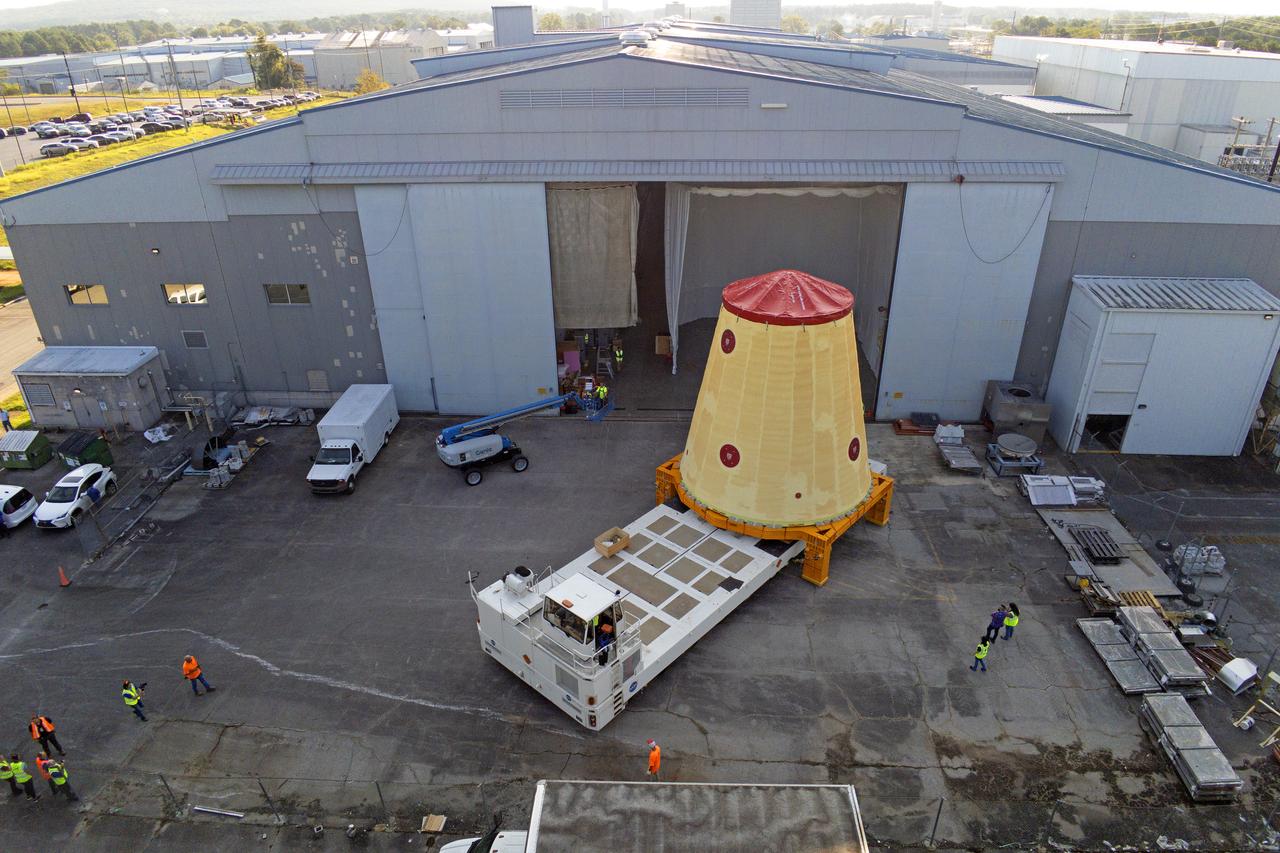
NASA rolled out a key piece of space flight hardware for the SLS (Space Launch System) rocket for the first crewed mission of NASA’s Artemis campaign from Marshall Space Flight Center in Huntsville, Alabama, on Wednesday, Aug. 21 for shipment to the agency’s spaceport in Florida. The cone-shaped launch vehicle stage adapter connects the rocket’s core stage to the upper stage and helps protect the upper stage’s engine that will help propel the Artemis II test flight around the Moon, slated for 2025. Manufactured by prime contractor Teledyne Brown Engineering and the Jacobs Space Exploration Group’s ESSCA (Engineering Services and Science Capability Augmentation) contract using NASA Marshall’s self-reacting friction-stir robotic and vertical weld tools. Crews moved the adapter out of NASA Marshall’s Building 4708 to the agency’s Pegasus barge Aug. 21. The barge will ferry the adapter first to NASA’s Michoud Assembly Facility in New Orleans, where crews will pick up additional SLS hardware for future Artemis missions, before traveling to NASA Kennedy. Once in Florida, the adapter will join the recently delivered core stage. There, teams with NASA’s Exploration Ground Systems will prepare the adapter for stacking and launch.
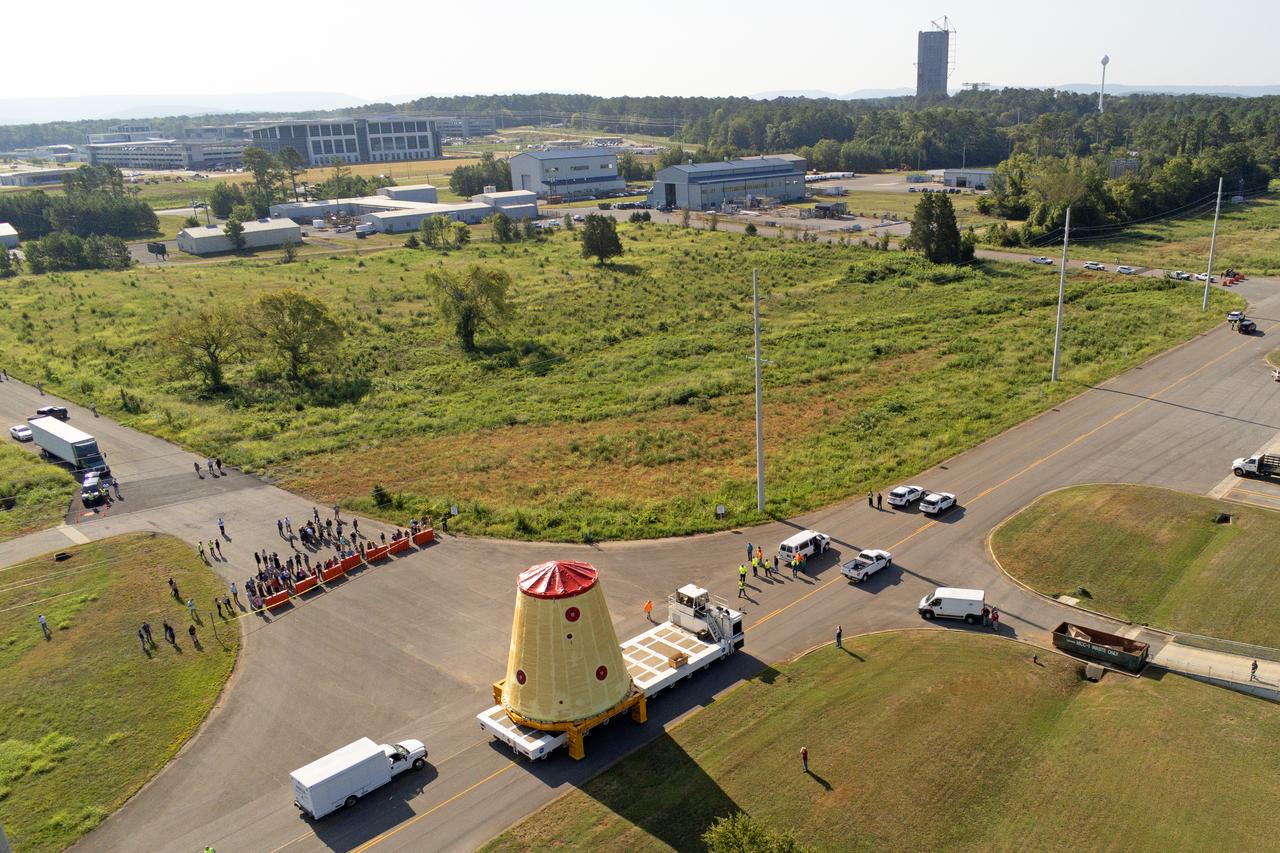
NASA rolled out a key piece of space flight hardware for the SLS (Space Launch System) rocket for the first crewed mission of NASA’s Artemis campaign from Marshall Space Flight Center in Huntsville, Alabama, on Wednesday, Aug. 21 for shipment to the agency’s spaceport in Florida. The cone-shaped launch vehicle stage adapter connects the rocket’s core stage to the upper stage and helps protect the upper stage’s engine that will help propel the Artemis II test flight around the Moon, slated for 2025. Manufactured by prime contractor Teledyne Brown Engineering and the Jacobs Space Exploration Group’s ESSCA (Engineering Services and Science Capability Augmentation) contract using NASA Marshall’s self-reacting friction-stir robotic and vertical weld tools. Crews moved the adapter out of NASA Marshall’s Building 4708 to the agency’s Pegasus barge Aug. 21. The barge will ferry the adapter first to NASA’s Michoud Assembly Facility in New Orleans, where crews will pick up additional SLS hardware for future Artemis missions, before traveling to NASA Kennedy. Once in Florida, the adapter will join the recently delivered core stage. There, teams with NASA’s Exploration Ground Systems will prepare the adapter for stacking and launch.
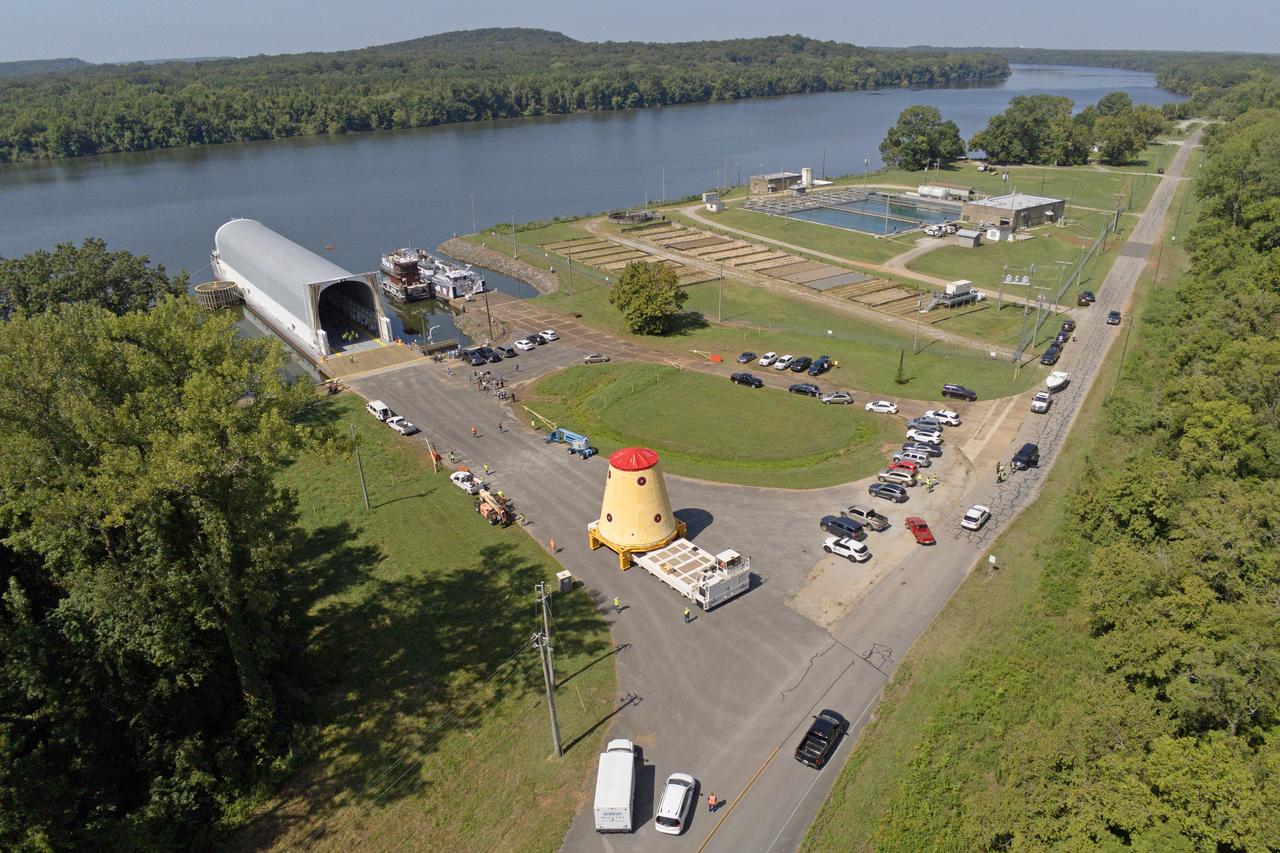
NASA rolled out a key piece of space flight hardware for the SLS (Space Launch System) rocket for the first crewed mission of NASA’s Artemis campaign from Marshall Space Flight Center in Huntsville, Alabama, on Wednesday, Aug. 21 for shipment to the agency’s spaceport in Florida. The cone-shaped launch vehicle stage adapter connects the rocket’s core stage to the upper stage and helps protect the upper stage’s engine that will help propel the Artemis II test flight around the Moon, slated for 2025. Manufactured by prime contractor Teledyne Brown Engineering and the Jacobs Space Exploration Group’s ESSCA (Engineering Services and Science Capability Augmentation) contract using NASA Marshall’s self-reacting friction-stir robotic and vertical weld tools. Crews moved the adapter out of NASA Marshall’s Building 4708 to the agency’s Pegasus barge Aug. 21. The barge will ferry the adapter first to NASA’s Michoud Assembly Facility in New Orleans, where crews will pick up additional SLS hardware for future Artemis missions, before traveling to NASA Kennedy. Once in Florida, the adapter will join the recently delivered core stage. There, teams with NASA’s Exploration Ground Systems will prepare the adapter for stacking and launch.
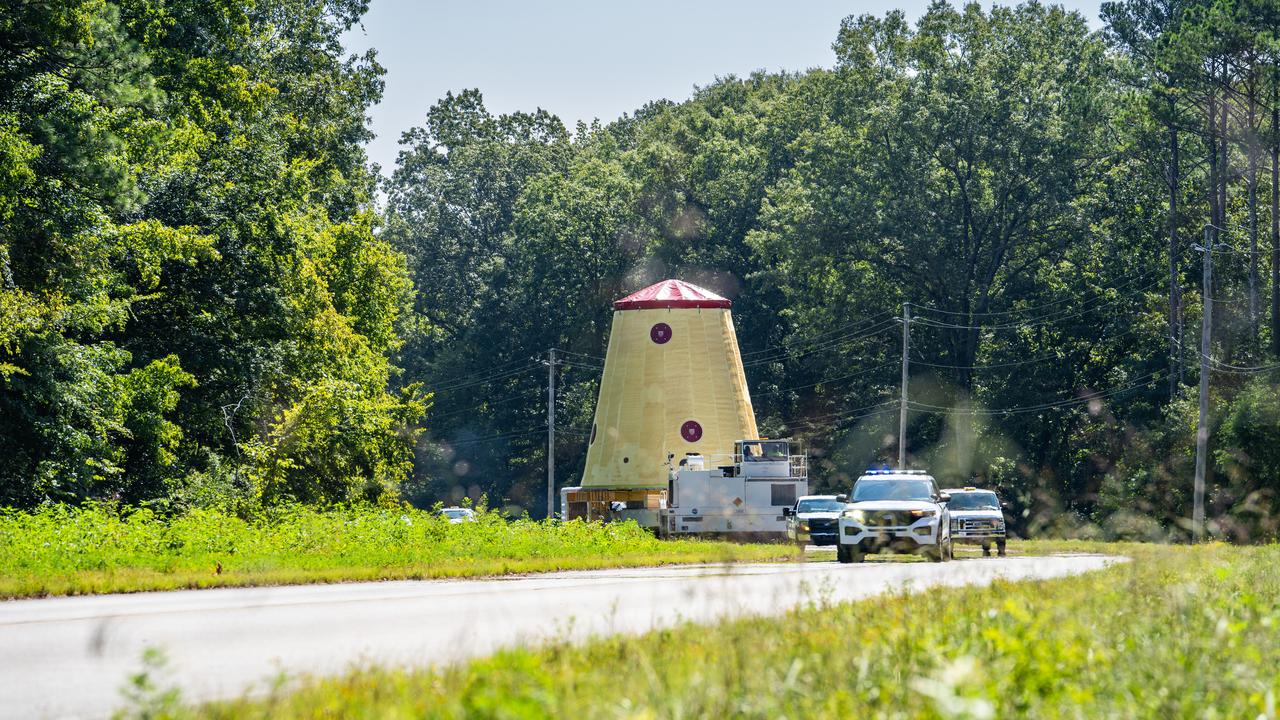
NASA rolled out a key piece of space flight hardware for the SLS (Space Launch System) rocket for the first crewed mission of NASA’s Artemis campaign from Marshall Space Flight Center in Huntsville, Alabama, on Wednesday, Aug. 21 for shipment to the agency’s spaceport in Florida. The cone-shaped launch vehicle stage adapter connects the rocket’s core stage to the upper stage and helps protect the upper stage’s engine that will help propel the Artemis II test flight around the Moon, slated for 2025. Manufactured by prime contractor Teledyne Brown Engineering and the Jacobs Space Exploration Group’s ESSCA (Engineering Services and Science Capability Augmentation) contract using NASA Marshall’s self-reacting friction-stir robotic and vertical weld tools. Crews moved the adapter out of NASA Marshall’s Building 4708 to the agency’s Pegasus barge Aug. 21. The barge will ferry the adapter first to NASA’s Michoud Assembly Facility in New Orleans, where crews will pick up additional SLS hardware for future Artemis missions, before traveling to NASA Kennedy. Once in Florida, the adapter will join the recently delivered core stage. There, teams with NASA’s Exploration Ground Systems will prepare the adapter for stacking and launch
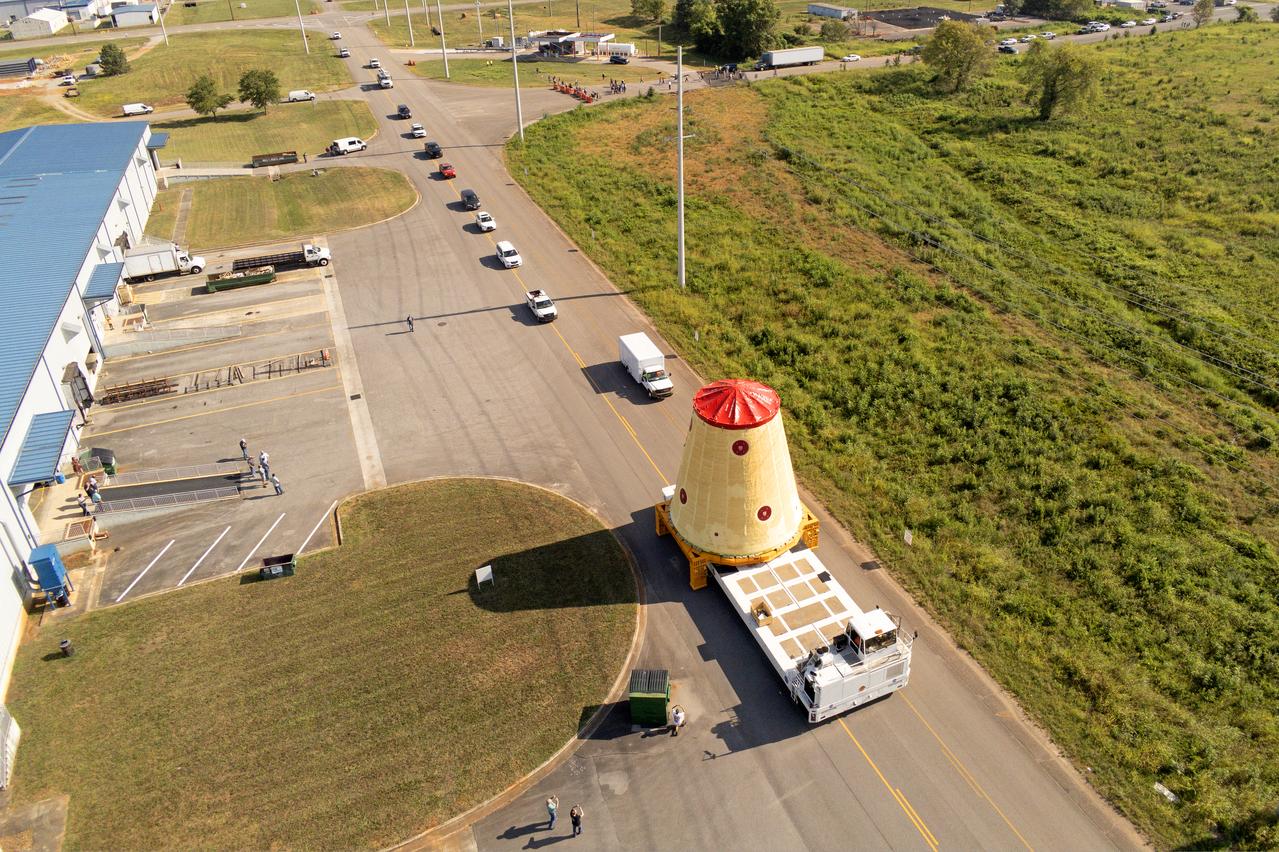
NASA rolled out a key piece of space flight hardware for the SLS (Space Launch System) rocket for the first crewed mission of NASA’s Artemis campaign from Marshall Space Flight Center in Huntsville, Alabama, on Wednesday, Aug. 21 for shipment to the agency’s spaceport in Florida. The cone-shaped launch vehicle stage adapter connects the rocket’s core stage to the upper stage and helps protect the upper stage’s engine that will help propel the Artemis II test flight around the Moon, slated for 2025. Manufactured by prime contractor Teledyne Brown Engineering and the Jacobs Space Exploration Group’s ESSCA (Engineering Services and Science Capability Augmentation) contract using NASA Marshall’s self-reacting friction-stir robotic and vertical weld tools. Crews moved the adapter out of NASA Marshall’s Building 4708 to the agency’s Pegasus barge Aug. 21. The barge will ferry the adapter first to NASA’s Michoud Assembly Facility in New Orleans, where crews will pick up additional SLS hardware for future Artemis missions, before traveling to NASA Kennedy. Once in Florida, the adapter will join the recently delivered core stage. There, teams with NASA’s Exploration Ground Systems will prepare the adapter for stacking and launch.
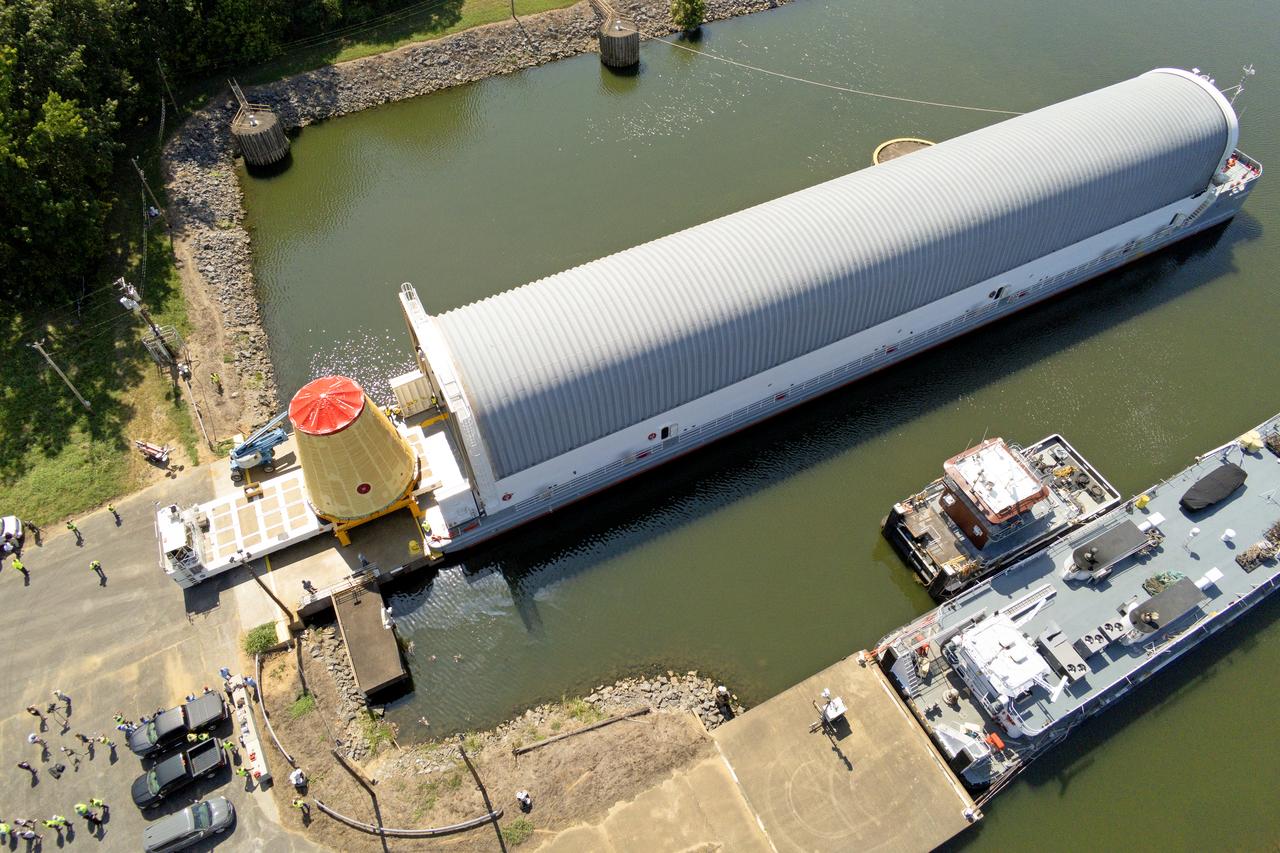
NASA rolled out a key piece of space flight hardware for the SLS (Space Launch System) rocket for the first crewed mission of NASA’s Artemis campaign from Marshall Space Flight Center in Huntsville, Alabama, on Wednesday, Aug. 21 for shipment to the agency’s spaceport in Florida. The cone-shaped launch vehicle stage adapter connects the rocket’s core stage to the upper stage and helps protect the upper stage’s engine that will help propel the Artemis II test flight around the Moon, slated for 2025. Manufactured by prime contractor Teledyne Brown Engineering and the Jacobs Space Exploration Group’s ESSCA (Engineering Services and Science Capability Augmentation) contract using NASA Marshall’s self-reacting friction-stir robotic and vertical weld tools. Crews moved the adapter out of NASA Marshall’s Building 4708 to the agency’s Pegasus barge Aug. 21. The barge will ferry the adapter first to NASA’s Michoud Assembly Facility in New Orleans, where crews will pick up additional SLS hardware for future Artemis missions, before traveling to NASA Kennedy. Once in Florida, the adapter will join the recently delivered core stage. There, teams with NASA’s Exploration Ground Systems will prepare the adapter for stacking and launch.
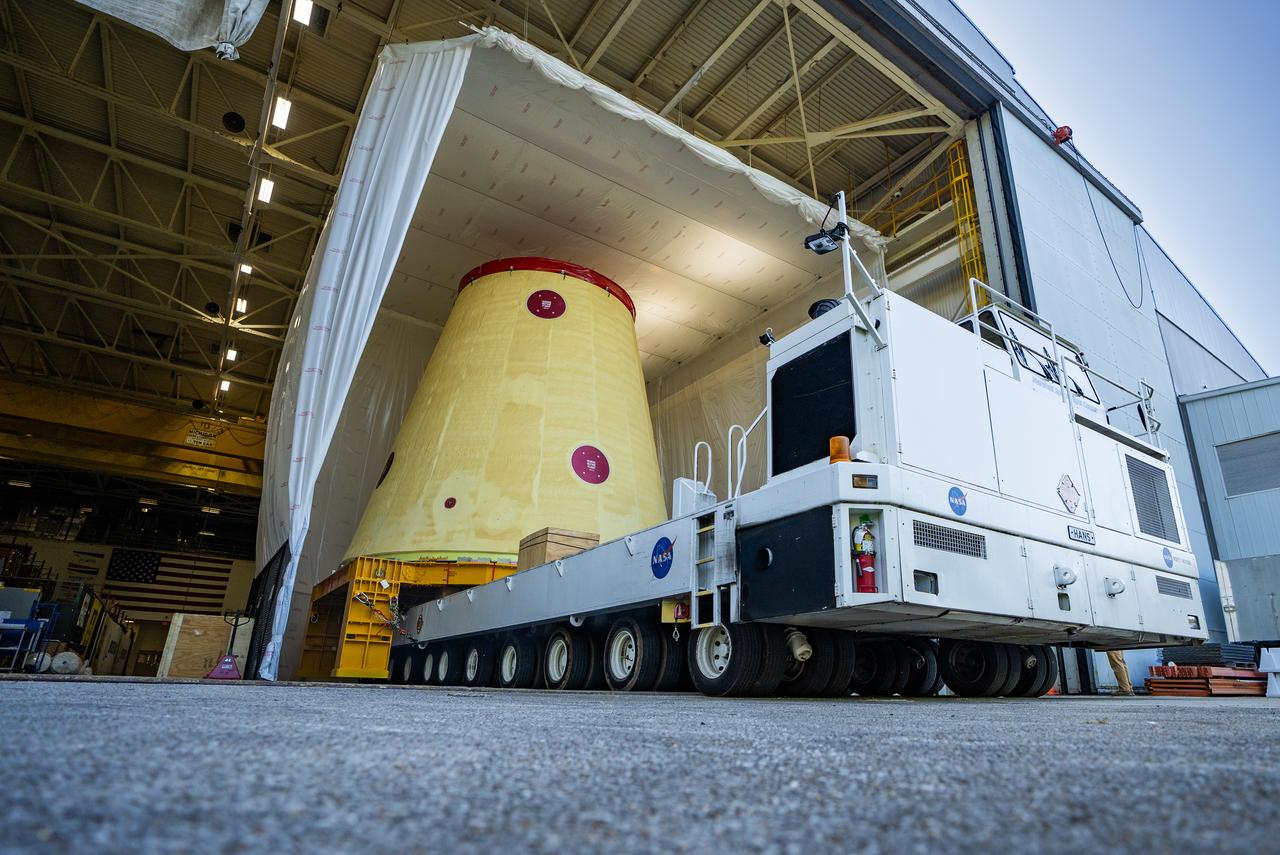
NASA rolled out a key piece of space flight hardware for the SLS (Space Launch System) rocket for the first crewed mission of NASA’s Artemis campaign from Marshall Space Flight Center in Huntsville, Alabama, on Wednesday, Aug. 21 for shipment to the agency’s spaceport in Florida. The cone-shaped launch vehicle stage adapter connects the rocket’s core stage to the upper stage and helps protect the upper stage’s engine that will help propel the Artemis II test flight around the Moon, slated for 2025. Manufactured by prime contractor Teledyne Brown Engineering and the Jacobs Space Exploration Group’s ESSCA (Engineering Services and Science Capability Augmentation) contract using NASA Marshall’s self-reacting friction-stir robotic and vertical weld tools. Crews moved the adapter out of NASA Marshall’s Building 4708 to the agency’s Pegasus barge Aug. 21. The barge will ferry the adapter first to NASA’s Michoud Assembly Facility in New Orleans, where crews will pick up additional SLS hardware for future Artemis missions, before traveling to NASA Kennedy. Once in Florida, the adapter will join the recently delivered core stage. There, teams with NASA’s Exploration Ground Systems will prepare the adapter for stacking and launch.
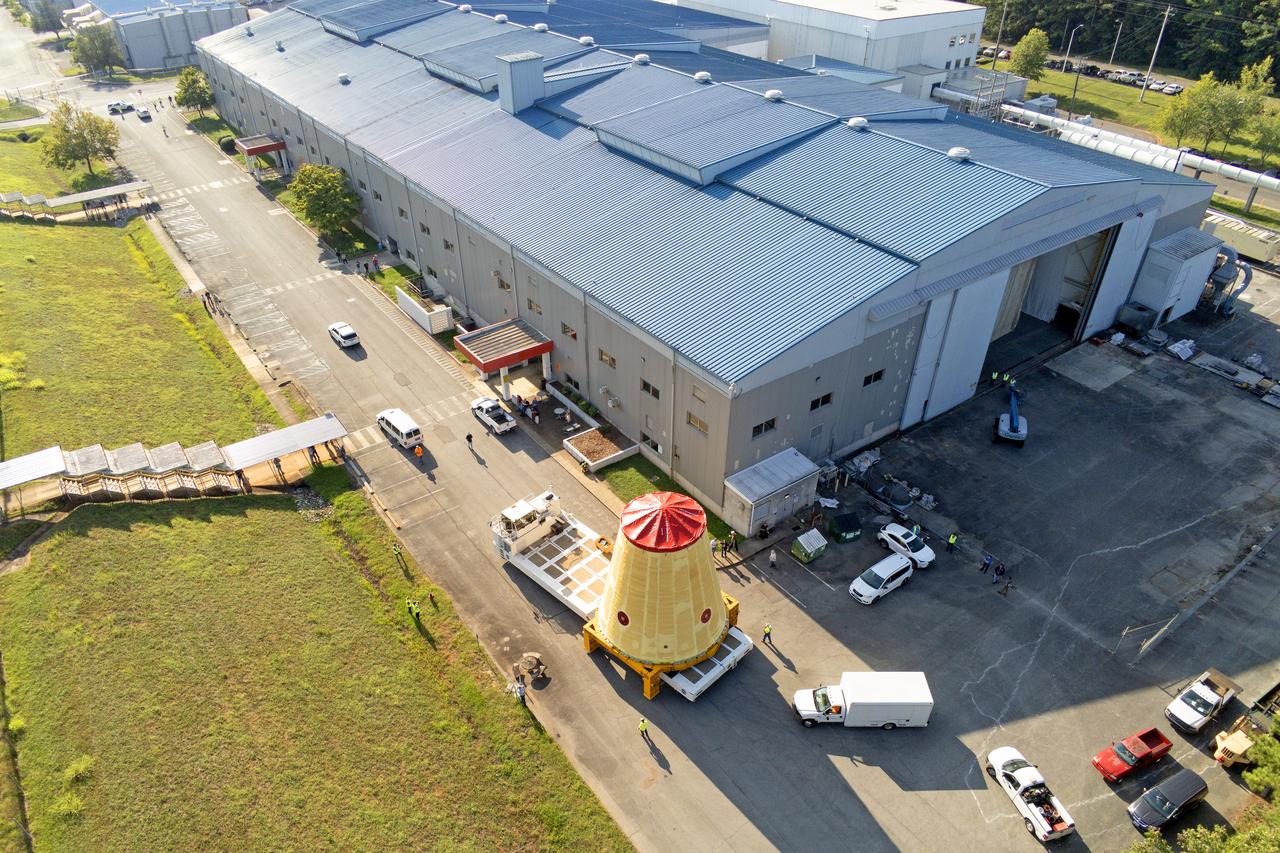
NASA rolled out a key piece of space flight hardware for the SLS (Space Launch System) rocket for the first crewed mission of NASA’s Artemis campaign from Marshall Space Flight Center in Huntsville, Alabama, on Wednesday, Aug. 21 for shipment to the agency’s spaceport in Florida. The cone-shaped launch vehicle stage adapter connects the rocket’s core stage to the upper stage and helps protect the upper stage’s engine that will help propel the Artemis II test flight around the Moon, slated for 2025. Manufactured by prime contractor Teledyne Brown Engineering and the Jacobs Space Exploration Group’s ESSCA (Engineering Services and Science Capability Augmentation) contract using NASA Marshall’s self-reacting friction-stir robotic and vertical weld tools. Crews moved the adapter out of NASA Marshall’s Building 4708 to the agency’s Pegasus barge Aug. 21. The barge will ferry the adapter first to NASA’s Michoud Assembly Facility in New Orleans, where crews will pick up additional SLS hardware for future Artemis missions, before traveling to NASA Kennedy. Once in Florida, the adapter will join the recently delivered core stage. There, teams with NASA’s Exploration Ground Systems will prepare the adapter for stacking and launch.
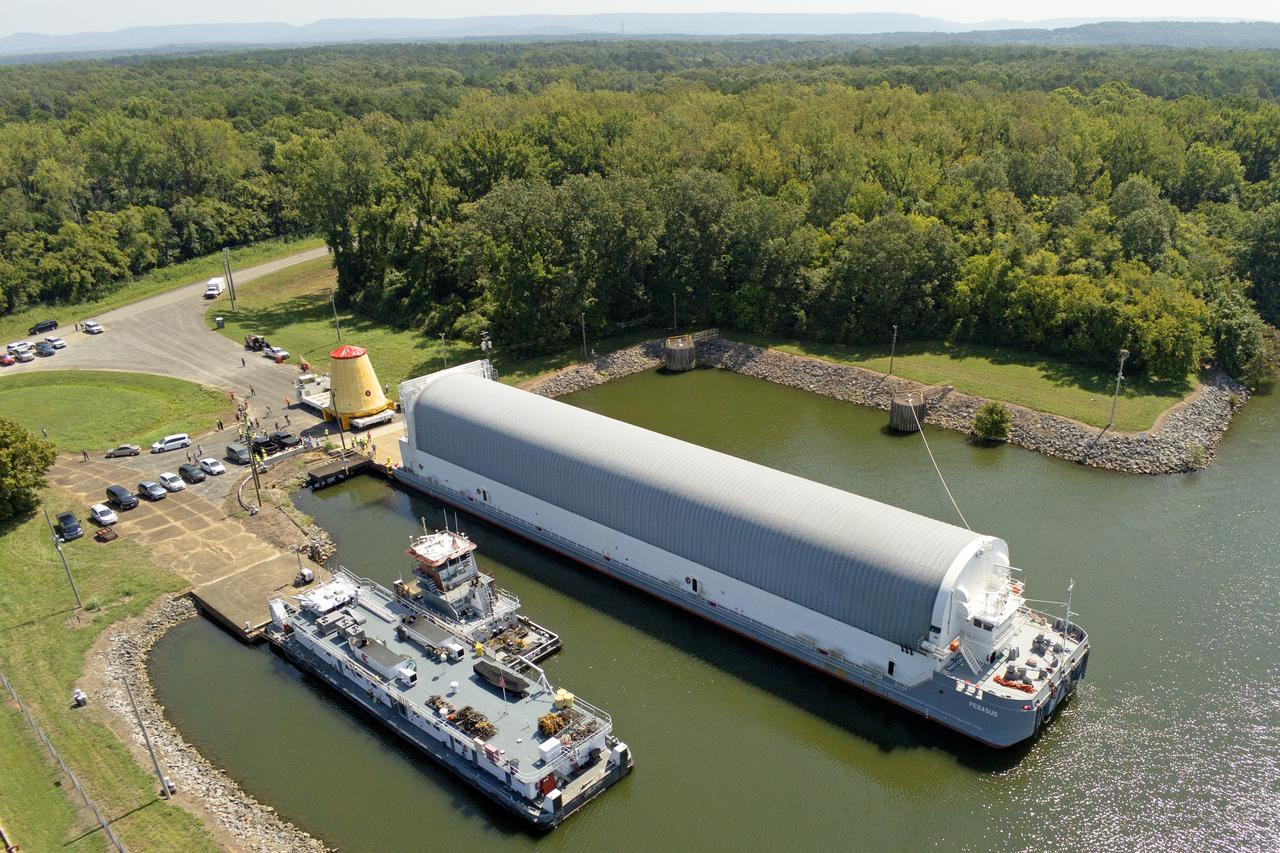
NASA rolled out a key piece of space flight hardware for the SLS (Space Launch System) rocket for the first crewed mission of NASA’s Artemis campaign from Marshall Space Flight Center in Huntsville, Alabama, on Wednesday, Aug. 21 for shipment to the agency’s spaceport in Florida. The cone-shaped launch vehicle stage adapter connects the rocket’s core stage to the upper stage and helps protect the upper stage’s engine that will help propel the Artemis II test flight around the Moon, slated for 2025. Manufactured by prime contractor Teledyne Brown Engineering and the Jacobs Space Exploration Group’s ESSCA (Engineering Services and Science Capability Augmentation) contract using NASA Marshall’s self-reacting friction-stir robotic and vertical weld tools. Crews moved the adapter out of NASA Marshall’s Building 4708 to the agency’s Pegasus barge Aug. 21. The barge will ferry the adapter first to NASA’s Michoud Assembly Facility in New Orleans, where crews will pick up additional SLS hardware for future Artemis missions, before traveling to NASA Kennedy. Once in Florida, the adapter will join the recently delivered core stage. There, teams with NASA’s Exploration Ground Systems will prepare the adapter for stacking and launch.
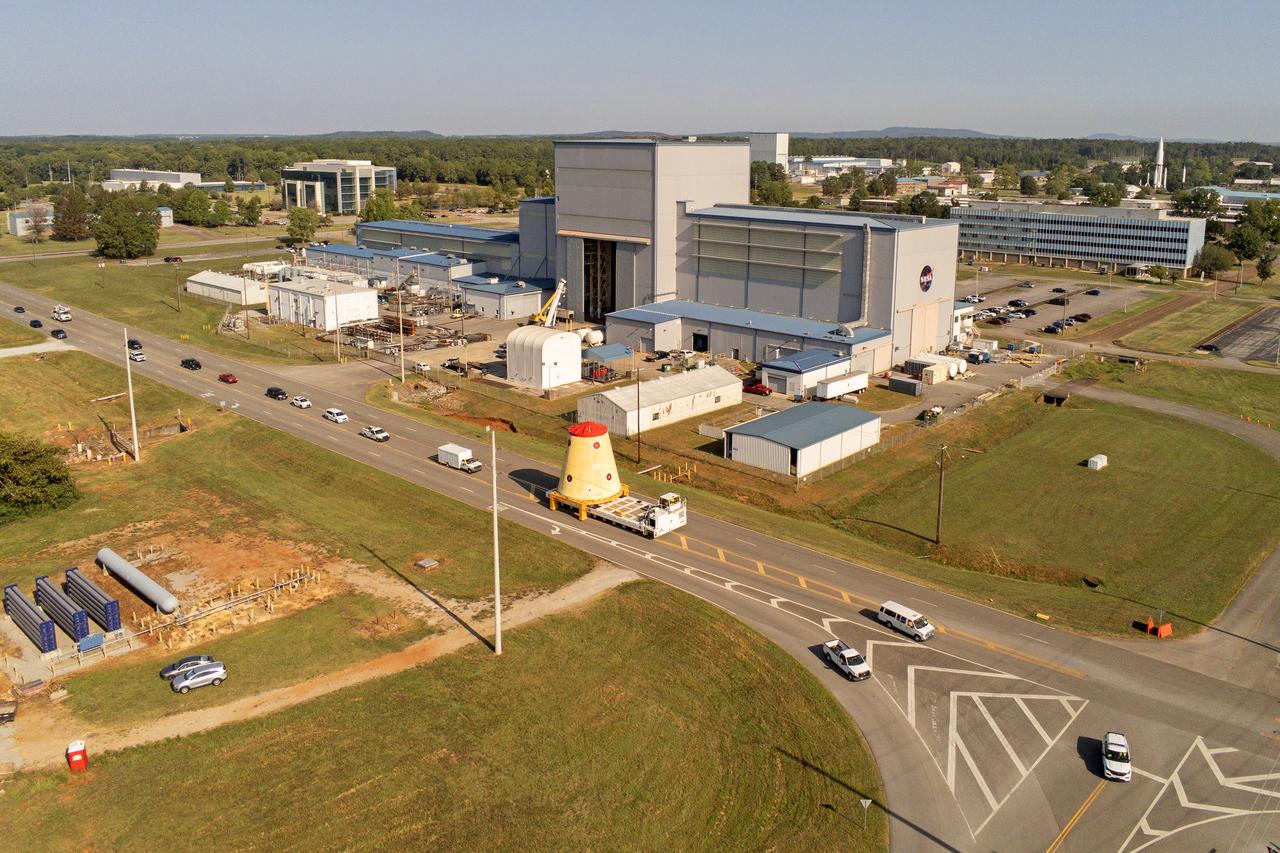
NASA rolled out a key piece of space flight hardware for the SLS (Space Launch System) rocket for the first crewed mission of NASA’s Artemis campaign from Marshall Space Flight Center in Huntsville, Alabama, on Wednesday, Aug. 21 for shipment to the agency’s spaceport in Florida. The cone-shaped launch vehicle stage adapter connects the rocket’s core stage to the upper stage and helps protect the upper stage’s engine that will help propel the Artemis II test flight around the Moon, slated for 2025. Manufactured by prime contractor Teledyne Brown Engineering and the Jacobs Space Exploration Group’s ESSCA (Engineering Services and Science Capability Augmentation) contract using NASA Marshall’s self-reacting friction-stir robotic and vertical weld tools. Crews moved the adapter out of NASA Marshall’s Building 4708 to the agency’s Pegasus barge Aug. 21. The barge will ferry the adapter first to NASA’s Michoud Assembly Facility in New Orleans, where crews will pick up additional SLS hardware for future Artemis missions, before traveling to NASA Kennedy. Once in Florida, the adapter will join the recently delivered core stage. There, teams with NASA’s Exploration Ground Systems will prepare the adapter for stacking and launch.
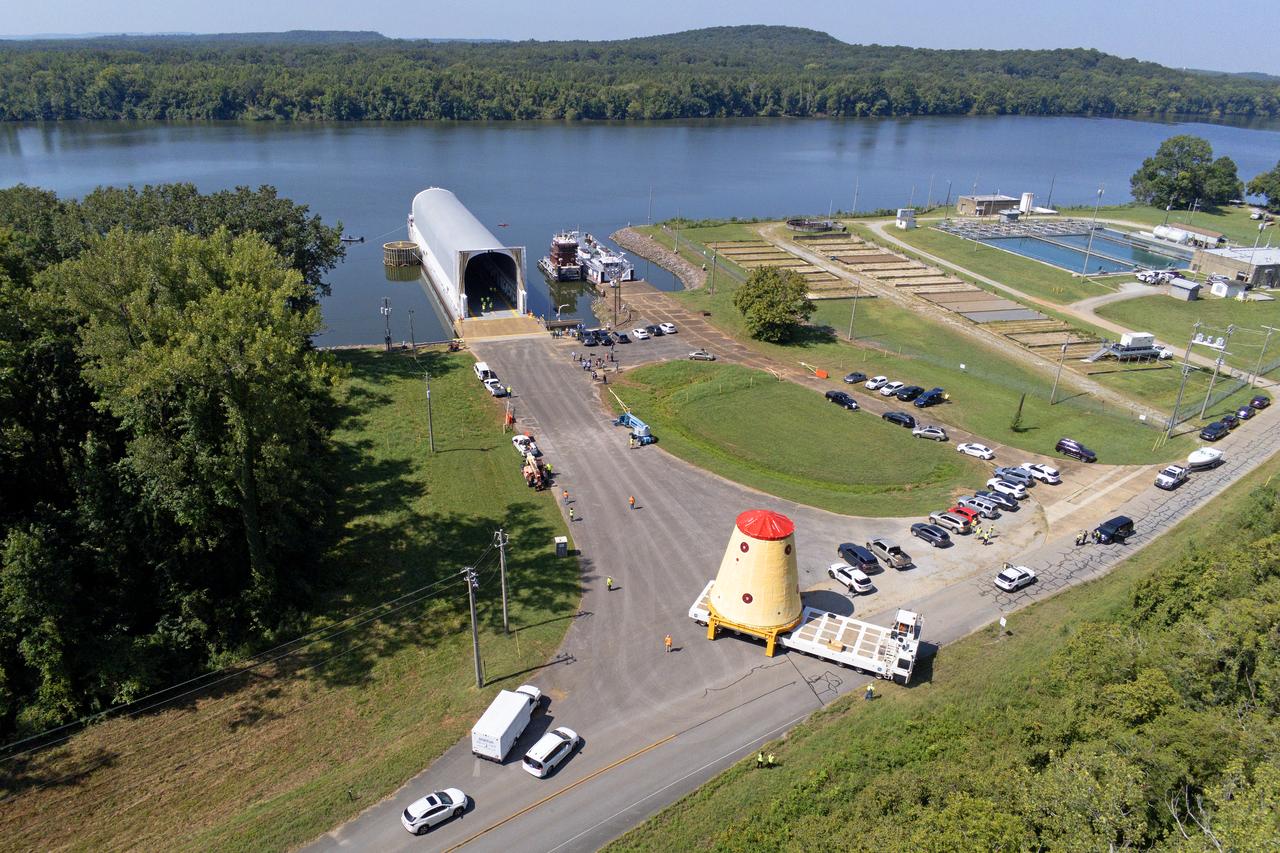
NASA rolled out a key piece of space flight hardware for the SLS (Space Launch System) rocket for the first crewed mission of NASA’s Artemis campaign from Marshall Space Flight Center in Huntsville, Alabama, on Wednesday, Aug. 21 for shipment to the agency’s spaceport in Florida. The cone-shaped launch vehicle stage adapter connects the rocket’s core stage to the upper stage and helps protect the upper stage’s engine that will help propel the Artemis II test flight around the Moon, slated for 2025. Manufactured by prime contractor Teledyne Brown Engineering and the Jacobs Space Exploration Group’s ESSCA (Engineering Services and Science Capability Augmentation) contract using NASA Marshall’s self-reacting friction-stir robotic and vertical weld tools. Crews moved the adapter out of NASA Marshall’s Building 4708 to the agency’s Pegasus barge Aug. 21. The barge will ferry the adapter first to NASA’s Michoud Assembly Facility in New Orleans, where crews will pick up additional SLS hardware for future Artemis missions, before traveling to NASA Kennedy. Once in Florida, the adapter will join the recently delivered core stage. There, teams with NASA’s Exploration Ground Systems will prepare the adapter for stacking and launch.
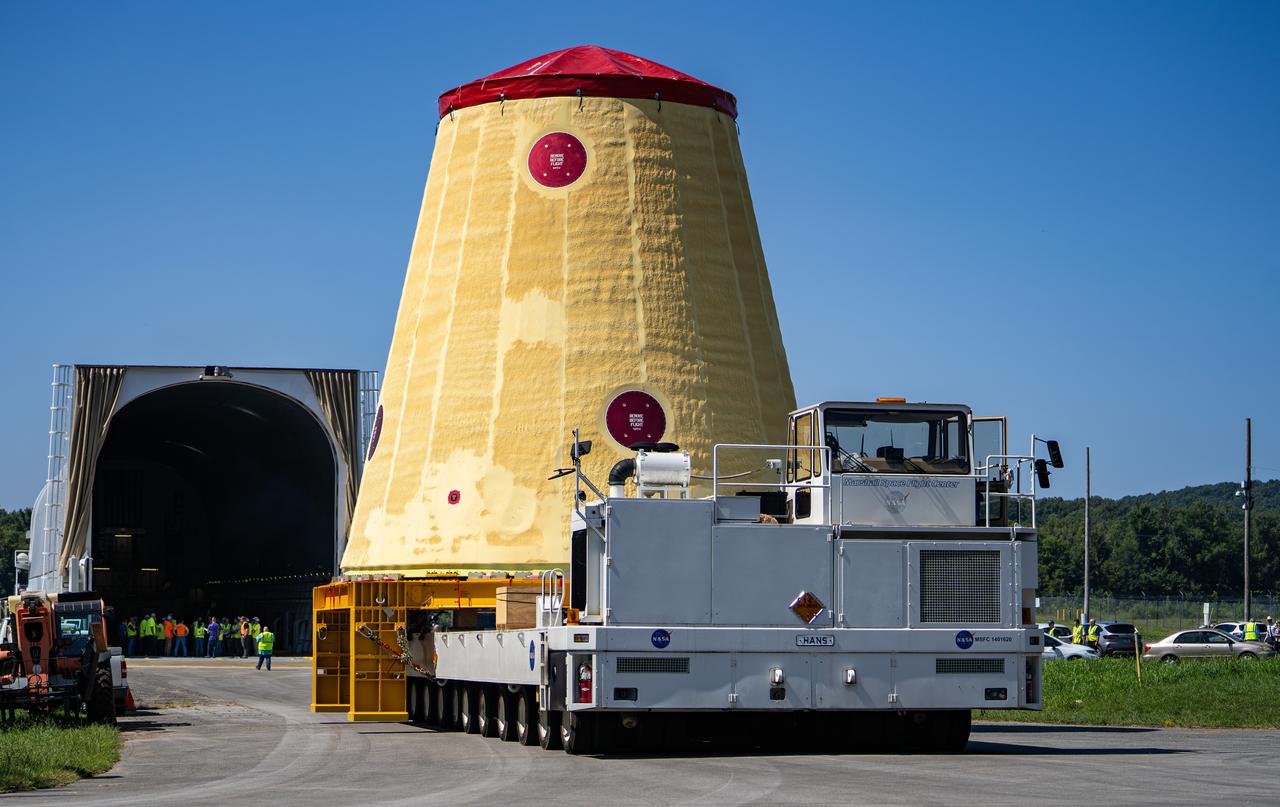
NASA rolled out a key piece of space flight hardware for the SLS (Space Launch System) rocket for the first crewed mission of NASA’s Artemis campaign from Marshall Space Flight Center in Huntsville, Alabama, on Wednesday, Aug. 21 for shipment to the agency’s spaceport in Florida. The cone-shaped launch vehicle stage adapter connects the rocket’s core stage to the upper stage and helps protect the upper stage’s engine that will help propel the Artemis II test flight around the Moon, slated for 2025. Manufactured by prime contractor Teledyne Brown Engineering and the Jacobs Space Exploration Group’s ESSCA (Engineering Services and Science Capability Augmentation) contract using NASA Marshall’s self-reacting friction-stir robotic and vertical weld tools. Crews moved the adapter out of NASA Marshall’s Building 4708 to the agency’s Pegasus barge Aug. 21. The barge will ferry the adapter first to NASA’s Michoud Assembly Facility in New Orleans, where crews will pick up additional SLS hardware for future Artemis missions, before traveling to NASA Kennedy. Once in Florida, the adapter will join the recently delivered core stage. There, teams with NASA’s Exploration Ground Systems will prepare the adapter for stacking and launch.
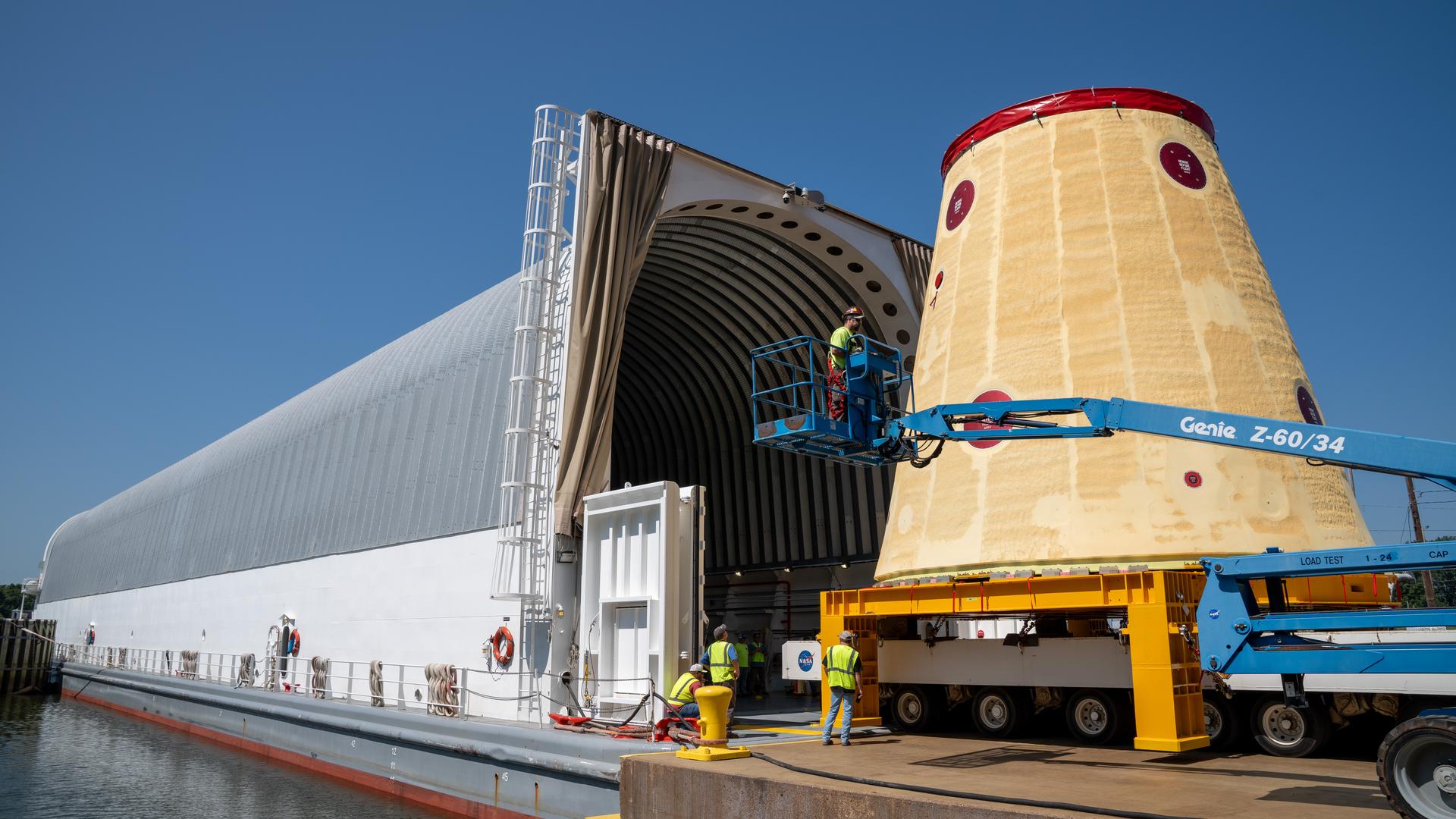
NASA rolled out a key piece of space flight hardware for the SLS (Space Launch System) rocket for the first crewed mission of NASA’s Artemis campaign from Marshall Space Flight Center in Huntsville, Alabama, on Wednesday, Aug. 21 for shipment to the agency’s spaceport in Florida. The cone-shaped launch vehicle stage adapter connects the rocket’s core stage to the upper stage and helps protect the upper stage’s engine that will help propel the Artemis II test flight around the Moon, slated for 2025. Manufactured by prime contractor Teledyne Brown Engineering and the Jacobs Space Exploration Group’s ESSCA (Engineering Services and Science Capability Augmentation) contract using NASA Marshall’s self-reacting friction-stir robotic and vertical weld tools. Crews moved the adapter out of NASA Marshall’s Building 4708 to the agency’s Pegasus barge Aug. 21. The barge will ferry the adapter first to NASA’s Michoud Assembly Facility in New Orleans, where crews will pick up additional SLS hardware for future Artemis missions, before traveling to NASA Kennedy. Once in Florida, the adapter will join the recently delivered core stage. There, teams with NASA’s Exploration Ground Systems will prepare the adapter for stacking and launch.
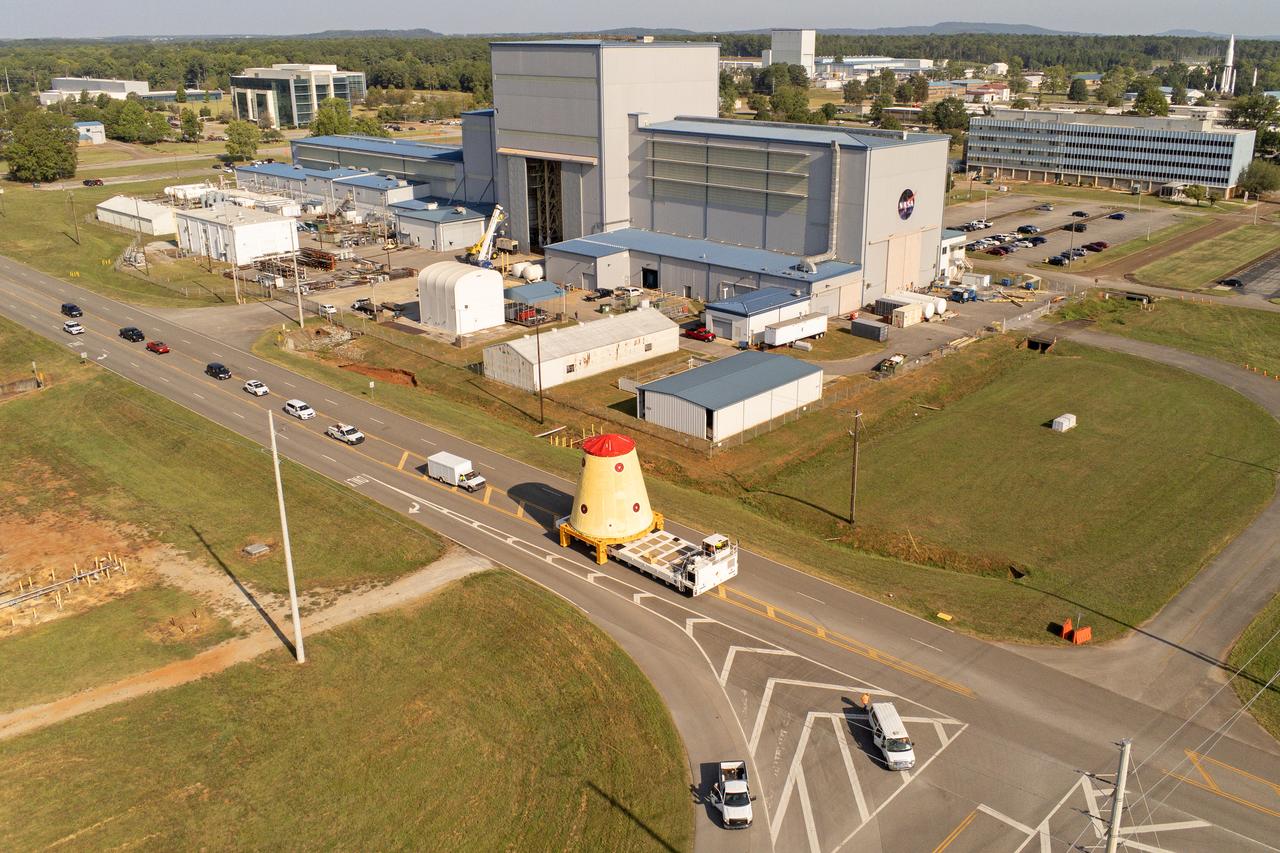
NASA rolled out a key piece of space flight hardware for the SLS (Space Launch System) rocket for the first crewed mission of NASA’s Artemis campaign from Marshall Space Flight Center in Huntsville, Alabama, on Wednesday, Aug. 21 for shipment to the agency’s spaceport in Florida. The cone-shaped launch vehicle stage adapter connects the rocket’s core stage to the upper stage and helps protect the upper stage’s engine that will help propel the Artemis II test flight around the Moon, slated for 2025. Manufactured by prime contractor Teledyne Brown Engineering and the Jacobs Space Exploration Group’s ESSCA (Engineering Services and Science Capability Augmentation) contract using NASA Marshall’s self-reacting friction-stir robotic and vertical weld tools. Crews moved the adapter out of NASA Marshall’s Building 4708 to the agency’s Pegasus barge Aug. 21. The barge will ferry the adapter first to NASA’s Michoud Assembly Facility in New Orleans, where crews will pick up additional SLS hardware for future Artemis missions, before traveling to NASA Kennedy. Once in Florida, the adapter will join the recently delivered core stage. There, teams with NASA’s Exploration Ground Systems will prepare the adapter for stacking and launch.
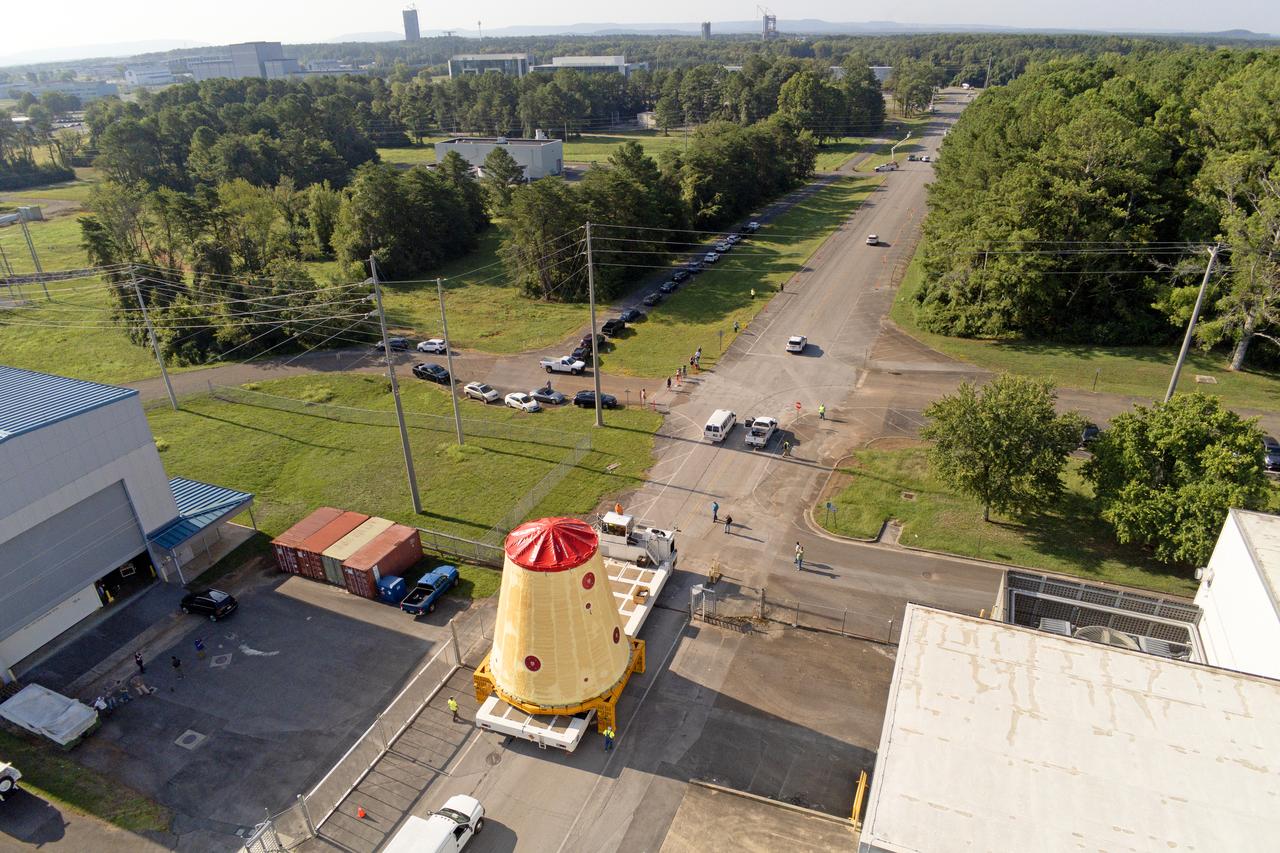
NASA rolled out a key piece of space flight hardware for the SLS (Space Launch System) rocket for the first crewed mission of NASA’s Artemis campaign from Marshall Space Flight Center in Huntsville, Alabama, on Wednesday, Aug. 21 for shipment to the agency’s spaceport in Florida. The cone-shaped launch vehicle stage adapter connects the rocket’s core stage to the upper stage and helps protect the upper stage’s engine that will help propel the Artemis II test flight around the Moon, slated for 2025. Manufactured by prime contractor Teledyne Brown Engineering and the Jacobs Space Exploration Group’s ESSCA (Engineering Services and Science Capability Augmentation) contract using NASA Marshall’s self-reacting friction-stir robotic and vertical weld tools. Crews moved the adapter out of NASA Marshall’s Building 4708 to the agency’s Pegasus barge Aug. 21. The barge will ferry the adapter first to NASA’s Michoud Assembly Facility in New Orleans, where crews will pick up additional SLS hardware for future Artemis missions, before traveling to NASA Kennedy. Once in Florida, the adapter will join the recently delivered core stage. There, teams with NASA’s Exploration Ground Systems will prepare the adapter for stacking and launch.

NASA rolled out a key piece of space flight hardware for the SLS (Space Launch System) rocket for the first crewed mission of NASA’s Artemis campaign from Marshall Space Flight Center in Huntsville, Alabama, on Wednesday, Aug. 21 for shipment to the agency’s spaceport in Florida. The cone-shaped launch vehicle stage adapter connects the rocket’s core stage to the upper stage and helps protect the upper stage’s engine that will help propel the Artemis II test flight around the Moon, slated for 2025. Manufactured by prime contractor Teledyne Brown Engineering and the Jacobs Space Exploration Group’s ESSCA (Engineering Services and Science Capability Augmentation) contract using NASA Marshall’s self-reacting friction-stir robotic and vertical weld tools. Crews moved the adapter out of NASA Marshall’s Building 4708 to the agency’s Pegasus barge Aug. 21. The barge will ferry the adapter first to NASA’s Michoud Assembly Facility in New Orleans, where crews will pick up additional SLS hardware for future Artemis missions, before traveling to NASA Kennedy. Once in Florida, the adapter will join the recently delivered core stage. There, teams with NASA’s Exploration Ground Systems will prepare the adapter for stacking and launch.
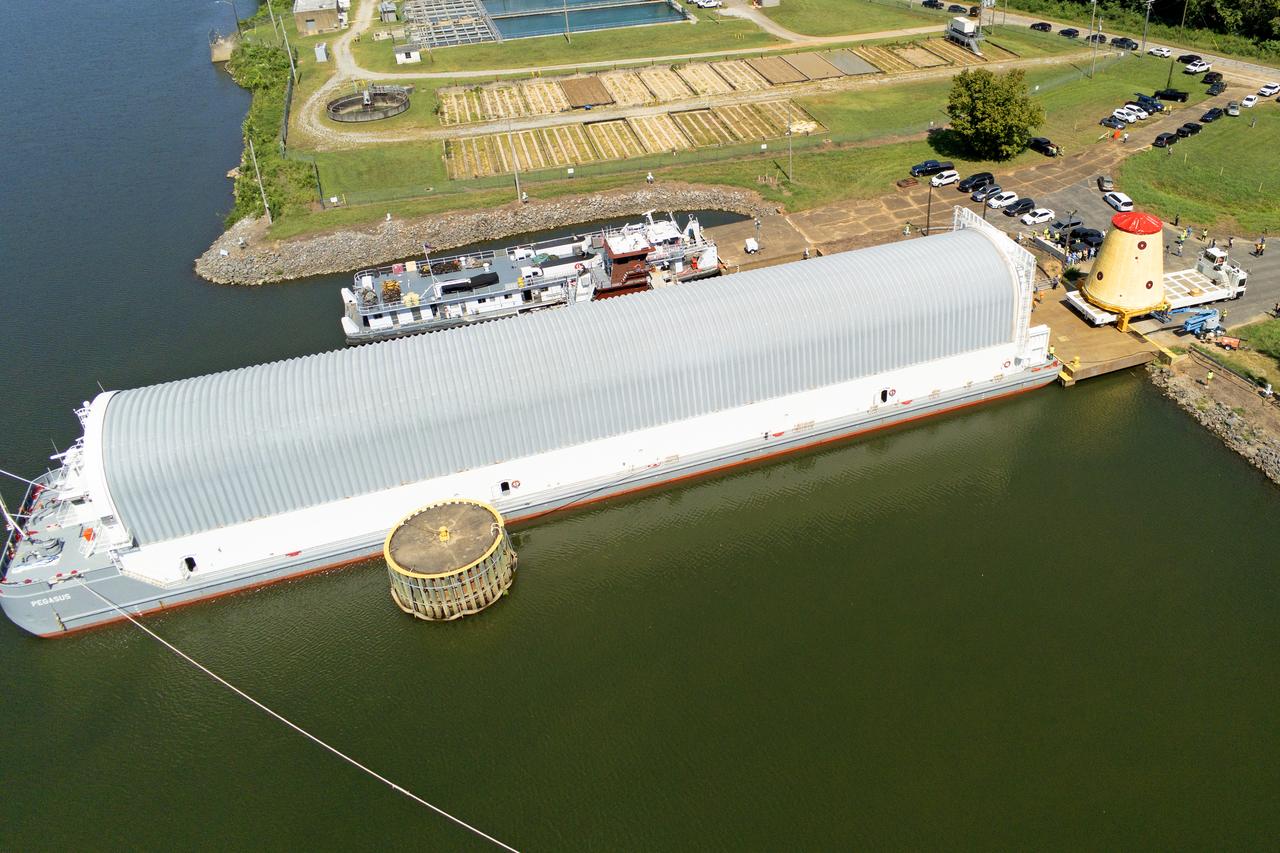
These images and videos show NASA rolling out a key piece of space flight hardware for the SLS (Space Launch System) rocket for the first crewed mission of NASA’s Artemis campaign from Marshall Space Flight Center in Huntsville, Alabama, on Wednesday, Aug. 21 for shipment to the agency’s spaceport in Florida. The cone-shaped launch vehicle stage adapter connects the rocket’s core stage to the upper stage and helps protect the upper stage’s engine that will help propel the Artemis II test flight around the Moon, slated for 2025. Manufactured by prime contractor Teledyne Brown Engineering and the Jacobs Space Exploration Group’s ESSCA (Engineering Services and Science Capability Augmentation) contract using NASA Marshall’s self-reacting friction-stir robotic and vertical weld tools. Crews moved the adapter out of NASA Marshall’s Building 4708 to the agency’s Pegasus barge Aug. 21. The barge will ferry the adapter first to NASA’s Michoud Assembly Facility in New Orleans, where crews will pick up additional SLS hardware for future Artemis missions, before traveling to NASA Kennedy. Once in Florida, the adapter will join the recently delivered core stage. There, teams with NASA’s Exploration Ground Systems will prepare the adapter for stacking and launch.
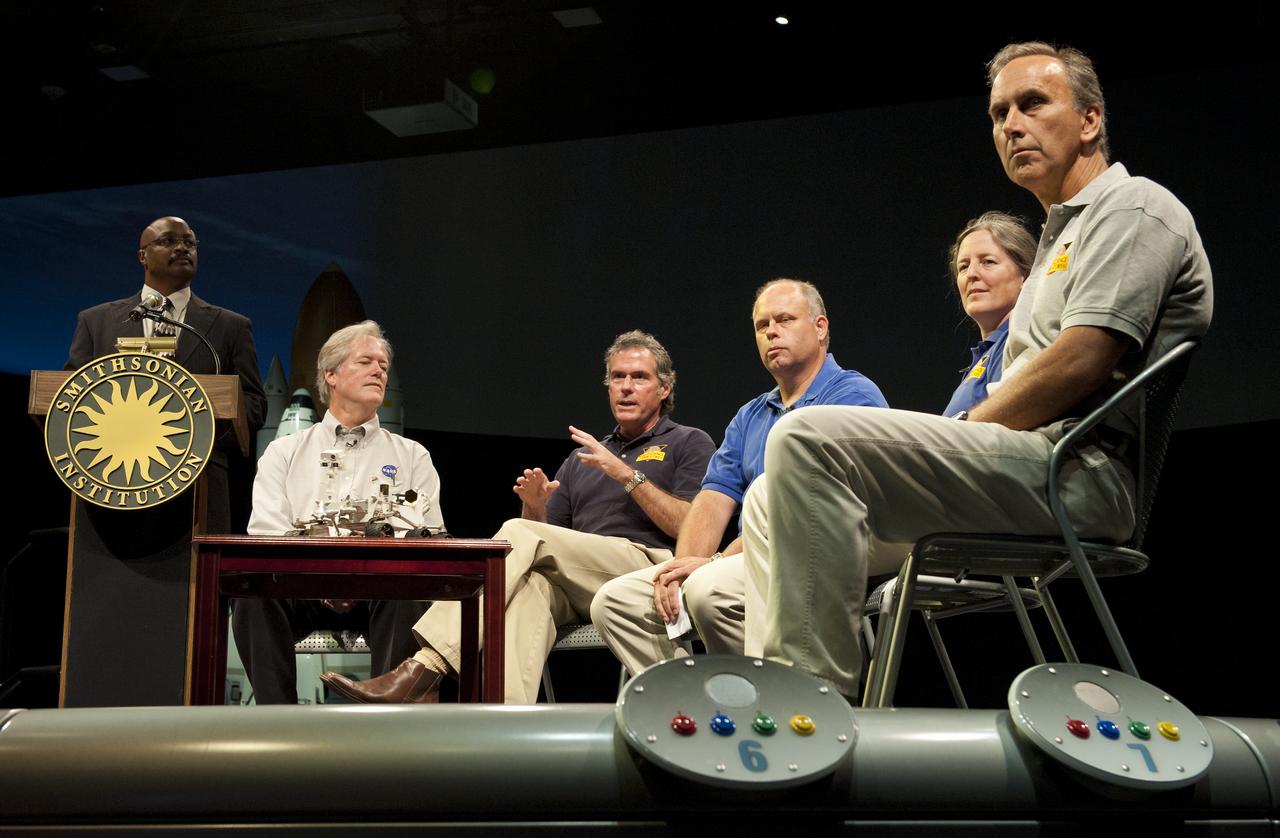
Michael Watkins (third from left), mission manager and project engineer, Mars Science Laboratory (MSL), Jet Propulsion Lab, Pasadena, Calif., speaks at a press conference at the Smithsonian's National Air and Space Museum on Friday, July 22, 2011 in Washington. From left to right, Watkins is joined by Dwayne Brown, NASA Headquarters public affairs officer; Michael Meyer, lead scientist Mars Exploration Program, NASA Headquarters; Watkins; John Grant, geologist, Smithsonian National Air and Space Museum in Washington; Dawn Sumner, geologist, University of California, Davis and John Grotzinger, MSL project scientist, JPL. Photo Credit: (NASA/Carla Cioffi)

Barbara Brown, chief technologist at NASA’s Kennedy Space Center in Florida, speaks at the fifth and final TED Talk-style informational session on Nov. 14, 2019, in the Kennedy Learning Institute. Sponsored by Kennedy’s Launching Leaders and Leadership for the Future, NASAtalks focuses on the topic of intentional careers and aims to provide employees with tools and knowledge that can be utilized for career growth. The theme of this session was organizations, and additional speakers included Director of Engineering Shawn Quinn, Chief Counsel Dan Shaver and Tim Dunn, launch director for the agency’s Launch Services Program, with a skill-building section on vision by Mark Wiese, logistics element manager for the Gateway Program.
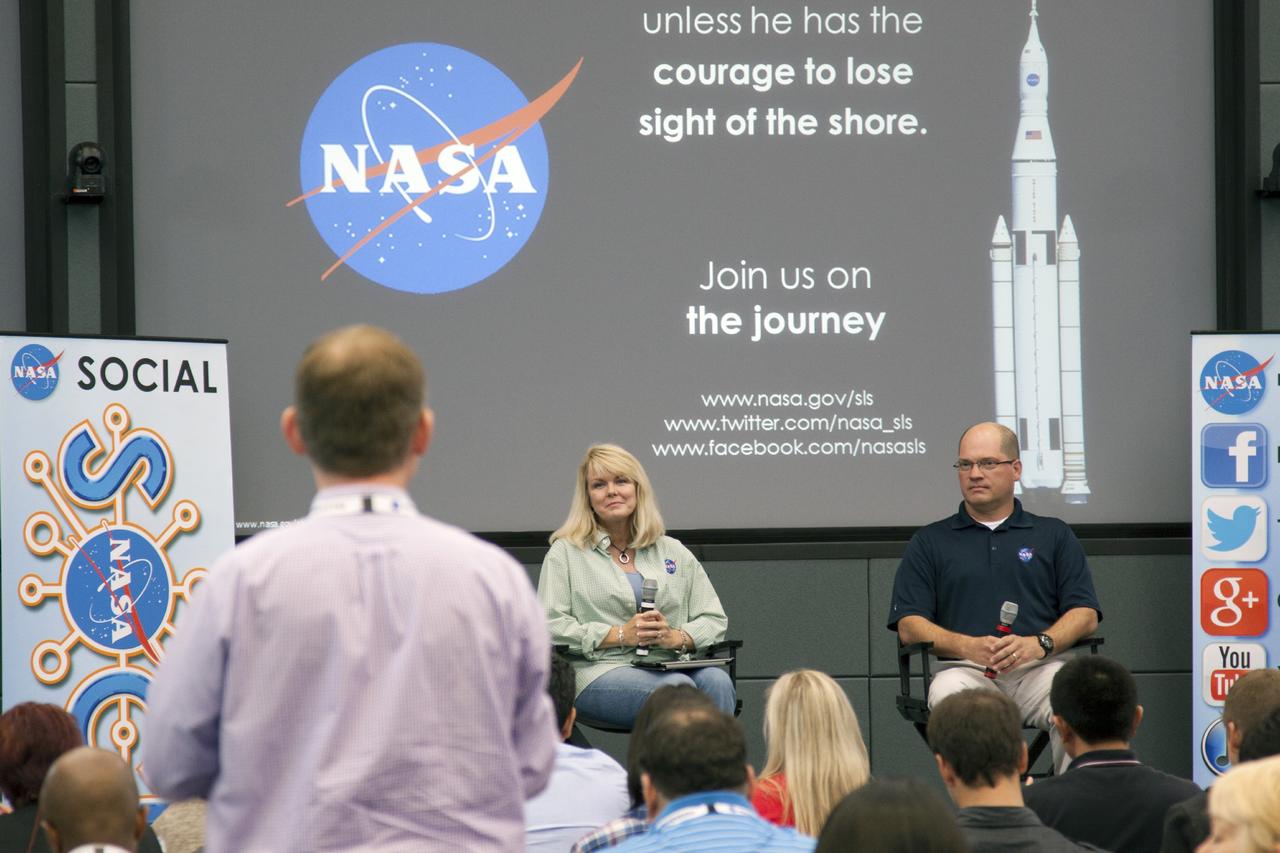
CAPE CANAVERAL, Fla. -- In the conference room of Operations Support Building II at NASA's Kennedy Space Center in Florida, social media participants listen to a briefing on future agency programs by, Kimberly Robinson, Space Launch System engineer, left, and Chad Brown of Ground System Development and Operations. The social media participants gathered at the Florida spaceport for the launch of the Mars Atmosphere and Volatile Evolution, or MAVEN, spacecraft. Their visit included tours of key facilities and participating in presentations by key NASA leaders who updated the space agency's current efforts. Photo credit: NASA/Jim Grossman
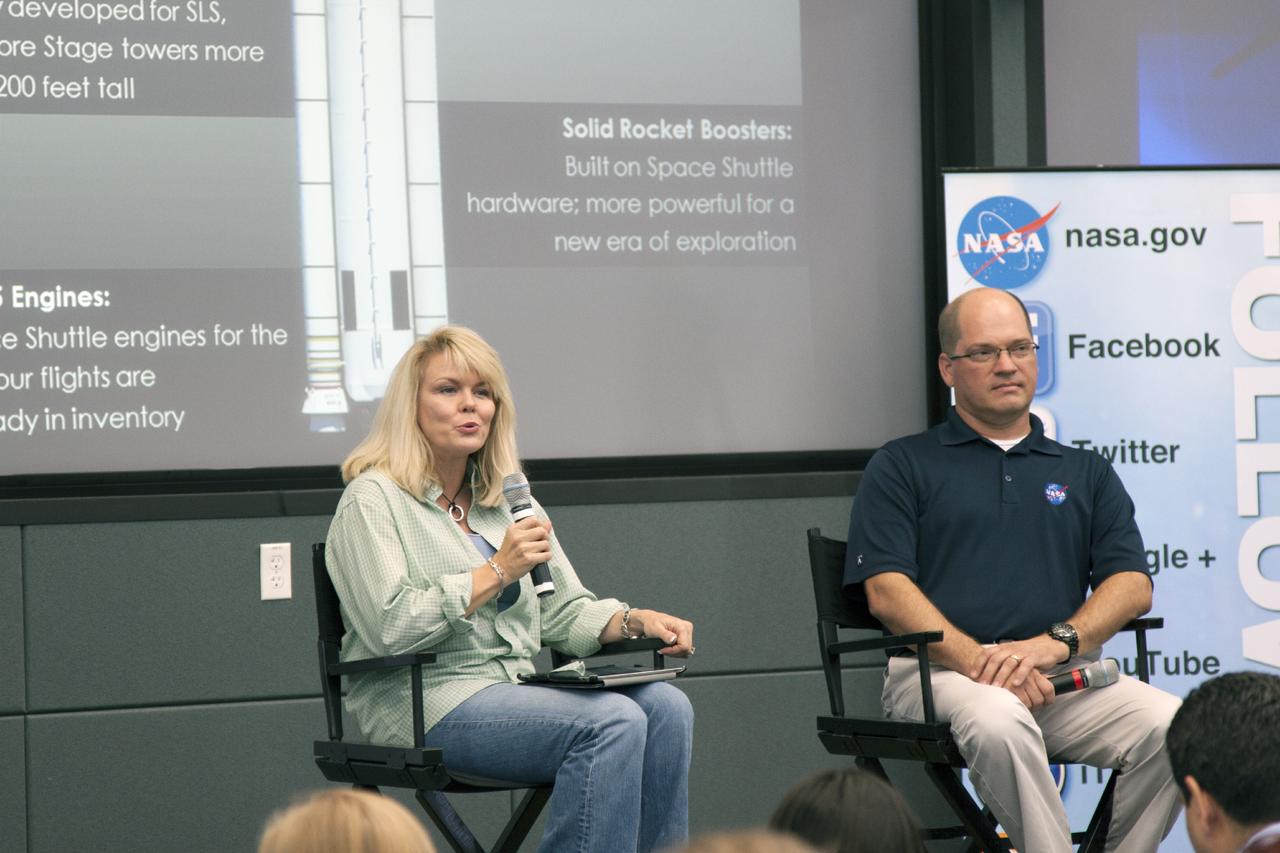
CAPE CANAVERAL, Fla. -- In the conference room of Operations Support Building II at NASA's Kennedy Space Center in Florida, social media participants listen to a briefing on future agency programs by, Kimberly Robinson, Space Launch System engineer, left, and Chad Brown of Ground System Development and Operations. The social media participants gathered at the Florida spaceport for the launch of the Mars Atmosphere and Volatile Evolution, or MAVEN, spacecraft. Their visit included tours of key facilities and participating in presentations by key NASA leaders who updated the space agency's current efforts. Photo credit: NASA/Jim Grossman

From left, Kennedy Space Center’s Chief Technologist Barbara Brown, Mark Wiese, logistics element manager for the Gateway Program, Tim Dunn, launch director for the agency’s Launch Services Program, Shawn Quinn, director of Engineering and Johnny Nguyen participate in the fifth and final TED Talk-style informational session on Nov. 14, 2019. Held in the Florida spaceport’s Kennedy Learning Institute and sponsored by the center’s Launching Leaders and Leadership for the Future, NASAtalks focuses on the topic of intentional careers and aims to provide employees with tools and knowledge that can be utilized for career growth. The theme of this final session was organizations.

Mark Wiese, logistics element manager for the Gateway Program at NASA’s Kennedy Space Center in Florida, speaks at the fifth and final TED Talk-style informational session on Nov. 14, 2019, in the Kennedy Learning Institute. Sponsored by Kennedy’s Launching Leaders and Leadership for the Future, NASAtalks focuses on the topic of intentional careers and aims to provide employees with tools and knowledge that can be utilized for career growth. The theme of this session was organizations, and additional speakers included Chief Counsel Dan Shaver, Director of Engineering Shawn Quinn, Chief Technologist Barbara Brown and Tim Dunn, launch director for the agency’s Launch Services Program.
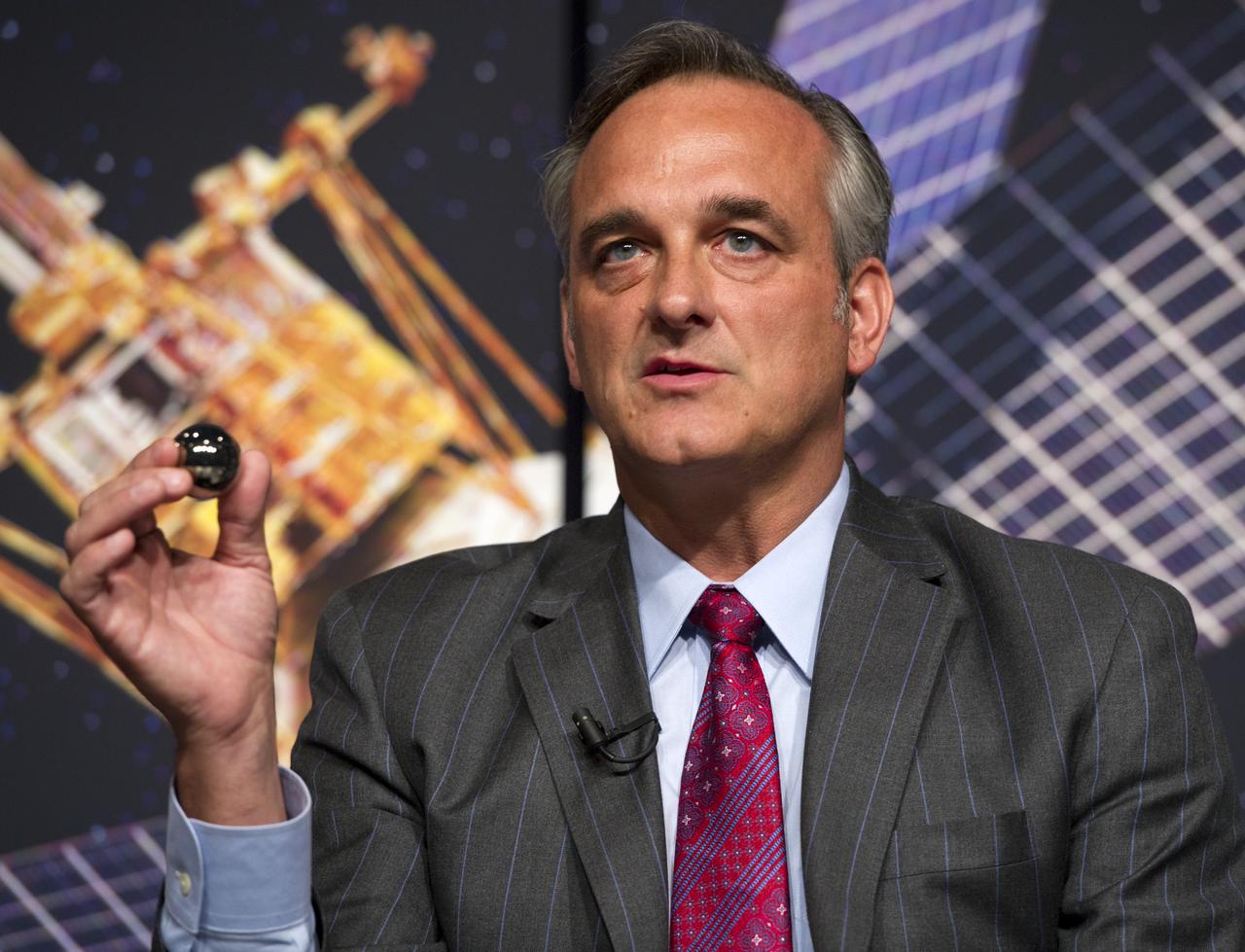
Rex Geveden, President of Teledyne Brown Engineering, makes a point during a press conference, Wednesday, May 4, 2011, to discuss NASA's Gravity Probe B (GP-B) mission which has confirmed two key predictions derived from Albert Einstein's general theory of relativity, which the spacecraft was designed to test at NASA Headquarters in Washington. The experiment, launched in 2004, used four ultra-precise gyroscopes to measure the hypothesized geodetic effect, the warping of space and time around a gravitational body, and frame-dragging, the amount a spinning object pulls space and time with it as it rotates. Photo Credit: (NASA/Paul E. Alers)

Barbara Brown, chief technologist at NASA’s Kennedy Space Center in Florida, speaks at the fifth and final TED Talk-style informational session on Nov. 14, 2019, in the Kennedy Learning Institute. Sponsored by Kennedy’s Launching Leaders and Leadership for the Future, NASAtalks focuses on the topic of intentional careers and aims to provide employees with tools and knowledge that can be utilized for career growth. The theme of this session was organizations, and additional speakers included Director of Engineering Shawn Quinn, Chief Counsel Dan Shaver and Tim Dunn, launch director for the agency’s Launch Services Program, with a skill-building section on vision by Mark Wiese, logistics element manager for the Gateway Program.
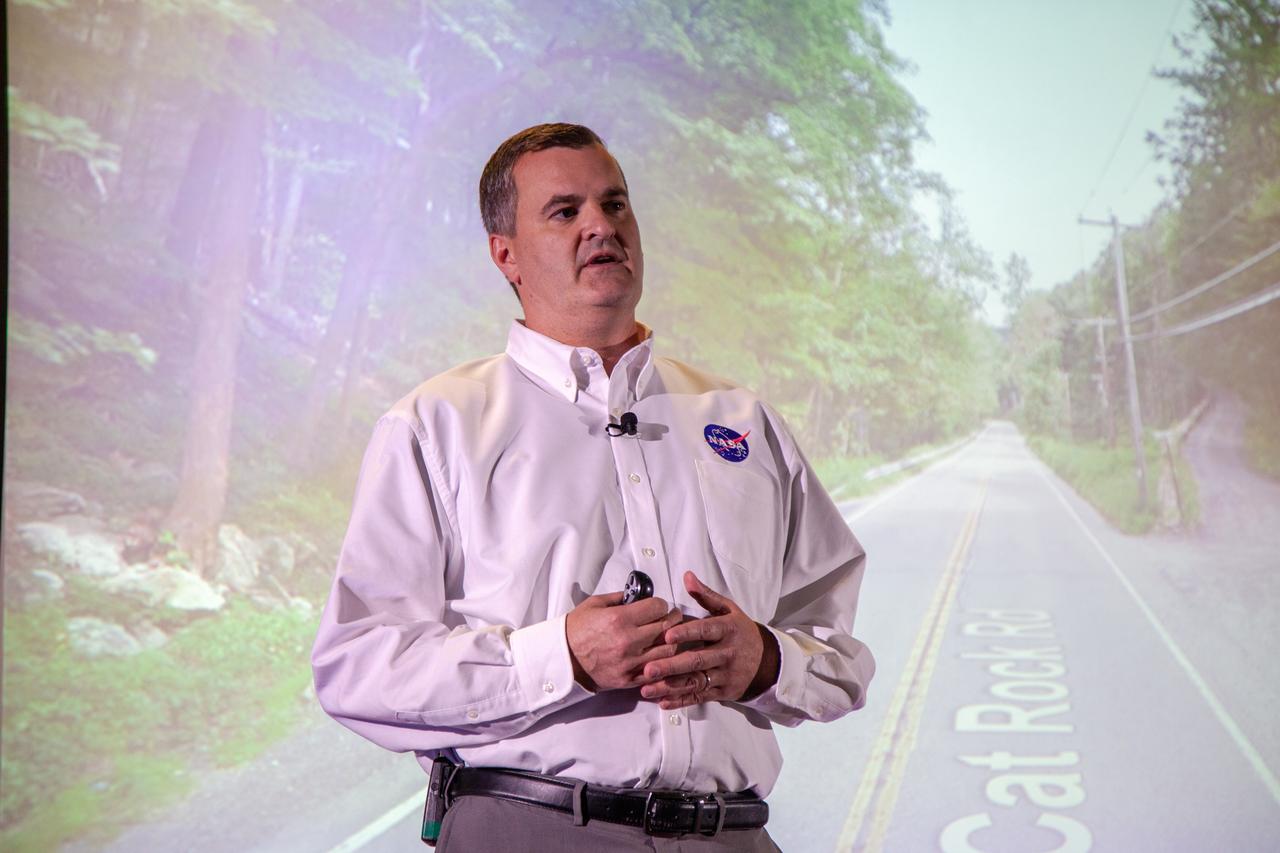
Mark Wiese, logistics element manager for the Gateway Program at NASA’s Kennedy Space Center in Florida, speaks at the fifth and final TED Talk-style informational session on Nov. 14, 2019, in the Kennedy Learning Institute. Sponsored by Kennedy’s Launching Leaders and Leadership for the Future, NASAtalks focuses on the topic of intentional careers and aims to provide employees with tools and knowledge that can be utilized for career growth. The theme of this session was organizations, and additional speakers included Chief Counsel Dan Shaver, Director of Engineering Shawn Quinn, Chief Technologist Barbara Brown and Tim Dunn, launch director for the agency’s Launch Services Program.

Shawn Quinn, director of Engineering at NASA’s Kennedy Space Center in Florida, speaks at the fifth and final TED Talk-style informational session on Nov. 14, 2019, in the Kennedy Learning Institute. Sponsored by Kennedy’s Launching Leaders and Leadership for the Future, NASAtalks focuses on the topic of intentional careers and aims to provide employees with tools and knowledge that can be utilized for career growth. The theme of this session was organizations, and additional speakers included Chief Counsel Dan Shaver, Chief Technologist Barbara Brown and Tim Dunn, launch director for the agency’s Launch Services Program, with a skill-building section on vision by Mark Wiese, logistics element manager for the Gateway Program.

Barbara Brown, chief technologist at NASA’s Kennedy Space Center in Florida, speaks at the fifth and final TED Talk-style informational session on Nov. 14, 2019, in the Kennedy Learning Institute. Sponsored by Kennedy’s Launching Leaders and Leadership for the Future, NASAtalks focuses on the topic of intentional careers and aims to provide employees with tools and knowledge that can be utilized for career growth. The theme of this session was organizations, and additional speakers included Director of Engineering Shawn Quinn, Chief Counsel Dan Shaver and Tim Dunn, launch director for the agency’s Launch Services Program, with a skill-building section on vision by Mark Wiese, logistics element manager for the Gateway Program.

Shawn Quinn, director of Engineering at NASA’s Kennedy Space Center in Florida, speaks at the fifth and final TED Talk-style informational session on Nov. 14, 2019, in the Kennedy Learning Institute. Sponsored by Kennedy’s Launching Leaders and Leadership for the Future, NASAtalks focuses on the topic of intentional careers and aims to provide employees with tools and knowledge that can be utilized for career growth. The theme of this session was organizations, and additional speakers included Chief Counsel Dan Shaver, Chief Technologist Barbara Brown and Tim Dunn, launch director for the agency’s Launch Services Program, with a skill-building section on vision by Mark Wiese, logistics element manager for the Gateway Program.
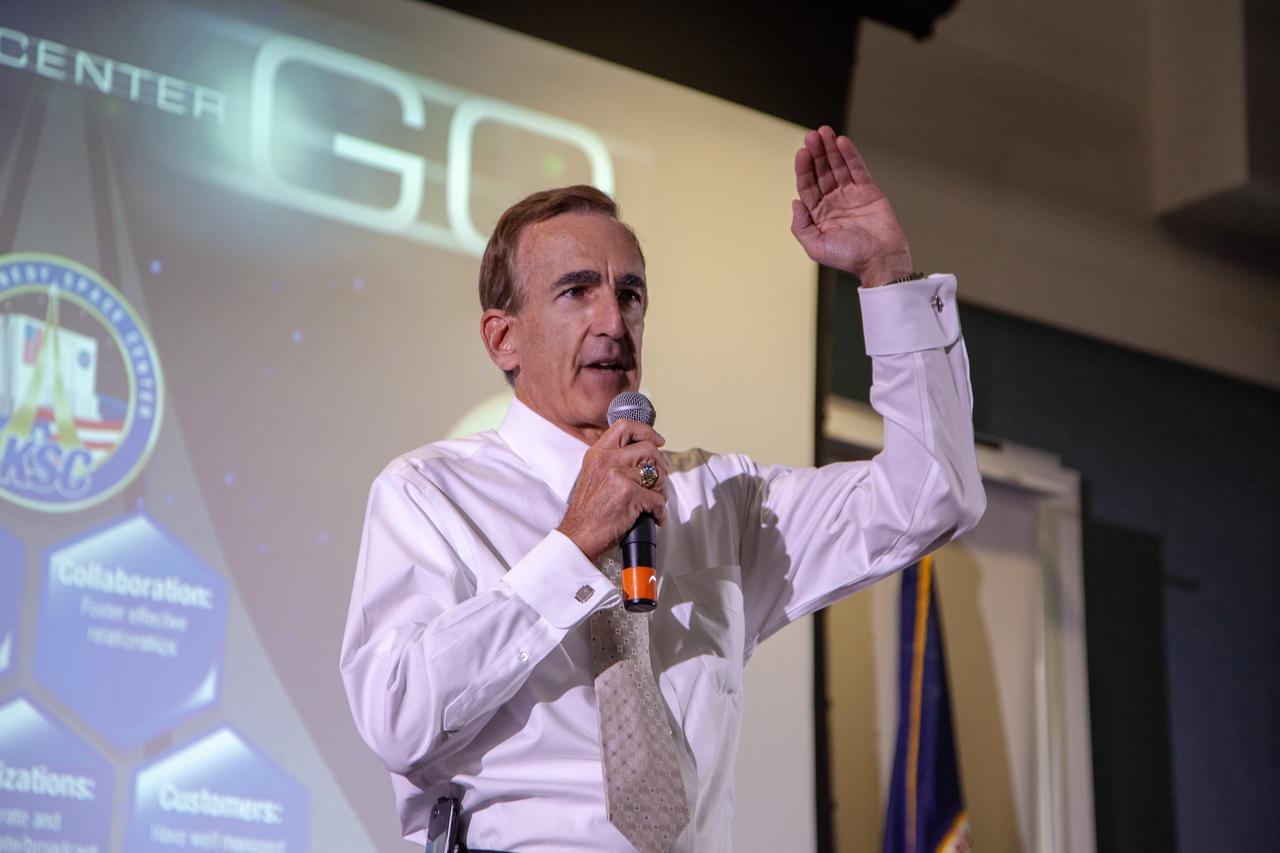
Dan Shaver, chief counsel at NASA’s Kennedy Space Center in Florida, speaks at the fifth and final TED Talk-style informational session on Nov. 14, 2019, in the Kennedy Learning Institute. Sponsored by Kennedy’s Launching Leaders and Leadership for the Future, NASAtalks focuses on the topic of intentional careers and aims to provide employees with tools and knowledge that can be utilized for career growth. The theme of this session was organizations, and additional speakers included Kennedy’s Director of Engineering Shawn Quinn, Chief Technologist Barbara Brown and Tim Dunn, launch director for the agency’s Launch Services Program, with a skill-building section on vision by Mark Wiese, logistics element manager for the Gateway Program.
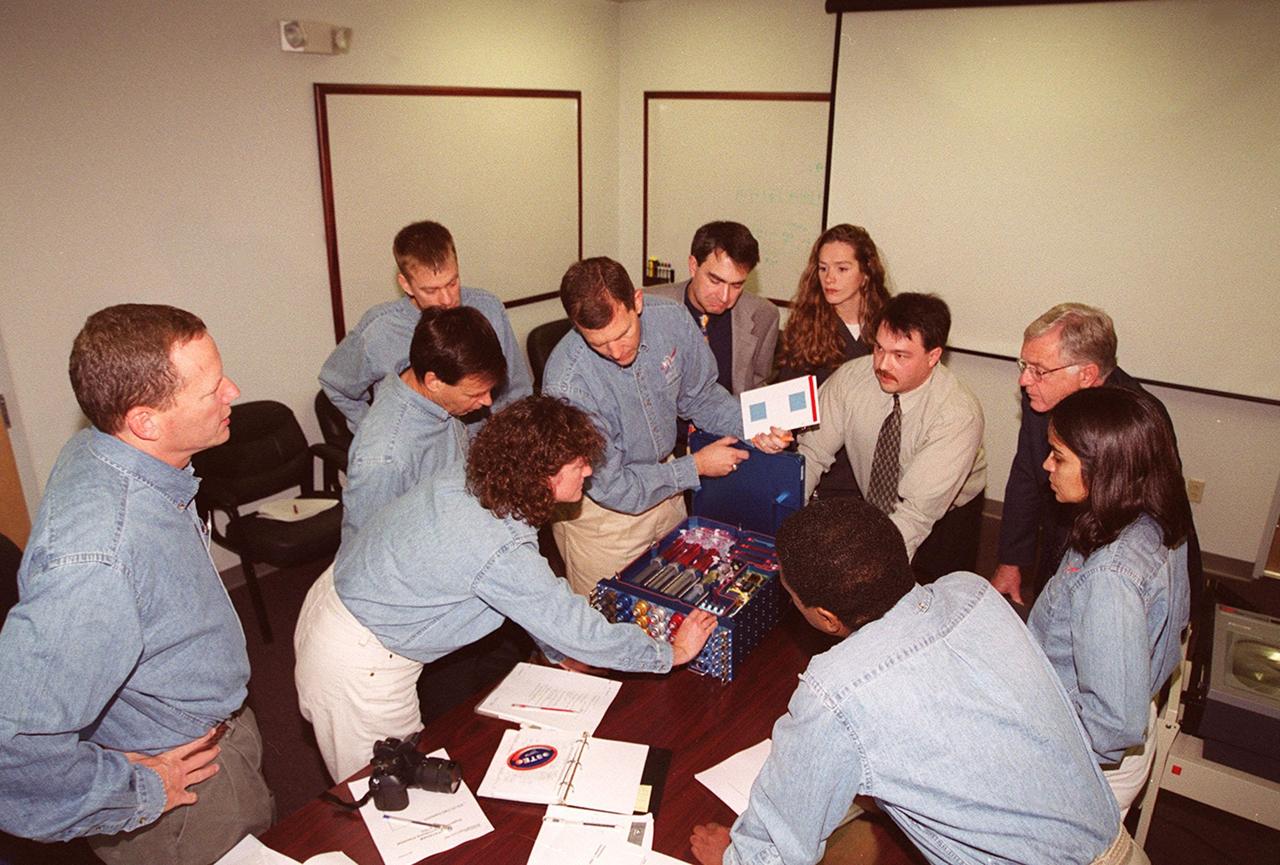
KENNEDY SPACE CENTER, FLA. -- Members of the STS-107 crew take part in In-Flight Maintenance training for their mission. Looking over the OSTEO experiment and paperwork are (at left) Mission Specialists David M. Brown and Laurel Clark and Payload Specialist Ilan Roman of Israel; Pilot William C. “Willie” McCool; and Commander Rick D. Husband. Looking on are project engineers and scientists. On the right are Mission Specialists Michael Anderson (back to camera) and Kalpana Chawla. As a research mission, STS-107will carry the SPACEHAB Double Module in its first research flight into space and a broad collection of experiments ranging from material science to life science. It is scheduled to launch July 19, 2001
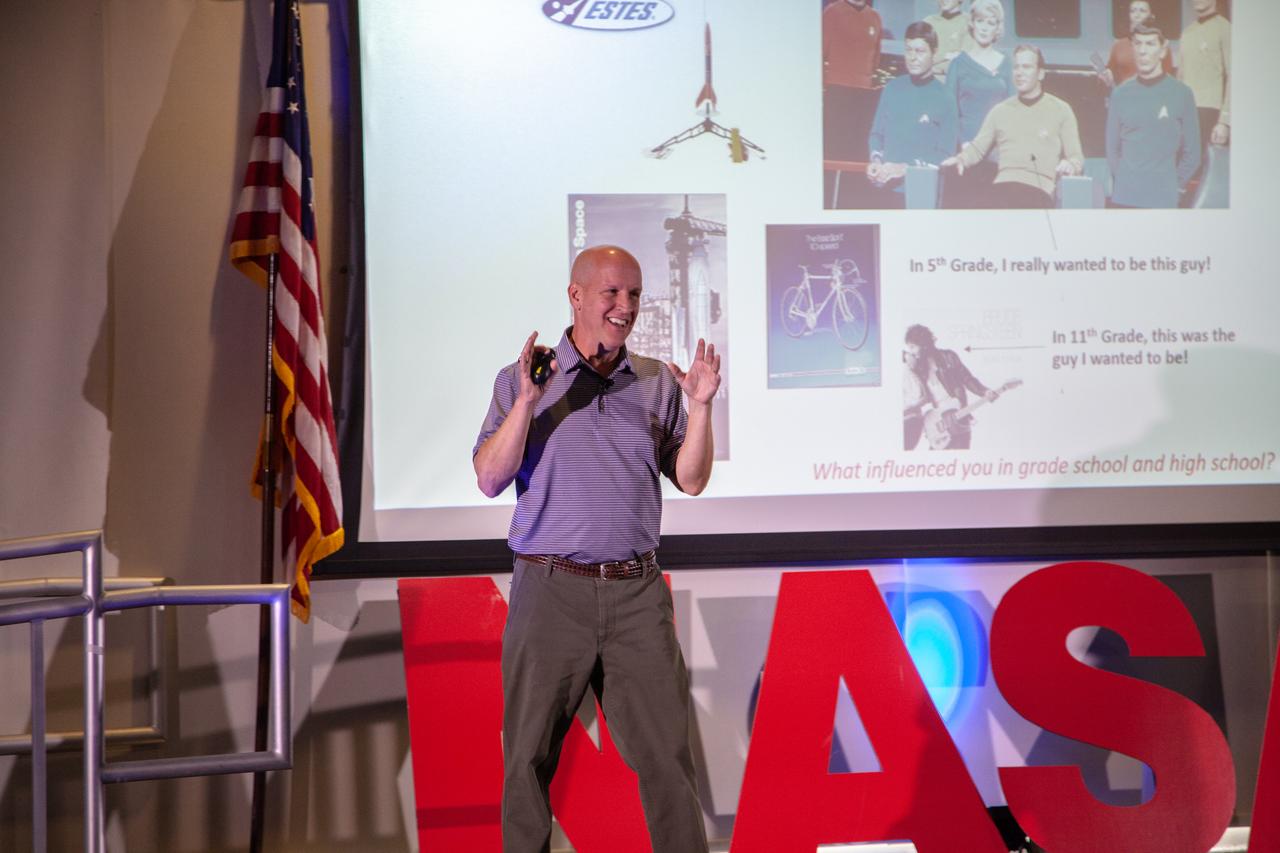
Tim Dunn, launch director for NASA’s Launch Services Program, speaks at the fifth and final TED Talk-style informational session at the agency’s Kennedy Space Center in Florida on Nov. 14, 2019. Hosted in the Kennedy Learning Institute and sponsored by the center’s Launching Leaders and Leadership for the Future, NASAtalks focuses on the topic of intentional careers and aims to provide employees with tools and knowledge that can be utilized for career growth. The theme of this session was organizations, and additional speakers included Director of Engineering Shawn Quinn, Chief Technologist Barbara Brown and Chief Counsel Dan Shaver, with a skill-building section on vision by Mark Wiese, logistics element manager for the Gateway Program.
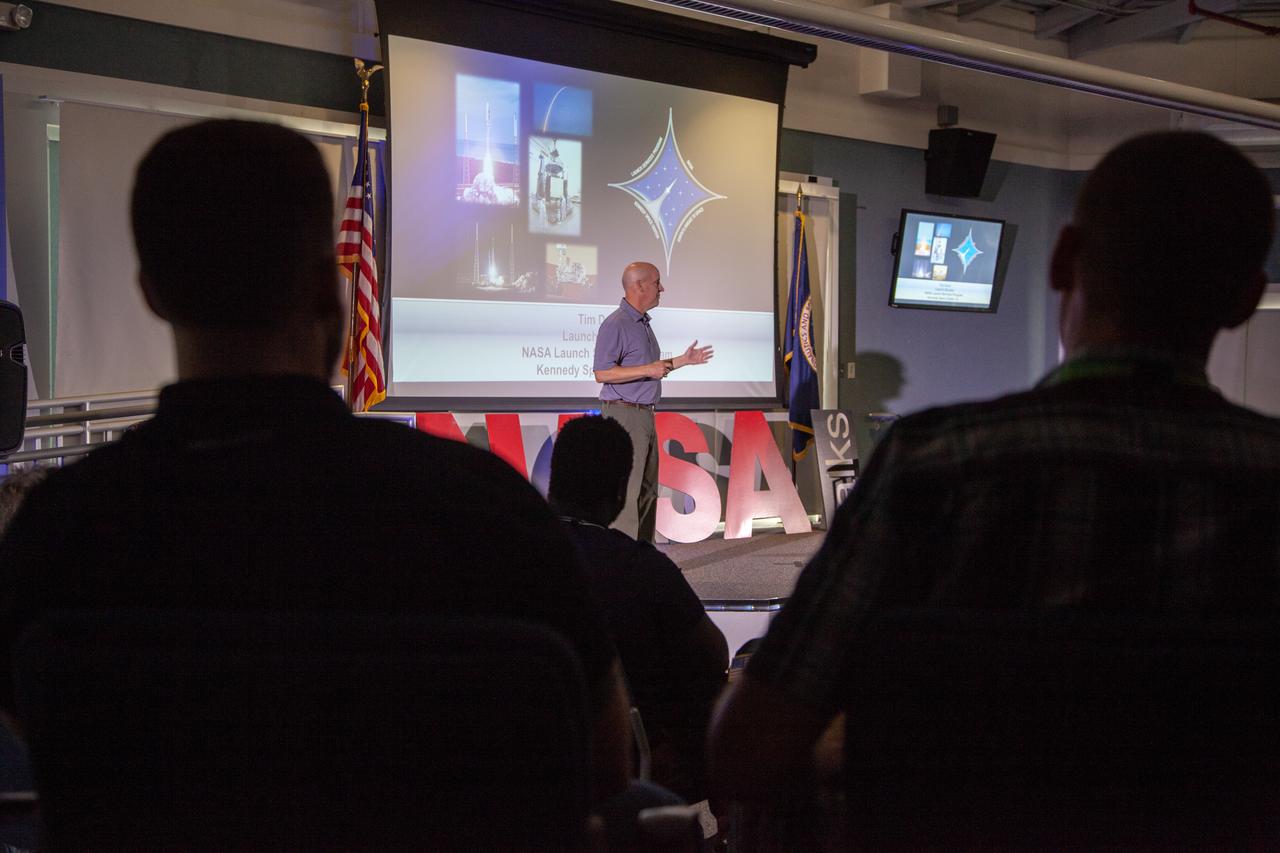
Tim Dunn, launch director for NASA’s Launch Services Program, speaks at the fifth and final TED Talk-style informational session at the agency’s Kennedy Space Center in Florida on Nov. 14, 2019. Hosted in the Kennedy Learning Institute and sponsored by the center’s Launching Leaders and Leadership for the Future, NASAtalks focuses on the topic of intentional careers and aims to provide employees with tools and knowledge that can be utilized for career growth. The theme of this session was organizations, and additional speakers included Director of Engineering Shawn Quinn, Chief Technologist Barbara Brown and Chief Counsel Dan Shaver, with a skill-building section on vision by Mark Wiese, logistics element manager for the Gateway Program.
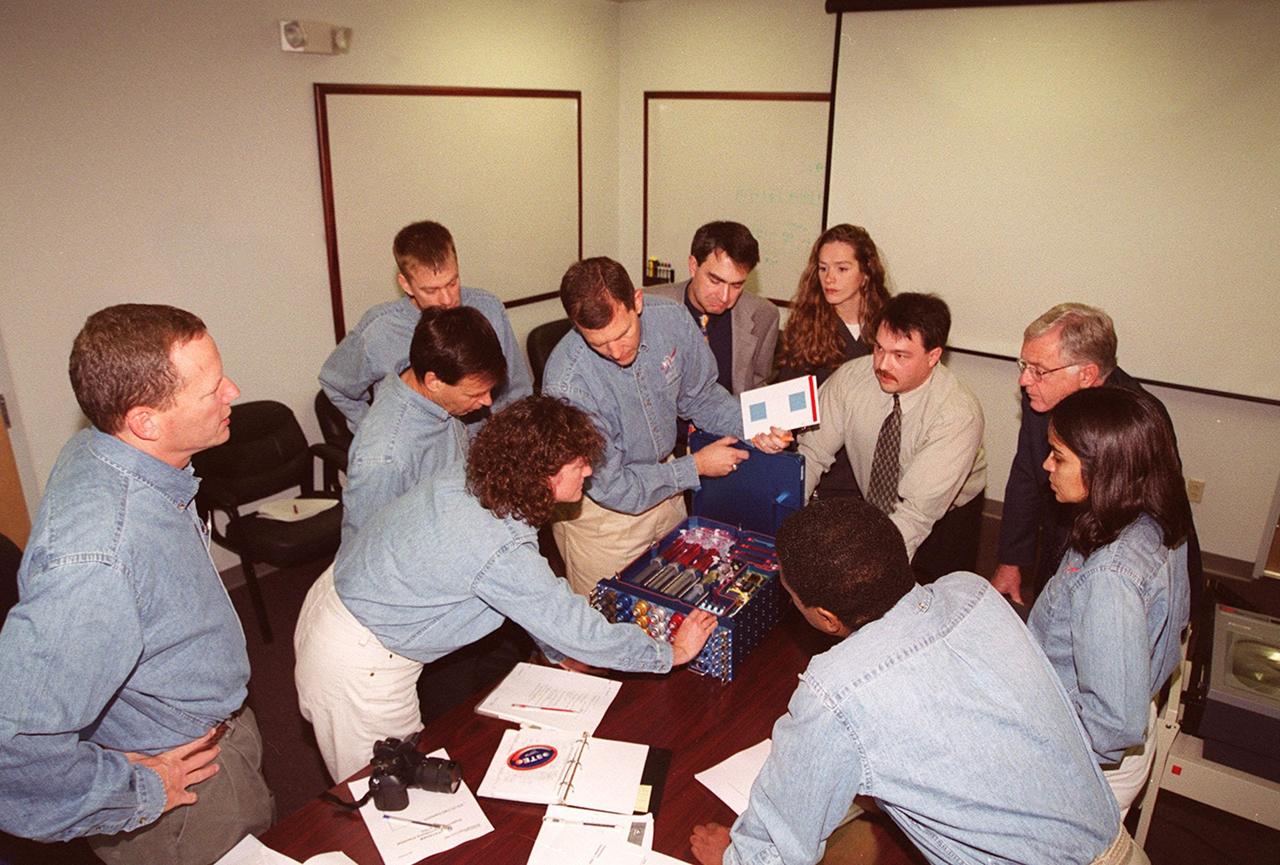
KENNEDY SPACE CENTER, FLA. -- Members of the STS-107 crew take part in In-Flight Maintenance training for their mission. Looking over the OSTEO experiment and paperwork are (at left) Mission Specialists David M. Brown and Laurel Clark and Payload Specialist Ilan Roman of Israel; Pilot William C. “Willie” McCool; and Commander Rick D. Husband. Looking on are project engineers and scientists. On the right are Mission Specialists Michael Anderson (back to camera) and Kalpana Chawla. As a research mission, STS-107will carry the SPACEHAB Double Module in its first research flight into space and a broad collection of experiments ranging from material science to life science. It is scheduled to launch July 19, 2001

Dan Shaver, chief counsel at NASA’s Kennedy Space Center in Florida, speaks at the fifth and final TED Talk-style informational session on Nov. 14, 2019, in the Kennedy Learning Institute. Sponsored by Kennedy’s Launching Leaders and Leadership for the Future, NASAtalks focuses on the topic of intentional careers and aims to provide employees with tools and knowledge that can be utilized for career growth. The theme of this session was organizations, and additional speakers included Kennedy’s Director of Engineering Shawn Quinn, Chief Technologist Barbara Brown and Tim Dunn, launch director for the agency’s Launch Services Program, with a skill-building section on vision by Mark Wiese, logistics element manager for the Gateway Program.
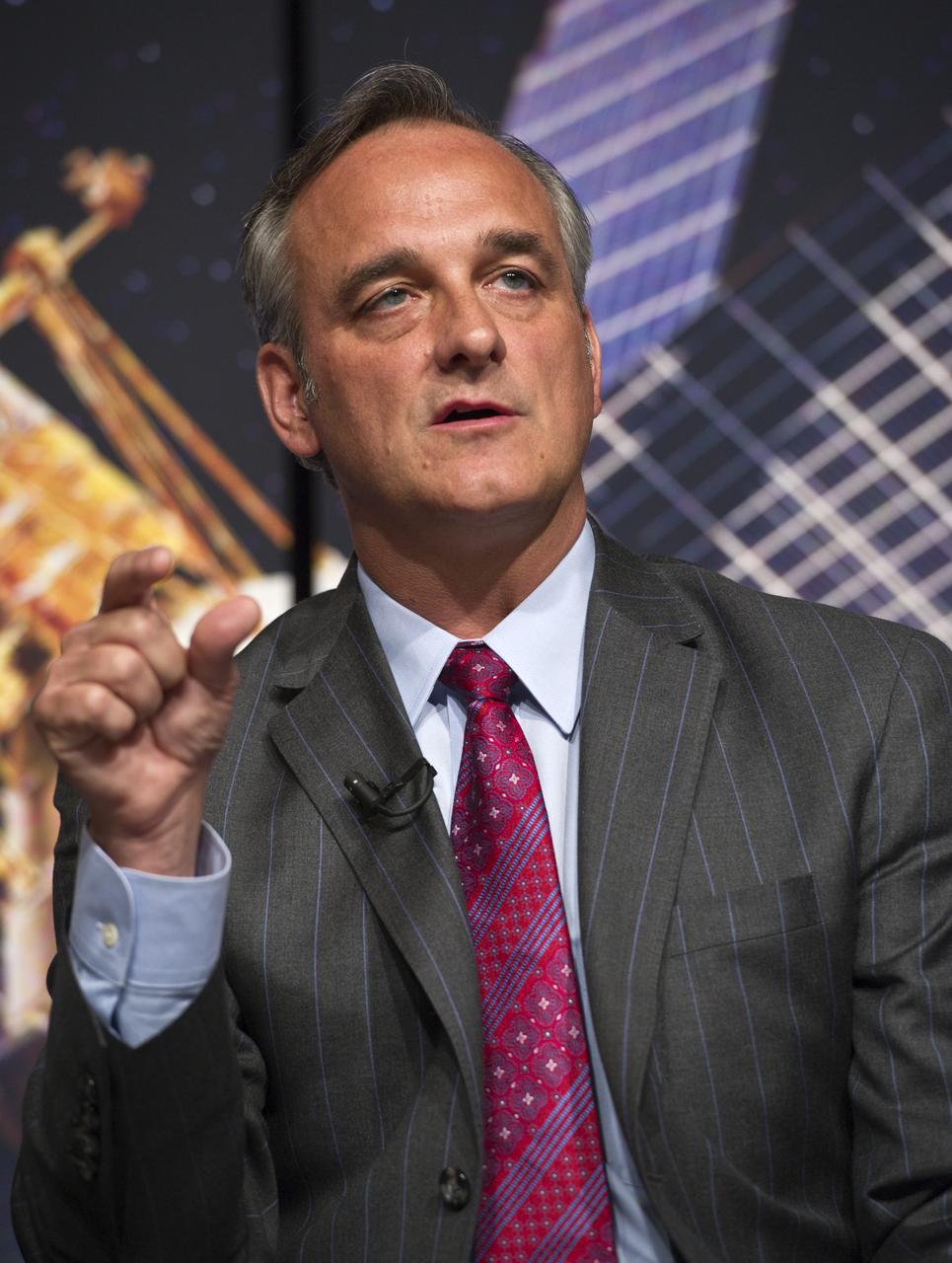
Rex Geveden, President of Teledyne Brown Engineering, makes a point during a press conference, Wednesday, May 4, 2011, to discuss NASA's Gravity Probe B (GP-B) mission which has confirmed two key predictions derived from Albert Einstein's general theory of relativity, which the spacecraft was designed to test at NASA Headquarters in Washington. The experiment, launched in 2004, used four ultra-precise gyroscopes to measure the hypothesized geodetic effect, the warping of space and time around a gravitational body, and frame-dragging, the amount a spinning object pulls space and time with it as it rotates. Photo Credit: (NASA/Paul E. Alers)
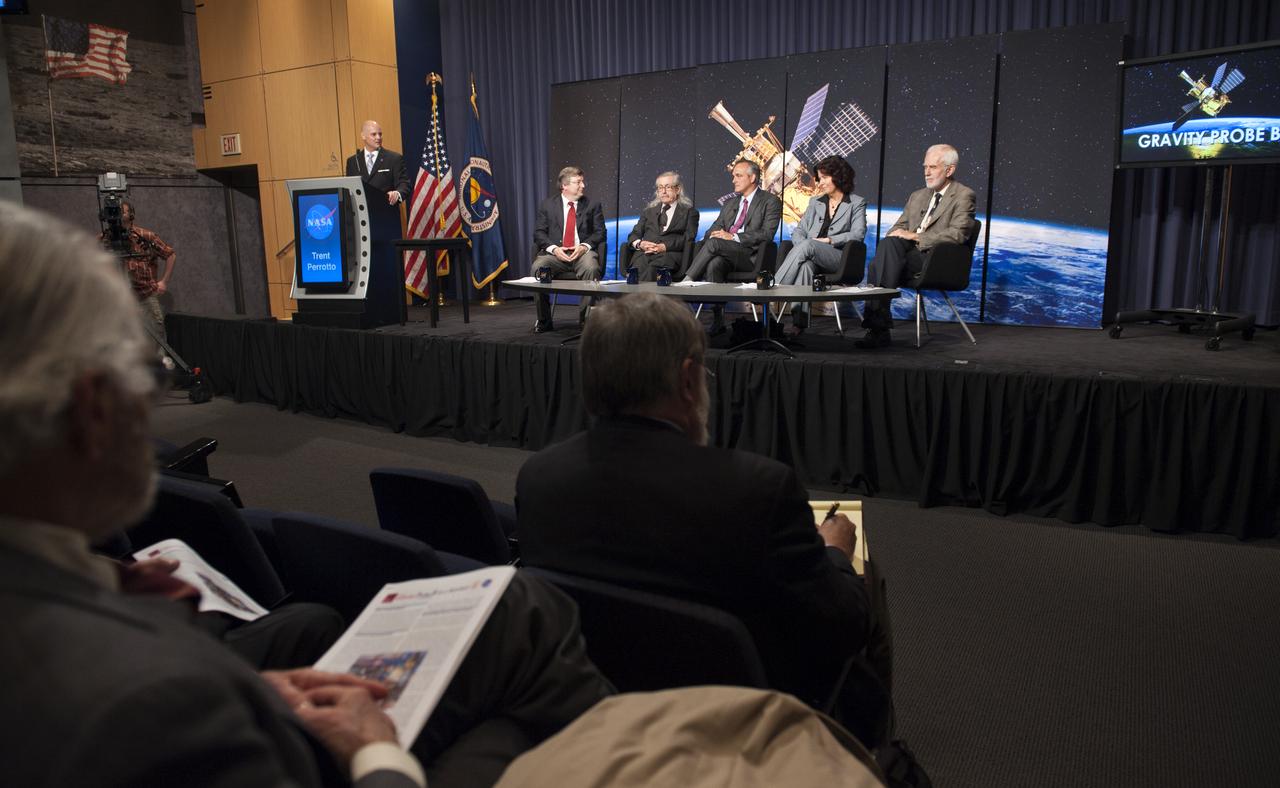
Seated from left, Bill Danchi, Senior Astrophysicist and Program Scientist at NASA Headquarters, Francis Everitt, Principal Investigator for the Gravity Probe B Mission at Stanford University, Rex Geveden, President of Teledyne Brown Engineering, Colleen Hartman, a research professor at George Washington University, and Clifford Will, Professor of Physics at Washington University in St. Louis, Mo., conduct a press conference, Wednesday, May 4, 2011, to discuss NASA's Gravity Probe B (GP-B) mission which has confirmed two key predictions derived from Albert Einstein's general theory of relativity, which the spacecraft was designed to test. at NASA Headquarters in Washington. Photo Credit: (NASA/Paul E. Alers)
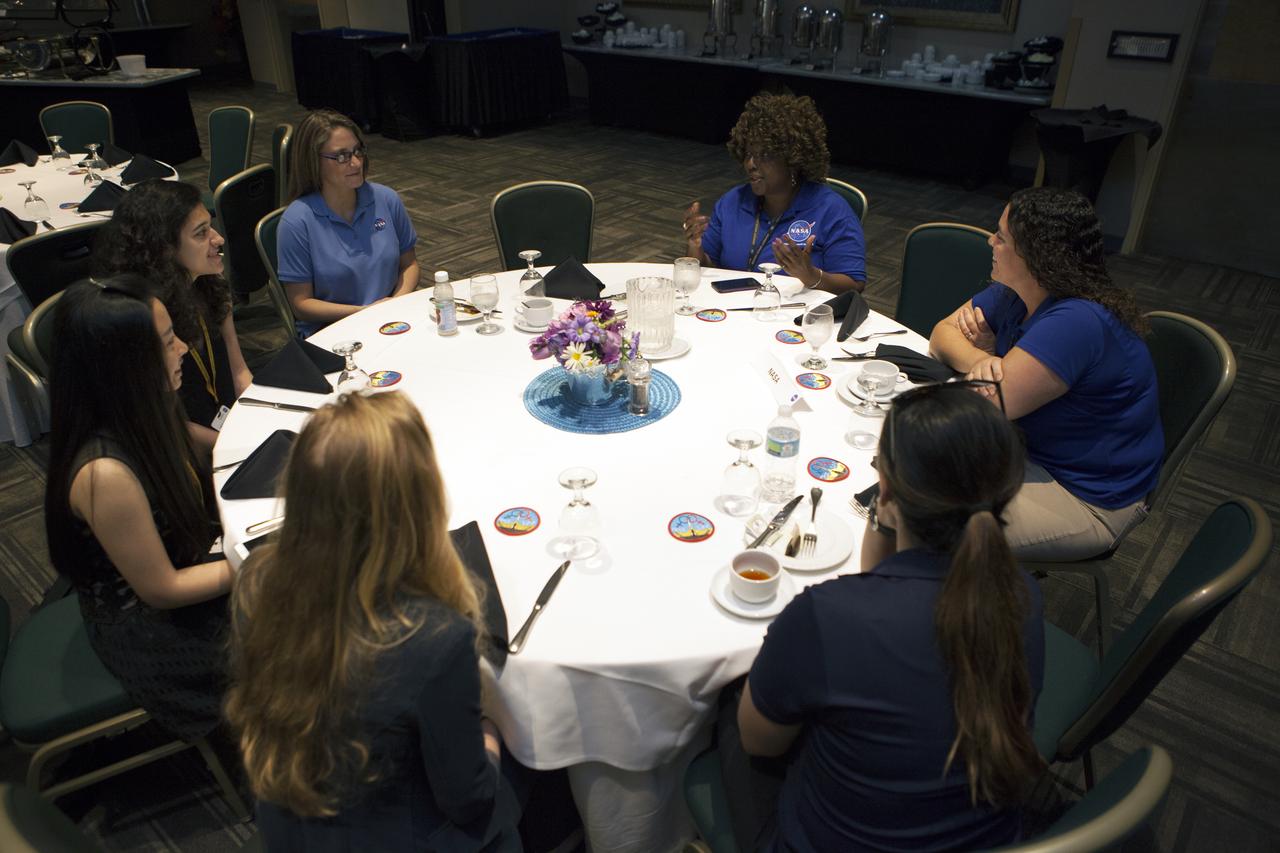
Barbara Brown, center at the table, strategic implementation manager with the Exploration Research and Technology Programs at NASA's Kennedy Space Center in Florida, talks to students during a Women in STEM breakfast inside the Debus Conference Center at the Kennedy Space Center Visitor Complex. STEM is science, technology, engineering and math. The special event gave students competing in NASA's 8th Annual Robotic Mining Competition the chance to learn from female NASA scientists, engineers and professionals about their careers and the paths they took to working at Kennedy. The Robotic Mining Competition is a NASA Human Exploration and Operations Mission Directorate project designed to encourage students in STEM fields. The project provides a competitive environment to foster innovative ideas and solutions that could be used on NASA's Journey to Mars.
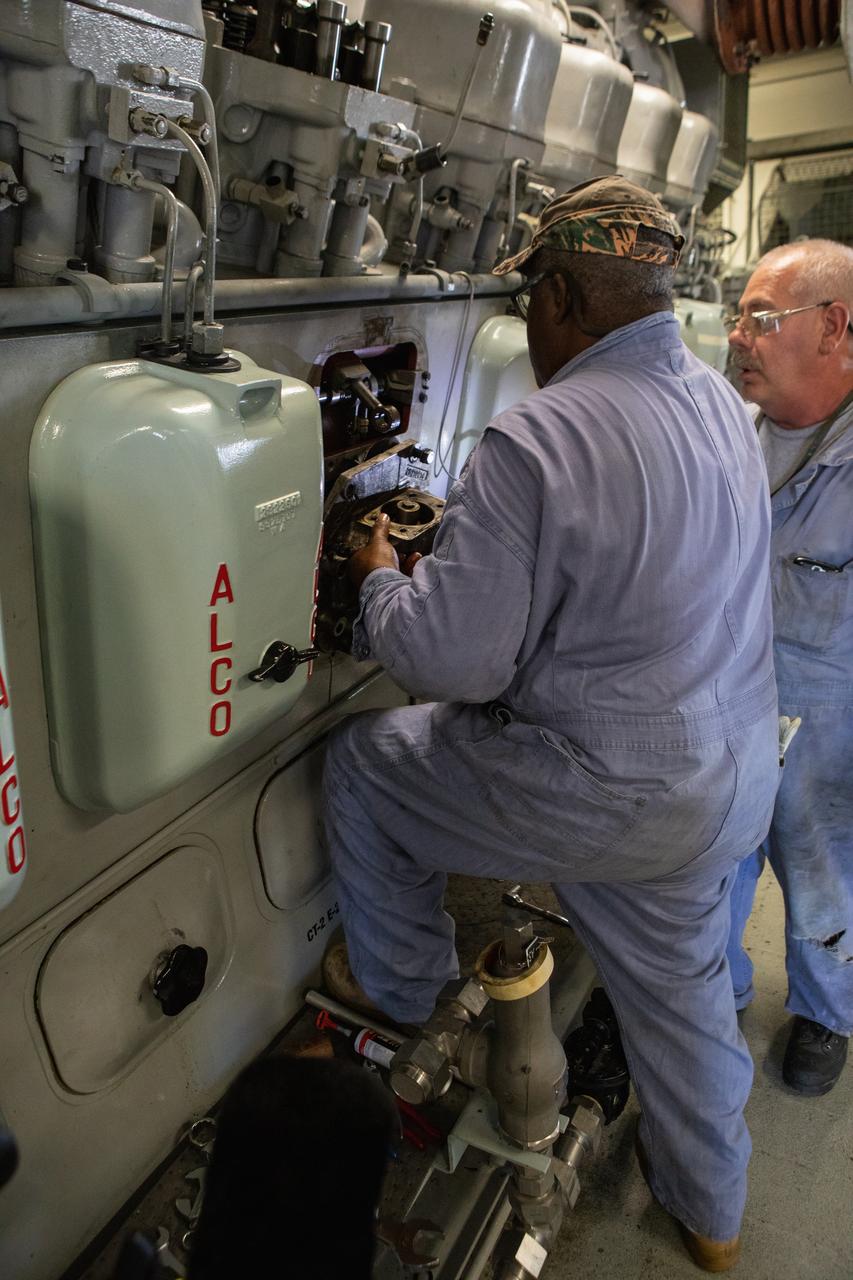
Pat Brown, left, and William Vardaman, mechanical technicians with the Jacobs contracting team, perform engine maintenance on NASA's crawler-transporter 2 on March 26, 2019, in the crawler yard located in Kennedy Space Center's Launch Complex 39 area. Recent engine work included rebuilding the vehicles’ fuel pump assemblies and installing new oil pumps that will help minimize future wear. This is one of two crawler-transporters that carried rockets and spacecraft, including the Apollo/Saturn V and space shuttle, from the Vehicle Assembly Building to the launch pad. NASA’s Exploration Ground Systems oversaw modifications and upgrades to crawler-transporter 2 so it can carry the mobile launcher and NASA's Space Launch System rocket, topped by the Orion spacecraft, to Launch Pad 39B for Exploration Mission-1.
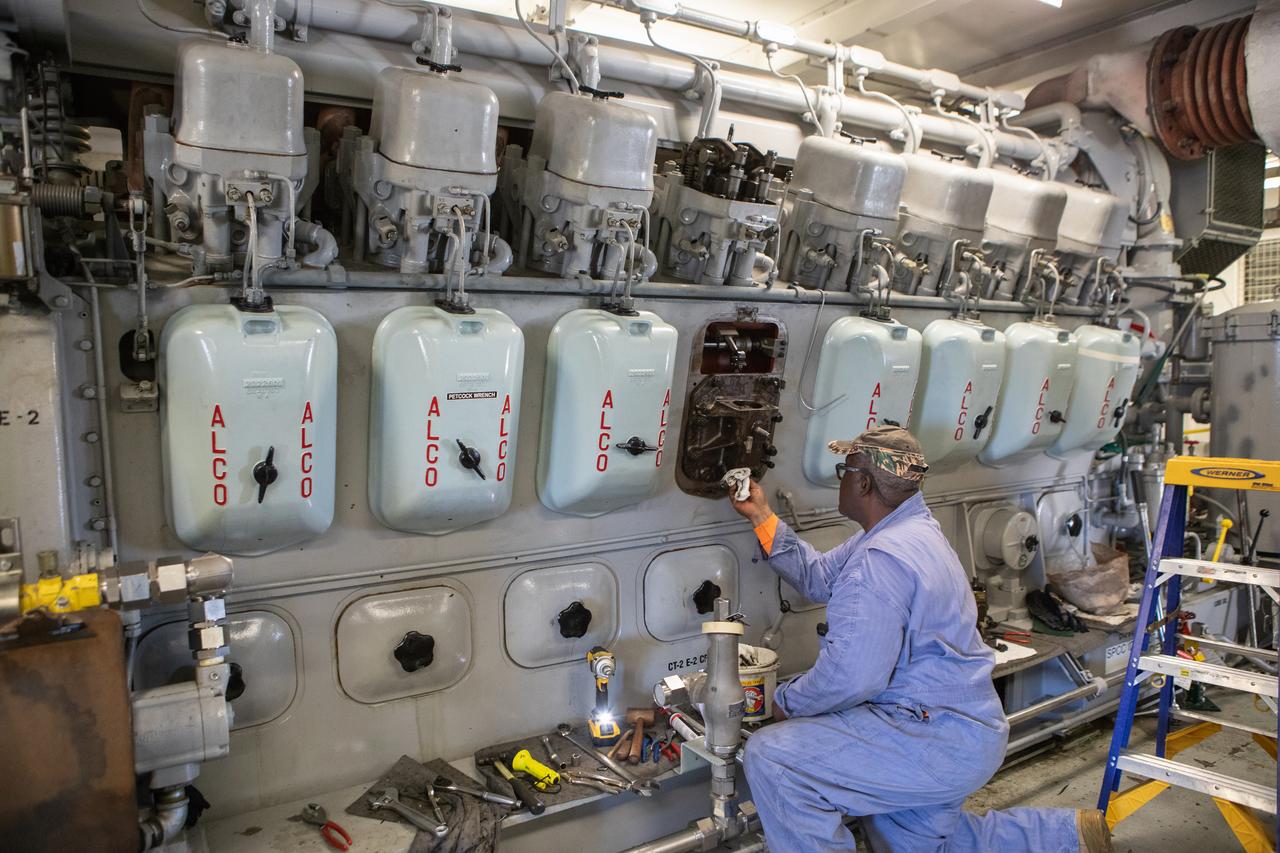
Pat Brown, a mechanical technician with Jacobs, performs engine maintenance on NASA's crawler-transporter 2 on March 26, 2019, in the crawler yard located in Kennedy Space Center's Launch Complex 39 area. Recent engine work included rebuilding the vehicles’ fuel pump assemblies and installing new oil pumps that will help minimize future wear. This is one of two crawler-transporters that carried rockets and spacecraft, including the Apollo/Saturn V and space shuttle, from the Vehicle Assembly Building to the launch pad. NASA’s Exploration Ground Systems oversaw modifications and upgrades to crawler-transporter 2 so it can carry the mobile launcher and NASA's Space Launch System rocket, topped by the Orion spacecraft, to Launch Pad 39B for Exploration Mission-1.
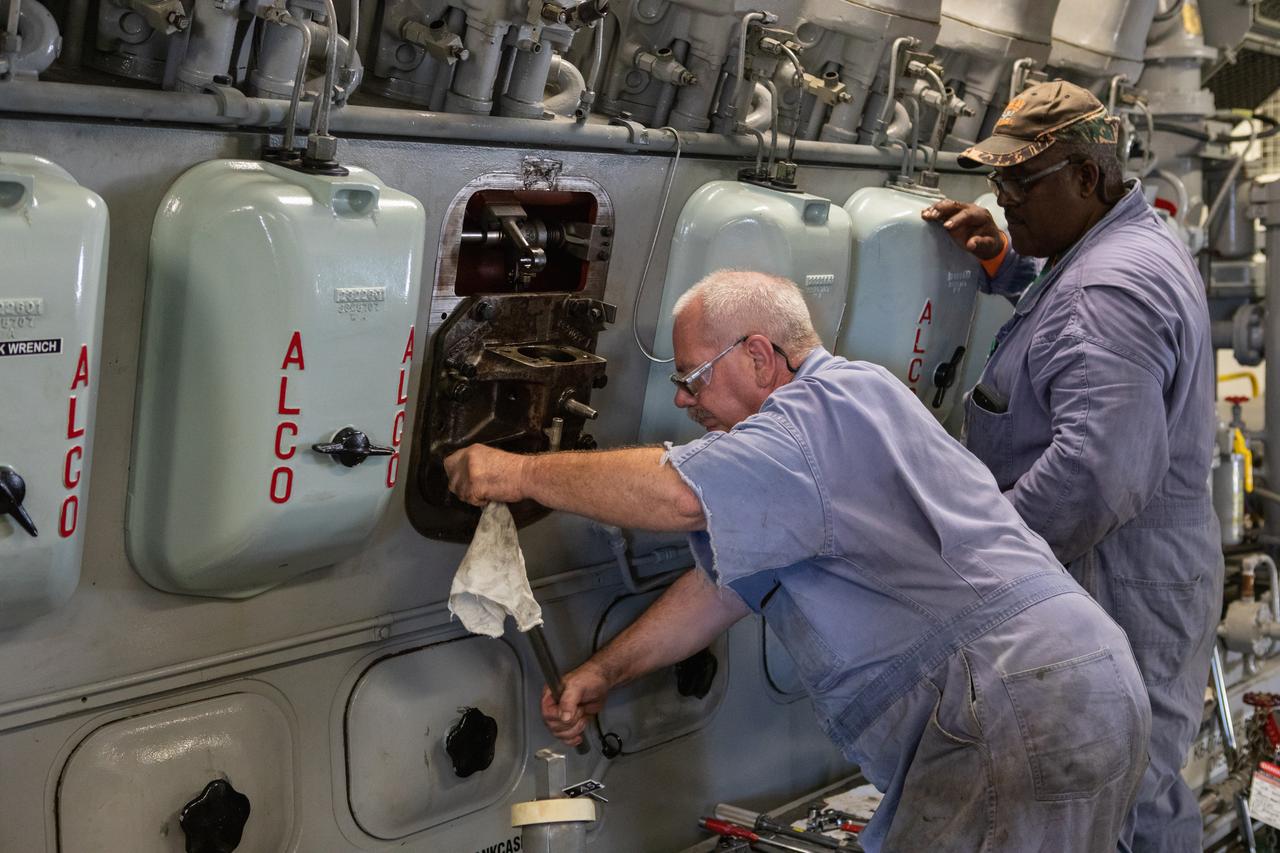
William Vardaman, left, and Pat Brown, mechanical technicians with the Jacobs contracting team, perform engine maintenance on NASA's crawler-transporter 2 on March 26, 2019, in the crawler yard located in Kennedy Space Center's Launch Complex 39 area. Recent engine work included rebuilding the vehicles’ fuel pump assemblies and installing new oil pumps that will help minimize future wear. This is one of two crawler-transporters that carried rockets and spacecraft, including the Apollo/Saturn V and space shuttle, from the Vehicle Assembly Building to the launch pad. NASA’s Exploration Ground Systems oversaw modifications and upgrades to crawler-transporter 2 so it can carry the mobile launcher and NASA's Space Launch System rocket, topped by the Orion spacecraft, to Launch Pad 39B for Exploration Mission-1.
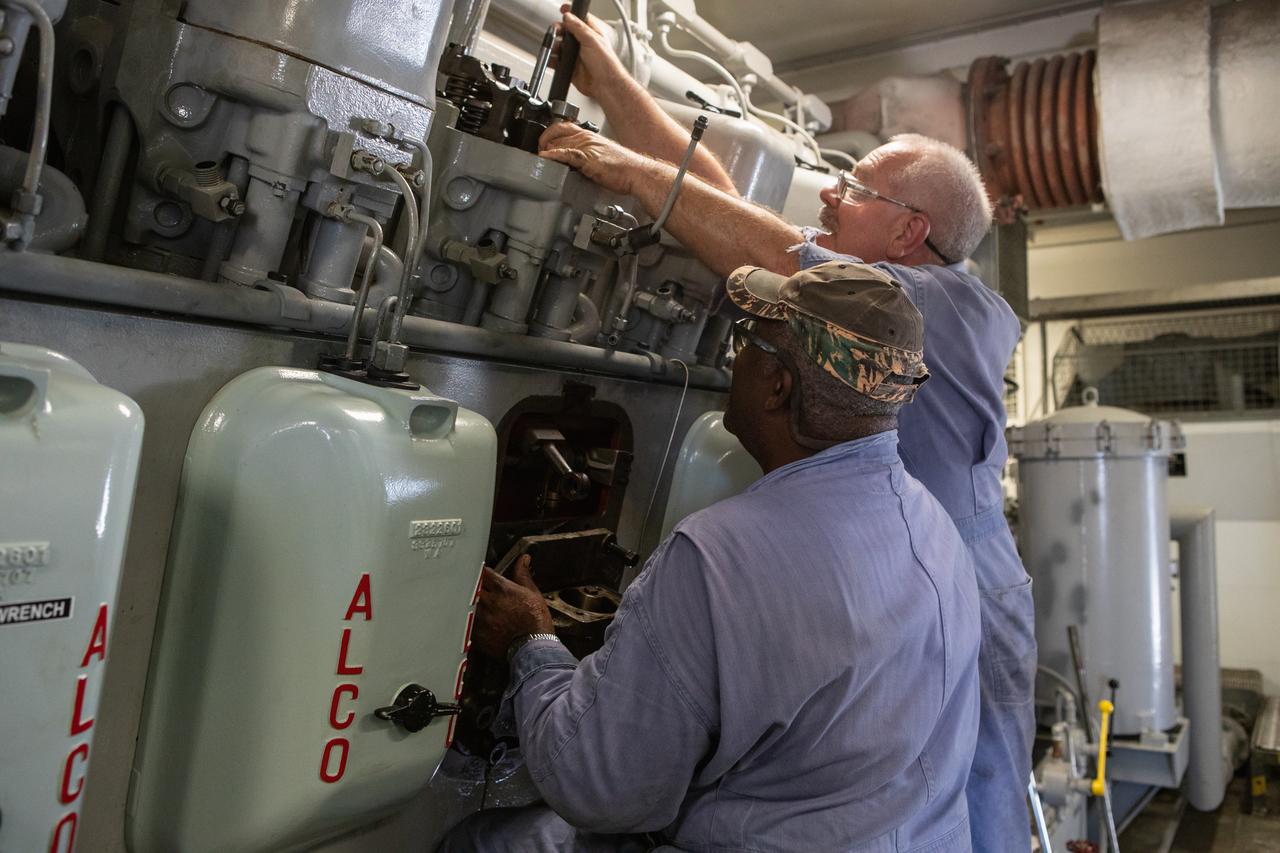
Pat Brown, left, and William Vardaman, mechanical technicians with the Jacobs contracting team, perform engine maintenance on NASA's crawler-transporter 2 on March 26, 2019, in the crawler yard located in Kennedy Space Center's Launch Complex 39 area. Recent engine work included rebuilding the vehicles’ fuel pump assemblies and installing new oil pumps that will help minimize future wear. This is one of two crawler-transporters that carried rockets and spacecraft, including the Apollo/Saturn V and space shuttle, from the Vehicle Assembly Building to the launch pad. NASA’s Exploration Ground Systems oversaw modifications and upgrades to crawler-transporter 2 so it can carry the mobile launcher and NASA's Space Launch System rocket, topped by the Orion spacecraft, to Launch Pad 39B for Exploration Mission-1.
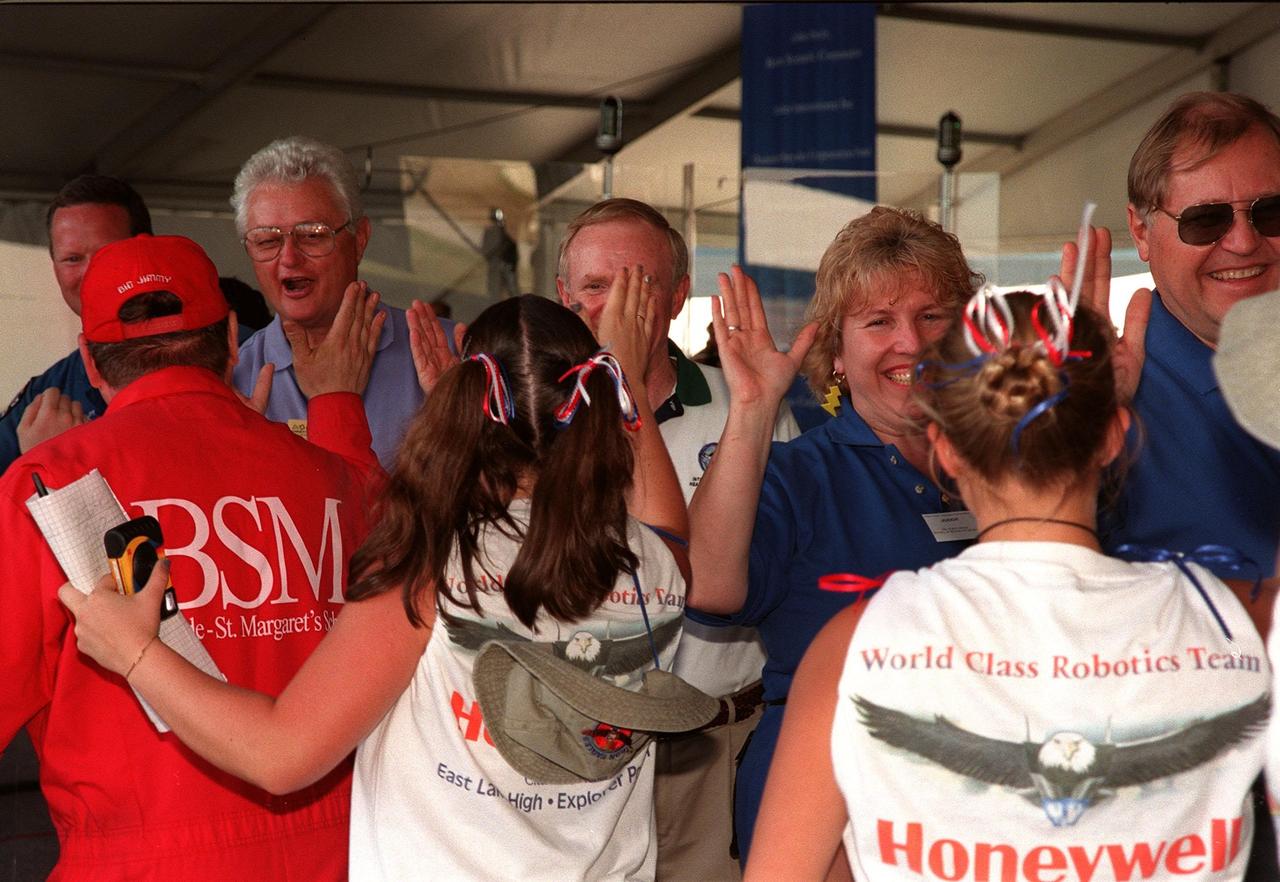
At the award ceremony for the 1999 FIRST Southeastern Regional robotic competition held at KSC, one of the winning teams, from Ocoee, Fla., is greeted by (left to right) astronaut David Brown, Deputy Director for Launch and Payload Processing Loren Shriver, Center Director Roy Bridges, and two unidentified judges. FIRST is a nonprofit organization, For Inspiration and Recognition of Science and Technology, that sponsors the event pitting gladiator robots against each other in an athletic-style competition. The FIRST robotics competition is designed to provide students with a hands-on, inside look at engineering and other professional careers, pairing high school students with engineer mentors and corporations. The regional event comprised 27 teams. Along with the championship award, which went to high school teams from Miami and San German, Puerto Rico, 15 other awards were presented
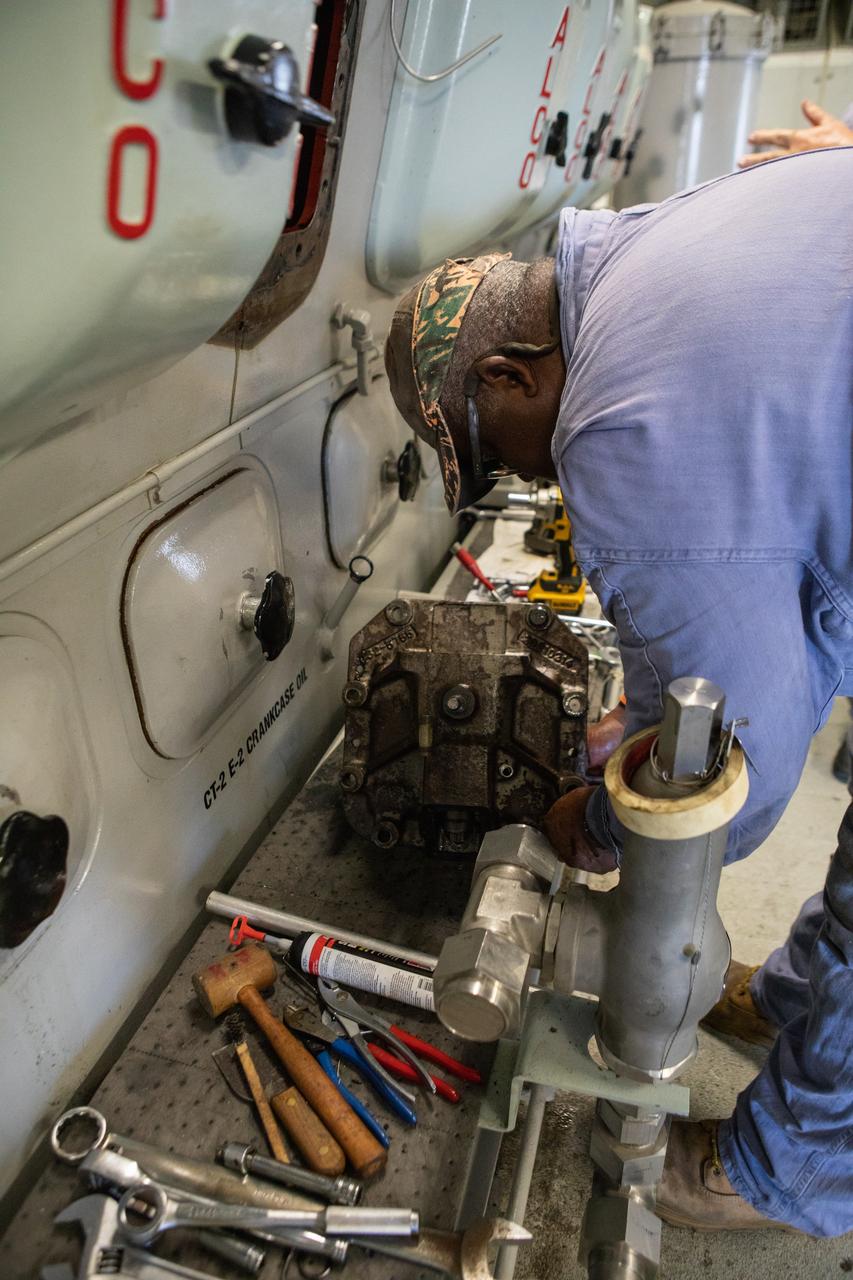
Pat Brown, a mechanical technician with Jacobs, has wrenches, pliers and other tools at the ready as he performs engine maintenance on NASA's crawler-transporter 2 on March 26, 2019, in the crawler yard located in Kennedy Space Center's Launch Complex 39 area. Recent engine work included rebuilding the vehicles’ fuel pump assemblies and installing new oil pumps that will help minimize future wear. This is one of two crawler-transporters that carried rockets and spacecraft, including the Apollo/Saturn V and space shuttle, from the Vehicle Assembly Building to the launch pad. NASA’s Exploration Ground Systems oversaw modifications and upgrades to crawler-transporter 2 so it can carry the mobile launcher and NASA's Space Launch System rocket, topped by the Orion spacecraft, to Launch Pad 39B for Exploration Mission-1.
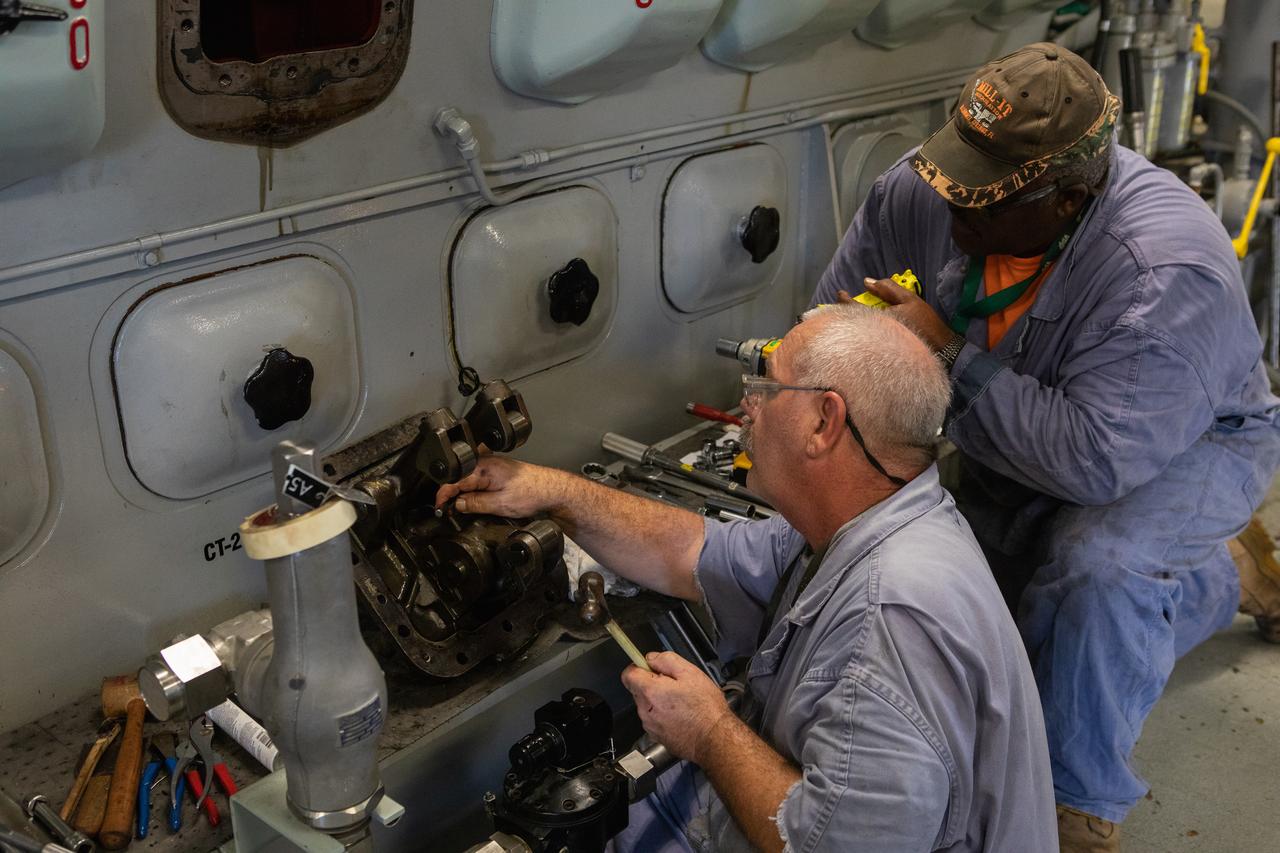
William Vardaman, left, and Pat Brown, mechanical technicians with the Jacobs contracting team, perform engine maintenance on NASA's crawler-transporter 2 on March 26, 2019, in the crawler yard located in Kennedy Space Center's Launch Complex 39 area. Recent engine work included rebuilding the vehicles’ fuel pump assemblies and installing new oil pumps that will help minimize future wear. This is one of two crawler-transporters that carried rockets and spacecraft, including the Apollo/Saturn V and space shuttle, from the Vehicle Assembly Building to the launch pad. NASA’s Exploration Ground Systems oversaw modifications and upgrades to crawler-transporter 2 so it can carry the mobile launcher and NASA's Space Launch System rocket, topped by the Orion spacecraft, to Launch Pad 39B for Exploration Mission-1.
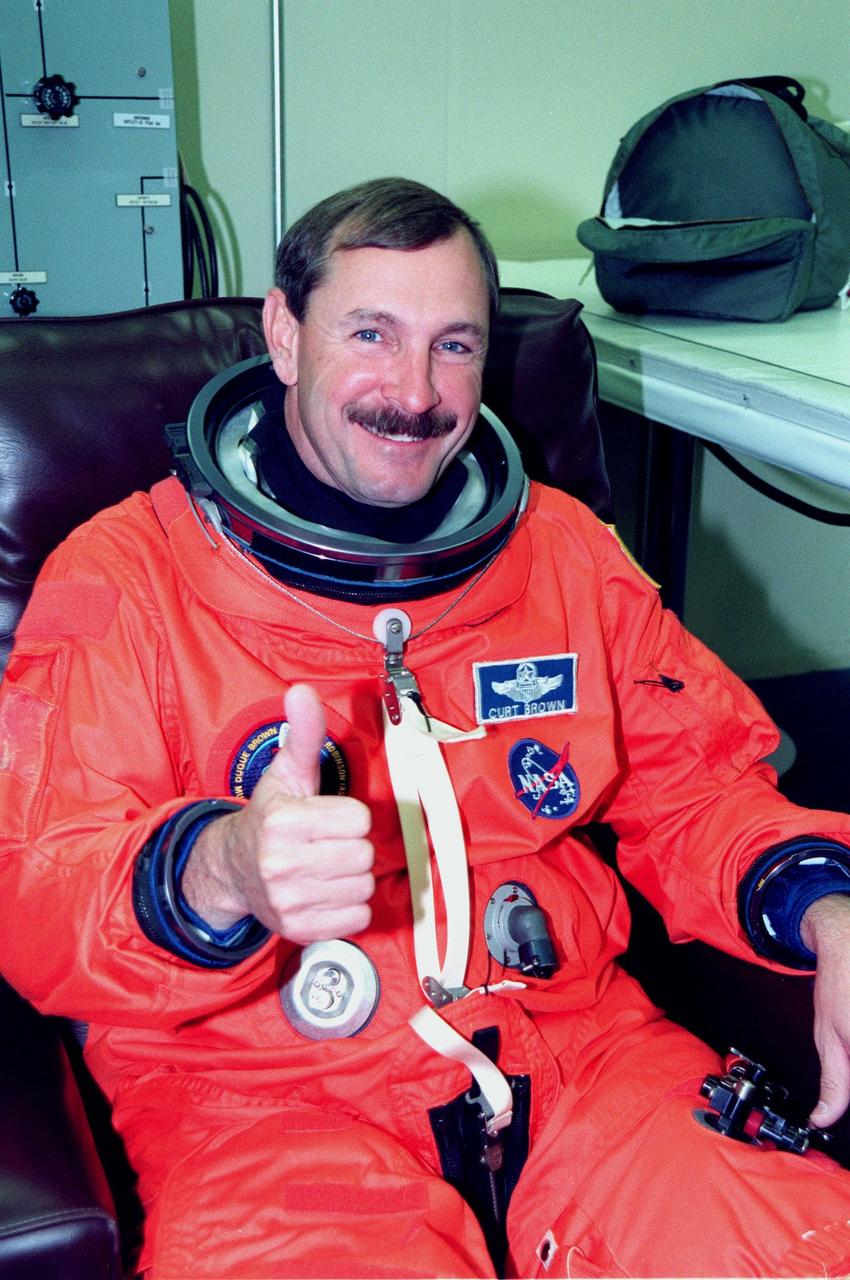
STS-95 Mission Commander Curtis L. Brown suits up in the Operations and Checkout Building prior to his trip to Launch Pad 39-B. Brown and the rest of the STS-95 crew are at KSC to participate in the Terminal Countdown Demonstration Test (TCDT) which includes mission familiarization activities, emergency egress training, and a simulated main engine cutoff. The other crew members are Payload Specialist Chiaki Mukai (M.D., Ph.D.), representing the National Space Development Agency of Japan (NASDA), Pilot Steven W. Lindsey, Mission Specialist Scott E. Parazynski, Mission Specialist Stephen K. Robinson, Mission Specialist Pedro Duque of Spain, representing the European Space Agency (ESA), and Payload Specialist John H. Glenn Jr., senator from Ohio. The STS-95 mission, targeted for liftoff on Oct. 29, includes research payloads such as the Spartan solar-observing deployable spacecraft, the Hubble Space Telescope Orbital Systems Test Platform, the International Extreme Ultraviolet Hitchhiker, as well as the SPACEHAB single module with experiments on space flight and the aging process. Following the TCDT, the crew will be returning to Houston for final flight preparations

Center Director Roy Bridges (left) greets STS-95 Mission Commander Curtis L. Brown after his arrival on a T-38 jet aircraft at the Shuttle Landing Facility at KSC. Payload Specialist John H. Glenn Jr., a senator from Ohio, is at the right. Glenn arrived with Brown. They and the rest of the crew are at KSC to participate in a Terminal Countdown Demonstration Test (TCDT). The TCDT includes mission familiarization activities, training in emergency exit from the orbiter and launch pad, and a simulated main engine cut-off exercise. Other crew members on the mission are Pilot Steven W. Lindsey; Mission Specialists Scott E. Parazynski, Stephen K. Robinson, and Pedro Duque of Spain, representing the European Space Agency (ESA); and Payload Specialist Chiaki Mukai, representing the National Space Development Agency of Japan (NASDA). The STS-95 mission includes research payloads such as the Spartan solar-observing deployable spacecraft, the Hubble Space Telescope Orbital Systems Test Platform, the International Extreme Ultraviolet Hitchhiker, as well as the SPACEHAB single module with experiments on space flight and the aging process

At Launch Pad 39-B, STS-95 Mission Commander Curtis L. Brown (center, with microphone) responds to questions about the mission and training from reporters during a brief break from the Terminal Countdown Demonstration Test (TCDT). Amused with his answer are other crew members (from left) Mission Specialist Scott E. Parazynski, Mission Specialist Stephen K. Robinson, who also serves as Payload Commander, Pilot Steven W. Lindsey, (Brown), Mission Specialist Pedro Duque of Spain, representing the European Space Agency (ESA), Chiaki Mukai, representing the National Space Development Agency of Japan (NASDA), and Payload Specialist John H. Glenn Jr., senator from Ohio. The crew were at the pad for emergency egress training after the break. The TCDT also involves mission familiarization activities and a simulated main engine cut-off exercise. The STS-95 mission, targeted for liftoff on Oct. 29, includes research payloads such as the Spartan solar-observing deployable spacecraft, the Hubble Space Telescope Orbital Systems Test Platform, the International Extreme Ultraviolet Hitchhiker, as well as the SPACEHAB single module with experiments on space flight and the aging process. Following the TCDT, the crew will be returning to Houston for final flight preparations
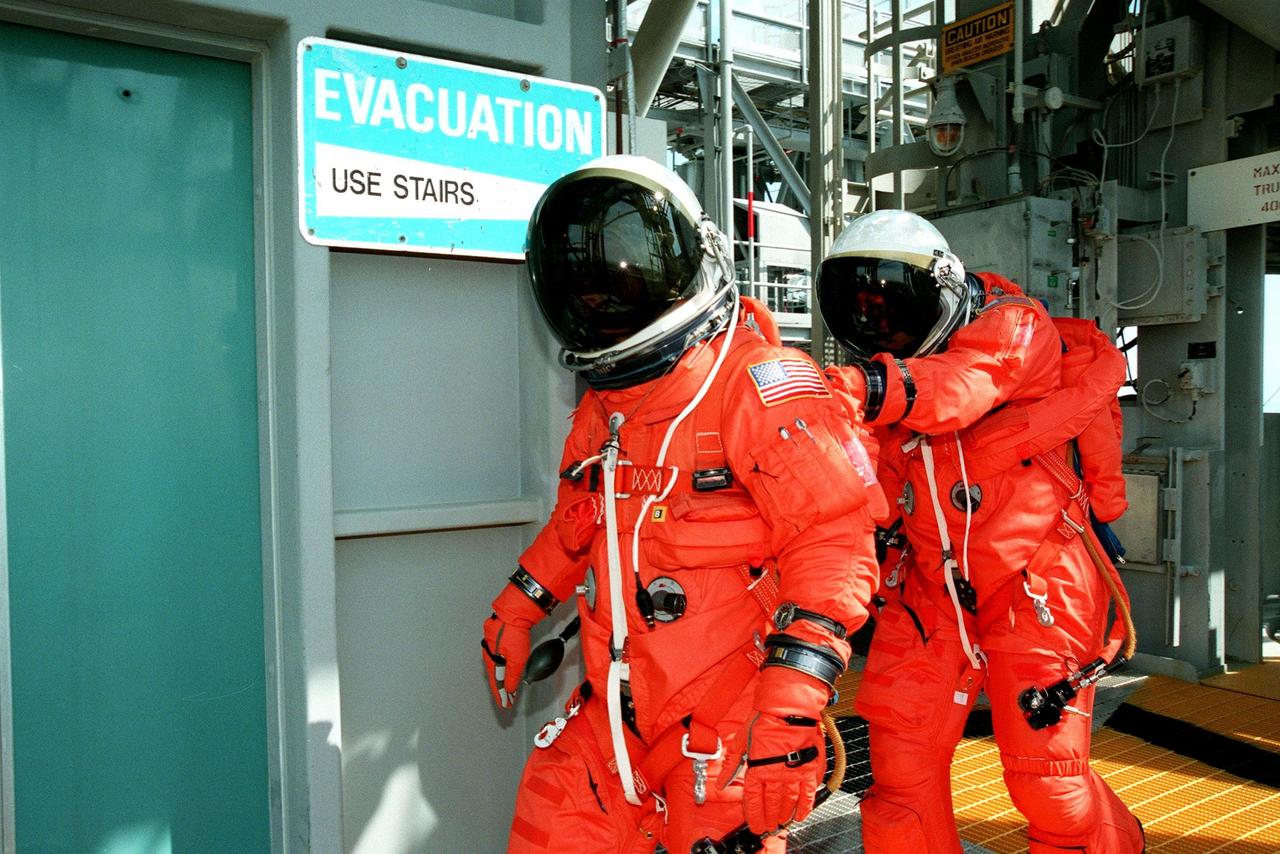
Behind the dark visors of their helmets are STS-95 Mission Commander Curtis L. Brown (left) and Pilot Steven W. Lindsey (right), practicing emergency egress from the Space Shuttle Discovery. Brown and Lindsey, along with the rest of the STS-95 crew, are at KSC to participate in the Terminal Countdown Demonstration Test (TCDT) which includes mission familiarization activities, emergency egress training, and a simulated main engine cutoff. The other crew members are Mission Specialist Scott E. Parazynski, Mission Specialist Pedro Duque of Spain, representing the European Space Agency (ESA), Mission Specialist Stephen K. Robinson, Payload Specialists John H. Glenn Jr., senator from Ohio, and Chiaki Mukai (M.D., Ph.D.), representing the National Space Development Agency of Japan (NASDA). The STS-95 mission, targeted for liftoff on Oct. 29, includes research payloads such as the Spartan solar-observing deployable spacecraft, the Hubble Space Telescope Orbital Systems Test Platform, the International Extreme Ultraviolet Hitchhiker, as well as the SPACEHAB single module with experiments on space flight and the aging process. Following the TCDT, the crew will be returning to Houston for final flight preparations
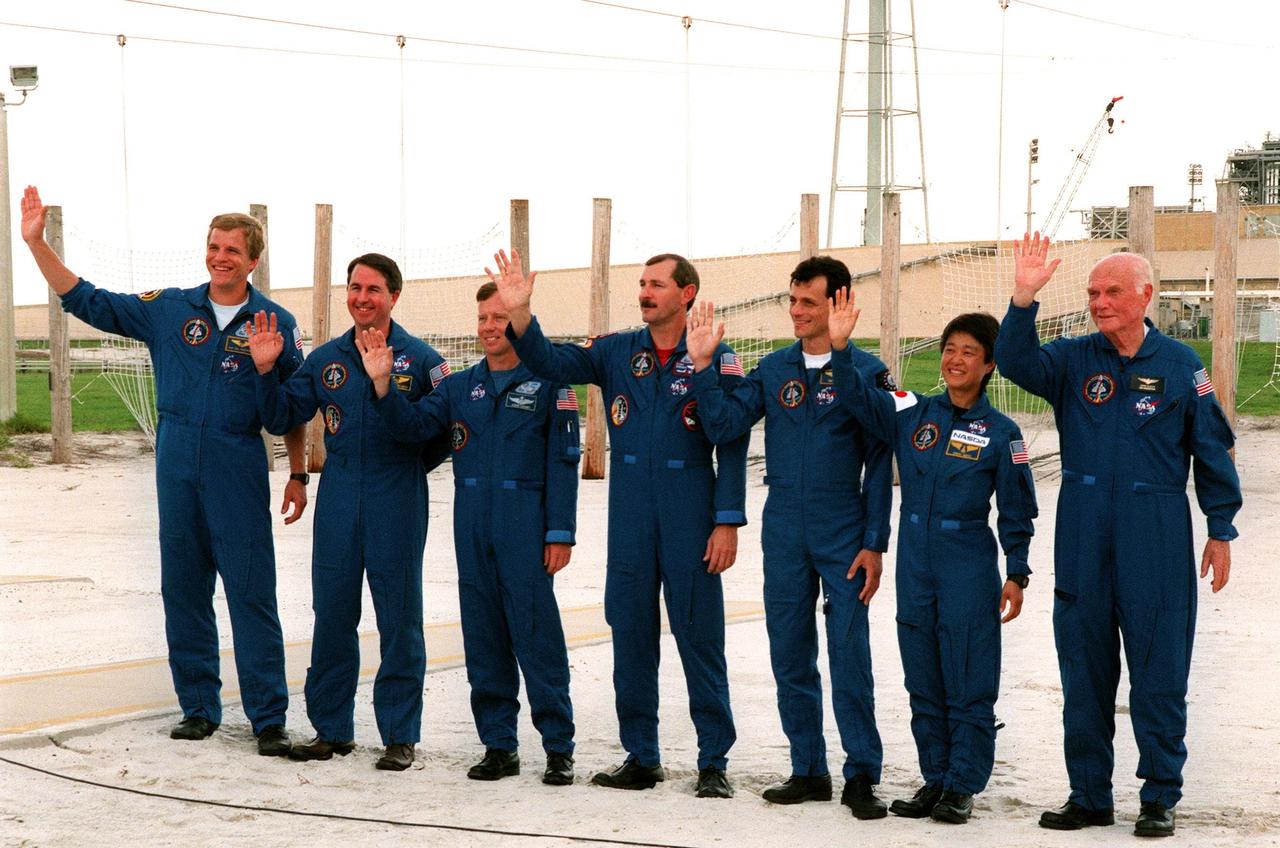
Near the slide wire basket drop point on Launch Pad 39-B, the STS-95 crew wave at 106 reporters and photographers during a brief break from the Terminal Countdown Demonstration Test (TCDT) to answer questions about the mission and training. The crew were at the pad for emergency egress training after the break. Mission Commander Curtis L. Brown (center) introduced the rest of the crew: (left to right) Mission Specialist Scott E. Parazynski, Mission Specialist Stephen K. Robinson, who also serves as Payload Commander, Pilot Steven W. Lindsey, (Brown), Mission Specialist Pedro Duque of Spain, representing the European Space Agency (ESA), Payload Specialist Chiaki Mukai, representing the National Space Development Agency of Japan (NASDA), and Payload Specialist John H. Glenn Jr., senator from Ohio. The TCDT also involves mission familiarization activities and a simulated main engine cut-off exercise. The STS-95 mission, targeted for liftoff on Oct. 29, includes research payloads such as the Spartan solar-observing deployable spacecraft, the Hubble Space Telescope Orbital Systems Test Platform, the International Extreme Ultraviolet Hitchhiker, as well as the SPACEHAB single module with experiments on space flight and the aging process. Following the TCDT, the crew will be returning to Houston for final flight preparations
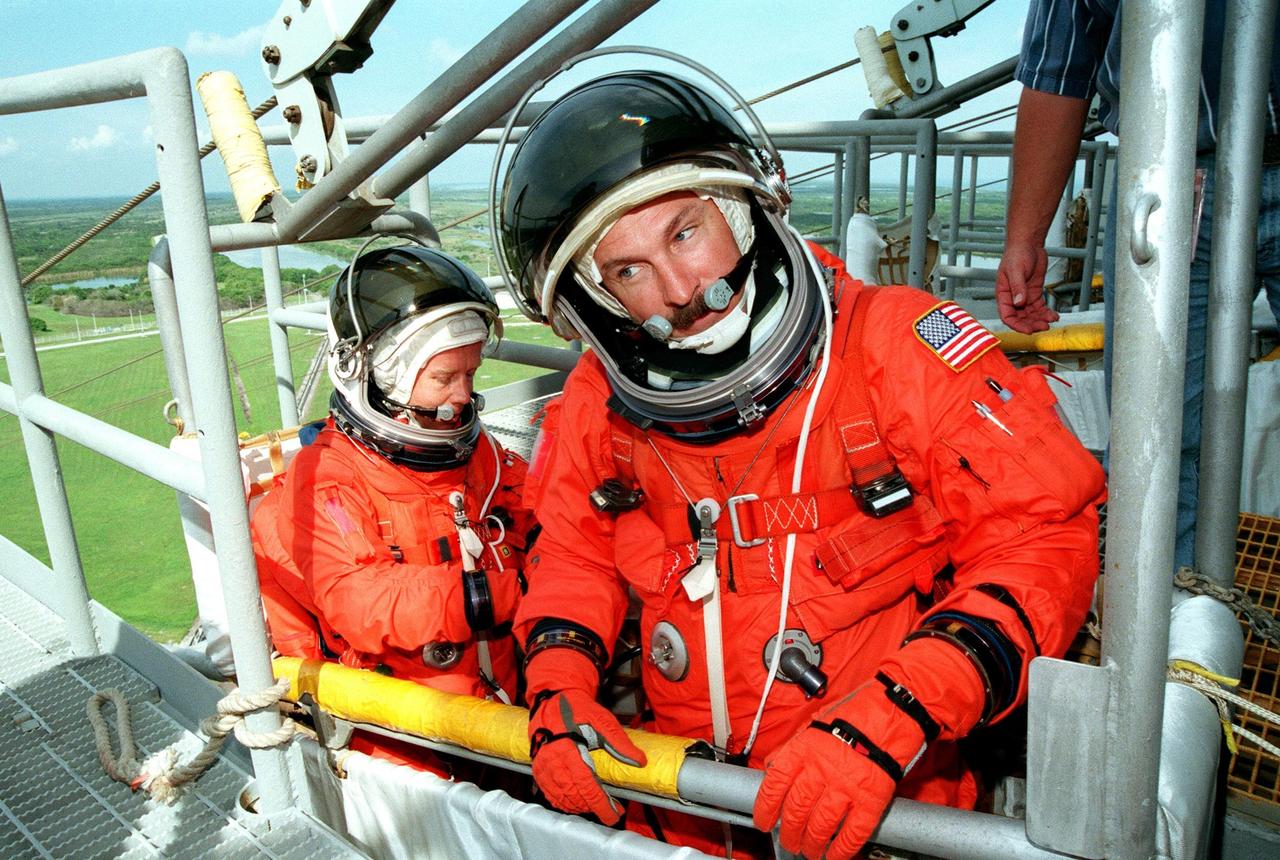
STS-95 Pilot Steven W. Lindsey (left) and Mission Commander Curtis L. Brown are ready to leave Launch Pad 39B in the slidewire basket during an emergency egress exercise. Lindsey and Brown, along with other crew members, are at KSC to participate in the Terminal Countdown Demonstration Test (TCDT) which includes mission familiarization activities, emergency egress training, and a simulated main engine cutoff. Not shown are Mission Specialist Pedro Duque of Spain, representing the European Space Agency (ESA), Mission Specialist Scott E. Parazynski, Mission Specialist Stephen K. Robinson, Payload Specialists John H. Glenn Jr., senator from Ohio, and Chiaki Mukai (M.D., Ph.D.), representing the National Space Development Agency of Japan (NASDA). The STS-95 mission, targeted for liftoff on Oct. 29, includes research payloads such as the Spartan solar-observing deployable spacecraft, the Hubble Space Telescope Orbital Systems Test Platform, the International Extreme Ultraviolet Hitchhiker, as well as the SPACEHAB single module with experiments on space flight and the aging process. Following the TCDT, the crew will be returning to Houston for final flight preparations
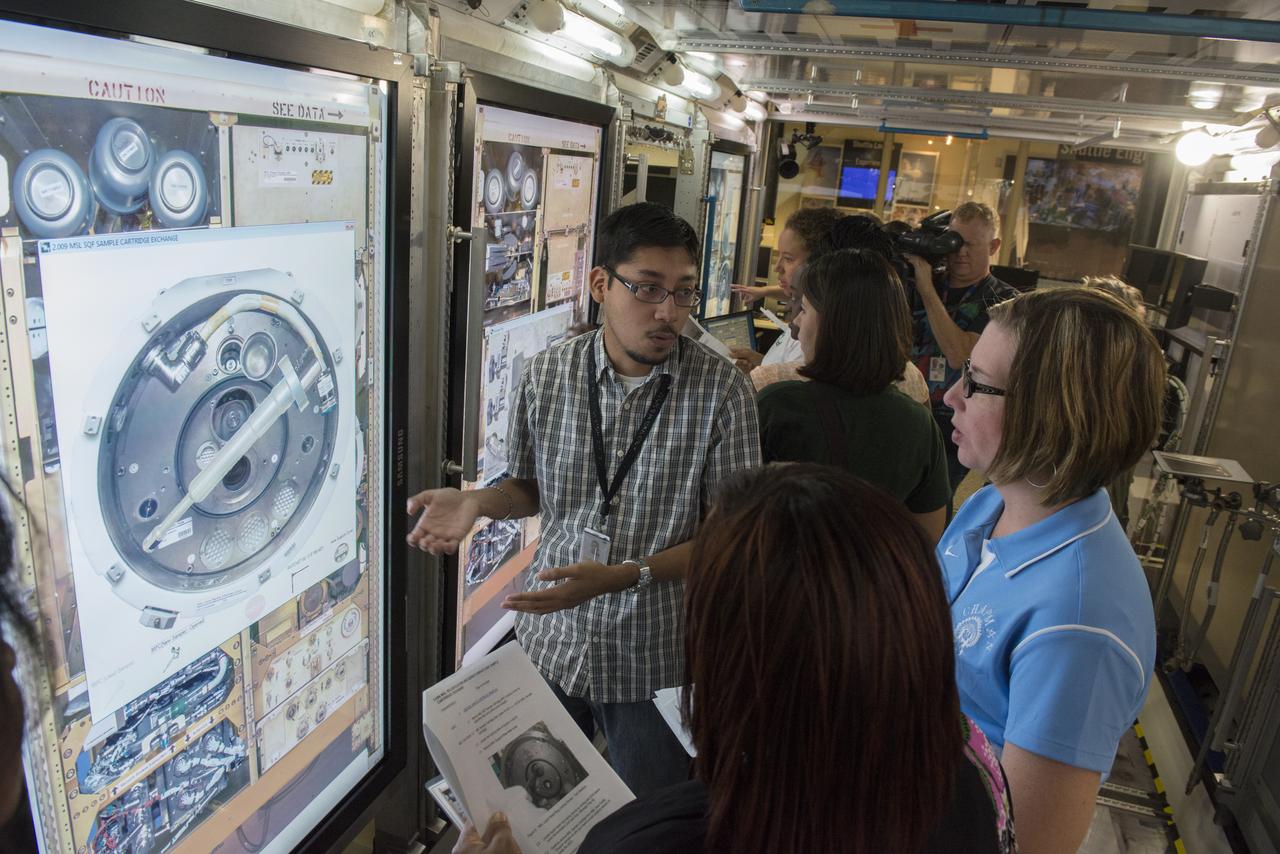
VINCENT VIDAURRI, CENTER, A TECHNICAL SPECIALIST WITH TELEDYNE BROWN ENGINEERING SUPPORTING MISSION OPERATIONS AT THE MARSHALL SPACE FLIGHT CENTER, PROVIDES DETAILS ABOUT A MOCK-UP OF THE INTERNATIONAL SPACE STATION SCIENCE LAB TO A GROUP OF AREA TEACHERS AS PART OF "BACK-2-SCHOOL DAY." TEAM REDSTONE -- WHICH INCLUDES THE MARSHALL SPACE FLIGHT CENTER AND U.S. ARMY ORGANIZATIONS ON REDSTONE ARSENAL -- INVITED 50 TEACHERS TO TOUR REDSTONE ARSENAL AUG. 15, GIVING THEM AN OPPORTUNITY TO LEARN OF AND SEE RESOURCES AVAILABLE TO THEM AND THEIR STUDENTS. THE TOUR FOCUSED ON SITES AVAILABLE FOR FIELD TRIPS FOR STUDENTS STUDYING MATH, SCIENCE, TECHNOLOGY AND ENGINEERING. STOPS INCLUDED MARSHALL'S PAYLOAD OPERATIONS INTEGRATION CENTER AND THE HIGH SCHOOLS UNITED WITH NASA TO CREATE HARDWARE LAB, OR HUNCH, BOTH LOCATED IN BUILDING 4663. THE PROGRAM GIVES HIGH SCHOOL STUDENTS THE CHANCE TO WORK WITH NASA ENGINEERS TO DESIGN AND BUILD HARDWARE FOR USE ON THE INTERNATIONAL SPACE STATION. THE TEACHERS ALSO VISITED THE ARMY AVIATION & MISSILE RESEARCH DEVELOPMENT & ENGINEERING CENTER AND THE REDSTONE TEST CENTER
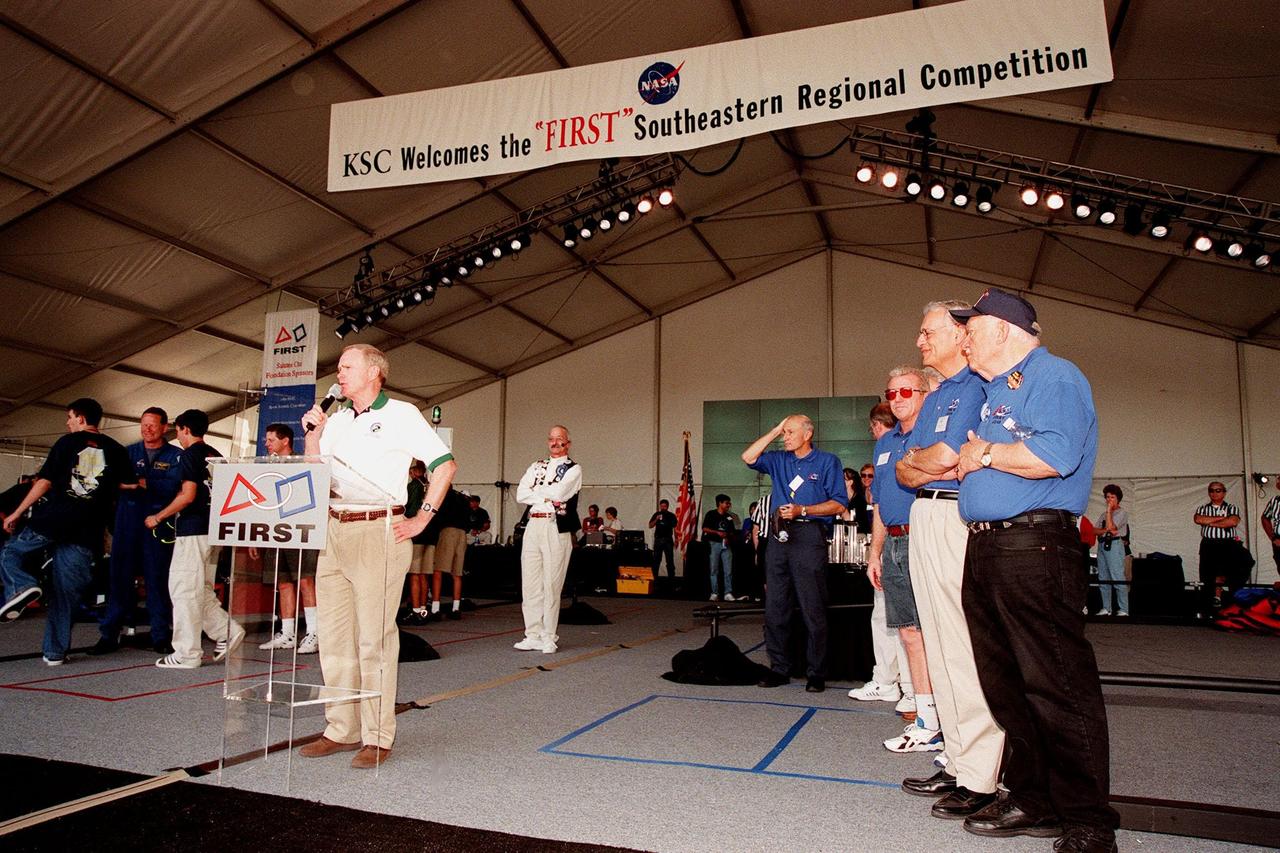
At the award ceremony for the 1999 FIRST Southeastern Regional robotic competition held at KSC, Center Director Roy Bridges addresses the teams, encouraging them to continue their interest in engineering. Directly behind him (left) are Woody Flowers, national advisor to FIRST, and (right) former KSC Director of Shuttle Processing Robert Sieck, who served as one of the judges. At the far left, students gather around astronaut David Brown, who was present during the two days of matches. At right are other judges, including Deputy Director for Launch and Payload Processing Loren Shriver (third from right). FIRST is a nonprofit organization, For Inspiration and Recognition of Science and Technology, that sponsors the event pitting gladiator robots against each other in an athletic-style competition. The FIRST robotics competition is designed to provide students with a hands-on, inside look at engineering and other professional careers, pairing high school students with engineer mentors and corporations. The regional event comprised 27 teams. Along with the championship award, which went to high school teams in Miami and San German, Puerto Rico, 15 other awards were presented
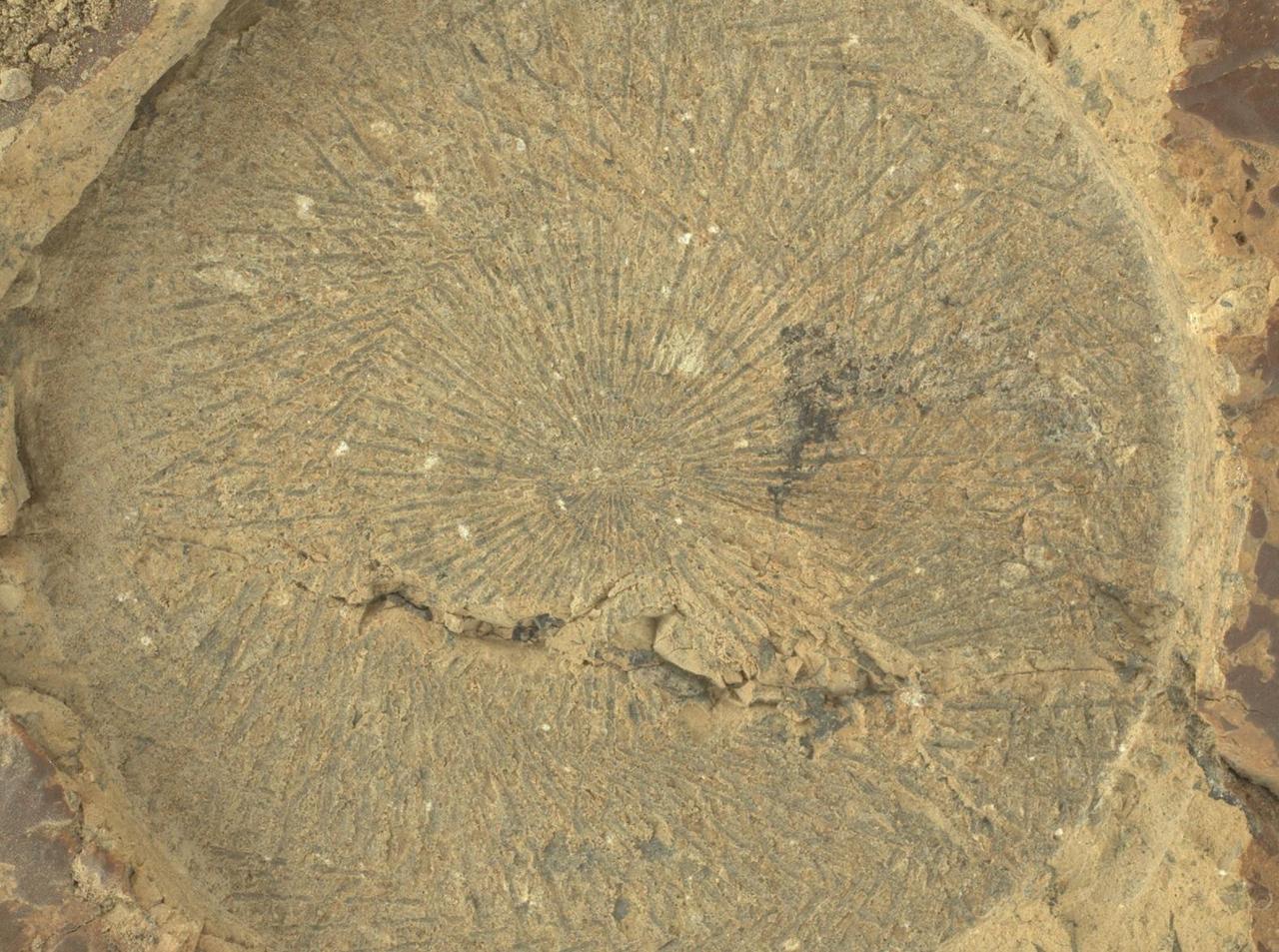
This close-up view of an abrasion made by NASA's Perseverance rover on June 5, 2025 (the 1,526th day, or sol, of its mission to Mars), shows distinctive "tool marks" formed as the abrasion bit interacted with the rock. These radiating patterns of lines tend to indicate that the rock is relatively hard. The image was taken from approximately 2.76 inches (7 centimeters) away by the rover's WATSON (Wide Angle Topographic Sensor for Operations and eNgineering) imager. A maroon-brown rock coating can be seen at the far edges and corners of the image. This coating was chipped off and removed within the area of the patch by the abrasion process. Most of the distinctive white, millimeter-sized grains set within a finer-grained gray matrix contain feldspar (an aluminum silicate mineral). The irregularly shaped dark patches in the upper right quadrant as well as those within the fracture that cuts through the lower half of the abrasion are composed chiefly of manganese and nickel. https://photojournal.jpl.nasa.gov/catalog/PIA26576
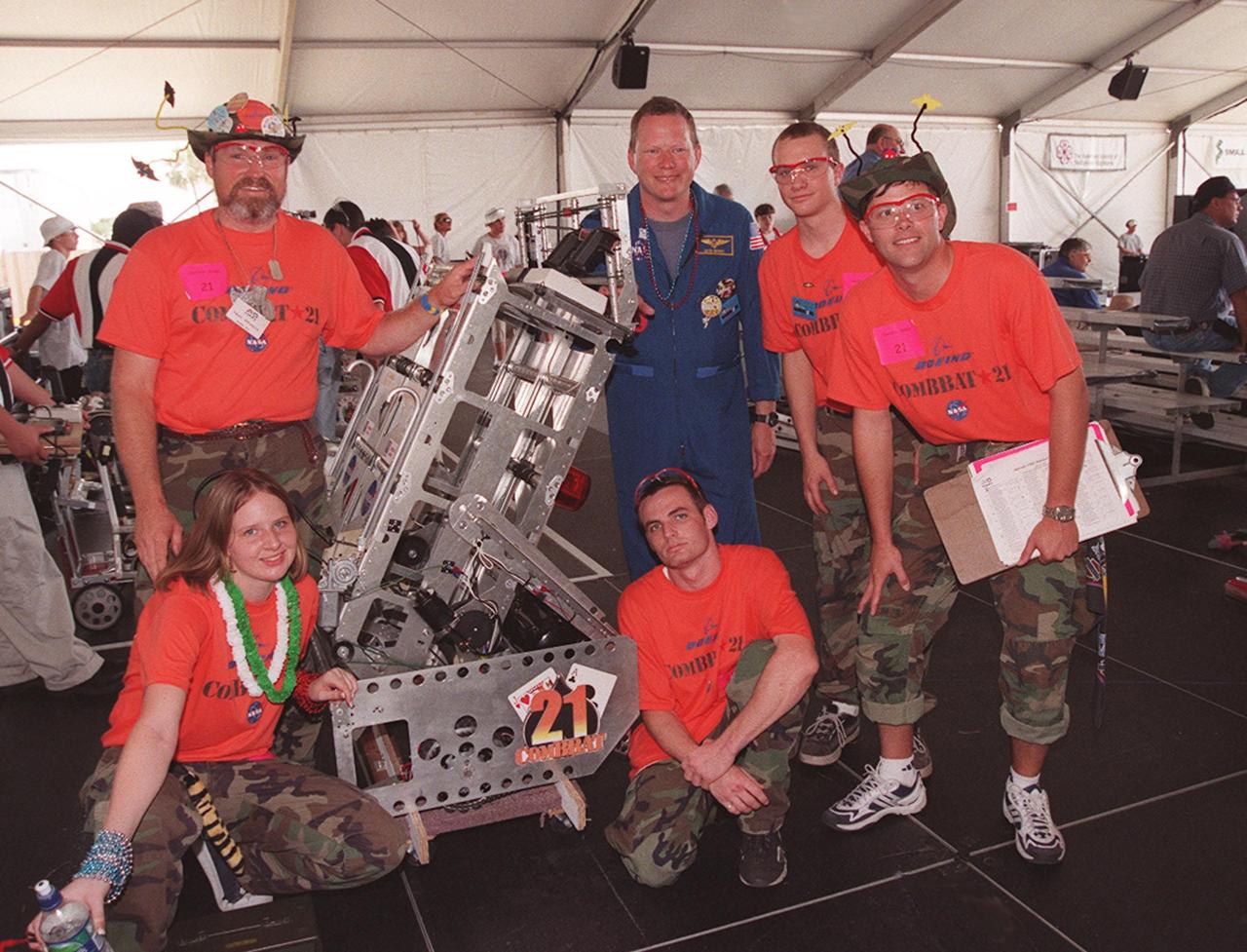
Astronaut David Brown poses with members of the team known as ComBBat, representing Central Florida's Astronaut and Titusville high schools. ComBBat was teamed with Boeing at KSC and Brevard Community College. Students from all over the country are at the KSC Visitor Complex for the FIRST (For Inspiration and Recognition of Science and Technology) Southeast Regional competition being held March 9-11 in the Rocket Garden. Teams of high school students are testing the limits of their imagination using robots they have designed, with the support of business and engineering professionals and corporate sponsors, to compete in a technological battle against other schools' robots. Of the 30 high school teams competing, 16 are Florida teams co-sponsored by NASA and KSC contractors. Local high schools participating are Astronaut, Bayside, Cocoa Beach, Eau Gallie, Melbourne, Melbourne Central Catholic, Palm Bay, Rockledge, Satellite, and Titusville
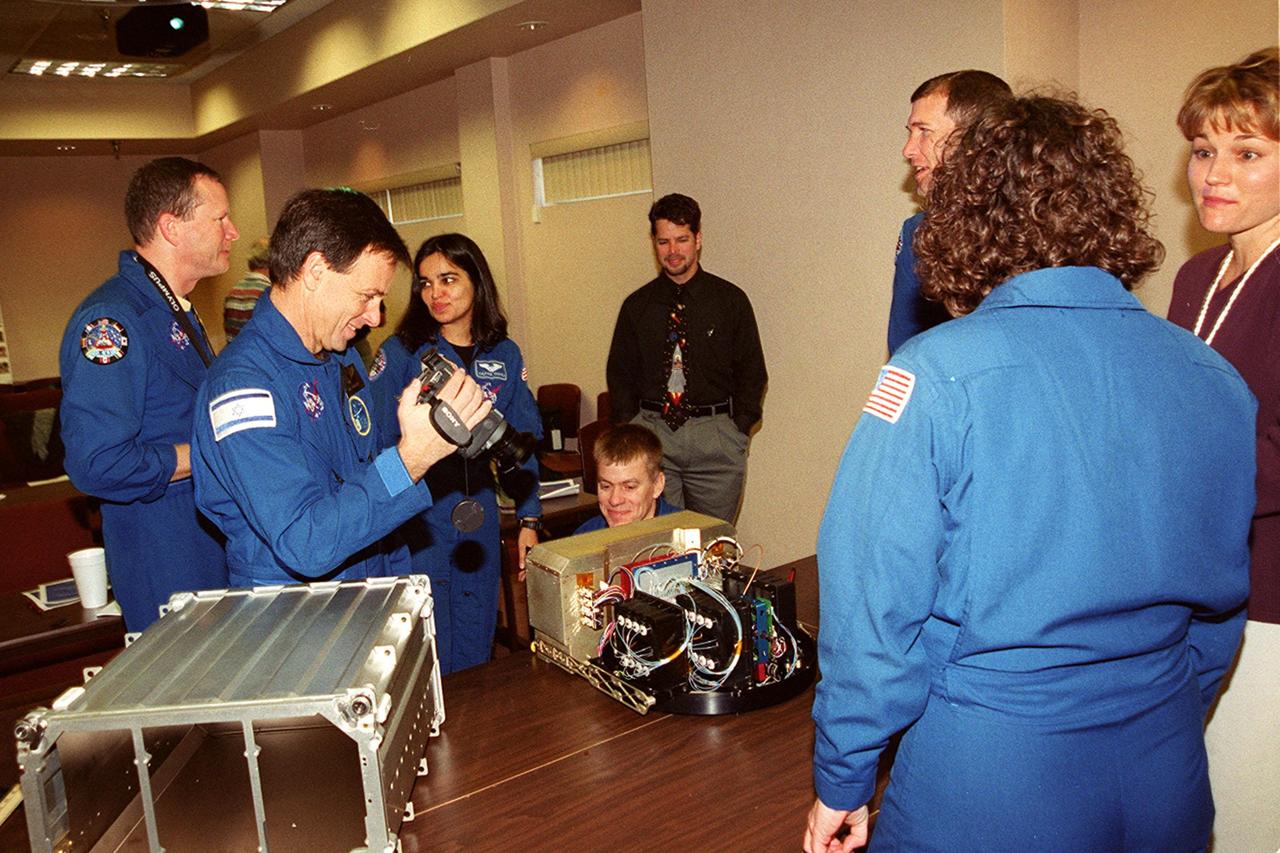
KENNEDY SPACE CENTER, FLA. -- As part of In-Flight Maintenance training, members of the STS-107 crew check out one of the Biotube experiments that will be part of their research mission . From left (in uniform) are Mission Specialist David M. Brown, Payload Specialist Ilan Ramon of Israel, and Mission Specialist Kalpana Chawla; Pilot William C. “Willie” McCool (crouching behind the table); Commander Rick D. Husband; and Mission Specialist Laurel Clark. At right is project engineer April Boody. As a research mission, STS-107 will carry the SPACEHAB Double Module in its first research flight into space and a broad collection of experiments ranging from material science to life science. It is scheduled to launch July 19, 2001
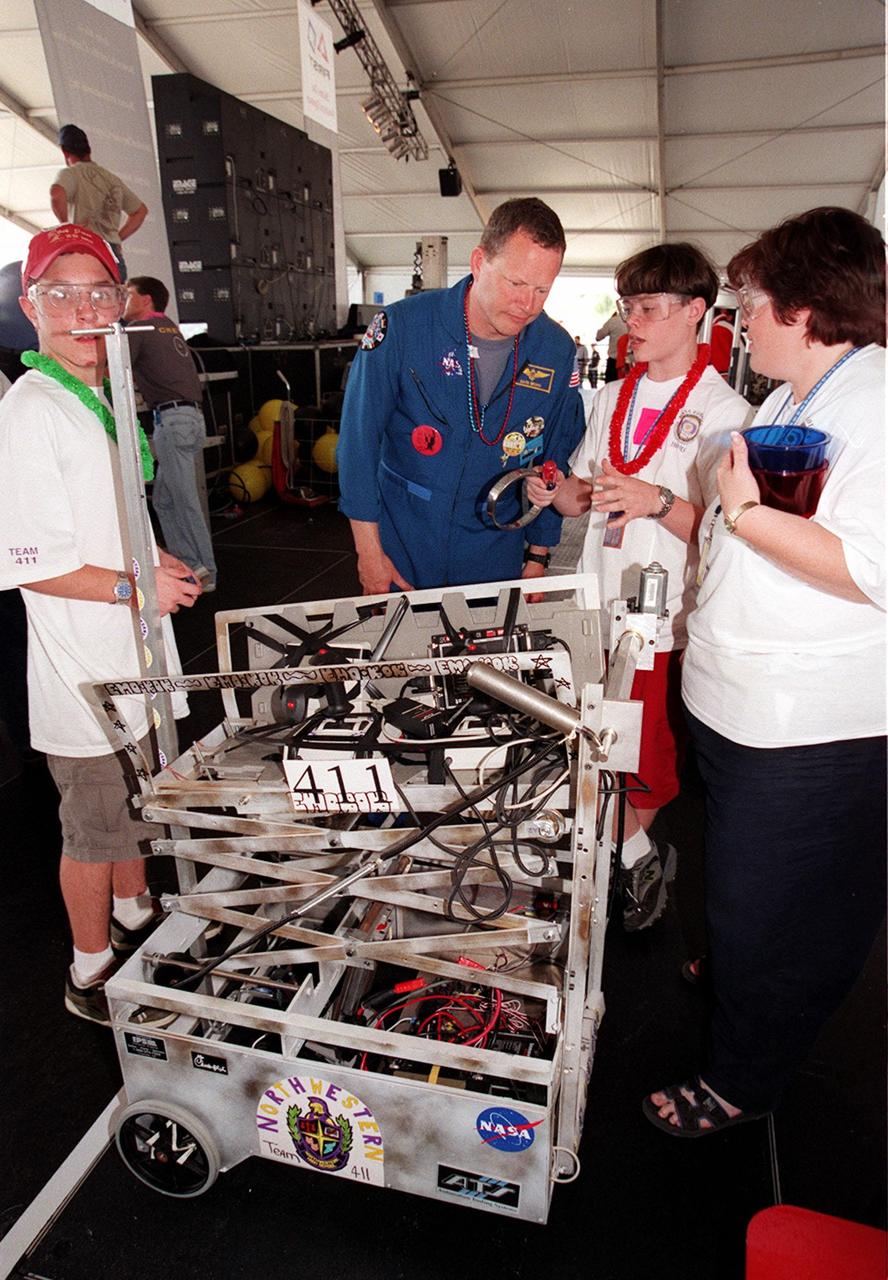
Astronaut David Brown looks over the robot named "L'il Max" with members of the team The Bot Kickers! from Northwestern High School, Rock Hill, S.C. Students from all over the country are at the KSC Visitor Complex for the FIRST (For Inspiration and Recognition of Science and Technology) Southeast Regional competition being held March 9-11 in the Rocket Garden. Teams of high school students are testing the limits of their imagination using robots they have designed, with the support of business and engineering professionals and corporate sponsors, to compete in a technological battle against other schools' robots. Of the 30 high school teams competing, 16 are Florida teams co-sponsored by NASA and KSC contractors. Local high schools participating are Astronaut, Bayside, Cocoa Beach, Eau Gallie, Melbourne, Melbourne Central Catholic, Palm Bay, Rockledge, Satellite, and Titusville
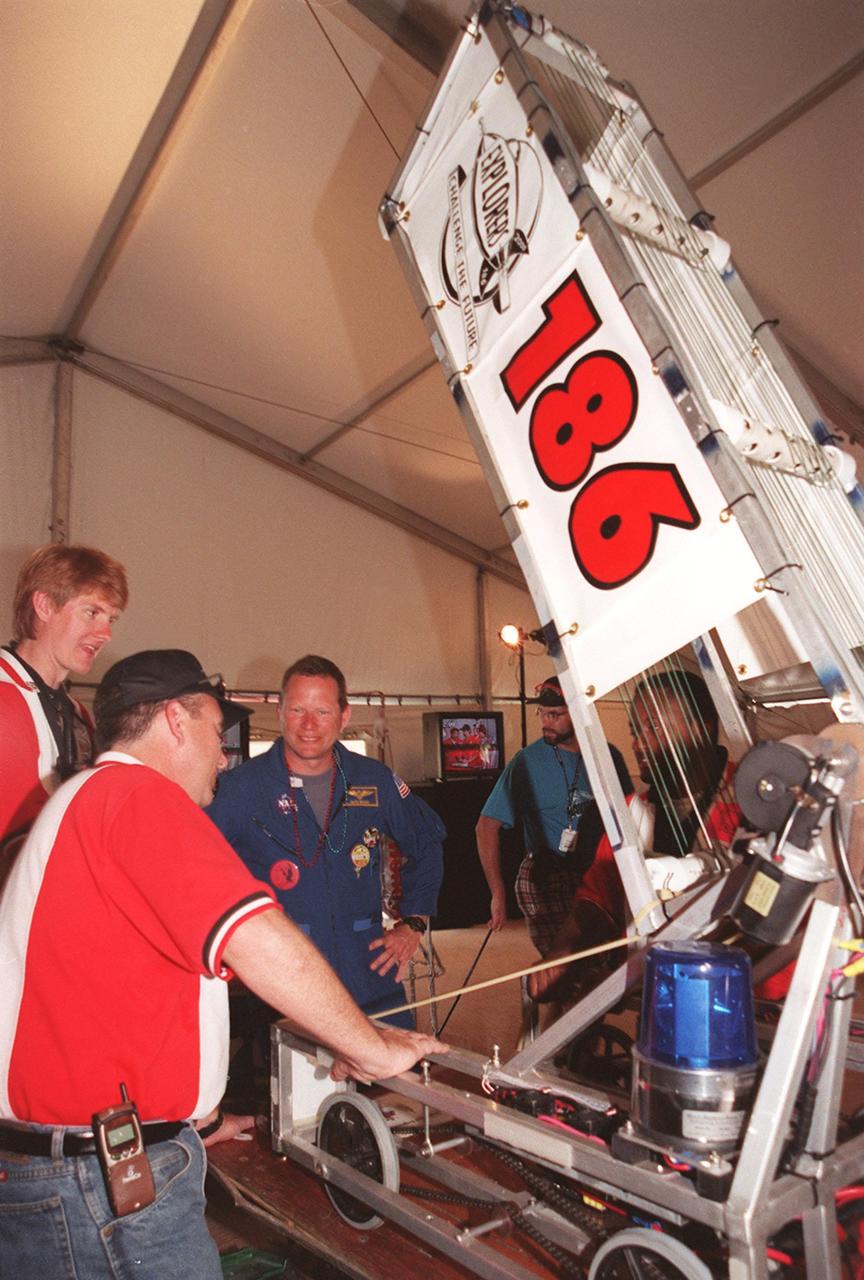
Astronaut David Brown chats with members of the Explorers team, from Lake Buena Vista, Fla., during the FIRST (For Inspiration and Recognition of Science and Technology) Southeast Regional competition held March 9-11 in the KSC Visitor Complex Rocket Garden. Teams of high school students from all over the country are testing the limits of their imagination using robots they have designed, with the support of business and engineering professionals and corporate sponsors, to compete in a technological battle against other schools' robots. Of the 30 high school teams competing at the Southeast Regional event, 16 are Florida teams co-sponsored by NASA and KSC contractors. Local high schools participating are Astronaut, Bayside, Cocoa Beach, Eau Gallie, Melbourne, Melbourne Central Catholic, Palm Bay, Rockledge, Satellite, and Titusville
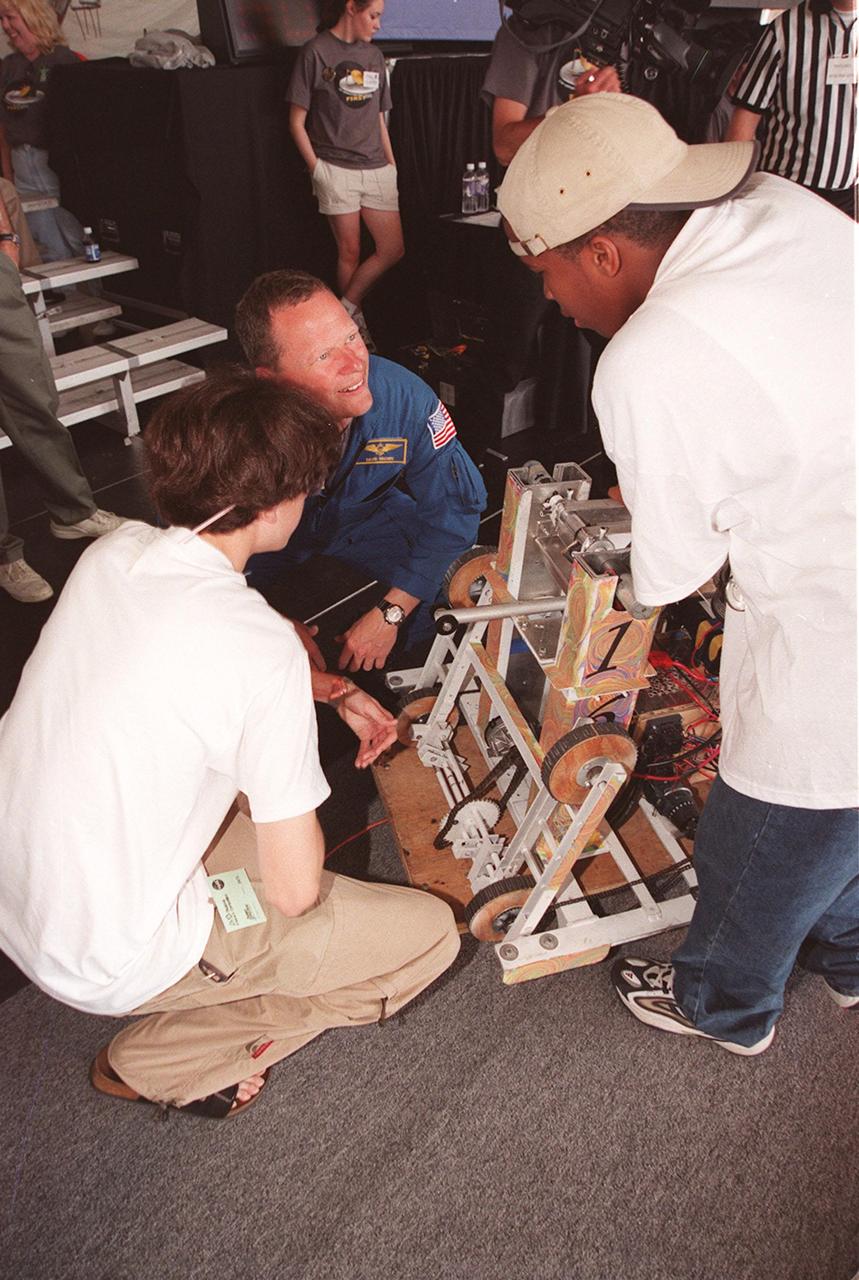
Astronaut David Brown talks with FIRST team members, Baxter Bomb Squad, from Mountain Home High School, Mountain Home, Ariz., during the FIRST competition. Students from all over the country are at the KSC Visitor Complex for the FIRST (For Inspiration and Recognition of Science and Technology) Southeast Regional competition March 9-11 in the Rocket Garden. Teams of high school students are testing the limits of their imagination using robots they have designed, with the support of business and engineering professionals and corporate sponsors, to compete in a technological battle against other schools' robots. Of the 30 high school teams competing, 16 are Florida teams co-sponsored by NASA and KSC contractors. Local high schools participating are Astronaut, Bayside, Cocoa Beach, Eau Gallie, Melbourne, Melbourne Central Catholic, Palm Bay, Rockledge, Satellite, and Titusville