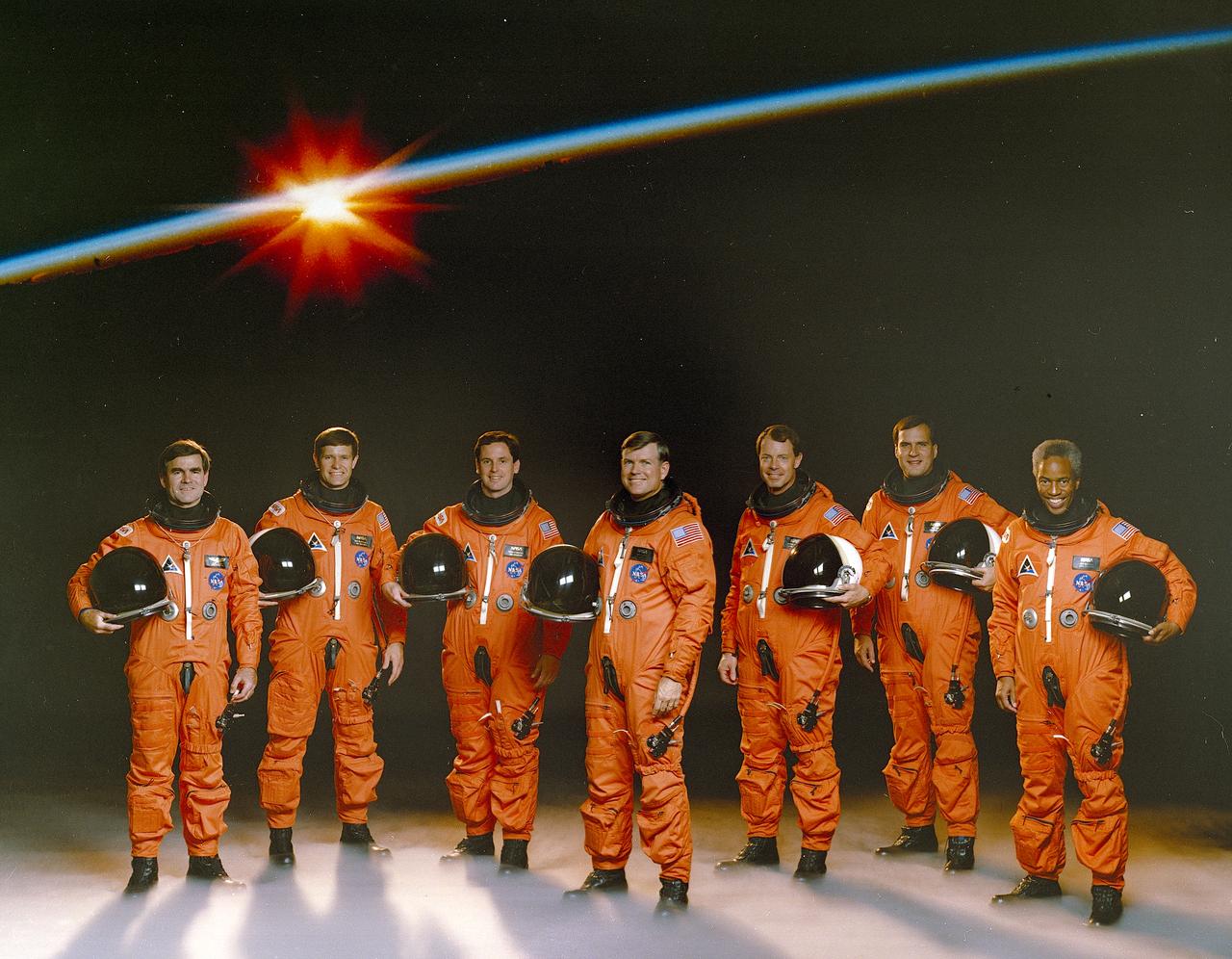
The STS-39 crew portrait includes 7 astronauts. Pictured are Charles L. Veach, mission specialist 5; Michael L. Coats, commander; Gregory J. Harbaugh, mission specialist 2; Donald R. McMonagle, mission specialist 4; L. Blaine Hammond, pilot; Richard J. Hieb, mission specialist 3; and Guion S. Buford, Jr., mission specialist 1. Launched aboard the Space Shuttle Discovery on April 28, 1991 at 7:33:14 am (EDT), STS-39 was a Department of Defense (DOD) mission. The primary unclassified payload included the Air Force Program 675 (AFP-675), the Infrared Background Signature Survey (IBSS), and the Shuttle Pallet Satellite II (SPAS II).
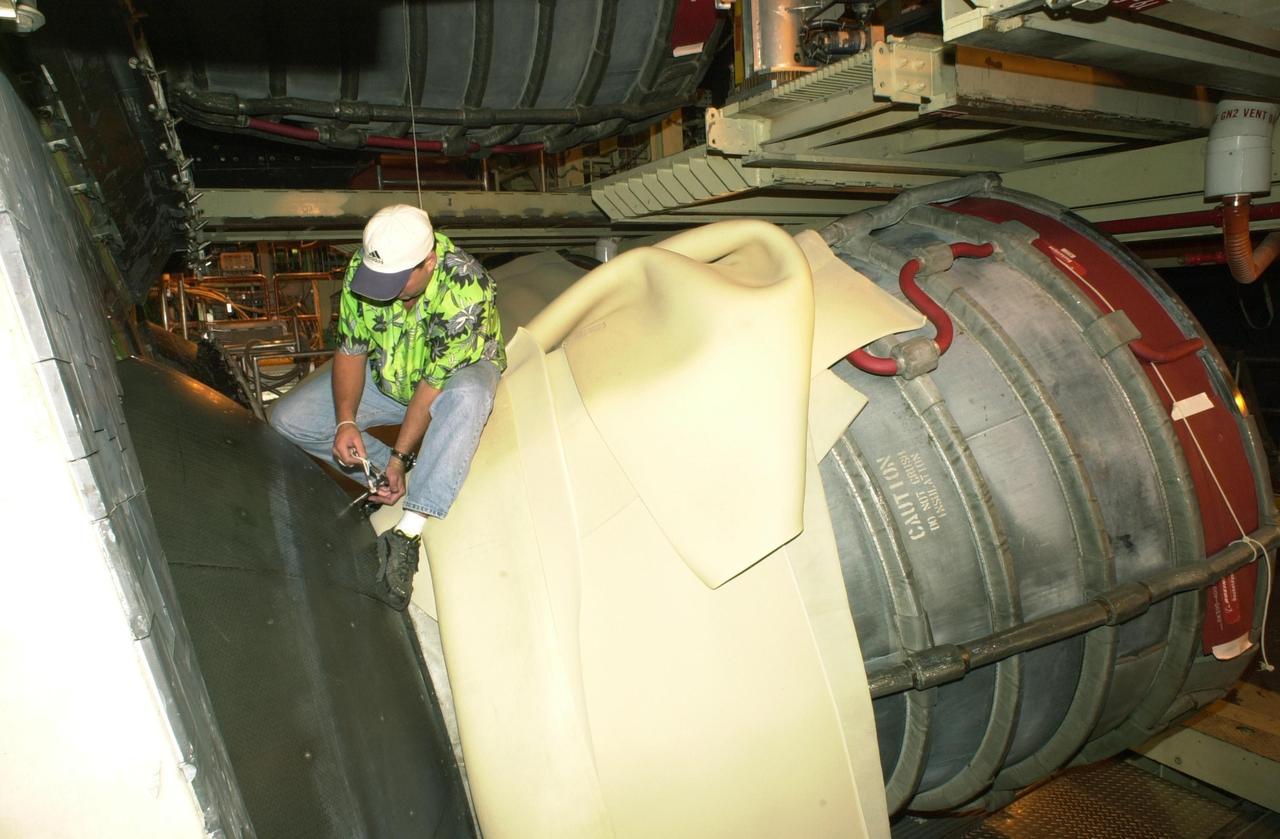
KENNEDY SPACE CENTER, FLA. -- Doug Buford, with the Aft Engine shop, works at removing a heat shield on Columbia, in the Orbiter Processing Facility. After small cracks were discovered on the LH2 Main Propulsion System (MPS) flow liners in two other orbiters, program managers decided to move forward with inspections on Columbia before clearing it for flight on STS-107. After removal of the heat shields, the three main engines will be removed. Inspections of the flow liners will follow. The July 19 launch of Columbia on STS-107 has been delayed a few weeks
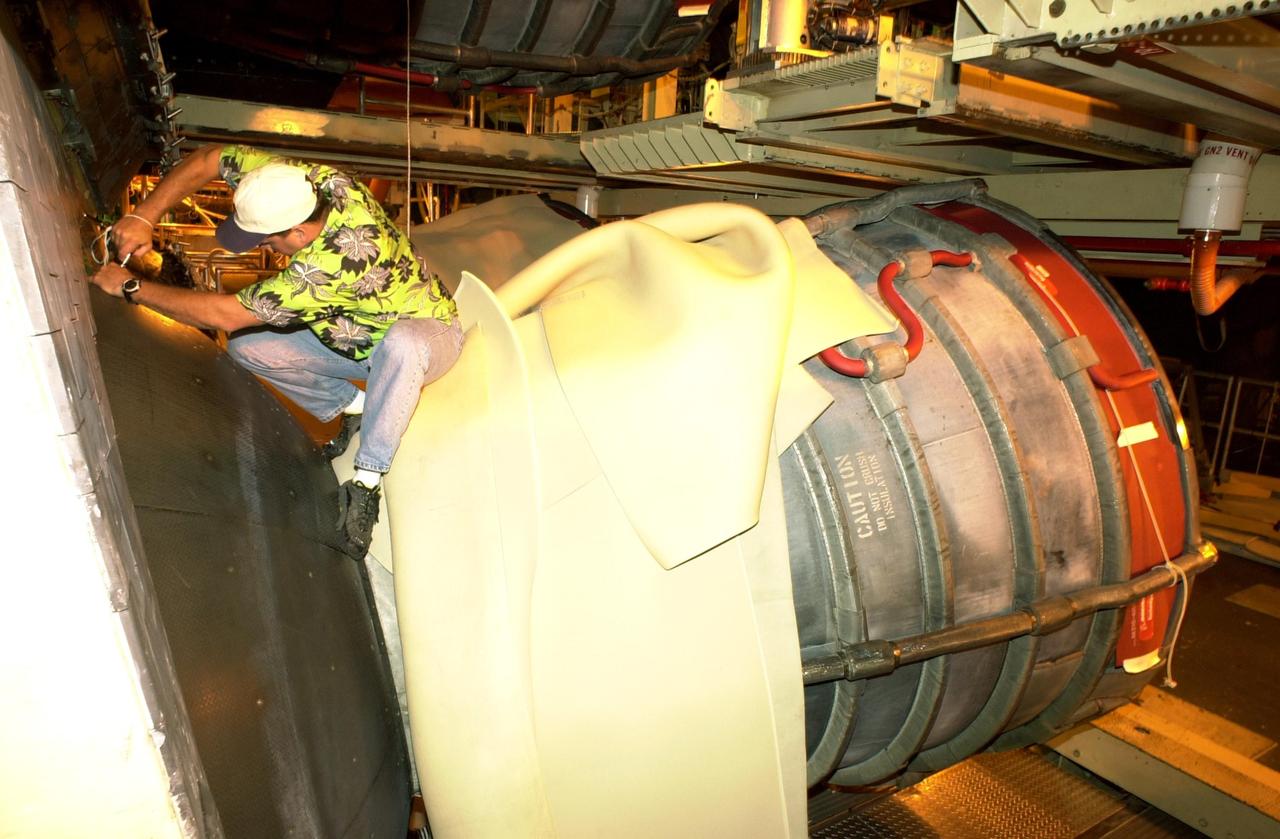
KENNEDY SPACE CENTER, FLA. - Doug Buford, with the Aft Engine shop, works at removing a heat shield on Columbia, in the Orbiter Processing Facility. After small cracks were discovered on the LH2 Main Propulsion System (MPS) flow liners in two other orbiters, program managers decided to move forward with inspections on Columbia before clearing it for flight on STS-107. After removal of the heat shields, the three main engines will be removed. Inspections of the flow liners will follow. The July 19 launch of Columbia on STS-107 has been delayed a few weeks
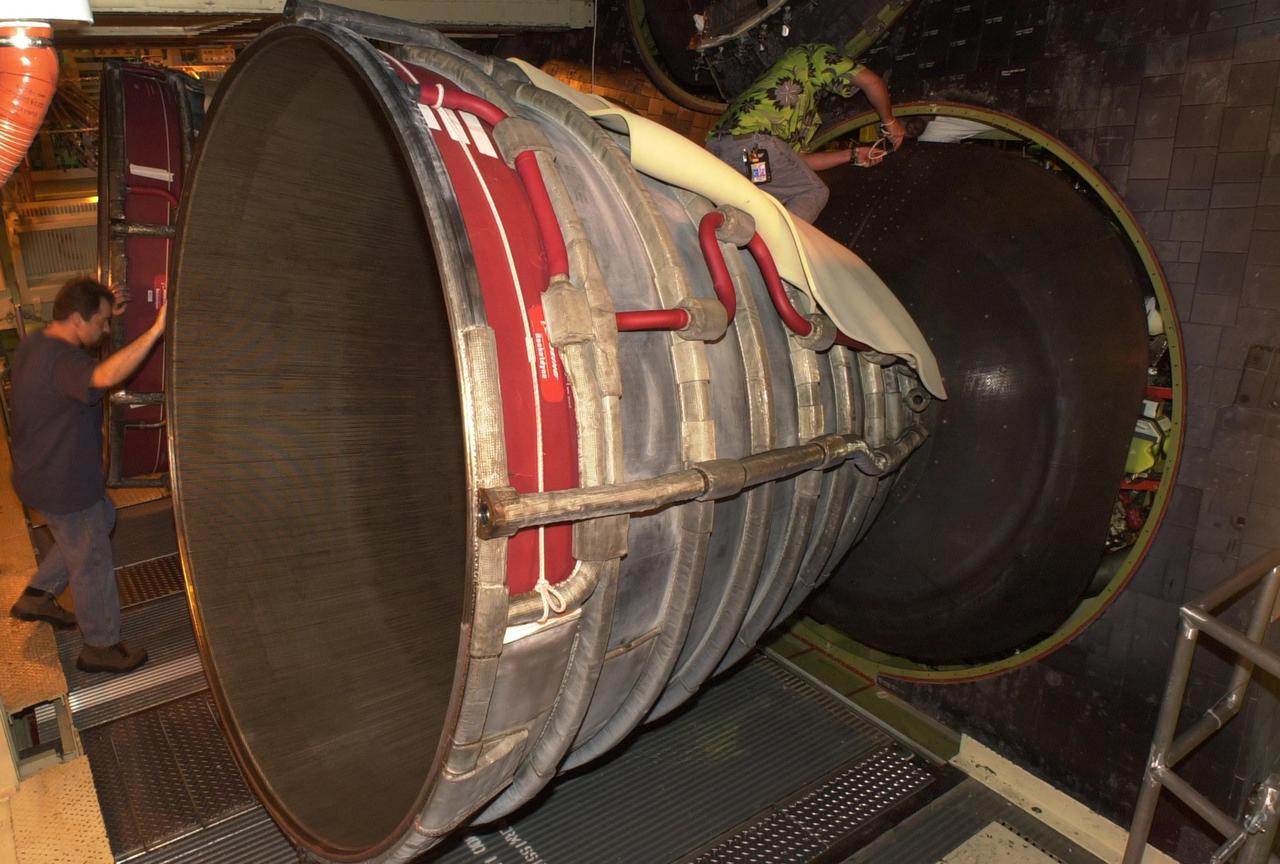
KENNEDY SPACE CENTER, FLA. -- Doug Buford, with the Aft Engine shop, removes a heat shield on one of Columbia's engines. After small cracks were discovered on the LH2 Main Propulsion System (MPS) flow liners in two other orbiters, program managers decided to move forward with inspections on Columbia before clearing it for flight on STS-107. After removal of the heat shields, the three main engines will be removed. Inspections of the flow liners will follow. The July 19 launch of Columbia on STS-107 has been delayed a few weeks
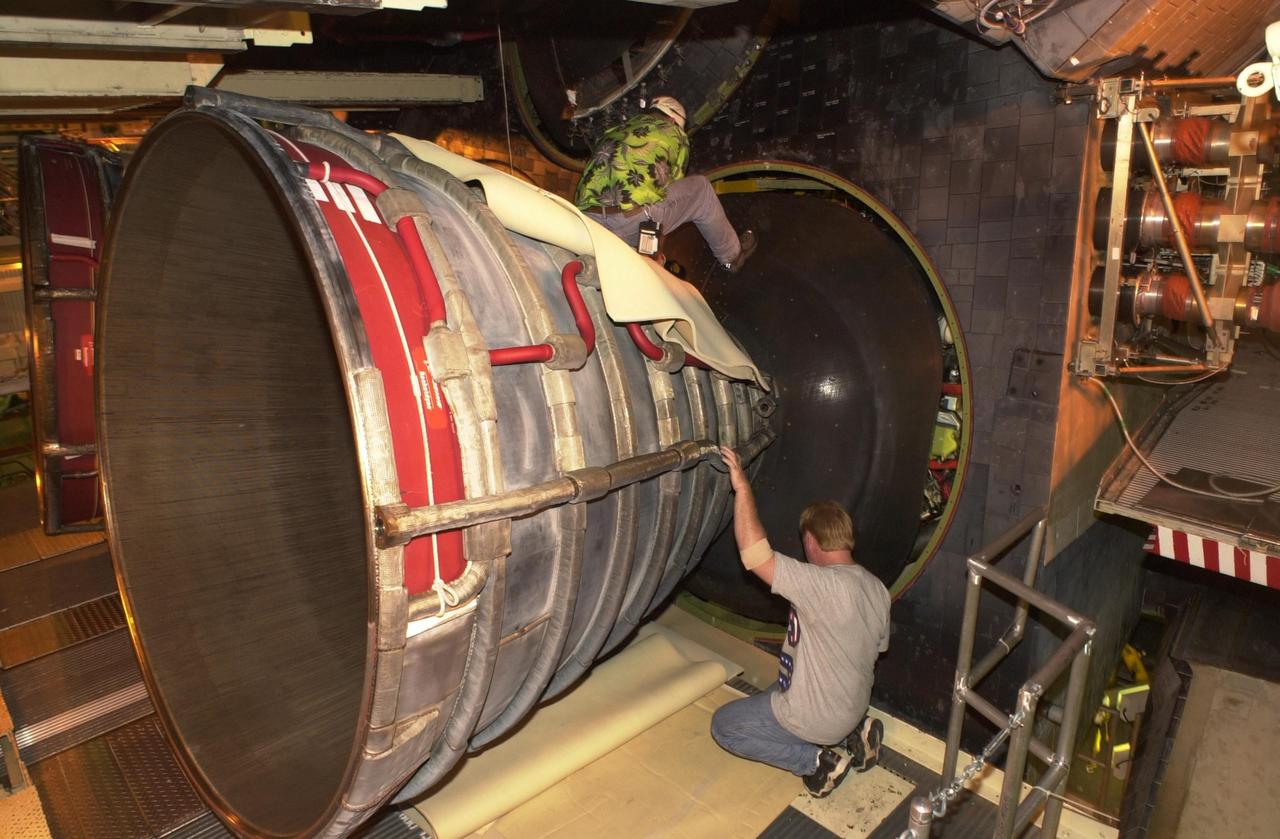
KENNEDY SPACE CENTER, FLA. -- Doug Buford (top), with the Aft Engine shop, along with another worker, removes a heat shield on one of Columbia's engines. After small cracks were discovered on the LH2 Main Propulsion System (MPS) flow liners in two other orbiters, program managers decided to move forward with inspections on Columbia before clearing it for flight on STS-107. After removal of the heat shields, the three main engines will be removed. Inspections of the flow liners will follow. The July 19 launch of Columbia on STS-107 has been delayed a few weeks
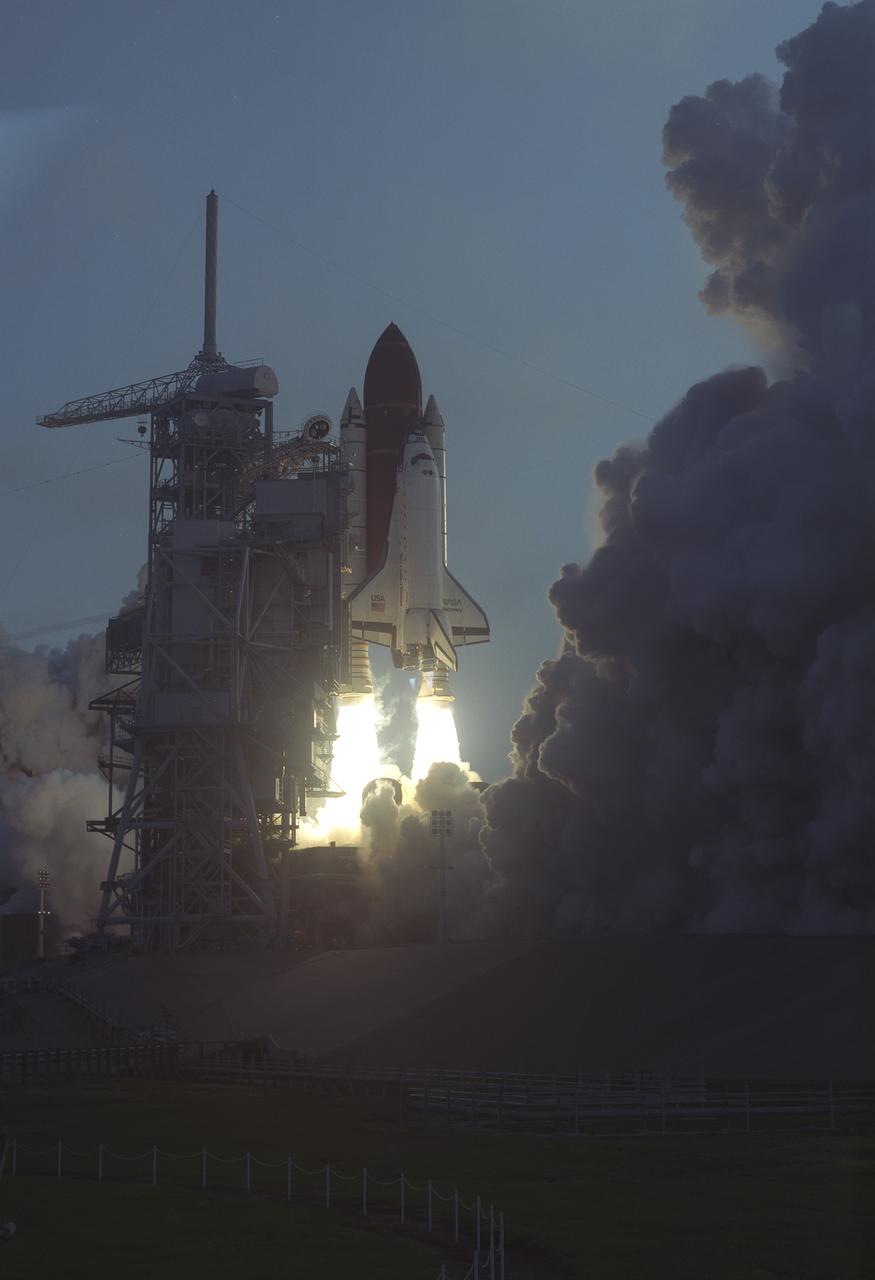
Launched aboard the Space Shuttle Discovery on April 28, 1991 at 7:33:14 am (EDT), STS-39 was a Department of Defense (DOD) mission. The crew included seven astronauts: Michael L. Coats, commander; L. Blaine Hammond, pilot; Guion S. Buford, Jr., mission specialist 1; Gregory J. Harbaugh, mission specialist 2; Richard J. Hieb, mission specialist 3; Donald R. McMonagle, mission specialist 4; and Charles L. Veach, mission specialist 5. The primary unclassified payload included the Air Force Program 675 (AFP-675), the Infrared Background Signature Survey (IBSS), and the Shuttle Pallet Satellite II (SPAS II).