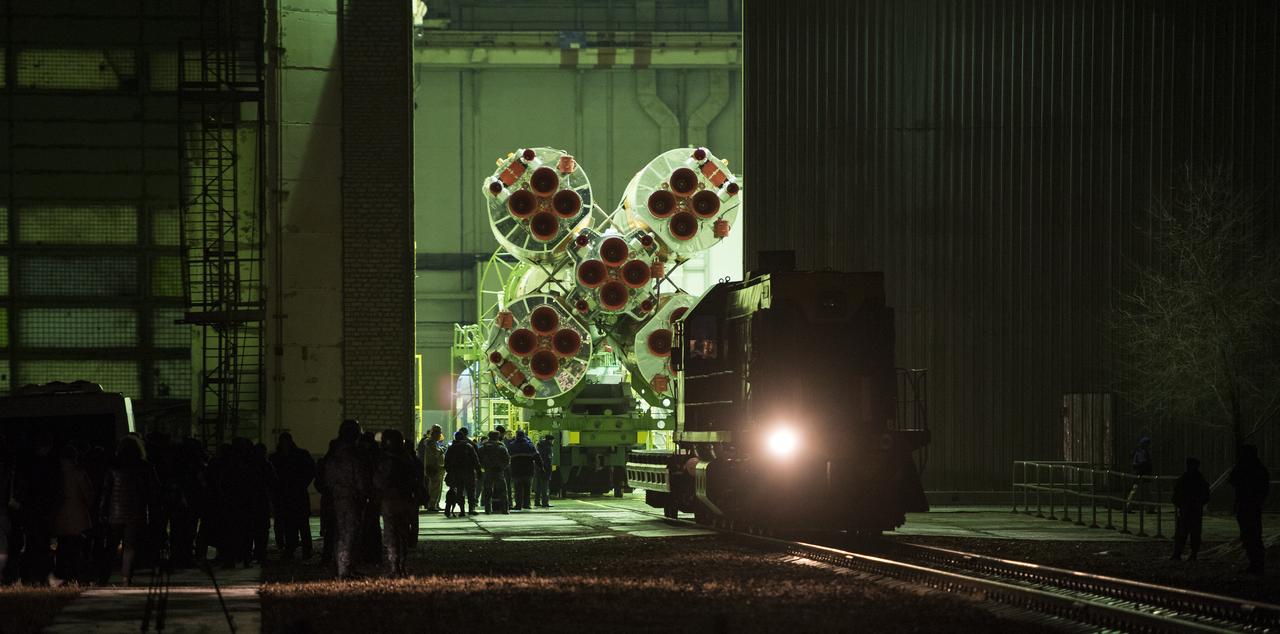
The Soyuz rocket is seen inside Building 112 prior to being rolled out by train to the launch pad, Monday, March 19, 2018 at the Baikonur Cosmodrome in Kazakhstan. Expedition 55 crewmembers Ricky Arnold and Drew Feustel of NASA and Oleg Artemyev of Roscosmos are scheduled to launch at 1:44 p.m. Eastern time (11:44 p.m. Baikonur time) on March 21 and will spend the next five months living and working aboard the International Space Station. Photo Credit: (NASA/Joel Kowsky)
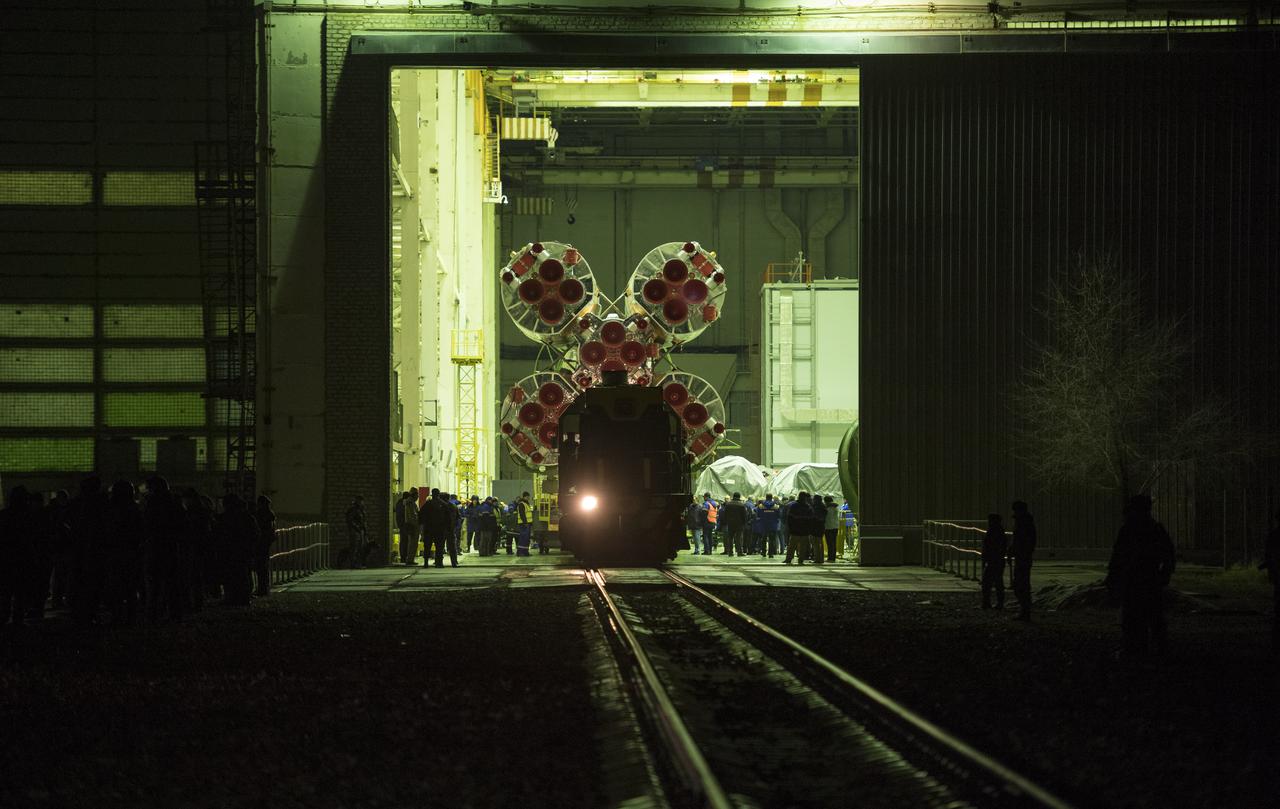
The Soyuz rocket is seen inside Building 112 prior to being rolled out by train to the launch pad, Monday, March 19, 2018 at the Baikonur Cosmodrome in Kazakhstan. Expedition 55 crewmembers Ricky Arnold and Drew Feustel of NASA and Oleg Artemyev of Roscosmos are scheduled to launch at 1:44 p.m. Eastern time (11:44 p.m. Baikonur time) on March 21 and will spend the next five months living and working aboard the International Space Station. Photo Credit: (NASA/Joel Kowsky)
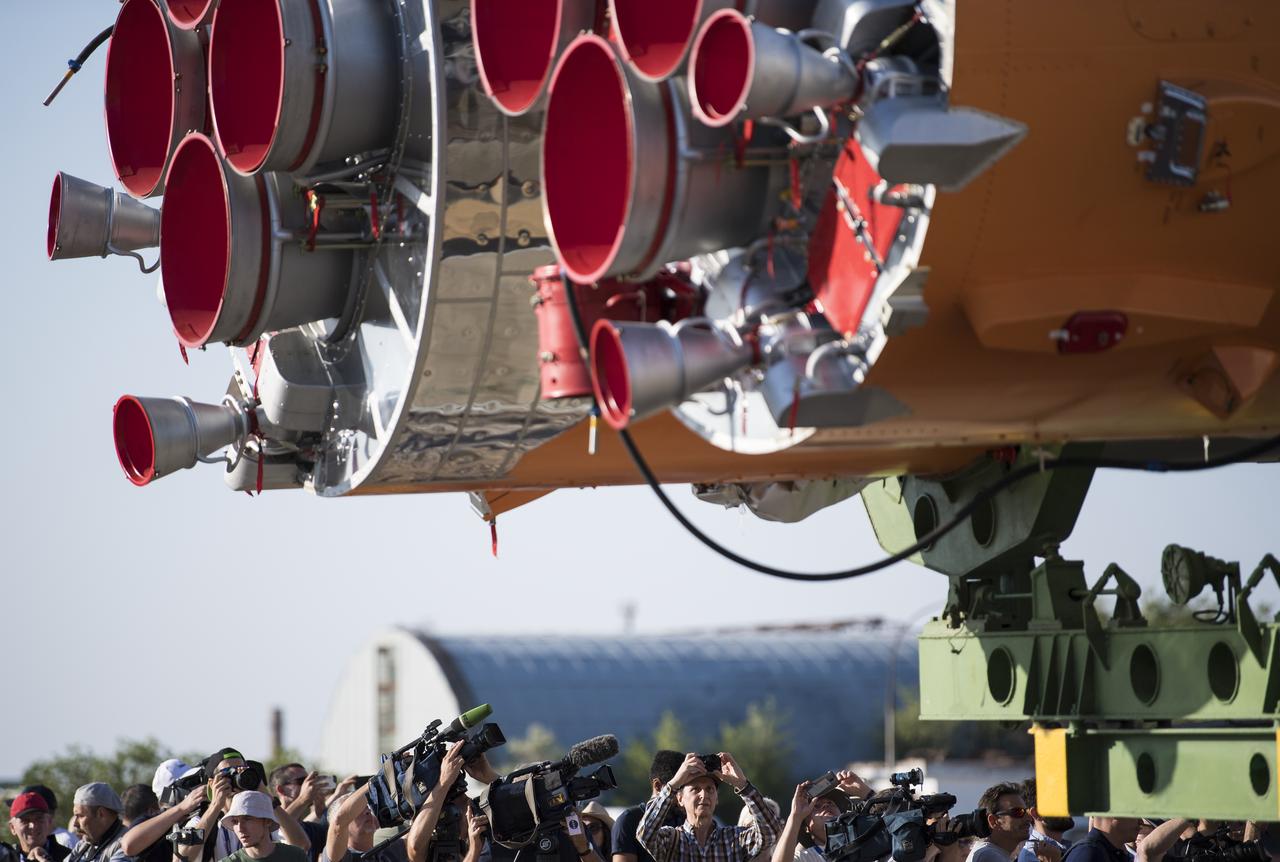
Members of the media and guests photograph the Soyuz rocket as it is rolled out of Building 112, Thursday, July 18, 2019 at the Baikonur Cosmodrome in Kazakhstan. Expedition 60 Soyuz Commander Alexander Skvortsov of Roscosmos, flight engineer Andrew Morgan of NASA, and flight engineer Luca Parmitano of ESA (European Space Agency) are scheduled to launch aboard their Soyuz MS-13 spacecraft at 12:28 p.m. Eastern time (9:28 p.m. Baikonur time) , on Saturday, July 20. Photo Credit: (NASA/Joel Kowsky)
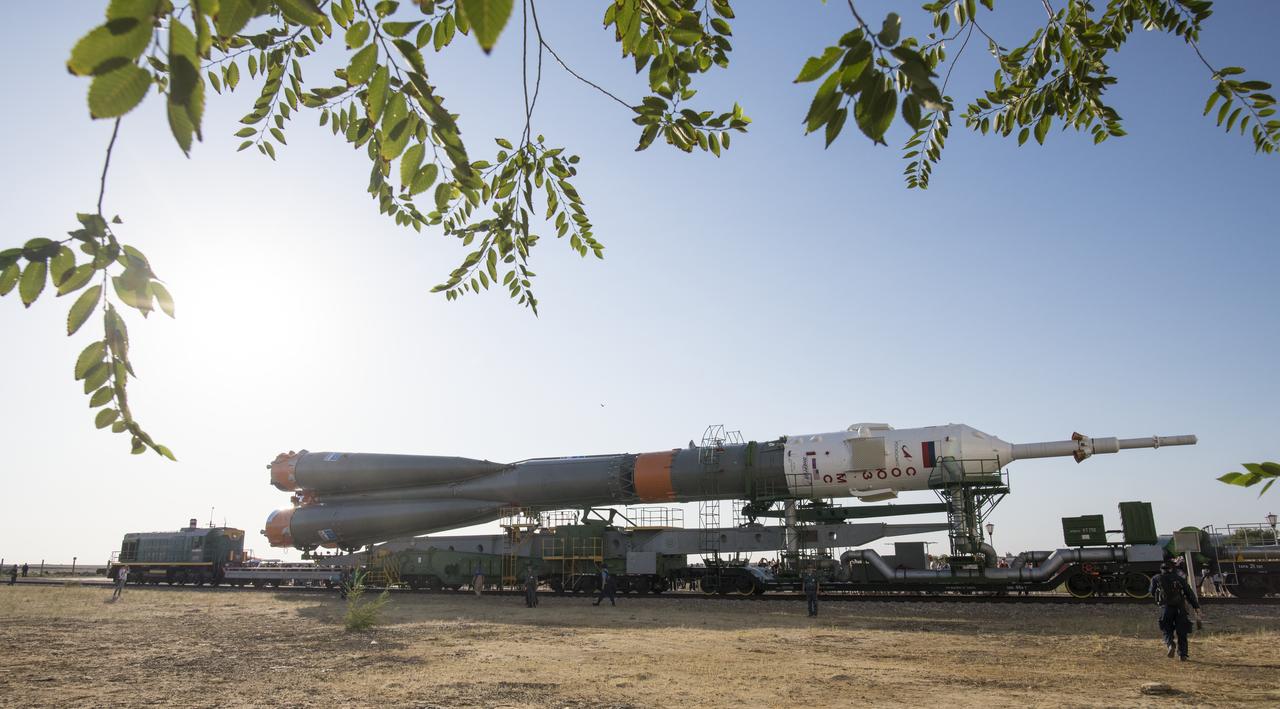
The Soyuz rocket is seen as it is rolled out of Building 112, Thursday, July 18, 2019 at the Baikonur Cosmodrome in Kazakhstan. Expedition 60 Soyuz Commander Alexander Skvortsov of Roscosmos, flight engineer Andrew Morgan of NASA, and flight engineer Luca Parmitano of ESA (European Space Agency) are scheduled to launch aboard their Soyuz MS-13 spacecraft at 12:28 p.m. Eastern time (9:28 p.m. Baikonur time) , on Saturday, July 20. Photo Credit: (NASA/Joel Kowsky)
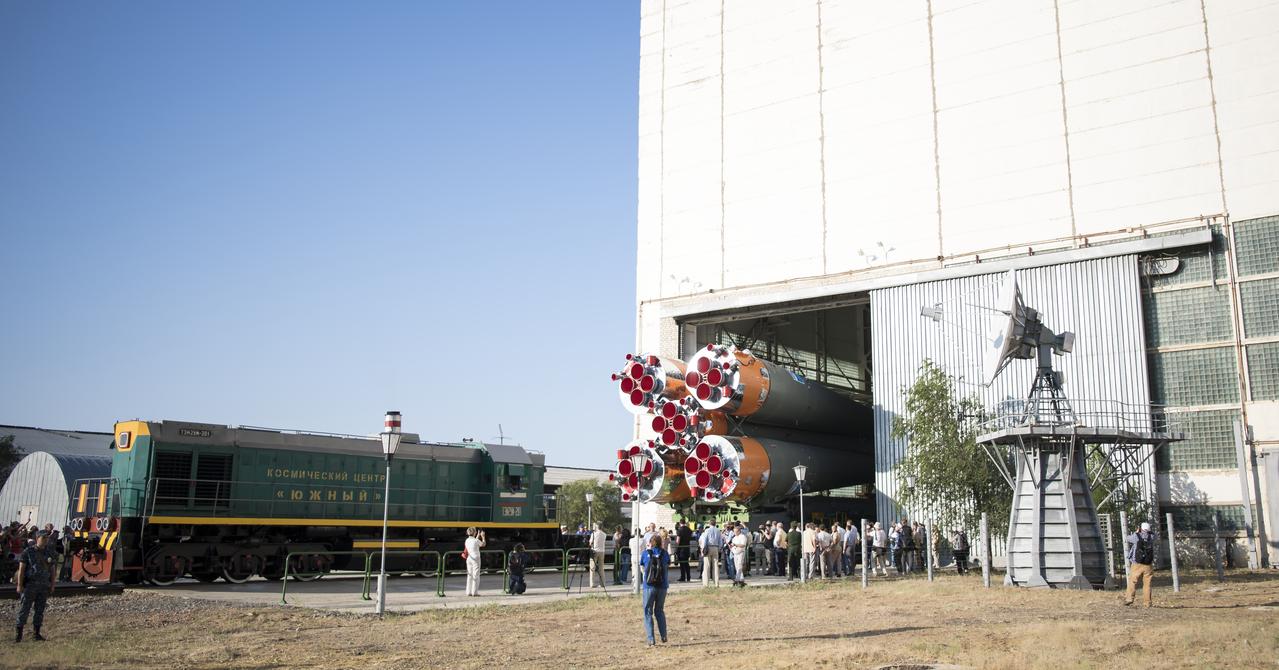
The Soyuz rocket is seen as it is rolled out of Building 112, Thursday, July 18, 2019 at the Baikonur Cosmodrome in Kazakhstan. Expedition 60 Soyuz Commander Alexander Skvortsov of Roscosmos, flight engineer Andrew Morgan of NASA, and flight engineer Luca Parmitano of ESA (European Space Agency) are scheduled to launch aboard their Soyuz MS-13 spacecraft at 12:28 p.m. Eastern time (9:28 p.m. Baikonur time) , on Saturday, July 20. Photo Credit: (NASA/Joel Kowsky)
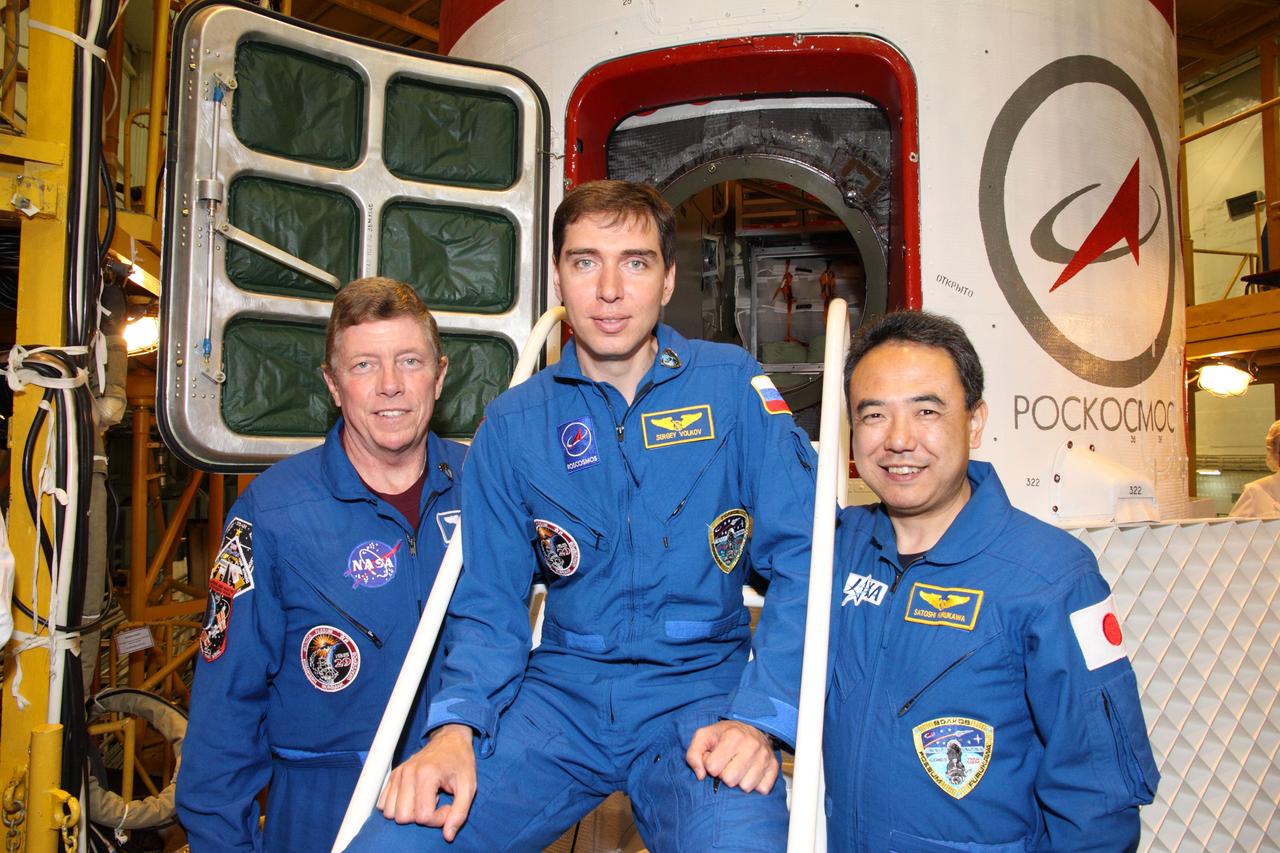
Soyuz TMA-02 final inspection by the crew, crew visits to Building 112 and museum NASA/Victor Zelentsov

Soyuz TMA-02 final inspection by the crew, crew visits to Building 112 and museum NASA/Victor Zelentsov

Soyuz TMA-02 final inspection by the crew, crew visits to Building 112 and museum NASA/Victor Zelentsov

Soyuz TMA-02 final inspection by the crew, crew visits to Building 112 and museum NASA/Victor Zelentsov
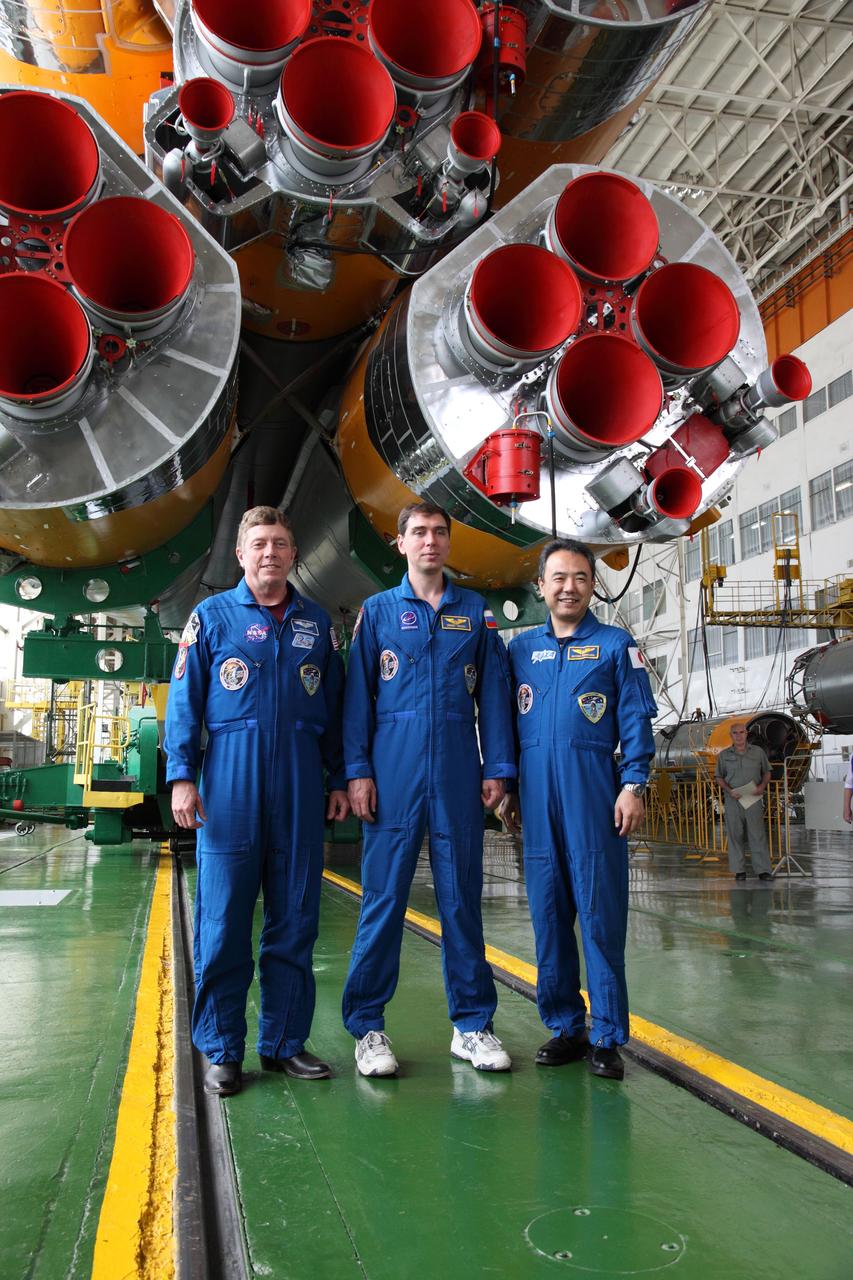
Soyuz TMA-02 final inspection by the crew, crew visits to Building 112 and museum NASA/Victor Zelentsov
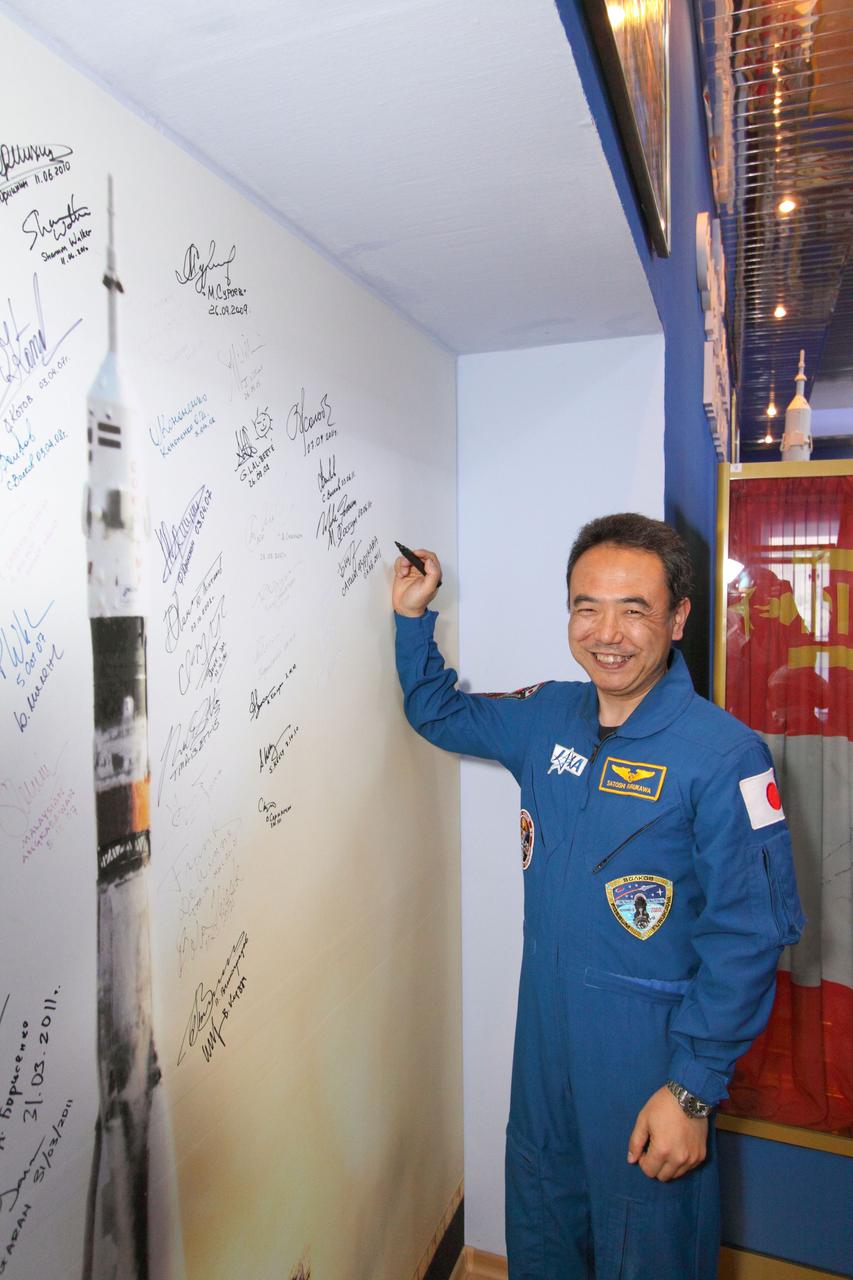
Soyuz TMA-02 final inspection by the crew, crew visits to Building 112 and museum NASA/Victor Zelentsov
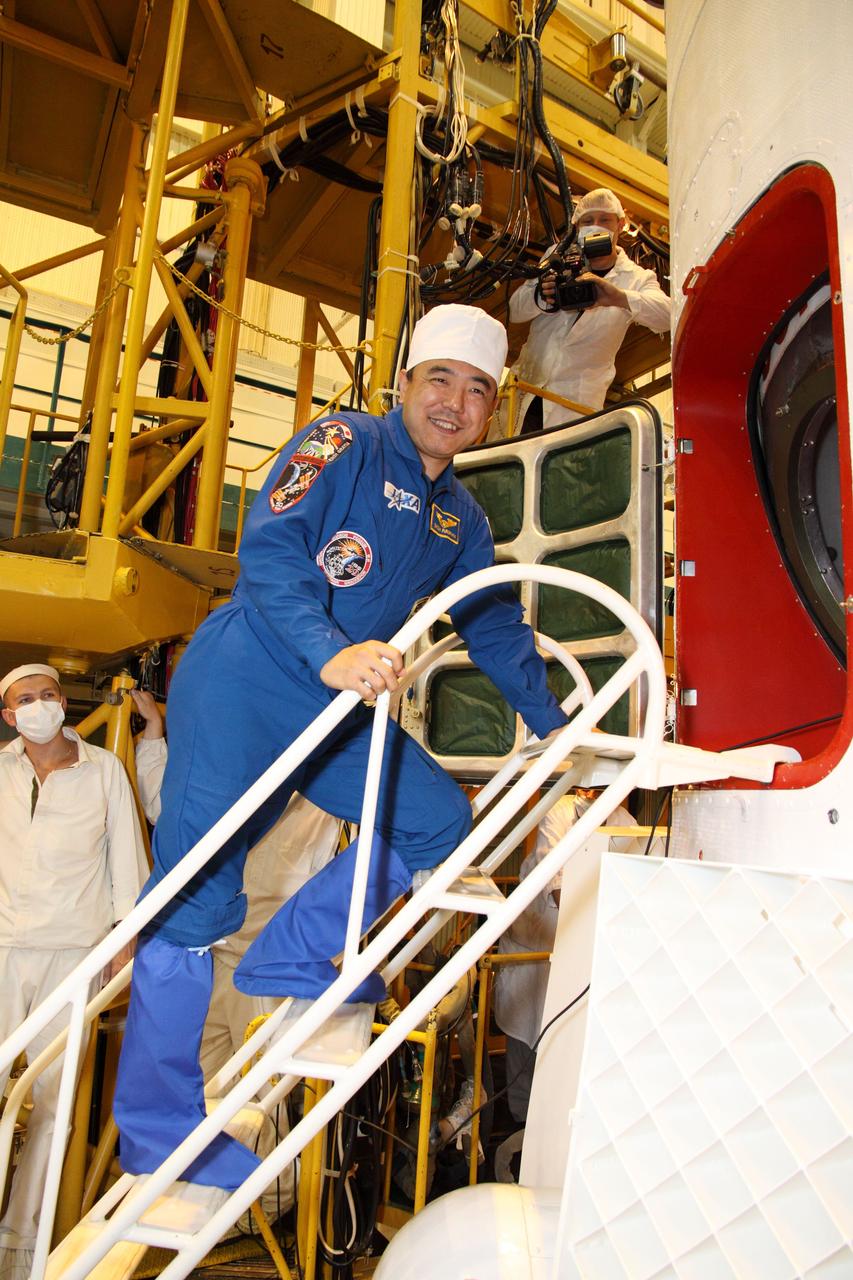
Soyuz TMA-02 final inspection by the crew, crew visits to Building 112 and museum NASA/Victor Zelentsov

KENNEDY SPACE CENTER, FLA. -- The STS-112 crew strides out of the Checkout and Operations Building on their way to the launch pad and a simulated countdown. On the left, front to back, are Pilot Pamela Melroy and Mission Specialists David Wolf and Fyodor Yurchikhin (RSA). On the right, front to back, are Commander Jeffrey Ashby and Mission Specialists Sandra Magnus and Piers Sellers. Mission STS-112 aboard Space Shuttle Atlantis is scheduled to launch no earlier than Oct. 2, between 2 and 6 p.m. EDT. STS-112 is the 15th assembly mission to the International Space Station. Atlantis will be carrying the S1 Integrated Truss Structure, the first starboard truss segment, to be attached to the central truss segment, S0, and the Crew and Equipment Translation Aid (CETA) Cart A. The CETA is the first of two human-powered carts that will ride along the ISS railway, providing mobile work platforms for future spacewalking astronauts.
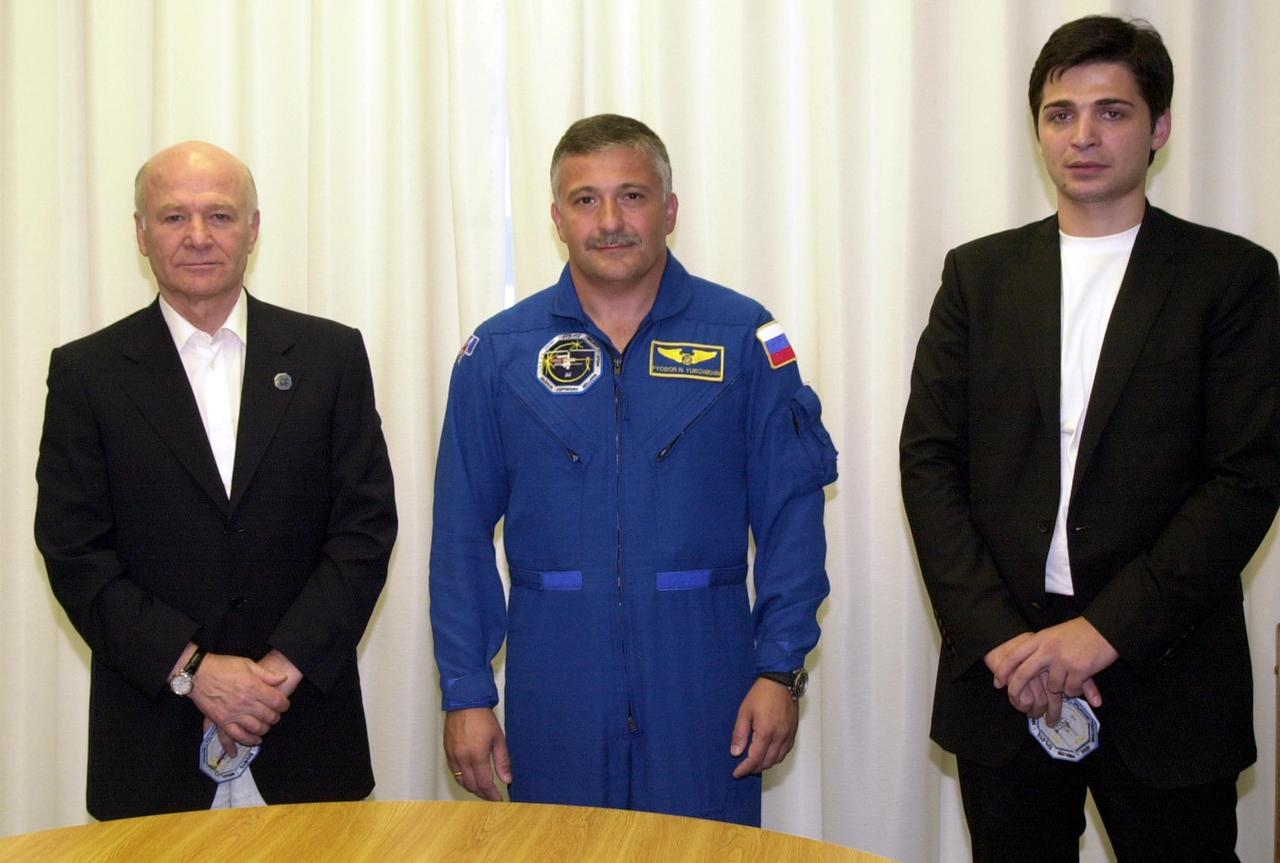
KENNEDY SPACE CENTER, FLA. - In the Operations and Checkout Building, Aslan Abashidze (left), President of the Autonomous Republic of Ajara in Georgia (Russia), STS-112 Mission Specialist Fyodor N. Yurchikhin, Ph.D., a cosmonaut with the Russian Space Agency; and Georgi Abashidze, Mayor of Batumi (Yurchikhin's hometown), pose for a portrait. Yurchikhin and the other members of the STS-112 crew are awaiting launch to the International Space Station aboard Space Shuttle Atlantis. The launch has been postponed to no earlier than Monday, Oct. 7, so that the Mission Control Center, located at the Lyndon B. Johnson Space Center in Houston, Texas, can be secured and protected from potential storm impacts from Hurricane Lili.
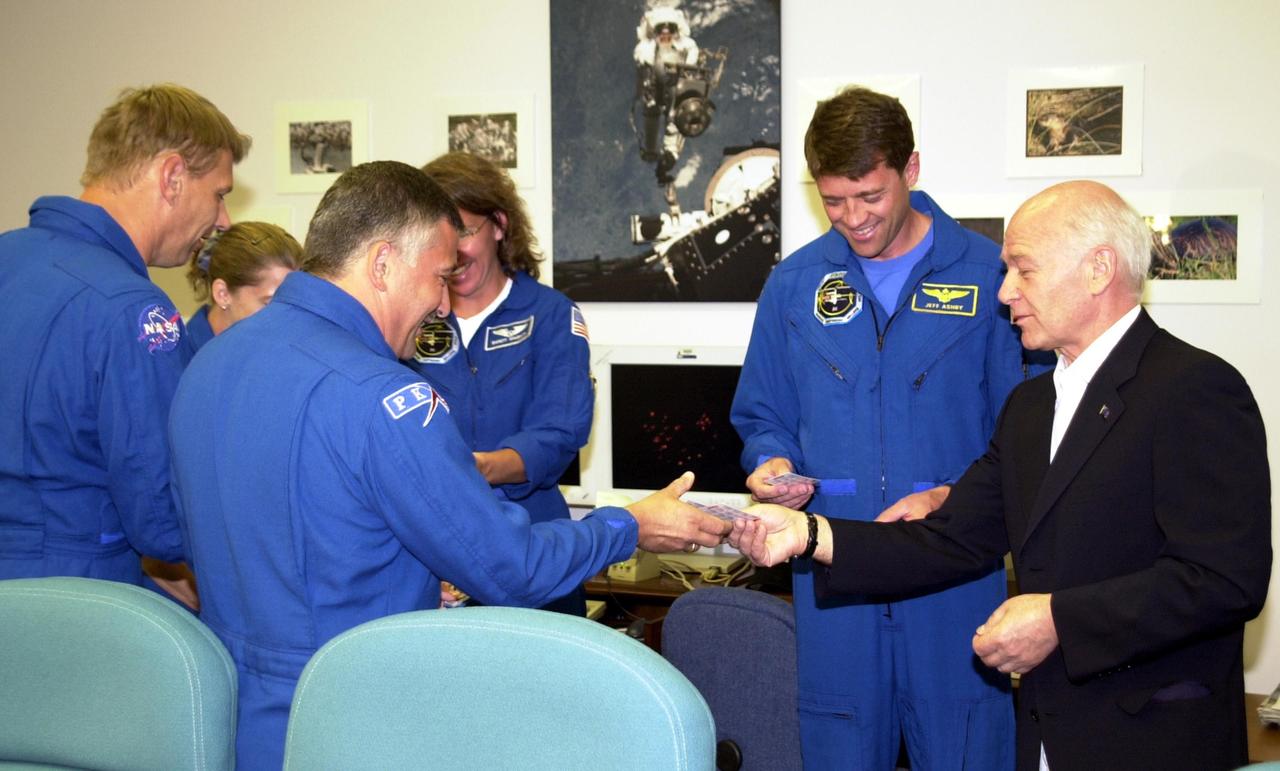
KENNEDY SPACE CENTER, FLA. - In the Operations and Checkout Building, Aslan Abashidze (right), President of the Autonomous Republic of Ajara in Georgia (Russia), visits with the STS-112 crew. From left, they are Mission Specialist Piers J. Sellers; Pilot Pamela Ann Melroy; Mission Specialist Fyodor N. Yurchikhin, a cosmonaut with the Russian Space Agency; Mission Specialist Sandra H. Magnus; and CommanderJeffrey S. Ashby. Mission Specialist David A. Wolf, not pictured, is also a member of the crew. The crew is awaiting launch on mission STS-112 to the International Space Station aboard Space Shuttle Atlantis. The launch has been postponed to no earlier than Monday, Oct. 7, so that the Mission Control Center, located at the Lyndon B. Johnson Space Center in Houston, Texas, can be secured and protected from potential storm impacts from Hurricane Lili.
![KENNEDY SPACE CENTER, FLA. -- The STS-112 crew eagerly exit the Operations and Checkout Building for their ride to Launch Pad 39B and the launch scheduled 3:46 p.m. EDT. Leading the way are Pilot Pamela Melroy and Commander Jeffrey Ashby. In the second row are Mission Specialists David Wolf (left) and Sandra Magnus. Behind them are Mission Specialists Fyodor Yurchikhin and Piers Sellers. Sellers, Magnus and Yurchikhin are making their first Shuttle flights. STS-112 is the 15th assembly flight to the International Space Station, carrying the S1 Integrated Truss Structure, the first starboard truss segment, to be attached to the central truss segment, S0, and the Crew and Equipment Translation Aid (CETA) Cart A. The CETA is the first of two human-powered carts that will ride along the ISS railway, providing mobile work platforms for future spacewalking astronauts. On the 11-day mission, three spacewalks are planned to attach the S1 truss to the Station. [Photo courtesy of Scott Andrews]](https://images-assets.nasa.gov/image/KSC-02pd1453/KSC-02pd1453~medium.jpg)
KENNEDY SPACE CENTER, FLA. -- The STS-112 crew eagerly exit the Operations and Checkout Building for their ride to Launch Pad 39B and the launch scheduled 3:46 p.m. EDT. Leading the way are Pilot Pamela Melroy and Commander Jeffrey Ashby. In the second row are Mission Specialists David Wolf (left) and Sandra Magnus. Behind them are Mission Specialists Fyodor Yurchikhin and Piers Sellers. Sellers, Magnus and Yurchikhin are making their first Shuttle flights. STS-112 is the 15th assembly flight to the International Space Station, carrying the S1 Integrated Truss Structure, the first starboard truss segment, to be attached to the central truss segment, S0, and the Crew and Equipment Translation Aid (CETA) Cart A. The CETA is the first of two human-powered carts that will ride along the ISS railway, providing mobile work platforms for future spacewalking astronauts. On the 11-day mission, three spacewalks are planned to attach the S1 truss to the Station. [Photo courtesy of Scott Andrews]
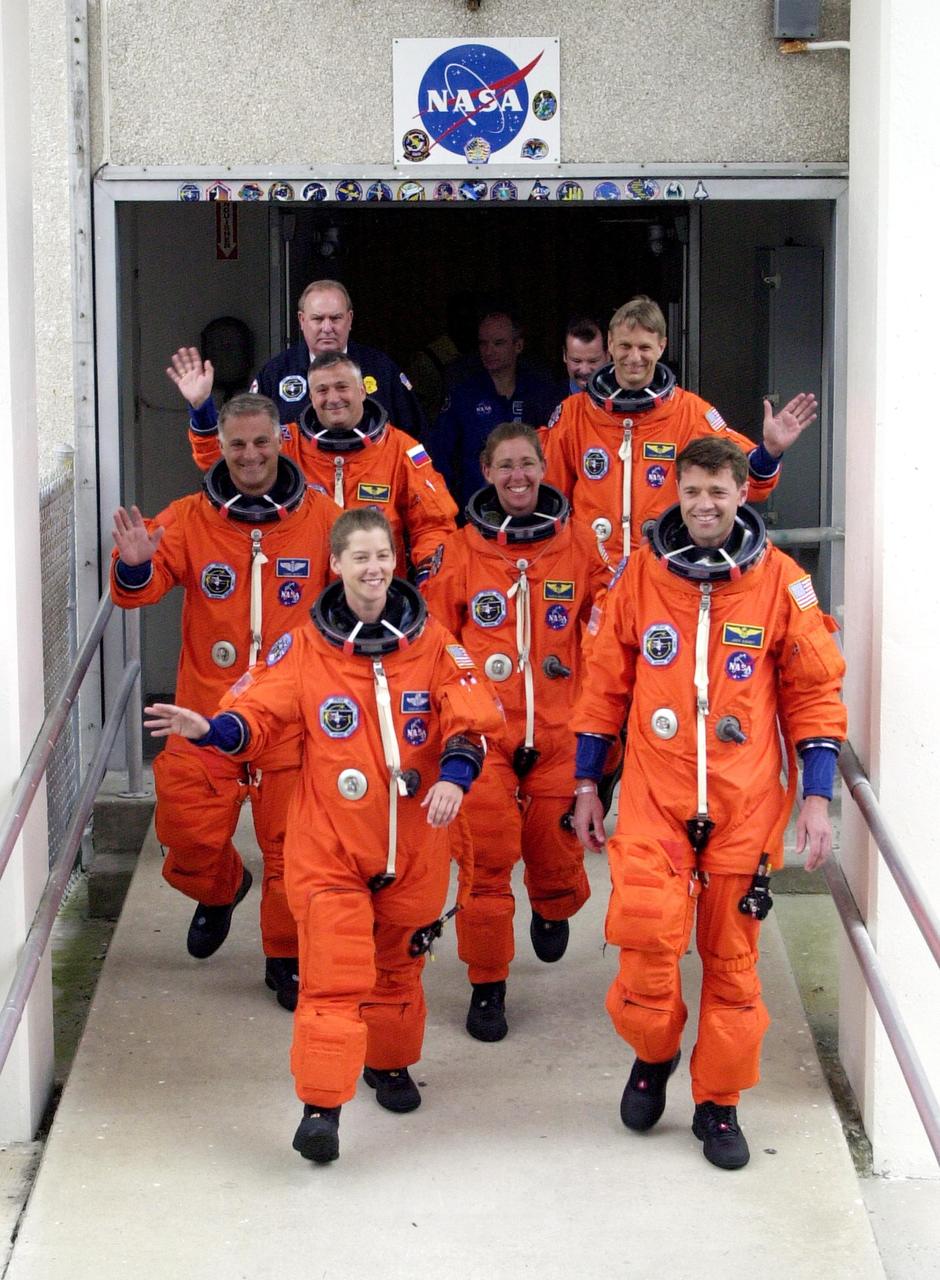
KENNEDY SPACE CENTER, FLA. -- The STS-112 crew wave to spectators as they exit the Operations and Checkout Building for their ride to Launch Pad 39B and the launch scheduled 3:46 p.m. EDT. Leading the way are Pilot Pamela Melroy and Commander Jeffrey Ashby. In the second row are Mission Specialists David Wolf (left) and Sandra Magnus. Behind them are Mission Specialists Fyodor Yurchikhin and Piers Sellers. Sellers, Magnus and Yurchikhin are making their first Shuttle flights. STS-112 is the 15th assembly flight to the International Space Station, carrying the S1 Integrated Truss Structure, the first starboard truss segment, to be attached to the central truss segment, S0, and the Crew and Equipment Translation Aid (CETA) Cart A. The CETA is the first of two human-powered carts that will ride along the ISS railway, providing mobile work platforms for future spacewalking astronauts. On the 11-day mission, three spacewalks are planned to attach the S1 truss to the Station.
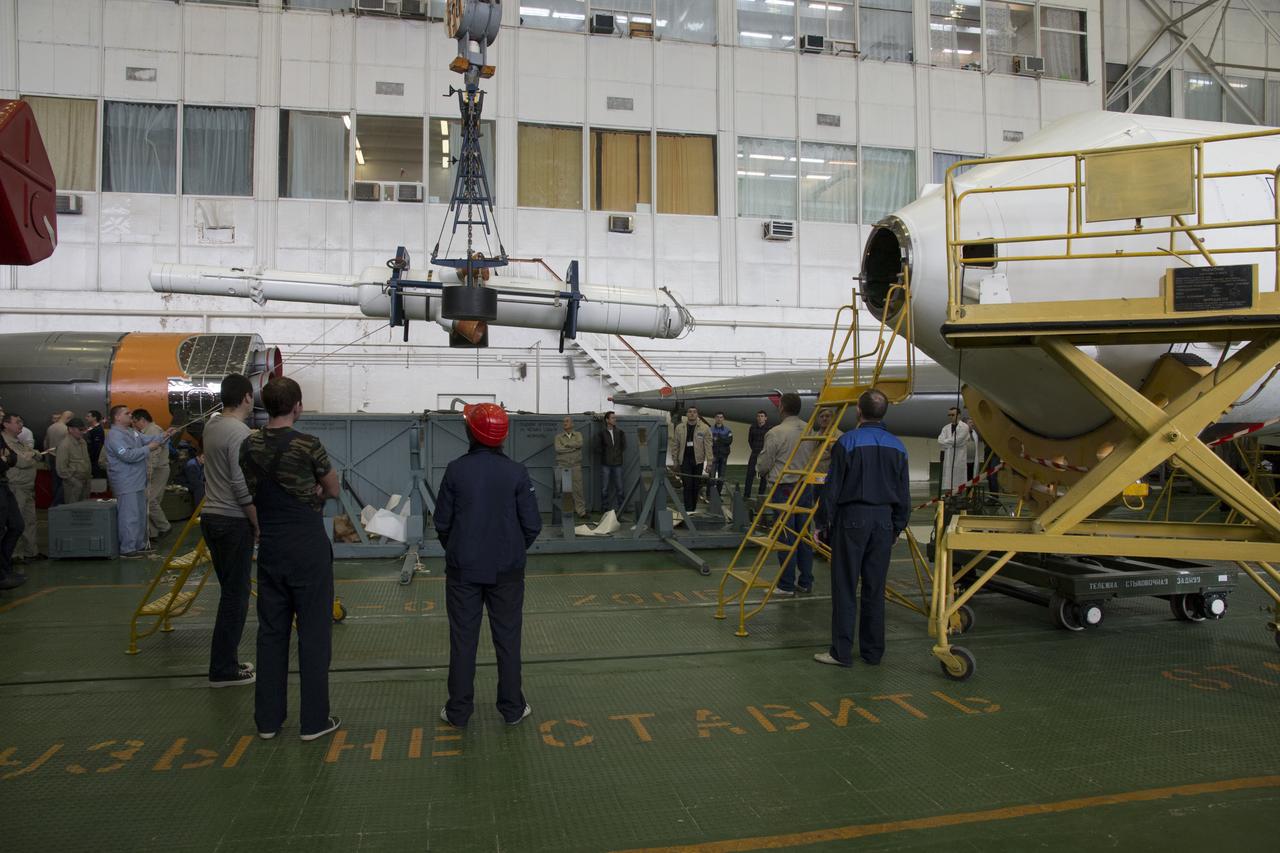
The Soyuz rocket and Soyuz TMA-12M spacecraft are assembled at Building 112 on the Baikonur Cosmodrome on Saturday, March 22, 2014 in Baikonur, Kazakhstan. Launch of the Soyuz is scheduled for March 26 and will send Expedition 39 Soyuz Commander Alexander Skvortsov of the Russian Federal Space Agency, Roscosmos, Flight Engineer Steven Swanson of NASA, and Flight Engineer Oleg Artemyev of Roscosmos on a six month mission to the International Space Station. Photo Credit: (NASA/Victor Zelentsov)
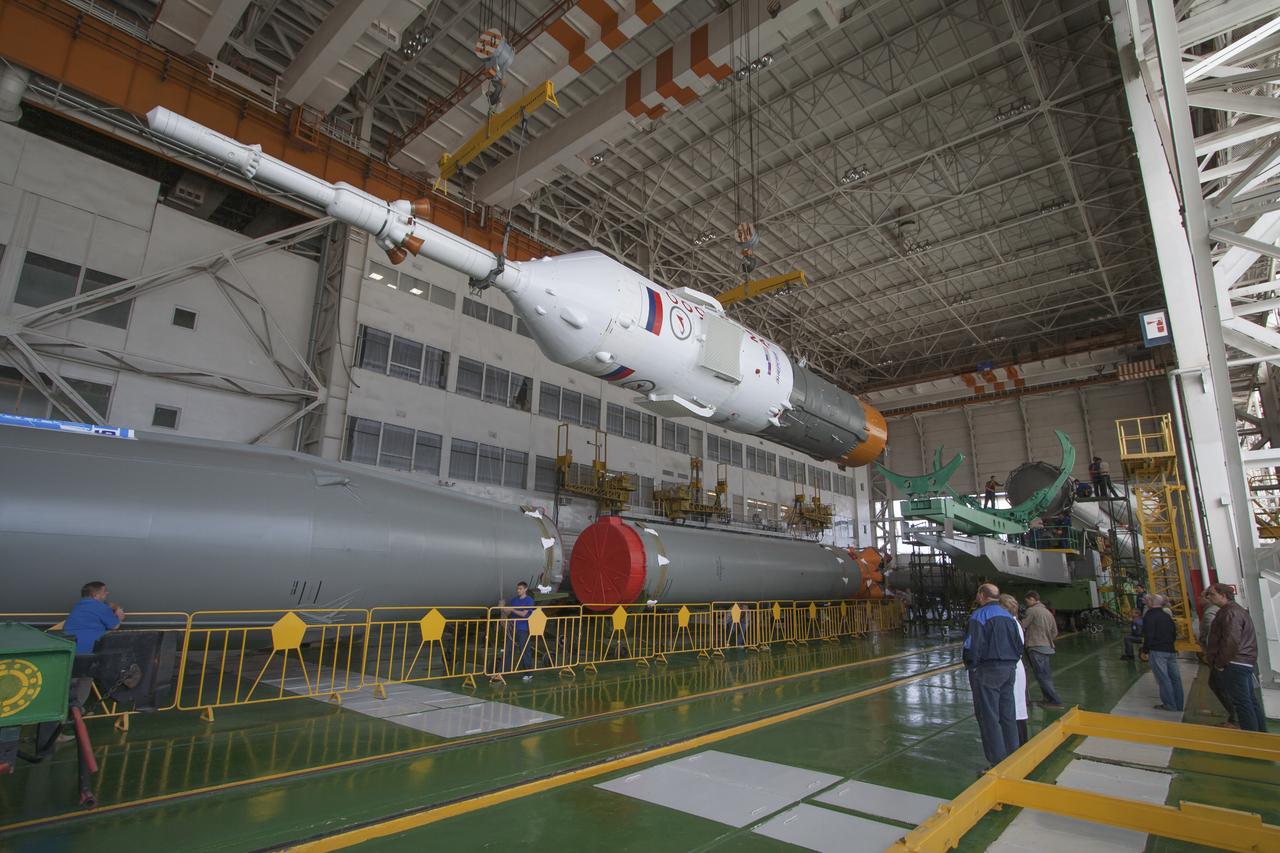
The Soyuz rocket and Soyuz TMA-10M spacecraft are assembled at Building 112 on the Baikonur Cosmodrome, on Sunday, Sept. 22, 2013 in Baikonur, Kazakhstan. Launch of the Soyuz rocket is scheduled for September 26 and will send Expedition 37 Soyuz Commander Oleg Kotov, NASA Flight Engineer Michael Hopkins and Russian Flight Engineer Sergei Ryazansky on a five and a half-month mission aboard the International Space Station. Photo Credit: (NASA/Victor Zelentsov)
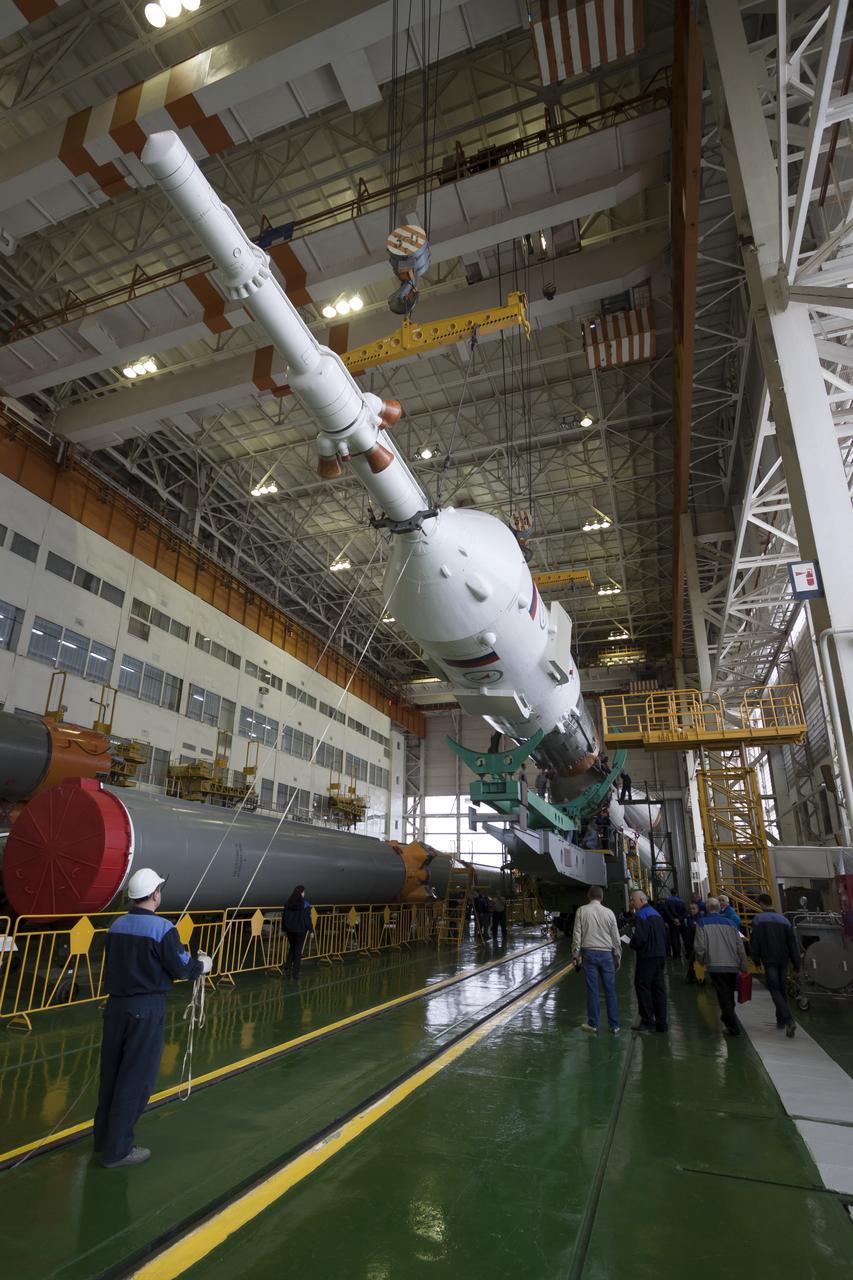
The Soyuz rocket and Soyuz TMA-12M spacecraft are assembled at Building 112 on the Baikonur Cosmodrome on Saturday, March 22, 2014 in Baikonur, Kazakhstan. Launch of the Soyuz is scheduled for March 26 and will send Expedition 39 Soyuz Commander Alexander Skvortsov of the Russian Federal Space Agency, Roscosmos, Flight Engineer Steven Swanson of NASA, and Flight Engineer Oleg Artemyev of Roscosmos on a six month mission to the International Space Station. Photo Credit: (NASA/Victor Zelentsov)
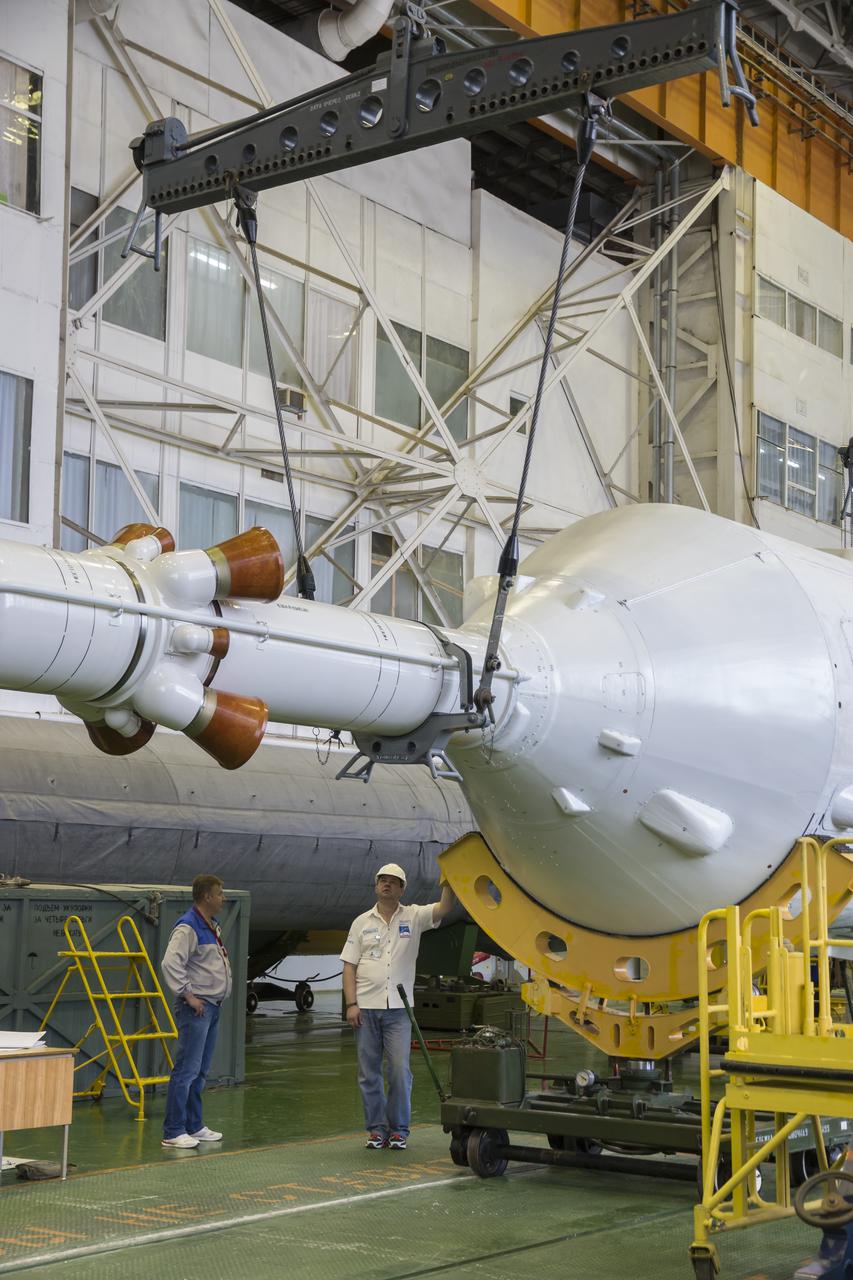
The Soyuz rocket and Soyuz TMA-13M spacecraft is assembled at Building 112 on the Baikonur Cosmodrome on Sunday, May 25, 2014 in Baikonur, Kazakhstan. Launch of the Soyuz is scheduled for May 29 and will send Expedition 40 Soyuz Commander Maxim Suraev of the Russian Federal Space Agency, Roscosmos, Flight Engineer Alexander Gerst of the European Space Agency, ESA, and Flight Engineer Reid Wiseman of NASA to the International Space Station for a five and a half month stay. Photo Credit: (NASA/Victor Zelentsov)
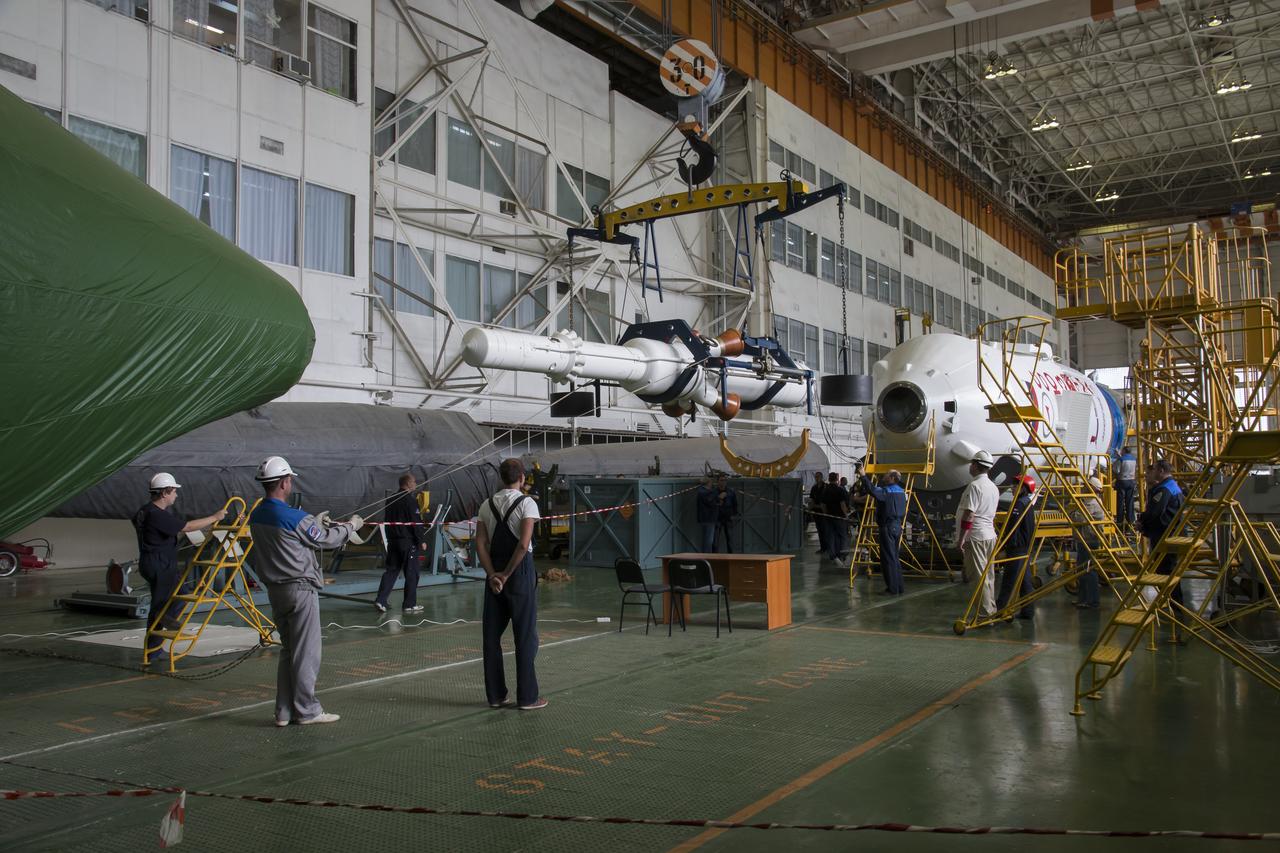
The Soyuz rocket and Soyuz TMA-14M spacecraft is assembled at Building 112 at the Baikonur Cosmodrome on Monday, Sept. 22, 2014, in Baikonur, Kazakhstan. Launch of the Soyuz is scheduled for Sept. 26 and will send Expedition 41 Soyuz Commander Alexander Samokutyaev of the Russian Federal Space Agency (Roscosmos), Flight Engineer Barry Wilmore of NASA, and Flight Engineer Elena Serova of Roscosmos to the International Space Station for a five and a half month stay. Photo Credit: (NASA/Victor Zelentsov)
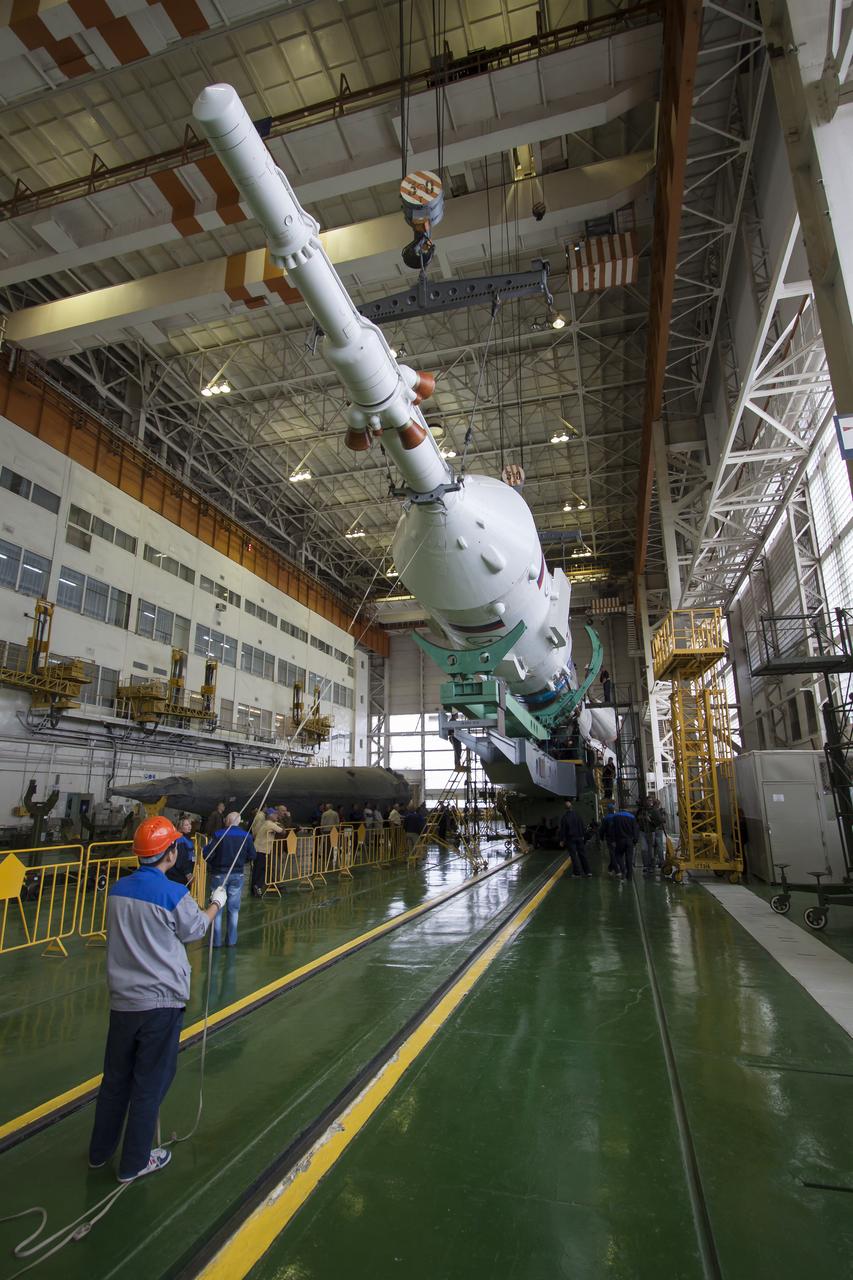
The Soyuz rocket and Soyuz TMA-14M spacecraft is assembled at Building 112 at the Baikonur Cosmodrome on Monday, Sept. 22, 2014, in Baikonur, Kazakhstan. Launch of the Soyuz is scheduled for Sept. 26 and will send Expedition 41 Soyuz Commander Alexander Samokutyaev of the Russian Federal Space Agency (Roscosmos), Flight Engineer Barry Wilmore of NASA, and Flight Engineer Elena Serova of Roscosmos to the International Space Station for a five and a half month stay. Photo Credit: (NASA/Victor Zelentsov)
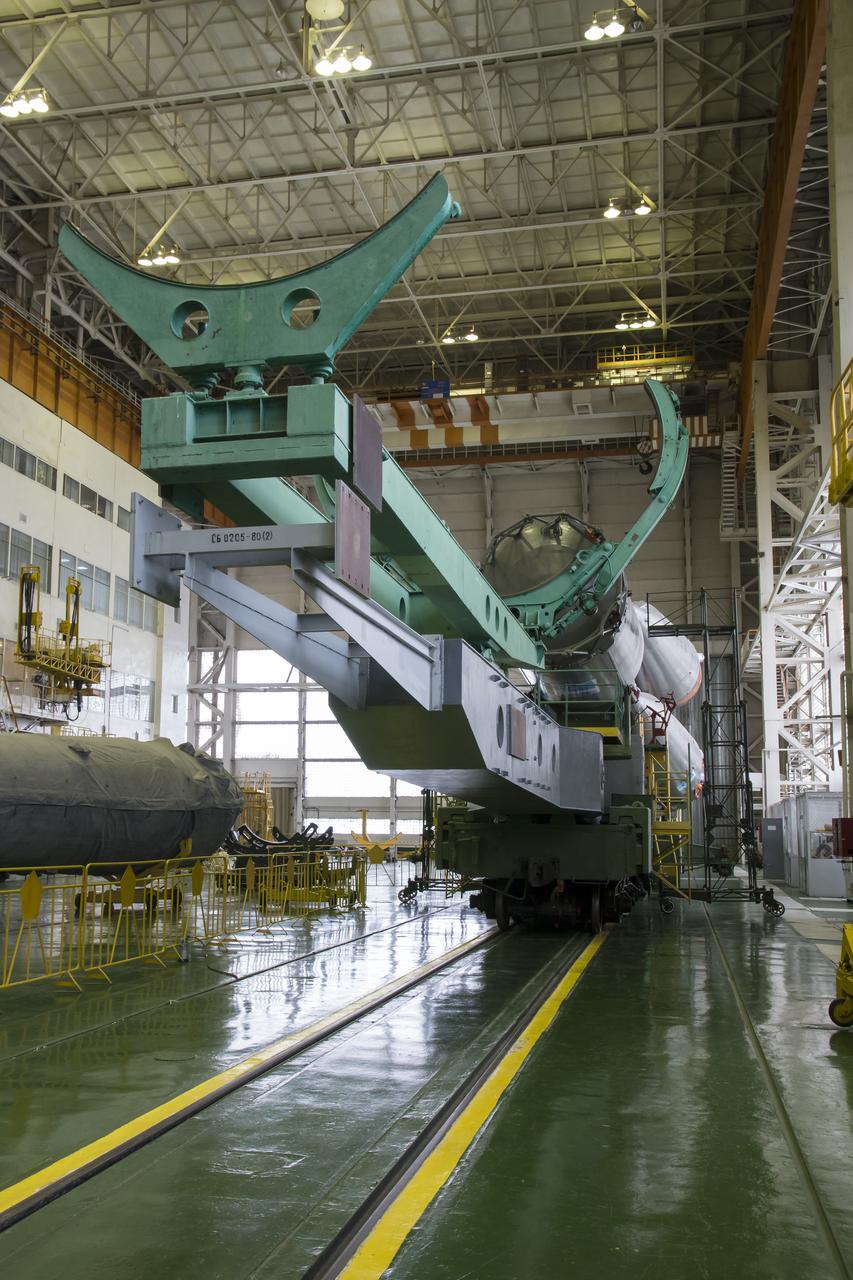
The Soyuz rocket and Soyuz TMA-14M spacecraft is assembled at Building 112 at the Baikonur Cosmodrome on Monday, Sept. 22, 2014, in Baikonur, Kazakhstan. Launch of the Soyuz is scheduled for Sept. 26 and will send Expedition 41 Soyuz Commander Alexander Samokutyaev of the Russian Federal Space Agency (Roscosmos), Flight Engineer Barry Wilmore of NASA, and Flight Engineer Elena Serova of Roscosmos to the International Space Station for a five and a half month stay. Photo Credit: (NASA/Victor Zelentsov)
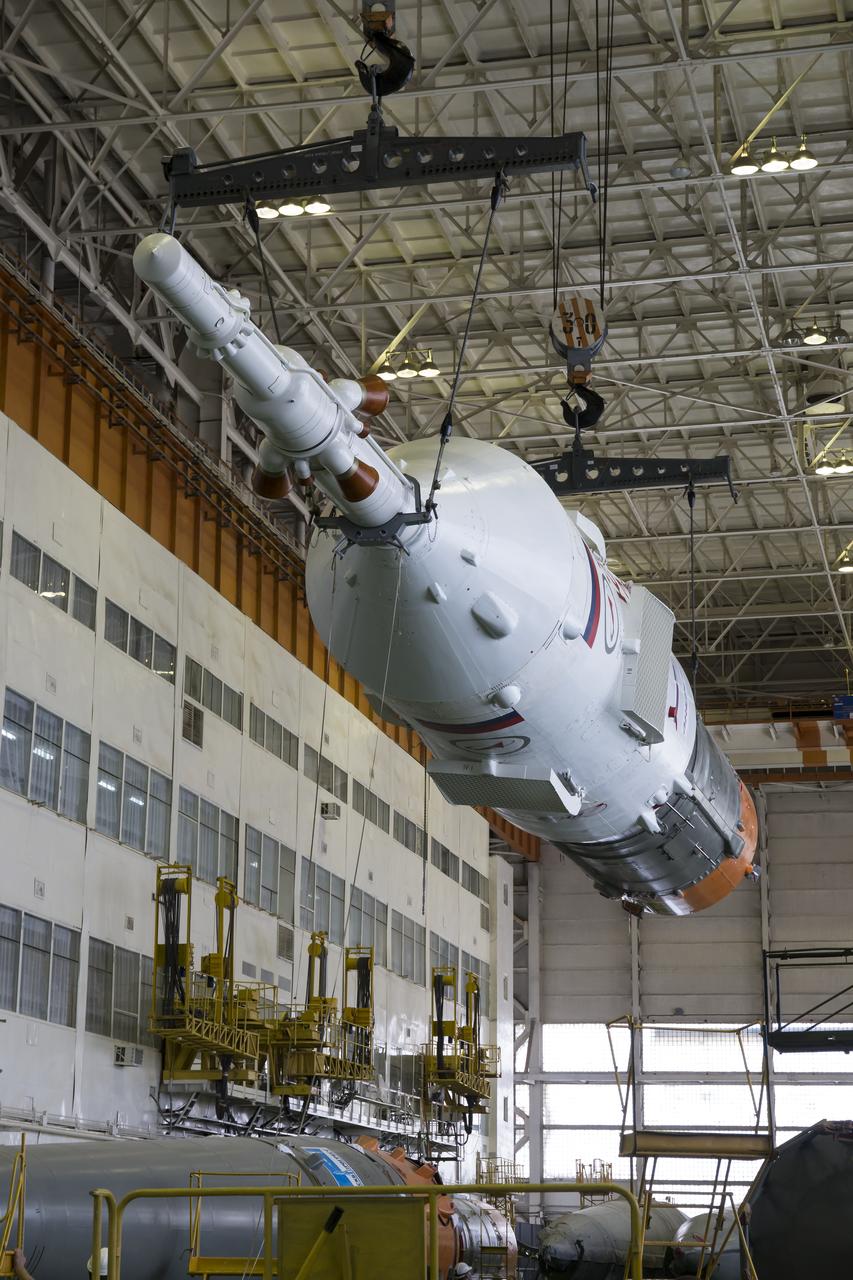
The Soyuz rocket and Soyuz TMA-13M spacecraft is assembled at Building 112 on the Baikonur Cosmodrome on Sunday, May 25, 2014 in Baikonur, Kazakhstan. Launch of the Soyuz is scheduled for May 29 and will send Expedition 40 Soyuz Commander Maxim Suraev of the Russian Federal Space Agency, Roscosmos, Flight Engineer Alexander Gerst of the European Space Agency, ESA, and Flight Engineer Reid Wiseman of NASA to the International Space Station for a five and a half month stay. Photo Credit: (NASA/Victor Zelentsov)
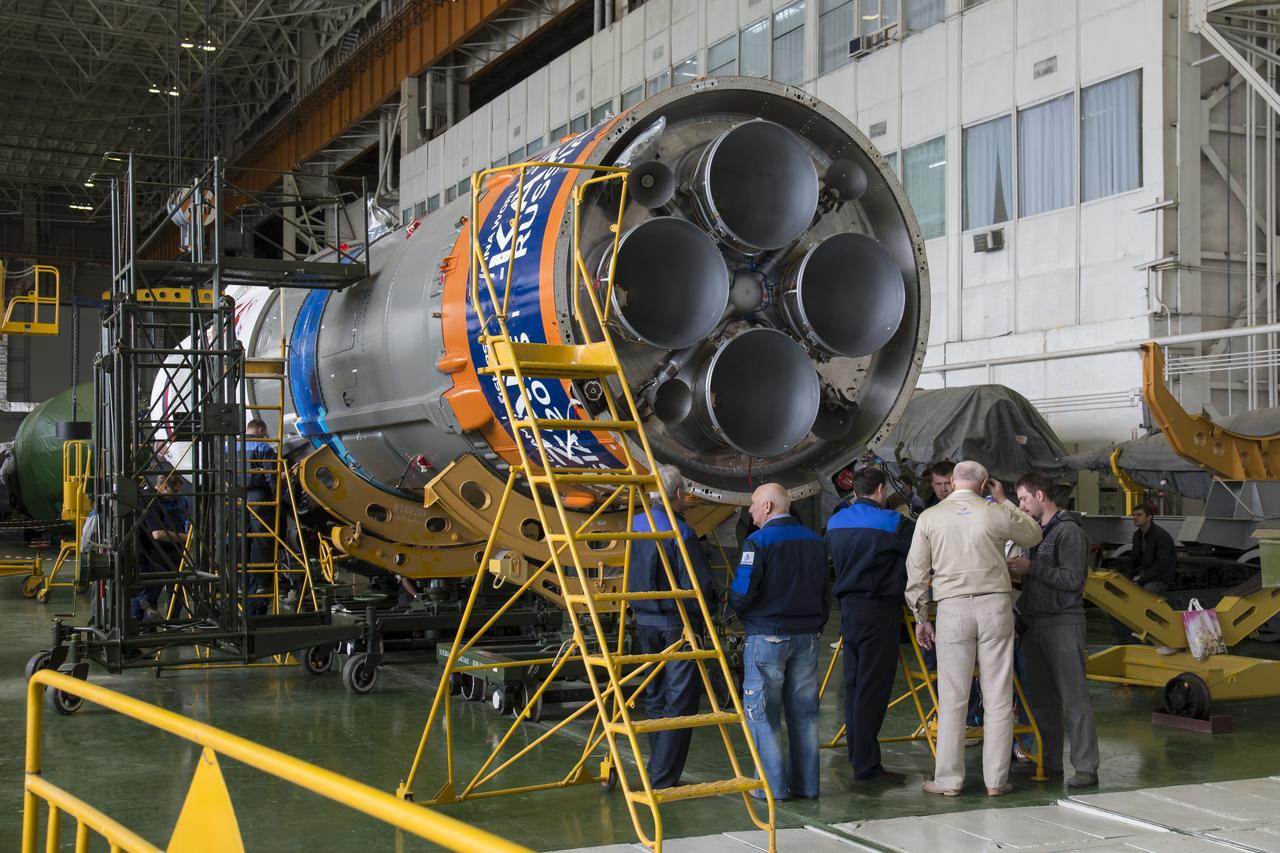
The Soyuz rocket and Soyuz TMA-14M spacecraft is assembled at Building 112 at the Baikonur Cosmodrome on Monday, Sept. 22, 2014, in Baikonur, Kazakhstan. Launch of the Soyuz is scheduled for Sept. 26 and will send Expedition 41 Soyuz Commander Alexander Samokutyaev of the Russian Federal Space Agency (Roscosmos), Flight Engineer Barry Wilmore of NASA, and Flight Engineer Elena Serova of Roscosmos to the International Space Station for a five and a half month stay. Photo Credit: (NASA/Victor Zelentsov)
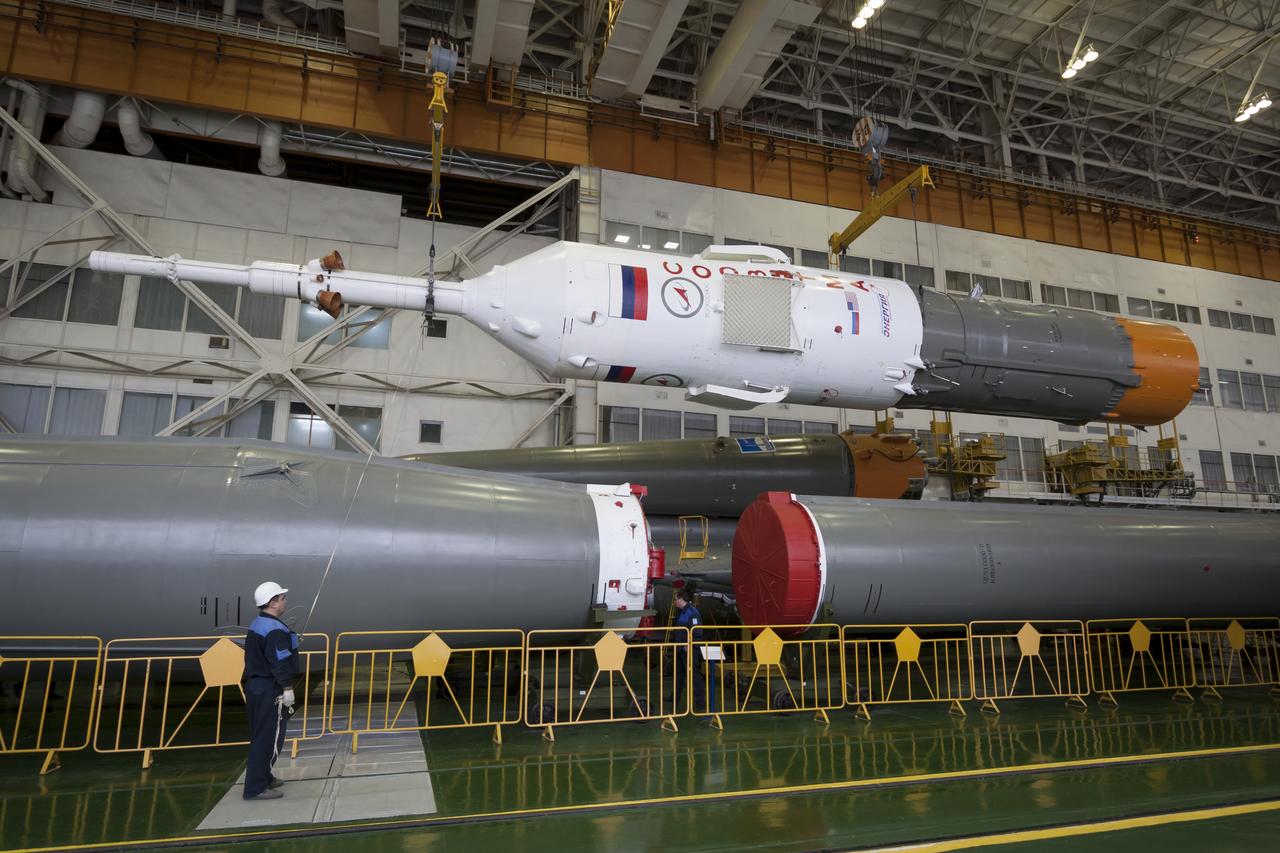
The Soyuz rocket and Soyuz TMA-12M spacecraft are assembled at Building 112 on the Baikonur Cosmodrome on Saturday, March 22, 2014 in Baikonur, Kazakhstan. Launch of the Soyuz is scheduled for March 26 and will send Expedition 39 Soyuz Commander Alexander Skvortsov of the Russian Federal Space Agency, Roscosmos, Flight Engineer Steven Swanson of NASA, and Flight Engineer Oleg Artemyev of Roscosmos on a six month mission to the International Space Station. Photo Credit: (NASA/Victor Zelentsov)
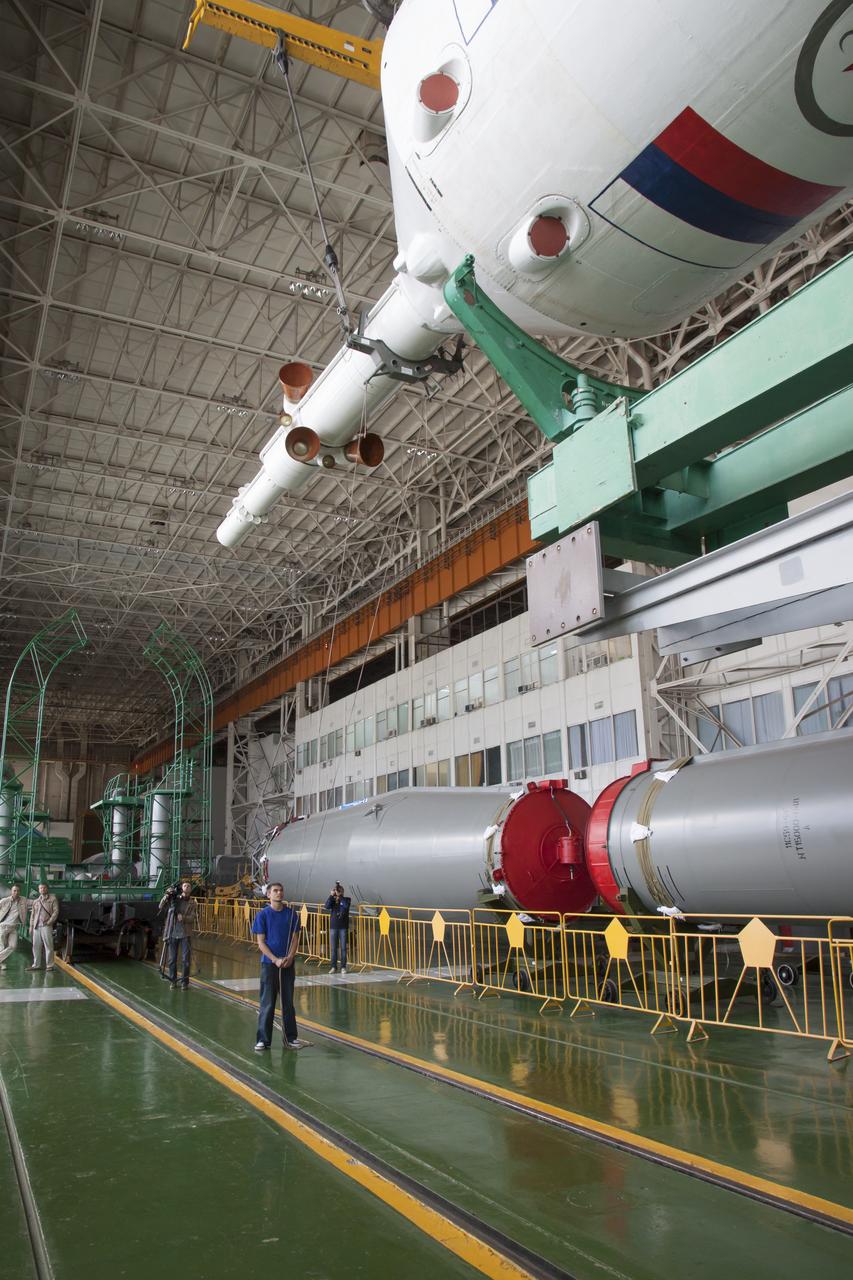
The Soyuz rocket and Soyuz TMA-10M spacecraft are assembled at Building 112 on the Baikonur Cosmodrome, on Sunday, Sept. 22, 2013 in Baikonur, Kazakhstan. Launch of the Soyuz rocket is scheduled for September 26 and will send Expedition 37 Soyuz Commander Oleg Kotov, NASA Flight Engineer Michael Hopkins and Russian Flight Engineer Sergei Ryazansky on a five and a half-month mission aboard the International Space Station. Photo Credit: (NASA/Victor Zelentsov)
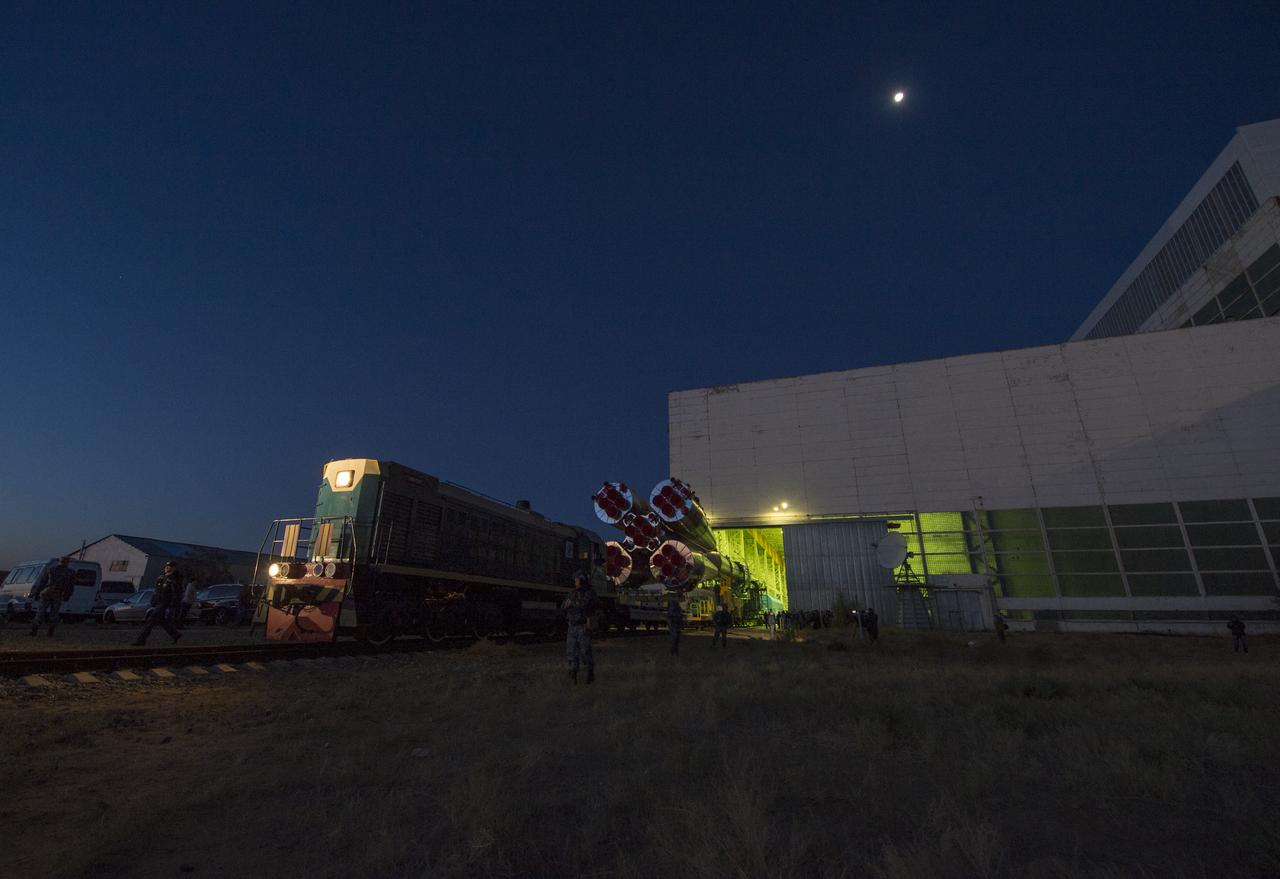
The Soyuz rocket is rolled out of Building 112 at the Baikonur Cosmodrome to make its way to the launch pad, Monday, Sept. 23, 2013 in Kazakhstan. Launch of the Soyuz rocket is scheduled for September 26 and will send Expedition 37 Oleg Kotov, NASA Flight Engineer Michael Hopkins and Russian Flight Engineer Sergei Ryazansky on a five and a half-month mission aboard the International Space Station. Photo Credit: (NASA/Carla Cioffi)
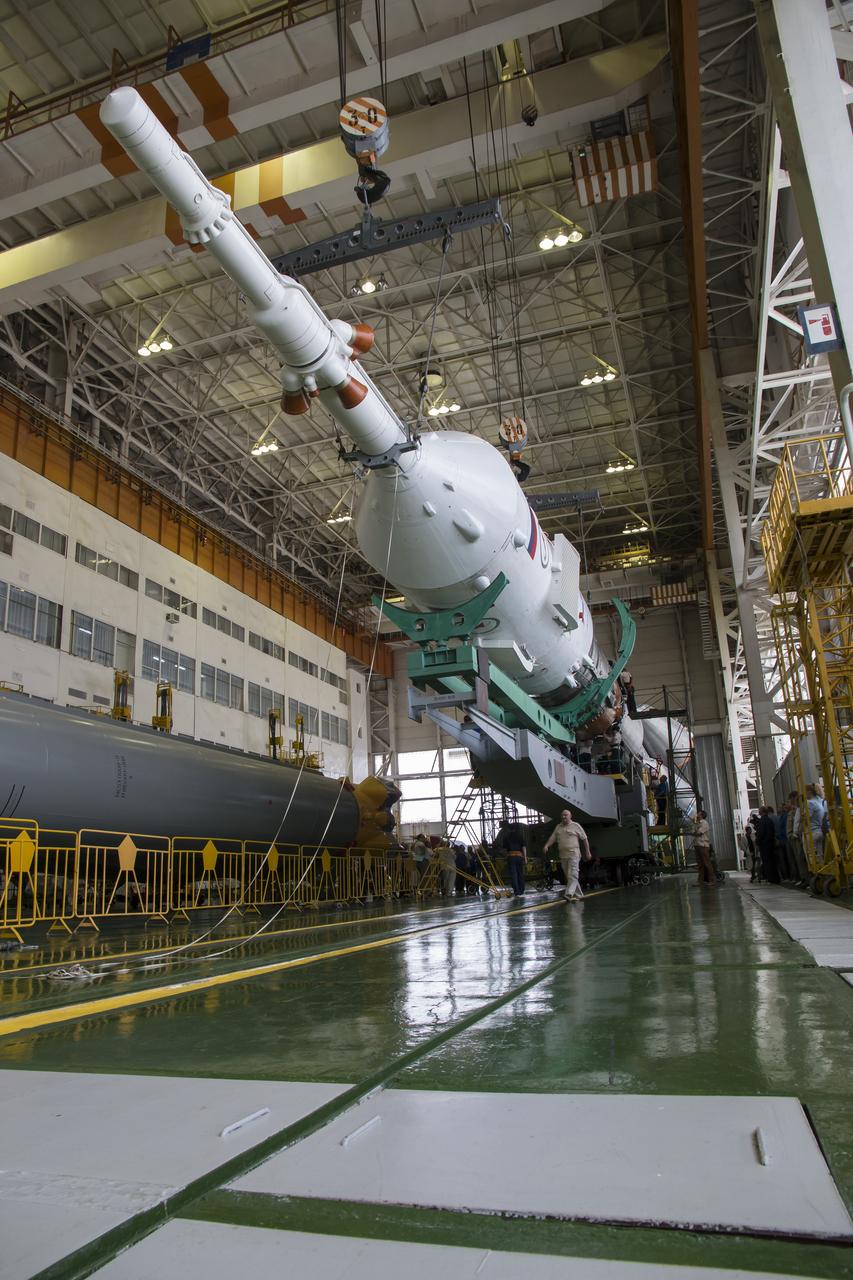
The Soyuz rocket and Soyuz TMA-13M spacecraft is assembled at Building 112 on the Baikonur Cosmodrome on Sunday, May 25, 2014 in Baikonur, Kazakhstan. Launch of the Soyuz is scheduled for May 29 and will send Expedition 40 Soyuz Commander Maxim Suraev of the Russian Federal Space Agency, Roscosmos, Flight Engineer Alexander Gerst of the European Space Agency, ESA, and Flight Engineer Reid Wiseman of NASA to the International Space Station for a five and a half month stay. Photo Credit: (NASA/Victor Zelentsov)
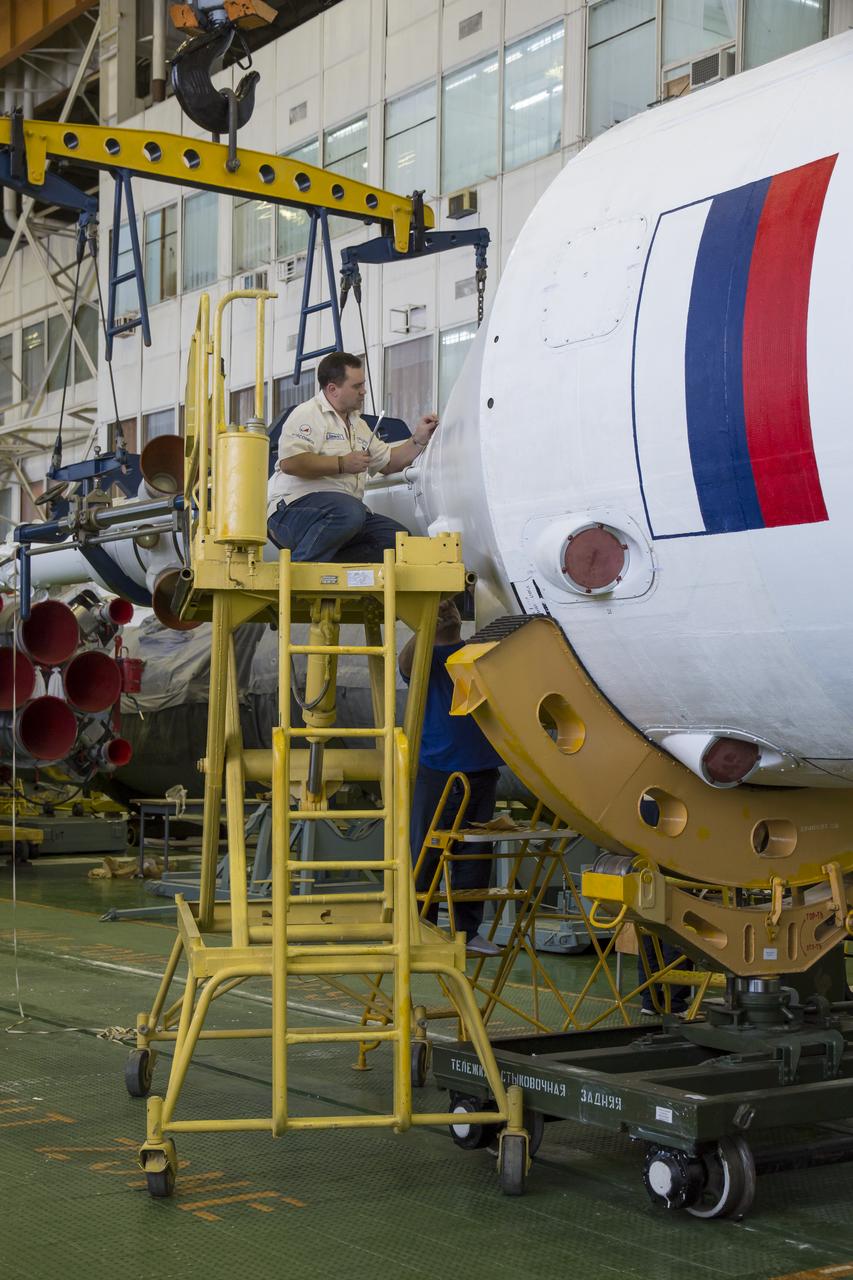
The Soyuz rocket and Soyuz TMA-13M spacecraft is assembled at Building 112 on the Baikonur Cosmodrome on Sunday, May 25, 2014 in Baikonur, Kazakhstan. Launch of the Soyuz is scheduled for May 29 and will send Expedition 40 Soyuz Commander Maxim Suraev of the Russian Federal Space Agency, Roscosmos, Flight Engineer Alexander Gerst of the European Space Agency, ESA, and Flight Engineer Reid Wiseman of NASA to the International Space Station for a five and a half month stay. Photo Credit: (NASA/Victor Zelentsov)
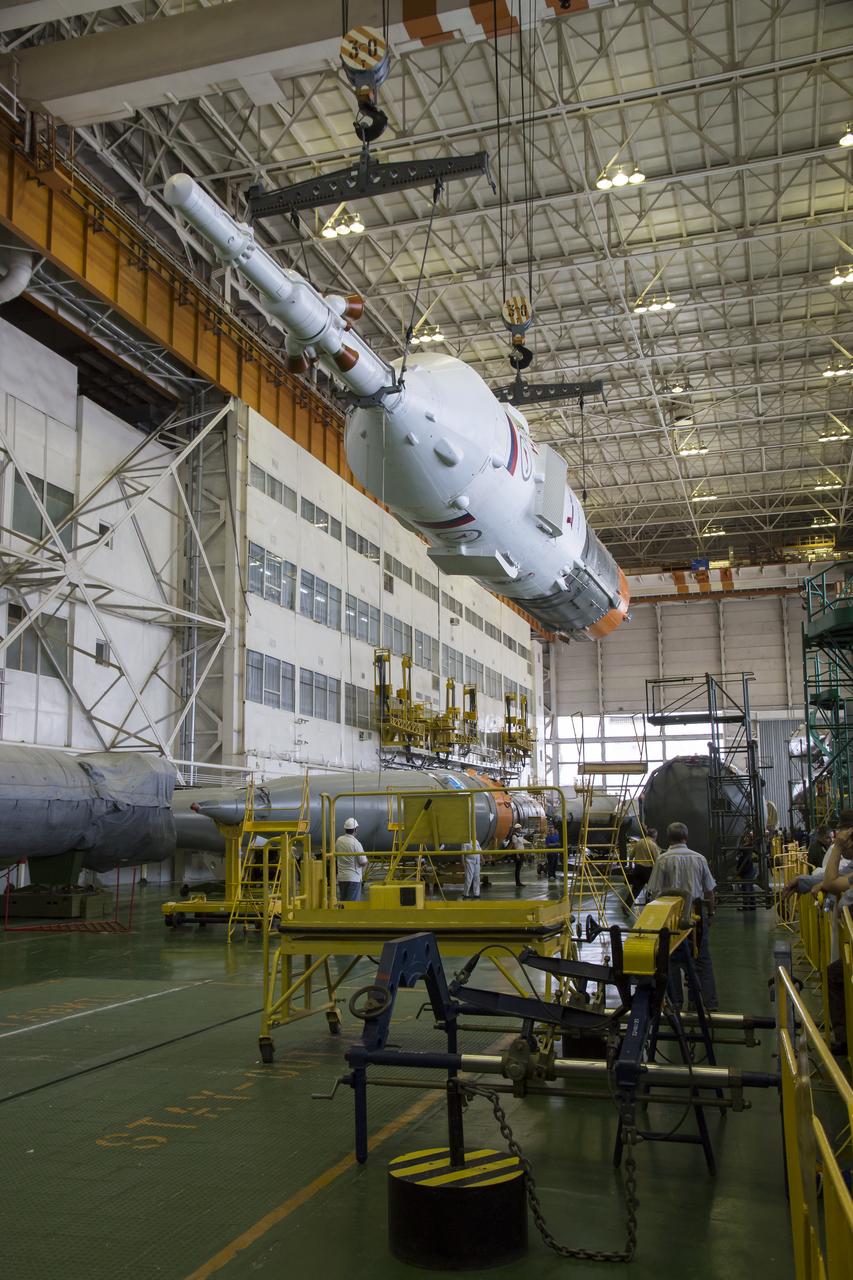
The Soyuz rocket and Soyuz TMA-13M spacecraft is assembled at Building 112 on the Baikonur Cosmodrome on Sunday, May 25, 2014 in Baikonur, Kazakhstan. Launch of the Soyuz is scheduled for May 29 and will send Expedition 40 Soyuz Commander Maxim Suraev of the Russian Federal Space Agency, Roscosmos, Flight Engineer Alexander Gerst of the European Space Agency, ESA, and Flight Engineer Reid Wiseman of NASA to the International Space Station for a five and a half month stay. Photo Credit: (NASA/Victor Zelentsov)
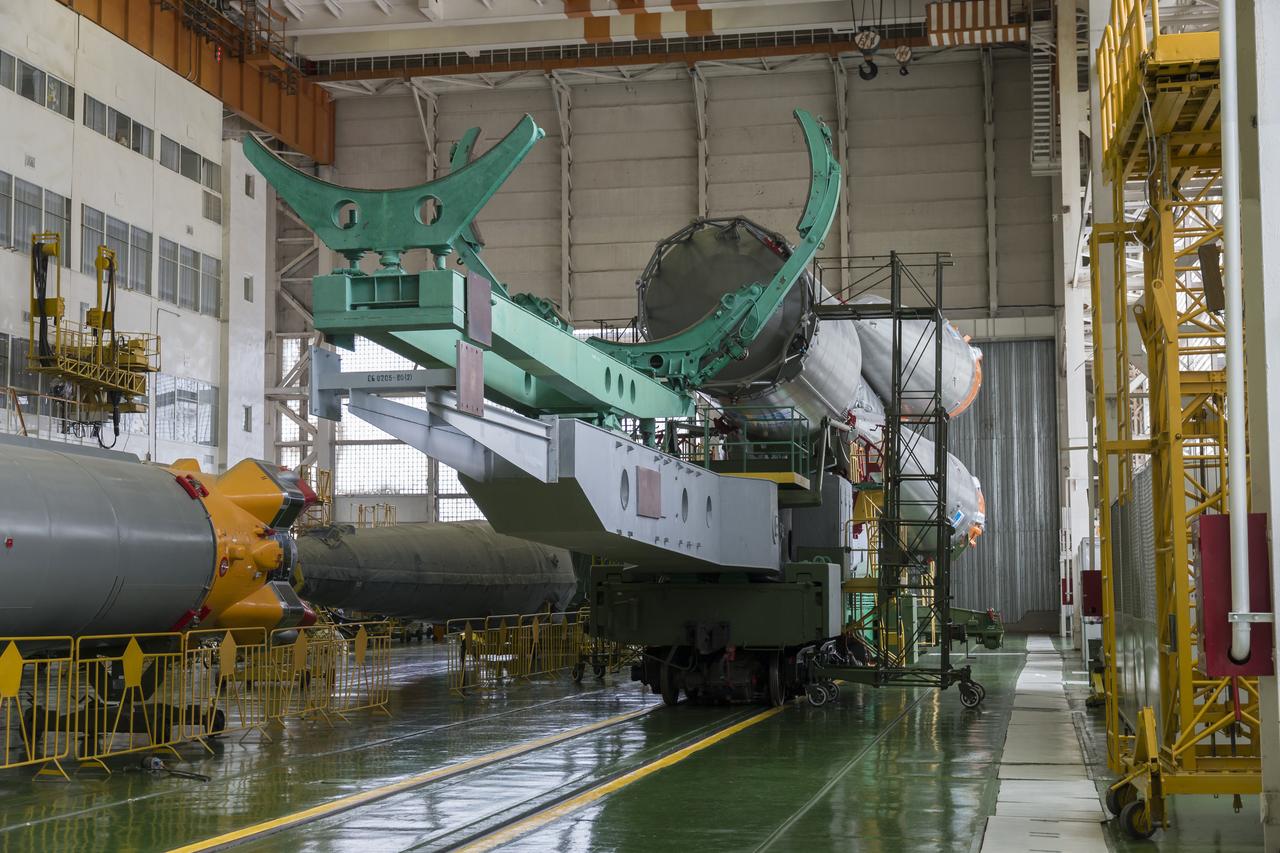
The Soyuz rocket and Soyuz TMA-13M spacecraft is assembled at Building 112 on the Baikonur Cosmodrome on Sunday, May 25, 2014 in Baikonur, Kazakhstan. Launch of the Soyuz is scheduled for May 29 and will send Expedition 40 Soyuz Commander Maxim Suraev of the Russian Federal Space Agency, Roscosmos, Flight Engineer Alexander Gerst of the European Space Agency, ESA, and Flight Engineer Reid Wiseman of NASA to the International Space Station for a five and a half month stay. Photo Credit: (NASA/Victor Zelentsov)
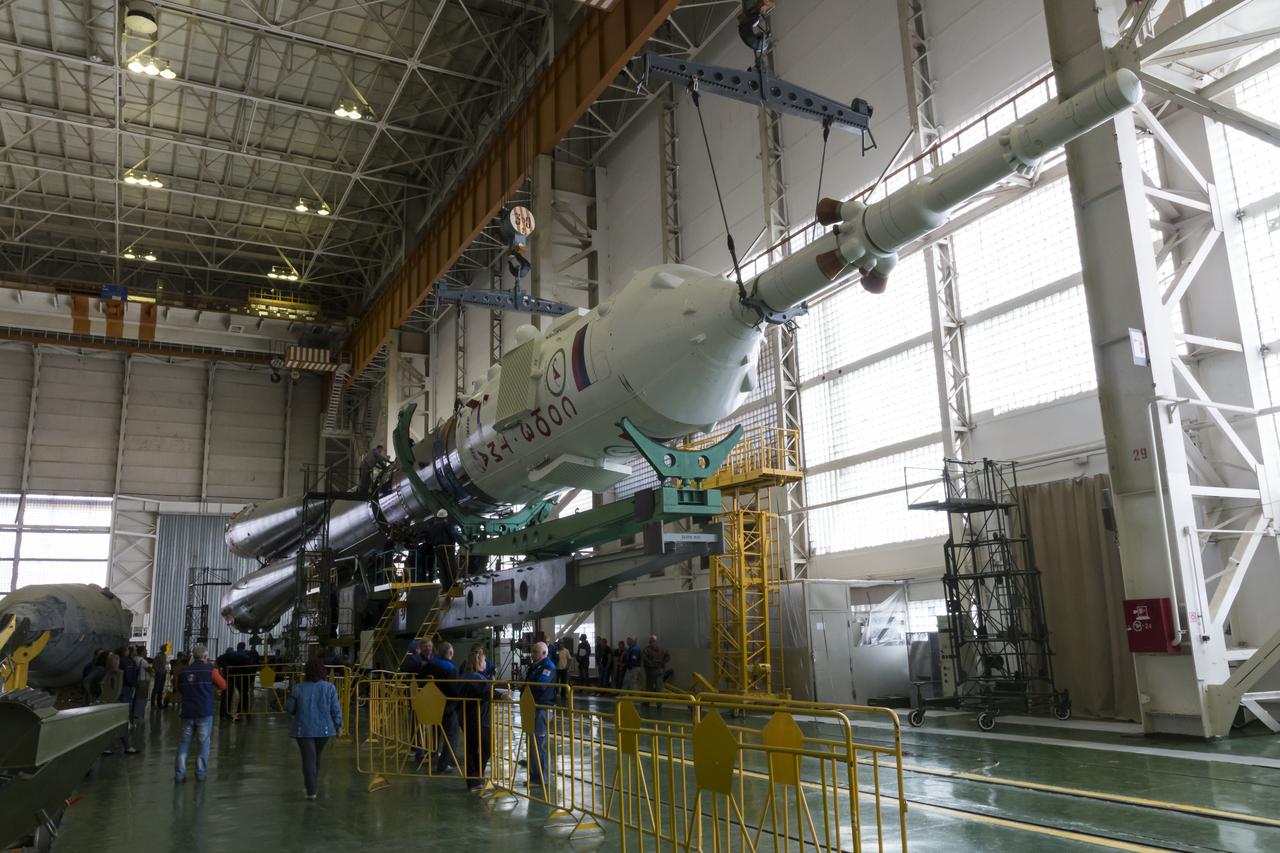
The Soyuz rocket and Soyuz TMA-14M spacecraft is assembled at Building 112 at the Baikonur Cosmodrome on Monday, Sept. 22, 2014, in Baikonur, Kazakhstan. Launch of the Soyuz is scheduled for Sept. 26 and will send Expedition 41 Soyuz Commander Alexander Samokutyaev of the Russian Federal Space Agency (Roscosmos), Flight Engineer Barry Wilmore of NASA, and Flight Engineer Elena Serova of Roscosmos to the International Space Station for a five and a half month stay. Photo Credit: (NASA/Victor Zelentsov)
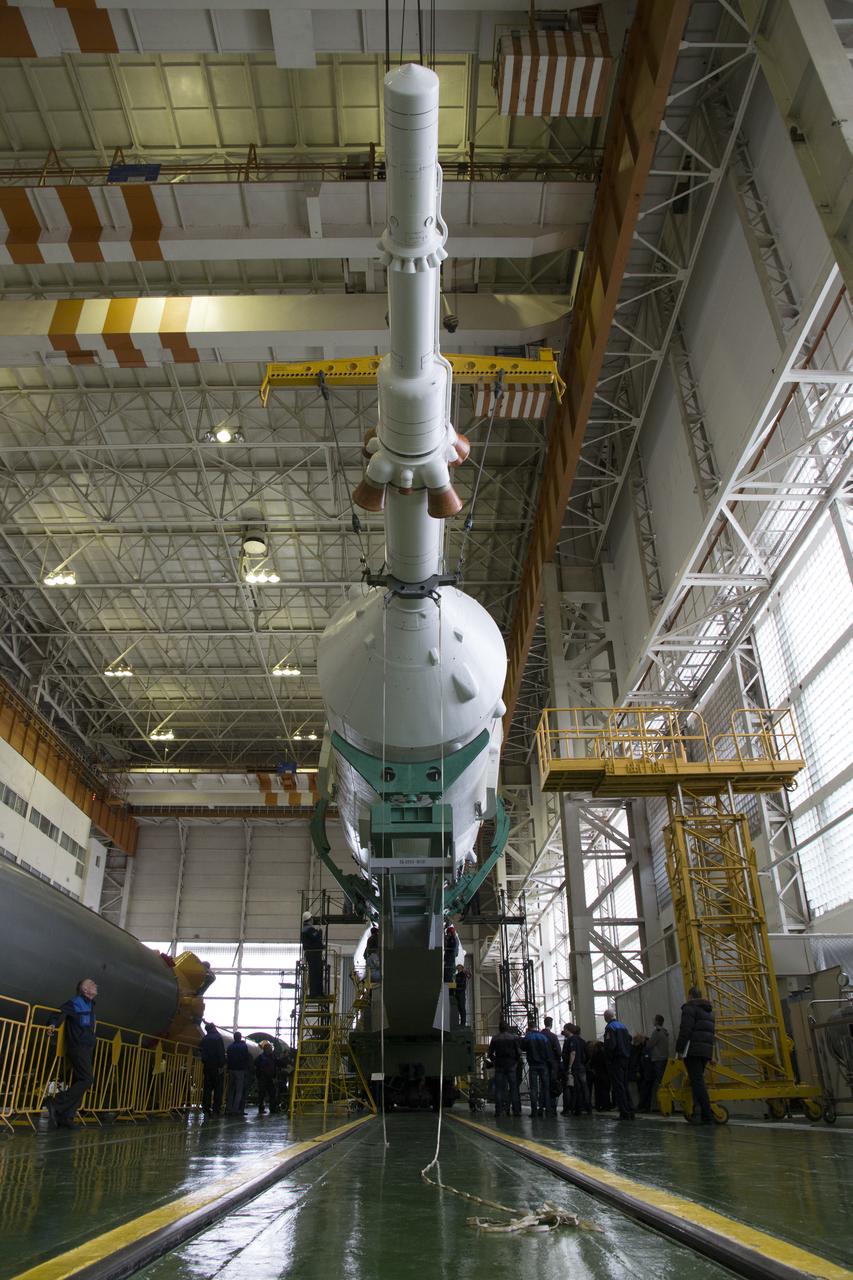
The Soyuz rocket and Soyuz TMA-12M spacecraft are assembled at Building 112 on the Baikonur Cosmodrome on Saturday, March 22, 2014 in Baikonur, Kazakhstan. Launch of the Soyuz is scheduled for March 26 and will send Expedition 39 Soyuz Commander Alexander Skvortsov of the Russian Federal Space Agency, Roscosmos, Flight Engineer Steven Swanson of NASA, and Flight Engineer Oleg Artemyev of Roscosmos on a six month mission to the International Space Station. Photo Credit: (NASA/Victor Zelentsov)
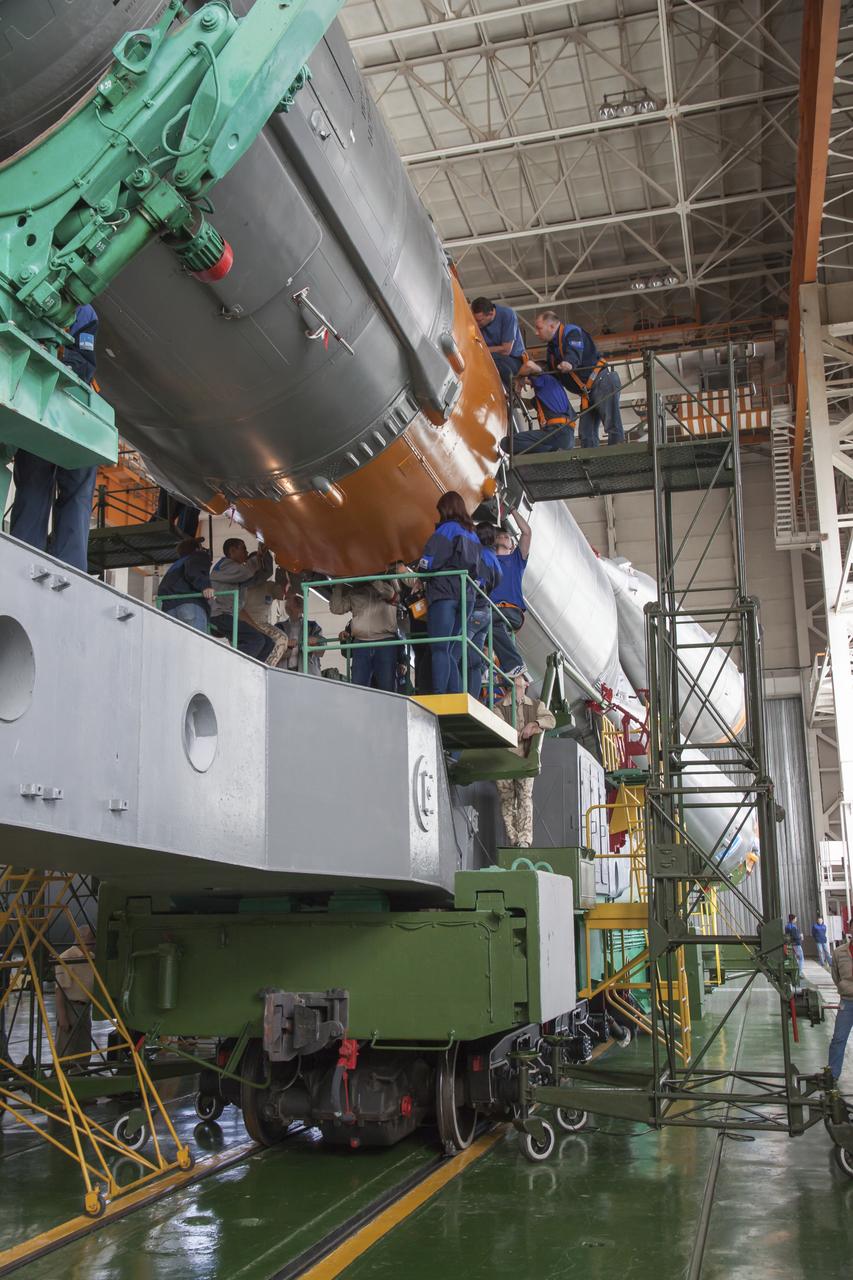
The Soyuz rocket and Soyuz TMA-10M spacecraft are assembled at Building 112 on the Baikonur Cosmodrome, on Sunday, Sept. 22, 2013 in Baikonur, Kazakhstan. Launch of the Soyuz rocket is scheduled for September 26 and will send Expedition 37 Soyuz Commander Oleg Kotov, NASA Flight Engineer Michael Hopkins and Russian Flight Engineer Sergei Ryazansky on a five and a half-month mission aboard the International Space Station. Photo Credit: (NASA/Victor Zelentsov)
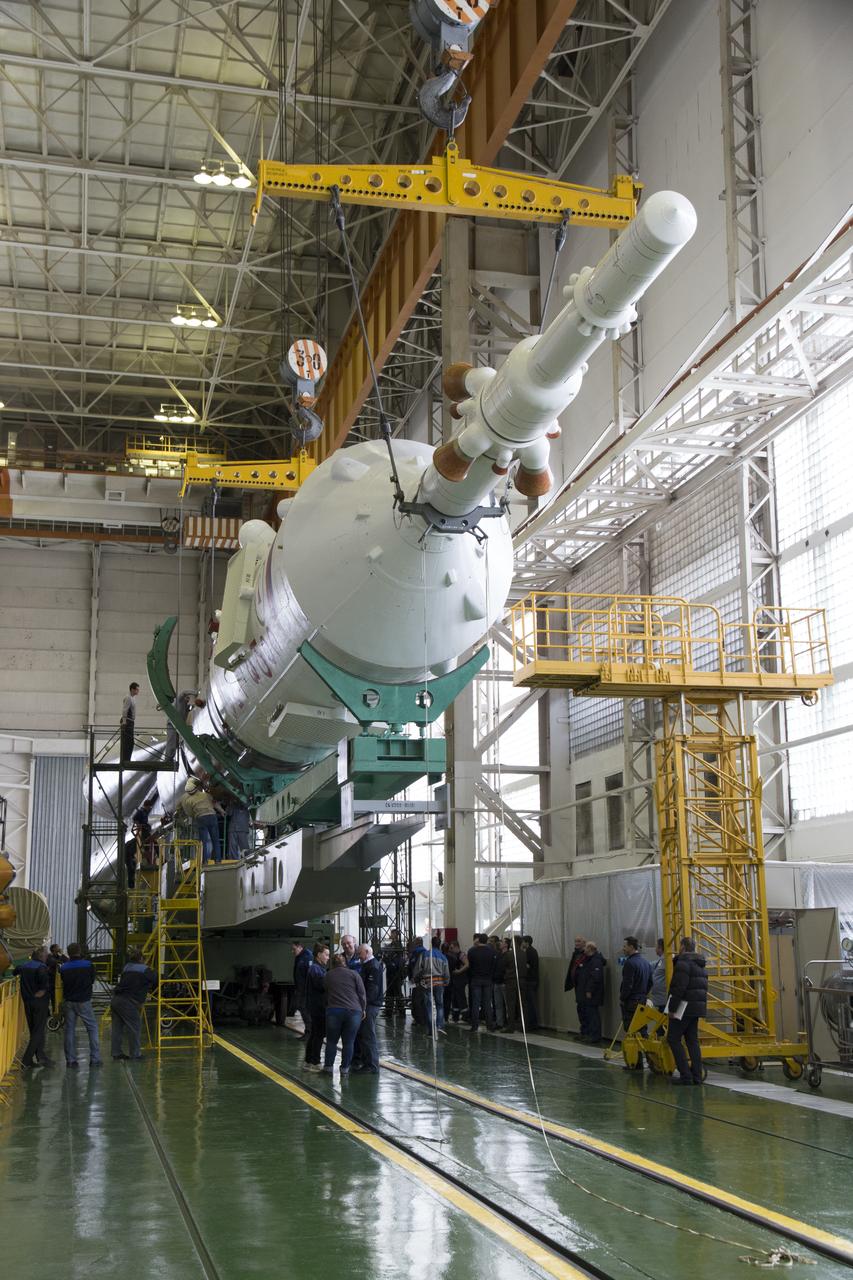
The Soyuz rocket and Soyuz TMA-12M spacecraft are assembled at Building 112 on the Baikonur Cosmodrome on Saturday, March 22, 2014 in Baikonur, Kazakhstan. Launch of the Soyuz is scheduled for March 26 and will send Expedition 39 Soyuz Commander Alexander Skvortsov of the Russian Federal Space Agency, Roscosmos, Flight Engineer Steven Swanson of NASA, and Flight Engineer Oleg Artemyev of Roscosmos on a six month mission to the International Space Station. Photo Credit: (NASA/Victor Zelentsov)
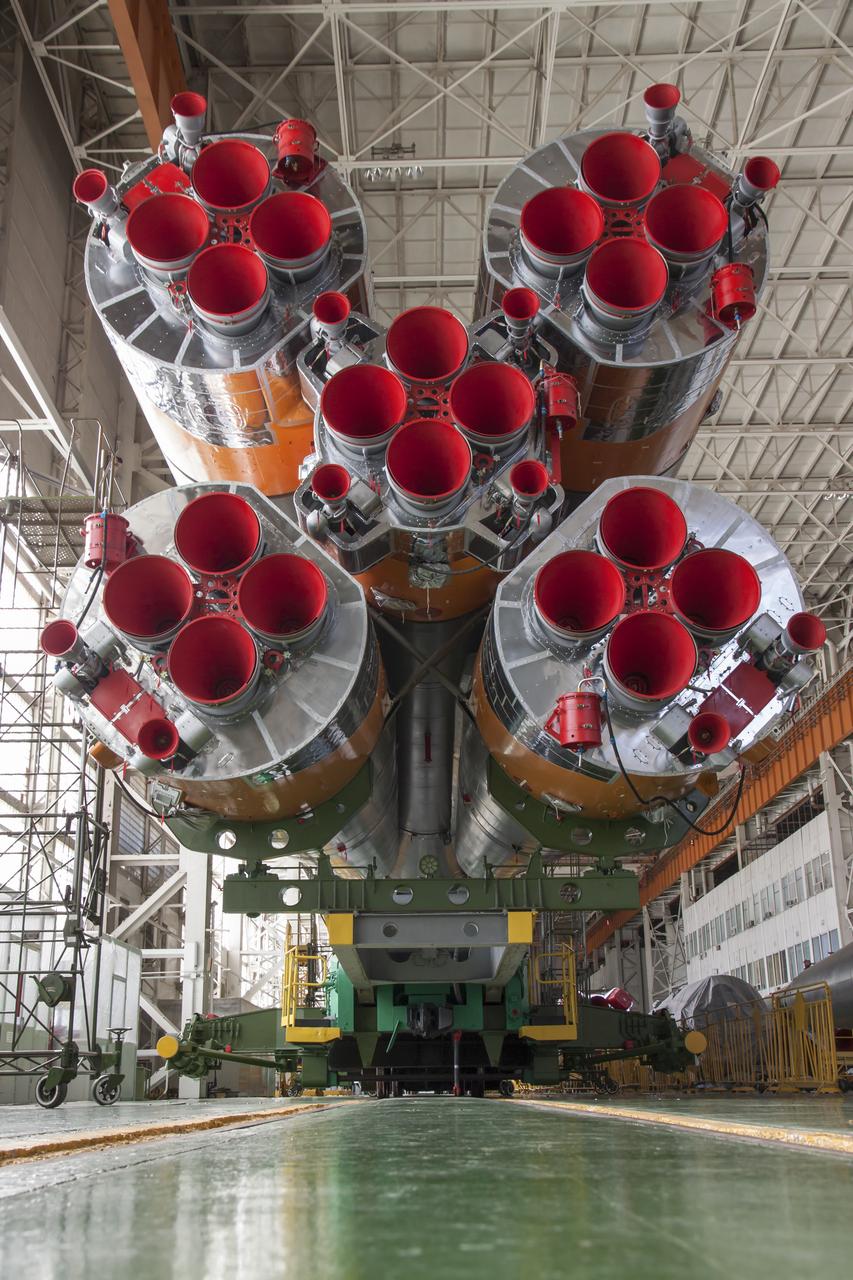
The base of the Soyuz solid rocket boosters are seen at Building 112 on the Baikonur Cosmodrome, on Sunday, Sept. 22, 2013 in Baikonur, Kazakhstan. Launch of the Soyuz rocket is scheduled for September 26 and will send Expedition 37 Soyuz Commander Oleg Kotov, NASA Flight Engineer Michael Hopkins and Russian Flight Engineer Sergei Ryazansky on a five and a half-month mission aboard the International Space Station. Photo Credit: (NASA/Victor Zelentsov)
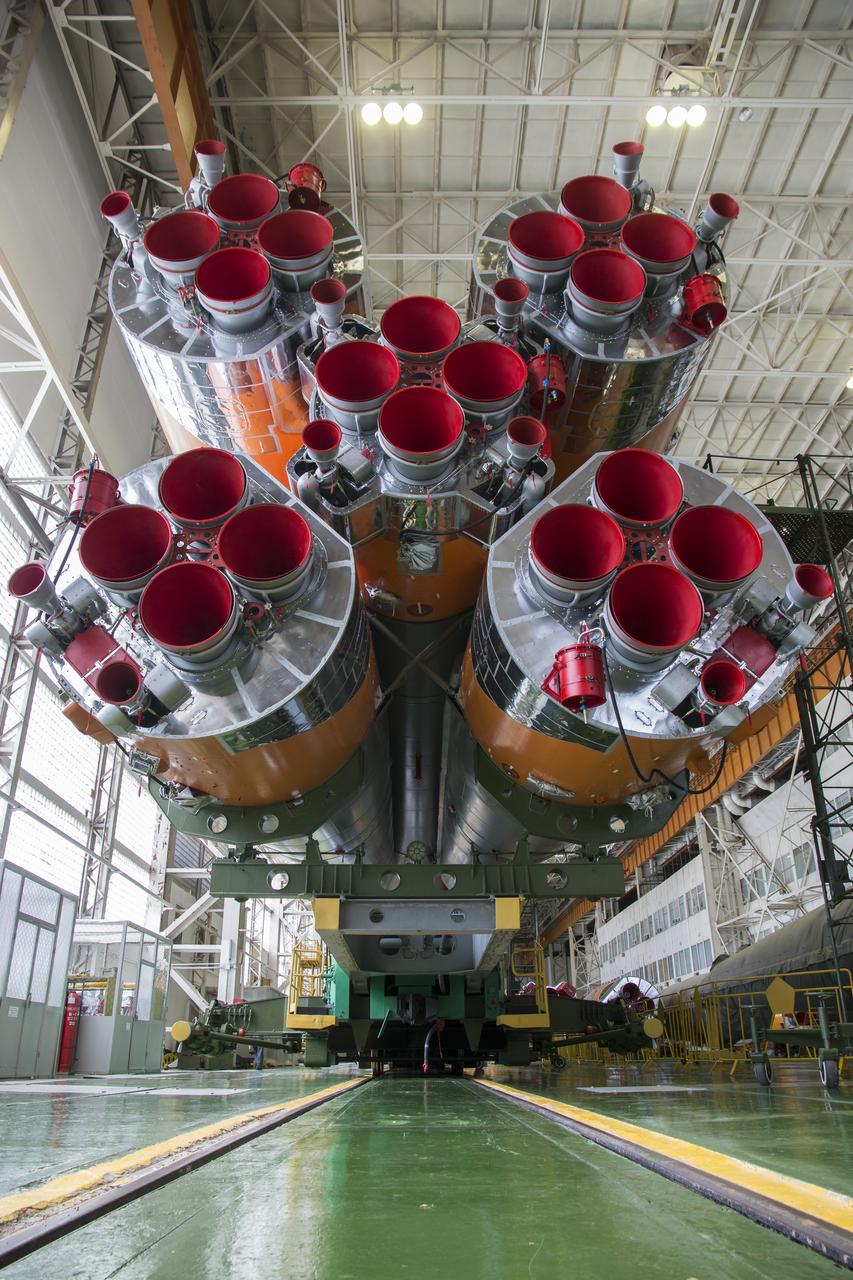
The Soyuz rocket and Soyuz TMA-13M spacecraft is assembled at Building 112 on the Baikonur Cosmodrome on Sunday, May 25, 2014 in Baikonur, Kazakhstan. Launch of the Soyuz is scheduled for May 29 and will send Expedition 40 Soyuz Commander Maxim Suraev of the Russian Federal Space Agency, Roscosmos, Flight Engineer Alexander Gerst of the European Space Agency, ESA, and Flight Engineer Reid Wiseman of NASA to the International Space Station for a five and a half month stay. Photo Credit: (NASA/Victor Zelentsov)
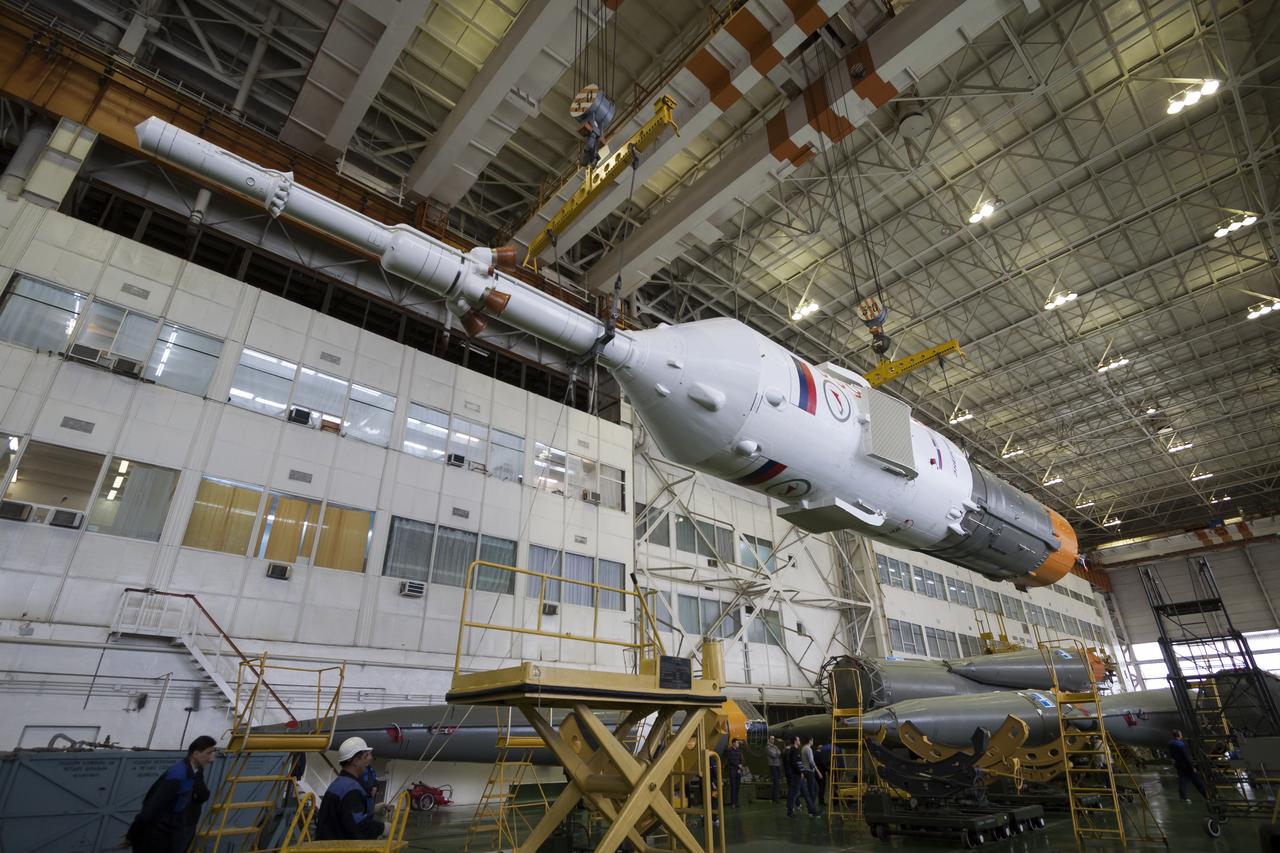
The Soyuz rocket and Soyuz TMA-12M spacecraft are assembled at Building 112 on the Baikonur Cosmodrome on Saturday, March 22, 2014 in Baikonur, Kazakhstan. Launch of the Soyuz is scheduled for March 26 and will send Expedition 39 Soyuz Commander Alexander Skvortsov of the Russian Federal Space Agency, Roscosmos, Flight Engineer Steven Swanson of NASA, and Flight Engineer Oleg Artemyev of Roscosmos on a six month mission to the International Space Station. Photo Credit: (NASA/Victor Zelentsov)
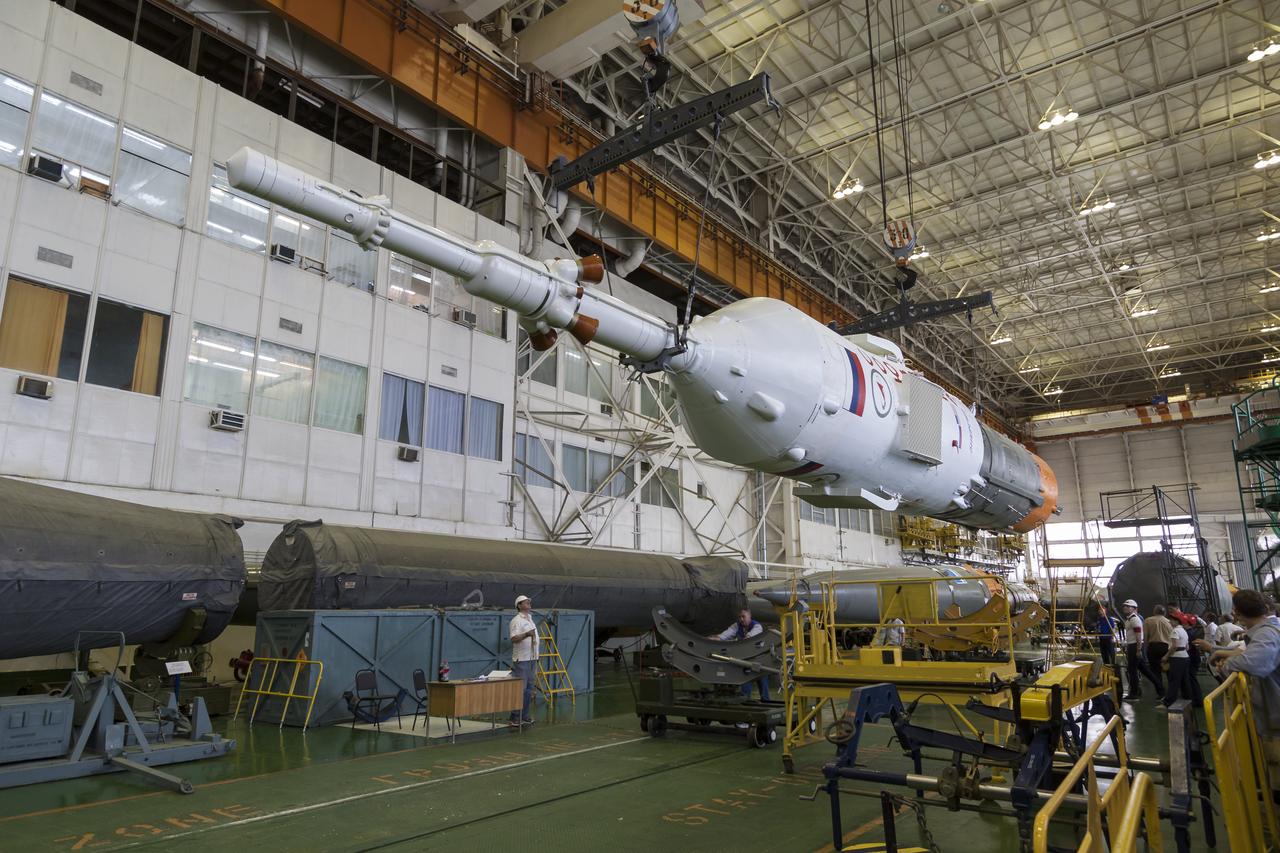
The Soyuz rocket and Soyuz TMA-13M spacecraft is assembled at Building 112 on the Baikonur Cosmodrome on Sunday, May 25, 2014 in Baikonur, Kazakhstan. Launch of the Soyuz is scheduled for May 29 and will send Expedition 40 Soyuz Commander Maxim Suraev of the Russian Federal Space Agency, Roscosmos, Flight Engineer Alexander Gerst of the European Space Agency, ESA, and Flight Engineer Reid Wiseman of NASA to the International Space Station for a five and a half month stay. Photo Credit: (NASA/Victor Zelentsov)
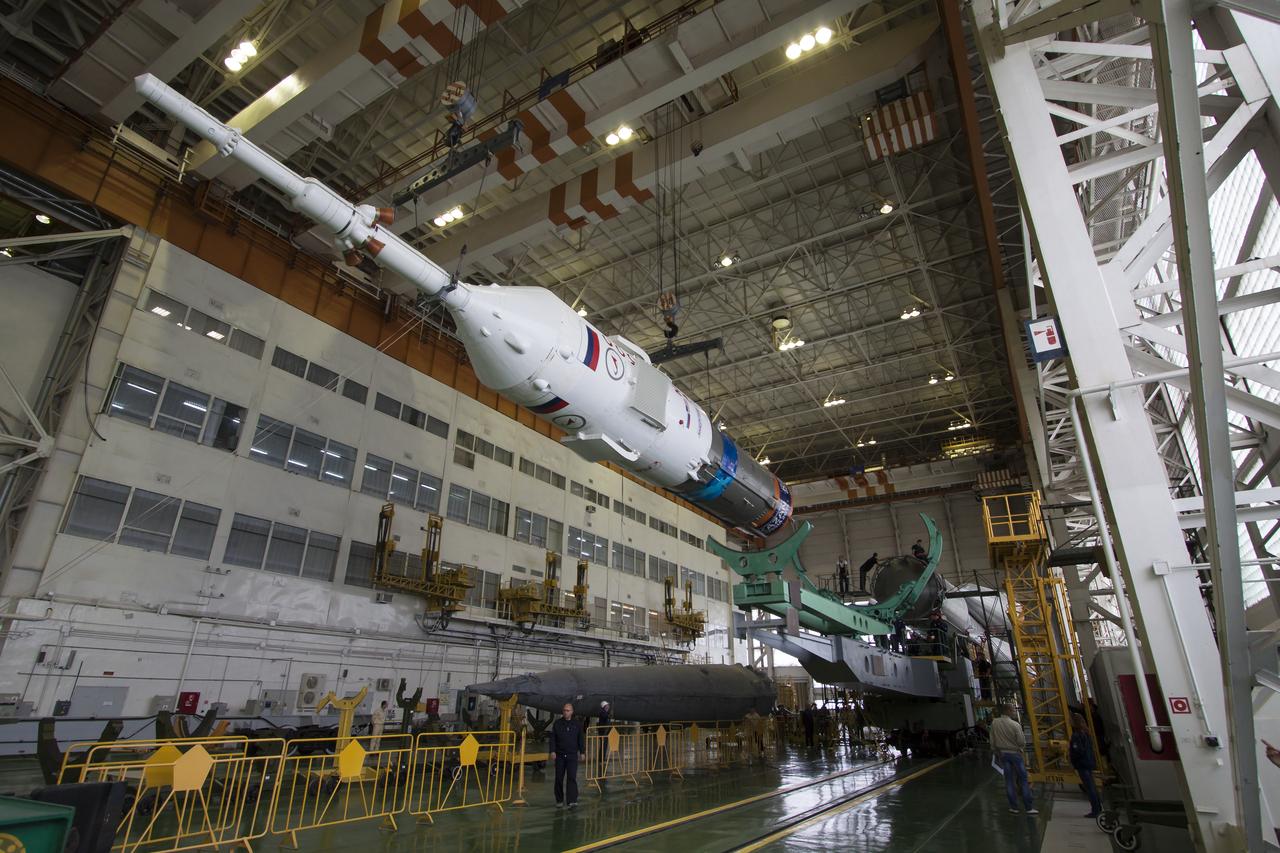
The Soyuz rocket and Soyuz TMA-14M spacecraft is assembled at Building 112 at the Baikonur Cosmodrome on Monday, Sept. 22, 2014, in Baikonur, Kazakhstan. Launch of the Soyuz is scheduled for Sept. 26 and will send Expedition 41 Soyuz Commander Alexander Samokutyaev of the Russian Federal Space Agency (Roscosmos), Flight Engineer Barry Wilmore of NASA, and Flight Engineer Elena Serova of Roscosmos to the International Space Station for a five and a half month stay. Photo Credit: (NASA/Victor Zelentsov)
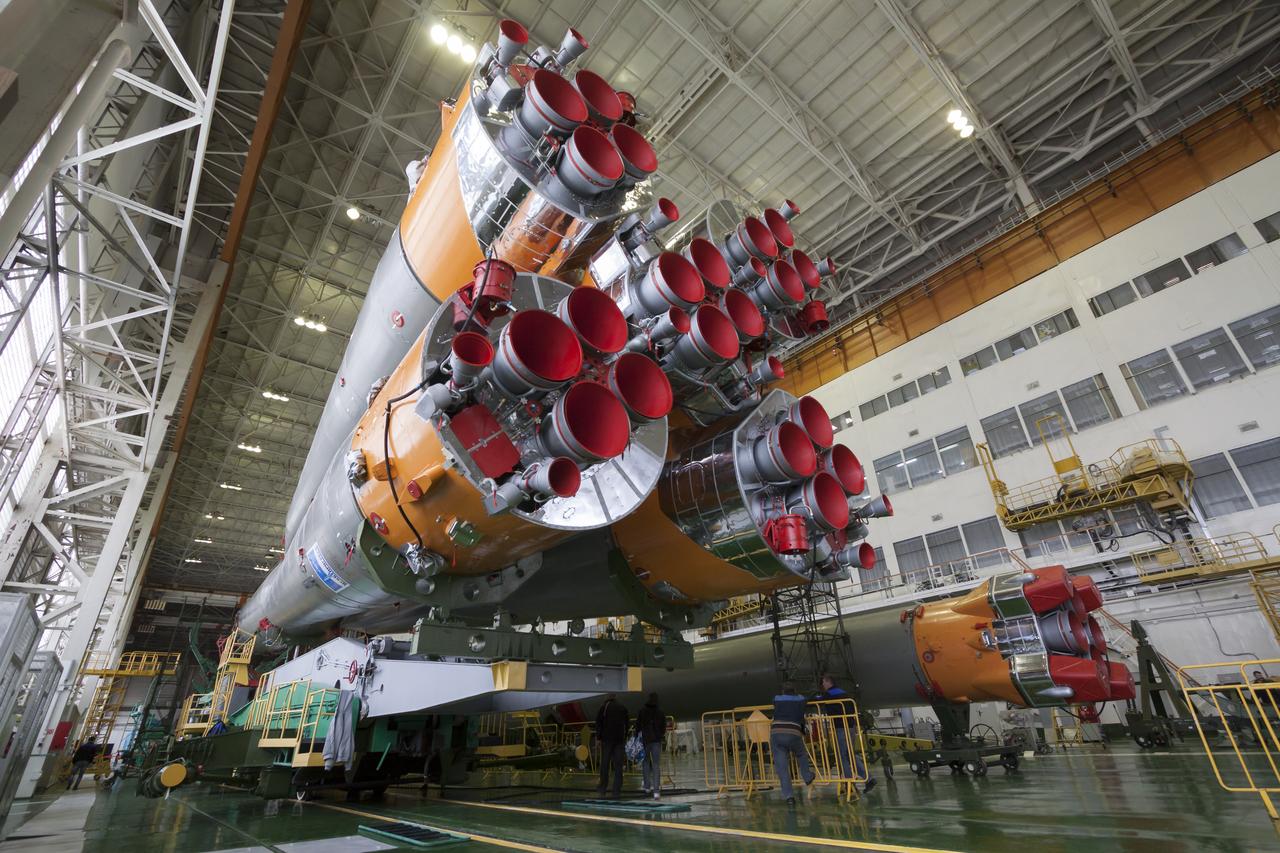
The Soyuz rocket and Soyuz TMA-12M spacecraft are assembled at Building 112 on the Baikonur Cosmodrome on Saturday, March 22, 2014 in Baikonur, Kazakhstan. Launch of the Soyuz is scheduled for March 26 and will send Expedition 39 Soyuz Commander Alexander Skvortsov of the Russian Federal Space Agency, Roscosmos, Flight Engineer Steven Swanson of NASA, and Flight Engineer Oleg Artemyev of Roscosmos on a six month mission to the International Space Station. Photo Credit: (NASA/Victor Zelentsov)
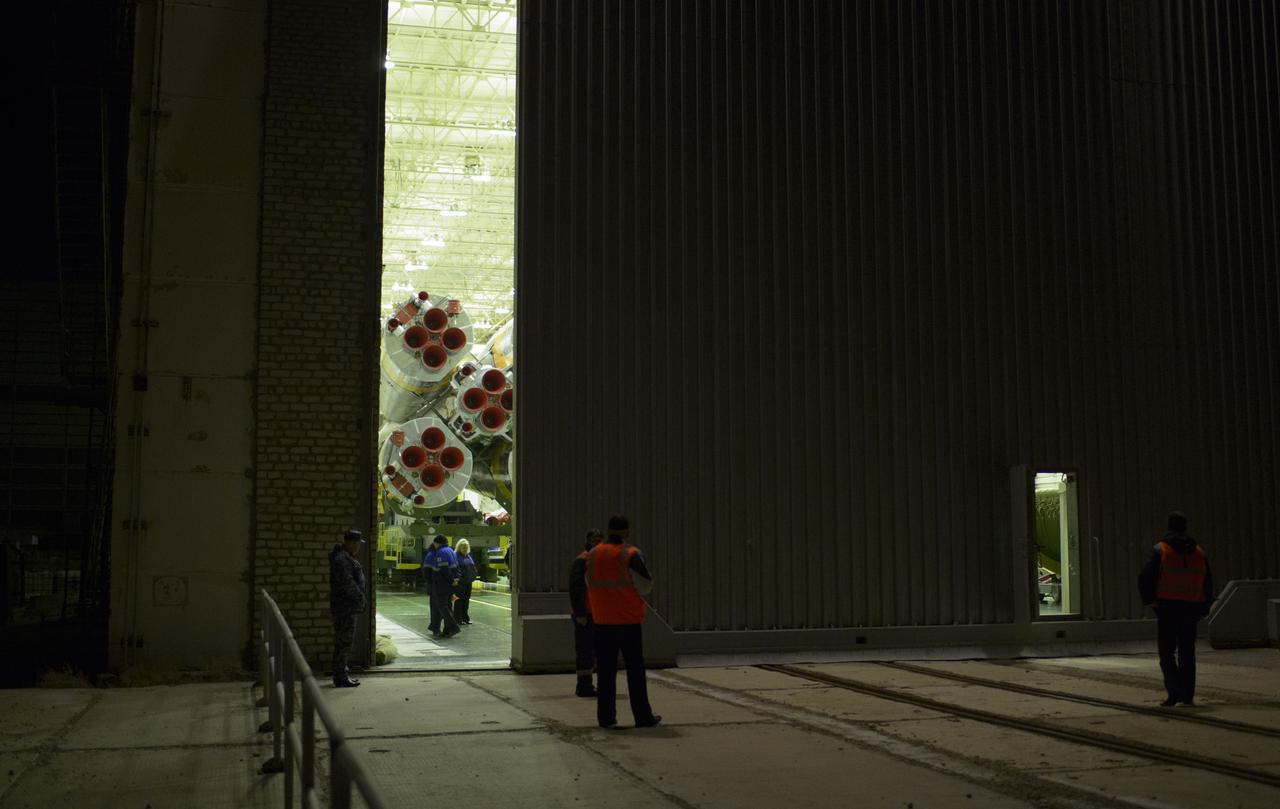
The doors to Building 112 are opened to reveal the Soyuz TMA-12M spacecraft as it is prepared to be rolled out to the launch pad by train on Sunday, March 23, 2014, at the Baikonur Cosmodrome in Kazakhstan. Launch of the Soyuz rocket is scheduled for March 26 and will send Expedition 39 Soyuz Commander Alexander Skvortsov of the Russian Federal Space Agency, Roscosmos, Flight Engineer Steven Swanson of NASA, and Flight Engineer Oleg Artemyev of Roscosmos on a six-month mission aboard the International Space Station. Photo Credit: (NASA/Joel Kowsky)
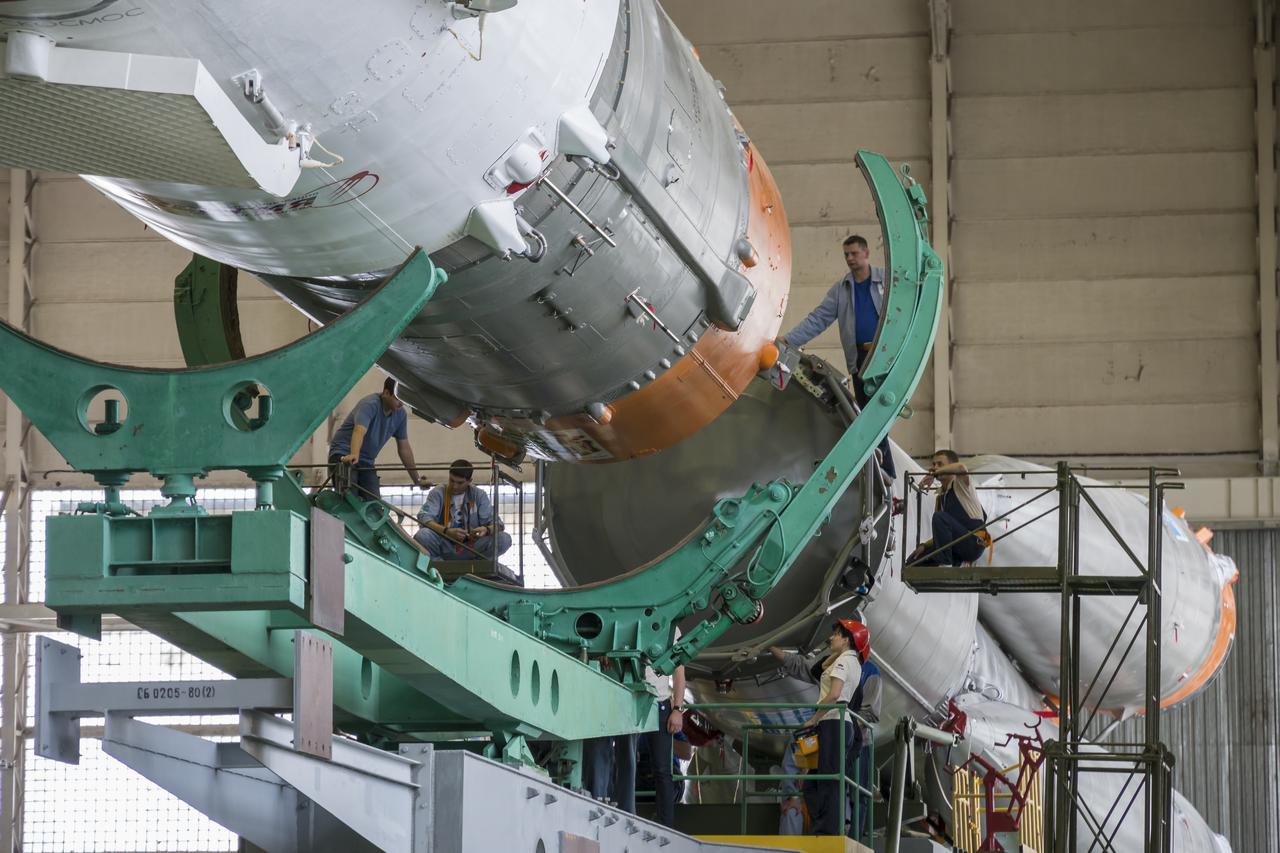
The Soyuz rocket and Soyuz TMA-13M spacecraft is assembled at Building 112 on the Baikonur Cosmodrome on Sunday, May 25, 2014 in Baikonur, Kazakhstan. Launch of the Soyuz is scheduled for May 29 and will send Expedition 40 Soyuz Commander Maxim Suraev of the Russian Federal Space Agency, Roscosmos, Flight Engineer Alexander Gerst of the European Space Agency, ESA, and Flight Engineer Reid Wiseman of NASA to the International Space Station for a five and a half month stay. Photo Credit: (NASA/Victor Zelentsov)
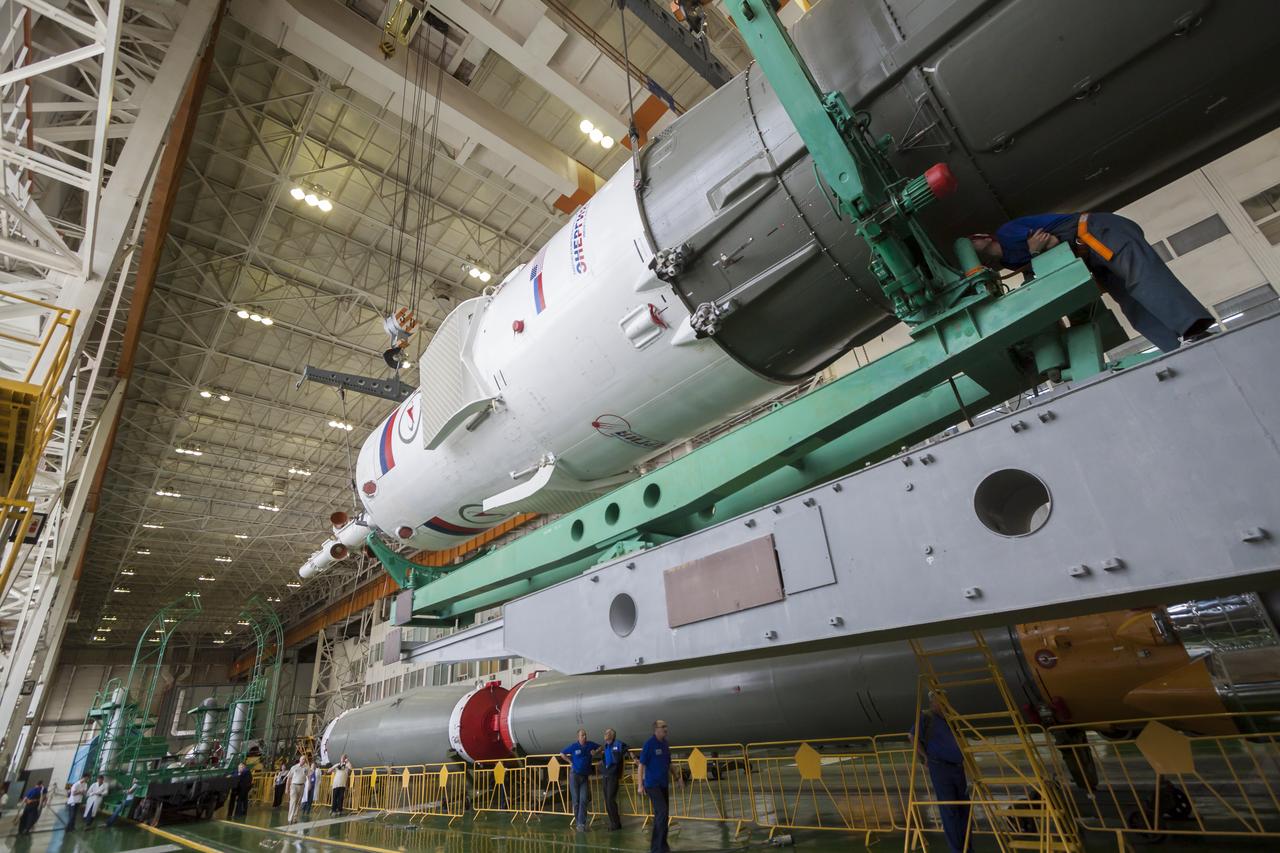
The Soyuz rocket and Soyuz TMA-13M spacecraft is assembled at Building 112 on the Baikonur Cosmodrome on Sunday, May 25, 2014 in Baikonur, Kazakhstan. Launch of the Soyuz is scheduled for May 29 and will send Expedition 40 Soyuz Commander Maxim Suraev of the Russian Federal Space Agency, Roscosmos, Flight Engineer Alexander Gerst of the European Space Agency, ESA, and Flight Engineer Reid Wiseman of NASA to the International Space Station for a five and a half month stay. Photo Credit: (NASA/Victor Zelentsov)
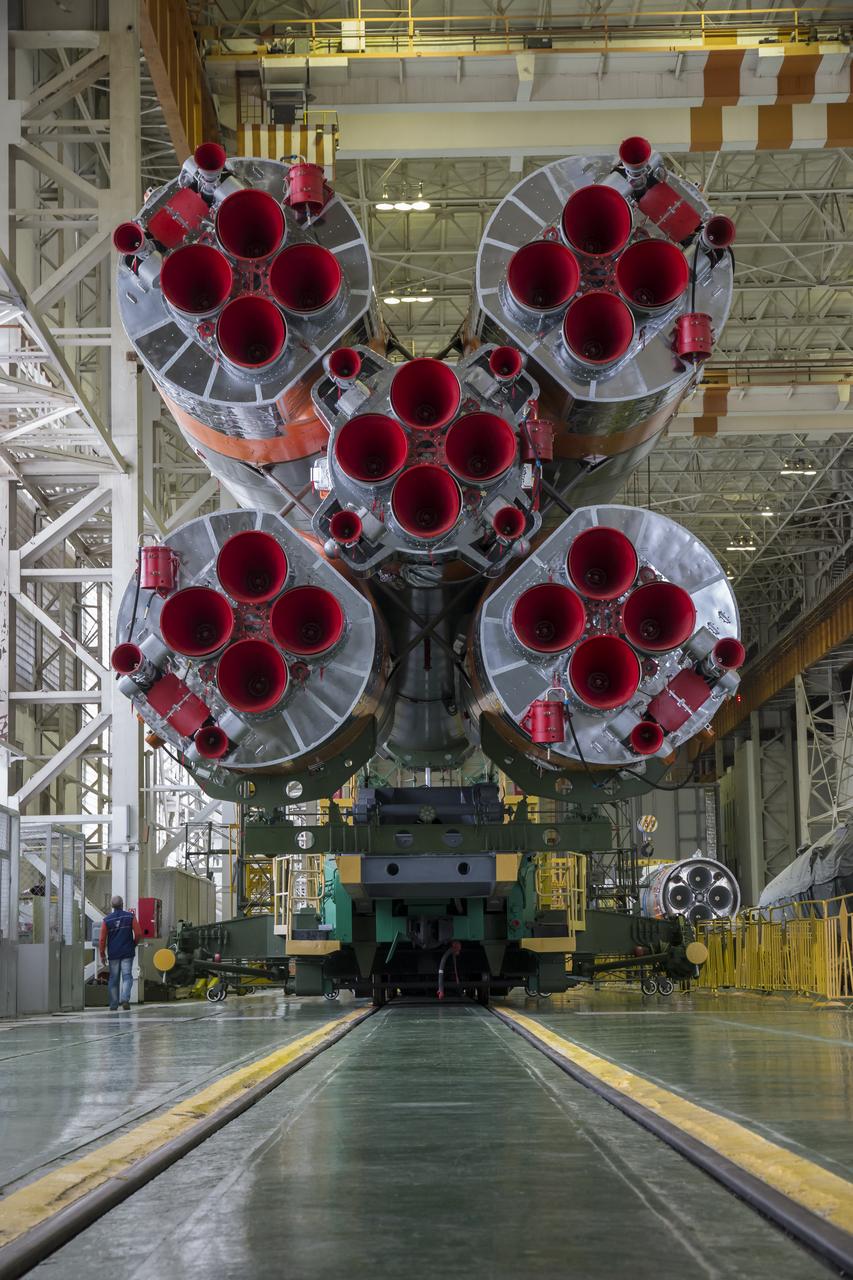
The Soyuz rocket and Soyuz TMA-14M spacecraft is assembled at Building 112 at the Baikonur Cosmodrome on Monday, Sept. 22, 2014, in Baikonur, Kazakhstan. Launch of the Soyuz is scheduled for Sept. 26 and will send Expedition 41 Soyuz Commander Alexander Samokutyaev of the Russian Federal Space Agency (Roscosmos), Flight Engineer Barry Wilmore of NASA, and Flight Engineer Elena Serova of Roscosmos to the International Space Station for a five and a half month stay. Photo Credit: (NASA/Victor Zelentsov)
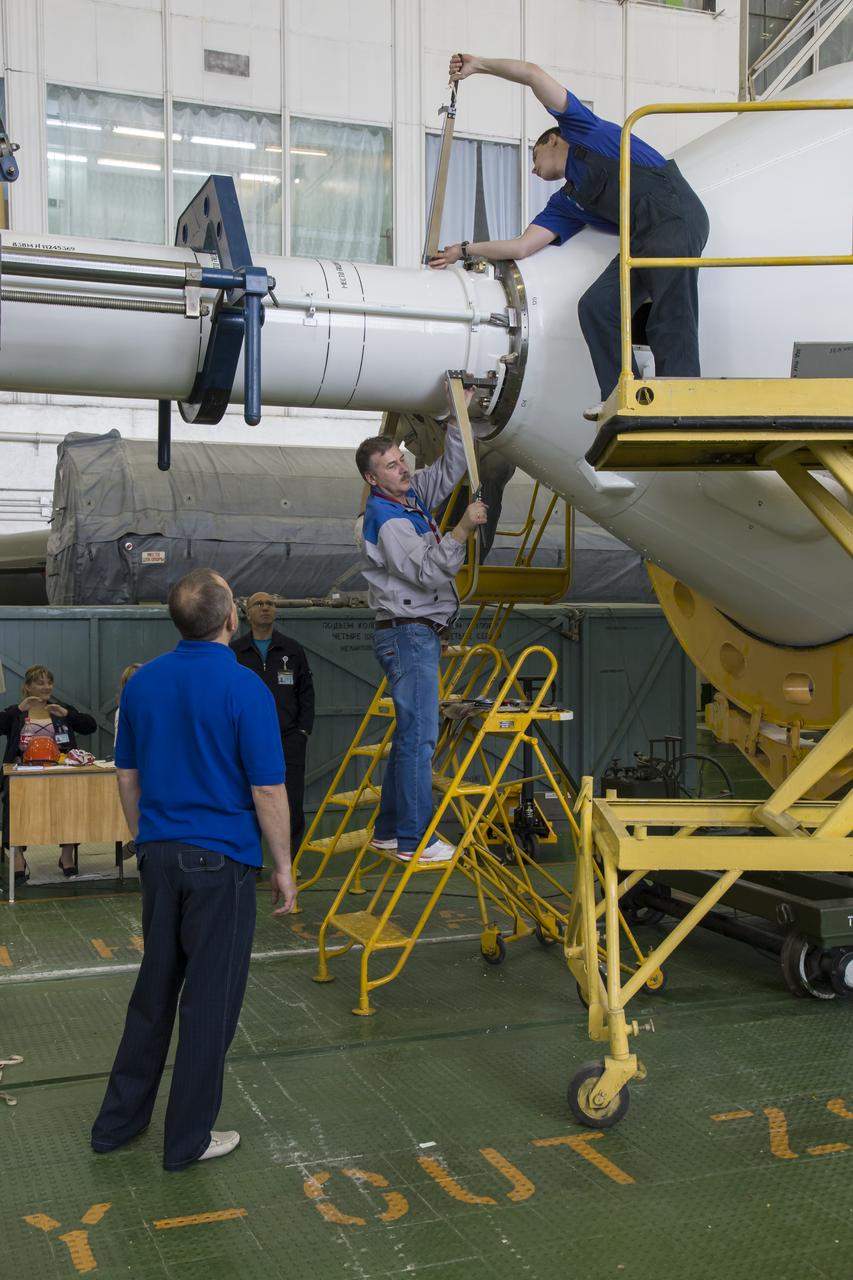
The Soyuz rocket and Soyuz TMA-13M spacecraft is assembled at Building 112 on the Baikonur Cosmodrome on Sunday, May 25, 2014 in Baikonur, Kazakhstan. Launch of the Soyuz is scheduled for May 29 and will send Expedition 40 Soyuz Commander Maxim Suraev of the Russian Federal Space Agency, Roscosmos, Flight Engineer Alexander Gerst of the European Space Agency, ESA, and Flight Engineer Reid Wiseman of NASA to the International Space Station for a five and a half month stay. Photo Credit: (NASA/Victor Zelentsov)

The Soyuz rocket and Soyuz TMA-14M spacecraft is assembled at Building 112 at the Baikonur Cosmodrome on Monday, Sept. 22, 2014, in Baikonur, Kazakhstan. Launch of the Soyuz is scheduled for Sept. 26 and will send Expedition 41 Soyuz Commander Alexander Samokutyaev of the Russian Federal Space Agency (Roscosmos), Flight Engineer Barry Wilmore of NASA, and Flight Engineer Elena Serova of Roscosmos to the International Space Station for a five and a half month stay. Photo Credit: (NASA/Victor Zelentsov)
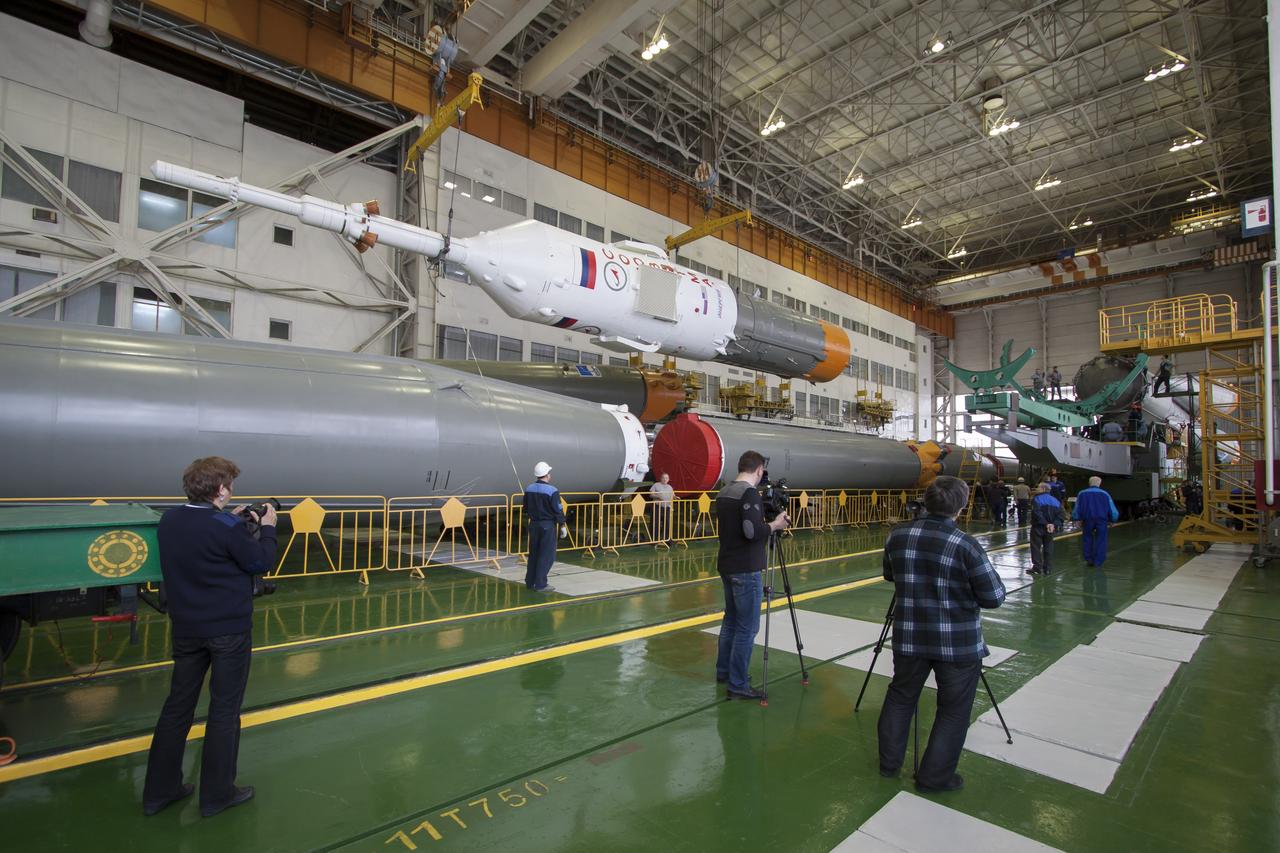
The Soyuz rocket and Soyuz TMA-12M spacecraft are assembled at Building 112 on the Baikonur Cosmodrome on Saturday, March 22, 2014 in Baikonur, Kazakhstan. Launch of the Soyuz is scheduled for March 26 and will send Expedition 39 Soyuz Commander Alexander Skvortsov of the Russian Federal Space Agency, Roscosmos, Flight Engineer Steven Swanson of NASA, and Flight Engineer Oleg Artemyev of Roscosmos on a six month mission to the International Space Station. Photo Credit: (NASA/Victor Zelentsov)
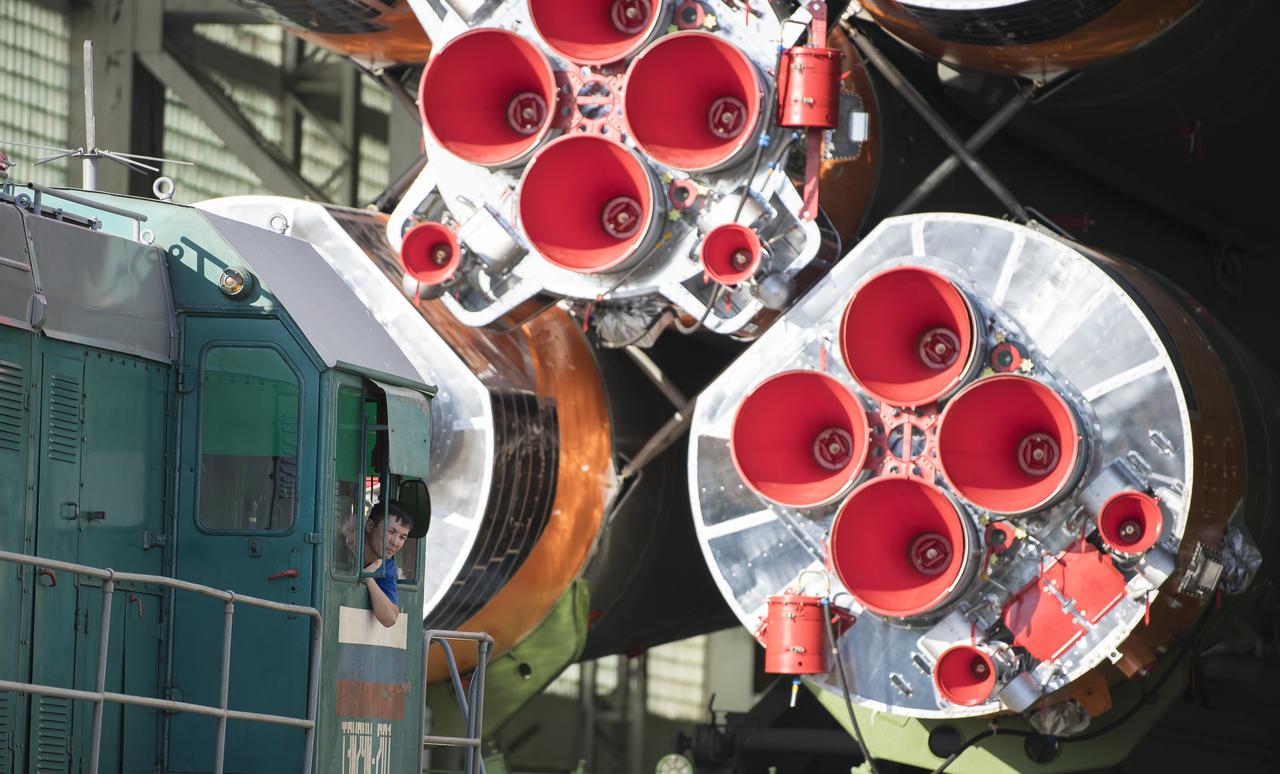
A worker leans out of the cab of the locomotive as it pulls the Soyuz rocket out of Building 112, Thursday, July 18, 2019 at the Baikonur Cosmodrome in Kazakhstan. Expedition 60 Soyuz Commander Alexander Skvortsov of Roscosmos, flight engineer Andrew Morgan of NASA, and flight engineer Luca Parmitano of ESA (European Space Agency) are scheduled to launch aboard their Soyuz MS-13 spacecraft at 12:28 p.m. Eastern time (9:28 p.m. Baikonur time) , on Saturday, July 20. Photo Credit: (NASA/Joel Kowsky)
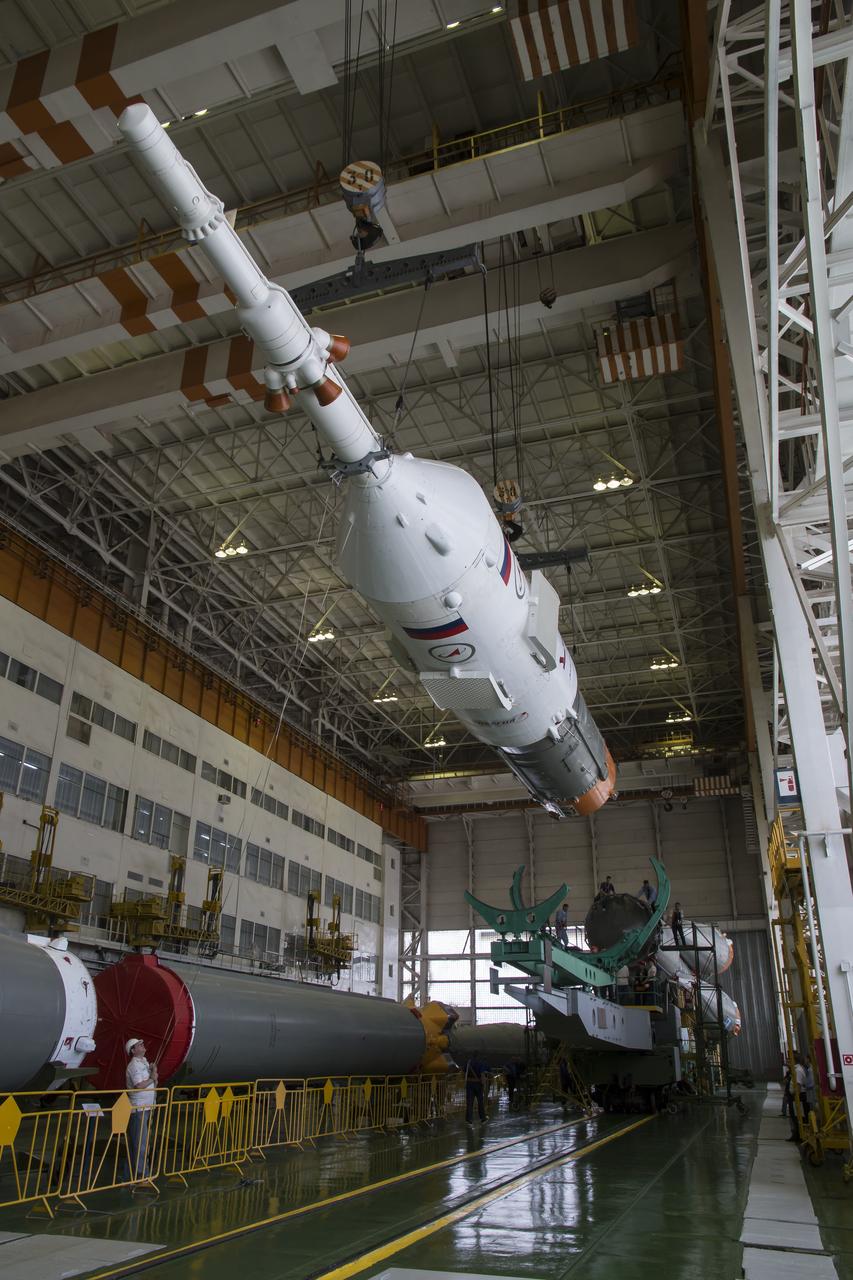
The Soyuz rocket and Soyuz TMA-13M spacecraft is assembled at Building 112 on the Baikonur Cosmodrome on Sunday, May 25, 2014 in Baikonur, Kazakhstan. Launch of the Soyuz is scheduled for May 29 and will send Expedition 40 Soyuz Commander Maxim Suraev of the Russian Federal Space Agency, Roscosmos, Flight Engineer Alexander Gerst of the European Space Agency, ESA, and Flight Engineer Reid Wiseman of NASA to the International Space Station for a five and a half month stay. Photo Credit: (NASA/Victor Zelentsov)
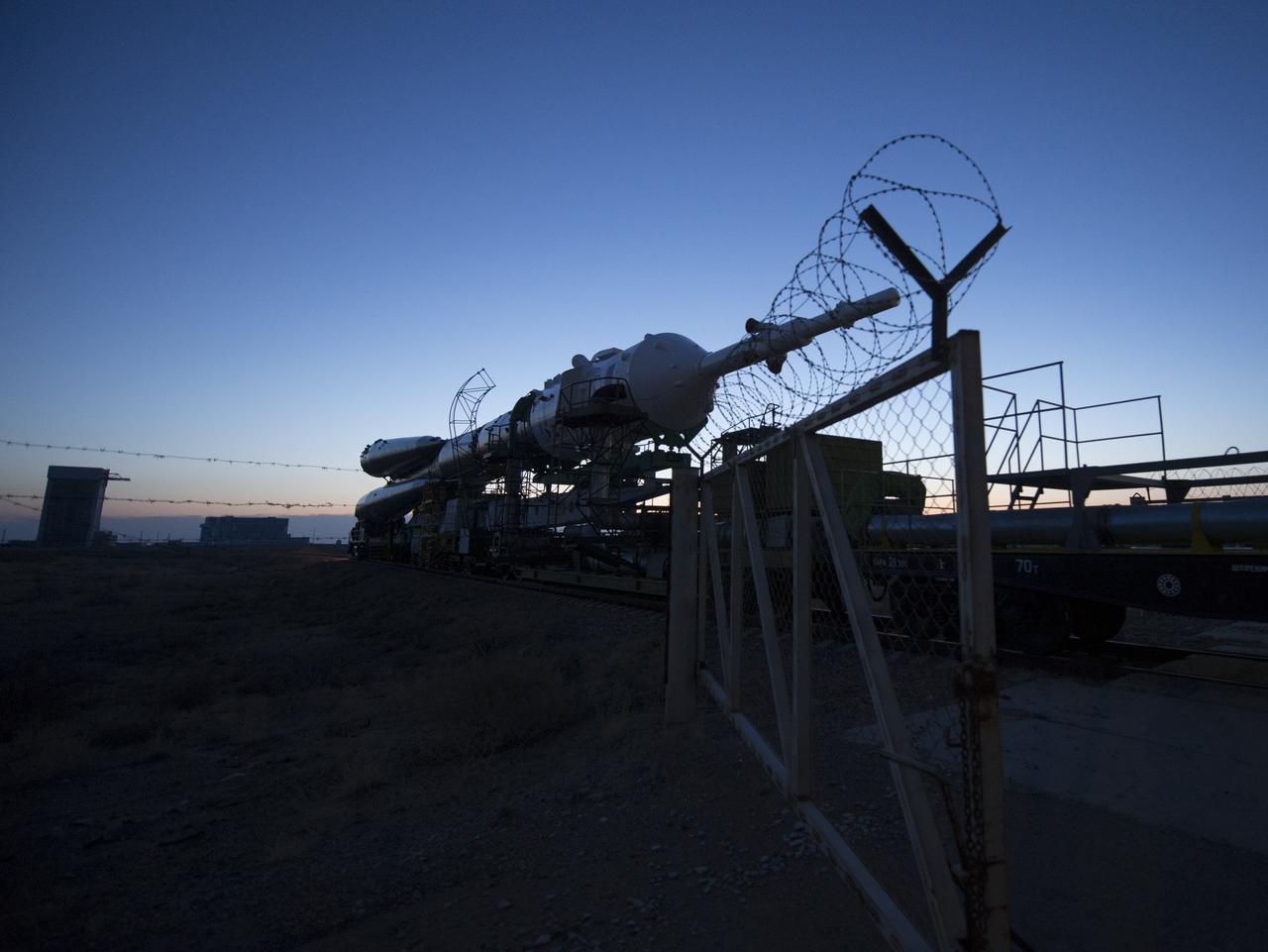
The Soyuz rocket is seen leaving the compound at Building 112 at the Baikonur Cosmodrome to make its way to the launch pad, Tuesday, March 26, 2013 in Kazakhstan. Launch of the Soyuz rocket is scheduled for March 29 and will send Expedition 35 Soyuz Commander Pavel Vinogradov, and Flight Engineers Chris Cassidy of NASA and Alexander Misurkin of Russia on a five and a half-month mission aboard the International Space Station. Photo Credit: (NASA/Carla Cioffi)
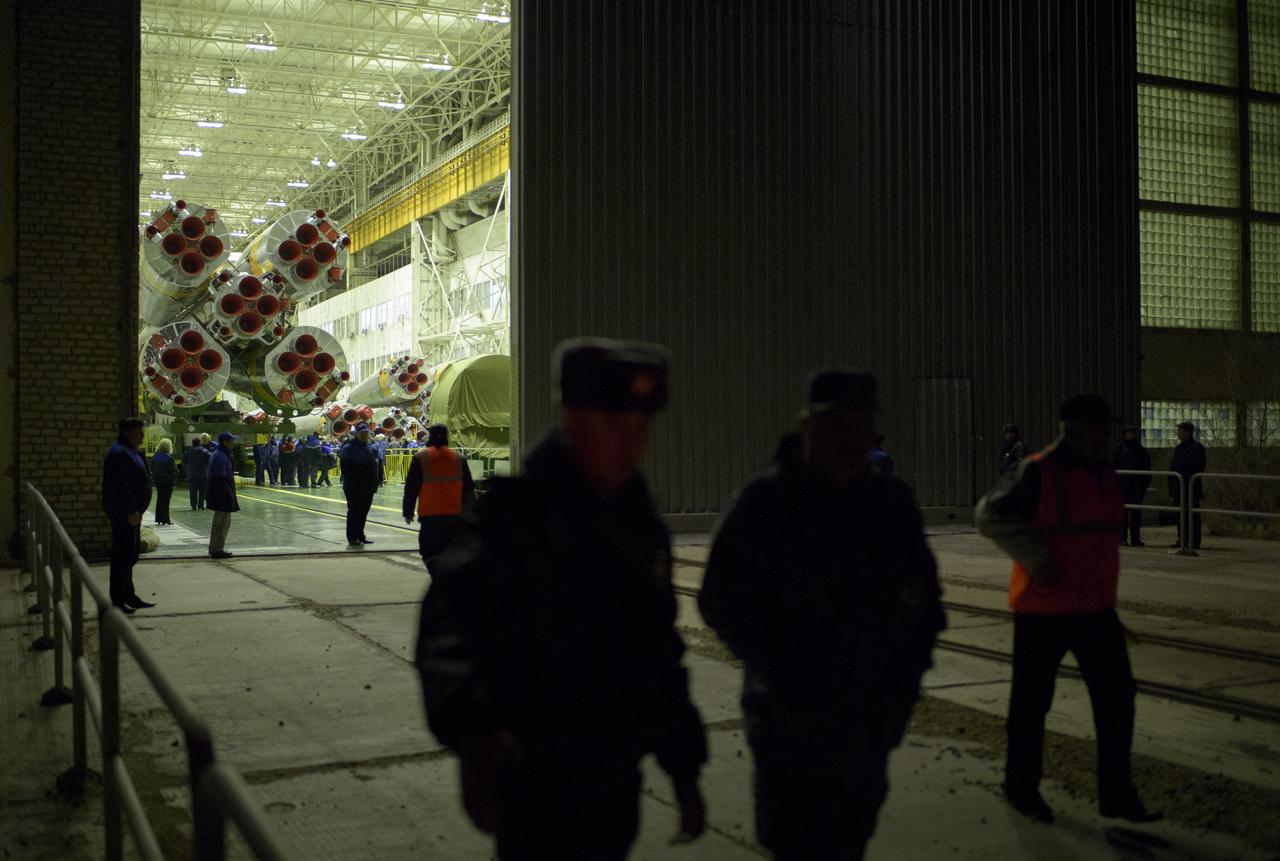
The doors to Building 112 are opened to reveal the Soyuz TMA-12M spacecraft as it is prepared to be rolled out to the launch pad by train on Sunday, March 23, 2014, at the Baikonur Cosmodrome in Kazakhstan. Launch of the Soyuz rocket is scheduled for March 26 and will send Expedition 39 Soyuz Commander Alexander Skvortsov of the Russian Federal Space Agency, Roscosmos, Flight Engineer Steven Swanson of NASA, and Flight Engineer Oleg Artemyev of Roscosmos on a six-month mission aboard the International Space Station. Photo Credit: (NASA/Joel Kowsky)

The Soyuz rocket and Soyuz TMA-14M spacecraft is assembled at Building 112 at the Baikonur Cosmodrome on Monday, Sept. 22, 2014, in Baikonur, Kazakhstan. Launch of the Soyuz is scheduled for Sept. 26 and will send Expedition 41 Soyuz Commander Alexander Samokutyaev of the Russian Federal Space Agency (Roscosmos), Flight Engineer Barry Wilmore of NASA, and Flight Engineer Elena Serova of Roscosmos to the International Space Station for a five and a half month stay. Photo Credit: (NASA/Victor Zelentsov)
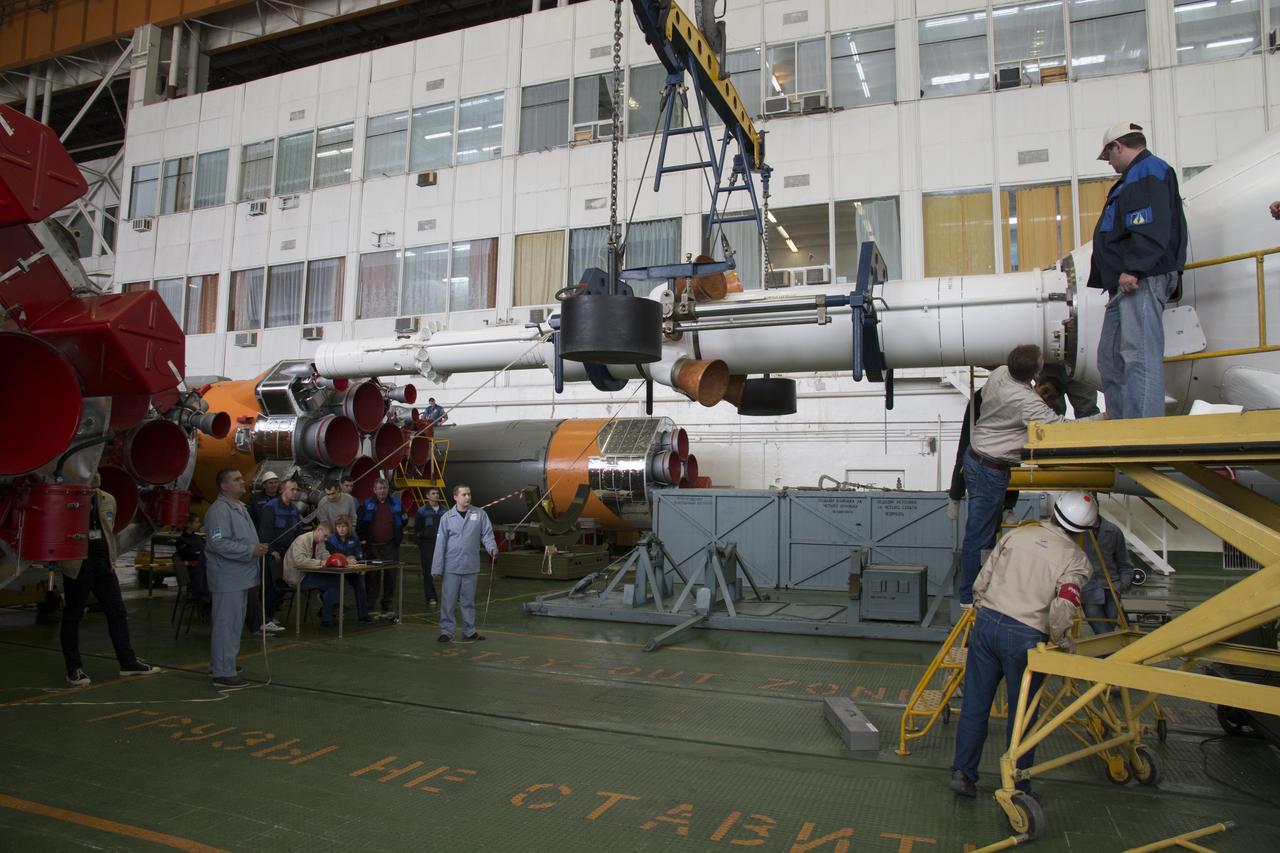
The Soyuz rocket and Soyuz TMA-12M spacecraft are assembled at Building 112 on the Baikonur Cosmodrome on Saturday, March 22, 2014 in Baikonur, Kazakhstan. Launch of the Soyuz is scheduled for March 26 and will send Expedition 39 Soyuz Commander Alexander Skvortsov of the Russian Federal Space Agency, Roscosmos, Flight Engineer Steven Swanson of NASA, and Flight Engineer Oleg Artemyev of Roscosmos on a six month mission to the International Space Station. Photo Credit: (NASA/Victor Zelentsov)
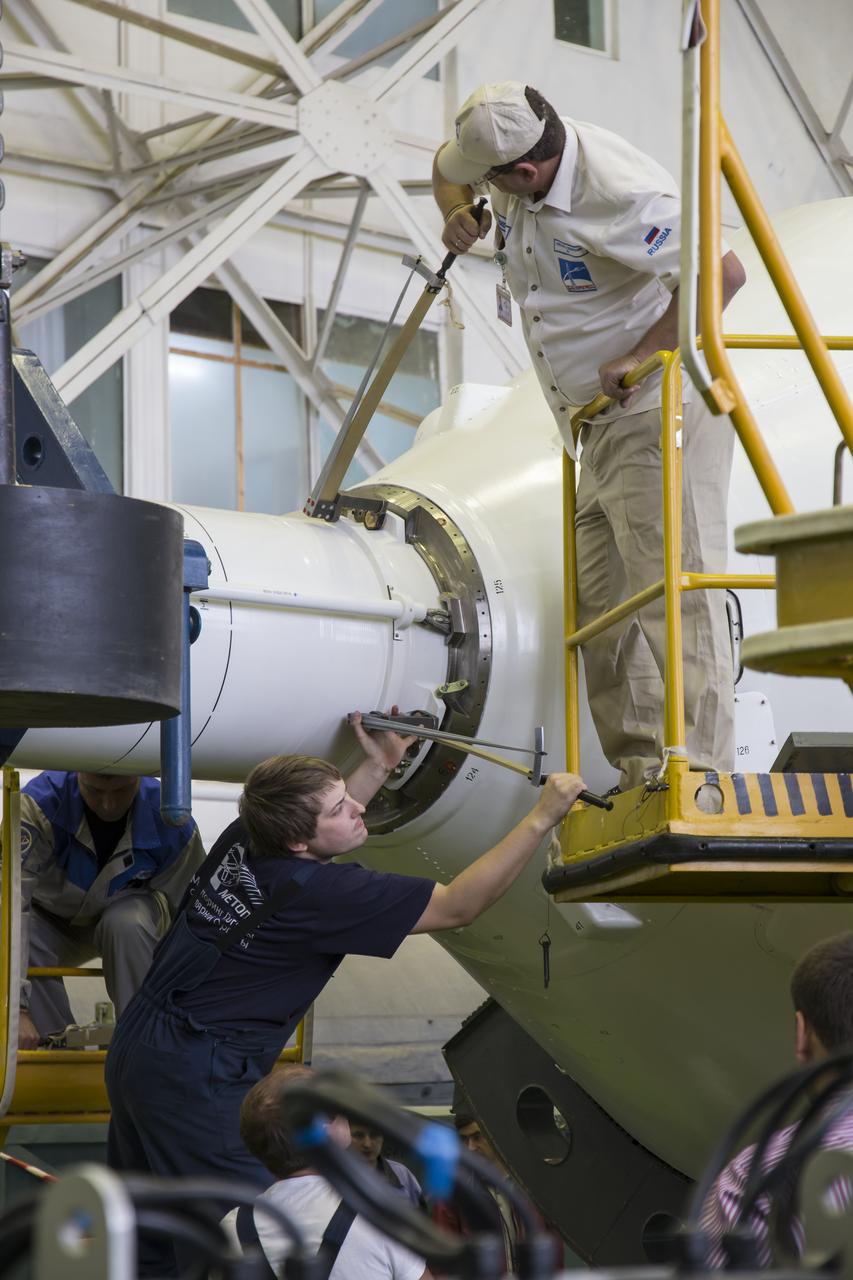
The Soyuz rocket and Soyuz TMA-14M spacecraft is assembled at Building 112 at the Baikonur Cosmodrome on Monday, Sept. 22, 2014, in Baikonur, Kazakhstan. Launch of the Soyuz is scheduled for Sept. 26 and will send Expedition 41 Soyuz Commander Alexander Samokutyaev of the Russian Federal Space Agency (Roscosmos), Flight Engineer Barry Wilmore of NASA, and Flight Engineer Elena Serova of Roscosmos to the International Space Station for a five and a half month stay. Photo Credit: (NASA/Victor Zelentsov)
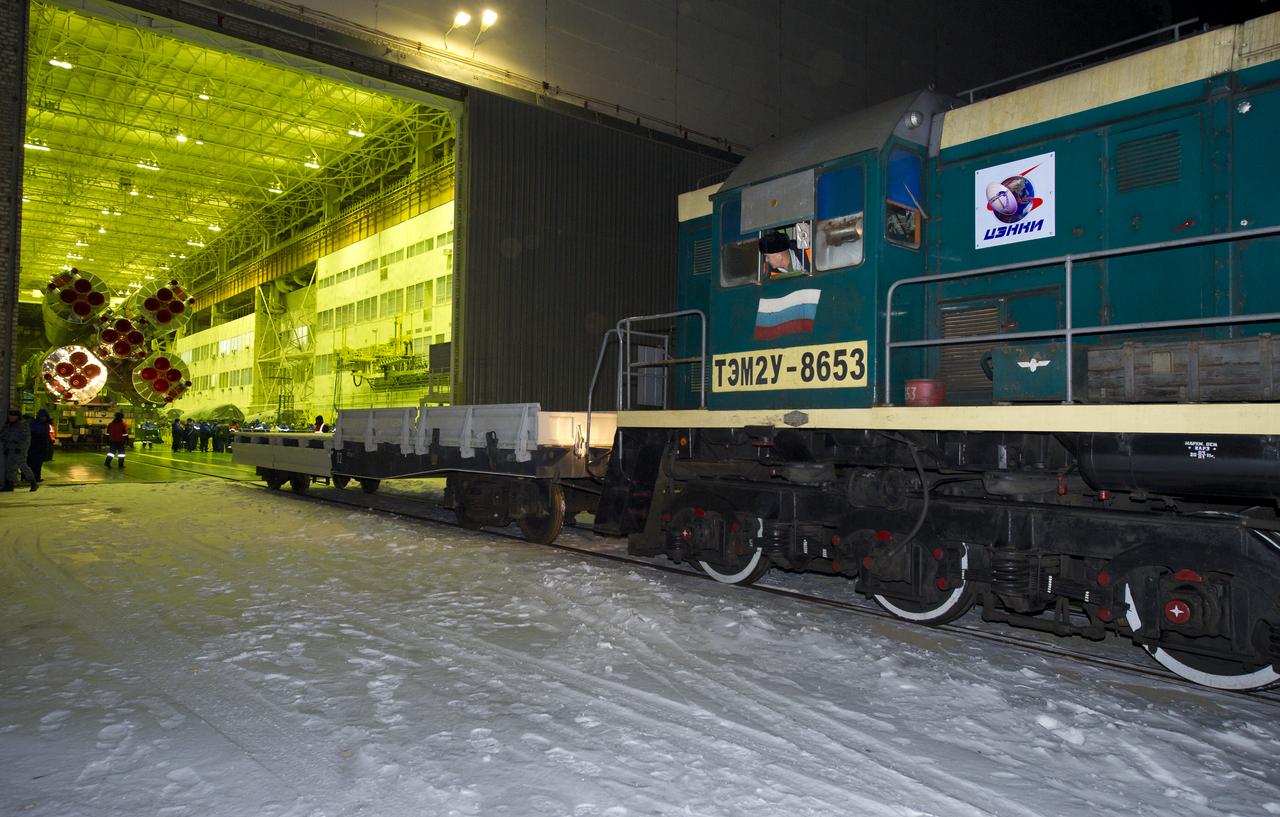
A locomotive backs into Building 112 as it prepares to hitch up with the railcar that will transport the Soyuz TMA-03M to the launch pad at the Baikonur Cosmodrome in Kazakhstan, Monday, Dec. 19, 2011. The launch of the Soyuz spacecraft with Expedition 30 Soyuz Commander Oleg Kononenko of Russia, NASA Flight Engineer Don Pettit and ESA (European Space Agency) astronaut and Flight Engineer Andre Kuipers is scheduled for 7:16 p.m. local time on Wednesday, December 21. Photo Credit (NASA/Carla Cioffi)
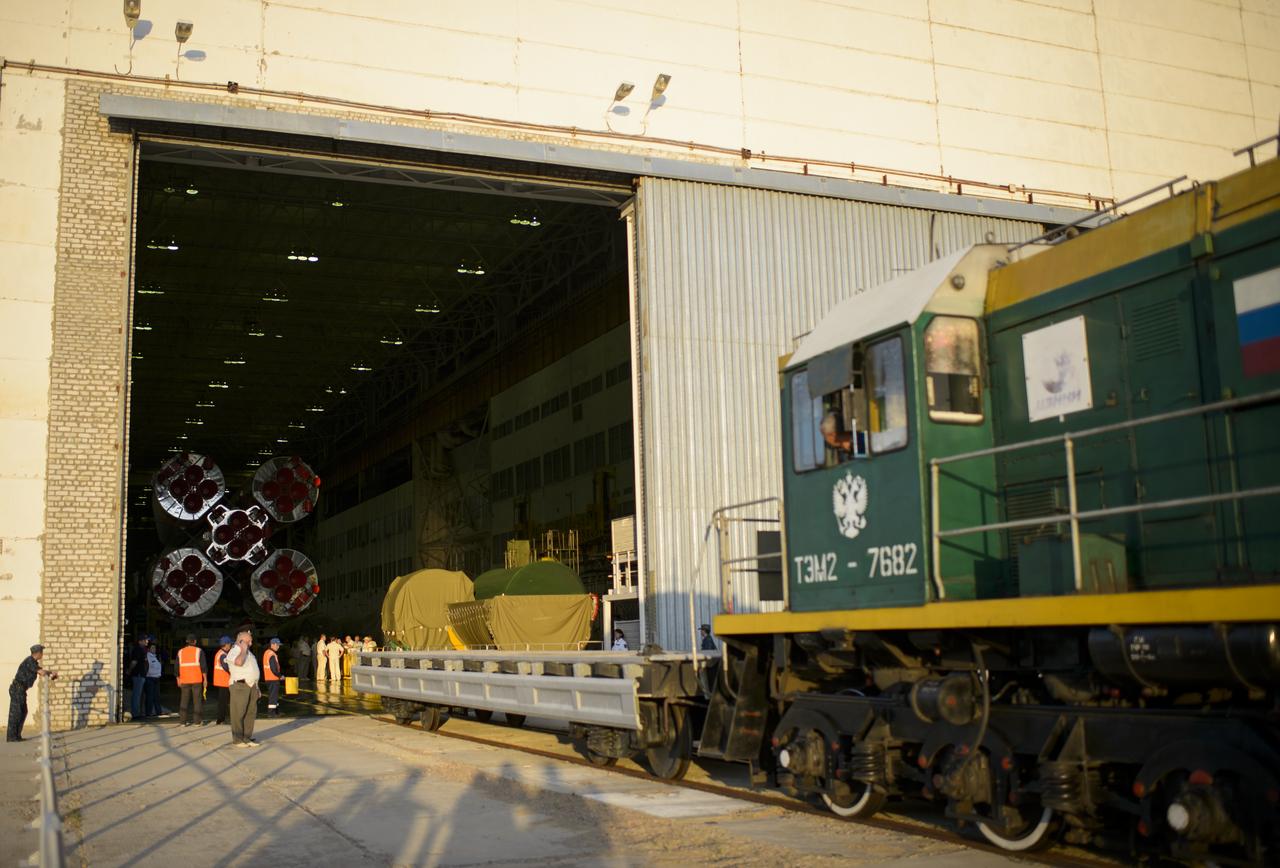
The Soyuz TMA-13M rocket is seen inside Building 112 prior to being rolled out to the launch pad by train on Monday, May 26, 2014, at the Baikonur Cosmodrome in Kazakhstan. Launch of the Soyuz rocket is scheduled for May 29 and will send Expedition 40 Soyuz Commander Maxim Suraev, of the Russian Federal Space Agency, Roscosmos, Flight Engineer Alexander Gerst, of the European Space Agency, ESA, and Flight Engineer Reid Wiseman of NASA on a five and a half month mission aboard the International Space Station. Photo Credit: (NASA/Joel Kowsky)
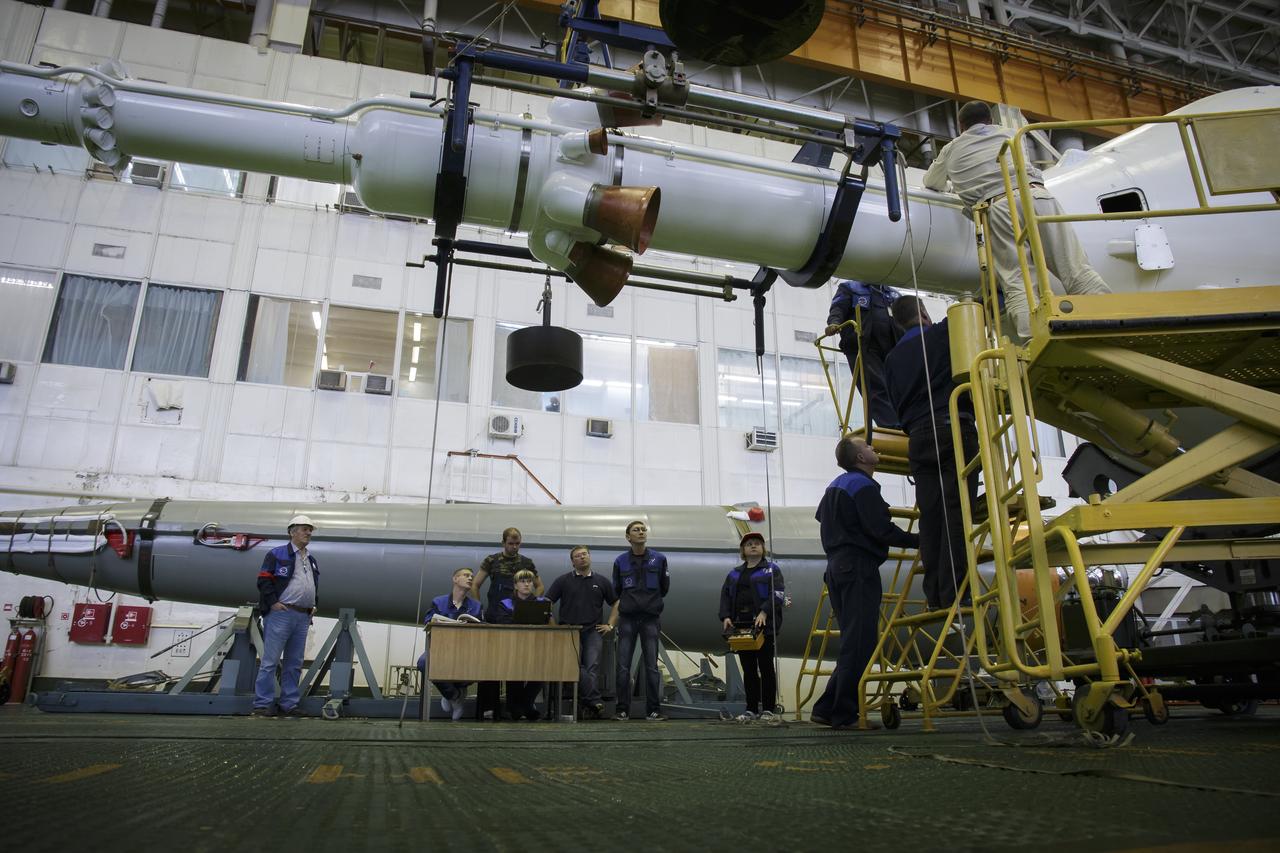
The Soyuz rocket and Soyuz TMA-16M spacecraft are assembled at Building 112 on the Baikonur Cosmodrome on Tuesday, March 24, 2015 in Baikonur, Kazakhstan. NASA Astronaut Scott Kelly, and Russian Cosmonauts Mikhail Kornienko, and Gennady Padalka of the Russian Federal Space Agency (Roscosmos) are scheduled to launch to the International Space Station in the Soyuz TMA-16M spacecraft from the Baikonur Cosmodrome in Kazakhstan March 28, Kazakh time (March 27 Eastern time.) As the one-year crew, Kelly and Kornienko will return to Earth on Soyuz TMA-18M in March 2016. Photo Credit: (NASA/Victor Zelentsov)
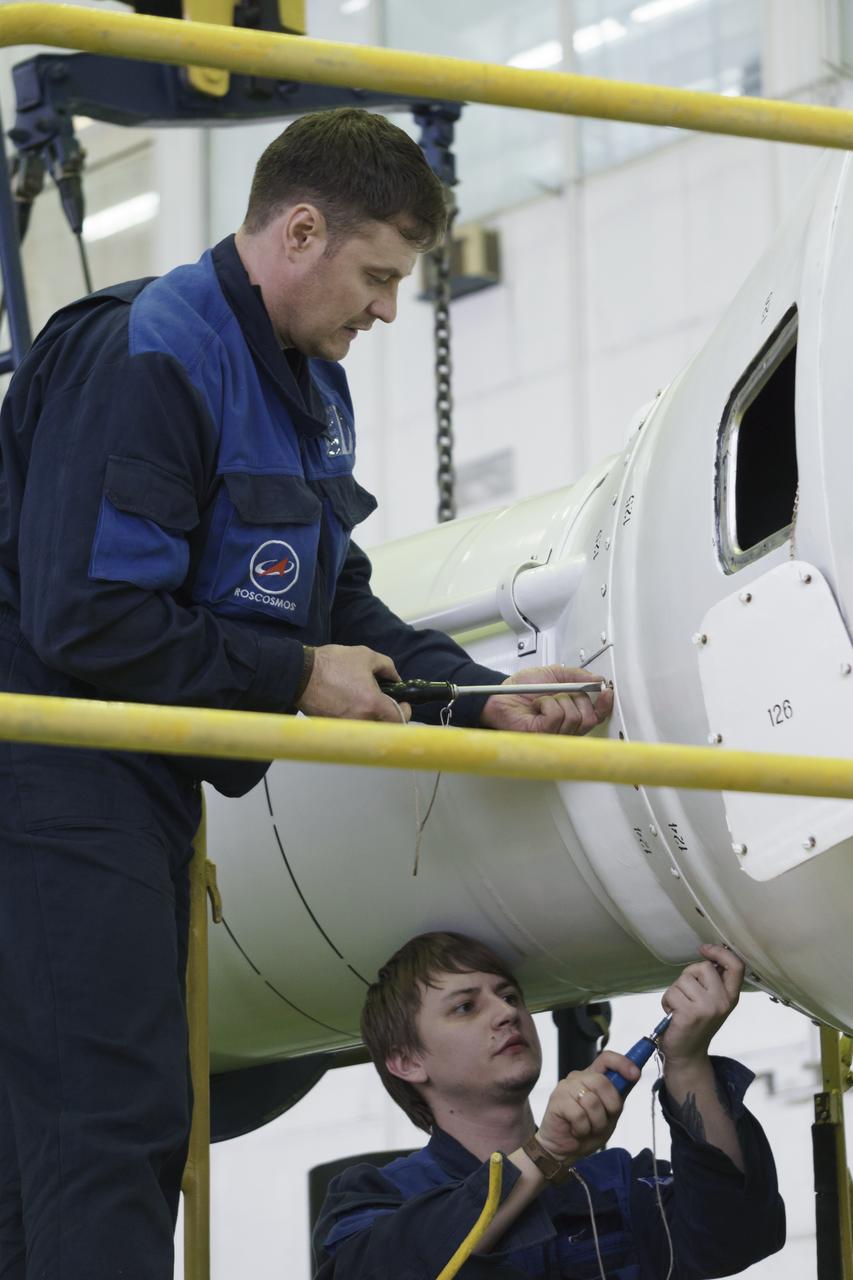
The Soyuz rocket and Soyuz TMA-16M spacecraft are assembled at Building 112 on the Baikonur Cosmodrome on Tuesday, March 24, 2015 in Baikonur, Kazakhstan. NASA Astronaut Scott Kelly, and Russian Cosmonauts Mikhail Kornienko, and Gennady Padalka of the Russian Federal Space Agency (Roscosmos) are scheduled to launch to the International Space Station in the Soyuz TMA-16M spacecraft from the Baikonur Cosmodrome in Kazakhstan March 28, Kazakh time (March 27 Eastern time.) As the one-year crew, Kelly and Kornienko will return to Earth on Soyuz TMA-18M in March 2016. Photo Credit: (NASA/Victor Zelentsov)
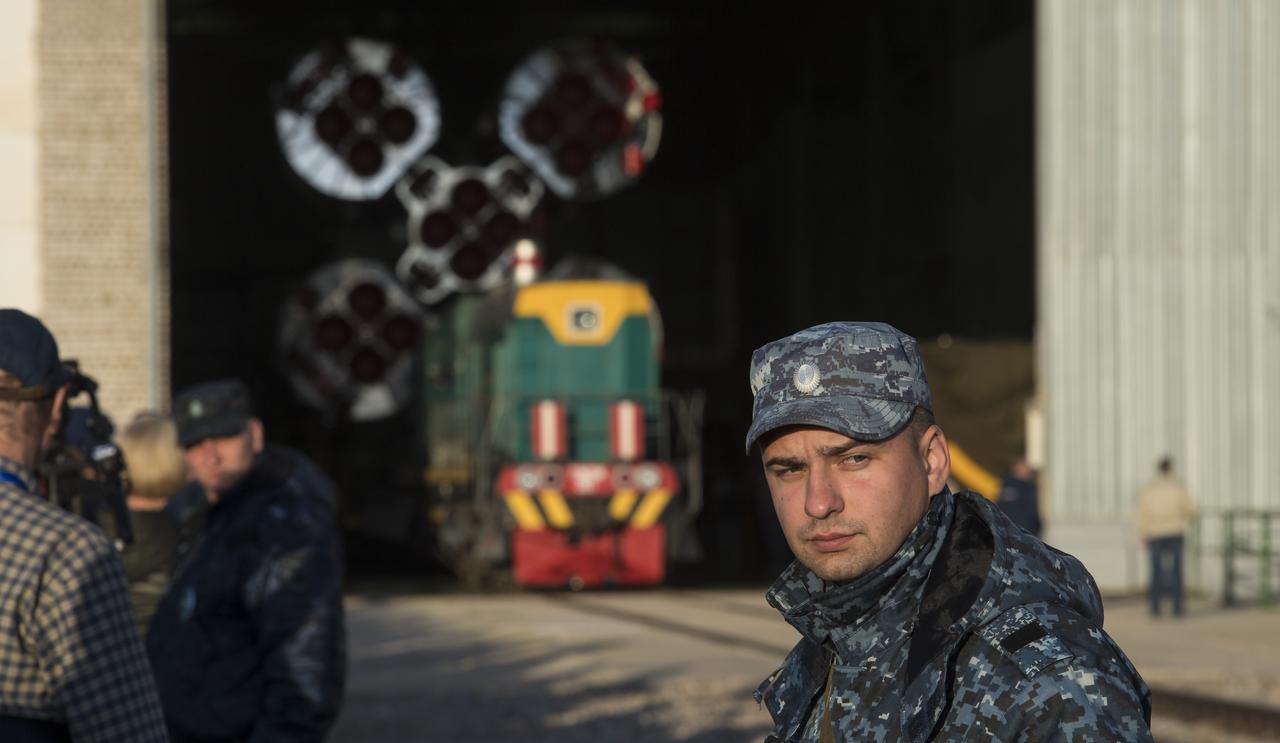
Security personnel are seen outside of Building 112 prior to the Soyuz rocket being rolled out by train to the launch pad, Monday, June 4, 2018 at the Baikonur Cosmodrome in Kazakhstan. Expedition 56 Soyuz Commander Sergey Prokopyev of Roscosmos, flight engineer Serena Auñón-Chancellor of NASA, and flight engineer Alexander Gerst of ESA (European Space Agency) are scheduled to launch aboard their Soyuz MS-09 spacecraft at 7:12 a.m. Eastern time (5:12 p.m. Baikonur time), on Wednesday, June 6. Photo Credit: (NASA/Joel Kowsky)
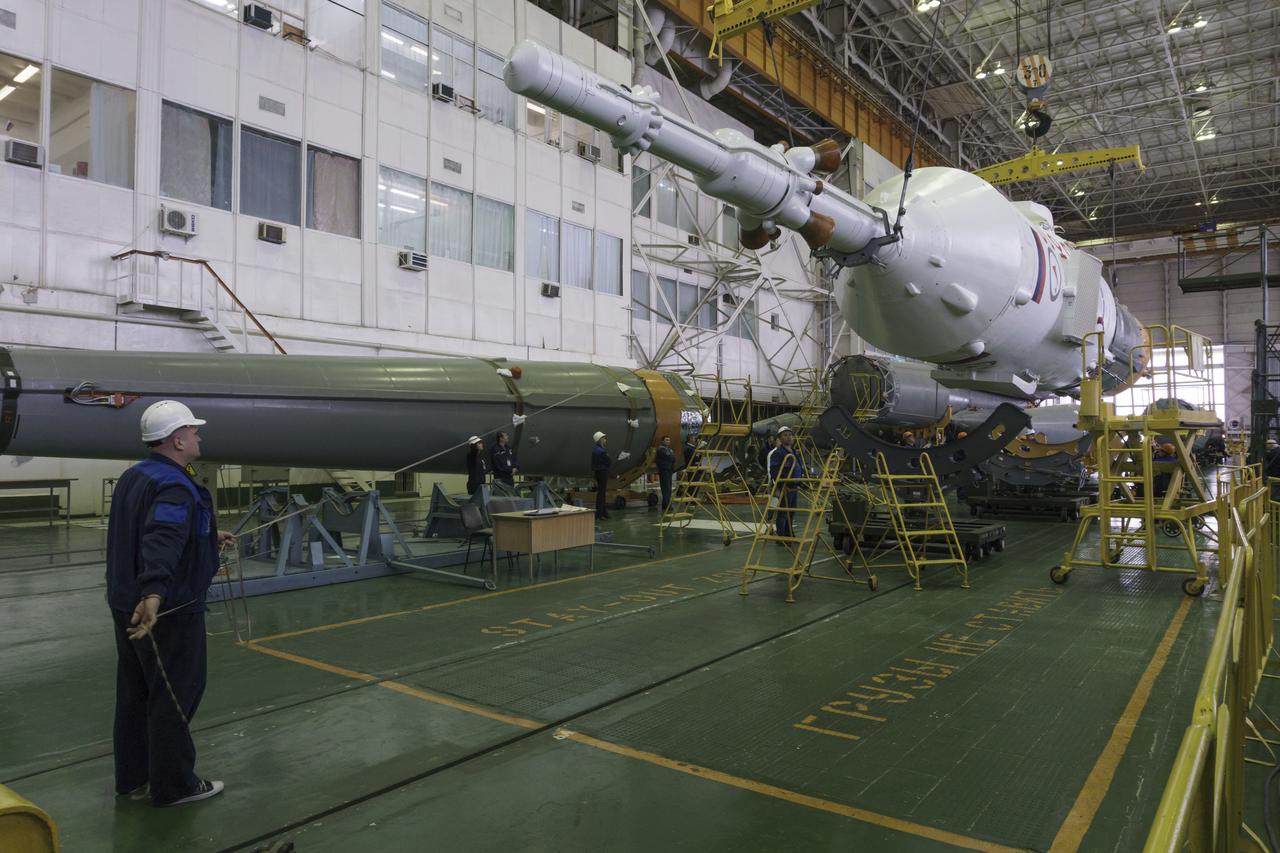
The Soyuz rocket and Soyuz TMA-16M spacecraft are assembled at Building 112 on the Baikonur Cosmodrome on Tuesday, March 24, 2015 in Baikonur, Kazakhstan. NASA Astronaut Scott Kelly, and Russian Cosmonauts Mikhail Kornienko, and Gennady Padalka of the Russian Federal Space Agency (Roscosmos) are scheduled to launch to the International Space Station in the Soyuz TMA-16M spacecraft from the Baikonur Cosmodrome in Kazakhstan March 28, Kazakh time (March 27 Eastern time.) As the one-year crew, Kelly and Kornienko will return to Earth on Soyuz TMA-18M in March 2016. Photo Credit: (NASA/Victor Zelentsov)
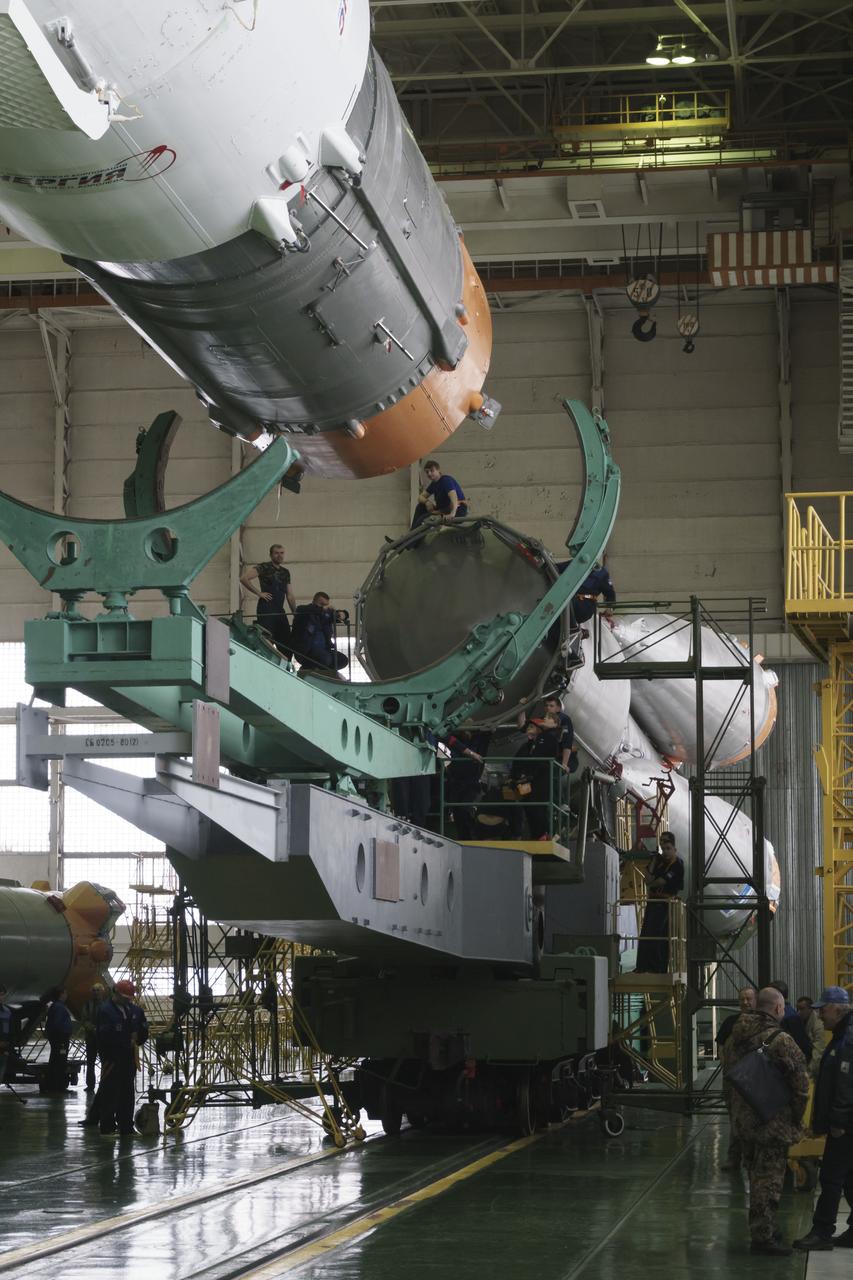
The Soyuz rocket and Soyuz TMA-16M spacecraft are assembled at Building 112 on the Baikonur Cosmodrome on Tuesday, March 24, 2015 in Baikonur, Kazakhstan. NASA Astronaut Scott Kelly, and Russian Cosmonauts Mikhail Kornienko, and Gennady Padalka of the Russian Federal Space Agency (Roscosmos) are scheduled to launch to the International Space Station in the Soyuz TMA-16M spacecraft from the Baikonur Cosmodrome in Kazakhstan March 28, Kazakh time (March 27 Eastern time.) As the one-year crew, Kelly and Kornienko will return to Earth on Soyuz TMA-18M in March 2016. Photo Credit: (NASA/Victor Zelentsov)
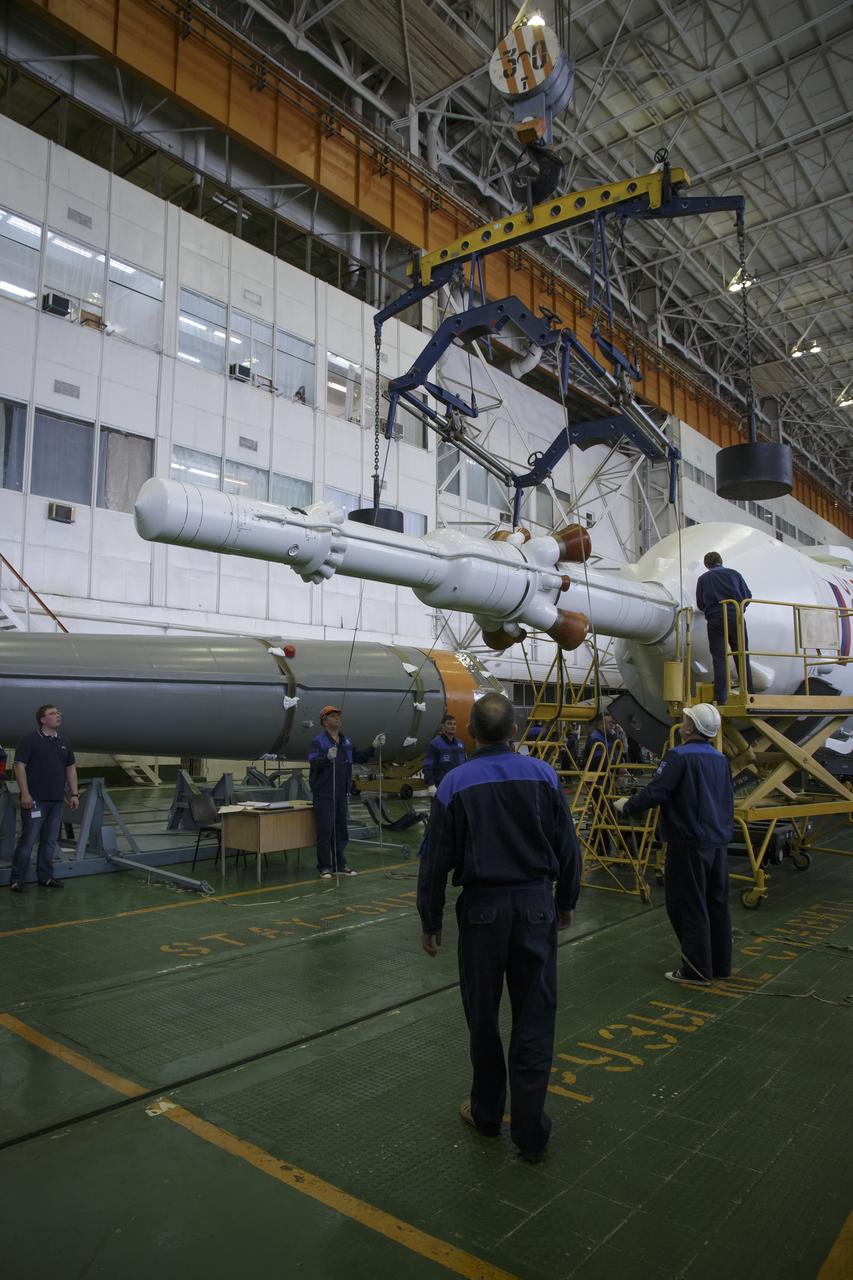
The Soyuz rocket and Soyuz TMA-16M spacecraft are assembled at Building 112 on the Baikonur Cosmodrome on Tuesday, March 24, 2015 in Baikonur, Kazakhstan. NASA Astronaut Scott Kelly, and Russian Cosmonauts Mikhail Kornienko, and Gennady Padalka of the Russian Federal Space Agency (Roscosmos) are scheduled to launch to the International Space Station in the Soyuz TMA-16M spacecraft from the Baikonur Cosmodrome in Kazakhstan March 28, Kazakh time (March 27 Eastern time.) As the one-year crew, Kelly and Kornienko will return to Earth on Soyuz TMA-18M in March 2016. Photo Credit: (NASA/Victor Zelentsov)
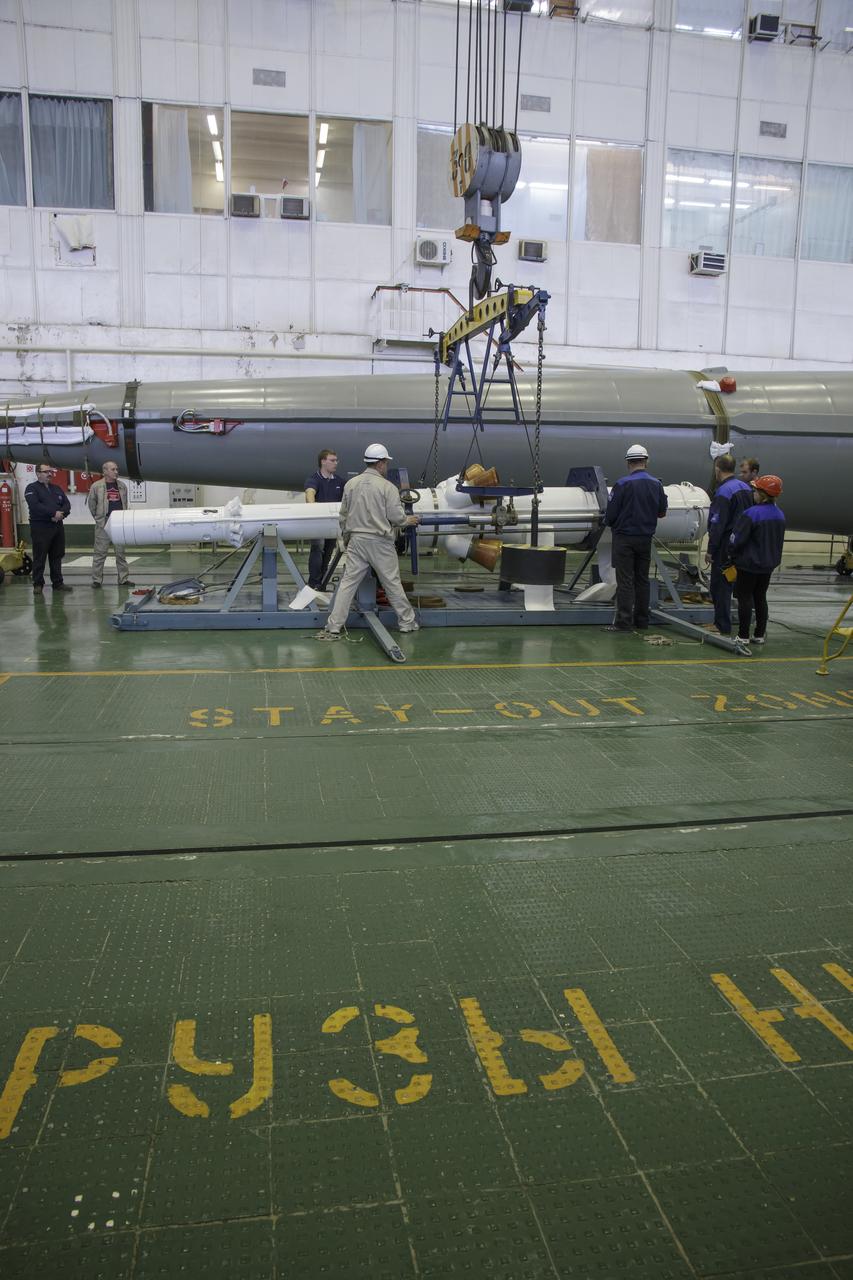
The Soyuz rocket and Soyuz TMA-16M spacecraft are assembled at Building 112 on the Baikonur Cosmodrome on Tuesday, March 24, 2015 in Baikonur, Kazakhstan. NASA Astronaut Scott Kelly, and Russian Cosmonauts Mikhail Kornienko, and Gennady Padalka of the Russian Federal Space Agency (Roscosmos) are scheduled to launch to the International Space Station in the Soyuz TMA-16M spacecraft from the Baikonur Cosmodrome in Kazakhstan March 28, Kazakh time (March 27 Eastern time.) As the one-year crew, Kelly and Kornienko will return to Earth on Soyuz TMA-18M in March 2016. Photo Credit: (NASA/Victor Zelentsov)
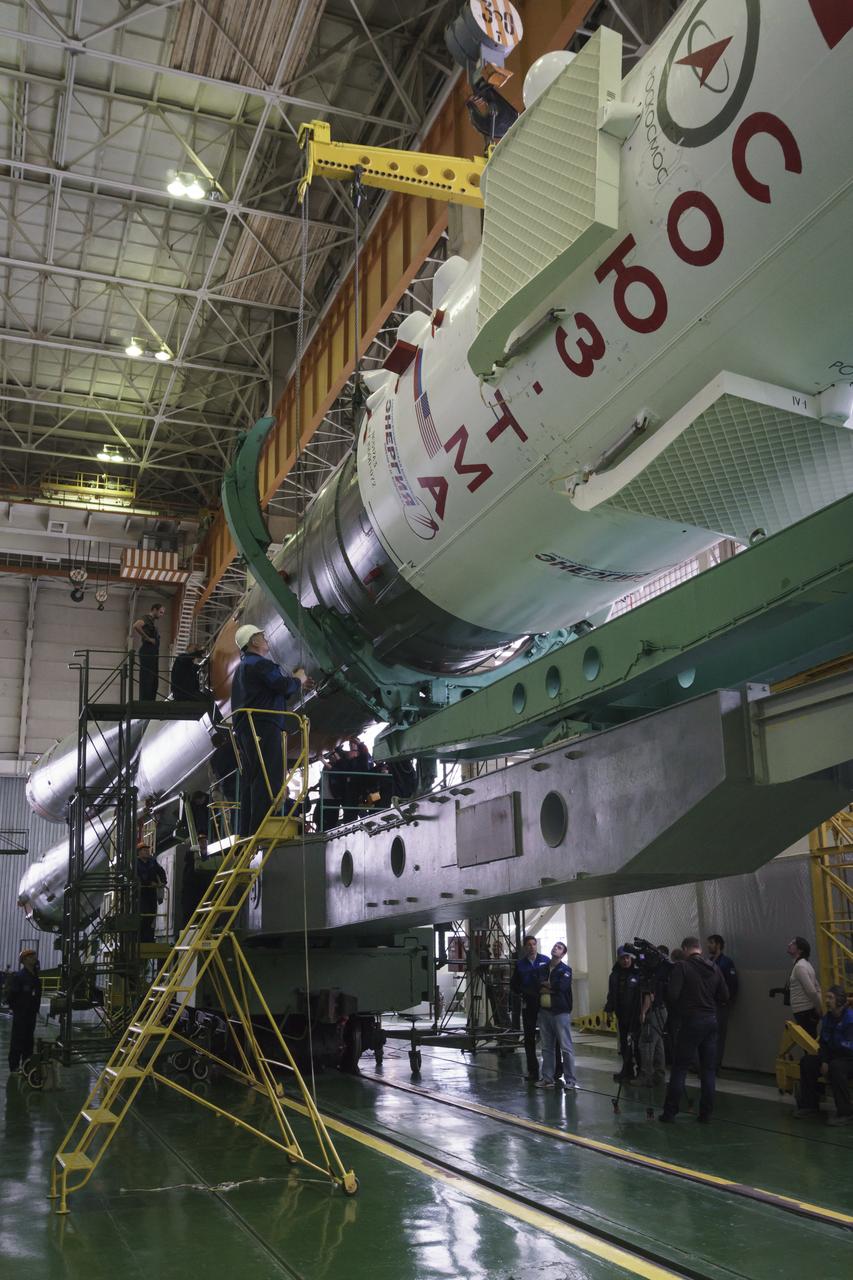
The Soyuz rocket and Soyuz TMA-16M spacecraft are assembled at Building 112 on the Baikonur Cosmodrome on Tuesday, March 24, 2015 in Baikonur, Kazakhstan. NASA Astronaut Scott Kelly, and Russian Cosmonauts Mikhail Kornienko, and Gennady Padalka of the Russian Federal Space Agency (Roscosmos) are scheduled to launch to the International Space Station in the Soyuz TMA-16M spacecraft from the Baikonur Cosmodrome in Kazakhstan March 28, Kazakh time (March 27 Eastern time.) As the one-year crew, Kelly and Kornienko will return to Earth on Soyuz TMA-18M in March 2016. Photo Credit: (NASA/Victor Zelentsov)
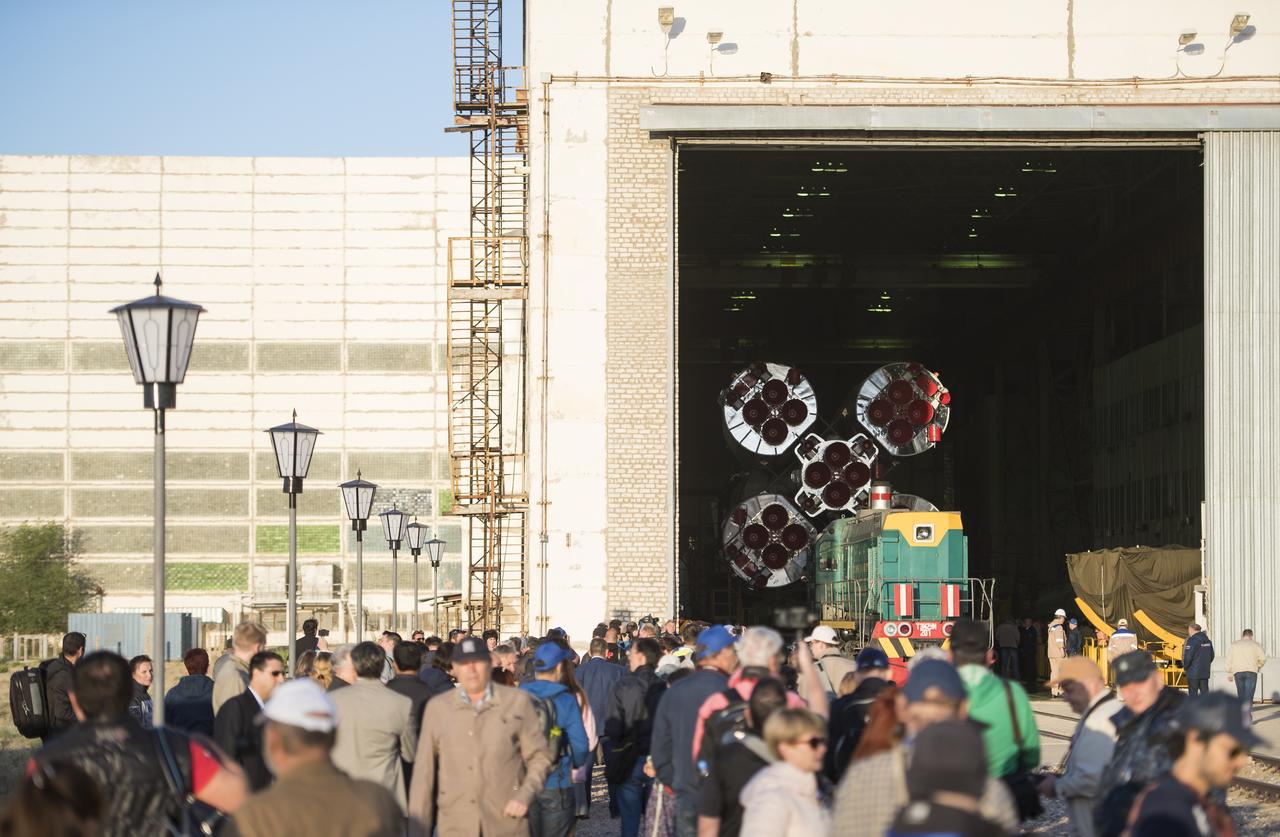
The Soyuz rocket is seen inside Building 112 prior to being rolled out by train to the launch pad, Monday, June 4, 2018 at the Baikonur Cosmodrome in Kazakhstan. Expedition 56 Soyuz Commander Sergey Prokopyev of Roscosmos, flight engineer Serena Auñón-Chancellor of NASA, and flight engineer Alexander Gerst of ESA (European Space Agency) are scheduled to launch aboard their Soyuz MS-09 spacecraft at 7:12 a.m. Eastern time (5:12 p.m. Baikonur time), on Wednesday, June 6. Photo Credit: (NASA/Joel Kowsky)
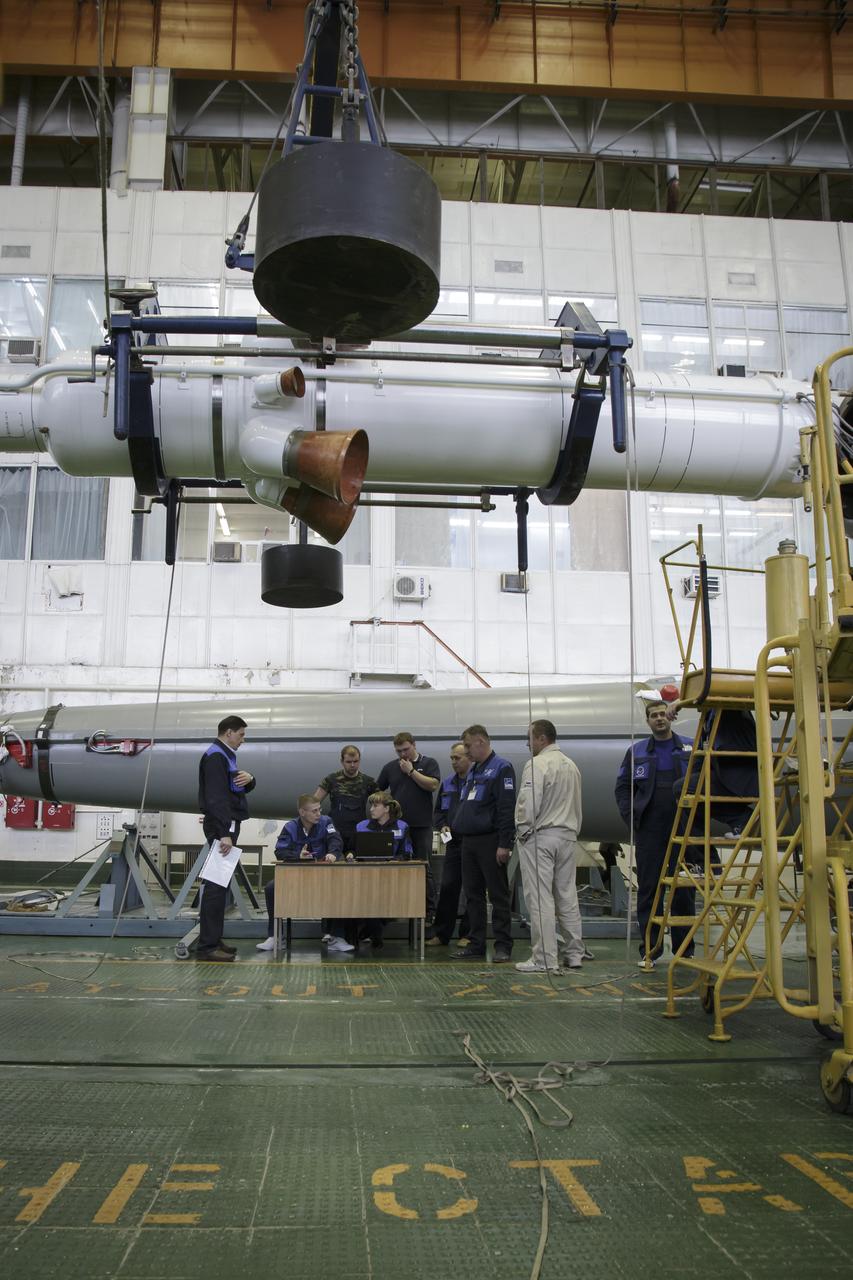
The Soyuz rocket and Soyuz TMA-16M spacecraft are assembled at Building 112 on the Baikonur Cosmodrome on Tuesday, March 24, 2015 in Baikonur, Kazakhstan. NASA Astronaut Scott Kelly, and Russian Cosmonauts Mikhail Kornienko, and Gennady Padalka of the Russian Federal Space Agency (Roscosmos) are scheduled to launch to the International Space Station in the Soyuz TMA-16M spacecraft from the Baikonur Cosmodrome in Kazakhstan March 28, Kazakh time (March 27 Eastern time.) As the one-year crew, Kelly and Kornienko will return to Earth on Soyuz TMA-18M in March 2016. Photo Credit: (NASA/Victor Zelentsov)
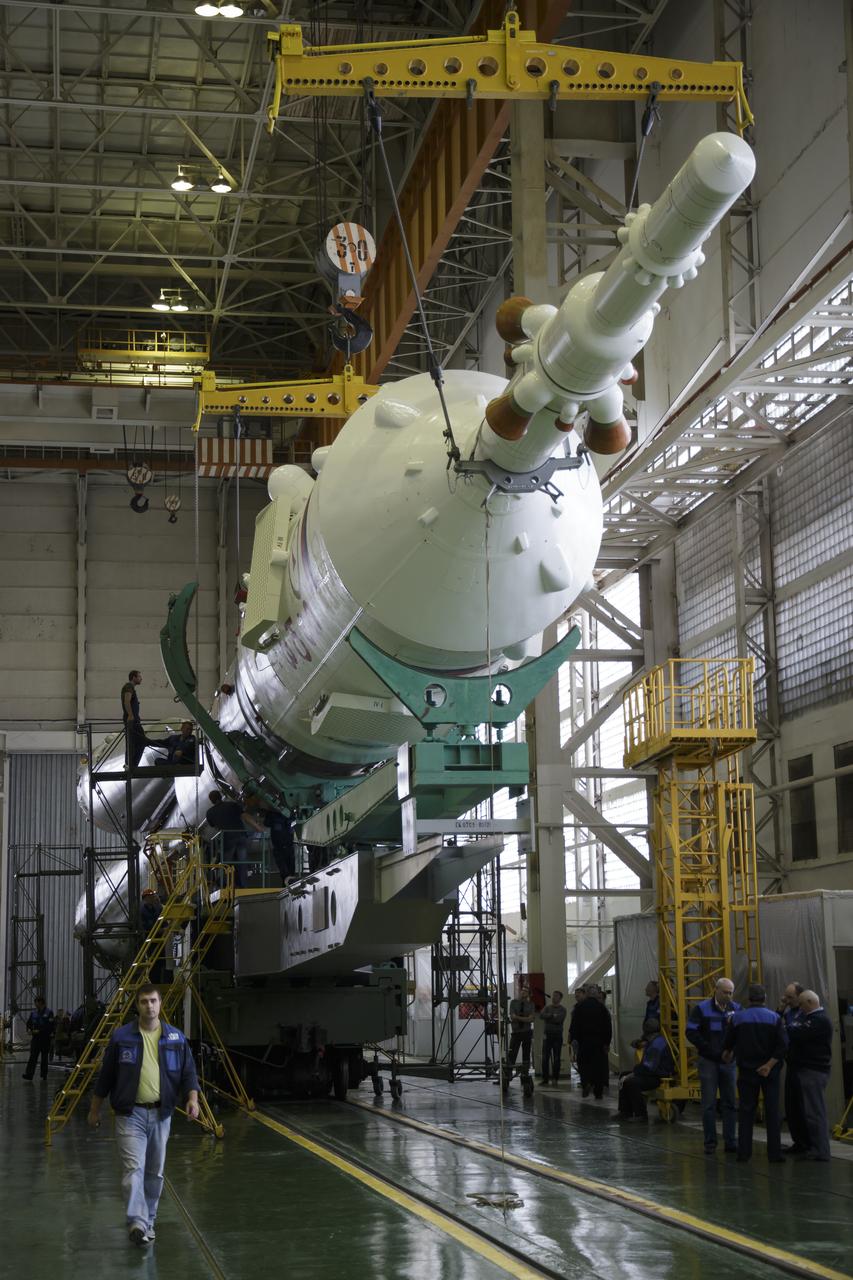
The Soyuz rocket and Soyuz TMA-16M spacecraft are assembled at Building 112 on the Baikonur Cosmodrome on Tuesday, March 24, 2015 in Baikonur, Kazakhstan. NASA Astronaut Scott Kelly, and Russian Cosmonauts Mikhail Kornienko, and Gennady Padalka of the Russian Federal Space Agency (Roscosmos) are scheduled to launch to the International Space Station in the Soyuz TMA-16M spacecraft from the Baikonur Cosmodrome in Kazakhstan March 28, Kazakh time (March 27 Eastern time.) As the one-year crew, Kelly and Kornienko will return to Earth on Soyuz TMA-18M in March 2016. Photo Credit: (NASA/Victor Zelentsov)
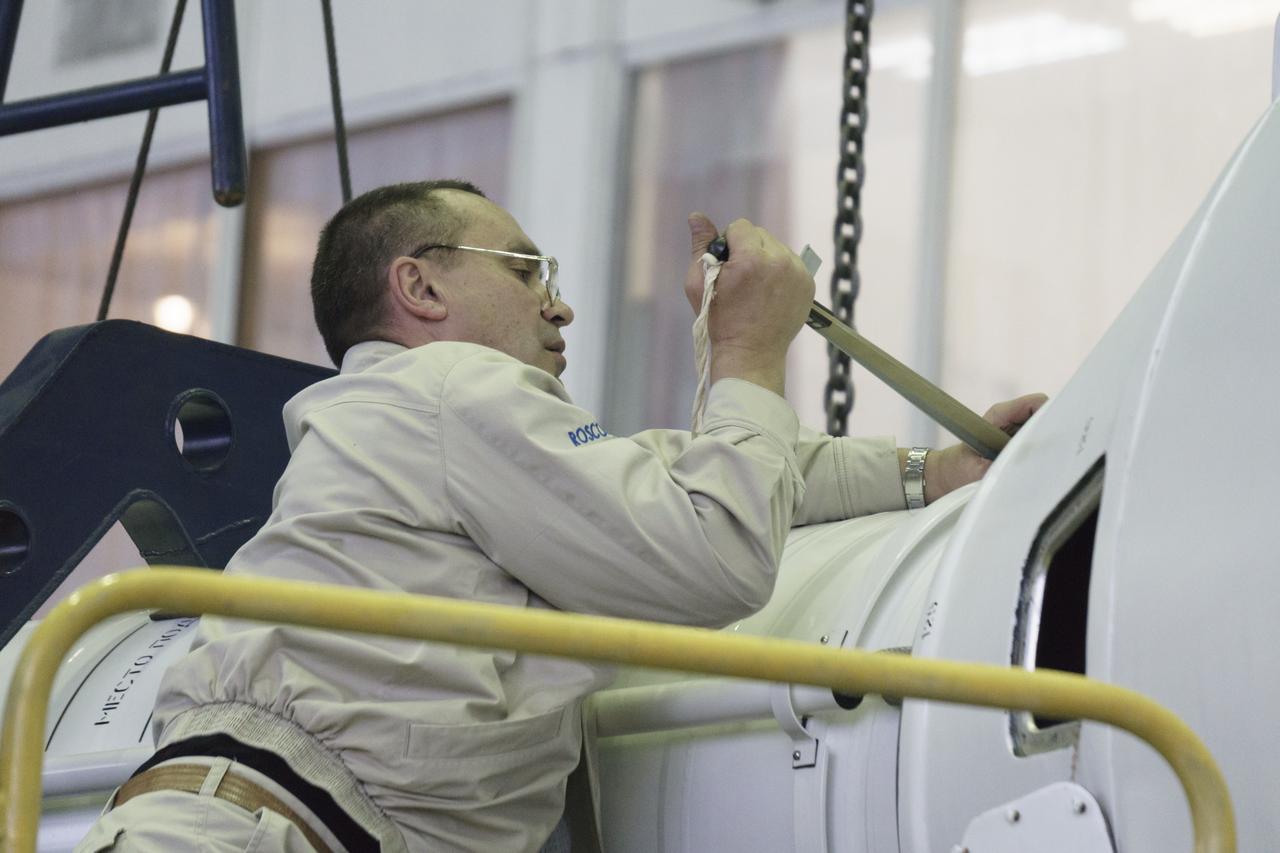
The Soyuz rocket and Soyuz TMA-16M spacecraft are assembled at Building 112 on the Baikonur Cosmodrome on Tuesday, March 24, 2015 in Baikonur, Kazakhstan. NASA Astronaut Scott Kelly, and Russian Cosmonauts Mikhail Kornienko, and Gennady Padalka of the Russian Federal Space Agency (Roscosmos) are scheduled to launch to the International Space Station in the Soyuz TMA-16M spacecraft from the Baikonur Cosmodrome in Kazakhstan March 28, Kazakh time (March 27 Eastern time.) As the one-year crew, Kelly and Kornienko will return to Earth on Soyuz TMA-18M in March 2016. Photo Credit: (NASA/Victor Zelentsov)
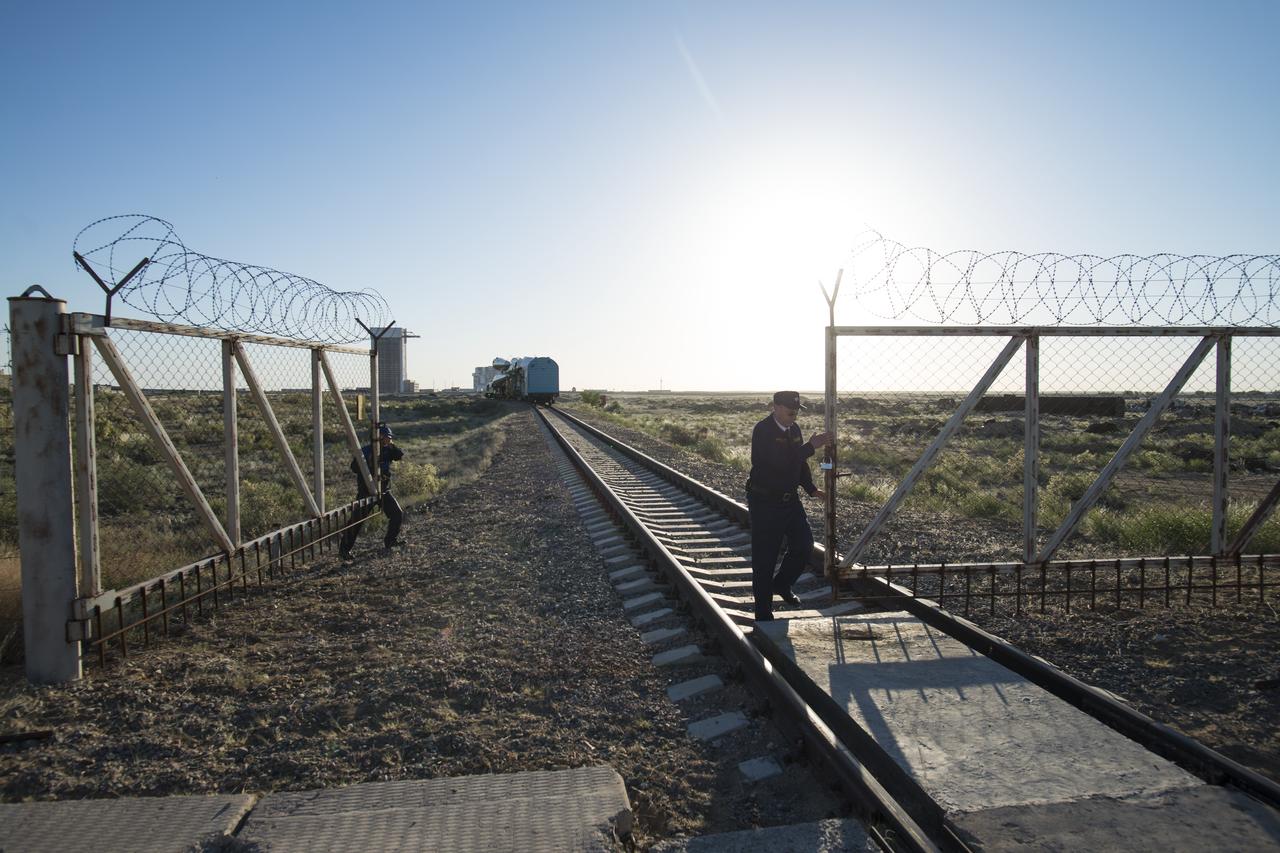
Security personnel close a gate after the Soyuz rocket was rolled out of Building 112 as it is moved to the launch pad by train, Monday, June 4, 2018 at the Baikonur Cosmodrome in Kazakhstan. Expedition 56 Soyuz Commander Sergey Prokopyev of Roscosmos, flight engineer Serena Auñón-Chancellor of NASA, and flight engineer Alexander Gerst of ESA (European Space Agency) are scheduled to launch aboard their Soyuz MS-09 spacecraft at 7:12 a.m. Eastern time (5:12 p.m. Baikonur time), on Wednesday, June 6. Photo Credit: (NASA/Joel Kowsky)
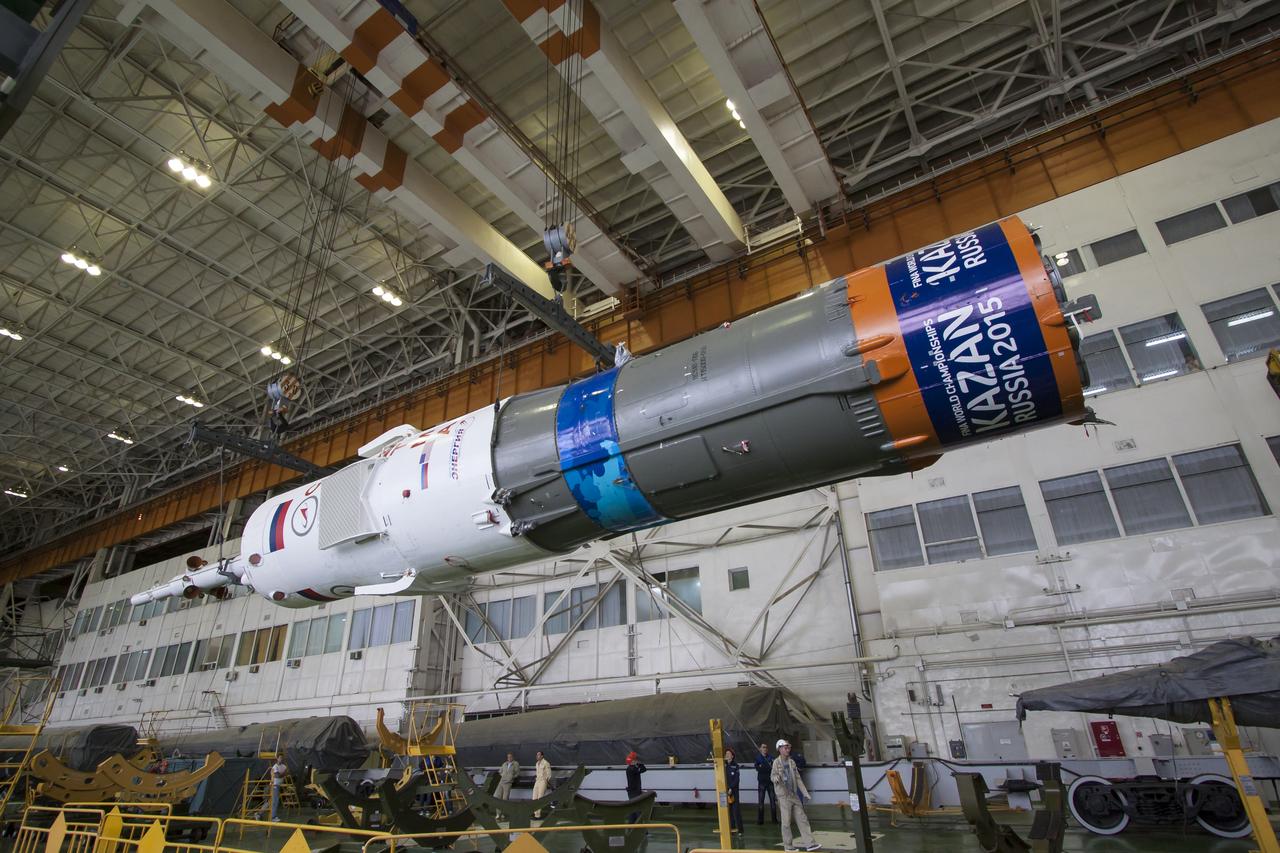
The Soyuz rocket and Soyuz TMA-14M spacecraft is assembled at Building 112 at the Baikonur Cosmodrome on Monday, Sept. 22, 2014, in Baikonur, Kazakhstan. Launch of the Soyuz is scheduled for Sept. 26 and will send Expedition 41 Soyuz Commander Alexander Samokutyaev of the Russian Federal Space Agency (Roscosmos), Flight Engineer Barry Wilmore of NASA, and Flight Engineer Elena Serova of Roscosmos to the International Space Station for a five and a half month stay. The rocket is adorned with the logo of the 2015 FINA World Aquatics Championships, which will be held in Kazan, Russia. Photo Credit: (NASA/Victor Zelentsov)
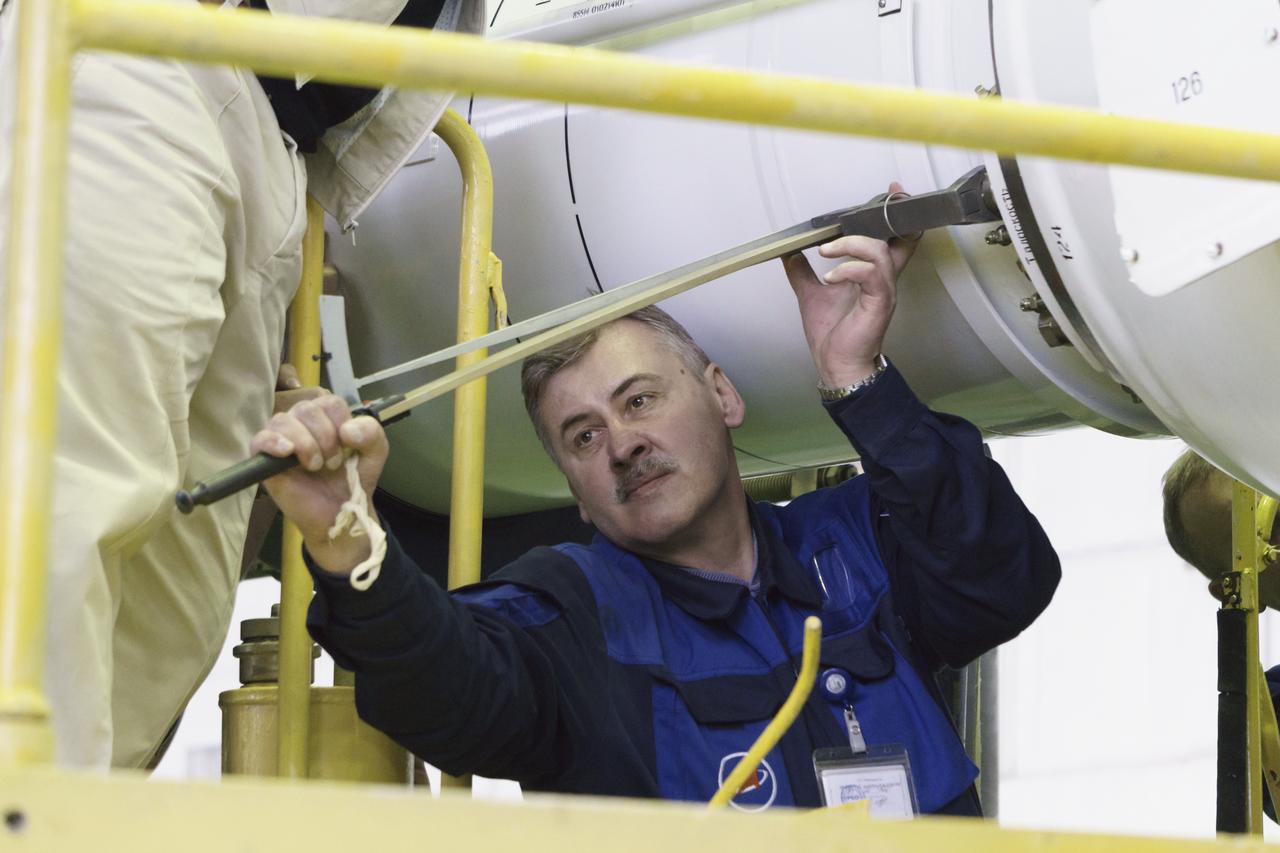
The Soyuz rocket and Soyuz TMA-16M spacecraft are assembled at Building 112 on the Baikonur Cosmodrome on Tuesday, March 24, 2015 in Baikonur, Kazakhstan. NASA Astronaut Scott Kelly, and Russian Cosmonauts Mikhail Kornienko, and Gennady Padalka of the Russian Federal Space Agency (Roscosmos) are scheduled to launch to the International Space Station in the Soyuz TMA-16M spacecraft from the Baikonur Cosmodrome in Kazakhstan March 28, Kazakh time (March 27 Eastern time.) As the one-year crew, Kelly and Kornienko will return to Earth on Soyuz TMA-18M in March 2016. Photo Credit: (NASA/Victor Zelentsov)
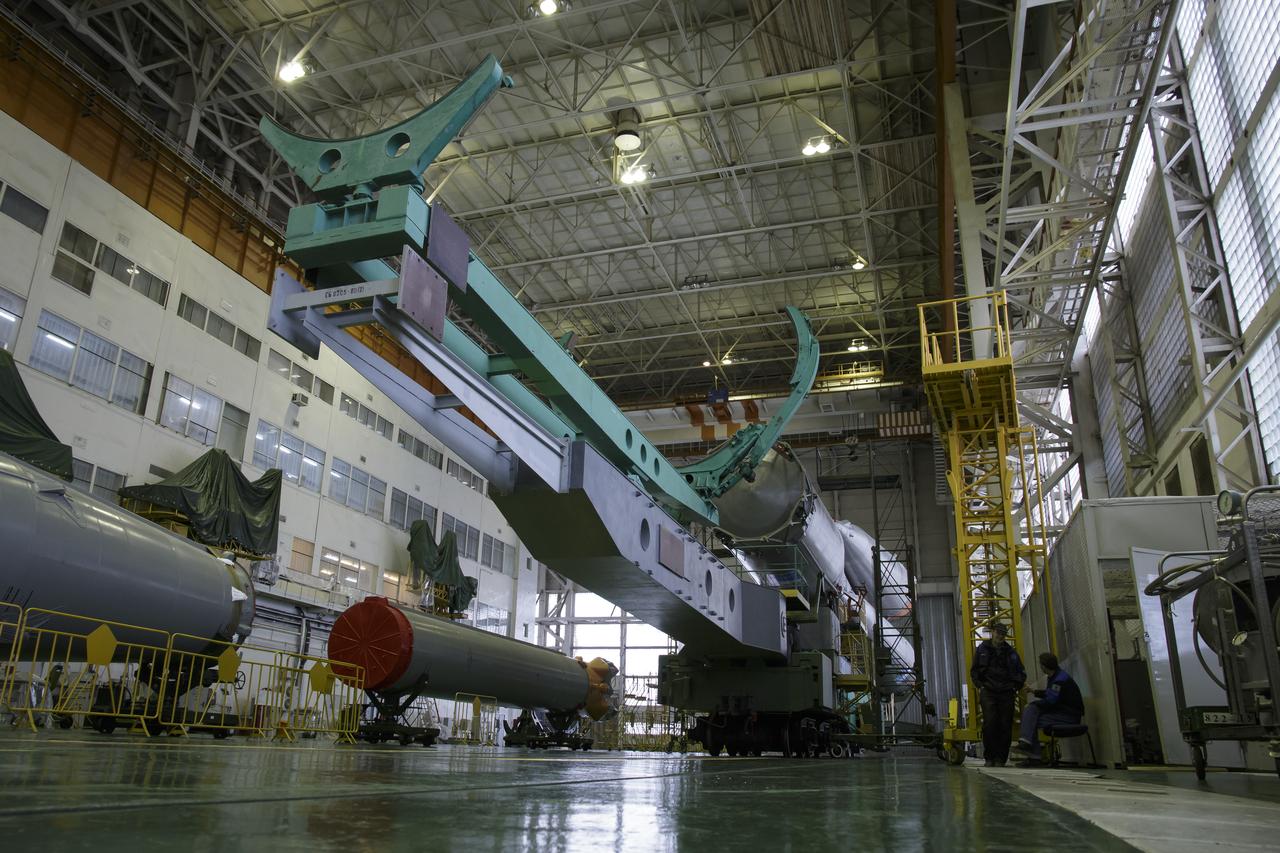
The Soyuz rocket and Soyuz TMA-16M spacecraft are assembled at Building 112 on the Baikonur Cosmodrome on Tuesday, March 24, 2015 in Baikonur, Kazakhstan. NASA Astronaut Scott Kelly, and Russian Cosmonauts Mikhail Kornienko, and Gennady Padalka of the Russian Federal Space Agency (Roscosmos) are scheduled to launch to the International Space Station in the Soyuz TMA-16M spacecraft from the Baikonur Cosmodrome in Kazakhstan March 28, Kazakh time (March 27 Eastern time.) As the one-year crew, Kelly and Kornienko will return to Earth on Soyuz TMA-18M in March 2016. Photo Credit: (NASA/Victor Zelentsov)
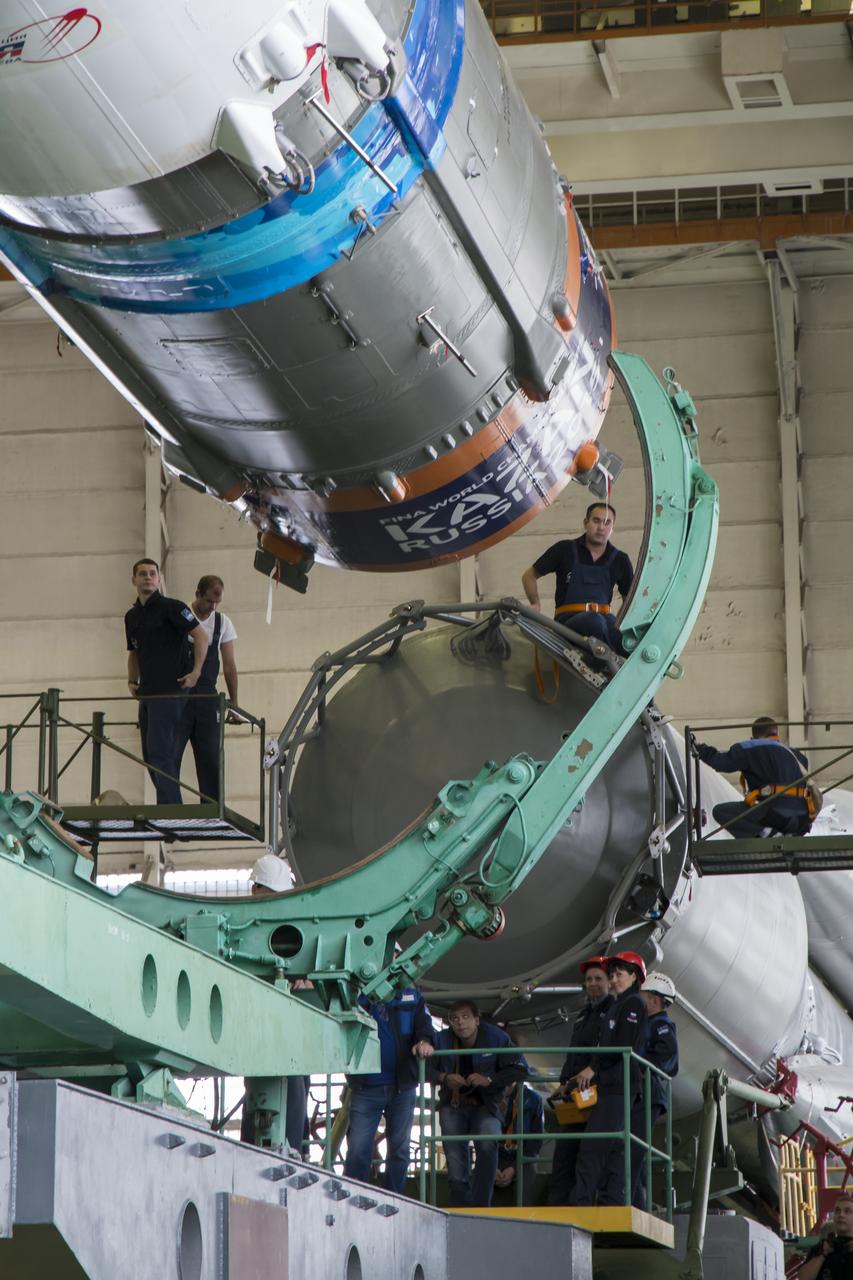
The Soyuz rocket and Soyuz TMA-14M spacecraft is assembled at Building 112 at the Baikonur Cosmodrome on Monday, Sept. 22, 2014, in Baikonur, Kazakhstan. Launch of the Soyuz is scheduled for Sept. 26 and will send Expedition 41 Soyuz Commander Alexander Samokutyaev of the Russian Federal Space Agency (Roscosmos), Flight Engineer Barry Wilmore of NASA, and Flight Engineer Elena Serova of Roscosmos to the International Space Station for a five and a half month stay. The rocket is adorned with the logo of the 2015 FINA World Championships which will be take place in Kazan, Russia. Photo Credit: (NASA/Victor Zelentsov)
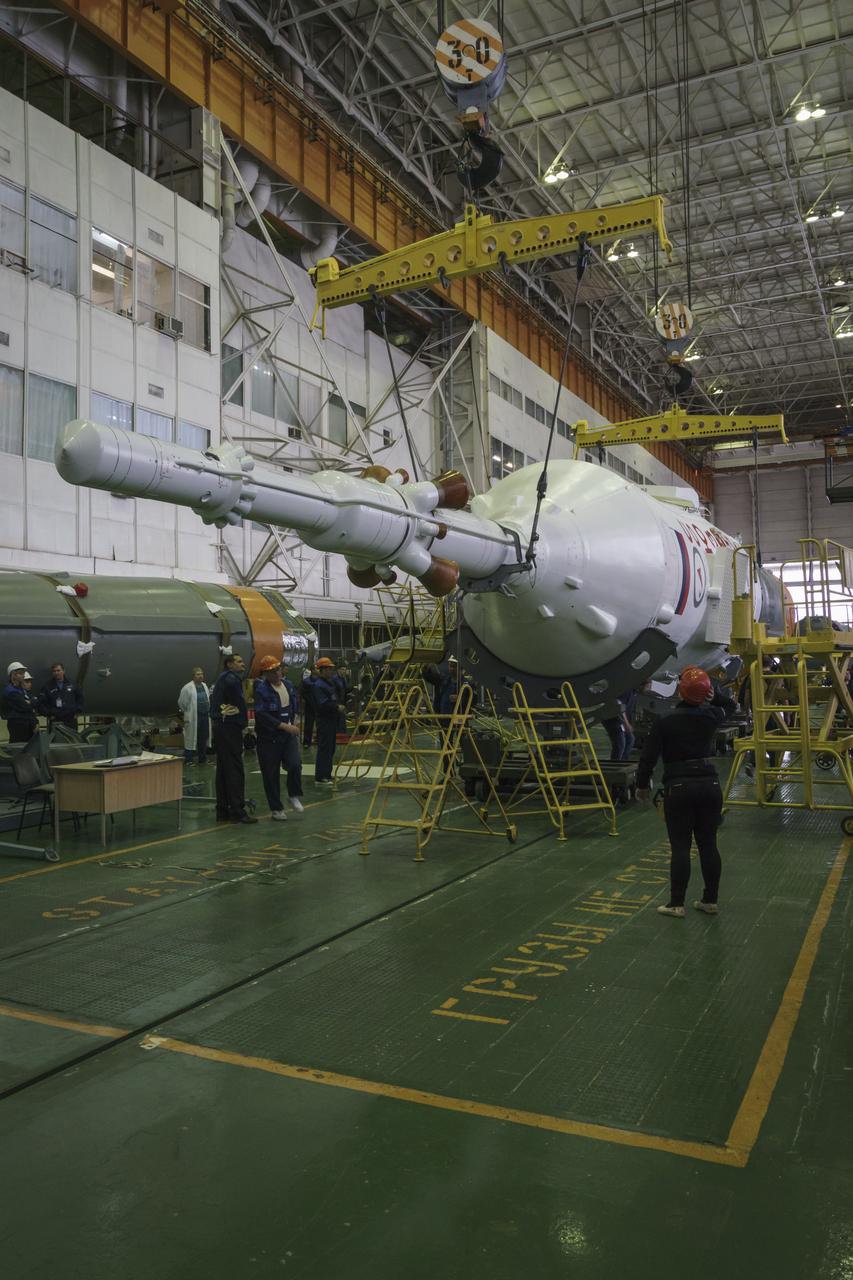
The Soyuz rocket and Soyuz TMA-16M spacecraft are assembled at Building 112 on the Baikonur Cosmodrome on Tuesday, March 24, 2015 in Baikonur, Kazakhstan. NASA Astronaut Scott Kelly, and Russian Cosmonauts Mikhail Kornienko, and Gennady Padalka of the Russian Federal Space Agency (Roscosmos) are scheduled to launch to the International Space Station in the Soyuz TMA-16M spacecraft from the Baikonur Cosmodrome in Kazakhstan March 28, Kazakh time (March 27 Eastern time.) As the one-year crew, Kelly and Kornienko will return to Earth on Soyuz TMA-18M in March 2016. Photo Credit: (NASA/Victor Zelentsov)
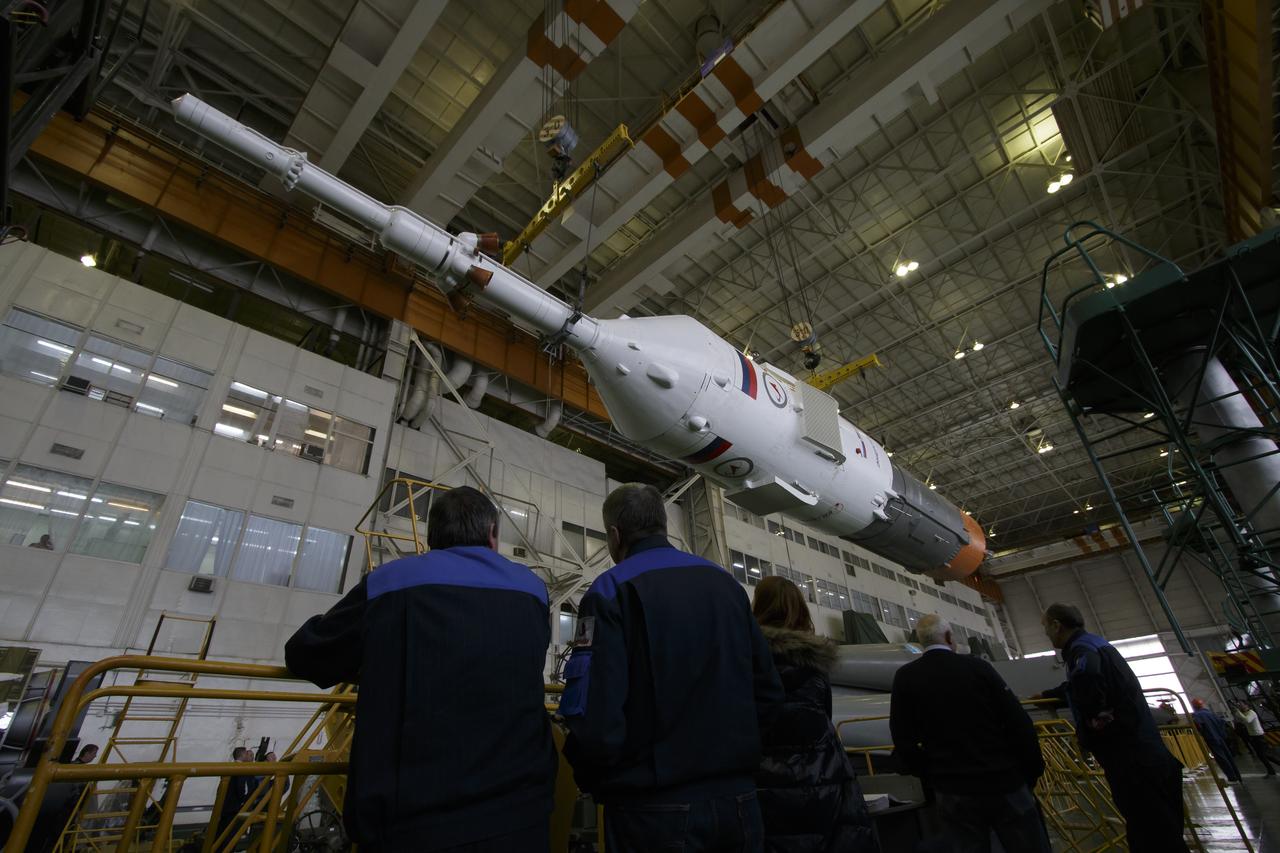
The Soyuz rocket and Soyuz TMA-16M spacecraft are assembled at Building 112 on the Baikonur Cosmodrome on Tuesday, March 24, 2015 in Baikonur, Kazakhstan. NASA Astronaut Scott Kelly, and Russian Cosmonauts Mikhail Kornienko, and Gennady Padalka of the Russian Federal Space Agency (Roscosmos) are scheduled to launch to the International Space Station in the Soyuz TMA-16M spacecraft from the Baikonur Cosmodrome in Kazakhstan March 28, Kazakh time (March 27 Eastern time.) As the one-year crew, Kelly and Kornienko will return to Earth on Soyuz TMA-18M in March 2016. Photo Credit: (NASA/Victor Zelentsov)
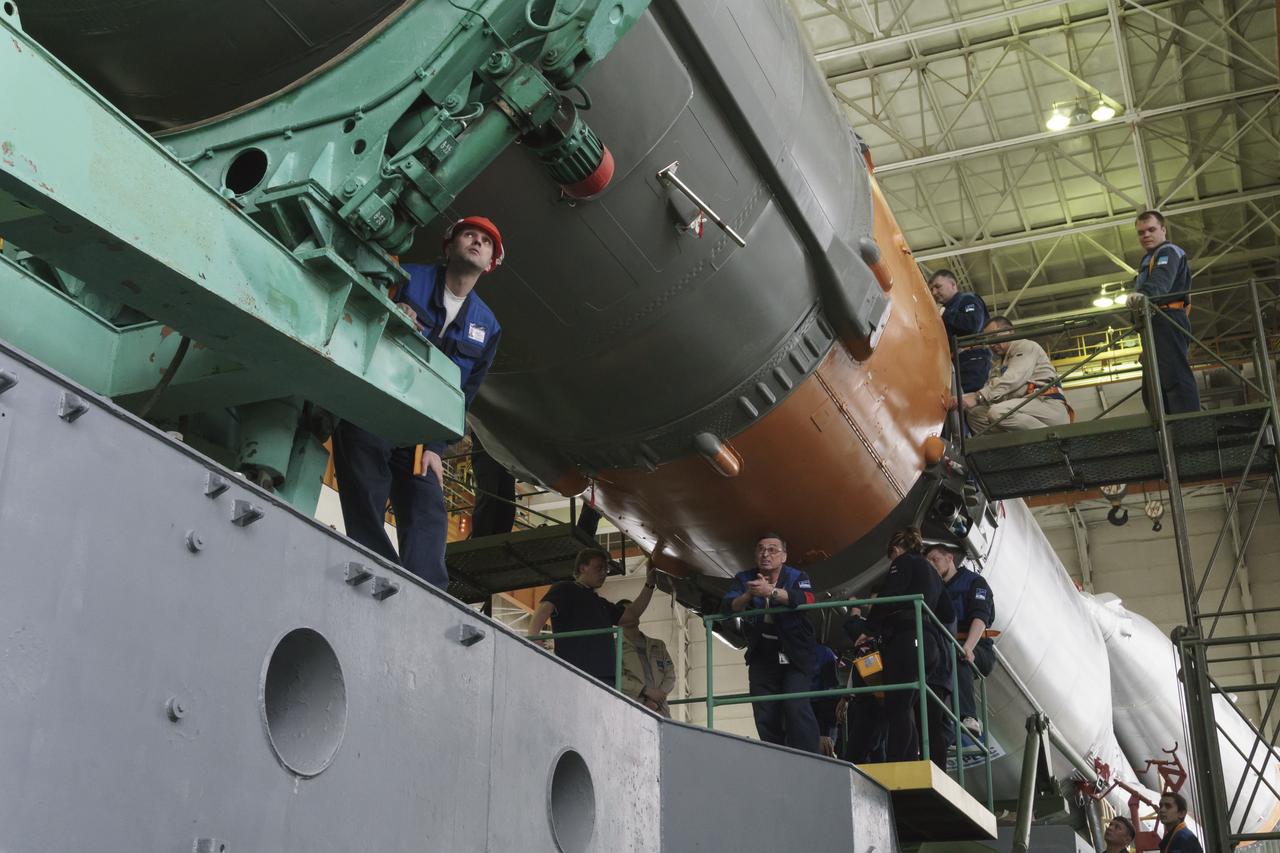
The Soyuz rocket and Soyuz TMA-16M spacecraft are assembled at Building 112 on the Baikonur Cosmodrome on Tuesday, March 24, 2015 in Baikonur, Kazakhstan. NASA Astronaut Scott Kelly, and Russian Cosmonauts Mikhail Kornienko, and Gennady Padalka of the Russian Federal Space Agency (Roscosmos) are scheduled to launch to the International Space Station in the Soyuz TMA-16M spacecraft from the Baikonur Cosmodrome in Kazakhstan March 28, Kazakh time (March 27 Eastern time.) As the one-year crew, Kelly and Kornienko will return to Earth on Soyuz TMA-18M in March 2016. Photo Credit: (NASA/Victor Zelentsov)

The Soyuz rocket and Soyuz TMA-16M spacecraft are assembled at Building 112 on the Baikonur Cosmodrome on Tuesday, March 24, 2015 in Baikonur, Kazakhstan. NASA Astronaut Scott Kelly, and Russian Cosmonauts Mikhail Kornienko, and Gennady Padalka of the Russian Federal Space Agency (Roscosmos) are scheduled to launch to the International Space Station in the Soyuz TMA-16M spacecraft from the Baikonur Cosmodrome in Kazakhstan March 28, Kazakh time (March 27 Eastern time.) As the one-year crew, Kelly and Kornienko will return to Earth on Soyuz TMA-18M in March 2016. Photo Credit: (NASA/Victor Zelentsov)
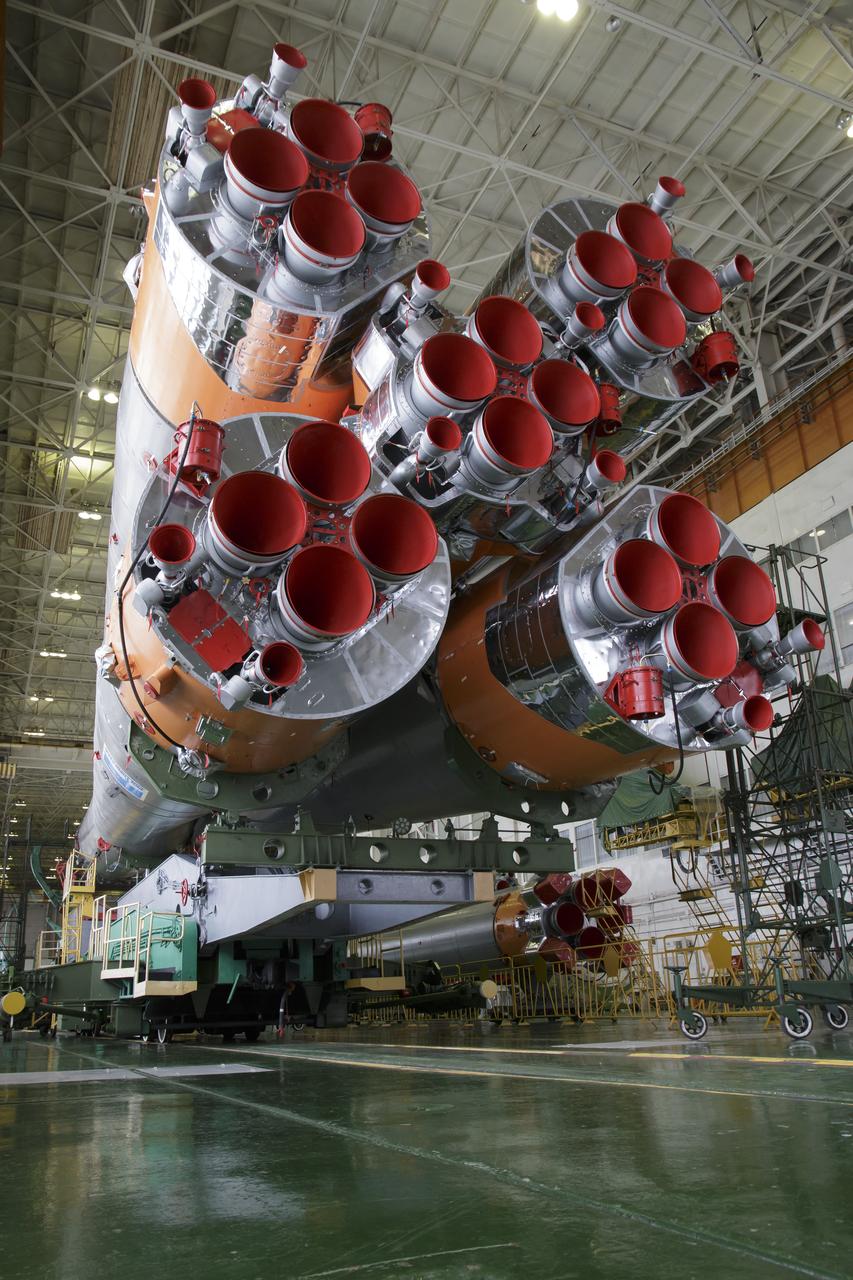
The Soyuz rocket and Soyuz TMA-16M spacecraft are assembled at Building 112 on the Baikonur Cosmodrome on Tuesday, March 24, 2015 in Baikonur, Kazakhstan. NASA Astronaut Scott Kelly, and Russian Cosmonauts Mikhail Kornienko, and Gennady Padalka of the Russian Federal Space Agency (Roscosmos) are scheduled to launch to the International Space Station in the Soyuz TMA-16M spacecraft from the Baikonur Cosmodrome in Kazakhstan March 28, Kazakh time (March 27 Eastern time.) As the one-year crew, Kelly and Kornienko will return to Earth on Soyuz TMA-18M in March 2016. Photo Credit: (NASA/Victor Zelentsov)
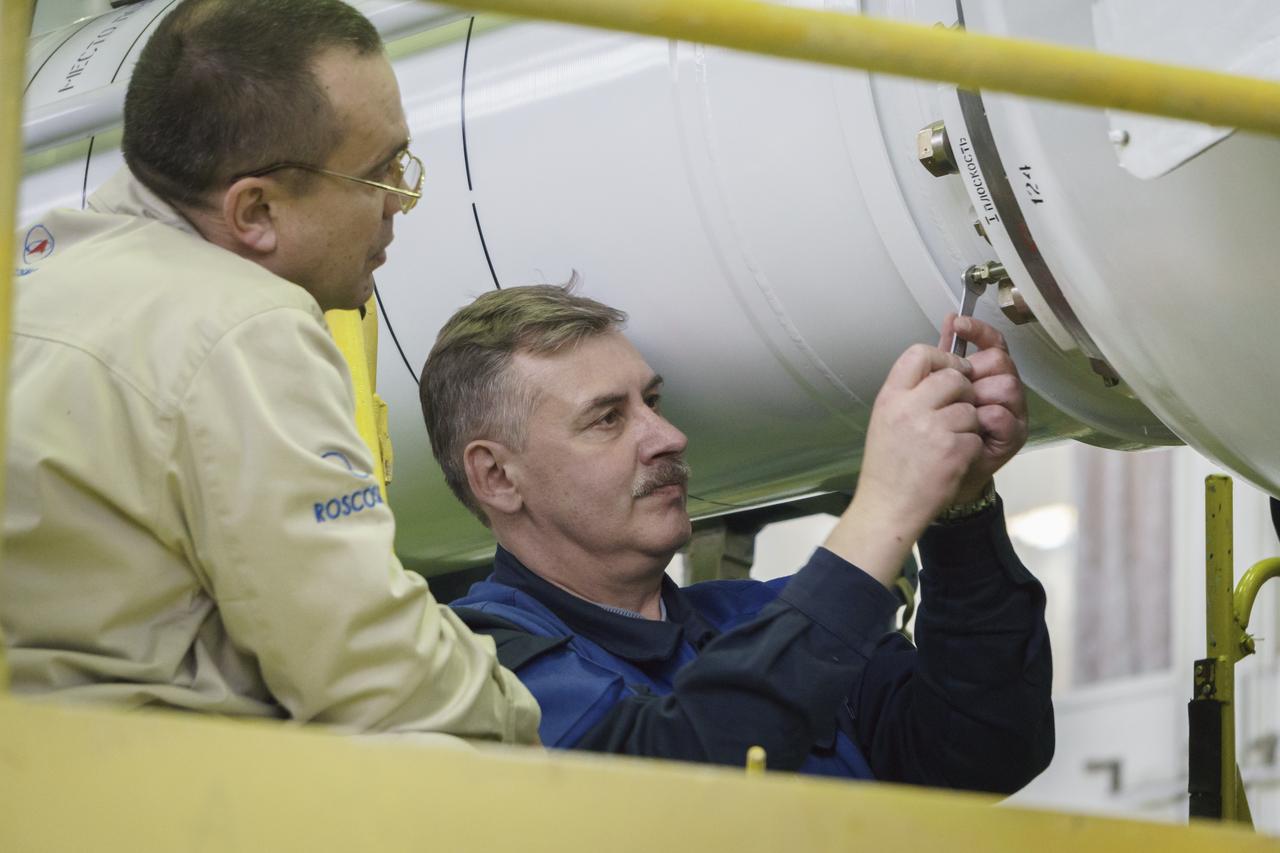
The Soyuz rocket and Soyuz TMA-16M spacecraft are assembled at Building 112 on the Baikonur Cosmodrome on Tuesday, March 24, 2015 in Baikonur, Kazakhstan. NASA Astronaut Scott Kelly, and Russian Cosmonauts Mikhail Kornienko, and Gennady Padalka of the Russian Federal Space Agency (Roscosmos) are scheduled to launch to the International Space Station in the Soyuz TMA-16M spacecraft from the Baikonur Cosmodrome in Kazakhstan March 28, Kazakh time (March 27 Eastern time.) As the one-year crew, Kelly and Kornienko will return to Earth on Soyuz TMA-18M in March 2016. Photo Credit: (NASA/Victor Zelentsov)
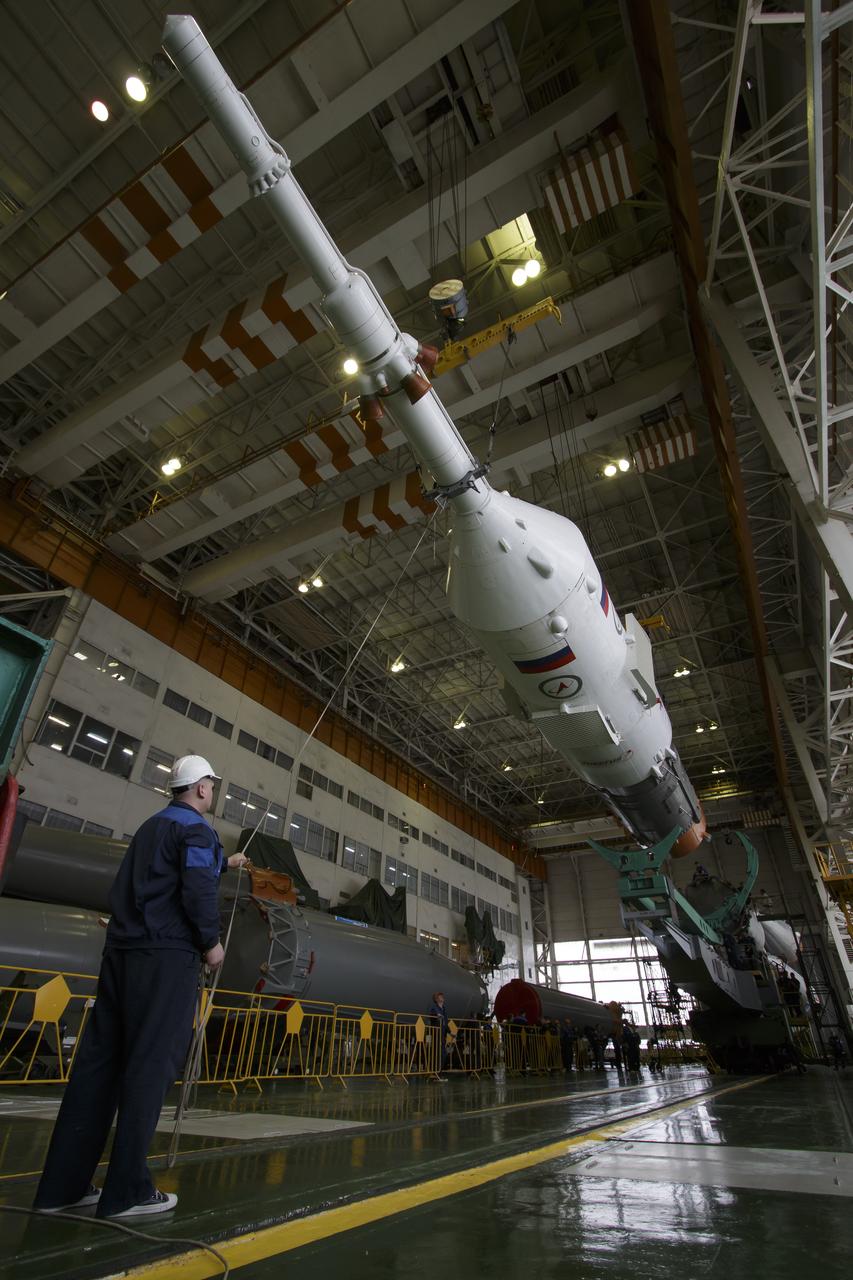
The Soyuz rocket and Soyuz TMA-16M spacecraft are assembled at Building 112 on the Baikonur Cosmodrome on Tuesday, March 24, 2015 in Baikonur, Kazakhstan. NASA Astronaut Scott Kelly, and Russian Cosmonauts Mikhail Kornienko, and Gennady Padalka of the Russian Federal Space Agency (Roscosmos) are scheduled to launch to the International Space Station in the Soyuz TMA-16M spacecraft from the Baikonur Cosmodrome in Kazakhstan March 28, Kazakh time (March 27 Eastern time.) As the one-year crew, Kelly and Kornienko will return to Earth on Soyuz TMA-18M in March 2016. Photo Credit: (NASA/Victor Zelentsov)
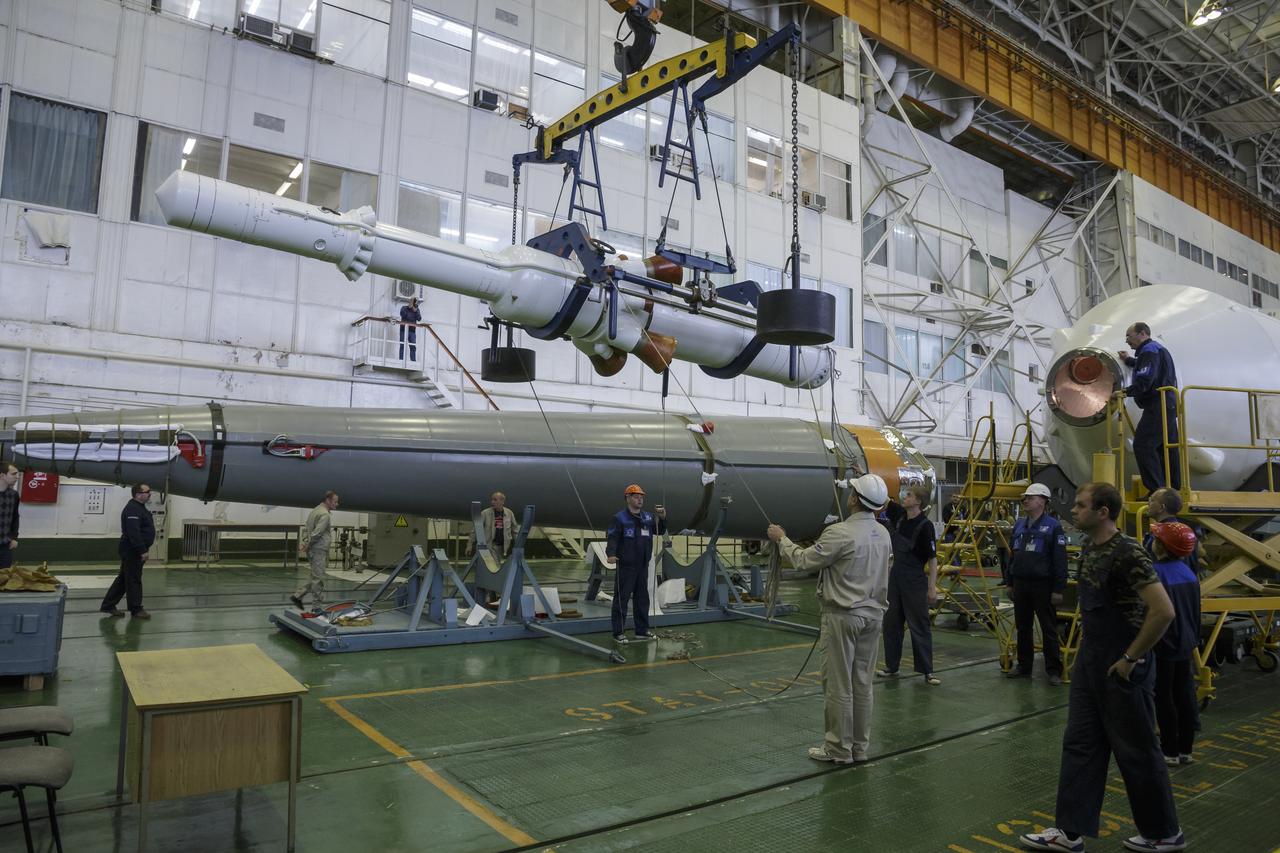
The Soyuz rocket and Soyuz TMA-16M spacecraft are assembled at Building 112 on the Baikonur Cosmodrome on Tuesday, March 24, 2015 in Baikonur, Kazakhstan. NASA Astronaut Scott Kelly, and Russian Cosmonauts Mikhail Kornienko, and Gennady Padalka of the Russian Federal Space Agency (Roscosmos) are scheduled to launch to the International Space Station in the Soyuz TMA-16M spacecraft from the Baikonur Cosmodrome in Kazakhstan March 28, Kazakh time (March 27 Eastern time.) As the one-year crew, Kelly and Kornienko will return to Earth on Soyuz TMA-18M in March 2016. Photo Credit: (NASA/Victor Zelentsov)

A train backs up to building 112 to start to rollout the Soyuz TMA-16M spacecraft to the launch pad at the Baikonur Cosmodrome, Kazakhstan, Wednesday, March 25, 2015. NASA Astronaut Scott Kelly, and Russian Cosmonauts Mikhail Kornienko, and Gennady Padalka of the Russian Federal Space Agency (Roscosmos) are scheduled to launch to the International Space Station in the Soyuz TMA-16M spacecraft from the Baikonur Cosmodrome in Kazakhstan March 28, Kazakh time (March 27 Eastern time.) As the one-year crew, Kelly and Kornienko will return to Earth on Soyuz TMA-18M in March 2016. Photo Credit (NASA/Bill Ingalls)

The Soyuz rocket and Soyuz TMA-16M spacecraft are assembled at Building 112 on the Baikonur Cosmodrome on Tuesday, March 24, 2015 in Baikonur, Kazakhstan. NASA Astronaut Scott Kelly, and Russian Cosmonauts Mikhail Kornienko, and Gennady Padalka of the Russian Federal Space Agency (Roscosmos) are scheduled to launch to the International Space Station in the Soyuz TMA-16M spacecraft from the Baikonur Cosmodrome in Kazakhstan March 28, Kazakh time (March 27 Eastern time.) As the one-year crew, Kelly and Kornienko will return to Earth on Soyuz TMA-18M in March 2016. Photo Credit: (NASA/Victor Zelentsov)
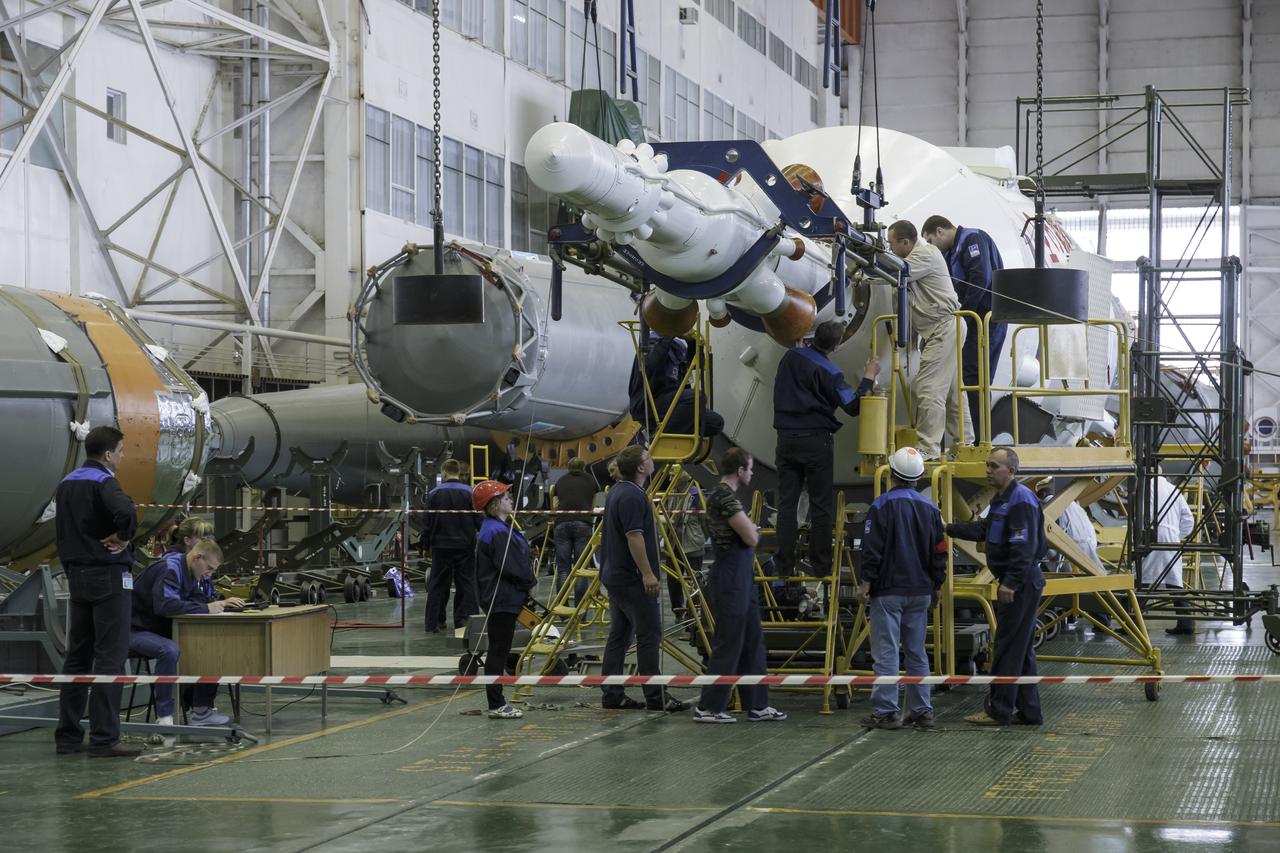
The Soyuz rocket and Soyuz TMA-16M spacecraft are assembled at Building 112 on the Baikonur Cosmodrome on Tuesday, March 24, 2015 in Baikonur, Kazakhstan. NASA Astronaut Scott Kelly, and Russian Cosmonauts Mikhail Kornienko, and Gennady Padalka of the Russian Federal Space Agency (Roscosmos) are scheduled to launch to the International Space Station in the Soyuz TMA-16M spacecraft from the Baikonur Cosmodrome in Kazakhstan March 28, Kazakh time (March 27 Eastern time.) As the one-year crew, Kelly and Kornienko will return to Earth on Soyuz TMA-18M in March 2016. Photo Credit: (NASA/Victor Zelentsov)
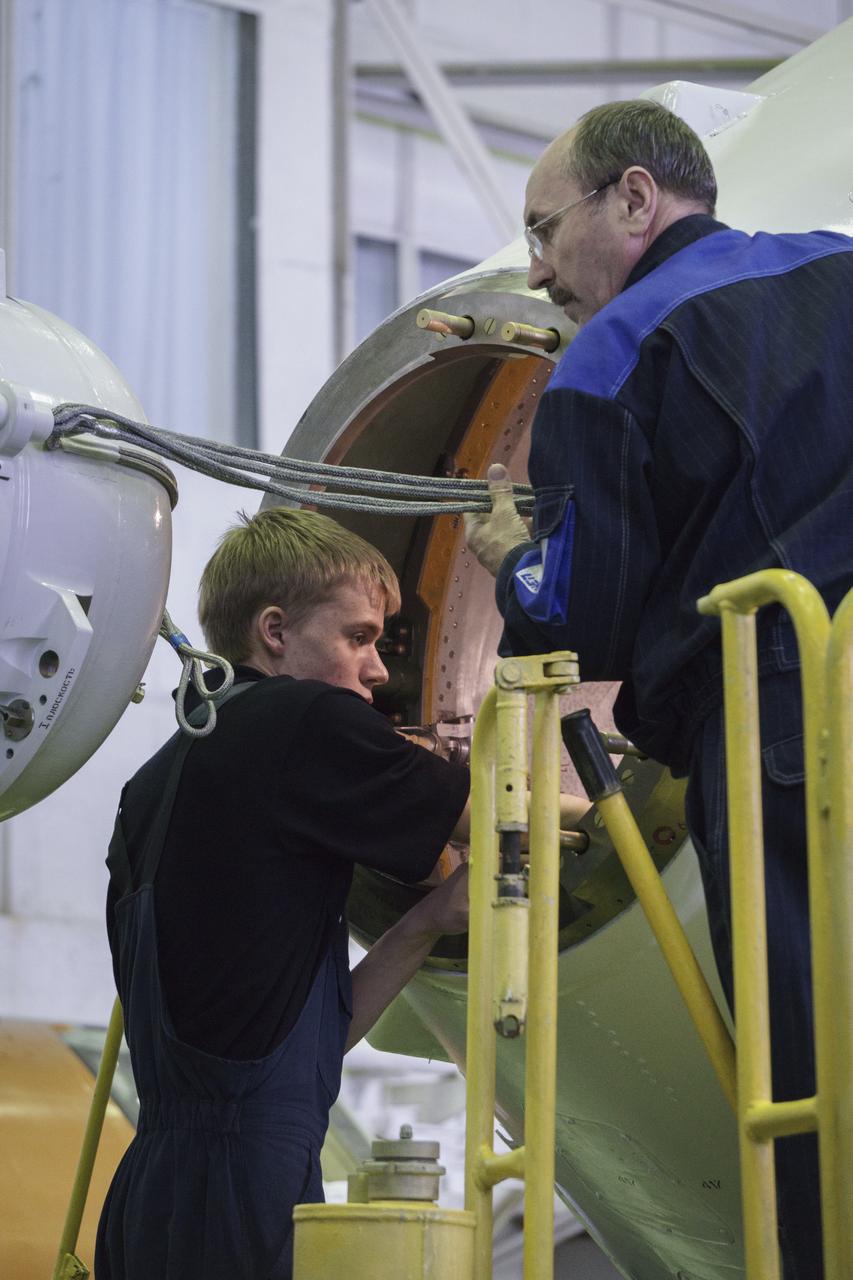
The Soyuz rocket and Soyuz TMA-16M spacecraft are assembled at Building 112 on the Baikonur Cosmodrome on Tuesday, March 24, 2015 in Baikonur, Kazakhstan. NASA Astronaut Scott Kelly, and Russian Cosmonauts Mikhail Kornienko, and Gennady Padalka of the Russian Federal Space Agency (Roscosmos) are scheduled to launch to the International Space Station in the Soyuz TMA-16M spacecraft from the Baikonur Cosmodrome in Kazakhstan March 28, Kazakh time (March 27 Eastern time.) As the one-year crew, Kelly and Kornienko will return to Earth on Soyuz TMA-18M in March 2016. Photo Credit: (NASA/Victor Zelentsov)
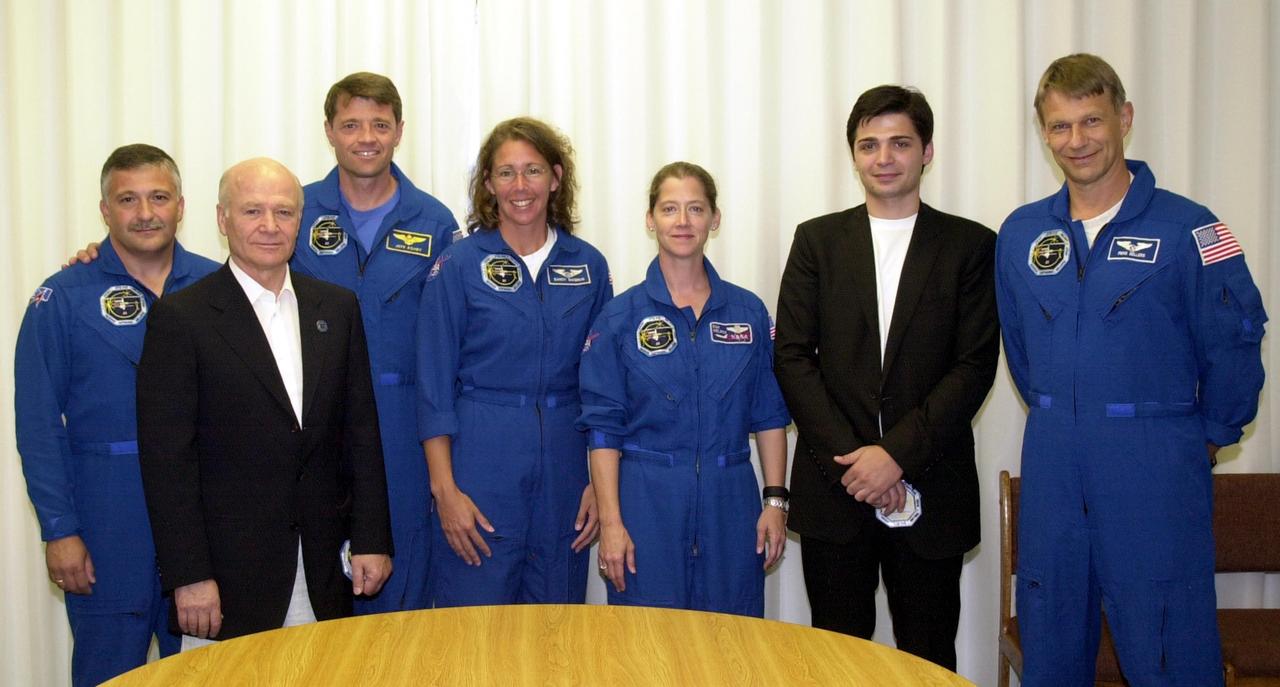
KENNEDY SPACE CENTER, FLA. - In the Operations and Checkout Building, the STS-112 crew takes time out from a visit with Russian officials to pose for a portrait. From left are Mission Specialist Fyodor N. Yurchikhin, Ph.D., a cosmonaut with the Russian Space Agency; Aslan Abashidze, President of the Autonomous Republic of Ajara in Georgia (Russia); Commander Jeffrey S. Ashby; Mission Specialist Sandra H. Magnus, Ph.D.; Pilot Pamela Ann Melroy; Georgi Abashidze, Mayor of Batumi (Yurchikhin's hometown); and Mission Specialist Piers J. Sellers, Ph.D. Mission Specialist David A. Wolf, M.D., not pictured, is also a member of the crew. The STS-112 crew is awaiting launch to the International Space Station aboard Space Shuttle Atlantis. The launch has been postponed to no earlier than Monday, Oct. 7, so that the Mission Control Center, located at the Lyndon B. Johnson Space Center in Houston, Texas, can be secured and protected from potential storm impacts from Hurricane Lili.
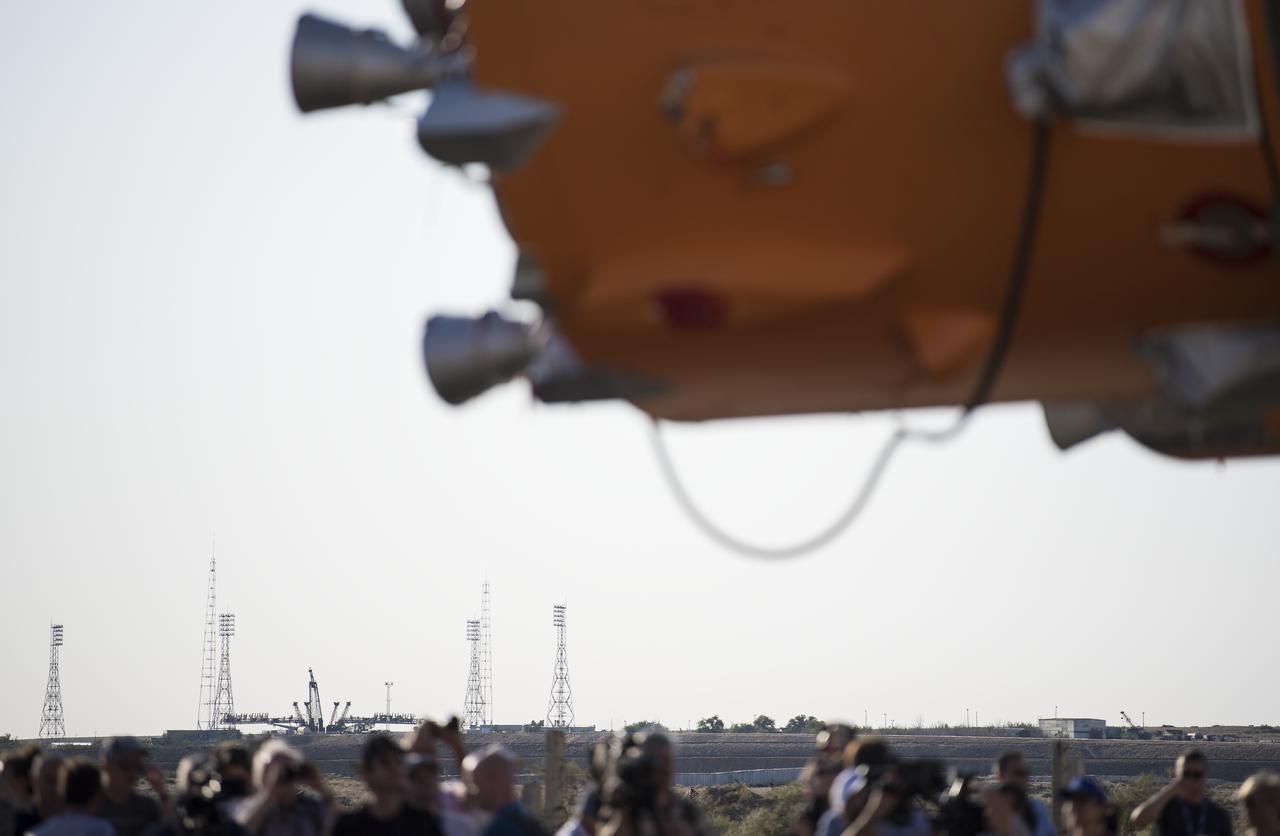
Launch Pad 1 at the Baikonur Cosmodrome is seen in the distance as the Soyuz rocket is rolled out by train, Thursday, July 18, 2019 at the Baikonur Cosmodrome in Kazakhstan. Expedition 60 Soyuz Commander Alexander Skvortsov of Roscosmos, flight engineer Andrew Morgan of NASA, and flight engineer Luca Parmitano of ESA (European Space Agency) are scheduled to launch aboard their Soyuz MS-13 spacecraft at 12:28 p.m. Eastern time (9:28 p.m. Baikonur time) , on Saturday, July 20. Photo Credit: (NASA/Joel Kowsky)
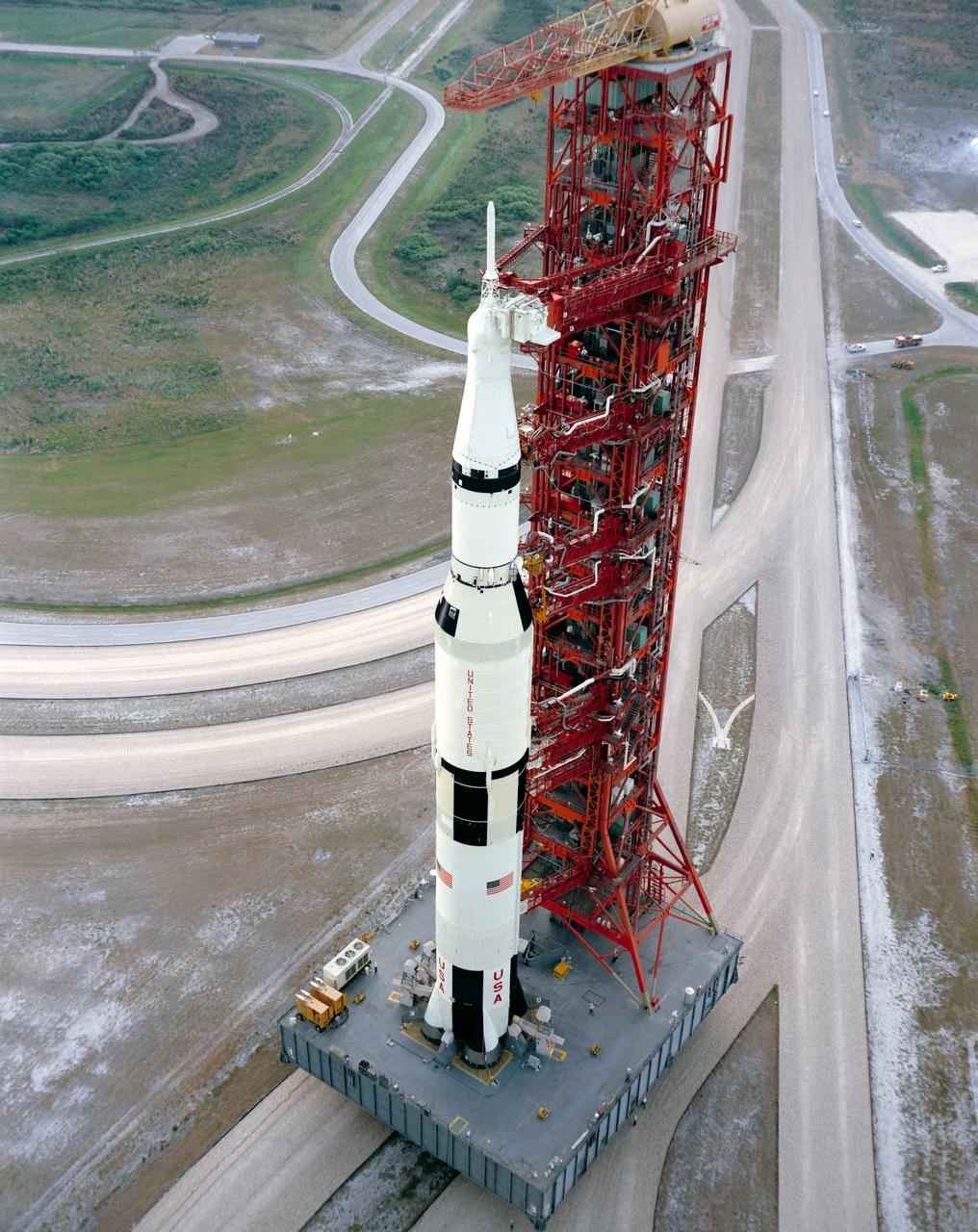
S71-33781 (11 May 1971) --- High angle view showing the Apollo 15 (Spacecraft 112/Lunar Module 10/Saturn 510) space vehicle on the way from the Vehicle Assembly Building (VAB) to Pad A, Launch Complex 39, Kennedy Space Center (KSC). The Saturn V stack and its mobile launch tower are atop a huge crawler-transporter. Apollo 15 is scheduled as the fourth manned lunar landing mission by the National Aeronautics and Space Administration (NASA). The crew men will be astronauts David R. Scott, commander; Alfred M. Worden, command module pilot; and James B. Irwin, lunar module pilot. While astronauts Scott and Irwin descend in the Lunar Module (LM) to explore the moon, astronaut Worden will remain with the Command and Service Modules (CSM) in lunar orbit.
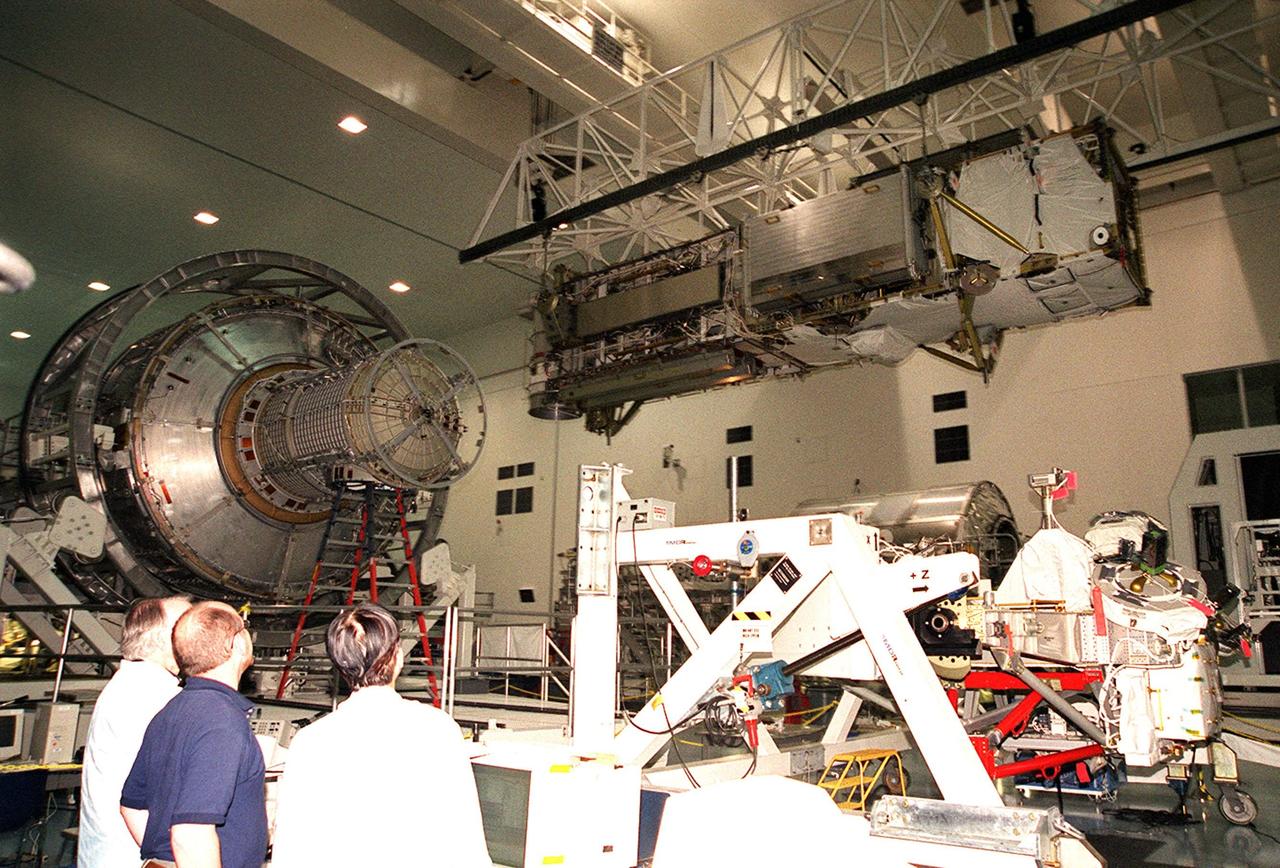
In the Space Station Processing Facility, the P6 integrated truss segment travels across the building to a payload transport canister for transfer to Launch Pad 39B. There it will be placed in Endeavour’s payload bay for launch on mission STS-97. At left is the airlock module, another component of the International Space Station. The P6 comprises Solar Array Wing-3 and the Integrated Electronic Assembly, to be installed on the Space Station. The Station’s electrical power system will use eight photovoltaic solar arrays, each 112 feet long by 39 feet wide, to convert sunlight to electricity. The solar arrays are mounted on a “blanket” that can be folded like an accordion for delivery. Once in orbit, astronauts will deploy the blankets to their full size. Gimbals will be used to rotate the arrays so that they will face the Sun to provide maximum power to the Space Station. Launch is scheduled Nov. 30 at 10:06 p.m. EST
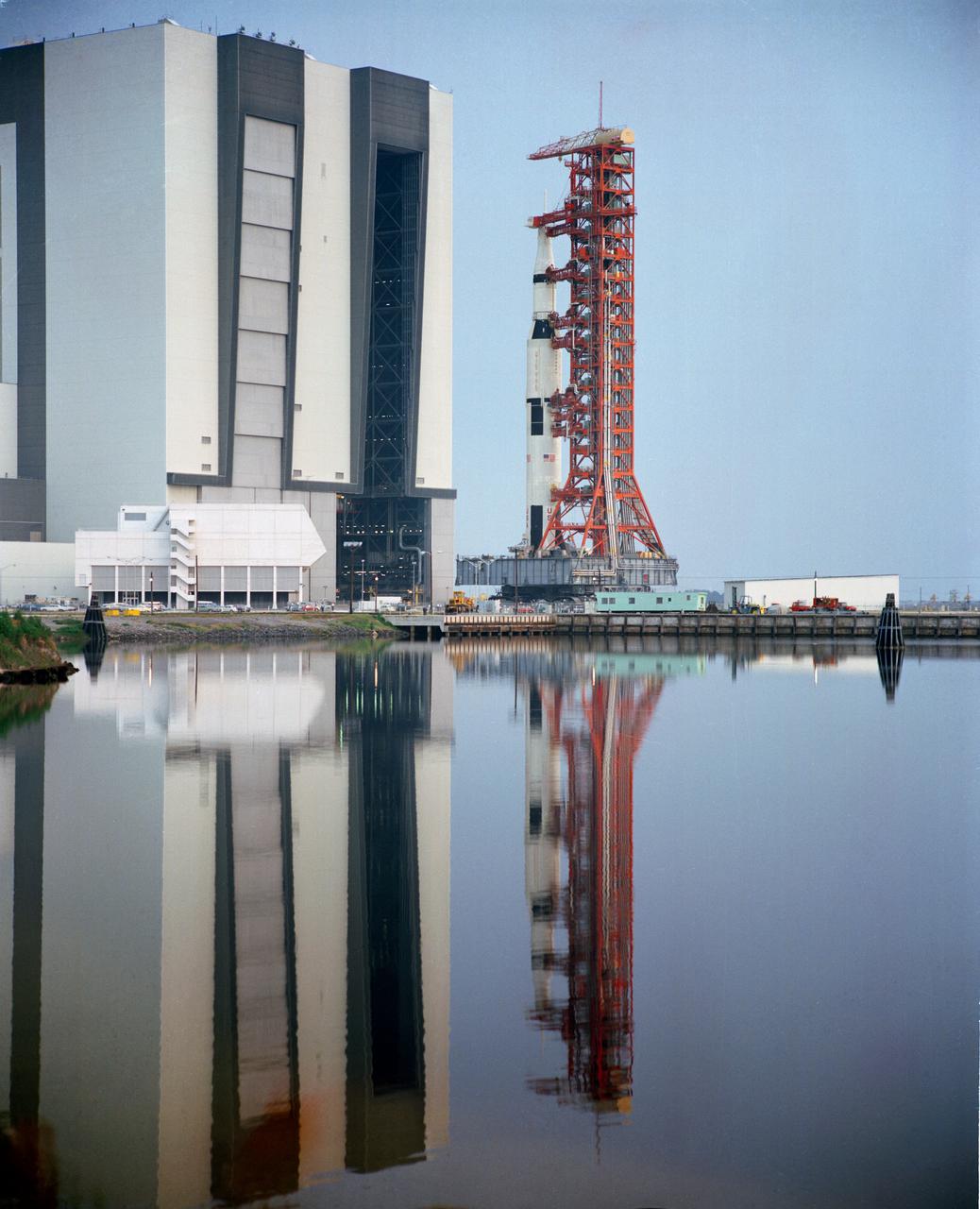
S71-33786 (11 May 1971) --- The 363-feet tall Apollo (Spacecraft 112/Lunar Module 10/Saturn 510) space vehicle which leaves the Vehicle Assembly Building (VAB) to Pad A, Launch Complex 39, Kennedy Space Center (KSC). The Saturn V stack and its mobile launch tower are atop a huge crawler-transporter. Apollo 15 is scheduled as the fourth manned lunar landing mission by the National Aeronautics and Space Administration (NASA) and is scheduled to lift off on July 26, 1971. The crew men will be astronauts David R. Scott, commander; Alfred M. Worden, command module pilot; and James B. Irwin, lunar module pilot. While astronaut Scott and Irwin will descend in the Lunar Module (LM) to explore the moon, astronaut Worden will remain with the Command and Service Modules (CSM) in lunar orbit.
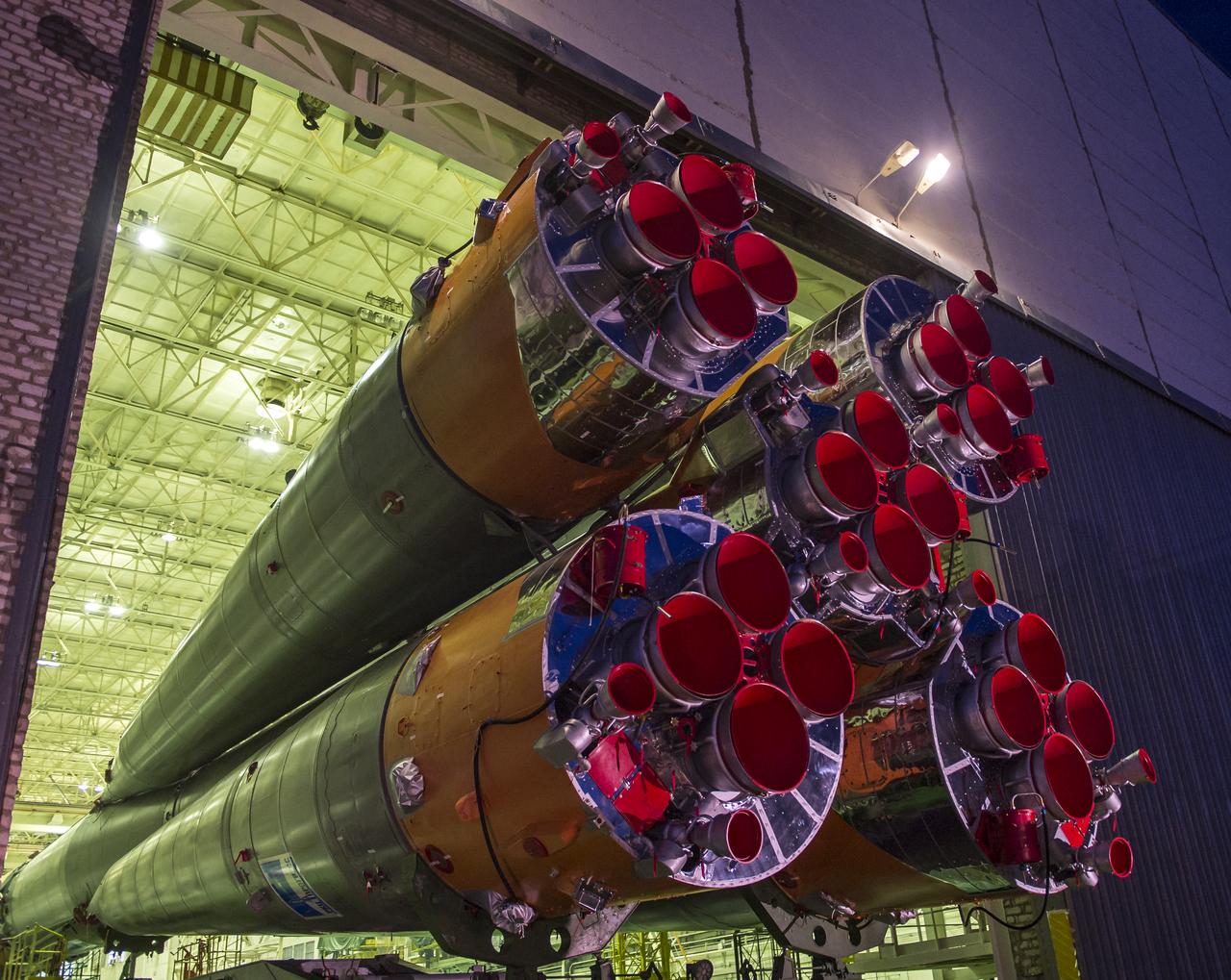
The Soyuz TMA-16M spacecraft is rolled out by train to the launch pad at the Baikonur Cosmodrome, Kazakhstan, Wednesday, March 25, 2015. NASA Astronaut Scott Kelly, and Russian Cosmonauts Mikhail Kornienko, and Gennady Padalka of the Russian Federal Space Agency (Roscosmos) are scheduled to launch to the International Space Station in the Soyuz TMA-16M spacecraft from the Baikonur Cosmodrome in Kazakhstan March 28, Kazakh time (March 27 Eastern time.) As the one-year crew, Kelly and Kornienko will return to Earth on Soyuz TMA-18M in March 2016. Photo Credit (NASA/Bill Ingalls)
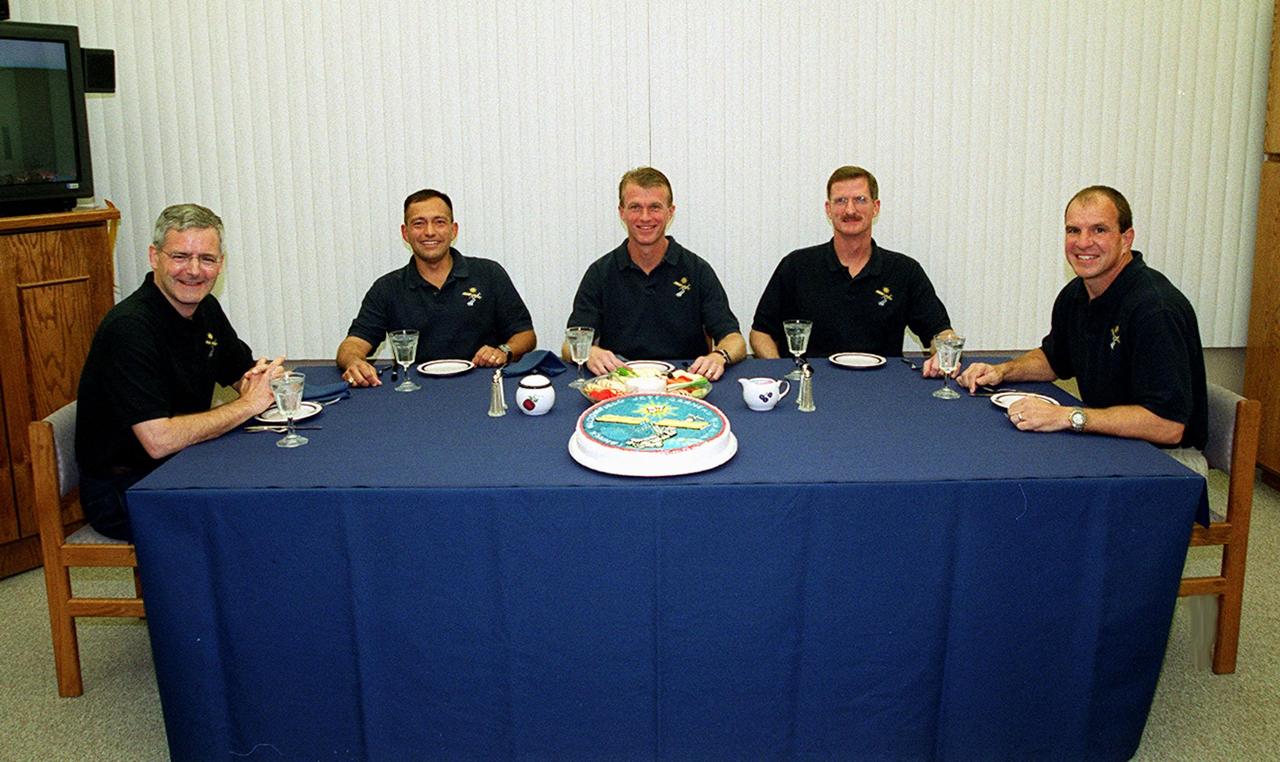
The STS-97 crew are ready to enjoy a snack in the crew quarters, Operations and Checkout Building, before beginning to suit up for launch. Seated from left are Mission Specialists Marc Garneau and Carlos Noriega, Commander Brent Jett, Mission Specialist Joseph Tanner and Pilot Michael Bloomfield. Garneau is with the Canadian Space Agency. Mission STS-97 is the sixth construction flight to the International Space Station. It is transporting the P6 Integrated Truss Structure that comprises Solar Array Wing-3 and the Integrated Electronic Assembly, to be installed on the Space Station. The solar arrays are mounted on a “blanket” that can be folded like an accordion for delivery. Once in orbit, astronauts will deploy the blankets to their full size. The 11-day mission includes two spacewalks to complete the solar array connections. The Station’s electrical power system will use eight photovoltaic solar arrays, each 112 feet long by 39 feet wide, to convert sunlight to electricity.. Gimbals will be used to rotate the arrays so that they will face the Sun to provide maximum power to the Space Station. Launch is scheduled for Nov. 30 at 10:06 p.m. EST
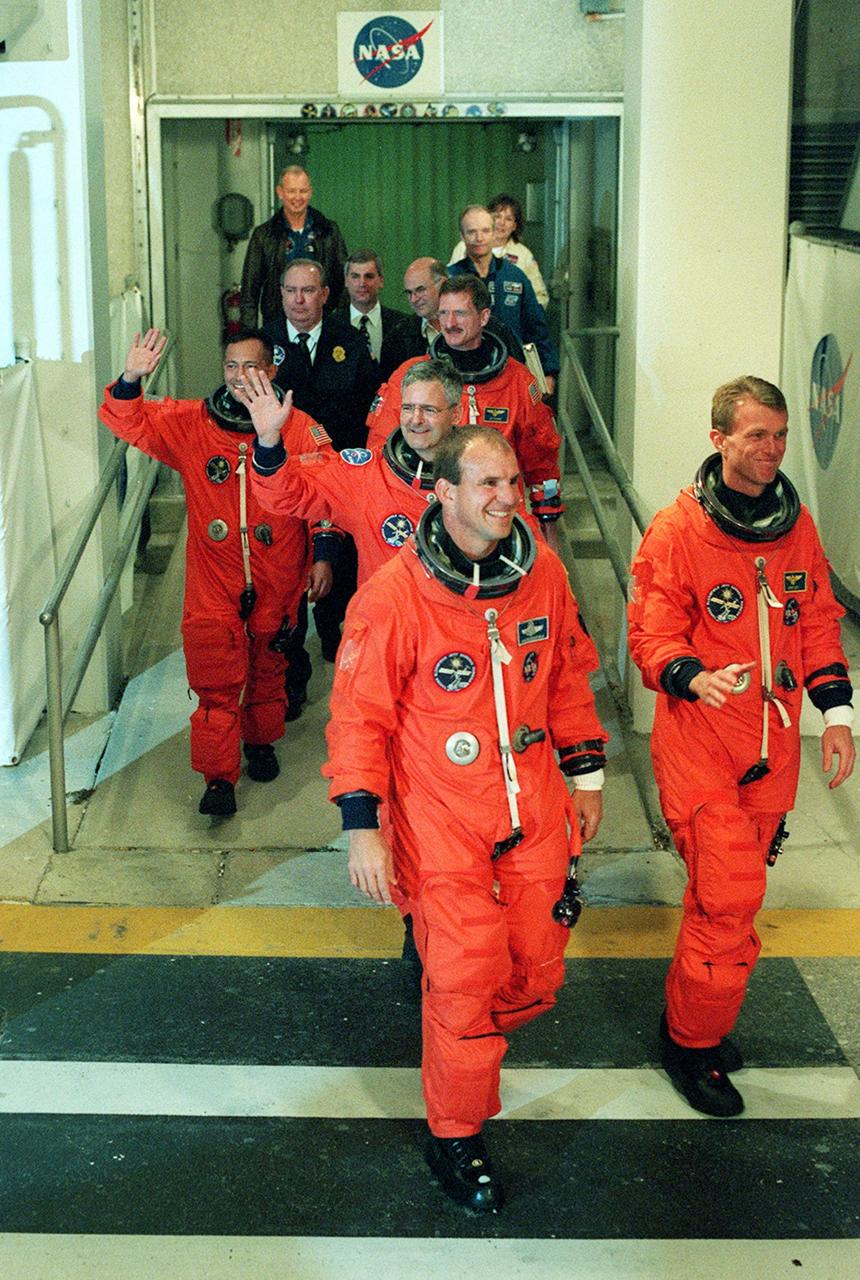
Eager to speed into space, the STS-97 crew hurries out of the Operations and Checkout Building for the ride to Launch Pad 39B. Leading the way are Pilot Michael Bloomfield (left) and Commander Brent Jett (right). In the middle is Mission Specialist Marc Garneau (waving), who is with the Canadian Space Agency. Behind are Mission Specialists Carlos Noriega (left, waving) and Joseph Tanner. Mission STS-97 is the sixth construction flight to the International Space Station. It is transporting the P6 Integrated Truss Structure that comprises Solar Array Wing-3 and the Integrated Electronic Assembly, to be installed on the Space Station. The solar arrays are mounted on a “blanket” that can be folded like an accordion for delivery. Once in orbit, astronauts will deploy the blankets to their full size. The 11-day mission includes two spacewalks to complete the solar array connections. The Station’s electrical power system will use eight photovoltaic solar arrays, each 112 feet long by 39 feet wide, to convert sunlight to electricity. Gimbals will be used to rotate the arrays so that they will face the Sun to provide maximum power to the Space Station. Launch is scheduled for Nov. 30 at 10:06 p.m. EST
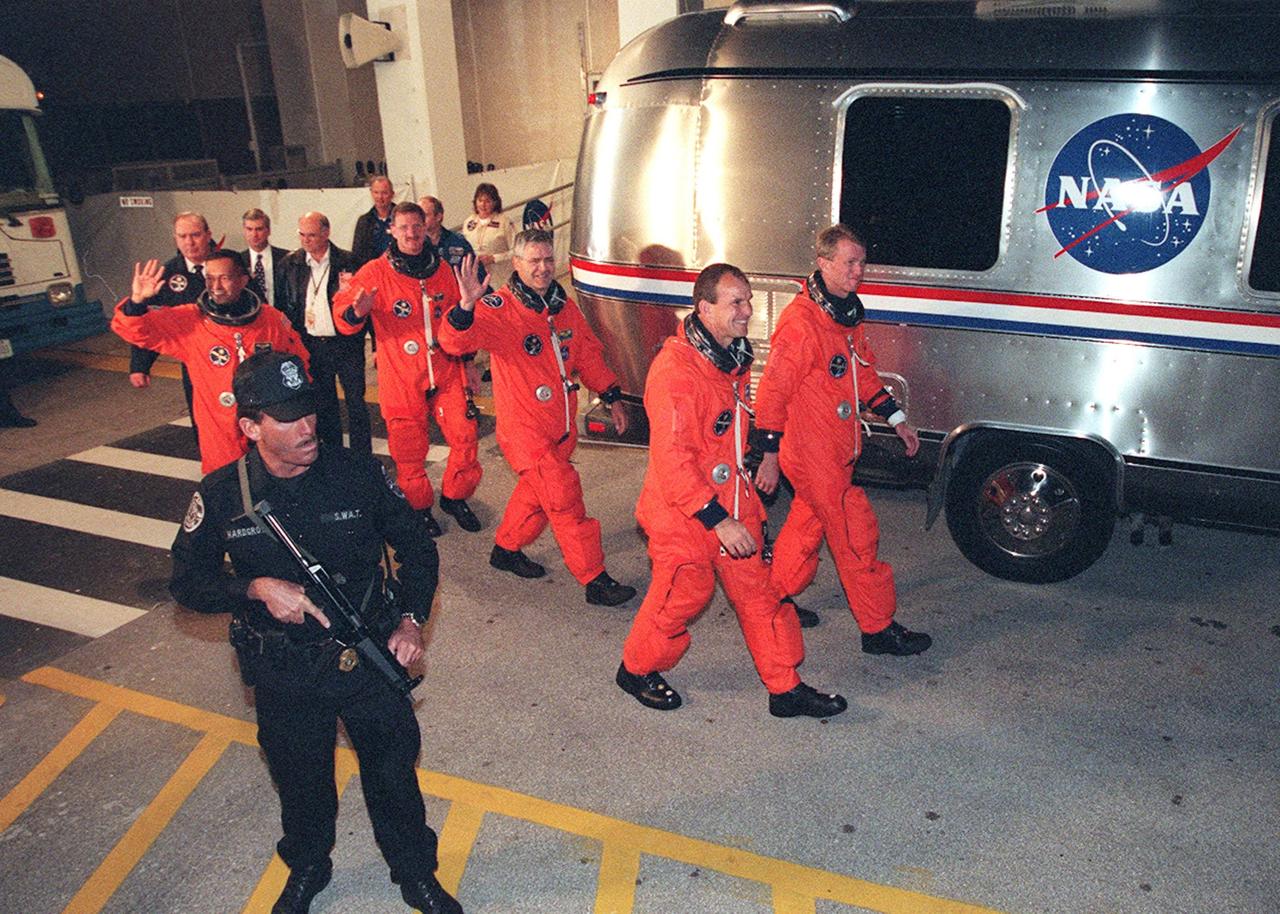
Leaving the Operations and Checkout Building, the STS-97 crew hurries toward the waiting Astrovan that will take them to Launch Pad 39B. Starting at left, they are Mission Specialists Carlos Noriega, Joseph Tanner and Marc Garneau; Pilot Michael Bloomfield; and Commander Brent Jett. Garneau is with the Canadian Space Agency. Mission STS-97 is the sixth construction flight to the International Space Station. It is transporting the P6 Integrated Truss Structure that comprises Solar Array Wing-3 and the Integrated Electronic Assembly, to be installed on the Space Station. The solar arrays are mounted on a “blanket” that can be folded like an accordion for delivery. Once in orbit, astronauts will deploy the blankets to their full size. The 11-day mission includes two spacewalks to complete the solar array connections. The Station’s electrical power system will use eight photovoltaic solar arrays, each 112 feet long by 39 feet wide, to convert sunlight to electricity. Gimbals will be used to rotate the arrays so that they will face the Sun to provide maximum power to the Space Station. Launch is scheduled for Nov. 30 at 10:06 p.m. EST