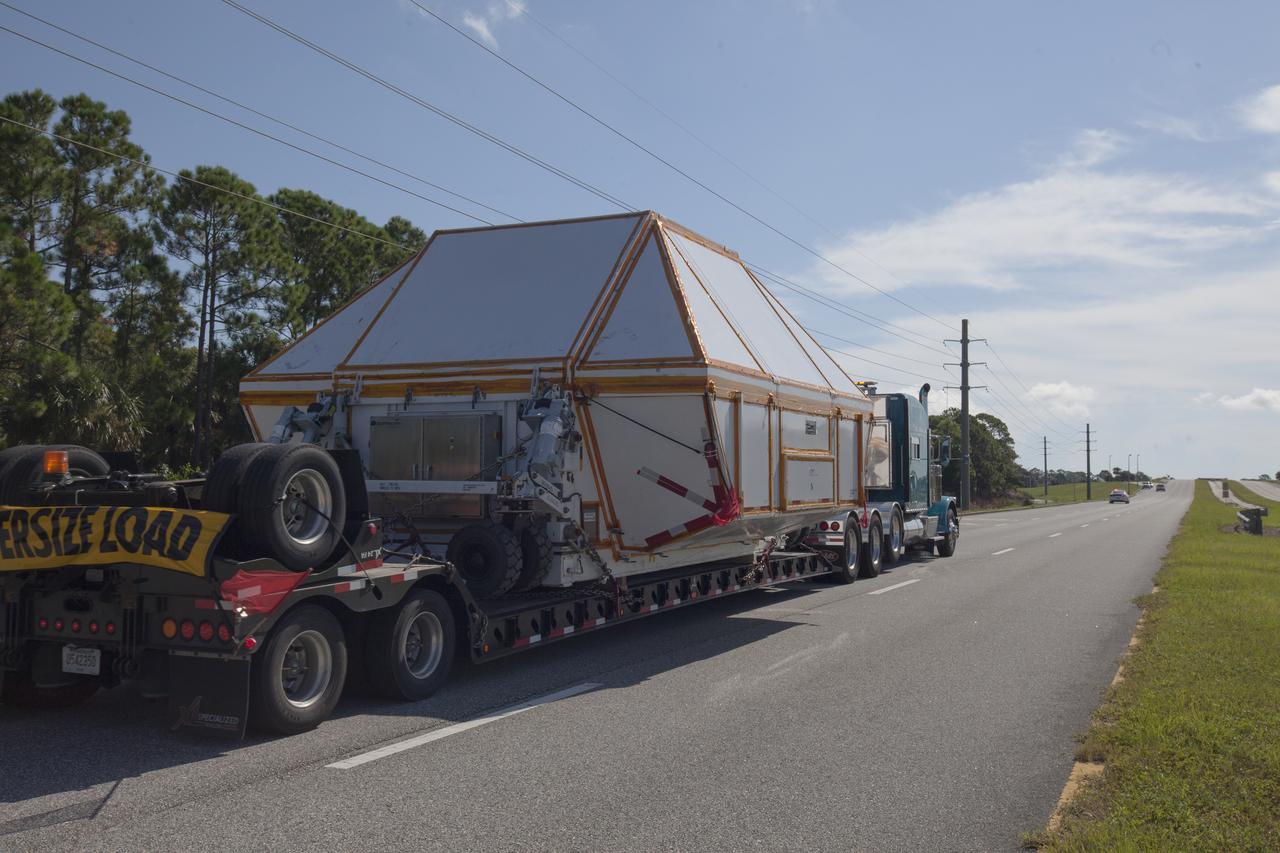
The Orion crew module pressure vessel for Exploration Mission-2 arrives at NASA's Kennedy Space Center in Florida on Aug. 24, 2018. The pressure vessel was transported in its Crew Module Transportation Fixture by super-wide transport truck from Michoud Assembly Facility near New Orleans. The pressure vessel is Orion's primary structure that holds the pressurized atmosphere astronauts will breathe and work in while in the vacuum of deep space. It will be moved into the Neil Armstrong Operations and Checkout Building high bay, where it will be secured on a precision alignment tool to begin preparing it for flight.
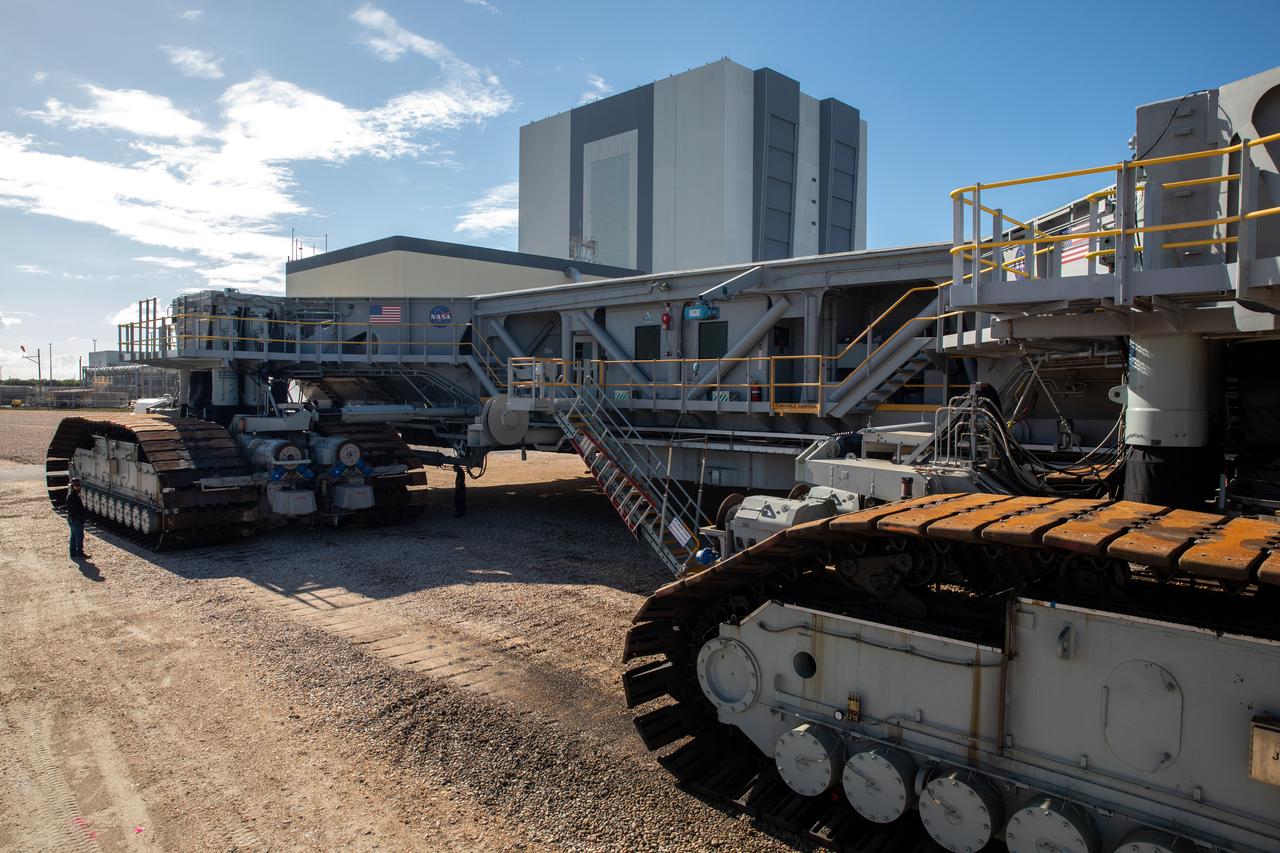
Engineers and technicians drive crawler-transporter 2 along the crawlerway toward the Vehicle Assembly Building (VAB) at NASA’s Kennedy Space Center in Florida on June 1, 2022. The crawler will go inside the VAB, where it will slide under the Artemis I Space Launch System with the Orion spacecraft atop on the mobile launcher and carry it to Launch Complex 39B for a wet dress rehearsal test ahead of the Artemis I launch. Artemis I will be the first integrated test of the SLS and Orion spacecraft. In later missions, NASA will land the first woman and the first person of color on the surface of the Moon, paving the way for a long-term lunar presence and serving as a steppingstone on the way to Mars.
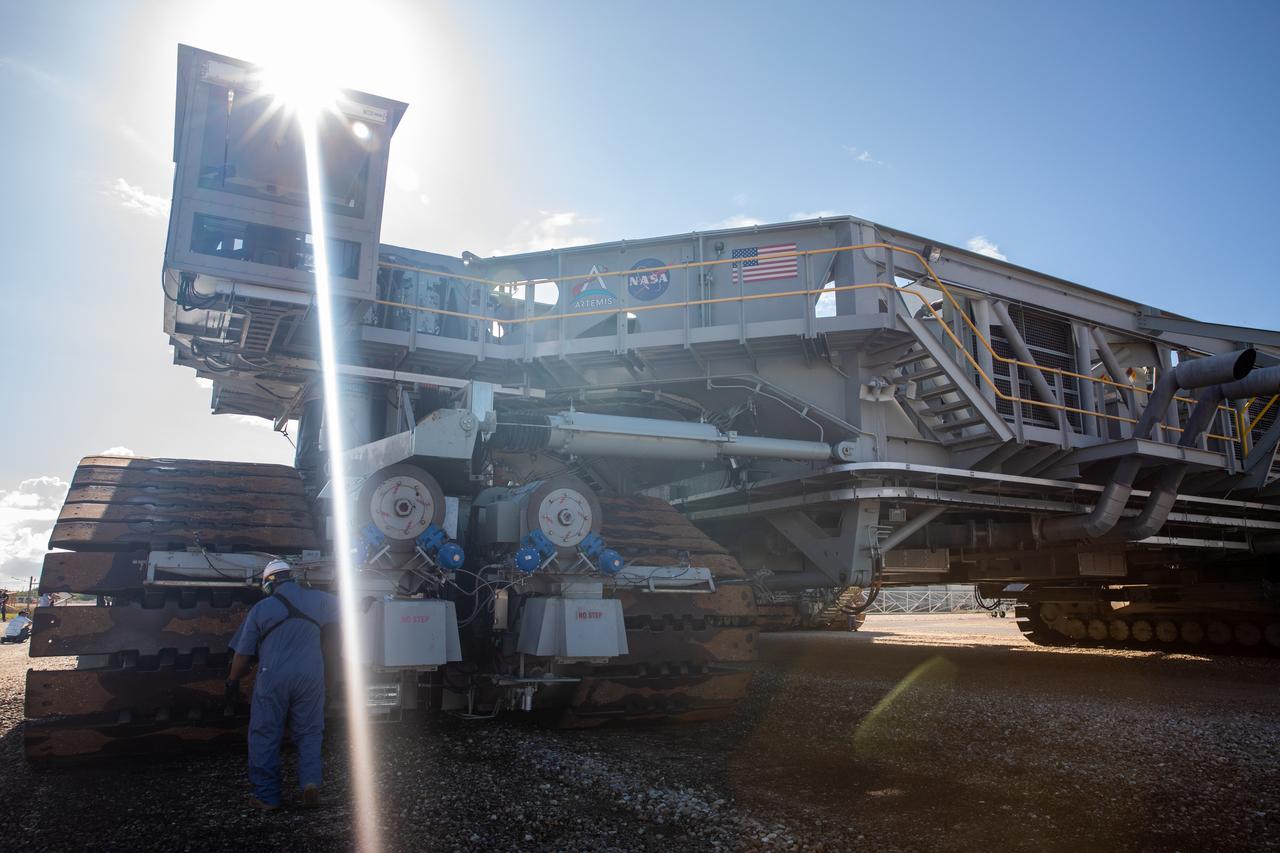
The sun reflects off the cab as engineers and technicians drive crawler-transporter 2 along the crawlerway toward the Vehicle Assembly Building (VAB) at NASA’s Kennedy Space Center in Florida on June 1, 2022. The crawler will go inside the VAB, where it will slide under the Artemis I Space Launch System with the Orion spacecraft atop on the mobile launcher and carry it to Launch Complex 39B for a wet dress rehearsal test ahead of the Artemis I launch. Artemis I will be the first integrated test of the SLS and Orion spacecraft. In later missions, NASA will land the first woman and the first person of color on the surface of the Moon, paving the way for a long-term lunar presence and serving as a steppingstone on the way to Mars.
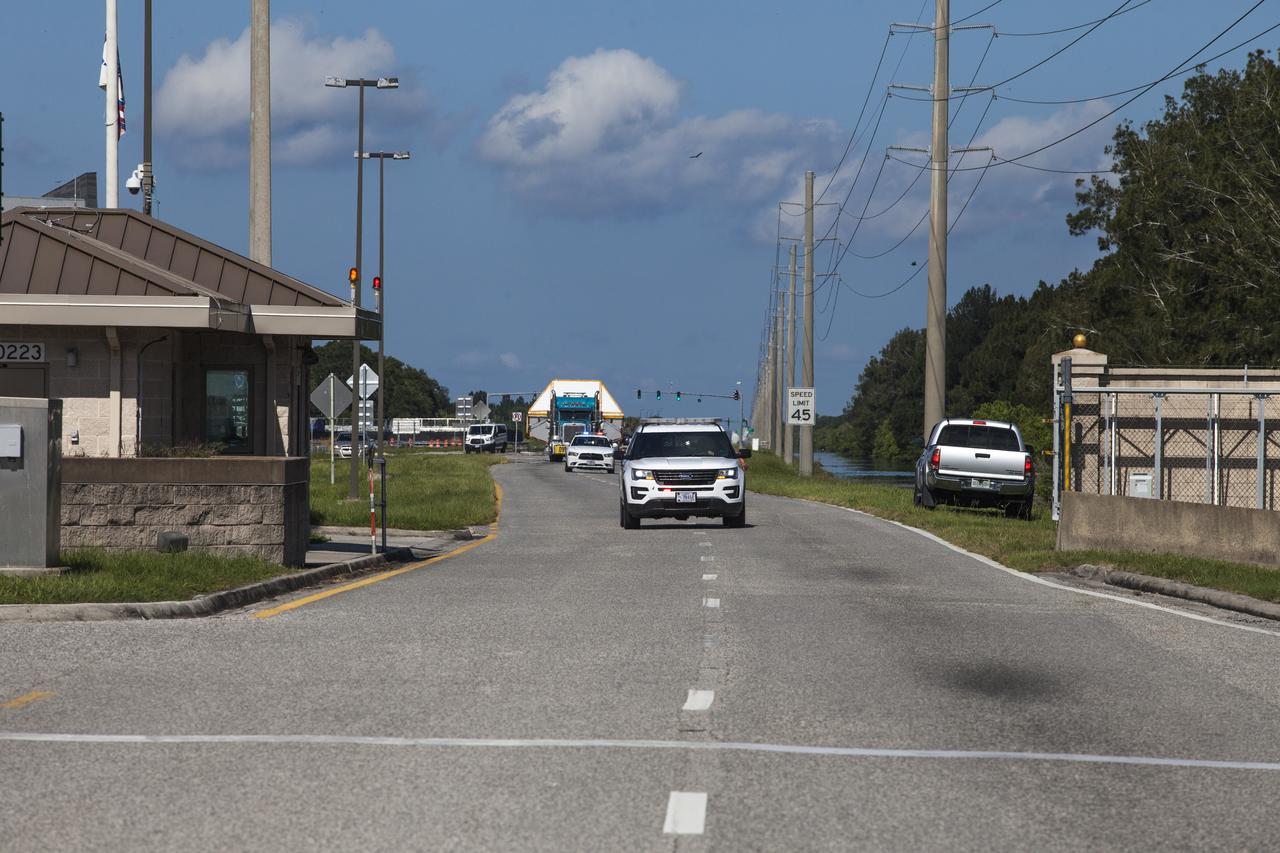
A super-wide truck carrying the Orion crew module pressure vessel for Exploration Mission-2 approaches the entrance gate at NASA's Kennedy Space Center in Florida on Aug. 24, 2018. The pressure vessel was transported in its Crew Module Transportation Fixture by truck from Michoud Assembly Facility near New Orleans. The pressure vessel is Orion's primary structure that holds the pressurized atmosphere astronauts will breathe and work in while in the vacuum of deep space. It will be moved into the Neil Armstrong Operations and Checkout Building high bay, where it will be secured on a precision alignment tool to begin preparing it for flight.
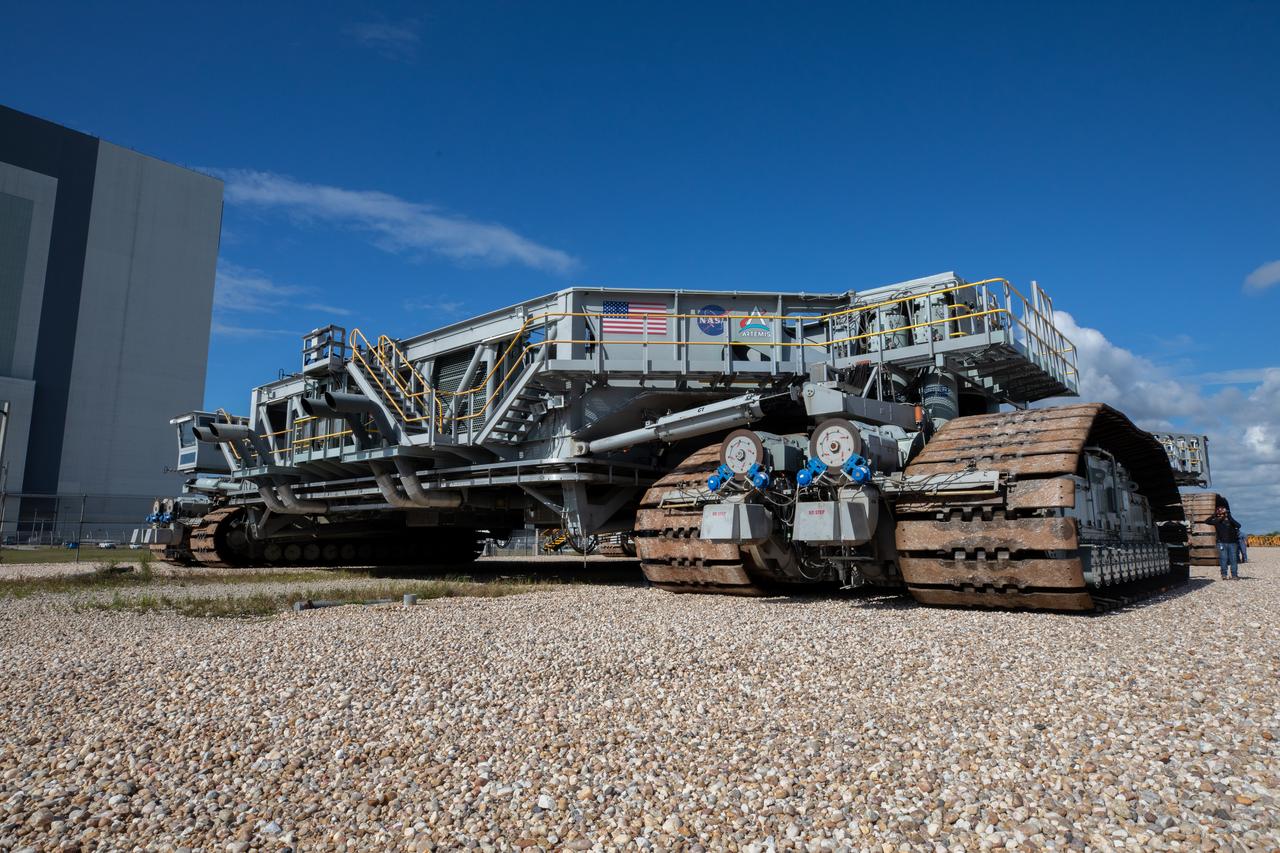
Engineers and technicians drive crawler-transporter 2 along the crawlerway toward the Vehicle Assembly Building (VAB) at NASA’s Kennedy Space Center in Florida on June 1, 2022. The crawler will go inside the VAB, where it will slide under the Artemis I Space Launch System with the Orion spacecraft atop on the mobile launcher and carry it to Launch Complex 39B for a wet dress rehearsal test ahead of the Artemis I launch. Artemis I will be the first integrated test of the SLS and Orion spacecraft. In later missions, NASA will land the first woman and the first person of color on the surface of the Moon, paving the way for a long-term lunar presence and serving as a steppingstone on the way to Mars.
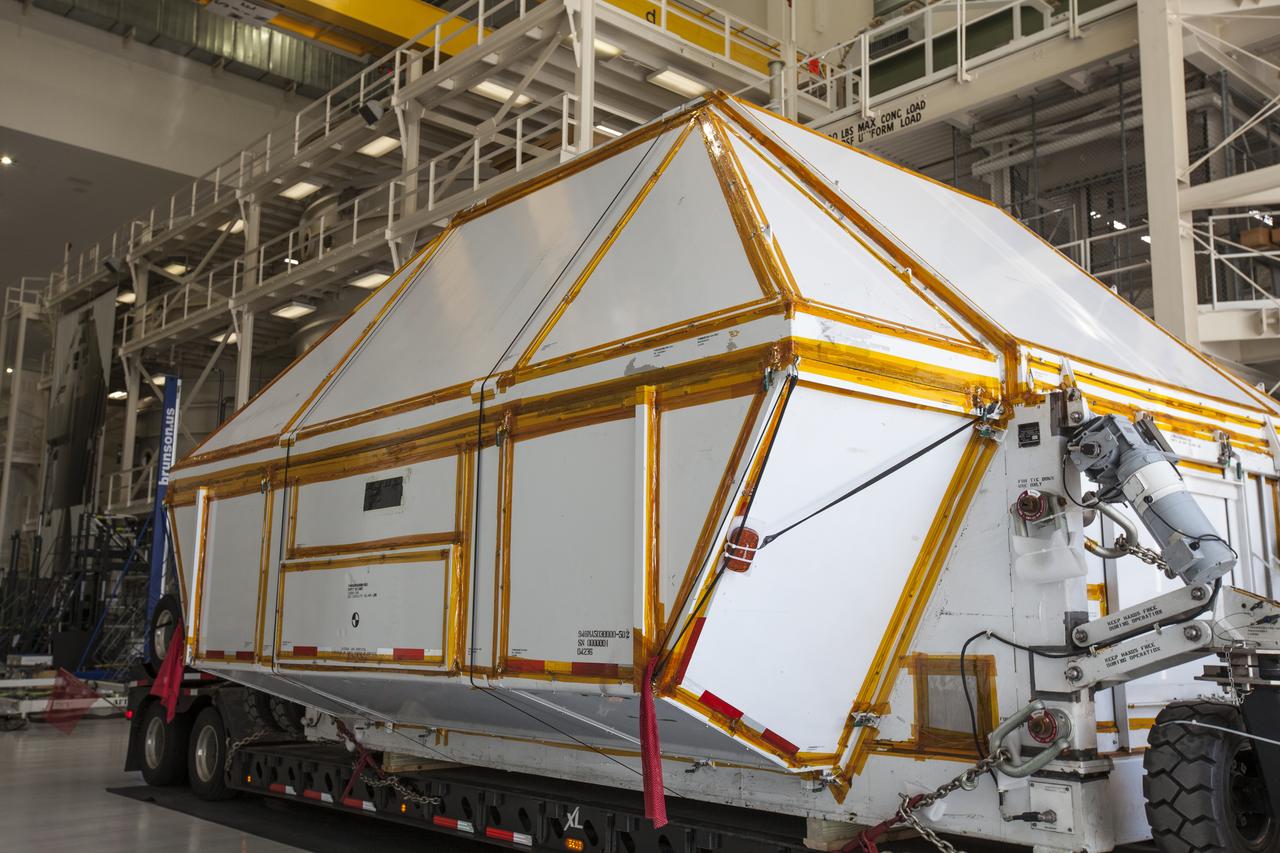
The Orion crew module pressure vessel for Exploration Mission-2 is backed into the high bay at the Neil Armstrong Operations and Checkout Building at NASA's Kennedy Space Center in Florida on Aug. 24, 2018. The pressure vessel was transported in its Crew Module Transportation Fixture by super-wide transport truck from Michoud Assembly Facility near New Orleans. The pressure vessel is Orion's primary structure that holds the pressurized atmosphere astronauts will breathe and work in while in the vacuum of deep space. Inside the facility's high bay, the pressure vessel will be secured on a precision alignment tool to begin preparing it for flight.
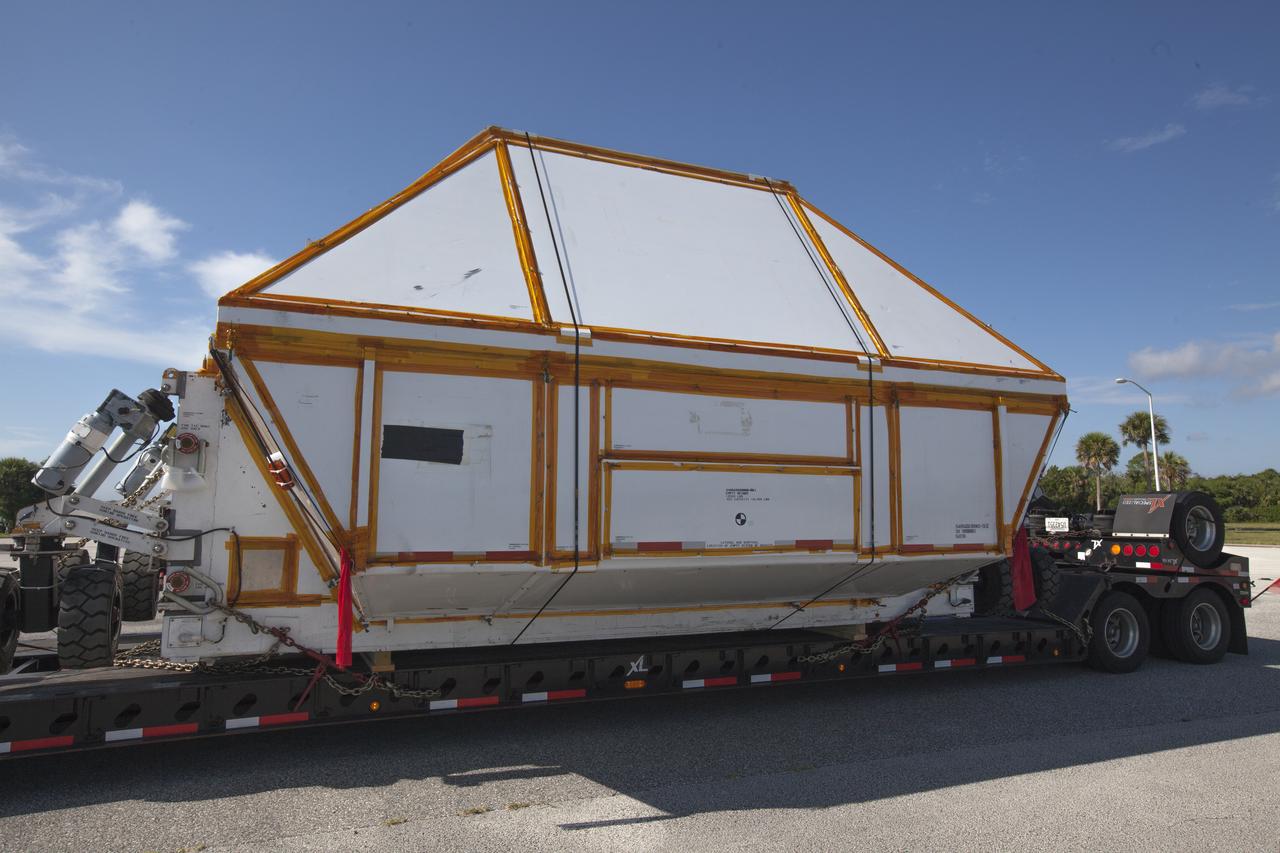
The Orion crew module pressure vessel for Exploration Mission-2 arrives at NASA's Kennedy Space Center in Florida on Aug. 24, 2018. The pressure vessel was transported in its Crew Module Transportation Fixture by super-wide transport truck from Michoud Assembly Facility near New Orleans. The pressure vessel is Orion's primary structure that holds the pressurized atmosphere astronauts will breathe and work in while in the vacuum of deep space. It will be moved into the Neil Armstrong Operations and Checkout Building high bay, where it will be secured on a precision alignment tool to begin preparing it for flight.
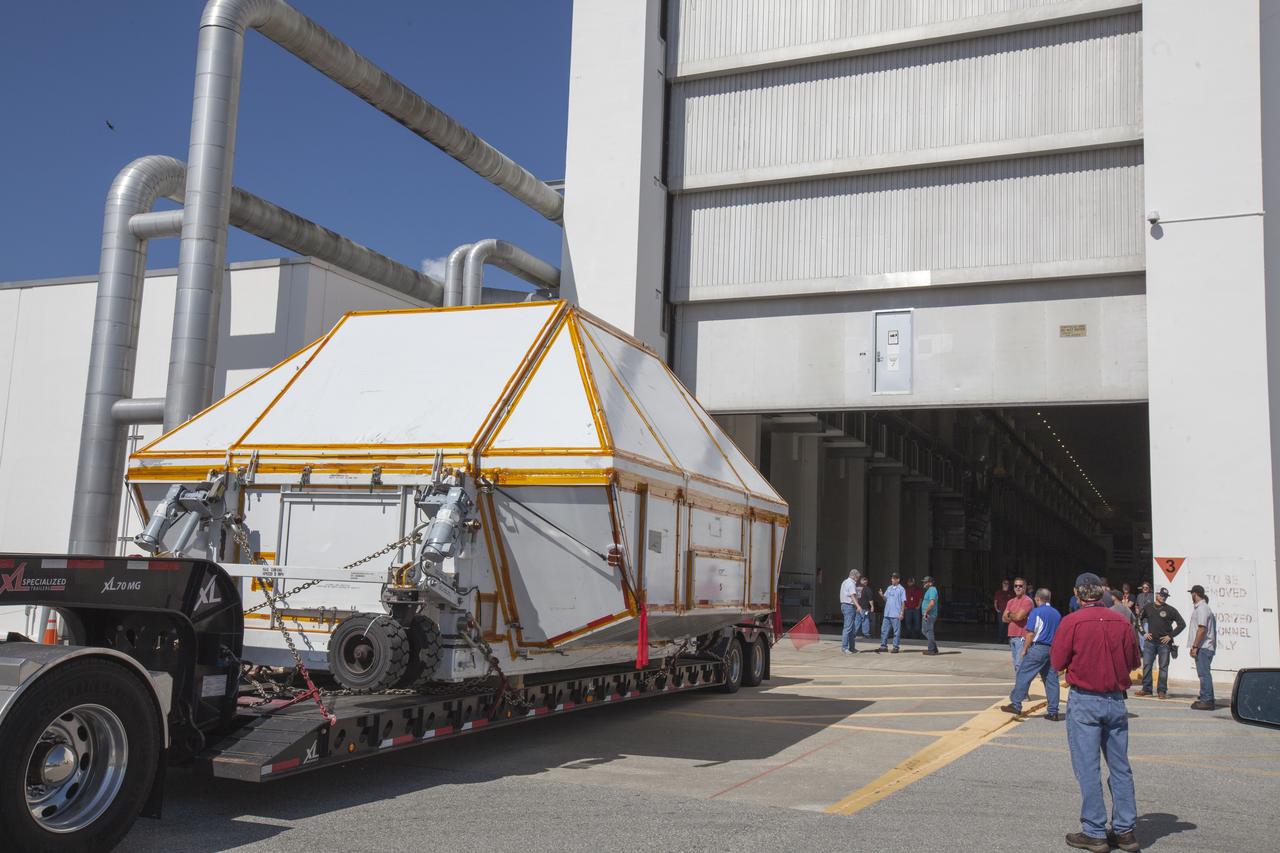
The Orion crew module pressure vessel for Exploration Mission-2 arrives at the Neil Armstrong Operations and Checkout Building at NASA's Kennedy Space Center in Florida on Aug. 24, 2018. The pressure vessel was transported in its Crew Module Transportation Fixture by super-wide transport truck from Michoud Assembly Facility near New Orleans. The pressure vessel is Orion's primary structure that holds the pressurized atmosphere astronauts will breathe and work in while in the vacuum of deep space. It will be moved into the facility's high bay, where it will be secured on a precision alignment tool to begin preparing it for flight.
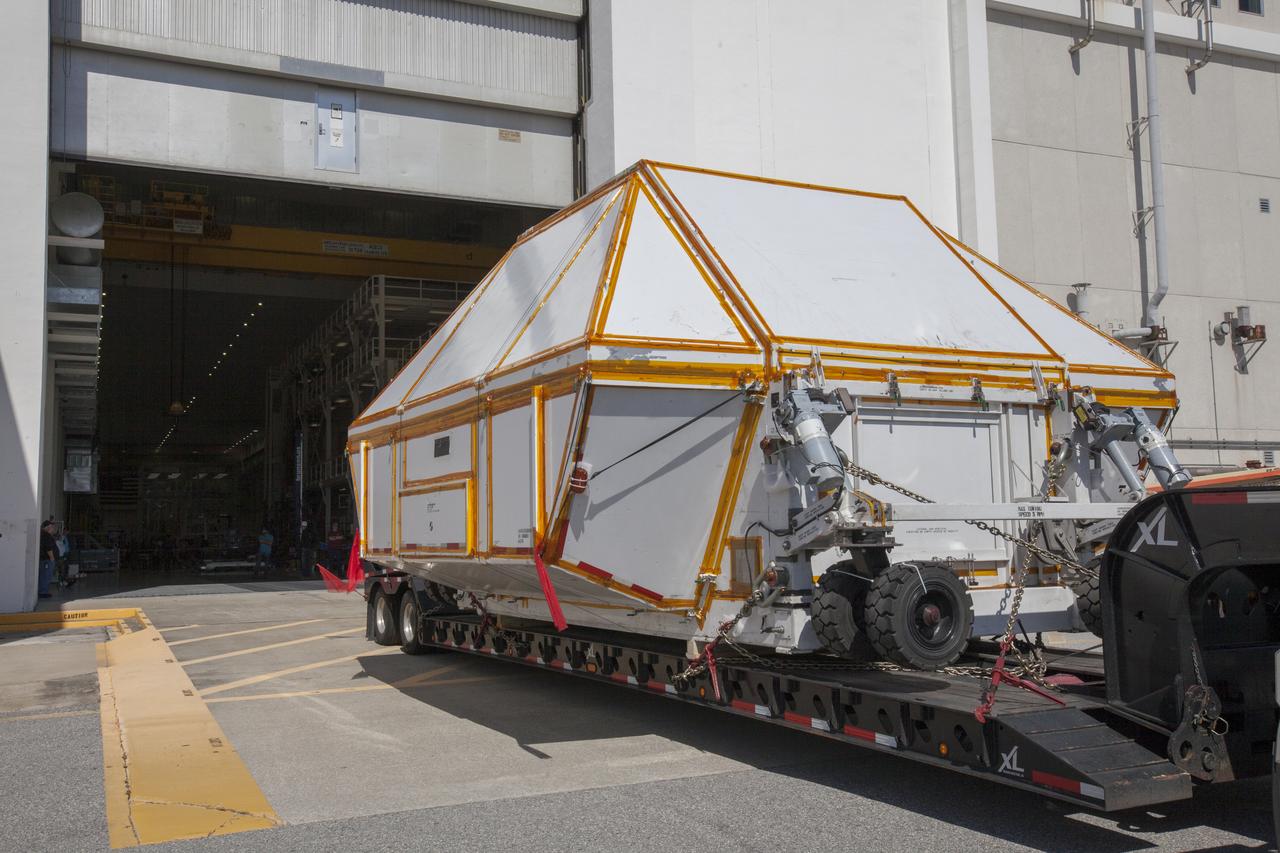
The Orion crew module pressure vessel for Exploration Mission-2 arrives at the Neil Armstrong Operations and Checkout Building at NASA's Kennedy Space Center in Florida on Aug. 24, 2018. The pressure vessel was transported in its Crew Module Transportation Fixture by super-wide transport truck from Michoud Assembly Facility near New Orleans. The pressure vessel is Orion's primary structure that holds the pressurized atmosphere astronauts will breathe and work in while in the vacuum of deep space. It will be moved into the facility's high bay, where it will be secured on a precision alignment tool to begin preparing it for flight.
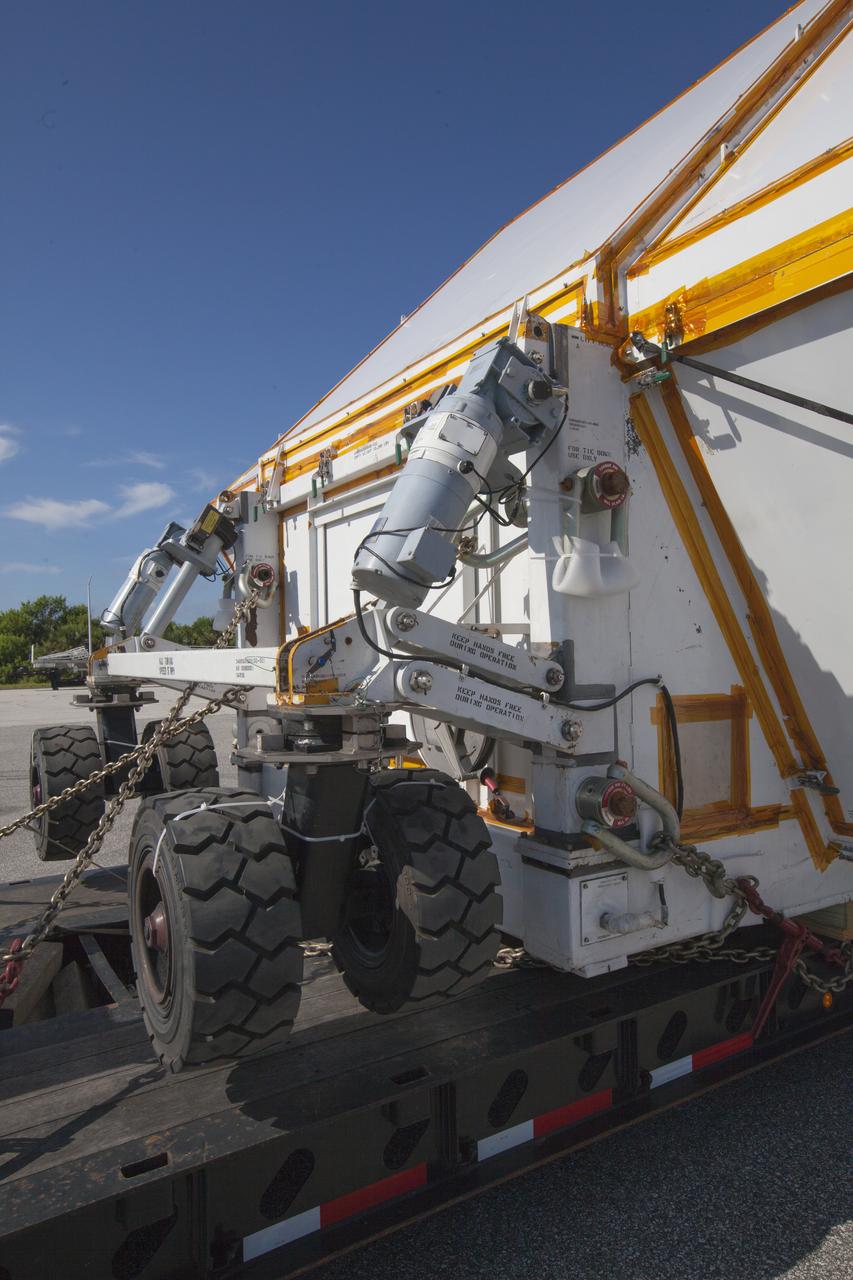
The Orion crew module pressure vessel for Exploration Mission-2 arrives at NASA's Kennedy Space Center in Florida on Aug. 24, 2018. The pressure vessel was transported in its Crew Module Transportation Fixture by super-wide transport truck from Michoud Assembly Facility near New Orleans. The pressure vessel is Orion's primary structure that holds the pressurized atmosphere astronauts will breathe and work in while in the vacuum of deep space. It will be moved into the Neil Armstrong Operations and Checkout Building high bay, where it will be secured on a precision alignment tool to begin preparing it for flight.
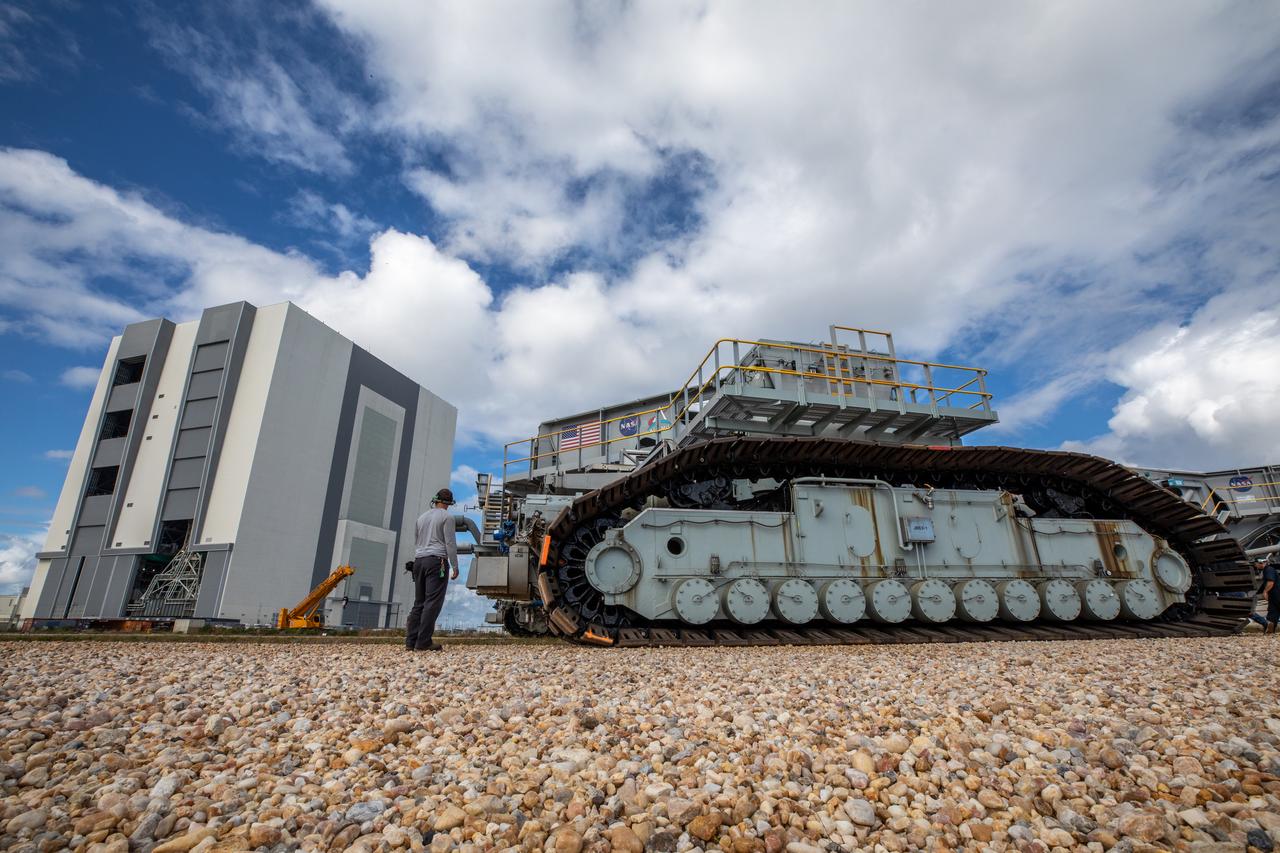
Technicians check equipment on crawler-transporter 2 during its trip to the Vehicle Assembly Building (VAB) at NASA’s Kennedy Space Center in Florida on June 1, 2022. The crawler will go inside the VAB, where it will slide under the Artemis I Space Launch System with the Orion spacecraft atop on the mobile launcher and carry it to Launch Complex 39B for a wet dress rehearsal test ahead of the Artemis I launch. Artemis I will be the first integrated test of the SLS and Orion spacecraft. In later missions, NASA will land the first woman and the first person of color on the surface of the Moon, paving the way for a long-term lunar presence and serving as a steppingstone on the way to Mars.
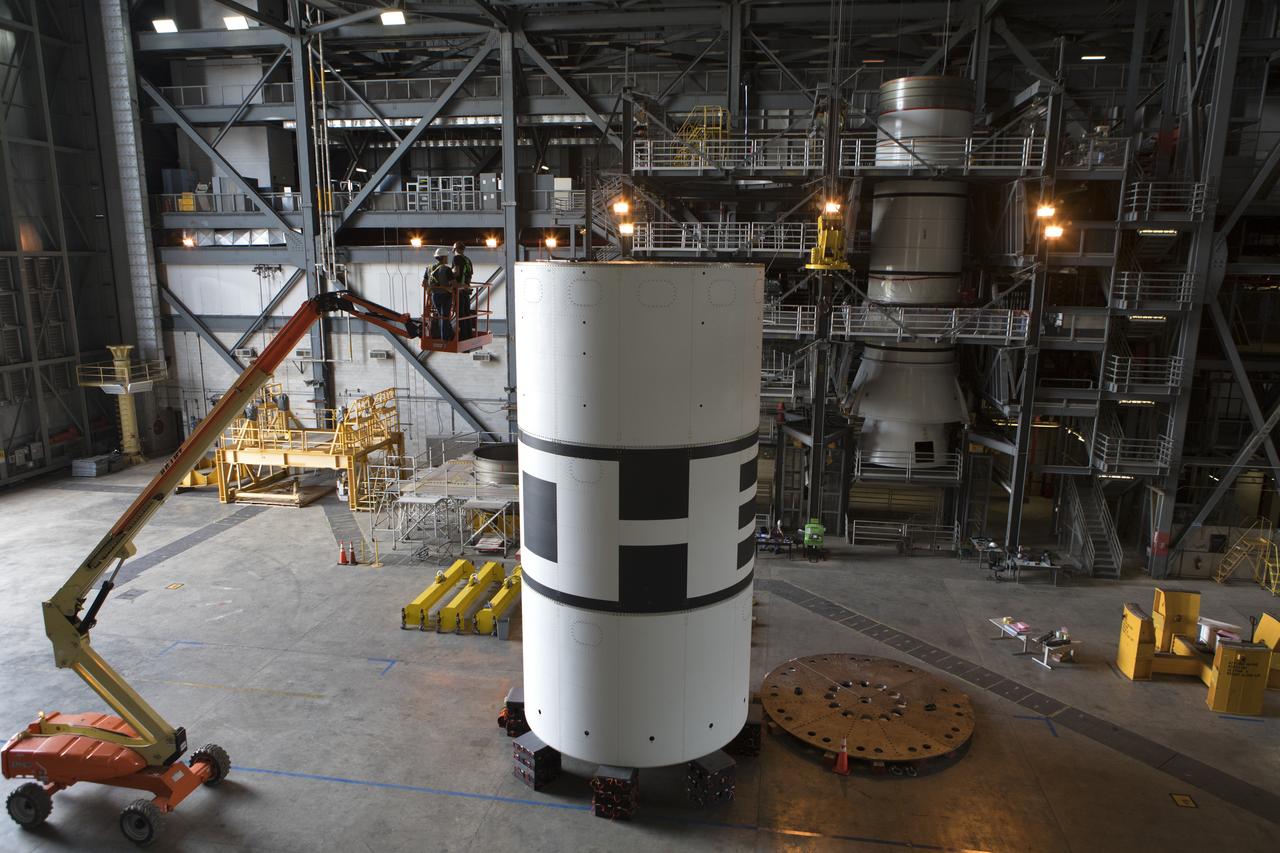
The aeroshells for Orion's Launch Abort System (LAS) are being stacked in High Bay 4 of the Vehicle Assembly Building on Aug. 3, 2018, at NASA's Kennedy Space Center in Florida. The aeroshells are being prepared for a full-stress test of the LAS, called Ascent Abort-2 (AA-2) flight test, scheduled for April 2019. During the test, a booster will launch from Space Launch Complex 46 at Cape Canaveral Air Force Station, carrying a fully functional LAS and a 22,000-pound Orion test vehicle to an altitude of 31,000 feet and traveling at more than 1,000 miles an hour. The test will verify the LAS can steer the crew module and astronauts aboard to safety in the event of an issue with the Space Launch System (SLS) rocket when the spacecraft is under the highest aerodynamic loads it will experience during a rapid climb into space. Orion is being prepared for its first integrated uncrewed flight atop the SLS on Exploration Mission-1.
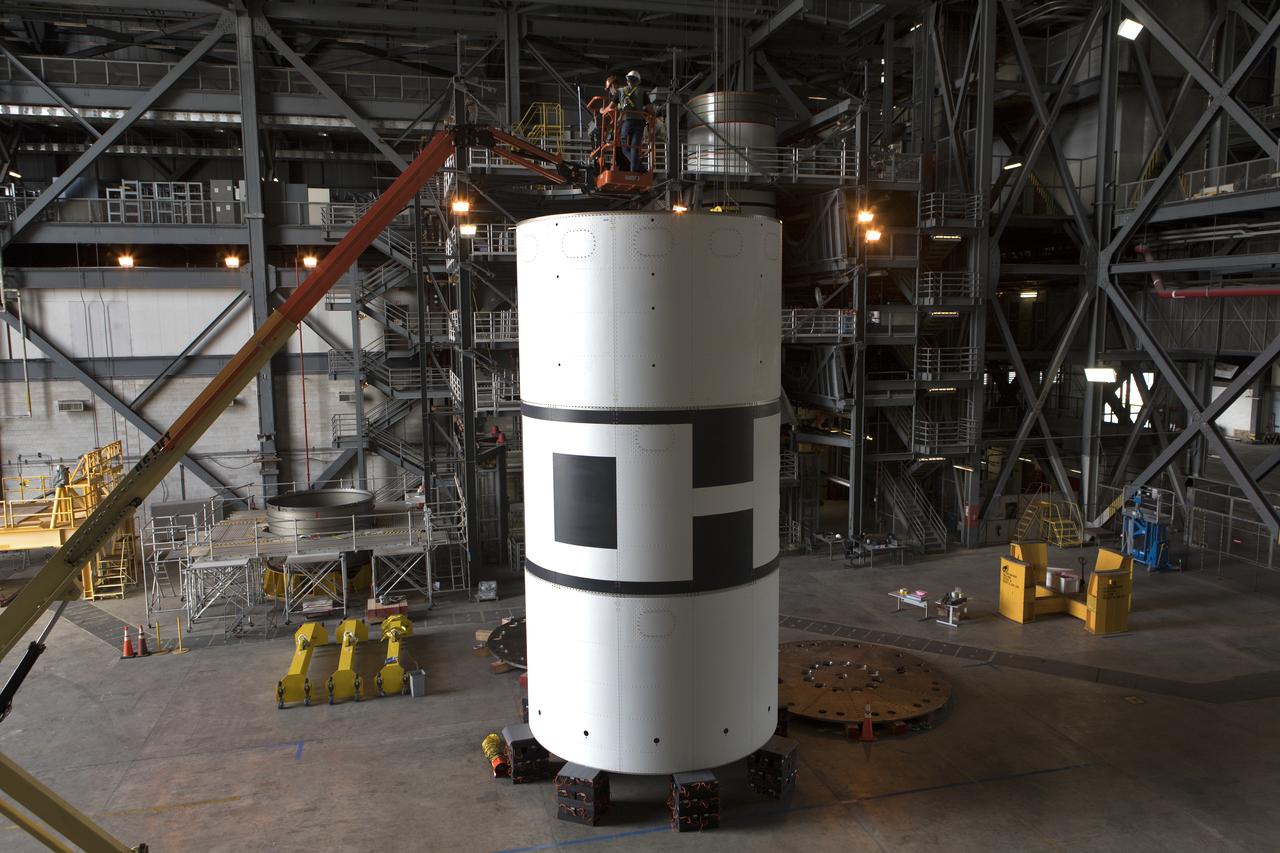
The aeroshells for Orion's Launch Abort System (LAS) are being stacked in High Bay 4 of the Vehicle Assembly Building on Aug. 3, 2018, at NASA's Kennedy Space Center in Florida. The aeroshells are being prepared for a full-stress test of the LAS, called Ascent Abort-2 (AA-2) flight test, scheduled for April 2019. During the test, a booster will launch from Space Launch Complex 46 at Cape Canaveral Air Force Station, carrying a fully functional LAS and a 22,000-pound Orion test vehicle to an altitude of 31,000 feet and traveling at more than 1,000 miles an hour. The test will verify the LAS can steer the crew module and astronauts aboard to safety in the event of an issue with the Space Launch System (SLS) rocket when the spacecraft is under the highest aerodynamic loads it will experience during a rapid climb into space. Orion is being prepared for its first integrated uncrewed flight atop the SLS on Exploration Mission-1.
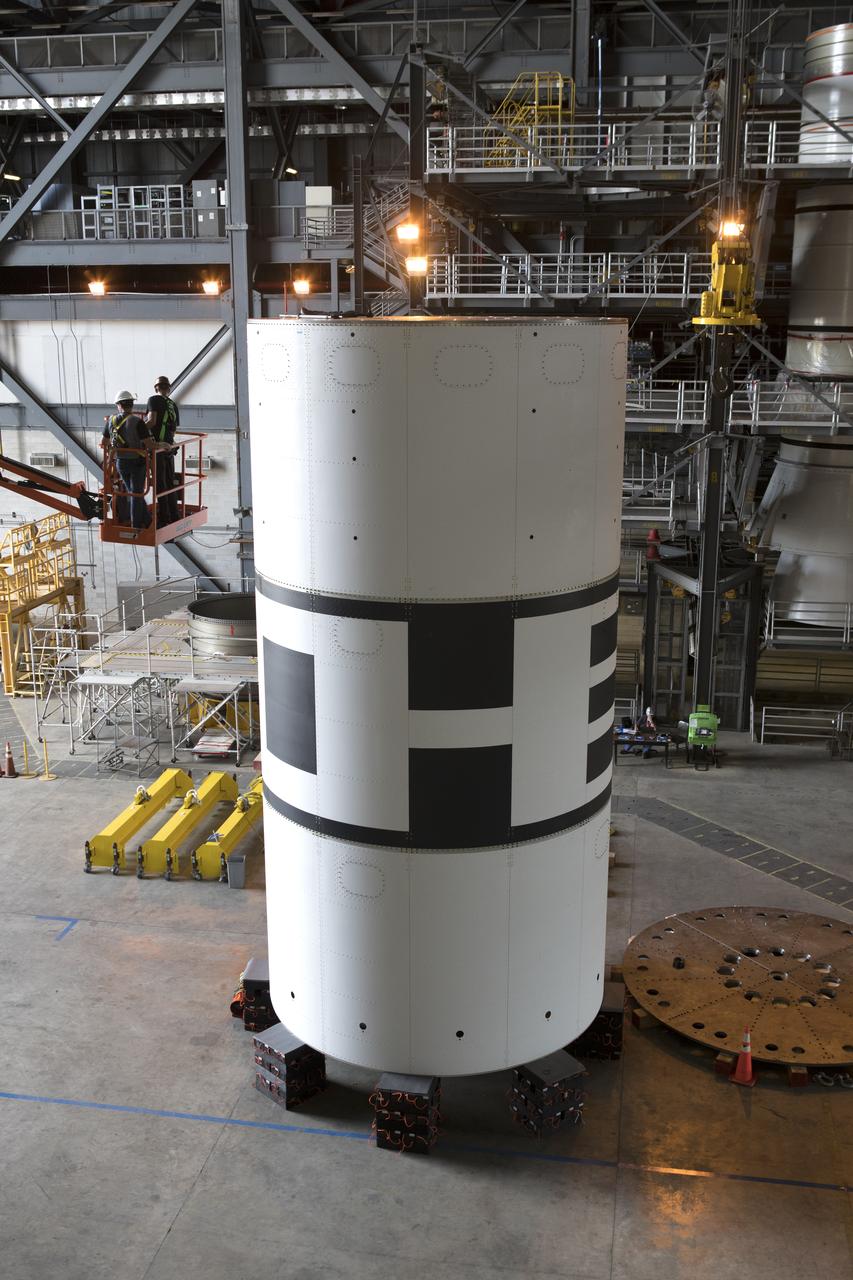
The aeroshells for Orion's Launch Abort System (LAS) are being stacked in High Bay 4 of the Vehicle Assembly Building on Aug. 3, 2018, at NASA's Kennedy Space Center in Florida. The aeroshells are being prepared for a full-stress test of the LAS, called Ascent Abort-2 (AA-2) flight test, scheduled for April 2019. During the test, a booster will launch from Space Launch Complex 46 at Cape Canaveral Air Force Station, carrying a fully functional LAS and a 22,000-pound Orion test vehicle to an altitude of 31,000 feet and traveling at more than 1,000 miles an hour. The test will verify the LAS can steer the crew module and astronauts aboard to safety in the event of an issue with the Space Launch System (SLS) rocket when the spacecraft is under the highest aerodynamic loads it will experience during a rapid climb into space. Orion is being prepared for its first integrated uncrewed flight atop the SLS on Exploration Mission-1.
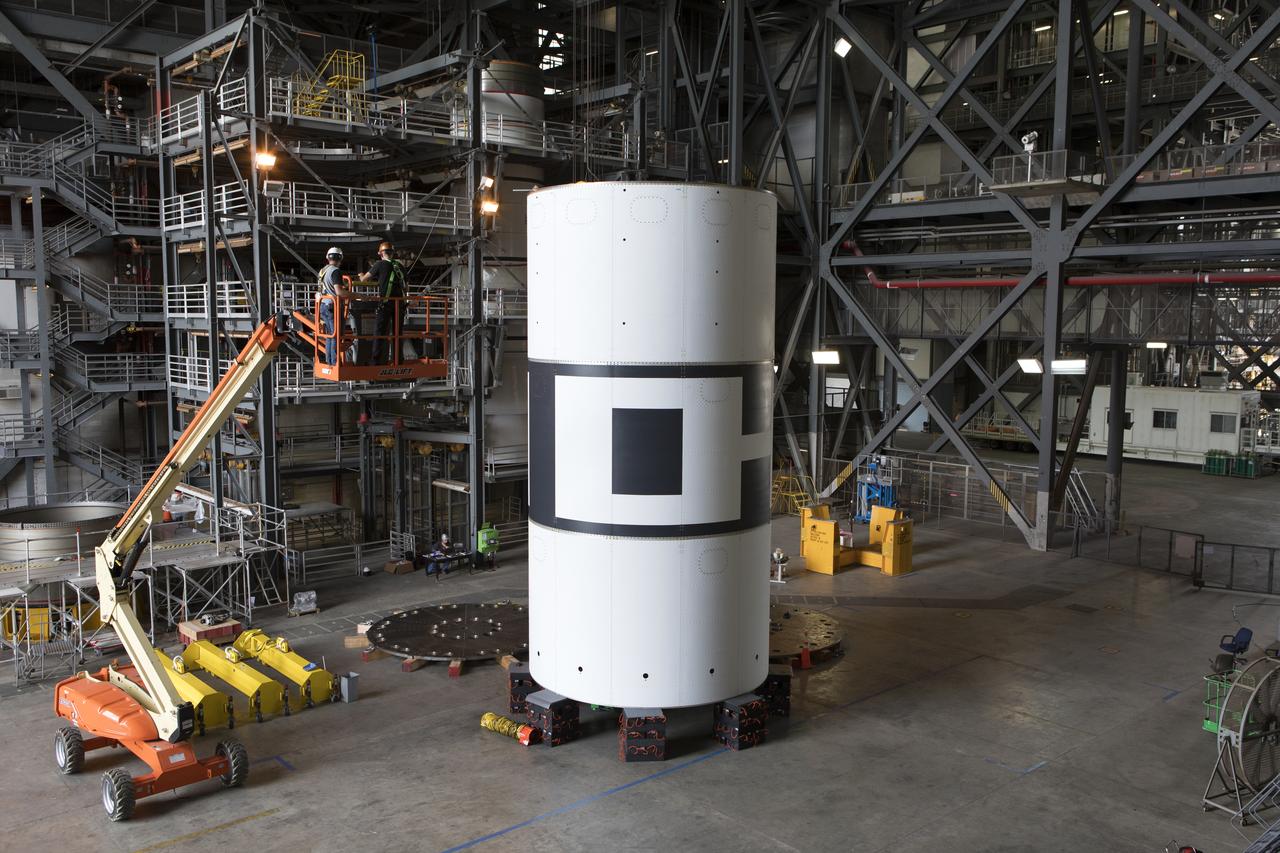
The aeroshells for Orion's Launch Abort System (LAS) are stacked in High Bay 4 of the Vehicle Assembly Building on Aug. 3, 2018, at NASA's Kennedy Space Center in Florida. The aeroshells are being prepared for a full-stress test of the LAS, called Ascent Abort-2 (AA-2) flight test, scheduled for April 2019. During the test, a booster will launch from Space Launch Complex 46 at Cape Canaveral Air Force Station, carrying a fully functional LAS and a 22,000-pound Orion test vehicle to an altitude of 31,000 feet and traveling at more than 1,000 miles an hour. The test will verify the LAS can steer the crew module and astronauts aboard to safety in the event of an issue with the Space Launch System (SLS) rocket when the spacecraft is under the highest aerodynamic loads it will experience during a rapid climb into space. Orion is being prepared for its first integrated uncrewed flight atop the SLS on Exploration Mission-1.
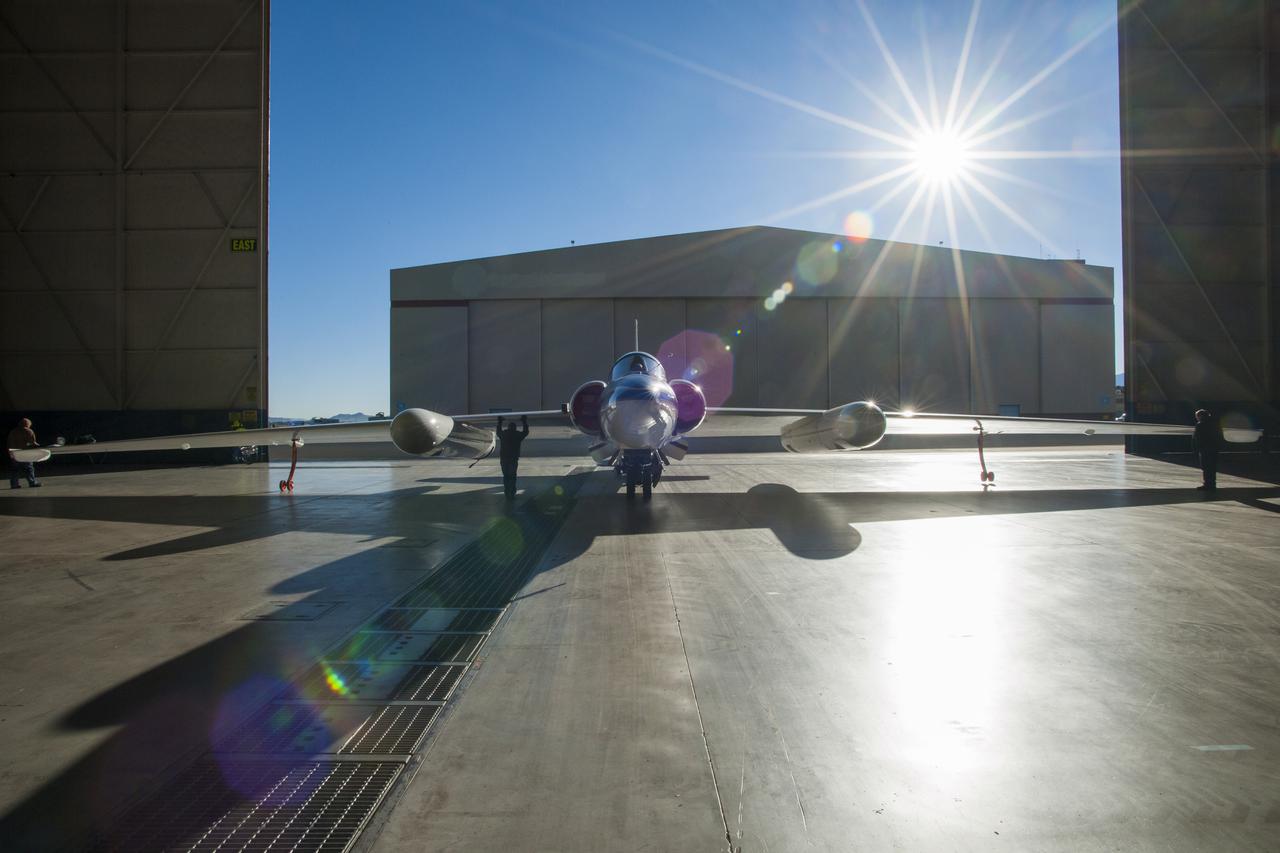
One of two NASA ER-2s (civilian U2-Rs) being backed out of the hangar at Building 703 in Palmdale. Capable of long duration flights at very high altitudes, the ER-2s have wing pods to accommodate science experiments and sensors, as well as a large volume bay behind the pilot. NASA first flew a U-2 for science—a first generation aircraft—in 1972.

Technicians at NASA’s Kennedy Space Center in Florida complete operations of lifting and lowering the agency’s Artemis III SLS (Space Launch System) core stage into High Bay 2 in the Vehicle Assembly Building at NASA Kennedy on Monday, May 4, 2026. Using a one-of-a kind lifting beam designed to lift the core stage from the transfer aisle to High Bay 2 for additional assembly, teams will connect the core stage to the engine section. This marks the first time core stage assembly operations being conducted at the spaceport for future Artemis missions.
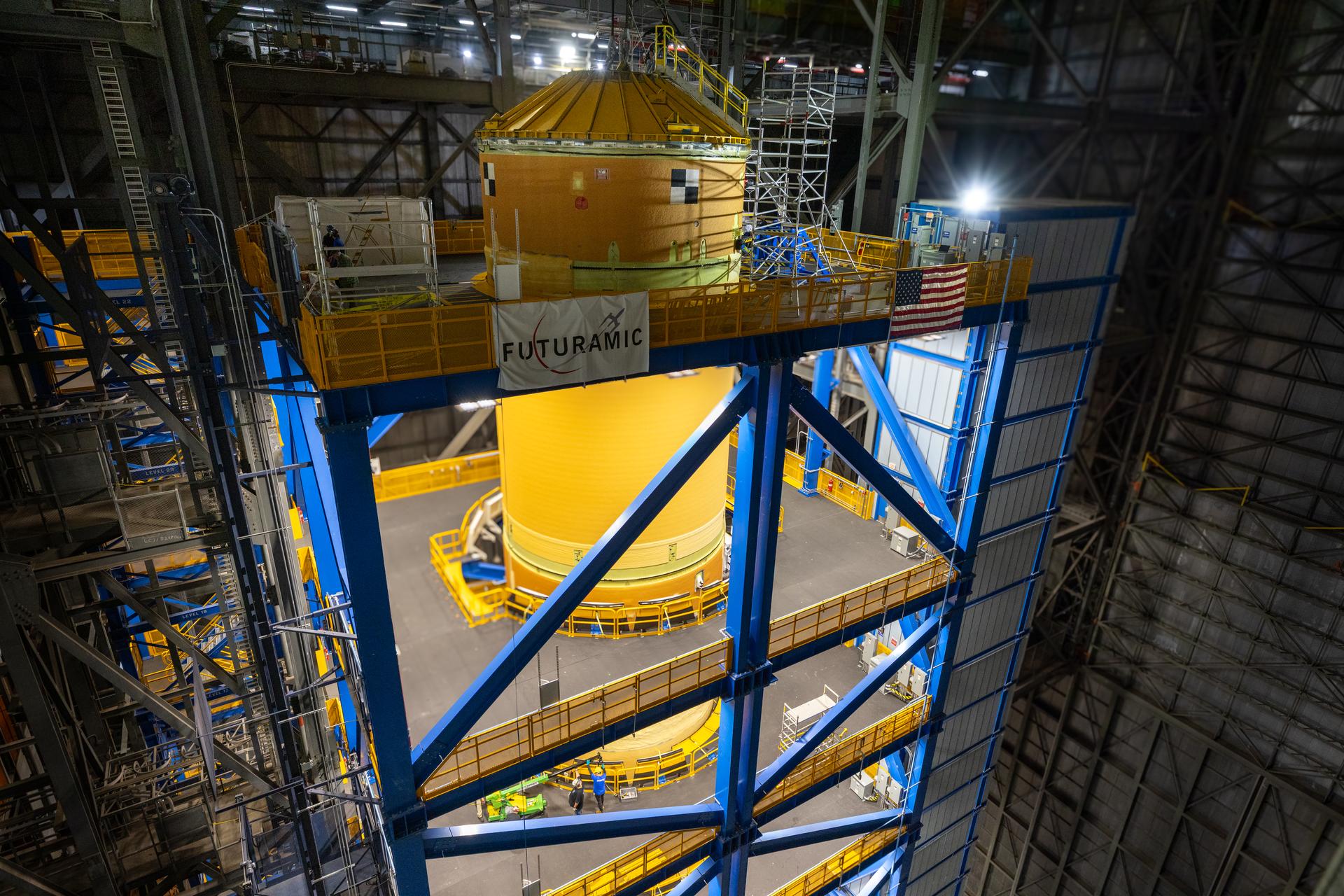
Technicians at NASA’s Kennedy Space Center in Florida complete operations of lifting and lowering the agency’s Artemis III SLS (Space Launch System) core stage into High Bay 2 in the Vehicle Assembly Building at NASA Kennedy on Monday, May 4, 2026. Using a one-of-a kind lifting beam designed to lift the core stage from the transfer aisle to High Bay 2 for additional assembly, teams will connect the core stage to the engine section. This marks the first time core stage assembly operations being conducted at the spaceport for future Artemis missions.

Technicians at NASA’s Kennedy Space Center in Florida complete operations of lifting and lowering the agency’s Artemis III SLS (Space Launch System) core stage into High Bay 2 in the Vehicle Assembly Building at NASA Kennedy on Monday, May 4, 2026. Using a one-of-a kind lifting beam designed to lift the core stage from the transfer aisle to High Bay 2 for additional assembly, teams will connect the core stage to the engine section. This marks the first time core stage assembly operations being conducted at the spaceport for future Artemis missions.
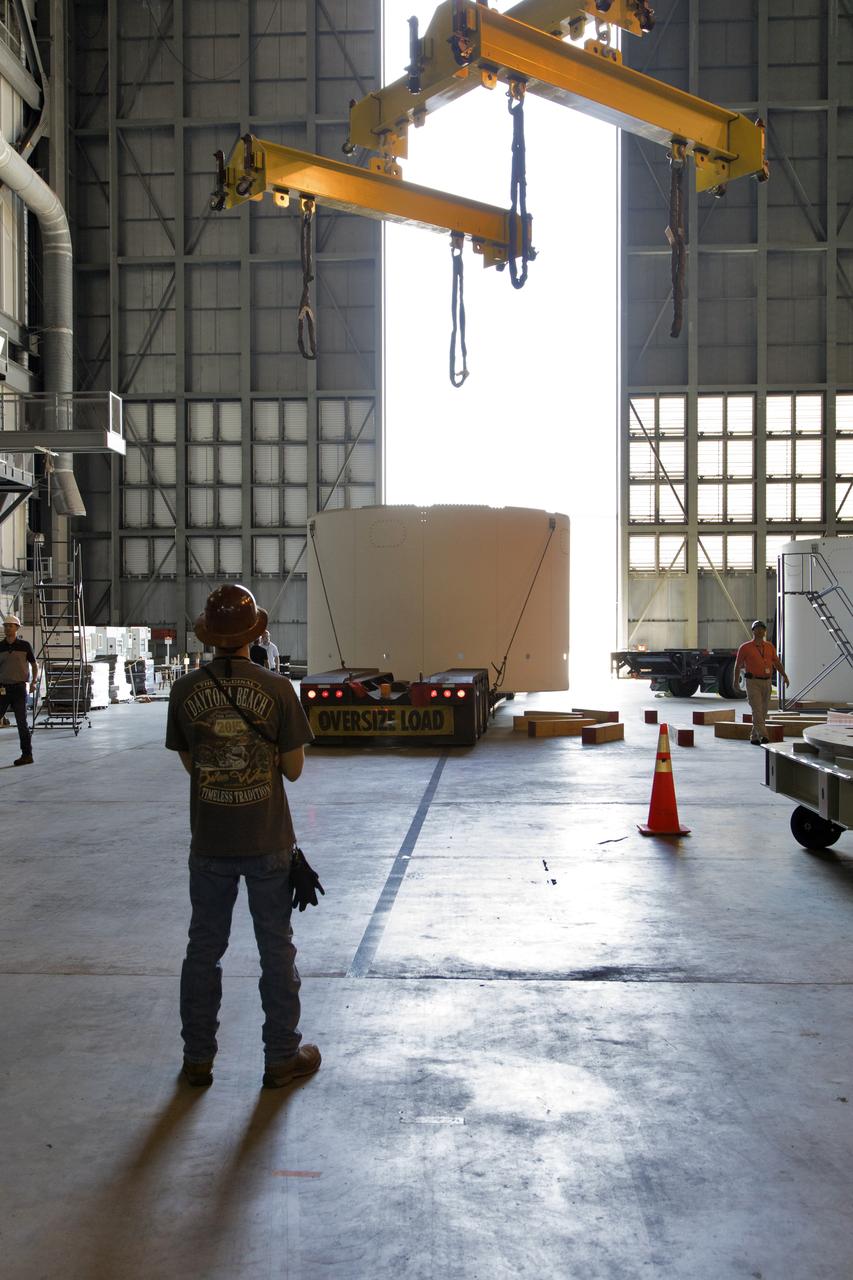
The third and final aeroshell for Orion's Launch Abort System (LAS) arrives by flatbed truck in High Bay 4 of the Vehicle Assembly Building on July 12, 2018, at NASA's Kennedy Space Center in Florida. The aeroshell was shipped from EMF Inc. on nearby Merritt Island. It will be offloaded and secured in the high bay. The aeroshells will be stacked and prepared for a full-stress test of the LAS, called Ascent Abort-2 (AA-2) flight test, scheduled for April 2019. During the test, a booster will launch from Space Launch Complex 46 at Cape Canaveral Air Force Station, carrying a fully functional LAS and a 22,000-pound Orion test vehicle to an altitude of 31,000 feet and traveling at more than 1,000 miles an hour. The test will verify the LAS can steer the crew module and astronauts aboard to safety in the event of an issue with the Space Launch System (SLS) rocket when the spacecraft is under the highest aerodynamic loads it will experience during a rapid climb into space. Orion is being prepared for its first integrated uncrewed flight atop the SLS on Exploration Mission-1.
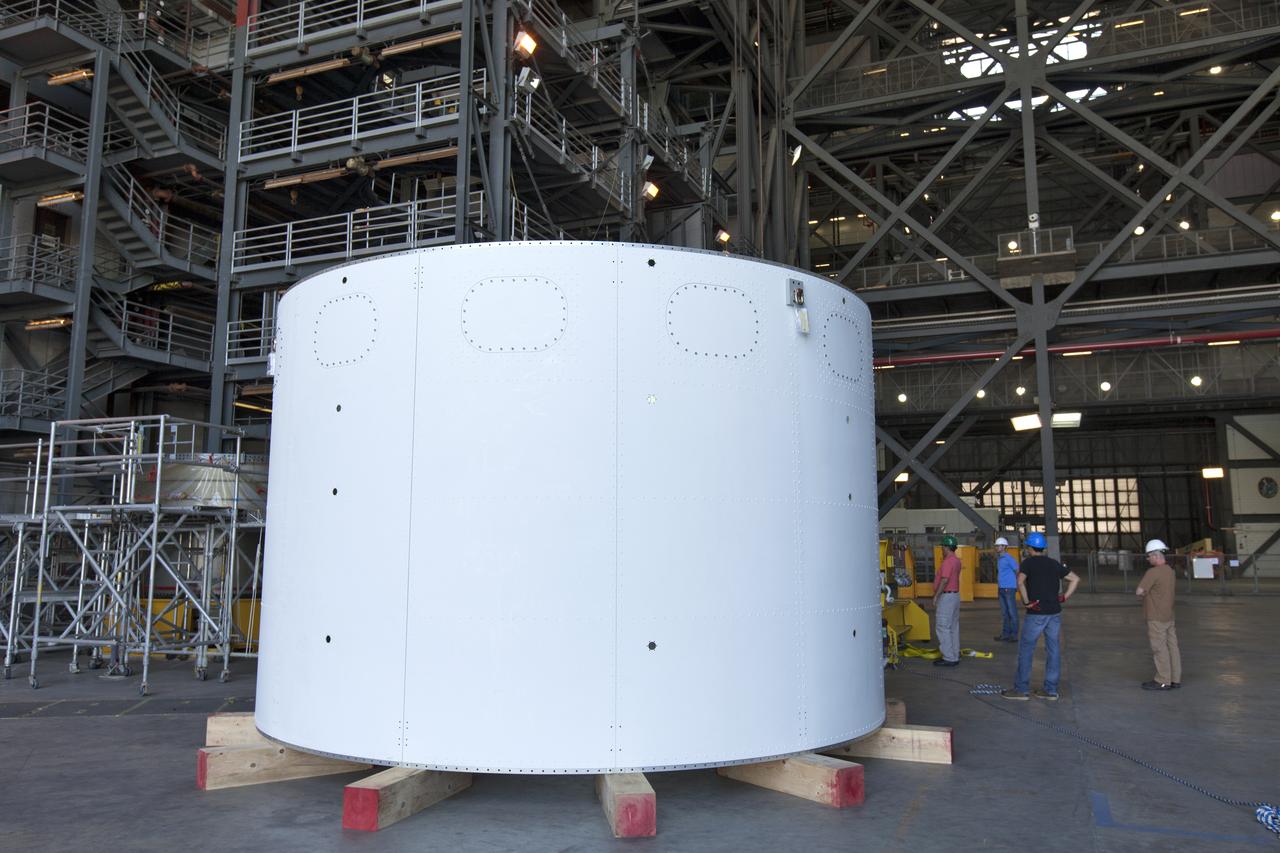
The first of three aeroshells for Orion's Launch Abort System (LAS) is lowered onto wooden blocks in High Bay 4 inside the Vehicle Assembly Building at NASA's Kennedy Space Center in Florida, on June 19, 2018. The aeroshell was shipped from EMF Inc. on nearby Merritt Island. The aeroshells will be stacked and prepared for a full-stress test of the LAS, called Ascent Abort-2 (AA-2) flight test, scheduled for April 2019. During the test, a booster will launch from Space Launch Complex 46 at Cape Canaveral Air Force Station, carrying a fully functional LAS and a 22,000-pound Orion test vehicle to an altitude of 31,000 feet and traveling at more than 1,000 miles an hour. The test will verify the LAS can steer the crew module and astronauts aboard to safety in the event of an issue with the Space Launch System (SLS) rocket when the spacecraft is under the highest aerodynamic loads it will experience during a rapid climb into space. Orion is being prepared for its first integrated uncrewed flight atop the SLS on Exploration Mission-1.
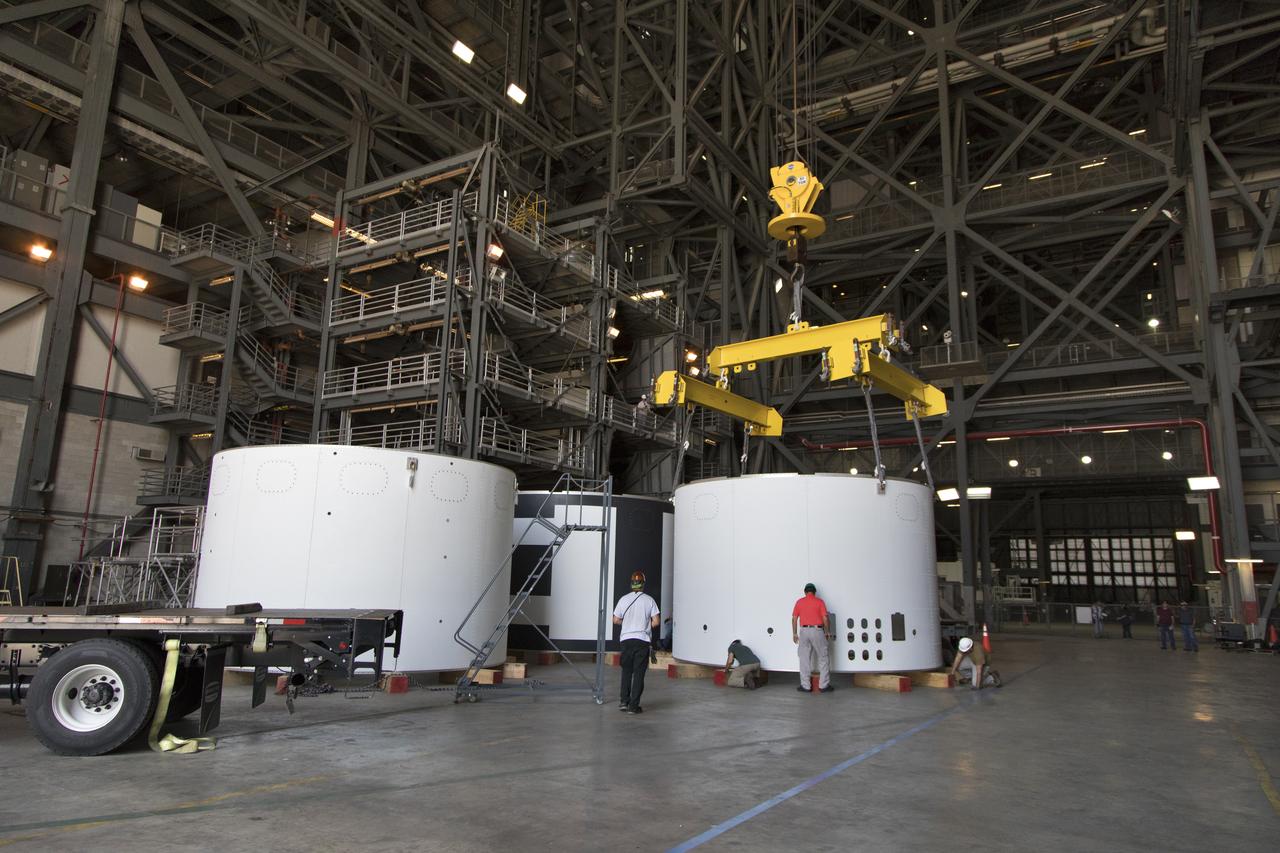
Technicians assist as a crane lowers the third and final aeroshell for Orion's Launch Abort System (LAS) onto slats in High Bay 4 of the Vehicle Assembly Building on July 12, 2018, at NASA's Kennedy Space Center in Florida. The aeroshell was shipped from EMF Inc. on nearby Merritt Island. All three aeroshells will be stacked and prepared for a full-stress test of the LAS, called Ascent Abort-2 (AA-2) flight test, scheduled for April 2019. During the test, a booster will launch from Space Launch Complex 46 at Cape Canaveral Air Force Station, carrying a fully functional LAS and a 22,000-pound Orion test vehicle to an altitude of 31,000 feet and traveling at more than 1,000 miles an hour. The test will verify the LAS can steer the crew module and astronauts aboard to safety in the event of an issue with the Space Launch System (SLS) rocket when the spacecraft is under the highest aerodynamic loads it will experience during a rapid climb into space. Orion is being prepared for its first integrated uncrewed flight atop the SLS on Exploration Mission-1.

The first of three aeroshells for Orion's Launch Abort System (LAS) is lowered onto wooden blocks in High Bay 4 inside the Vehicle Assembly Building at NASA's Kennedy Space Center in Florida, on June 19, 2018. The aeroshell was shipped from EMF Inc. on nearby Merritt Island. The aeroshells will be stacked and prepared for a full-stress test of the LAS, called Ascent Abort-2 (AA-2) flight test, scheduled for April 2019. During the test, a booster will launch from Space Launch Complex 46 at Cape Canaveral Air Force Station, carrying a fully functional LAS and a 22,000-pound Orion test vehicle to an altitude of 31,000 feet and traveling at more than 1,000 miles an hour. The test will verify the LAS can steer the crew module and astronauts aboard to safety in the event of an issue with the Space Launch System (SLS) rocket when the spacecraft is under the highest aerodynamic loads it will experience during a rapid climb into space. Orion is being prepared for its first integrated uncrewed flight atop the SLS on Exploration Mission-1.
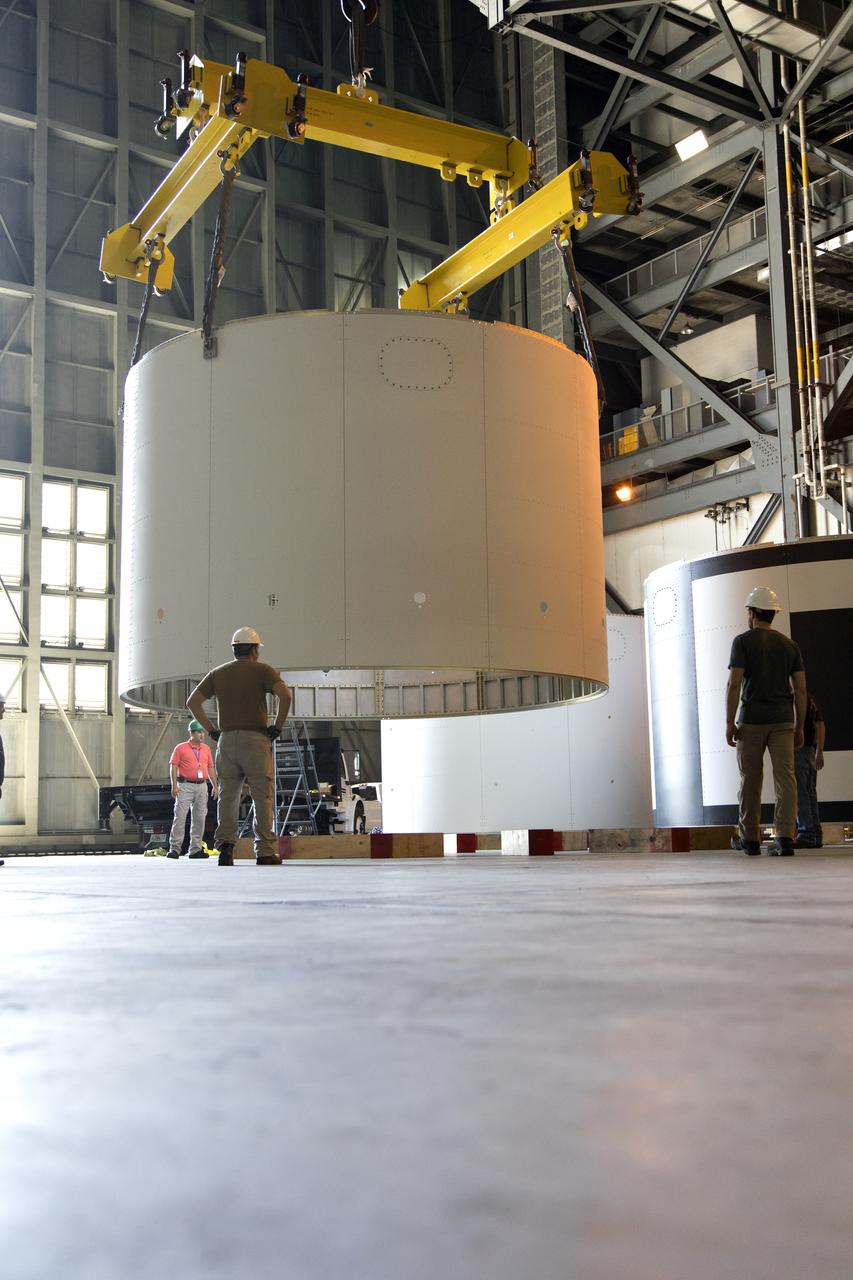
Technicians assist as a crane lowers the third and final aeroshell for Orion's Launch Abort System (LAS) onto slats in High Bay 4 of the Vehicle Assembly Building on July 12, 2018, at NASA's Kennedy Space Center in Florida. The aeroshell was shipped from EMF Inc. on nearby Merritt Island. All three aeroshells will be stacked and prepared for a full-stress test of the LAS, called Ascent Abort-2 (AA-2) flight test, scheduled for April 2019. During the test, a booster will launch from Space Launch Complex 46 at Cape Canaveral Air Force Station, carrying a fully functional LAS and a 22,000-pound Orion test vehicle to an altitude of 31,000 feet and traveling at more than 1,000 miles an hour. The test will verify the LAS can steer the crew module and astronauts aboard to safety in the event of an issue with the Space Launch System (SLS) rocket when the spacecraft is under the highest aerodynamic loads it will experience during a rapid climb into space. Orion is being prepared for its first integrated uncrewed flight atop the SLS on Exploration Mission-1.
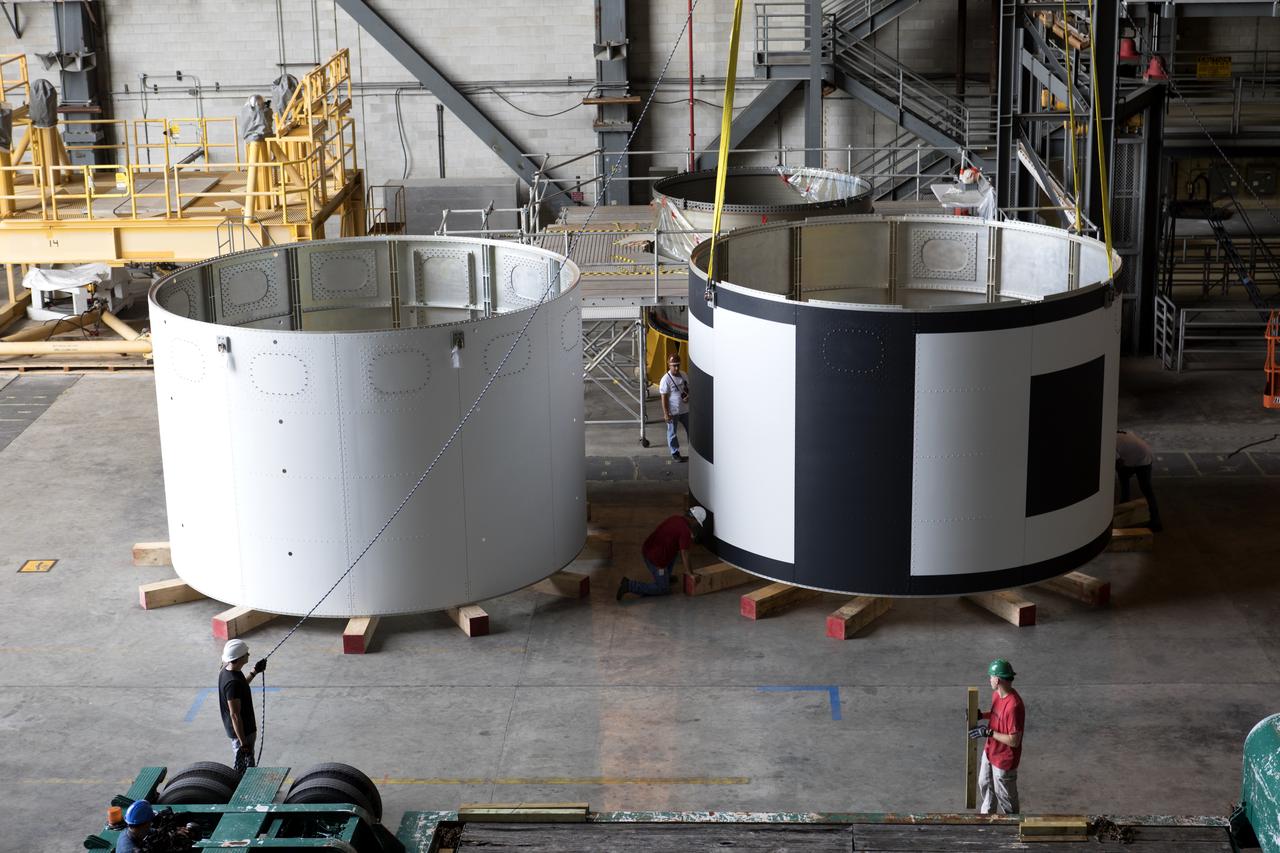
The second of three aeroshells, at right, for Orion's Launch Abort System (LAS) was lifted up from a flatbed truck and secured in High Bay 4 of the Vehicle Assembly Building at NASA's Kennedy Space Center in Florida, on June 26, 2018. The aeroshell was shipped from EMF Inc. on nearby Merritt Island. The aeroshells will be stacked and prepared for a full-stress test of the LAS, called Ascent Abort-2 (AA-2) flight test, scheduled for April 2019. During the test, a booster will launch from Space Launch Complex 46 at Cape Canaveral Air Force Station, carrying a fully functional LAS and a 22,000-pound Orion test vehicle to an altitude of 31,000 feet and traveling at more than 1,000 miles an hour. The test will verify the LAS can steer the crew module and astronauts aboard to safety in the event of an issue with the Space Launch System (SLS) rocket when the spacecraft is under the highest aerodynamic loads it will experience during a rapid climb into space. Orion is being prepared for its first integrated uncrewed flight atop the SLS on Exploration Mission-1.
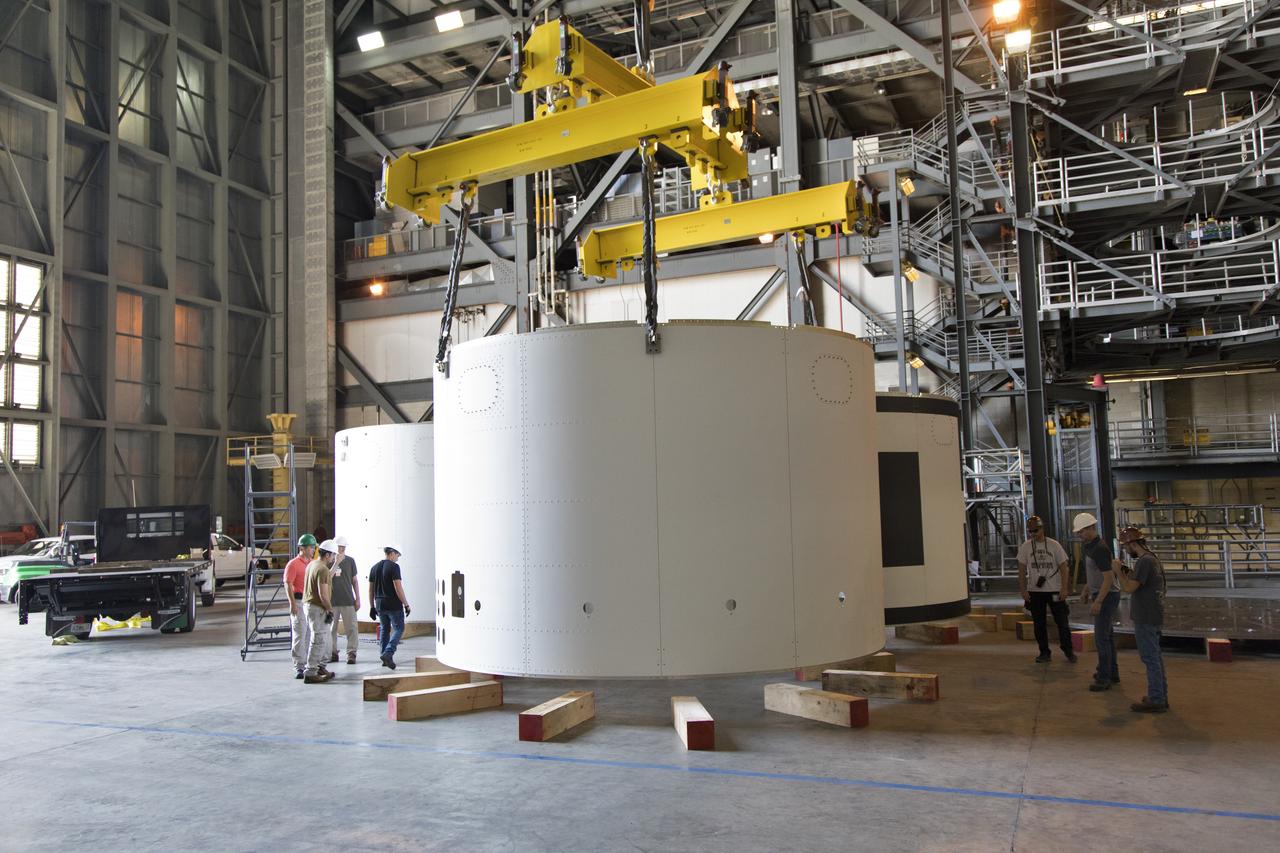
A crane lowers the third and final aeroshell for Orion's Launch Abort System (LAS) onto slats in High Bay 4 of the Vehicle Assembly Building on July 12, 2018, at NASA's Kennedy Space Center in Florida. The aeroshell was shipped from EMF Inc. on nearby Merritt Island. All three aeroshells will be stacked and prepared for a full-stress test of the LAS, called Ascent Abort-2 (AA-2) flight test, scheduled for April 2019. During the test, a booster will launch from Space Launch Complex 46 at Cape Canaveral Air Force Station, carrying a fully functional LAS and a 22,000-pound Orion test vehicle to an altitude of 31,000 feet and traveling at more than 1,000 miles an hour. The test will verify the LAS can steer the crew module and astronauts aboard to safety in the event of an issue with the Space Launch System (SLS) rocket when the spacecraft is under the highest aerodynamic loads it will experience during a rapid climb into space. Orion is being prepared for its first integrated uncrewed flight atop the SLS on Exploration Mission-1.
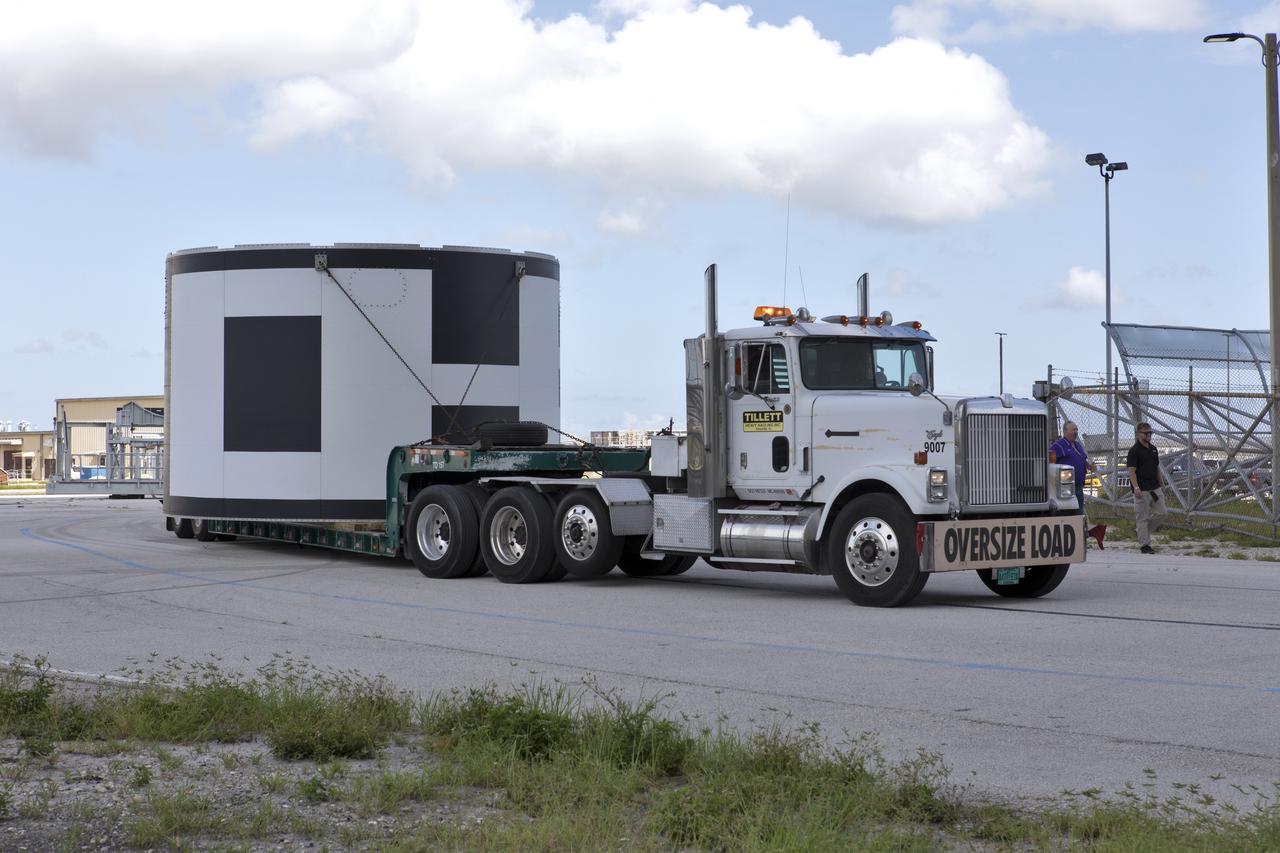
The second of three aeroshells for Orion's Launch Abort System (LAS) arrives by truck at the Vehicle Assembly Building at NASA's Kennedy Space Center in Florida, on June 26, 2018. The aeroshell was shipped from EMF Inc. on nearby Merritt Island. It will be offloaded and secured in High Bay 4. The aeroshells will be stacked and prepared for a full-stress test of the LAS, called Ascent Abort-2 (AA-2) flight test, scheduled for April 2019. During the test, a booster will launch from Space Launch Complex 46 at Cape Canaveral Air Force Station, carrying a fully functional LAS and a 22,000-pound Orion test vehicle to an altitude of 31,000 feet and traveling at more than 1,000 miles an hour. The test will verify the LAS can steer the crew module and astronauts aboard to safety in the event of an issue with the Space Launch System (SLS) rocket when the spacecraft is under the highest aerodynamic loads it will experience during a rapid climb into space. Orion is being prepared for its first integrated uncrewed flight atop the SLS on Exploration Mission-1.
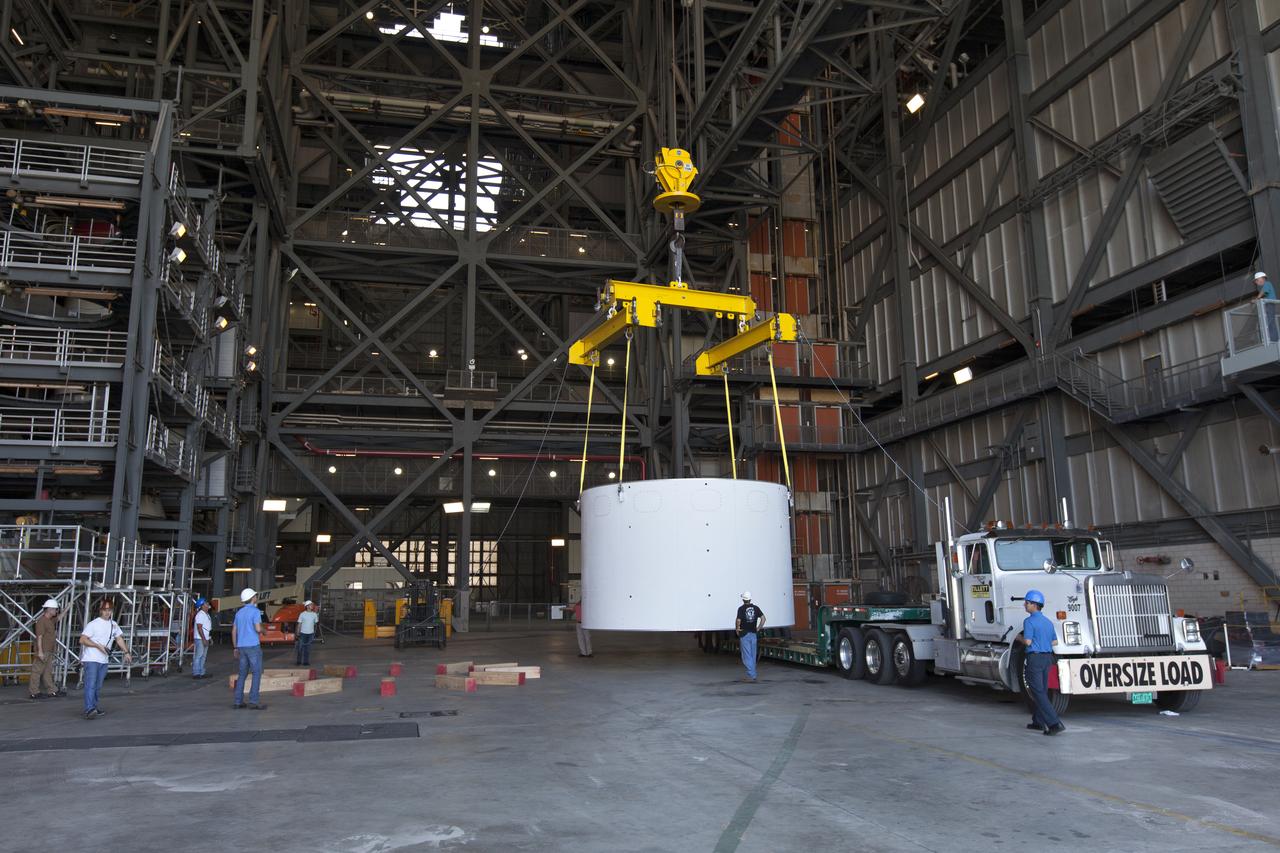
The first of three aeroshells for Orion's Launch Abort System (LAS) arrives by truck and is offloaded in High Bay 4 inside the Vehicle Assembly Building at NASA's Kennedy Space Center in Florida, on June 19, 2018. The aeroshell was shipped from EMF Inc. on nearby Merritt Island. The aeroshells will be stacked and prepared for a full-stress test of the LAS, called Ascent Abort-2 (AA-2) flight test, scheduled for April 2019. During the test, a booster will launch from Space Launch Complex 46 at Cape Canaveral Air Force Station, carrying a fully functional LAS and a 22,000-pound Orion test vehicle to an altitude of 31,000 feet and traveling at more than 1,000 miles an hour. The test will verify the LAS can steer the crew module and astronauts aboard to safety in the event of an issue with the Space Launch System (SLS) rocket when the spacecraft is under the highest aerodynamic loads it will experience during a rapid climb into space. Orion is being prepared for its first integrated uncrewed flight atop the SLS on Exploration Mission-1.
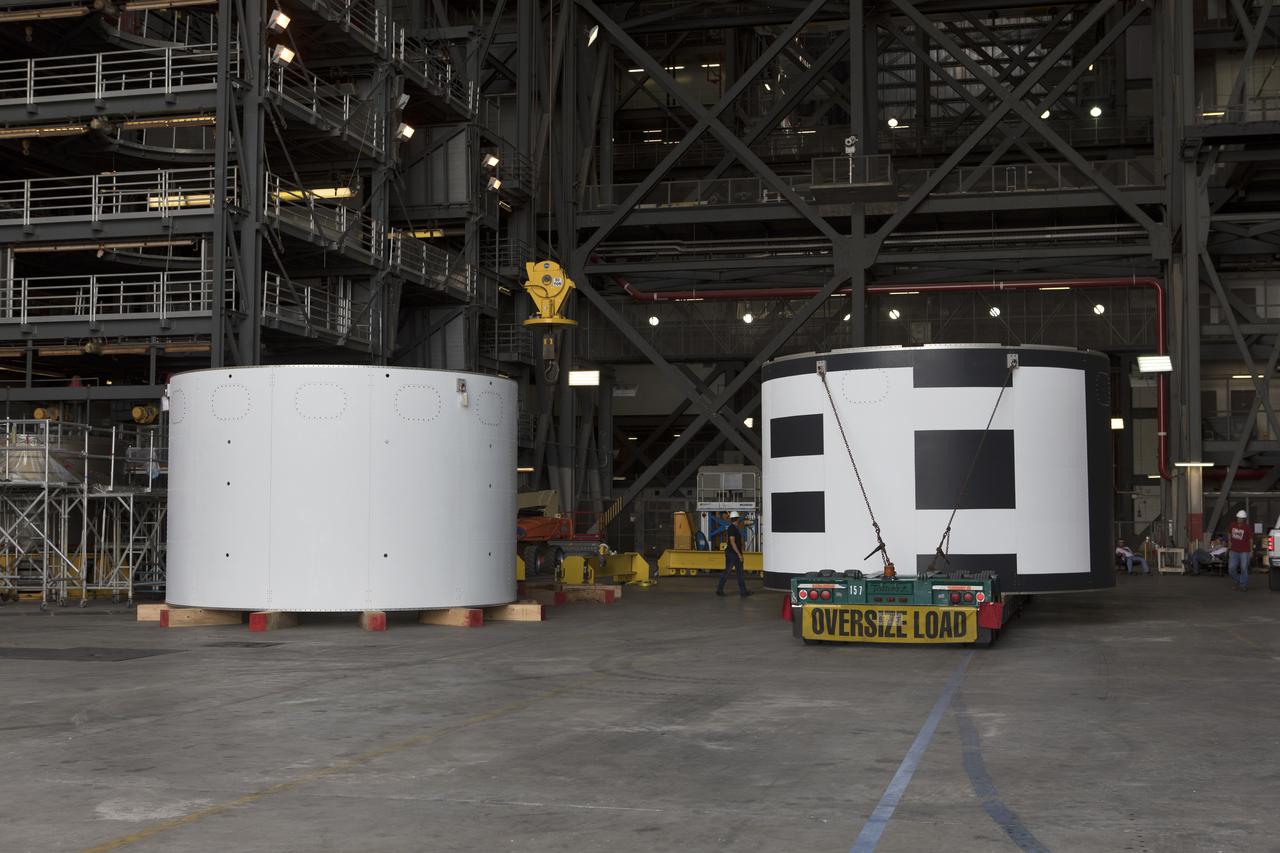
The second of three aeroshells, at right, for Orion's Launch Abort System (LAS) arrives by flatbed truck in High Bay 4 of the Vehicle Assembly Building at NASA's Kennedy Space Center in Florida, on June 26, 2018. The aeroshell was shipped from EMF Inc. on nearby Merritt Island. It will be offloaded and secured in the high bay. The aeroshells will be stacked and prepared for a full-stress test of the LAS, called Ascent Abort-2 (AA-2) flight test, scheduled for April 2019. During the test, a booster will launch from Space Launch Complex 46 at Cape Canaveral Air Force Station, carrying a fully functional LAS and a 22,000-pound Orion test vehicle to an altitude of 31,000 feet and traveling at more than 1,000 miles an hour. The test will verify the LAS can steer the crew module and astronauts aboard to safety in the event of an issue with the Space Launch System (SLS) rocket when the spacecraft is under the highest aerodynamic loads it will experience during a rapid climb into space. Orion is being prepared for its first integrated uncrewed flight atop the SLS on Exploration Mission-1.
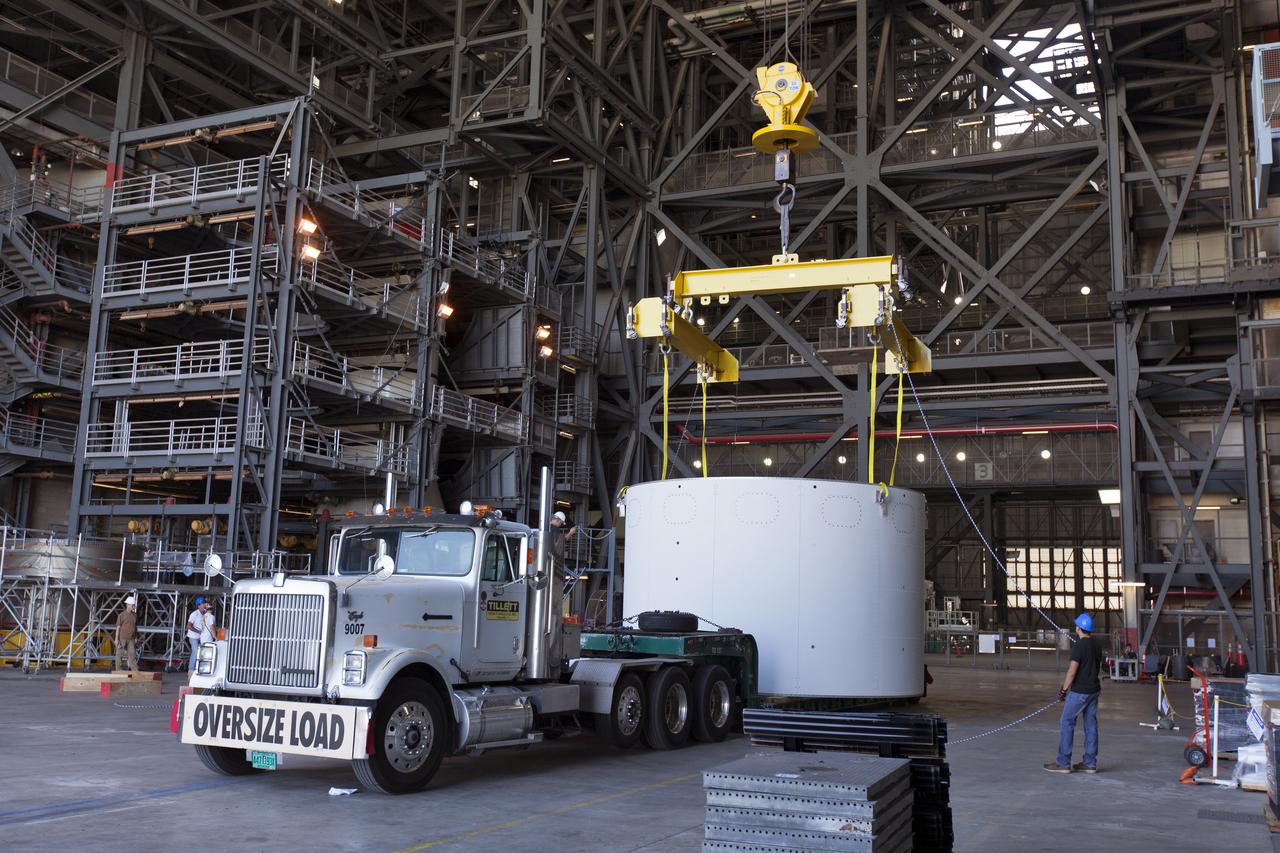
The first of three aeroshells for Orion's Launch Abort System (LAS) arrives by truck in High Bay 4 inside the Vehicle Assembly Building at NASA's Kennedy Space Center in Florida, on June 19, 2018. The aeroshell was shipped from EMF Inc. on nearby Merritt Island. The aeroshells will be stacked and prepared for a full-stress test of the LAS, called Ascent Abort-2 (AA-2) flight test, scheduled for April 2019. During the test, a booster will launch from Space Launch Complex 46 at Cape Canaveral Air Force Station, carrying a fully functional LAS and a 22,000-pound Orion test vehicle to an altitude of 31,000 feet and traveling at more than 1,000 miles an hour. The test will verify the LAS can steer the crew module and astronauts aboard to safety in the event of an issue with the Space Launch System (SLS) rocket when the spacecraft is under the highest aerodynamic loads it will experience during a rapid climb into space. Orion is being prepared for its first integrated uncrewed flight atop the SLS on Exploration Mission-1.
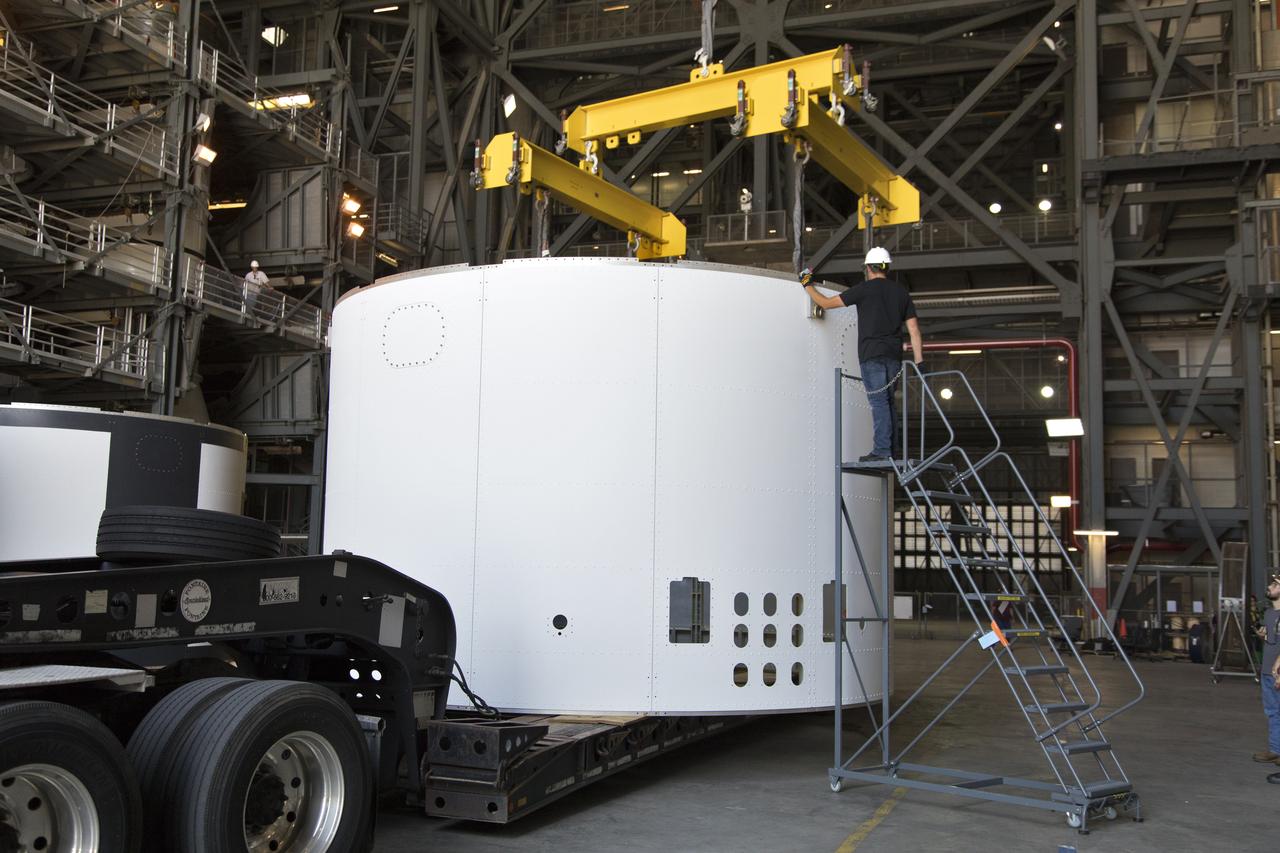
The third and final aeroshell for Orion's Launch Abort System (LAS) arrives by flatbed truck in High Bay 4 of the Vehicle Assembly Building on July 12, 2018, at NASA's Kennedy Space Center in Florida. The aeroshell was shipped from EMF Inc. on nearby Merritt Island. A technician assists with crane attachment so that the aeroshell can be offloaded and placed on slats in the high bay. The aeroshells will be stacked and prepared for a full-stress test of the LAS, called Ascent Abort-2 (AA-2) flight test, scheduled for April 2019. During the test, a booster will launch from Space Launch Complex 46 at Cape Canaveral Air Force Station, carrying a fully functional LAS and a 22,000-pound Orion test vehicle to an altitude of 31,000 feet and traveling at more than 1,000 miles an hour. The test will verify the LAS can steer the crew module and astronauts aboard to safety in the event of an issue with the Space Launch System (SLS) rocket when the spacecraft is under the highest aerodynamic loads it will experience during a rapid climb into space. Orion is being prepared for its first integrated uncrewed flight atop the SLS on Exploration Mission-1.
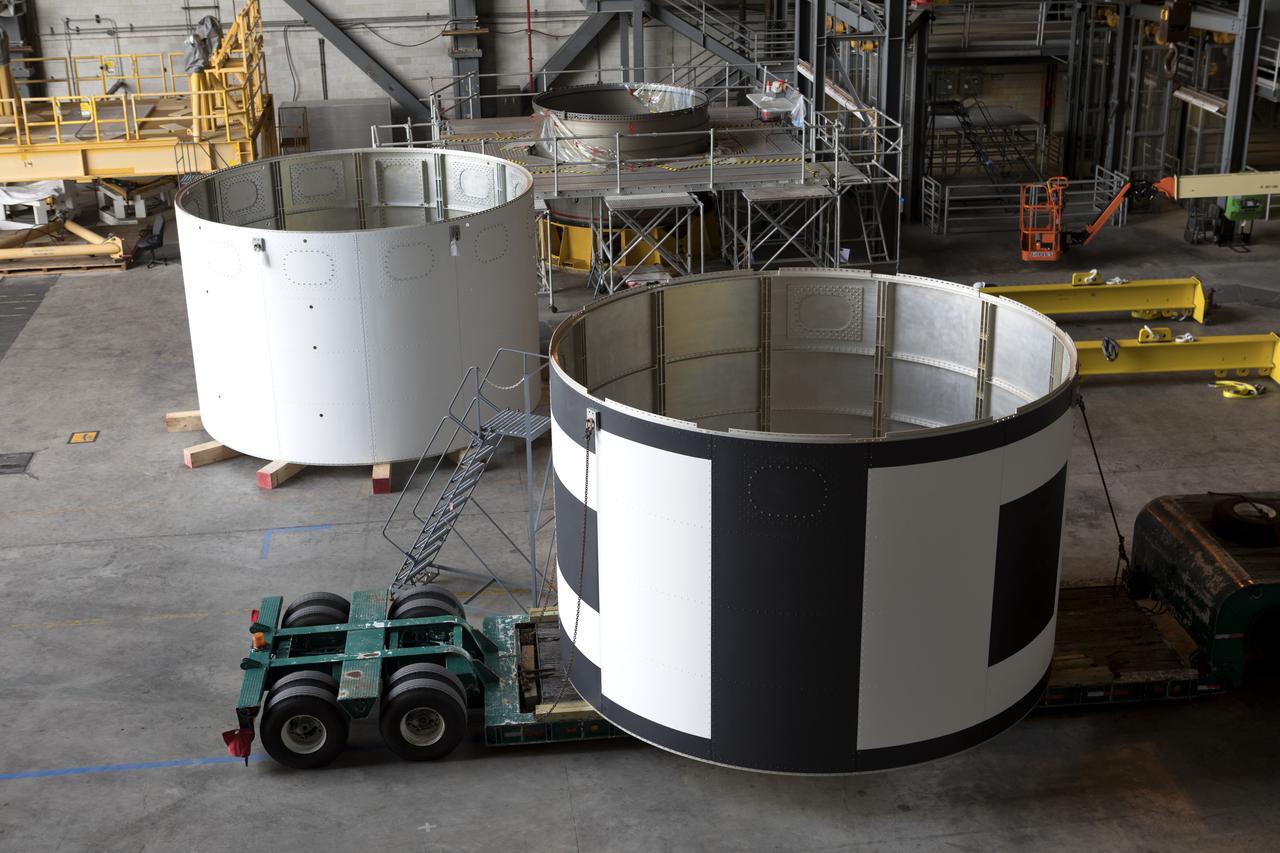
The second of three aeroshells, at right, for Orion's Launch Abort System (LAS) arrives by flatbed truck in High Bay 4 of the Vehicle Assembly Building at NASA's Kennedy Space Center in Florida, on June 26, 2018. The aeroshell was shipped from EMF Inc. on nearby Merritt Island. It will be offloaded and secured in the high bay. The aeroshells will be stacked and prepared for a full-stress test of the LAS, called Ascent Abort-2 (AA-2) flight test, scheduled for April 2019. During the test, a booster will launch from Space Launch Complex 46 at Cape Canaveral Air Force Station, carrying a fully functional LAS and a 22,000-pound Orion test vehicle to an altitude of 31,000 feet and traveling at more than 1,000 miles an hour. The test will verify the LAS can steer the crew module and astronauts aboard to safety in the event of an issue with the Space Launch System (SLS) rocket when the spacecraft is under the highest aerodynamic loads it will experience during a rapid climb into space. Orion is being prepared for its first integrated uncrewed flight atop the SLS on Exploration Mission-1.
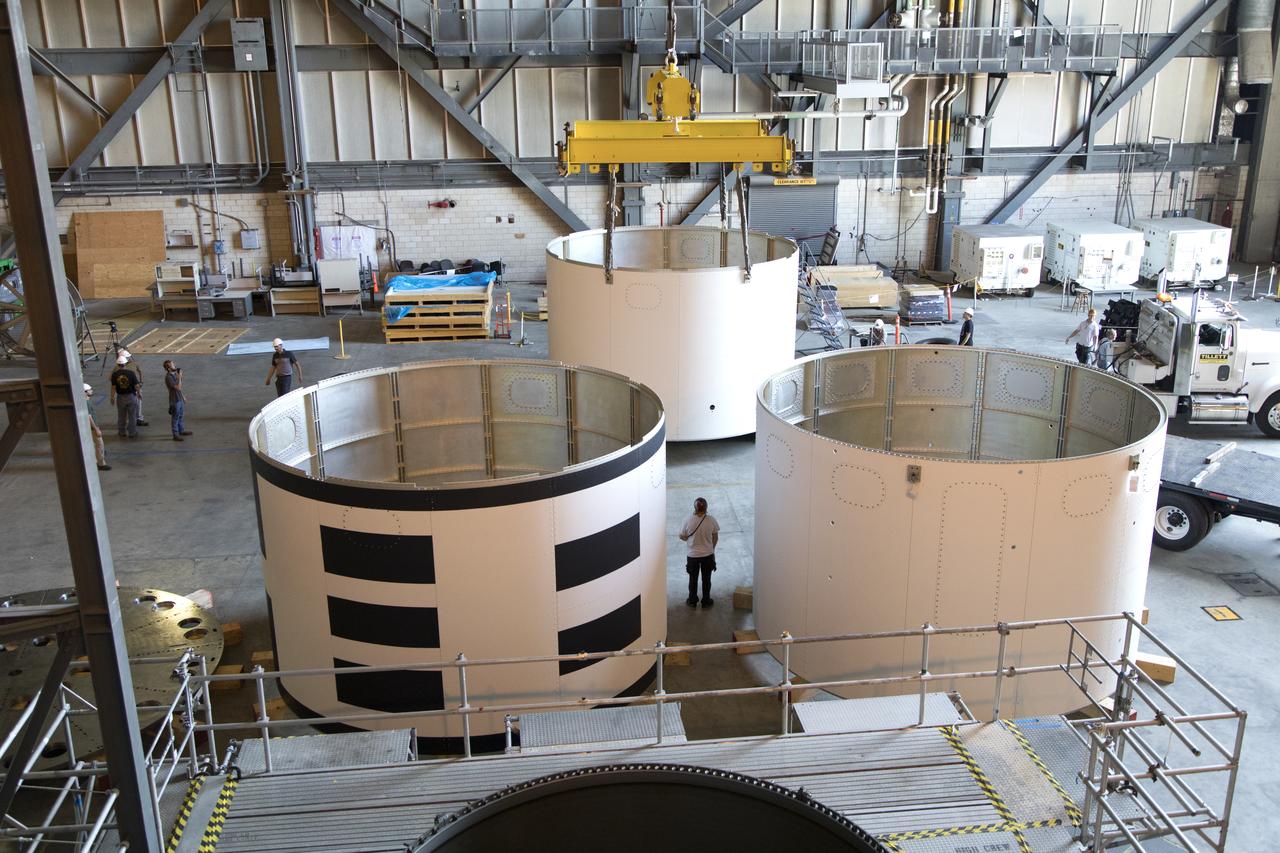
The third and final aeroshell for Orion's Launch Abort System (LAS) is lifted by crane in High Bay 4 of the Vehicle Assembly Building on July 12, 2018, at NASA's Kennedy Space Center in Florida. The aeroshell was shipped from EMF Inc. on nearby Merritt Island. The aeroshell will be lowered onto slats. All three aeroshells will be stacked and prepared for a full-stress test of the LAS, called Ascent Abort-2 (AA-2) flight test, scheduled for April 2019. During the test, a booster will launch from Space Launch Complex 46 at Cape Canaveral Air Force Station, carrying a fully functional LAS and a 22,000-pound Orion test vehicle to an altitude of 31,000 feet and traveling at more than 1,000 miles an hour. The test will verify the LAS can steer the crew module and astronauts aboard to safety in the event of an issue with the Space Launch System (SLS) rocket when the spacecraft is under the highest aerodynamic loads it will experience during a rapid climb into space. Orion is being prepared for its first integrated uncrewed flight atop the SLS on Exploration Mission-1.
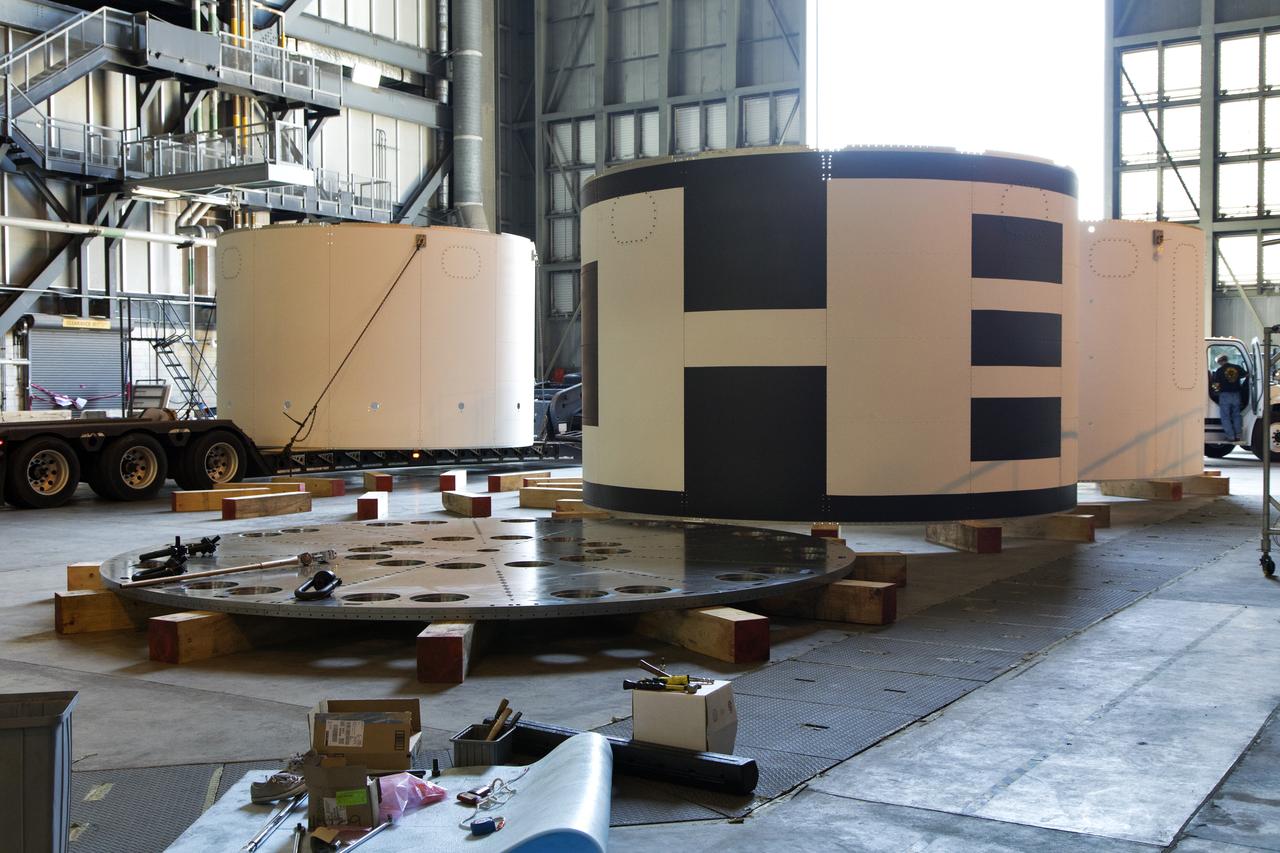
The third and final aeroshell, at left, for Orion's Launch Abort System (LAS) arrives by flatbed truck in High Bay 4 of the Vehicle Assembly Building on July 12, 2018, at NASA's Kennedy Space Center in Florida. The aeroshell was shipped from EMF Inc. on nearby Merritt Island. It will be offloaded and secured in the high bay. The aeroshells will be stacked and prepared for a full-stress test of the LAS, called Ascent Abort-2 (AA-2) flight test, scheduled for April 2019. During the test, a booster will launch from Space Launch Complex 46 at Cape Canaveral Air Force Station, carrying a fully functional LAS and a 22,000-pound Orion test vehicle to an altitude of 31,000 feet and traveling at more than 1,000 miles an hour. The test will verify the LAS can steer the crew module and astronauts aboard to safety in the event of an issue with the Space Launch System (SLS) rocket when the spacecraft is under the highest aerodynamic loads it will experience during a rapid climb into space. Orion is being prepared for its first integrated uncrewed flight atop the SLS on Exploration Mission-1.
The second of three aeroshells, at right, for Orion's Launch Abort System (LAS) arrives by flatbed truck in High Bay 4 of the Vehicle Assembly Building at NASA's Kennedy Space Center in Florida, on June 26, 2018. The aeroshell was shipped from EMF Inc. on nearby Merritt Island. It will be offloaded and secured in the high bay. The aeroshells will be stacked and prepared for a full-stress test of the LAS, called Ascent Abort-2 (AA-2) flight test, scheduled for April 2019. During the test, a booster will launch from Space Launch Complex 46 at Cape Canaveral Air Force Station, carrying a fully functional LAS and a 22,000-pound Orion test vehicle to an altitude of 31,000 feet and traveling at more than 1,000 miles an hour. The test will verify the LAS can steer the crew module and astronauts aboard to safety in the event of an issue with the Space Launch System (SLS) rocket when the spacecraft is under the highest aerodynamic loads it will experience during a rapid climb into space. Orion is being prepared for its first integrated uncrewed flight atop the SLS on Exploration Mission-1.
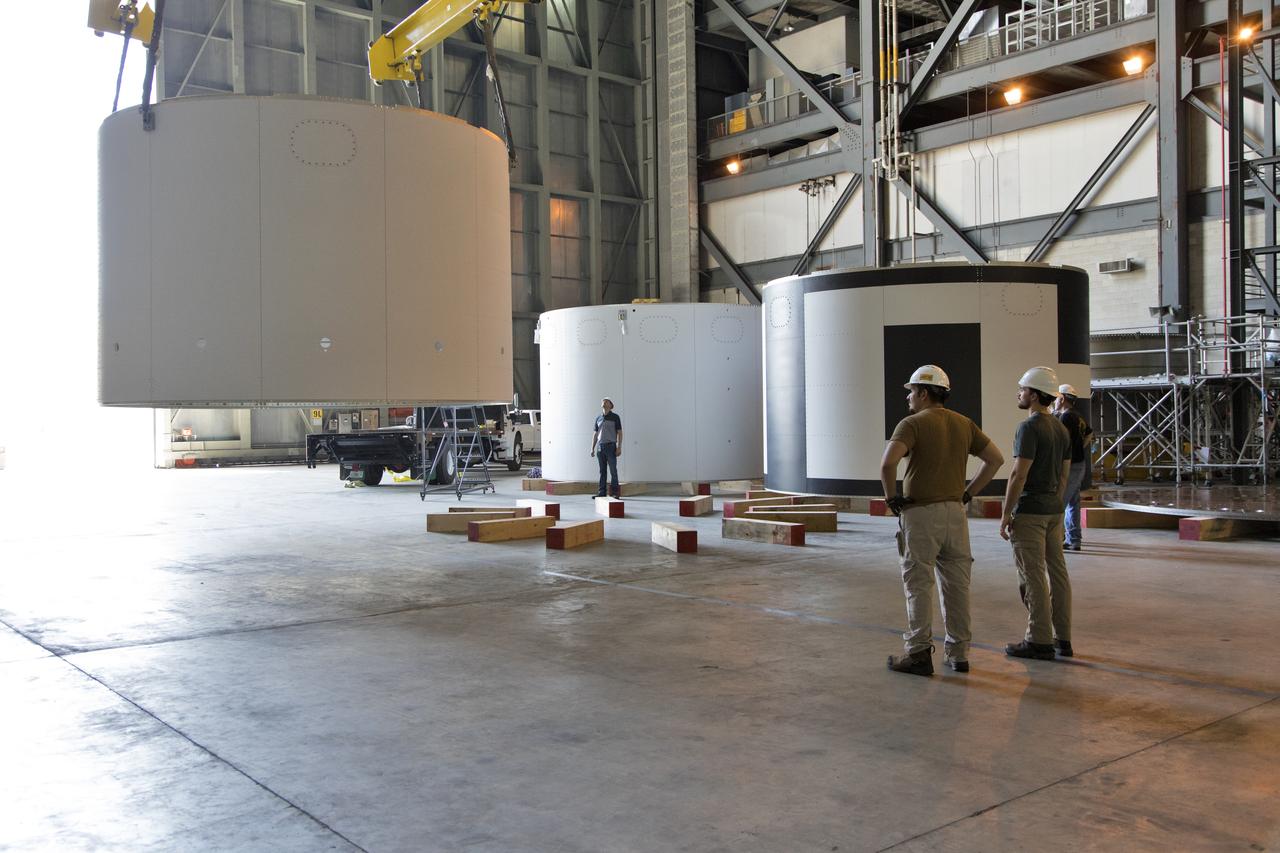
The third and final aeroshell for Orion's Launch Abort System (LAS) is lifted by crane in High Bay 4 of the Vehicle Assembly Building on July 12, 2018, at NASA's Kennedy Space Center in Florida. The aeroshell was shipped from EMF Inc. on nearby Merritt Island. All three aeroshells will be stacked and prepared for a full-stress test of the LAS, called Ascent Abort-2 (AA-2) flight test, scheduled for April 2019. During the test, a booster will launch from Space Launch Complex 46 at Cape Canaveral Air Force Station, carrying a fully functional LAS and a 22,000-pound Orion test vehicle to an altitude of 31,000 feet and traveling at more than 1,000 miles an hour. The test will verify the LAS can steer the crew module and astronauts aboard to safety in the event of an issue with the Space Launch System (SLS) rocket when the spacecraft is under the highest aerodynamic loads it will experience during a rapid climb into space. Orion is being prepared for its first integrated uncrewed flight atop the SLS on Exploration Mission-1.

The second of three aeroshells, at right, for Orion's Launch Abort System (LAS) was lifted up from a flatbed truck and secured in High Bay 4 of the Vehicle Assembly Building at NASA's Kennedy Space Center in Florida, on June 26, 2018. The aeroshell was shipped from EMF Inc. on nearby Merritt Island. The aeroshells will be stacked and prepared for a full-stress test of the LAS, called Ascent Abort-2 (AA-2) flight test, scheduled for April 2019. During the test, a booster will launch from Space Launch Complex 46 at Cape Canaveral Air Force Station, carrying a fully functional LAS and a 22,000-pound Orion test vehicle to an altitude of 31,000 feet and traveling at more than 1,000 miles an hour. The test will verify the LAS can steer the crew module and astronauts aboard to safety in the event of an issue with the Space Launch System (SLS) rocket when the spacecraft is under the highest aerodynamic loads it will experience during a rapid climb into space. Orion is being prepared for its first integrated uncrewed flight atop the SLS on Exploration Mission-1.
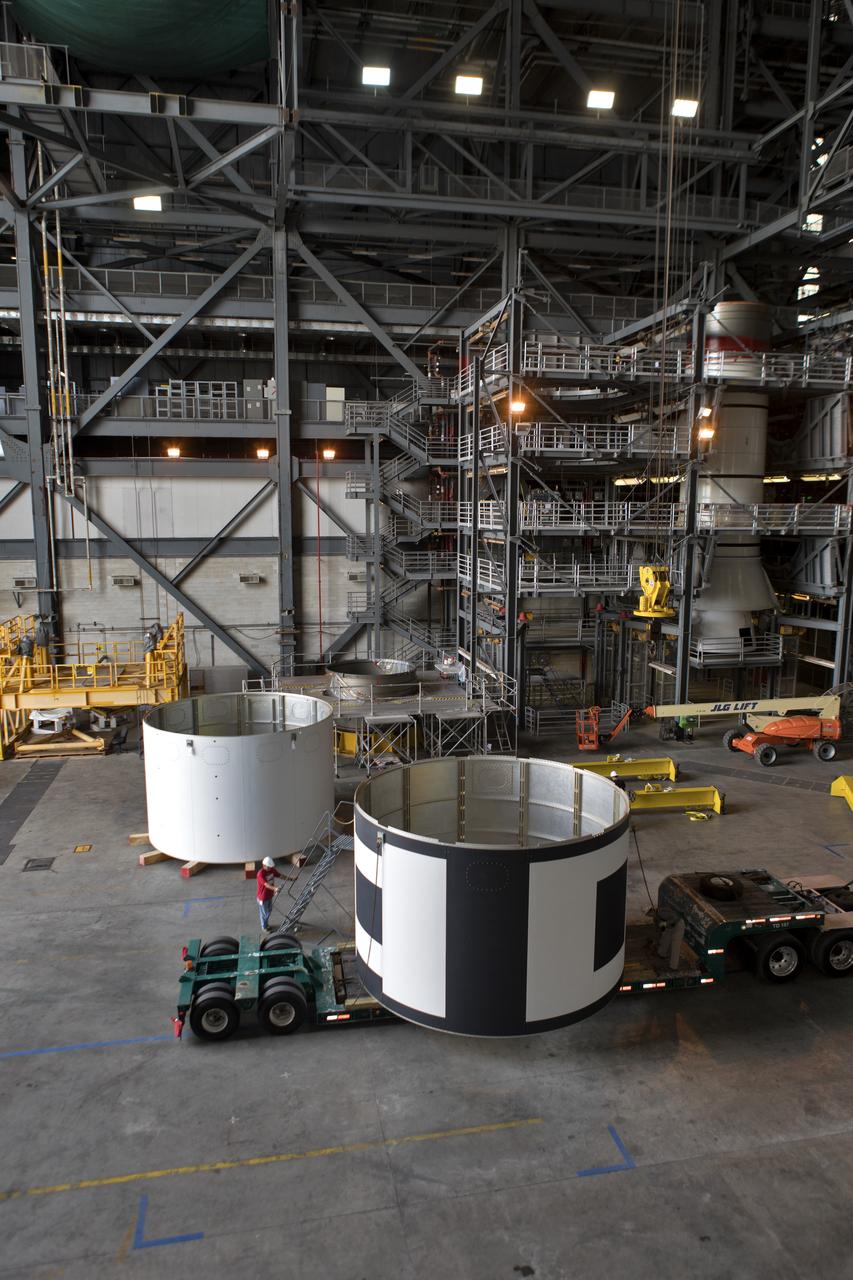
The second of three aeroshells, at right, for Orion's Launch Abort System (LAS) arrives by flatbed truck in High Bay 4 of the Vehicle Assembly Building at NASA's Kennedy Space Center in Florida, on June 26, 2018. The aeroshell was shipped from EMF Inc. on nearby Merritt Island. It will be offloaded and secured in the high bay. The aeroshells will be stacked and prepared for a full-stress test of the LAS, called Ascent Abort-2 (AA-2) flight test, scheduled for April 2019. During the test, a booster will launch from Space Launch Complex 46 at Cape Canaveral Air Force Station, carrying a fully functional LAS and a 22,000-pound Orion test vehicle to an altitude of 31,000 feet and traveling at more than 1,000 miles an hour. The test will verify the LAS can steer the crew module and astronauts aboard to safety in the event of an issue with the Space Launch System (SLS) rocket when the spacecraft is under the highest aerodynamic loads it will experience during a rapid climb into space. Orion is being prepared for its first integrated uncrewed flight atop the SLS on Exploration Mission-1.
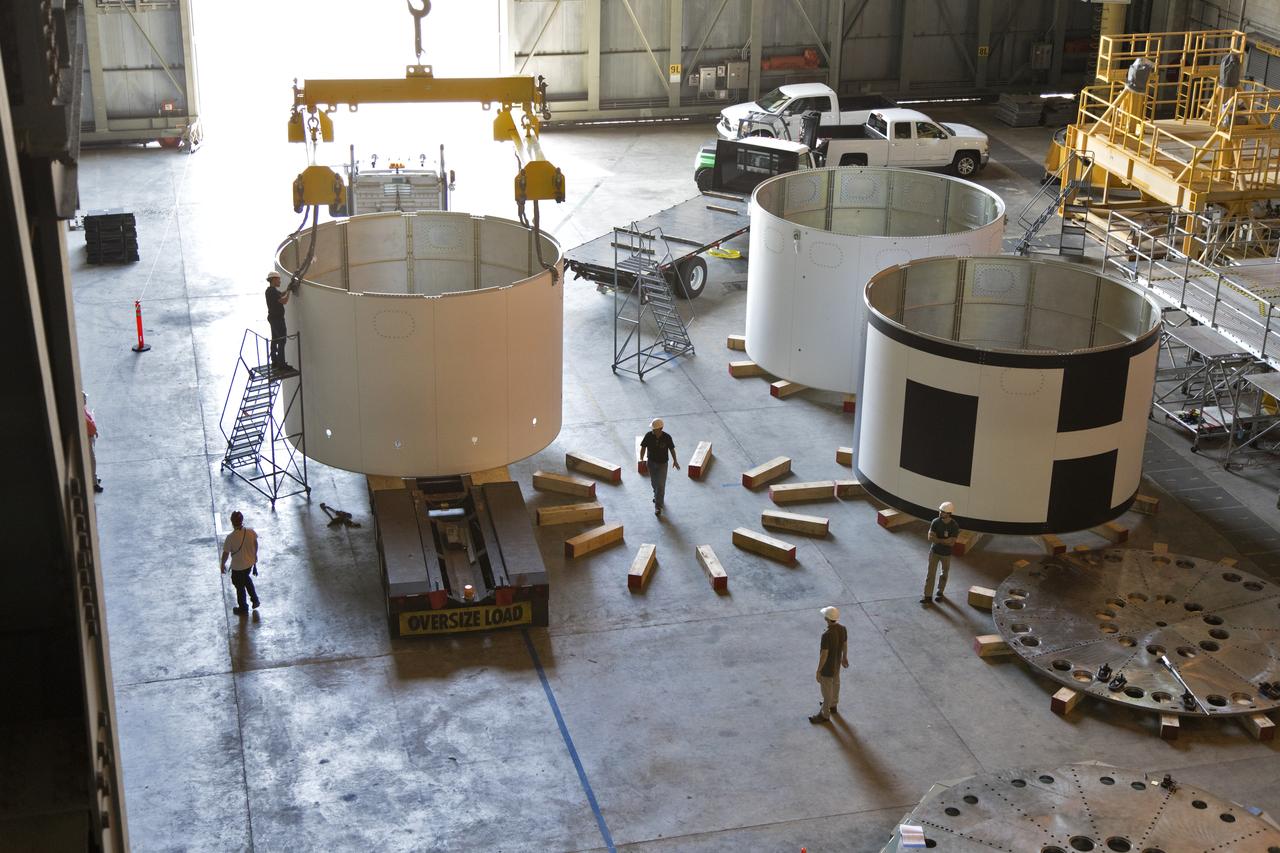
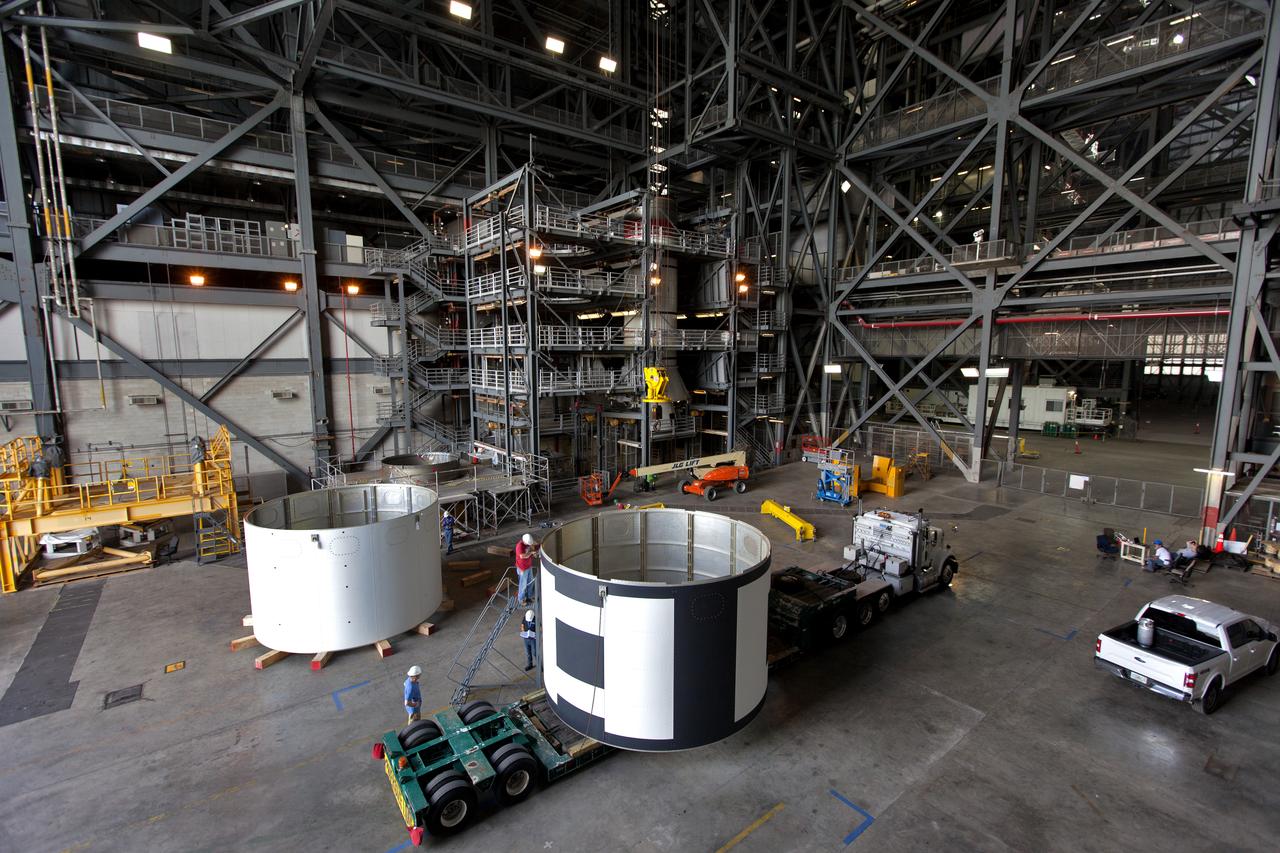
The third and final aeroshell, at left, for Orion's Launch Abort System (LAS) is in High Bay 4 of the Vehicle Assembly Building on July 12, 2018, at NASA's Kennedy Space Center in Florida. The aeroshell was shipped from EMF Inc. on nearby Merritt Island. Technicians prepare the aeroshell to be lifted off of the flatbed truck and transferred to slats. All three aeroshells will be stacked and prepared for a full-stress test of the LAS, called Ascent Abort-2 (AA-2) flight test, scheduled for April 2019. During the test, a booster will launch from Space Launch Complex 46 at Cape Canaveral Air Force Station, carrying a fully functional LAS and a 22,000-pound Orion test vehicle to an altitude of 31,000 feet and traveling at more than 1,000 miles an hour. The test will verify the LAS can steer the crew module and astronauts aboard to safety in the event of an issue with the Space Launch System (SLS) rocket when the spacecraft is under the highest aerodynamic loads it will experience during a rapid climb into space. Orion is being prepared for its first integrated uncrewed flight atop the SLS on Exploration Mission-1.
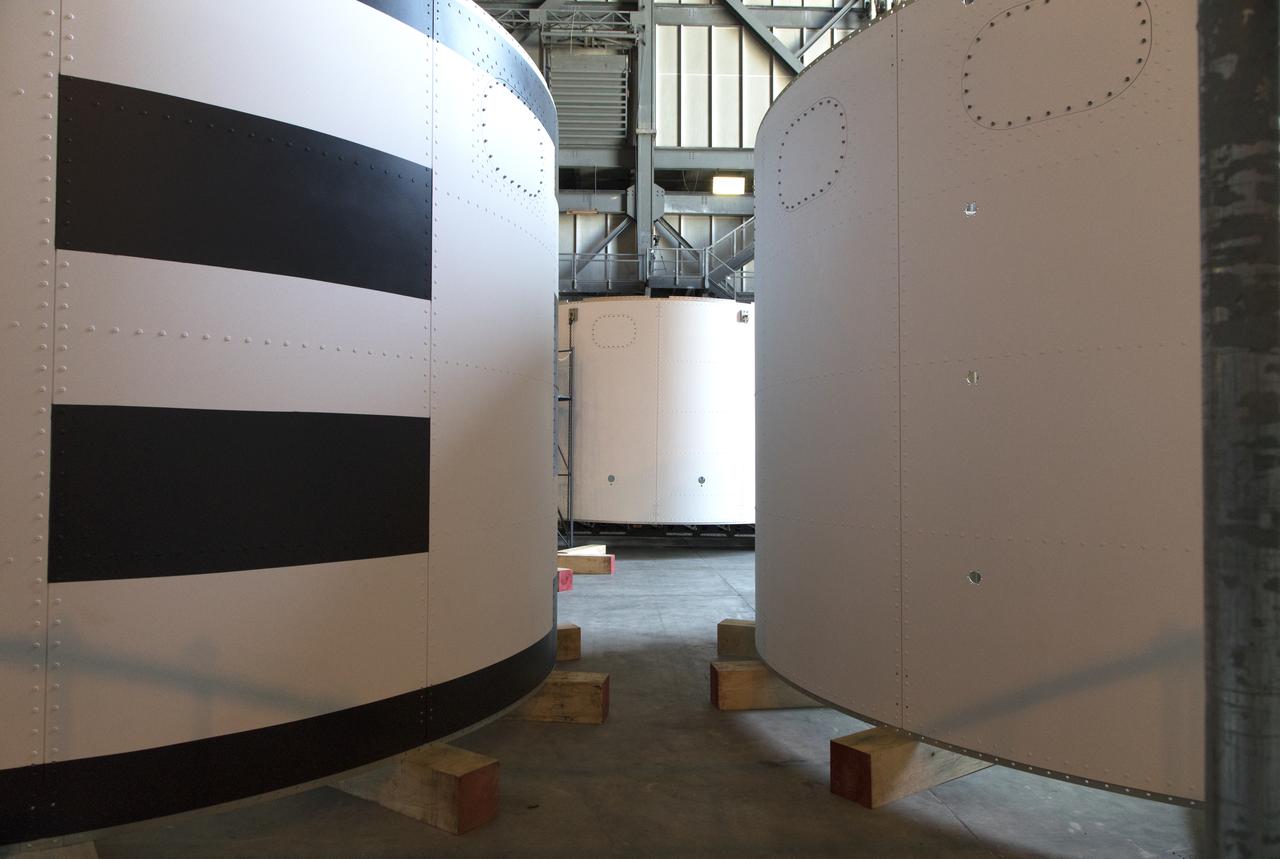
The third and final aeroshell, center in back, for Orion's Launch Abort System (LAS) arrives by flatbed truck in High Bay 4 of the Vehicle Assembly Building on July 12, 2018, at NASA's Kennedy Space Center in Florida. The aeroshell arrived by truck from EMF Inc. on nearby Merritt Island. It will be offloaded and placed on slats in the high bay. All three aeroshells will be stacked and prepared for a full-stress test of the LAS, called Ascent Abort-2 (AA-2) flight test, scheduled for April 2019. During the test, a booster will launch from Space Launch Complex 46 at Cape Canaveral Air Force Station, carrying a fully functional LAS and a 22,000-pound Orion test vehicle to an altitude of 31,000 feet and traveling at more than 1,000 miles an hour. The test will verify the LAS can steer the crew module and astronauts aboard to safety in the event of an issue with the Space Launch System (SLS) rocket when the spacecraft is under the highest aerodynamic loads it will experience during a rapid climb into space. Orion is being prepared for its first integrated uncrewed flight atop the SLS on Exploration Mission-1.
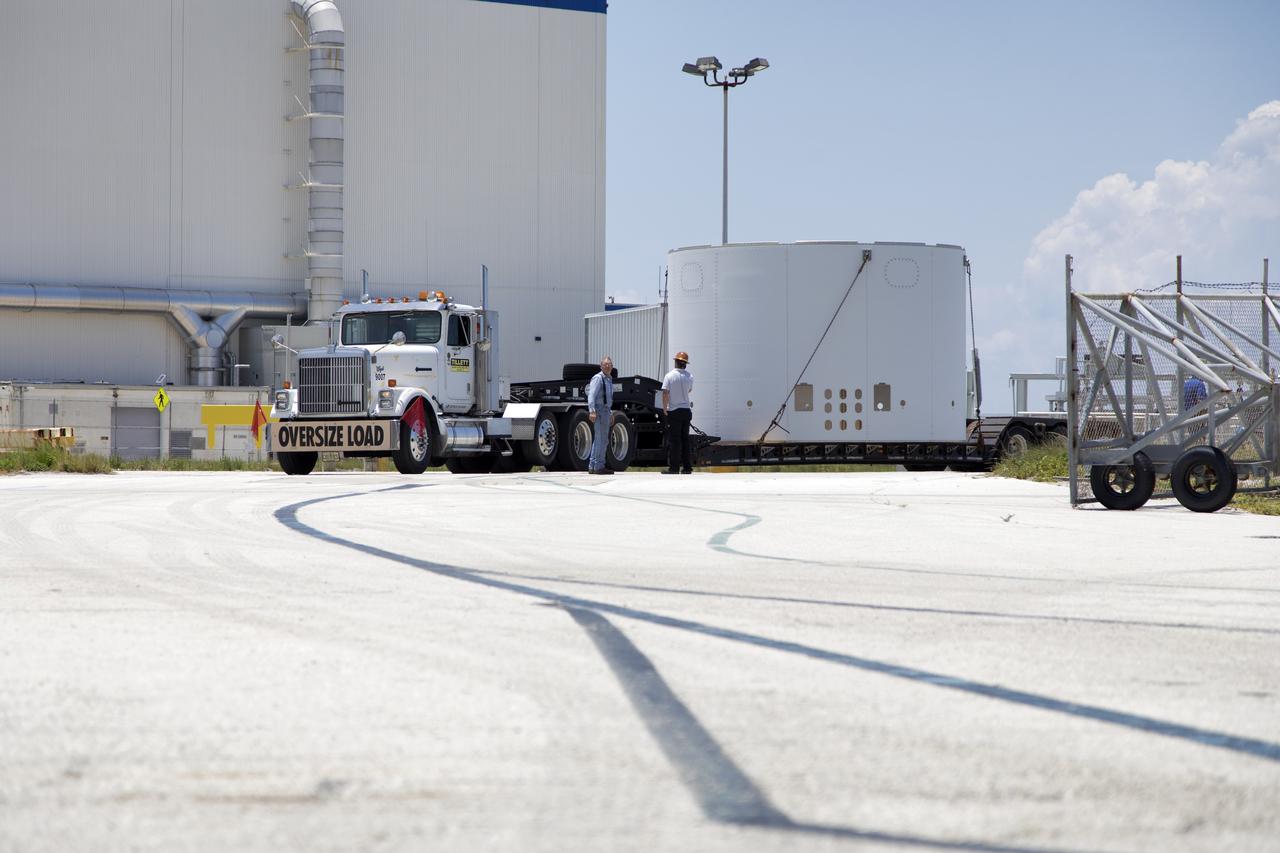
The third and final aeroshell for Orion's Launch Abort System (LAS) arrives by truck on July 12, 2018, at NASA's Kennedy Space Center in Florida. The aeroshell was shipped from EMF Inc. on nearby Merritt Island. It will be offloaded and secured in High Bay 4 of the Vehicle Assembly Building. The aeroshells will be stacked and prepared for a full-stress test of the LAS, called Ascent Abort-2 (AA-2) flight test, scheduled for April 2019. During the test, a booster will launch from Space Launch Complex 46 at Cape Canaveral Air Force Station, carrying a fully functional LAS and a 22,000-pound Orion test vehicle to an altitude of 31,000 feet and traveling at more than 1,000 miles an hour. The test will verify the LAS can steer the crew module and astronauts aboard to safety in the event of an issue with the Space Launch System (SLS) rocket when the spacecraft is under the highest aerodynamic loads it will experience during a rapid climb into space. Orion is being prepared for its first integrated uncrewed flight atop the SLS on Exploration Mission-1.
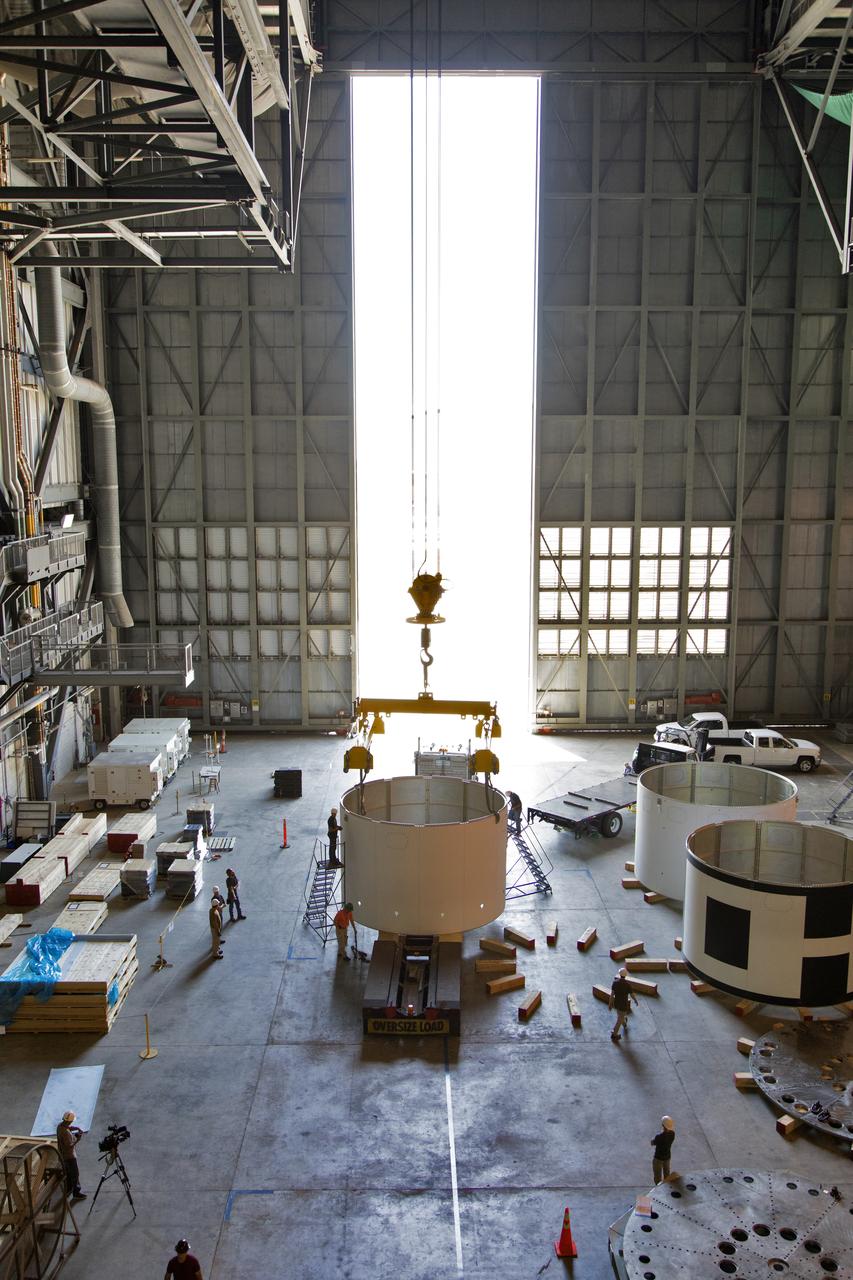
The third and final aeroshell for Orion's Launch Abort System (LAS) is in High Bay 4 of the Vehicle Assembly Building on July 12, 2018, at NASA's Kennedy Space Center in Florida. The aeroshell was shipped from EMF Inc. on nearby Merritt Island. Technicians prepare the aeroshell to be lifted off of the flatbed truck and transferred to slats. All three aeroshells will be stacked and prepared for a full-stress test of the LAS, called Ascent Abort-2 (AA-2) flight test, scheduled for April 2019. During the test, a booster will launch from Space Launch Complex 46 at Cape Canaveral Air Force Station, carrying a fully functional LAS and a 22,000-pound Orion test vehicle to an altitude of 31,000 feet and traveling at more than 1,000 miles an hour. The test will verify the LAS can steer the crew module and astronauts aboard to safety in the event of an issue with the Space Launch System (SLS) rocket when the spacecraft is under the highest aerodynamic loads it will experience during a rapid climb into space. Orion is being prepared for its first integrated uncrewed flight atop the SLS on Exploration Mission-1.
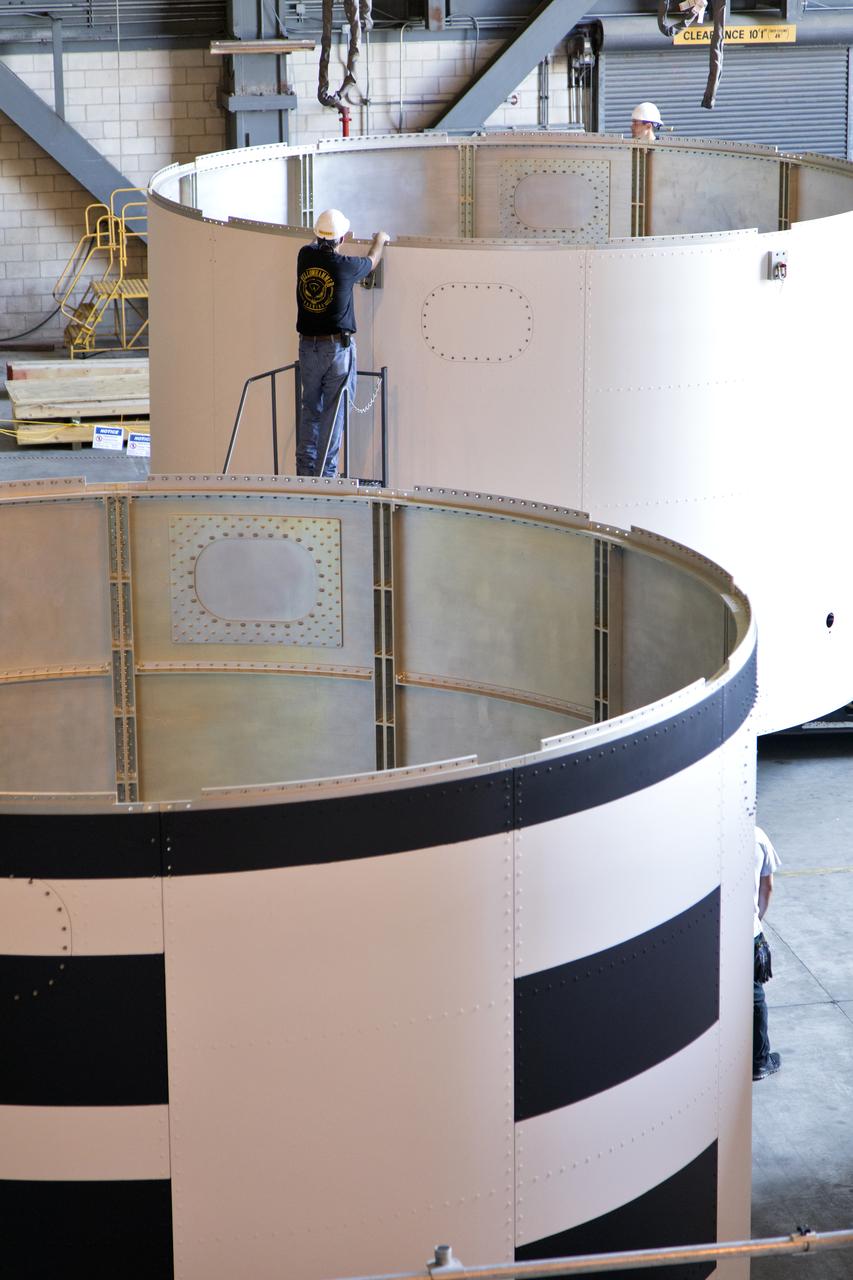
The third and final aeroshell for Orion's Launch Abort System (LAS) is in High Bay 4 of the Vehicle Assembly Building on July 12, 2018, at NASA's Kennedy Space Center in Florida. The aeroshell was shipped from EMF Inc. on nearby Merritt Island. Technicians prepare the aeroshell to be lifted off of the flatbed and transferred to slats. All three aeroshells will be stacked and prepared for a full-stress test of the LAS, called Ascent Abort-2 (AA-2) flight test, scheduled for April 2019. During the test, a booster will launch from Space Launch Complex 46 at Cape Canaveral Air Force Station, carrying a fully functional LAS and a 22,000-pound Orion test vehicle to an altitude of 31,000 feet and traveling at more than 1,000 miles an hour. The test will verify the LAS can steer the crew module and astronauts aboard to safety in the event of an issue with the Space Launch System (SLS) rocket when the spacecraft is under the highest aerodynamic loads it will experience during a rapid climb into space. Orion is being prepared for its first integrated uncrewed flight atop the SLS on Exploration Mission-1.
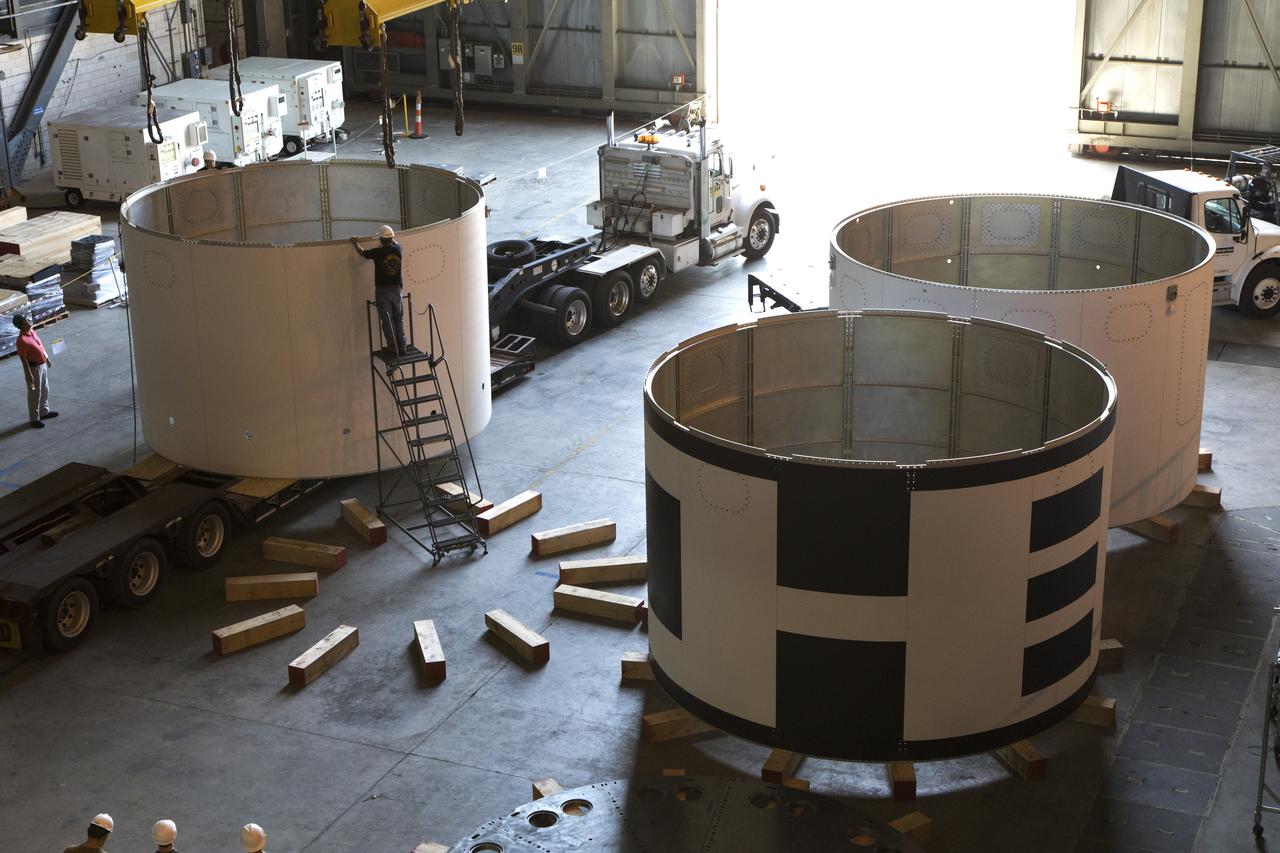
The third and final aeroshell for Orion's Launch Abort System (LAS) is in High Bay 4 of the Vehicle Assembly Building on July 12, 2018, at NASA's Kennedy Space Center in Florida. The aeroshell was shipped from EMF Inc. on nearby Merritt Island. Technicians prepare the aeroshell to be lifted off of the flatbed and transferred to slats. All three aeroshells will be stacked and prepared for a full-stress test of the LAS, called Ascent Abort-2 (AA-2) flight test, scheduled for April 2019. During the test, a booster will launch from Space Launch Complex 46 at Cape Canaveral Air Force Station, carrying a fully functional LAS and a 22,000-pound Orion test vehicle to an altitude of 31,000 feet and traveling at more than 1,000 miles an hour. The test will verify the LAS can steer the crew module and astronauts aboard to safety in the event of an issue with the Space Launch System (SLS) rocket when the spacecraft is under the highest aerodynamic loads it will experience during a rapid climb into space. Orion is being prepared for its first integrated uncrewed flight atop the SLS on Exploration Mission-1.
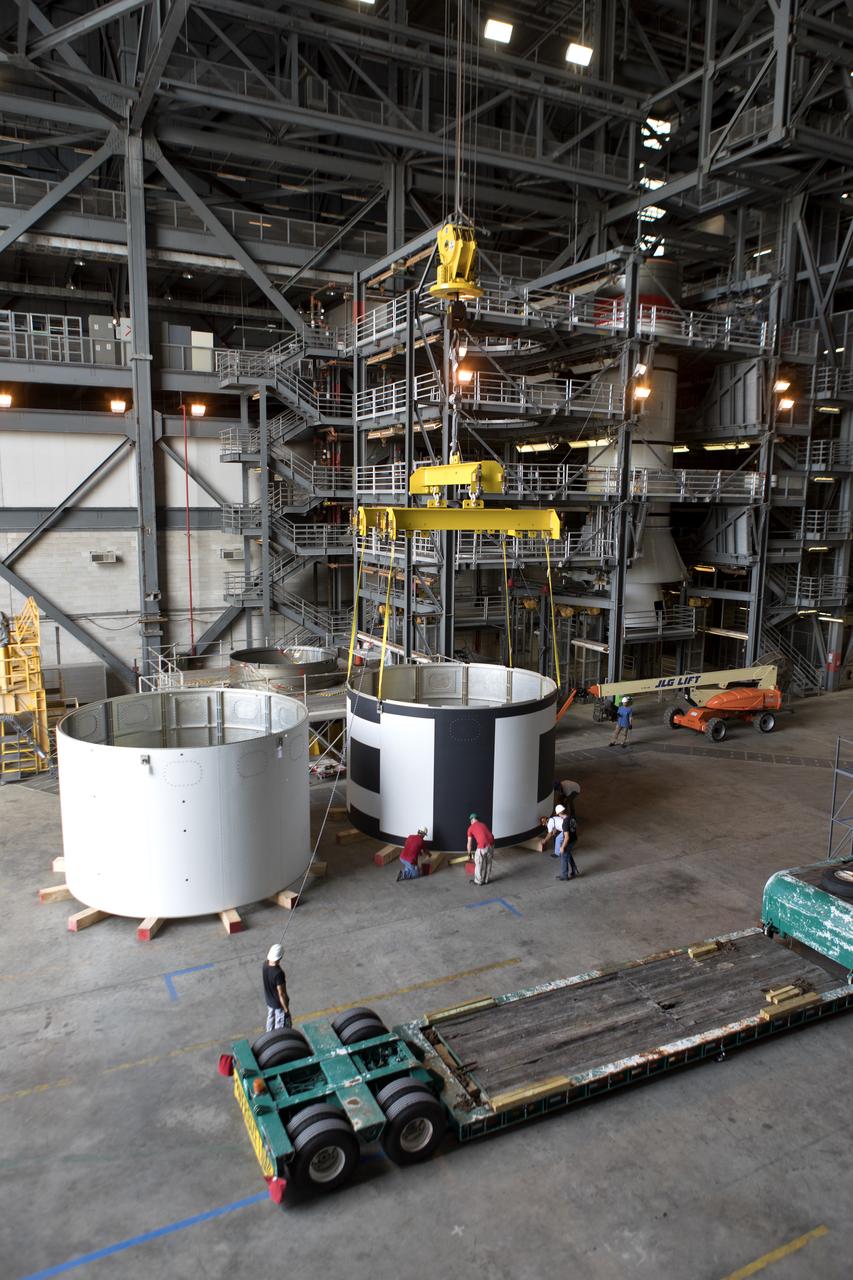
The second of three aeroshells, at right, for Orion's Launch Abort System (LAS) was lifted up from a flatbed truck and secured in High Bay 4 of the Vehicle Assembly Building at NASA's Kennedy Space Center in Florida, on June 26, 2018. The aeroshell was shipped from EMF Inc. on nearby Merritt Island. The aeroshells will be stacked and prepared for a full-stress test of the LAS, called Ascent Abort-2 (AA-2) flight test, scheduled for April 2019. During the test, a booster will launch from Space Launch Complex 46 at Cape Canaveral Air Force Station, carrying a fully functional LAS and a 22,000-pound Orion test vehicle to an altitude of 31,000 feet and traveling at more than 1,000 miles an hour. The test will verify the LAS can steer the crew module and astronauts aboard to safety in the event of an issue with the Space Launch System (SLS) rocket when the spacecraft is under the highest aerodynamic loads it will experience during a rapid climb into space. Orion is being prepared for its first integrated uncrewed flight atop the SLS on Exploration Mission-1.
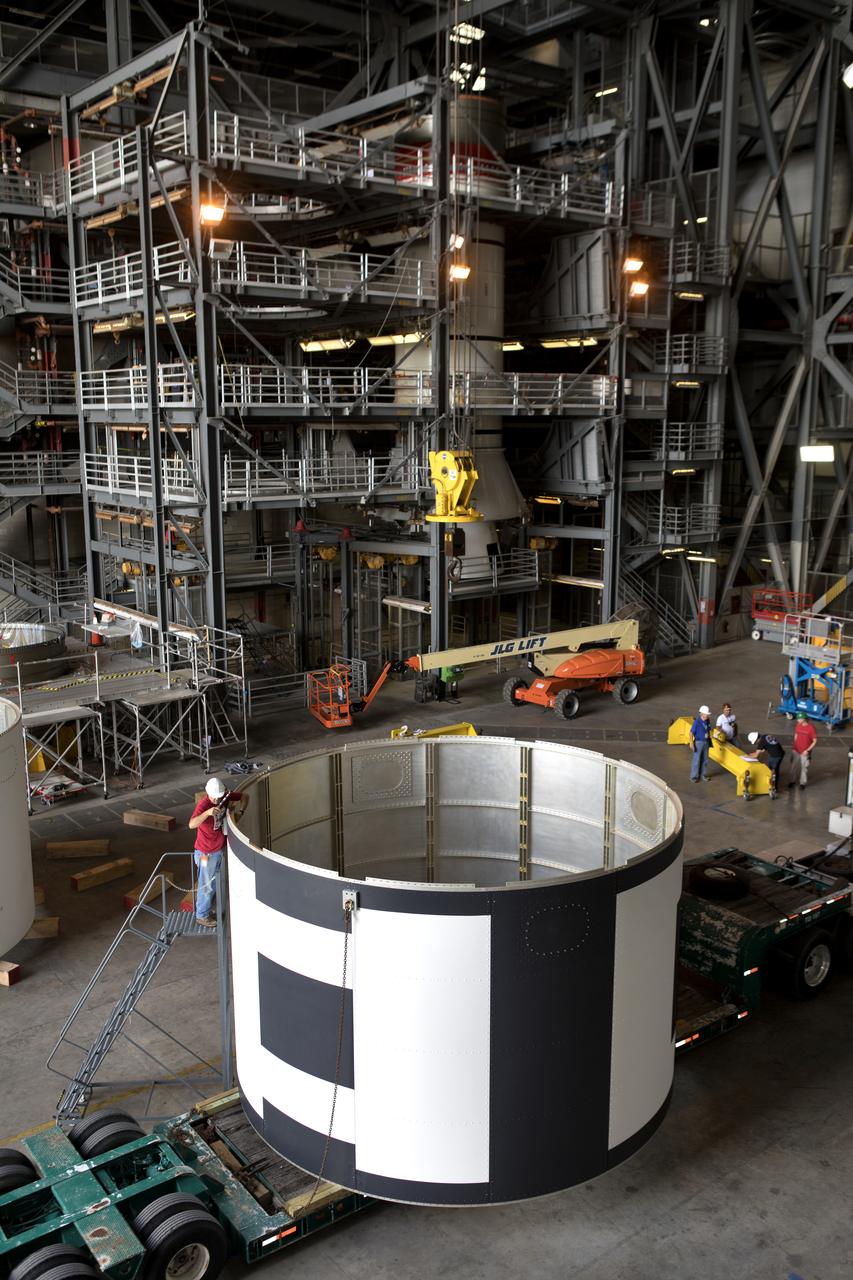
The second of three aeroshells for Orion's Launch Abort System (LAS) arrives by flatbed truck in High Bay 4 of the Vehicle Assembly Building at NASA's Kennedy Space Center in Florida, on June 26, 2018. The aeroshell was shipped from EMF Inc. on nearby Merritt Island, and will be offloaded and secured in the high bay. The aeroshells will be stacked and prepared for a full-stress test of the LAS, called Ascent Abort-2 (AA-2) flight test, scheduled for April 2019. During the test, a booster will launch from Space Launch Complex 46 at Cape Canaveral Air Force Station, carrying a fully functional LAS and a 22,000-pound Orion test vehicle to an altitude of 31,000 feet and traveling at more than 1,000 miles an hour. The test will verify the LAS can steer the crew module and astronauts aboard to safety in the event of an issue with the Space Launch System (SLS) rocket when the spacecraft is under the highest aerodynamic loads it will experience during a rapid climb into space. Orion is being prepared for its first integrated uncrewed flight atop the SLS on Exploration Mission-1.
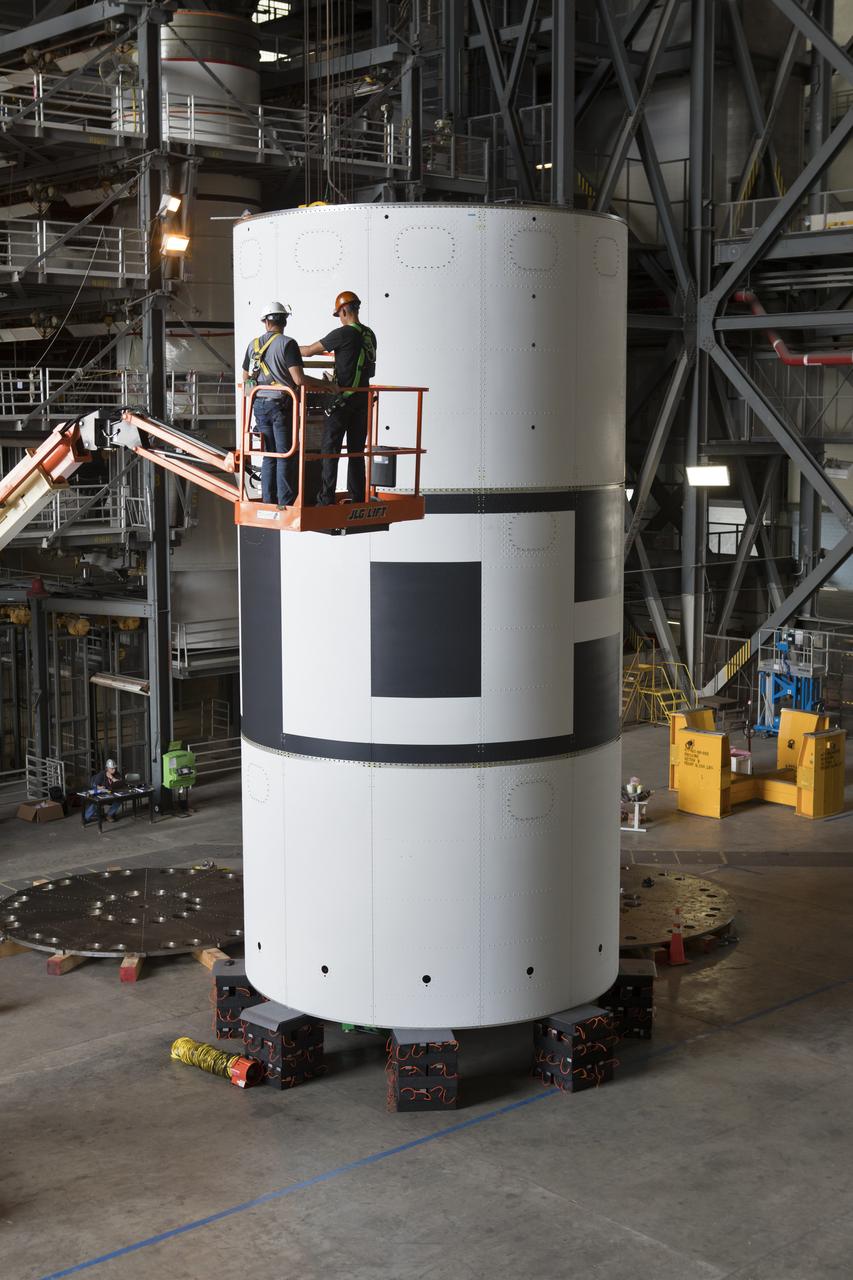
Technicians with Jacobs check the alignment during stacking of the aeroshells for Orion's Launch Abort System (LAS) in High Bay 4 of the Vehicle Assembly Building on Aug. 3, 2018, at NASA's Kennedy Space Center in Florida. The aeroshells are being prepared for a full-stress test of the LAS, called Ascent Abort-2 (AA-2) flight test, scheduled for April 2019. During the test, a booster will launch from Space Launch Complex 46 at Cape Canaveral Air Force Station, carrying a fully functional LAS and a 22,000-pound Orion test vehicle to an altitude of 31,000 feet and traveling at more than 1,000 miles an hour. The test will verify the LAS can steer the crew module and astronauts aboard to safety in the event of an issue with the Space Launch System (SLS) rocket when the spacecraft is under the highest aerodynamic loads it will experience during a rapid climb into space. Orion is being prepared for its first integrated uncrewed flight atop the SLS on Exploration Mission-1.
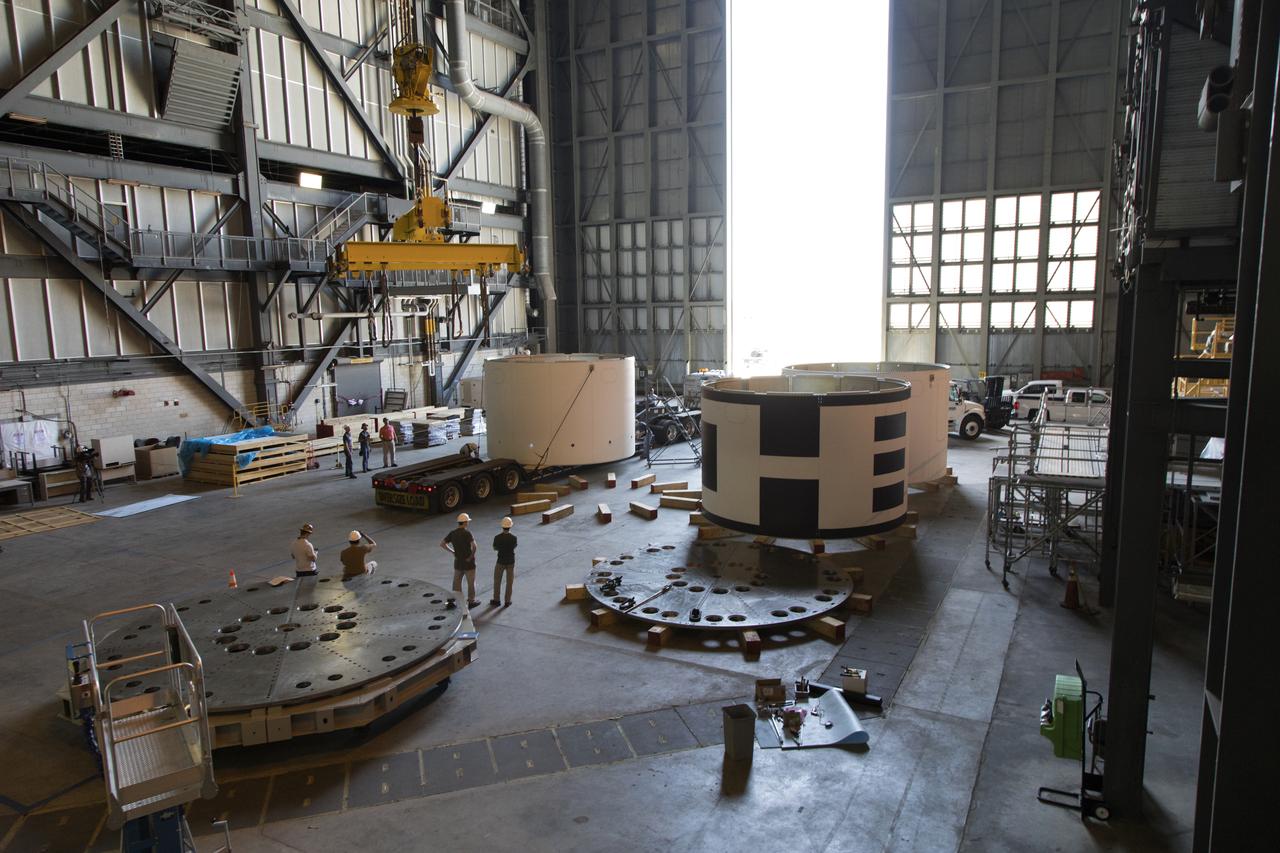
The third and final aeroshells for Orion's Launch Abort System (LAS) arrives by flatbed truck in High Bay 4 of the Vehicle Assembly Building on July 12, 2018, at NASA's Kennedy Space Center in Florida. The aeroshell was shipped from EMF Inc. on nearby Merritt Island. It will be offloaded and secured in the high bay. The aeroshells will be stacked and prepared for a full-stress test of the LAS, called Ascent Abort-2 (AA-2) flight test, scheduled for April 2019. During the test, a booster will launch from Space Launch Complex 46 at Cape Canaveral Air Force Station, carrying a fully functional LAS and a 22,000-pound Orion test vehicle to an altitude of 31,000 feet and traveling at more than 1,000 miles an hour. The test will verify the LAS can steer the crew module and astronauts aboard to safety in the event of an issue with the Space Launch System (SLS) rocket when the spacecraft is under the highest aerodynamic loads it will experience during a rapid climb into space. Orion is being prepared for its first integrated uncrewed flight atop the SLS on Exploration Mission-1.
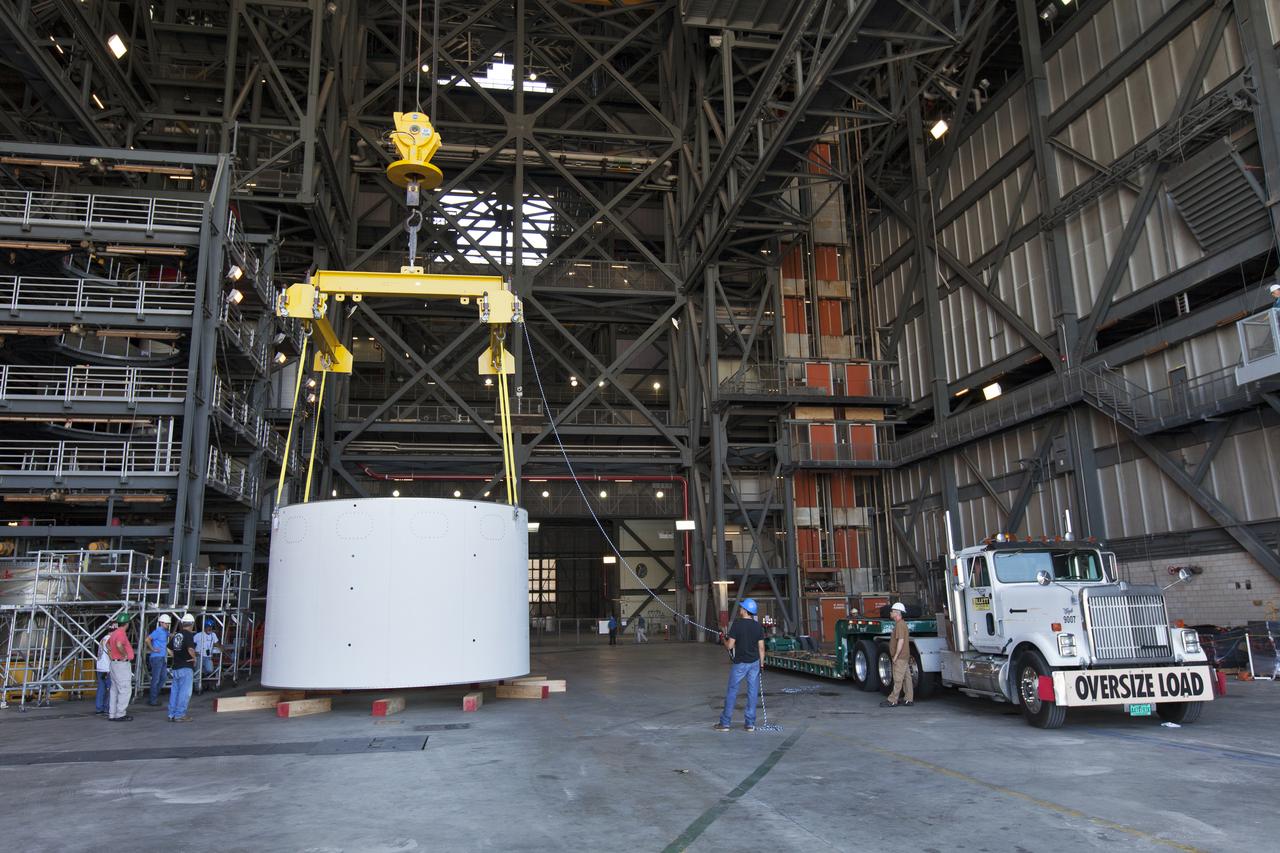
The first of three aeroshells for Orion's Launch Abort System (LAS) is offloaded from its transport truck by crane in High Bay 4 inside the Vehicle Assembly Building at NASA's Kennedy Space Center in Florida, on June 19, 2018. The aeroshell was shipped from EMF Inc. on nearby Merritt Island. The aeroshells will be stacked and prepared for a full-stress test of the LAS, called Ascent Abort-2 (AA-2) flight test, scheduled for April 2019. During the test, a booster will launch from Space Launch Complex 46 at Cape Canaveral Air Force Station, carrying a fully functional LAS and a 22,000-pound Orion test vehicle to an altitude of 31,000 feet and traveling at more than 1,000 miles an hour. The test will verify the LAS can steer the crew module and astronauts aboard to safety in the event of an issue with the Space Launch System (SLS) rocket when the spacecraft is under the highest aerodynamic loads it will experience during a rapid climb into space. Orion is being prepared for its first integrated uncrewed flight atop the SLS on Exploration Mission-1.
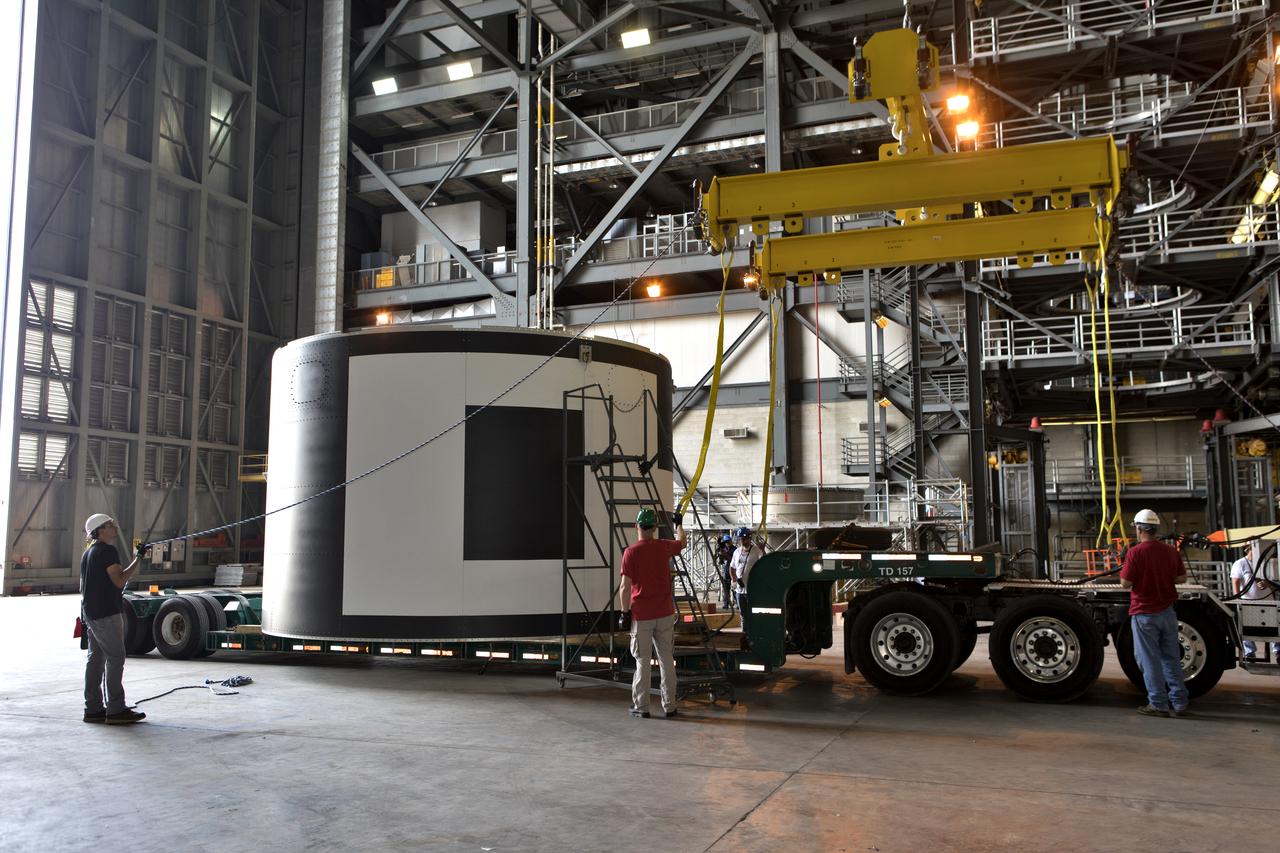
The second of three aeroshells for Orion's Launch Abort System (LAS) arrives by flatbed truck in High Bay 4 of the Vehicle Assembly Building at NASA's Kennedy Space Center in Florida, on June 26, 2018. The aeroshell was shipped from EMF Inc. on nearby Merritt Island. It will be offloaded and secured in the high bay. The aeroshells will be stacked and prepared for a full-stress test of the LAS, called Ascent Abort-2 (AA-2) flight test, scheduled for April 2019. During the test, a booster will launch from Space Launch Complex 46 at Cape Canaveral Air Force Station, carrying a fully functional LAS and a 22,000-pound Orion test vehicle to an altitude of 31,000 feet and traveling at more than 1,000 miles an hour. The test will verify the LAS can steer the crew module and astronauts aboard to safety in the event of an issue with the Space Launch System (SLS) rocket when the spacecraft is under the highest aerodynamic loads it will experience during a rapid climb into space. Orion is being prepared for its first integrated uncrewed flight atop the SLS on Exploration Mission-1.
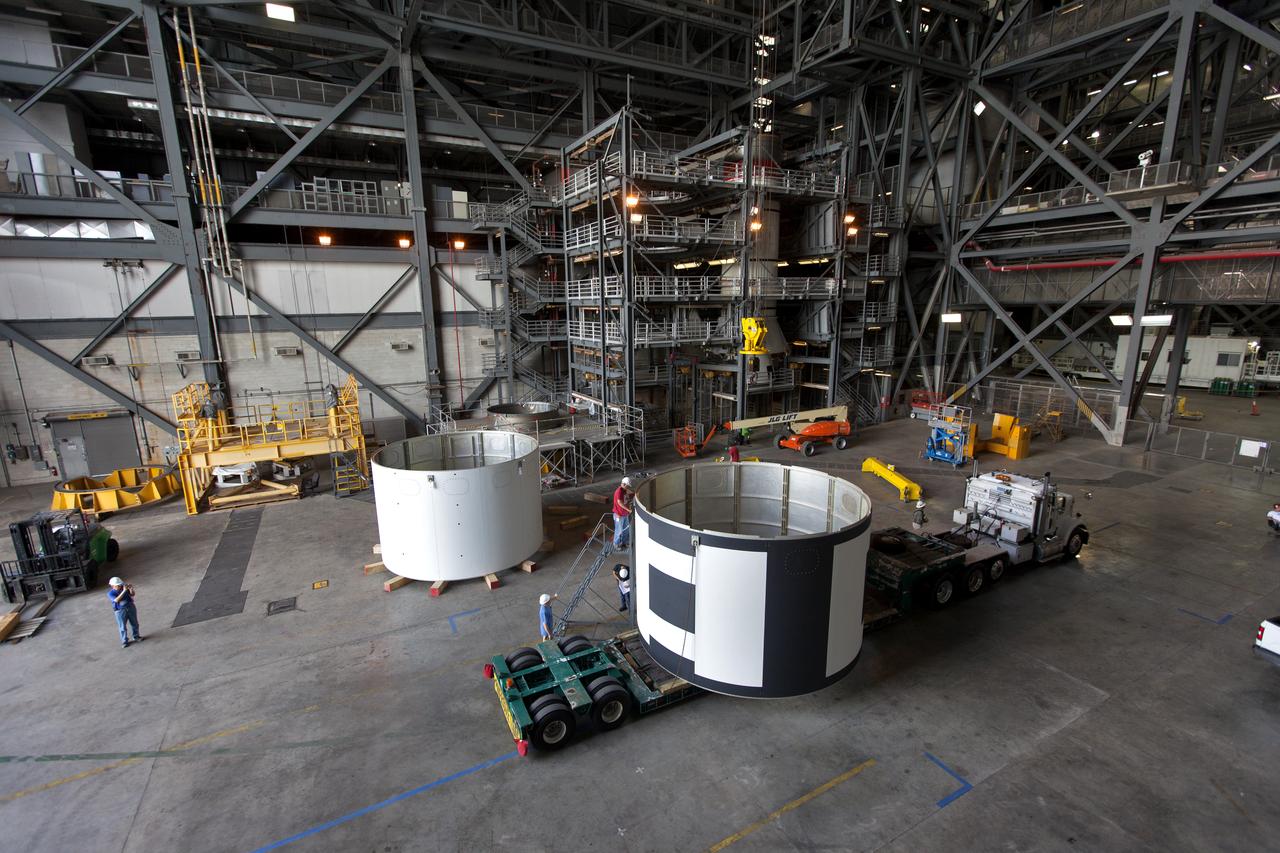
The second of three aeroshells, at right, for Orion's Launch Abort System (LAS) arrives by flatbed truck in High Bay 4 of the Vehicle Assembly Building at NASA's Kennedy Space Center in Florida, on June 26, 2018. The aeroshell was shipped from EMF Inc. on nearby Merritt Island. It will be offloaded and secured in the high bay. The aeroshells will be stacked and prepared for a full-stress test of the LAS, called Ascent Abort-2 (AA-2) flight test, scheduled for April 2019. During the test, a booster will launch from Space Launch Complex 46 at Cape Canaveral Air Force Station, carrying a fully functional LAS and a 22,000-pound Orion test vehicle to an altitude of 31,000 feet and traveling at more than 1,000 miles an hour. The test will verify the LAS can steer the crew module and astronauts aboard to safety in the event of an issue with the Space Launch System (SLS) rocket when the spacecraft is under the highest aerodynamic loads it will experience during a rapid climb into space. Orion is being prepared for its first integrated uncrewed flight atop the SLS on Exploration Mission-1.
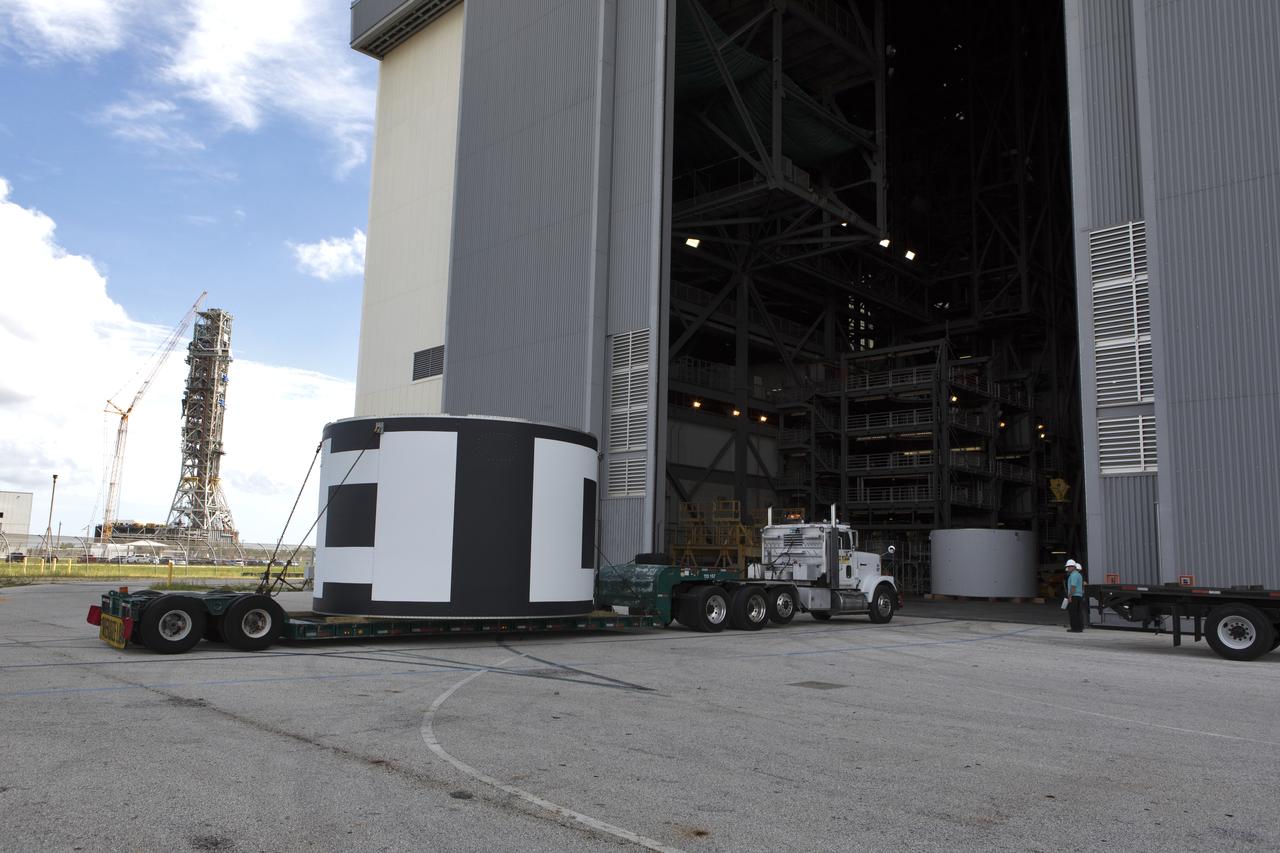
The second of three aeroshells for Orion's Launch Abort System (LAS) arrives by truck at the Vehicle Assembly Building at NASA's Kennedy Space Center in Florida, on June 26, 2018. The aeroshell was shipped from EMF Inc. on nearby Merritt Island. It will be offloaded and secured in High Bay 4. The aeroshells will be stacked and prepared for a full-stress test of the LAS, called Ascent Abort-2 (AA-2) flight test, scheduled for April 2019. During the test, a booster will launch from Space Launch Complex 46 at Cape Canaveral Air Force Station, carrying a fully functional LAS and a 22,000-pound Orion test vehicle to an altitude of 31,000 feet and traveling at more than 1,000 miles an hour. The test will verify the LAS can steer the crew module and astronauts aboard to safety in the event of an issue with the Space Launch System (SLS) rocket when the spacecraft is under the highest aerodynamic loads it will experience during a rapid climb into space. Orion is being prepared for its first integrated uncrewed flight atop the SLS on Exploration Mission-1.
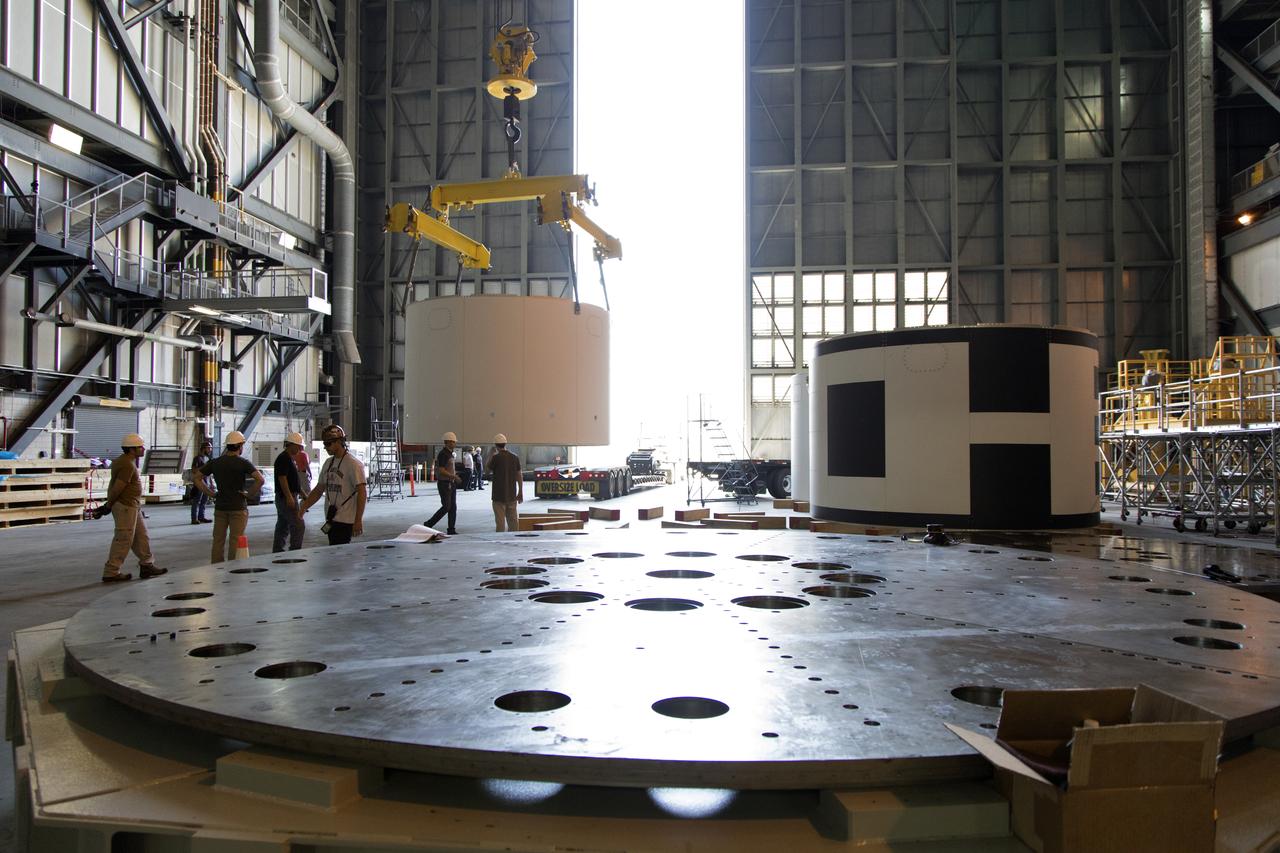
The third and final aeroshell for Orion's Launch Abort System (LAS) is lifted by crane and will be lowered onto slats in High Bay 4 of the Vehicle Assembly Building on July 12, 2018, at NASA's Kennedy Space Center in Florida. The aeroshell was shipped from EMF Inc. on nearby Merritt Island. All three aeroshells will be stacked and prepared for a full-stress test of the LAS, called Ascent Abort-2 (AA-2) flight test, scheduled for April 2019. During the test, a booster will launch from Space Launch Complex 46 at Cape Canaveral Air Force Station, carrying a fully functional LAS and a 22,000-pound Orion test vehicle to an altitude of 31,000 feet and traveling at more than 1,000 miles an hour. The test will verify the LAS can steer the crew module and astronauts aboard to safety in the event of an issue with the Space Launch System (SLS) rocket when the spacecraft is under the highest aerodynamic loads it will experience during a rapid climb into space. Orion is being prepared for its first integrated uncrewed flight atop the SLS on Exploration Mission-1.
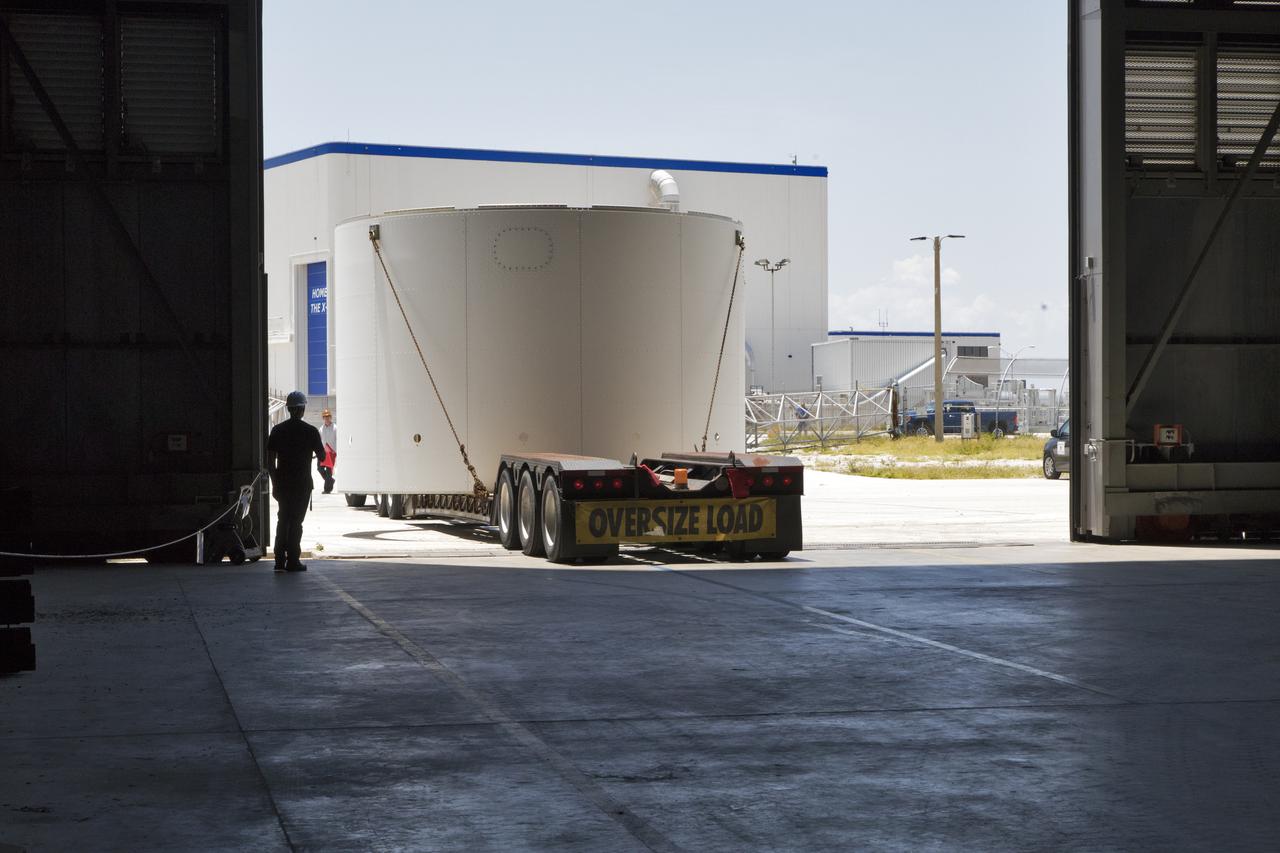
The third and final aeroshell for Orion's Launch Abort System (LAS) arrives by truck at the Vehicle Assembly Building on July 12, 2018, at NASA's Kennedy Space Center in Florida. The aeroshell was shipped from EMF Inc. on nearby Merritt Island. It will be offloaded and secured in High Bay 4. The aeroshells will be stacked and prepared for a full-stress test of the LAS, called Ascent Abort-2 (AA-2) flight test, scheduled for April 2019. During the test, a booster will launch from Space Launch Complex 46 at Cape Canaveral Air Force Station, carrying a fully functional LAS and a 22,000-pound Orion test vehicle to an altitude of 31,000 feet and traveling at more than 1,000 miles an hour. The test will verify the LAS can steer the crew module and astronauts aboard to safety in the event of an issue with the Space Launch System (SLS) rocket when the spacecraft is under the highest aerodynamic loads it will experience during a rapid climb into space. Orion is being prepared for its first integrated uncrewed flight atop the SLS on Exploration Mission-1.
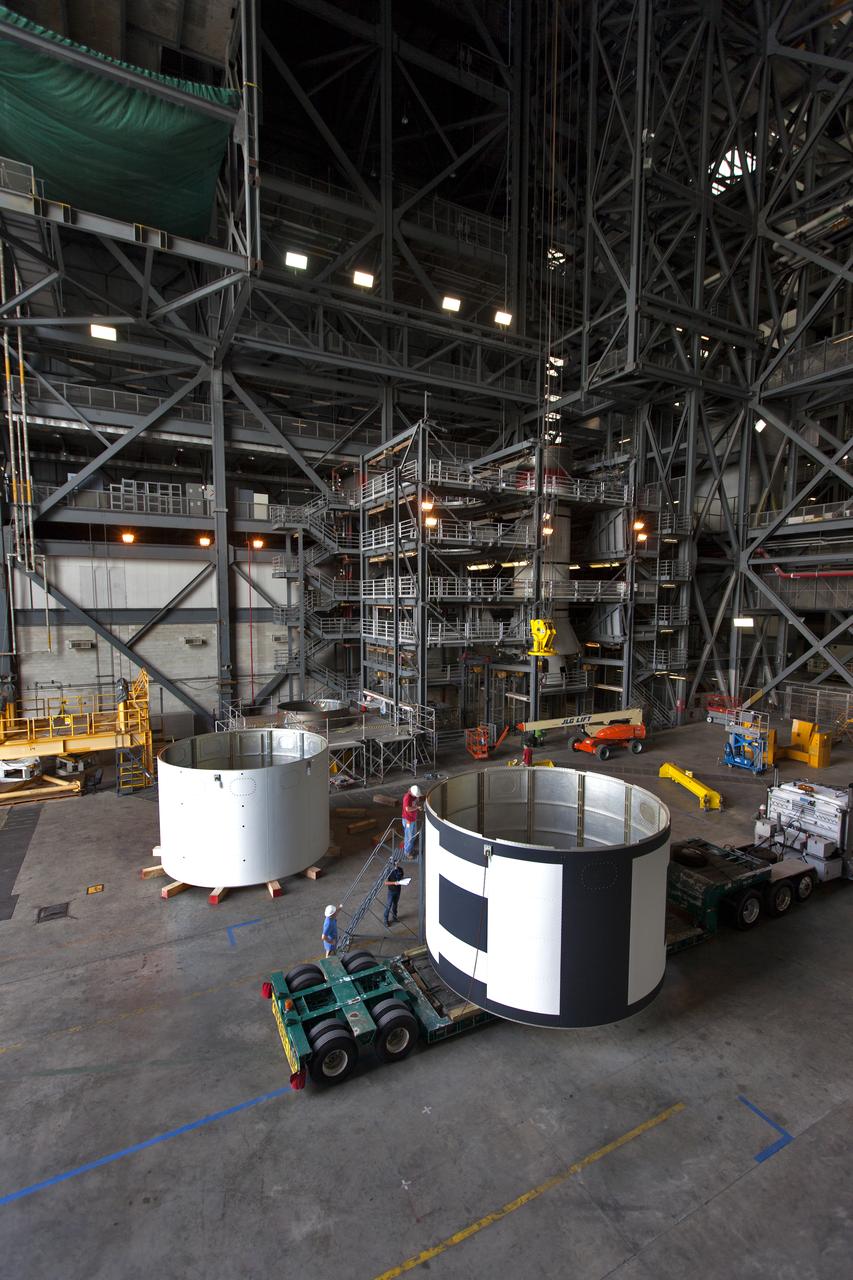
The second of three aeroshells, at right, for Orion's Launch Abort System (LAS) arrives by flatbed truck in High Bay 4 of the Vehicle Assembly Building at NASA's Kennedy Space Center in Florida, on June 26, 2018. The aeroshell arrived by truck from EMF Inc. on nearby Merritt Island. The aeroshells will be stacked and prepared for a full-stress test of the LAS, called Ascent Abort-2 (AA-2) flight test, scheduled for April 2019. During the test, a booster will launch from Space Launch Complex 46 at Cape Canaveral Air Force Station, carrying a fully functional LAS and a 22,000-pound Orion test vehicle to an altitude of 31,000 feet and traveling at more than 1,000 miles an hour. The test will verify the LAS can steer the crew module and astronauts aboard to safety in the event of an issue with the Space Launch System (SLS) rocket when the spacecraft is under the highest aerodynamic loads it will experience during a rapid climb into space. Orion is being prepared for its first integrated uncrewed flight atop the SLS on Exploration Mission-1.
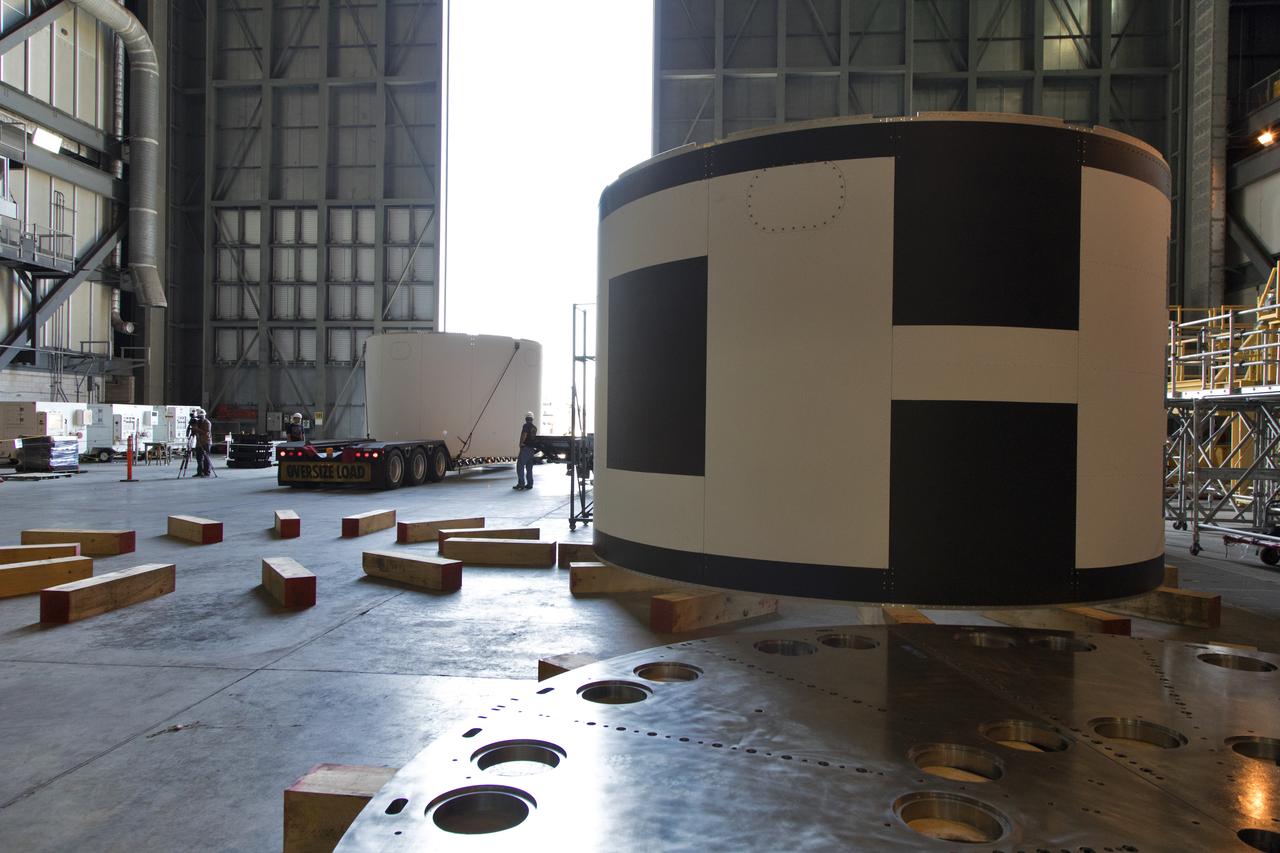
The third and final aeroshell for Orion's Launch Abort System (LAS) arrives by flatbed truck in High Bay 4 of the Vehicle Assembly Building on July 12, 2018, at NASA's Kennedy Space Center in Florida. The aeroshell was shipped from EMF Inc. on nearby Merritt Island. It will be offloaded and secured in the high bay. The aeroshells will be stacked and prepared for a full-stress test of the LAS, called Ascent Abort-2 (AA-2) flight test, scheduled for April 2019. During the test, a booster will launch from Space Launch Complex 46 at Cape Canaveral Air Force Station, carrying a fully functional LAS and a 22,000-pound Orion test vehicle to an altitude of 31,000 feet and traveling at more than 1,000 miles an hour. The test will verify the LAS can steer the crew module and astronauts aboard to safety in the event of an issue with the Space Launch System (SLS) rocket when the spacecraft is under the highest aerodynamic loads it will experience during a rapid climb into space. Orion is being prepared for its first integrated uncrewed flight atop the SLS on Exploration Mission-1.
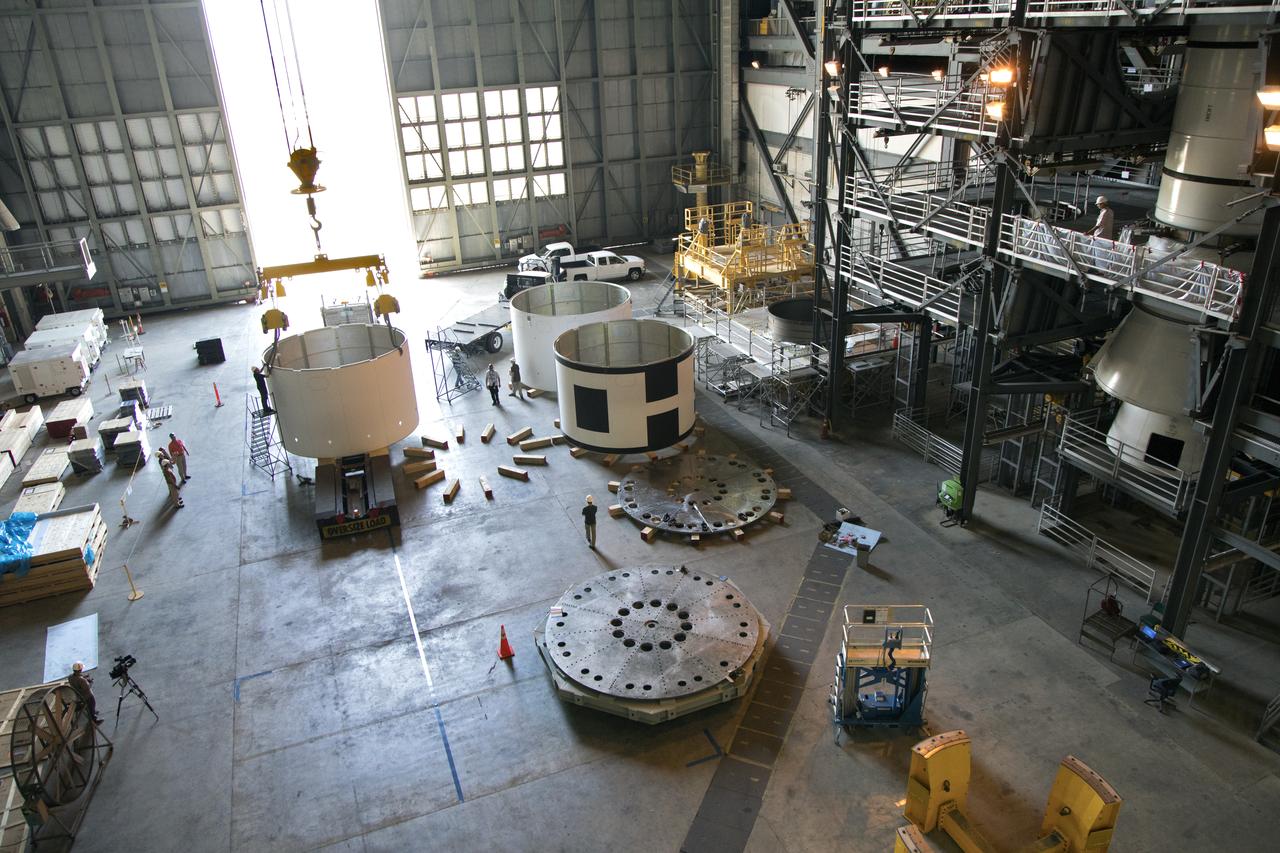
The third and final aeroshell, at left, for Orion's Launch Abort System (LAS) is in High Bay 4 of the Vehicle Assembly Building on July 12, 2018, at NASA's Kennedy Space Center in Florida. The aeroshell was shipped from EMF Inc. on nearby Merritt Island. Technicians prepare the aeroshell to be lifted off of the flatbed truck and transferred to slats. All three aeroshells will be stacked and prepared for a full-stress test of the LAS, called Ascent Abort-2 (AA-2) flight test, scheduled for April 2019. During the test, a booster will launch from Space Launch Complex 46 at Cape Canaveral Air Force Station, carrying a fully functional LAS and a 22,000-pound Orion test vehicle to an altitude of 31,000 feet and traveling at more than 1,000 miles an hour. The test will verify the LAS can steer the crew module and astronauts aboard to safety in the event of an issue with the Space Launch System (SLS) rocket when the spacecraft is under the highest aerodynamic loads it will experience during a rapid climb into space. Orion is being prepared for its first integrated uncrewed flight atop the SLS on Exploration Mission-1.
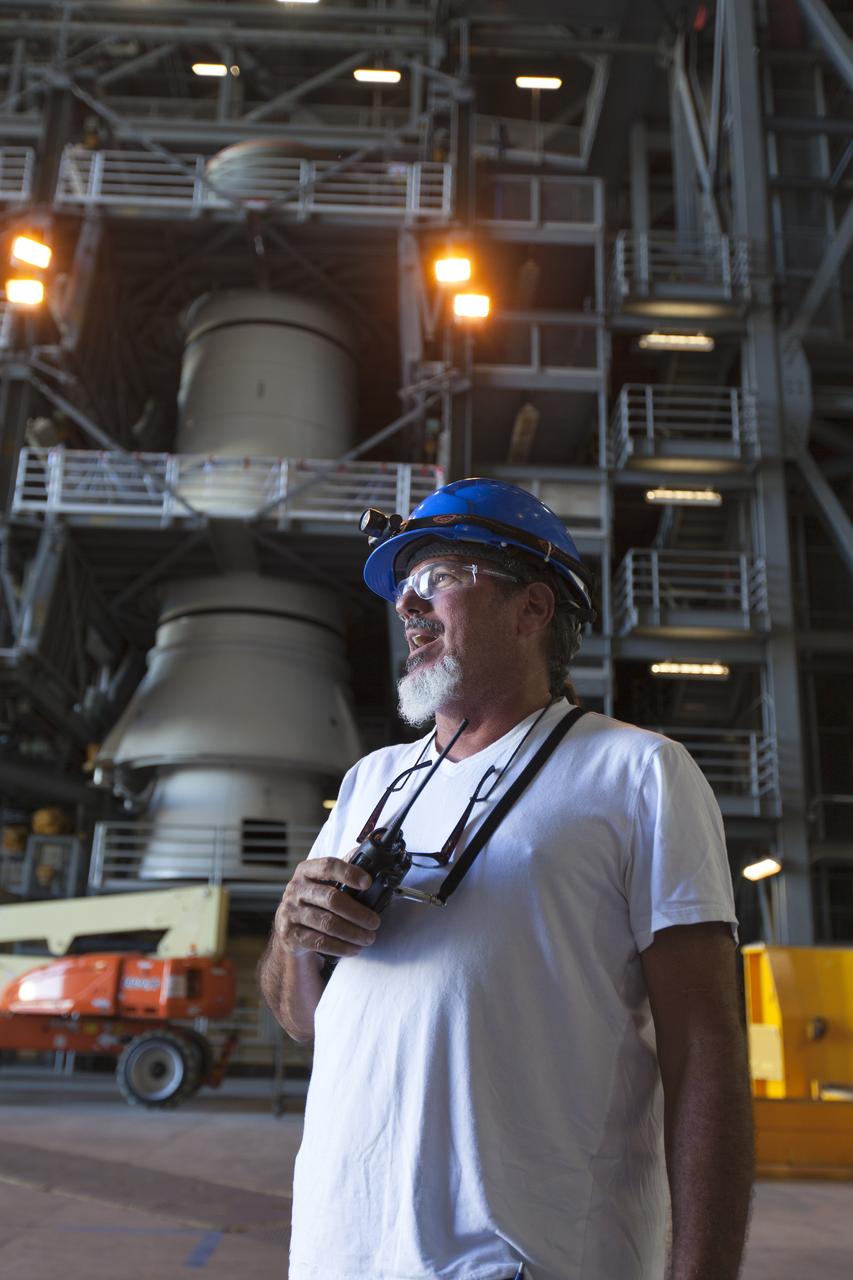
Inside the Vehicle Assembly Building at NASA's Kennedy Space Center in Florida, Anthony Sabatino, with Jacobs on the Test and Operations Support Contract, awaits arrival of the first of three aeroshells for Orion's Launch Abort System (LAS) on June 19, 2018. The aeroshell is arriving by truck from EMF Inc. on nearby Merritt Island and will be offloaded and secured in High Bay 4. The aeroshells will be stacked and prepared for a full-stress test of the LAS, called Ascent Abort-2 (AA-2) flight test, scheduled for April 2019. During the test, a booster will launch from Space Launch Complex 46 at Cape Canaveral Air Force Station, carrying a fully functional LAS and a 22,000-pound Orion test vehicle to an altitude of 31,000 feet and traveling at more than 1,000 miles an hour. The test will verify the LAS can steer the crew module and astronauts aboard to safety in the event of an issue with the Space Launch System (SLS) rocket when the spacecraft is under the highest aerodynamic loads it will experience during a rapid climb into space. Orion is being prepared for its first integrated uncrewed flight atop the SLS on Exploration Mission-1.
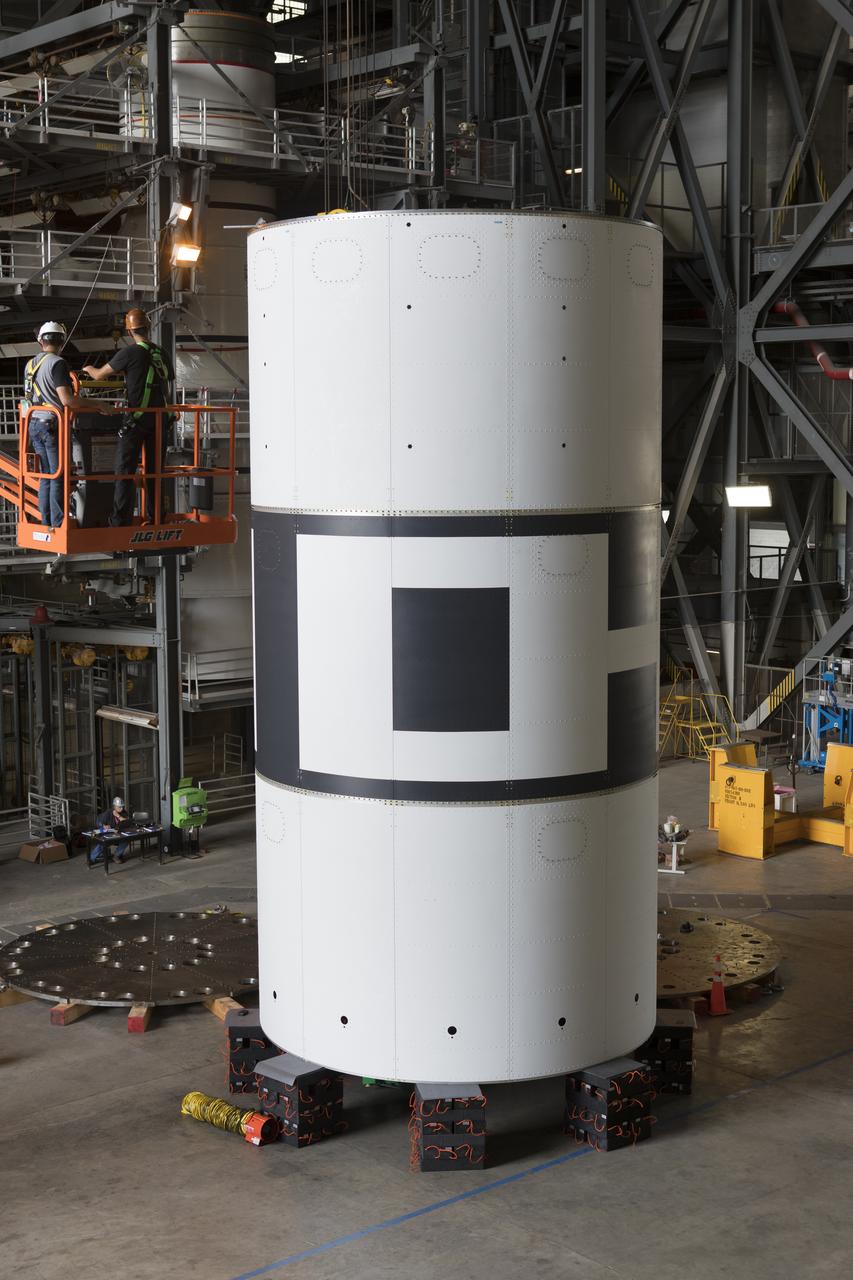
Technicians with Jacobs check the alignment during stacking of the aeroshells for Orion's Launch Abort System (LAS) in High Bay 4 of the Vehicle Assembly Building on Aug. 3, 2018, at NASA's Kennedy Space Center in Florida. The aeroshells are being prepared for a full-stress test of the LAS, called Ascent Abort-2 (AA-2) flight test, scheduled for April 2019. During the test, a booster will launch from Space Launch Complex 46 at Cape Canaveral Air Force Station, carrying a fully functional LAS and a 22,000-pound Orion test vehicle to an altitude of 31,000 feet and traveling at more than 1,000 miles an hour. The test will verify the LAS can steer the crew module and astronauts aboard to safety in the event of an issue with the Space Launch System (SLS) rocket when the spacecraft is under the highest aerodynamic loads it will experience during a rapid climb into space. Orion is being prepared for its first integrated uncrewed flight atop the SLS on Exploration Mission-1.
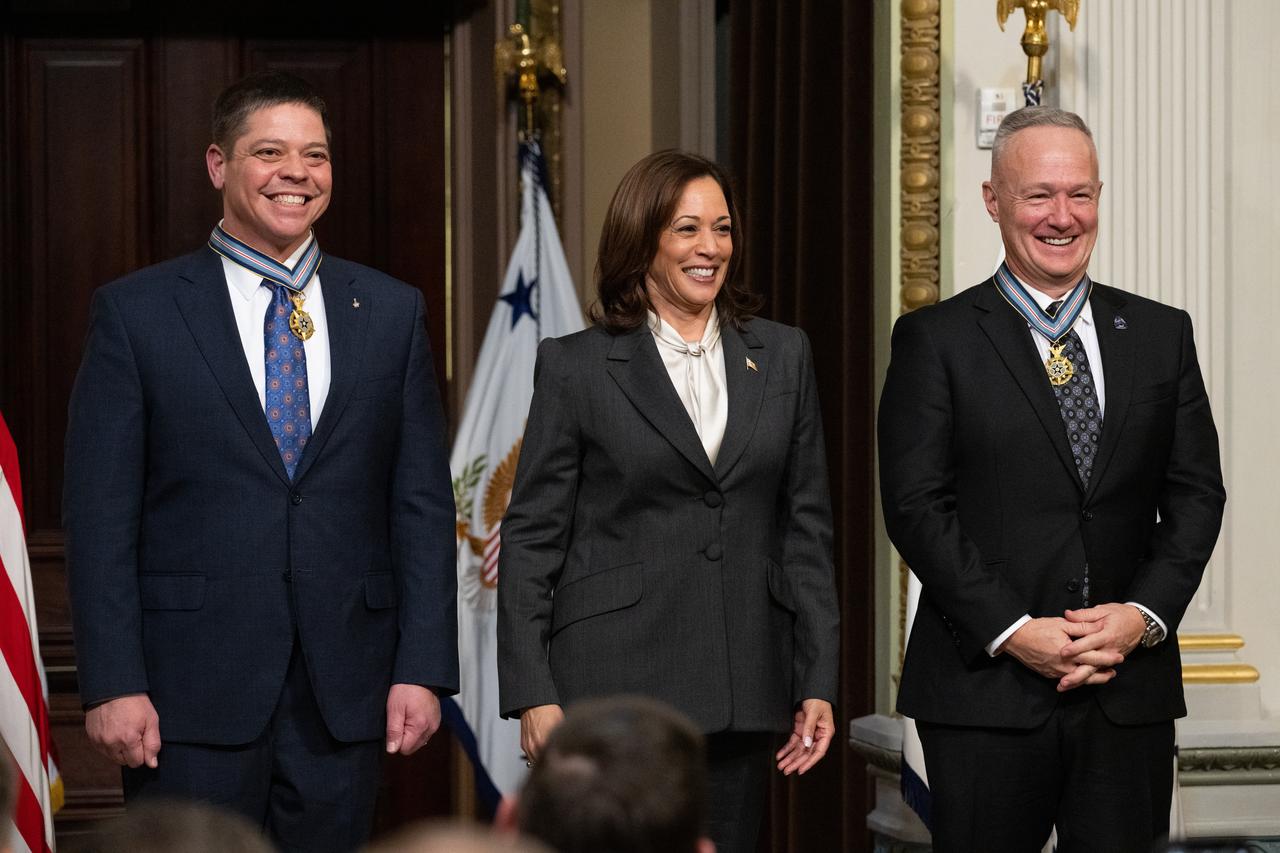
Former NASA astronauts Robert Behnken, left, and Douglas Hurley, right, are seen after being awarded the Congressional Space Medal of Honor by Vice President Kamala Harris during a ceremony in the Indian Treaty Room of the Eisenhower Executive Office Building, Tuesday, Jan. 31, 2023 in Washington. Former astronauts Behnken and Hurley were awarded the Congressional Space Medal of Honor for their bravery in NASA’s SpaceX Demonstration Mission-2 to the International Space Station in 2020, the first crewed flight as part of the agency’s Commercial Crew Program. Photo Credit: (NASA/Joel Kowsky)
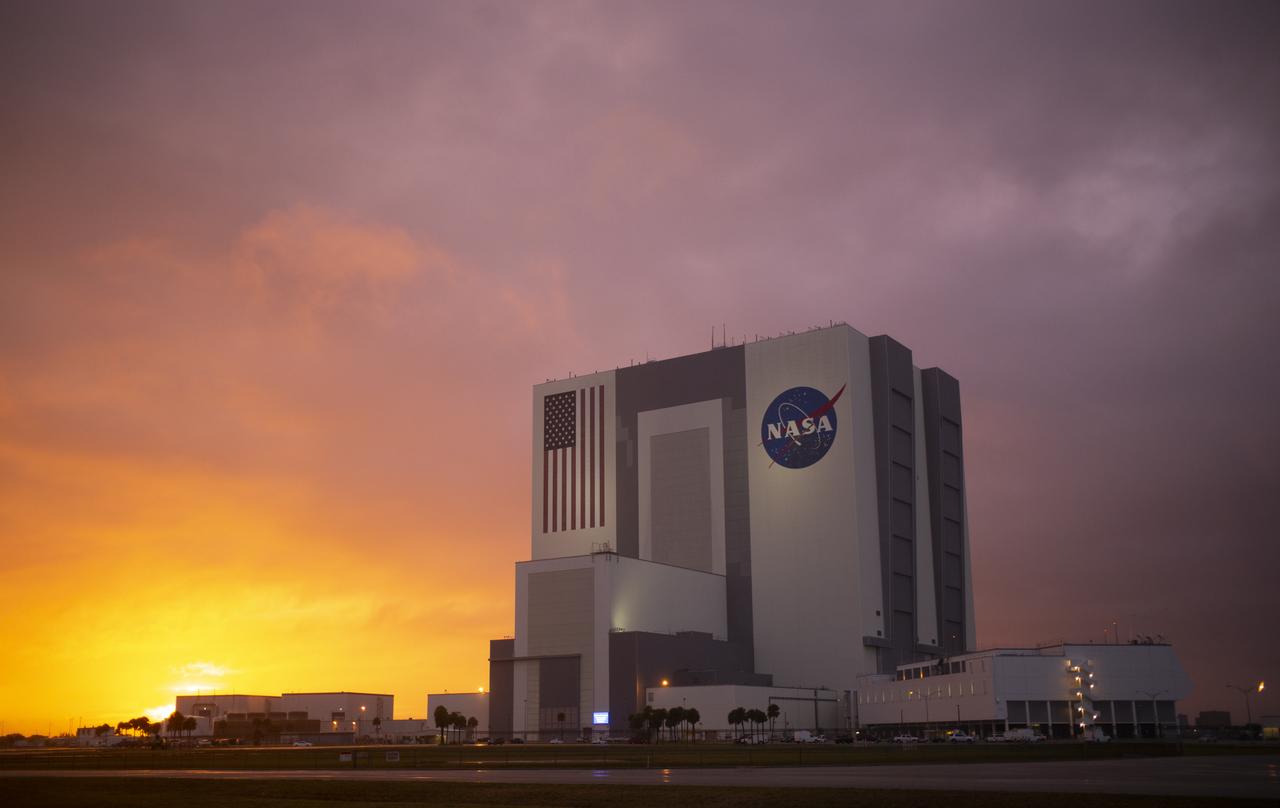
The Vehicle Assembly Building is seen at sunset as preparations continue for the NASA’s SpaceX Demo-2 mission, Monday, May 25, 2020, at NASA’s Kennedy Space Center in Florida. NASA’s SpaceX Demo-2 mission is the first launch with astronauts of the SpaceX Crew Dragon spacecraft and Falcon 9 rocket to the International Space Station as part of the agency’s Commercial Crew Program. The test flight serves as an end-to-end demonstration of SpaceX’s crew transportation system. Robert Behnken and Douglas Hurley are scheduled to launch at 4:33 p.m. EDT on Wednesday, May 27, from Launch Complex 39A at the Kennedy Space Center. A new era of human spaceflight is set to begin as American astronauts once again launch on an American rocket from American soil to low-Earth orbit for the first time since the conclusion of the Space Shuttle Program in 2011. Photo Credit: (NASA/Joel Kowsky)
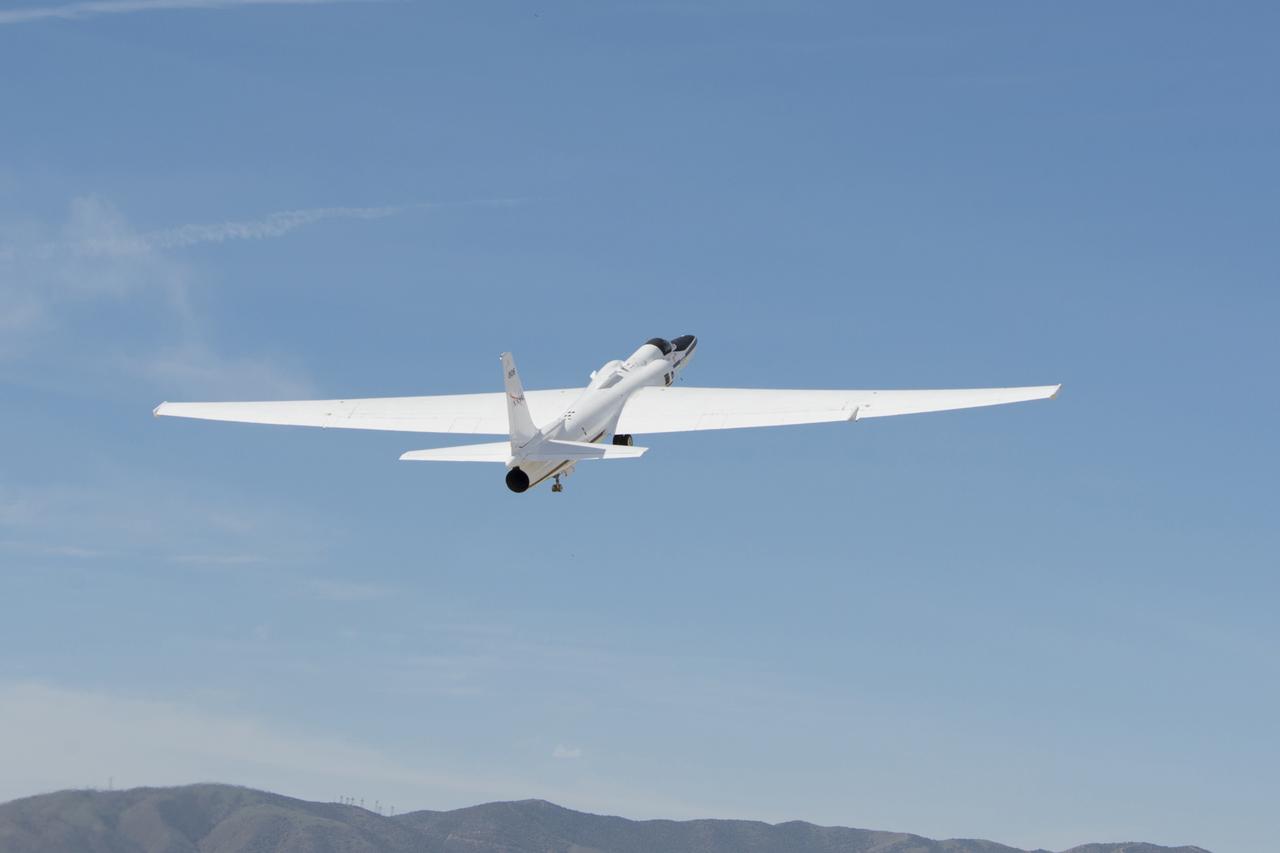
NASA’s ER-2 takes off from its base of operations at NASA’s Armstrong Flight Research Center Building 703 in Palmdale, California to test instruments that will support upcoming science flights for the Geostationary Operational Environmental Satellite-R-series.
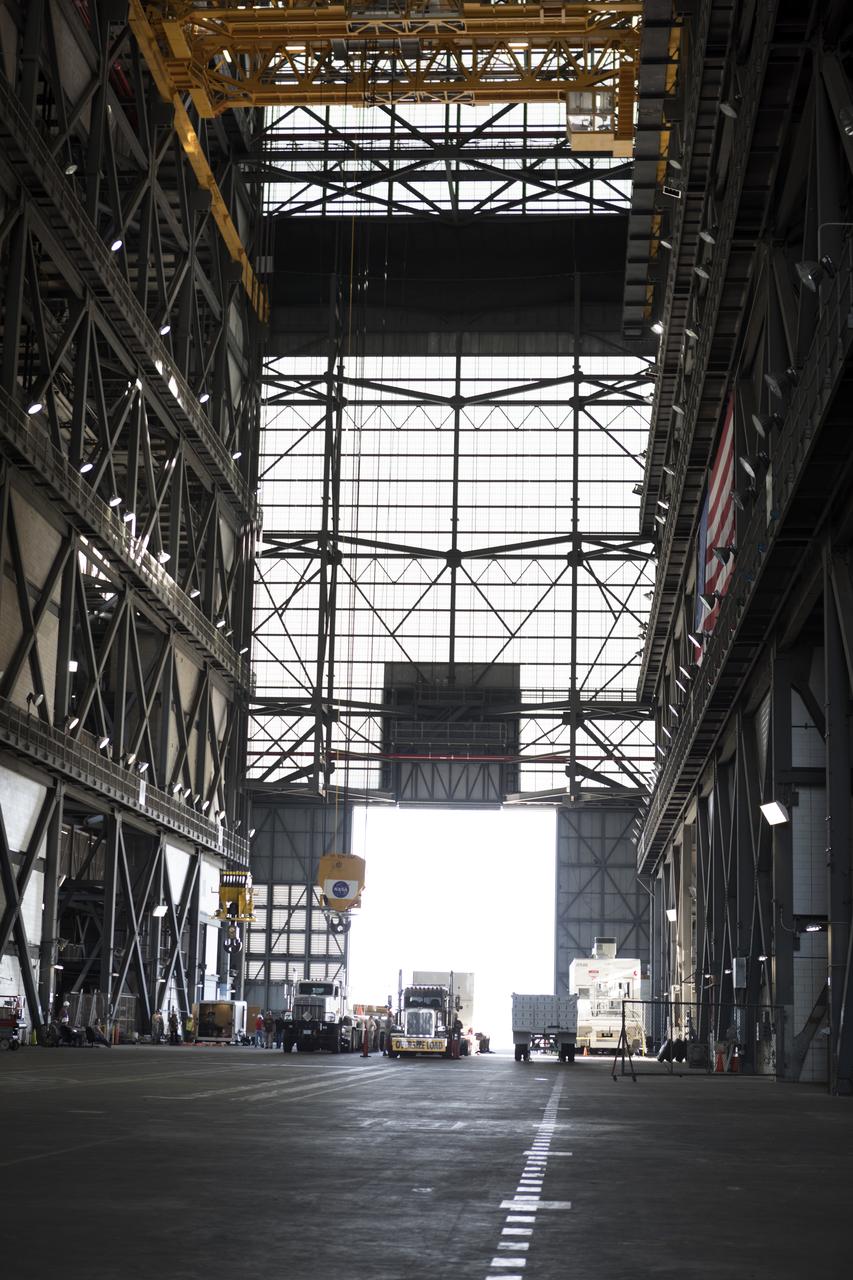
The ground test motor for Orion's Launch Abort System (LAS) arrives by flatbed truck in its shipping container in the transfer aisle of the Vehicle Assembly Building on July 20, 2018, at NASA's Kennedy Space Center in Florida. It will be transferred to the Rotation, Processing and Surge Facility where it will be inspected and prepared for transport to Space Launch Complex 46 (SLC-46) at Cape Canaveral Air Force Station for mechanical fit testing. This inert motor will not be used for flight, but will be used to certify flight hardware assembly in preparation for a full-stress test of the LAS, called Ascent Abort-2 (AA-2) flight test, scheduled for April 2019. During the test, the booster will launch from SLC 46, carrying a fully functional LAS and a 22,000-pound Orion test vehicle to an altitude of 31,000 feet and traveling at more than 1,000 miles an hour. The test will verify the LAS can steer the crew module and astronauts aboard to safety in the event of an issue with the Space Launch System (SLS) rocket when the spacecraft is under the highest aerodynamic loads it will experience during a rapid climb into space. NASA's Orion and Exploration Ground Systems programs and their contractors from Jacob's and Northrup Grumman in conjunction with the Air Force Space and Missile Center's Launch Operations branch are performing the pathfinding exercises and flight operations for AA-2.
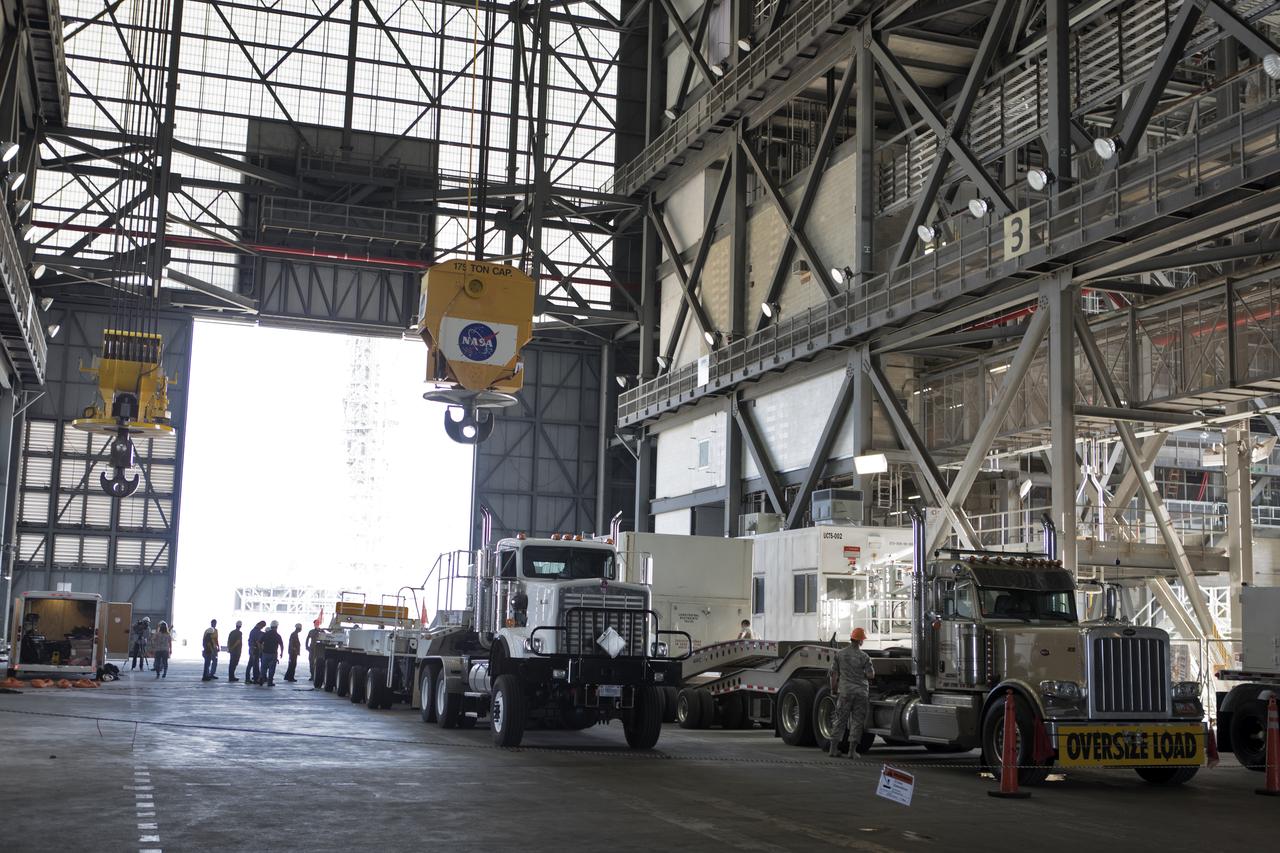
The ground test motor for Orion's Launch Abort System (LAS) arrives by flatbed truck in its shipping container in the transfer aisle of the Vehicle Assembly Building on July 20, 2018, at NASA's Kennedy Space Center in Florida. It will be transferred to the Rotation, Processing and Surge Facility where it will be inspected and prepared for transport to Space Launch Complex 46 (SLC-46) at Cape Canaveral Air Force Station for mechanical fit testing. This inert motor will not be used for flight, but will be used to certify flight hardware assembly in preparation for a full-stress test of the LAS, called Ascent Abort-2 (AA-2) flight test, scheduled for April 2019. During the test, the booster will launch from SLC 46, carrying a fully functional LAS and a 22,000-pound Orion test vehicle to an altitude of 31,000 feet and traveling at more than 1,000 miles an hour. The test will verify the LAS can steer the crew module and astronauts aboard to safety in the event of an issue with the Space Launch System (SLS) rocket when the spacecraft is under the highest aerodynamic loads it will experience during a rapid climb into space. NASA's Orion and Exploration Ground Systems programs and their contractors from Jacob's and Northrup Grumman in conjunction with the Air Force Space and Missile Center's Launch Operations branch SMC/LEXO, are performing the pathfinding exercises and flight operations for AA-2.
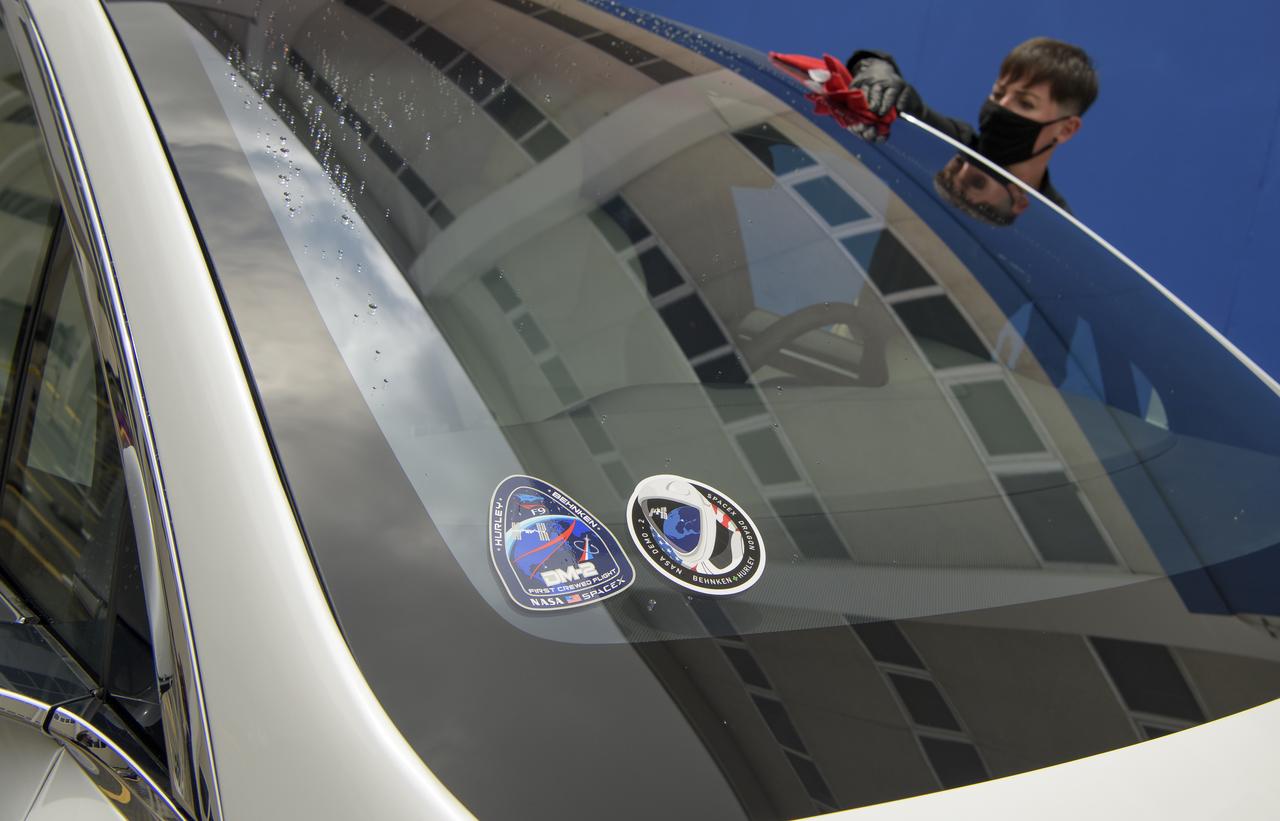
Stickers for the Demo-2 mission are seen on the front windshield of a vehicle in the convoy taking NASA astronauts Douglas Hurley and Robert Behnken from the Neil A. Armstrong Operations and Checkout Building for Launch Complex 39A to board the SpaceX Crew Dragon spacecraft for the Demo-2 mission launch, Wednesday, May 27, 2020, at NASA’s Kennedy Space Center in Florida. NASA’s SpaceX Demo-2 mission is the first launch with astronauts of the SpaceX Crew Dragon spacecraft and Falcon 9 rocket to the International Space Station as part of the agency’s Commercial Crew Program. The test flight serves as an end-to-end demonstration of SpaceX’s crew transportation system. Today’s launch of Behnken and Hurley was scrubbed due to weather and is now scheduled for 3:22 p.m. EDT on Saturday, May 30, from Launch Complex 39A at the Kennedy Space Center. A new era of human spaceflight is set to begin as American astronauts once again launch on an American rocket from American soil to low-Earth orbit for the first time since the conclusion of the Space Shuttle Program in 2011. Photo Credit: (NASA/Bill Ingalls)
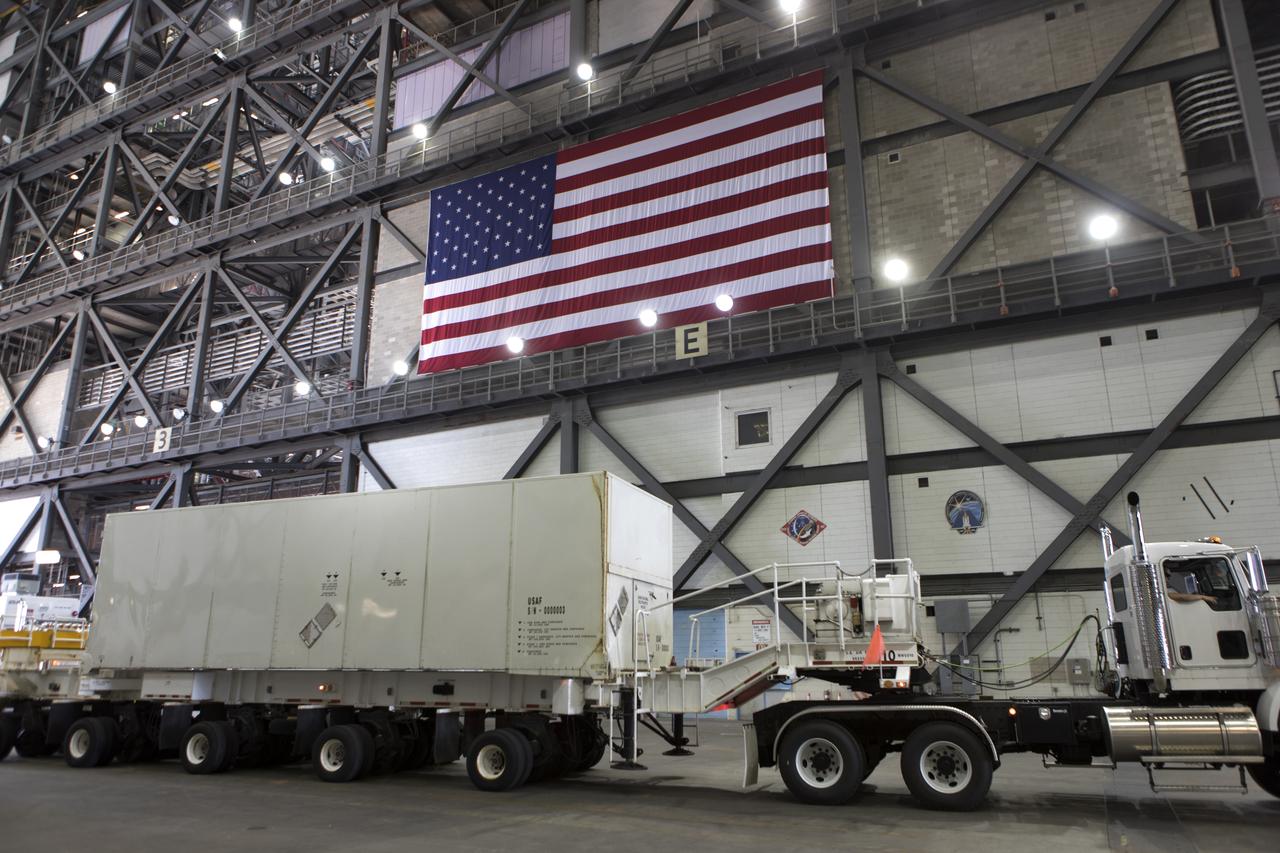
Secured on a flatbed transporter in its shipping container, the ground test motor for Orion's Launch Abort System (LAS) will be moved from the transfer aisle of the Vehicle Assembly Building to the Rotation, Processing and Surge Facility (RPSF) on July 20, 2018, at NASA's Kennedy Space Center in Florida. In the RPSF the motor will be inspected and prepared for transport to Space Launch Complex 46 (SLC-46) at Cape Canaveral Air Force Station for mechanical fit testing. This inert motor will not be used for flight, but will be used to certify flight hardware assembly in preparation for a full-stress test of the LAS, called Ascent Abort-2 (AA-2) flight test, scheduled for April 2019. During the test, the booster will launch from SLC 46, carrying a fully functional LAS and a 22,000-pound Orion test vehicle to an altitude of 31,000 feet and traveling at more than 1,000 miles an hour. The test will verify the LAS can steer the crew module and astronauts aboard to safety in the event of an issue with the Space Launch System (SLS) rocket when the spacecraft is under the highest aerodynamic loads it will experience during a rapid climb into space. NASA's Orion and Exploration Ground Systems programs and their contractors from Jacob's and Northrup Grumman in conjunction with the Air Force Space and Missile Center's Launch Operations branch SMC/LEXO, are performing the pathfinding exercises and flight operations for AA-2.
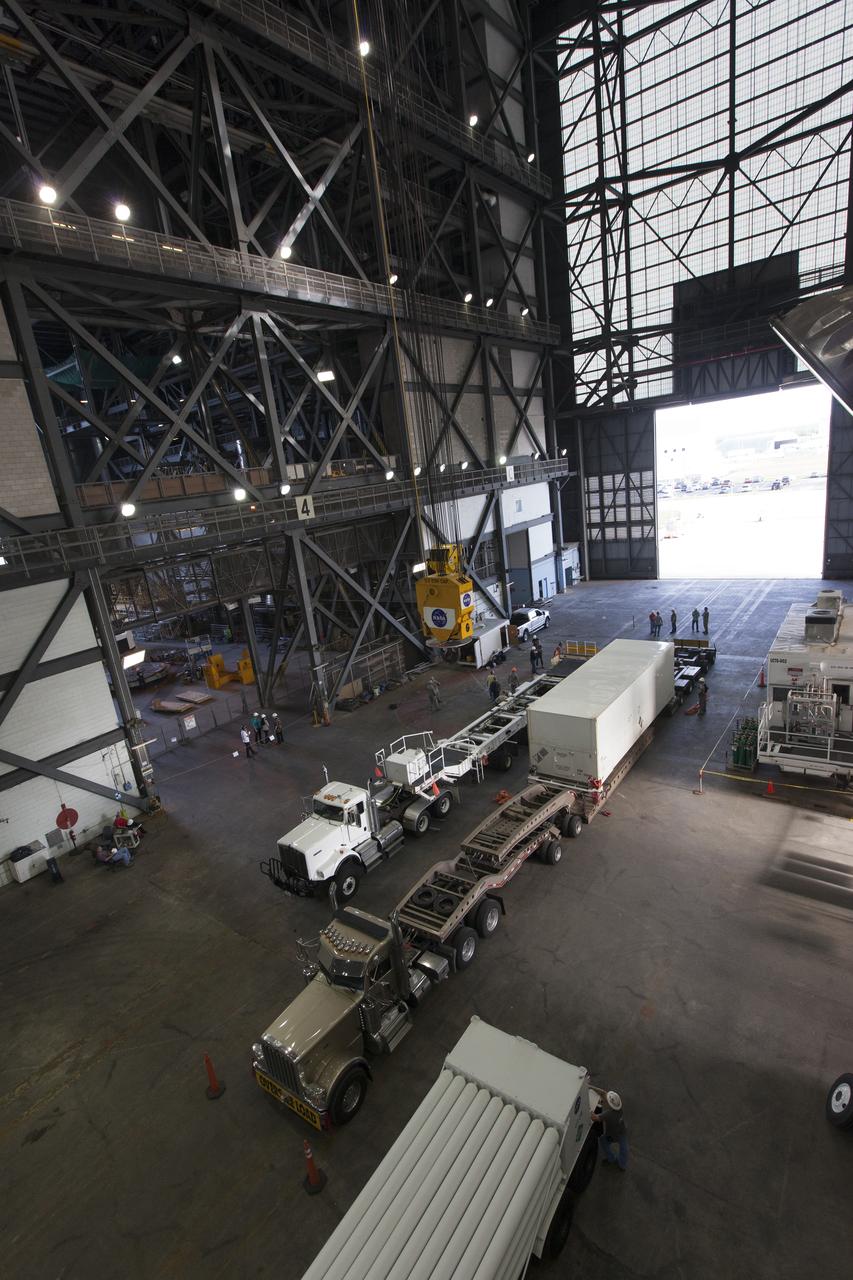
The ground test motor for Orion's Launch Abort System (LAS) arrives by flatbed truck in its shipping container in the transfer aisle of the Vehicle Assembly Building on July 20, 2018, at NASA's Kennedy Space Center in Florida. It will be transferred to the Rotation, Processing and Surge Facility where it will be inspected and prepared for transport to Space Launch Complex 46 (SLC-46) at Cape Canaveral Air Force Station for mechanical fit testing. This inert motor will not be used for flight, but will be used to certify flight hardware assembly in preparation for a full-stress test of the LAS, called Ascent Abort-2 (AA-2) flight test, scheduled for April 2019. During the test, the booster will launch from SLC 46, carrying a fully functional LAS and a 22,000-pound Orion test vehicle to an altitude of 31,000 feet and traveling at more than 1,000 miles an hour. The test will verify the LAS can steer the crew module and astronauts aboard to safety in the event of an issue with the Space Launch System (SLS) rocket when the spacecraft is under the highest aerodynamic loads it will experience during a rapid climb into space. NASA's Orion and Exploration Ground Systems programs and their contractors from Jacob's and Northrup Grumman in conjunction with the Air Force Space and Missile Center's Launch Operations branch SMC/LEXO, are performing the pathfinding exercises and flight operations for AA-2.
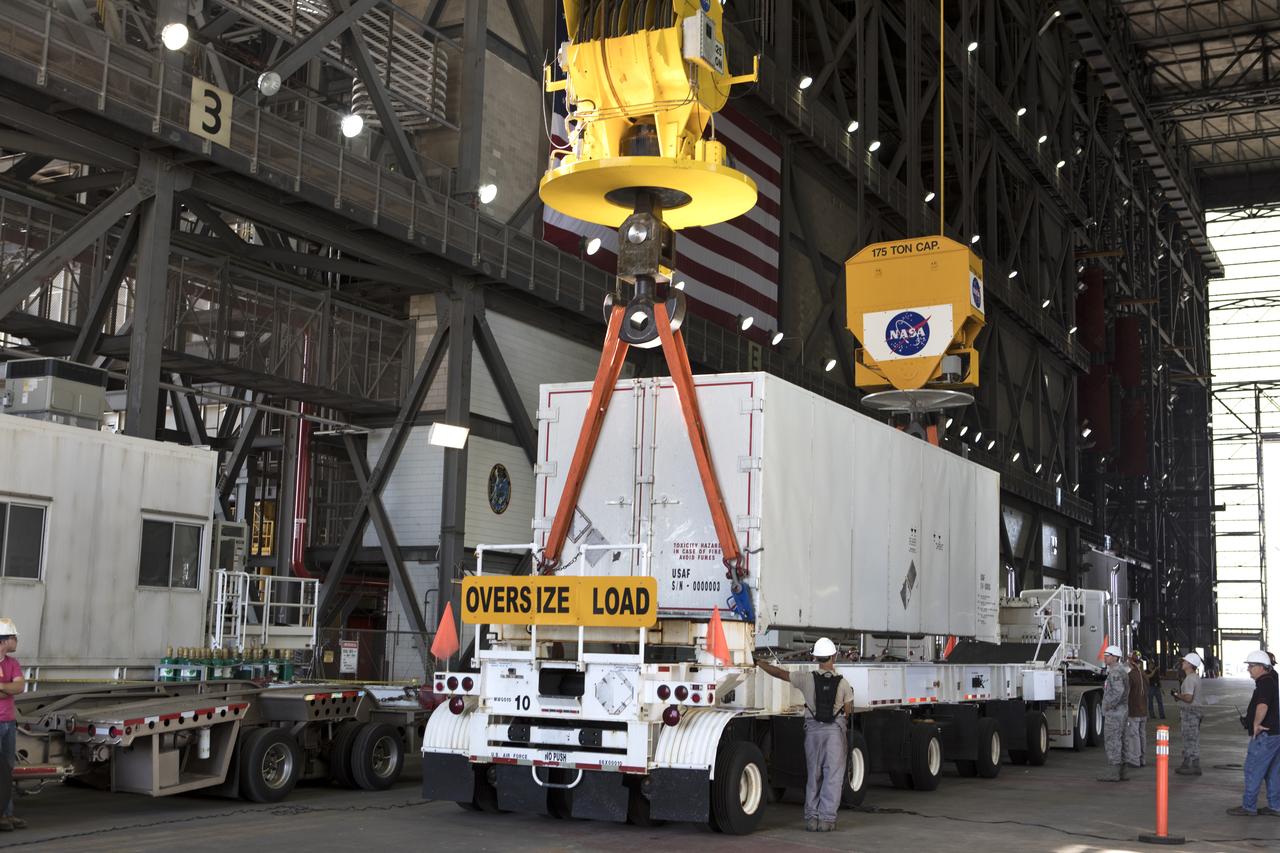
In the transfer aisle inside the Vehicle Assembly Building (VAB) at NASA's Kennedy Space Center in Florida, a crane lowers the shipping container with the ground test motor for Orion's Launch Abort System (LAS) inside onto another transporter on July 20, 2018. The container will be moved to the Rotation, Processing and Surge Facility where it will be inspected and prepared for transport to Space Launch Complex 46 (SLC-46) at Cape Canaveral Air Force Station for mechanical fit testing. This inert motor will not be used for flight, but will be used to certify flight hardware assembly in preparation for a full-stress test of the LAS, called Ascent Abort-2 (AA-2) flight test, scheduled for April 2019. During the test, the booster will launch from SLC 46, carrying a fully functional LAS and a 22,000-pound Orion test vehicle to an altitude of 31,000 feet and traveling at more than 1,000 miles an hour. The test will verify the LAS can steer the crew module and astronauts aboard to safety in the event of an issue with the Space Launch System (SLS) rocket when the spacecraft is under the highest aerodynamic loads it will experience during a rapid climb into space. NASA's Orion and Exploration Ground Systems programs and their contractors from Jacob's and Northrup Grumman in conjunction with the Air Force Space and Missile Center's Launch Operations branch SMC/LEXO, are performing the pathfinding exercises and flight operations for AA-2.
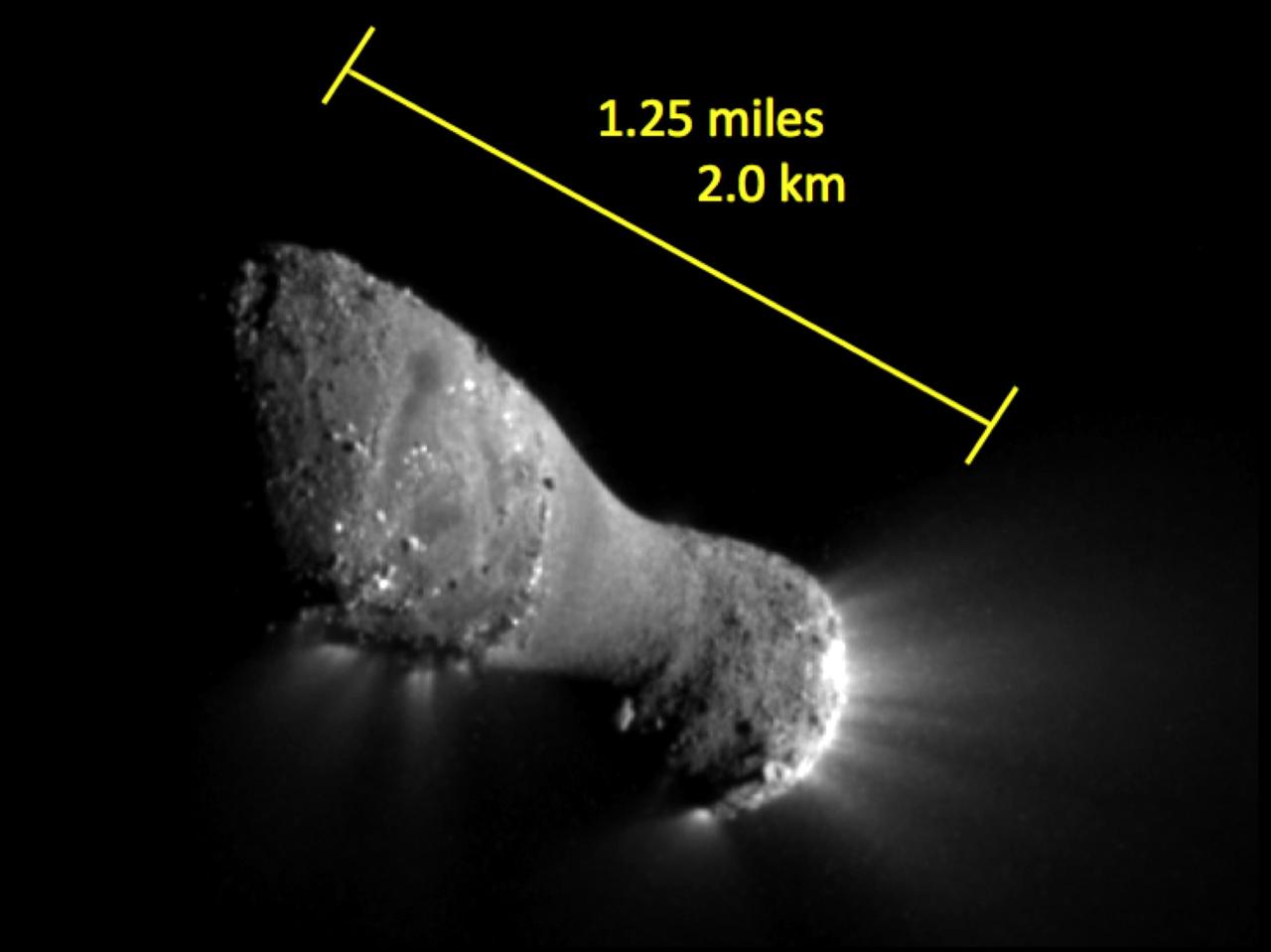
This image, one of the closest taken of comet Hartley 2 by NASA EPOXI mission, shows many features across the comet surface. The length of the comet is equal to the distance between the Capitol building and the Washington Monument in Washington.
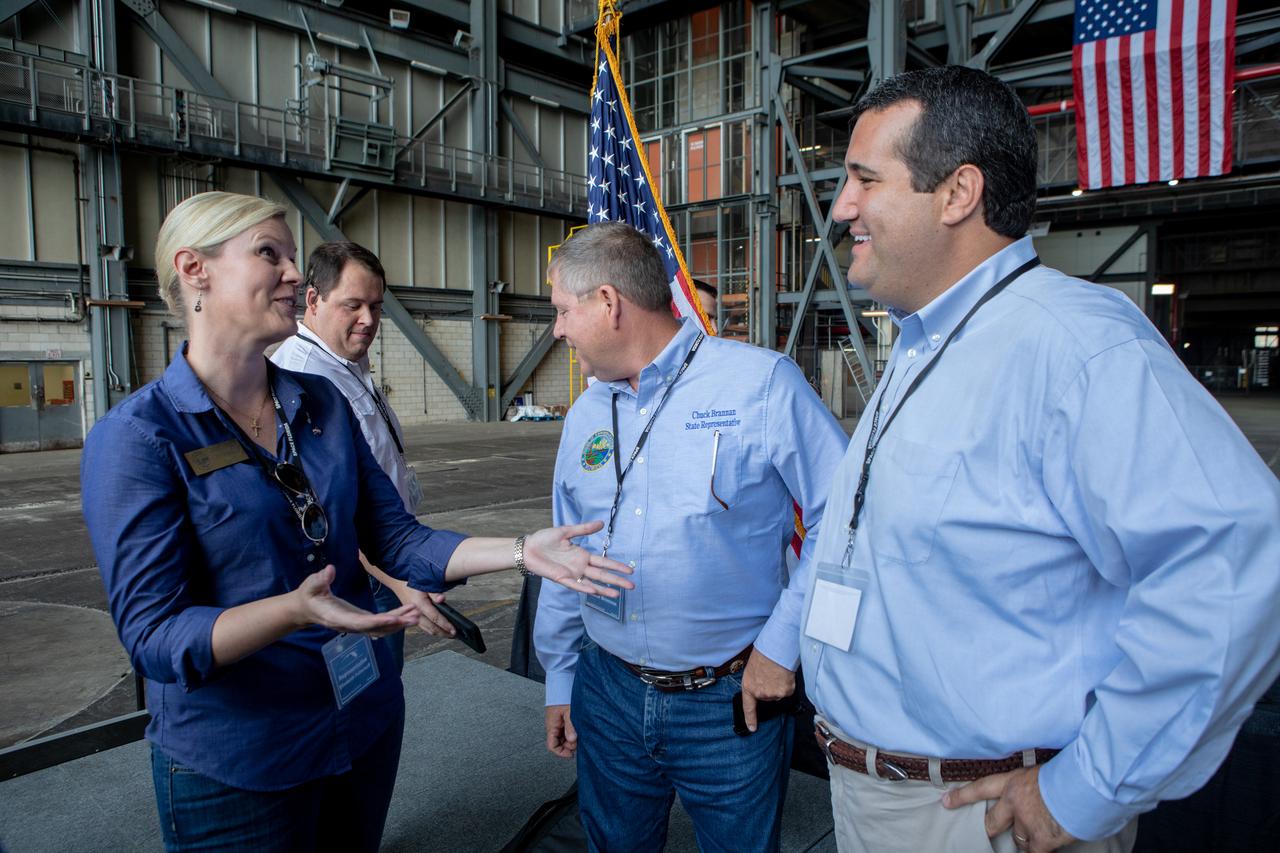
Elected officials and guests visit after a ribbon cutting ceremony on Aug. 16, 2019, in High Bay 2 of the Vehicle Assembly Building (VAB) at NASA’s Kennedy Space Center in Florida. The VAB is getting its first commercial tenant. Northrop Grumman signed a Reimbursable Space Act Agreement with NASA for use of the facilities. The company will assemble and test its new OmegA rocket inside the massive facility’s High Bay 2. The company also will modify mobile launcher platform-3 to serve as the launch vehicle’s assembly and launch platform. Northrop Grumman is developing the OmegA rocket, an intermediate/heavy-class launch vehicle, as part of a launch services agreement with the U.S. Air Force.
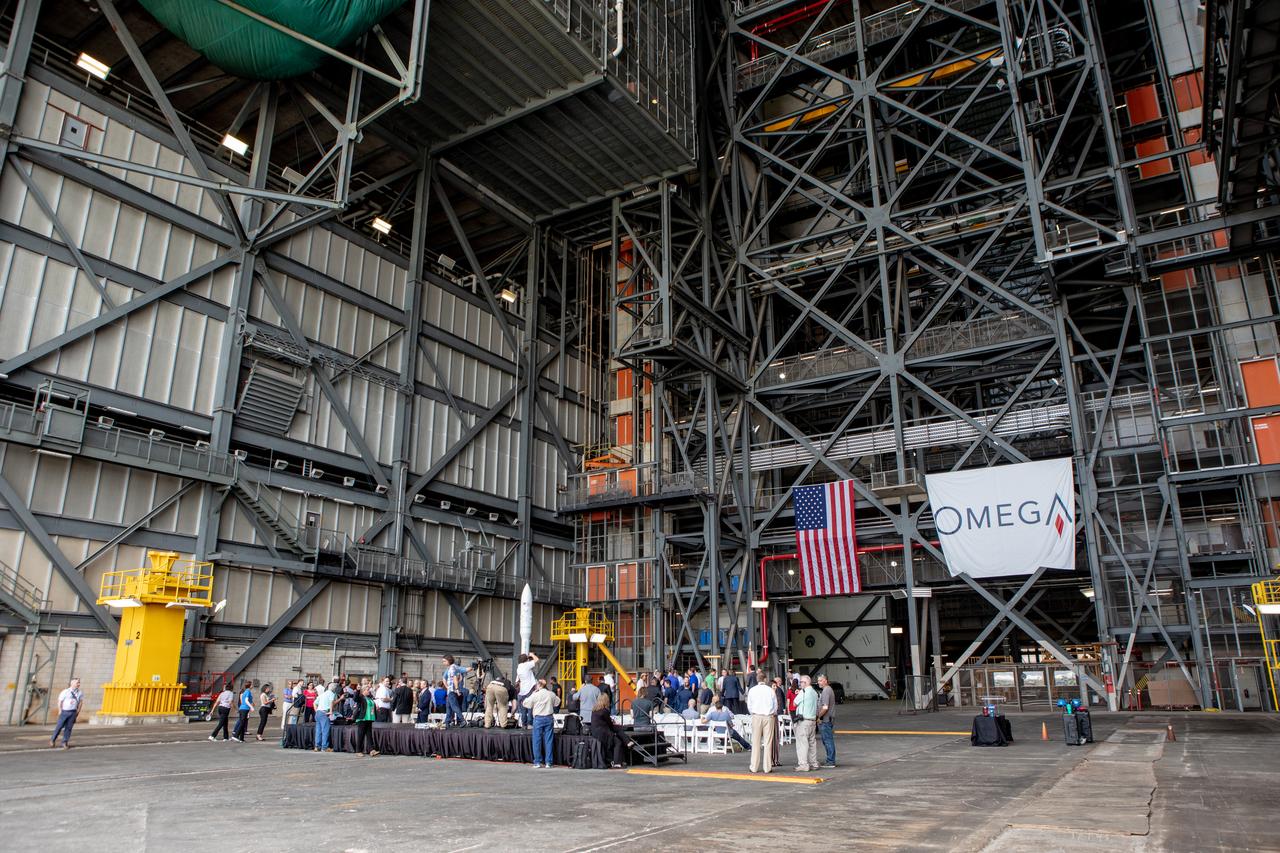
Legislators, invited guests and members of the media attend a ribbon cutting ceremony on Aug. 16, 2019, in High Bay 2 of the Vehicle Assembly Building (VAB) at NASA’s Kennedy Space Center in Florida. The VAB is getting its first commercial tenant. Northrop Grumman signed a Reimbursable Space Act Agreement with NASA for use of the facilities. The company will assemble and test its new OmegA rocket inside the massive facility’s High Bay 2. The company also will modify MLP-3 to serve as the launch vehicle’s assembly and launch platform. Northrop Grumman is developing the OmegA rocket, an intermediate/heavy-class launch vehicle, as part of a launch services agreement with the U.S. Air Force.
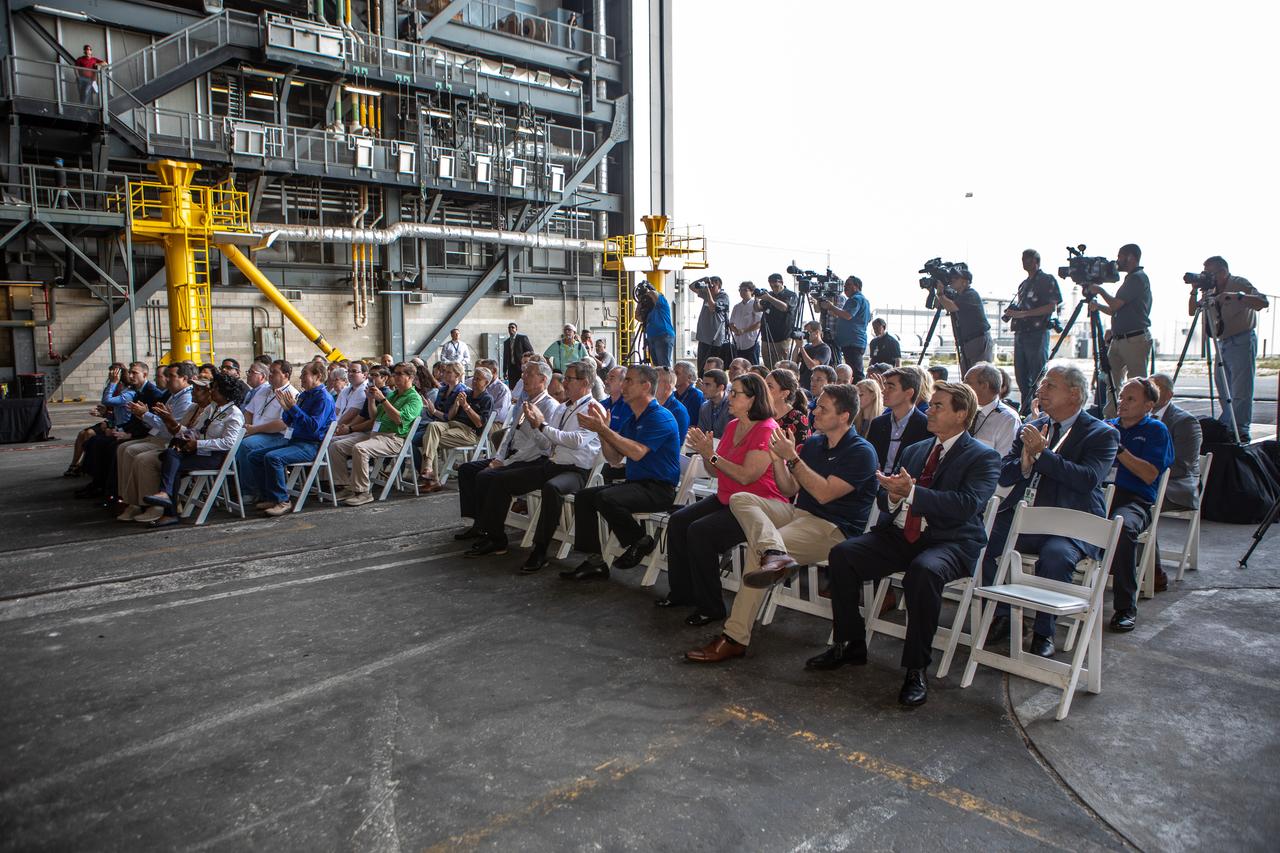
Legislators and invited guests clap during a ribbon cutting ceremony on Aug. 16, 2019, in High Bay 2 of the Vehicle Assembly Building (VAB) at NASA’s Kennedy Space Center in Florida. The VAB is getting its first commercial tenant. Northrop Grumman signed a Reimbursable Space Act Agreement with NASA for use of the facilities. The company will assemble and test its new OmegA rocket inside the massive facility’s High Bay 2. The company also will modify mobile launcher platform-3 to serve as the launch vehicle’s assembly and launch platform. Northrop Grumman is developing the OmegA rocket, an intermediate/heavy-class launch vehicle, as part of a launch services agreement with the U.S. Air Force.
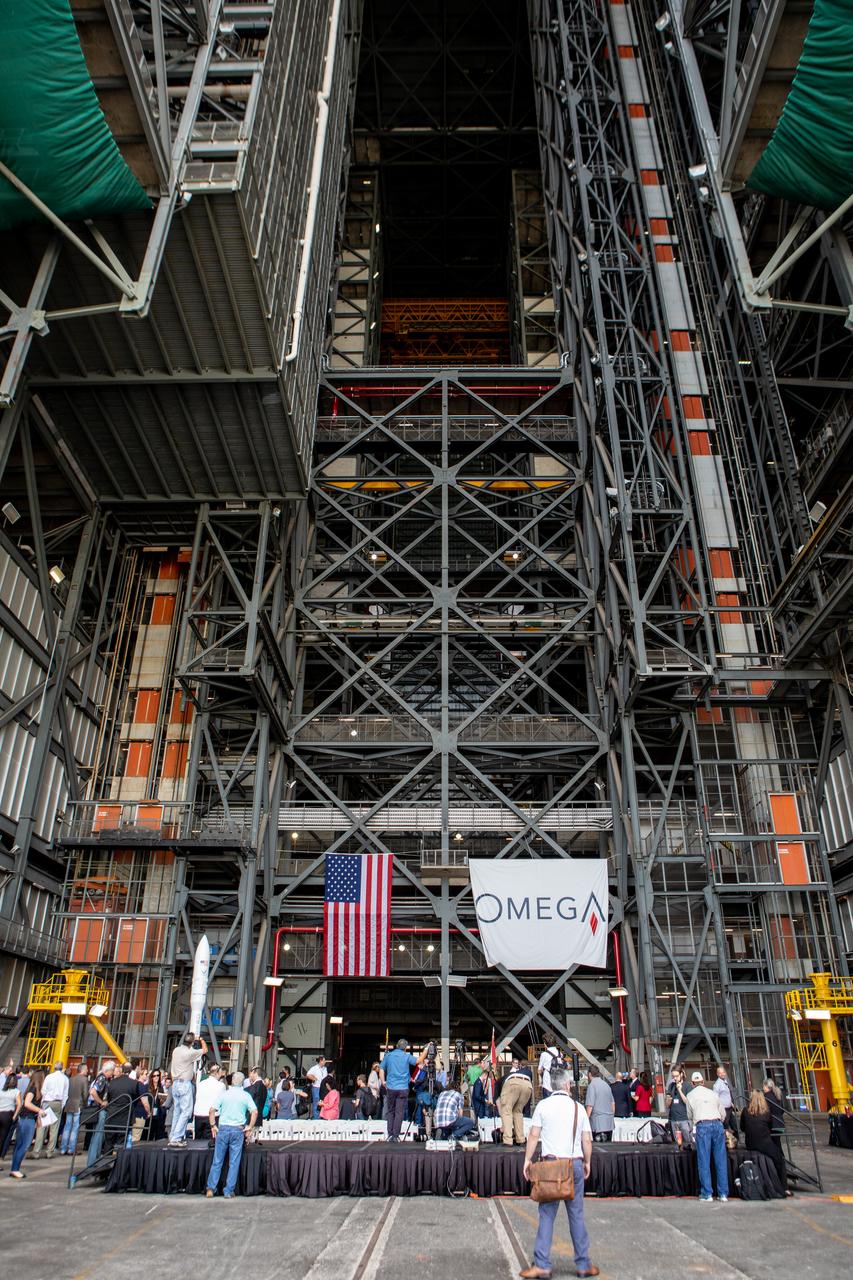
Legislators, invited guests and members of the media attend a ribbon cutting ceremony on Aug. 16, 2019, in High Bay 2 of the Vehicle Assembly Building (VAB) at NASA’s Kennedy Space Center in Florida. The VAB is getting its first commercial tenant. Northrop Grumman signed a Reimbursable Space Act Agreement with NASA for use of the facilities. The company will assemble and test its new OmegA rocket inside the massive facility’s High Bay 2. The company also will modify MLP-3 to serve as the launch vehicle’s assembly and launch platform. Northrop Grumman is developing the OmegA rocket, an intermediate/heavy-class launch vehicle, as part of a launch services agreement with the U.S. Air Force.
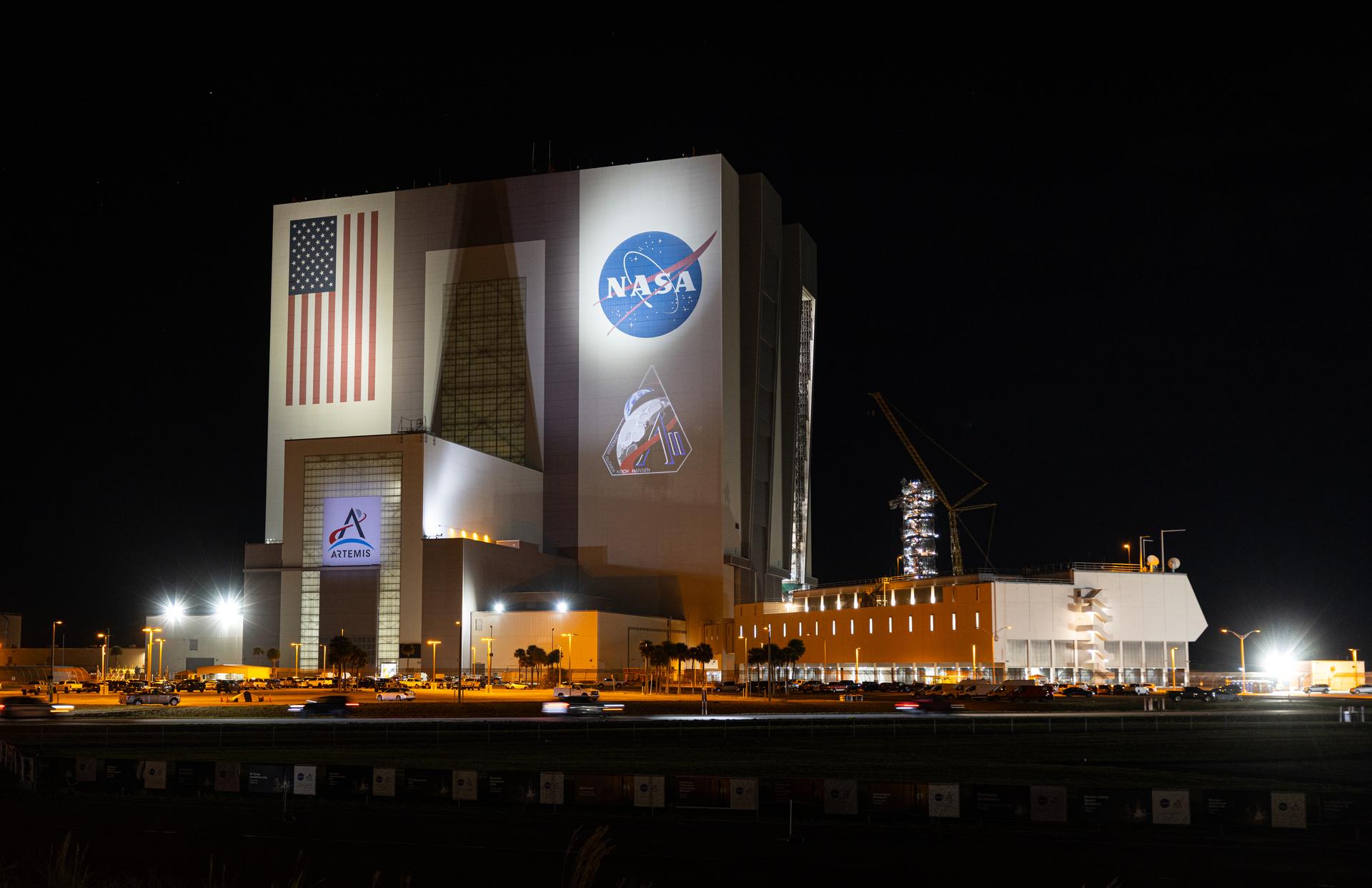
NASA’s Artemis II SLS (Space Launch System) rocket and Orion spacecraft, secured to the mobile launcher, prepares to roll out from the Vehicle Assembly Building to Launch Complex 39B at NASA’s Kennedy Space Center in Florida on Saturday, Jan. 17, 2026. Seen in the background is also mobile launcher 2, which will be used on future Artemis flights beginning with Artemis IV. The Artemis II test flight will take Commander Reid Wiseman, Pilot Victor Glover, and Mission Specialist Christina Koch from NASA, and Mission Specialist Jeremy Hansen from the CSA (Canadian Space Agency), around the Moon and back to Earth no later than April 2026.
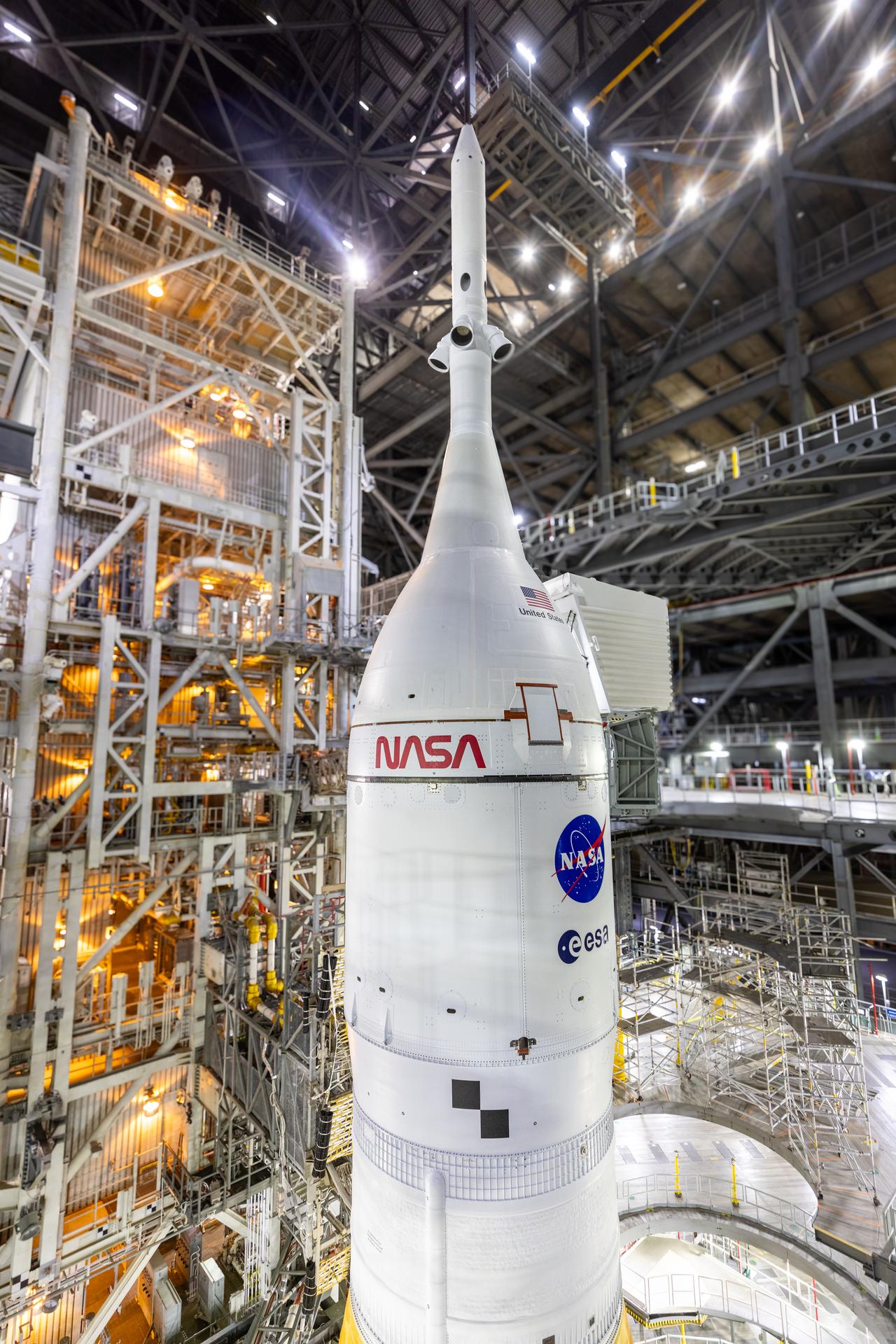
A closeup view of NASA’s Orion spacecraft with the launch abort system atop secured to NASA’s crawler-transporter 2 and the agency’s Artemis II SLS (Space Launch System) rocket prepares to roll out from the Vehicle Assembly Building to Launch Complex 39B at NASA’s Kennedy Space Center in Florida on Saturday, Jan. 17, 2026. The Artemis II test flight will take Commander Reid Wiseman, Pilot Victor Glover, and Mission Specialist Christina Koch from NASA, and Mission Specialist Jeremy Hansen from the CSA (Canadian Space Agency), around the Moon and back to Earth no later than April 2026.
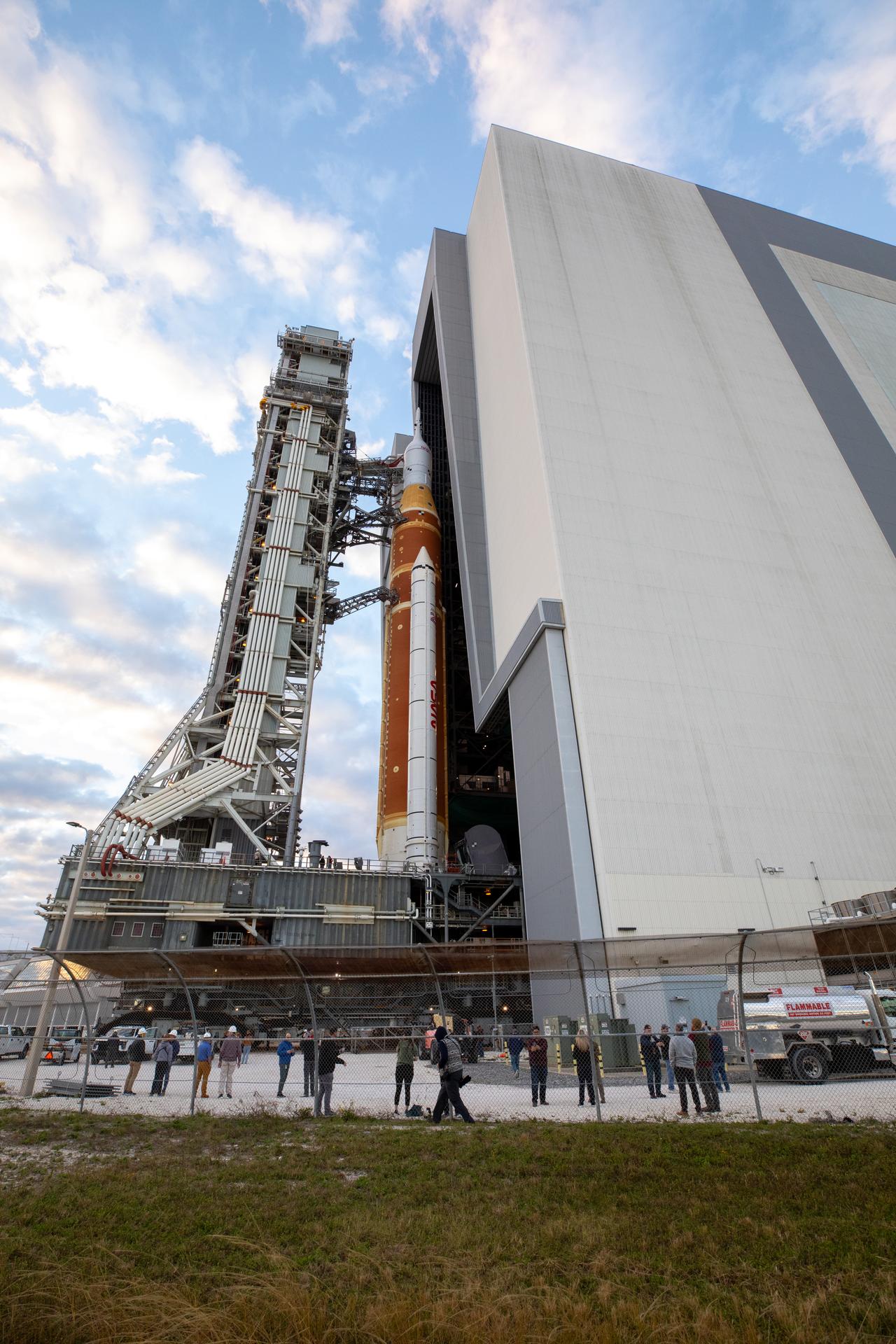
NASA’s crawler-transporter 2 carrying the agency’s Artemis II SLS (Space Launch System) rocket and Orion spacecraft, secured to the mobile launcher, begins rolling out from High Bay 3 inside the Vehicle Assembly Building to Launch Complex 39B at NASA’s Kennedy Space Center in Florida on Saturday, Jan. 17, 2026. The Artemis II test flight will take Commander Reid Wiseman, Pilot Victor Glover, and Mission Specialist Christina Koch from NASA and Mission Specialist Jeremy Hansen from the CSA (Canadian Space Agency), around the Moon and back to Earth no later than April 2026.
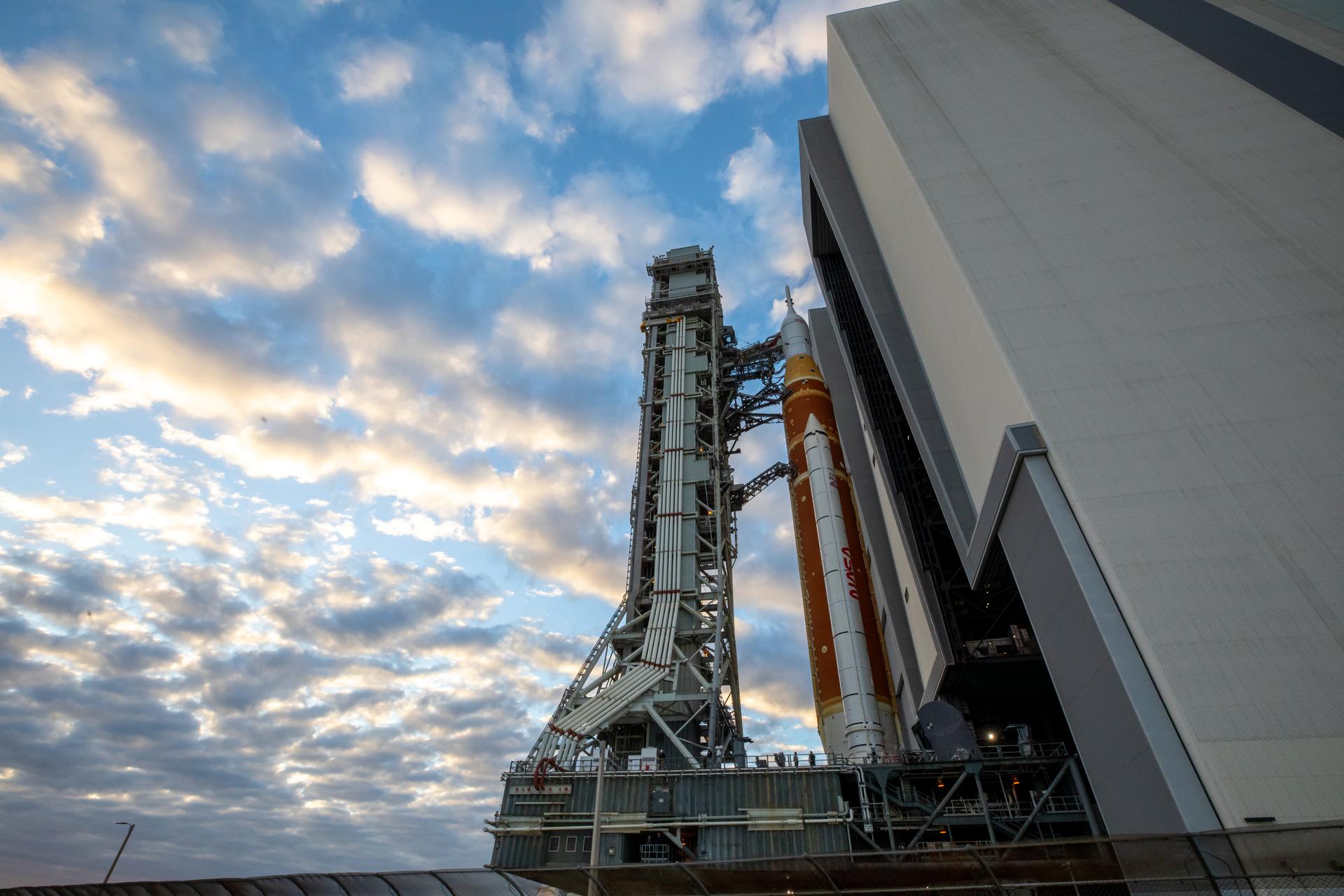
NASA’s crawler-transporter 2 carrying the agency’s Artemis II SLS (Space Launch System) rocket and Orion spacecraft, secured to the mobile launcher, begins rolling out from High Bay 3 inside the Vehicle Assembly Building to Launch Complex 39B at NASA’s Kennedy Space Center in Florida on Saturday, Jan. 17, 2026. The Artemis II test flight will take Commander Reid Wiseman, Pilot Victor Glover, and Mission Specialist Christina Koch from NASA and Mission Specialist Jeremy Hansen from the CSA (Canadian Space Agency), around the Moon and back to Earth no later than April 2026.
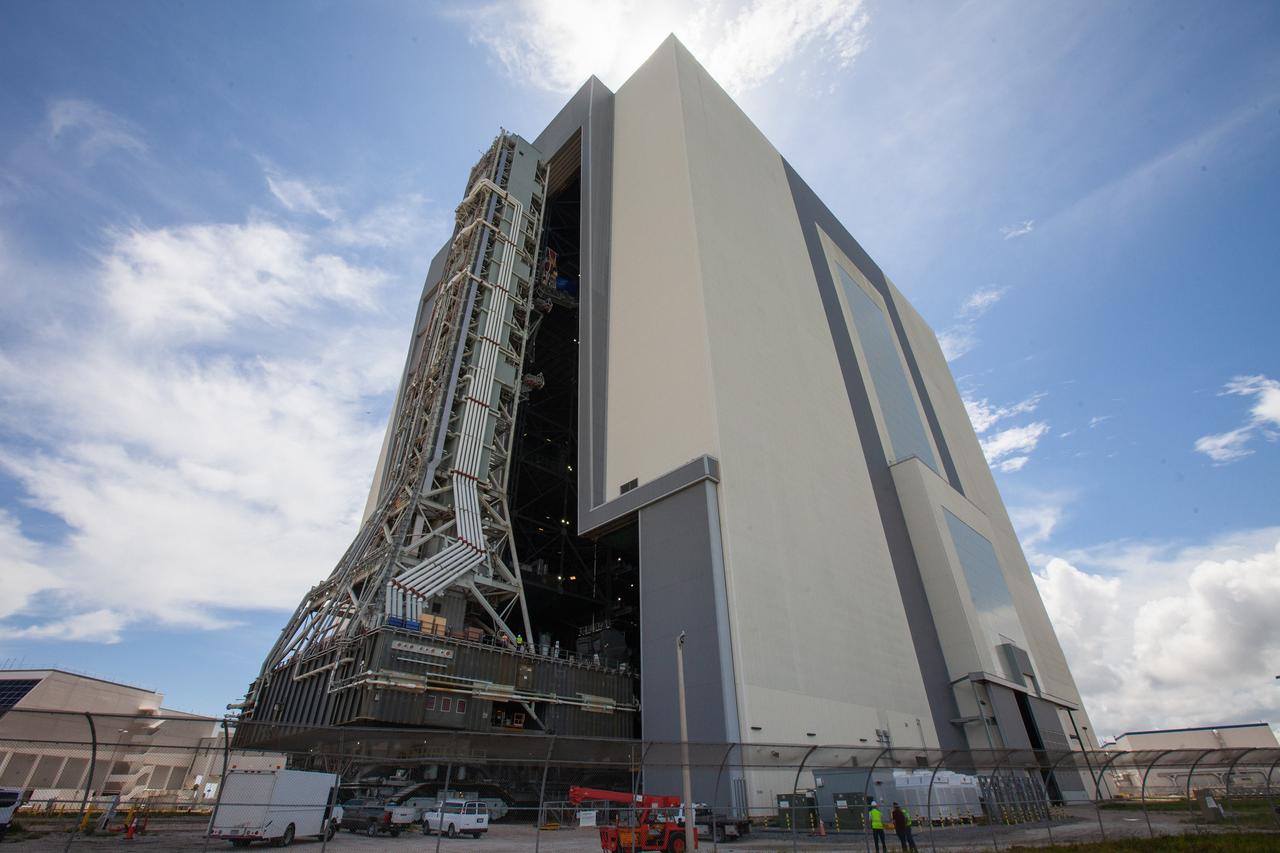
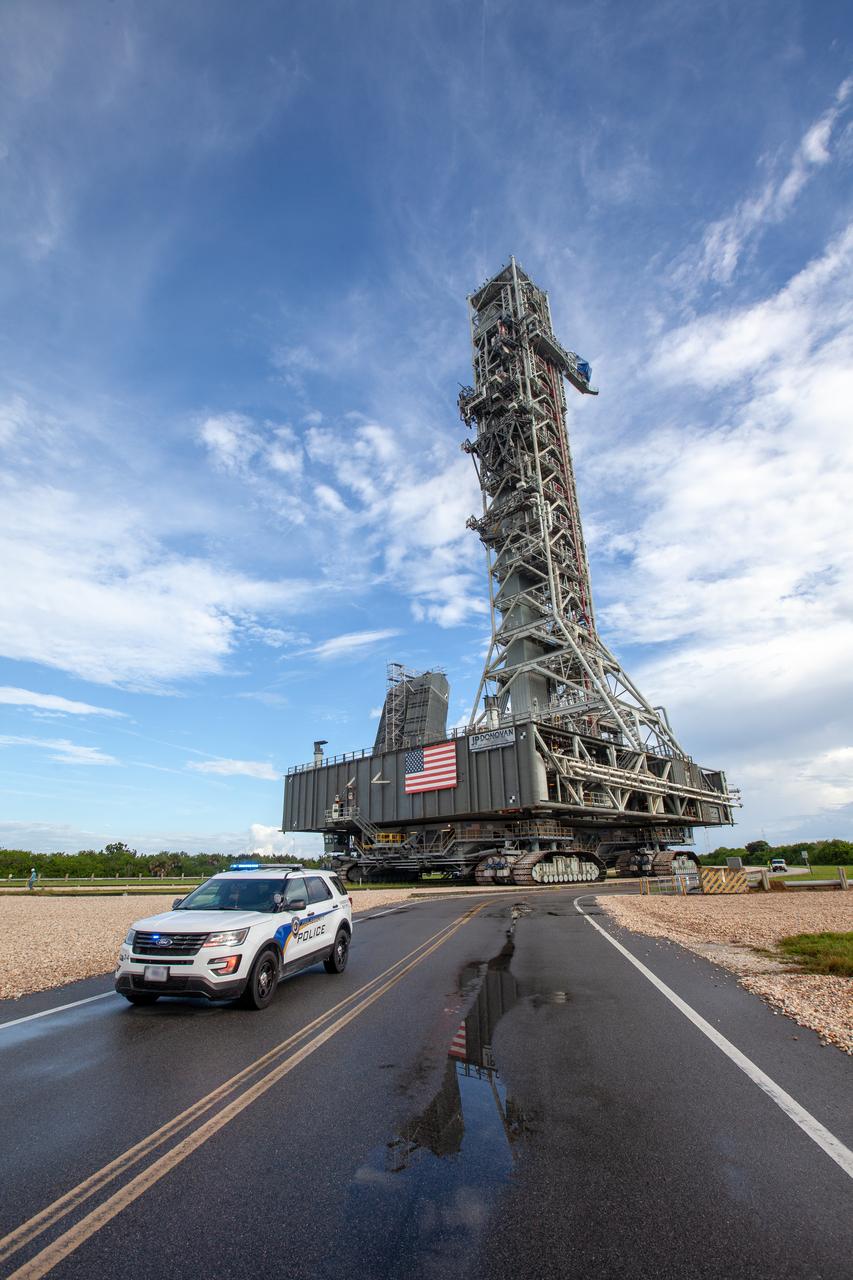
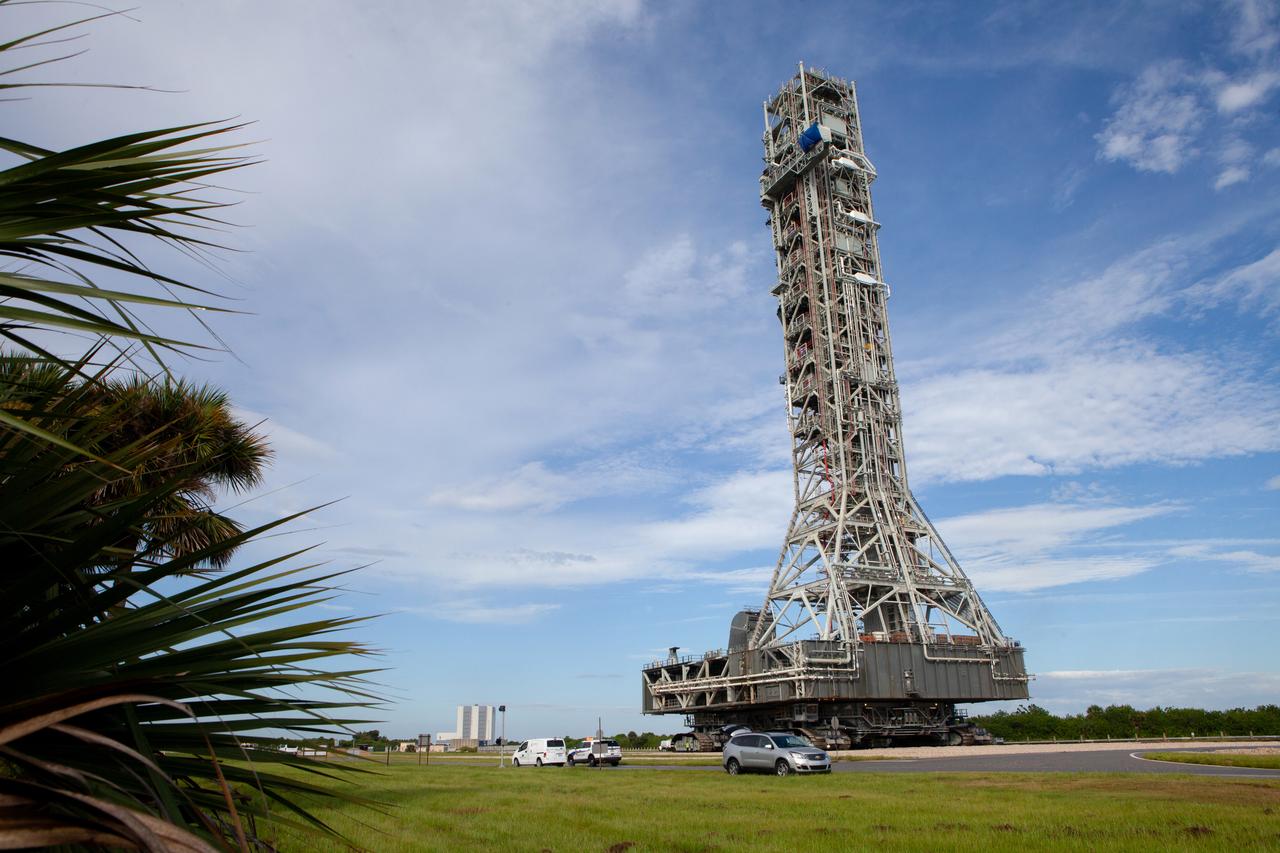
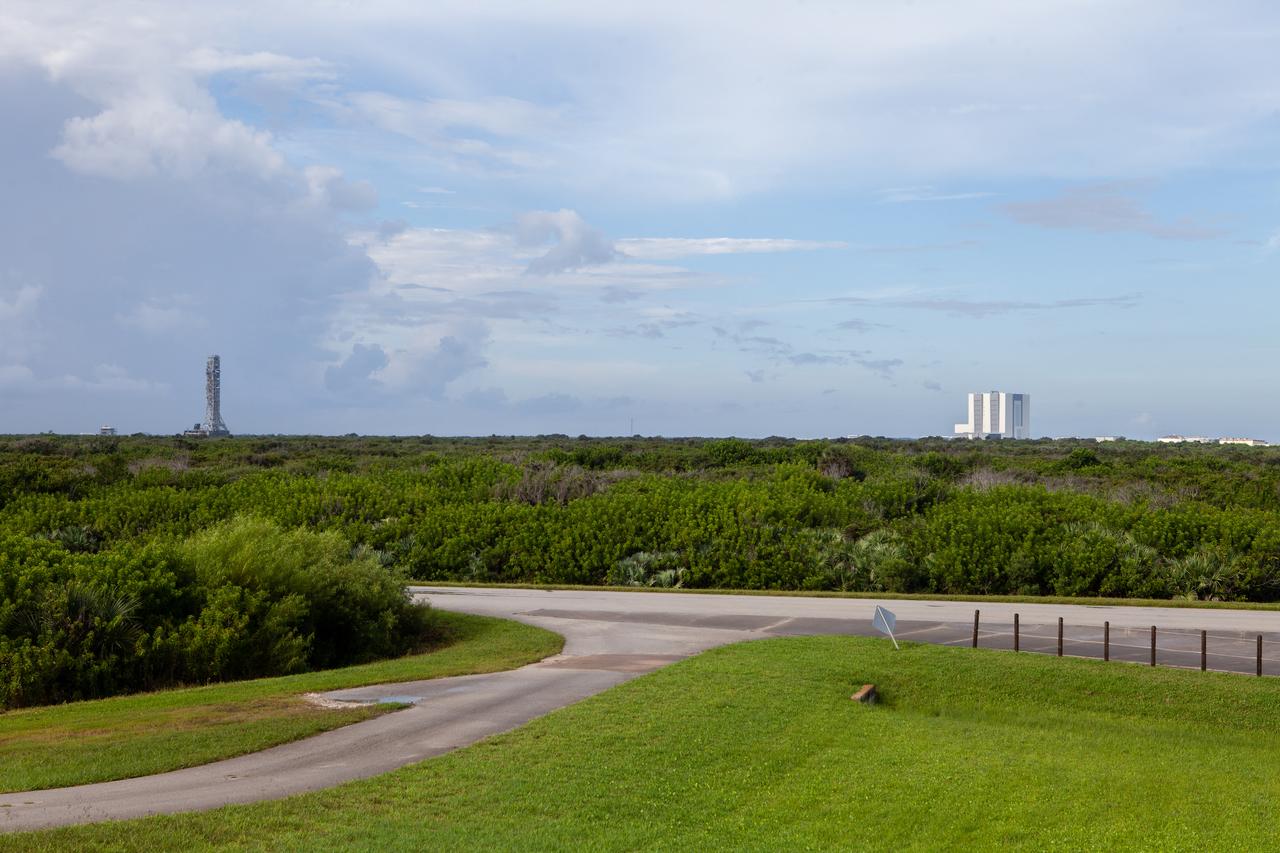
Exploration Ground Systems teams at NASA’s Kennedy Space Center in Florida take precautions to protect Artemis ground support equipment in advance of Hurricane Dorian. On Aug. 30, 2019, crawler-transporter 2 moved the mobile launcher (ML) from its current position at Launch Pad 39B to inside the Vehicle Assembly Building. In its final phases of development, the ML stands nearly 400 feet tall and is needed to assemble, process and launch NASA’s powerful Space Launch System rocket and Orion spacecraft on missions to the Moon and Mars.
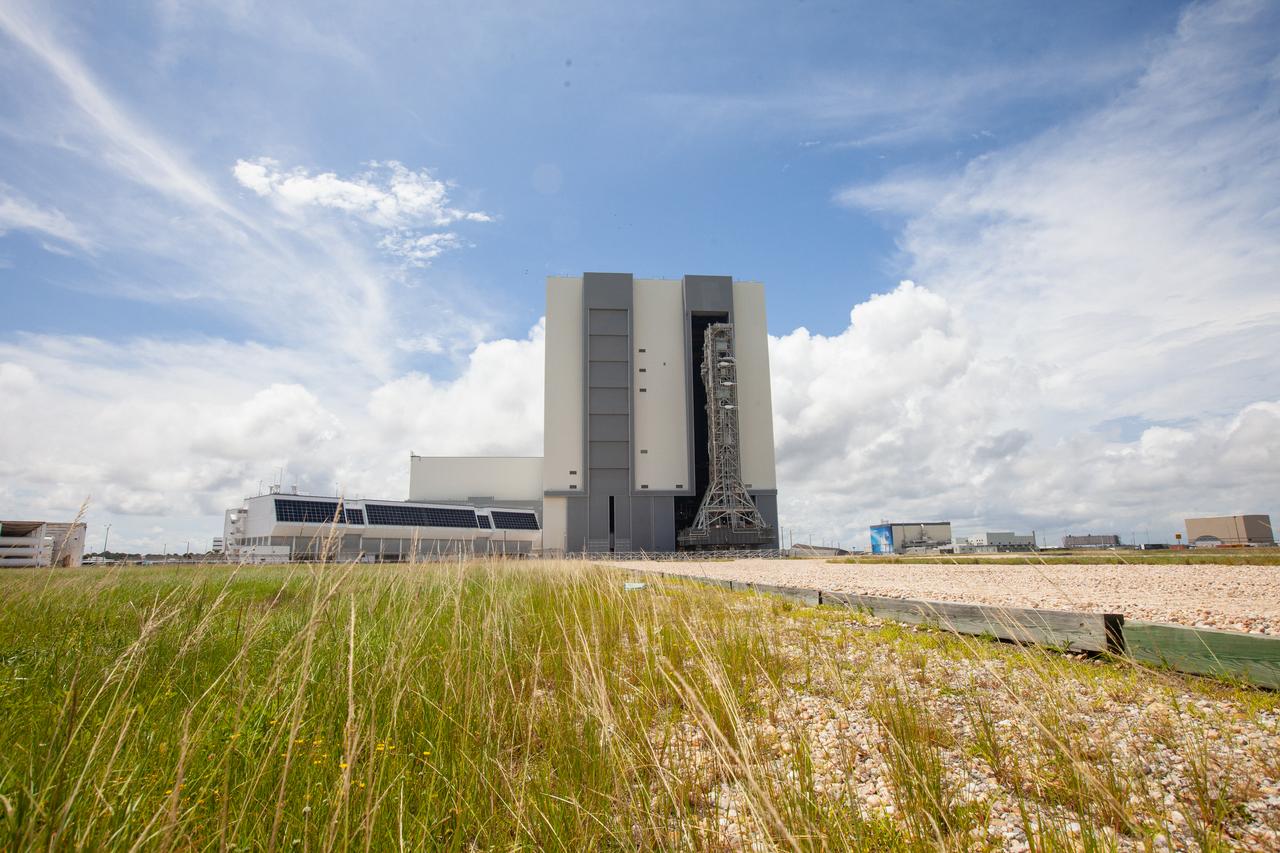
Exploration Ground Systems teams at NASA’s Kennedy Space Center in Florida take precautions to protect Artemis ground support equipment in advance of Hurricane Dorian. On Aug. 30, 2019, crawler-transporter 2 moved the mobile launcher (ML) from its current position at Launch Pad 39B to inside the Vehicle Assembly Building. In its final phases of development, the ML stands nearly 400 feet tall and is needed to assemble, process and launch NASA’s powerful Space Launch System rocket and Orion spacecraft on missions to the Moon and Mars.
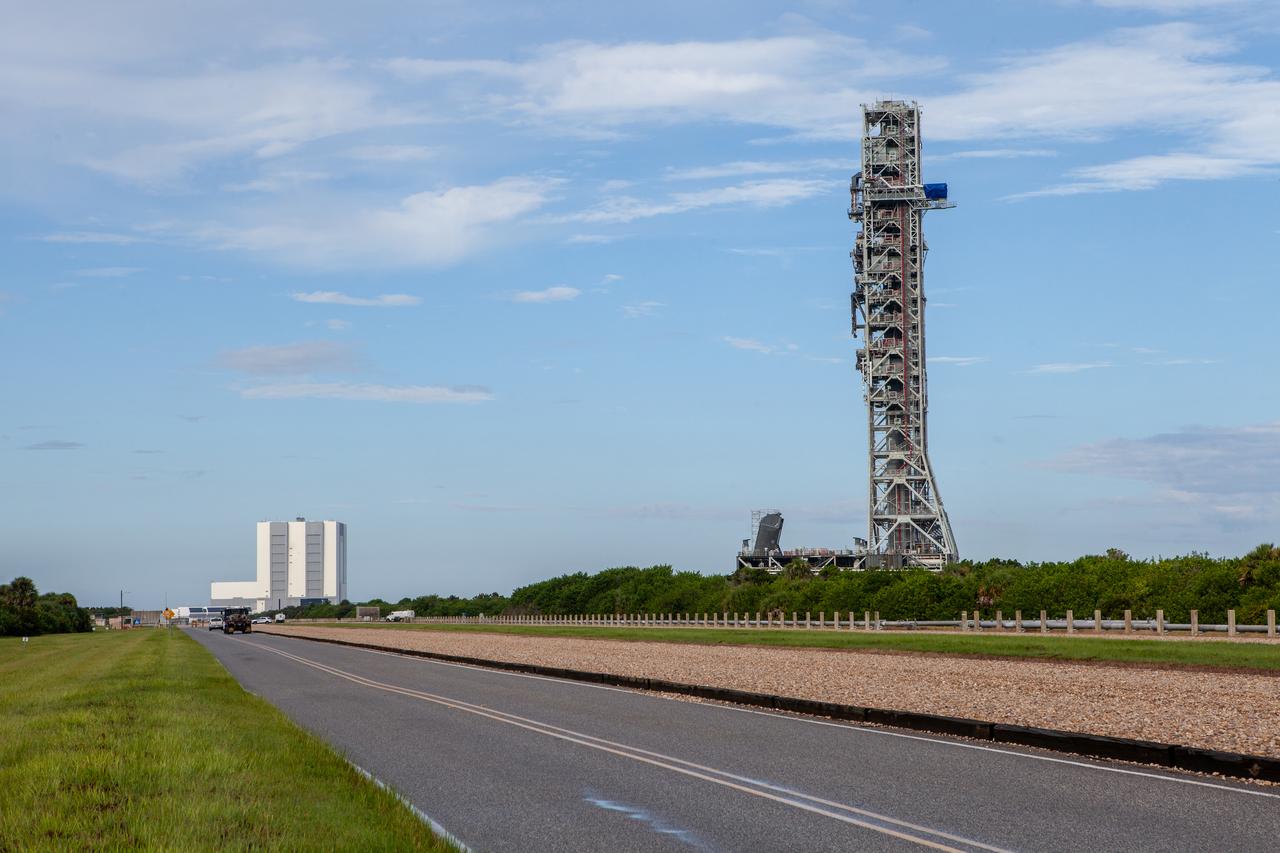
Exploration Ground Systems teams at NASA’s Kennedy Space Center in Florida take precautions to protect Artemis ground support equipment in advance of Hurricane Dorian. On Aug. 30, 2019, crawler-transporter 2 moved the mobile launcher (ML) from its current position at Launch Pad 39B to inside the Vehicle Assembly Building. In its final phases of development, the ML stands nearly 400 feet tall and is needed to assemble, process and launch NASA’s powerful Space Launch System rocket and Orion spacecraft on missions to the Moon and Mars.
Exploration Ground Systems teams at NASA’s Kennedy Space Center in Florida take precautions to protect Artemis ground support equipment in advance of Hurricane Dorian. On Aug. 30, 2019, crawler-transporter 2 moved the mobile launcher (ML) from its current position at Launch Pad 39B to inside the Vehicle Assembly Building. In its final phases of development, the ML stands nearly 400 feet tall and is needed to assemble, process and launch NASA’s powerful Space Launch System rocket and Orion spacecraft on missions to the Moon and Mars.
Exploration Ground Systems teams at NASA’s Kennedy Space Center in Florida take precautions to protect Artemis ground support equipment in advance of Hurricane Dorian. On Aug. 30, 2019, crawler-transporter 2 moved the mobile launcher (ML) from its current position at Launch Pad 39B to inside the Vehicle Assembly Building. In its final phases of development, the ML stands nearly 400 feet tall and is needed to assemble, process and launch NASA’s powerful Space Launch System rocket and Orion spacecraft on missions to the Moon and Mars.
Exploration Ground Systems teams at NASA’s Kennedy Space Center in Florida take precautions to protect Artemis ground support equipment in advance of Hurricane Dorian. On Aug. 30, 2019, crawler-transporter 2 moved the mobile launcher (ML) from its current position at Launch Pad 39B to inside the Vehicle Assembly Building. In its final phases of development, the ML stands nearly 400 feet tall and is needed to assemble, process and launch NASA’s powerful Space Launch System rocket and Orion spacecraft on missions to the Moon and Mars.

Vice President Kamala Harris delivers remarks during a ceremony awarding the Congressional Space Medal of Honor to former NASA astronauts Douglas Hurley and Robert Behnken in the Indian Treaty Room of the Eisenhower Executive Office Building, Tuesday, Jan. 31, 2023, in Washington. Former astronauts Behnken and Hurley were awarded the Congressional Space Medal of Honor for their bravery in NASA’s SpaceX Demonstration Mission-2 to the International Space Station in 2020, the first crewed flight as part of the agency’s Commercial Crew Program. Photo Credit: (NASA/Joel Kowsky)
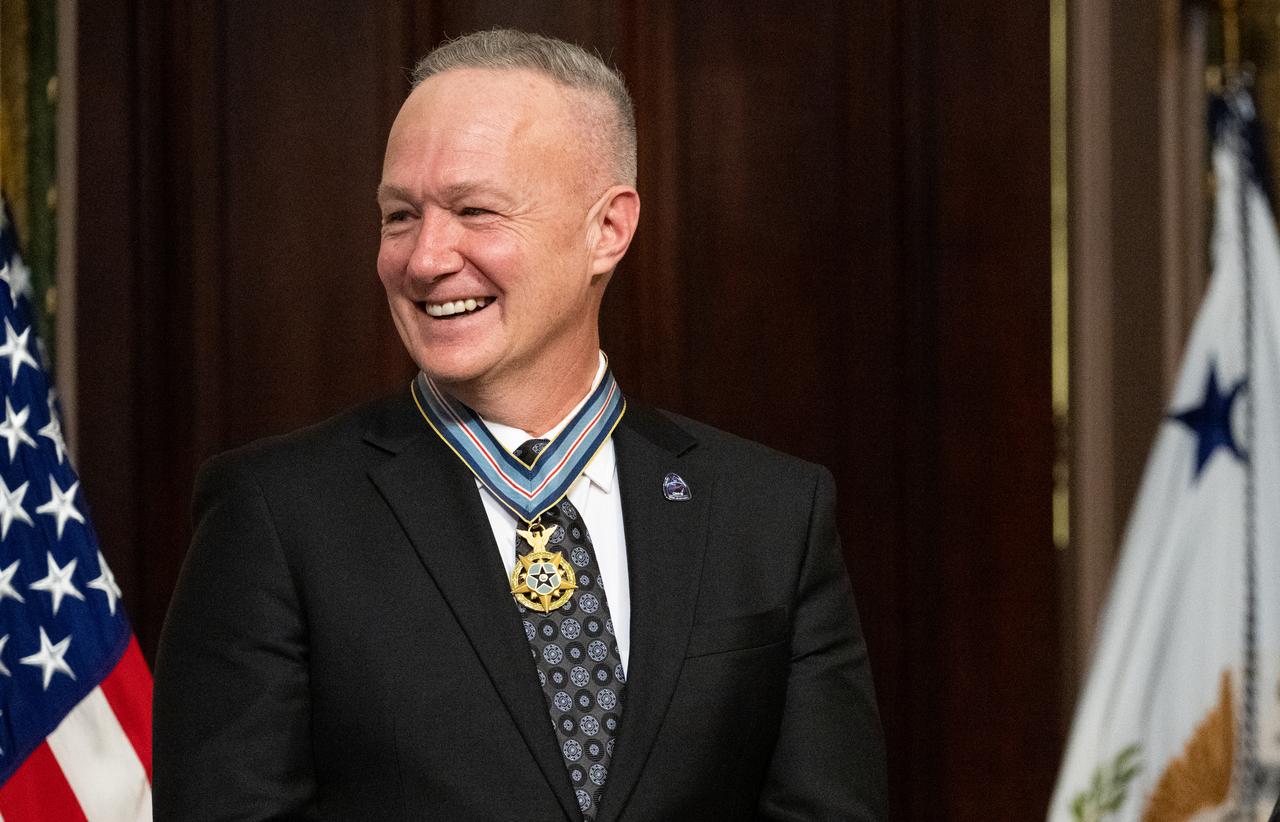
Former NASA astronaut Douglas Hurley is seen after being awarded the Congressional Space Medal of Honor by Vice President Kamala Harris during a ceremony in the Indian Treaty Room of the Eisenhower Executive Office Building, Tuesday, Jan. 31, 2023, in Washington. Former astronauts Behnken and Douglas Hurley were awarded the Congressional Space Medal of Honor for their bravery in NASA’s SpaceX Demonstration Mission-2 to the International Space Station in 2020, the first crewed flight as part of the agency’s Commercial Crew Program. Photo Credit: (NASA/Joel Kowsky)

Vice President Kamala Harris delivers remarks during a ceremony awarding the Congressional Space Medal of Honor to former NASA astronauts Douglas Hurley and Robert Behnken in the Indian Treaty Room of the Eisenhower Executive Office Building, Tuesday, Jan. 31, 2023, in Washington. Former astronauts Behnken and Hurley were awarded the Congressional Space Medal of Honor for their bravery in NASA’s SpaceX Demonstration Mission-2 to the International Space Station in 2020, the first crewed flight as part of the agency’s Commercial Crew Program. Photo Credit: (NASA/Joel Kowsky)
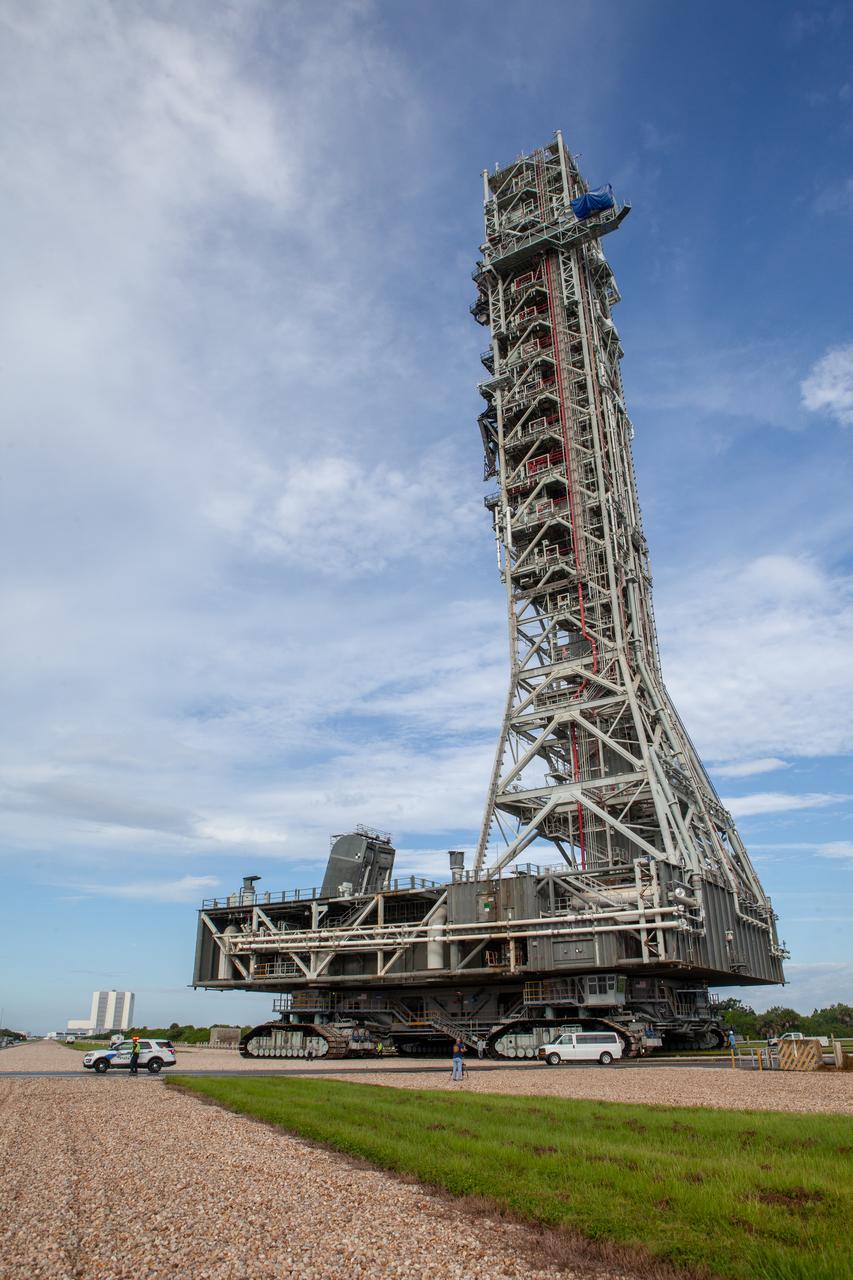
Exploration Ground Systems teams at NASA’s Kennedy Space Center in Florida take precautions to protect Artemis ground support equipment in advance of Hurricane Dorian. On Aug. 30, 2019, crawler-transporter 2 moved the mobile launcher (ML) from its current position at Launch Pad 39B to inside the Vehicle Assembly Building. In its final phases of development, the ML stands nearly 400 feet tall and is needed to assemble, process and launch NASA’s powerful Space Launch System rocket and Orion spacecraft on missions to the Moon and Mars.
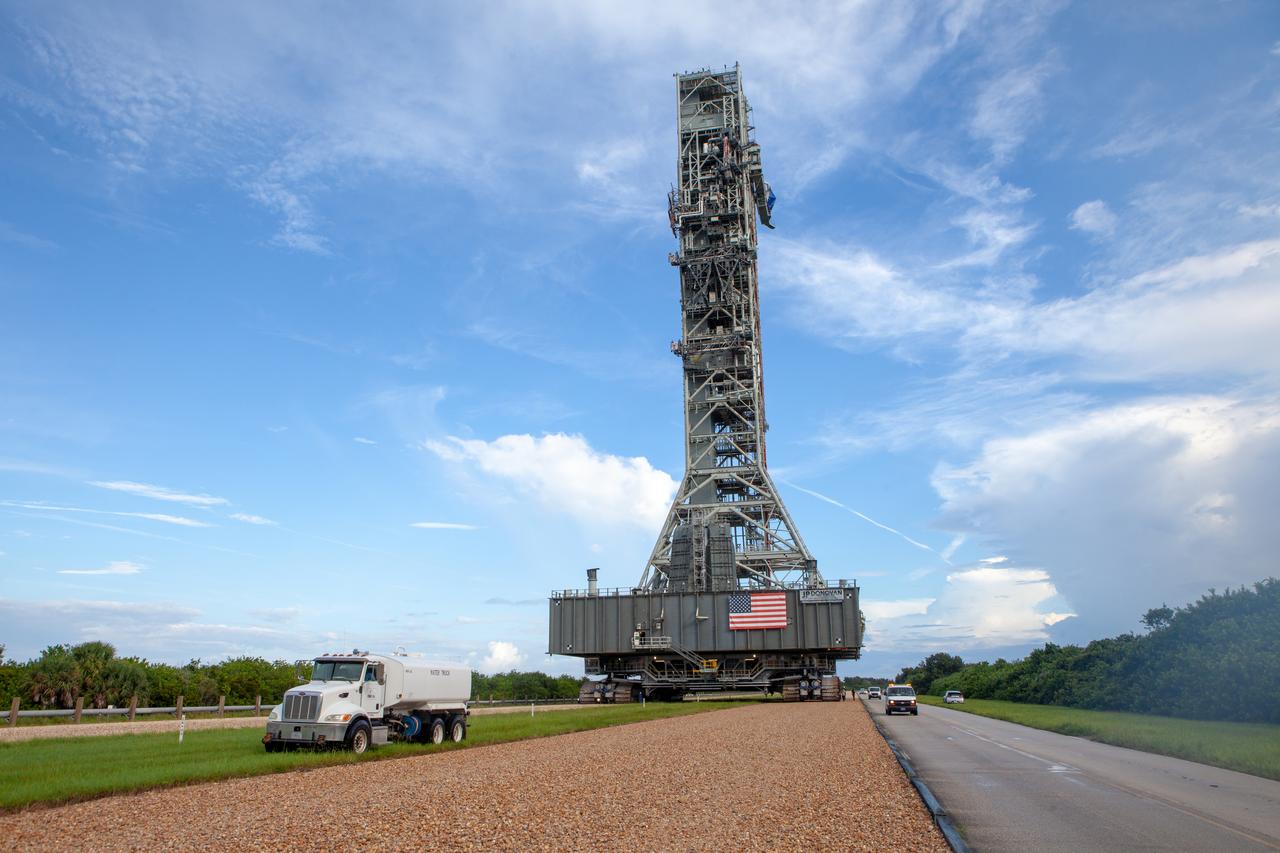
Exploration Ground Systems teams at NASA’s Kennedy Space Center in Florida take precautions to protect Artemis ground support equipment in advance of Hurricane Dorian. On Aug. 30, 2019, crawler-transporter 2 moved the mobile launcher (ML) from its current position at Launch Pad 39B to inside the Vehicle Assembly Building. In its final phases of development, the ML stands nearly 400 feet tall and is needed to assemble, process and launch NASA’s powerful Space Launch System rocket and Orion spacecraft on missions to the Moon and Mars.

Former NASA astronauts Robert Behnken and Douglas Hurley are seen as they arrive prior to being awarded the Congressional Space Medal of Honor by Vice President Kamala Harris during a ceremony in the Indian Treaty Room of the Eisenhower Executive Office Building, Tuesday, Jan. 31, 2023, in Washington. Former astronauts Behnken and Hurley were awarded the Congressional Space Medal of Honor for their bravery in NASA’s SpaceX Demonstration Mission-2 to the International Space Station in 2020, the first crewed flight as part of the agency’s Commercial Crew Program. Photo Credit: (NASA/Joel Kowsky)
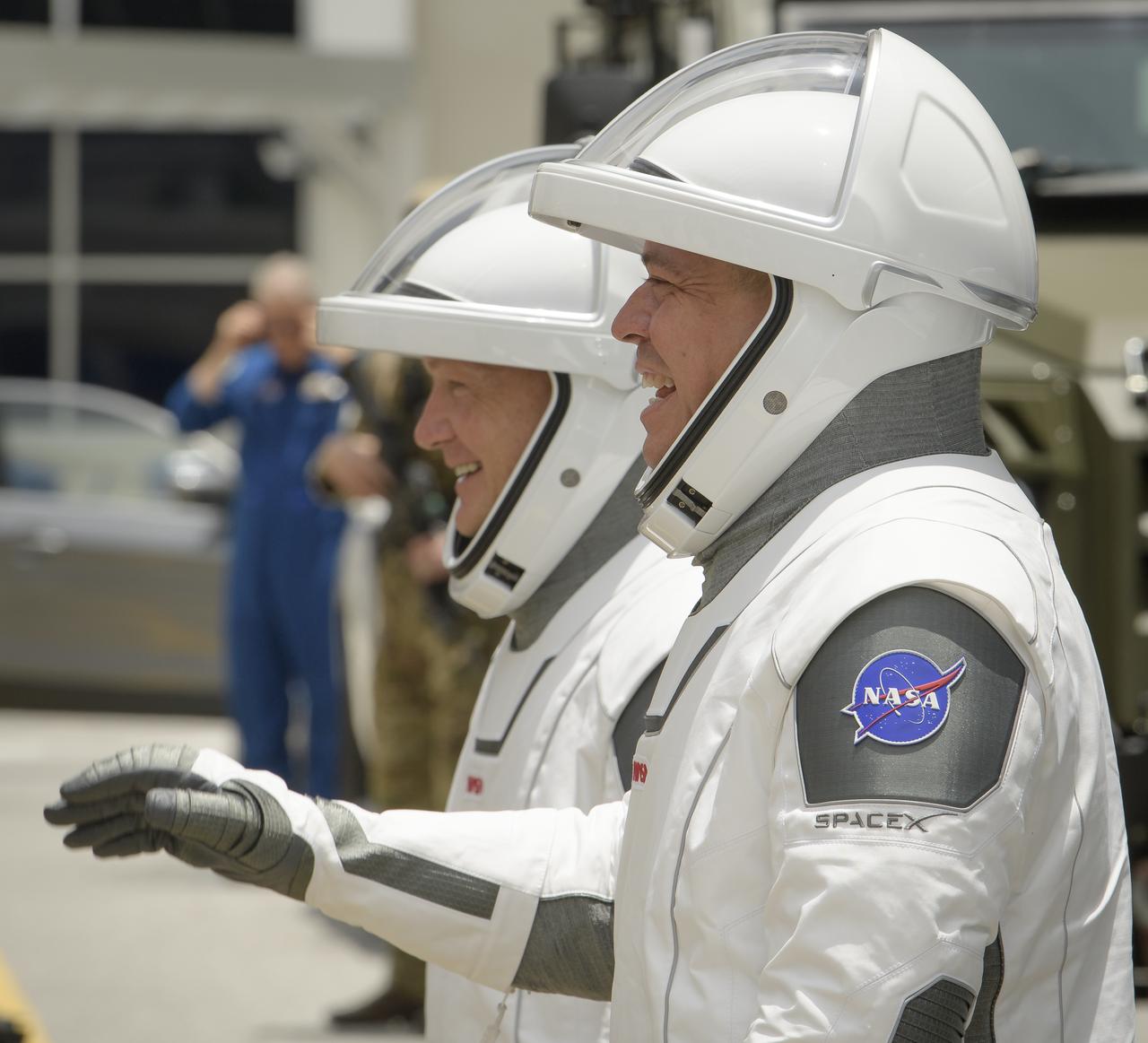
NASA astronauts Douglas Hurley, left, and Robert Behnken, wearing SpaceX spacesuits, are seen as they depart the Neil A. Armstrong Operations and Checkout Building for Launch Complex 39A to board the SpaceX Crew Dragon spacecraft for the Demo-2 mission launch, Wednesday, May 27, 2020, at NASA’s Kennedy Space Center in Florida. NASA’s SpaceX Demo-2 mission is the first launch with astronauts of the SpaceX Crew Dragon spacecraft and Falcon 9 rocket to the International Space Station as part of the agency’s Commercial Crew Program. The test flight serves as an end-to-end demonstration of SpaceX’s crew transportation system. Behnken and Hurley are scheduled to launch at 4:33 p.m. EDT on Wednesday, May 27, from Launch Complex 39A at the Kennedy Space Center. A new era of human spaceflight is set to begin as American astronauts once again launch on an American rocket from American soil to low-Earth orbit for the first time since the conclusion of the Space Shuttle Program in 2011. Photo Credit: (NASA/Bill Ingalls)
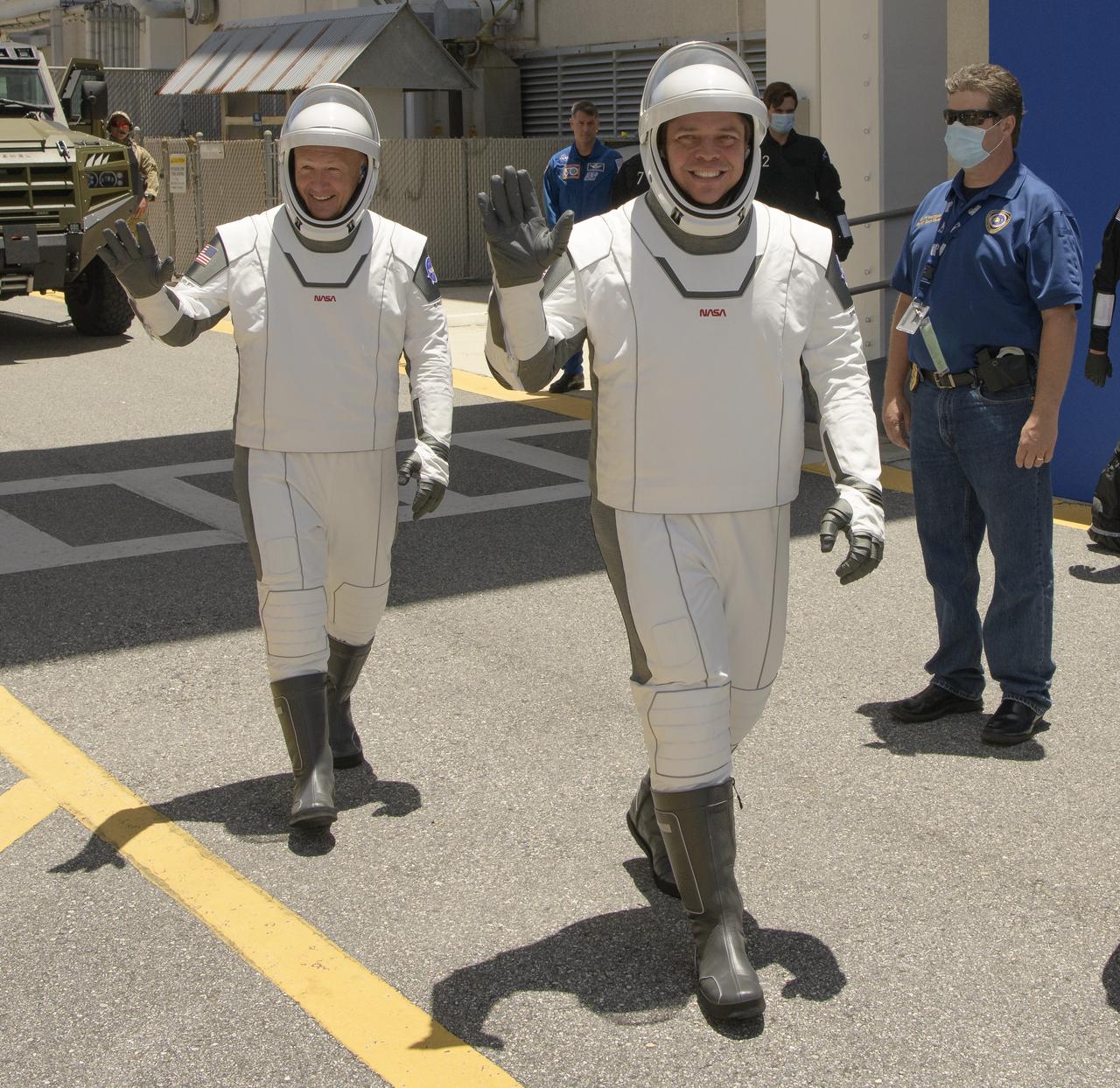
NASA astronauts Douglas Hurley, left, and Robert Behnken, wearing SpaceX spacesuits, are seen as they depart the Neil A. Armstrong Operations and Checkout Building for Launch Complex 39A during a dress rehearsal prior to the Demo-2 mission launch, Saturday, May 23, 2020, at NASA’s Kennedy Space Center in Florida. NASA’s SpaceX Demo-2 mission is the first launch with astronauts of the SpaceX Crew Dragon spacecraft and Falcon 9 rocket to the International Space Station as part of the agency’s Commercial Crew Program. The test flight serves as an end-to-end demonstration of SpaceX’s crew transportation system. Behnken and Hurley are scheduled to launch at 4:33 p.m. EDT on Wednesday, May 27, from Launch Complex 39A at the Kennedy Space Center. A new era of human spaceflight is set to begin as American astronauts once again launch on an American rocket from American soil to low-Earth orbit for the first time since the conclusion of the Space Shuttle Program in 2011. Photo Credit: (NASA/Bill Ingalls)
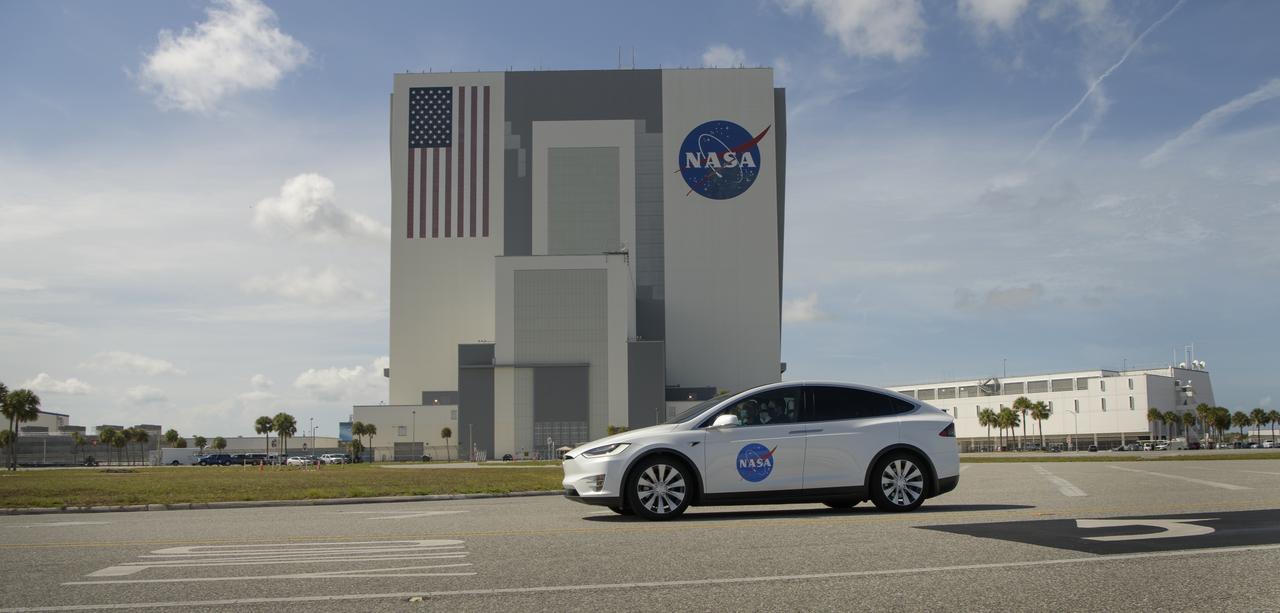
NASA astronauts Douglas Hurley and Robert Behnken return to the Neil A. Armstrong Operations and Checkout Building from Launch Complex 39A after completing a dress rehearsal for the Demo-2 mission launch, Saturday, May 23, 2020, at NASA’s Kennedy Space Center in Florida. NASA’s SpaceX Demo-2 mission is the first launch with astronauts of the SpaceX Crew Dragon spacecraft and Falcon 9 rocket to the International Space Station as part of the agency’s Commercial Crew Program. The test flight serves as an end-to-end demonstration of SpaceX’s crew transportation system. Behnken and Hurley are scheduled to launch at 4:33 p.m. EDT on Wednesday, May 27, from Launch Complex 39A at the Kennedy Space Center. A new era of human spaceflight is set to begin as American astronauts once again launch on an American rocket from American soil to low-Earth orbit for the first time since the conclusion of the Space Shuttle Program in 2011. Photo Credit: (NASA/Bill Ingalls)
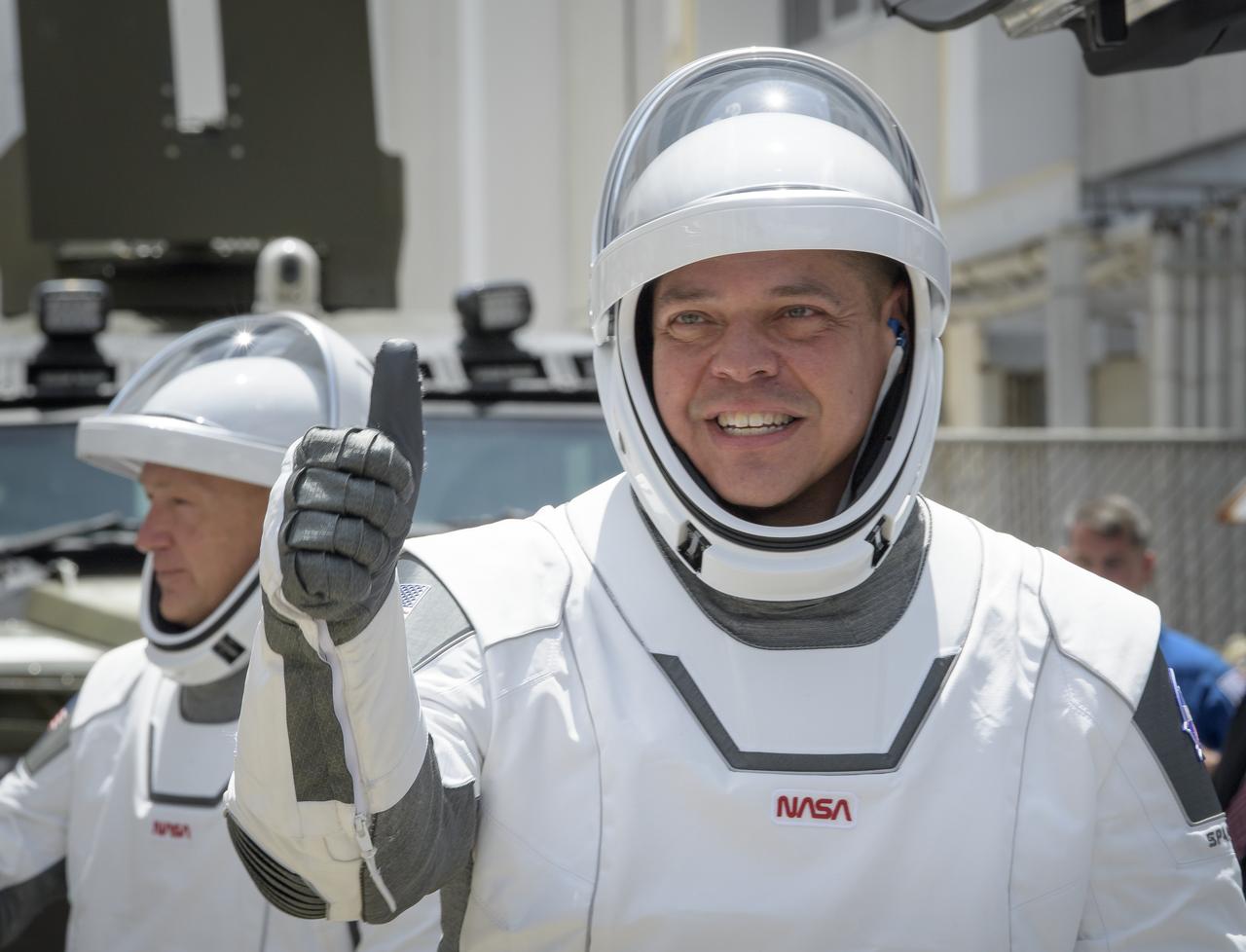
NASA astronauts Robert Behnken, foreground, and Douglas Hurley, wearing SpaceX spacesuits, are seen as they depart the Neil A. Armstrong Operations and Checkout Building for Launch Complex 39A to board the SpaceX Crew Dragon spacecraft for the Demo-2 mission launch, Saturday, May 30, 2020, at NASA’s Kennedy Space Center in Florida. NASA’s SpaceX Demo-2 mission is the first launch with astronauts of the SpaceX Crew Dragon spacecraft and Falcon 9 rocket to the International Space Station as part of the agency’s Commercial Crew Program. The test flight serves as an end-to-end demonstration of SpaceX’s crew ransportation system. Behnken and Hurley are scheduled to launch at 3:22 p.m. EDT on Saturday, May 30, from Launch Complex 39A at the Kennedy Space Center. A new era of human spaceflight is set to begin as American astronauts once again launch on an American rocket from American soil to low-Earth orbit for the first time since the conclusion of the Space Shuttle Program in 2011. Photo Credit: (NASA/Bill Ingalls)
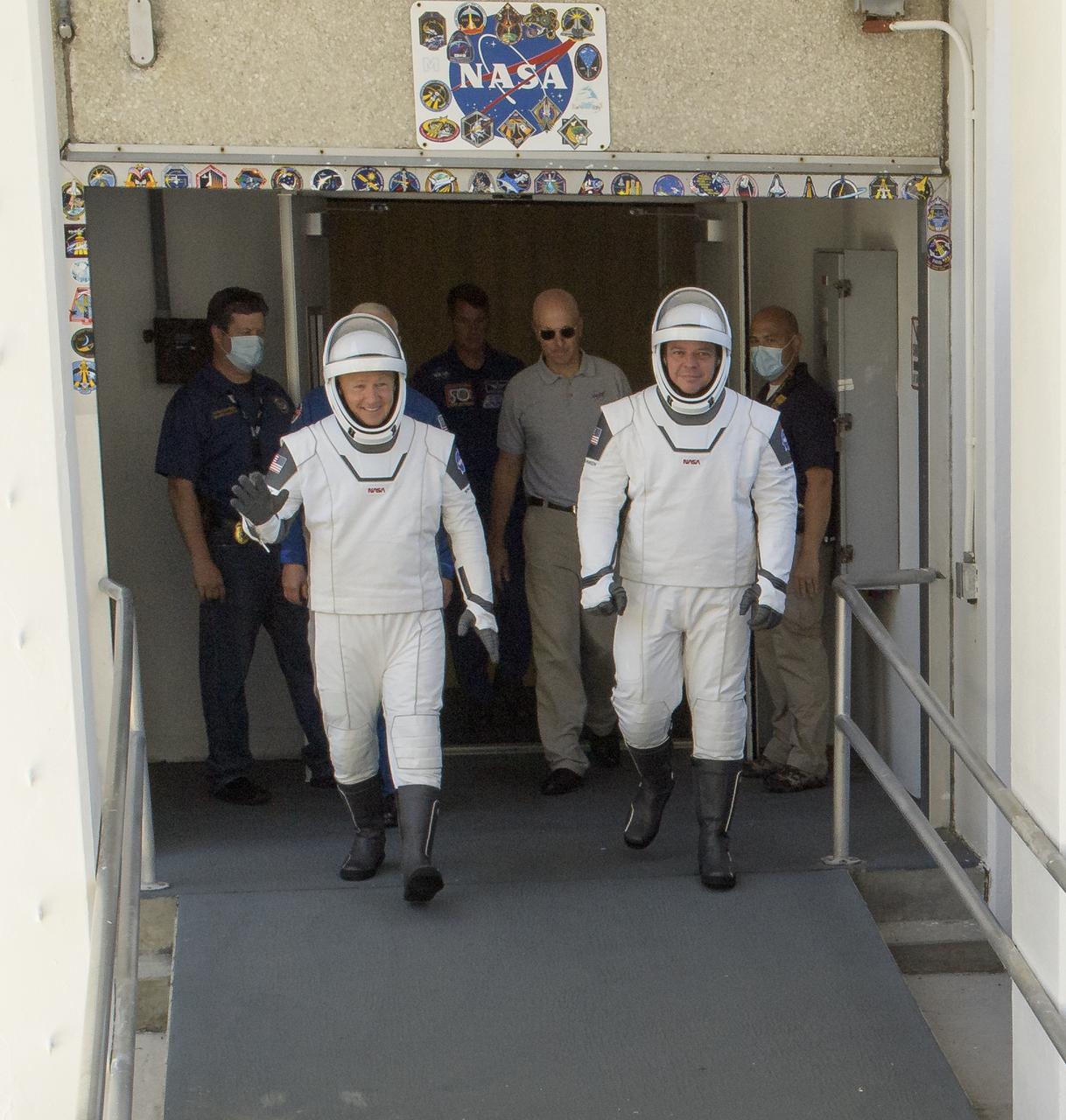
NASA astronauts Douglas Hurley, left, and Robert Behnken, wearing SpaceX spacesuits, are seen as they depart the Neil A. Armstrong Operations and Checkout Building for Launch Complex 39A during a dress rehearsal prior to the Demo-2 mission launch, Saturday, May 23, 2020, at NASA’s Kennedy Space Center in Florida. NASA’s SpaceX Demo-2 mission is the first launch with astronauts of the SpaceX Crew Dragon spacecraft and Falcon 9 rocket to the International Space Station as part of the agency’s Commercial Crew Program. The test flight serves as an end-to-end demonstration of SpaceX’s crew transportation system. Behnken and Hurley are scheduled to launch at 4:33 p.m. EDT on Wednesday, May 27, from Launch Complex 39A at the Kennedy Space Center. A new era of human spaceflight is set to begin as American astronauts once again launch on an American rocket from American soil to low-Earth orbit for the first time since the conclusion of the Space Shuttle Program in 2011. Photo Credit: (NASA/Bill Ingalls)
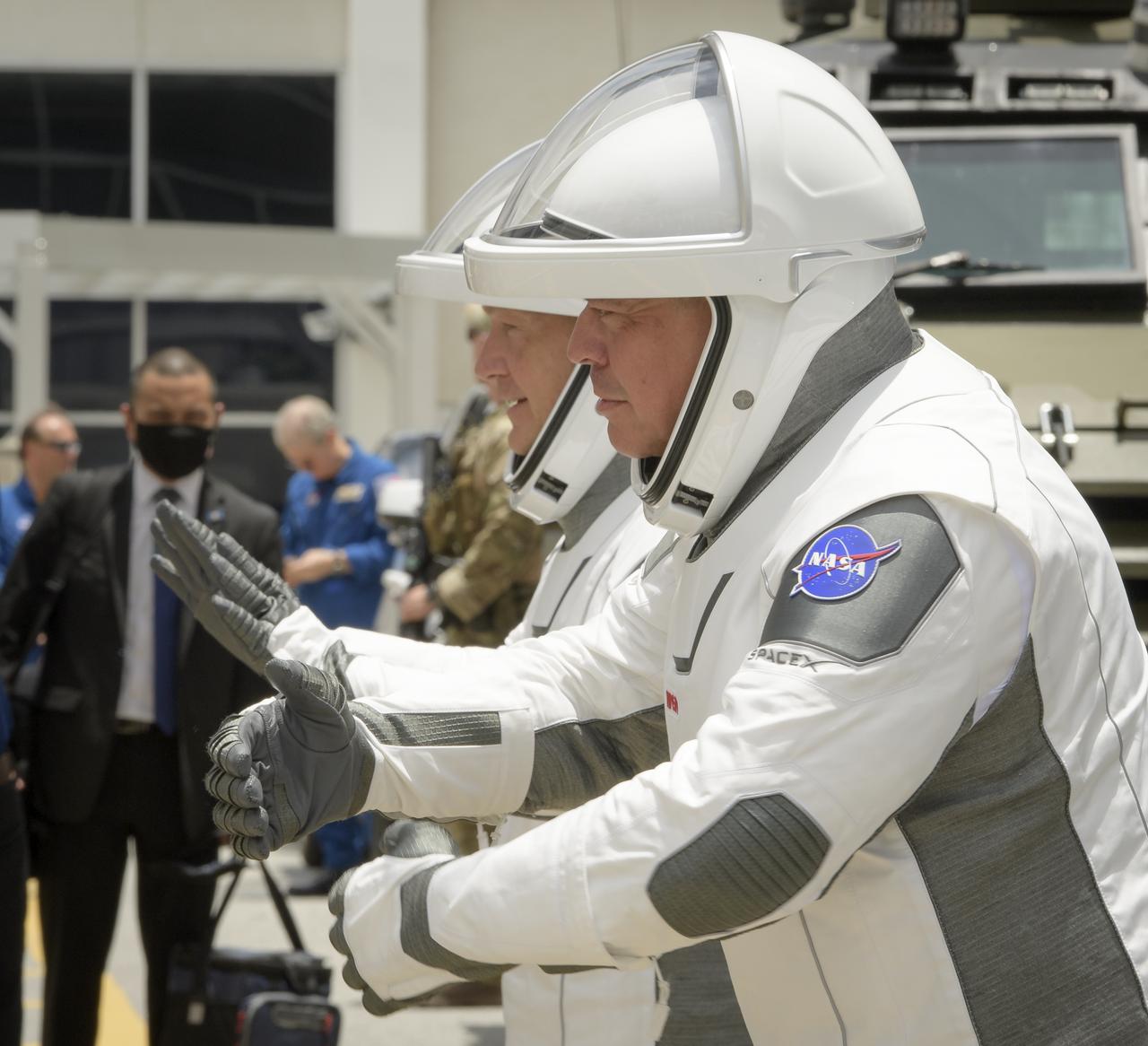
NASA astronauts Douglas Hurley, left, and Robert Behnken, wearing SpaceX spacesuits, give their families virtual hugs as they prepare to depart the Neil A. Armstrong Operations and Checkout Building for Launch Complex 39A to board the SpaceX Crew Dragon spacecraft for the Demo-2 mission launch, Wednesday, May 27, 2020, at NASA’s Kennedy Space Center in Florida. NASA’s SpaceX Demo-2 mission is the first launch with astronauts of the SpaceX Crew Dragon spacecraft and Falcon 9 rocket to the International Space Station as part of the agency’s Commercial Crew Program. The test flight serves as an end-to-end demonstration of SpaceX’s crew transportation system. Behnken and Hurley are scheduled to launch at 4:33 p.m. EDT on Wednesday, May 27, from Launch Complex 39A at the Kennedy Space Center. A new era of human spaceflight is set to begin as American astronauts once again launch on an American rocket from American soil to low-Earth orbit for the first time since the conclusion of the Space Shuttle Program in 2011. Photo Credit: (NASA/Bill Ingalls)
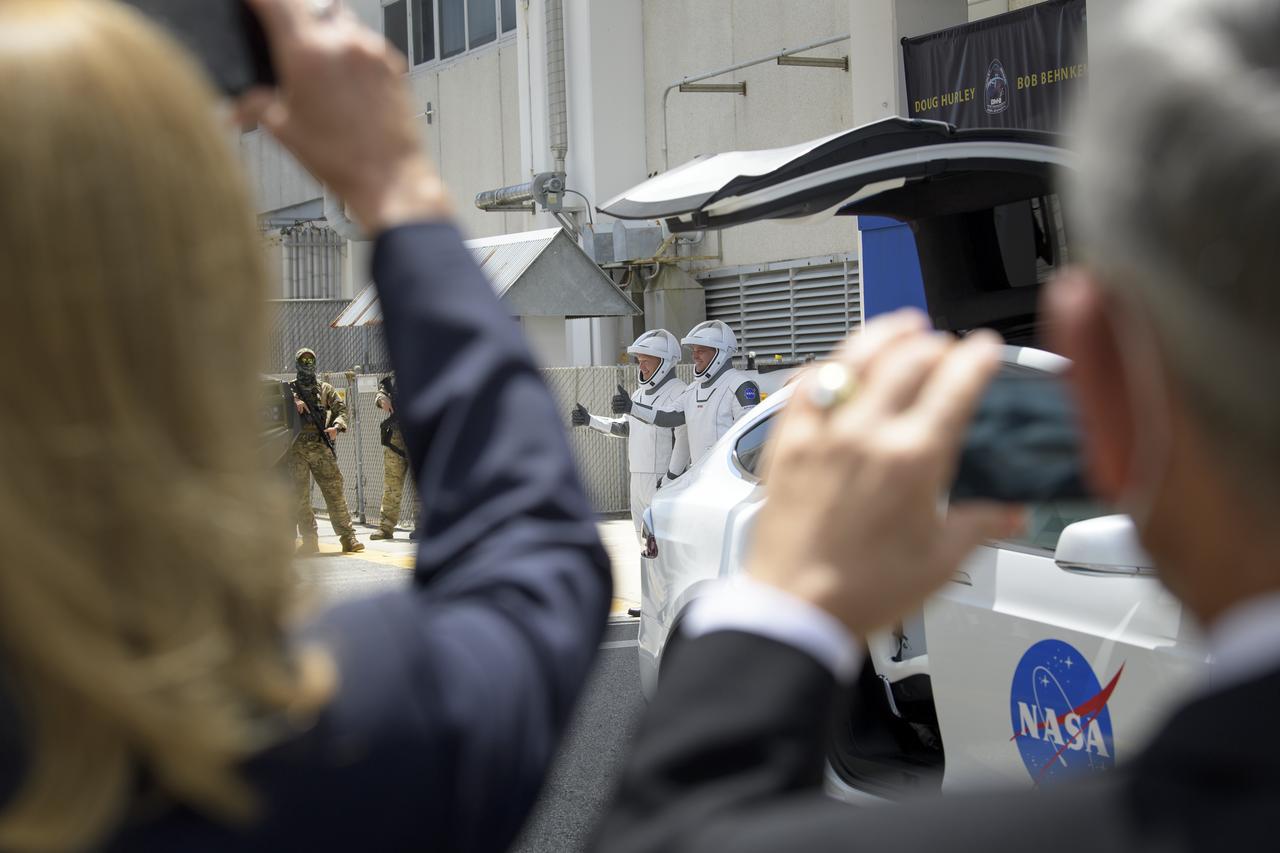
NASA astronauts Douglas Hurley, left, and Robert Behnken, wearing SpaceX spacesuits, are seen as they depart the Neil A. Armstrong Operations and Checkout Building for Launch Complex 39A to board the SpaceX Crew Dragon spacecraft for the Demo-2 mission launch, Saturday, May 30, 2020, at NASA’s Kennedy Space Center in Florida. NASA’s SpaceX Demo-2 mission is the first launch with astronauts of the SpaceX Crew Dragon spacecraft and Falcon 9 rocket to the International Space Station as part of the agency’s Commercial Crew Program. The test flight serves as an end-to-end demonstration of SpaceX’s crew transportation system. Behnken and Hurley are scheduled to launch at 3:22 p.m. EDT on Saturday, May 30, from Launch Complex 39A at the Kennedy Space Center. A new era of human spaceflight is set to begin as American astronauts once again launch on an American rocket from American soil to low-Earth orbit for the first time since the conclusion of the Space Shuttle Program in 2011. Photo Credit: (NASA/Bill Ingalls)
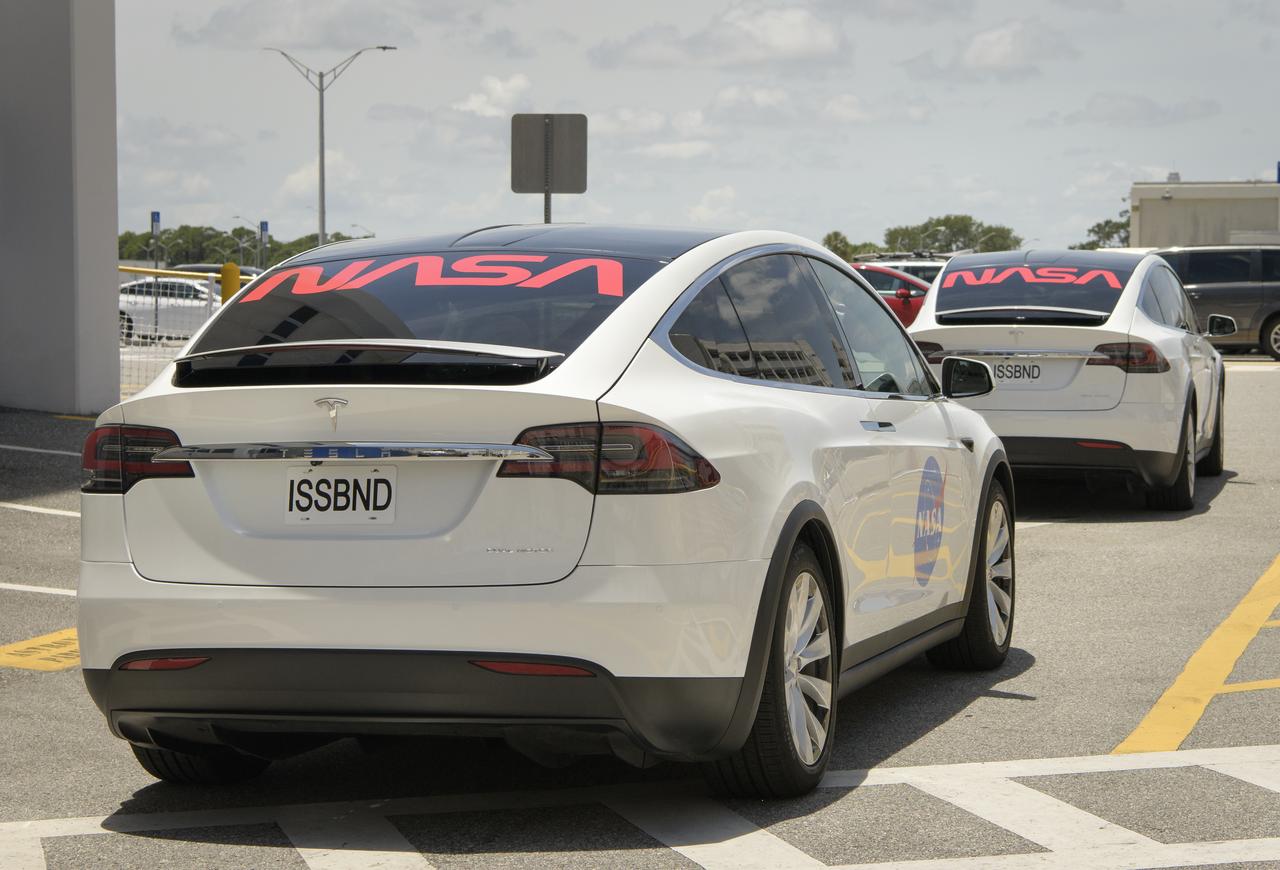
NASA astronauts Douglas Hurley and Robert Behnken depart the Neil A. Armstrong Operations and Checkout Building for Launch Complex 39A during a dress rehearsal prior to the Demo-2 mission launch, Saturday, May 23, 2020, at NASA’s Kennedy Space Center in Florida. NASA’s SpaceX Demo-2 mission is the first launch with astronauts of the SpaceX Crew Dragon spacecraft and Falcon 9 rocket to the International Space Station as part of the agency’s Commercial Crew Program. The test flight serves as an end-to-end demonstration of SpaceX’s crew transportation system. Behnken and Hurley are scheduled to launch at 4:33 p.m. EDT on Wednesday, May 27, from Launch Complex 39A at the Kennedy Space Center. A new era of human spaceflight is set to begin as American astronauts once again launch on an American rocket from American soil to low-Earth orbit for the first time since the conclusion of the Space Shuttle Program in 2011. Photo Credit: (NASA/Bill Ingalls)
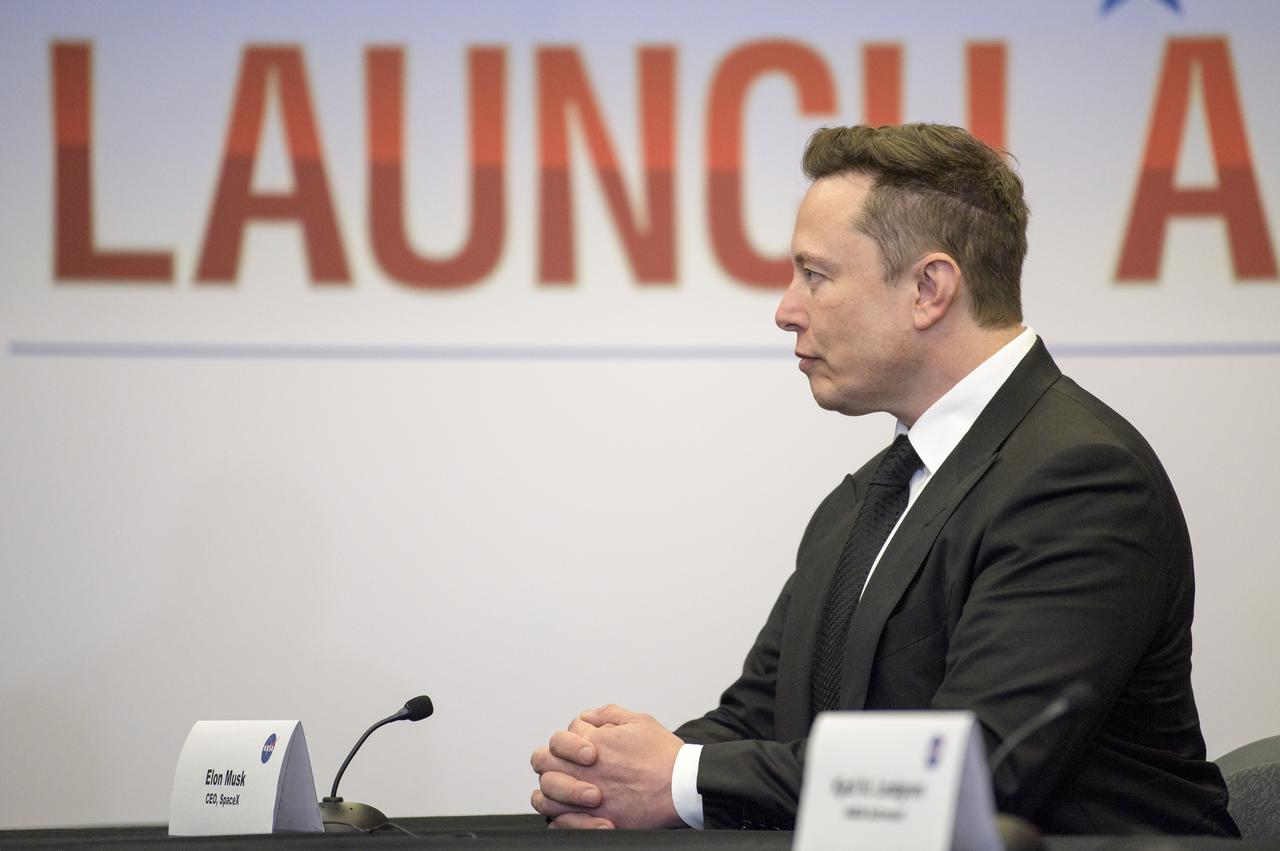
Elon Musk, SpaceX Chief Engineer participates in a SpaceX Demonstration Mission 2 Launch Briefing at the Neil A. Armstrong Operations and Checkout Building following the departure of NASA astronauts Robert Behnken and Douglas Hurley for Launch Complex 39A to board a SpaceX Crew Dragon spacecraft for launch, Wednesday, May 27, 2020, at NASA’s Kennedy Space Center in Florida. NASA’s SpaceX Demo-2 mission is the first launch with astronauts of the SpaceX Crew Dragon spacecraft and Falcon 9 rocket to the International Space Station as part of the agency’s Commercial Crew Program. The test flight serves as an end-to-end demonstration of SpaceX’s crew transportation system. Today’s launch of Behnken and Hurley was scrubbed due to weather and is now scheduled for 3:22 p.m. EDT on Saturday, May 30, from Launch Complex 39A at the Kennedy Space Center. A new era of human spaceflight is set to begin as American astronauts once again launch on an American rocket from American soil to low-Earth orbit for the first time since the conclusion of the Space Shuttle Program in 2011. Photo Credit: (NASA/Bill Ingalls)
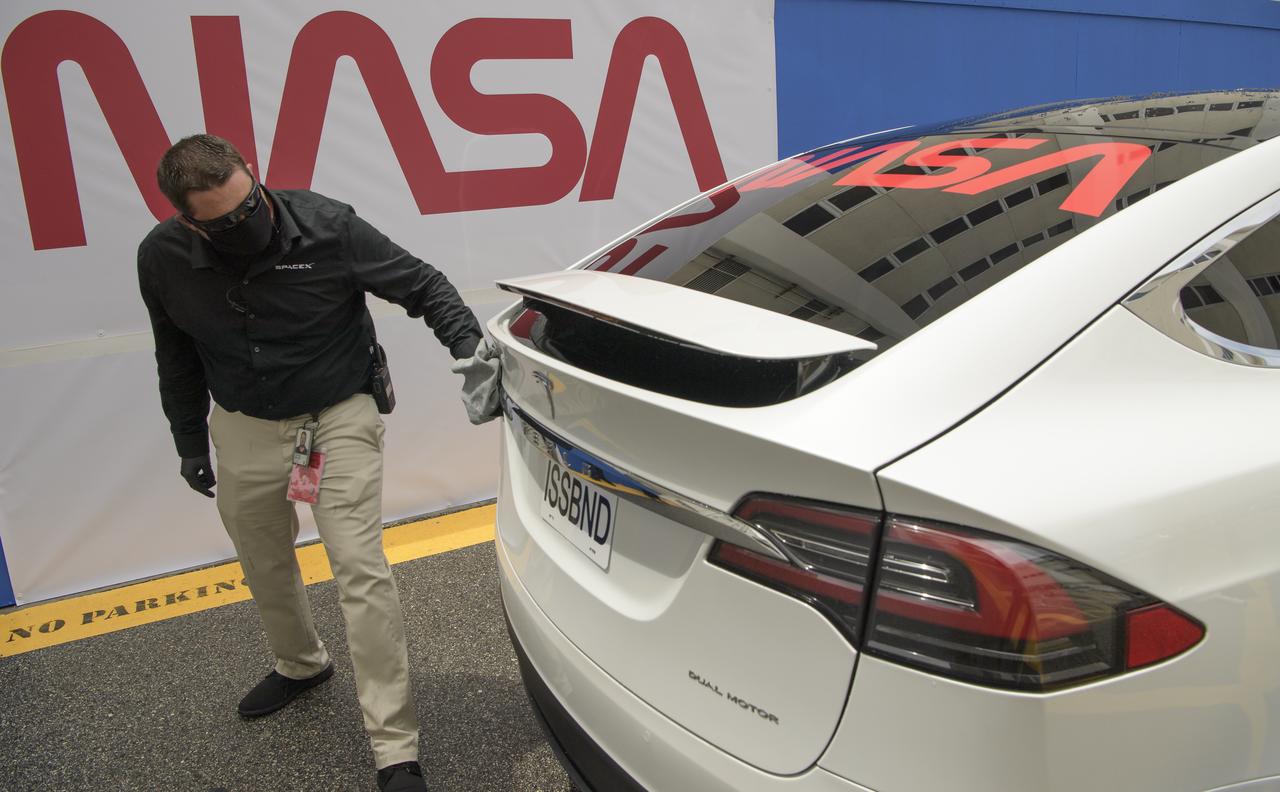
The driver of the vehicle prepared to take NASA astronauts Douglas Hurley and Robert Behnken from the Neil A. Armstrong Operations and Checkout Building for Launch Complex 39A to board the SpaceX Crew Dragon spacecraft for the Demo-2 mission launch, takes a moment to wipe off water from a passing rain shower, Wednesday, May 27, 2020, at NASA’s Kennedy Space Center in Florida. NASA’s SpaceX Demo-2 mission is the first launch with astronauts of the SpaceX Crew Dragon spacecraft and Falcon 9 rocket to the International Space Station as part of the agency’s Commercial Crew Program. The test flight serves as an end-to-end demonstration of SpaceX’s crew transportation system. Today’s launch of Behnken and Hurley was scrubbed due to weather and is now scheduled for 3:22 p.m. EDT on Saturday, May 30, from Launch Complex 39A at the Kennedy Space Center. A new era of human spaceflight is set to begin as American astronauts once again launch on an American rocket from American soil to low-Earth orbit for the first time since the conclusion of the Space Shuttle Program in 2011. Photo Credit: (NASA/Bill Ingalls)
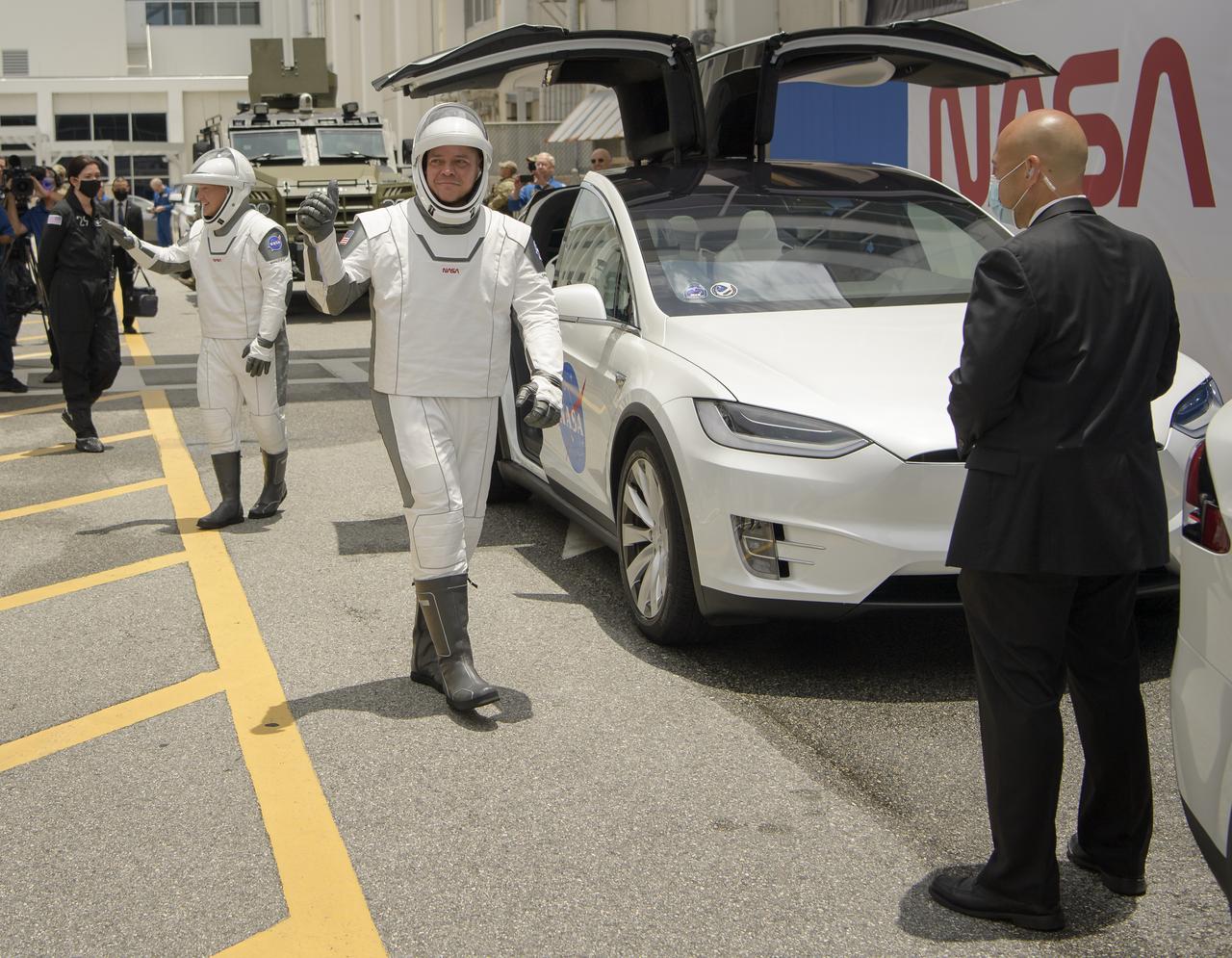
NASA astronauts Douglas Hurley, left, and Robert Behnken, wearing SpaceX spacesuits, are seen as they prepare to depart the Neil A. Armstrong Operations and Checkout Building for Launch Complex 39A to board the SpaceX Crew Dragon spacecraft for the Demo-2 mission launch, Wednesday, May 27, 2020, at NASA’s Kennedy Space Center in Florida. NASA’s SpaceX Demo-2 mission is the first launch with astronauts of the SpaceX Crew Dragon spacecraft and Falcon 9 rocket to the International Space Station as part of the agency’s Commercial Crew Program. The test flight serves as an end-to-end demonstration of SpaceX’s crew transportation system. Behnken and Hurley are scheduled to launch at 4:33 p.m. EDT on Wednesday, May 27, from Launch Complex 39A at the Kennedy Space Center. A new era of human spaceflight is set to begin as American astronauts once again launch on an American rocket from American soil to low-Earth orbit for the first time since the conclusion of the Space Shuttle Program in 2011. Photo Credit: (NASA/Bill Ingalls)