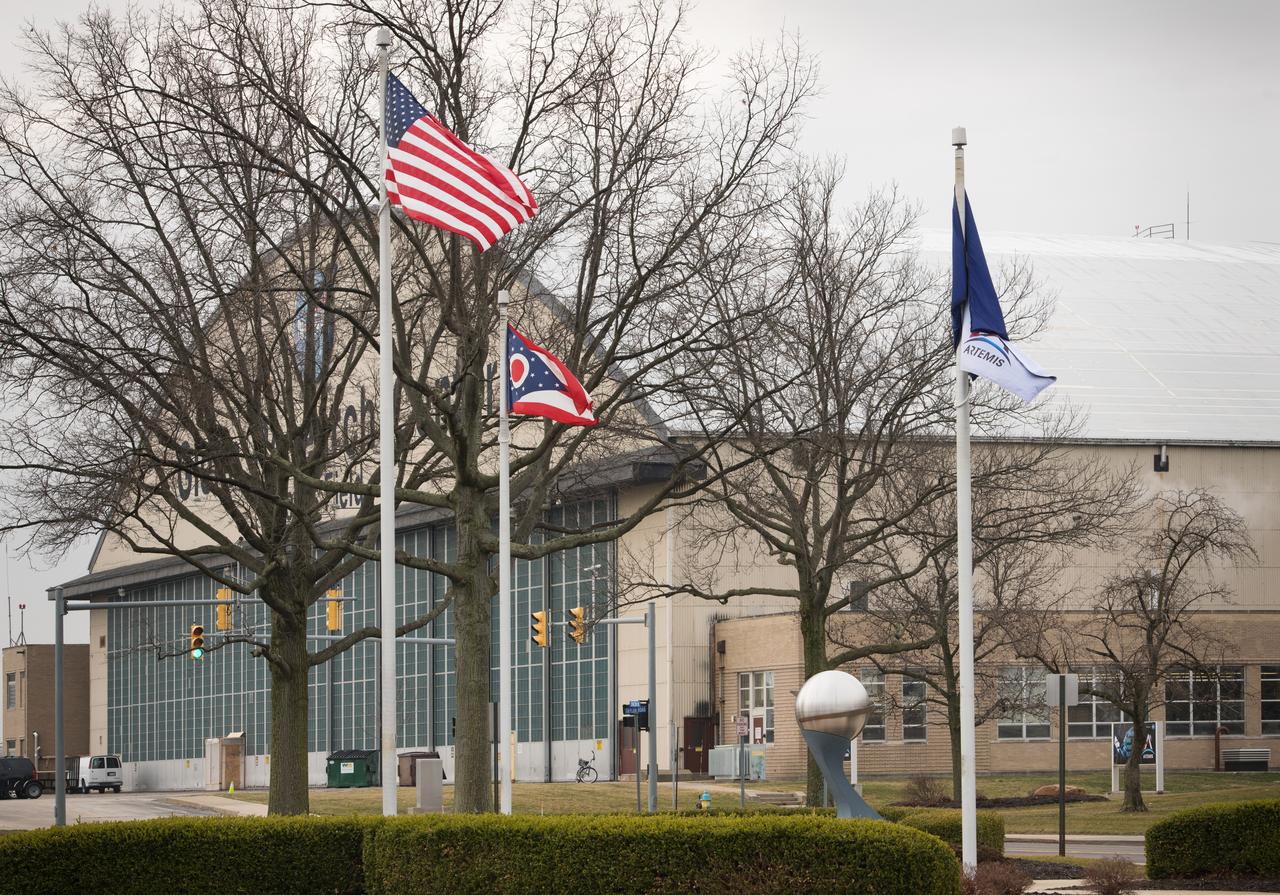
Artemis Flag Flys in Front of the Glenn Research Center Administration Building
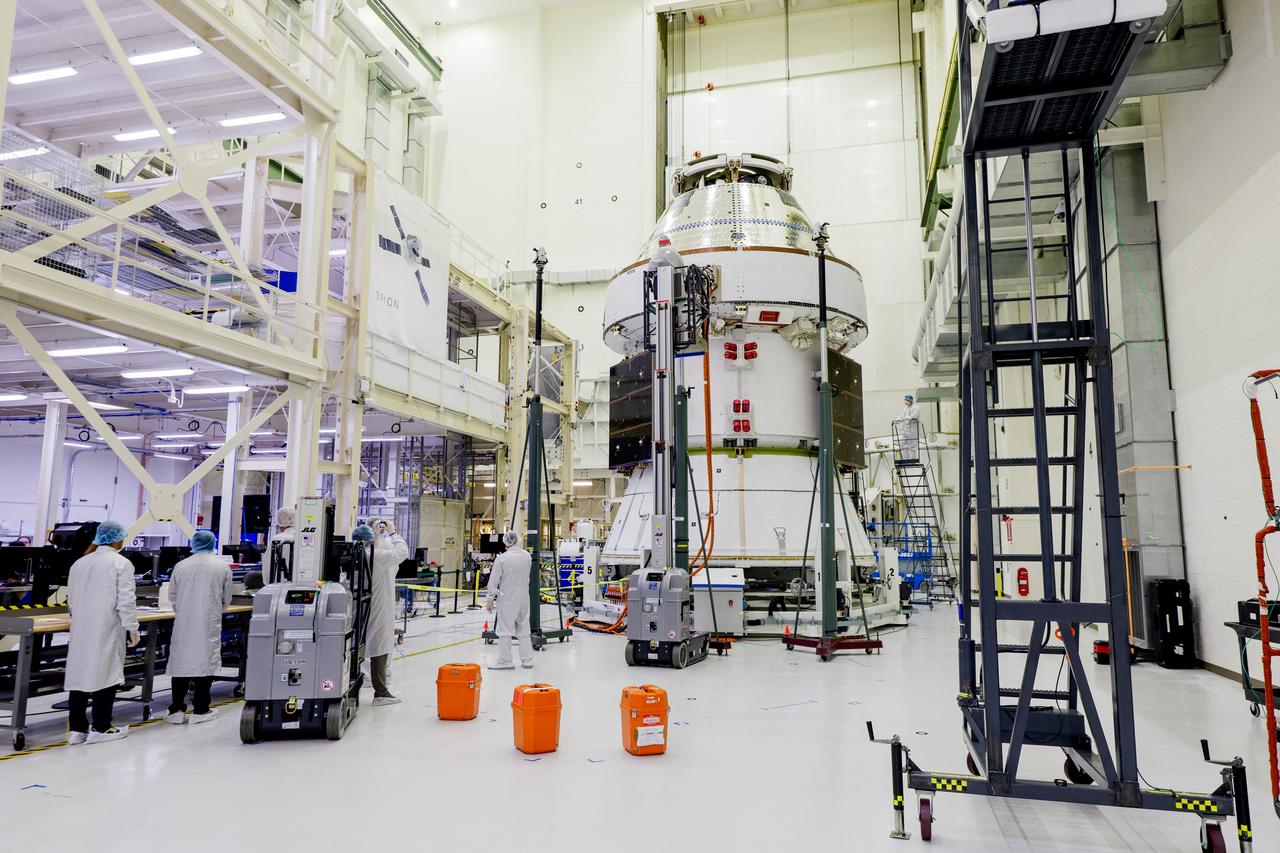
The four solar array wings for the Artemis II Orion spacecraft are installed inside the Operations and Checkout Building at NASA's Kennedy Space Center in Florida on March 7, 2025. Artemis II is Orion’s first crewed flight test around the Moon under the agency’s Artemis campaign.
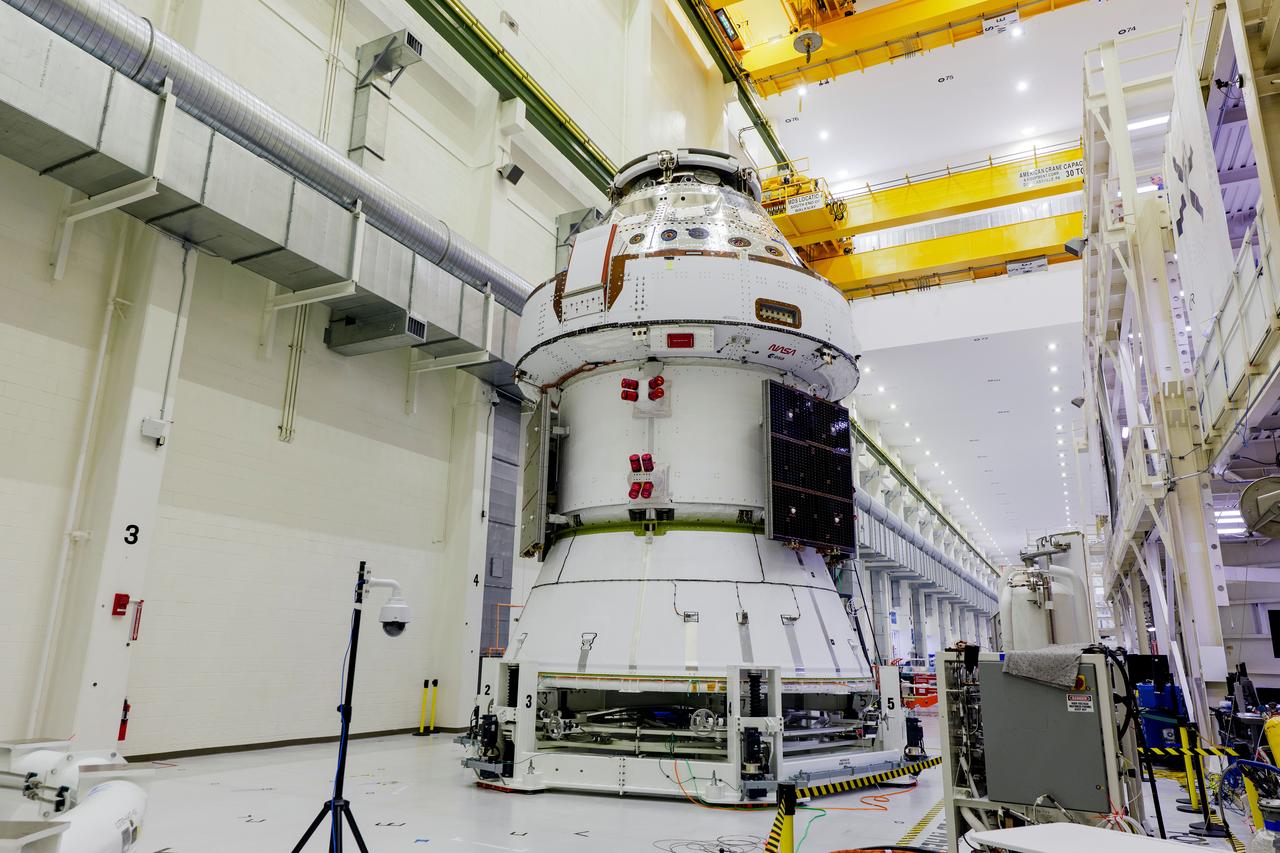
The four solar array wings for the Artemis II Orion spacecraft are installed inside the Operations and Checkout Building at NASA's Kennedy Space Center in Florida on March 7, 2025. Artemis II is Orion’s first crewed flight test around the Moon under the agency’s Artemis campaign.
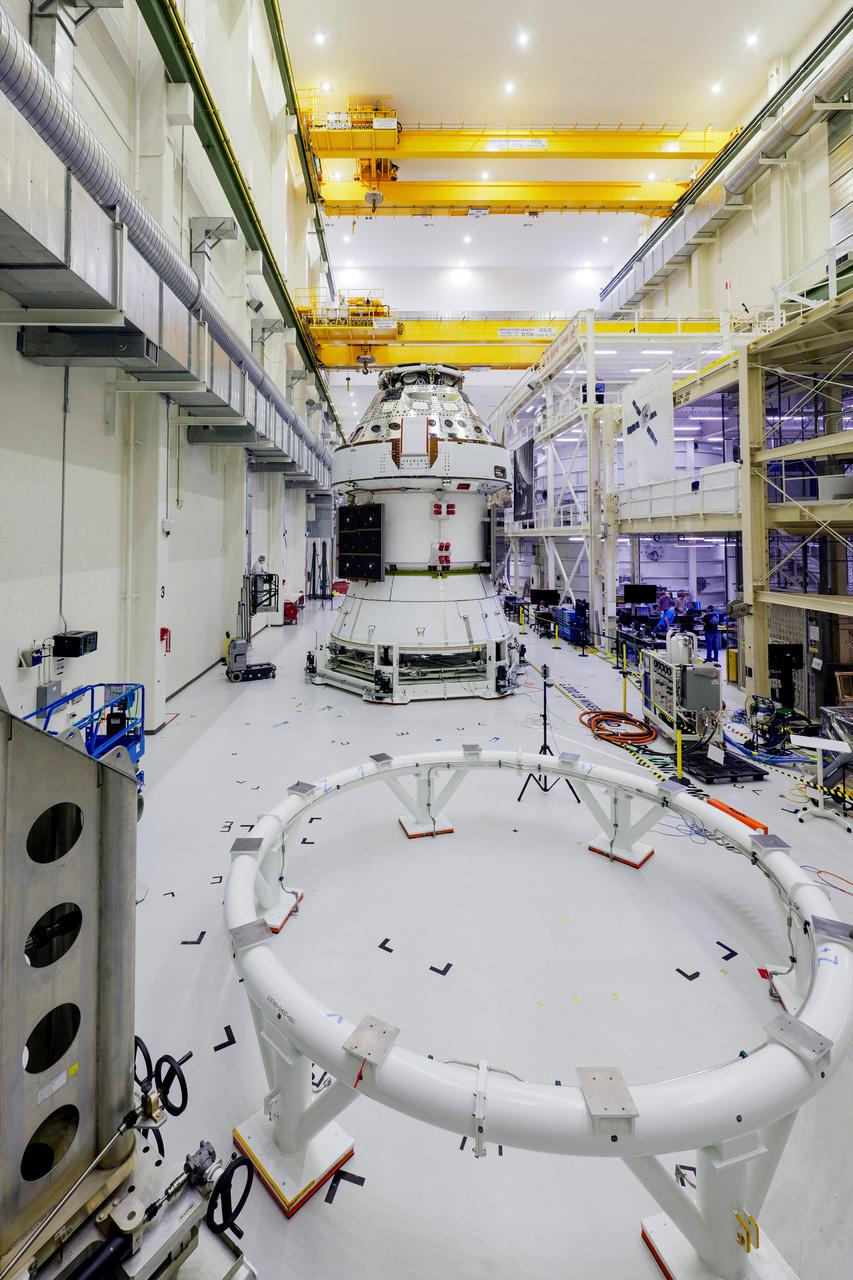
The four solar array wings for the Artemis II Orion spacecraft are installed inside the Operations and Checkout Building at NASA's Kennedy Space Center in Florida on March 7, 2025. Artemis II is Orion’s first crewed flight test around the Moon under the agency’s Artemis campaign.
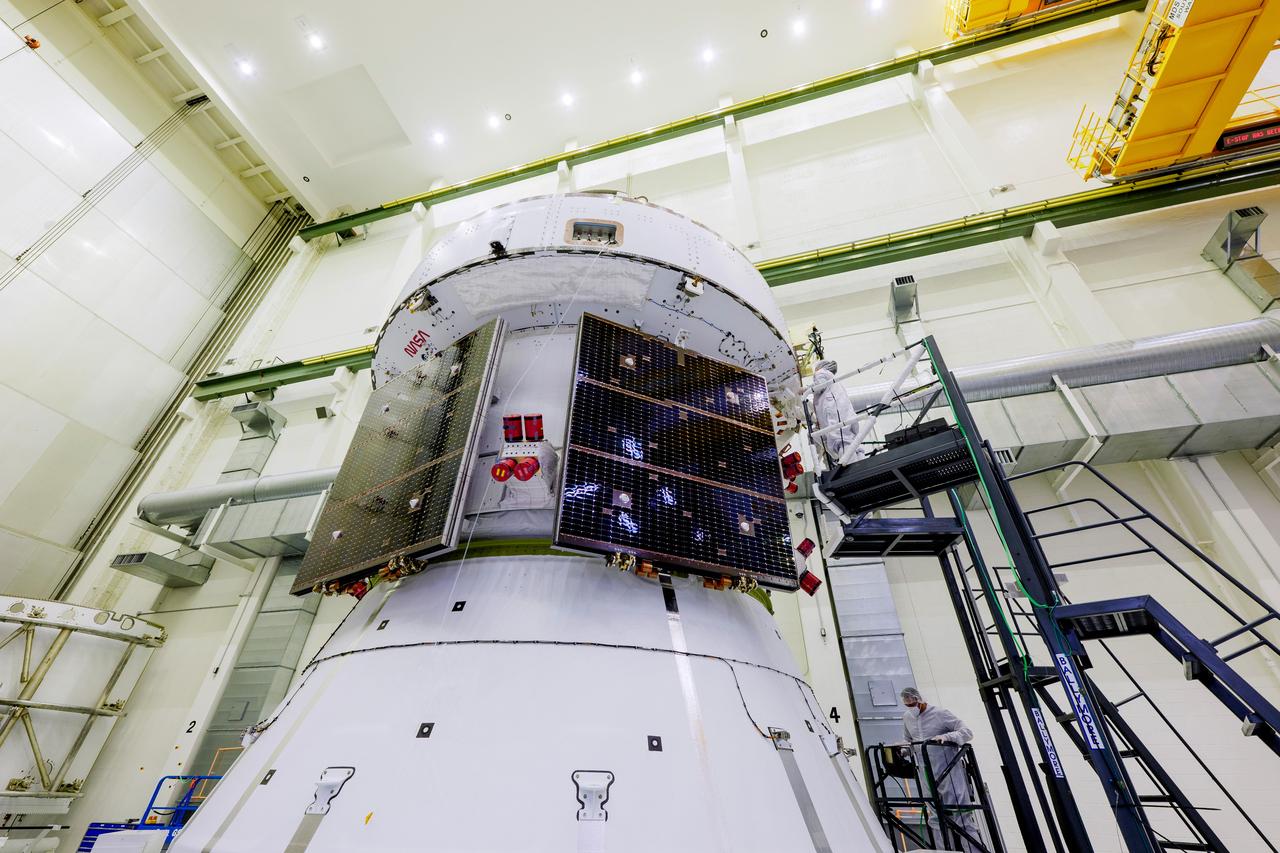
The four solar array wings for the Artemis II Orion spacecraft are installed inside the Operations and Checkout Building at NASA's Kennedy Space Center in Florida on March 7, 2025. Artemis II is Orion’s first crewed flight test around the Moon under the agency’s Artemis campaign.
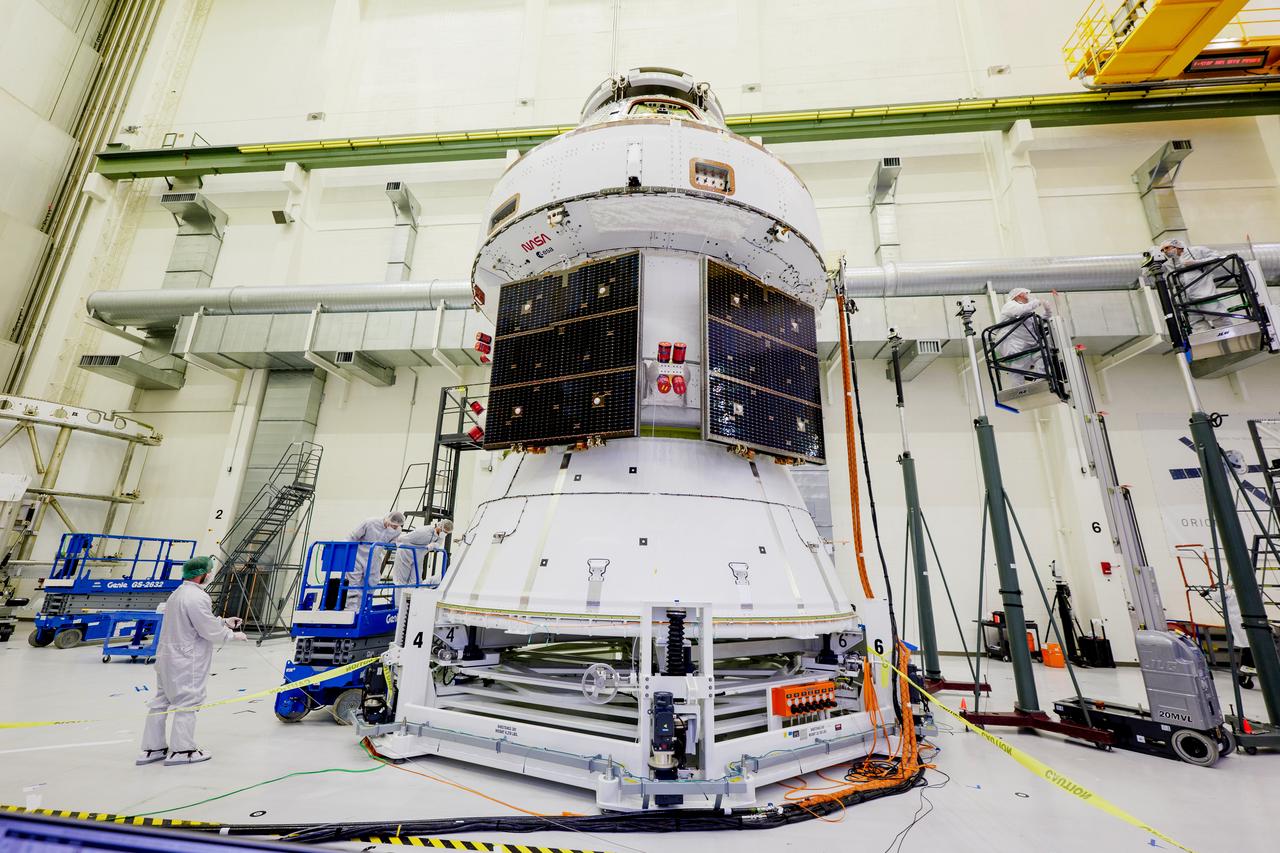
The four solar array wings for the Artemis II Orion spacecraft are installed inside the Operations and Checkout Building at NASA's Kennedy Space Center in Florida on March 7, 2025. Artemis II is Orion’s first crewed flight test around the Moon under the agency’s Artemis campaign.

The four solar array wings for the Artemis II Orion spacecraft are installed inside the Operations and Checkout Building at NASA's Kennedy Space Center in Florida on March 7, 2025. Artemis II is Orion’s first crewed flight test around the Moon under the agency’s Artemis campaign.

The four solar array wings for the Artemis II Orion spacecraft are installed inside the Operations and Checkout Building at NASA's Kennedy Space Center in Florida on March 7, 2025. Artemis II is Orion’s first crewed flight test around the Moon under the agency’s Artemis campaign.
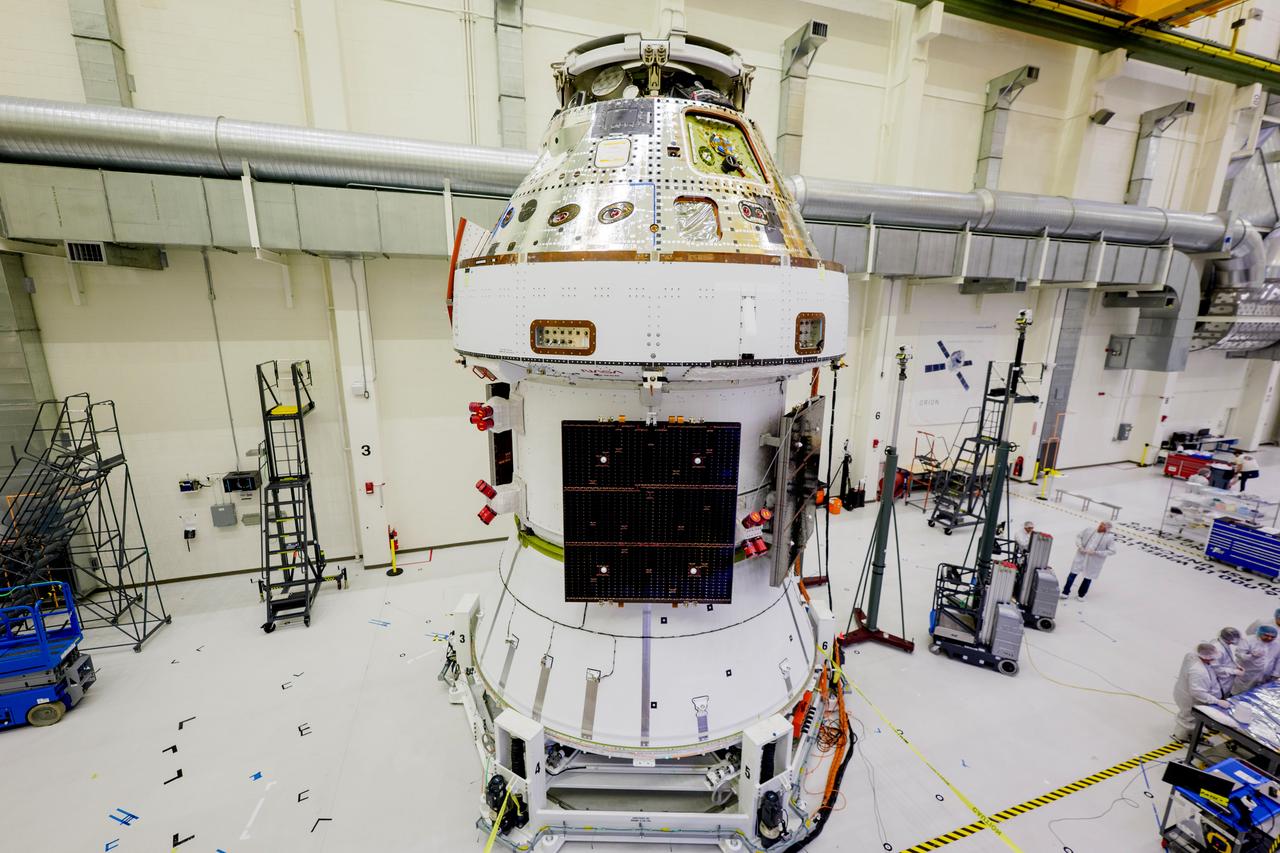
The four solar array wings for the Artemis II Orion spacecraft are installed inside the Operations and Checkout Building at NASA's Kennedy Space Center in Florida on March 7, 2025. Artemis II is Orion’s first crewed flight test around the Moon under the agency’s Artemis campaign.
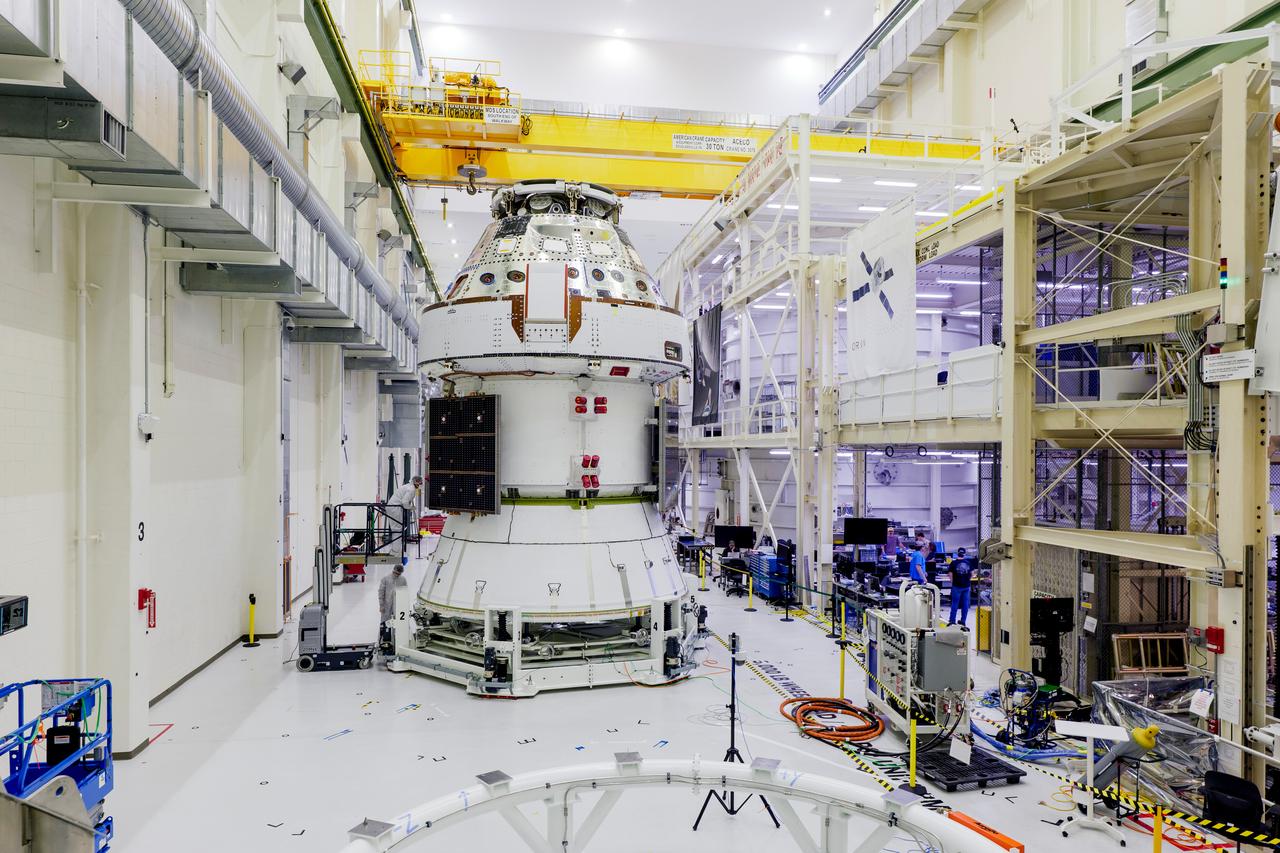
The four solar array wings for the Artemis II Orion spacecraft are installed inside the Operations and Checkout Building at NASA's Kennedy Space Center in Florida on March 7, 2025. Artemis II is Orion’s first crewed flight test around the Moon under the agency’s Artemis campaign.
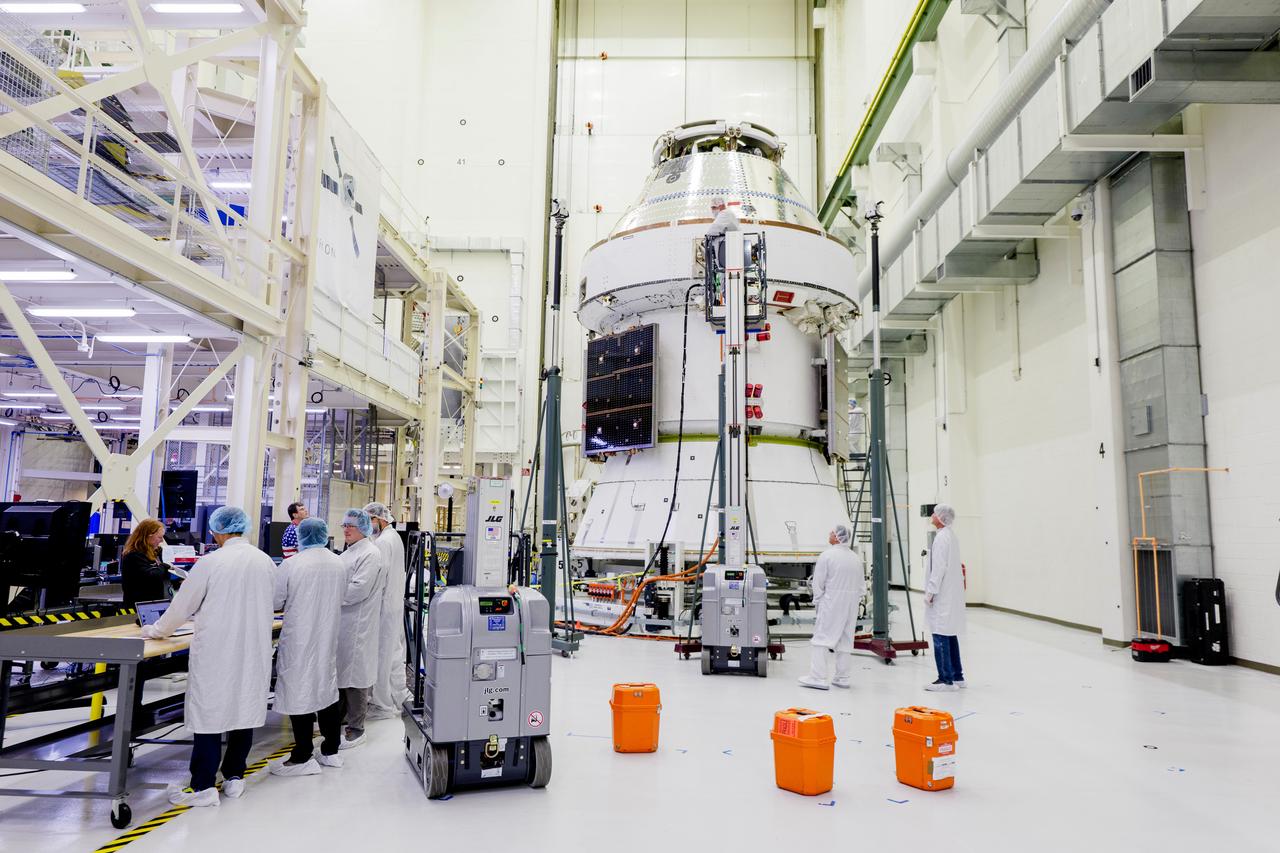
The four solar array wings for the Artemis II Orion spacecraft are installed inside the Operations and Checkout Building at NASA's Kennedy Space Center in Florida on March 7, 2025. Artemis II is Orion’s first crewed flight test around the Moon under the agency’s Artemis campaign.
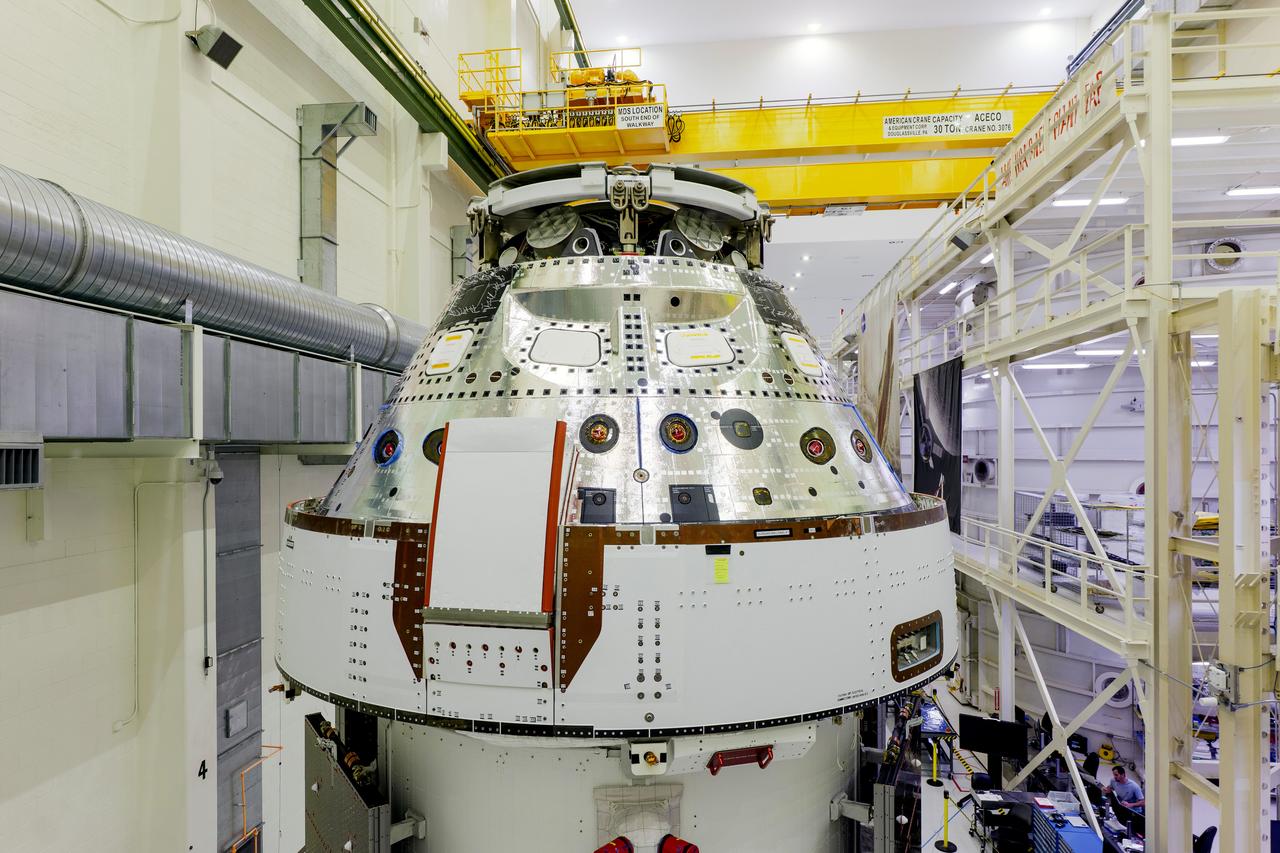
The four solar array wings for the Artemis II Orion spacecraft are installed inside the Operations and Checkout Building at NASA's Kennedy Space Center in Florida on March 7, 2025. Artemis II is Orion’s first crewed flight test around the Moon under the agency’s Artemis campaign.
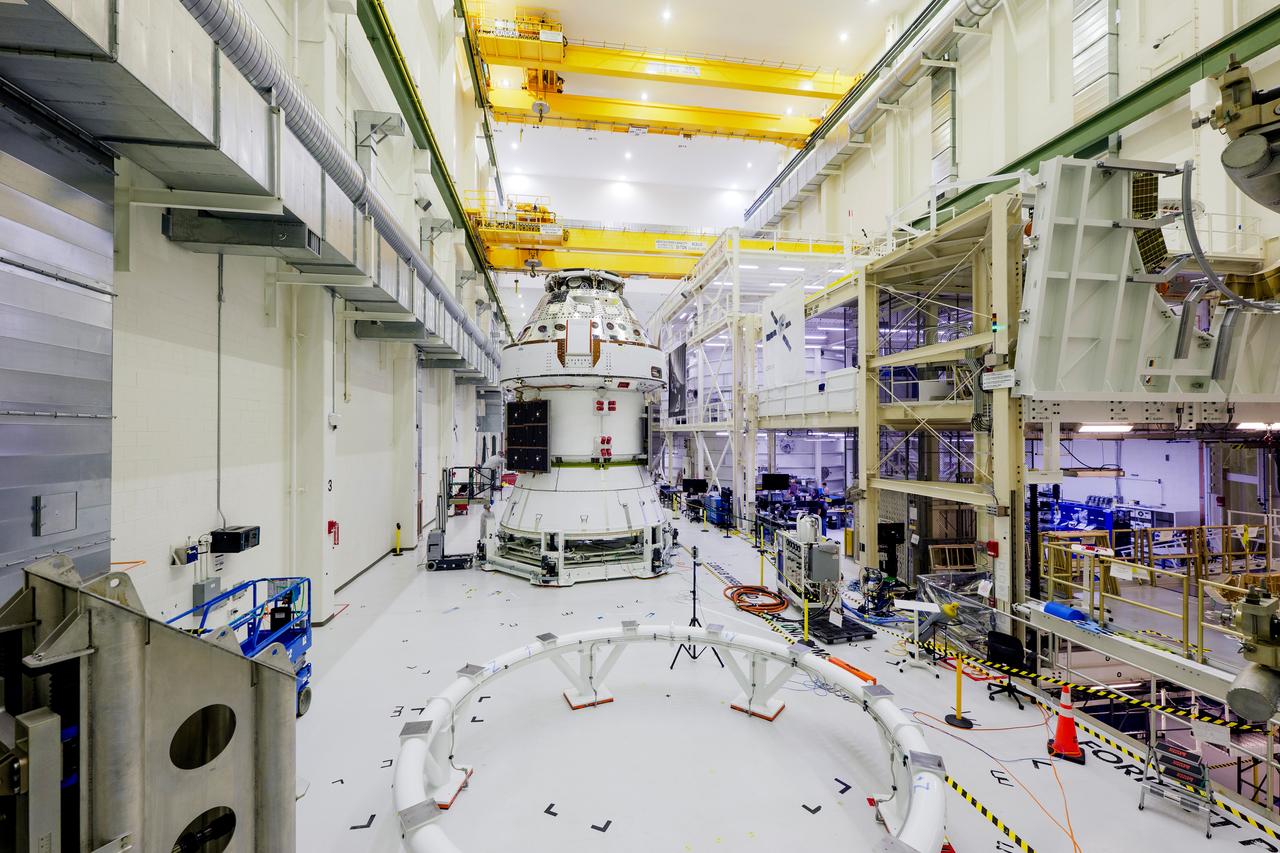
The four solar array wings for the Artemis II Orion spacecraft are installed inside the Operations and Checkout Building at NASA's Kennedy Space Center in Florida on March 7, 2025. Artemis II is Orion’s first crewed flight test around the Moon under the agency’s Artemis campaign.

The Artemis III Orion service module in work inside the Operations and Checkout Building at NASA's Kennedy Space Center in Florida on March 5, 2025.

Technicians work on the Artemis III Orion crew module inside the Operations and Checkout Building at NASA's Kennedy Space Center in Florida on March 5, 2025.
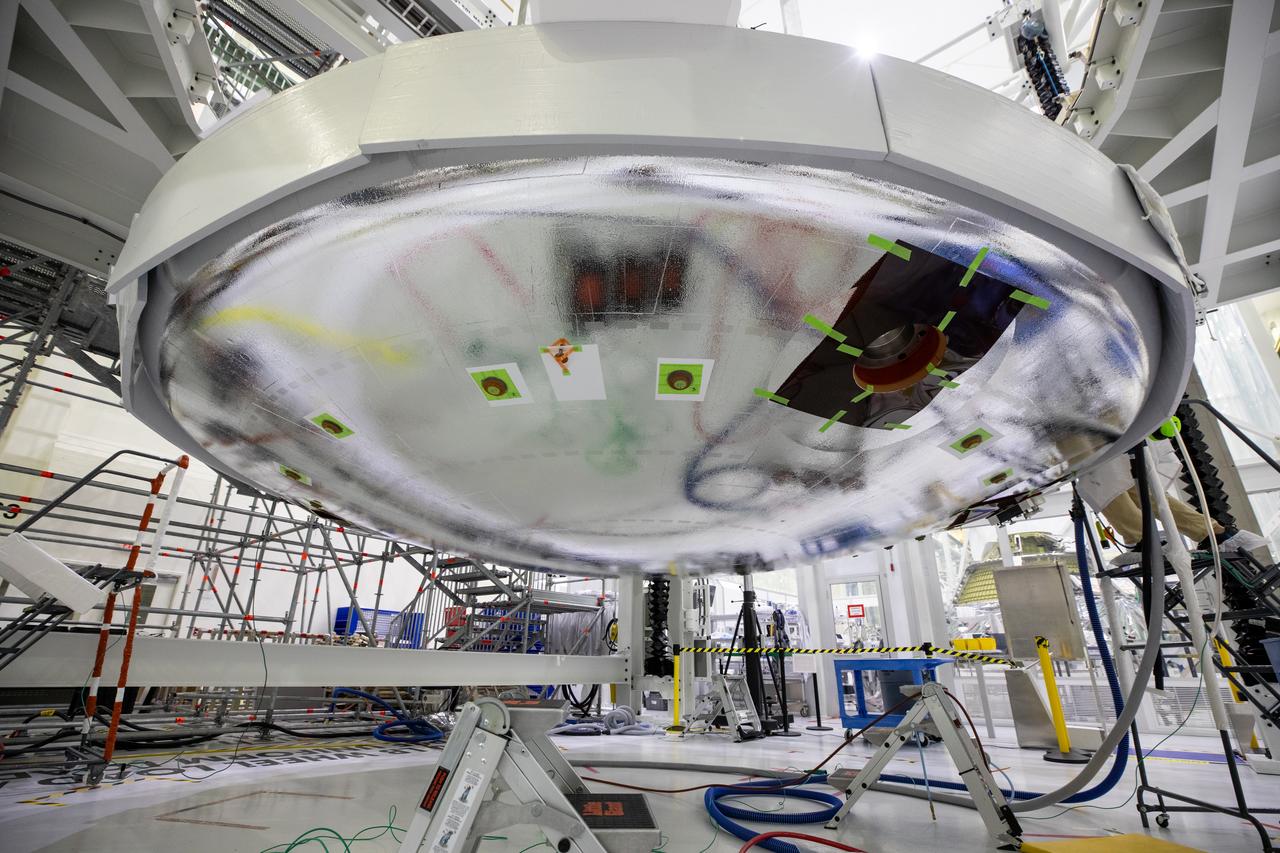
Teams install the heat shield on the Artemis II Orion spacecraft inside the high bay of the Neil Armstrong Operations and Checkout Building at NASA’s Kennedy Space Center in Florida on June 22, 2023. The 16.5-foot-wide shield will ensure the safe return of the astronauts on board as the spacecraft travels at speeds of about 25,000 miles per hour and experiences outside temperatures of nearly 5,000 degrees Fahrenheit. Artemis II will be the first mission with astronauts under Artemis that will test and check out all of Orion’s systems needed for future crewed missions.
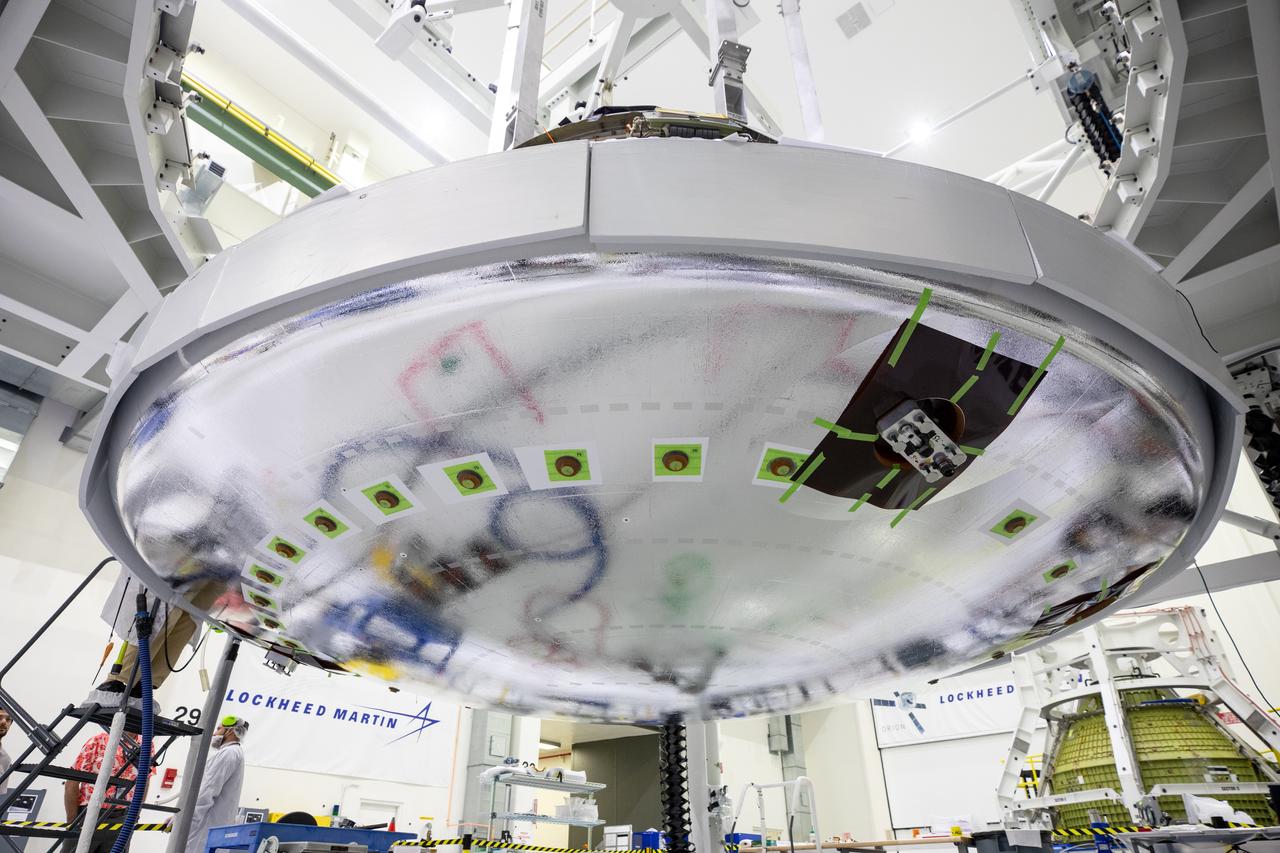
Teams install the heat shield on the Artemis II Orion spacecraft inside the high bay of the Neil Armstrong Operations and Checkout Building at NASA’s Kennedy Space Center in Florida on June 22, 2023. The 16.5-foot-wide shield will ensure the safe return of the astronauts on board as the spacecraft travels at speeds of about 25,000 miles per hour and experiences outside temperatures of nearly 5,000 degrees Fahrenheit. Artemis II will be the first mission with astronauts under Artemis that will test and check out all of Orion’s systems needed for future crewed missions.

The Artemis IV Orion crew module in work inside the Operations and Checkout Building at NASA's Kennedy Space Center in Florida on March 5, 2025.
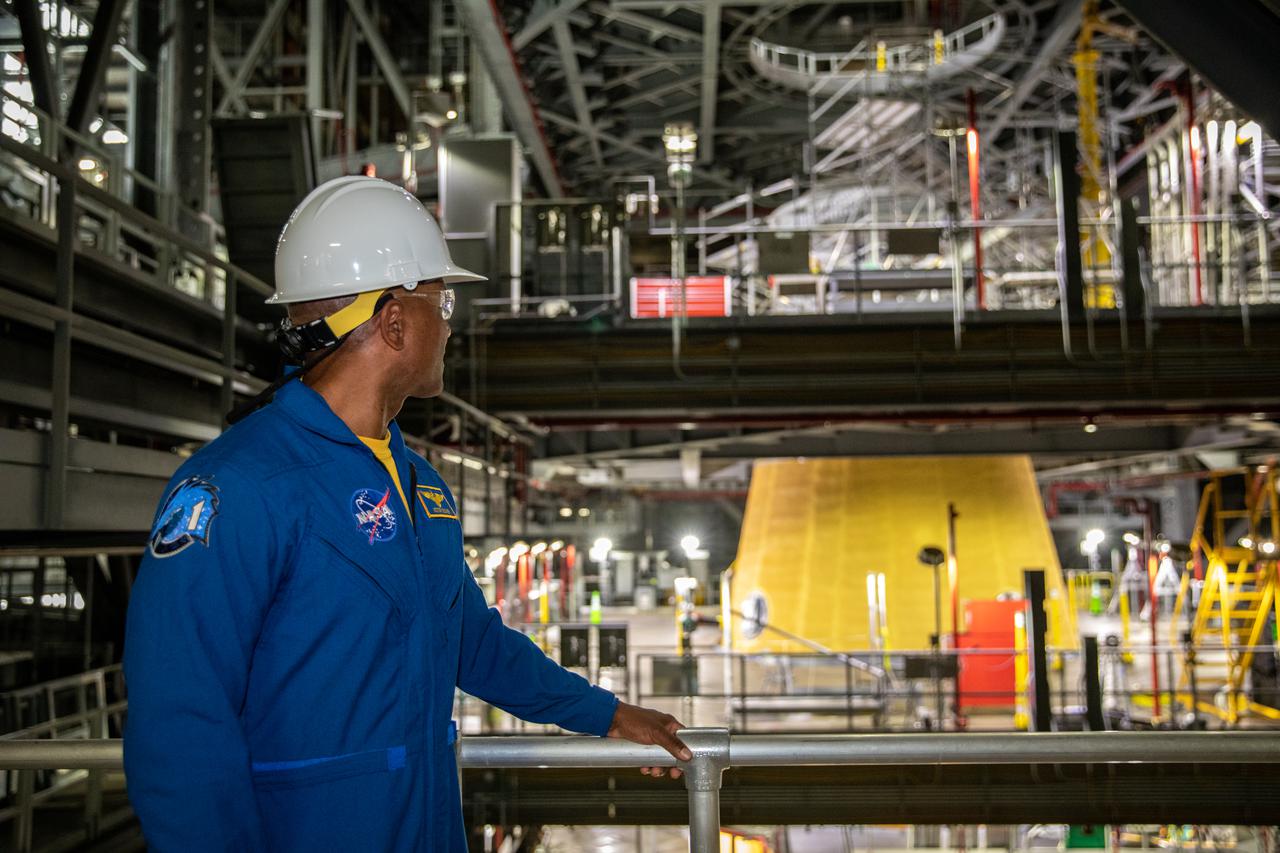
NASA astronaut Victor Glover stands inside Kennedy Space Center’s Vehicle Assembly Building on July 15, 2021, near the agency’s Space Launch System (SLS) rocket that will power the Orion spacecraft on the Artemis I mission later this year. Artemis I will be a test of Orion and SLS as an integrated system ahead of crewed flights to the Moon. Under Artemis, NASA aims to land the first woman and first person of color on the Moon and establish long-term lunar exploration.
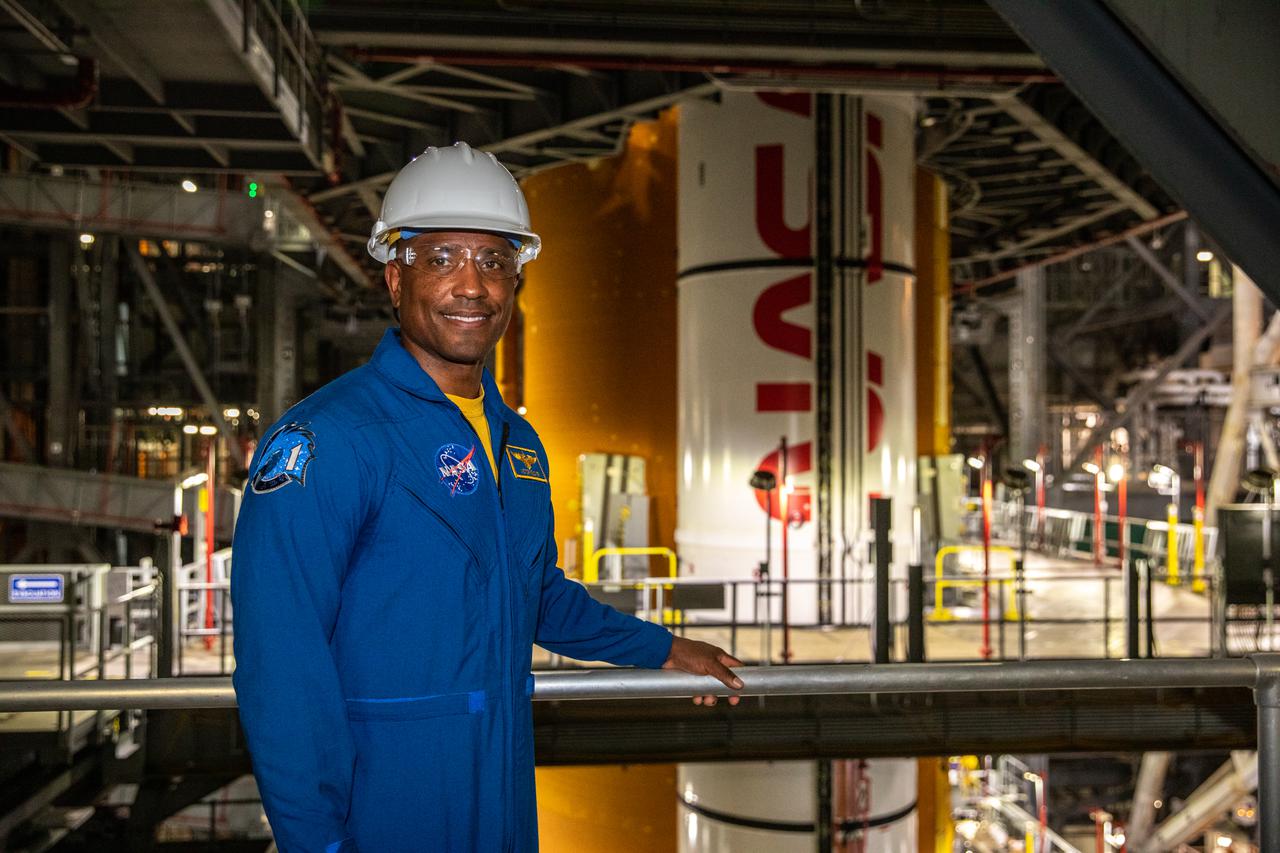
NASA astronaut Victor Glover stands inside Kennedy Space Center’s Vehicle Assembly Building on July 15, 2021, near the agency’s Space Launch System (SLS) rocket that will power the Orion spacecraft on the Artemis I mission later this year. Artemis I will be a test of Orion and SLS as an integrated system ahead of crewed flights to the Moon. Under Artemis, NASA aims to land the first woman and first person of color on the Moon and establish long-term lunar exploration.
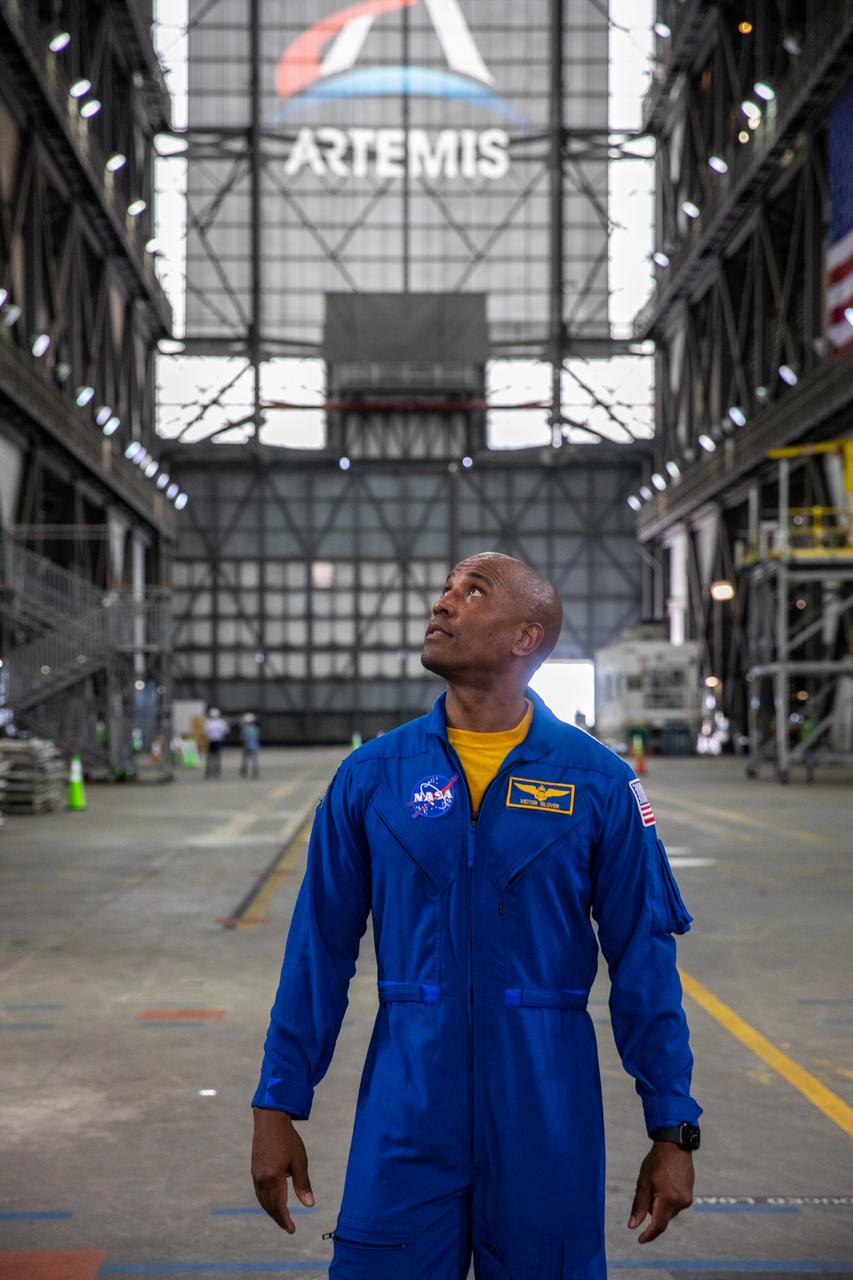
NASA astronaut Victor Glover looks up while inside Kennedy Space Center’s Vehicle Assembly Building on July 15, 2021, on his way to view the agency’s Space Launch System rocket that will power the Orion spacecraft on the Artemis I mission later this year. Artemis I will be a test of Orion and SLS as an integrated system ahead of crewed flights to the Moon. Under Artemis, NASA aims to land the first woman and first person of color on the Moon and establish long-term lunar exploration.

NASA astronaut Victor Glover stands inside Kennedy Space Center’s Vehicle Assembly Building on July 15, 2021, near the agency’s Space Launch System (SLS) rocket that will power the Orion spacecraft on the Artemis I mission later this year. Artemis I will be a test of Orion and SLS as an integrated system ahead of crewed flights to the Moon. Under Artemis, NASA aims to land the first woman and first person of color on the Moon and establish long-term lunar exploration.

U.S. Deputy Assistant Secretary of State for Space and Environment Connor Tomlinson gives remarks during an Artemis Accord signing ceremony with the Republic of Türkiye Monday, August 31, 2026, at the Mary W. Jackson NASA Headquarters building in Washington. Türkiye is the 71st country to sign the Artemis Accords, which establish a practical set of principles to guide space exploration cooperation among nations participating in NASA’s Artemis program. Photo Credit: (NASA/Bill Ingalls)

A cover, called a “spider” is attached to the SLS (Space Launch System) rocket core stage for NASA’s Artemis II mission inside the Vehicle Assembly Building at NASA’s Kennedy Space Center in Florida on Monday, Oct. 28, 2024. Teams with Exploration Ground Systems will use a crane to attach to the spider cover to raise the core stage vertically. The core stage has two giant propellant tanks that collectively hold more than 733,000 gallons of super cold liquid propellant to feed the stage’s four RS-25 engines to help send astronauts inside NASA’s Orion spacecraft to venture around the Moon for Artemis II.

An inflatable model of the Space Launch System (SLS) is seen during a reception with Artemis II crew members Wednesday, June 5, 2024, at the Dirksen Senate Office Building in Washington. Photo Credit: (NASA/Keegan Barber)
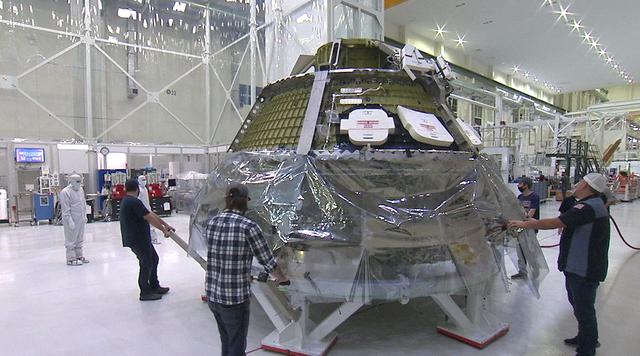
Inside the Neil Armstrong Operations and Checkout Building high bay at NASA’s Kennedy Space Center in Florida, the Artemis II crew module is relocated into a clean room on June 10, 2020. Workers will perform tube welds of the propulsion system and the Environmental Control & Life Support Systems. Artemis II is the first crewed mission in a series of missions to the Moon and on to Mars. Artemis II will confirm all of the Orion spacecraft’s systems operate as designed in the actual environment of deep space with astronauts aboard. As part of the Artemis Program, NASA will send the first woman and next man to the Moon by 2024.
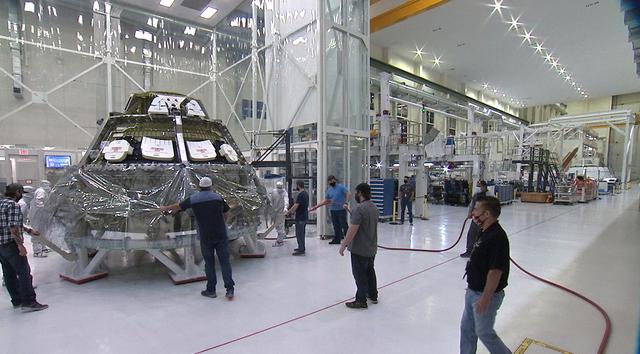
Inside the Neil Armstrong Operations and Checkout Building high bay at NASA’s Kennedy Space Center in Florida, the Artemis II crew module is relocated into a clean room on June 10, 2020. Workers will perform tube welds of the propulsion system and the Environmental Control & Life Support Systems. Artemis II is the first crewed mission in a series of missions to the Moon and on to Mars. Artemis II will confirm all of the Orion spacecraft’s systems operate as designed in the actual environment of deep space with astronauts aboard. As part of the Artemis Program, NASA will send the first woman and next man to the Moon by 2024.
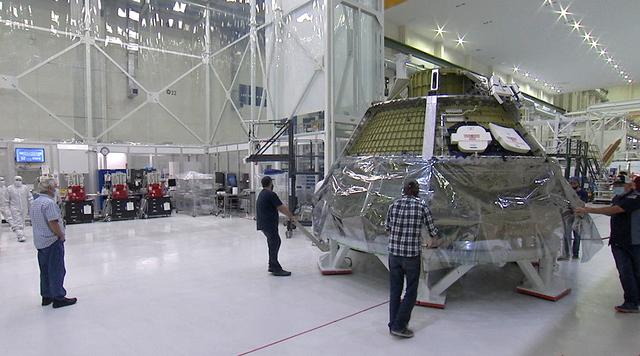
Inside the Neil Armstrong Operations and Checkout Building high bay at NASA’s Kennedy Space Center in Florida, the Artemis II crew module is relocated into a clean room on June 10, 2020. Workers will perform tube welds of the propulsion system and the Environmental Control & Life Support Systems. Artemis II is the first crewed mission in a series of missions to the Moon and on to Mars. Artemis II will confirm all of the Orion spacecraft’s systems operate as designed in the actual environment of deep space with astronauts aboard. As part of the Artemis Program, NASA will send the first woman and next man to the Moon by 2024.

The newly painted Orion heatshield for NASA’s Artemis II mission is secured on a stand inside the high bay of the Neil A. Armstrong Operations and Checkout Building at NASA’s Kennedy Space Center in Florida on Jan. 20, 2022. Lockheed Martin technicians are preparing the heat shield for installation on the Artemis II Orion crew module. Launching atop the Space Launch System, Artemis II will be the first mission to confirm all of the Orion spacecraft’s systems operate as designed in the actual environment of deep space with astronauts aboard.
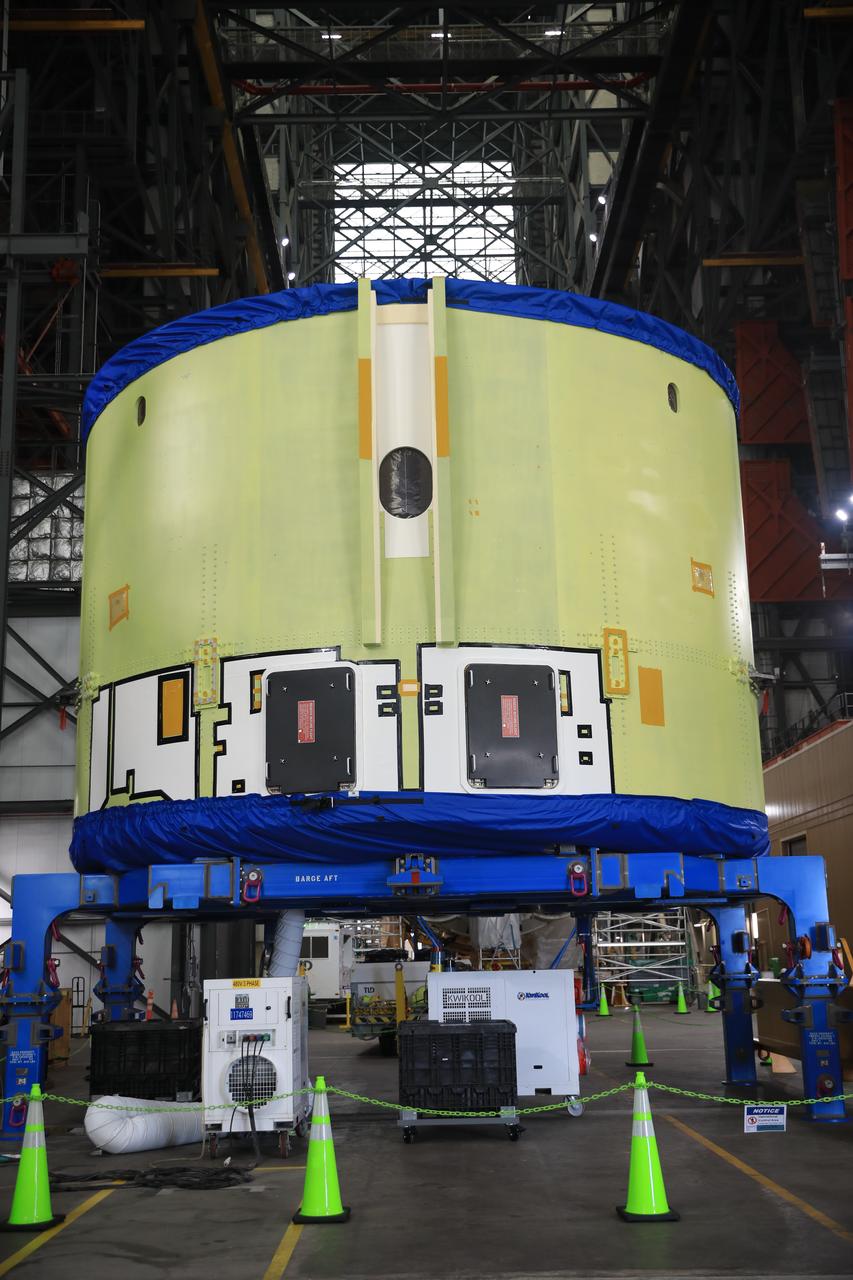
NASA’s Artemis IV SLS (Space Launch System) core stage engine section which houses the four RS-25 engines, arrives at the Vehicle Assembly Building at NASA’s Kennedy Space Center in Florida on Monday, Sept. 9, 2024. NASA’s Pegasus barge delivered the core stage engine section, along with other hardware for future Artemis campaigns, from NASA’s Michoud Assembly Facility in New Orleans, Louisiana to NASA Kennedy on Thursday, Sept. 5, 2024.
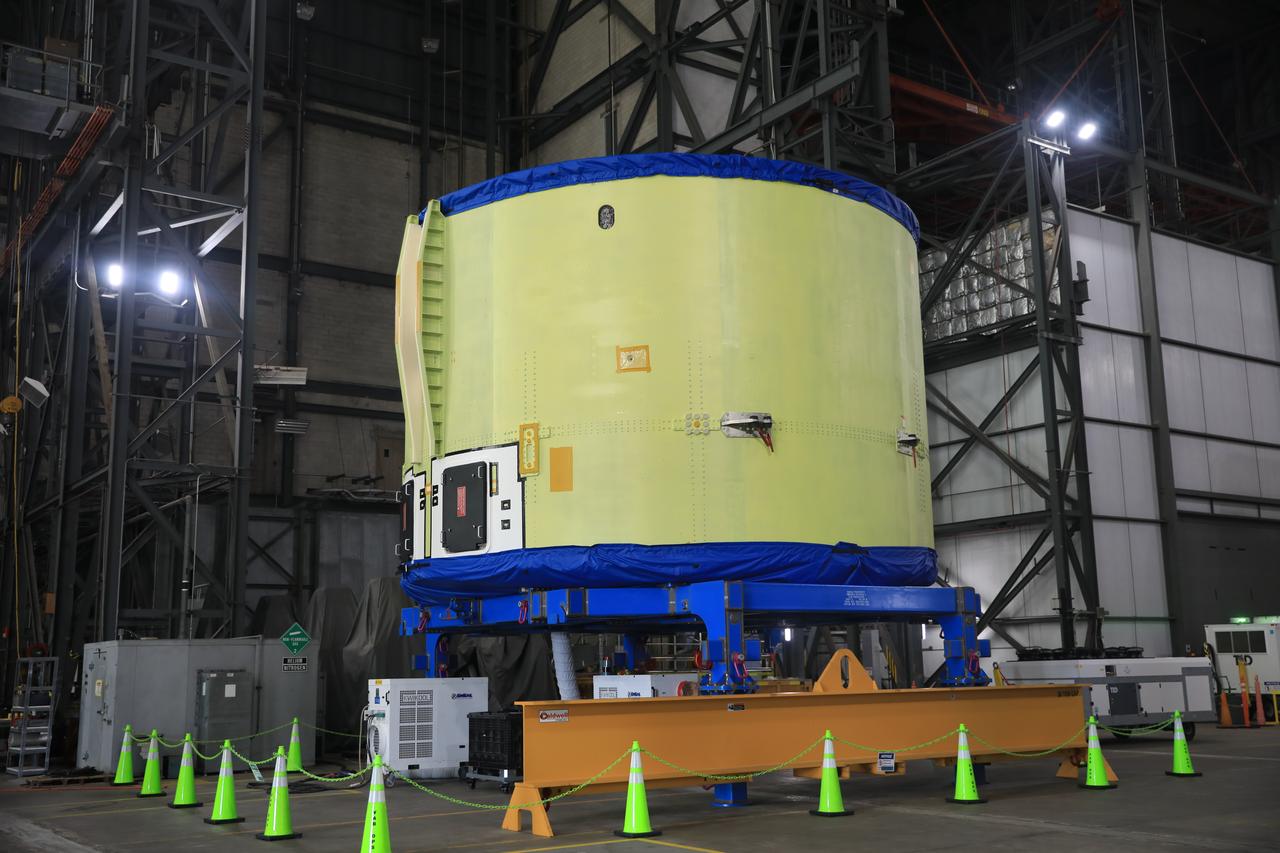
NASA’s Artemis IV SLS (Space Launch System) core stage engine section which houses the four RS-25 engines, arrives at the Vehicle Assembly Building at NASA’s Kennedy Space Center in Florida on Monday, Sept. 9, 2024. NASA’s Pegasus barge delivered the core stage engine section, along with other hardware for future Artemis campaigns, from NASA’s Michoud Assembly Facility in New Orleans, Louisiana to NASA Kennedy on Thursday, Sept. 5, 2024.

NASA’s Artemis IV SLS (Space Launch System) core stage engine section which houses the four RS-25 engines, arrives at the Vehicle Assembly Building at NASA’s Kennedy Space Center in Florida on Monday, Sept. 9, 2024. NASA’s Pegasus barge delivered the core stage engine section, along with other hardware for future Artemis campaigns, from NASA’s Michoud Assembly Facility in New Orleans, Louisiana to NASA Kennedy on Thursday, Sept. 5, 2024.

Teams at NASA’s Kennedy Space Center in Florida meet on Saturday, March 28, 2026, at the Operations Support Building II for the Artemis II launch countdown pre-test briefing. Photo Credit: (NASA/Bill Ingalls)
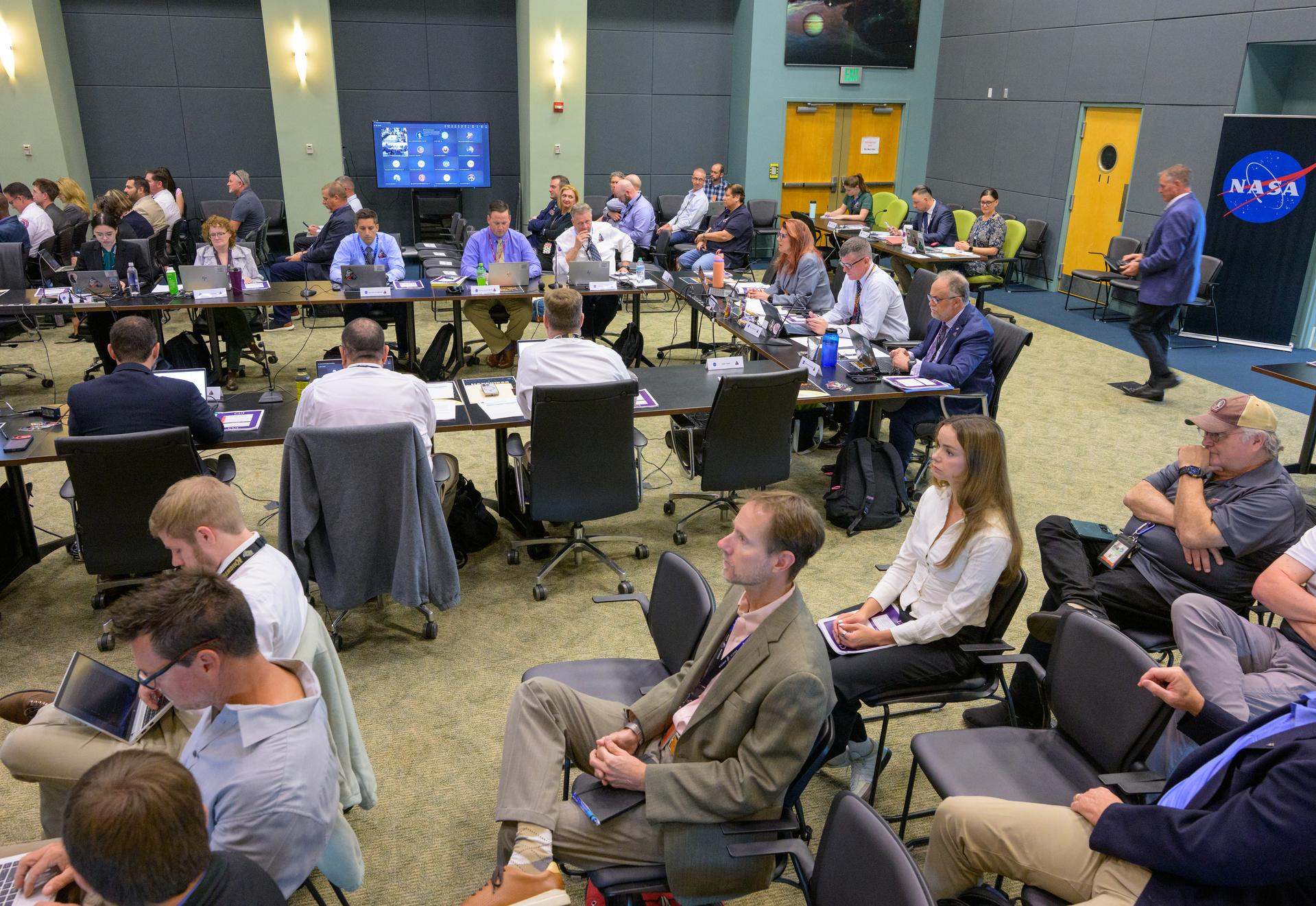
Teams at NASA’s Kennedy Space Center in Florida meet on Saturday, March 28, 2026, at the Operations Support Building II for the Artemis II launch countdown pre-test briefing. Photo Credit: (NASA/Bill Ingalls)
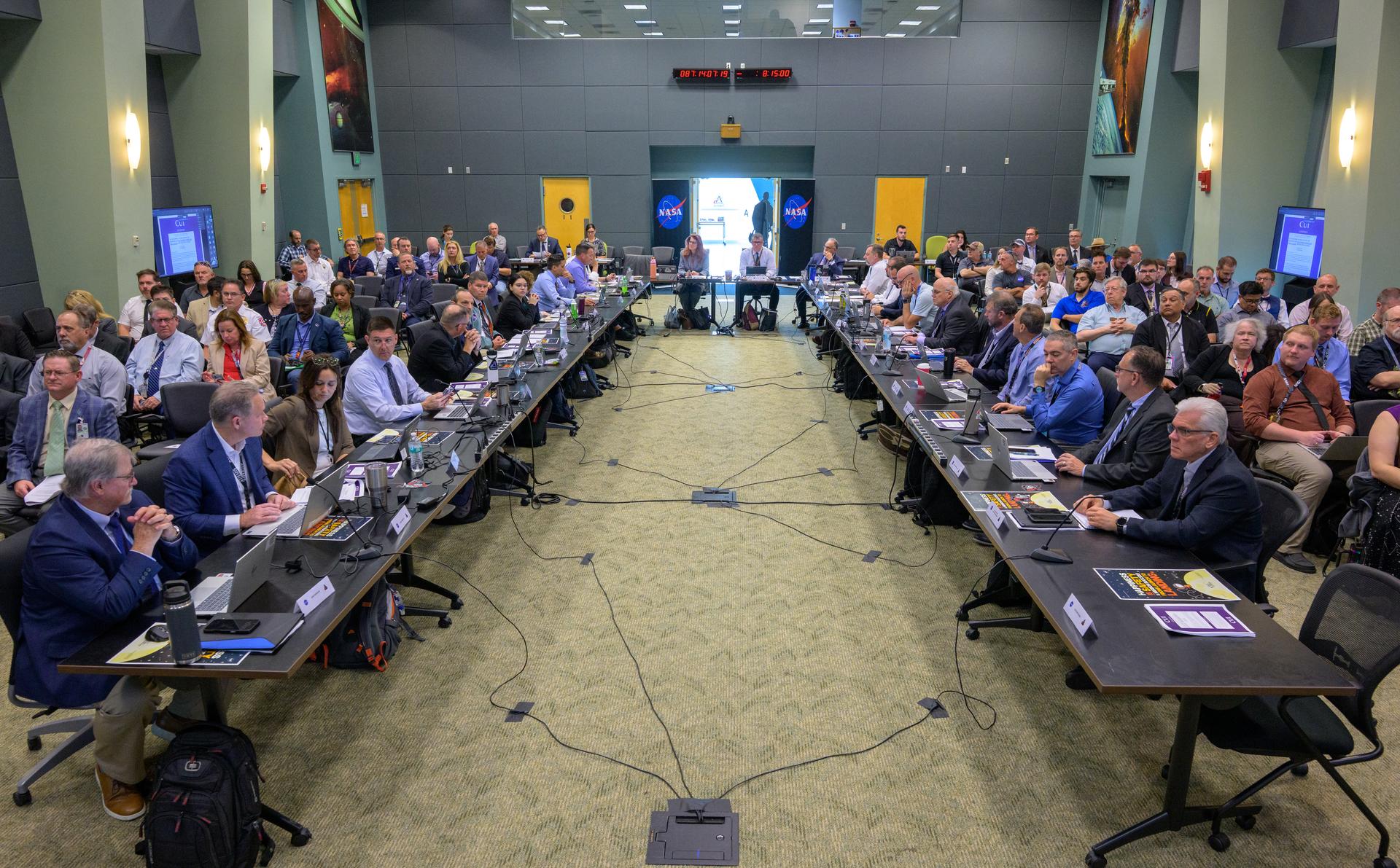
Teams at NASA’s Kennedy Space Center in Florida meet on Saturday, March 28, 2026, at the Operations Support Building II for the Artemis II launch countdown pre-test briefing. Photo Credit: (NASA/Bill Ingalls)
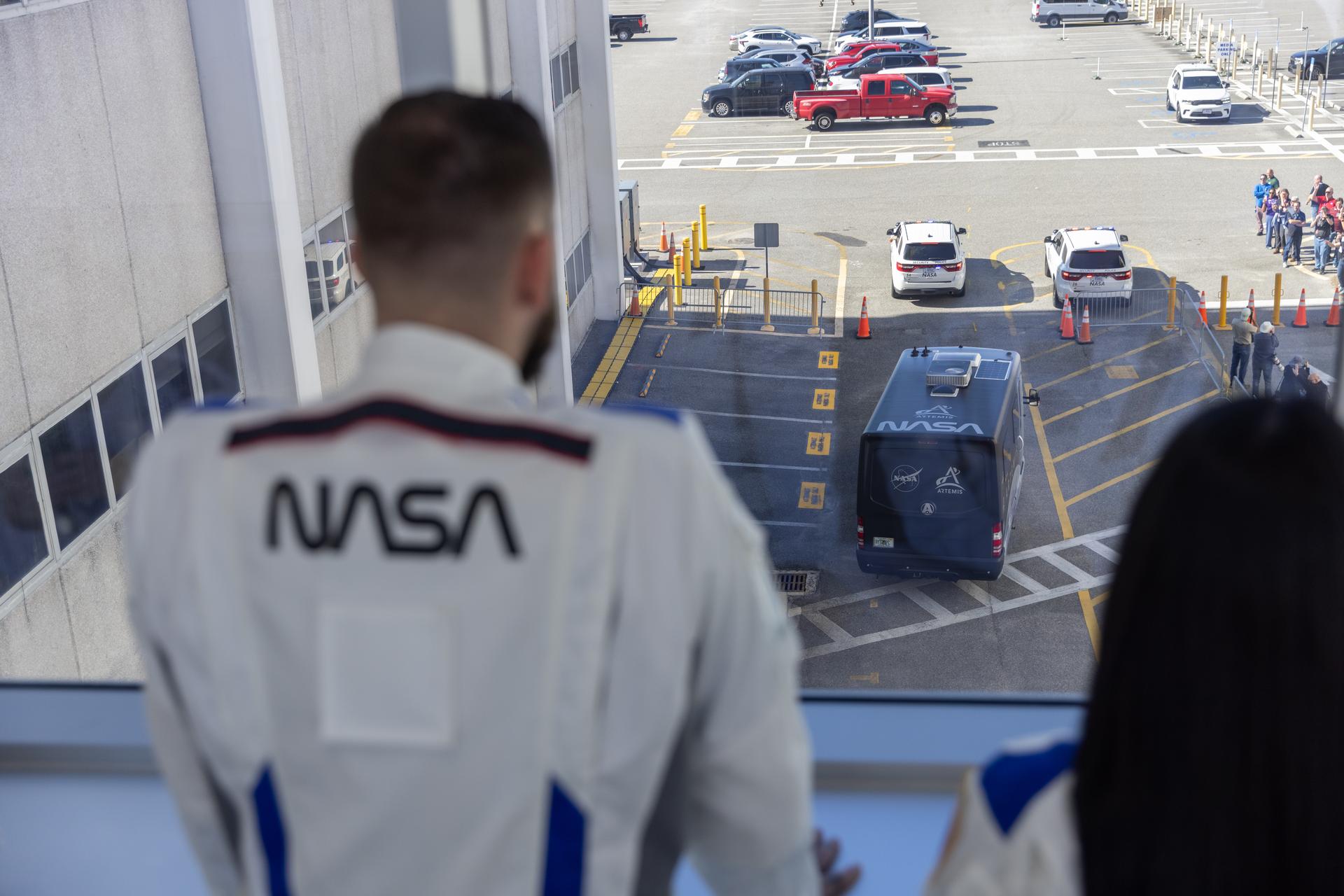
NASA astronauts Reid Wiseman, Artemis II commander, Victor Glover, Artemis II pilot, Christina Koch, Artemis II mission specialist and CSA (Canadian Space Agency) astronaut Jeremy Hansen, Artemis II mission specialist, depart the Neil A. Armstrong Operations and Checkout Building to travel to the Vehicle Assembly Building to board their Orion spacecraft atop NASA’s SLS (Space Launch System) rocket as part of the Artemis II Countdown Demonstration Test on Saturday, Dec. 20, 2025 at NASA’s Kennedy Space Center in Florida. For this operation, the Artemis II crew and launch team are simulating the launch day timeline including suit-up, walkout, and climbing in and out of the spacecraft. Through the Artemis campaign, NASA will send astronauts to explore the Moon for scientific discovery, economic benefits, and to build the foundation for the first crewed missions to Mars, for the benefit of all.
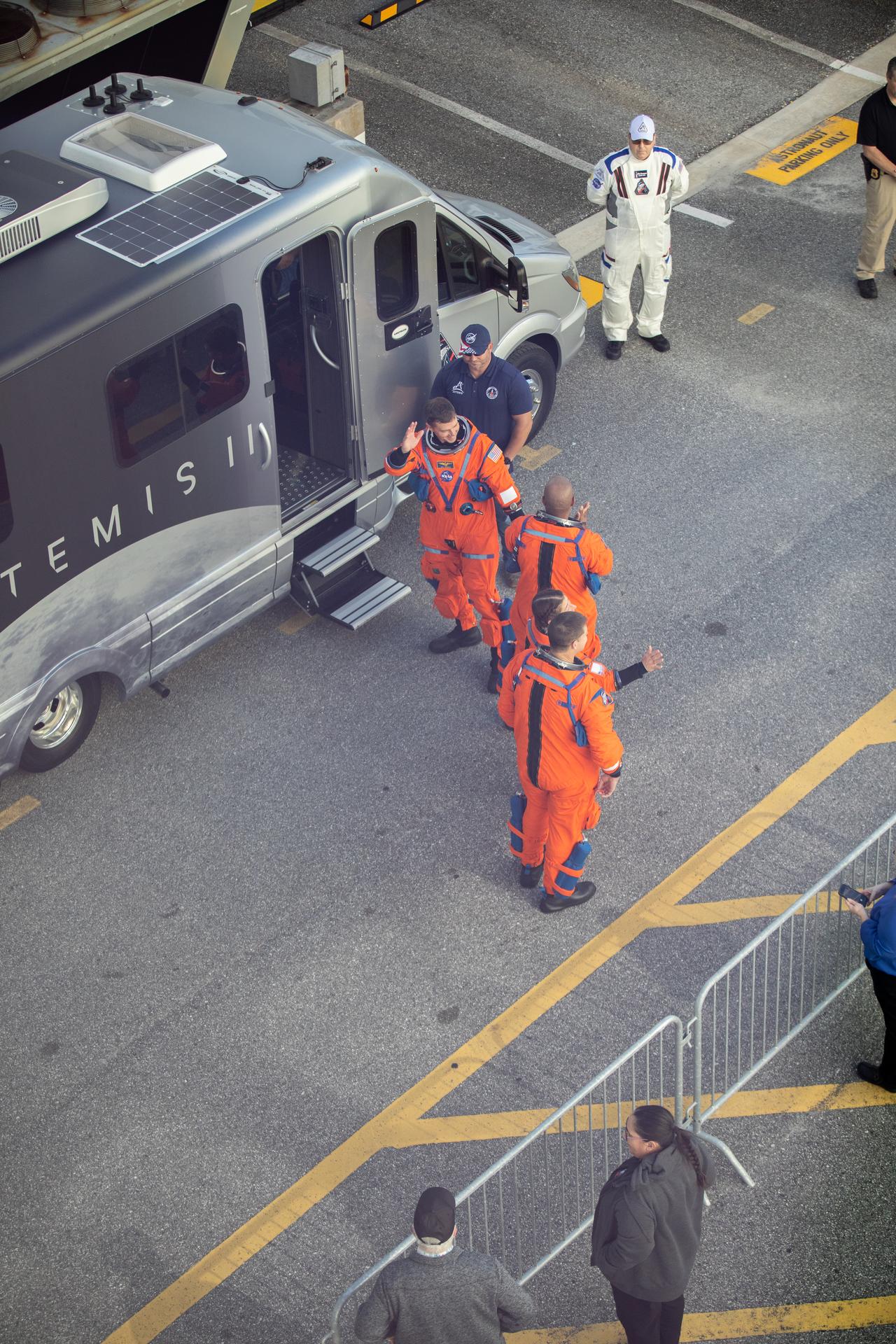
From left, NASA astronauts Reid Wiseman, Artemis II commander, Victor Glover, Artemis II pilot, Christina Koch, Artemis II mission specialist and CSA (Canadian Space Agency) astronaut Jeremy Hansen, Artemis II mission specialist, depart the Neil A. Armstrong Operations and Checkout Building to travel to the Vehicle Assembly Building to board their Orion spacecraft atop NASA’s SLS (Space Launch System) rocket as part of the Artemis II Countdown Demonstration Test on Saturday, Dec. 20, 2025 at NASA’s Kennedy Space Center in Florida. For this operation, the Artemis II crew and launch team are simulating the launch day timeline including suit-up, walkout, and climbing in and out of the spacecraft. Through the Artemis campaign, NASA will send astronauts to explore the Moon for scientific discovery, economic benefits, and to build the foundation for the first crewed missions to Mars, for the benefit of all.
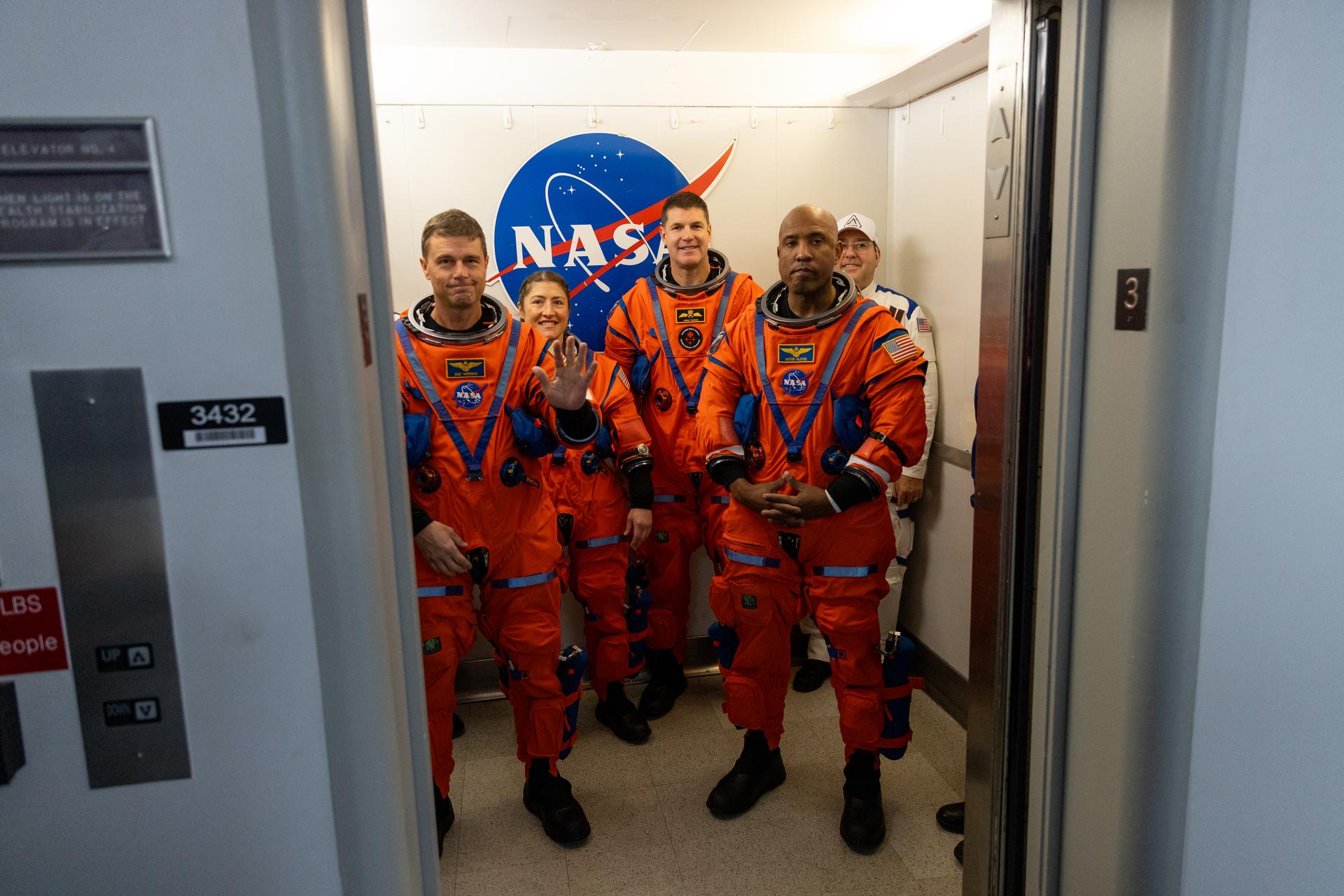
From left, NASA astronauts Reid Wiseman, Artemis II commander, Christina Koch, Artemis II mission specialist, CSA (Canadian Space Agency) astronaut Jeremy Hansen, Artemis II mission specialist, and NASA astronaut Victor Glover, Artemis II pilot, depart the Neil A. Armstrong Operations and Checkout Building to travel to the Vehicle Assembly Building to board their Orion spacecraft atop NASA’s SLS (Space Launch System) rocket as part of the Artemis II Countdown Demonstration Test on Saturday, Dec. 20, 2025 at NASA’s Kennedy Space Center in Florida. For this operation, the Artemis II crew and launch team are simulating the launch day timeline including suit-up, walkout, and climbing in and out of the spacecraft. Through the Artemis campaign, NASA will send astronauts to explore the Moon for scientific discovery, economic benefits, and to build the foundation for the first crewed missions to Mars, for the benefit of all.
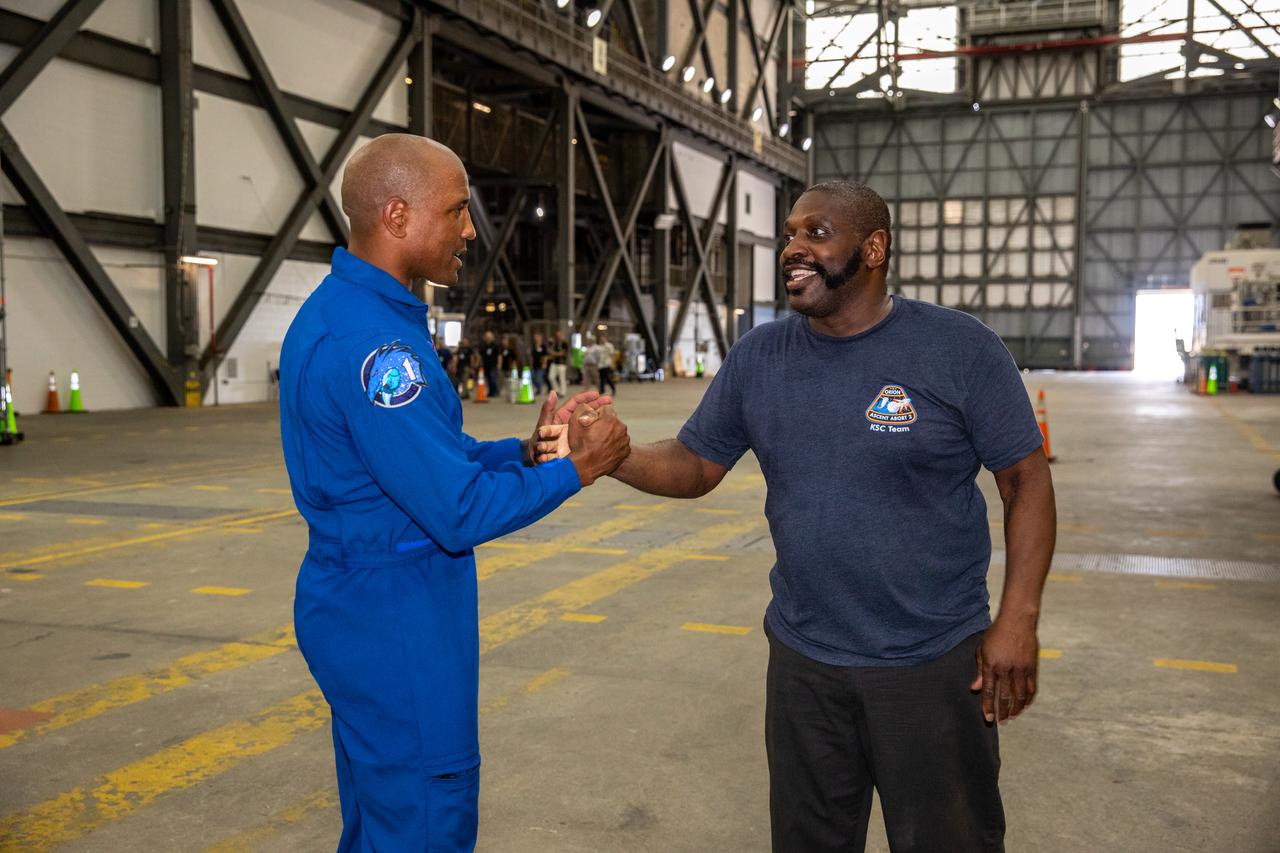
NASA astronaut Victor Glover greets Kenneth McElroy, Launch Vehicle Processing Technician with Jacobs, inside Kennedy Space Center’s Vehicle Assembly Building on July 15, 2021. Glover got a close look at NASA’s Space Launch System (SLS) rocket that will power the Orion spacecraft on the Artemis I mission later this year. Artemis I will be a test of Orion and SLS as an integrated system ahead of crewed flights to the Moon. Under Artemis, NASA aims to land the first woman and first person of color on the Moon and establish long-term lunar exploration.
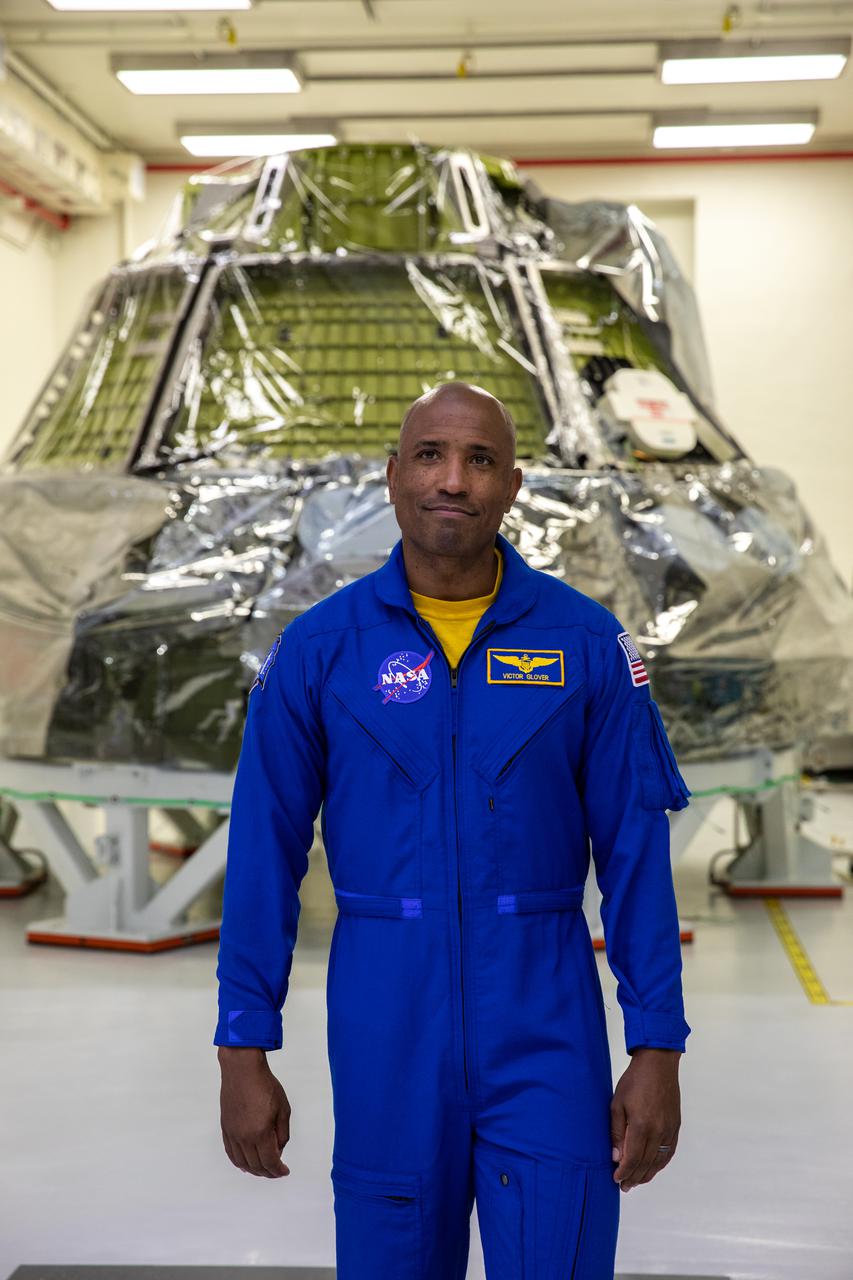
NASA astronaut Victor Glover stands inside Kennedy Space Center’s Neil A. Armstrong Operations and Checkout Building on July 15, 2021, near the crew module for the agency’s Artemis II mission. Artemis will lay the foundation for a sustained long-term presence on the lunar surface. NASA will use the Moon to validate deep space systems and operations before embarking on a human voyage to Mars.
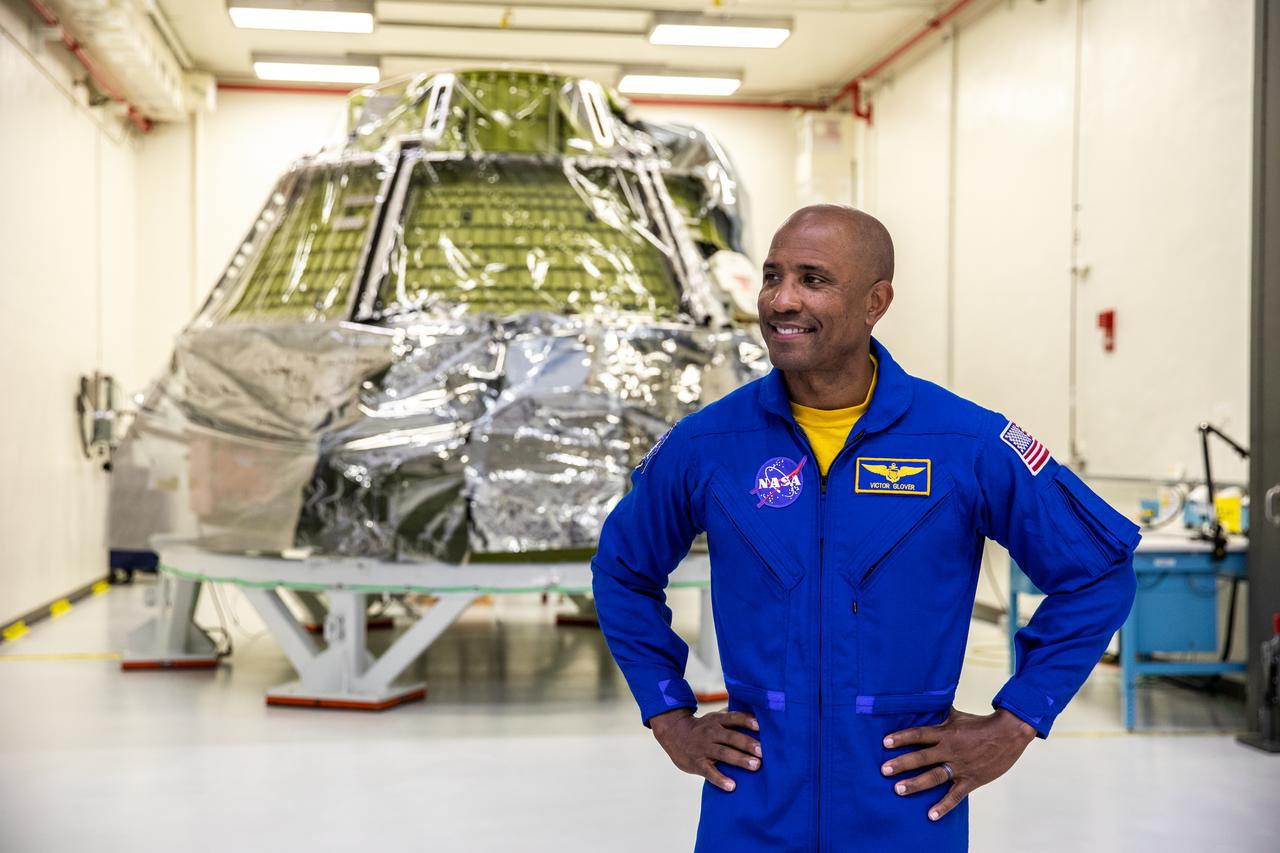
NASA astronaut Victor Glover stands inside Kennedy Space Center’s Neil A. Armstrong Operations and Checkout Building on July 15, 2021, near the crew module for the agency’s Artemis II mission. Artemis will lay the foundation for a sustained long-term presence on the lunar surface. NASA will use the Moon to validate deep space systems and operations before embarking on a human voyage to Mars.
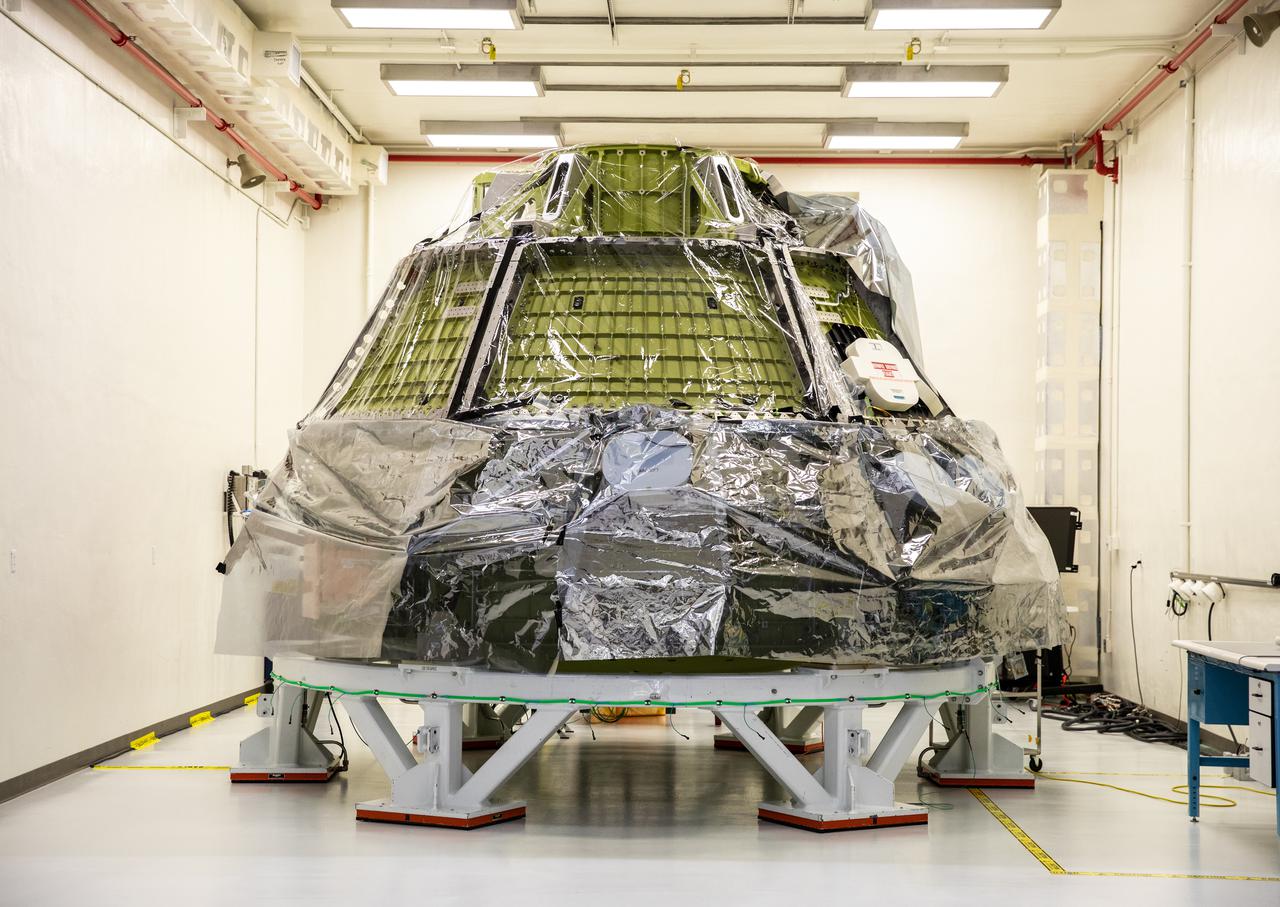
The crew module for NASA’s Artemis II mission is shown inside Kennedy Space Center’s Neil A. Armstrong Operations and Checkout Building on July 15, 2021. Artemis will lay the foundation for a sustained long-term presence on the lunar surface. NASA will use the Moon to validate deep space systems and operations before embarking on a human voyage to Mars.

Inside High Bay 3 of the Vehicle Assembly Building at NASA’s Kennedy Space Center in Florida, the work platforms have been retracted from around the Artemis I Space Launch System atop the mobile launcher on Sept. 20, 2021. All 10 levels of platforms were extended and retracted as part of an umbilical test. During the test, several umbilical arms on the mobile launcher were extended to connect to the SLS rocket. They swung away from the launch vehicle, just as they will on launch day. NASA and Jacobs teams will continue conducting tests inside the VAB before transporting the Orion spacecraft to the assembly building and stacking it atop the SLS, completing assembly of the rocket for the Artemis I mission. Artemis I will be the first integrated test of the SLS and Orion spacecraft. In later missions, NASA will land the first woman and the first person of color on the surface of the Moon, paving the way for a long-term lunar presence and serving as a steppingstone on the way to Mars.
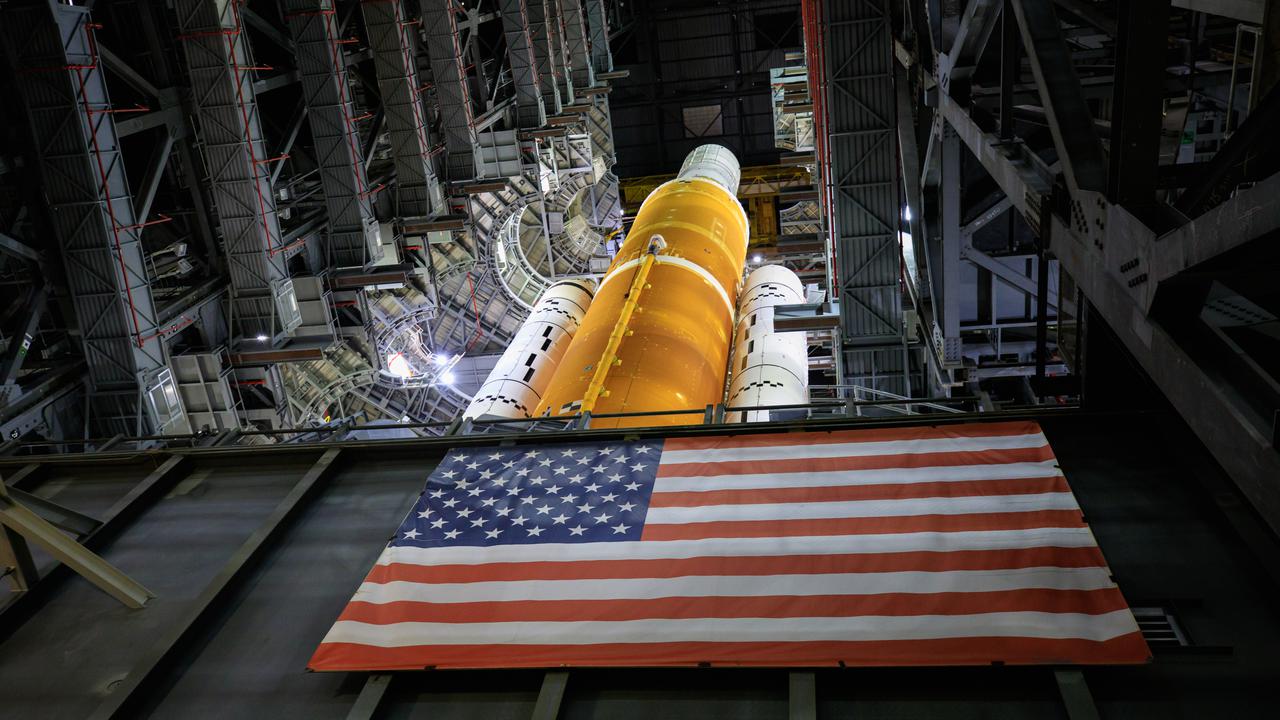
In this view looking up inside High Bay 3 of the Vehicle Assembly Building at NASA’s Kennedy Space Center in Florida, the work platforms have been retracted from around the Artemis I Space Launch System on Sept. 20, 2021. All 10 levels of platforms were extended and retracted as part of an umbilical test. During the test, several umbilical arms on the mobile launcher were extended to connect to the SLS rocket. They swung away from the launch vehicle, just as they will on launch day. NASA and Jacobs teams will continue conducting tests inside the VAB before transporting the Orion spacecraft to the assembly building and stacking it atop the SLS, completing assembly of the rocket for the Artemis I mission. Artemis I will be the first integrated test of the SLS and Orion spacecraft. In later missions, NASA will land the first woman and the first person of color on the surface of the Moon, paving the way for a long-term lunar presence and serving as a steppingstone on the way to Mars.

Inside High Bay 3 of the Vehicle Assembly Building at NASA’s Kennedy Space Center in Florida, the work platforms have been retracted from around the Artemis I Space Launch System on Sept. 20, 2021. All 10 levels of platforms were extended and retracted as part of an umbilical test. During the test, several umbilical arms on the mobile launcher were extended to connect to the SLS rocket. They swung away from the launch vehicle, just as they will on launch day. NASA and Jacobs teams will continue conducting tests inside the VAB before transporting the Orion spacecraft to the assembly building and stacking it atop the SLS, completing assembly of the rocket for the Artemis I mission. Artemis I will be the first integrated test of the SLS and Orion spacecraft. In later missions, NASA will land the first woman and the first person of color on the surface of the Moon, paving the way for a long-term lunar presence and serving as a steppingstone on the way to Mars.
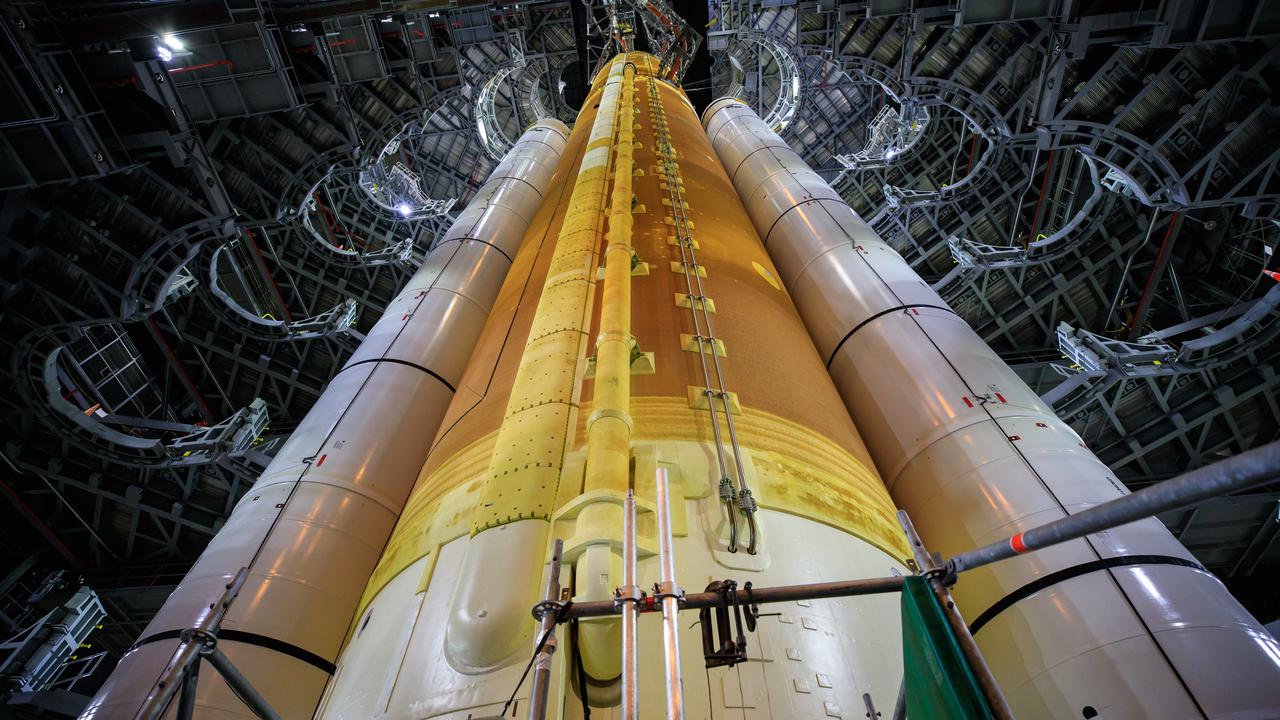
A close-up view of the Artemis I Space Launch System rocket inside High Bay 3 of the Vehicle Assembly Building at NASA’s Kennedy Space Center in Florida on Sept. 20, 2021. All 10 levels of work platforms have been retracted from around the rocket as part of an umbilical test. During the test, several umbilical arms on the mobile launcher were extended to connect to the SLS rocket. They swung away from the launch vehicle, just as they will on launch day. NASA and Jacobs teams will continue conducting tests inside the VAB before transporting the Orion spacecraft to the assembly building and stacking it atop the SLS, completing assembly of the rocket for the Artemis I mission. Artemis I will be the first integrated test of the SLS and Orion spacecraft. In later missions, NASA will land the first woman and the first person of color on the surface of the Moon, paving the way for a long-term lunar presence and serving as a steppingstone on the way to Mars.
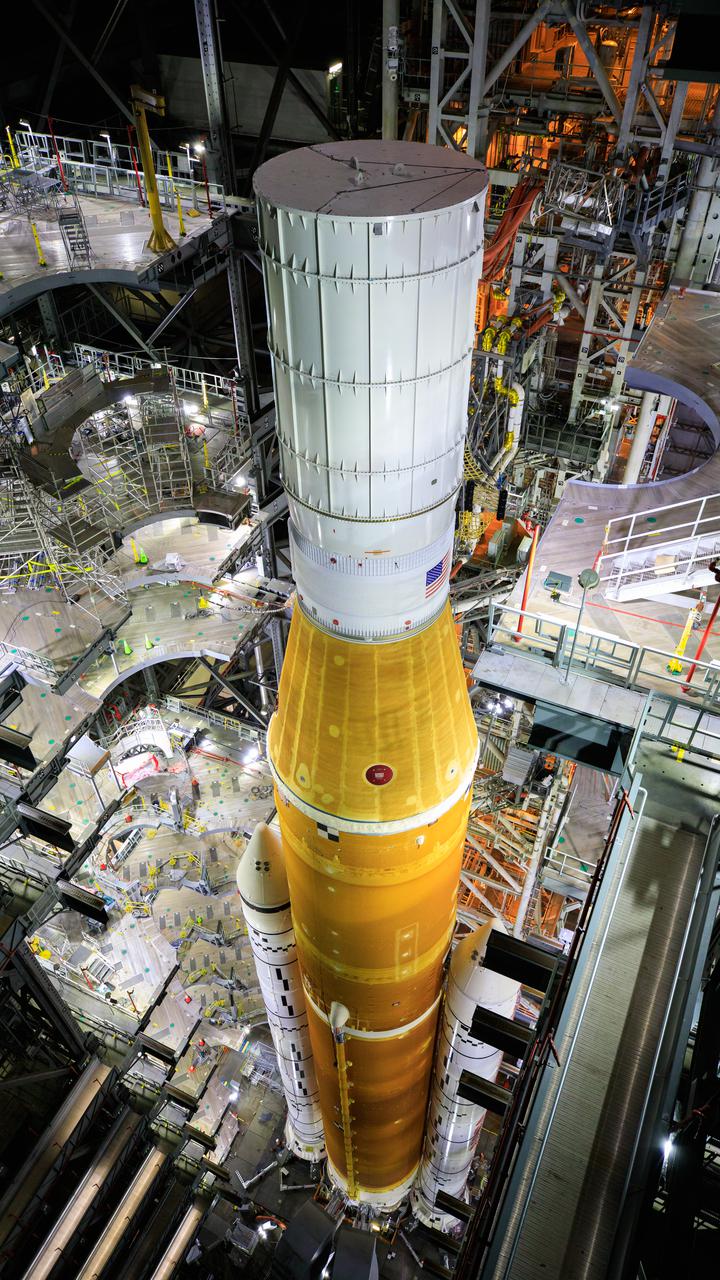
Inside High Bay 3 of the Vehicle Assembly Building at NASA’s Kennedy Space Center in Florida, the work platforms have been retracted from around the Artemis I Space Launch System on Sept. 20, 2021. All 10 levels of platforms were extended and retracted as part of an umbilical test. During the test, several umbilical arms on the mobile launcher were extended to connect to the SLS rocket. They swung away from the launch vehicle, just as they will on launch day. NASA and Jacobs teams will continue conducting tests inside the VAB before transporting the Orion spacecraft to the assembly building and stacking it atop the SLS, completing assembly of the rocket for the Artemis I mission. Artemis I will be the first integrated test of the SLS and Orion spacecraft. In later missions, NASA will land the first woman and the first person of color on the surface of the Moon, paving the way for a long-term lunar presence and serving as a steppingstone on the way to Mars.
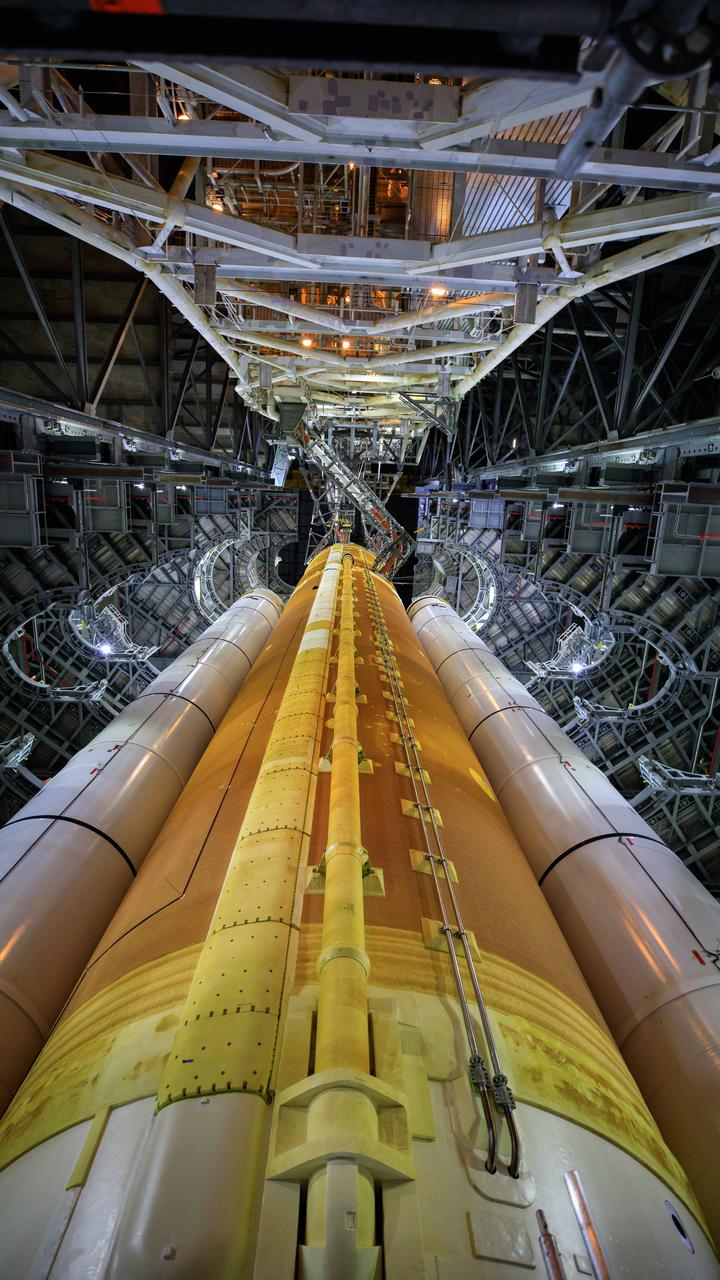
A close-up view of the Artemis I Space Launch System rocket inside High Bay 3 of the Vehicle Assembly Building at NASA’s Kennedy Space Center in Florida on Sept. 20, 2021. All 10 levels of work platforms have been retracted from around the rocket as part of an umbilical test. During the test, several umbilical arms on the mobile launcher were extended to connect to the SLS rocket. They swung away from the launch vehicle, just as they will on launch day. NASA and Jacobs teams will continue conducting tests inside the VAB before transporting the Orion spacecraft to the assembly building and stacking it atop the SLS, completing assembly of the rocket for the Artemis I mission. Artemis I will be the first integrated test of the SLS and Orion spacecraft. In later missions, NASA will land the first woman and the first person of color on the surface of the Moon, paving the way for a long-term lunar presence and serving as a steppingstone on the way to Mars.
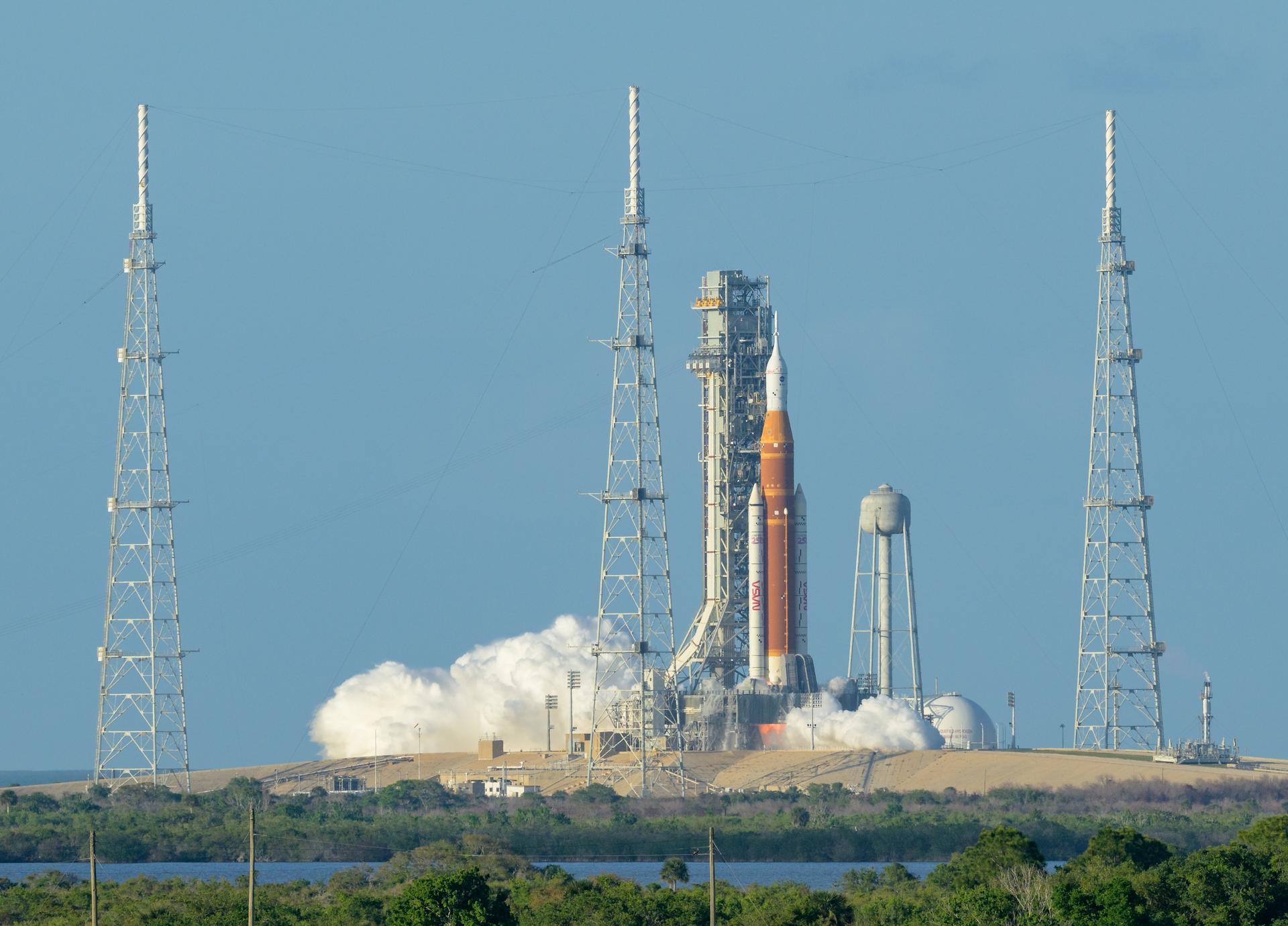
NASA’s Space Launch System rocket launches carrying the Orion spacecraft with NASA astronauts Reid Wiseman, commander; Victor Glover, pilot; Christina Koch, mission specialist; and CSA (Canadian Space Agency) astronaut Jeremy Hansen, mission specialist on NASA’s Artemis II mission, Wednesday, April 1, 2026, from Operations and Support Building II at NASA’s Kennedy Space Center in Florida. NASA’s Artemis II mission will take Wiseman, Glover, Koch, and Hansen on a 10-day journey around the Moon and back aboard SLS rocket and Orion spacecraft launched at 6:35pm EDT from Launch Complex 39B. Photo Credit: (NASA/Bill Ingalls)
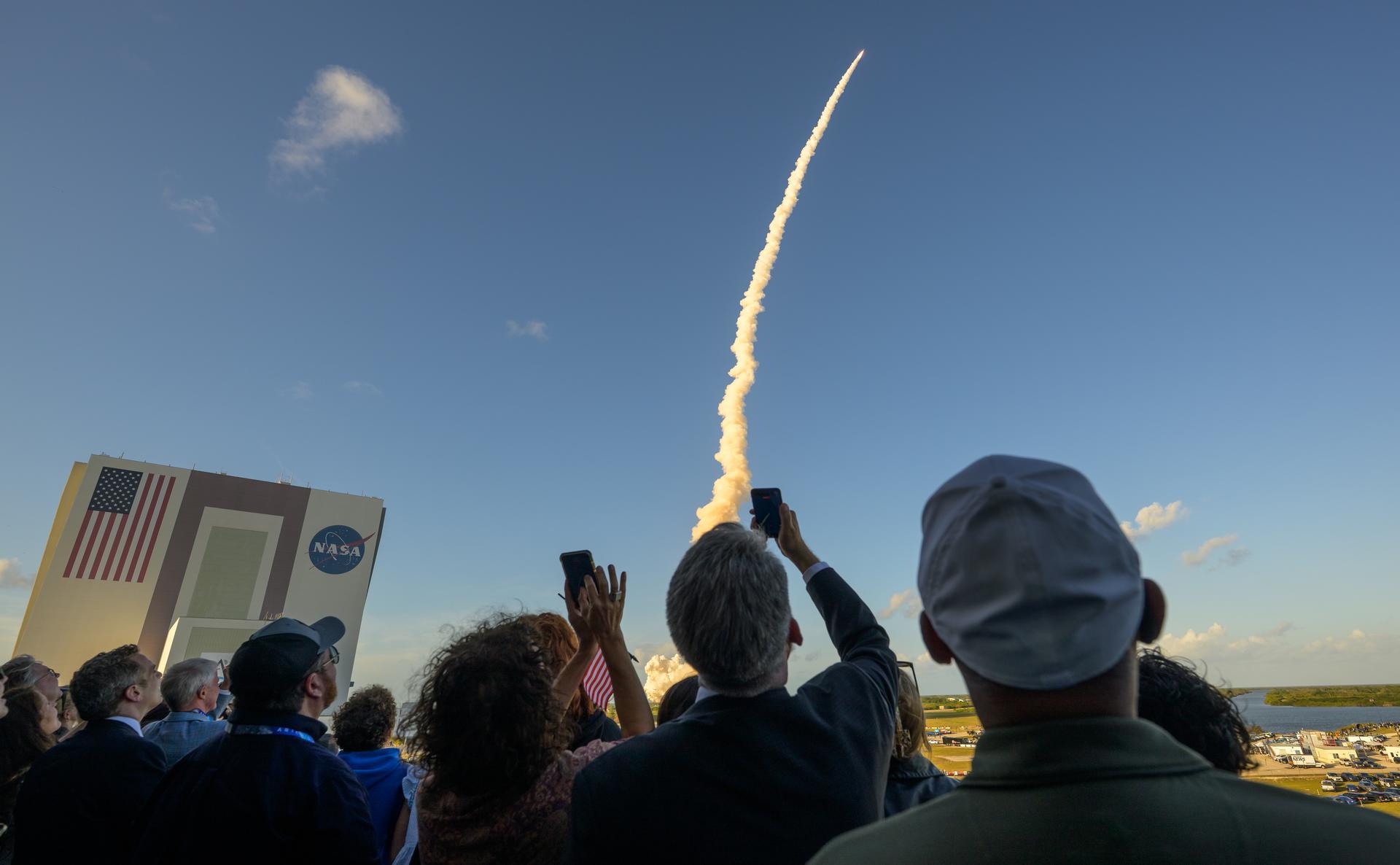
Guests watch the launch of NASA’s Space Launch System rocket carrying the Orion spacecraft with NASA astronauts Reid Wiseman, commander; Victor Glover, pilot; Christina Koch, mission specialist; and CSA (Canadian Space Agency) astronaut Jeremy Hansen, mission specialist on NASA’s Artemis II mission,, Wednesday, April 1, 2026, from Operations and Support Building II at NASA’s Kennedy Space Center in Florida. NASA’s Artemis II mission will take Wiseman, Glover, Koch, and Hansen on a 10-day journey around the Moon and back aboard SLS rocket and Orion spacecraft launched at 6:35pm EDT, from Launch Complex 39B. Photo Credit: (NASA/Bill Ingalls)
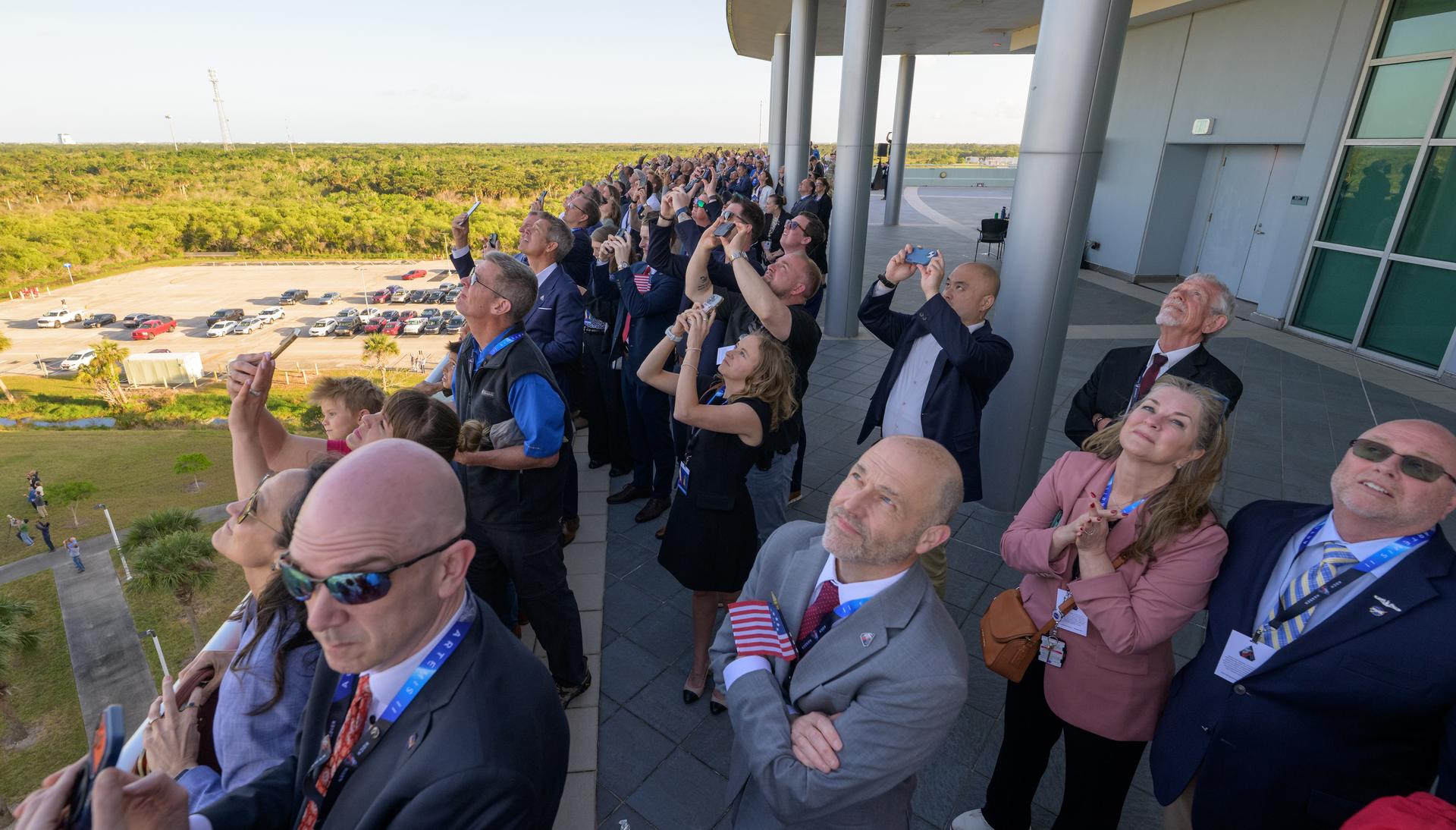
Guests watch the launch of NASA’s Space Launch System rocket carrying the Orion spacecraft with NASA astronauts Reid Wiseman, commander; Victor Glover, pilot; Christina Koch, mission specialist; and CSA (Canadian Space Agency) astronaut Jeremy Hansen, mission specialist on NASA’s Artemis II mission,, Wednesday, April 1, 2026, from Operations and Support Building II at NASA’s Kennedy Space Center in Florida. NASA’s Artemis II mission will take Wiseman, Glover, Koch, and Hansen on a 10-day journey around the Moon and back aboard SLS rocket and Orion spacecraft launched at 6:35pm EDT, from Launch Complex 39B. Photo Credit: (NASA/Bill Ingalls)
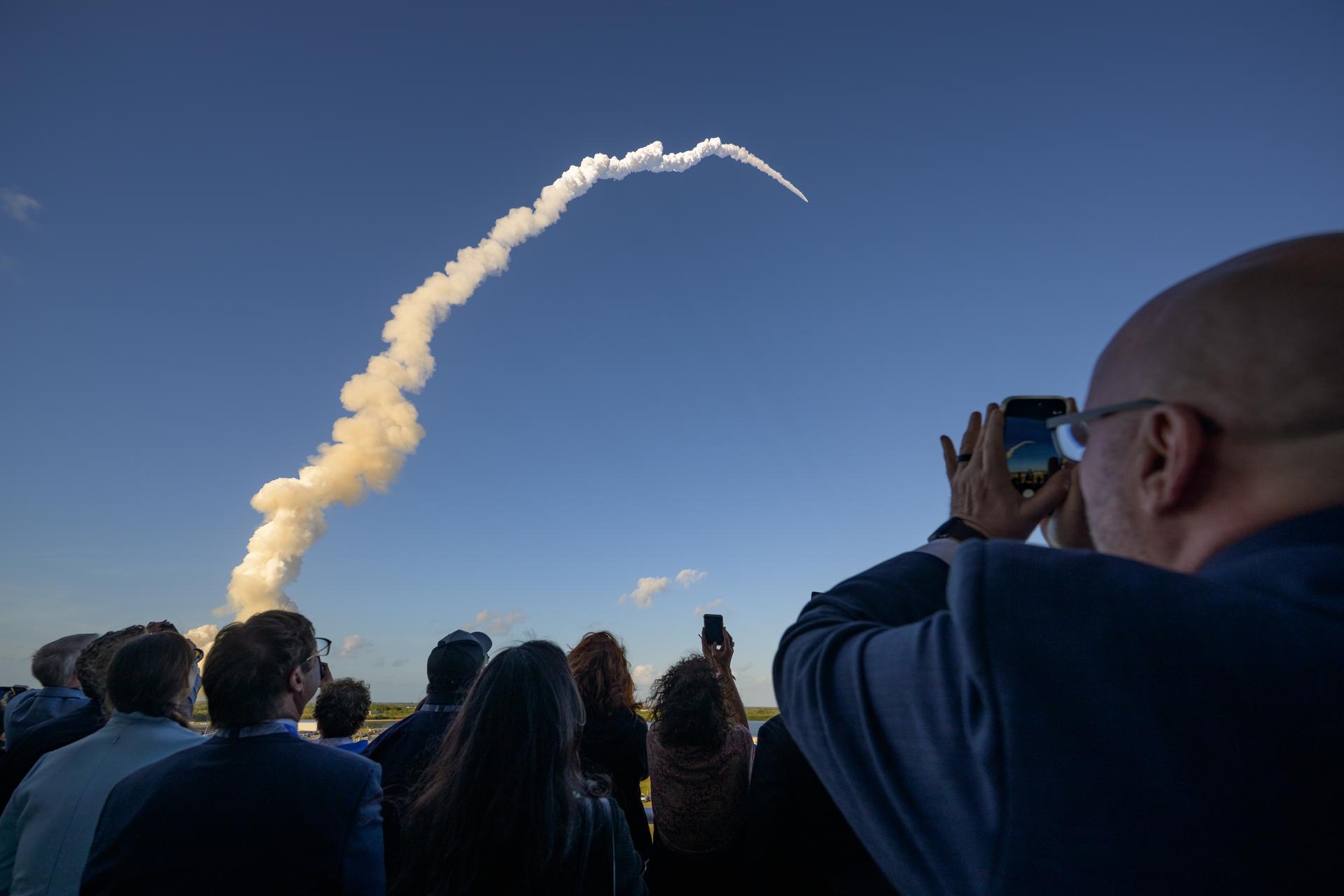
Guests watch the launch of NASA’s Space Launch System rocket carrying the Orion spacecraft with NASA astronauts Reid Wiseman, commander; Victor Glover, pilot; Christina Koch, mission specialist; and CSA (Canadian Space Agency) astronaut Jeremy Hansen, mission specialist on NASA’s Artemis II mission,, Wednesday, April 1, 2026, from Operations and Support Building II at NASA’s Kennedy Space Center in Florida. NASA’s Artemis II mission will take Wiseman, Glover, Koch, and Hansen on a 10-day journey around the Moon and back aboard SLS rocket and Orion spacecraft launched at 6:35pm EDT, from Launch Complex 39B. Photo Credit: (NASA/Bill Ingalls)
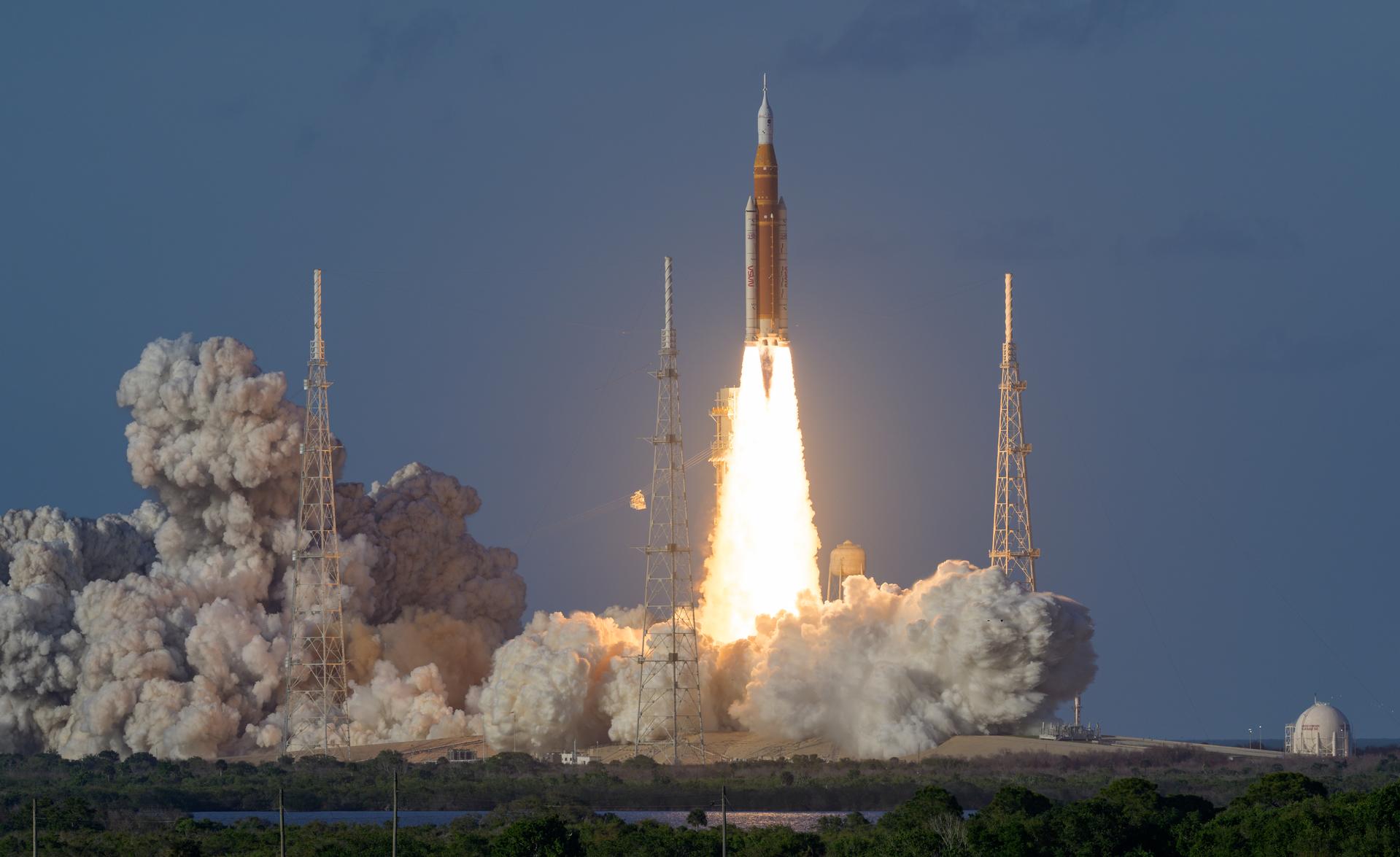
NASA’s Space Launch System rocket launches carrying the Orion spacecraft with NASA astronauts Reid Wiseman, commander; Victor Glover, pilot; Christina Koch, mission specialist; and CSA (Canadian Space Agency) astronaut Jeremy Hansen, mission specialist on NASA’s Artemis II mission, Wednesday, April 1, 2026, from Operations and Support Building II at NASA’s Kennedy Space Center in Florida. NASA’s Artemis II mission will take Wiseman, Glover, Koch, and Hansen on a 10-day journey around the Moon and back aboard SLS rocket and Orion spacecraft launched at 6:35pm EDT from Launch Complex 39B. Photo Credit: (NASA/Bill Ingalls)
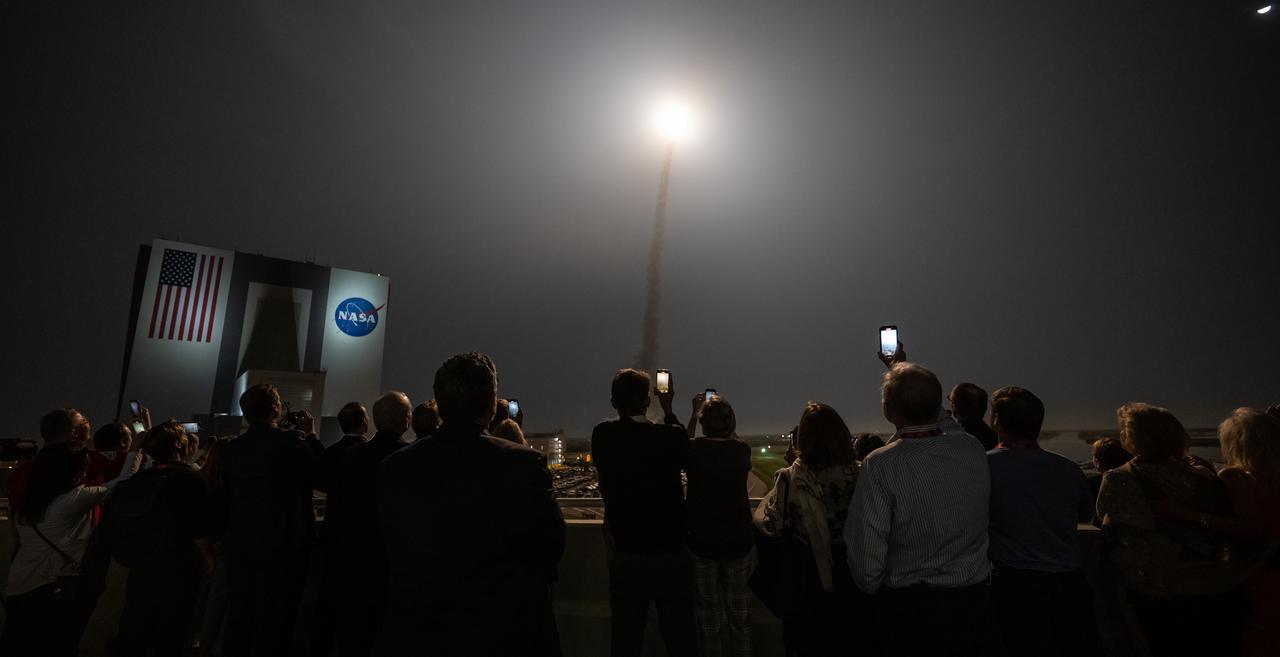
Guests watch the launch of NASA’s Space Launch System rocket carrying the Orion spacecraft on the Artemis I flight test, Wednesday, Nov. 16, 2022, from Operations and Support Building II at NASA’s Kennedy Space Center in Florida. NASA’s Artemis I flight test is the first integrated flight test of the agency’s deep space exploration systems: the Orion spacecraft, Space Launch System (SLS) rocket, and ground systems. SLS and Orion launched at 1:47 a.m. EST, from Launch Pad 39B at the Kennedy Space Center. Photo Credit: (NASA/Bill Ingalls)
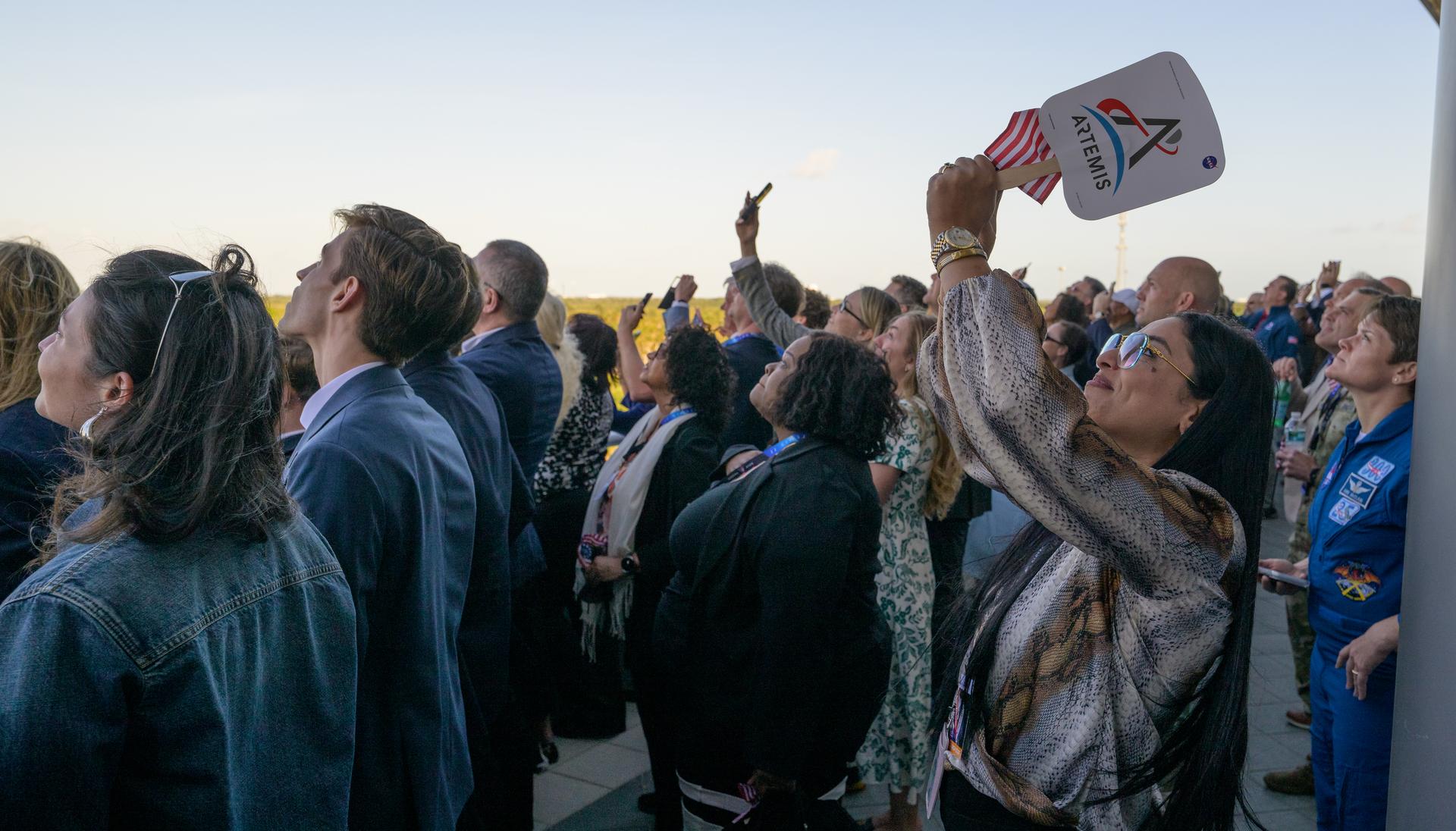
Guests watch the launch of NASA’s Space Launch System rocket carrying the Orion spacecraft with NASA astronauts Reid Wiseman, commander; Victor Glover, pilot; Christina Koch, mission specialist; and CSA (Canadian Space Agency) astronaut Jeremy Hansen, mission specialist on NASA’s Artemis II mission,, Wednesday, April 1, 2026, from Operations and Support Building II at NASA’s Kennedy Space Center in Florida. NASA’s Artemis II mission will take Wiseman, Glover, Koch, and Hansen on a 10-day journey around the Moon and back aboard SLS rocket and Orion spacecraft launched at 6:35pm EDT, from Launch Complex 39B. Photo Credit: (NASA/Bill Ingalls)
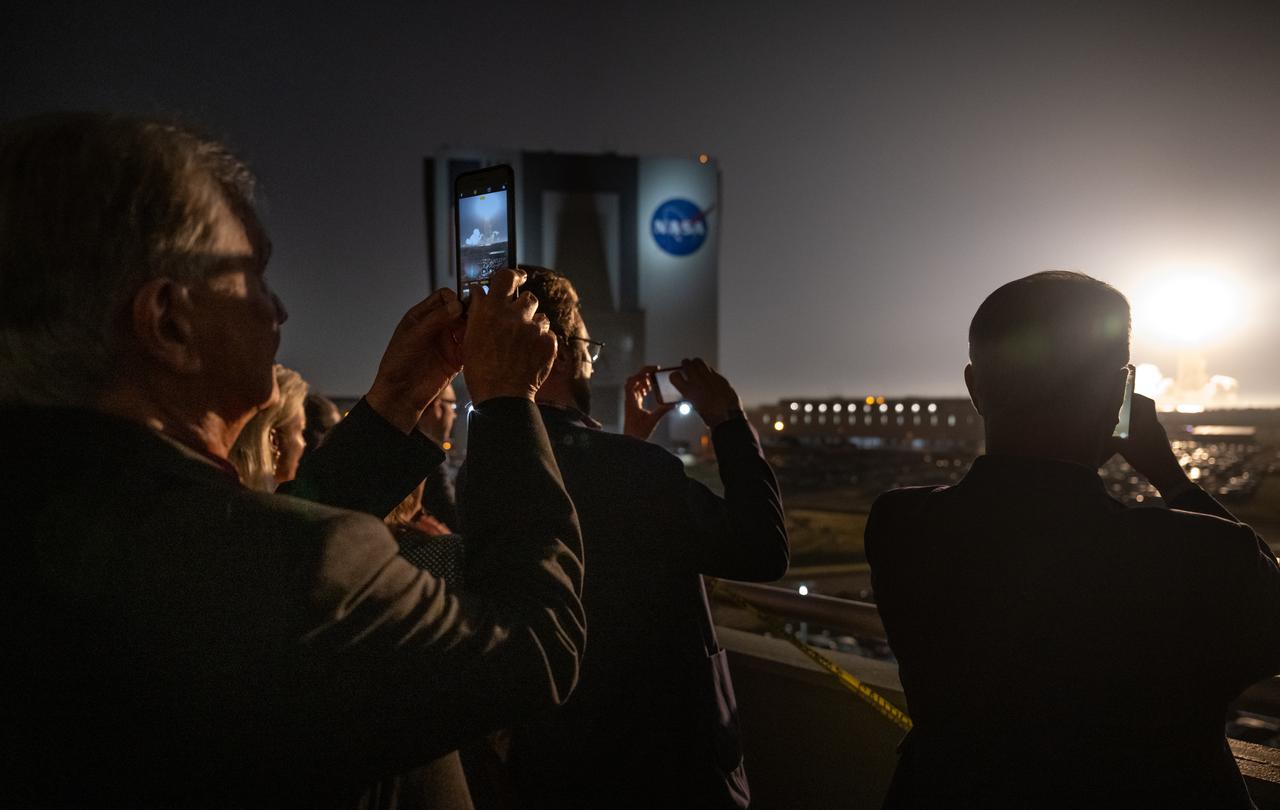
Guests watch the launch of NASA’s Space Launch System rocket carrying the Orion spacecraft on the Artemis I flight test, Wednesday, Nov. 16, 2022, from Operations and Support Building II at NASA’s Kennedy Space Center in Florida. NASA’s Artemis I flight test is the first integrated flight test of the agency’s deep space exploration systems: the Orion spacecraft, Space Launch System (SLS) rocket, and ground systems. SLS and Orion launched at 1:47 a.m. EST, from Launch Pad 39B at the Kennedy Space Center. Photo Credit: (NASA/Bill Ingalls)
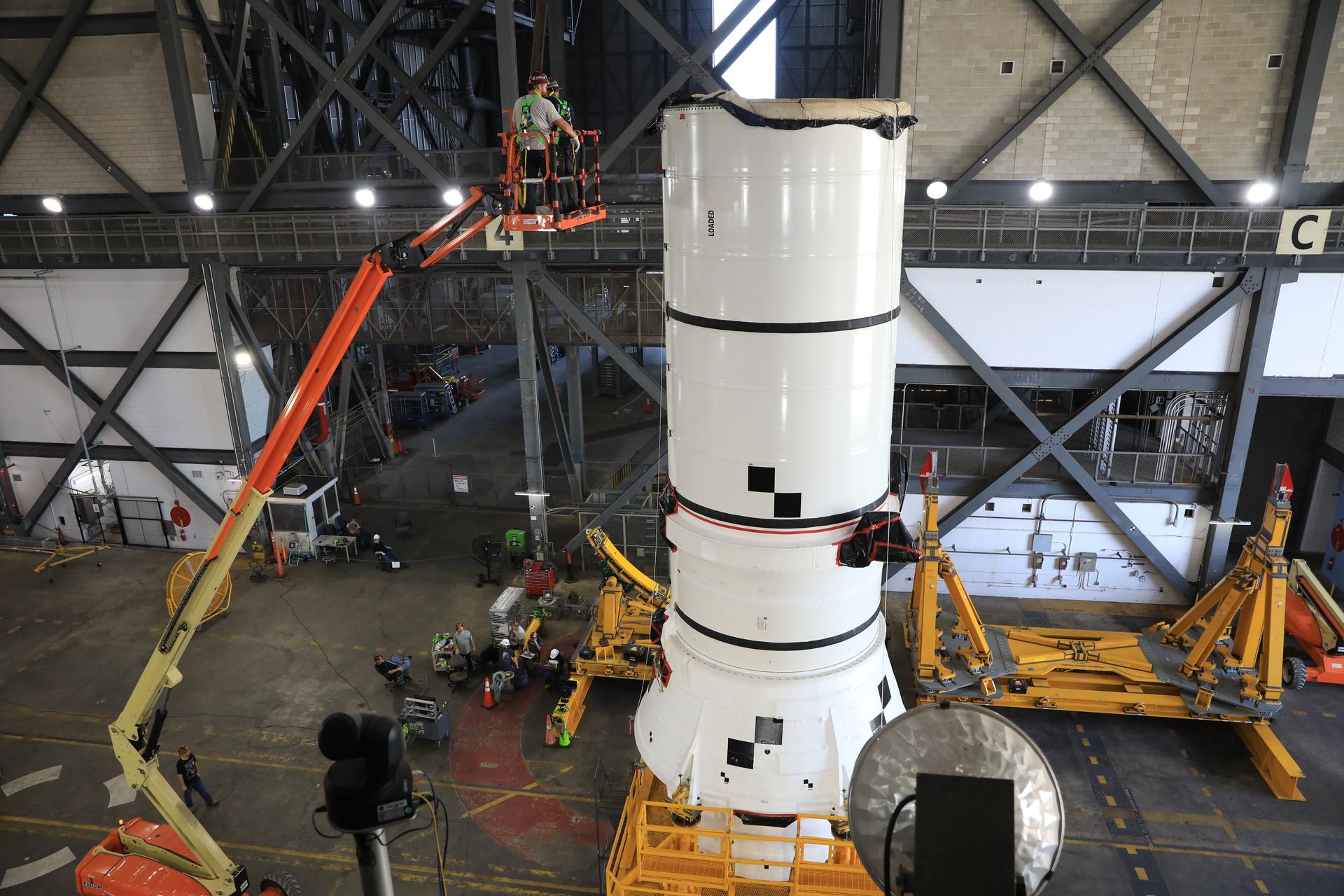
The right-hand aft assembly solid rocket booster segment for NASA’s Artemis III SLS (Space Launch System) rocket arrives at the agency’s Vehicle Assembly Building at NASA’s Kennedy Space Center in Florida on Thursday, July 9, 2026, ahead of stacking on top of the mobile launcher for the Artemis III mission. The twin boosters, manufactured by Northrop Grumman in Utah, will provide more than 75 percent of the SLS rocket’s total thrust at launch. The Artemis III mission will launch crew in the Orion spacecraft on top of the SLS rocket to test rendezvous and docking capabilities between Orion and commercial spacecraft needed to land astronauts on the Moon.
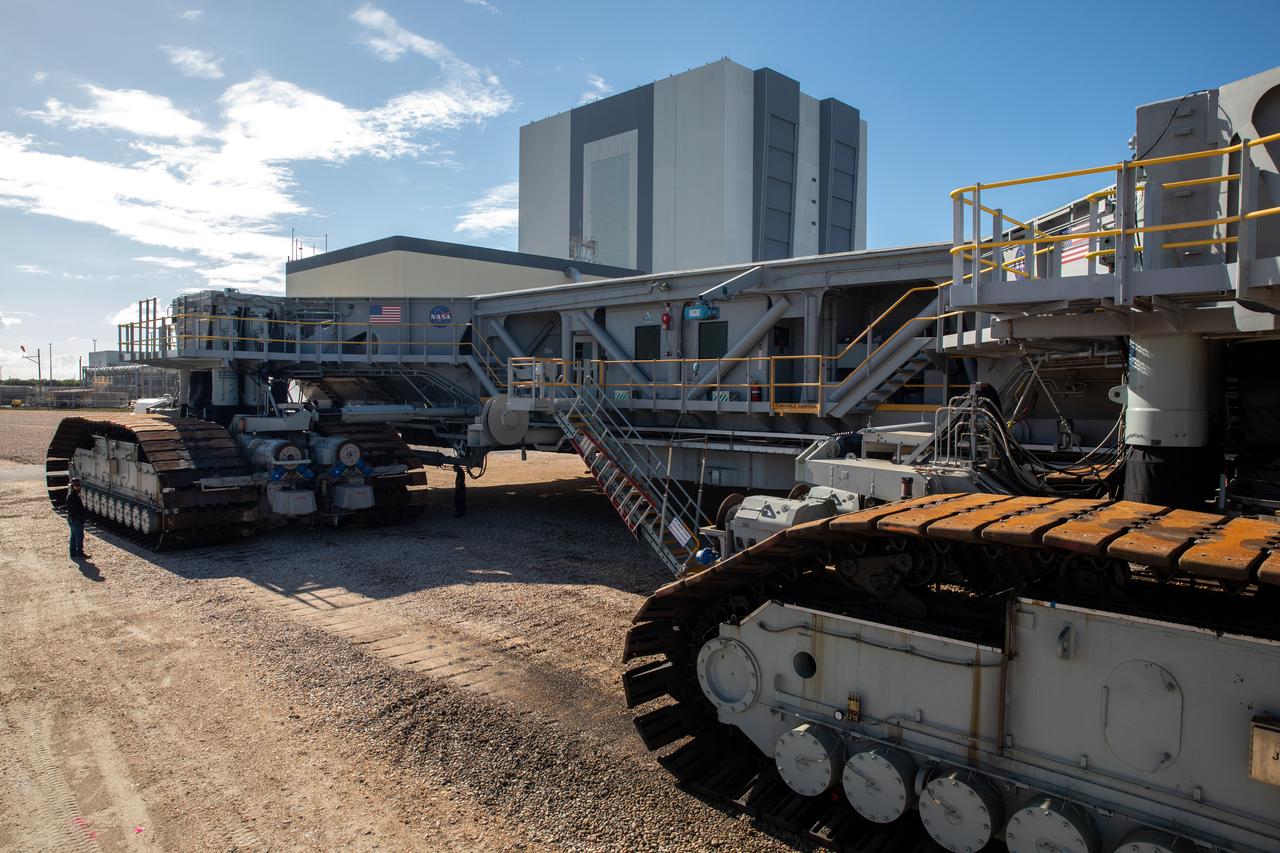
Engineers and technicians drive crawler-transporter 2 along the crawlerway toward the Vehicle Assembly Building (VAB) at NASA’s Kennedy Space Center in Florida on June 1, 2022. The crawler will go inside the VAB, where it will slide under the Artemis I Space Launch System with the Orion spacecraft atop on the mobile launcher and carry it to Launch Complex 39B for a wet dress rehearsal test ahead of the Artemis I launch. Artemis I will be the first integrated test of the SLS and Orion spacecraft. In later missions, NASA will land the first woman and the first person of color on the surface of the Moon, paving the way for a long-term lunar presence and serving as a steppingstone on the way to Mars.
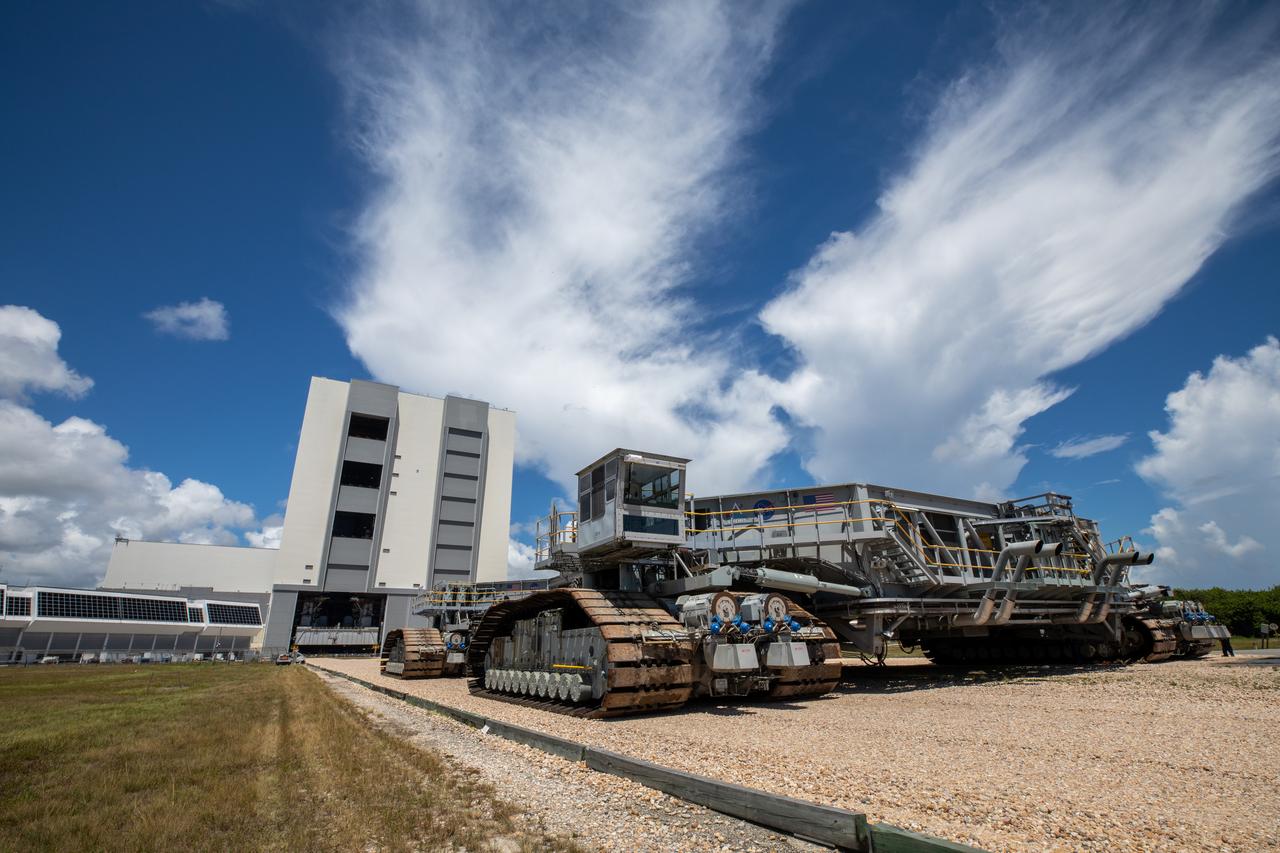
The crawler-transporter, driven by engineers, approaches the Vehicle Assembly Building (VAB) at NASA’s Kennedy Space Center in Florida on June 1, 2022. The crawler will go inside the VAB, where it will slide under the Artemis I Space Launch System with the Orion spacecraft atop on the mobile launcher and carry it to Launch Complex 39B for a wet dress rehearsal test ahead of the Artemis I launch. Artemis I will be the first integrated test of the SLS and Orion spacecraft. In later missions, NASA will land the first woman and the first person of color on the surface of the Moon, paving the way for a long-term lunar presence and serving as a steppingstone on the way to Mars.
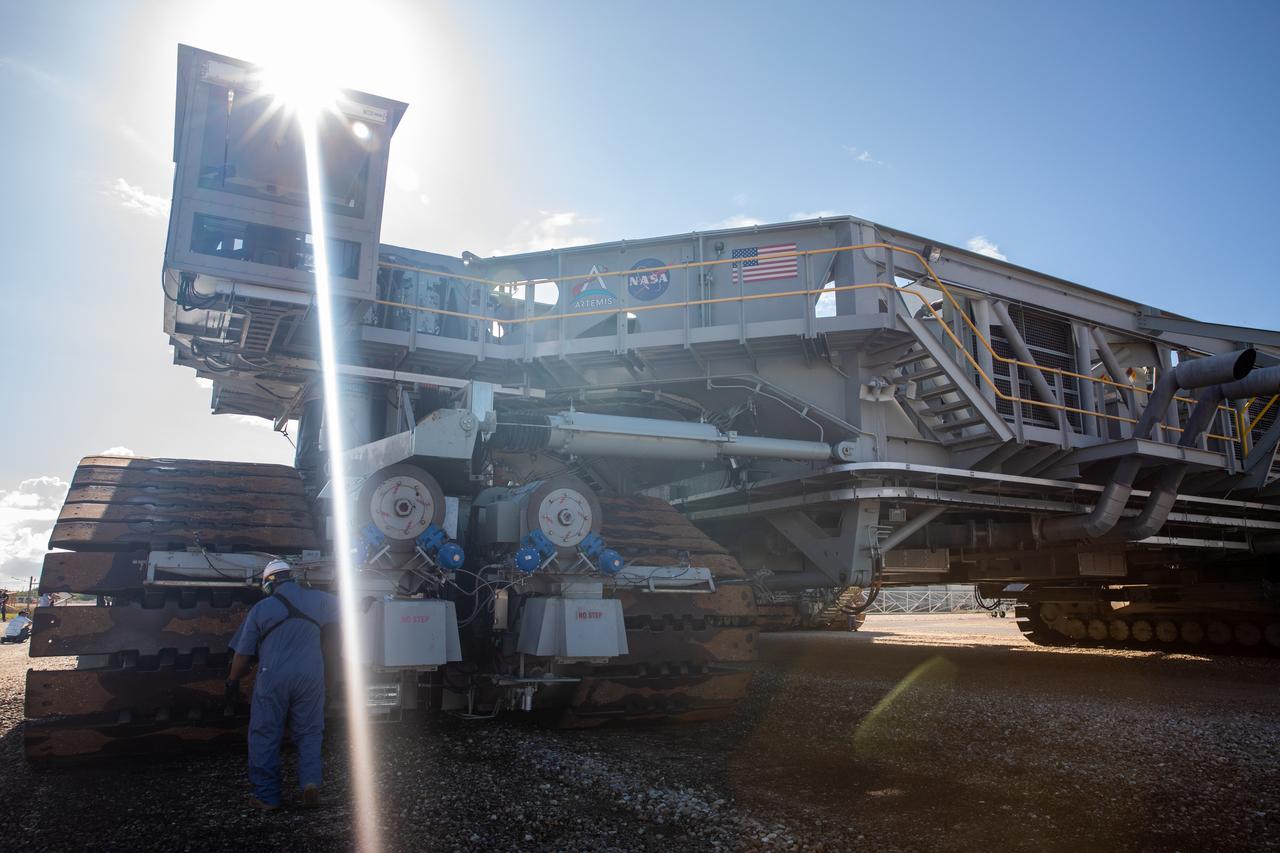
The sun reflects off the cab as engineers and technicians drive crawler-transporter 2 along the crawlerway toward the Vehicle Assembly Building (VAB) at NASA’s Kennedy Space Center in Florida on June 1, 2022. The crawler will go inside the VAB, where it will slide under the Artemis I Space Launch System with the Orion spacecraft atop on the mobile launcher and carry it to Launch Complex 39B for a wet dress rehearsal test ahead of the Artemis I launch. Artemis I will be the first integrated test of the SLS and Orion spacecraft. In later missions, NASA will land the first woman and the first person of color on the surface of the Moon, paving the way for a long-term lunar presence and serving as a steppingstone on the way to Mars.
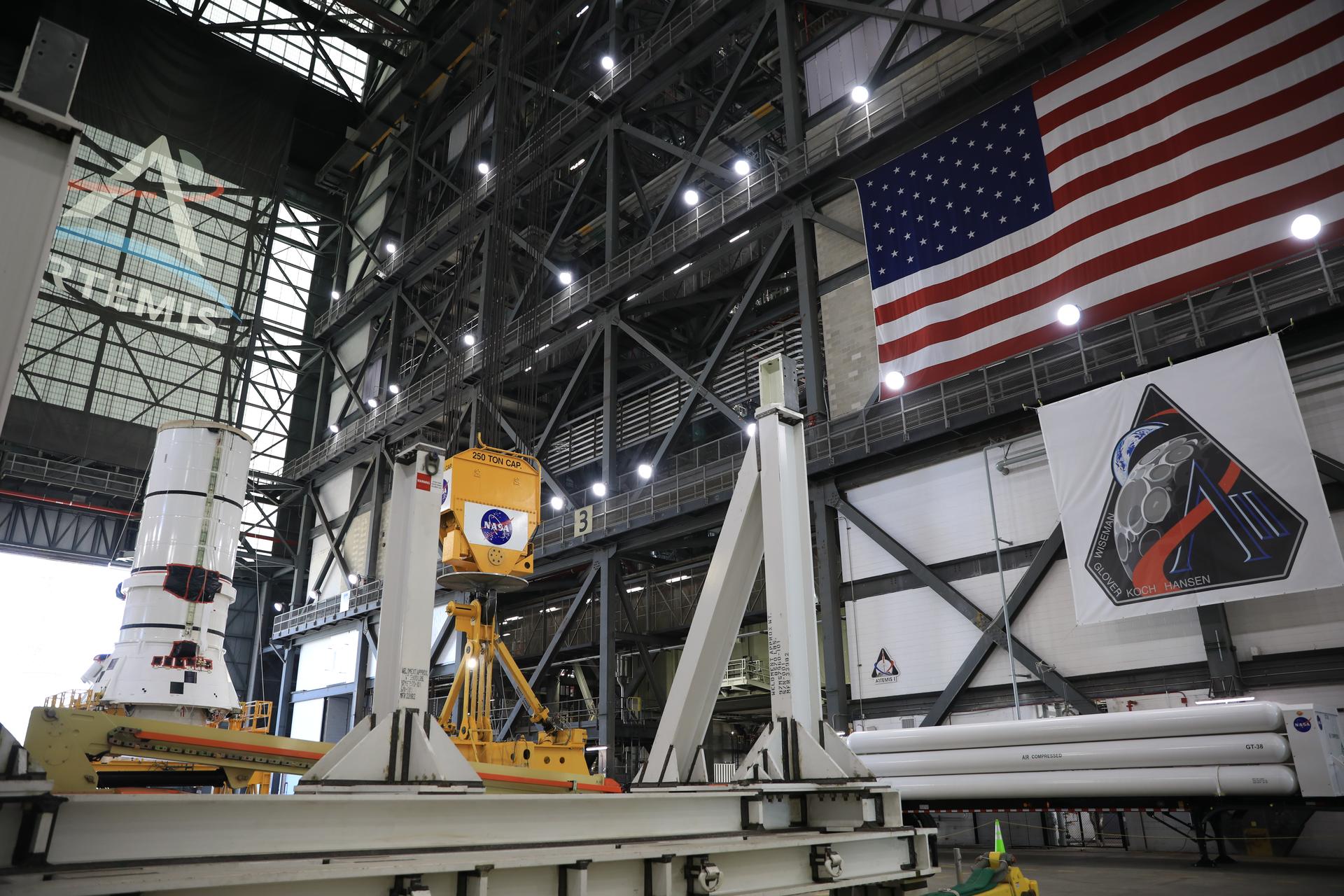
The right-hand aft assembly solid rocket booster segment for NASA’s Artemis III SLS (Space Launch System) rocket arrives at the agency’s Vehicle Assembly Building at NASA’s Kennedy Space Center in Florida on Thursday, July 9, 2026, ahead of stacking on top of the mobile launcher for the Artemis III mission. The twin boosters, manufactured by Northrop Grumman in Utah, will provide more than 75 percent of the SLS rocket’s total thrust at launch. The Artemis III mission will launch crew in the Orion spacecraft on top of the SLS rocket to test rendezvous and docking capabilities between Orion and commercial spacecraft needed to land astronauts on the Moon.

A view of the low bay entrance to the Vehicle Assembly Building (VAB) at NASA’s Kennedy Space Center in Florida, during sunrise on Jan. 19, 2022. The Artemis banner is above the door. Inside the VAB, NASA’s Space Launch System (SLS) and Orion spacecraft are stacked in High Bay 3 in preparation for the agency’s Artemis I mission. Artemis I will be the first integrated test of the SLS and Orion spacecraft. In later missions, NASA will land the first woman and the first person of color on the surface of the Moon, paving the way for a long-term lunar presence and serving as a steppingstone on the way to Mars.
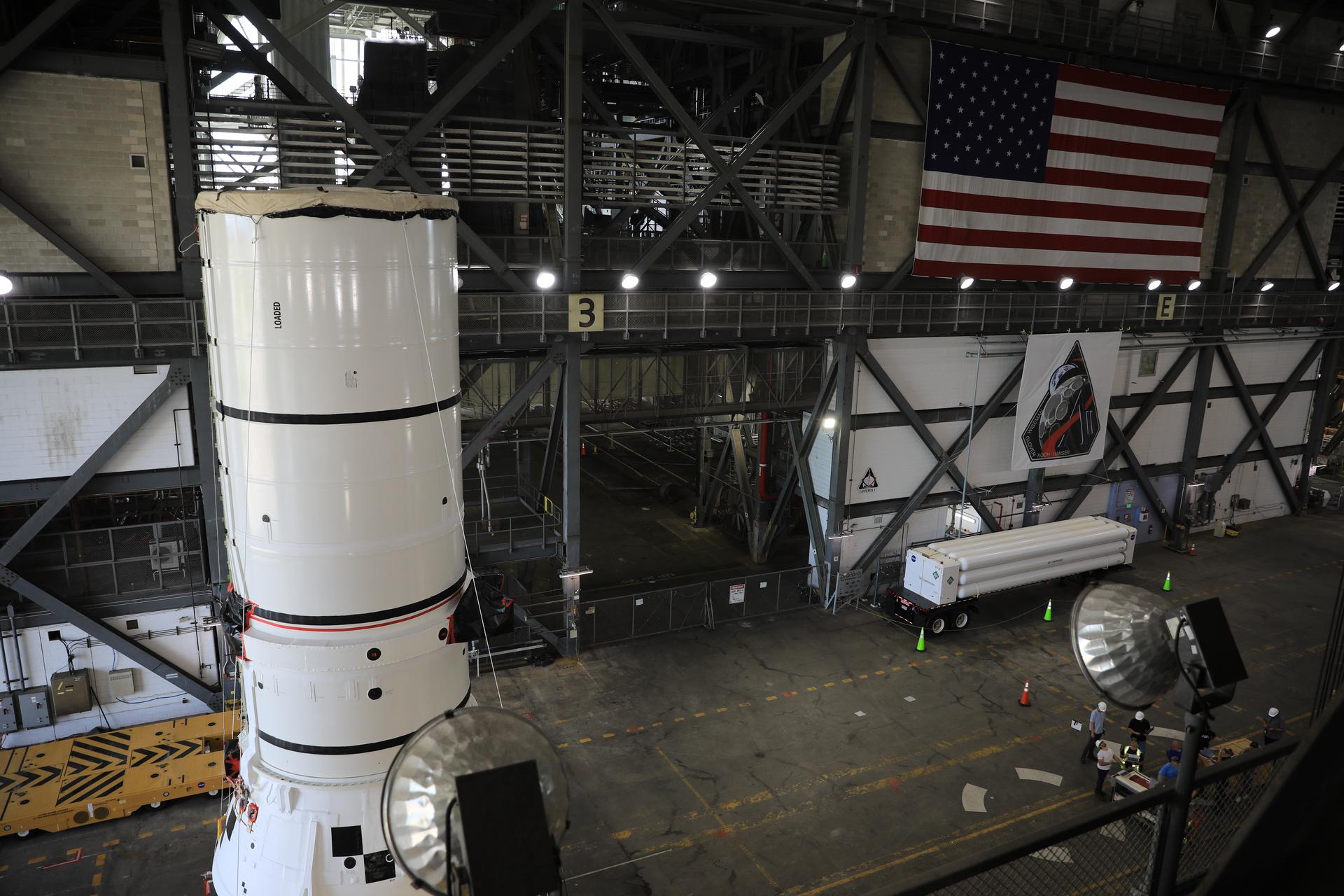
The left-hand aft assembly solid rocket booster segment for NASA’s Artemis III SLS (Space Launch System) rocket arrives at the agency’s Vehicle Assembly Building at NASA’s Kennedy Space Center in Florida on Monday, July 6, 2026, ahead of stacking on top of the mobile launcher for the Artemis III mission. The twin boosters, manufactured by Northrop Grumman in Utah, will provide more than 75 percent of the SLS rocket’s total thrust at launch. The Artemis III mission will launch crew in the Orion spacecraft on top of the SLS rocket to test rendezvous and docking capabilities between Orion and commercial spacecraft needed to land astronauts on the Moon.
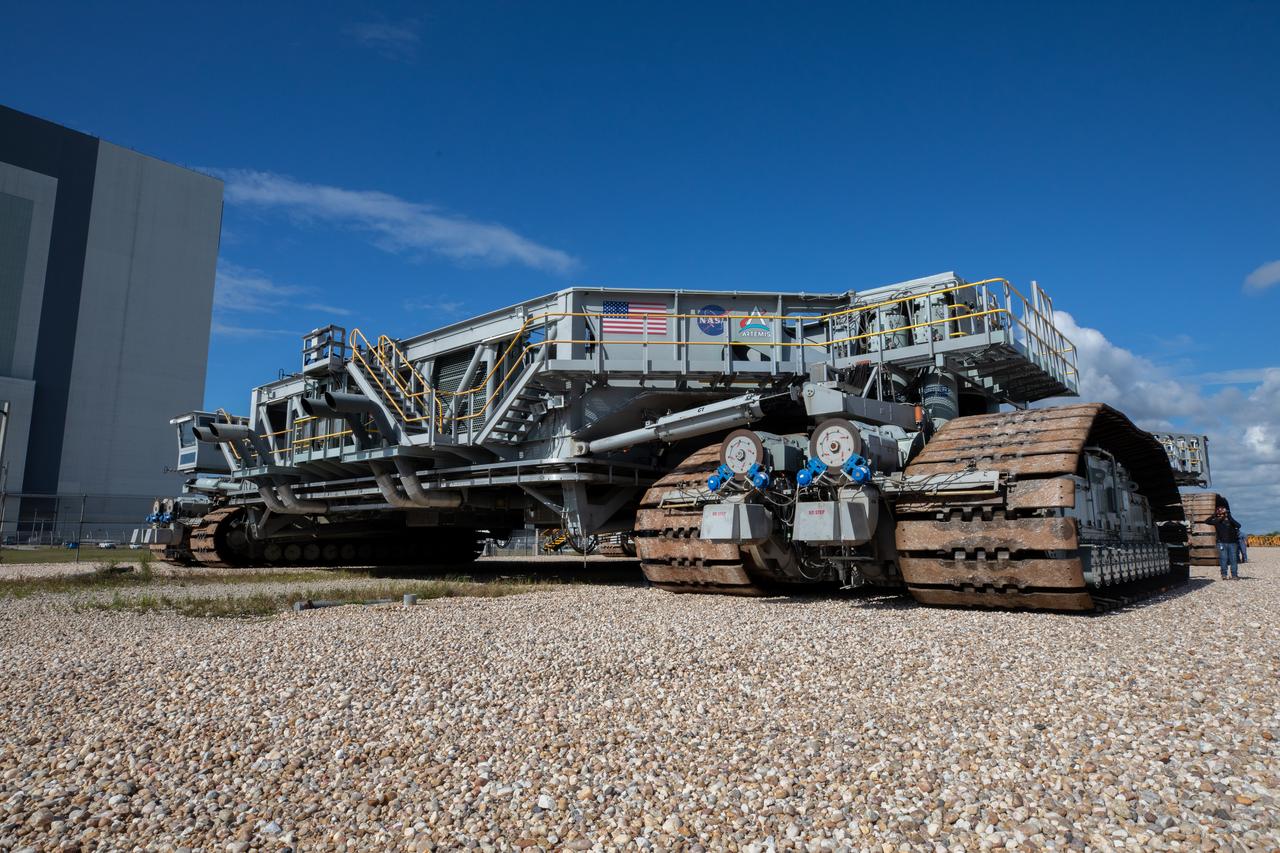
Engineers and technicians drive crawler-transporter 2 along the crawlerway toward the Vehicle Assembly Building (VAB) at NASA’s Kennedy Space Center in Florida on June 1, 2022. The crawler will go inside the VAB, where it will slide under the Artemis I Space Launch System with the Orion spacecraft atop on the mobile launcher and carry it to Launch Complex 39B for a wet dress rehearsal test ahead of the Artemis I launch. Artemis I will be the first integrated test of the SLS and Orion spacecraft. In later missions, NASA will land the first woman and the first person of color on the surface of the Moon, paving the way for a long-term lunar presence and serving as a steppingstone on the way to Mars.
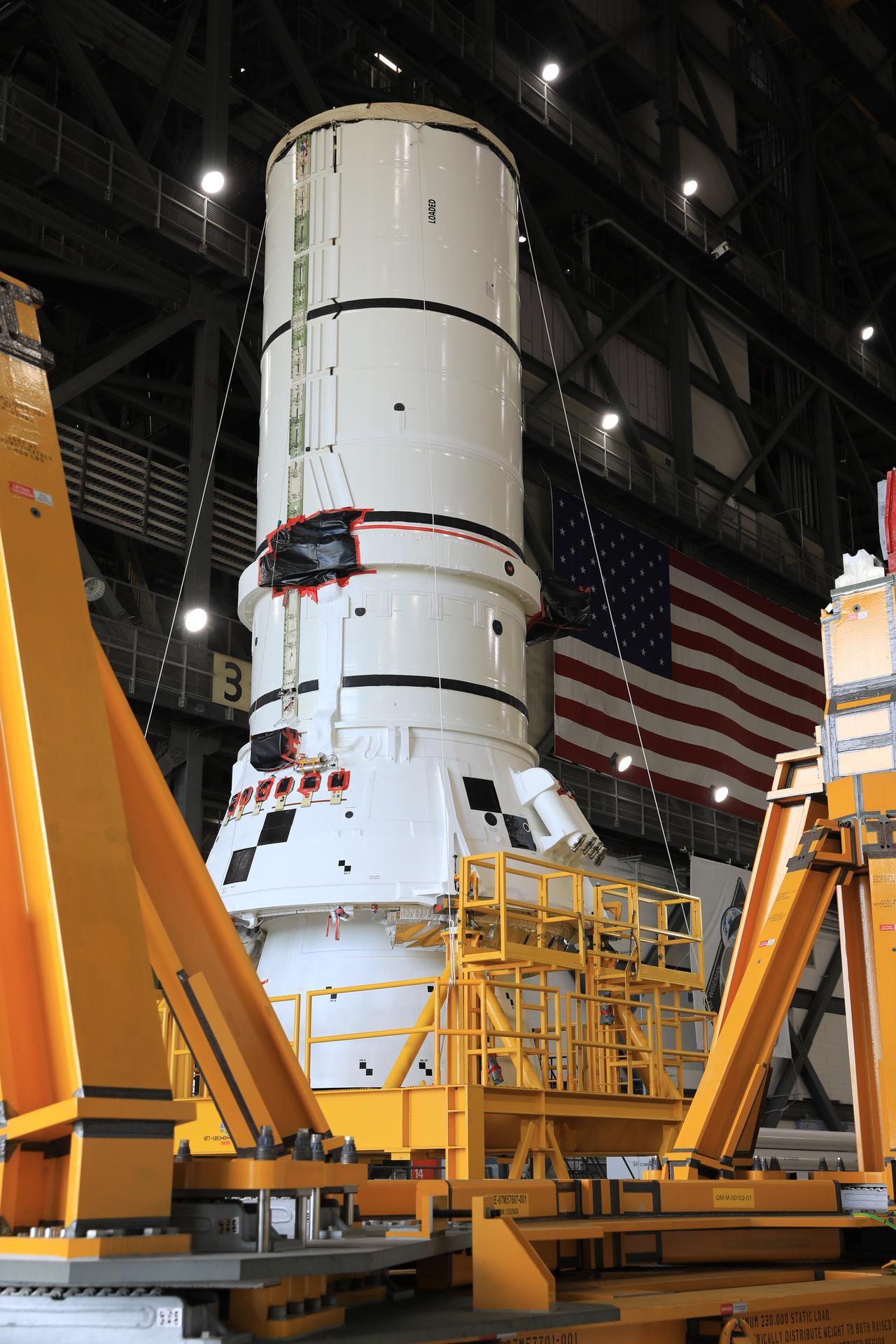
The left-hand aft assembly solid rocket booster segment for NASA’s Artemis III SLS (Space Launch System) rocket arrives at the agency’s Vehicle Assembly Building at NASA’s Kennedy Space Center in Florida on Monday, July 6, 2026, ahead of stacking on top of the mobile launcher for the Artemis III mission. The twin boosters, manufactured by Northrop Grumman in Utah, will provide more than 75 percent of the SLS rocket’s total thrust at launch. The Artemis III mission will launch crew in the Orion spacecraft on top of the SLS rocket to test rendezvous and docking capabilities between Orion and commercial spacecraft needed to land astronauts on the Moon.
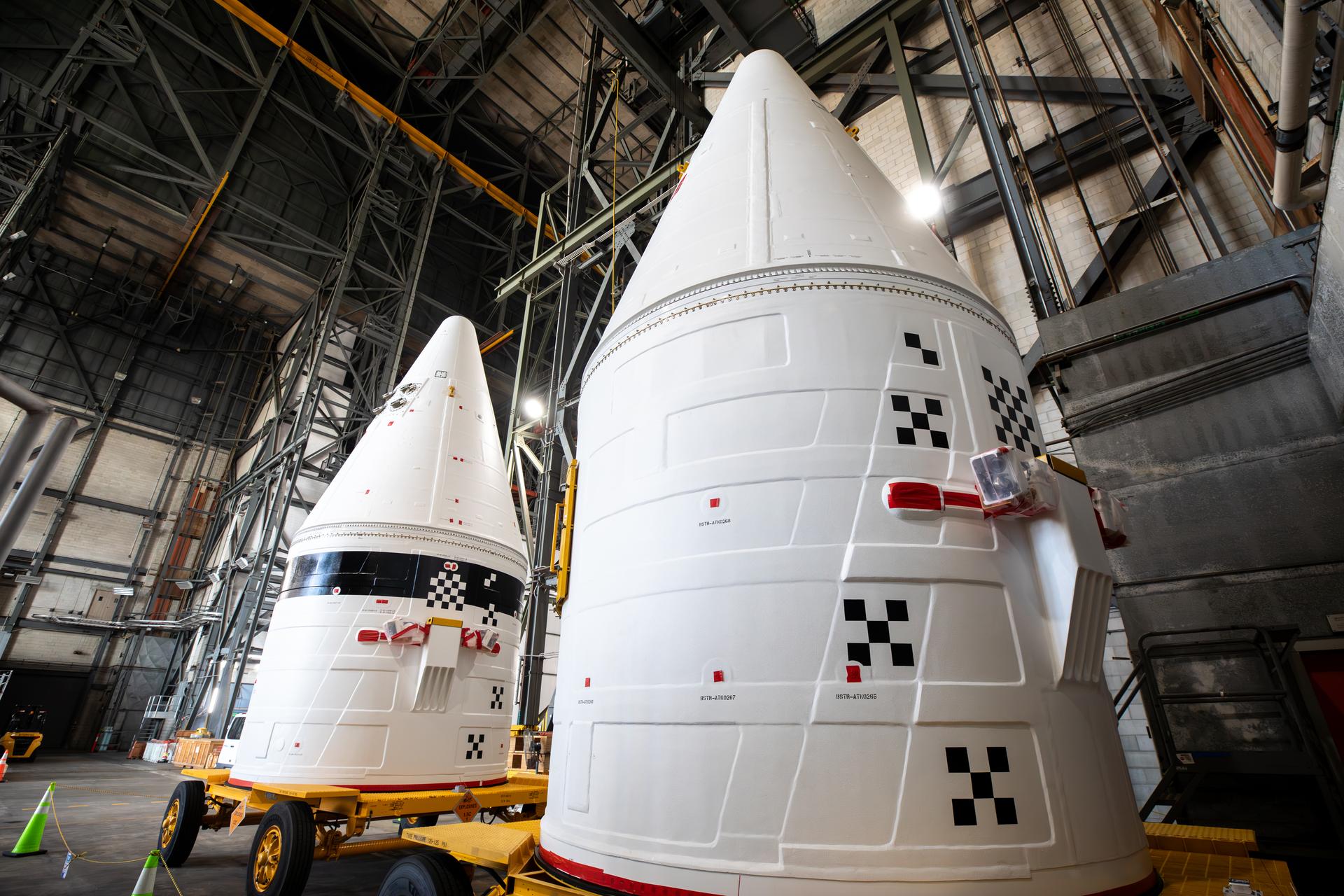
The left, with black stripe, and right aerodynamic forward assemblies for the twin SLS (Space Launch System) solid rocket boosters for Artemis III arrive at the Vehicle Assembly Building at NASA’s Kennedy Space Center in Florida on Thursday, Aug. 13, 2026. The nose cones will be integrated atop the SLS boosters to provide a smooth, pointed shape that allows the boosters to cut through the atmosphere efficiently, reducing drag and keeping the rocket stable during ascent. Artemis III will carry out a series of objectives in low Earth orbit designed to demonstrate critical systems needed for future lunar landings, beginning with Artemis IV.
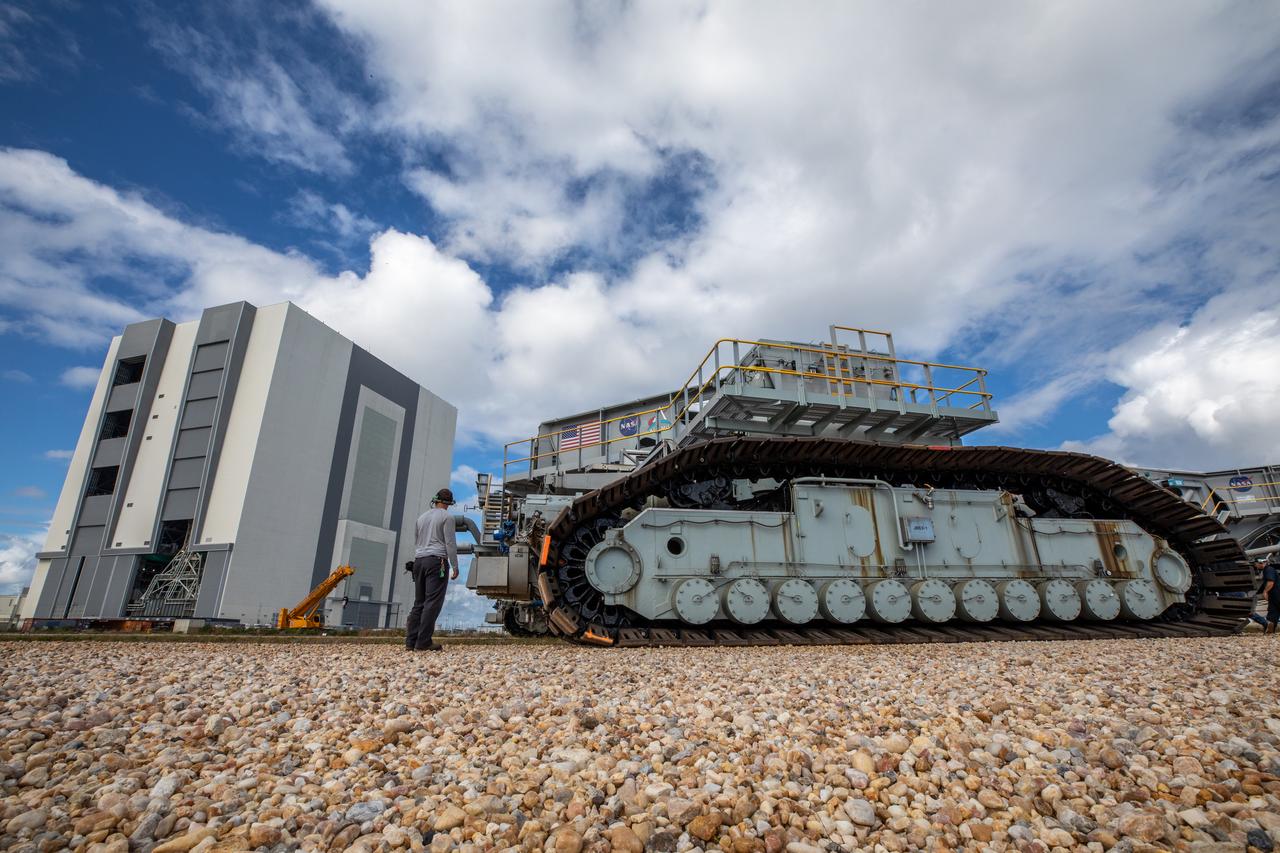
Technicians check equipment on crawler-transporter 2 during its trip to the Vehicle Assembly Building (VAB) at NASA’s Kennedy Space Center in Florida on June 1, 2022. The crawler will go inside the VAB, where it will slide under the Artemis I Space Launch System with the Orion spacecraft atop on the mobile launcher and carry it to Launch Complex 39B for a wet dress rehearsal test ahead of the Artemis I launch. Artemis I will be the first integrated test of the SLS and Orion spacecraft. In later missions, NASA will land the first woman and the first person of color on the surface of the Moon, paving the way for a long-term lunar presence and serving as a steppingstone on the way to Mars.
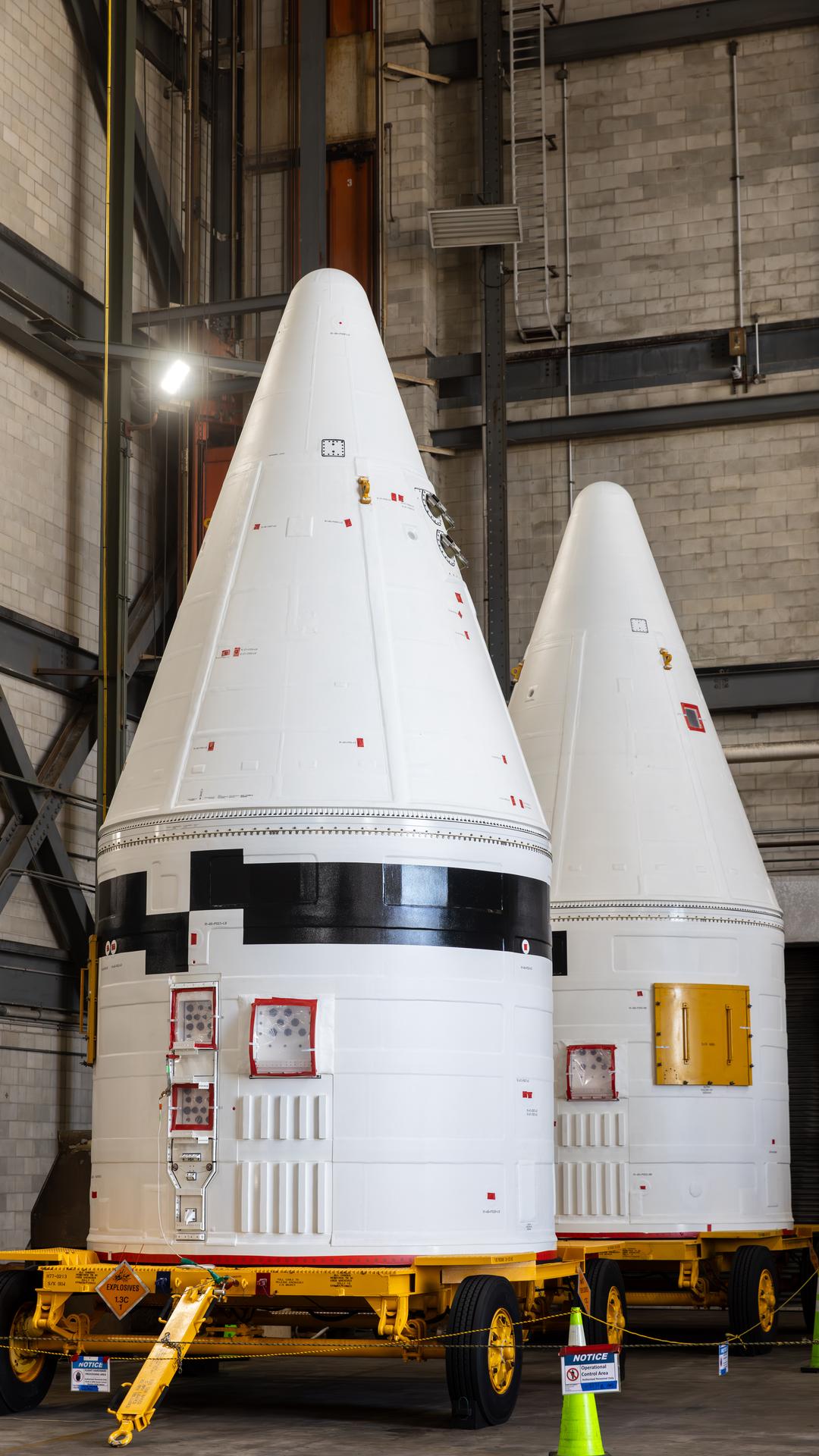
The left, with black stripe, and right aerodynamic forward assemblies for the twin SLS (Space Launch System) solid rocket boosters for Artemis III arrive at the Vehicle Assembly Building at NASA’s Kennedy Space Center in Florida on Thursday, Aug. 13, 2026. The nose cones will be integrated atop the SLS boosters to provide a smooth, pointed shape that allows the boosters to cut through the atmosphere efficiently, reducing drag and keeping the rocket stable during ascent. Artemis III will carry out a series of objectives in low Earth orbit designed to demonstrate critical systems needed for future lunar landings, beginning with Artemis IV.
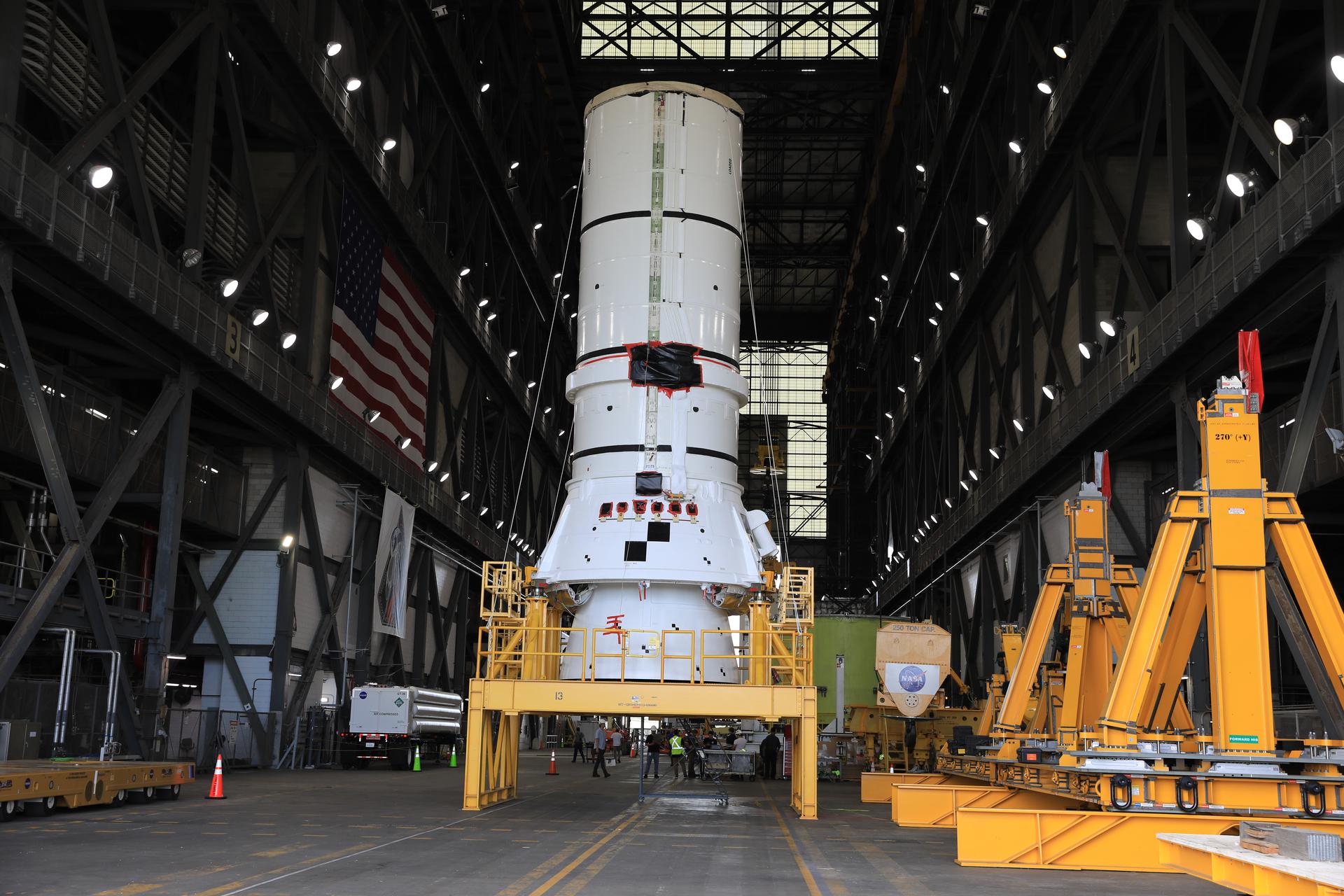
The left-hand aft assembly solid rocket booster segment for NASA’s Artemis III SLS (Space Launch System) rocket arrives at the agency’s Vehicle Assembly Building at NASA’s Kennedy Space Center in Florida on Monday, July 6, 2026, ahead of stacking on top of the mobile launcher for the Artemis III mission. The twin boosters, manufactured by Northrop Grumman in Utah, will provide more than 75 percent of the SLS rocket’s total thrust at launch. The Artemis III mission will launch crew in the Orion spacecraft on top of the SLS rocket to test rendezvous and docking capabilities between Orion and commercial spacecraft needed to land astronauts on the Moon.
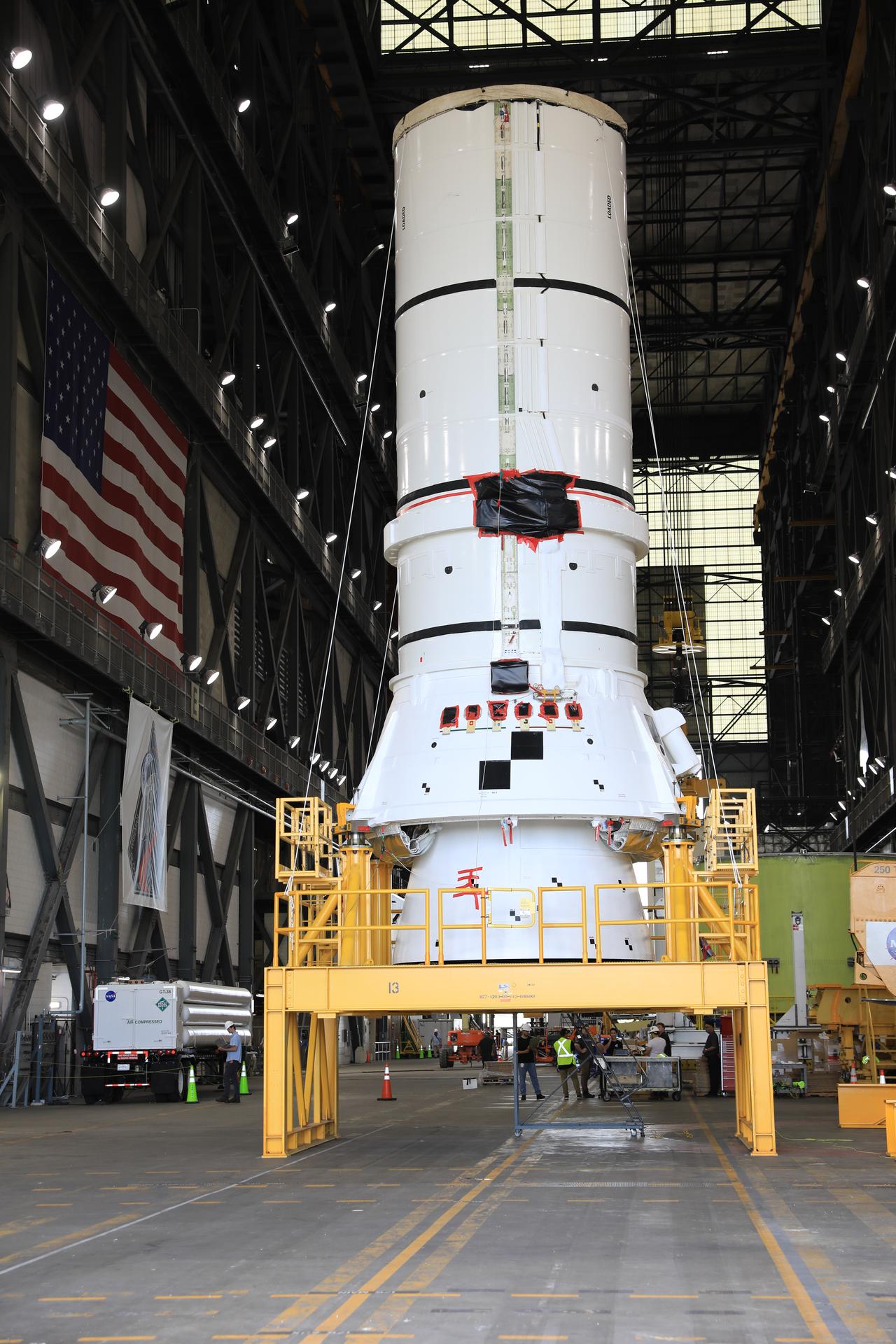
The left-hand aft assembly solid rocket booster segment for NASA’s Artemis III SLS (Space Launch System) rocket arrives at the agency’s Vehicle Assembly Building at NASA’s Kennedy Space Center in Florida on Monday, July 6, 2026, ahead of stacking on top of the mobile launcher for the Artemis III mission. The twin boosters, manufactured by Northrop Grumman in Utah, will provide more than 75 percent of the SLS rocket’s total thrust at launch. The Artemis III mission will launch crew in the Orion spacecraft on top of the SLS rocket to test rendezvous and docking capabilities between Orion and commercial spacecraft needed to land astronauts on the Moon.
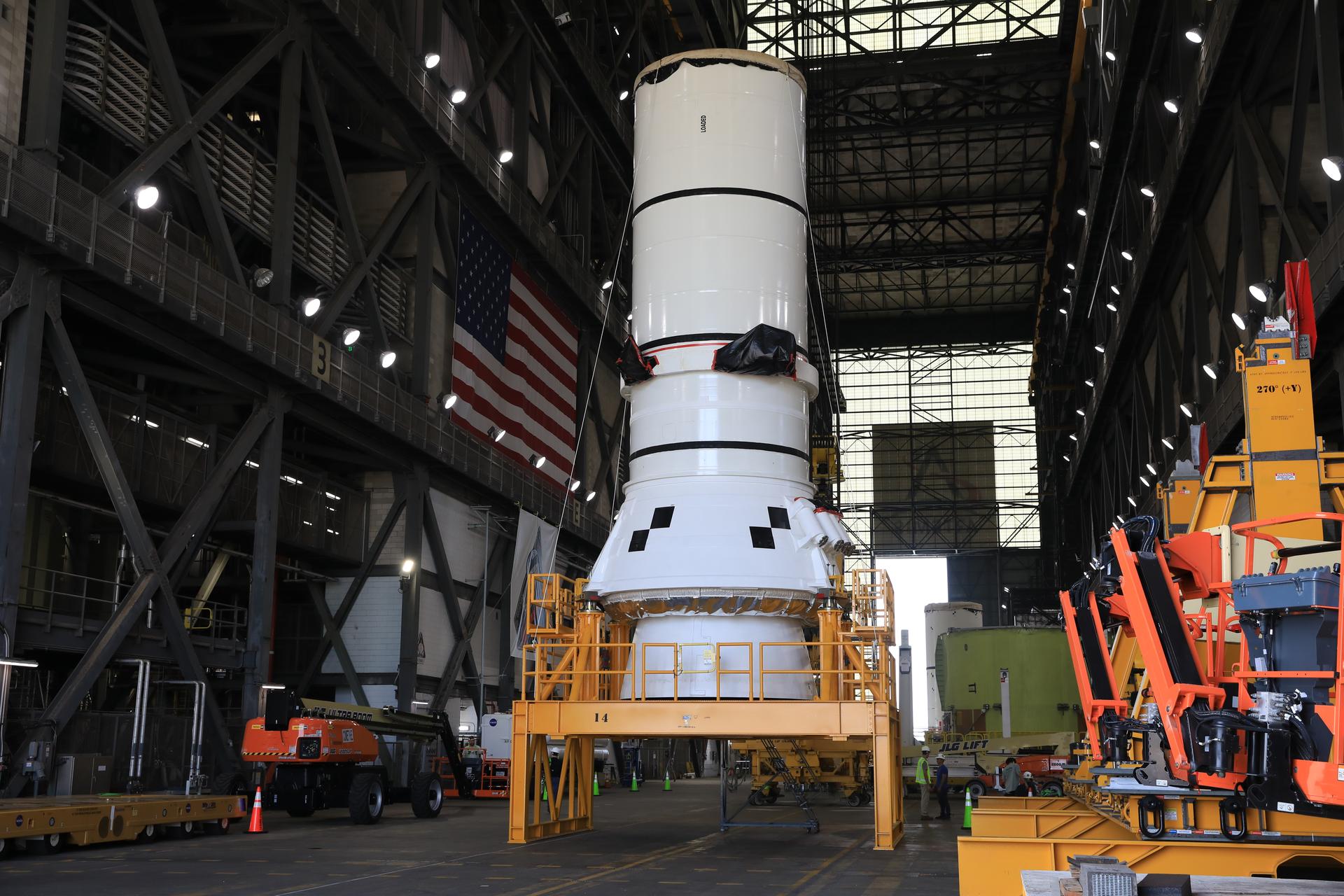
The right-hand aft assembly solid rocket booster segment for NASA’s Artemis III SLS (Space Launch System) rocket arrives at the agency’s Vehicle Assembly Building at NASA’s Kennedy Space Center in Florida on Thursday, July 9, 2026, ahead of stacking on top of the mobile launcher for the Artemis III mission. The twin boosters, manufactured by Northrop Grumman in Utah, will provide more than 75 percent of the SLS rocket’s total thrust at launch. The Artemis III mission will launch crew in the Orion spacecraft on top of the SLS rocket to test rendezvous and docking capabilities between Orion and commercial spacecraft needed to land astronauts on the Moon.
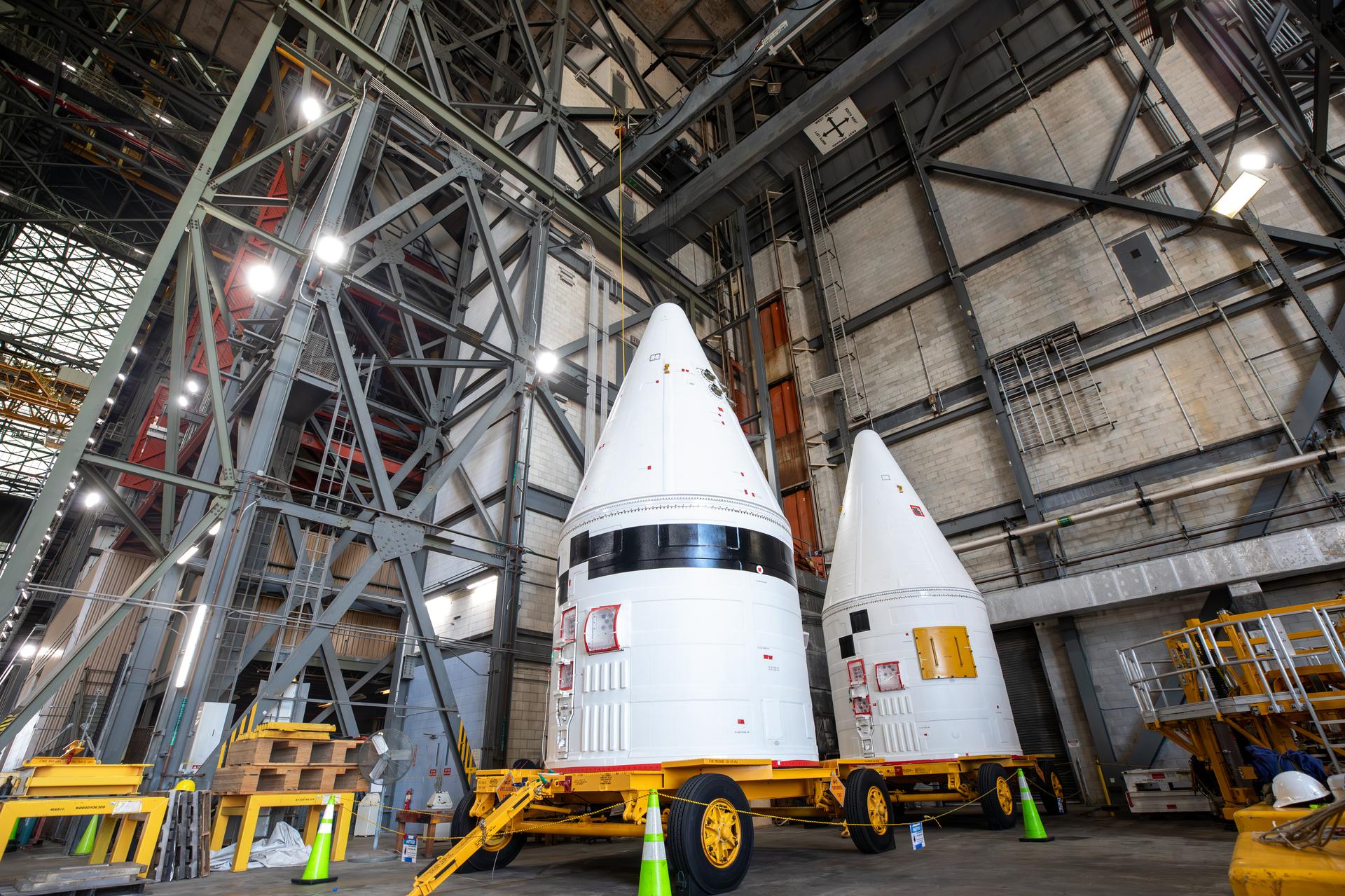
The left, with black stripe, and right aerodynamic forward assemblies for the twin SLS (Space Launch System) solid rocket boosters for Artemis III arrive at the Vehicle Assembly Building at NASA’s Kennedy Space Center in Florida on Thursday, Aug. 13, 2026. The nose cones will be integrated atop the SLS boosters to provide a smooth, pointed shape that allows the boosters to cut through the atmosphere efficiently, reducing drag and keeping the rocket stable during ascent. Artemis III will carry out a series of objectives in low Earth orbit designed to demonstrate critical systems needed for future lunar landings, beginning with Artemis IV.

A view of one of the RS-25 engines on the Space Launch System rocket as seen from the zero deck of the mobile launcher inside the Vehicle Assembly Building on Aug. 16, 2021. Four RS-25 engines will fire for over eight minutes at liftoff of the Artemis I mission to help get the Orion spacecraft to orbit. Artemis I will be an uncrewed test of the Orion spacecraft and SLS rocket as an integrated system ahead of crewed flights to the Moon. Under Artemis, NASA aims to land the first woman and first person of color on the Moon and establish sustainable lunar exploration.
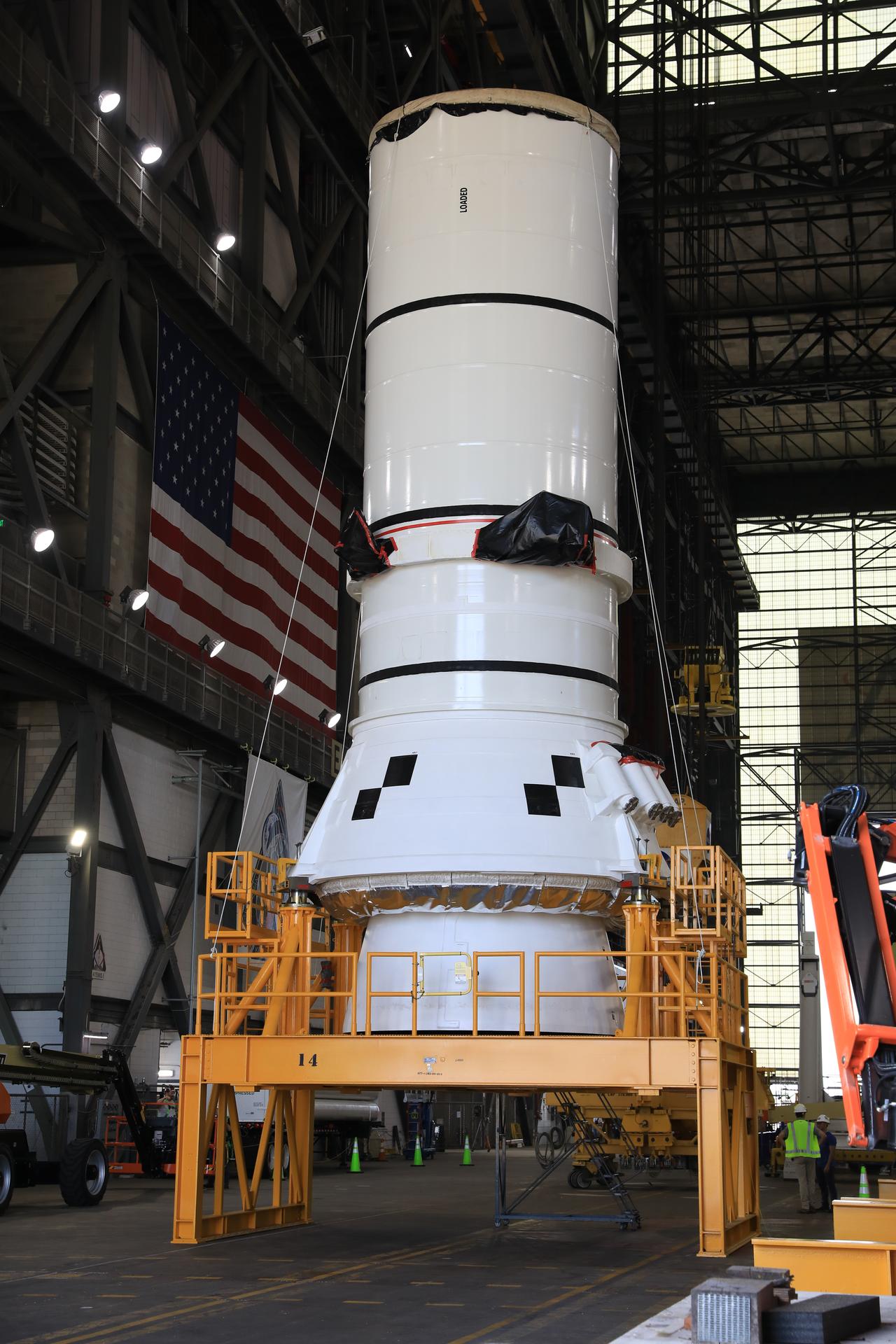
The right-hand aft assembly solid rocket booster segment for NASA’s Artemis III SLS (Space Launch System) rocket arrives at the agency’s Vehicle Assembly Building at NASA’s Kennedy Space Center in Florida on Thursday, July 9, 2026, ahead of stacking on top of the mobile launcher for the Artemis III mission. The twin boosters, manufactured by Northrop Grumman in Utah, will provide more than 75 percent of the SLS rocket’s total thrust at launch. The Artemis III mission will launch crew in the Orion spacecraft on top of the SLS rocket to test rendezvous and docking capabilities between Orion and commercial spacecraft needed to land astronauts on the Moon.
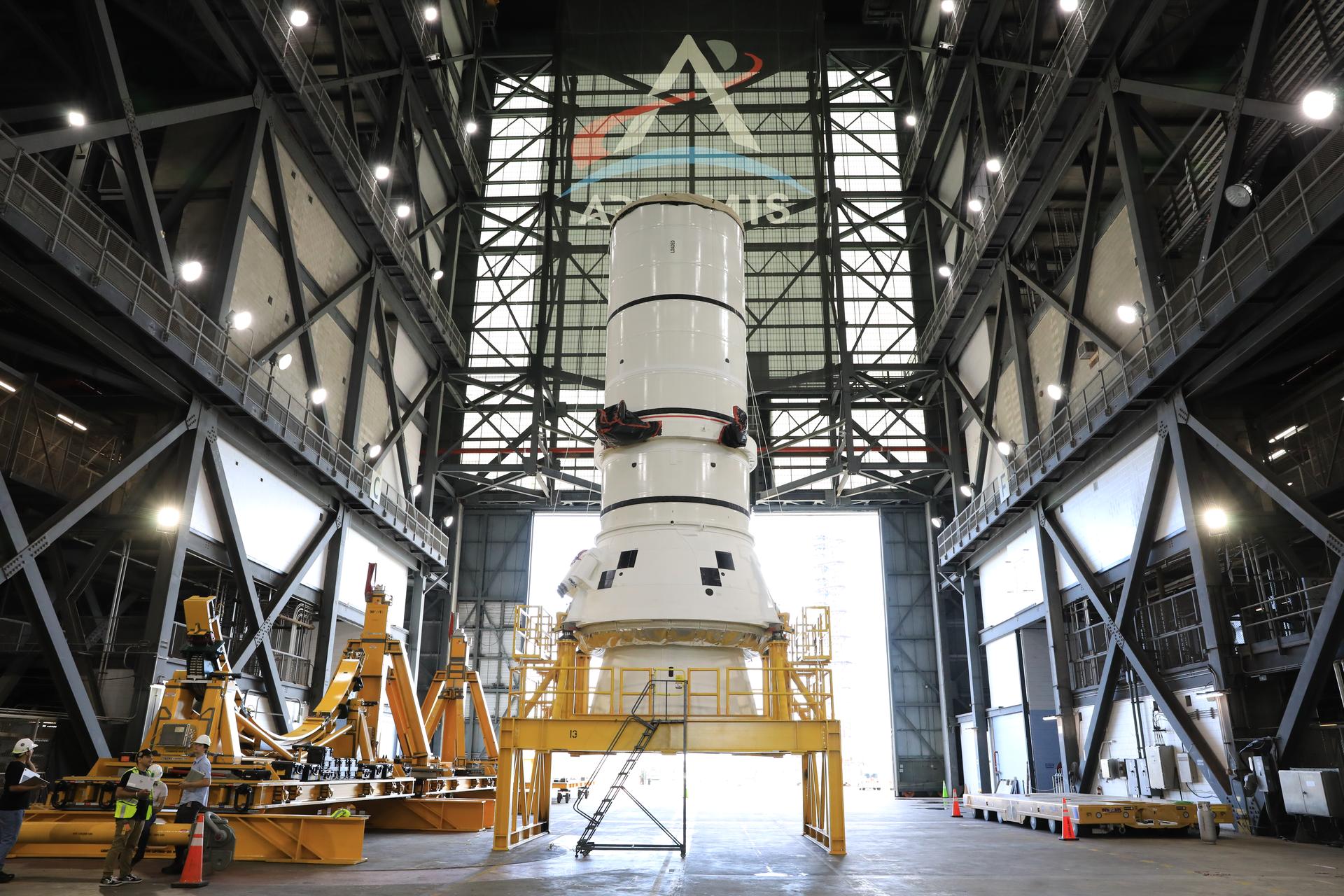
The left-hand aft assembly solid rocket booster segment for NASA’s Artemis III SLS (Space Launch System) rocket arrives at the agency’s Vehicle Assembly Building at NASA’s Kennedy Space Center in Florida on Monday, July 6, 2026, ahead of stacking on top of the mobile launcher for the Artemis III mission. The twin boosters, manufactured by Northrop Grumman in Utah, will provide more than 75 percent of the SLS rocket’s total thrust at launch. The Artemis III mission will launch crew in the Orion spacecraft on top of the SLS rocket to test rendezvous and docking capabilities between Orion and commercial spacecraft needed to land astronauts on the Moon.
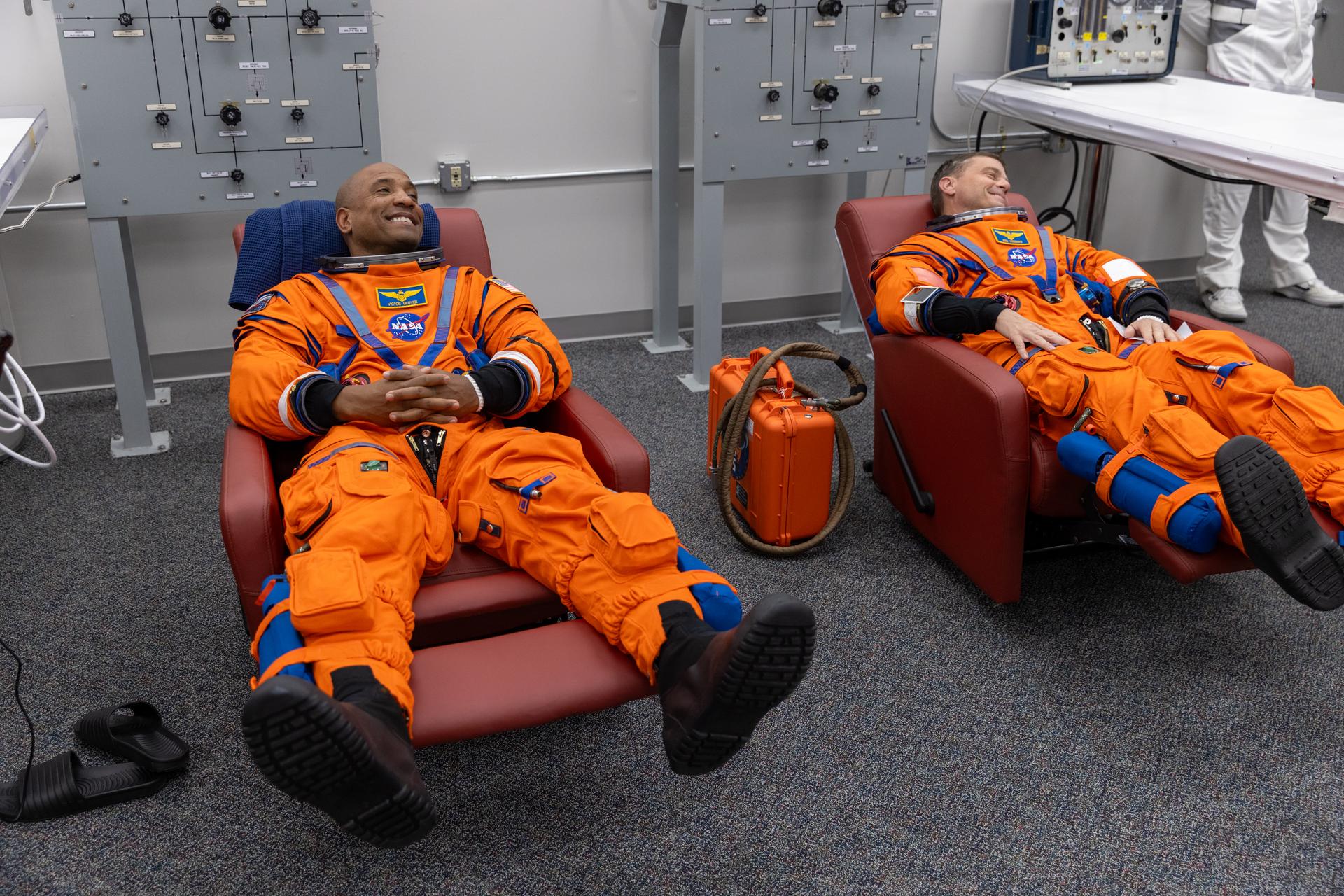
From left, NASA astronauts Victor Glover, Artemis II pilot, and Reid Wiseman, Artemis II commander, undergo spacesuit checks inside the crew quarters suit-up room in the Neil A. Armstrong Operations and Checkout Building part of the Artemis II Countdown Demonstration Test at the agency’s Kennedy Space Center on Saturday, Dec. 20, 2025. For this operation, the Artemis II crew and launch team are simulating the launch day timeline including suit-up, walkout, and climbing in and out of the spacecraft. Through the Artemis campaign, NASA will send astronauts to explore the Moon for scientific discovery, economic benefits, and to build the foundation for the first crewed missions to Mars, for the benefit of all.
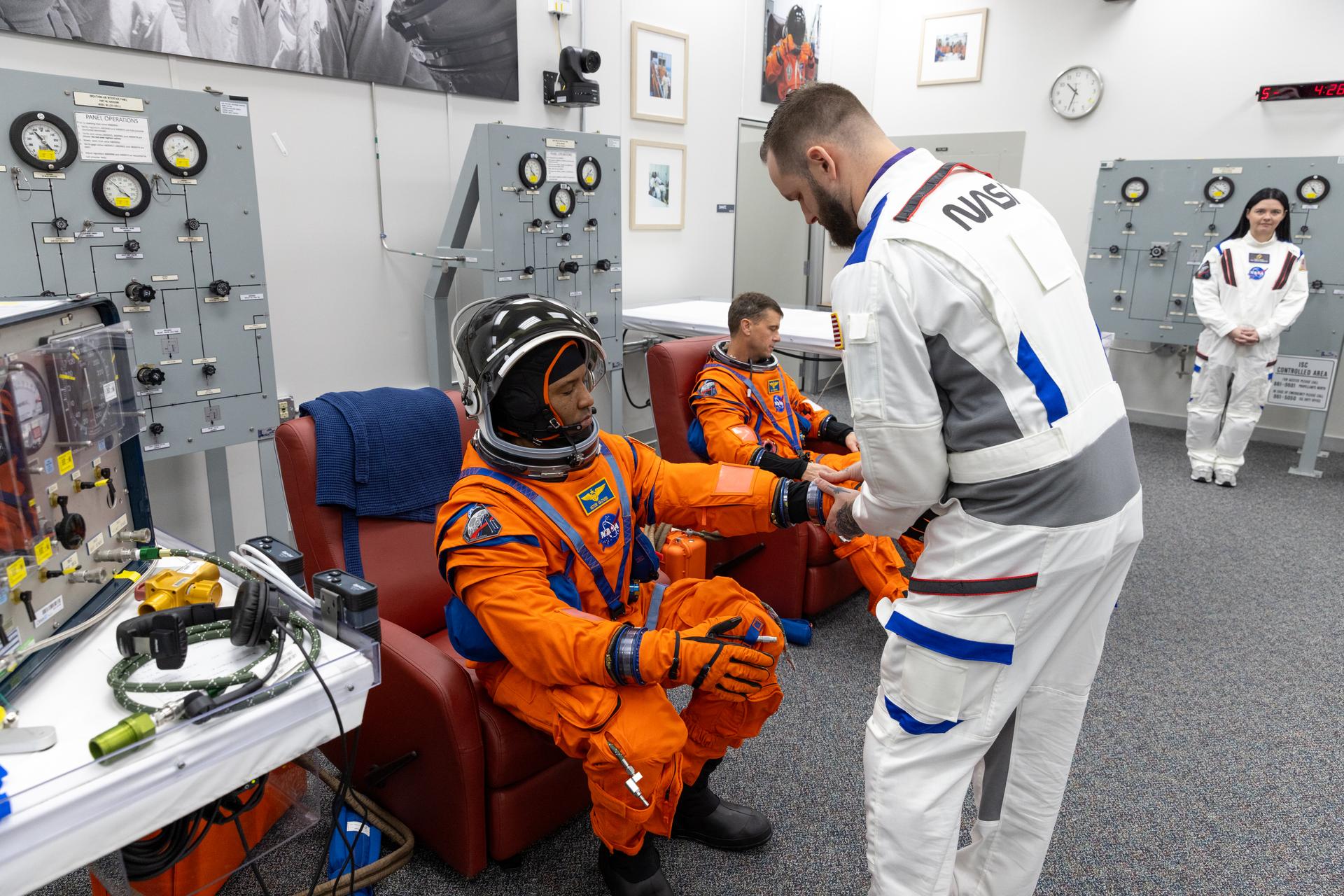
From left, NASA astronauts Victor Glover, Artemis II pilot, and Reid Wiseman, Artemis II commander, undergo spacesuit checks inside the crew quarters suit-up room in the Neil A. Armstrong Operations and Checkout Building part of the Artemis II Countdown Demonstration Test at the agency’s Kennedy Space Center on Saturday, Dec. 20, 2025. For this operation, the Artemis II crew and launch team are simulating the launch day timeline including suit-up, walkout, and climbing in and out of the spacecraft. Through the Artemis campaign, NASA will send astronauts to explore the Moon for scientific discovery, economic benefits, and to build the foundation for the first crewed missions to Mars, for the benefit of all.
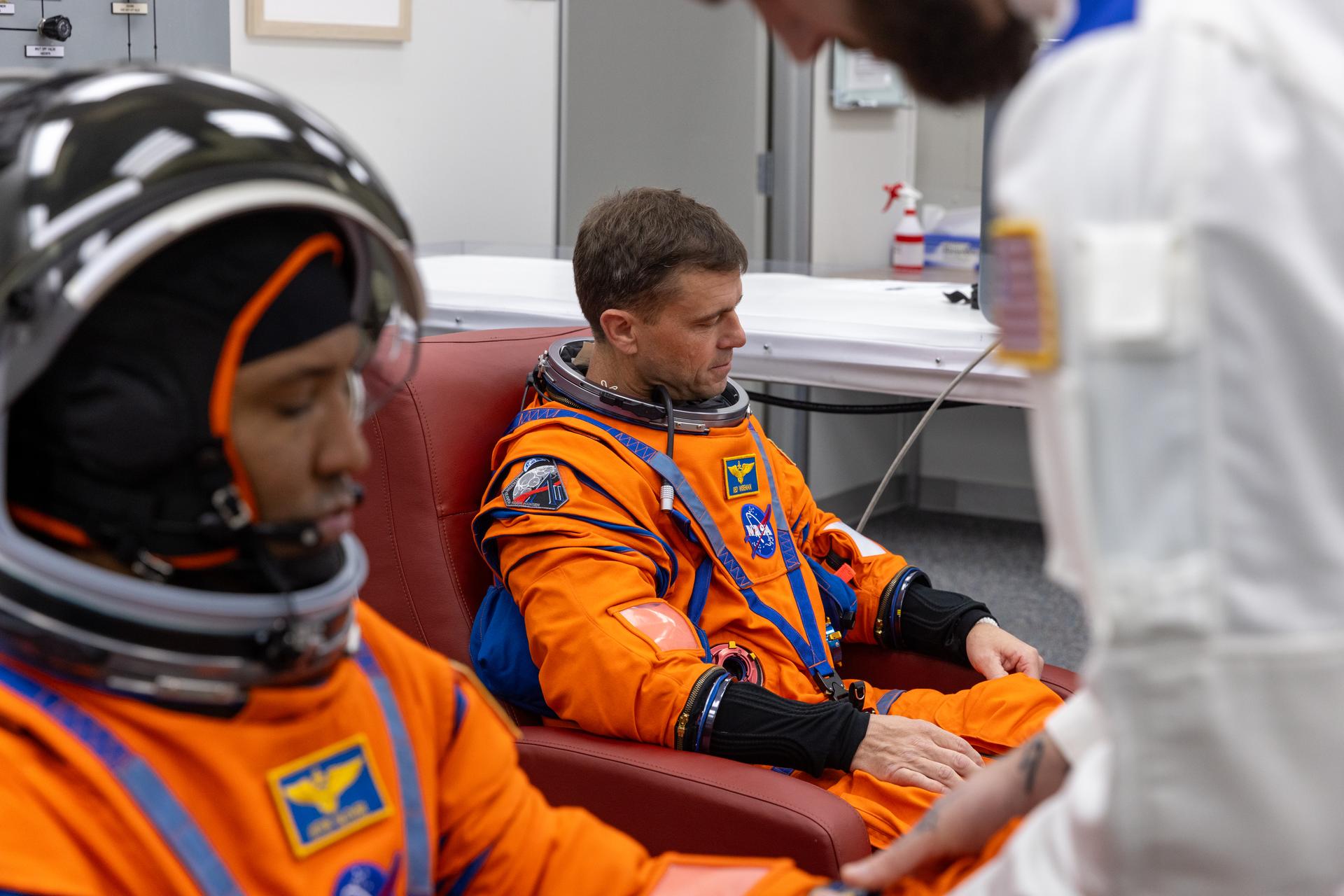
From left, NASA astronauts Victor Glover, Artemis II pilot, and Reid Wiseman, Artemis II commander, undergo spacesuit checks inside the crew quarters suit-up room in the Neil A. Armstrong Operations and Checkout Building part of the Artemis II Countdown Demonstration Test at the agency’s Kennedy Space Center on Saturday, Dec. 20, 2025. For this operation, the Artemis II crew and launch team are simulating the launch day timeline including suit-up, walkout, and climbing in and out of the spacecraft. Through the Artemis campaign, NASA will send astronauts to explore the Moon for scientific discovery, economic benefits, and to build the foundation for the first crewed missions to Mars, for the benefit of all.

A view of the Vehicle Assembly Building (VAB) at NASA’s Kennedy Space Center in Florida, during sunrise on Jan. 19, 2022. Inside the VAB, NASA’s Space Launch System (SLS) and Orion spacecraft are stacked in High Bay 3 in preparation for the agency’s Artemis I mission. Artemis I will be the first integrated test of the SLS and Orion spacecraft. In later missions, NASA will land the first woman and the first person of color on the surface of the Moon, paving the way for a long-term lunar presence and serving as a steppingstone on the way to Mars.

A view of the Vehicle Assembly Building (VAB) at NASA’s Kennedy Space Center in Florida, during sunrise on Jan. 19, 2022. Inside the VAB, NASA’s Space Launch System (SLS) and Orion spacecraft are stacked in High Bay 3 in preparation for the agency’s Artemis I mission. Artemis I will be the first integrated test of the SLS and Orion spacecraft. In later missions, NASA will land the first woman and the first person of color on the surface of the Moon, paving the way for a long-term lunar presence and serving as a steppingstone on the way to Mars.
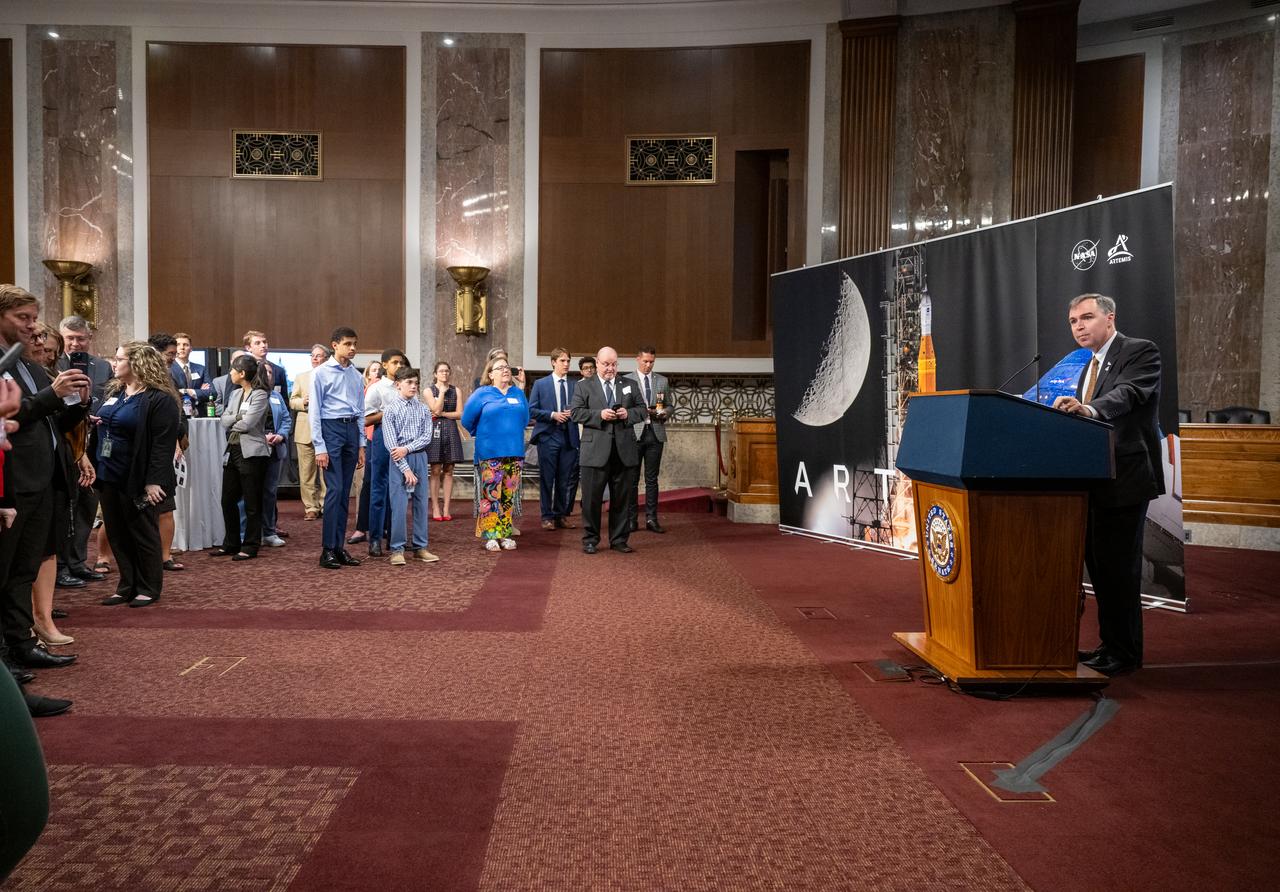
President and CEO of the Coalition for Deep Space Exploration Allen Cutler delivers remarks during a reception with Artemis II crew members Wednesday, June 5, 2024, at the Dirksen Senate Office Building in Washington. Photo Credit: (NASA/Keegan Barber)
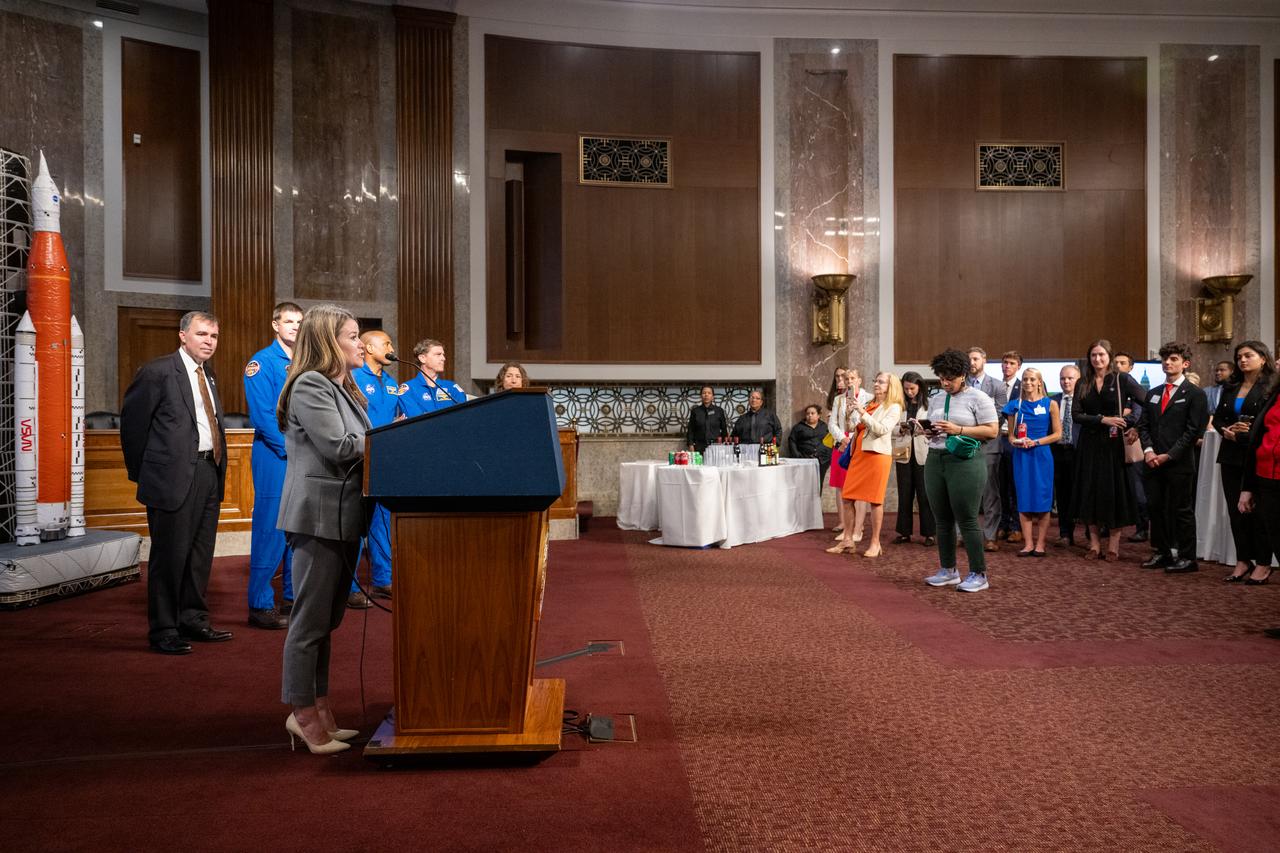
NASA Office of Legislative Affairs Associate Administrator Alicia Brown delivers remarks during a reception with Artemis II crew members Wednesday, June 5, 2024, at the Dirksen Senate Office Building in Washington. Photo Credit: (NASA/Keegan Barber)
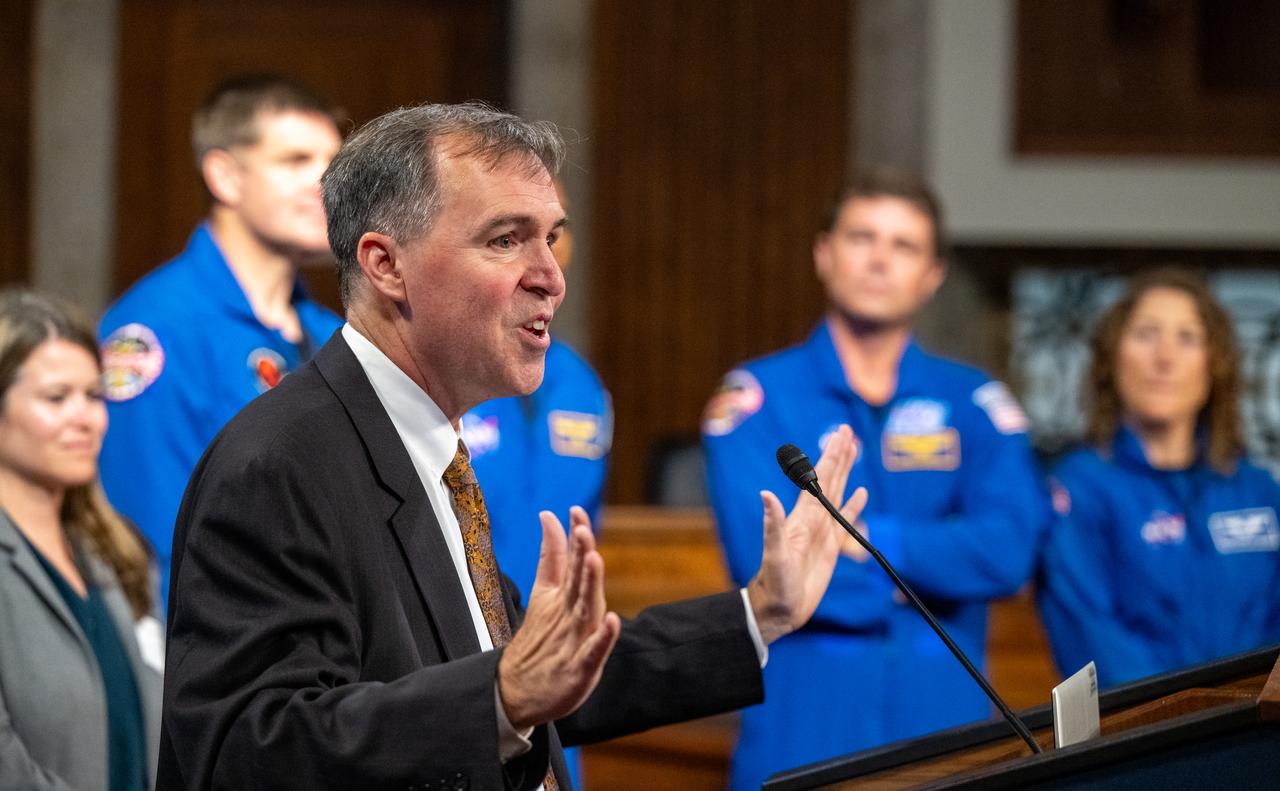
President and CEO of the Coalition for Deep Space Exploration Allen Cutler delivers remarks during a reception with Artemis II crew members Wednesday, June 5, 2024, at the Dirksen Senate Office Building in Washington. Photo Credit: (NASA/Keegan Barber)
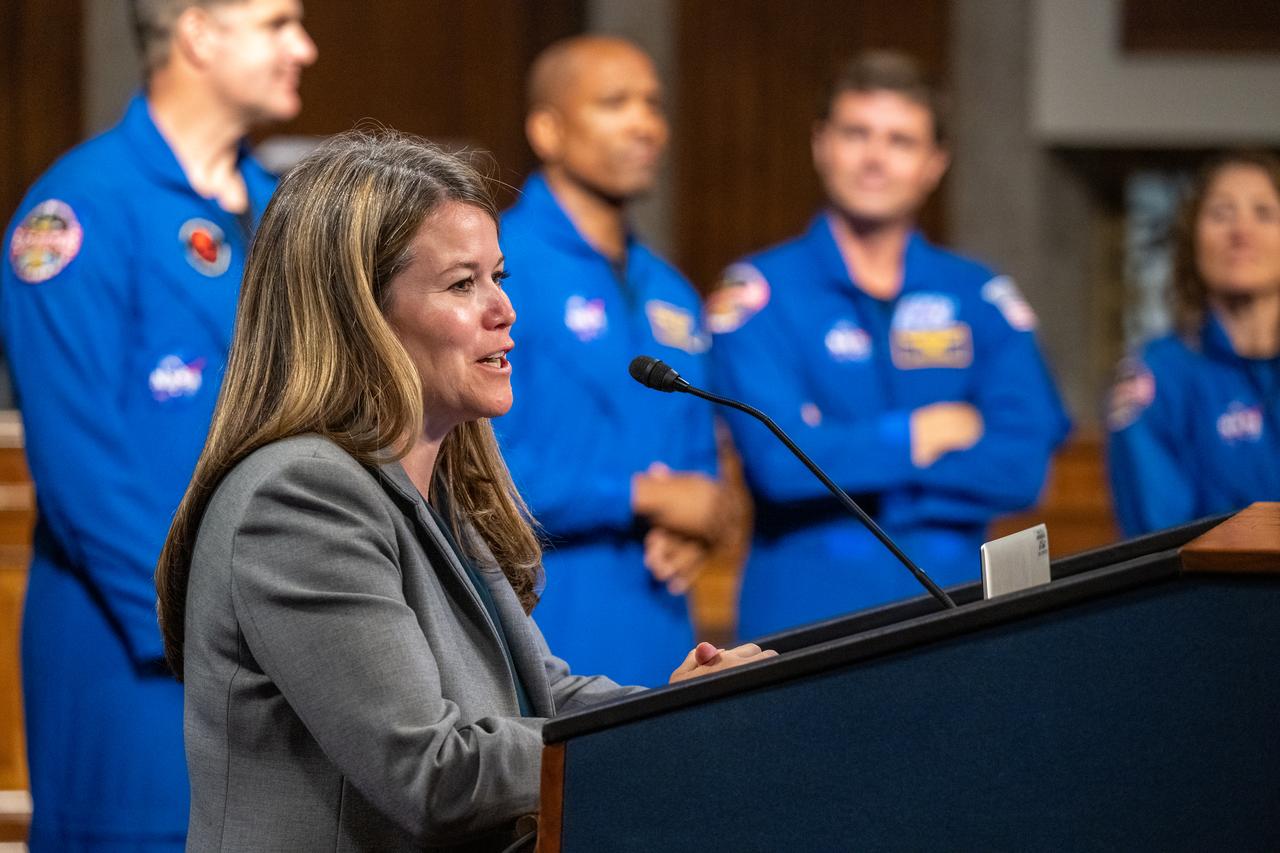
NASA Office of Legislative Affairs Associate Administrator Alicia Brown delivers remarks during a reception with Artemis II crew members Wednesday, June 5, 2024, at the Dirksen Senate Office Building in Washington. Photo Credit: (NASA/Keegan Barber)
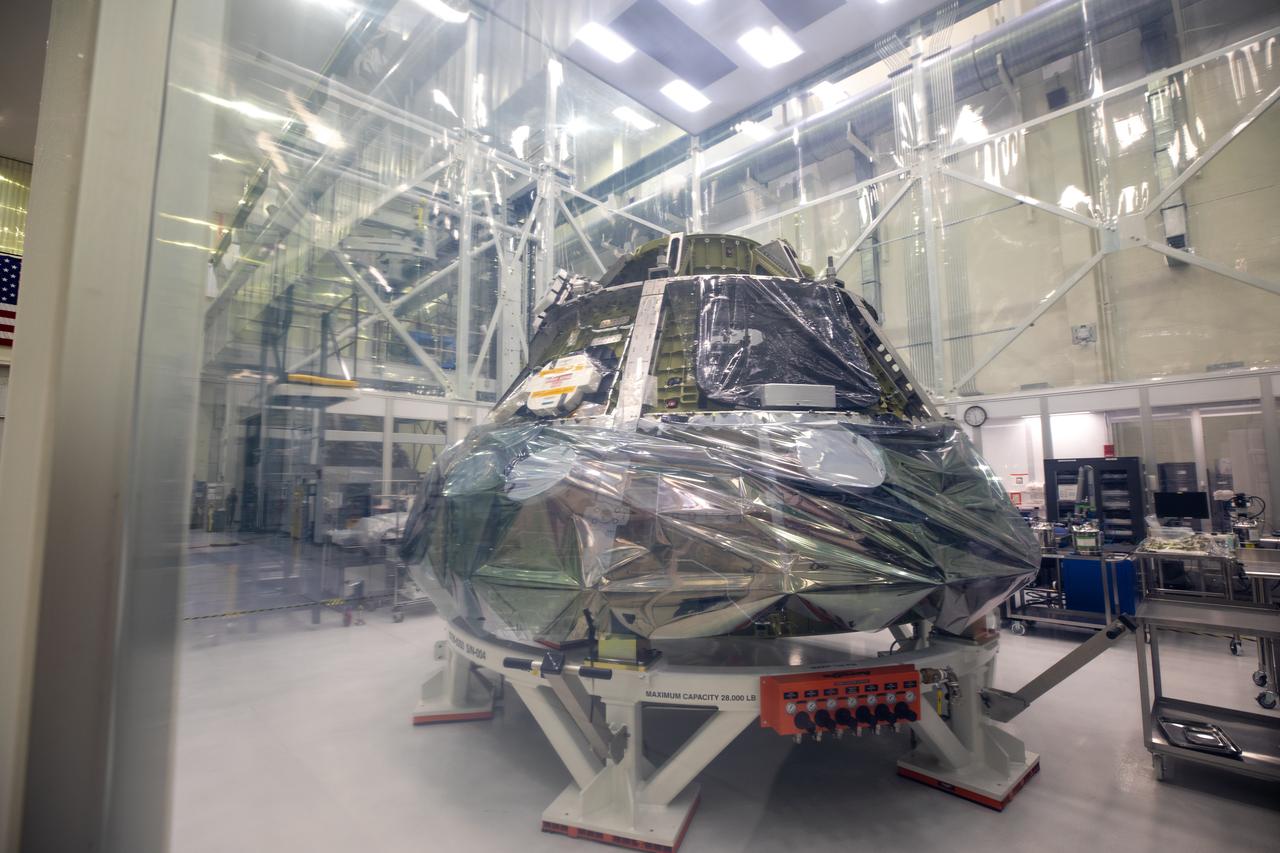
The Orion spacecraft for the Artemis III mission is in view inside a clean room in the high bay of the Neil Armstrong Operations and Checkout Building at NASA’s Kennedy Space Center in Florida on June 22, 2023. The Orion spacecraft is being prepared for its launch atop the Space Launch System rocket on Artemis III, which will send astronauts, including the first woman and first person of color, on a mission to the surface of the Moon.
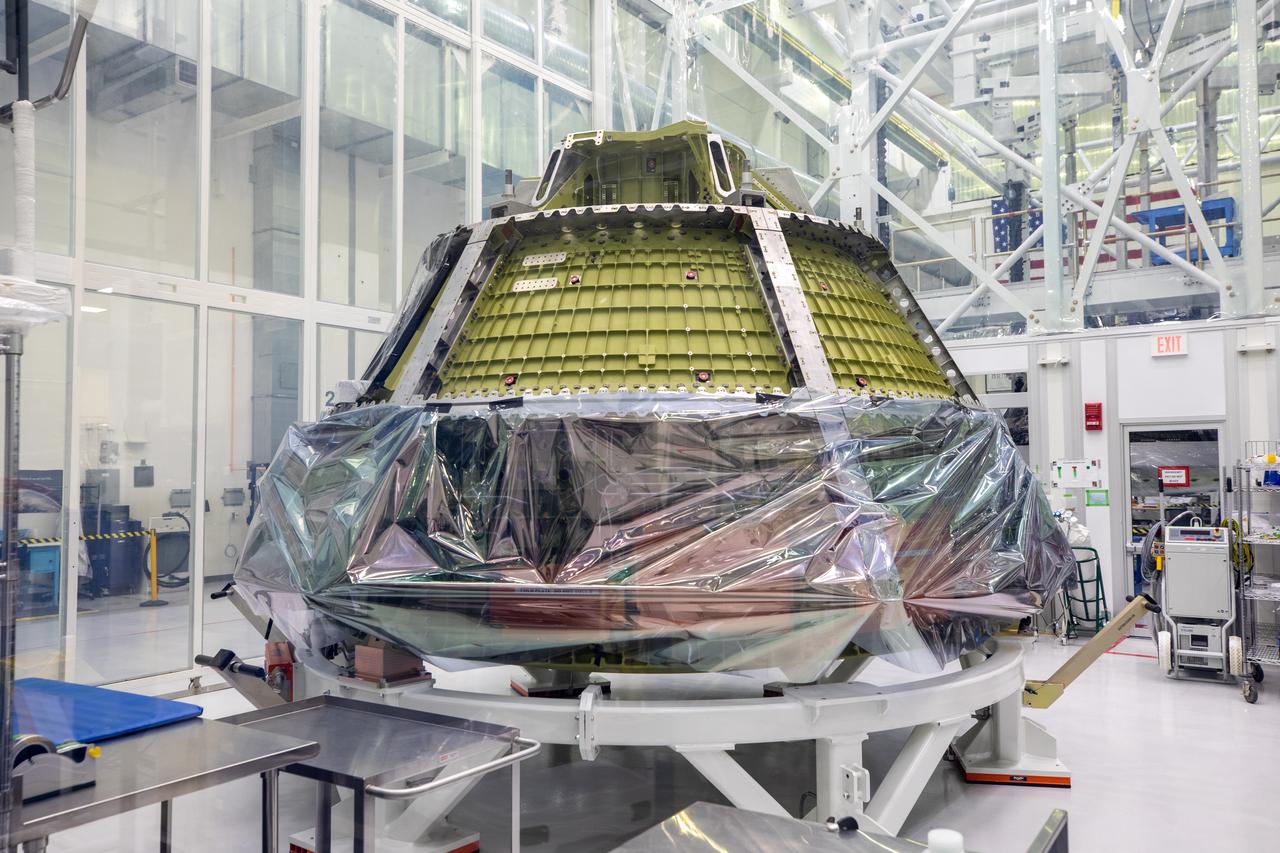
A protective wrapping is being removed from the Orion spacecraft for the Artemis III mission inside a clean room in the high bay of the Neil Armstrong Operations and Checkout Building at NASA’s Kennedy Space Center in Florida on June 22, 2023. The Orion spacecraft is being prepared for its launch atop the Space Launch System rocket on Artemis III, which will send astronauts, including the first woman and first person of color, on a mission to the surface of the Moon.

The Orion spacecraft for the Artemis III mission is in view in the high bay of the Neil Armstrong Operations and Checkout Building at NASA’s Kennedy Space Center in Florida on June 22, 2023. The Orion spacecraft is being prepared for its launch atop the Space Launch System rocket on Artemis III, which will send astronauts, including the first woman and first person of color, on a mission to the surface of the Moon.

The Orion crew module for NASA’s Artemis III mission is enclosed on a work stand inside the high bay of the Neil A. Armstrong Operations and Checkout Building at NASA’s Kennedy Space Center in Florida on Jan. 20, 2022. Lockheed Martin technicians are processing and preparing the crew module for its launch atop the Space Launch System rocket. Launched atop the Space Launch System rocket, Artemis missions will aim to send astronauts, including the first woman and first person of color, on a mission to the surface of the Moon.
A close-up view of the Orion crew module for NASA’s Artemis III mission enclosed on a work stand inside the high bay of the Neil A. Armstrong Operations and Checkout Building at NASA’s Kennedy Space Center in Florida on Jan. 20, 2022. Lockheed Martin technicians are processing and preparing the crew module for its launch atop the Space Launch System rocket. Launched atop the Space Launch System rocket, Artemis missions will aim to send astronauts, including the first woman and first person of color, on a mission to the surface of the Moon.
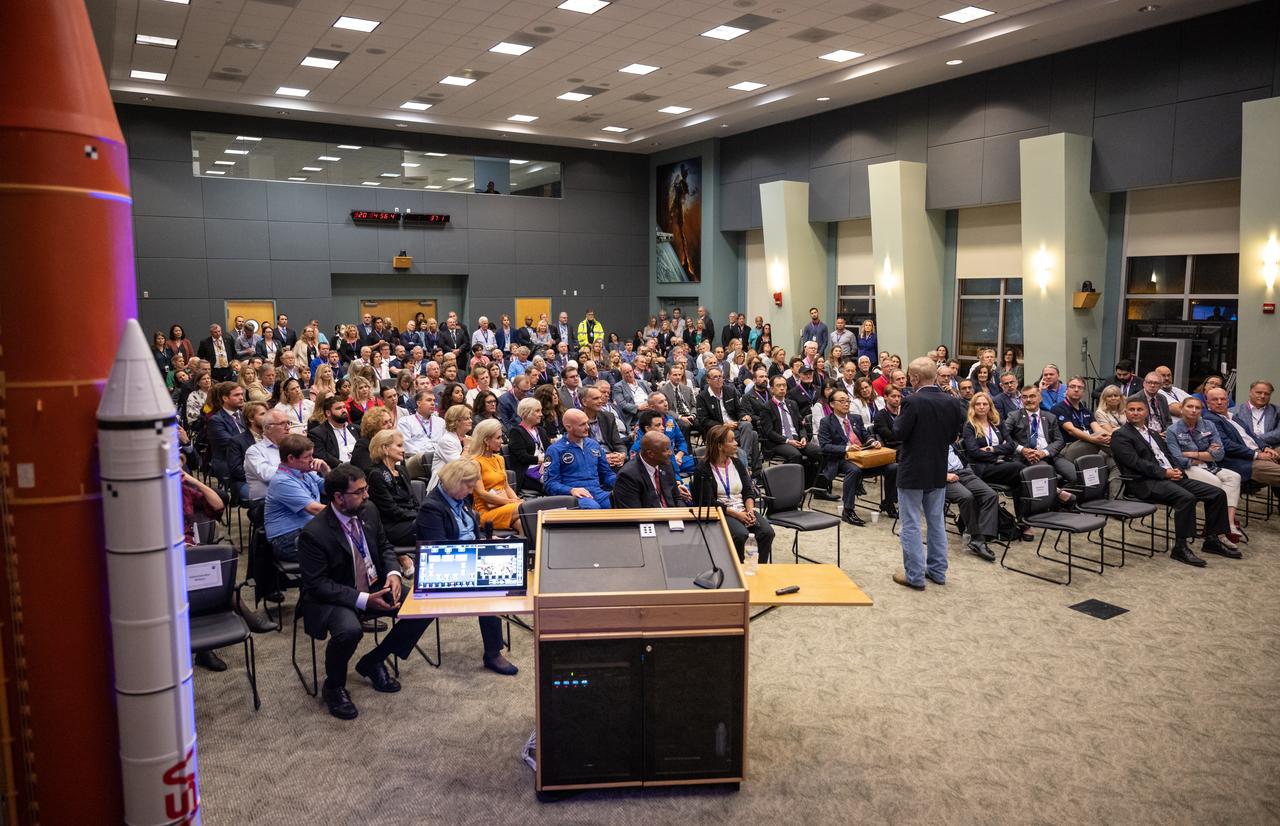
NASA Administrator Bill Nelson gives remarks ahead of the launch of NASA’s Space Launch System rocket carrying the Orion spacecraft on the Artemis I flight test, Tuesday, Nov. 15, 2022, from Operations and Support Building II at NASA’s Kennedy Space Center in Florida. NASA’s Artemis I flight test is the first integrated flight test of the agency’s deep space exploration systems: the Orion spacecraft, Space Launch System (SLS) rocket, and ground systems. Photo Credit: (NASA/Bill Ingalls)
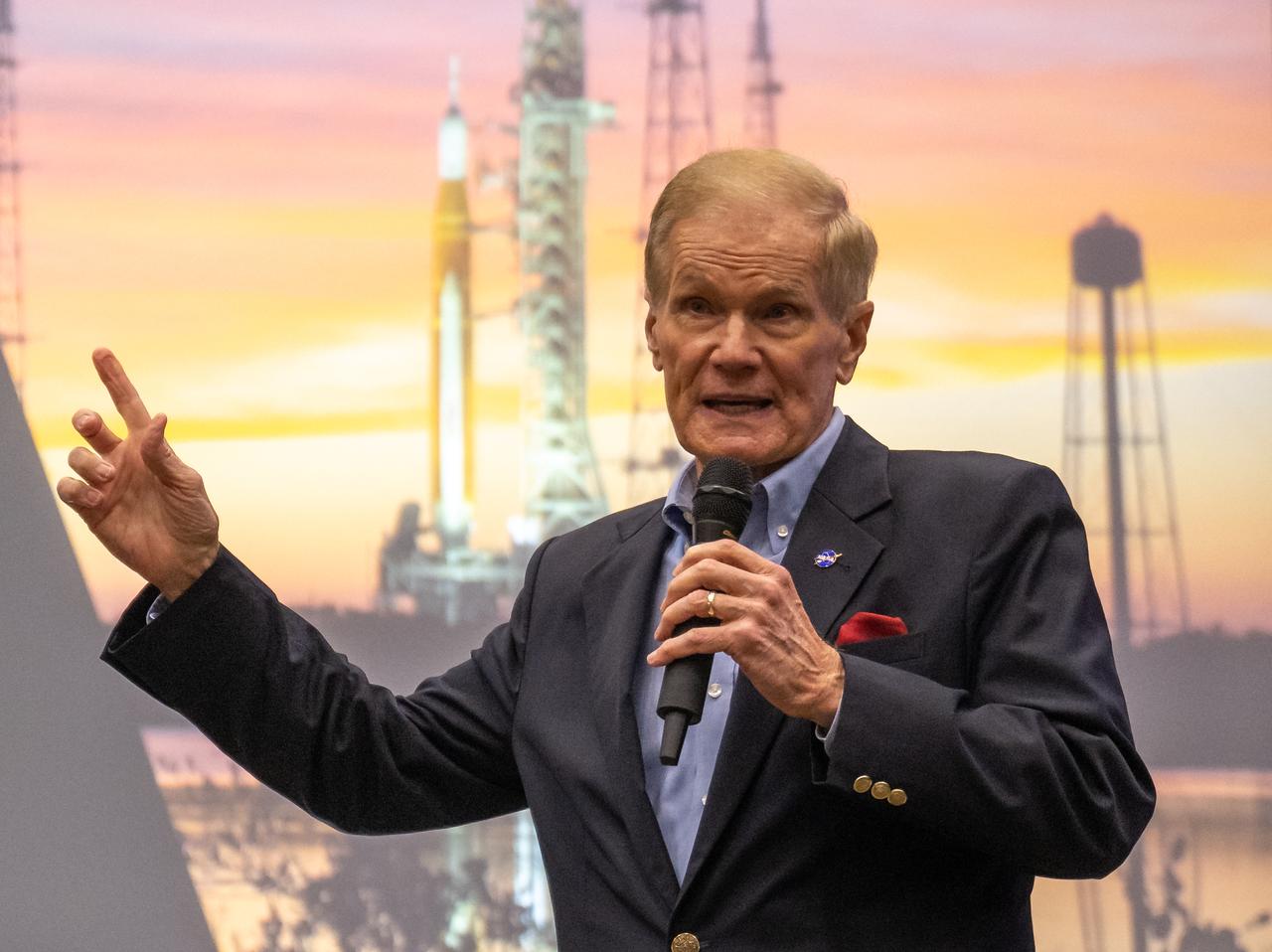
NASA Administrator Bill Nelson gives remarks ahead of the launch of NASA’s Space Launch System rocket carrying the Orion spacecraft on the Artemis I flight test, Tuesday, Nov. 15, 2022, from Operations and Support Building II at NASA’s Kennedy Space Center in Florida. NASA’s Artemis I flight test is the first integrated flight test of the agency’s deep space exploration systems: the Orion spacecraft, Space Launch System (SLS) rocket, and ground systems. Photo Credit: (NASA/Bill Ingalls)
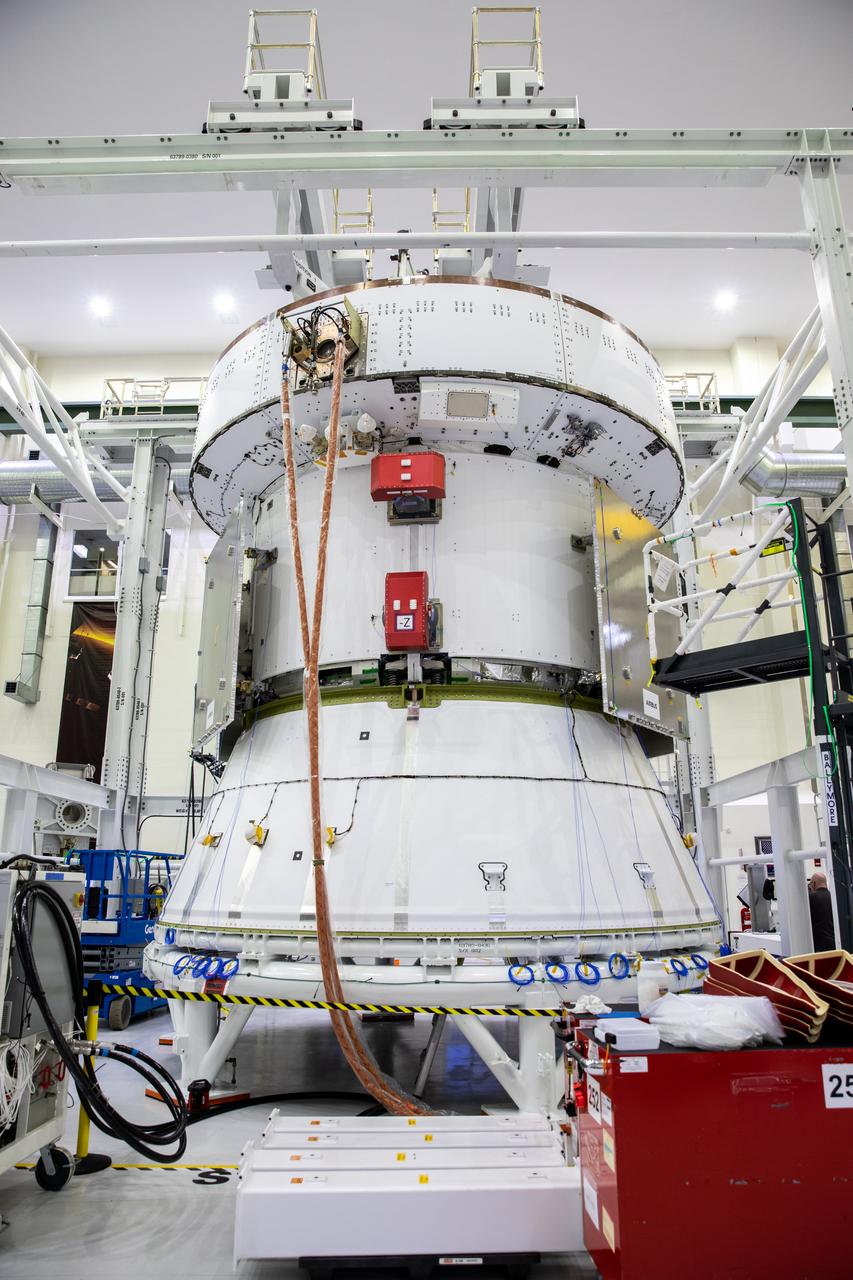
The European Service Module for the Artemis II mission is photographed inside the Neil Armstrong Operations and Checkout Building at NASA’s Kennedy Space Center in Florida on Feb. 21, 2023. Artemis II will be the first crewed flight test of the Space Launch System rocket and Orion spacecraft. The service module will provide the power necessary to propel Orion on a trip around the Moon, including the in-space maneuvering capability and other commodities necessary to sustain crew for the duration of the mission.
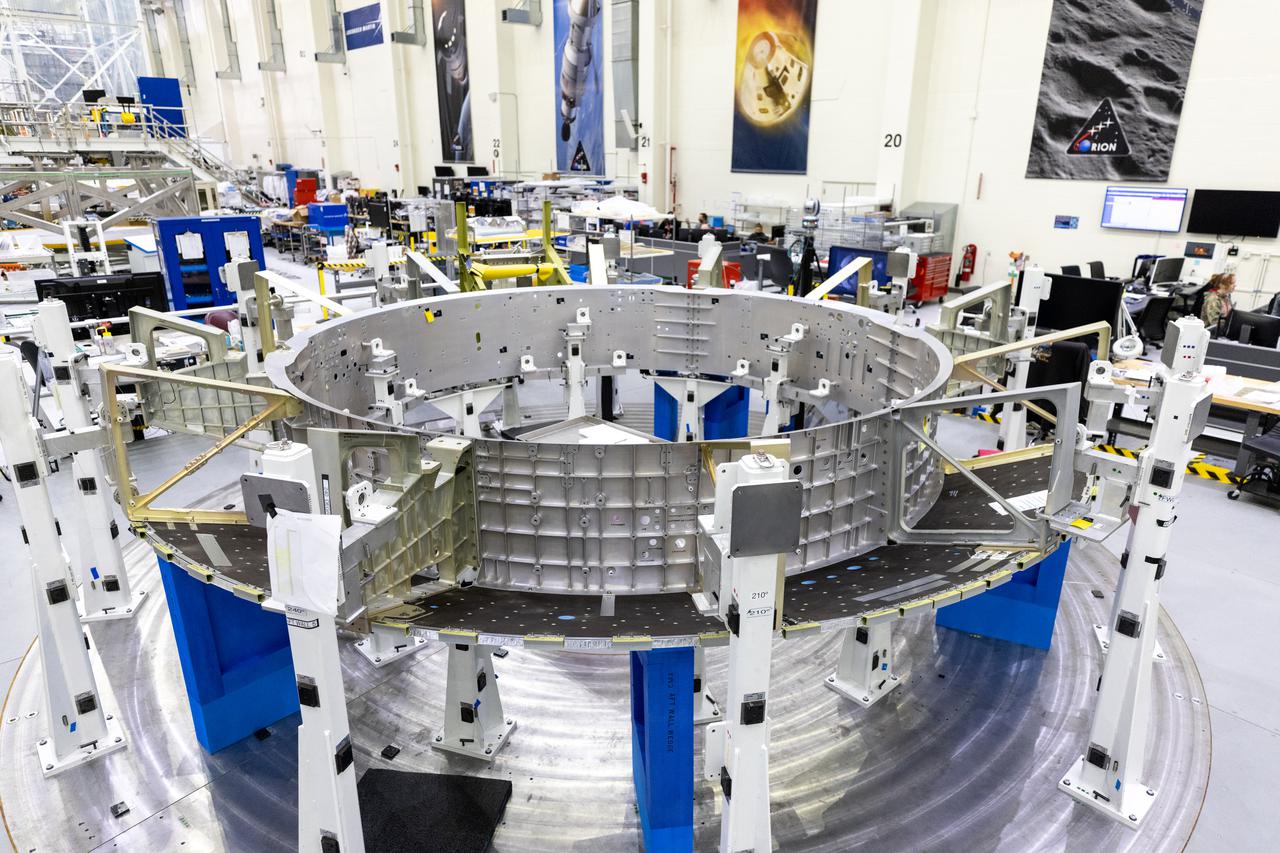
The Orion crew module adapter for NASA’s Artemis III mission is on a work stand inside the high bay of the Neil A. Armstrong Operations and Checkout Building at NASA’s Kennedy Space Center in Florida on Jan. 20, 2022. Lockheed Martin technicians continue working to install the aft walls as the ring-shaped structure is prepared to ultimately be attached to the European-built service module. Launched atop the Space Launch System rocket, Artemis missions will aim to send astronauts, including the first woman and first person of color, on a mission to the surface of the Moon.

The European Service Module for the Artemis II mission is photographed inside the Neil Armstrong Operations and Checkout Building at NASA’s Kennedy Space Center in Florida on Feb. 21, 2023. Artemis II will be the first crewed flight test of the Space Launch System rocket and Orion spacecraft. The service module will provide the power necessary to propel Orion on a trip around the Moon, including the in-space maneuvering capability and other commodities necessary to sustain crew for the duration of the mission.

The Orion crew module adapter for NASA’s Artemis III mission is on a work stand inside the high bay of the Neil A. Armstrong Operations and Checkout Building at NASA’s Kennedy Space Center in Florida on Jan. 20, 2022. Lockheed Martin technicians continue working to install the aft walls as the ring-shaped structure is prepared to ultimately be attached to the European-built service module. Launched atop the Space Launch System rocket, Artemis missions will aim to send astronauts, including the first woman and first person of color, on a mission to the surface of the Moon.

NASA astronaut Victor Glover, Artemis II pilot, is seen at the Russell Senate Office Building before an event, Tuesday, May 12, 2026, in Washington. NASA’s Artemis II mission took Glover and crewmates, NASA astronauts Reid Wiseman, commander; Christina Koch, mission specialist; and CSA (Canadian Space Agency) astronaut Jeremy Hansen, mission specialist on a nearly 10-day journey around the Moon and back to Earth in April 2026. Photo Credit: (NASA/Aubrey Gemignani)
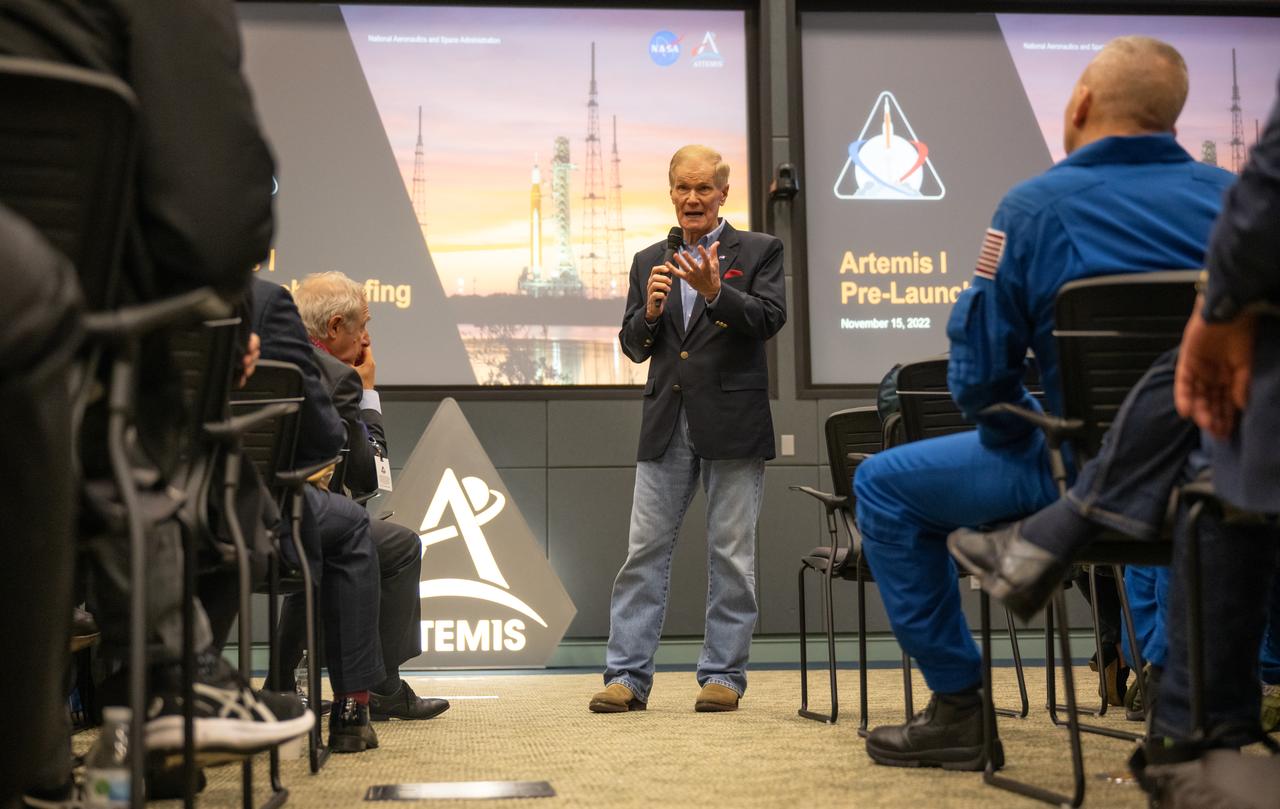
NASA Administrator Bill Nelson gives remarks ahead of the launch of NASA’s Space Launch System rocket carrying the Orion spacecraft on the Artemis I flight test, Tuesday, Nov. 15, 2022, from Operations and Support Building II at NASA’s Kennedy Space Center in Florida. NASA’s Artemis I flight test is the first integrated flight test of the agency’s deep space exploration systems: the Orion spacecraft, Space Launch System (SLS) rocket, and ground systems. Photo Credit: (NASA/Bill Ingalls)
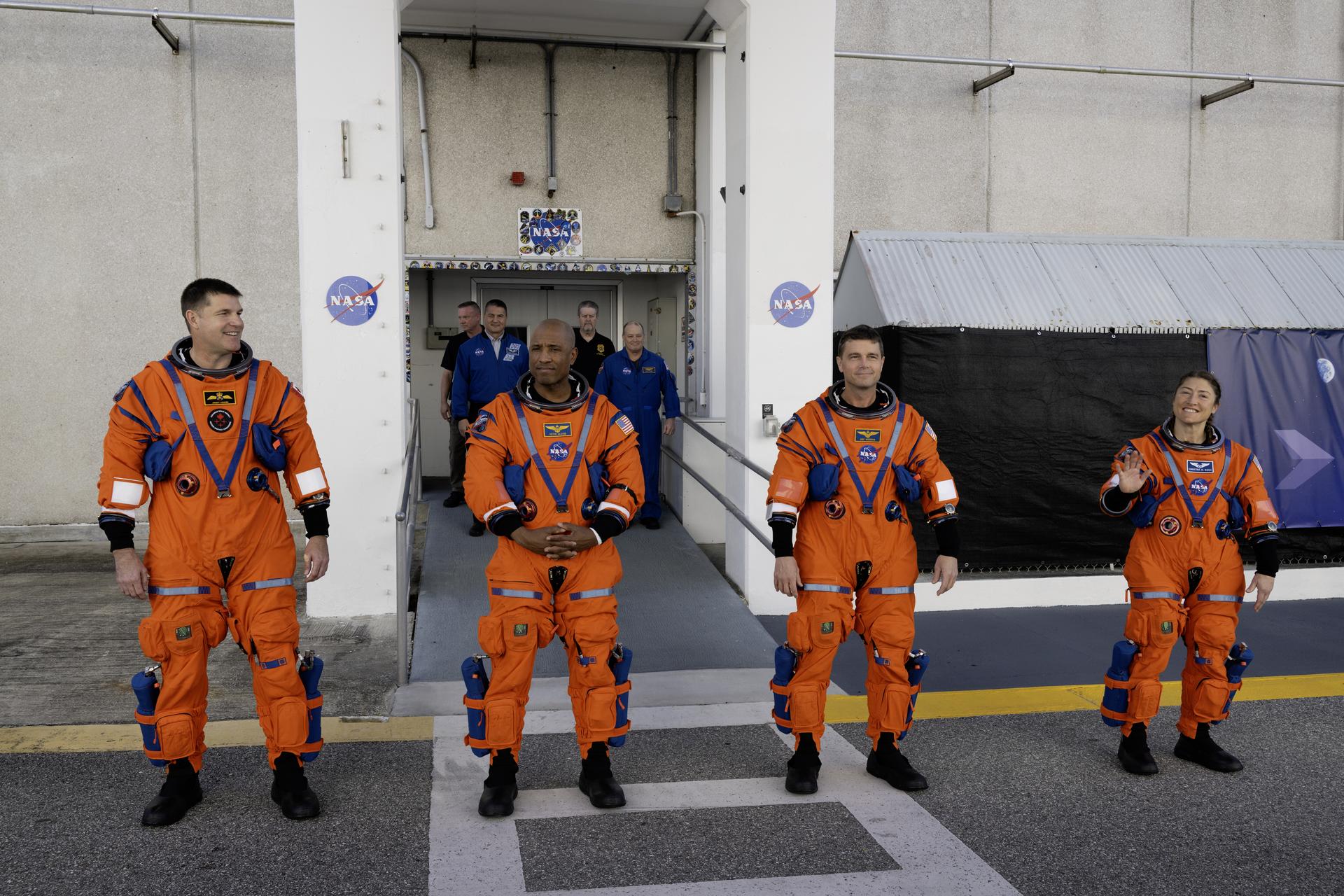
Crew depart the Neil A. Armstrong Operations and Checkout Building to travel to the Vehicle Assembly Building to board their Orion spacecraft atop NASA’s SLS (Space Launch System) rocket as part of the Artemis II Countdown Demonstration Test, December 20, 2025, at NASA’s Kennedy Space Center in Florida. For this operation, the Artemis II crew and launch team are simulating the launch day timeline including suit-up, walkout, and climbing in and out of the spacecraft. Through the Artemis campaign, NASA will send astronauts to explore the Moon for scientific discovery, economic benefits, and to build the foundation for the first crewed missions to Mars, for the benefit of all.
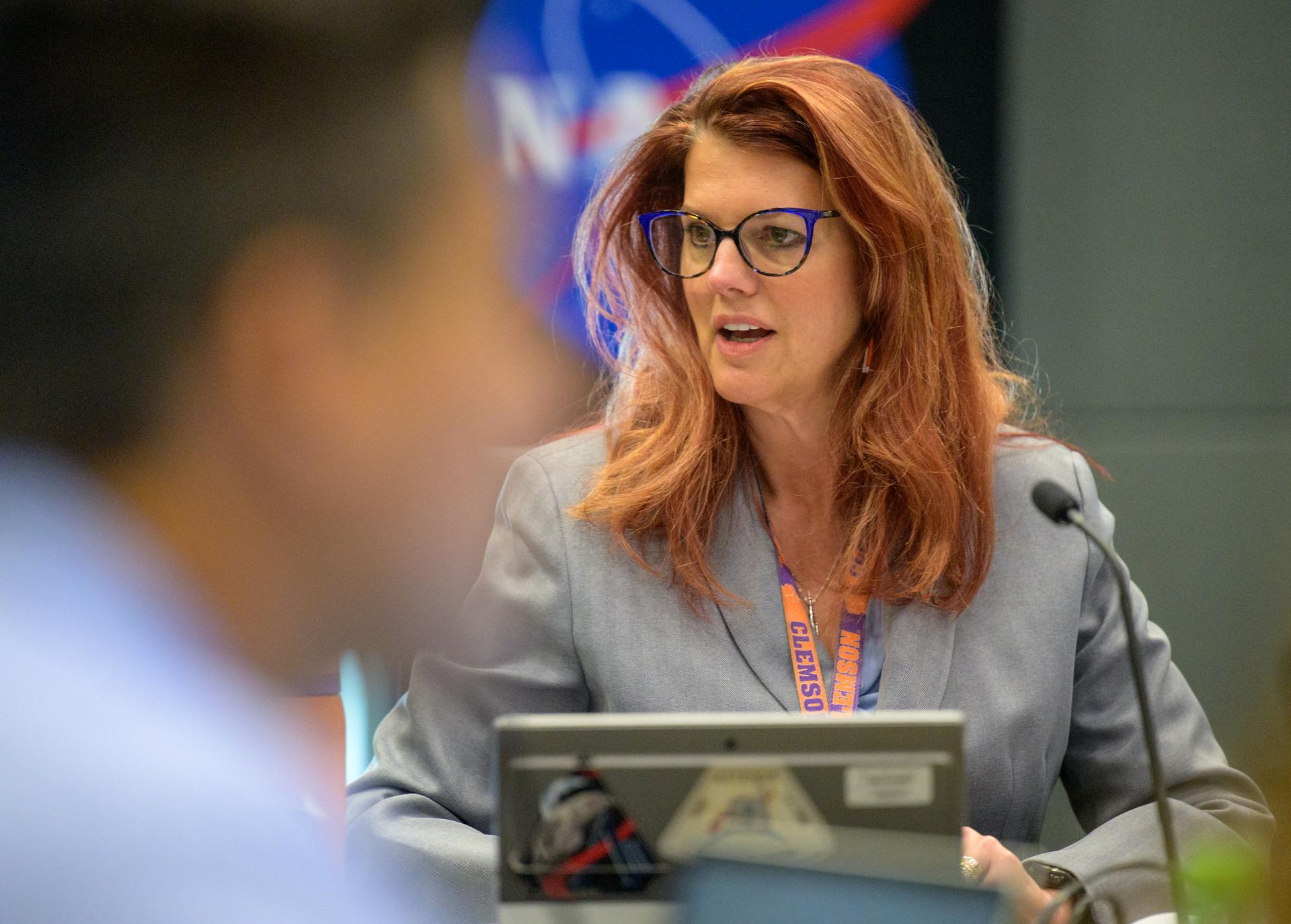
Charlie Blackwell-Thompson, Artemis II launch director, is seen as teams meet for the Artemis II launch countdown pre-test briefing, Saturday, March 28, 2026, at NASA’s Kennedy Space Center, Operations Support Building II in Florida. Photo Credit: (NASA/Bill Ingalls)

Artemis II Assistant Launch Director Jeremy Graeber, is seen as teams meet for the Artemis II launch countdown pre-test briefing, Saturday, March 28, 2026, at NASA’s Kennedy Space Center, Operations Support Building II in Florida. Photo Credit: (NASA/Bill Ingalls)