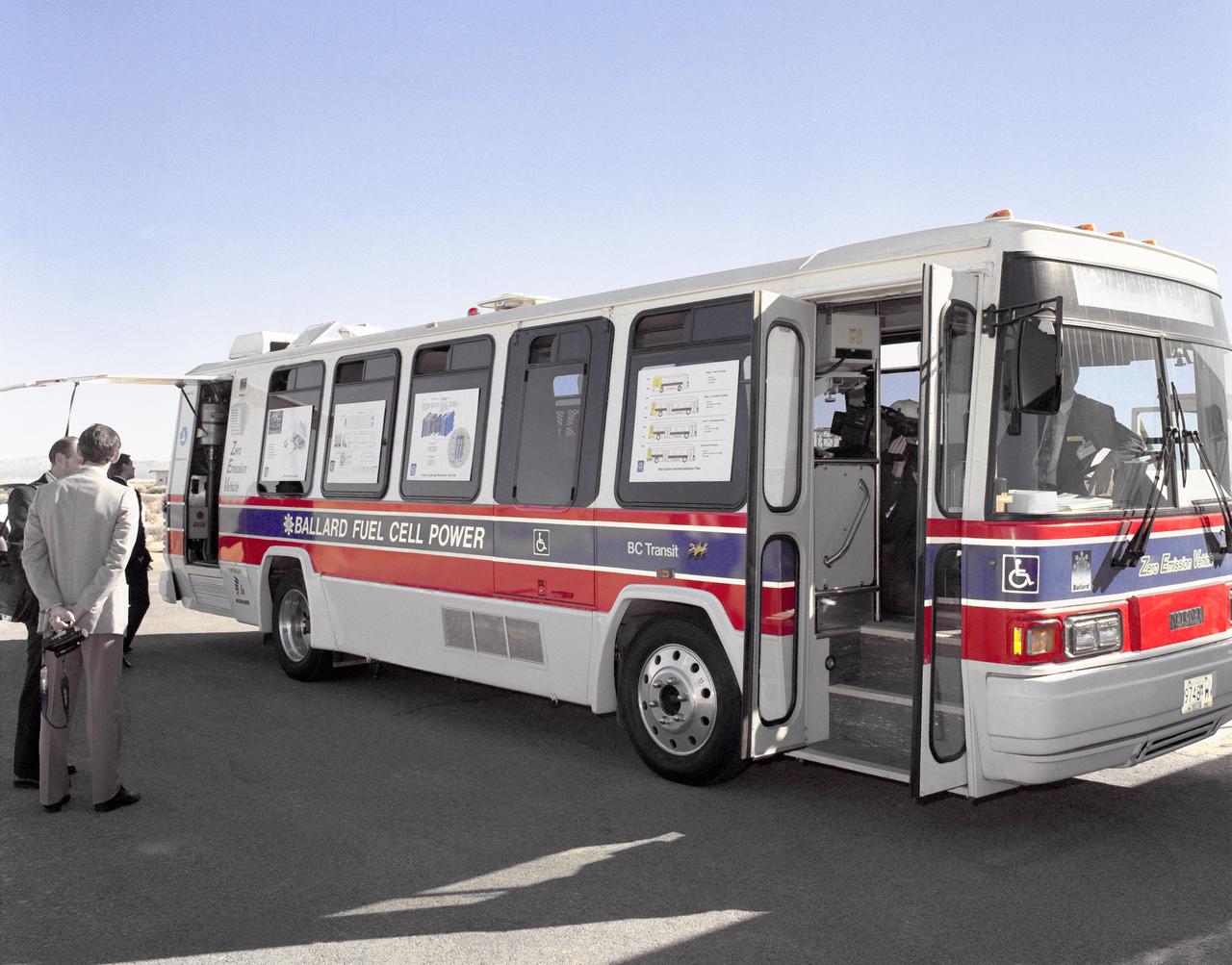
Fuel Cell Powered Bus
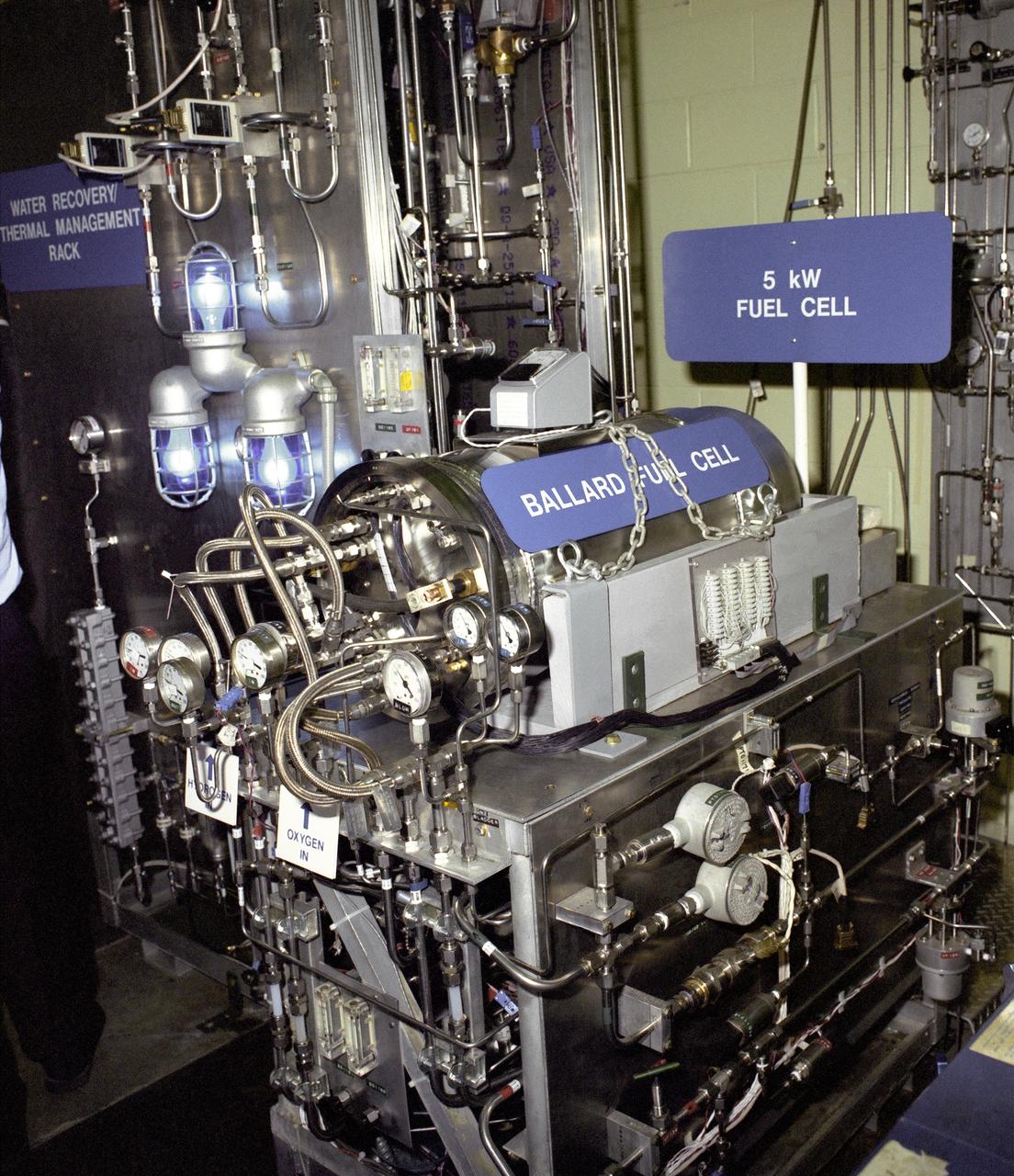
Fuel Cell for Bus
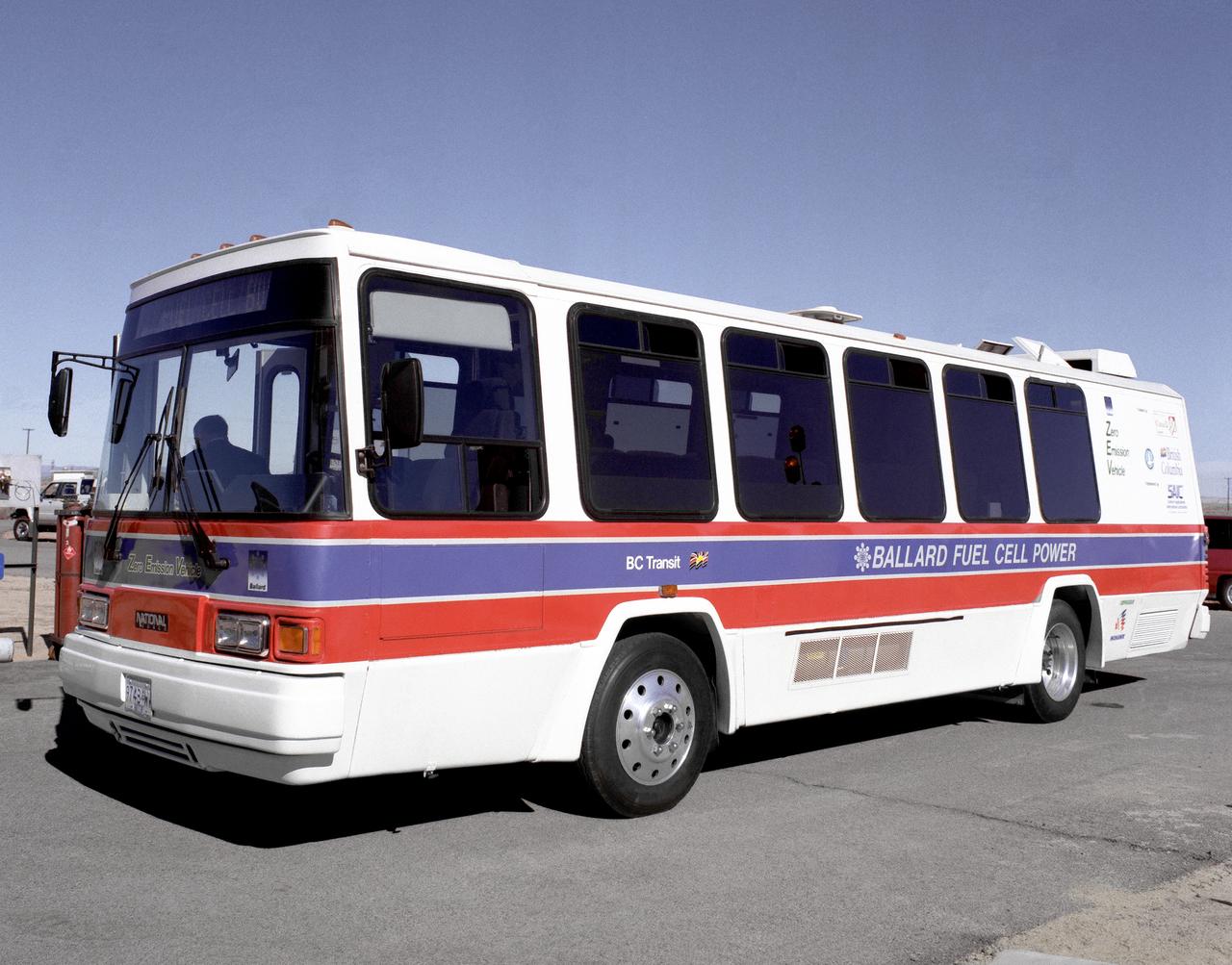
Fuel Cell Powered Bus
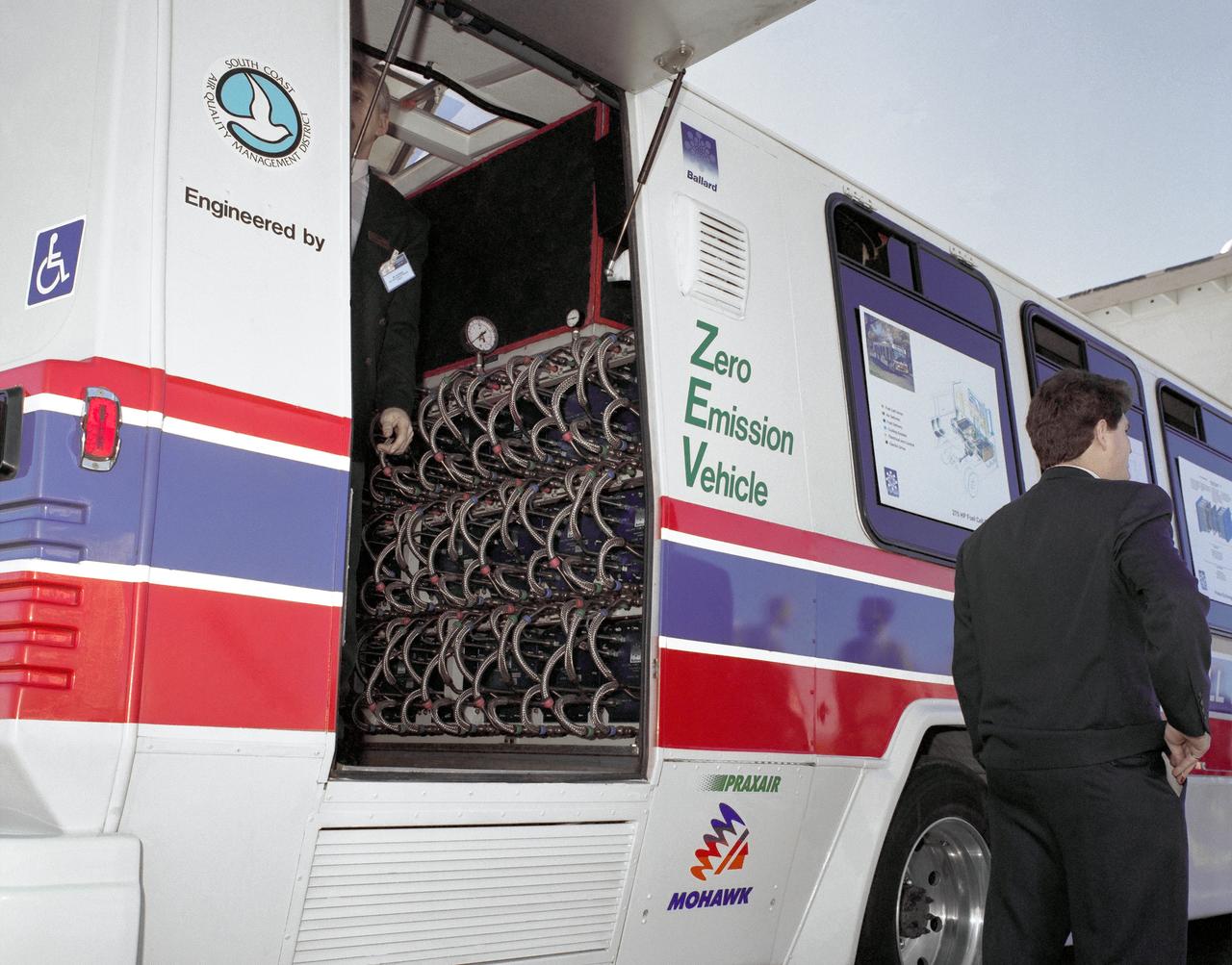
Fuel Cell Powered Bus - closup of installed cells
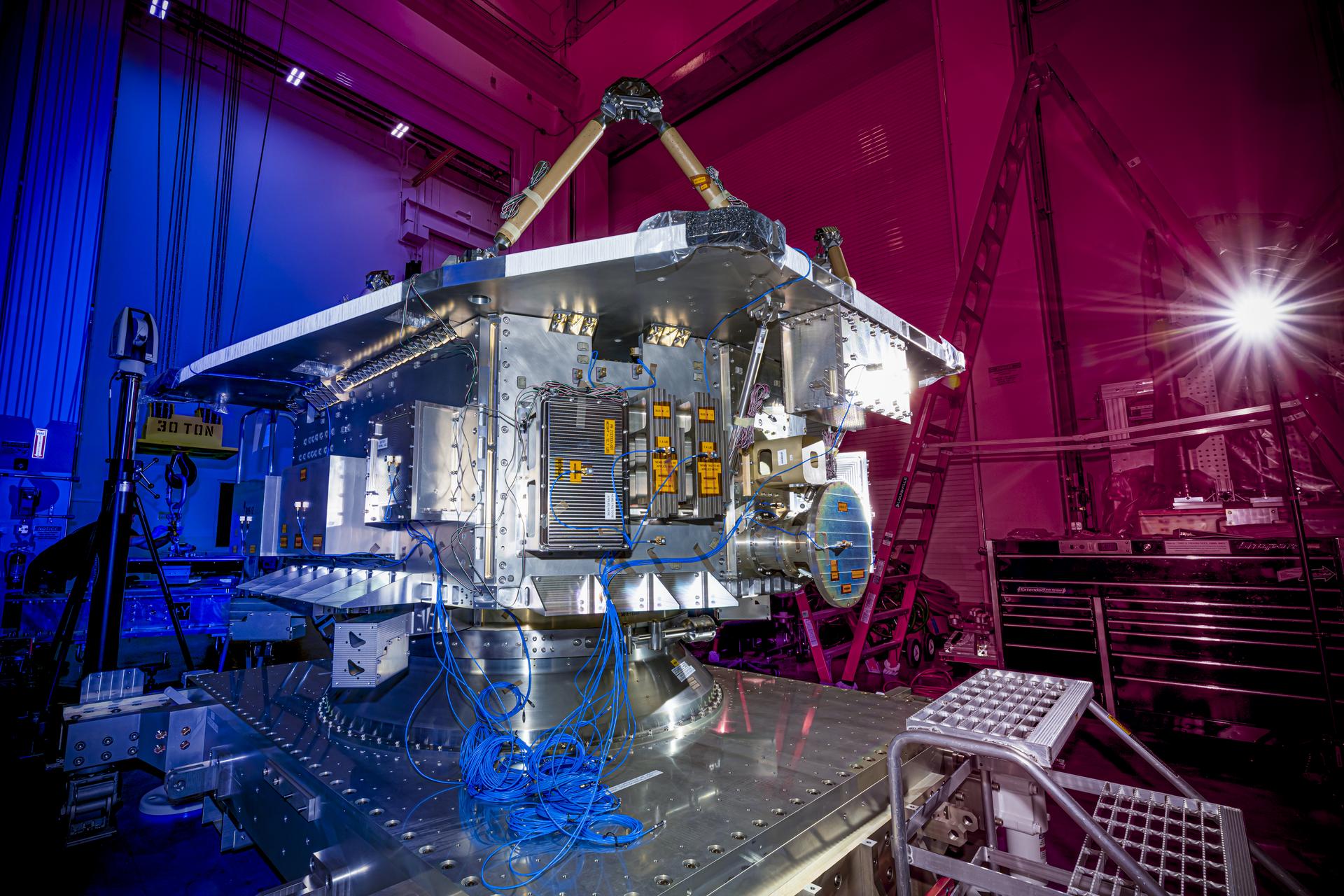
The bus structure of the Near-Earth Object (NEO) Surveyor spacecraft underwent testing at BAE Systems Space & Mission Systems in Boulder, Colorado, in August 2025. NEO Surveyor’s bus houses the power, propulsion, avionics, and communication subsystems, which are isolated from the spacecraft’s telescope and sensitive detectors. When all components are assembled, a large sunshade will be attached to the side of the bus, blocking the Sun’s glare from entering the telescope. With an aperture of nearly 20 inches (50 centimeters), the telescope features detectors sensitive to two infrared wavelengths in which near-Earth objects re-radiate solar heat. The instrument enclosure is designed to ensure heat produced by the spacecraft and instrument during operations doesn’t interfere with its infrared observations. Targeting launch in late 2027, the NEO Surveyor mission is led by Professor Amy Mainzer at the University of California, Los Angeles for NASA’s Planetary Defense Coordination Office and is being managed by the agency’s Jet Propulsion Laboratory in Southern California for the Planetary Missions Program Office at NASA’s Marshall Space Flight Center in Huntsville, Alabama. BAE Systems Space & Mission Systems and the Space Dynamics Laboratory in Logan, Utah, and Teledyne are among the companies that were contracted to build the spacecraft and its instrumentation. The Laboratory for Atmospheric and Space Physics at the University of Colorado Boulder will support operations, and IPAC at Caltech in Pasadena, California, is responsible for producing some of the mission’s data products. Caltech manages JPL for NASA. More information about NEO Surveyor is available at: https://science.nasa.gov/mission/neo-surveyor/
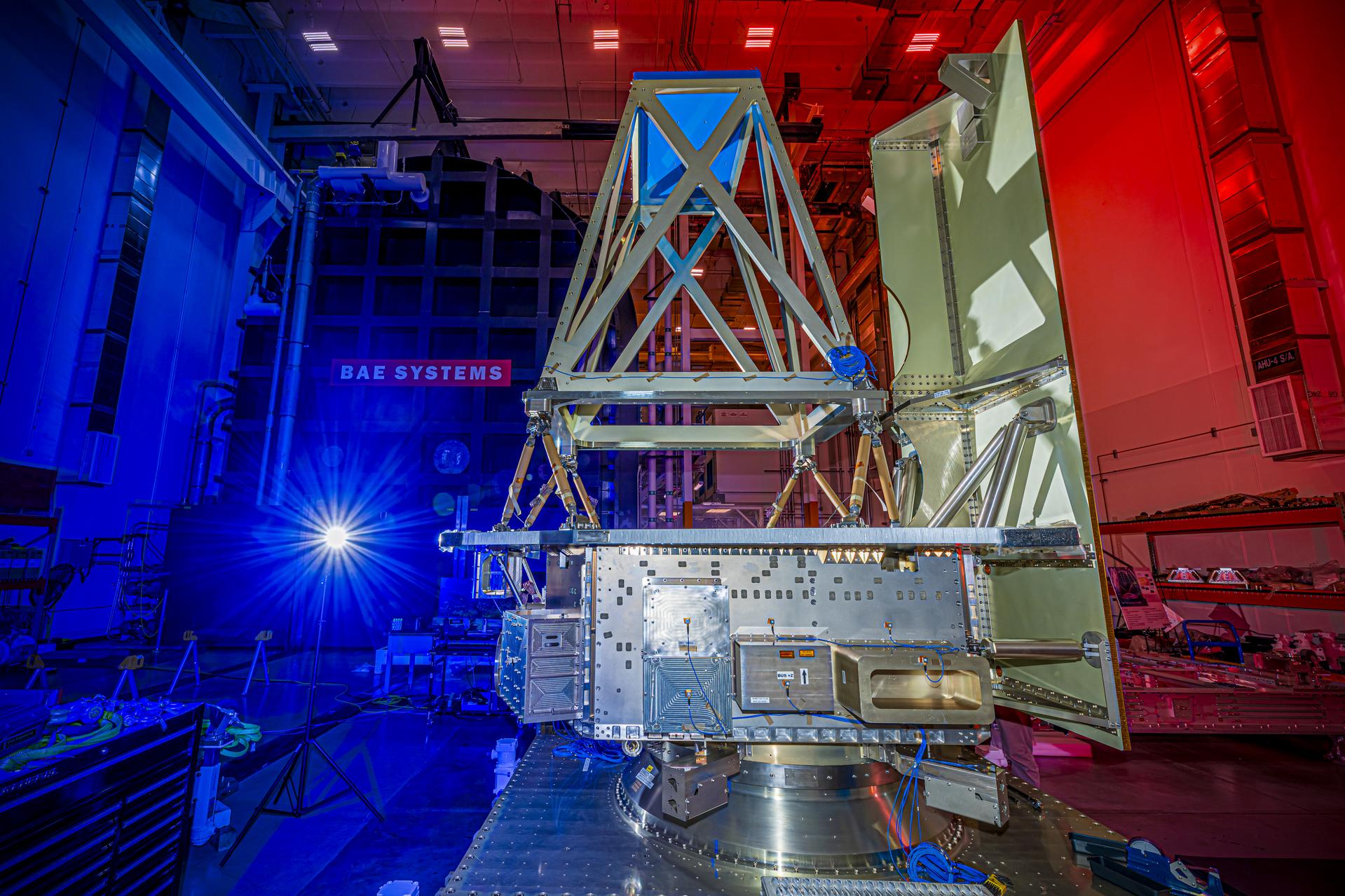
NASA’s Near-Earth Object (NEO) Surveyor sunshade mass simulator (the gray paneling to the right of the photo) is attached to the spacecraft’s bus structure in August 2025 at BAE Systems Space & Mission Systems in Boulder, Colorado. The angular assembly attached to the top of the bus via a system of struts is the instrument mass simulator. Mass simulators are used to replicate the weight and size of flight hardware during testing. Targeting launch in late 2027, the NEO Surveyor mission is led by Professor Amy Mainzer at the University of California, Los Angeles for NASA’s Planetary Defense Coordination Office and is being managed by the agency’s Jet Propulsion Laboratory in Southern California for the Planetary Missions Program Office at NASA’s Marshall Space Flight Center in Huntsville, Alabama. BAE Systems Space & Mission Systems and the Space Dynamics Laboratory in Logan, Utah, and Teledyne are among the companies that were contracted to build the spacecraft and its instrumentation. The Laboratory for Atmospheric and Space Physics at the University of Colorado Boulder will support operations, and IPAC at Caltech in Pasadena, California, is responsible for producing some of the mission’s data products. Caltech manages JPL for NASA. More information about NEO Surveyor is available at: https://science.nasa.gov/mission/neo-surveyor/
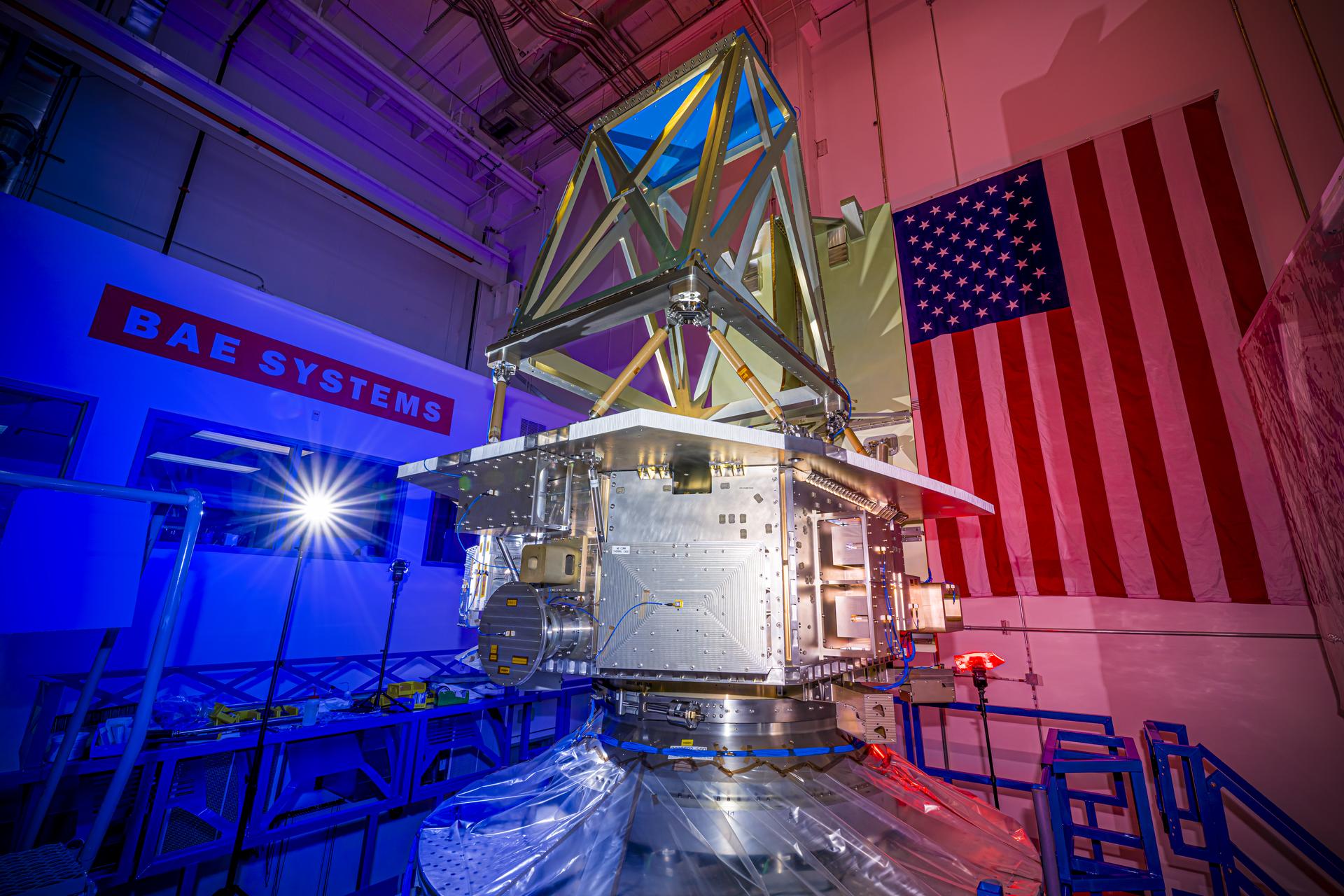
The bus structure for NASA’s Near-Earth Object (NEO) Surveyor is installed on a “shaker table” at BAE Systems Space & Mission Systems in Boulder, Colorado, during vibration testing conducted in August 2025. Mass simulators that mimic the weight and size of the spacecraft’s telescope and sunshade are also attached to the bus for the test. These mass simulators help engineers simulate the conditions flight components will experience during launch so their durability can be verified. Targeting launch in late 2027, the NEO Surveyor mission is led by Professor Amy Mainzer at the University of California, Los Angeles for NASA’s Planetary Defense Coordination Office and is being managed by the agency’s Jet Propulsion Laboratory in Southern California for the Planetary Missions Program Office at NASA’s Marshall Space Flight Center in Huntsville, Alabama. BAE Systems Space & Mission Systems and the Space Dynamics Laboratory in Logan, Utah, and Teledyne are among the companies that were contracted to build the spacecraft and its instrumentation. The Laboratory for Atmospheric and Space Physics at the University of Colorado Boulder will support operations, and IPAC at Caltech in Pasadena, California, is responsible for producing some of the mission’s data products. Caltech manages JPL for NASA. More information about NEO Surveyor is available at: https://science.nasa.gov/mission/neo-surveyor/
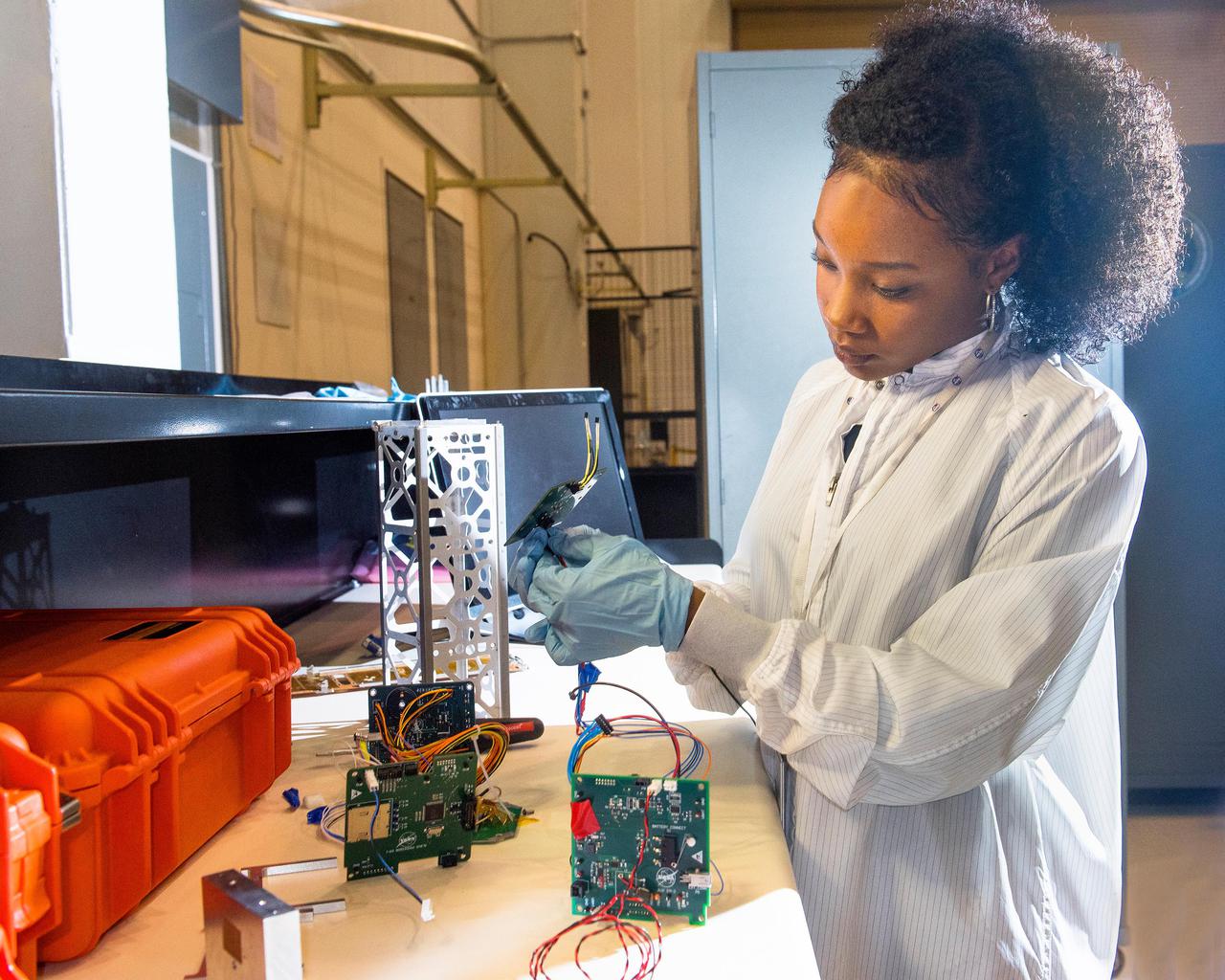
Advanced eLectrical Bus (ALBus) CubeSat: From Build to Flight A new CubeSat, launched Sunday, December 16, will test high power electric systems and the use of unique shape memory alloy (SMA) components for the first time. CubeSats are very small, lightweight satellites, about the size of a loaf of bread, and typically operate within a power range of 5-20 watts. Lower power systems are typically used in CubeSats because of size and weight limits, while higher power systems and components cause excessive heat. Completely designed and led by a team of 12 early career scientists and engineers at NASA’s Glenn Research Center in Cleveland, the Advanced Electrical Bus, or ALBus, will be the first CubeSat to demonstrate power management and distribution of a 100-watt electrical system. The CubeSat will also employ a custom-built SMA release mechanism and hinges to deploy solar arrays and conduct electricity.
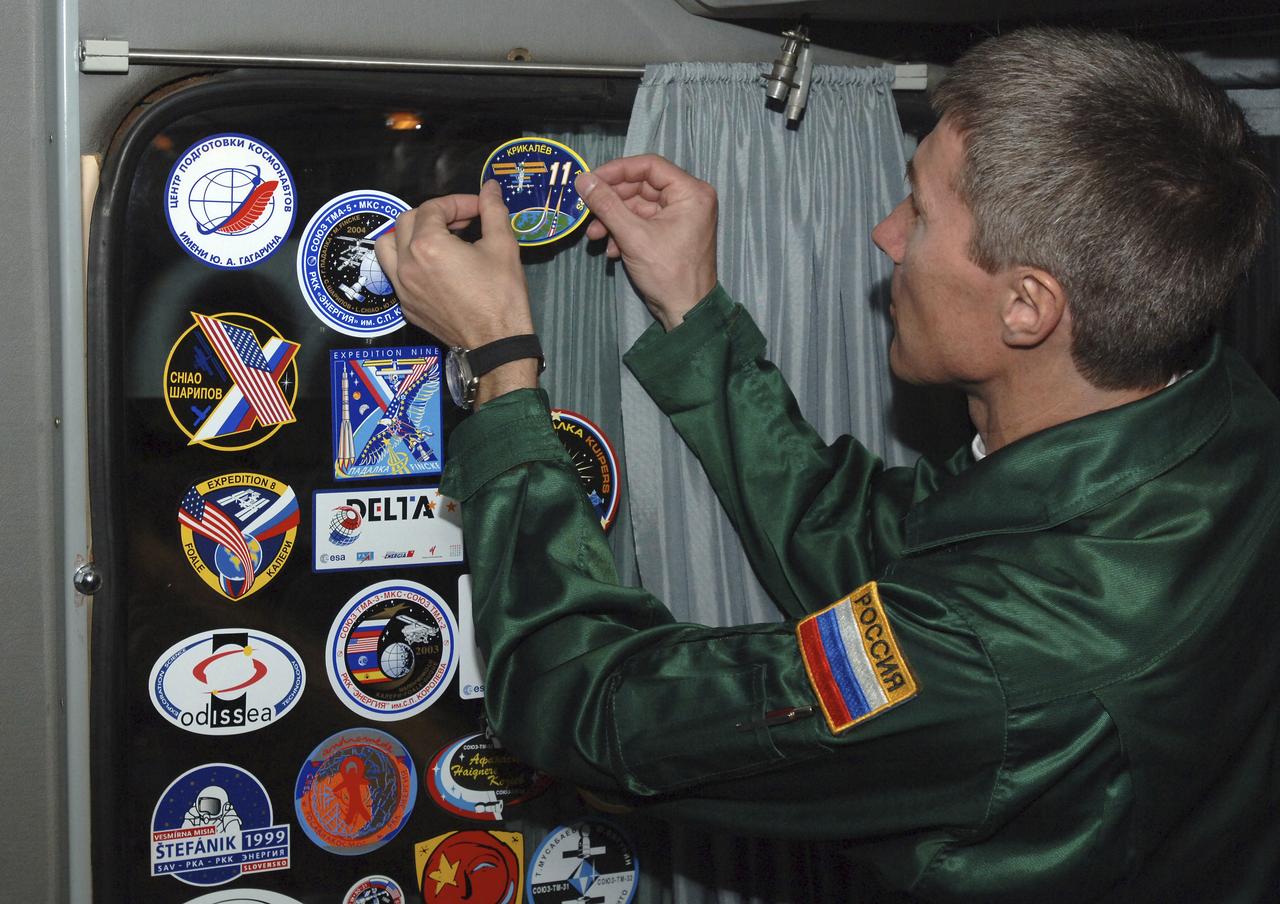
Expedition 11 crew Commander Sergei Krikalev places the Expedition 11 crew logo onboard the prime crew bus as they head to the cosmodrome for suit up, Thursday, April 14, 2005, in Baikonur, Kazakhstan. Photo Credit: (NASA/Bill Ingalls)
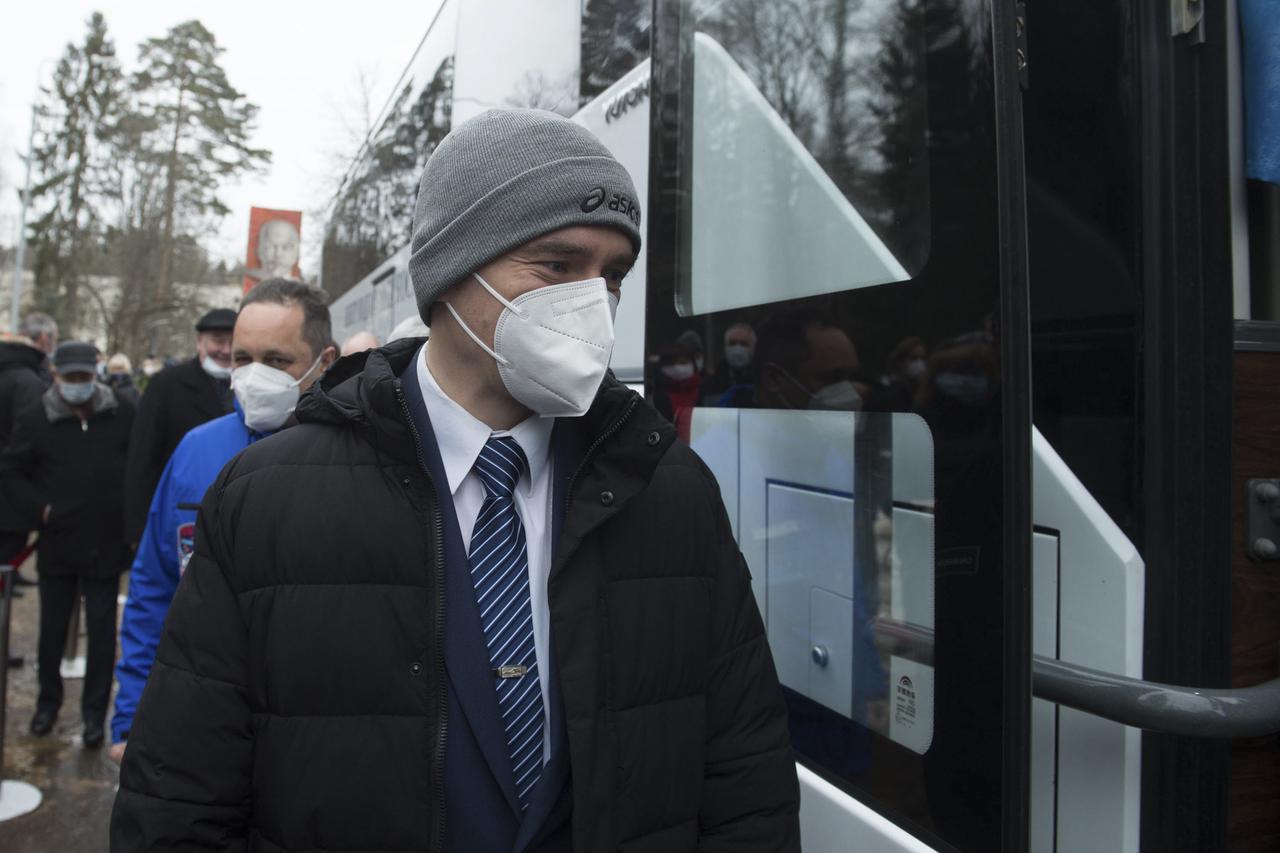
Expedition 65 prime crew member, Russian cosmonaut Pyotr Dubrov of Roscosmos, boards the bus that will take him to his flight to Baikonur for launch from the Baikonur Cosmodrome, Friday, March 26, 2021 at the Gagarin Cosmonaut Training Center (GCTC) in Star City, Russia. Photo Credit: (NASA/GCTC/Andrey Shelepin)
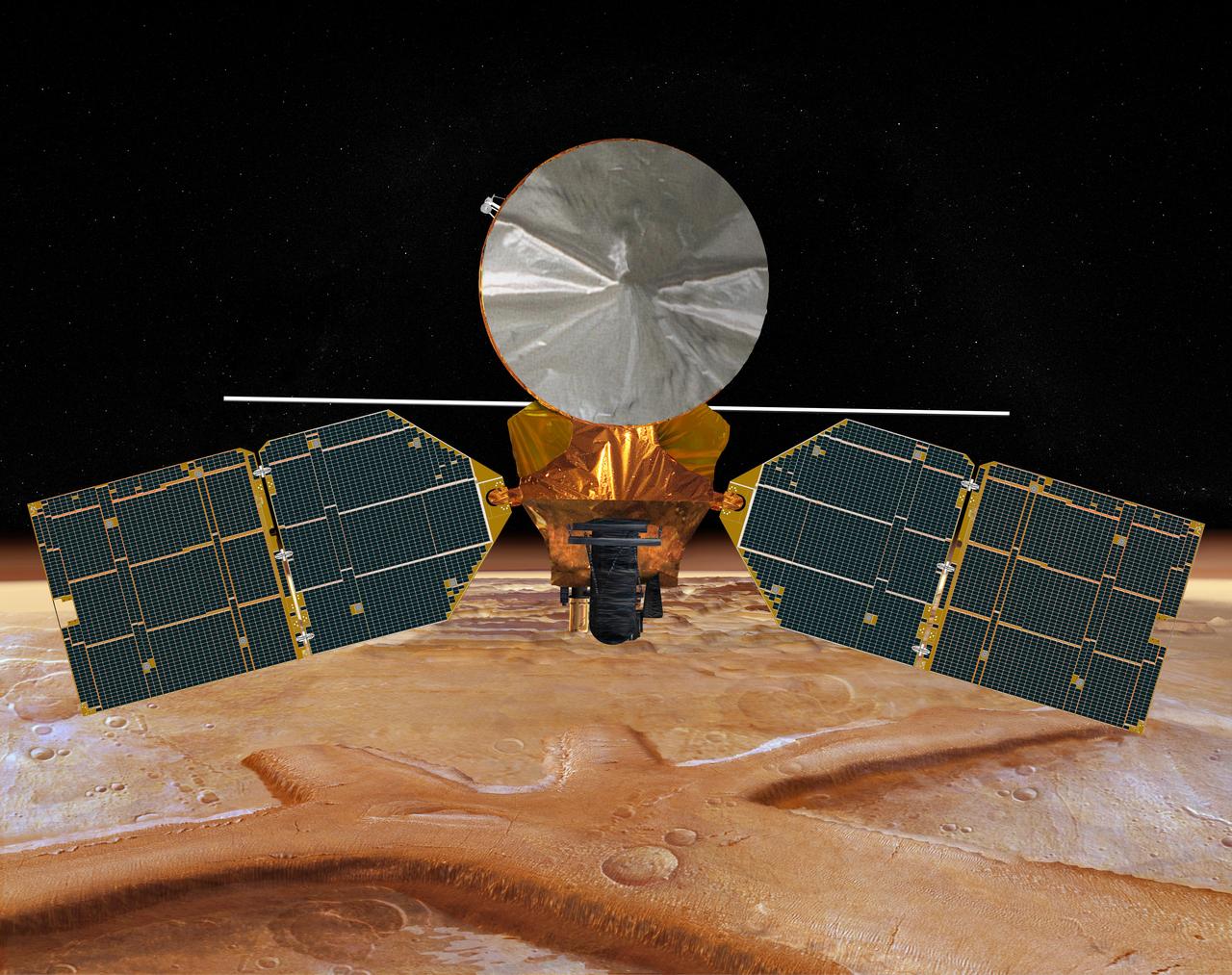
This artist concept of NASA Mars Reconnaissance Orbiter features the spacecraft main bus facing down, toward the red planet.
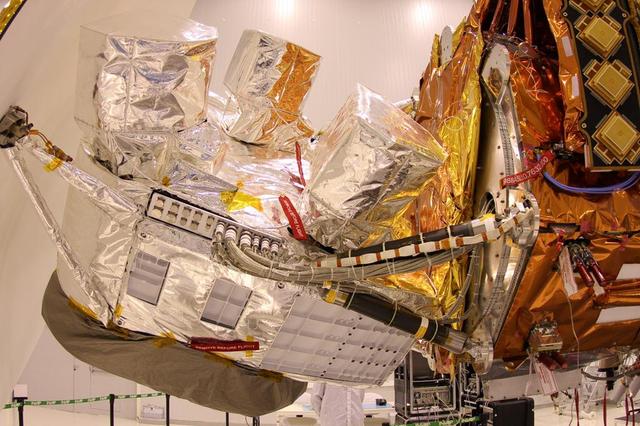
NASA Aquarius instrument, covered in silver foil, is shown attached to the SAC-D satellite bus at INVAP facility.
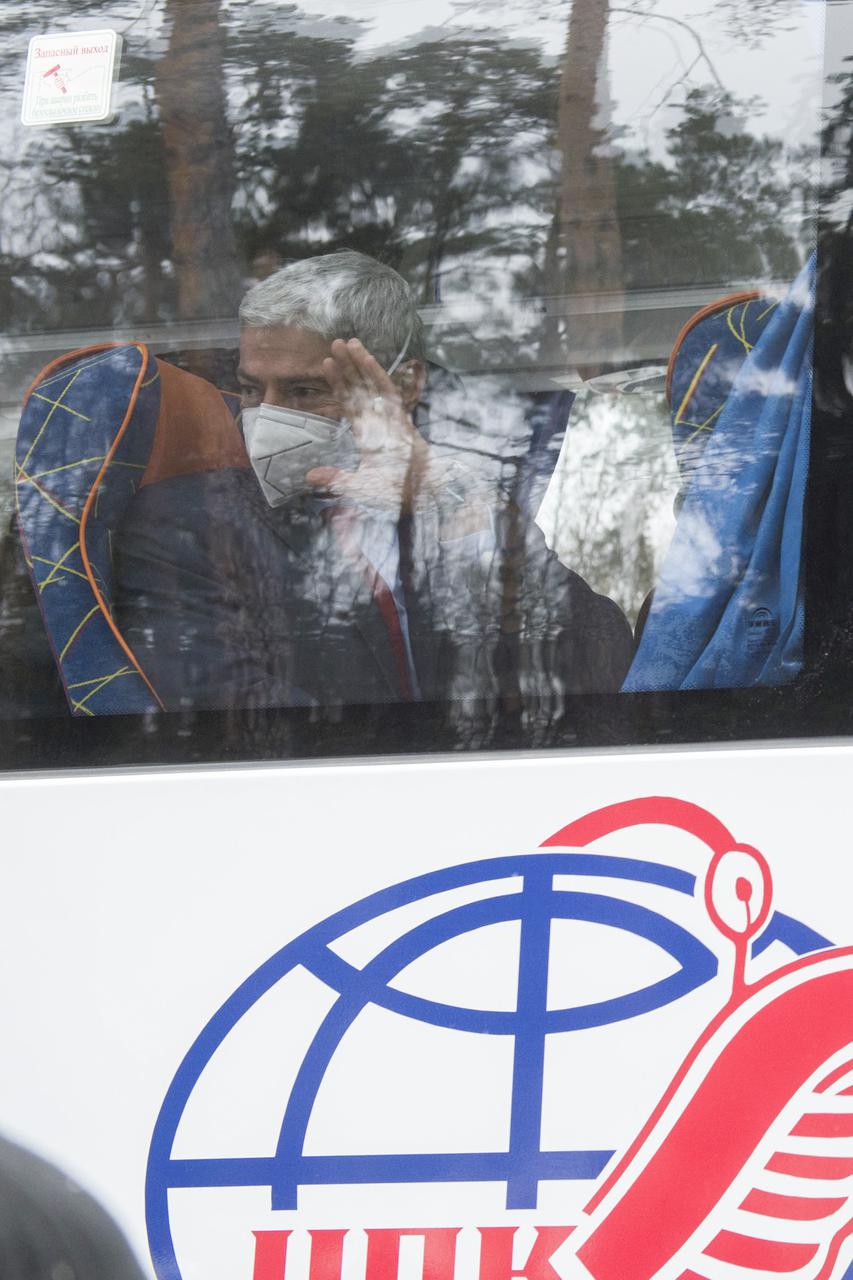
Expedition 65 prime crew member, NASA astronaut Mark Vande Hei, waves goodbye after boarding the bus to his flight to Baikonur for launch from the Baikonur Cosmodrome, Friday, March 26, 2021 at the Gagarin Cosmonaut Training Center (GCTC) in Star City, Russia. Photo Credit: (NASA/GCTC/Andrey Shelepin)
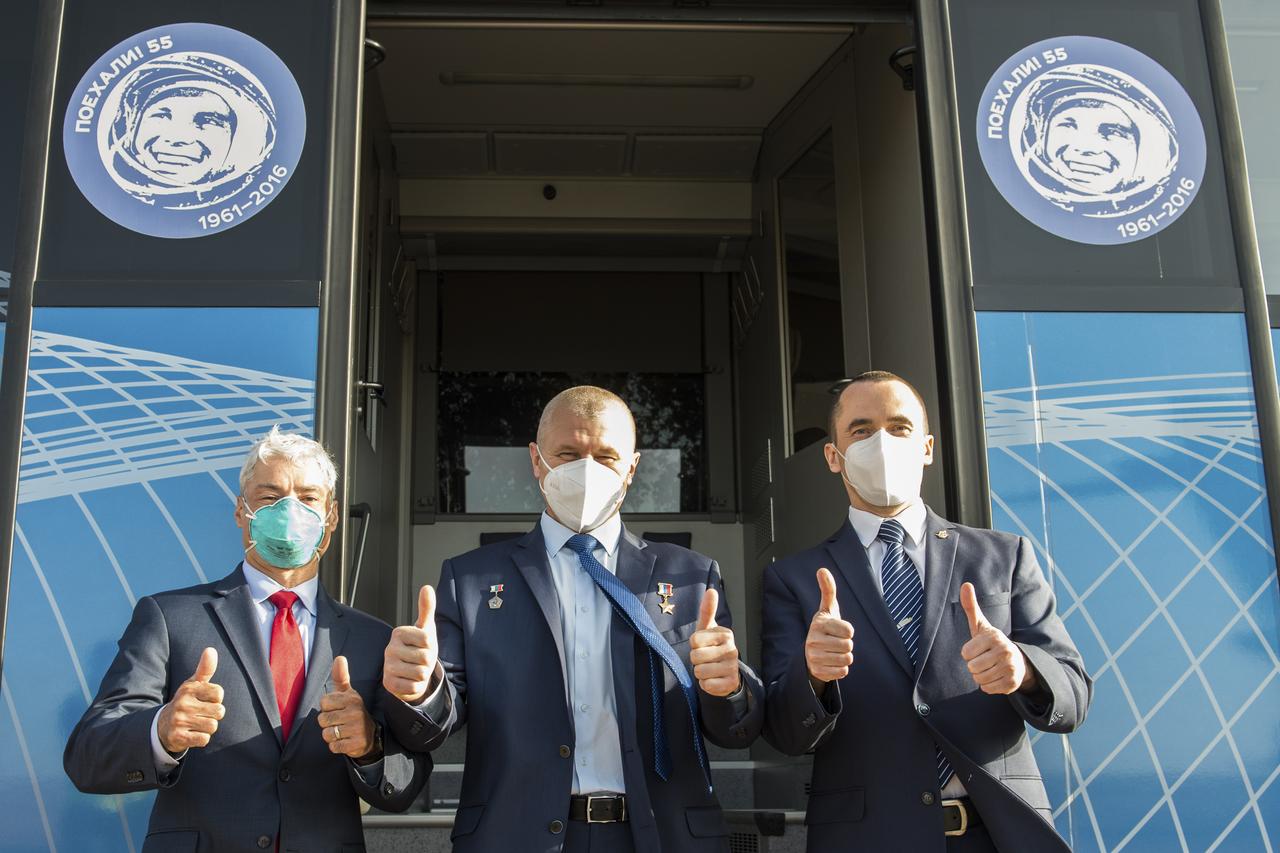
Expedition 64 backup crew members NASA astronaut Mark Vande Hei, left, Russian cosmonaut Oleg Novitskiy of Roscosmos, center, and Russian cosmonaut Petr Dubrov of Roscosmos, pose for a photo at the bus after arriving in Baikonur, Kazakhstan from the Gagarin Cosmonaut Training Center, Sunday, Sept. 27, 2020. The prime crew is scheduled to launch from the Baikonur Cosmosdrome on a Soyuz rocket October 14. Photo Credit: (NASA/GCTC/Andrey Shelepin)
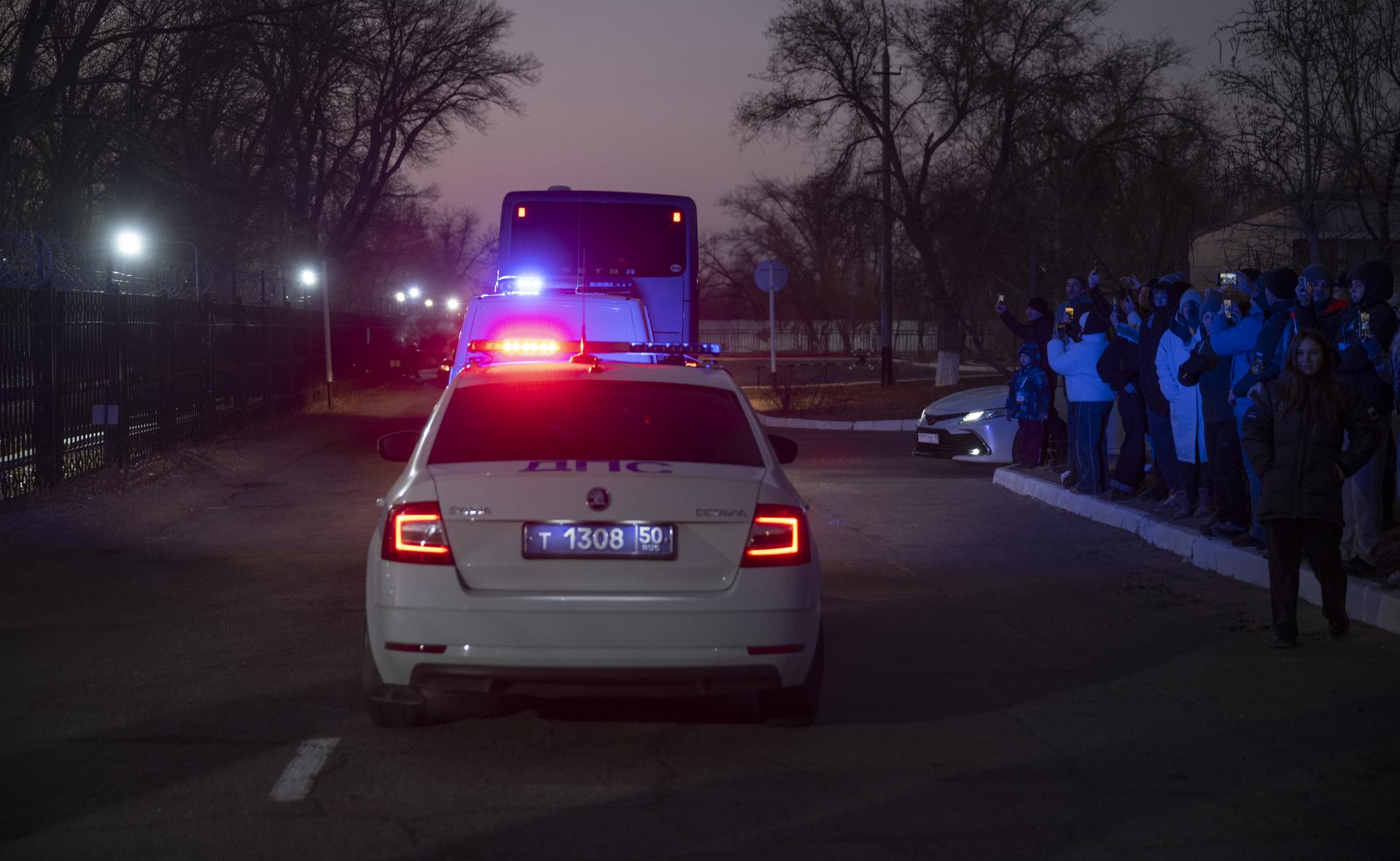
The bus carrying Expedition 74 crewmembers: NASA astronaut Chris Williams, Roscosmos cosmonauts Sergey Kud-Sverchkov, and Sergei Mikaev, departs the Cosmonaut Hotel to building 254 for the trio to suit-up for their Soyuz launch, Thursday, Nov. 27, 2025, in Baikonur, Kazakhstan. The launch will send Williams, Kud-Sverchkov and Mikaev, on a mission to the International Space Station. Photo Credit: (NASA/Bill Ingalls)

The crew return bus pulls away from the Gargarin Cosmonaut Training Center's airplane in Star City, Russia. The Soyuz capsule carrying Expedition 9 Flight Engineer Michael Fincke, Expedition 9 Commander Gennady Padalka and Russian Space Forces cosmonaut Yuri Shargin landed approximately 85 kilometers northeast of Arkalyk in northern Kazakhstan, Sunday, October 24, 2004. Photo Credit: (NASA/Bill Ingalls)
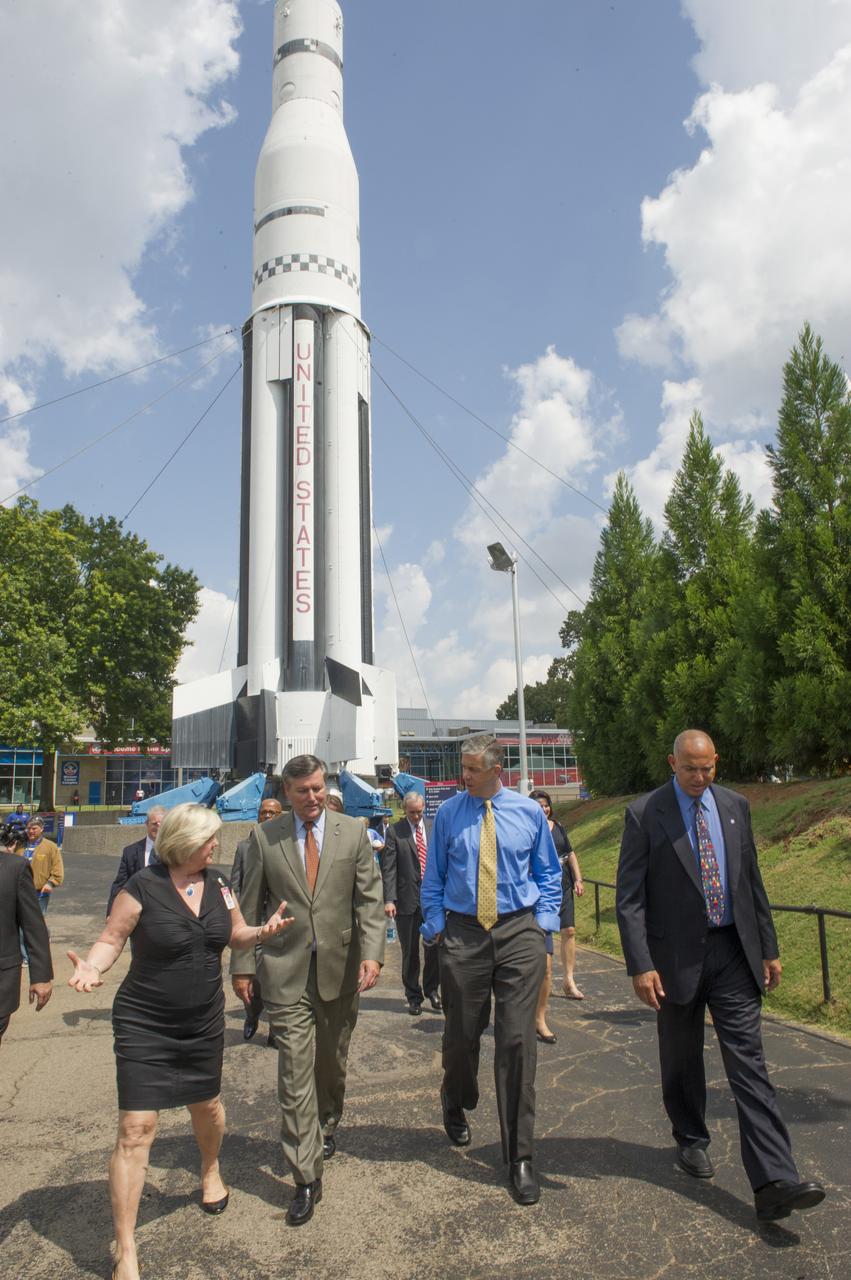
FROM LEFT, U.S. SPACE & ROCKET CENTER CEO DR. DEBORAH BARNHART AND MARSHALL CENTER DIRECTOR PATRICK SCHEUERMANN DISCUSS NASA’S HIGH-QUALITY EDUCATIONAL ACTIVITIES WITH U.S. SECRETARY OF EDUCATION ARNE DUNCAN AND THE NEWLY APPOINTED NASA ASSOCIATE ADMINISTRATOR OF EDUCATION, DONALD JAMES. THE SECRETARY’S VISIT TO THE SPACE & ROCKET CENTER WAS PART OF HIS FIFTH ANNUAL BACK-TO-SCHOOL BUS TOUR AND INCLUDED AN EDUCATIONAL TOWN HALL MEETING WITH LOCAL STUDENTS, TEACHERS AND PARENTS
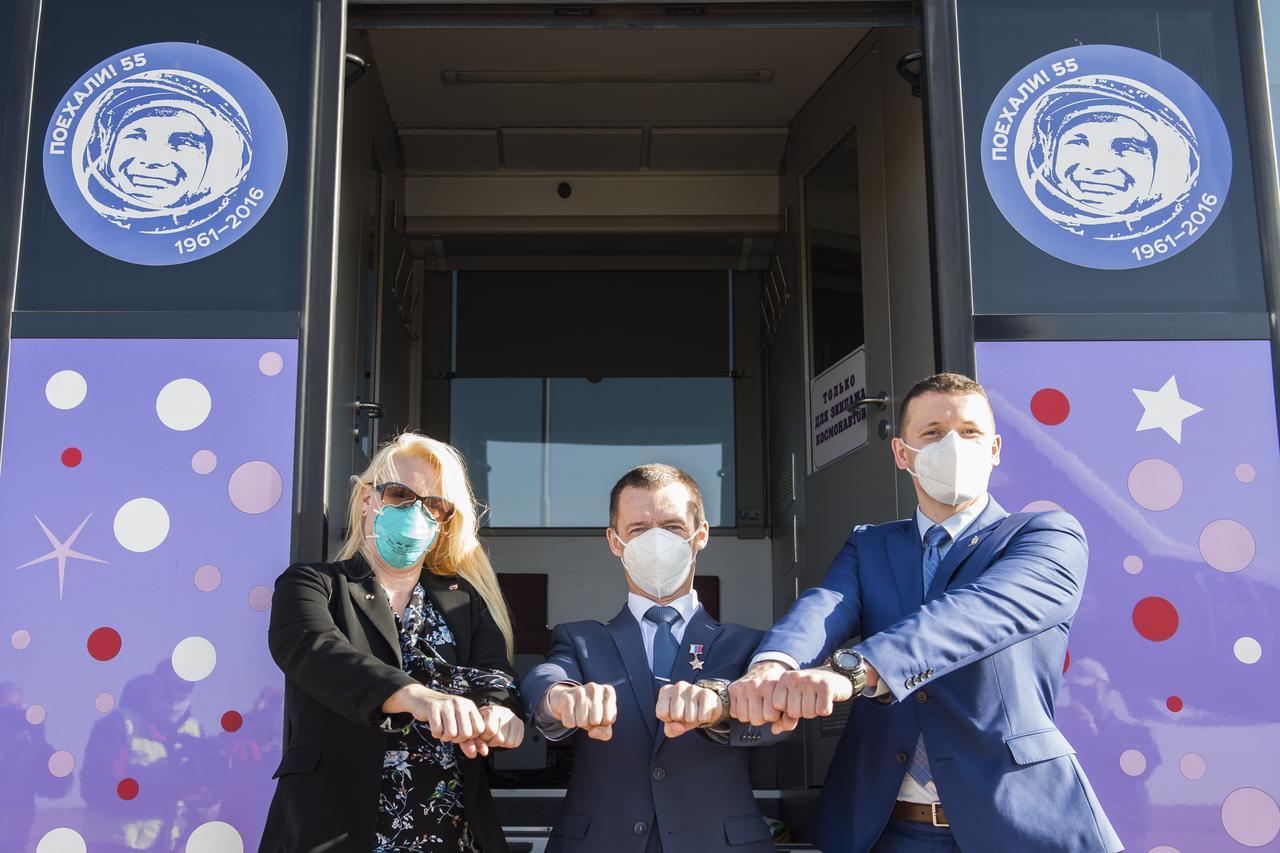
Expedition 64 prime crew members, NASA astronaut Kate Rubins, left, Russian cosmonaut Sergey Ryzhikov of Roscosmos, center, and Russian cosmonaut Sergey Kud-Sverchkov of Roscosmos pose for a photo at the bus after arriving in Baikonur, Kazakhstan from the Gagarin Cosmonaut Training Center, Sunday, Sept. 27, 2020. They are scheduled to launch from the Baikonur Cosmosdrome on a Soyuz rocket October 14. Photo Credit: (NASA/GCTC/Andrey Shelepin)

Expedition 58 Flight Engineer David Saint-Jacques' son peers through the window of the bus carrying the Expedition 58 crew to building 254 for suit-up for their Soyuz launch to the International Space Station on Monday, Dec. 3, 2018 in Baikonur, Kazakhstan. Launch of the Soyuz rocket is scheduled for the same day and will send Saint-Jacques, Soyuz Commander Oleg Kononenko of Roscosmos, and Flight Engineer Anne McClain of NASA on a six and a half month mission aboard the International Space Station. Photo Credit: (NASA/Aubrey Gemignani)
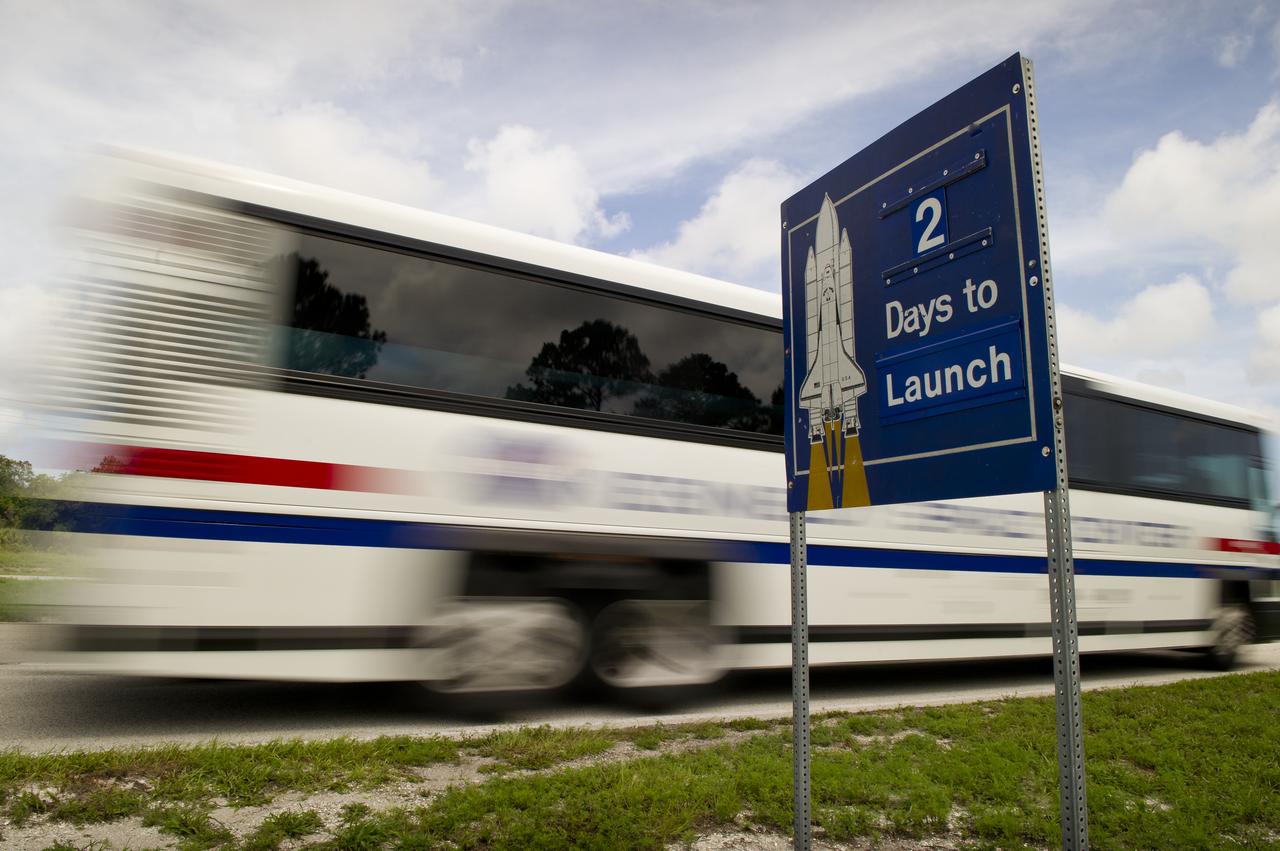
A tour bus drives by a launch countdown sign inside the NASA Kennedy Space Center on Wednesday, July 6, 2011 in Cape Canaveral, Fla. Space shuttle Atlantis is set to liftoff Friday, July 8 on the final flight of the shuttle program, STS-135, a 12-day mission to the International Space Station. Photo Credit: (NASA/Bill Ingalls)
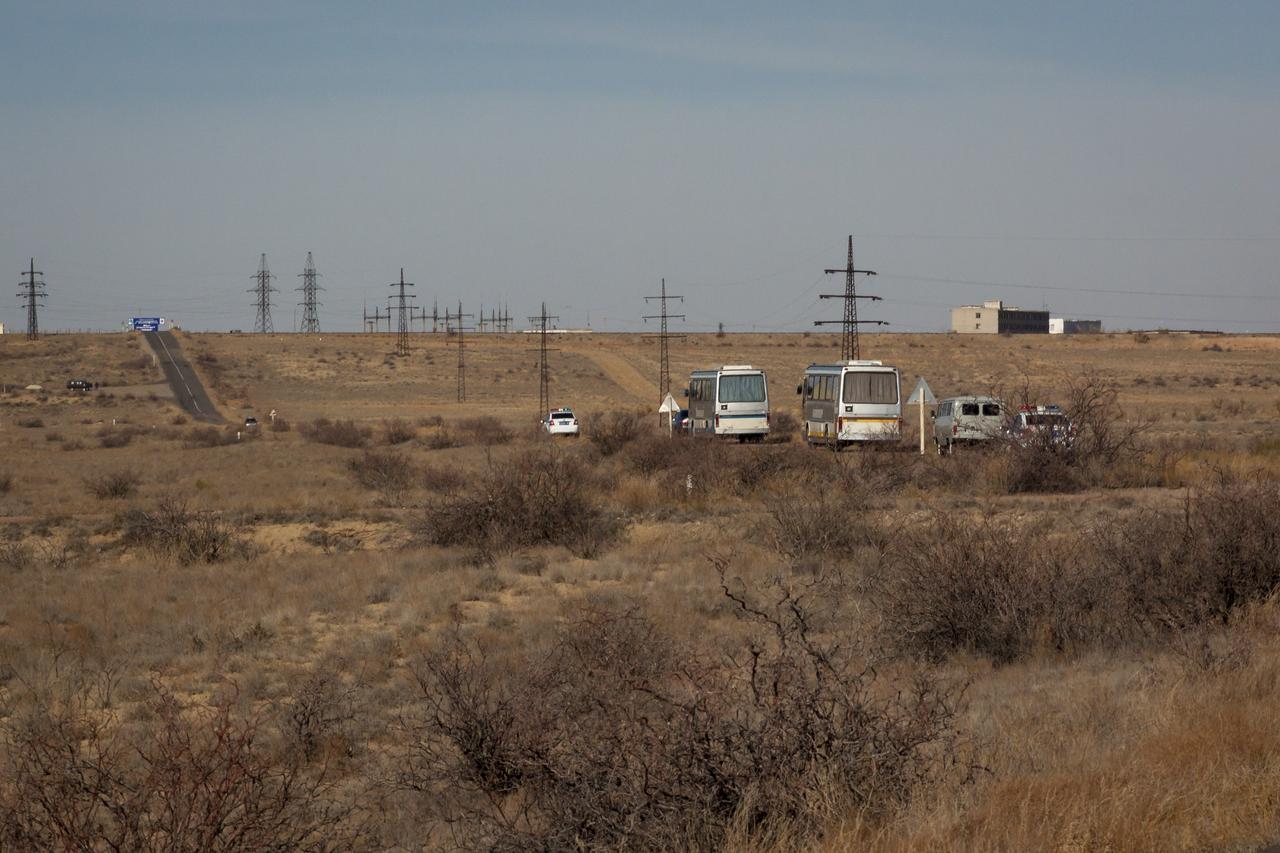
The bus convoy carrying Expedition 33/34 crew members, Russian Cosmonaut and Soyuz Commander Oleg Novitskiy, NASA Astronaut and Flight Engineer Kevin Ford, and Russian Cosmonaut and Flight Engineer Evgeny Tarelkin, heads to launch site 31 for the crews launch onboard a Soyuz TMA-06M spacecraft to the International Space Station, Tuesday, October 23, 2012, in Baikonur, Kazakhstan. Launch of the Soyuz rocket will send Ford, Novitskiy and Tarelkin on a five-month mission aboard the International Space Station. Photo Credit: (NASA/Victor Zelentsov)
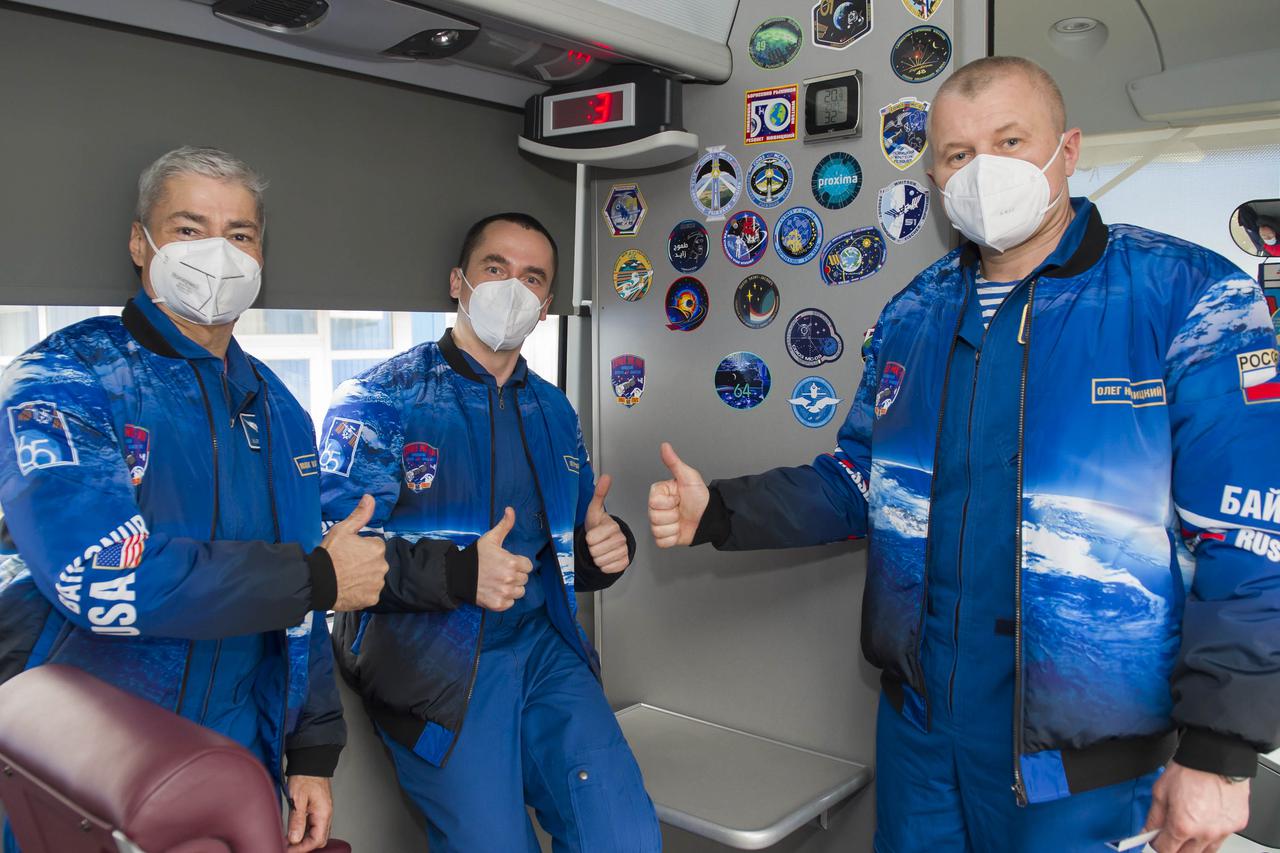
Expedition 65 prime crew members NASA astronaut Mark Vande Hei, left, Pyotr Dubrov, center, and Oleg Novitskiy of Roscosmos give a thumbs up in the bus that is taking them to their final fit check to prepare for launch, Sunday, April 4, 2021 at the Baikonur Cosmodrome in Kazakhstan. The trio are scheduled to launch to the International Space Station on a Soyuz rocket April 9. Photo Credit: (NASA/GCTC/Irina Spector)
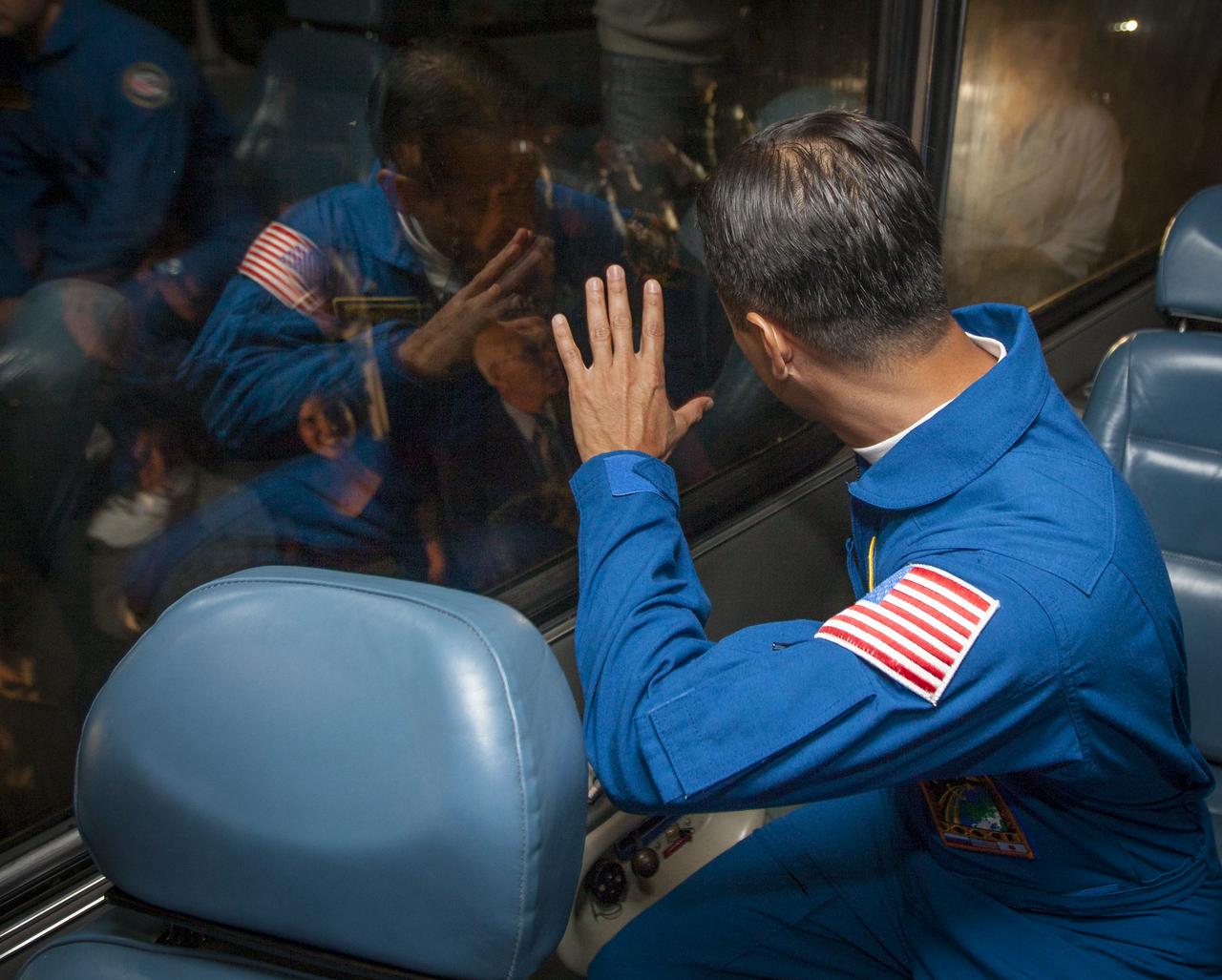
Expedition 31 Flight Engineer Joe Acaba waves farewell to friends and family as his bus departs the Cosmonaut Hotel with fellow Expedition 31 crew members, Commander Gennady Padalka and Sergei Revin on Tuesday, May 15, 2012 in Baikonur, Kazakhstan. The Soyuz spacecraft with Expedition 31 Soyuz Commander Gennady Padalka, Flight Engineer Sergei Revin, and Acaba onboard launched at 9:01 a.m. Kazakhstan time on Tuesday, May 15. Photo Credit: (NASA/GCTC/Andrey Shelepin)
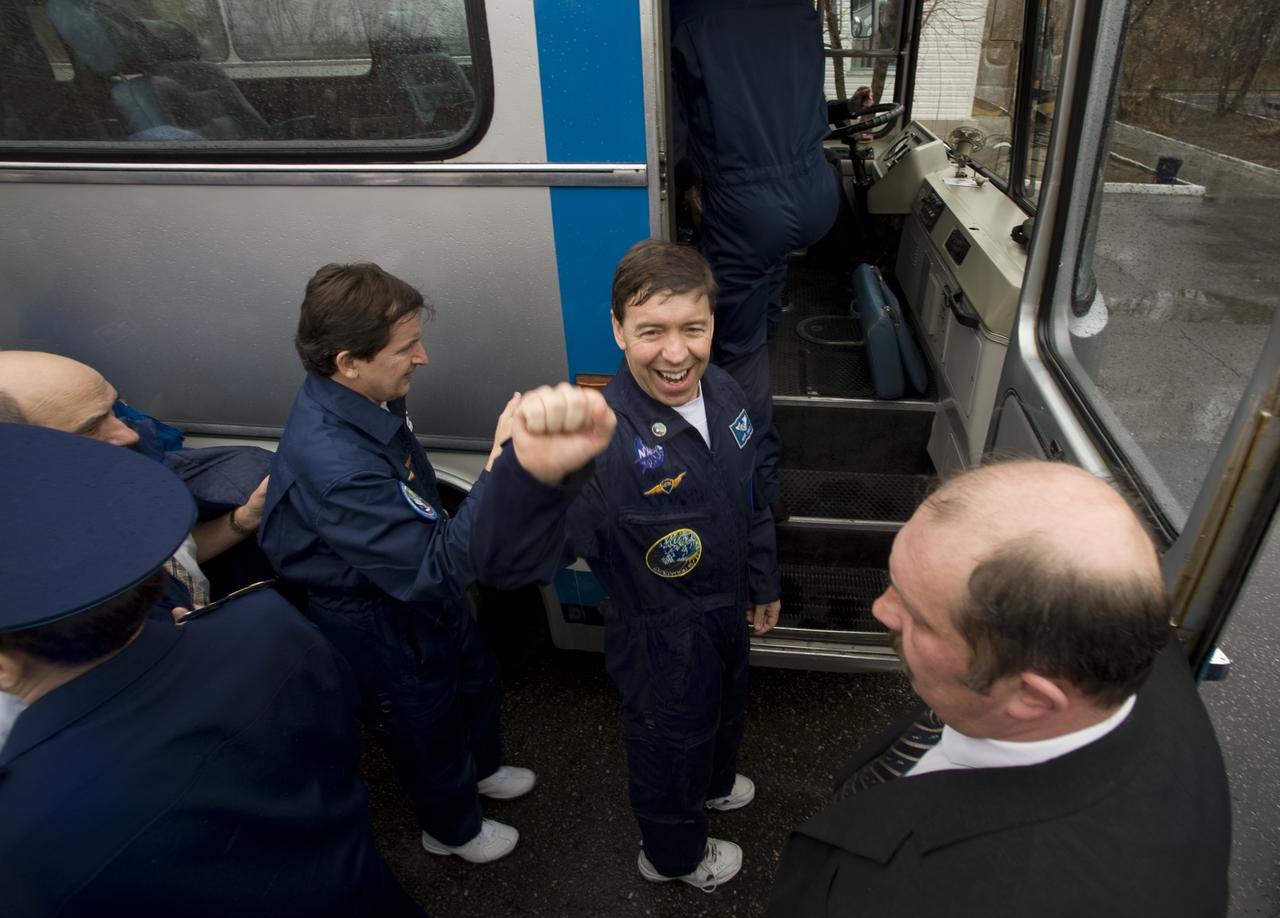
Expedition 19 Flight Engineer Michael R. Barratt raises his arm to the crowd of well wishers as he and Spaceflight Participant Charles Simonyi, left, and Commander Gennady I. Padalka depart the Cosmonaut hotel and board the bus that will take them to building 254 in preparation for their Soyuz launch to the International Space Station on Thursday, March 26, 2009 in Baikonur, Kazakhstan. (Photo Credit: NASA/Bill Ingalls)

Expedition 65 prime crew members, Russian cosmonauts Pyotr Dubrov of Roscosmos, left, and Oleg Novitskiy of Roscosmos, wave goodbye after boarding the bus to their flight to Baikonur for launch from the Baikonur Cosmodrome, Friday, March 26, 2021 at the Gagarin Cosmonaut Training Center (GCTC) in Star City, Russia. Photo Credit: (NASA/GCTC/Andrey Shelepin)
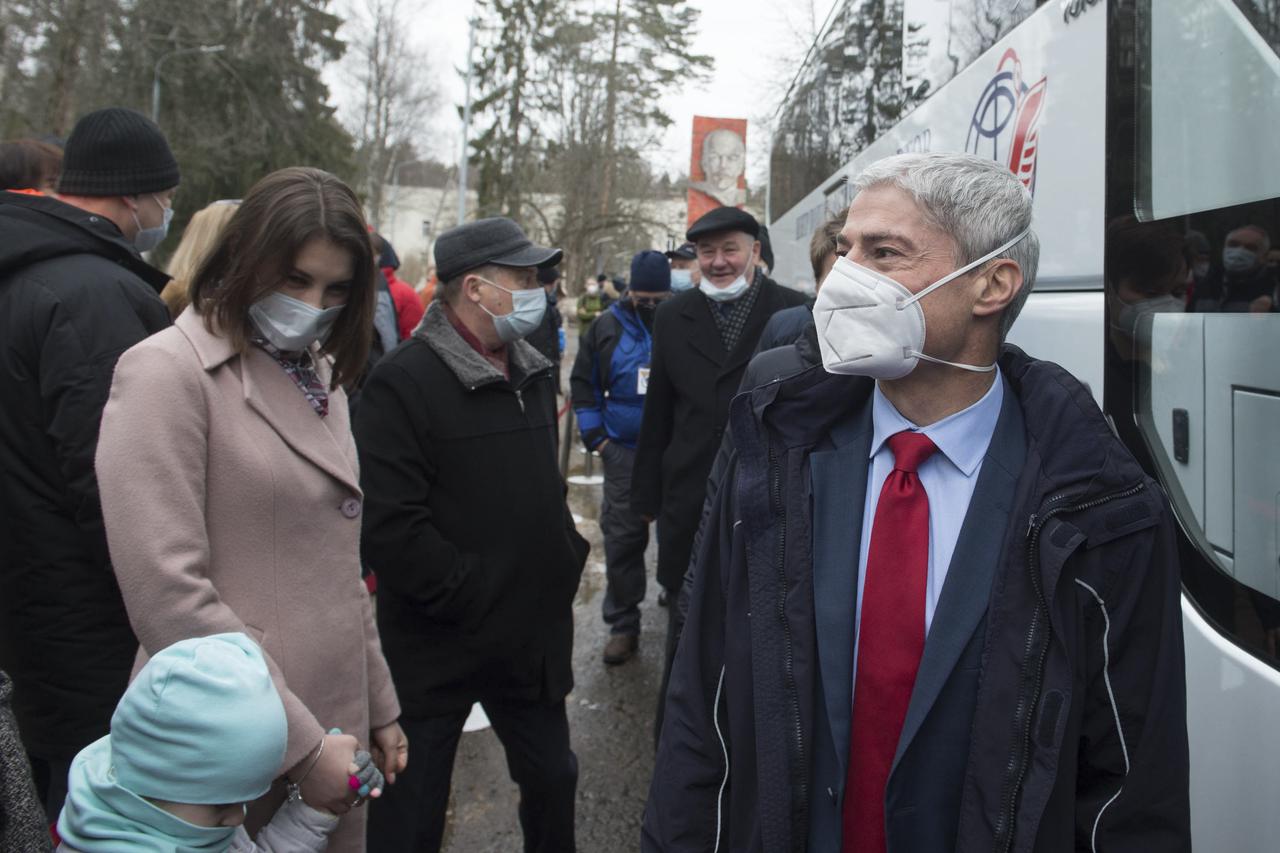
Expedition 65 prime crew member, NASA astronaut Mark Vande Hei bids farewell as he boards the bus that will take him to his flight to Baikonur for launch from the Baikonur Cosmodrome, Friday, March 26, 2021 at the Gagarin Cosmonaut Training Center (GCTC) in Star City, Russia. Photo Credit: (NASA/GCTC/Andrey Shelepin)
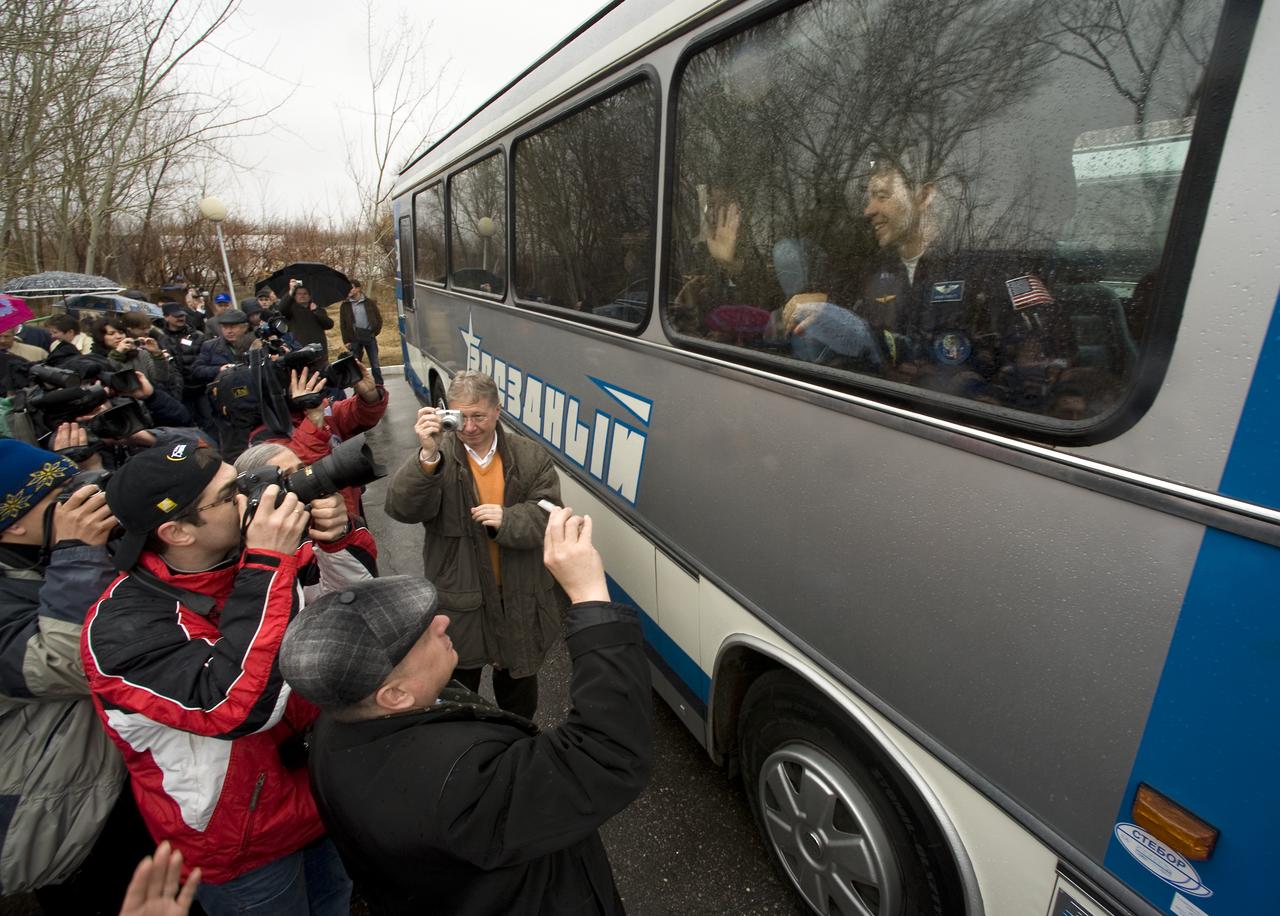
Expedition 19 Flight Engineer Michael R. Barratt is seen on the bus outside the Cosmonaut Hotel as he, Commander Gennady I. Padalka and Spaceflight Participant Charles Simonyi depart the hotel for building 254 where they will don their flights suits in preparation for their Soyuz launch to the International Space Station on Thursday, March 26, 2009 in Baikonur, Kazakhstan. (Photo Credit: NASA/Bill Ingalls)
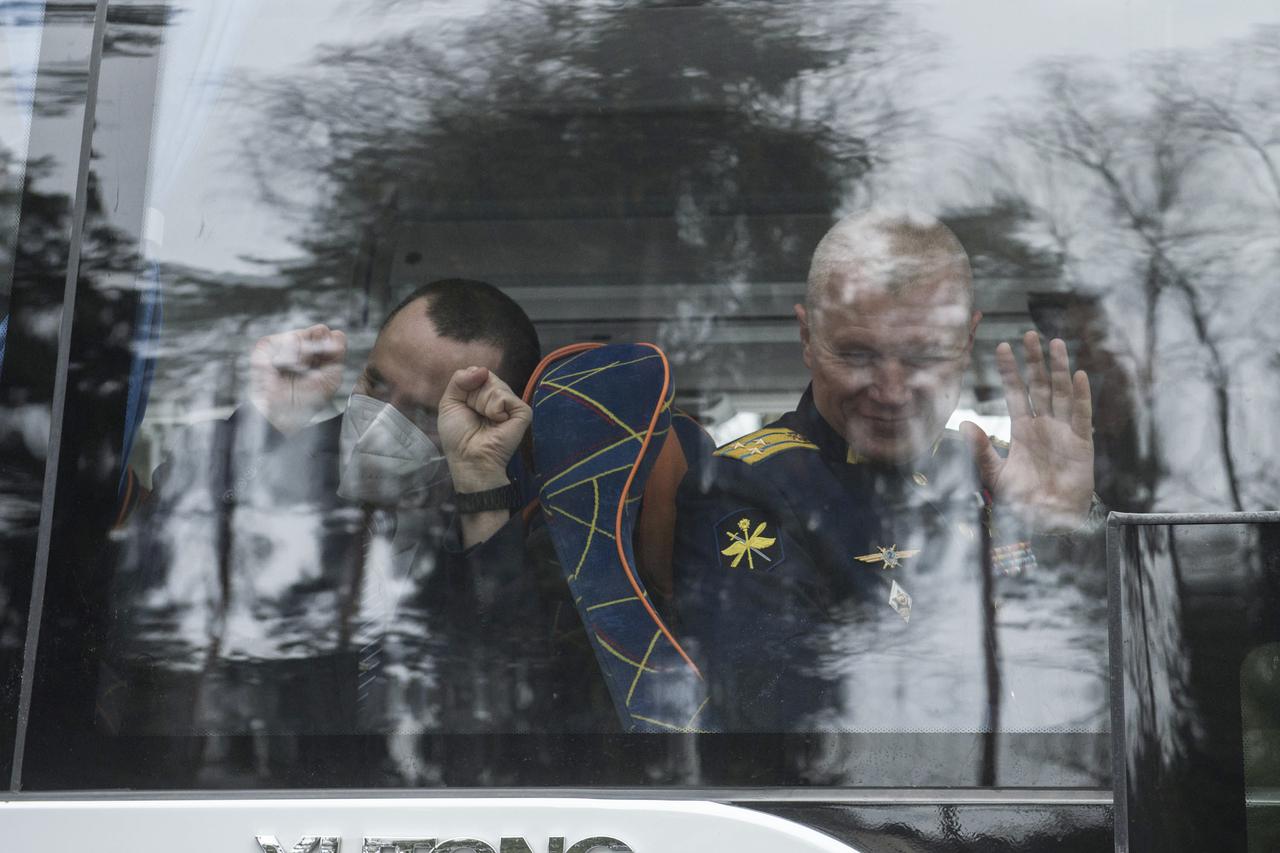
Expedition 65 prime crew members, Russian cosmonauts Pyotr Dubrov of Roscosmos, left, and Oleg Novitskiy of Roscosmos, wave goodbye after boarding the bus to their flight to Baikonur for launch from the Baikonur Cosmodrome, Friday, March 26, 2021 at the Gagarin Cosmonaut Training Center (GCTC) in Star City, Russia. Photo Credit: (NASA/GCTC/Andrey Shelepin)
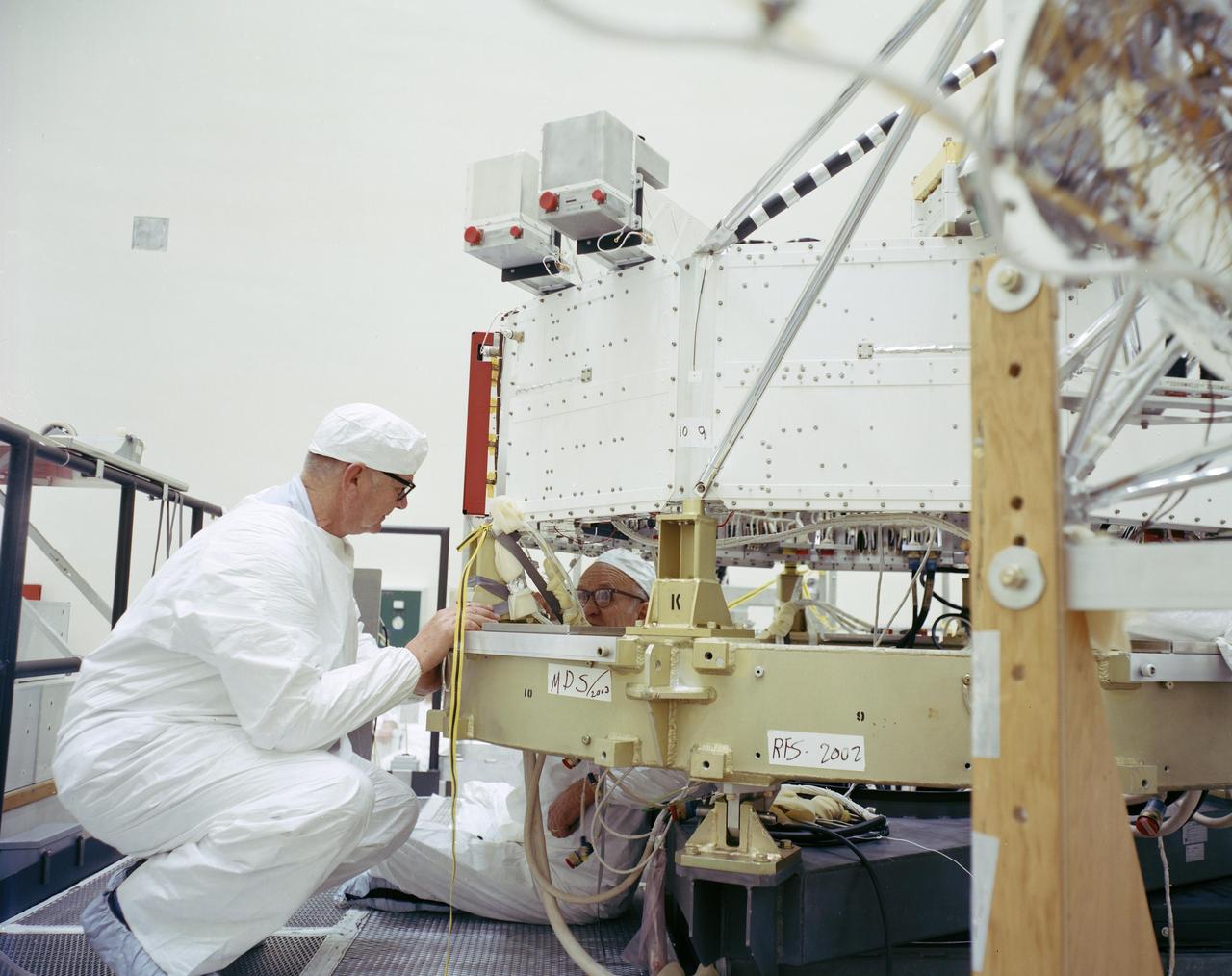
This archival photo shows engineers at NASA's Jet Propulsion Laboratory working on the 10-sided central structure, or "bus," of the Voyager 2 spacecraft on February 24,1977. https://photojournal.jpl.nasa.gov/catalog/PIA21478
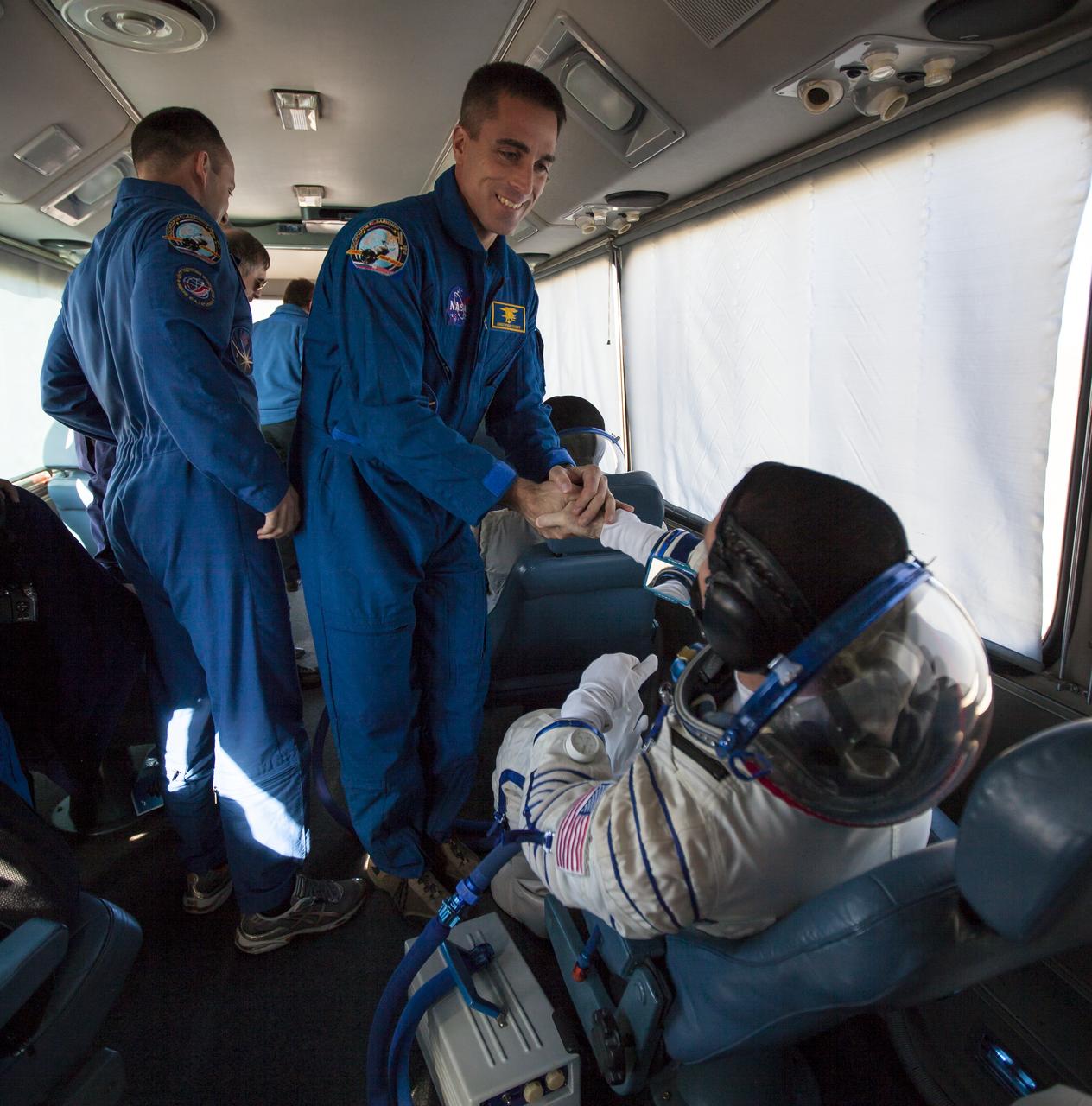
Expedition 33 backup crew member, NASA astronaut Chris Cassidy, shakes hands with Expedition 33/34 Flight Engineer Kevin Ford onboard the crew bus, before Ford and fellow crew mates, Russian Cosmonaut and Soyuz Commander Oleg Novitskiy, and Russian Cosmonaut and Flight Engineer Evgeny Tarelkin, launch onboard a Soyuz TMA-06M spacecraft to the International Space Station, Tuesday, October 23, 2012, in Baikonur, Kazakhstan. Launch of the Soyuz rocket will send Ford, Novitskiy and Tarelkin on a five-month mission aboard the International Space Station. Photo Credit: (NASA/GCTC/Andrey Shelepin)

Expedition 58 Flight Engineer Anne McClain of NASA blows a kiss to friends and family before boarding a bus to suit-up for her Soyuz launch to the International Space Station on Monday, Dec. 3, 2018 in Baikonur, Kazakhstan. Launch of the Soyuz rocket is scheduled for Dec. 3 and will send McClain, Soyuz Commander Oleg Kononenko of Roscosmos, and Flight Engineer David Saint-Jacques of the Canadian Space Agency (CSA) on a six and a half month mission aboard the International Space Station. Photo Credit: (NASA/Aubrey Gemignani)
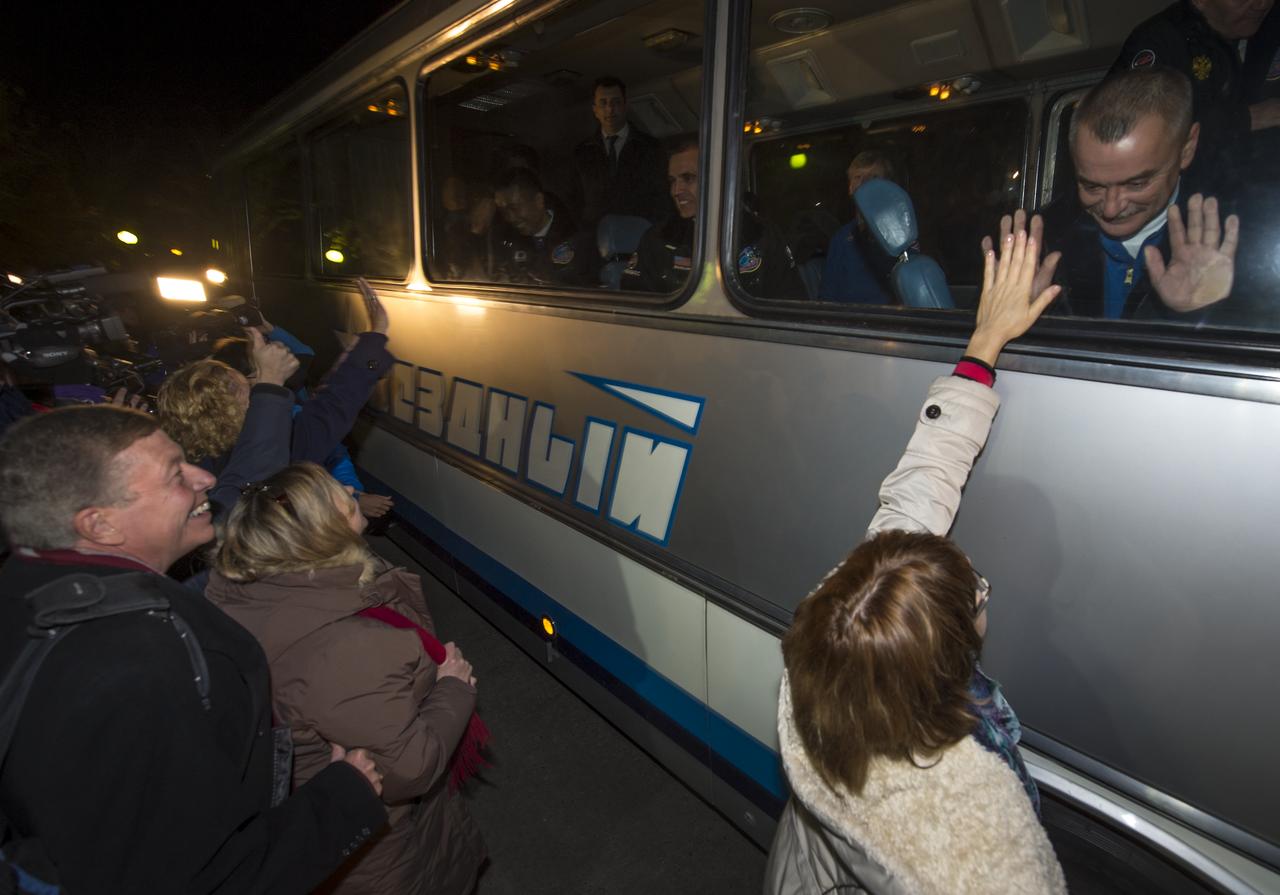
Expedition 38 Flight Engineer Koichi Wakata of the Japan Aerospace Exploration Agency, on bus left, Flight Engineer Rick Mastracchio of NASA, and, Soyuz Commander Mikhail Tyurin of Roscosmos, right, wave farewell to friends and family as they depart the Cosmonaut hotel ahead of their launch on a Soyuz rocket to the International Space Station, Thursday, Nov. 7, 2013, in Baikonur, Kazakhstan. Photo Credit: (NASA/Bill Ingalls)
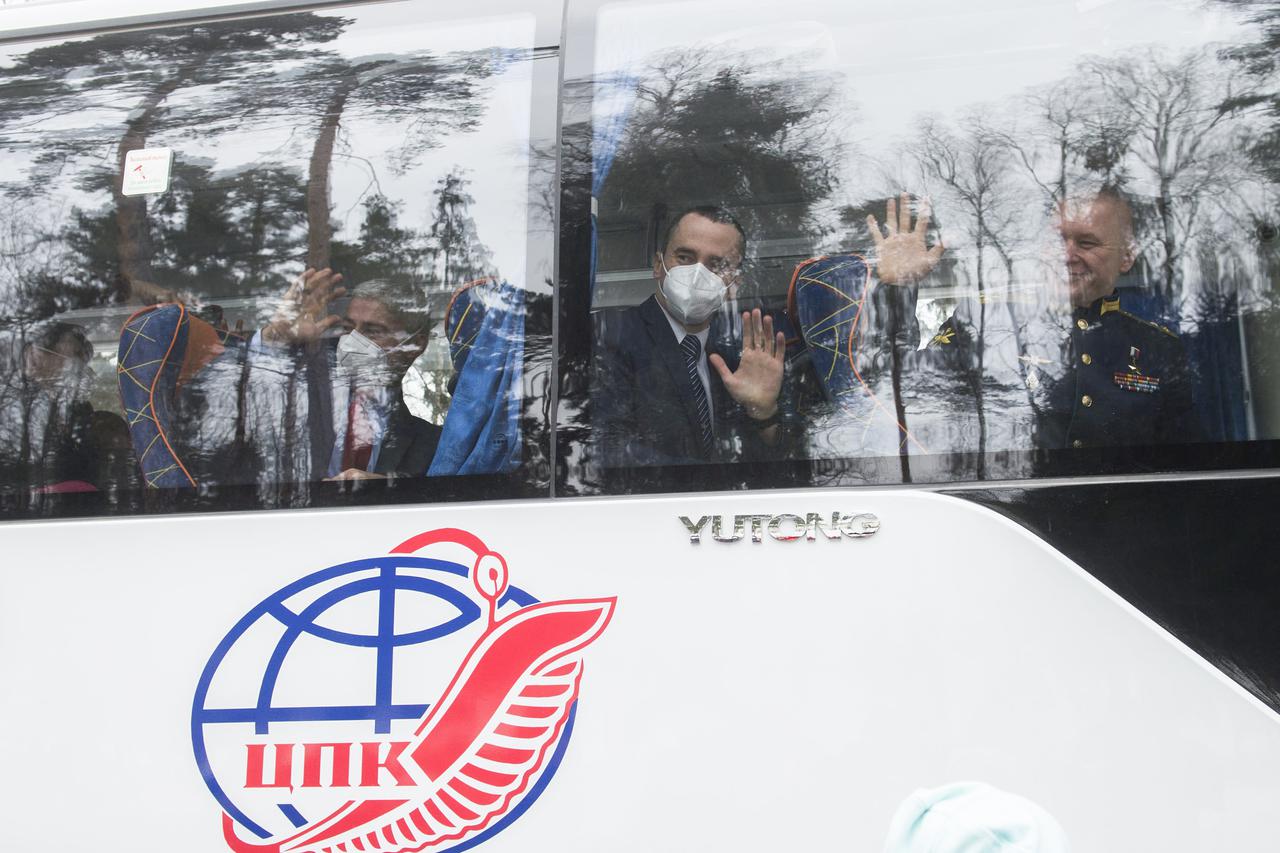
From left to right, Expedition 65 prime crew members, NASA astronaut Mark Vande Hei, Russian cosmonaut Pyotr Dubrov of Roscosmos, and Russian cosmonaut Oleg Novitskiy of Roscosmos, wave goodbye after boarding the bus to their flight to Baikonur for launch from the Baikonur Cosmodrome, Friday, March 26, 2021 at the Gagarin Cosmonaut Training Center (GCTC) in Star City, Russia. Photo Credit: (NASA/GCTC/Andrey Shelepin)
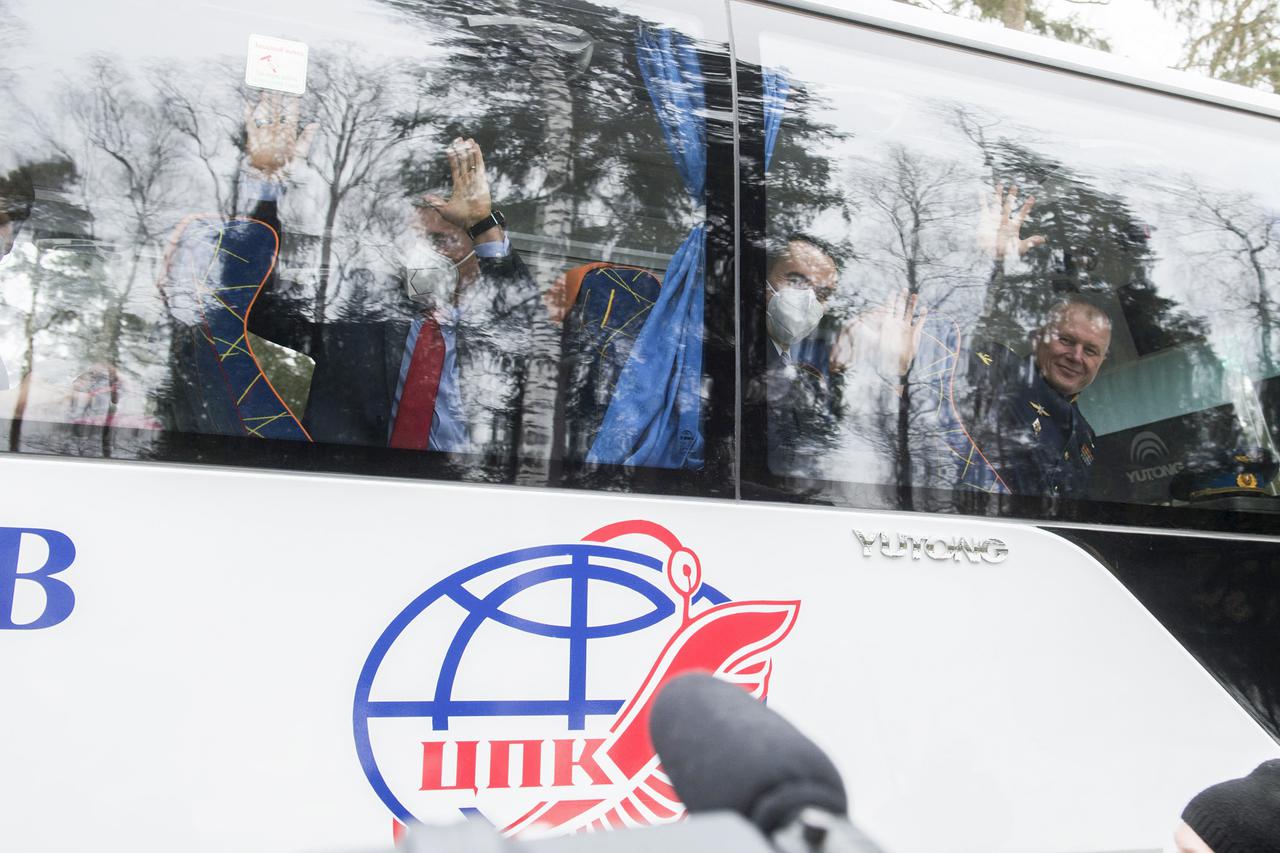
From left to right, Expedition 65 prime crew members, NASA astronaut Mark Vande Hei, Russian cosmonaut Pyotr Dubrov of Roscosmos, and Russian cosmonaut Oleg Novitskiy of Roscosmos, wave goodbye after boarding the bus to their flight to Baikonur for launch from the Baikonur Cosmodrome, Friday, March 26, 2021 at the Gagarin Cosmonaut Training Center (GCTC) in Star City, Russia. Photo Credit: (NASA/GCTC/Andrey Shelepin)
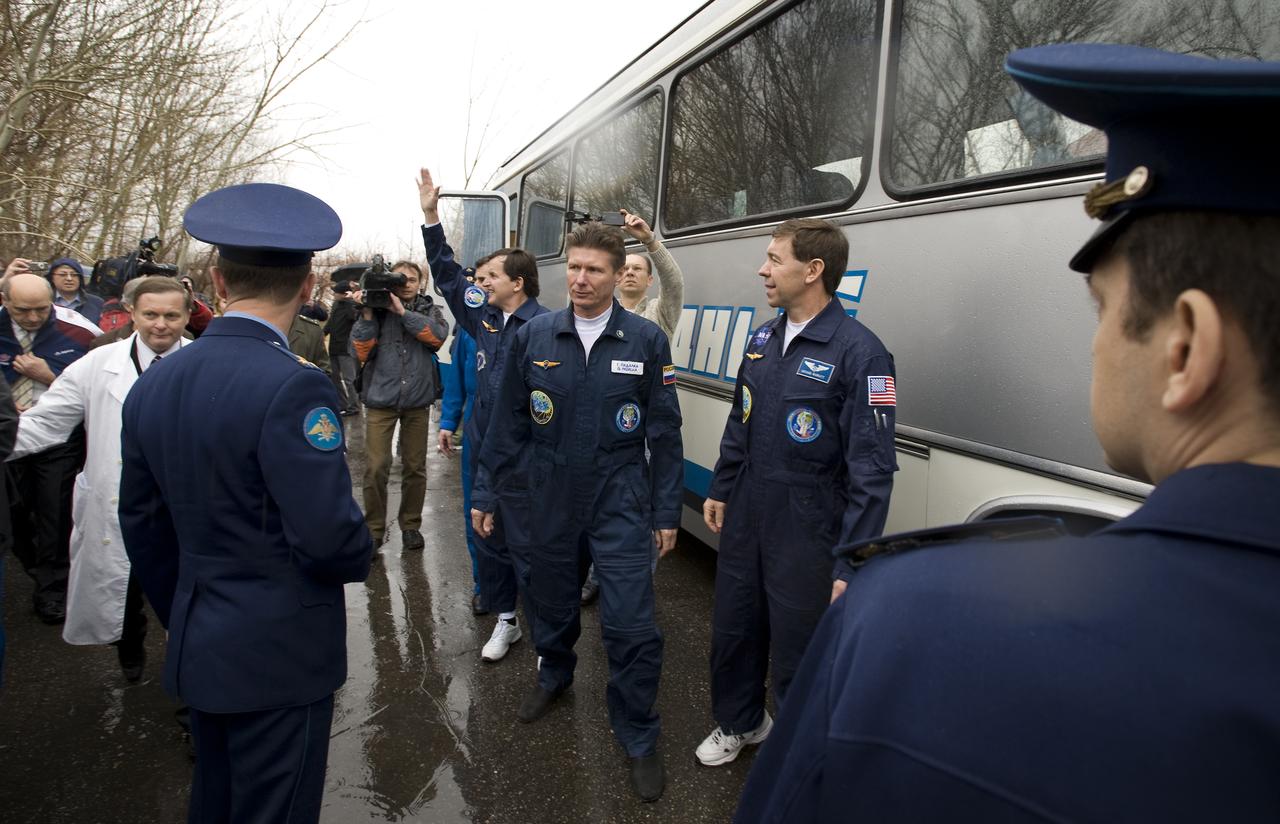
Spaceflight Participant Charles Simonyi, waving on left, Expedition 19 Commander Gennady I. Padalka, center, and Flight Engineer Michael R. Barratt depart the Cosmonaut hotel and board the bus that will take them to building 254 in preparation for their Soyuz launch to the International Space Station on Thursday, March 26, 2009 in Baikonur, Kazakhstan. (Photo Credit: NASA/Bill Ingalls)
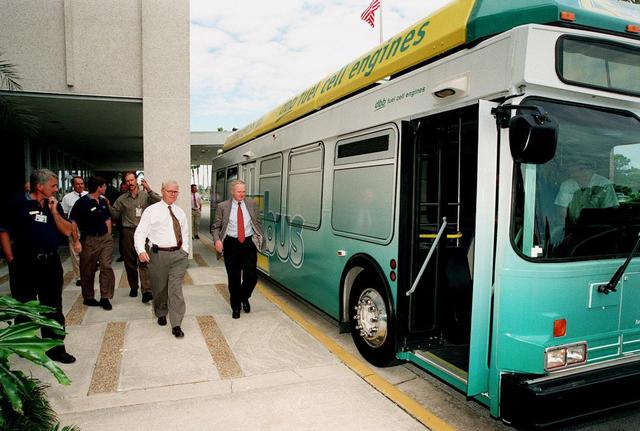
KSC workers, with Center Director Roy Bridges (at right next to bus), head for the open door of the Zero Emissions (ZE) transit bus and a ride around the center. Provided by dbb fuel cell engines inc. of Vancouver, Canada, the ZE bus was brought to KSC as part of the Center's Alternative Fuel Initiatives Program. The bus uses a Proton Exchange Membrane fuel cell in which hydrogen and oxygen, from atmospheric air, react to produce electricity that powers an electric motor drive system. The by-product "exhaust" from the fuel cell is water vapor, thus zero harmful emissions. A typical diesel-powered bus emits more than a ton of harmful pollutants from its exhaust every year. Available to employees for viewing and a ride, the ZE bus is also being used on tour routes at the KSC Visitor Complex Oct. 26-27
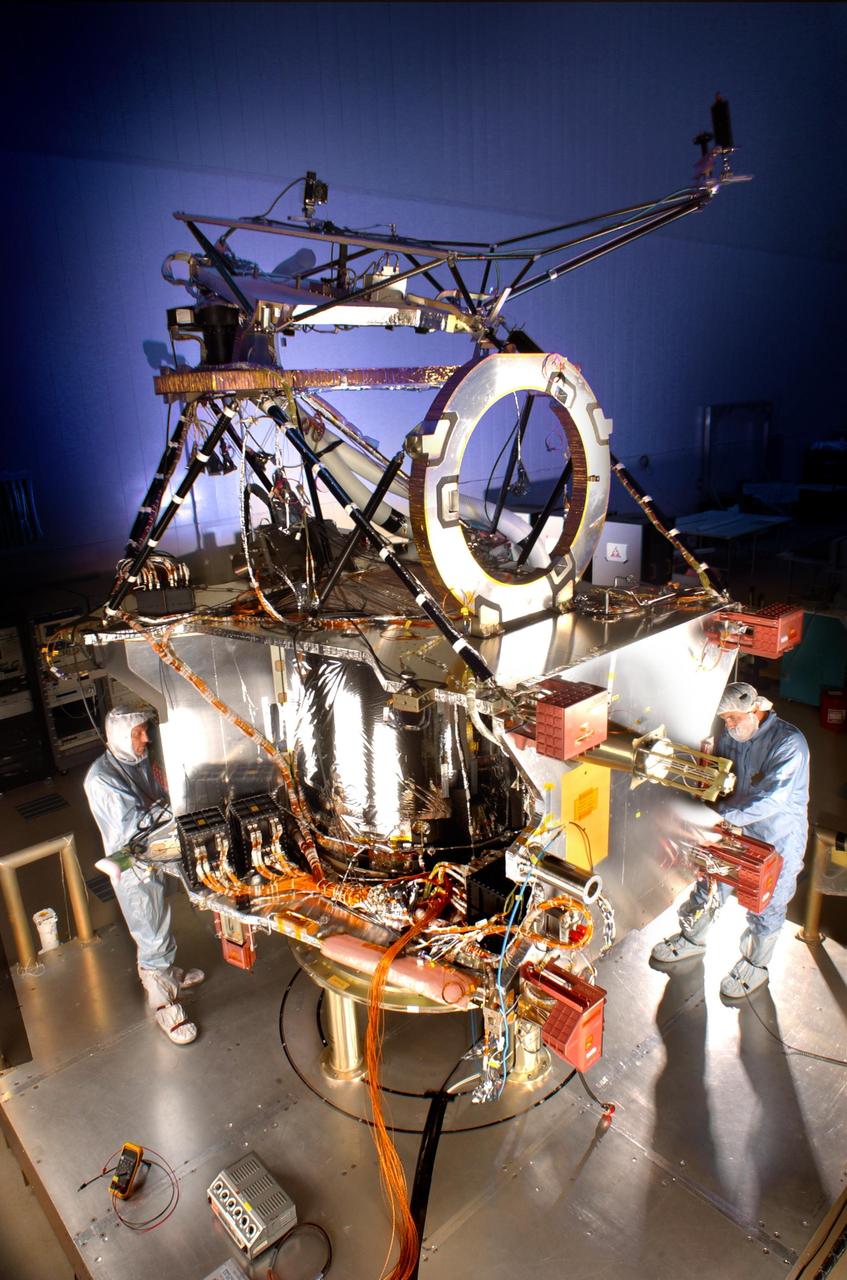
Lockheed Martin Space Systems engineer Terry Kampmann left and lead technician Jack Farmerie work on assembly and test of NASA Mars Reconnaissance Orbiter spacecraft bus in a cleanroom at the company Denver facility.

OSAM-1 and Maxar team members remove protective bagging from the spacecraft bus at Goddard Space Flight Center, Greenbelt Md., Sept 25, 2023. This photo has been reviewed by OSAM1 project management, Maxar public release authority, and the Export Control Office and is released for public view. NASA/Mike Guinto
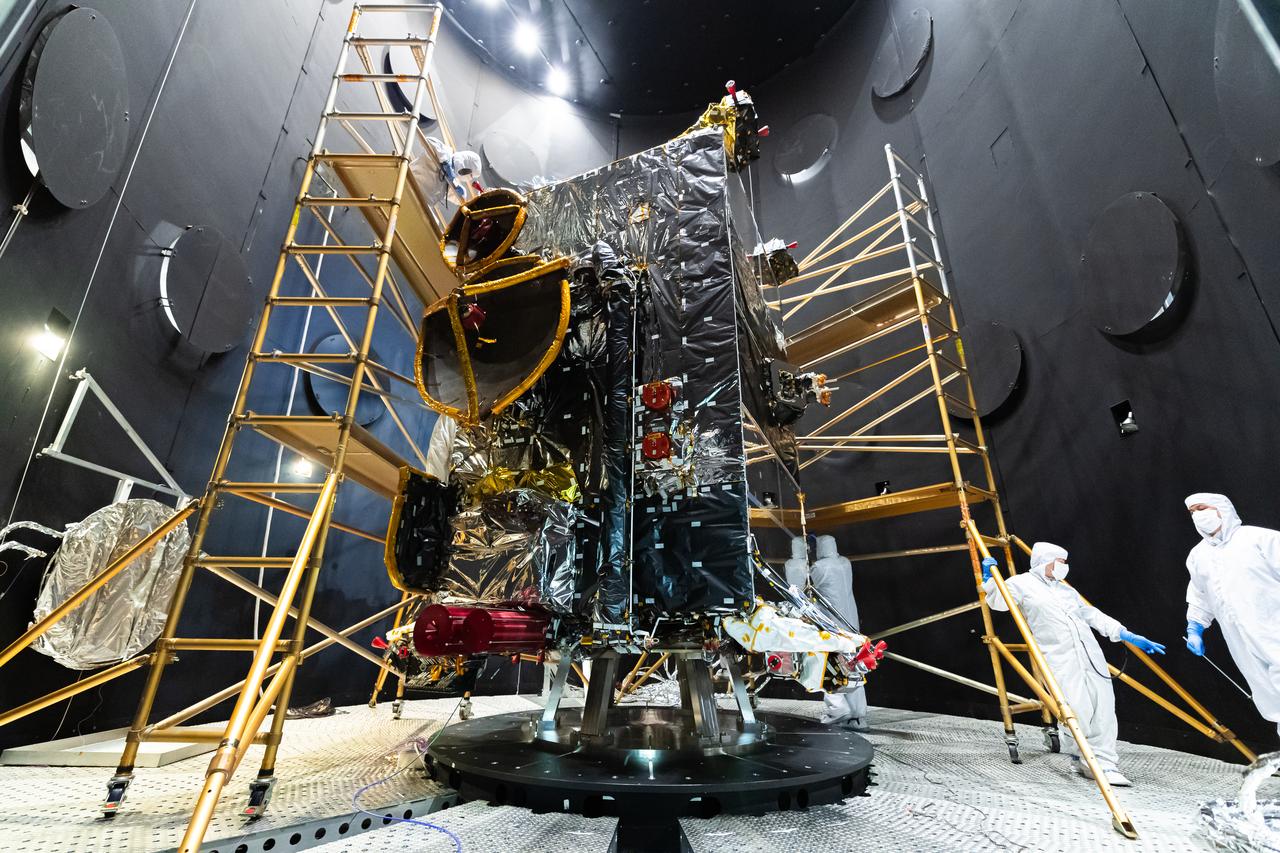
A view of the OSAM-1 spacecraft bus inside the thermal vacuum chamber at Goddard Space Flight Center, Greenbelt Md., Dec 1, 2023. This photo has been reviewed by Maxar, OSAM1 project management, and the Export Control Office and is released for public view. NASA/Mike Guinto
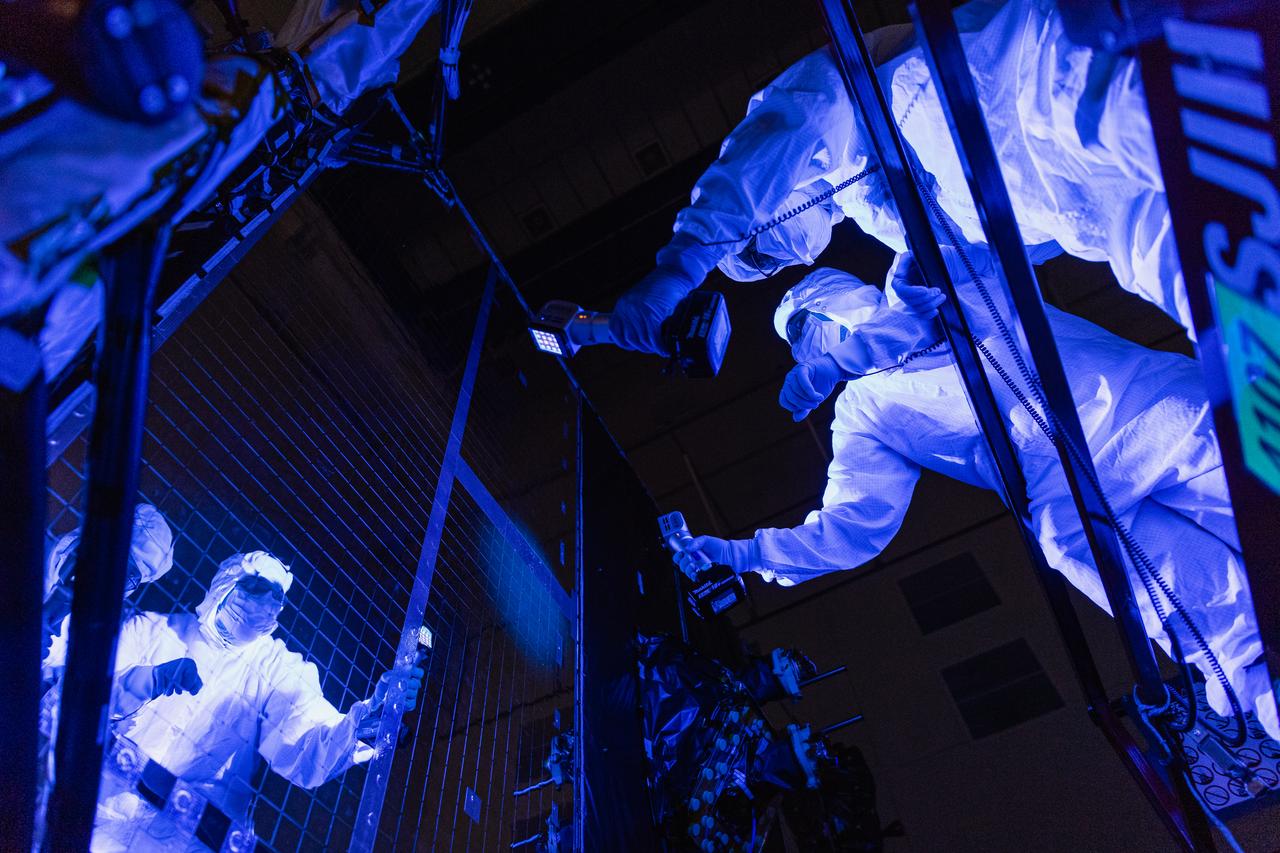
NASA Contamination control engineers perform a blacklight inspection on the OSAM-1 Spacecraft Bus at Goddard Space Flight Center, Greenbelt Md., Sept 30, 2023. This photo has been reviewed by OSAM1 project management, Maxar public release authority, and the Export Control Office and is released for public view. NASA/Mike Guinto
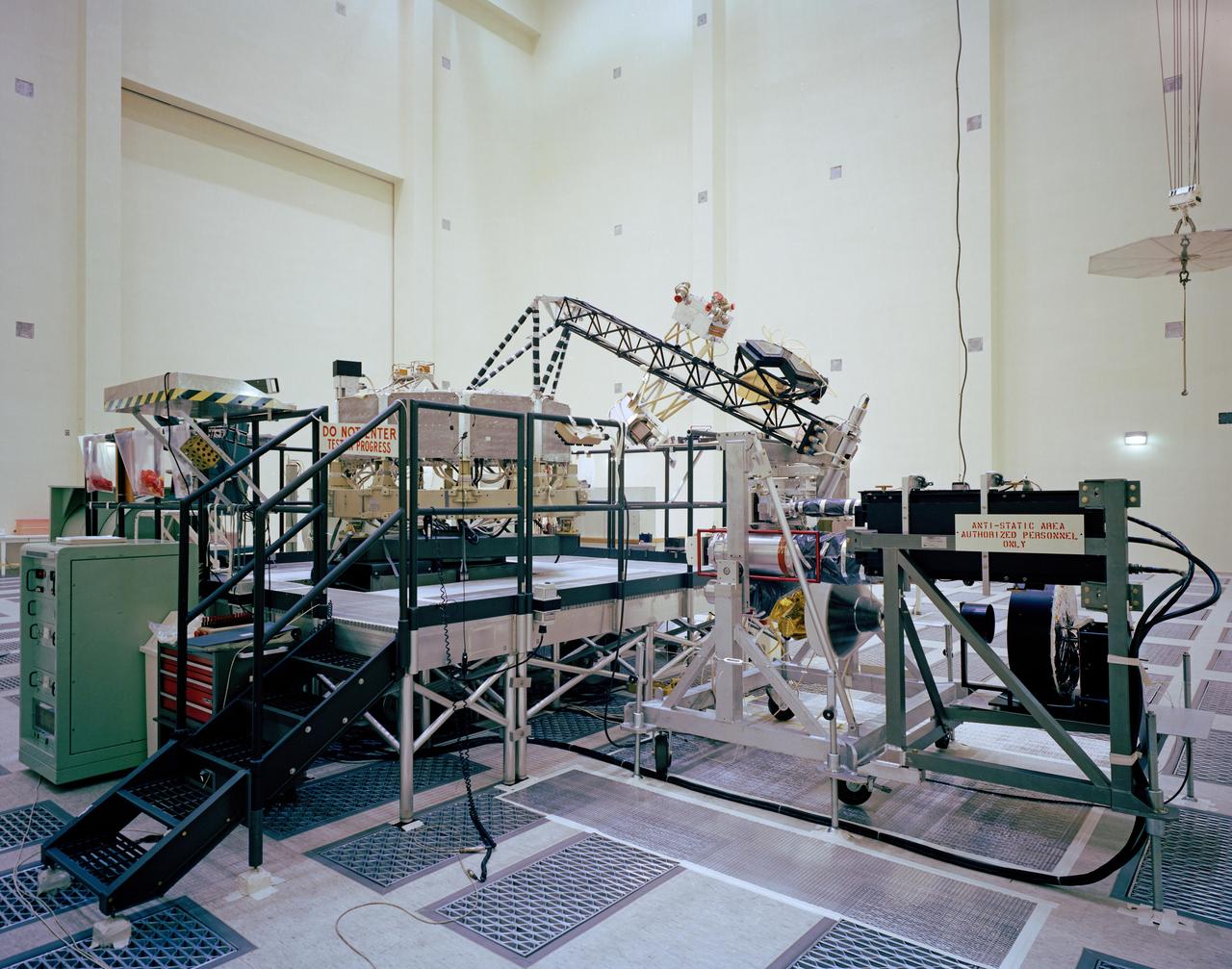
This archival photo shows the system test configuration for Voyager on October 1, 1976. The spacecraft's 10-sided bus is visible behind the catwalk railing in the foreground. The boom that holds several of the spacecraft's science instruments arches above the railing. https://photojournal.jpl.nasa.gov/catalog/PIA21729
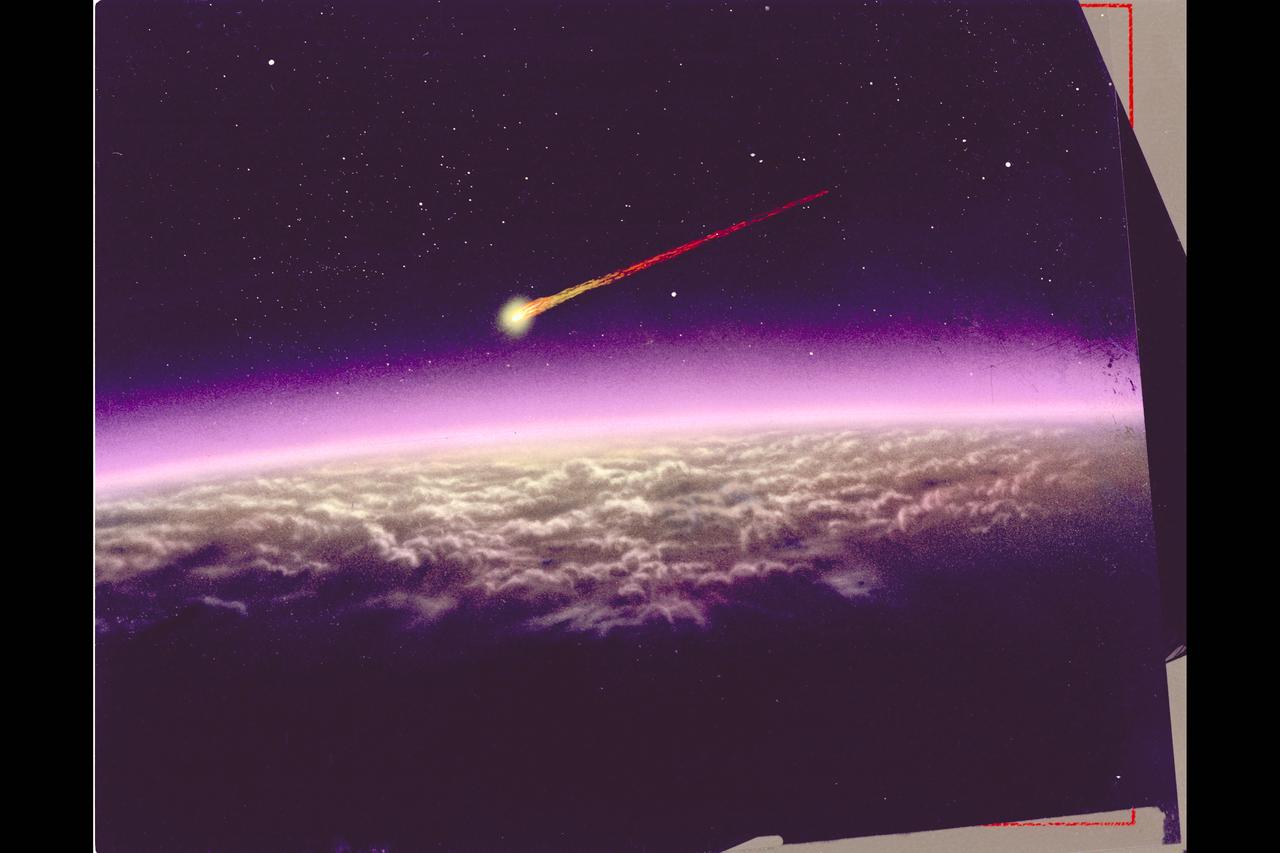
Art By Don Davis As the probes and the bus enter the Venusian atmosphere they glowed briefly like meteorites. The bus as shown in this artisit's rendering, was most spectacular because it did not carry a heat shield; as a result, it burned up completely.
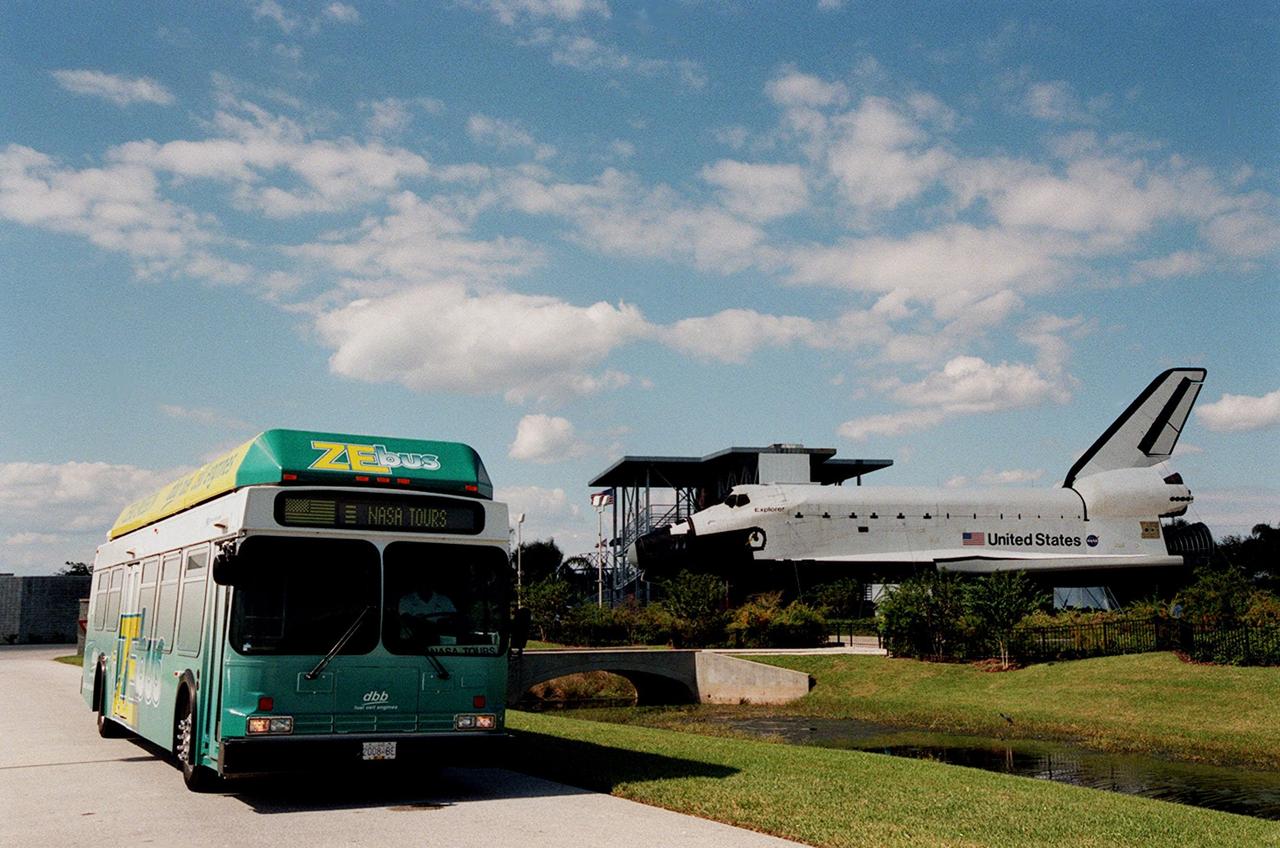
The Zero Emissions (ZE) transit bus passes a mock-up orbiter named Explorer on a trek through the KSC Visitor Complex. Provided by dbb fuel cell engines inc. of Vancouver, Canada, the ZE bus was brought to KSC as part of the Center's Alternative Fuel Initiatives Program. The bus uses a Proton Exchange Membrane fuel cell in which hydrogen and oxygen, from atmospheric air, react to produce electricity that powers an electric motor drive system. The by-product "exhaust" from the fuel cell is water vapor, thus zero harmful emissions. A typical diesel-powered bus emits more than a ton of harmful pollutants from its exhaust every year. The ZE bus is being used on tour routes at the KSC Visitor Complex for two days to introduce the public to the concept
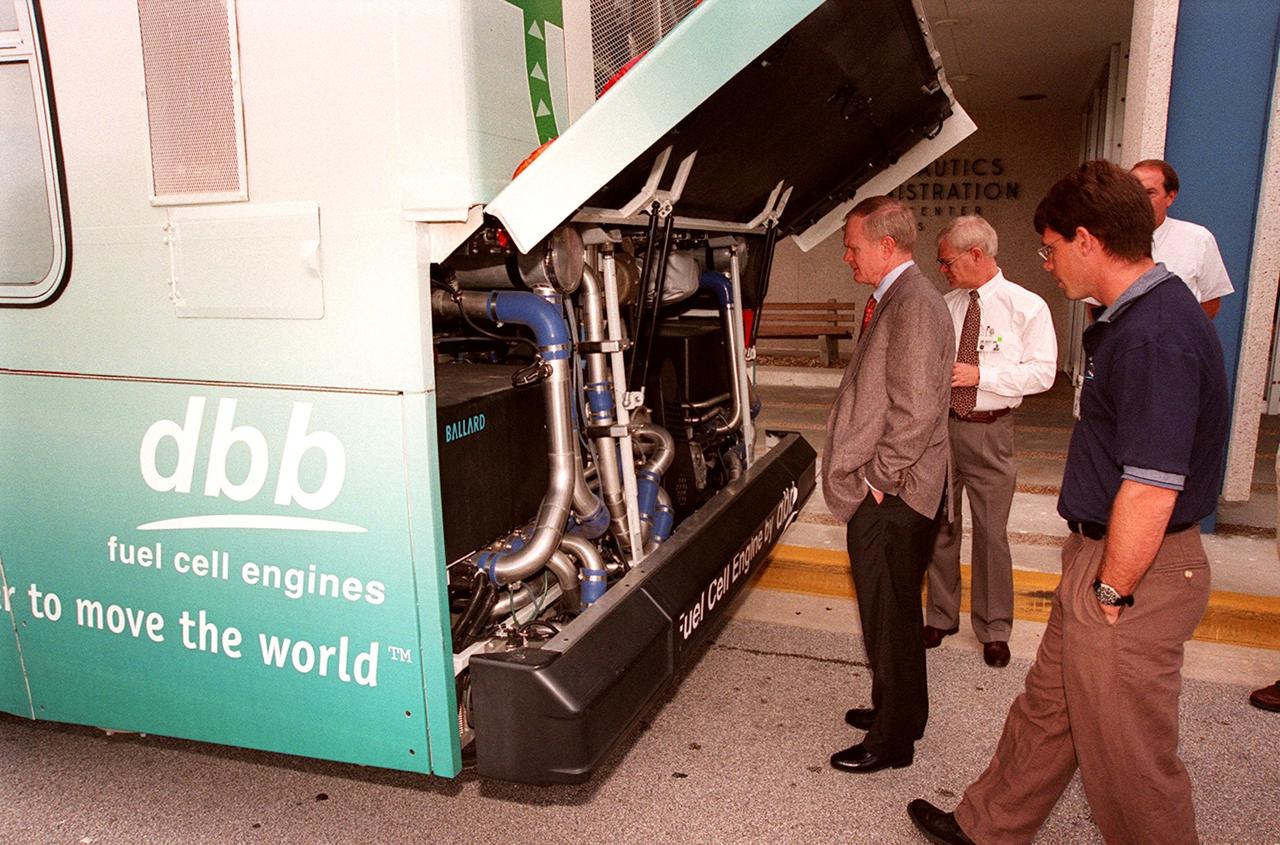
In front of the Headquarters Building at KSC, Center Director Roy Bridges (left) looks at the hydrogen-oxygen driven engine powering a Zero Emissions (ZE) transit bus. Provided by dbb fuel cell engines inc. of Vancouver, Canada, the ZE bus was brought to KSC as part of the Center's Alternative Fuel Initiatives Program. The bus uses a Proton Exchange Membrane fuel cell in which hydrogen and oxygen, from atmospheric air, react to produce electricity that powers an electric motor drive system. The by-product "exhaust" from the fuel cell is water vapor, thus zero harmful emissions. A typical diesel-powered bus emits more than a ton of harmful pollutants from its exhaust every year. Available for viewing by employees, the ZE bus is also being used on tour routes at the KSC Visitor Complex Oct. 26-27
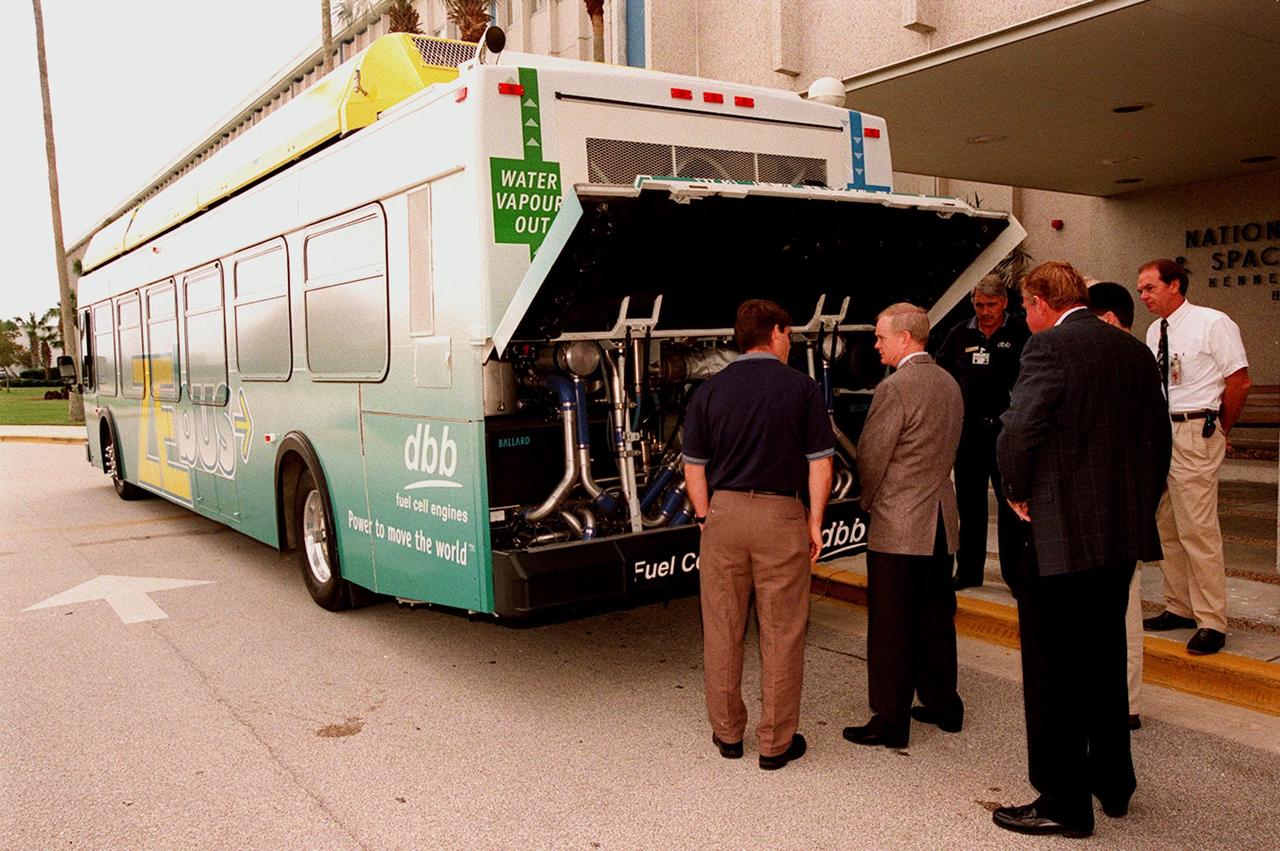
KSC employees, along with Center Director Roy Bridges (second from left), view the hydrogen-oxygen driven engine powering a Zero Emissions (ZE) transit bus. Provided by dbb fuel cell engines inc. of Vancouver, Canada, the ZE bus was brought to KSC as part of the Center's Alternative Fuel Initiatives Program. The bus uses a Proton Exchange Membrane fuel cell in which hydrogen and oxygen, from atmospheric air, react to produce electricity that powers an electric motor drive system. The by-product "exhaust" from the fuel cell is water vapor, thus zero harmful emissions. A typical diesel-powered bus emits more than a ton of harmful pollutants from its exhaust every year. Available for viewing by employees, the ZE bus is also being used on tour routes at the KSC Visitor Complex Oct. 26-27
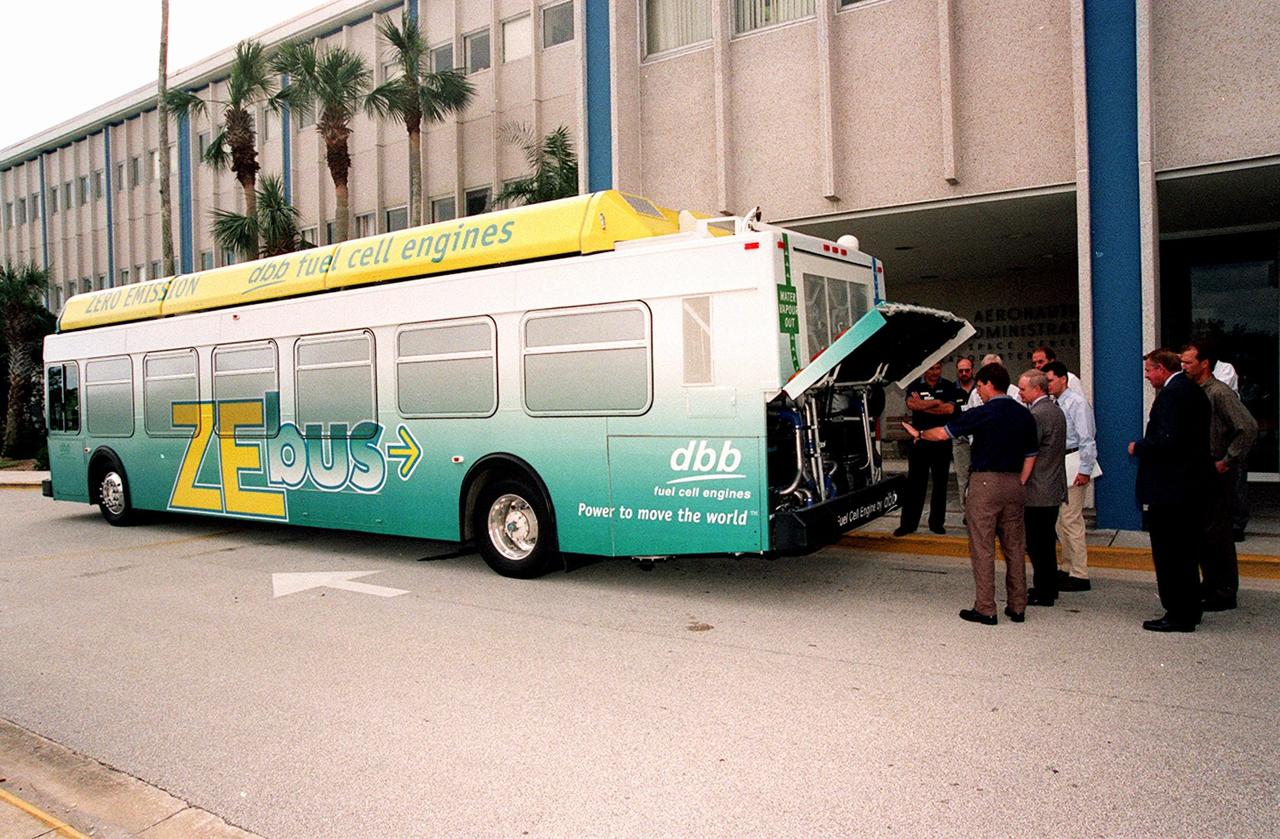
On view in front of the Headquarters Building, the Zero Emissions (ZE) transit bus attracts an interested group of employees, including Center Director Roy Bridges (second from left in foreground). Provided by dbb fuel cell engines inc. of Vancouver, Canada, the ZE bus was brought to KSC as part of the Center's Alternative Fuel Initiatives Program. The bus uses a Proton Exchange Membrane fuel cell in which hydrogen and oxygen, from atmospheric air, react to produce electricity that powers an electric motor drive system. The by-product "exhaust" from the fuel cell is water vapor, thus zero harmful emissions. A typical diesel-powered bus emits more than a ton of harmful pollutants from its exhaust every year. Available for viewing by employees, the ZE bus is also being used on tour routes at the KSC Visitor Complex Oct. 26-27
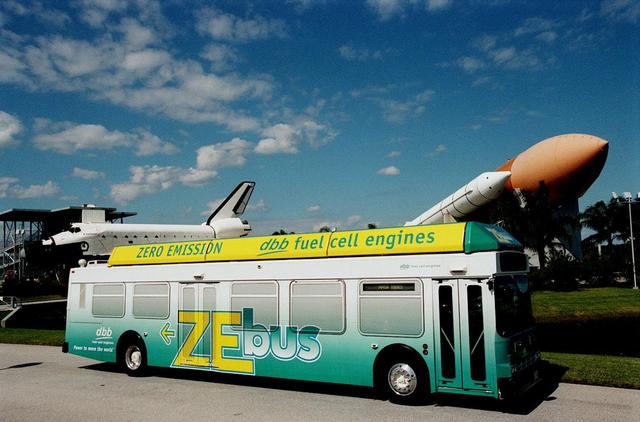
The Zero Emissions (ZE) transit bus tours the KSC Visitor Complex for a test ride. In the background are a mock-up orbiter named Explorer (left) and a stack of solid rocket boosters and external tank (right), typically used on Shuttle launches. Provided by dbb fuel cell engines inc. of Vancouver, Canada, the ZE bus was brought to KSC as part of the Center's Alternative Fuel Initiatives Program. The bus uses a Proton Exchange Membrane fuel cell in which hydrogen and oxygen, from atmospheric air, react to produce electricity that powers an electric motor drive system. The by-product "exhaust" from the fuel cell is water vapor, thus zero harmful emissions. A typical diesel-powered bus emits more than a ton of harmful pollutants from its exhaust every year. The ZE bus is being used on tour routes at the KSC Visitor Complex for two days to introduce the public to the concept
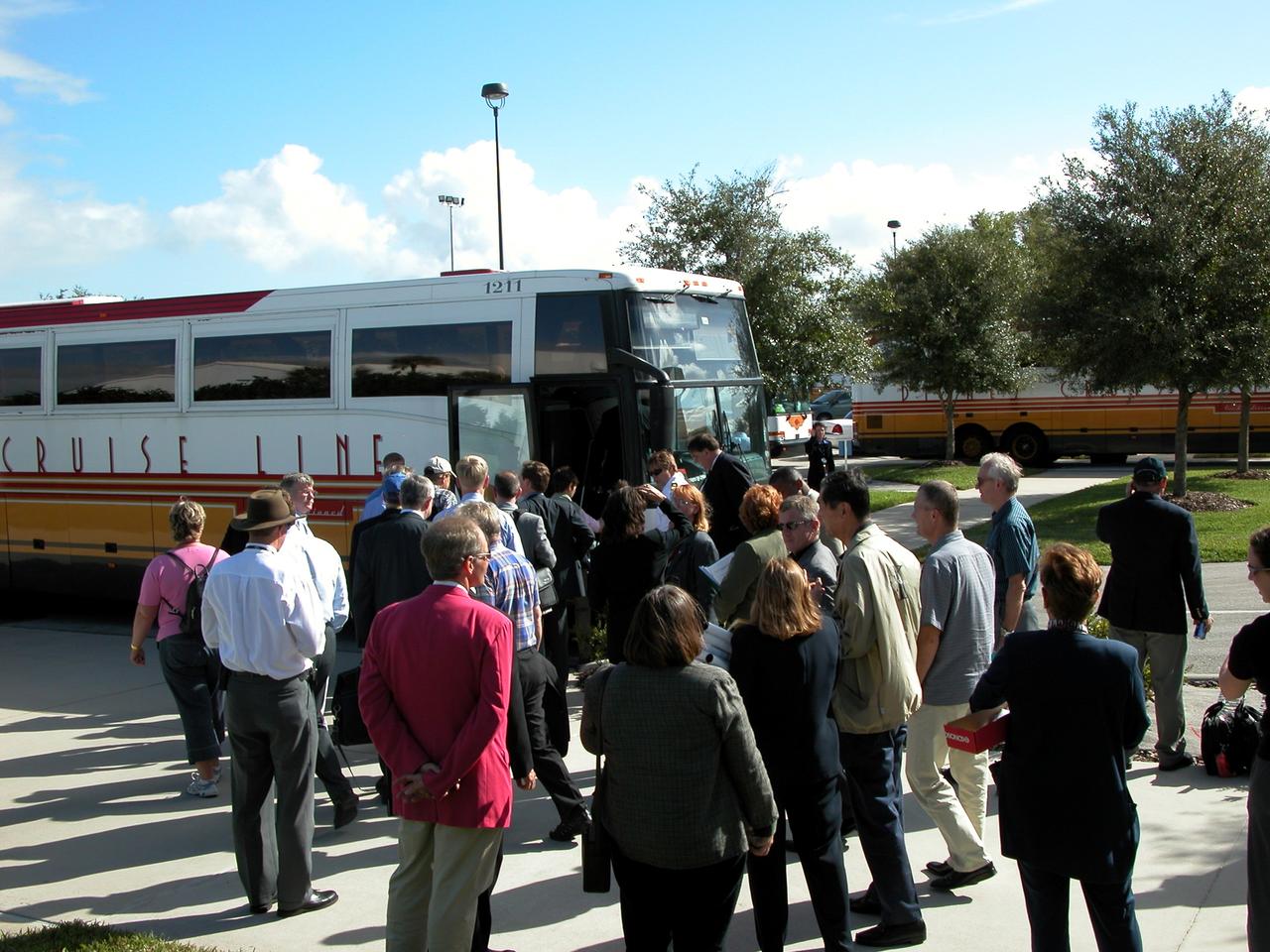
KENNEDY SPACE CENTER, FLA. - After their tour of KSC, members of the North American Treaty Organization (NATO) Parliamentary Assembly board their tour bus to return to Orlando. The Parliamentarians are meeting in Orlando this year for their 49th annual gathering. They chose to visit KSC with their families during their one-day excursion break from meetings.
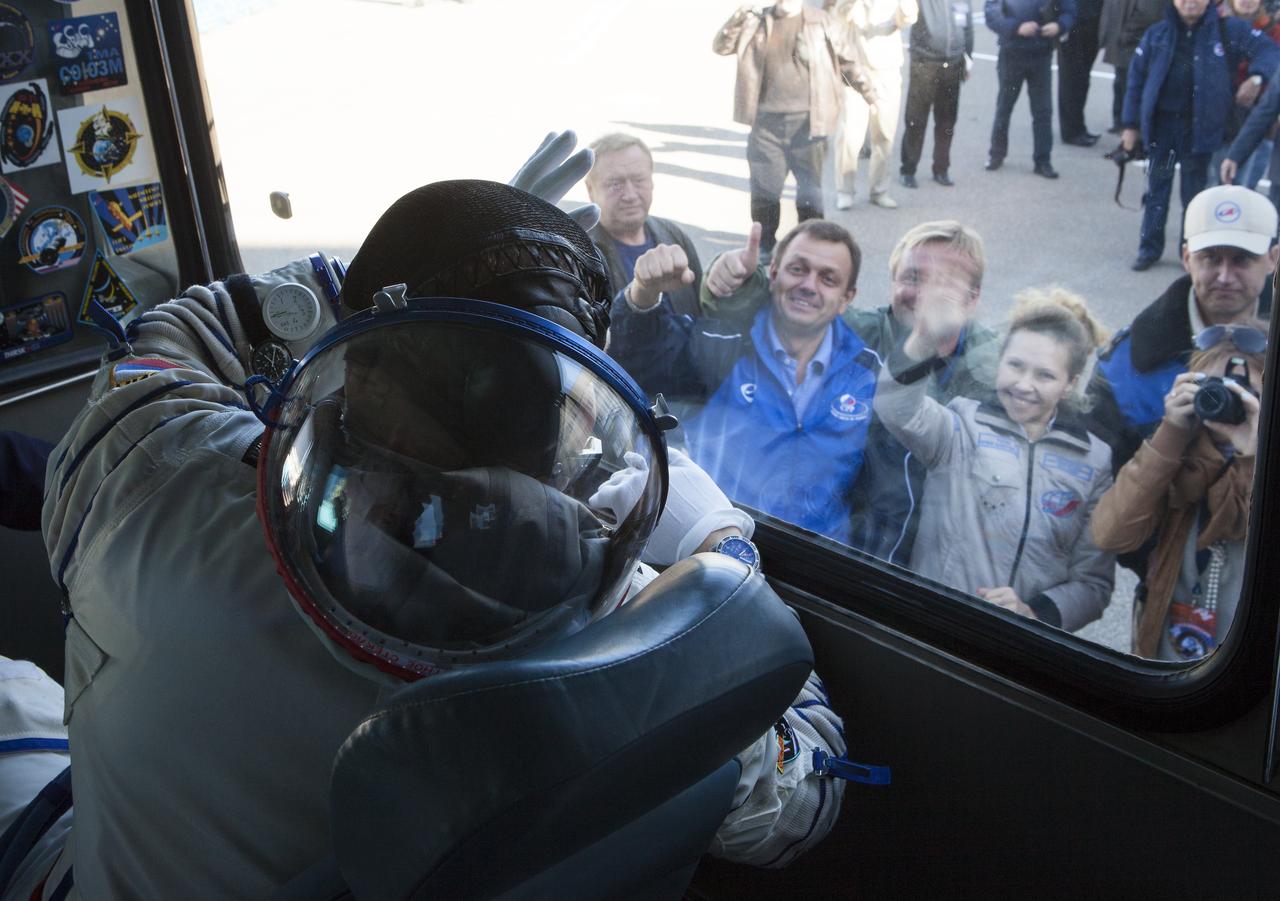
Family and friends of Expedition 33/34 crew member, Russian Cosmonaut and Soyuz Commander Oleg Novitskiy, cheer as the bus with he and fellow crew mates, NASA Astronaut and Flight Engineer Kevin Ford, and Russian Cosmonaut and Flight Engineer Evgeny Tarelkin, heads to launch site 31 for their launch onboard a Soyuz TMA-06M spacecraft to the International Space Station, Tuesday, October 23, 2012, in Baikonur, Kazakhstan. Launch of the Soyuz rocket will send Ford, Novitskiy and Tarelkin on a five-month mission aboard the International Space Station. Photo Credit: (NASA/GCTC/Andrey Shelepin)
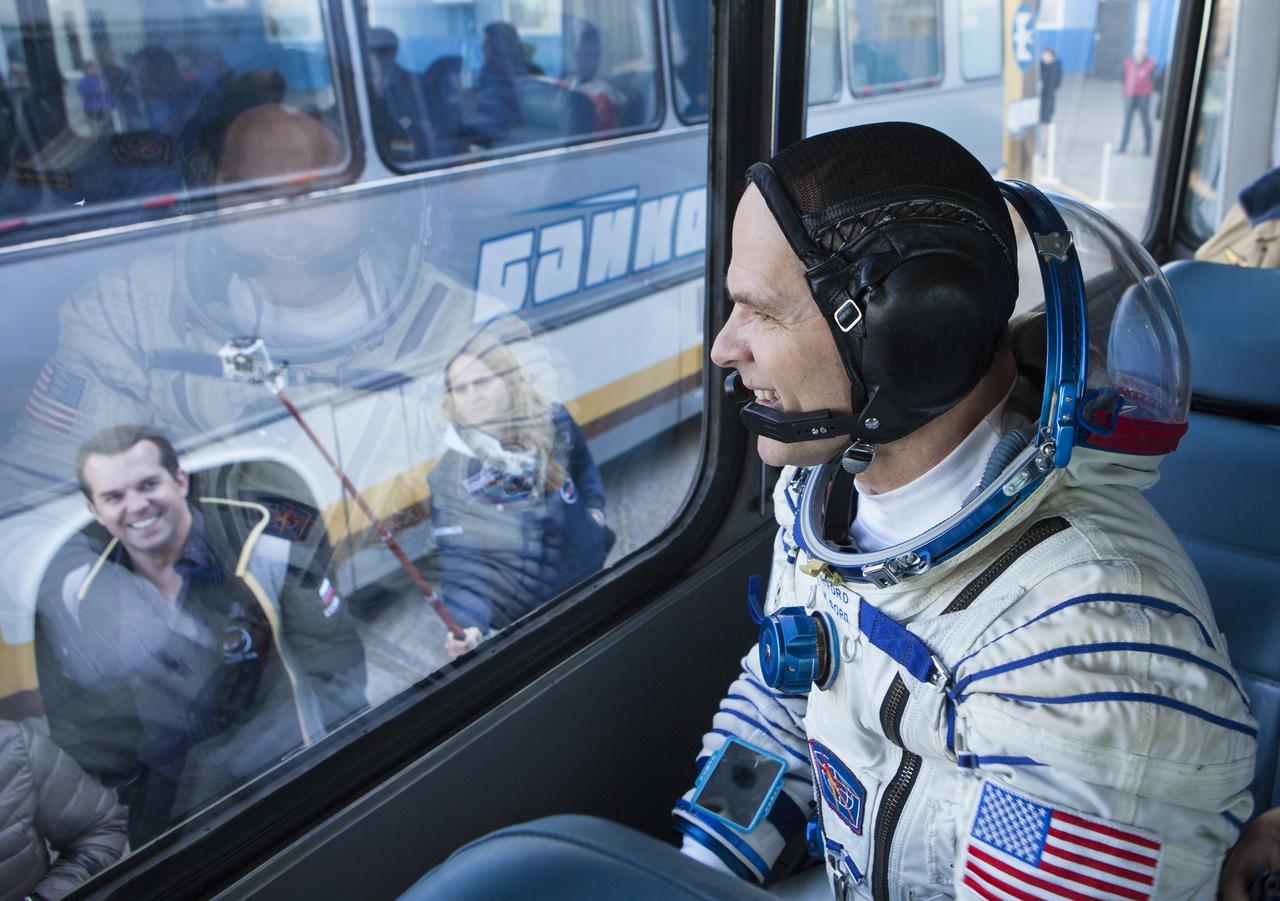
Expedition 33/34 crew member, NASA Astronaut and Flight Engineer Kevin Ford, looks out at family and friends as the bus with he and fellow crew mates, Russian Cosmonaut and Soyuz Commander Oleg Novitskiy, and Russian Cosmonaut and Flight Engineer Evgeny Tarelkin, head to launch site 31 for their launch onboard a Soyuz TMA-06M spacecraft to the International Space Station, Tuesday, October 23, 2012, in Baikonur, Kazakhstan. Launch of the Soyuz rocket will send Ford, Novitskiy and Tarelkin on a five-month mission aboard the International Space Station. Photo Credit: (NASA/GCTC/Andrey Shelepin)
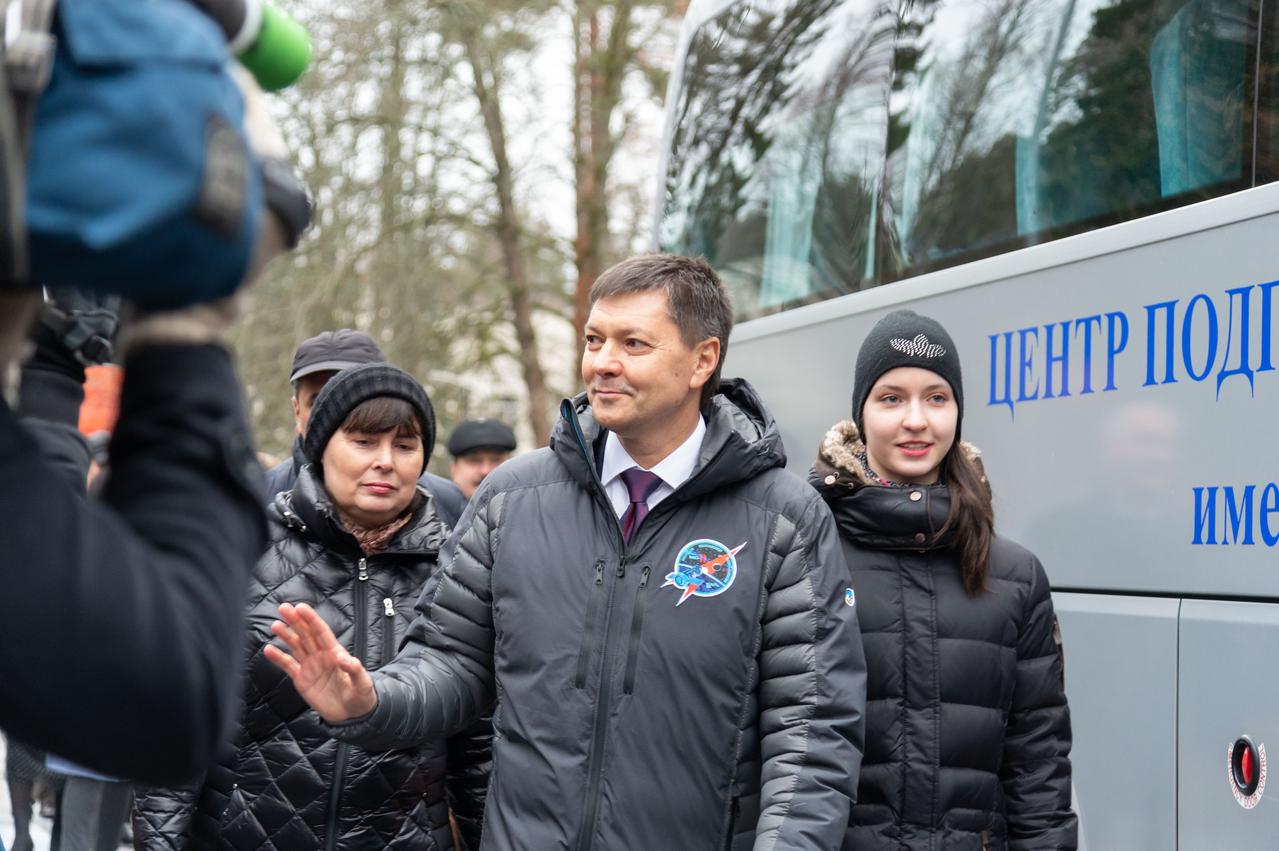
jsc2018e097270 - At the Gagarin Cosmonaut Training Center in Star City, Russia, Expedition 58 crewmember Oleg Kononenko of Roscosmos walks to a waiting bus Nov. 19 that will take him and his crewmates to a nearby airfield for a flight to their launch site in Baikonur, Kazakhstan. Kononenko, Anne McClain of NASA and David Saint-Jacques of the Canadian Space Agency will launch Dec. 3 on the Soyuz MS-11 spacecraft from the Baikonur Cosmodrome in Kazakhstan for a six-and-a-half month mission on the International Space Station. NASA/Sarah Volkman
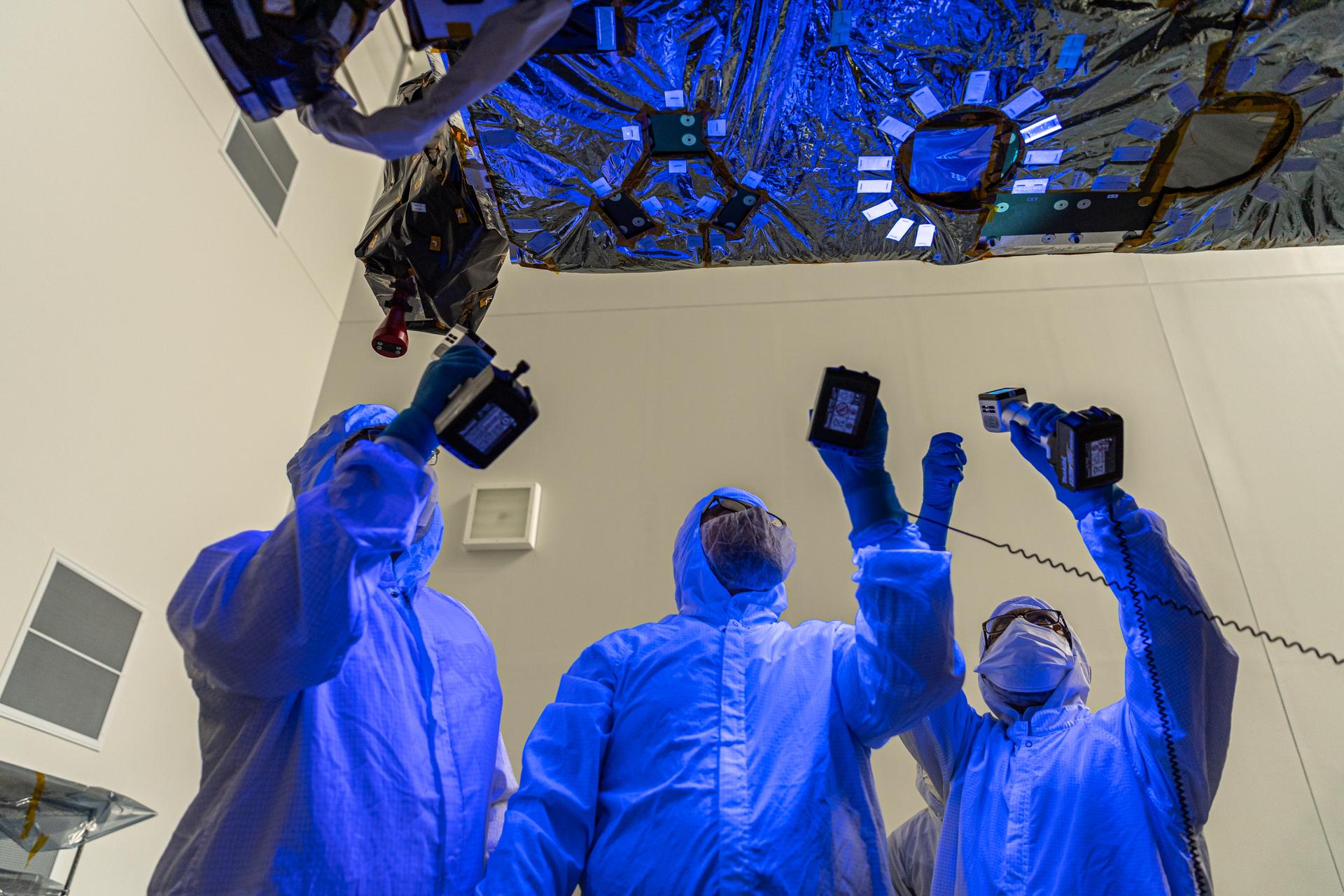
NASA Contamination and control engineers perform a blacklight inspection on the OSAM-1 Spacecraft Bus at Goddard Space Flight Center, Greenbelt Md., Sept 30, 2023. This photo has been reviewed by OSAM1 project management, Maxar public release authority, and the Export Control Office and is released for public view. NASA/Mike Guinto
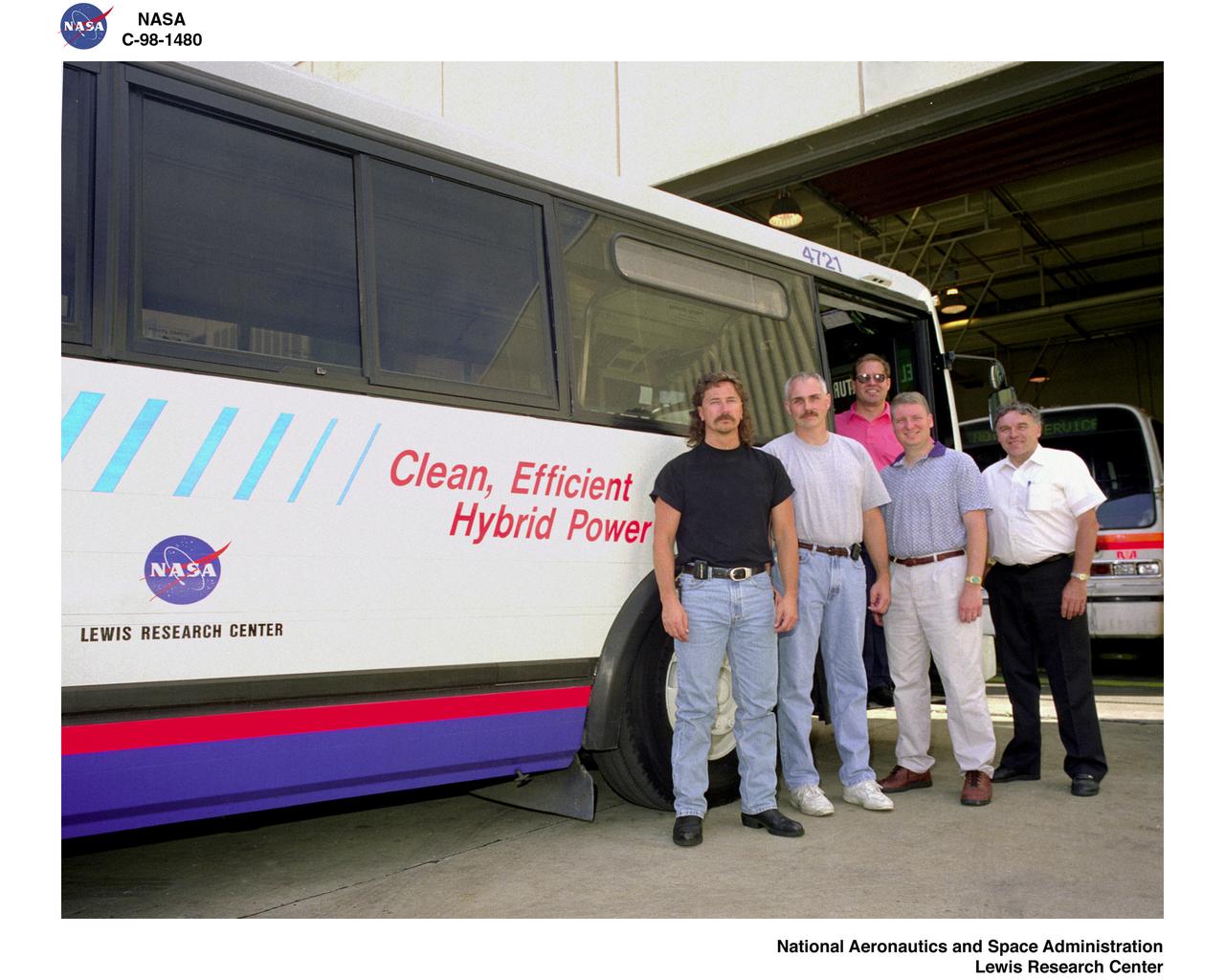
HYBRID TURBINE ELECTRIC BUS AT THE RTA RAPID TRANSIT AUTHORITY CLEVELAND OHIO

HYBRID TURBINE ELECTRIC BUS AT THE RTA RAPID TRANSIT AUTHORITY CLEVELAND OHIO
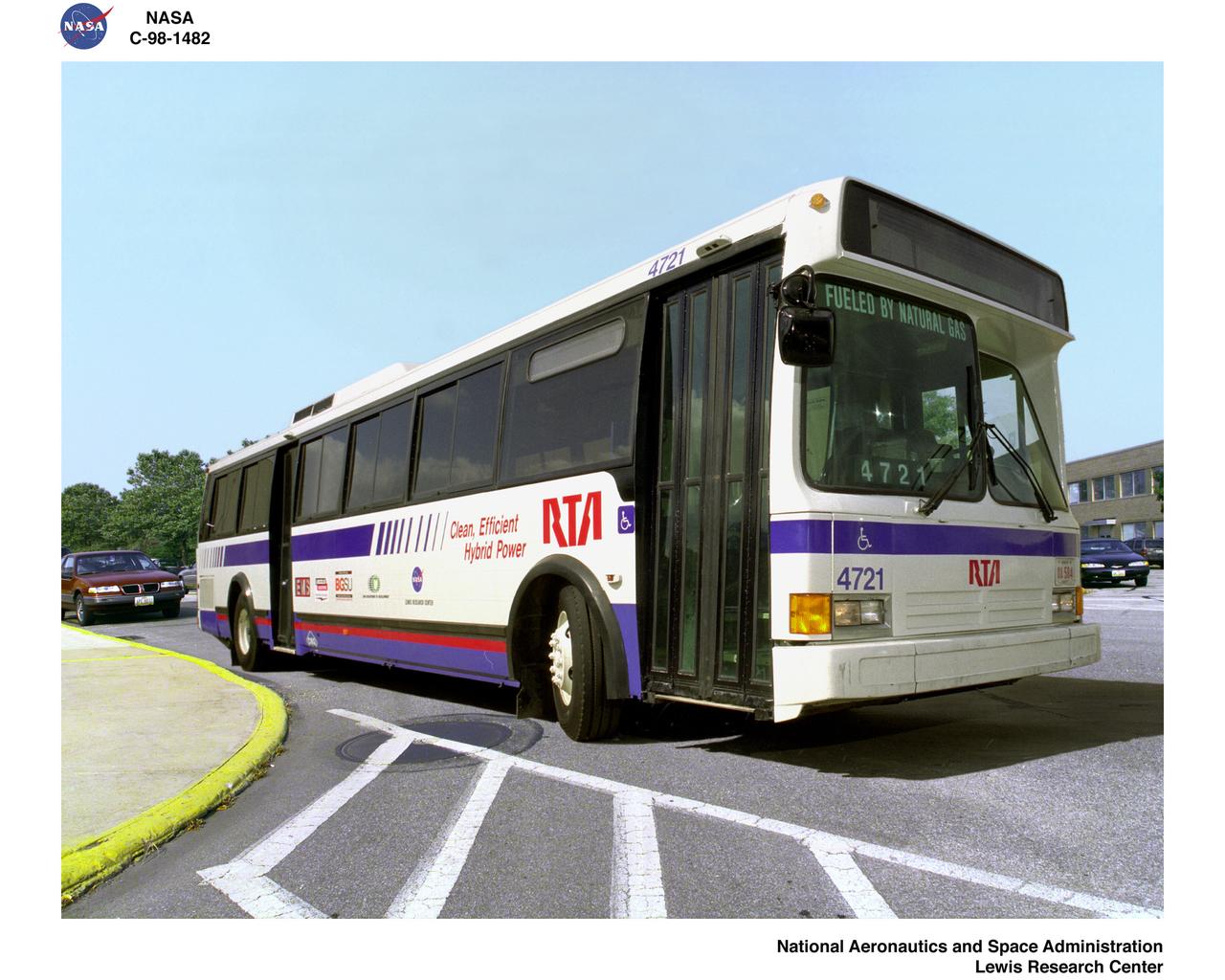
HYBRID TURBINE ELECTRIC BUS AT THE RTA RAPID TRANSIT AUTHORITY CLEVELAND OHIO
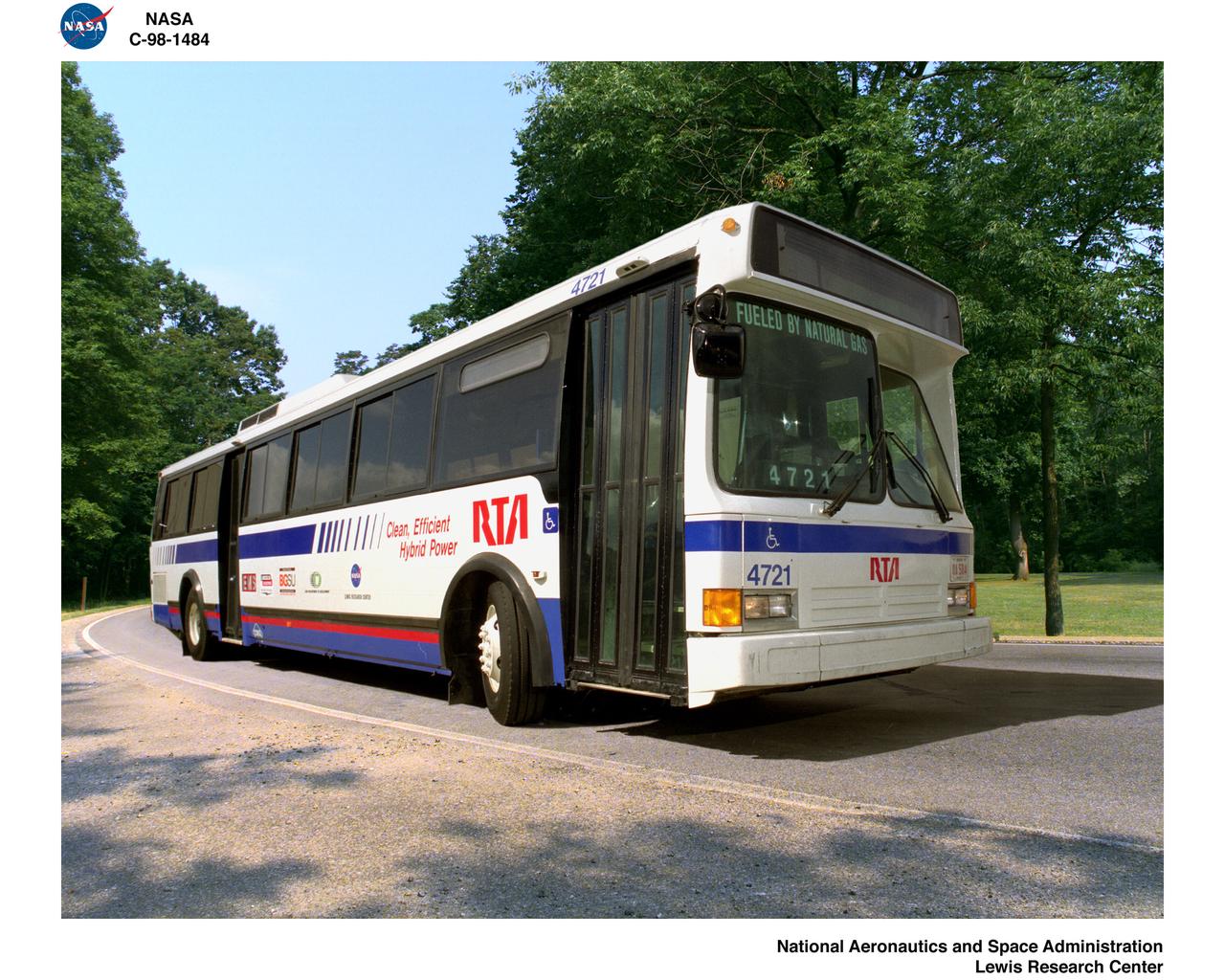
HYBRID TURBINE ELECTRIC BUS AT THE RTA RAPID TRANSIT AUTHORITY CLEVELAND OHIO
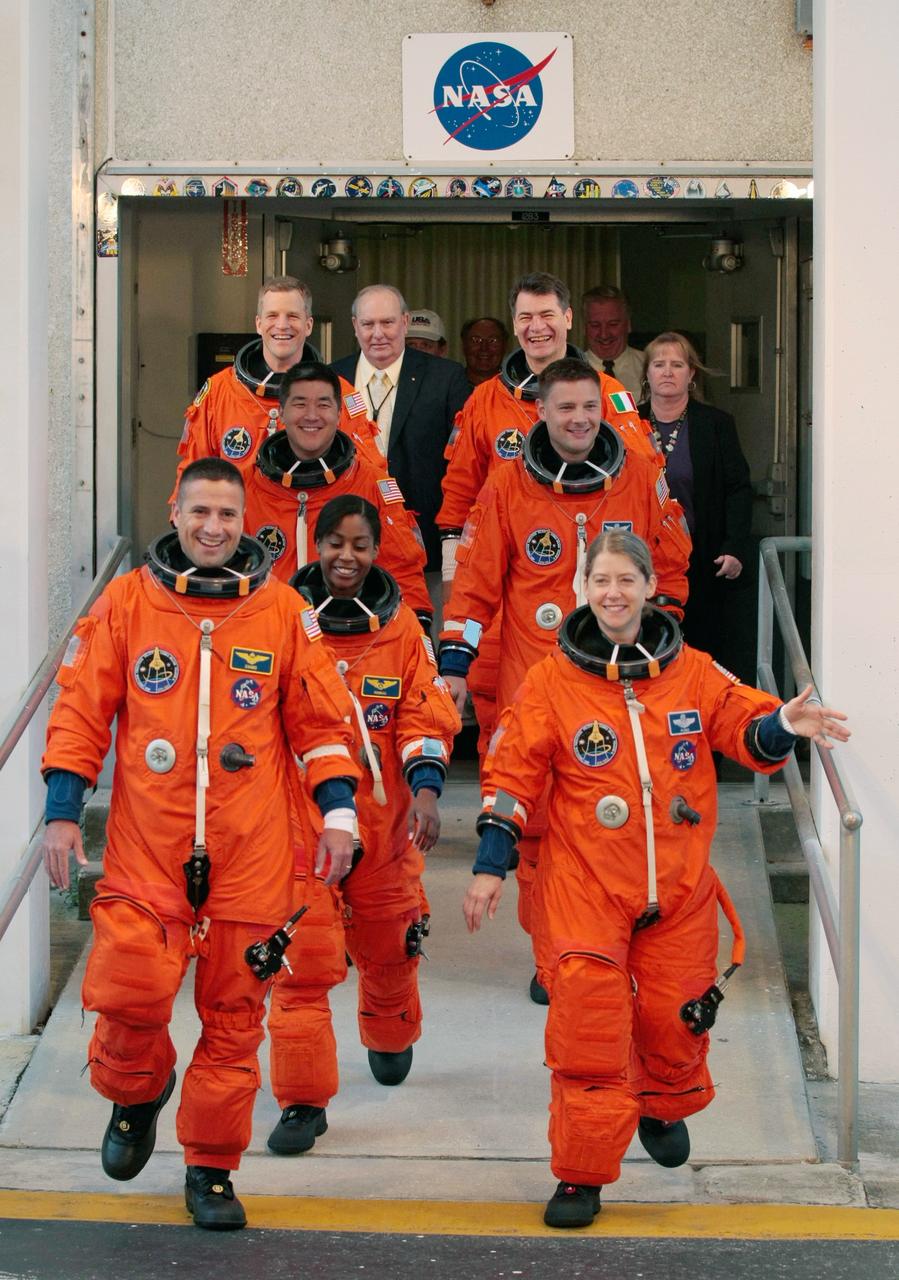
Crew members of space shuttle mission STS-120 prepare to board the bus that will transport them to Launch Pad 39A.

Former Astronaut Edwin E. Aldrin exiting the bus that brought him to the Apollo 11 Twentieth Aniversary Picnic at the Gilruth Center.
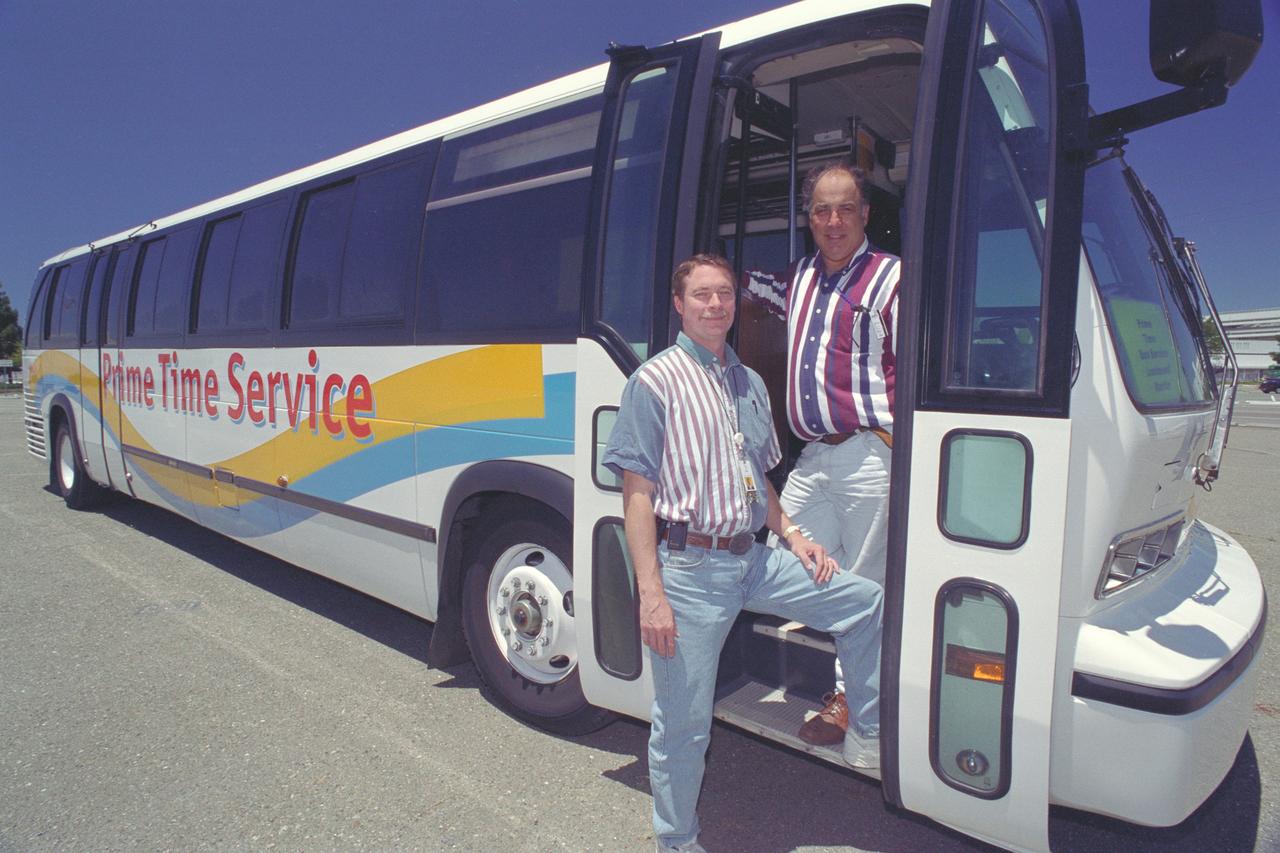
Lockheed Bus 'Prime Time' with drivers Danial Dague & Gary Zaharias. Ames Alternative Commute Program (AACP)
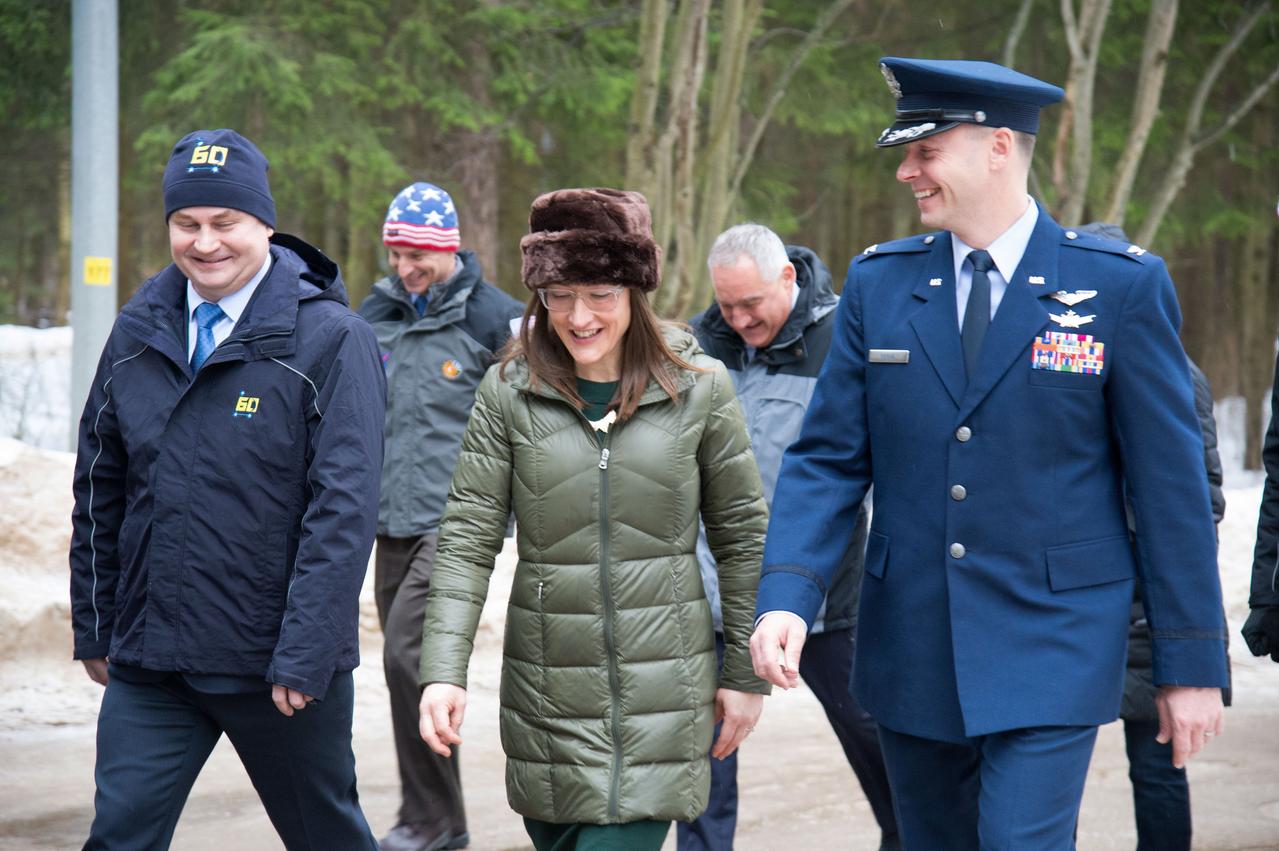
At the Gagarin Cosmonaut Training Center in Star City, Russia, Expedition 59 crewmembers Alexey Ovchinin of Roscosmos (left), Christina Koch of NASA (center) and Nick Hague of NASA (right) walk to a bus Feb. 26 to take them to their plane for a flight to their launch site at the Baikonur Cosmodrome in Kazakhstan for final pre-launch training. They will launch on March 14, U.S. time, on the Soyuz MS-12 spacecraft from the Baikonur Cosmodrome in Kazakhstan for a six-and-a-half month mission on the International Space Station. NASA/Beth Weissinger
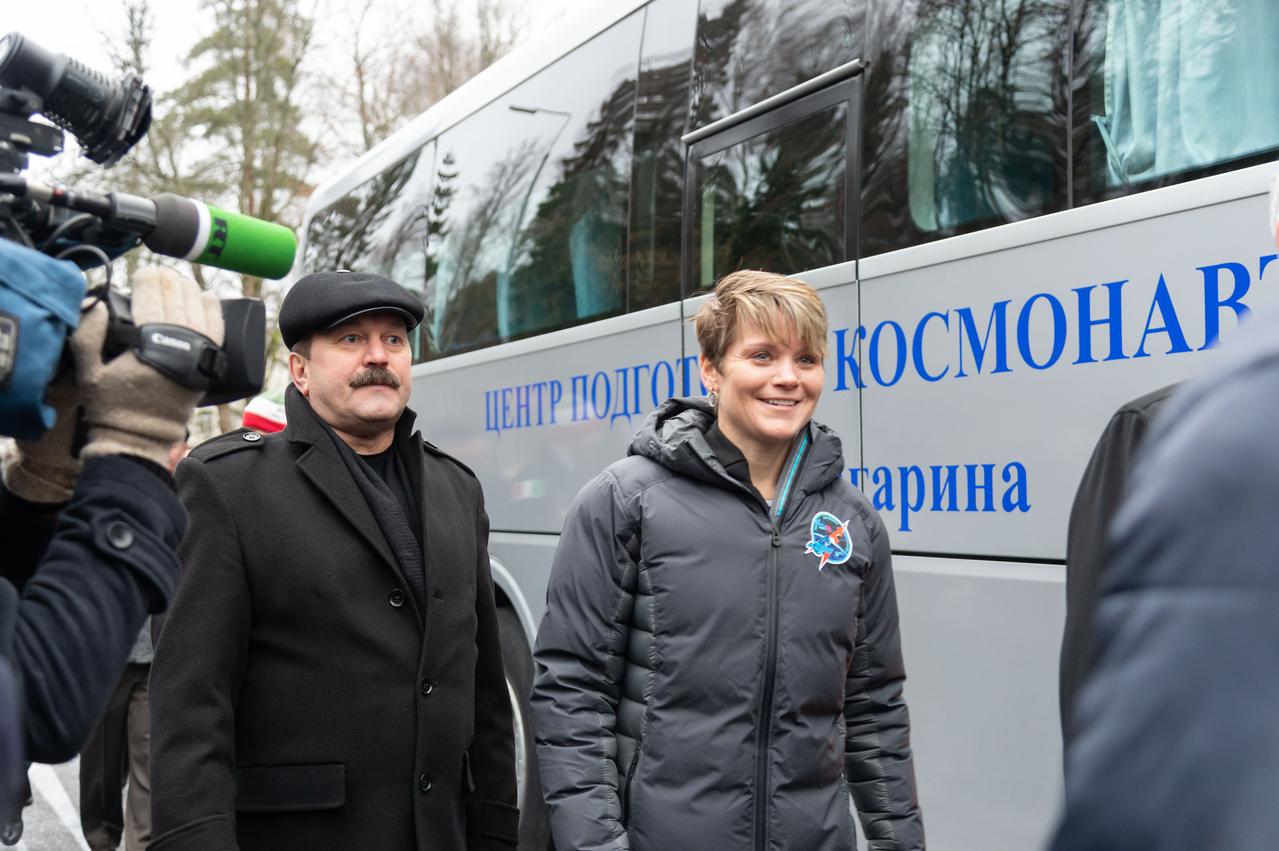
jsc2018e097271 - At the Gagarin Cosmonaut Training Center in Star City, Russia, Expedition 58 crewmember Anne McClain of NASA (right) walks to a waiting bus Nov. 19 that will take her and her crewmates to a nearby airfield for a flight to their launch site in Baikonur, Kazakhstan. McClain, David Saint-Jacques of the Canadian Space Agency and Oleg Kononenko of Roscosmos will launch Dec. 3 on the Soyuz MS-11 spacecraft from the Baikonur Cosmodrome in Kazakhstan for a six-and-a-half month mission on the International Space Station. NASA/Sarah Volkman
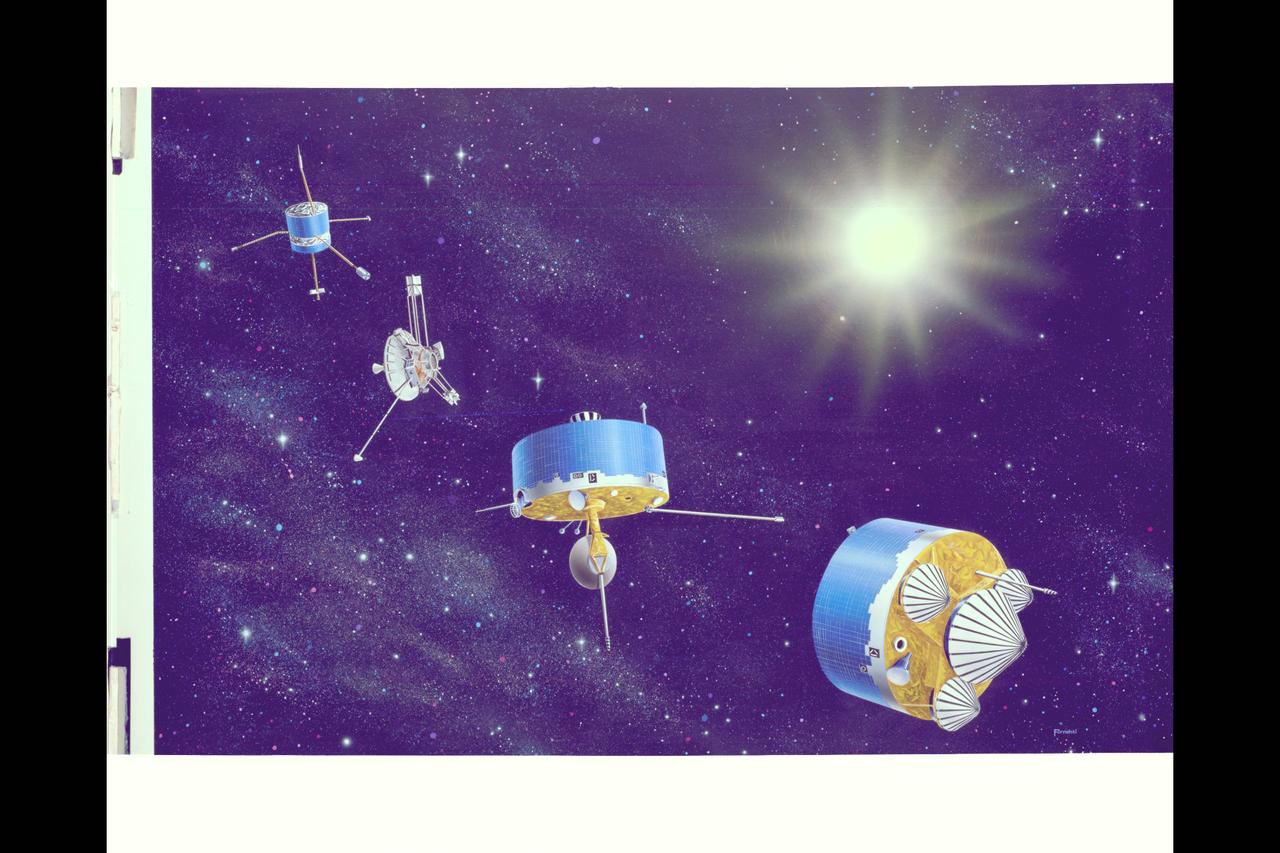
Artist: Fornalski Pioneer Spacecraft Composite 'The Pioneer Family' Probes 6-9, 10, 11 and Venus Orbiter and Multiprobe or Bus (12-13)
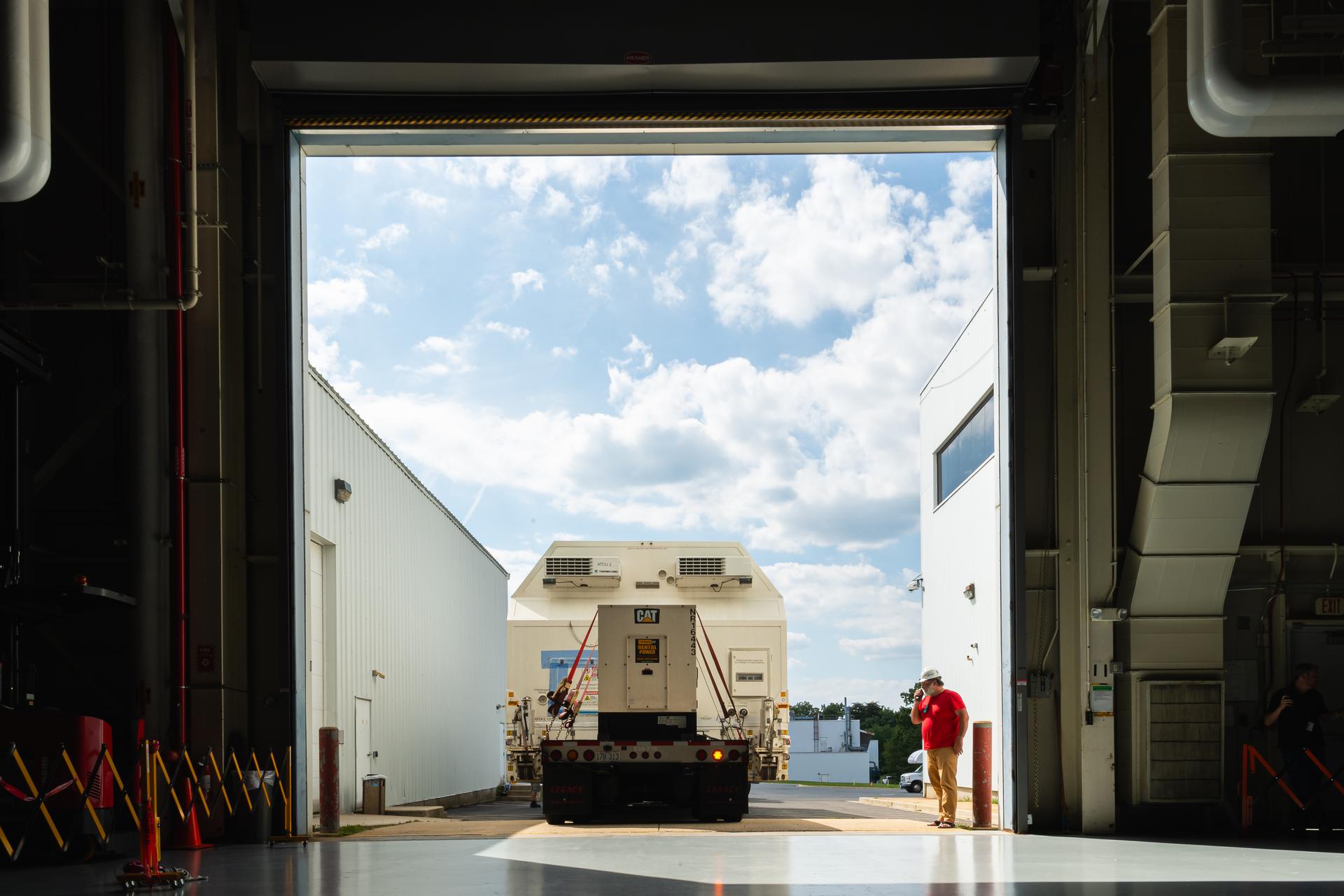
OSAM-1 Spacecraft bus arrives at Goddard Space Flight Center, Greenbelt Md., Sept 20, 2023. The spacecraft was shipped from Palo Alto, Calif. This photo has been reviewed by OSAM1 project management and the Export Control Office and is released for public view. NASA/Mike Guinto
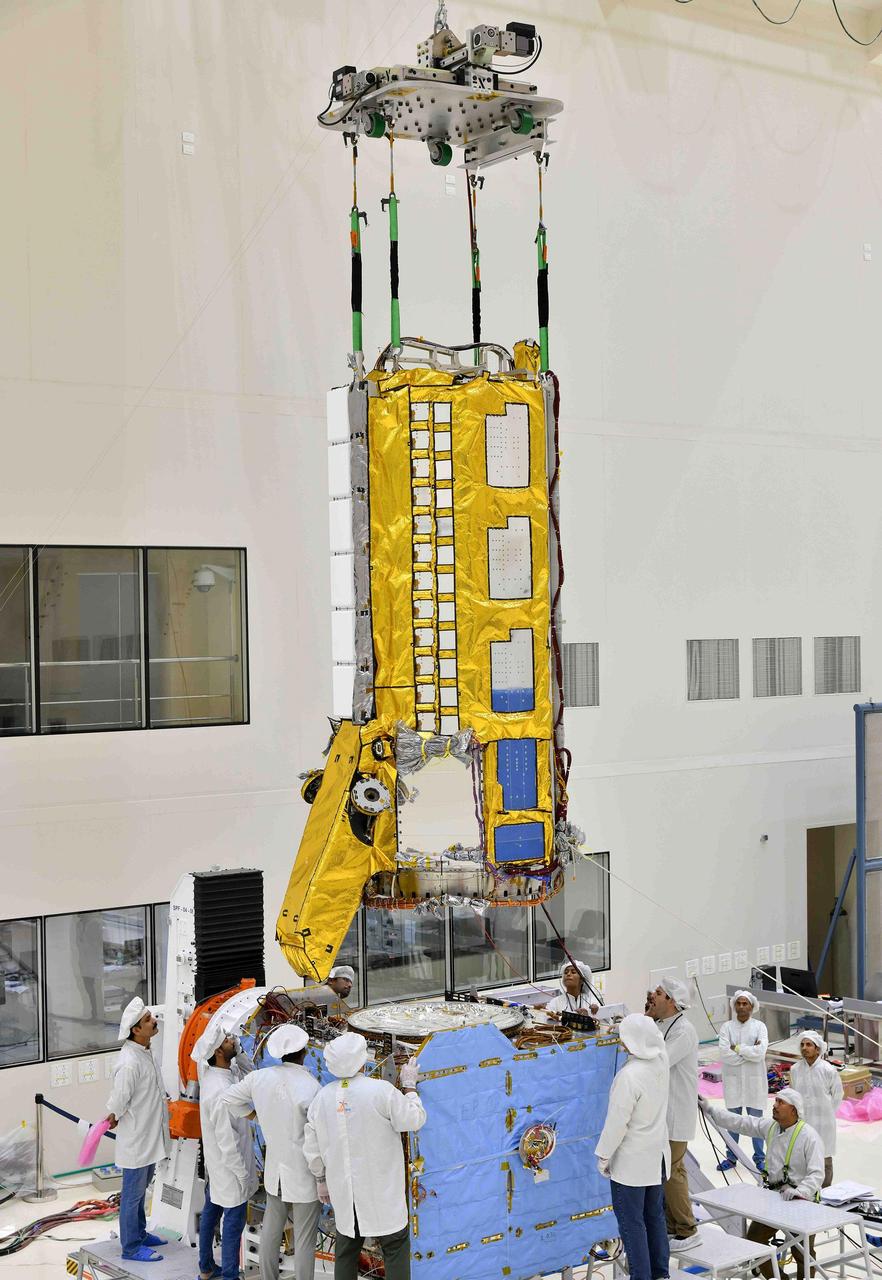
Engineers from NASA's Jet Propulsion Laboratory in Southern California and the Indian Space Research Organisation (ISRO), working in a clean room facility at ISRO's U R Rao Satellite Centre (URSC) in Bengaluru, India, in mid-June 2023, use a crane to align the radar instrument payload for the NISAR (NASA-ISRO Synthetic Aperture Radar) mission above the satellite's spacecraft bus so that the two components can be combined. Set to launch in early 2024 from the Satish Dhawan Space Centre in Sriharikota, India, NISAR is being jointly developed by NASA and ISRO to observe movements of Earth's land and ice surfaces in extremely fine detail. As NISAR observes nearly every part of Earth at least once every 12 days, the satellite will help scientists understand, among other observables, the dynamics of forests, wetlands, and agricultural lands. The radar instrument payload, partially wrapped in gold-colored thermal blanketing, arrived from JPL in March and consists of L- and S-band radar systems, so named to indicate the wavelengths of their signals. Both sensors can see through clouds and collect data day and night. The bus, which is shown in blue blanketing and includes components and systems developed by both ISRO and JPL, was built at URSC and will provide power, navigation, pointing control, and communications for the mission. NISAR is an equal collaboration between NASA and ISRO and marks the first time the two agencies have cooperated on hardware development for an Earth-observing mission. JPL, which is managed for NASA by Caltech in Pasadena, leads the U.S. component of the project and is providing the mission's L-band SAR. NASA is also providing the radar reflector antenna, the deployable boom, a high-rate communication subsystem for science data, GPS receivers, a solid-state recorder, and payload data subsystem. URSC, which is leading the ISRO component of the mission, is providing the spacecraft bus, the S-band SAR electronics, the launch vehicle, and associated launch services and satellite mission operations. https://photojournal.jpl.nasa.gov/catalog/PIA25866
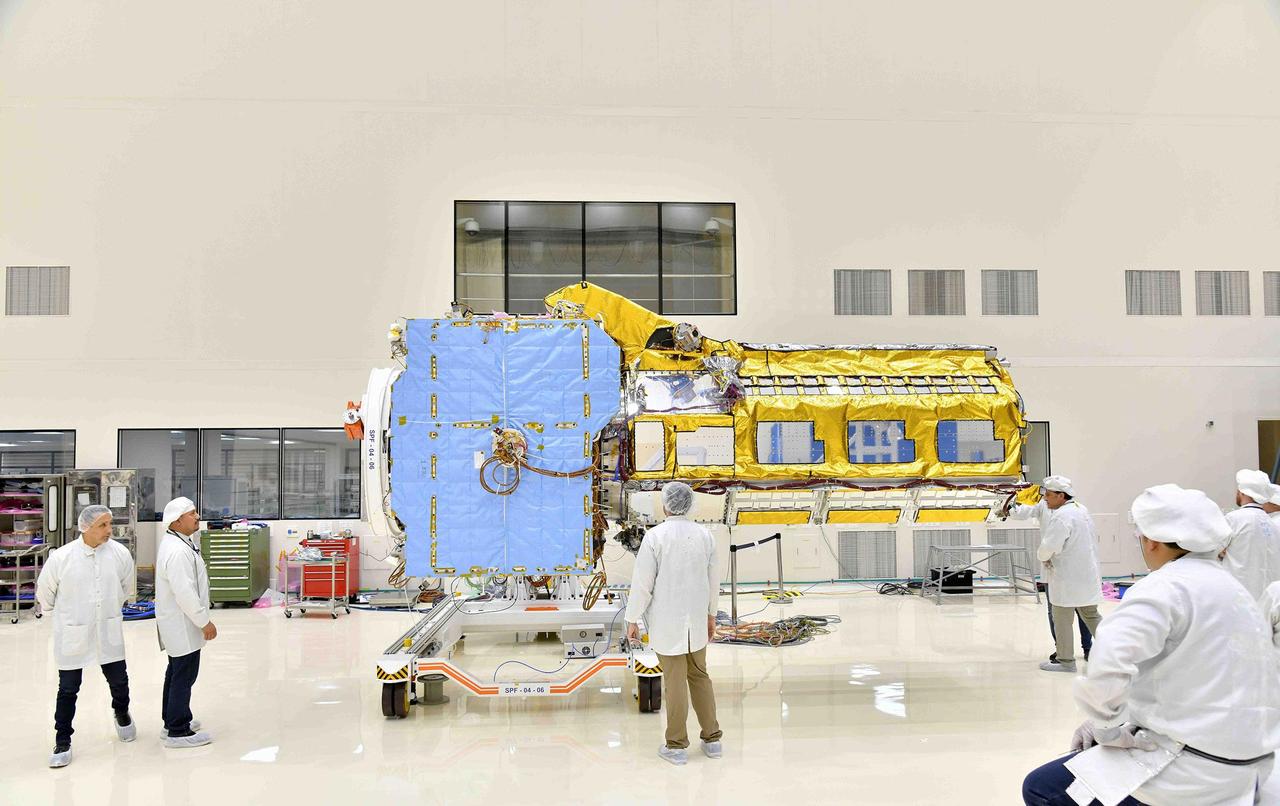
The NISAR (NASA-ISRO Synthetic Aperture Radar) satellite sits in a clean room facility at U R Rao Satellite Centre (URSC) in Bengaluru, India, in mid-June 2023, shortly after engineers from NASA's Jet Propulsion Laboratory in Southern California and the Indian Space Research Organisation joined its two main components, the radar instrument payload and the spacecraft bus. Set to launch in early 2024 from the Satish Dhawan Space Centre in Sriharikota, India, NISAR is being jointly developed by NASA and ISRO to observe movements of Earth's land and ice surfaces in extremely fine detail. As NISAR observes nearly every part of Earth at least once every 12 days, the satellite will help scientists understand, among other observables, the dynamics of forests, wetlands, and agricultural lands. The radar instrument payload, partially wrapped in gold-colored thermal blanketing, arrived from JPL in March and consists of L- and S-band radar systems, so named to indicate the wavelengths of their signals. Both sensors can see through clouds and collect data day and night. The bus, which is shown in blue blanketing and includes components and systems developed by both ISRO and JPL, was built at URSC and will provide power, navigation, pointing control, and communications for the mission. NISAR is an equal collaboration between NASA and ISRO and marks the first time the two agencies have cooperated on hardware development for an Earth-observing mission. JPL, which is managed for NASA by Caltech in Pasadena, leads the U.S. component of the project and is providing the mission's L-band SAR. NASA is also providing the radar reflector antenna, the deployable boom, a high-rate communication subsystem for science data, GPS receivers, a solid-state recorder, and payload data subsystem. URSC, which is leading the ISRO component of the mission, is providing the spacecraft bus, the S-band SAR electronics, the launch vehicle, and associated launch services and satellite mission operations. https://photojournal.jpl.nasa.gov/catalog/PIA25865
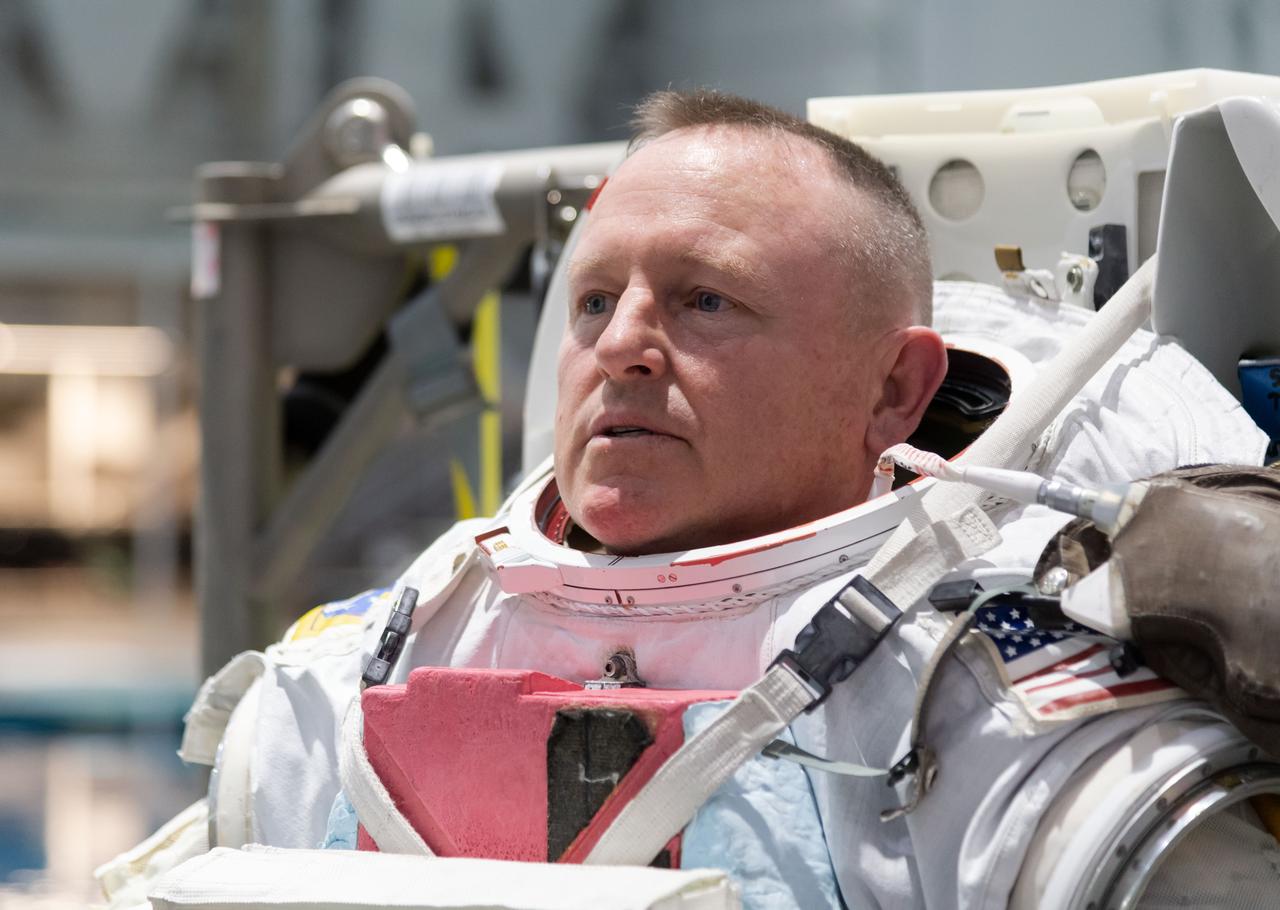
Boeing CFT crew member Mike Fincke with backup Barry "Butch" Wilmore during Boeing CFT/59S BU ISS EVA Maintenance 1 PRF training.
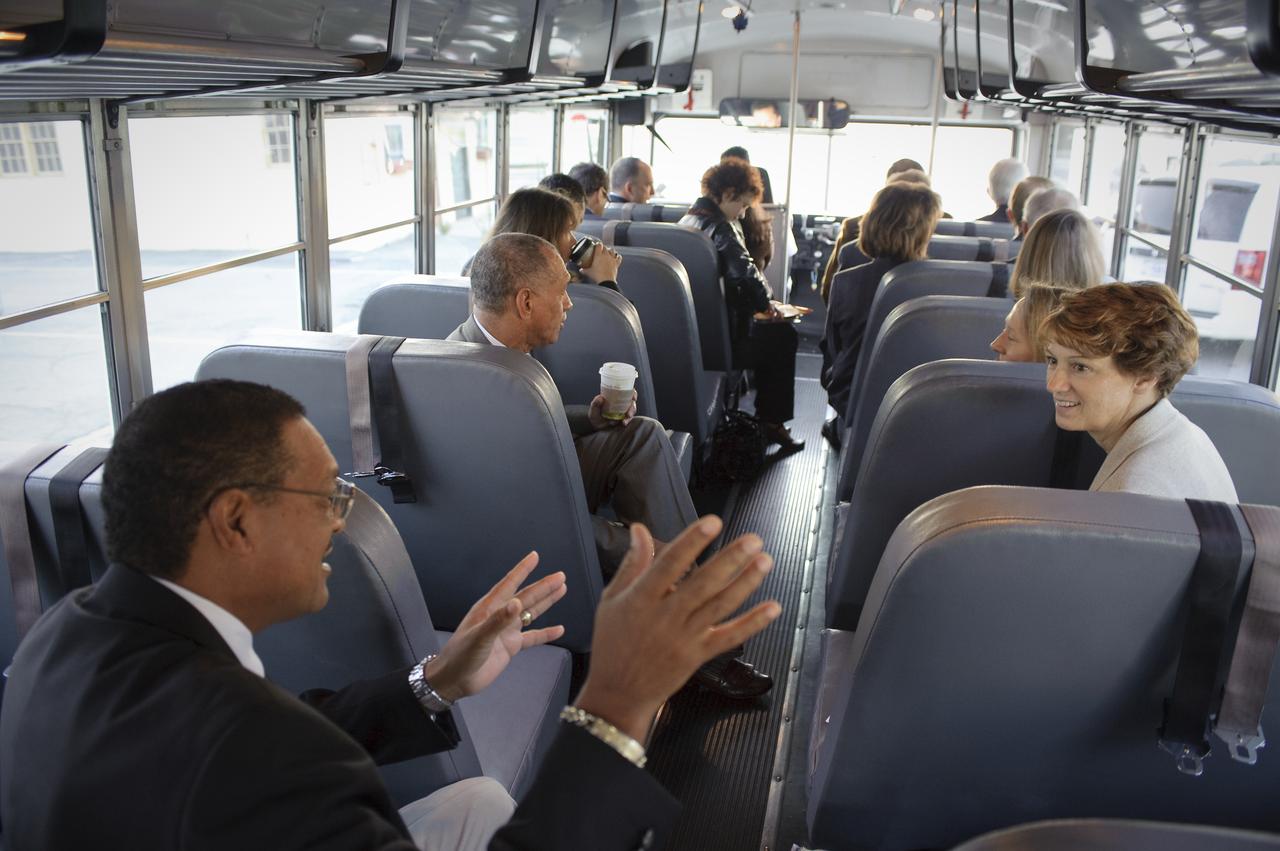
NASA Advisory Council Meeting at NASA Ames Research Center NRP Conference Center. on the tour bus Lew Braxton III in foreground taking with Eilene Collins from council.
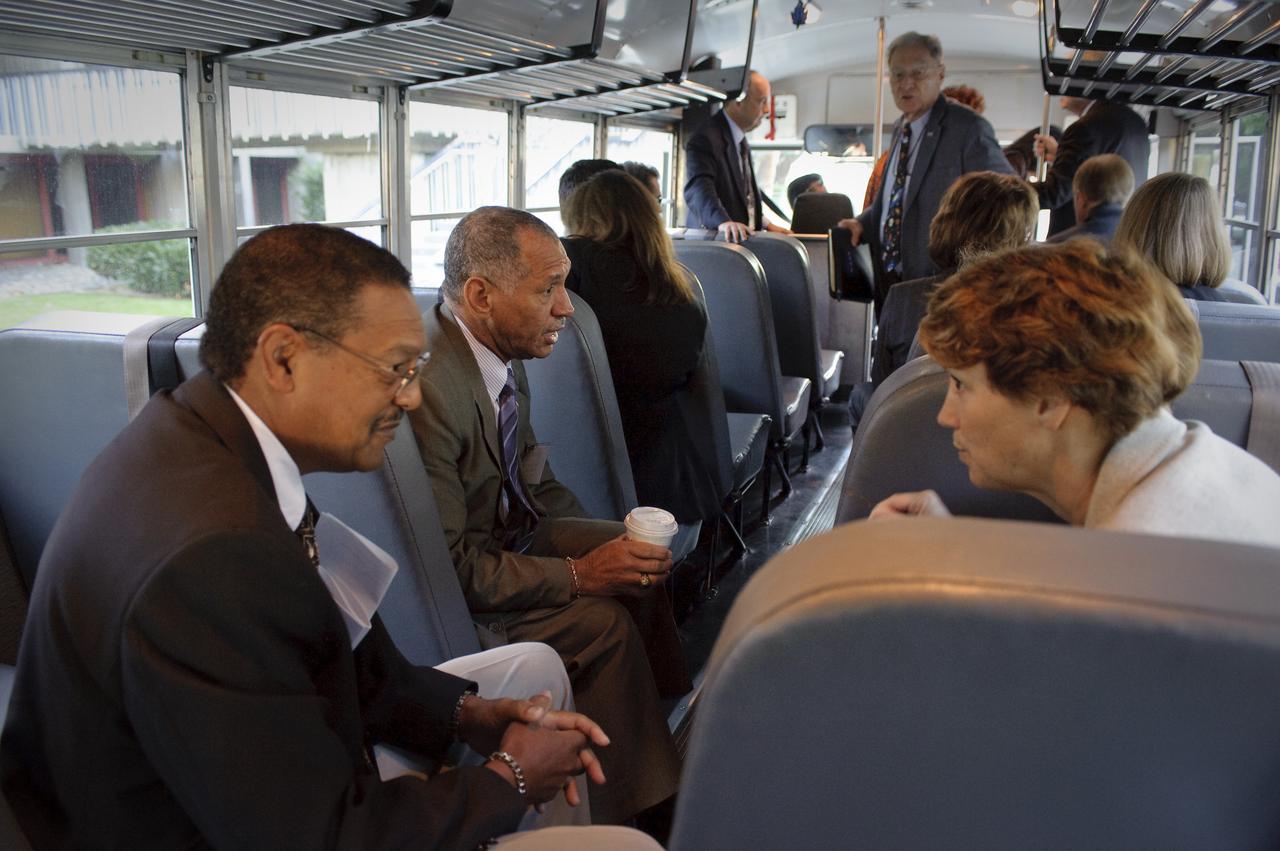
NASA Advisory Council Meeting at NASA Ames Research Center NRP Conference Center. on the bus Lew Braxton III taking with Eilene Collins and Charlie Bolden, NASA Administrator talking with Ester Dyson.
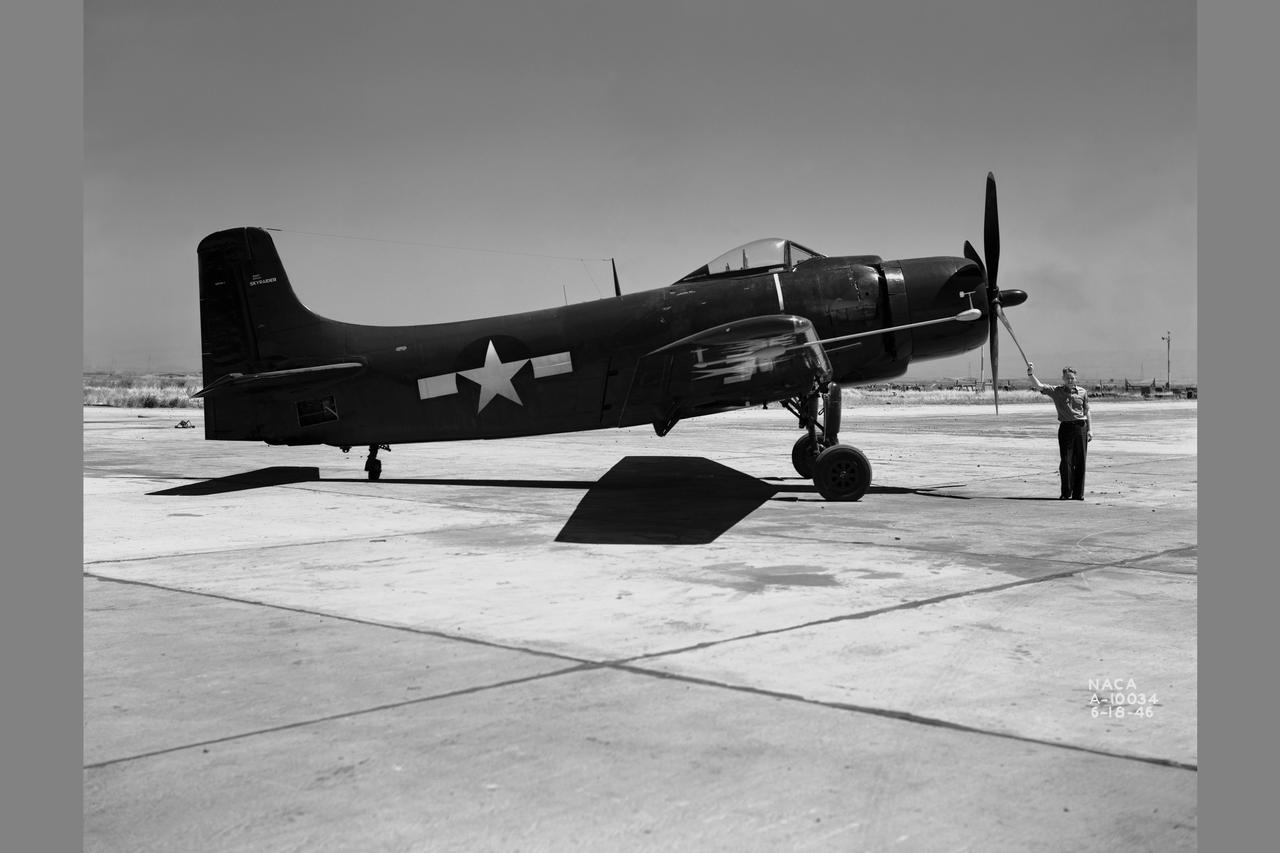
Douglas XBT2D-1 (Bu. No. 09086) Skyraider prototype Note: Used in publication Flight Research at Ames; 57 Years of Development and Validation of Aeronautical Technology NASA SP-1998-3300 fig 55
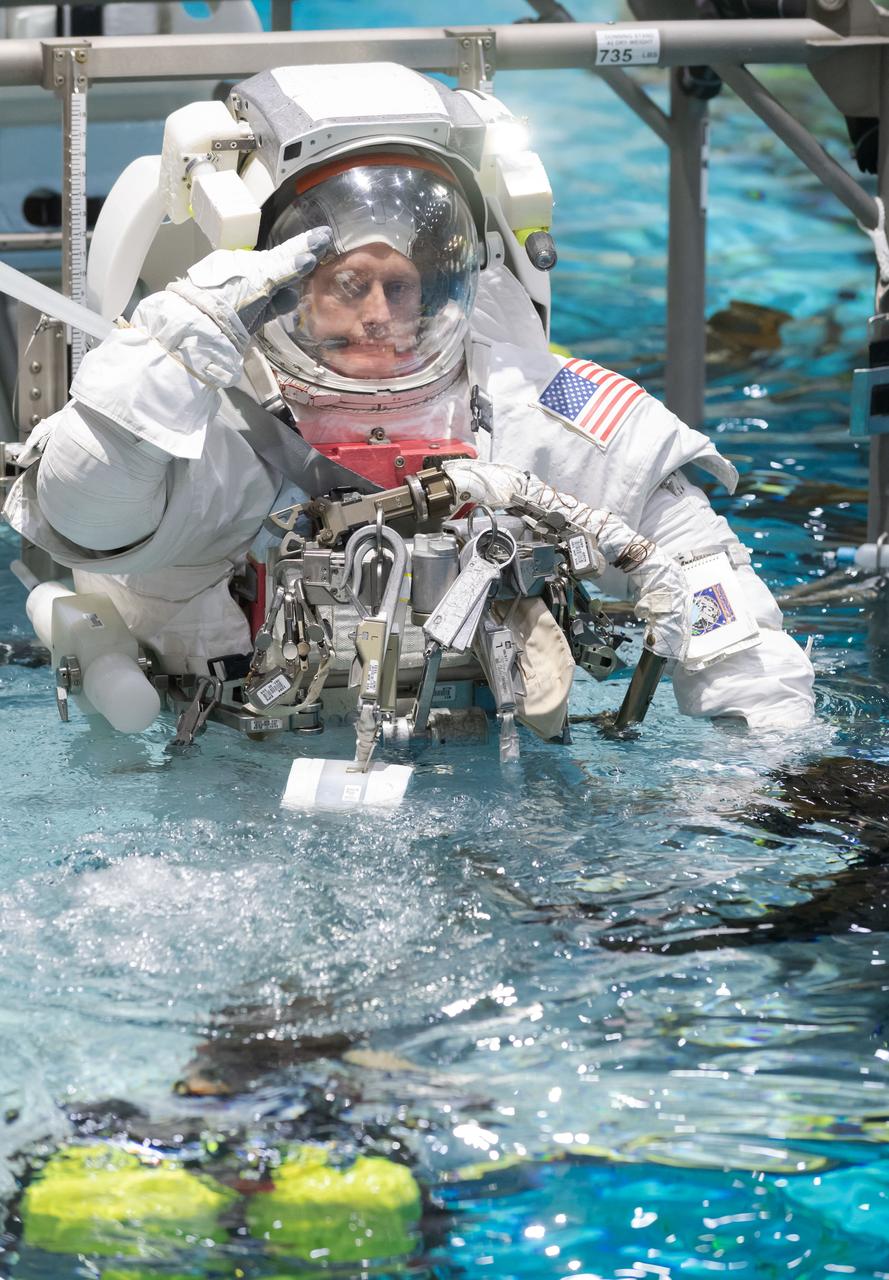
Boeing CFT crew member Mike Fincke with backup Barry "Butch" Wilmore during Boeing CFT/59S BU ISS EVA Maintenance 1 PRF training.
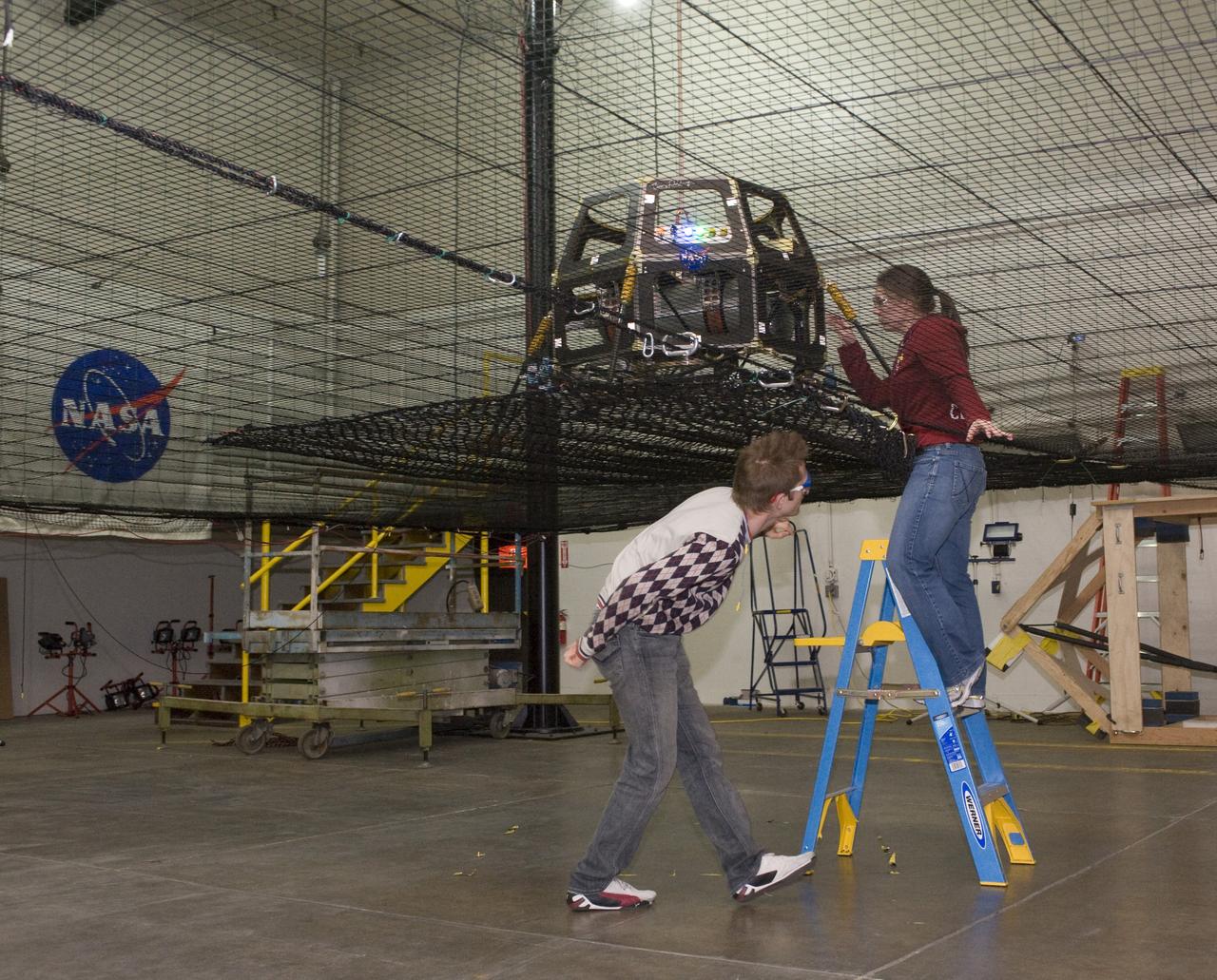
Lunar Atmosphere and Dust Environment Explorer (LADEE) Project in Building 45 Modular Common Spacecraft Bus as a hover test vehicle, here they are installing spacecraft electronics & payloads. with Chris Boshuizen (in plaid) and Eleanor Crane (in red)
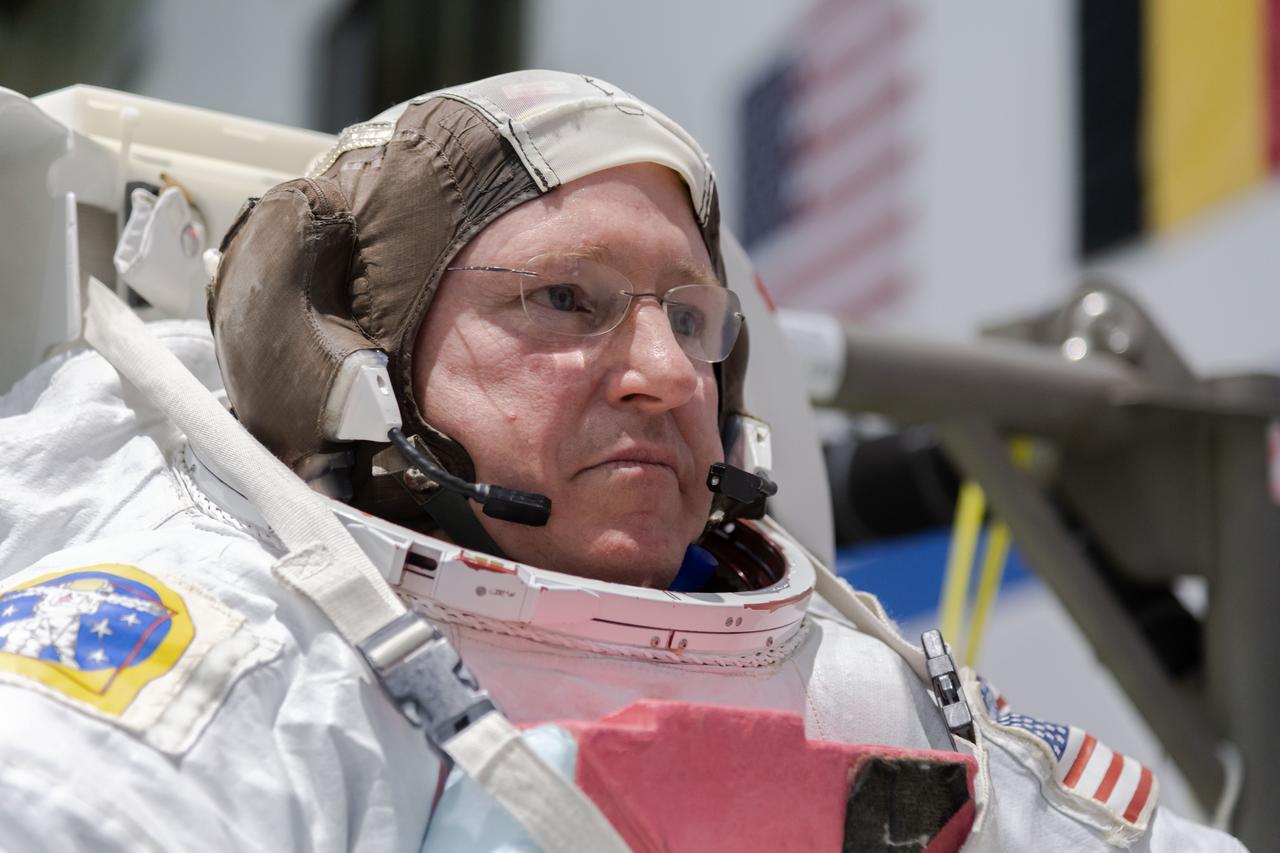
Boeing CFT crew member Mike Fincke with backup Barry "Butch" Wilmore during Boeing CFT/59S BU ISS EVA Maintenance 1 PRF training.
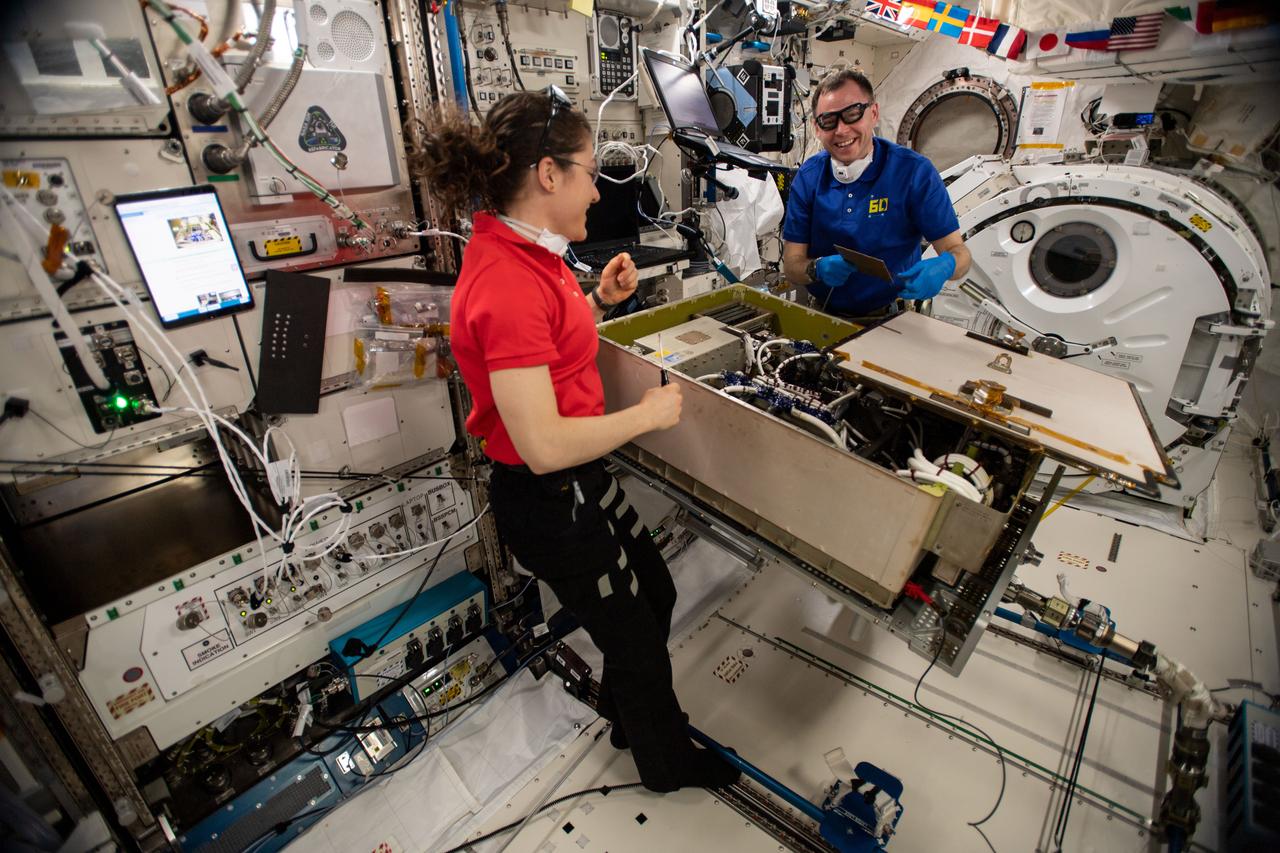
Expedition 60 flight engineers Christina Koch and Nick Hague of NASA work together on the Main Bus Switching Unit aboard the space station to replace a failed circuit card before performing a test to ensure its functionality.
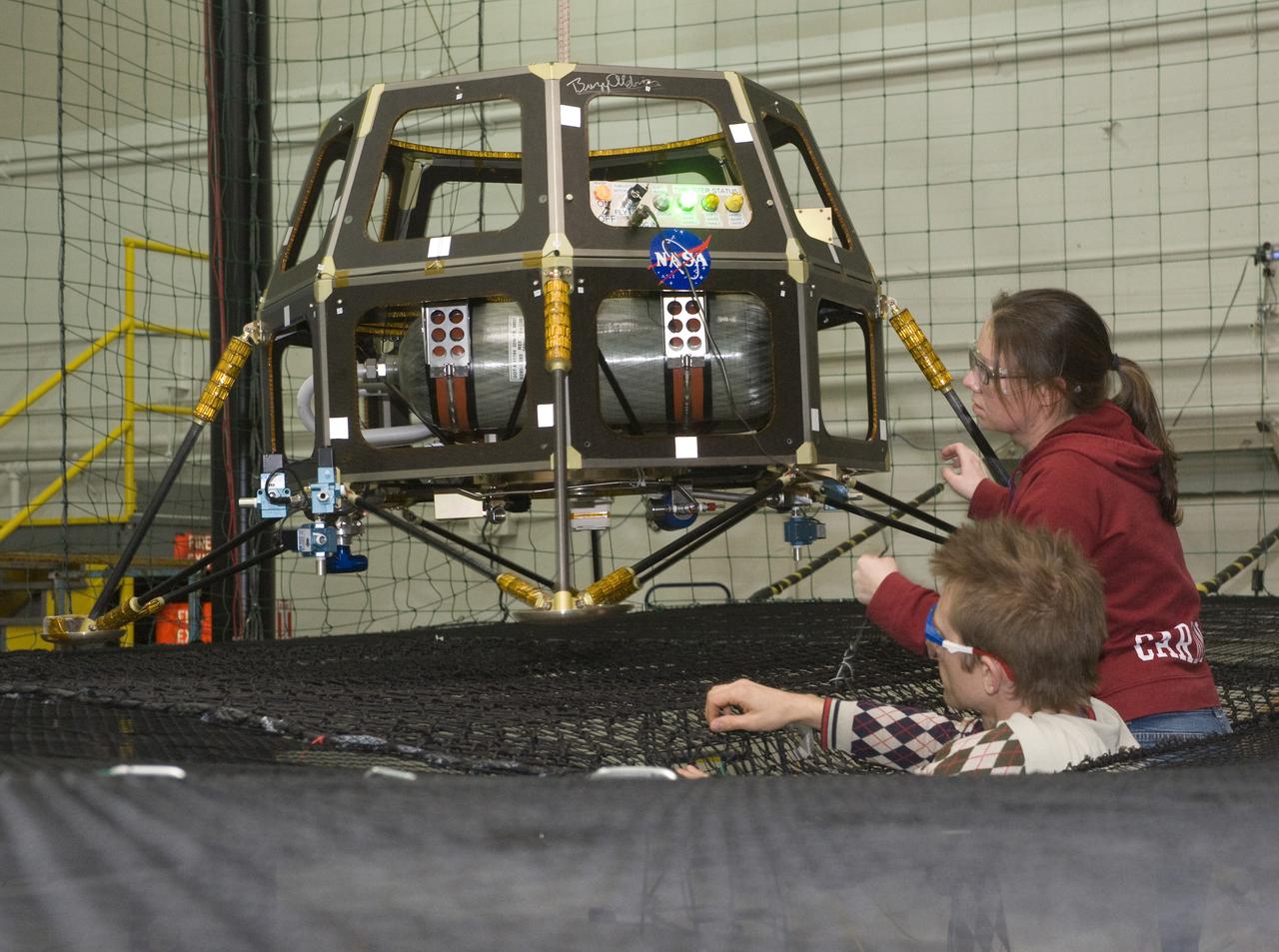
Lunar Atmosphere and Dust Environment Explorer (LADEE) Project in Building 45 Modular Common Spacecraft Bus as a hover test vehicle, here they are installing spacecraft electronics & payloads. with Chris Boshuizen (in plaid) and Eleanor Crane (in red)
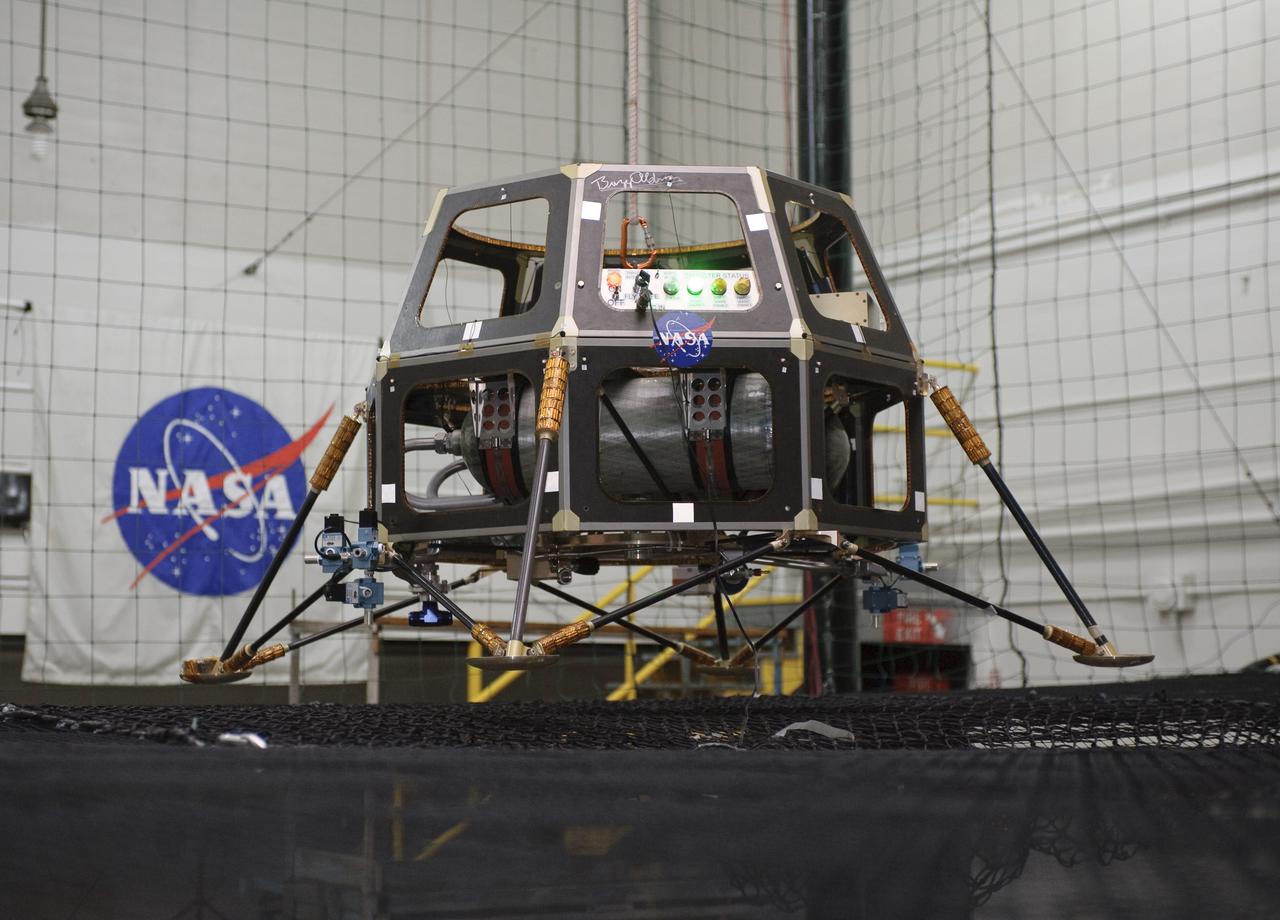
Lunar Atmosphere and Dust Environment Explorer (LADEE) Project in Building 45 Modular Common Spacecraft Bus as a hover test vehicle, here they are installing spacecraft electronics & payloads.
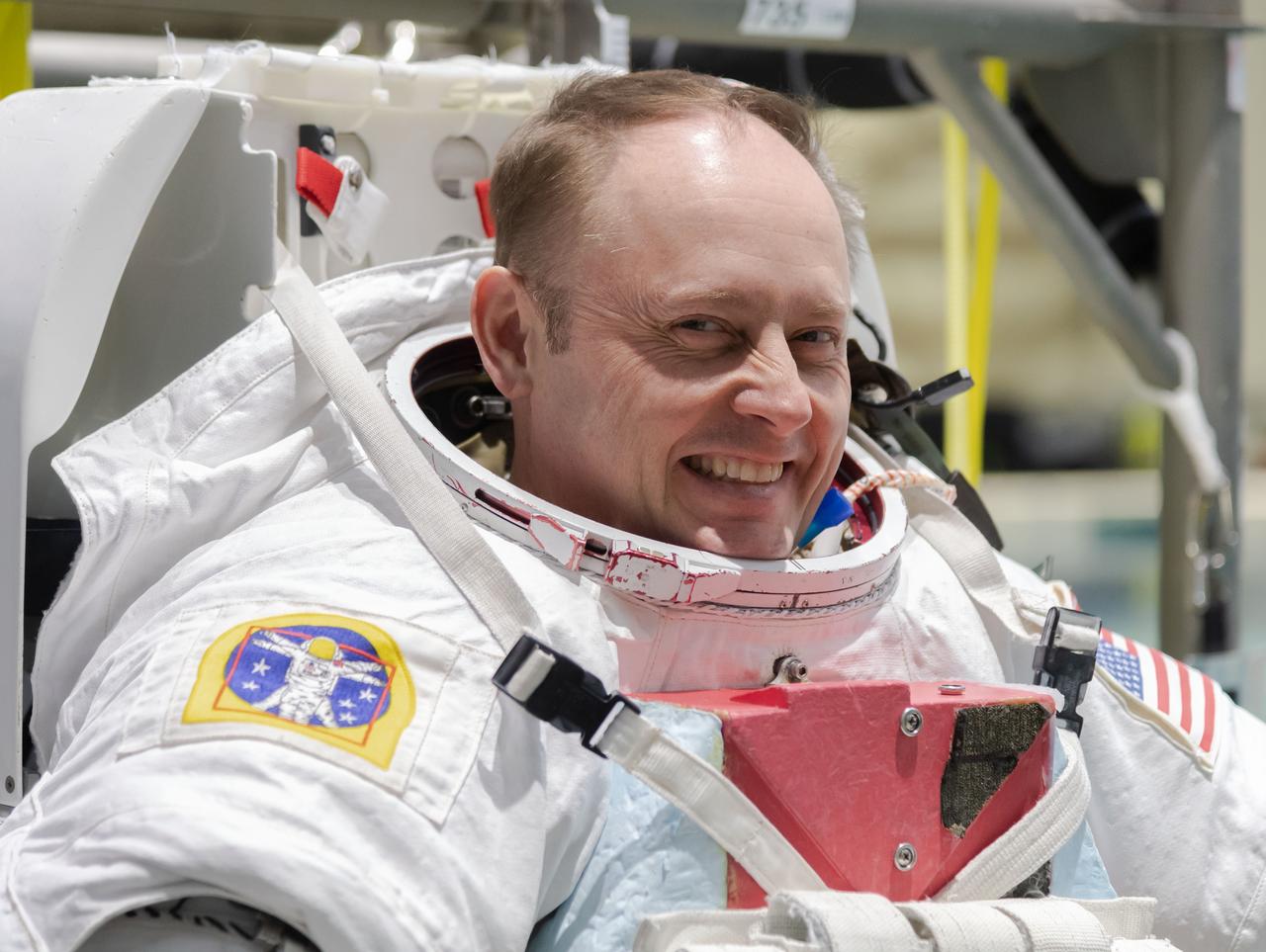
Boeing CFT crew member Mike Fincke with backup Barry "Butch" Wilmore during Boeing CFT/59S BU ISS EVA Maintenance 1 PRF training.
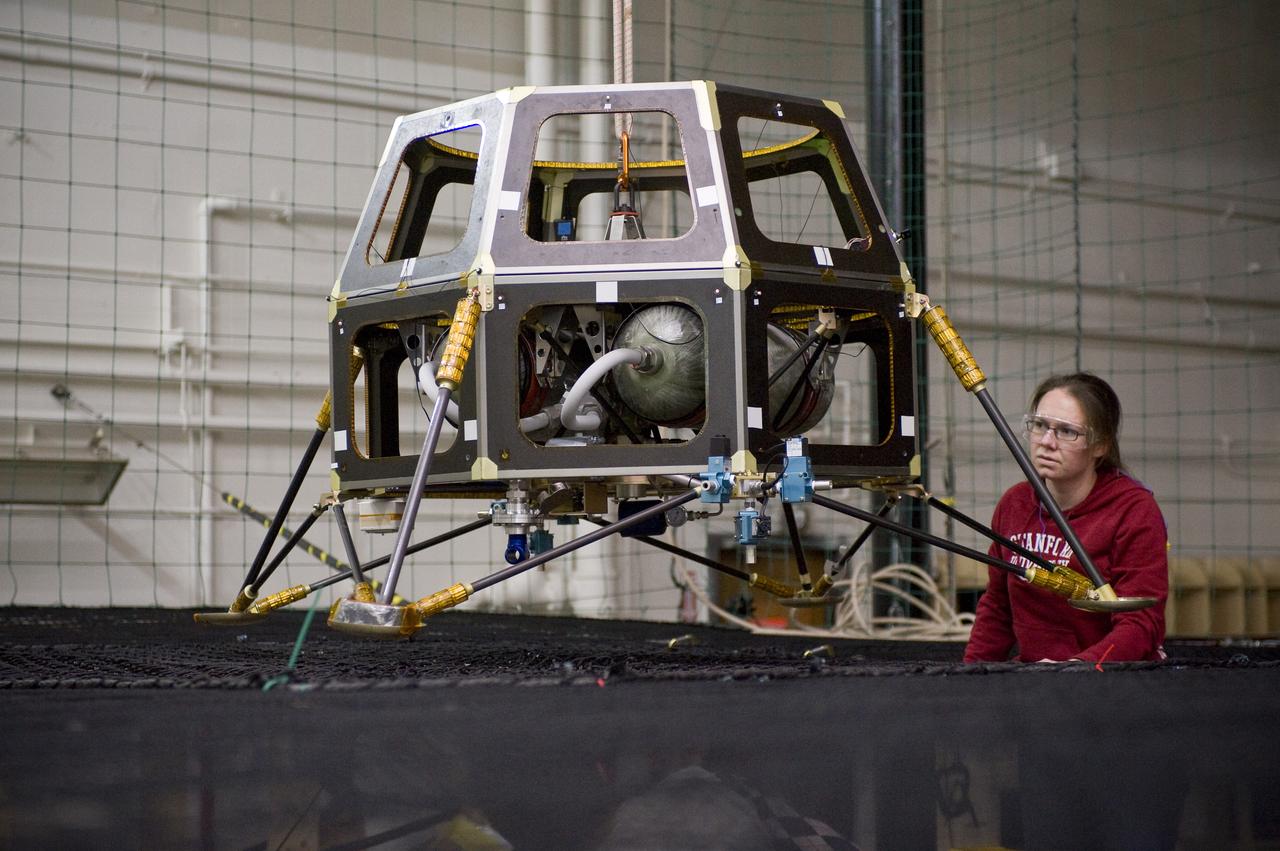
Lunar Atmosphere and Dust Environment Explorer (LADEE) Project in Building 45 Modular Common Spacecraft Bus as a hover test vehicle, here they are installing spacecraft electronics & payloads. With Eleanor Crane.
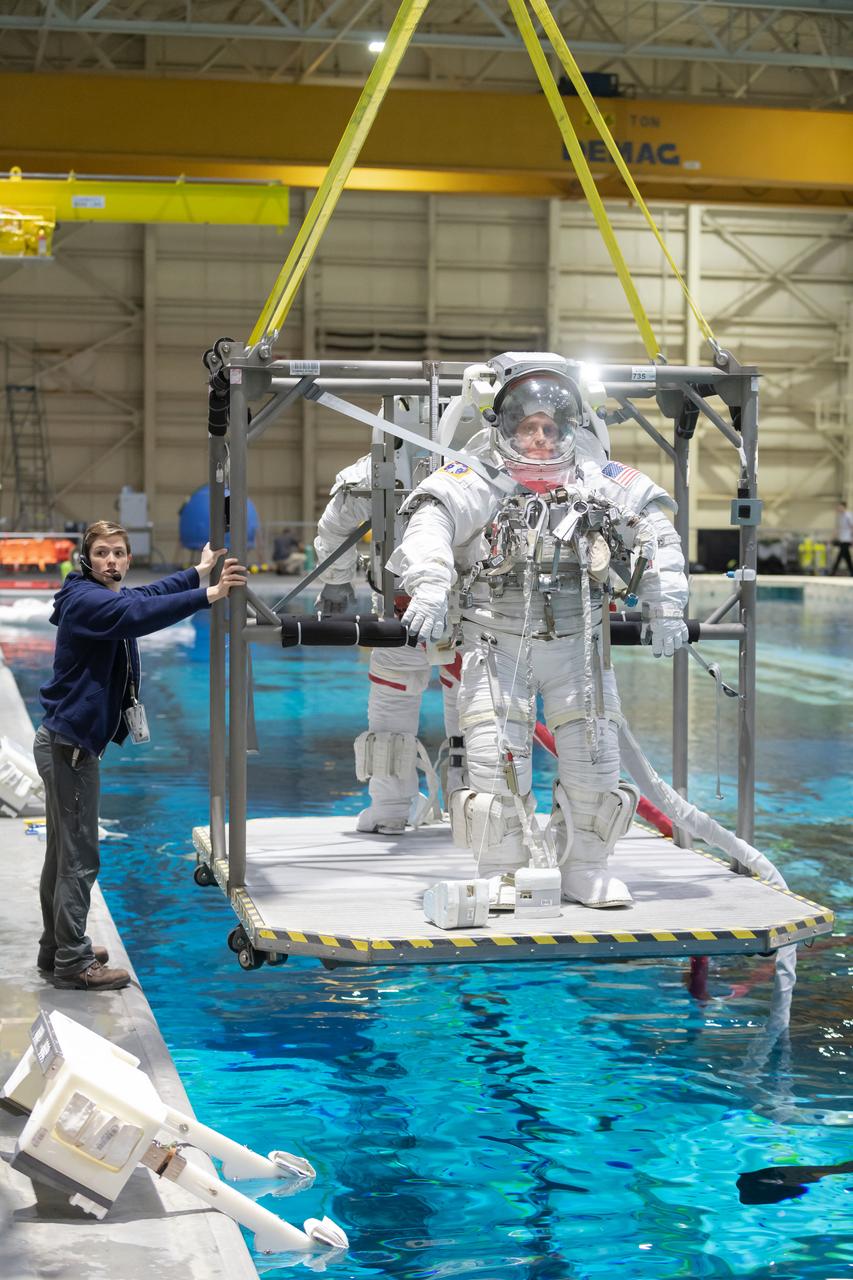
Boeing CFT crew member Mike Fincke with backup Barry "Butch" Wilmore during Boeing CFT/59S BU ISS EVA Maintenance 1 PRF training.
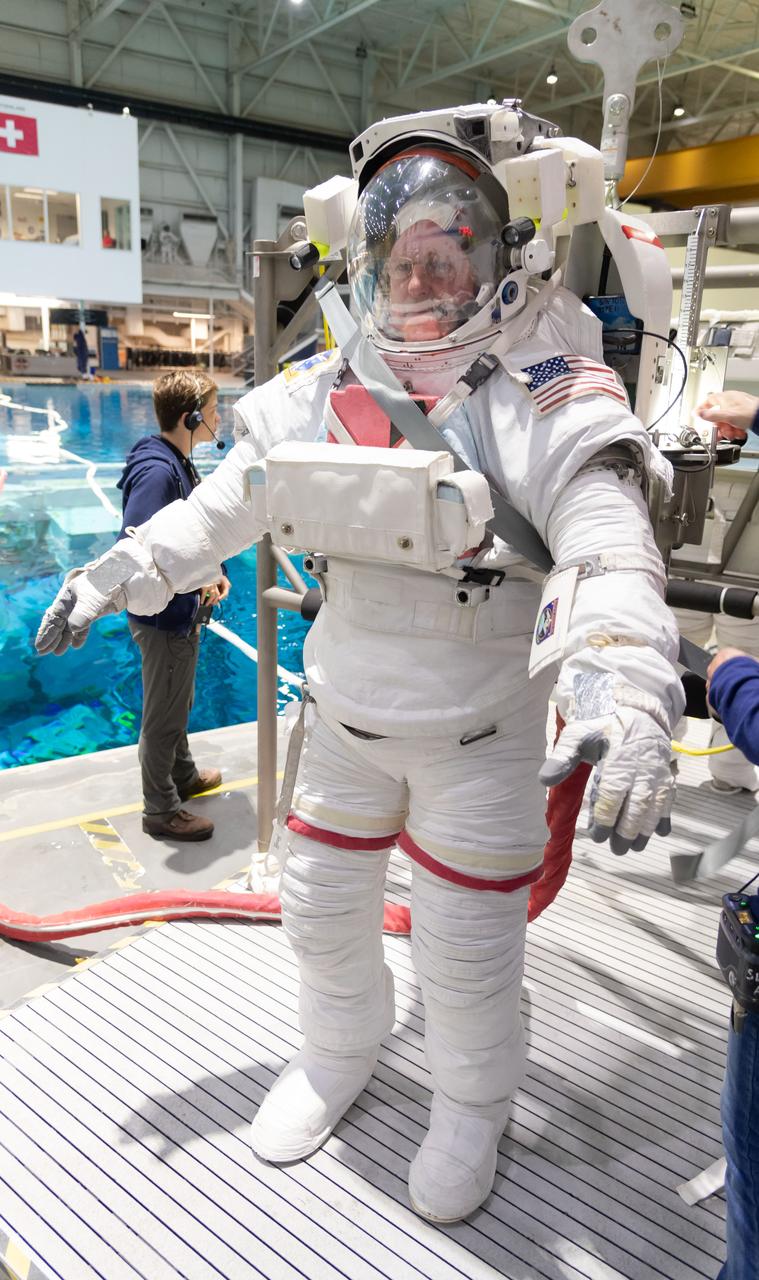
Boeing CFT crew member Mike Fincke with backup Barry "Butch" Wilmore during Boeing CFT/59S BU ISS EVA Maintenance 1 PRF training.
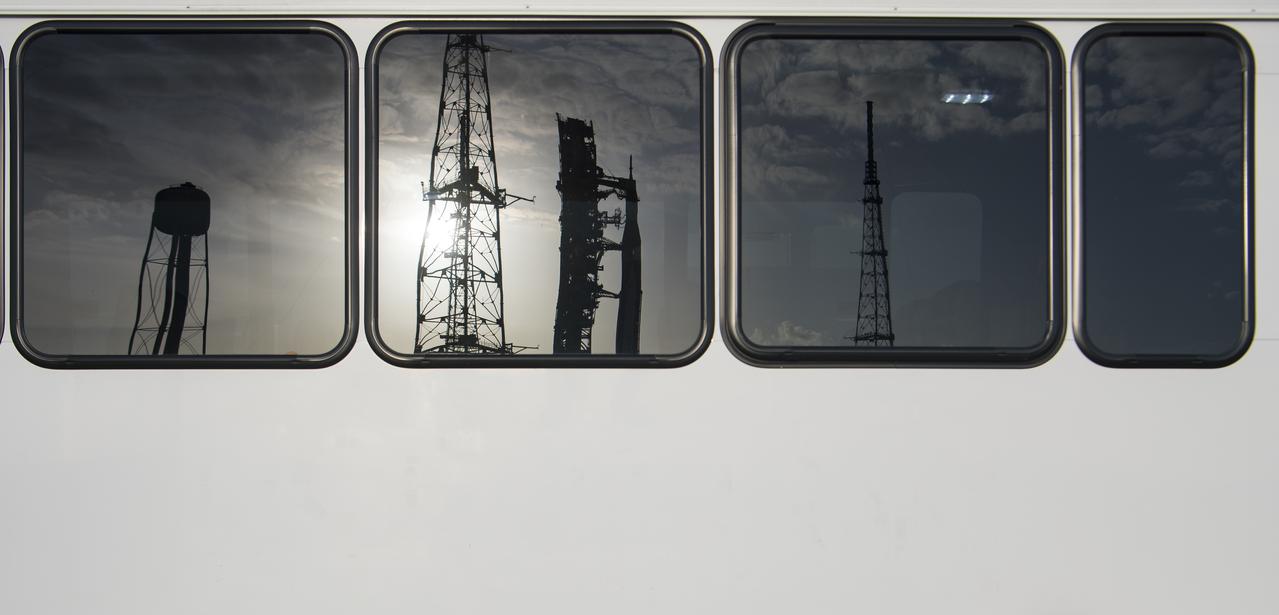
NASA’s Space Launch System (SLS) rocket with the Orion spacecraft aboard is seen in a reflection in the windows of a shuttle bus, Thursday, April 21, 2022, at NASA’s Kennedy Space Center in Florida. Photo Credit: (NASA/Aubrey Gemignani)
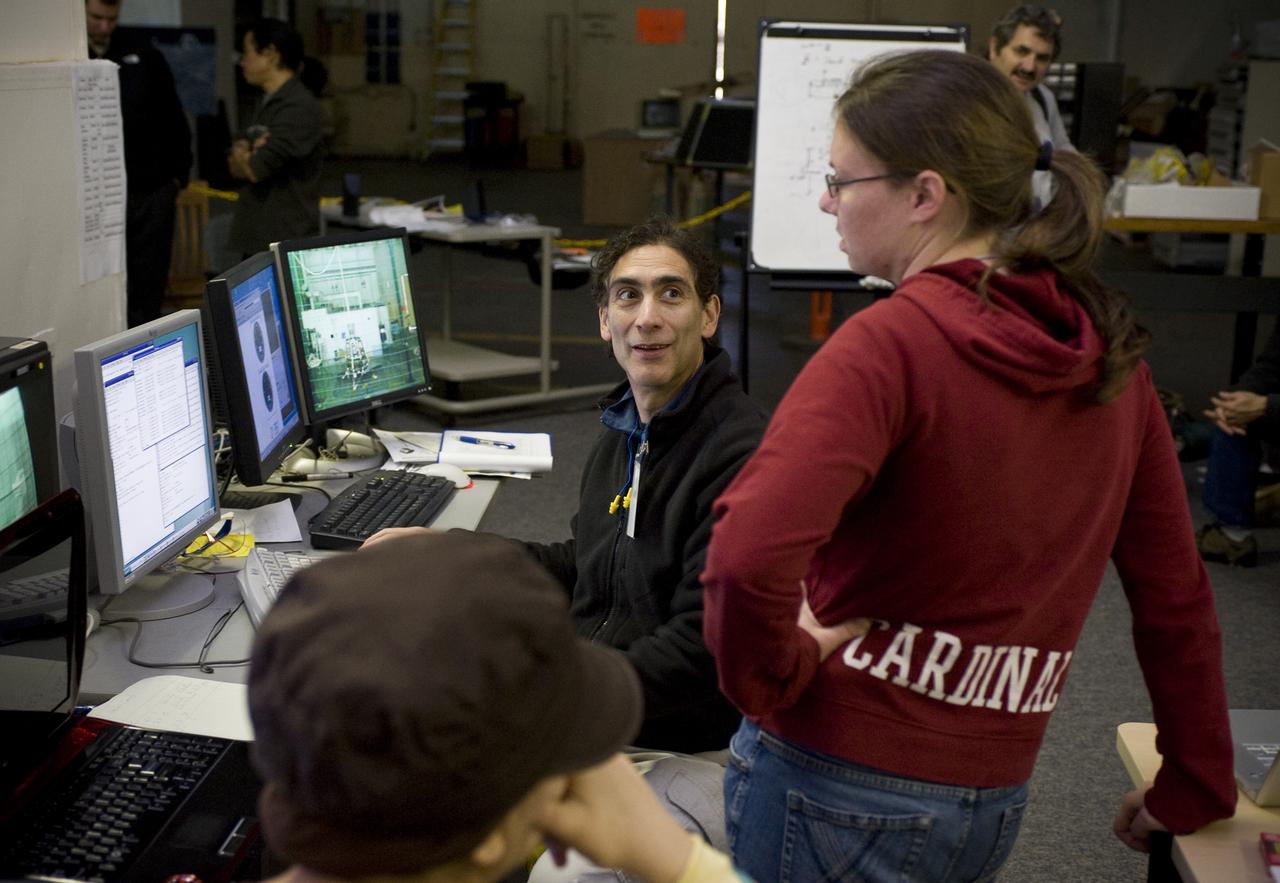
Lunar Atmosphere and Dust Environment Explorer (LADEE) Project in Building 45 Modular Common Spacecraft Bus as a hover test vehicle, here they are installing spacecraft electronics & payloads. Whith Doug Forman (seated) and Eleanor Crane (standing)
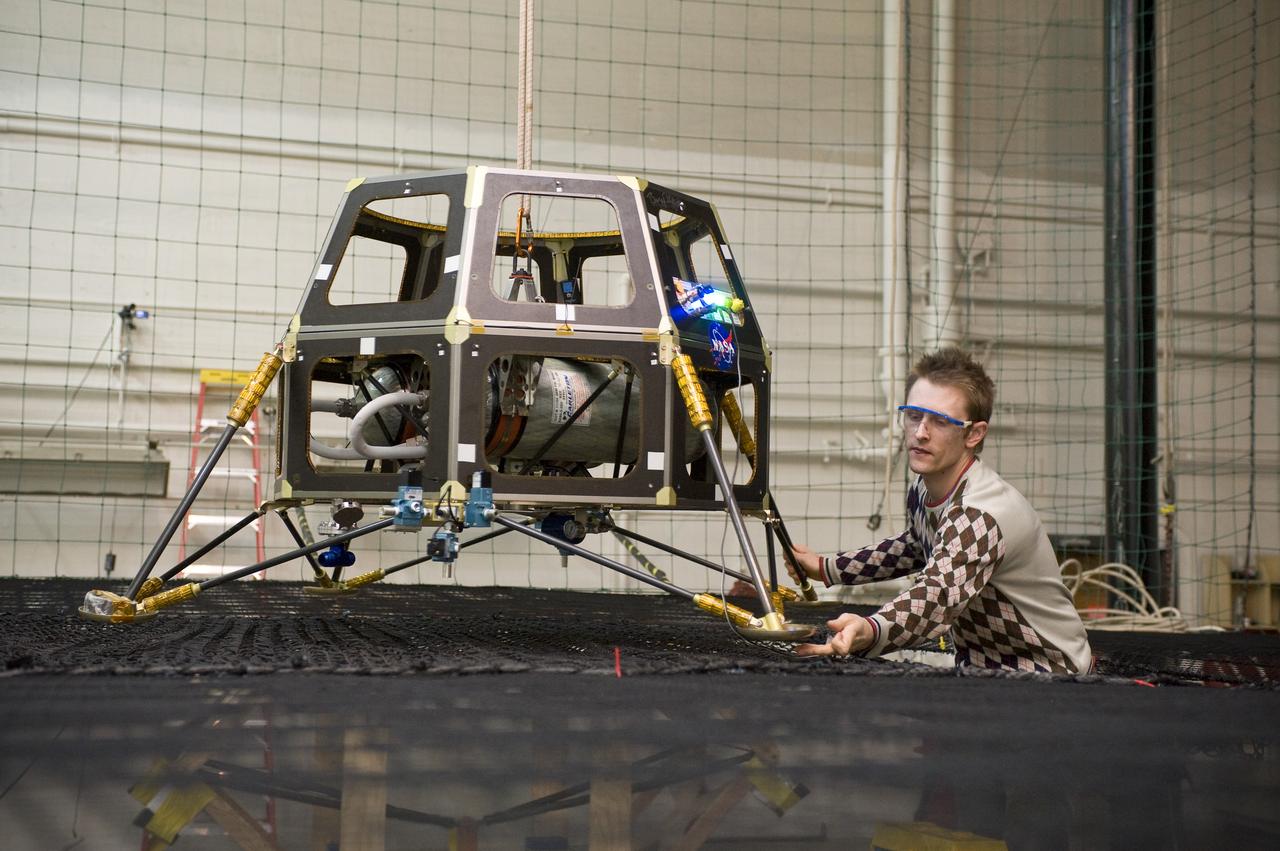
Lunar Atmosphere and Dust Environment Explorer (LADEE) Project in Building 45 Modular Common Spacecraft Bus as a hover test vehicle, here they are installing spacecraft electronics & payloads. With Chris Boshuizen
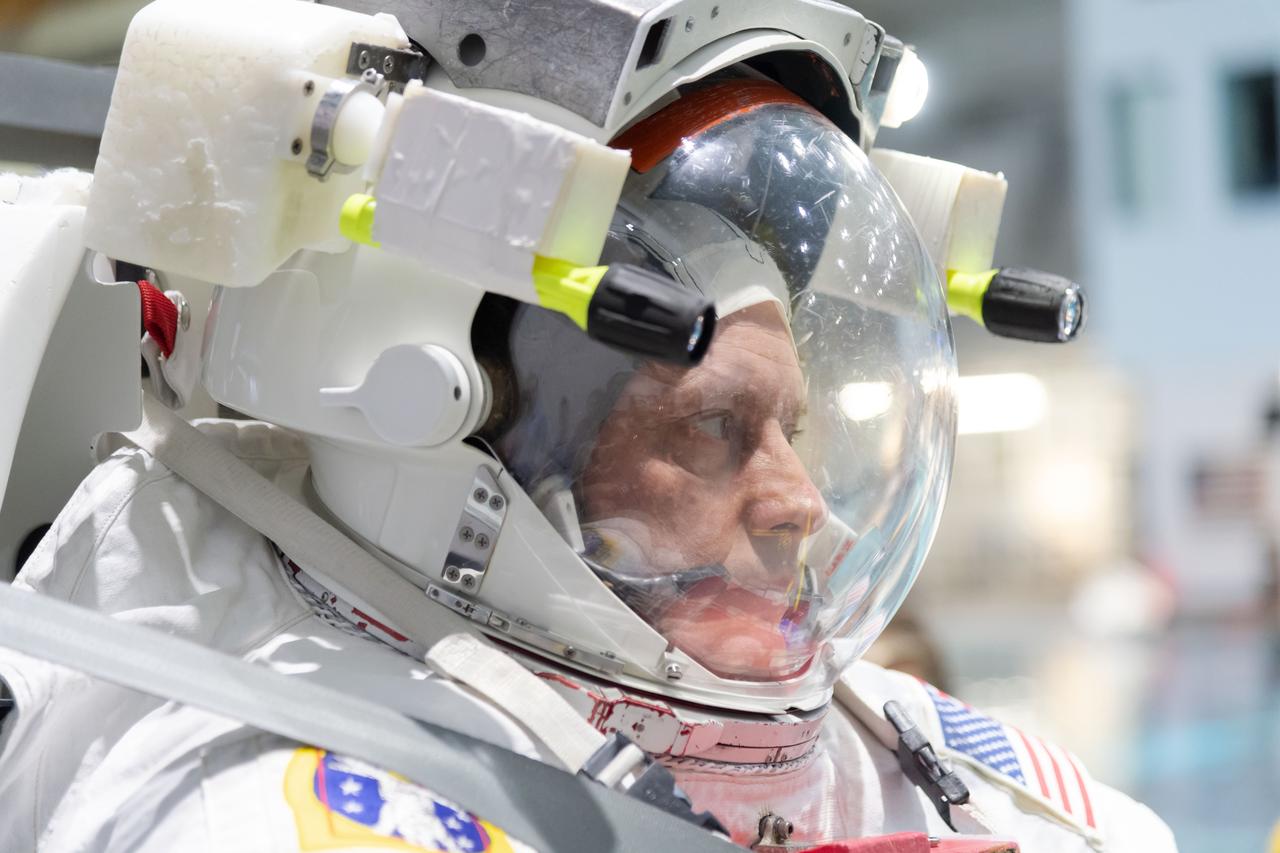
Boeing CFT crew member Mike Fincke with backup Barry "Butch" Wilmore during Boeing CFT/59S BU ISS EVA Maintenance 1 PRF training.
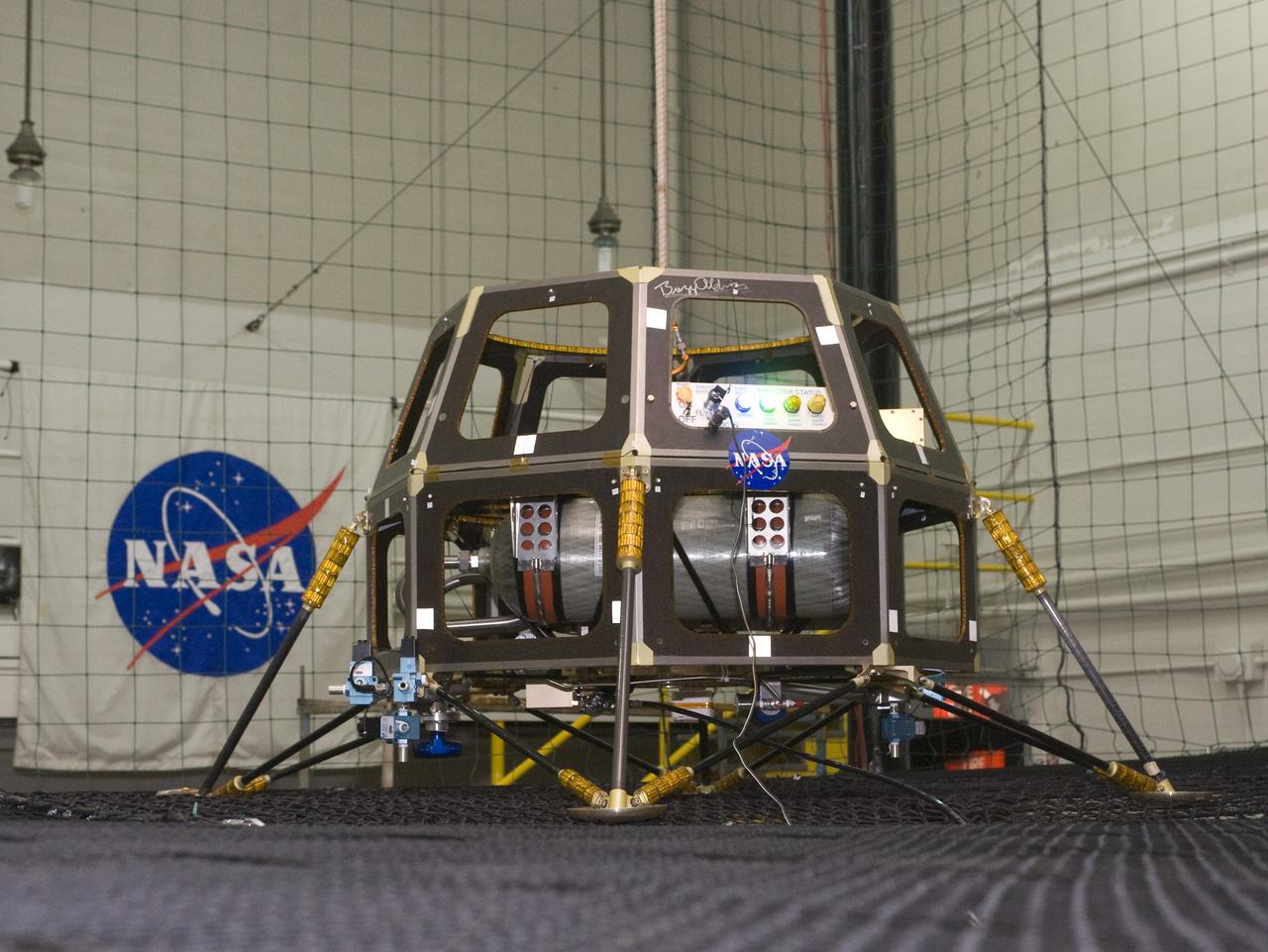
Lunar Atmosphere and Dust Environment Explorer (LADEE) Project in Building 45 Modular Common Spacecraft Bus as a hover test vehicle, here they are installing spacecraft electronics & payloads.
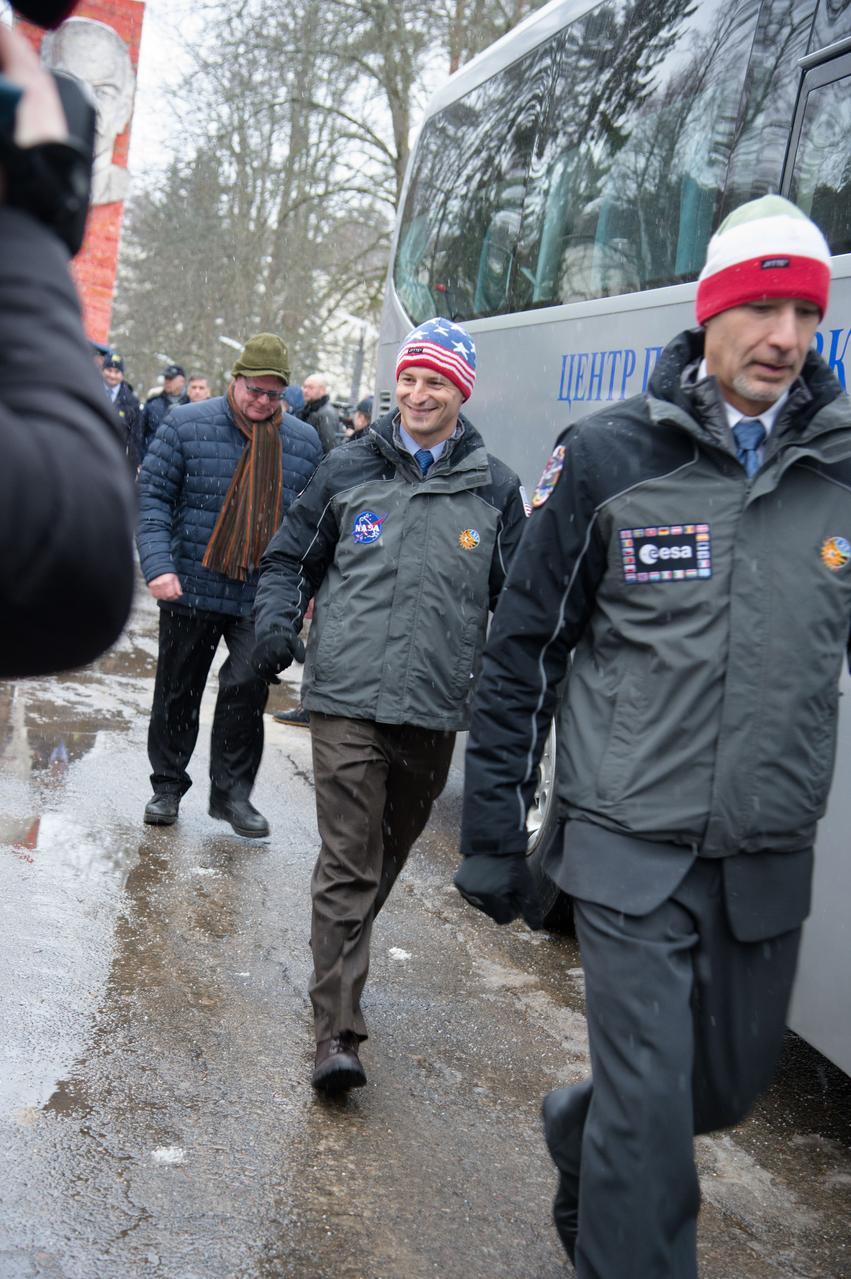
At the Gagarin Cosmonaut Training Center in Star City, Russia, Expedition 59 backup crewmembers Drew Morgan of NASA (center) and Luca Parmitano of the European Space Agency (right) walk to a bus Feb. 26 to take them to their plane for a flight to the Baikonur Cosmodrome in Kazakhstan for final pre-launch training. They and Alexander Skvortsov of Roscosmos are the backups to the prime crew, Nick Hague and Christina Koch of NASA and Alexey Ovchinin of Roscosmos, who will launch on March 14, U.S. time, on the Soyuz MS-12 spacecraft from the Baikonur Cosmodrome in Kazakhstan for a six-and-a-half month mission on the International Space Station. NASA/Beth Weissinger
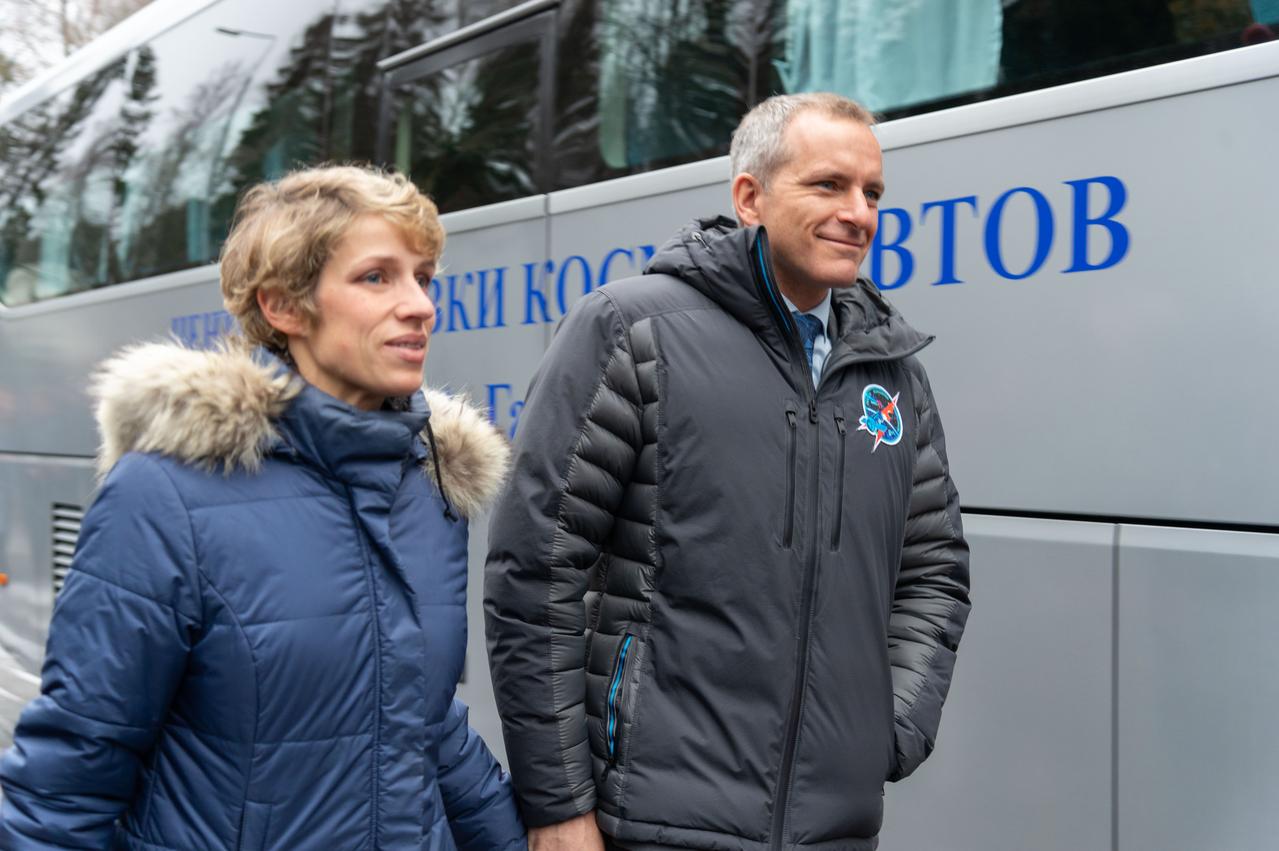
jsc2018e097269 - At the Gagarin Cosmonaut Training Center in Star City, Russia, Expedition 58 crewmember David Saint-Jacques of the Canadian Space Agency (right) walks with his wife, Veronique, to a waiting bus Nov. 19 that will take him and his crewmates to a nearby airfield for a flight to their launch site in Baikonur, Kazakhstan. Saint-Jacques, Anne McClain of NASA and Oleg Kononenko of Roscosmos will launch Dec. 3 on the Soyuz MS-11 spacecraft from the Baikonur Cosmodrome in Kazakhstan for a six-and-a-half month mission on the International Space Station. NASA/Sarah Volkman
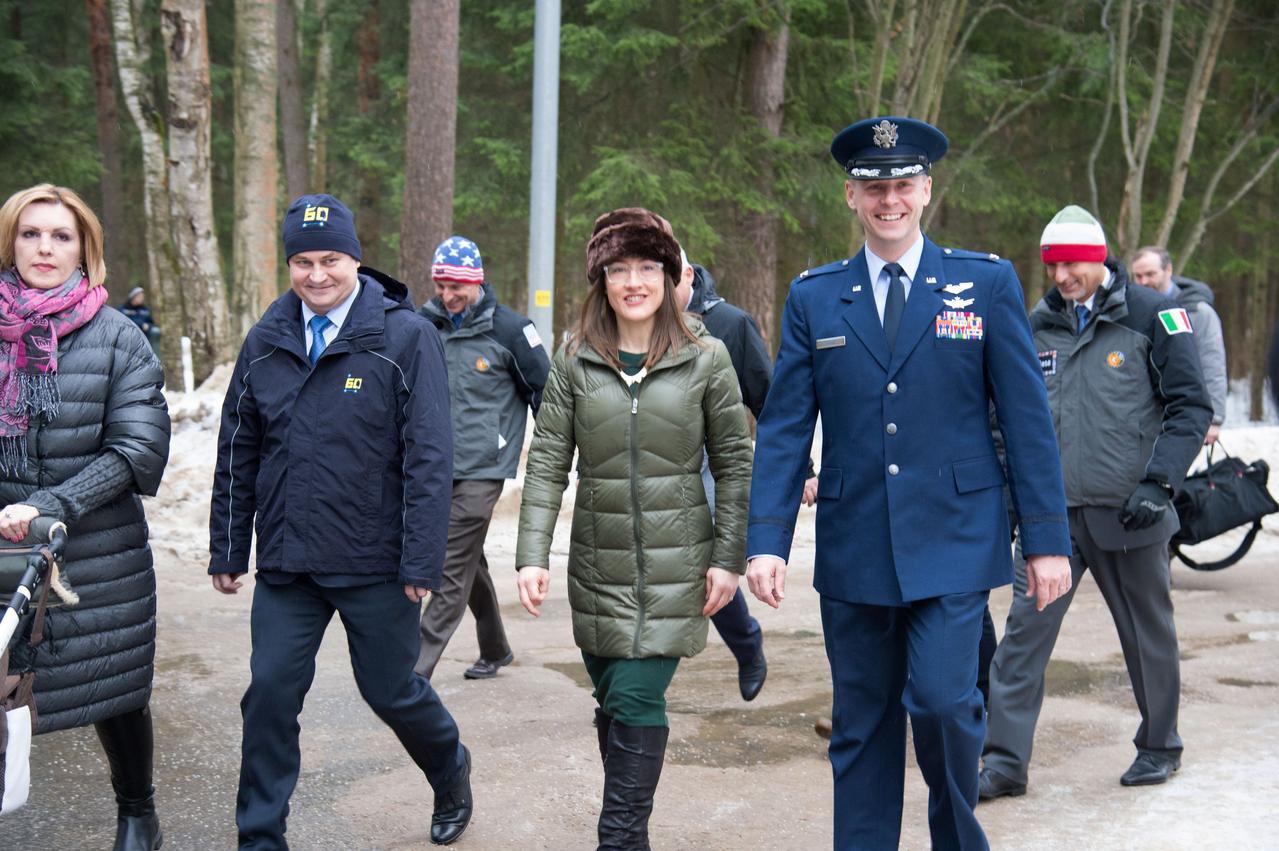
At the Gagarin Cosmonaut Training Center in Star City, Russia, Expedition 59 crewmembers Alexey Ovchinin of Roscosmos (second from left), Christina Koch of NASA (second from right) and Nick Hague of NASA (right) walk to a bus Feb. 26 to take them to their plane for a flight to their launch site at the Baikonur Cosmodrome in Kazakhstan for final pre-launch training. They will launch on March 14, U.S. time, on the Soyuz MS-12 spacecraft from the Baikonur Cosmodrome in Kazakhstan for a six-and-a-half month mission on the International Space Station. NASA/Beth Weissinger
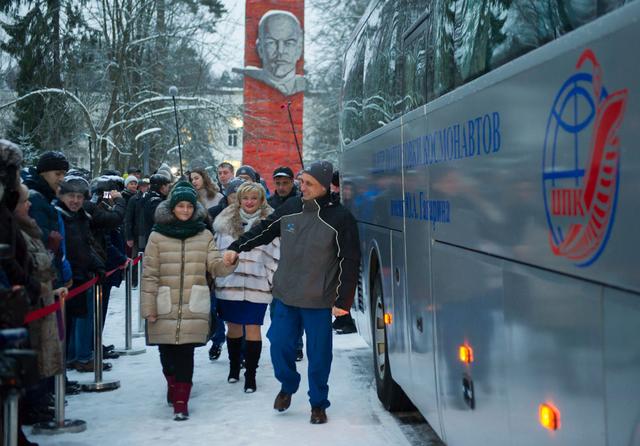
jsc2017e136097 - At the Gagarin Cosmonaut Training Center in Star City, Russia, Expedition 54-55 crewmember Anton Shkaplerov of the Russian Federal Space Agency (Roscosmos) waves to well-wishers Dec. 4 as he boards a bus to depart for nearby Chkalovsky Airfield and a flight to his launch site at the Baikonur Cosmodrome in Kazakhstan. Shkaplerov, Norishige Kanai of the Japan Aerospace Agency (JAXA) and Scott Tingle of NASA will launch Dec. 17 on the Soyuz MS-07 spacecraft for a five-month mission on the International Space Station...Andrey Shelepin/Gagarin Cosmonaut Training Center.
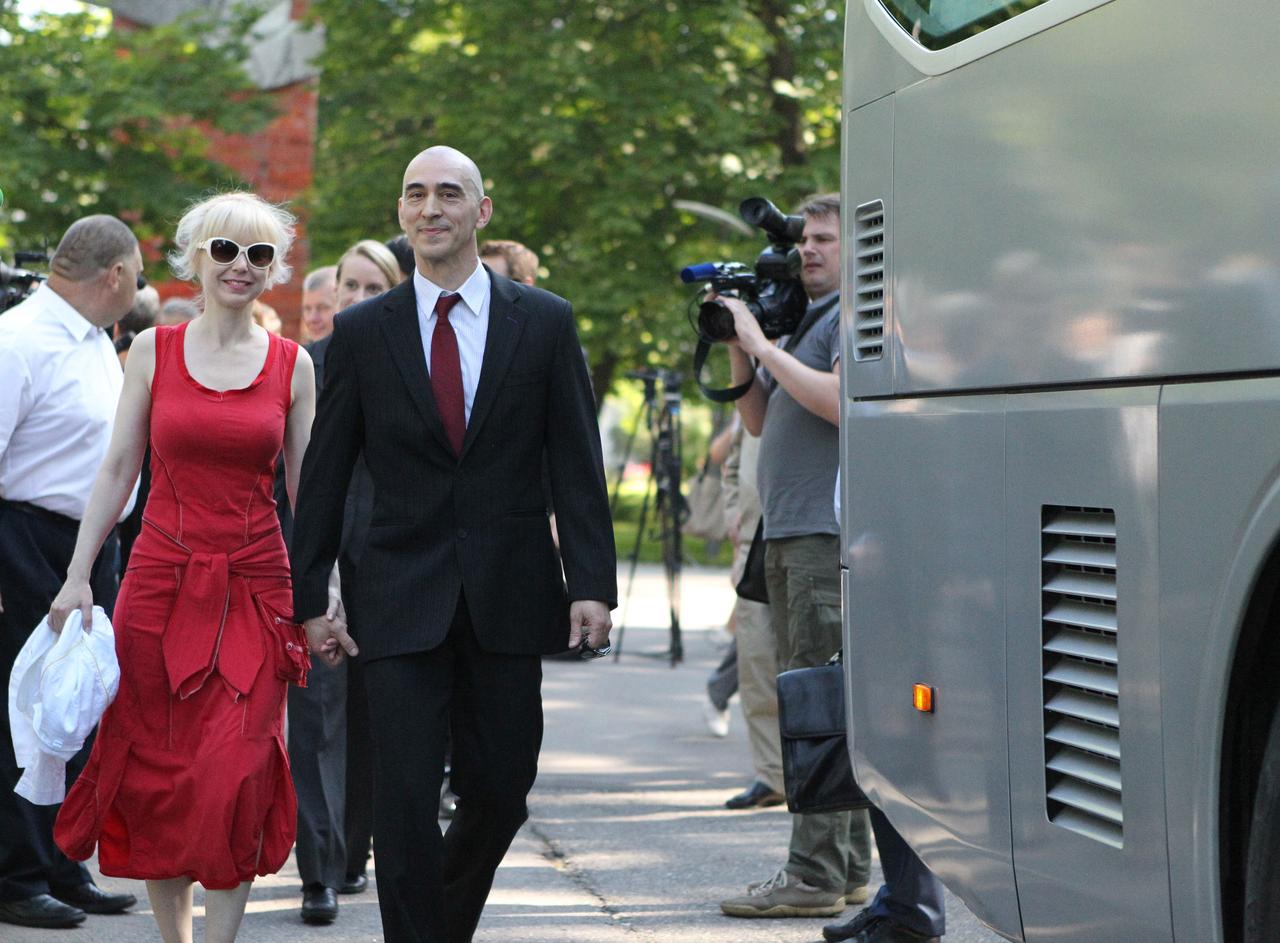
Accompanied by his wife, ISS Expedition 48-49 crewmember Anatoly Ivanishin of Roscosmos walks to a bus at the Gagarin Cosmonaut Training Center in Star City, Russia June 24 as he and his crewmates departed for their launch site at the Baikonur Cosmodrome in Kazakhstan. Kate Rubins of NASA, Ivanishin and Takuya Onishi of the Japan Aerospace Exploration Agency will launch July 7 from the Baikonur Cosmodrome in Kazakhstan on the Soyuz MS-01 spacecraft for a planned four-month mission on the International Space Station. NASA/Stephanie Stoll
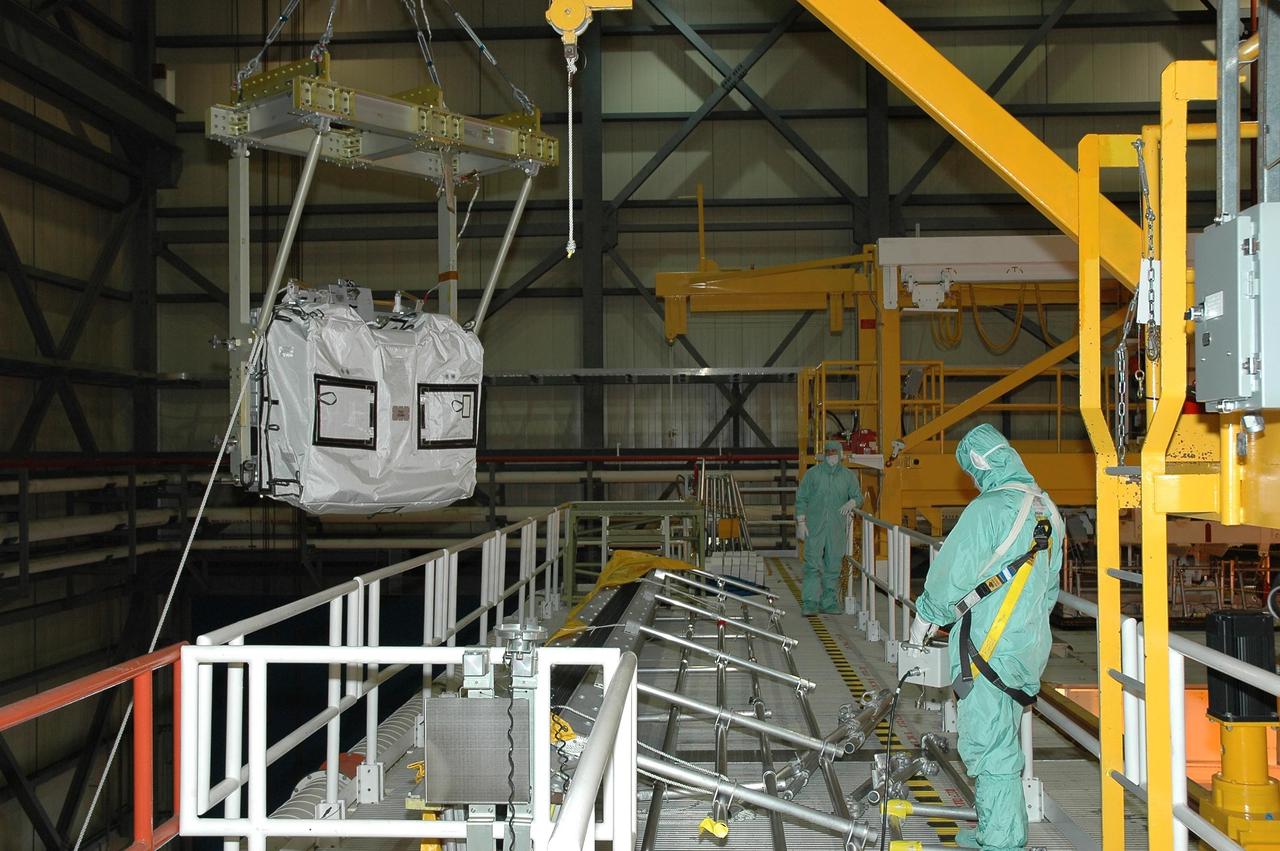
KENNEDY SPACE CENTER, Fla. -- In the Orbiter Processing Facility bay 3, a crane moves the main bus switching unit that will be installed in Discovery's payload bay. The unit is part of the payload on mission STS-120. A main bus switching unit is used for power distribution, circuit protection and fault isolation on the space station's power system. The units route power to proper locations in the space station, such as from solar arrays through umbilicals into the U.S. Lab. The unit will be installed on the external stowage platform 2 attached to the Quest airlock for temporary storage. Discovery is targeted to launch mission STS-120 no earlier than Oct. 20. Photo credit: NASA/Jim Grossmann
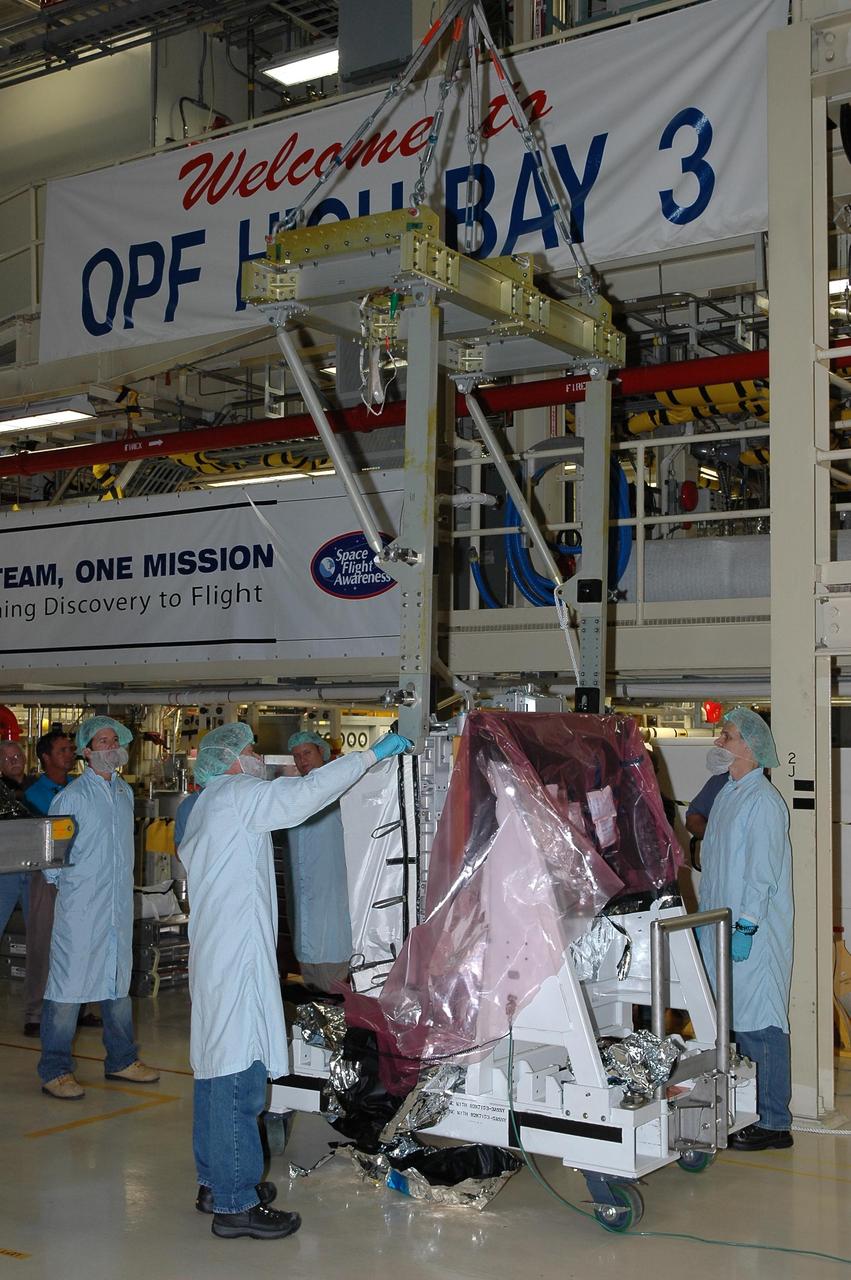
KENNEDY SPACE CENTER, Fla. -- In the Orbiter Processing Facility bay 3, the main bus switching unit that is part of the payload on mission STS-120 is being prepared for inspection. A main bus switching unit is used for power distribution, circuit protection and fault isolation on the space station's power system. The units route power to proper locations in the space station, such as from solar arrays through umbilicals into the U.S. Lab. The unit will be installed on the external stowage platform 2 attached to the Quest airlock for temporary storage. Discovery is targeted to launch mission STS-120 no earlier than Oct. 20. Photo credit: NASA/Jim Grossmann
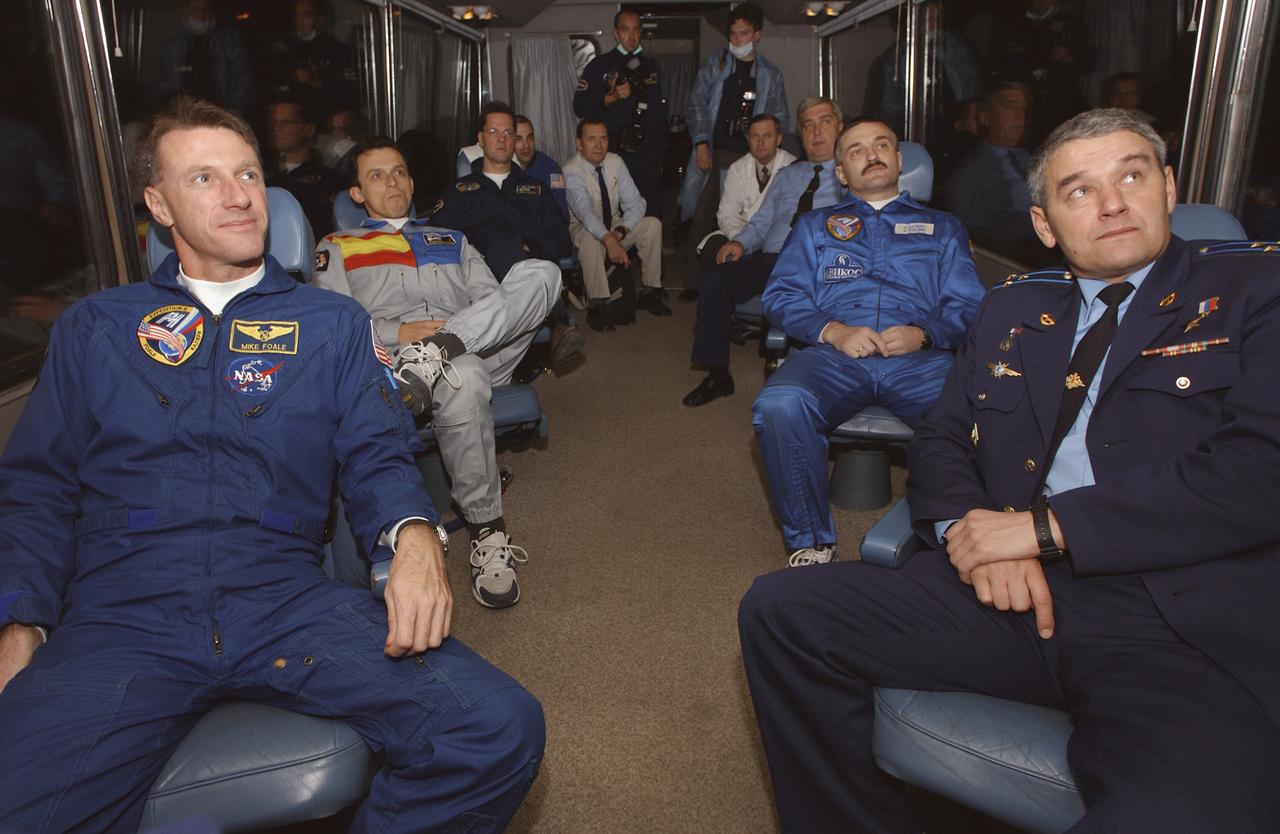
Expedition 8 Commander and NASA Science Officer Michael Foale, left, European Space Agency astronaut Pedro Duque of Spain, second left and Soyuz Commander Alexander Kaleri along with Gen. Valery Korzun, the Chief of the Cosmonaut Corps, front right, watch home videos aboard the bus transporting the crew to the launch pad at the Baikonur Cosmodrome in Kazakhstan on Saturday, Oct. 18, 2003 prior to the crew's launch to the Interrnational Space Station. The viewing of home videos on the bus is one of many prelaunch traditions for all departing crews. Photo Credit (NASA/Bill Ingalls)
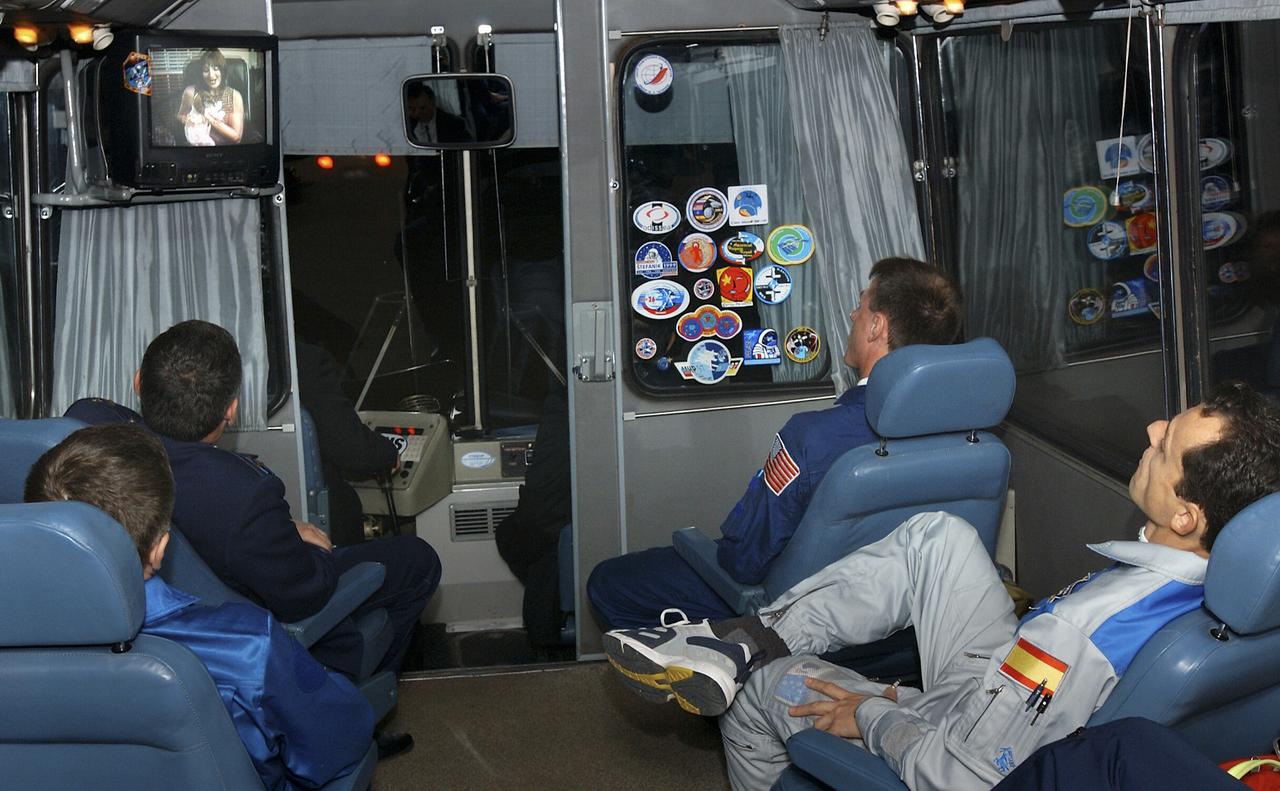
Expedition 8 Soyuz Commander Alexander Kaleri, clockwise from lower left, Gen. Valery Korzun, the Chief of the Cosmonaut Corps, Commander and NASA Science Officer Michael Foale and European Space Agency astronaut Pedro Duque of Spain watch home videos aboard the bus transporting the crew to the launch pad at the Baikonur Cosmodrome in Kazakhstan, Saturday, Oct. 18, 2003, prior to the crew's launch to the Interrnational Space Station. The viewing of home videos on the bus is one of many prelaunch traditions for all departing crews. Photo Credit (NASA/Bill Ingalls)
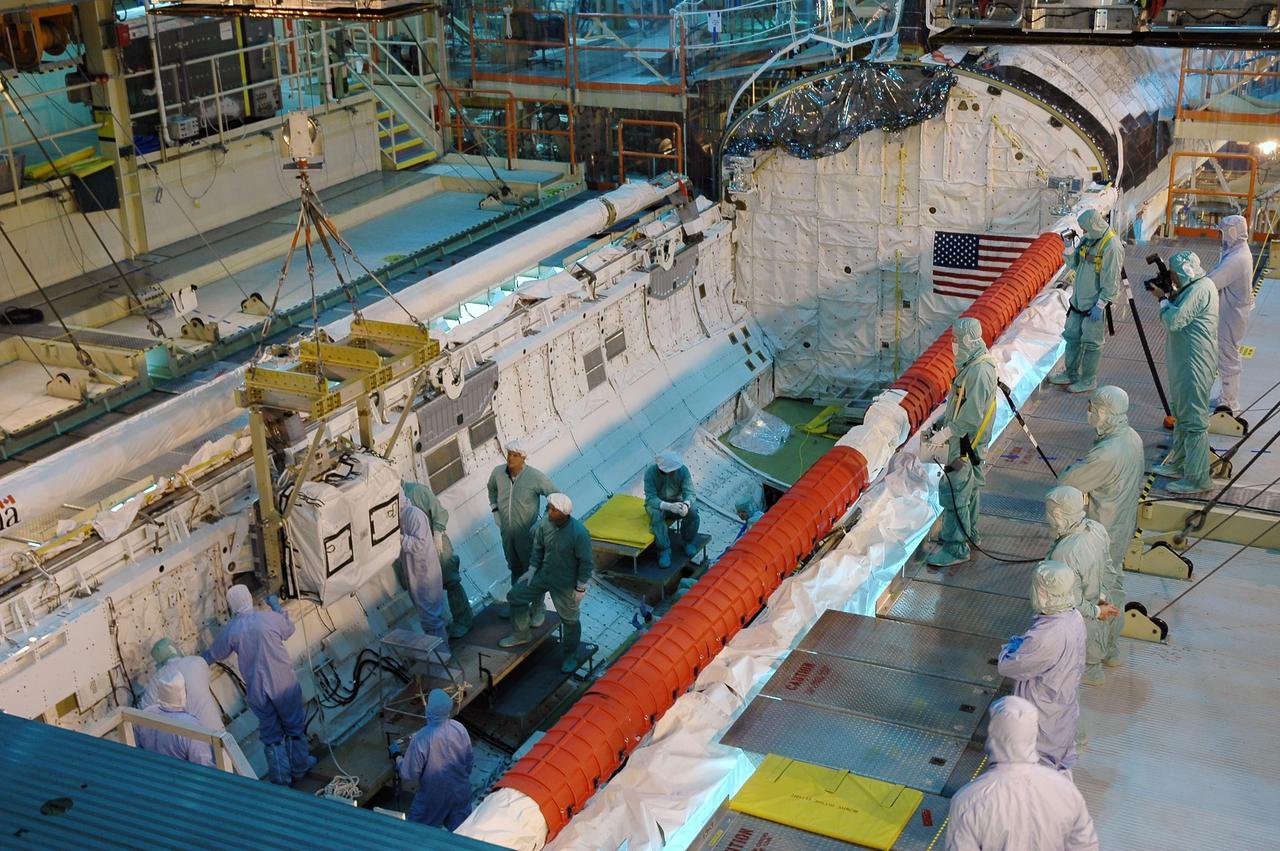
KENNEDY SPACE CENTER, Fla. -- In the Orbiter Processing Facility bay 3, with the help of a crane, workers check the placement of a main bus switching unit in Discovery's payload bay. A main bus switching unit is used for power distribution, circuit protection and fault isolation on the space station's power system. The units route power to proper locations in the space station, such as from solar arrays through umbilicals into the U.S. Lab. The unit will be installed on the external stowage platform 2 attached to the Quest airlock for temporary storage. Discovery is targeted to launch mission STS-120 no earlier than Oct. 20. Photo credit: NASA/Jim Grossmann
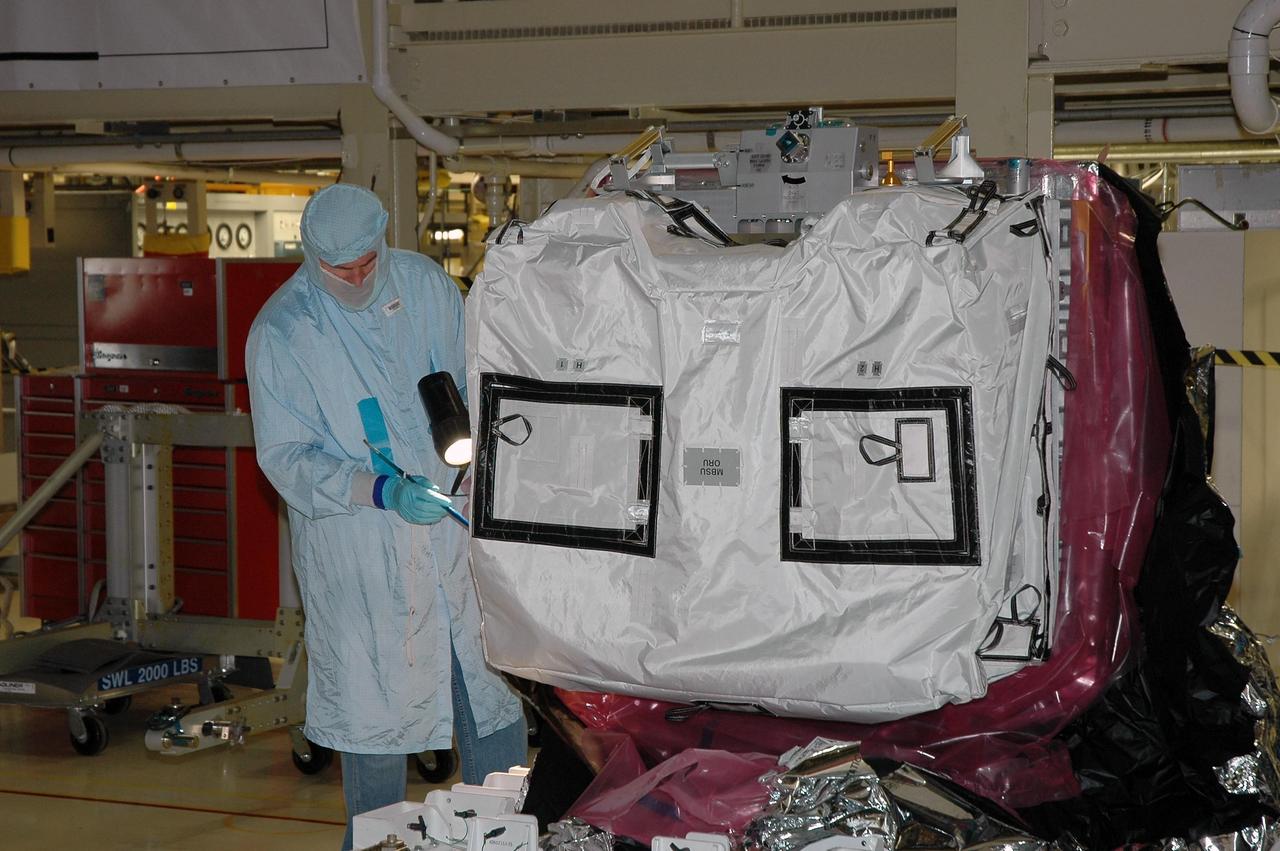
KENNEDY SPACE CENTER, Fla. -- In the Orbiter Processing Facility bay 3, a worker checks the cover on a main bus switching unit, part of the payload on mission STS-120. A main bus switching unit is used for power distribution, circuit protection and fault isolation on the space station's power system. The units route power to proper locations in the space station, such as from solar arrays through umbilicals into the U.S. Lab. The unit will be installed on the external stowage platform 2 attached to the Quest airlock for temporary storage. Discovery is targeted to launch mission STS-120 no earlier than Oct. 20. Photo credit: NASA/Jim Grossmann
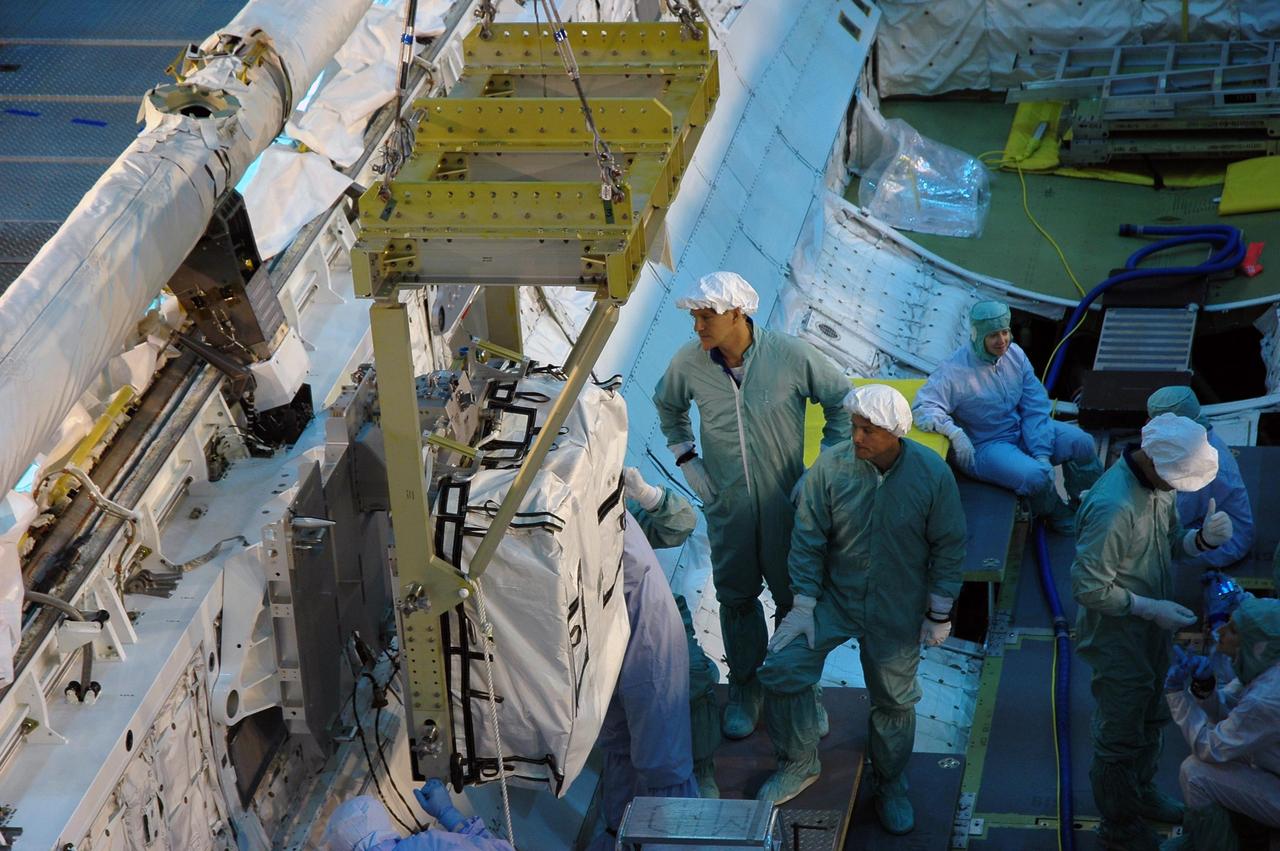
KENNEDY SPACE CENTER, Fla. -- In the Orbiter Processing Facility bay 3, workers check the placement of a main bus switching unit in Discovery's payload bay. A main bus switching unit is used for power distribution, circuit protection and fault isolation on the space station's power system. The units route power to proper locations in the space station, such as from solar arrays through umbilicals into the U.S. Lab. The unit will be installed on the external stowage platform 2 attached to the Quest airlock for temporary storage. Discovery is targeted to launch mission STS-120 no earlier than Oct. 20. Photo credit: NASA/Jim Grossmann
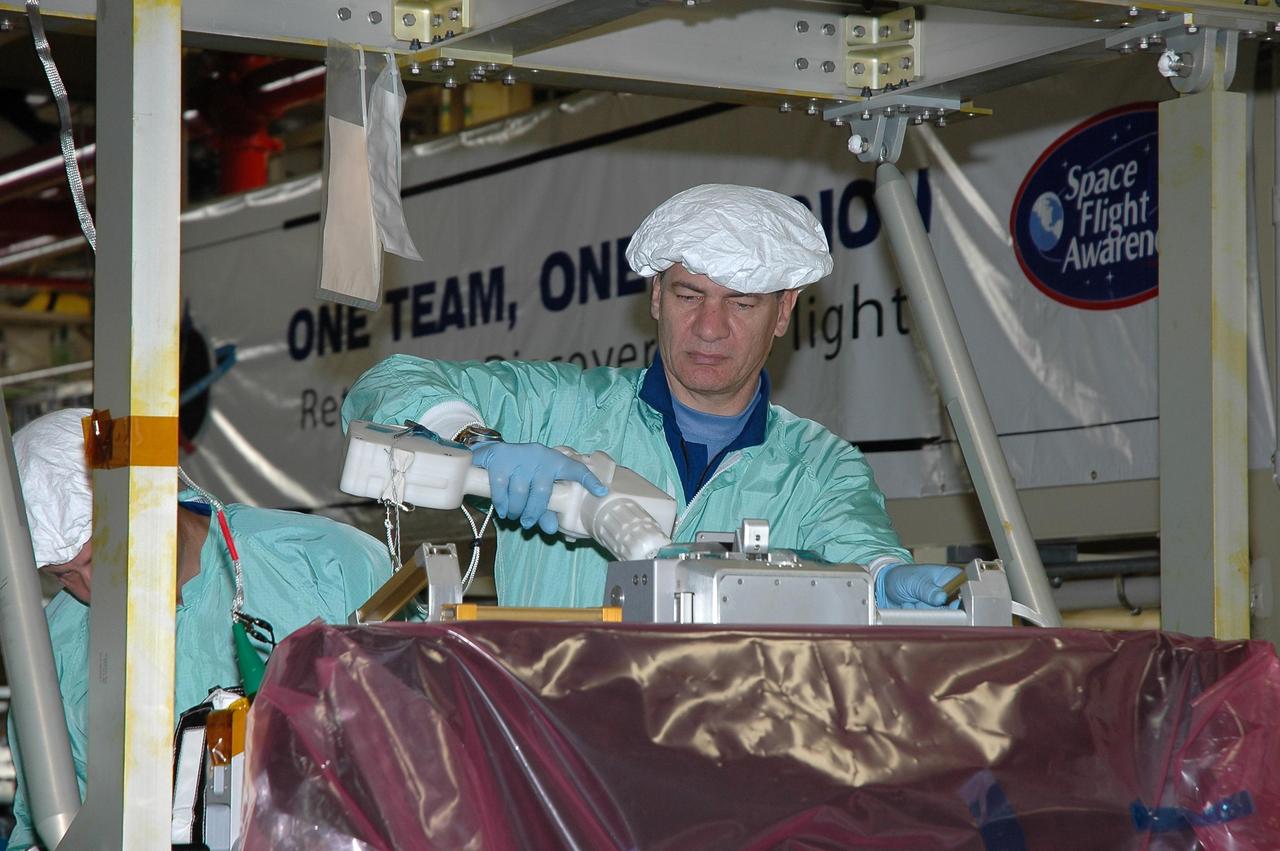
KENNEDY SPACE CENTER, Fla. -- In the Orbiter Processing Facility bay 3, STS-120Mission Specialist Paolo Nespoli practices using a tool on the main bus switching unit that is part of the payload on the mission. A main bus switching unit is used for power distribution, circuit protection and fault isolation on the space station's power system. The units route power to proper locations in the space station, such as from solar arrays through umbilicals into the U.S. Lab. The unit will be installed on the external stowage platform 2 attached to the Quest airlock for temporary storage. Discovery is targeted to launch mission STS-120 no earlier than Oct. 20. Photo credit: NASA/Jim Grossmann
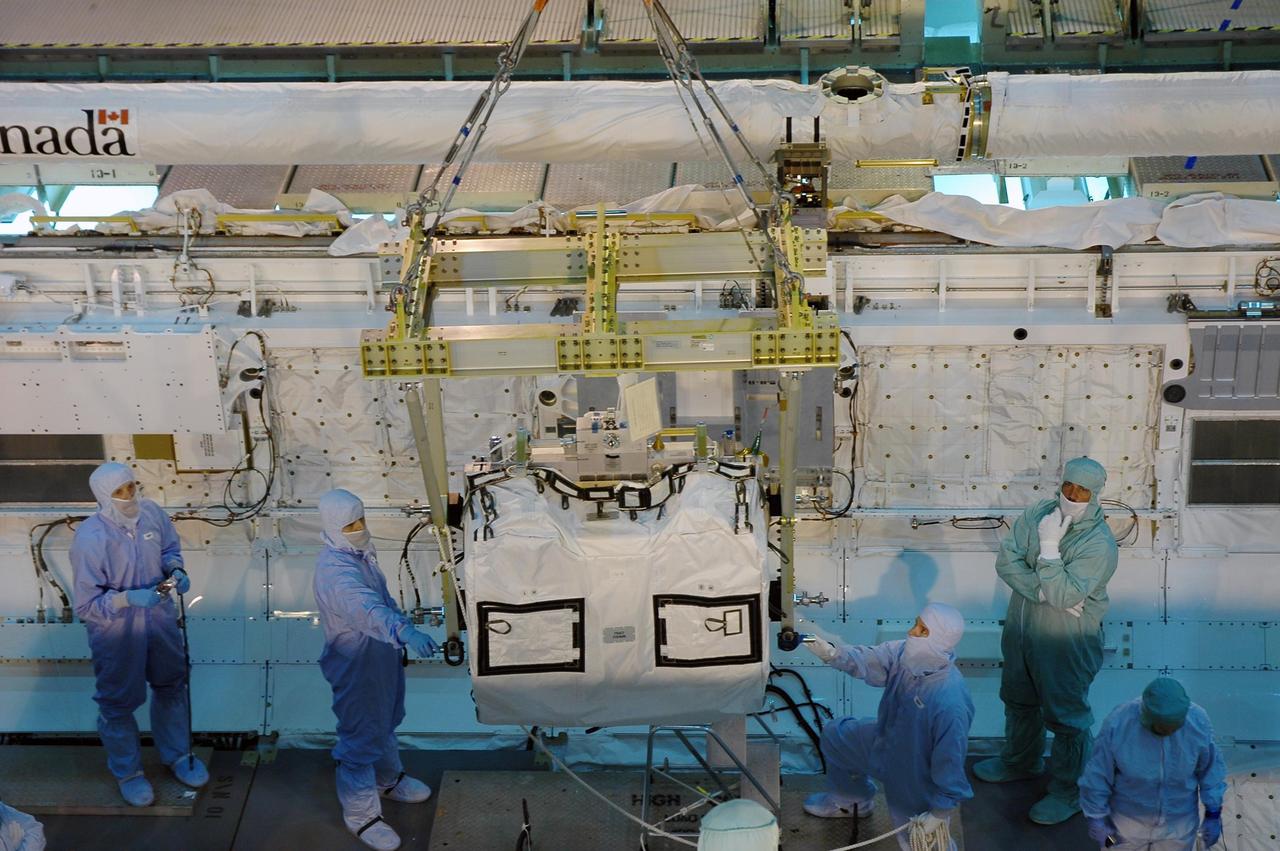
KENNEDY SPACE CENTER, Fla. -- In the Orbiter Processing Facility bay 3, workers are ready to move a main bus switching unit into Discovery's payload bay. A main bus switching unit is used for power distribution, circuit protection and fault isolation on the space station's power system. The units route power to proper locations in the space station, such as from solar arrays through umbilicals into the U.S. Lab. The unit will be installed on the external stowage platform 2 attached to the Quest airlock for temporary storage. Discovery is targeted to launch mission STS-120 no earlier than Oct. 20. Photo credit: NASA/Jim Grossmann
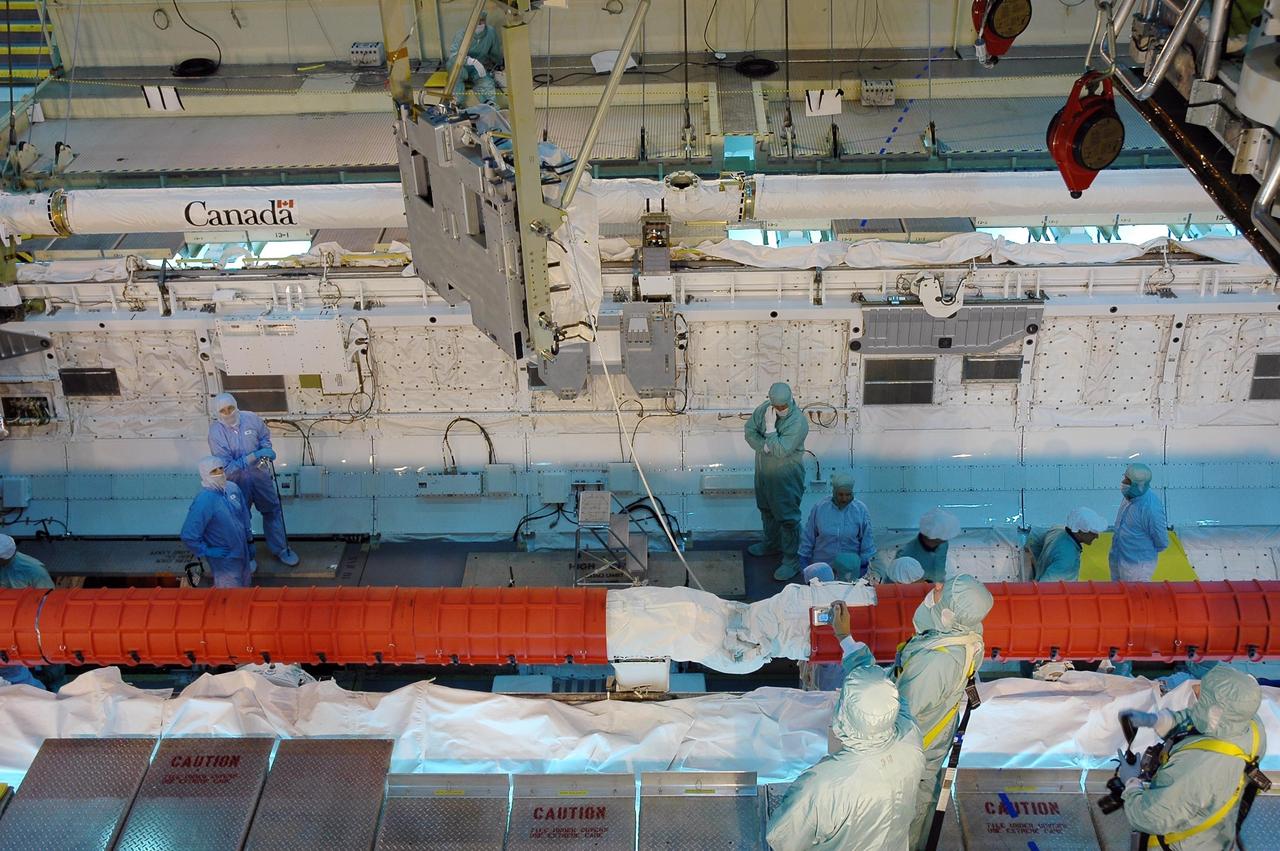
KENNEDY SPACE CENTER, Fla. -- In the Orbiter Processing Facility bay 3, a crane lowers the main bus switching unit into Discovery's payload bay. The unit is part of the payload on mission STS-120.A main bus switching unit is used for power distribution, circuit protection and fault isolation on the space station's power system. The units route power to proper locations in the space station, such as from solar arrays through umbilicals into the U.S. Lab. The unit will be installed on the external stowage platform 2 attached to the Quest airlock for temporary storage. Discovery is targeted to launch mission STS-120 no earlier than Oct. 20. Photo credit: NASA/Jim Grossmann
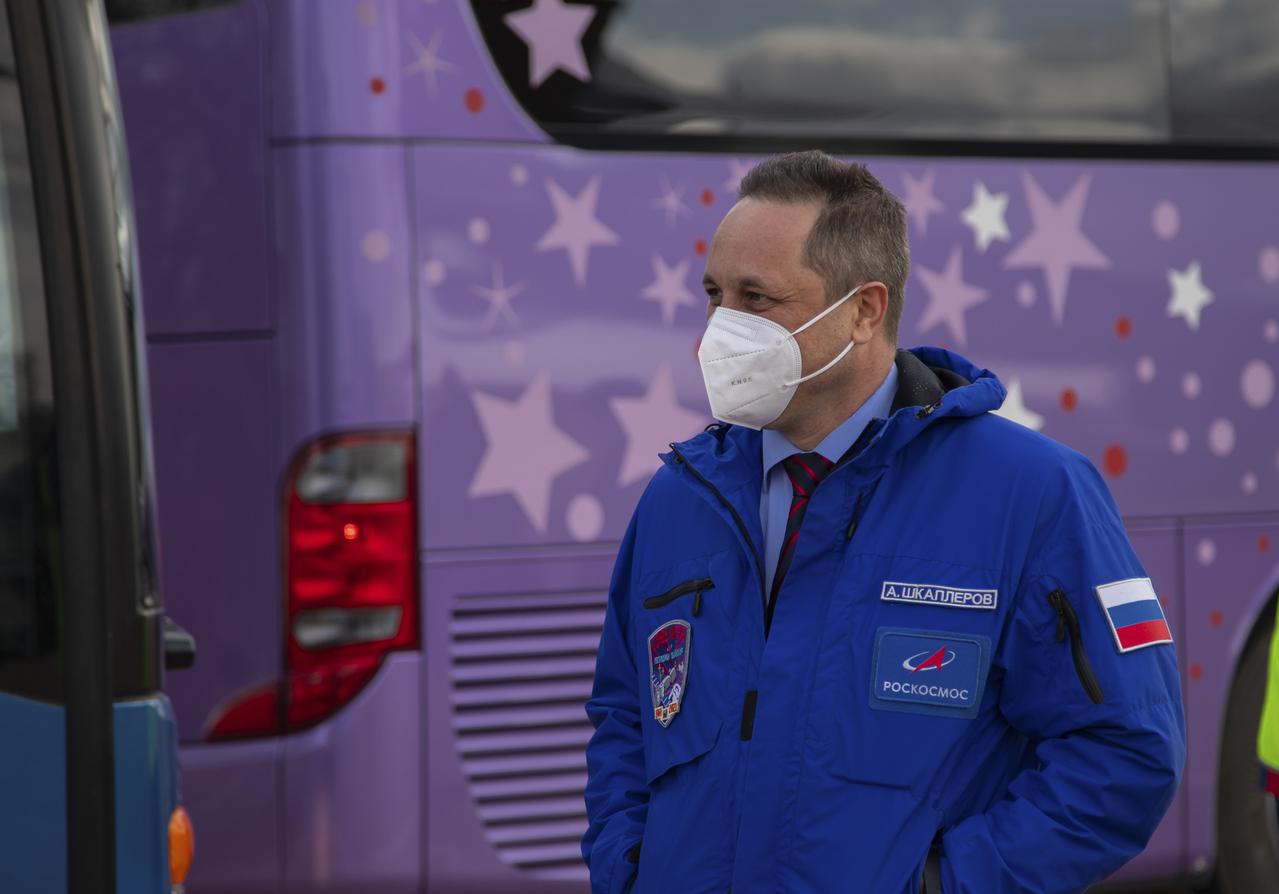
Expedition 65 backup crew member Russian cosmonaut Anton Shkaplerov of Roscosmos, is seen after arriving in Baikonur, Kazakhstan from the Gagarin Cosmonaut Training Center (GCTC), Friday, March 26, 2021. The prime crew is scheduled to launch from the Baikonur Cosmodrome on a Soyuz rocket April 9. Photo Credit: (NASA/GCTC/Irina Spector)