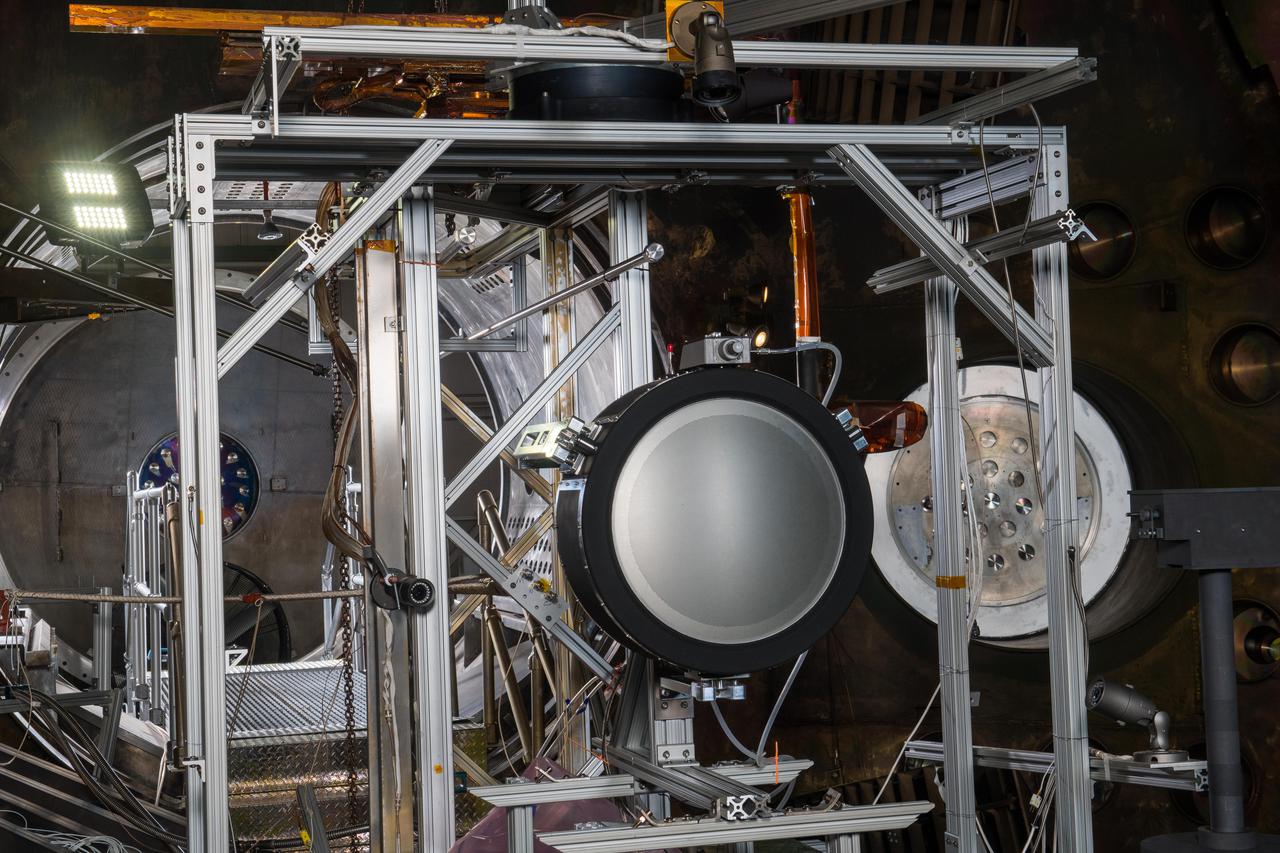
Next-C Thruster
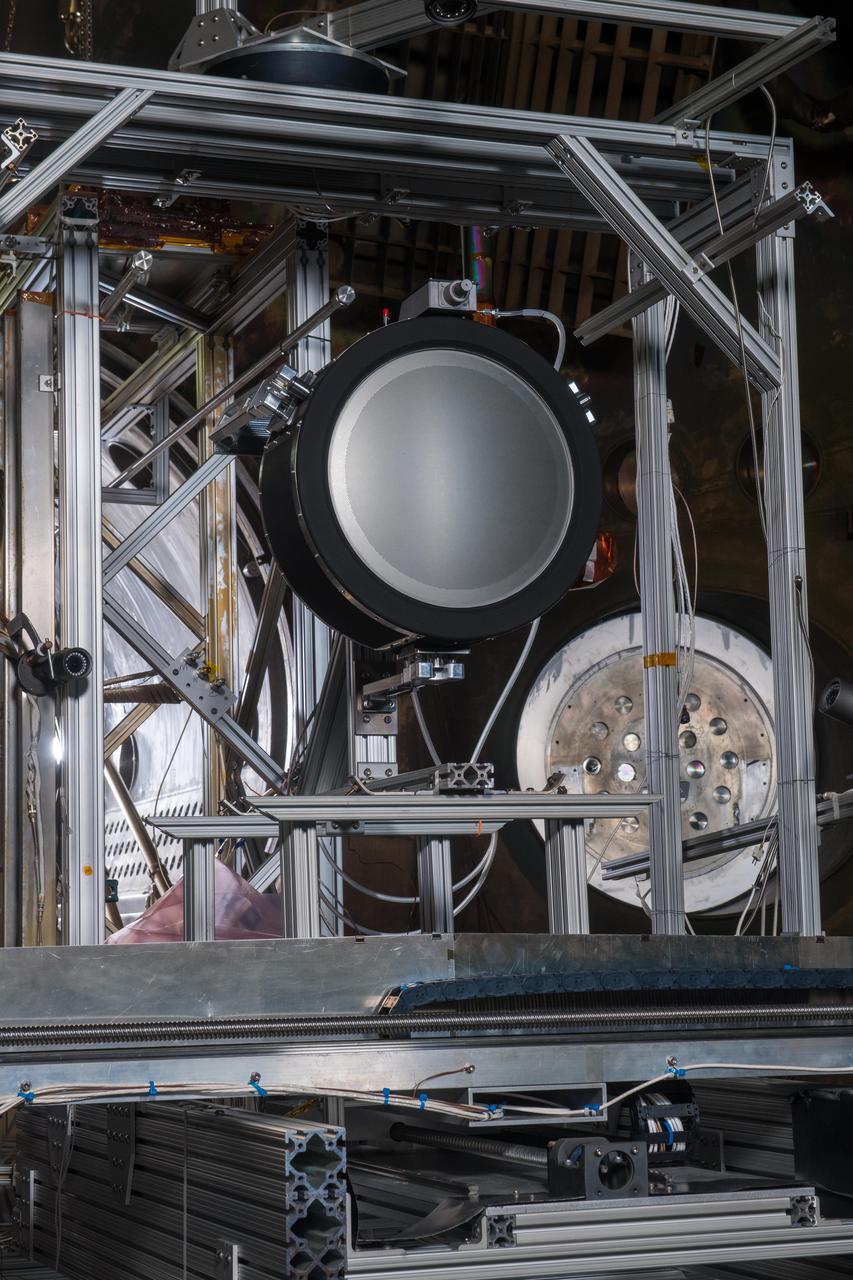
Next-C Thruster
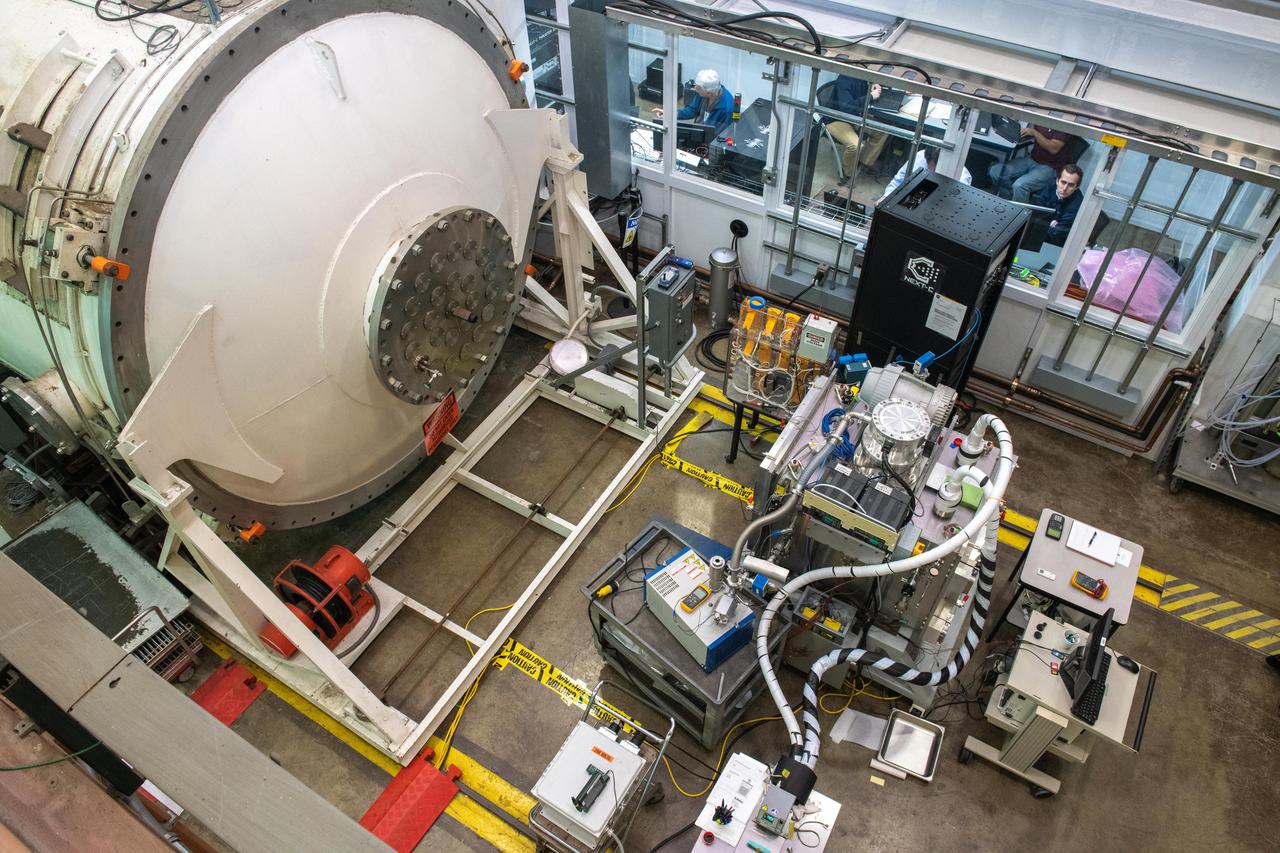
NEXT-C flight PPU
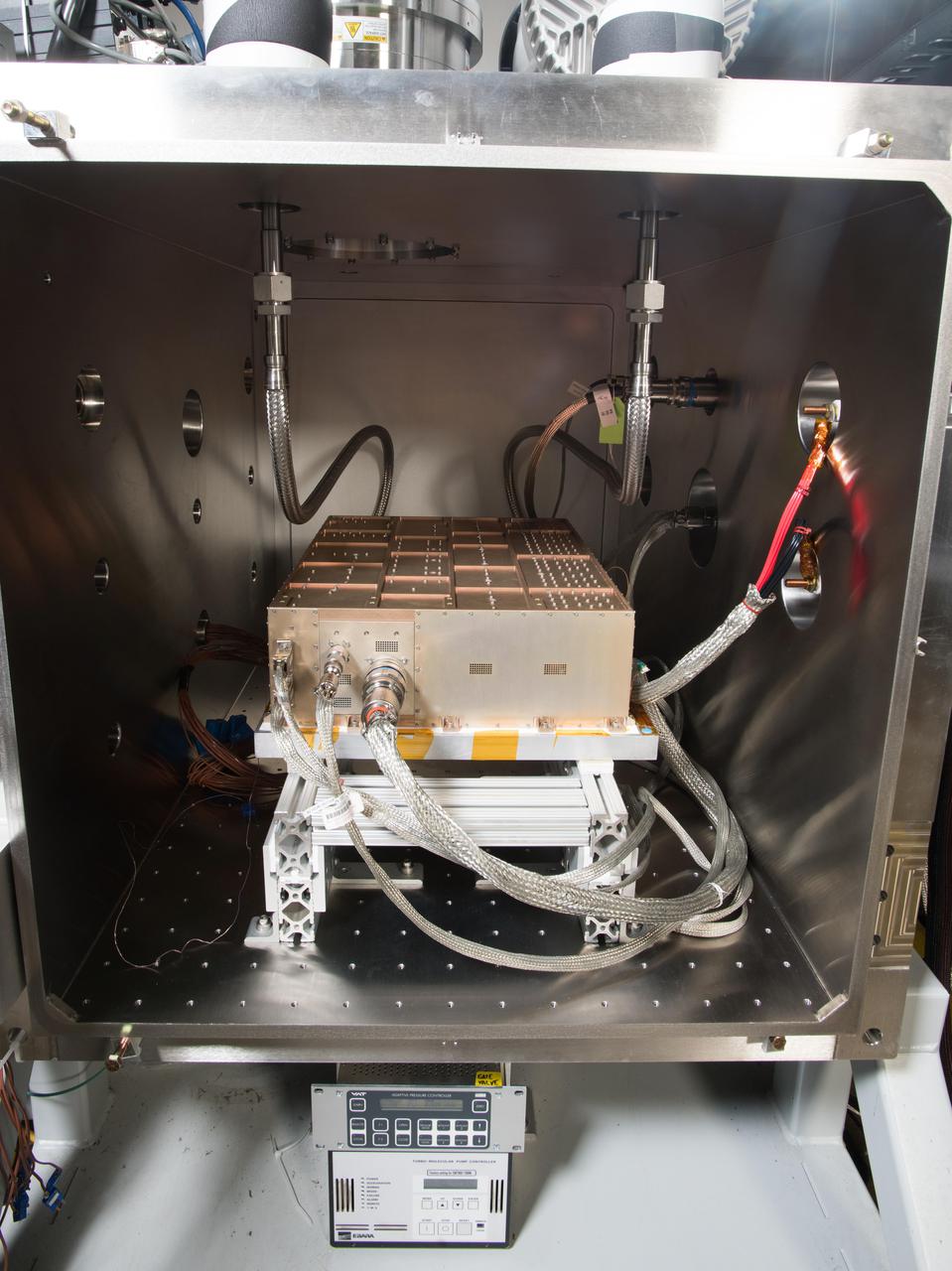
NEXT-C flight PPU
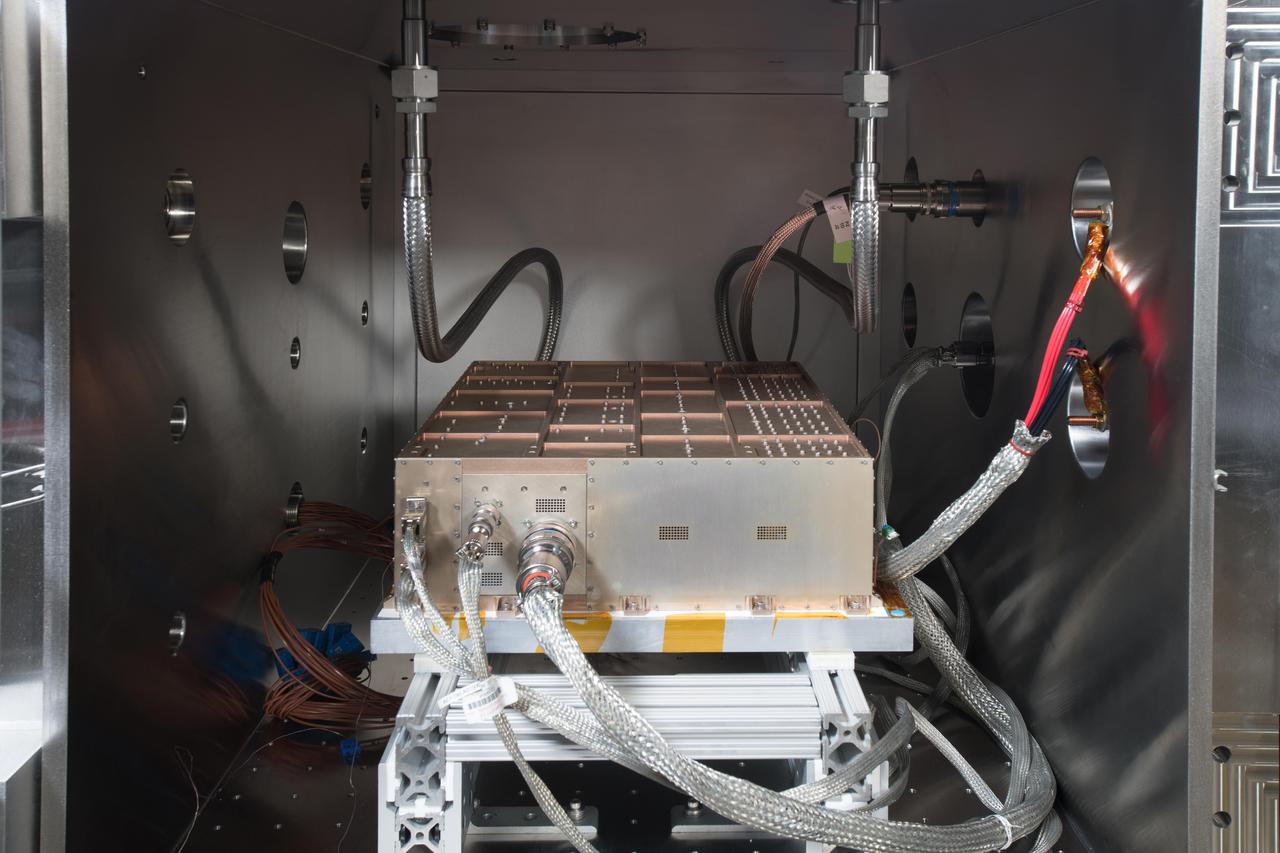
NEXT-C flight PPU
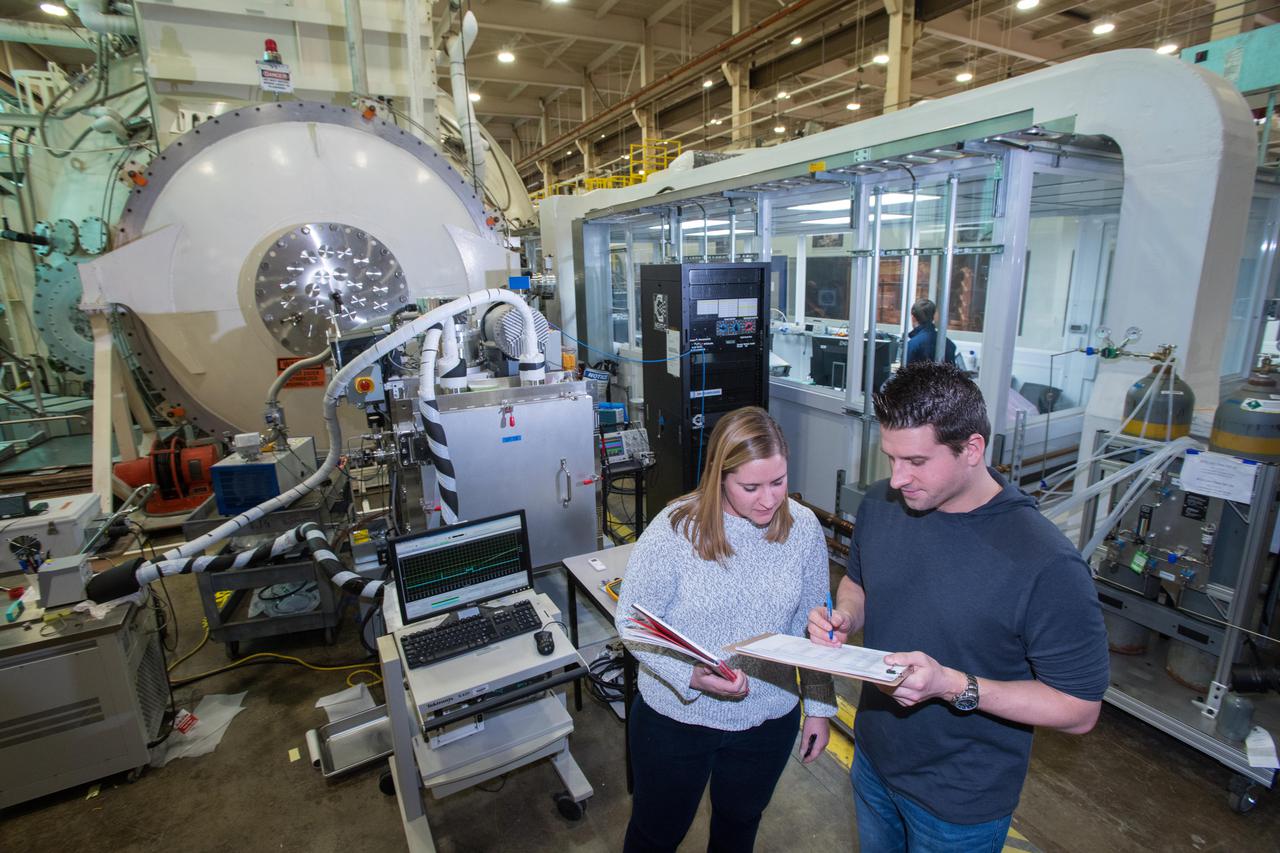
NEXT-C flight PPU
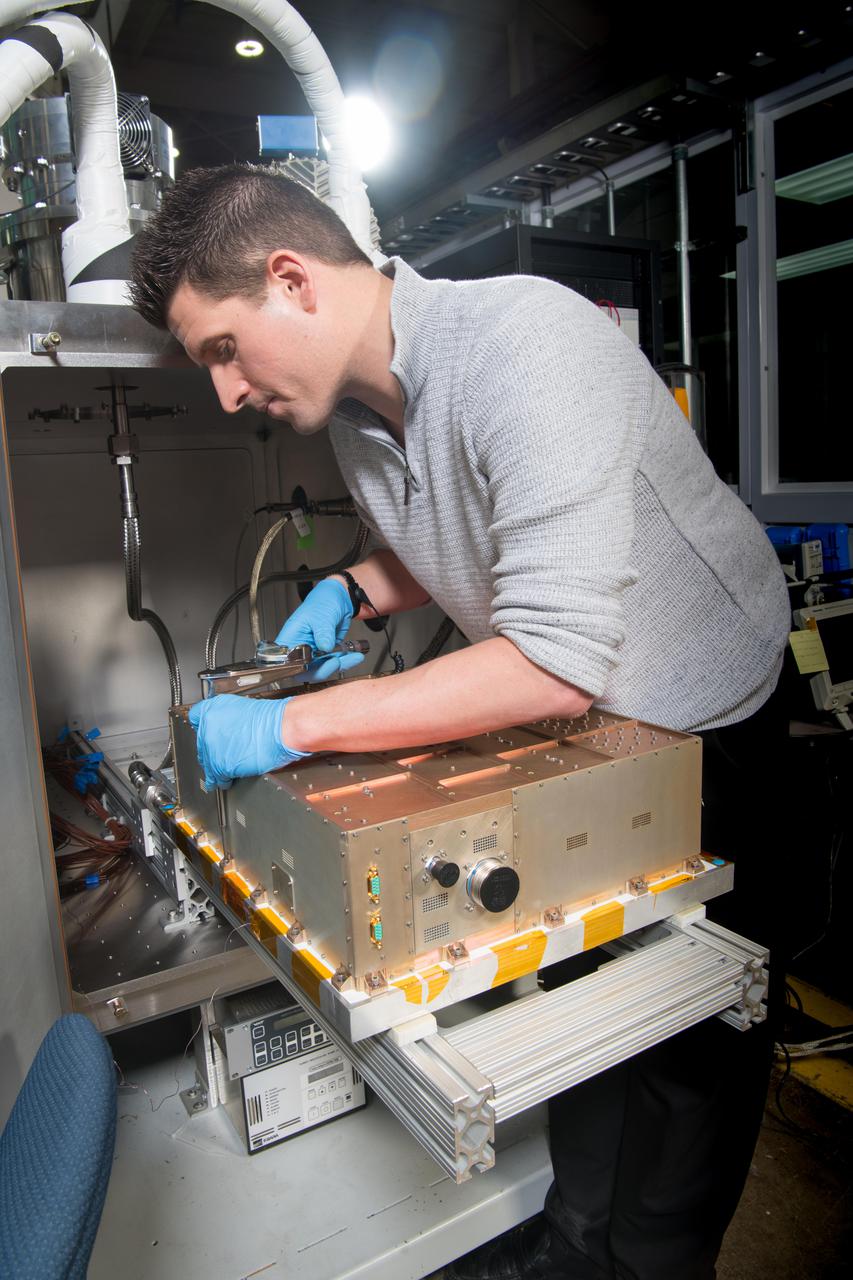
NEXT-C flight PPU
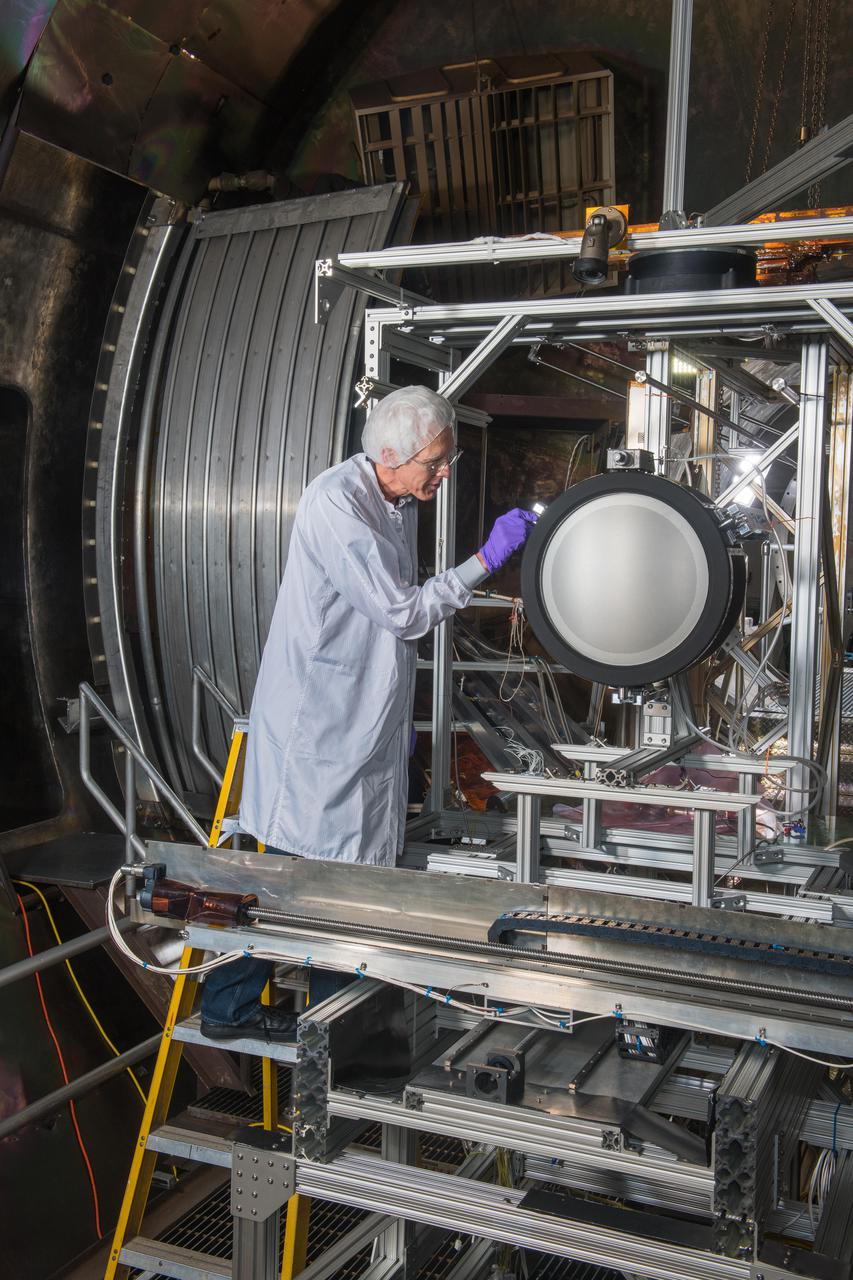
Next-C Thruster
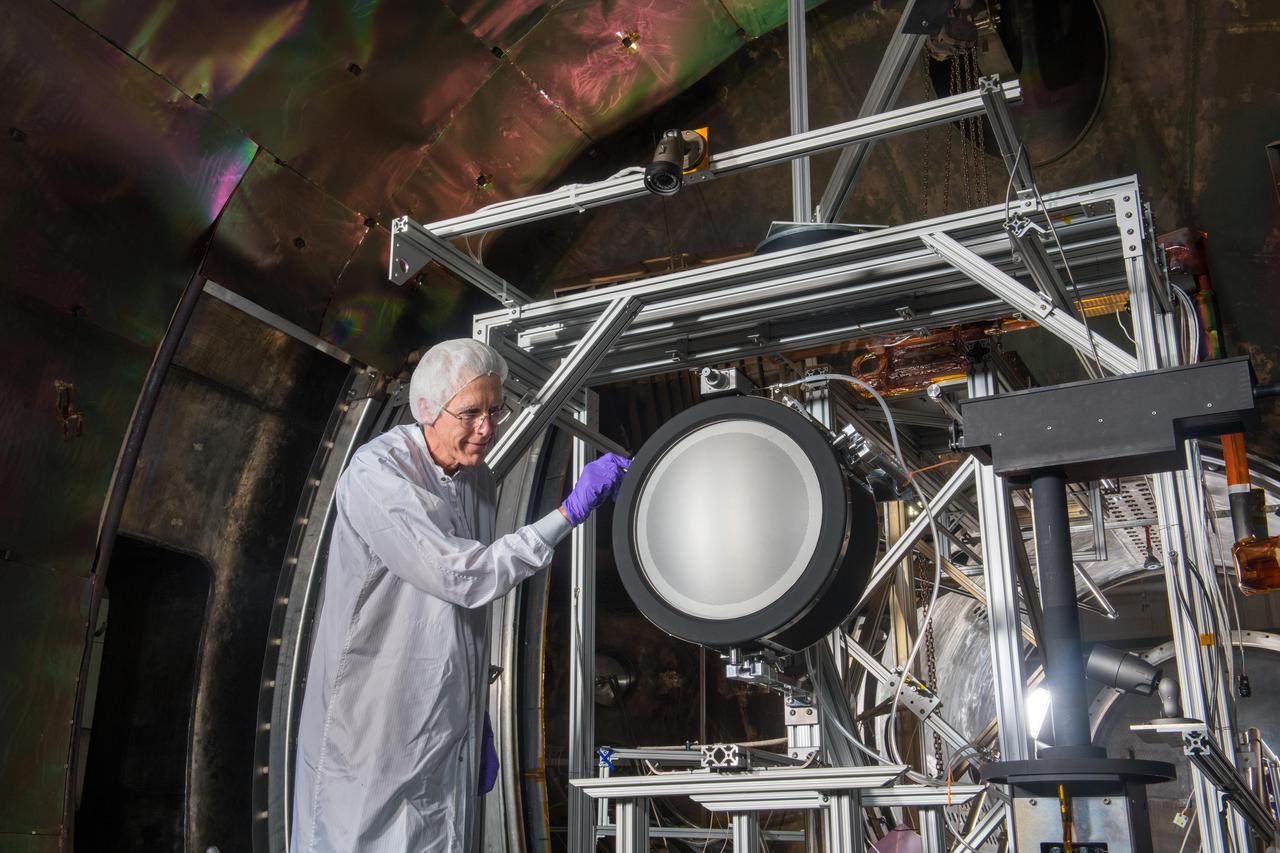
Next-C Thruster
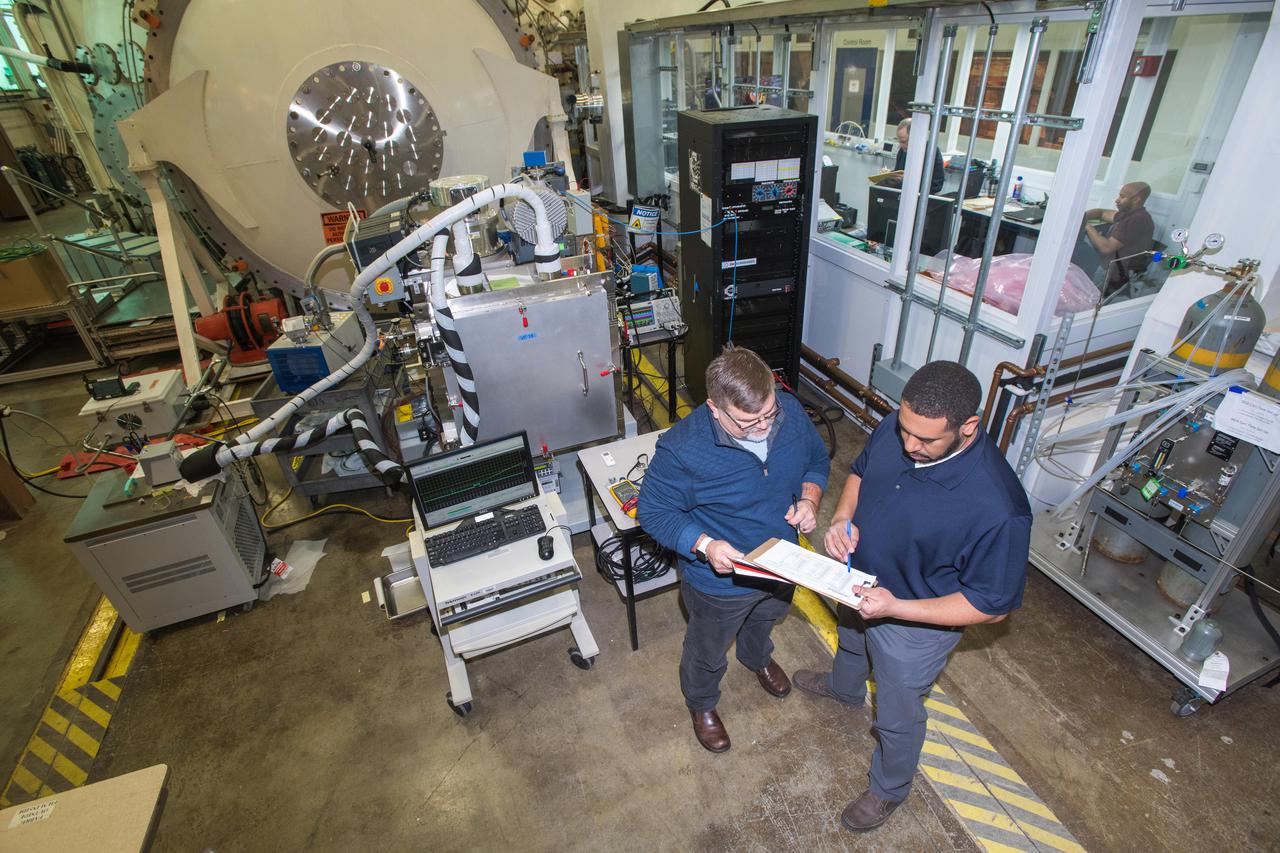
NEXT-C flight PPU
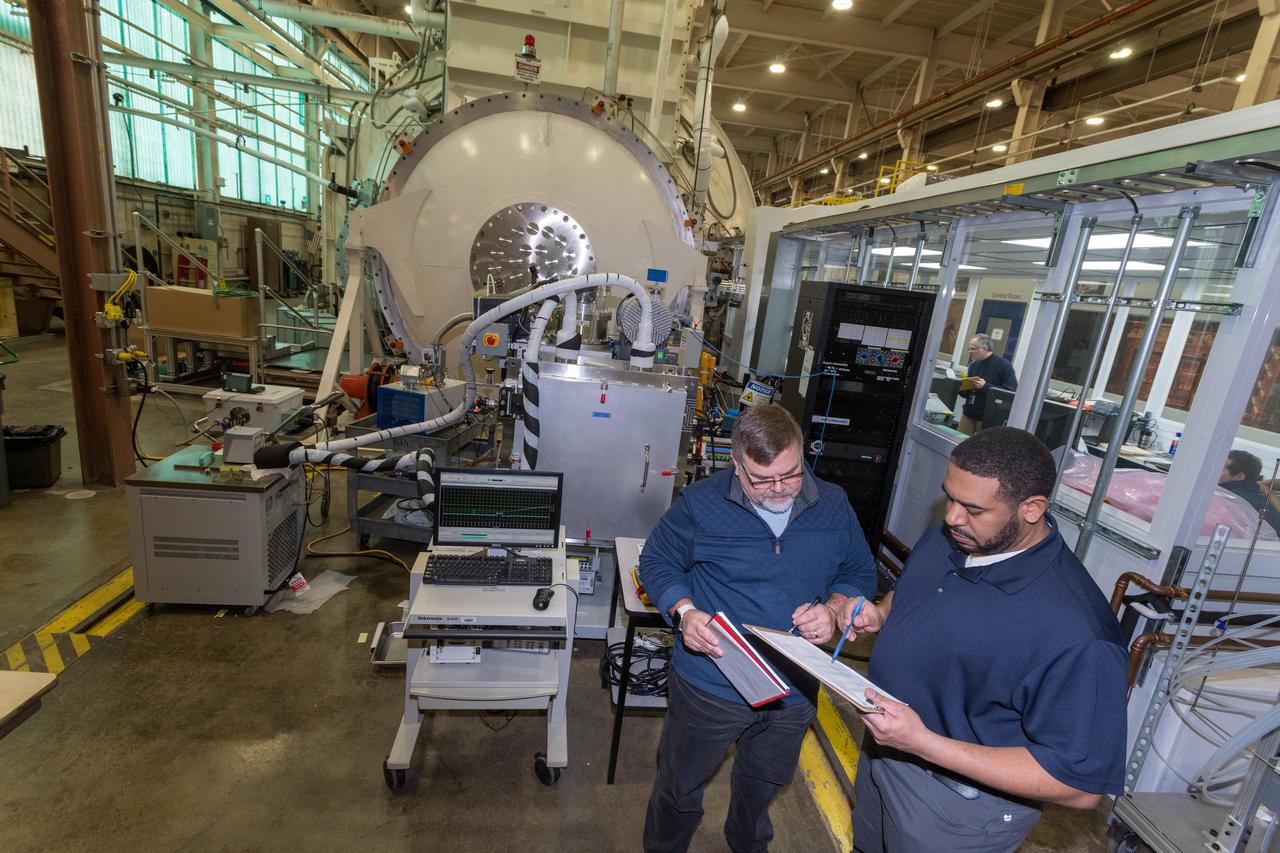
NEXT-C flight PPU
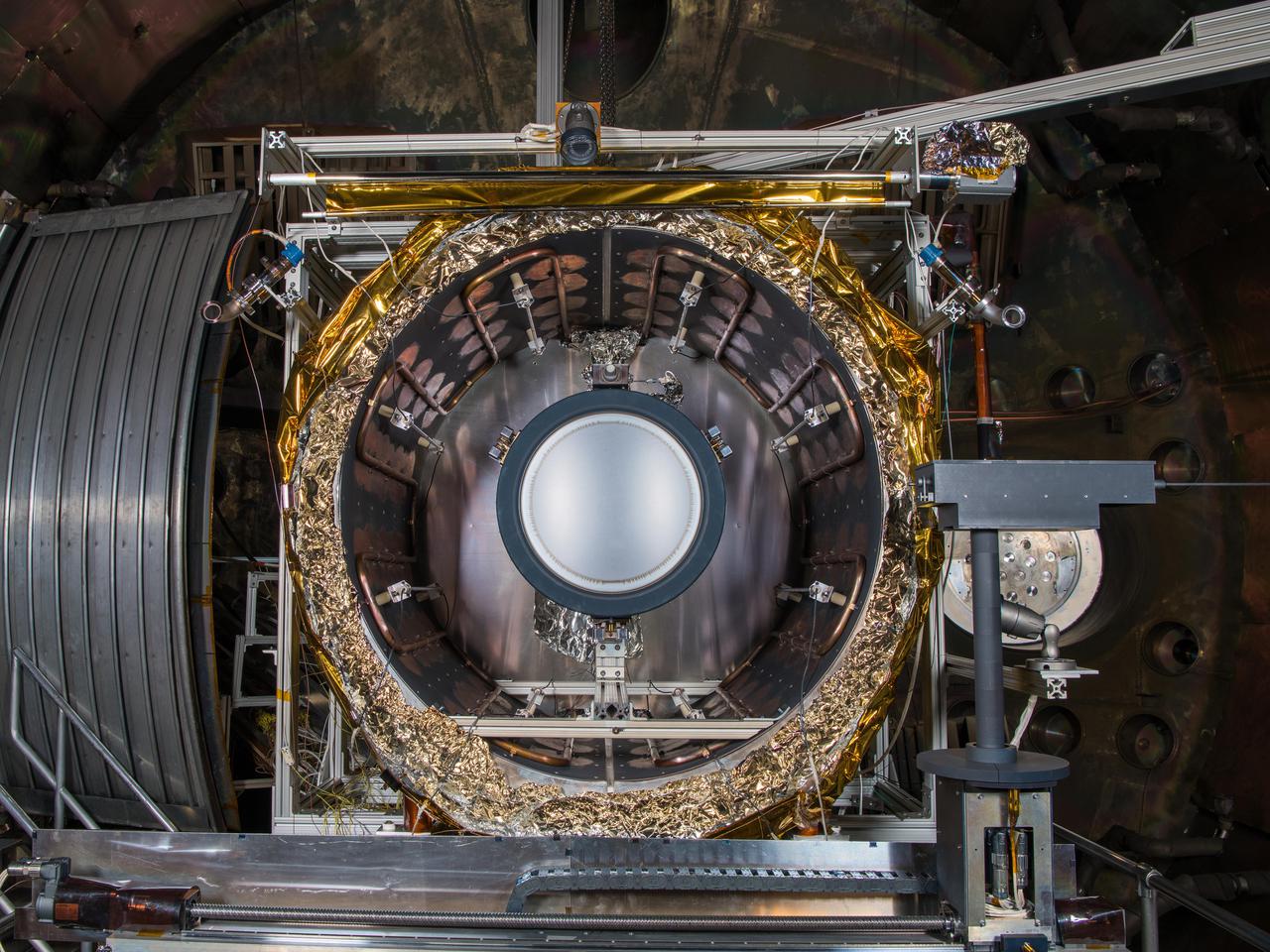
NASA Evolutionary Xenon Thruster - Commercial, NEXT-C
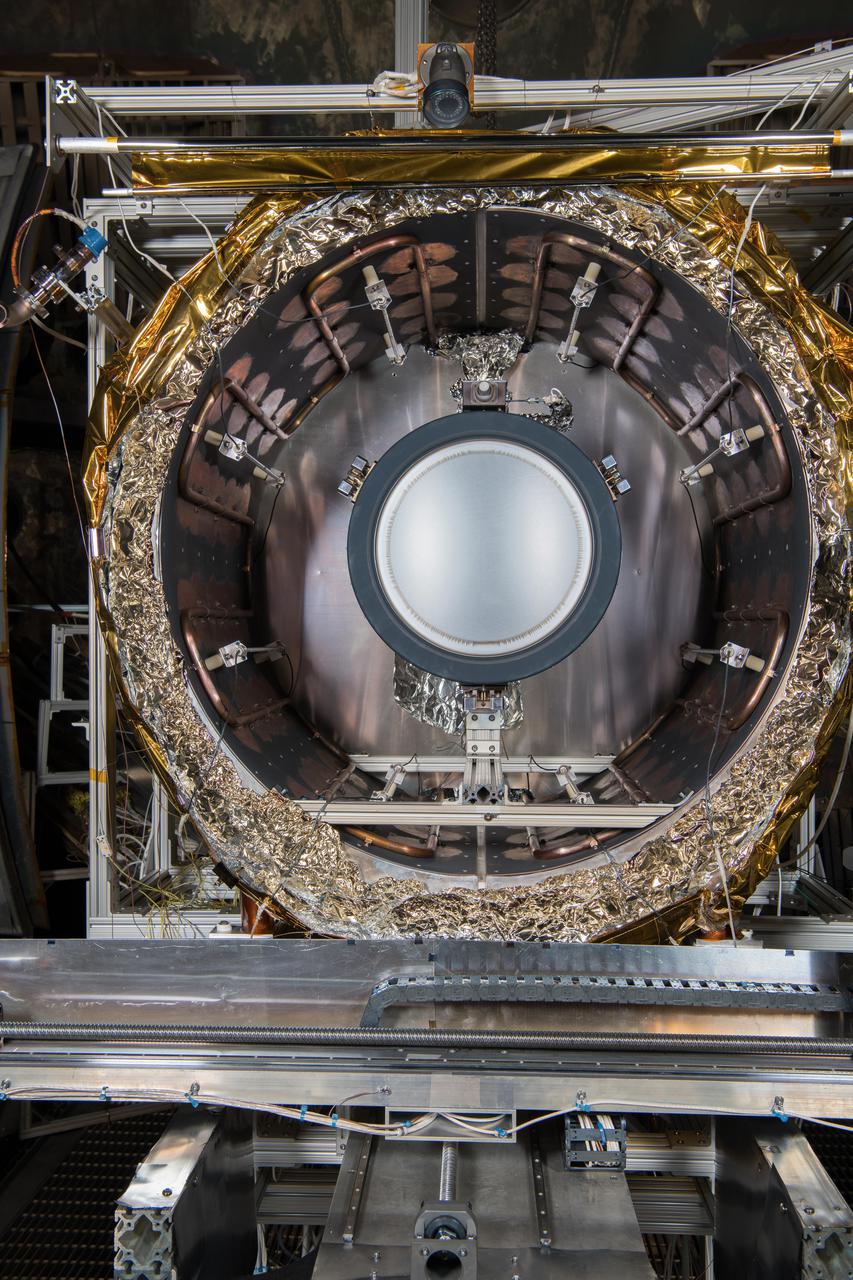
NASA Evolutionary Xenon Thruster - Commercial, NEXT-C
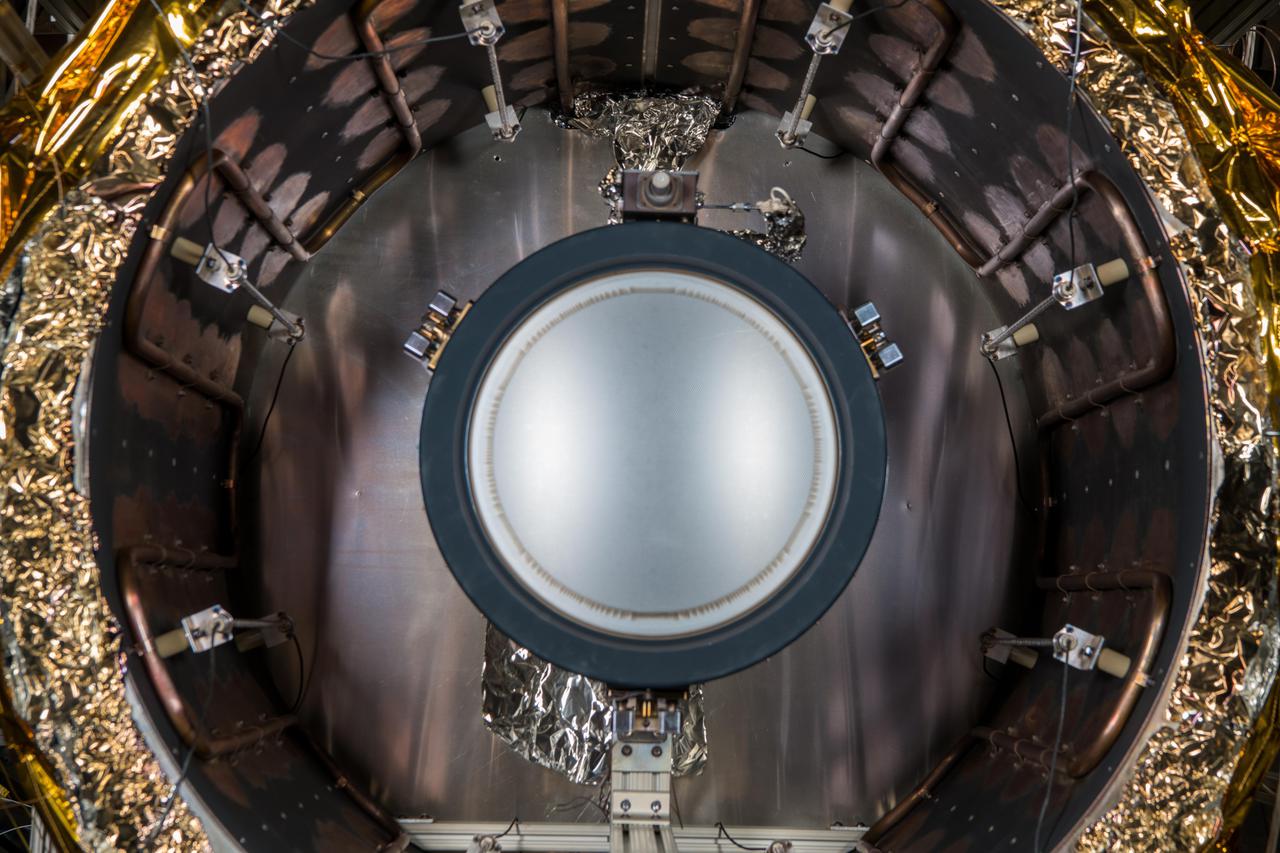
NASA Evolutionary Xenon Thruster - Commercial, NEXT-C
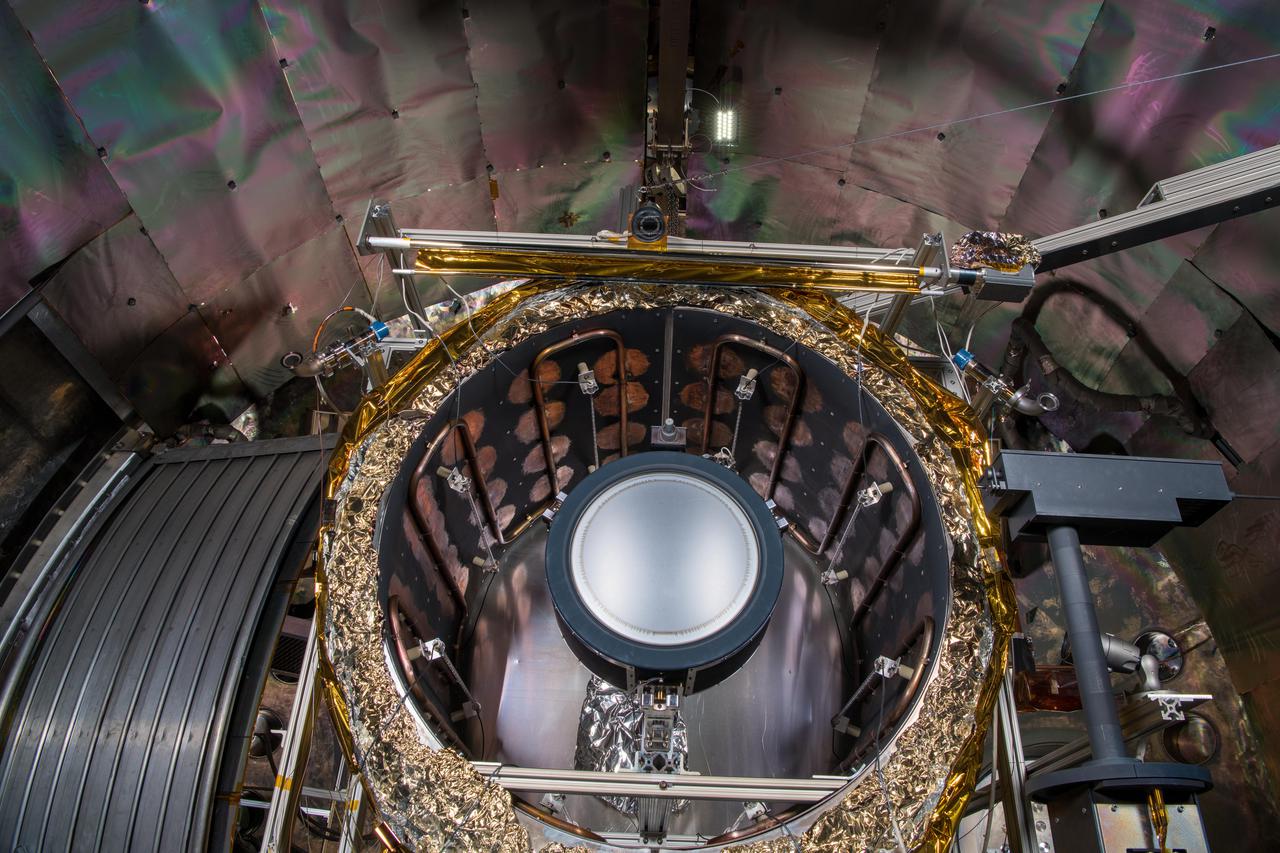
NASA Evolutionary Xenon Thruster - Commercial, NEXT-C
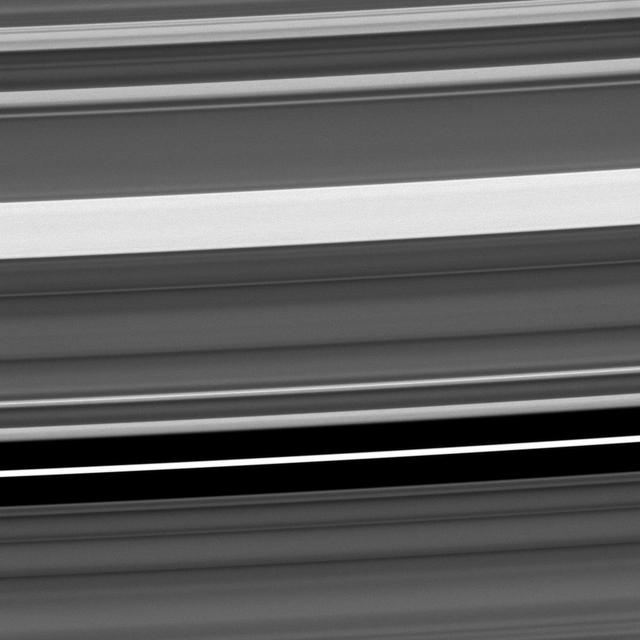
Many Faces of the C Ring
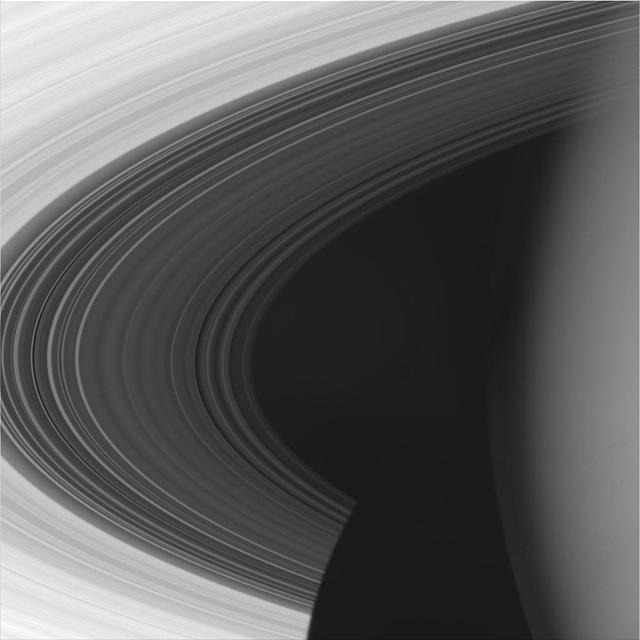
Framing the C Ring
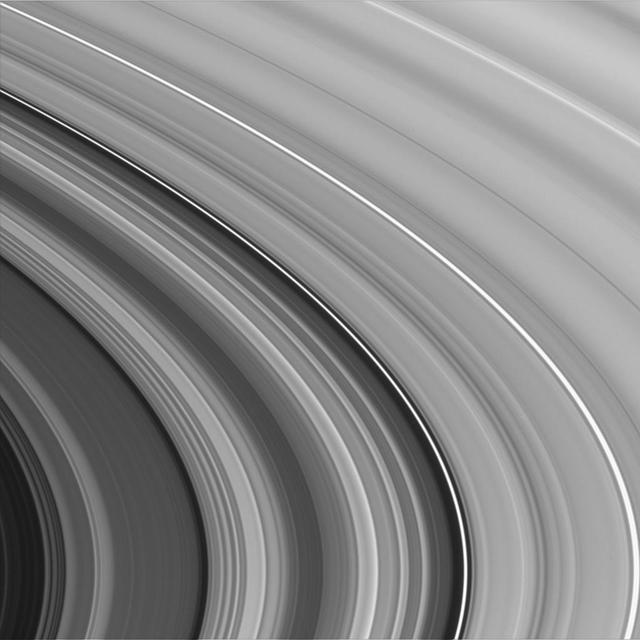
Intricate C Ring Details

Outer C Ring Detail

Saturn Outer C Ring
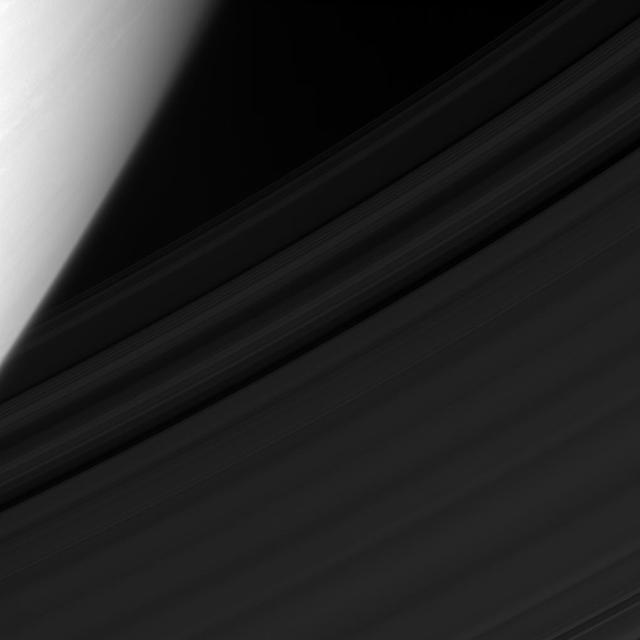
Seeing the C Ring
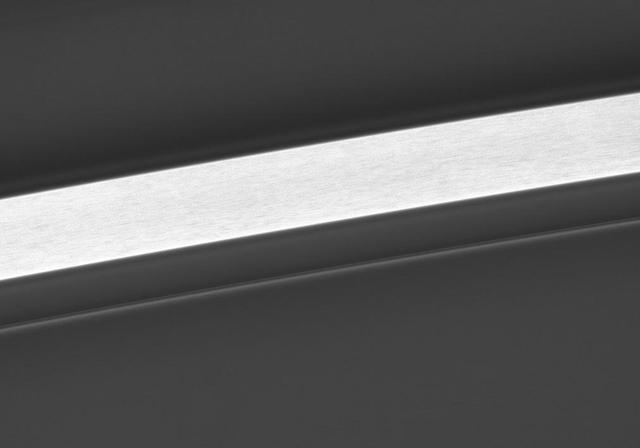
C-Ring Variations
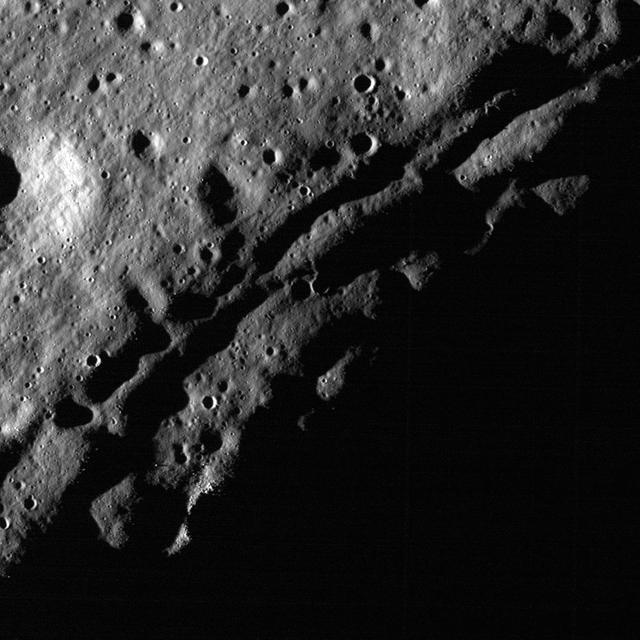
Slumping rim of Darwin C

Saturn B and C-rings
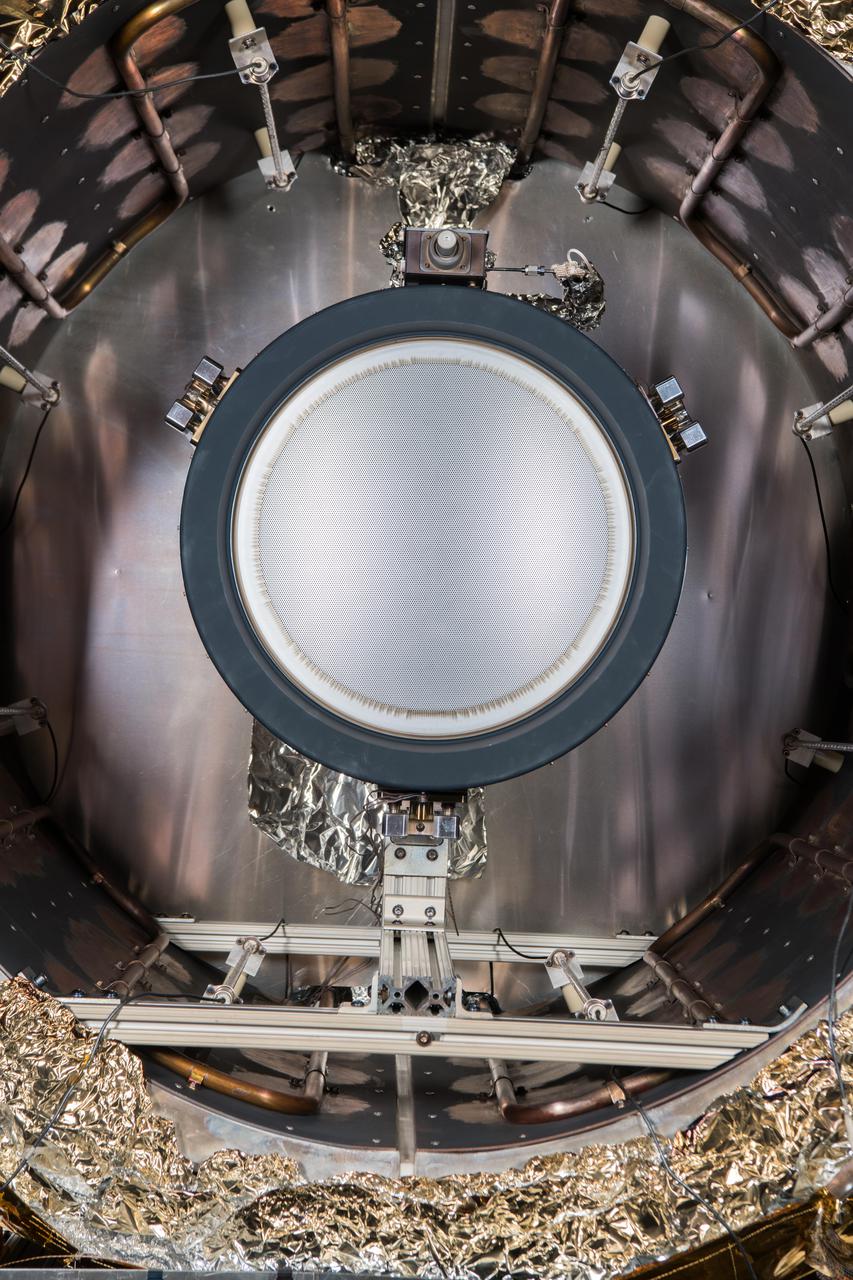
NASA Evolutionary Xenon Thruster - Commercial, NEXT-C r
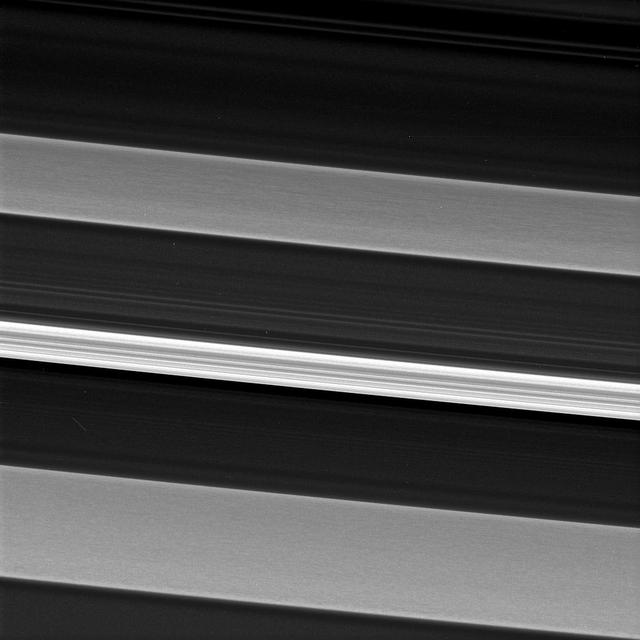
Saturn's C ring is home to a surprisingly rich array of structures and textures. Much of the structure seen in the outer portions of Saturn's rings is the result of gravitational perturbations on ring particles by moons of Saturn. Such interactions are called resonances. However, scientists are not clear as to the origin of the structures seen in this image which has captured an inner ring region sparsely populated with particles, making interactions between ring particles rare, and with few satellite resonances. In this image, a bright and narrow ringlet located toward the outer edge of the C ring is flanked by two broader features called plateaus, each about 100 miles (160 kilometers) wide. Plateaus are unique to the C ring. Cassini data indicates that the plateaus do not necessarily contain more ring material than the C ring at large, but the ring particles in the plateaus may be smaller, enhancing their brightness. This view looks toward the sunlit side of the rings from about 53 degrees above the ring plane. The image was taken in green light with the Cassini spacecraft narrow-angle camera on Aug. 14, 2017. The view was acquired at a distance of approximately 117,000 miles (189,000 kilometers) from Saturn and at a Sun-Saturn-spacecraft, or phase, angle of 74 degrees. Image scale is 3,000 feet (1 kilometer) per pixel. The Cassini spacecraft ended its mission on Sept. 15, 2017. https://photojournal.jpl.nasa.gov/catalog/PIA21356
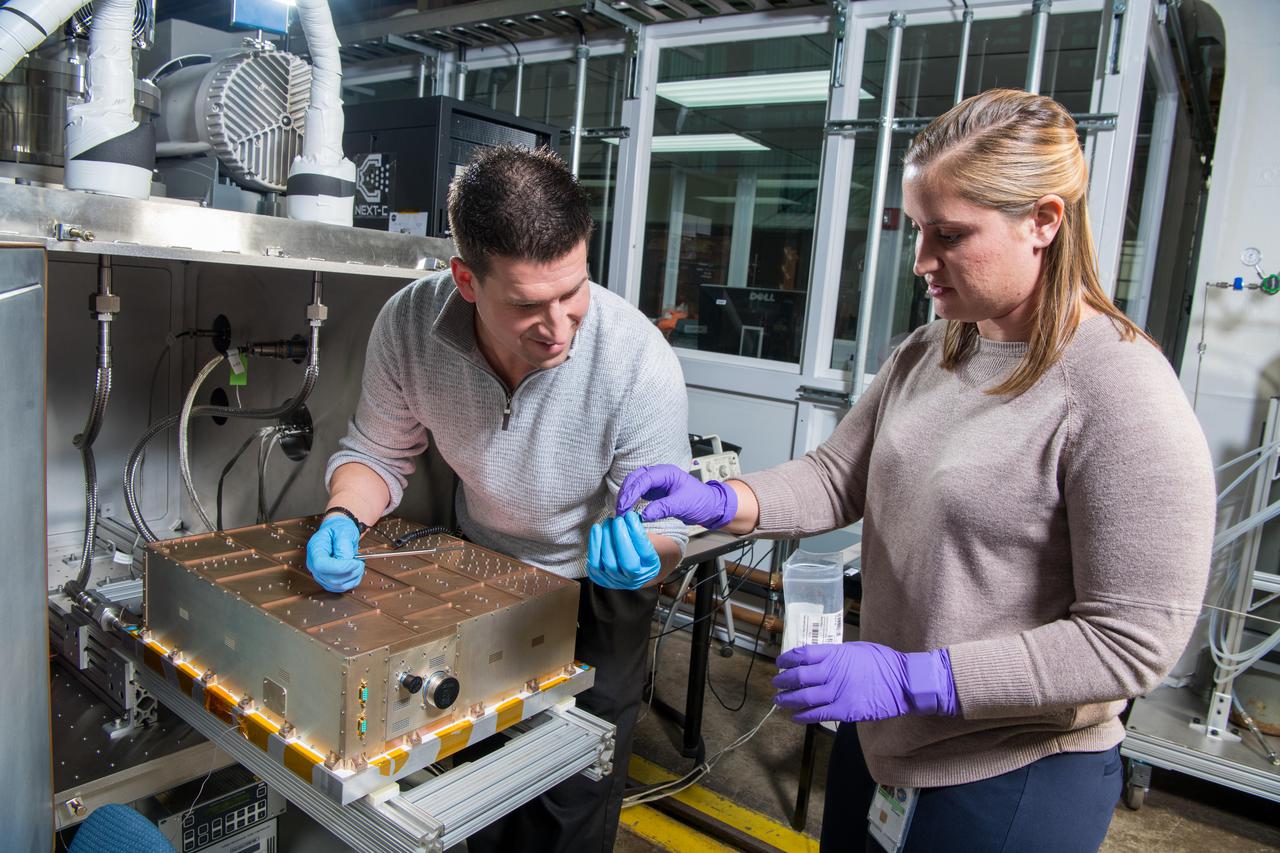
NEXT-C flight PPU
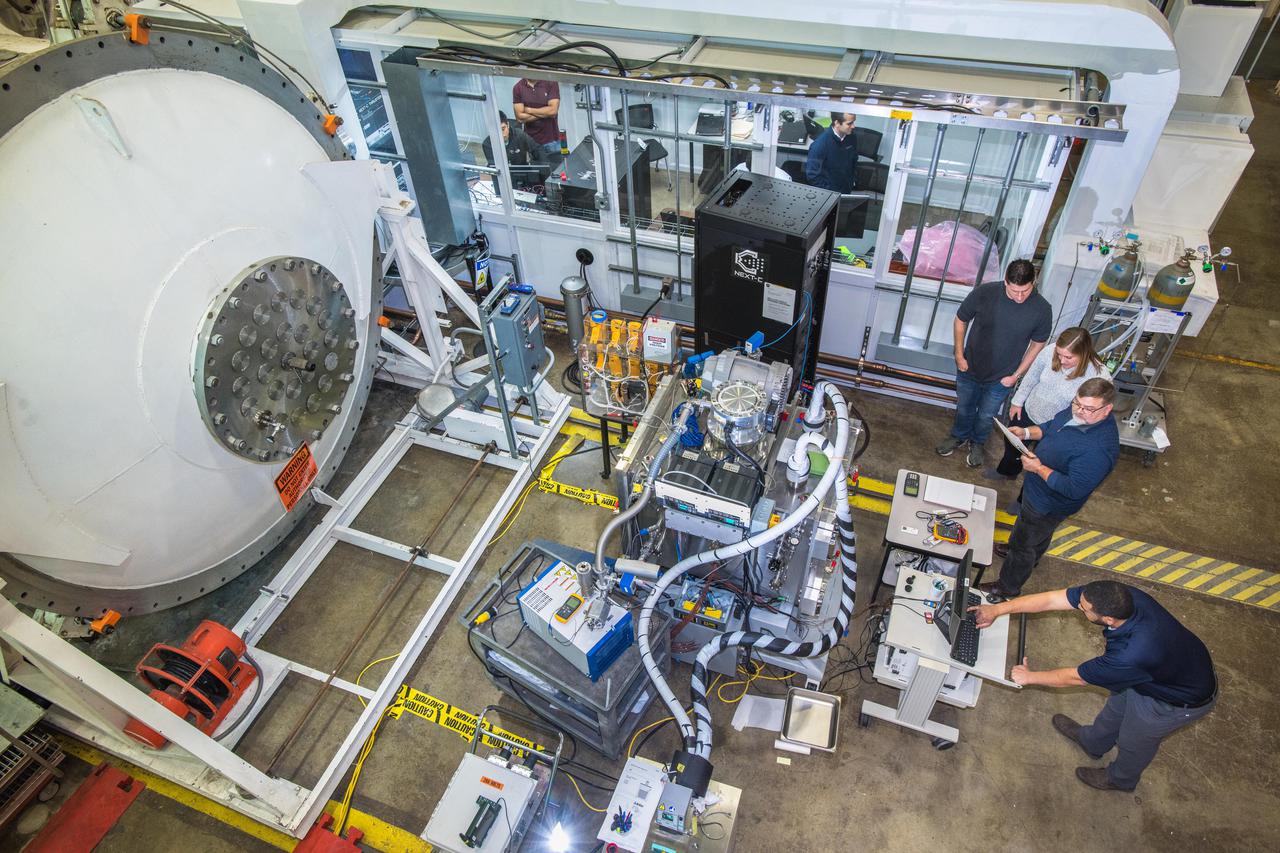
NEXT-C flight PPU
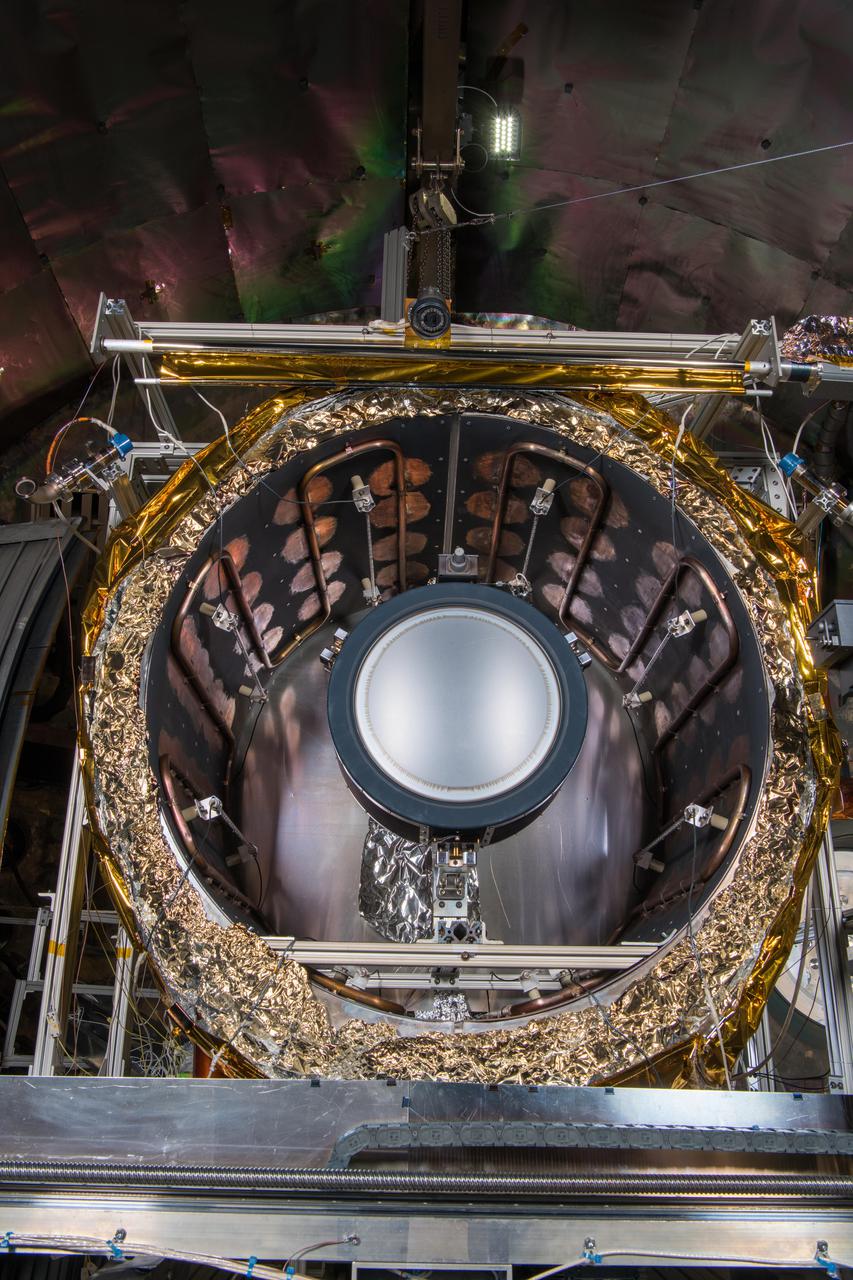
NASA Evolutionary Xenon Thruster - Commercial, NEXT-C
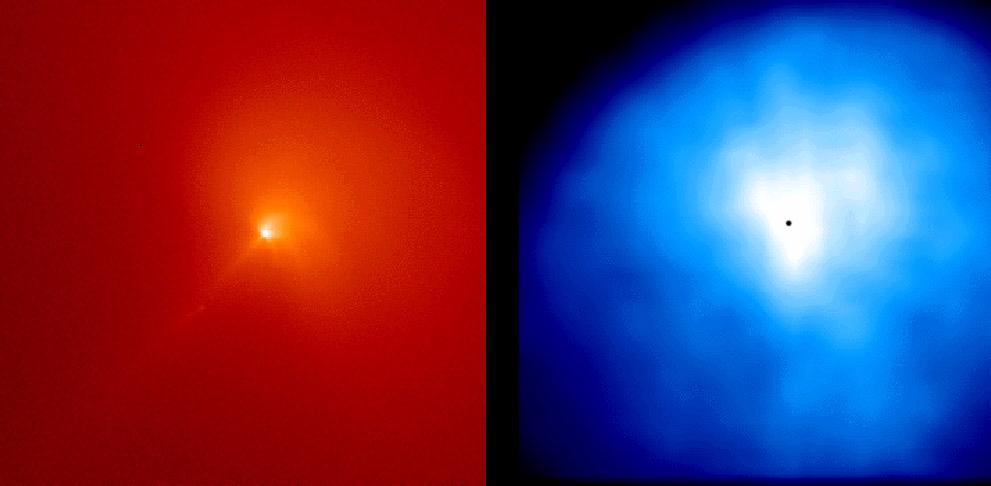
Comet Hyakutake C/1996 B2
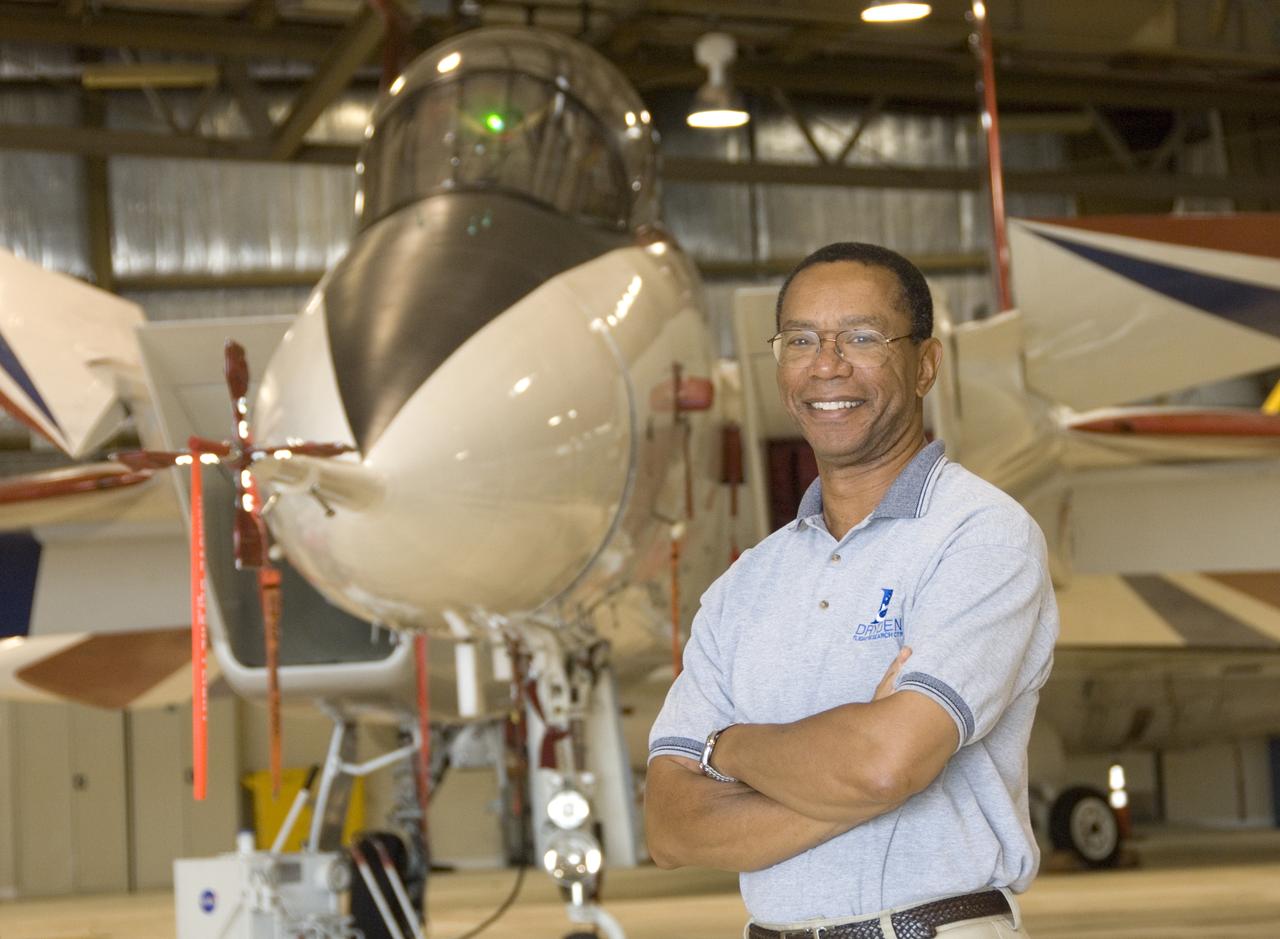
Mark C. Dickerson
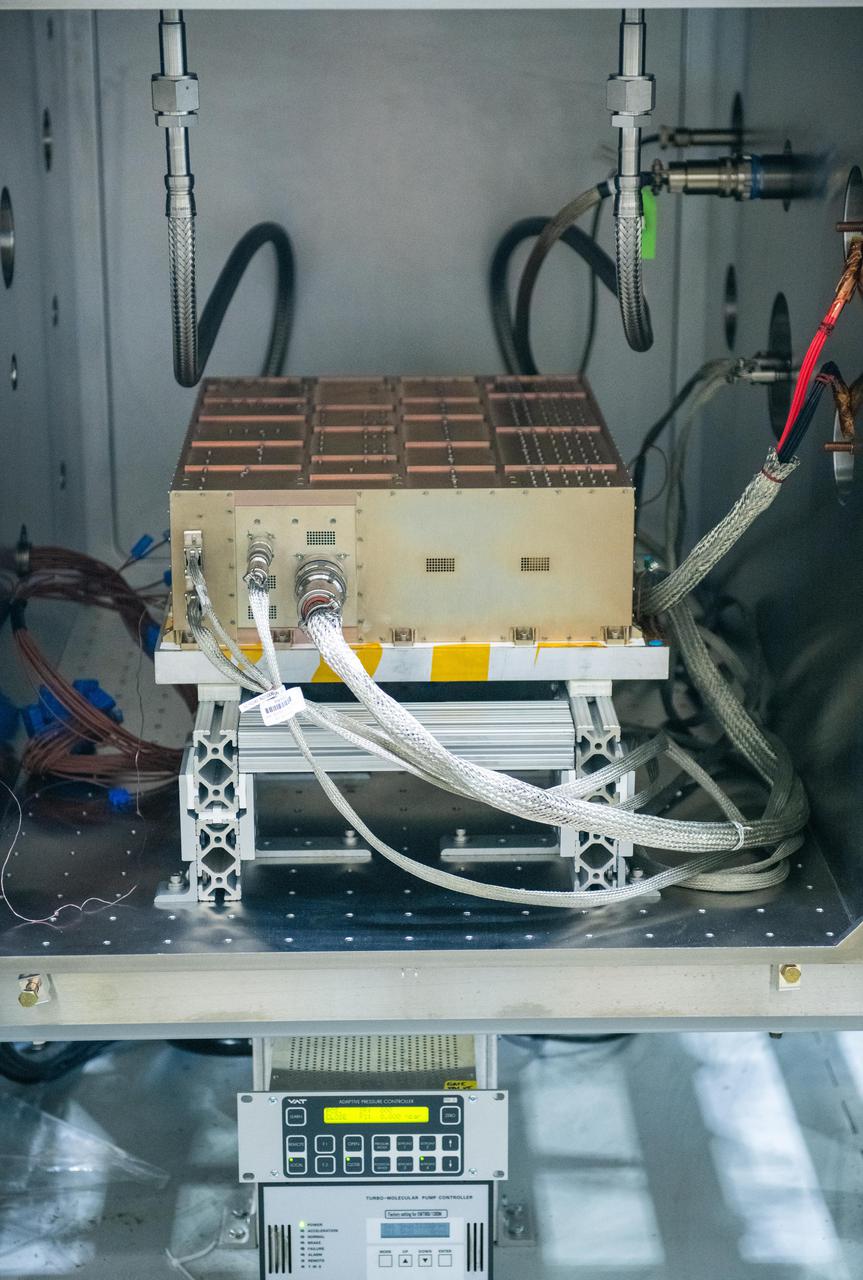
NASA Evolutionary Xenon Thruster - Commercial, NEXT-C Flight Power Processing Unit, PPU
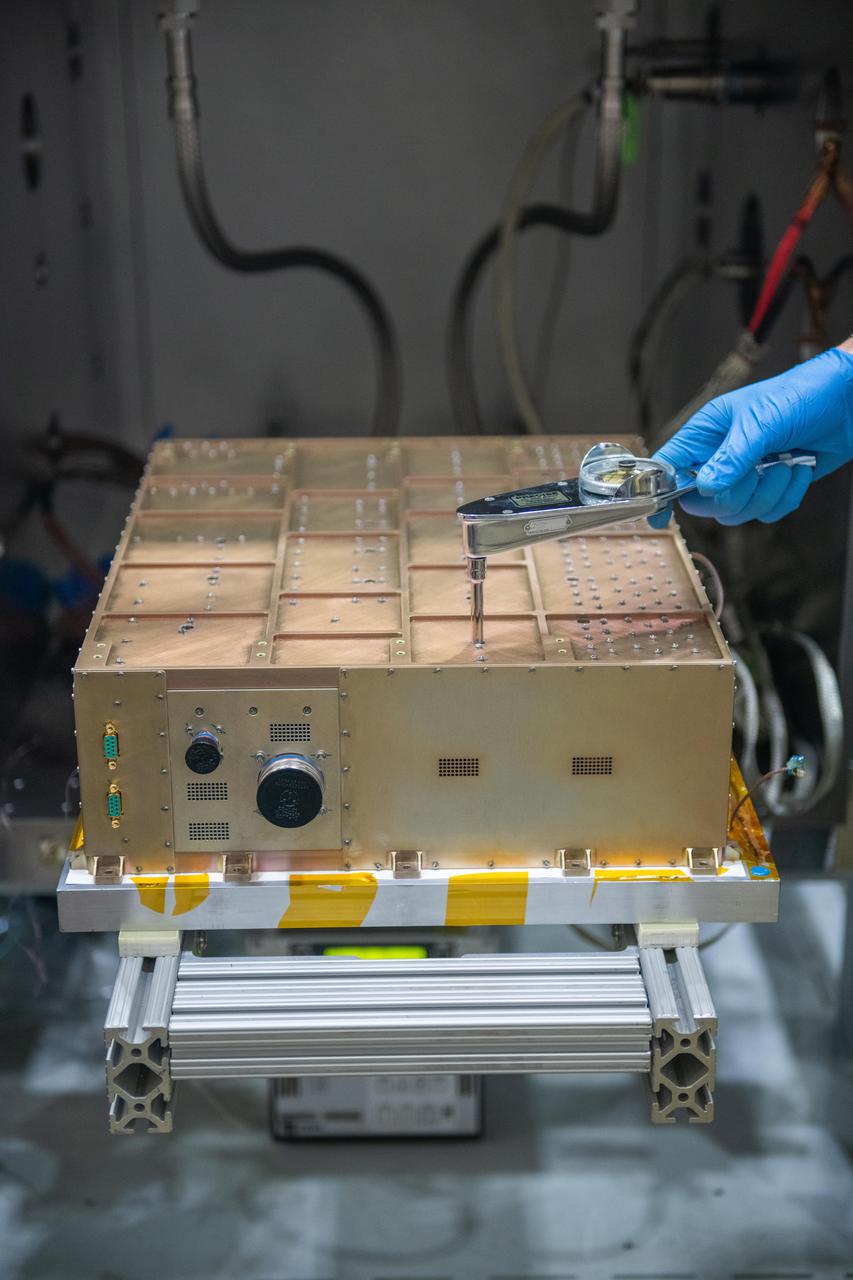
NASA Evolutionary Xenon Thruster - Commercial, NEXT-C Flight Power Processing Unit, PPU
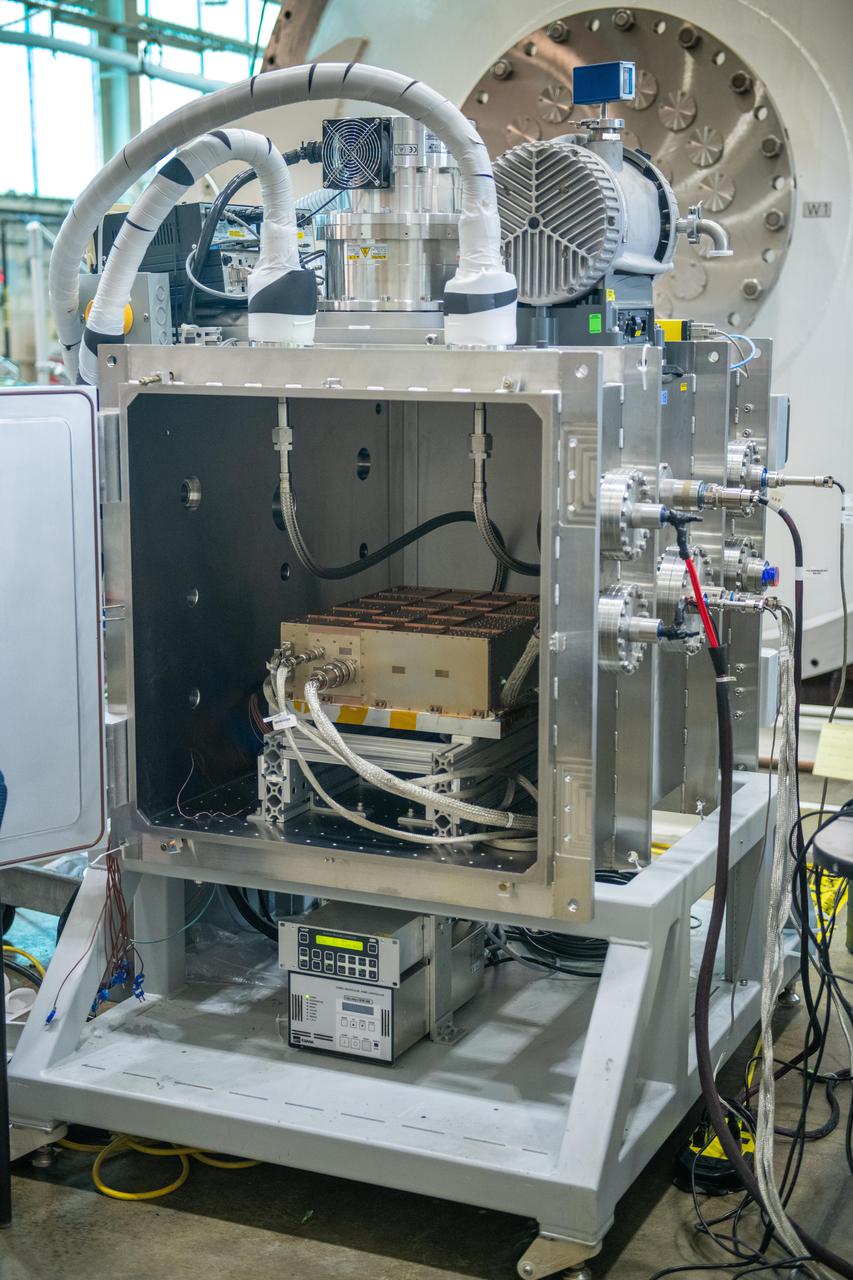
NASA Evolutionary Xenon Thruster - Commercial, NEXT-C Flight Power Processing Unit, PPU
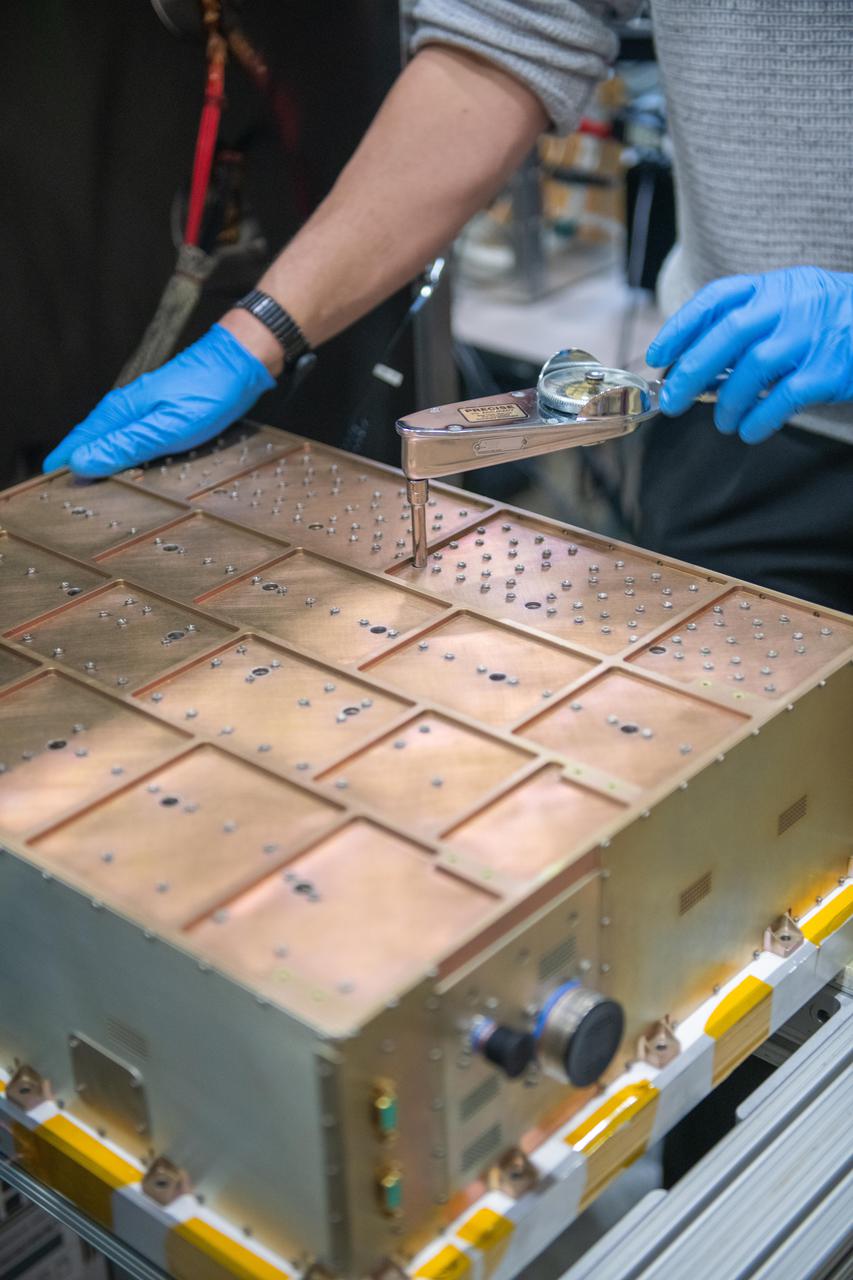
NASA Evolutionary Xenon Thruster - Commercial, NEXT-C Flight Power Processing Unit, PPU

NASA Evolutionary Xenon Thruster - Commercial, NEXT-C Flight Power Processing Unit, PPU
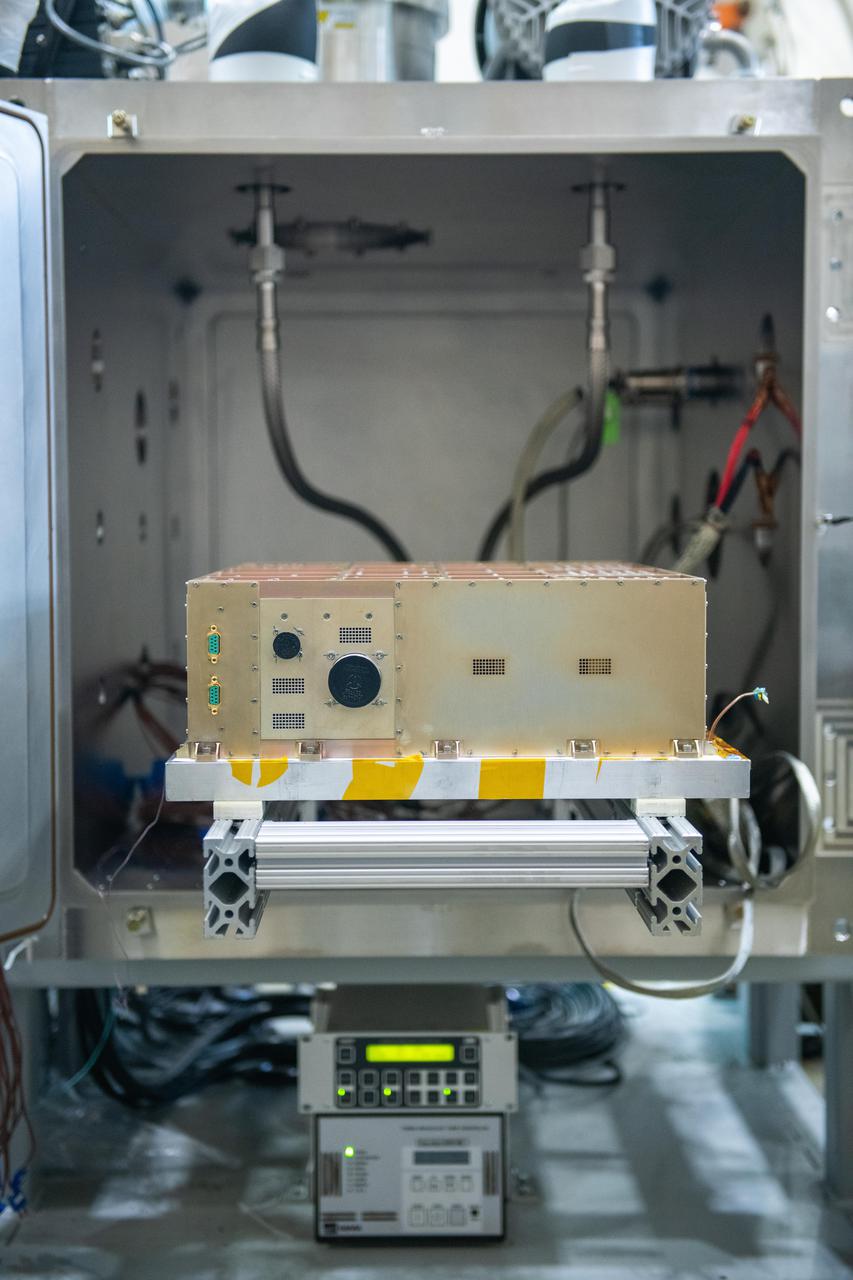
NASA Evolutionary Xenon Thruster - Commercial, NEXT-C Flight Power Processing Unit, PPU
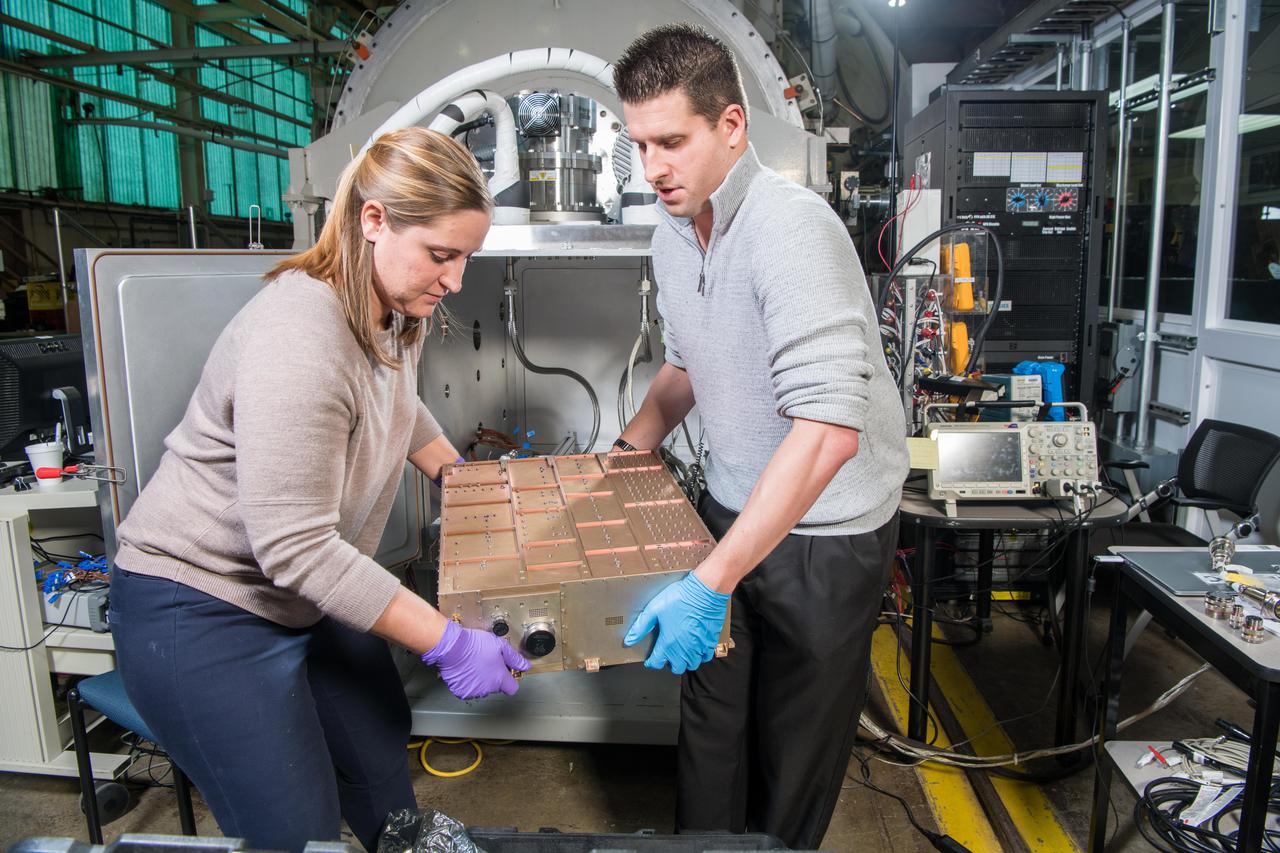
NASA Evolutionary Xenon Thruster - Commercial, NEXT-C Flight Power Processing Unit, PPU
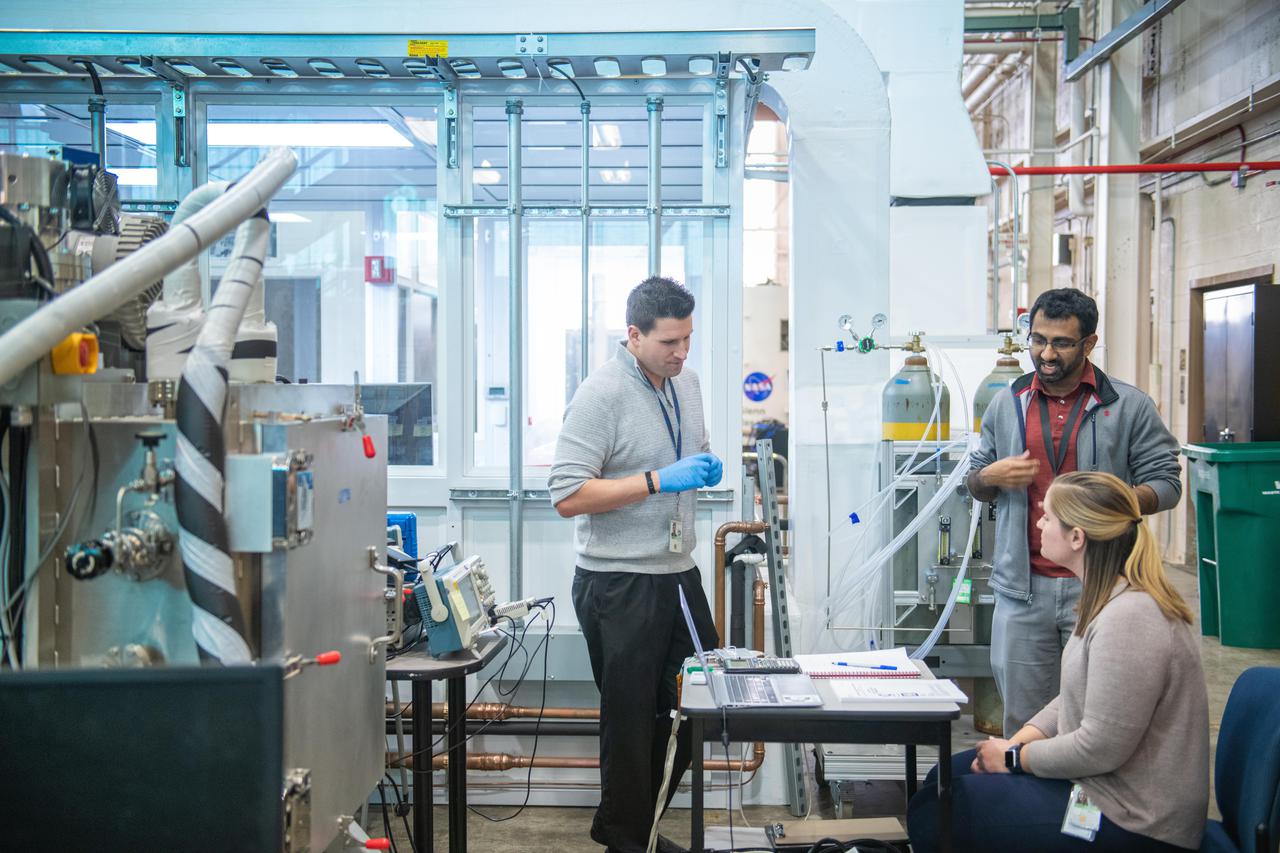
NASA Evolutionary Xenon Thruster - Commercial, NEXT-C Flight Power Processing Unit, PPU
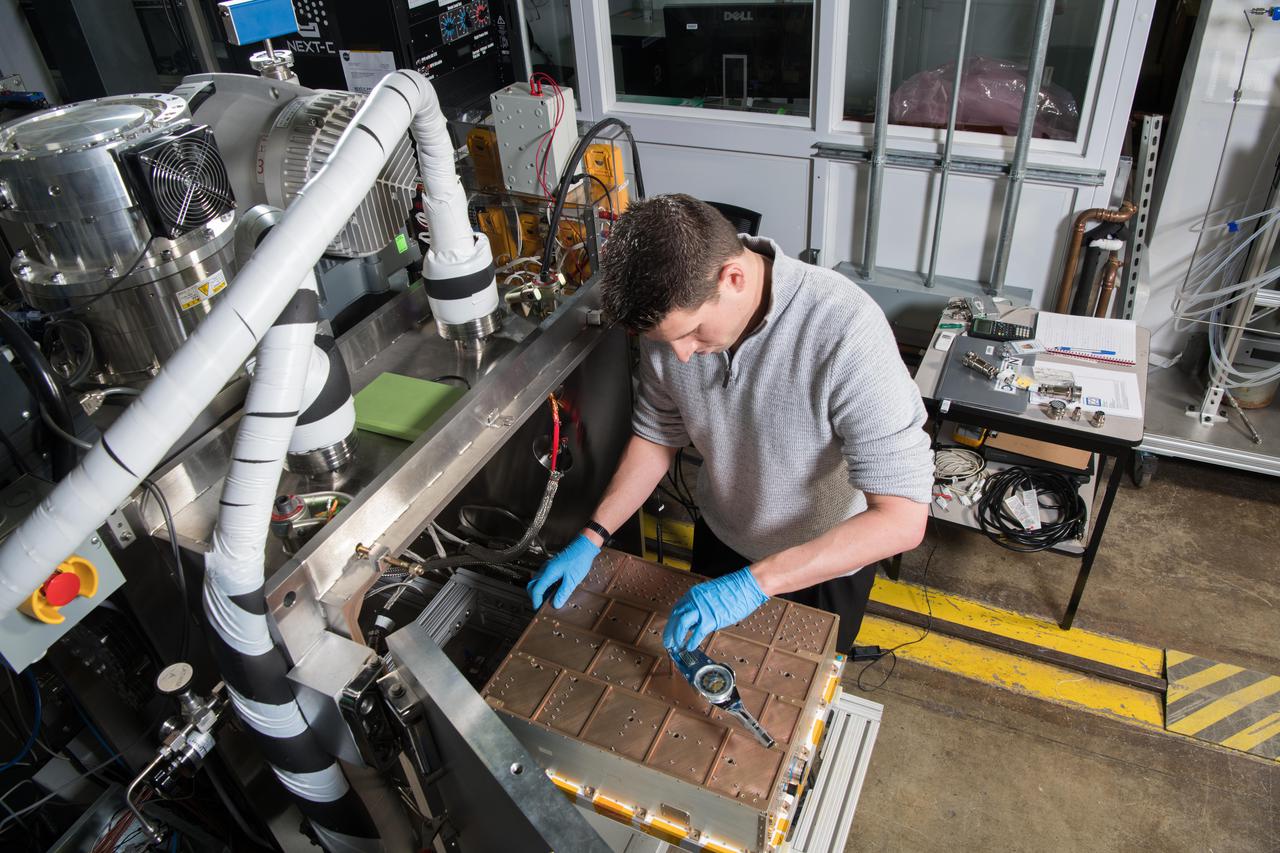
NASA Evolutionary Xenon Thruster - Commercial, NEXT-C Flight Power Processing Unit, PPU
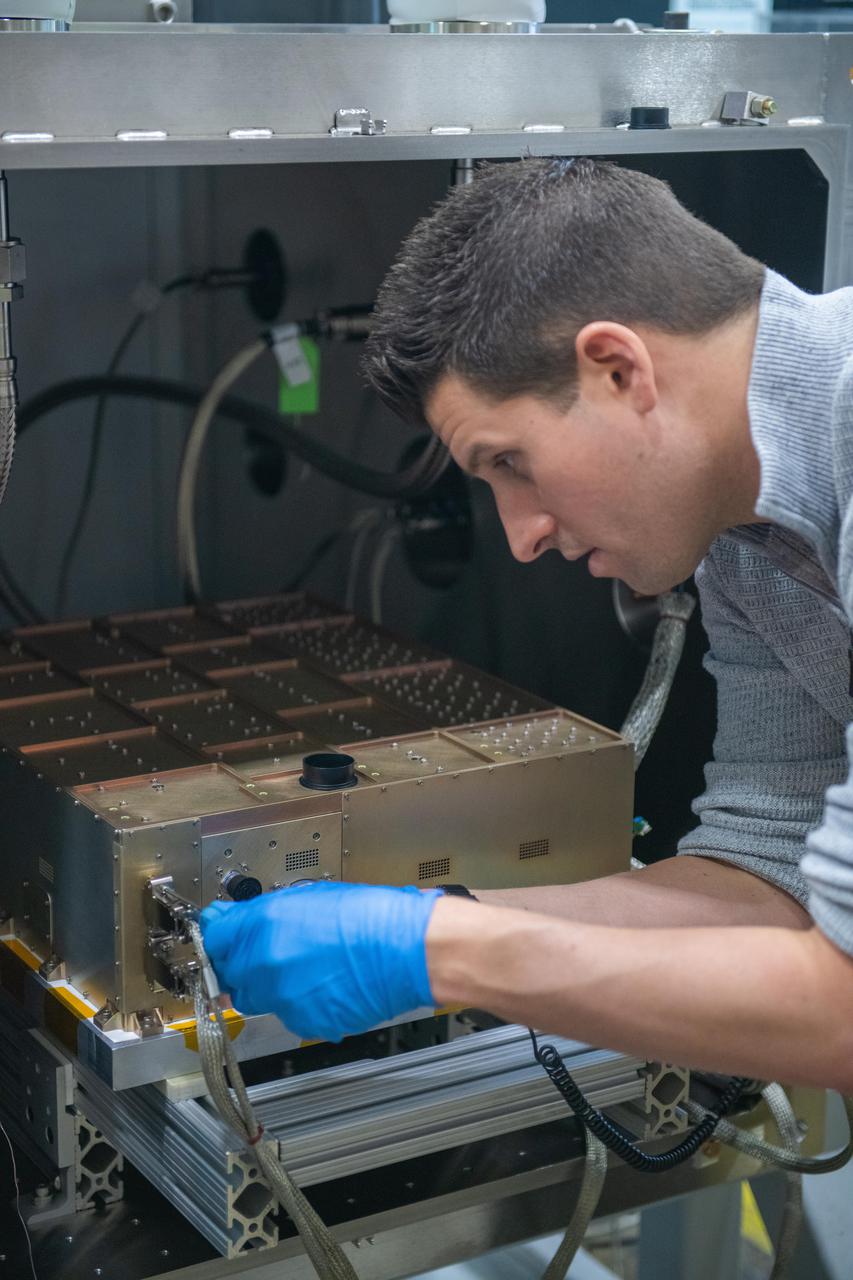
NASA Evolutionary Xenon Thruster - Commercial, NEXT-C Flight Power Processing Unit, PPU
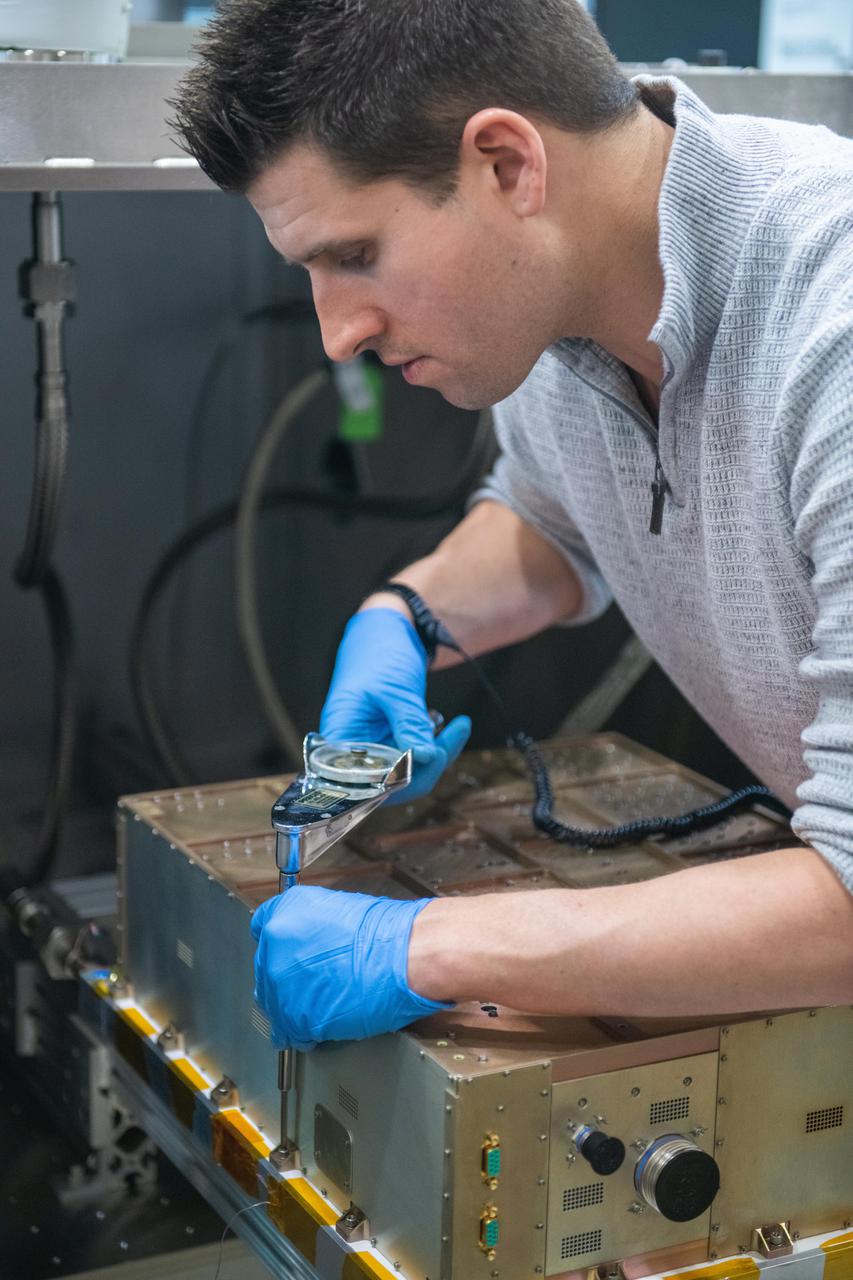
NASA Evolutionary Xenon Thruster - Commercial, NEXT-C Flight Power Processing Unit, PPU

NASA Evolutionary Xenon Thruster - Commercial, NEXT-C Flight Power Processing Unit, PPU
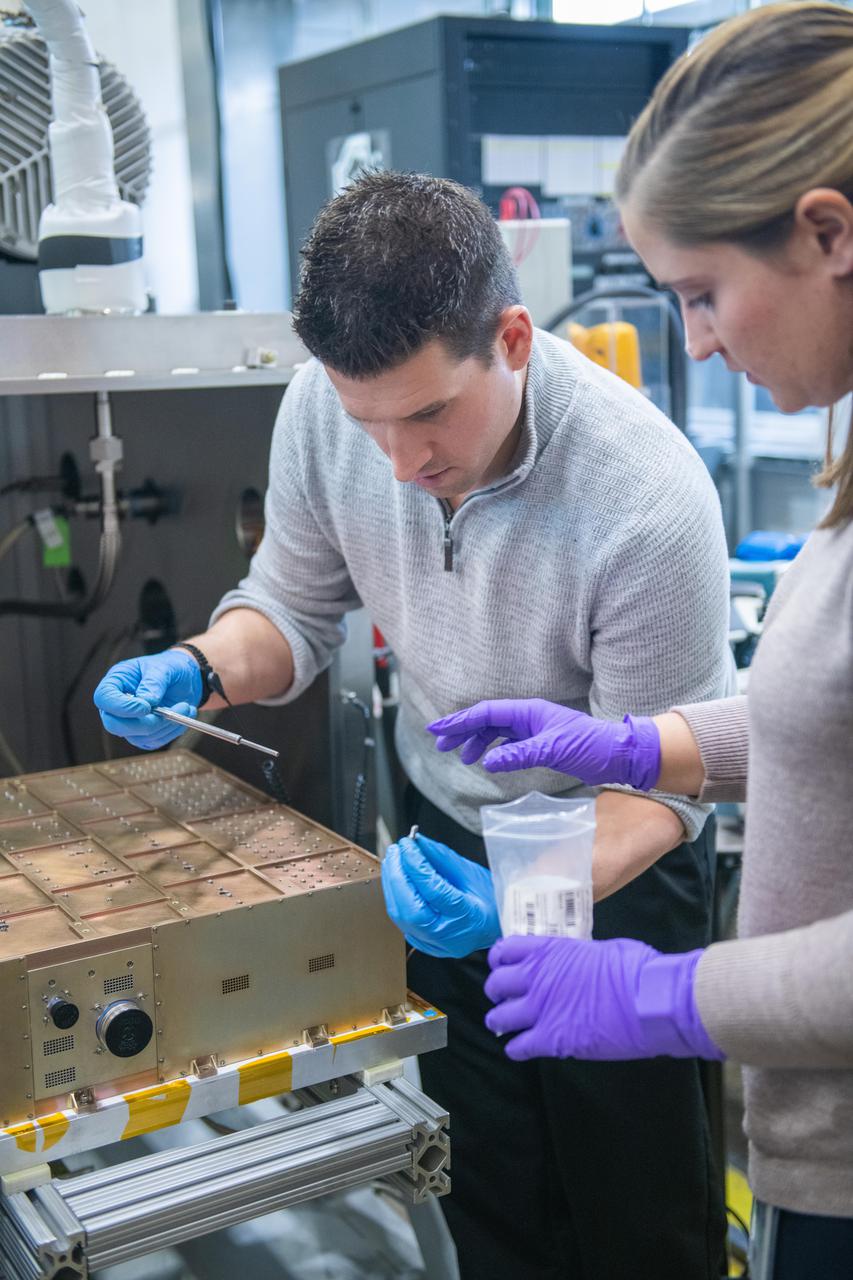
NASA Evolutionary Xenon Thruster - Commercial, NEXT-C Flight Power Processing Unit, PPU
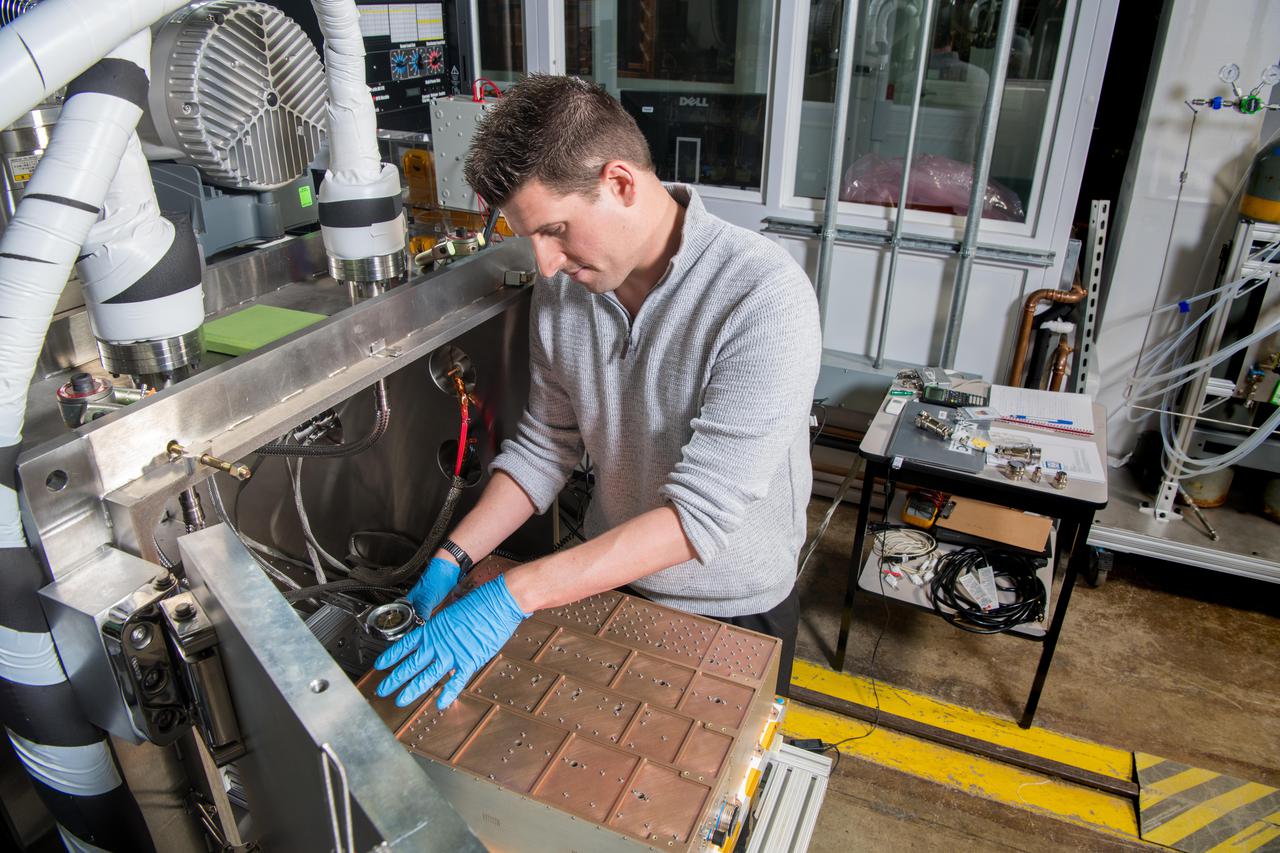
NASA Evolutionary Xenon Thruster - Commercial, NEXT-C Flight Power Processing Unit, PPU

NASA Evolutionary Xenon Thruster - Commercial, NEXT-C Flight Power Processing Unit, PPU
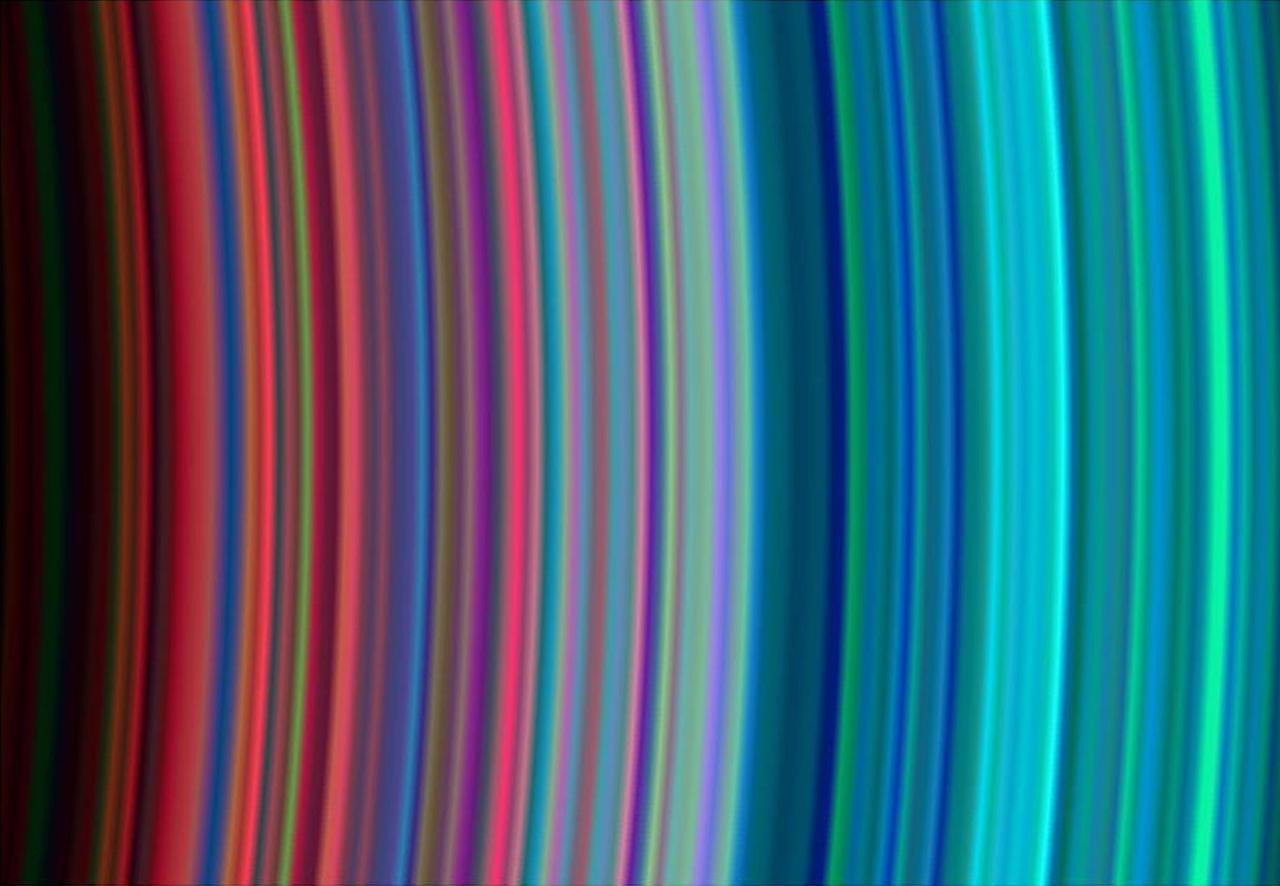
Saturn C and B Rings From the Inside Out
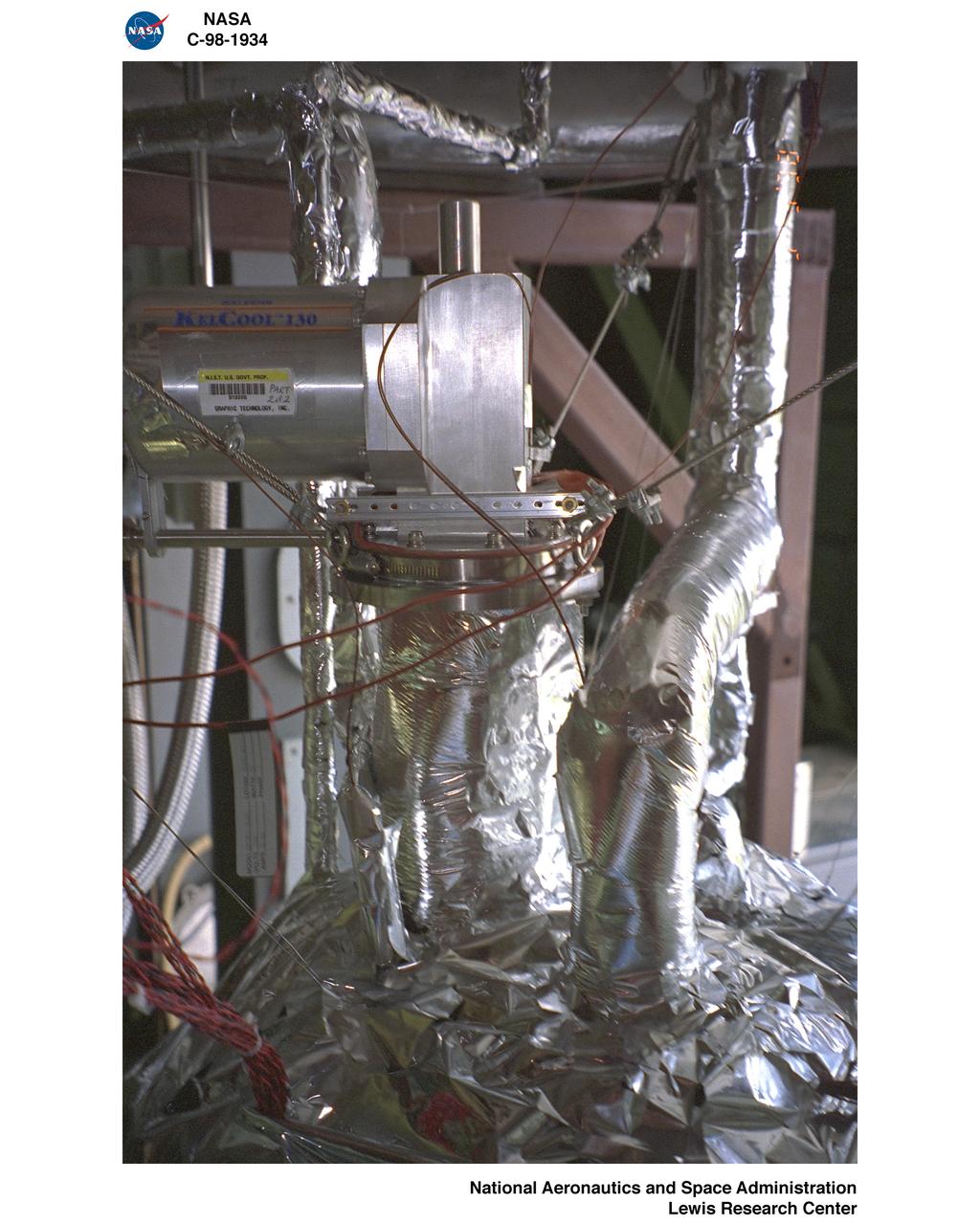
HYBRID THERMAL CONTROL TESTING AT THE SUPPLEMENTAL MULTI LAYER INSULATION RESEARCH FACILITY - SEE ALSO C-1998-1907 THRU C-1998-1922
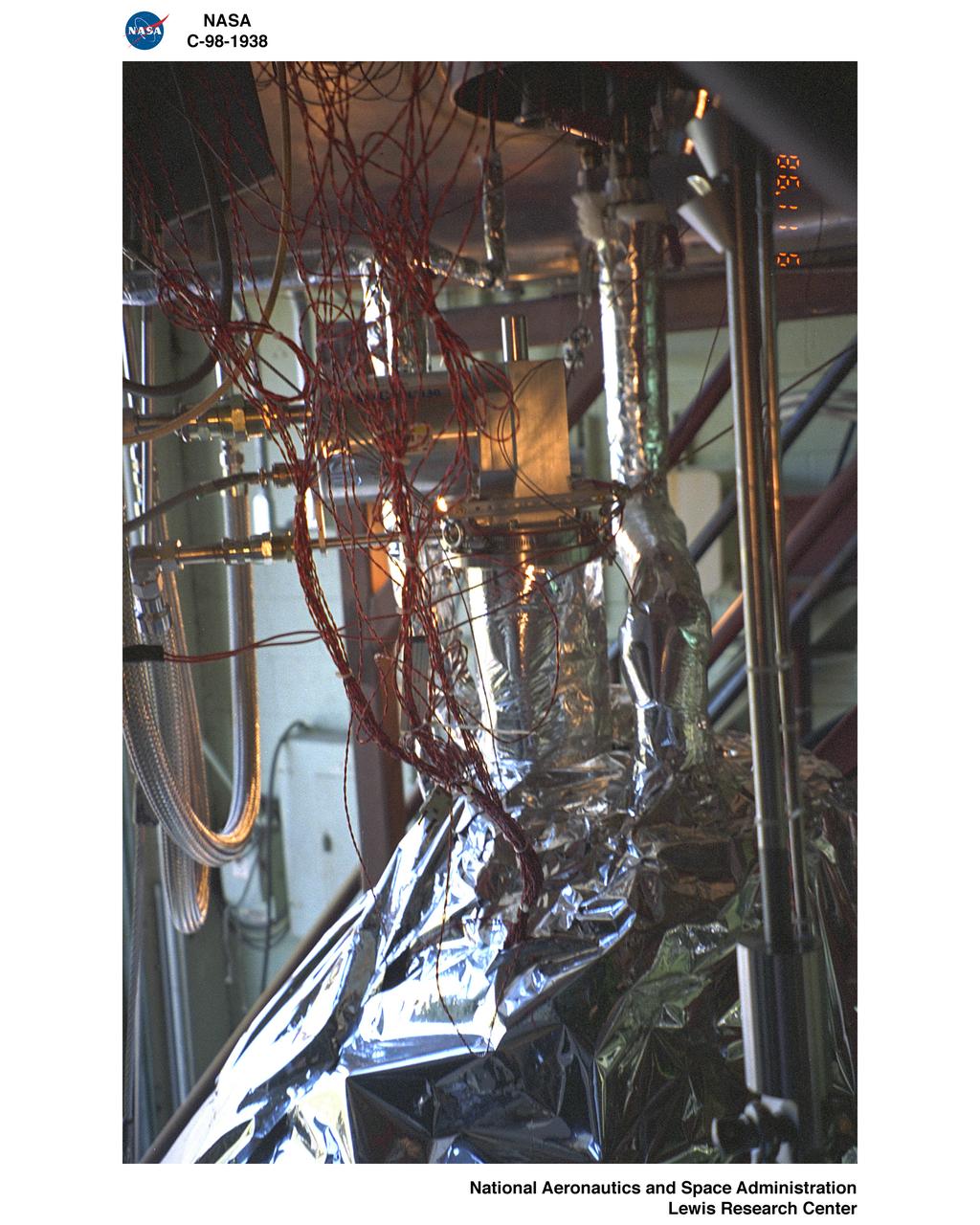
HYBRID THERMAL CONTROL TESTING AT THE SUPPLEMENTAL MULTI LAYER INSULATION RESEARCH FACILITY - SEE ALSO C-1998-1907 THRU C-1998-1922
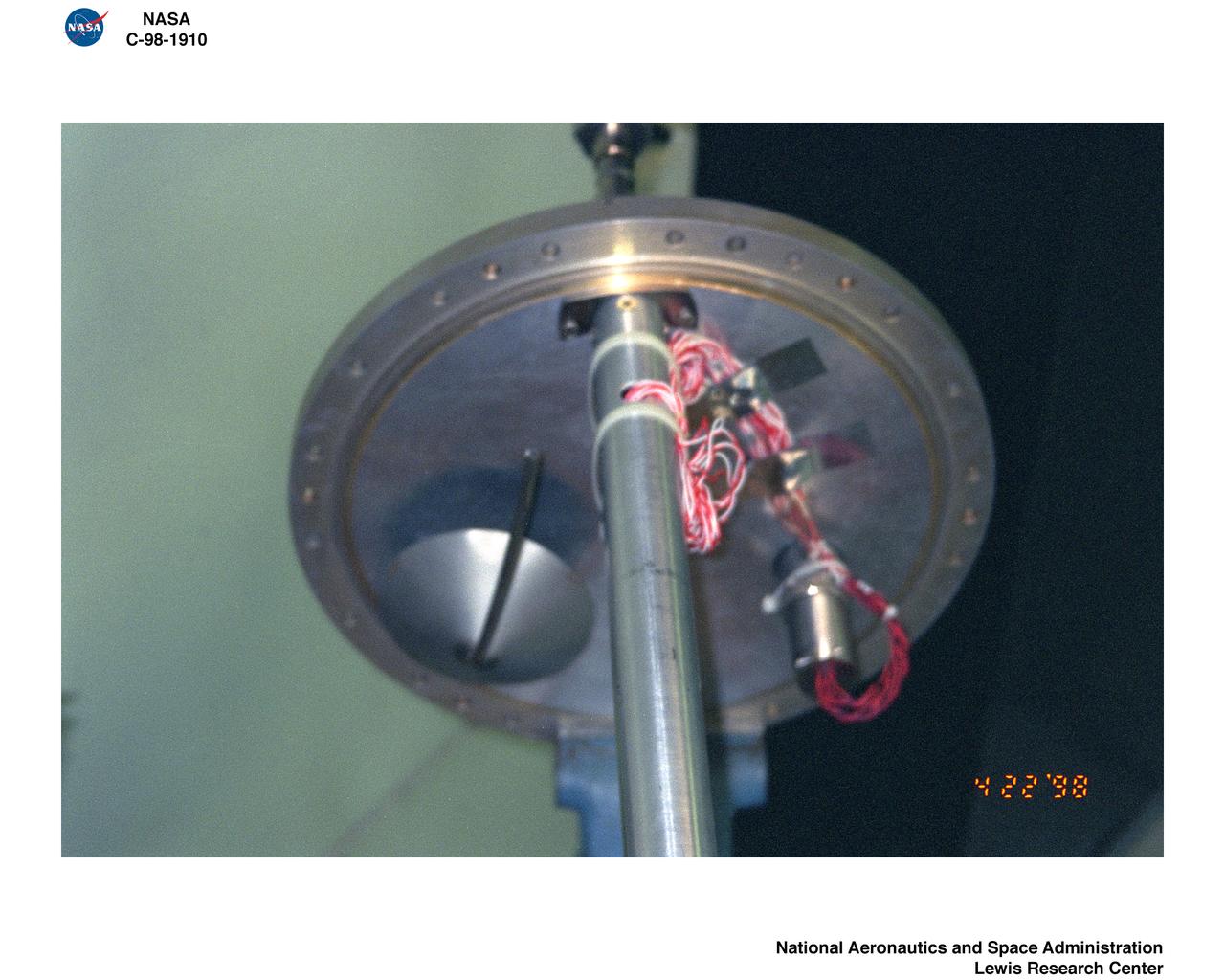
HYBRID THERMAL CONTROL TESTING AT THE SUPPLEMENTAL MULTI LAYER INSULATION RESEARCH FACILITY - SEE ALSO C-1998-1923 THRU C-1998-1941
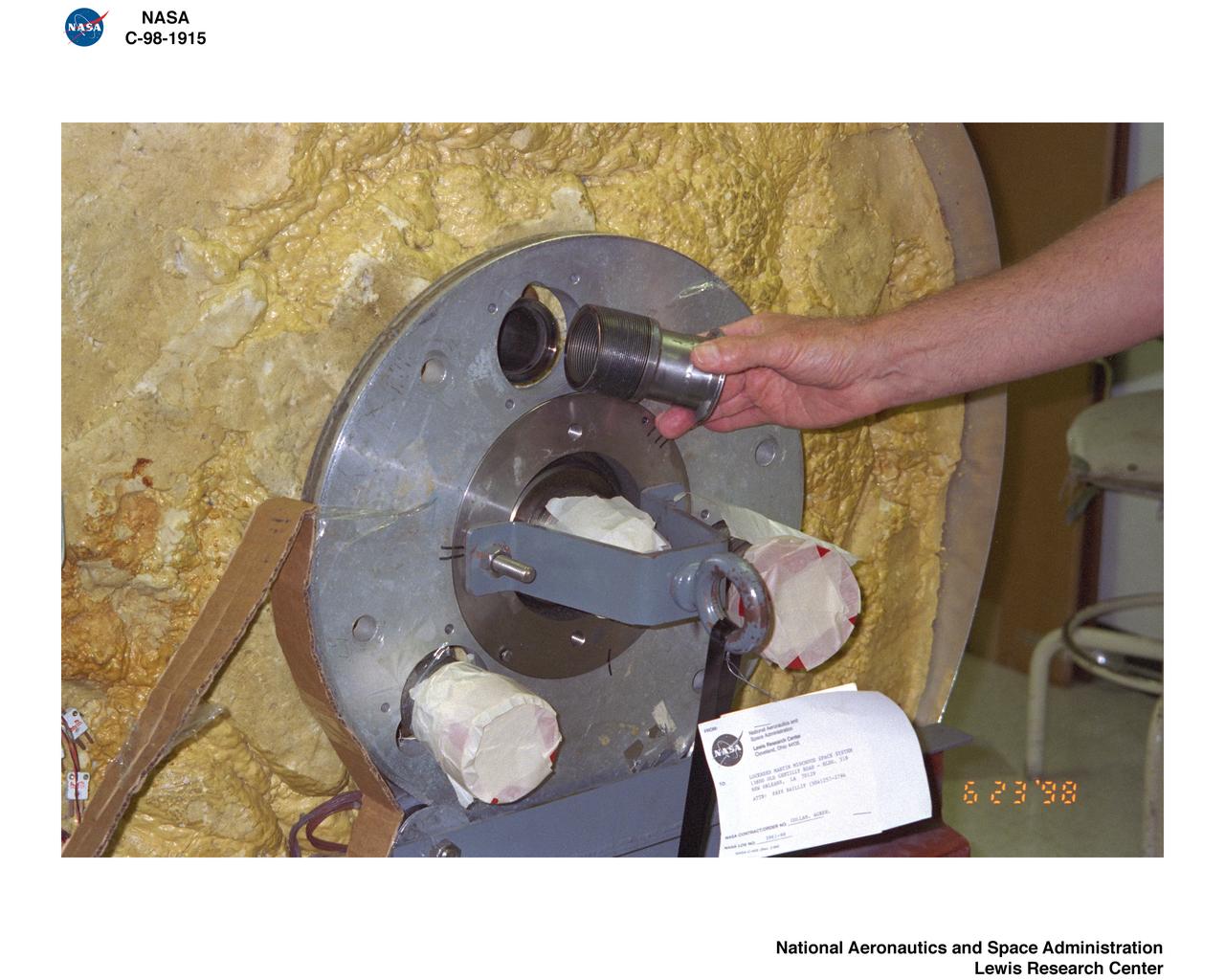
HYBRID THERMAL CONTROL TESTING AT THE SUPPLEMENTAL MULTI LAYER INSULATION RESEARCH FACILITY - SEE ALSO C-1998-1923 THRU C-1998-1941
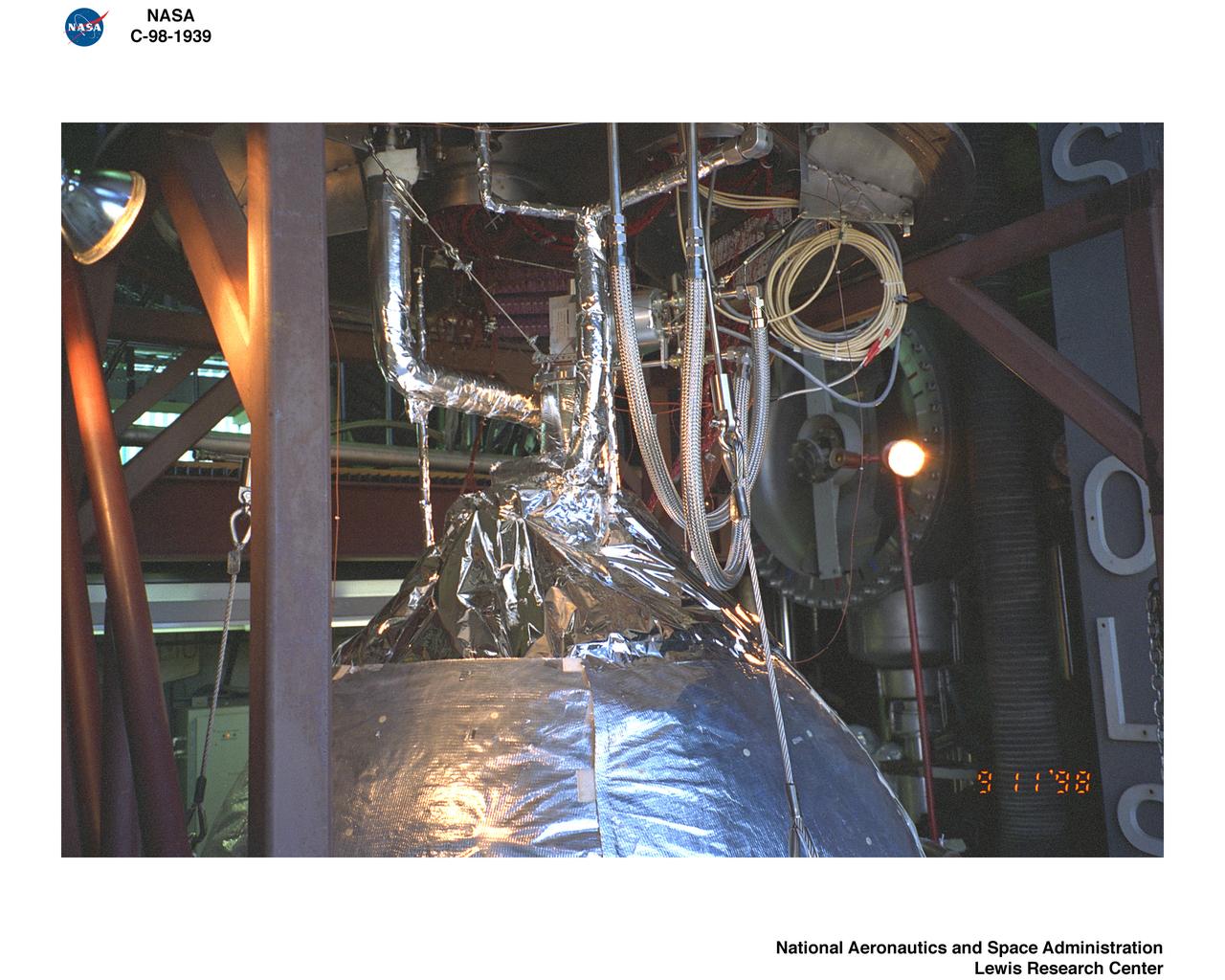
HYBRID THERMAL CONTROL TESTING AT THE SUPPLEMENTAL MULTI LAYER INSULATION RESEARCH FACILITY - SEE ALSO C-1998-1907 THRU C-1998-1922
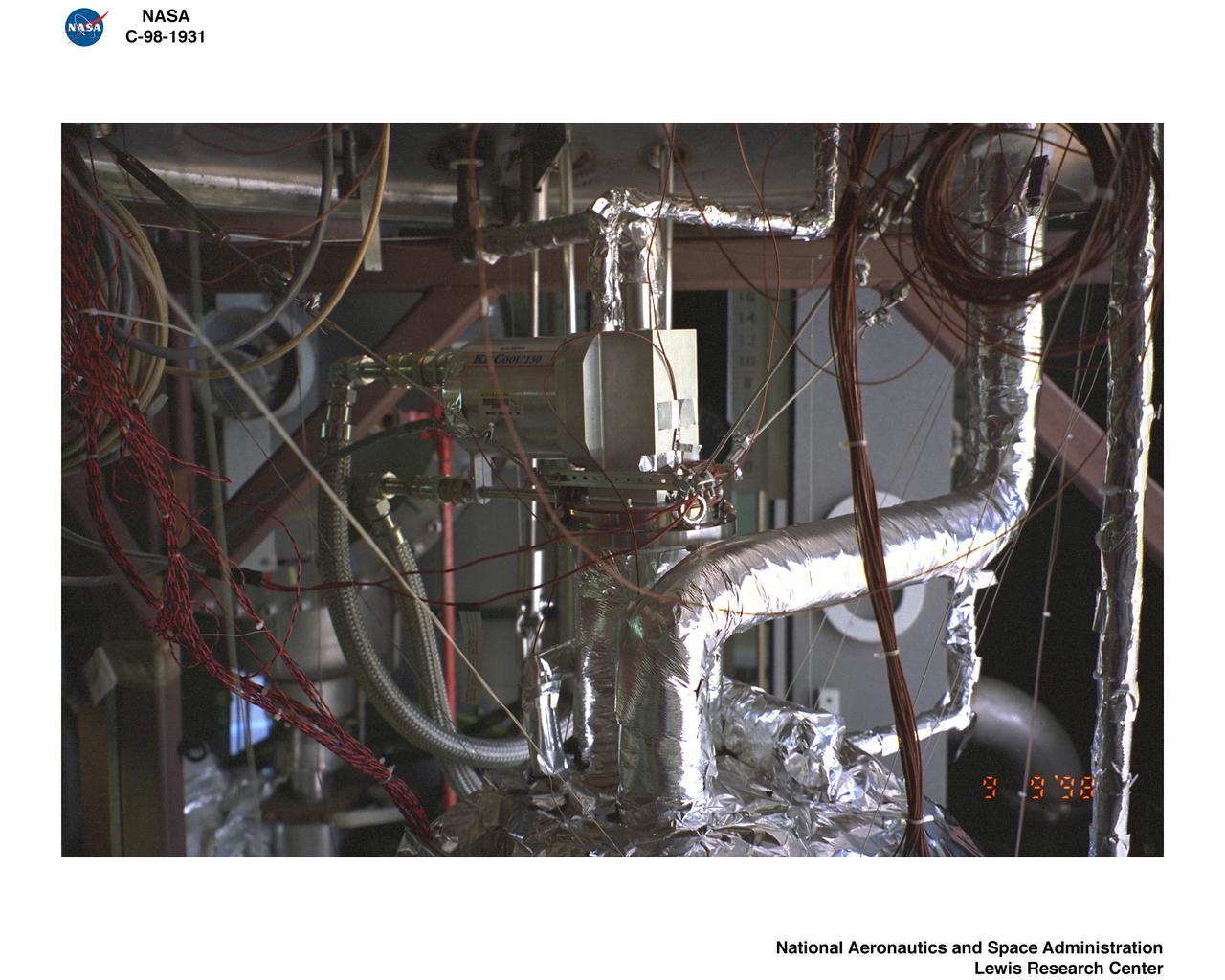
HYBRID THERMAL CONTROL TESTING AT THE SUPPLEMENTAL MULTI LAYER INSULATION RESEARCH FACILITY - SEE ALSO C-1998-1907 THRU C-1998-1922
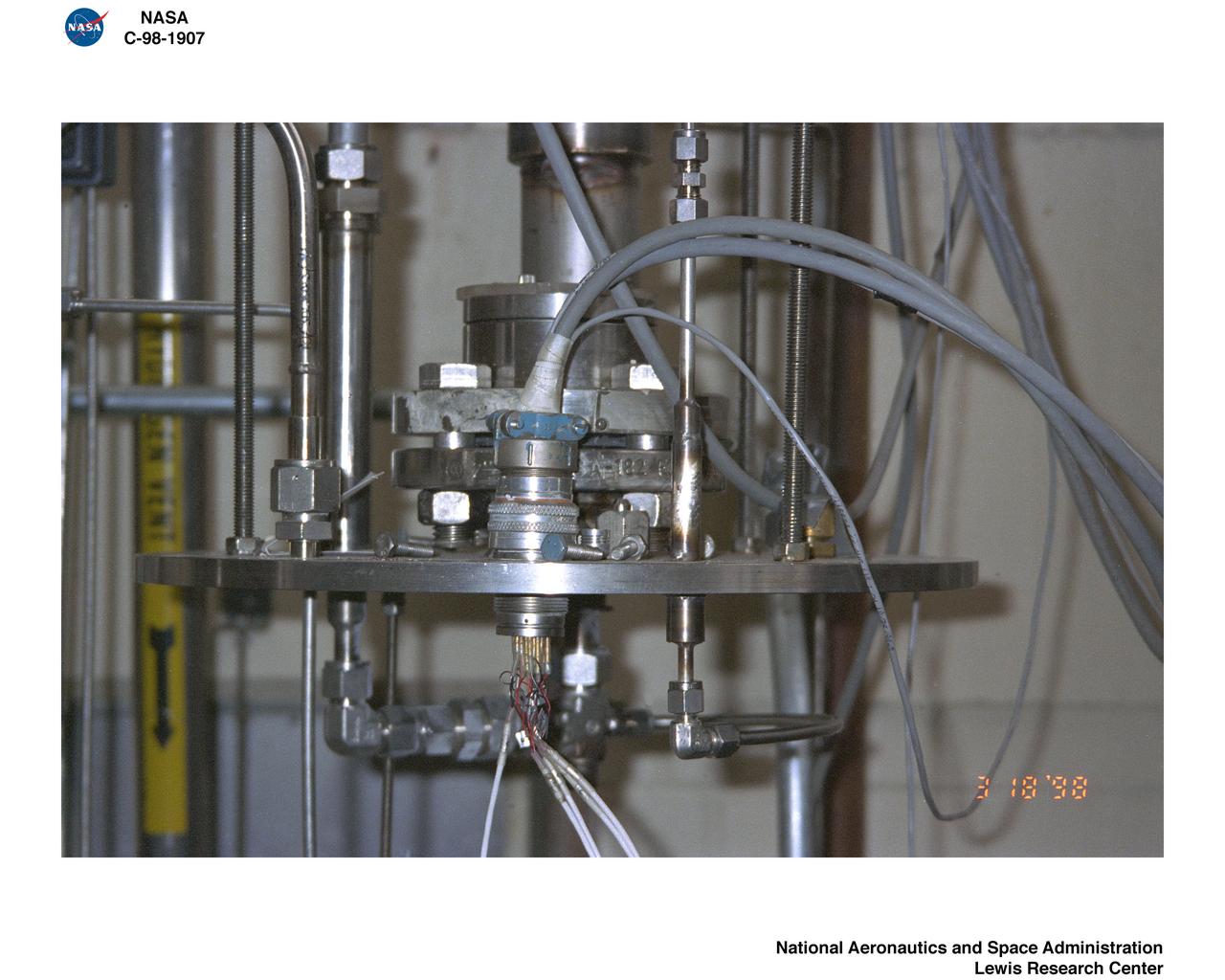
HYBRID THERMAL CONTROL TESTING AT THE SUPPLEMENTAL MULTI LAYER INSULATION RESEARCH FACILITY - SEE ALSO C-1998-1923 THRU C-1998-1941
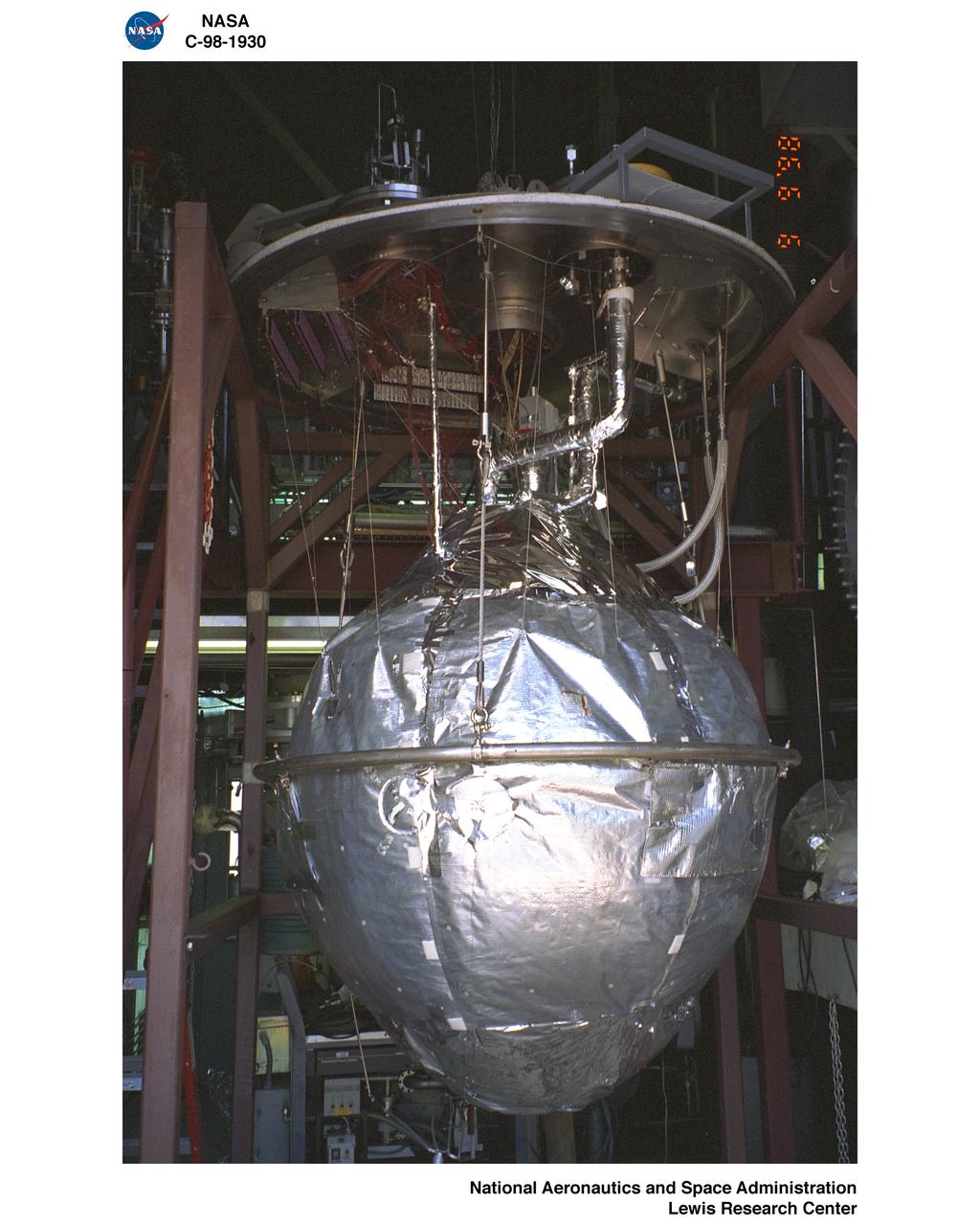
HYBRID THERMAL CONTROL TESTING AT THE SUPPLEMENTAL MULTI LAYER INSULATION RESEARCH FACILITY - SEE ALSO C-1998-1907 THRU C-1998-1922
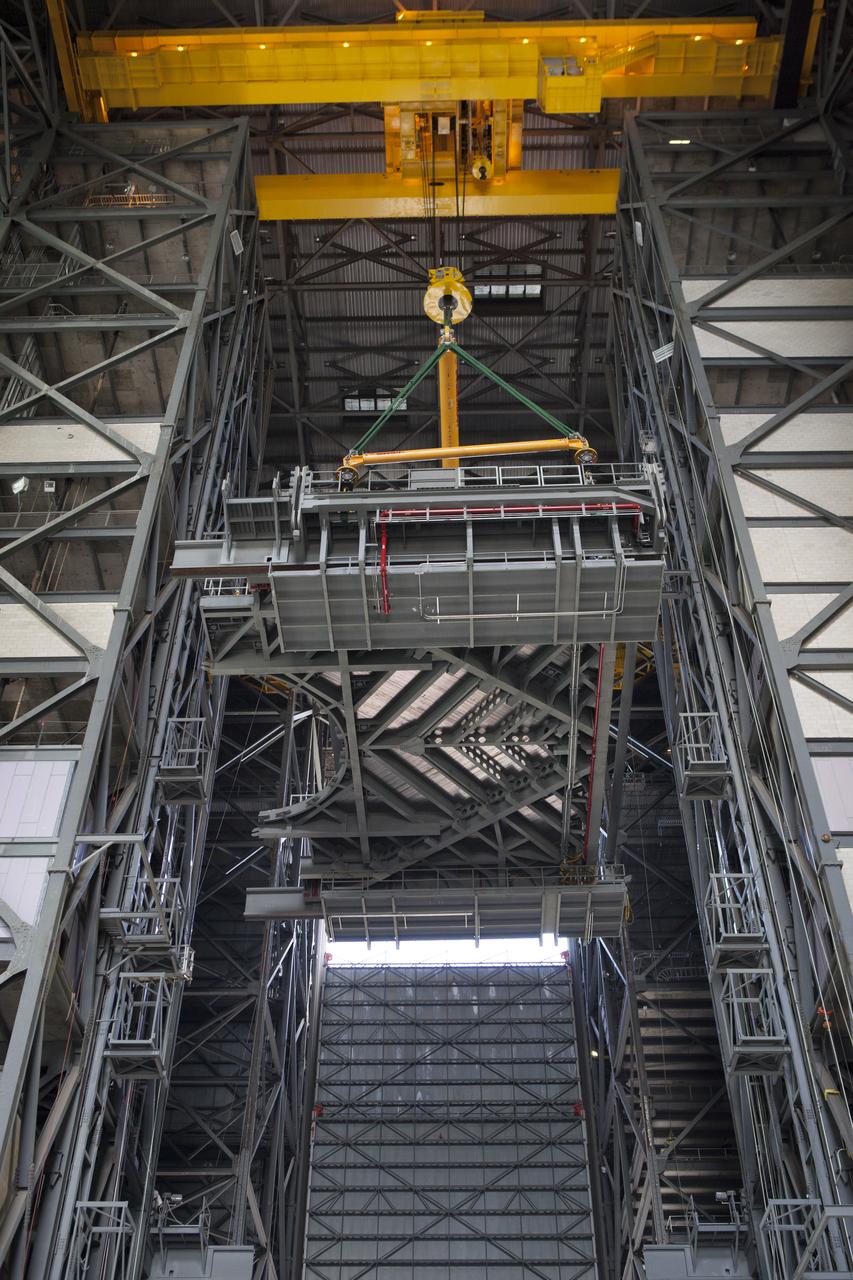
A heavy-lift crane lifts the first half of the C-level work platforms, C south, for NASA’s Space Launch System (SLS) rocket, high up from the transfer aisle floor of the Vehicle Assembly Building (VAB) at NASA’s Kennedy Space Center in Florida. The C platform will be moved into High Bay 3 for installation on the south wall. The C platforms are the eighth of 10 levels of work platforms that will surround and provide access to the SLS rocket and Orion spacecraft for Exploration Mission 1. The Ground Systems Development and Operations Program is overseeing upgrades and modifications to VAB High Bay 3, including installation of the new work platforms, to prepare for NASA’s Journey to Mars.
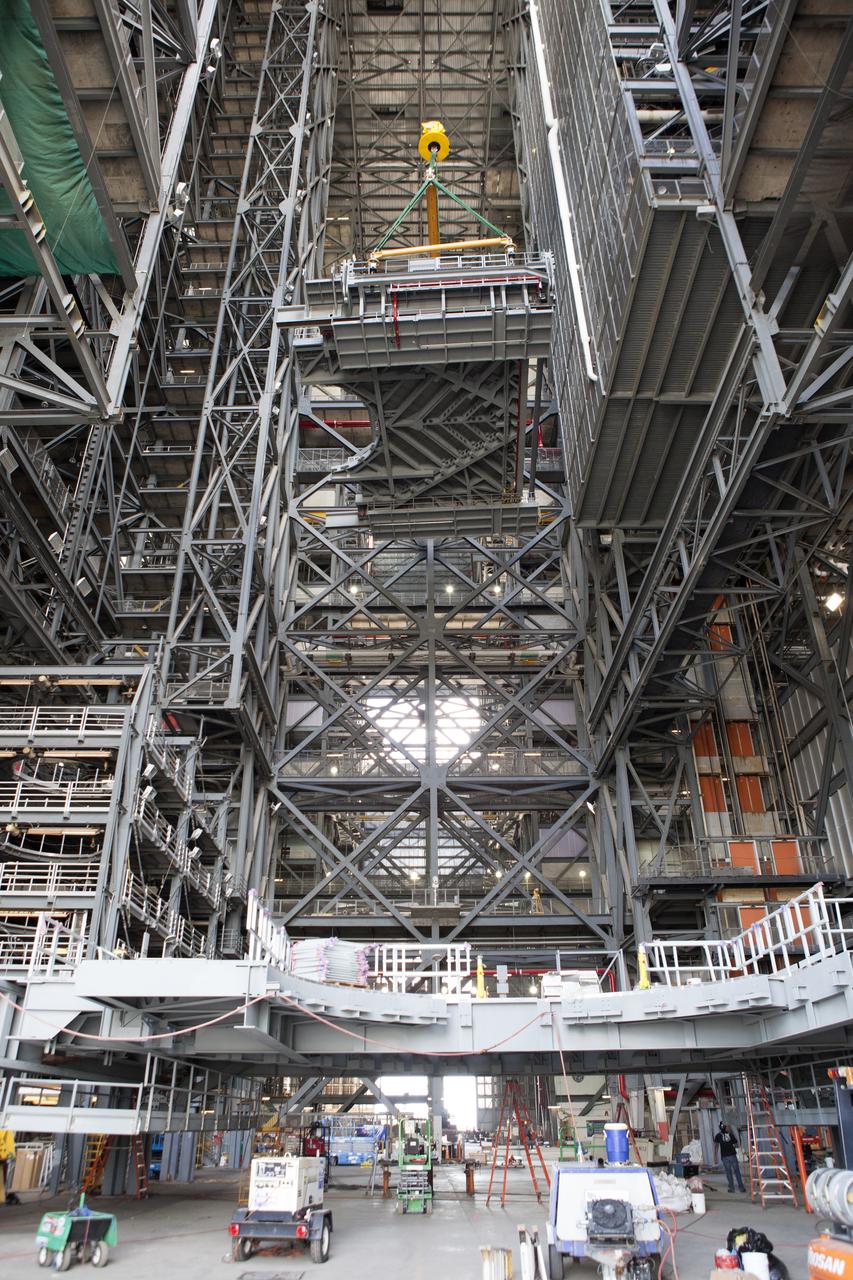
A heavy-lift crane lifts the first half of the C-level work platforms, C south, for NASA’s Space Launch System (SLS) rocket, high up from the transfer aisle floor of the Vehicle Assembly Building (VAB) at NASA’s Kennedy Space Center in Florida. The C platform will be installed on the south side of High Bay 3. The C platforms are the eighth of 10 levels of work platforms that will surround and provide access to the SLS rocket and Orion spacecraft for Exploration Mission 1. The Ground Systems Development and Operations Program is overseeing upgrades and modifications to VAB High Bay 3, including installation of the new work platforms, to prepare for NASA’s Journey to Mars.
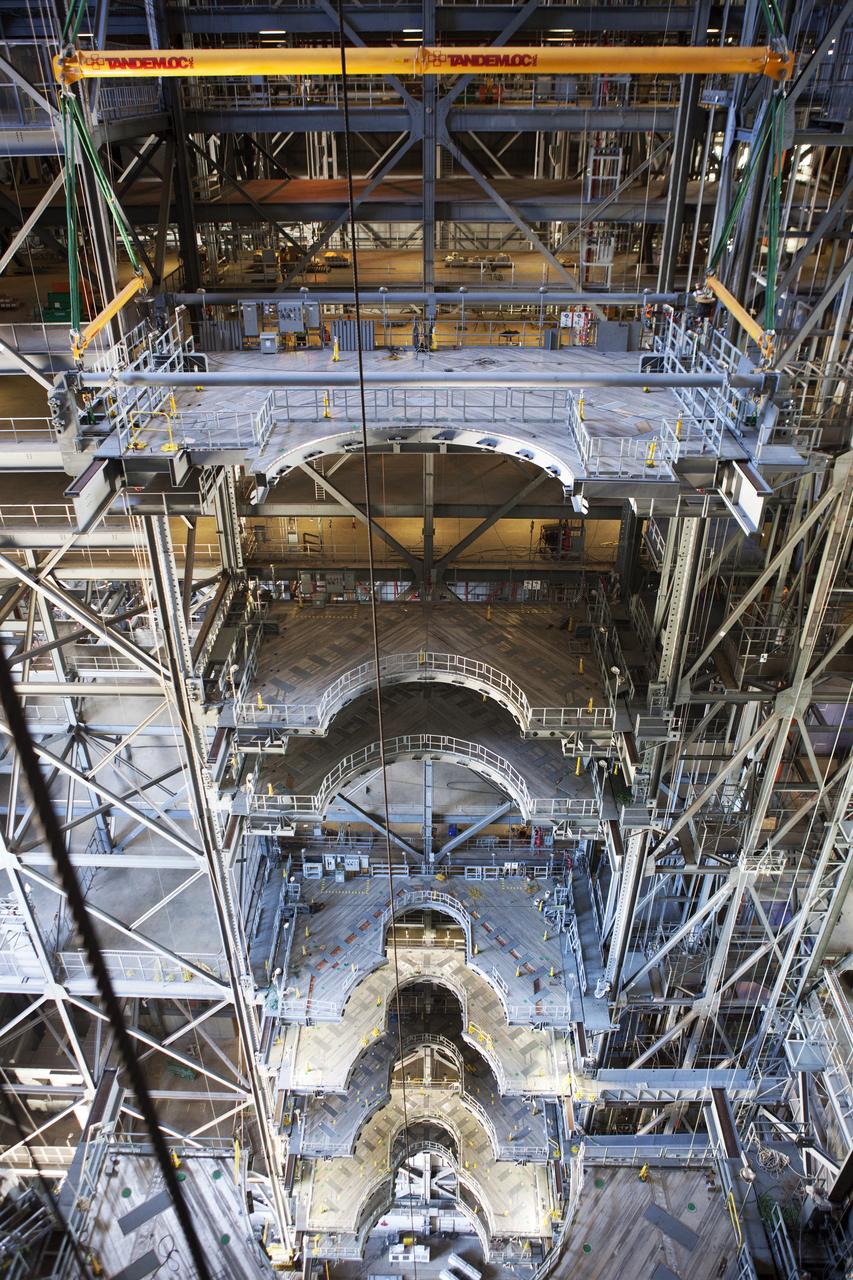
A heavy-lift crane lowers the first half of the C-level work platforms, C south, for NASA’s Space Launch System (SLS) rocket, for installation on the south side of High Bay 3 in the Vehicle Assembly Building (VAB) at NASA’s Kennedy Space Center in Florida. The C platforms are the eighth of 10 levels of work platforms that will surround and provide access to the SLS rocket and Orion spacecraft for Exploration Mission 1. In view below Platform C are several of the previously installed platforms. The Ground Systems Development and Operations Program is overseeing upgrades and modifications to VAB High Bay 3, including installation of the new work platforms, to prepare for NASA’s Journey to Mars.
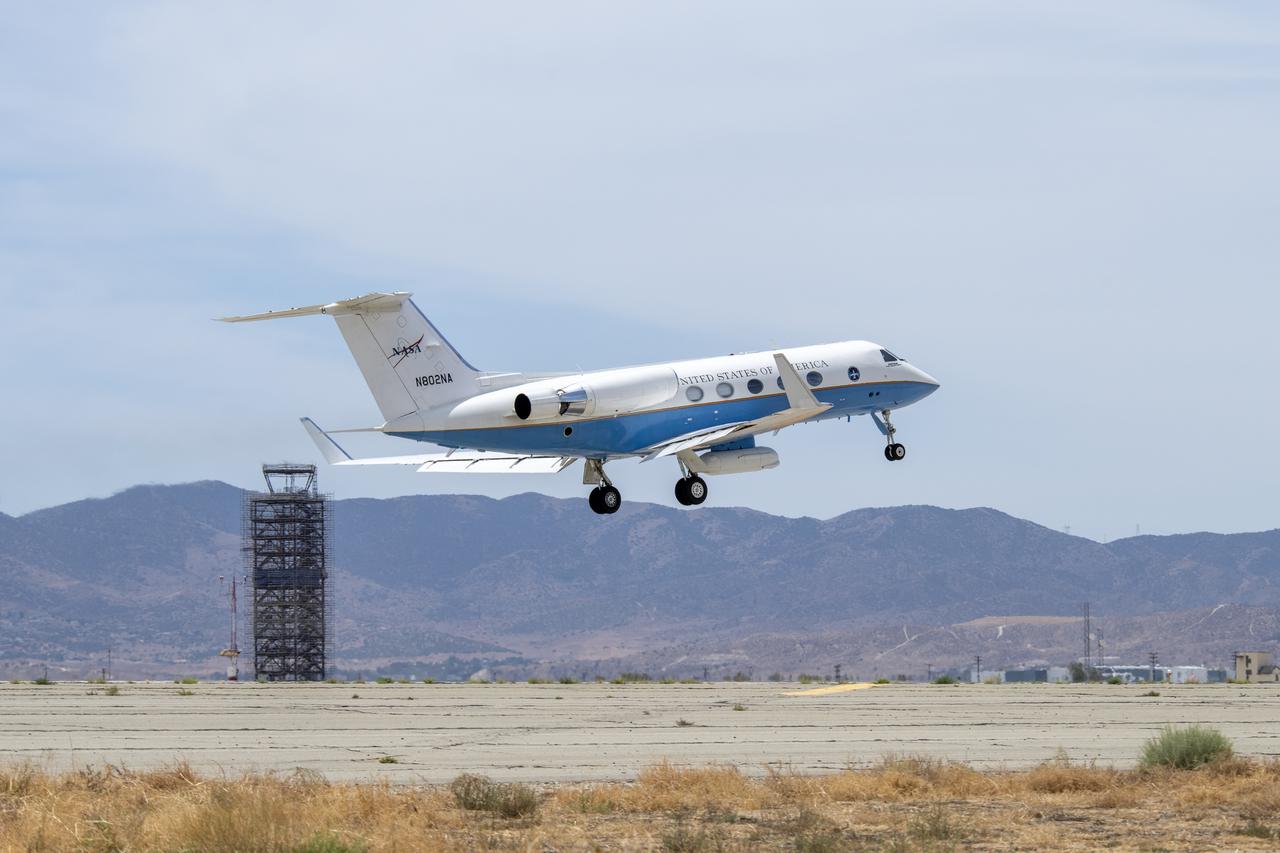
NASA's Armstrong Flight Research Center flies the C-20 aircraft in support of the Advanced Synthetic Aperture Radar (ASAR) campaign on July 22, 2021.
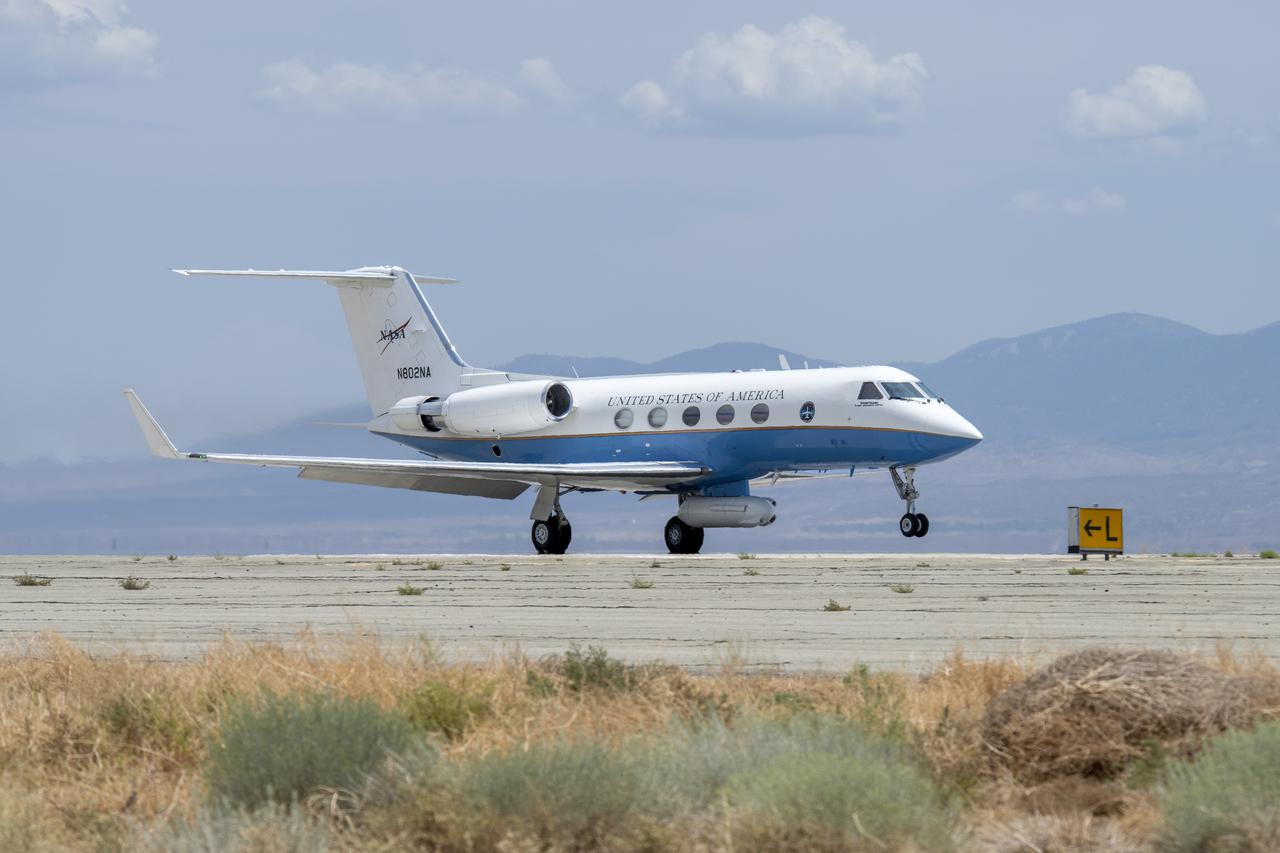
NASA’s Armstrong Flight Research Center flies the C-20 aircraft in support of the Advanced Synthetic Aperture Radar (ASAR) campaign on July 22, 2021.
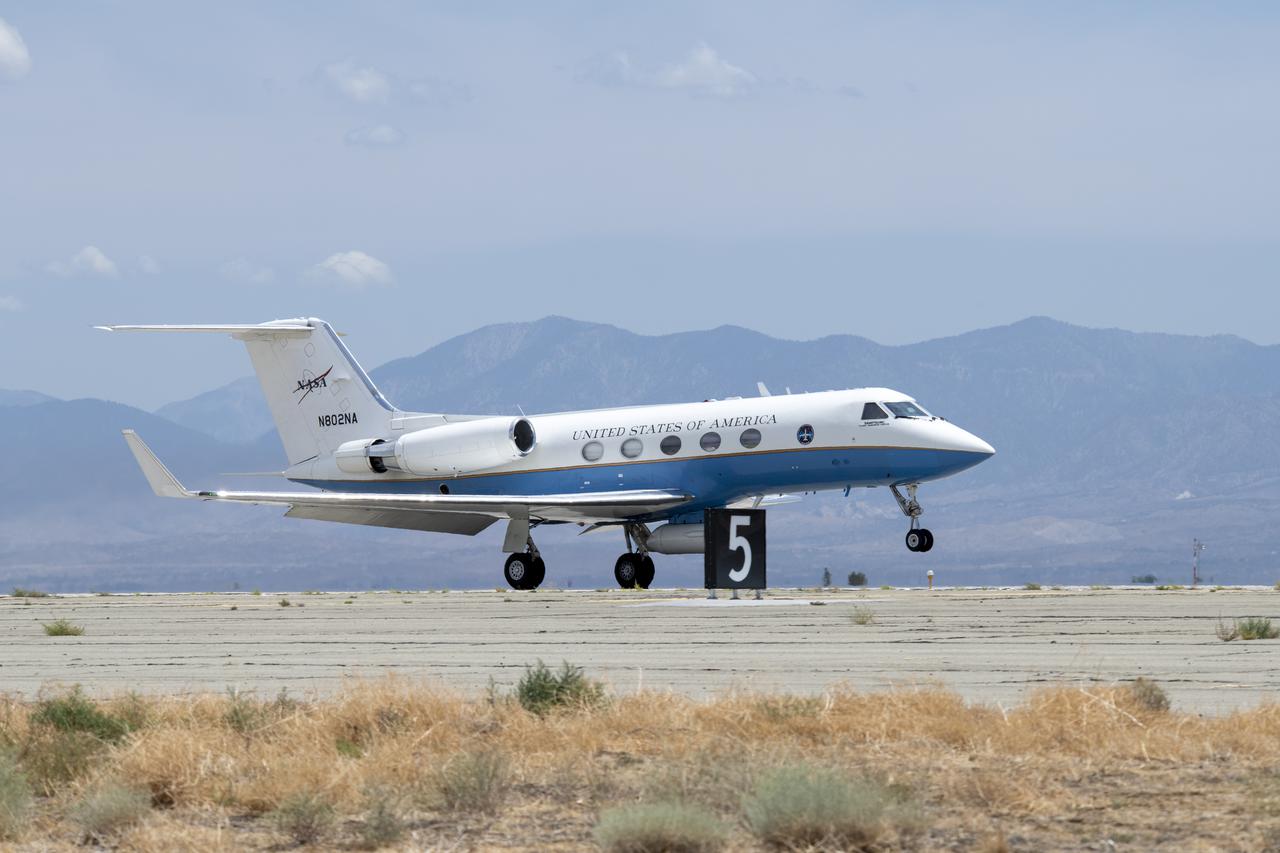
NASA's Armstrong Flight Research Center flies the C-20 aircraft in support of the Advanced Synthetic Aperture Radar (ASAR) campaign on July 22, 2021.
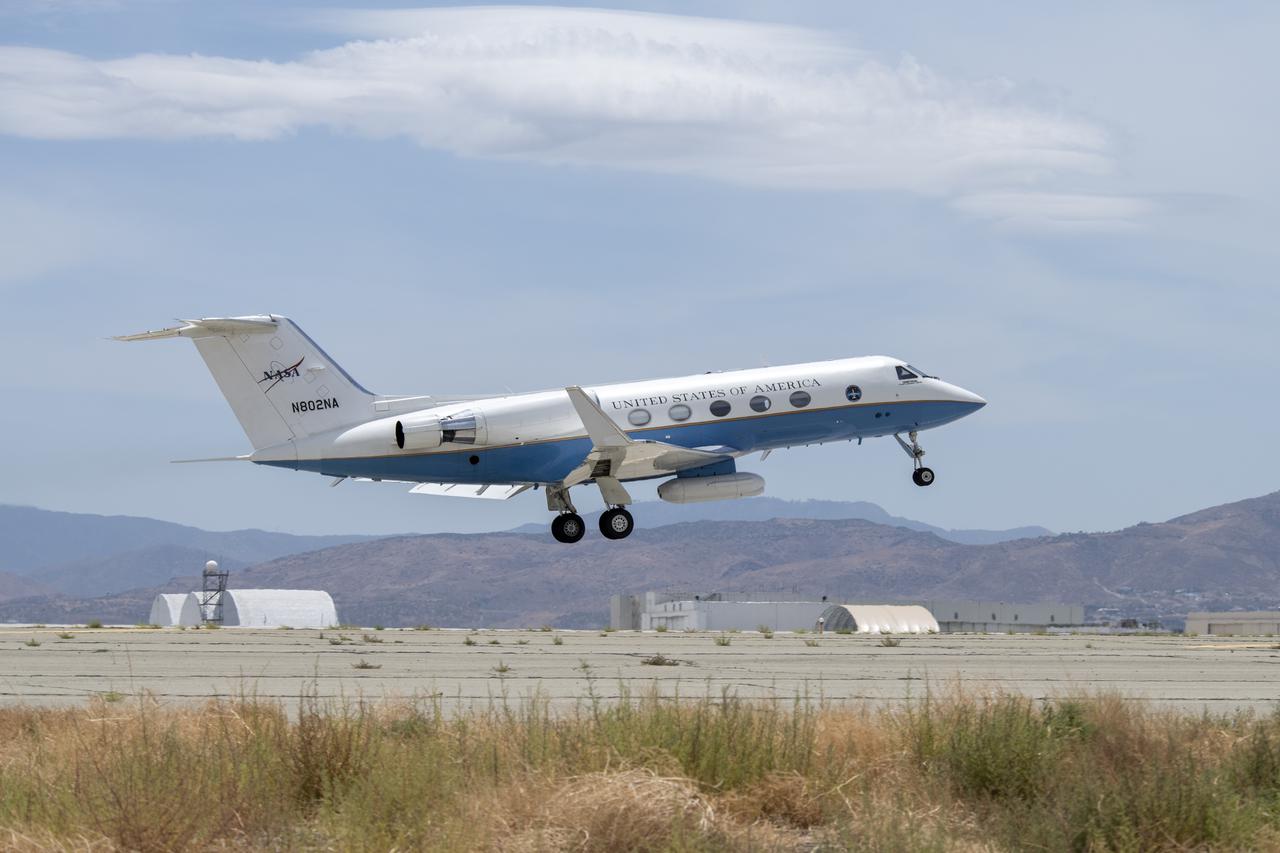
NASA’s Armstrong Flight Research Center flies the C-20 aircraft in support of the Advanced Synthetic Aperture Radar (ASAR) campaign on July 22, 2021.

T34-C Mentor Aircraft
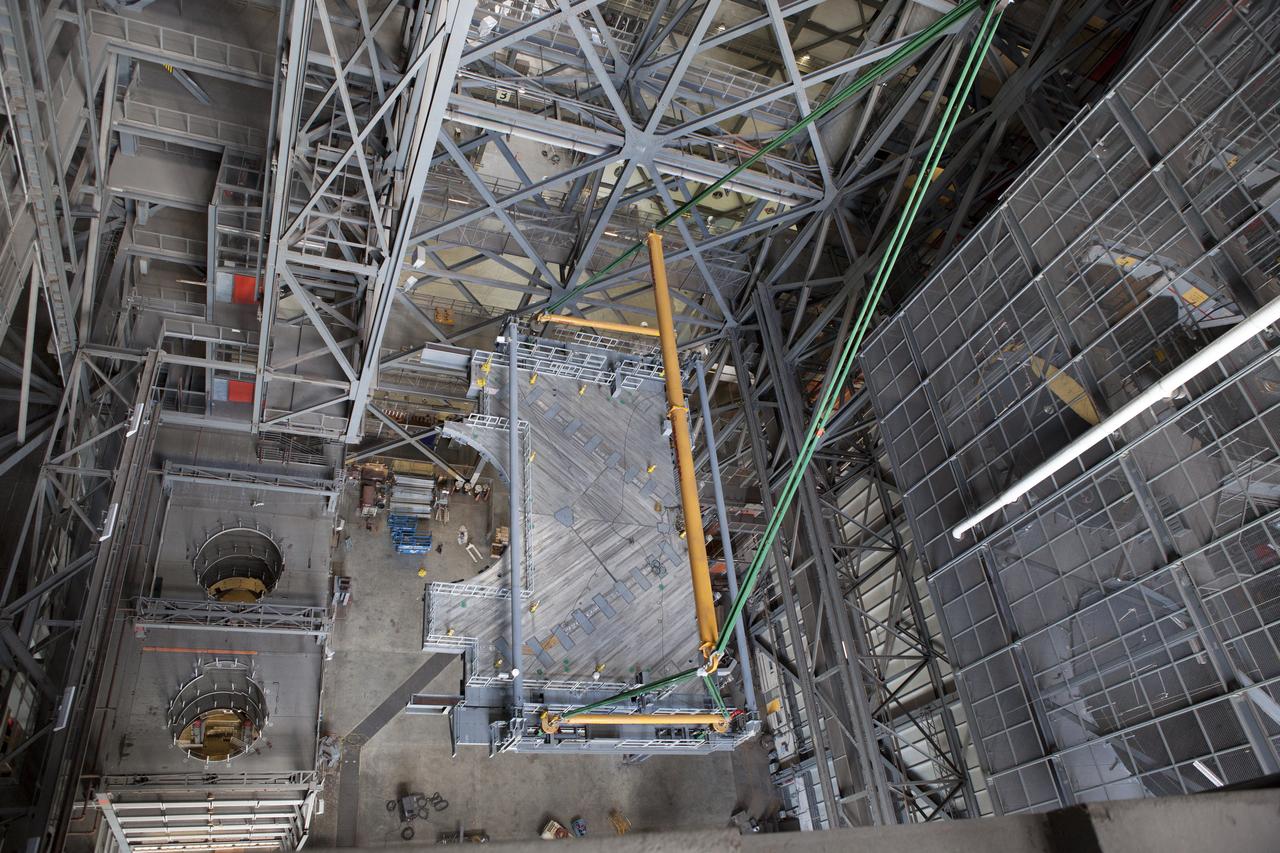
A heavy-lift crane lifts the first half of the C-level work platforms, C south, for NASA’s Space Launch System (SLS) rocket, up from the transfer aisle floor of the Vehicle Assembly Building (VAB) at NASA’s Kennedy Space Center in Florida. Large Tandemloc bars have been attached to the platform to keep it level during lifting and installation. The C platform will be installed on the south side of High Bay 3. The C platforms are the eighth of 10 levels of work platforms that will surround and provide access to the SLS rocket and Orion spacecraft for Exploration Mission 1. The Ground Systems Development and Operations Program is overseeing upgrades and modifications to VAB High Bay 3, including installation of the new work platforms, to prepare for NASA’s Journey to Mars.
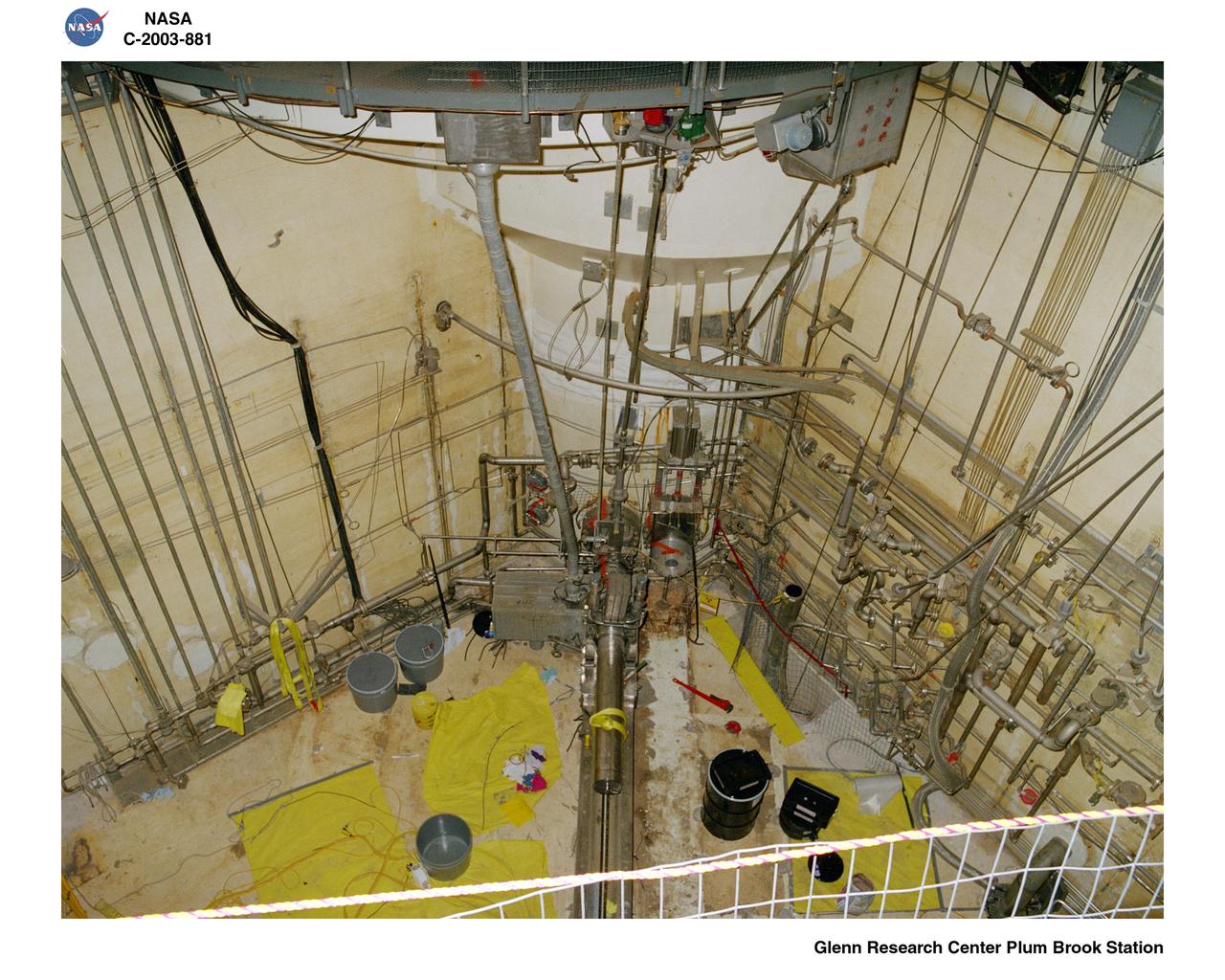
QUADRANT C IN THE REACTOR FACILITY AT THE NASA PLUM BROOK STATION RESEARCH FACILITY
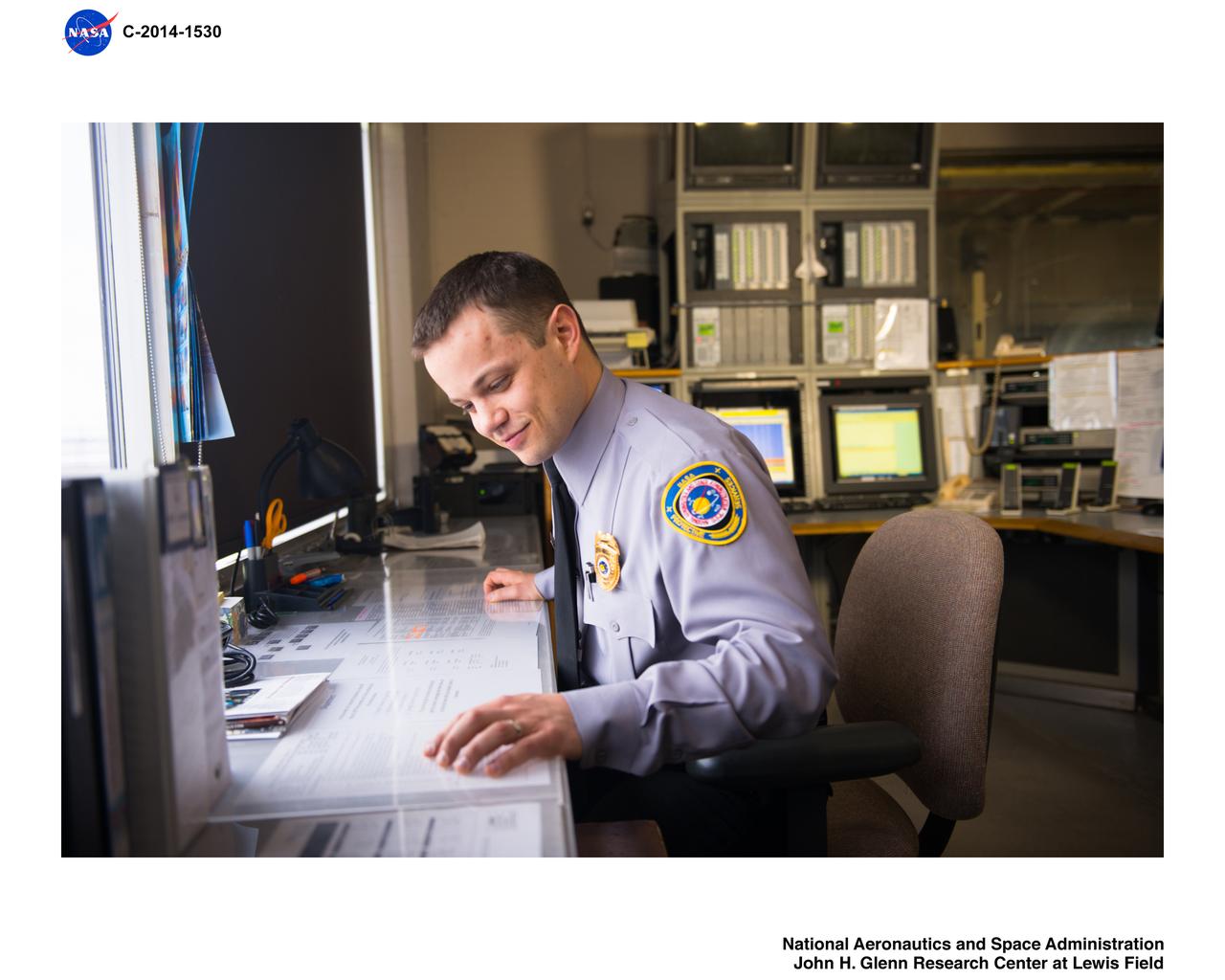
The Core Functions that make up Code C - Office of Protective Services
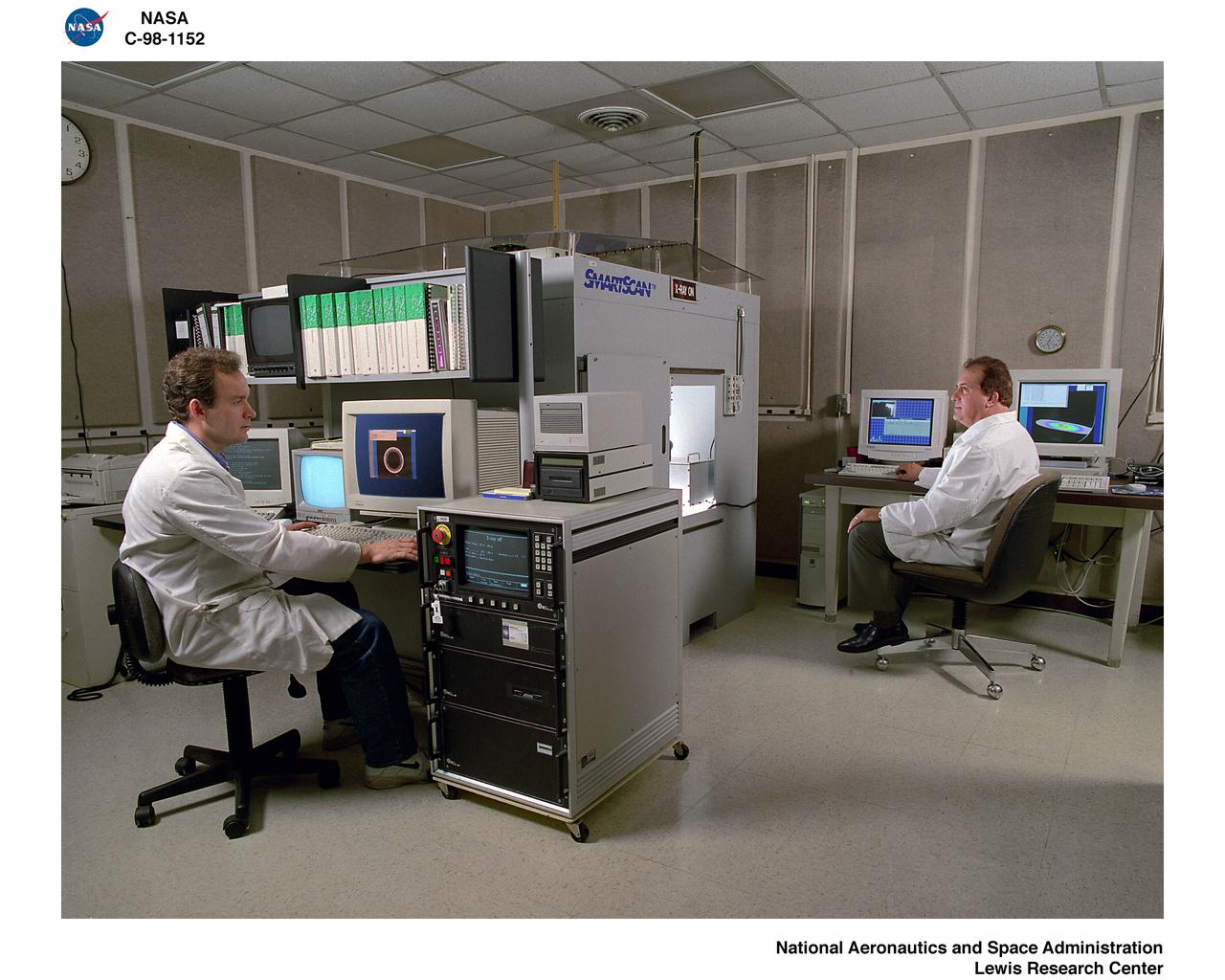
NON DESTRUCTIVE TESTING FACILITIES - SEE C-1998-1180 FOR CROSS REFERENCE
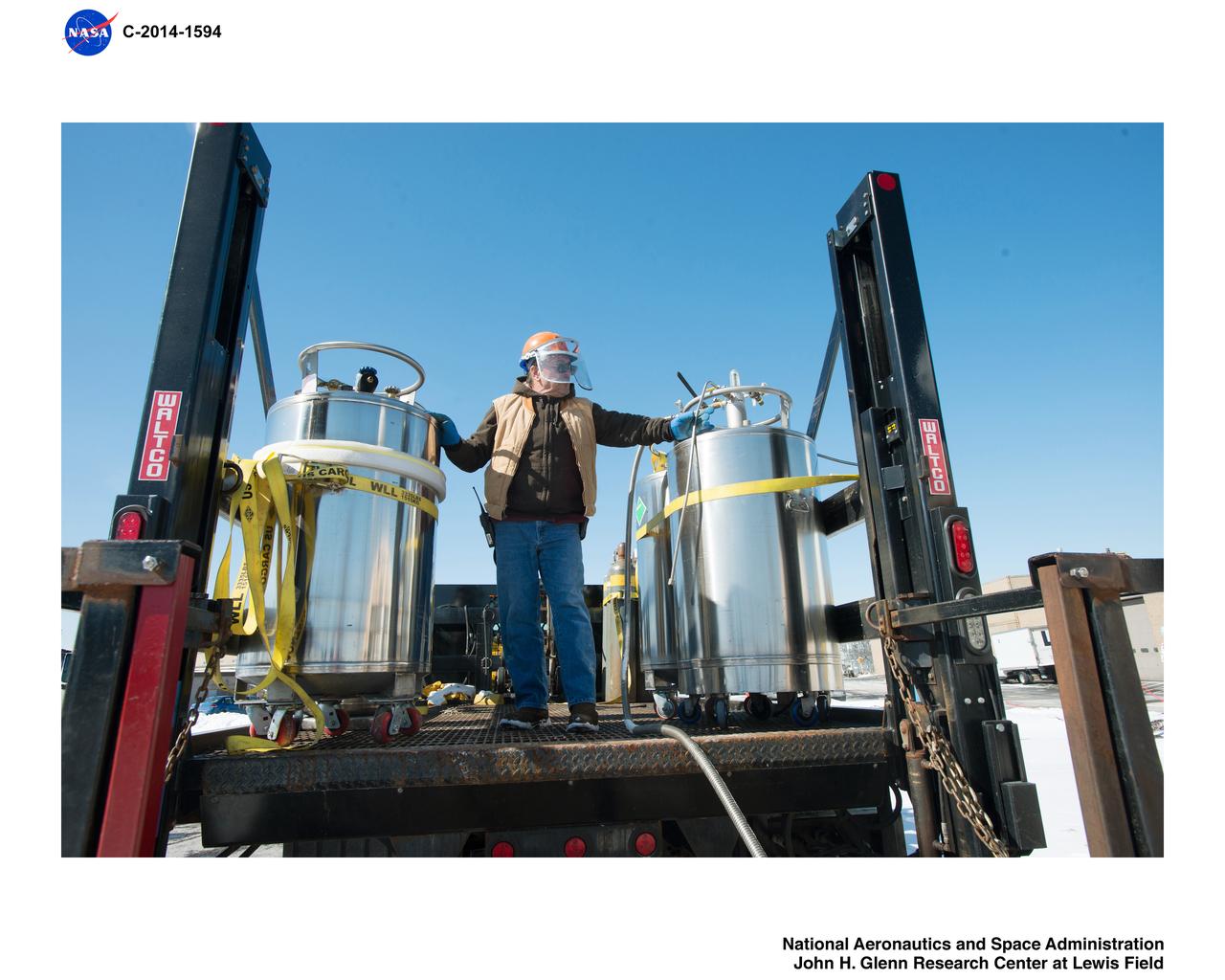
The Core Functions that make up Code C - Logistics Services
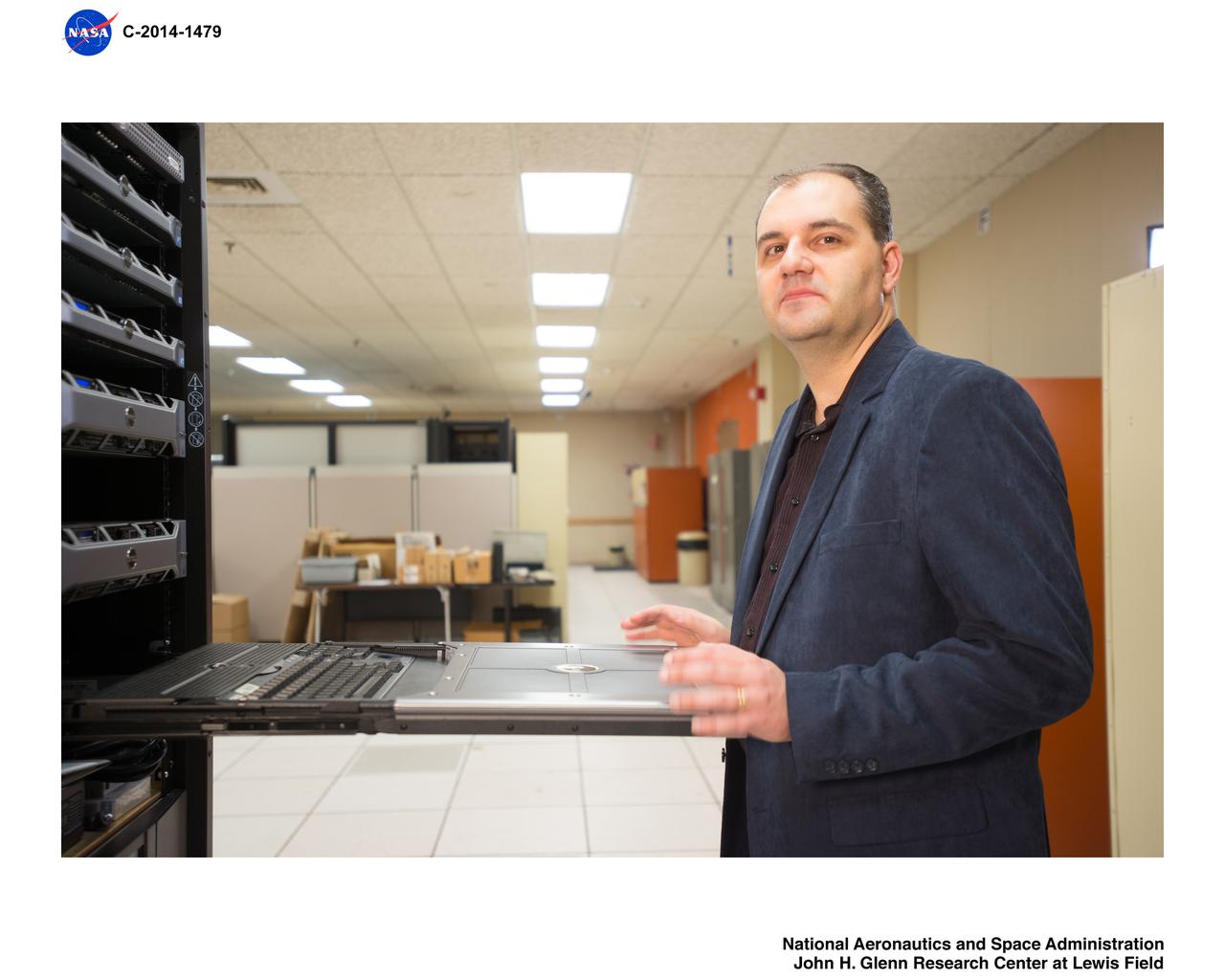
The Core Functions that make up Code C - Information Technology Services
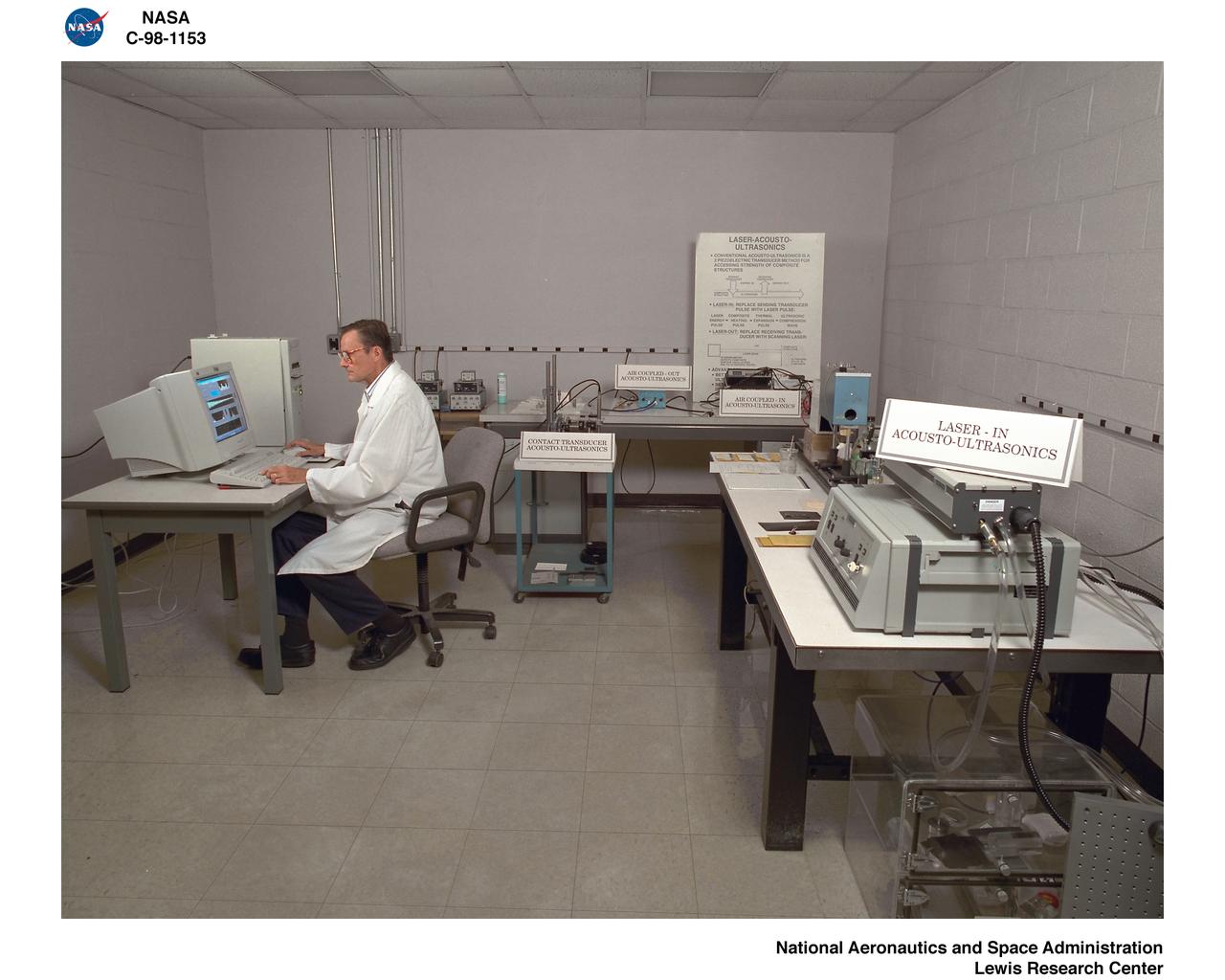
NON DESTRUCTIVE TESTING FACILITIES - SEE C 1998-1180 FOR CROSS REFERENCE
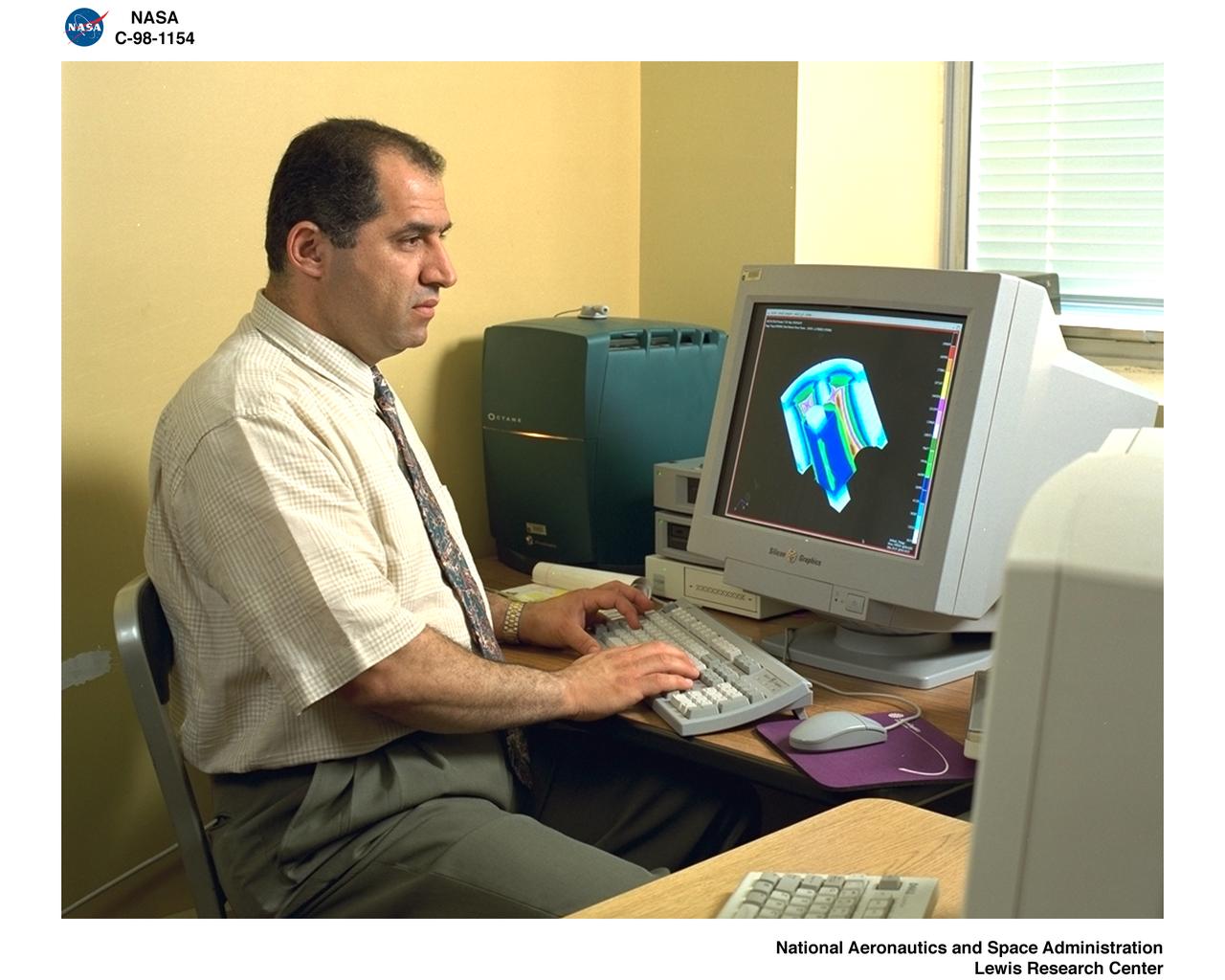
NON DESTRUCTIVE TESTING FACILITIES - SEE C-1998-1180 FOR CROSS REFERENCE
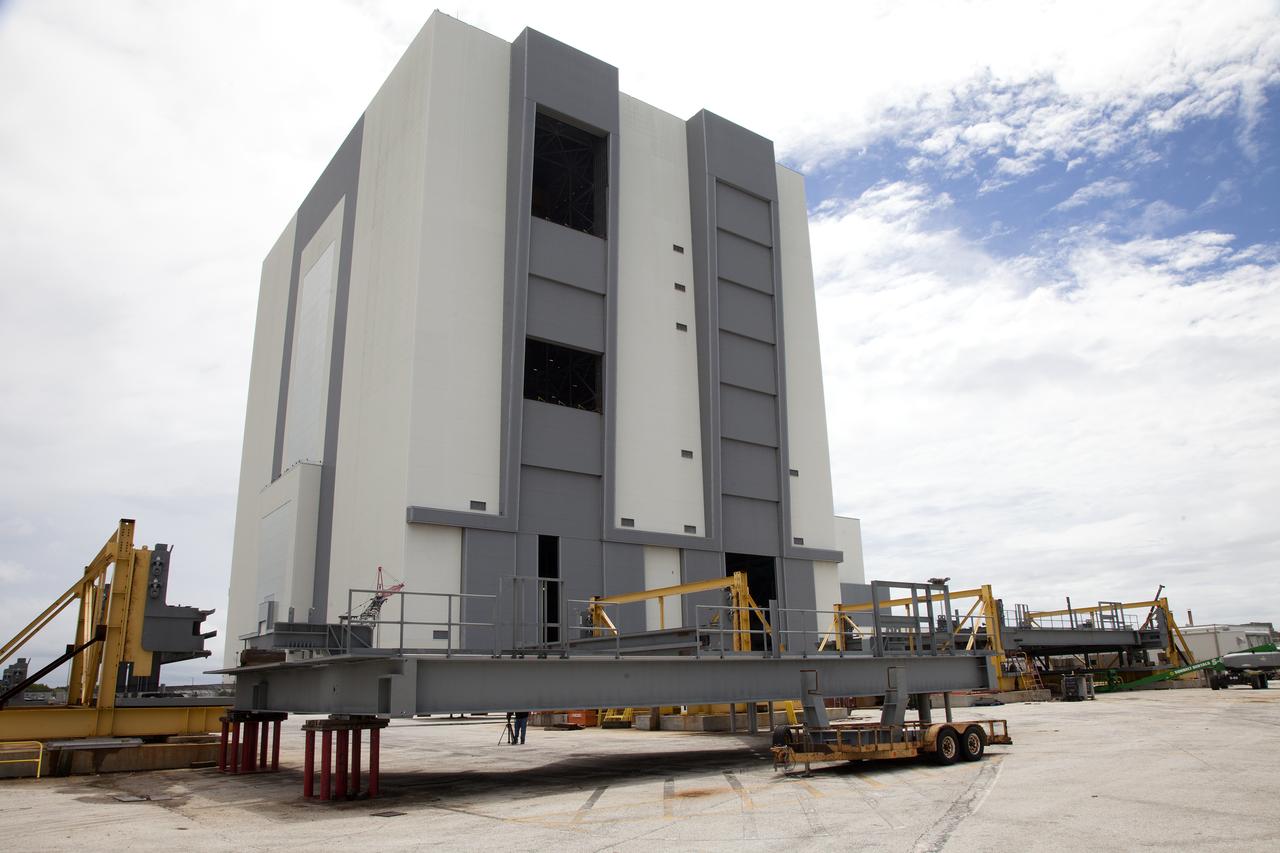
A section of the second half of the C-level platforms, C North, for NASA’s Space Launch System (SLS) rocket, arrives at the agency’s Kennedy Space Center in Florida. The platform was offloaded from a heavy lift transport truck and secured in a staging area in the west parking lot of the Vehicle Assembly Building (VAB). The Ground Systems Development and Operations Program is overseeing upgrades and modifications to VAB High Bay 3 to support processing of the SLS and Orion spacecraft. A total of 10 levels of new platforms, 20 platform halves altogether, will surround the SLS rocket and Orion spacecraft and provide access for testing and processing.
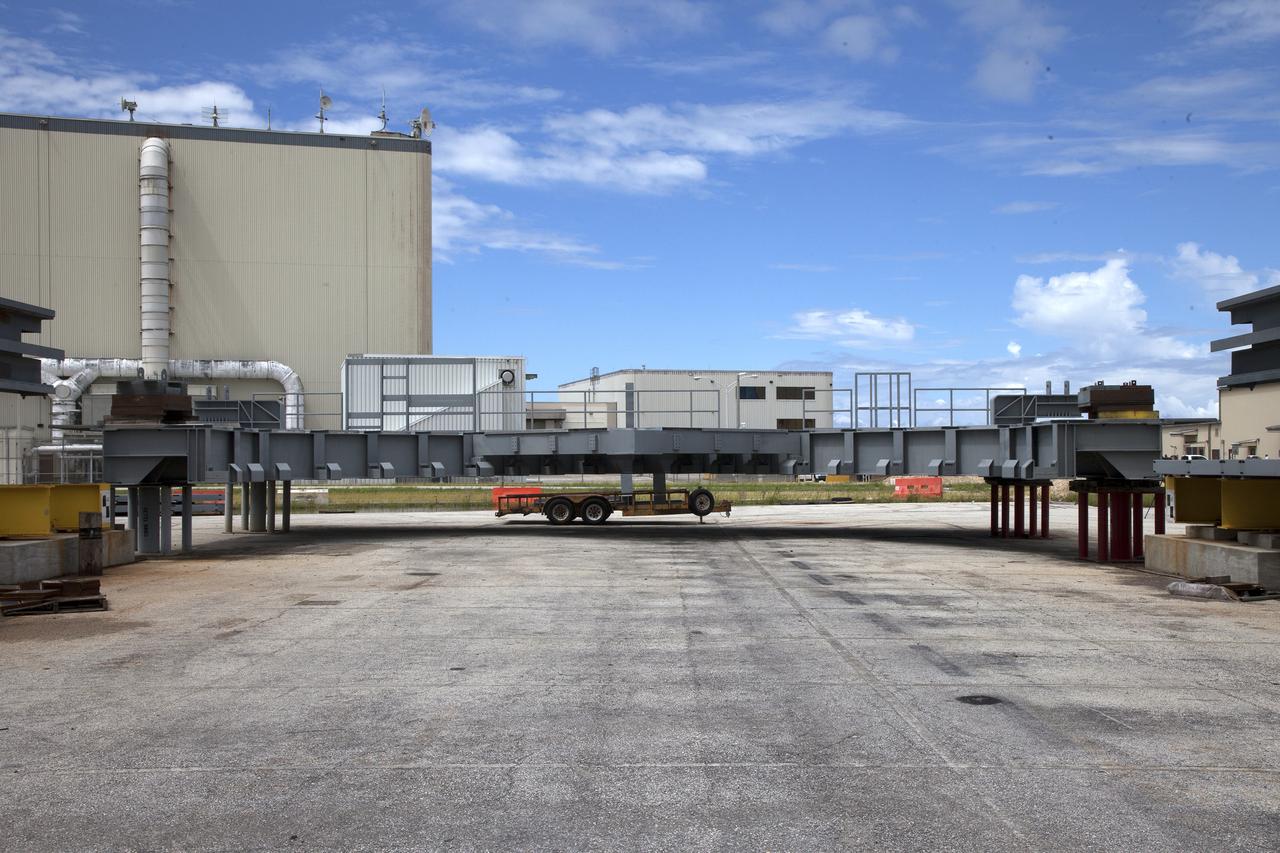
A section of the second half of the C-level platforms, C North, for NASA’s Space Launch System (SLS) rocket, arrives at the agency’s Kennedy Space Center in Florida. The platform was offloaded from a heavy lift transport truck and secured in a staging area in the west parking lot of the Vehicle Assembly Building (VAB). The Ground Systems Development and Operations Program is overseeing upgrades and modifications to VAB High Bay 3 to support processing of the SLS and Orion spacecraft. A total of 10 levels of new platforms, 20 platform halves altogether, will surround the SLS rocket and Orion spacecraft and provide access for testing and processing.
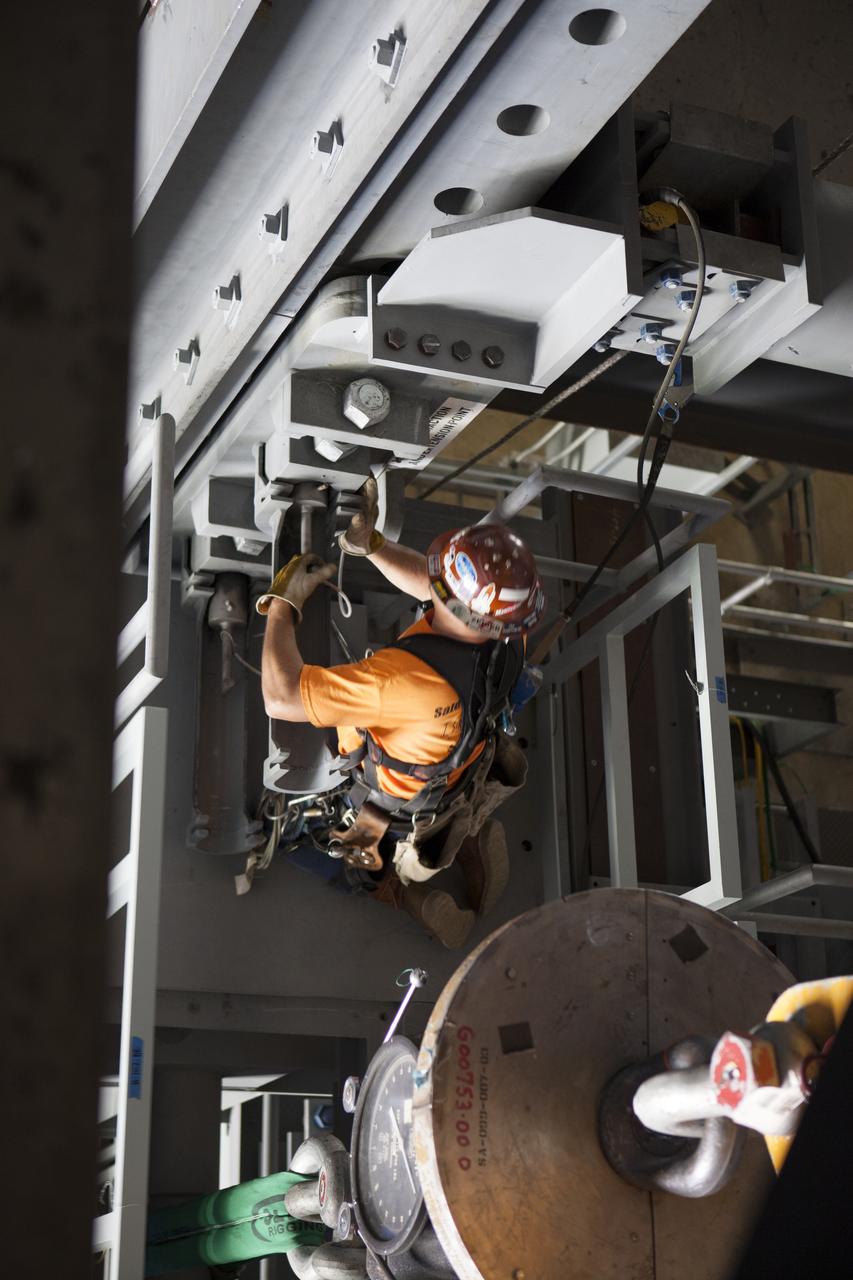
Inside the Vehicle Assembly Building at NASA’s Kennedy Space Center in Florida, a construction worker assist with the installation of the first half of the C-level work platforms, C south, for NASA’s Space Launch System (SLS) rocket. The large bolts that hold the platform in place on the south wall are being secured. The C platforms are the eighth of 10 levels of work platforms that will surround and provide access to the SLS rocket and Orion spacecraft for Exploration Mission 1. The Ground Systems Development and Operations Program is overseeing upgrades and modifications to VAB High Bay 3, including installation of the new work platforms, to prepare for NASA’s Journey to Mars.
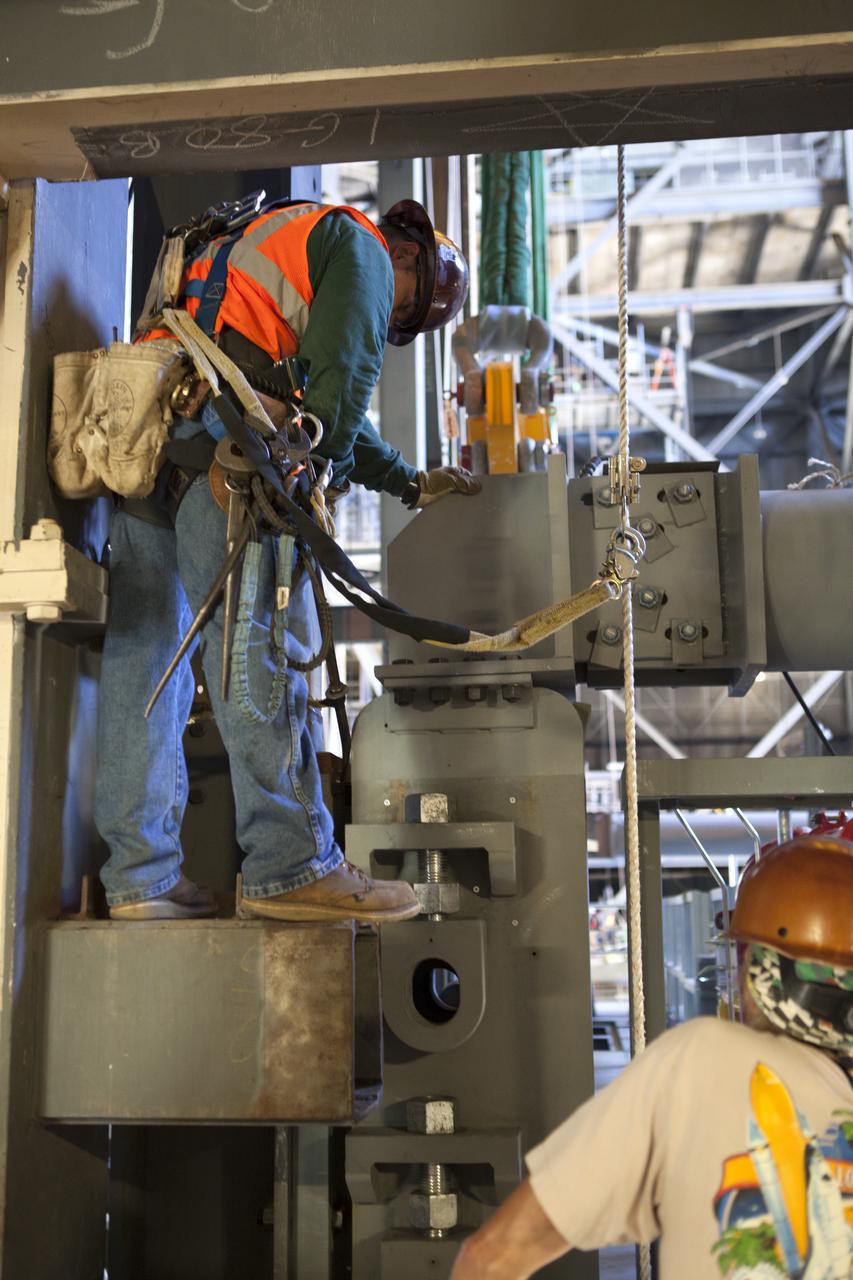
Inside the Vehicle Assembly Building at NASA’s Kennedy Space Center in Florida, construction workers assist with the installation of the first half of the C-level work platforms, C south, for NASA’s Space Launch System (SLS) rocket. The large bolts that hold the platform in place on the south wall are being secured. The C platforms are the eighth of 10 levels of work platforms that will surround and provide access to the SLS rocket and Orion spacecraft for Exploration Mission 1. The Ground Systems Development and Operations Program is overseeing upgrades and modifications to VAB High Bay 3, including installation of the new work platforms, to prepare for NASA’s Journey to Mars.
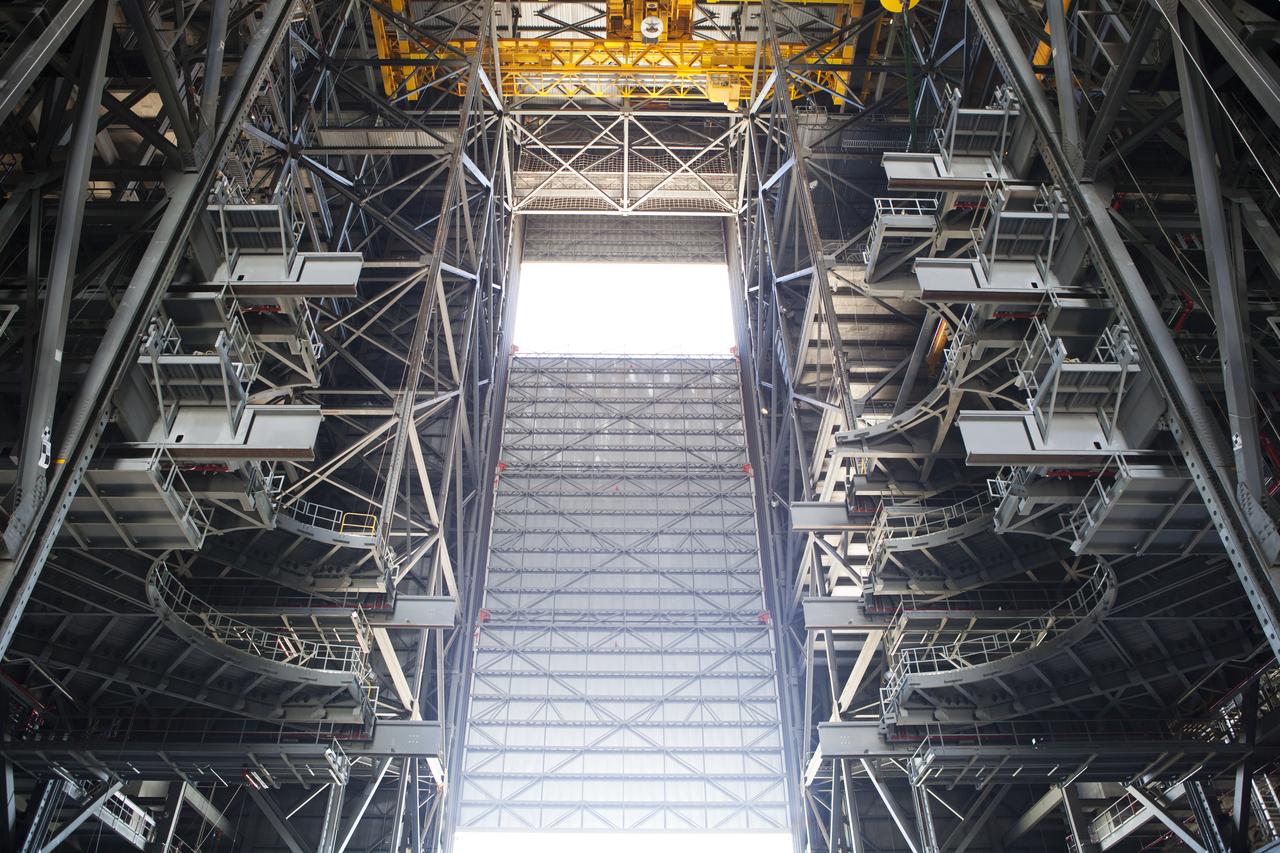
Inside the Vehicle Assembly Building at NASA’s Kennedy Space Center in Florida, the first half of the C-level work platforms, C south, for NASA’s Space Launch System (SLS) rocket, has been installed on the south side of the high bay. In view below are several levels of previously installed platforms. The C platforms are the eighth of 10 levels of work platforms that will surround and provide access to the SLS rocket and Orion spacecraft for Exploration Mission 1. The Ground Systems Development and Operations Program is overseeing upgrades and modifications to VAB High Bay 3, including installation of the new work platforms, to prepare for NASA’s Journey to Mars.
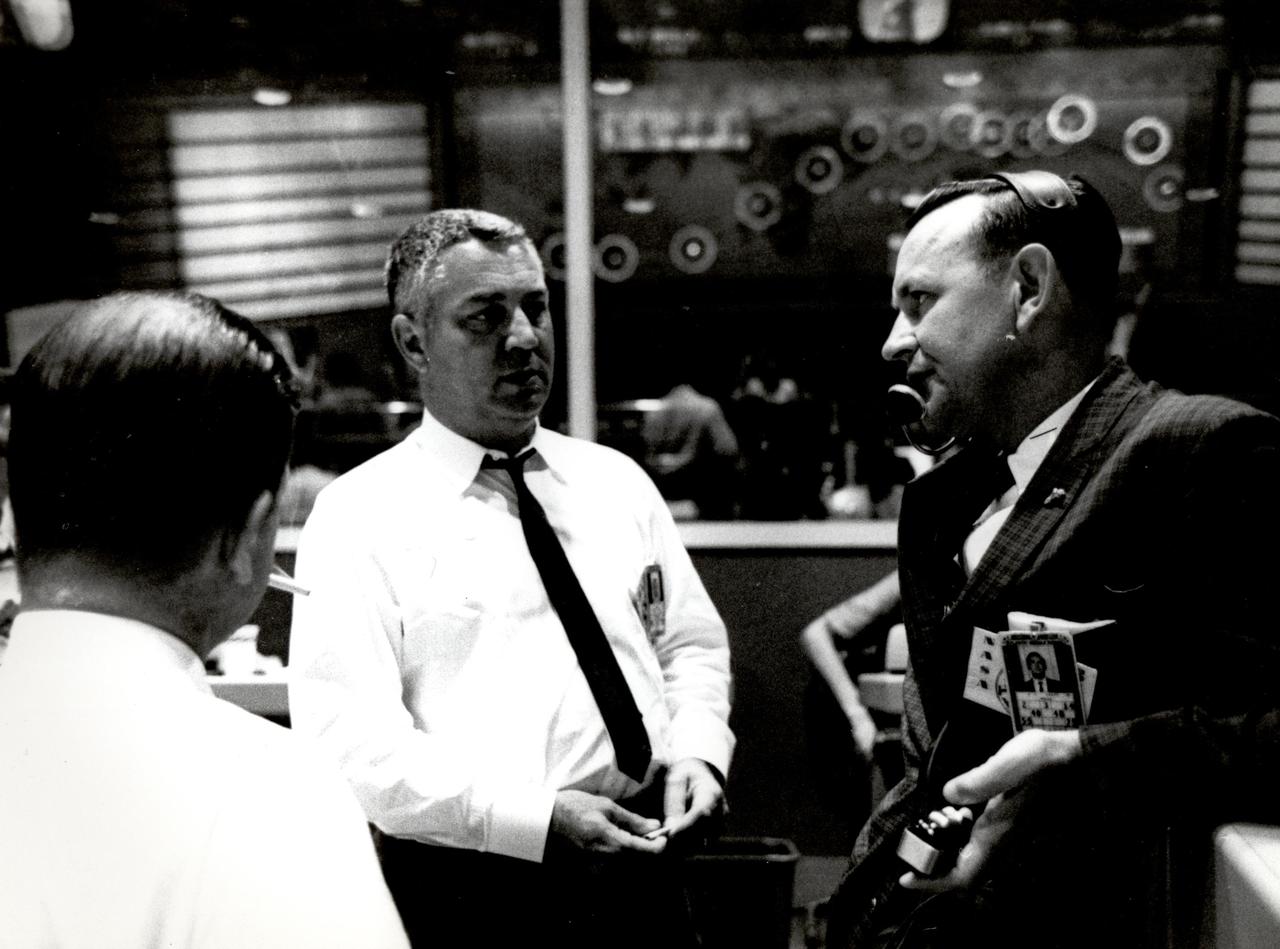
Inside Mercury flight control, Walter C. Williams, associate director for Project Mercury operations (center) listens to Christopher Kraft, flight director (right).
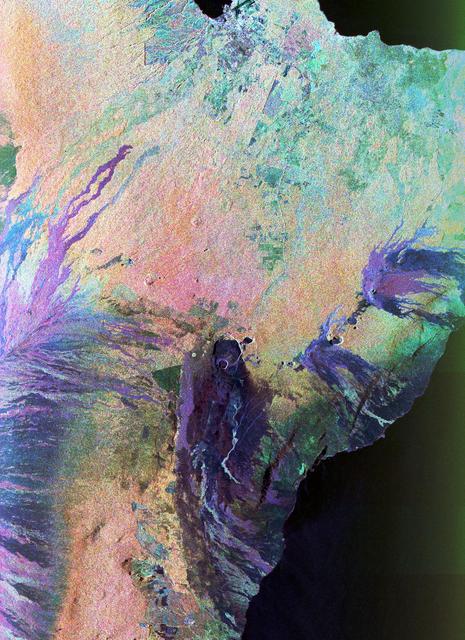
This color composite C-band and L-band image of the Kilauea volcano on the Big Island of Hawaii was acquired by NASA Spaceborne Imaging Radar-C/X-band Synthetic Aperture Radar SIR-C/X-SAR flying on space shuttle Endeavour.
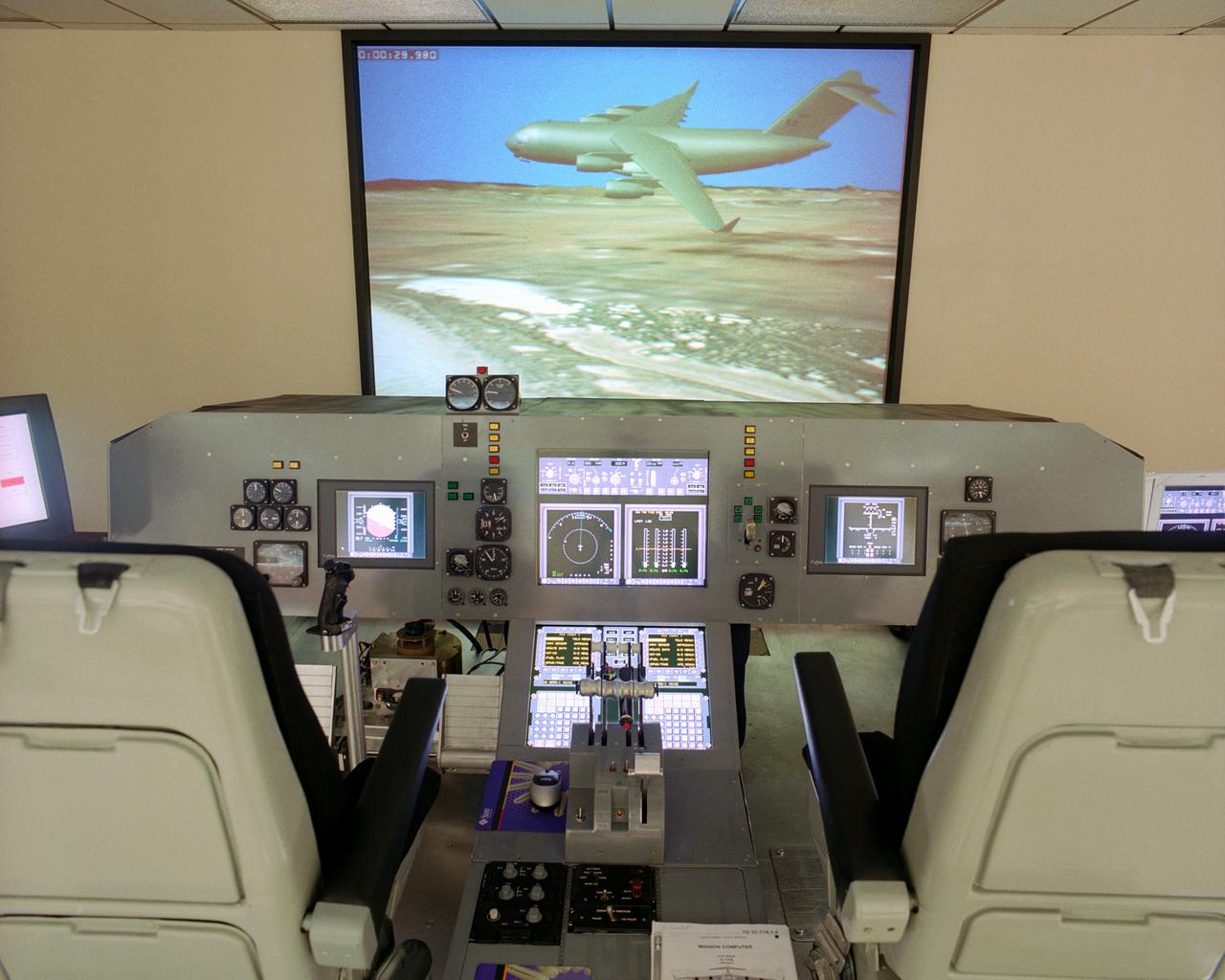
The C-17 simulator at NASA's Dryden Flight Research Center, Edwards, California. Simulators offer a safe and economical alternative to actual flights to gather data, as well as being excellent facilities for pilot practice and training.

Operation IceBridge team members board a U.S. Air Force C-17 transport aircraft for a flight from Christchurch, New Zealand, to the U.S. Antarctic Program's McMurdo Station in Antarctica on Nov. 12, 2013. The C-17s that ferry people, equipment and supplies to Antarctica are operated by the U.S. Air Force's 62nd and 446th Airlift Wings based at Joint Base Lewis-McChord near Seattle, Wash. NASA's Operation IceBridge is an airborne science mission to study Earth's polar ice. In 2013, IceBridge is conducting its first field campaign directly from Antarctica. For more information about IceBridge, visit: <a href="http://www.nasa.gov/icebridge" rel="nofollow">www.nasa.gov/icebridge</a> Credit: NASA/Goddard/Jefferson Beck <b><a href="http://www.nasa.gov/audience/formedia/features/MP_Photo_Guidelines.html" rel="nofollow">NASA image use policy.</a></b> <b><a href="http://www.nasa.gov/centers/goddard/home/index.html" rel="nofollow">NASA Goddard Space Flight Center</a></b> enables NASA’s mission through four scientific endeavors: Earth Science, Heliophysics, Solar System Exploration, and Astrophysics. Goddard plays a leading role in NASA’s accomplishments by contributing compelling scientific knowledge to advance the Agency’s mission. <b>Follow us on <a href="http://twitter.com/NASA_GoddardPix" rel="nofollow">Twitter</a></b> <b>Like us on <a href="http://www.facebook.com/pages/Greenbelt-MD/NASA-Goddard/395013845897?ref=tsd" rel="nofollow">Facebook</a></b> <b>Find us on <a href="http://instagram.com/nasagoddard?vm=grid" rel="nofollow">Instagram</a></b>
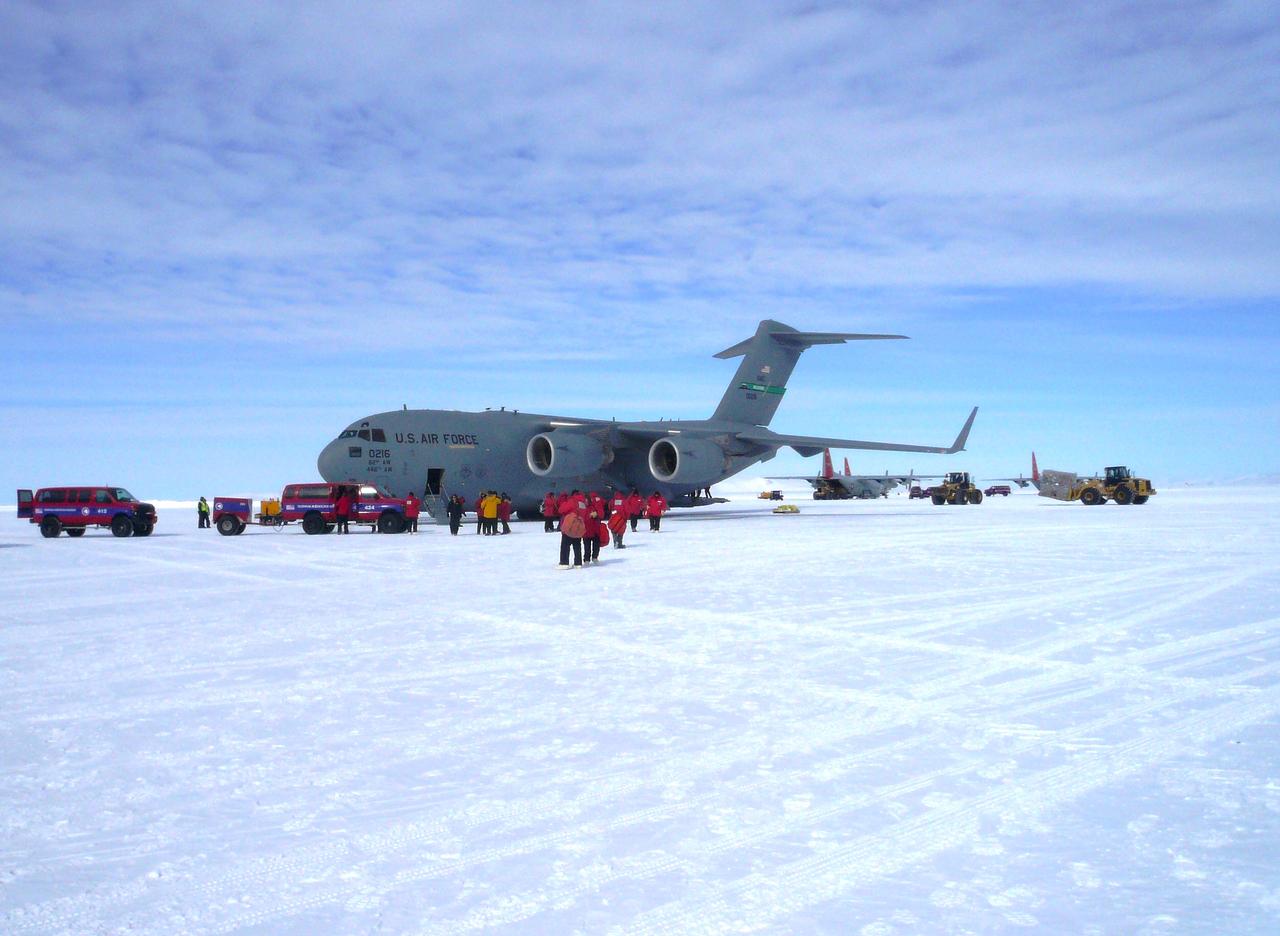
A U.S. Air Force C-17 transport aircraft sits on the sea ice runway at the National Science Foundation's McMurdo Station in Antarctica following a transit flight from Christchurch, New Zealand that transported IceBridge personnel and gear on Nov. 12, 2013. The C-17 aircraft that fly to Antarctica are operated by the U.S. Air Force's 62nd and 446th Airlift Wings based at Joint Base Lewis-McChord near Seattle, Wash. Credit: NASA/Goddard/George Hale NASA's Operation IceBridge is an airborne science mission to study Earth's polar ice. For more information about IceBridge, visit: <a href="http://www.nasa.gov/icebridge" rel="nofollow">www.nasa.gov/icebridge</a> <b><a href="http://www.nasa.gov/audience/formedia/features/MP_Photo_Guidelines.html" rel="nofollow">NASA image use policy.</a></b> <b><a href="http://www.nasa.gov/centers/goddard/home/index.html" rel="nofollow">NASA Goddard Space Flight Center</a></b> enables NASA’s mission through four scientific endeavors: Earth Science, Heliophysics, Solar System Exploration, and Astrophysics. Goddard plays a leading role in NASA’s accomplishments by contributing compelling scientific knowledge to advance the Agency’s mission. <b>Follow us on <a href="http://twitter.com/NASA_GoddardPix" rel="nofollow">Twitter</a></b> <b>Like us on <a href="http://www.facebook.com/pages/Greenbelt-MD/NASA-Goddard/395013845897?ref=tsd" rel="nofollow">Facebook</a></b> <b>Find us on <a href="http://instagram.com/nasagoddard?vm=grid" rel="nofollow">Instagram</a></b>

The shadow of the moon Tethys cuts across the C ring in this image taken as Saturn approaches its August 2009 equinox.
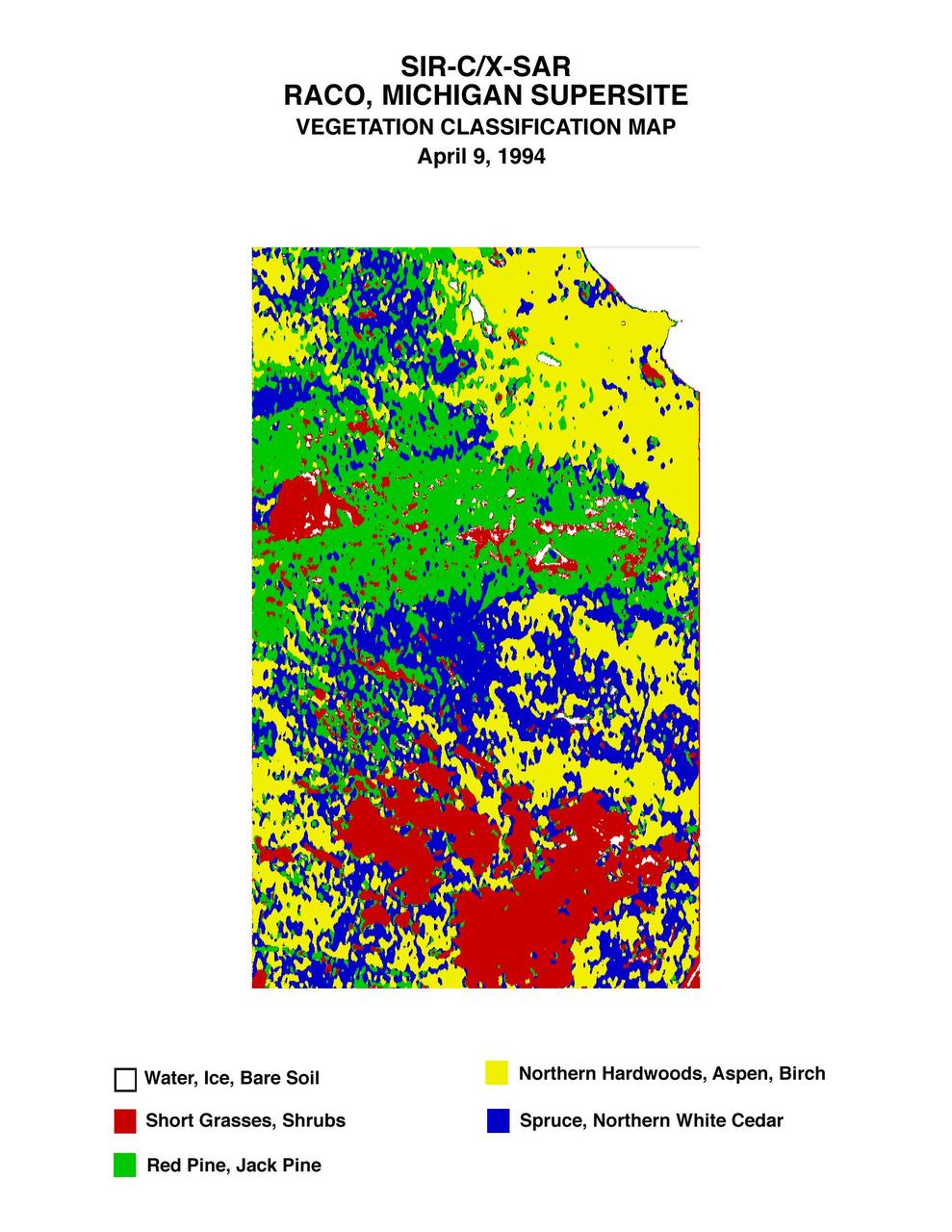
This is a vegetation map of the Raco, Michigan area produced from data acquired by NASA Spaceborne Imaging Radar C/X-Band Synthetic Aperture Radar SIR-C/X-SAR onboard space shuttle Endeavour.
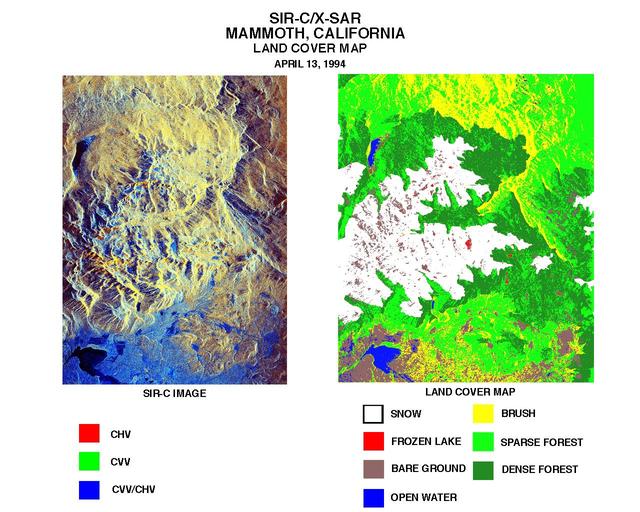
These two images were created using data from NASA Spaceborne Imaging Radar C/X-Band Synthetic Aperture Radar SIR-C/X-SAR.
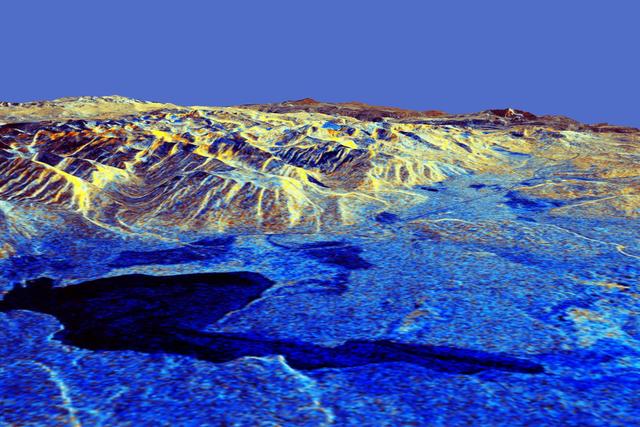
This is a three-dimensional perspective of Mammoth Mountain, California. This view was constructed by overlaying a NASA Spaceborne Imaging Radar-C SIR-C radar image on a U.S. Geological Survey digital elevation map.
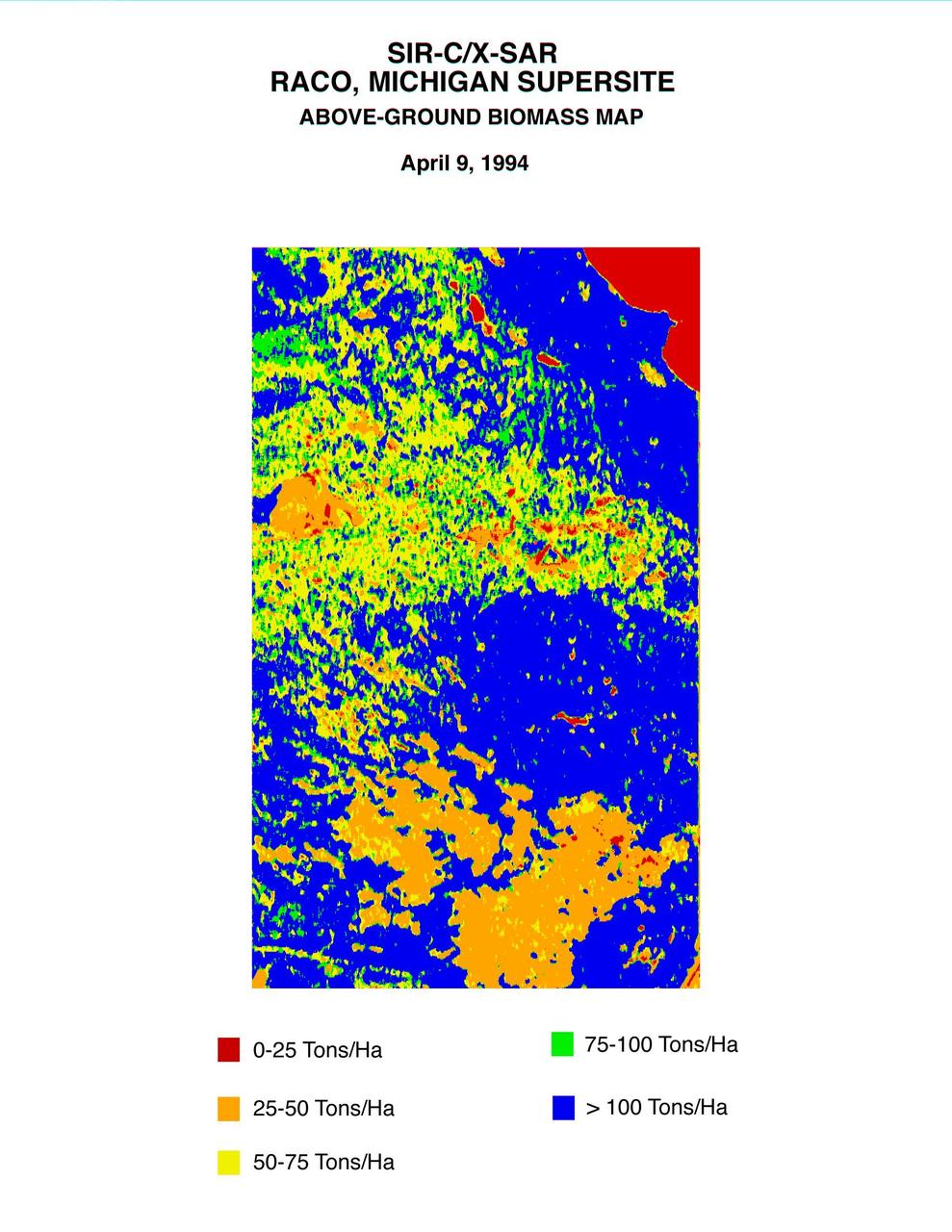
This biomass map of the Raco, Michigan, area was produced from data acquired by NASA Spaceborne Imaging Radar C/X-Band Synthetic Aperture Radar SIR-C/X-SAR onboard space shuttle Endeavour.
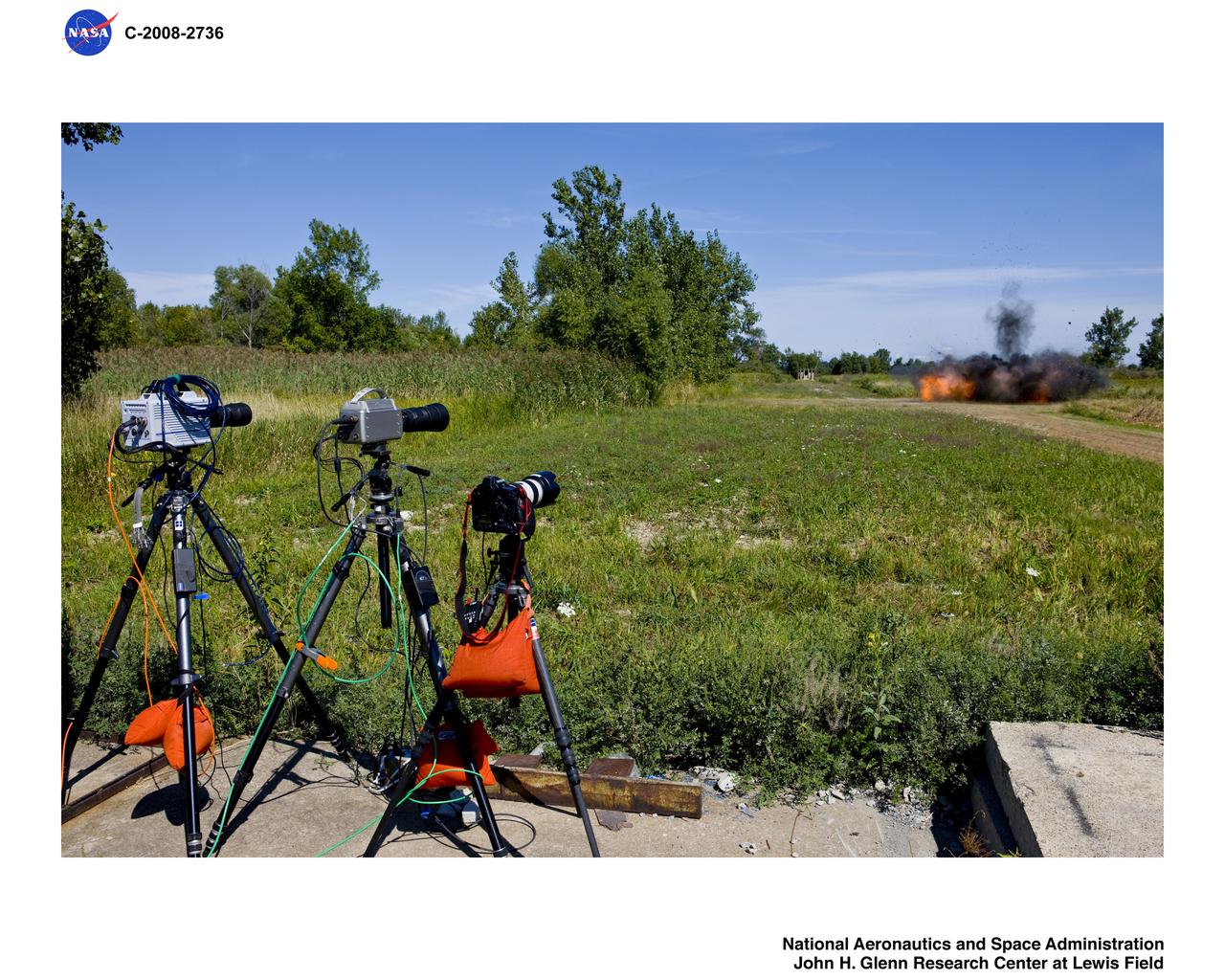
Documentation of explosives detonation at ARES of 10lbs. of C-4 Aerostat Video Program with 2 high speed cameras and digital still camera in foreground

SpaceX Crew-11 Walkout of the O&C
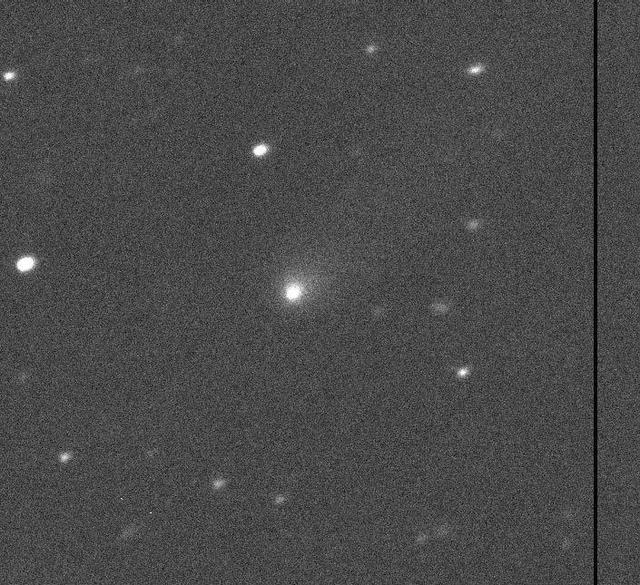
Comet C/2019 Q4 as imaged by the Canada-France-Hawaii Telescope on Hawaii's Big Island on Sept. 10, 2019. https://photojournal.jpl.nasa.gov/catalog/PIA23462
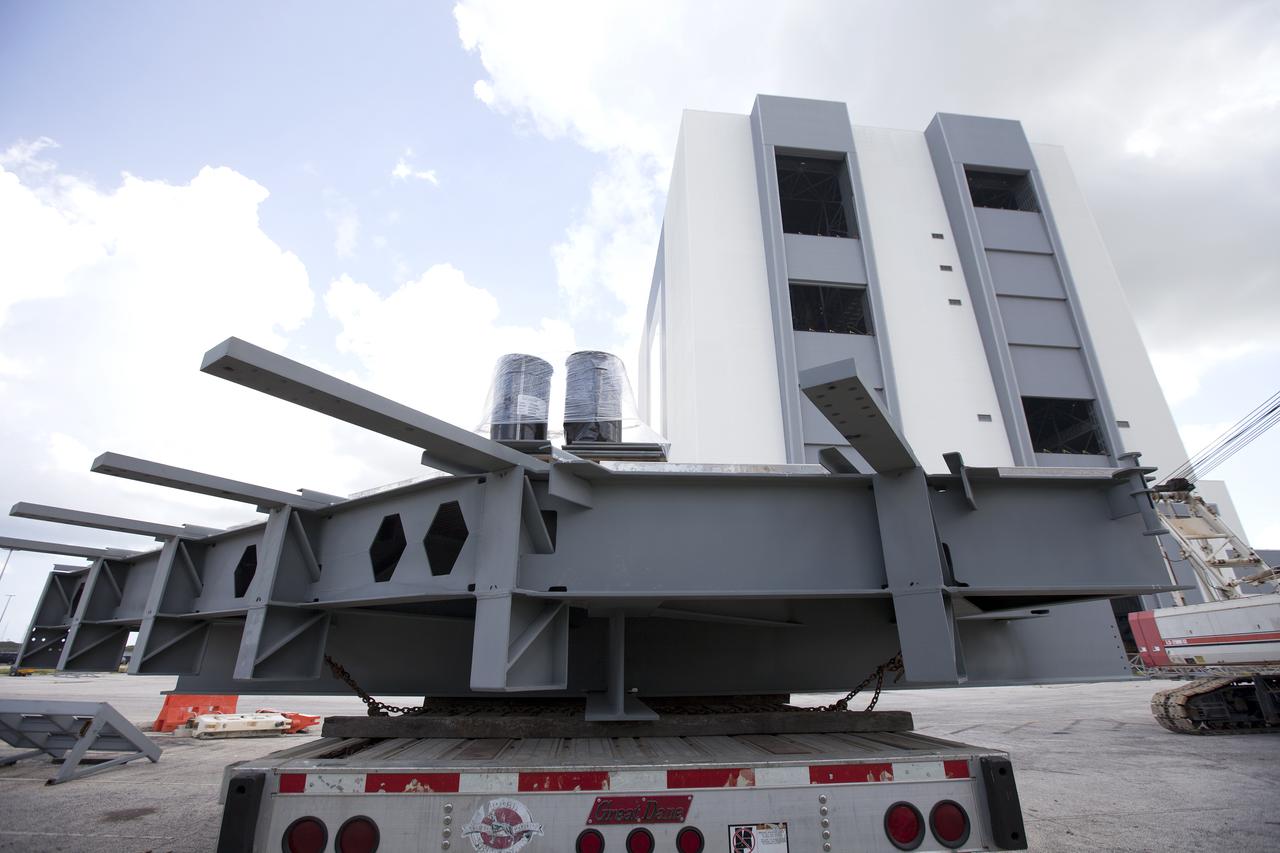
A heavy load transport truck from Tillett Heavy Hauling in Titusville, Florida, arrives at the Vehicle Assembly Building (VAB) at NASA’s Kennedy Space Center in Florida, carrying the second section of the first half of the C-level work platforms, C South, for the agency’s Space Launch System (SLS) rocket. The platform will be offloaded in the VAB staging area in the west parking lot. The Ground Systems Development and Operations Program is overseeing upgrades and modifications to VAB High Bay 3 to support processing of the SLS and Orion spacecraft. A total of 10 levels of new platforms, 20 platform halves altogether, will surround the SLS rocket and Orion spacecraft and provide access for testing and processing.

A heavy load transport truck from Tillett Heavy Hauling in Titusville, Florida, arrives at the Vehicle Assembly Building (VAB) at NASA’s Kennedy Space Center in Florida, carrying the second section of the first half of the C-level work platforms, C South, for the agency’s Space Launch System (SLS) rocket. The platform will be offloaded in the VAB staging area in the west parking lot. The Ground Systems Development and Operations Program is overseeing upgrades and modifications to VAB High Bay 3 to support processing of the SLS and Orion spacecraft. A total of 10 levels of new platforms, 20 platform halves altogether, will surround the SLS rocket and Orion spacecraft and provide access for testing and processing.
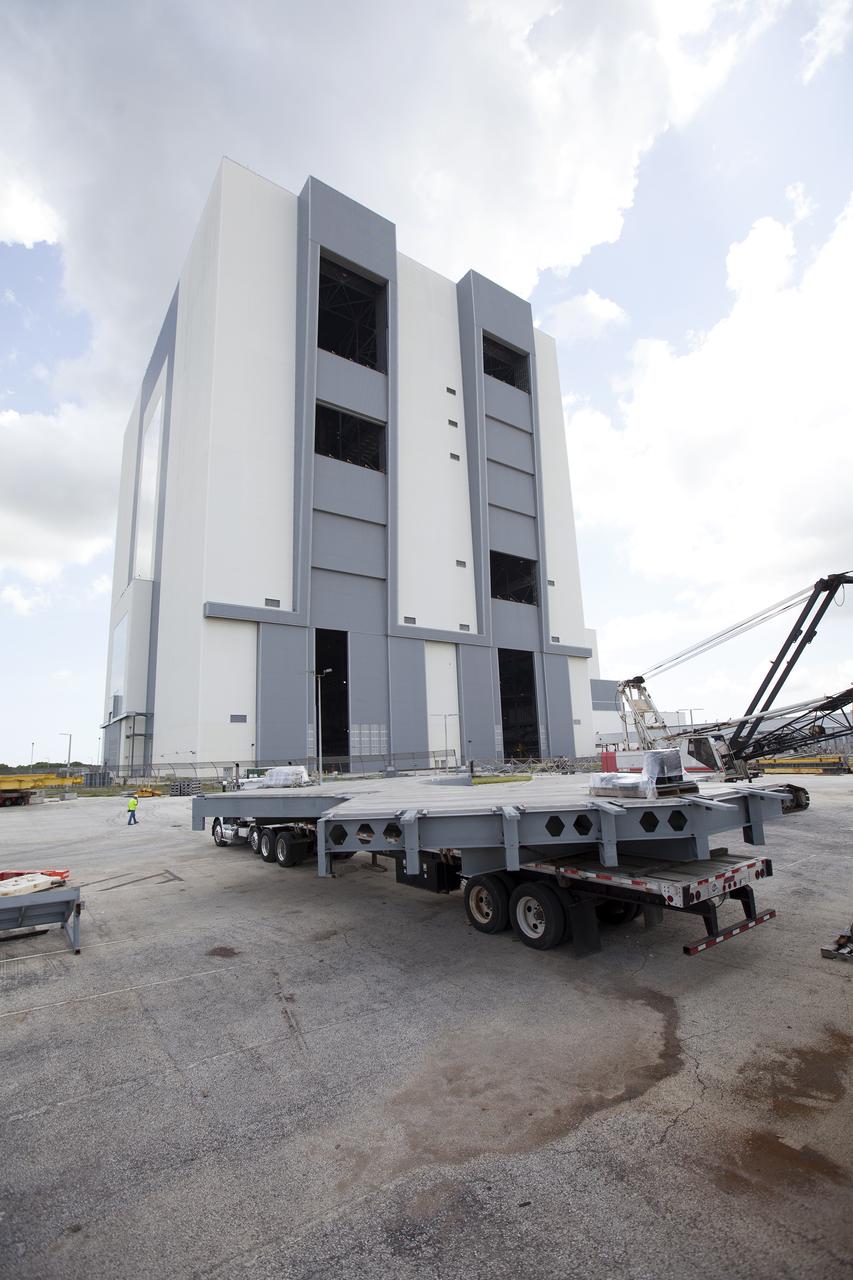
A heavy load transport truck from Tillett Heavy Hauling in Titusville, Florida, arrives at the Vehicle Assembly Building (VAB) at NASA’s Kennedy Space Center in Florida, carrying the second section of the first half of the C-level work platforms, C South, for the agency’s Space Launch System (SLS) rocket. The platform will be offloaded in the VAB staging area in the west parking lot. The Ground Systems Development and Operations Program is overseeing upgrades and modifications to VAB High Bay 3 to support processing of the SLS and Orion spacecraft. A total of 10 levels of new platforms, 20 platform halves altogether, will surround the SLS rocket and Orion spacecraft and provide access for testing and processing.
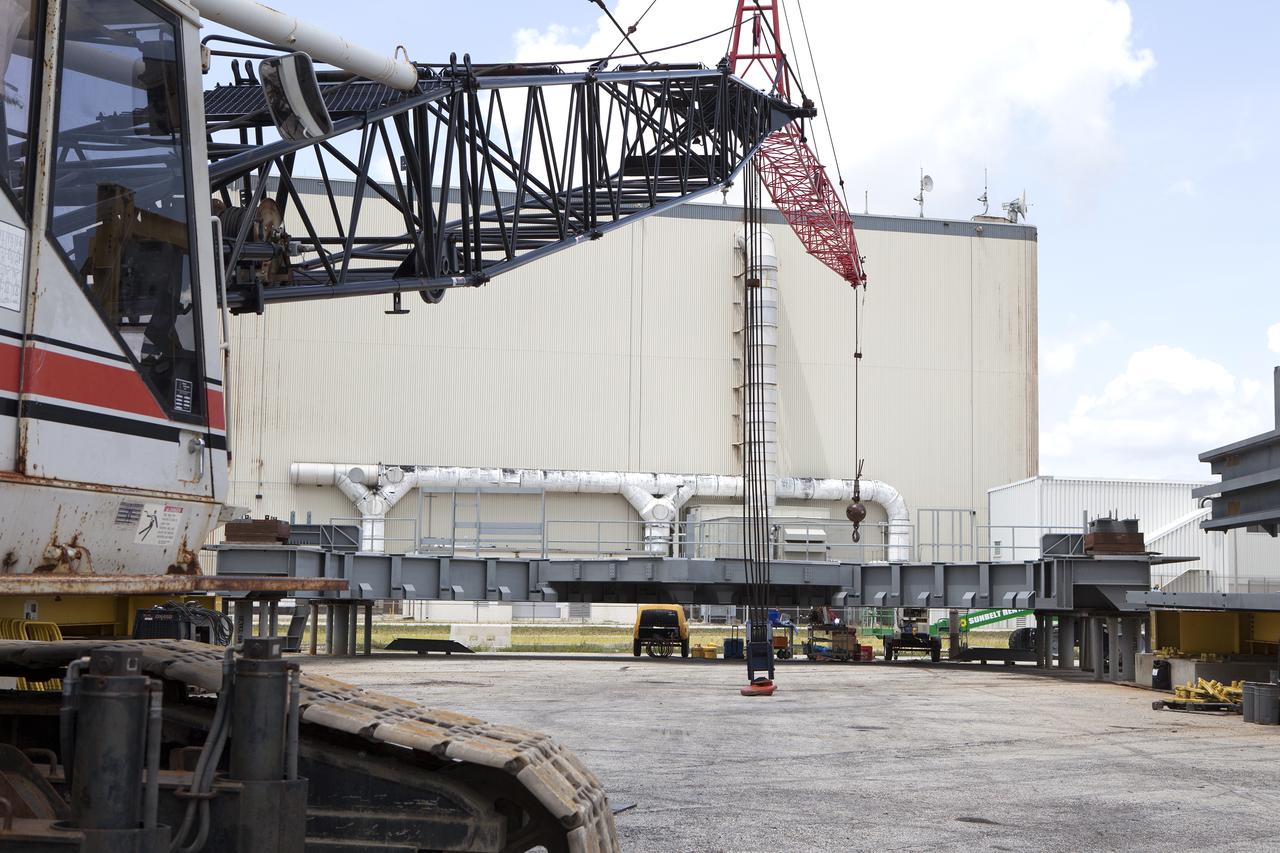
The second section of the first half of the C-level work platforms, C South, for NASA’s Space Launch System (SLS) rocket was offloaded from a heavy transport truck in a staging area on the west side of the Vehicle Assembly Building (VAB) at the agency’s Kennedy Space Center in Florida. The Ground Systems Development and Operations Program is overseeing upgrades and modifications to VAB High Bay 3 to support processing of the SLS and Orion spacecraft. A total of 10 levels of new platforms, 20 platform halves altogether, will surround the SLS rocket and Orion spacecraft and provide access for testing and processing.
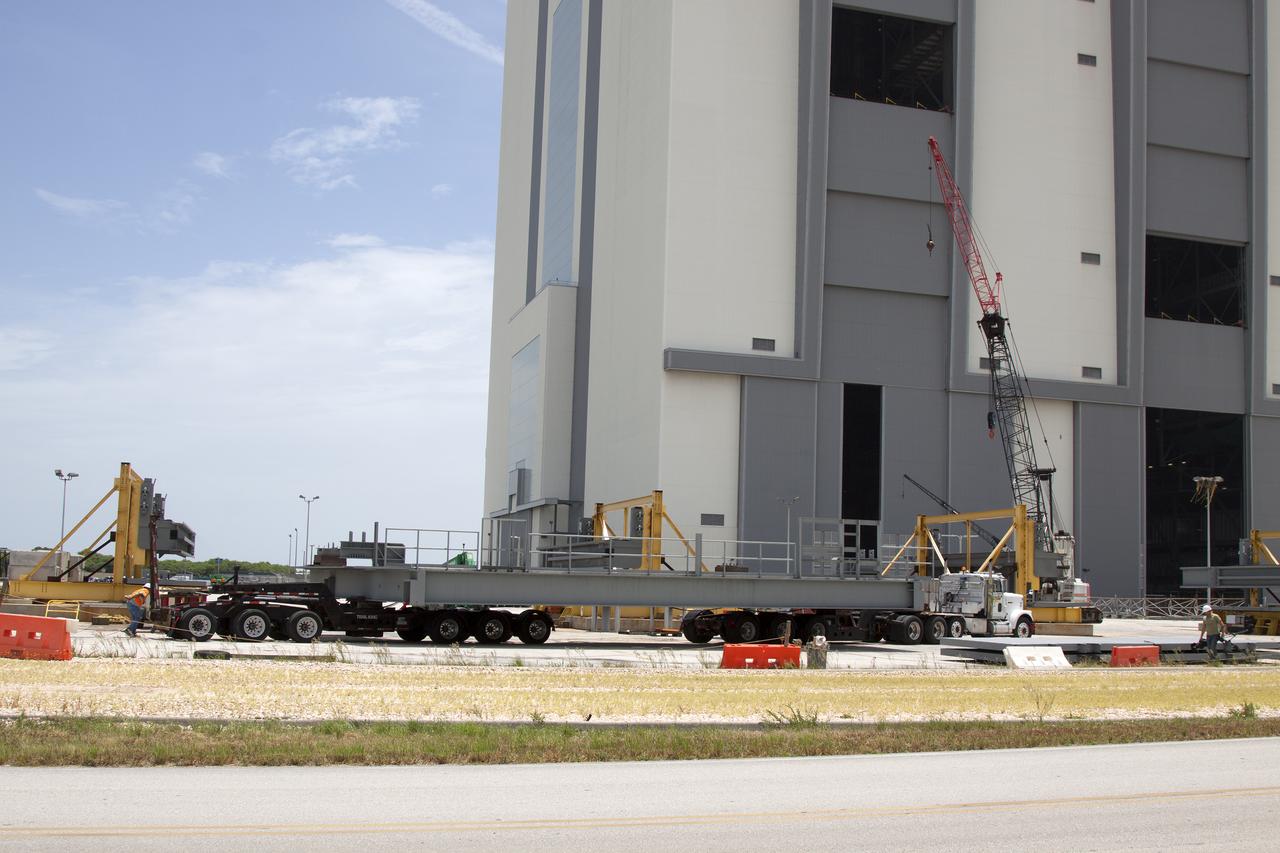
A heavy load transport truck from Tillett Heavy Hauling in Titusville, Florida, arrives at the Vehicle Assembly Building (VAB) at NASA’s Kennedy Space Center in Florida, carrying a section of the first half of the C-level work platforms, C south, for the agency’s Space Launch System (SLS) rocket. The platform will be delivered to the VAB staging area in the west parking lot. The Ground Systems Development and Operations Program is overseeing upgrades and modifications to VAB High Bay 3 to support processing of the SLS and Orion spacecraft. A total of 10 levels of new platforms, 20 platform halves altogether, will surround the SLS rocket and Orion spacecraft and provide access for testing and processing.
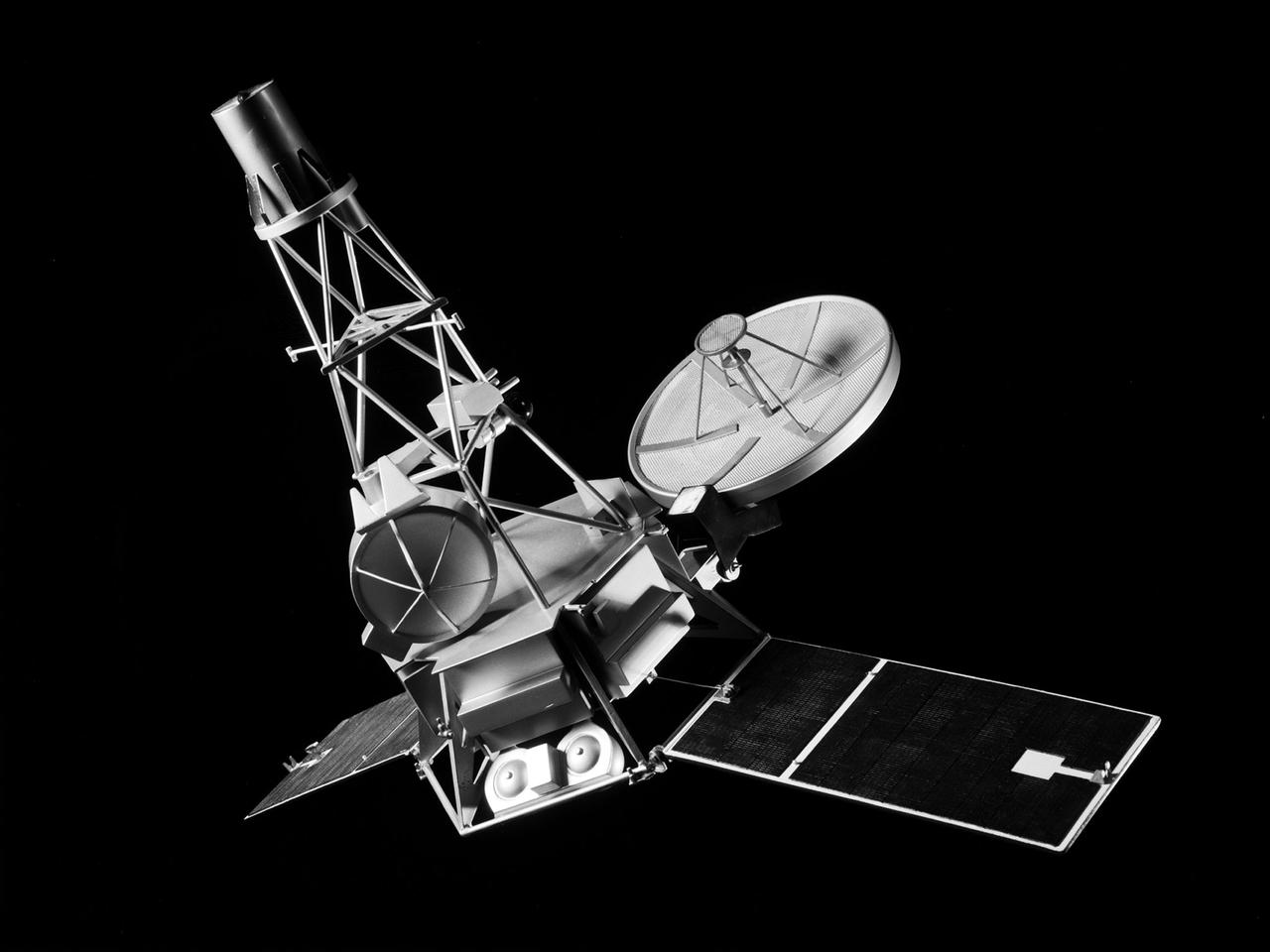
A model of the Mariner-C spacecraft at the National Aeronautics and Space Administration (NASA) Lewis Research Center for a June 1964 Conference on New Technology. Mariner-C and Mariner-D were identical spacecraft designed by the Jet Propulsion Laboratory to flyby Mars and photograph the Martian surface. Mariner-C was launched on November 4, 1964, but the payload shroud did not jettison properly and the spacecraft’s battery power did not function. The mission ended unsuccessfully two days later. Mariner-D was launched as designed on November 28, 1964 and became the first successful mission to Mars. It was the first time a planet was photographed from space. Mariner-D’s 21 photographs revealed an inhospitable and barren landscape. The two Mariner spacecraft were launched by Atlas-Agena-D rockets. Lewis had taken over management of the Agena Program in October 1962. There had been five failures and two partial failures in the 17 Agena launches before being taken over by NASA Lewis. Lewis, however, oversaw 28 successful Agena missions between 1962 and 1968, including several Rangers and the Mariner Venus '67.
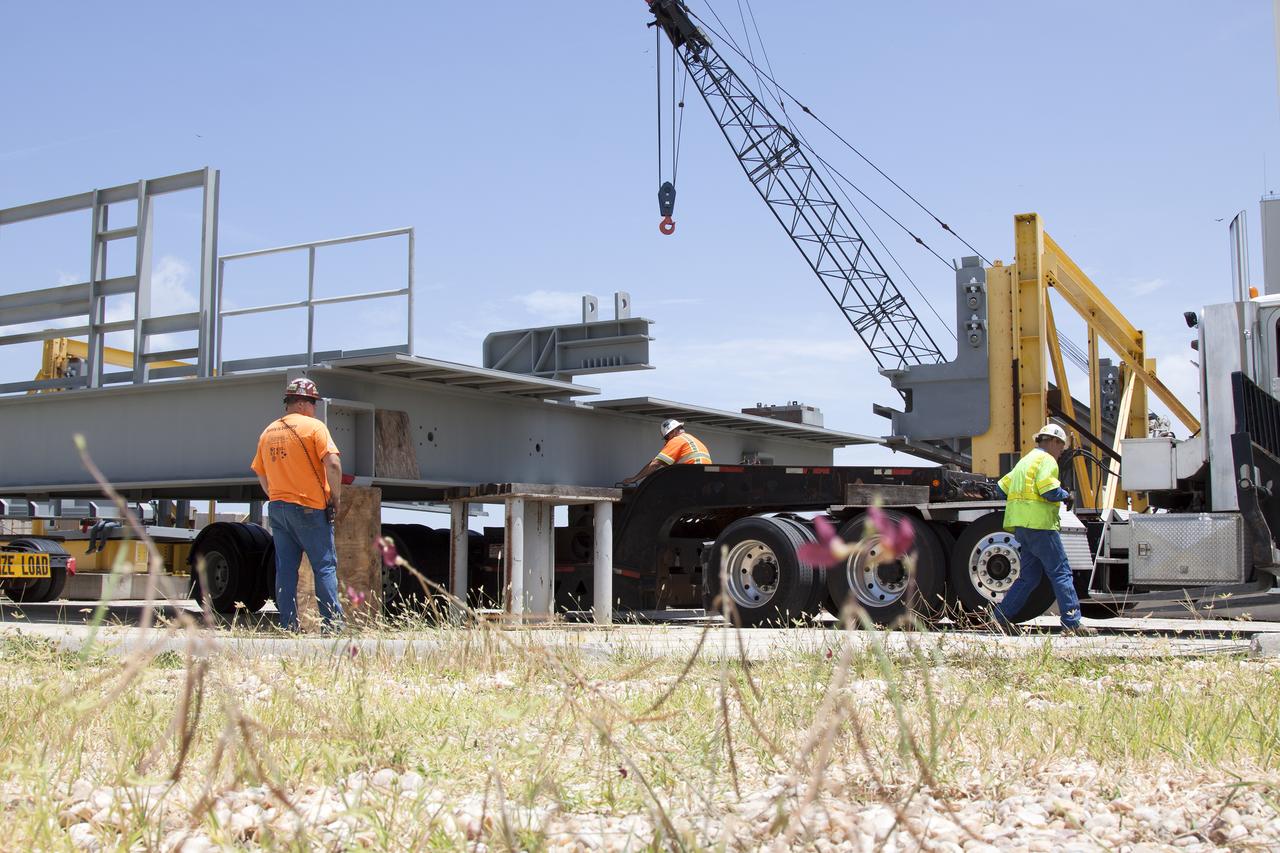
A heavy load transport truck from Tillett Heavy Hauling in Titusville, Florida, arrives at the Vehicle Assembly Building (VAB) at NASA’s Kennedy Space Center in Florida, carrying a section of the first half of the C-level work platforms, C South, for the agency’s Space Launch System (SLS) rocket. The platform is being lifted and transferred onto support stands in the VAB staging area in the west parking lot. The Ground Systems Development and Operations Program is overseeing upgrades and modifications to VAB High Bay 3 to support processing of the SLS and Orion spacecraft. A total of 10 levels of new platforms, 20 platform halves altogether, will surround the SLS rocket and Orion spacecraft and provide access for testing and processing.
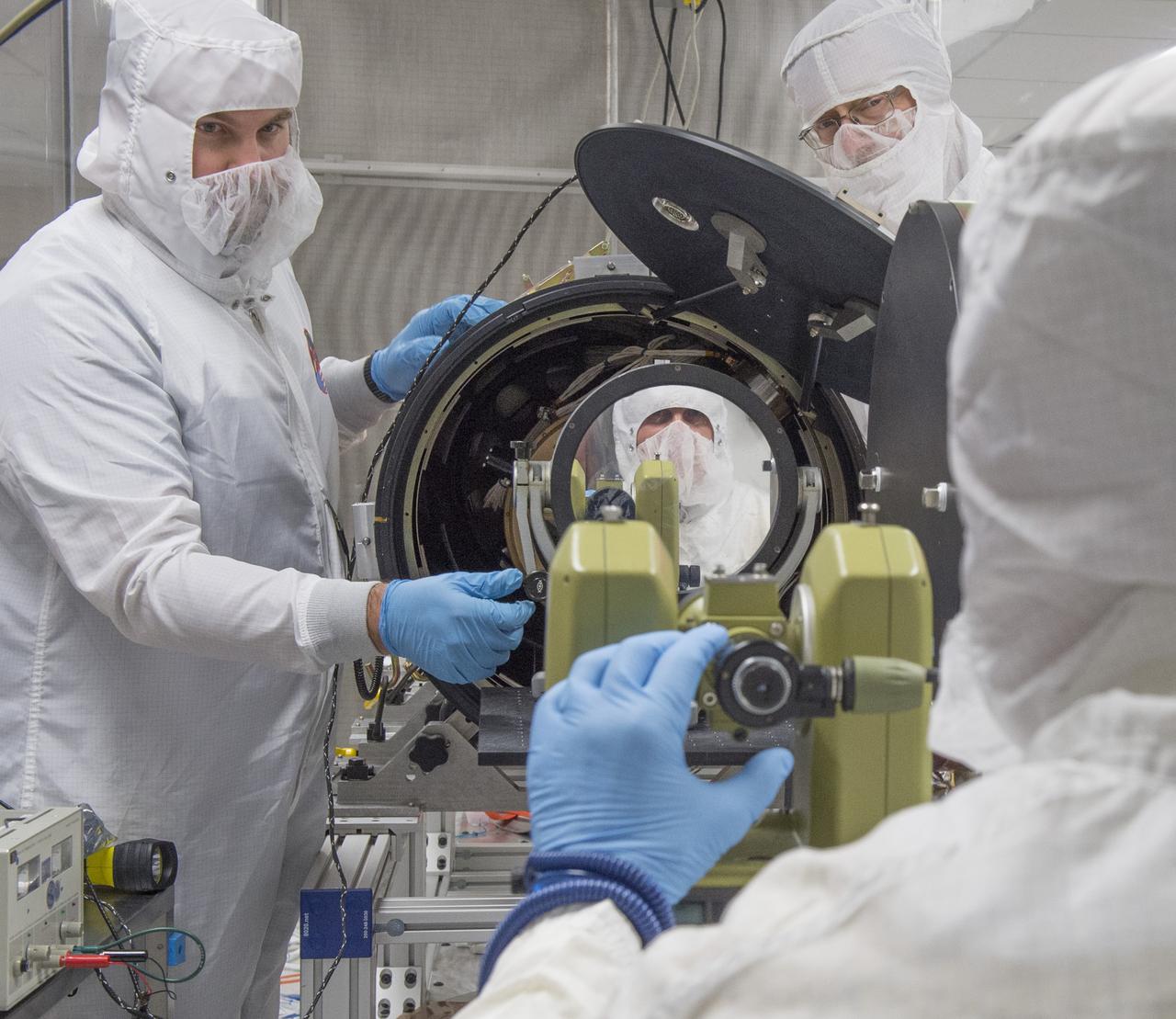
PATRICK CHAMPEY, (LEFT), DICK GATES, (RIGHT), AND BILL PODGORSKI, (SEATED), ALIGN SUN SENSOR TO HI-C TELESCOPE USING THEODOLITE

C-130 (NASA-707) in flight
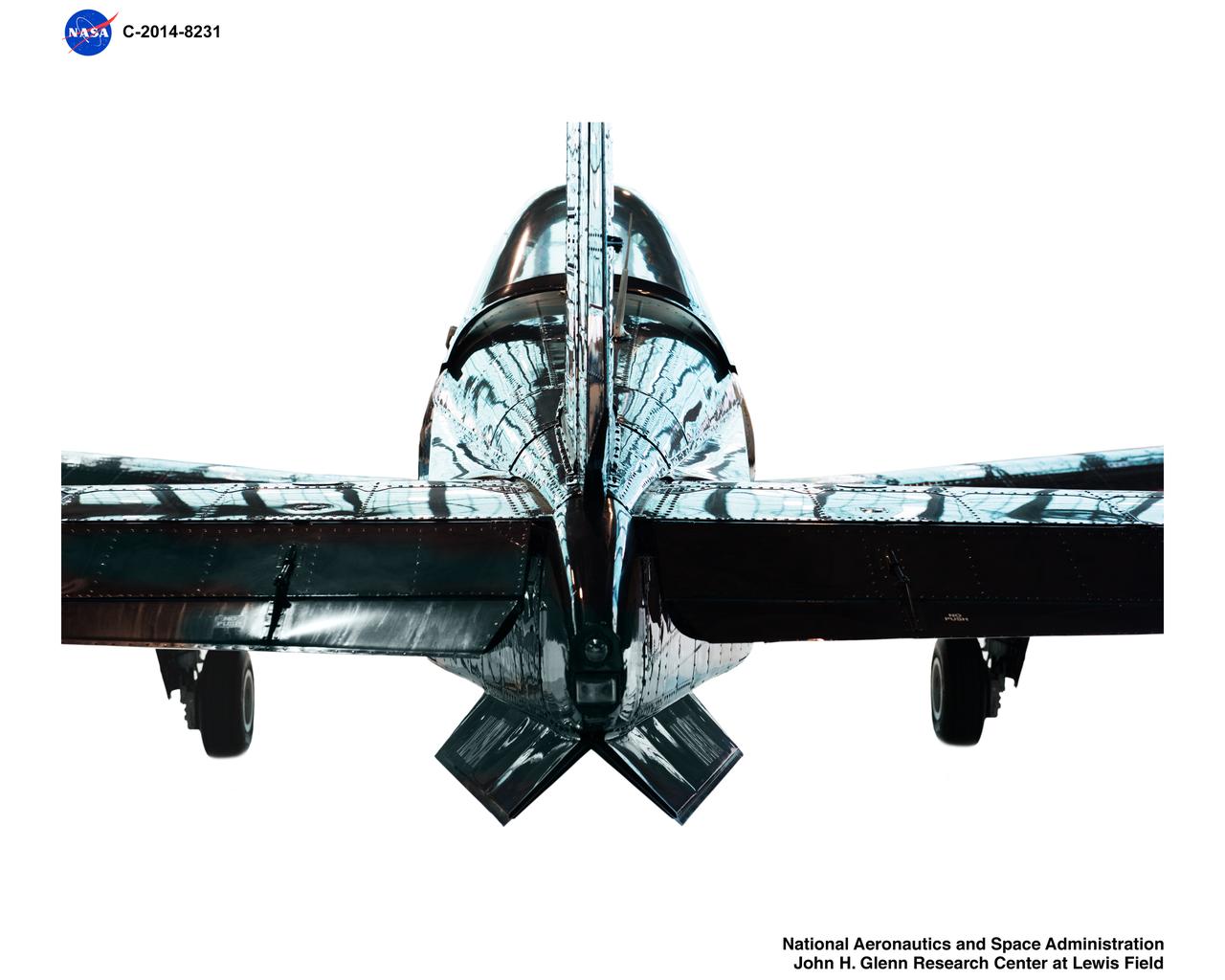
A T34-C aircraft reflects the large multi-paned windows on the Hangar doors. When NASA GRC obtained this T-34C from the Navy it was painted in ‚Äúthrowback‚Äù paint schemes from an earlier time in celebration of the 100th birthday of Naval Aviation. NASA kept it in the original paint job for posterity. This T-34C airplane will be GRCs surrogate aircraft for Unmanned Aircraft Systems in the National Airspace System aeronautics initiative. A T34-C aircraft reflects the large multi-paned windows on the Hangar doors. When NASA GRC obtained this T-34C from the Navy it was painted in “throwback” paint schemes from an earlier time in celebration of the 100th birthday of Naval Aviation. NASA kept it in the original paint job for posterity. This T-34C airplane will be GRCs surrogate aircraft for Unmanned Aircraft Systems in the National Airspace System aeronautics initiative.

C-130 NASA-707 in flight over foothills