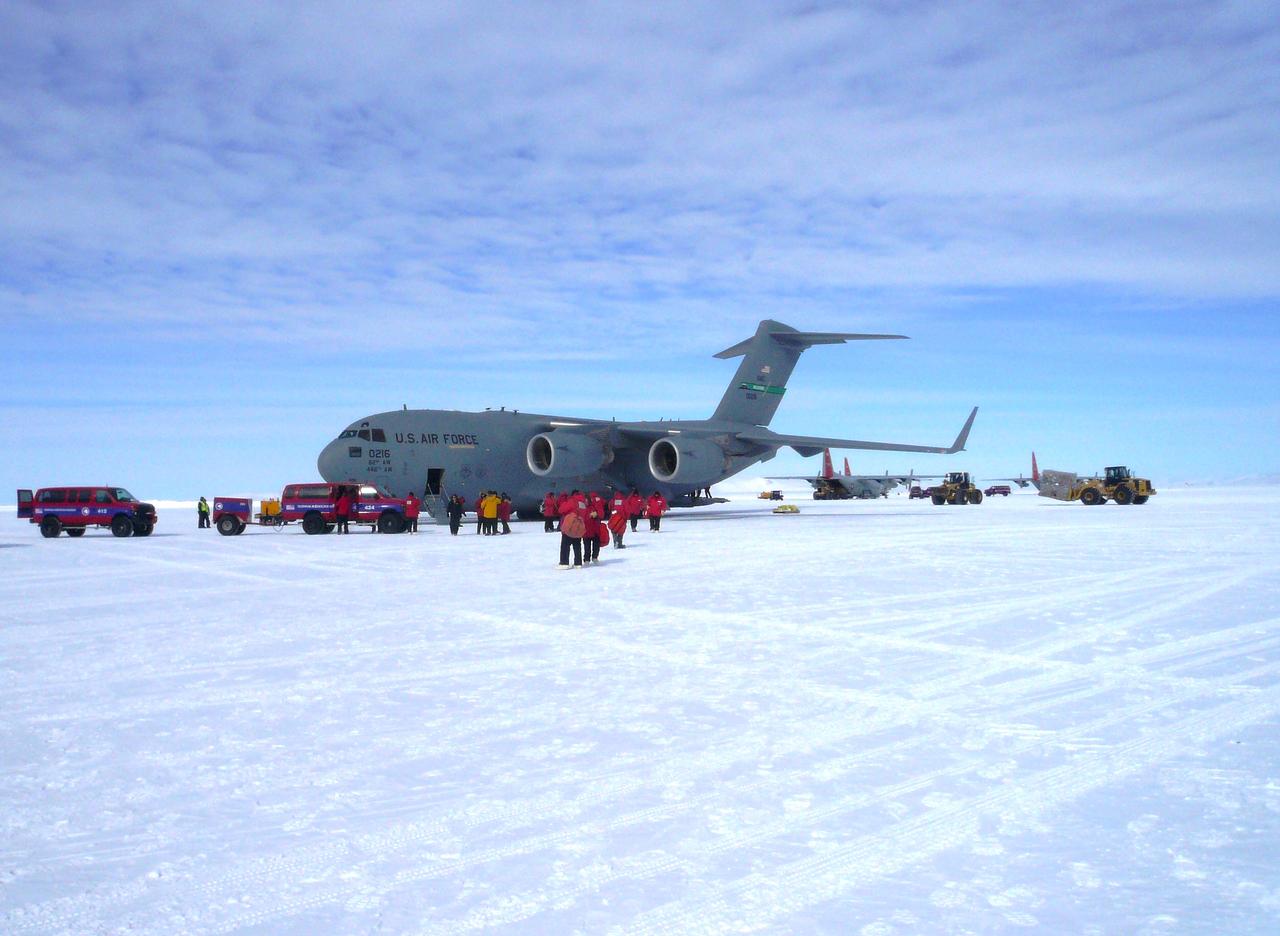
A U.S. Air Force C-17 transport aircraft sits on the sea ice runway at the National Science Foundation's McMurdo Station in Antarctica following a transit flight from Christchurch, New Zealand that transported IceBridge personnel and gear on Nov. 12, 2013. The C-17 aircraft that fly to Antarctica are operated by the U.S. Air Force's 62nd and 446th Airlift Wings based at Joint Base Lewis-McChord near Seattle, Wash. Credit: NASA/Goddard/George Hale NASA's Operation IceBridge is an airborne science mission to study Earth's polar ice. For more information about IceBridge, visit: <a href="http://www.nasa.gov/icebridge" rel="nofollow">www.nasa.gov/icebridge</a> <b><a href="http://www.nasa.gov/audience/formedia/features/MP_Photo_Guidelines.html" rel="nofollow">NASA image use policy.</a></b> <b><a href="http://www.nasa.gov/centers/goddard/home/index.html" rel="nofollow">NASA Goddard Space Flight Center</a></b> enables NASA’s mission through four scientific endeavors: Earth Science, Heliophysics, Solar System Exploration, and Astrophysics. Goddard plays a leading role in NASA’s accomplishments by contributing compelling scientific knowledge to advance the Agency’s mission. <b>Follow us on <a href="http://twitter.com/NASA_GoddardPix" rel="nofollow">Twitter</a></b> <b>Like us on <a href="http://www.facebook.com/pages/Greenbelt-MD/NASA-Goddard/395013845897?ref=tsd" rel="nofollow">Facebook</a></b> <b>Find us on <a href="http://instagram.com/nasagoddard?vm=grid" rel="nofollow">Instagram</a></b>
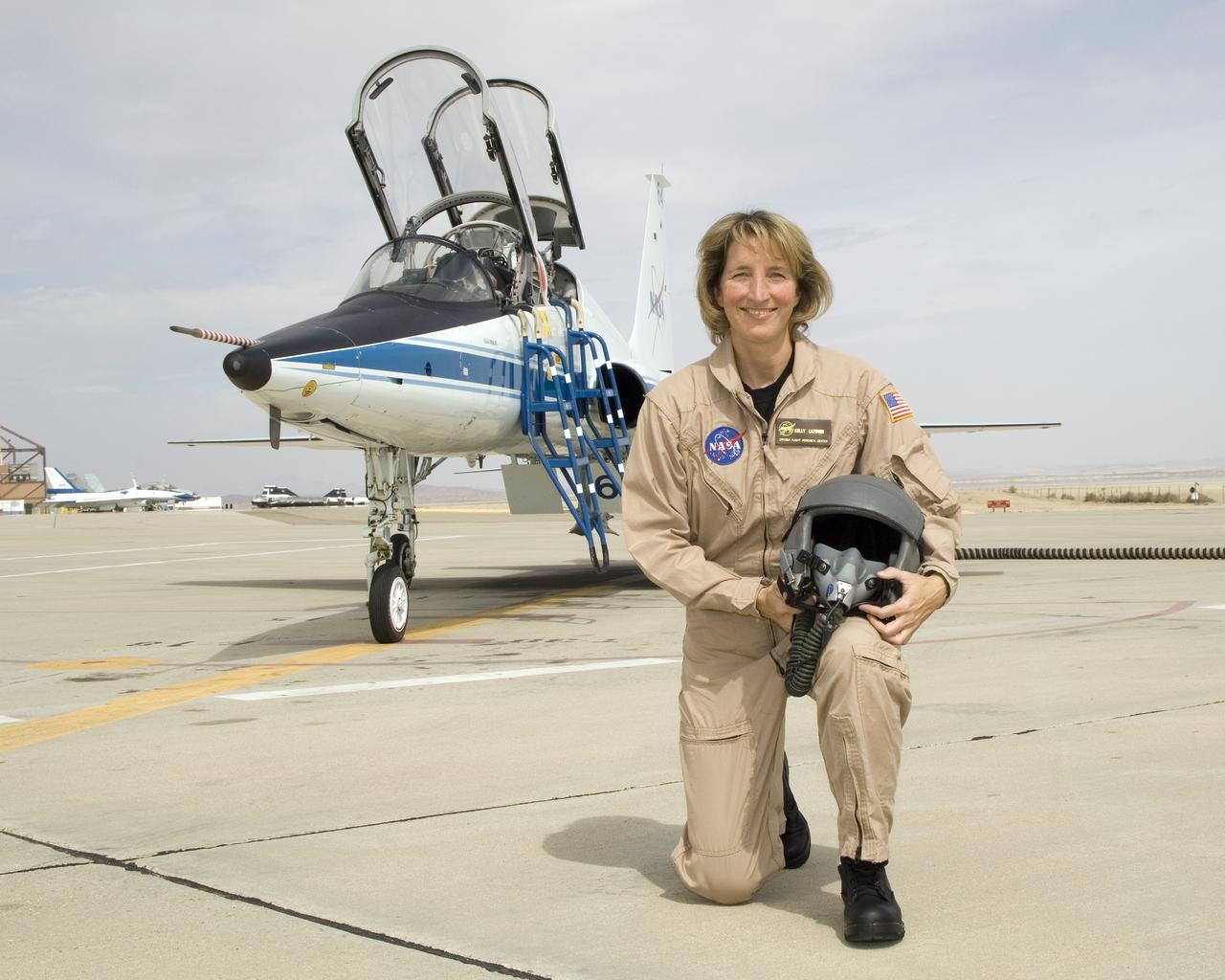
Kelly Latimer is a research pilot in the Flight Crew Branch of NASA's Dryden Flight Research Center, Edwards, Calif. Latimer joined NASA in March 2007 and will fly the T38, T-34, G-III, C-17 and the "Ikhana" Predator B. Latimer is Dryden's first female research test pilot. Prior to joining NASA, Latimer was on active duty with the U.S. Air Force. She has accumulated more than 5,000 hours of military and civilian flight experience in 30 aircraft. Latimer's first association with NASA was while attending graduate school at George Washington University, Washington, D.C. Her studies included work with the Joint Institute for the Advancement of Flight Sciences at NASA's Langley Research Center, Hampton, Va. She flew an Air Force C-17 during a 2005 NASA study to reduce aircraft noise. A team of California Polytechnic State University students and Northrop Grumman personnel were stationed on Rogers Dry Lake located at Edwards Air Force Base, Calif., to record the noise footprint of the aircraft as it made various landing approaches to Edwards' runway. Latimer completed undergraduate pilot training at Reese Air Force Base, Texas, in 1990. She remained at Reese as a T-38 instructor pilot until 1993. She was assigned as a C-141 aircraft commander at McCord Air Force Base, Tacoma, Wash., until 1996. Latimer graduated from the U.S. Air Force Test Pilot School at Edwards in Class 96B. She served as a C-17 and C-141 experimental test pilot at Edwards until 2000. She then became the chief of the Performance Branch and a T-38 instructor pilot at The Air Force Test Pilot School. She returned to McCord in 2002, where she was a C-17 aircraft commander and the operations officer for the 62nd Operations Support Squadron. In 2004, Latimer became the commander of Edwards' 418th Flight Test Squadron and director of the Global Reach Combined Test Force. Following that assignment, she deployed to Iraq as an advisor to the Iraqi Air Force. Her last active duty tour was as an instructor a
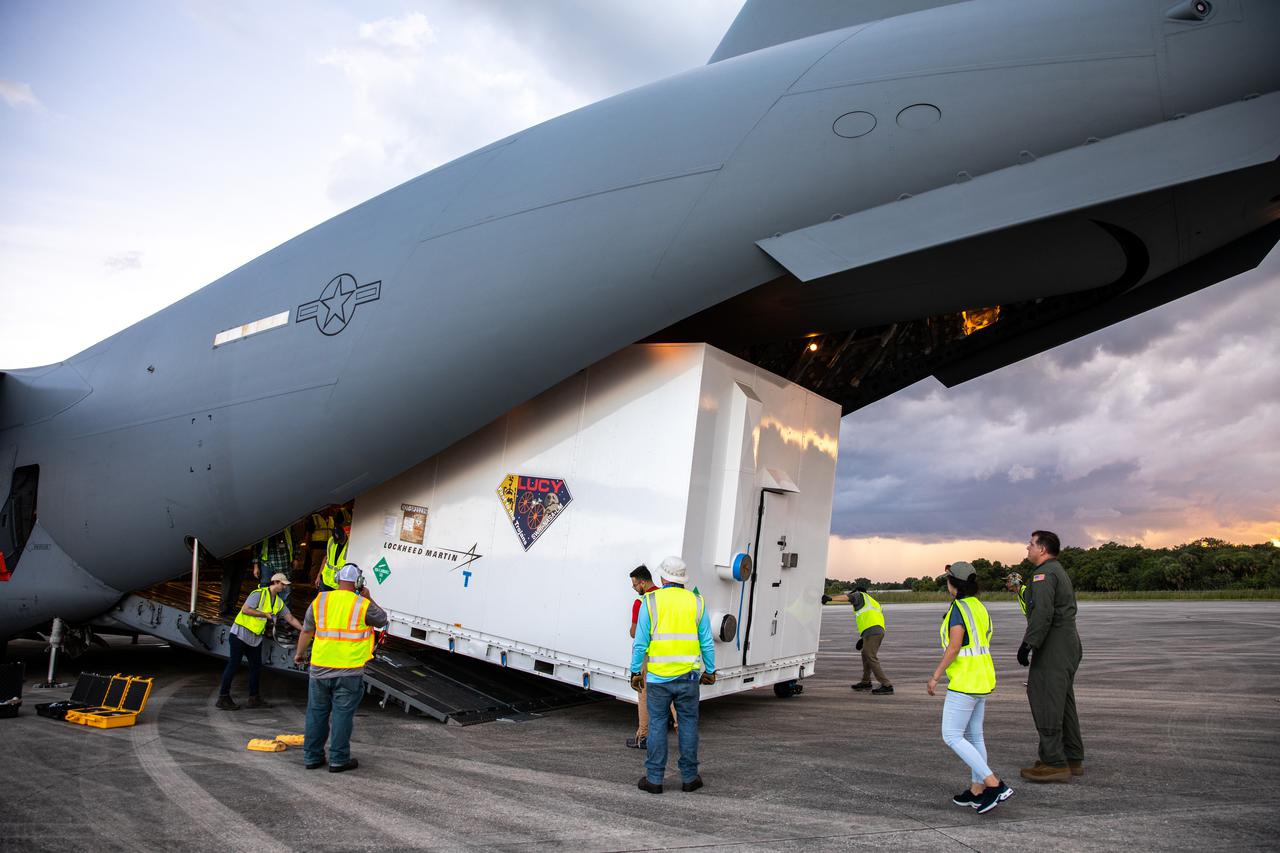
The shipping container holding NASA's Lucy spacecraft is unloaded from a United States Air Force C-17 cargo plane, stationed out of Charleston Air Force Base in South Carolina, on the runway of the Launch and Landing Facility at Kennedy Space Center in Florida on July 30, 2021. From there, the Lucy spacecraft will move to the Astrotech Space Operations payload processing facility in nearby Titusville, Florida, before its scheduled launch on a United Launch Alliance (ULA) Atlas V rocket from Cape Canaveral Space Force Station on October 16, 2021. The Lucy mission will be the first space mission to explore a diverse population of small bodies known as the Jupiter Trojan asteroids. The launch is being managed by NASA's Launch Services Program based at Kennedy, America's multi-user spaceport.
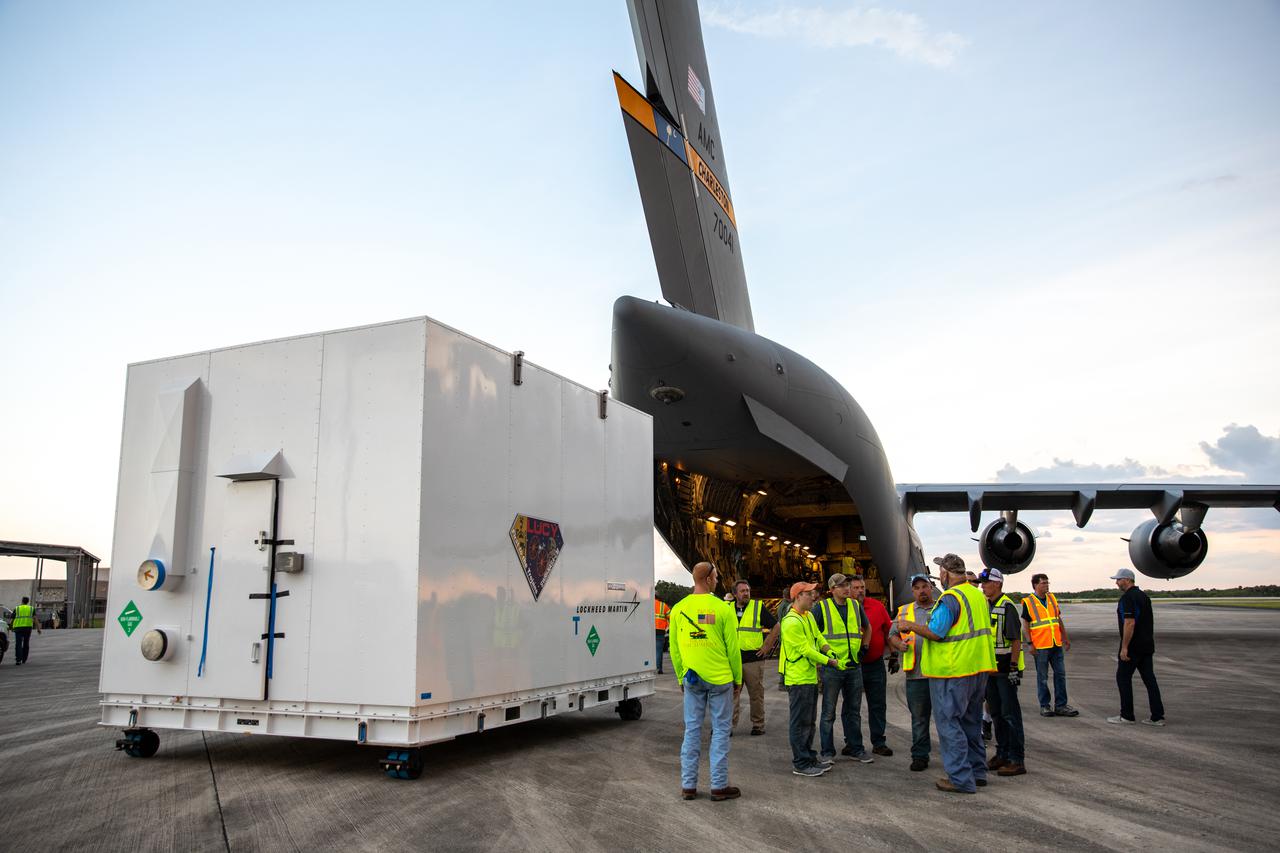
The shipping container holding NASA's Lucy spacecraft is unloaded from an Air Force C-17 cargo aircraft on the runway of the Launch and Landing Facility at Kennedy Space Center in Florida on July 30, 2021. From there, the Lucy spacecraft will move to the Astrotech Space Operations payload processing facility in nearby Titusville, Florida, before its scheduled launch on a United Launch Alliance (ULA) Atlas V rocket from Cape Canaveral Space Force Station on October 16, 2021. The Lucy mission will be the first space mission to explore a diverse population of small bodies known as the Jupiter Trojan asteroids. The launch is being managed by NASA's Launch Services Program based at Kennedy, America's premier multi-user spaceport.
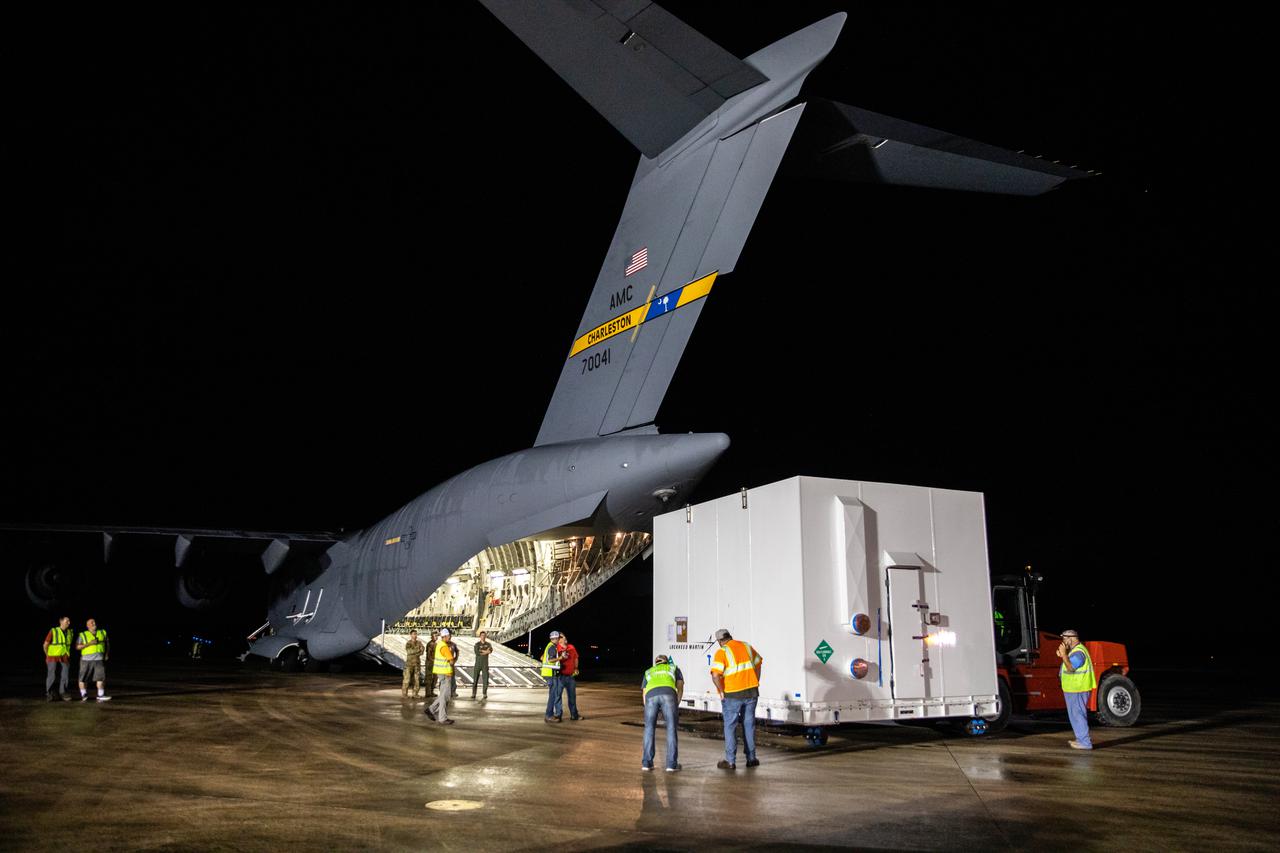
The shipping container holding NASA's Lucy spacecraft is unloaded from a United States Air Force C-17 cargo plane, stationed out of Charleston Air Force Base in South Carolina, on the runway of the Launch and Landing Facility at Kennedy Space Center in Florida on July 30, 2021. From there, the Lucy spacecraft will move to the Astrotech Space Operations payload processing facility in nearby Titusville, Florida, before its scheduled launch on a United Launch Alliance (ULA) Atlas V rocket from Cape Canaveral Space Force Station on October 16, 2021. The Lucy mission will be the first space mission to explore a diverse population of small bodies known as the Jupiter Trojan asteroids. The launch is being managed by NASA's Launch Services Program based at Kennedy, America's multi-user spaceport.
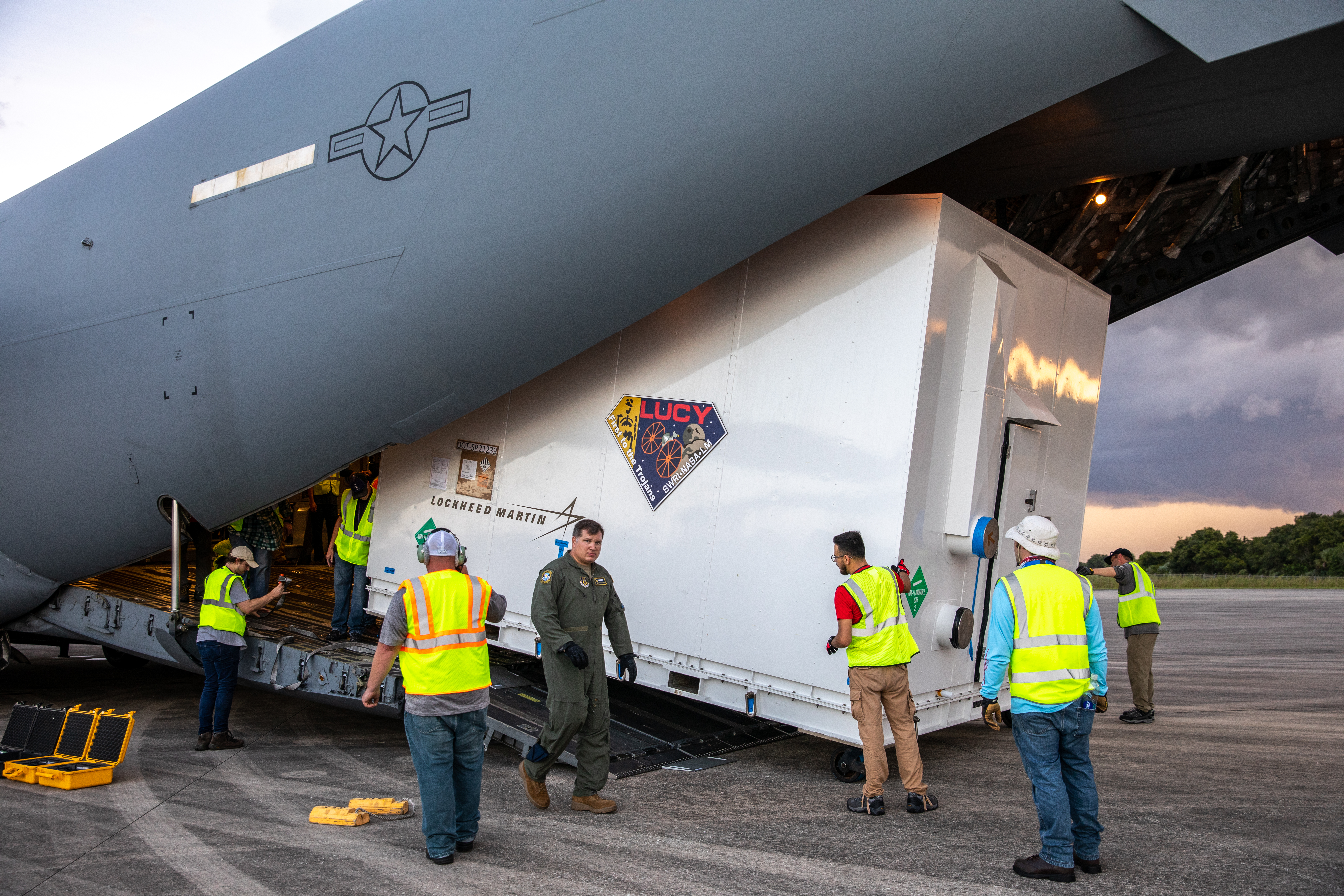
The shipping container holding NASA's Lucy spacecraft is unloaded from a United States Air Force C-17 cargo plane, stationed out of Charleston Air Force Base in South Carolina, on the runway of the Launch and Landing Facility at Kennedy Space Center in Florida on July 30, 2021. From there, the Lucy spacecraft will move to the Astrotech Space Operations payload processing facility in nearby Titusville, Florida, before its scheduled launch on a United Launch Alliance (ULA) Atlas V rocket from Cape Canaveral Space Force Station on October 16, 2021. The Lucy mission will be the first space mission to explore a diverse population of small bodies known as the Jupiter Trojan asteroids. The launch is being managed by NASA's Launch Services Program based at Kennedy, America's multi-user spaceport.
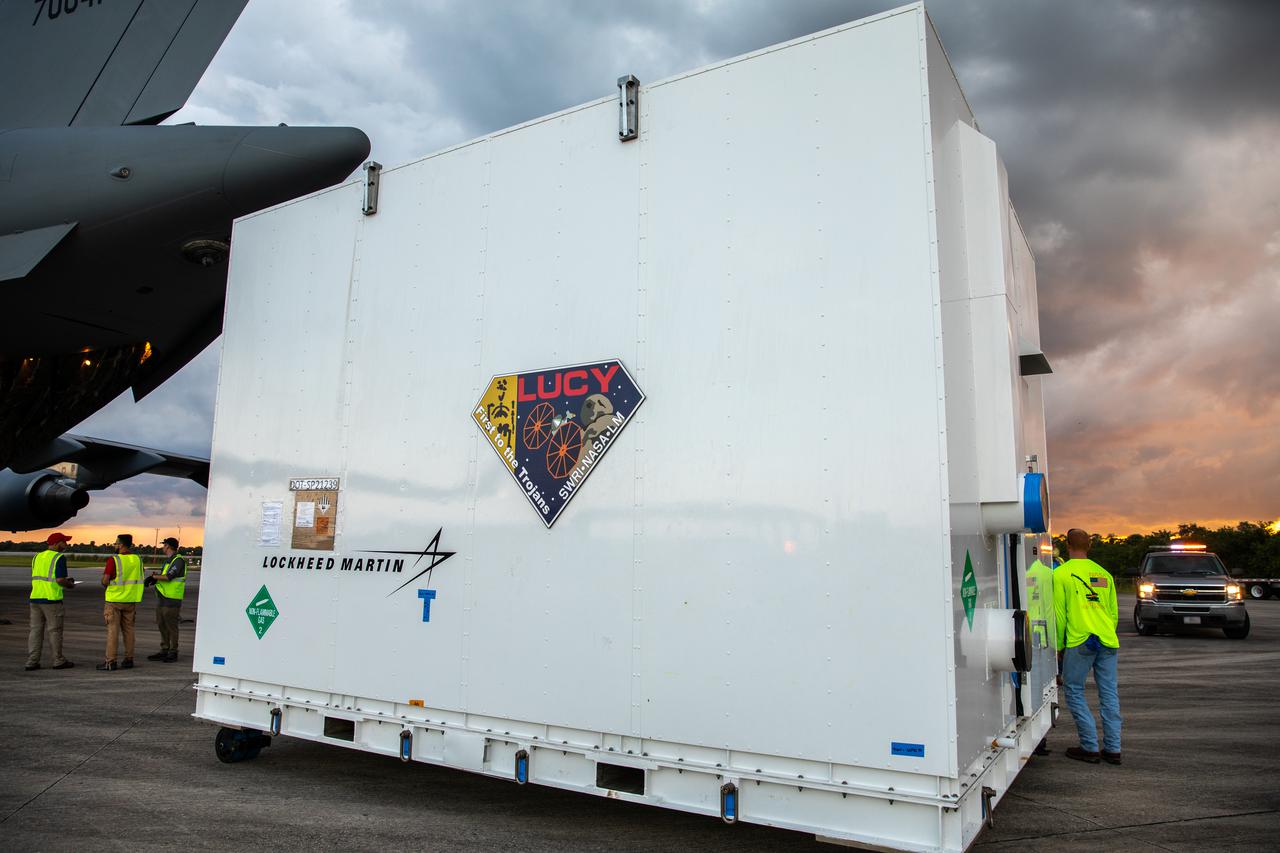
The shipping container holding NASA's Lucy spacecraft is unloaded from an Air Force C-17 cargo aircraft on the runway of the Launch and Landing Facility at Kennedy Space Center in Florida on July 30, 2021. From there, the Lucy spacecraft will move to the Astrotech Space Operations payload processing facility in nearby Titusville, Florida, before its scheduled launch on a United Launch Alliance (ULA) Atlas V rocket from Cape Canaveral Space Force Station on October 16, 2021. The Lucy mission will be the first space mission to explore a diverse population of small bodies known as the Jupiter Trojan asteroids. The launch is being managed by NASA's Launch Services Program based at Kennedy, America's premier multi-user spaceport.
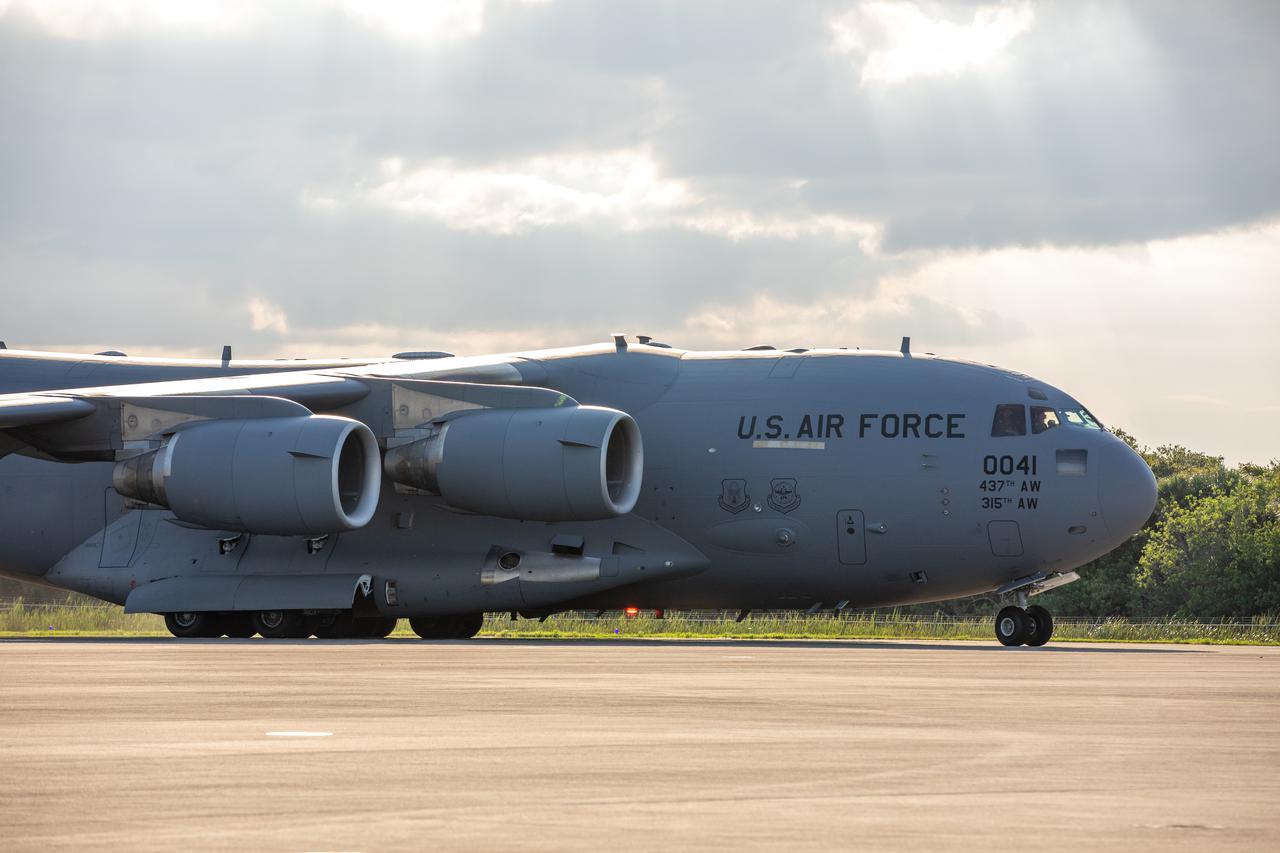
A United States Air Force C-17 cargo plane, stationed out of Charleston Air Force Base in South Carolina, holding NASA's Lucy spacecraft lands on the runway of the Launch and Landing Facility at Kennedy Space Center in Florida on July 30, 2021. From there, the Lucy spacecraft will move to the Astrotech Space Operations payload processing facility in nearby Titusville, Florida, before its scheduled launch on a United Launch Alliance (ULA) Atlas V rocket from Cape Canaveral Space Force Station on October 16, 2021. The Lucy mission will be the first space mission to explore a diverse population of small bodies known as the Jupiter Trojan asteroids. The launch is being managed by NASA's Launch Services Program based at Kennedy, America's multi-user spaceport.
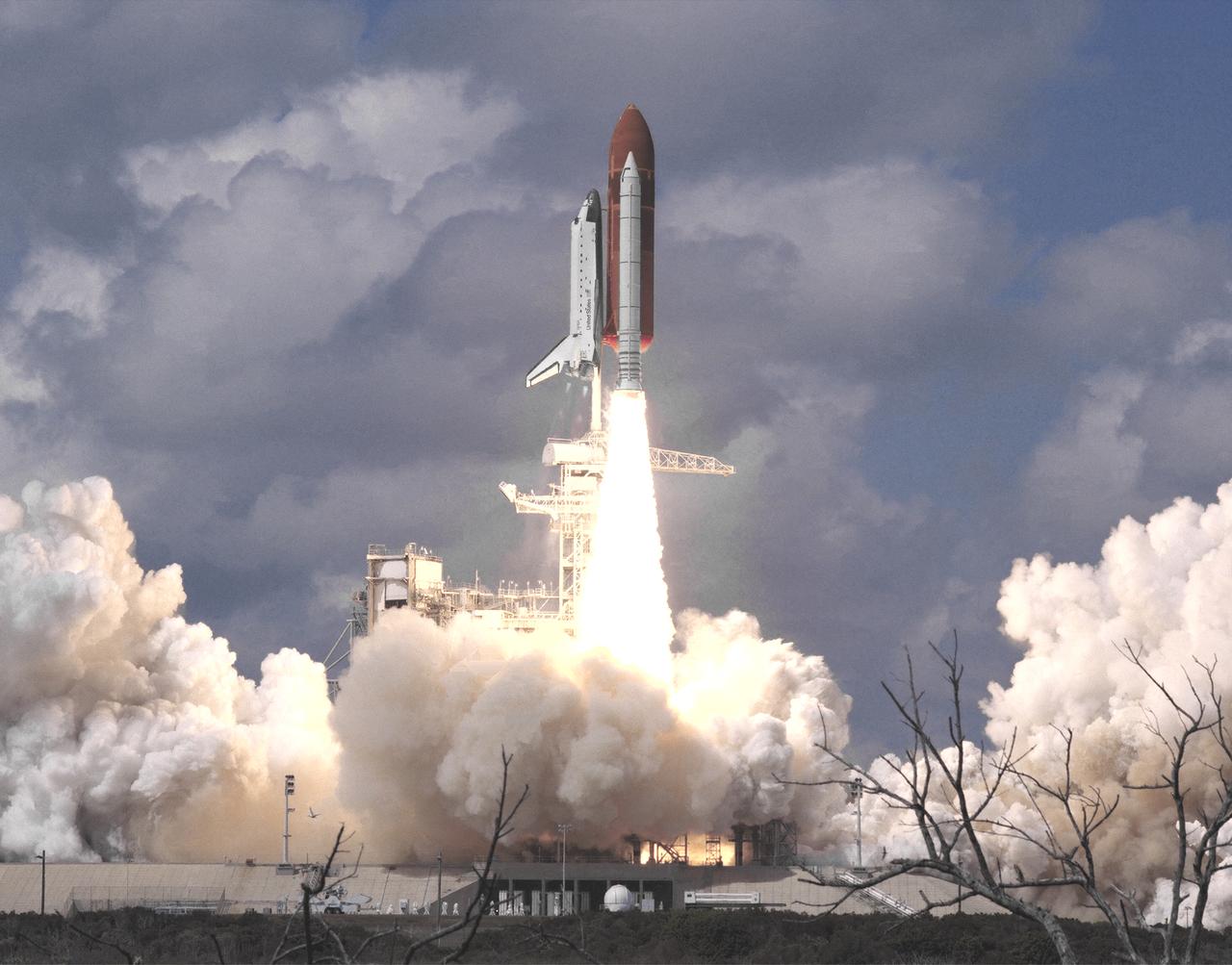
The Space Shuttle Discovery takes off from Launch Pad 39B at the Kennedy Space Center, Florida, to being Mission STS-26 on 29 September 1988,11:37:00 a.m. EDT. The 26th shuttle mission lasted four days, one hour, zero minutes, and 11 seconds. Discovery landed 3 October 1988, 9:37:11 a.m. PDT, on Runway 17 at Edwards Air Force Base, California. Its primary payload, NASA Tracking and Data Relay Satellite-3 (TDRS-3) attached to an Inertial Upper Stage (IUS), became the second TDRS deployed. After deployment, IUS propelled the satellite to a geosynchronous orbit. The crew consisted of Frederick H. Hauck, Commander; Richard O. Covey, Pilot; John M. Lounge, Mission Specialist 1; George D. Nelson, Mission Specialist 2; and David C. Hilmers, Mission Specialist 3.
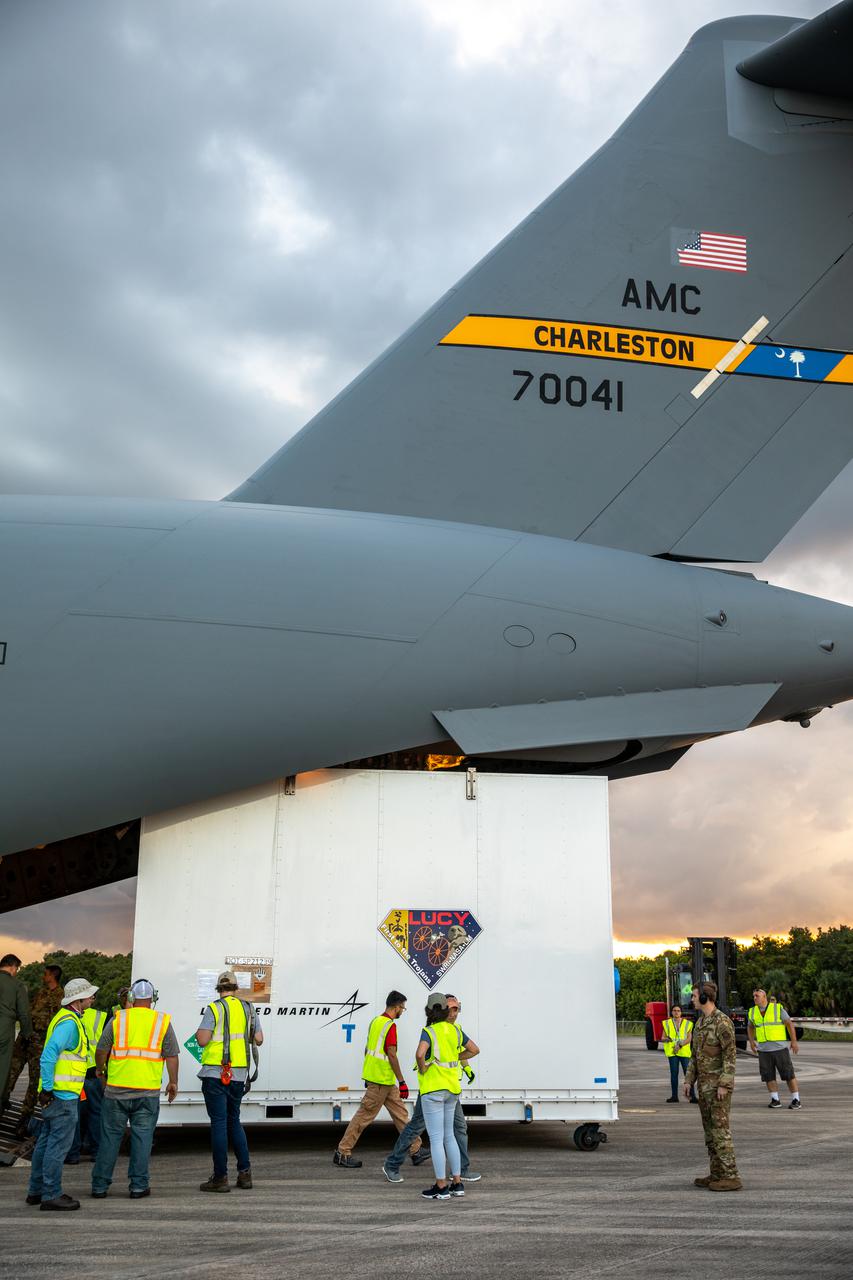
The shipping container holding NASA's Lucy spacecraft is unloaded from an Air Force C-17 cargo aircraft on the runway of the Launch and Landing Facility at Kennedy Space Center in Florida on July 30, 2021. From there, the Lucy spacecraft will move to the Astrotech Space Operations payload processing facility in nearby Titusville, Florida, before its scheduled launch on a United Launch Alliance (ULA) Atlas V rocket from Cape Canaveral Space Force Station on October 16, 2021. The Lucy mission will be the first space mission to explore a diverse population of small bodies known as the Jupiter Trojan asteroids. The launch is being managed by NASA's Launch Services Program based at Kennedy, America's premier multi-user spaceport.

CAPE CANAVERAL, Fla. – The “pathfinder” aircraft for space shuttle Discovery’s ferry flight taxis down the runway at the Shuttle Landing Facility at NASA’s Kennedy Space Center in Florida. The NASA C-9 aircraft will fly about 100 miles ahead of Discovery to scout for the safest route between destinations. Its crew includes an SCA flight engineer who studies the weather patterns along the flight path to find a route free of rain and other turbulence. The carrier aircraft, also known as an SCA, is a Boeing 747 jet, originally manufactured for commercial use which was modified by NASA to transport the shuttles between destinations on Earth. NASA 905 is scheduled to ferry Discovery to the Washington Dulles International Airport in Virginia on April 17, and is assigned to all remaining ferry missions, delivering the shuttles to their permanent public display sites. After its arrival at Dulles, Discovery will be placed on display in the Smithsonian's National Air and Space Museum Steven F. Udvar-Hazy Center on April 19. For more information on the SCA, visit http://www.nasa.gov/centers/dryden/news/FactSheets/FS-013-DFRC.html. For more information on shuttle transition and retirement activities, visit http://www.nasa.gov/transition. Photo credit: NASA/Amanda Diller
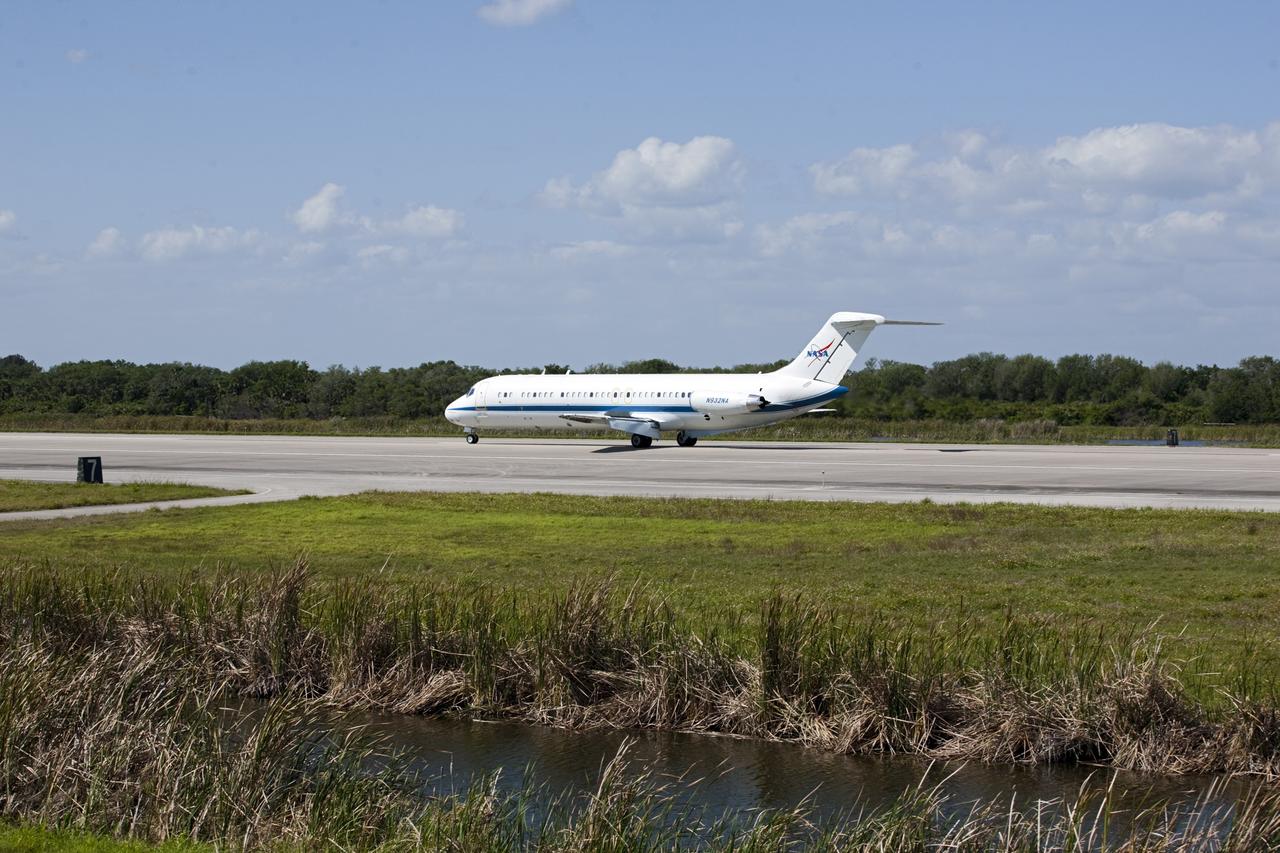
CAPE CANAVERAL, Fla. – The “pathfinder” aircraft for space shuttle Discovery’s ferry flight taxis down the runway at the Shuttle Landing Facility at NASA’s Kennedy Space Center in Florida. The NASA C-9 aircraft will fly about 100 miles ahead of Discovery to scout for the safest route between destinations. Its crew includes an SCA flight engineer who studies the weather patterns along the flight path to find a route free of rain and other turbulence. The carrier aircraft, also known as an SCA, is a Boeing 747 jet, originally manufactured for commercial use which was modified by NASA to transport the shuttles between destinations on Earth. NASA 905 is scheduled to ferry Discovery to the Washington Dulles International Airport in Virginia on April 17, and is assigned to all remaining ferry missions, delivering the shuttles to their permanent public display sites. After its arrival at Dulles, Discovery will be placed on display in the Smithsonian's National Air and Space Museum Steven F. Udvar-Hazy Center on April 19. For more information on the SCA, visit http://www.nasa.gov/centers/dryden/news/FactSheets/FS-013-DFRC.html. For more information on shuttle transition and retirement activities, visit http://www.nasa.gov/transition. Photo credit: NASA/Amanda Diller
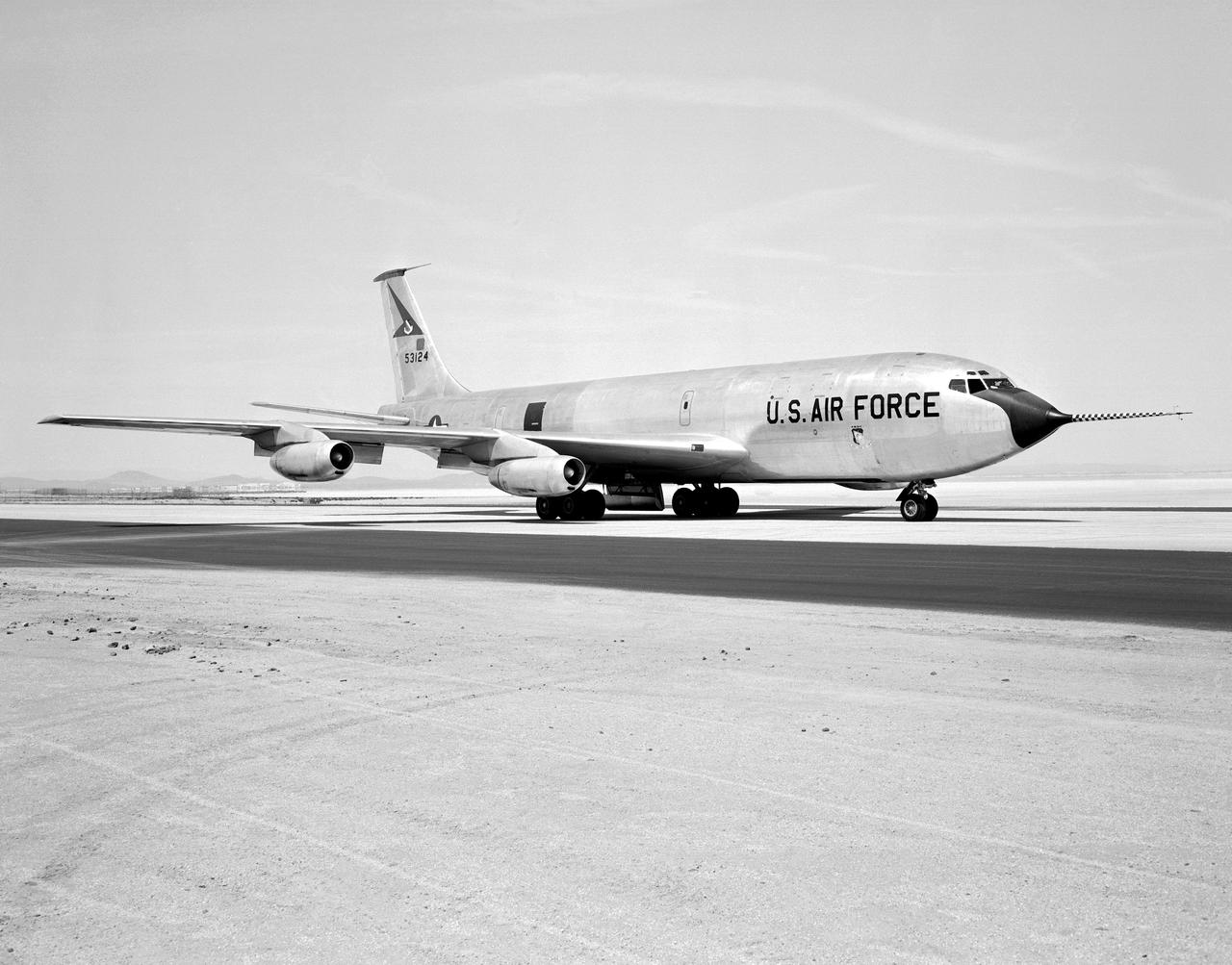
The Boeing KC-135 Stratotanker, besides being used extensively in its primary role as an inflight aircraft refueler, has assisted in several projects at the NASA Dryden Flight Research Center, Edwards, California. In 1957 and 1958, Dryden was asked by what was then the Civil Aeronautics Administration (later absorbed into the Federal Aviation Administration (FAA) in 1958) to help establish new approach procedure guidelines on cloud-ceiling and visibility minimums for Boeing's first jet airliner, the B-707. Dryden used a KC-135 (the military variant of the 707), seen here on the runway at Edwards Air Force Base, to aid the CAA in these tests. In 1979 and 1980, Dryden was again involved with general aviation research with the KC-135. This time, a special wingtip "winglet", developed by Richard Whitcomb of Langley Research Center, was tested on the jet aircraft. Winglets are small, nearly vertical fins installed on an airplane's wing tips to help produce a forward thrust in the vortices that typically swirl off the end of the wing, thereby reducing drag. This winglet idea was tested at the Dryden Flight Research Center on a KC-135A tanker loaned to NASA by the Air Force. The research showed that the winglets could increase an aircraft's range by as much as 7 percent at cruise speeds. The first application of NASA's winglet technology in industry was in general aviation business jets, but winglets are now being incorporated into most new commercial and military transport jets, including the Gulfstream III and IV business jets, the Boeing 747-400 and MD-11 airliners, and the C-17 military transport. In the 1980's, a KC-135 was used in support of the Space Shuttle program. Since the Shuttle was to be launched from Florida, researchers wanted to test the effect of rain on the sensitive thermal tiles. Tiles were mounted on special fixtures on an F-104 aircraft and a P-3 Orion. The F-104 was flown in actual rain conditions, and also behind the KC-135 spray tanker as it rel