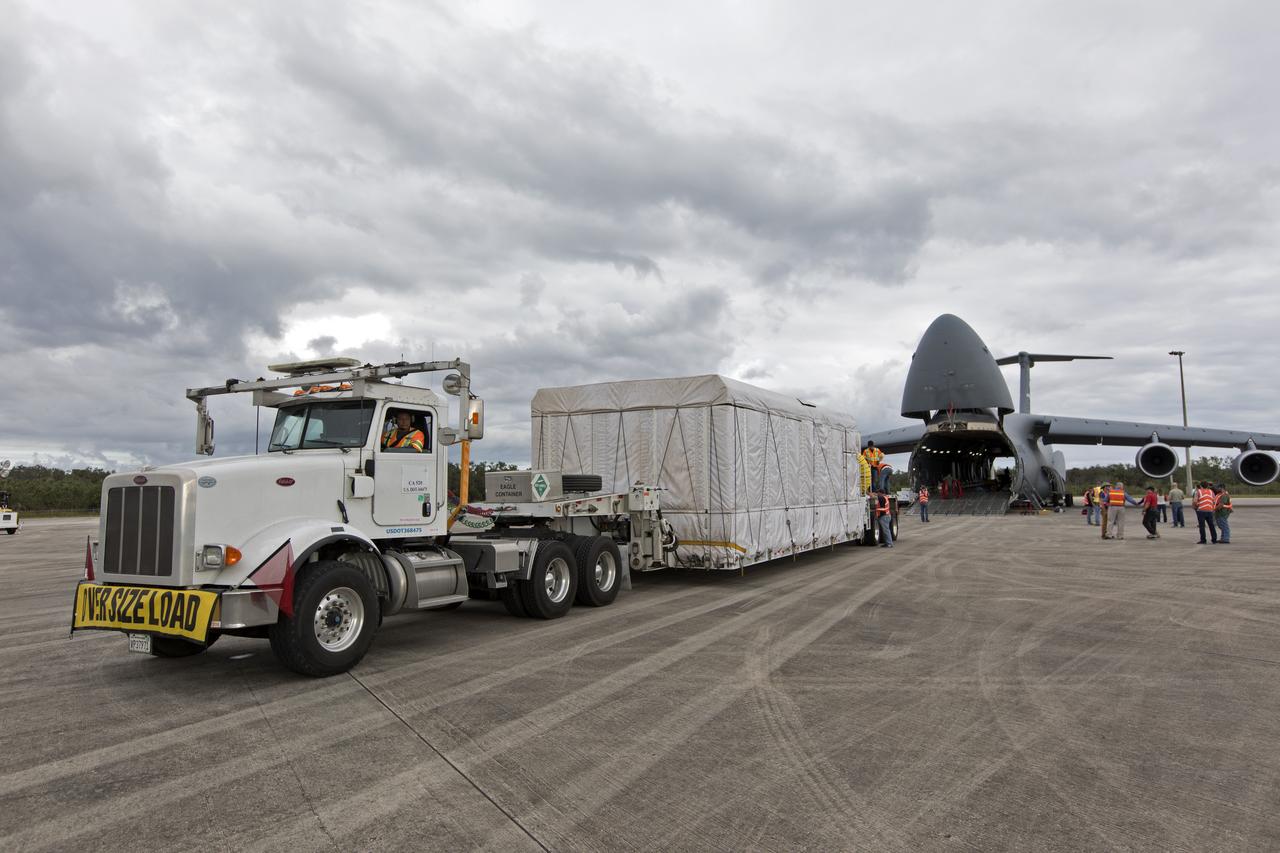
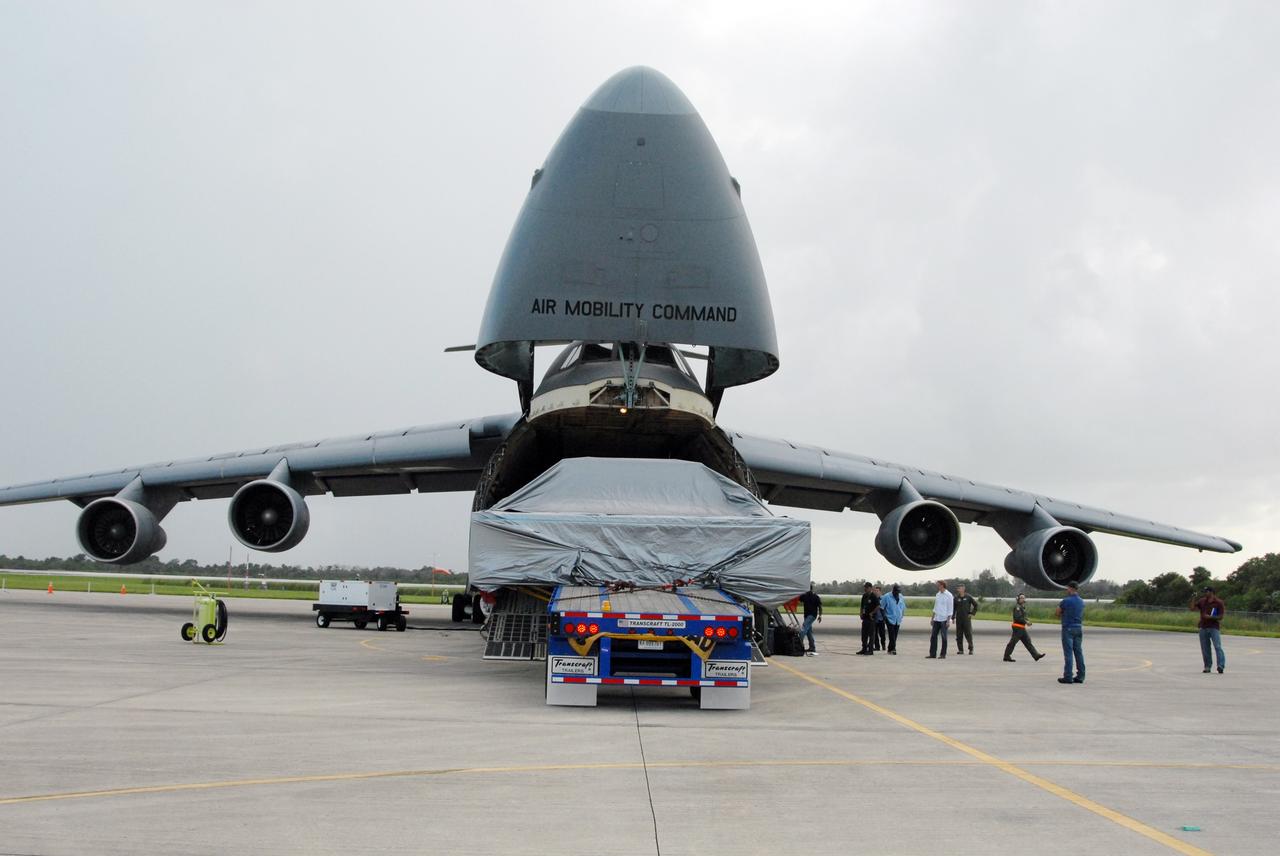
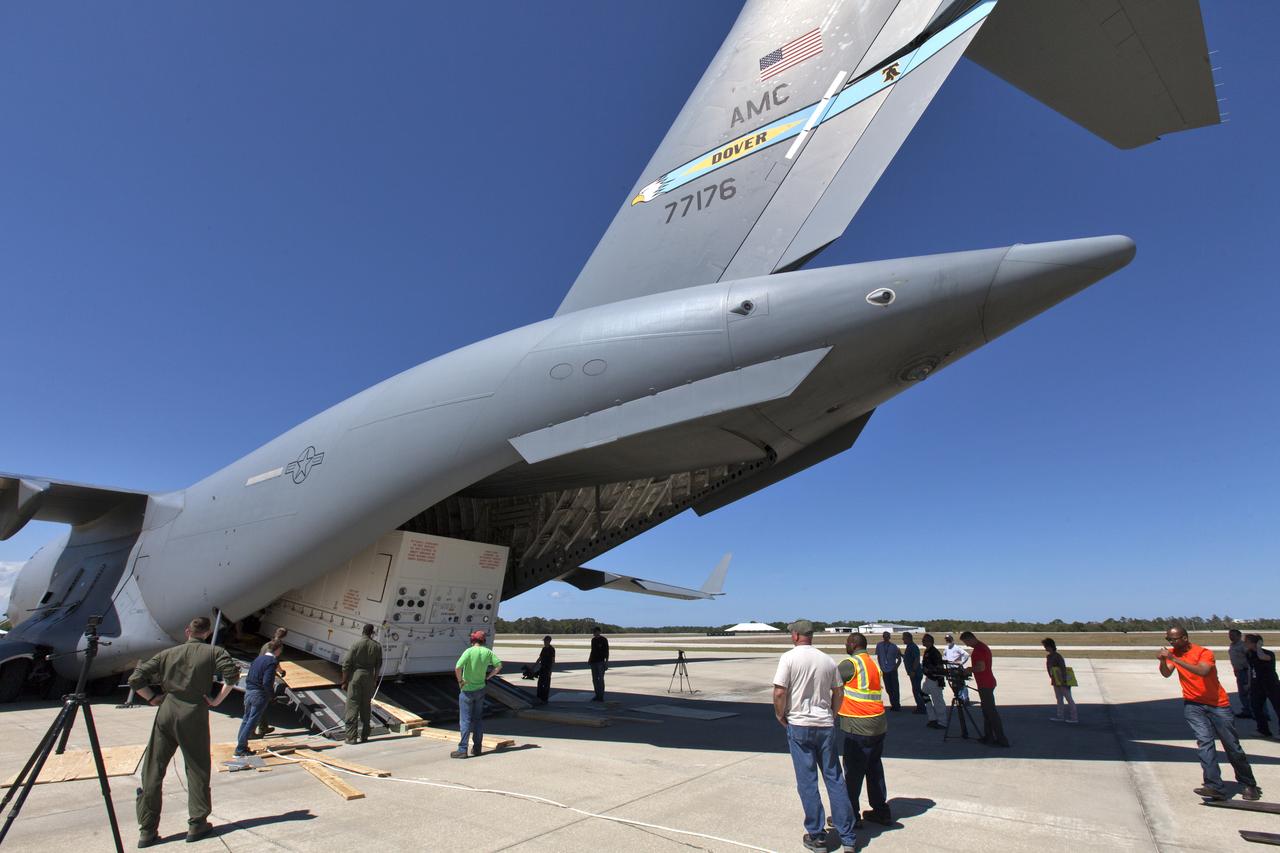
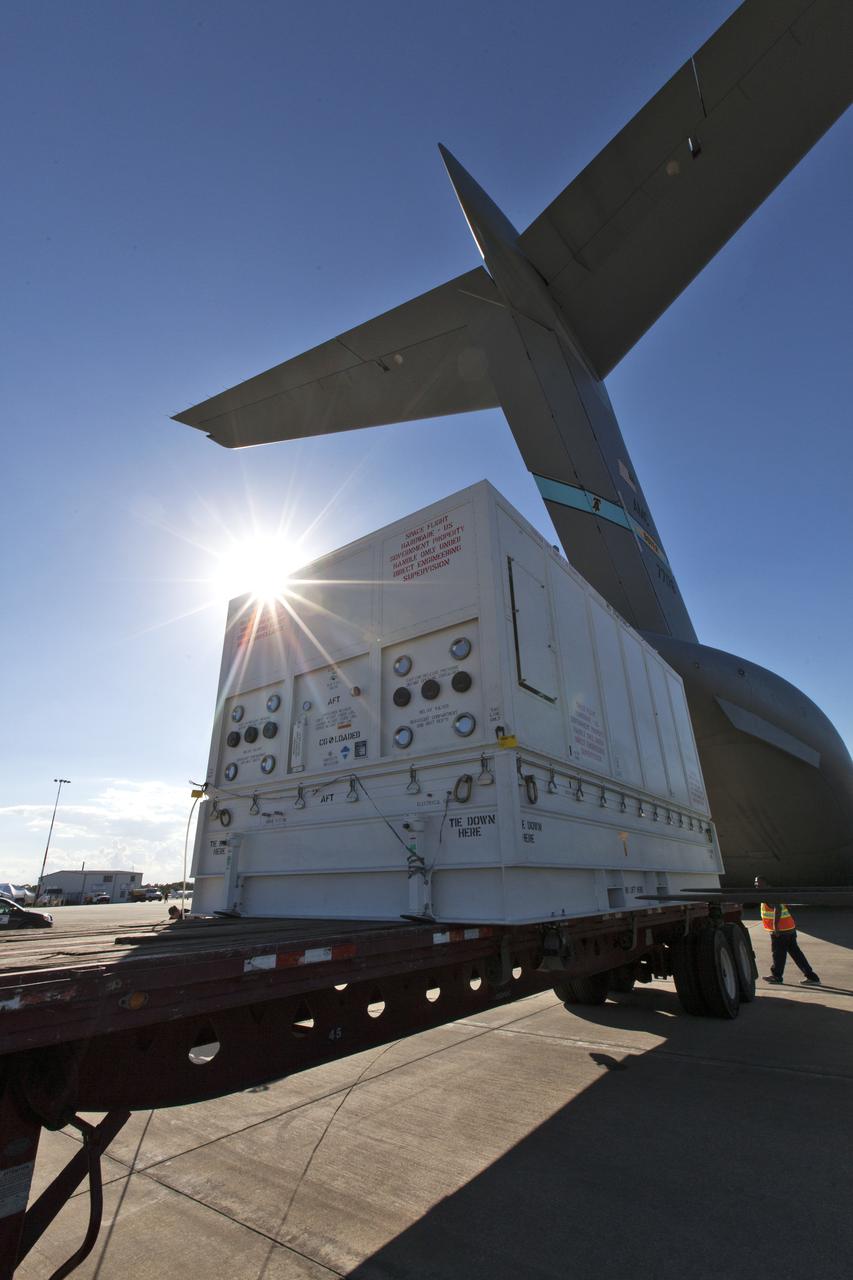
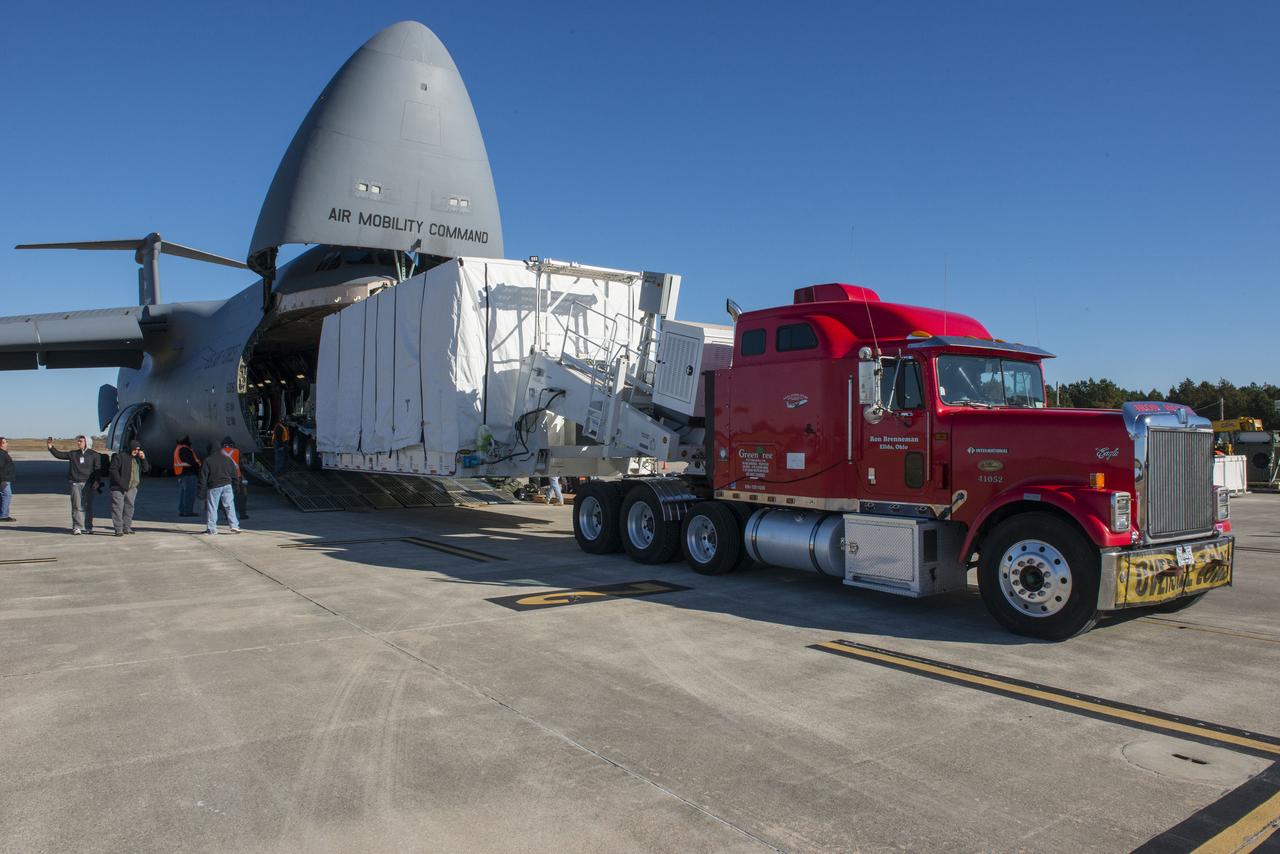
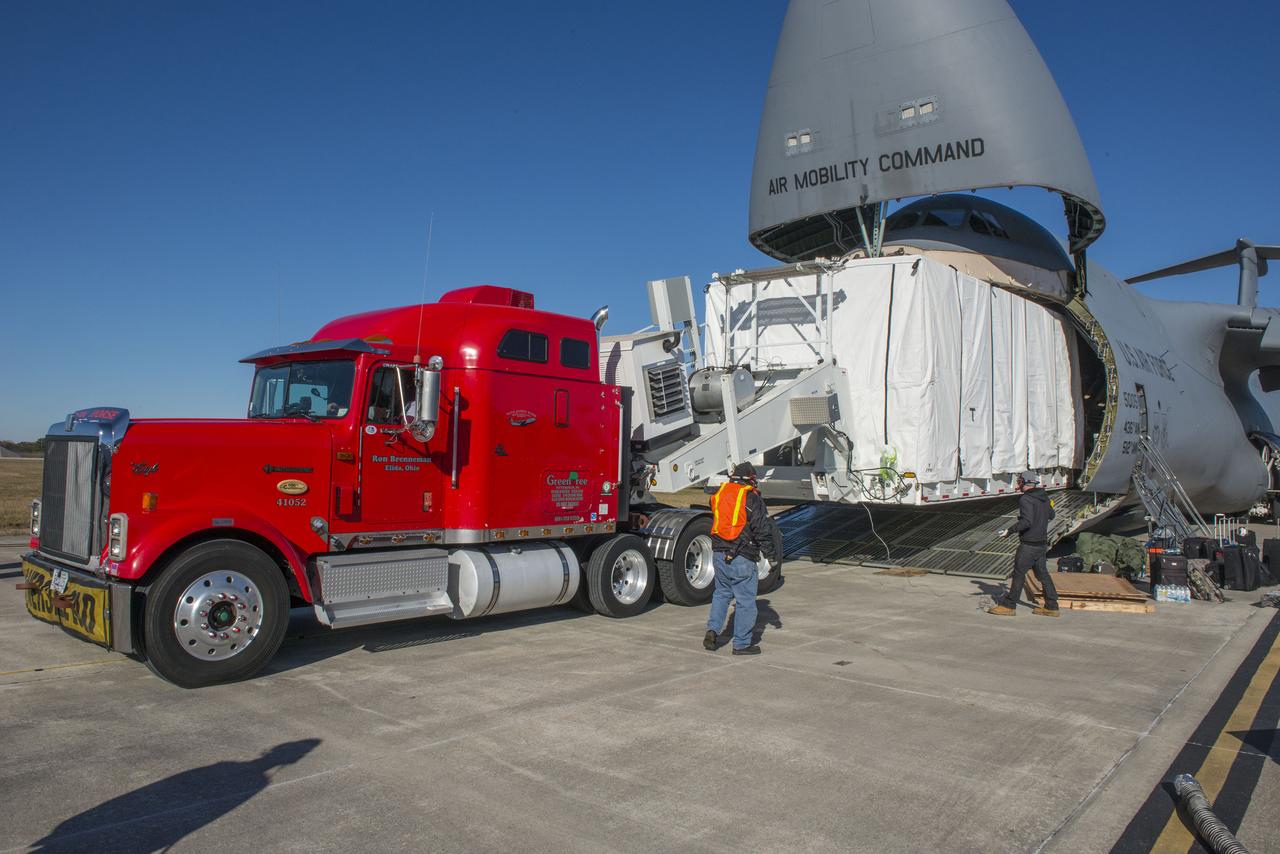
NOAA's Geostationary Operation Environmental Satellite-S (GOES-S) has been offloaded from a C-5 transport aircraft and secured onto the flatbed of a heavy-lift truck at the Shuttle Landing Facility at NASA's Kennedy Space Center in Florida. The satellite will be transported to the Astrotech Space Operations facility in Titusville, Florida to prepare it for launch. GOES-S is the second in a series of four advanced geostationary weather satellites. The GOES-R series - consisting of the GOES-R, GOES-S, GOES-T and GOES-U spacecraft - will significantly improve the detection and observation of environmental phenomena that directly affect public safety, protection of property and the nation's economic health and prosperity. GOES-S is slated to launch March 1, 2018 aboard a United Launch Alliance Atlas V rocket from Cape Canaveral Air Force Station in Florida.
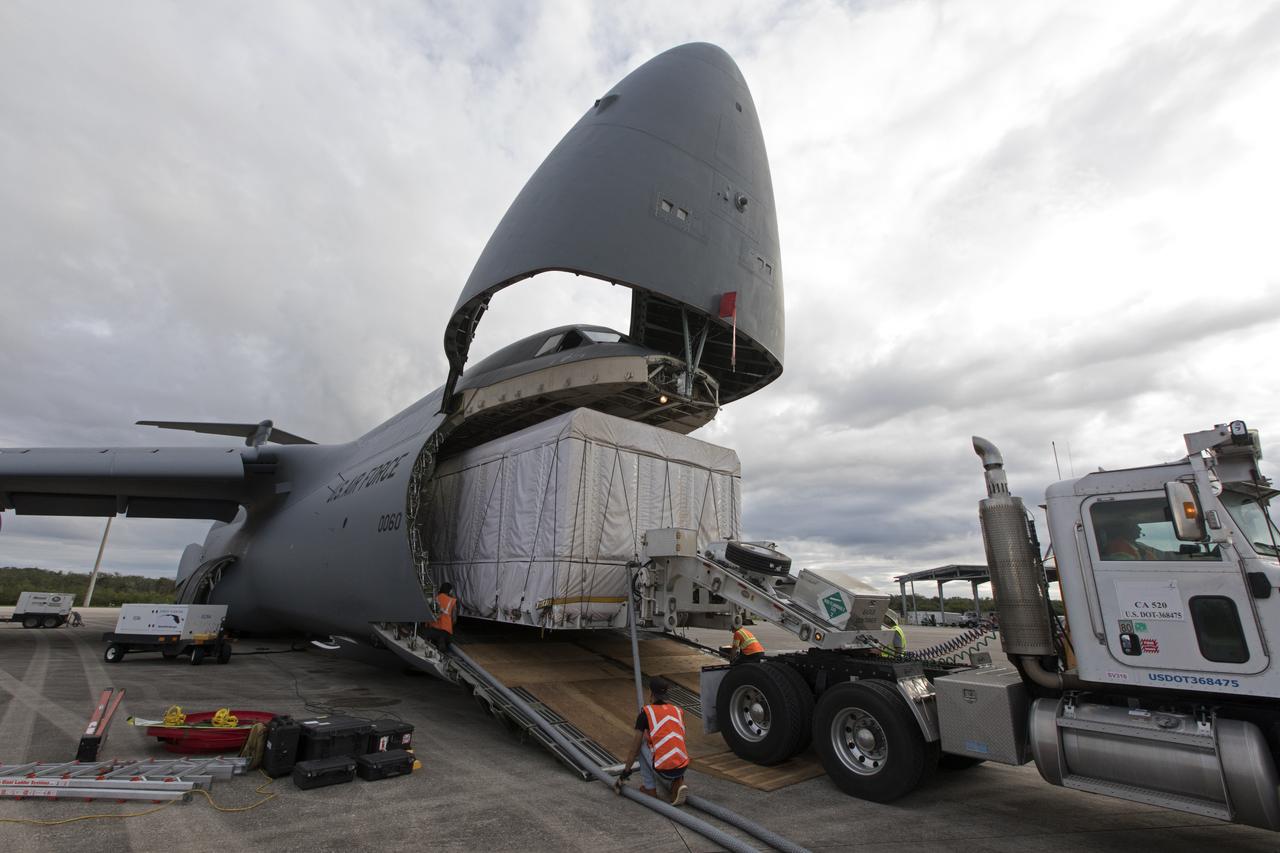
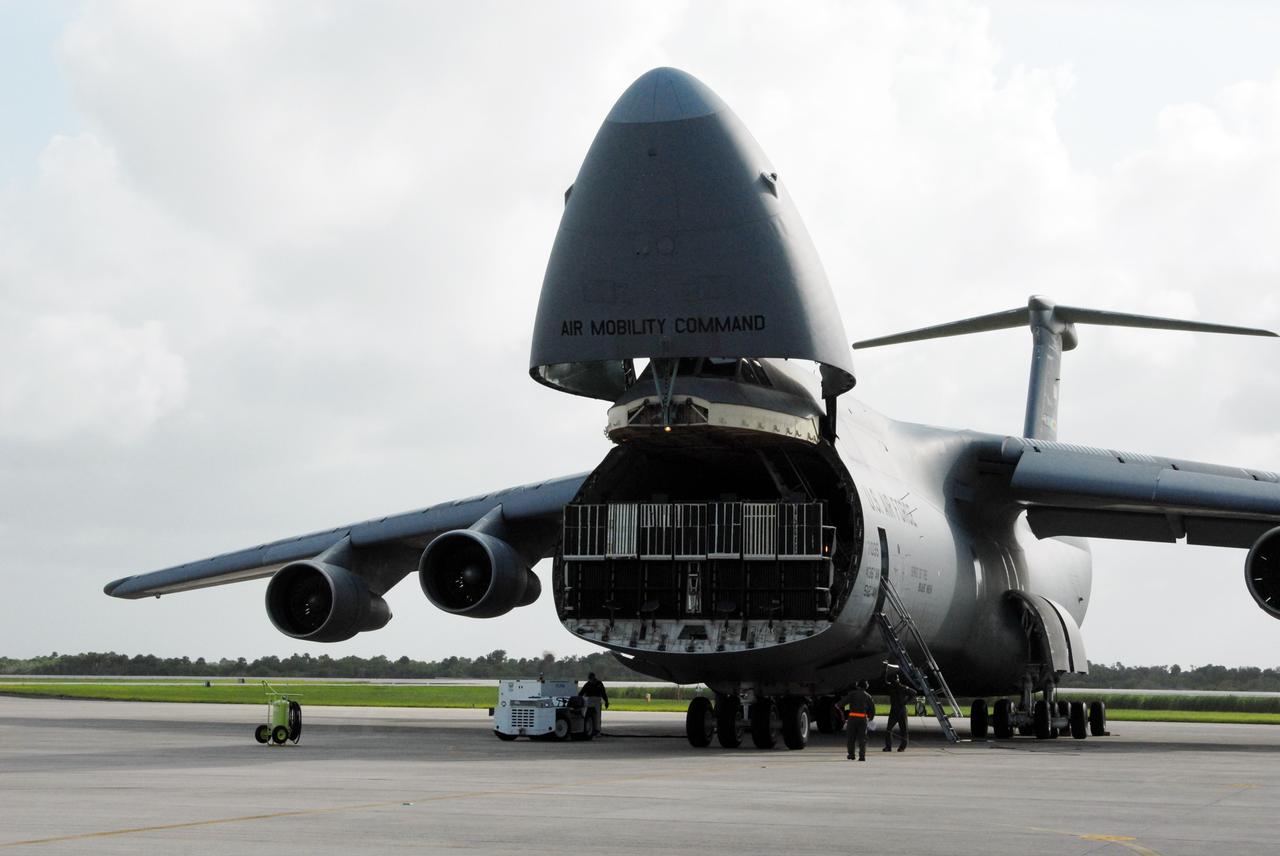
NOAA's Geostationary Operation Environmental Satellite-S (GOES-S) is being offloaded from a C-5 transport aircraft at the Shuttle Landing Facility at NASA's Kennedy Space Center in Florida. The satellite will be transported to the Astrotech Space Operations facility in Titusville, Florida to prepare it for launch. GOES-S is the second in a series of four advanced geostationary weather satellites. The GOES-R series - consisting of the GOES-R, GOES-S, GOES-T and GOES-U spacecraft - will significantly improve the detection and observation of environmental phenomena that directly affect public safety, protection of property and the nation's economic health and prosperity. GOES-S is slated to launch March 1, 2018 aboard a United Launch Alliance Atlas V rocket from Cape Canaveral Air Force Station in Florida.
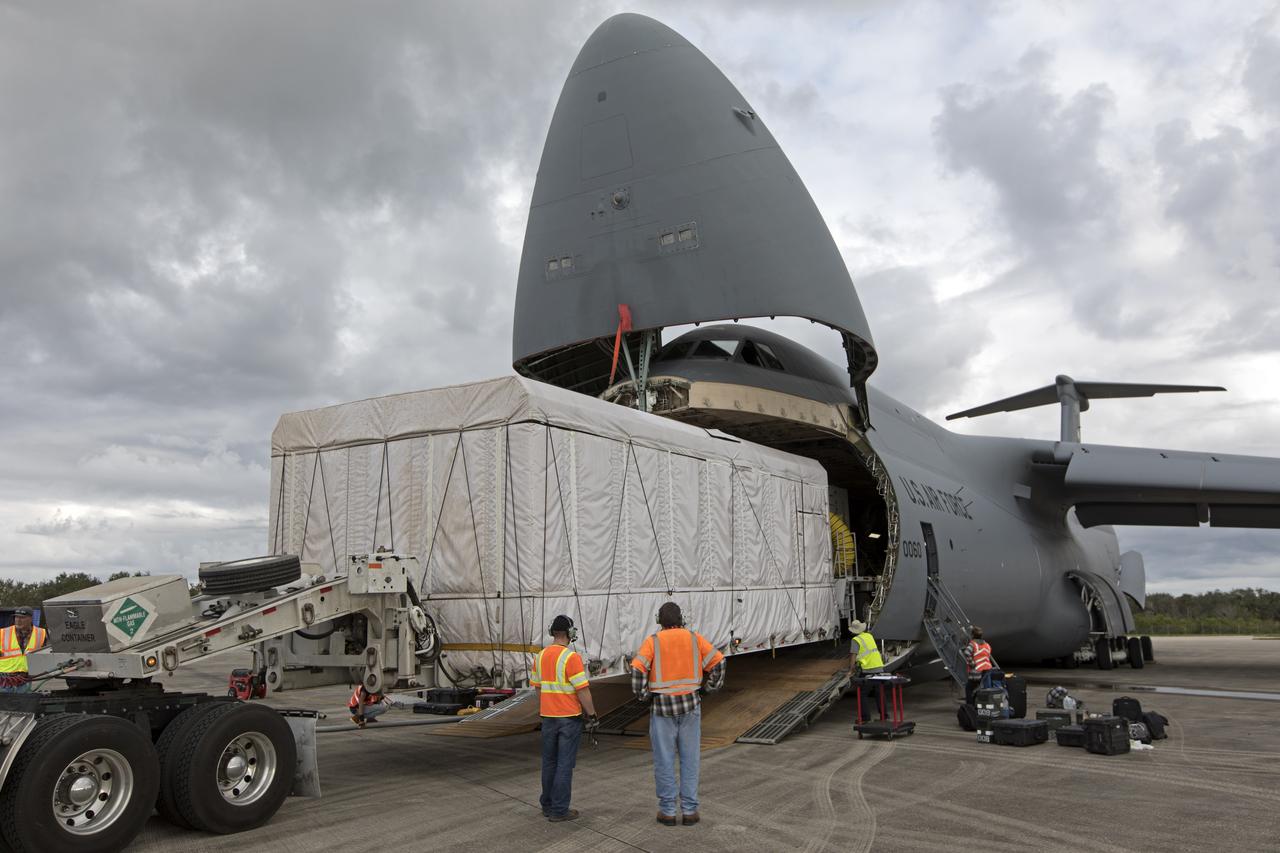
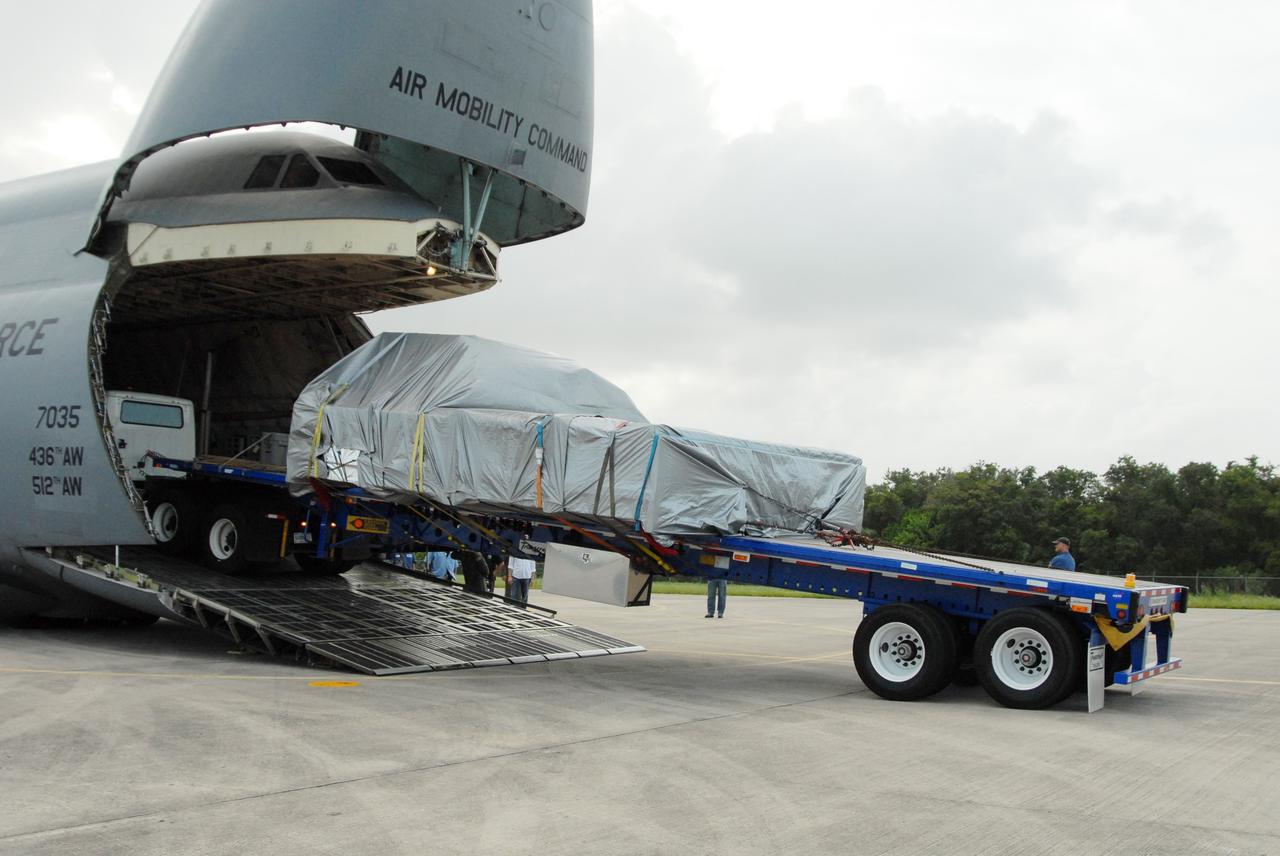
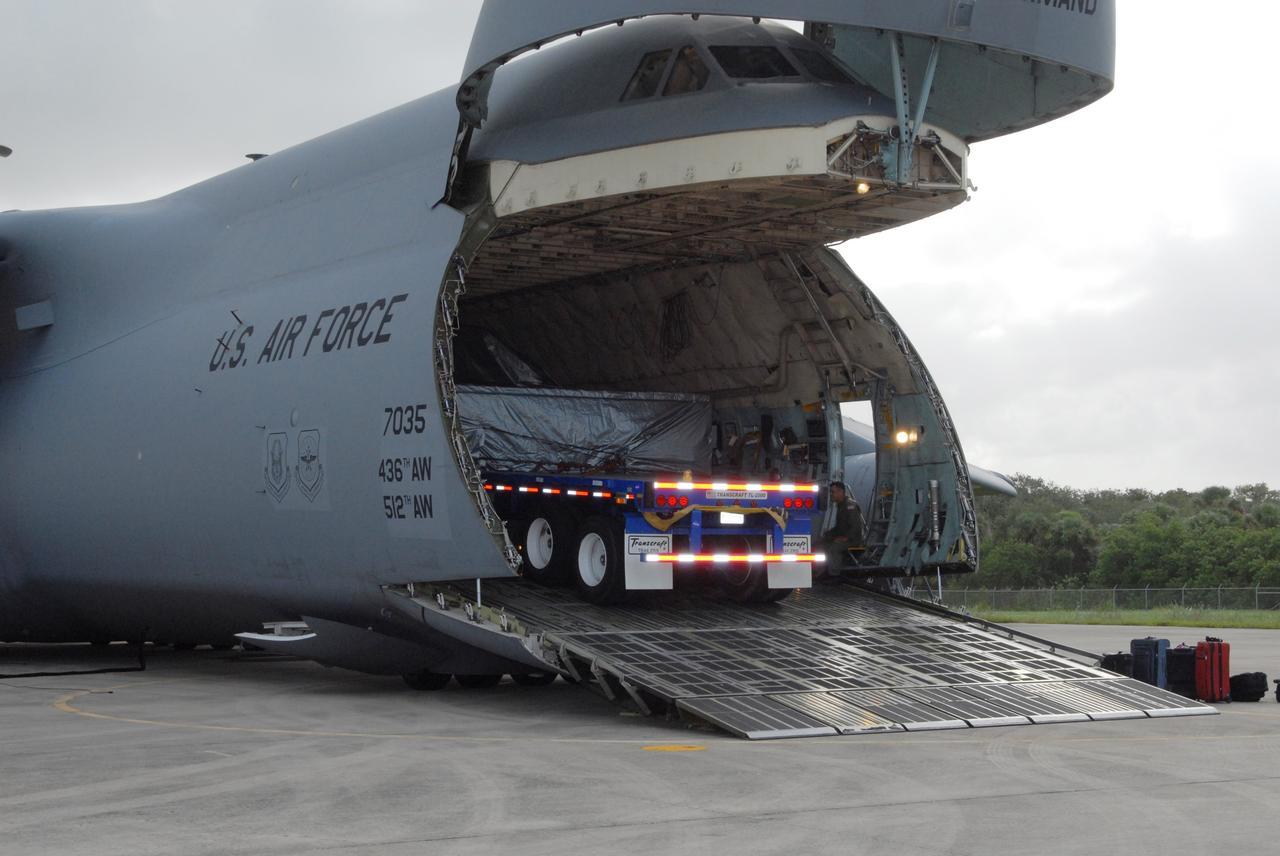
NOAA's Geostationary Operation Environmental Satellite-S (GOES-S) is being offloaded from a C-5 transport aircraft onto the flatbed of a heavy-lift truck at the Shuttle Landing Facility at NASA's Kennedy Space Center in Florida. The satellite will be transported to the Astrotech Space Operations facility in Titusville, Florida to prepare it for launch. GOES-S is the second in a series of four advanced geostationary weather satellites. The GOES-R series - consisting of the GOES-R, GOES-S, GOES-T and GOES-U spacecraft - will significantly improve the detection and observation of environmental phenomena that directly affect public safety, protection of property and the nation's economic health and prosperity. GOES-S is slated to launch March 1, 2018 aboard a United Launch Alliance Atlas V rocket from Cape Canaveral Air Force Station in Florida.
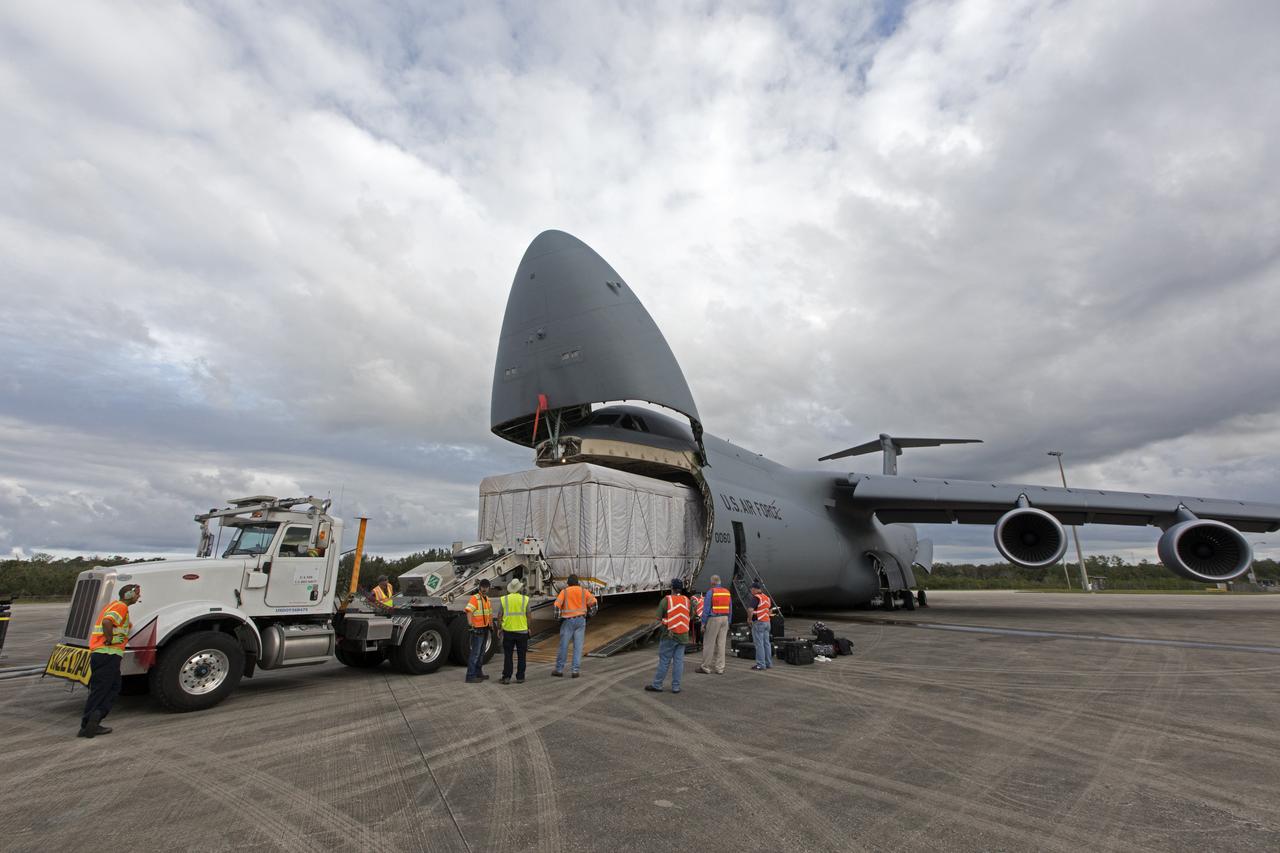
NOAA's Geostationary Operation Environmental Satellite-S (GOES-S) is being offloaded from a C-5 transport aircraft onto the flatbed of a heavy-lift truck at the Shuttle Landing Facility at NASA's Kennedy Space Center in Florida. The satellite will be transported to the Astrotech Space Operations facility in Titusville, Florida to prepare it for launch. GOES-S is the second in a series of four advanced geostationary weather satellites. The GOES-R series - consisting of the GOES-R, GOES-S, GOES-T and GOES-U spacecraft - will significantly improve the detection and observation of environmental phenomena that directly affect public safety, protection of property and the nation's economic health and prosperity. GOES-S is slated to launch March 1, 2018 aboard a United Launch Alliance Atlas V rocket from Cape Canaveral Air Force Station in Florida.
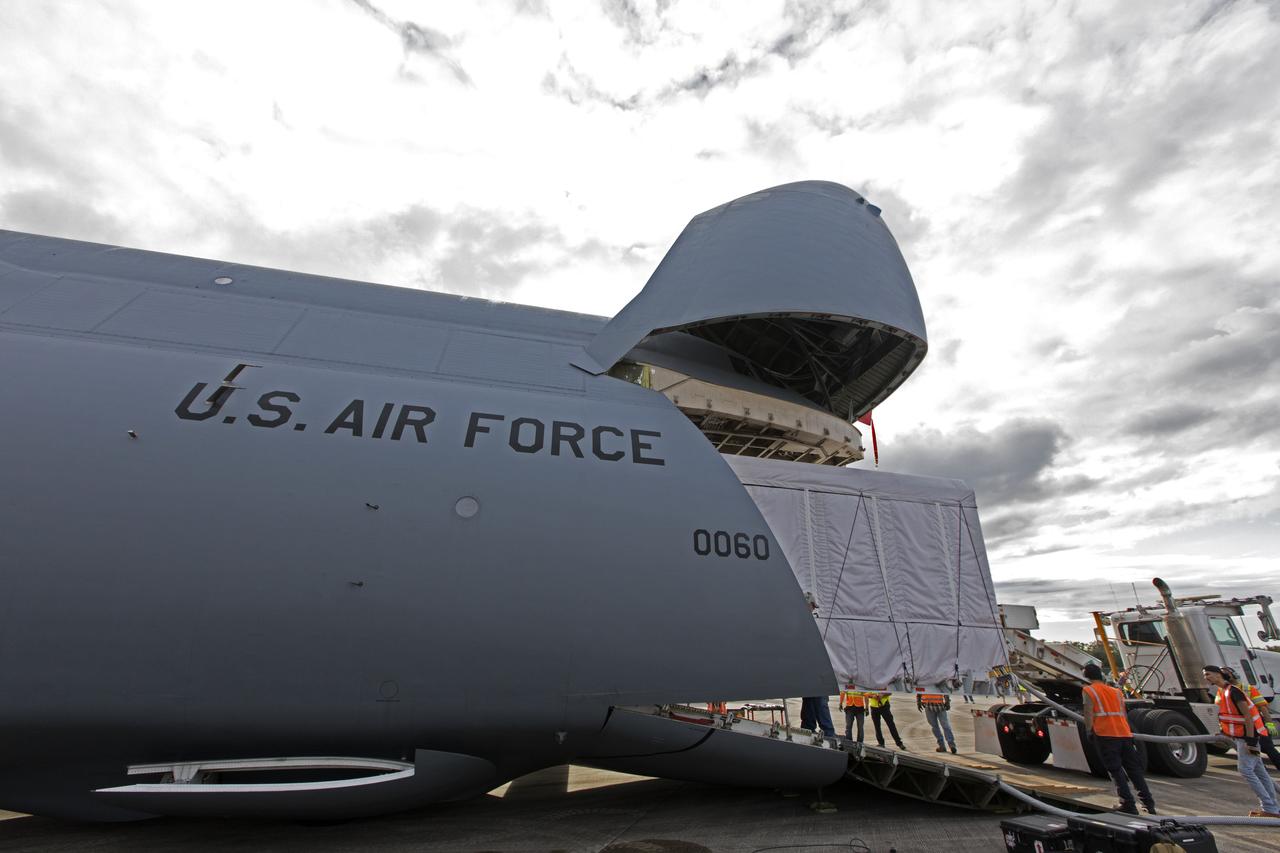
NOAA's Geostationary Operation Environmental Satellite-S (GOES-S) is being offloaded from a C-5 transport aircraft at the Shuttle Landing Facility at NASA's Kennedy Space Center in Florida. The satellite will be transported to the Astrotech Space Operations facility in Titusville, Florida to prepare it for launch. GOES-S is the second in a series of four advanced geostationary weather satellites. The GOES-R series - consisting of the GOES-R, GOES-S, GOES-T and GOES-U spacecraft - will significantly improve the detection and observation of environmental phenomena that directly affect public safety, protection of property and the nation's economic health and prosperity. GOES-S is slated to launch March 1, 2018 aboard a United Launch Alliance Atlas V rocket from Cape Canaveral Air Force Station in Florida.
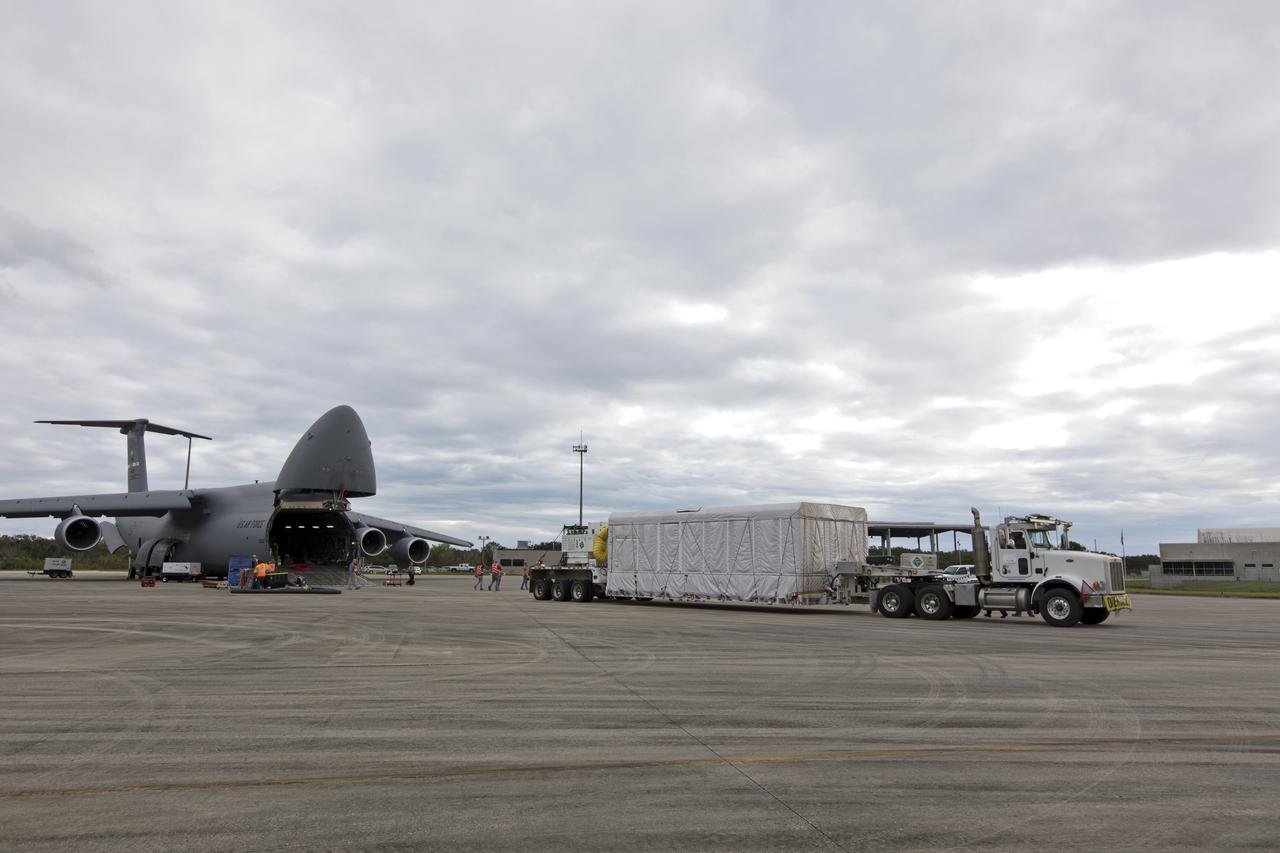
NOAA's Geostationary Operation Environmental Satellite-S (GOES-S) has been offloaded from a C-5 transport aircraft and secured onto the flatbed of a heavy-lift truck at the Shuttle Landing Facility at NASA's Kennedy Space Center in Florida. The satellite will be transported to the Astrotech Space Operations facility in Titusville, Florida to prepare it for launch. GOES-S is the second in a series of four advanced geostationary weather satellites. The GOES-R series - consisting of the GOES-R, GOES-S, GOES-T and GOES-U spacecraft - will significantly improve the detection and observation of environmental phenomena that directly affect public safety, protection of property and the nation's economic health and prosperity. GOES-S is slated to launch March 1, 2018 aboard a United Launch Alliance Atlas V rocket from Cape Canaveral Air Force Station in Florida.
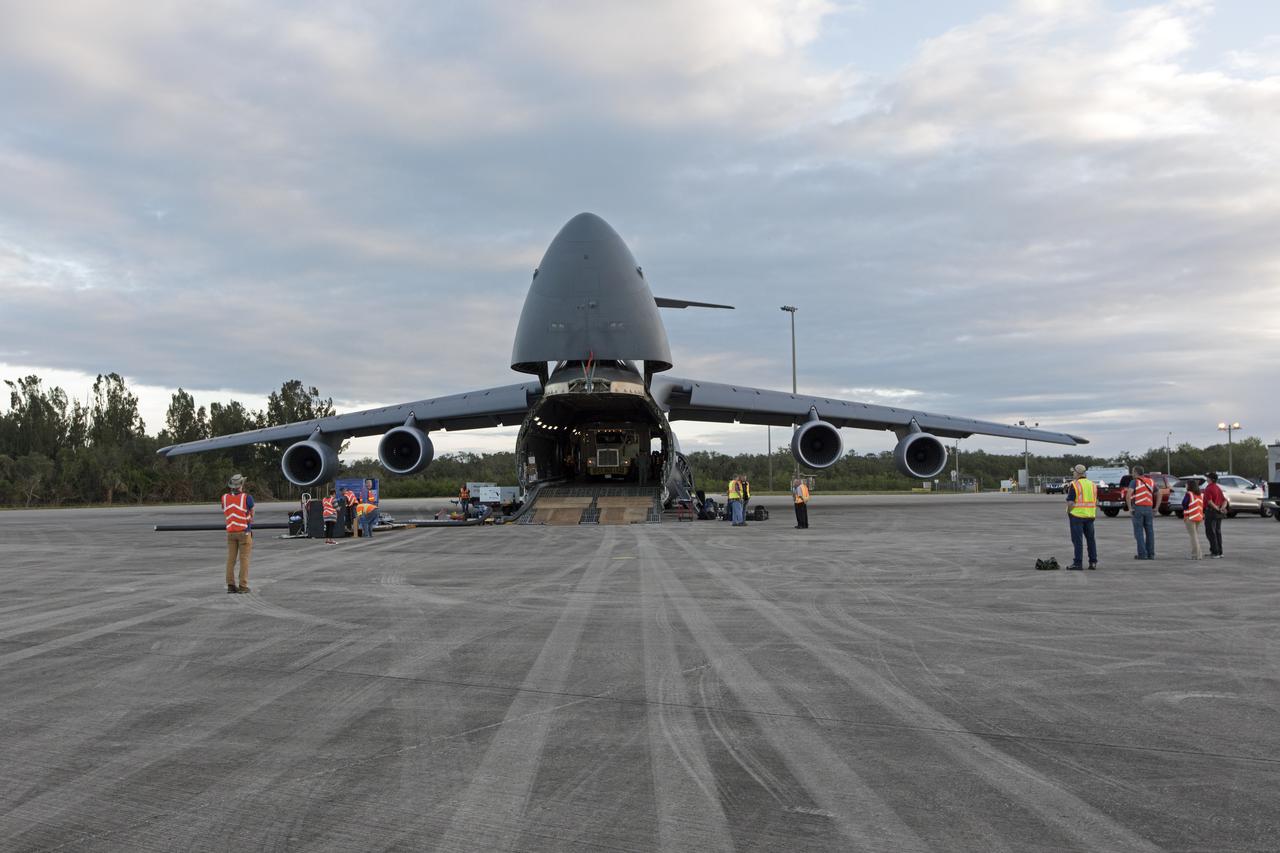
NOAA's Geostationary Operation Environmental Satellite-S (GOES-S) is being offloaded from a C-5 transport aircraft at the Shuttle Landing Facility at NASA's Kennedy Space Center in Florida. The satellite will be transported to the Astrotech Space Operations facility in Titusville, Florida to prepare it for launch. GOES-S is the second in a series of four advanced geostationary weather satellites. The GOES-R series - consisting of the GOES-R, GOES-S, GOES-T and GOES-U spacecraft - will significantly improve the detection and observation of environmental phenomena that directly affect public safety, protection of property and the nation's economic health and prosperity. GOES-S is slated to launch March 1, 2018 aboard a United Launch Alliance Atlas V rocket from Cape Canaveral Air Force Station in Florida.
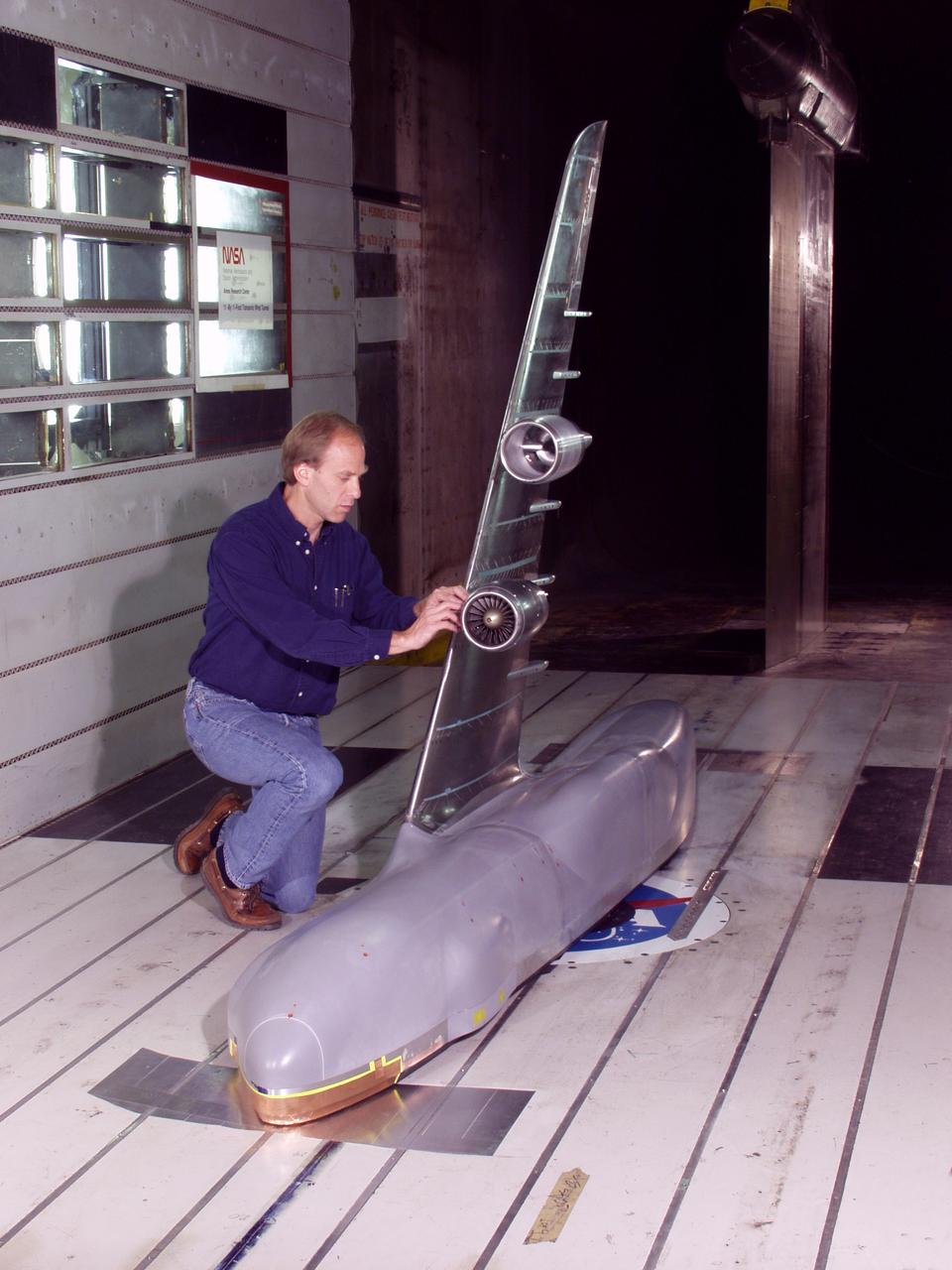
C-5 Re-engineering and Realiability Program semi-span model; 11ft w.t. Test-11-0103; Throught flow nacelle and inboard nacelle with turbine propulsion systems unit with Doug Atler
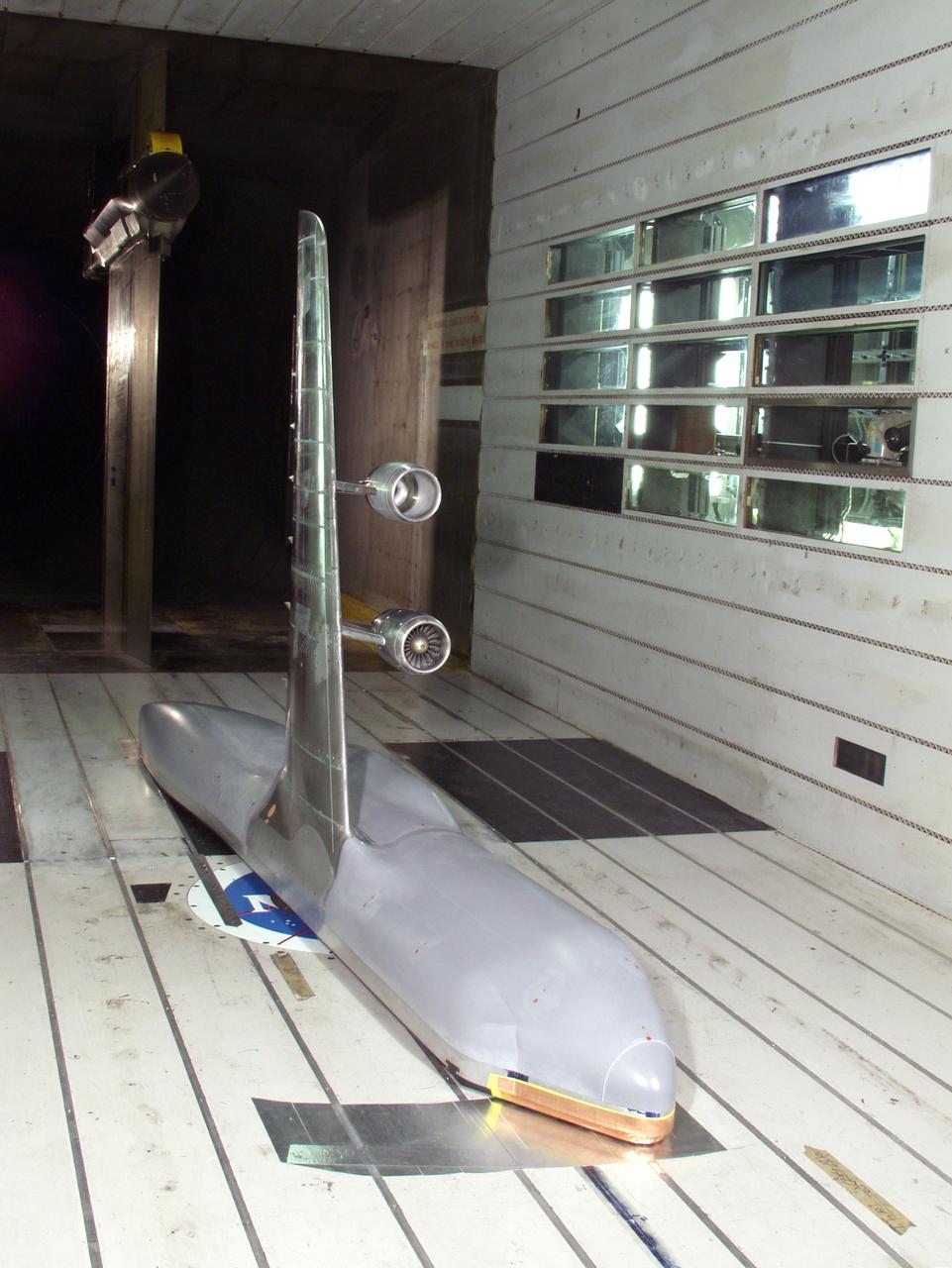
C-5 Re-engineering and Realiability Program semi-span model; 11ft w.t. Test-11-0103; Throught flow nacelle and inboard nacelle with turbine propulsion systems unit
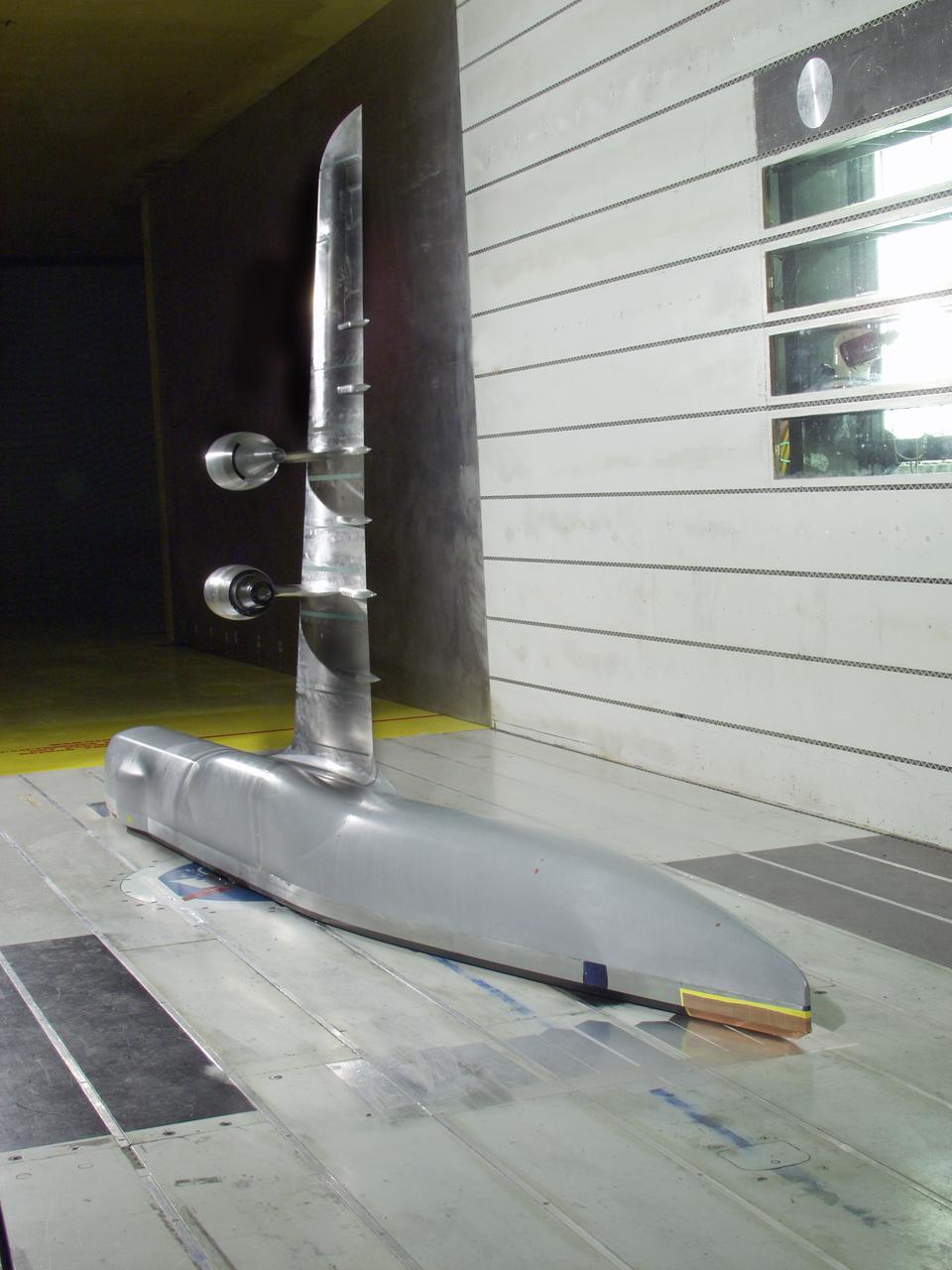
C-5 Re-engineering and Realiability Program semi-span model; 11ft w.t. Test-11-0103; Throught flow nacelle and inboard nacelle with turbine propulsion systems unit
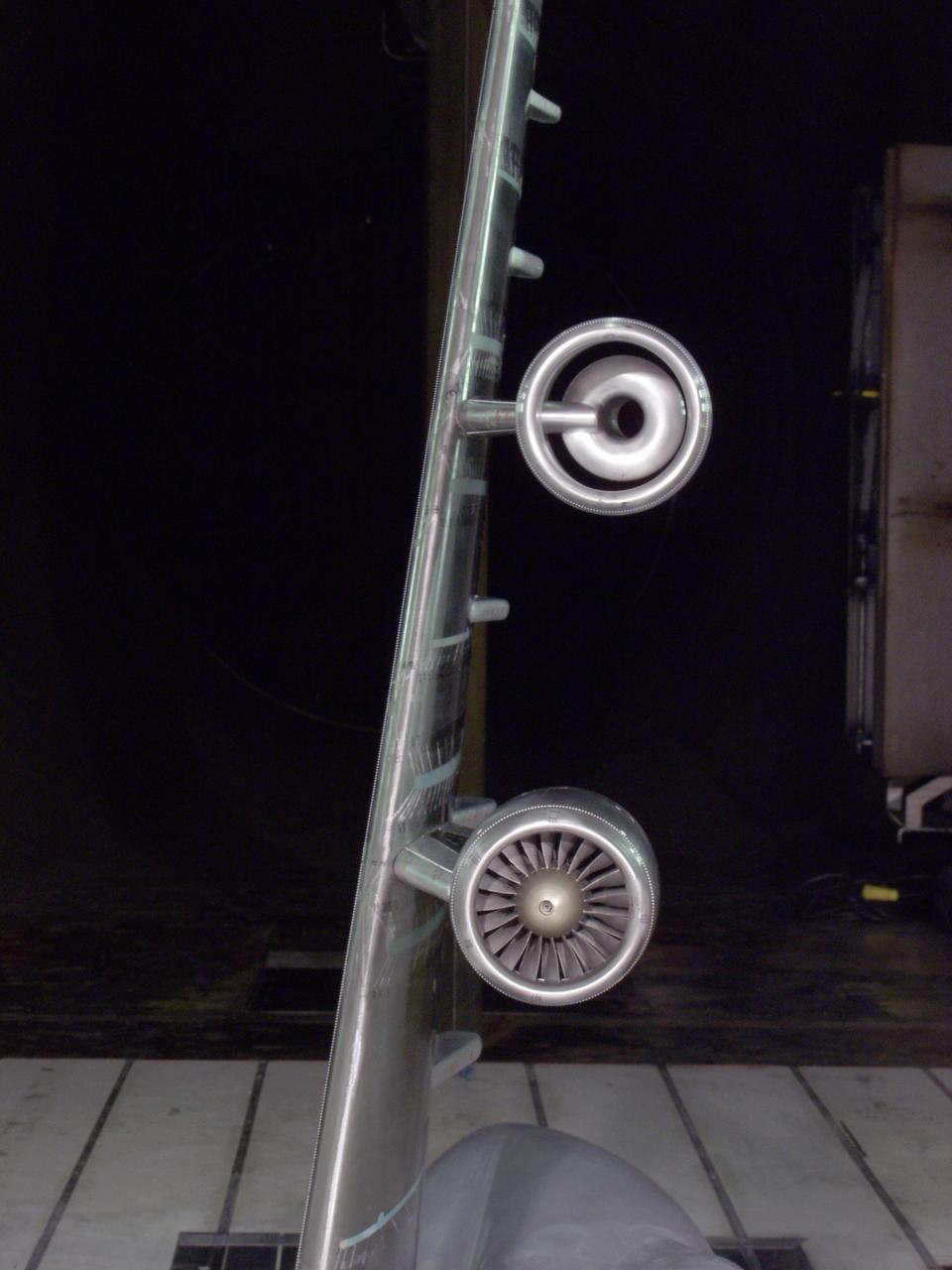
C-5 Re-engineering and Realiability Program semi-span model; 11ft w.t. Test-11-0103; Throught flow nacelle and inboard nacelle with turbine propulsion systems unit
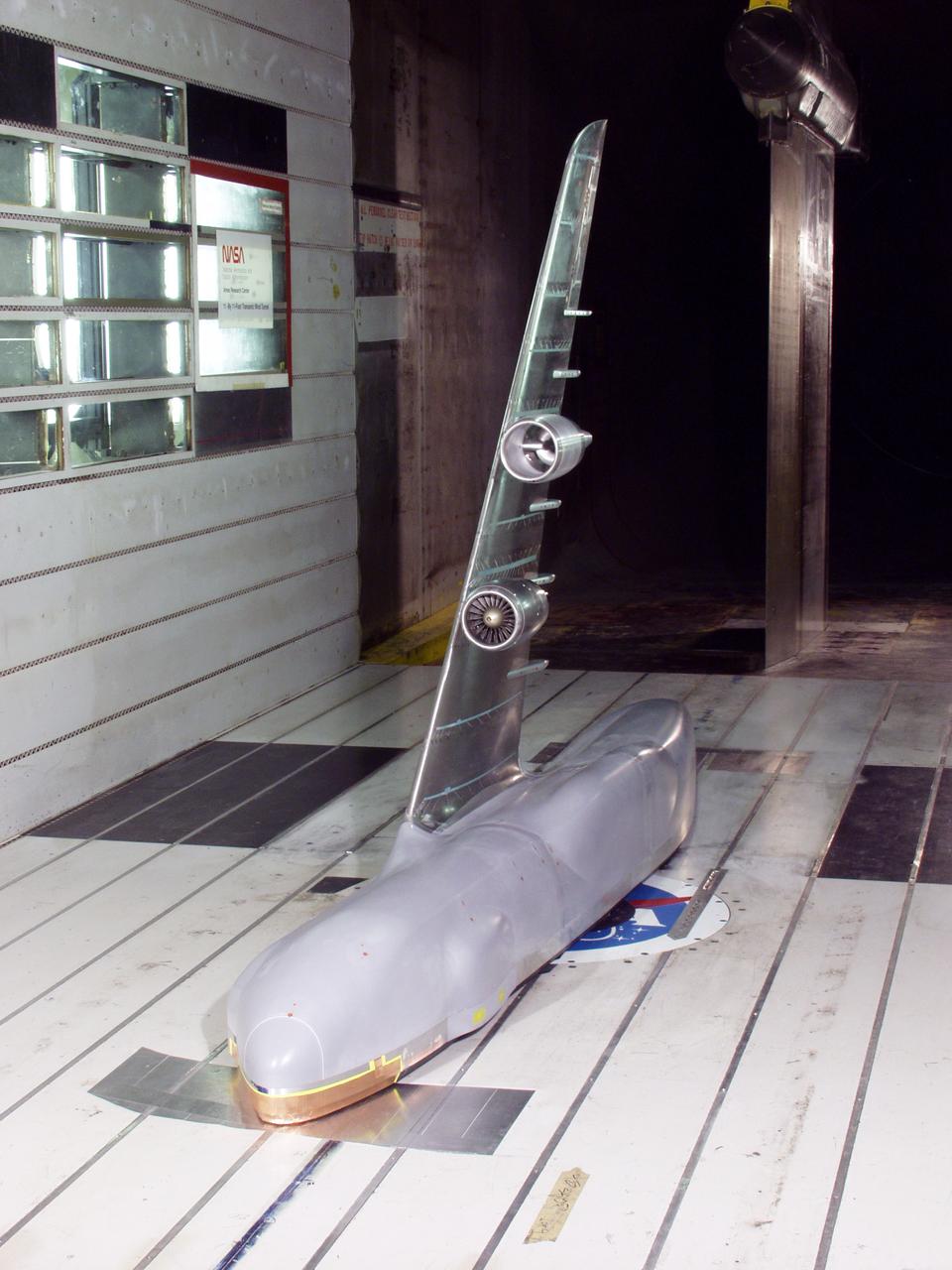
C-5 Re-engineering and Realiability Program semi-span model; 11ft w.t. Test-11-0103; Throught flow nacelle and inboard nacelle with turbine propulsion systems unit
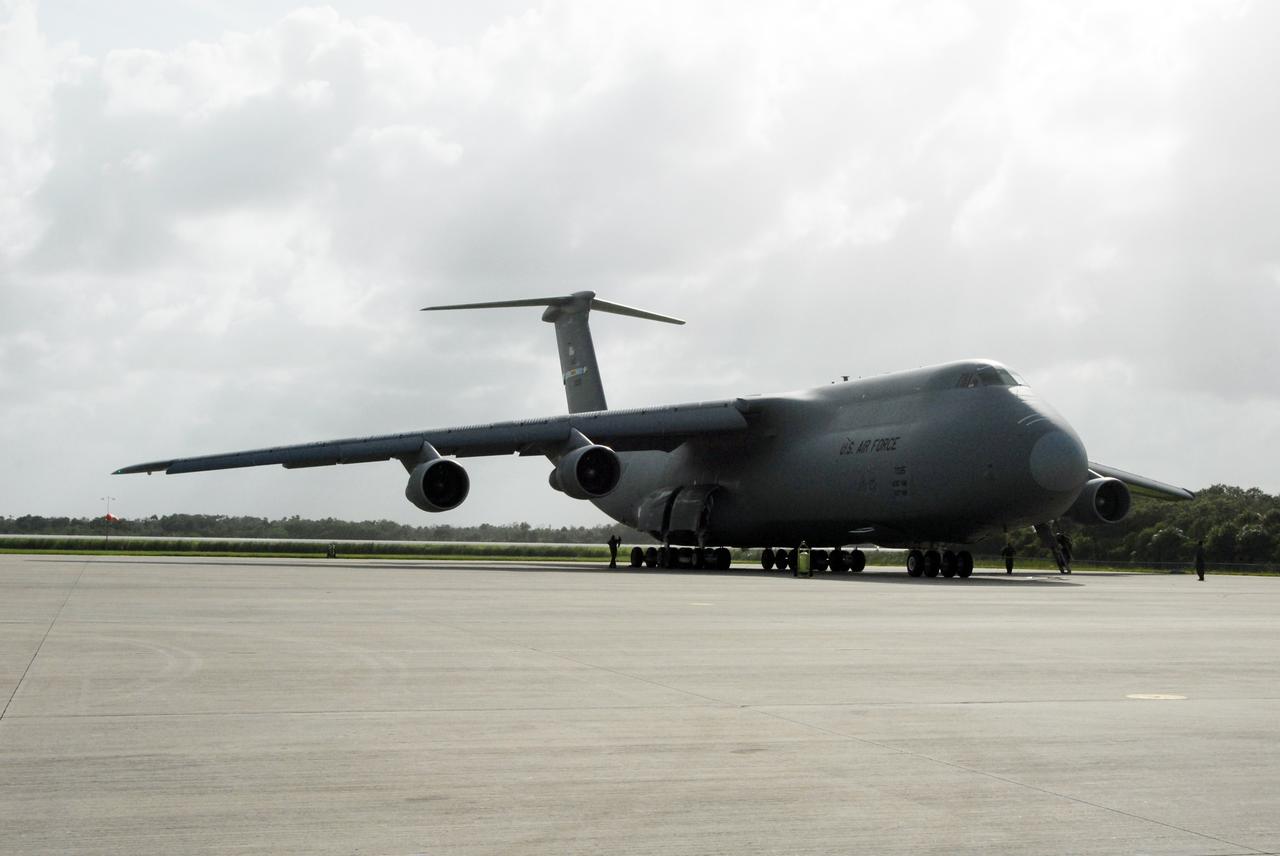
CAPE CANAVERAL, Fla. – The U.S. Air Force C-5 lands on NASA Kennedy Space Center's Shuttle Landing Facility. The aircraft carries the Express Logistics Carrier 4, or ELC4, part of the payload for the STS-133 mission. Space shuttle Endeavour will deliver the ELC4 and ELC3 with critical spare components to the International Space Station on the mission. Endeavour's launch is targeted for late July in 2010. Photo credit: NASA/Amanda Diller
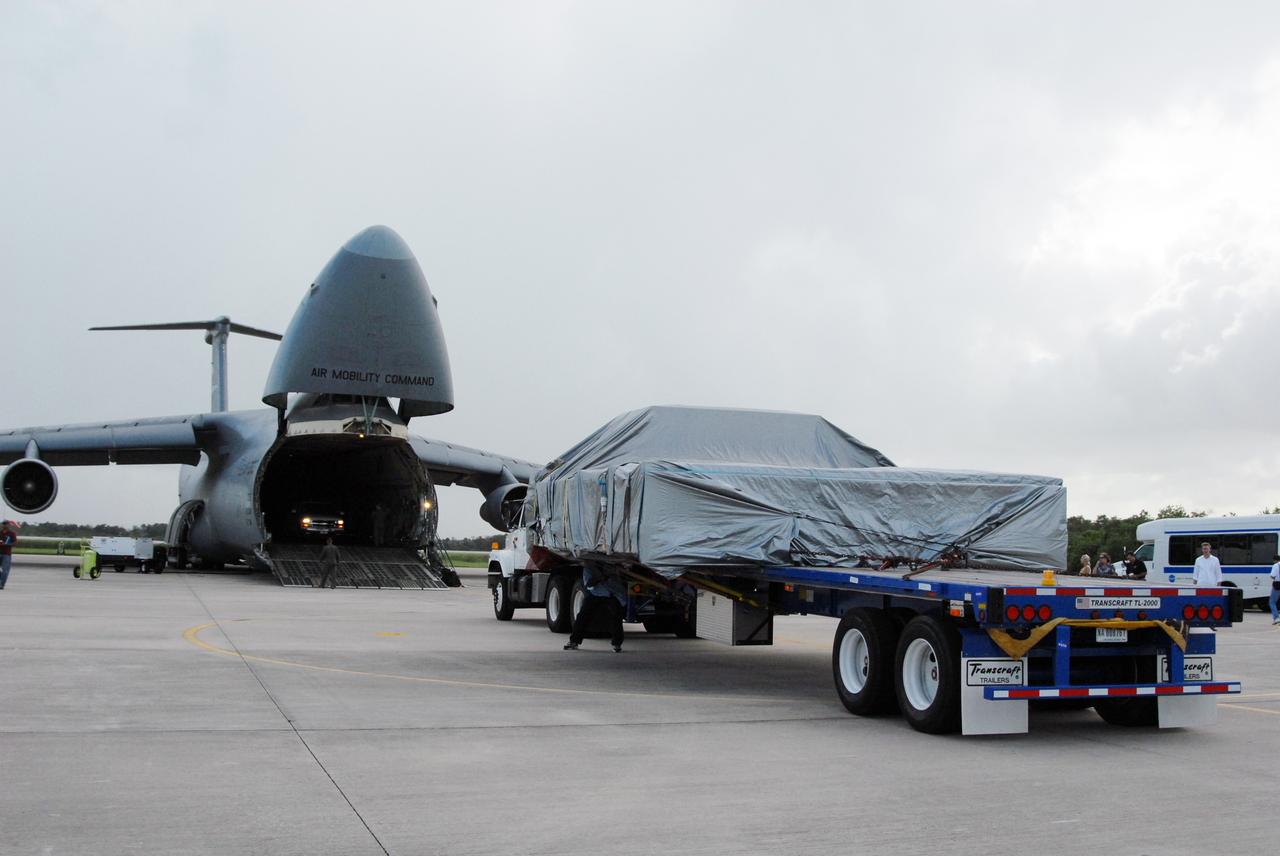
CAPE CANAVERAL, Fla. – On NASA Kennedy Space Center's Shuttle Landing Facility, the Express Logistics Carrier 4, or ELC4, is out of the U.S. Air Force C-5. It will be transported to the Space Station Processing Facility. The ELC4 is part of the payload for the STS-133 mission. Space shuttle Endeavour will deliver the ELC4 and ELC3 with critical spare components to the International Space Station on the mission. Endeavour's launch is targeted for late July in 2010. Photo credit: NASA/Amanda Diller
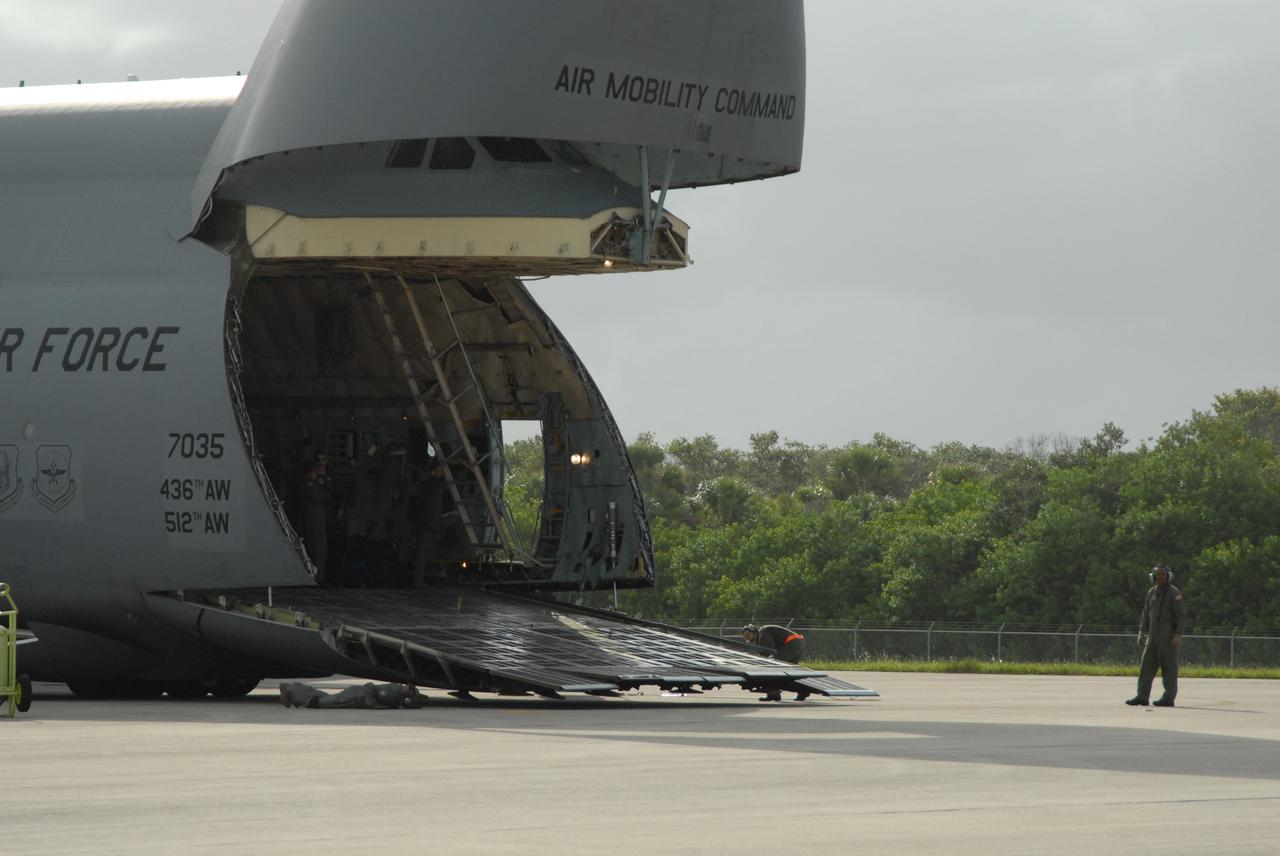
CAPE CANAVERAL, Fla. – On NASA Kennedy Space Center's Shuttle Landing Facility, the ramp on the U.S. Air Force C-5 is down to start offloading its cargo, the Express Logistics Carrier 4, or ELC4. The ELC4 is part of the payload for the STS-133 mission. Space shuttle Endeavour will deliver the ELC4 and ELC3 with critical spare components to the International Space Station on the mission. Endeavour's launch is targeted for late July in 2010. Photo credit: NASA/Amanda Diller
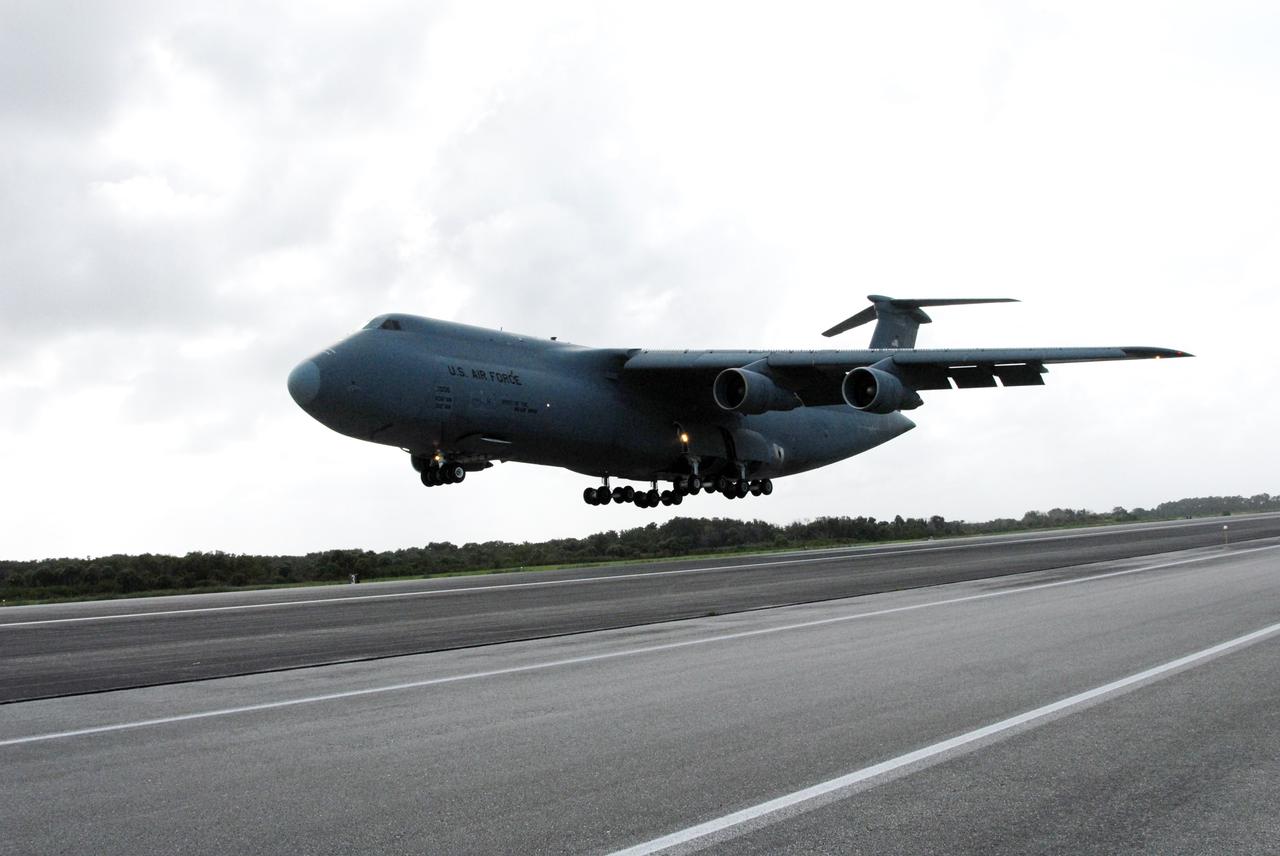
CAPE CANAVERAL, Fla. – The U.S. Air Force C-5 prepares to land on NASA Kennedy Space Center's Shuttle Landing Facility. The aircraft carries the Express Logistics Carrier 4, or ELC4, part of the payload for the STS-133 mission. Space shuttle Endeavour will deliver the ELC4 and ELC3 with critical spare components to the International Space Station on the mission. Endeavour's launch is targeted for late July in 2010. Photo credit: NASA/Amanda Diller
CAPE CANAVERAL, Fla. – On NASA Kennedy Space Center's Shuttle Landing Facility, the Express Logistics Carrier 4, or ELC4, is moved out of the U.S. Air Force C-5. The ELC4 is part of the payload for the STS-133 mission. Space shuttle Endeavour will deliver the ELC4 and ELC3 with critical spare components to the International Space Station on the mission. Endeavour's launch is targeted for late July in 2010. Photo credit: NASA/Amanda Diller
CAPE CANAVERAL, Fla. – On NASA Kennedy Space Center's Shuttle Landing Facility, the Express Logistics Carrier 4, or ELC4, is moved out of the U.S. Air Force C-5. The ELC4 is part of the payload for the STS-133 mission. Space shuttle Endeavour will deliver the ELC4 and ELC3 with critical spare components to the International Space Station on the mission. Endeavour's launch is targeted for late July in 2010. Photo credit: NASA/Amanda Diller
CAPE CANAVERAL, Fla. – On NASA Kennedy Space Center's Shuttle Landing Facility, the U.S. Air Force C-5 prepares to offload its cargo, the Express Logistics Carrier 4, or ELC4. The ELC4 is part of the payload for the STS-133 mission. Space shuttle Endeavour will deliver the ELC4 and ELC3 with critical spare components to the International Space Station on the mission. Endeavour's launch is targeted for late July in 2010. Photo credit: NASA/Amanda Diller
CAPE CANAVERAL, Fla. – On NASA Kennedy Space Center's Shuttle Landing Facility, the Express Logistics Carrier 4, or ELC4, is moved out of the U.S. Air Force C-5. The ELC4 is part of the payload for the STS-133 mission. Space shuttle Endeavour will deliver the ELC4 and ELC3 with critical spare components to the International Space Station on the mission. Endeavour's launch is targeted for late July in 2010. Photo credit: NASA/Amanda Diller
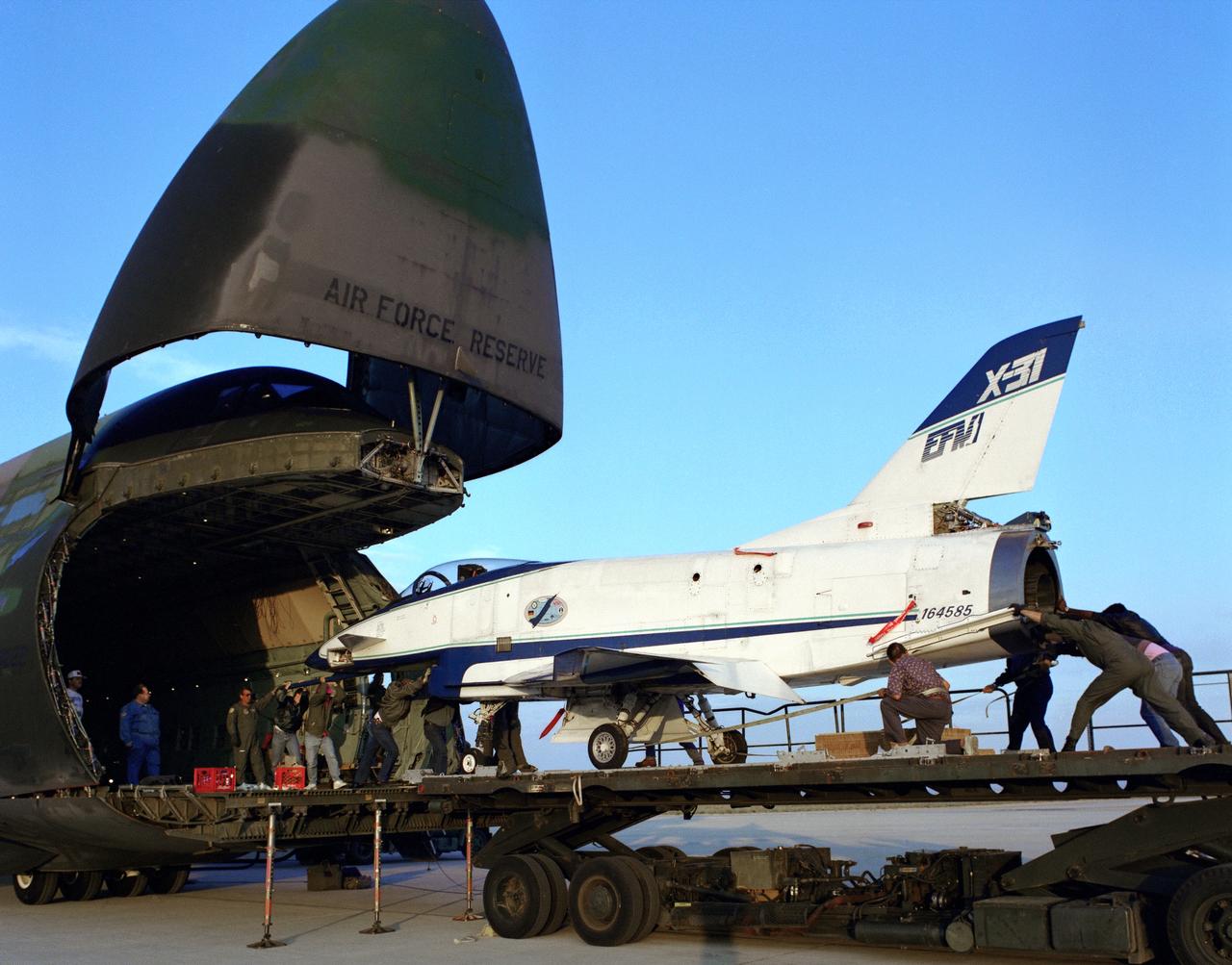
The X-31 Enhanced Fighter Maneuverability Technology Demonstrator Aircraft, based at the NASA Dryden Flight Research Center, Edwards, California, begins rolling aboard an Air Force Reserve C-5 transport which ferried it on May 22, 1995 to Europe where it was flown in the Paris Air Show in June 1995. To fit in the C-5 the right wing of the X-31 had to be removed. At the air show, the X-31 demonstrated the value of using thrust vectoring (directing engine exhaust flow) coupled with advanced flight control systems to provide controlled flight at very high angles of attack.
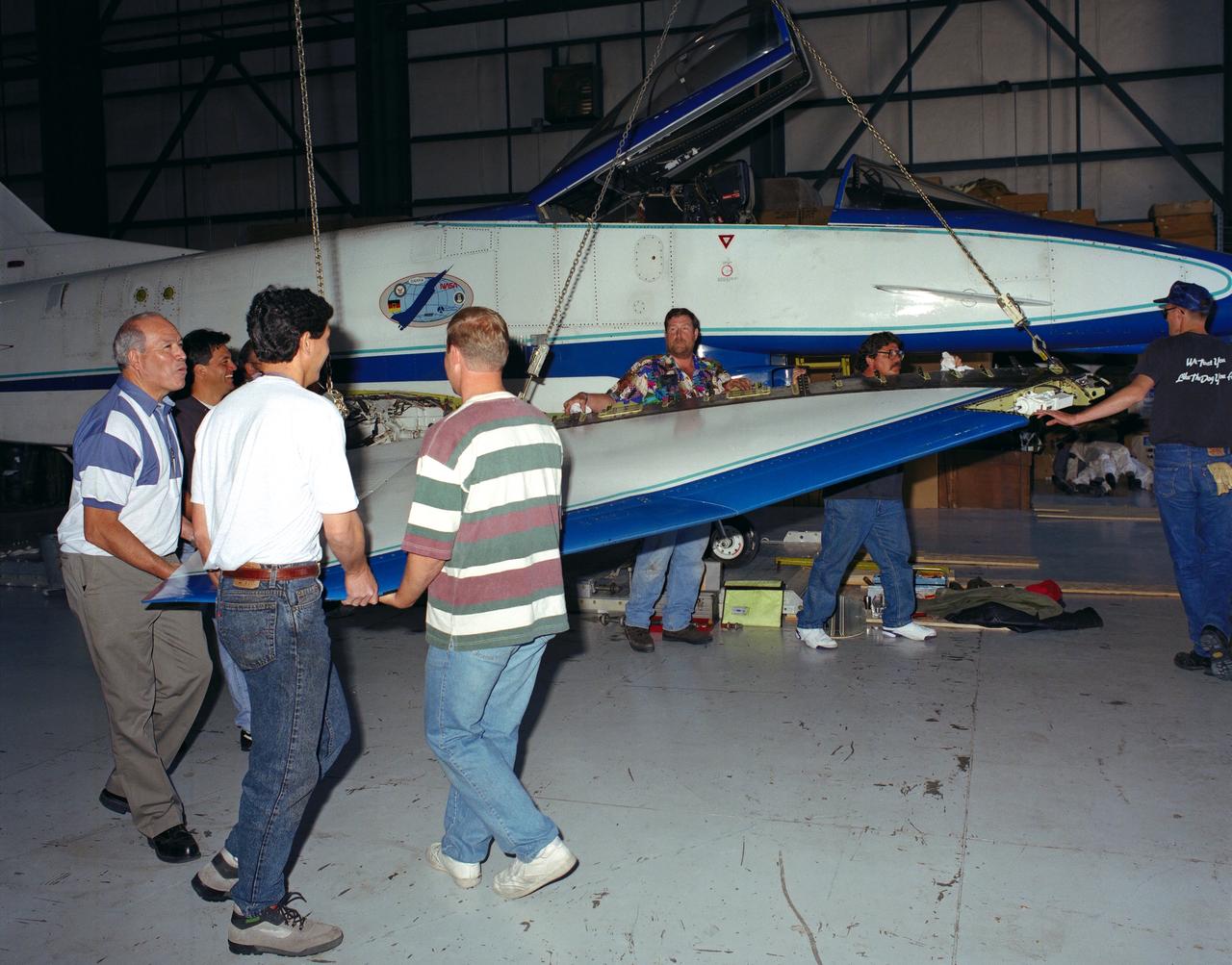
U.S. and German personnel of the X-31 Enhanced Fighter Maneuverability Technology Demonstrator aircraft program removing the right wing of the aircraft, which was ferried from Edwards Air Force Base, California, to Europe on May 22, 1995 aboard an Air Force Reserve C-5 transport. The X-31, based at the NASA Dryden Flight Research Center was ferried to Europe and flown in the Paris Air Show in June. The wing of the X-31 was removed on May 18, 1995, to allow the aircraft to fit inside the C-5 fuselage. Officials of the X-31 project used Manching, Germany, as a staging base to prepare the aircraft for the flight demonstration. At the air show, the X-31 demonstrated the value of using thrust vectoring (directing engine exhaust flow) coupled with advanced flight control systems to provide controlled flight at very high angles of attack. The aircraft arrived back at Edwards in a Air Force Reserve C-5 on June 25, 1995 and off loaded at Dryden June 27. The X-31 aircraft was developed jointly by Rockwell International's North American Aircraft Division (now part of Boeing) and Daimler-Benz Aerospace (formerly Messerschmitt-Bolkow-Blohm), under sponsorship by the U.S. Department of Defense and the German Federal Ministry of Defense.
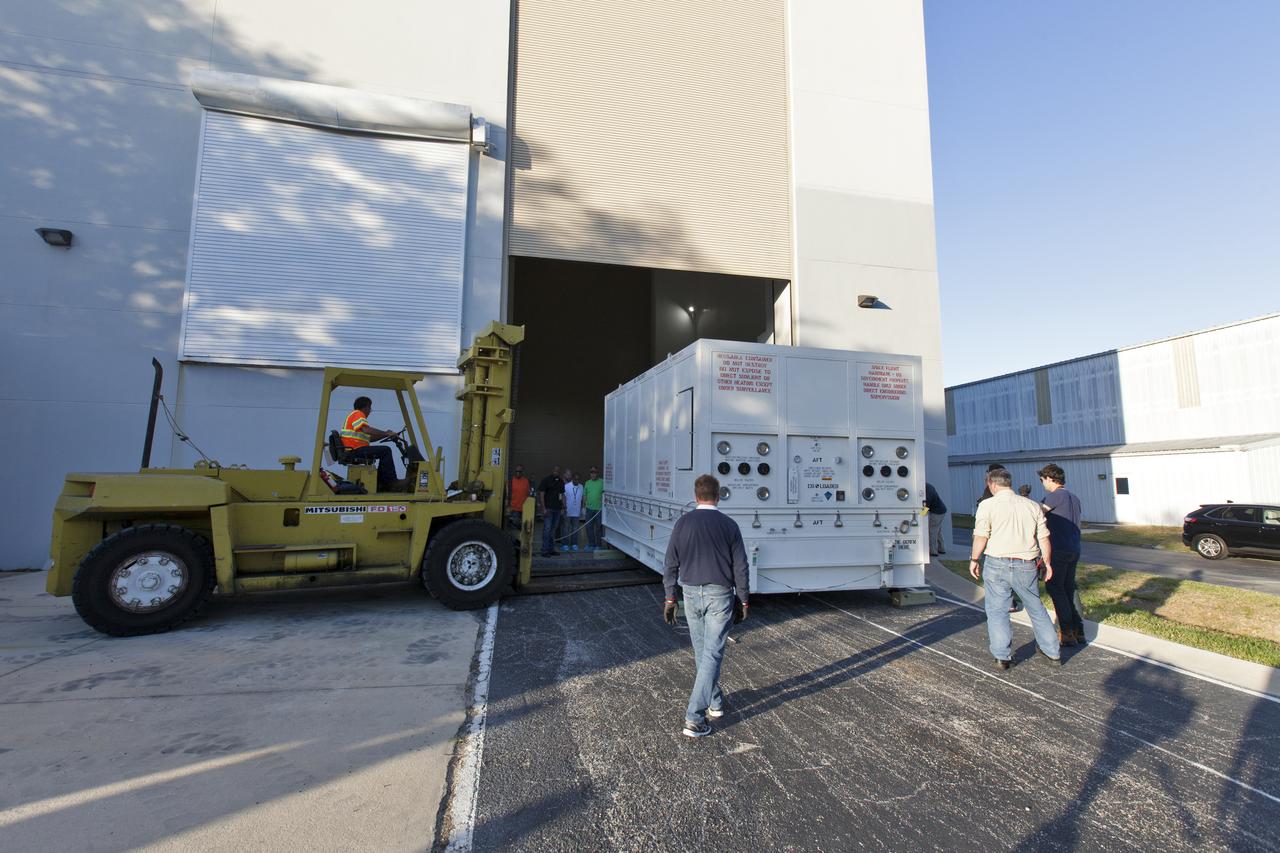
NASA's Parker Solar Probe, secured in its shipping container, arrives at the Astrotech processing facility near the agency's Kennedy Space Center in Florida. The spacecraft arrived aboard a U.S. Air Force C-5 transport aircraft at Space Coast Regional Airport in Titusville, Florida. The Parker Solar Probe will launch on a United Launch Alliance Delta IV Heavy rocket from Space Launch Complex 37 at Cape Canaveral Air Force Station in Florida in July 2018. The mission will perform the closest-ever observations of a star when it travels through the Sun's atmosphere, called the corona. The probe will rely on measurements and imaging to revolutionize our understanding of the corona and the Sun-Earth connection.

A U.S. Air Force C-5 transport aircraft arrives at Space Coast Regional Airport in Titusville, Florida, with NASA's Parker Solar Probe spacecraft aboard. The spacecraft will be offloaded and transported to the Astrotech processing facility near the agency's Kennedy Space Center. The Parker Solar Probe will launch on a United Launch Alliance Delta IV Heavy rocket from Space Launch Complex 37 at Cape Canaveral Air Force Station in Florida in July 2018. The mission will perform the closest-ever observations of a star when it travels through the Sun's atmosphere, called the corona. The probe will rely on measurements and imaging to revolutionize our understanding of the corona and the Sun-Earth connection.
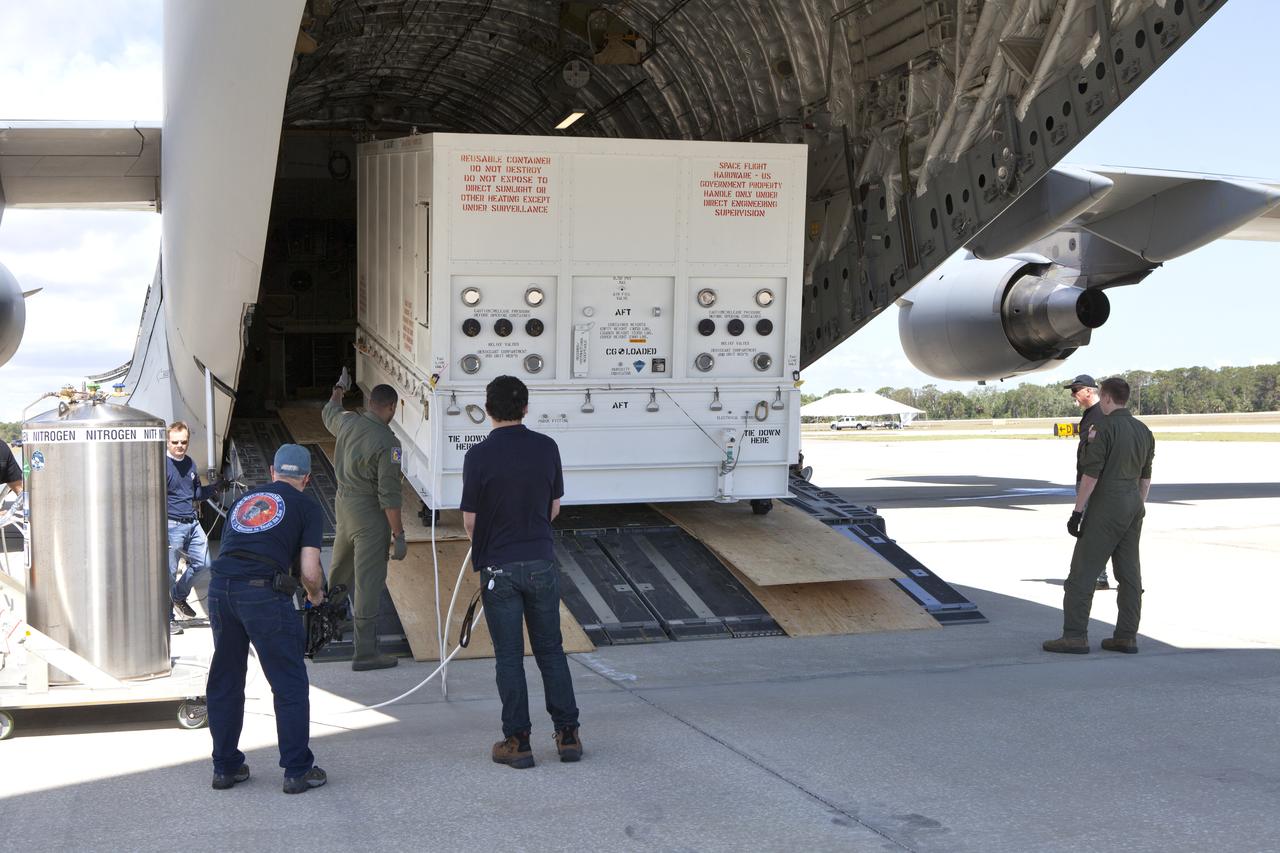
NASA's Parker Solar Probe, secured in its shipping container, is offloaded from a U.S. Air Force C-5 transport aircraft at Space Coast Regional Airport in Titusville, Florida. The spacecraft will be transported to the Astrotech processing facility near the agency's Kennedy Space Center. The Parker Solar Probe will launch on a United Launch Alliance Delta IV Heavy rocket from Space Launch Complex 37 at Cape Canaveral Air Force Station in Florida in July 2018. The mission will perform the closest-ever observations of a star when it travels through the Sun's atmosphere, called the corona. The probe will rely on measurements and imaging to revolutionize our understanding of the corona and the Sun-Earth connection.
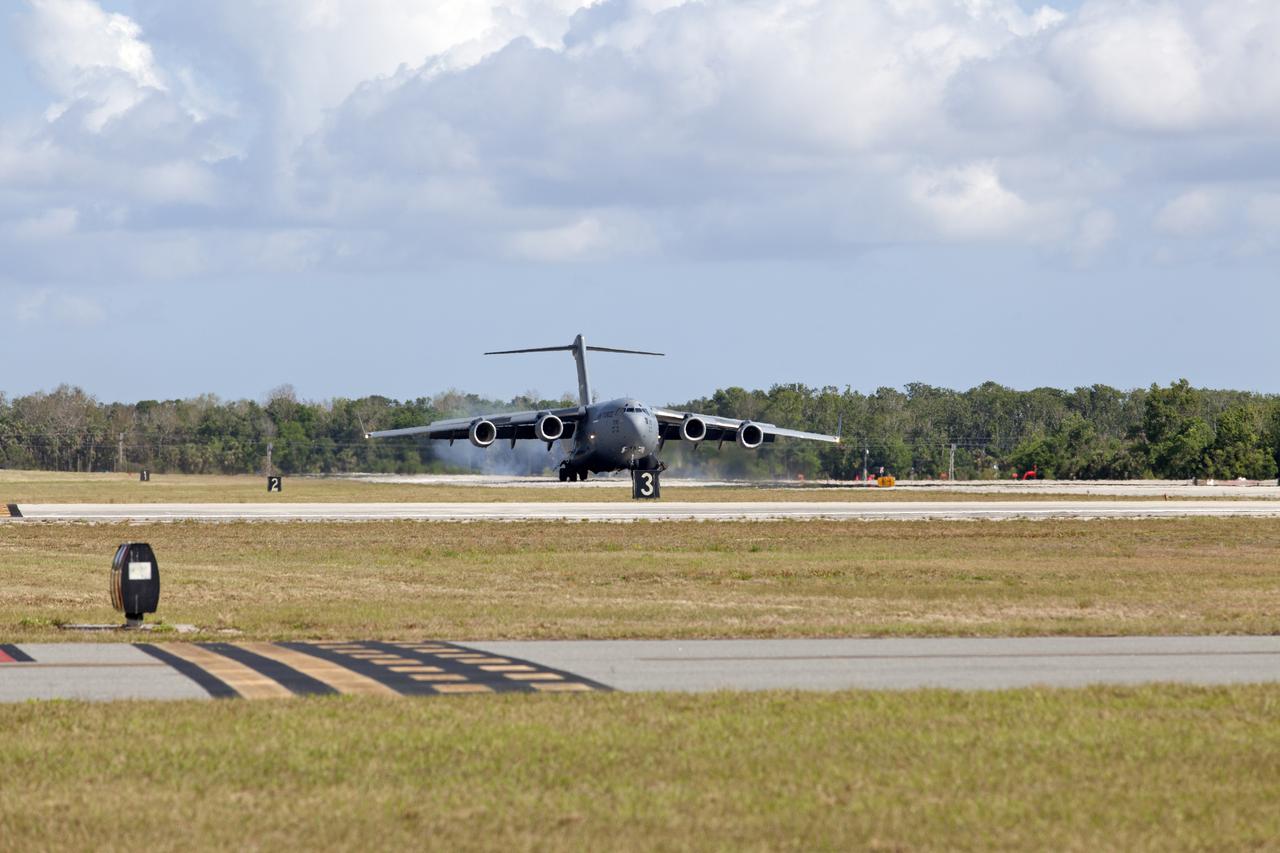
A U.S. Air Force C-5 transport aircraft touches down at Space Coast Regional Airport in Titusville, Florida, with NASA's Parker Solar Probe spacecraft aboard. The spacecraft will be offloaded and transported to the Astrotech processing facility near the agency's Kennedy Space Center. The Parker Solar Probe will launch on a United Launch Alliance Delta IV Heavy rocket from Space Launch Complex 37 at Cape Canaveral Air Force Station in Florida in July 2018. The mission will perform the closest-ever observations of a star when it travels through the Sun's atmosphere, called the corona. The probe will rely on measurements and imaging to revolutionize our understanding of the corona and the Sun-Earth connection.
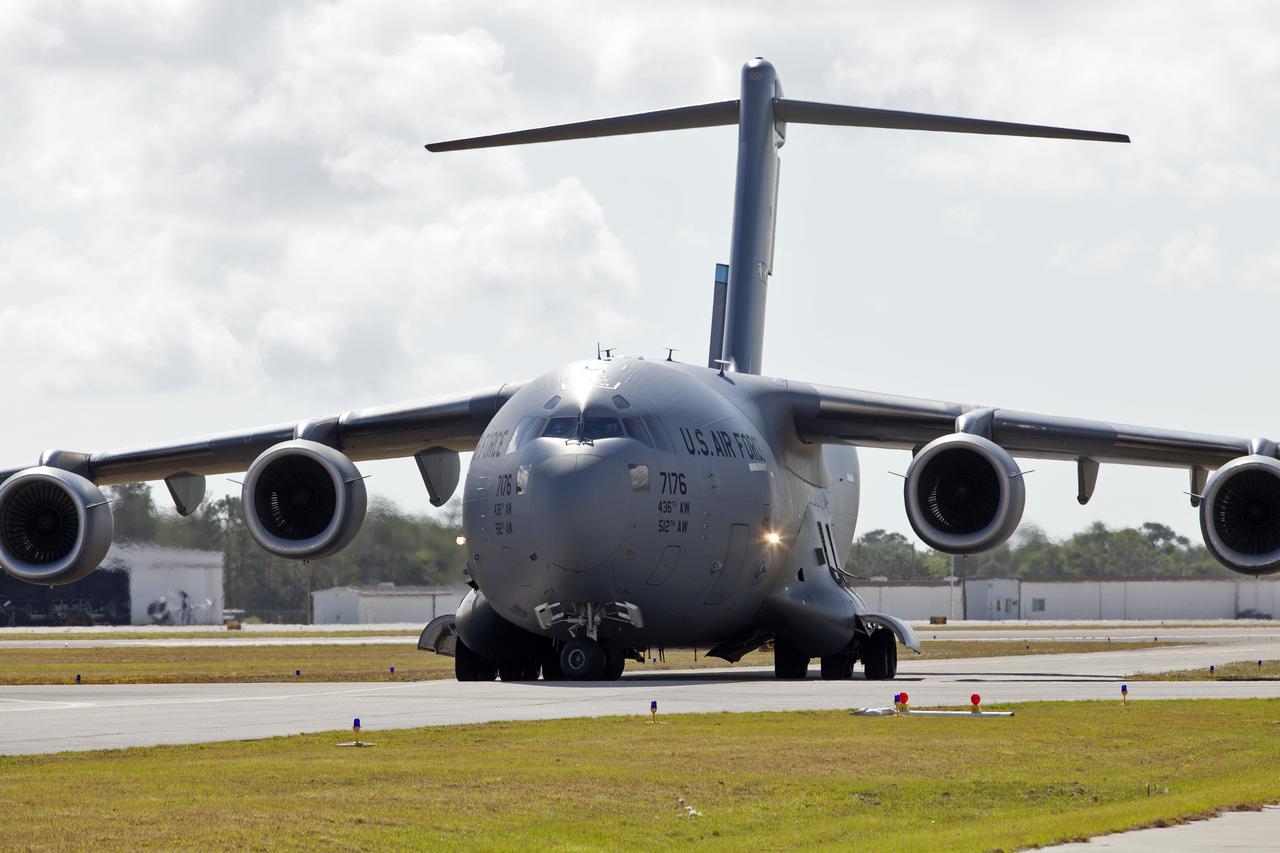
A U.S. Air Force C-5 transport aircraft arrives at Space Coast Regional Airport in Titusville, Florida, with NASA's Parker Solar Probe spacecraft aboard. The spacecraft will be offloaded and transported to the Astrotech processing facility near the agency's Kennedy Space Center. The Parker Solar Probe will launch on a United Launch Alliance Delta IV Heavy rocket from Space Launch Complex 37 at Cape Canaveral Air Force Station in Florida in July 2018. The mission will perform the closest-ever observations of a star when it travels through the Sun's atmosphere, called the corona. The probe will rely on measurements and imaging to revolutionize our understanding of the corona and the Sun-Earth connection.
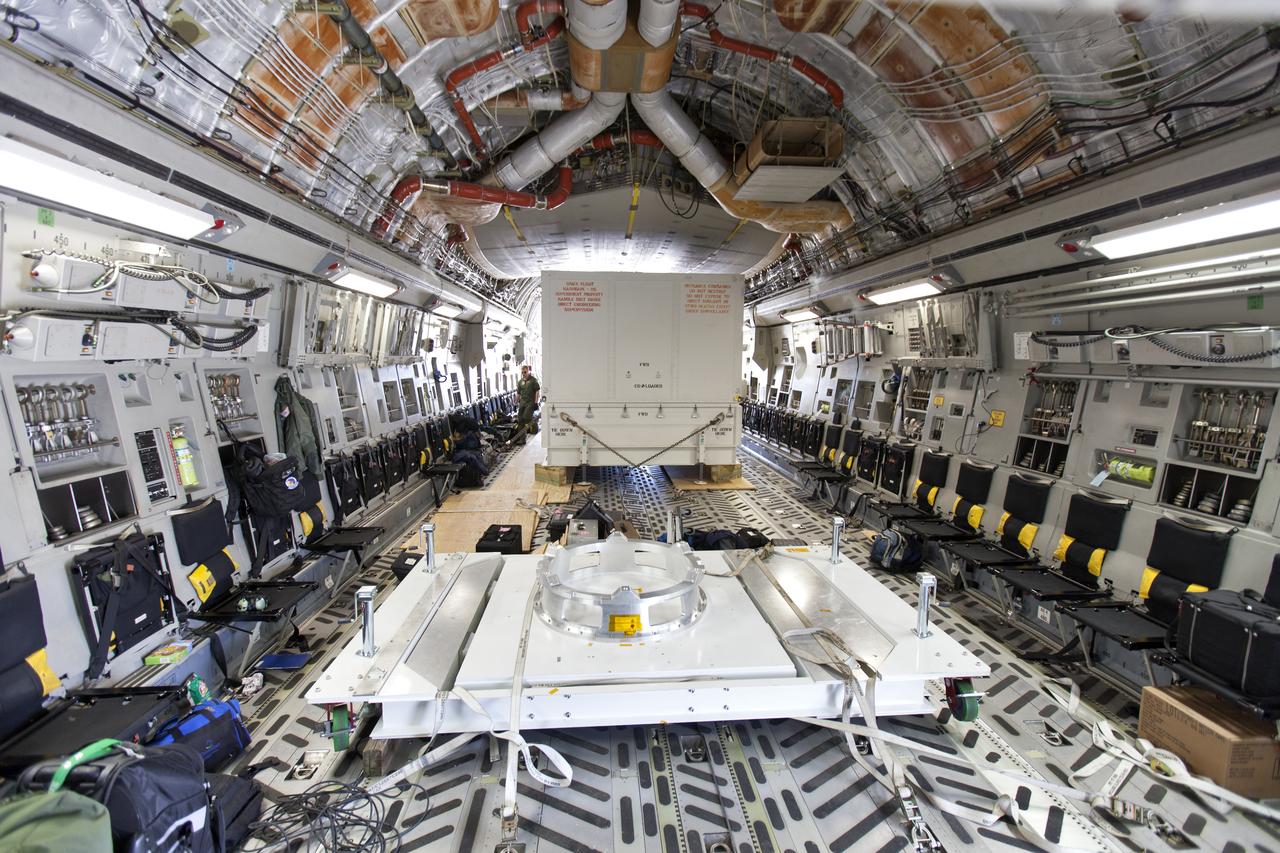
NASA's Parker Solar Probe, secured in its shipping container, arrives aboard a U.S. Air Force C-5 transport aircraft at Space Coast Regional Airport in Titusville, Florida. The spacecraft will be offloaded and transported to the Astrotech processing facility near the agency's Kennedy Space Center. The Parker Solar Probe will launch on a United Launch Alliance Delta IV Heavy rocket from Space Launch Complex 37 at Cape Canaveral Air Force Station in Florida in July 2018. The mission will perform the closest-ever observations of a star when it travels through the Sun's atmosphere, called the corona. The probe will rely on measurements and imaging to revolutionize our understanding of the corona and the Sun-Earth connection.
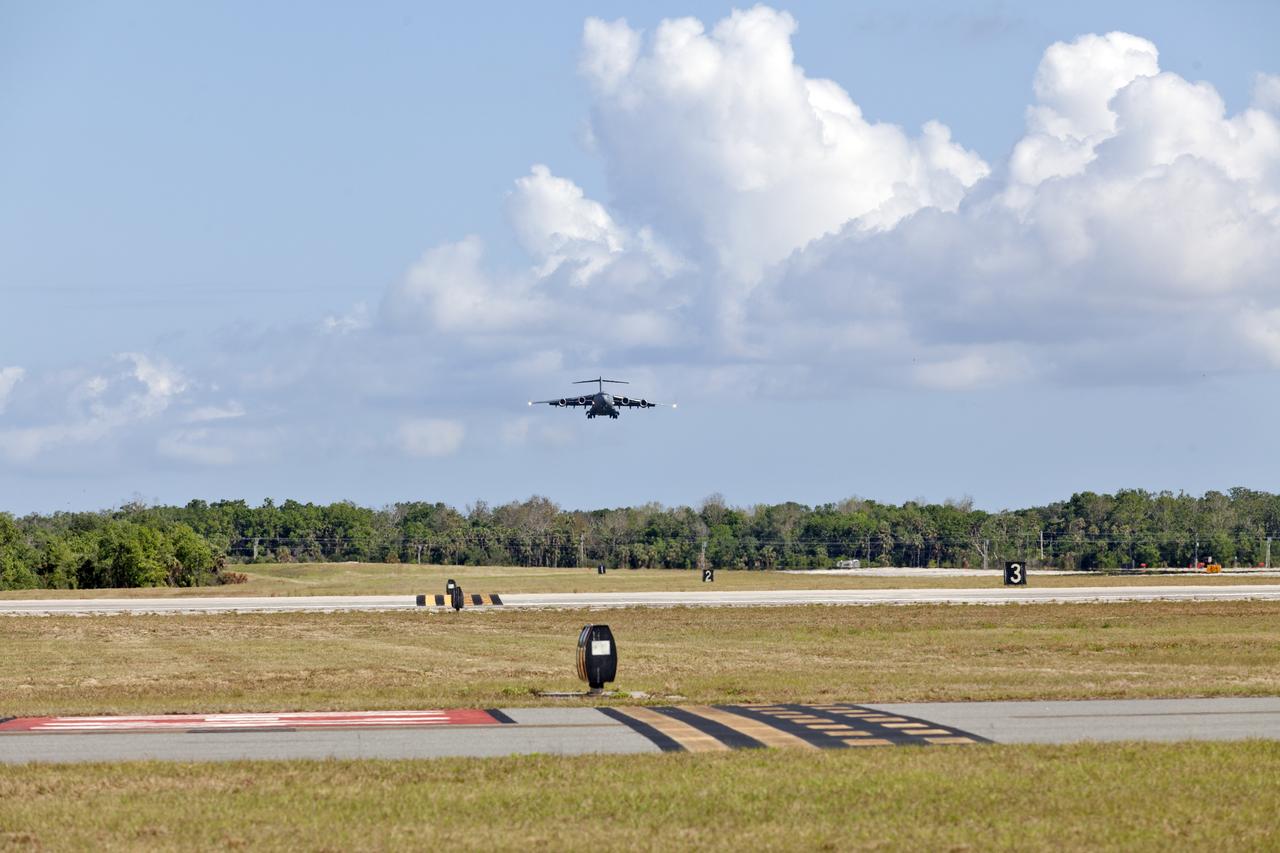
A U.S. Air Force C-5 transport aircraft approaches the runway for landing at Space Coast Regional Airport in Titusville, Florida, with NASA's Parker Solar Probe spacecraft aboard. The spacecraft will be offloaded and transported to the Astrotech processing facility near the agency's Kennedy Space Center. The Parker Solar Probe will launch on a United Launch Alliance Delta IV Heavy rocket from Space Launch Complex 37 at Cape Canaveral Air Force Station in Florida in July 2018. The mission will perform the closest-ever observations of a star when it travels through the Sun's atmosphere, called the corona. The probe will rely on measurements and imaging to revolutionize our understanding of the corona and the Sun-Earth connection.
NASA's Parker Solar Probe, secured in its shipping container, is offloaded from a U.S. Air Force C-5 transport aircraft at Space Coast Regional Airport in Titusville, Florida. The spacecraft will be transported to the Astrotech processing facility near the agency's Kennedy Space Center. The Parker Solar Probe will launch on a United Launch Alliance Delta IV Heavy rocket from Space Launch Complex 37 at Cape Canaveral Air Force Station in Florida in July 2018. The mission will perform the closest-ever observations of a star when it travels through the Sun's atmosphere, called the corona. The probe will rely on measurements and imaging to revolutionize our understanding of the corona and the Sun-Earth connection.
NASA's Parker Solar Probe, secured in its shipping container, has been offloaded from a U.S. Air Force C-5 transport aircraft at Space Coast Regional Airport in Titusville, Florida. The spacecraft will be transported to the Astrotech processing facility near the agency's Kennedy Space Center. The Parker Solar Probe will launch on a United Launch Alliance Delta IV Heavy rocket from Space Launch Complex 37 at Cape Canaveral Air Force Station in Florida in July 2018. The mission will perform the closest-ever observations of a star when it travels through the Sun's atmosphere, called the corona. The probe will rely on measurements and imaging to revolutionize our understanding of the corona and the Sun-Earth connection.
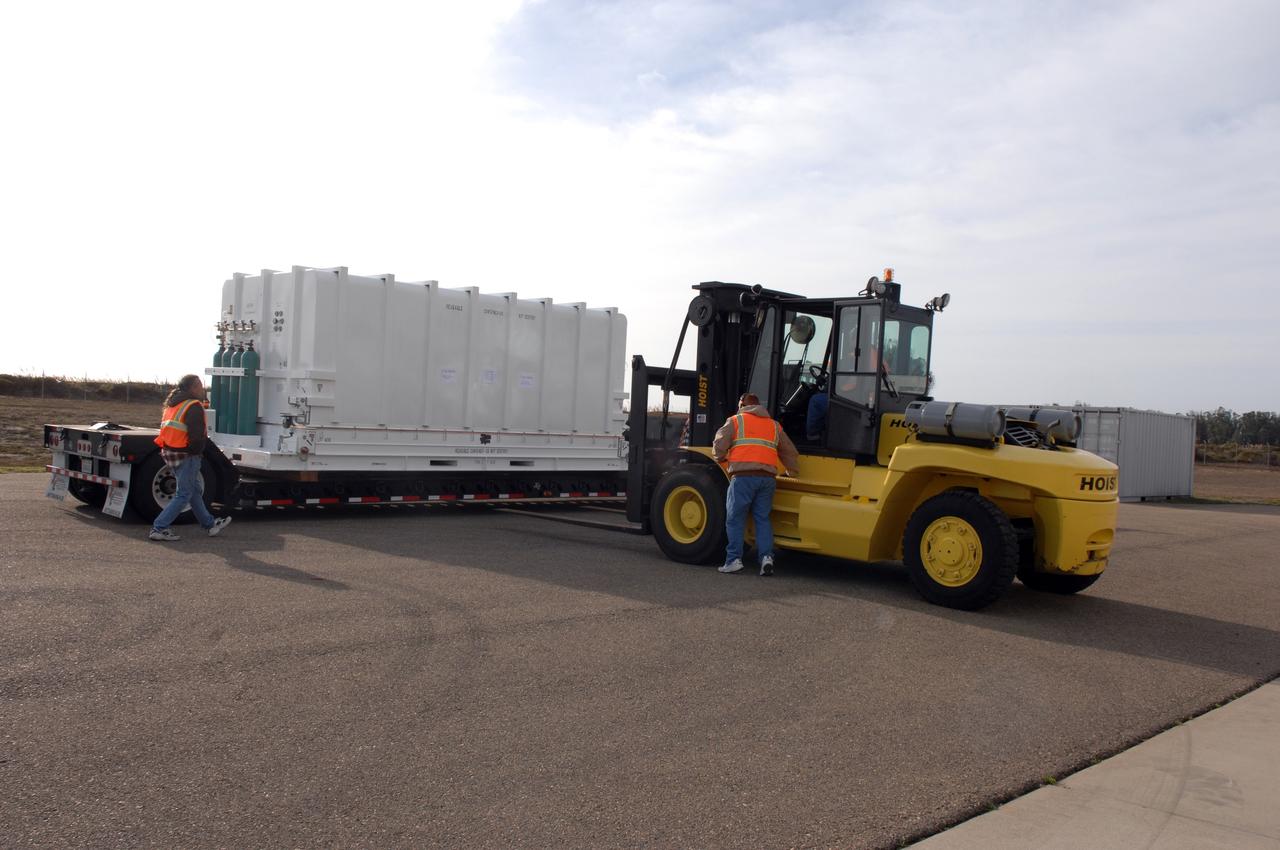
VANDENBERG AIR FORCE BASE, Calif. – The latest polar-orbiting operational environmental weather satellite developed by NASA for the National Oceanic and Atmospheric Administration, called NOAA-N Prime, is offloaded from the trailer at Vandenberg Air Force Base, Calif. The spacecraft will be moved into a NASA payload processing facility and prepared for a Feb. 4 launch. NOAA-N Prime, built by Lockheed Martin, is similar to NOAA-N launched on May 20, 2005.
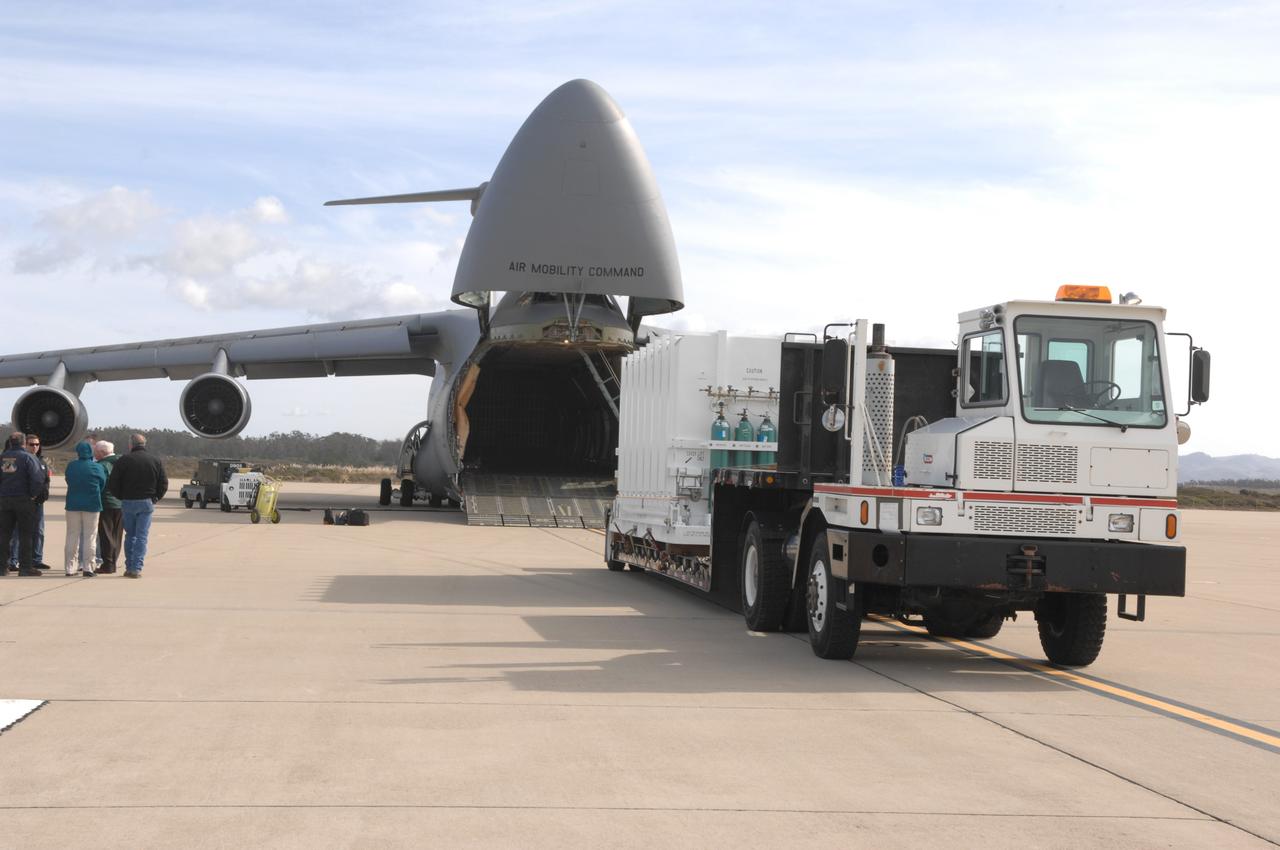
VANDENBERG AIR FORCE BASE, Calif. – The latest polar-orbiting operational environmental weather satellite developed by NASA for the National Oceanic and Atmospheric Administration, called NOAA-N Prime, is offloaded from the C-5A military cargo aircraft at Vandenberg Air Force Base, Calif., in preparation for a Feb. 4 launch. NOAA-N Prime, built by Lockheed Martin, is similar to NOAA-N launched on May 20, 2005.
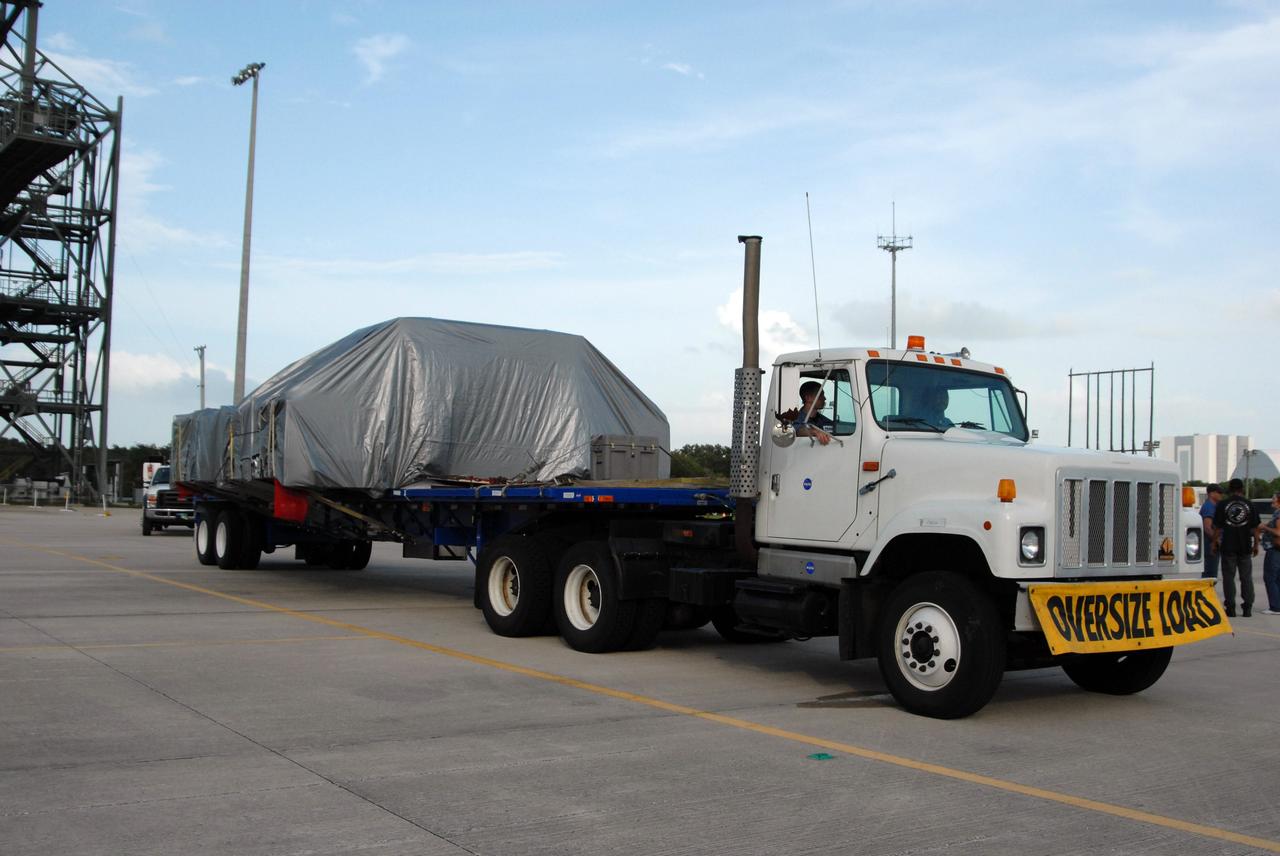
CAPE CANAVERAL, Fla. – The truck carrying the Express Logistics Carrier 4, or ELC4, is ready to leave NASA Kennedy Space Center's Shuttle Landing Facility. The ELC4 is being transported to the Space Station Processing Facility. The ELC4 is part of the payload for the STS-133 mission. Space shuttle Endeavour will deliver the ELC4 and ELC3 with critical spare components to the International Space Station on the mission. Endeavour's launch is targeted for late July in 2010. Photo credit: NASA/Amanda Diller
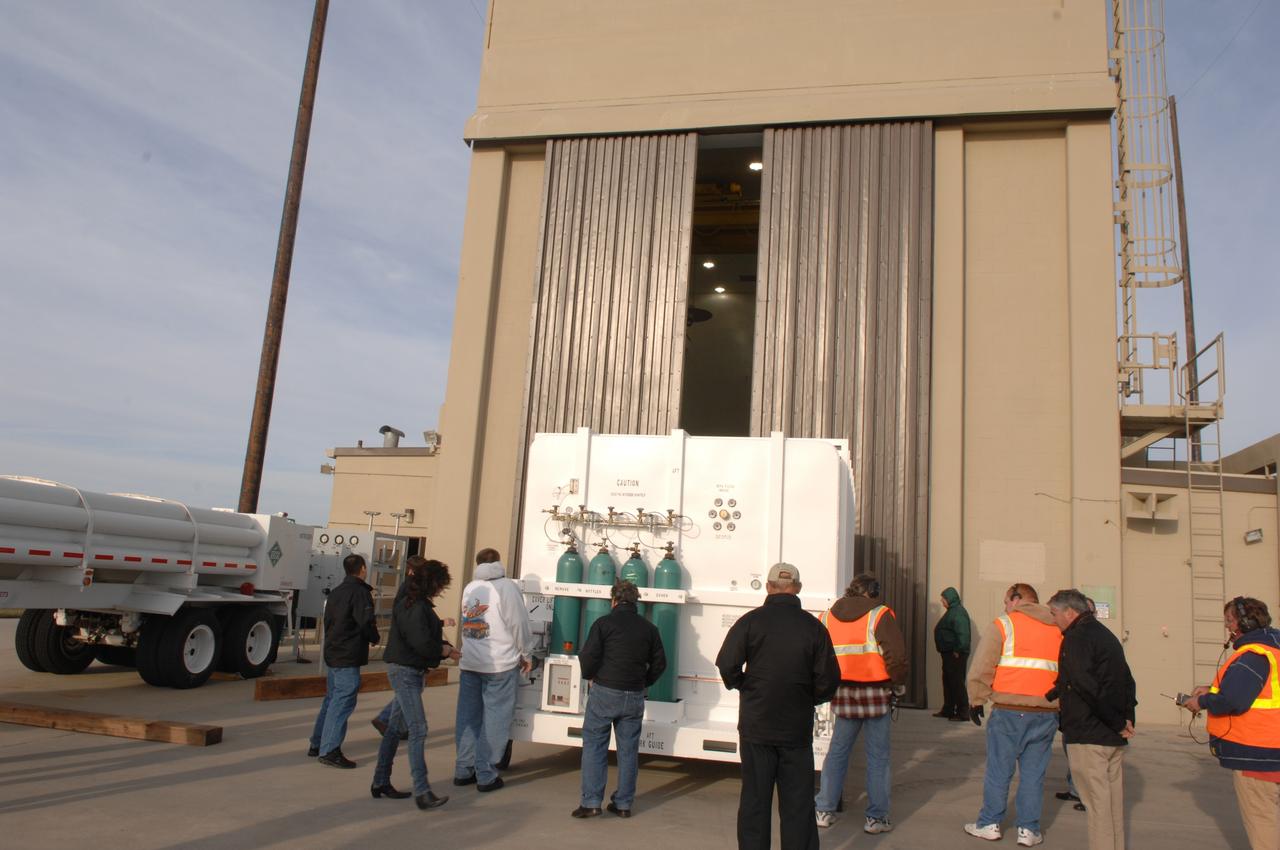
VANDENBERG AIR FORCE BASE, Calif. – The latest polar-orbiting operational environmental weather satellite developed by NASA for the National Oceanic and Atmospheric Administration, called NOAA-N Prime, is moved into a NASA payload processing facility to be prepared for a Feb. 4 launch. NOAA-N Prime, built by Lockheed Martin, is similar to NOAA-N launched on May 20, 2005.
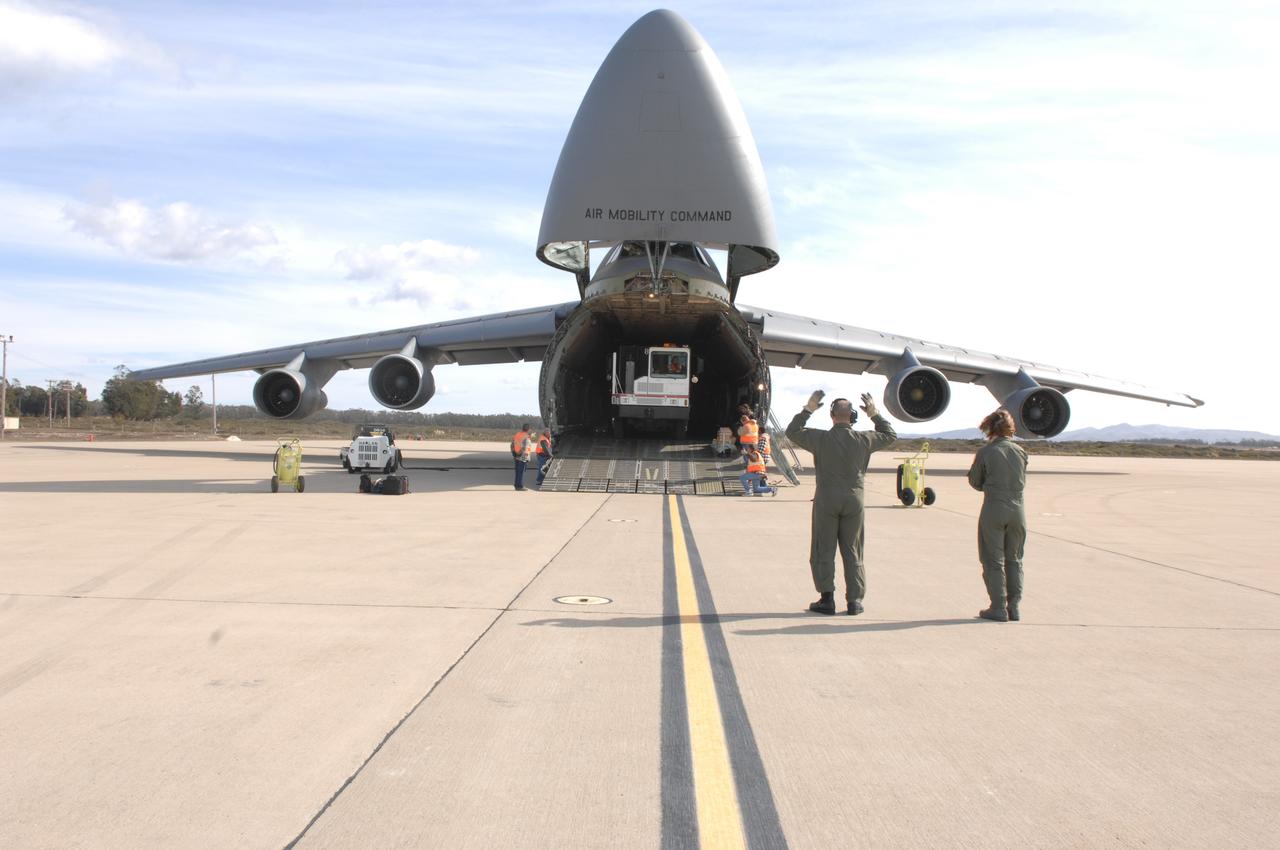
VANDENBERG AIR FORCE BASE, Calif. – The latest polar-orbiting operational environmental weather satellite developed by NASA for the National Oceanic and Atmospheric Administration, called NOAA-N Prime, is being offloaded from the C-5A military cargo aircraft at Vandenberg Air Force Base, Calif., in preparation for a Feb. 4 launch. NOAA-N Prime, built by Lockheed Martin, is similar to NOAA-N launched on May 20, 2005.
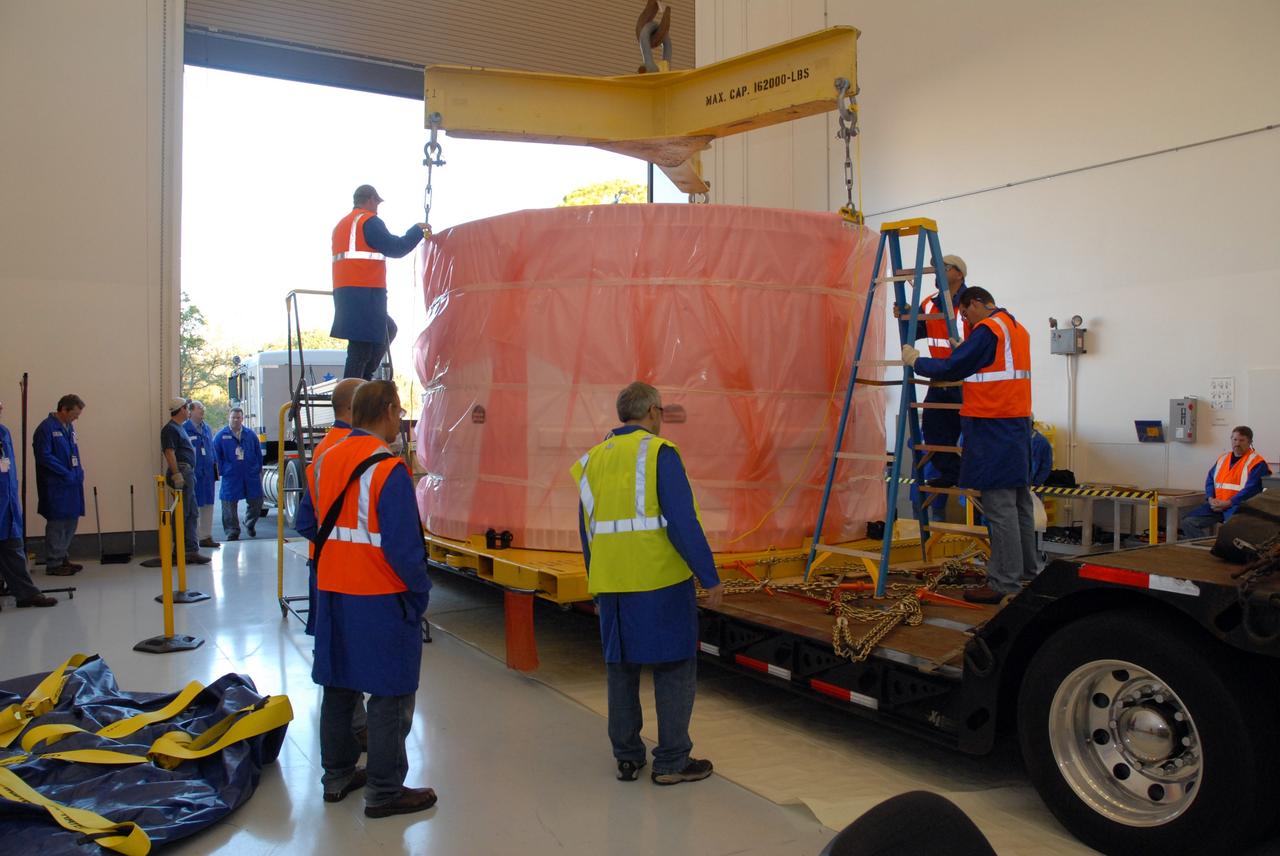
CAPE CANAVERAL, Fla. – At Astrotech in Titusville, Fla., the bagged fifth segment simulator of the Ares I-X is placed on a transporter. The segment will be transferred to the Vehicle Assembly Building's extended duration orbiter lab, or EDO, at NASA's Kennedy Space Center in Florida for stacking operations. Ares I-X is the test vehicle for the Ares I, which is part of the Constellation Program to return men to the moon and beyond. Ares I is the essential core of a safe, reliable, cost-effective space transportation system that eventually will carry crewed missions back to the moon, on to Mars and out into the solar system. Ares I-X is targeted for launch in July 2009. Photo credit: NASA/Tim Jacobs
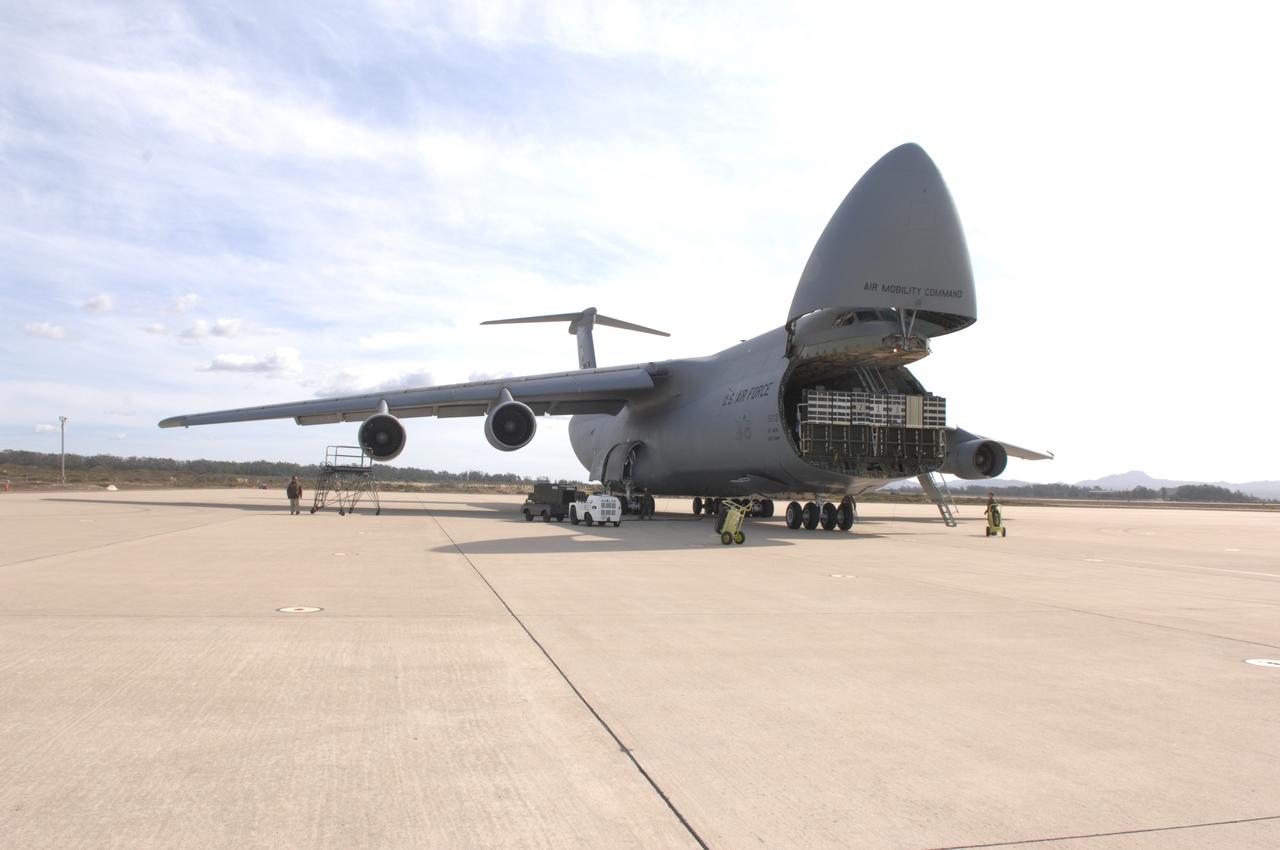
VANDENBERG AIR FORCE BASE, Calif. – The latest polar-orbiting operational environmental weather satellite developed by NASA for the National Oceanic and Atmospheric Administration, called NOAA-N Prime, arrived by C-5A military cargo aircraft at Vandenberg Air Force Base, Calif., in preparation for a Feb. 4 launch. NOAA-N Prime, built by Lockheed Martin, is similar to NOAA-N launched on May 20, 2005.
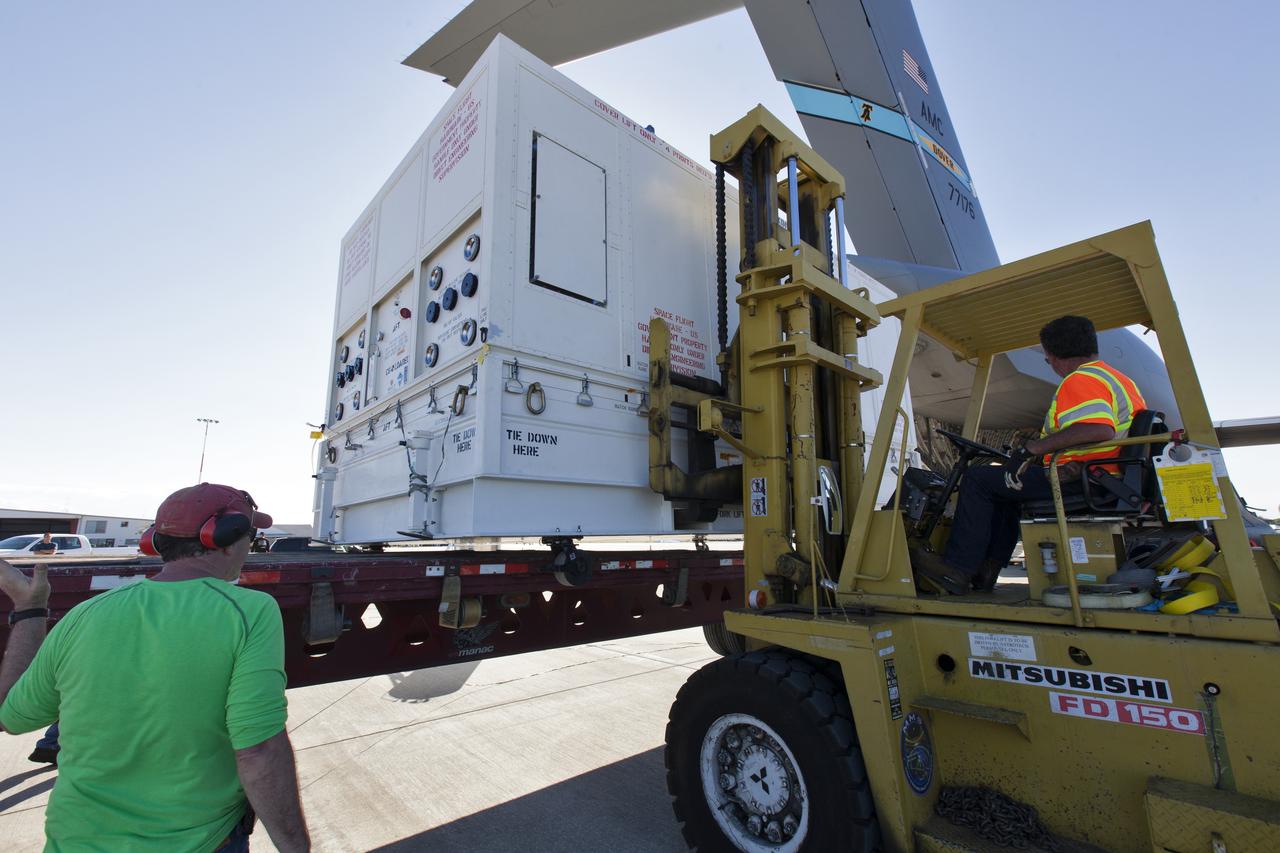
A forklift operator latches onto the shipping container with NASA's Parker Solar Probe inside, after it was offloaded from a U.S. Air Force C-5 transport aircraft at Space Coast Regional Airport in Titusville, Florida. The spacecraft will be transported to the Astrotech processing facility near the agency's Kennedy Space Center. The Parker Solar Probe will launch on a United Launch Alliance Delta IV Heavy rocket from Space Launch Complex 37 at Cape Canaveral Air Force Station in Florida in July 2018. The mission will perform the closest-ever observations of a star when it travels through the Sun's atmosphere, called the corona. The probe will rely on measurements and imaging to revolutionize our understanding of the corona and the Sun-Earth connection.
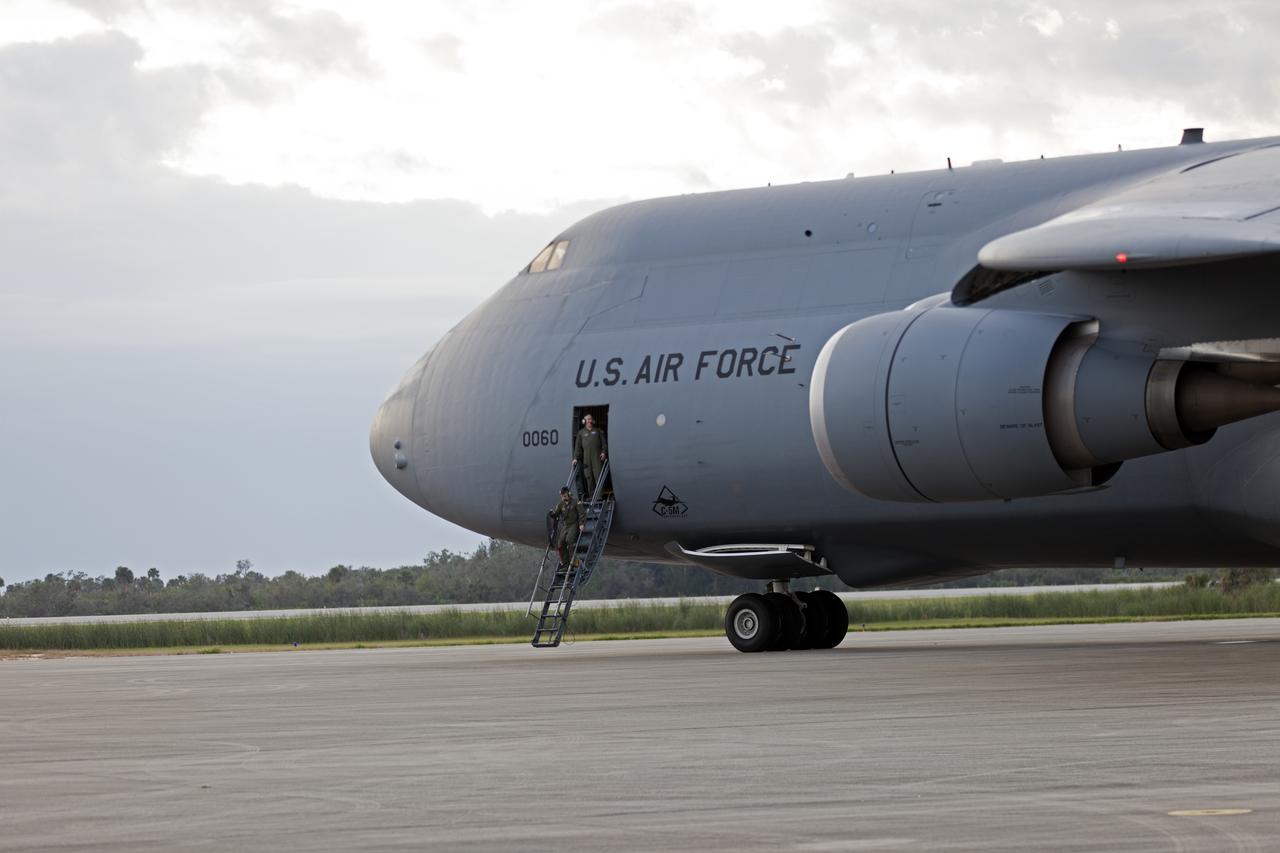
A C-5 transport aircraft arrives at the Shuttle Landing Facility at NASA's Kennedy Space Center in Florida, carrying the Geostationary Operation Environmental Satellite-S (GOES-S). The satellite will be offloaded and transported to the Astrotech Space Operations facility in Titusville, Florida. GOES-S is the second in a series of four advanced geostationary weather satellites. The GOES-R series - consisting of the GOES-R, GOES-S, GOES-T and GOES-U spacecraft - will significantly improve the detection and observation of environmental phenomena that directly affect public safety, protection of property and the nation's economic health and prosperity. GOES-S is slated to launch March 1, 2018 aboard a United Launch Alliance Atlas V rocket from Cape Canaveral Air Force Station in Florida.
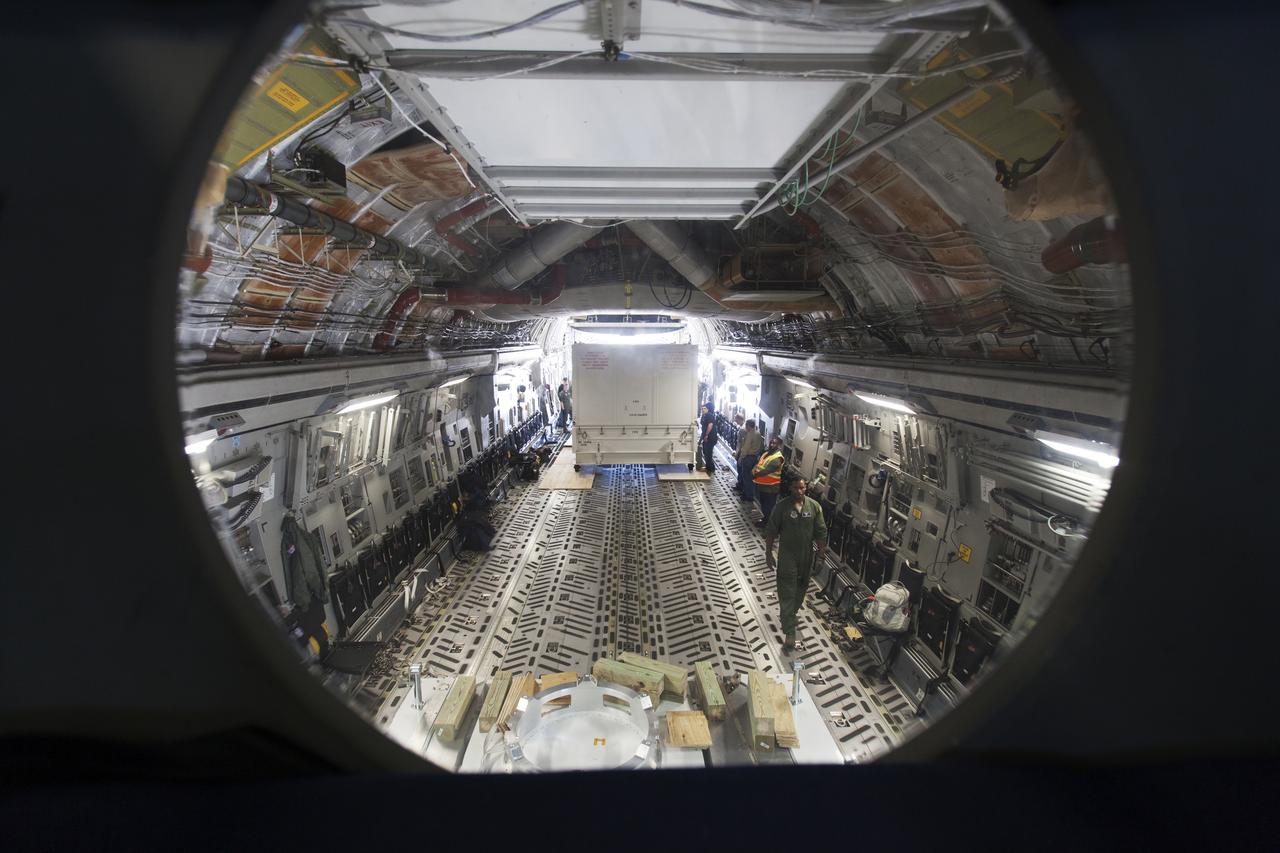
Preparations are underway to offload NASA's Parker Solar Probe spacecraft, secured in its shipping container, from a U.S. Air Force C-5 transport aircraft at Space Coast Regional Airport in Titusville, Florida. The spacecraft will be transported to the Astrotech processing facility near the agency's Kennedy Space Center. The Parker Solar Probe will launch on a United Launch Alliance Delta IV Heavy rocket from Space Launch Complex 37 at Cape Canaveral Air Force Station in Florida in July 2018. The mission will perform the closest-ever observations of a star when it travels through the Sun's atmosphere, called the corona. The probe will rely on measurements and imaging to revolutionize our understanding of the corona and the Sun-Earth connection.
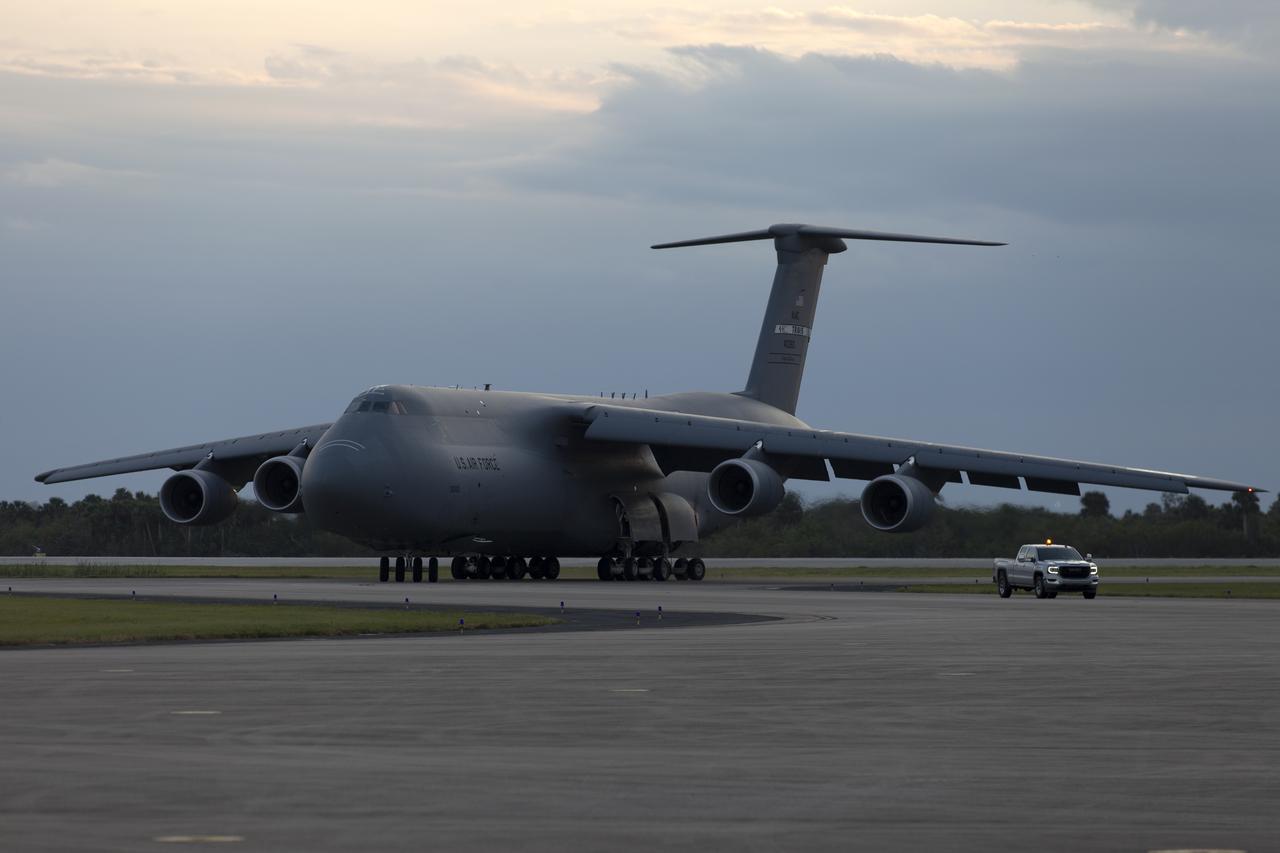
A C-5 transport aircraft arrives at the Shuttle Landing Facility at NASA's Kennedy Space Center in Florida, carrying the Geostationary Operation Environmental Satellite-S (GOES-S). The satellite will be offloaded and transported to the Astrotech Space Operations facility in Titusville, Florida. GOES-S is the second in a series of four advanced geostationary weather satellites. The GOES-R series - consisting of the GOES-R, GOES-S, GOES-T and GOES-U spacecraft - will significantly improve the detection and observation of environmental phenomena that directly affect public safety, protection of property and the nation's economic health and prosperity. GOES-S is slated to launch March 1, 2018 aboard a United Launch Alliance Atlas V rocket from Cape Canaveral Air Force Station in Florida.
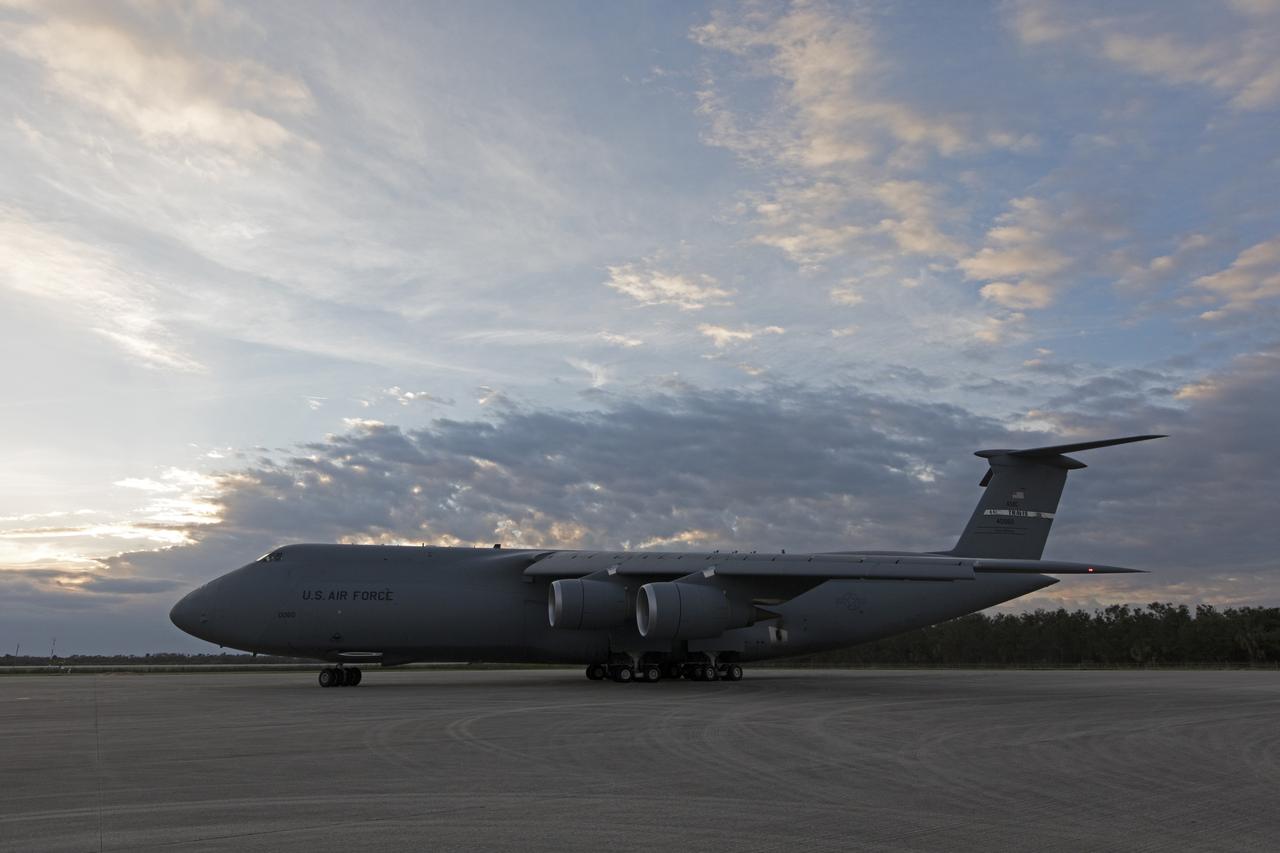
A C-5 transport aircraft arrives at the Shuttle Landing Facility at NASA's Kennedy Space Center in Florida, carrying the Geostationary Operation Environmental Satellite-S (GOES-S). The satellite will be offloaded and transported to the Astrotech Space Operations facility in Titusville, Florida. GOES-S is the second in a series of four advanced geostationary weather satellites. The GOES-R series - consisting of the GOES-R, GOES-S, GOES-T and GOES-U spacecraft - will significantly improve the detection and observation of environmental phenomena that directly affect public safety, protection of property and the nation's economic health and prosperity. GOES-S is slated to launch March 1, 2018 aboard a United Launch Alliance Atlas V rocket from Cape Canaveral Air Force Station in Florida.
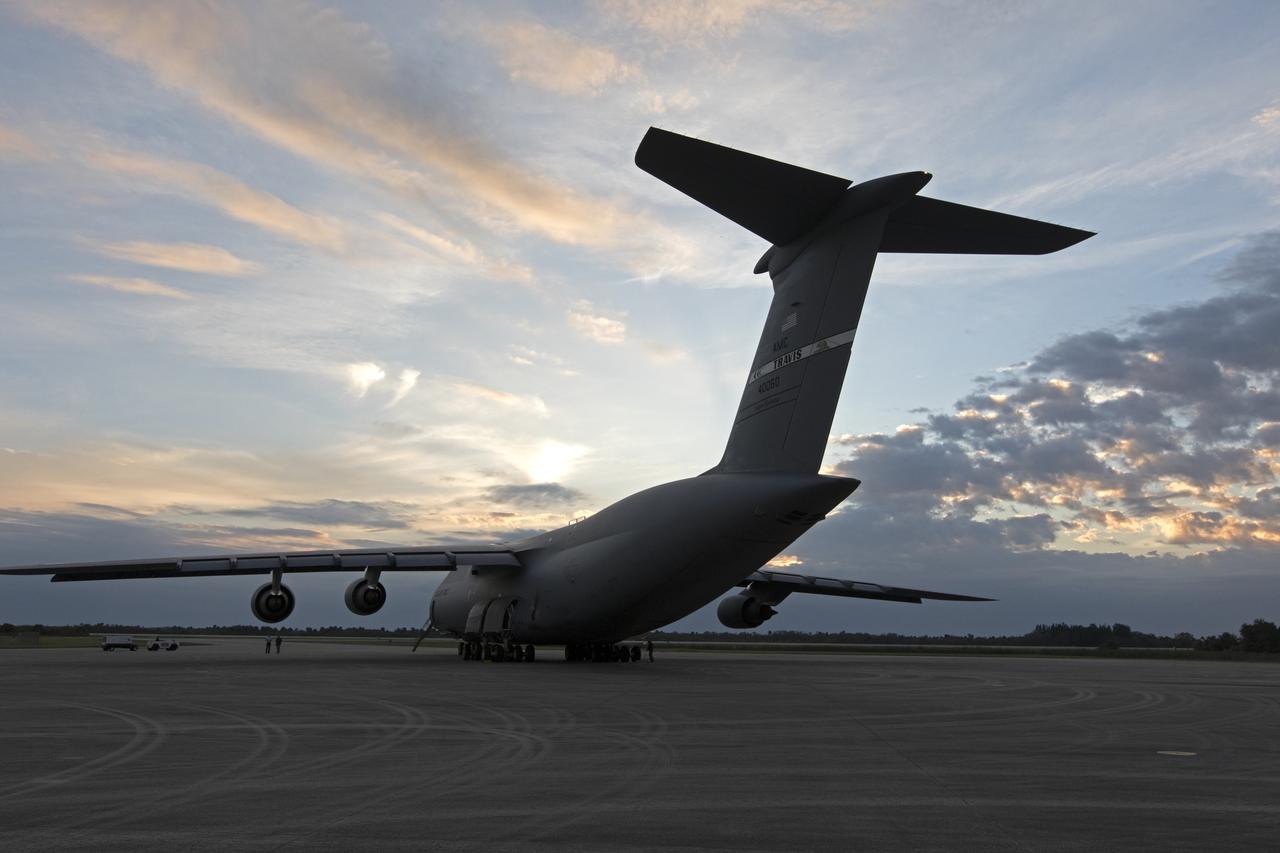
A C-5 transport aircraft arrives at the Shuttle Landing Facility at NASA's Kennedy Space Center in Florida, carrying the Geostationary Operation Environmental Satellite-S (GOES-S). The satellite will be offloaded and transported to the Astrotech Space Operations facility in Titusville, Florida. GOES-S is the second in a series of four advanced geostationary weather satellites. The GOES-R series - consisting of the GOES-R, GOES-S, GOES-T and GOES-U spacecraft - will significantly improve the detection and observation of environmental phenomena that directly affect public safety, protection of property and the nation's economic health and prosperity. GOES-S is slated to launch March 1, 2018 aboard a United Launch Alliance Atlas V rocket from Cape Canaveral Air Force Station in Florida.

Sequence 6 of 22 showing the lift-off and explosion of A/C-5.

Canister open in VPF. Payload for STS-5, SBS-3, & Anik C-3, being loaded into the canister
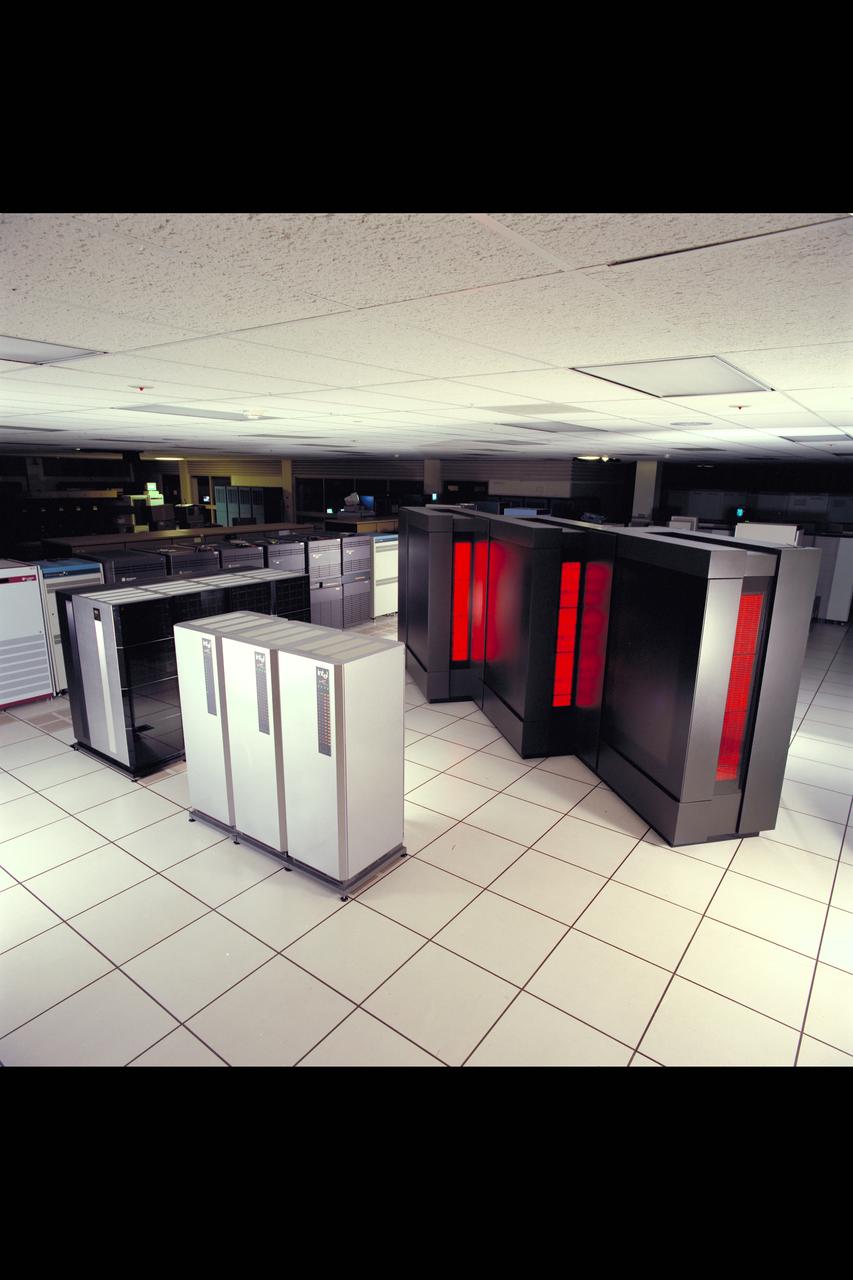
N-258 NAS COMPUTER ROOM SHOWING PARRALLEL PROCESSORS, INTEL PARGON, THINKING MACHINE (CM-5), & CRAY C-90
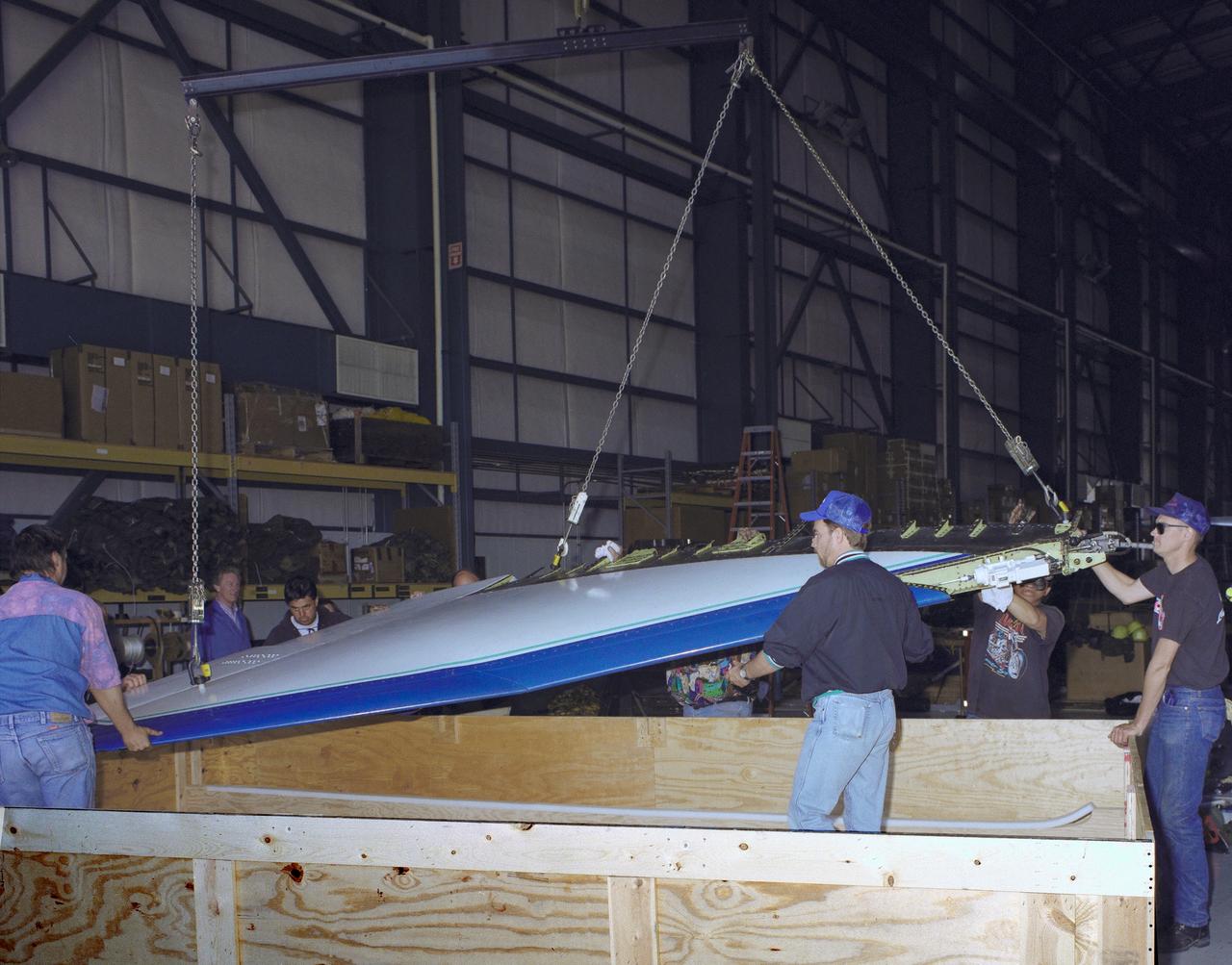
The right wing of the X-31 Enhanced Fighter Maneuverability Technology Demonstrator Aircraft is seen here being put into a shipping container May 18, 1995, at NASA's Dryden Flight Research Center, Edwards, California, by U.S. and German members of the program. To fit inside an Air Force Reserve C-5 transport, which was used to ferry the X-31 to Europe on May 22, 1995, the right wing had to be removed. Manching, Germany, was used as a staging base to prepare the aircraft for participation in the Paris Air Show. At the air show on June 11 through the 18th, the X-31 demonstrated the value of using thrust vectoring (directing engine exhaust flow) coupled with advanced flight control systems to provide controlled flight at very high angles of attack. The aircraft arrived back at Edwards in an Air Force Reserve C-5 on June 25, 1995, and off loaded at Dryden the 27th. The X-31 aircraft was developed jointly by Rockwell International's North American Aircraft Division (now part of Boeing) and Daimler-Benz Aerospace (formerly Messerschmitt-Bolkow-Blohm), under sponsorship by the U.S. Department of Defense and the German Federal Ministry of Defense.
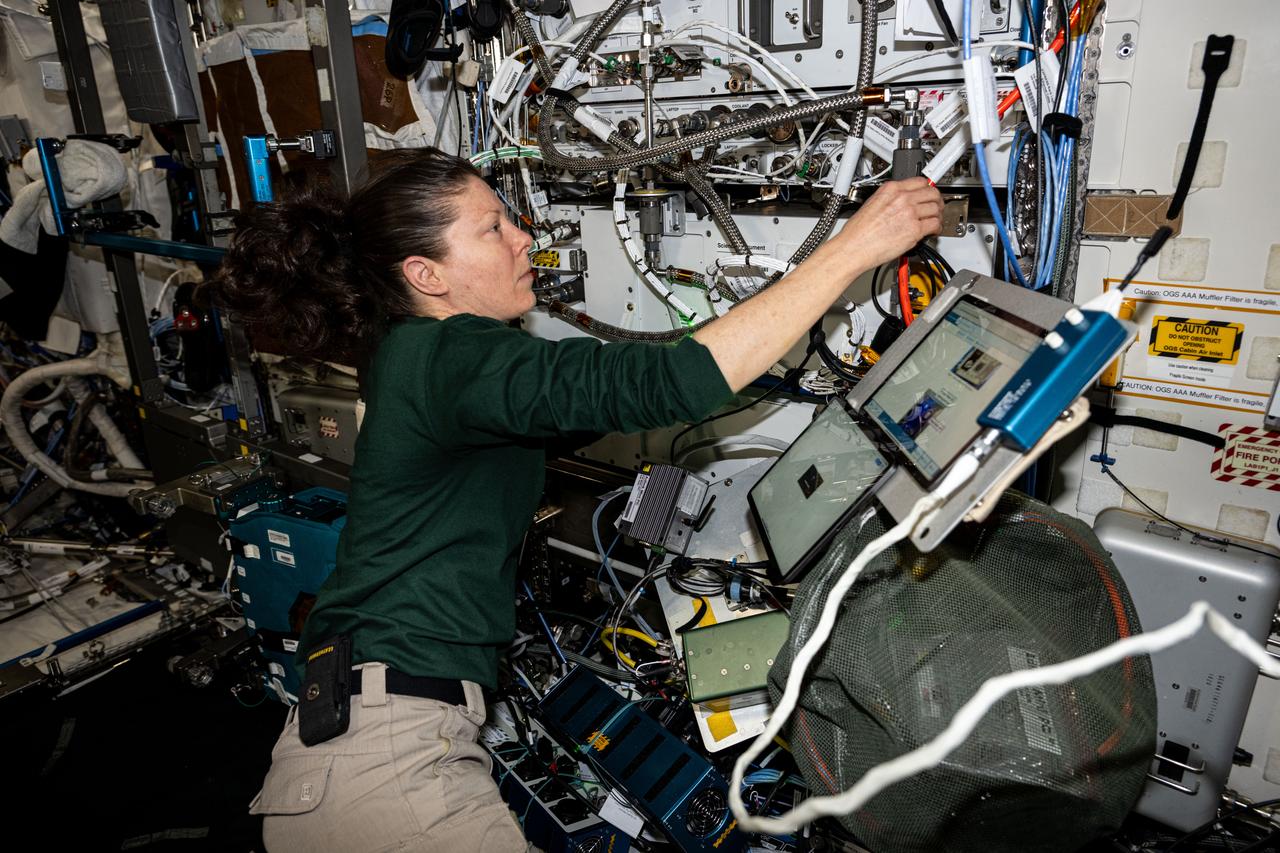
iss071e609375 (Sept. 5, 2024) --- NASA astronaut and Expedition 71 Flight Engineer Tracy C. Dyson tests the configuration of computers that control life support systems aboard the International Space Station's Destiny laboratory module.
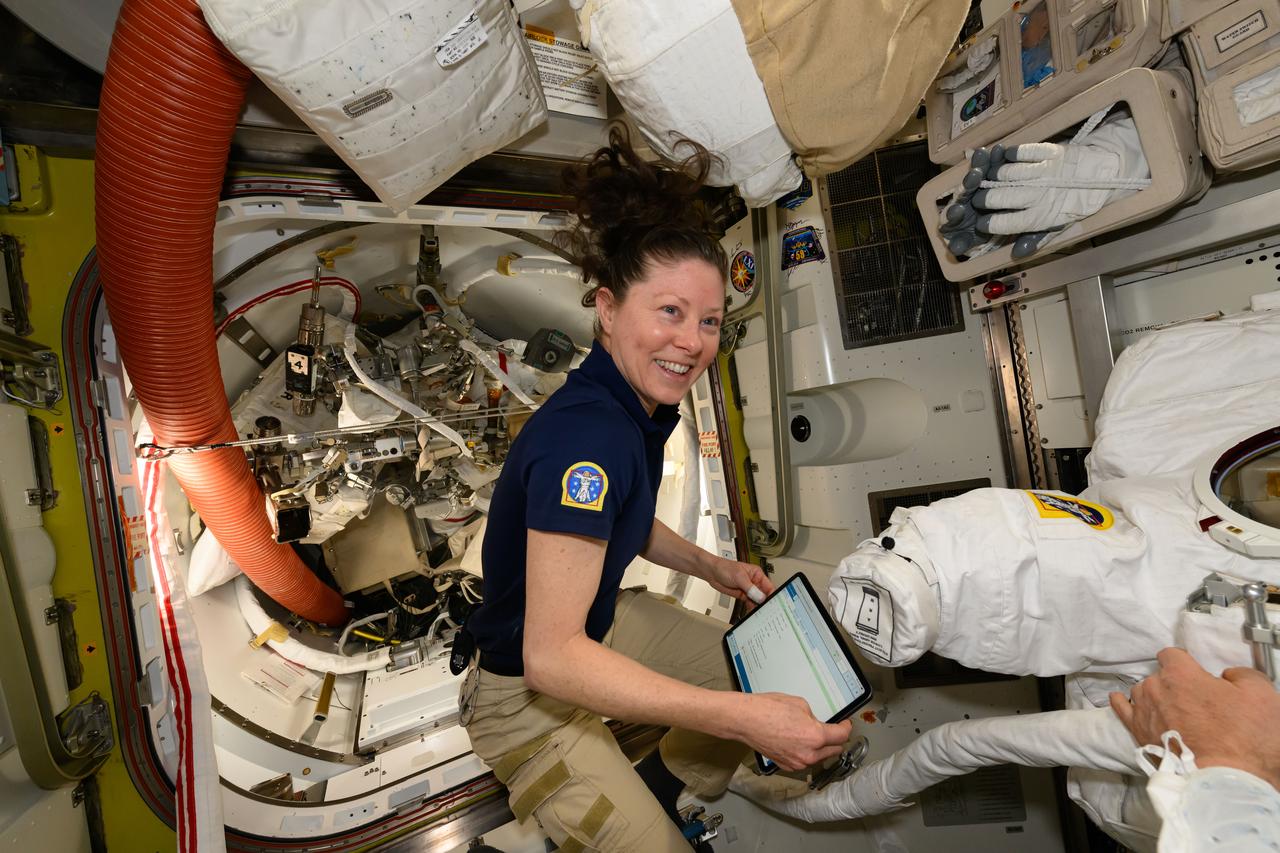
iss071e178113 (June 5, 2024) --- NASA astronaut and Expedition 71 Flight Engineer Tracy C. Dyson works inside the International Space Station's Quest airlock and checks procedures on a computer tablet to prepare a spacesuit for a fit verification.
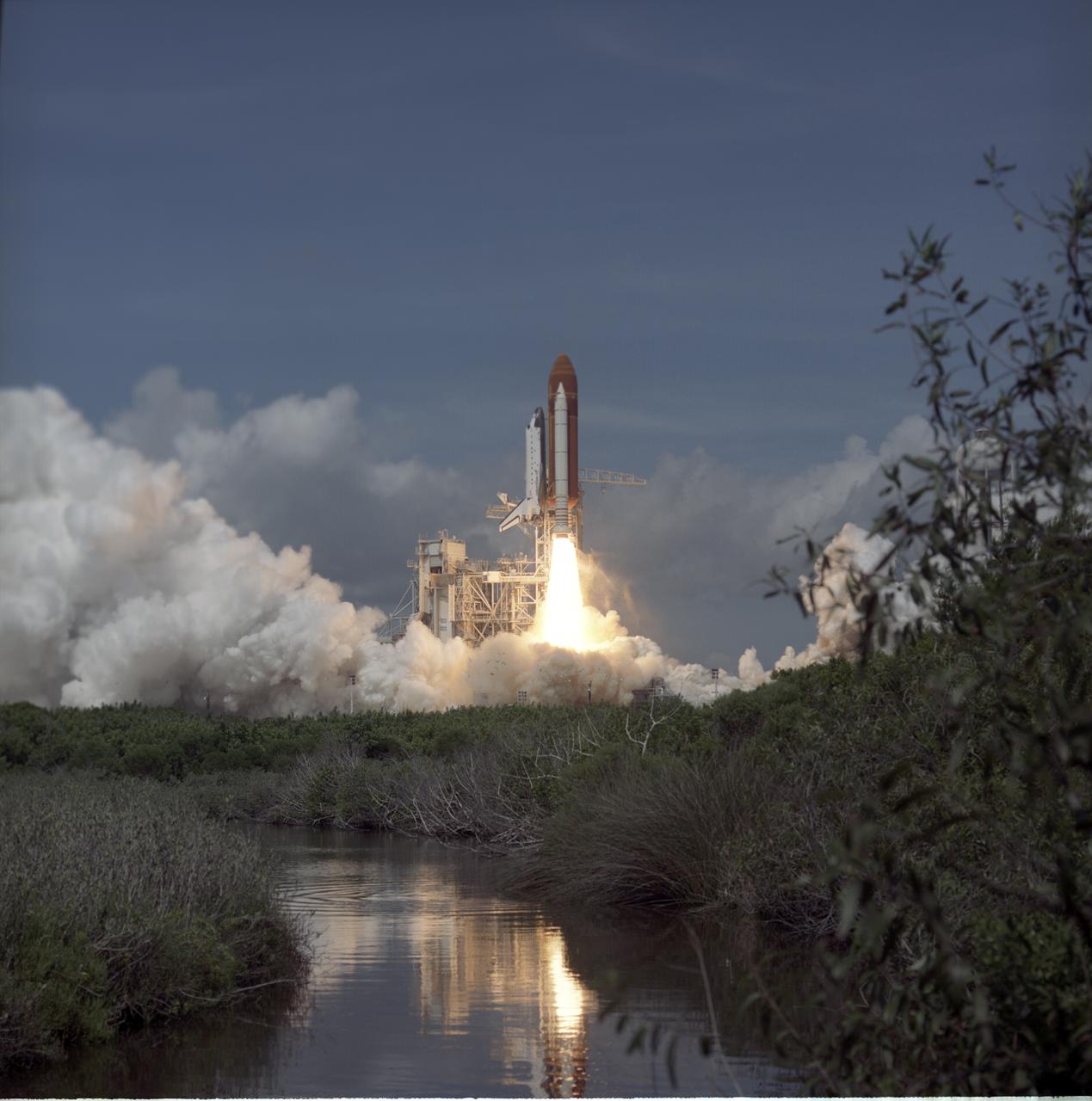
Launched aboard the Space Shuttle Atlantis on August 2, 1991, the STS-43 mission’s primary payload was the Tracking and Data Relay Satellite 5 (TDRS-5) attached to an Inertial Upper Stage (IUS), which became the 4th member of an orbiting TDRS cluster. The flight crew consisted of 5 astronauts: John E. Blaha, commander; Michael A. Baker, pilot; Shannon W. Lucid, mission specialist 1; James C. Adamson, mission specialist 2; and G. David Low, mission specialist 3.
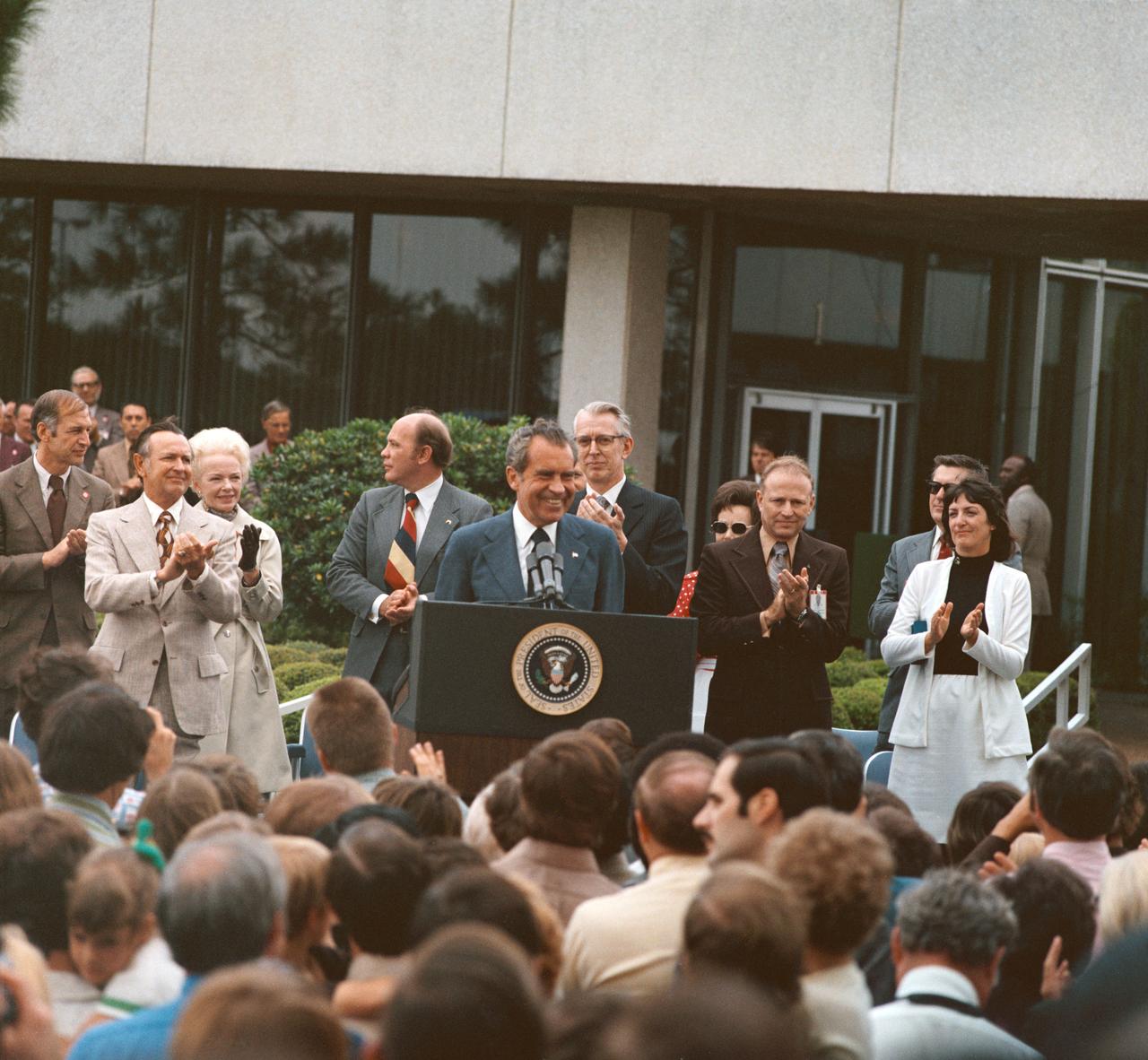
Five (5) views of President Richard M. Nixon during his visit to the JSC. These views show the President as he addresses a crowd of employees and visitors outside of Building 1 Auditorium. Dr. Christopher C. Kraft, Fletcher, and Astronaut Gerald Carr, with Pete Clements, George Abbey, and Jack Waite in the background is also seen with the President. 1. Pres. Richard M. Nixon 2. Dr. Christopher C. Kraft JSC, HOUSTON, TX
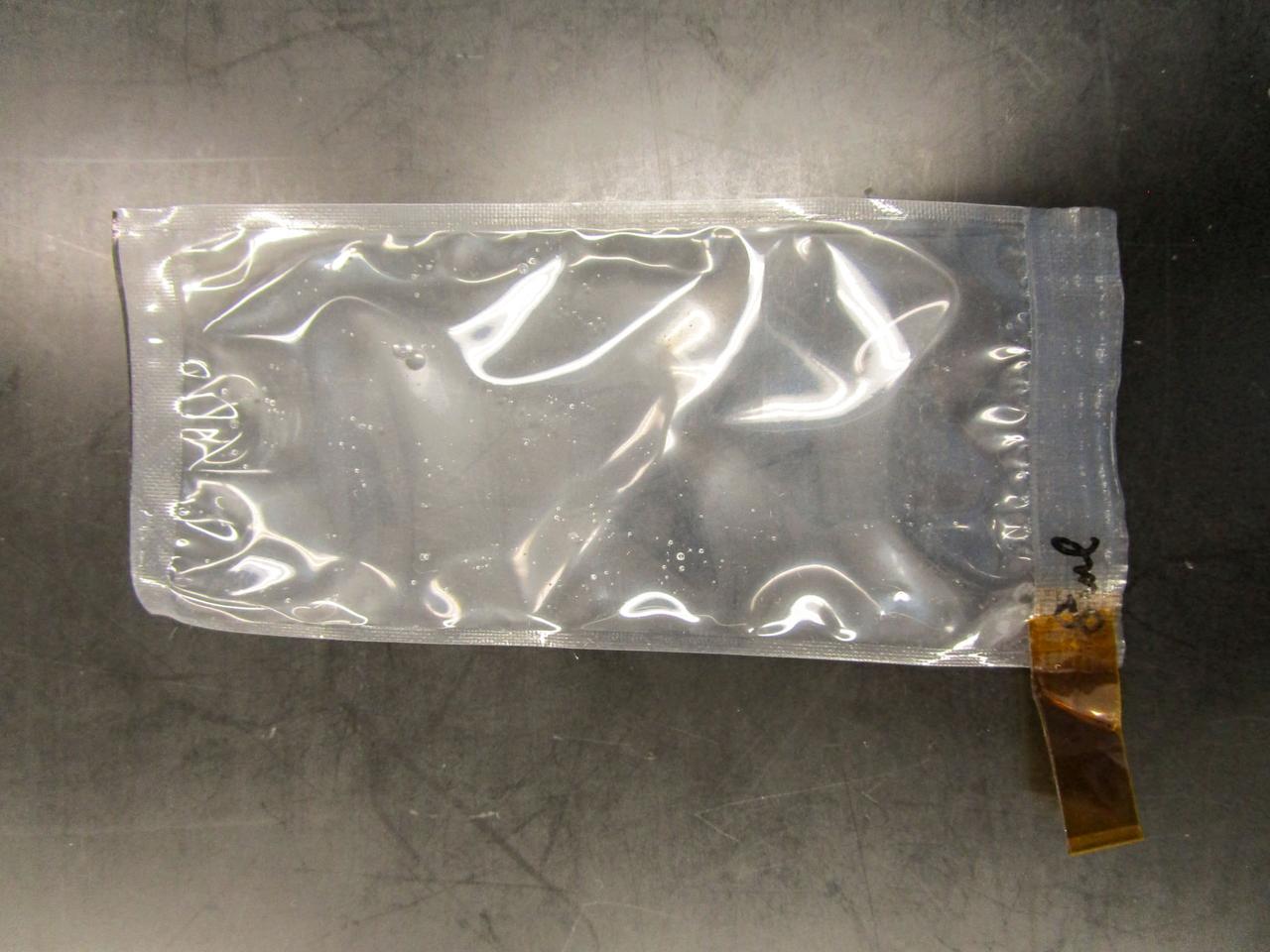
jsc2022e068255 (5/11/2022) --- A preflight view of the Observation Bag including nematode C. elegans to observe by confocal microscope in the ISS (COSMIC). Effect of the Space Environment on the Neural Integration System and Aging of the Model Animal C. elegans (Neural Integration System) uses nematodes to examine how microgravity affects the nervous system. Image courtesy of JAXA
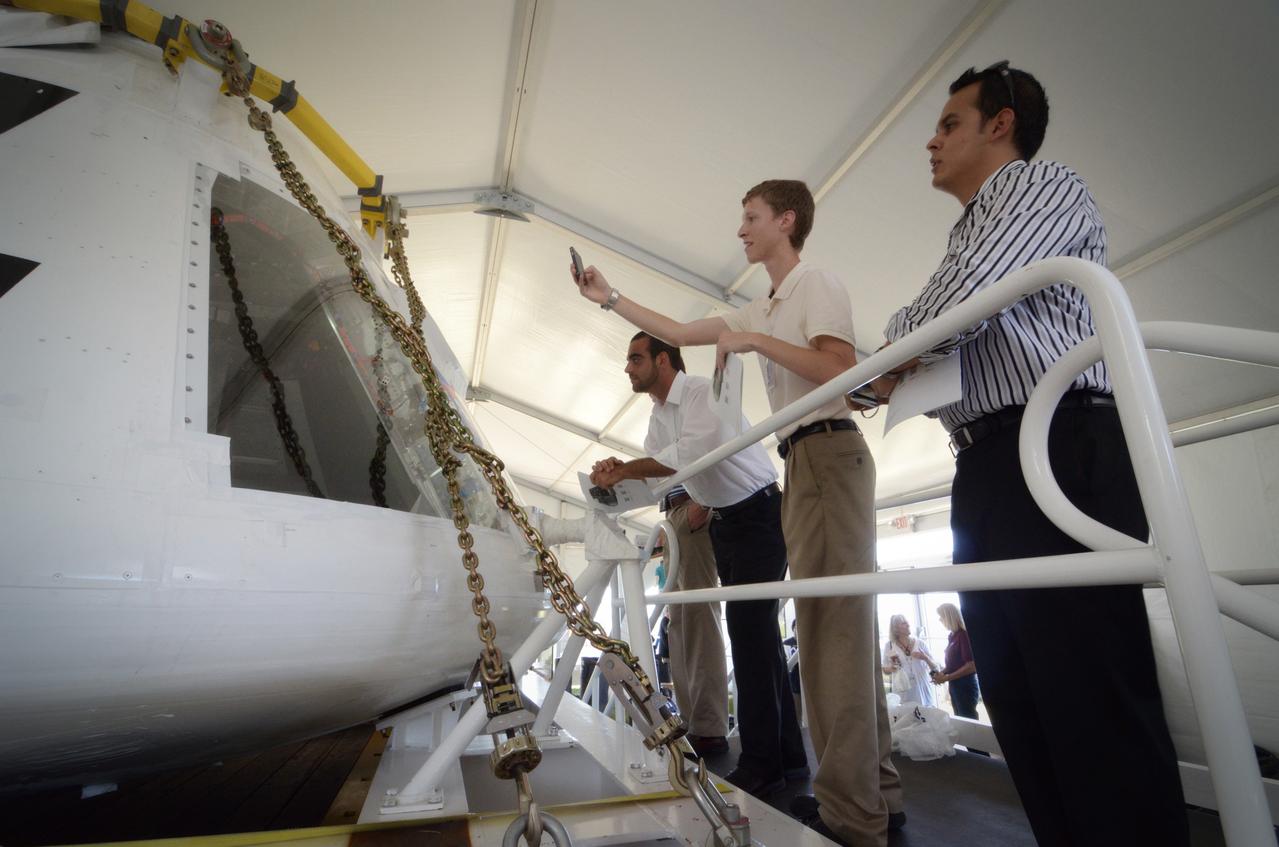
The Orion crew module flown on NASA’s Pad Abort-1 (PA-1) flight test is shown on display at an event at Kennedy Space Center in Florida on July 5, 2011 before moving into the Operations & Checkout (O&C) Building. Part of Batch image transfer from Flickr.
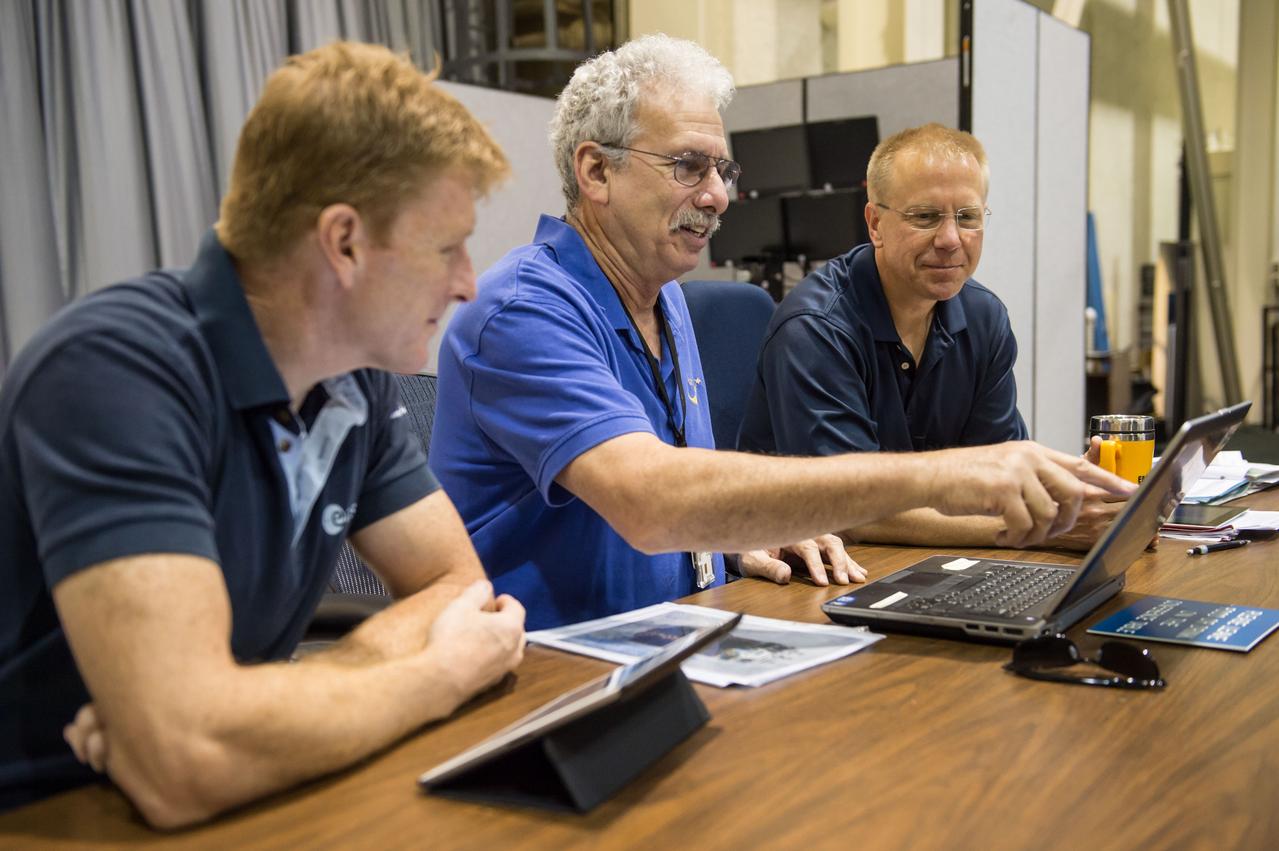
DATE: 5-16-14. LOCATION: Bldg. 16N, Room 1040. SUBJECT: Expedition 47 (Soyuz 45) crew members Tim Kopra and Timothy Peake during FF T&C/R ADV2 training in the SES Alpha Cupola. PHOTOGRAPHER: Lauren Harnett
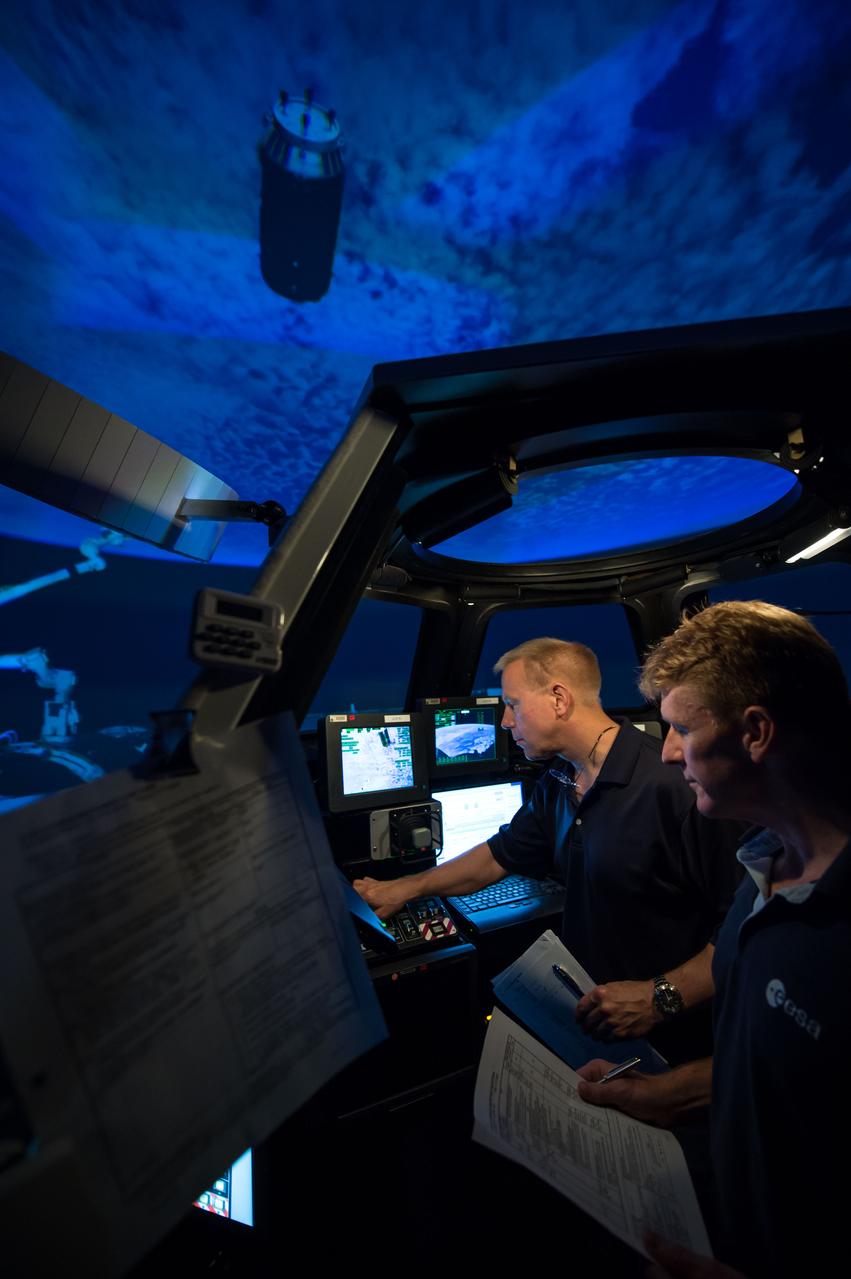
DATE: 5-16-14. LOCATION: Bldg. 16N, Room 1040. SUBJECT: Expedition 47 (Soyuz 45) crew members Tim Kopra and Timothy Peake during FF T&C/R ADV2 training in the SES Alpha Cupola. PHOTOGRAPHER: Lauren Harnett
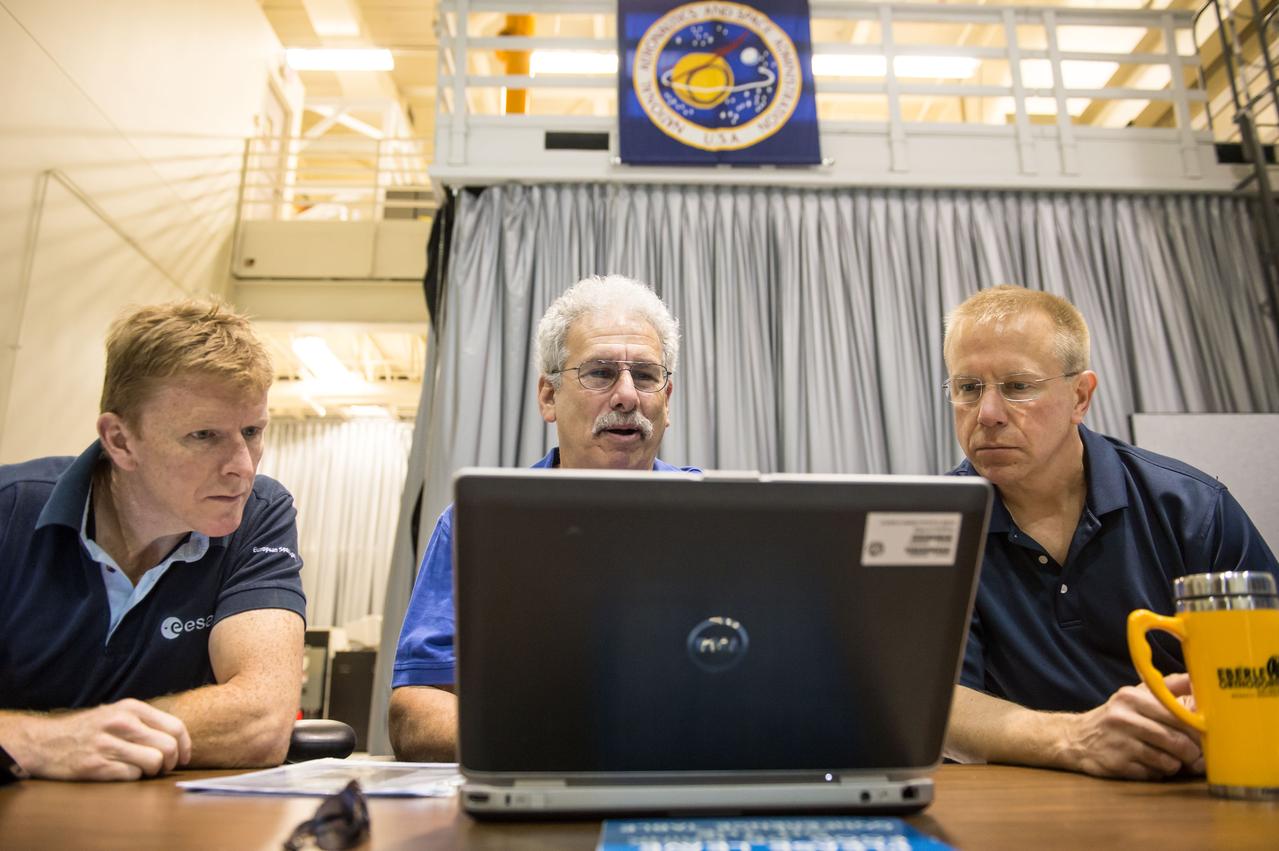
DATE: 5-16-14. LOCATION: Bldg. 16N, Room 1040. SUBJECT: Expedition 47 (Soyuz 45) crew members Tim Kopra and Timothy Peake during FF T&C/R ADV2 training in the SES Alpha Cupola. PHOTOGRAPHER: Lauren Harnett
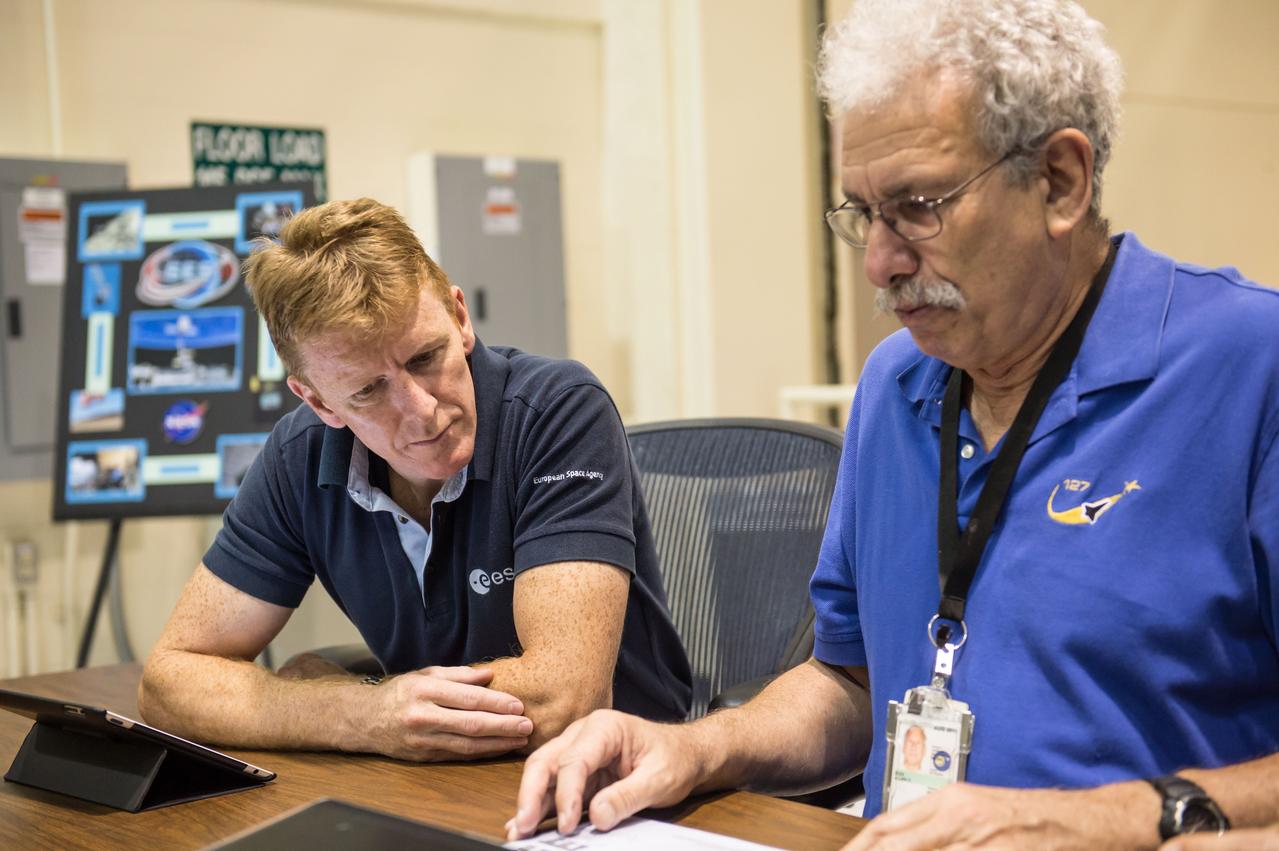
DATE: 5-16-14. LOCATION: Bldg. 16N, Room 1040. SUBJECT: Expedition 47 (Soyuz 45) crew members Tim Kopra and Timothy Peake during FF T&C/R ADV2 training in the SES Alpha Cupola. PHOTOGRAPHER: Lauren Harnett
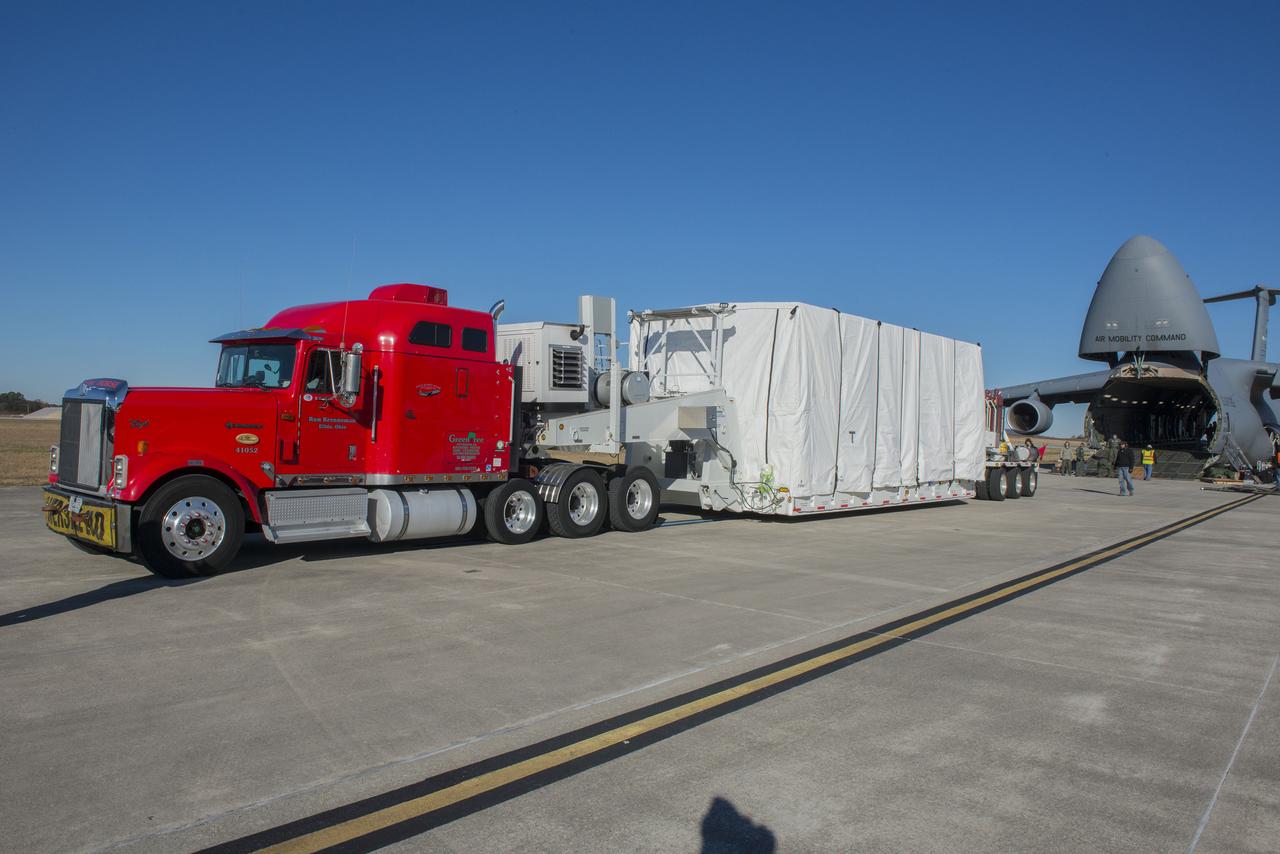
JAMES WEBB SPACE TELESCOPE (JWST) BACKPLANE MOVE FROM MARSHALL SPACE FLIGHT CENTER’S X-RAY CALIBRATION FACILITY (XCRF) TO THE REDSTONE ARSENAL AIRFIELD WHERE THE TEST ARTICLE WAS PLACED IN A USAF C-5 GALAXY FOR IT’S FLIGHT BACK TO THE MANUFACTURER.
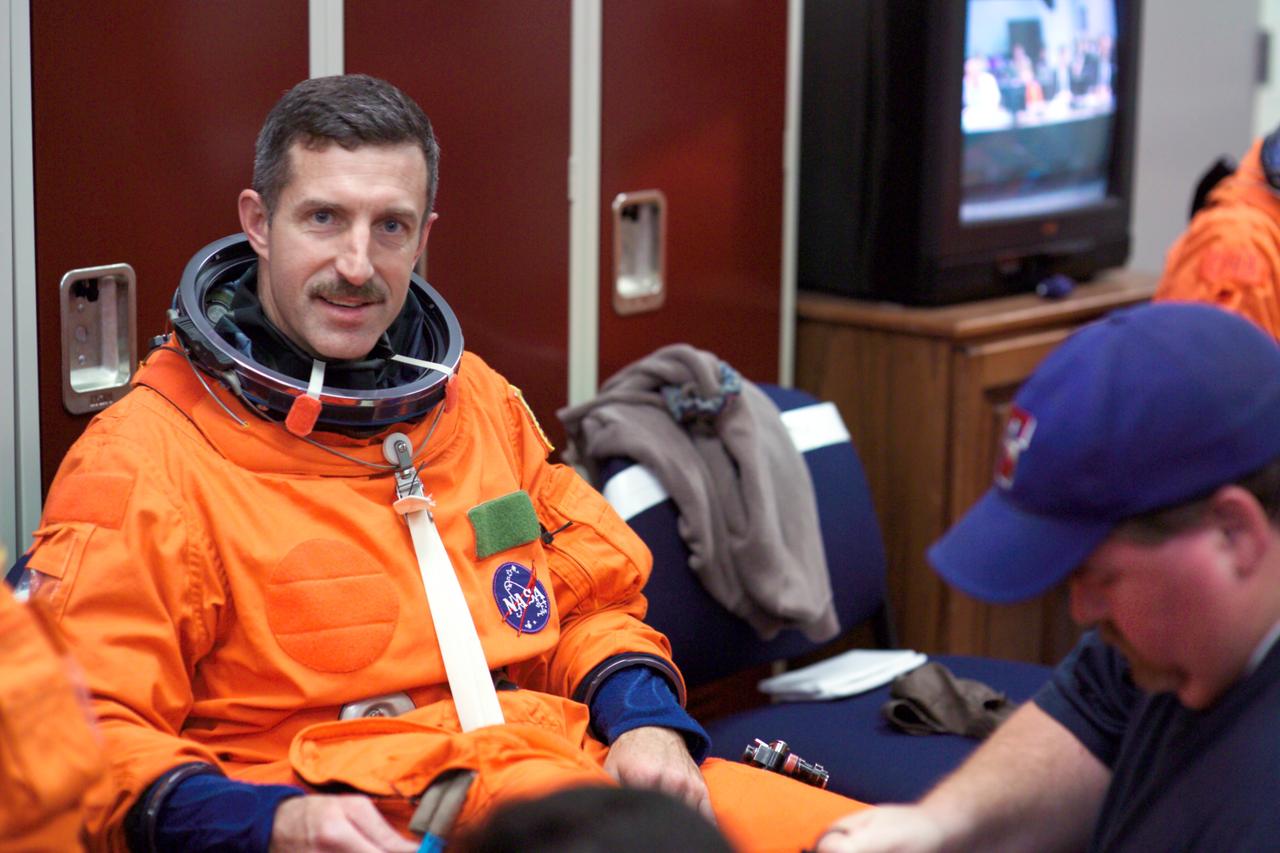
JSC2005-E-13774 (5 April 2005) --- Astronaut Daniel C. Burbank, STS-115 mission specialist, dons a training version of the shuttle launch and entry suit prior to the start of an emergency egress training session in the Space Vehicle Mockup Facility at the Johnson Space Center. Suit technician Mike Thompson assisted Burbank.
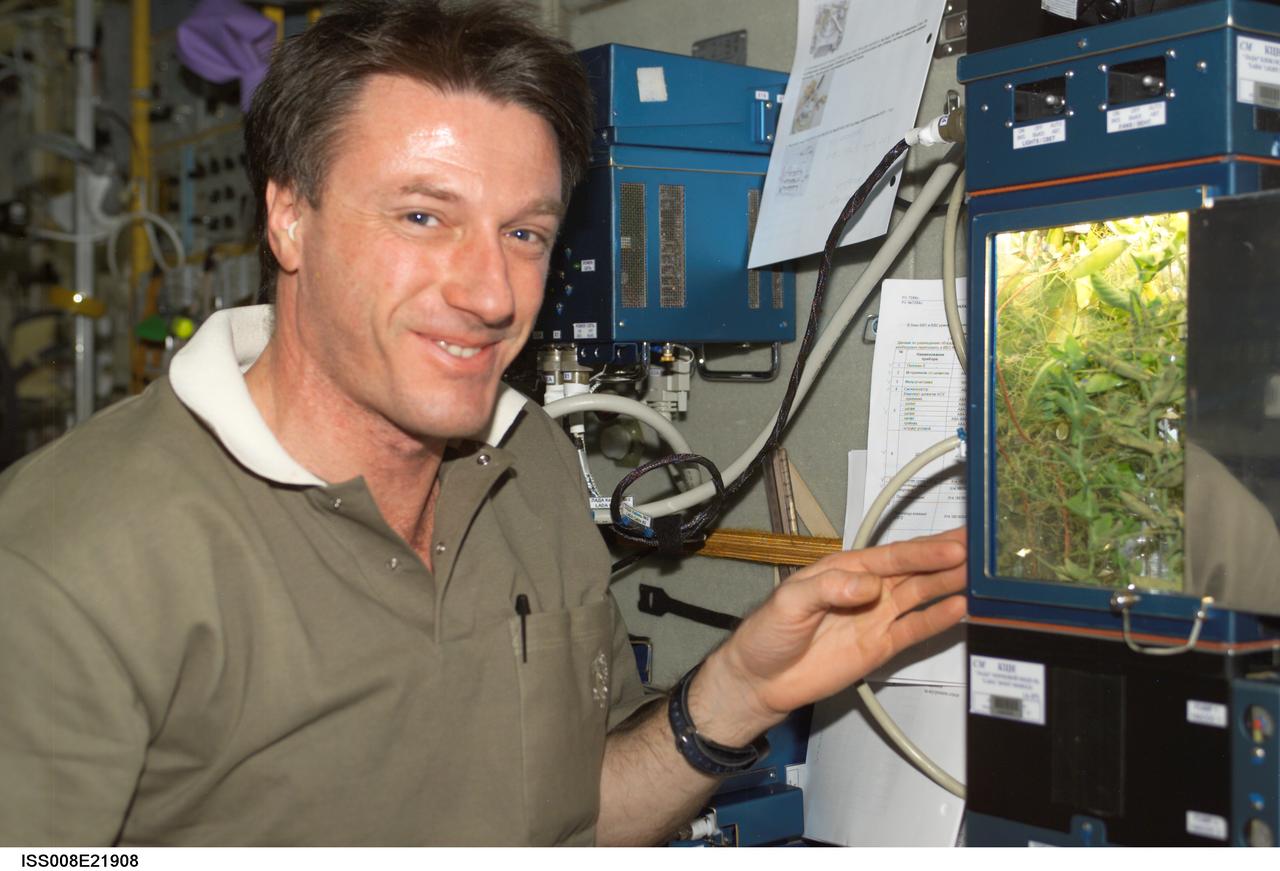
ISS008-E-21908 (12 April 2004)--- Astronaut C. Michael Foale, Expedition 8 commander and NASA ISS science officer, poses beside the pea plants growing in the Lada-4 greenhouse as part of the BIO-5 Rasteniya-2 (Plants-2) experiment located in the Zvezda Service Module of the International Space Station.
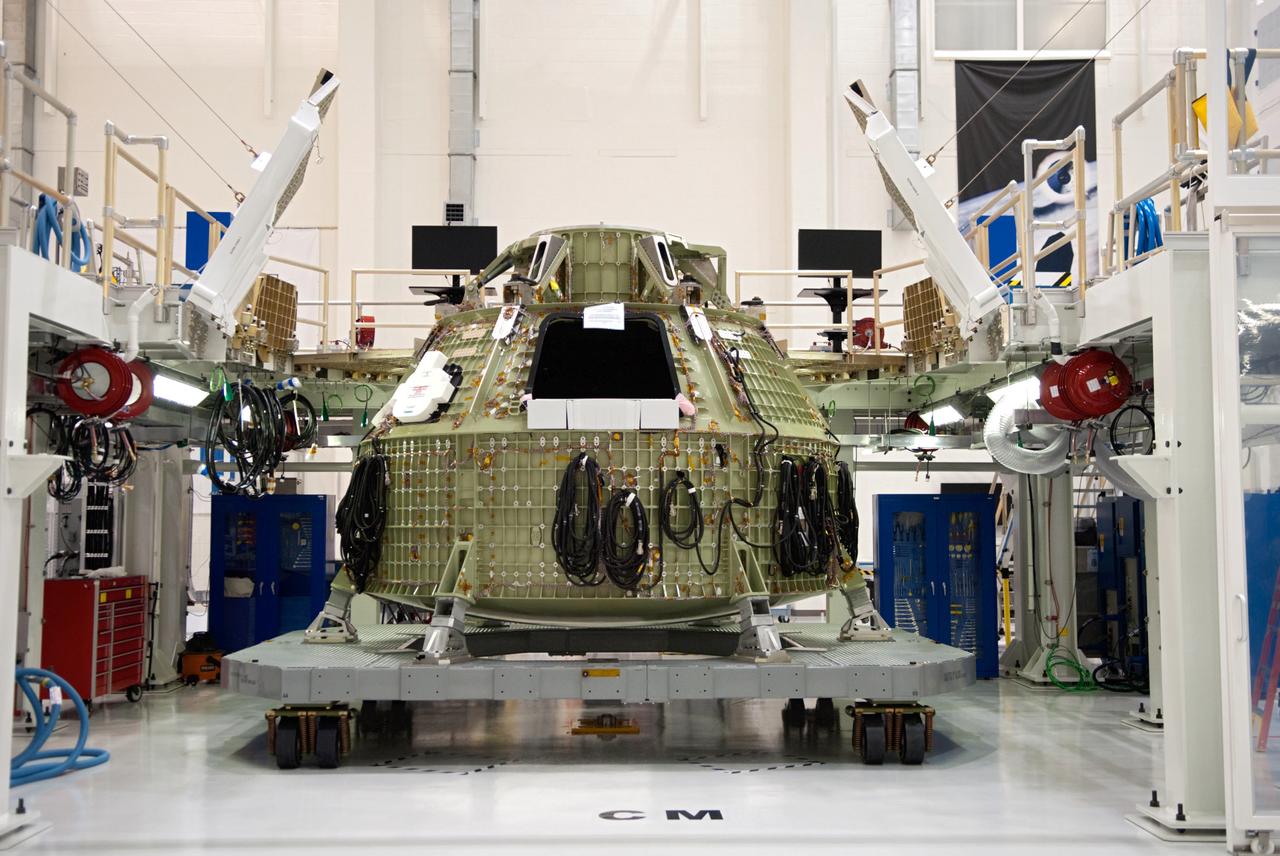
Orion technicians at the Operations and Checkout (O&C) Facility at the Kennedy Space Center move the Orion Exploration Flight Test-1 (EFT-1) crew module from the clean room into the birdcage fixture on Dec. 5, 2012. The fixture is designed to enable precise pre-launch processing of the Orion spacecraft.

DATE: 5-16-14. LOCATION: Bldg. 16N, Room 1040. SUBJECT: Expedition 47 (Soyuz 45) crew members Tim Kopra and Timothy Peake during FF T&C/R ADV2 training in the SES Alpha Cupola. PHOTOGRAPHER: Lauren Harnett
JAMES WEBB SPACE TELESCOPE (JWST) BACKPLANE MOVE FROM MARSHALL SPACE FLIGHT CENTER’S X-RAY CALIBRATION FACILITY (XCRF) TO THE REDSTONE ARSENAL AIRFIELD WHERE THE TEST ARTICLE WAS PLACED IN A USAF C-5 GALAXY FOR IT’S FLIGHT BACK TO THE MANUFACTURER.
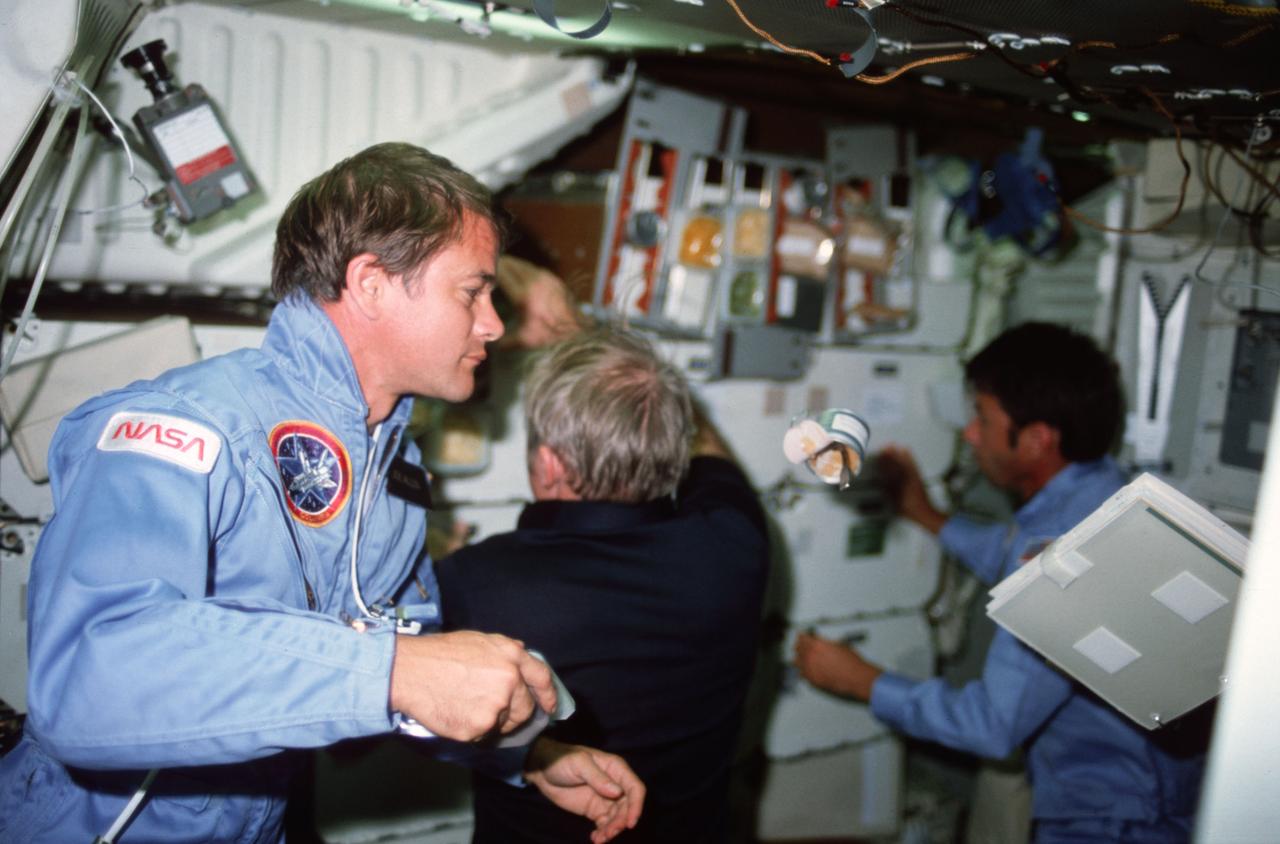
STS005-06-206 (11-16 Nov. 1982) --- Astronaut Joseph P. Allen, STS-5 mission specialist, watches a can of food and a notebook drift on the middeck as Vance C. Brand, commander, (left) and William B. Lenoir, mission specialist, (far left) work at forward middeck lockers. Photo credit: NASA
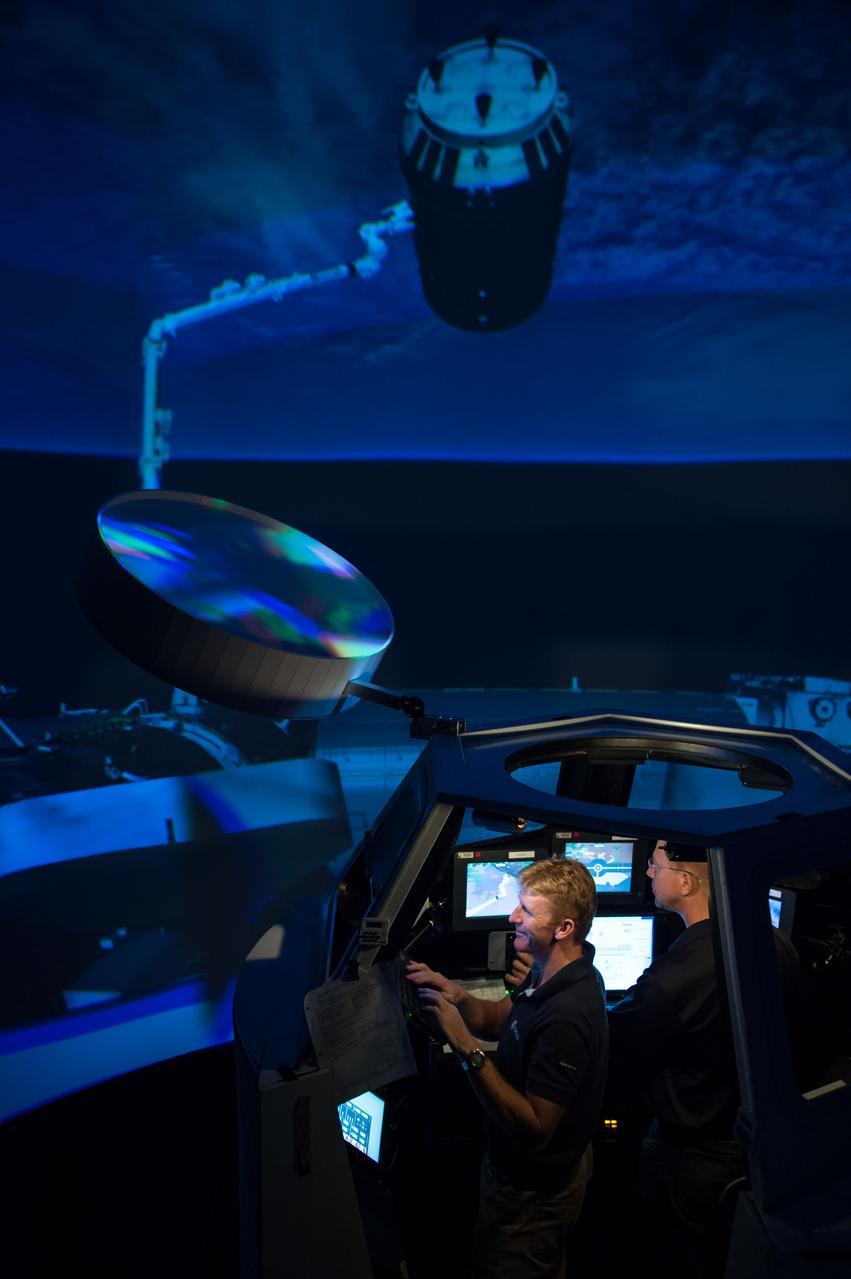
DATE: 5-16-14. LOCATION: Bldg. 16N, Room 1040. SUBJECT: Expedition 47 (Soyuz 45) crew members Tim Kopra and Timothy Peake during FF T&C/R ADV2 training in the SES Alpha Cupola. PHOTOGRAPHER: Lauren Harnett
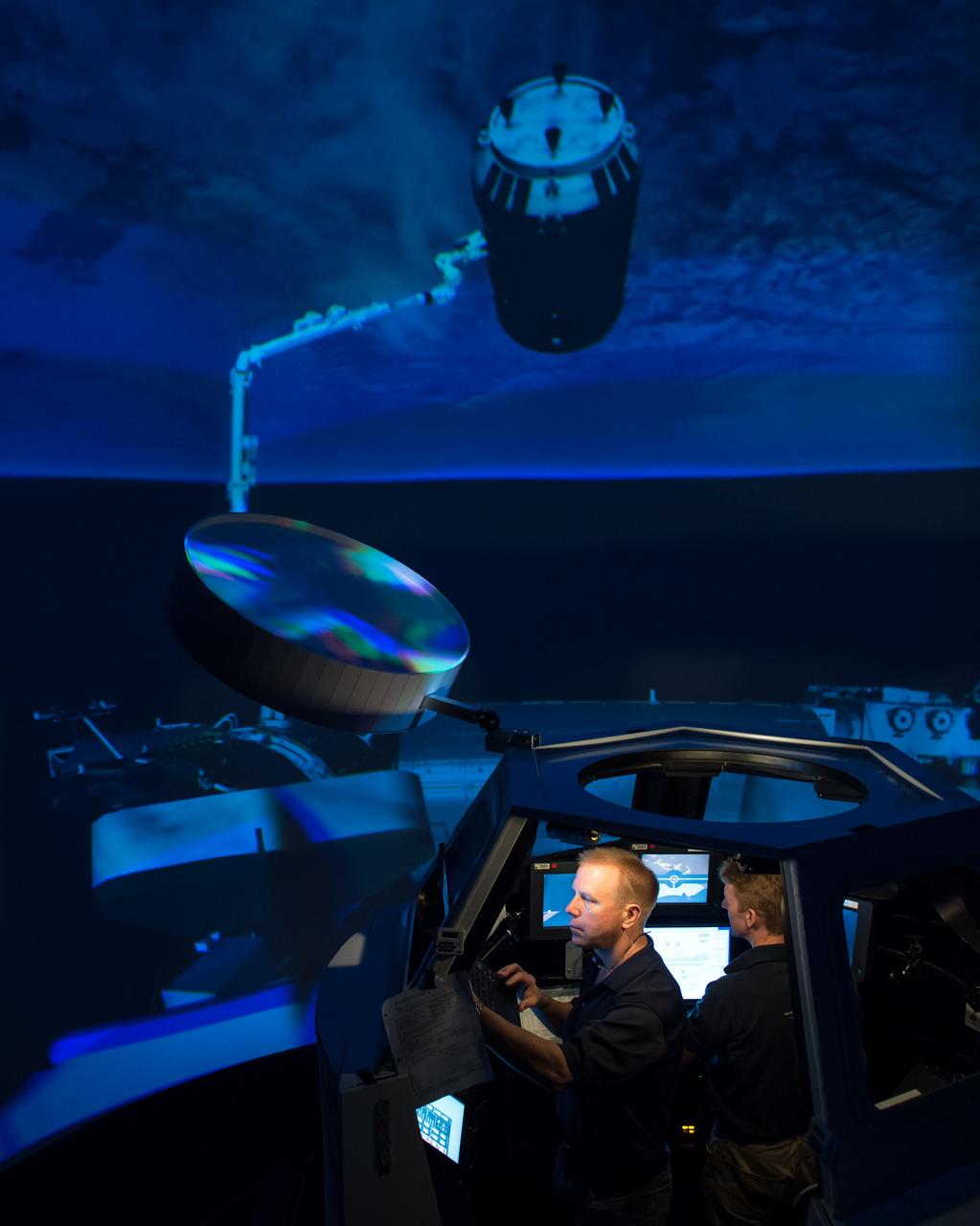
DATE: 5-16-14. LOCATION: Bldg. 16N, Room 1040. SUBJECT: Expedition 47 (Soyuz 45) crew members Tim Kopra and Timothy Peake during FF T&C/R ADV2 training in the SES Alpha Cupola. PHOTOGRAPHER: Lauren Harnett
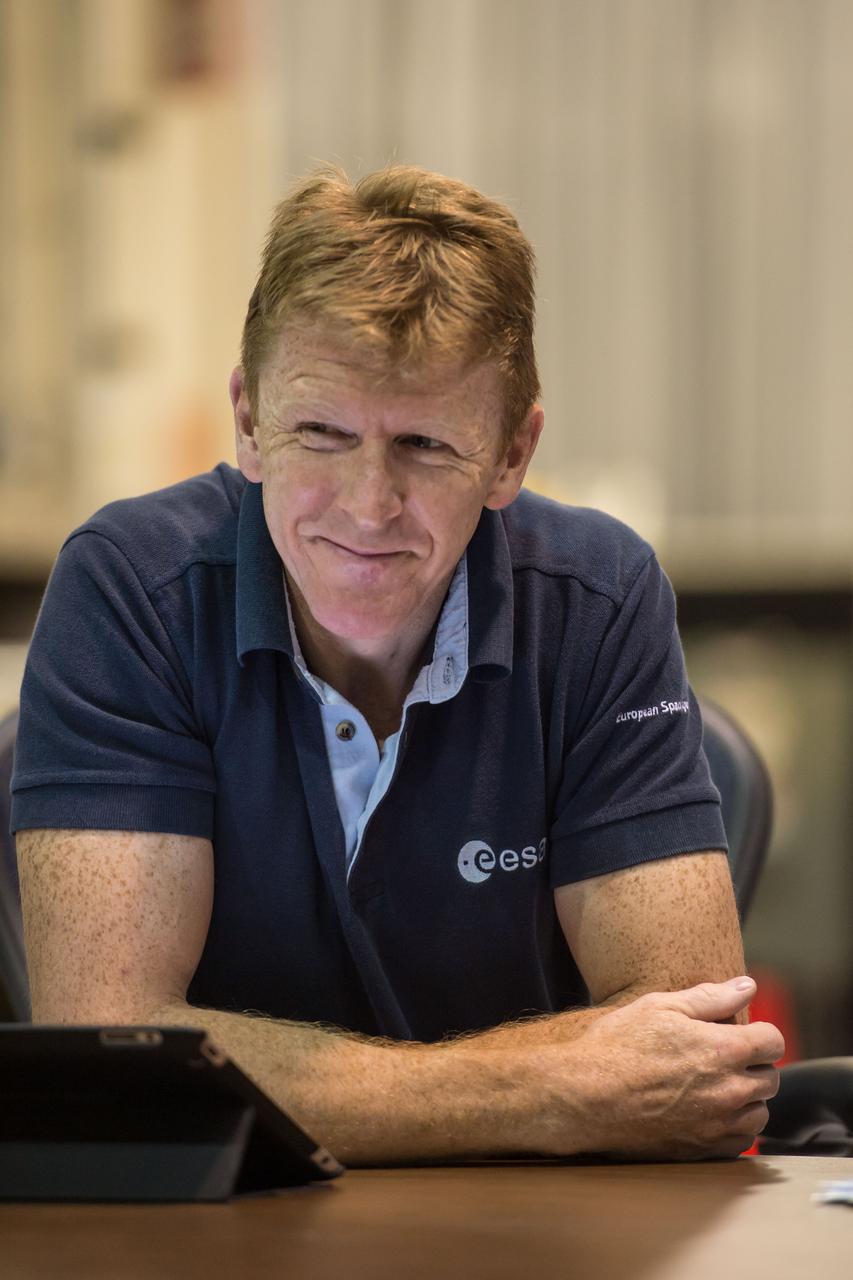
DATE: 5-16-14. LOCATION: Bldg. 16N, Room 1040. SUBJECT: Expedition 47 (Soyuz 45) crew members Tim Kopra and Timothy Peake during FF T&C/R ADV2 training in the SES Alpha Cupola. PHOTOGRAPHER: Lauren Harnett
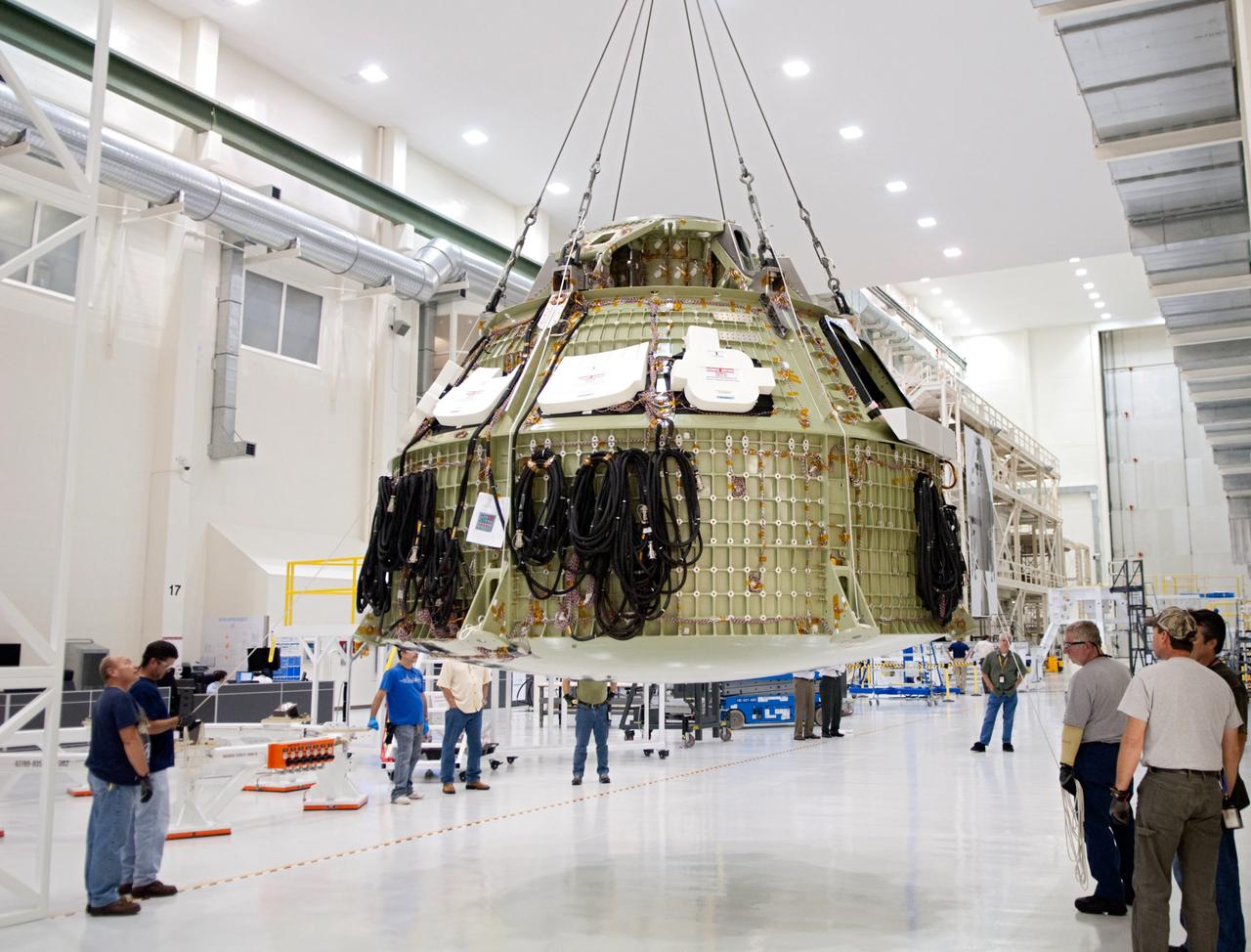
Orion technicians at the Operations and Checkout (O&C) Facility at the Kennedy Space Center move the Orion Exploration Flight Test-1 (EFT-1) crew module from the clean room into the birdcage fixture on Dec. 5, 2012. The fixture is designed to enable precise pre-launch processing of the Orion spacecraft.
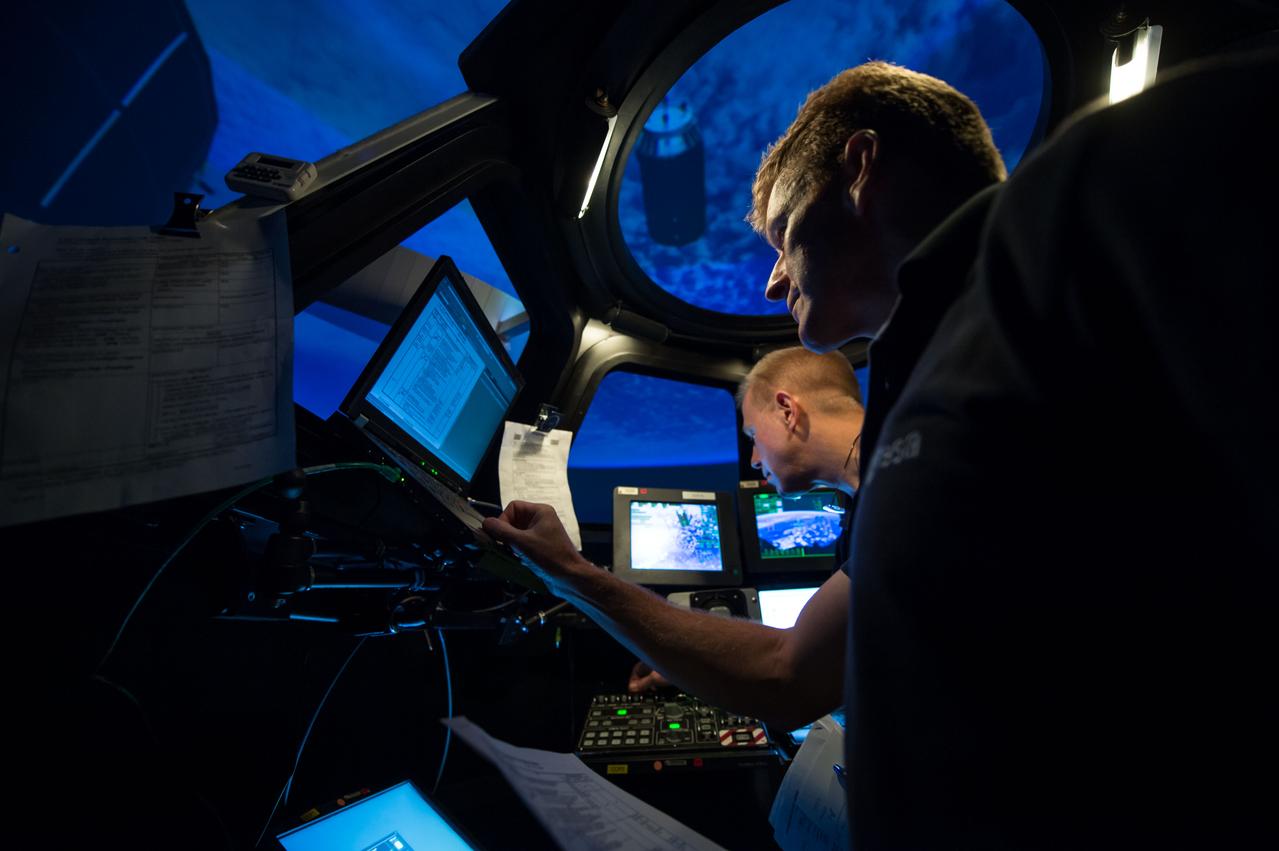
DATE: 5-16-14. LOCATION: Bldg. 16N, Room 1040. SUBJECT: Expedition 47 (Soyuz 45) crew members Tim Kopra and Timothy Peake during FF T&C/R ADV2 training in the SES Alpha Cupola. PHOTOGRAPHER: Lauren Harnett
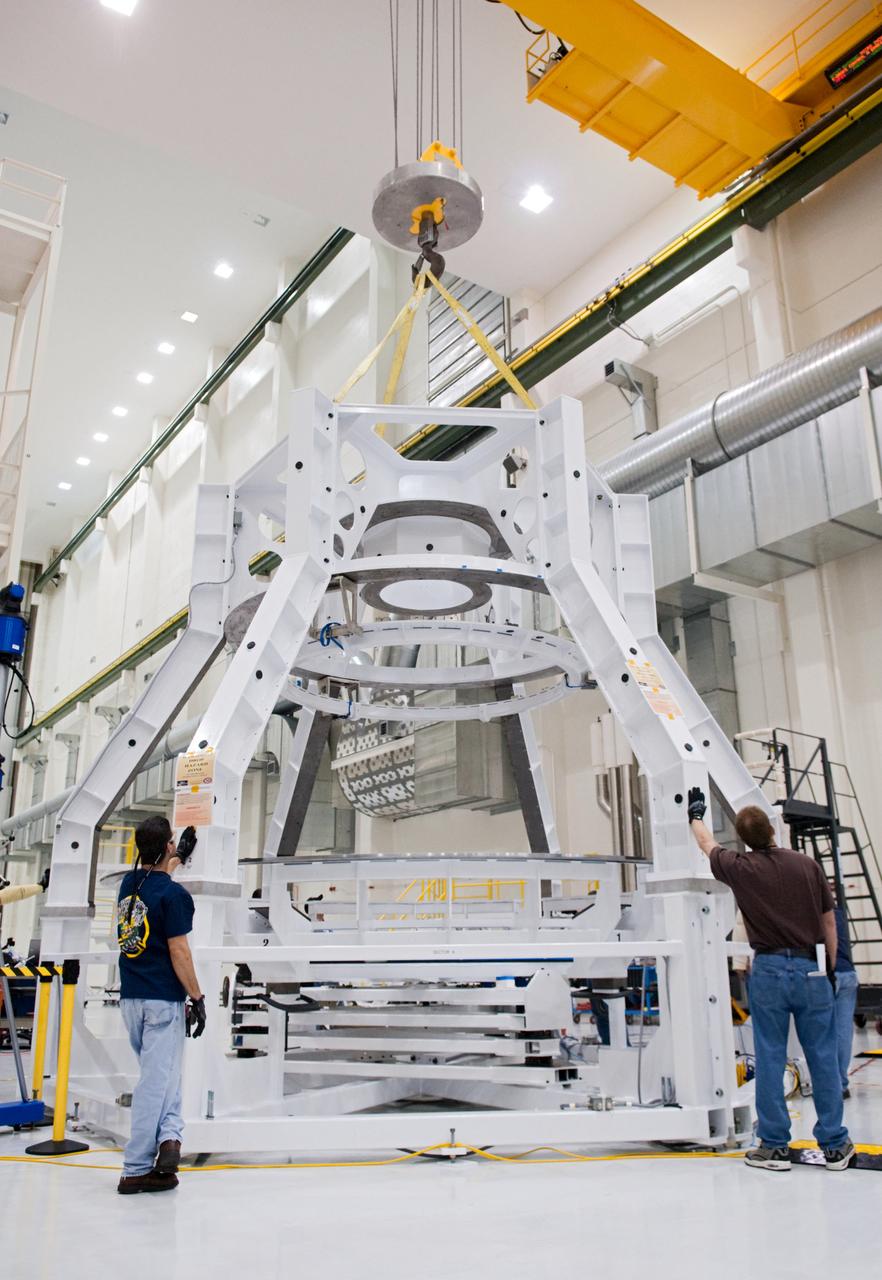
Orion technicians at the Operations and Checkout (O&C) Facility at the Kennedy Space Center move the Orion Exploration Flight Test-1 (EFT-1) crew module from the clean room into the birdcage fixture on Dec. 5, 2012. The fixture is designed to enable precise pre-launch processing of the Orion spacecraft.
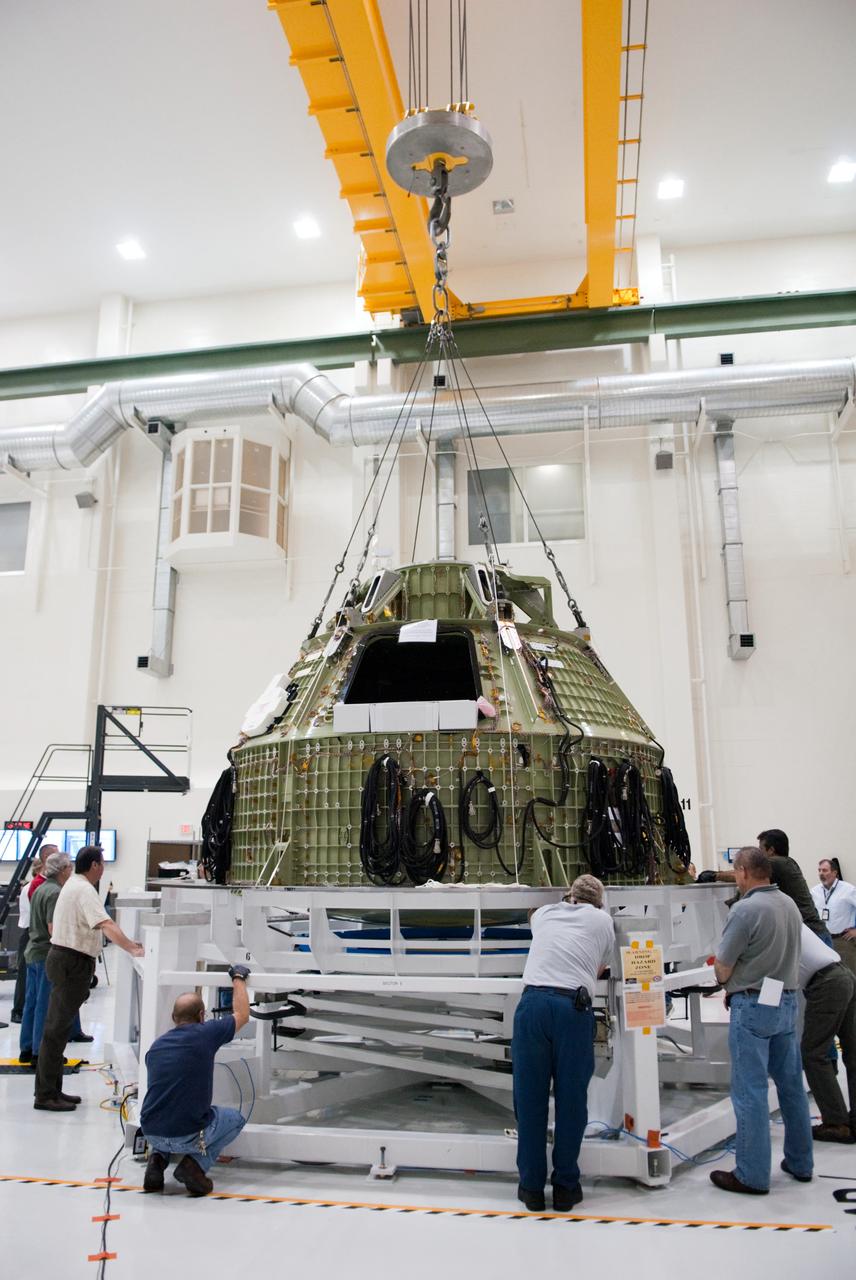
Orion technicians at the Operations and Checkout (O&C) Facility at the Kennedy Space Center move the Orion Exploration Flight Test-1 (EFT-1) crew module from the clean room into the birdcage fixture on Dec. 5, 2012. The fixture is designed to enable precise pre-launch processing of the Orion spacecraft.

Orion technicians at the Operations and Checkout (O&C) Facility at the Kennedy Space Center move the Orion Exploration Flight Test-1 (EFT-1) crew module from the clean room into the birdcage fixture on Dec. 5, 2012. The fixture is designed to enable precise pre-launch processing of the Orion spacecraft.
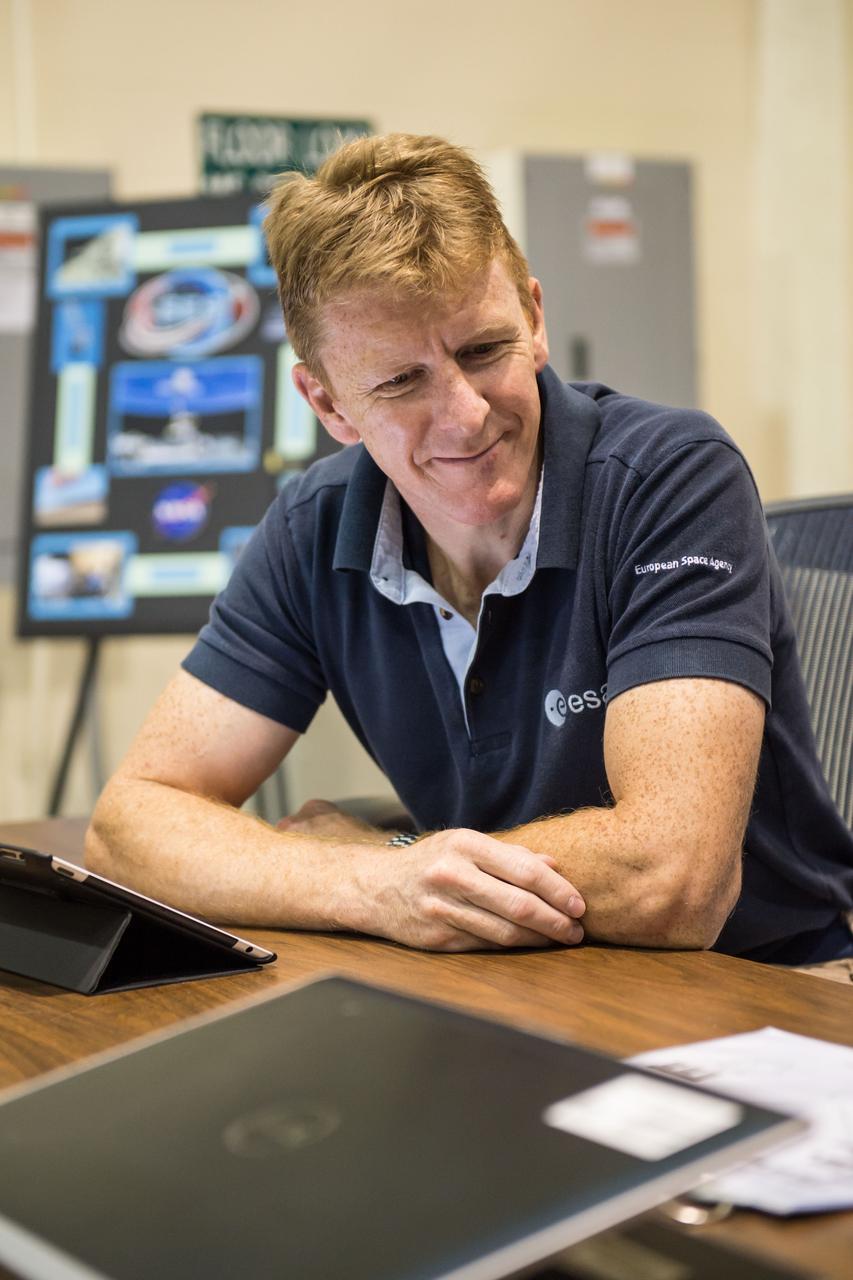
DATE: 5-16-14. LOCATION: Bldg. 16N, Room 1040. SUBJECT: Expedition 47 (Soyuz 45) crew members Tim Kopra and Timothy Peake during FF T&C/R ADV2 training in the SES Alpha Cupola. PHOTOGRAPHER: Lauren Harnett
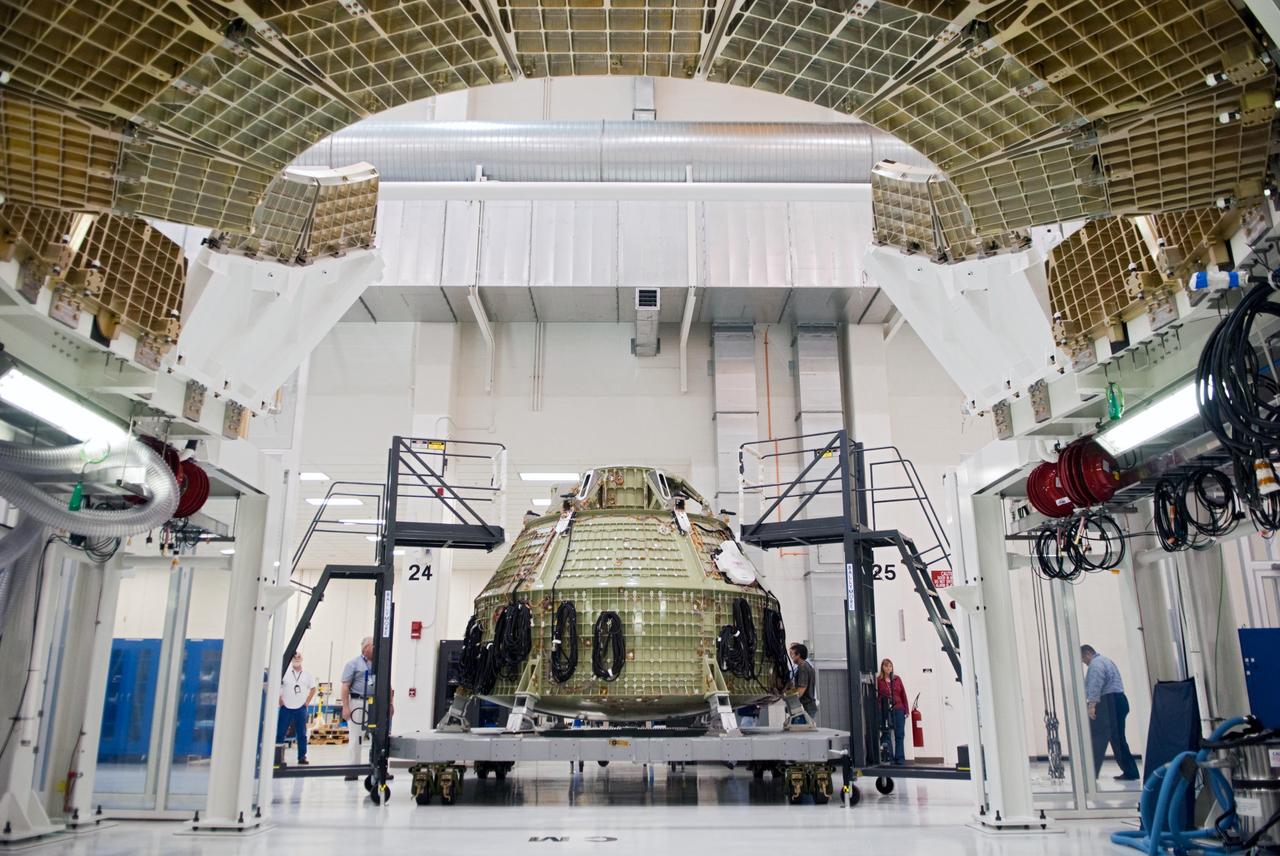
Orion technicians at the Operations and Checkout (O&C) Facility at the Kennedy Space Center move the Orion Exploration Flight Test-1 (EFT-1) crew module from the clean room into the birdcage fixture on Dec. 5, 2012. The fixture is designed to enable precise pre-launch processing of the Orion spacecraft.

JAMES WEBB SPACE TELESCOPE (JWST) BACKPLANE MOVE FROM MARSHALL SPACE FLIGHT CENTER’S X-RAY CALIBRATION FACILITY (XCRF) TO THE REDSTONE ARSENAL AIRFIELD WHERE THE TEST ARTICLE WAS PLACED IN A USAF C-5 GALAXY FOR IT’S FLIGHT BACK TO THE MANUFACTURER.
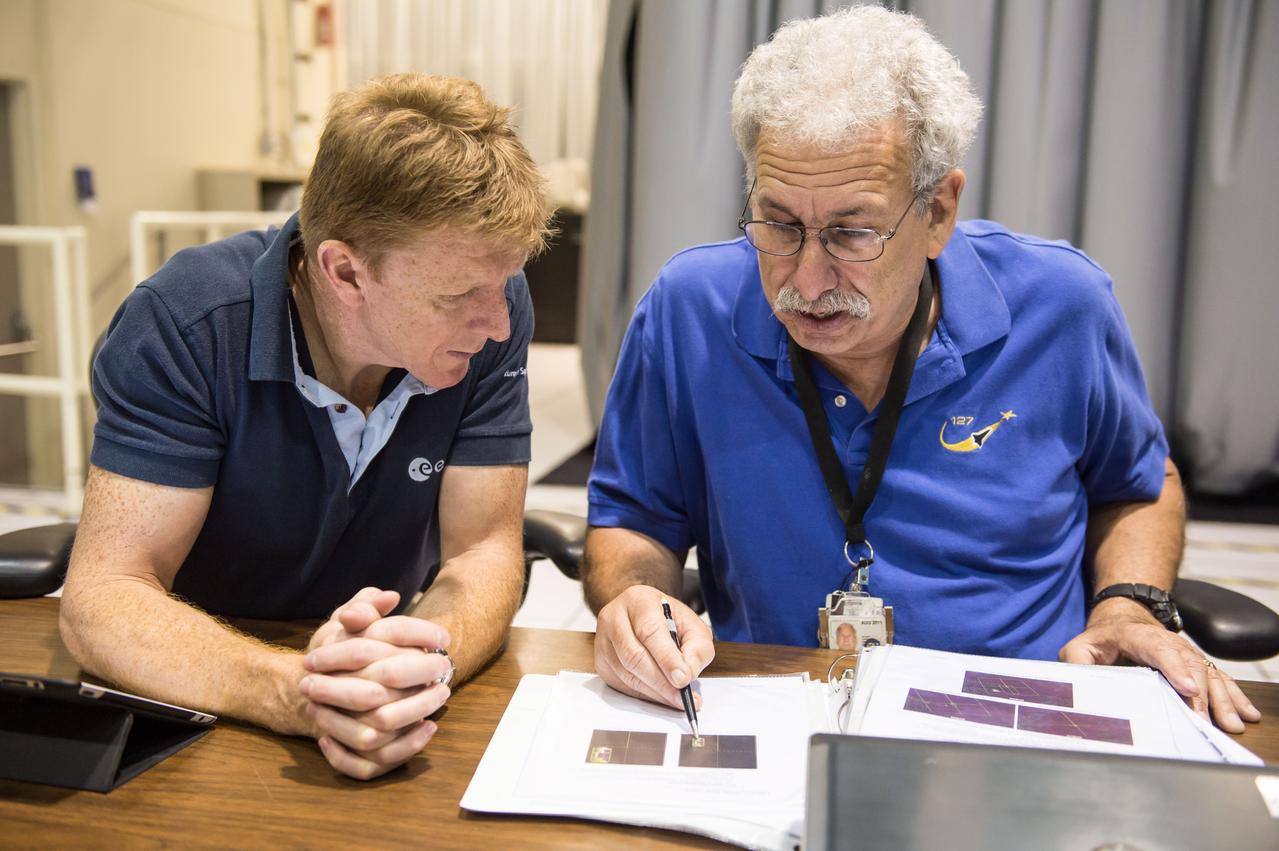
DATE: 5-16-14. LOCATION: Bldg. 16N, Room 1040. SUBJECT: Expedition 47 (Soyuz 45) crew members Tim Kopra and Timothy Peake during FF T&C/R ADV2 training in the SES Alpha Cupola. PHOTOGRAPHER: Lauren Harnett
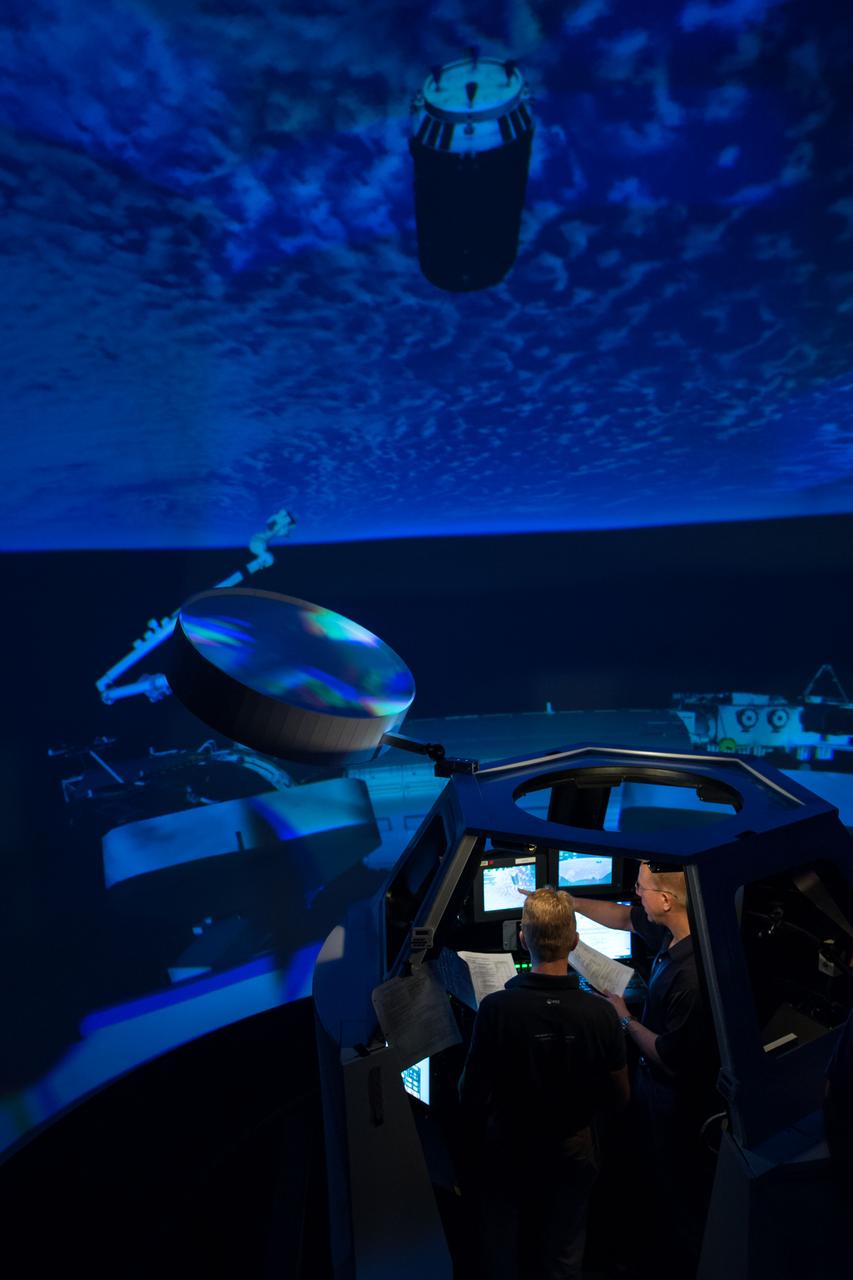
DATE: 5-16-14. LOCATION: Bldg. 16N, Room 1040. SUBJECT: Expedition 47 (Soyuz 45) crew members Tim Kopra and Timothy Peake during FF T&C/R ADV2 training in the SES Alpha Cupola. PHOTOGRAPHER: Lauren Harnett
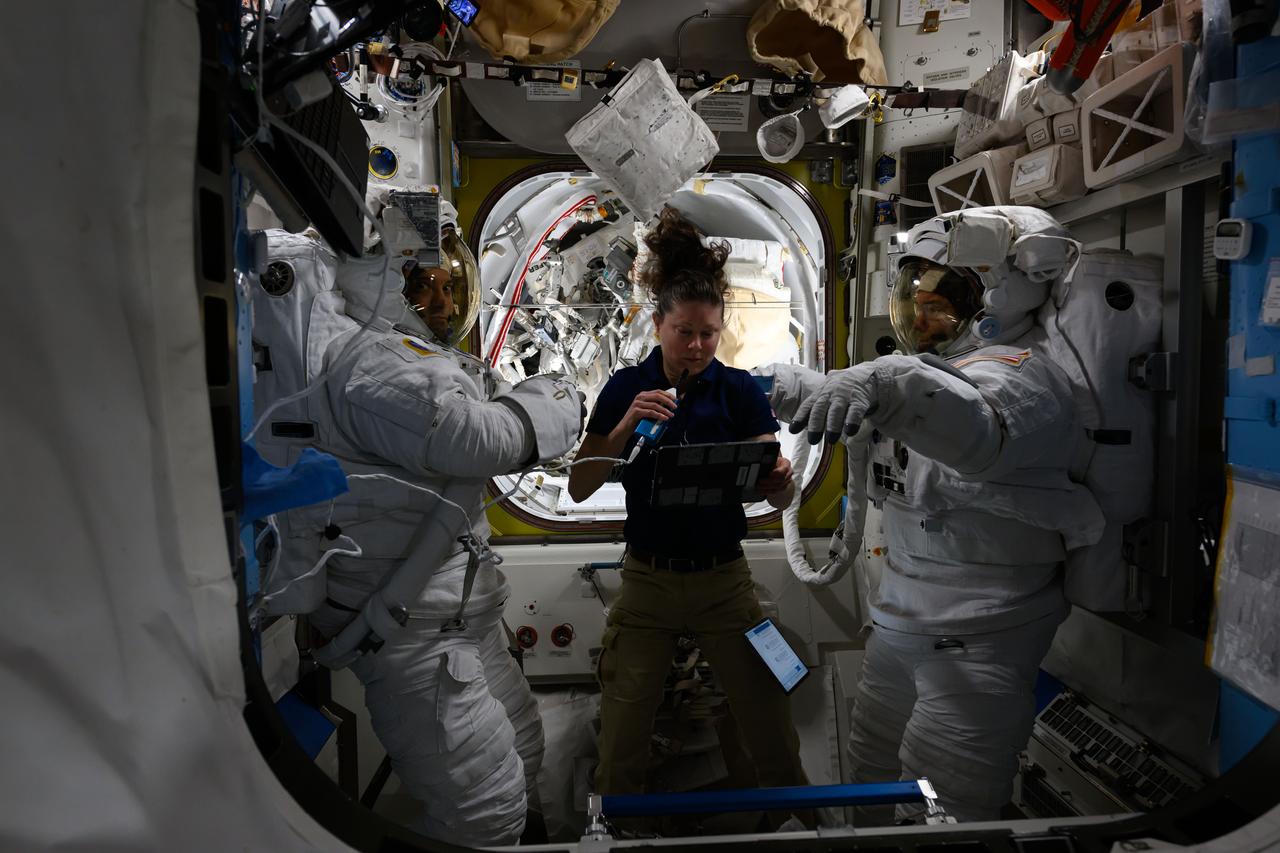
iss071e178160 (June 5, 2024) --- Expedition 71 Flight Engineer Tracy C. Dyson (center) assists Expedition 71 Flight Engineers Matthew Dominick (left) and Mike Barratt (right), all three NASA astronauts, during a spacesuit fit check inside the International Space Station's Quest airlock.
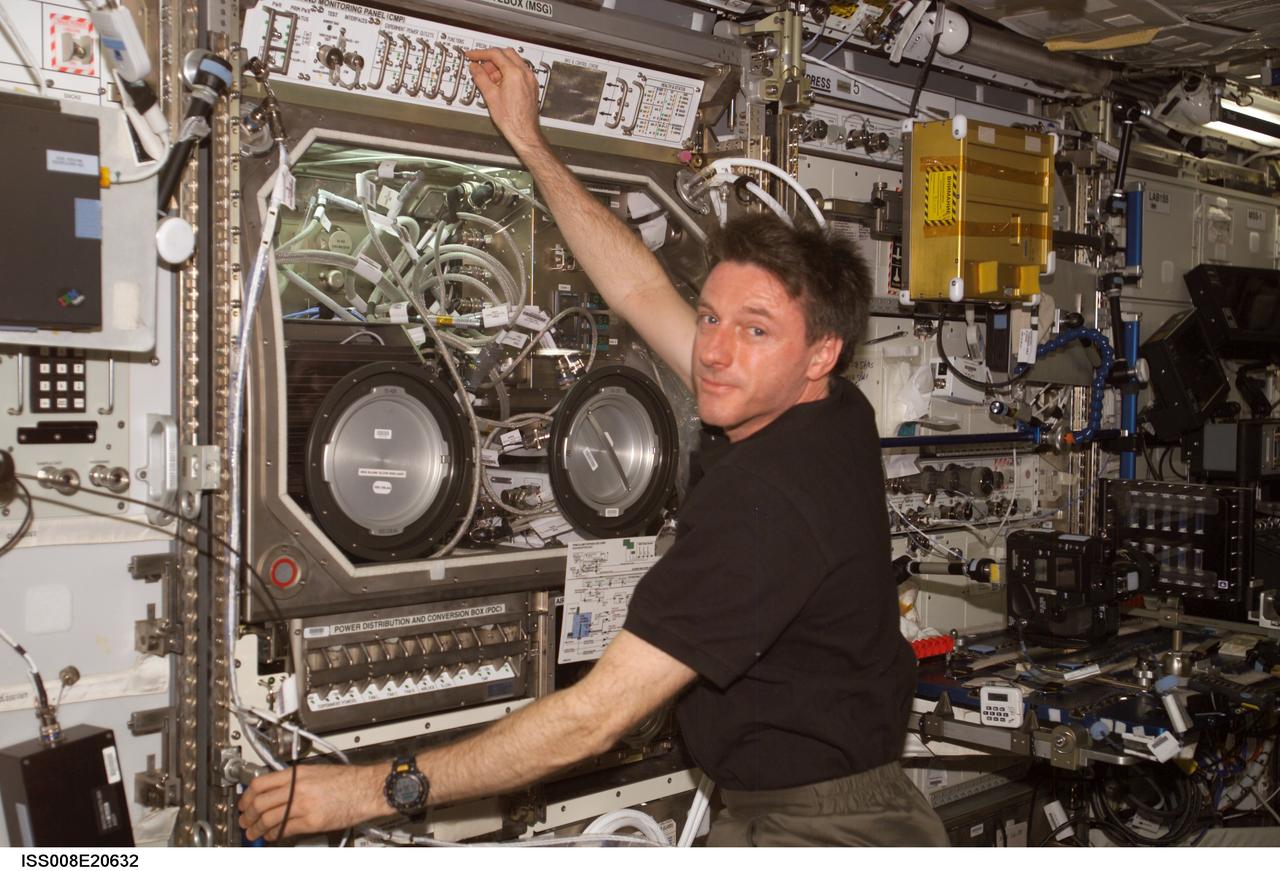
ISS008-E-20632 (5 April 2004) --- Astronaut C. Michael Foale, Expedition 8 commander and NASA ISS science officer, conducts an inspection of the Microgravity Science Glovebox (MSG) / Exchangeable Standard Electronic Module (ESEM) in the Destiny laboratory of the International Space Station (ISS).
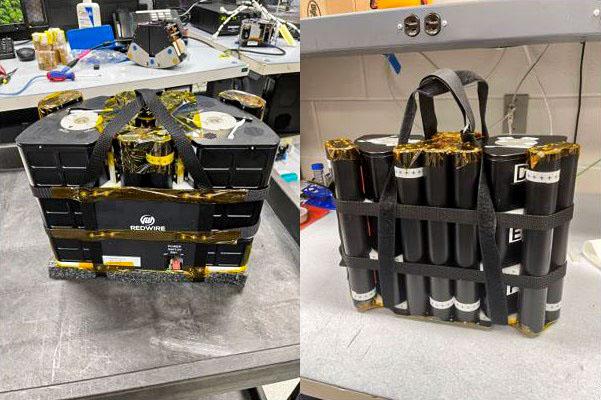
jsc2024e036957 (5/24/2024) --- Six modules configured in their Powered Carrier for ascent. The carrier helps perfuse media through the tissue while launched in a cold bag, maintaining approximately 37°C for the Maturation of Vascularized Liver Tissue Construct in Zero Gravity (MVP Cell-07) investigation. Image courtesy of Grant Vellinger, Redwire.
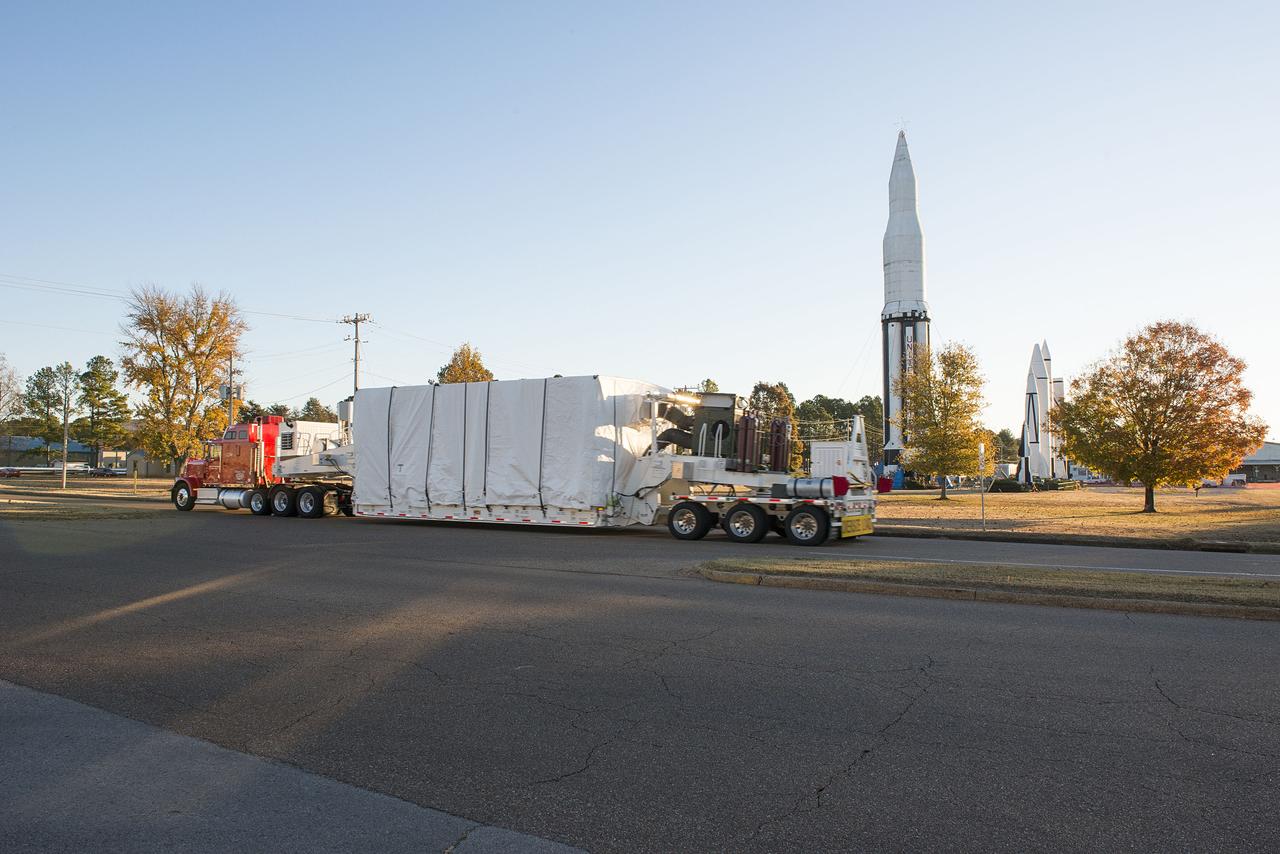
JAMES WEBB SPACE TELESCOPE (JWST) BACKPLANE MOVE FROM MARSHALL SPACE FLIGHT CENTER’S X-RAY CALIBRATION FACILITY (XCRF) TO THE REDSTONE ARSENAL AIRFIELD WHERE THE TEST ARTICLE WAS PLACED IN A USAF C-5 GALAXY FOR IT’S FLIGHT BACK TO THE MANUFACTURER.
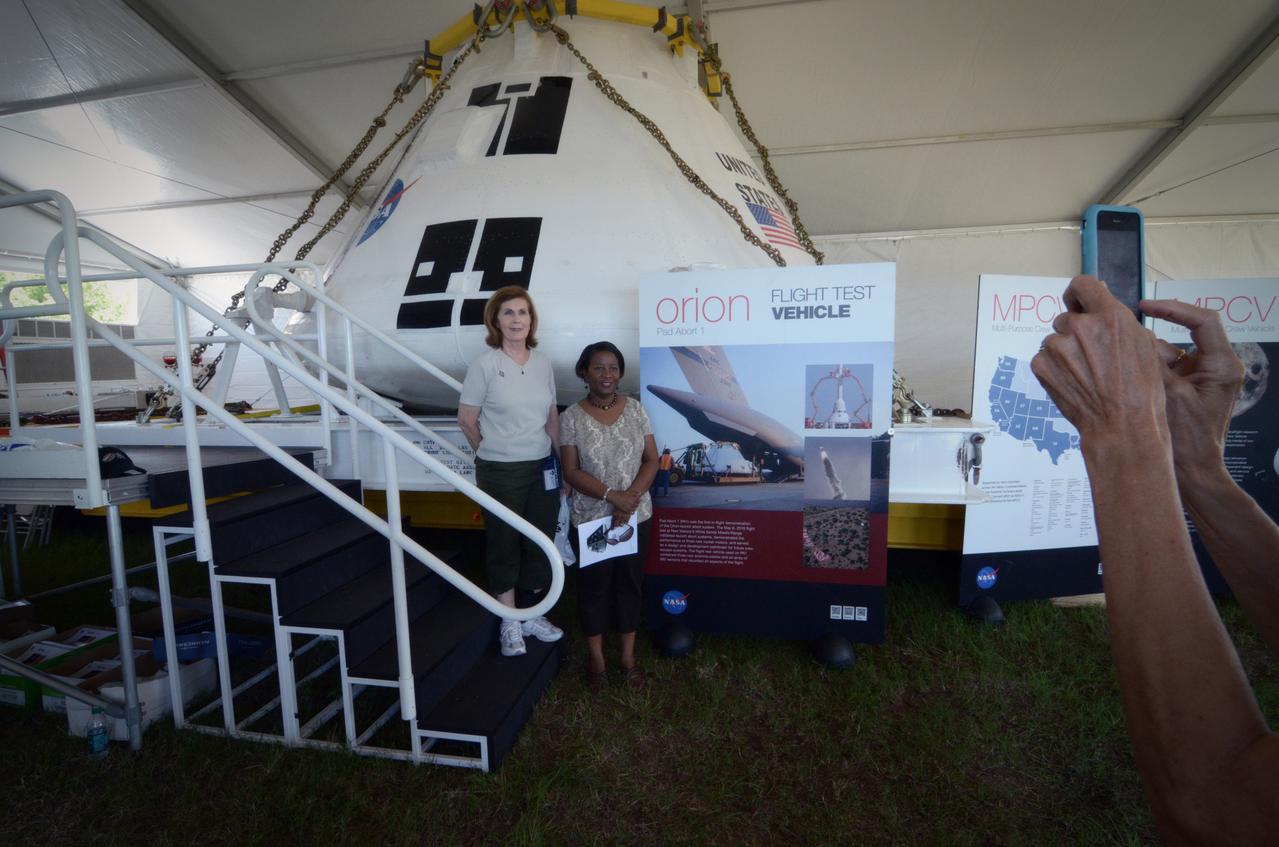
The Orion crew module flown on NASA’s Pad Abort-1 (PA-1) flight test is shown on display at an event at Kennedy Space Center in Florida on July 5, 2011 before moving into the Operations & Checkout (O&C) Building. Part of Batch image transfer from Flickr.
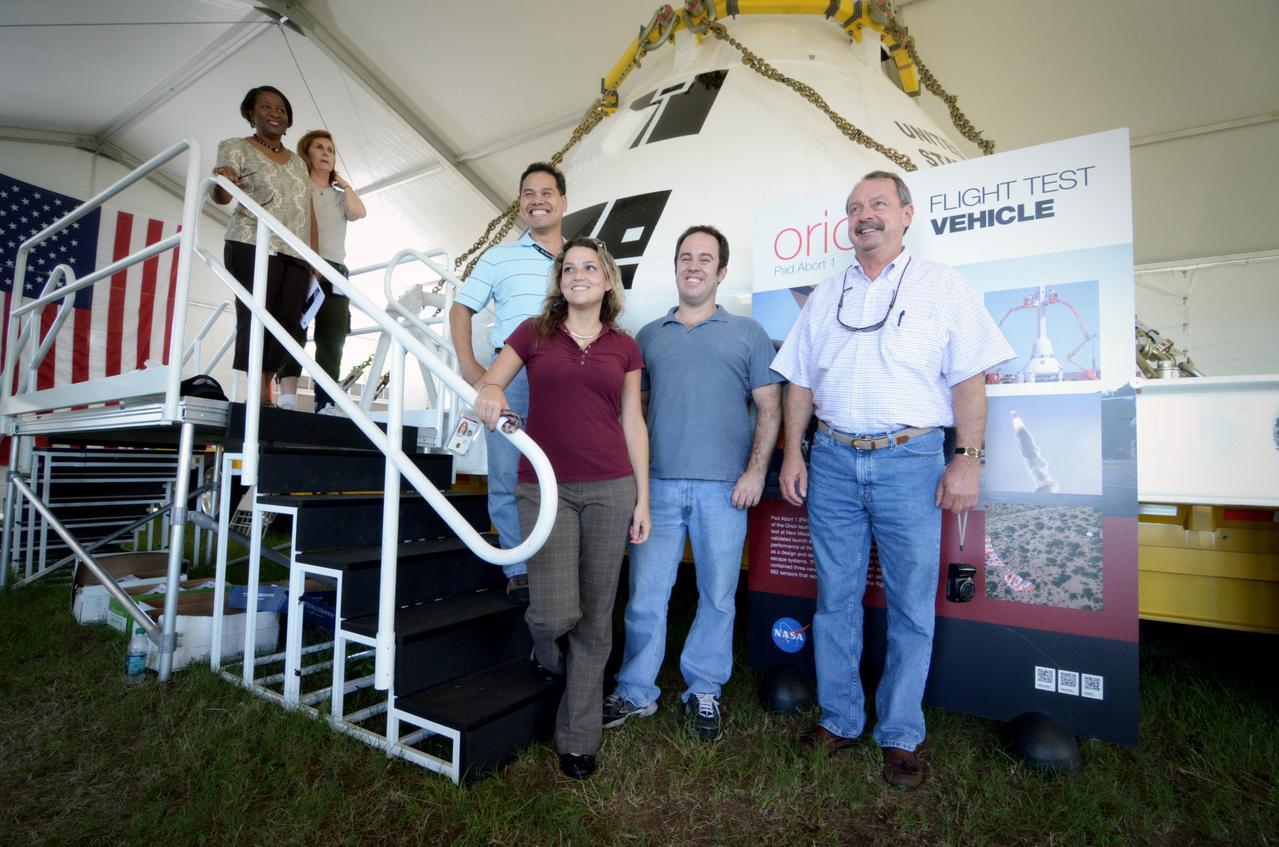
The Orion crew module flown on NASA’s Pad Abort-1 (PA-1) flight test is shown on display at an event at Kennedy Space Center in Florida on July 5, 2011 before moving into the Operations & Checkout (O&C) Building. Part of Batch image transfer from Flickr.

STS008-18-481 (30 Aug-5 Sept 1983) --- Astronaut Daniel C. Brandenstein, STS-8 pilot, communicates with ground controllers form the flight deck of the Earth orbiting Space Shuttle Challenger. This frame was shot with a 35mm camera.

DATE: 5-16-14. LOCATION: Bldg. 16N, Room 1040. SUBJECT: Expedition 47 (Soyuz 45) crew members Tim Kopra and Timothy Peake during FF T&C/R ADV2 training in the SES Alpha Cupola. PHOTOGRAPHER: Lauren Harnett
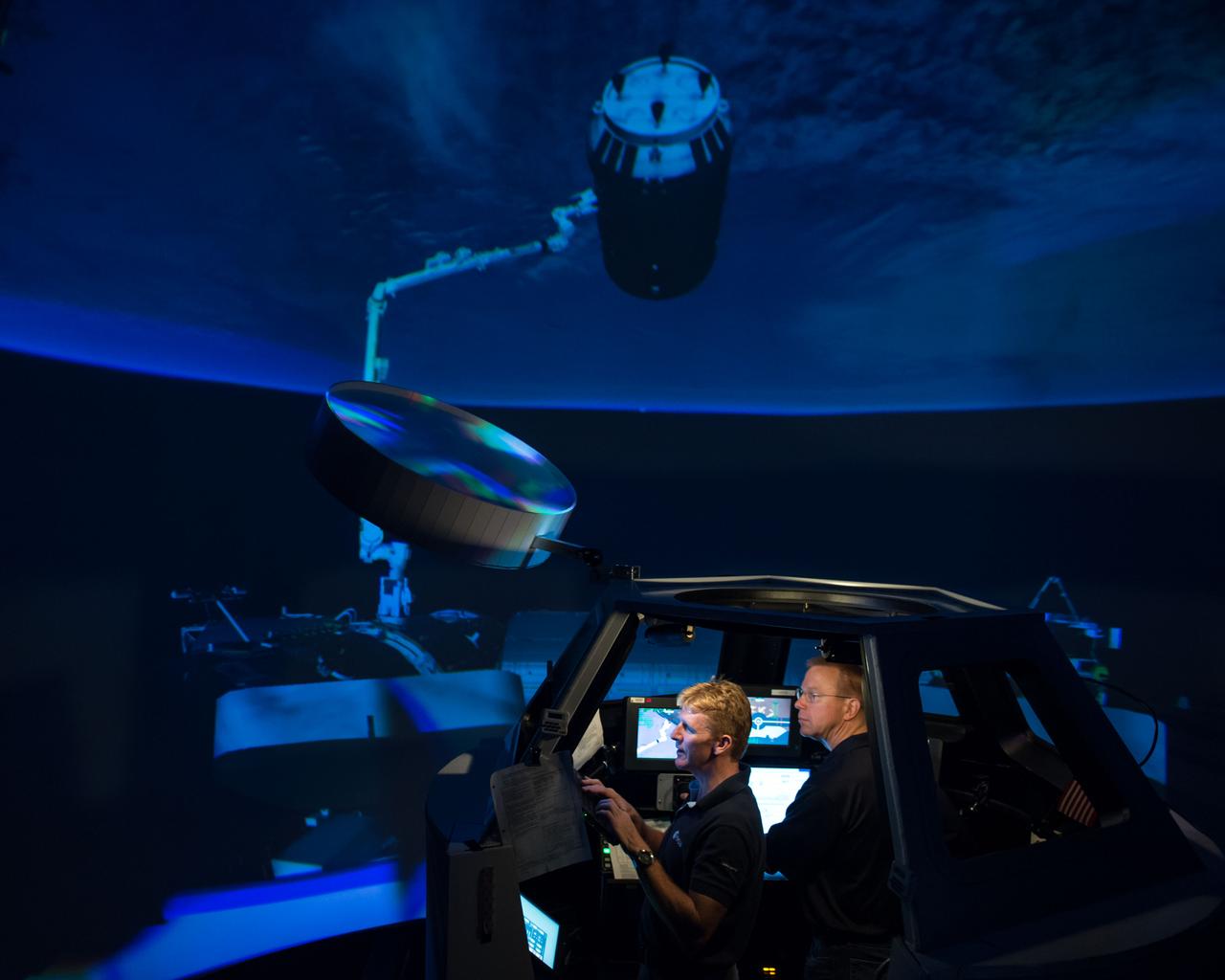
DATE: 5-16-14. LOCATION: Bldg. 16N, Room 1040. SUBJECT: Expedition 47 (Soyuz 45) crew members Tim Kopra and Timothy Peake during FF T&C/R ADV2 training in the SES Alpha Cupola. PHOTOGRAPHER: Lauren Harnett
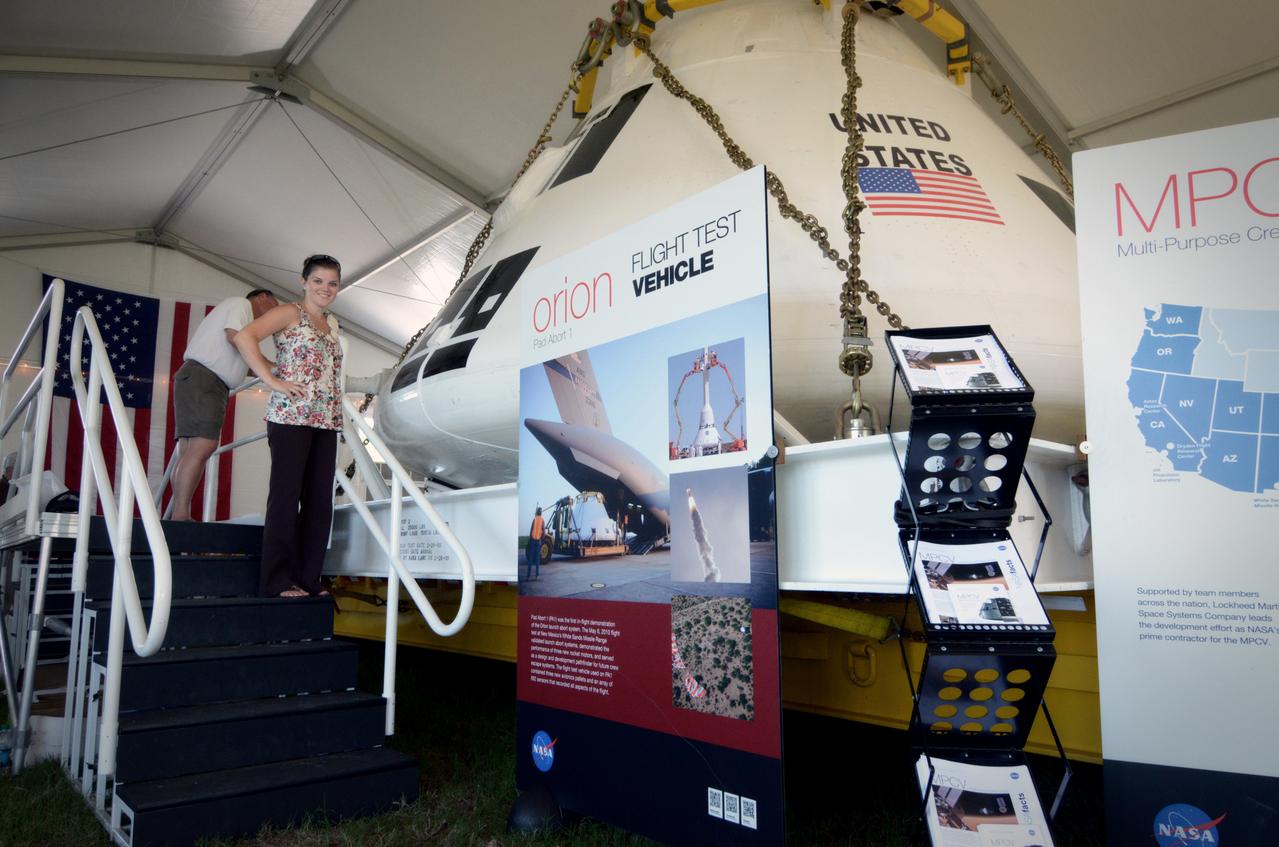
The Orion crew module flown on NASA’s Pad Abort-1 (PA-1) flight test is shown on display at an event at Kennedy Space Center in Florida on July 5, 2011 before moving into the Operations & Checkout (O&C) Building. Part of Batch image transfer from Flickr.
JAMES WEBB SPACE TELESCOPE (JWST) BACKPLANE MOVE FROM MARSHALL SPACE FLIGHT CENTER’S X-RAY CALIBRATION FACILITY (XCRF) TO THE REDSTONE ARSENAL AIRFIELD WHERE THE TEST ARTICLE WAS PLACED IN A USAF C-5 GALAXY FOR IT’S FLIGHT BACK TO THE MANUFACTURER.
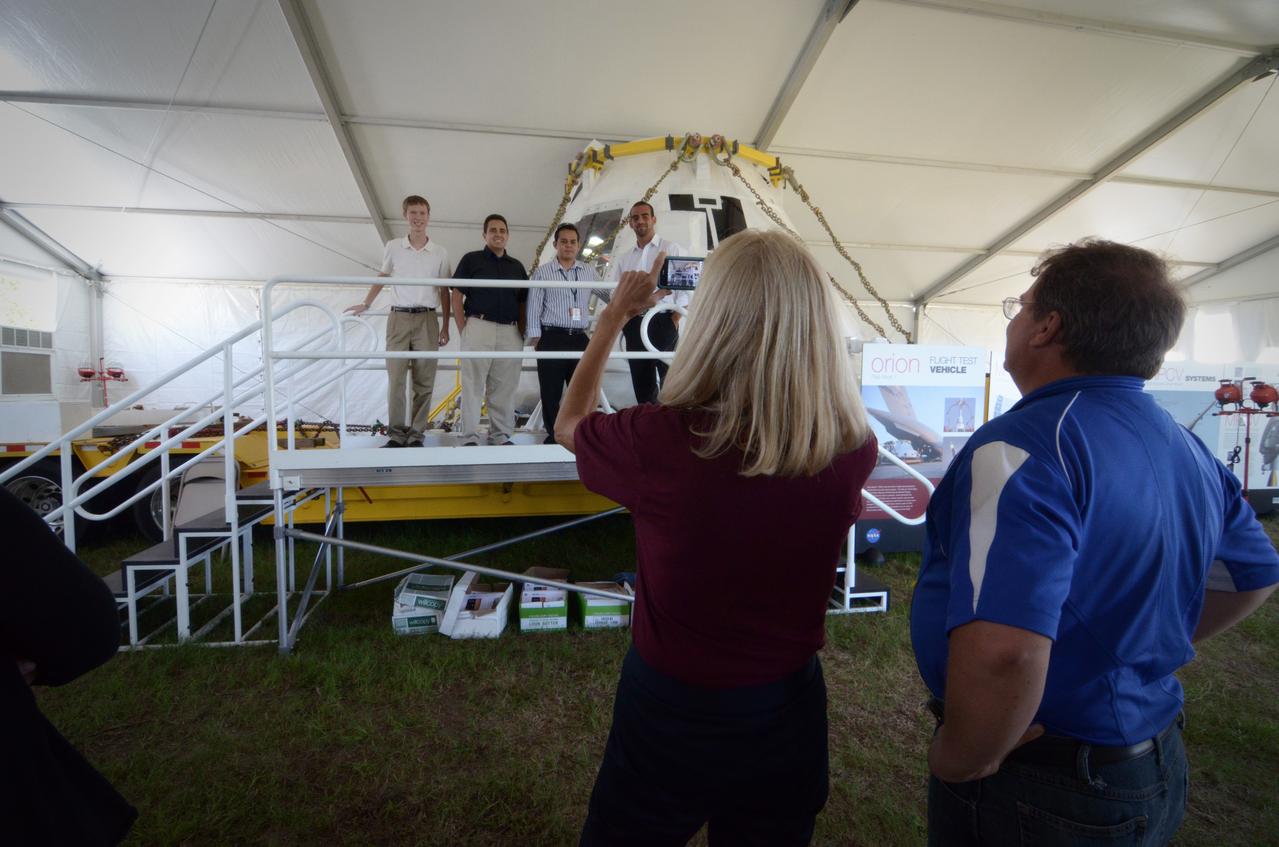
The Orion crew module flown on NASA’s Pad Abort-1 (PA-1) flight test is shown on display at an event at Kennedy Space Center in Florida on July 5, 2011 before moving into the Operations & Checkout (O&C) Building. Part of Batch image transfer from Flickr.
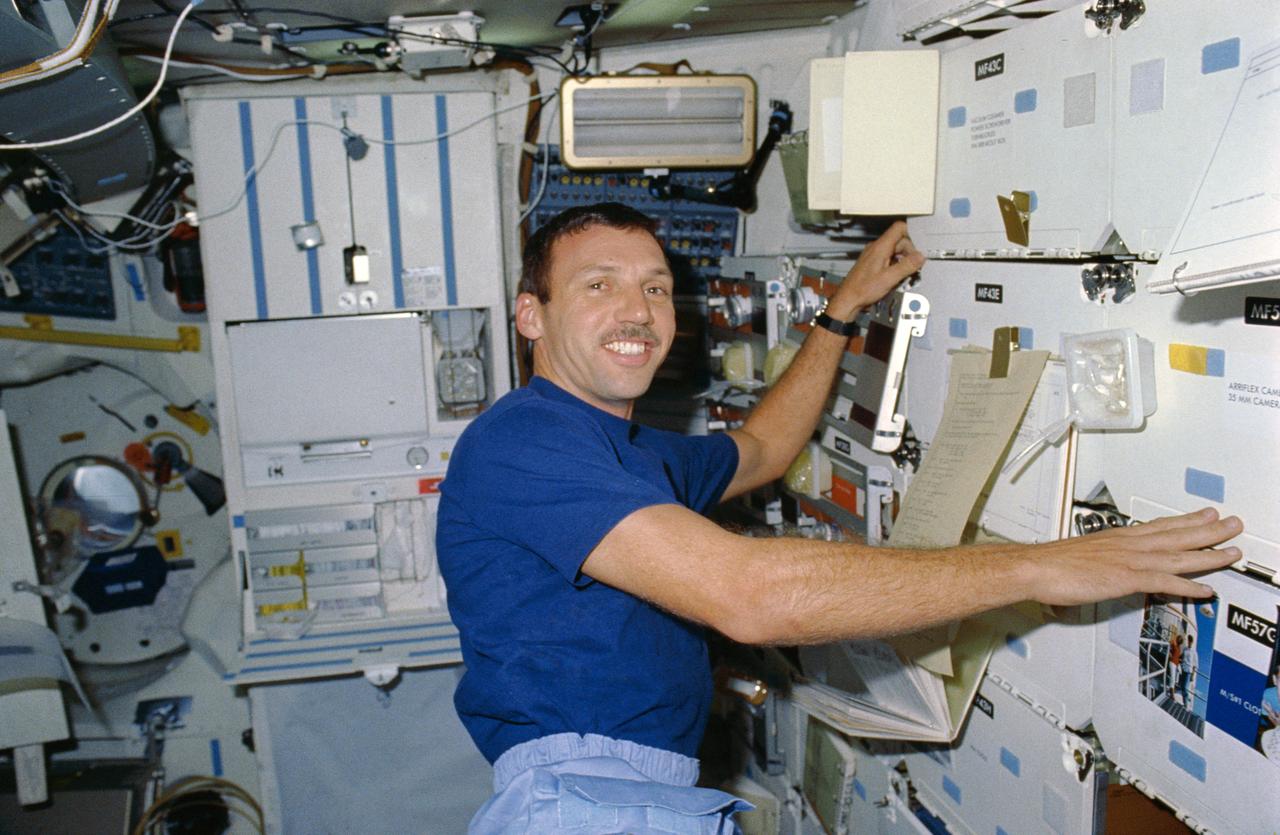
STS026-06-033 (5 Oct 1988) --- Astronaut David C. Hilmers, STS-26 mission specialist, reads teleprinted message which has been clipped to stowage locker doors on the middeck. Food, a galley and various experiments surround the mission specialist.
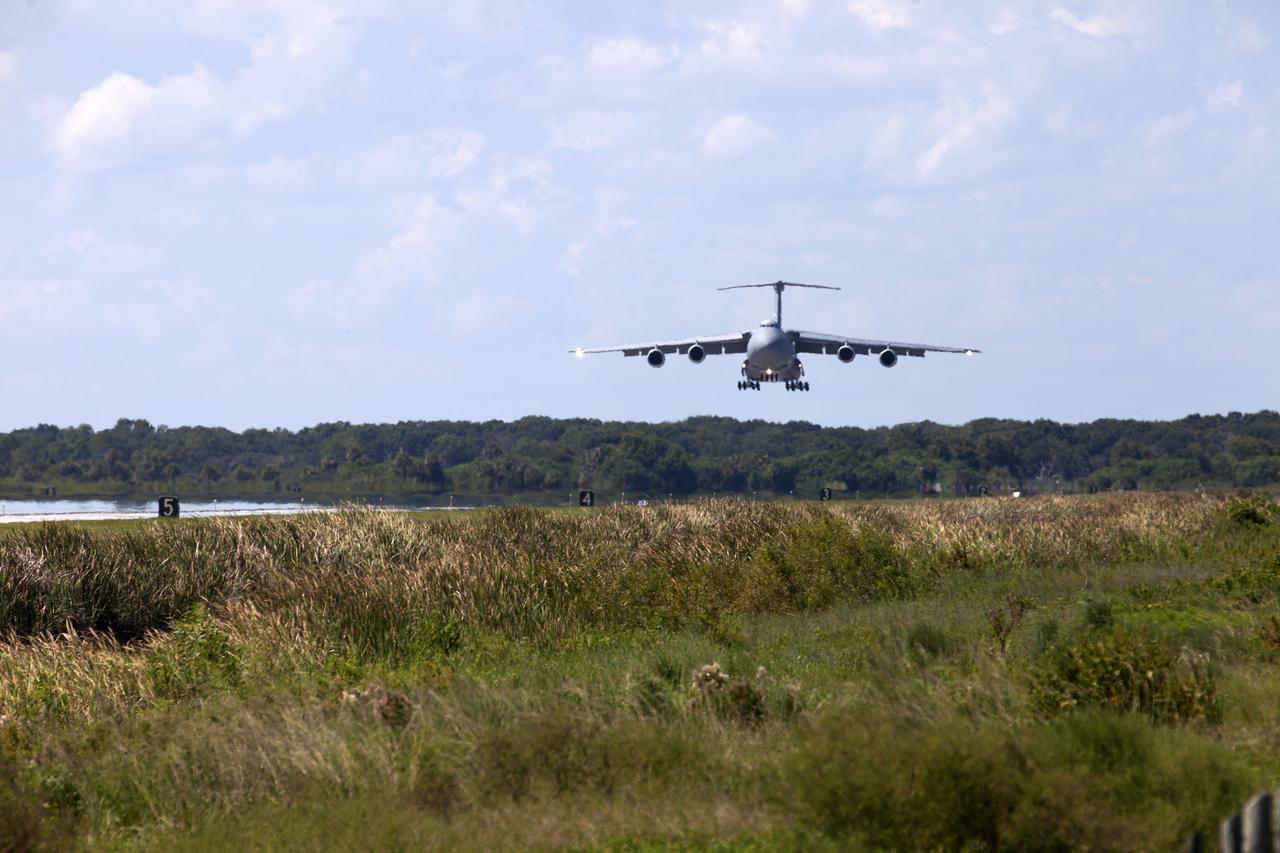
An Air Force C-5 Galaxy transport plane approaches the Shuttle Landing Facility at NASA's Kennedy Space Center in Florida to deliver the GOES-R spacecraft for launch processing. The GOES series are weather satellites operated by NOAA to enhance forecasts. The spacecraft is to launch aboard a United Launch Alliance Atlas V rocket in November.
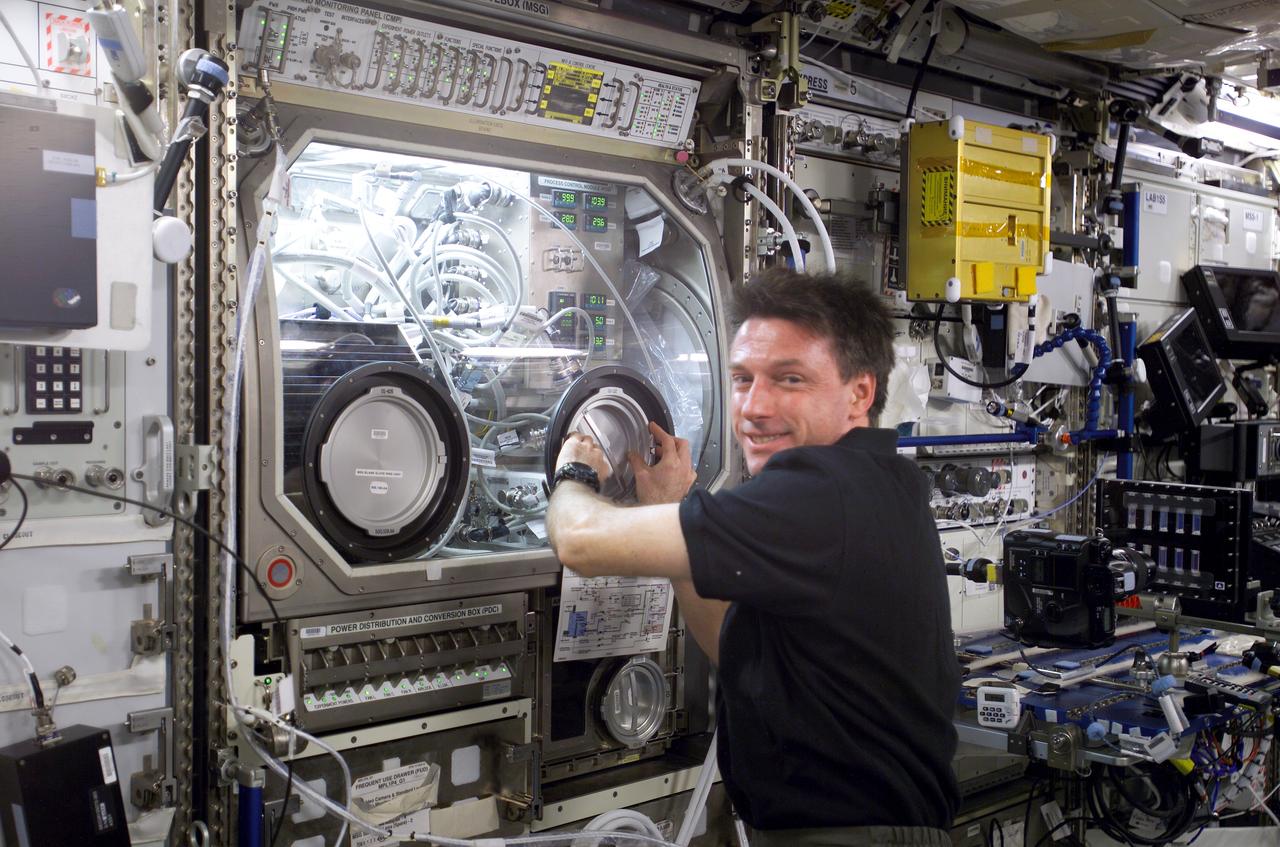
ISS008-E-20622 (5 April 2004) --- Astronaut C. Michael Foale, Expedition 8 commander and NASA ISS science officer, conducts an inspection of the Microgravity Science Glovebox (MSG) / Exchangeable Standard Electronic Module (ESEM) in the Destiny laboratory of the International Space Station (ISS).
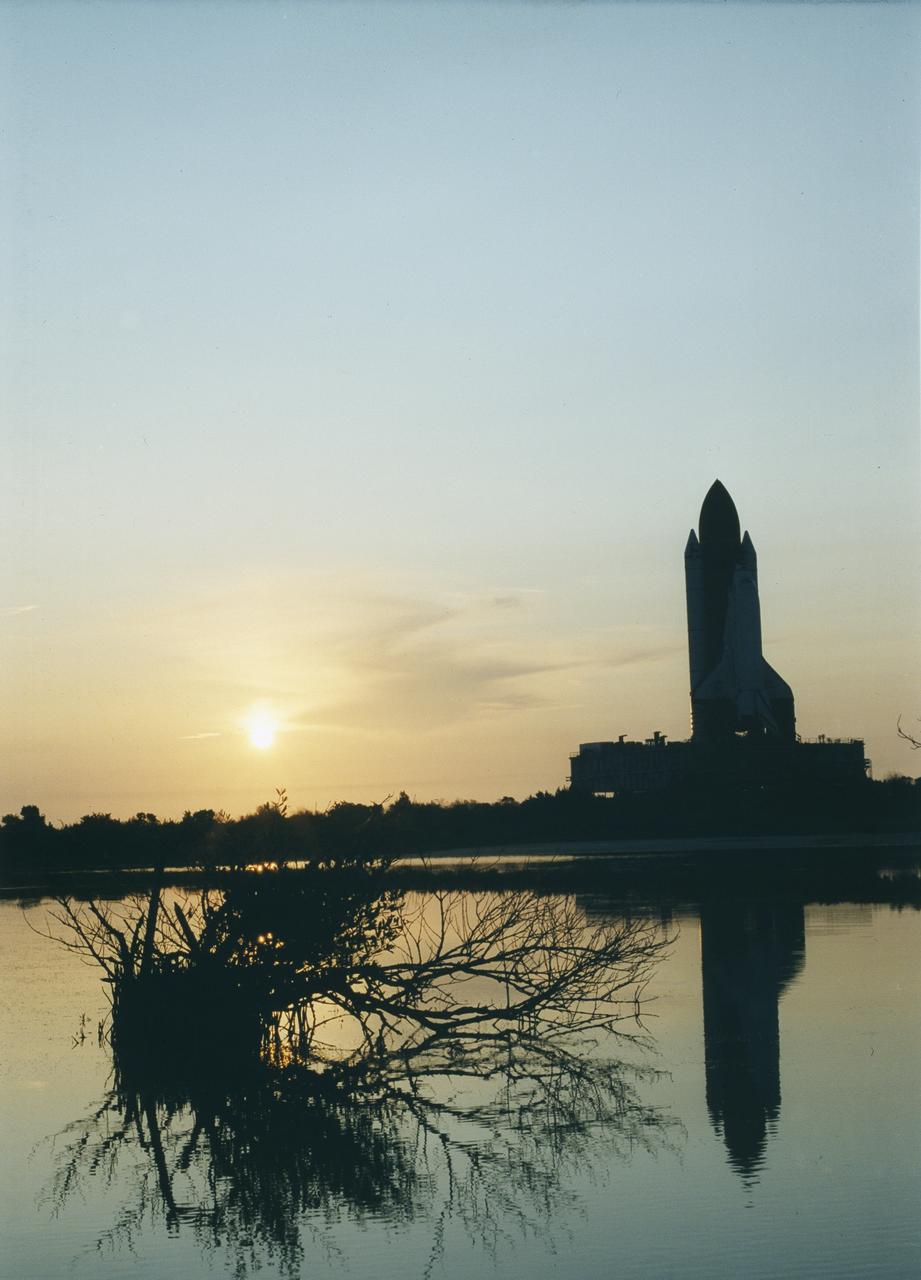
Launched aboard the Space Shuttle Atlantis on August 2, 1991, the STS-43 mission’s primary payload was the Tracking and Data Relay Satellite 5 (TDRS-5) attached to an Inertial Upper Stage (IUS), which became the 4th member of an orbiting TDRS cluster. The flight crew consisted of five astronauts: John E. Blaha, commander; Michael A. Baker, pilot; Shannon W. Lucid, mission specialist 1; James C. Adamson, mission specialist 2; and G. David Low, mission specialist 3.
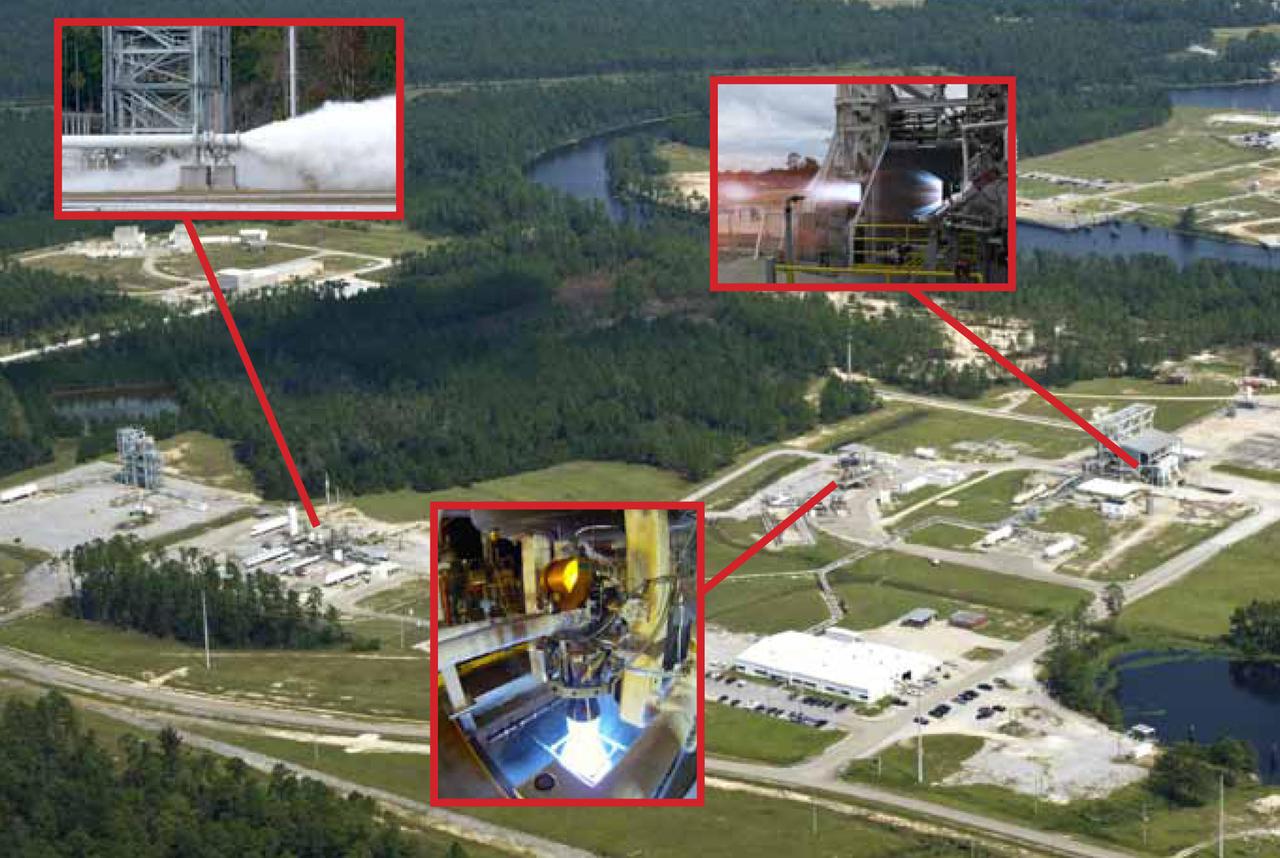
NASA recorded a historic week Nov. 5-9, conducting tests on all three stands in the E Test Complex at John C. Stennis Space Center. Inset images show the types of tests conducted on the E-1 Test Stand (right), the E-2 Test Stand (left) and the E-3 Test Stand (center). The E-1 photo is from an early October test and is provided courtesy of Blue Origin. Other photos are from tests conducted the week of Nov. 5.
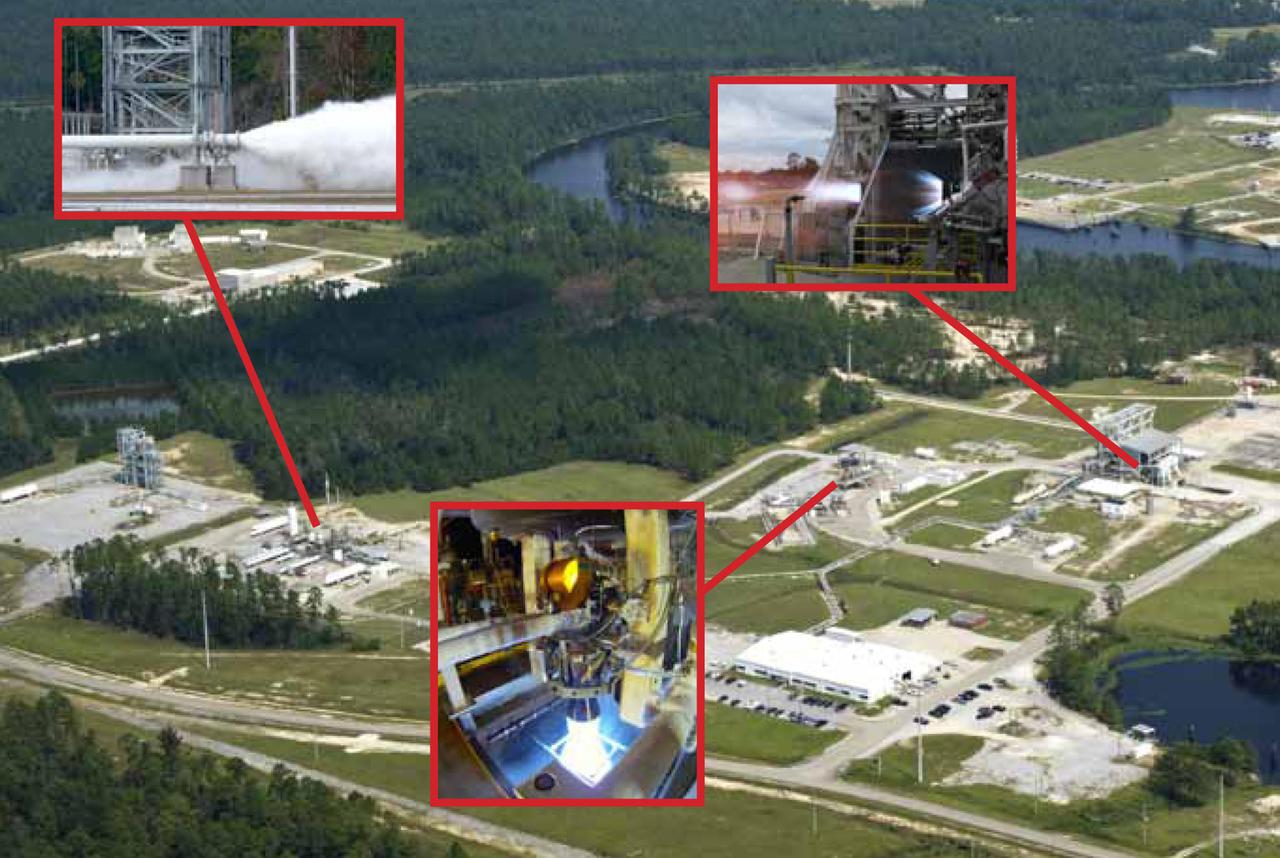
NASA recorded a historic week Nov. 5-9, conducting tests on all three stands in the E Test Complex at John C. Stennis Space Center. Inset images show the types of tests conducted on the E-1 Test Stand (right), the E-2 Test Stand (left) and the E-3 Test Stand (center). The E-1 photo is from an early October test and is provided courtesy of Blue Origin. Other photos are from tests conducted the week of Nov. 5.
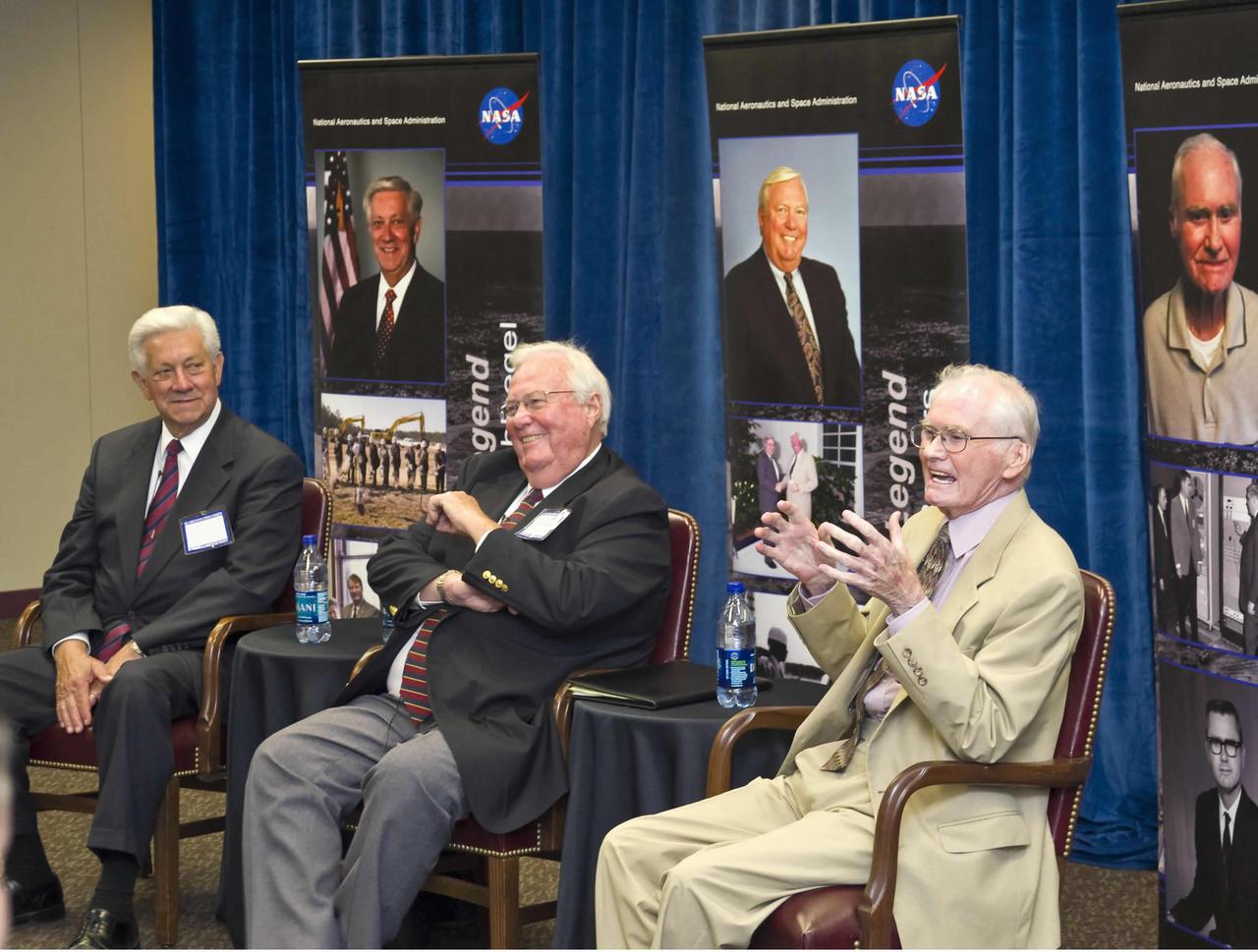
Current and former leaders discuss the growth of NASA's John C. Stennis Space Center during a Legends Lecture Series onsite on April 5. Stennis launched the Legends Lecture Series last November as part of a yearlong celebration of its 50th anniversary. The April 5 session focused on growth of Stennis into a unique federal city during the 1970s and the establishment of NASA's Earth Resources Laboratory at the site. Presenters at the April 5 event included (l to r): George Schloegel, mayor of Gulfport; Jack Rogers, former director of NASA Center Operations at Stennis; and Wayne Mooneyhan, former director of NASA's Earth Resources Laboratory at Stennis.
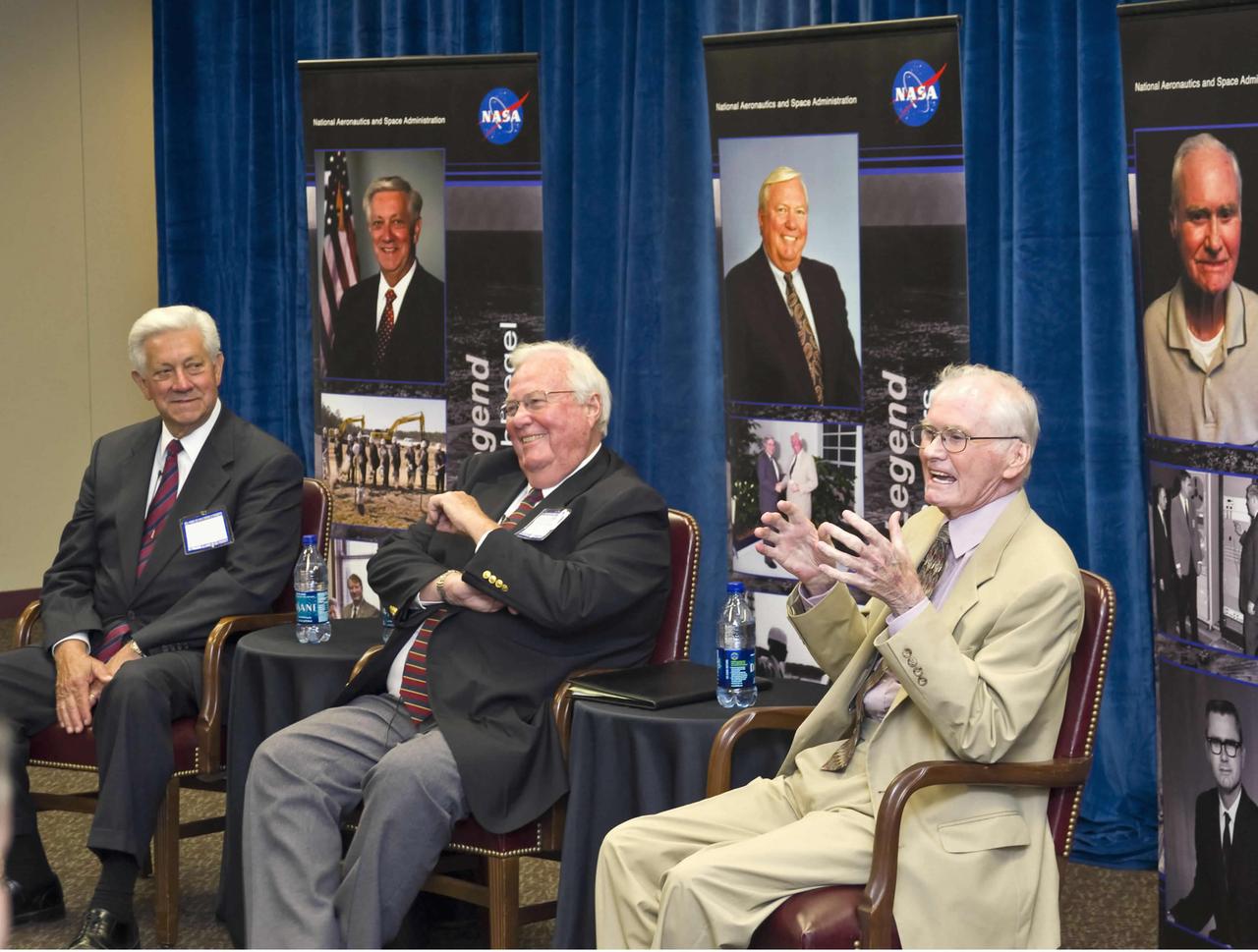
Current and former leaders discuss the growth of NASA's John C. Stennis Space Center during a Legends Lecture Series onsite on April 5. Stennis launched the Legends Lecture Series last November as part of a yearlong celebration of its 50th anniversary. The April 5 session focused on growth of Stennis into a unique federal city during the 1970s and the establishment of NASA's Earth Resources Laboratory at the site. Presenters at the April 5 event included (l to r): George Schloegel, mayor of Gulfport; Jack Rogers, former director of NASA Center Operations at Stennis; and Wayne Mooneyhan, former director of NASA's Earth Resources Laboratory at Stennis.
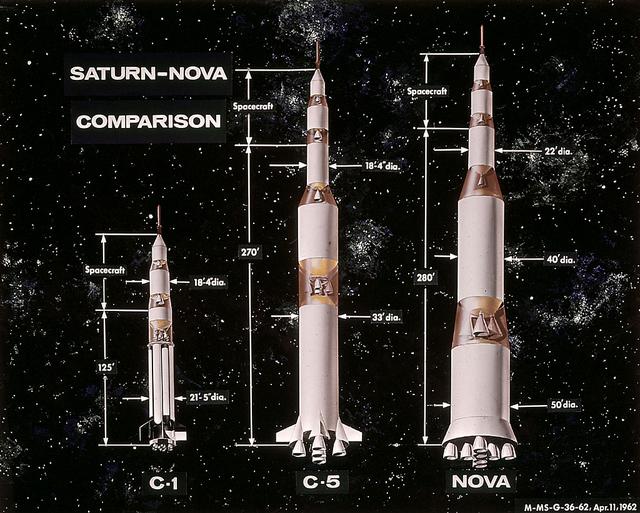
In this 1962 artist's concept , a proposed Nova rocket, shown at right, is compared to a Saturn C-1, left, and a Saturn C-5, center. The Marshall Space Flight Center directed studies of Nova configuration from 1960 to 1962 as a means of achieving a marned lunar landing with a direct flight to the Moon. Various configurations of the vehicle were examined, the largest being a five-stage vehicle using eight F-1 engines in the first stage. Although the program was effectively cancelled in 1962 when NASA planners selected the lunar-orbital rendezvous mode, the proposed F-1 engine was eventually used to propel the first stage of the Saturn V launch vehicle in the Apollo Program.
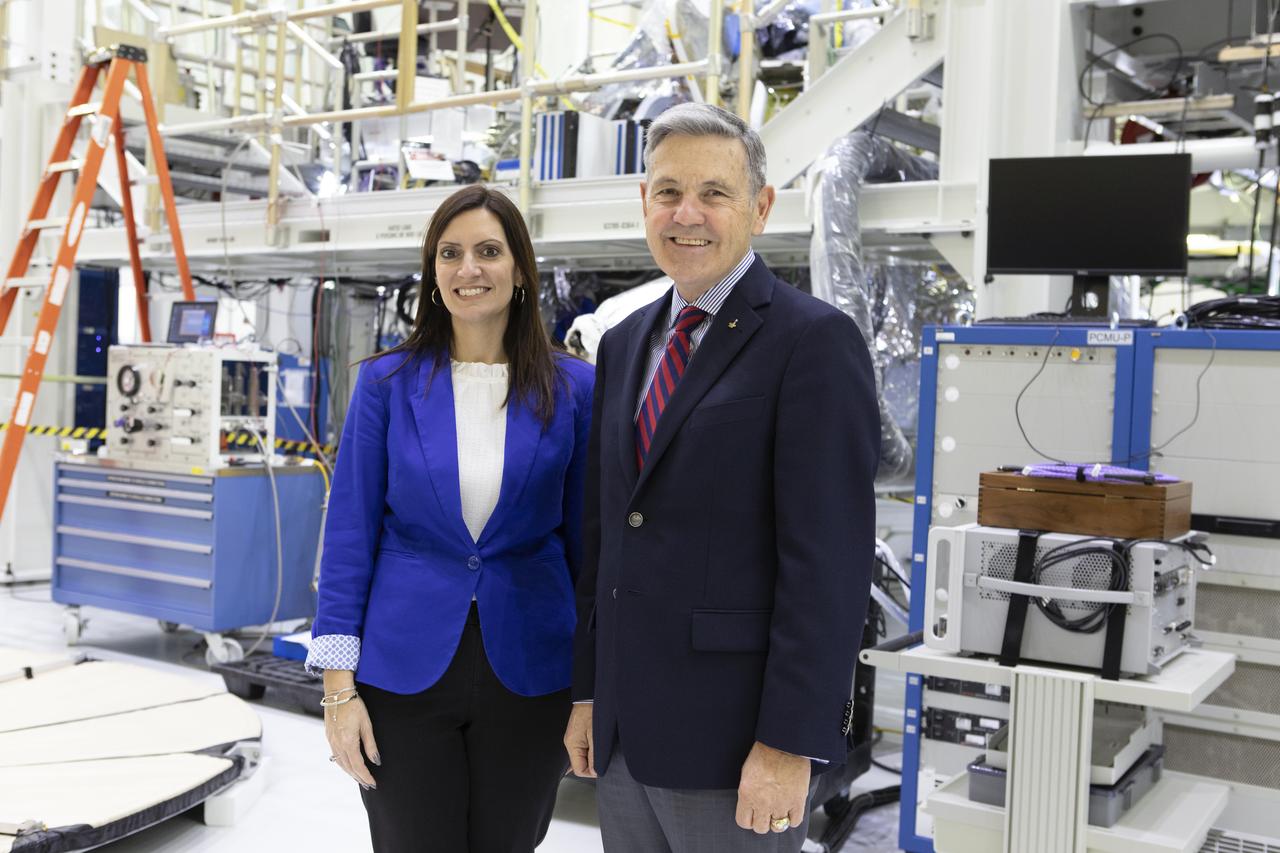
Florida Lt. Governor Jeanette Nunez and Kennedy Space Center Director Bob Cabana are photographed inside the Florida spaceport’s Neil Armstrong Operations and Checkout (O&C) Building high bay on April 5, 2019. During her tour of the O&C, Nunez was shown NASA’s Orion spacecraft, which will be flown on the agency’s Exploration Mission-1 (EM-1). Orion will launch atop the Space Launch System rocket from Kennedy’s Launch Complex 39B. This uncrewed mission will provide the foundation for human deep space exploration and pave the way for the crewed EM-2 mission.