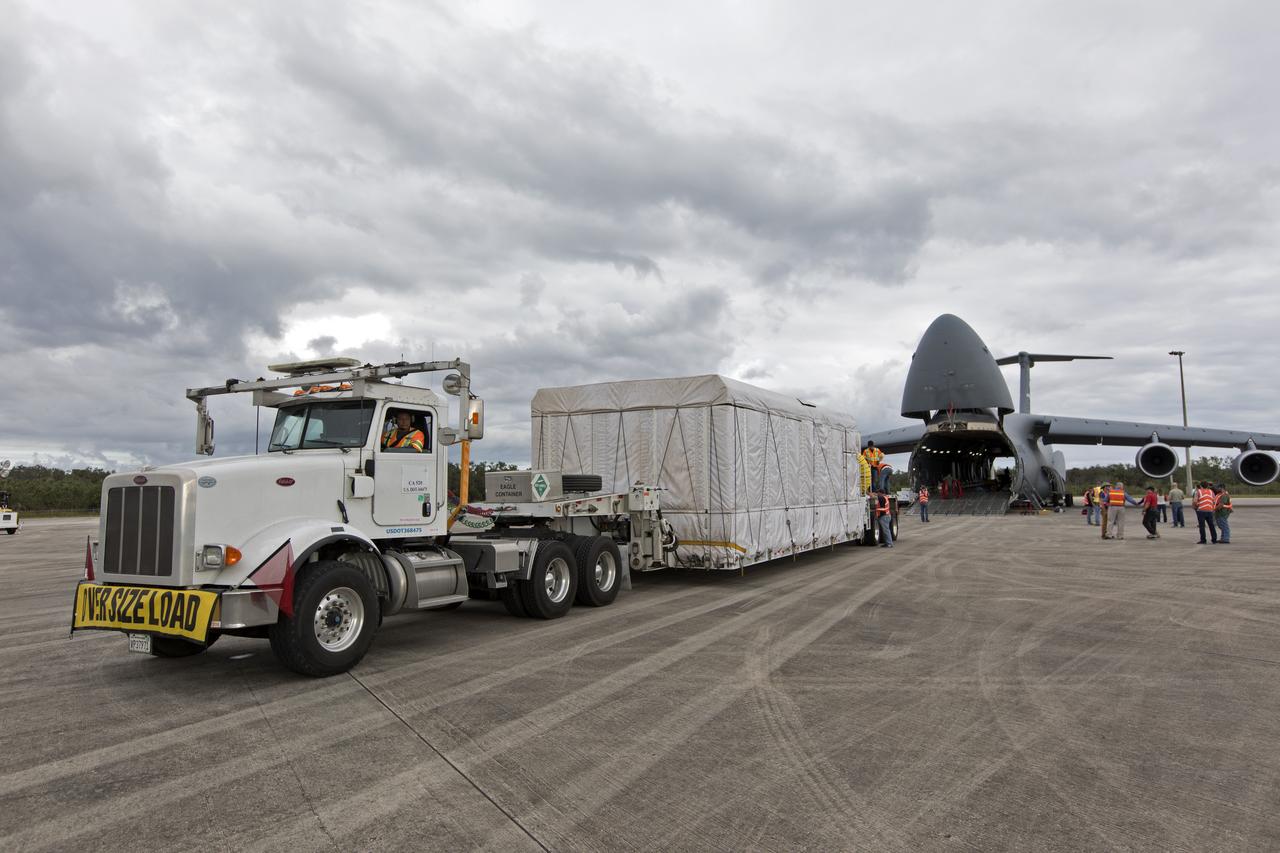
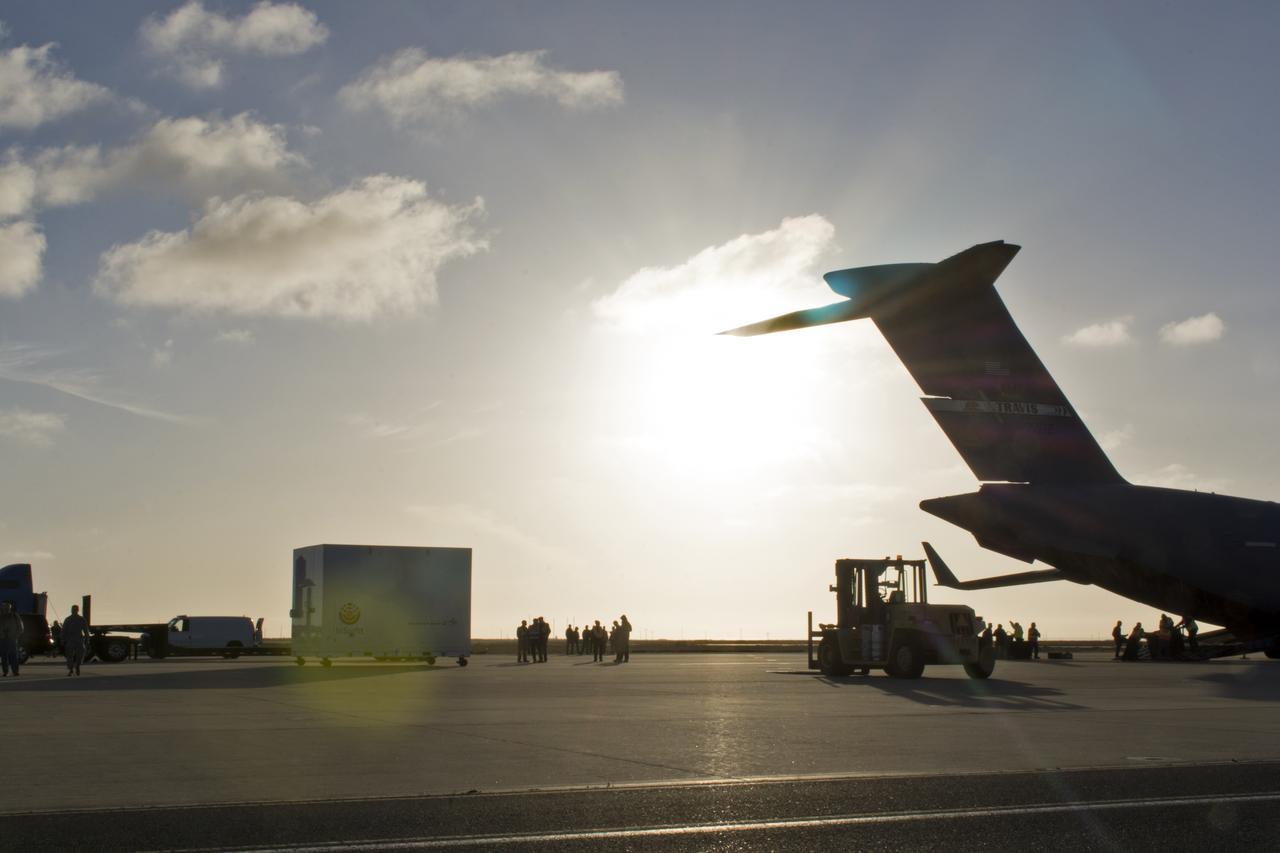
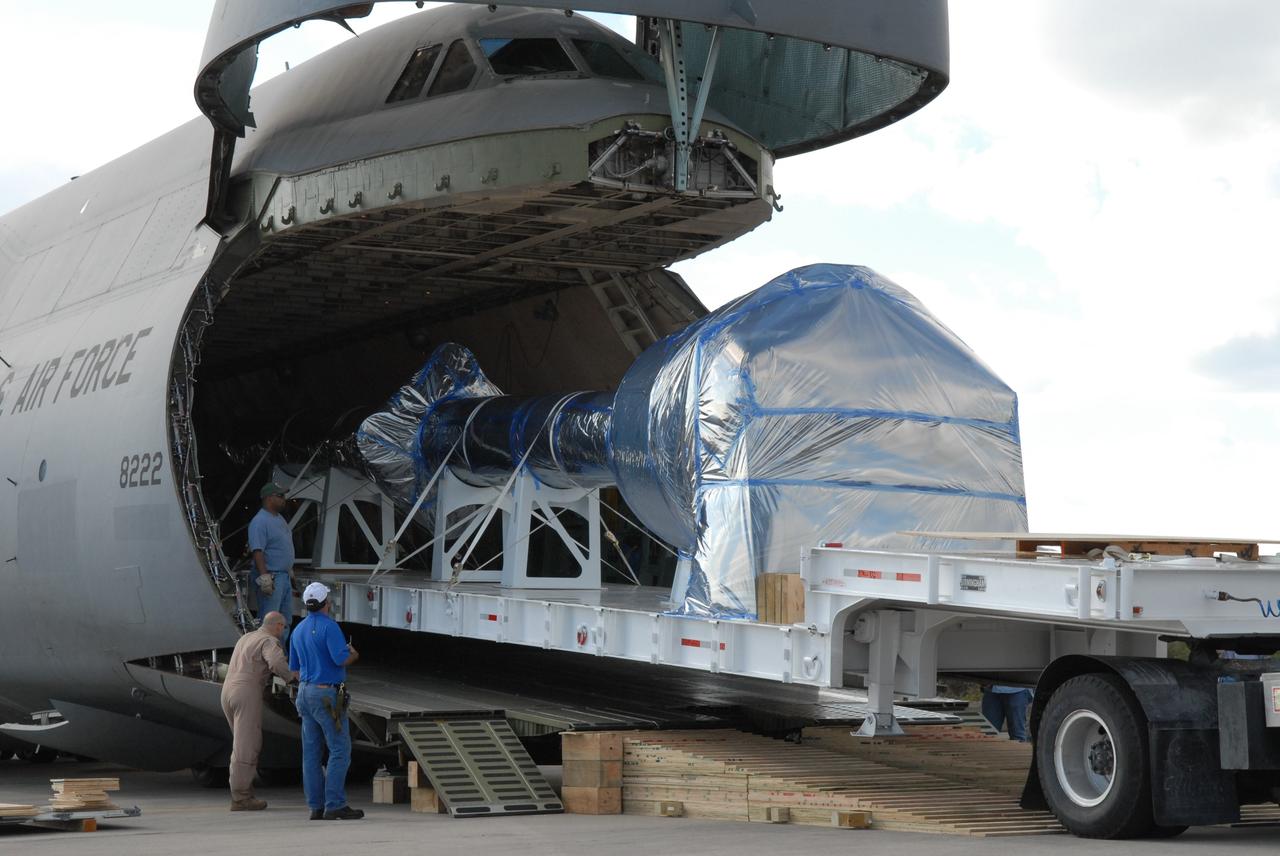
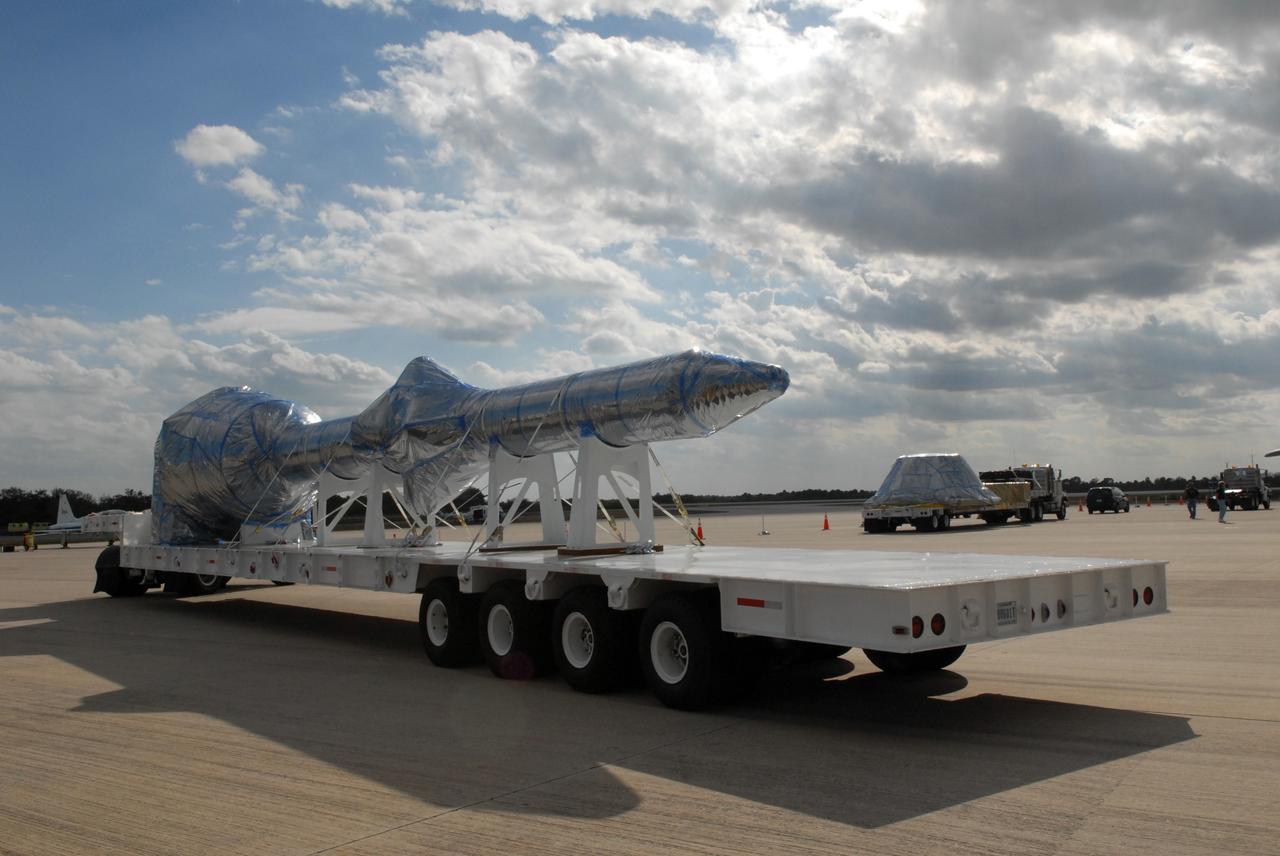
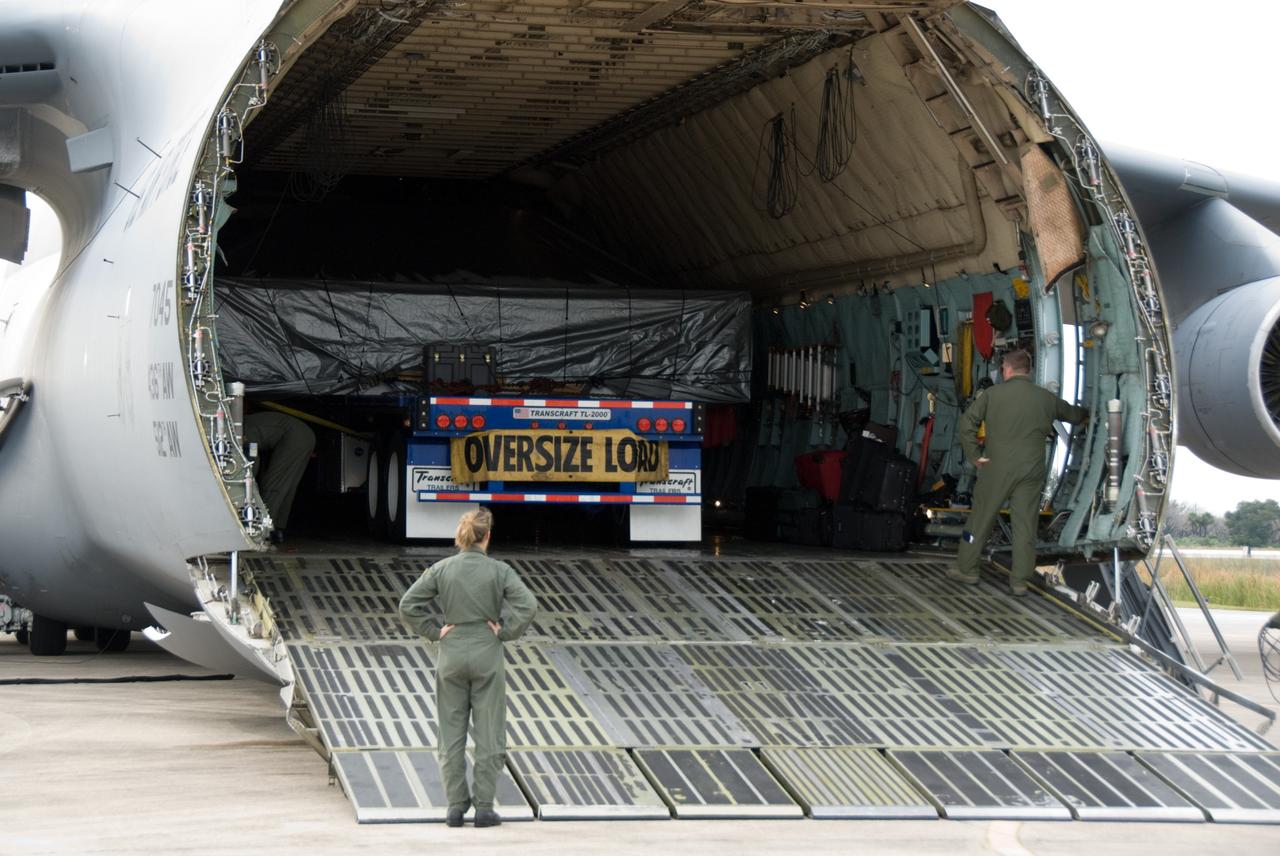
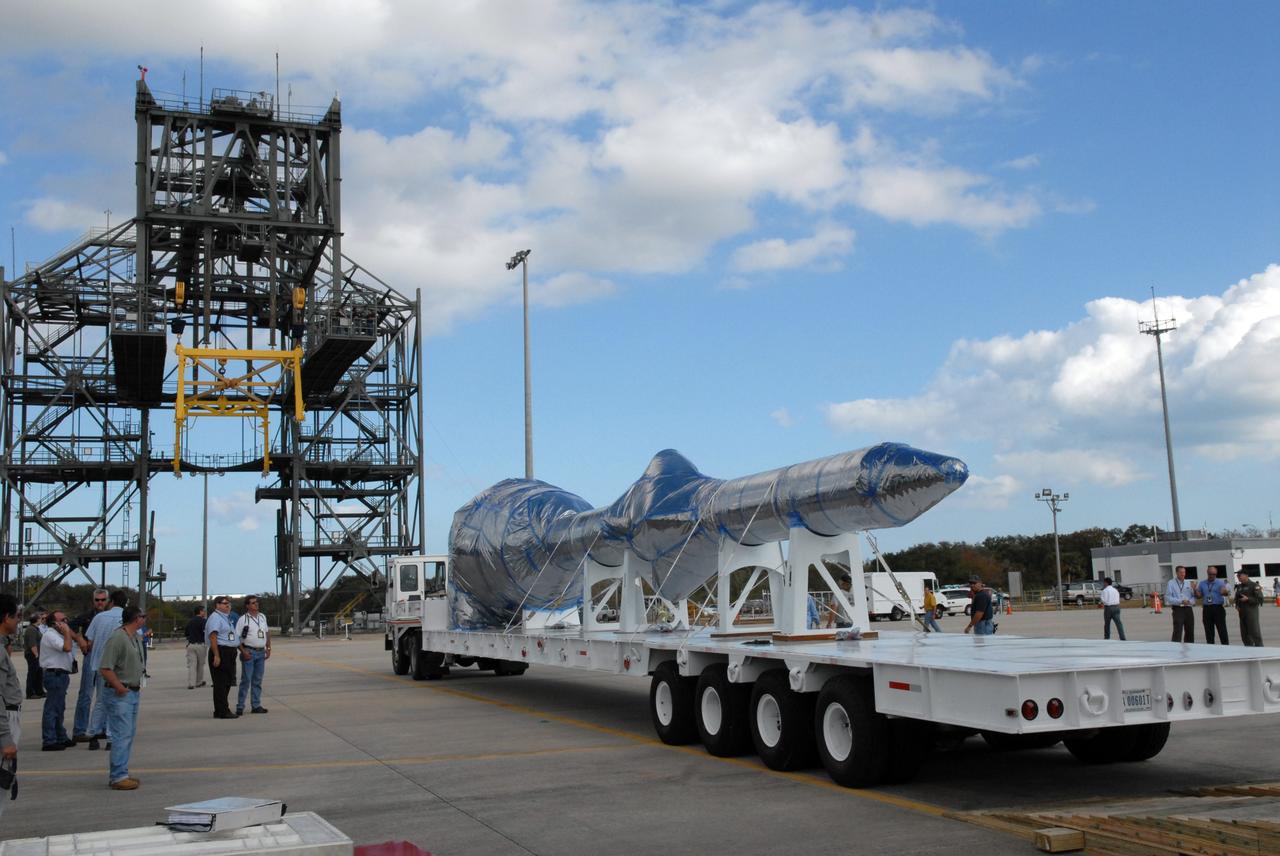
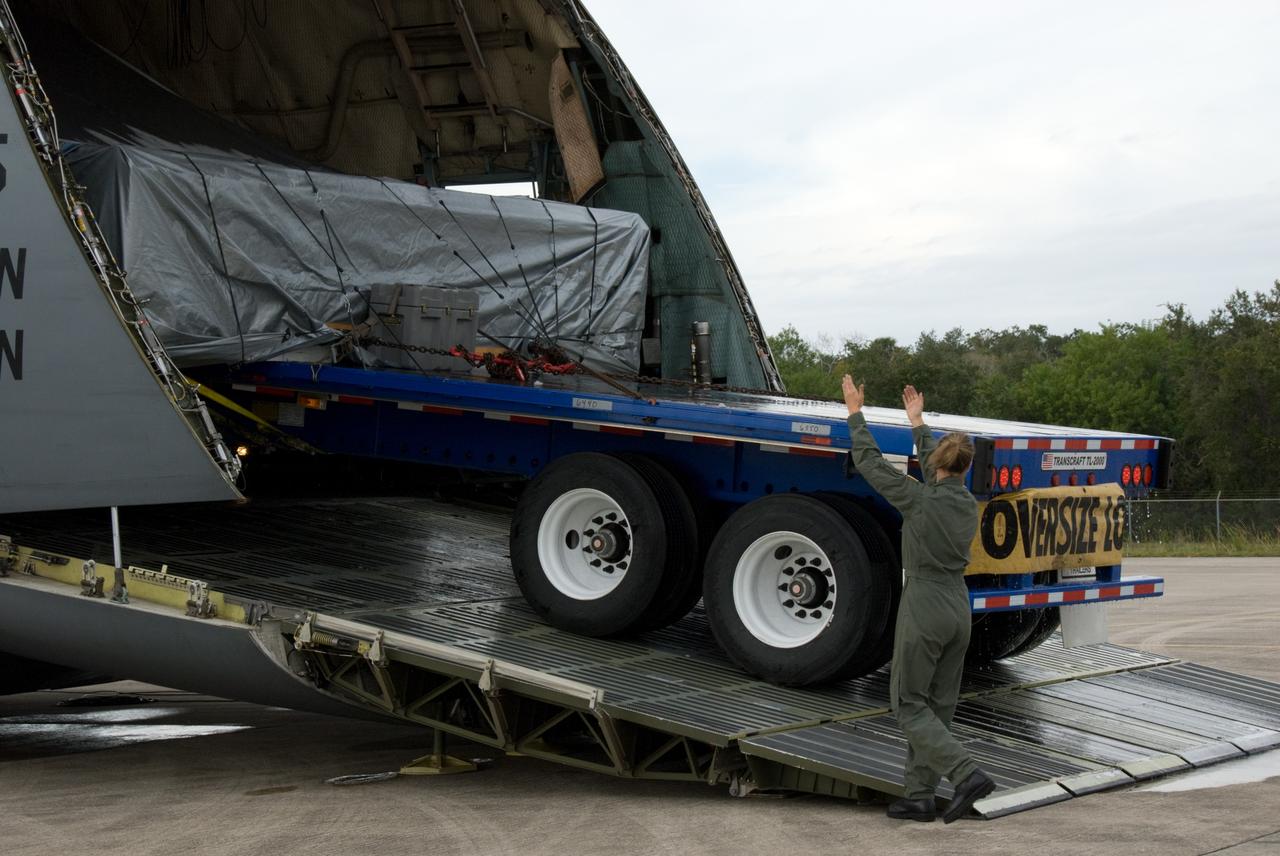
NOAA's Geostationary Operation Environmental Satellite-S (GOES-S) has been offloaded from a C-5 transport aircraft and secured onto the flatbed of a heavy-lift truck at the Shuttle Landing Facility at NASA's Kennedy Space Center in Florida. The satellite will be transported to the Astrotech Space Operations facility in Titusville, Florida to prepare it for launch. GOES-S is the second in a series of four advanced geostationary weather satellites. The GOES-R series - consisting of the GOES-R, GOES-S, GOES-T and GOES-U spacecraft - will significantly improve the detection and observation of environmental phenomena that directly affect public safety, protection of property and the nation's economic health and prosperity. GOES-S is slated to launch March 1, 2018 aboard a United Launch Alliance Atlas V rocket from Cape Canaveral Air Force Station in Florida.
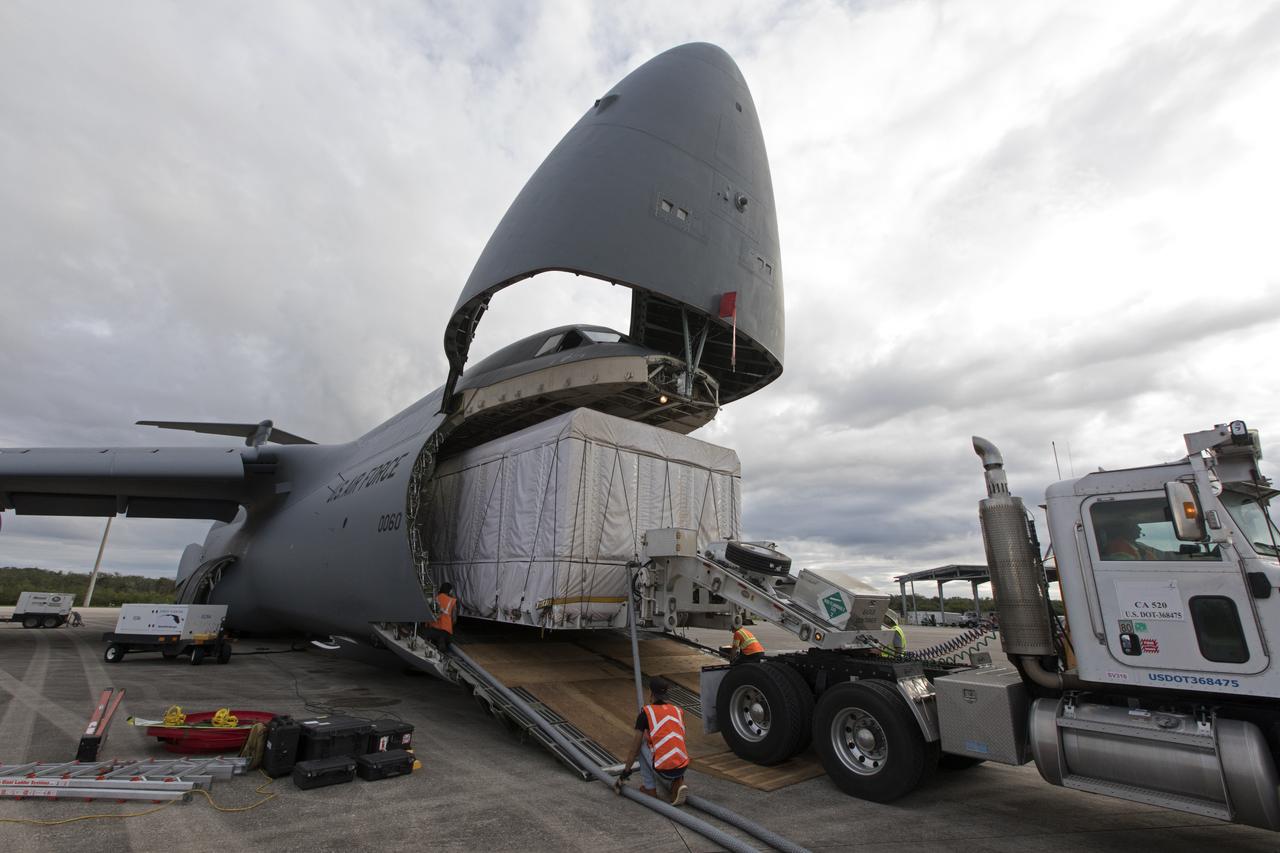
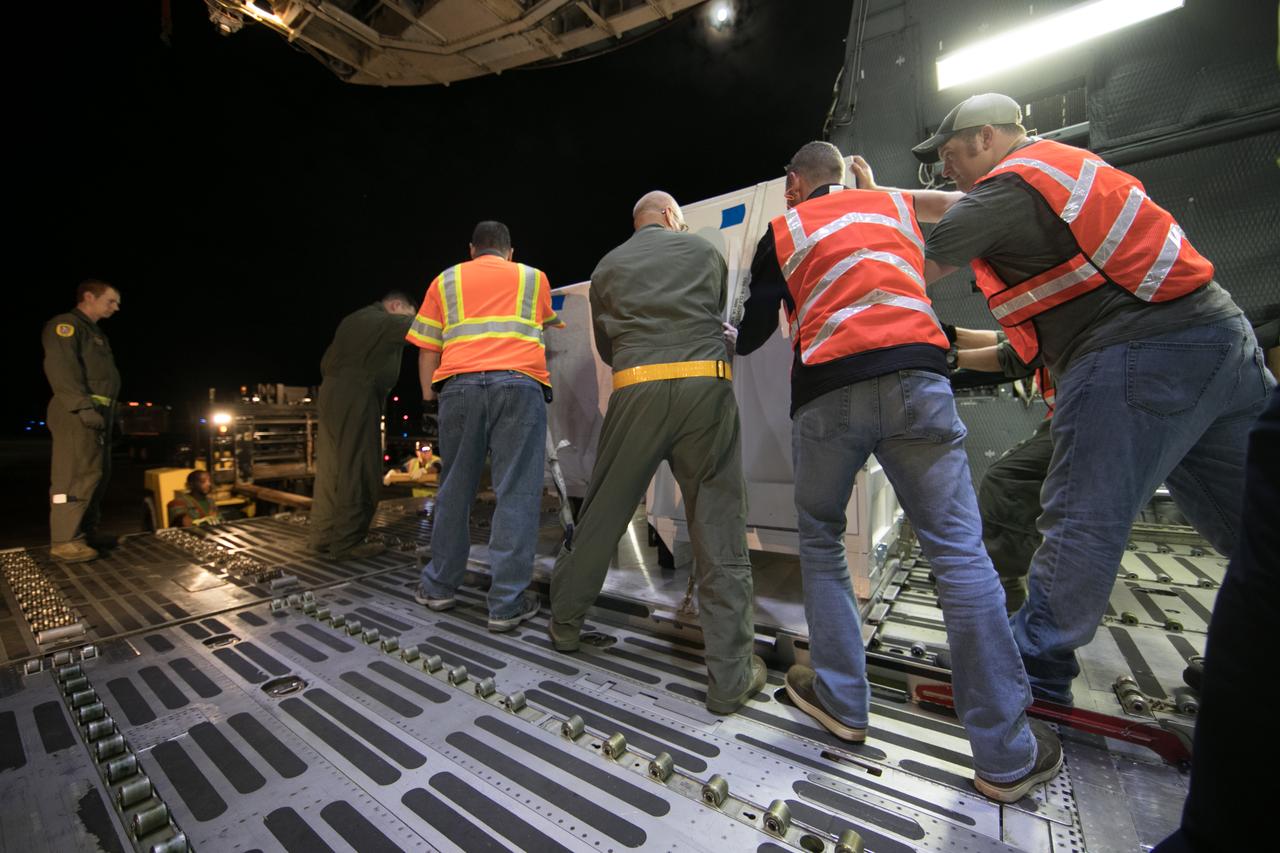
NOAA's Geostationary Operation Environmental Satellite-S (GOES-S) is being offloaded from a C-5 transport aircraft at the Shuttle Landing Facility at NASA's Kennedy Space Center in Florida. The satellite will be transported to the Astrotech Space Operations facility in Titusville, Florida to prepare it for launch. GOES-S is the second in a series of four advanced geostationary weather satellites. The GOES-R series - consisting of the GOES-R, GOES-S, GOES-T and GOES-U spacecraft - will significantly improve the detection and observation of environmental phenomena that directly affect public safety, protection of property and the nation's economic health and prosperity. GOES-S is slated to launch March 1, 2018 aboard a United Launch Alliance Atlas V rocket from Cape Canaveral Air Force Station in Florida.
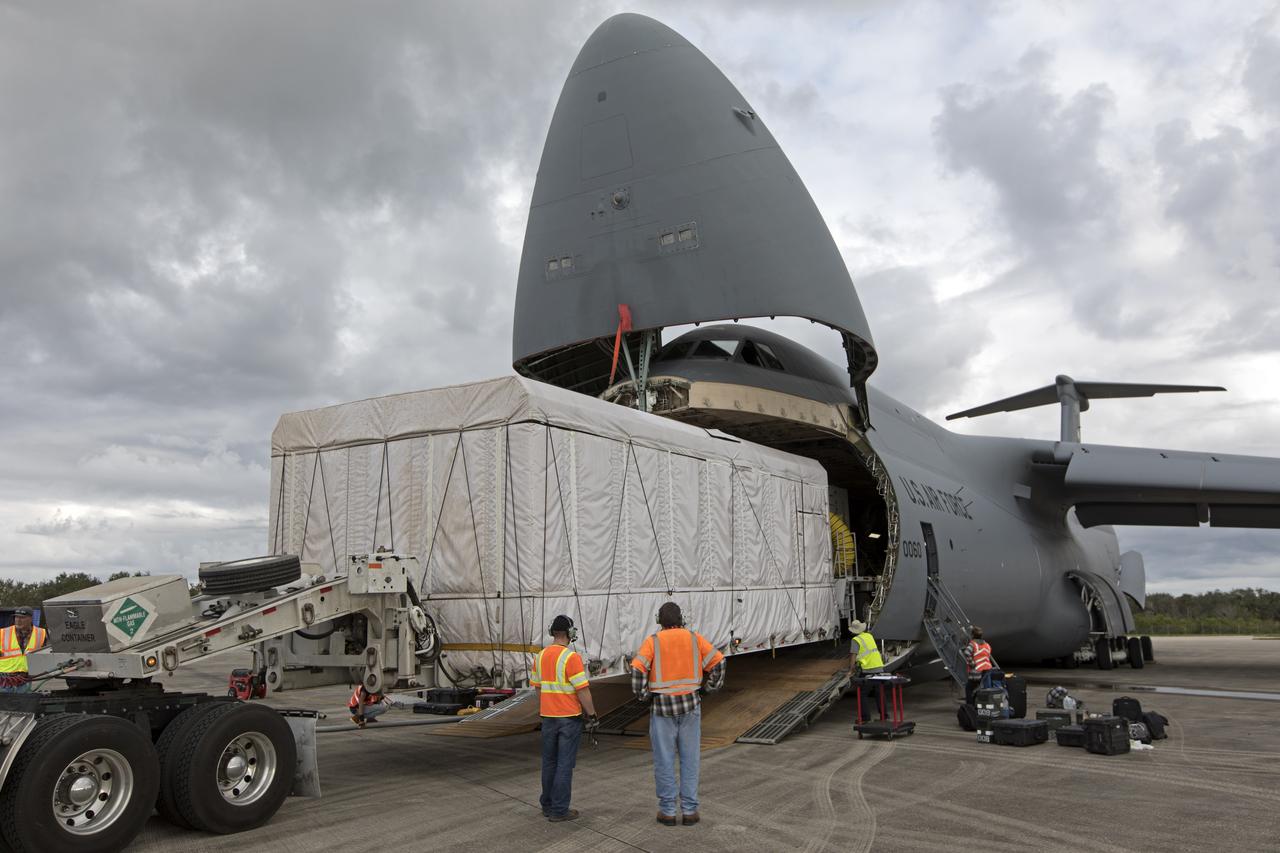
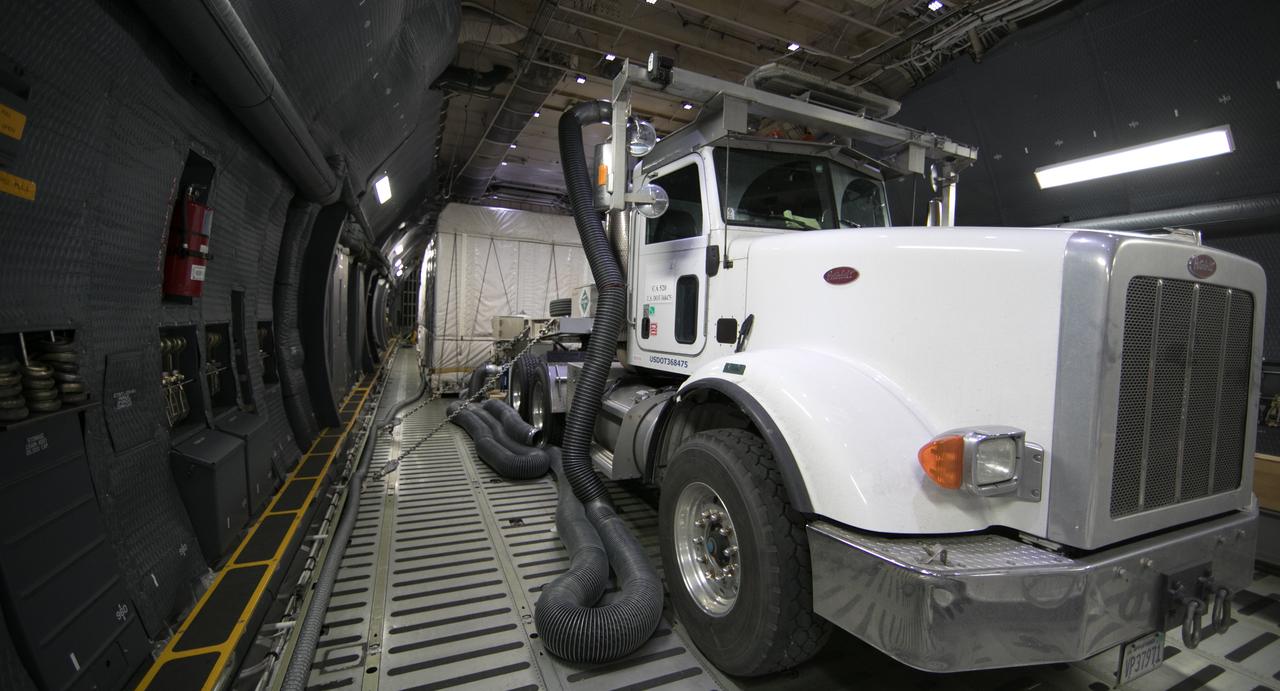
NOAA's Geostationary Operation Environmental Satellite-S (GOES-S) is being offloaded from a C-5 transport aircraft onto the flatbed of a heavy-lift truck at the Shuttle Landing Facility at NASA's Kennedy Space Center in Florida. The satellite will be transported to the Astrotech Space Operations facility in Titusville, Florida to prepare it for launch. GOES-S is the second in a series of four advanced geostationary weather satellites. The GOES-R series - consisting of the GOES-R, GOES-S, GOES-T and GOES-U spacecraft - will significantly improve the detection and observation of environmental phenomena that directly affect public safety, protection of property and the nation's economic health and prosperity. GOES-S is slated to launch March 1, 2018 aboard a United Launch Alliance Atlas V rocket from Cape Canaveral Air Force Station in Florida.
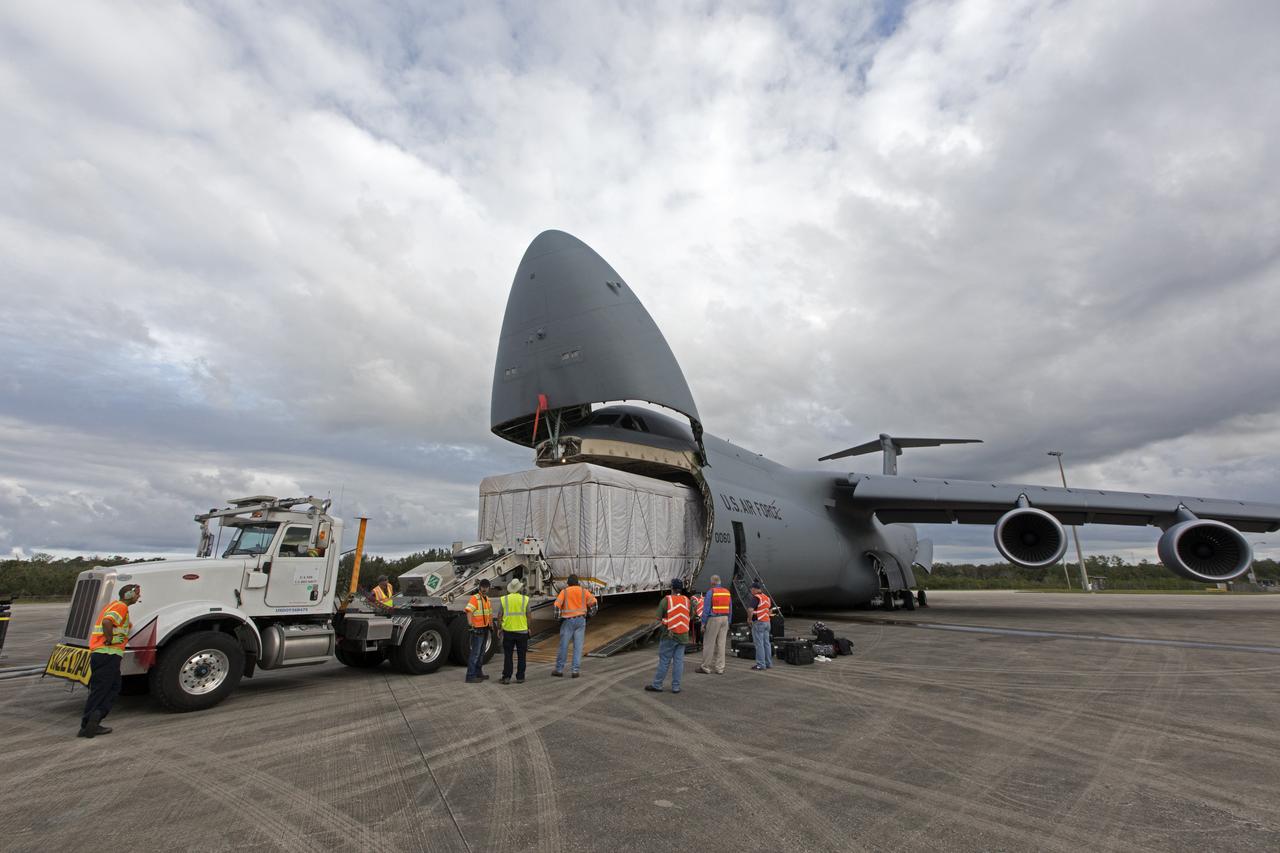
NOAA's Geostationary Operation Environmental Satellite-S (GOES-S) is being offloaded from a C-5 transport aircraft onto the flatbed of a heavy-lift truck at the Shuttle Landing Facility at NASA's Kennedy Space Center in Florida. The satellite will be transported to the Astrotech Space Operations facility in Titusville, Florida to prepare it for launch. GOES-S is the second in a series of four advanced geostationary weather satellites. The GOES-R series - consisting of the GOES-R, GOES-S, GOES-T and GOES-U spacecraft - will significantly improve the detection and observation of environmental phenomena that directly affect public safety, protection of property and the nation's economic health and prosperity. GOES-S is slated to launch March 1, 2018 aboard a United Launch Alliance Atlas V rocket from Cape Canaveral Air Force Station in Florida.
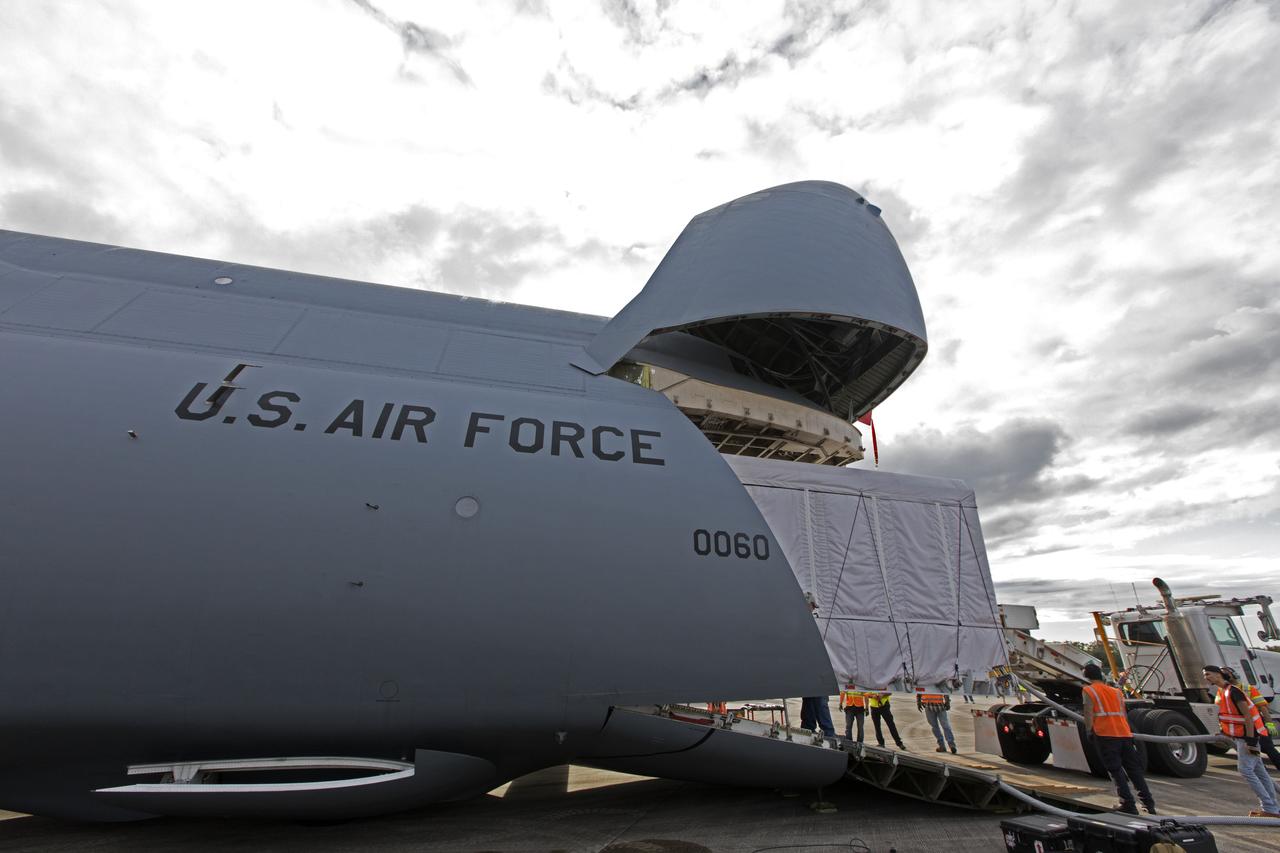
NOAA's Geostationary Operation Environmental Satellite-S (GOES-S) is being offloaded from a C-5 transport aircraft at the Shuttle Landing Facility at NASA's Kennedy Space Center in Florida. The satellite will be transported to the Astrotech Space Operations facility in Titusville, Florida to prepare it for launch. GOES-S is the second in a series of four advanced geostationary weather satellites. The GOES-R series - consisting of the GOES-R, GOES-S, GOES-T and GOES-U spacecraft - will significantly improve the detection and observation of environmental phenomena that directly affect public safety, protection of property and the nation's economic health and prosperity. GOES-S is slated to launch March 1, 2018 aboard a United Launch Alliance Atlas V rocket from Cape Canaveral Air Force Station in Florida.
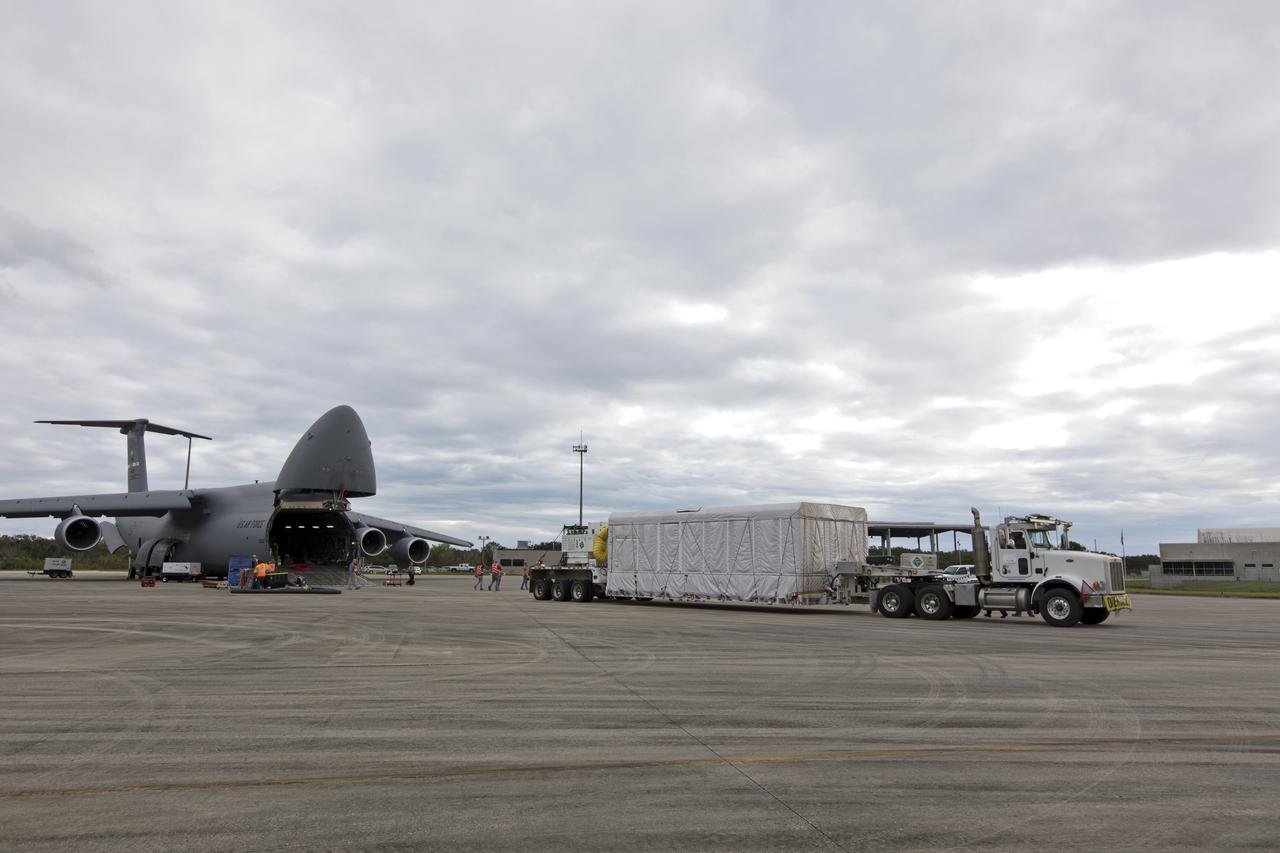
NOAA's Geostationary Operation Environmental Satellite-S (GOES-S) has been offloaded from a C-5 transport aircraft and secured onto the flatbed of a heavy-lift truck at the Shuttle Landing Facility at NASA's Kennedy Space Center in Florida. The satellite will be transported to the Astrotech Space Operations facility in Titusville, Florida to prepare it for launch. GOES-S is the second in a series of four advanced geostationary weather satellites. The GOES-R series - consisting of the GOES-R, GOES-S, GOES-T and GOES-U spacecraft - will significantly improve the detection and observation of environmental phenomena that directly affect public safety, protection of property and the nation's economic health and prosperity. GOES-S is slated to launch March 1, 2018 aboard a United Launch Alliance Atlas V rocket from Cape Canaveral Air Force Station in Florida.
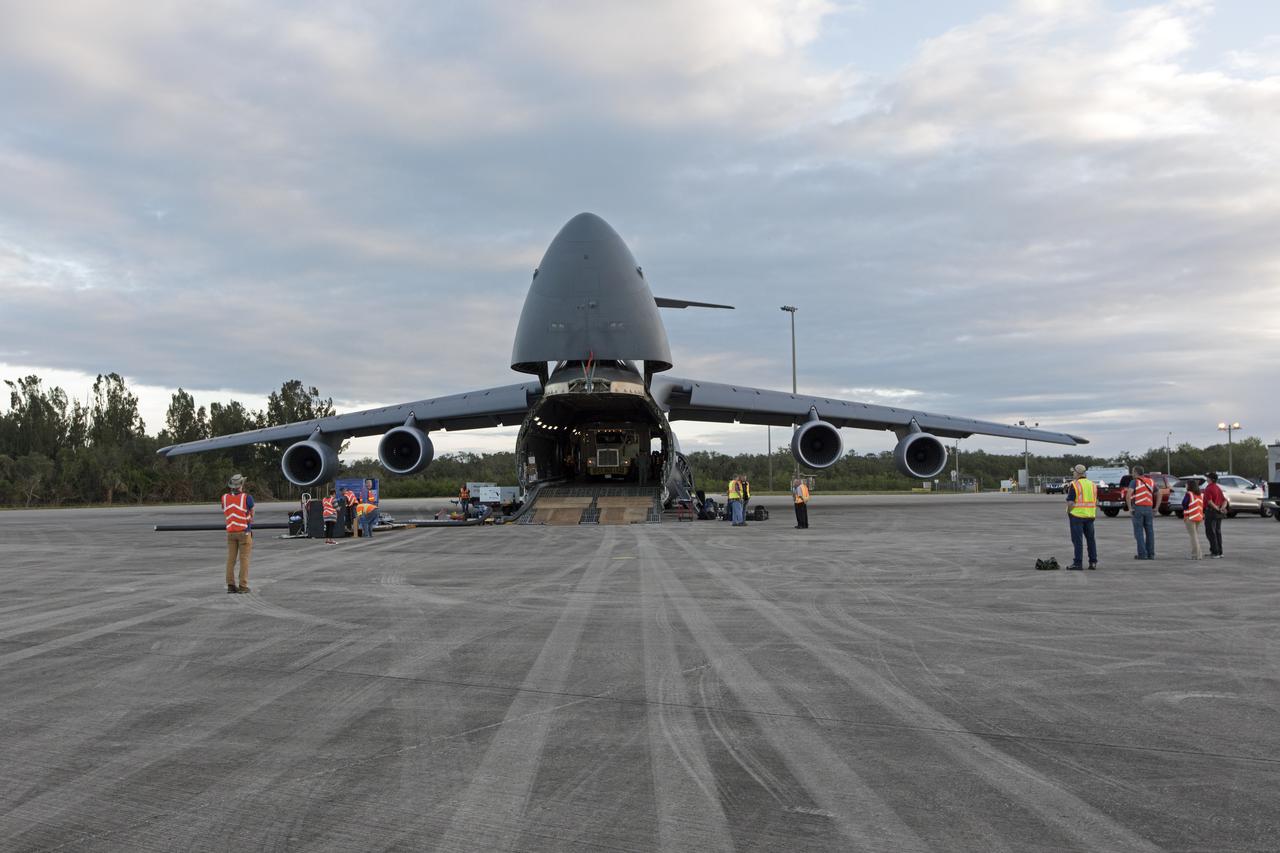
NOAA's Geostationary Operation Environmental Satellite-S (GOES-S) is being offloaded from a C-5 transport aircraft at the Shuttle Landing Facility at NASA's Kennedy Space Center in Florida. The satellite will be transported to the Astrotech Space Operations facility in Titusville, Florida to prepare it for launch. GOES-S is the second in a series of four advanced geostationary weather satellites. The GOES-R series - consisting of the GOES-R, GOES-S, GOES-T and GOES-U spacecraft - will significantly improve the detection and observation of environmental phenomena that directly affect public safety, protection of property and the nation's economic health and prosperity. GOES-S is slated to launch March 1, 2018 aboard a United Launch Alliance Atlas V rocket from Cape Canaveral Air Force Station in Florida.
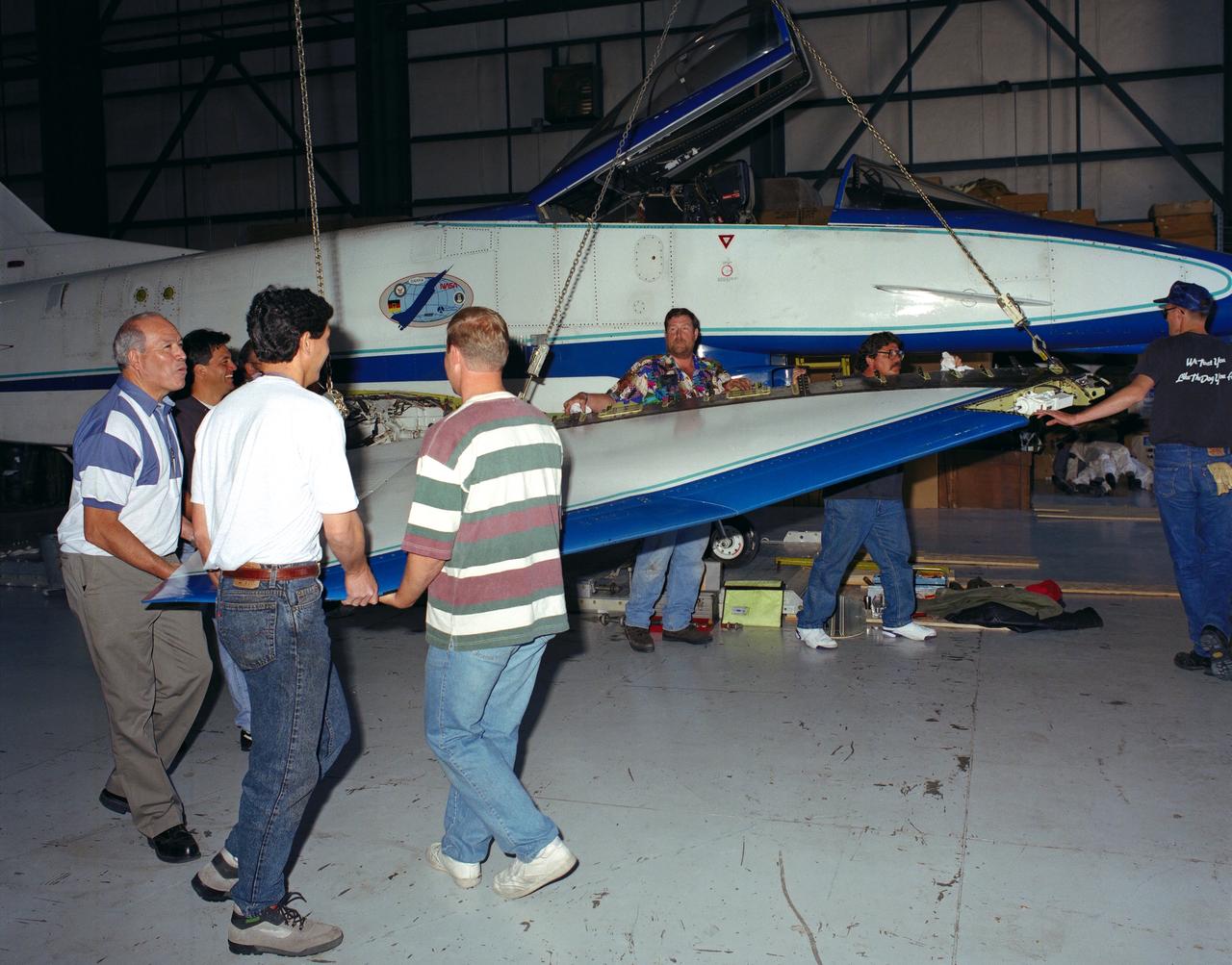
U.S. and German personnel of the X-31 Enhanced Fighter Maneuverability Technology Demonstrator aircraft program removing the right wing of the aircraft, which was ferried from Edwards Air Force Base, California, to Europe on May 22, 1995 aboard an Air Force Reserve C-5 transport. The X-31, based at the NASA Dryden Flight Research Center was ferried to Europe and flown in the Paris Air Show in June. The wing of the X-31 was removed on May 18, 1995, to allow the aircraft to fit inside the C-5 fuselage. Officials of the X-31 project used Manching, Germany, as a staging base to prepare the aircraft for the flight demonstration. At the air show, the X-31 demonstrated the value of using thrust vectoring (directing engine exhaust flow) coupled with advanced flight control systems to provide controlled flight at very high angles of attack. The aircraft arrived back at Edwards in a Air Force Reserve C-5 on June 25, 1995 and off loaded at Dryden June 27. The X-31 aircraft was developed jointly by Rockwell International's North American Aircraft Division (now part of Boeing) and Daimler-Benz Aerospace (formerly Messerschmitt-Bolkow-Blohm), under sponsorship by the U.S. Department of Defense and the German Federal Ministry of Defense.
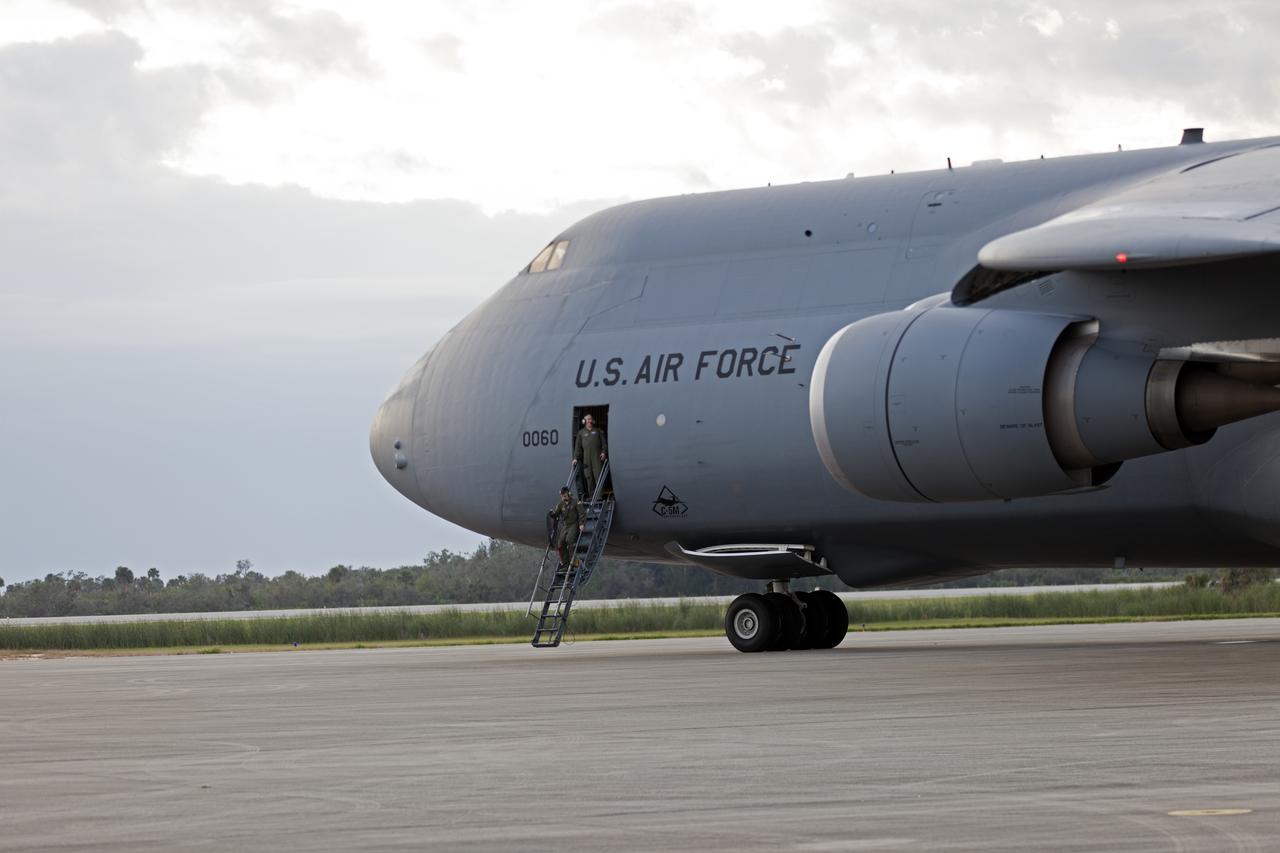
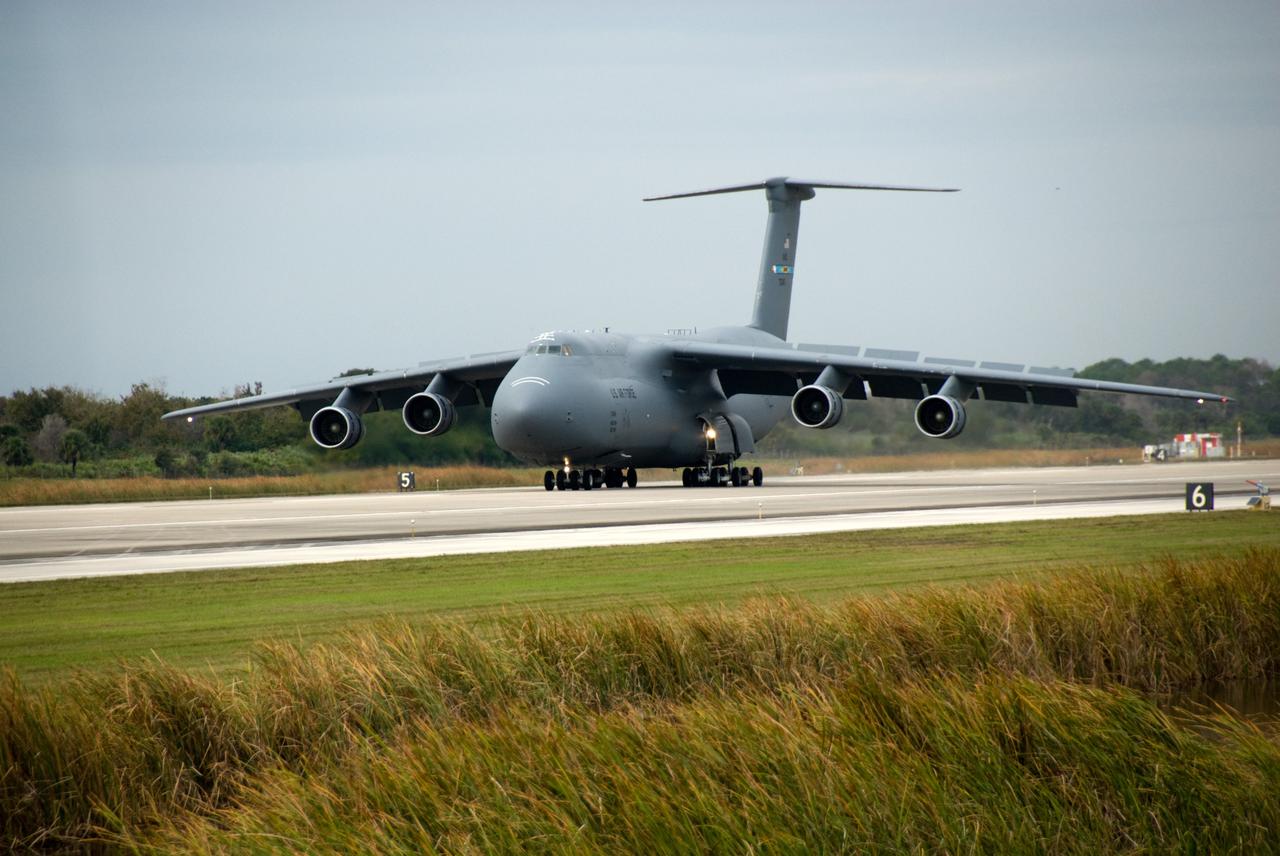
A C-5 transport aircraft arrives at the Shuttle Landing Facility at NASA's Kennedy Space Center in Florida, carrying the Geostationary Operation Environmental Satellite-S (GOES-S). The satellite will be offloaded and transported to the Astrotech Space Operations facility in Titusville, Florida. GOES-S is the second in a series of four advanced geostationary weather satellites. The GOES-R series - consisting of the GOES-R, GOES-S, GOES-T and GOES-U spacecraft - will significantly improve the detection and observation of environmental phenomena that directly affect public safety, protection of property and the nation's economic health and prosperity. GOES-S is slated to launch March 1, 2018 aboard a United Launch Alliance Atlas V rocket from Cape Canaveral Air Force Station in Florida.
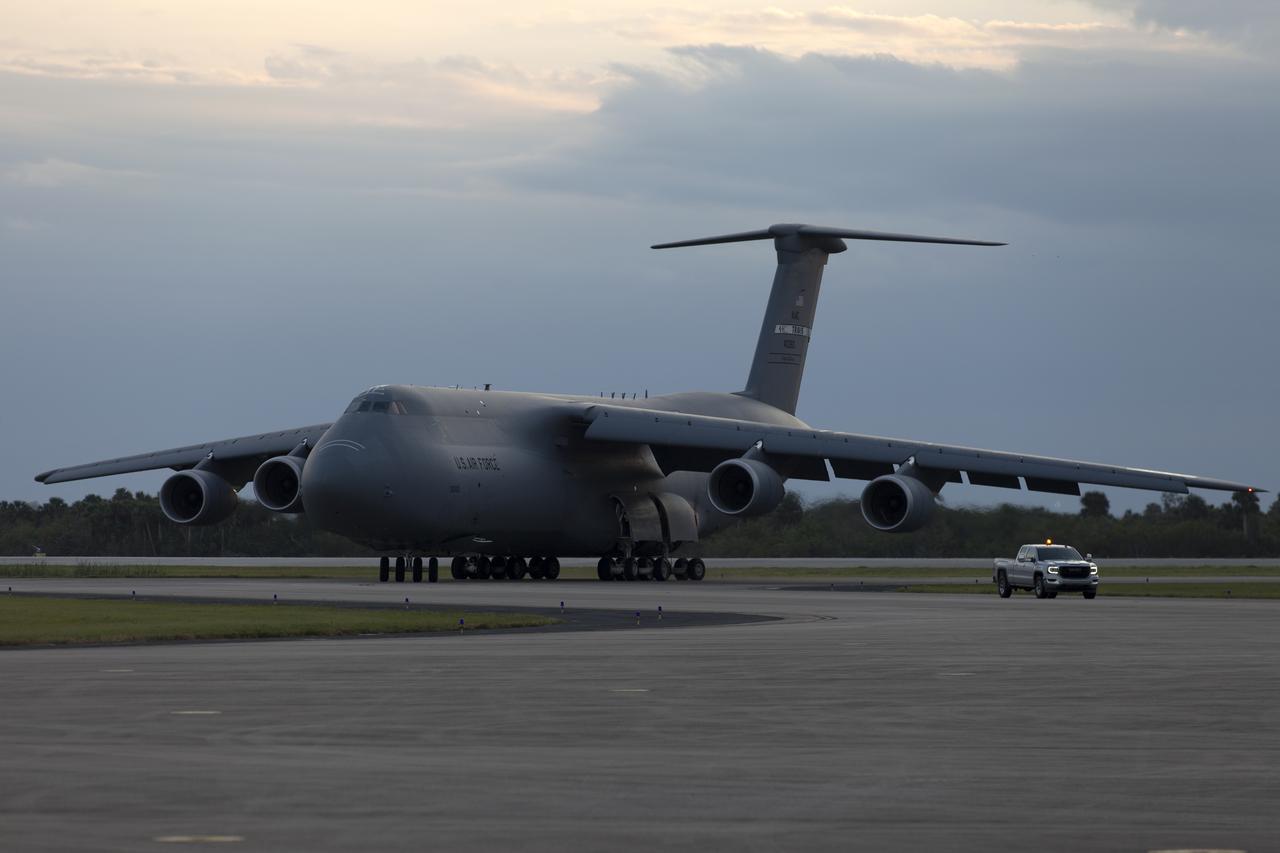
A C-5 transport aircraft arrives at the Shuttle Landing Facility at NASA's Kennedy Space Center in Florida, carrying the Geostationary Operation Environmental Satellite-S (GOES-S). The satellite will be offloaded and transported to the Astrotech Space Operations facility in Titusville, Florida. GOES-S is the second in a series of four advanced geostationary weather satellites. The GOES-R series - consisting of the GOES-R, GOES-S, GOES-T and GOES-U spacecraft - will significantly improve the detection and observation of environmental phenomena that directly affect public safety, protection of property and the nation's economic health and prosperity. GOES-S is slated to launch March 1, 2018 aboard a United Launch Alliance Atlas V rocket from Cape Canaveral Air Force Station in Florida.
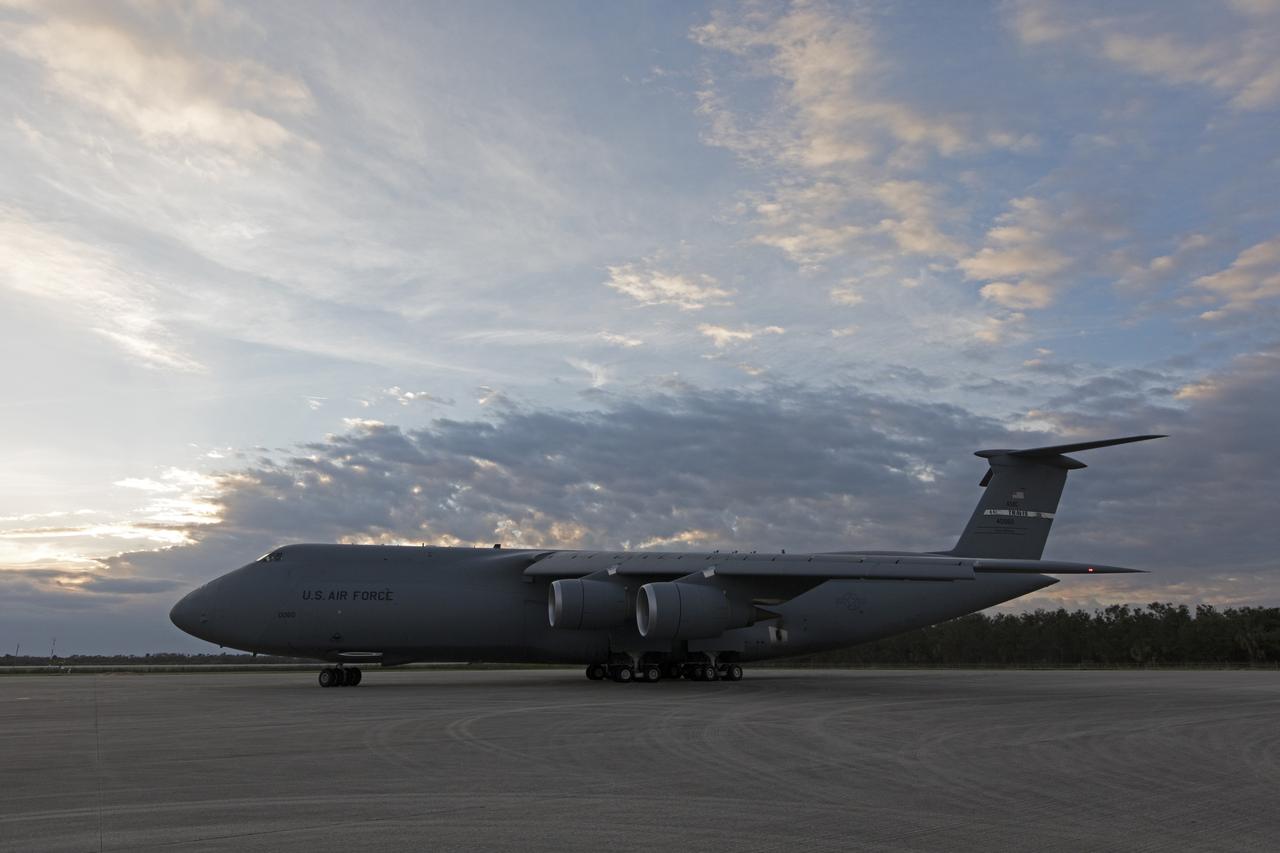
A C-5 transport aircraft arrives at the Shuttle Landing Facility at NASA's Kennedy Space Center in Florida, carrying the Geostationary Operation Environmental Satellite-S (GOES-S). The satellite will be offloaded and transported to the Astrotech Space Operations facility in Titusville, Florida. GOES-S is the second in a series of four advanced geostationary weather satellites. The GOES-R series - consisting of the GOES-R, GOES-S, GOES-T and GOES-U spacecraft - will significantly improve the detection and observation of environmental phenomena that directly affect public safety, protection of property and the nation's economic health and prosperity. GOES-S is slated to launch March 1, 2018 aboard a United Launch Alliance Atlas V rocket from Cape Canaveral Air Force Station in Florida.
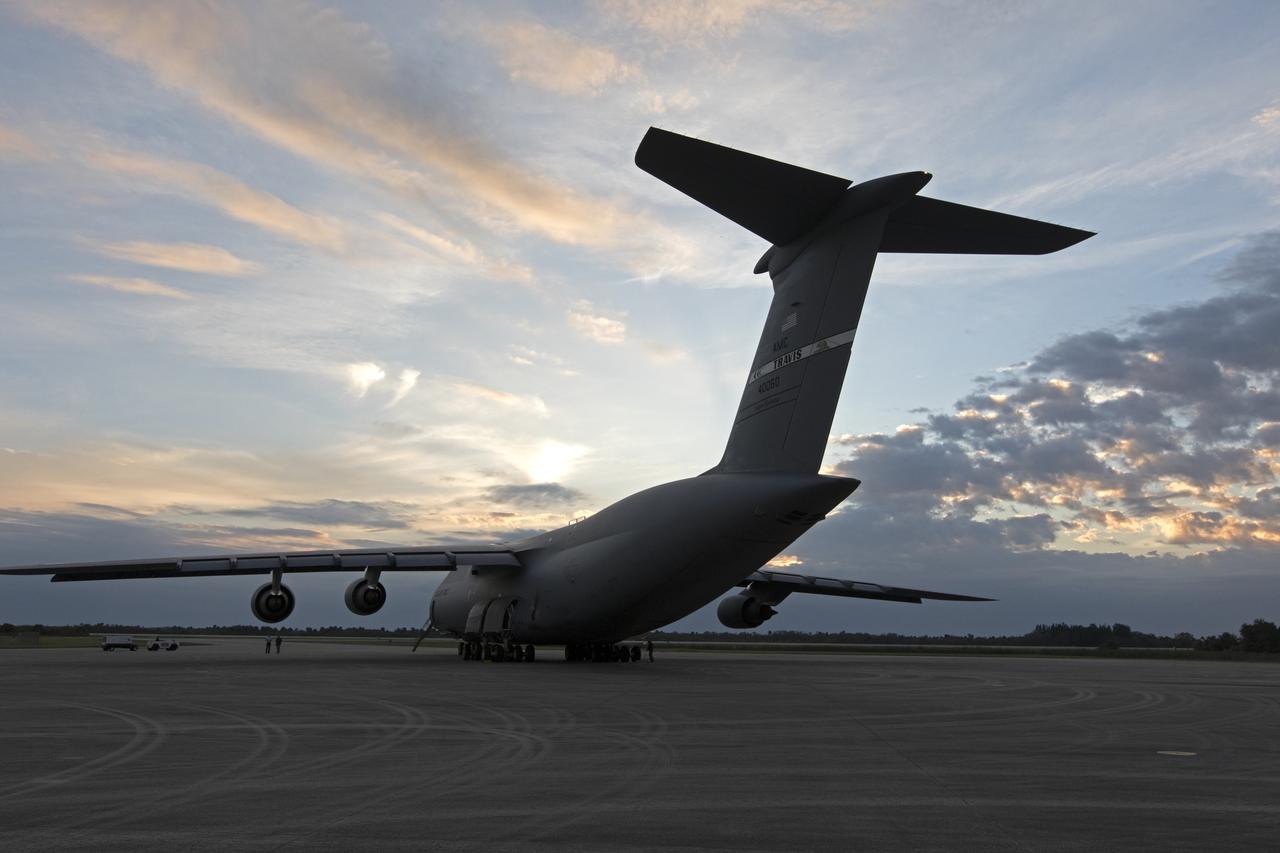
A C-5 transport aircraft arrives at the Shuttle Landing Facility at NASA's Kennedy Space Center in Florida, carrying the Geostationary Operation Environmental Satellite-S (GOES-S). The satellite will be offloaded and transported to the Astrotech Space Operations facility in Titusville, Florida. GOES-S is the second in a series of four advanced geostationary weather satellites. The GOES-R series - consisting of the GOES-R, GOES-S, GOES-T and GOES-U spacecraft - will significantly improve the detection and observation of environmental phenomena that directly affect public safety, protection of property and the nation's economic health and prosperity. GOES-S is slated to launch March 1, 2018 aboard a United Launch Alliance Atlas V rocket from Cape Canaveral Air Force Station in Florida.
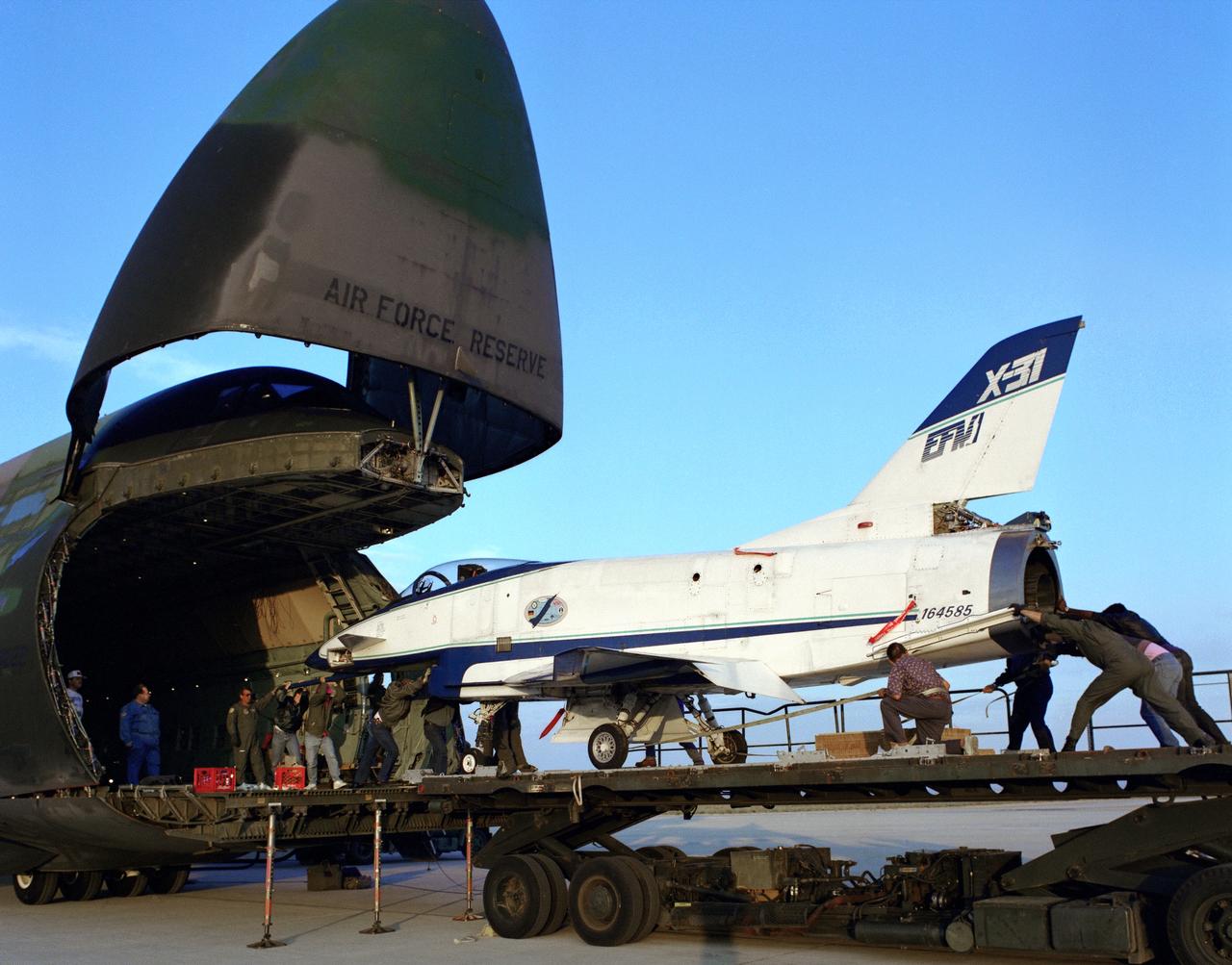
The X-31 Enhanced Fighter Maneuverability Technology Demonstrator Aircraft, based at the NASA Dryden Flight Research Center, Edwards, California, begins rolling aboard an Air Force Reserve C-5 transport which ferried it on May 22, 1995 to Europe where it was flown in the Paris Air Show in June 1995. To fit in the C-5 the right wing of the X-31 had to be removed. At the air show, the X-31 demonstrated the value of using thrust vectoring (directing engine exhaust flow) coupled with advanced flight control systems to provide controlled flight at very high angles of attack.
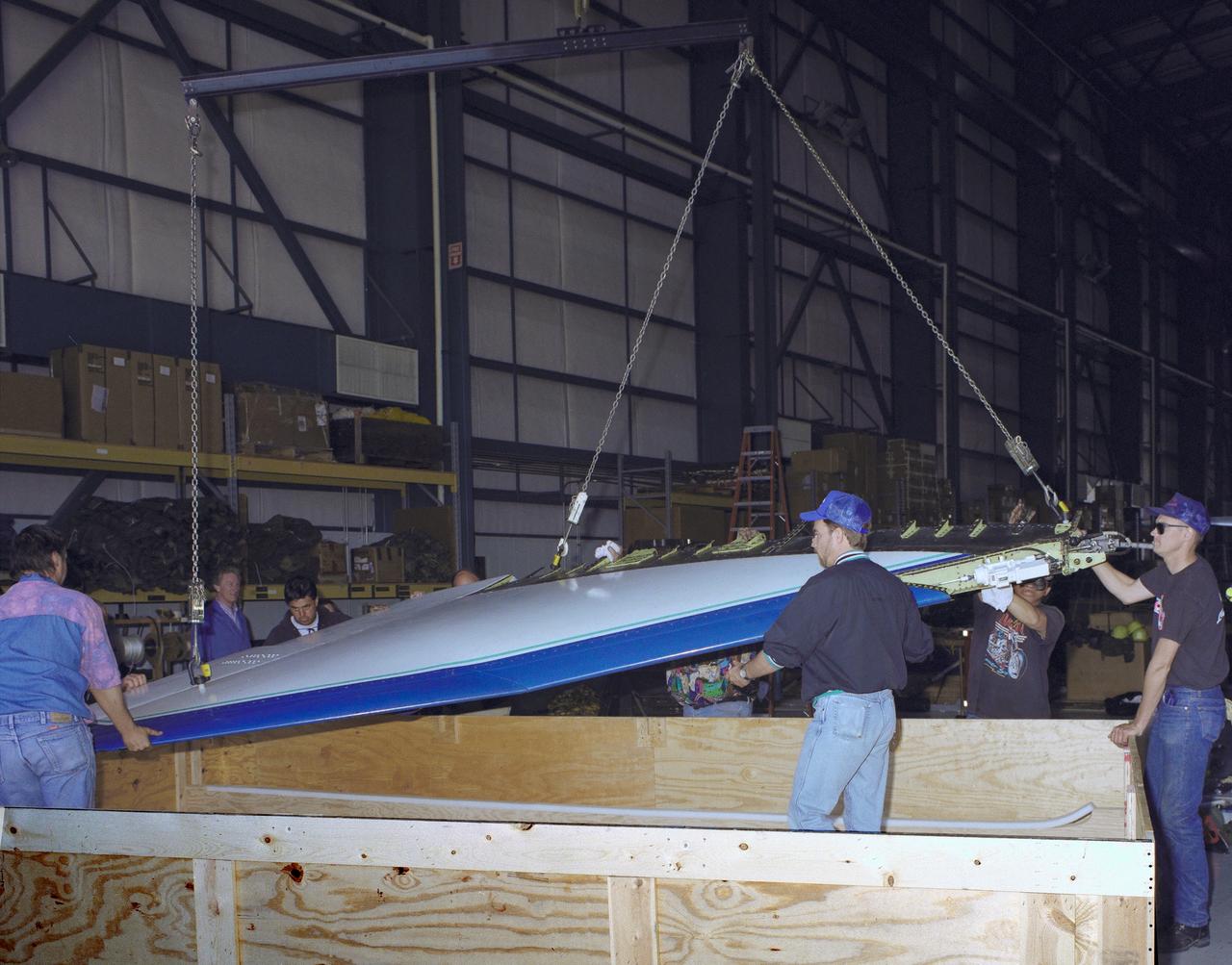
The right wing of the X-31 Enhanced Fighter Maneuverability Technology Demonstrator Aircraft is seen here being put into a shipping container May 18, 1995, at NASA's Dryden Flight Research Center, Edwards, California, by U.S. and German members of the program. To fit inside an Air Force Reserve C-5 transport, which was used to ferry the X-31 to Europe on May 22, 1995, the right wing had to be removed. Manching, Germany, was used as a staging base to prepare the aircraft for participation in the Paris Air Show. At the air show on June 11 through the 18th, the X-31 demonstrated the value of using thrust vectoring (directing engine exhaust flow) coupled with advanced flight control systems to provide controlled flight at very high angles of attack. The aircraft arrived back at Edwards in an Air Force Reserve C-5 on June 25, 1995, and off loaded at Dryden the 27th. The X-31 aircraft was developed jointly by Rockwell International's North American Aircraft Division (now part of Boeing) and Daimler-Benz Aerospace (formerly Messerschmitt-Bolkow-Blohm), under sponsorship by the U.S. Department of Defense and the German Federal Ministry of Defense.
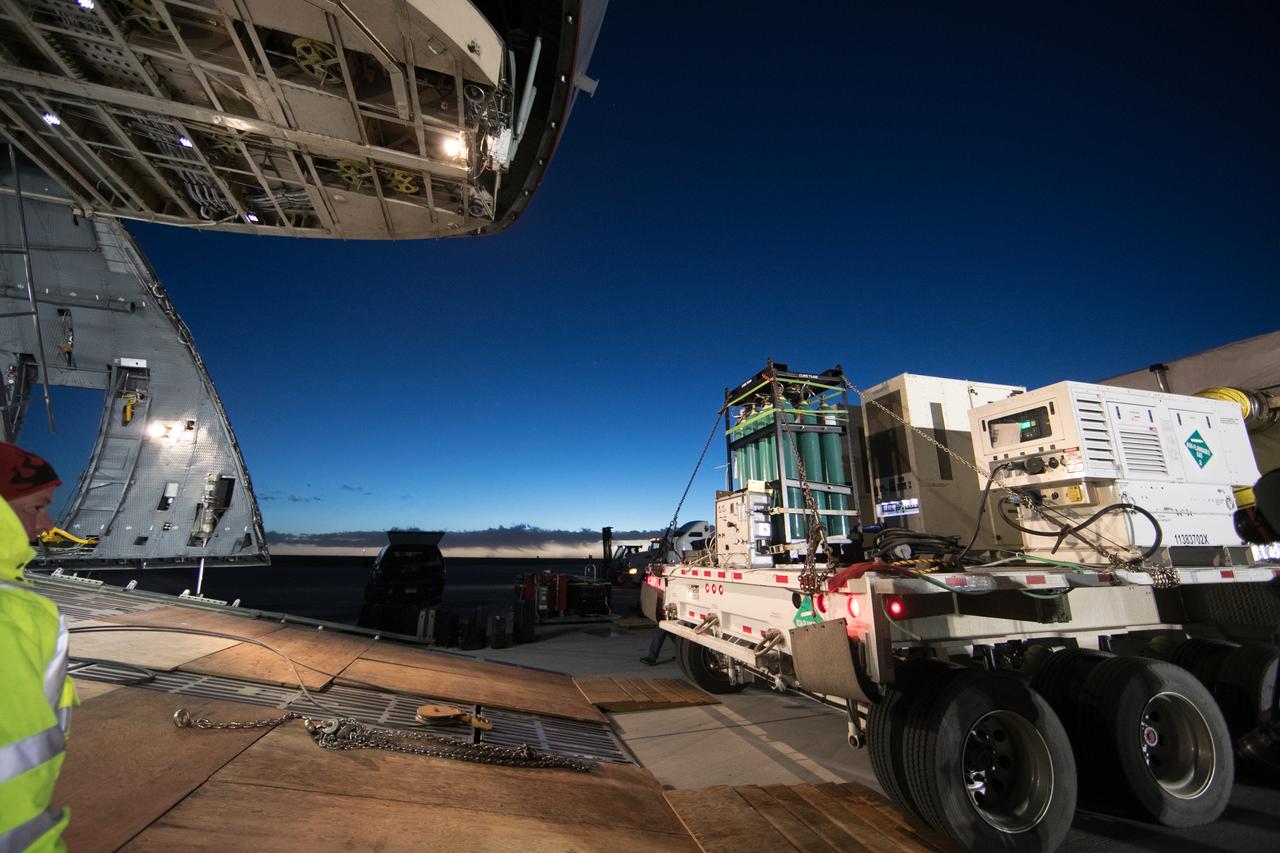
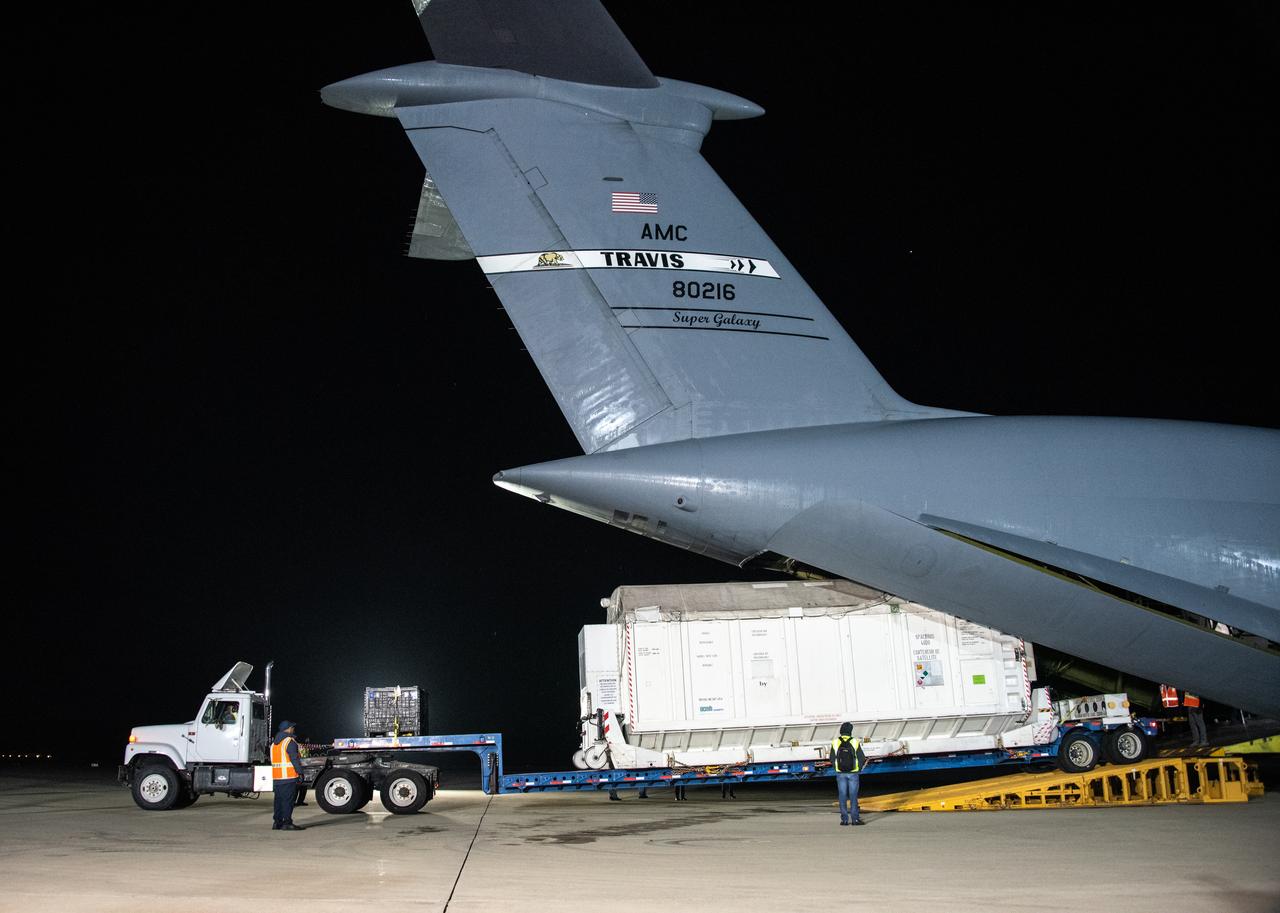
At Buckley Air Force Base in Aurora, Colorado, NOAA's Geostationary Operational Environmental Satellite-S (GOES-S) is being loaded into the cargo hold of a U.S. Air Force C-5M super Galaxy cargo aircraft. GOES-S will be flown to NASA's Kennedy Space Center in Florida. After it arrives at Kennedy's Shuttle Landing Facility, it will be offloaded and transported to the Astrotech Space Operations facility in Titusville, Florida, to prepare it for launch. GOES-S is the second in a series of four advanced geostationary weather satellites. The GOES-R series - consisting of the GOES-R, GOES-S, GOES-T and GOES-U spacecraft - will significantly improve the detection and observation of environmental phenomena that directly affect public safety, protection of property and the nation's economic health and prosperity. GOES-S is slated to launch March 1, 2018 aboard a United Launch Alliance Atlas V rocket from Cape Canaveral Air Force Station in Florida.

At Buckley Air Force Base in Aurora, Colorado, NOAA's Geostationary Operational Environmental Satellite-S (GOES-S) is being loaded into the cargo hold of a U.S. Air Force C-5M super Galaxy cargo aircraft. GOES-S will be flown to NASA's Kennedy Space Center in Florida. After it arrives at Kennedy's Shuttle Landing Facility, it will be offloaded and transported to the Astrotech Space Operations facility in Titusville, Florida, to prepare it for launch. GOES-S is the second in a series of four advanced geostationary weather satellites. The GOES-R series - consisting of the GOES-R, GOES-S, GOES-T and GOES-U spacecraft - will significantly improve the detection and observation of environmental phenomena that directly affect public safety, protection of property and the nation's economic health and prosperity. GOES-S is slated to launch March 1, 2018 aboard a United Launch Alliance Atlas V rocket from Cape Canaveral Air Force Station in Florida.
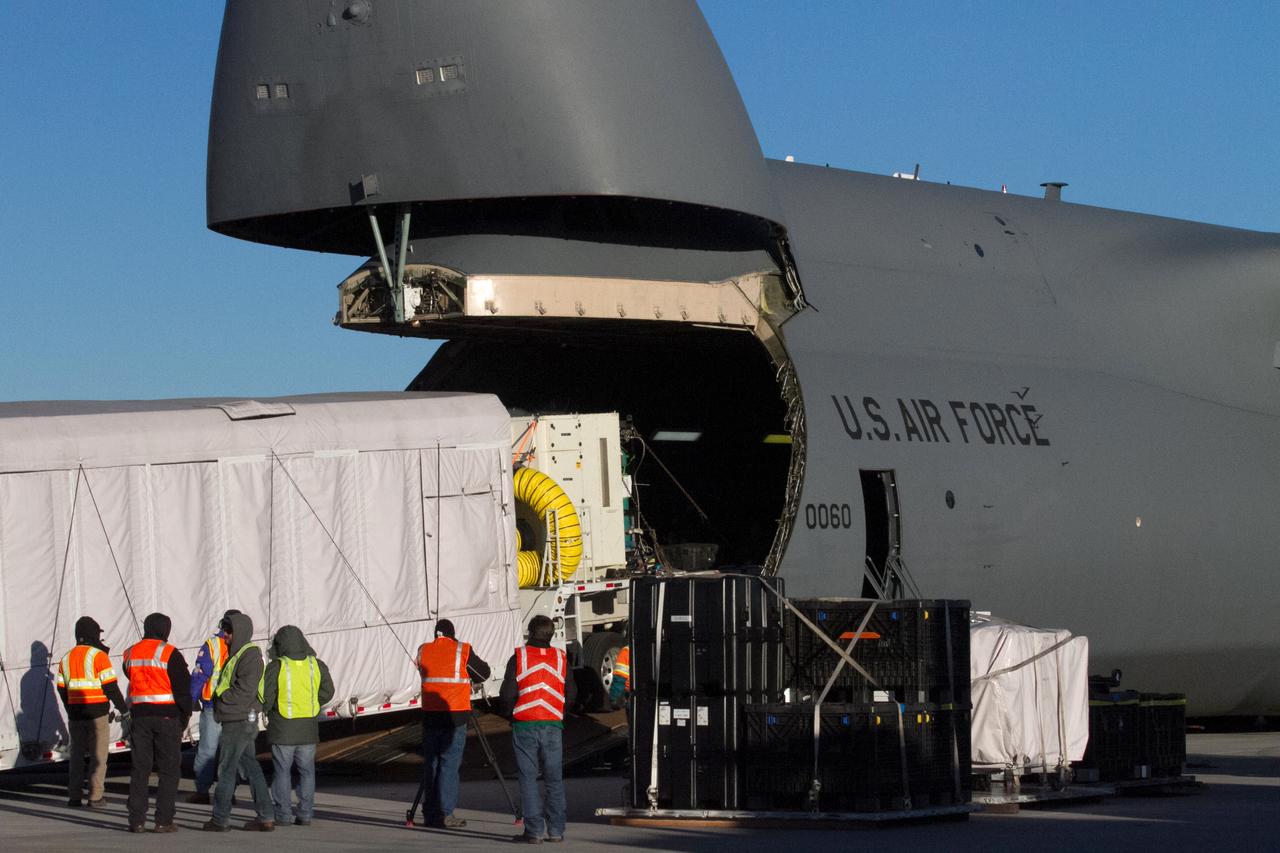
At Buckley Air Force Base in Aurora, Colorado, NOAA's Geostationary Operational Environmental Satellite-S (GOES-S) is being loaded into the cargo hold of a U.S. Air Force C-5M super Galaxy cargo aircraft. GOES-S will be flown to NASA's Kennedy Space Center in Florida. After it arrives at Kennedy's Shuttle Landing Facility, it will be offloaded and transported to the Astrotech Space Operations facility in Titusville, Florida, to prepare it for launch. GOES-S is the second in a series of four advanced geostationary weather satellites. The GOES-R series - consisting of the GOES-R, GOES-S, GOES-T and GOES-U spacecraft - will significantly improve the detection and observation of environmental phenomena that directly affect public safety, protection of property and the nation's economic health and prosperity. GOES-S is slated to launch March 1, 2018 aboard a United Launch Alliance Atlas V rocket from Cape Canaveral Air Force Station in Florida.

At Buckley Air Force Base in Aurora, Colorado, NOAA's Geostationary Operational Environmental Satellite-S (GOES-S) is being loaded into the cargo hold of a U.S. Air Force C-5M super Galaxy cargo aircraft. GOES-S will be flown to NASA's Kennedy Space Center in Florida. After it arrives at Kennedy's Shuttle Landing Facility, it will be offloaded and transported to the Astrotech Space Operations facility in Titusville, Florida, to prepare it for launch. GOES-S is the second in a series of four advanced geostationary weather satellites. The GOES-R series - consisting of the GOES-R, GOES-S, GOES-T and GOES-U spacecraft - will significantly improve the detection and observation of environmental phenomena that directly affect public safety, protection of property and the nation's economic health and prosperity. GOES-S is slated to launch March 1, 2018 aboard a United Launch Alliance Atlas V rocket from Cape Canaveral Air Force Station in Florida.
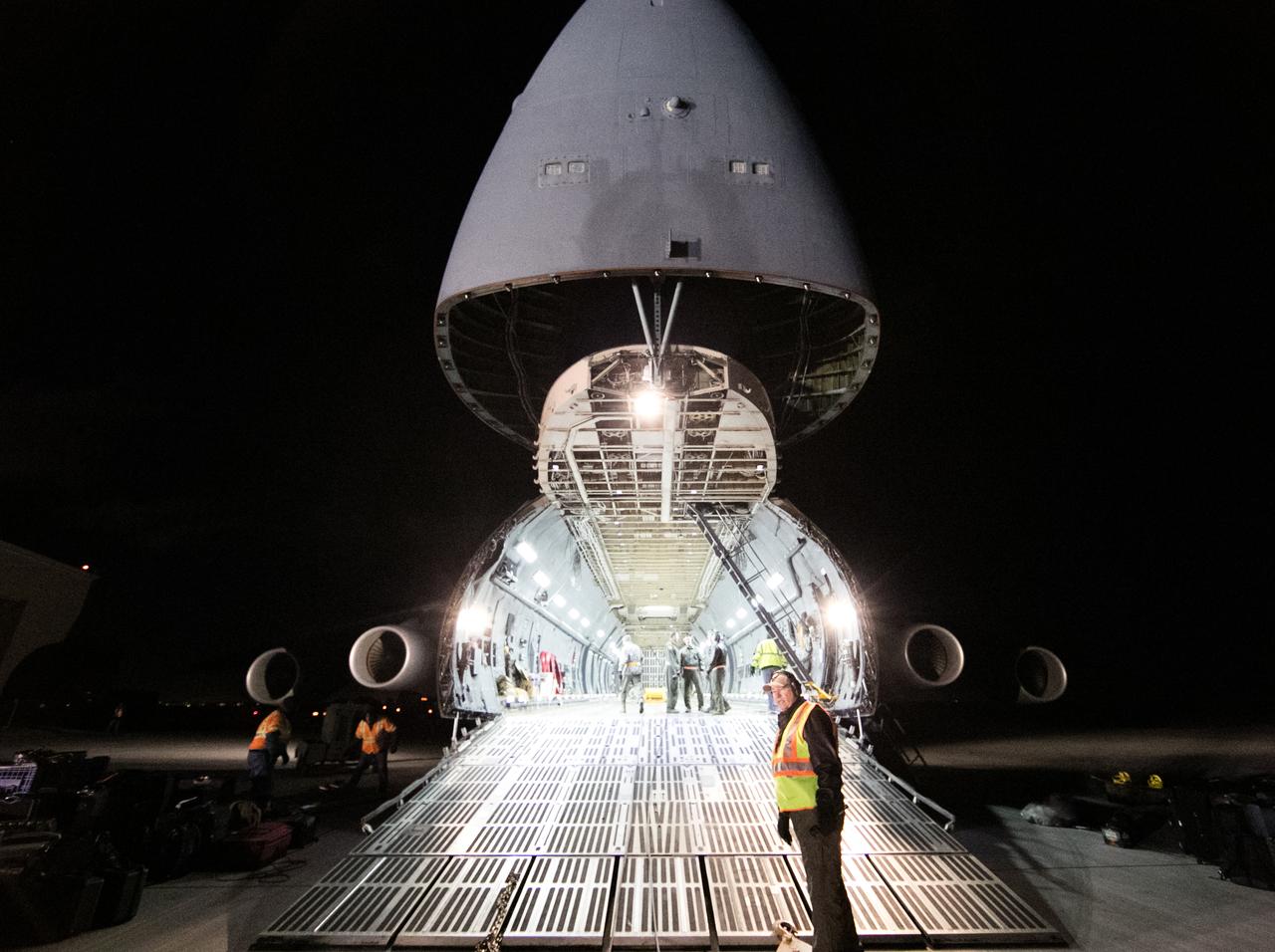
At Buckley Air Force Base in Aurora, Colorado, the front of a U.S. Air Force C-5M super Galaxy cargo aircraft has been raised to allow NOAA's Geostationary Operational Environmental Satellite-S (GOES-S) to be loaded into the cargo hold. GOES-S will be flown to NASA's Kennedy Space Center in Florida. After it arrives at Kennedy's Shuttle Landing Facility, it will be offloaded and transported to the Astrotech Space Operations facility in Titusville, Florida, to prepare it for launch. GOES-S is the second in a series of four advanced geostationary weather satellites. The GOES-R series - consisting of the GOES-R, GOES-S, GOES-T and GOES-U spacecraft - will significantly improve the detection and observation of environmental phenomena that directly affect public safety, protection of property and the nation's economic health and prosperity. GOES-S is slated to launch March 1, 2018 aboard a United Launch Alliance Atlas V rocket from Cape Canaveral Air Force Station in Florida.
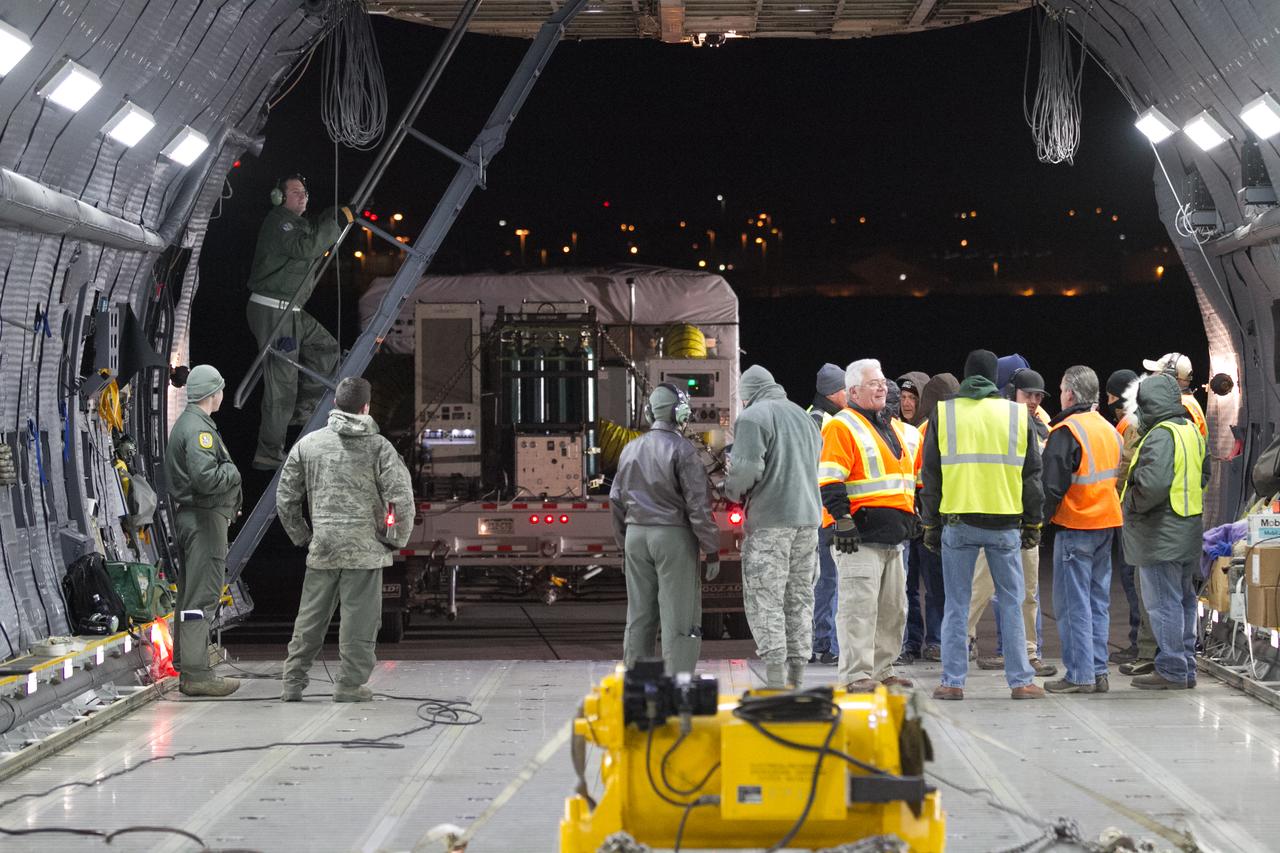
At Buckley Air Force Base in Aurora, Colorado, the front of a U.S. Air Force C-5M super Galaxy cargo aircraft has been raised to allow NOAA's Geostationary Operational Environmental Satellite-S (GOES-S) to be loaded into the cargo hold. GOES-S will be flown to NASA's Kennedy Space Center in Florida. After it arrives at Kennedy's Shuttle Landing Facility, it will be offloaded and transported to the Astrotech Space Operations facility in Titusville, Florida, to prepare it for launch. GOES-S is the second in a series of four advanced geostationary weather satellites. The GOES-R series - consisting of the GOES-R, GOES-S, GOES-T and GOES-U spacecraft - will significantly improve the detection and observation of environmental phenomena that directly affect public safety, protection of property and the nation's economic health and prosperity. GOES-S is slated to launch March 1, 2018 aboard a United Launch Alliance Atlas V rocket from Cape Canaveral Air Force Station in Florida.
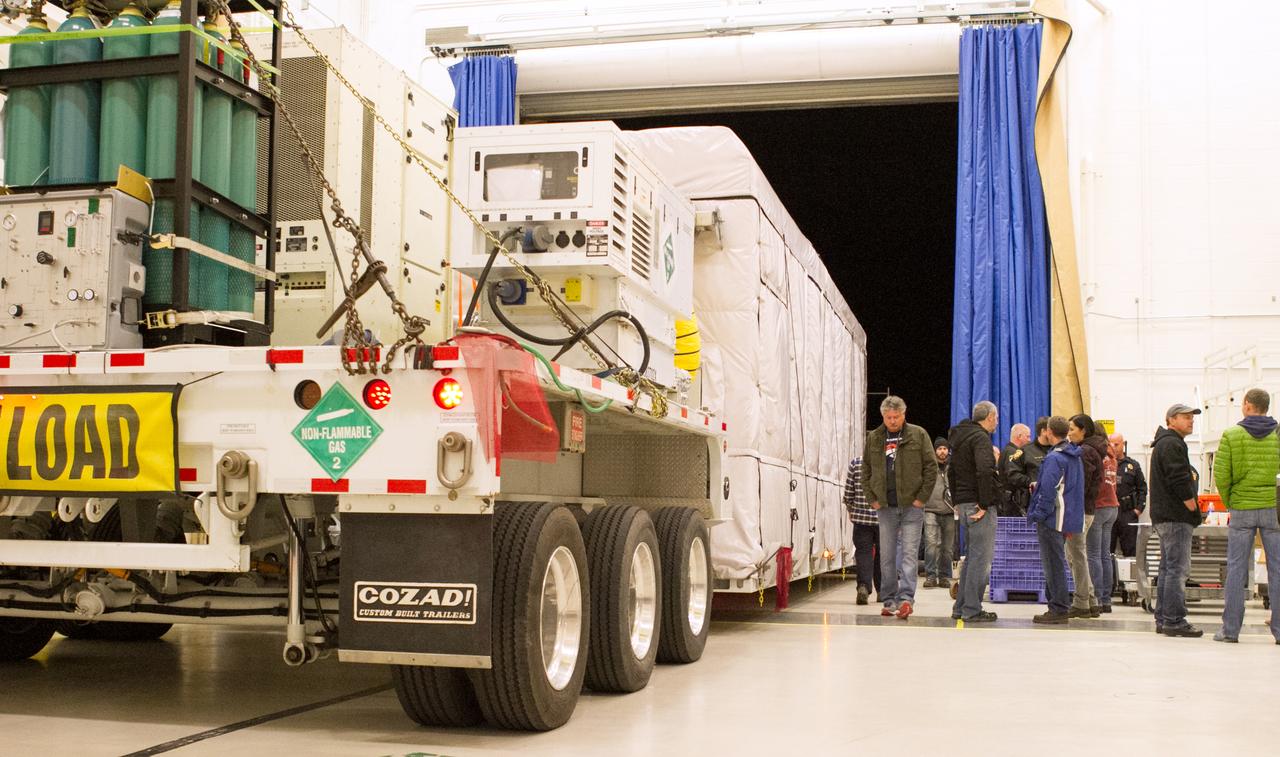
NOAA's Geostationary Operational Environmental Satellite-S (GOES-S) is prepared for transport at the Lockheed Martin facility in Littleton, Colorado, where it was built and assembled. GOES-S will be loaded into a U.S. Air Force C-5M Super Galaxy cargo aircraft at Buckley Air Force Base in Aurora, Colorado, and flown to NASA's Kennedy Space Center in Florida. After it arrives at Kennedy's Shuttle Landing Facility, it will be offloaded and transported to the Astrotech Space Operations facility in Titusville, Florida, to prepare it for launch. GOES-S is the second in a series of four advanced geostationary weather satellites. The GOES-R series - consisting of the GOES-R, GOES-S, GOES-T and GOES-U spacecraft - will significantly improve the detection and observation of environmental phenomena that directly affect public safety, protection of property and the nation's economic health and prosperity. GOES-S is slated to launch March 1, 2018 aboard a United Launch Alliance Atlas V rocket from Cape Canaveral Air Force Station in Florida.
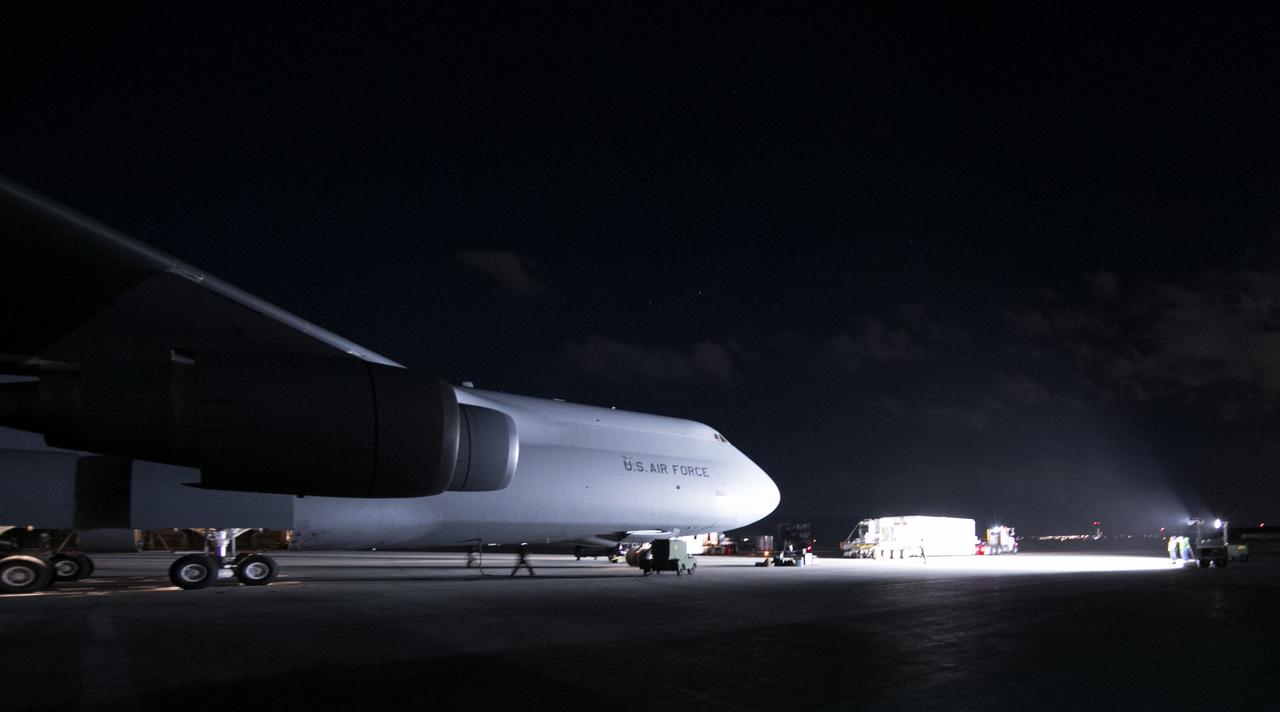
NOAA's Geostationary Operational Environmental Satellite-S (GOES-S) will be loaded into a U.S. Air Force C-5M Super Galaxy cargo aircraft and flown to NASA's Kennedy Space Center in Florida. After it arrives at Kennedy's Shuttle Landing Facility, it will be offloaded and transported to the Astrotech Space Operations facility in Titusville, Florida, to prepare it for launch. GOES-S is the second in a series of four advanced geostationary weather satellites. The GOES-R series - consisting of the GOES-R, GOES-S, GOES-T and GOES-U spacecraft - will significantly improve the detection and observation of environmental phenomena that directly affect public safety, protection of property and the nation's economic health and prosperity. GOES-S is slated to launch March 1, 2018 aboard a United Launch Alliance Atlas V rocket from Cape Canaveral Air Force Station in Florida.
After a U.S. Air Force C-17 aircraft arrived at Vandenberg Air Force Base in California, ground crews offload NASA's Interior Exploration using Seismic Investigations, Geodesy and Heat Transport, or InSight, spacecraft designed to land on Mars. InSight was developed and built by Lockheed-Martin Space Systems in Denver, Colorado, and is scheduled for liftoff is May 5, 2018. InSight is the first mission to explore the Red Planet's deep interior. It will investigate processes that shaped the rocky planets of the inner solar system including Earth.
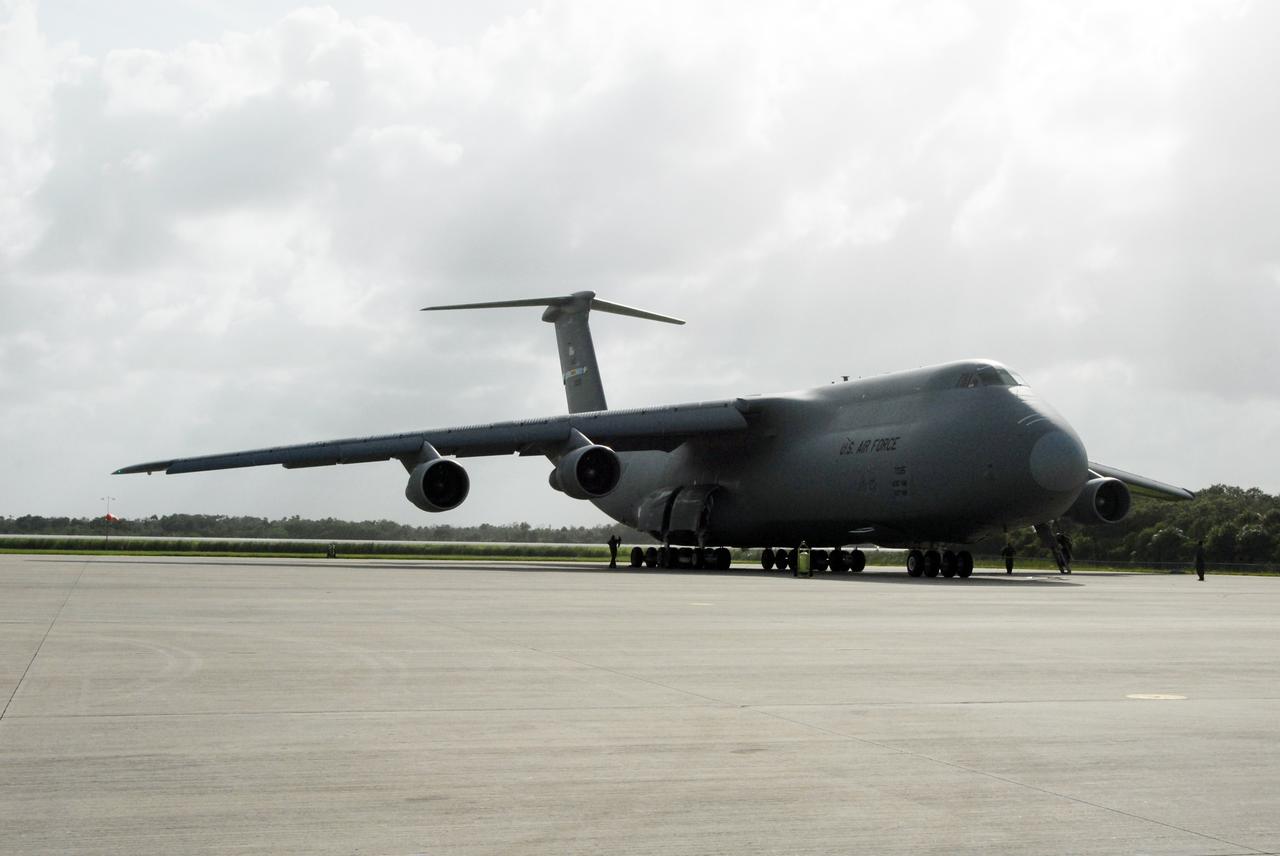
CAPE CANAVERAL, Fla. – The U.S. Air Force C-5 lands on NASA Kennedy Space Center's Shuttle Landing Facility. The aircraft carries the Express Logistics Carrier 4, or ELC4, part of the payload for the STS-133 mission. Space shuttle Endeavour will deliver the ELC4 and ELC3 with critical spare components to the International Space Station on the mission. Endeavour's launch is targeted for late July in 2010. Photo credit: NASA/Amanda Diller
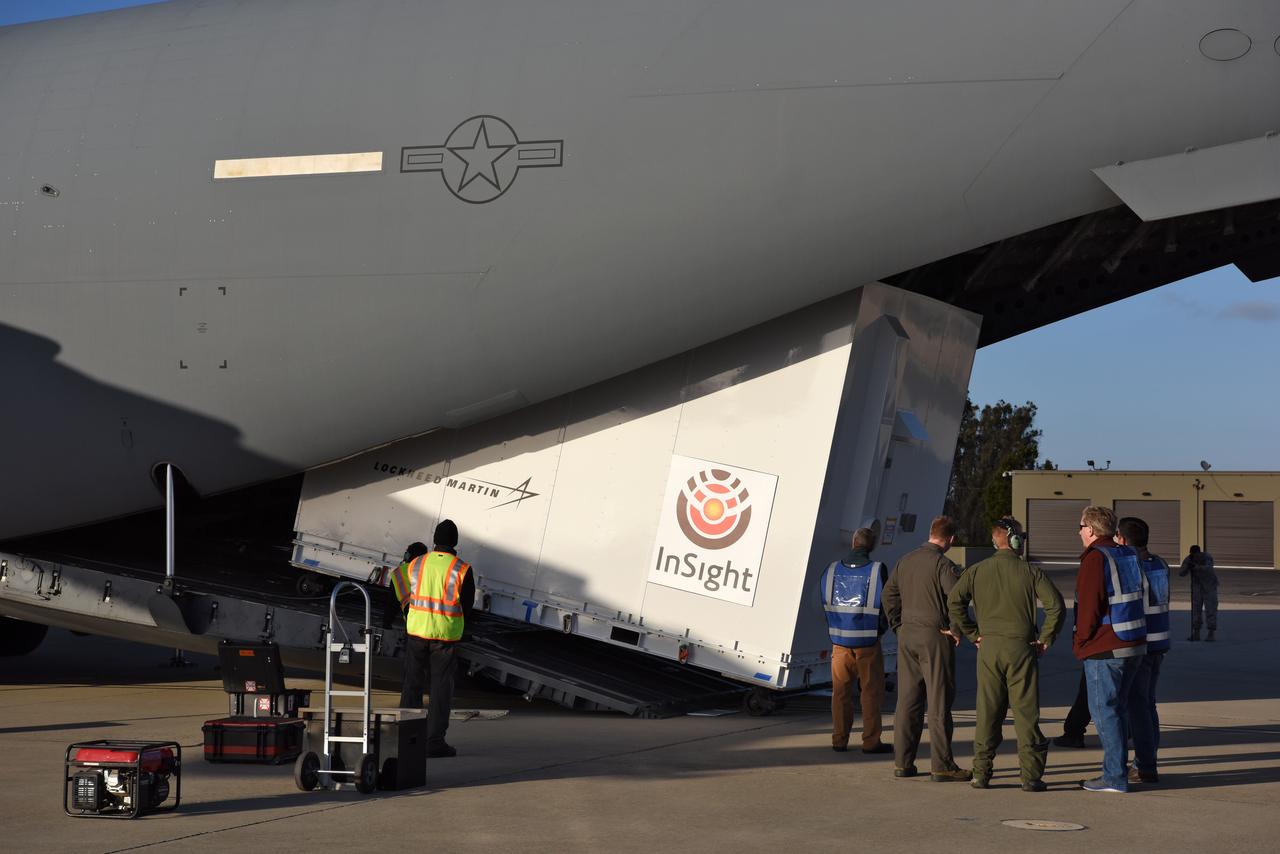
After a U.S. Air Force C-17 aircraft arrived at Vandenberg Air Force Base in California, ground crews offload NASA's Interior Exploration using Seismic Investigations, Geodesy and Heat Transport, or InSight, spacecraft designed to land on Mars. InSight was developed and built by Lockheed-Martin Space Systems in Denver, Colorado, and is scheduled for liftoff is May 5, 2018. InSight is the first mission to explore the Red Planet's deep interior. It will investigate processes that shaped the rocky planets of the inner solar system including Earth.
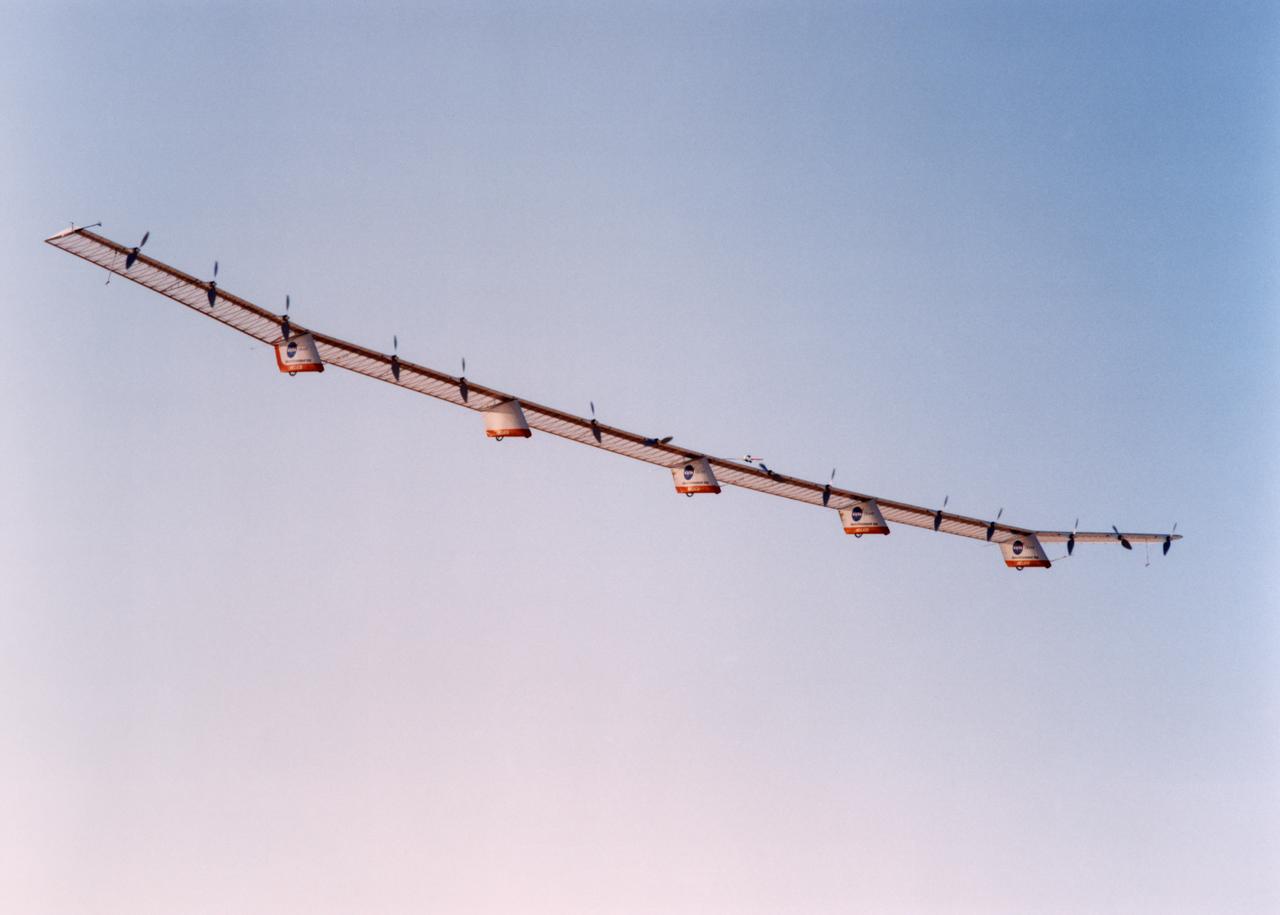
The Helios Prototype is an enlarged version of the Centurion flying wing, which flew a series of test flights at Dryden in late 1998. The craft has a wingspan of 247 feet, 41 feet greater than the Centurion, 2 1/2 times that of its solar-powered Pathfinder flying wing, and longer than either the Boeing 747 jetliner or Lockheed C-5 transport aircraft.
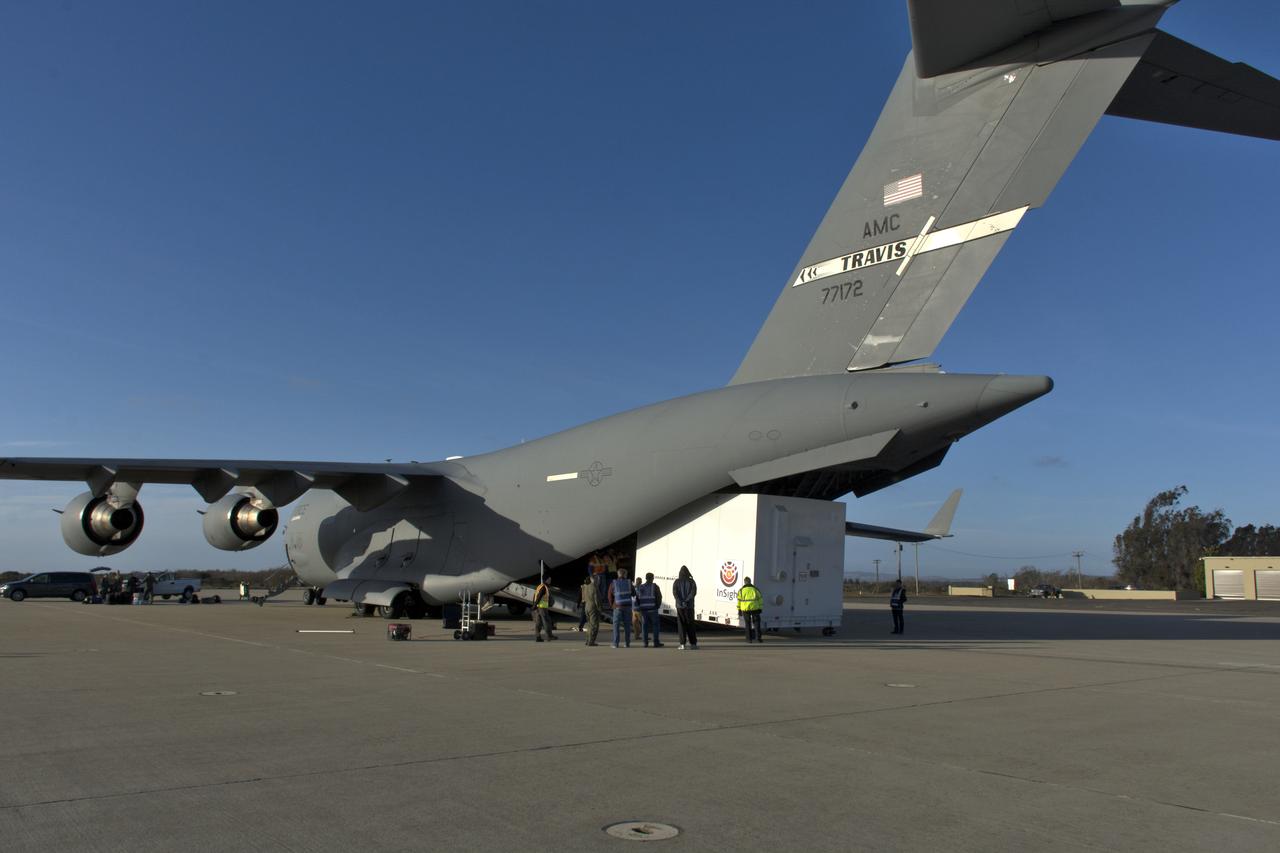
After a U.S. Air Force C-17 aircraft arrived at Vandenberg Air Force Base in California, ground crews offload NASA's Interior Exploration using Seismic Investigations, Geodesy and Heat Transport, or InSight, spacecraft designed to land on Mars. InSight was developed and built by Lockheed-Martin Space Systems in Denver, Colorado, and is scheduled for liftoff is May 5, 2018. InSight is the first mission to explore the Red Planet's deep interior. It will investigate processes that shaped the rocky planets of the inner solar system including Earth.

A U.S. Air Force C-17 aircraft arrives at Vandenberg Air Force Base in California carrying NASA's Interior Exploration using Seismic Investigations, Geodesy and Heat Transport, or InSight, spacecraft designed to land on Mars. InSight was developed and built by Lockheed-Martin Space Systems in Denver, Colorado, and is scheduled for liftoff is May 5, 2018. InSight is the first mission to explore the Red Planet's deep interior. It will investigate processes that shaped the rocky planets of the inner solar system including Earth.
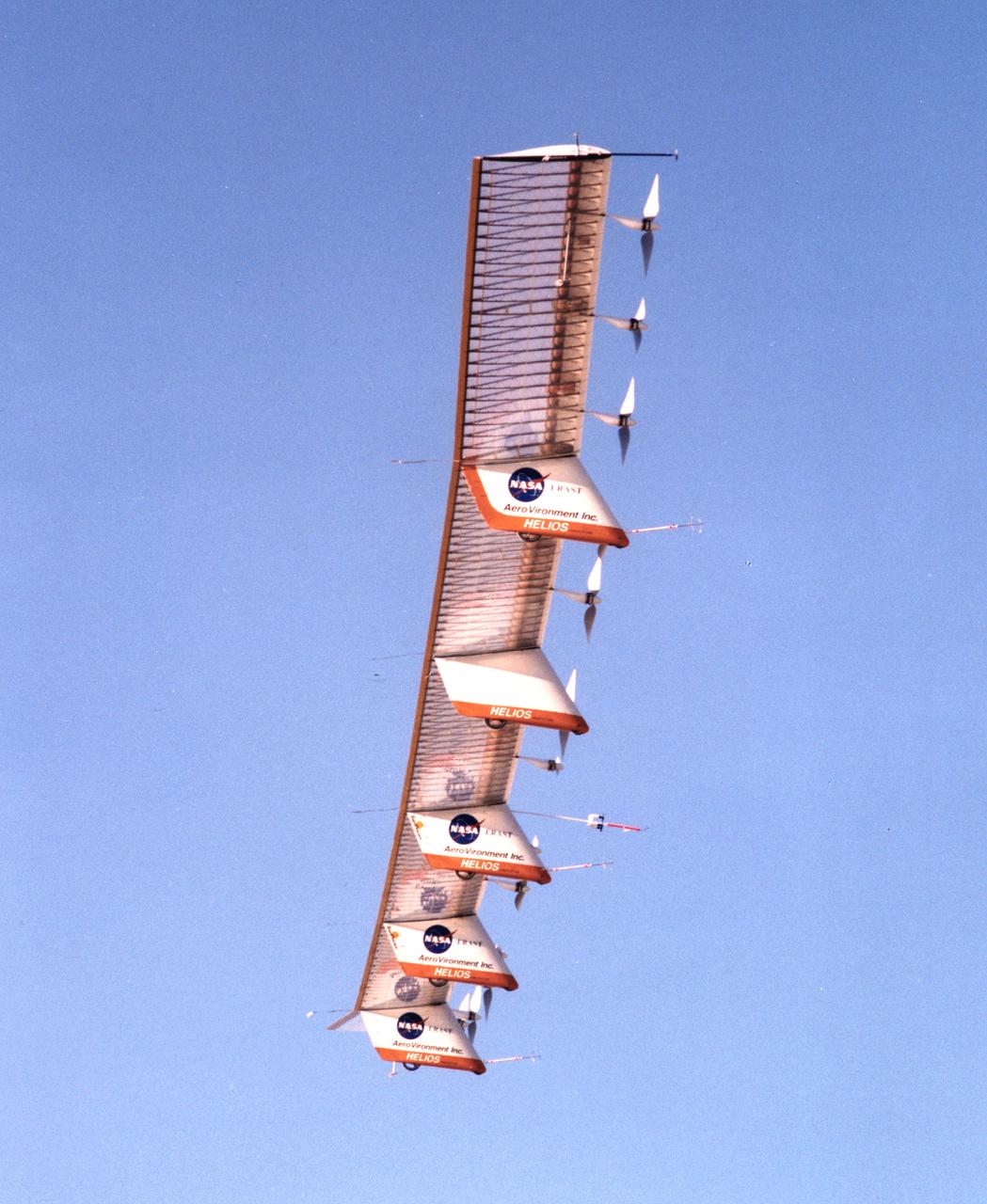
The Helios Prototype is an enlarged version of the Centurion flying wing, which flew a series of test flights at Dryden in late 1998. The craft has a wingspan of 247 feet, 41 feet greater than the Centurion, 2 1/2 times that of its solar-powered Pathfinder flying wing, and longer than either the Boeing 747 jetliner or Lockheed C-5 transport aircraft.
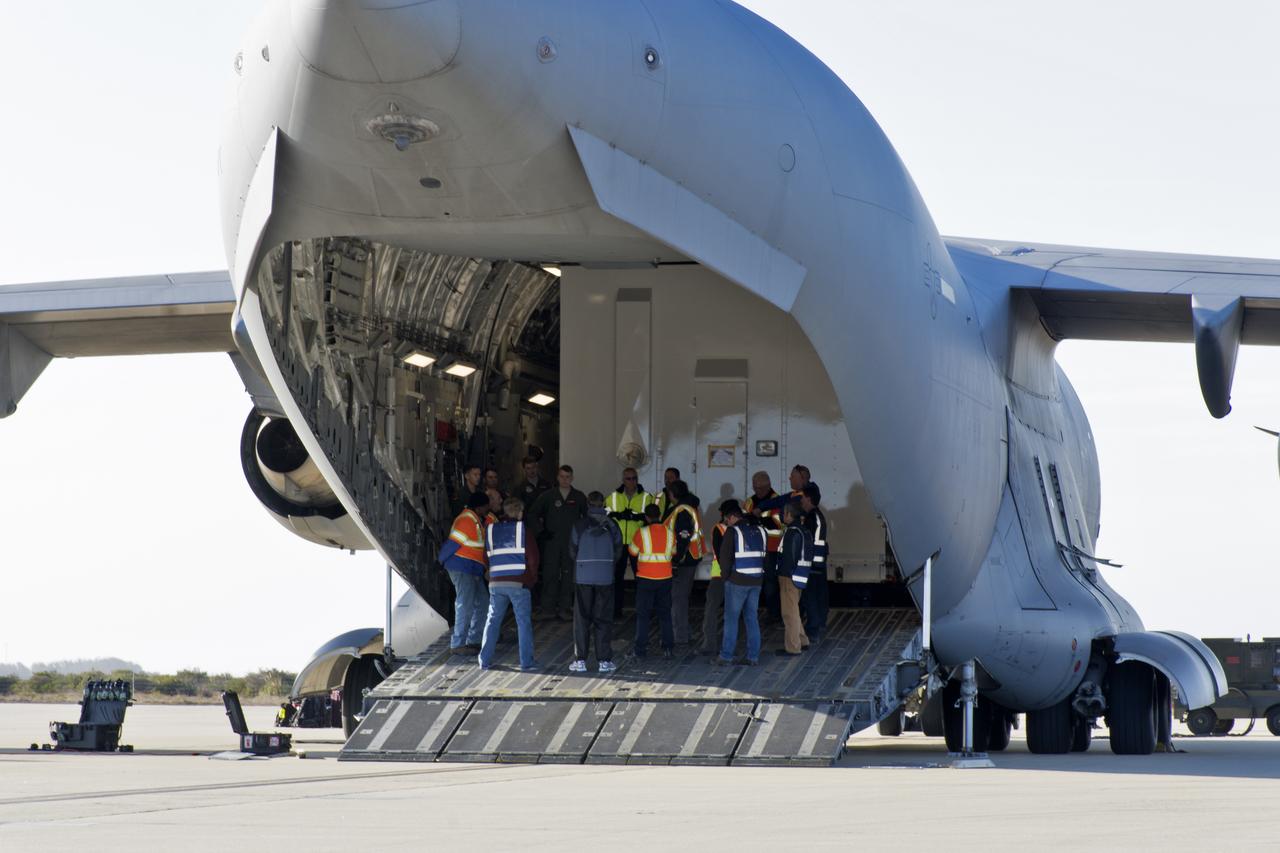
After a U.S. Air Force C-17 aircraft arrived at Vandenberg Air Force Base in California, ground crews offload NASA's Interior Exploration using Seismic Investigations, Geodesy and Heat Transport, or InSight, spacecraft designed to land on Mars. InSight was developed and built by Lockheed-Martin Space Systems in Denver, Colorado, and is scheduled for liftoff is May 5, 2018. InSight is the first mission to explore the Red Planet's deep interior. It will investigate processes that shaped the rocky planets of the inner solar system including Earth.
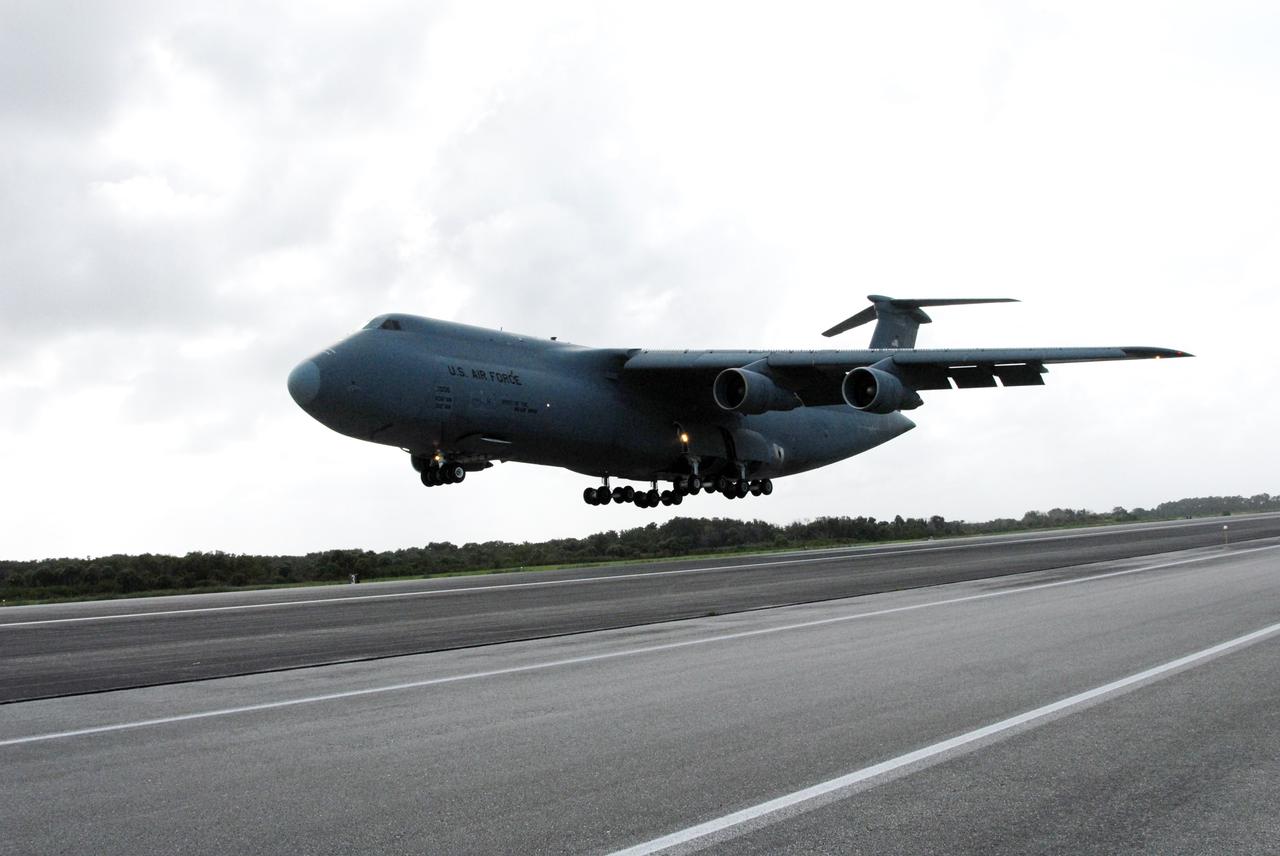
CAPE CANAVERAL, Fla. – The U.S. Air Force C-5 prepares to land on NASA Kennedy Space Center's Shuttle Landing Facility. The aircraft carries the Express Logistics Carrier 4, or ELC4, part of the payload for the STS-133 mission. Space shuttle Endeavour will deliver the ELC4 and ELC3 with critical spare components to the International Space Station on the mission. Endeavour's launch is targeted for late July in 2010. Photo credit: NASA/Amanda Diller
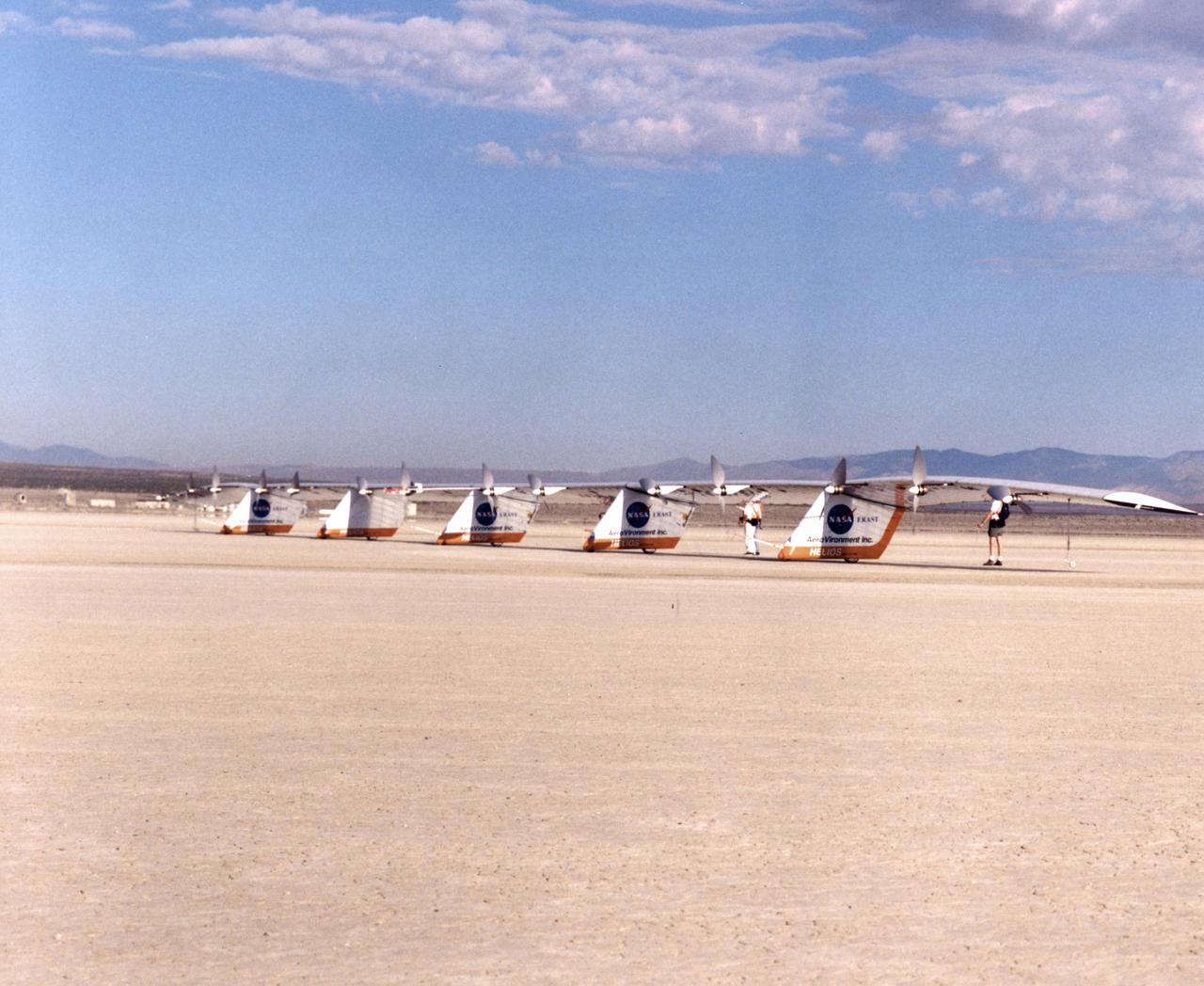
The Helios Prototype is an enlarged version of the Centurion flying wing, which flew a series of test flights at Dryden in late 1998. The craft has a wingspan of 247 feet, 41 feet greater than the Centurion, 2 1/2 times that of its solar-powered Pathfinder flying wing, and longer than either the Boeing 747 jetliner or Lockheed C-5 transport aircraft.
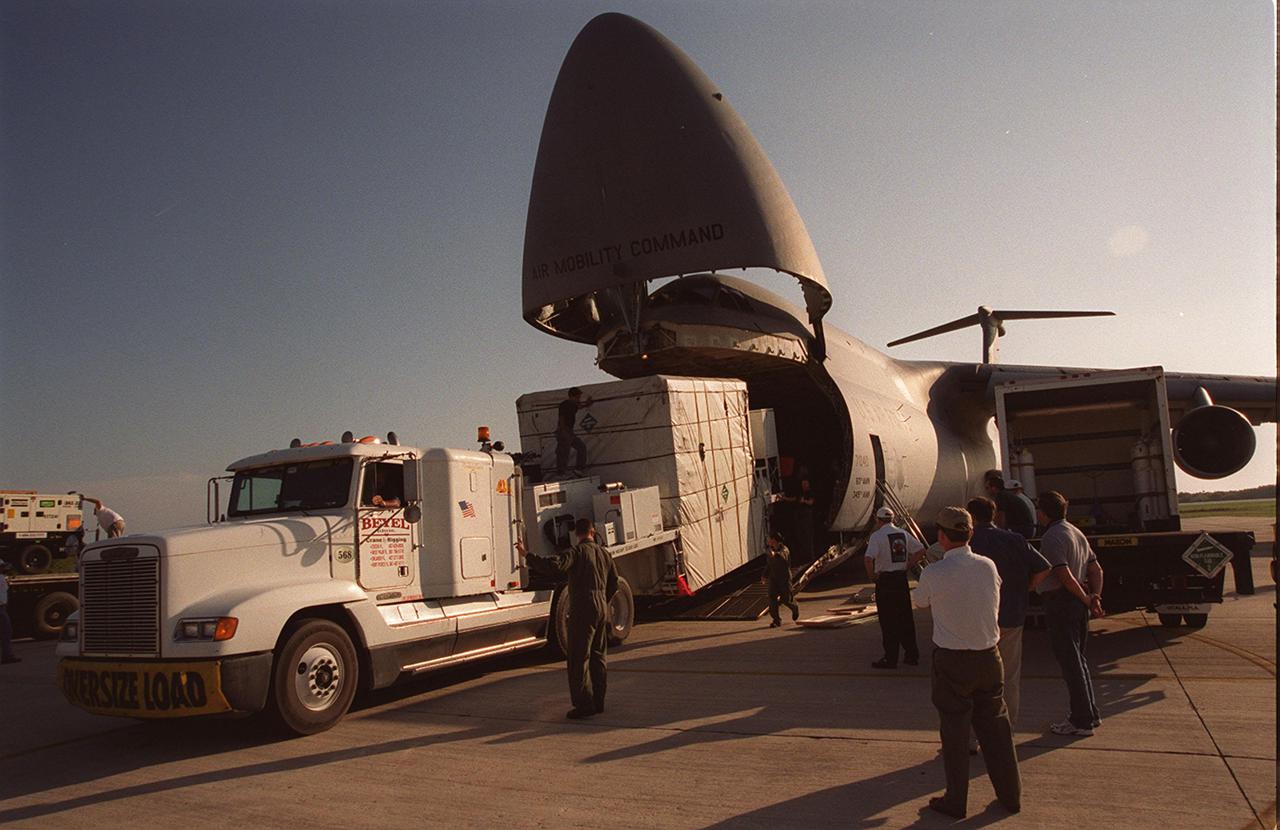
At the KSC Shuttle Landing Facility, the GOES-M satellite is offloaded from the yawning mouth of the C-5 aircraft. It will be transferred to Astrotech in Titusville, Fla., for final testing. The GOES-M (Geostationary Operational Environmental Satellite, I-M Series) provides weather imagery and quantitative sounding data used to support weather forecasting, severe storm tracking, and meteorological research. The satellite is scheduled to be launched on an Atlas-IIA booster, with a Centaur upper stage, July 12 from Launch Pad 36-A, Cape Canaveral Air Force Station
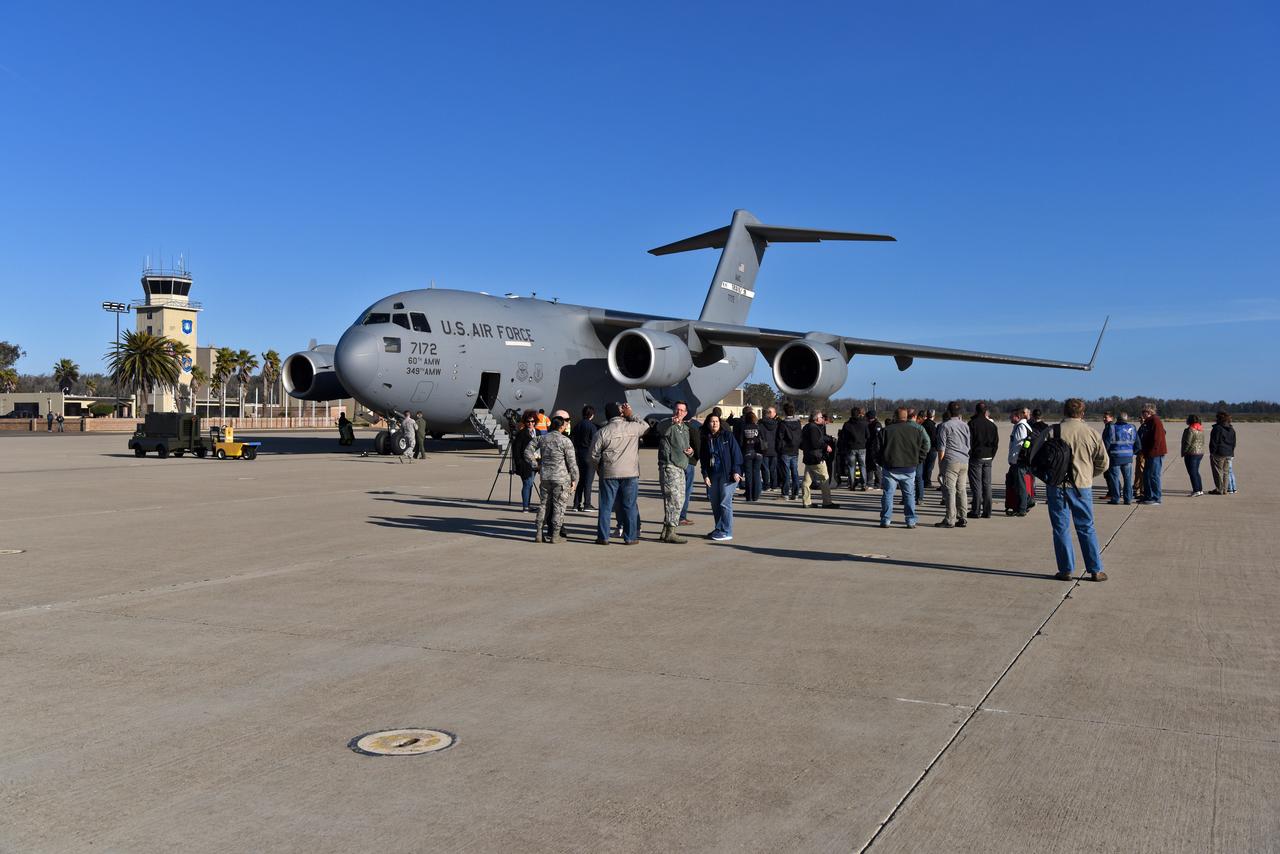
A U.S. Air Force C-17 aircraft arrives at Vandenberg Air Force Base in California carrying NASA's Interior Exploration using Seismic Investigations, Geodesy and Heat Transport, or InSight, spacecraft designed to land on Mars. InSight was developed and built by Lockheed-Martin Space Systems in Denver, Colorado, and is scheduled for liftoff is May 5, 2018. InSight is the first mission to explore the Red Planet's deep interior. It will investigate processes that shaped the rocky planets of the inner solar system including Earth.
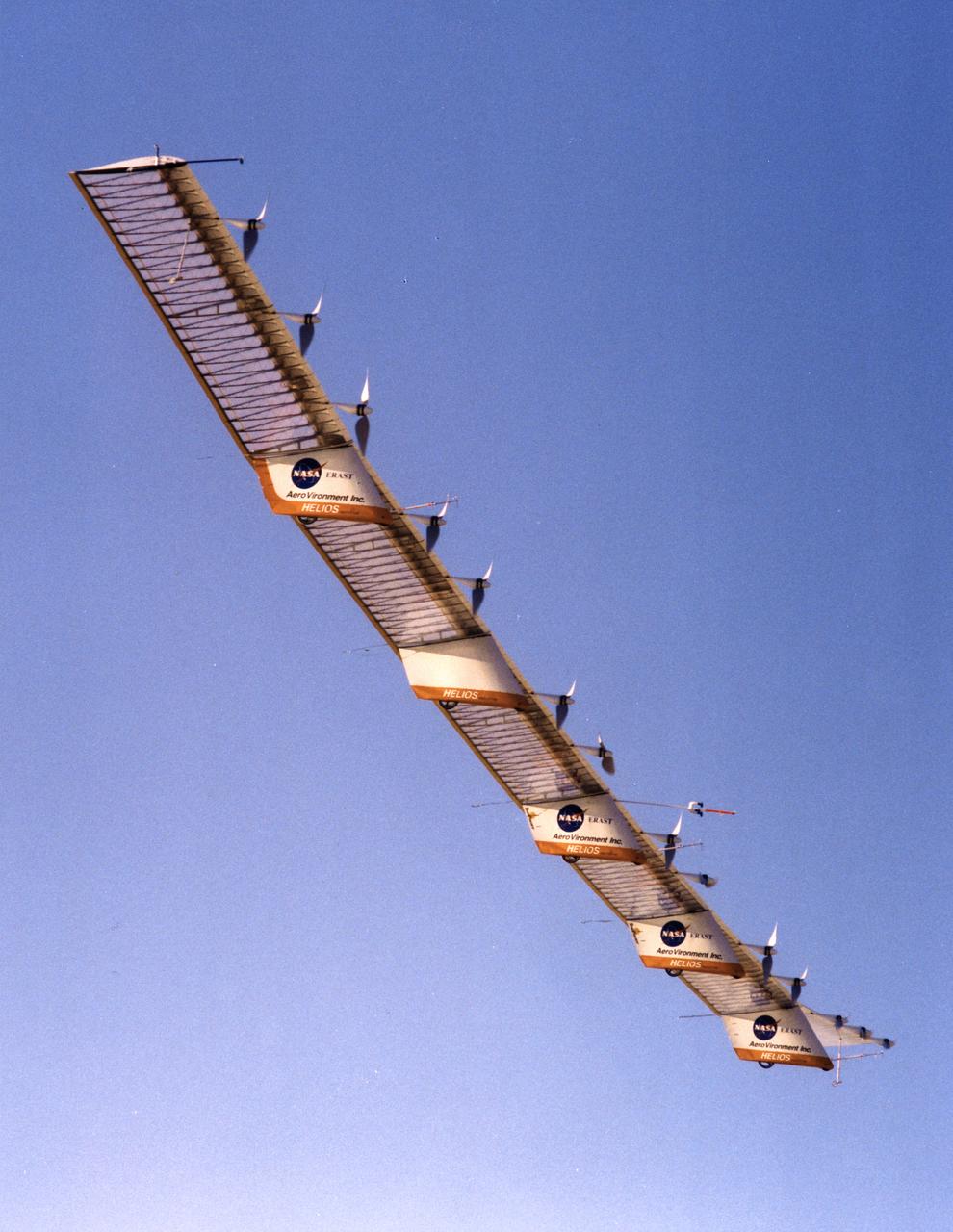
The Helios Prototype is an enlarged version of the Centurion flying wing, which flew a series of test flights at Dryden in late 1998. The craft has a wingspan of 247 feet, 41 feet greater than the Centurion, 2 1/2 times that of its solar-powered Pathfinder flying wing, and longer than either the Boeing 747 jetliner or Lockheed C-5 transport aircraft.

After a U.S. Air Force C-17 aircraft arrived at Vandenberg Air Force Base in California, ground crews have offloaded NASA's Interior Exploration using Seismic Investigations, Geodesy and Heat Transport, or InSight, spacecraft designed to land on Mars. InSight was developed and built by Lockheed-Martin Space Systems in Denver, Colorado, and is scheduled for liftoff is May 5, 2018. InSight is the first mission to explore the Red Planet's deep interior. It will investigate processes that shaped the rocky planets of the inner solar system including Earth.

A U.S. Air Force C-17 aircraft arrives at Vandenberg Air Force Base in California carrying NASA's Interior Exploration using Seismic Investigations, Geodesy and Heat Transport, or InSight, spacecraft designed to land on Mars. InSight was developed and built by Lockheed-Martin Space Systems in Denver, Colorado, and is scheduled for liftoff is May 5, 2018. InSight is the first mission to explore the Red Planet's deep interior. It will investigate processes that shaped the rocky planets of the inner solar system including Earth.
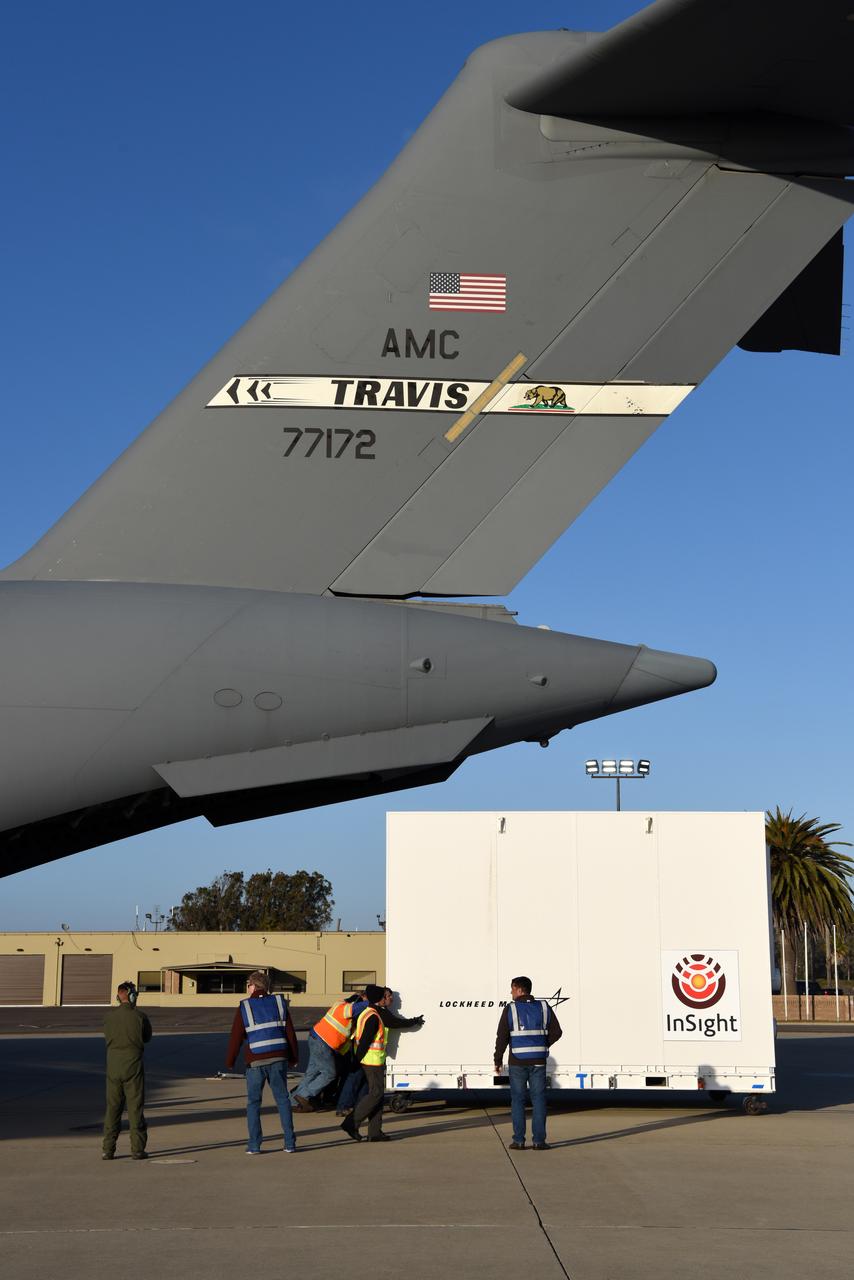
After a U.S. Air Force C-17 aircraft arrived at Vandenberg Air Force Base in California, ground crews offload NASA's Interior Exploration using Seismic Investigations, Geodesy and Heat Transport, or InSight, spacecraft designed to land on Mars. InSight was developed and built by Lockheed-Martin Space Systems in Denver, Colorado, and is scheduled for liftoff is May 5, 2018. InSight is the first mission to explore the Red Planet's deep interior. It will investigate processes that shaped the rocky planets of the inner solar system including Earth.
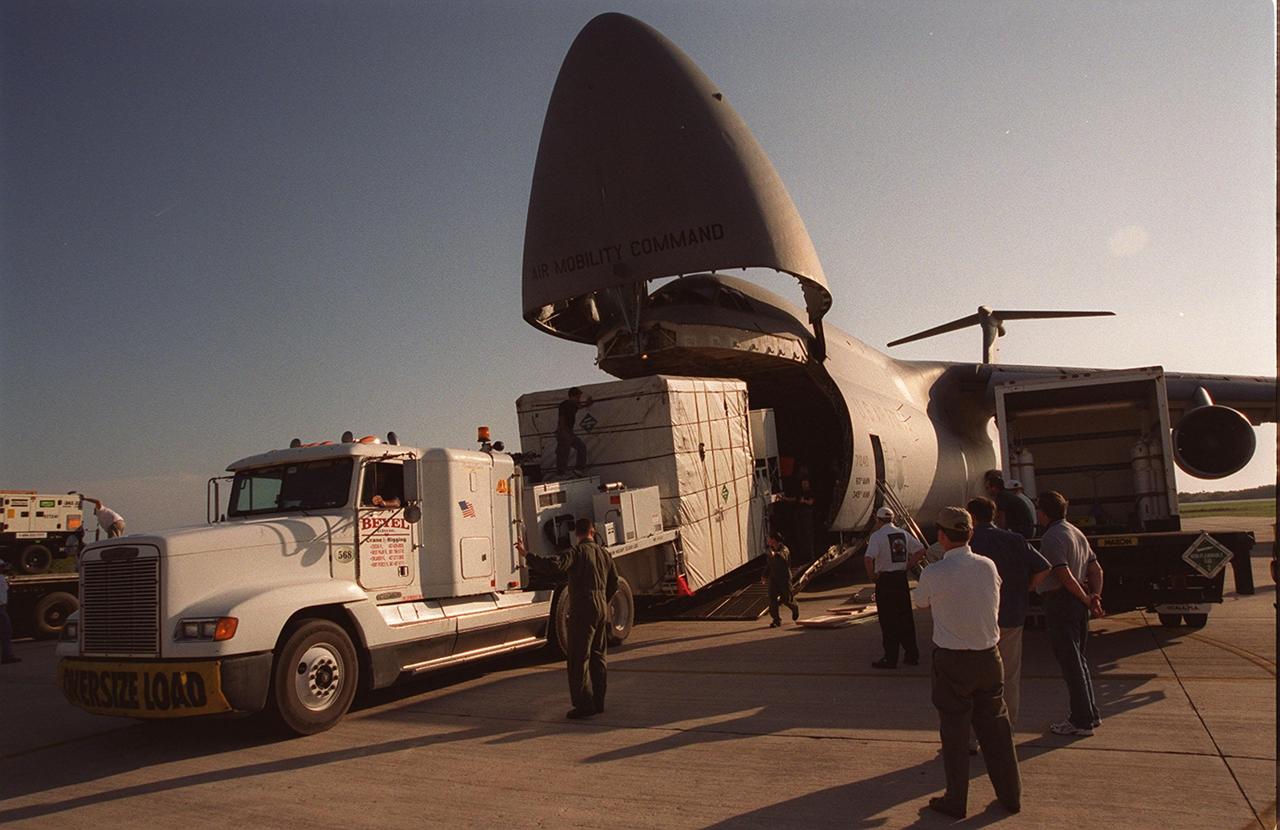
At the KSC Shuttle Landing Facility, the GOES-M satellite is offloaded from the yawning mouth of the C-5 aircraft. It will be transferred to Astrotech in Titusville, Fla., for final testing. The GOES-M (Geostationary Operational Environmental Satellite, I-M Series) provides weather imagery and quantitative sounding data used to support weather forecasting, severe storm tracking, and meteorological research. The satellite is scheduled to be launched on an Atlas-IIA booster, with a Centaur upper stage, July 12 from Launch Pad 36-A, Cape Canaveral Air Force Station
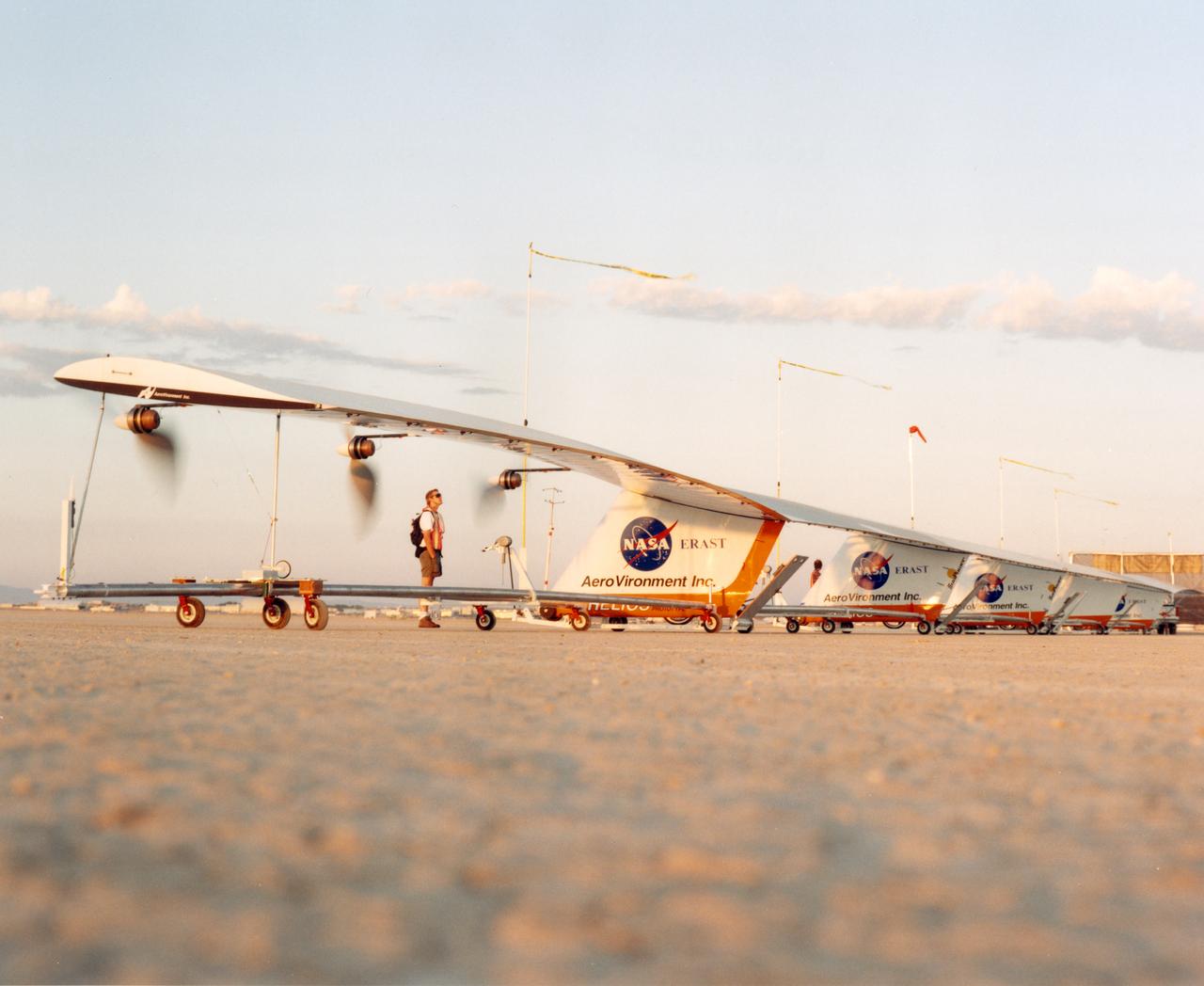
The Helios Prototype is an enlarged version of the Centurion flying wing, which flew a series of test flights at Dryden in late 1998. The craft has a wingspan of 247 feet, 41 feet greater than the Centurion, 2 1/2 times that of its solar-powered Pathfinder flying wing, and longer than either the Boeing 747 jetliner or Lockheed C-5 transport aircraft.
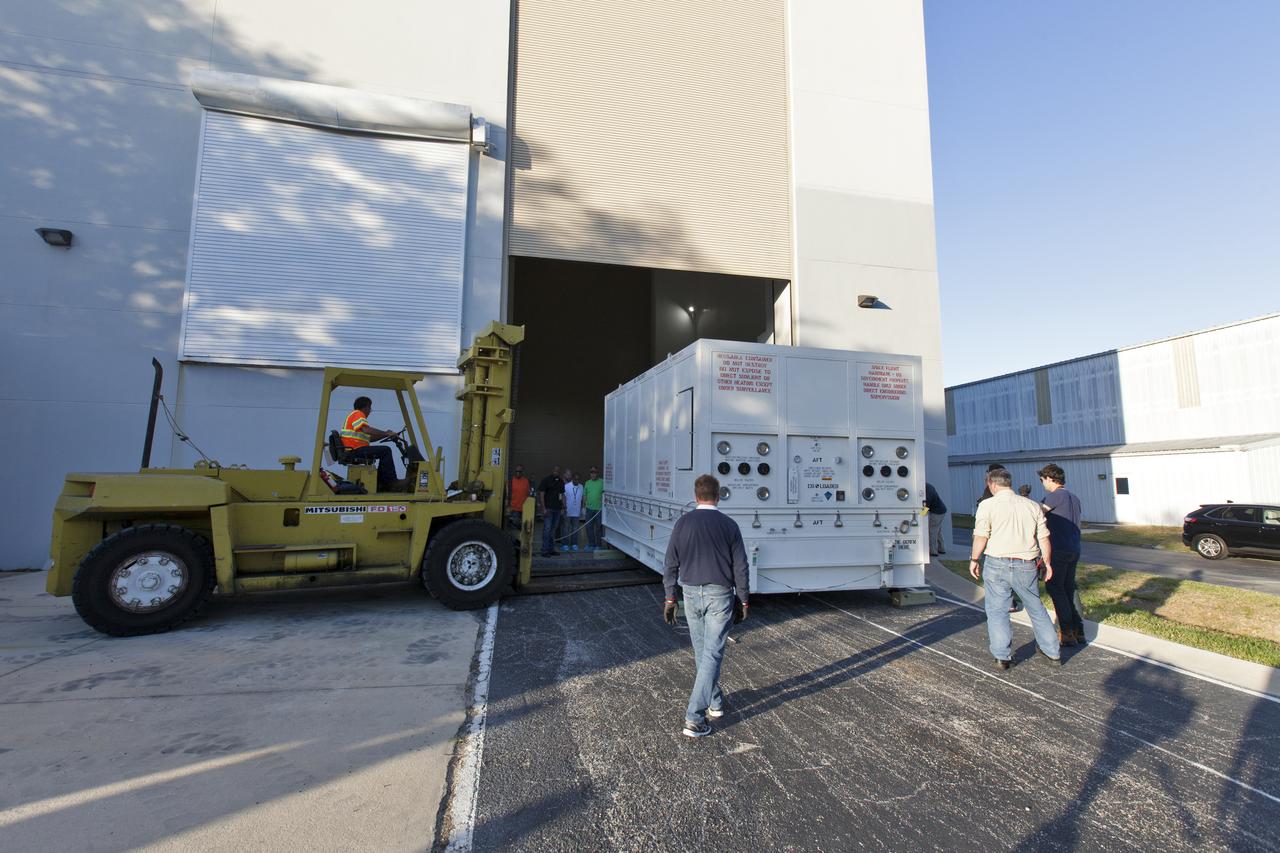
NASA's Parker Solar Probe, secured in its shipping container, arrives at the Astrotech processing facility near the agency's Kennedy Space Center in Florida. The spacecraft arrived aboard a U.S. Air Force C-5 transport aircraft at Space Coast Regional Airport in Titusville, Florida. The Parker Solar Probe will launch on a United Launch Alliance Delta IV Heavy rocket from Space Launch Complex 37 at Cape Canaveral Air Force Station in Florida in July 2018. The mission will perform the closest-ever observations of a star when it travels through the Sun's atmosphere, called the corona. The probe will rely on measurements and imaging to revolutionize our understanding of the corona and the Sun-Earth connection.

A U.S. Air Force C-5 transport aircraft arrives at Space Coast Regional Airport in Titusville, Florida, with NASA's Parker Solar Probe spacecraft aboard. The spacecraft will be offloaded and transported to the Astrotech processing facility near the agency's Kennedy Space Center. The Parker Solar Probe will launch on a United Launch Alliance Delta IV Heavy rocket from Space Launch Complex 37 at Cape Canaveral Air Force Station in Florida in July 2018. The mission will perform the closest-ever observations of a star when it travels through the Sun's atmosphere, called the corona. The probe will rely on measurements and imaging to revolutionize our understanding of the corona and the Sun-Earth connection.
NASA's Parker Solar Probe, secured in its shipping container, is offloaded from a U.S. Air Force C-5 transport aircraft at Space Coast Regional Airport in Titusville, Florida. The spacecraft will be transported to the Astrotech processing facility near the agency's Kennedy Space Center. The Parker Solar Probe will launch on a United Launch Alliance Delta IV Heavy rocket from Space Launch Complex 37 at Cape Canaveral Air Force Station in Florida in July 2018. The mission will perform the closest-ever observations of a star when it travels through the Sun's atmosphere, called the corona. The probe will rely on measurements and imaging to revolutionize our understanding of the corona and the Sun-Earth connection.

At the KSC Shuttle Landing Facility, a truck begins offloading the container with the GOES-M satellite from the yawning mouth of the C-5 aircraft. It will be transferred to Astrotech in Titusville, Fla., for final testing. The GOES-M (Geostationary Operational Environmental Satellite, I-M Series) provides weather imagery and quantitative sounding data used to support weather forecasting, severe storm tracking, and meteorological research. The satellite is scheduled to be launched on an Atlas-IIA booster, with a Centaur upper stage, July 12 from Launch Pad 36-A, Cape Canaveral Air Force Station
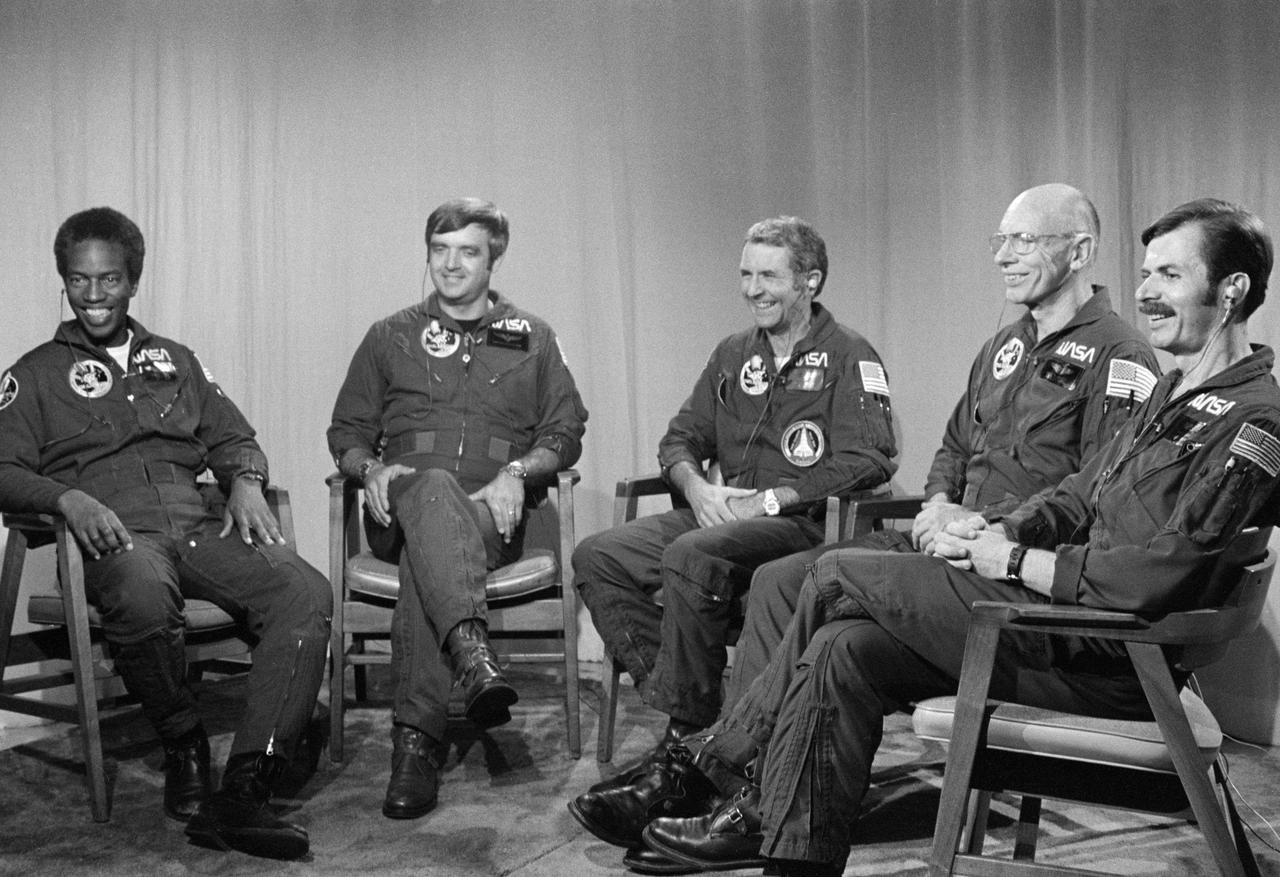
S83-39696 (5 Sept 1983) --- The five member astronaut crew of the Space Shuttle Challenger for STS-8 responds to a comment made by President Ronald Reagan during a post flight telephone conversation with the chief executive. The five astronauts earlier today landed the reusable spacecraft at Edwards Air Force Base in California and were flown to JSC via NASA aircraft. Richard H. Truly, center, is crew commander. Pilot for the six day flight was Daniel C. Brandenstein, second left. The mission specialist were Guion S. Bluford, left: Dr. William S. Thornton, second right, and Dale A. Gardner, right. Photo credit: NASA
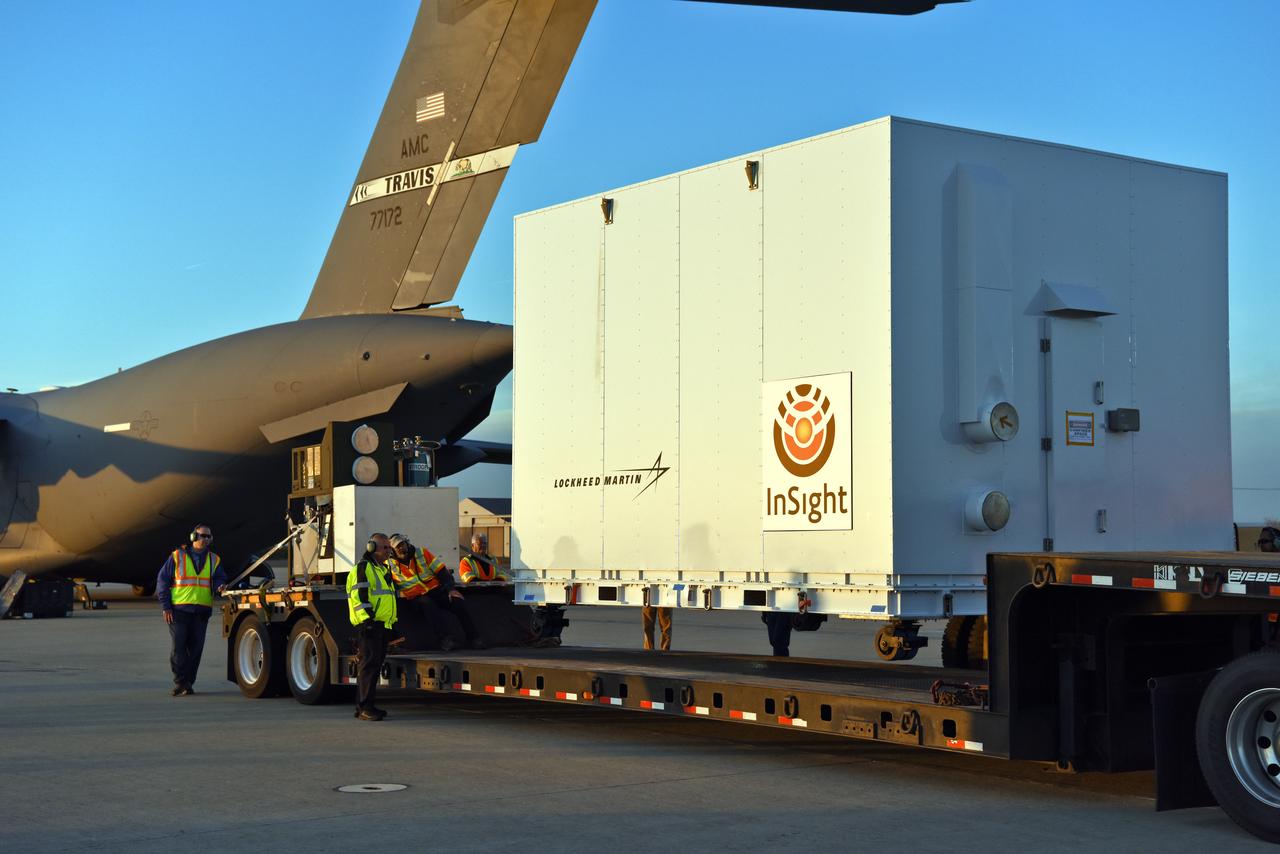
After a U.S. Air Force C-17 aircraft arrived at Vandenberg Air Force Base in California, ground crews loaded NASA's Interior Exploration using Seismic Investigations, Geodesy and Heat Transport, or InSight, spacecraft in a transport truck for delivery to the Astrotech processing facility. InSight was developed and built by Lockheed-Martin Space Systems in Denver, Colorado, and is scheduled for liftoff is May 5, 2018. InSight is the first mission to land on Mars and explore the Red Planet's deep interior. It will investigate processes that shaped the rocky planets of the inner solar system including Earth.
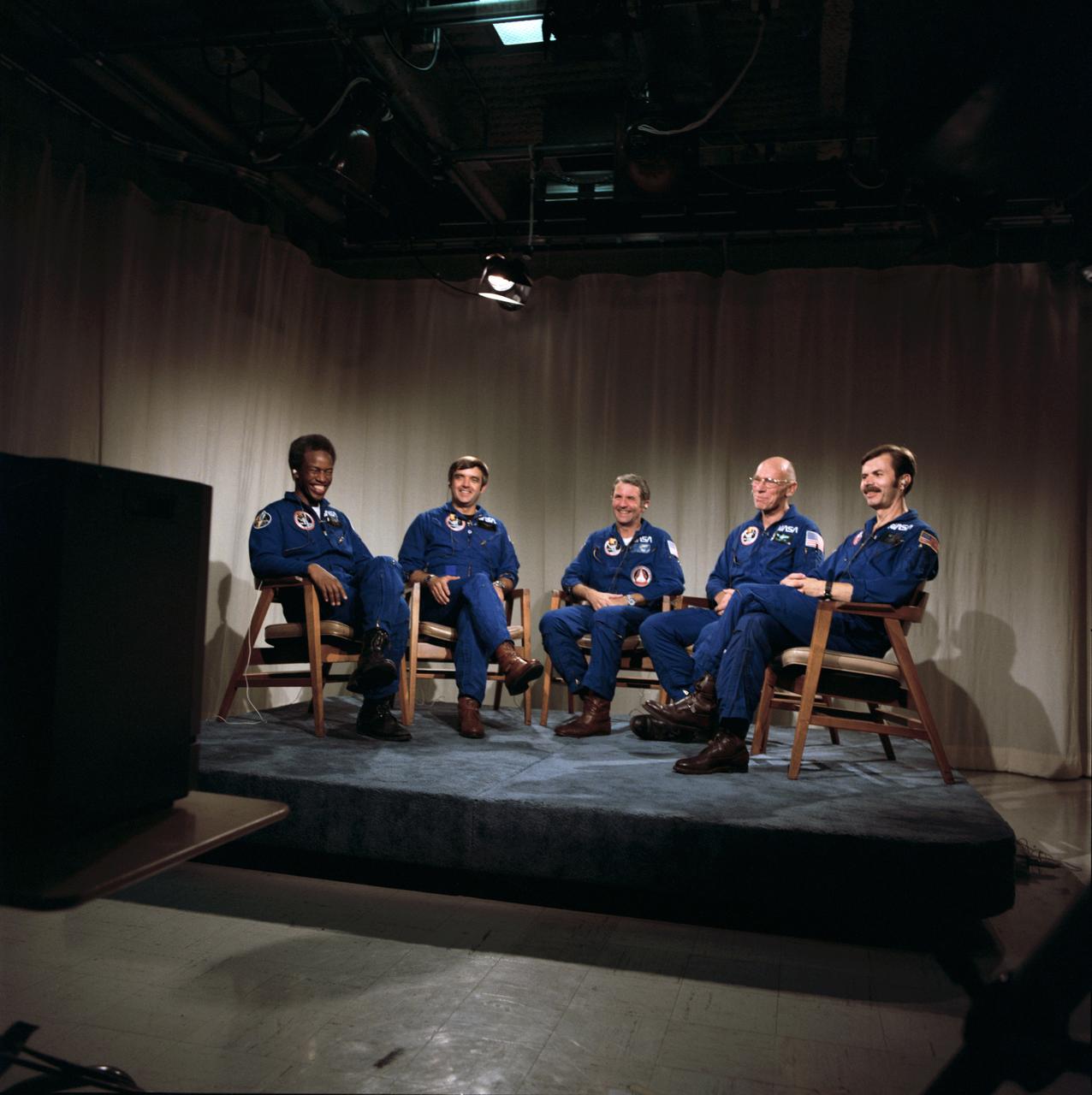
S83-39693 (5 Sept 1983) --- The five member astronaut crew of the Space Shuttle Challenger for STS-8 responds to a comment made by President Ronald Reagan during a post flight telephone conversation with the chief executive. The five astronauts earlier today landed the reusable spacecraft at Edwards Air Force Base in California and were flown to JSC via NASA aircraft. Richard H. Truly, center, is crew commander. Pilot for the six day flight was Daniel C. Brandenstein, second left. The mission specialist were Guion S. Bluford, left: Dr. William S. Thornton, second right, and Dale A. Gardner, right.
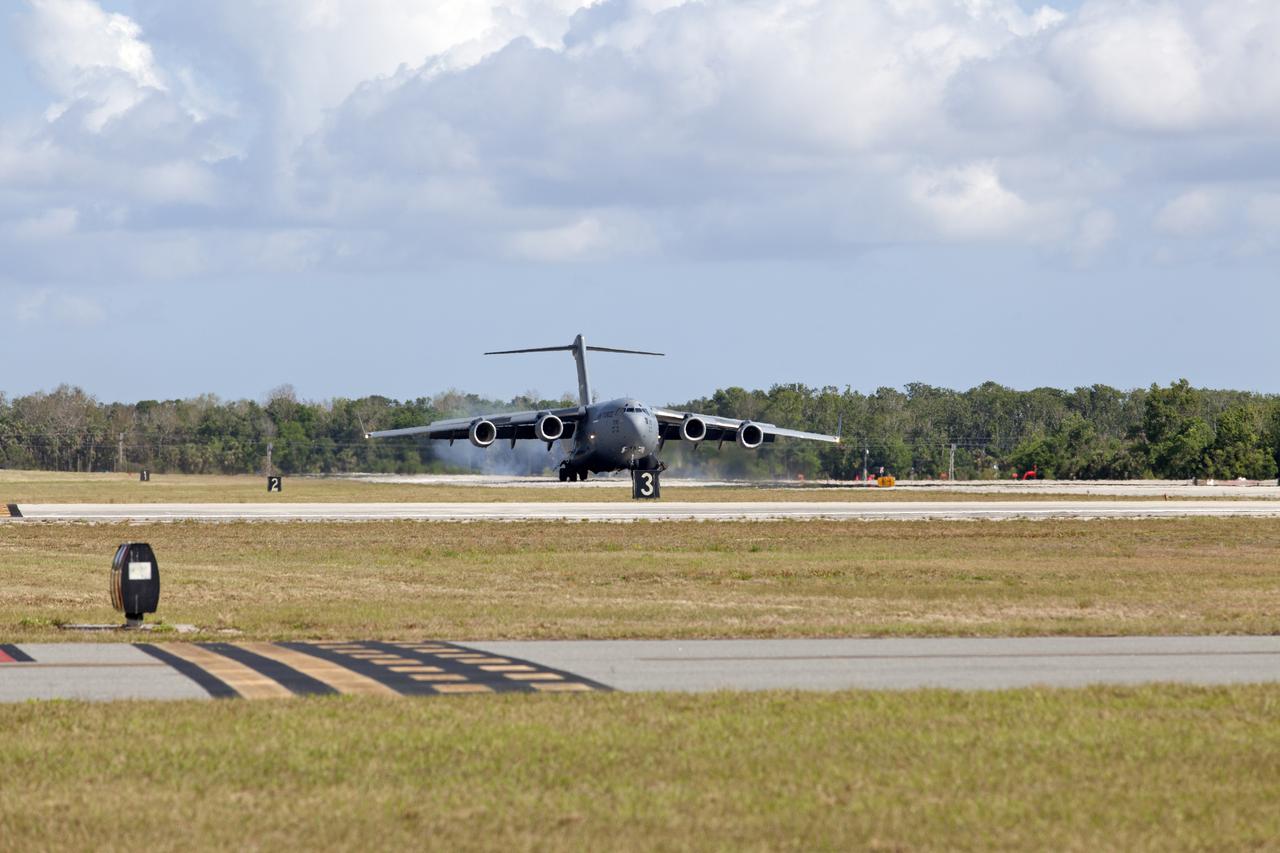
A U.S. Air Force C-5 transport aircraft touches down at Space Coast Regional Airport in Titusville, Florida, with NASA's Parker Solar Probe spacecraft aboard. The spacecraft will be offloaded and transported to the Astrotech processing facility near the agency's Kennedy Space Center. The Parker Solar Probe will launch on a United Launch Alliance Delta IV Heavy rocket from Space Launch Complex 37 at Cape Canaveral Air Force Station in Florida in July 2018. The mission will perform the closest-ever observations of a star when it travels through the Sun's atmosphere, called the corona. The probe will rely on measurements and imaging to revolutionize our understanding of the corona and the Sun-Earth connection.
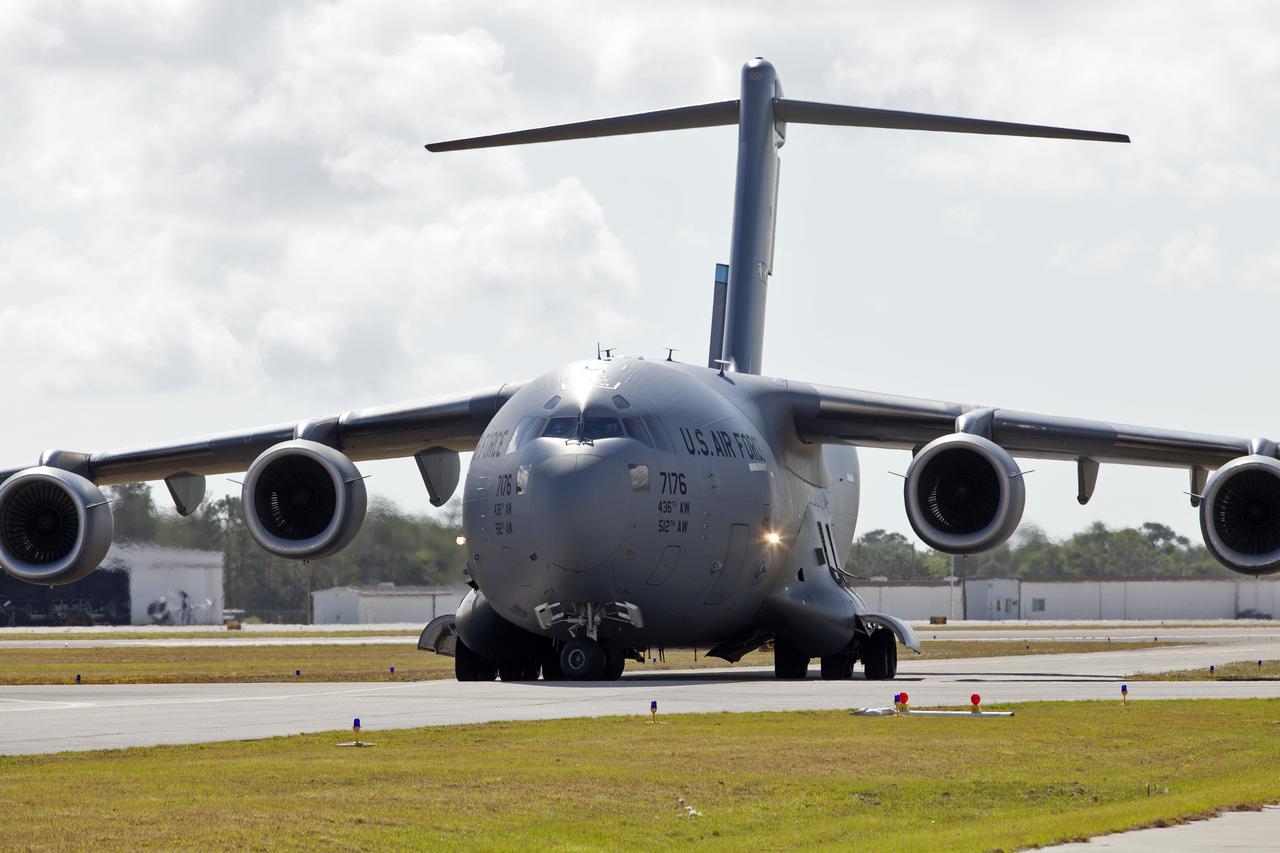
A U.S. Air Force C-5 transport aircraft arrives at Space Coast Regional Airport in Titusville, Florida, with NASA's Parker Solar Probe spacecraft aboard. The spacecraft will be offloaded and transported to the Astrotech processing facility near the agency's Kennedy Space Center. The Parker Solar Probe will launch on a United Launch Alliance Delta IV Heavy rocket from Space Launch Complex 37 at Cape Canaveral Air Force Station in Florida in July 2018. The mission will perform the closest-ever observations of a star when it travels through the Sun's atmosphere, called the corona. The probe will rely on measurements and imaging to revolutionize our understanding of the corona and the Sun-Earth connection.
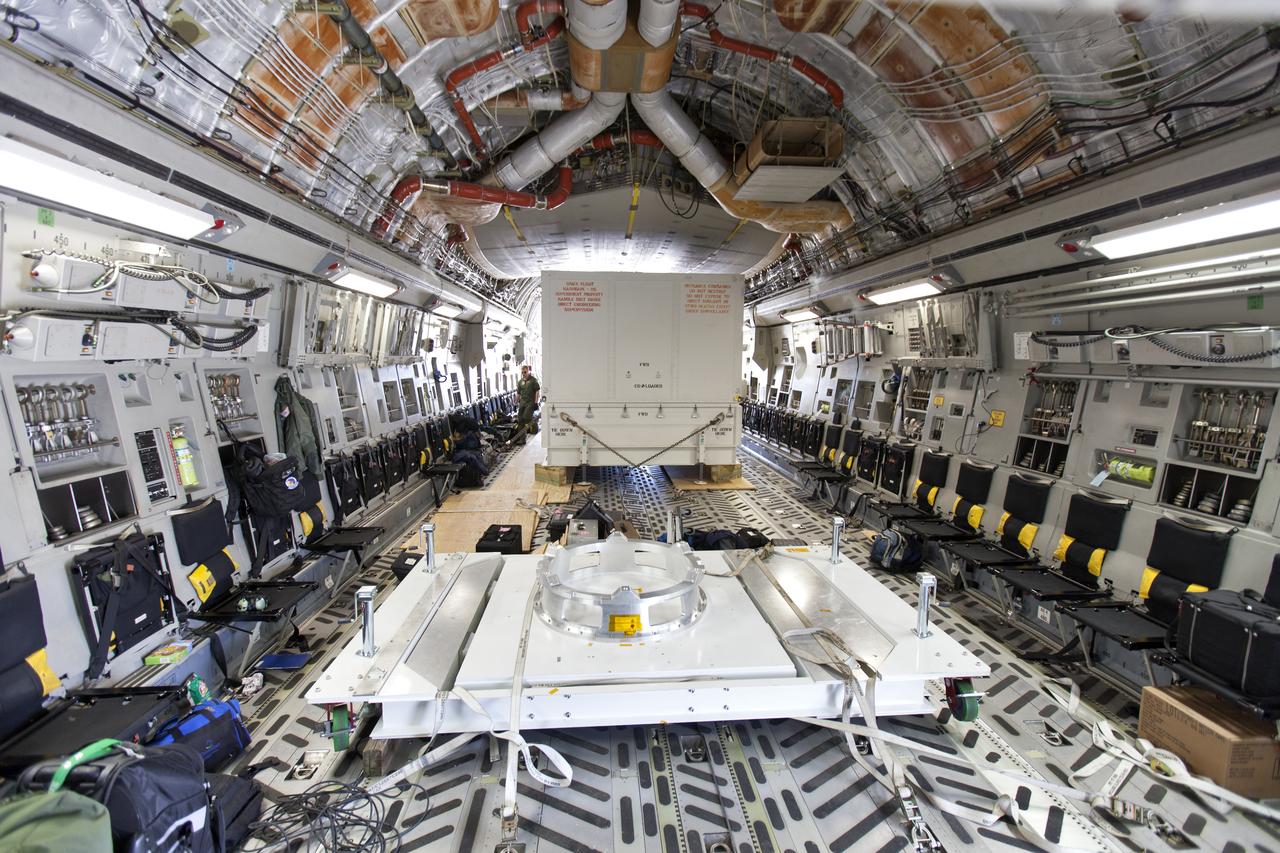
NASA's Parker Solar Probe, secured in its shipping container, arrives aboard a U.S. Air Force C-5 transport aircraft at Space Coast Regional Airport in Titusville, Florida. The spacecraft will be offloaded and transported to the Astrotech processing facility near the agency's Kennedy Space Center. The Parker Solar Probe will launch on a United Launch Alliance Delta IV Heavy rocket from Space Launch Complex 37 at Cape Canaveral Air Force Station in Florida in July 2018. The mission will perform the closest-ever observations of a star when it travels through the Sun's atmosphere, called the corona. The probe will rely on measurements and imaging to revolutionize our understanding of the corona and the Sun-Earth connection.
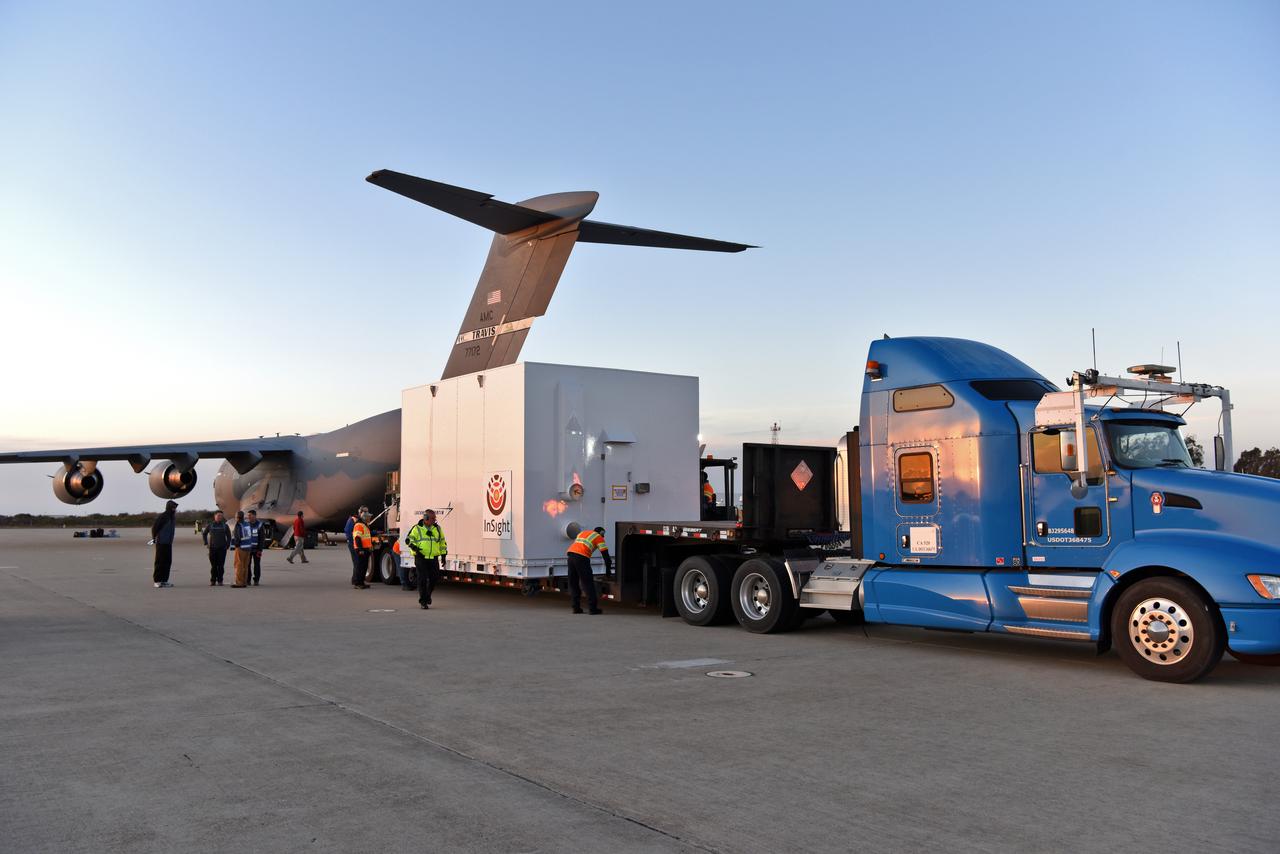
After a U.S. Air Force C-17 aircraft arrived at Vandenberg Air Force Base in California, ground crews loaded NASA's Interior Exploration using Seismic Investigations, Geodesy and Heat Transport, or InSight, spacecraft in a transport truck for delivery to the Astrotech processing facility. InSight was developed and built by Lockheed-Martin Space Systems in Denver, Colorado, and is scheduled for liftoff is May 5, 2018. InSight is the first mission to land on Mars and explore the Red Planet's deep interior. It will investigate processes that shaped the rocky planets of the inner solar system including Earth.
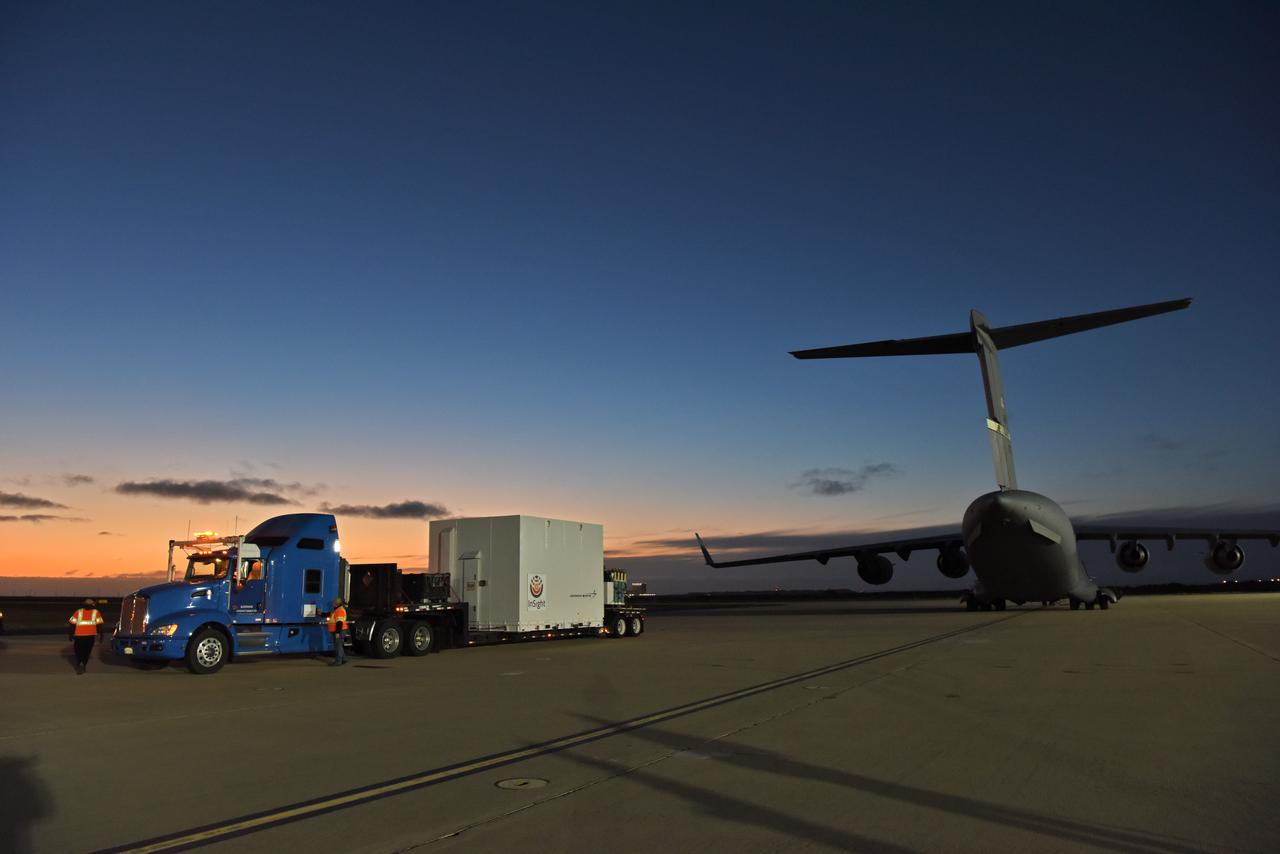
After a U.S. Air Force C-17 aircraft arrived at Vandenberg Air Force Base in California, ground crews loaded NASA's Interior Exploration using Seismic Investigations, Geodesy and Heat Transport, or InSight, spacecraft in a transport truck for delivery to the Astrotech processing facility. InSight was developed and built by Lockheed-Martin Space Systems in Denver, Colorado, and is scheduled for liftoff is May 5, 2018. InSight is the first mission to land on Mars and explore the Red Planet's deep interior. It will investigate processes that shaped the rocky planets of the inner solar system including Earth.
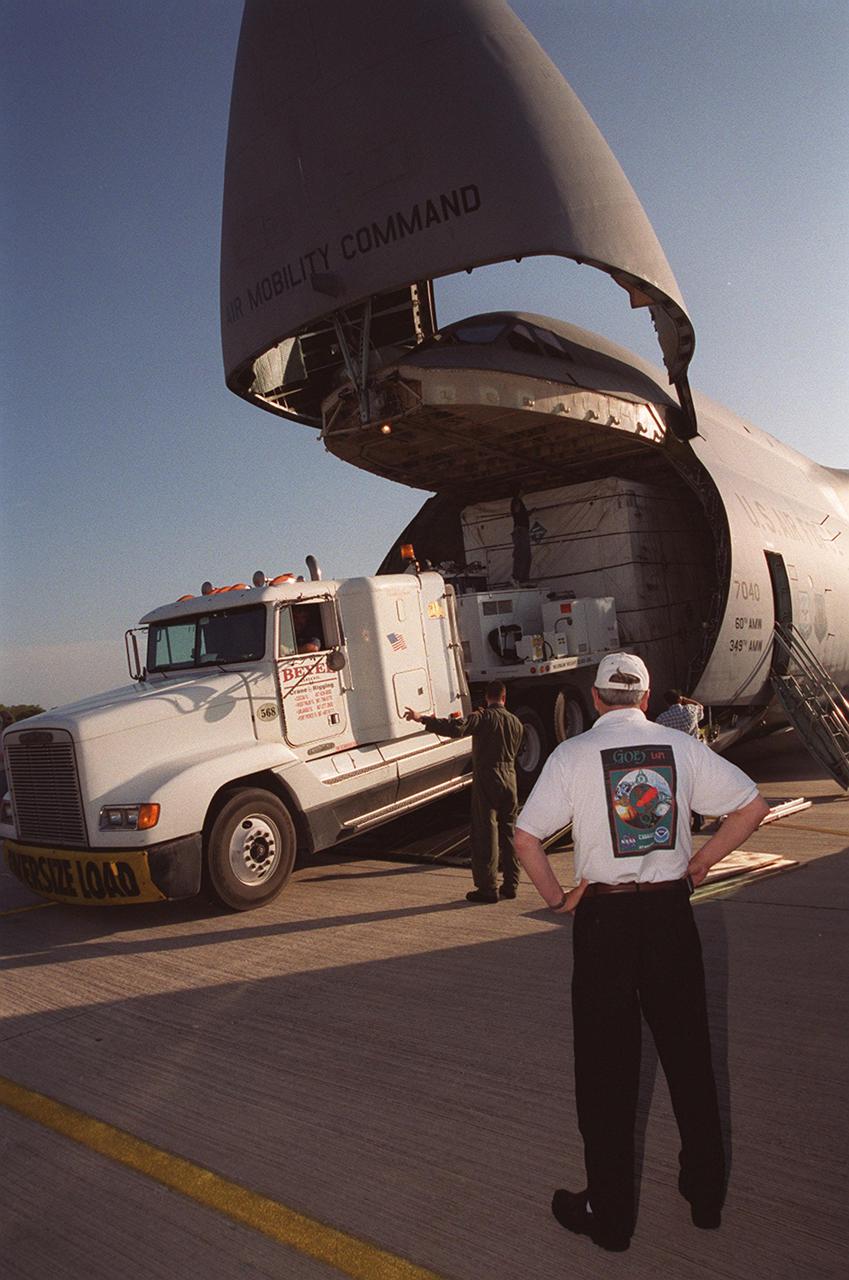
At the KSC Shuttle Landing Facility, a truck begins offloading the container with the GOES-M satellite from the yawning mouth of the C-5 aircraft. It will be transferred to Astrotech in Titusville, Fla., for final testing. The GOES-M (Geostationary Operational Environmental Satellite, I-M Series) provides weather imagery and quantitative sounding data used to support weather forecasting, severe storm tracking, and meteorological research. The satellite is scheduled to be launched on an Atlas-IIA booster, with a Centaur upper stage, July 12 from Launch Pad 36-A, Cape Canaveral Air Force Station
A C-17 cargo aircraft carrying NASA's InSight spacecraft flew from Buckley Air Force Base, Denver, to Vandenberg Air Force Base, California, on February 28, 2018. The spacecraft was being shipped from Lockheed Martin Space, Denver, where InSight was built and tested. Its launch period opens May 5, 2018. InSight, short for Interior Exploration using Seismic Investigations, Geodesy and Heat Transport, is the first mission dedicated to studying the deep interior of Mars. Its findings will advance understanding of the early history of all rocky planets, including Earth. https://photojournal.jpl.nasa.gov/catalog/PIA22251
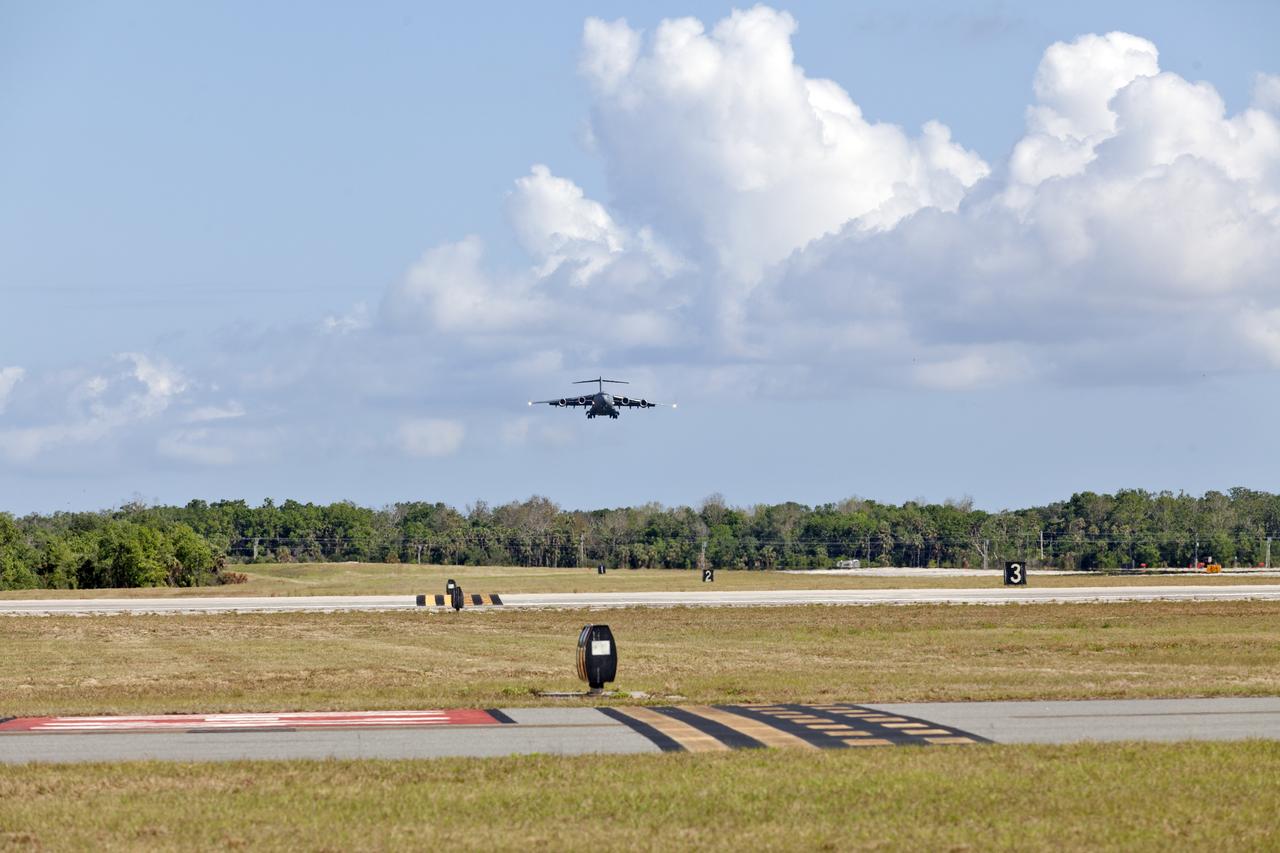
A U.S. Air Force C-5 transport aircraft approaches the runway for landing at Space Coast Regional Airport in Titusville, Florida, with NASA's Parker Solar Probe spacecraft aboard. The spacecraft will be offloaded and transported to the Astrotech processing facility near the agency's Kennedy Space Center. The Parker Solar Probe will launch on a United Launch Alliance Delta IV Heavy rocket from Space Launch Complex 37 at Cape Canaveral Air Force Station in Florida in July 2018. The mission will perform the closest-ever observations of a star when it travels through the Sun's atmosphere, called the corona. The probe will rely on measurements and imaging to revolutionize our understanding of the corona and the Sun-Earth connection.
NASA's Parker Solar Probe, secured in its shipping container, is offloaded from a U.S. Air Force C-5 transport aircraft at Space Coast Regional Airport in Titusville, Florida. The spacecraft will be transported to the Astrotech processing facility near the agency's Kennedy Space Center. The Parker Solar Probe will launch on a United Launch Alliance Delta IV Heavy rocket from Space Launch Complex 37 at Cape Canaveral Air Force Station in Florida in July 2018. The mission will perform the closest-ever observations of a star when it travels through the Sun's atmosphere, called the corona. The probe will rely on measurements and imaging to revolutionize our understanding of the corona and the Sun-Earth connection.
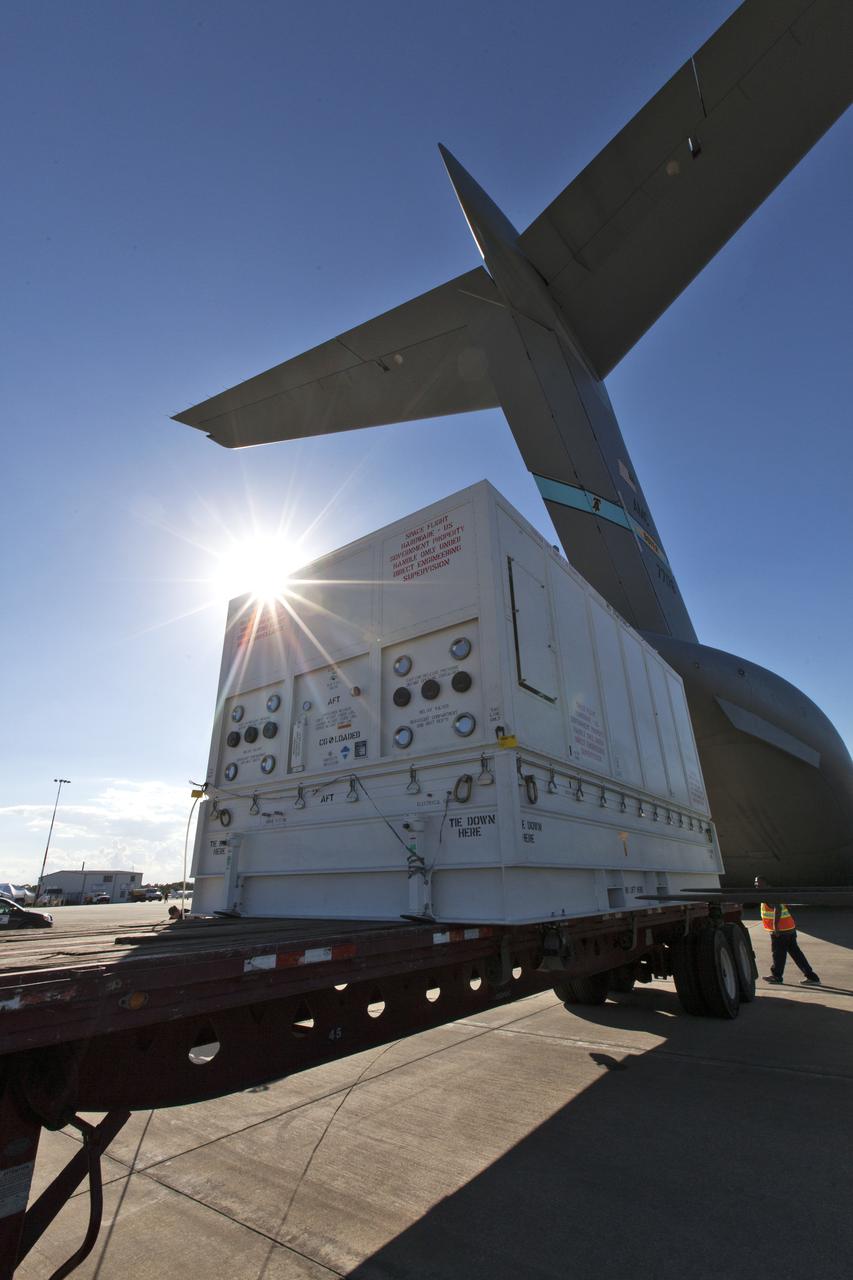
NASA's Parker Solar Probe, secured in its shipping container, has been offloaded from a U.S. Air Force C-5 transport aircraft at Space Coast Regional Airport in Titusville, Florida. The spacecraft will be transported to the Astrotech processing facility near the agency's Kennedy Space Center. The Parker Solar Probe will launch on a United Launch Alliance Delta IV Heavy rocket from Space Launch Complex 37 at Cape Canaveral Air Force Station in Florida in July 2018. The mission will perform the closest-ever observations of a star when it travels through the Sun's atmosphere, called the corona. The probe will rely on measurements and imaging to revolutionize our understanding of the corona and the Sun-Earth connection.
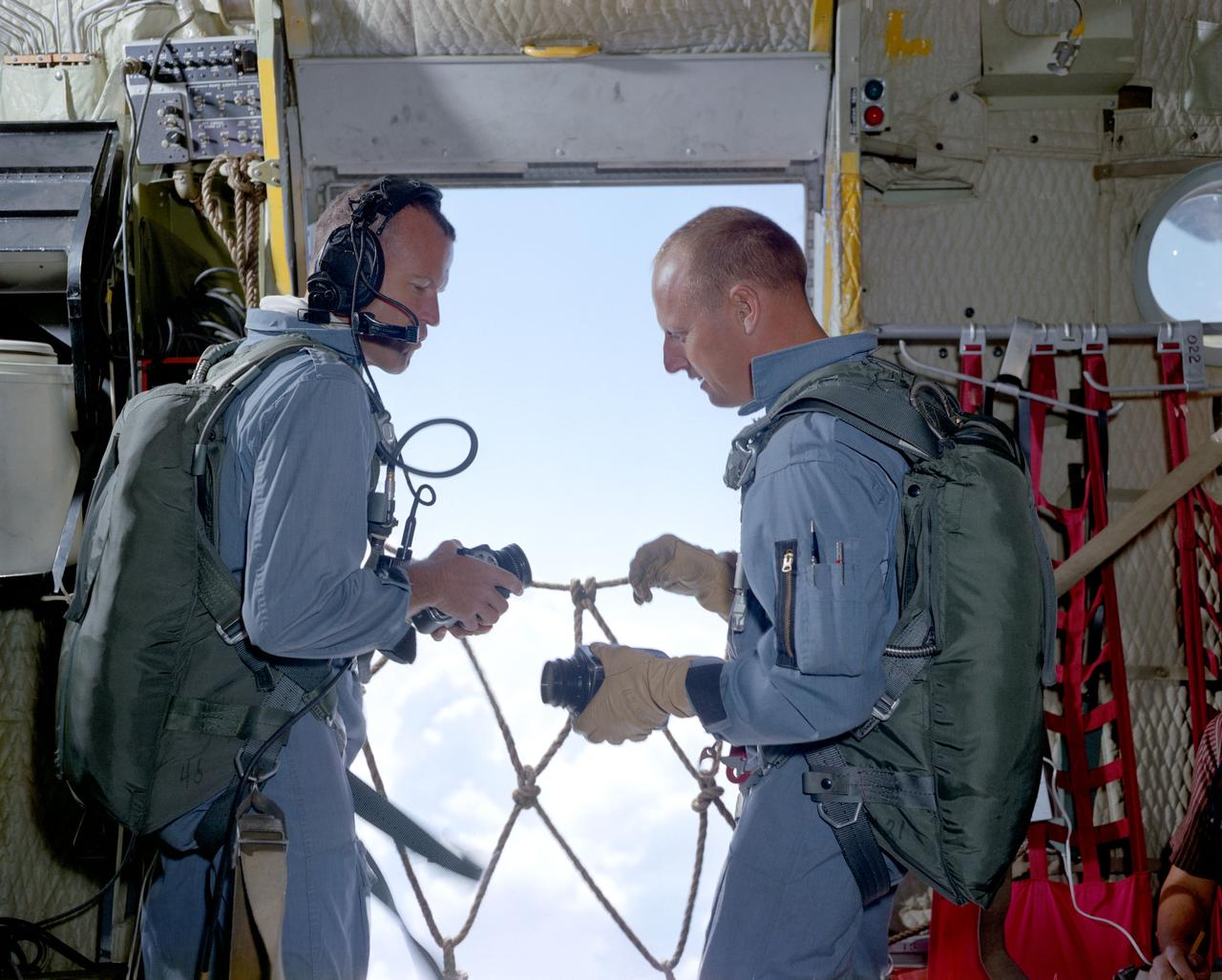
S65-35563 (18 June 1965) --- Astronauts L. Gordon Cooper Jr. (left), command pilot; and Charles Conrad Jr., pilot, the prime crew of the Gemini-5 spaceflight, prepare their cameras while aboard a C-130 aircraft flying near Laredo, Texas. The two astronauts are taking part in a series of visual acuity experiments to aid them in learning to identify known terrestrial features under controlled conditions. Knowledge gained from these experiments will have later application for space pilots identifying terrestrial features from space. Dr. John Billingham, chief, Environmental Physiology Branch, Crew Systems Division, is in charge of the Visual Acuity Experiments.
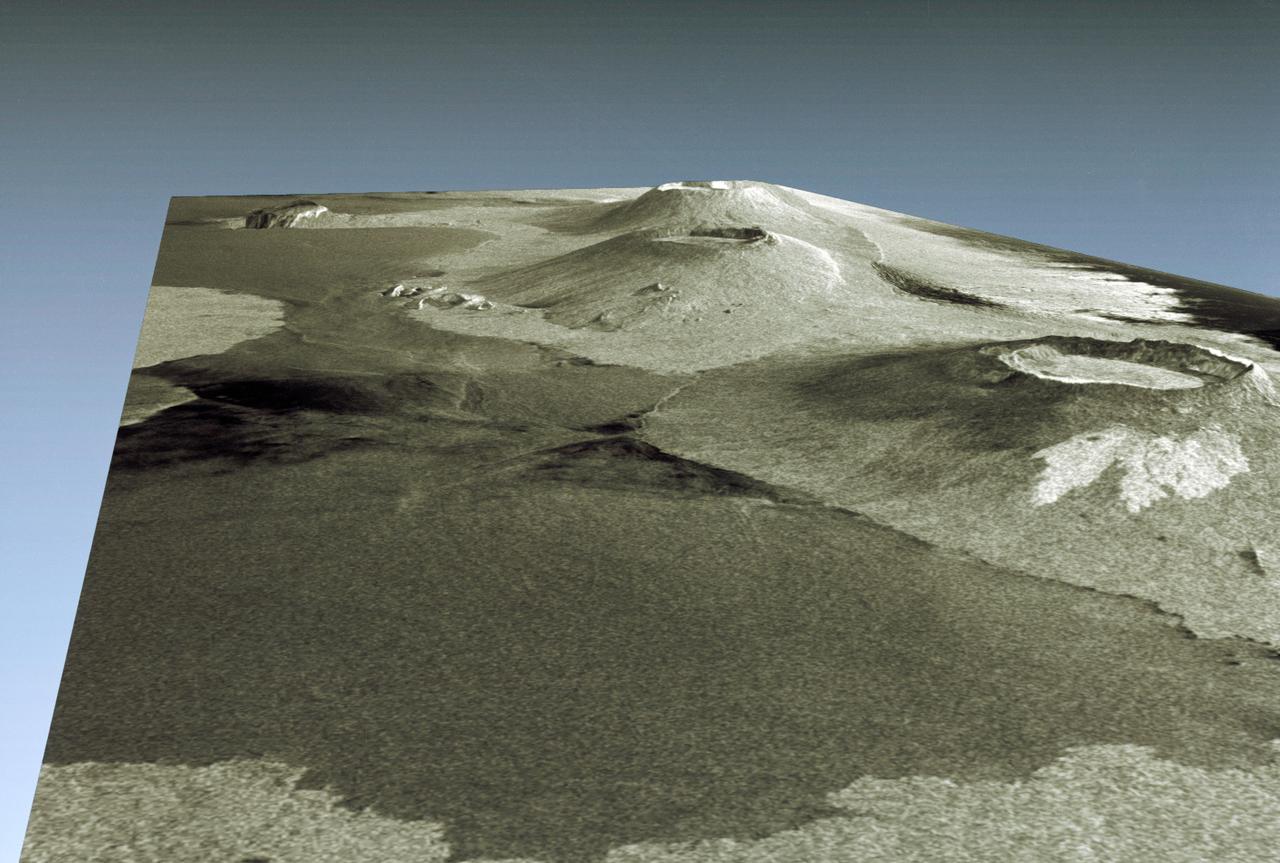
STS059-S-085 (18 April 1994) --- This is a three-dimensional perspective view of part of Isla Isabela in the western Galapagos Islands. It was taken by the L-Band radar in HH polarization from the Spaceborne Imaging Radar-C and X-Band Synthetic Aperture Radar (SIR-C/X-SAR) on the 40th orbit of the Space Shuttle Endeavour. This view was constructed by overlaying a SIR-C radar image on a U.S. Geological Survey digital elevation map. The image is centered at about .5 degrees south latitude and 91 degrees west longitude, and covers an area of 75 by 60 kilometers. The radar incidence angle at the center of the image is about 20 degrees. The western Galapagos Islands, which lie about 1200 kilometers west of Ecuador in the eastern Pacific, have six active volcanoes similar to the volcanoes found in Hawaii. Since the time of Charles Darwin's visit to the area in 1835, there have been over 60 recorded eruptions on these volcanoes. This SIR-C/X-SAR image of Alcedo and Sierra Negra volcanoes shows the rougher lava flows as bright features, while ash deposits and smooth pahoehoe lava flows appear dark. The Galapagos Islands are one of the SIR-C/X-SAR supersites and data of this area will be taken several times during the flight to allow scientists to conduct topographic change studies and to search for different lava flow types, ash deposits and fault lines. SIR-C/X-SAR is part of NASA's Mission to Planet Earth (MTPE). SIR-C/X-SAR radars illuminate Earth with microwaves allowing detailed observations at any time, regardless of weather or sunlight conditions. SIR-C/X-SAR uses three microwave wavelengths: L-Band (24 cm), C-Band (6 cm), and X-Band (3 cm). The multi-frequency data will be used by the international scientific community to better understand the global environment and how it is changing. The SIR-C/X-SAR data, complemented by aircraft and ground studies, will give scientists clearer insights into those environmental changes which are caused by nature and those changes which are induced by human activity. SIR-C was developed by NASA's Jet Propulsion Laboratory (JPL). X-SAR was developed by the Dornire and Alenia Spazio Companies for the German Space Agency, Deutsche Agentur fuer Raumfahrtangelegenheiten (DARA), and the Italian Space Agency, Agenzia Spaziale Italiana (ASI). JPL Photo ID: P-43938
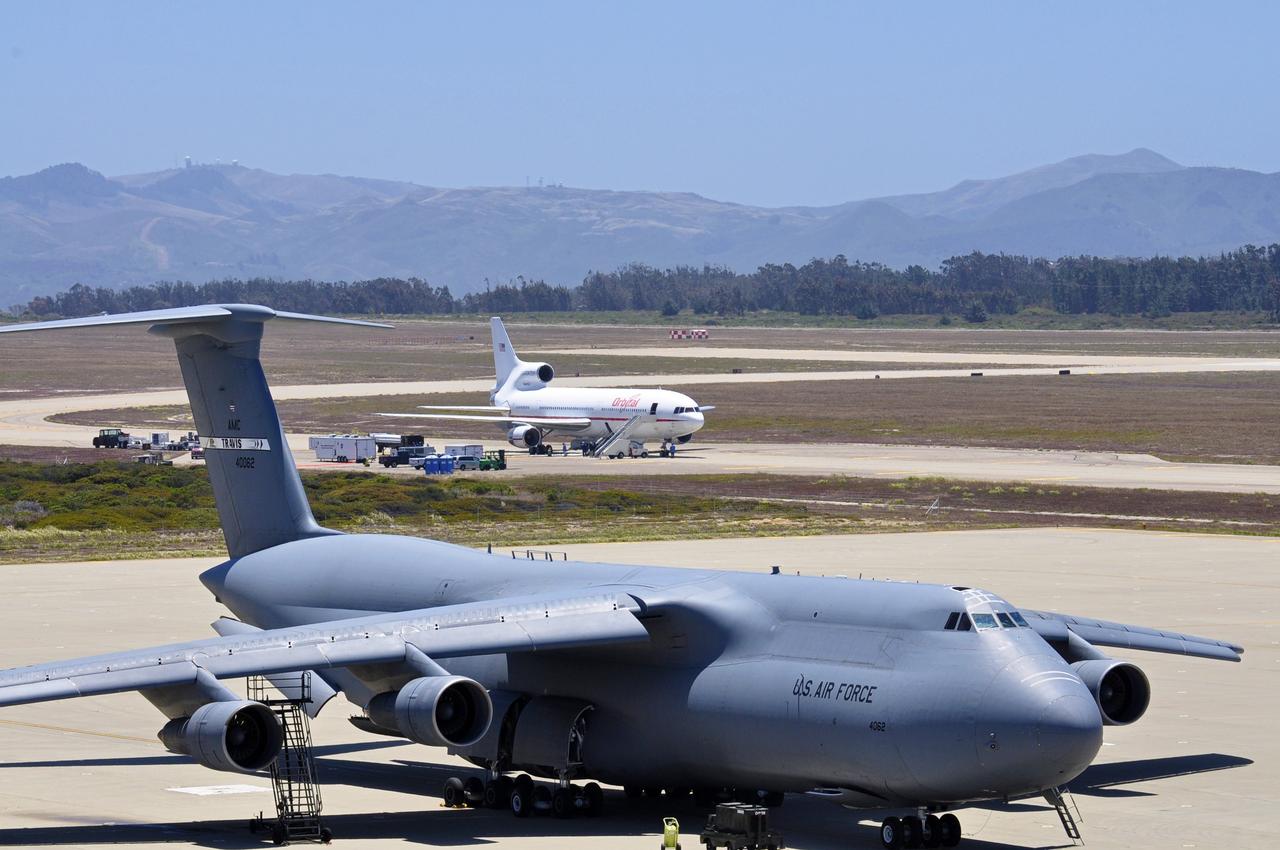
VANDENBERG AIR FORCE BASE, Calif. – A U.S. Air Force C-5 Galaxy cargo aircraft, foreground, sits on the tarmac at Vandenberg Air Force Base in California as final preparations are under way for the departure of Orbital Sciences’ L-1011 carrier aircraft for the U.S. Army's Ronald Reagan Ballistic Missile Defense Test Site on Kwajalein Atoll, part of the Marshall Islands in the Pacific Ocean. Orbital’s L-1011 is transporting their Pegasus rocket and NASA’s Nuclear Spectroscopic Telescope Array, or NuSTAR, to Kwajalein for launch. The Pegasus, mated to its NuSTAR payload, will be launched from the carrier aircraft 117 nautical miles south of Kwajalein at latitude 6.75 degrees north of the equator. The high-energy X-ray telescope will conduct a census of black holes, map radioactive material in young supernovae remnants, and study the origins of cosmic rays and the extreme physics around collapsed stars. Launch is scheduled for June 13. For more information, visit http://www.nasa.gov/nustar. Photo credit: NASA/Randy Beaudoin, VAFB
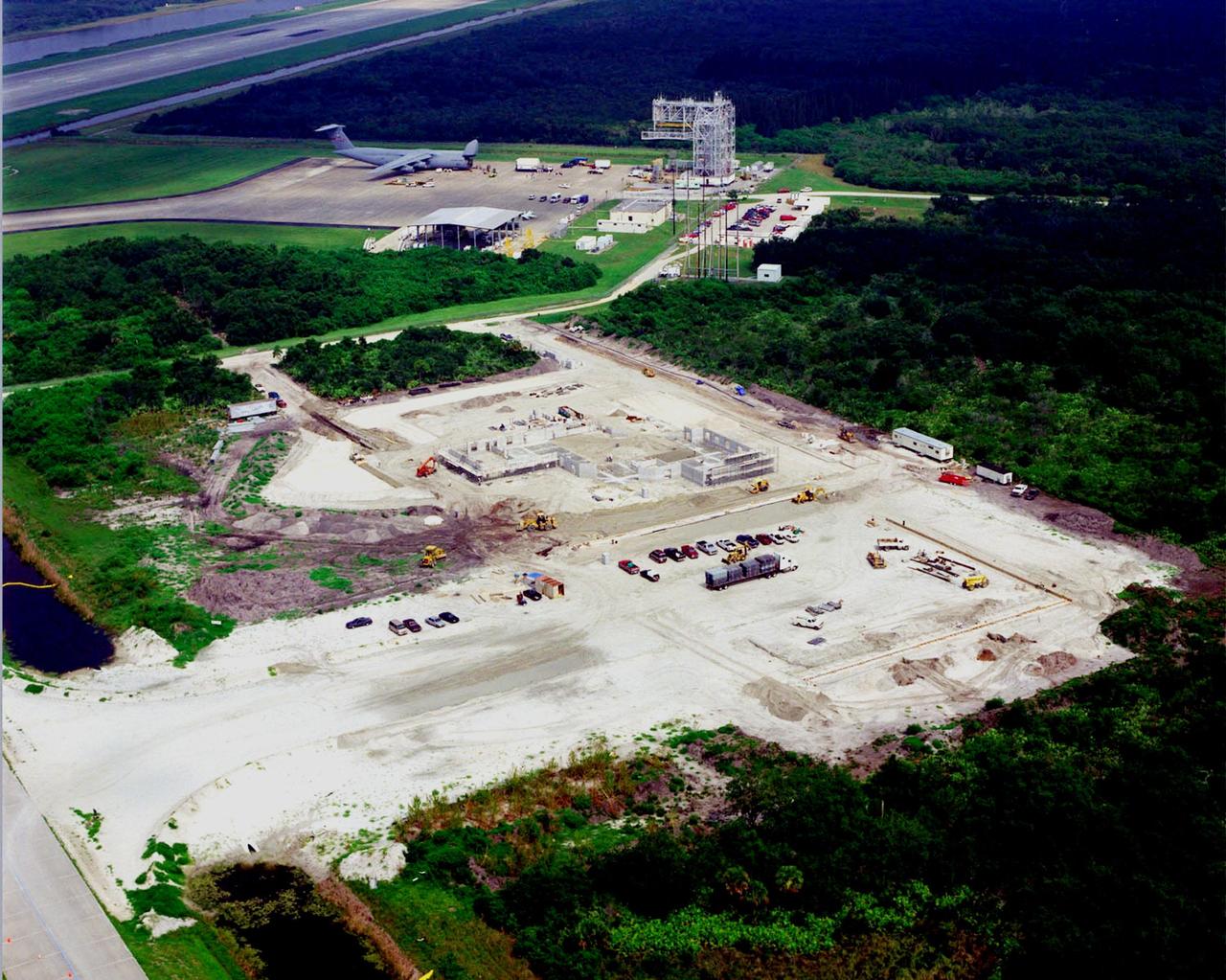
This aerial view shows the construction of a multi-purpose hangar, which is part of the $8 million Reusable Launch Vehicle (RLV) Support Complex at Kennedy Space Center. In the background is the Shuttle Landing Facility, with (left) a C-5 air cargo plane, the offloaded canister in front of it containing the Multi-Purpose Logistics Module Raffaello, and (right) the mate/demate tower that is used when an orbiter is transported to and from KSC atop a modified Boeing 747. The RLV complex will also include facilities for related ground support equipment and administrative/ technical support. It will be available to accommodate the Space Shuttle; the X-34 RLV technology demonstrator; the L-1011 carrier aircraft for Pegasus and X-34; and other RLV and X-vehicle programs. The complex is jointly funded by the Spaceport Florida Authority, NASA's Space Shuttle Program and KSC. The facility will be operational in early 2000.
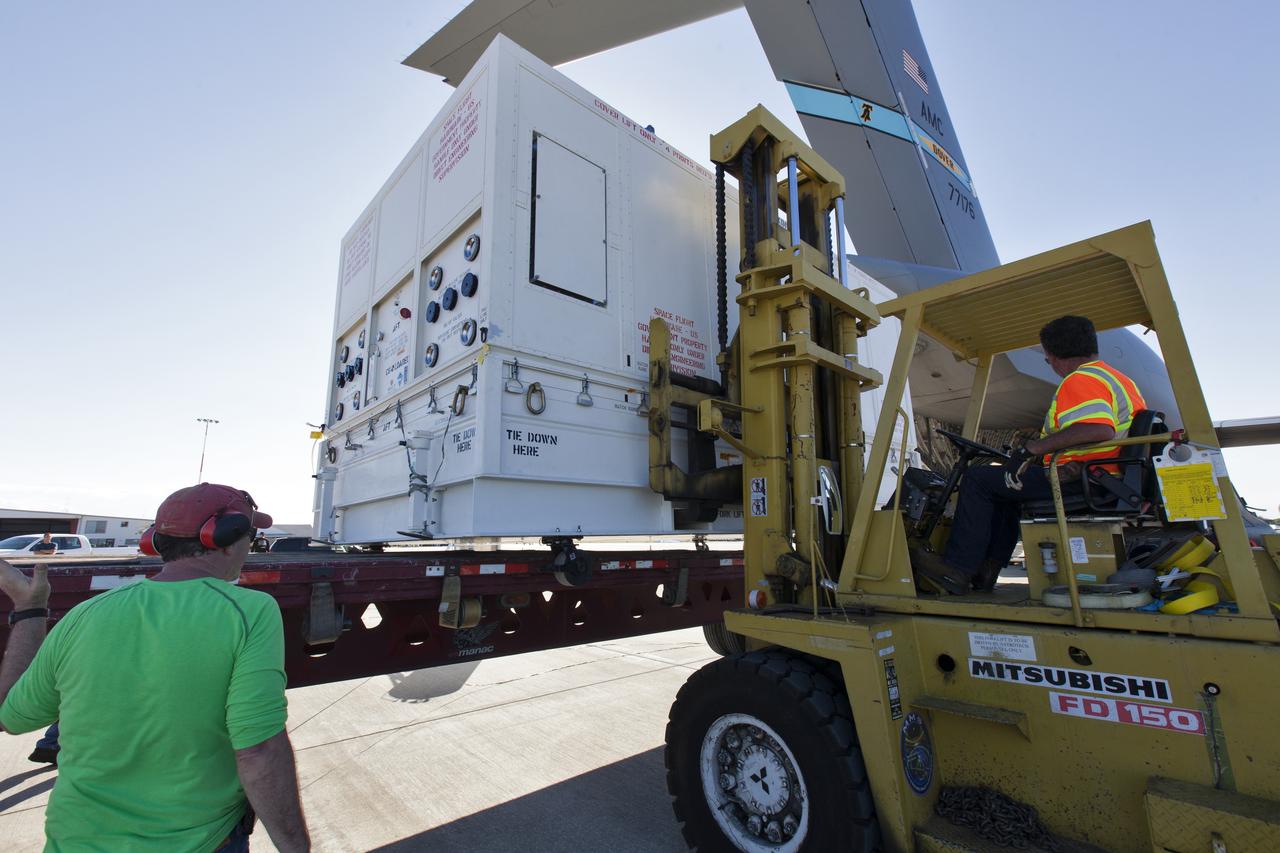
A forklift operator latches onto the shipping container with NASA's Parker Solar Probe inside, after it was offloaded from a U.S. Air Force C-5 transport aircraft at Space Coast Regional Airport in Titusville, Florida. The spacecraft will be transported to the Astrotech processing facility near the agency's Kennedy Space Center. The Parker Solar Probe will launch on a United Launch Alliance Delta IV Heavy rocket from Space Launch Complex 37 at Cape Canaveral Air Force Station in Florida in July 2018. The mission will perform the closest-ever observations of a star when it travels through the Sun's atmosphere, called the corona. The probe will rely on measurements and imaging to revolutionize our understanding of the corona and the Sun-Earth connection.
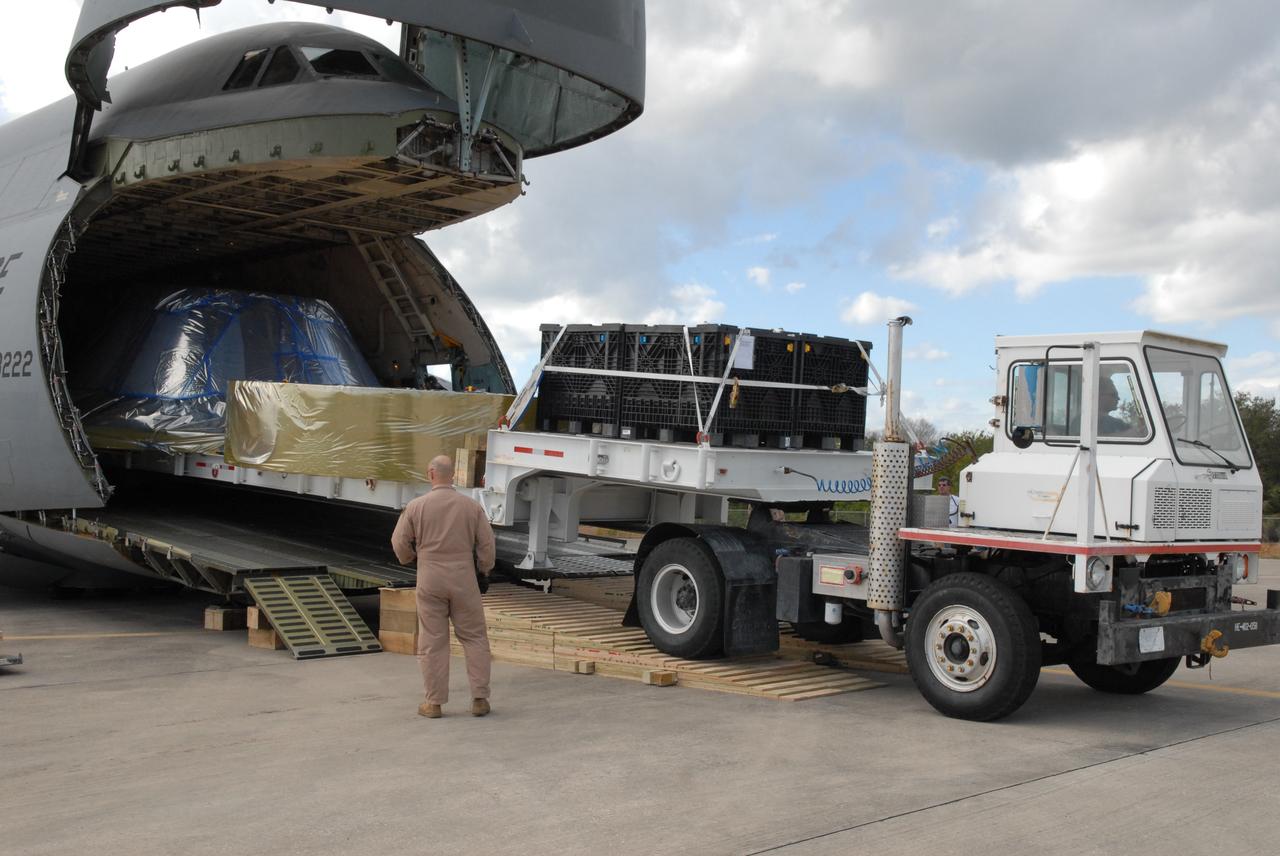
CAPE CANAVERAL, Fla. – At the Shuttle Landing Facility at NASA's Kennedy Space Center in Florida, hardware that will be used in the launch of the Ares I-X rocket is being offloaded from the C-5 aircraft. The hardware consists of a precisely machined, full-scale simulator crew module and launch abort system to form the tip of NASA's Ares I-X rocket. The launch of the 321-foot-tall, full-scale Ares I-X, targeted for July 2009, will be the first in a series of unpiloted rocket launches from Kennedy. When fully developed, the 16-foot diameter crew module will furnish living space and reentry protection for the astronauts, while their launch abort system will provide safe evacuation if a launch vehicle failure occurs. Photo credit: NASA/Jack Pfaller
CAPE CANAVERAL, Fla. – At the Shuttle Landing Facility at NASA's Kennedy Space Center in Florida, hardware that will be used in the launch of the Ares I-X rocket is being offloaded from the C-5 aircraft. The hardware consists of a precisely machined, full-scale simulator crew module and launch abort system to form the tip of NASA's Ares I-X rocket. The launch of the 321-foot-tall, full-scale Ares I-X, targeted for July 2009, will be the first in a series of unpiloted rocket launches from Kennedy. When fully developed, the 16-foot diameter crew module will furnish living space and reentry protection for the astronauts, while their launch abort system will provide safe evacuation if a launch vehicle failure occurs. Photo credit: NASA/Jack Pfaller
CAPE CANAVERAL, Fla. – At the Shuttle Landing Facility at NASA's Kennedy Space Center in Florida, hardware that will be used in the launch of the Ares I-X rocket is being offloaded from the C-5 aircraft. The hardware consists of a precisely machined, full-scale simulator crew module and launch abort system to form the tip of NASA's Ares I-X rocket. The launch of the 321-foot-tall, full-scale Ares I-X, targeted for July 2009, will be the first in a series of unpiloted rocket launches from Kennedy. When fully developed, the 16-foot diameter crew module will furnish living space and reentry protection for the astronauts, while their launch abort system will provide safe evacuation if a launch vehicle failure occurs. Photo credit: NASA/Jack Pfaller
CAPE CANAVERAL, Fla. - At NASA's Kennedy Space Center in Florida, U.S. Air Force C-5 aircraft lands at the Shuttle Landing Facility, delivering the ExPRESS Logistics Carrier 3, or ELC-3. ELC-3 and the Alpha Magnetic Spectrometer are the primary payloads for space shuttle Endeavour's STS-134 mission to the International Space Station. The STS-134 crew will also deliver spare parts including two S-band communications antennas, a high pressure gas tank, additional spare parts for Dextre and micrometeoroid debris shields. Endeavour's launch is targeted for July 29, 2010. For information on the STS-134 mission objectives and crew, visit http://www.nasa.gov/shuttle. Photo credit: NASA/Kim Shiflett
NASA’s Surface Water and Ocean Topography (SWOT) satellite arrives from France aboard a U.S. Air Force C-5 Galaxy aircraft at Vandenberg Space Force Base in California, on Oct. 16, 2022. Teams will transport the satellite to Astrotech Space Operations facility to begin final preparations for the spacecraft’s December launch atop a SpaceX Falcon 9 rocket from Vandenberg’s Space Launch Center-4 East. Jointly developed by NASA and Centre National D'Etudes Spatiales, with contributions from the Canadian Space Agency (CSA) and United Kingdom Space Agency, SWOT is the first satellite mission that will observe nearly all water on Earth’s surface, measuring the height of water in the planet’s lakes, rivers, reservoirs, and the ocean.

CAPE CANAVERAL, Fla. – A C-5 aircraft arrives at the Shuttle Landing Facility at NASA's Kennedy Space Center in Florida carrying hardware that will be used in the launch of the Ares I-X rocket. The hardware consists of a precisely machined, full-scale simulator crew module and launch abort system to form the tip of NASA's Ares I-X rocket. The launch of the 321-foot-tall, full-scale Ares I-X, targeted for July 2009, will be the first in a series of unpiloted rocket launches from Kennedy. When fully developed, the 16-foot diameter crew module will furnish living space and reentry protection for the astronauts, while their launch abort system will provide safe evacuation if a launch vehicle failure occurs. Photo credit: NASA/Jack Pfaller
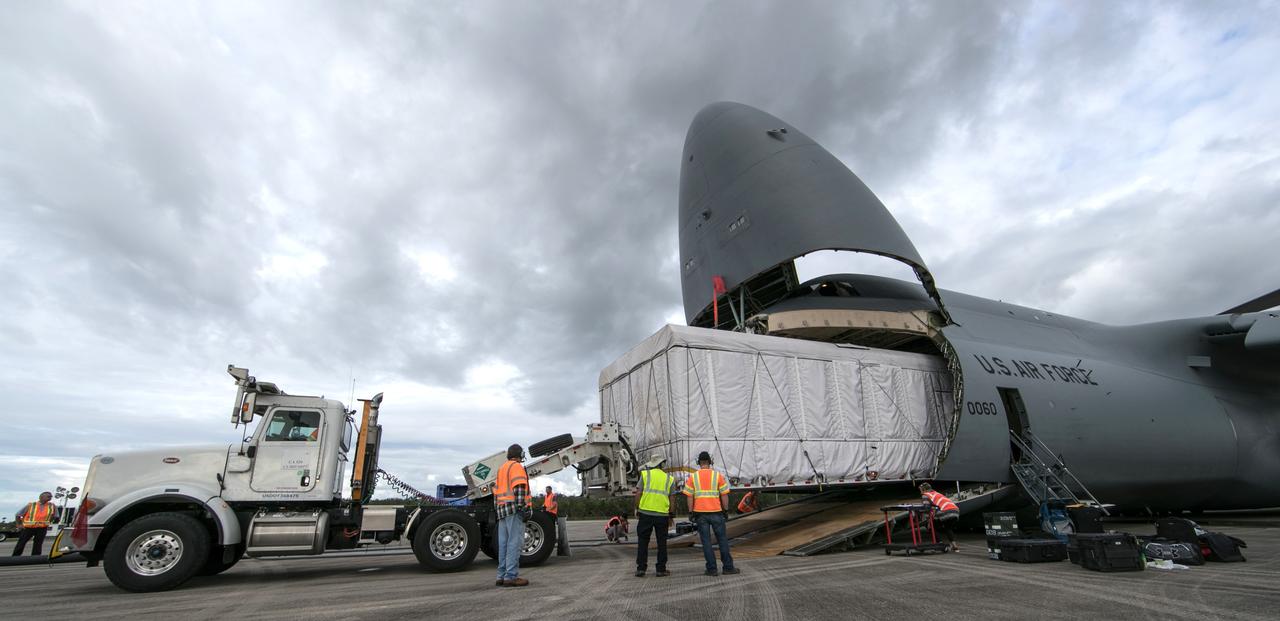
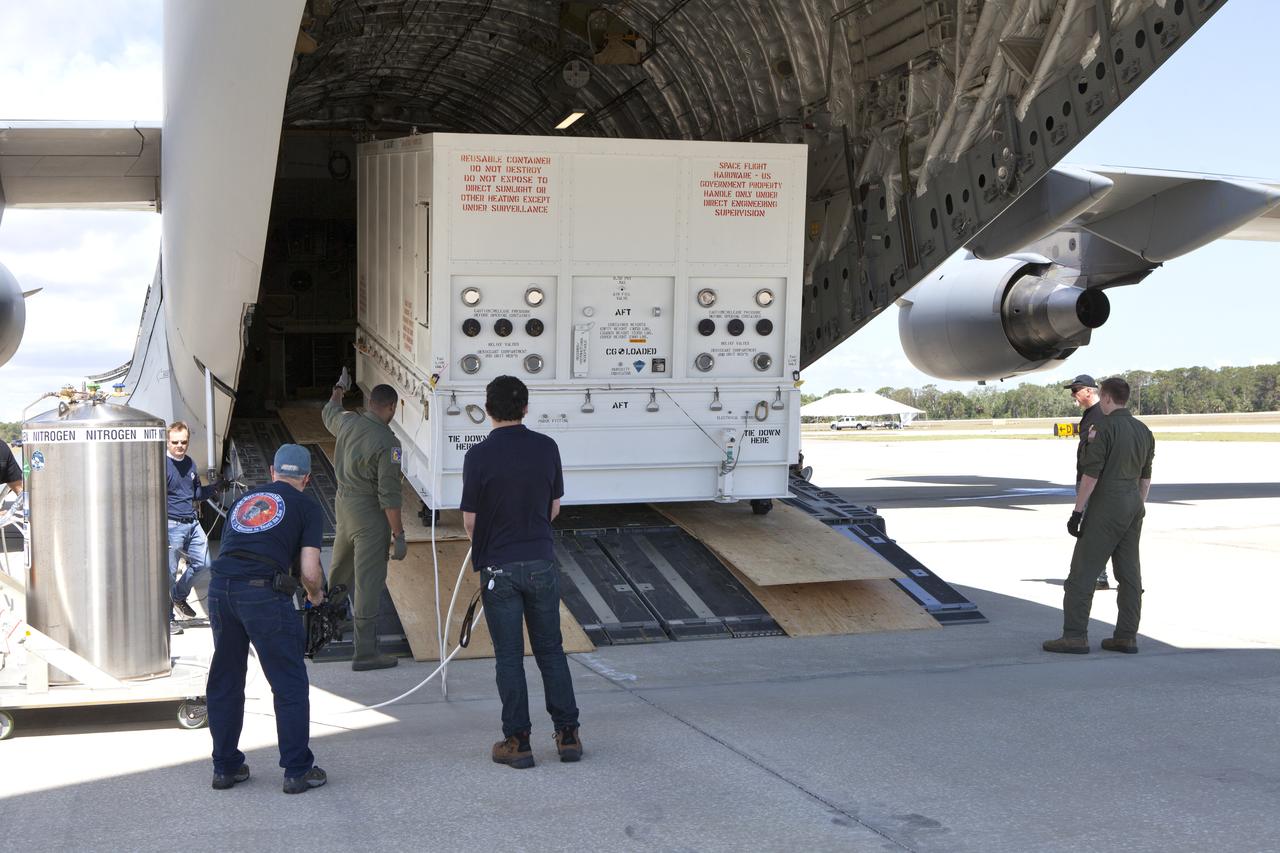
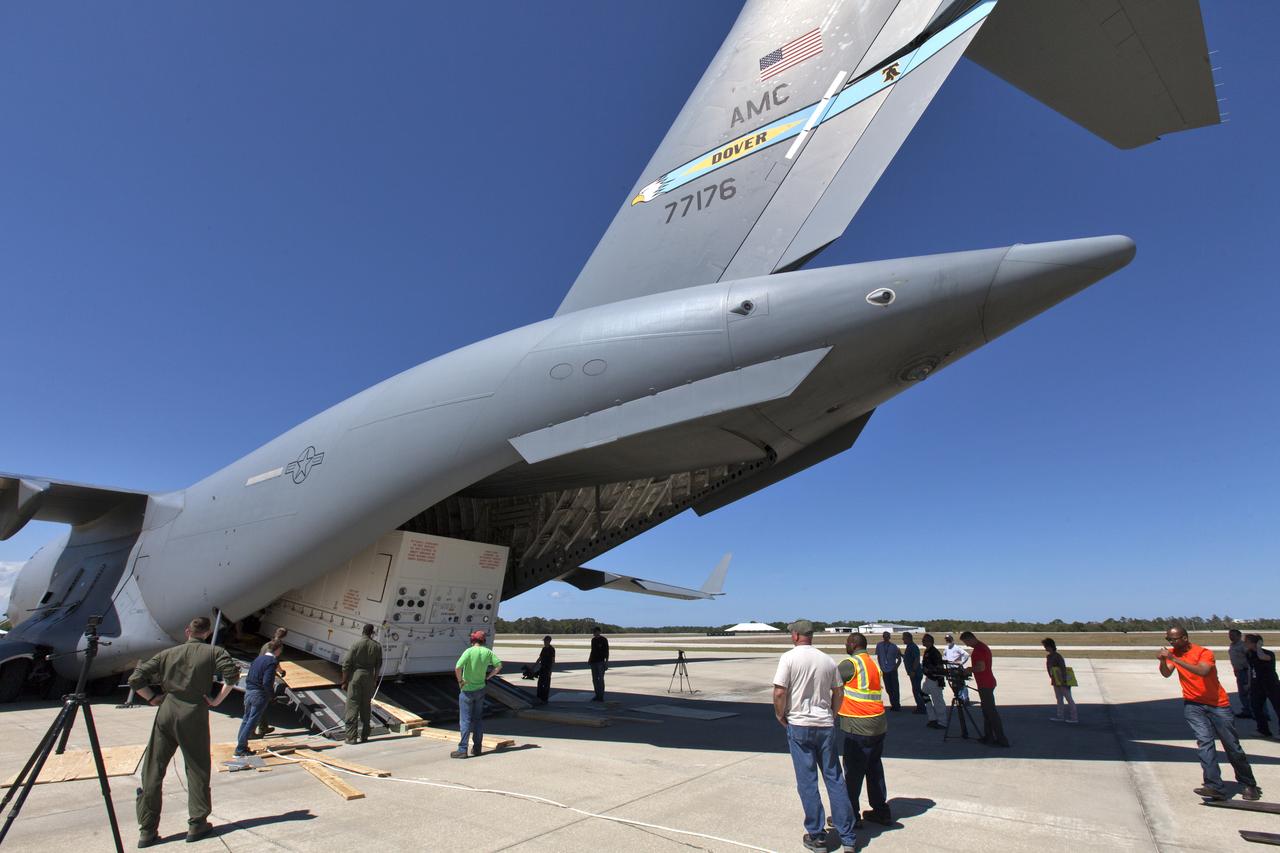
NOAA's Geostationary Operation Environmental Satellite-S (GOES-S) is being offloaded from a C-5 transport aircraft onto the flatbed of a heavy-lift truck at the Shuttle Landing Facility at NASA's Kennedy Space Center in Florida. The satellite will be transported to the Astrotech Space Operations facility in Titusville, Florida to prepare it for launch. GOES-S is the second in a series of four advanced geostationary weather satellites. The GOES-R series - consisting of the GOES-R, GOES-S, GOES-T and GOES-U spacecraft - will significantly improve the detection and observation of environmental phenomena that directly affect public safety, protection of property and the nation's economic health and prosperity. GOES-S is slated to launch March 1, 2018 aboard a United Launch Alliance Atlas V rocket from Cape Canaveral Air Force Station in Florida.
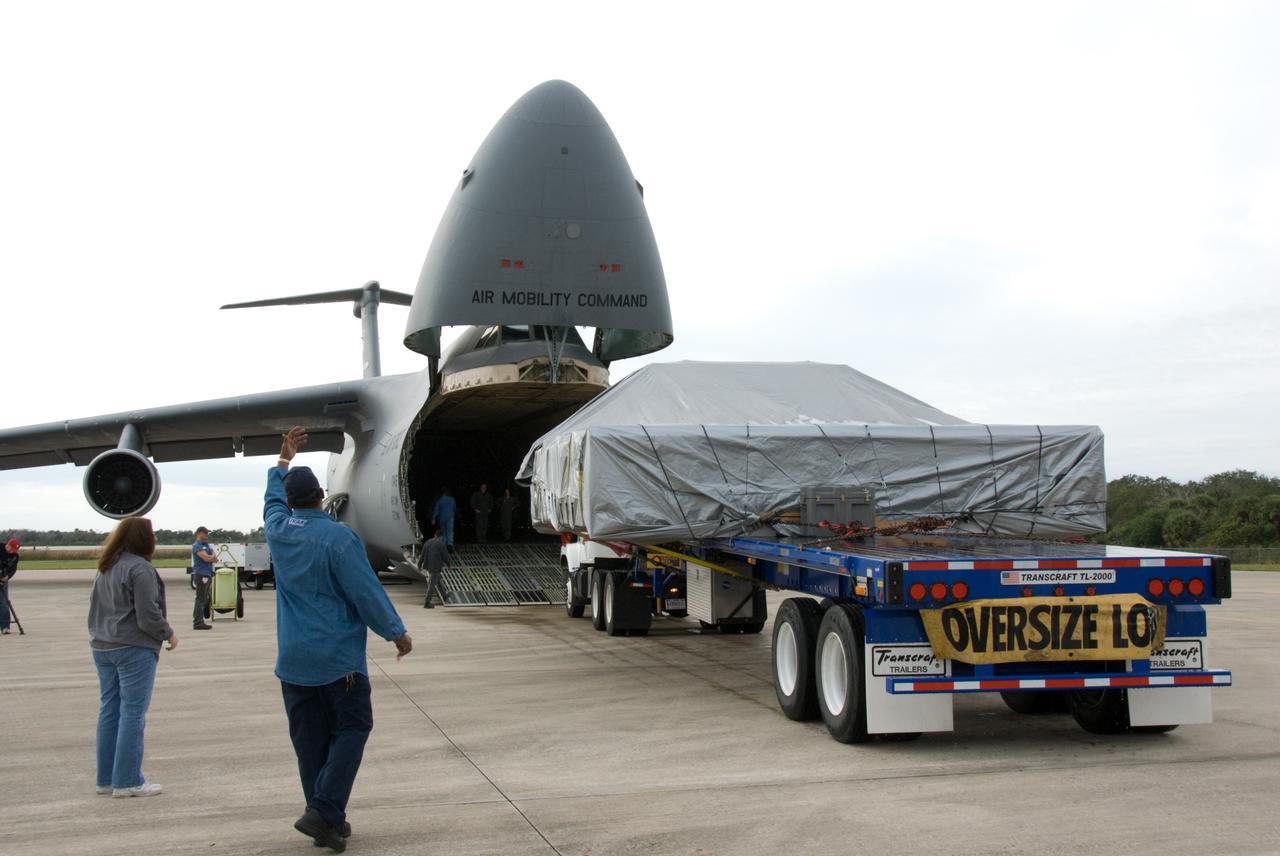
CAPE CANAVERAL, Fla. - At the Shuttle Landing Facility at NASA's Kennedy Space Center in Florida, the ExPRESS Logistics Carrier 3, or ELC-3, is removed from the cargo compartment of a U.S. Air Force C-5 aircraft. ELC-3 and the Alpha Magnetic Spectrometer are the primary payloads for space shuttle Endeavour's STS-134 mission to the International Space Station. The STS-134 crew will also deliver spare parts including two S-band communications antennas, a high pressure gas tank, additional spare parts for Dextre and micrometeoroid debris shields. Endeavour's launch is targeted for July 29, 2010. For information on the STS-134 mission objectives and crew, visit http://www.nasa.gov/shuttle. Photo credit: NASA/Kim Shiflett
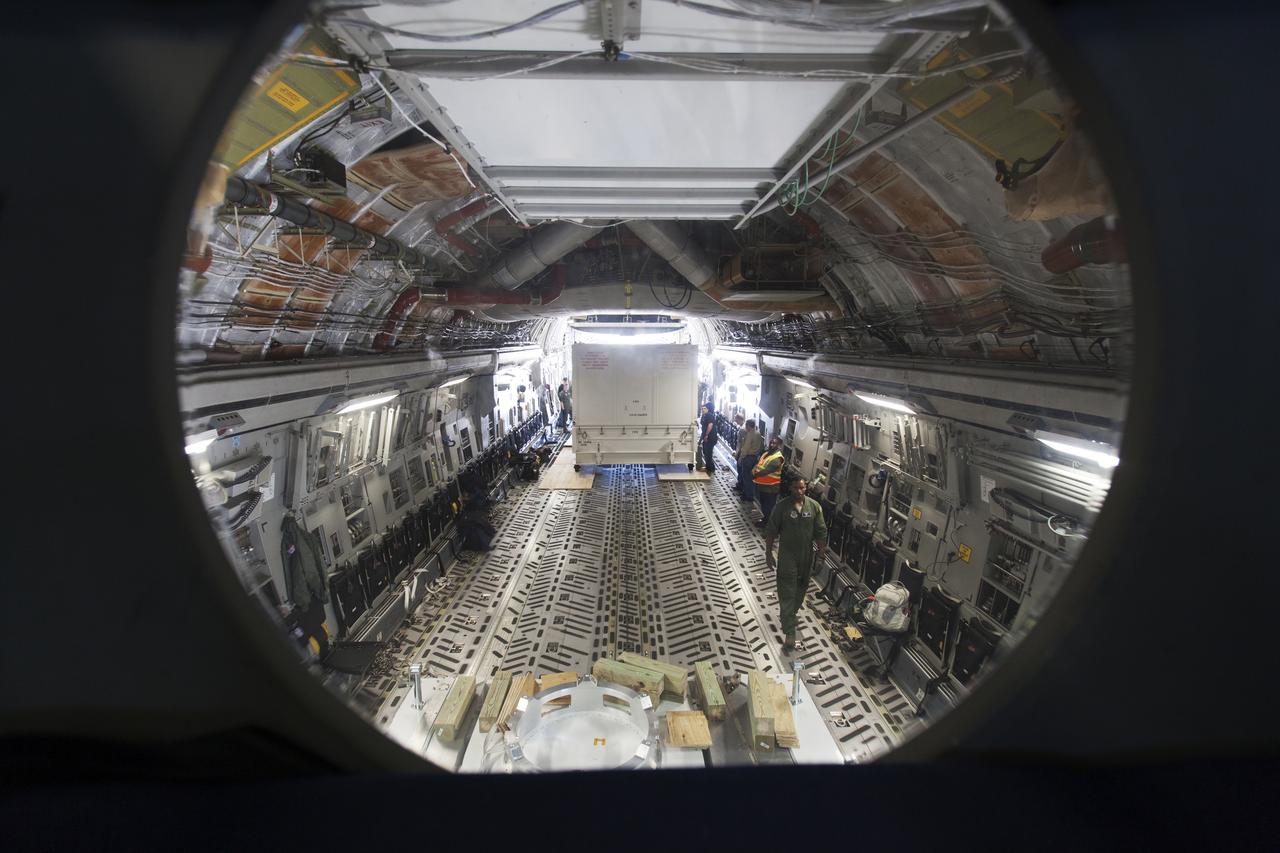
Preparations are underway to offload NASA's Parker Solar Probe spacecraft, secured in its shipping container, from a U.S. Air Force C-5 transport aircraft at Space Coast Regional Airport in Titusville, Florida. The spacecraft will be transported to the Astrotech processing facility near the agency's Kennedy Space Center. The Parker Solar Probe will launch on a United Launch Alliance Delta IV Heavy rocket from Space Launch Complex 37 at Cape Canaveral Air Force Station in Florida in July 2018. The mission will perform the closest-ever observations of a star when it travels through the Sun's atmosphere, called the corona. The probe will rely on measurements and imaging to revolutionize our understanding of the corona and the Sun-Earth connection.
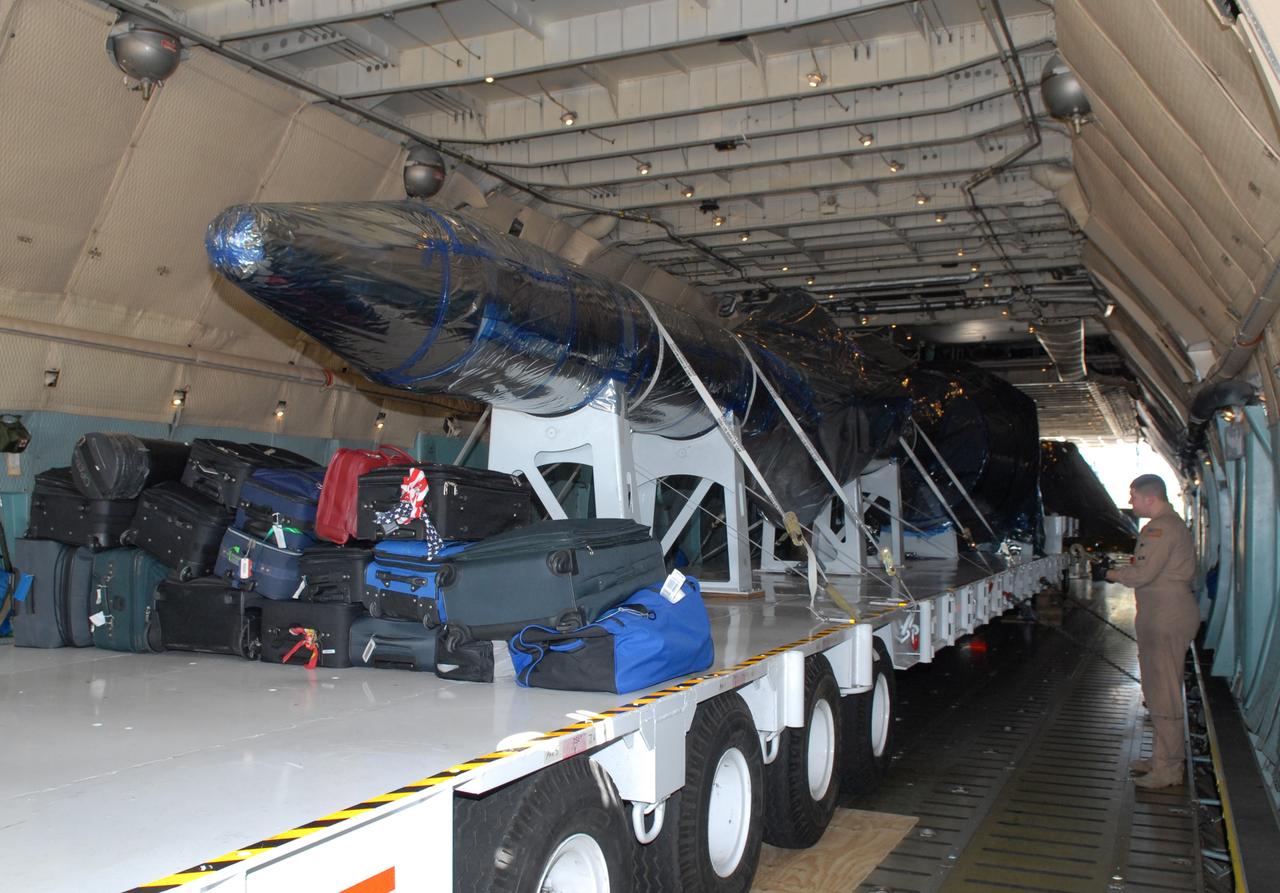
CAPE CANAVERAL, Fla. – Inside a C-5 aircraft, hardware that will be used in the launch of the Ares I-X rocket is being offloaded at the Shuttle Landing Facility at NASA's Kennedy Space Center in Florida. The hardware consists of a precisely machined, full-scale simulator crew module and launch abort system to form the tip of NASA's Ares I-X rocket. The launch of the 321-foot-tall, full-scale Ares I-X, targeted for July 2009, will be the first in a series of unpiloted rocket launches from Kennedy. When fully developed, the 16-foot diameter crew module will furnish living space and reentry protection for the astronauts, while their launch abort system will provide safe evacuation if a launch vehicle failure occurs. Photo credit: NASA/Jack Pfaller
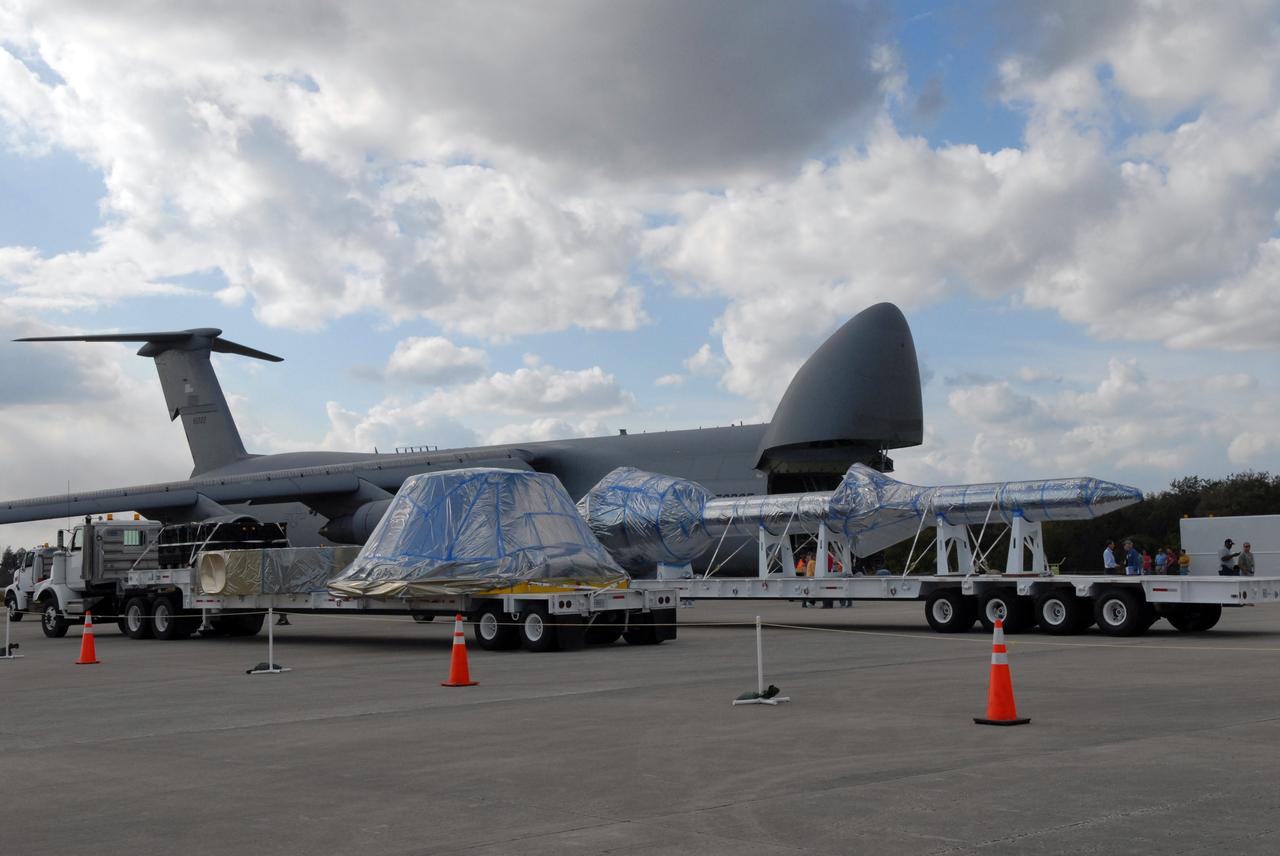
CAPE CANAVERAL, Fla. – At the Shuttle Landing Facility at NASA's Kennedy Space Center in Florida, hardware that will be used in the launch of the Ares I-X rocket is being offloaded from the C-5 aircraft. The hardware consists of a precisely machined, full-scale simulator crew module and launch abort system to form the tip of NASA's Ares I-X rocket. The launch of the 321-foot-tall, full-scale Ares I-X, targeted for July 2009, will be the first in a series of unpiloted rocket launches from Kennedy. When fully developed, the 16-foot diameter crew module will furnish living space and reentry protection for the astronauts, while their launch abort system will provide safe evacuation if a launch vehicle failure occurs. Photo credit: NASA/Jack Pfaller
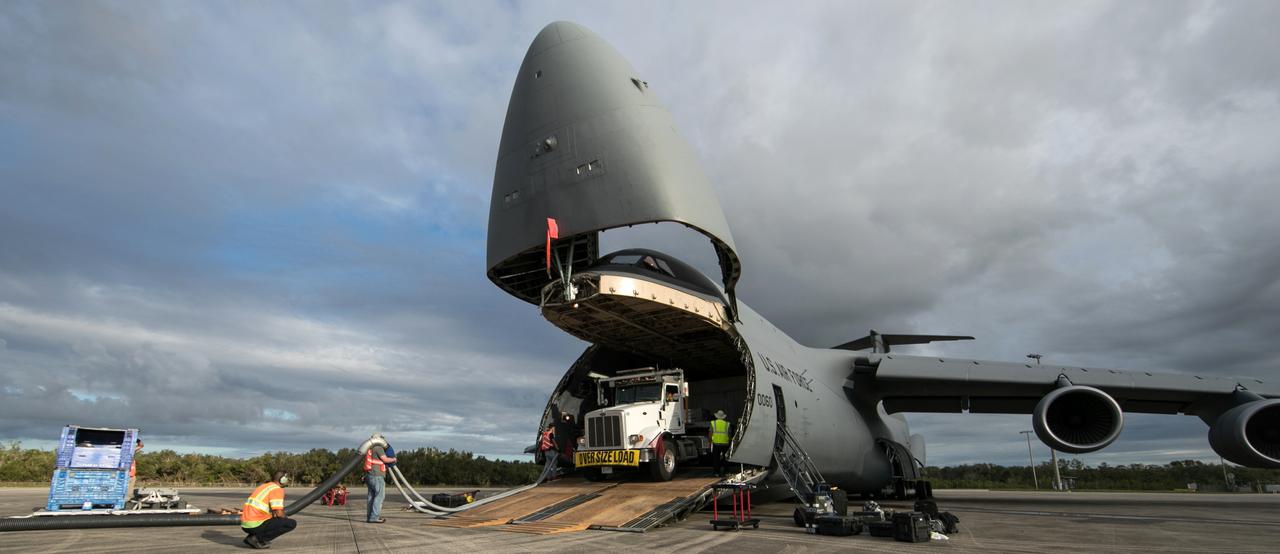
NOAA's Geostationary Operation Environmental Satellite-S (GOES-S) is being offloaded from a C-5 transport aircraft onto the flatbed of a heavy-lift truck at the Shuttle Landing Facility at NASA's Kennedy Space Center in Florida. The satellite will be transported to the Astrotech Space Operations facility in Titusville, Florida to prepare it for launch. GOES-S is the second in a series of four advanced geostationary weather satellites. The GOES-R series - consisting of the GOES-R, GOES-S, GOES-T and GOES-U spacecraft - will significantly improve the detection and observation of environmental phenomena that directly affect public safety, protection of property and the nation's economic health and prosperity. GOES-S is slated to launch March 1, 2018 aboard a United Launch Alliance Atlas V rocket from Cape Canaveral Air Force Station in Florida.
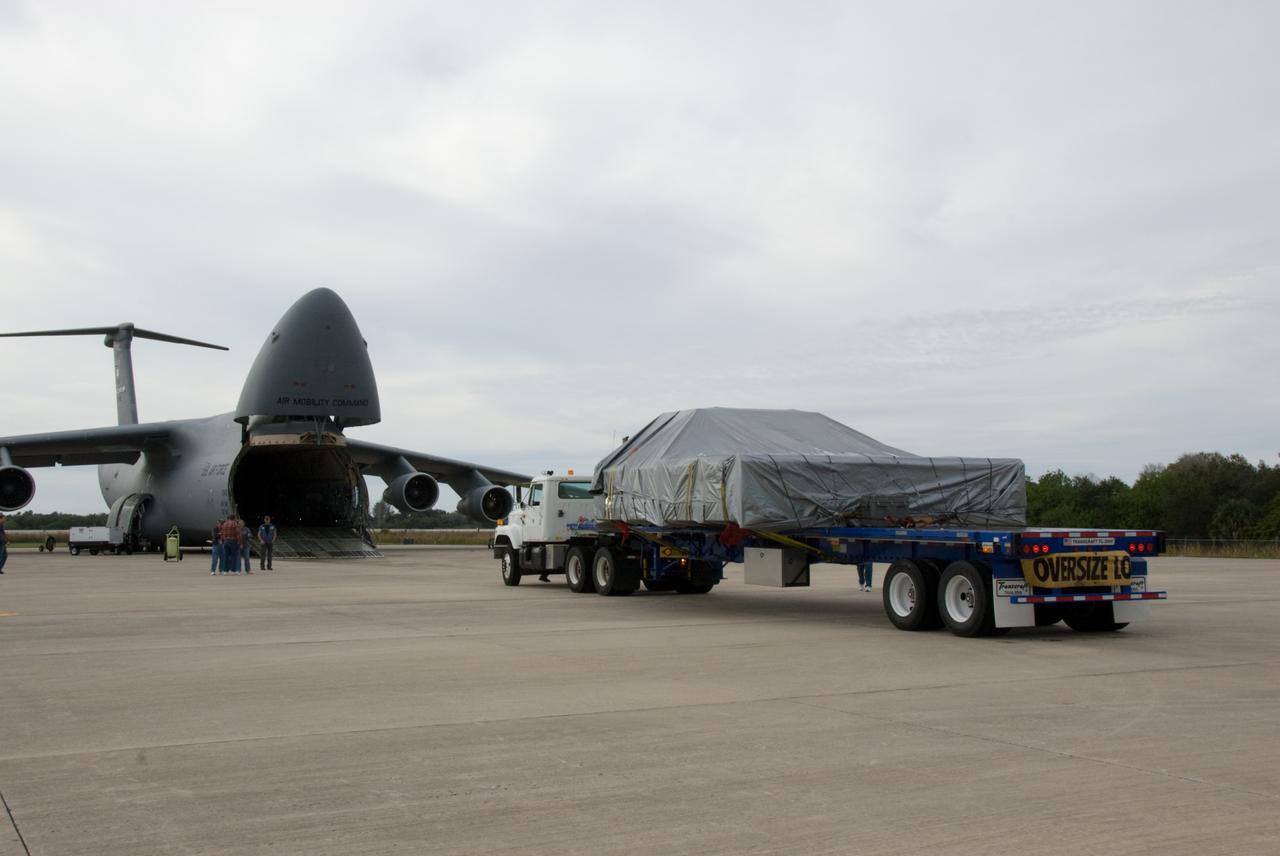
CAPE CANAVERAL, Fla. - At the Shuttle Landing Facility at NASA's Kennedy Space Center in Florida, the ExPRESS Logistics Carrier 3, or ELC-3, is secured on the bed of the truck which will transport it to the Space Station Processing Facility. At left is the U.S. Air Force C-5 aircraft on which it arrived. ELC-3 and the Alpha Magnetic Spectrometer are the primary payloads for space shuttle Endeavour's STS-134 mission to the International Space Station. The STS-134 crew will also deliver spare parts including two S-band communications antennas, a high pressure gas tank, additional spare parts for Dextre and micrometeoroid debris shields. Endeavour's launch is targeted for July 29, 2010. For information on the STS-134 mission objectives and crew, visit http://www.nasa.gov/shuttle. Photo credit: NASA/Kim Shiflett

CAPE CANAVERAL, Fla. – At the Shuttle Landing Facility at NASA's Kennedy Space Center in Florida, hardware that will be used in the launch of the Ares I-X rocket is being offloaded from the C-5 aircraft. The hardware consists of a precisely machined, full-scale simulator crew module and launch abort system to form the tip of NASA's Ares I-X rocket. The launch of the 321-foot-tall, full-scale Ares I-X, targeted for July 2009, will be the first in a series of unpiloted rocket launches from Kennedy. When fully developed, the 16-foot diameter crew module will furnish living space and reentry protection for the astronauts, while their launch abort system will provide safe evacuation if a launch vehicle failure occurs. Photo credit: NASA/Jack Pfaller
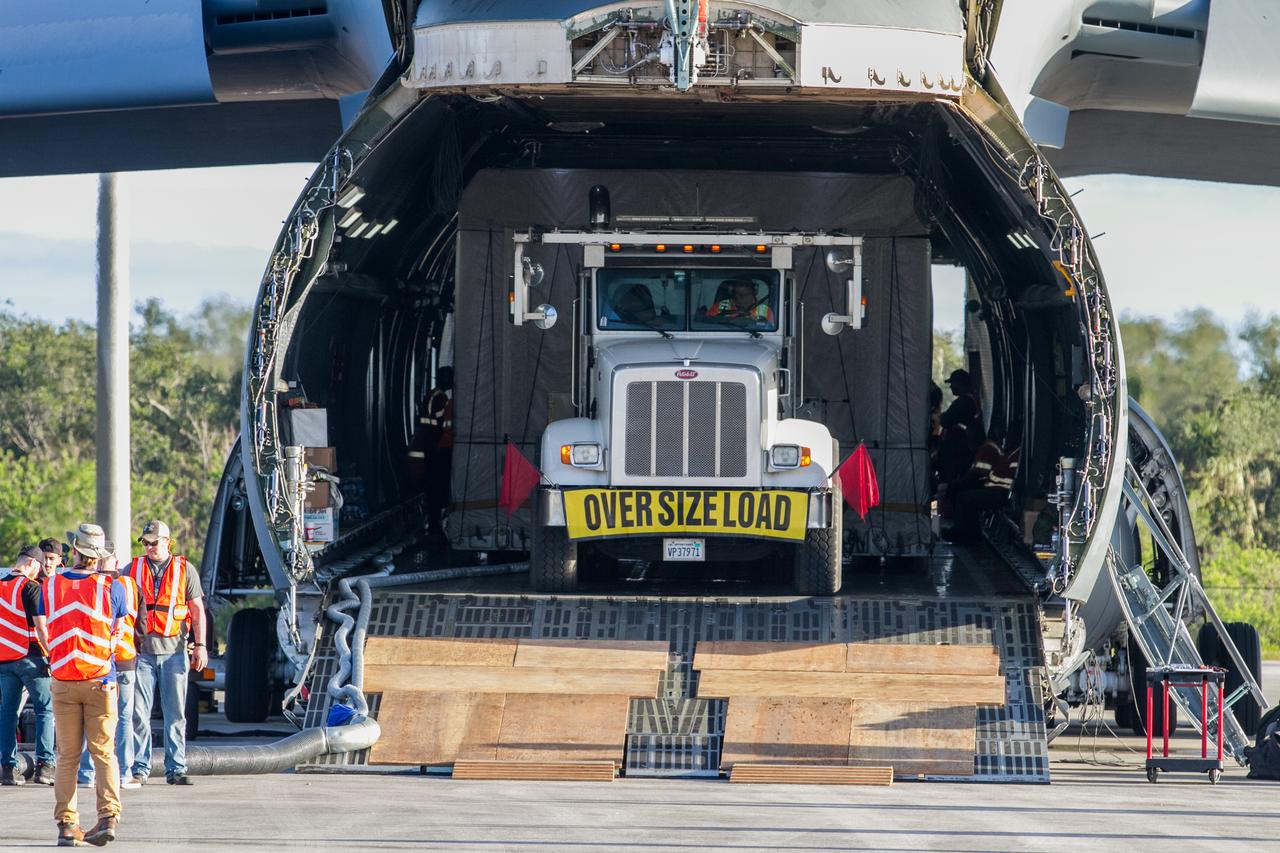
NOAA's Geostationary Operation Environmental Satellite-S (GOES-S) is being offloaded from a C-5 transport aircraft onto the flatbed of a heavy-lift truck at the Shuttle Landing Facility at NASA's Kennedy Space Center in Florida. The satellite will be transported to the Astrotech Space Operations facility in Titusville, Florida to prepare it for launch. GOES-S is the second in a series of four advanced geostationary weather satellites. The GOES-R series - consisting of the GOES-R, GOES-S, GOES-T and GOES-U spacecraft - will significantly improve the detection and observation of environmental phenomena that directly affect public safety, protection of property and the nation's economic health and prosperity. GOES-S is slated to launch March 1, 2018 aboard a United Launch Alliance Atlas V rocket from Cape Canaveral Air Force Station in Florida.
CAPE CANAVERAL, Fla. - At the Shuttle Landing Facility at NASA's Kennedy Space Center in Florida, preparations are under way to offload the ExPRESS Logistics Carrier 3, or ELC-3, from a U.S. Air Force C-5 aircraft. ELC-3 and the Alpha Magnetic Spectrometer are the primary payloads for space shuttle Endeavour's STS-134 mission to the International Space Station. The STS-134 crew will also deliver spare parts including two S-band communications antennas, a high pressure gas tank, additional spare parts for Dextre and micrometeoroid debris shields. Endeavour's launch is targeted for July 29, 2010. For information on the STS-134 mission objectives and crew, visit http://www.nasa.gov/shuttle. Photo credit: NASA/Kim Shiflett
CAPE CANAVERAL, Fla. – At the Shuttle Landing Facility at NASA's Kennedy Space Center in Florida, hardware that will be used in the launch of the Ares I-X rocket is being offloaded from the C-5 aircraft. The hardware consists of a precisely machined, full-scale simulator crew module and launch abort system to form the tip of NASA's Ares I-X rocket. The launch of the 321-foot-tall, full-scale Ares I-X, targeted for July 2009, will be the first in a series of unpiloted rocket launches from Kennedy. When fully developed, the 16-foot diameter crew module will furnish living space and reentry protection for the astronauts, while their launch abort system will provide safe evacuation if a launch vehicle failure occurs. Photo credit: NASA/Jack Pfaller
NOAA's Geostationary Operation Environmental Satellite-S (GOES-S) is being offloaded from a C-5 transport aircraft onto the flatbed of a heavy-lift truck at the Shuttle Landing Facility at NASA's Kennedy Space Center in Florida. The satellite will be transported to the Astrotech Space Operations facility in Titusville, Florida to prepare it for launch. GOES-S is the second in a series of four advanced geostationary weather satellites. The GOES-R series - consisting of the GOES-R, GOES-S, GOES-T and GOES-U spacecraft - will significantly improve the detection and observation of environmental phenomena that directly affect public safety, protection of property and the nation's economic health and prosperity. GOES-S is slated to launch March 1, 2018 aboard a United Launch Alliance Atlas V rocket from Cape Canaveral Air Force Station in Florida.
NOAA's Geostationary Operation Environmental Satellite-S (GOES-S) is being offloaded from a C-5 transport aircraft onto the flatbed of a heavy-lift truck at the Shuttle Landing Facility at NASA's Kennedy Space Center in Florida. The satellite will be transported to the Astrotech Space Operations facility in Titusville, Florida to prepare it for launch. GOES-S is the second in a series of four advanced geostationary weather satellites. The GOES-R series - consisting of the GOES-R, GOES-S, GOES-T and GOES-U spacecraft - will significantly improve the detection and observation of environmental phenomena that directly affect public safety, protection of property and the nation's economic health and prosperity. GOES-S is slated to launch March 1, 2018 aboard a United Launch Alliance Atlas V rocket from Cape Canaveral Air Force Station in Florida.

CAPE CANAVERAL, Fla. – At the Shuttle Landing Facility at NASA's Kennedy Space Center in Florida, hardware that will be used in the launch of the Ares I-X rocket is being offloaded from the C-5 aircraft. The hardware consists of a precisely machined, full-scale simulator crew module and launch abort system to form the tip of NASA's Ares I-X rocket. The launch of the 321-foot-tall, full-scale Ares I-X, targeted for July 2009, will be the first in a series of unpiloted rocket launches from Kennedy. When fully developed, the 16-foot diameter crew module will furnish living space and reentry protection for the astronauts, while their launch abort system will provide safe evacuation if a launch vehicle failure occurs. Photo credit: NASA/Jack Pfaller
CAPE CANAVERAL, Fla. - At the Shuttle Landing Facility at NASA's Kennedy Space Center in Florida, the ExPRESS Logistics Carrier 3, or ELC-3, is offloaded from a U.S. Air Force C-5 aircraft. ELC-3 and the Alpha Magnetic Spectrometer are the primary payloads for space shuttle Endeavour's STS-134 mission to the International Space Station. The STS-134 crew will also deliver spare parts including two S-band communications antennas, a high pressure gas tank, additional spare parts for Dextre and micrometeoroid debris shields. Endeavour's launch is targeted for July 29, 2010. For information on the STS-134 mission objectives and crew, visit http://www.nasa.gov/shuttle. Photo credit: NASA/Kim Shiflett
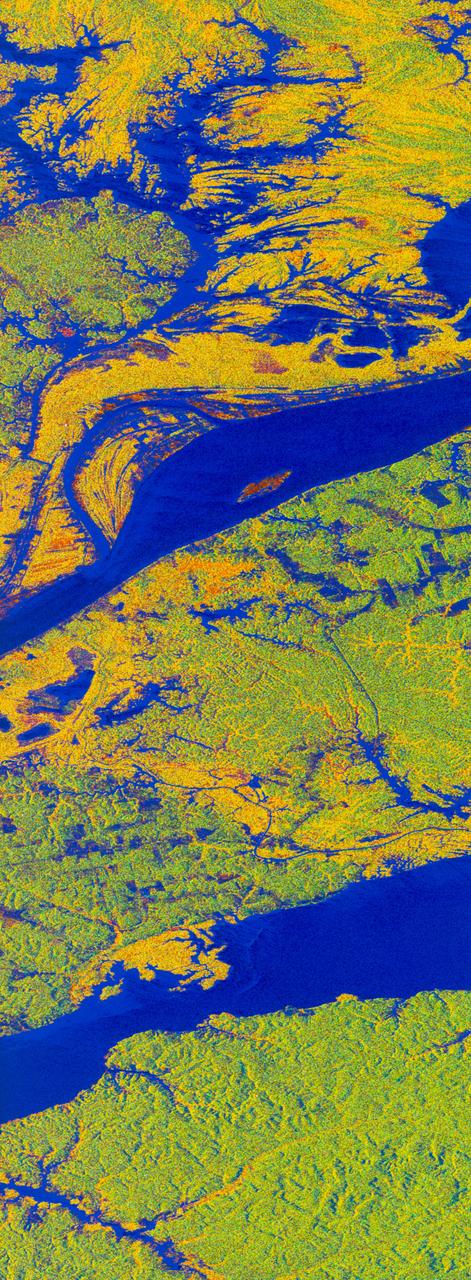
STS059-S-068 (13 April 1994) --- This false-color L-Band image of the Manaus region of Brazil was acquired by the Spaceborne Imaging Radar-C and X-Band Synthetic Aperture Radar (SIR-C/X-SAR) aboard the Space Shuttle Endeavour on orbit 46 of the mission. The area shown is approximately 8 kilometers by 40 kilometers (5 by 25 miles). At the top of the image are the Solimoes and Rio Negro Rivers just before they combine at Manaus to form the Amazon River. The image is centered at about 3 degrees south latitude, and 61 degrees west longitude. The false colors are created by displaying three L-Band polarization channels; red areas correspond to high backscatter at HH polarization, while green areas exhibit high backscatter at HV polarization. Blue areas show low returns at VV polarization; hence the bright blue colors of the smooth river surfaces. Using this color scheme, green areas in the image are heavily forested, while blue areas are either cleared forest or open water. The yellow and red areas are flooded forest. Between Rio Solimoes and Rio Negro a road can be seen running from some cleared areas (visible as blue rectangles north of Rio Solimoes) north towards a tributary of Rio Negro. SIR-C/X-SAR is part of NASA's Mission to Planet Earth (MTPE). SIR-C/X-SAR radars illuminate Earth with microwaves allowing detailed observations at any time, regardless of weather or sunlight conditions. SIR-C/X-SAR uses three microwave wavelengths: L-Band (24 cm), C-Band (6 cm), and X-Band (3 cm). The multi-frequency data will be used by the international scientific community to better understand the global environment and how it is changing. The SIR-C/X-SAR data, complemented by aircraft and ground studies, will give scientists clearer insights into those environmental changes which are caused by nature and those changes which are induced by human activity. SIR-C was developed by NASA's Jet Propulsion Laboratory (JPL). X-SAR was developed by the Dornire and Alenia Spazio Companies for the German Space Agency, Deutsche Agentur fuer Raumfahrtangelegenheiten (DARA), and the Italian Space Agency, Agenzia Spaziale Italiana (ASI). JPL Photo ID: P-43895

These L-band images of the Manaus region of Brazil were acquired by the Spaceborne Imaging Radar-C and X-band Synthetic Aperture Radar (SIR-C/X-SAR) aboard the space shuttle Endeavour. The left image was acquired on April 12, 1994, and the middle image was acquired on October 3, 1994. The area shown is approximately 8 kilometers by 40 kilometers (5 miles by 25 miles). The two large rivers in this image, the Rio Negro (top) and the Rio Solimoes (bottom), combine at Manaus (west of the image) to form the Amazon River. The image is centered at about 3 degrees south latitude and 61 degrees west longitude. North is toward the top left of the images. The differences in brightness between the images reflect changes in the scattering of the radar channel. In this case, the changes are indicative of flooding. A flooded forest has a higher backscatter at L-band (horizontally transmitted and received) than an unflooded river. The extent of the flooding is much greater in the April image than in the October image, and corresponds to the annual, 10-meter (33-foot) rise and fall of the Amazon River. A third image at right shows the change in the April and October images and was created by determining which areas had significant decreases in the intensity of radar returns. These areas, which appear blue on the third image at right, show the dramatic decrease in the extent of flooded forest, as the level of the Amazon River falls. The flooded forest is a vital habitat for fish and floating meadows are an important source of atmospheric methane. This demonstrates the capability of SIR-C/X-SAR to study important environmental changes that are impossible to see with optical sensors over regions such as the Amazon, where frequent cloud cover and dense forest canopies obscure monitoring of floods. Field studies by boat, on foot and in low-flying aircraft by the University of California at Santa Barbara, in collaboration with Brazil's Instituto Nacional de Pesguisas Estaciais, during the first and second flights of the SIR-C/X-SAR system have validated the interpretation of the radar images. http://photojournal.jpl.nasa.gov/catalog/PIA01740
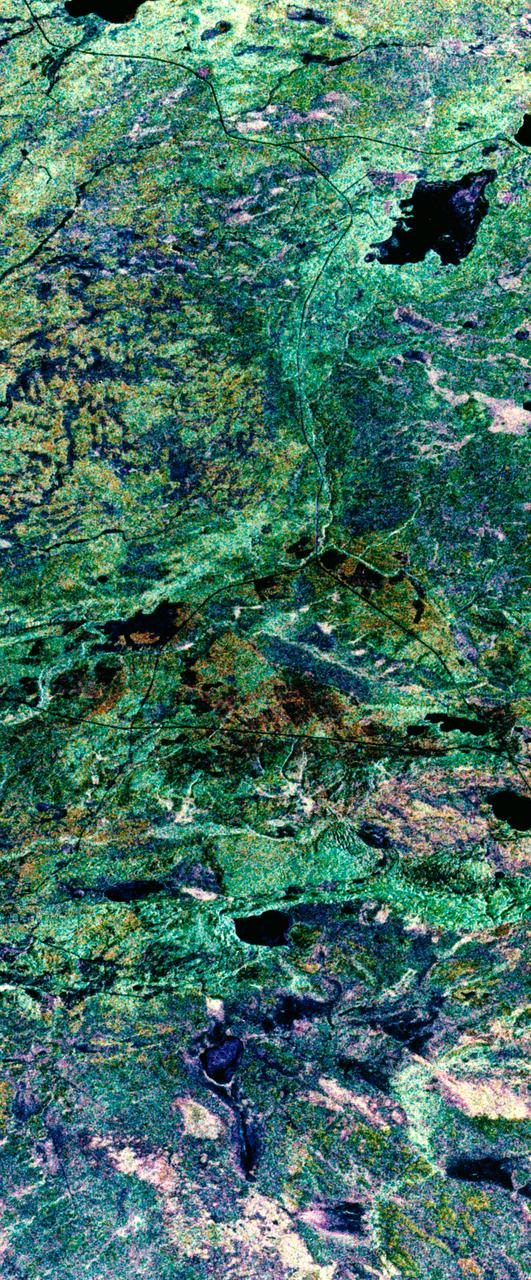
STS059-S-039 (11 April 1994) --- This is a false-color composite of Prince Albert, Canada, centered at 53.91 north latitude and 104.69 west longitude. This image was acquired by the Spaceborne Imaging Radar-C and X-Band Synthetic Aperture Radar (SIR-C/X-SAR) aboard the Space Shuttle Endeavour on its 20th orbit. The area is located 40 kilometers (25 miles) north and 30 kilometers (20 miles) east of the town of Prince Albert in the Saskatchewan province of Canada. The image covers the area east of the Candle Lake, between gravel surface Highways 120 and 106 and west of 106. The area in the middle of the image covers the entire Nipawin (Narrow Hills) provincial park. The look angle of the radar is 30 degrees and the size of the image is approximately 20 kilometers by 50 kilometers (12 by 30 miles). The image was produced by using only the L-Band. The three polarization channels HH, HV and VV are illustrated by red, green and blue respectively. The changes in the intensity of each color are related to various surface conditions such as variations in forest stands, frozen or thawed condition of the surface, disturbances (fire and deforestation), and areas of re-growth. Most of the dark areas in the image are the ice-covered lakes in the region. The dark area on the top right corner of the image is the White Gull Lake north of the intersection of Highway 120 and 913. The right middle part of the image shows Lake Ispuchaw and Lower Fishing Lake. The deforested areas are also shown by dark areas in the image. Since most of the logging practice at the Prince Albert area is around the major highways, the deforested areas can be easily detected as small geometrically shaped dark regions along the roads. At the time of the SIR-C/X-SAR overpass, a major part of the forest is either frozen or undergoing the spring thaw. The L-Band HH shows a high return in the jack pine forest. The reddish areas in the image are old jack pine forest, 12-17 meters (40-55 feet) in height and 60-75 years old. The orange-greenish areas are young jack pine trees, 3-5 meters (10-16 feet) in height and 11-16 years old. The green areas are due to the relative high intensity of the HV channel which is strongly correlated with the amount of biomass. L-Band HV channel shows the biomass variations over the entire region. Most of the green areas, when compared to the forest cover maps are identified as black spruce trees. The dark blue and dark purple colors show recently harvested or re-growth areas respectively. SIR-C/X-SAR is part of NASA's Mission to Planet Earth (MTPE). SIR-C/X-SAR radars illuminate Earth with microwaves allowing detailed observations at any time, regardless of weather or sunlight conditions. SIR-C/X-SAR uses three microwave wavelengths: L-Band (24 cm), C-Band (6 cm), and X-Band (3 cm). The multi-frequency data will be used by the international scientific community to better understand the global environment and how it is changing. The SIR-C/X-SAR data, complemented by aircraft and ground studies, will give scientists clearer insights into those environmental changes which are caused by nature and those changes which are induced by human activity. SIR-C was developed by NASA's Jet Propulsion Laboratory (JPL). X-SAR was developed by the Dornire and Alenia Spazio Companies for the German Space Agency, Deutsche Agentur fuer Raumfahrtangelegenheiten (DARA), and the Italian Space Agency, Agenzia Spaziale Italiana (ASI). JPL Photo ID: P-43886
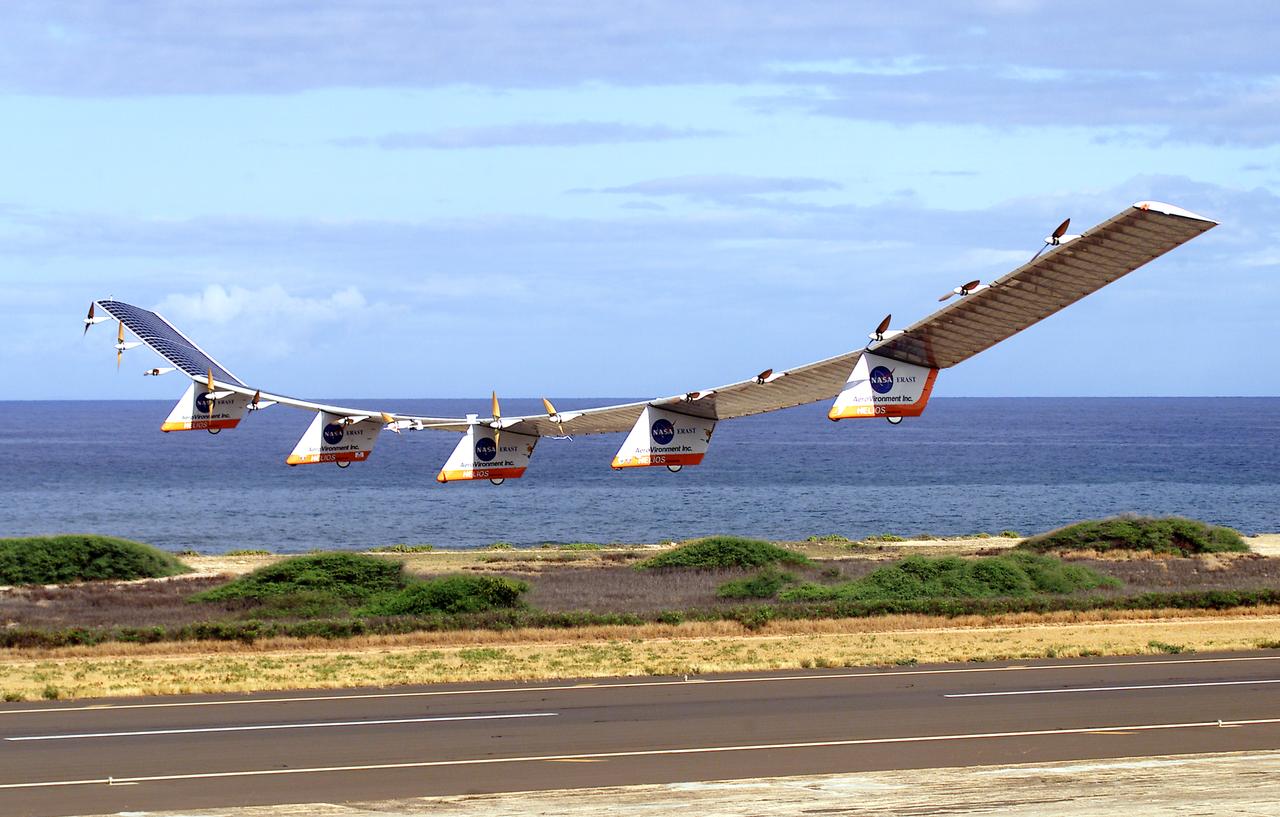
NASA's Helios Prototype aircraft taking off from the Pacific Missile Range Facility, Kauai, Hawaii, for the record flight. As a follow-on to the Centurion (and earlier Pathfinder and Pathfinder-Plus) aircraft, the solar-powered Helios Prototype is the latest and largest example of a slow-flying ultralight flying wing designed for long-duration, high-altitude Earth science or telecommunications relay missions in the stratosphere. Developed by AeroVironment, Inc., of Monrovia, California, under NASA's Environmental Research Aircraft and Sensor Technology (ERAST) project, the unique craft is intended to demonstrate two key missions: the ability to reach and sustain horizontal flight at 100,000 feet altitude on a single-day flight in 2001, and to maintain flight above 50,000 feet altitude for at least four days in 2003, with the aid of a regenerative fuel cell-based energy storage system now in development. Both of these missions will be powered by electricity derived from non-polluting solar energy. The Helios Prototype is an enlarged version of the Centurion flying wing, which flew a series of test flights at NASA's Dryden Flight Research Center in late 1998. The craft has a wingspan of 247 feet, 41 feet greater than the Centurion, 2 1/2 times that of its solar-powered Pathfinder flying wing, and longer than the wingspans of either the Boeing 747 jetliner or Lockheed C-5 transport aircraft. The remotely piloted, electrically powered Helios Prototype went aloft on its maiden low-altitude checkout flight Sept. 8, 1999, over Rogers Dry Lake adjacent to NASA's Dryden Flight Research Center in the Southern California desert. The initial flight series was flown on battery power as a risk-reduction measure. In all, six flights were flown in the Helios Protoype's initial development series. In upgrading the Centurion to the Helios Prototype configuration, AeroVironment added a sixth wing section and a fifth landing gear pod, among other improvements. The additional wingsp

These two false-color images of the Manaus region of Brazil in South America were acquired by the Spaceborne Imaging Radar-C and X-band Synthetic Aperture Radar on board the space shuttle Endeavour. The image at left was acquired on April 12, 1994, and the image at right was acquired on October 3, 1994. The area shown is approximately 8 kilometers by 40 kilometers (5 miles by 25 miles). The two large rivers in this image, the Rio Negro (at top) and the Rio Solimoes (at bottom), combine at Manaus (west of the image) to form the Amazon River. The image is centered at about 3 degrees south latitude and 61 degrees west longitude. North is toward the top left of the images. The false colors were created by displaying three L-band polarization channels: red areas correspond to high backscatter, horizontally transmitted and received, while green areas correspond to high backscatter, horizontally transmitted and vertically received. Blue areas show low returns at vertical transmit/receive polarization; hence the bright blue colors of the smooth river surfaces can be seen. Using this color scheme, green areas in the image are heavily forested, while blue areas are either cleared forest or open water. The yellow and red areas are flooded forest or floating meadows. The extent of the flooding is much greater in the April image than in the October image and appears to follow the 10-meter (33-foot) annual rise and fall of the Amazon River. The flooded forest is a vital habitat for fish, and floating meadows are an important source of atmospheric methane. These images demonstrate the capability of SIR-C/X-SAR to study important environmental changes that are impossible to see with optical sensors over regions such as the Amazon, where frequent cloud cover and dense forest canopies block monitoring of flooding. Field studies by boat, on foot and in low-flying aircraft by the University of California at Santa Barbara, in collaboration with Brazil's Instituto Nacional de Pesguisas Estaciais, during the first and second flights of the SIR-C/X-SAR system have validated the interpretation of the radar images. http://photojournal.jpl.nasa.gov/catalog/PIA01735
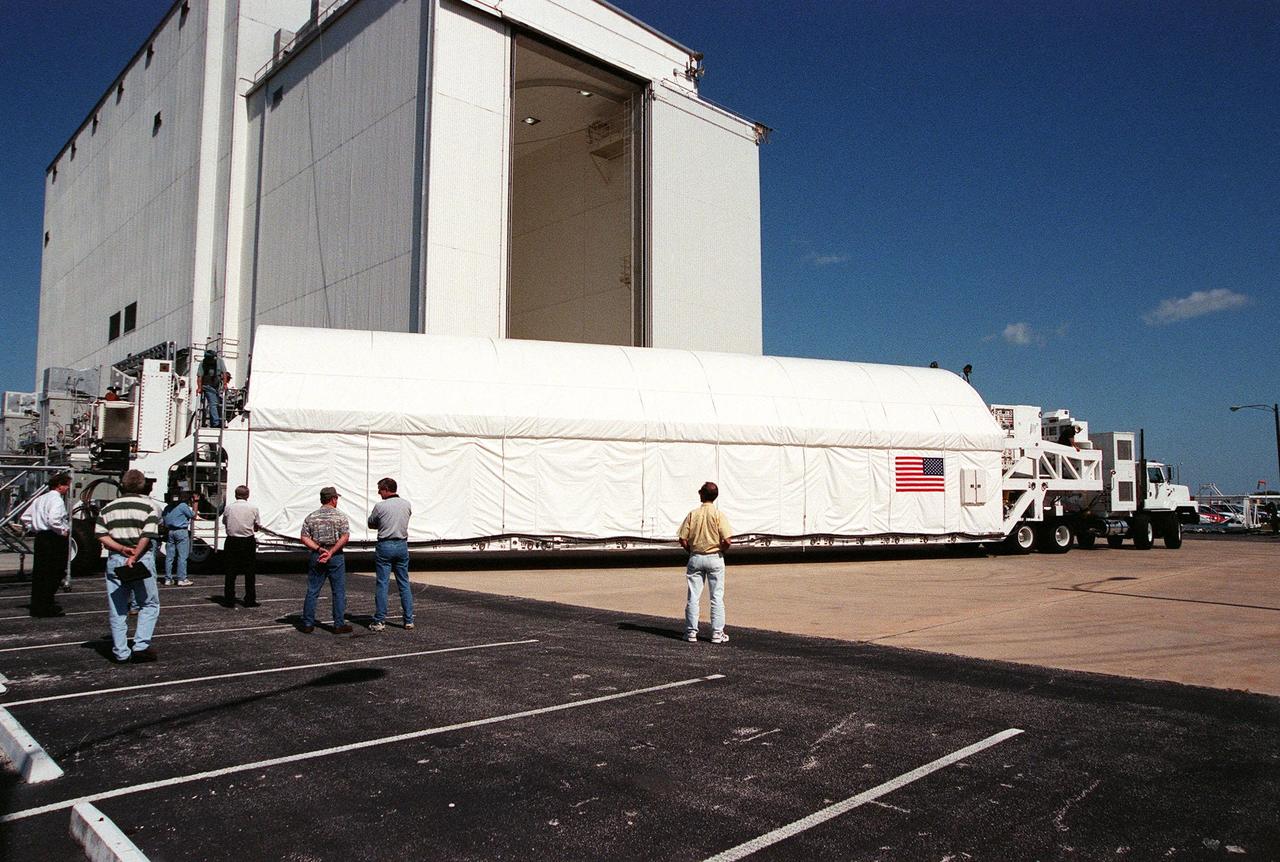
Cradled in the cargo hold of a tractor-trailer rig called the Space Cargo Transportation System, the Chandra X-ray Observatory reaches the Vertical Processing Facility (VPF). Chandra arrived at the Shuttle Landing Facility on Thursday, Feb. 4, aboard an Air Force C-5 Galaxy aircraft. In the VPF, the telescope will undergo final installation of associated electronic components; it will also be tested, fueled and mated with the Inertial Upper Stage booster. A set of integrated tests will follow. Chandra is scheduled for launch July 9 aboard Space Shuttle Columbia, on mission STS-93 . Formerly called the Advanced X-ray Astrophysics Facility, Chandra comprises three major elements: the spacecraft, the science instrument module (SIM), and the world's most powerful X-ray telescope. Chandra will allow scientists from around the world to see previously invisible black holes and high-temperature gas clouds, giving the observatory the potential to rewrite the books on the structure and evolution of our universe
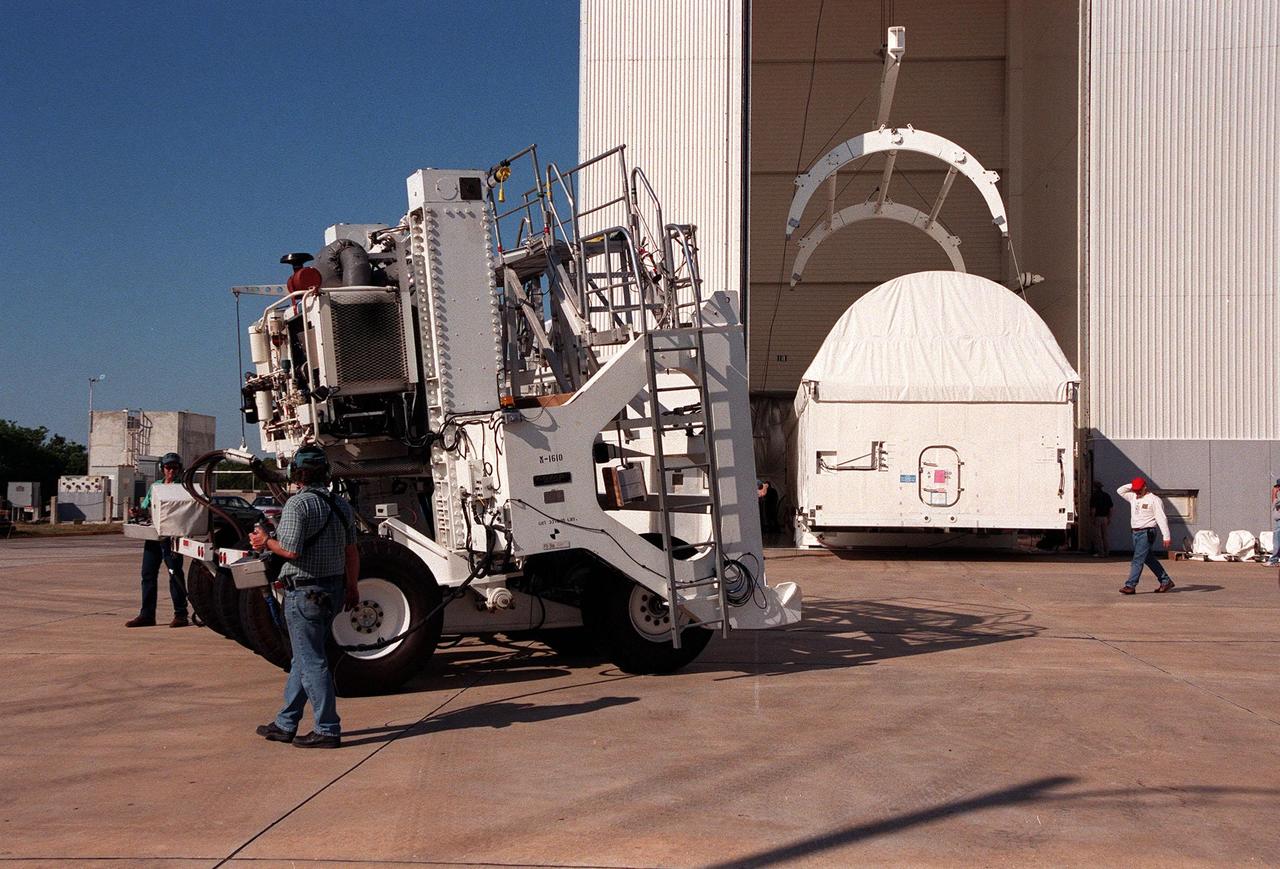
At the Vertical Processing Facility (VPF), workers (left) drive, by remote control, the rear bogie away from the VPF. The bogie is part of the tractor-trailer rig called the Space Cargo Transportation System that helped move the Chandra X-ray Observatory (right) from the Shuttle Landing Facility into the VPF. Chandra arrived at KSC on Thursday, Feb. 4, aboard an Air Force C-5 Galaxy aircraft. In the VPF, the telescope will undergo final installation of associated electronic components; it will also be tested, fueled and mated with the Inertial Upper Stage booster. A set of integrated tests will follow. Chandra is scheduled for launch July 9 aboard Space Shuttle Columbia, on mission STS-93 . Formerly called the Advanced X-ray Astrophysics Facility, Chandra comprises three major elements: the spacecraft, the science instrument module (SIM), and the world's most powerful X-ray telescope. Chandra will allow scientists from around the world to see previously invisible black holes and high-temperature gas clouds, giving the observatory the potential to rewrite the books on the structure and evolution of our universe
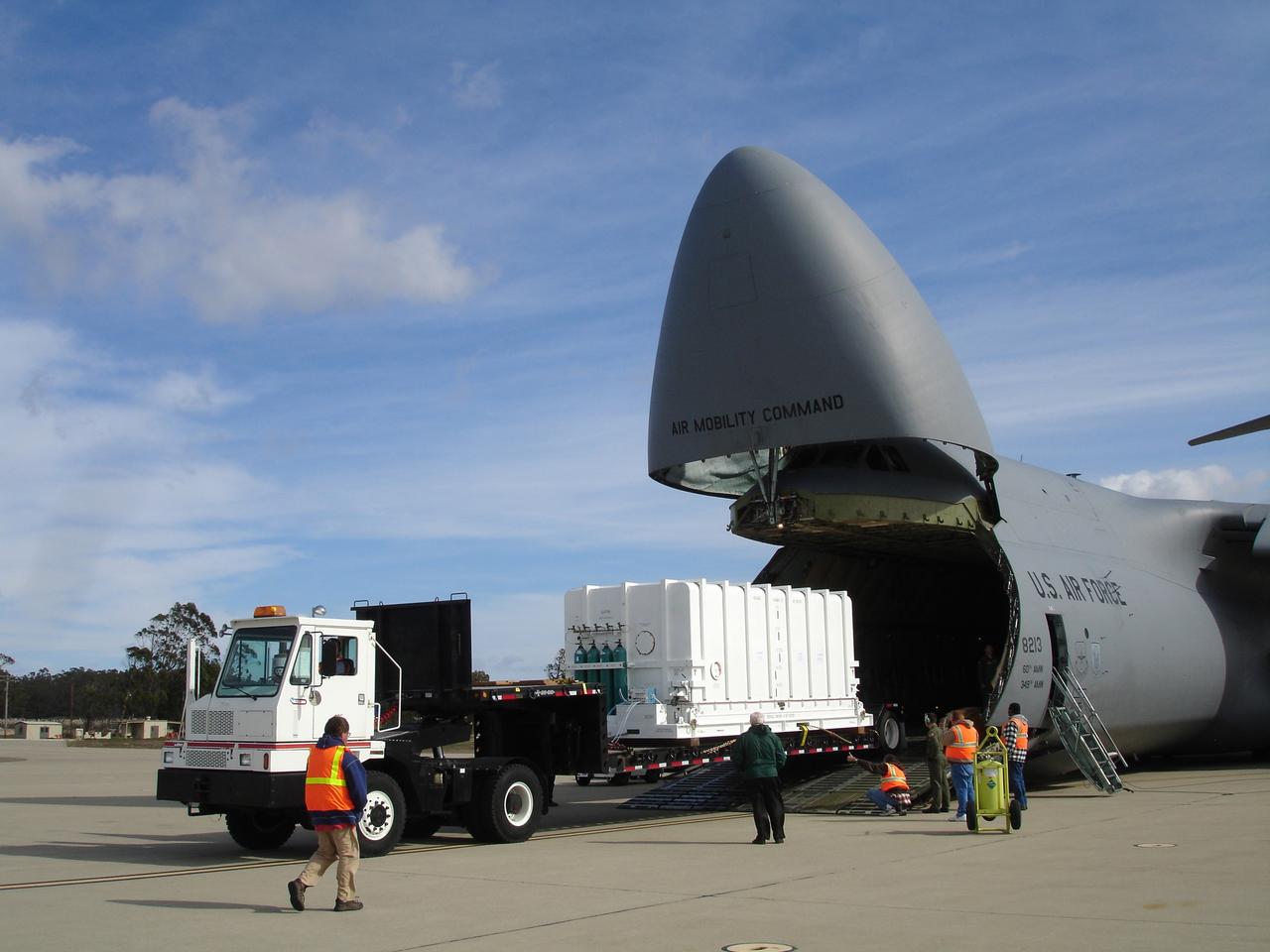
VANDENBERG AIR FORCE BASE, Calif. – The NOAA-N Prime spacecraft is offloaded from a C-5 aircraft after arrival at Vandenberg Air Force Base Airfield in California. NOAA-N Prime was built by Lockheed Martin Space Systems Company for its Advanced Television Infrared Observational Satellites -N series. It is the latest polar-orbiting operational environmental weather satellite developed by NASA for the National Oceanic and Atmospheric Administration. The satellite will provide a platform to support environmental monitoring instruments for imaging and measuring the Earth's atmosphere, its surface and cloud cover, including Earth radiation, atmospheric ozone, aerosol distribution, sea surface temperature and vertical temperature and water profiles in the troposphere and stratosphere. The satellite will assist in measuring proton and electron fluxes at orbit altitude, collecting data from remote platforms to assist the Search and Rescue Satellite-Aided Tracking system. The satellite will be launched from the Western Range at Vandenberg AFB by a United Launch Alliance two-stage Delta II rocket managed by NASA's Launch Service Program at Kennedy. Photo credit: NASA/Jerry Nagy, VAFB
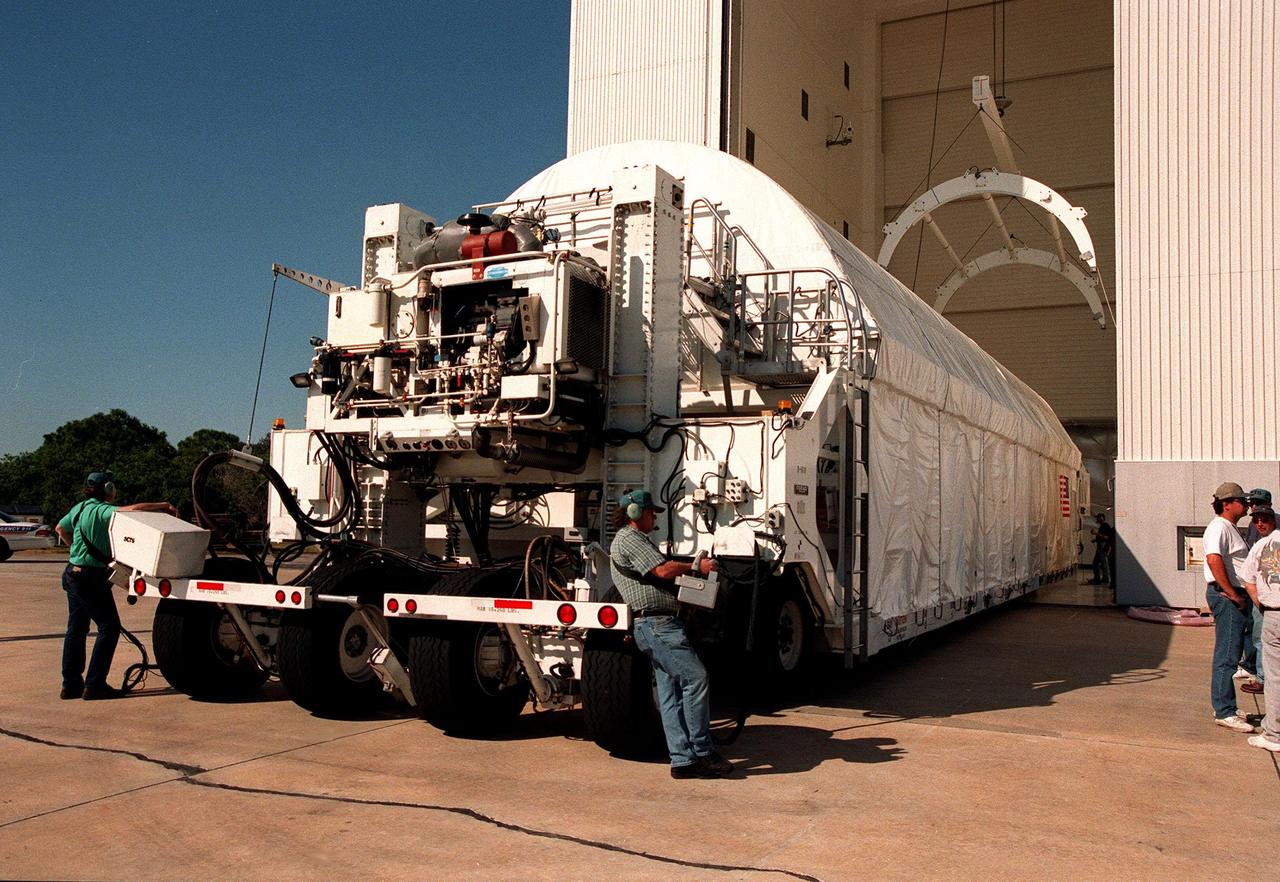
Cradled in the cargo hold of a tractor-trailer rig called the Space Cargo Transportation System, the Chandra X-ray Observatory waits to be moved inside the Vertical Processing Facility (VPF). Chandra arrived at the Shuttle Landing Facility on Thursday, Feb. 4, aboard an Air Force C-5 Galaxy aircraft. In the VPF, the telescope will undergo final installation of associated electronic components; it will also be tested, fueled and mated with the Inertial Upper Stage booster. A set of integrated tests will follow. Chandra is scheduled for launch July 9 aboard Space Shuttle Columbia, on mission STS-93 . Formerly called the Advanced X-ray Astrophysics Facility, Chandra comprises three major elements: the spacecraft, the science instrument module (SIM), and the world's most powerful X-ray telescope. Chandra will allow scientists from around the world to see previously invisible black holes and high-temperature gas clouds, giving the observatory the potential to rewrite the books on the structure and evolution of our universe
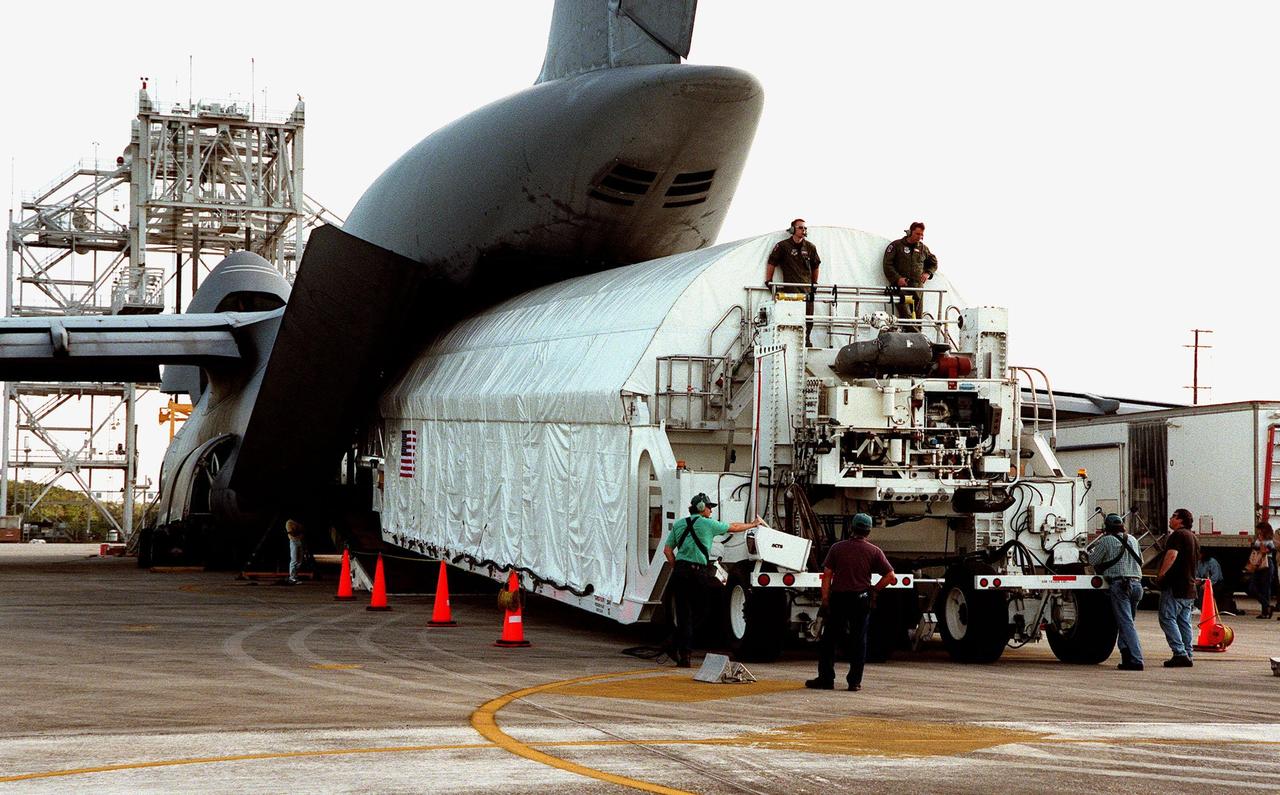
KENNEDY SPACE CENTER, FLA. -- The Chandra X-ray Observatory is unloaded from an Air Force C-5 Galaxy transporter two days after landing at the Shuttle Landing Facility on Feb. 4. The observatory sits cradled in the cargo hold of a tractor-trailer rig called the Space Cargo Transportation System, which closely resembles the size and shape of the Shuttle cargo bay. In the background (left) is the mate-demate device, used when an orbiter is returned to KSC on the back of a Shuttle carrier aircraft. Over the next few months, Chandra will undergo final tests and be mated to a Boeing-provided Inertial Upper Stage for launch July 9 aboard Space Shuttle Columbia, on mission STS-93 . Formerly called the Advanced X-ray Astrophysics Facility, Chandra comprises three major elements: the spacecraft, the science instrument module (SIM), and the world's most powerful X-ray telescope. Chandra will allow scientists from around the world to see previously invisible black holes and high-temperature gas clouds, giving the observatory the potential to rewrite the books on the structure and evolution of our universe
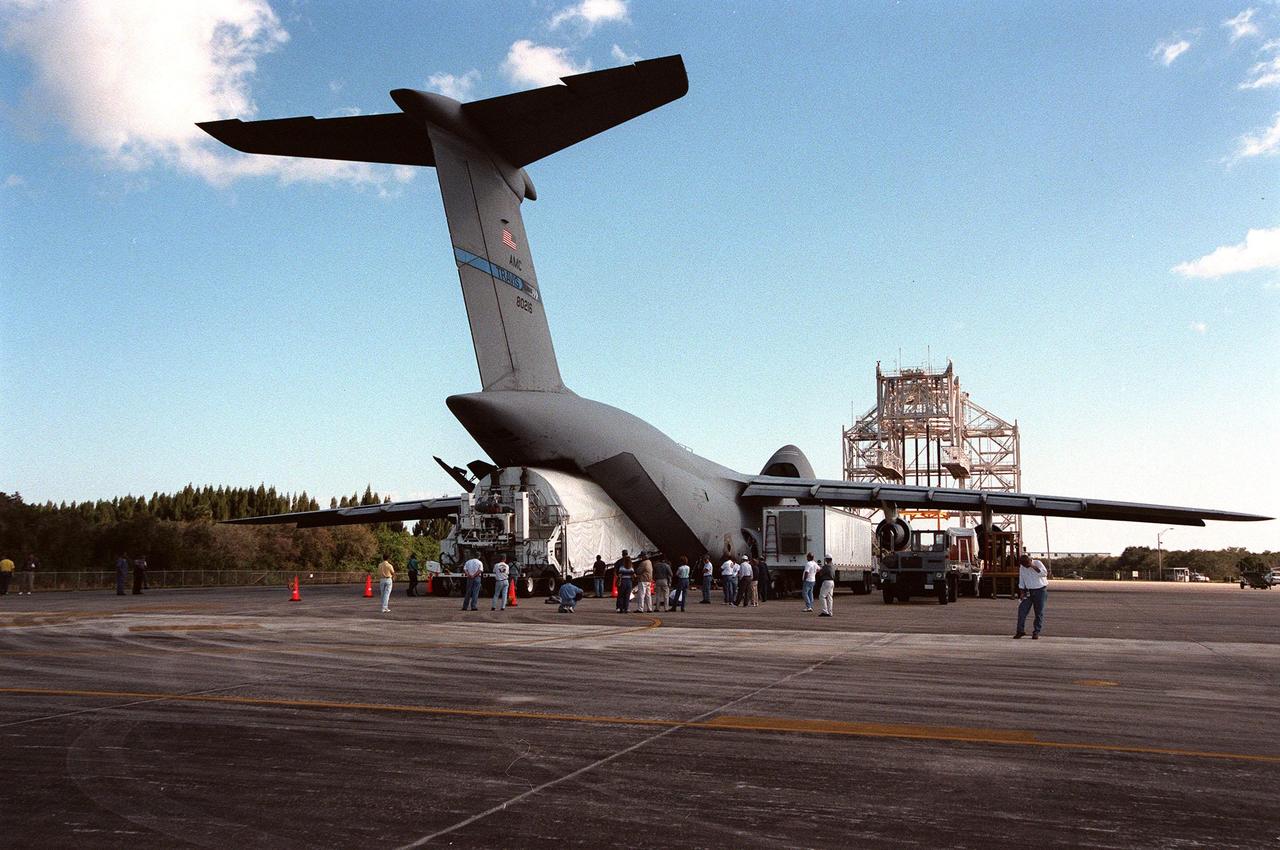
KENNEDY SPACE CENTER, FLA. -- The Chandra X-ray Observatory is unloaded from an Air Force C-5 Galaxy transporter two days after landing at the Shuttle Landing Facility on Feb. 4. The observatory sits cradled in the cargo hold of a tractor-trailer rig called the Space Cargo Transportation System, which closely resembles the size and shape of the Shuttle cargo bay. In the background (right) is the mate-demate device, used when an orbiter is returned to KSC on the back of a Shuttle carrier aircraft. Over the next few months, Chandra will undergo final tests and be mated to a Boeing-provided Inertial Upper Stage for launch July 9 aboard Space Shuttle Columbia, on mission STS-93 . Formerly called the Advanced X-ray Astrophysics Facility, Chandra comprises three major elements: the spacecraft, the science instrument module (SIM), and the world's most powerful X-ray telescope. Chandra will allow scientists from around the world to see previously invisible black holes and high-temperature gas clouds, giving the observatory the potential to rewrite the books on the structure and evolution of our universe