
This LASCO C2 image, taken 8 January 2002, shows a widely spreading coronal mass ejection (CME) as it blasts more than a billion tons of matter out into space at millions of kilometers per hour. The C2 image was turned 90 degrees so that the blast seems to be pointing down. An EIT 304 Angstrom image from a different day was enlarged and superimposed on the C2 image so that it filled the occulting disk for effect. Credit: NASA/GSFC/SOHO/ESA To learn more go to the SOHO website: <a href="http://sohowww.nascom.nasa.gov/home.html" rel="nofollow">sohowww.nascom.nasa.gov/home.html</a> To learn more about NASA's Sun Earth Day go here: <a href="http://sunearthday.nasa.gov/2010/index.php" rel="nofollow">sunearthday.nasa.gov/2010/index.php</a>
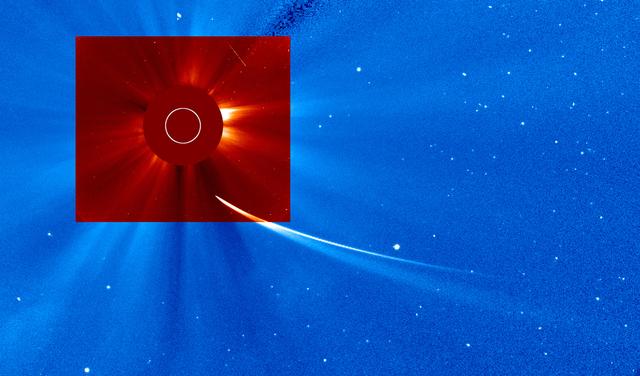
A merger of SOHO LASACO C2 data observed at 12:42 pm and C3 observed at 12:37 pm on November 28, 2013. Credit NASA/Goddard/SOHO
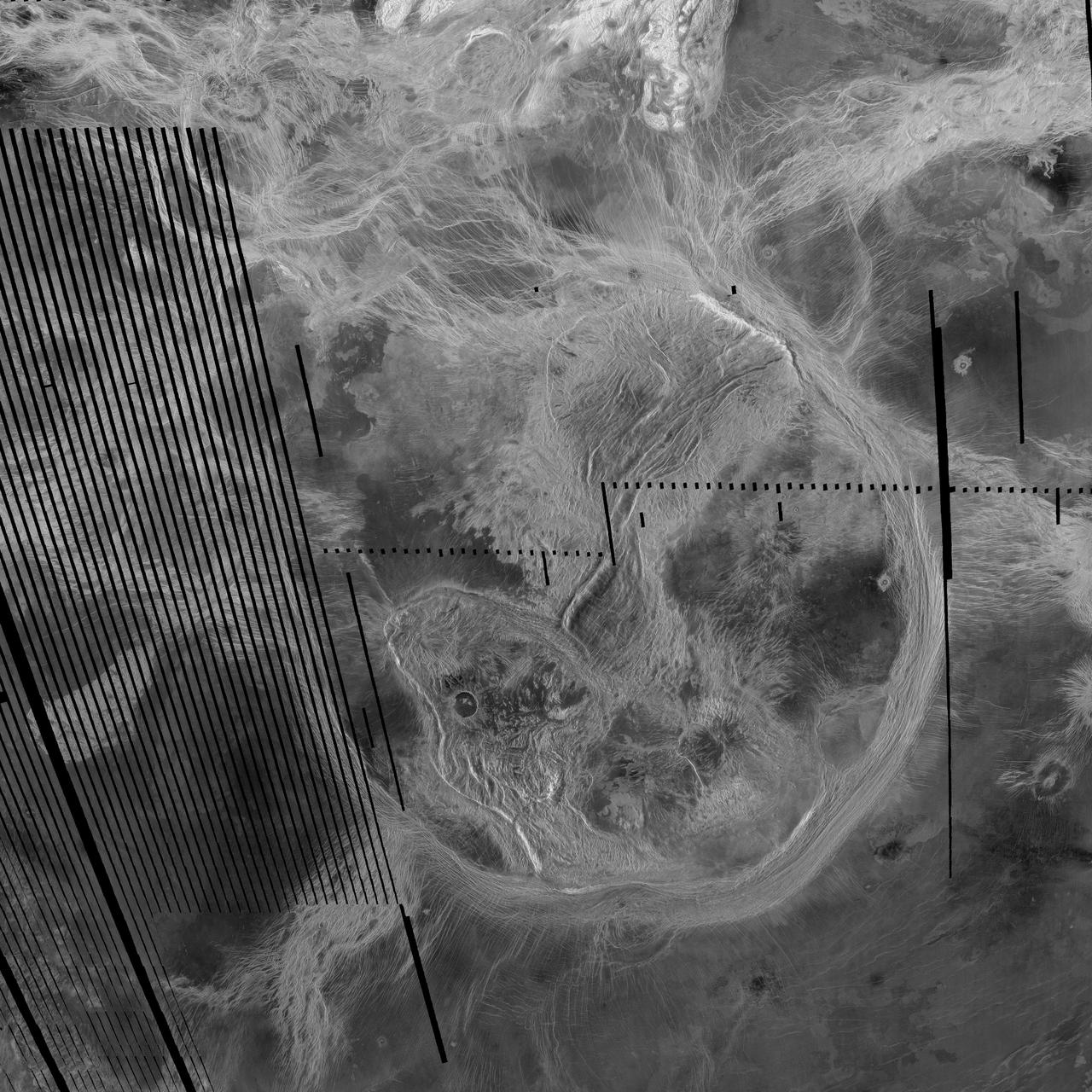
This spectacular image from NASA's Magellan spacecraft is centered on 30 degrees south latitude, 135 degrees east longitude, spans 3500 kilometers 2170 miles from east to west left to right, and shows the near-circular trough of Artemis Chasma. http://photojournal.jpl.nasa.gov/catalog/PIA00101

S83-35782 (18 June 1983) --- An Orbital Maneuvering System (OMS) engine firing caused this bright glow at the aft end of the Earth-orbiting space shuttle Challenger on June 18, 1983. Also visible in the 70mm exposure are parts of the Shuttle Pallet Satellite (SPAS-01). The experiment package for NASA's Office of Space and Terrestrial Applications (OSTA-2), the protective cradles for the Indonesian Palapa-B and Telesat Canada Anik C2 satellites, some getaway special (GAS) canisters and the Canadian-built Remote Manipulator System (RMS). The firing took place less than an hour after deployment of Anik. Photo credit: NASA
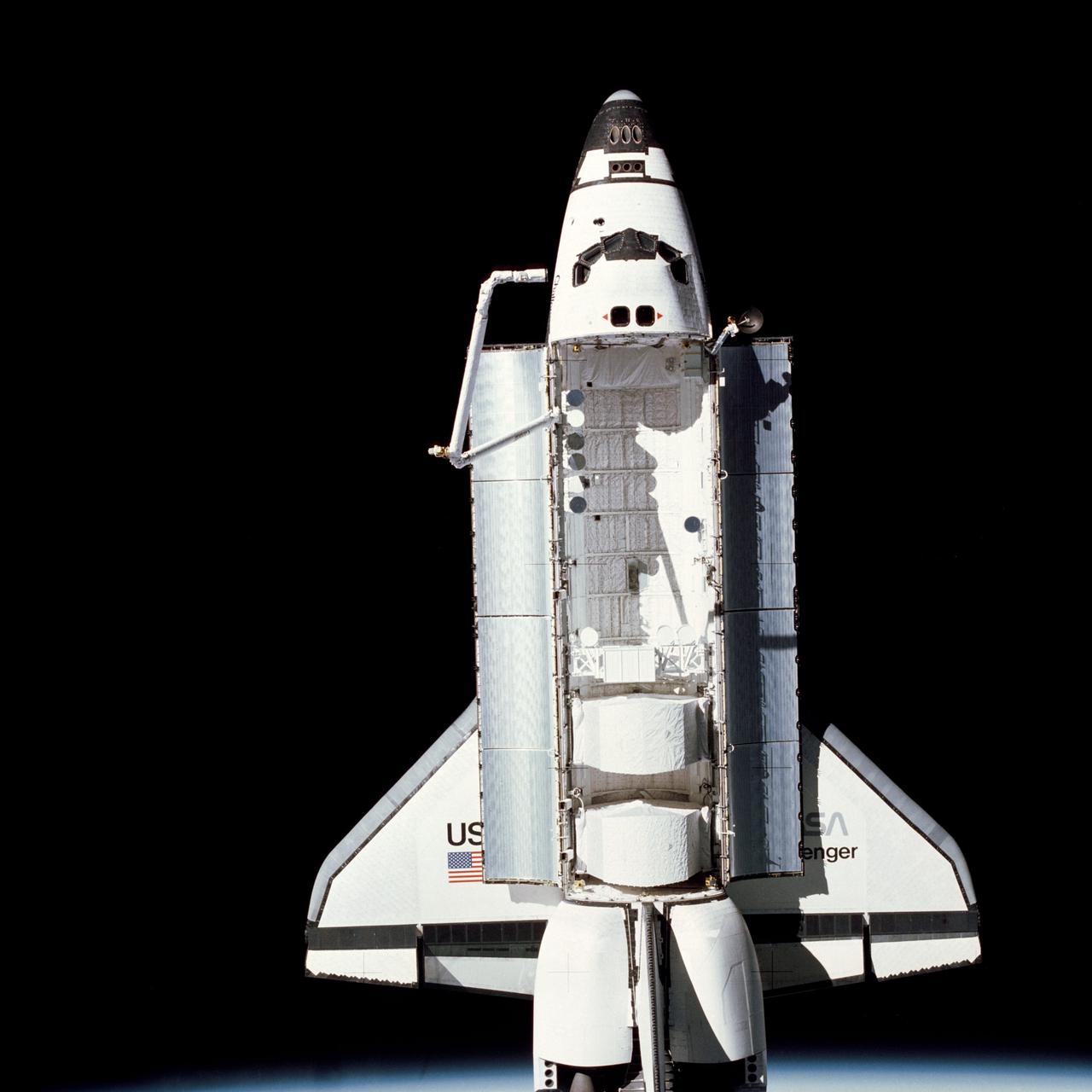
S83-35803 (22 June 1983) --- The Earth-orbiting space shuttle Challenger against the blackness of space was captured by a 70mm camera onboard the temporarily free-flying Shuttle Pallet Satellite (SPAS-01) during a busy Day 5 on the STS-7 mission. Visible in the cargo bay are the protective cradles for the now vacated Telesat Anik C2 and Palapa B communications satellites, the pallet for the NASA Office of Space and Terrestrial Applications (OSTA-2); the Remote Manipulator System (RMS) and the KU-Band antenna. The STS-7 astronaut crew with the RMS arm later retrieved the SPAS and returned it to a stowed position in the cargo bay for the return to Earth. Photo credit: NASA
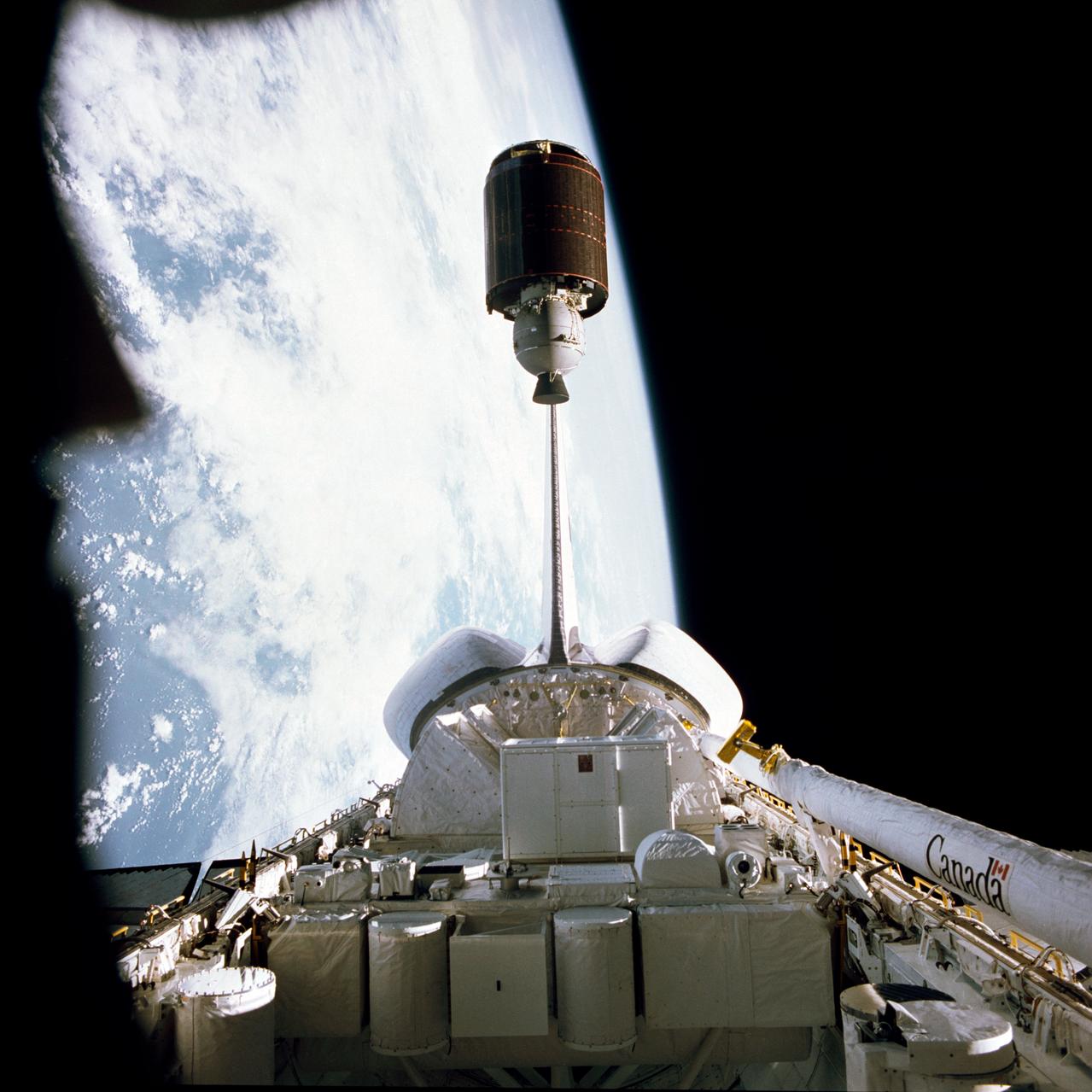
S83-35764 (19 June 1983) --- The Indonesian Palapa B communications satellite is just about to clear the vertical stabilizer of the Earth-orbiting Space Shuttle Challenger to begin its way toward its Earth-orbital destination. Also visible in this 70mm exposure, photographed through the flight deck?s aft windows, are the Shuttle pallet satellite, the experiment package for NASA?s office of space and terrestrial applications (OSTA-2), the now vacated protective cradles for Palapa and Telesat Canada?s Anik C2 satellites, some getaway special (GAS) canisters and the Canadian-built remote manipulator system (RMS) arm.
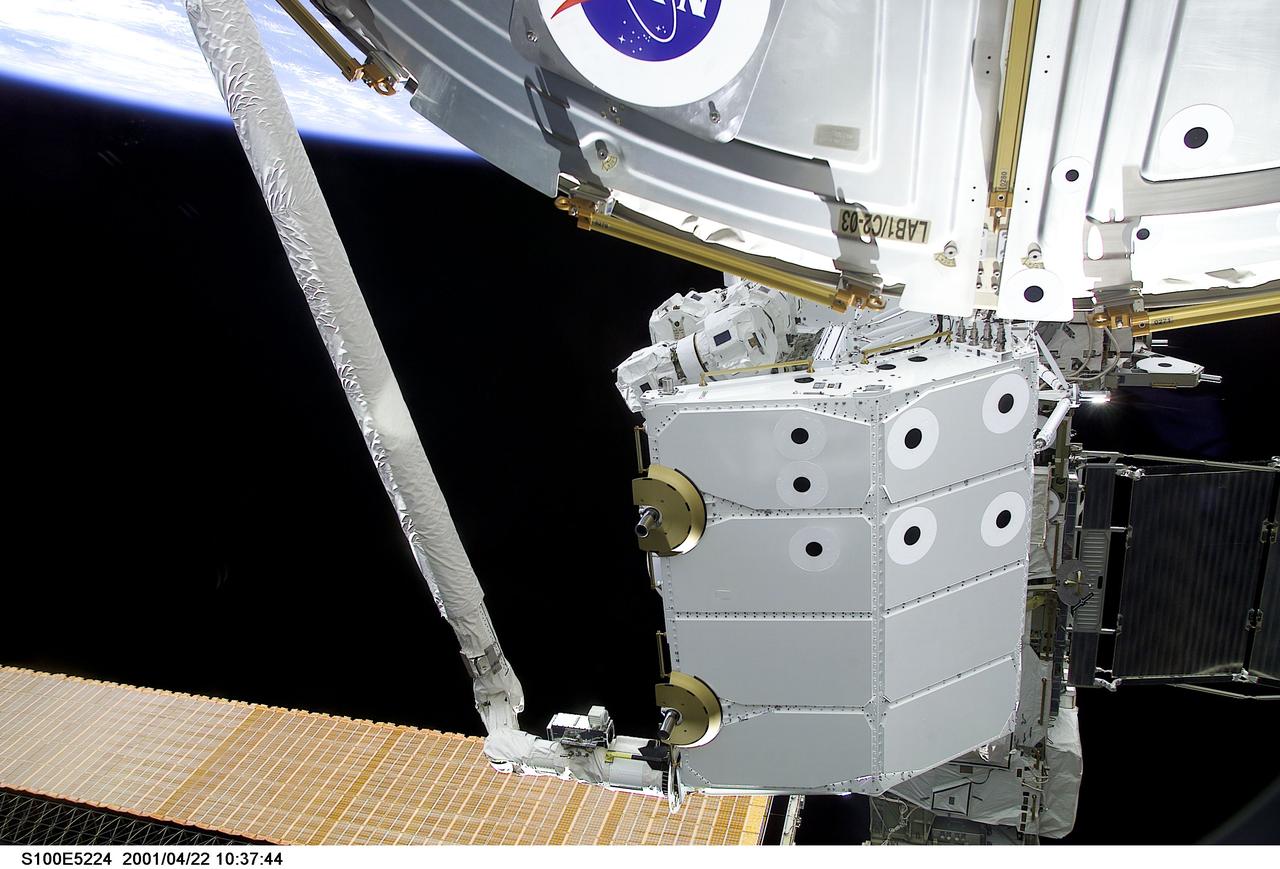
S100-E-5224 (22 April 2001) --- The pallet that contains Canadarm2 and the UHF antenna that are to be installed during the first scheduled space walk on STS-100 is seen in the grasp of the Canadian-built Remote Manipulator System (RMS) robot arm on the Space Shuttle Endeavour. Part of the Destiny laboratory can be seen in the top of the frame. The scene was recorded with a digital still camera.
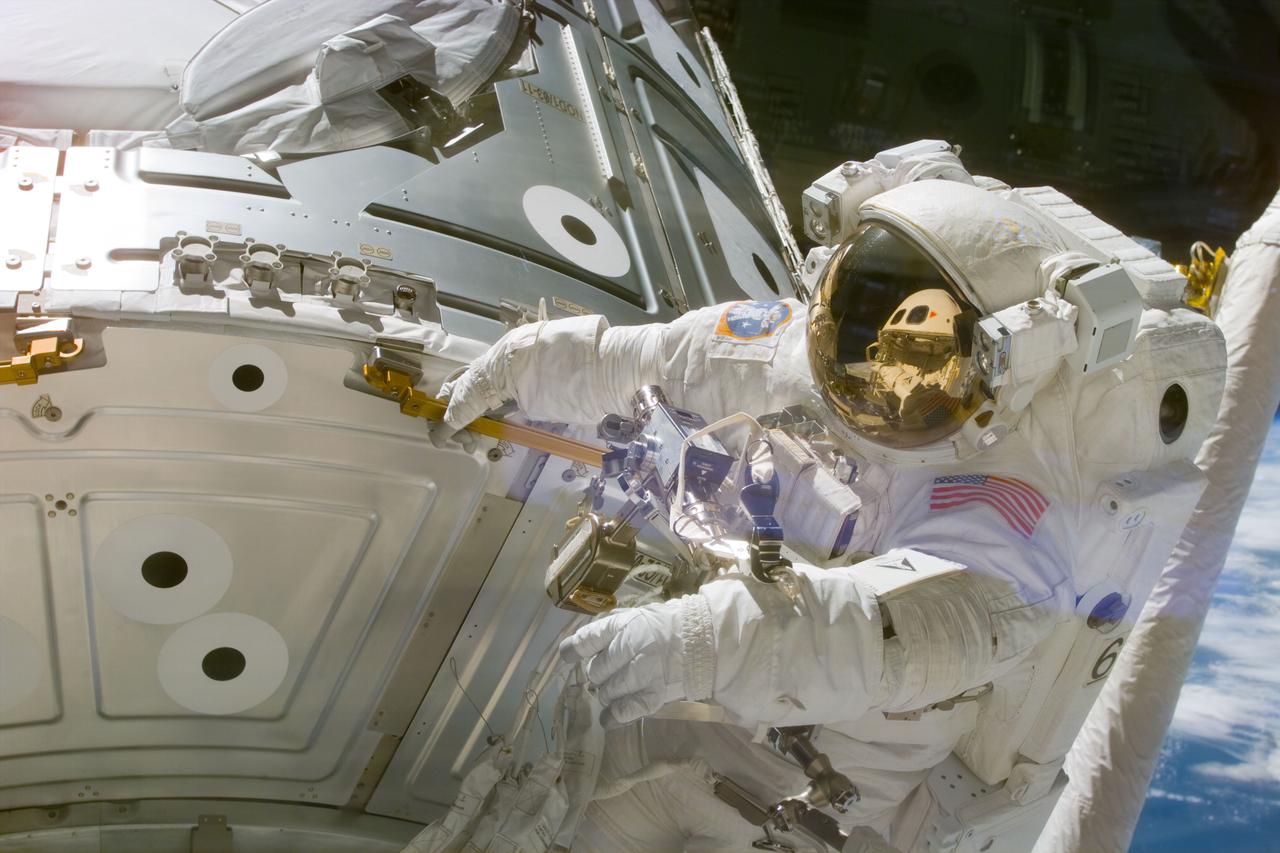
S88-E-5056 (12-07-98) --- Astronaut James H. Newman, holds one of the hand rails on the Unity connecting module during the early stages of a 7-hour, 21-minute spacewalk. Astronauts Newman and Jerry L. Ross, both mission specialists, went on to mate 40 cables and connectors running 76 feet from the Zarya control module to Unity, with the 35-ton complex towering over Endeavour's cargo bay. This photo was taken with an electronic still camera (ESC) at 23:37:07 GMT, Dec. 7.
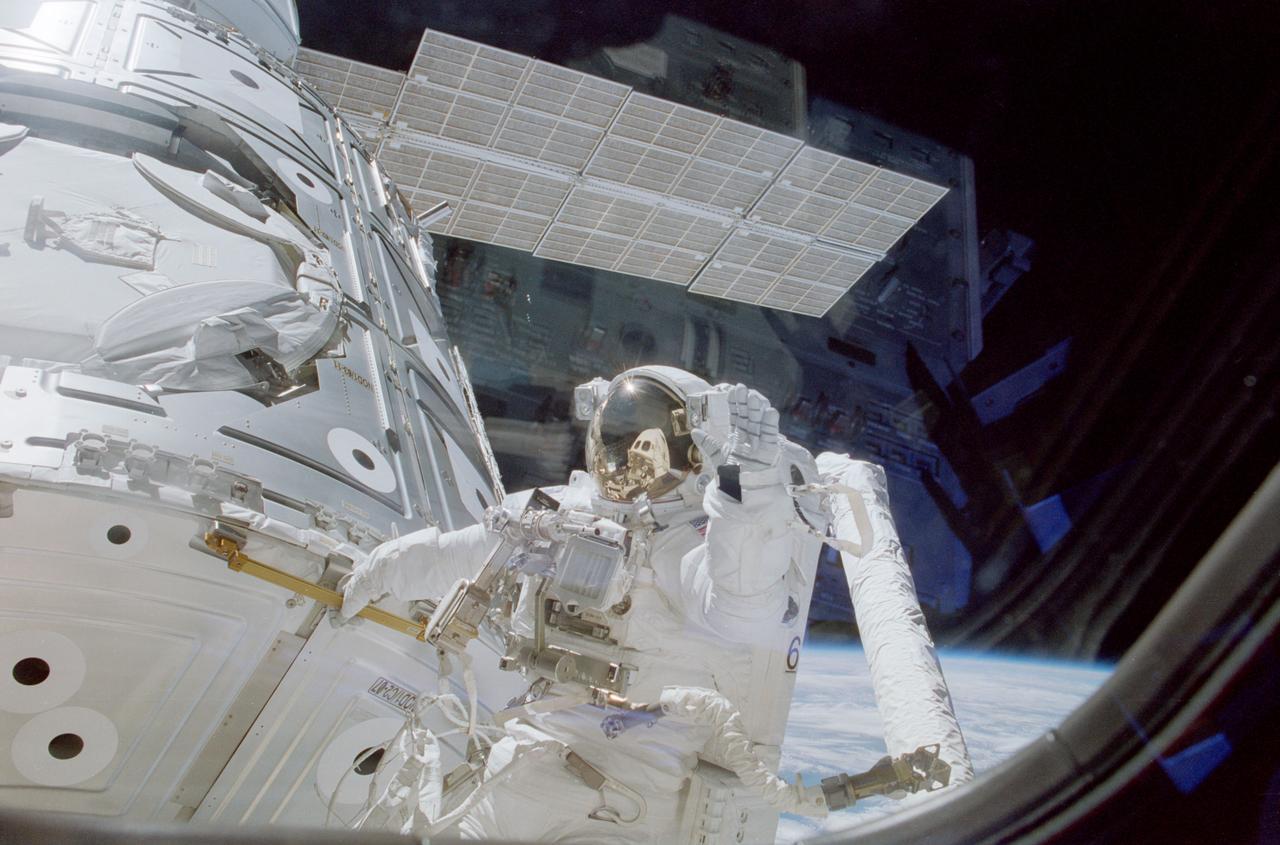
STS088-343-025 (4-15 Dec. 1998) --- Astronaut James H. Newman, mission specialist, holds onto a handrail while waving to the camera during one of three periods of Extravehicular Activity (EVA). Mission specialists Newman and Jerry L. Ross, (out of frame) shared three separate space walks designed to prepare for the release the first combined elements of the International Space Station (ISS). The modules are the Russian-built Zarya Module (or FGB), with its solar array panel visible here, and the United States-built Unity Module, partially visible in the cargo bay of the Earth-orbiting Space Shuttle Endeavour. Endeavour?s forward section is reflected in Newman?s helmet visor.
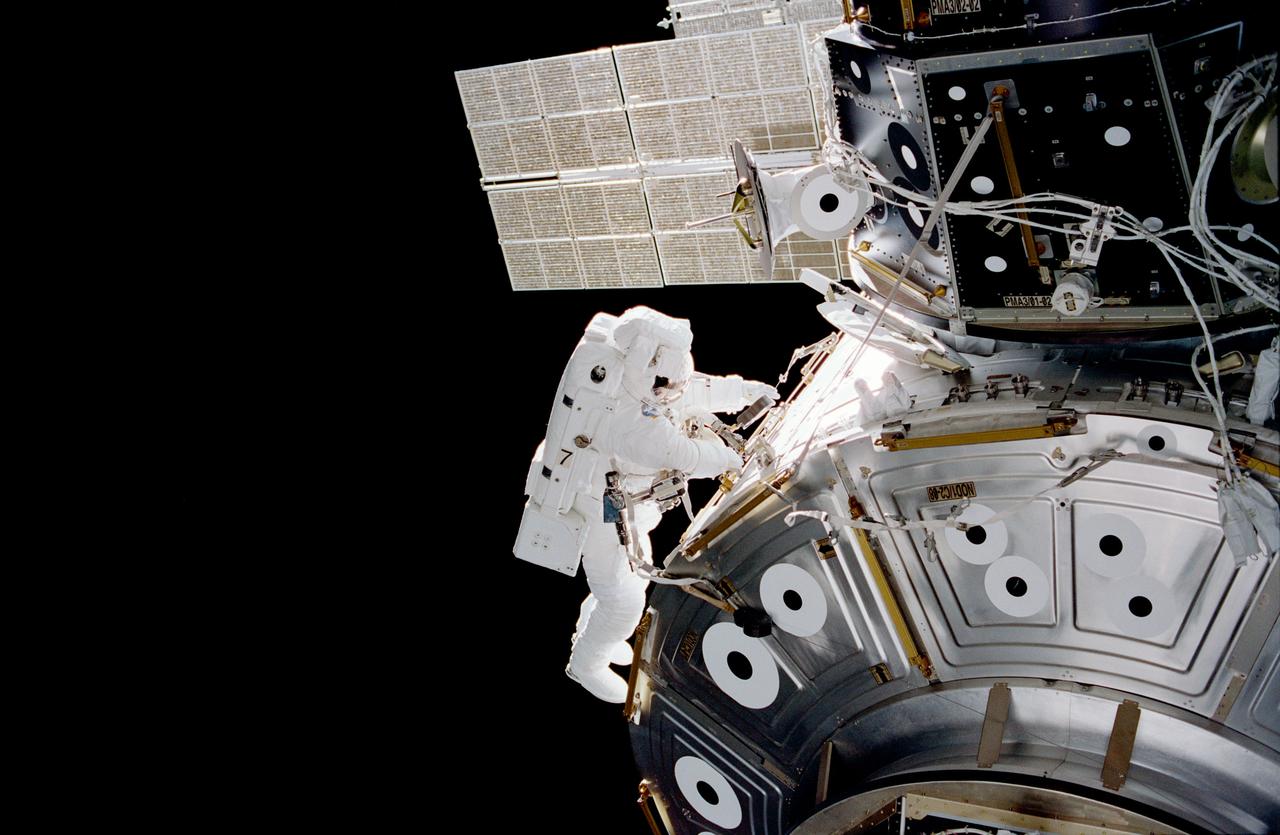
STS097-375-029 (5 December 2000) --- Astronaut Carlos I. Noriega, STS-97 mission specialist, works on the U.S.-built Unity node during the second of the flight’s three space walks on the International Space Station (ISS).
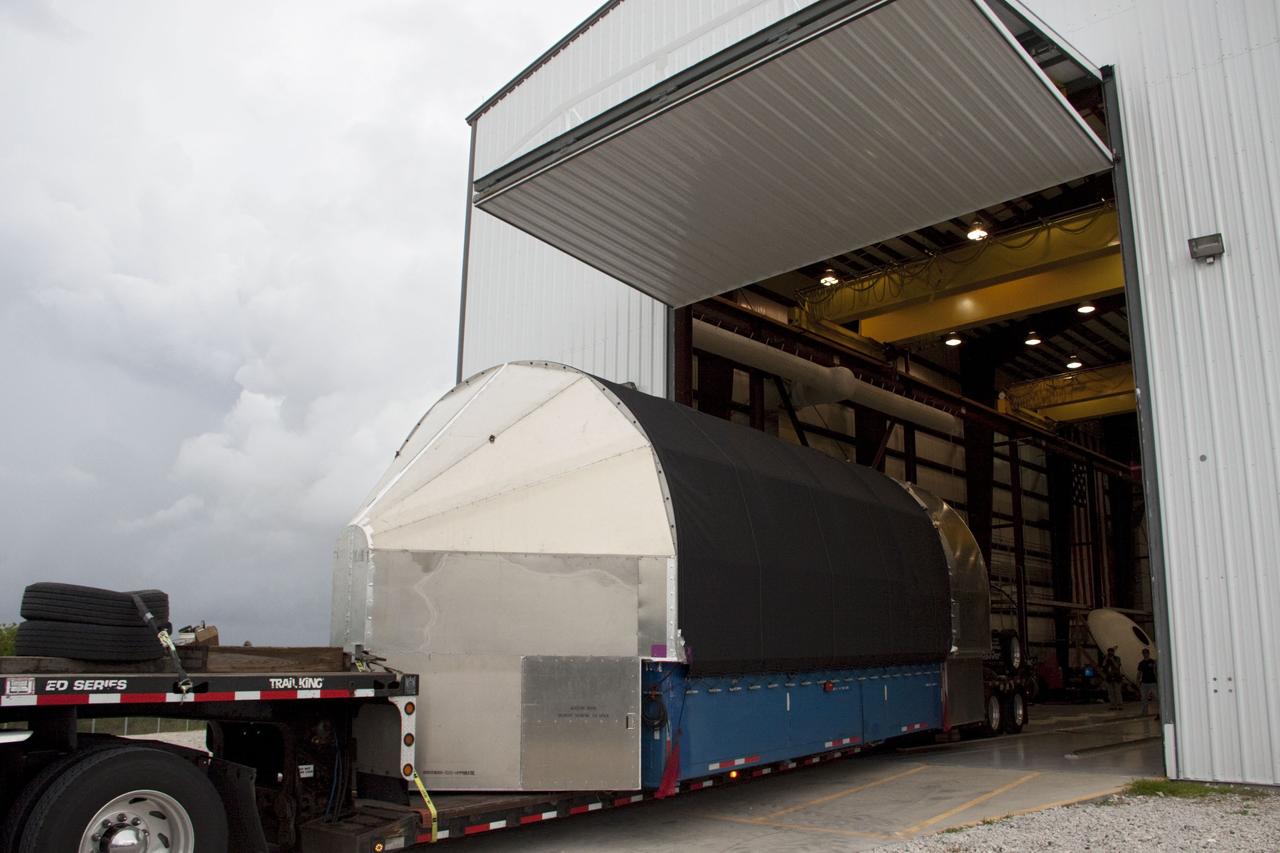
CAPE CANAVERAL, Fla. -- The second stage for the Space Exploration Technologies Corp., or SpaceX, Falcon 9 rocket is delivered to the SpaceX hangar at Pad 40 at Cape Canaveral Air Force Station in Florida. The Falcon 9 rocket will launch a second Dragon spacecraft, called Dragon C2, in late 2011. The mission will demonstrate proximity operations during an approach within six miles of the International Space Station. The company is building the Dragon to fly on resupply missions to the station. SpaceX was awarded procurement for three demonstration flights under the Commercial Orbital Transportation Services, or COTS, program managed by NASA's Johnson Space Center in Houston. The SpaceX contract provides for 12 missions to resupply the station from 2011 through 2015. Photo credit: NASA/Jim Grossmann

CAPE CANAVERAL, Fla. -- The second stage for the Space Exploration Technologies Corp., or SpaceX, Falcon 9 rocket is delivered to the SpaceX hangar at Pad 40 at Cape Canaveral Air Force Station in Florida. The Falcon 9 rocket will launch a second Dragon spacecraft, called Dragon C2, in late 2011. The mission will demonstrate proximity operations during an approach within six miles of the International Space Station. The company is building the Dragon to fly on resupply missions to the station. SpaceX was awarded procurement for three demonstration flights under the Commercial Orbital Transportation Services, or COTS, program managed by NASA's Johnson Space Center in Houston. The SpaceX contract provides for 12 missions to resupply the station from 2011 through 2015. Photo credit: NASA/Jim Grossmann
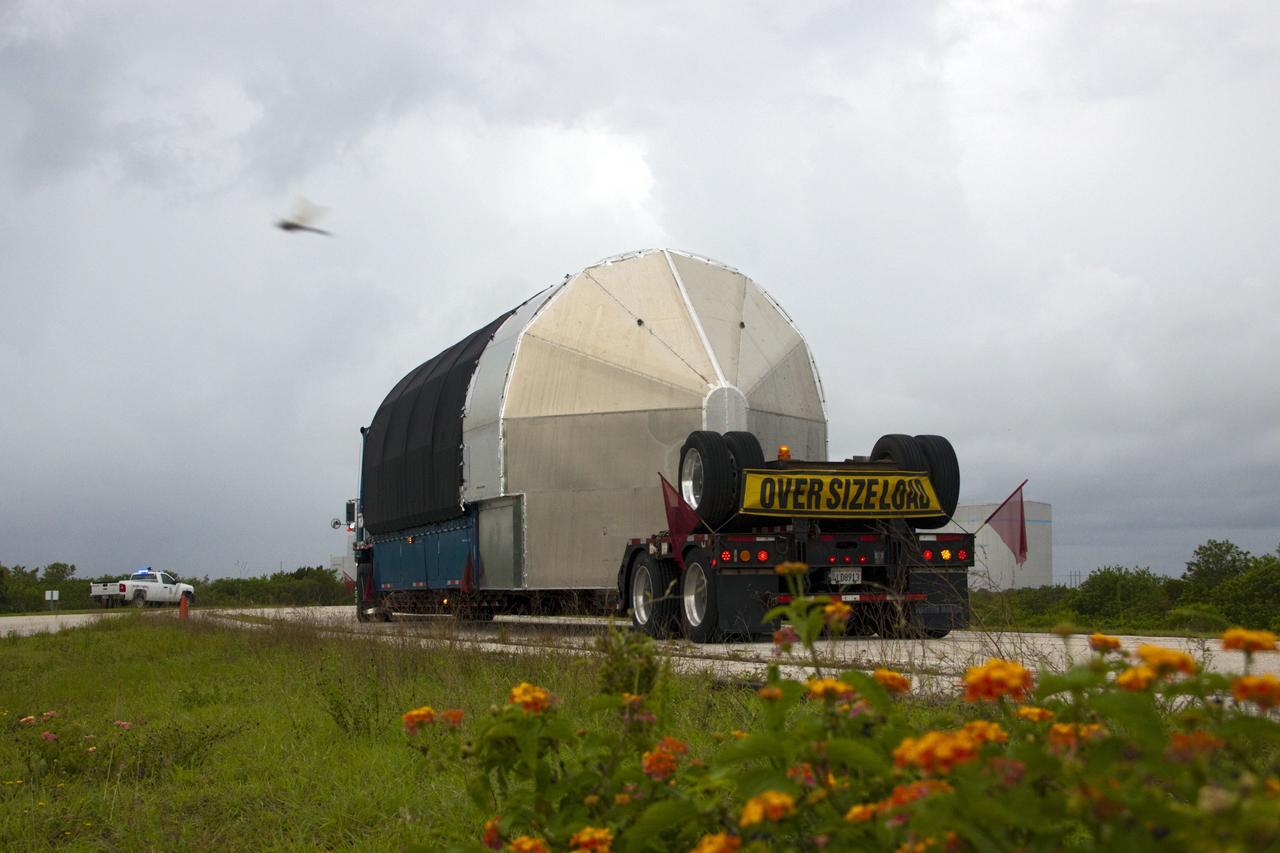
CAPE CANAVERAL, Fla. -- The second stage for the Space Exploration Technologies Corp., or SpaceX, Falcon 9 rocket is transported to the SpaceX hangar at Pad 40 at Cape Canaveral Air Force Station in Florida. The Falcon 9 rocket will launch a second Dragon spacecraft, called Dragon C2, in late 2011. The mission will demonstrate proximity operations during an approach within six miles of the International Space Station. The company is building the Dragon to fly on resupply missions to the station. SpaceX was awarded procurement for three demonstration flights under the Commercial Orbital Transportation Services, or COTS, program managed by NASA's Johnson Space Center in Houston. The SpaceX contract provides for 12 missions to resupply the station from 2011 through 2015. Photo credit: NASA/Jim Grossmann
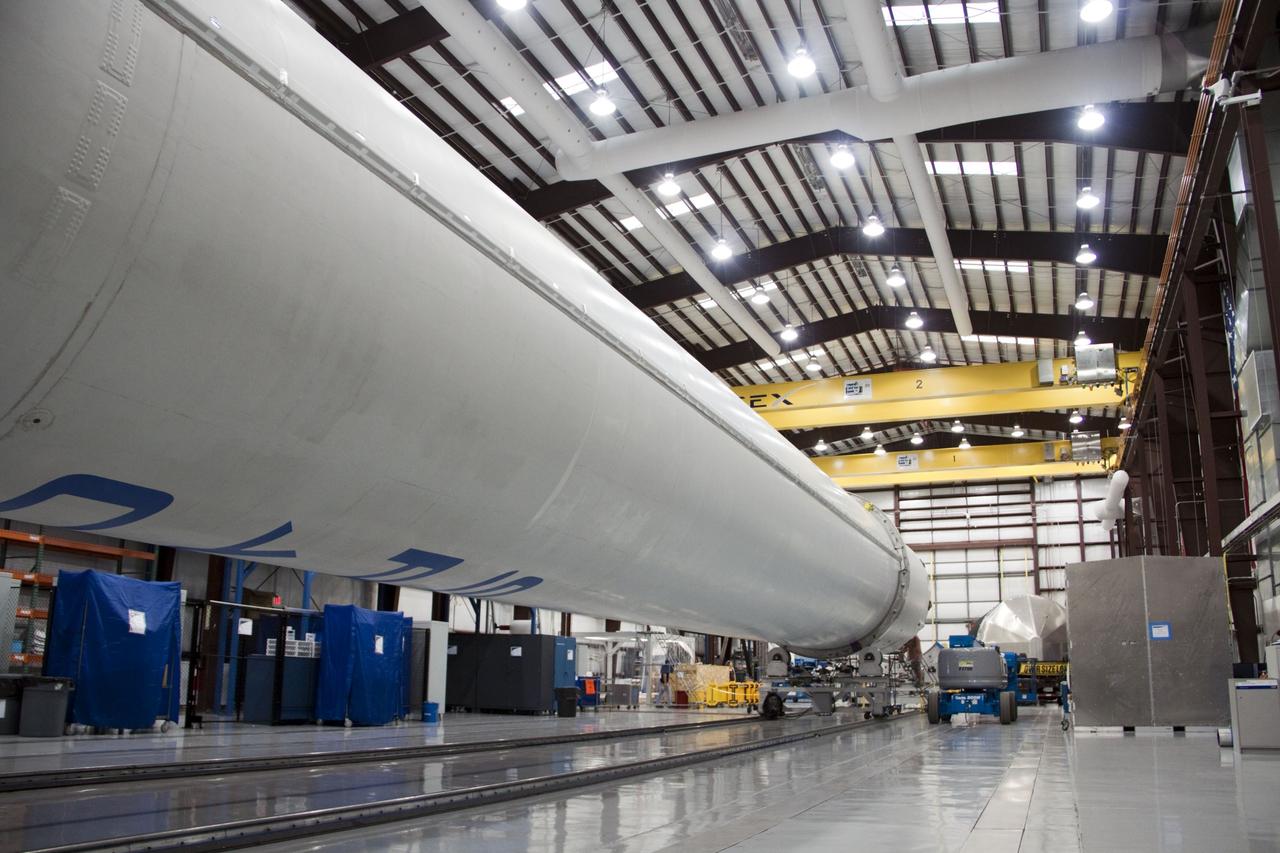
CAPE CANAVERAL, Fla. -- The second stage for the Space Exploration Technologies Corp., or SpaceX, Falcon 9 rocket is delivered to the SpaceX hangar at Pad 40 at Cape Canaveral Air Force Station in Florida. Also seen here in the foreground is the first stage of the Falcon 9. The Falcon 9 rocket will launch a second Dragon spacecraft, called Dragon C2, in late 2011. The mission will demonstrate proximity operations during an approach within six miles of the International Space Station. The company is building the Dragon to fly on resupply missions to the station. SpaceX was awarded procurement for three demonstration flights under the Commercial Orbital Transportation Services, or COTS, program managed by NASA's Johnson Space Center in Houston. The SpaceX contract provides for 12 missions to resupply the station from 2011 through 2015. Photo credit: NASA/Jim Grossmann
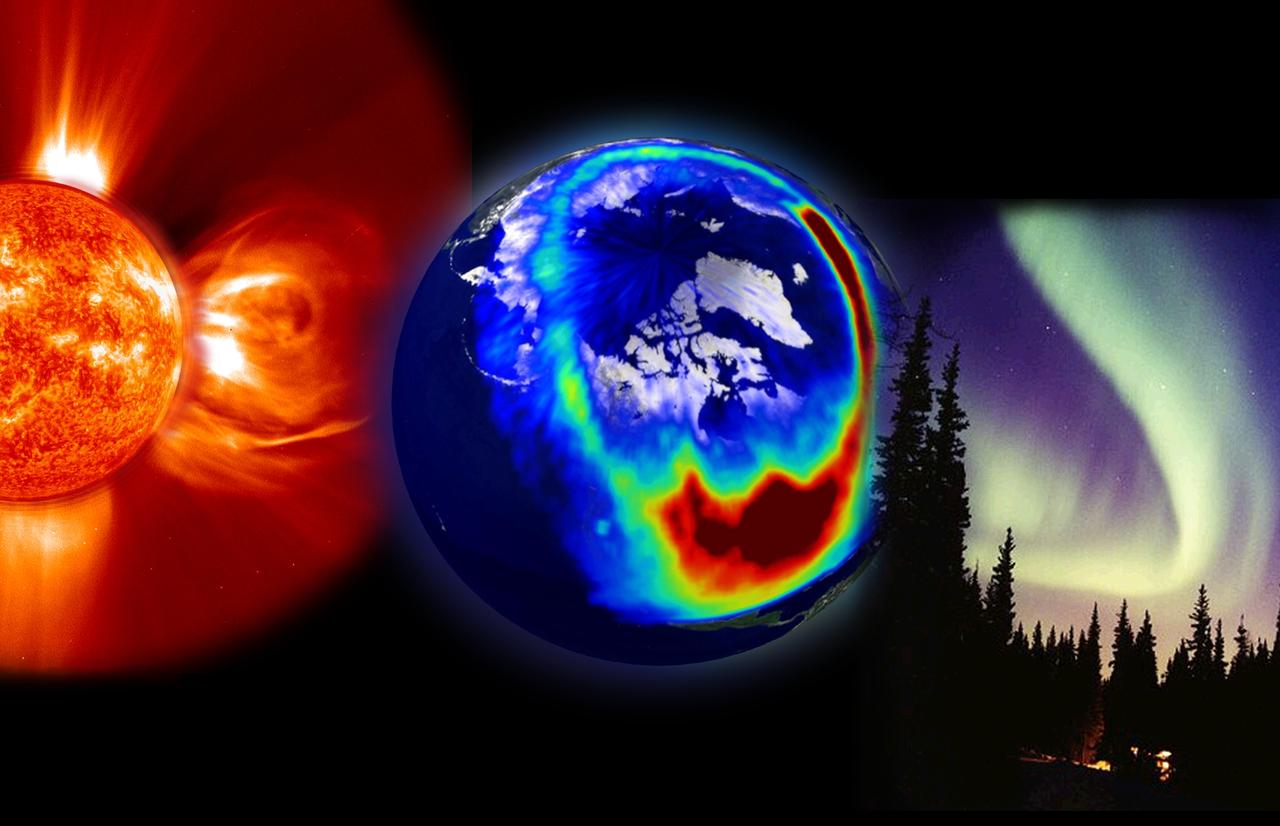
This composite image presents the three most visible elements of space weather: a storm from the Sun, aurora as seen from space, and aurora as seen from the Earth. The solar storm is a corona mass ejection (CME) composite from EIT 304Å superimposed on a LASCO C2 image, both from SOHO. The middle image from Polar’s VIS imager shows charged particles as they spread down across the U.S. during a large solar storm event on July 14, 2000. Lastly, Jan Curtis took this image of an aurora display in Alaska, the visible evidence of space weather that we see here on Earth. Credit: NASA/GSFC/SOHO/ESA To learn more go to the SOHO website: <a href="http://sohowww.nascom.nasa.gov/home.html" rel="nofollow">sohowww.nascom.nasa.gov/home.html</a> To learn more about NASA's Sun Earth Day go here: <a href="http://sunearthday.nasa.gov/2010/index.php" rel="nofollow">sunearthday.nasa.gov/2010/index.php</a>
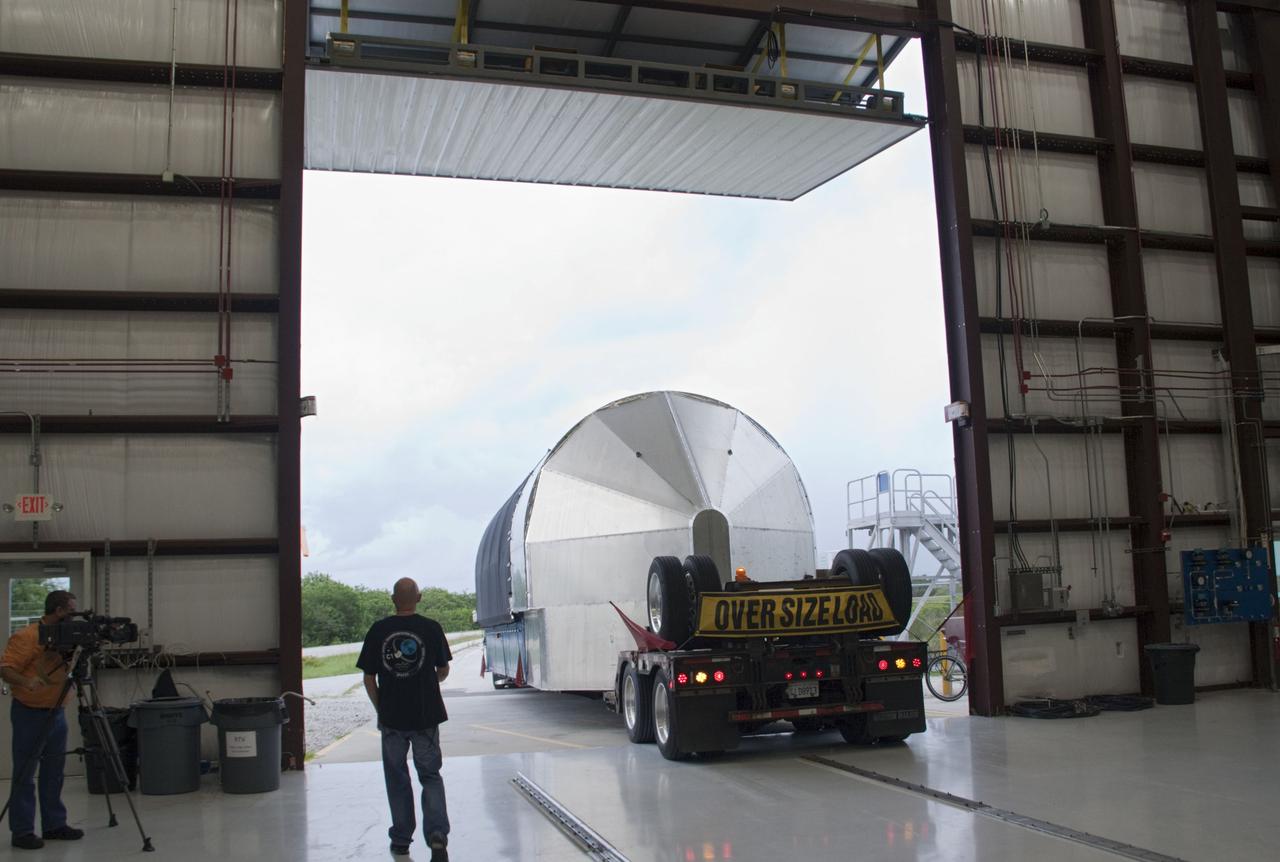
CAPE CANAVERAL, Fla. -- The second stage for the Space Exploration Technologies Corp., or SpaceX, Falcon 9 rocket is delivered to the SpaceX hangar at Pad 40 at Cape Canaveral Air Force Station in Florida. The Falcon 9 rocket will launch a second Dragon spacecraft, called Dragon C2, in late 2011. The mission will demonstrate proximity operations during an approach within six miles of the International Space Station. The company is building the Dragon to fly on resupply missions to the station. SpaceX was awarded procurement for three demonstration flights under the Commercial Orbital Transportation Services, or COTS, program managed by NASA's Johnson Space Center in Houston. The SpaceX contract provides for 12 missions to resupply the station from 2011 through 2015. Photo credit: NASA/Jim Grossmann
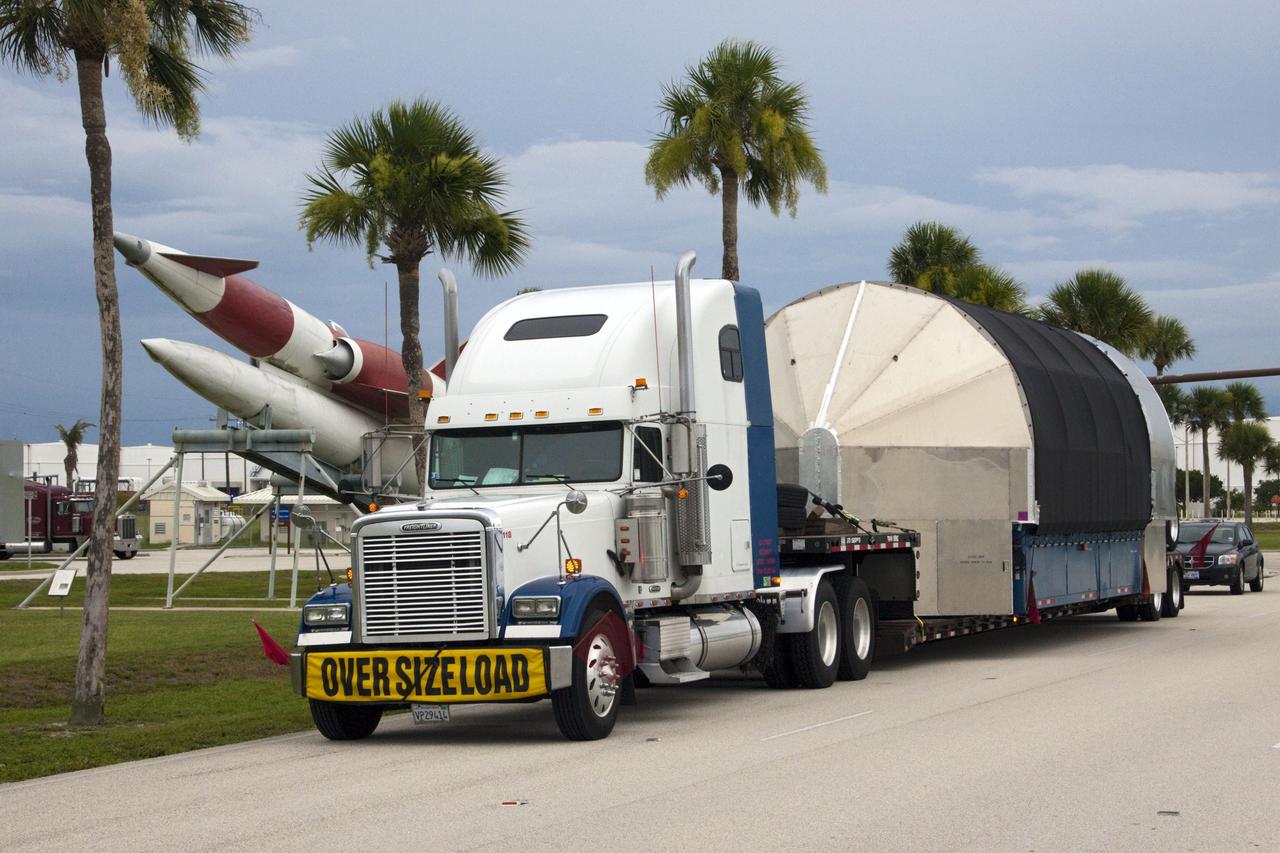
CAPE CANAVERAL, Fla. -- The second stage for the Space Exploration Technologies Corp., or SpaceX, Falcon 9 rocket is transported to the SpaceX hangar at Pad 40 at Cape Canaveral Air Force Station in Florida. The Falcon 9 rocket will launch a second Dragon spacecraft, called Dragon C2, in late 2011. The mission will demonstrate proximity operations during an approach within six miles of the International Space Station. The company is building the Dragon to fly on resupply missions to the station. SpaceX was awarded procurement for three demonstration flights under the Commercial Orbital Transportation Services, or COTS, program managed by NASA's Johnson Space Center in Houston. The SpaceX contract provides for 12 missions to resupply the station from 2011 through 2015. Photo credit: NASA/Jim Grossmann
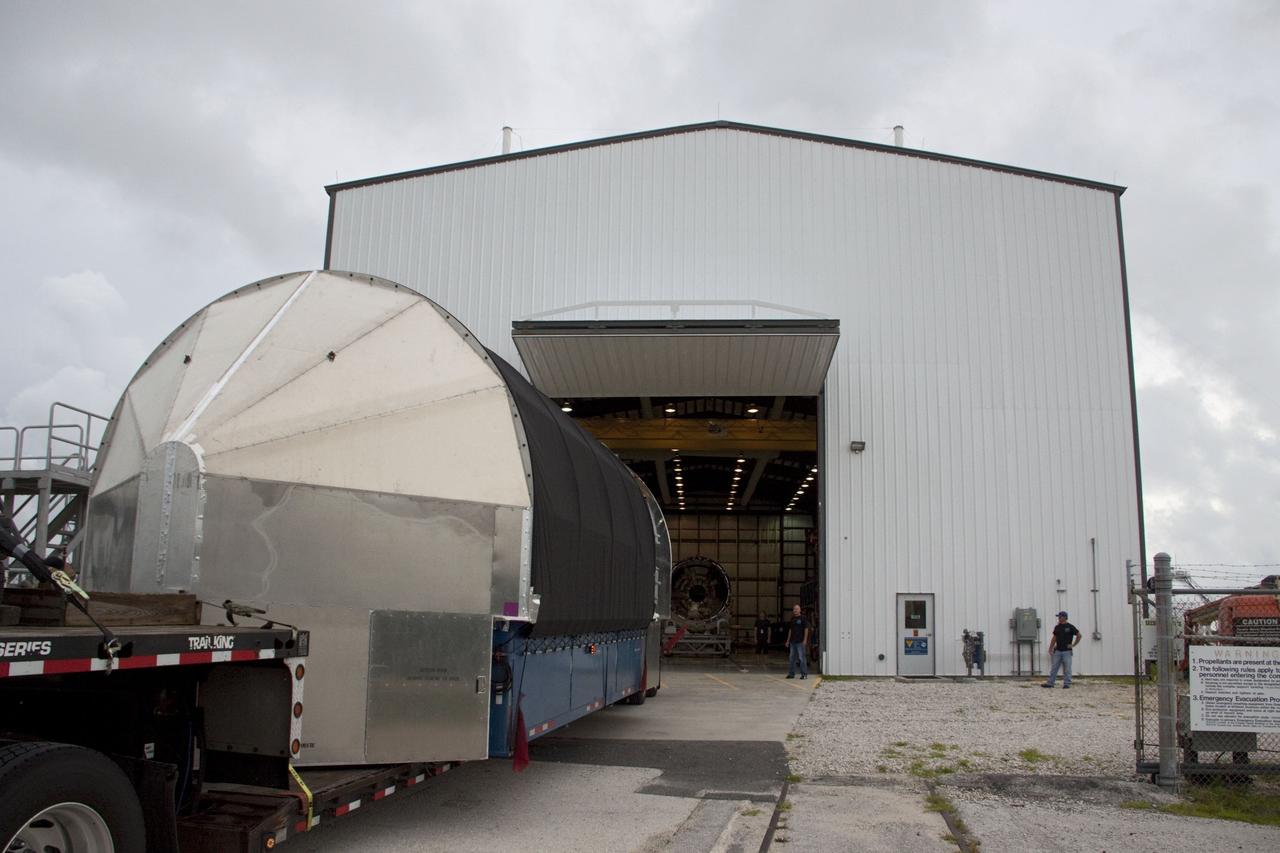
CAPE CANAVERAL, Fla. -- The second stage for the Space Exploration Technologies Corp., or SpaceX, Falcon 9 rocket is delivered to the SpaceX hangar at Pad 40 at Cape Canaveral Air Force Station in Florida. The Falcon 9 rocket will launch a second Dragon spacecraft, called Dragon C2, in late 2011. The mission will demonstrate proximity operations during an approach within six miles of the International Space Station. The company is building the Dragon to fly on resupply missions to the station. SpaceX was awarded procurement for three demonstration flights under the Commercial Orbital Transportation Services, or COTS, program managed by NASA's Johnson Space Center in Houston. The SpaceX contract provides for 12 missions to resupply the station from 2011 through 2015. Photo credit: NASA/Jim Grossmann
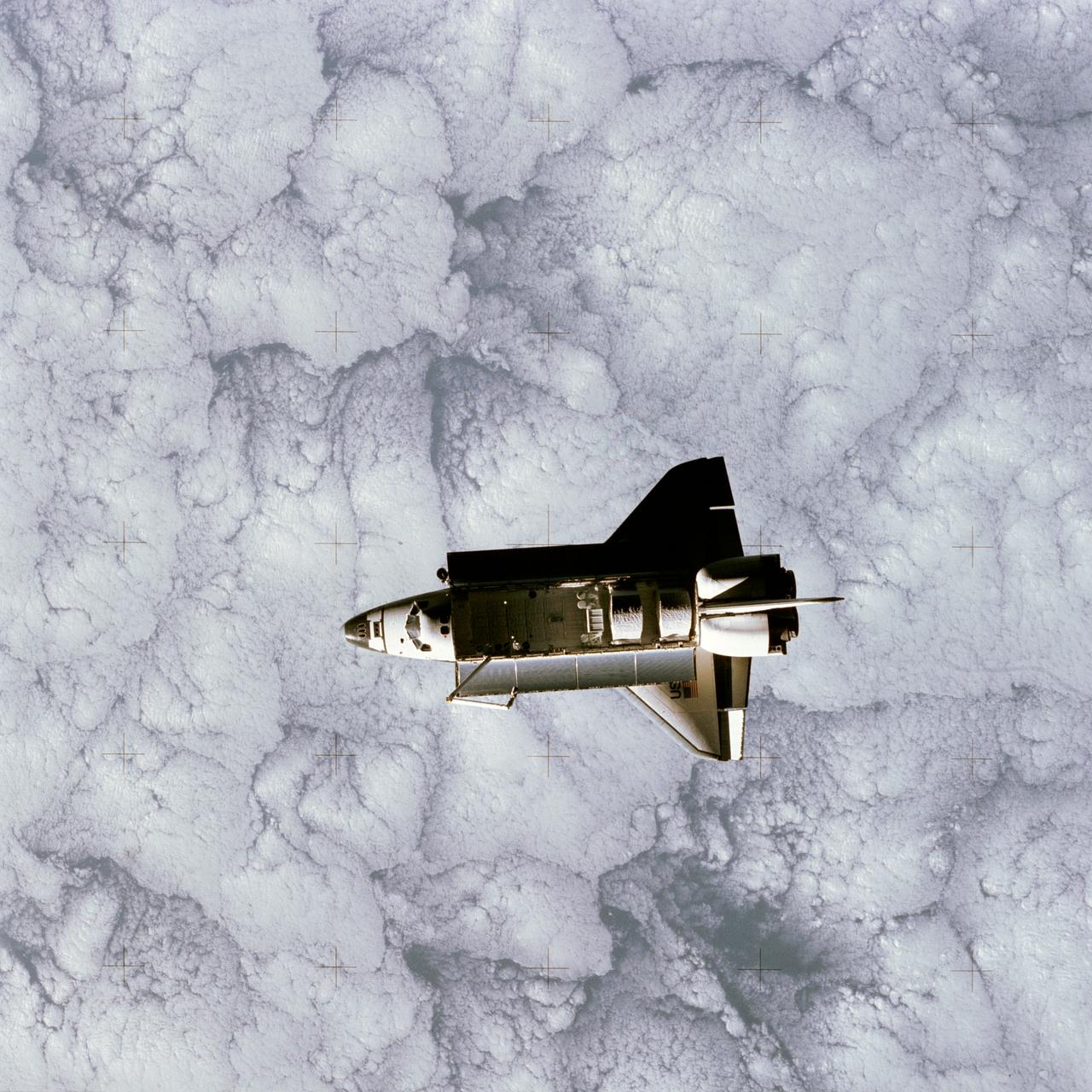
STS007-32-1667 (22 June 1983) --- The Earth-orbiting Space Shuttle Challenger over a heavily cloud-covered portion of the Earth was captured by a 70mm camera onboard the temporarily free-flying Shuttle Pallet Satellite (SPAS-01) during a busy Day 5 on the STS-7 mission. Visible in the cargo bay are the protective cradles for the now vacated Telesat Anik C2 and Palapa-B communications satellites, the pallet for the NASA Office of Space and Terrestrial Applications (OSTA-2); the Remote Manipulator System (RMS) and the KU-Band antenna. The STS-7 astronaut crew and the RMS arm later retrieved the SPAS and returned it to a stowed position in the cargo bay of the Space Shuttle Challenger for the return to Earth.
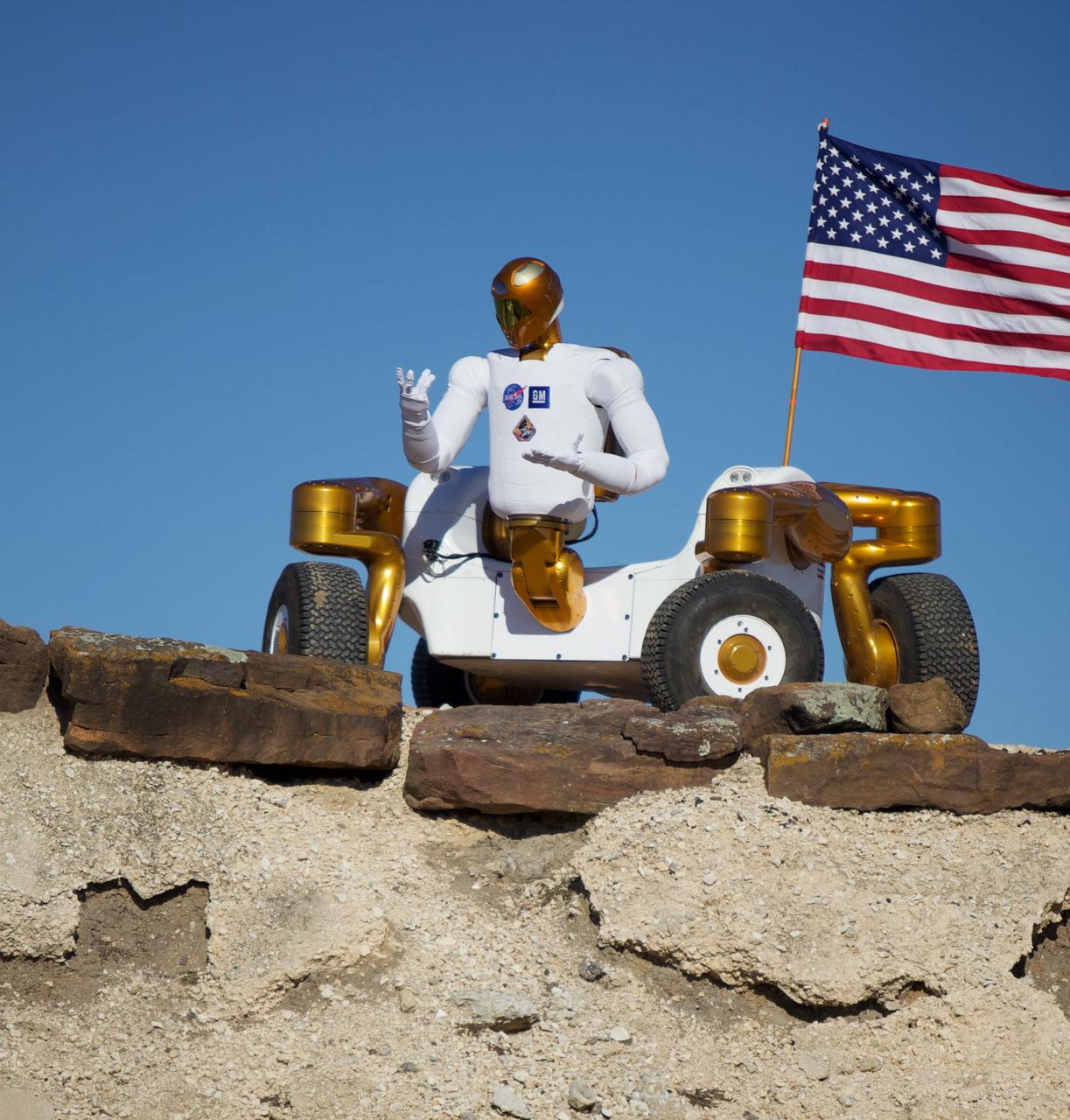
JSC2011-E-017945 (February 2011) --- Robonaut 2 poses atop its new wheeled base, Centaur 2, at the Johnson Space Center Planetary Analog Test Site. The Centaur base builds off of lessons learned through the Space Exploration Vehicle, a rover for astronauts, and could allow the dexterous humanoid robot to help with the future exploration of distant planetary surfaces. Photo credit: NASA or National Aeronautics and Space Administration
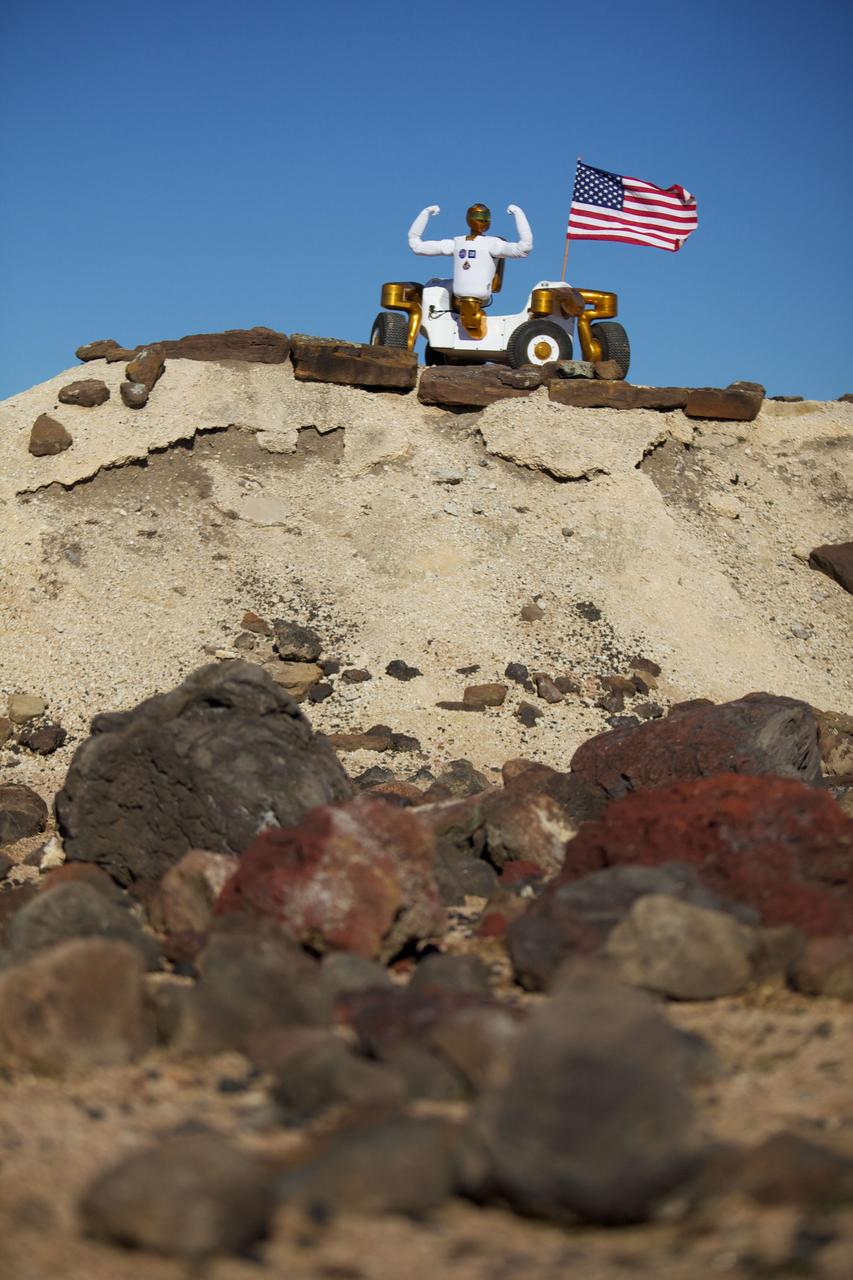
JSC2011-E-017946 (February 2011) --- Robonaut 2 poses atop its new wheeled base, Centaur 2, at the Johnson Space Center Planetary Analog Test Site. The Centaur base builds off of lessons learned through the Space Exploration Vehicle, a rover for astronauts, and could allow the dexterous humanoid robot to help with the future exploration of distant planetary surfaces. Photo credit: NASA or National Aeronautics and Space Administration
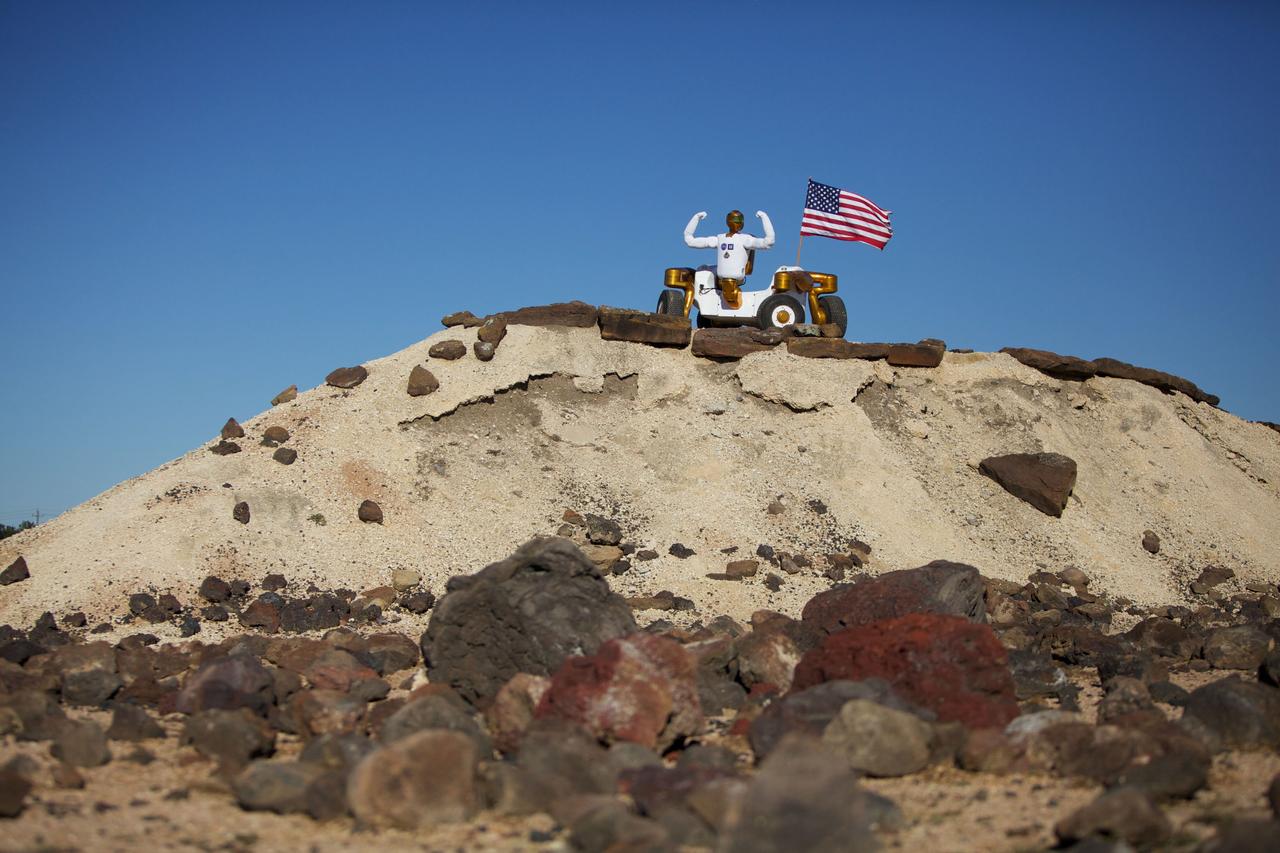
JSC2011-E-017947 (February 2011) --- Robonaut 2 poses atop its new wheeled base, Centaur 2, at the Johnson Space Center Planetary Analog Test Site. The Centaur base builds off of lessons learned through the Space Exploration Vehicle, a rover for astronauts, and could allow the dexterous humanoid robot to help with the future exploration of distant planetary surfaces. Photo credit: NASA or National Aeronautics and Space Administration
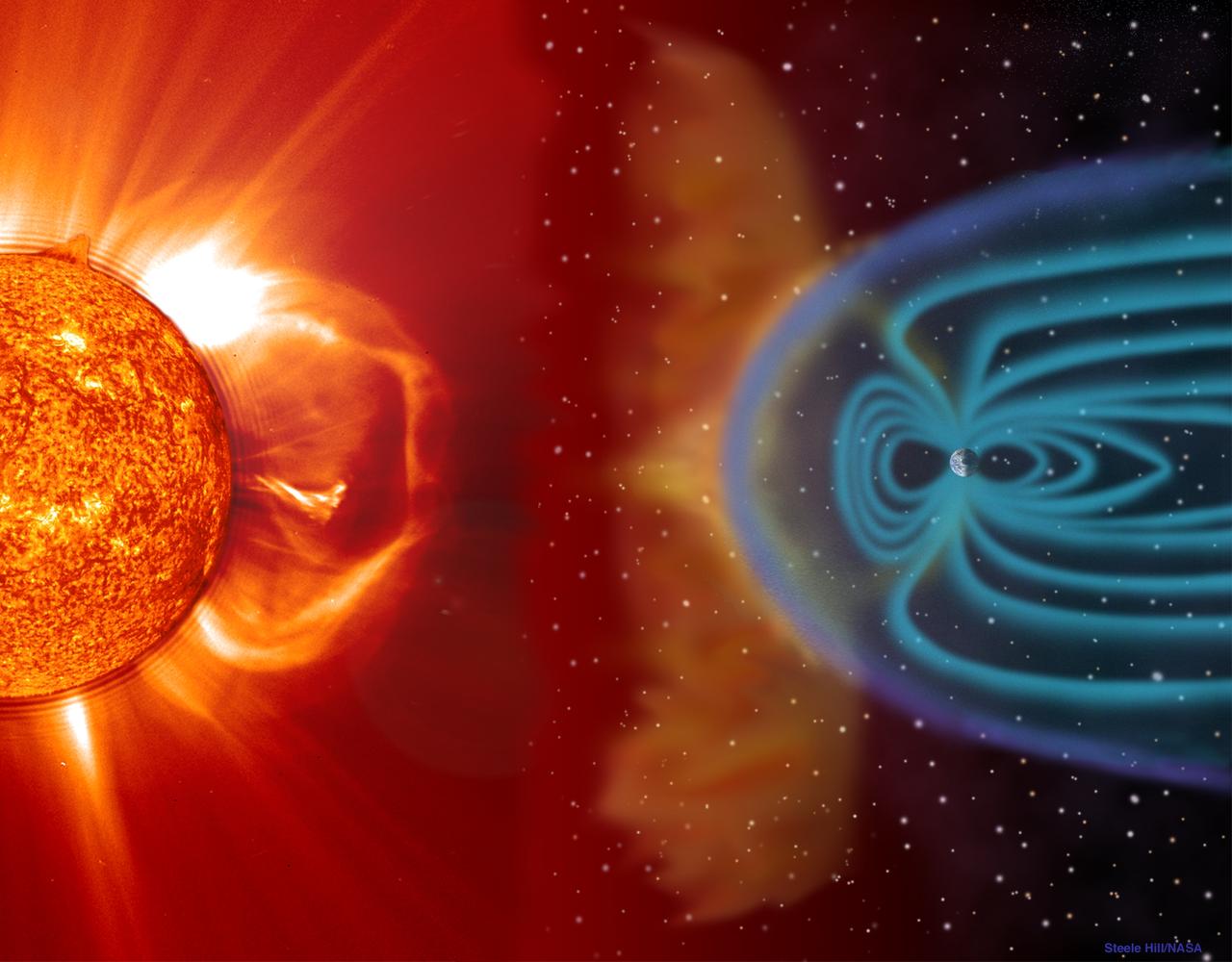
CME blast and subsequent impact at Earth -- This illustration shows a CME blasting off the Sun’s surface in the direction of Ea CME blast and subsequent impact at Earth -- This illustration shows a CME blasting off the Sun’s surface in the direction of Earth. This left portion is composed of an EIT 304 image superimposed on a LASCO C2 coronagraph. Two to four days later, the CME cloud is shown striking and beginning to be mostly deflected around the Earth’s magnetosphere. The blue paths emanating from the Earth’s poles represent some of its magnetic field lines. The magnetic cloud of plasma can extend to 30 million miles wide by the time it reaches earth. These storms, which occur frequently, can disrupt communications and navigational equipment, damage satellites, and even cause blackouts. (Objects in the illustration are not drawn to scale.) Credit: NASA/GSFC/SOHO/ESA To learn more go to the SOHO website: <a href="http://sohowww.nascom.nasa.gov/home.html" rel="nofollow">sohowww.nascom.nasa.gov/home.html</a> To learn more about NASA's Sun Earth Day go here: <a href="http://sunearthday.nasa.gov/2010/index.php" rel="nofollow">sunearthday.nasa.gov/2010/index.php</a>
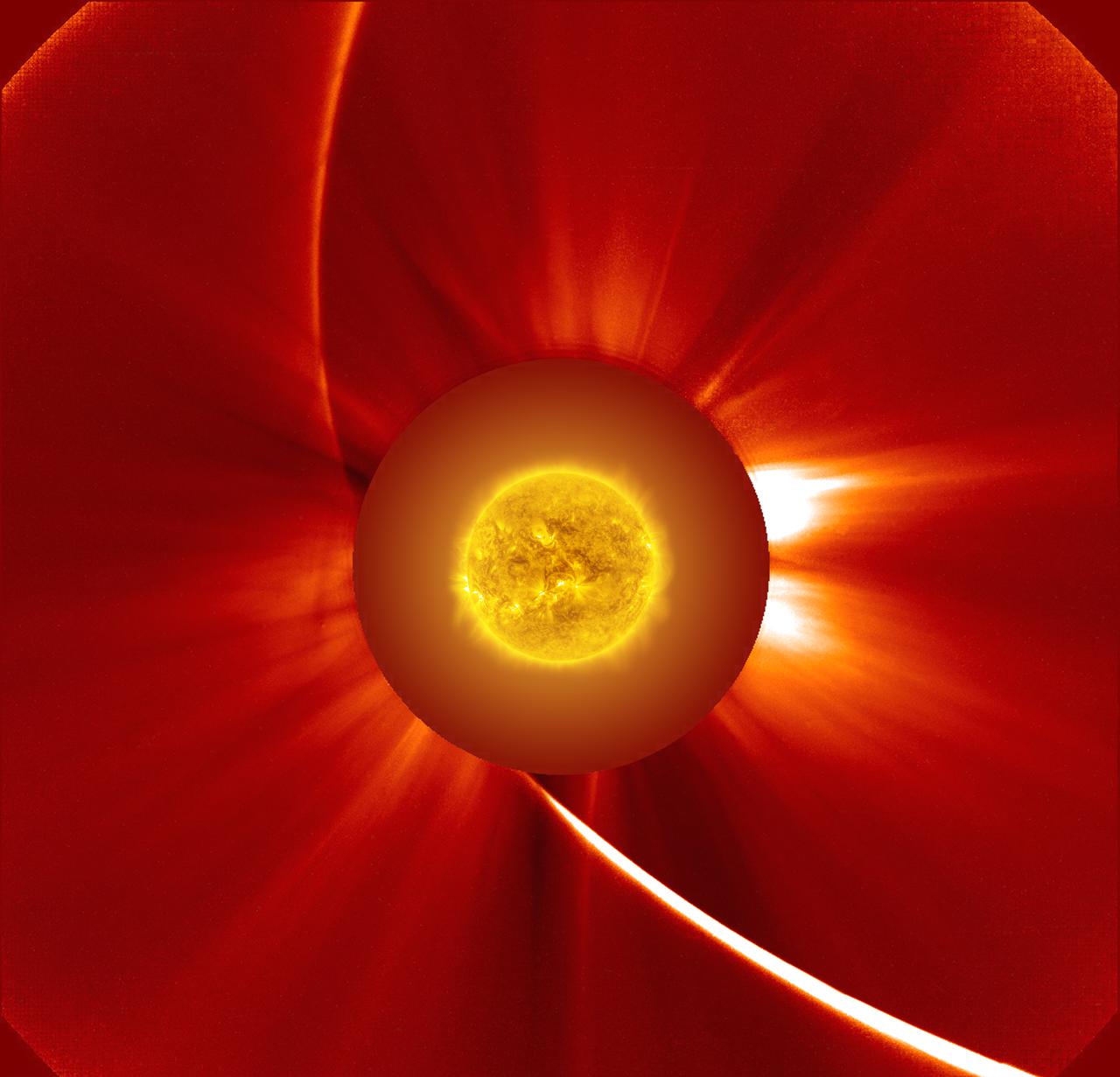
This view captures the transformation of Comet ISON as it rounded the sun. It combines 60 SOHO C2 frames in which ISON appears (Nov. 28, 1248 UT, to Nov. 29, 0316 UT) with stars, noise and particle tracks removed, plus an SDO AIA 171 image of the sun taken just before the spacecraft attempted to image the comet near perihelion. Credit: NASA/ESA/SOHO, NASA/SDO, and Francis Reddy <b><a href="http://www.nasa.gov/audience/formedia/features/MP_Photo_Guidelines.html" rel="nofollow">NASA image use policy.</a></b> <b><a href="http://www.nasa.gov/centers/goddard/home/index.html" rel="nofollow">NASA Goddard Space Flight Center</a></b> enables NASA’s mission through four scientific endeavors: Earth Science, Heliophysics, Solar System Exploration, and Astrophysics. Goddard plays a leading role in NASA’s accomplishments by contributing compelling scientific knowledge to advance the Agency’s mission. <b>Follow us on <a href="http://twitter.com/NASA_GoddardPix" rel="nofollow">Twitter</a></b> <b>Like us on <a href="http://www.facebook.com/pages/Greenbelt-MD/NASA-Goddard/395013845897?ref=tsd" rel="nofollow">Facebook</a></b> <b>Find us on <a href="http://instagram.com/nasagoddard?vm=grid" rel="nofollow">Instagram</a></b>
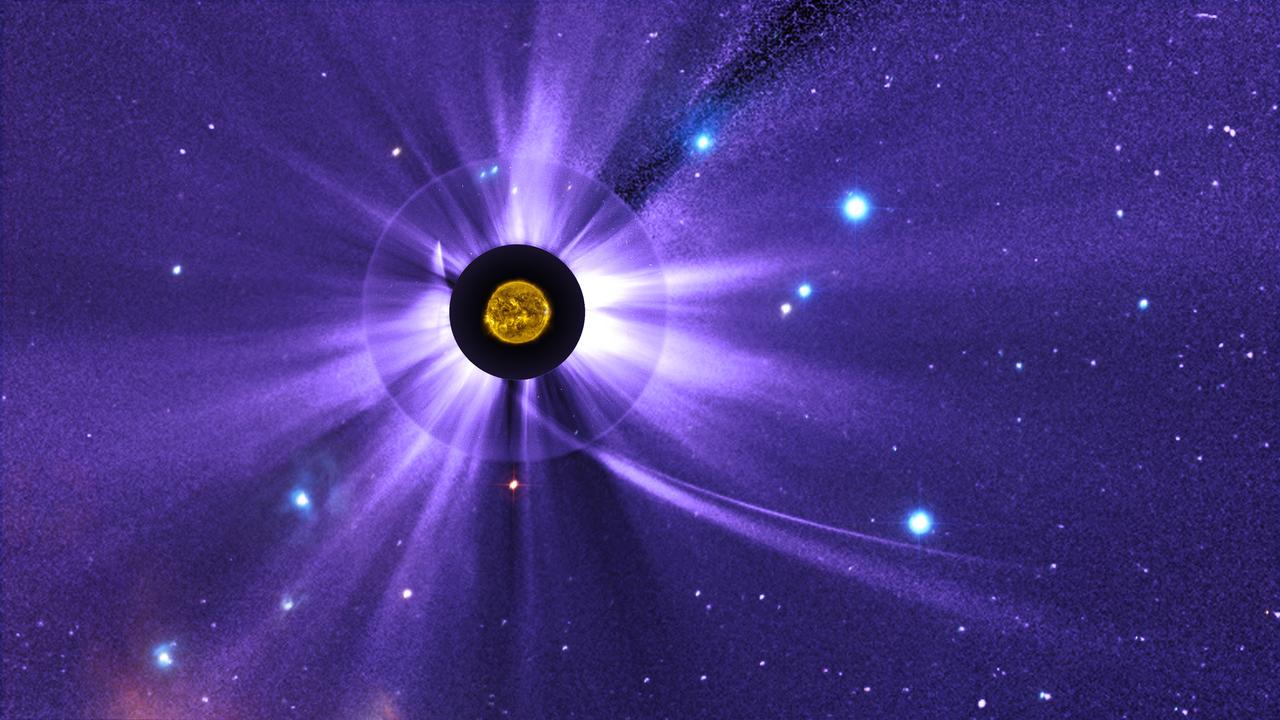
Comet ISON swoops around the sun and through Scorpius. This composite merges an SDO AIA 171 sun image (Nov. 28, 2214 UT), SOHO C2 (2036 UT) and C3 (2030 UT) images, and a DSS view of the sky in northern Scorpius. Credit: NASA/ESA/SOHO, NASA/SDO, DSS, and Francis Reddy <b><a href="http://www.nasa.gov/audience/formedia/features/MP_Photo_Guidelines.html" rel="nofollow">NASA image use policy.</a></b> <b><a href="http://www.nasa.gov/centers/goddard/home/index.html" rel="nofollow">NASA Goddard Space Flight Center</a></b> enables NASA’s mission through four scientific endeavors: Earth Science, Heliophysics, Solar System Exploration, and Astrophysics. Goddard plays a leading role in NASA’s accomplishments by contributing compelling scientific knowledge to advance the Agency’s mission. <b>Follow us on <a href="http://twitter.com/NASA_GoddardPix" rel="nofollow">Twitter</a></b> <b>Like us on <a href="http://www.facebook.com/pages/Greenbelt-MD/NASA-Goddard/395013845897?ref=tsd" rel="nofollow">Facebook</a></b> <b>Find us on <a href="http://instagram.com/nasagoddard?vm=grid" rel="nofollow">Instagram</a></b>
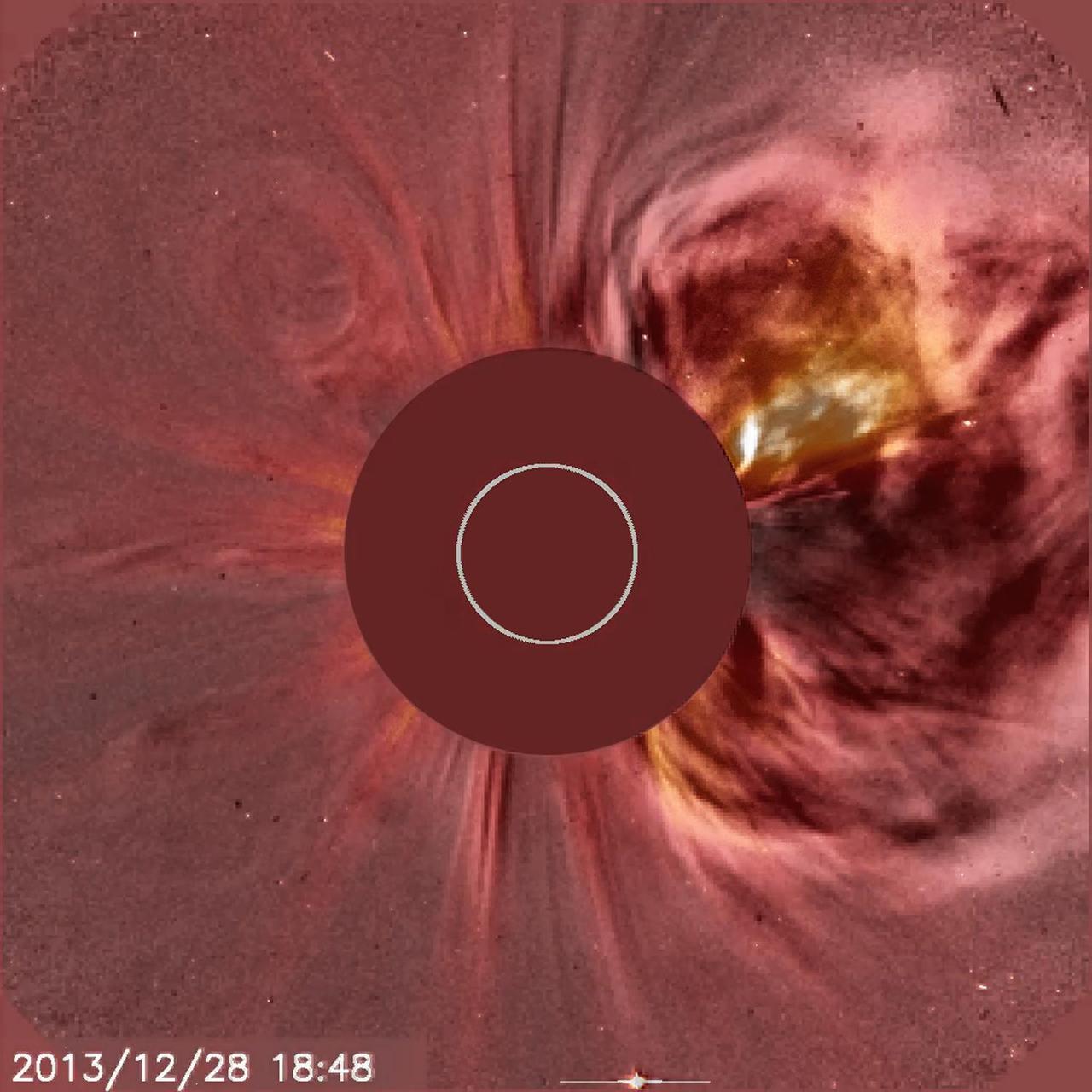
With its C2 coronagraph instrument, NASA's satellite SOHO captured a blossoming coronal mass ejection (CME) as it roared into space from the right side of the Sun (Dec. 28, 2013). SOHO also produces running difference images and movies of the Sun's corona in which the difference between one image and the next (taken about 10 minutes apart) is highlighted. This technique strongly emphasizes the changes that occurred. Here we have taken a single white light frame and shift it back and forth with a running difference image taken at the same time to illustrate the effect. Credit: NASA/GSFC/SOHO <b><a href="http://www.nasa.gov/audience/formedia/features/MP_Photo_Guidelines.html" rel="nofollow">NASA image use policy.</a></b> <b><a href="http://www.nasa.gov/centers/goddard/home/index.html" rel="nofollow">NASA Goddard Space Flight Center</a></b> enables NASA’s mission through four scientific endeavors: Earth Science, Heliophysics, Solar System Exploration, and Astrophysics. Goddard plays a leading role in NASA’s accomplishments by contributing compelling scientific knowledge to advance the Agency’s mission. <b>Follow us on <a href="http://twitter.com/NASA_GoddardPix" rel="nofollow">Twitter</a></b> <b>Like us on <a href="http://www.facebook.com/pages/Greenbelt-MD/NASA-Goddard/395013845897?ref=tsd" rel="nofollow">Facebook</a></b> <b>Find us on <a href="http://instagram.com/nasagoddard?vm=grid" rel="nofollow">Instagram</a></b>
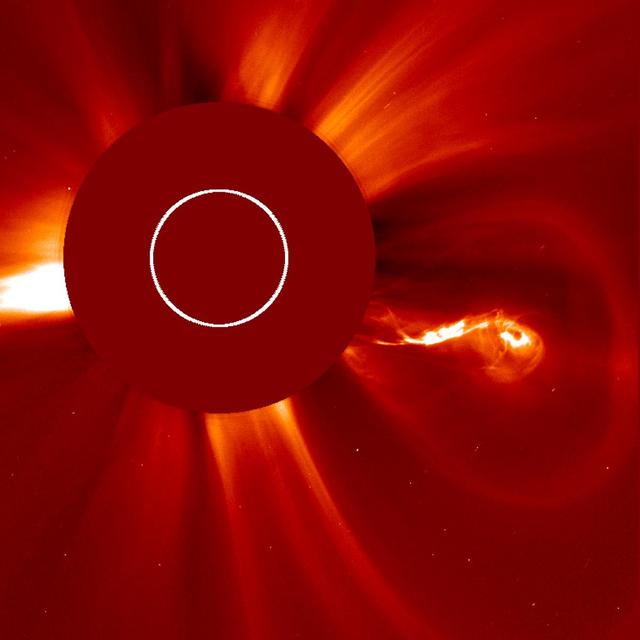
The Sun blasted out five coronal mass ejections (CMEs) over about two days (Feb. 26-28, 2013) and each one had quite a different shape and structure, seen here in a video <a href="http://bit.ly/Za8Aso" rel="nofollow">bit.ly/Za8Aso</a>. The most interesting one (seen above) blew out to the right with a bright, elongated center, likely part of a solar filament, that maintained its curly-Q shape as it expanded out of view. The images were taken by SOHO LASCO C2 coronagraph. The Sun is represented by the white circle and the red disk blocks out the Sun and part of the corona. Credit: NASA/Goddard/SOHO <b><a href="http://www.nasa.gov/audience/formedia/features/MP_Photo_Guidelines.html" rel="nofollow">NASA image use policy.</a></b> <b><a href="http://www.nasa.gov/centers/goddard/home/index.html" rel="nofollow">NASA Goddard Space Flight Center</a></b> enables NASA’s mission through four scientific endeavors: Earth Science, Heliophysics, Solar System Exploration, and Astrophysics. Goddard plays a leading role in NASA’s accomplishments by contributing compelling scientific knowledge to advance the Agency’s mission. <b>Follow us on <a href="http://twitter.com/NASA_GoddardPix" rel="nofollow">Twitter</a></b> <b>Like us on <a href="http://www.facebook.com/pages/Greenbelt-MD/NASA-Goddard/395013845897?ref=tsd" rel="nofollow">Facebook</a></b> <b>Find us on <a href="http://instagram.com/nasagoddard?vm=grid" rel="nofollow">Instagram</a></b>