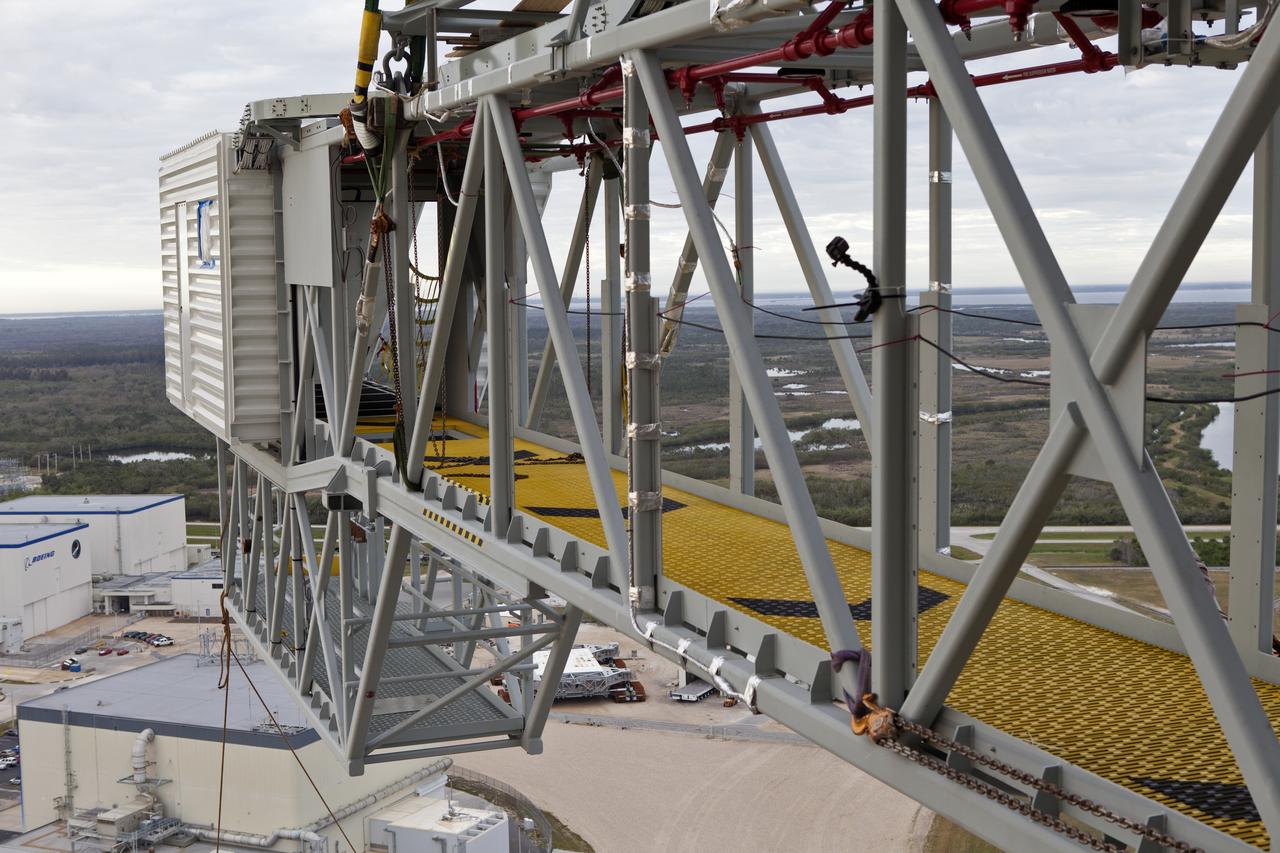
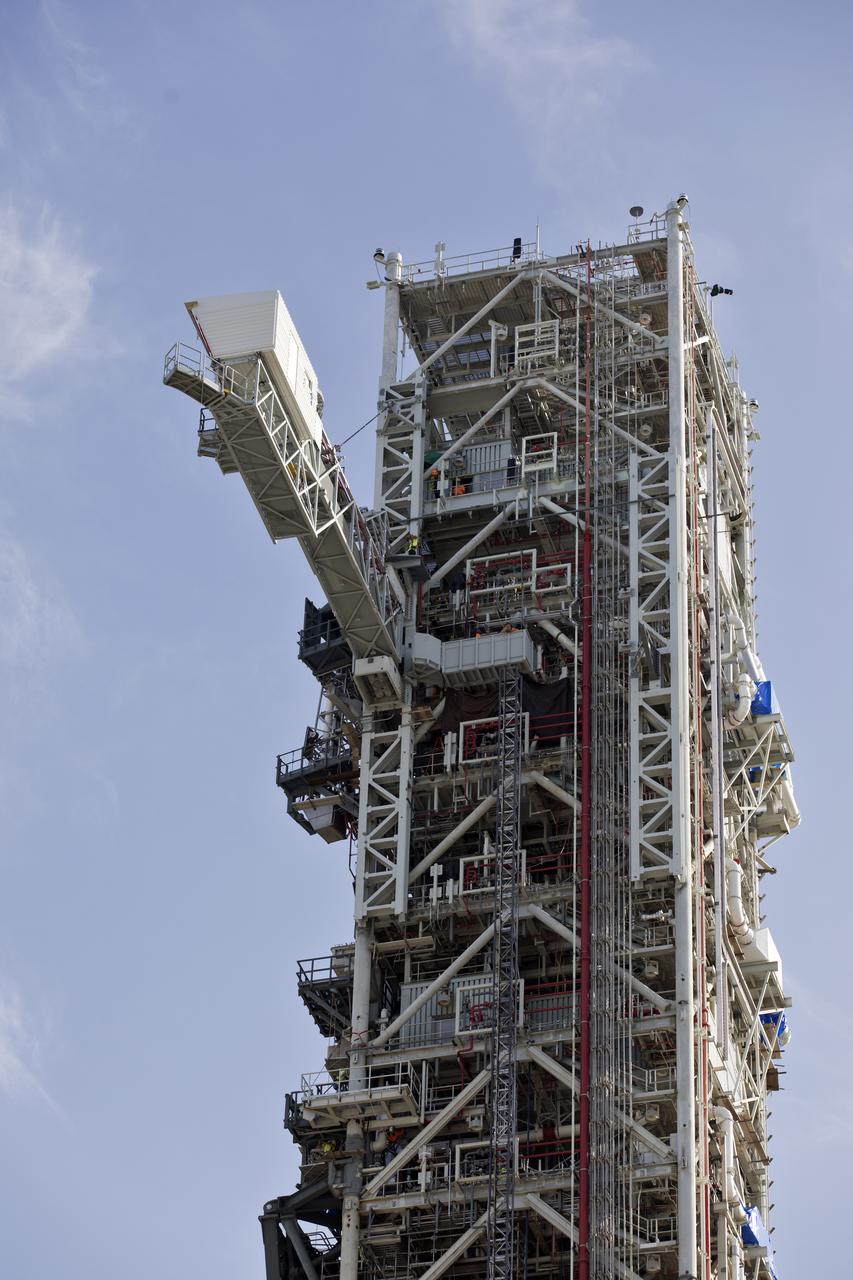
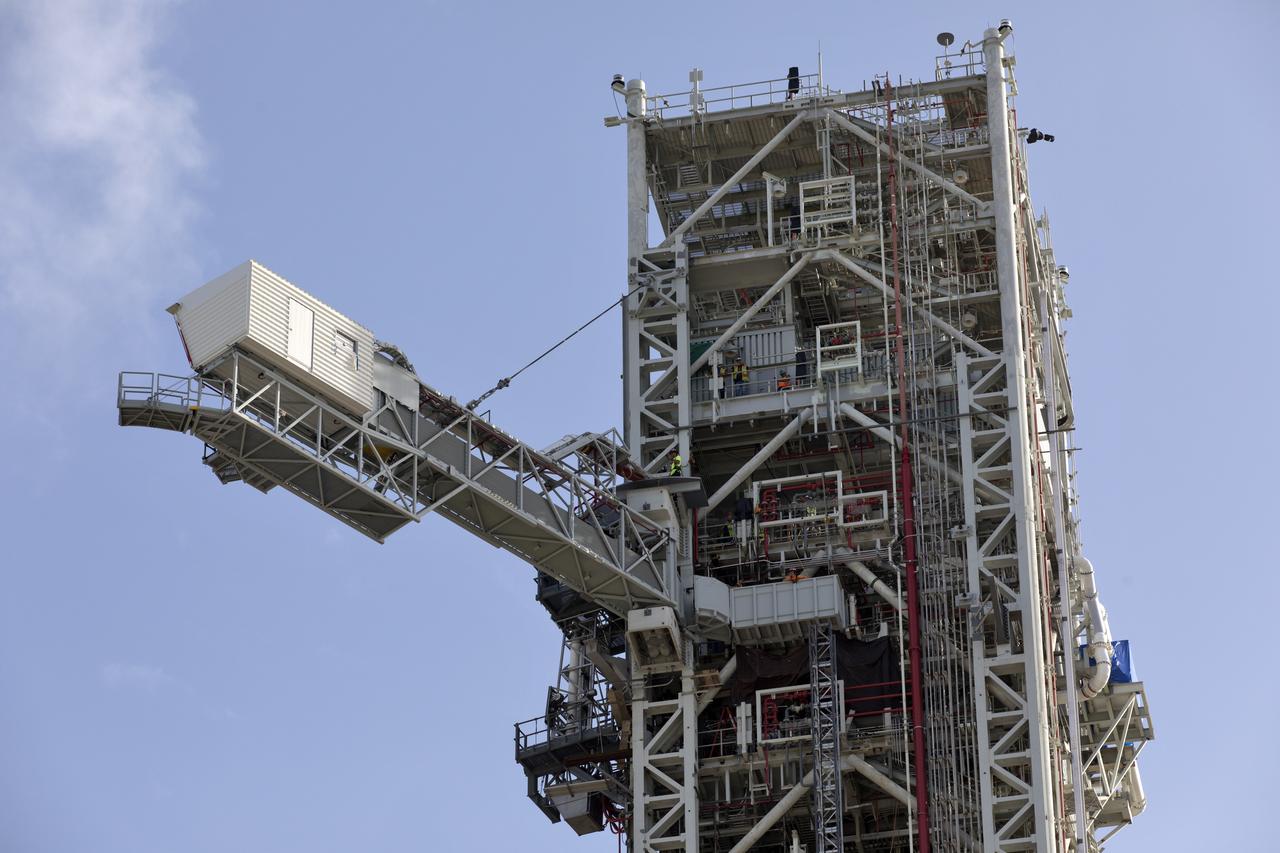
Viewed from the 274-foot level mobile launcher (ML), the Orion crew access arm (CAA) is beign installed on the tower. The CAA will support the Space launch System (SLS) rocket at NASA's Kennedy Space Center in Florida. NASA's Exploration Ground Systems organization has been overseeing installation of umbilicals and other launch accessories on the 380-foot-tall ML in preparation for stacking the first launch of the Space launch System, or SLS, rocket with an Orion spacecraft. The CAA is designed to rotate from its retracted position and line up with Orion's crew hatch providing entry for astronauts and technicians.
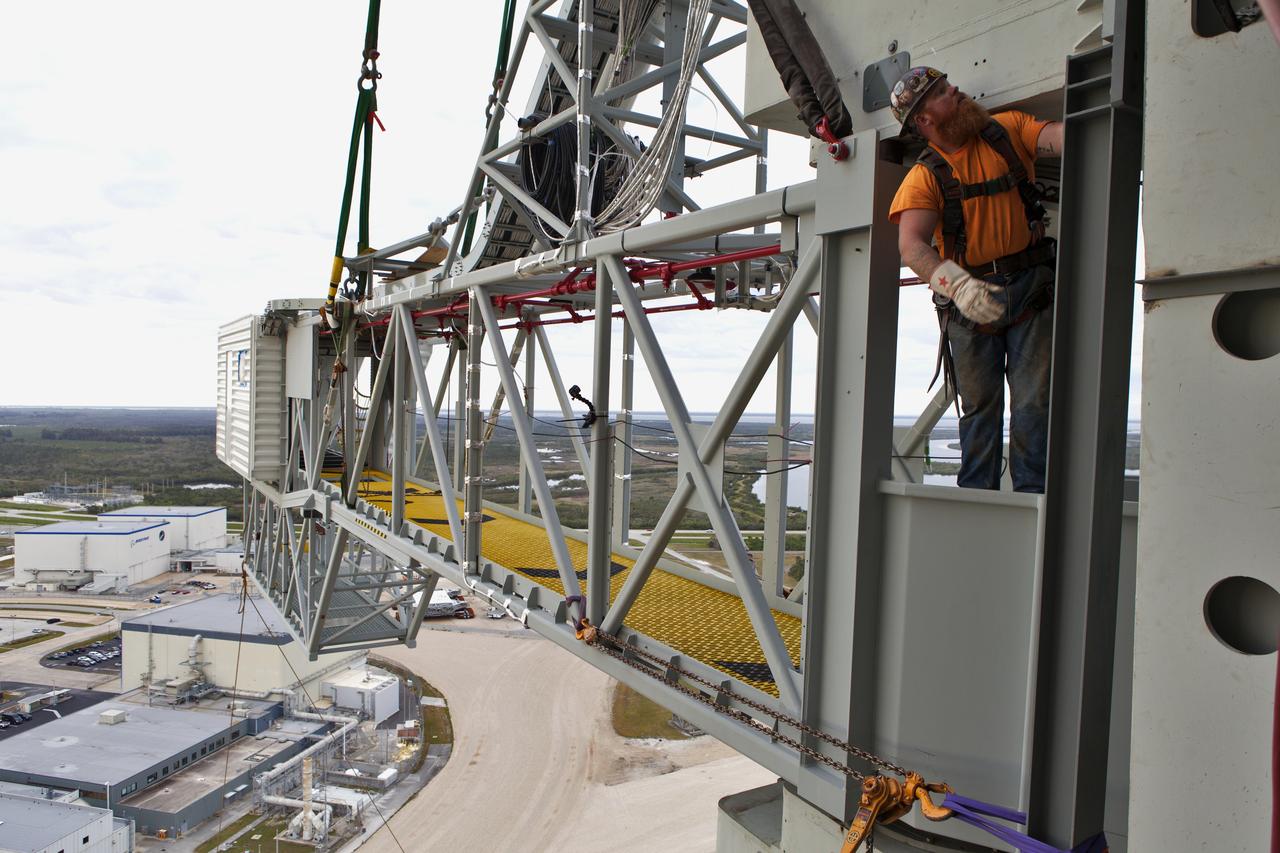
Viewed from the 274-foot level mobile launcher (ML), a technician begins installation of the Orion crew access arm (CAA) to the tower. The CAA will support the Space launch System (SLS) rocket at NASA's Kennedy Space Center in Florida. NASA's Exploration Ground Systems organization has been overseeing installation of umbilicals and other launch accessories on the 380-foot-tall ML in preparation for stacking the first launch of the Space launch System, or SLS, rocket with an Orion spacecraft. The CAA is designed to rotate from its retracted position and line up with Orion's crew hatch providing entry for astronauts and technicians.
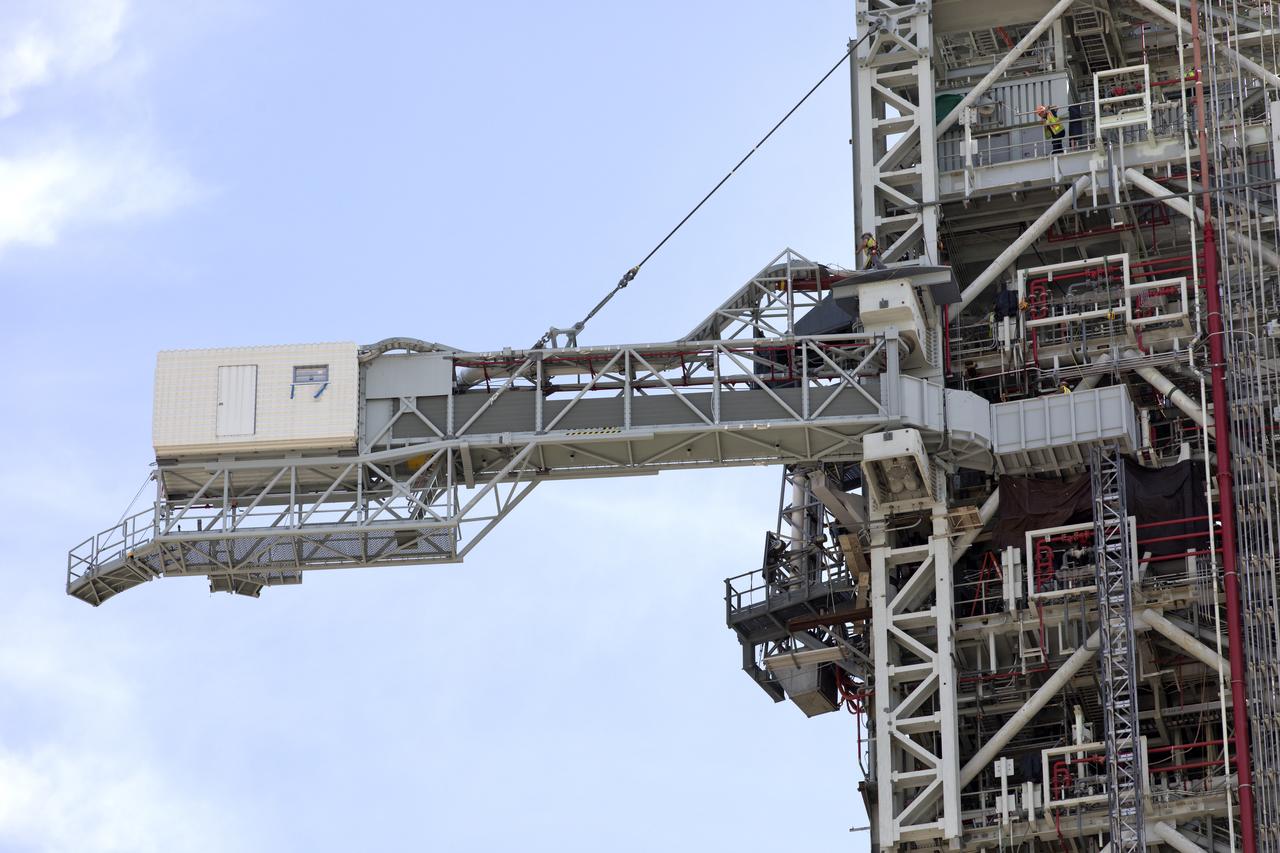
Technicians and engineers with Exploration Ground Systems at the NASA's Kennedy Space Center in Florida recently tested the Crew Access Arm (CAA) that was added on the mobile launcher being prepared to support the agency’s Orion spacecraft and Space Launch System rocket. The crucial test confirmed the functionality and integrity of the CAA. The CAA is designed to rotate from its retracted position and line up with Orion's crew hatch. The arm will provide entry and emergency egress for astronauts and technicians into and out of the Orion spacecraft.
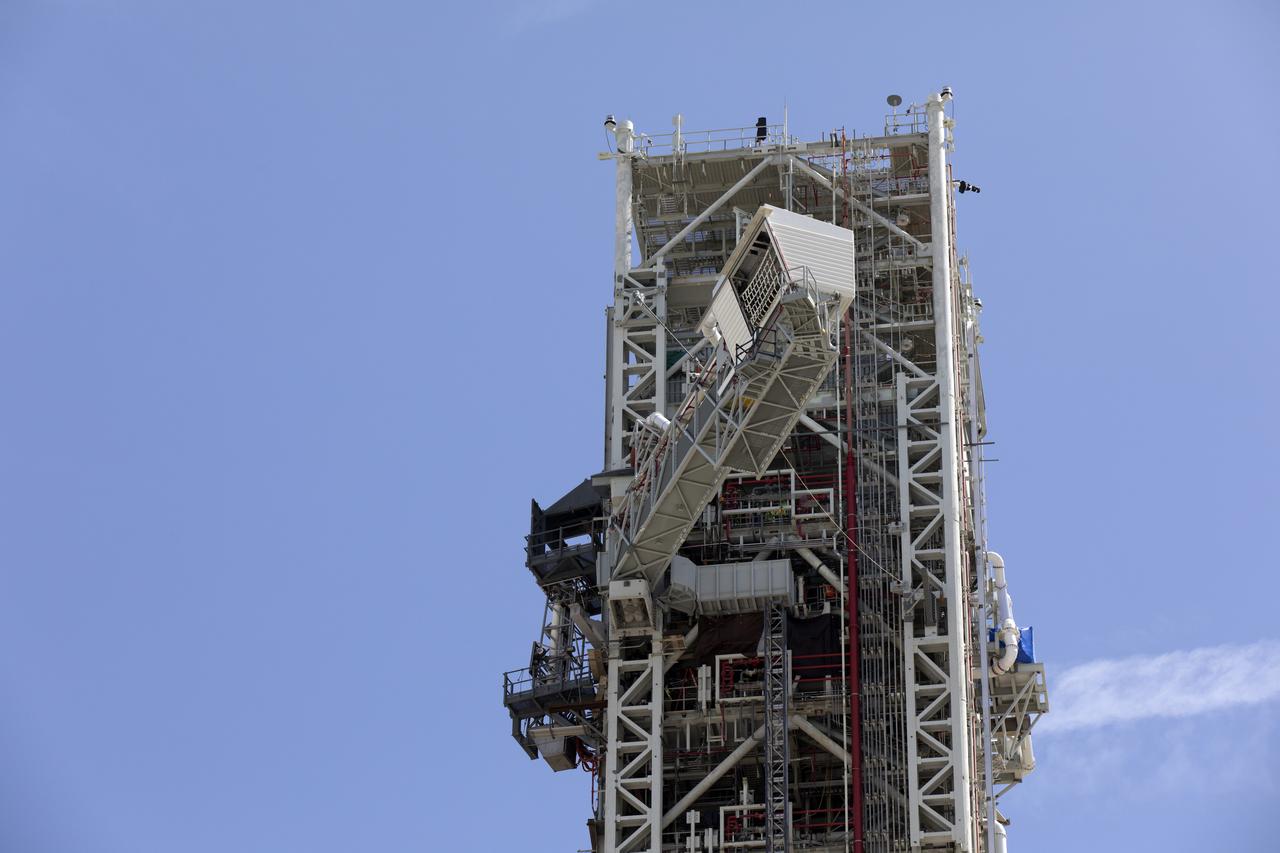
Technicians and engineers with Exploration Ground Systems at the NASA's Kennedy Space Center in Florida recently tested the Crew Access Arm (CAA) that was added on the mobile launcher being prepared to support the agency’s Orion spacecraft and Space Launch System rocket. The crucial test confirmed the functionality and integrity of the CAA. The CAA is designed to rotate from its retracted position and line up with Orion's crew hatch. The arm will provide entry and emergency egress for astronauts and technicians into and out of the Orion spacecraft.
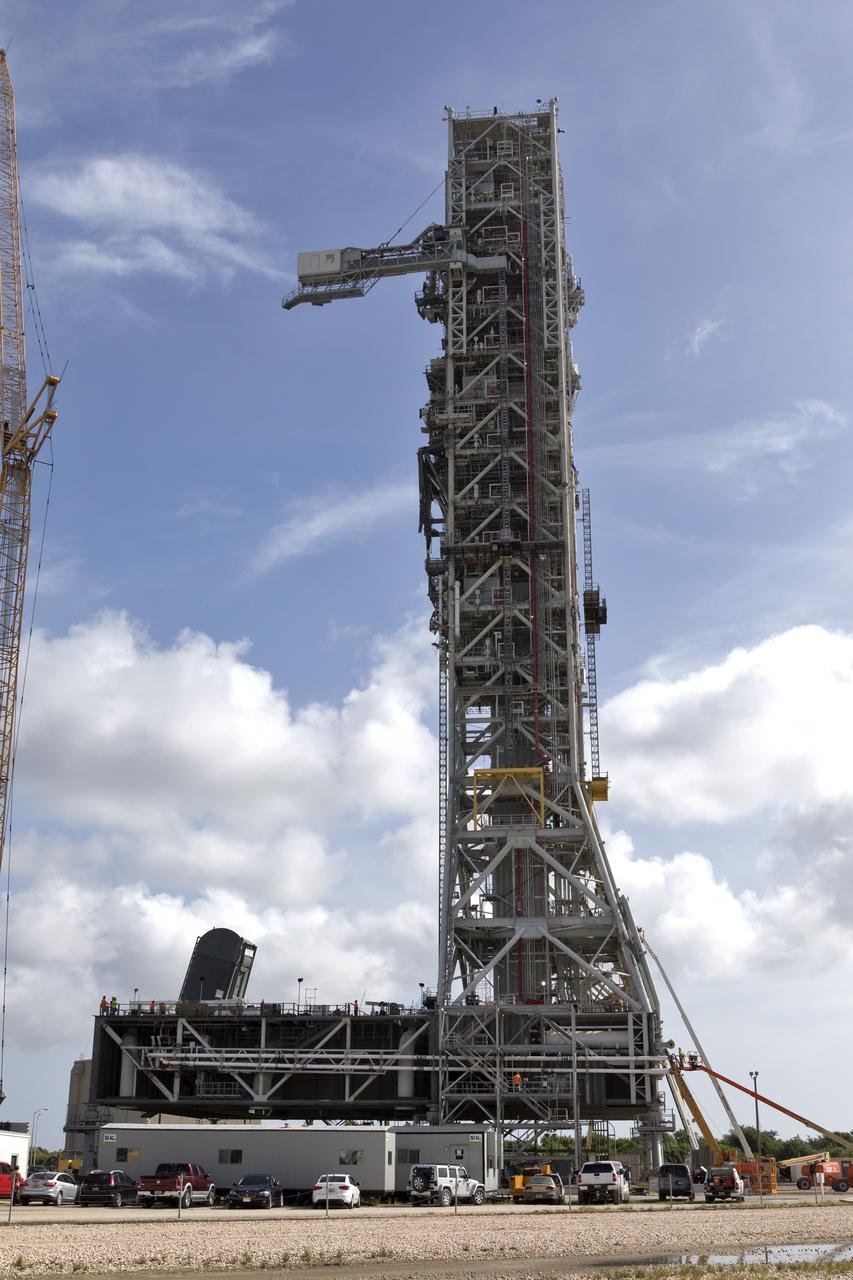
Technicians and engineers with Exploration Ground Systems at the NASA's Kennedy Space Center in Florida recently tested the Crew Access Arm (CAA) that was added on the mobile launcher being prepared to support the agency’s Orion spacecraft and Space Launch System rocket. The crucial test confirmed the functionality and integrity of the CAA. The CAA is designed to rotate from its retracted position and line up with Orion's crew hatch. The arm will provide entry and emergency egress for astronauts and technicians into and out of the Orion spacecraft.
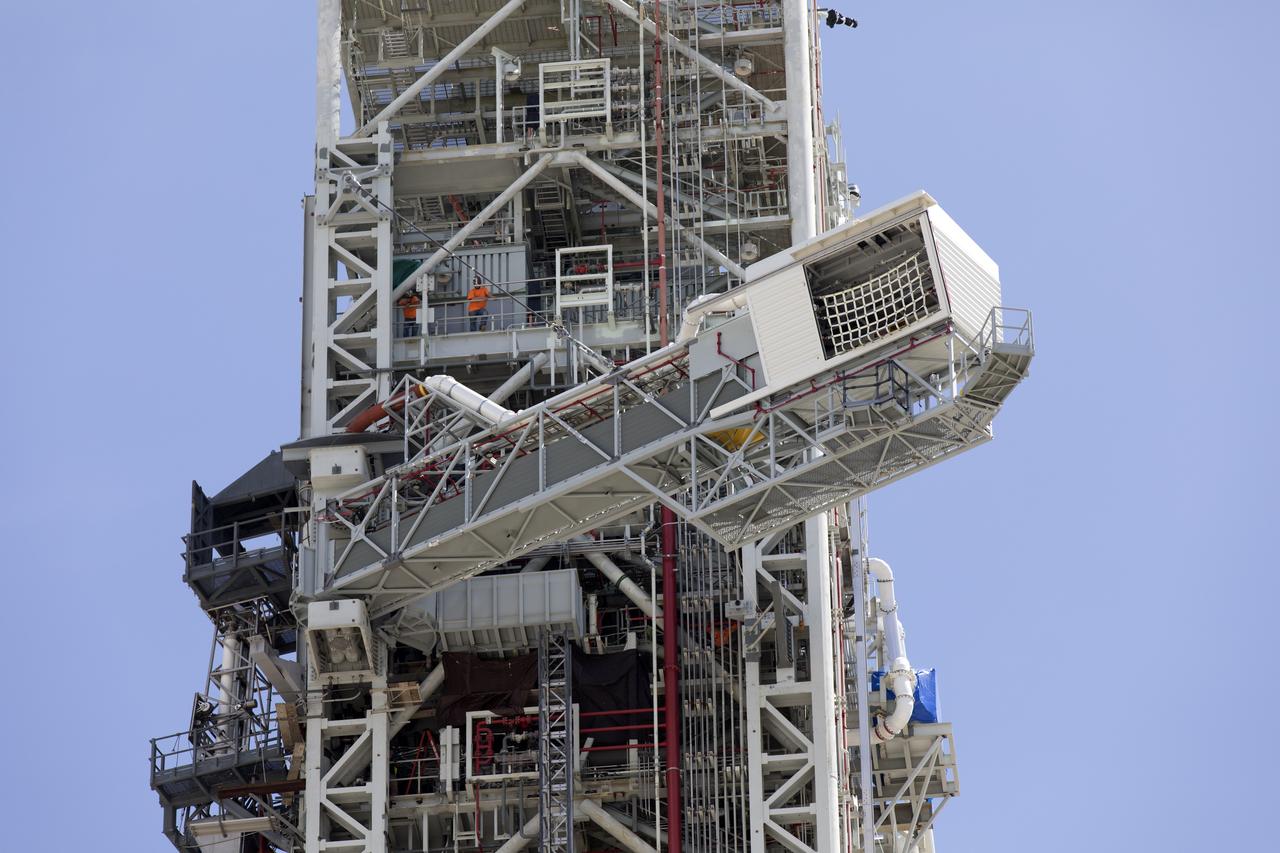
Technicians and engineers with Exploration Ground Systems at the NASA's Kennedy Space Center in Florida recently tested the Crew Access Arm (CAA) that was added on the mobile launcher being prepared to support the agency’s Orion spacecraft and Space Launch System rocket. The crucial test confirmed the functionality and integrity of the CAA. The CAA is designed to rotate from its retracted position and line up with Orion's crew hatch. The arm will provide entry and emergency egress for astronauts and technicians into and out of the Orion spacecraft.
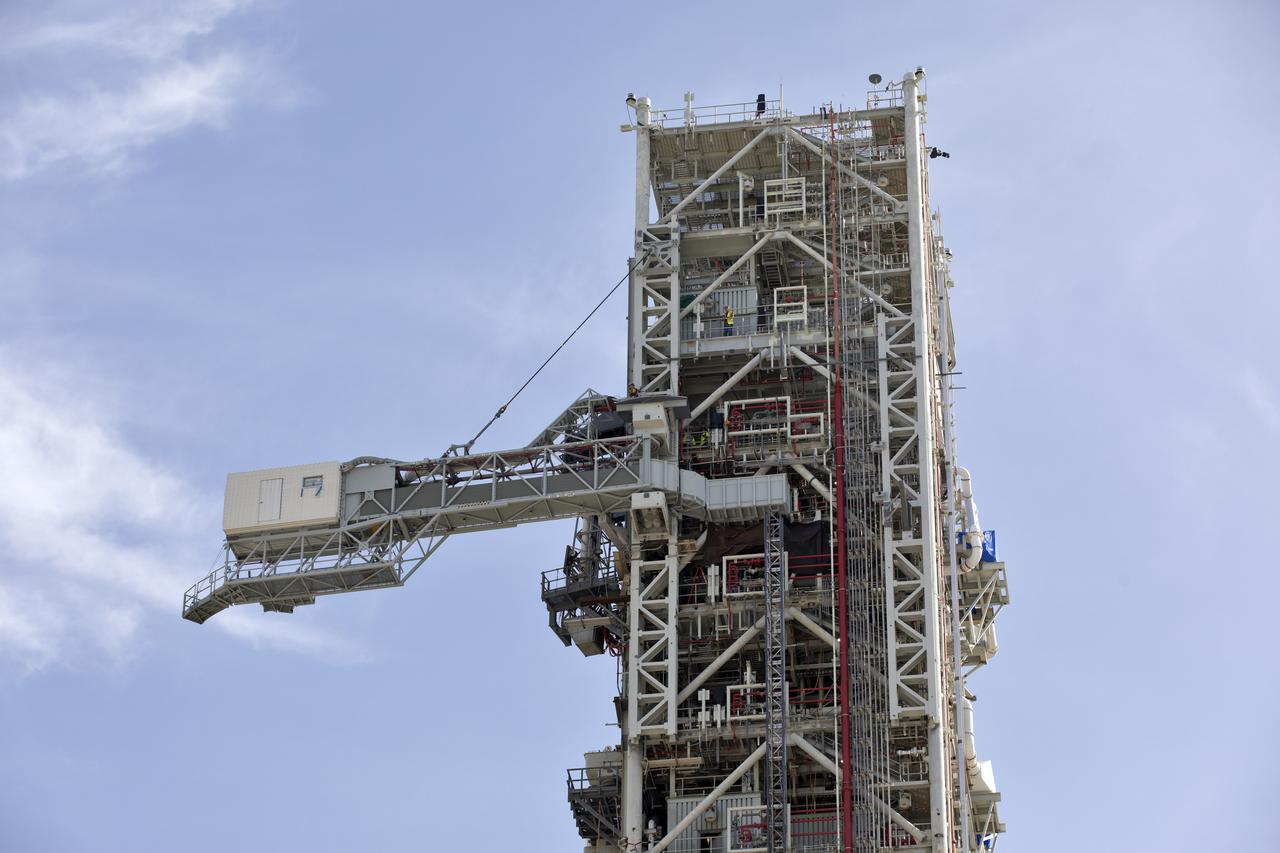
Technicians and engineers with Exploration Ground Systems at the NASA's Kennedy Space Center in Florida recently tested the Crew Access Arm (CAA) that was added on the mobile launcher being prepared to support the agency’s Orion spacecraft and Space Launch System rocket. The crucial test confirmed the functionality and integrity of the CAA. The CAA is designed to rotate from its retracted position and line up with Orion's crew hatch. The arm will provide entry and emergency egress for astronauts and technicians into and out of the Orion spacecraft.
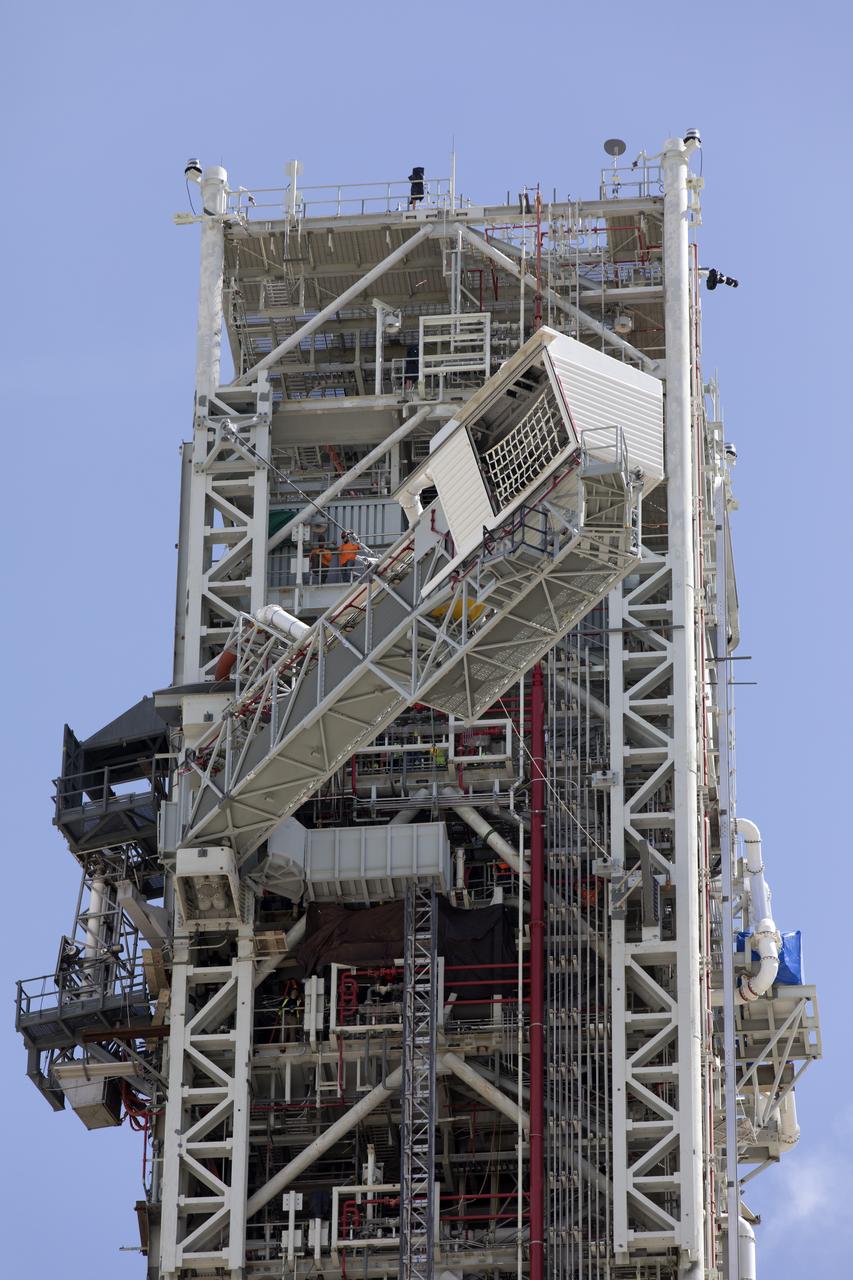
Technicians and engineers with Exploration Ground Systems at the NASA's Kennedy Space Center in Florida recently tested the Crew Access Arm (CAA) that was added on the mobile launcher being prepared to support the agency’s Orion spacecraft and Space Launch System rocket. The crucial test confirmed the functionality and integrity of the CAA. The CAA is designed to rotate from its retracted position and line up with Orion's crew hatch. The arm will provide entry and emergency egress for astronauts and technicians into and out of the Orion spacecraft.
Technicians and engineers with Exploration Ground Systems at the NASA's Kennedy Space Center in Florida recently tested the Crew Access Arm (CAA) that was added on the mobile launcher being prepared to support the agency’s Orion spacecraft and Space Launch System rocket. The crucial test confirmed the functionality and integrity of the CAA. The CAA is designed to rotate from its retracted position and line up with Orion's crew hatch. The arm will provide entry and emergency egress for astronauts and technicians into and out of the Orion spacecraft.
Technicians and engineers with Exploration Ground Systems at the NASA's Kennedy Space Center in Florida recently tested the Crew Access Arm (CAA) that was added on the mobile launcher being prepared to support the agency’s Orion spacecraft and Space Launch System rocket. The crucial test confirmed the functionality and integrity of the CAA. The CAA is designed to rotate from its retracted position and line up with Orion's crew hatch. The arm will provide entry and emergency egress for astronauts and technicians into and out of the Orion spacecraft.
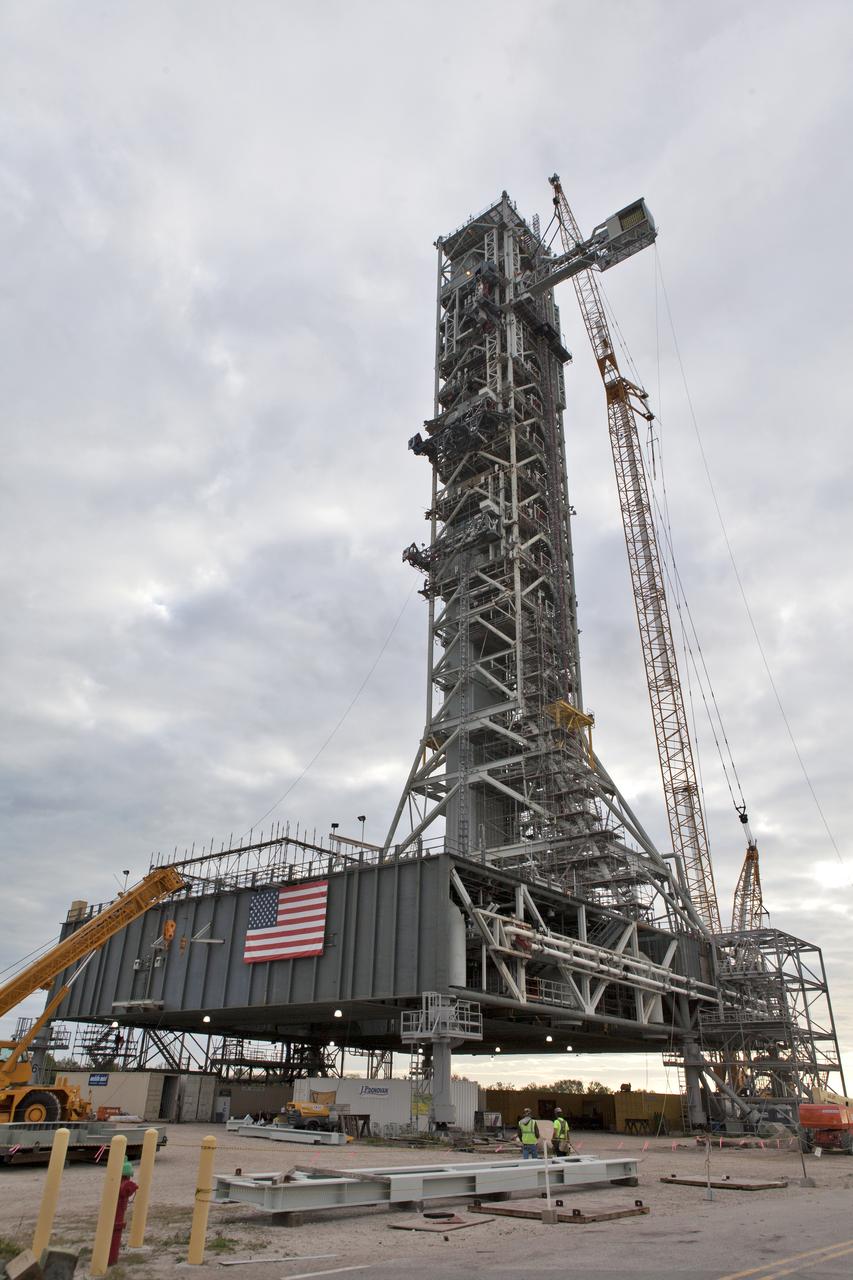
At NASA's Kennedy Space Center in Florida, a crane positions the Orion crew access arm (CAA) so it can be attached to the mobile launcher (ML). The arm will be installed at about the 274-foot level on the ML tower. NASA's Exploration Ground Systems organization has been overseeing installation of umbilicals and other launch accessories on the 380-foot-tall ML in preparation for stacking the first launch of the Space launch System (SLS), rocket with an Orion spacecraft. The CAA is designed to rotate from its retracted position and line up with Orion's crew hatch providing entry for astronauts and technicians.
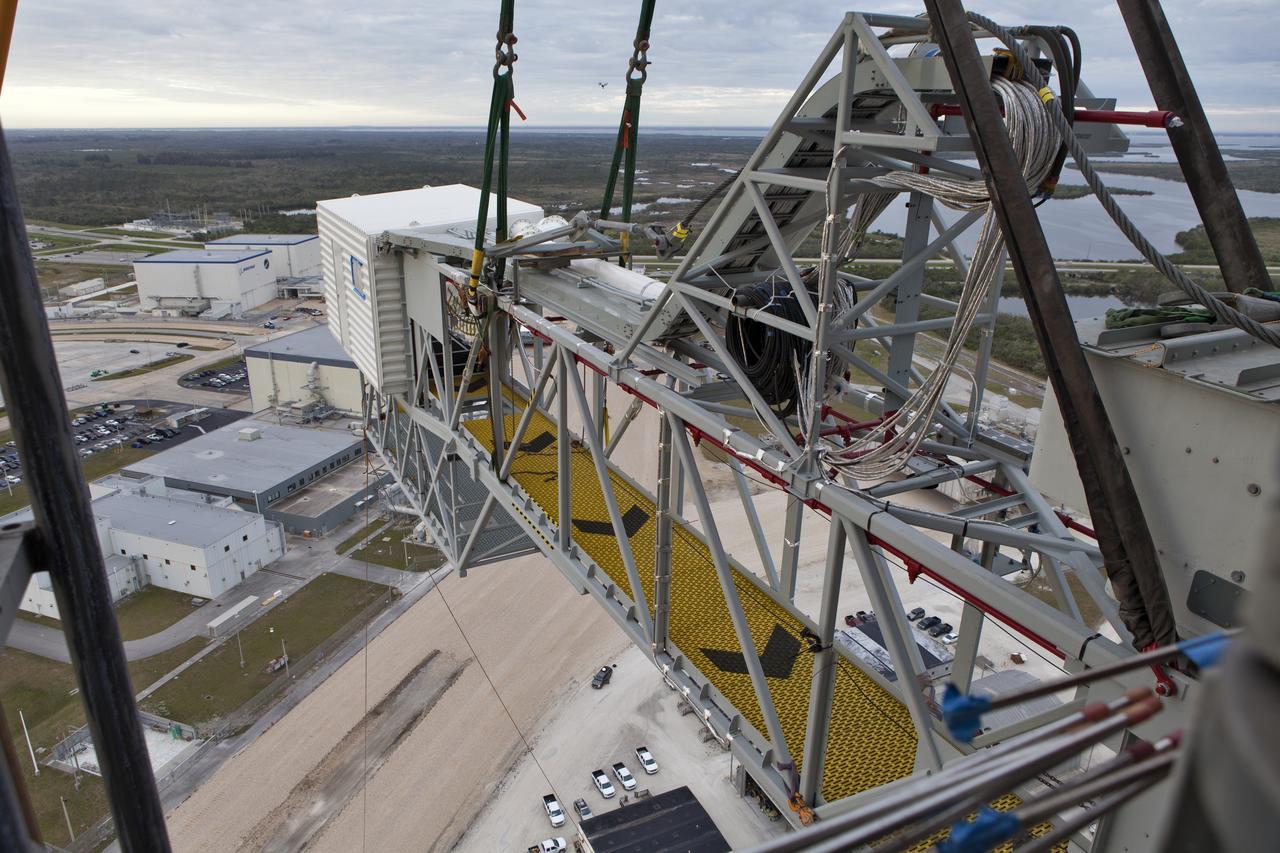
Viewed from the 274-foot level mobile launcher (ML), a crane positions the Orion crew access arm (CAA) so it can be attached to the tower that will support the Space launch System (SLS) rocket at NASA's Kennedy Space Center in Florida. NASA's Exploration Ground Systems organization has been overseeing installation of umbilicals and other launch accessories on the 380-foot-tall ML in preparation for stacking the first launch of the SLS, rocket with an Orion spacecraft. The CAA is designed to rotate from its retracted position and line up with Orion's crew hatch providing entry for astronauts and technicians.
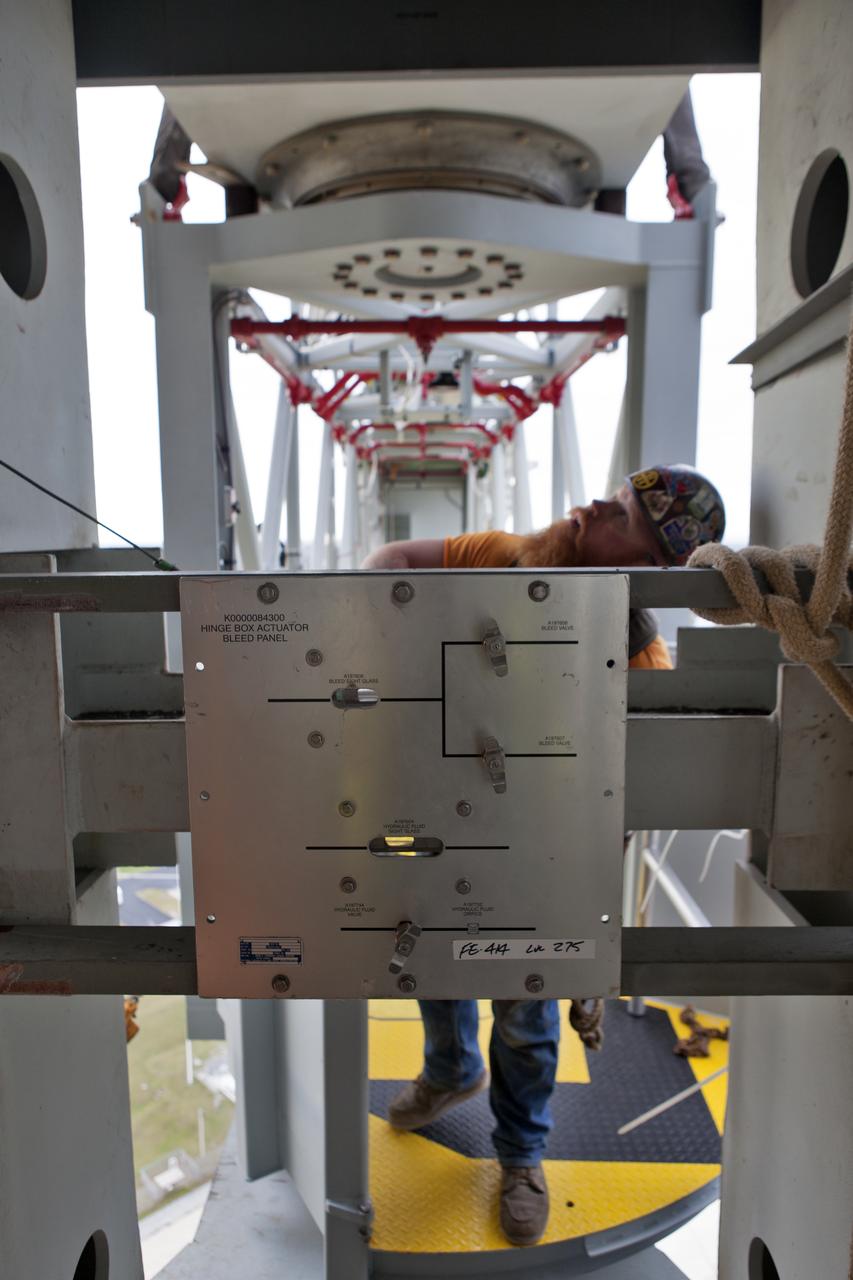
With a control panel visible in the foreground, a technician begins installation of the Orion crew access arm (CAA) to the mobile launcher (ML) tower at NASA's Kennedy Space Center in Florida. NASA's Exploration Ground Systems organization has been overseeing installation of umbilicals and other launch accessories on the 380-foot-tall ML in preparation for stacking the first launch of the Space launch System, or SLS, rocket with an Orion spacecraft. The CAA is designed to rotate from its retracted position and line up with Orion's crew hatch providing entry for astronauts and technicians.
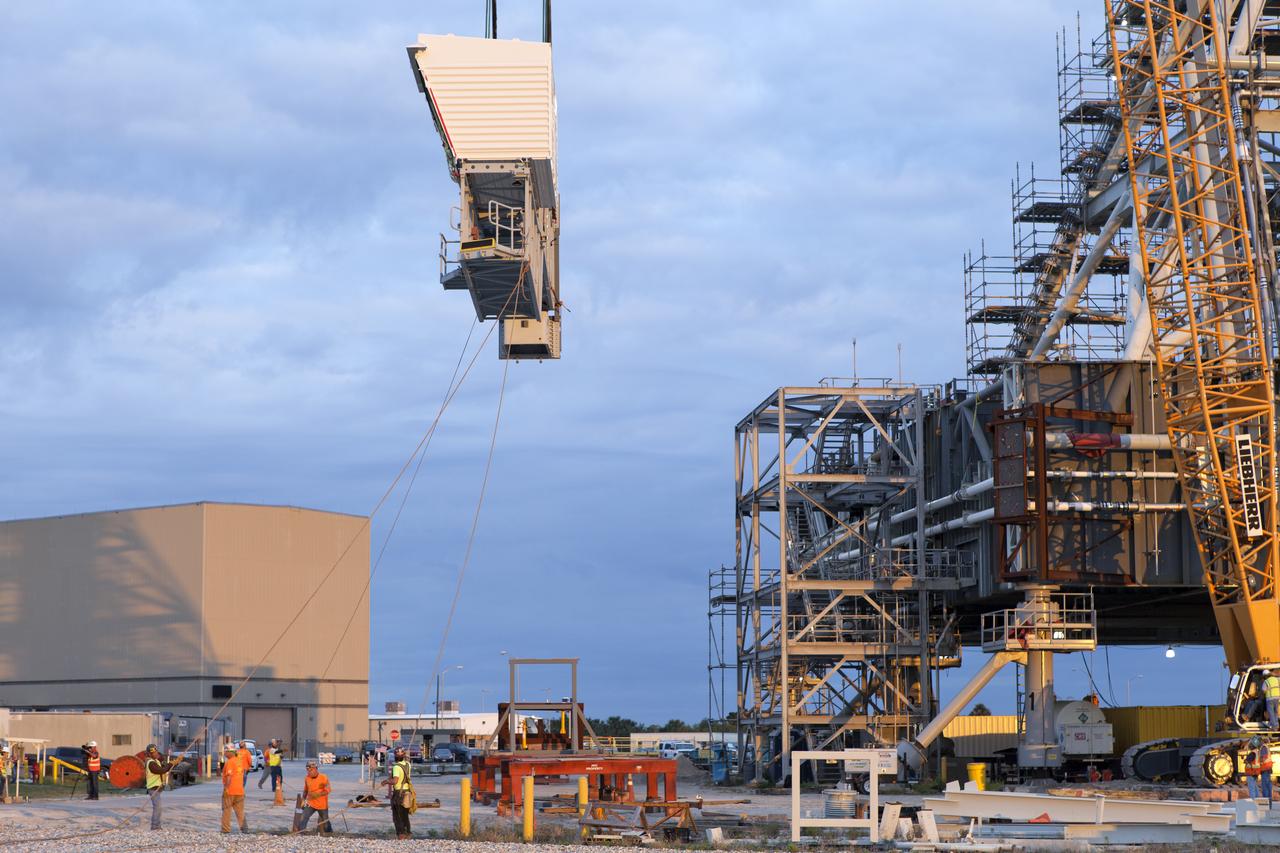
At NASA's Kennedy Space Center in Florida, a crane lifts the Orion crew access arm (CAA) so it can be attached to the mobile launcher (ML). The arm will be installed at about the 274-foot level on the ML tower. NASA's Exploration Ground Systems organization has been overseeing installation of umbilicals and other launch accessories on the 380-foot-tall ML in preparation for stacking the first launch of the Space launch System (SLS), rocket with an Orion spacecraft. The CAA is designed to rotate from its retracted position and line up with Orion's crew hatch providing entry for astronauts and technicians.
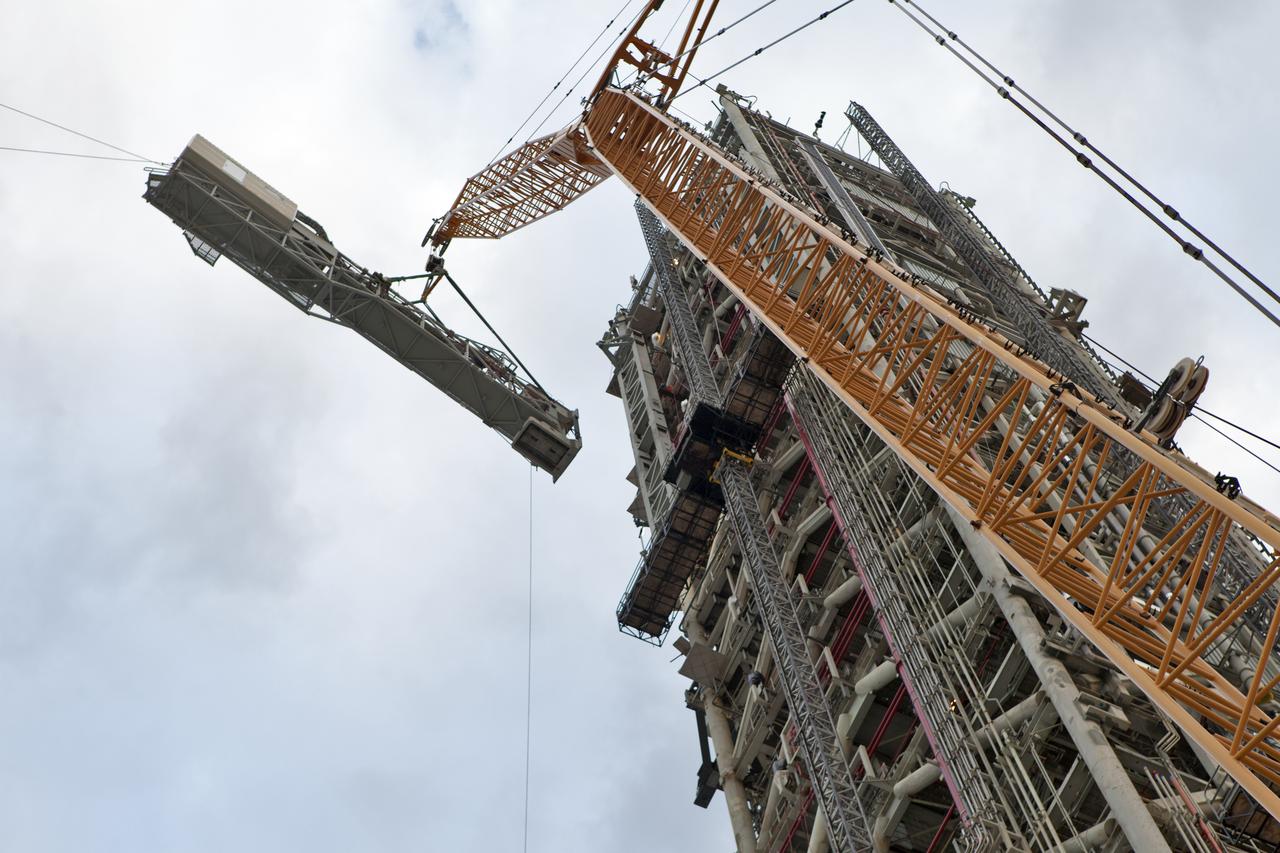
At NASA's Kennedy Space Center in Florida, a crane lifts the Orion crew access arm (CAA) so it can be attached to the mobile launcher (ML). The arm will be installed at about the 274-foot level on the ML tower. NASA's Exploration Ground Systems organization has been overseeing installation of umbilicals and other launch accessories on the 380-foot-tall ML in preparation for stacking the first launch of the Space launch System (SLS), rocket with an Orion spacecraft. The CAA is designed to rotate from its retracted position and line up with Orion's crew hatch providing entry for astronauts and technicians.
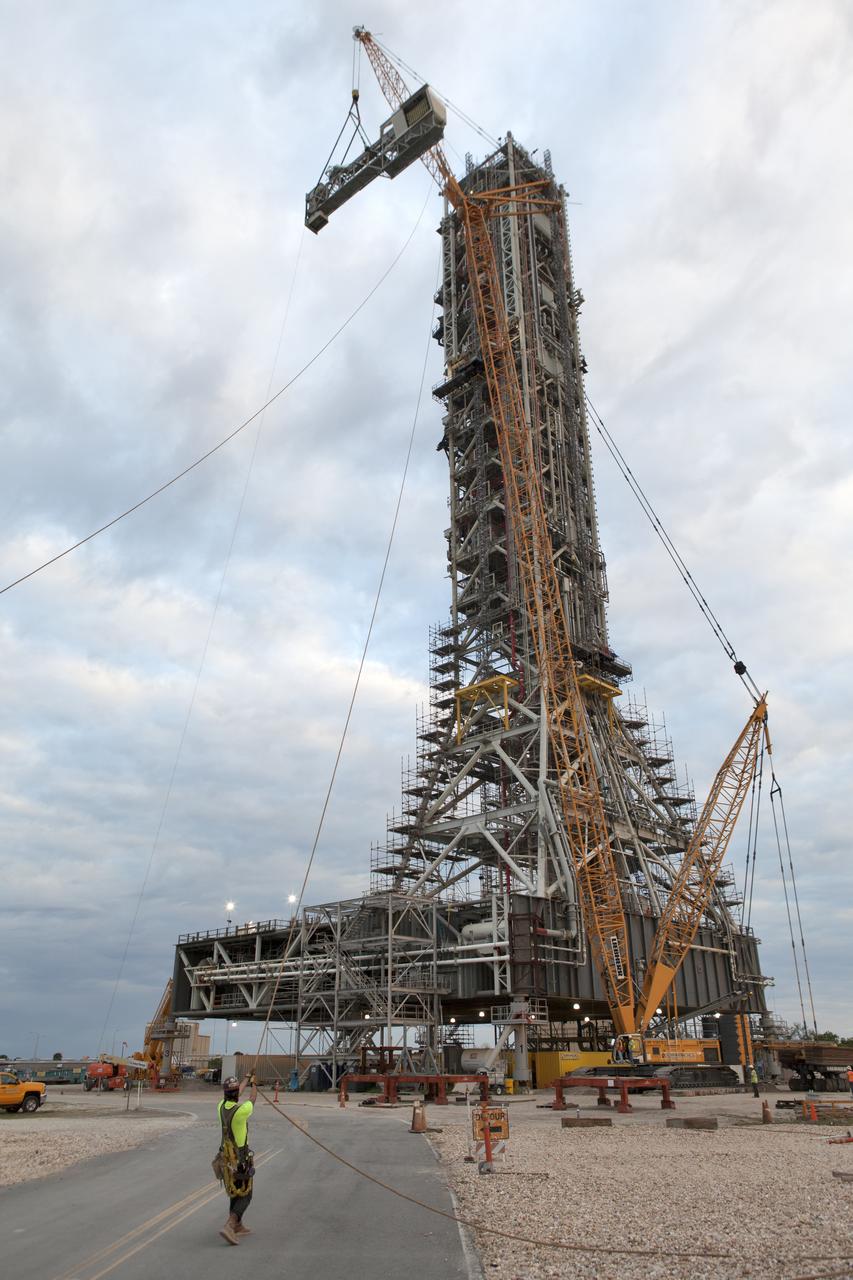
At NASA's Kennedy Space Center in Florida, a crane lifts the Orion crew access arm (CAA) so it can be attached to the mobile launcher (ML). The arm will be installed at about the 274-foot level on the ML tower. NASA's Exploration Ground Systems organization has been overseeing installation of umbilicals and other launch accessories on the 380-foot-tall ML in preparation for stacking the first launch of the Space launch System (SLS), rocket with an Orion spacecraft. The CAA is designed to rotate from its retracted position and line up with Orion's crew hatch providing entry for astronauts and technicians.
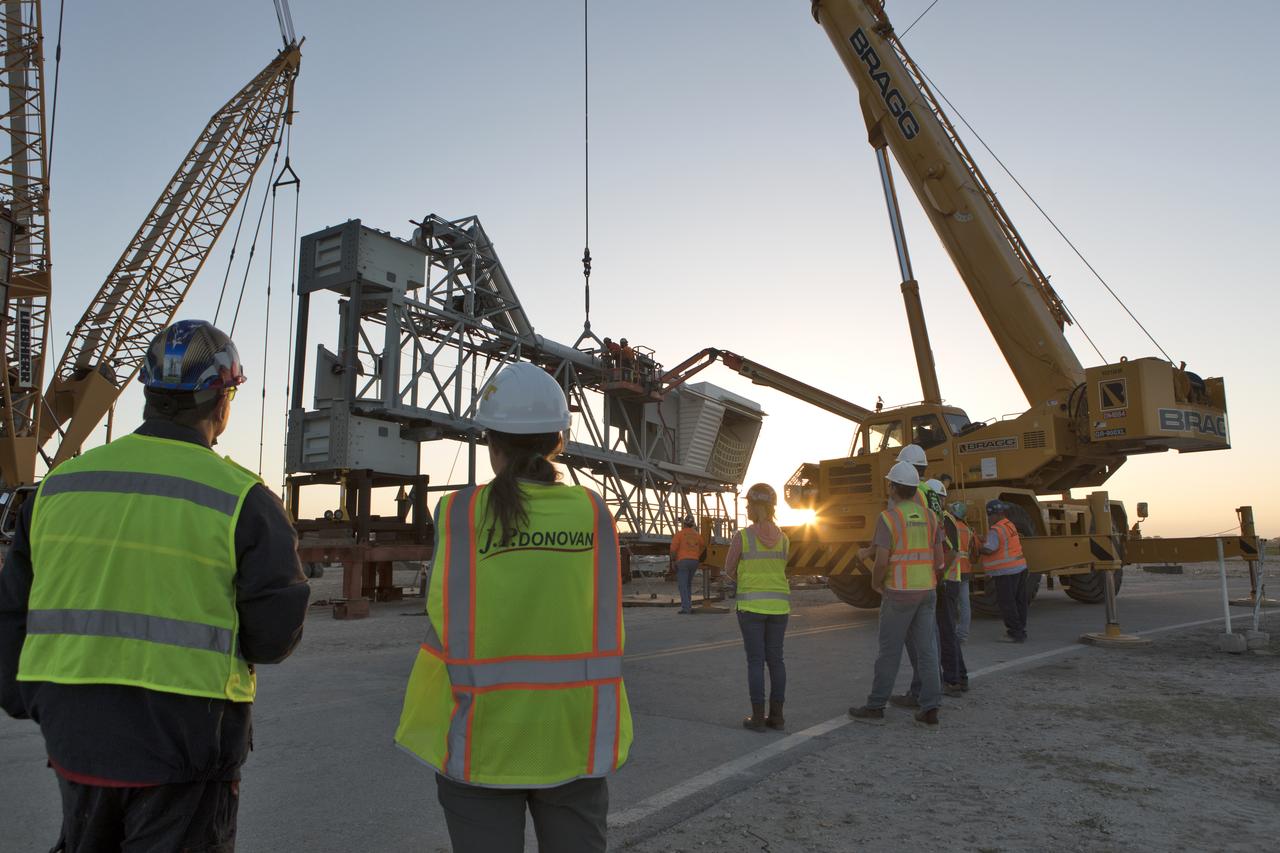
Under the watchful eye of technicians and engineers, a crane is prepared to lift the Orion crew access arm (CAA) so it can be attached to the mobile launcher (ML) at NASA's Kennedy Space Center in Florida. The arm will be installed at about the 274-foot level on the ML tower. NASA's Exploration Ground Systems organization has been overseeing installation of umbilicals and other launch accessories on the 380-foot-tall ML in preparation for stacking the first launch of the Space launch System, or SLS, rocket with an Orion spacecraft. The CAA is designed to rotate from its retracted position and line up with Orion's crew hatch providing entry for astronauts and technicians.
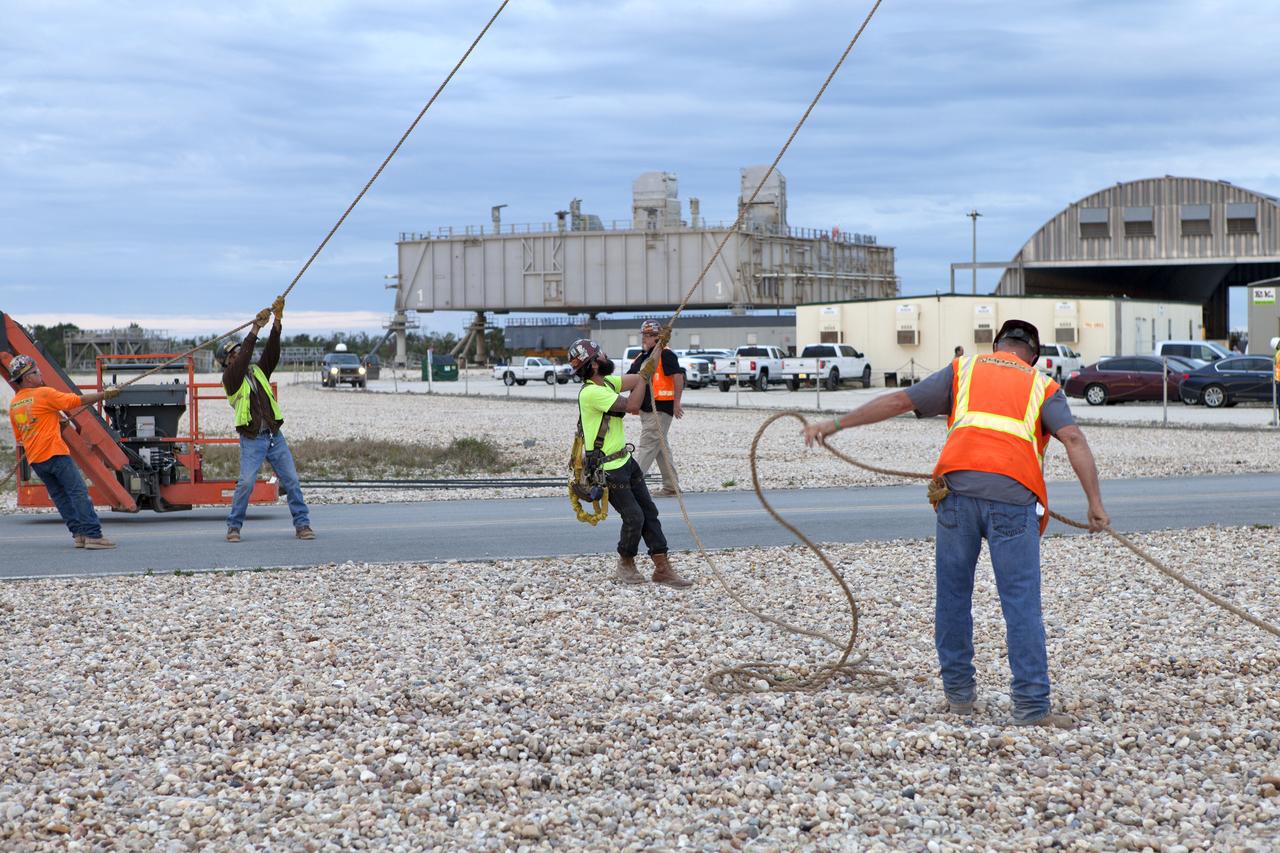
At NASA's Kennedy Space Center in Florida, technicians assist as a crane lifts the Orion crew access arm (CAA) so it can be attached to the mobile launcher (ML). The arm will be installed at about the 274-foot level on the ML tower. NASA's Exploration Ground Systems organization has been overseeing installation of umbilicals and other launch accessories on the 380-foot-tall ML in preparation for stacking the first launch of the Space launch System (SLS), rocket with an Orion spacecraft. The CAA is designed to rotate from its retracted position and line up with Orion's crew hatch providing entry for astronauts and technicians.
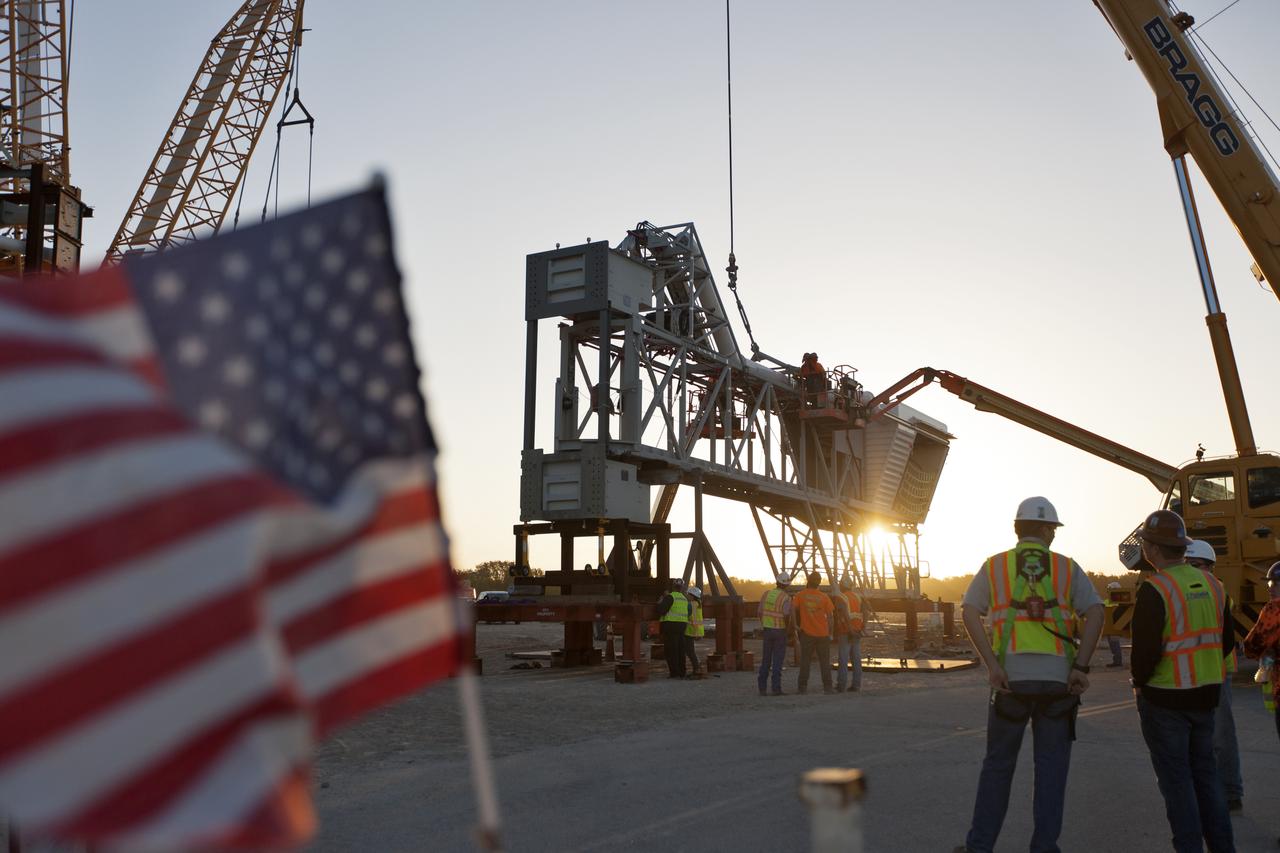
Under the watchful eye of technicians and engineers, a crane is prepared to lift the Orion crew access arm (CAA) so it can be attached to the mobile launcher (ML) at NASA's Kennedy Space Center in Florida. The arm will be installed at about the 274-foot level on the ML tower. NASA's Exploration Ground Systems organization has been overseeing installation of umbilicals and other launch accessories on the 380-foot-tall ML in preparation for stacking the first launch of the Space launch System, or SLS, rocket with an Orion spacecraft. The CAA is designed to rotate from its retracted position and line up with Orion's crew hatch providing entry for astronauts and technicians.
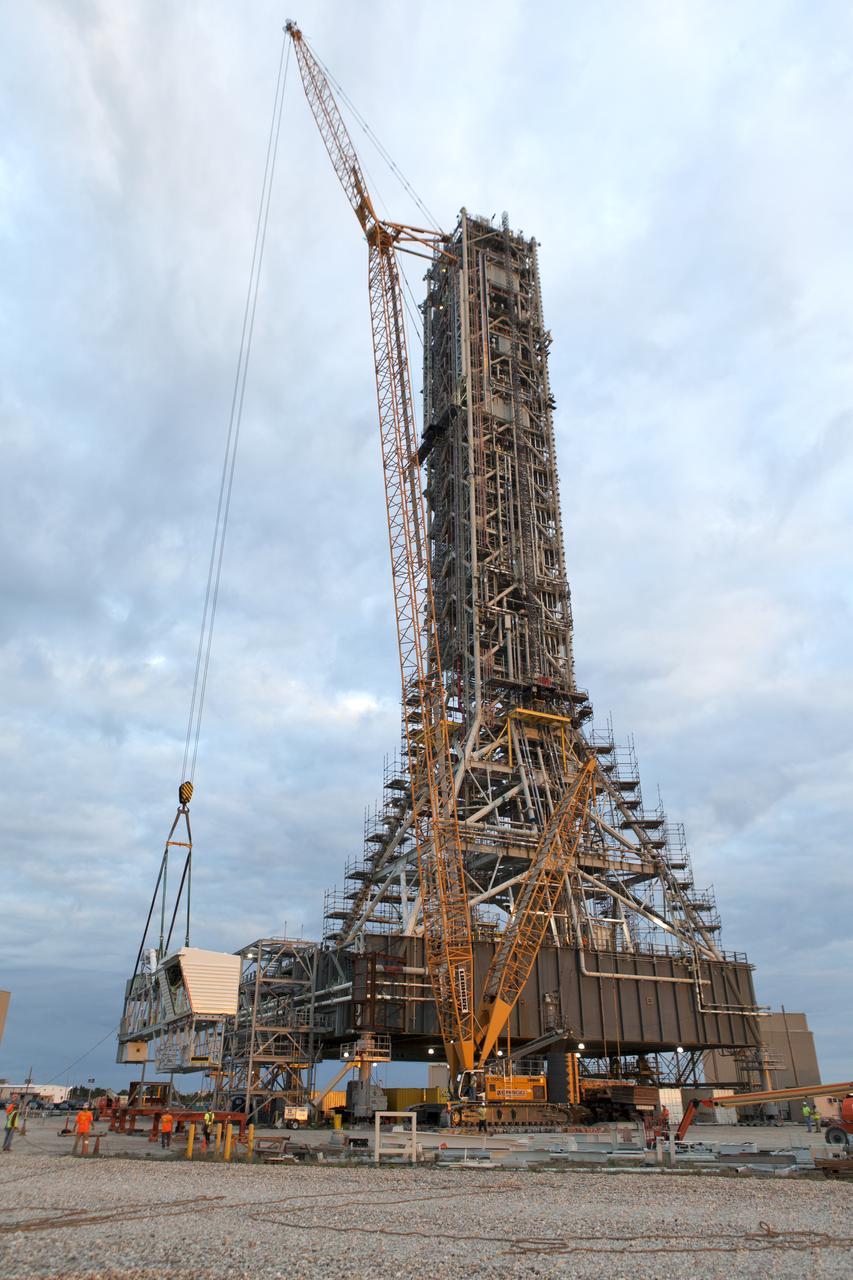
At NASA's Kennedy Space Center in Florida, a crane begins lifting the Orion crew access arm (CAA) so it can be attached to the mobile launcher (ML). The arm will be installed at about the 274-foot level on the ML tower. NASA's Exploration Ground Systems organization has been overseeing installation of umbilicals and other launch accessories on the 380-foot-tall ML in preparation for stacking the first launch of the Space launch System (SLS), rocket with an Orion spacecraft. The CAA is designed to rotate from its retracted position and line up with Orion's crew hatch providing entry for astronauts and technicians.
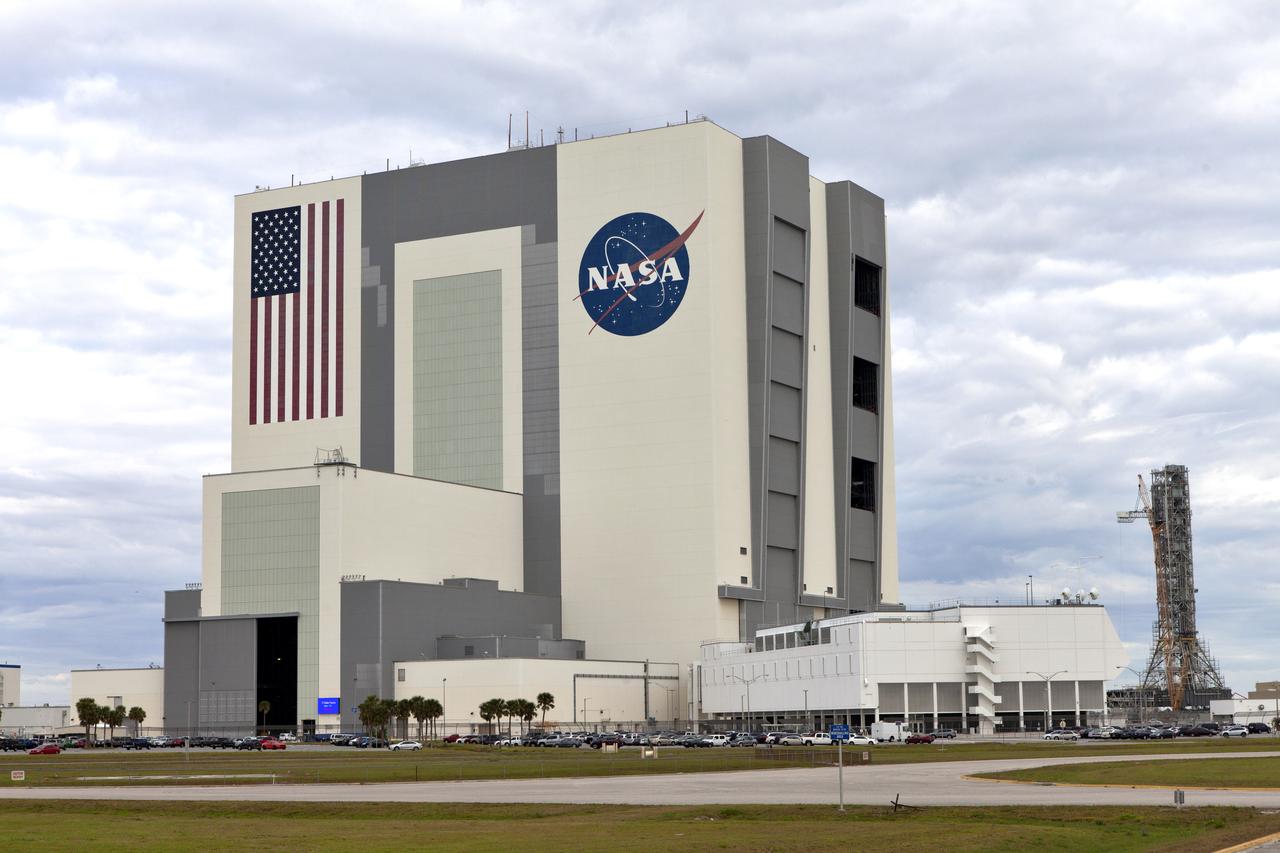
Seen to the right of the iconic Vehicle Assembly Building at NASA's Kennedy Space Center in Florida, a crane positions the Orion crew access arm (CAA) so it can be attached to the mobile launcher (ML). The arm will be installed at about the 274-foot level on the ML tower. NASA's Exploration Ground Systems organization has been overseeing installation of umbilicals and other launch accessories on the 380-foot-tall ML in preparation for stacking the first launch of the Space launch System (SLS), rocket with an Orion spacecraft. The CAA is designed to rotate from its retracted position and line up with Orion's crew hatch providing entry for astronauts and technicians.
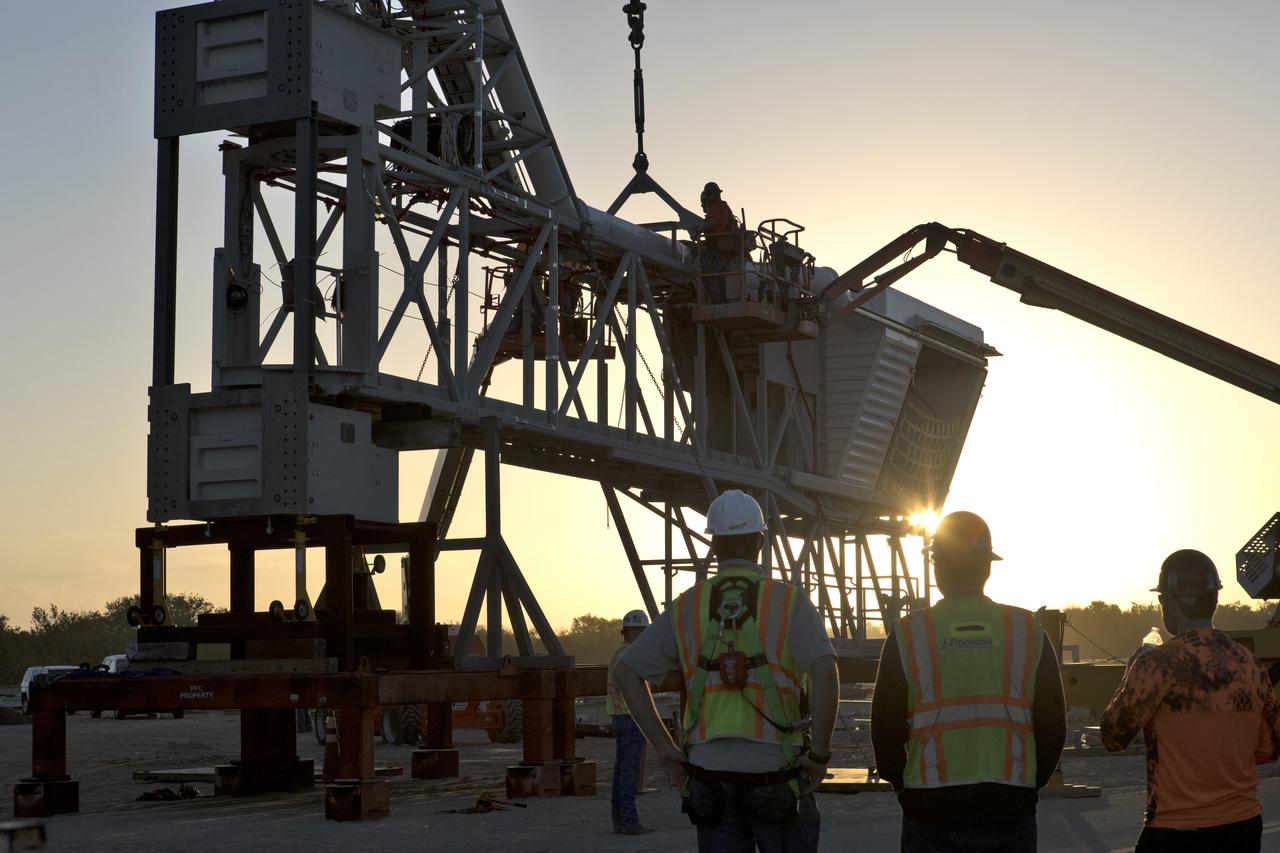
Under the watchful eye of technicians and engineers, a crane is prepared to lift the Orion crew access arm (CAA) so it can be attached to the mobile launcher (ML) at NASA's Kennedy Space Center in Florida. The arm will be installed at about the 274-foot level on the ML tower. NASA's Exploration Ground Systems organization has been overseeing installation of umbilicals and other launch accessories on the 380-foot-tall ML in preparation for stacking the first launch of the Space launch System, or SLS, rocket with an Orion spacecraft. The CAA is designed to rotate from its retracted position and line up with Orion's crew hatch providing entry for astronauts and technicians.
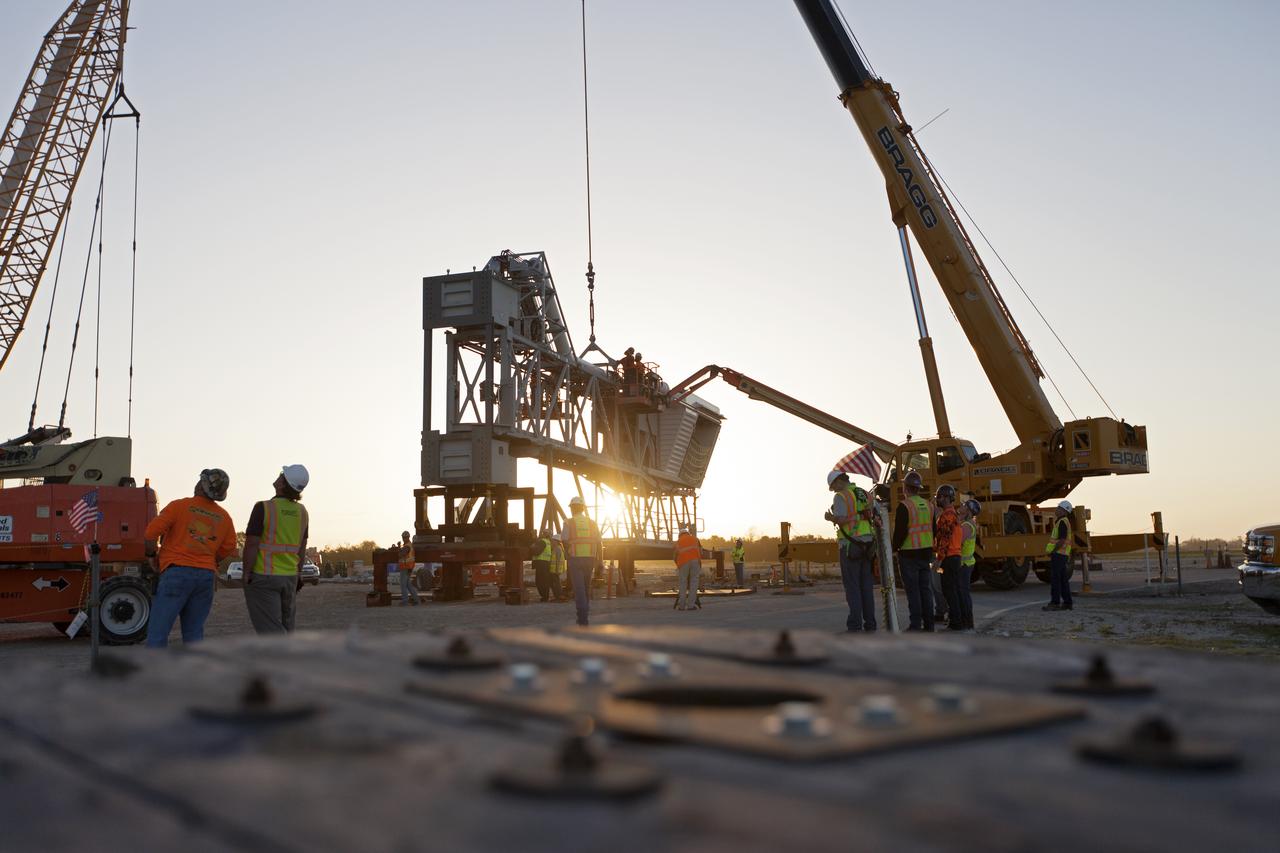
At NASA's Kennedy Space Center in Florida, a crane is prepared to lift the Orion crew access arm (CAA) so it can be attached to the mobile launcher (ML). The arm will be installed at about the 274-foot level on the ML tower. NASA's Exploration Ground Systems organization has been overseeing installation of umbilicals and other launch accessories on the 380-foot-tall ML in preparation for stacking the first launch of the Space launch System, or SLS, rocket with an Orion spacecraft. The CAA is designed to rotate from its retracted position and line up with Orion's crew hatch providing entry for astronauts and technicians.
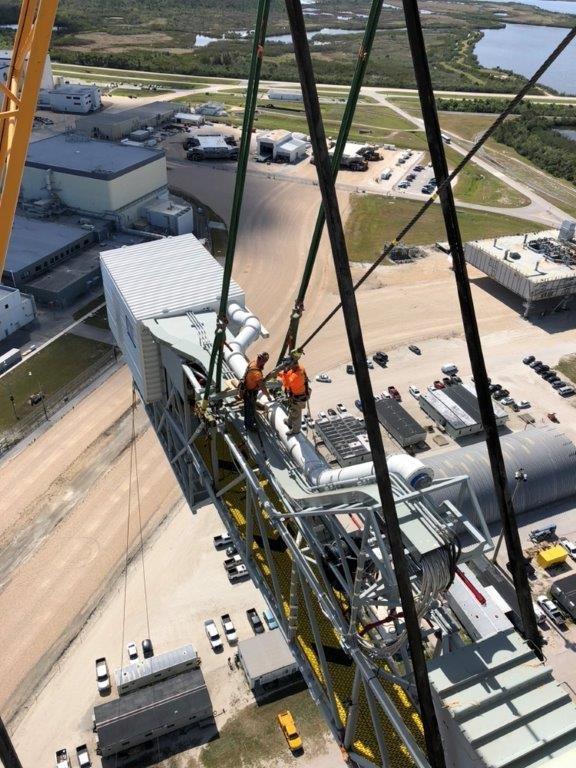
Viewed from the 274-foot level mobile launcher (ML), technicians help install the Orion crew access arm (CAA) to the tower at NASA's Kennedy Space Center in Florida. NASA's Exploration Ground Systems organization has been overseeing installation of umbilicals and other launch accessories on the 380-foot-tall ML in preparation for stacking the first launch of the Space launch System (SLS), rocket with an Orion spacecraft. The CAA is designed to rotate from its retracted position and line up with Orion's crew hatch providing entry for astronauts and technicians.
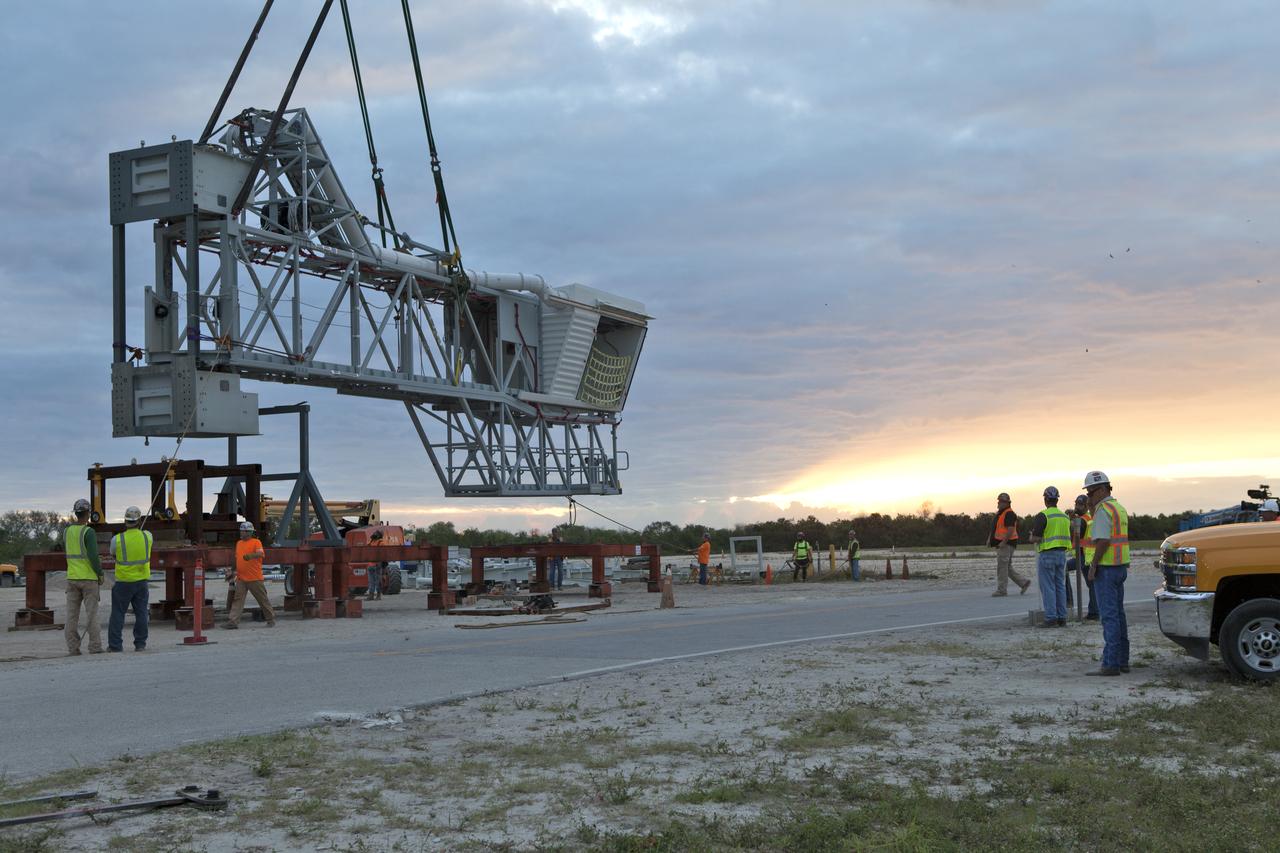
Under the watchful eye of technicians and engineers, a crane begins lifting the Orion crew access arm (CAA) so it can be attached to the mobile launcher (ML) at NASA's Kennedy Space Center in Florida. The arm will be installed at about the 274-foot level on the ML tower. NASA's Exploration Ground Systems organization has been overseeing installation of umbilicals and other launch accessories on the 380-foot-tall ML in preparation for stacking the first launch of the Space launch System (SLS), rocket with an Orion spacecraft. The CAA is designed to rotate from its retracted position and line up with Orion's crew hatch providing entry for astronauts and technicians.
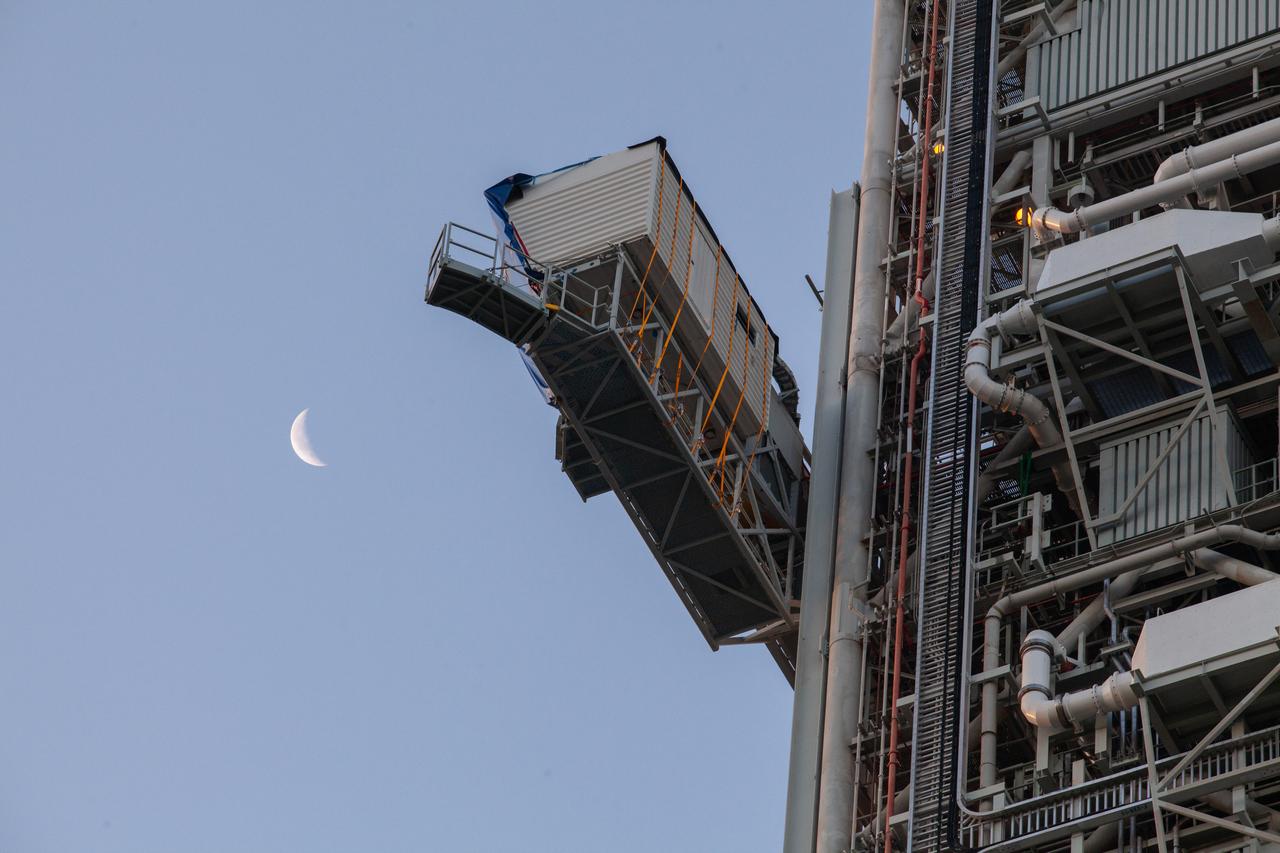
In this view, Exploration Ground Systems’ mobile launcher’s crew access arm (CAA) can be seen. The CAA will interface with the agency’s Space Launch System (SLS) rocket at the Orion crew hatch, providing entry and exit from the Orion crew module. The first crewed flight aboard Orion will be Artemis 2, after the uncrewed Artemis 1 launch verifies SLS and Orion as an integrated system.
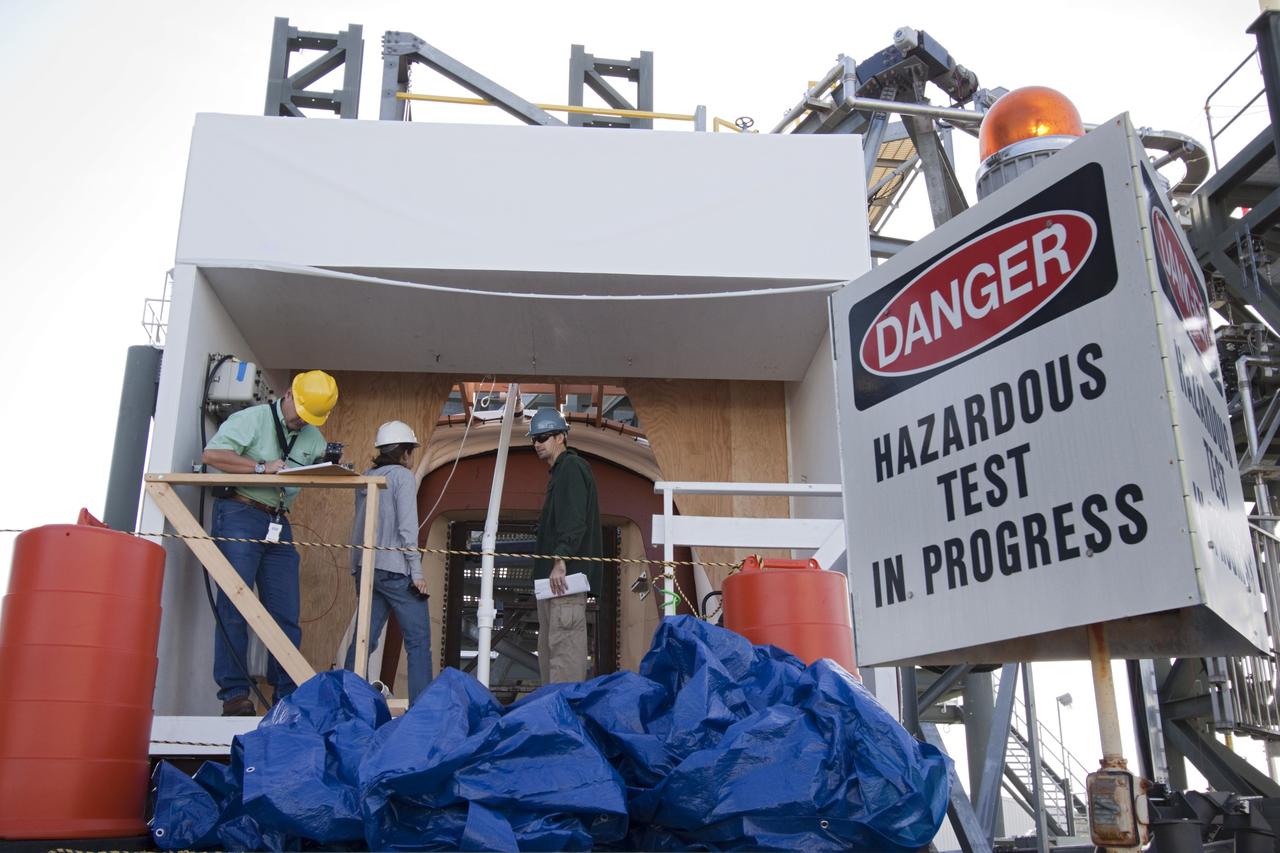
CAPE CANAVERAL, Fla. – The Orion spacecraft crew access arm, or CAA, seal prototype is being checked by technicians and engineers at the Launch Equipment Test Facility at NASAs Kennedy Space Center in Florida. The tests will use a mockup of the vehicle Outer Mold Line and CAA white room to assess the performance of the seal while simulating vehicle to CAA white room excursions. Orion is the exploration spacecraft designed to carry crews to space beyond low Earth orbit. It will provide emergency abort capability, sustain the crew during the space travel and provide safe re-entry from deep space return velocities. The first unpiloted test flight of the Orion is scheduled to launch in 2014 atop a Delta IV rocket and in 2017 on a Space Launch System rocket. For more information, visit http://www.nasa.gov/orion Photo credit: NASA/Jim Grossmann
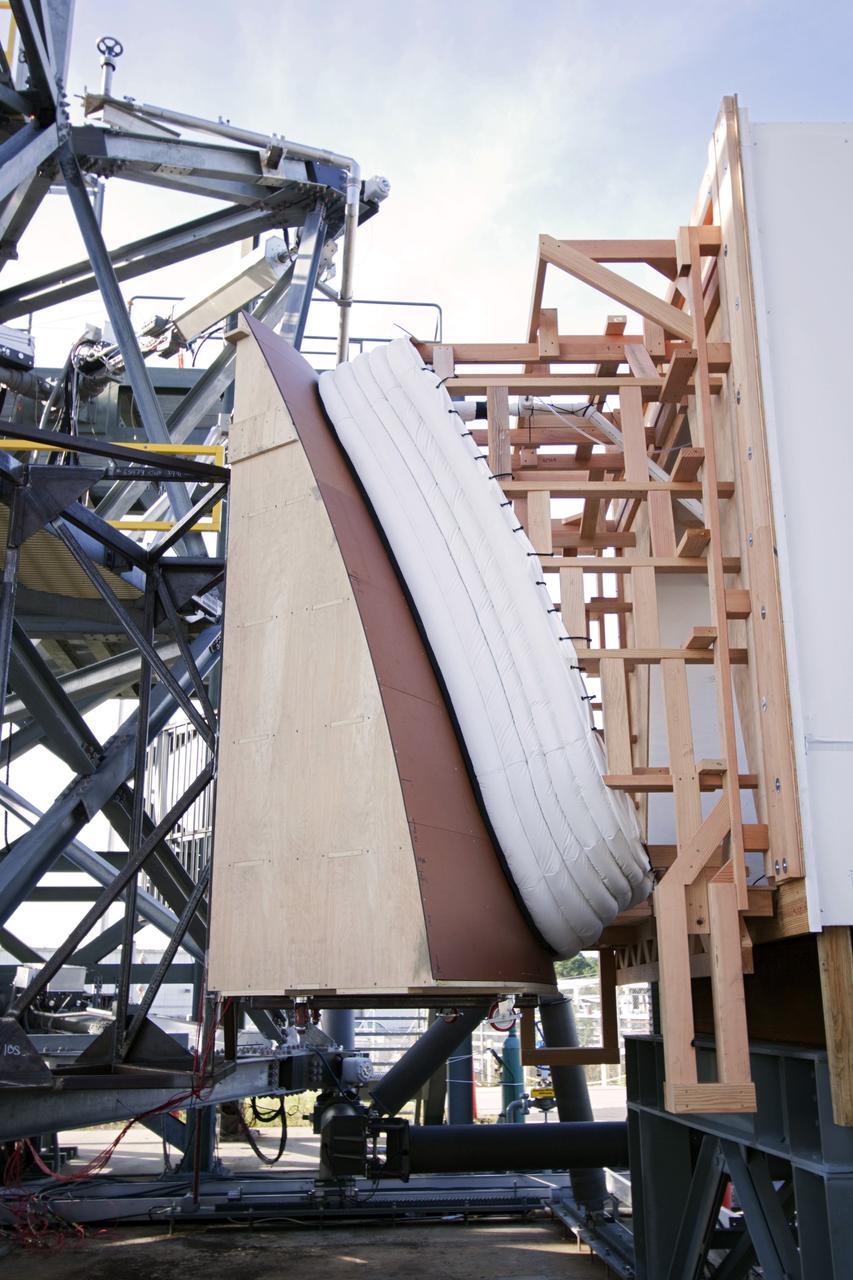
CAPE CANAVERAL, Fla. – The Orion spacecraft crew access arm, or CAA, seal prototype is being checked out at the Launch Equipment Test Facility at NASA's Kennedy Space Center in Florida. The tests will use a mockup of the vehicle Outer Mold Line and CAA white room to test the performance of the seal while simulating vehicle to CAA white room excursions. Orion is the exploration spacecraft designed to carry crews to space beyond low Earth orbit. It will provide emergency abort capability, sustain the crew during the space travel and provide safe re-entry from deep space return velocities. The first unpiloted test flight of the Orion is scheduled to launch in 2014 atop a Delta IV rocket and in 2017 on a Space Launch System rocket. For more information, visit http://www.nasa.gov/orion Photo credit: NASA/Jim Grossmann
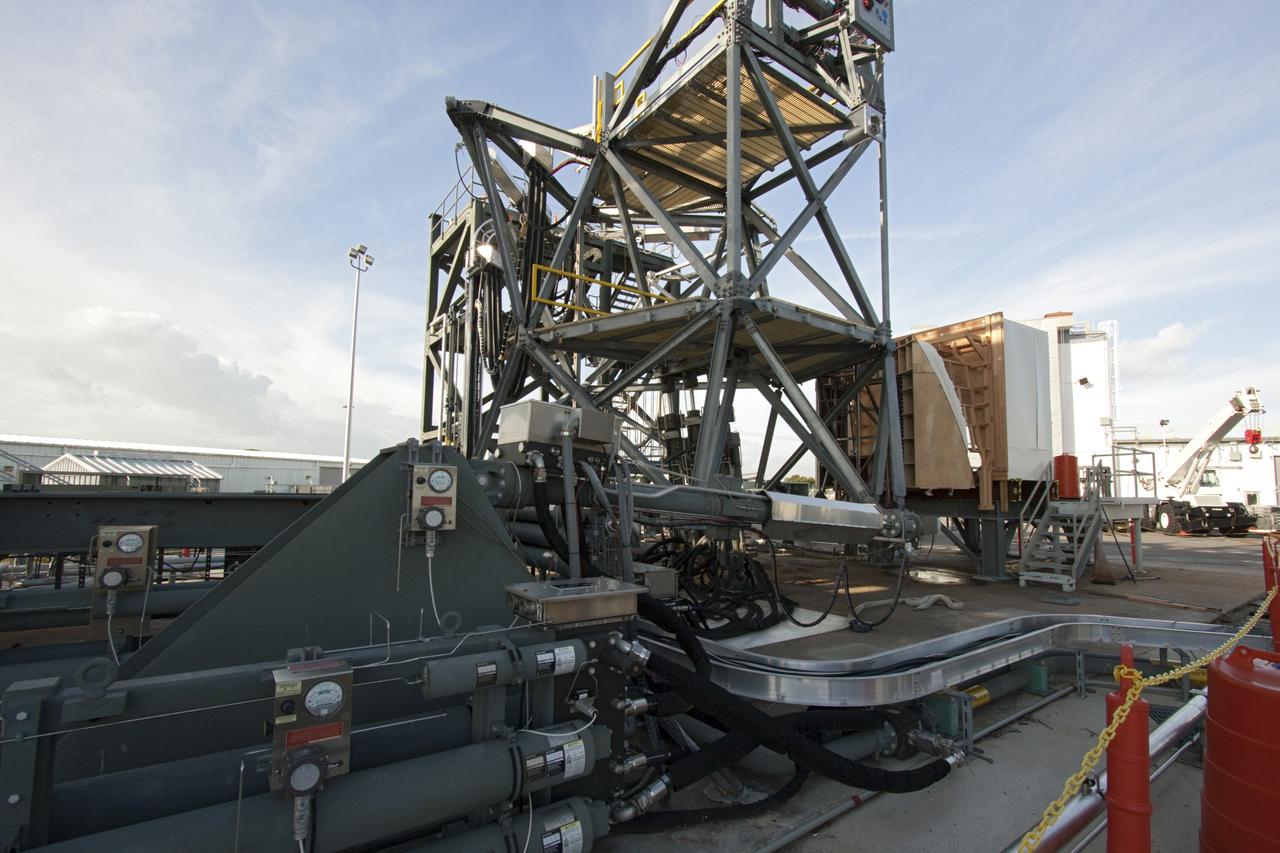
CAPE CANAVERAL, Fla. – The Orion spacecraft crew access arm, or CAA, seal prototype is being checked out at the Launch Equipment Test Facility at NASA's Kennedy Space Center in Florida. The tests will use a mockup of the vehicle Outer Mold Line and CAA white room to test the performance of the seal while simulating vehicle to CAA white room excursions. Orion is the exploration spacecraft designed to carry crews to space beyond low Earth orbit. It will provide emergency abort capability, sustain the crew during the space travel and provide safe re-entry from deep space return velocities. The first unpiloted test flight of the Orion is scheduled to launch in 2014 atop a Delta IV rocket and in 2017 on a Space Launch System rocket. For more information, visit http://www.nasa.gov/orion Photo credit: NASA/Jim Grossmann
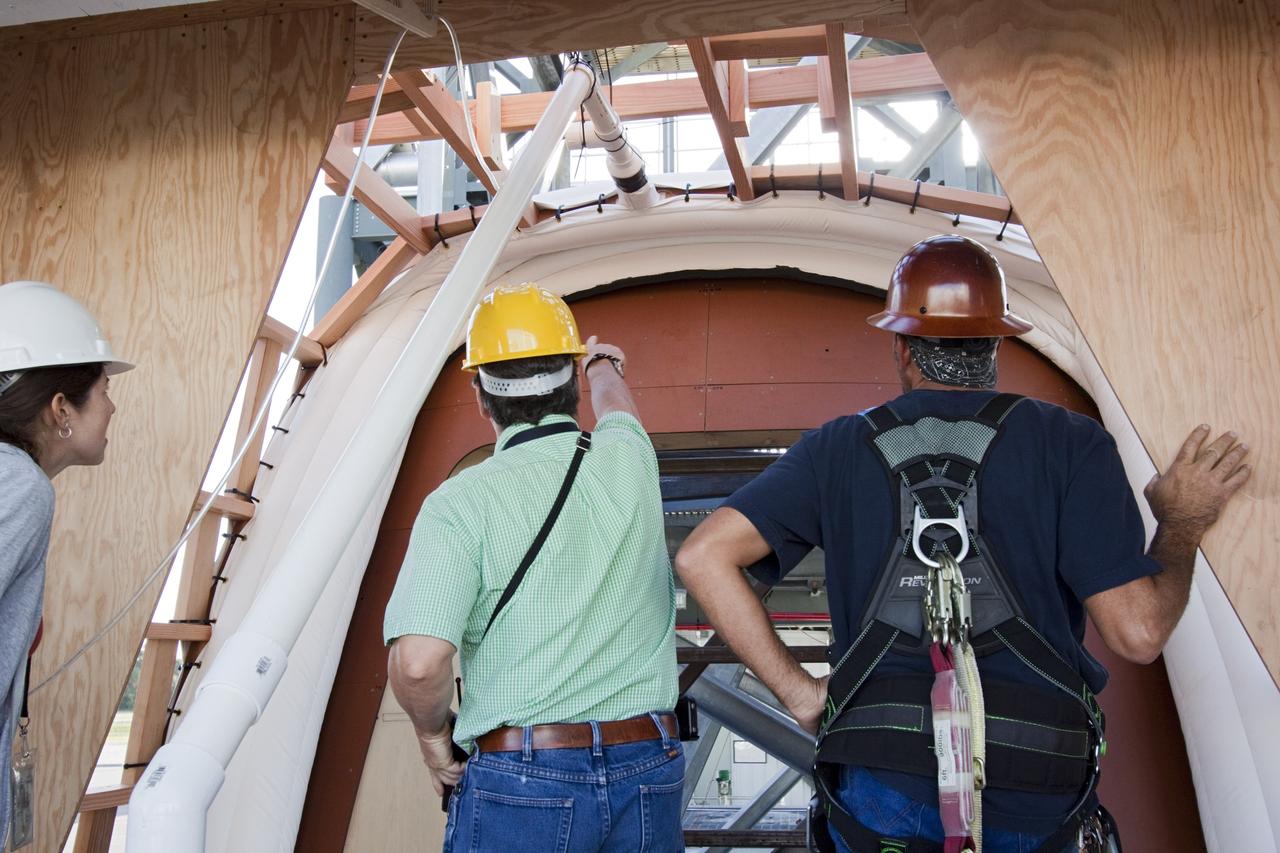
CAPE CANAVERAL, Fla. – The Orion spacecraft crew access arm, or CAA, seal prototype is being checked by technicians and engineers at the Launch Equipment Test Facility at NASAs Kennedy Space Center in Florida. The tests will use a mockup of the vehicle Outer Mold Line and CAA white room to assess the performance of the seal while simulating vehicle to CAA white room excursions. Orion is the exploration spacecraft designed to carry crews to space beyond low Earth orbit. It will provide emergency abort capability, sustain the crew during the space travel and provide safe re-entry from deep space return velocities. The first unpiloted test flight of the Orion is scheduled to launch in 2014 atop a Delta IV rocket and in 2017 on a Space Launch System rocket. For more information, visit http://www.nasa.gov/orion Photo credit: NASA/Jim Grossmann
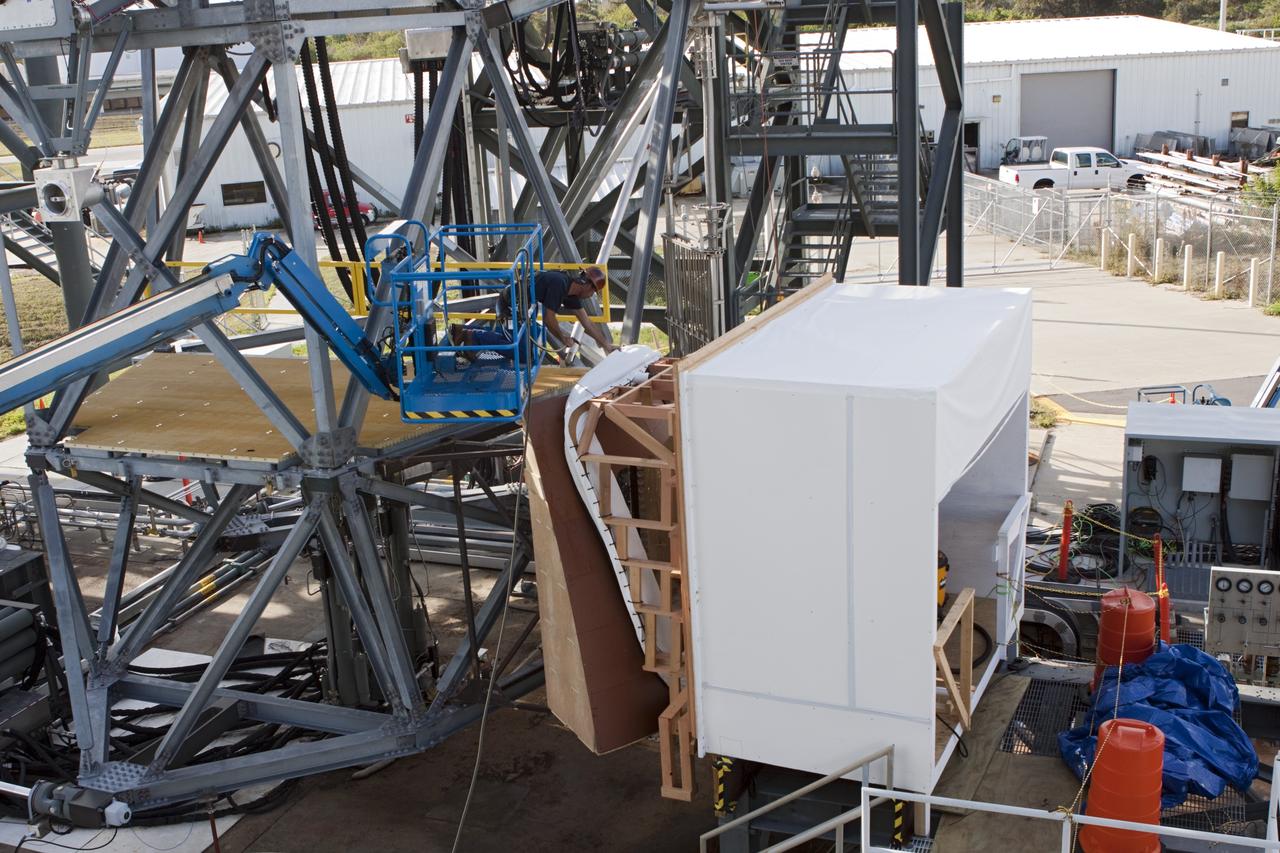
CAPE CANAVERAL, Fla. – The Orion spacecraft crew access arm, or CAA, seal prototype is being checked out at the Launch Equipment Test Facility at NASA's Kennedy Space Center in Florida. The tests will use a mockup of the vehicle Outer Mold Line and CAA white room to test the performance of the seal while simulating vehicle to CAA white room excursions. Orion is the exploration spacecraft designed to carry crews to space beyond low Earth orbit. It will provide emergency abort capability, sustain the crew during the space travel and provide safe re-entry from deep space return velocities. The first unpiloted test flight of the Orion is scheduled to launch in 2014 atop a Delta IV rocket and in 2017 on a Space Launch System rocket. For more information, visit http://www.nasa.gov/orion Photo credit: NASA/Jim Grossmann
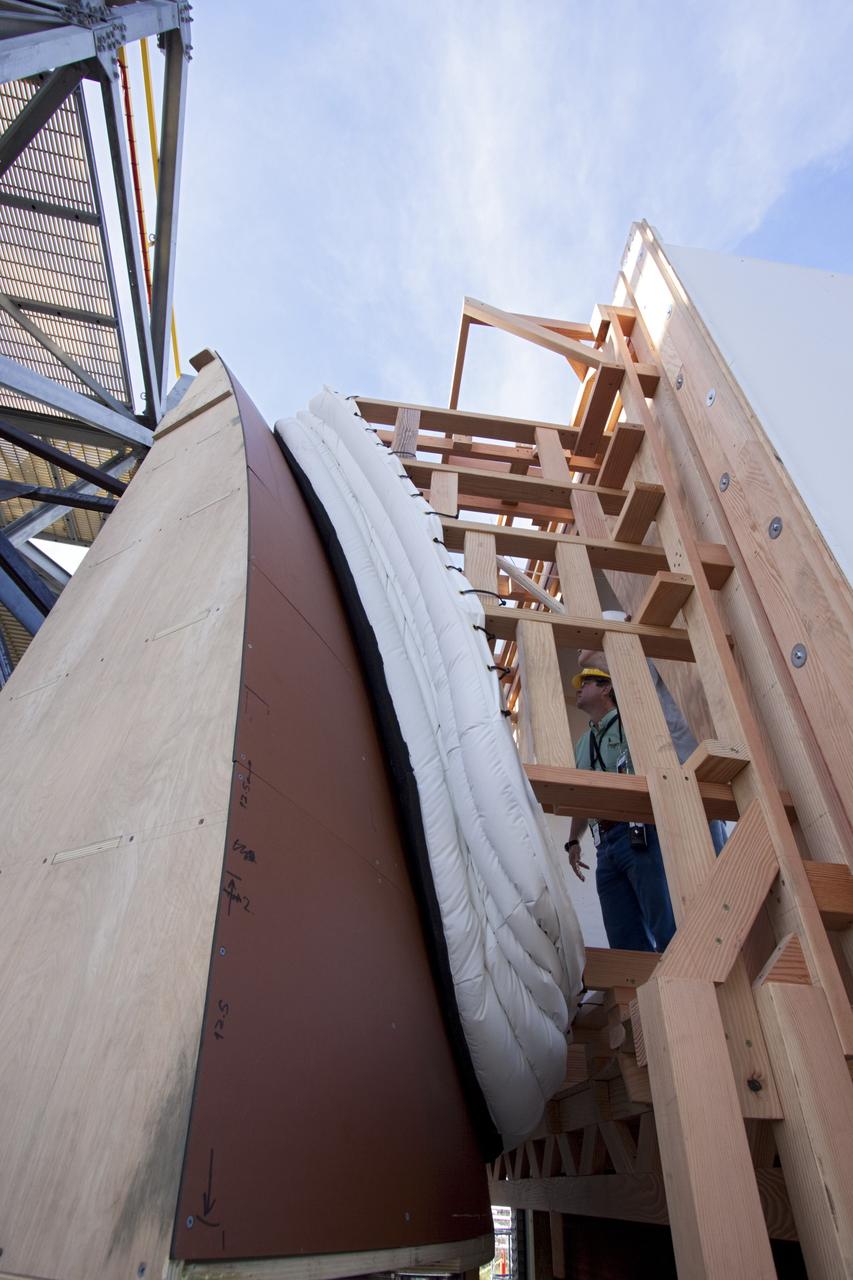
CAPE CANAVERAL, Fla. – The Orion spacecraft crew access arm, or CAA, seal prototype is being checked out at the Launch Equipment Test Facility at NASA's Kennedy Space Center in Florida. The tests will use a mockup of the vehicle Outer Mold Line and CAA white room to test the performance of the seal while simulating vehicle to CAA white room excursions. Orion is the exploration spacecraft designed to carry crews to space beyond low Earth orbit. It will provide emergency abort capability, sustain the crew during the space travel and provide safe re-entry from deep space return velocities. The first unpiloted test flight of the Orion is scheduled to launch in 2014 atop a Delta IV rocket and in 2017 on a Space Launch System rocket. For more information, visit http://www.nasa.gov/orion Photo credit: NASA/Jim Grossmann
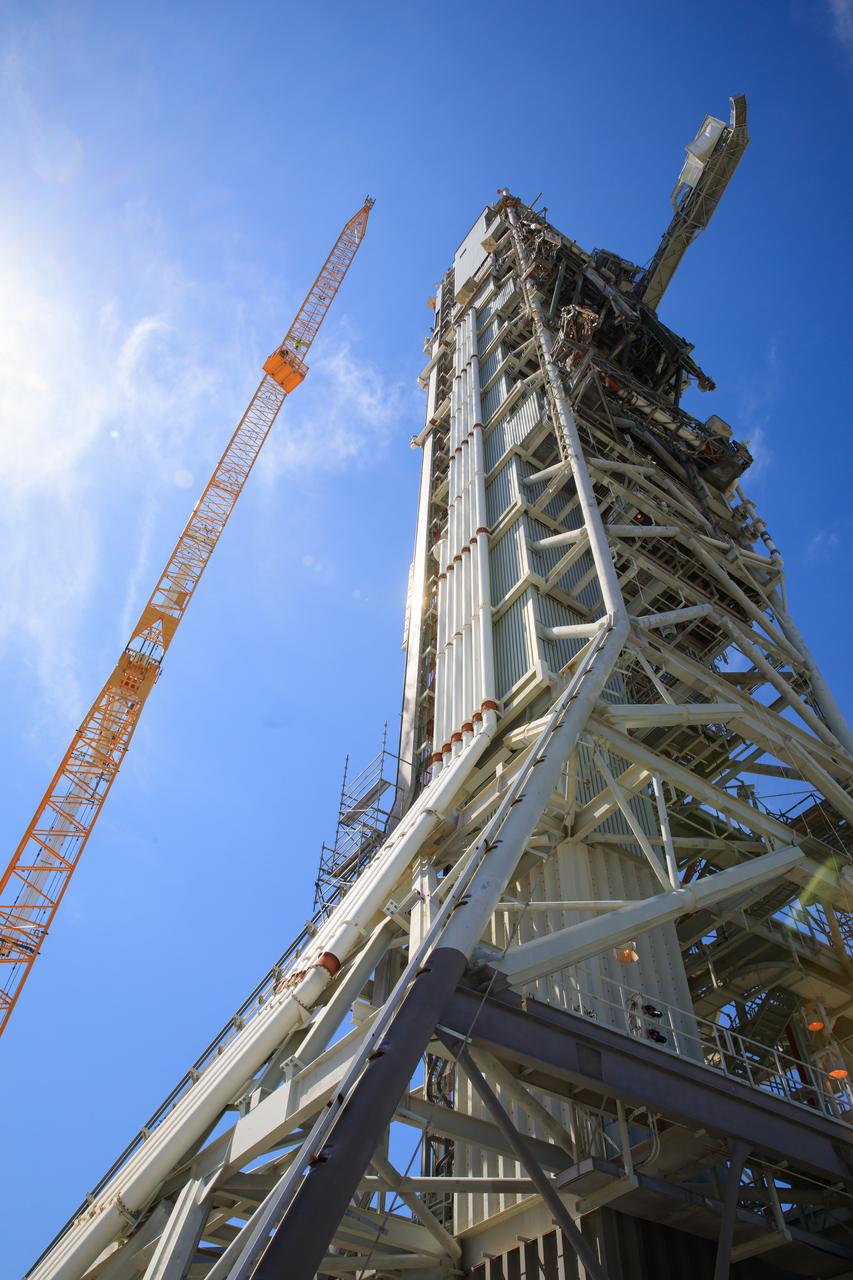
Teams with Exploration Ground Systems at NASA’s Kennedy Space Center in Florida continue to work the upgrades and repairs on mobile launcher 1 and Launch Pad 39B on June 13, 2023, ahead of the first critical ground testing for Artemis II. The crew access arm (CAA) has been extended in this view of the mobile launcher. The CAA is the entry and exit point astronauts will use for access to the Orion spacecraft. Tests will be conducted to ensure the arm and supporting mobile launcher systems are certified to support crewed missions. Artemis II will be the first Artemis mission flying crew aboard Orion.
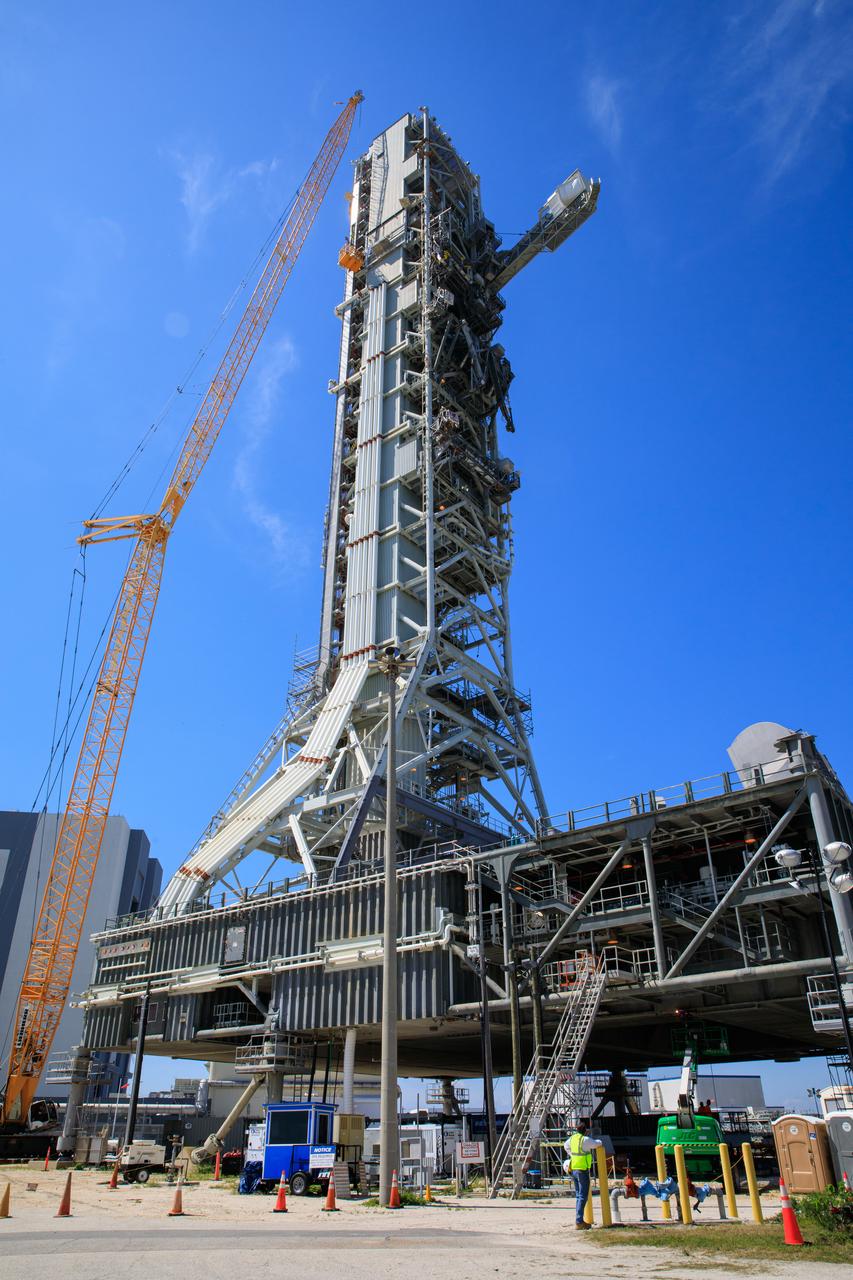
Teams with Exploration Ground Systems at NASA’s Kennedy Space Center in Florida continue to work the upgrades and repairs on mobile launcher 1 and Launch Pad 39B on June 13, 2023, ahead of the first critical ground testing for Artemis II. The crew access arm (CAA) has been extended in this view of the mobile launcher. The CAA is the entry and exit point astronauts will use for access to the Orion spacecraft. Tests will be conducted to ensure the arm and supporting mobile launcher systems are certified to support crewed missions. Artemis II will be the first Artemis mission flying crew aboard Orion.
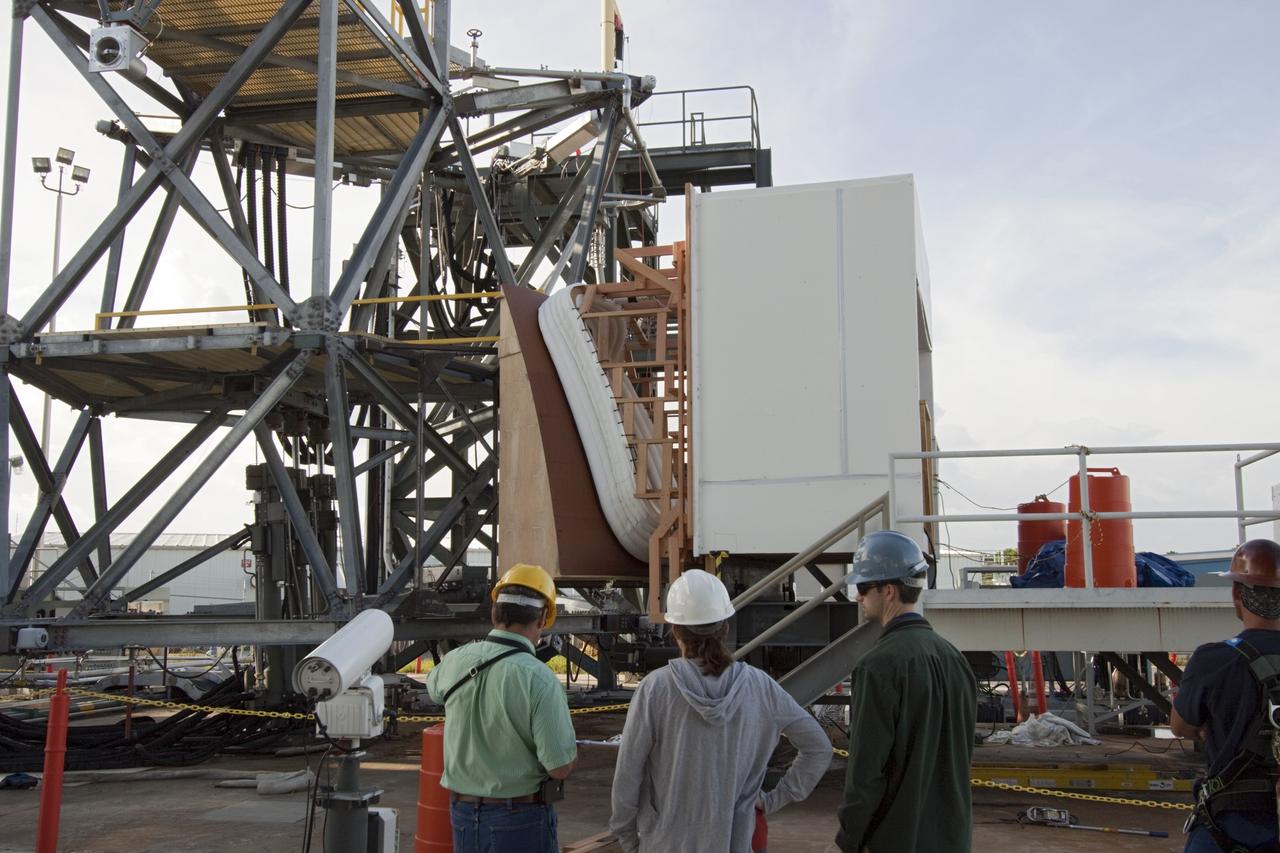
CAPE CANAVERAL, Fla. – The Orion spacecraft crew access arm, or CAA, seal prototype is being checked out at the Launch Equipment Test Facility at NASA's Kennedy Space Center in Florida. Monitoring the activity, from the left are Kent Bachelor, Stinger Ghaffarian Technologies lead, Kelli Maloney, NASA lead and Clayton Gvasse, Nelson Engineering lead. The tests will use a mockup of the vehicle Outer Mold Line and CAA white room to test the performance of the seal while simulating vehicle to CAA white room excursions. Orion is the exploration spacecraft designed to carry crews to space beyond low Earth orbit. It will provide emergency abort capability, sustain the crew during the space travel and provide safe re-entry from deep space return velocities. The first unpiloted test flight of the Orion is scheduled to launch in 2014 atop a Delta IV rocket and in 2017 on a Space Launch System rocket. For more information, visit http://www.nasa.gov/orion Photo credit: NASA/Jim Grossmann
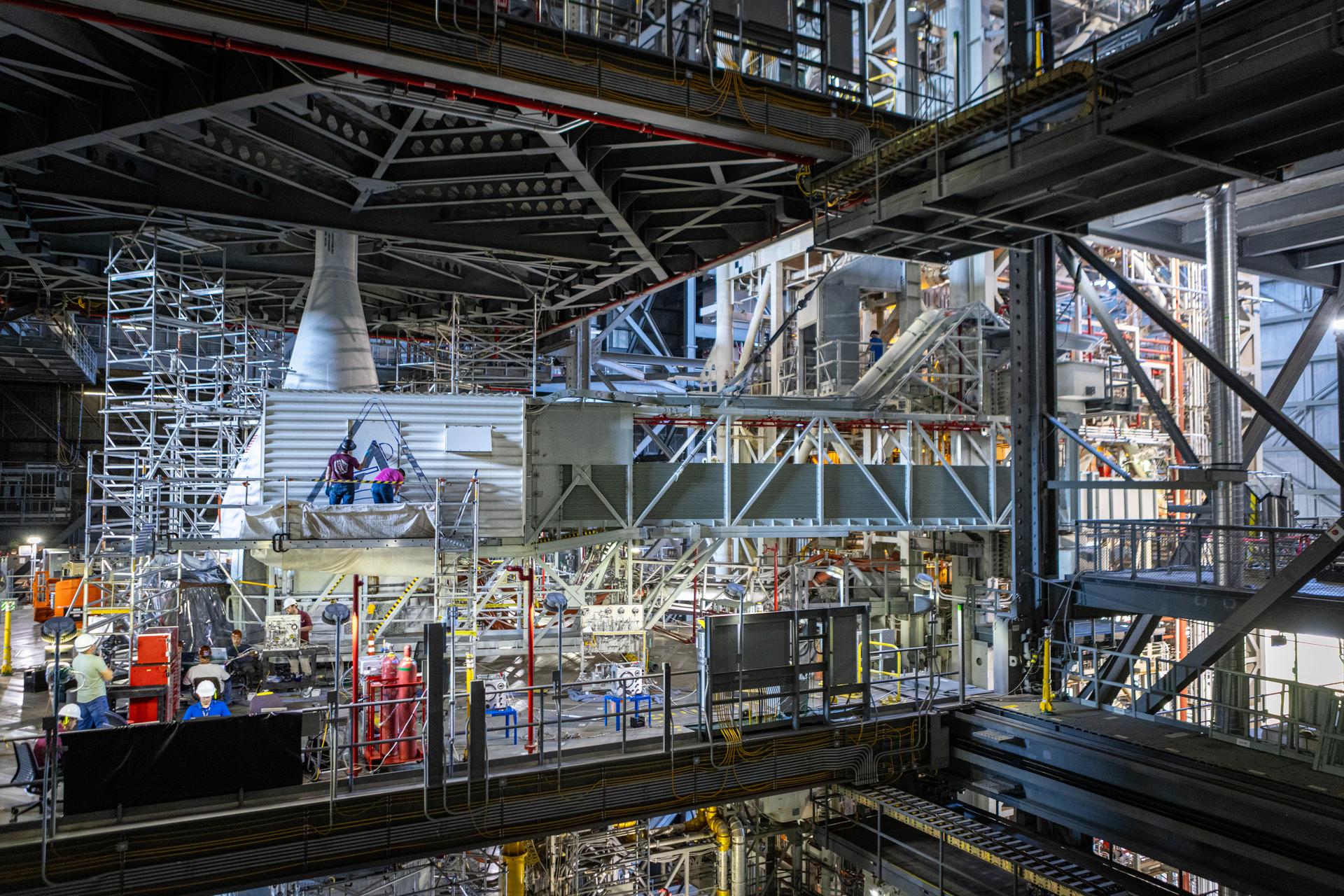
From left, Sean McCrary and Katie Mortensen, mechanical engineering technicians, paint NASA’s Artemis logo on the White Room connected to the crew access arm and mobile launcher inside the Vehicle Assembly Building at NASA’s Kennedy Space Center in Florida on Thursday, Dec. 4, 2025. The White Room is the area where the Artemis II crew Reid Wiseman, Victor Glover, Christina Koch, and CSA (Canadian Space Agency) astronaut Jeremy Hansen will enter the Orion spacecraft ahead of launch from Launch Complex 39B at NASA Kennedy in early 2026.
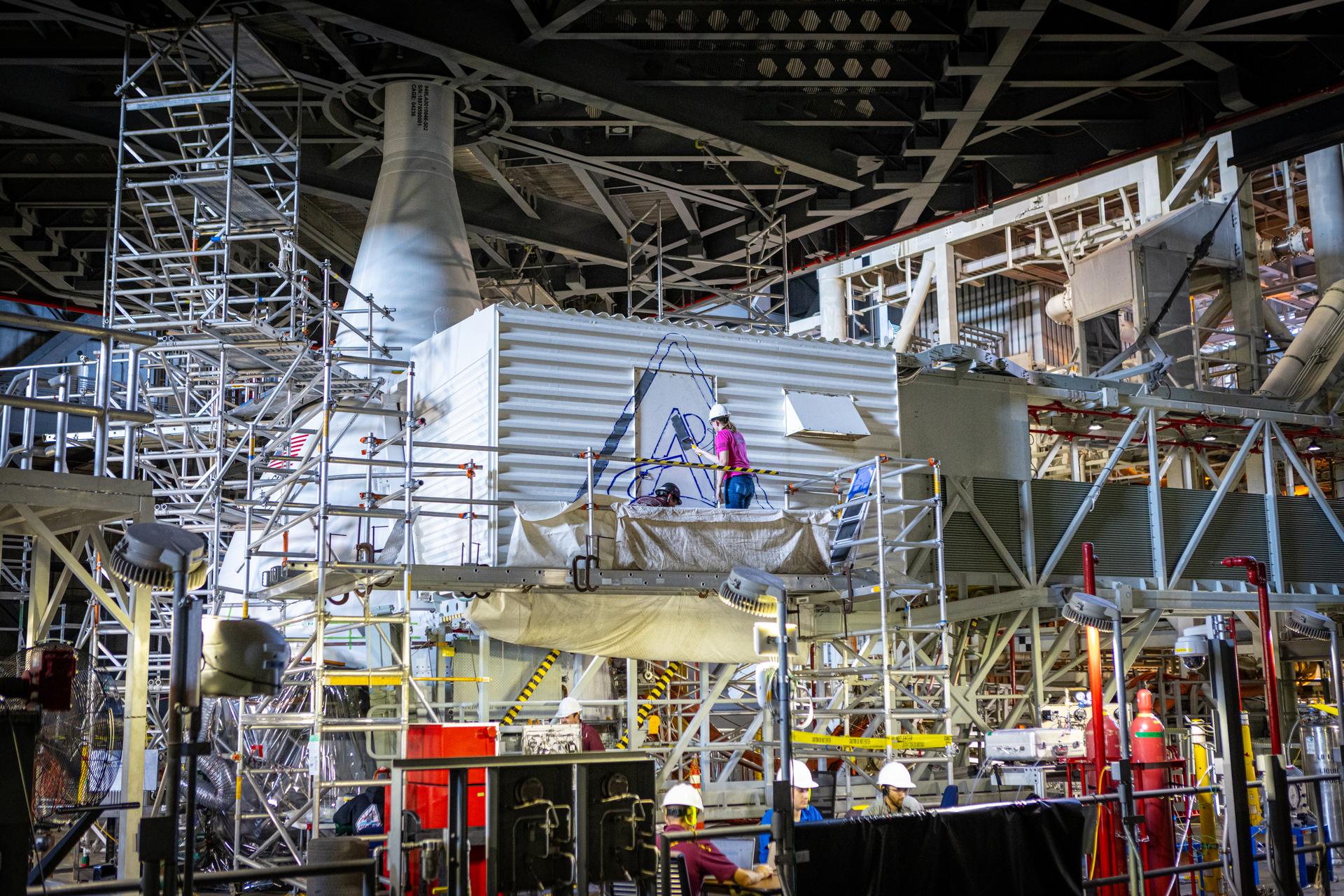
From left, Sean McCrary and Katie Mortensen, mechanical engineering technicians, paint NASA’s Artemis logo on the White Room connected to the crew access arm and mobile launcher inside the Vehicle Assembly Building at NASA’s Kennedy Space Center in Florida on Thursday, Dec. 4, 2025. The White Room is the area where the Artemis II crew Reid Wiseman, Victor Glover, Christina Koch, and CSA (Canadian Space Agency) astronaut Jeremy Hansen will enter the Orion spacecraft ahead of launch from Launch Complex 39B at NASA Kennedy in early 2026.
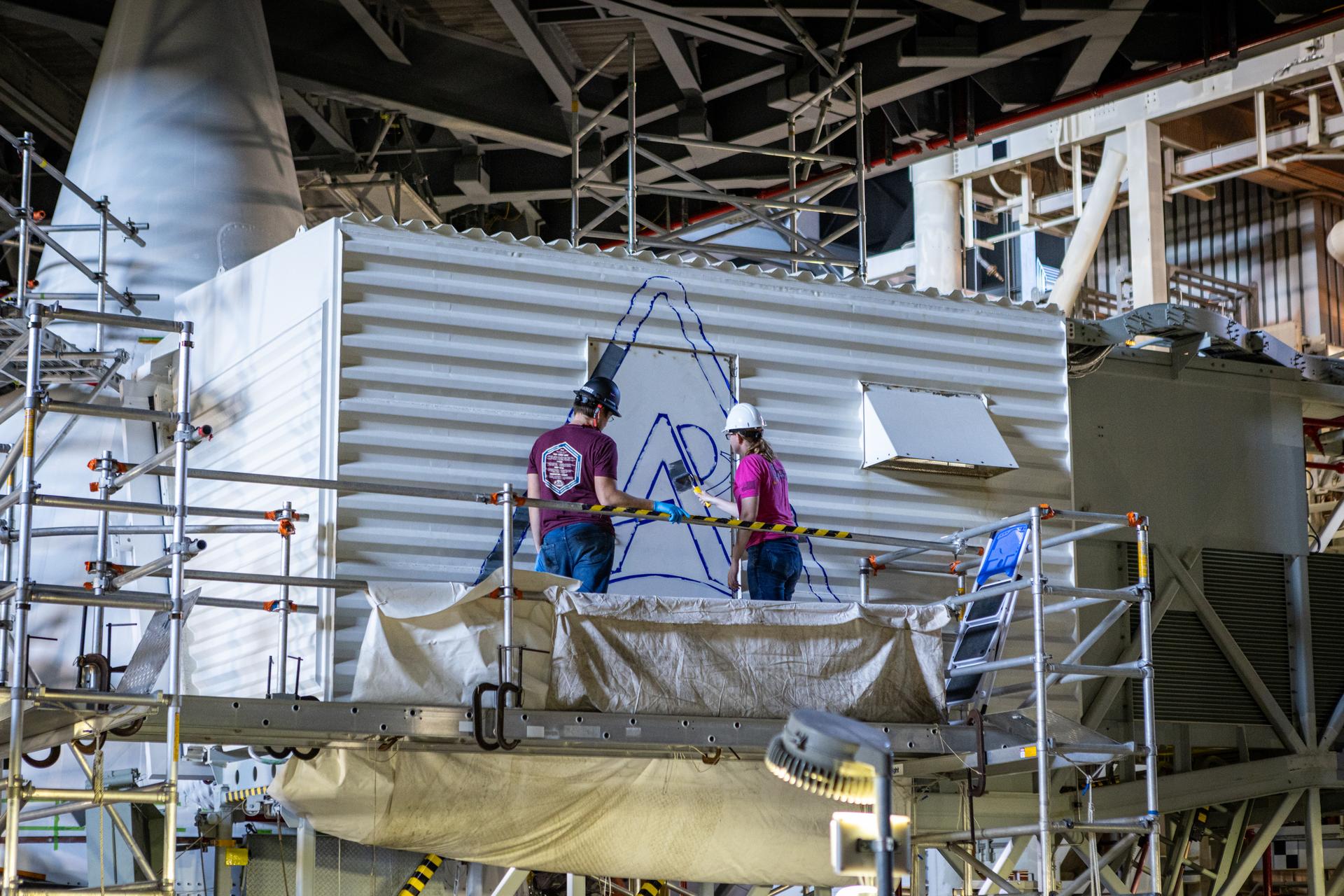
From left, Sean McCrary and Katie Mortensen, mechanical engineering technicians, paint NASA’s Artemis logo on the White Room connected to the crew access arm and mobile launcher inside the Vehicle Assembly Building at NASA’s Kennedy Space Center in Florida on Thursday, Dec. 4, 2025. The White Room is the area where the Artemis II crew Reid Wiseman, Victor Glover, Christina Koch, and CSA (Canadian Space Agency) astronaut Jeremy Hansen will enter the Orion spacecraft ahead of launch from Launch Complex 39B at NASA Kennedy in early 2026.
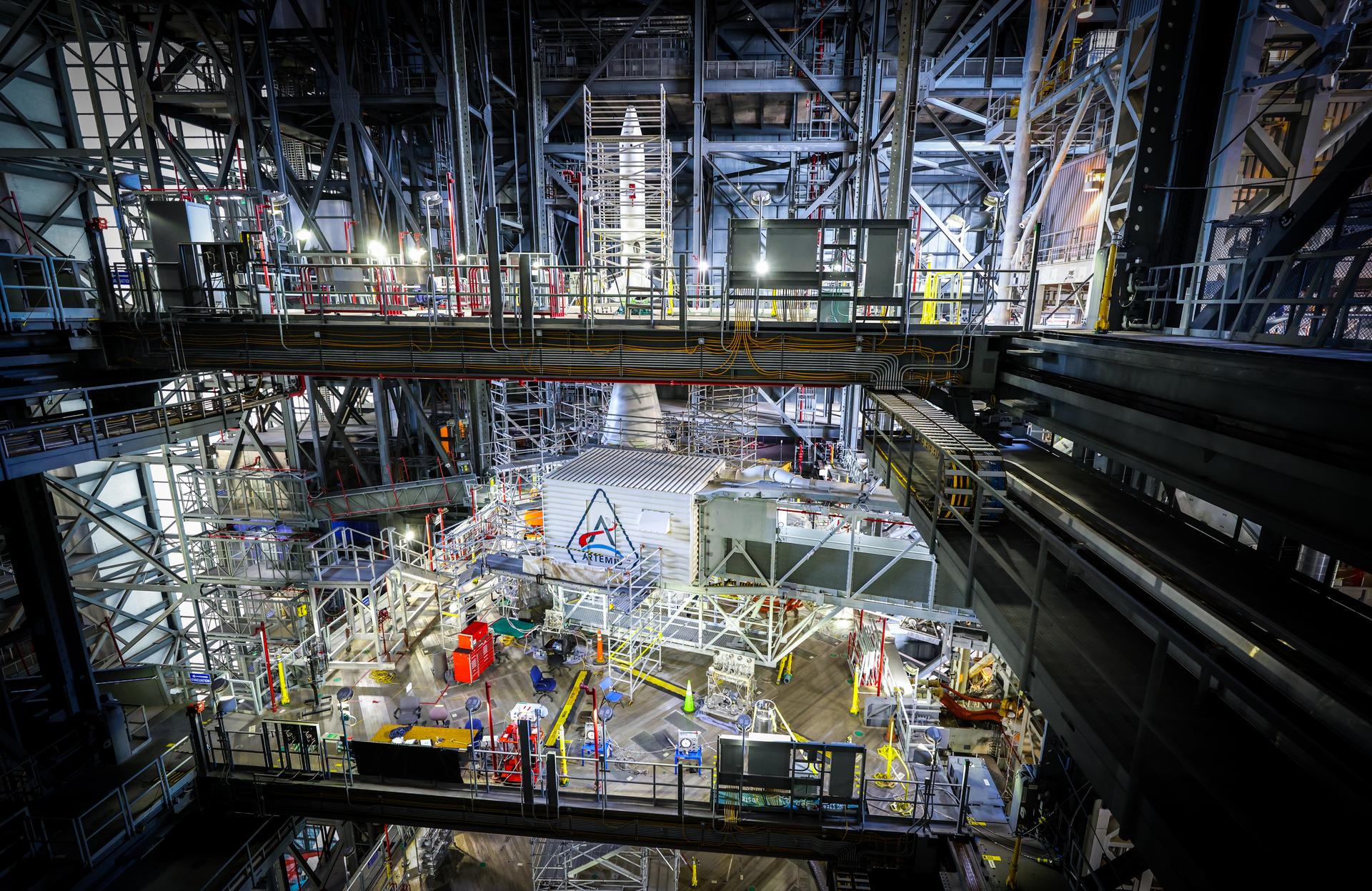
A freshly painted NASA’s Artemis logo is unveiled on the White Room connected to the crew access arm and mobile launcher inside the Vehicle Assembly Building at NASA’s Kennedy Space Center in Florida on Thursday, Dec. 4, 2025. The White Room is the area where the Artemis II crew Reid Wiseman, Victor Glover, Christina Koch, and CSA (Canadian Space Agency) astronaut Jeremy Hansen will enter the Orion spacecraft ahead of launch from Launch Complex 39B at NASA Kennedy in early 2026.
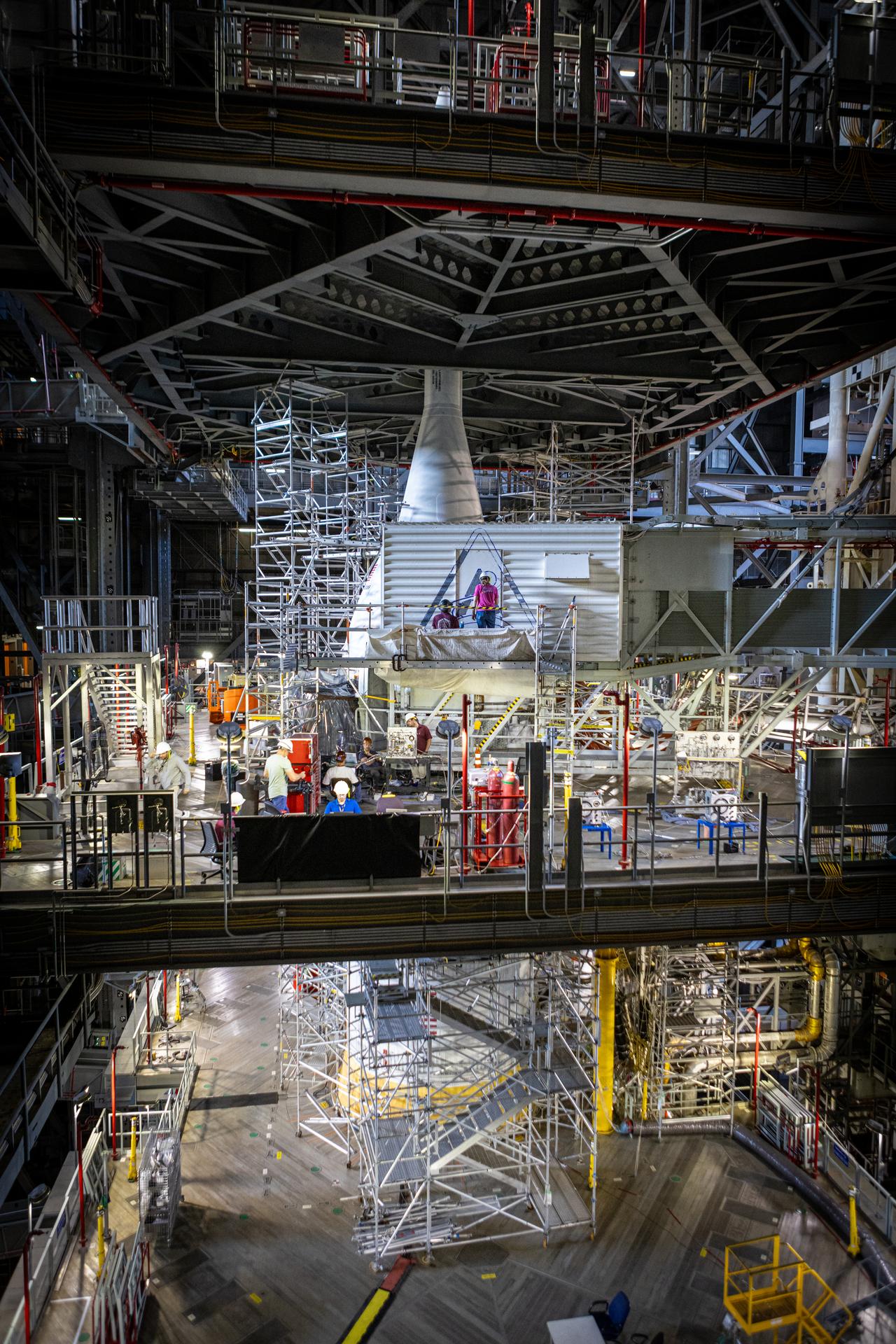
From left, Sean McCrary and Katie Mortensen, mechanical engineering technicians, paint NASA’s Artemis logo on the White Room connected to the crew access arm and mobile launcher inside the Vehicle Assembly Building at NASA’s Kennedy Space Center in Florida on Thursday, Dec. 4, 2025. The White Room is the area where the Artemis II crew Reid Wiseman, Victor Glover, Christina Koch, and CSA (Canadian Space Agency) astronaut Jeremy Hansen will enter the Orion spacecraft ahead of launch from Launch Complex 39B at NASA Kennedy in early 2026.
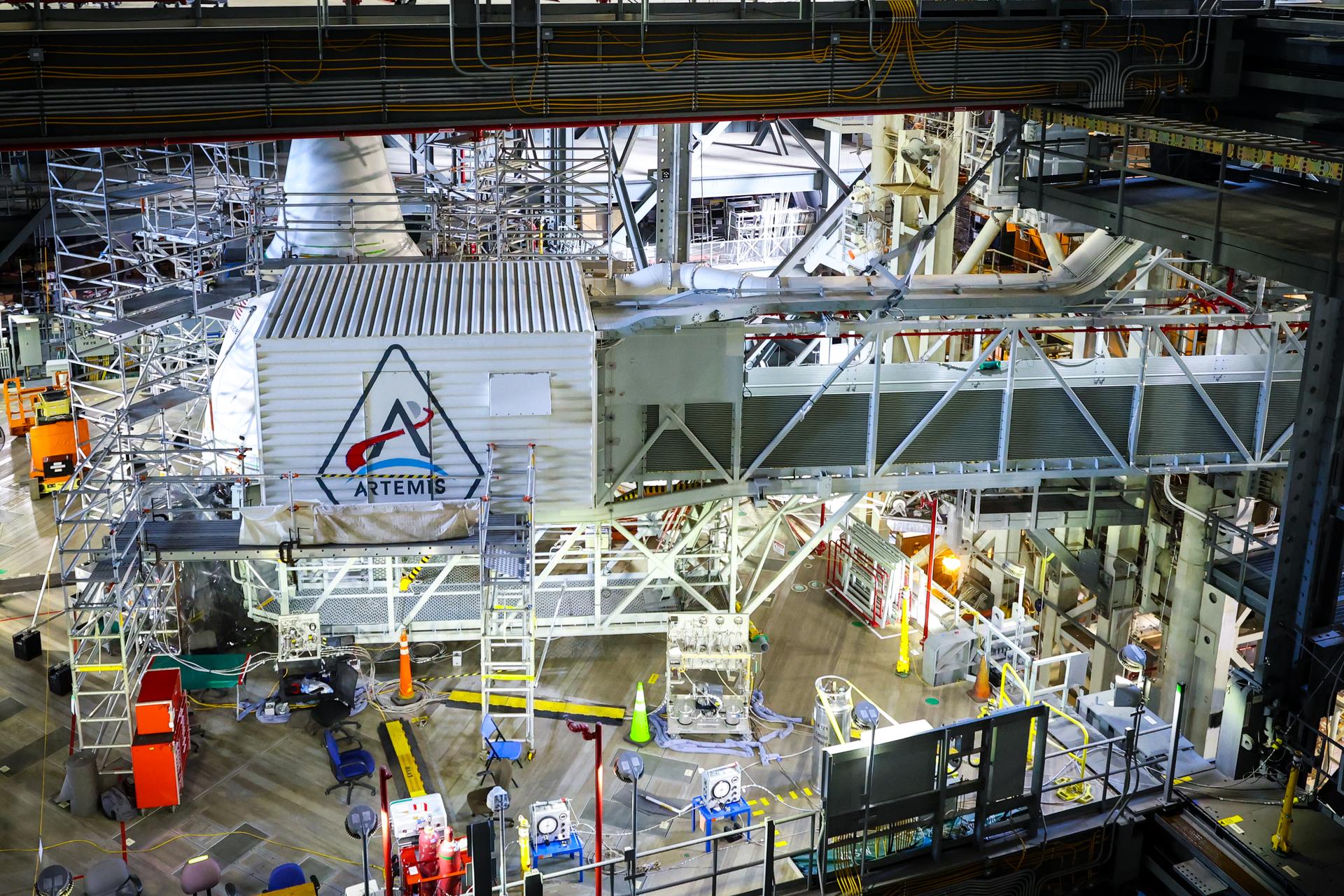
A freshly painted NASA’s Artemis logo is unveiled on the White Room connected to the crew access arm and mobile launcher inside the Vehicle Assembly Building at NASA’s Kennedy Space Center in Florida on Thursday, Dec. 4, 2025. The White Room is the area where the Artemis II crew Reid Wiseman, Victor Glover, Christina Koch, and CSA (Canadian Space Agency) astronaut Jeremy Hansen will enter the Orion spacecraft ahead of launch from Launch Complex 39B at NASA Kennedy in early 2026.
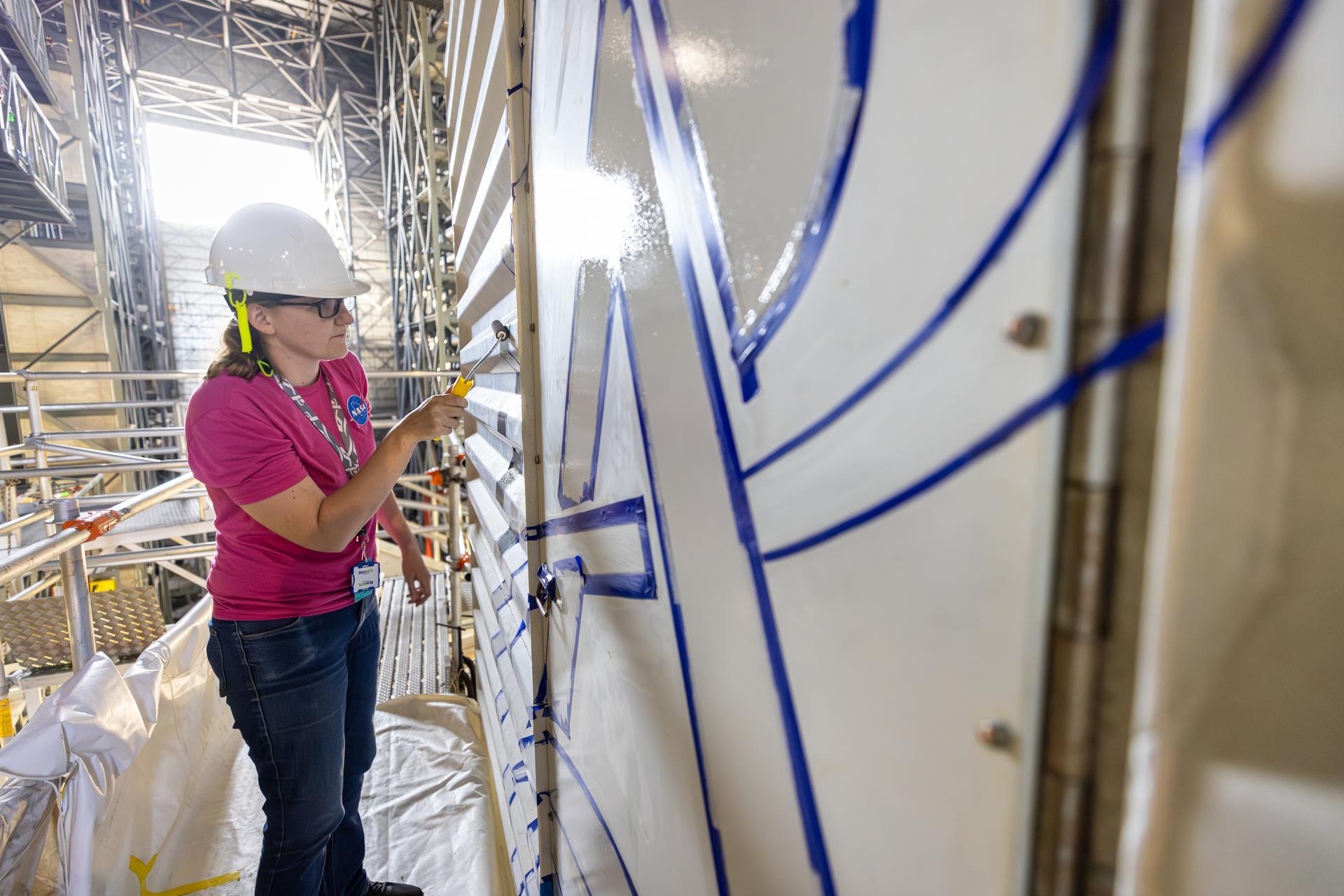
Katie Mortensen, mechanical engineering technician, paints NASA’s Artemis logo on the White Room connected to the crew access arm and mobile launcher inside the Vehicle Assembly Building at NASA’s Kennedy Space Center in Florida on Thursday, Dec. 4, 2025. The White Room is the area where the Artemis II crew Reid Wiseman, Victor Glover, Christina Koch, and CSA (Canadian Space Agency) astronaut Jeremy Hansen will enter the Orion spacecraft ahead of launch from Launch Complex 39B at NASA Kennedy in early 2026.
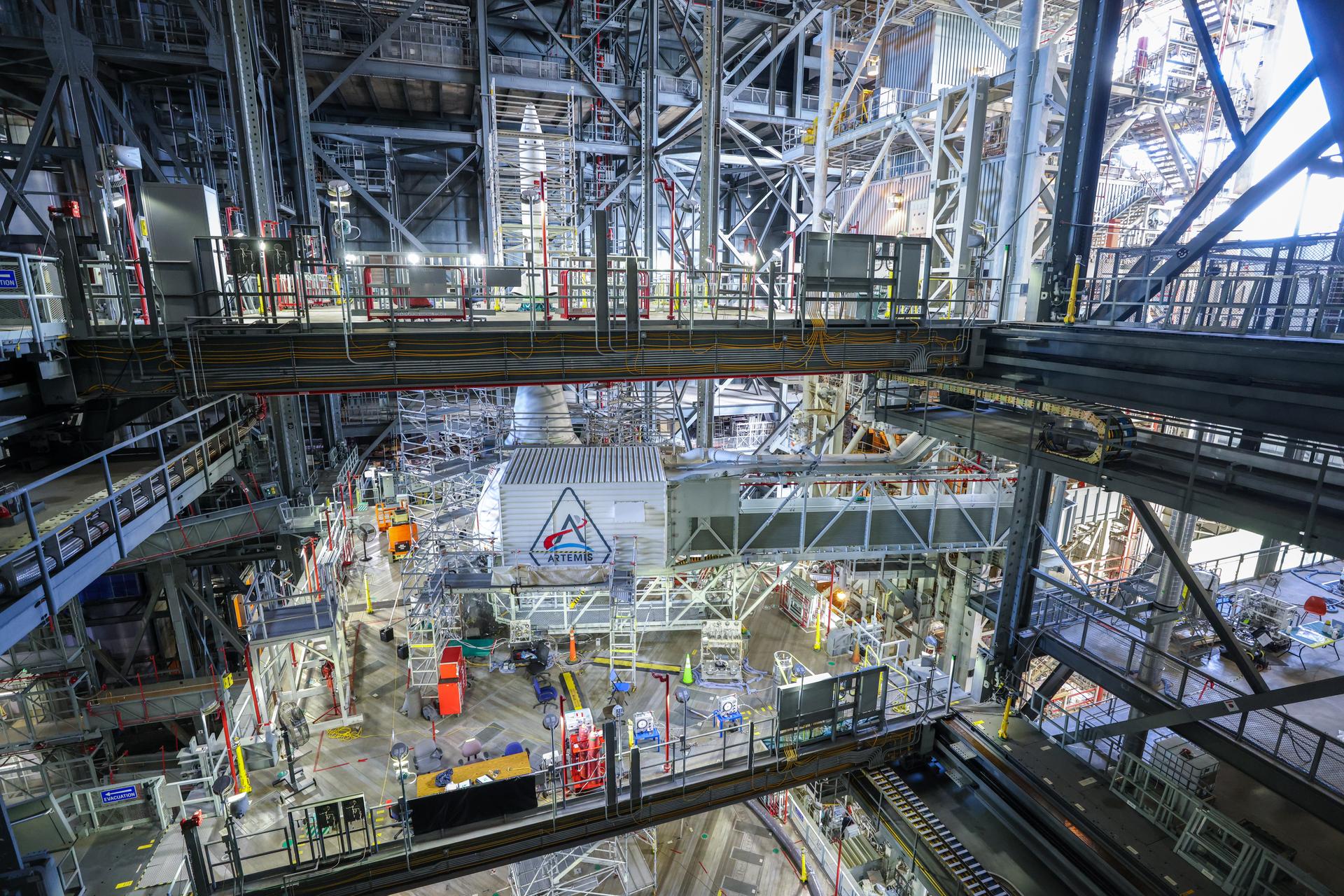
A freshly painted NASA’s Artemis logo is unveiled on the White Room connected to the crew access arm and mobile launcher inside the Vehicle Assembly Building at NASA’s Kennedy Space Center in Florida on Thursday, Dec. 4, 2025. The White Room is the area where the Artemis II crew Reid Wiseman, Victor Glover, Christina Koch, and CSA (Canadian Space Agency) astronaut Jeremy Hansen will enter the Orion spacecraft ahead of launch from Launch Complex 39B at NASA Kennedy in early 2026.
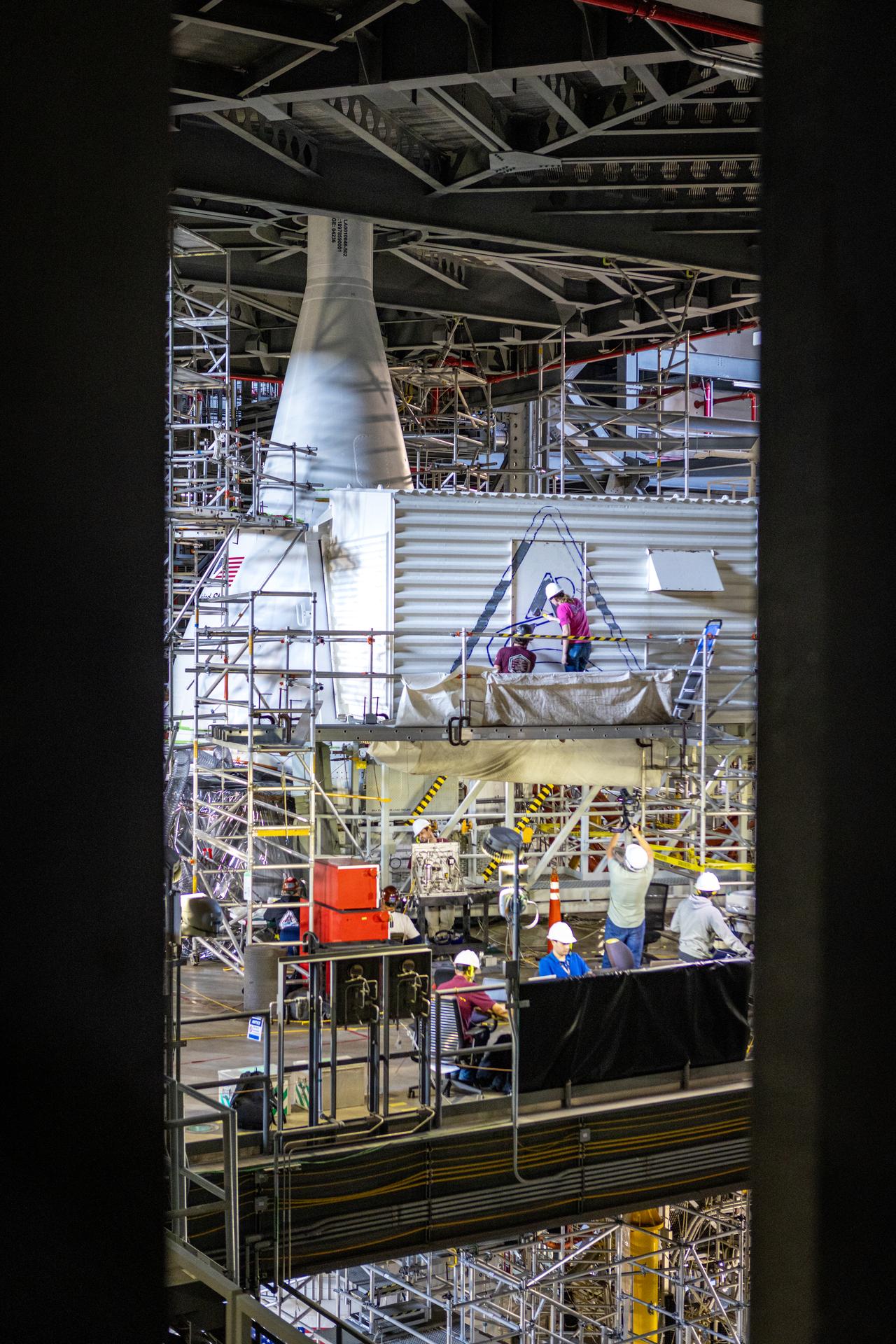
From left, Sean McCrary and Katie Mortensen, mechanical engineering technicians, paint NASA’s Artemis logo on the White Room connected to the crew access arm and mobile launcher inside the Vehicle Assembly Building at NASA’s Kennedy Space Center in Florida on Thursday, Dec. 4, 2025. The White Room is the area where the Artemis II crew Reid Wiseman, Victor Glover, Christina Koch, and CSA (Canadian Space Agency) astronaut Jeremy Hansen will enter the Orion spacecraft ahead of launch from Launch Complex 39B at NASA Kennedy in early 2026.
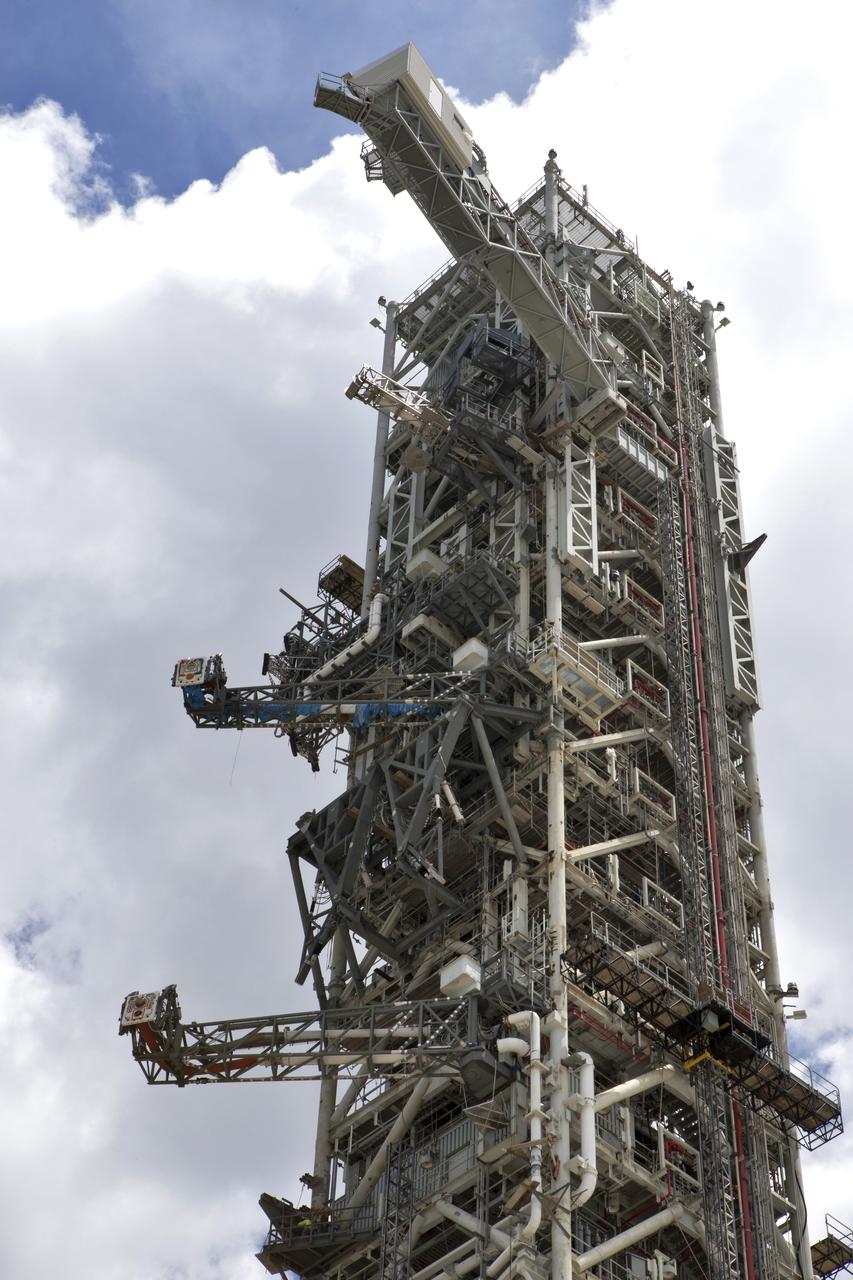
A swing test of the Orion crew access arm, topmost umbilical, is in progress on the mobile launcher at NASA's Kennedy Space Center in Florida, on Aug. 21, 2018. The crew access arm is located at about the 274-foot level on the mobile launcher tower. It will rotate from its retracted position and interface with the Orion crew hatch location to provide entry to the Orion crew module. Exploration Ground Systems extended all of the launch umbilicals on the ML tower to test their functionality before the mobile launcher, atop crawler-transporter 2, is moved to Launch Pad 39B and the Vehicle Assembly Building.
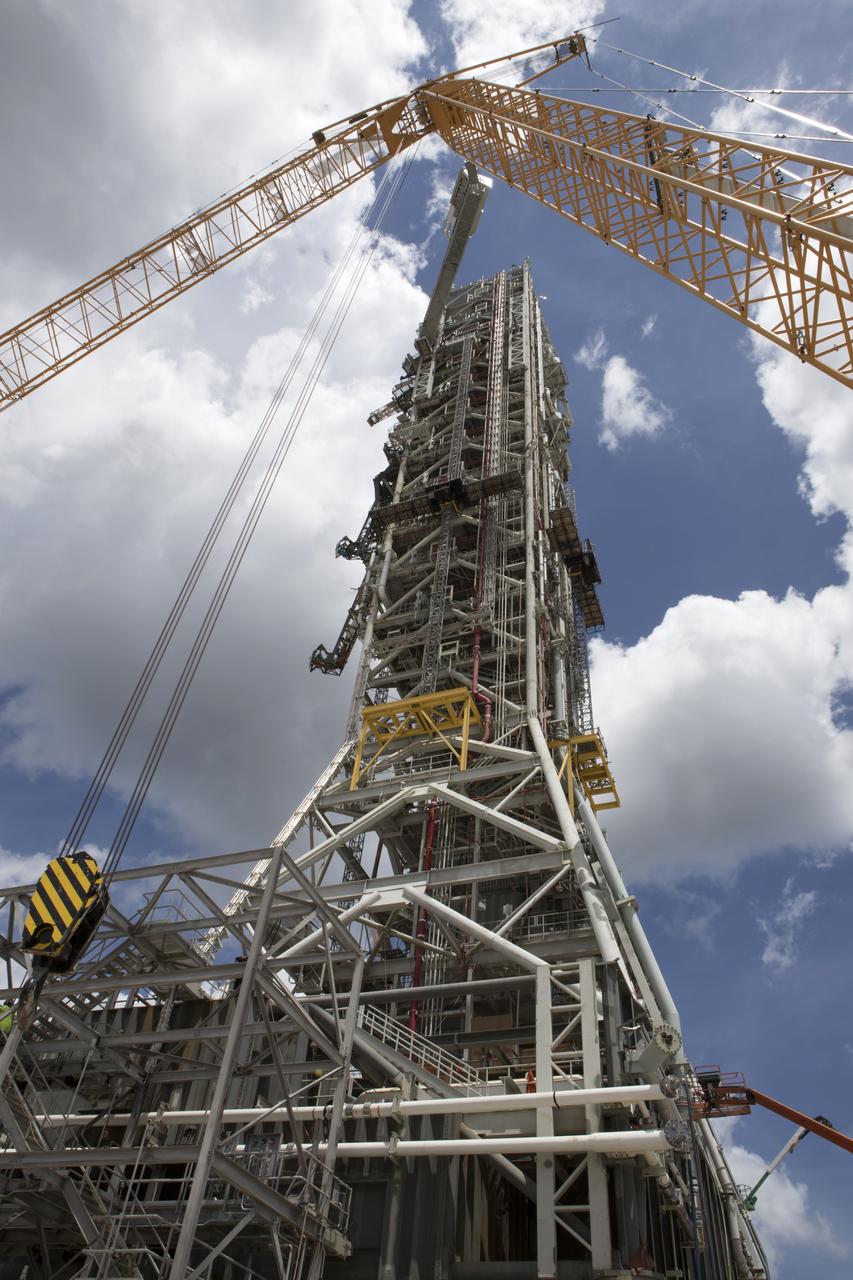
A swing test of the Orion crew access arm, topmost umbilical, is in progress on the mobile launcher at NASA's Kennedy Space Center in Florida, on Aug. 21, 2018. The crew access arm is located at about the 274-foot level on the mobile launcher tower. It will rotate from its retracted position and interface with the Orion crew hatch location to provide entry to the Orion crew module. Exploration Ground Systems extended all of the launch umbilicals on the ML tower to test their functionality before the mobile launcher, atop crawler-transporter 2, is moved to Launch Pad 39B and the Vehicle Assembly Building.
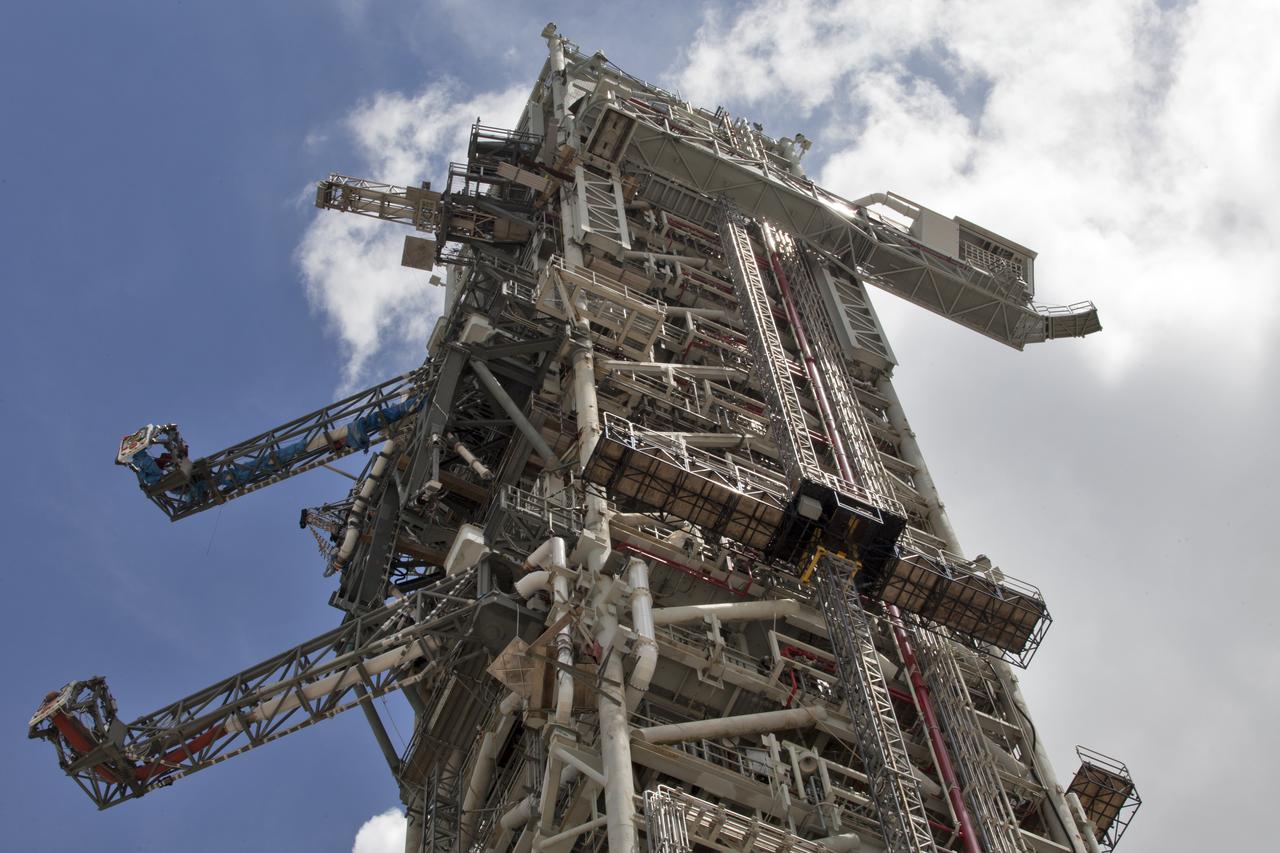
A swing test of the Orion crew access arm, top right, begins on the mobile launcher at NASA's Kennedy Space Center in Florida, on Aug. 21, 2018. The crew access arm is located at about the 274-foot level on the mobile launcher tower. It will rotate from its retracted position and interface with the Orion crew hatch location to provide entry to the Orion crew module. Exploration Ground Systems extended all of the launch umbilicals on the ML tower to test their functionality before the mobile launcher, atop crawler-transporter 2, is moved to Launch Pad 39B and the Vehicle Assembly Building.
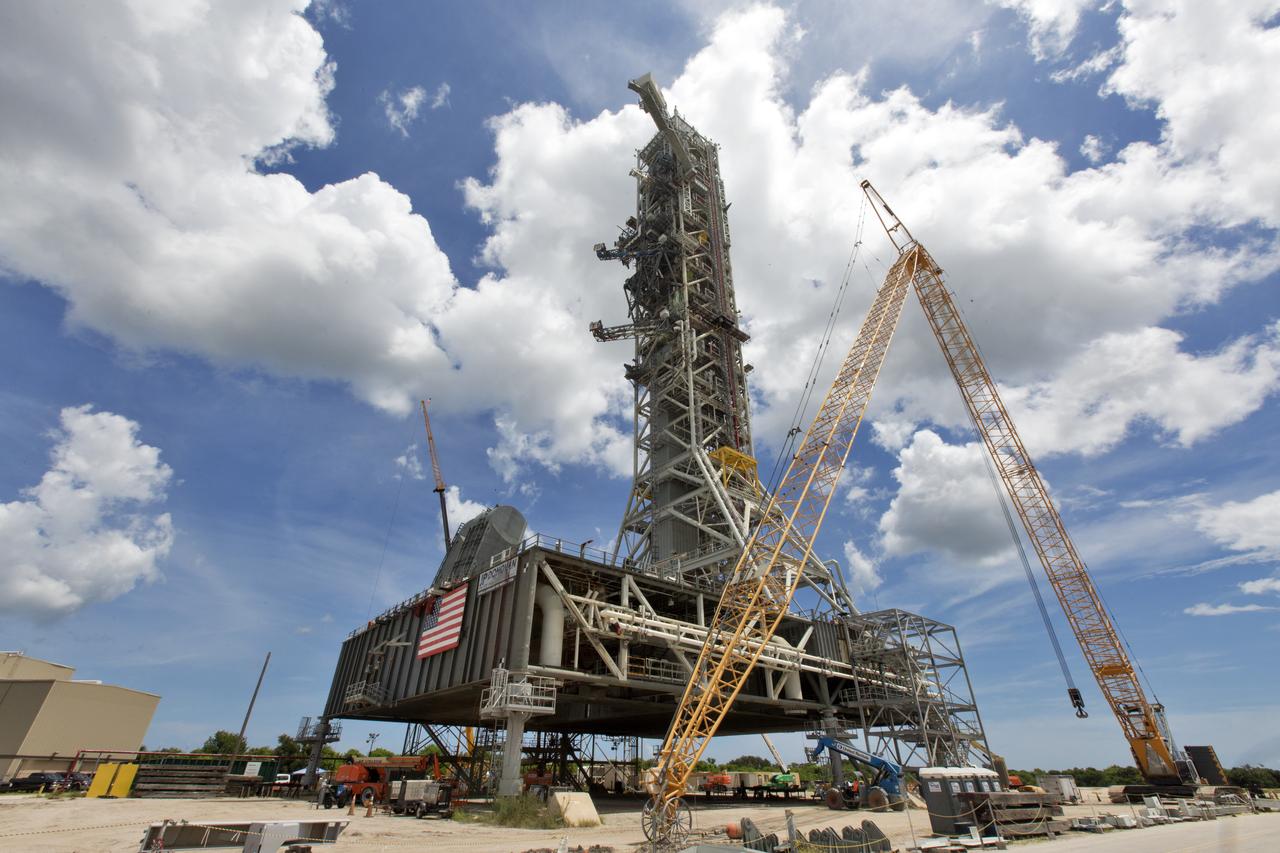
A swing test of the Orion crew access arm, topmost umbilical, is in progress on the mobile launcher at NASA's Kennedy Space Center in Florida, on Aug. 21, 2018. The crew access arm is located at about the 274-foot level on the mobile launcher tower. It will rotate from its retracted position and interface with the Orion crew hatch location to provide entry to the Orion crew module. Exploration Ground Systems extended all of the launch umbilicals on the ML tower to test their functionality before the mobile launcher, atop crawler-transporter 2, is moved to Launch Pad 39B and the Vehicle Assembly Building.
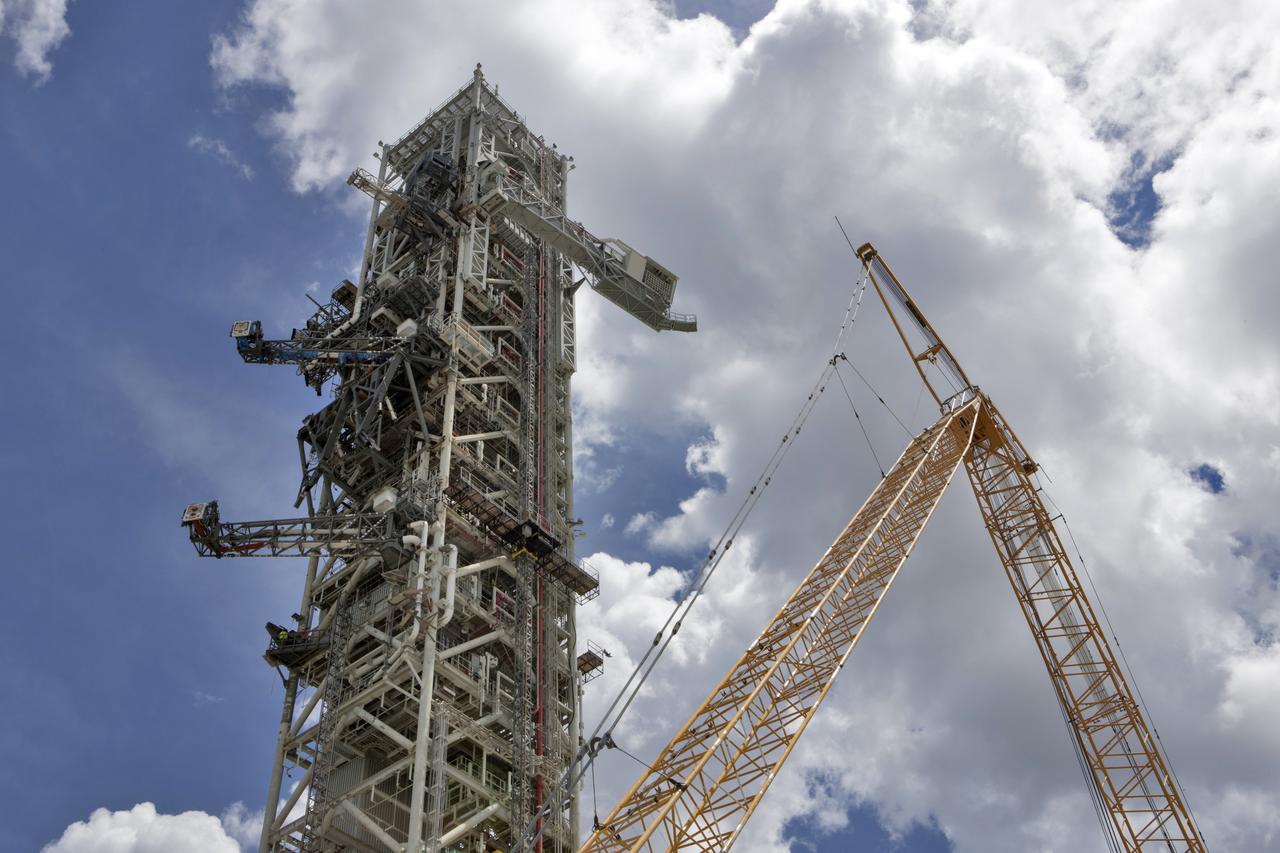
A swing test of the Orion crew access arm, top right, is in progress on the mobile launcher at NASA's Kennedy Space Center in Florida, on Aug. 21, 2018. The crew access arm is located at about the 274-foot level on the mobile launcher tower. It will rotate from its retracted position and interface with the Orion crew hatch location to provide entry to the Orion crew module. Exploration Ground Systems extended all of the launch umbilicals on the ML tower to test their functionality before the mobile launcher, atop crawler-transporter 2, is moved to Launch Pad 39B and the Vehicle Assembly Building.
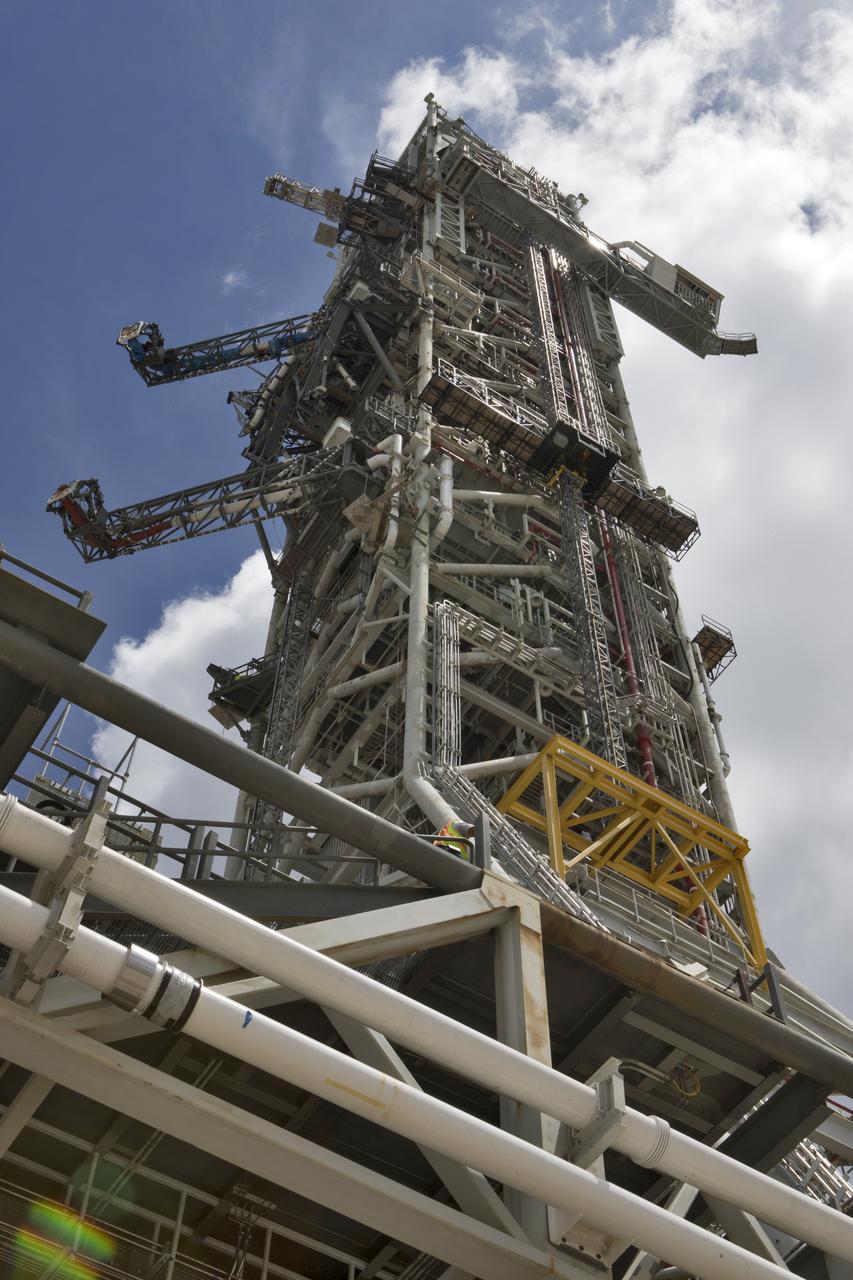
A swing test of the Orion crew access arm, top right, is in progress on the mobile launcher at NASA's Kennedy Space Center in Florida, on Aug. 21, 2018. The crew access arm is located at about the 274-foot level on the mobile launcher tower. It will rotate from its retracted position and interface with the Orion crew hatch location to provide entry to the Orion crew module. Exploration Ground Systems extended all of the launch umbilicals on the ML tower to test their functionality before the mobile launcher, atop crawler-transporter 2, is moved to Launch Pad 39B and the Vehicle Assembly Building.
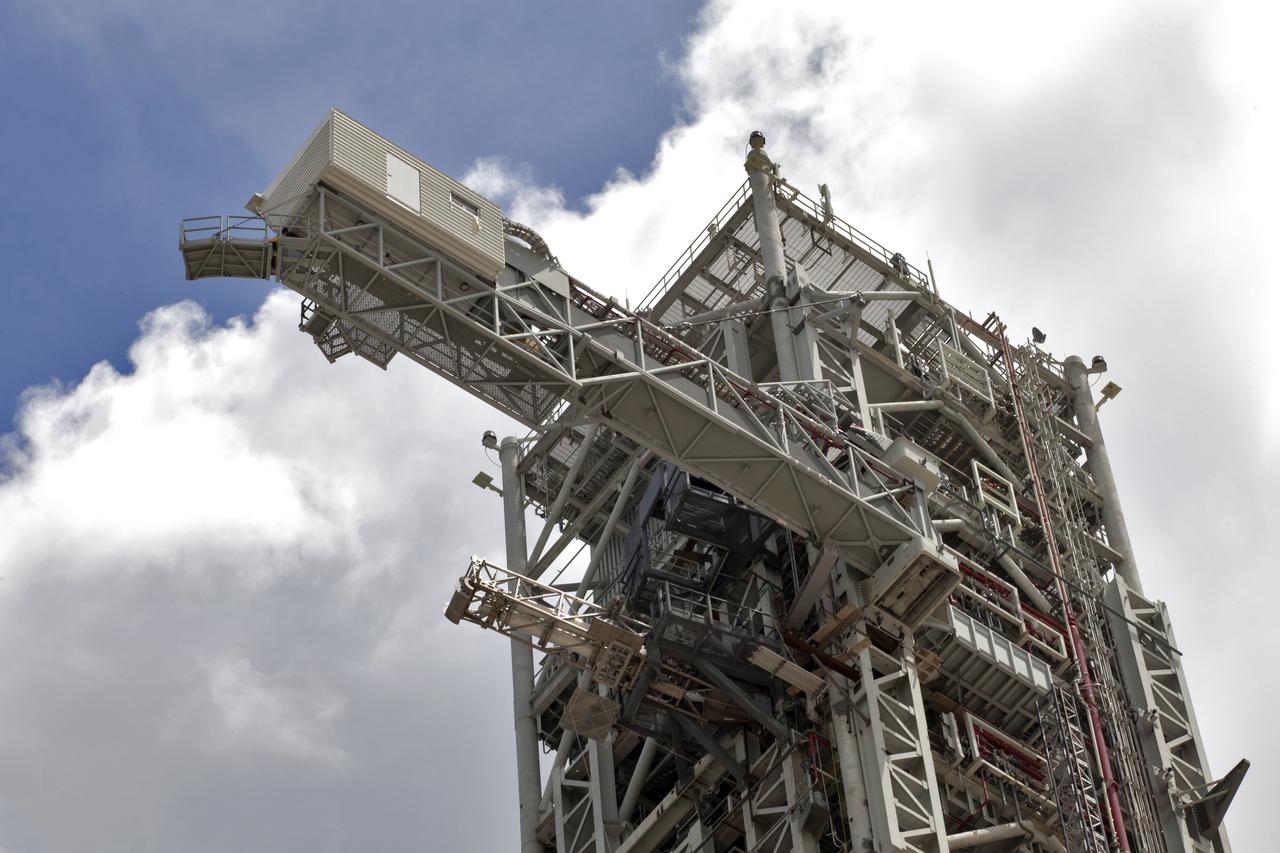
A swing test of the Orion crew access arm is in progress on the mobile launcher at NASA's Kennedy Space Center in Florida, on Aug. 21, 2018. The crew access arm is located at about the 274-foot level on the mobile launcher tower. It will rotate from its retracted position and interface with the Orion crew hatch location to provide entry to the Orion crew module. Exploration Ground Systems extended all of the launch umbilicals on the ML tower to test their functionality before the mobile launcher, atop crawler-transporter 2, is moved to Launch Pad 39B and the Vehicle Assembly Building.
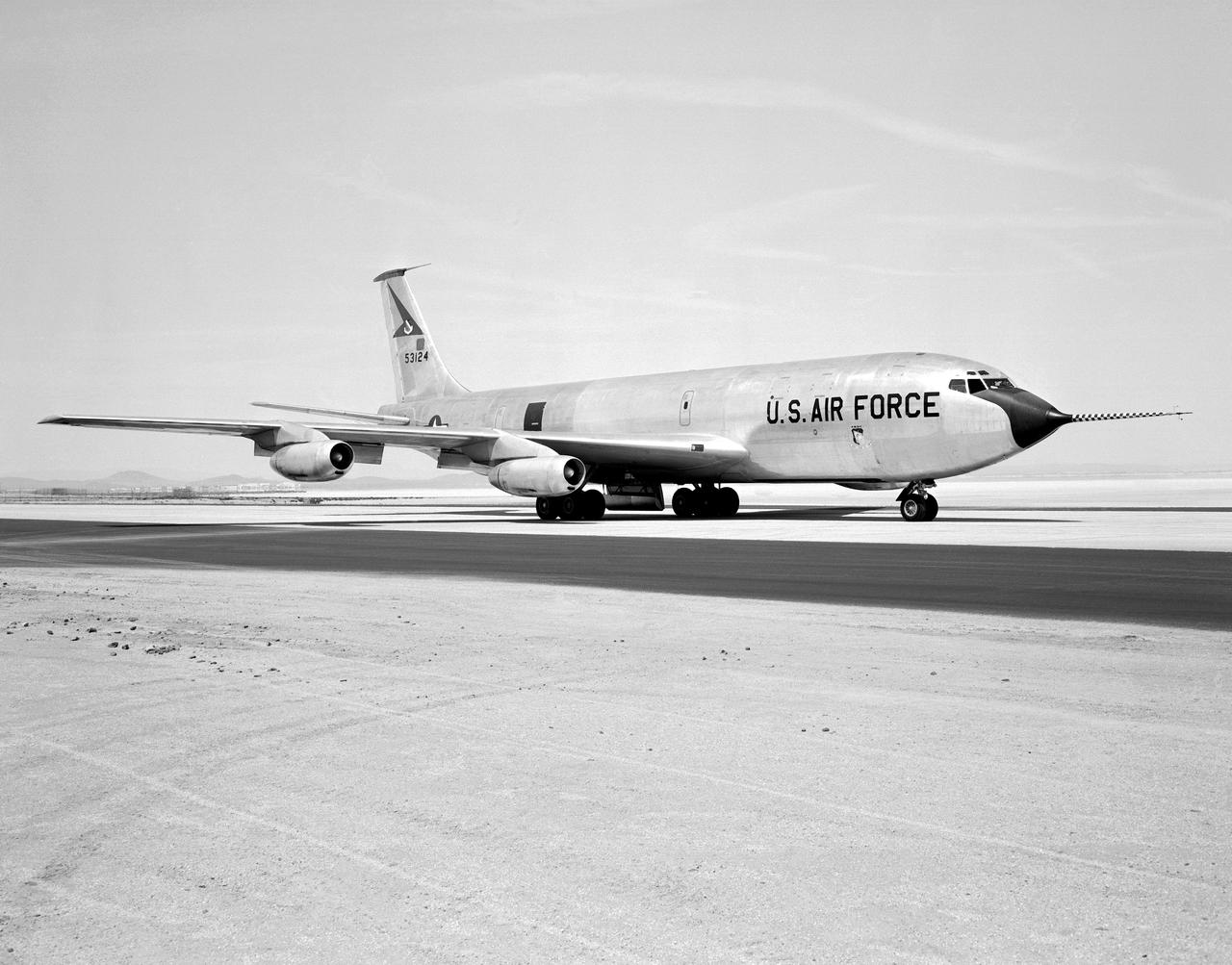
The Boeing KC-135 Stratotanker, besides being used extensively in its primary role as an inflight aircraft refueler, has assisted in several projects at the NASA Dryden Flight Research Center, Edwards, California. In 1957 and 1958, Dryden was asked by what was then the Civil Aeronautics Administration (later absorbed into the Federal Aviation Administration (FAA) in 1958) to help establish new approach procedure guidelines on cloud-ceiling and visibility minimums for Boeing's first jet airliner, the B-707. Dryden used a KC-135 (the military variant of the 707), seen here on the runway at Edwards Air Force Base, to aid the CAA in these tests. In 1979 and 1980, Dryden was again involved with general aviation research with the KC-135. This time, a special wingtip "winglet", developed by Richard Whitcomb of Langley Research Center, was tested on the jet aircraft. Winglets are small, nearly vertical fins installed on an airplane's wing tips to help produce a forward thrust in the vortices that typically swirl off the end of the wing, thereby reducing drag. This winglet idea was tested at the Dryden Flight Research Center on a KC-135A tanker loaned to NASA by the Air Force. The research showed that the winglets could increase an aircraft's range by as much as 7 percent at cruise speeds. The first application of NASA's winglet technology in industry was in general aviation business jets, but winglets are now being incorporated into most new commercial and military transport jets, including the Gulfstream III and IV business jets, the Boeing 747-400 and MD-11 airliners, and the C-17 military transport. In the 1980's, a KC-135 was used in support of the Space Shuttle program. Since the Shuttle was to be launched from Florida, researchers wanted to test the effect of rain on the sensitive thermal tiles. Tiles were mounted on special fixtures on an F-104 aircraft and a P-3 Orion. The F-104 was flown in actual rain conditions, and also behind the KC-135 spray tanker as it rel