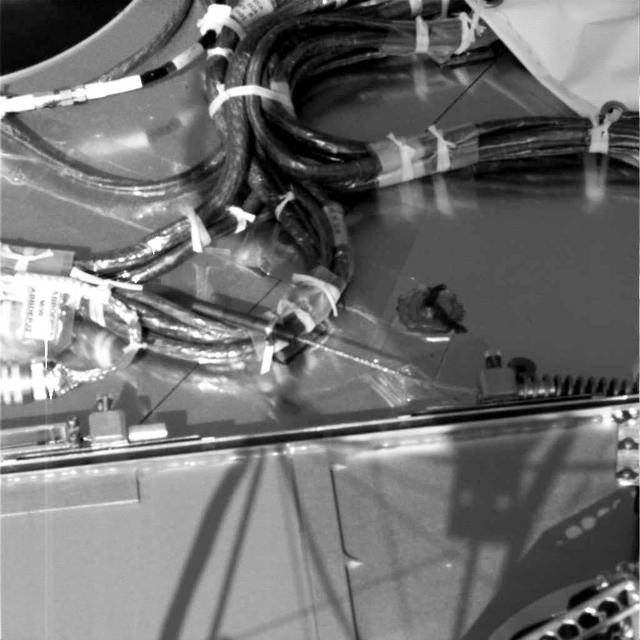
Robotic Arm Biobarrier Cable
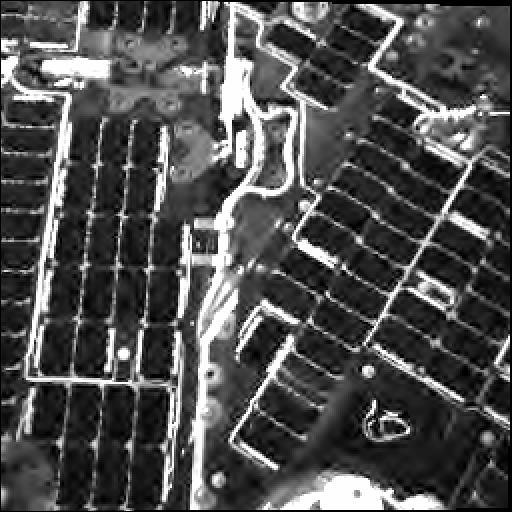
Cable Tie on the Spirit Rover Deck, Day 1
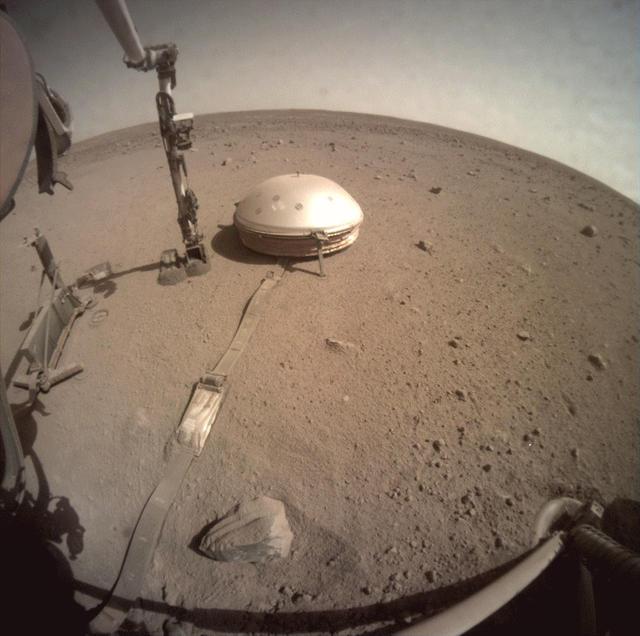
NASA's InSight lander used the scoop on its robotic arm to begin trickling soil over the cable connecting its seismometer to the spacecraft on March 14, 2021, the 816th Martian day, or sol of the mission. Scientists hope this make it easier to detect marsquakes by helping to insulate the cable from the wind and from the extreme temperature shifts that cause the cable to expand and contract. Animation available at https://photojournal.jpl.nasa.gov/catalog/PIA24450
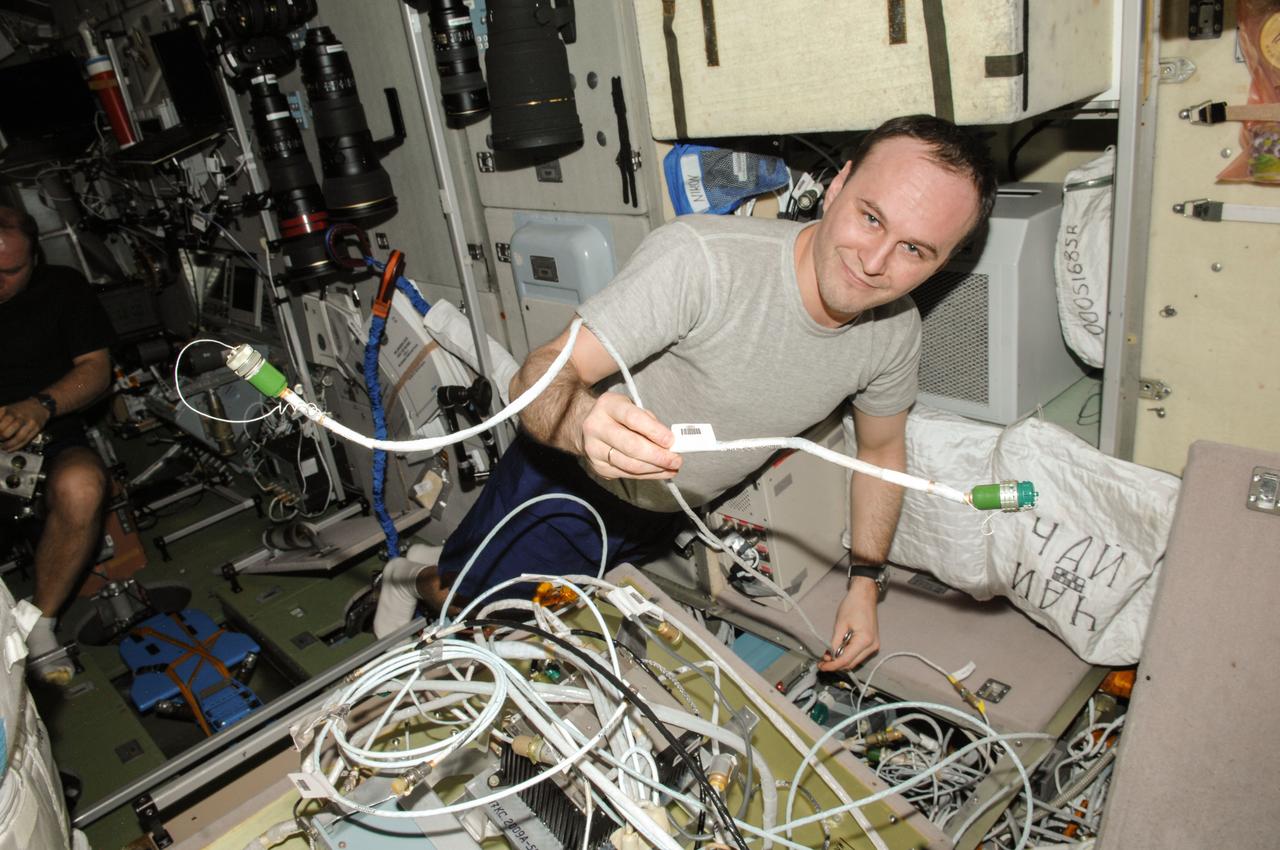
ISS038-E-051648 (20 Feb. 2014) --- Russian cosmonaut Sergey Ryazanskiy, Expedition 38 flight engineer, works with cables in the Zvezda Service Module of the International Space Station.
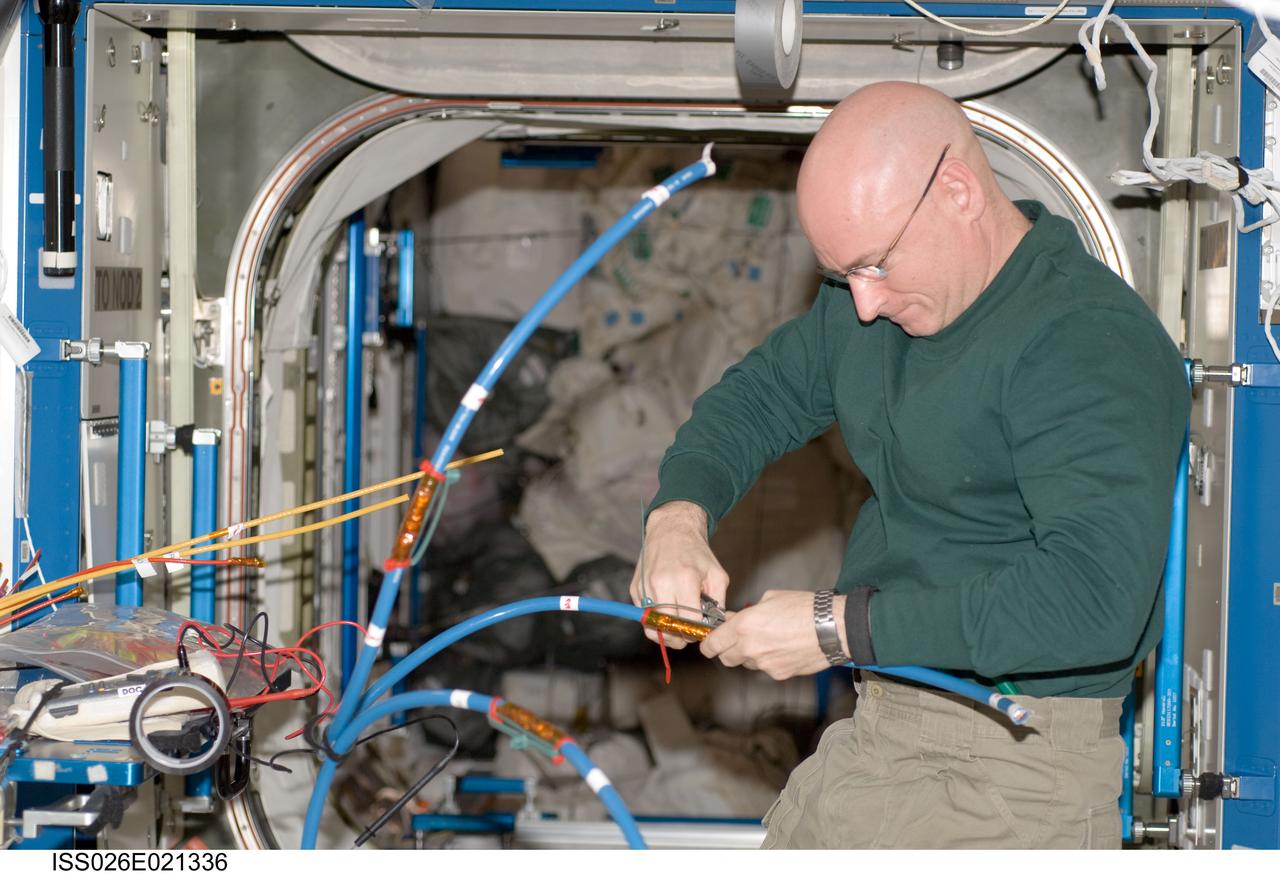
ISS026-E-021336 (13 Jan. 2011) --- NASA astronaut Scott Kelly, Expedition 26 commander, works with cables at the Maintenance Work Area in the Destiny laboratory of the International Space Station.
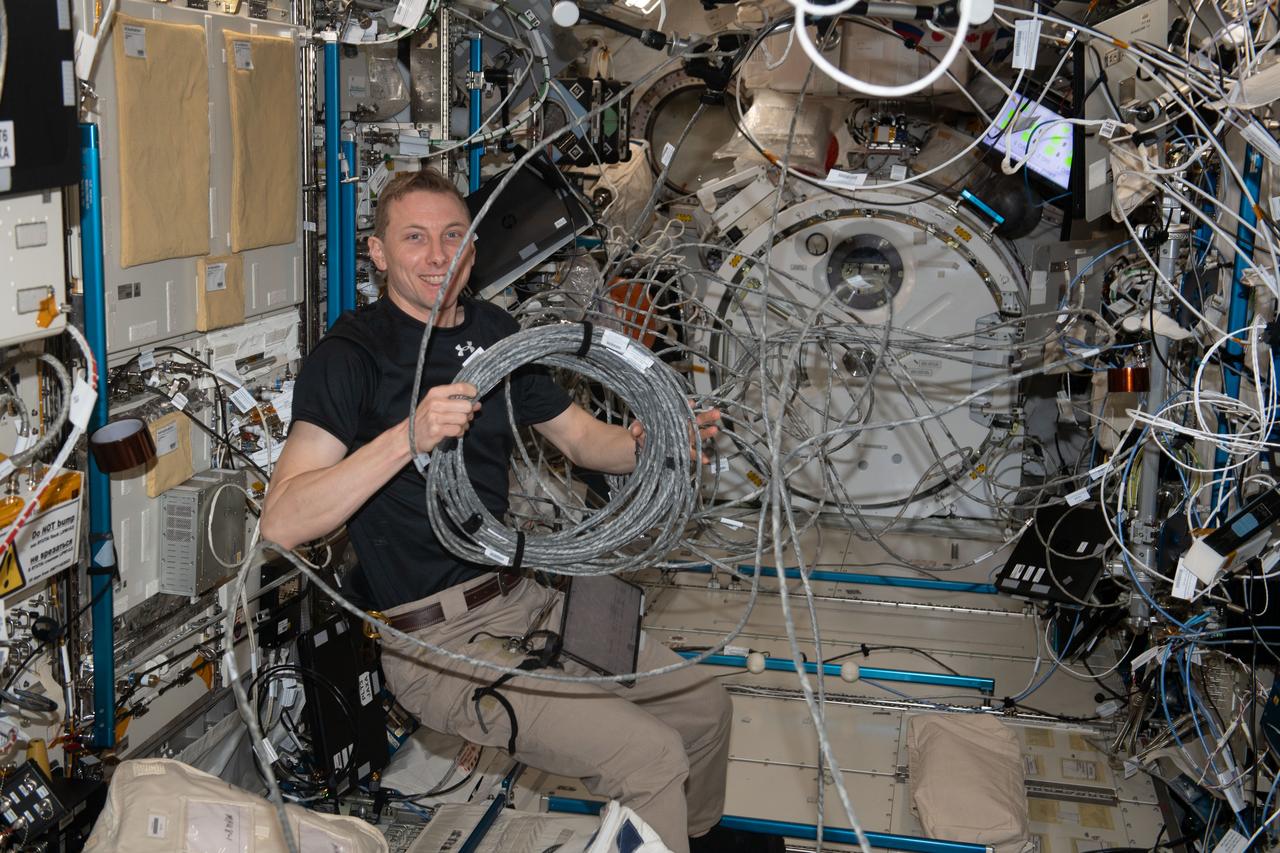
iss069e005419 (April 26, 2023) --- NASA astronaut and Expedition 69 Flight Engineer Woody Hoburg reconfigures video cables belonging to the Kibo laboratory module's Cell Biology Experiment Facility, a research incubator that generates artificial gravity.
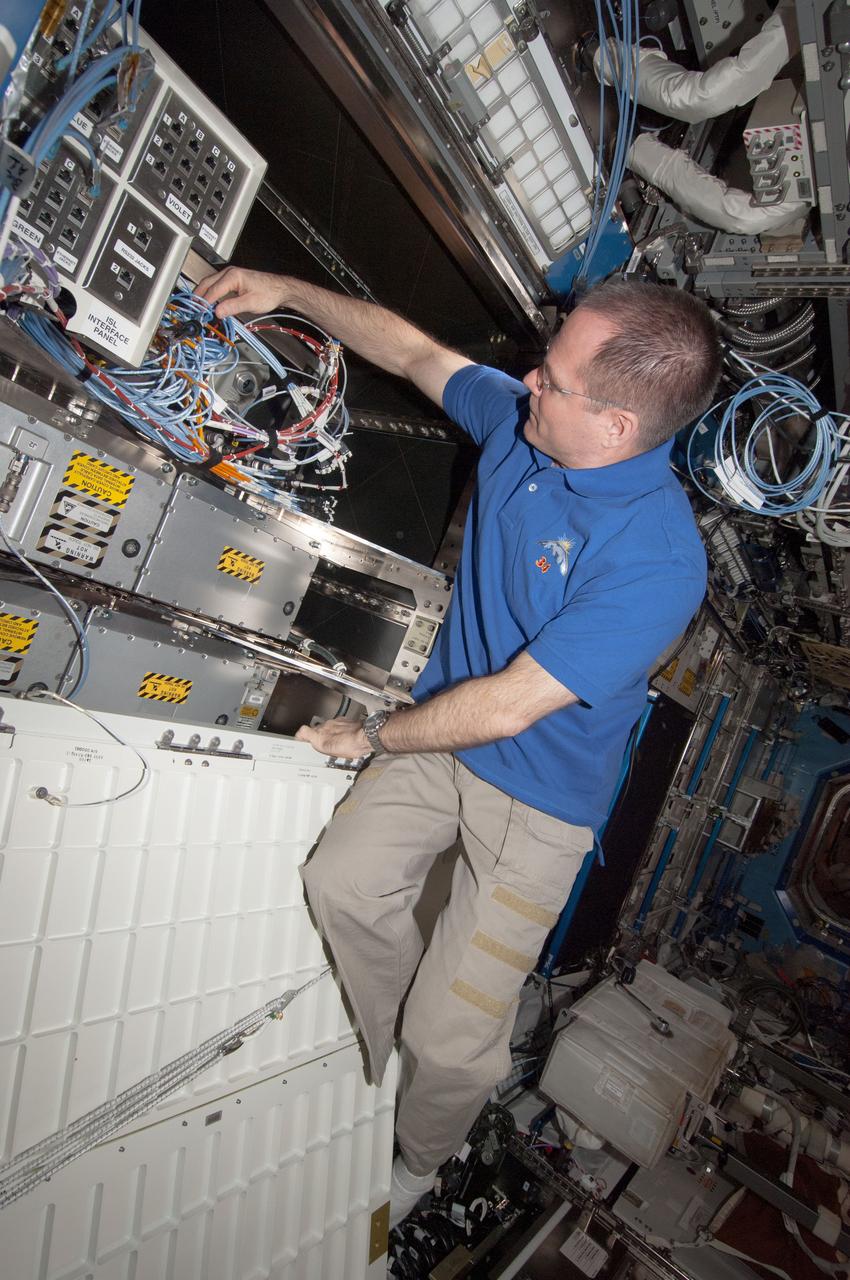
ISS034-E-040209 (5 Feb. 2013) --- NASA astronaut Kevin Ford, Expedition 34 commander, reconfigures cables for the Joint Station Local Area Network in the Destiny laboratory of the International Space Station. The cable work is in preparation for the installation of a new KU communications unit inside Destiny.
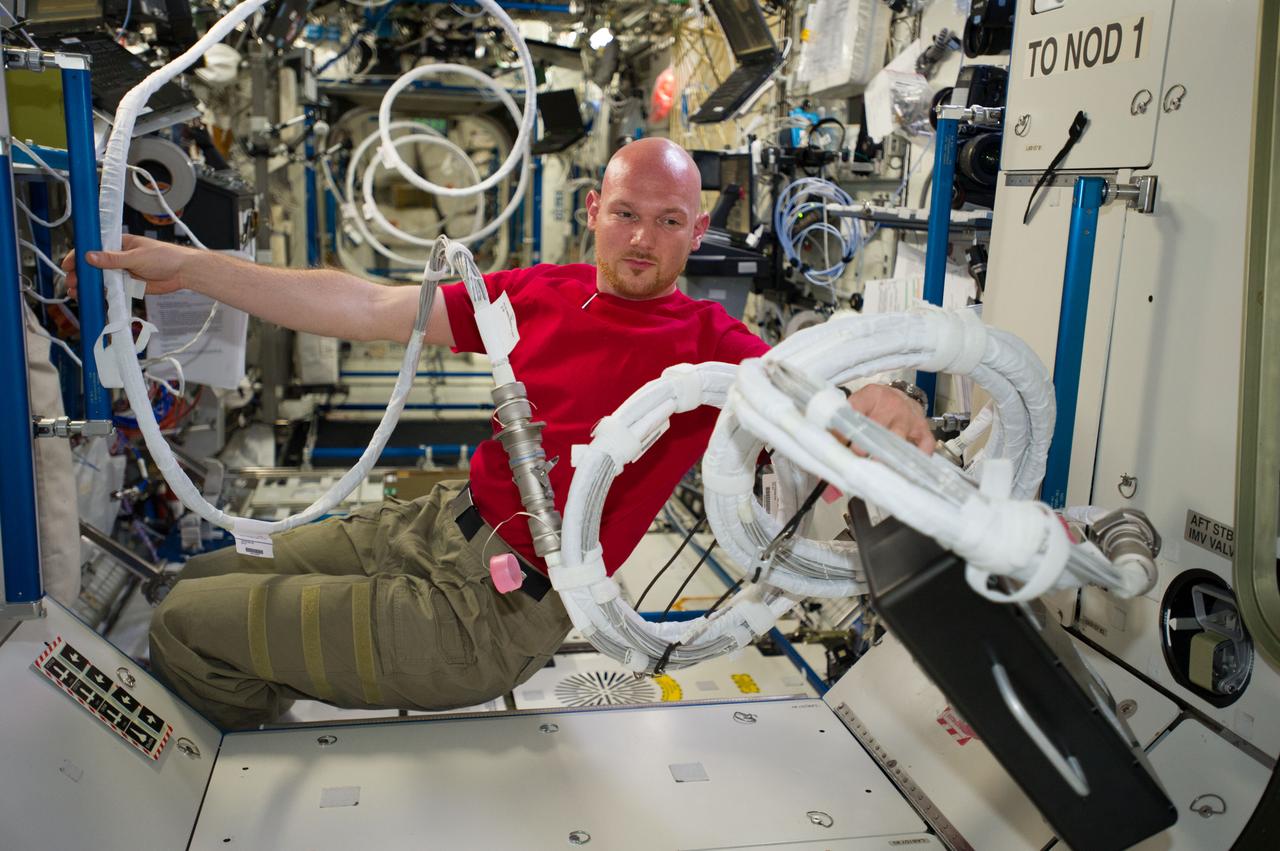
ISS040-E-063760 (15 July 2014) --- European Space Agency astronaut Alexander Gerst, Expedition 40 flight engineer, works with power and data cables in the vestibule between the Destiny laboratory and Unity node of the International Space Station.
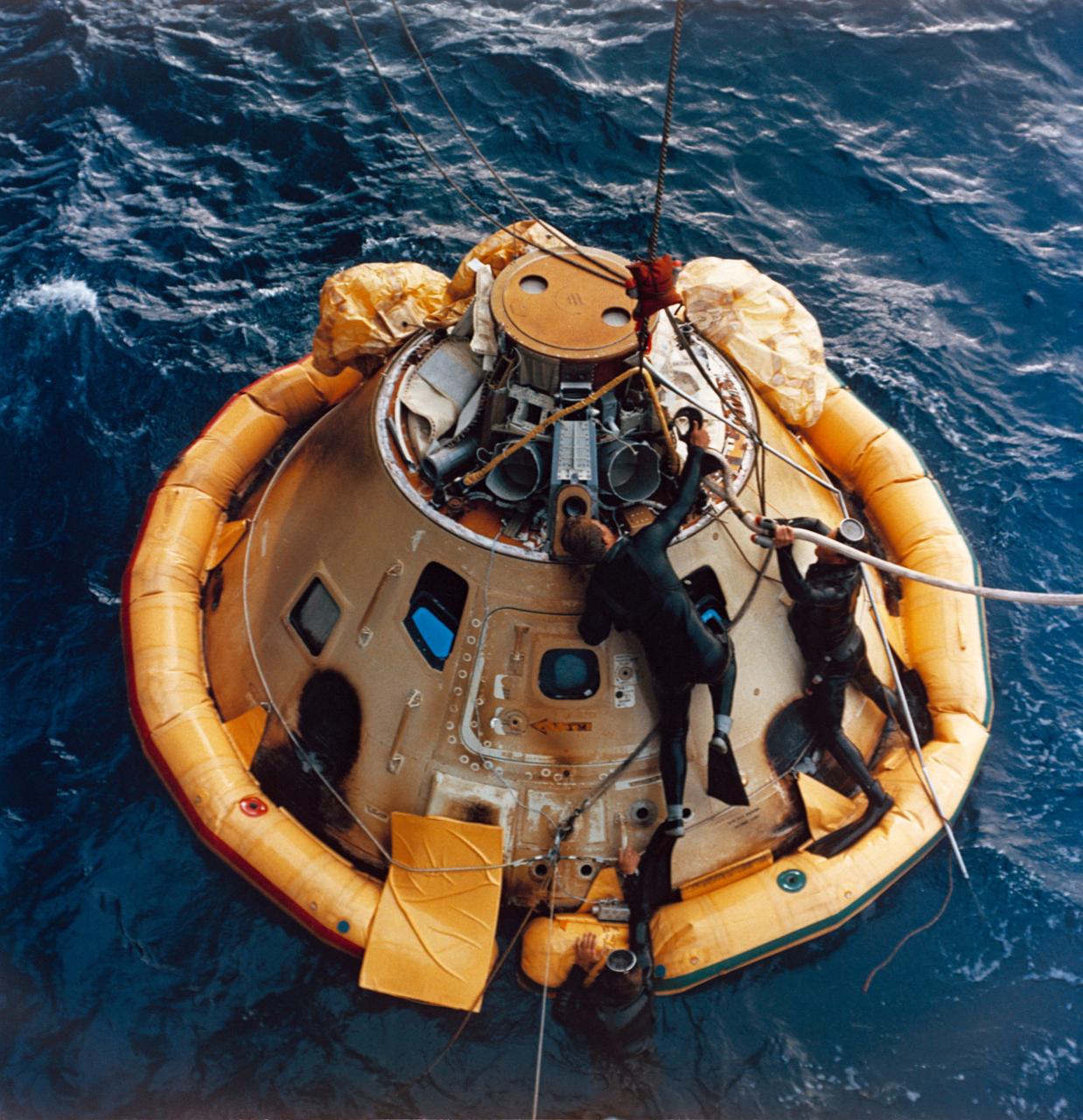
S68-27884 (4 April 1968) --- A U. S. Navy frogman team prepares the Apollo Spacecraft 020 Command Module (CM) for hoisting aboard the USS Okinawa. The USS Okinawa was the prime recovery ship for the Apollo 6 (Spacecraft 020/Saturn 502) unmanned space mission. Splashdown occurred at 4:58:45 p.m. (EST), April 4, 1968, at 375 nautical miles north of Honolulu, Hawaii.

ISS002-E-7226 (13 May 2001) --- James S. Voss, Expedition Two flight engineer, works with cables under a panel in the Zvezda Service Module.
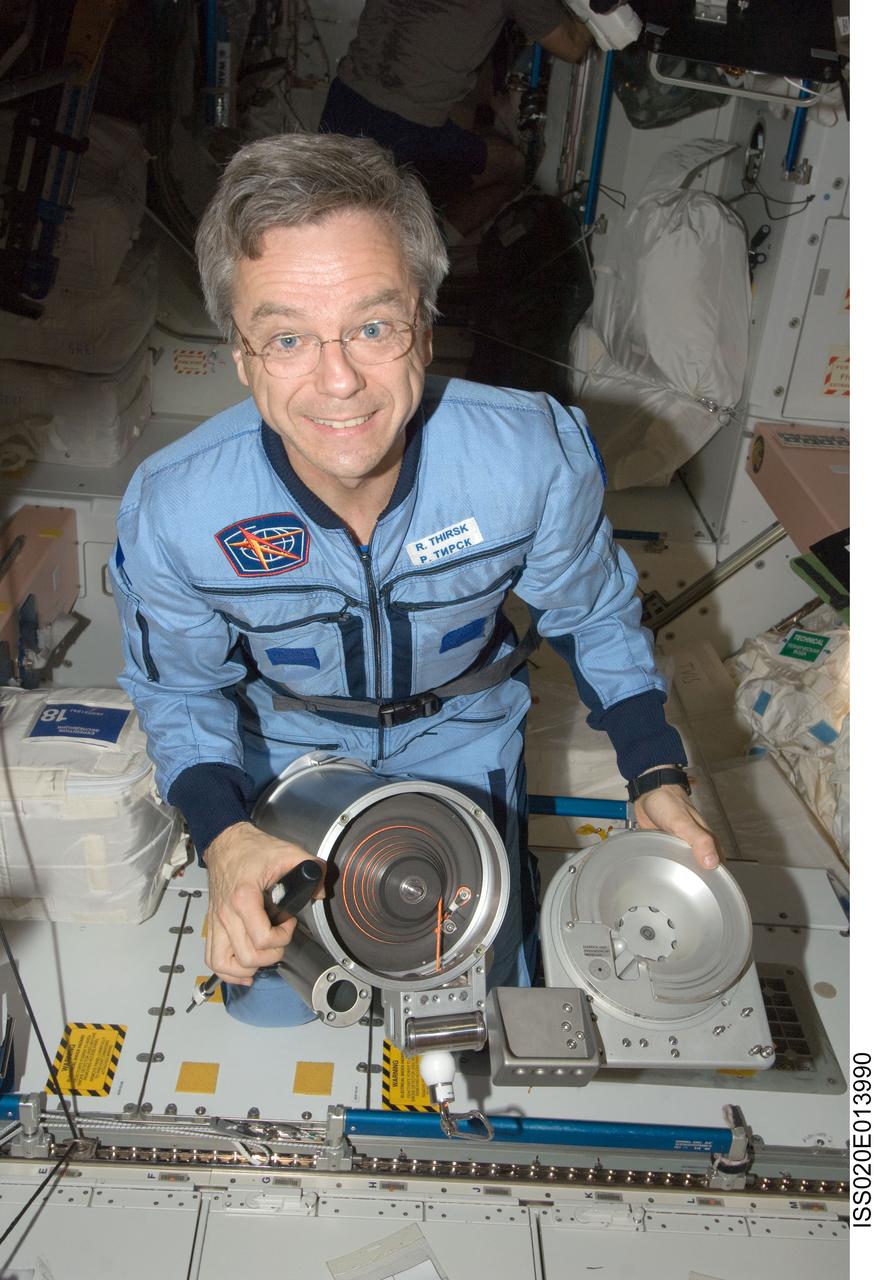
ISS020-E-013990 (23 June 2009) --- Canadian Space Agency astronaut Robert Thirsk, Expedition 20 flight engineer, performs in-flight maintenance on a cable cartridge for the advanced Resistive Exercise Device (aRED) in the Unity node of the International Space Station.
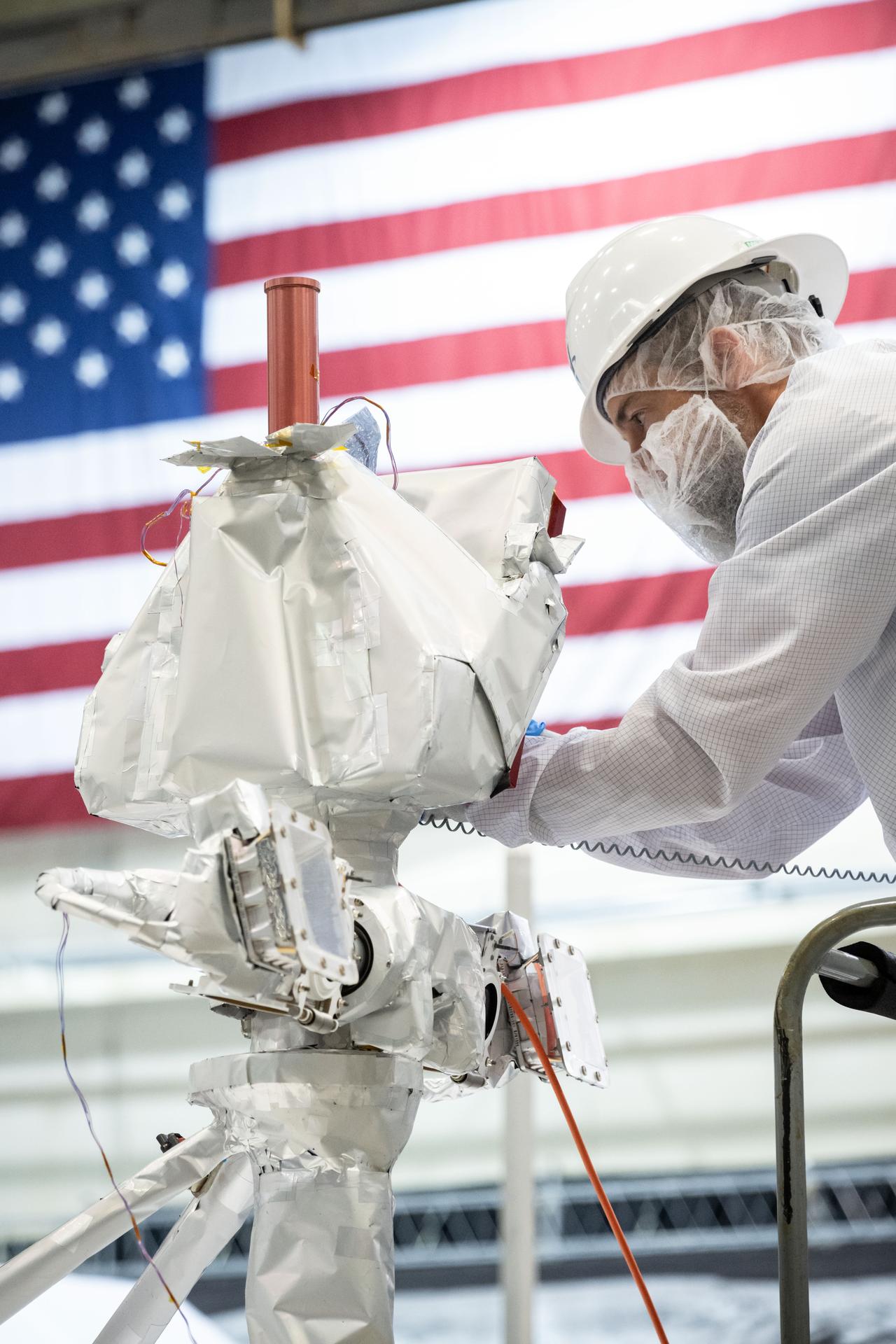
jsc2025e064263 - VIPER Vehicle Manager Justin Ridley connects a cable to the VIPER high gain antenna while preparing the rover for long-term storage testing in the high bay of Building 9S at Johnson Space Center. Photographer: Helen Arase Vargas – Johnson Space Center
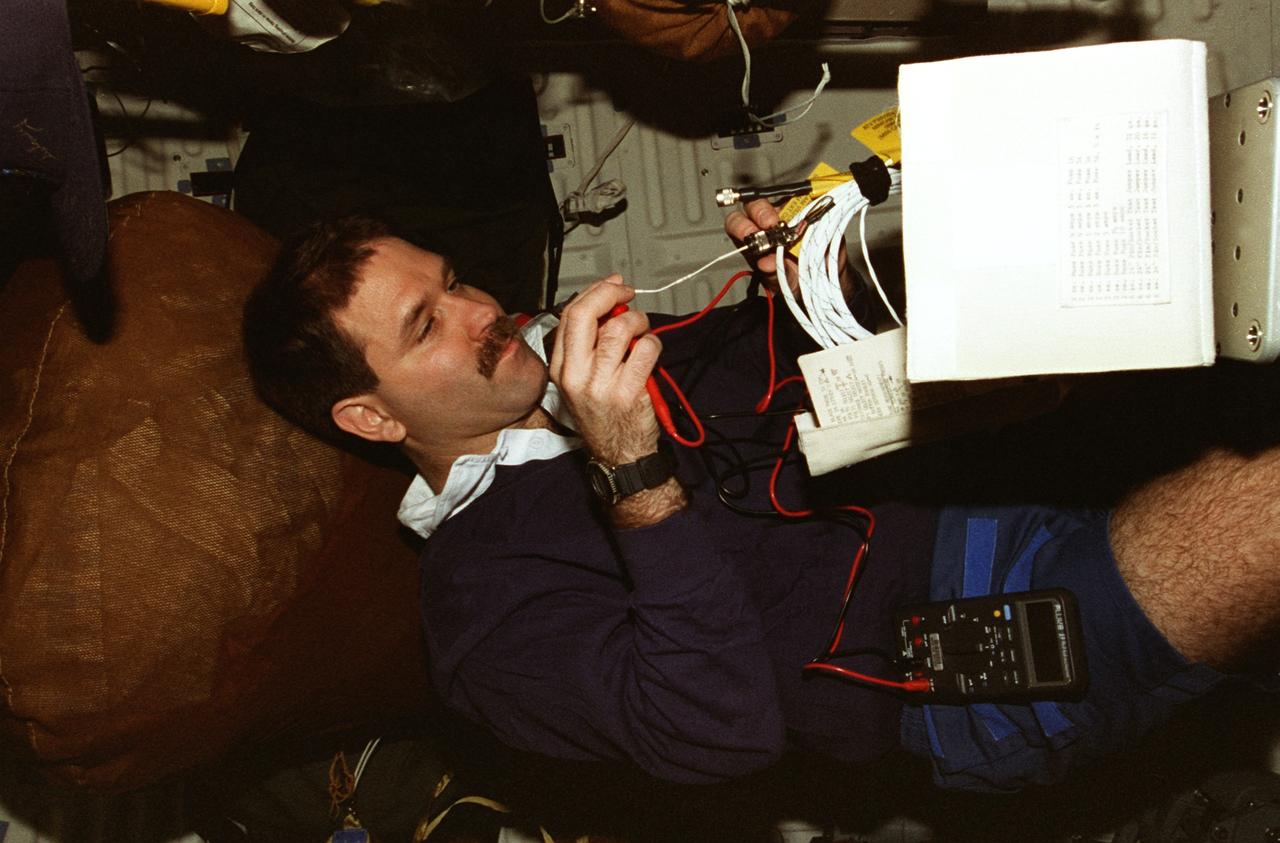
STS081-360-003 (12-22 Jan. 1997) --- Astronaut John M. Grunsfeld performs an inflight maintenance (IFM) task to re-activate power cables connected to experiments in the Spacehab Double Module (DM), onboard the Space Shuttle Atlantis.
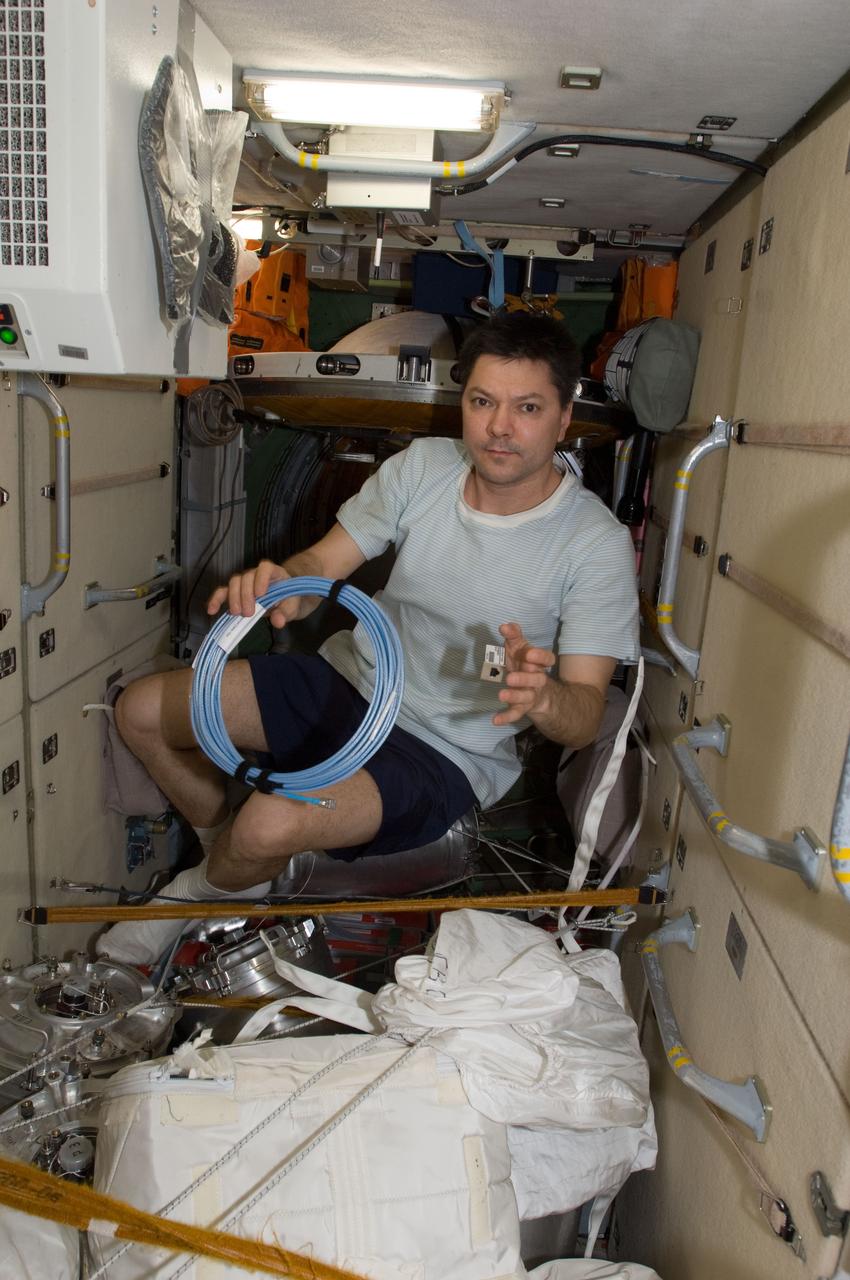
ISS030-E-047172 (23 Jan. 2012) --- In the International Space Station?s Zarya module, Russian cosmonaut Oleg Kononenko, Expedition 30 flight engineer, works with cables to set up a video downlink test via Ku-band in preparation for the docking of the unpiloted ISS Progress 46 supply vehicle, scheduled to dock on Jan. 27.
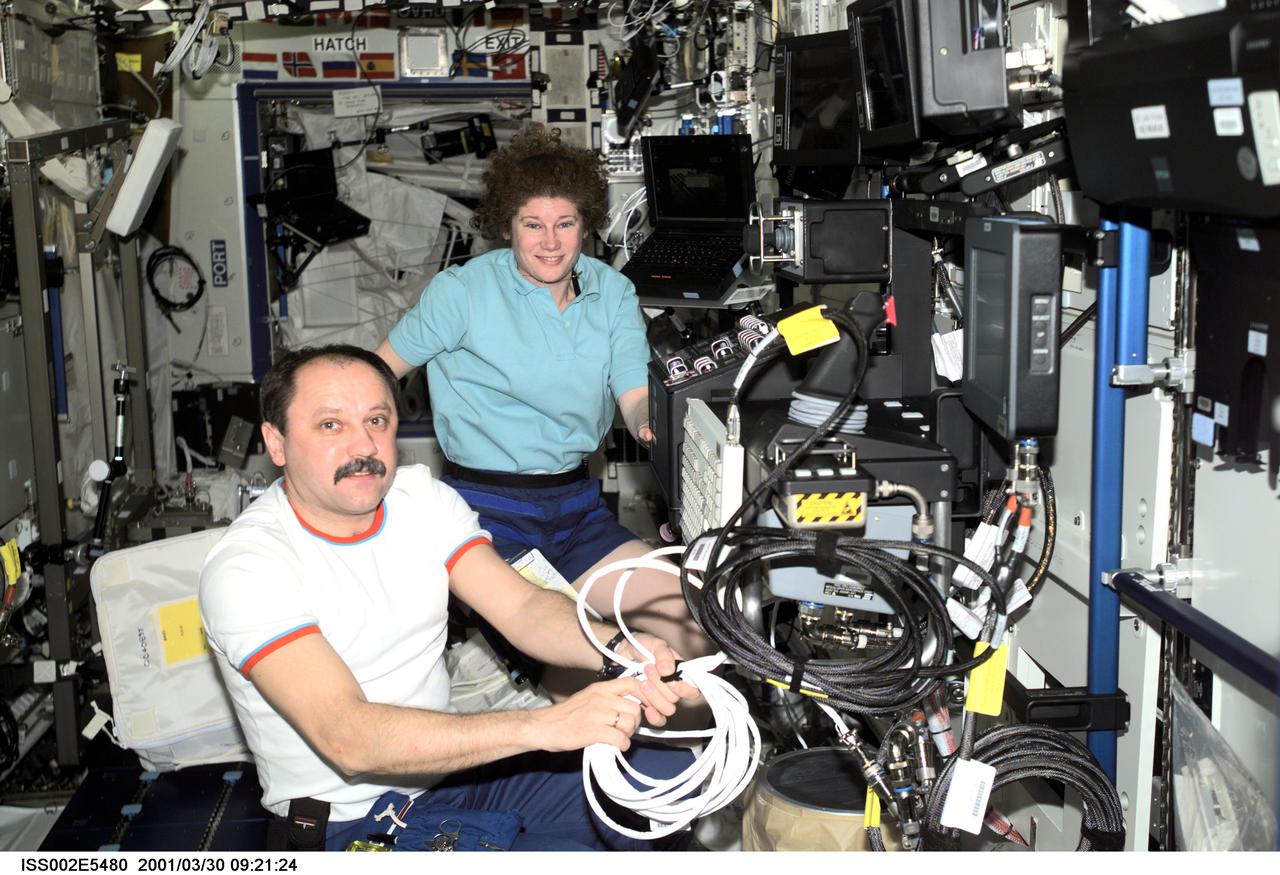
ISS002E5480 (30 March 2001) --- Cosmonaut Yury V. Usachev (foreground), Expedition Two mission commander, and astronaut Susan J. Helms, Expedition Two flight engineer, install cables for the Space Station Remote Manipulator System (SSRMS) or Canadarm2 control panel in preparation for the delivery of the Canadarm2 by the STS-100 crew in April. This image was recorded with a digital still camera.
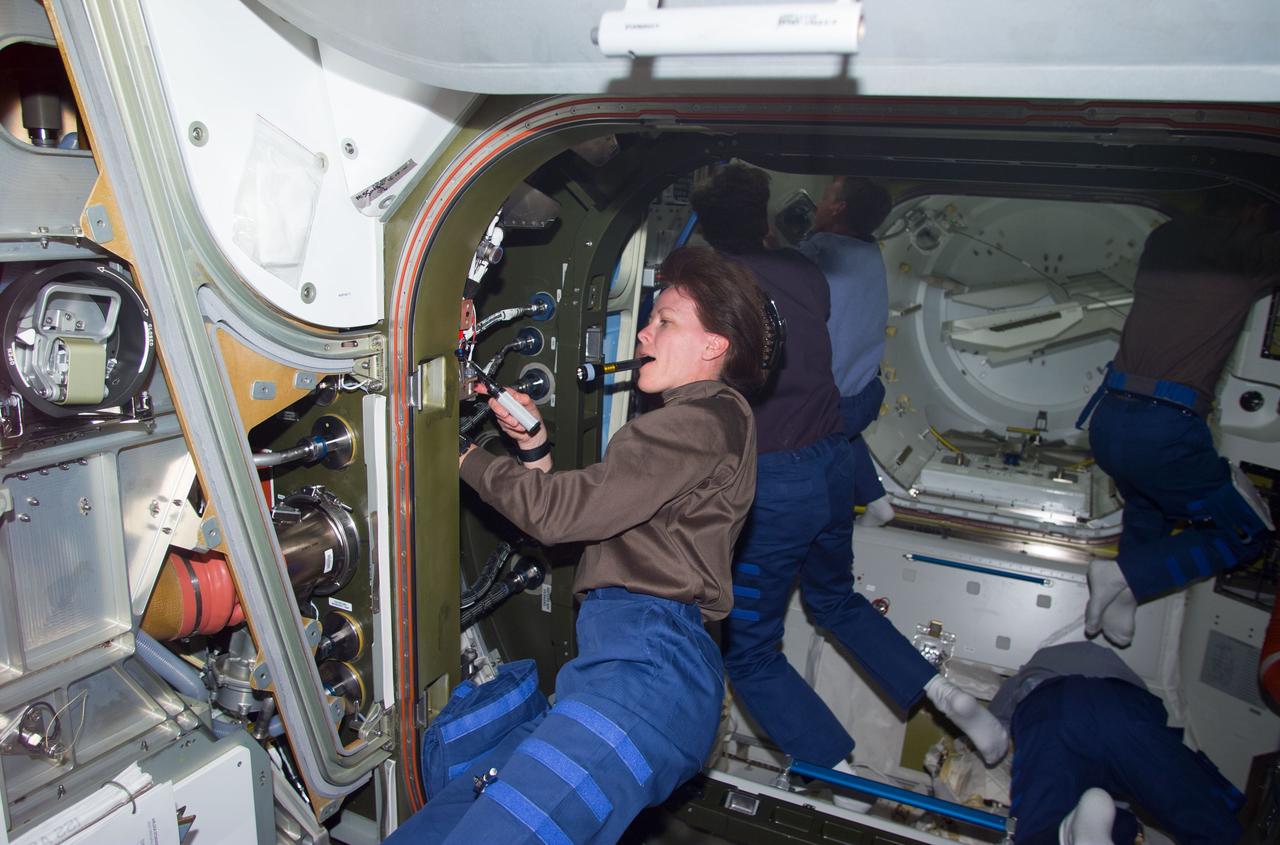
S104-E-5104 (16 July 2001) --- Janet L. Kavandi, STS-104 mission specialist, connects cables and hoses from the newly installed Quest Airlock to Unity Node 1. Other STS-104 and Expedition Two crewmembers are visible in the background working in the Airlock.
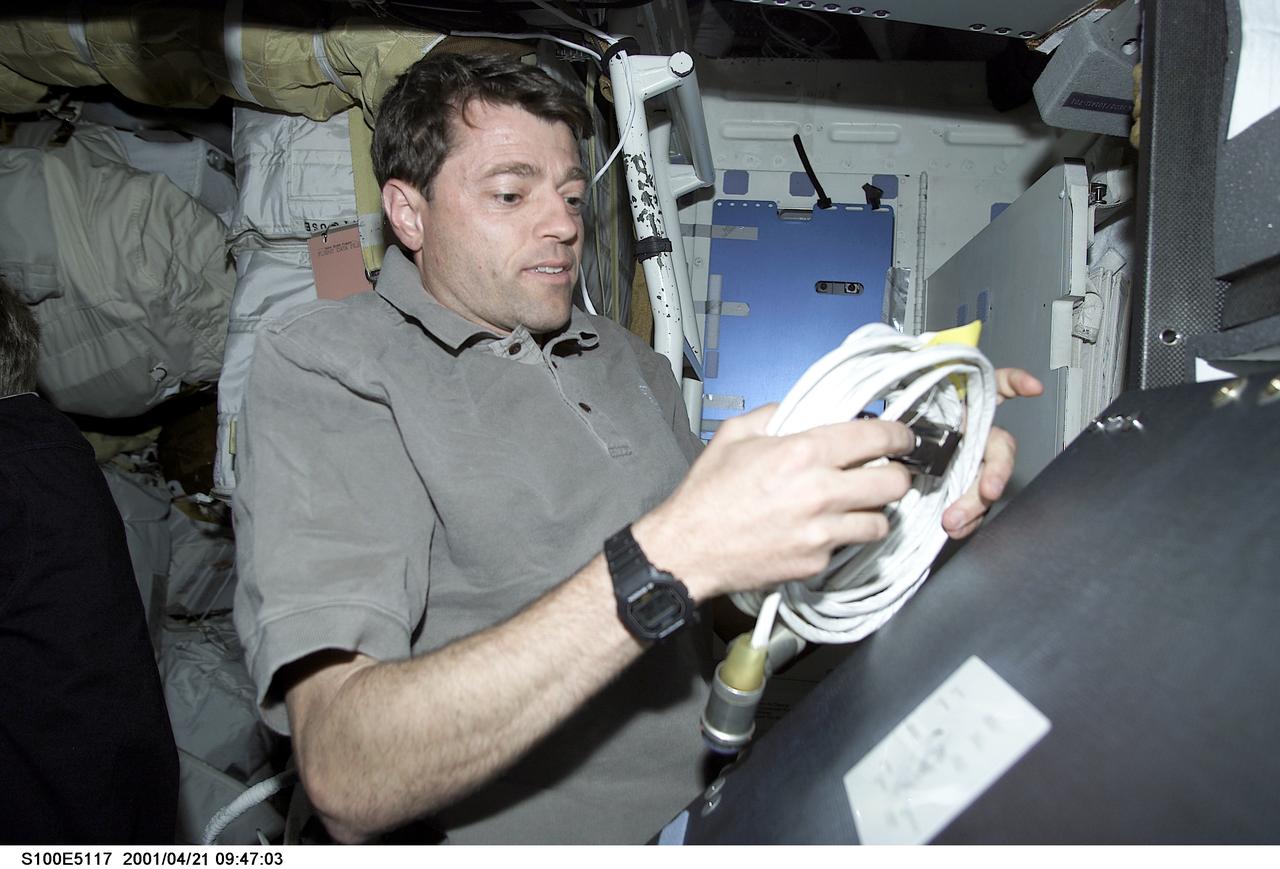
S100-E-5117 (21 April 2001) --- Astronaut Jeffrey S. Ashby, pilot, unpacks some cable on the middeck of the Space Shuttle Endeavour as the seven-member STS-100 crew busily prepares for its fastly-approaching rendezvous with the International Space Station (ISS). The image was recorded with a digital still camera.
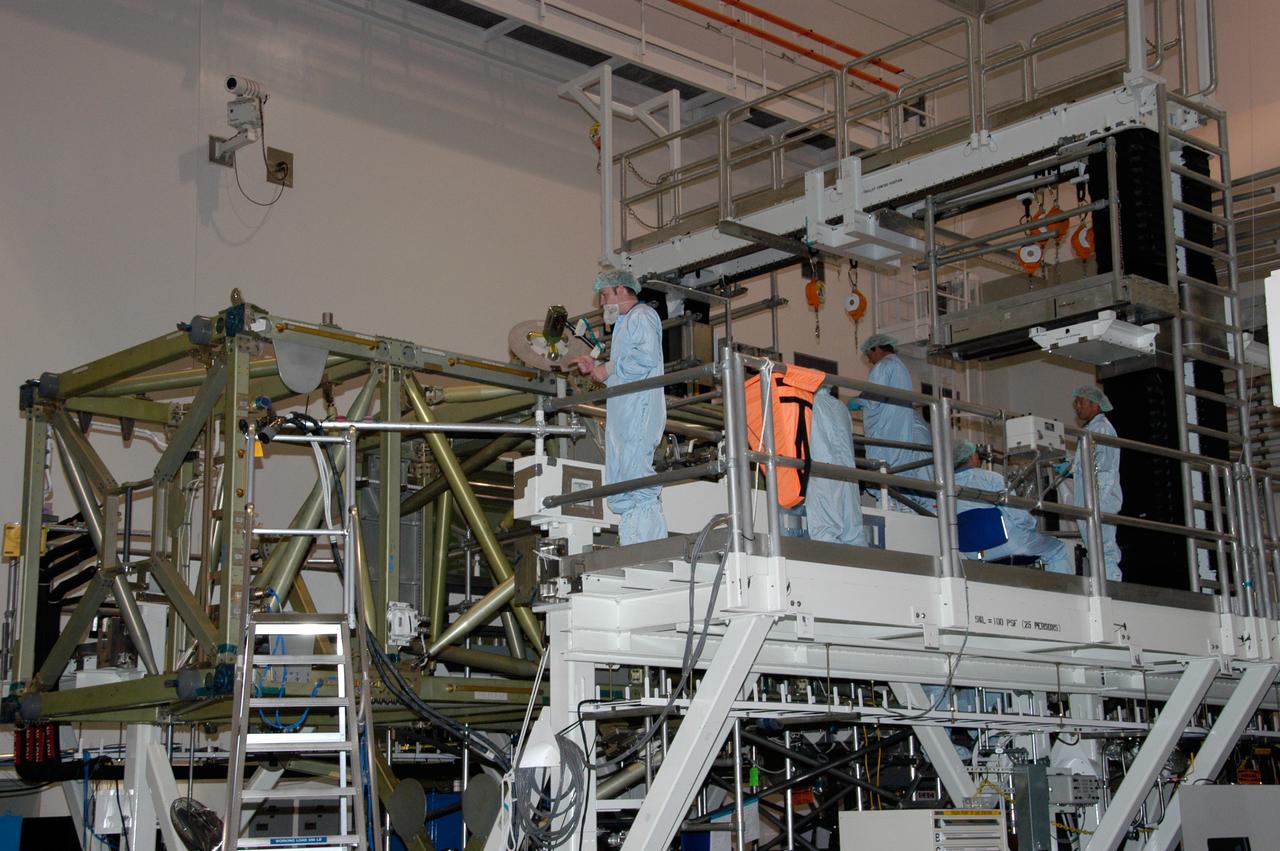
In the Space Station Processing Facility at NASA's Kennedy Space Center, workers prepare to connect cables that will recharge the battery for the S6 integrated truss. The final starboard truss in the assembly of the International Space Station, the S6 is scheduled to fly on space shuttle mission STS-119, whose launch date is not yet determined.
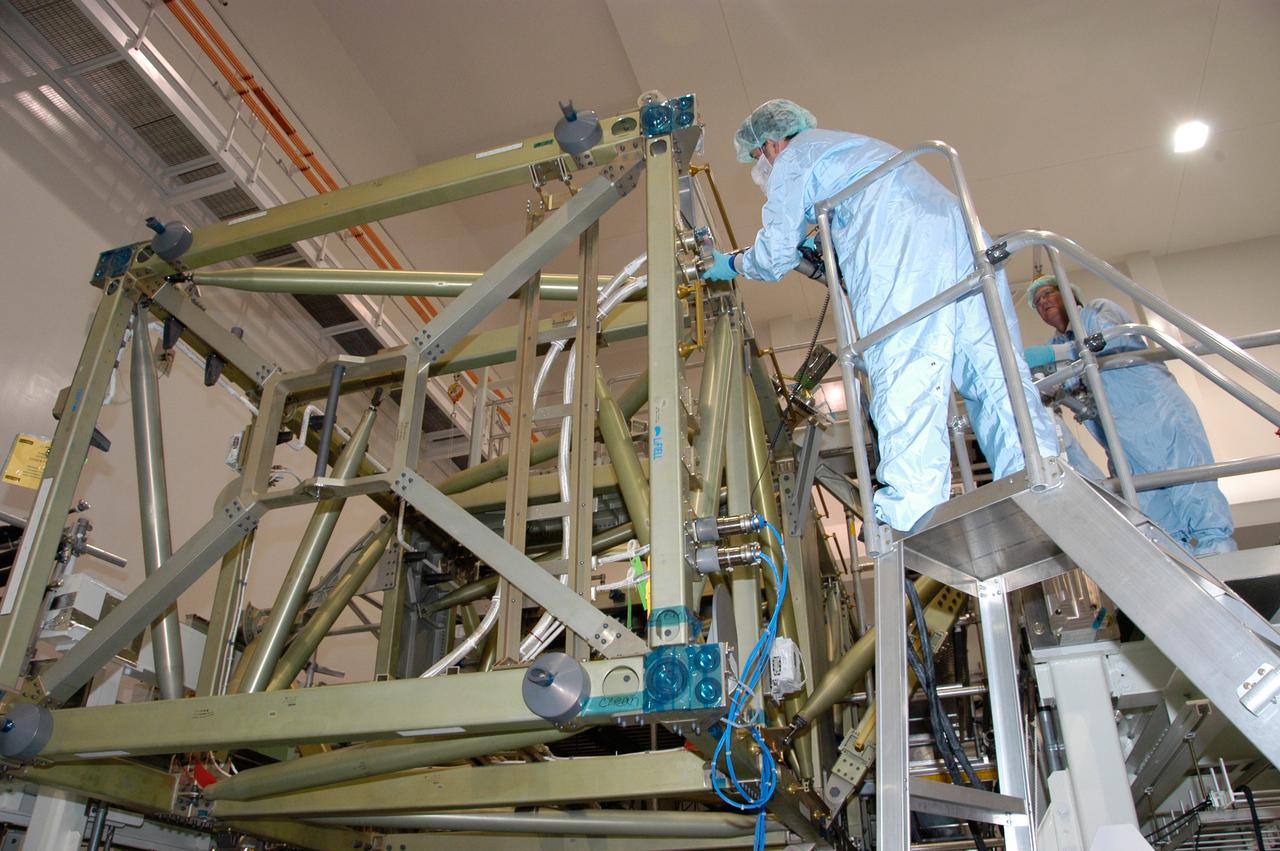
In the Space Station Processing Facility at NASA's Kennedy Space Center, a worker connects a cable to recharge the battery for the S6 integrated truss. The final starboard truss in the assembly of the International Space Station, the S6 is scheduled to fly on space shuttle mission STS-119, whose launch date is not yet determined.
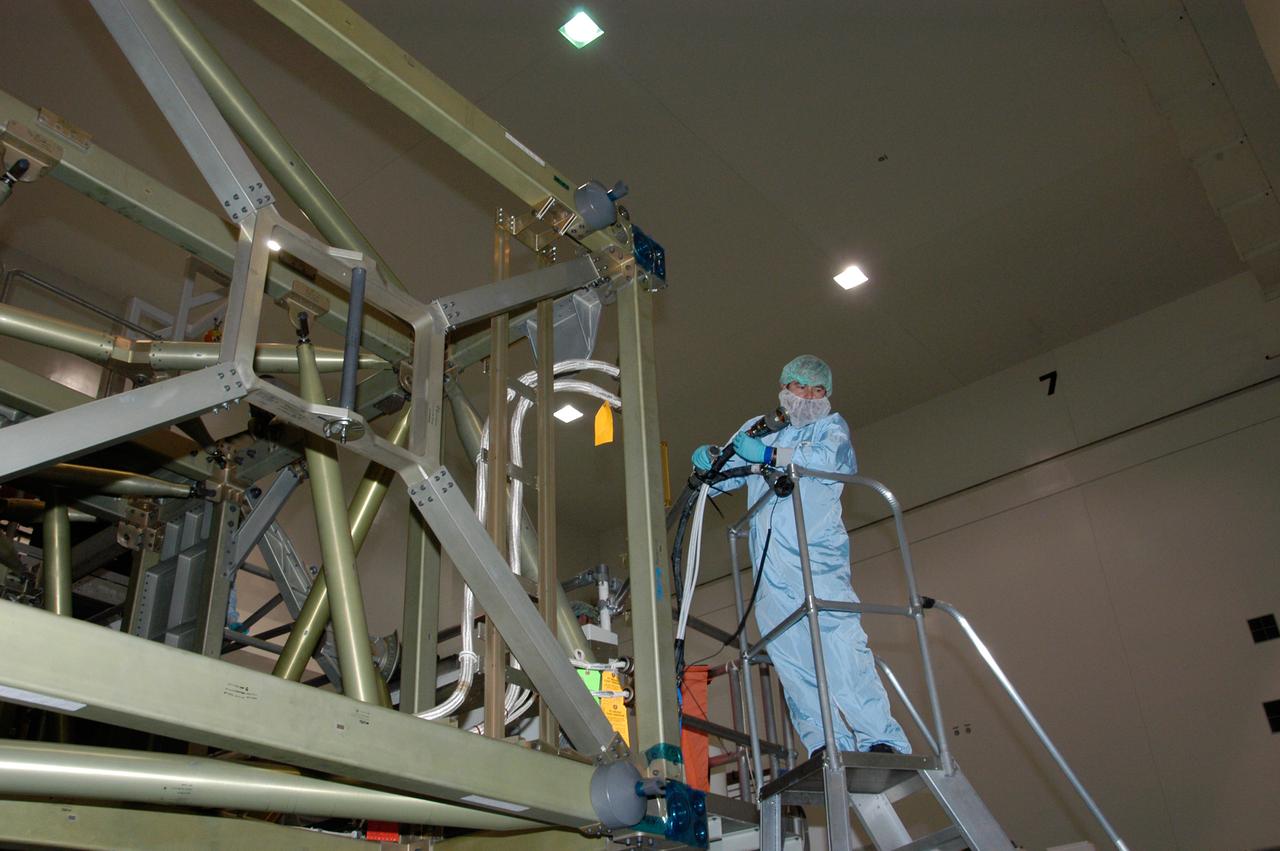
In the Space Station Processing Facility at NASA's Kennedy Space Center, a worker holds a cable that will help recharge the battery for the S6 integrated truss. The final starboard truss in the assembly of the International Space Station, the S6 is scheduled to fly on space shuttle mission STS-119, whose launch date is not yet determined.
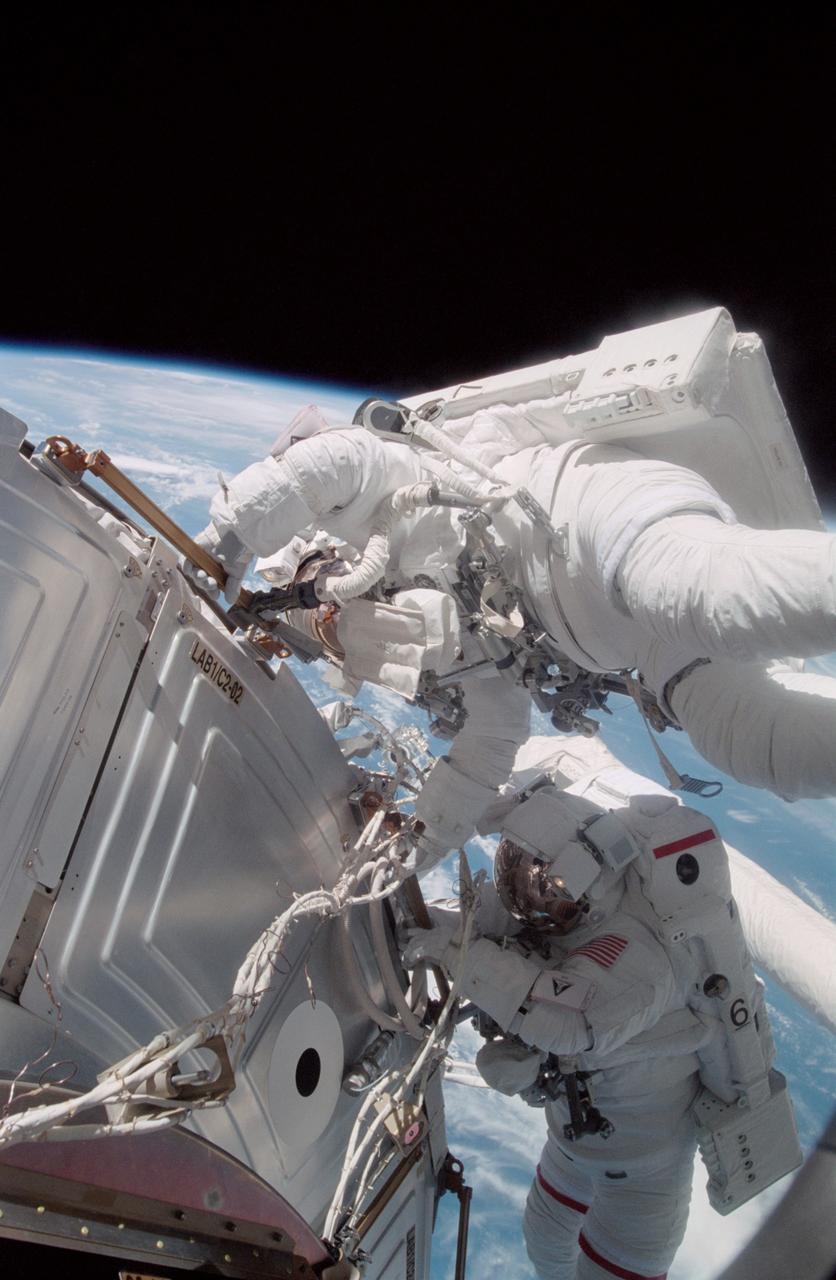
STS105-345-014 (18 August 2001) --- Astronauts Daniel T. Barry (bottom) and Patrick G. Forrester, holding onto handrails of the Destiny laboratory, prepare to install some exterior cables during the second STS-105 extravehicular activity.
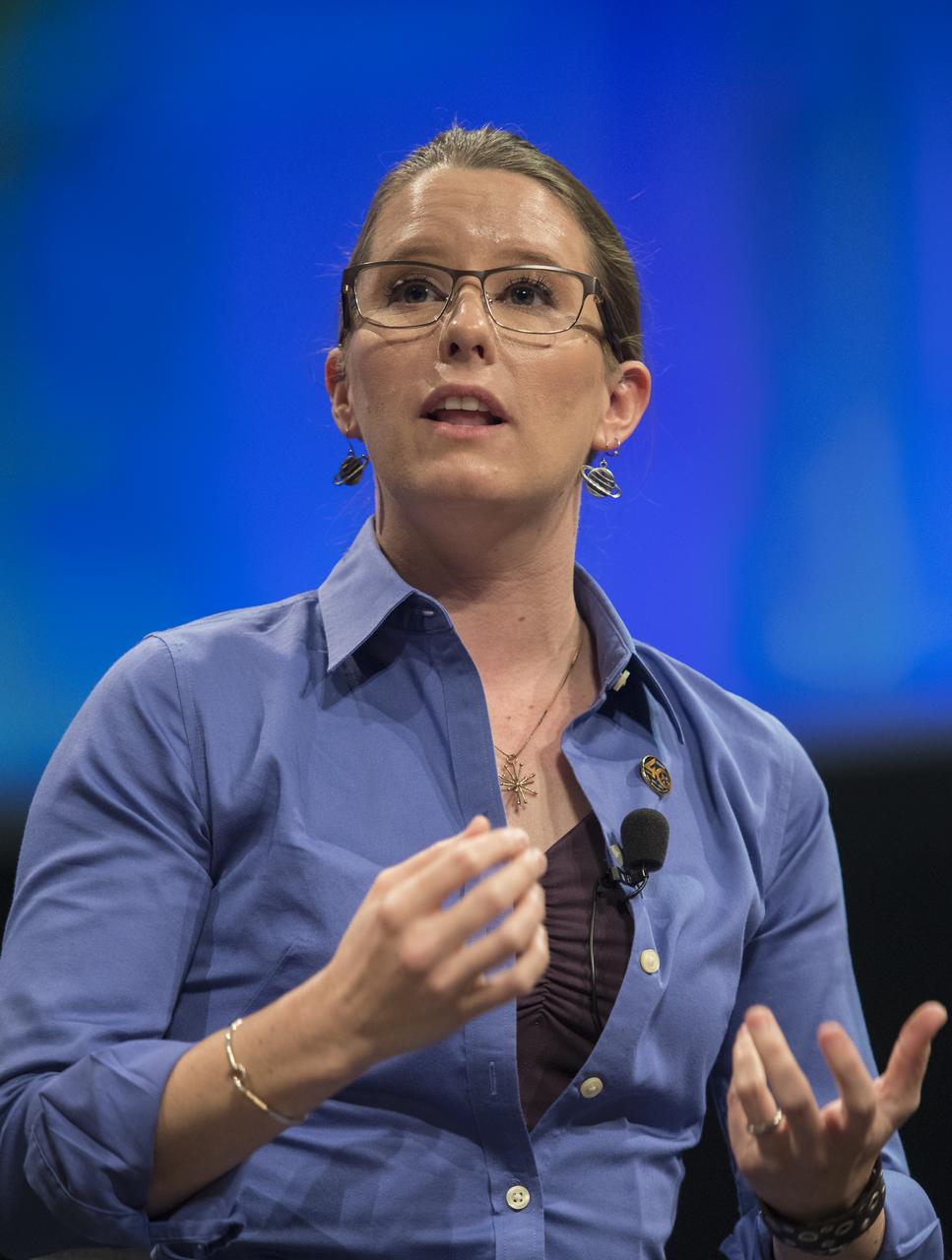
Morgan Cable, researcher, NASA's Jet Propulsion Laboratory, speaks at an event to celebrate the 40th Anniversary of the launch of the Voyager 1 and 2 missions, Tuesday, September 5, 2017 at Smithsonian's National Air and Space Museum in Washington. Voyager 1 was launched September 5, 1977, with a mission to study Jupiter and Saturn, but now the twin Voyager spacecrafts are on a journey into interstellar space to search for the heliopause, a region never reached by any other spacecraft. Photo Credit: (NASA/Aubrey
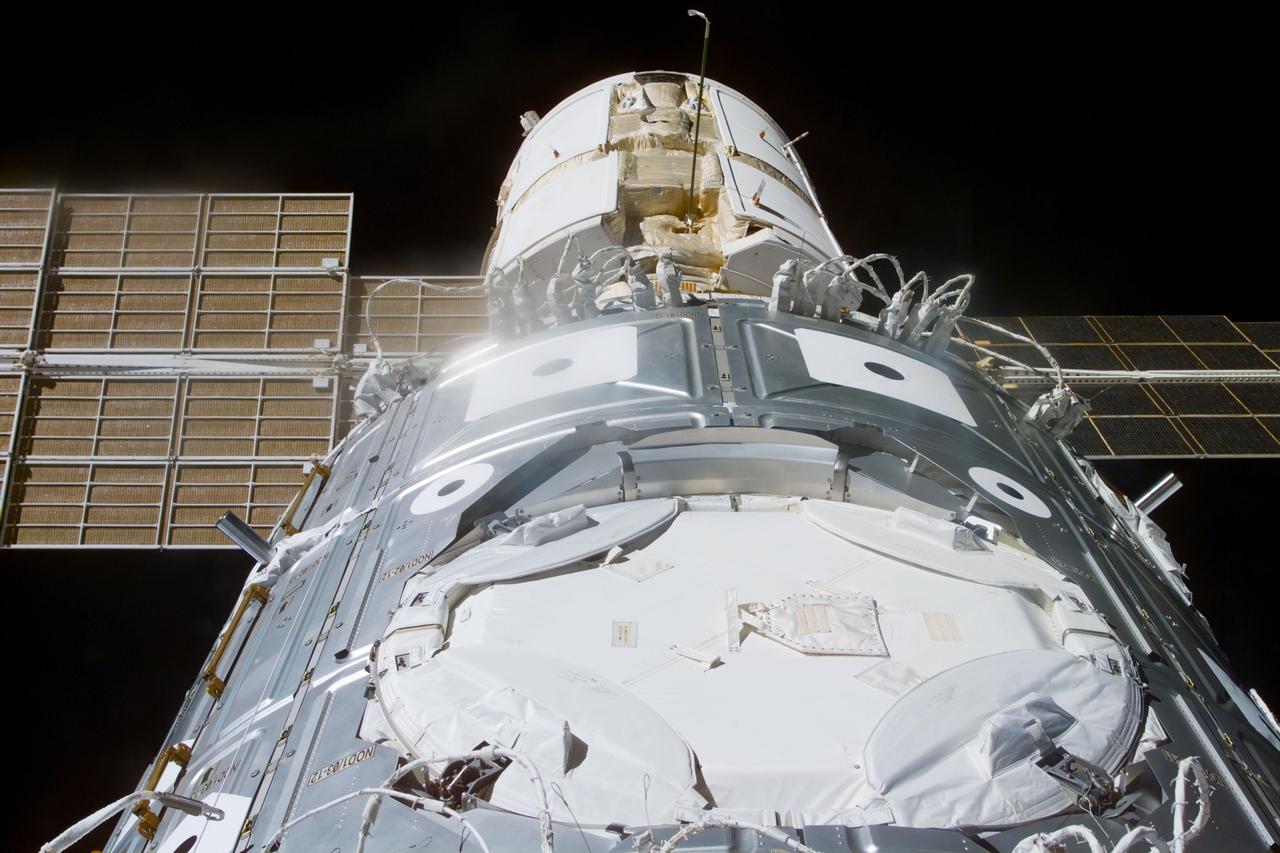
S88-E-5061 (12-08-98) --- Cables and wires in place on the Unity module signify the end of the first of three spacewalks scheduled for the STS-88 mission. Astronauts Jerry L. Ross and James H. Newman, both mission specialists, were succesful in mating 40 cables and connectors running 76 feet from the Zarya control module (seen at top in this photo) to Unity, with the 35-ton complex towering over Endeavour's cargo bay. This photo was taken with an electronic still camera (ESC) at 03:37:35 GMT, Dec. 8.
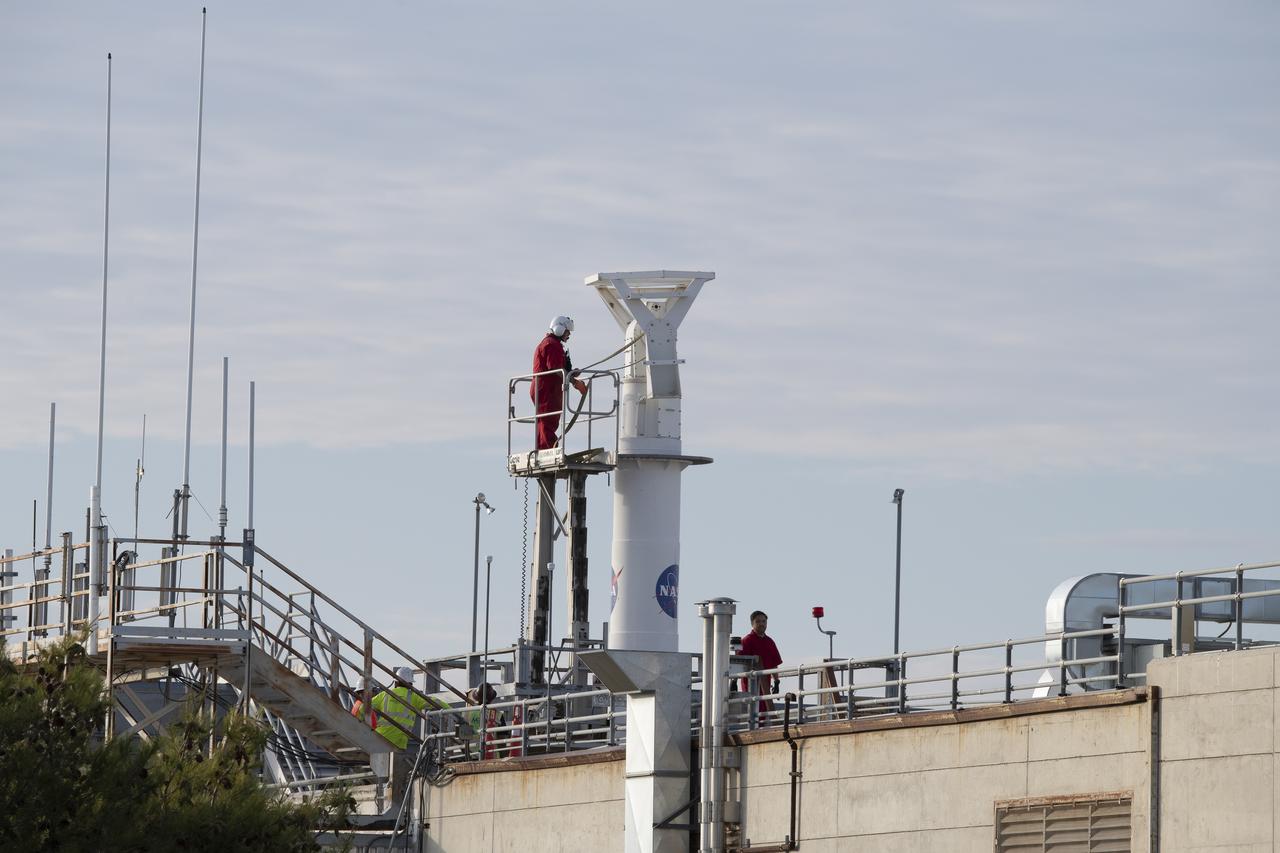
A cable is secured on a rooftop pedestal located on Building 4800 at NASA’s Armstrong Flight Research Center in Edwards, California, on Oct. 4, 2024. The pedestal, which was prepared for a helicopter lift to remove it from the roof, was used since the 1950s until 2015 to enable different telemetry dishes to collect data from research aircraft.
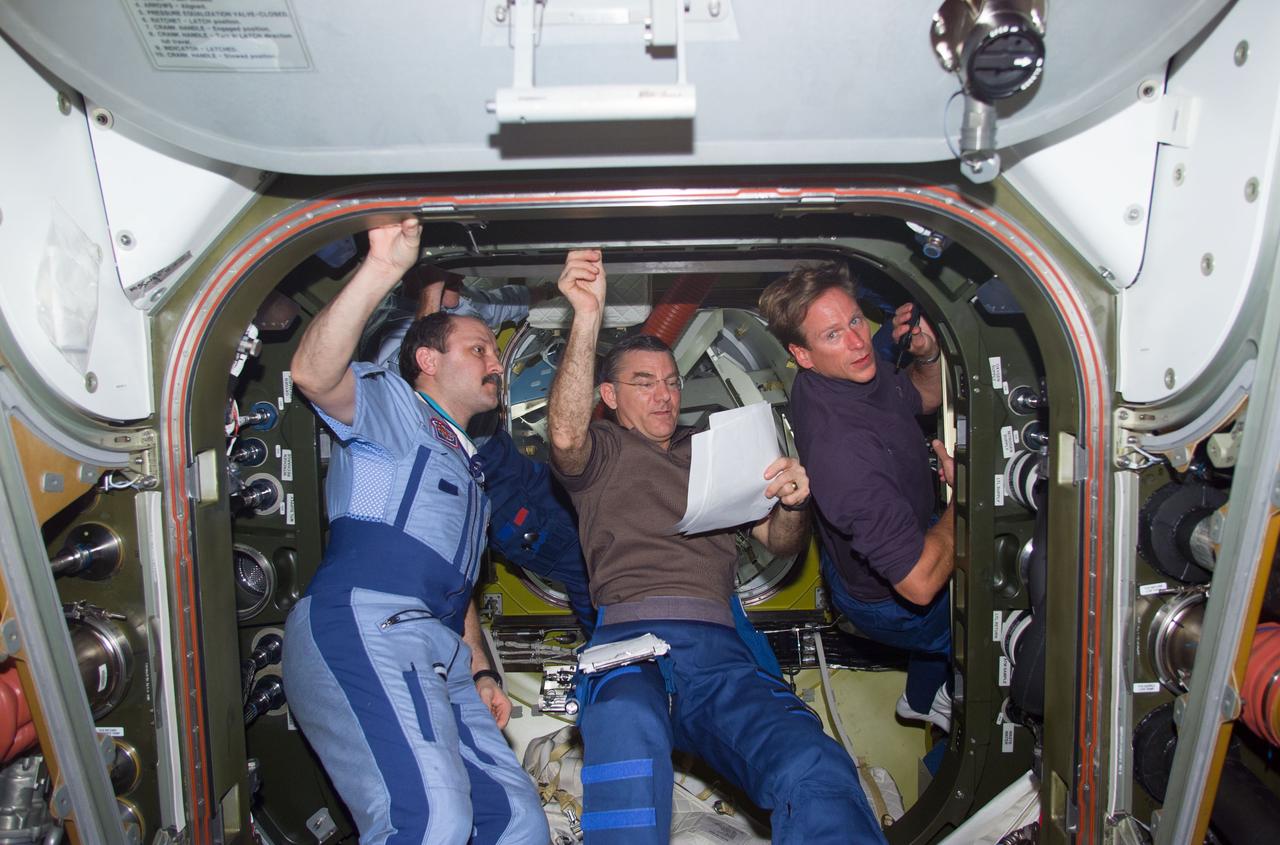
S104-E-5106 (16 July 2001) --- From left to right, cosmonaut Yury V. Usachev, Expedition Two mission commander, James S. Voss, Expedition Two flight engineer, and Michael L. Gernhardt, STS-104 mission specialist, discuss procedures for connecting cables and hoses from the newly installed Quest Airlock to Unity Node 1. Usachev represents Rosaviakosmos.
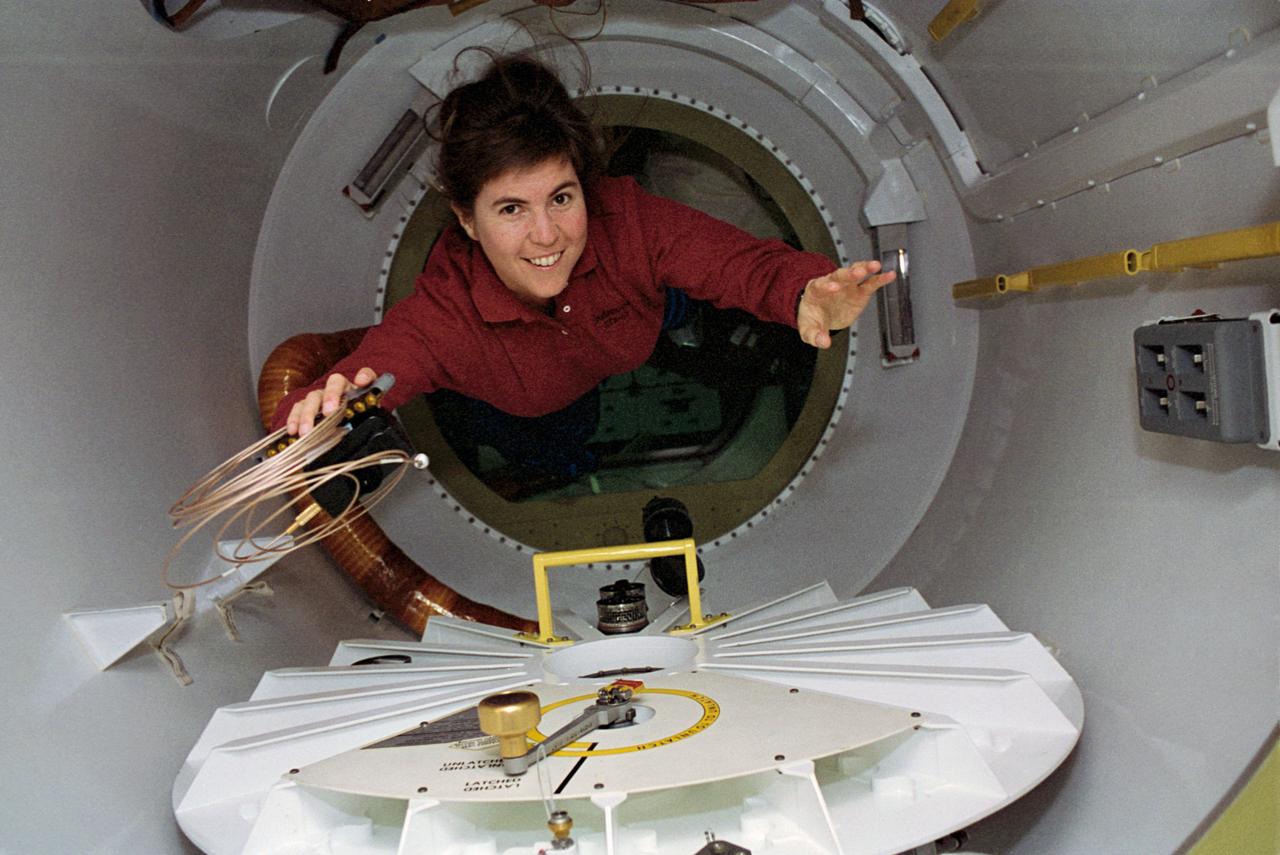
STS057-28-013 (21 June - 1 July 1993) --- With a camera and cable in hand, astronaut Janice E. Voss, mission specialist, floats through a special tunnel into the SpaceHab module. Voss and five other NASA astronauts spent almost ten days aboard the Space Shuttle Endeavour in Earth-orbit supporting the SpaceHab mission, retrieving the European Retrievable Carrier (EURECA) and conducting various experiments.
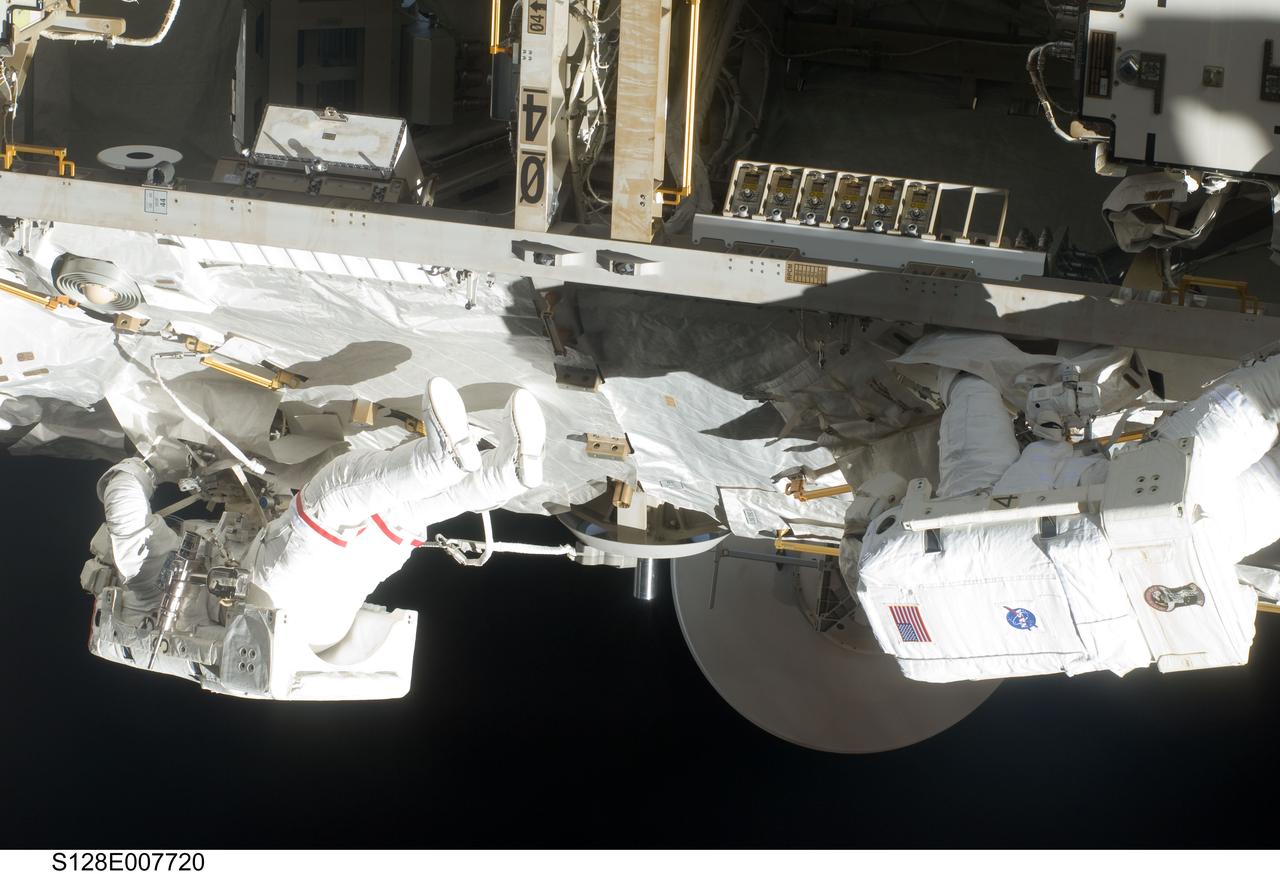
S128-E-007720 (5 Sept. 2009) --- NASA astronaut John “Danny” Olivas (left) and European Space Agency astronaut Christer Fuglesang, both STS-128 mission specialists, participate in the mission's third and final session of extravehicular activity (EVA) as construction and maintenance continue on the International Space Station. During the seven-hour, one-minute spacewalk, Olivas and Fuglesang deployed the Payload Attachment System (PAS), replaced the Rate Gyro Assembly #2, installed two GPS antennae and did some work to prepare for the installation of Node 3 next year. During connection of one of two sets of avionics cables for Node 3, one of the connectors could not be mated. This cable and connector were wrapped in a protective sleeve and safed. All other cables were mated successfully.
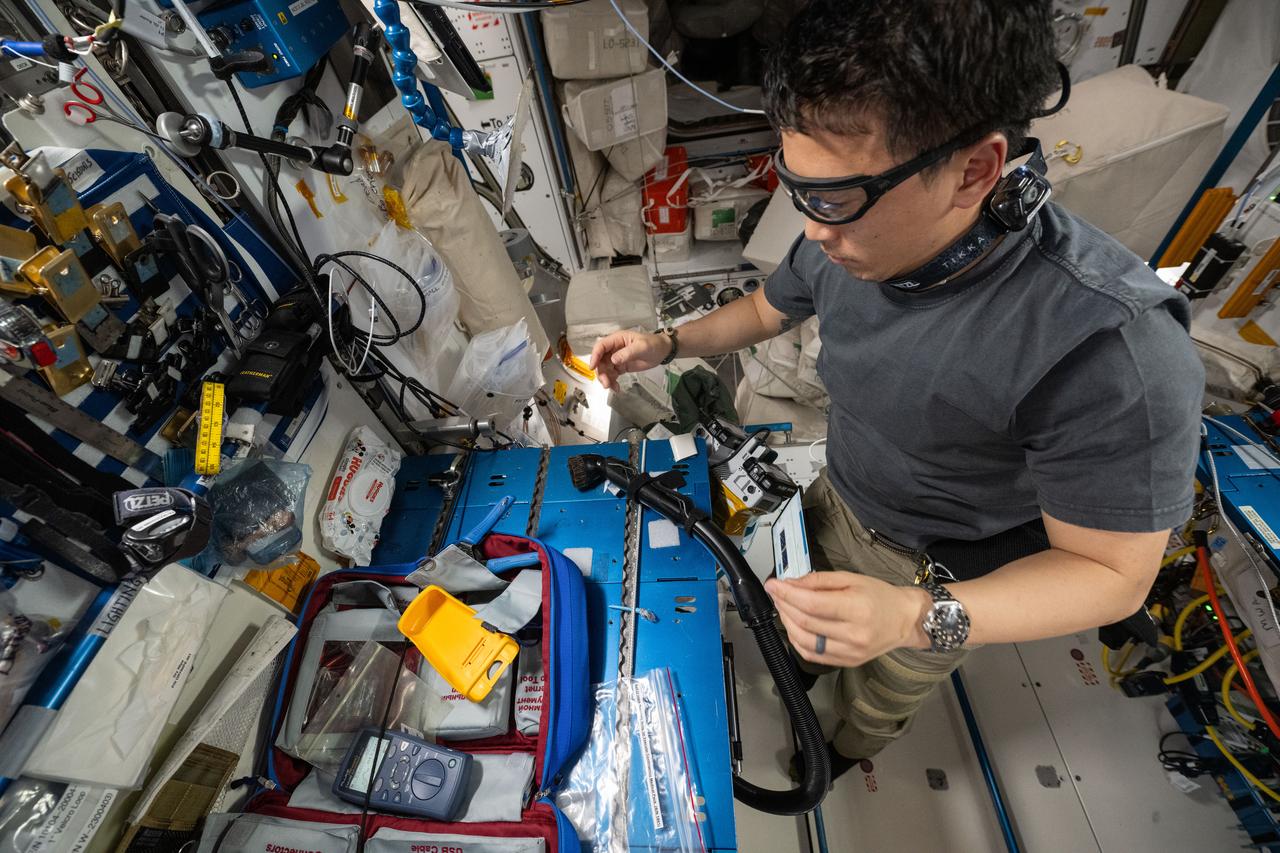
iss073e0077576 (May 20, 2025) --- NASA astronaut and Expedition 73 Flight Engineer Jonny Kim repairs ethernet cables aboard the International Space Station's Harmony module.
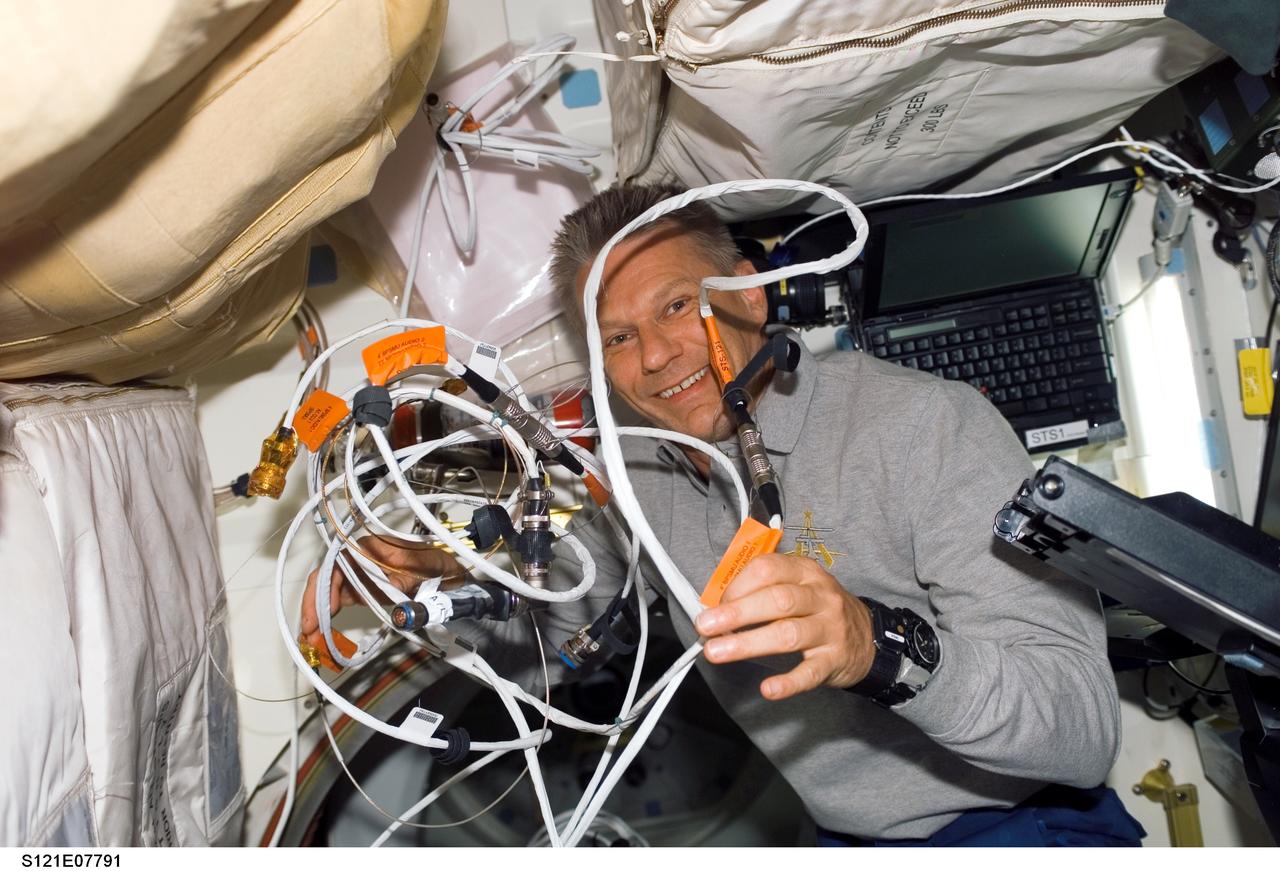
S121-E-07791 (15 July 2006) --- Astronaut Piers J. Sellers, STS-121 mission specialist, works with cables on the middeck of Space Shuttle Discovery as the shuttle crew prepares to undock from the International Space Station.

ISS030-E-060104 (1 Feb. 2012) --- NASA astronaut Dan Burbank, Expedition 30 commander, uses a video camera in the Destiny laboratory of the International Space Station during installation and routing of video cable for the High Rate Communication System (HRCS). HRCS will allow for two additional space-to-ground audio channels and two additional downlink video channels.

ISS030-E-060117 (1 Feb. 2012) --- In the International Space Station?s Destiny laboratory, European Space Agency astronaut Andre Kuipers, Expedition 30 flight engineer, routes video cable for the High Rate Communication System (HRCS). HRCS will allow for two additional space-to-ground audio channels and two additional downlink video channels.
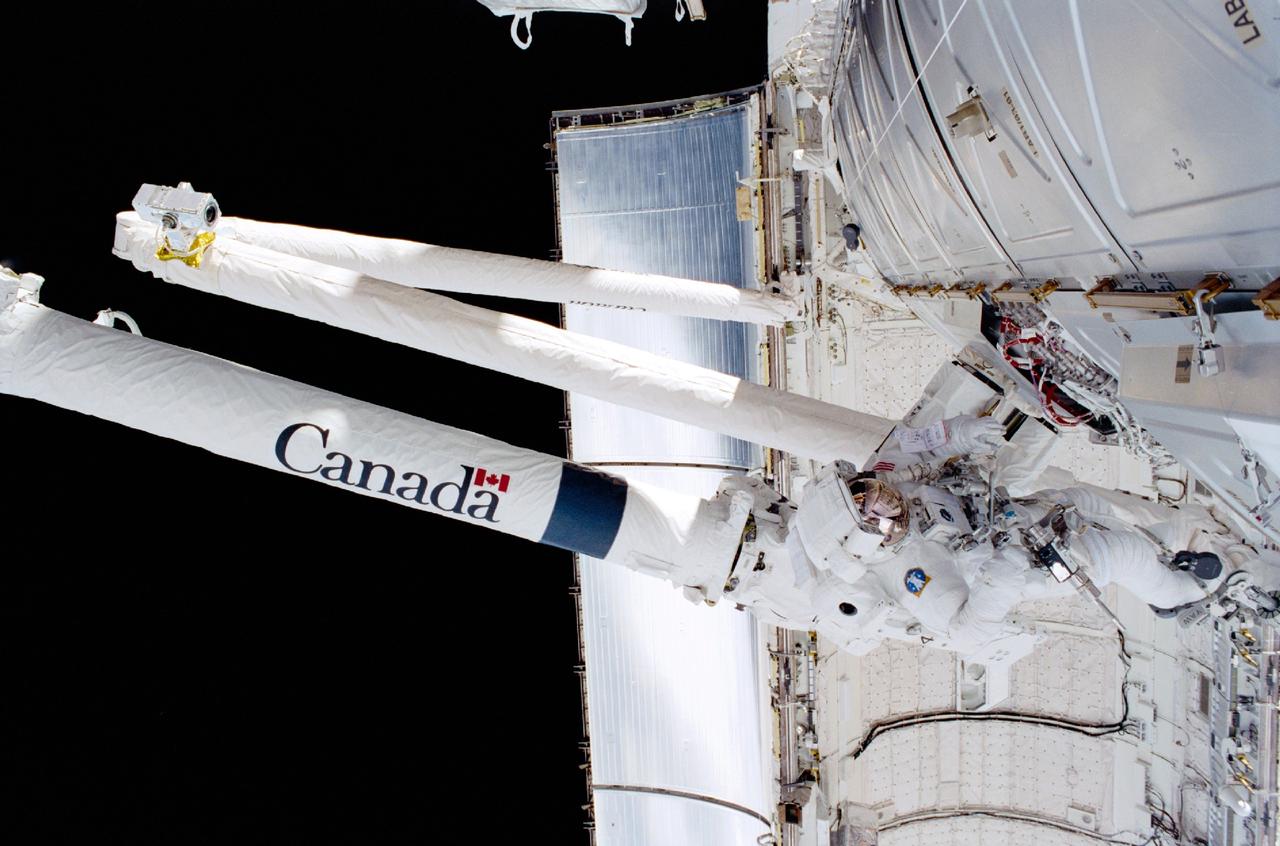
STS100-396-007 (19 April-1 May 2001) --- Astronaut Scott E. Parazynski, STS-100 mission specialist, works with cables associated with the Space Station Remote Manipulator System (SSRMS) or Canadarm2 during one of two days of extravehicular activity (EVA). Parazynski shared both space walks with astronaut Chris A. Hadfield of the Canadian Space Agency (CSA).
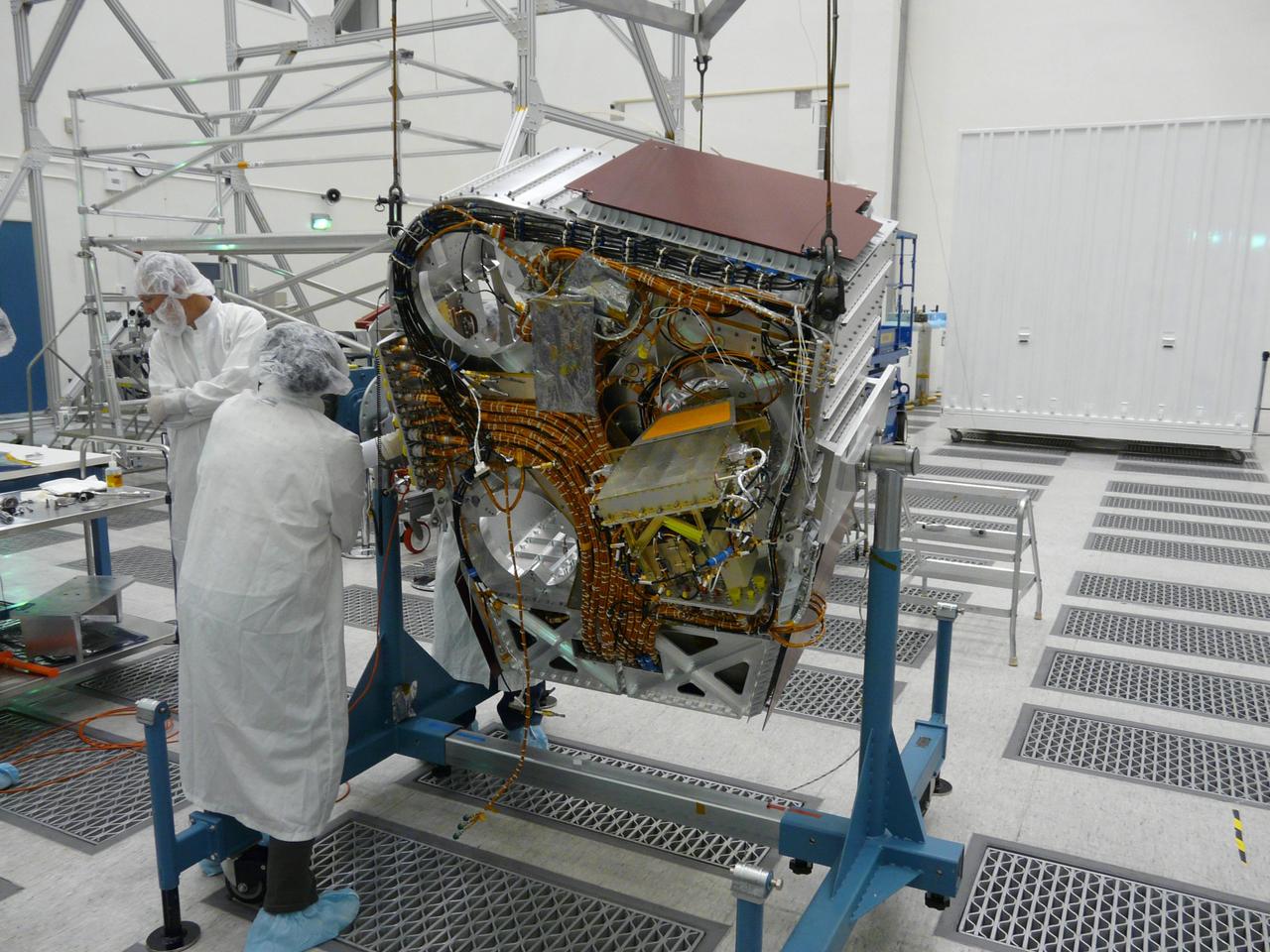
Engineers check cables on back of Aquarius instrument in the clean room at NASA Jet Propulsion Laboratory in Pasadena, Calif.
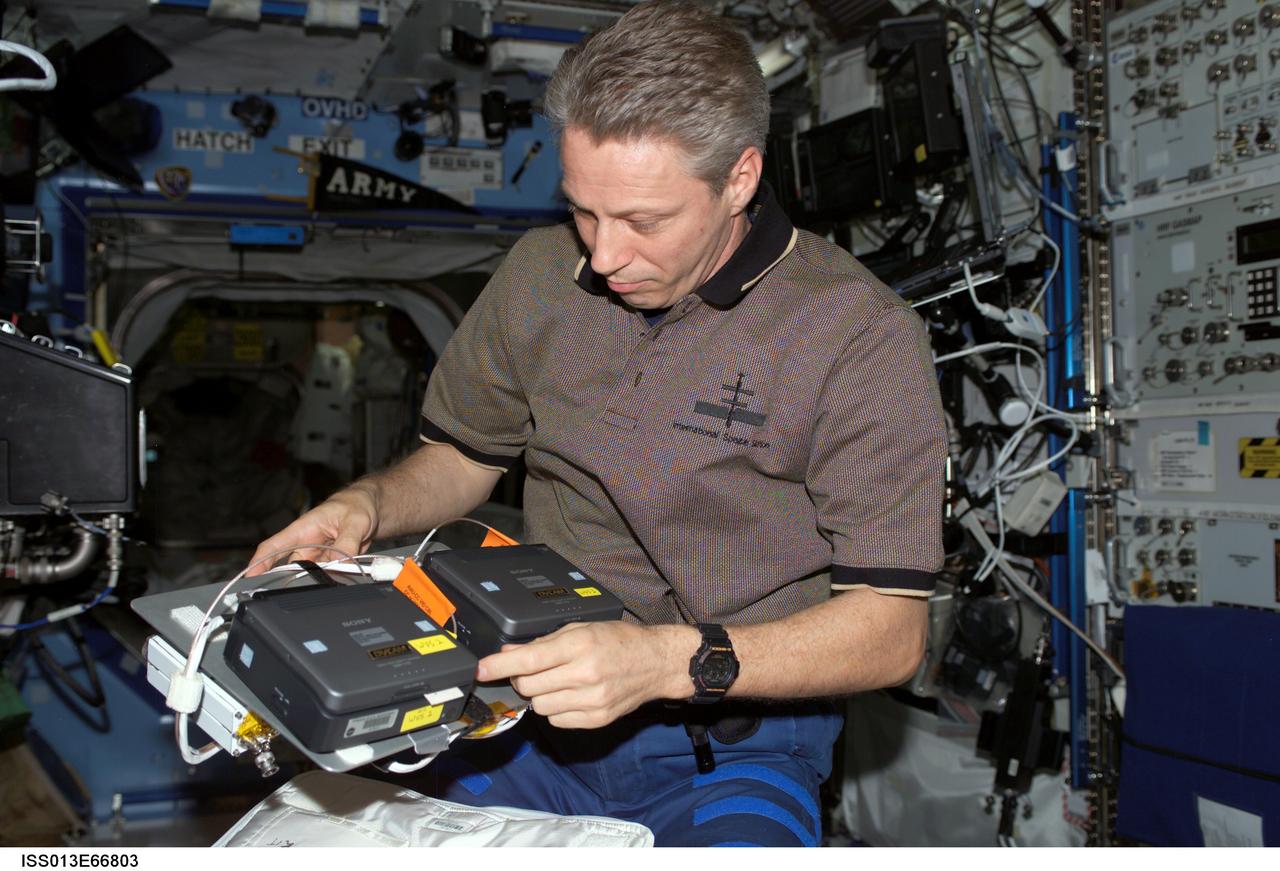
ISS013-E-66803 (16 Aug. 2006) --- European Space Agency (ESA) astronaut Thomas Reiter, Expedition 13 flight engineer, works with a mini-digital video camera (DVCAM) and advanced video interface unit (AVIU)-CC VID cables in the Destiny laboratory of the International Space Station.
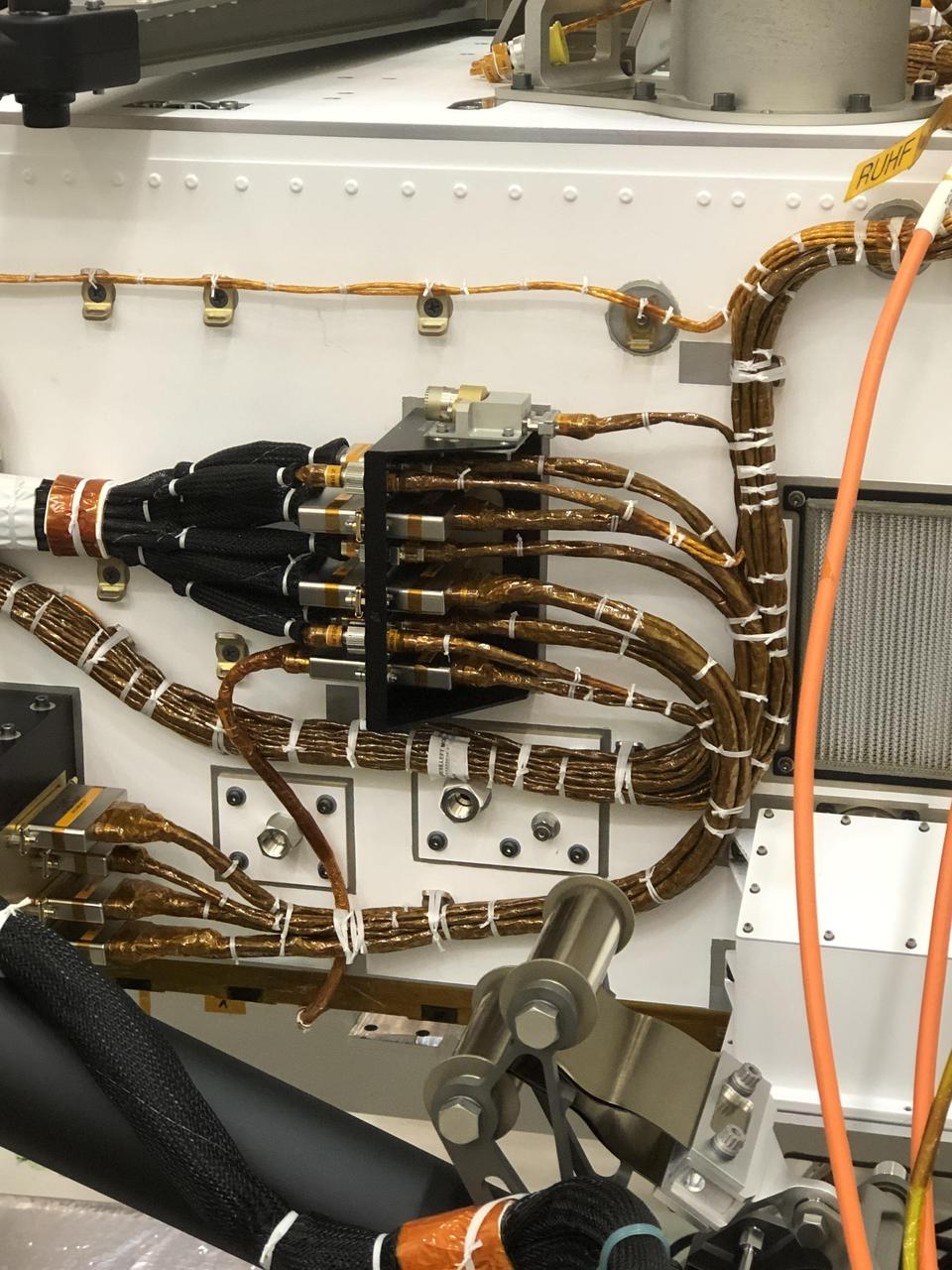
Components are visible on the port side of the Perseverance rover in this close-up image taken on Nov. 16, 2019, in High Bay 1 of the Spacecraft Assembly Facility at NASA's Jet Propulsion Laboratory in Southern California. At center of the image, attached to the side of the rover, is a black cable bracket (with gold cabling running through it). Attached to the top of this black bracket — and gray in color — is the Entry Descent and Landing (EDL) microphone. Below the cable bracket are the Mars Oxygen In-Situ Resource Utilization Experiment (MOXIE) wall ports. The orange cable passing over it is part of ground support equipment. https://photojournal.jpl.nasa.gov/catalog/PIA24046
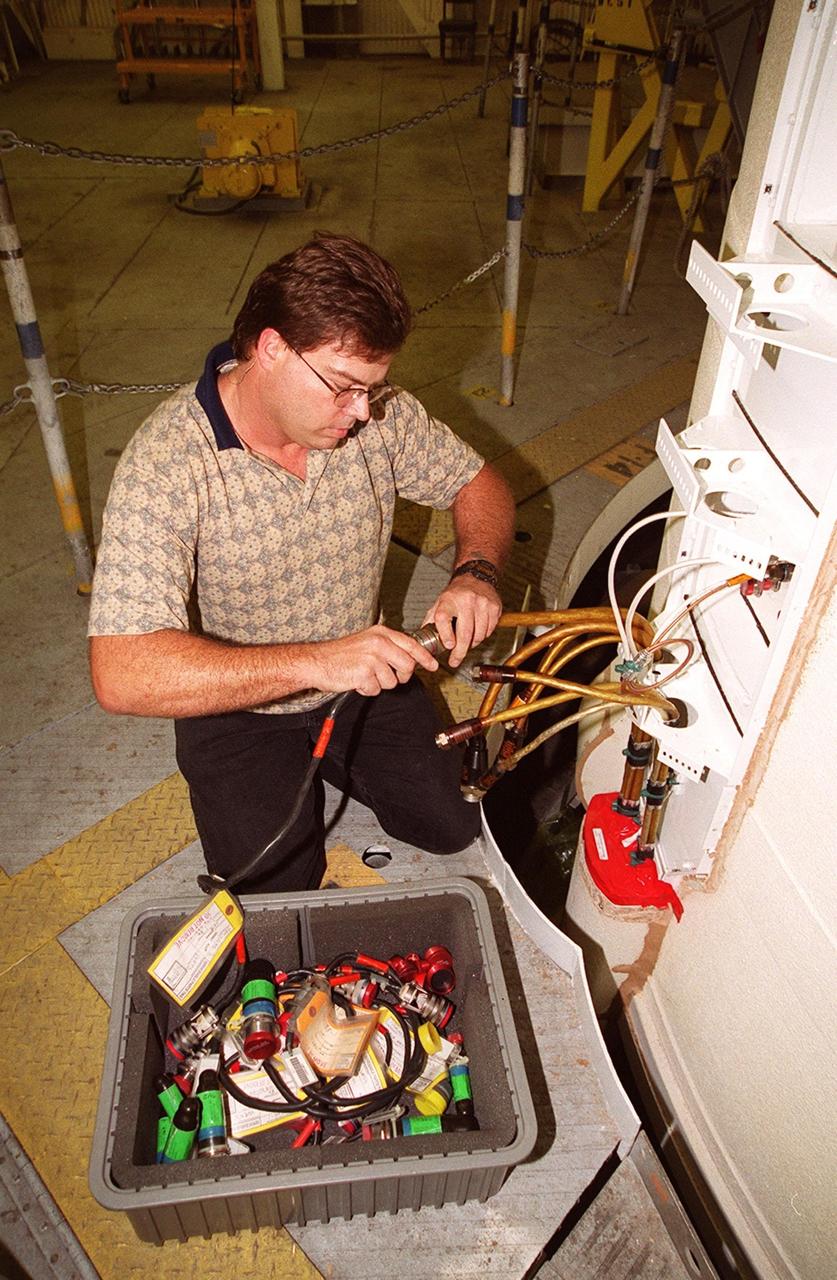
KENNEDY SPACE CENTER, FLA. -- United Space Alliance SRB technician Richard Bruns attaches a cable end cover to a cable pulled from the solid rocket booster on Space Shuttle Atlantis. The Shuttle was rolled back from Launch Pad 39A in order to conduct tests on the SRB cables. A prior extensive evaluation of NASA’s SRB cable inventory on the shelf revealed conductor damage in four (of about 200) cables. Shuttle managers decided to prove the integrity of the system tunnel cables already on Atlantis before launching. Workers are conducting inspections, making continuity checks and conducting X-ray analysis on the cables. The launch has been rescheduled no earlier than Feb. 6. <br
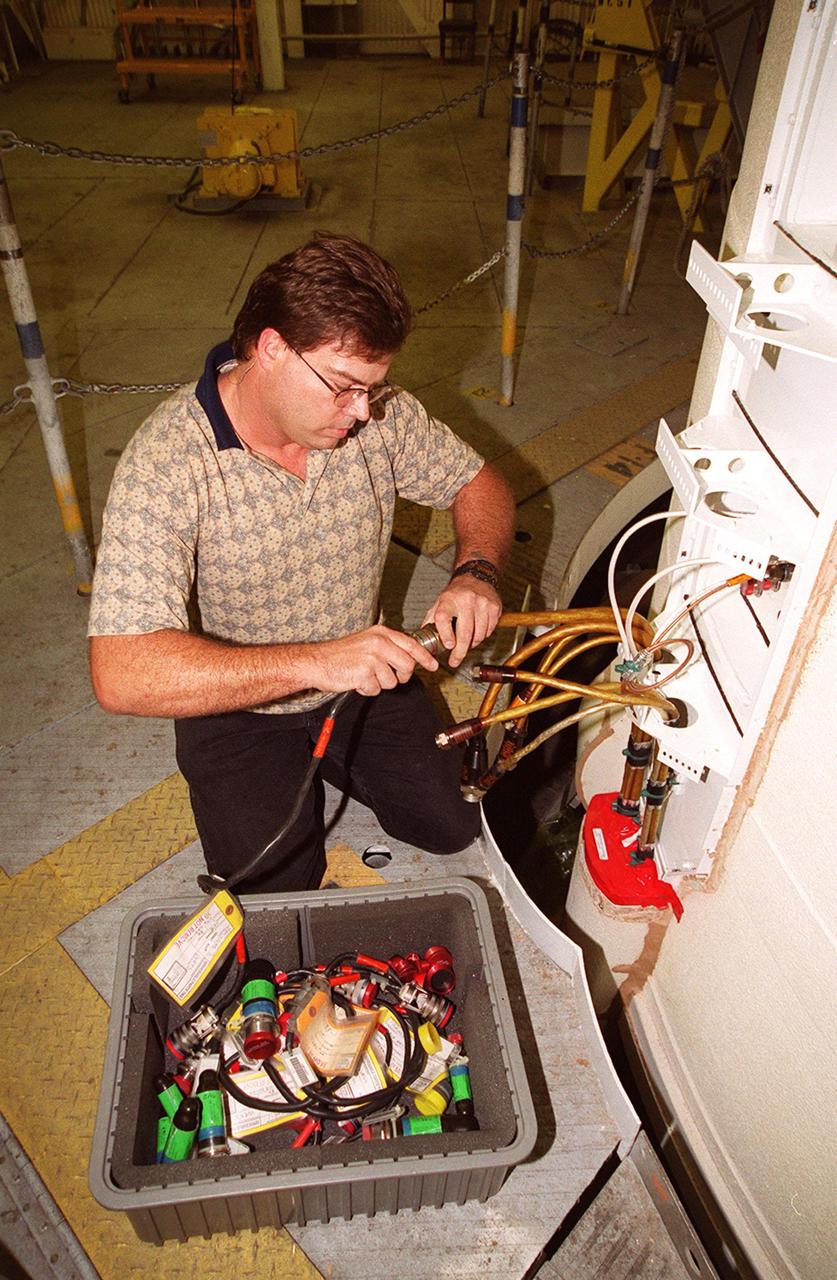
KENNEDY SPACE CENTER, FLA. -- United Space Alliance SRB technician Richard Bruns attaches a cable end cover to a cable pulled from the solid rocket booster on Space Shuttle Atlantis. The Shuttle was rolled back from Launch Pad 39A in order to conduct tests on the SRB cables. A prior extensive evaluation of NASA’s SRB cable inventory on the shelf revealed conductor damage in four (of about 200) cables. Shuttle managers decided to prove the integrity of the system tunnel cables already on Atlantis before launching. Workers are conducting inspections, making continuity checks and conducting X-ray analysis on the cables. The launch has been rescheduled no earlier than Feb. 6. <br
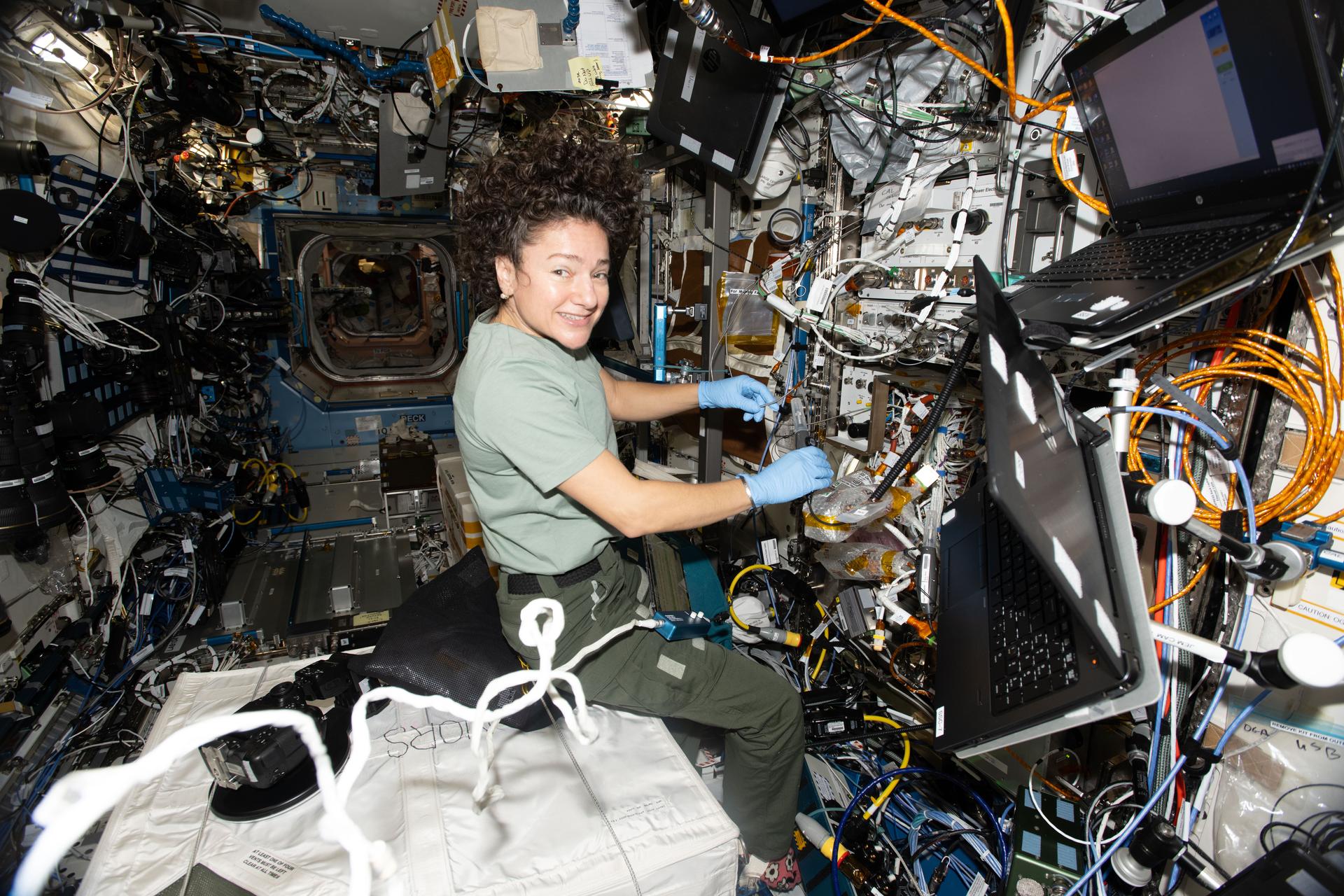
iss074e0545220 (May 4, 2026) --- NASA astronaut and Expedition 74 flight engineer Jessica Meir inspects sensitive fiber cables that emit light to help cool, trap, and study atoms with high accuracy inside the Cold Atom Lab (CAL) aboard the International Space Station. The CAL, a quantum research facility, chills atoms to near absolute zero, providing insights into atomic wave functions, general relativity, and dark matter. Credit: NASA/Jack Hathaway
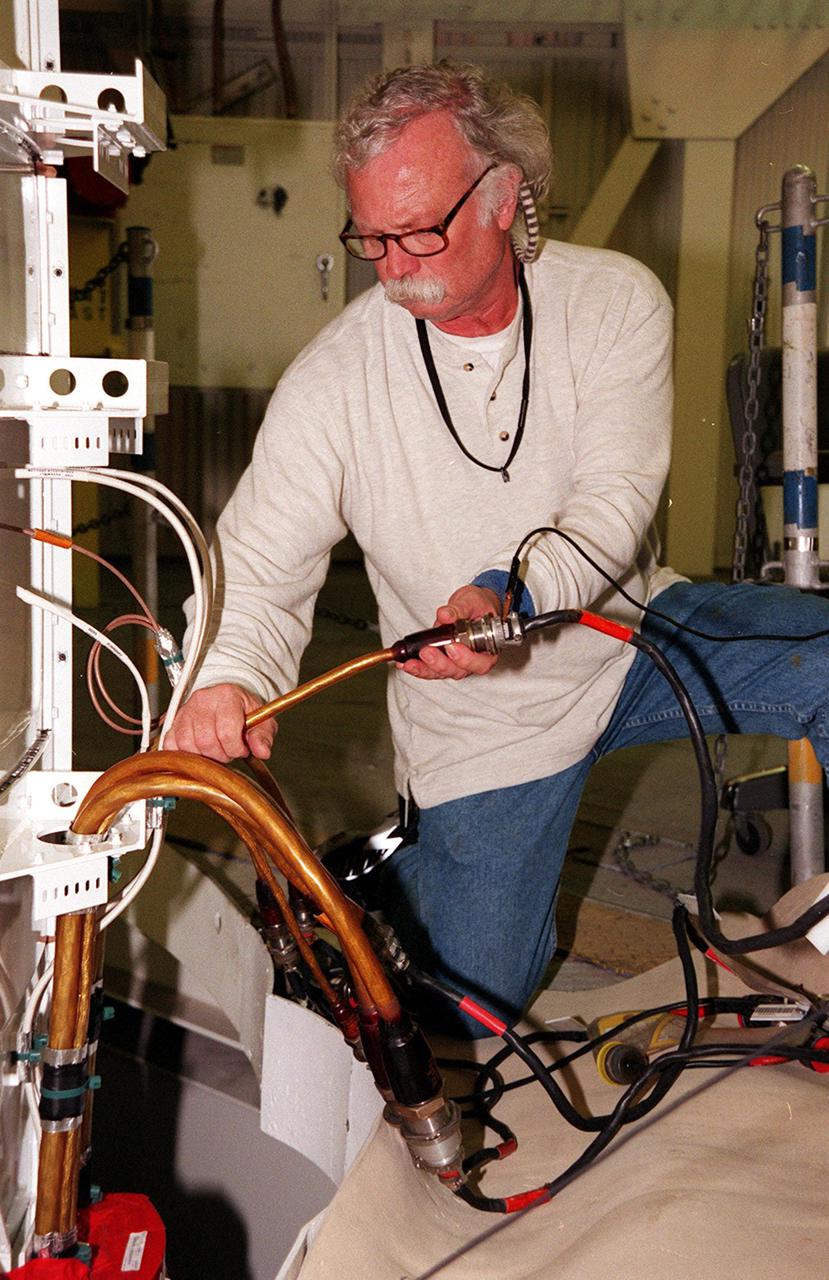
KENNEDY SPACE CENTER, FLA. -- United Space Alliance SRB technician Jim Glass conducts a Flex test on a cable on the solid rocket booster at left. The SRB is part of Space Shuttle Atlantis, rolled back from Launch Pad 39A in order to conduct tests on the cables. A prior extensive evaluation of NASA’s SRB cable inventory on the shelf revealed conductor damage in four (of about 200) cables. Shuttle managers decided to prove the integrity of the system tunnel cables already on Atlantis before launching. Workers are conducting inspections, making continuity checks and conducting X-ray analysis on the cables. The launch has been rescheduled no earlier than Feb. 6. <br
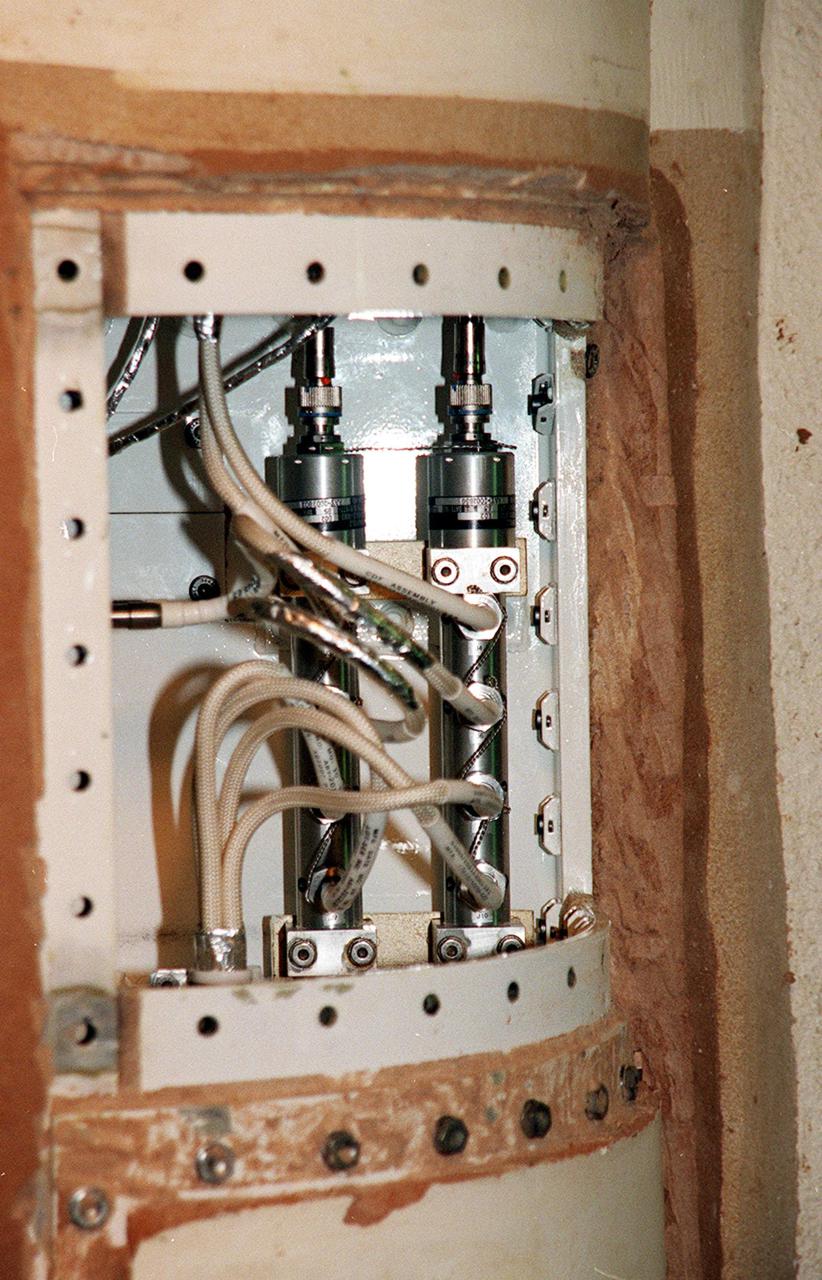
KENNEDY SPACE CENTER, FLA. -- Solid rocket booster cables are exposed after removal of the SRB system tunnel cover. The SRB is part of Space Shuttle Atlantis, rolled back from Launch Pad 39A in order to conduct tests on the cables. A prior extensive evaluation of NASA’s SRB cable inventory on the shelf revealed conductor damage in four (of about 200) cables. Shuttle managers decided to prove the integrity of the system tunnel cables already on Atlantis before launching. Workers are conducting inspections, making continuity checks and conducting X-ray analysis on the cables. The launch has been rescheduled no earlier than Feb. 6. <br
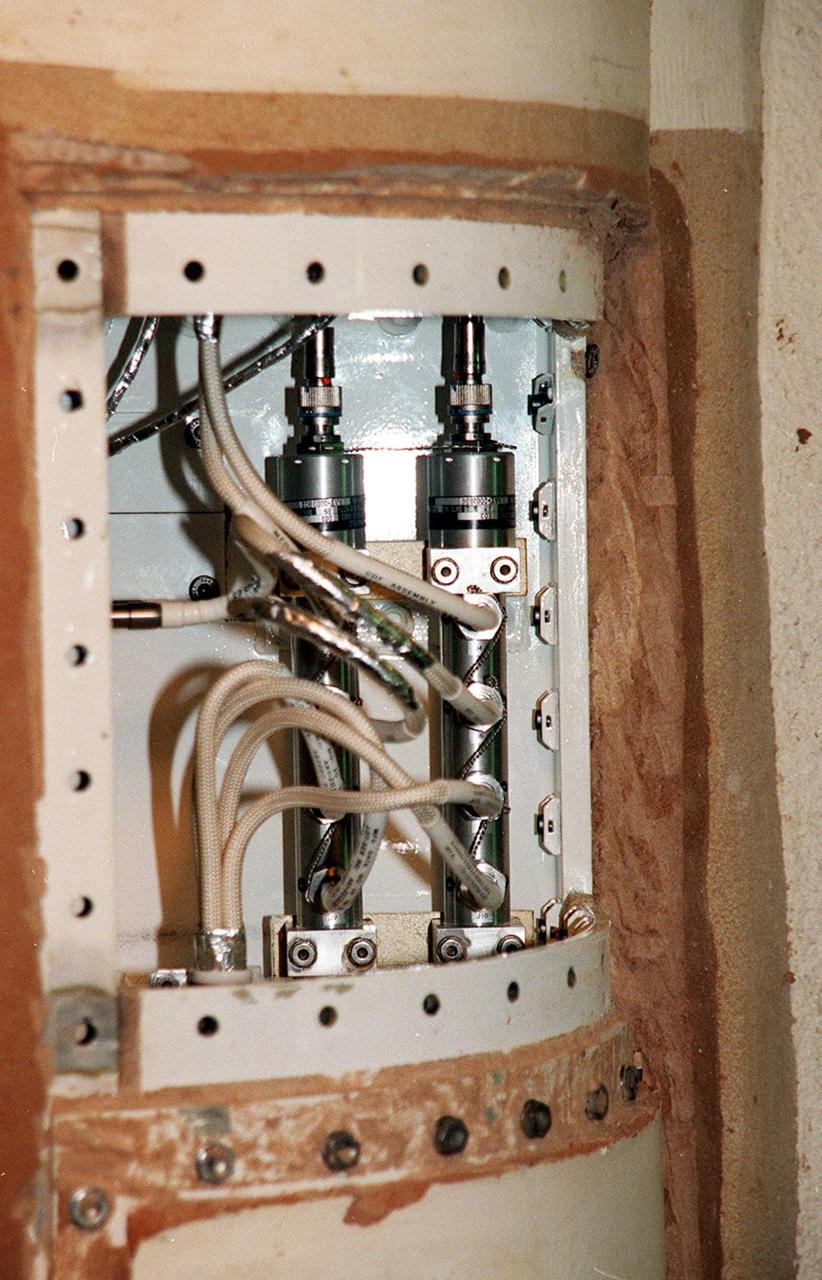
KENNEDY SPACE CENTER, FLA. -- Solid rocket booster cables are exposed after removal of the SRB system tunnel cover. The SRB is part of Space Shuttle Atlantis, rolled back from Launch Pad 39A in order to conduct tests on the cables. A prior extensive evaluation of NASA’s SRB cable inventory on the shelf revealed conductor damage in four (of about 200) cables. Shuttle managers decided to prove the integrity of the system tunnel cables already on Atlantis before launching. Workers are conducting inspections, making continuity checks and conducting X-ray analysis on the cables. The launch has been rescheduled no earlier than Feb. 6. <br
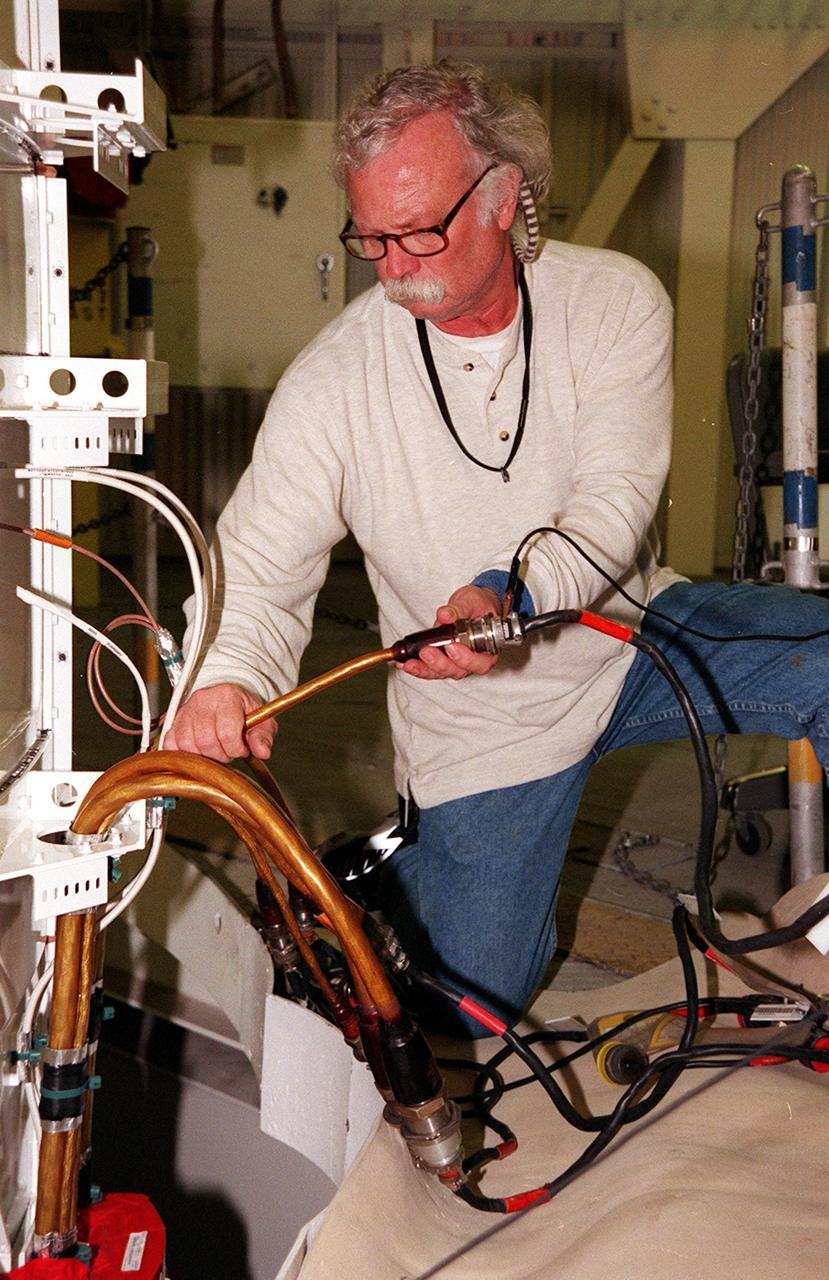
KENNEDY SPACE CENTER, FLA. -- United Space Alliance SRB technician Jim Glass conducts a Flex test on a cable on the solid rocket booster at left. The SRB is part of Space Shuttle Atlantis, rolled back from Launch Pad 39A in order to conduct tests on the cables. A prior extensive evaluation of NASA’s SRB cable inventory on the shelf revealed conductor damage in four (of about 200) cables. Shuttle managers decided to prove the integrity of the system tunnel cables already on Atlantis before launching. Workers are conducting inspections, making continuity checks and conducting X-ray analysis on the cables. The launch has been rescheduled no earlier than Feb. 6. <br
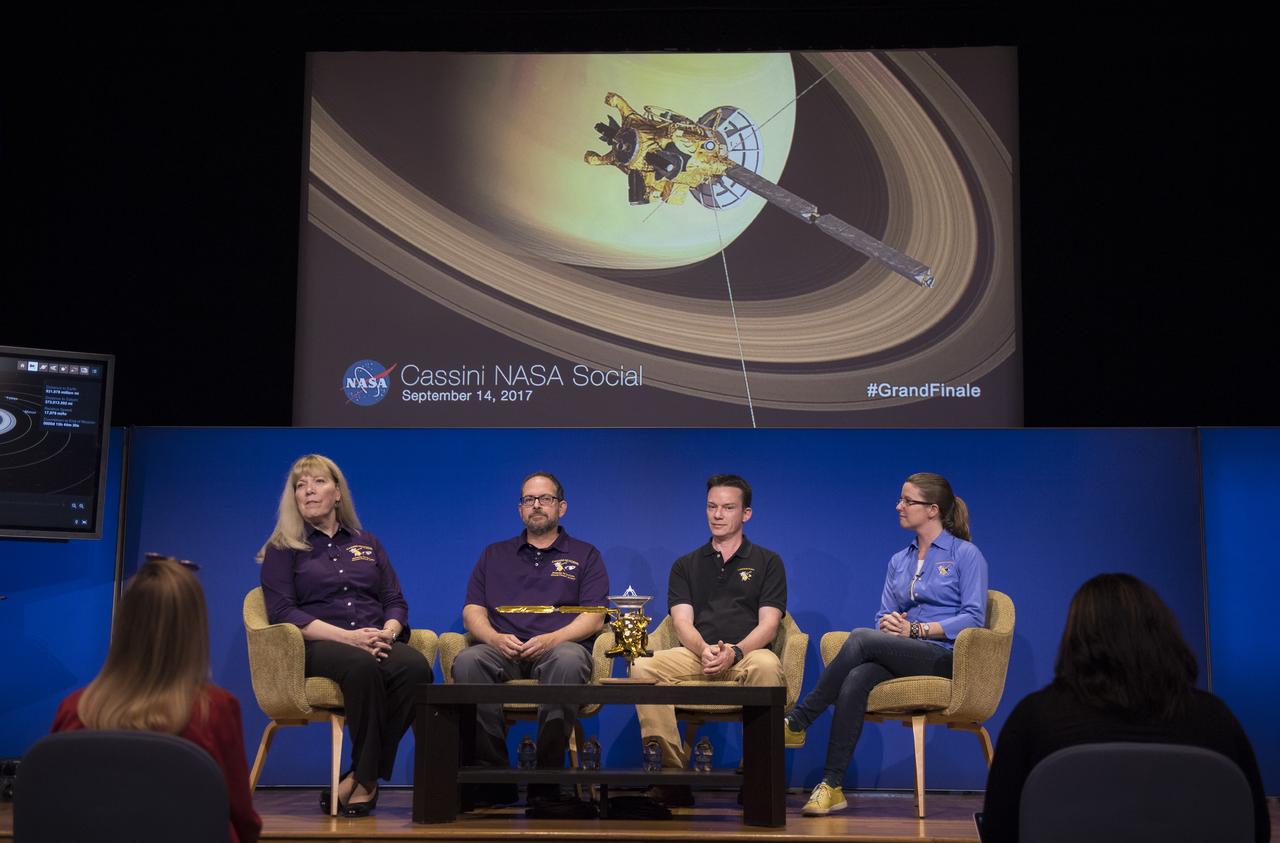
Cassini project scientist at JPL, Linda Spilker, left, Cassini interdisciplinary Titan scientist at Cornell University, Jonathan Lunine, second from left, Cassini Composite Infrared Spectrometer(CIRS) Instrument deputy principle investigator Connor Nixon, second from right, and Cassini assistant project science systems engineer Morgan Cable, right, participate in a Cassini science panel discussion during the Cassini NASA Social, Thursday, Sept. 14, 2017 at NASA's Jet Propulsion Laboratory in Pasadena, California. Since its arrival in 2004, the Cassini-Huygens mission has been a discovery machine, revolutionizing our knowledge of the Saturn system and captivating us with data and images never before obtained with such detail and clarity. On Sept. 15, 2017, operators will deliberately plunge the spacecraft into Saturn, as Cassini gathered science until the end. The “plunge” ensures Saturn’s moons will remain pristine for future exploration. During Cassini’s final days, mission team members from all around the world gathered at NASA’s Jet Propulsion Laboratory, Pasadena, California, to celebrate the achievements of this historic mission. Photo Credit: (NASA/Joel Kowsky)
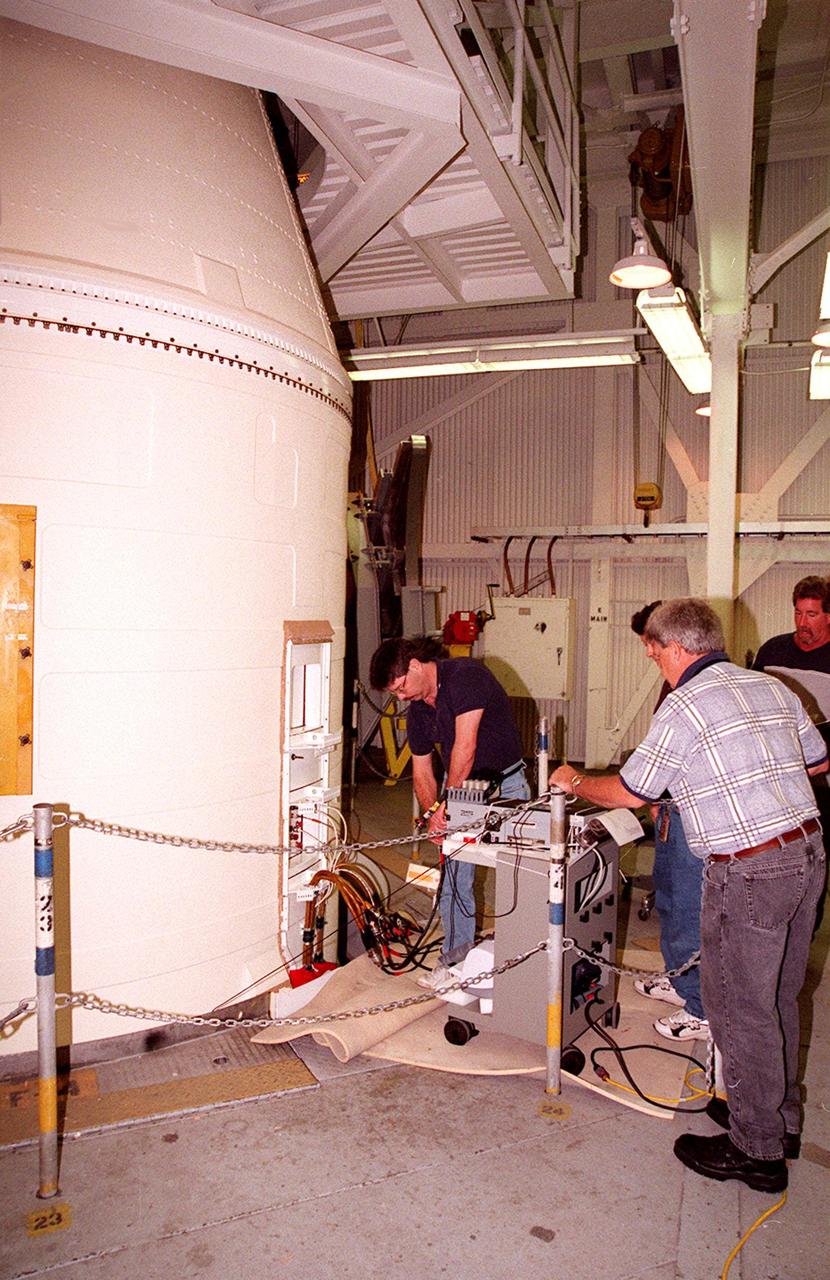
KENNEDY SPACE CENTER, FLA. -- Working near the top of a solid rocket booster, NASA and United Space Alliance SRB technicians hook up SRB cables to a Cirris Signature Touch 1 cable tester. From left are Steve Swichkow, with NASA, and Jim Silviano (back to camera) and Jeff Suter, with USA. The SRB is part of Space Shuttle Atlantis, rolled back from Launch Pad 39A in order to conduct tests on the cables. A prior extensive evaluation of NASA’s SRB cable inventory on the shelf revealed conductor damage in four (of about 200) cables. Shuttle managers decided to prove the integrity of the system tunnel cables already on Atlantis before launching. Workers are conducting inspections, making continuity checks and conducting X-ray analysis on the cables. The launch has been rescheduled no earlier than Feb. 6. <br
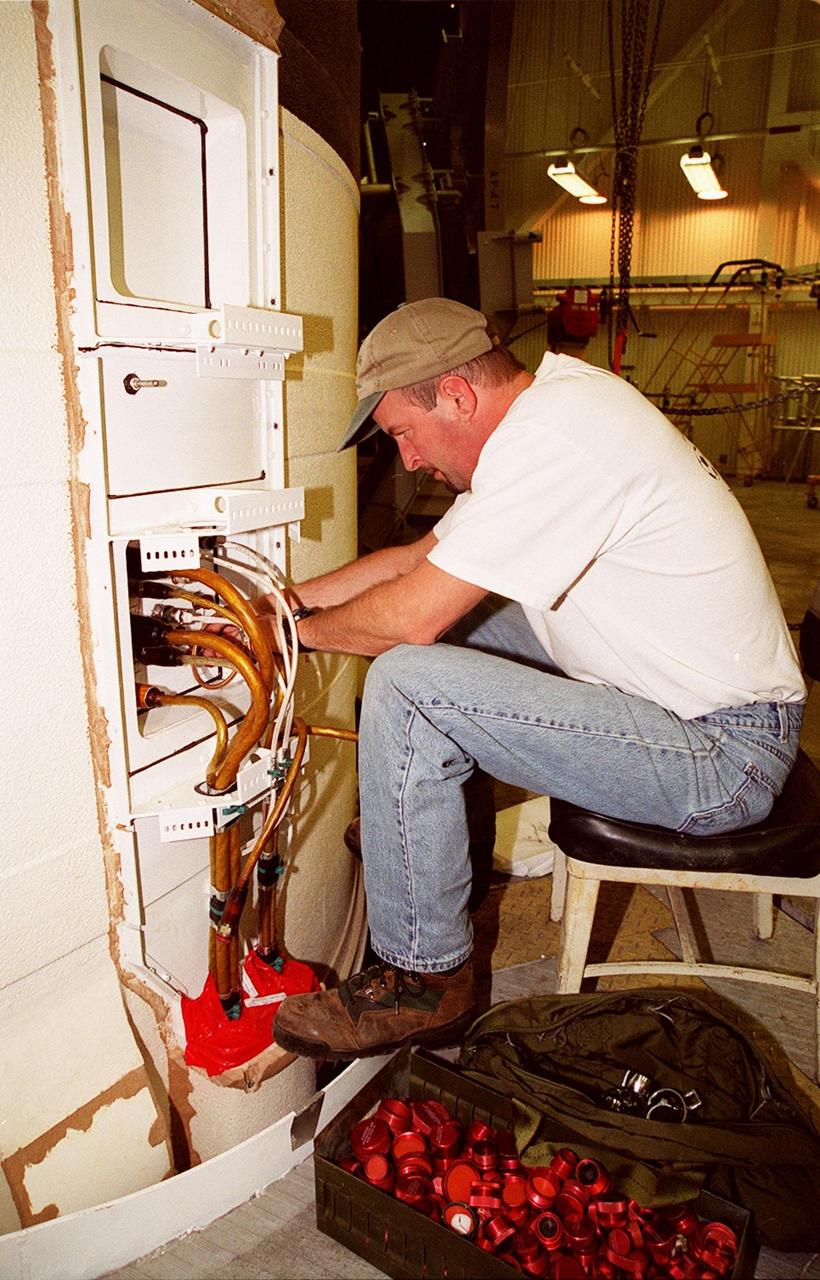
KENNEDY SPACE CENTER, FLA. -- In the Vehicle Assembly Building, United Space Alliance SRB technician Frank Meyer pulls cables out of the solid rocket booster system tunnel. Cable end covers are in a box near his feet. The SRB is part of Space Shuttle Atlantis, rolled back from Launch Pad 39A in order to conduct tests on the cables. A prior extensive evaluation of NASA’s SRB cable inventory on the shelf revealed conductor damage in four (of about 200) cables. Shuttle managers decided to prove the integrity of the system tunnel cables already on Atlantis before launching. Workers are conducting inspections, making continuity checks and conducting X-ray analysis on the cables. The launch has been rescheduled no earlier than Feb. 6. <br
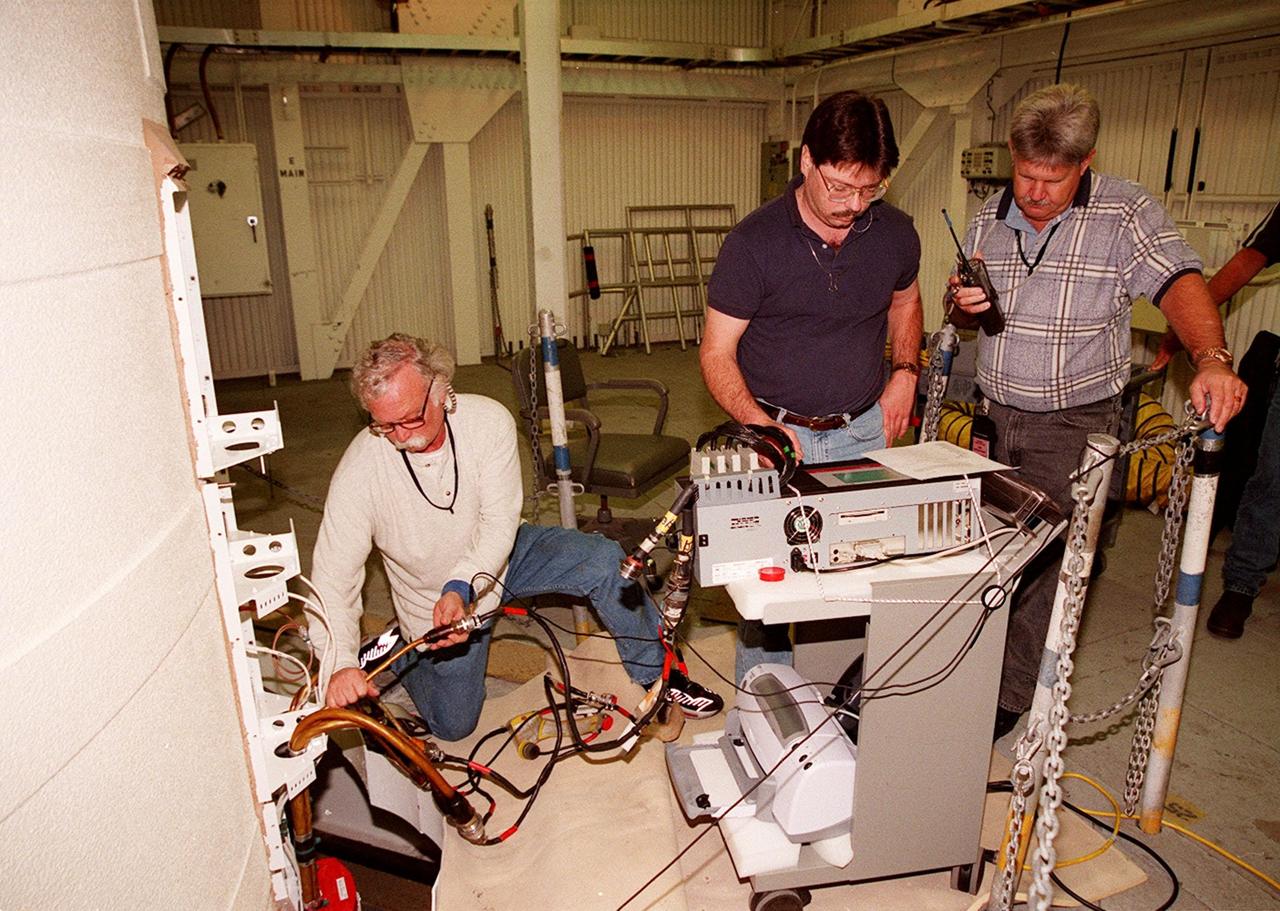
KENNEDY SPACE CENTER, FLA. -- Working near the top of a solid rocket booster, NASA and United Space Alliance SRB technicians hook up SRB cables to a CIRRUS computer for testing. From left are Jim Glass, with USA, performing a Flex test on the cable; Steve Swichkow, with NASA, and Jim Silviano, with USA, check the results on a computer. The SRB is part of Space Shuttle Atlantis, rolled back from Launch Pad 39A in order to conduct tests on the cables. A prior extensive evaluation of NASA’s SRB cable inventory on the shelf revealed conductor damage in four (of about 200) cables. Shuttle managers decided to prove the integrity of the system tunnel cables already on Atlantis before launching. Workers are conducting inspections, making continuity checks and conducting X-ray analysis on the cables. The launch has been rescheduled no earlier than Feb. 6. <br
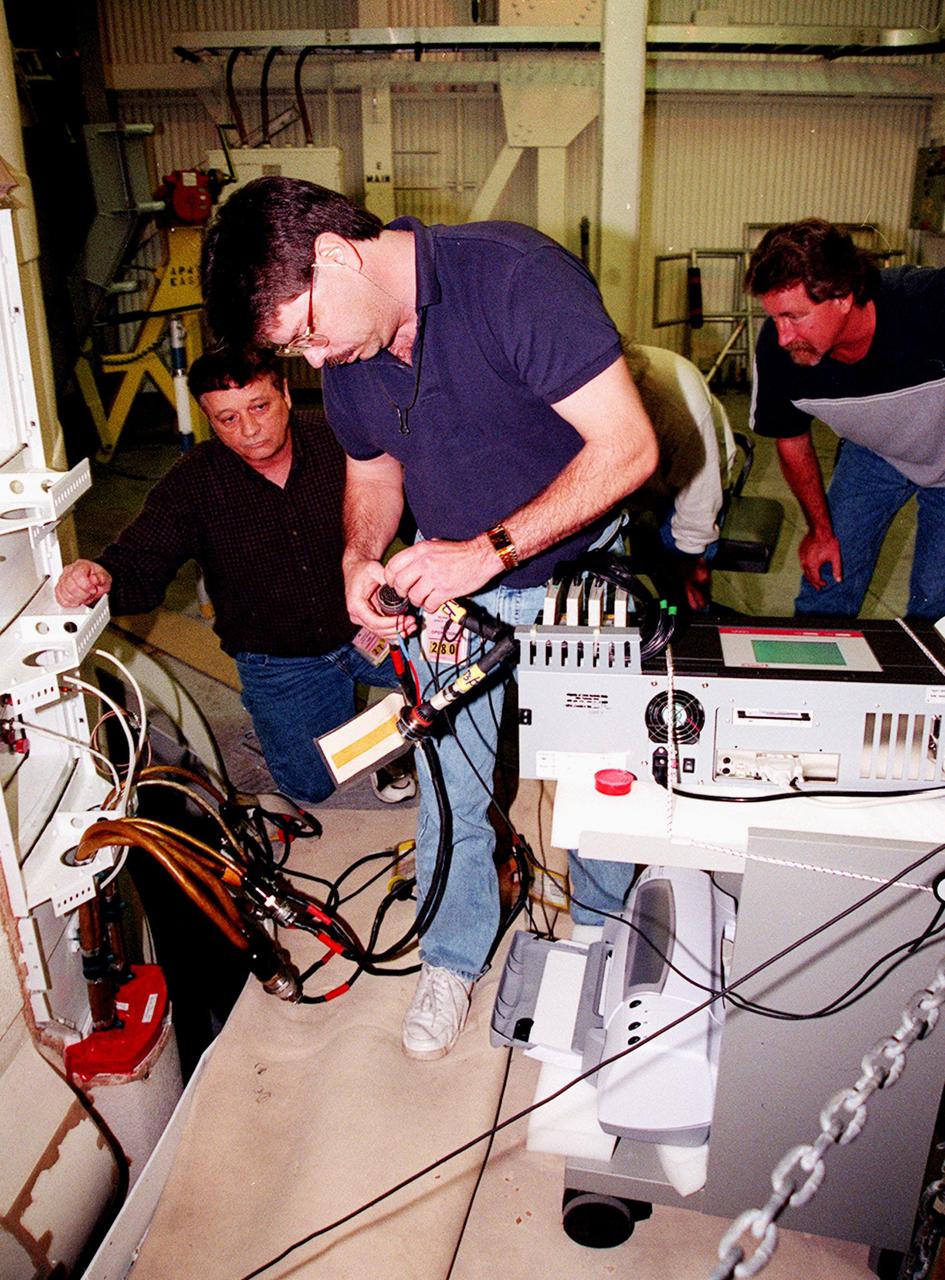
KENNEDY SPACE CENTER, FLA. -- NASA and United Space Alliance SRB technicians hook up solid rocket booster cables to a Cirris Signature Touch 1 cable tester. From left are Loren Atkinson and Steve Swichkow, with NASA, and Jeff Suter, with USA. The SRB is part of Space Shuttle Atlantis, rolled back from Launch Pad 39A in order to conduct tests on the cables. A prior extensive evaluation of NASA’s SRB cable inventory on the shelf revealed conductor damage in four (of about 200) cables. Shuttle managers decided to prove the integrity of the system tunnel cables already on Atlantis before launching. Workers are conducting inspections, making continuity checks and conducting X-ray analysis on the cables. The launch has been rescheduled no earlier than Feb. 6. <br
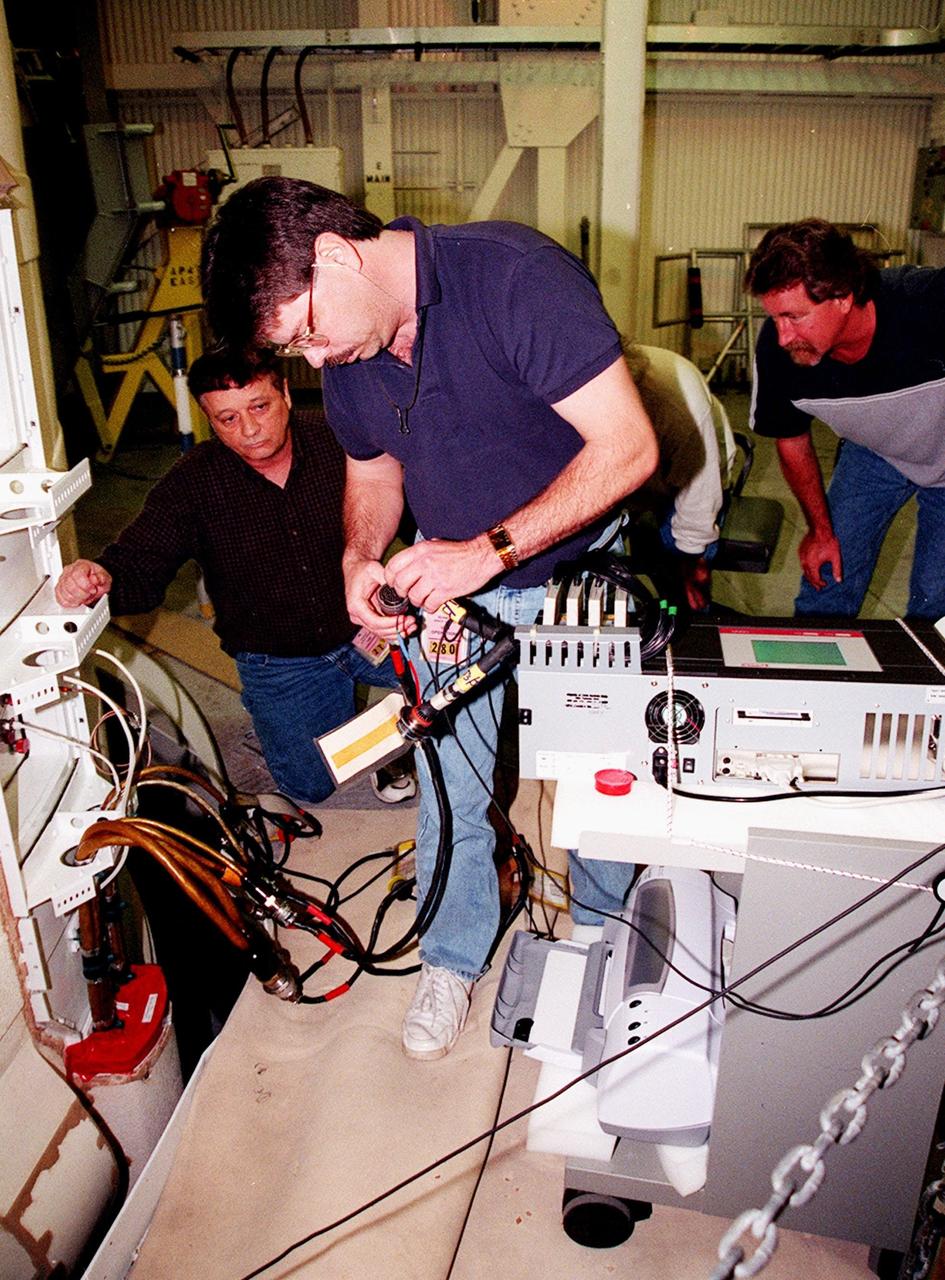
KENNEDY SPACE CENTER, FLA. -- NASA and United Space Alliance SRB technicians hook up solid rocket booster cables to a Cirris Signature Touch 1 cable tester. From left are Loren Atkinson and Steve Swichkow, with NASA, and Jeff Suter, with USA. The SRB is part of Space Shuttle Atlantis, rolled back from Launch Pad 39A in order to conduct tests on the cables. A prior extensive evaluation of NASA’s SRB cable inventory on the shelf revealed conductor damage in four (of about 200) cables. Shuttle managers decided to prove the integrity of the system tunnel cables already on Atlantis before launching. Workers are conducting inspections, making continuity checks and conducting X-ray analysis on the cables. The launch has been rescheduled no earlier than Feb. 6. <br
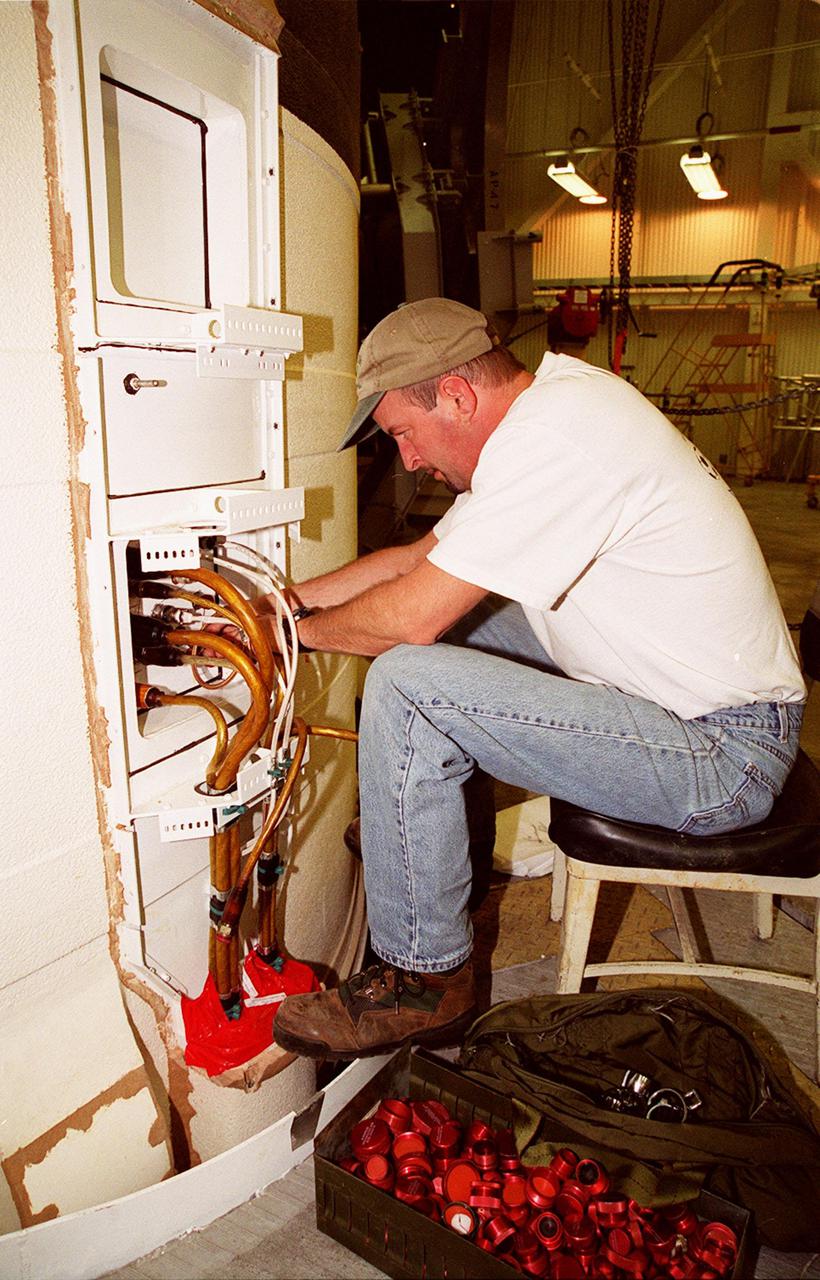
KENNEDY SPACE CENTER, FLA. -- In the Vehicle Assembly Building, United Space Alliance SRB technician Frank Meyer pulls cables out of the solid rocket booster system tunnel. Cable end covers are in a box near his feet. The SRB is part of Space Shuttle Atlantis, rolled back from Launch Pad 39A in order to conduct tests on the cables. A prior extensive evaluation of NASA’s SRB cable inventory on the shelf revealed conductor damage in four (of about 200) cables. Shuttle managers decided to prove the integrity of the system tunnel cables already on Atlantis before launching. Workers are conducting inspections, making continuity checks and conducting X-ray analysis on the cables. The launch has been rescheduled no earlier than Feb. 6. <br
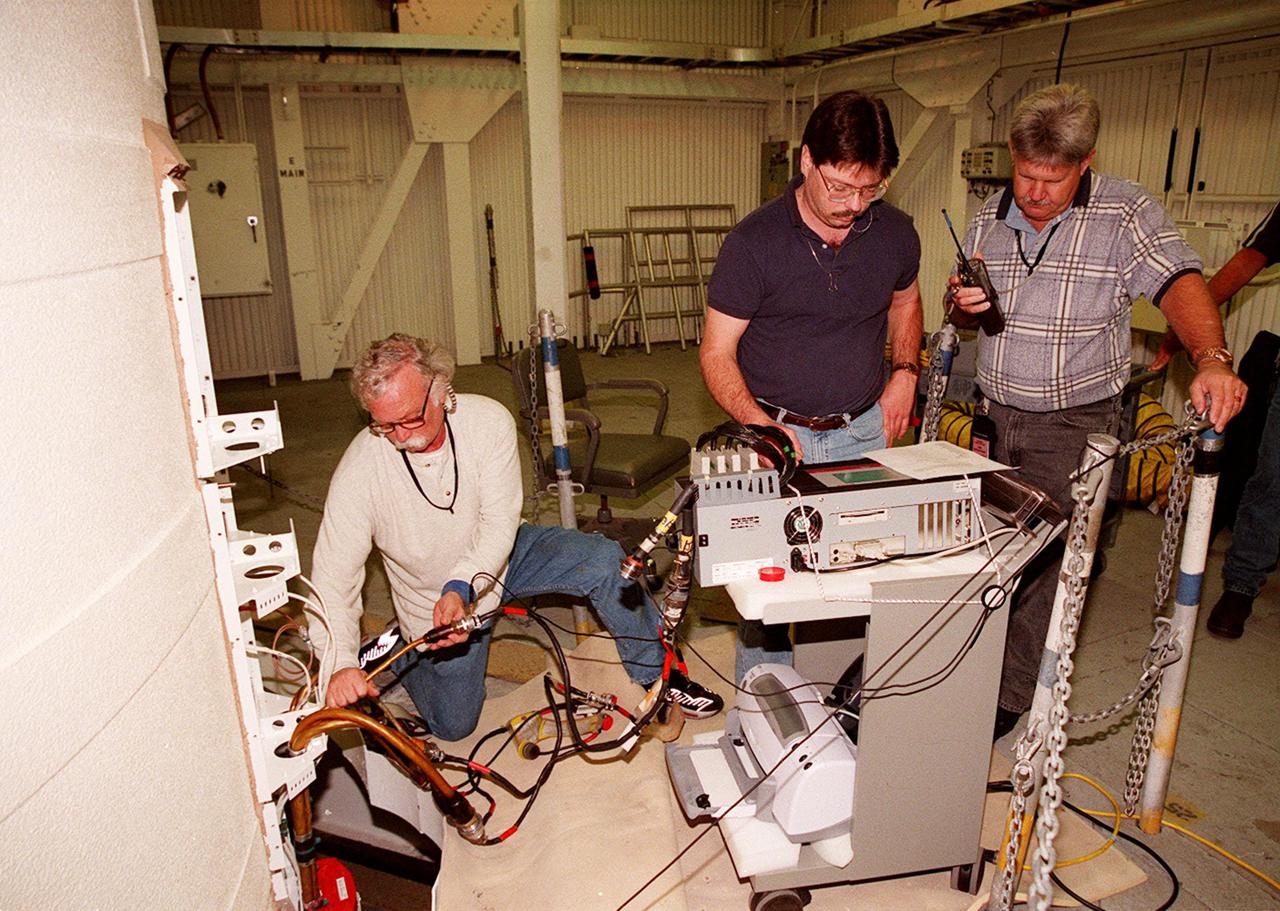
KENNEDY SPACE CENTER, FLA. -- Working near the top of a solid rocket booster, NASA and United Space Alliance SRB technicians hook up SRB cables to a CIRRUS computer for testing. From left are Jim Glass, with USA, performing a Flex test on the cable; Steve Swichkow, with NASA, and Jim Silviano, with USA, check the results on a computer. The SRB is part of Space Shuttle Atlantis, rolled back from Launch Pad 39A in order to conduct tests on the cables. A prior extensive evaluation of NASA’s SRB cable inventory on the shelf revealed conductor damage in four (of about 200) cables. Shuttle managers decided to prove the integrity of the system tunnel cables already on Atlantis before launching. Workers are conducting inspections, making continuity checks and conducting X-ray analysis on the cables. The launch has been rescheduled no earlier than Feb. 6. <br
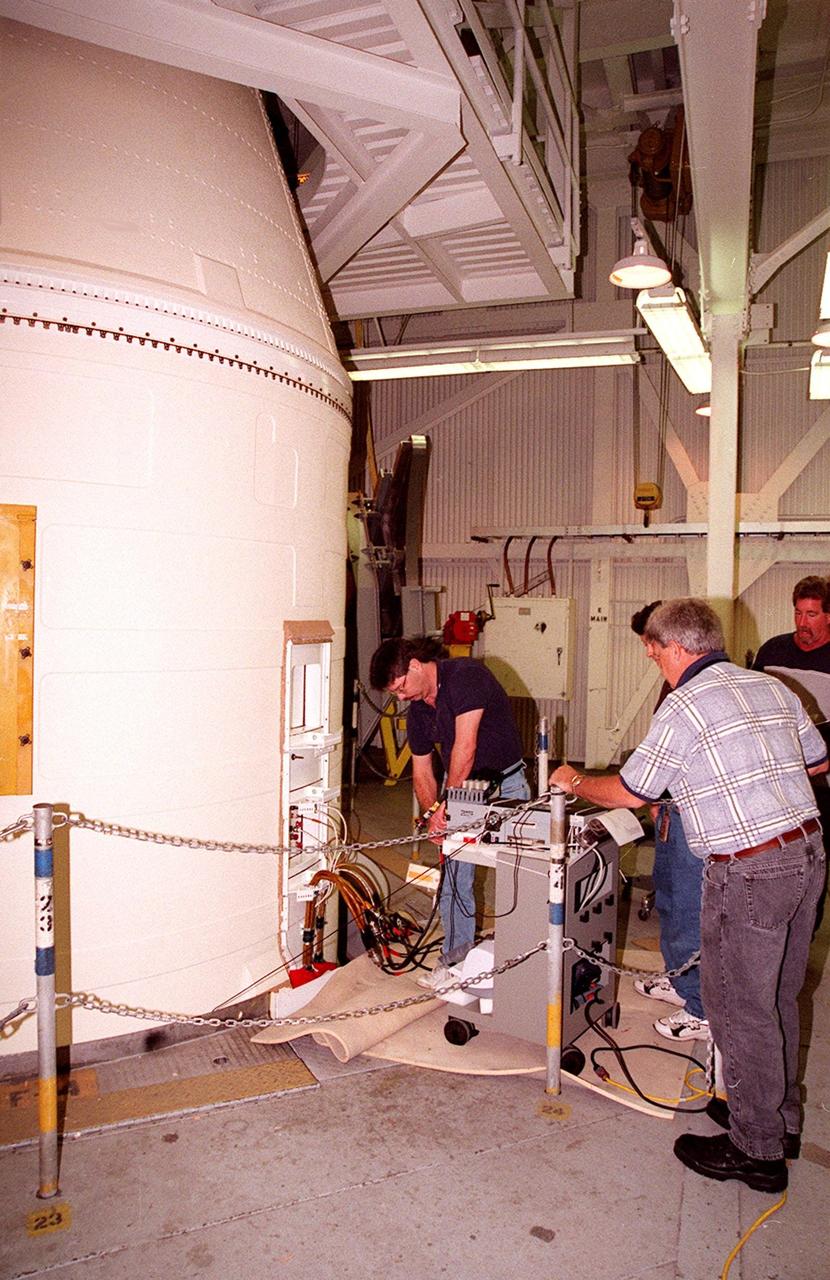
KENNEDY SPACE CENTER, FLA. -- Working near the top of a solid rocket booster, NASA and United Space Alliance SRB technicians hook up SRB cables to a Cirris Signature Touch 1 cable tester. From left are Steve Swichkow, with NASA, and Jim Silviano (back to camera) and Jeff Suter, with USA. The SRB is part of Space Shuttle Atlantis, rolled back from Launch Pad 39A in order to conduct tests on the cables. A prior extensive evaluation of NASA’s SRB cable inventory on the shelf revealed conductor damage in four (of about 200) cables. Shuttle managers decided to prove the integrity of the system tunnel cables already on Atlantis before launching. Workers are conducting inspections, making continuity checks and conducting X-ray analysis on the cables. The launch has been rescheduled no earlier than Feb. 6. <br
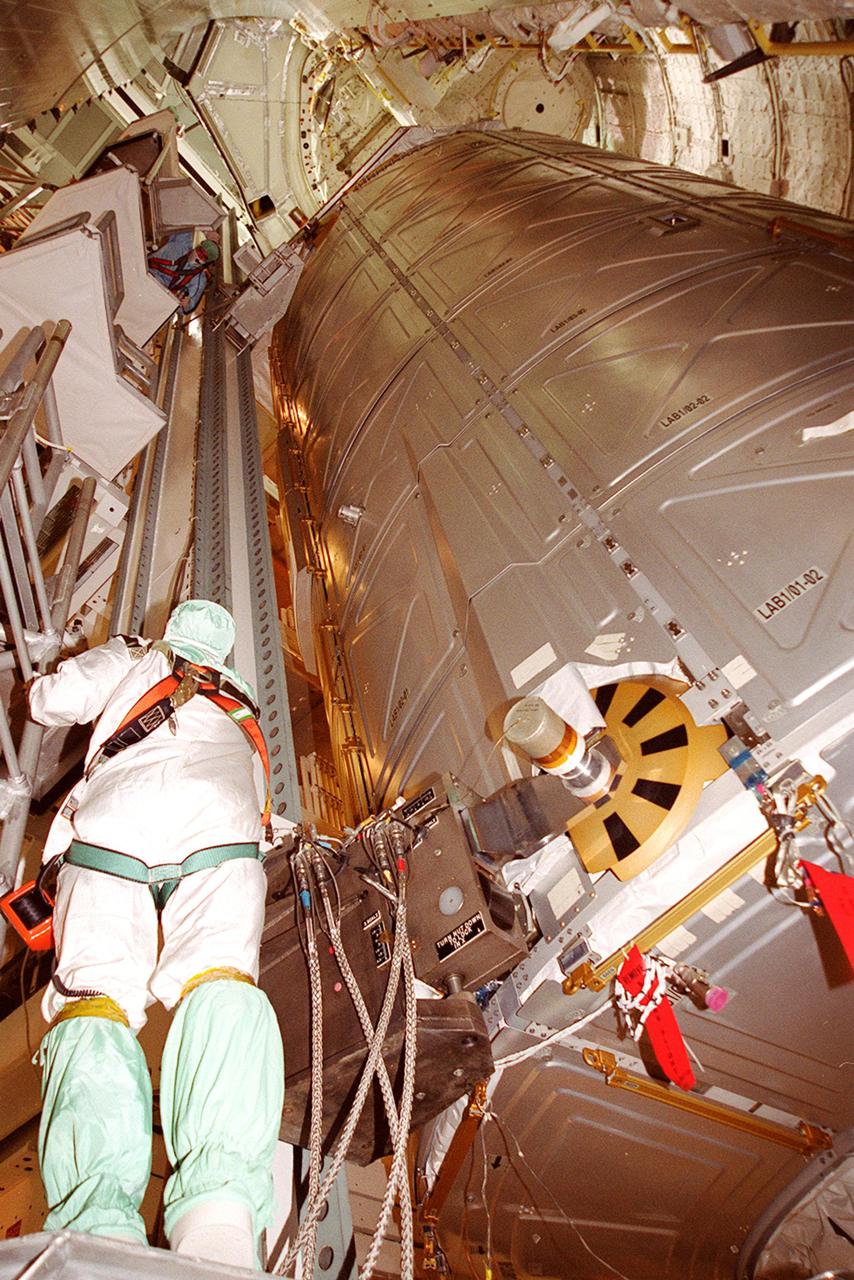
The U.S. Lab Destiny is ready to be moved from Atlantis’ payload bay into the Payload Changeout Room. After the move, Atlantis will roll back to the Vehicle Assembly Building to allow workers to conduct inspections, continuity checks and X-ray analysis on the 36 solid rocket booster cables located inside each booster’s system tunnel. An extensive evaluation of NASA’s SRB cable inventory revealed conductor damage in four (of about 200) cables on the shelf. Shuttle managers decided to prove the integrity of the system tunnel cables already on Atlantis
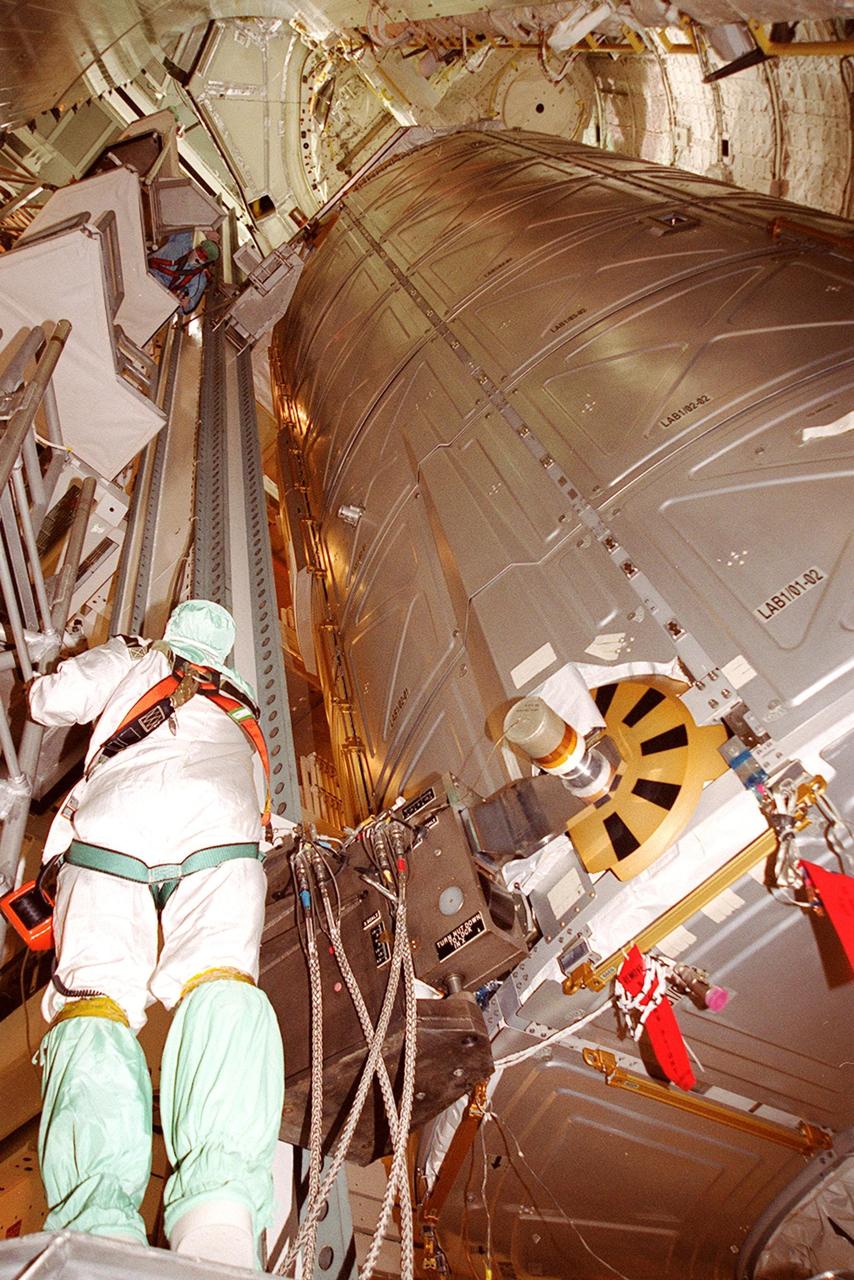
The U.S. Lab Destiny is ready to be moved from Atlantis’ payload bay into the Payload Changeout Room. After the move, Atlantis will roll back to the Vehicle Assembly Building to allow workers to conduct inspections, continuity checks and X-ray analysis on the 36 solid rocket booster cables located inside each booster’s system tunnel. An extensive evaluation of NASA’s SRB cable inventory revealed conductor damage in four (of about 200) cables on the shelf. Shuttle managers decided to prove the integrity of the system tunnel cables already on Atlantis
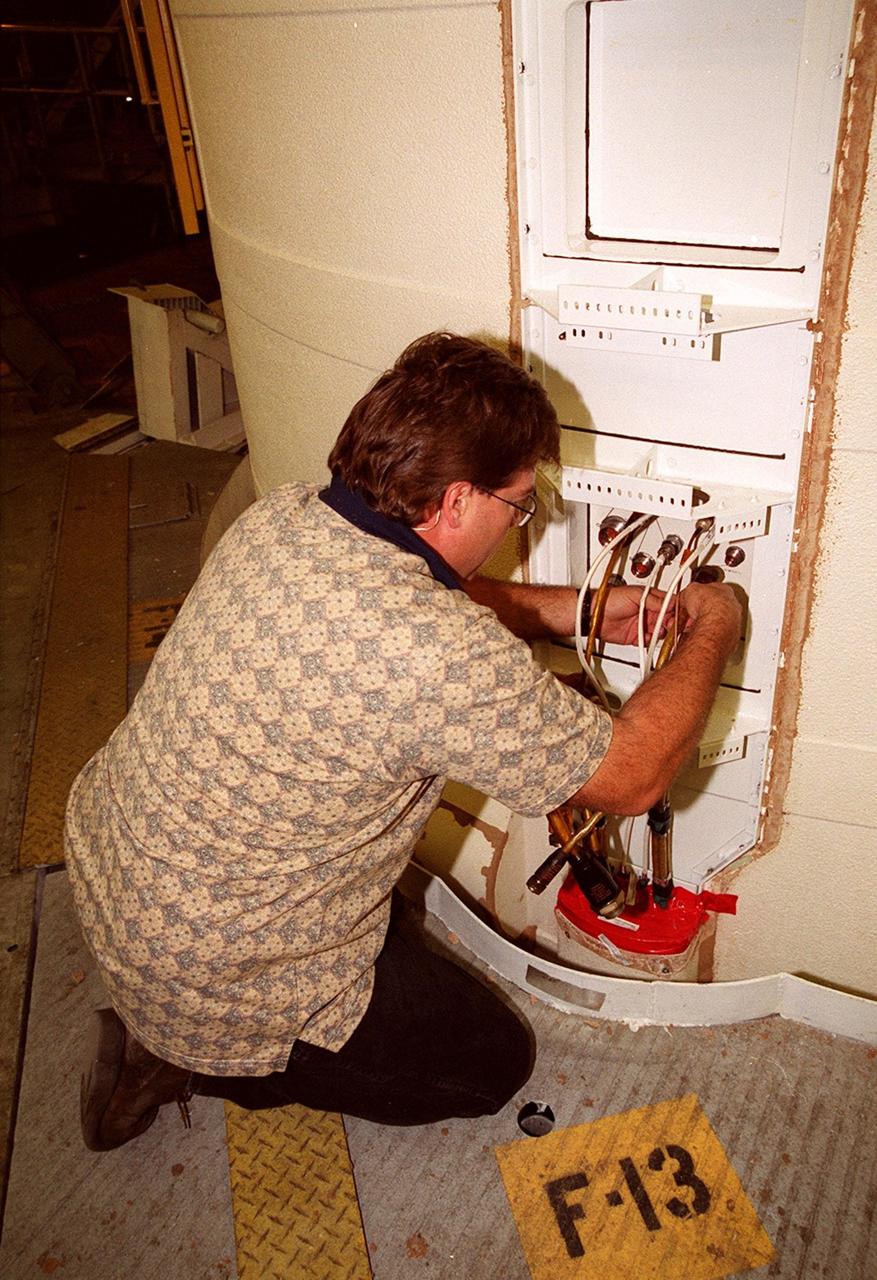
KENNEDY SPACE CENTER, FLA. -- In the Vehicle Assembly Building, Richard Bruns, a United Space Alliance SRB technician, pulls cables out of the solid rocket booster system tunnel. The SRB is part of Space Shuttle Atlantis, rolled back from Launch Pad 39A in order to conduct tests on the cables. A prior extensive evaluation of NASA’s SRB cable inventory on the shelf revealed conductor damage in four (of about 200) cables. Shuttle managers decided to prove the integrity of the system tunnel cables already on Atlantis before launching. Workers are conducting inspections, making continuity checks and conducting X-ray analysis on the cables. The launch has been rescheduled no earlier than Feb. 6. <br

KENNEDY SPACE CENTER, FLA. -- Near the bottom of the solid rocket booster in the Vehicle Assembly Building, a United Space Alliance SRB technician detaches the SRB system tunnel cover on the 36 cables inside. The SRB is part of Space Shuttle Atlantis, rolled back from Launch Pad 39A in order to conduct tests on the cables. A prior extensive evaluation of NASA’s SRB cable inventory on the shelf revealed conductor damage in four (of about 200) cables. Shuttle managers decided to prove the integrity of the system tunnel cables already on Atlantis before launching. Workers are conducting inspections, making continuity checks and conducting X-ray analysis on the cables. The launch has been rescheduled no earlier than Feb. 6
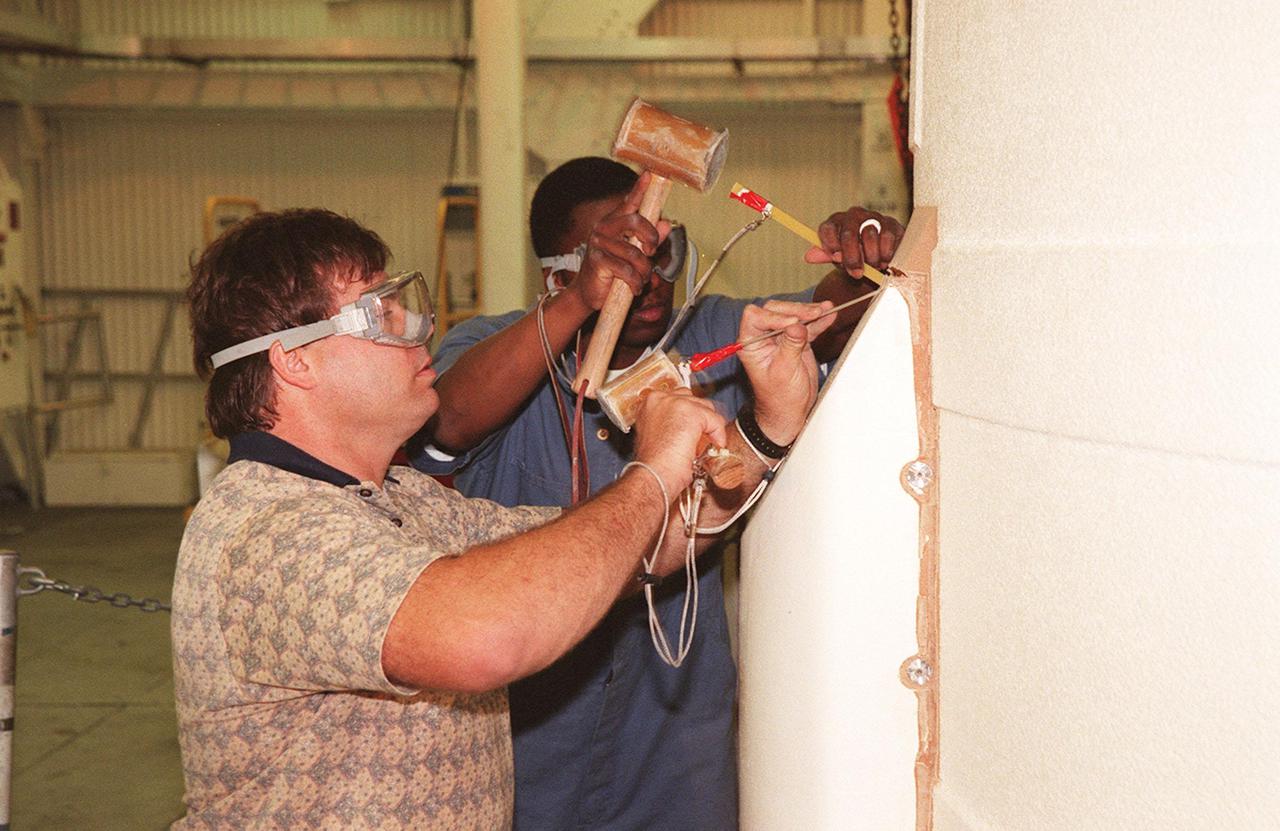
KENNEDY SPACE CENTER, FLA. -- In the Vehicle Assembly Building, Richard Bruns and Henry Jones, United Space Alliance SRB technicians, begin to detach the SRB system tunnel cover on the 36 cables inside. The SRB is part of Space Shuttle Atlantis, rolled back from Launch Pad 39A in order to conduct tests on the cables. A prior extensive evaluation of NASA’s SRB cable inventory on the shelf revealed conductor damage in four (of about 200) cables. Shuttle managers decided to prove the integrity of the system tunnel cables already on Atlantis before launching. Workers are conducting inspections, making continuity checks and conducting X-ray analysis on the cables. The launch has been rescheduled no earlier than Feb. 6. <br
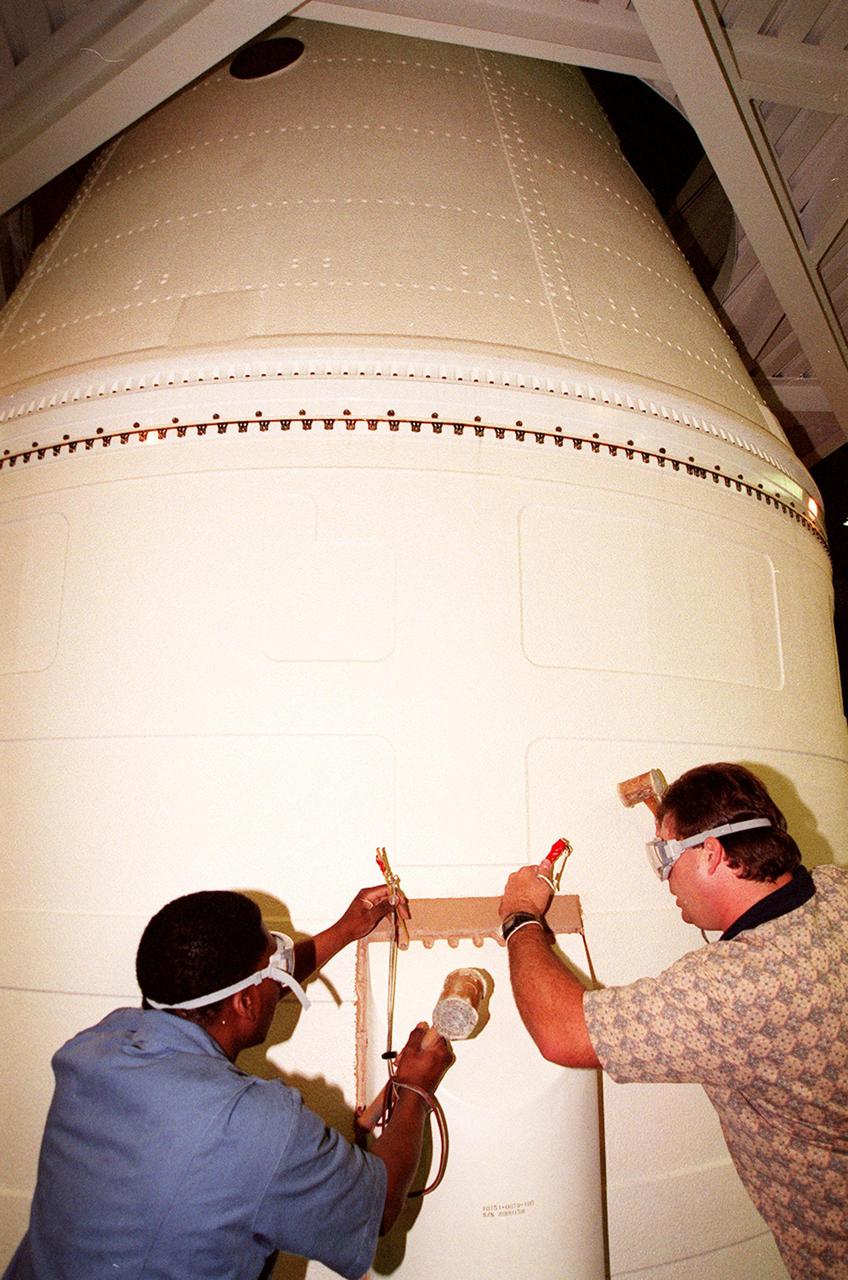
KENNEDY SPACE CENTER, FLA. -- In the Vehicle Assembly Building, near the top of the solid rocket booster, Henry Jones and Richard Bruns begin to detach the SRB system tunnel cover on the 36 cables inside. Jones and Bruns are United Space Alliance SRB technicians. The SRB is part of Space Shuttle Atlantis, rolled back from Launch Pad 39A in order to conduct tests on the cables. A prior extensive evaluation of NASA’s SRB cable inventory on the shelf revealed conductor damage in four (of about 200) cables. Shuttle managers decided to prove the integrity of the system tunnel cables already on Atlantis before launching. Workers are conducting inspections, making continuity checks and conducting X-ray analysis on the cables. The launch has been rescheduled no earlier than Feb. 6.<br
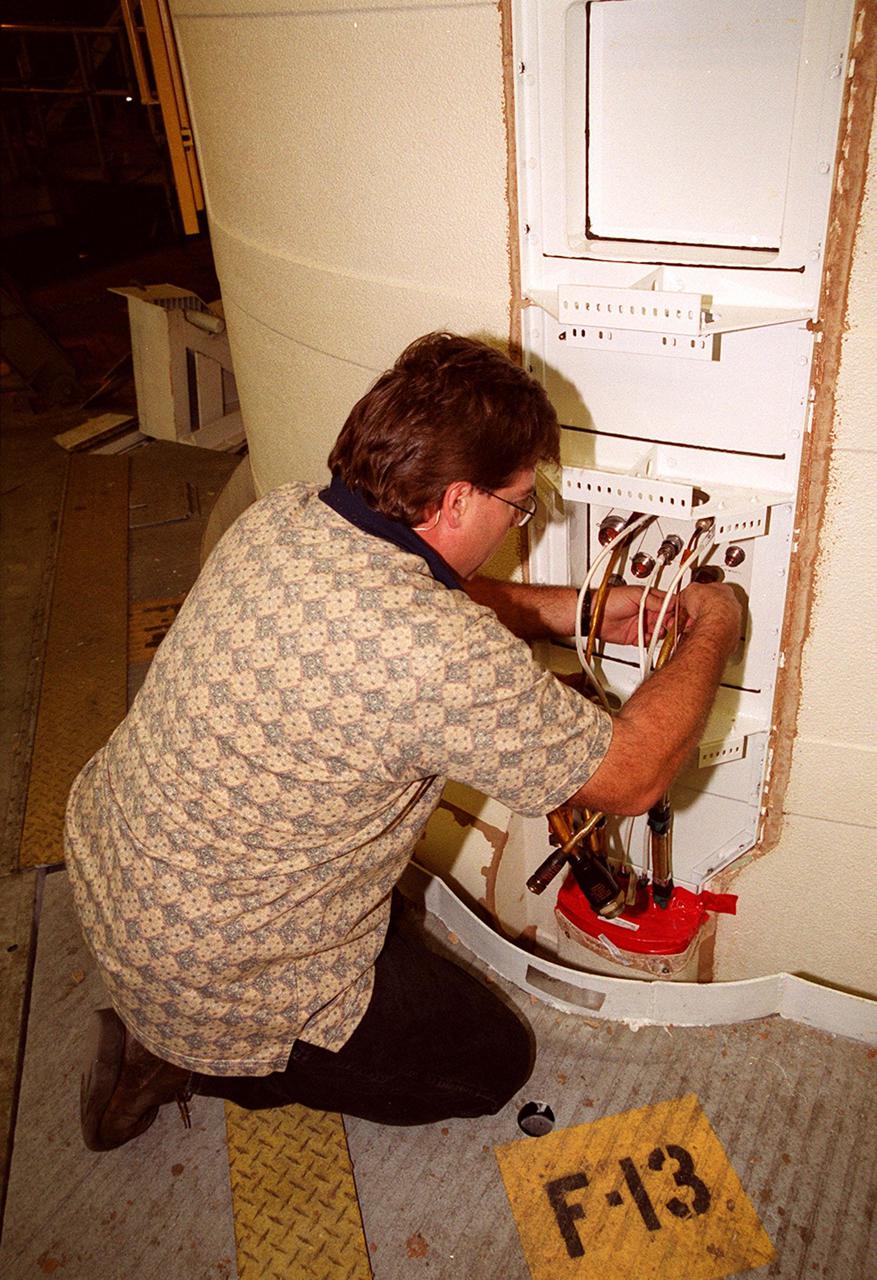
KENNEDY SPACE CENTER, FLA. -- In the Vehicle Assembly Building, Richard Bruns, a United Space Alliance SRB technician, pulls cables out of the solid rocket booster system tunnel. The SRB is part of Space Shuttle Atlantis, rolled back from Launch Pad 39A in order to conduct tests on the cables. A prior extensive evaluation of NASA’s SRB cable inventory on the shelf revealed conductor damage in four (of about 200) cables. Shuttle managers decided to prove the integrity of the system tunnel cables already on Atlantis before launching. Workers are conducting inspections, making continuity checks and conducting X-ray analysis on the cables. The launch has been rescheduled no earlier than Feb. 6. <br
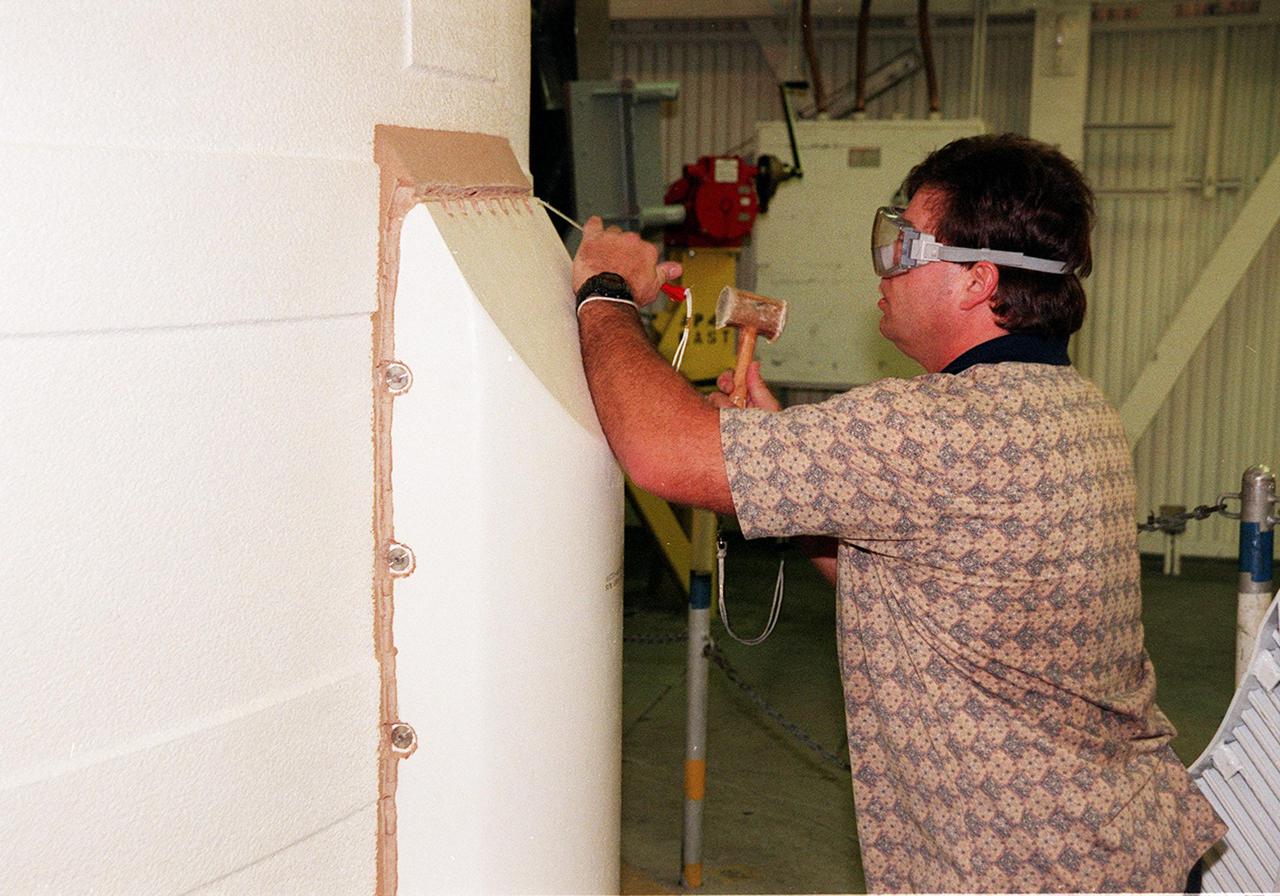
KENNEDY SPACE CENTER, FLA. -- In the Vehicle Assembly Building, Richard Bruns, a United Space Alliance SRB technician, begins to detach the SRB system tunnel cover on the 36 cables inside. The SRB is part of Space Shuttle Atlantis, rolled back from Launch Pad 39A in order to conduct tests on the cables. A prior extensive evaluation of NASA’s SRB cable inventory on the shelf revealed conductor damage in four (of about 200) cables. Shuttle managers decided to prove the integrity of the system tunnel cables already on Atlantis before launching. Workers are conducting inspections, making continuity checks and conducting X-ray analysis on the cables. The launch has been rescheduled no earlier than Feb. 6. <br
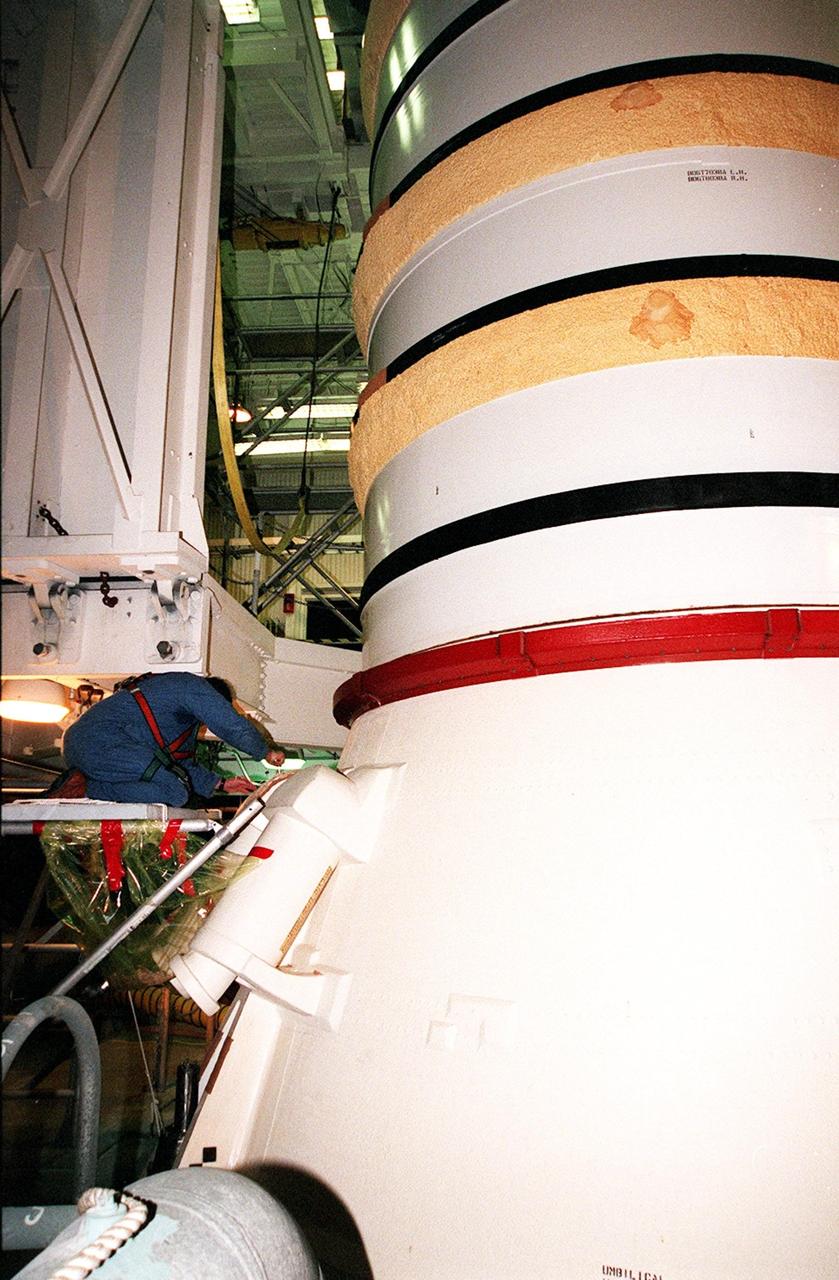
KENNEDY SPACE CENTER, FLA. -- Near the bottom of the solid rocket booster, a worker in the Vehicle Assembly Building begins to detach the SRB system tunnel cover on the 36 cables inside. The SRB is part of Space Shuttle Atlantis, rolled back from Launch Pad 39A in order to conduct tests on the cables. A prior extensive evaluation of NASA’s SRB cable inventory on the shelf revealed conductor damage in four (of about 200) cables. Shuttle managers decided to prove the integrity of the system tunnel cables already on Atlantis before launching. Workers are conducting inspections, making continuity checks and conducting X-ray analysis on the cables. The launch has been rescheduled no earlier than Feb. 6. <br
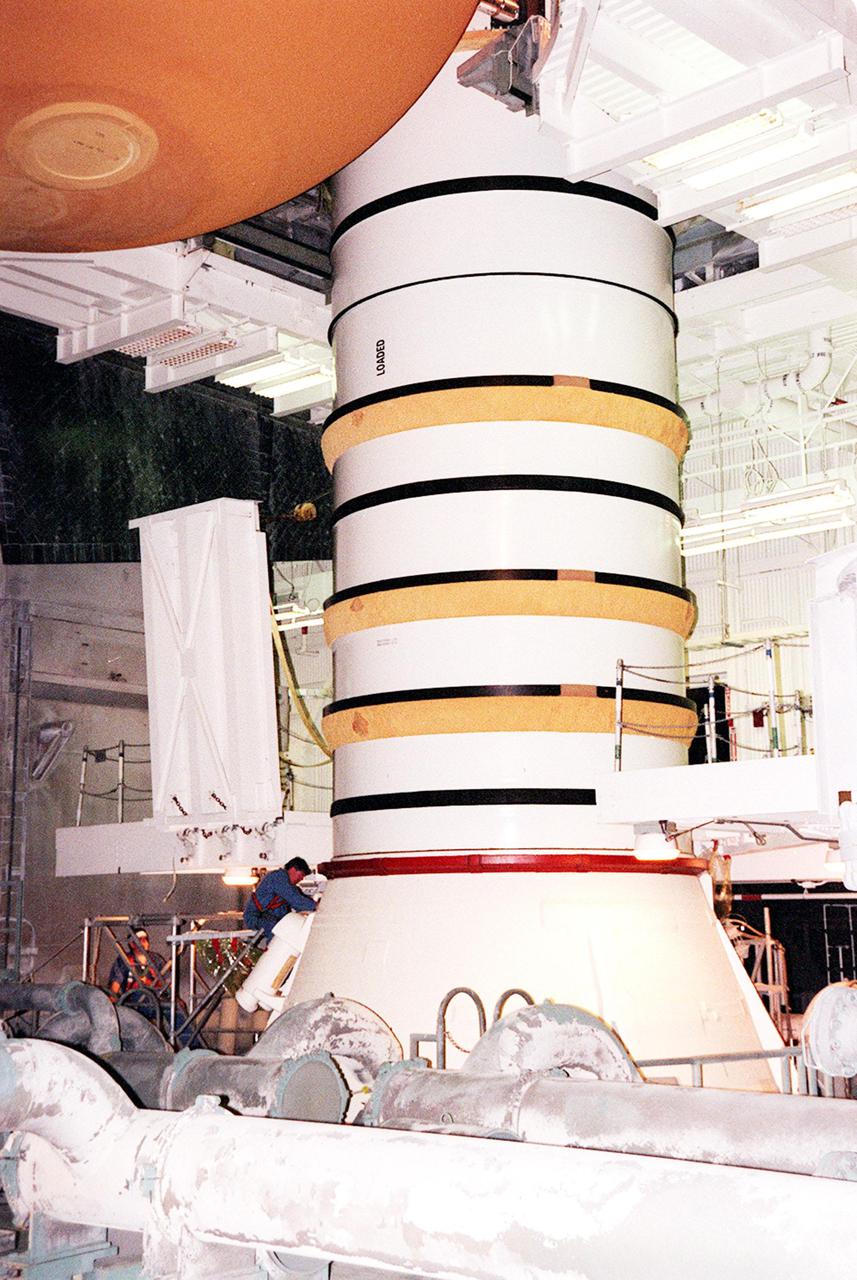
KENNEDY SPACE CENTER, FLA. -- Near the bottom of the solid rocket booster, a United Space Alliance SRB technician in the Vehicle Assembly Building detaches the SRB system tunnel cover of the 36 cables inside. Above and to the left is the bottom of the external tank. The SRB is part of Space Shuttle Atlantis, rolled back from Launch Pad 39A in order to conduct tests on the cables. A prior extensive evaluation of NASA’s SRB cable inventory on the shelf revealed conductor damage in four (of about 200) cables. Shuttle managers decided to prove the integrity of the system tunnel cables already on Atlantis before launching. Workers are conducting inspections, making continuity checks and conducting X-ray analysis on the cables. The launch has been rescheduled no earlier than Feb. 6. <br
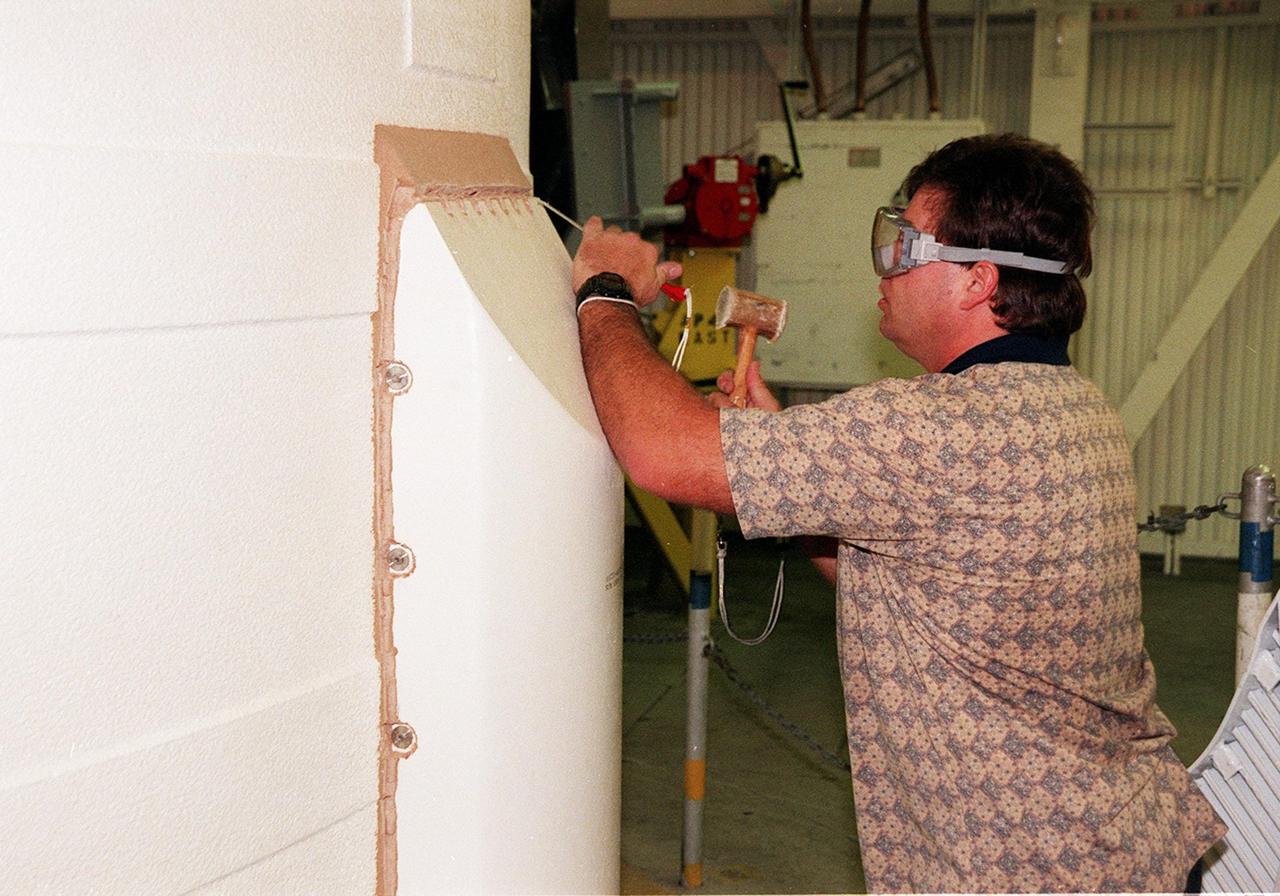
KENNEDY SPACE CENTER, FLA. -- In the Vehicle Assembly Building, Richard Bruns, a United Space Alliance SRB technician, begins to detach the SRB system tunnel cover on the 36 cables inside. The SRB is part of Space Shuttle Atlantis, rolled back from Launch Pad 39A in order to conduct tests on the cables. A prior extensive evaluation of NASA’s SRB cable inventory on the shelf revealed conductor damage in four (of about 200) cables. Shuttle managers decided to prove the integrity of the system tunnel cables already on Atlantis before launching. Workers are conducting inspections, making continuity checks and conducting X-ray analysis on the cables. The launch has been rescheduled no earlier than Feb. 6. <br
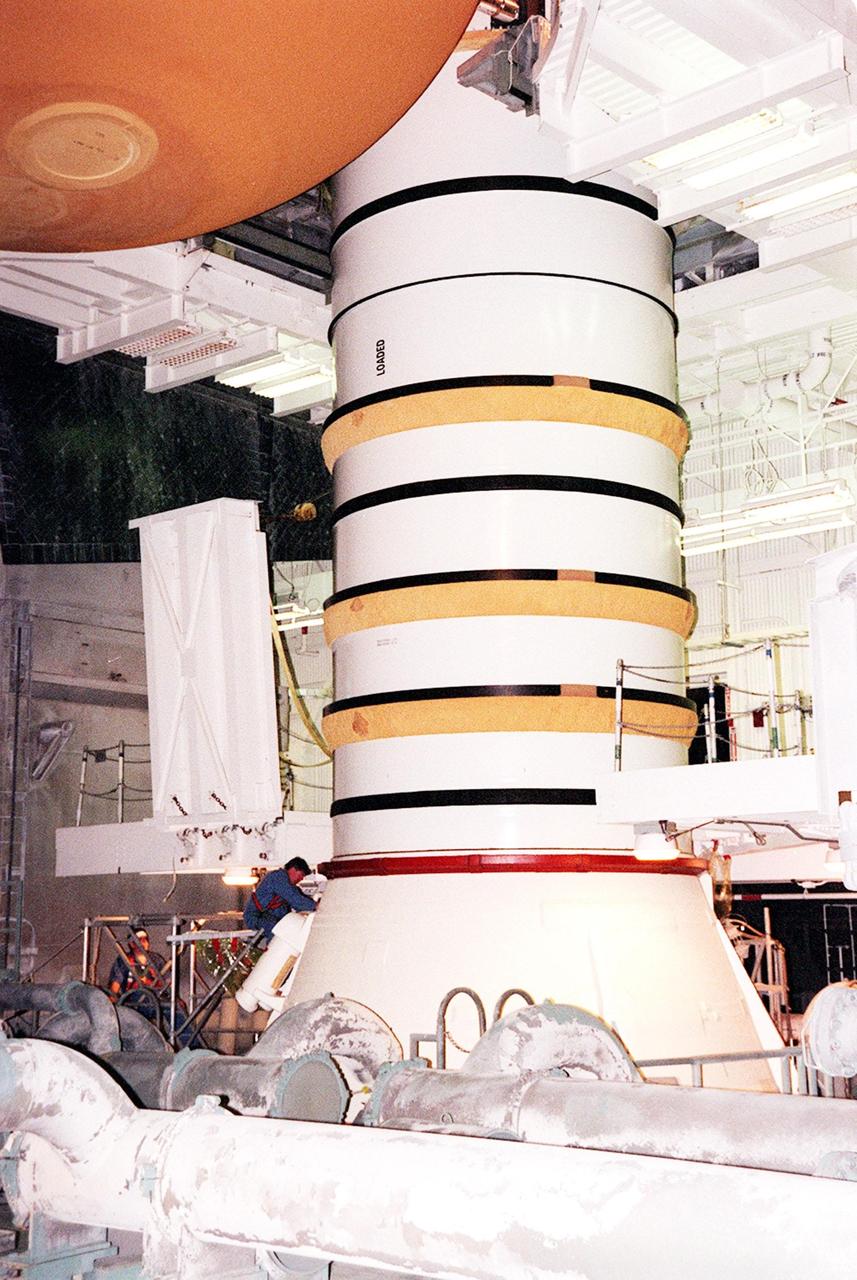
KENNEDY SPACE CENTER, FLA. -- Near the bottom of the solid rocket booster, a United Space Alliance SRB technician in the Vehicle Assembly Building detaches the SRB system tunnel cover of the 36 cables inside. Above and to the left is the bottom of the external tank. The SRB is part of Space Shuttle Atlantis, rolled back from Launch Pad 39A in order to conduct tests on the cables. A prior extensive evaluation of NASA’s SRB cable inventory on the shelf revealed conductor damage in four (of about 200) cables. Shuttle managers decided to prove the integrity of the system tunnel cables already on Atlantis before launching. Workers are conducting inspections, making continuity checks and conducting X-ray analysis on the cables. The launch has been rescheduled no earlier than Feb. 6. <br

KENNEDY SPACE CENTER, FLA. -- Near the bottom of the solid rocket booster in the Vehicle Assembly Building, a United Space Alliance SRB technician detaches the SRB system tunnel cover on the 36 cables inside. The SRB is part of Space Shuttle Atlantis, rolled back from Launch Pad 39A in order to conduct tests on the cables. A prior extensive evaluation of NASA’s SRB cable inventory on the shelf revealed conductor damage in four (of about 200) cables. Shuttle managers decided to prove the integrity of the system tunnel cables already on Atlantis before launching. Workers are conducting inspections, making continuity checks and conducting X-ray analysis on the cables. The launch has been rescheduled no earlier than Feb. 6
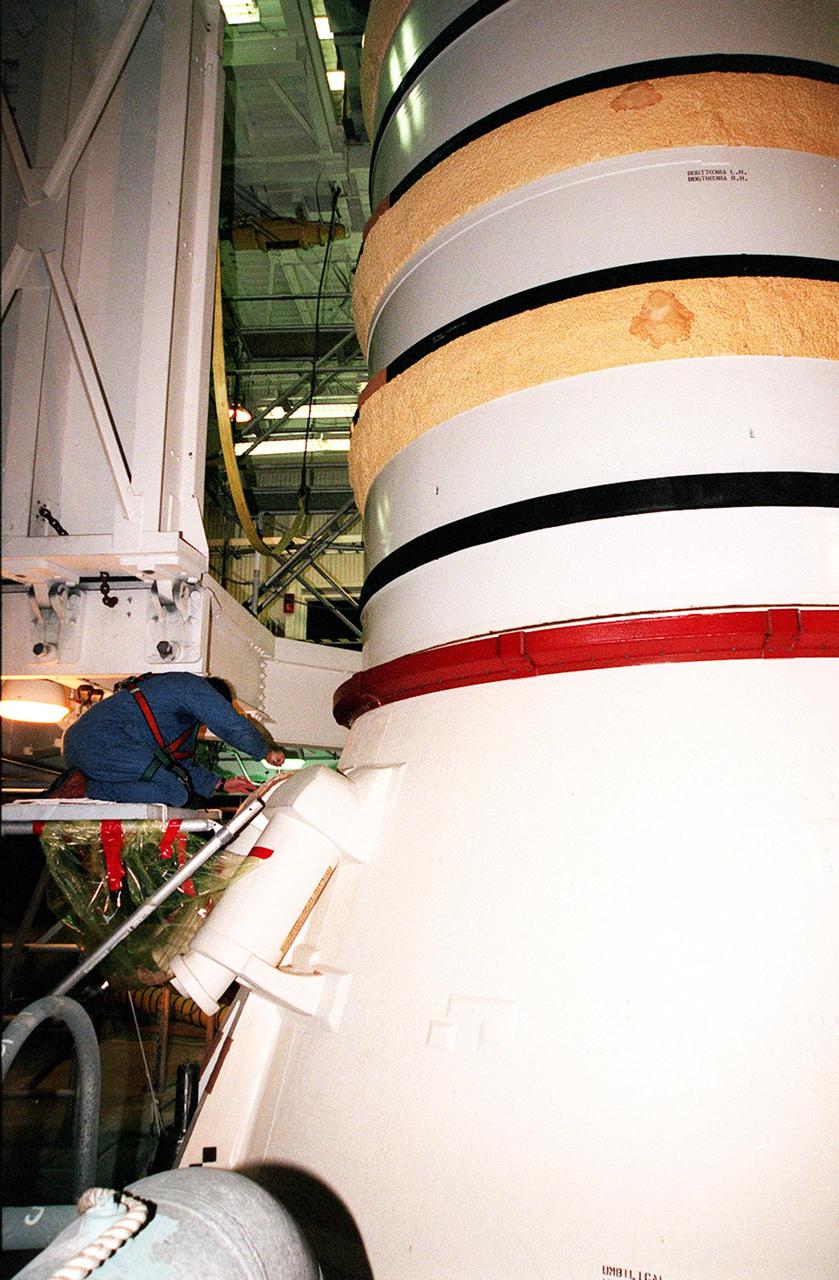
KENNEDY SPACE CENTER, FLA. -- Near the bottom of the solid rocket booster, a worker in the Vehicle Assembly Building begins to detach the SRB system tunnel cover on the 36 cables inside. The SRB is part of Space Shuttle Atlantis, rolled back from Launch Pad 39A in order to conduct tests on the cables. A prior extensive evaluation of NASA’s SRB cable inventory on the shelf revealed conductor damage in four (of about 200) cables. Shuttle managers decided to prove the integrity of the system tunnel cables already on Atlantis before launching. Workers are conducting inspections, making continuity checks and conducting X-ray analysis on the cables. The launch has been rescheduled no earlier than Feb. 6. <br
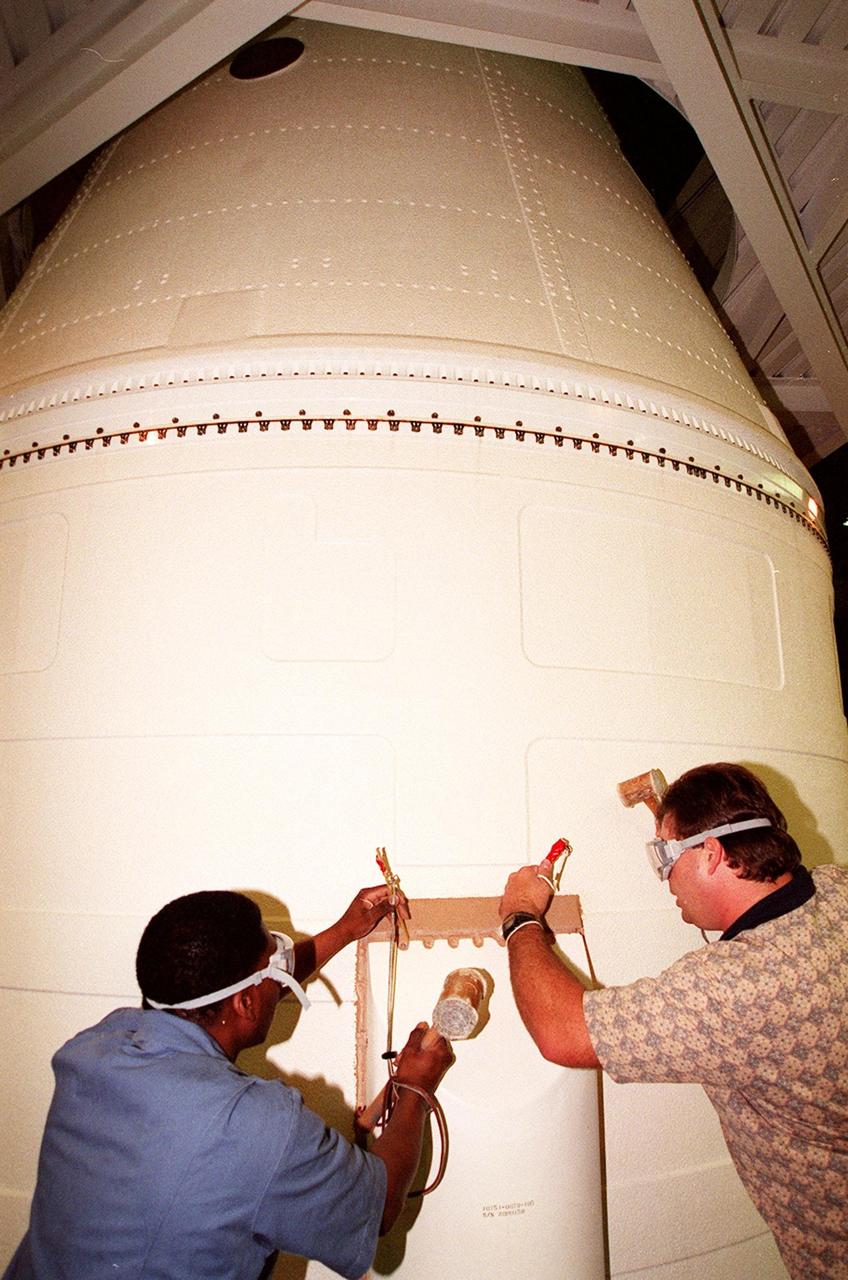
KENNEDY SPACE CENTER, FLA. -- In the Vehicle Assembly Building, near the top of the solid rocket booster, Henry Jones and Richard Bruns begin to detach the SRB system tunnel cover on the 36 cables inside. Jones and Bruns are United Space Alliance SRB technicians. The SRB is part of Space Shuttle Atlantis, rolled back from Launch Pad 39A in order to conduct tests on the cables. A prior extensive evaluation of NASA’s SRB cable inventory on the shelf revealed conductor damage in four (of about 200) cables. Shuttle managers decided to prove the integrity of the system tunnel cables already on Atlantis before launching. Workers are conducting inspections, making continuity checks and conducting X-ray analysis on the cables. The launch has been rescheduled no earlier than Feb. 6.<br
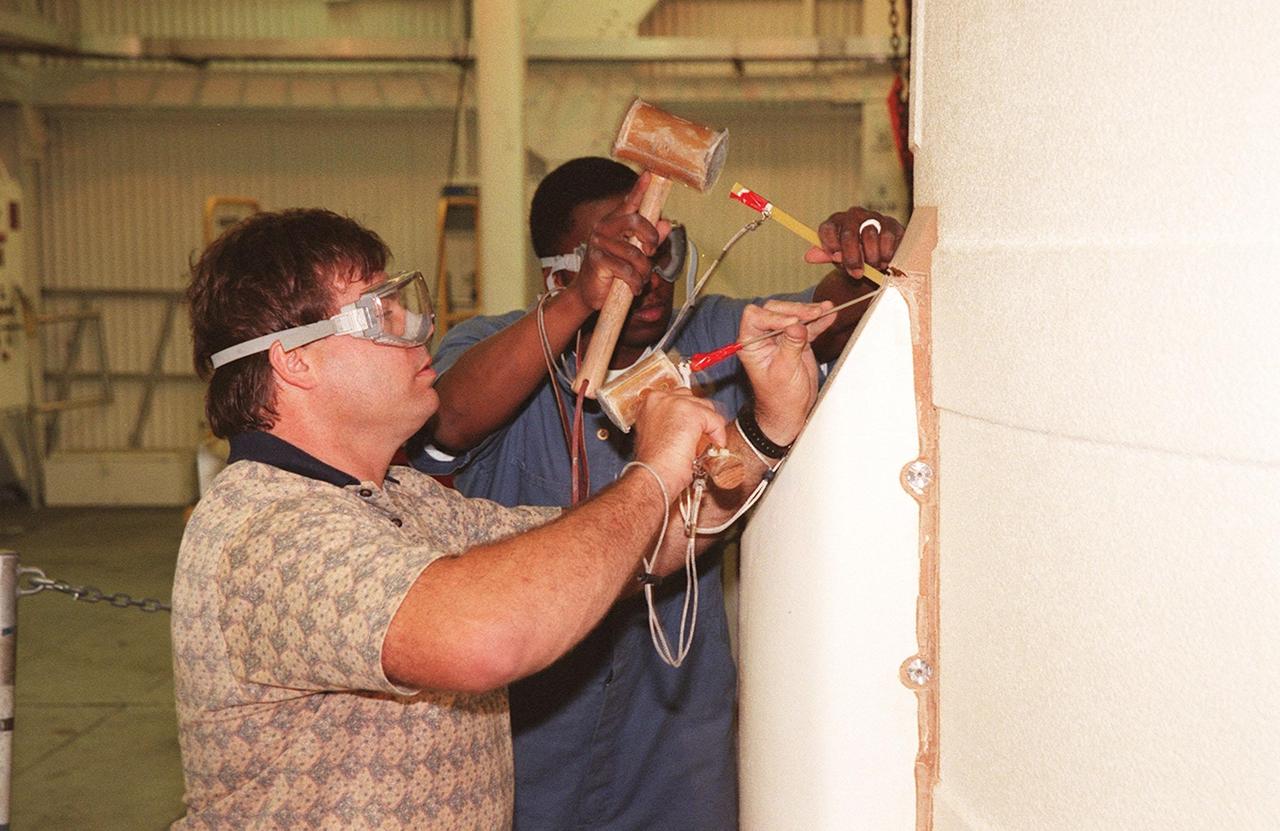
KENNEDY SPACE CENTER, FLA. -- In the Vehicle Assembly Building, Richard Bruns and Henry Jones, United Space Alliance SRB technicians, begin to detach the SRB system tunnel cover on the 36 cables inside. The SRB is part of Space Shuttle Atlantis, rolled back from Launch Pad 39A in order to conduct tests on the cables. A prior extensive evaluation of NASA’s SRB cable inventory on the shelf revealed conductor damage in four (of about 200) cables. Shuttle managers decided to prove the integrity of the system tunnel cables already on Atlantis before launching. Workers are conducting inspections, making continuity checks and conducting X-ray analysis on the cables. The launch has been rescheduled no earlier than Feb. 6. <br
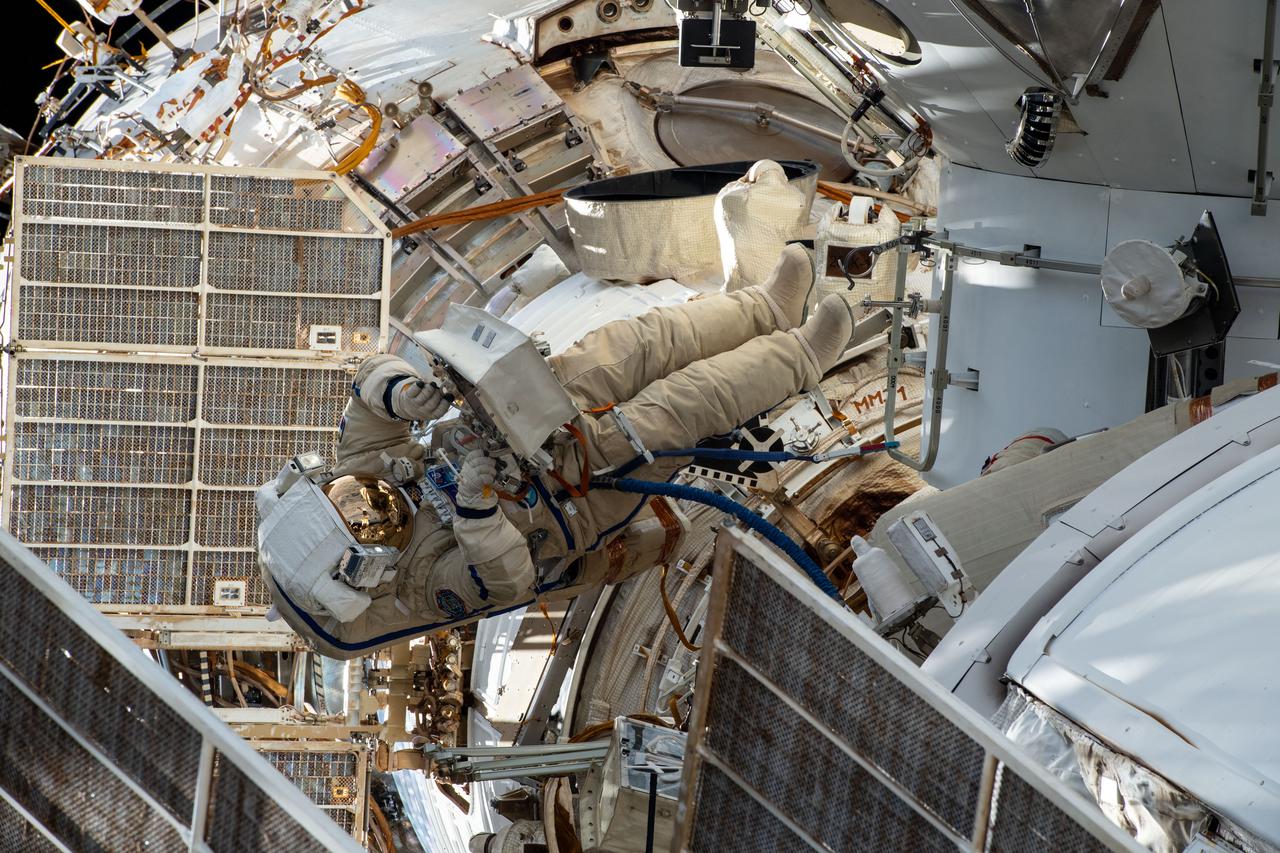
iss065e349044 (Sept. 3, 2021) --- Expedition 65 Flight Engineer Pyotr Dubrov from Roscosmos is pictured during a spacewalk to begin outfitting Russia's Nauka multipurpose laboratory module with ethernet cables, power cables and handrails.
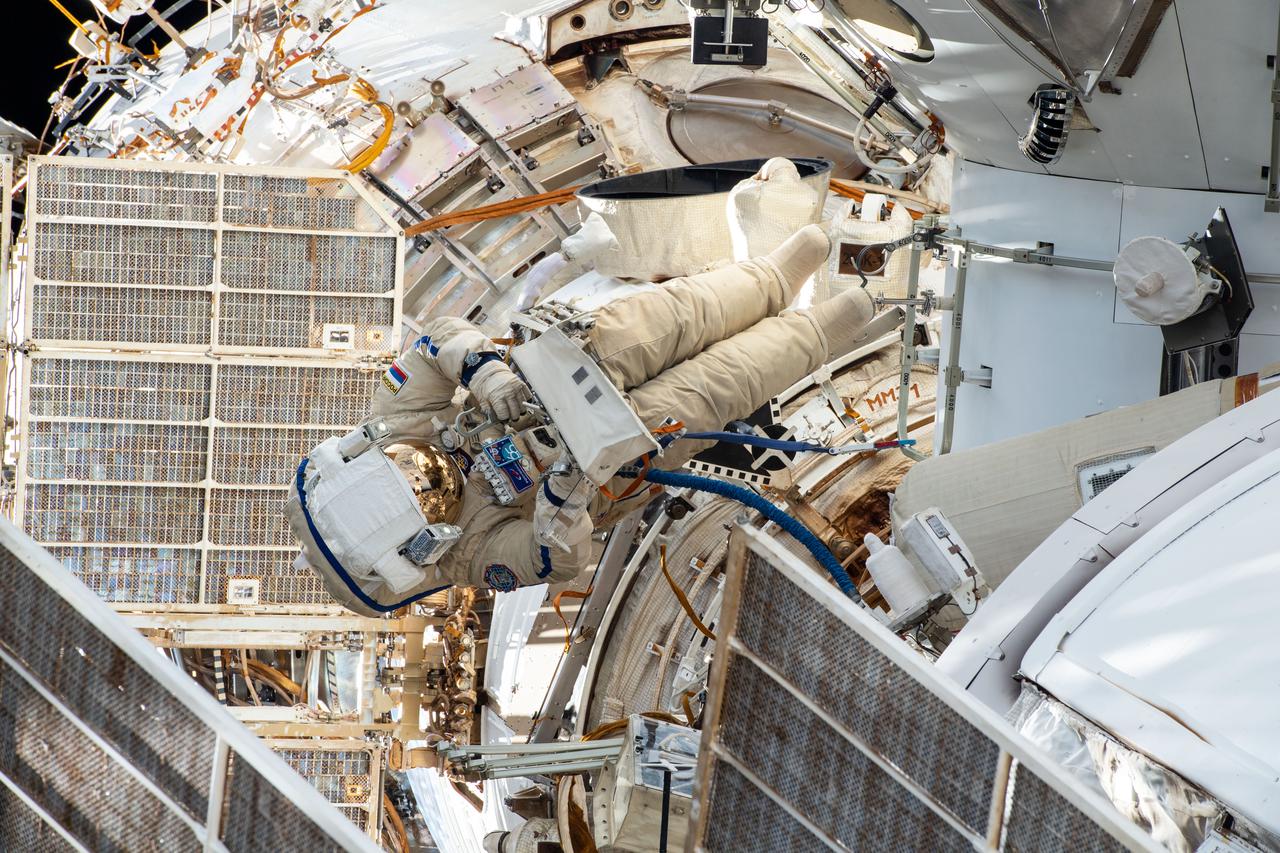
iss065e349034 (Sept. 3, 2021) --- Expedition 65 Flight Engineer Pyotr Dubrov from Roscosmos is pictured during a spacewalk to begin outfitting Russia's Nauka multipurpose laboratory module with ethernet cables, power cables and handrails.
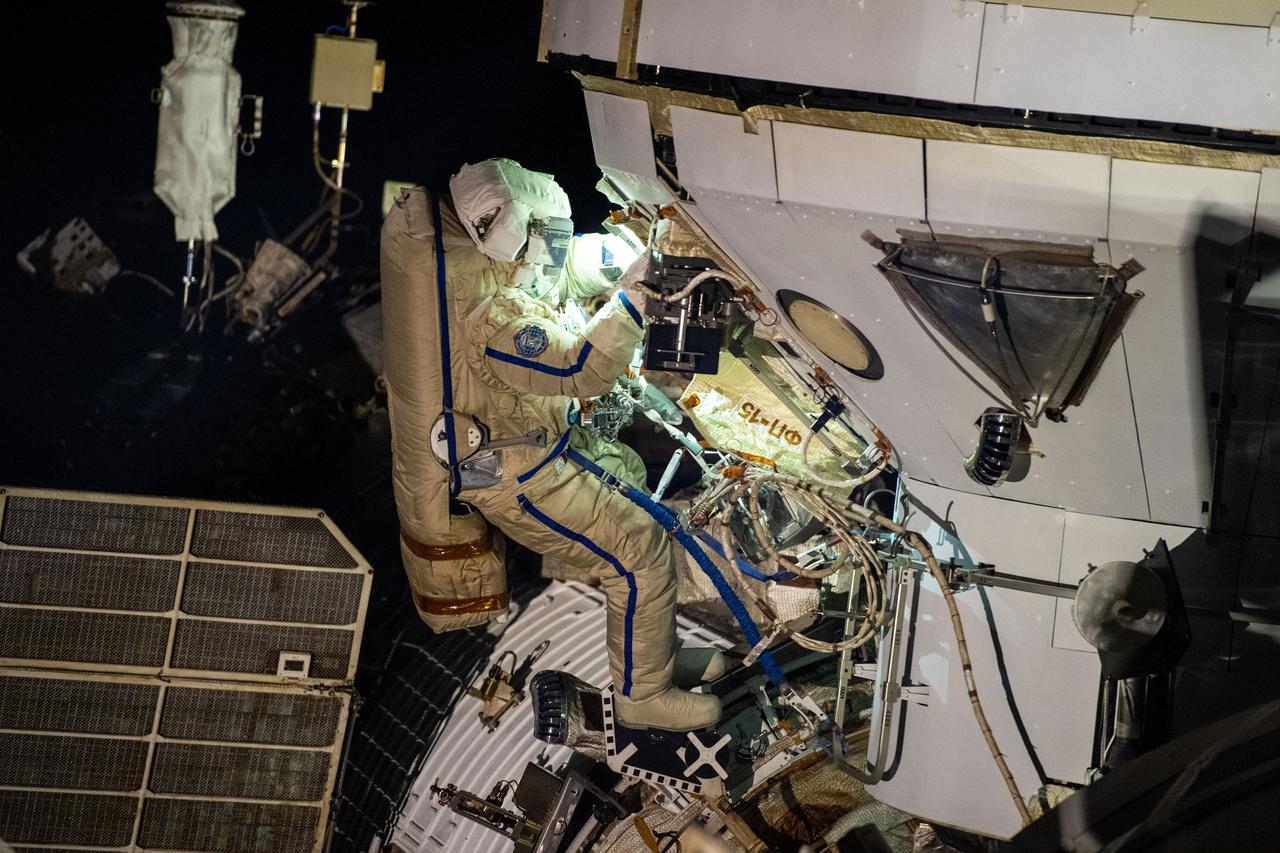
iss065e349206 (Sept. 3, 2021) --- Expedition 65 Flight Engineer Pyotr Dubrov from Roscosmos is pictured during a spacewalk to begin outfitting Russia's Nauka multipurpose laboratory module with ethernet cables, power cables and handrails.
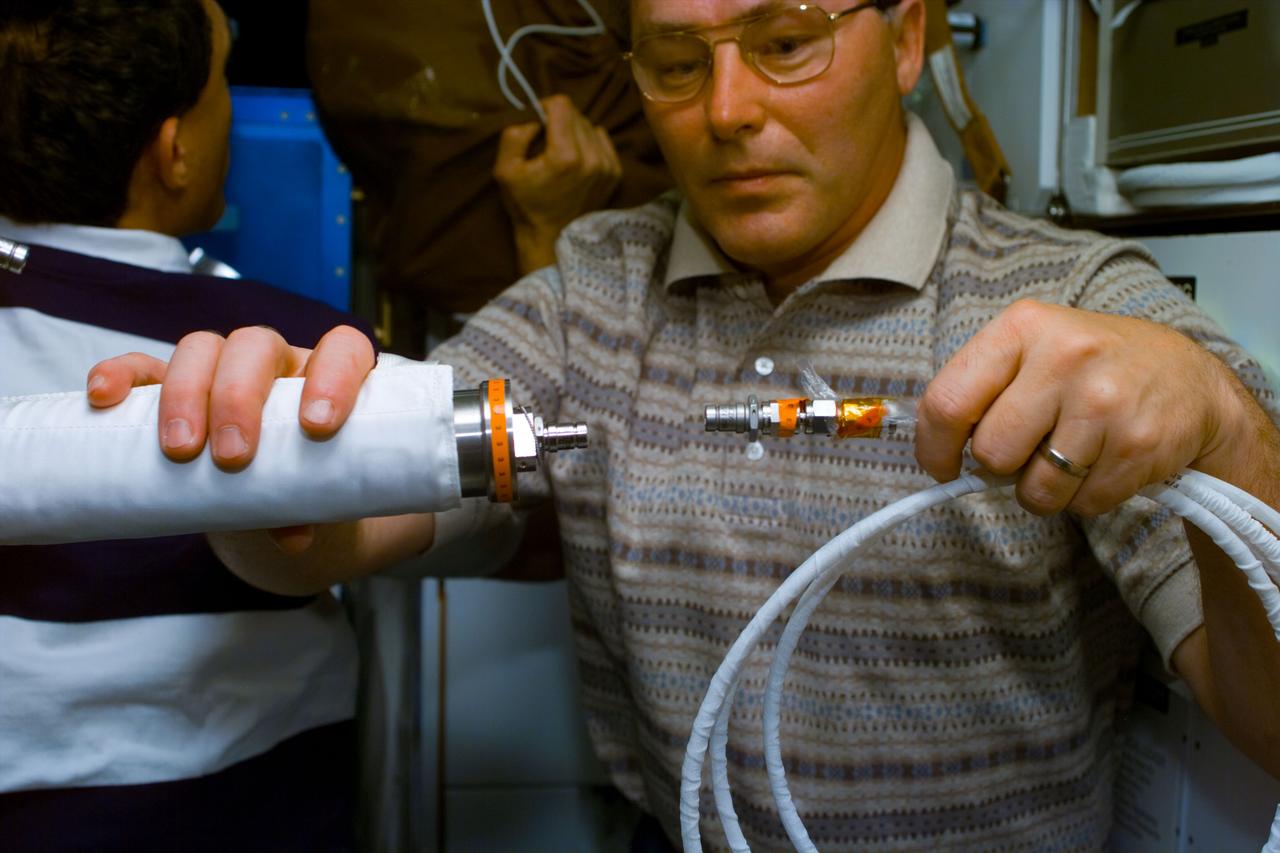
S88-E-5002 (12-04-98) --- Astronaut Jerry L. Ross, mission specialist, holds up two incompatible connections involved in one of the STS-88 detailed test objectives (DTO), this one having to do with the crew's drinking water. The proper counterpart was later located and the connection was successfully accomplished. Astronaut James H. Newman, mission specialist, is at left background. DTO 691 is an in cabin experiment dealing with a low-iodine residual system. Newly developed technology replacing the Galley Iodine Removal System (GIRA) is expected to reduce the concentration of iodine in the Shuttle's potable water system. The photo was taken with an electronic still camera (ESC) at 14:09:40 GMT, Dec. 4.
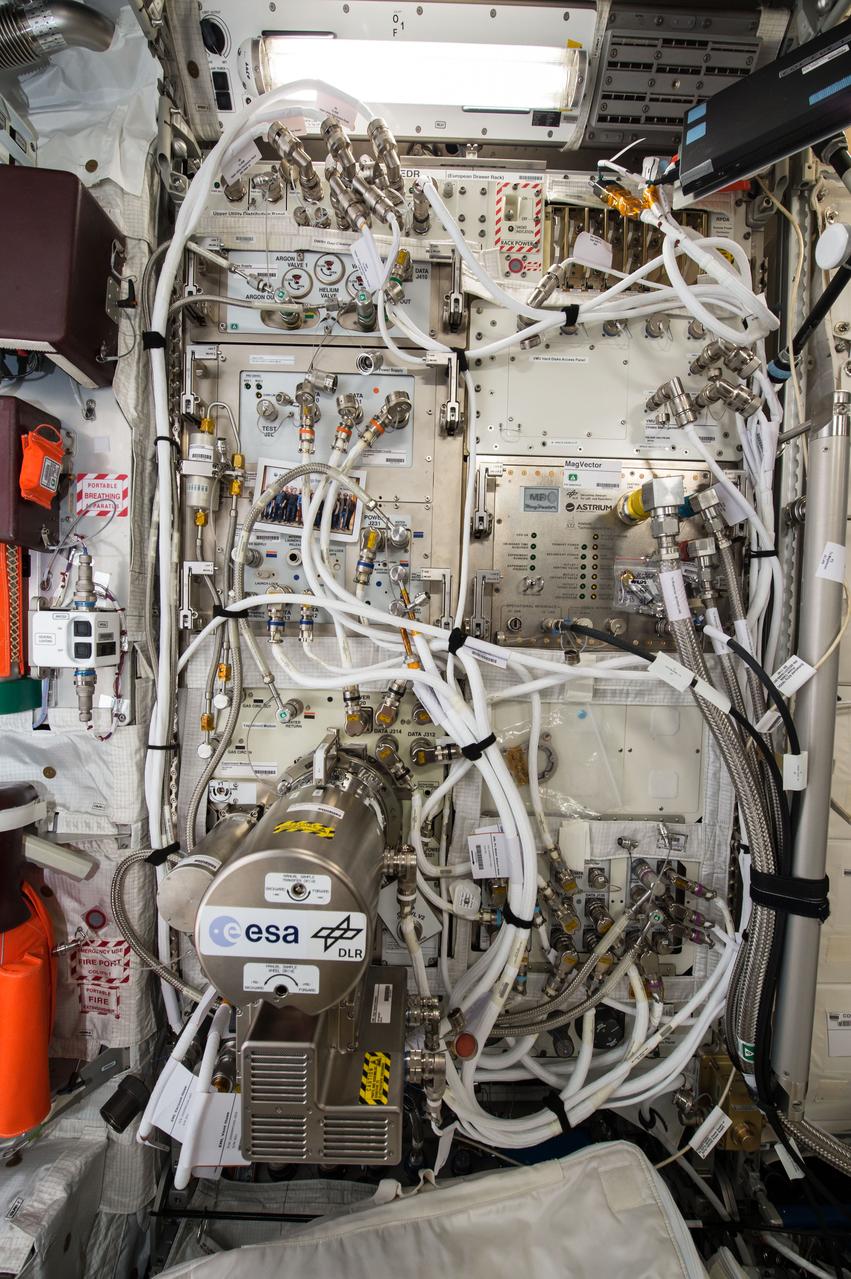
iss041e096097 (10/23/2014) — Photo documentation of the Electromagnetic Levitator (EML) in the Columbus module of the International Space Station (ISS). The EML multi-user facility is designed for containerless materials processing in space.
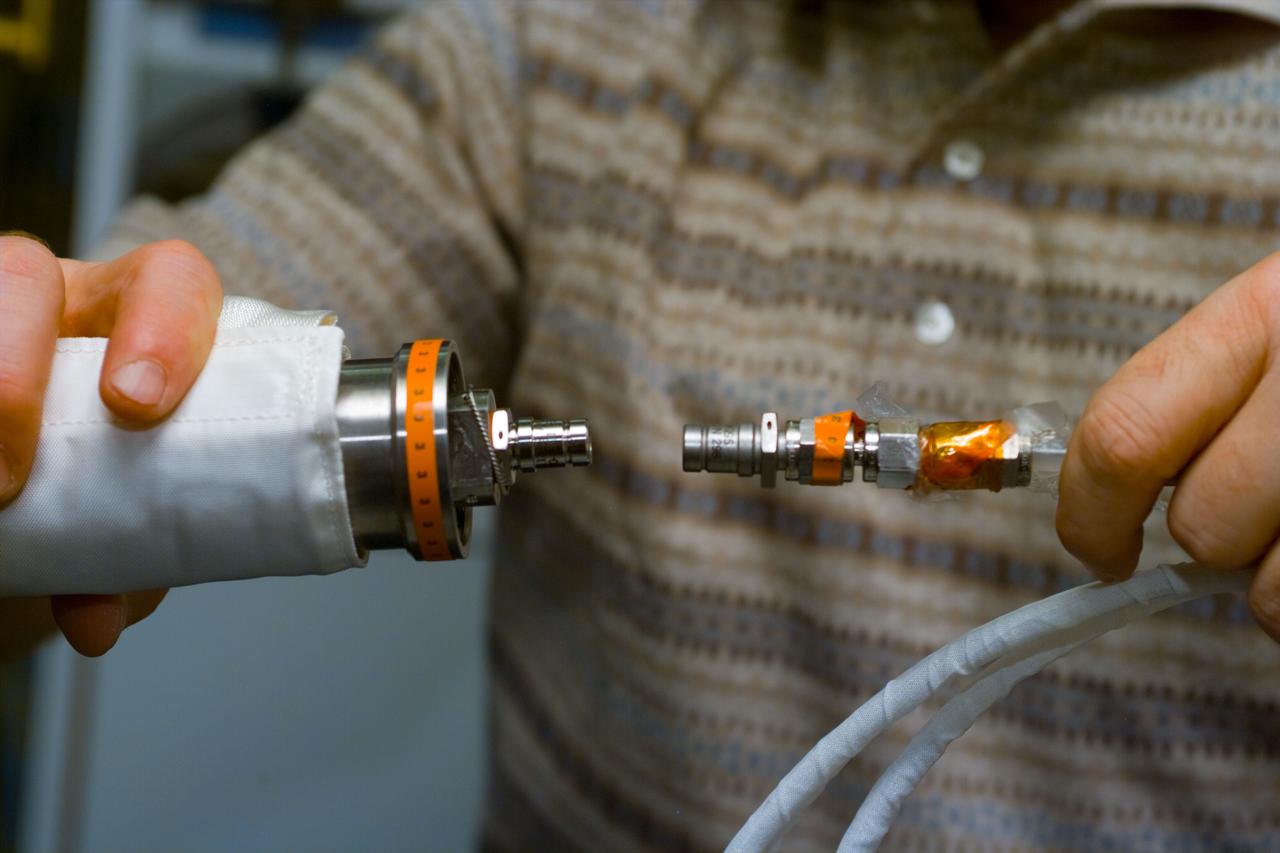
S88-E-5001 (12-04-98) --- Astronaut Jerry L. Ross, mission specialist, discovered incompatible connections involved in one of the STS-88 detailed test objectives (DTO), this one having to do with the crew's drinking water. The proper female counterpart for the connection was later found. DTO 691 is an in-cabin experiment dealing with a low-iodine residual system. Newly developed technology replacing the Galley Iodine Removal System (GIRA) is expected to reduce the concentration of iodine in the Shuttle's potable water system. The photo was taken with an electronic still camera (ESC) at 14:09:17 GMT, Dec. 4.
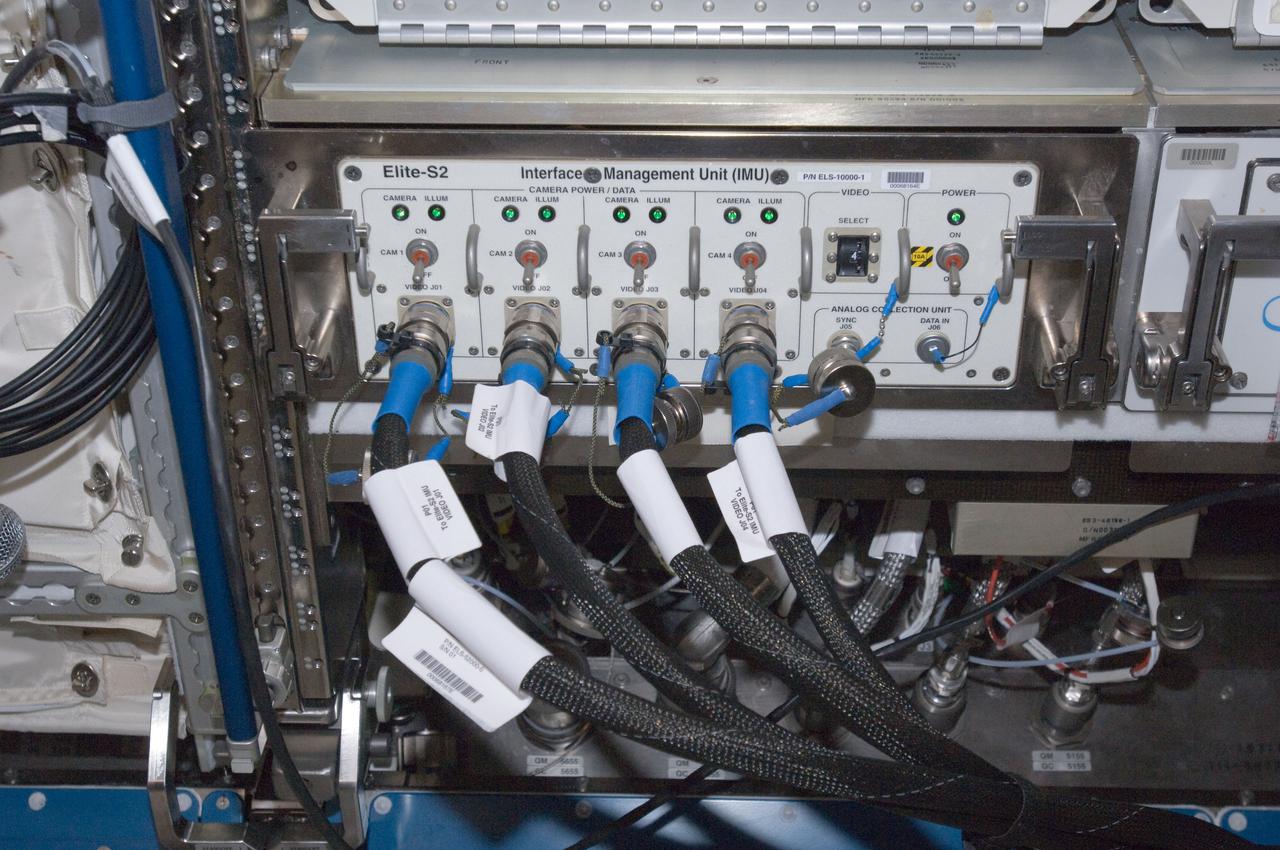
iss033e011717 (10/15/2012) --- A view of the ELITE-S2 Interface Management Unit (IMU) aboard the International Space Station (ISS). The ELaboratore Immagini TElevisive - Space 2 (ELITE-S2) facility provides the experiment hardware to investigate the connection between brain, visualization and motion in the absence of gravity.

KENNEDY SPACE CENTER, Fla. -- Space Shuttle Atlantis begins rolling out of the Vehicle Assembly Building to Launch Pad 39A. The Shuttle has been in the VAB undergoing tests on the solid rocket booster cables. A prior extensive evaluation of NASA’s SRB cable inventory on the shelf revealed conductor damage in four (of about 200) cables. Shuttle managers decided to prove the integrity of the system tunnel cables already on Atlantis, causing return of the Shuttle to the VAB a week ago. Launch of Atlantis on STS-98 has been rescheduled to Feb. 7 at 6:11 p.m. EST
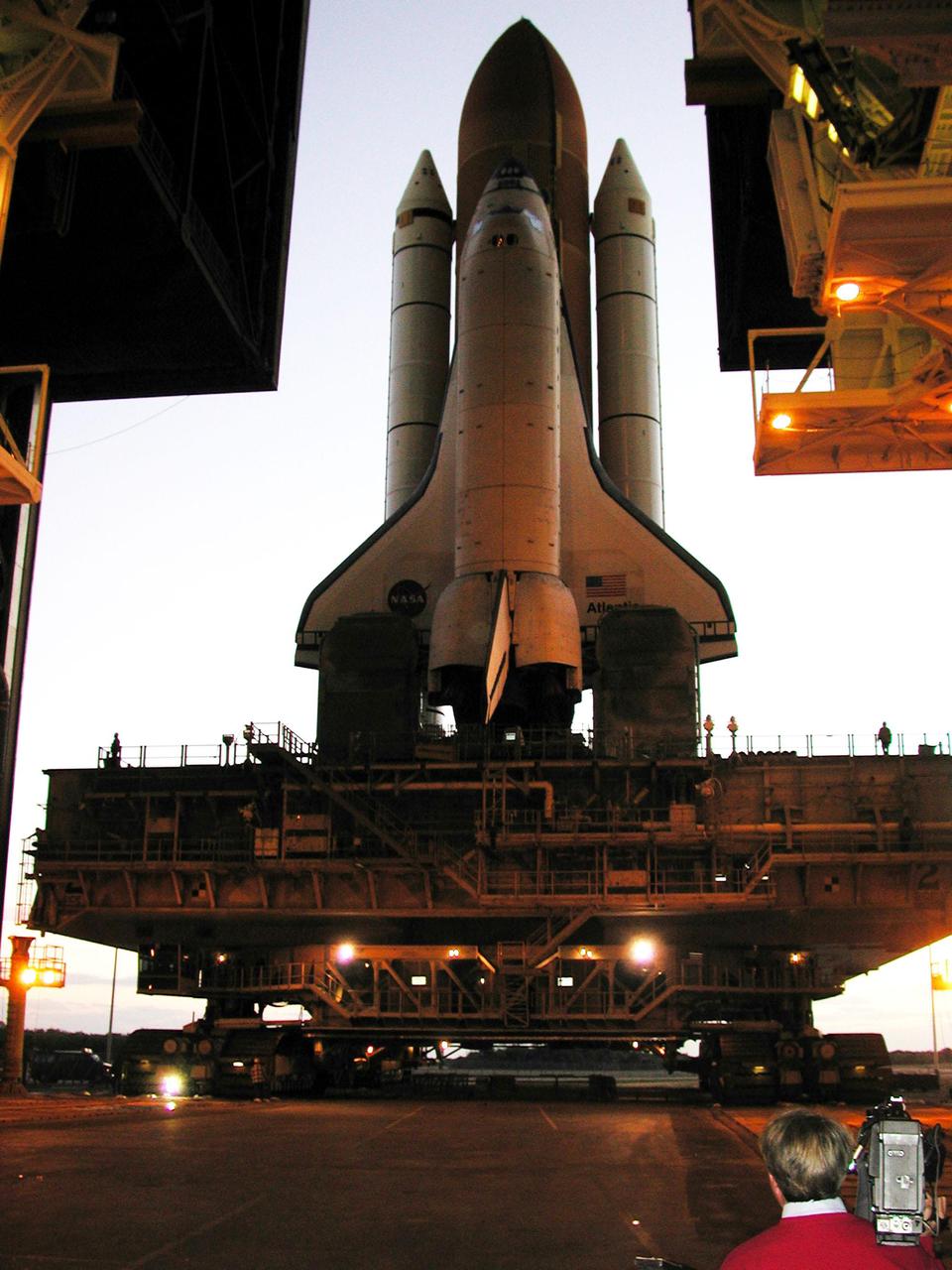
KENNEDY SPACE CENTER, Fla. -- Reflecting light from framework inside the Vehicle Assembly Building, Space Shuttle Atlantis begins rolling out of the VAB to Launch Pad 39A after tests were completed on the solid rocket booster cables. A prior extensive evaluation of NASA’s SRB cable inventory on the shelf revealed conductor damage in four (of about 200) cables. Shuttle managers decided to prove the integrity of the system tunnel cables already on Atlantis, causing return of the Shuttle to the VAB a week ago. Launch of Atlantis on STS-98 has been rescheduled to Feb. 7 at 6:11 p.m. EST

KENNEDY SPACE CENTER, Fla. -- The gate outside Launch Pad 39A heralds the STS-98 launch as Space Shuttle Atlantis makes its way to the pad. The Shuttle had returned to the Vehicle Assembly Building from the launch pad in order to undergo tests on the solid rocket booster cables. A prior extensive evaluation of NASA’s SRB cable inventory on the shelf revealed conductor damage in four (of about 200) cables. Shuttle managers decided to prove the integrity of the system tunnel cables already on Atlantis, causing return of the Shuttle to the VAB a week ago. The Shuttle will undergo preparations for a rescheduled launch Feb. 7 at 6:11 p.m. EST
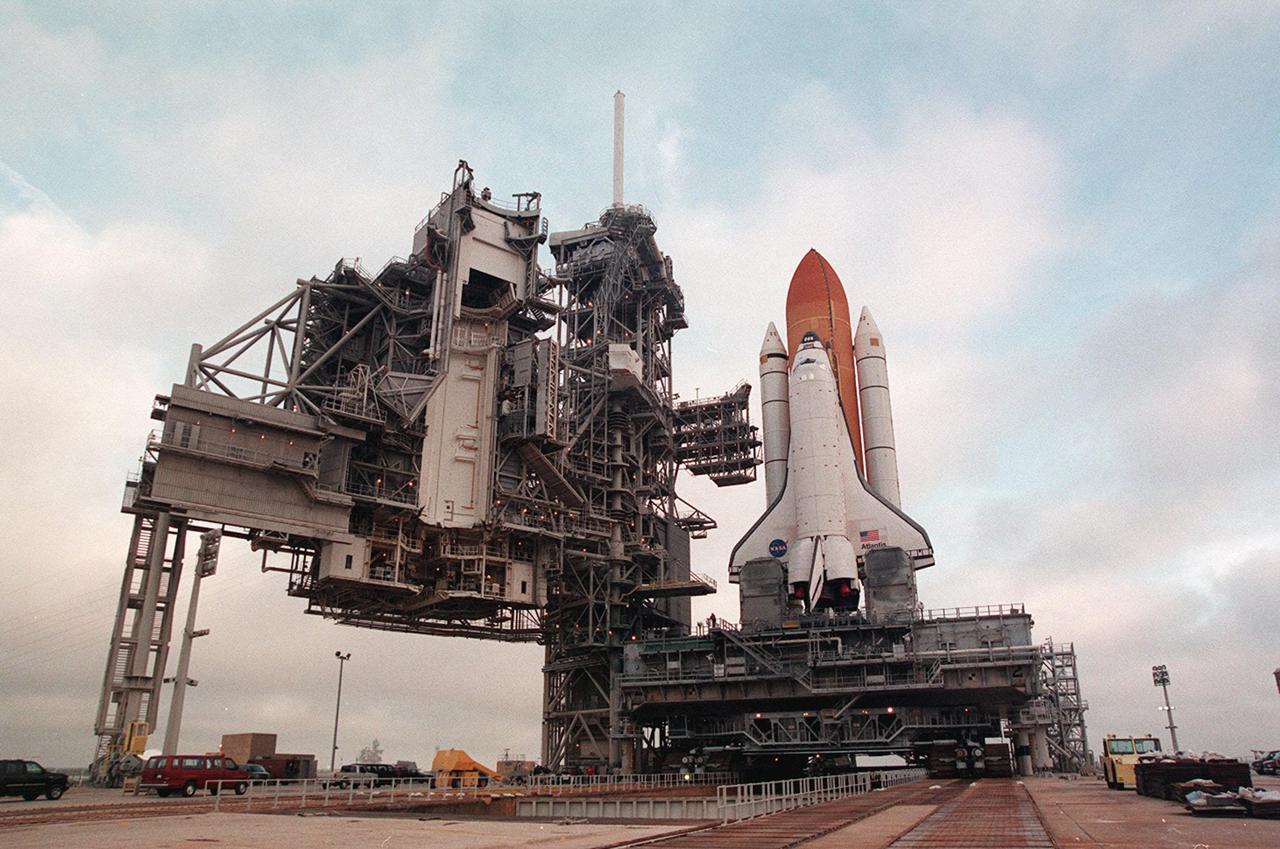
KENNEDY SPACE CENTER, FLA. -- Space Shuttle Atlantis is ready to roll back to the Vehicle Assembly Building via the crawler-transporter. In the VAB workers will conduct inspections, make continuity checks and conduct X-ray analysis on the 36 solid rocket booster cables located inside each booster’s system tunnel. An extensive evaluation of NASA’s SRB cable inventory revealed conductor damage in four (of about 200) cables on the shelf. Shuttle managers decided to prove the integrity of the system tunnel cables already on Atlantis before launching Jan. 19. The launch has been rescheduled no earlier than Feb. 6
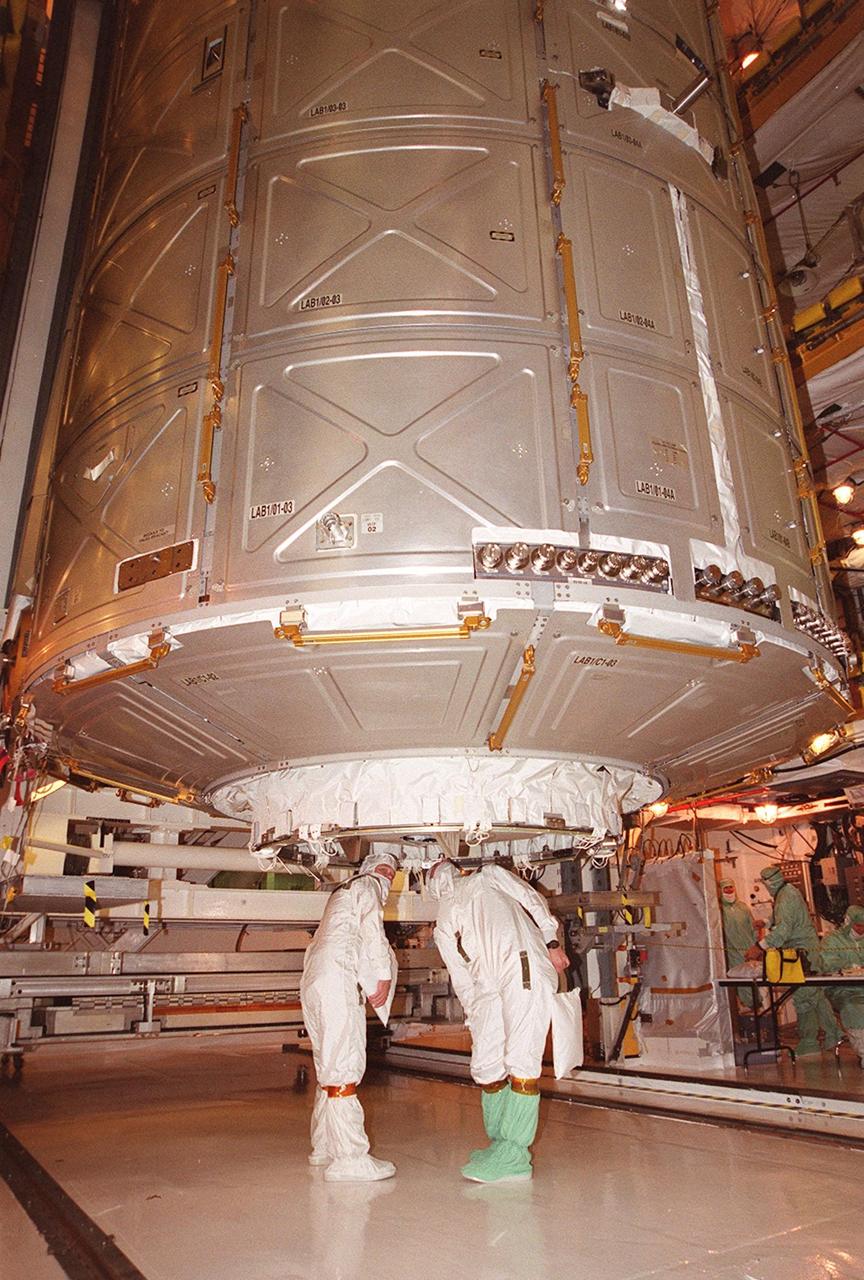
Workers in the Payload Changeout Room check the U.S. Lab Destiny as its moves from Atlantis’ payload bay into the PCR. Destiny will remain in the PCR while Atlantis rolls back to the Vehicle Assembly Building to allow workers to conduct inspections, continuity checks and X-ray analysis on the 36 solid rocket booster cables located inside each booster’s system tunnel. An extensive evaluation of NASA’s SRB cable inventory revealed conductor damage in four (of about 200) cables on the shelf. Shuttle managers decided to prove the integrity of the system tunnel cables already on Atlantis
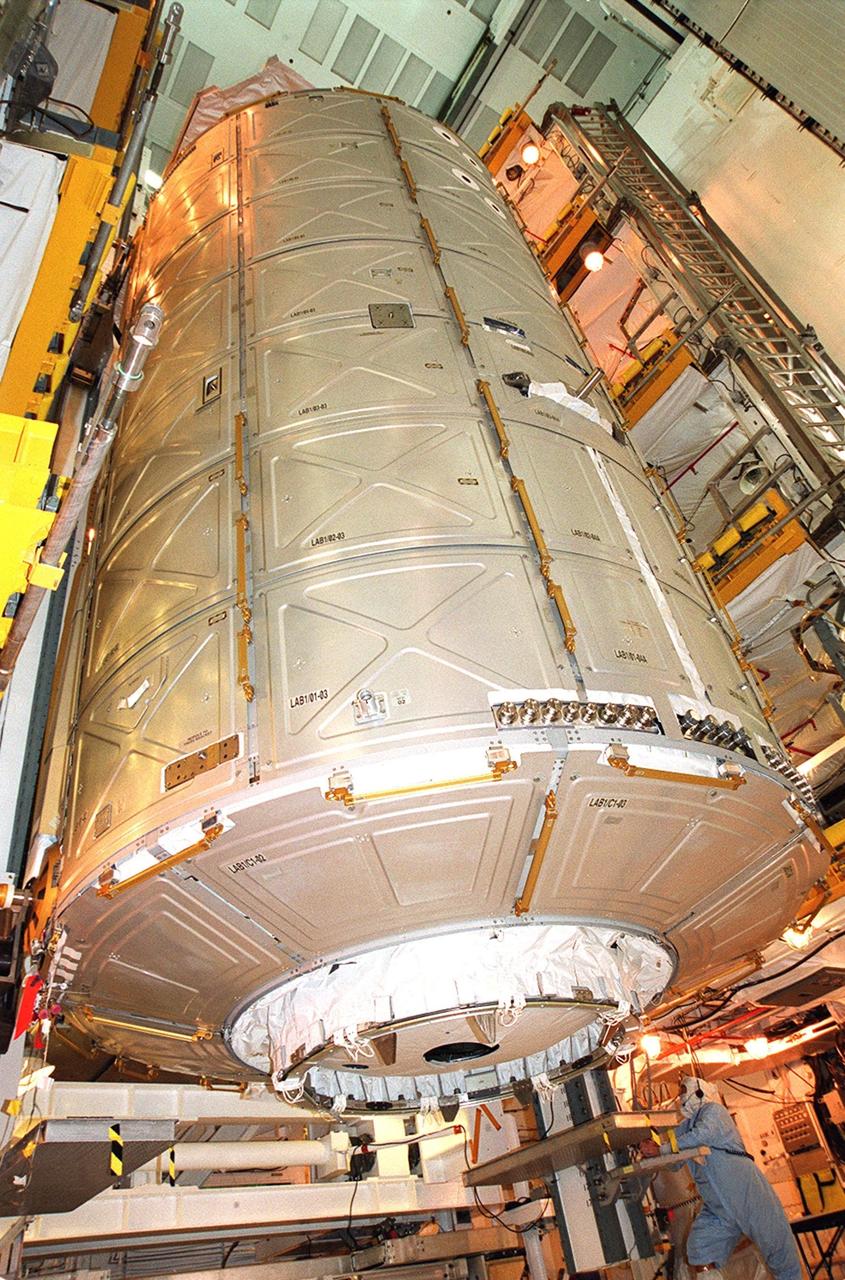
The U.S. Lab Destiny moves out of Atlantis’ payload bay and into the Payload Changeout Room via the Payload Ground Handling Mechanism. Destiny will remain in the PCR while Atlantis rolls back to the Vehicle Assembly Building to allow workers to conduct inspections, continuity checks and X-ray analysis on the 36 solid rocket booster cables located inside each booster’s system tunnel. An extensive evaluation of NASA’s SRB cable inventory revealed conductor damage in four (of about 200) cables on the shelf. Shuttle managers decided to prove the integrity of the system tunnel cables already on Atlantis
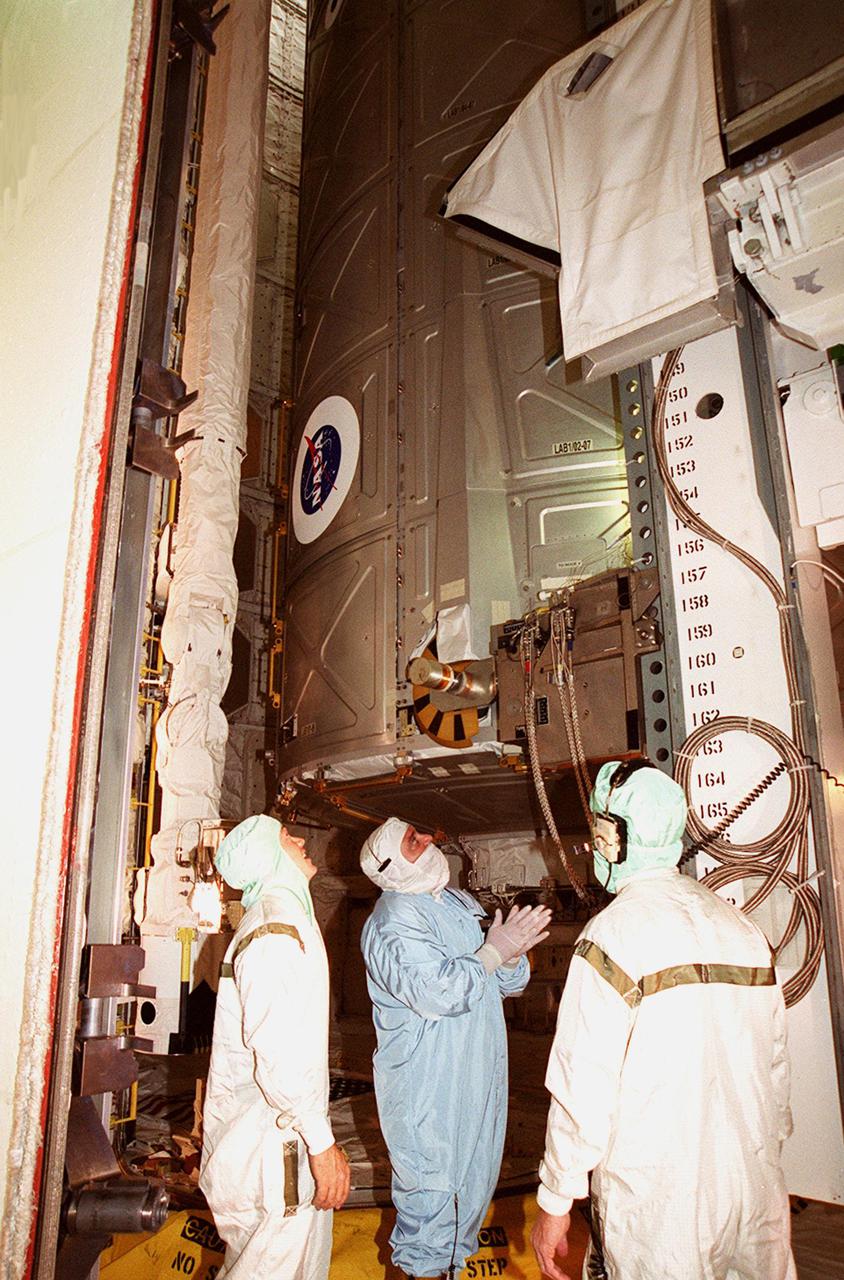
Workers in the Payload Changeout Room check the Payload Ground Handling Mechanism that will move the U.S. Lab Destiny out of Atlantis’ payload bay and into the PCR. After the move, Atlantis will roll back to the Vehicle Assembly Building to allow workers to conduct inspections, continuity checks and X-ray analysis on the 36 solid rocket booster cables located inside each booster’s system tunnel. An extensive evaluation of NASA’s SRB cable inventory revealed conductor damage in four (of about 200) cables on the shelf. Shuttle managers decided to prove the integrity of the system tunnel cables already on Atlantis
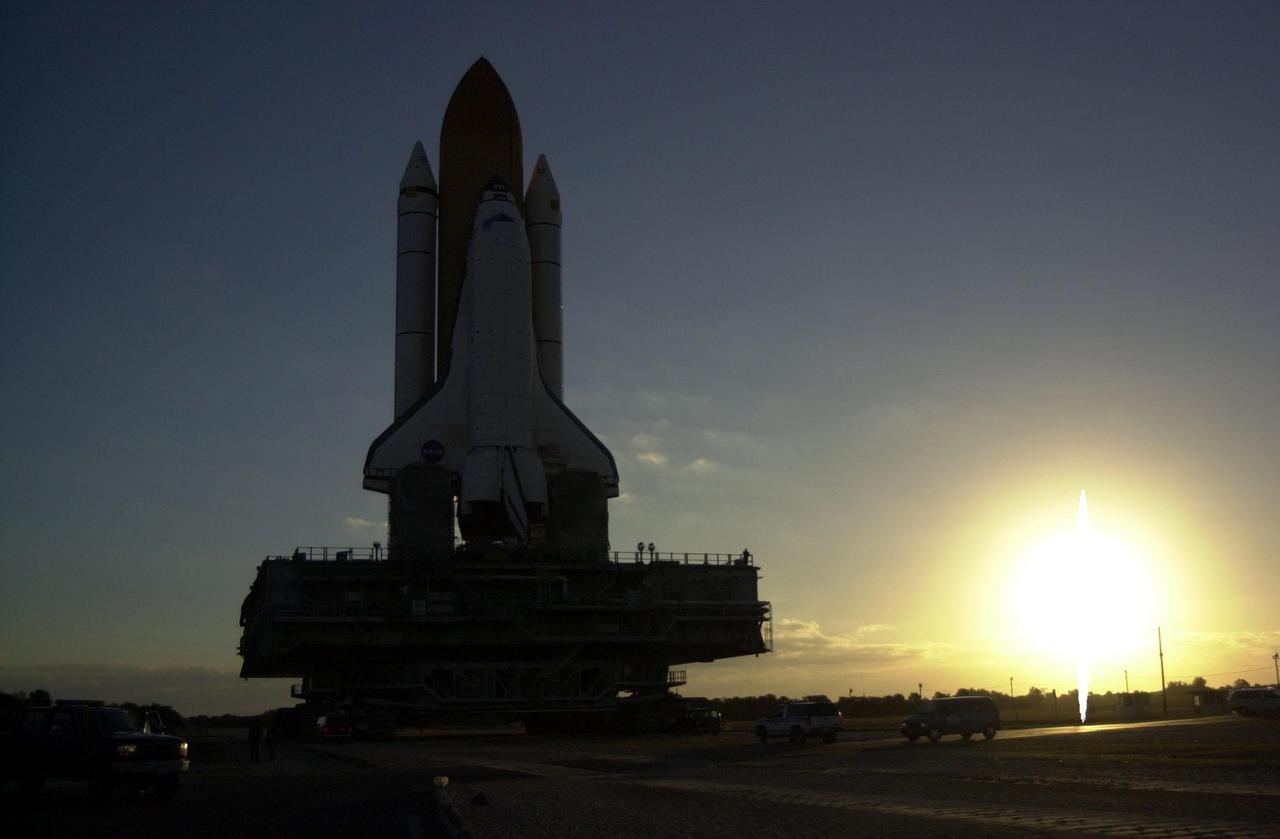
KENNEDY SPACE CENTER, Fla. -- As the sun clears the horizon, it creates a silhouette of the Space Shuttle Atlantis as it makes the crawl from the Vehicle Assembly Building to Launch Pad 39A. The Shuttle has been in the VAB undergoing tests on the solid rocket booster cables. A prior extensive evaluation of NASA’s SRB cable inventory on the shelf revealed conductor damage in four (of about 200) cables. Shuttle managers decided to prove the integrity of the system tunnel cables already on Atlantis, causing return of the Shuttle to the VAB a week ago. Launch of Atlantis on STS-98 has been rescheduled to Feb. 7 at 6:11 p.m. EST
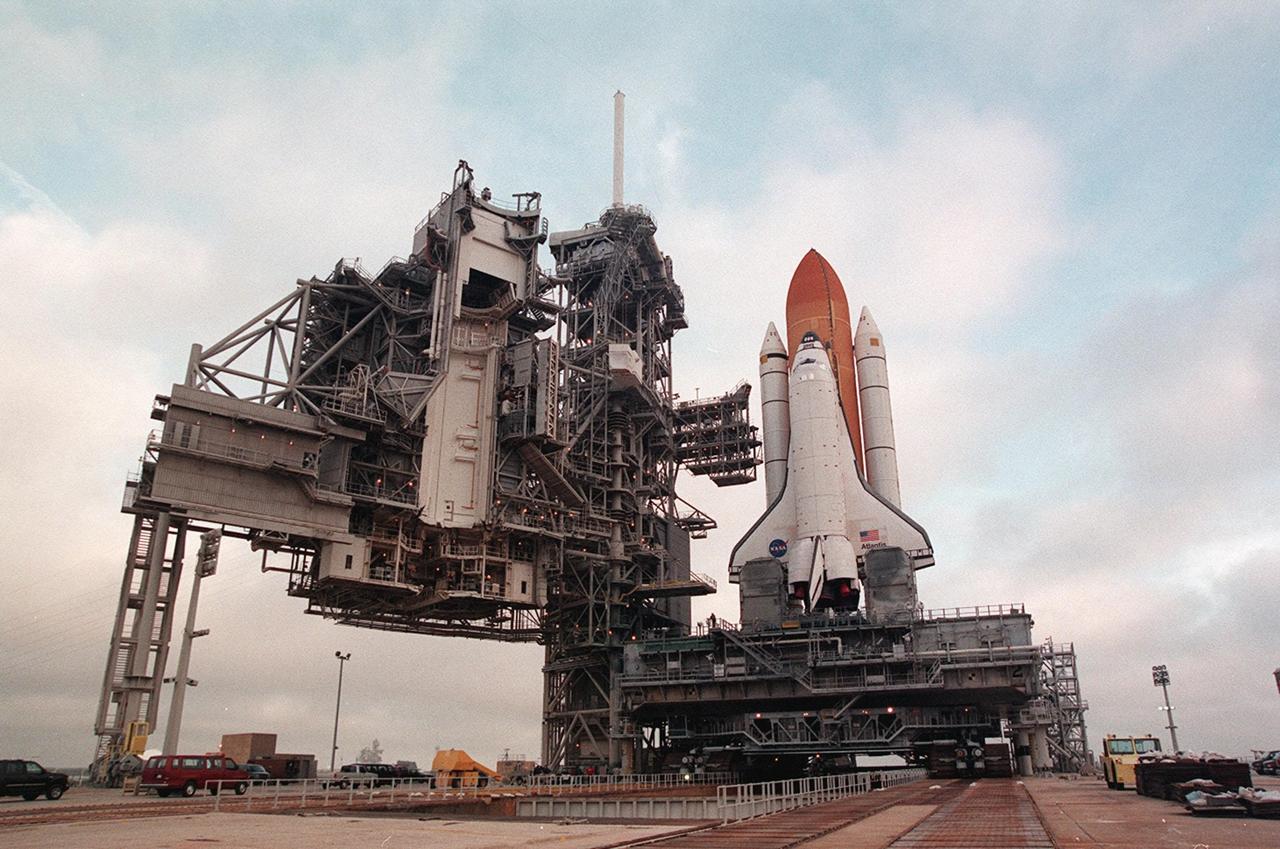
KENNEDY SPACE CENTER, FLA. -- Space Shuttle Atlantis is ready to roll back to the Vehicle Assembly Building via the crawler-transporter. In the VAB workers will conduct inspections, make continuity checks and conduct X-ray analysis on the 36 solid rocket booster cables located inside each booster’s system tunnel. An extensive evaluation of NASA’s SRB cable inventory revealed conductor damage in four (of about 200) cables on the shelf. Shuttle managers decided to prove the integrity of the system tunnel cables already on Atlantis before launching Jan. 19. The launch has been rescheduled no earlier than Feb. 6

Workers in the Payload Changeout Room check the U.S. Lab Destiny as its moves from Atlantis’ payload bay into the PCR. Destiny will remain in the PCR while Atlantis rolls back to the Vehicle Assembly Building to allow workers to conduct inspections, continuity checks and X-ray analysis on the 36 solid rocket booster cables located inside each booster’s system tunnel. An extensive evaluation of NASA’s SRB cable inventory revealed conductor damage in four (of about 200) cables on the shelf. Shuttle managers decided to prove the integrity of the system tunnel cables already on Atlantis
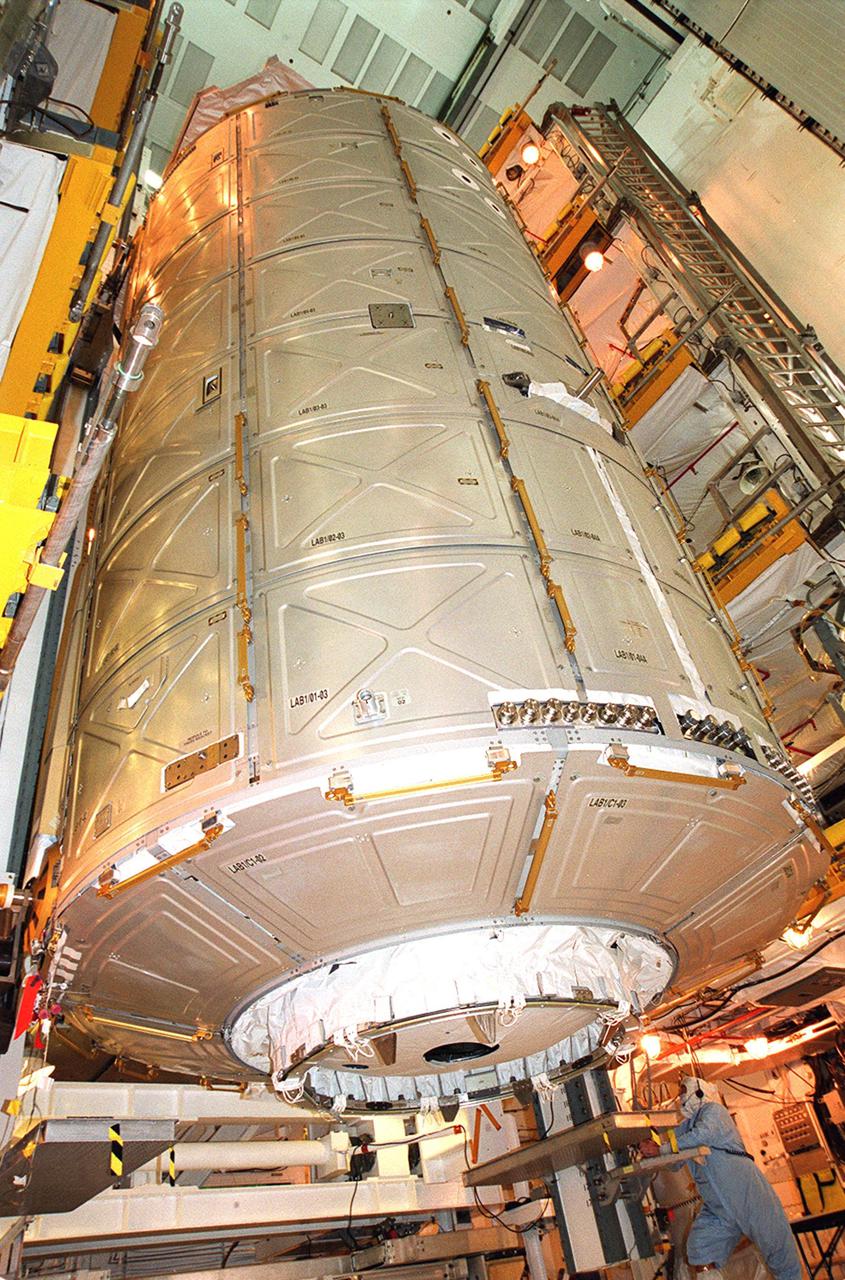
The U.S. Lab Destiny moves out of Atlantis’ payload bay and into the Payload Changeout Room via the Payload Ground Handling Mechanism. Destiny will remain in the PCR while Atlantis rolls back to the Vehicle Assembly Building to allow workers to conduct inspections, continuity checks and X-ray analysis on the 36 solid rocket booster cables located inside each booster’s system tunnel. An extensive evaluation of NASA’s SRB cable inventory revealed conductor damage in four (of about 200) cables on the shelf. Shuttle managers decided to prove the integrity of the system tunnel cables already on Atlantis
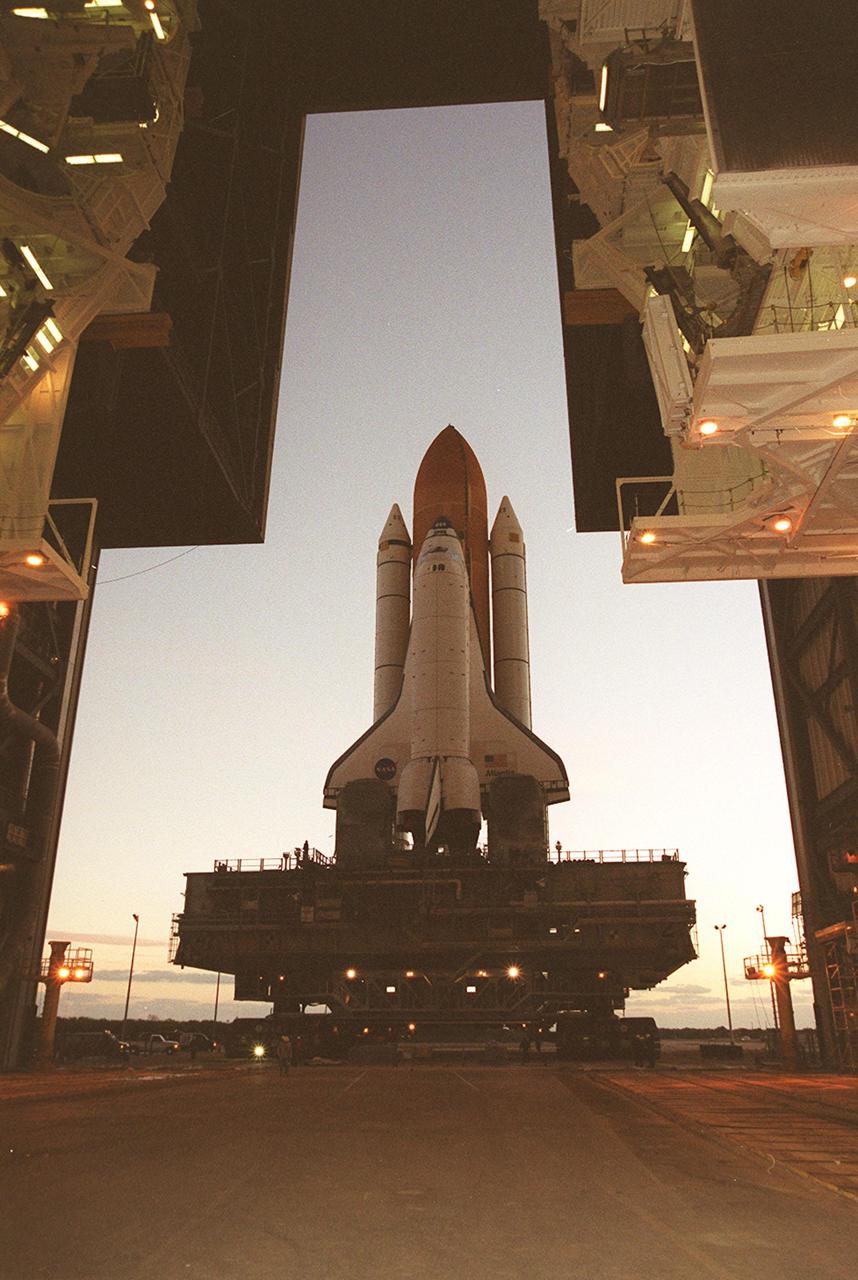
KENNEDY SPACE CENTER, Fla. -- Space Shuttle Atlantis rolls out from the Vehicle Assembly Building into the crisp morning air on its way to Launch Pad 39A. The Shuttle has been in the VAB undergoing tests on the solid rocket booster cables. A prior extensive evaluation of NASA’s SRB cable inventory on the shelf revealed conductor damage in four (of about 200) cables. Shuttle managers decided to prove the integrity of the system tunnel cables already on Atlantis, causing return of the Shuttle to the VAB a week ago. Launch of Atlantis on STS-98 has been rescheduled to Feb. 7 at 6:11 p.m. EST

Workers in the Payload Changeout Room check the U.S. Lab Destiny as its moves from Atlantis’ payload bay into the PCR. Destiny will remain in the PCR while Atlantis rolls back to the Vehicle Assembly Building to allow workers to conduct inspections, continuity checks and X-ray analysis on the 36 solid rocket booster cables located inside each booster’s system tunnel. An extensive evaluation of NASA’s SRB cable inventory revealed conductor damage in four (of about 200) cables on the shelf. Shuttle managers decided to prove the integrity of the system tunnel cables already on Atlantis
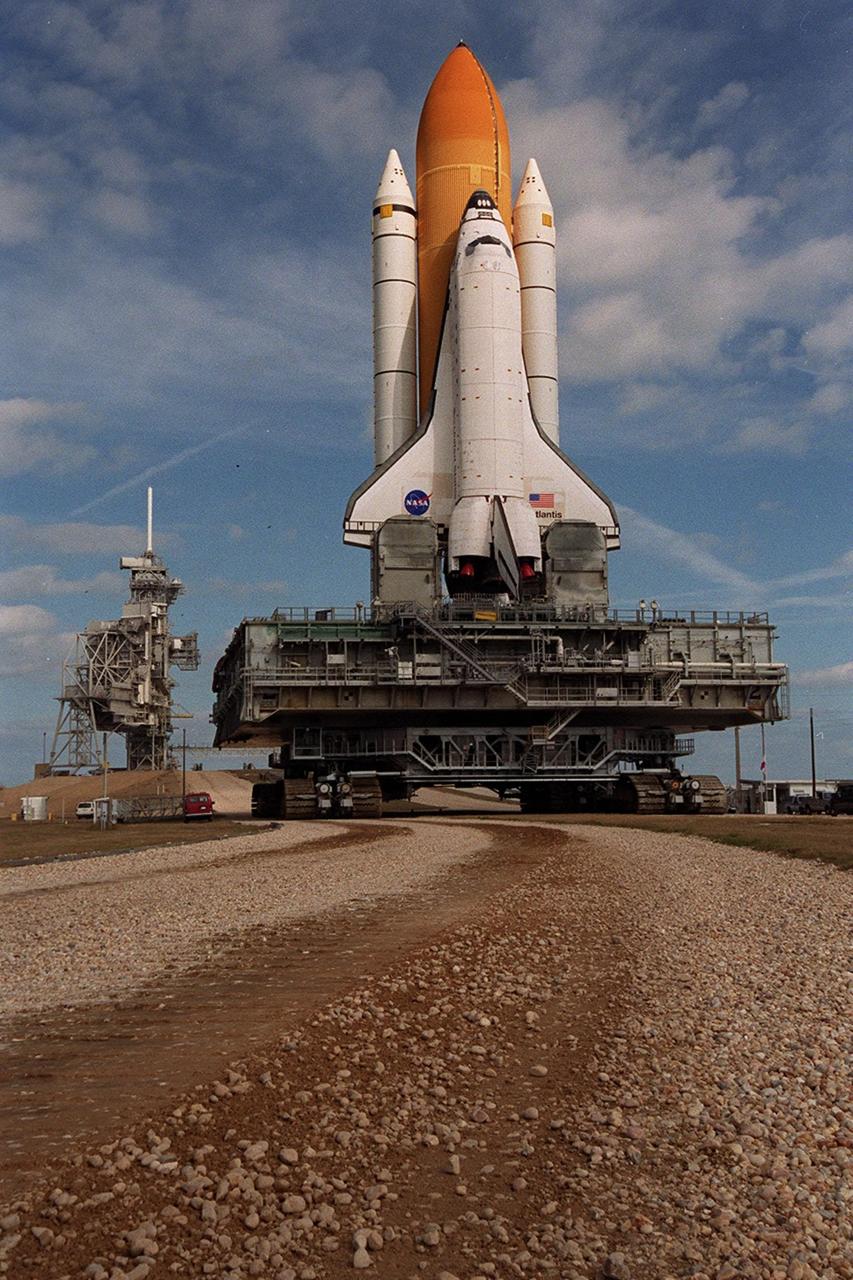
KENNEDY SPACE CENTER, Fla. -- Space Shuttle Atlantis makes tracks as it crawls to Launch Pad 39A (background, left). The Shuttle had returned to the Vehicle Assembly Building from the launch pad in order to undergo tests on the solid rocket booster cables. A prior extensive evaluation of NASA’s SRB cable inventory on the shelf revealed conductor damage in four (of about 200) cables. Shuttle managers decided to prove the integrity of the system tunnel cables already on Atlantis, causing return of the Shuttle to the VAB a week ago. The Shuttle rolled back to Launch Pad 39A to get ready for launch on Feb. 7 at 6:11 p.m. EST
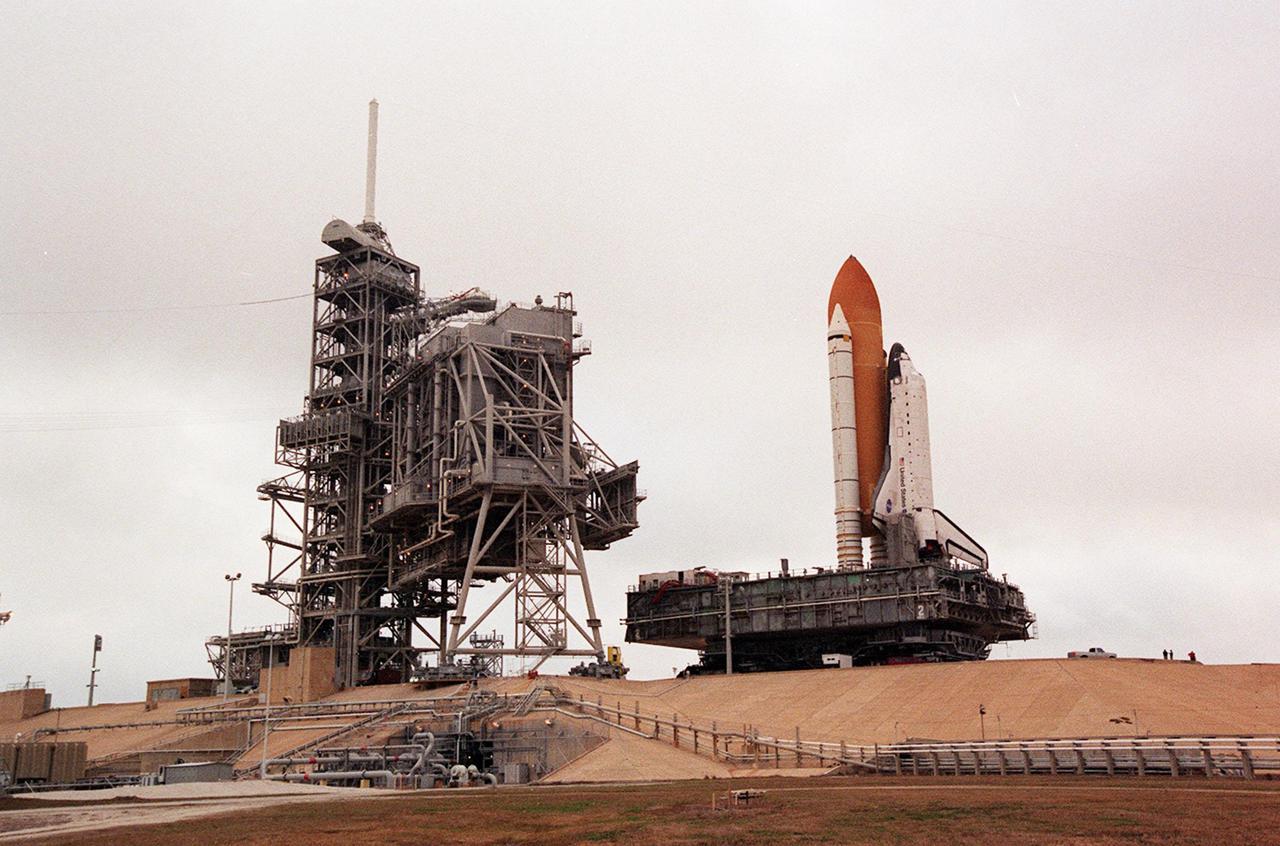
KENNEDY SPACE CENTER, FLA. -- Space Shuttle Atlantis begins rolling back to the Vehicle Assembly Building on the crawler-transporter. In the VAB workers will conduct inspections, make continuity checks and conduct X-ray analysis on the 36 solid rocket booster cables located inside each booster’s system tunnel. An extensive evaluation of NASA’s SRB cable inventory revealed conductor damage in four (of about 200) cables on the shelf. Shuttle managers decided to prove the integrity of the system tunnel cables already on Atlantis before launching Jan. 19. The launch has been rescheduled no earlier than Feb. 6
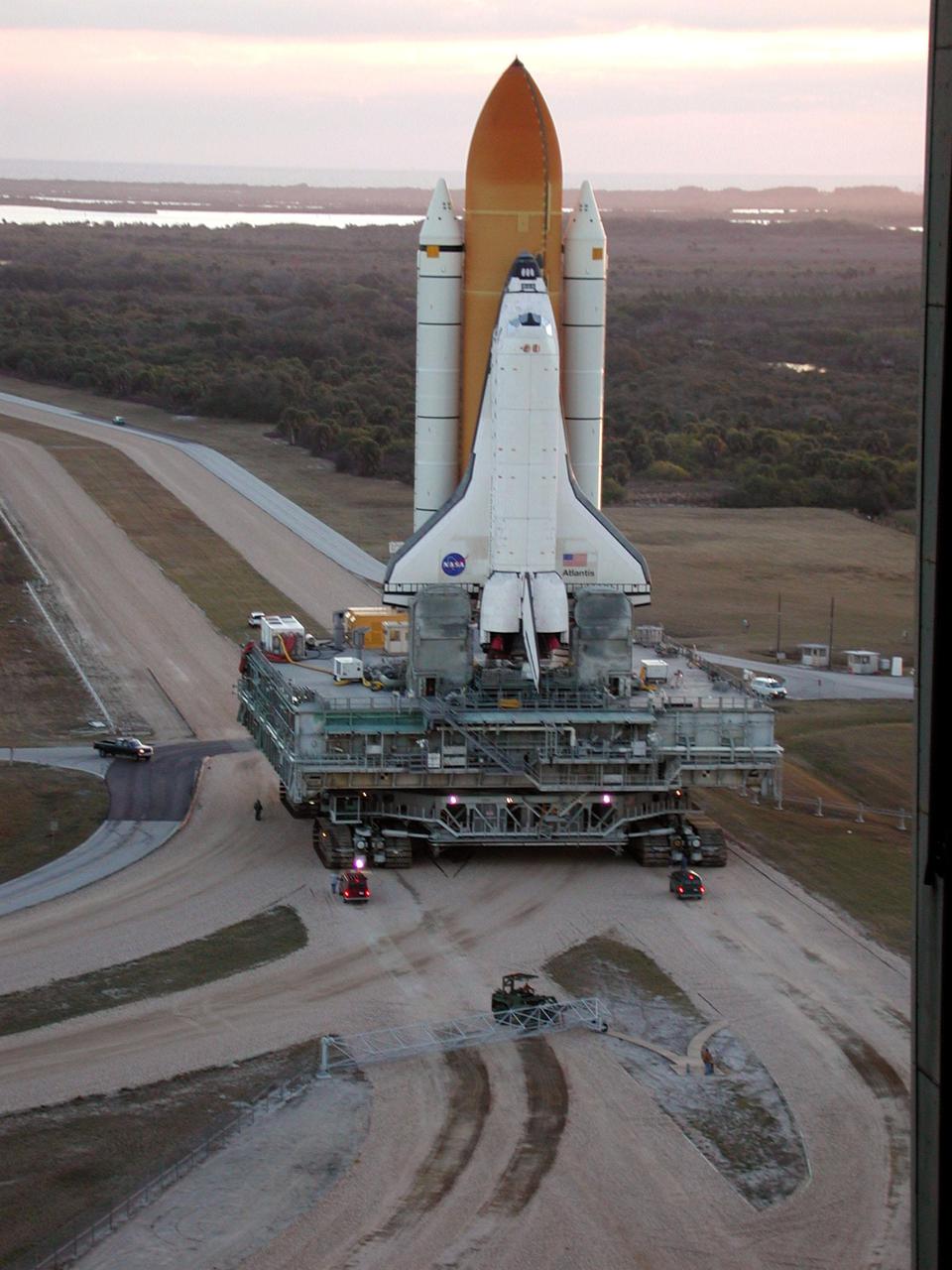
KENNEDY SPACE CENTER, Fla. -- In the early morning light, Space Shuttle Atlantis makes the turn from the Vehicle Assembly Building onto the crawlerway for the trek to Launch Pad 39A. The Shuttle has been in the VAB undergoing tests on the solid rocket booster cables. A prior extensive evaluation of NASA’s SRB cable inventory on the shelf revealed conductor damage in four (of about 200) cables. Shuttle managers decided to prove the integrity of the system tunnel cables already on Atlantis, causing return of the Shuttle to the VAB a week ago. Launch of Atlantis on STS-98 has been rescheduled to Feb. 7 at 6:11 p.m. EST
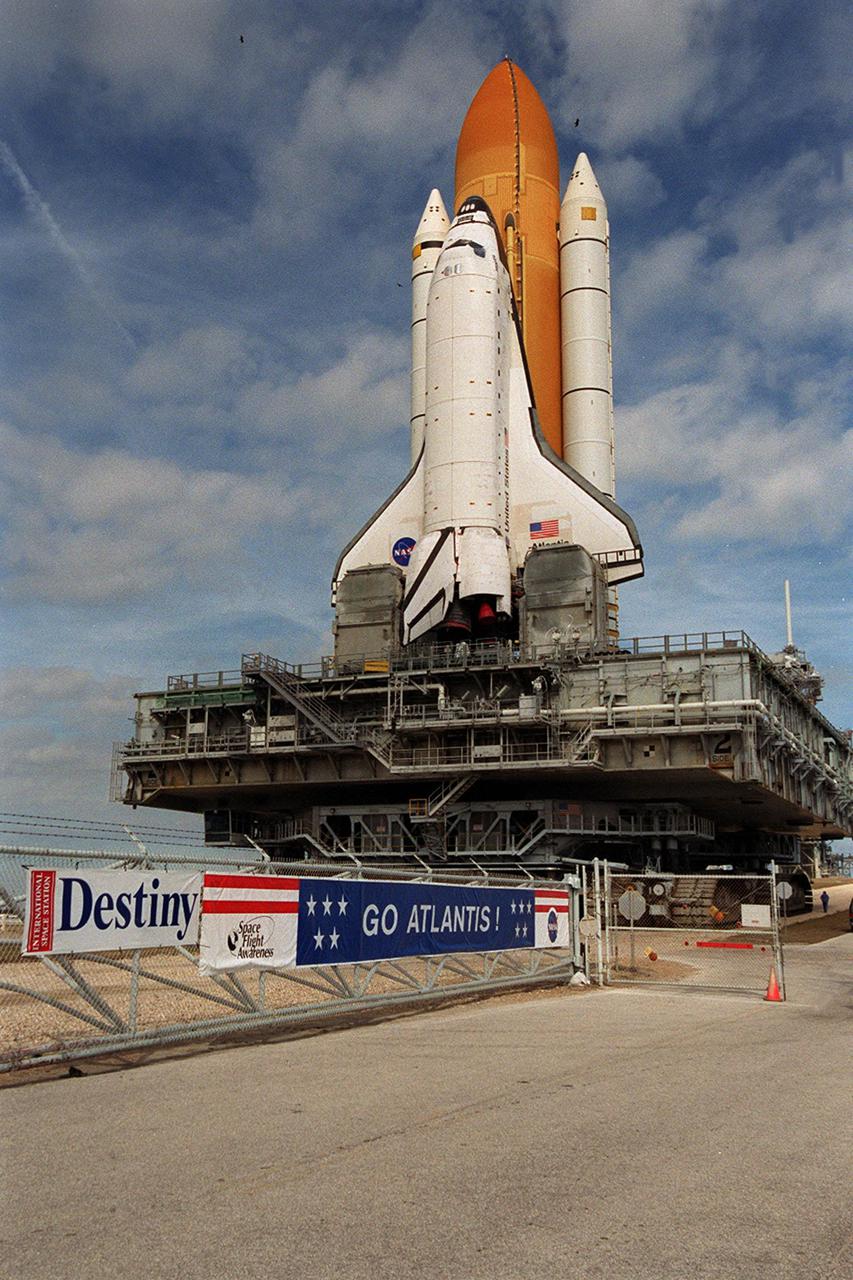
KENNEDY SPACE CENTER, Fla. -- The gate outside Launch Pad 39A heralds the STS-98 launch as Space Shuttle Atlantis makes its way to the pad. The Shuttle had returned to the Vehicle Assembly Building from the launch pad in order to undergo tests on the solid rocket booster cables. A prior extensive evaluation of NASA’s SRB cable inventory on the shelf revealed conductor damage in four (of about 200) cables. Shuttle managers decided to prove the integrity of the system tunnel cables already on Atlantis, causing return of the Shuttle to the VAB a week ago. The Shuttle will undergo preparations for a rescheduled launch Feb. 7 at 6:11 p.m. EST
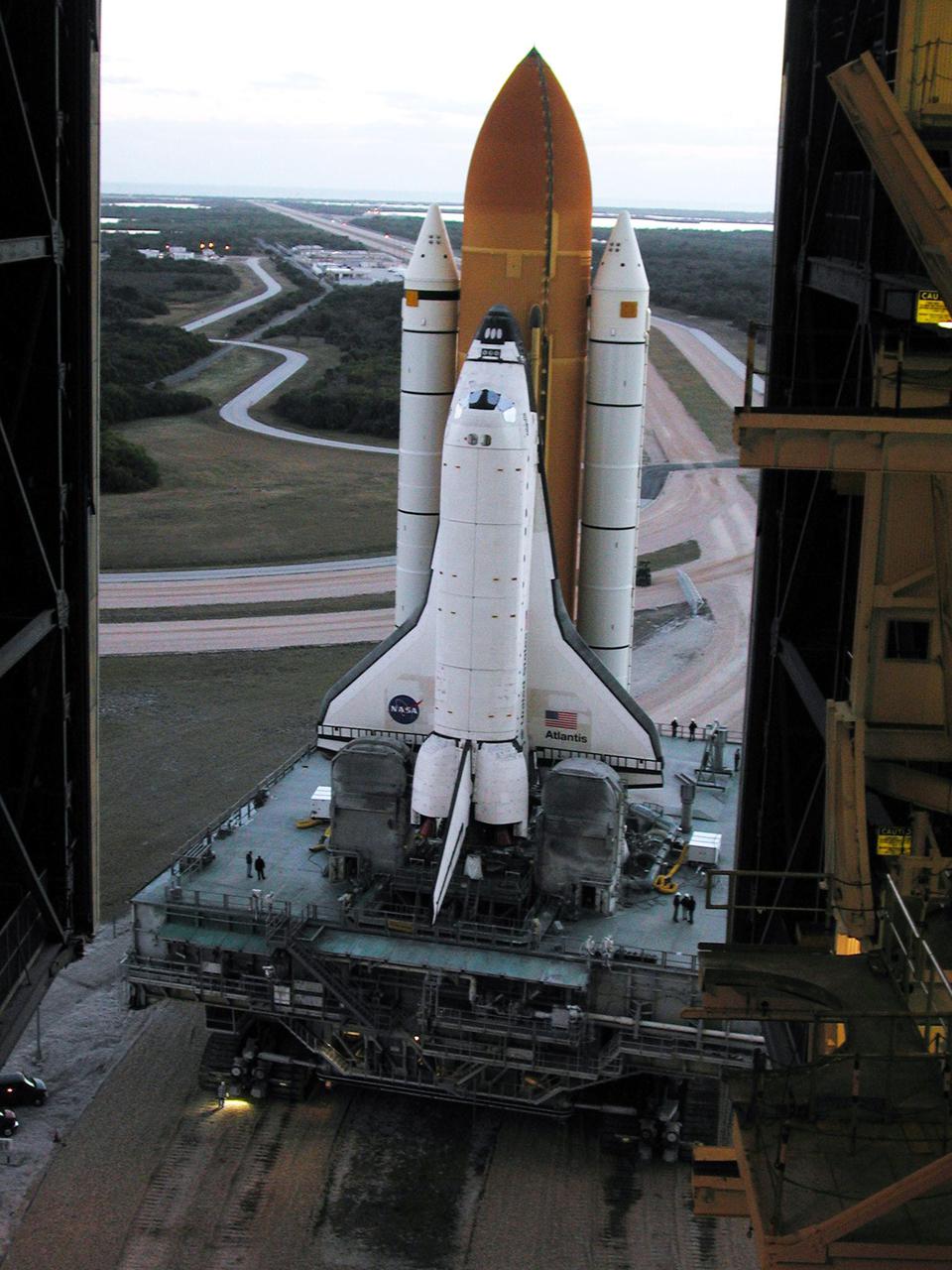
KENNEDY SPACE CENTER, Fla. -- Reflecting light from framework inside the Vehicle Assembly Building, Space Shuttle Atlantis begins rolling out of the VAB to Launch Pad 39A after tests were completed on the solid rocket booster cables. A prior extensive evaluation of NASA’s SRB cable inventory on the shelf revealed conductor damage in four (of about 200) cables. Shuttle managers decided to prove the integrity of the system tunnel cables already on Atlantis, causing return of the Shuttle to the VAB a week ago. Launch of Atlantis on STS-98 has been rescheduled to Feb. 7 at 6:11 p.m. EST

KENNEDY SPACE CENTER, FLA. -- Space Shuttle Atlantis begins rolling back to the Vehicle Assembly Building on the crawler-transporter. In the VAB workers will conduct inspections, make continuity checks and conduct X-ray analysis on the 36 solid rocket booster cables located inside each booster’s system tunnel. An extensive evaluation of NASA’s SRB cable inventory revealed conductor damage in four (of about 200) cables on the shelf. Shuttle managers decided to prove the integrity of the system tunnel cables already on Atlantis before launching Jan. 19. The launch has been rescheduled no earlier than Feb. 6
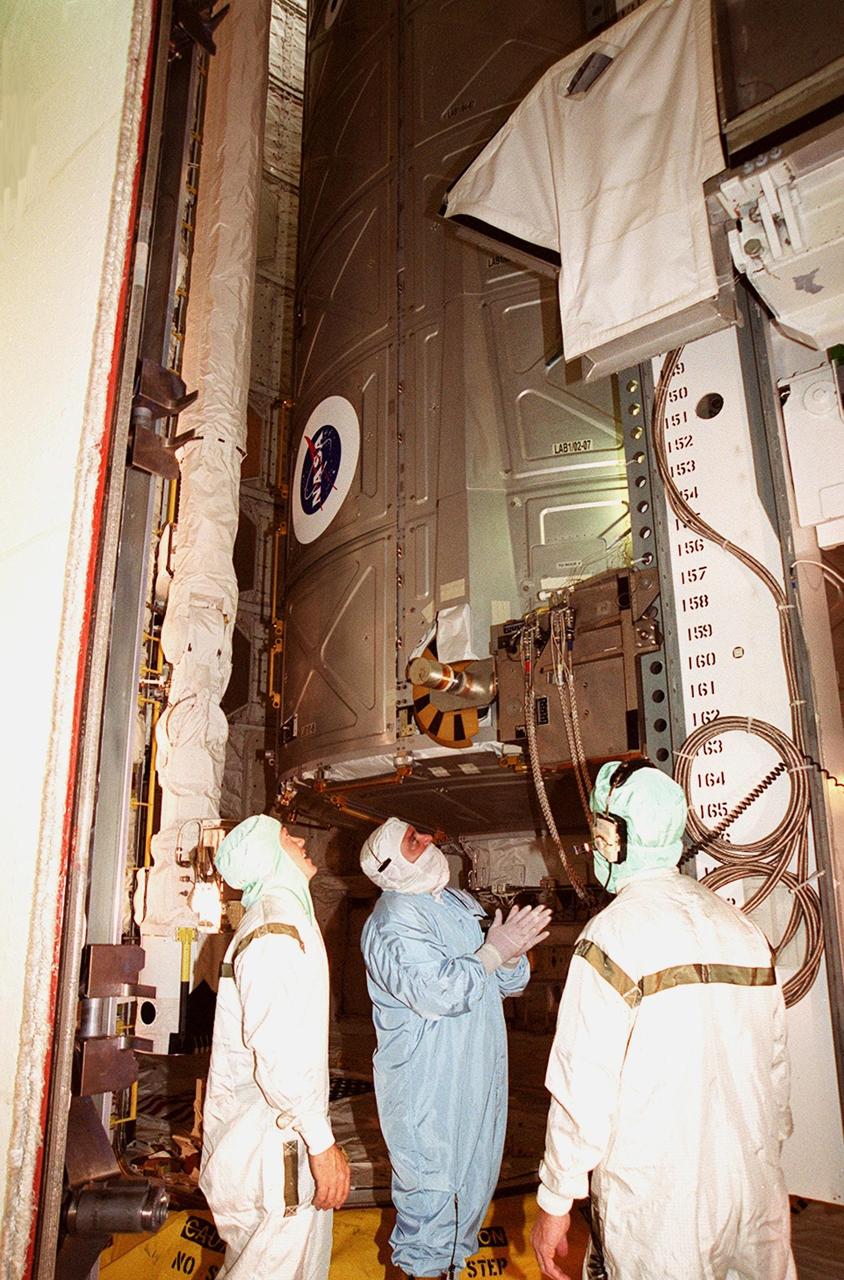
Workers in the Payload Changeout Room check the Payload Ground Handling Mechanism that will move the U.S. Lab Destiny out of Atlantis’ payload bay and into the PCR. After the move, Atlantis will roll back to the Vehicle Assembly Building to allow workers to conduct inspections, continuity checks and X-ray analysis on the 36 solid rocket booster cables located inside each booster’s system tunnel. An extensive evaluation of NASA’s SRB cable inventory revealed conductor damage in four (of about 200) cables on the shelf. Shuttle managers decided to prove the integrity of the system tunnel cables already on Atlantis
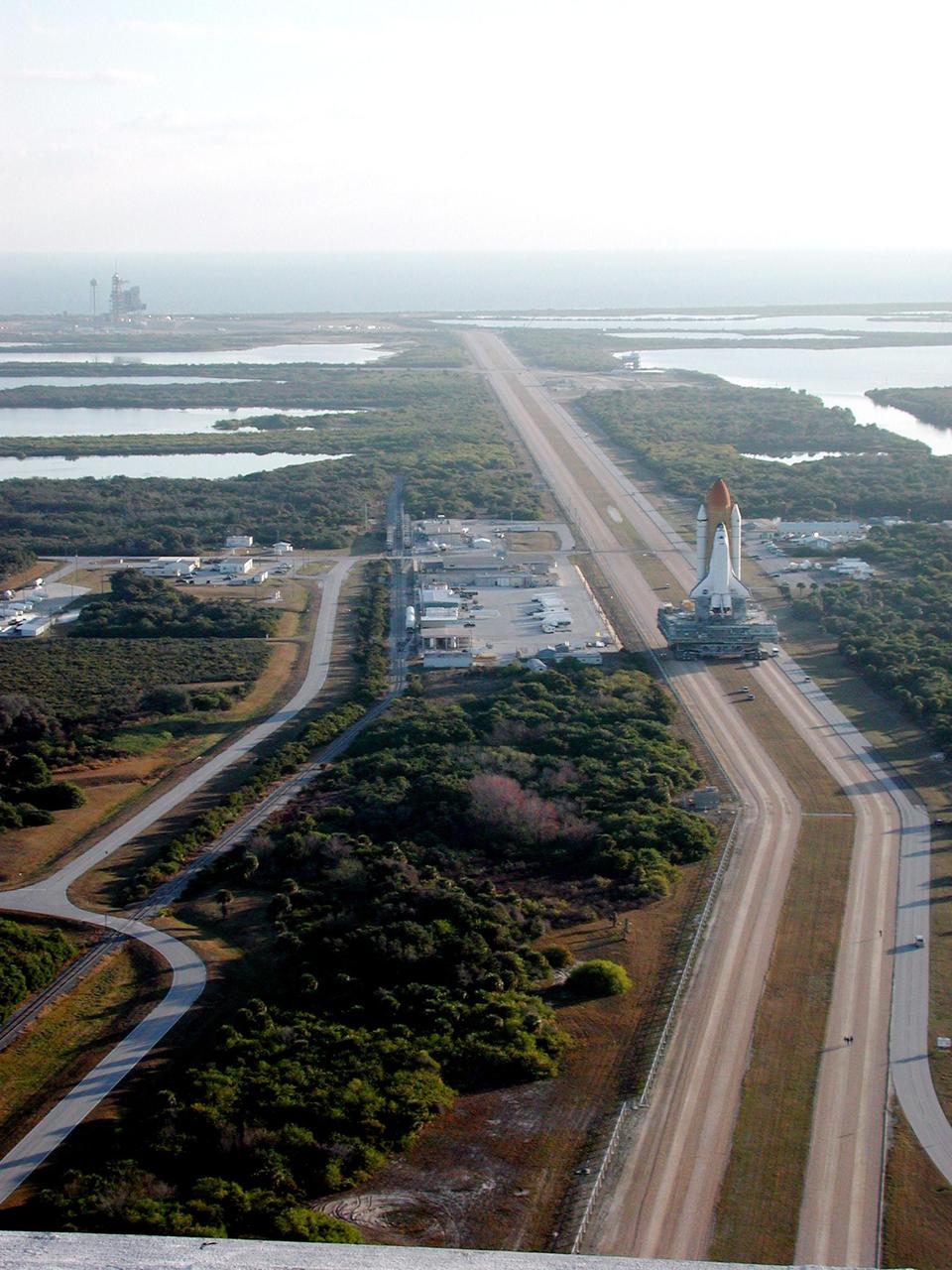
KENNEDY SPACE CENTER, Fla. -- Photographed from the top of the Vehicle Assembly Building, Space Shuttle Atlantis creeps along the crawlerway for the trek to Launch Pad 39A (upper left). In the background is the Atlantic Ocean. The Shuttle has been in the VAB undergoing tests on the solid rocket booster cables. A prior extensive evaluation of NASA’s SRB cable inventory on the shelf revealed conductor damage in four (of about 200) cables. Shuttle managers decided to prove the integrity of the system tunnel cables already on Atlantis, causing return of the Shuttle to the VAB a week ago. Launch of Atlantis on STS-98 has been rescheduled to Feb. 7 at 6:11 p.m. EST
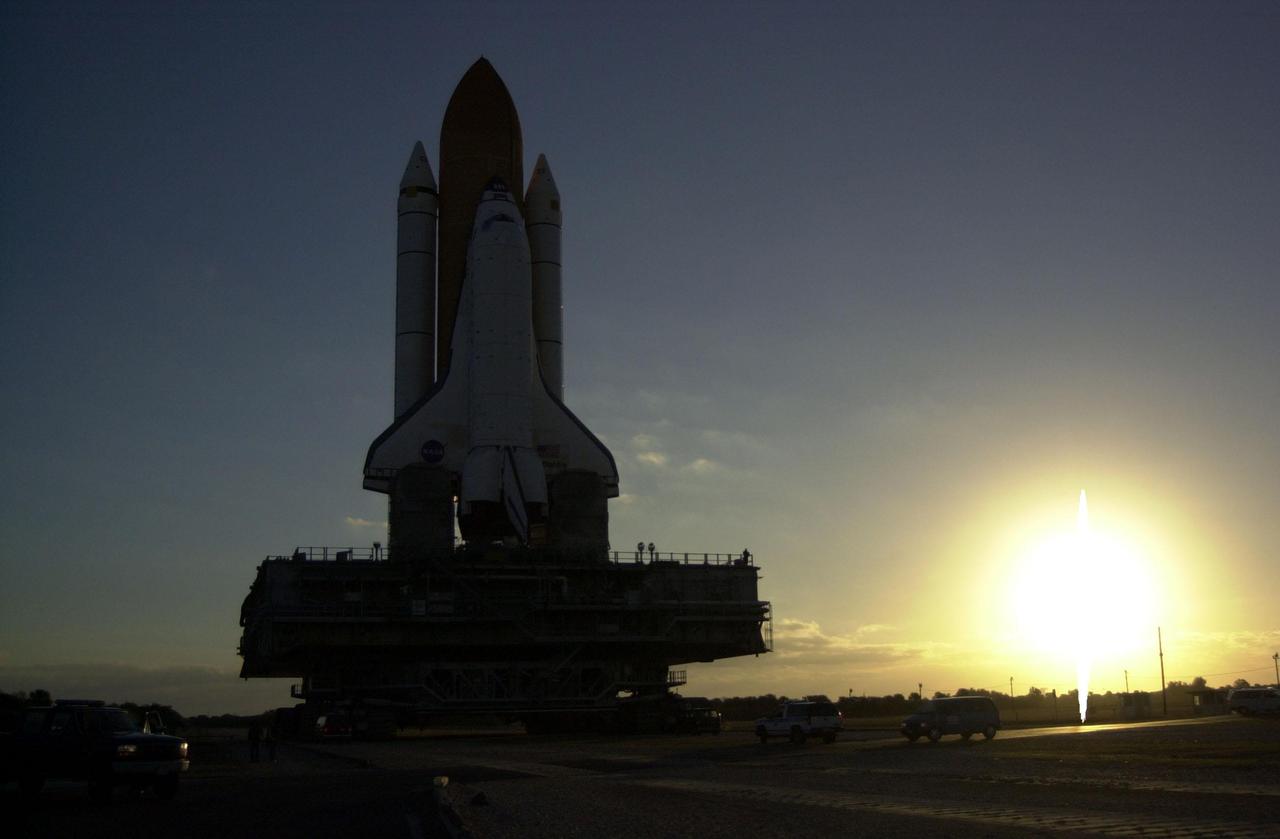
KENNEDY SPACE CENTER, Fla. -- As the sun clears the horizon, it creates a silhouette of the Space Shuttle Atlantis as it makes the crawl from the Vehicle Assembly Building to Launch Pad 39A. The Shuttle has been in the VAB undergoing tests on the solid rocket booster cables. A prior extensive evaluation of NASA’s SRB cable inventory on the shelf revealed conductor damage in four (of about 200) cables. Shuttle managers decided to prove the integrity of the system tunnel cables already on Atlantis, causing return of the Shuttle to the VAB a week ago. Launch of Atlantis on STS-98 has been rescheduled to Feb. 7 at 6:11 p.m. EST
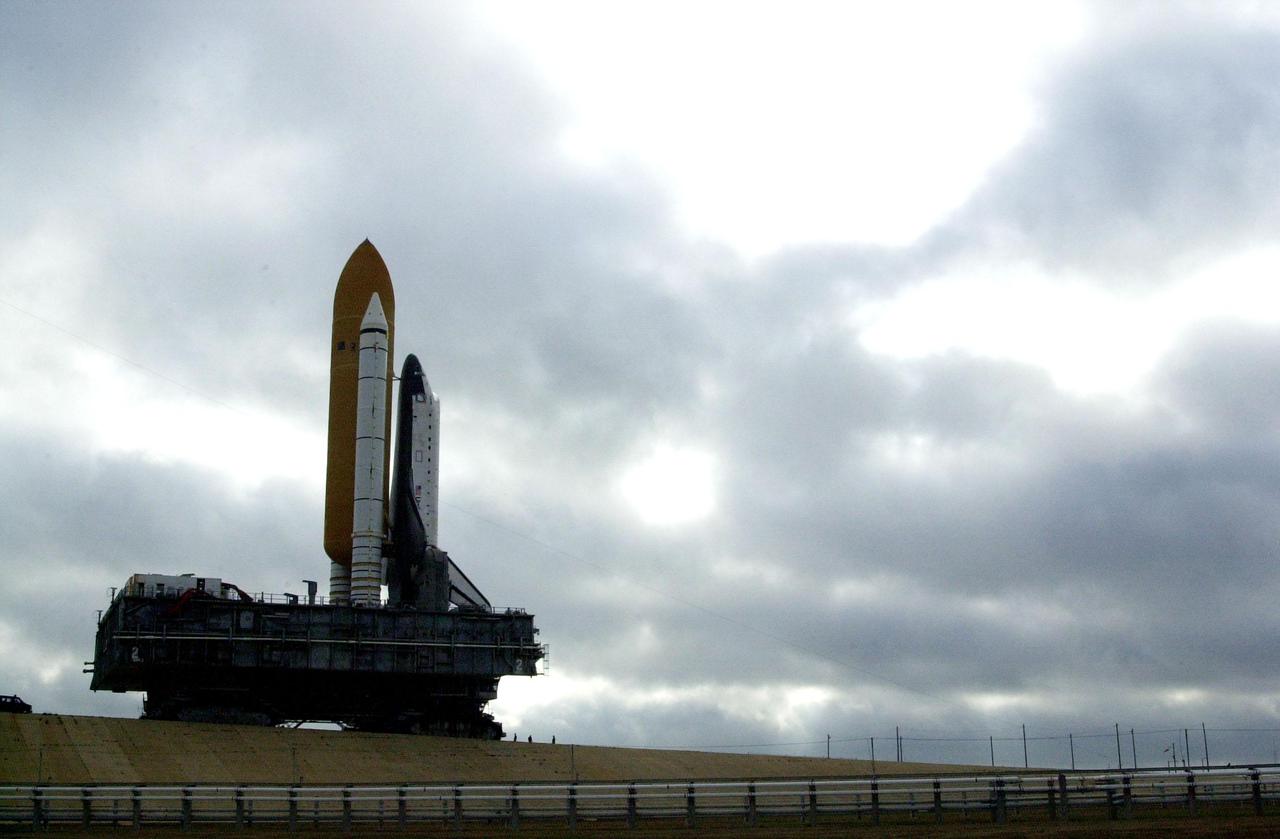
KENNEDY SPACE CENTER, FLA. -- Space Shuttle Atlantis stands out against the fogand cloud-swept sky on its trek aboard the crawler-transporter back to the Vehicle Assembly Building. In the VAB workers will conduct inspections, make continuity checks and conduct X-ray analysis on the 36 solid rocket booster cables located inside each booster’s system tunnel. An extensive evaluation of NASA’s SRB cable inventory revealed conductor damage in four (of about 200) cables on the shelf. Shuttle managers decided to prove the integrity of the system tunnel cables already on Atlantis before launching Jan. 19. The launch has been rescheduled no earlier than Feb. 6
KENNEDY SPACE CENTER, Fla. -- Photographed from the top of the Vehicle Assembly Building, Space Shuttle Atlantis creeps along the crawlerway for the trek to Launch Pad 39A (upper left). In the background is the Atlantic Ocean. The Shuttle has been in the VAB undergoing tests on the solid rocket booster cables. A prior extensive evaluation of NASA’s SRB cable inventory on the shelf revealed conductor damage in four (of about 200) cables. Shuttle managers decided to prove the integrity of the system tunnel cables already on Atlantis, causing return of the Shuttle to the VAB a week ago. Launch of Atlantis on STS-98 has been rescheduled to Feb. 7 at 6:11 p.m. EST
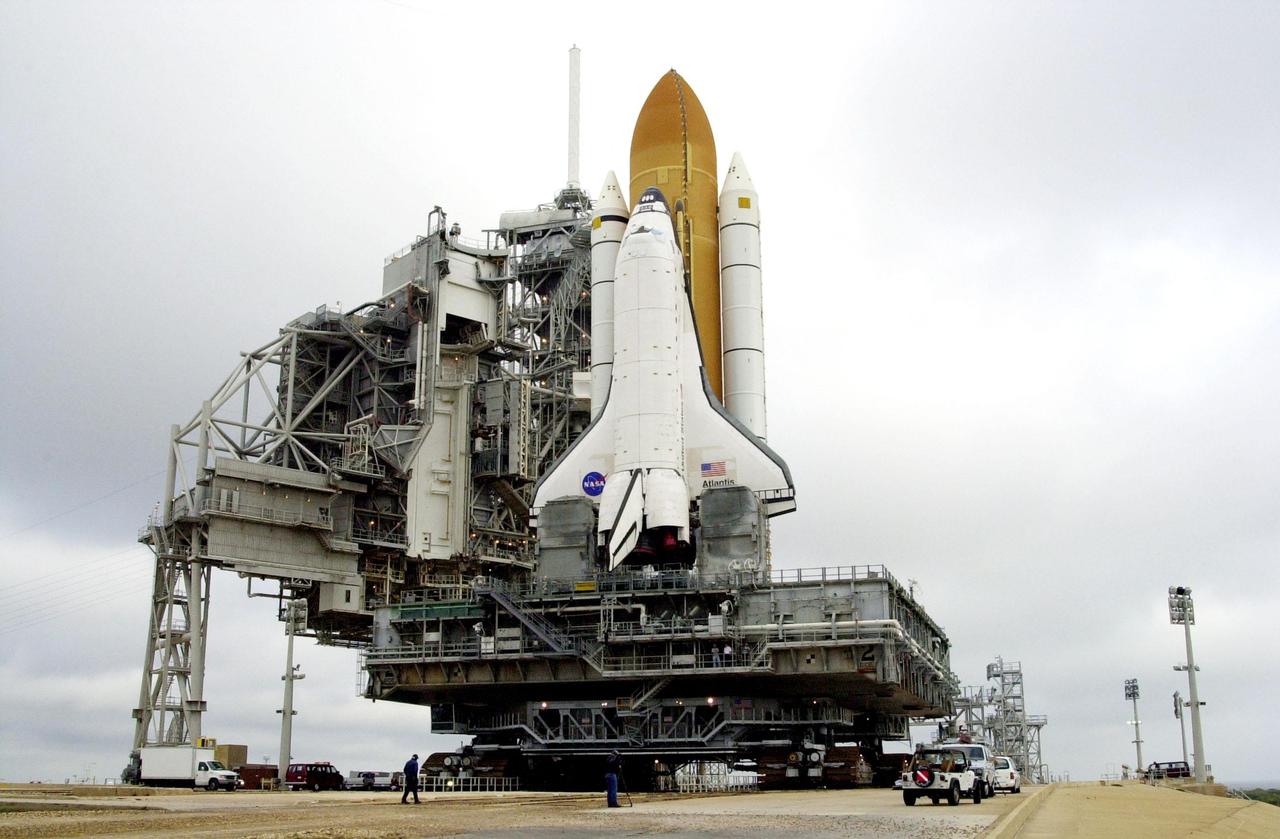
KENNEDY SPACE CENTER, FLA. -- Space Shuttle Atlantis begins moving back to the Vehicle Assembly Building where workers will conduct inspections, make continuity checks and conduct X-ray analysis on the 36 solid rocket booster cables located inside each booster’s system tunnel. An extensive evaluation of NASA’s SRB cable inventory revealed conductor damage in four (of about 200) cables on the shelf. Shuttle managers decided to prove the integrity of the system tunnel cables already on Atlantis before launching Jan. 19. The launch has been rescheduled no earlier than Feb. 6
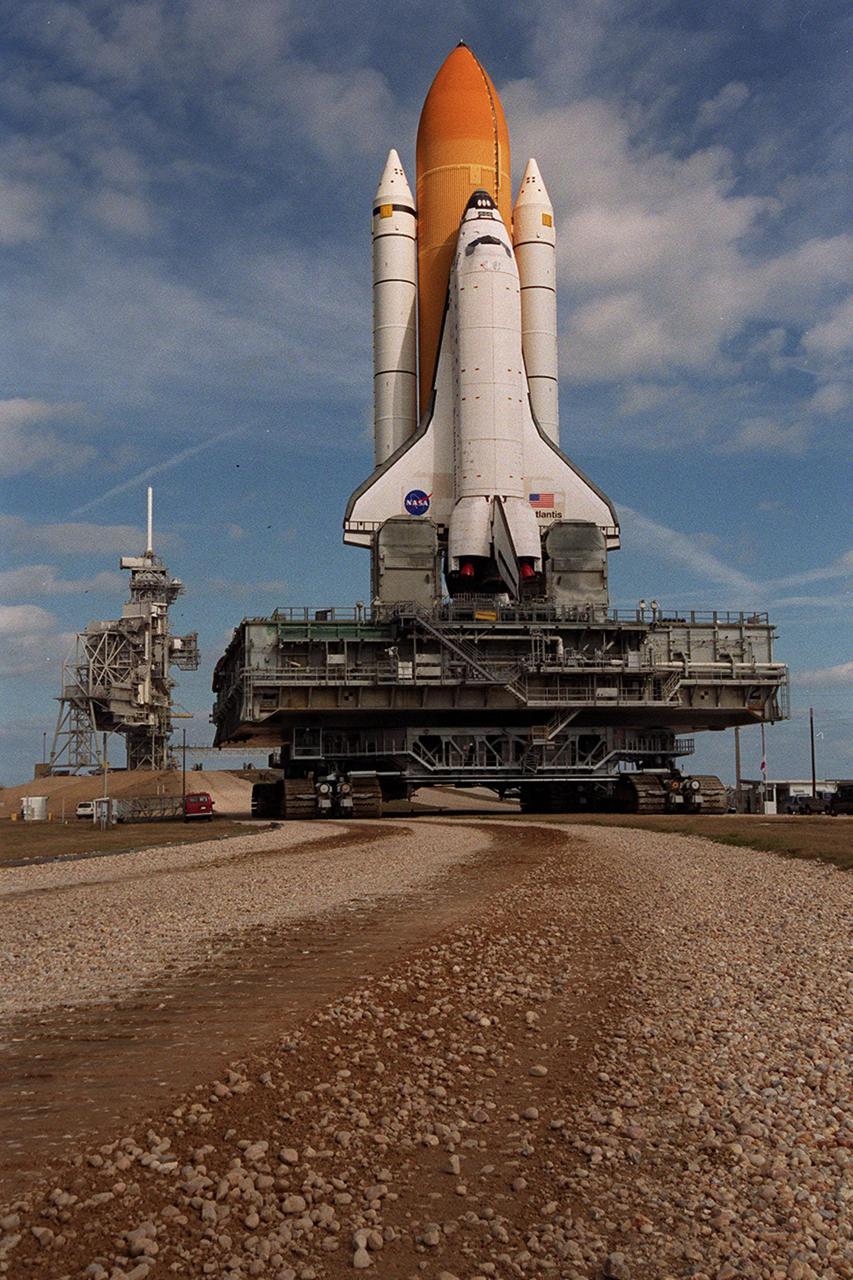
KENNEDY SPACE CENTER, Fla. -- Space Shuttle Atlantis makes tracks as it crawls to Launch Pad 39A (background, left). The Shuttle had returned to the Vehicle Assembly Building from the launch pad in order to undergo tests on the solid rocket booster cables. A prior extensive evaluation of NASA’s SRB cable inventory on the shelf revealed conductor damage in four (of about 200) cables. Shuttle managers decided to prove the integrity of the system tunnel cables already on Atlantis, causing return of the Shuttle to the VAB a week ago. The Shuttle rolled back to Launch Pad 39A to get ready for launch on Feb. 7 at 6:11 p.m. EST