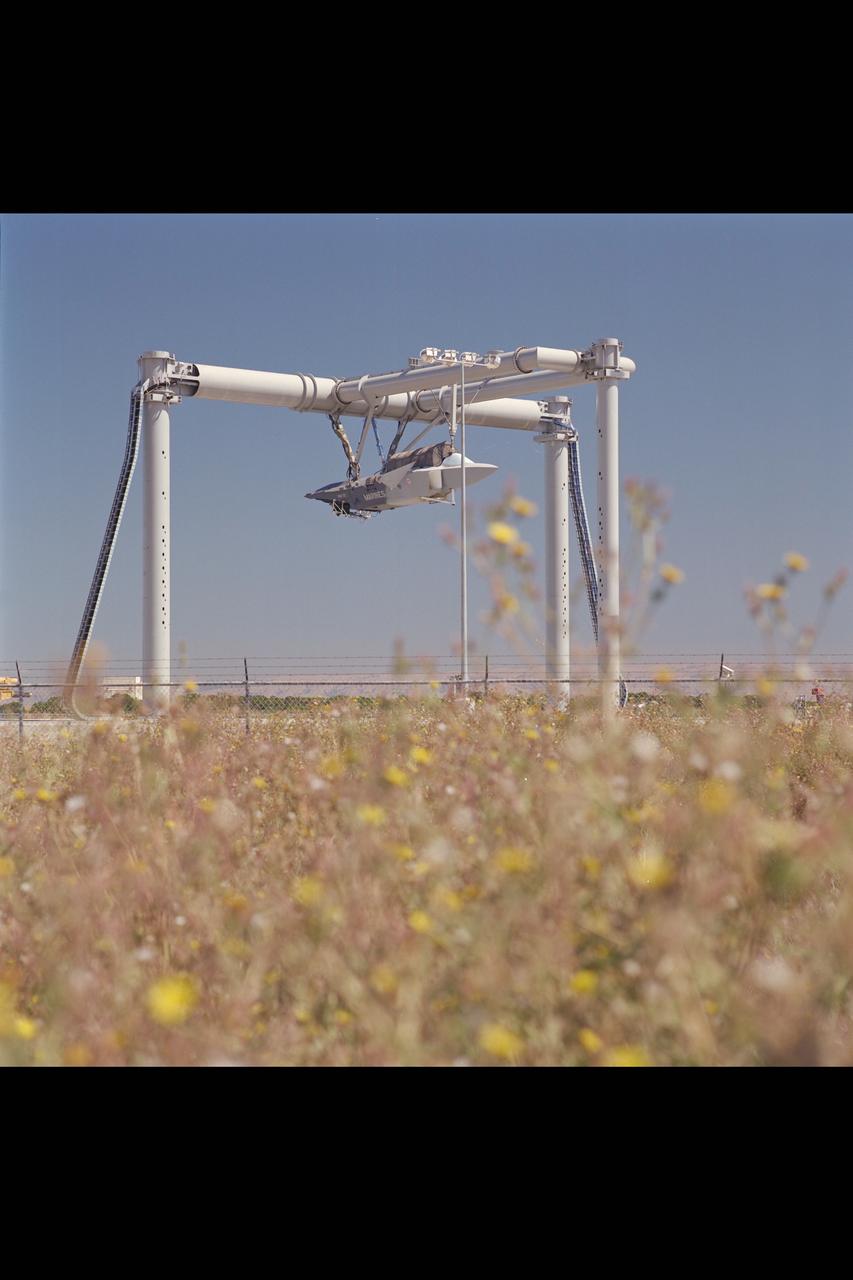
CALF (Common Affordable Lightweight Fighter) / JAST (Joint Advanced Strike Technology) X-32 Test Program: Lockheed ASTOVL / CALF X-32, N-246 Test-930 . (12S Wingless, Highest position)
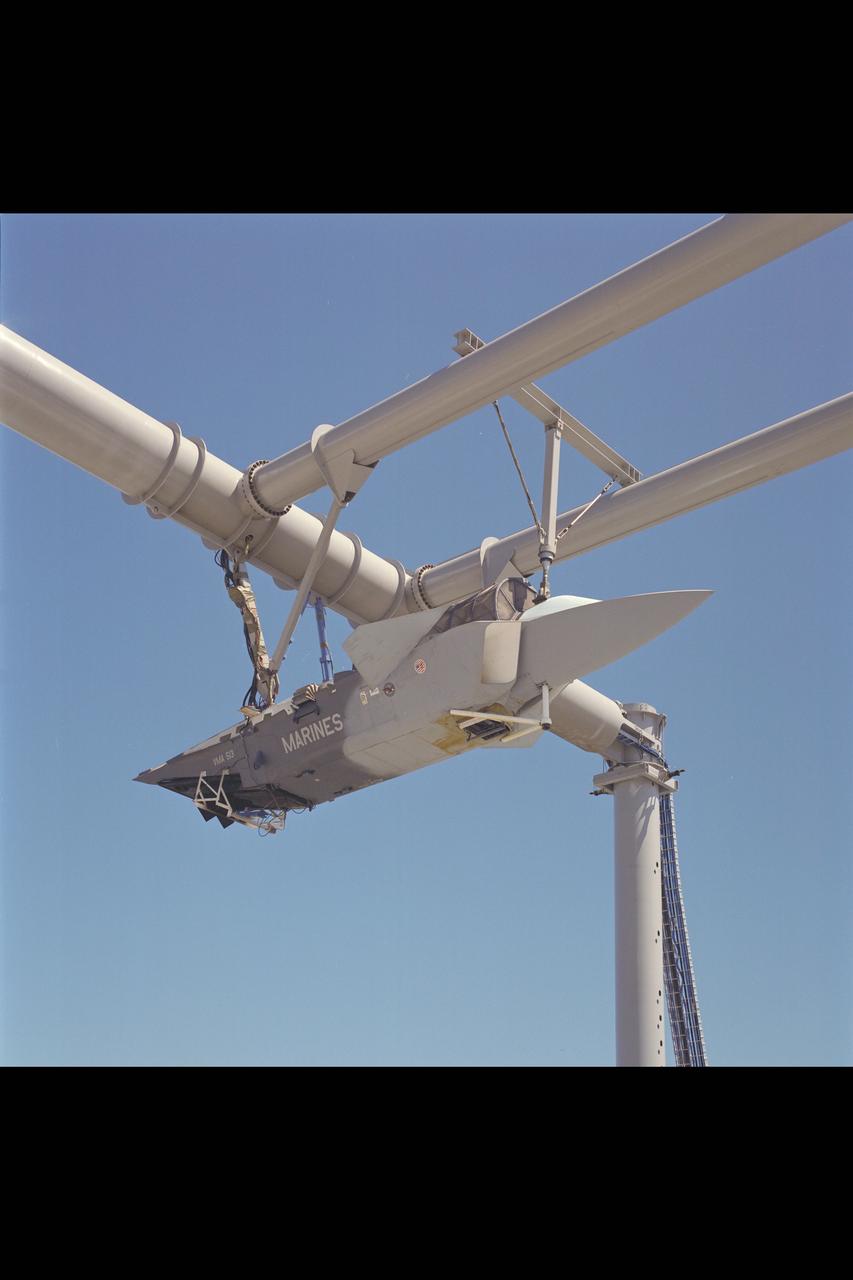
CALF (Common Affordable Lightweight Fighter) / JAST (Joint Advanced Strike Technology) X-32 test-930 mounted at OARF
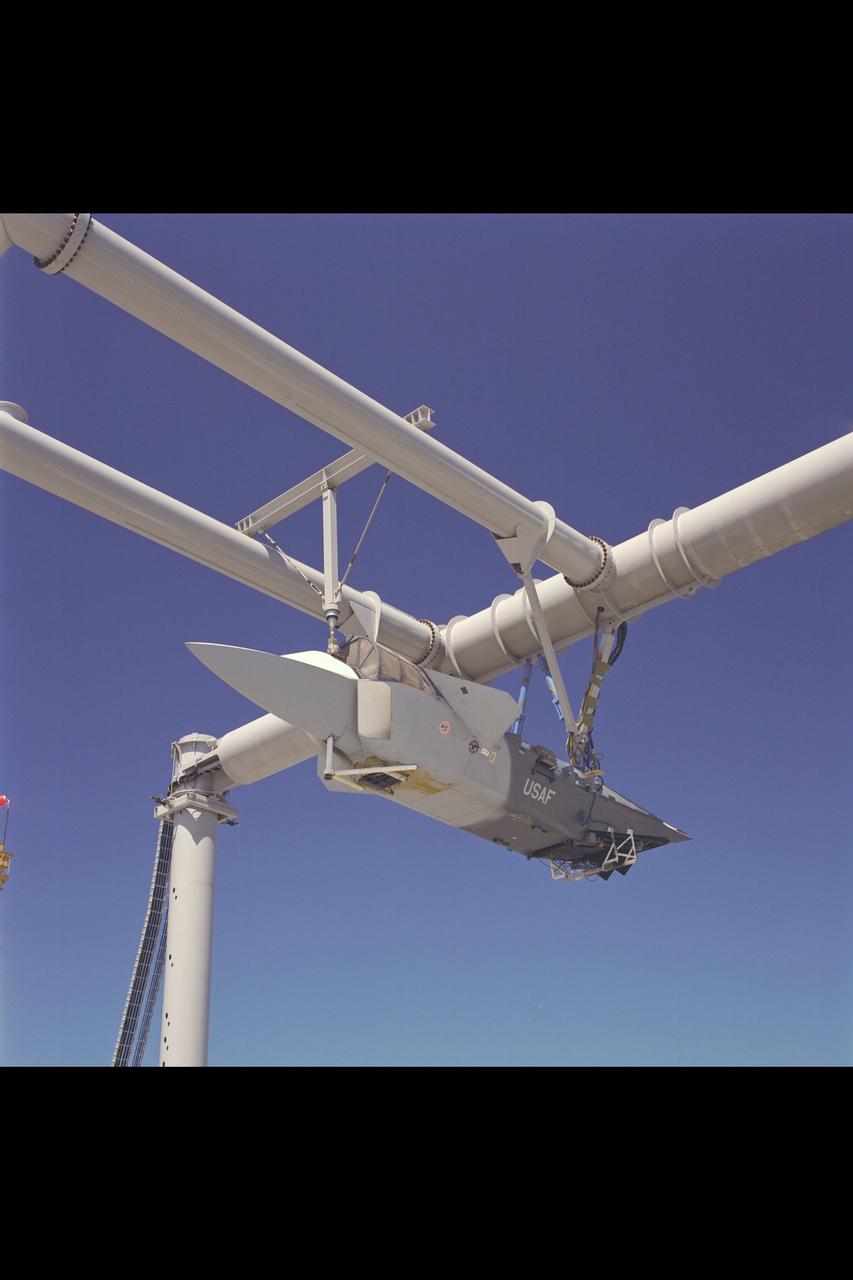
CALF (Common Affordable Lightweight Fighter) / JAST (Joint Advanced Strike Technology) X-32 test-930 mounted at OARF
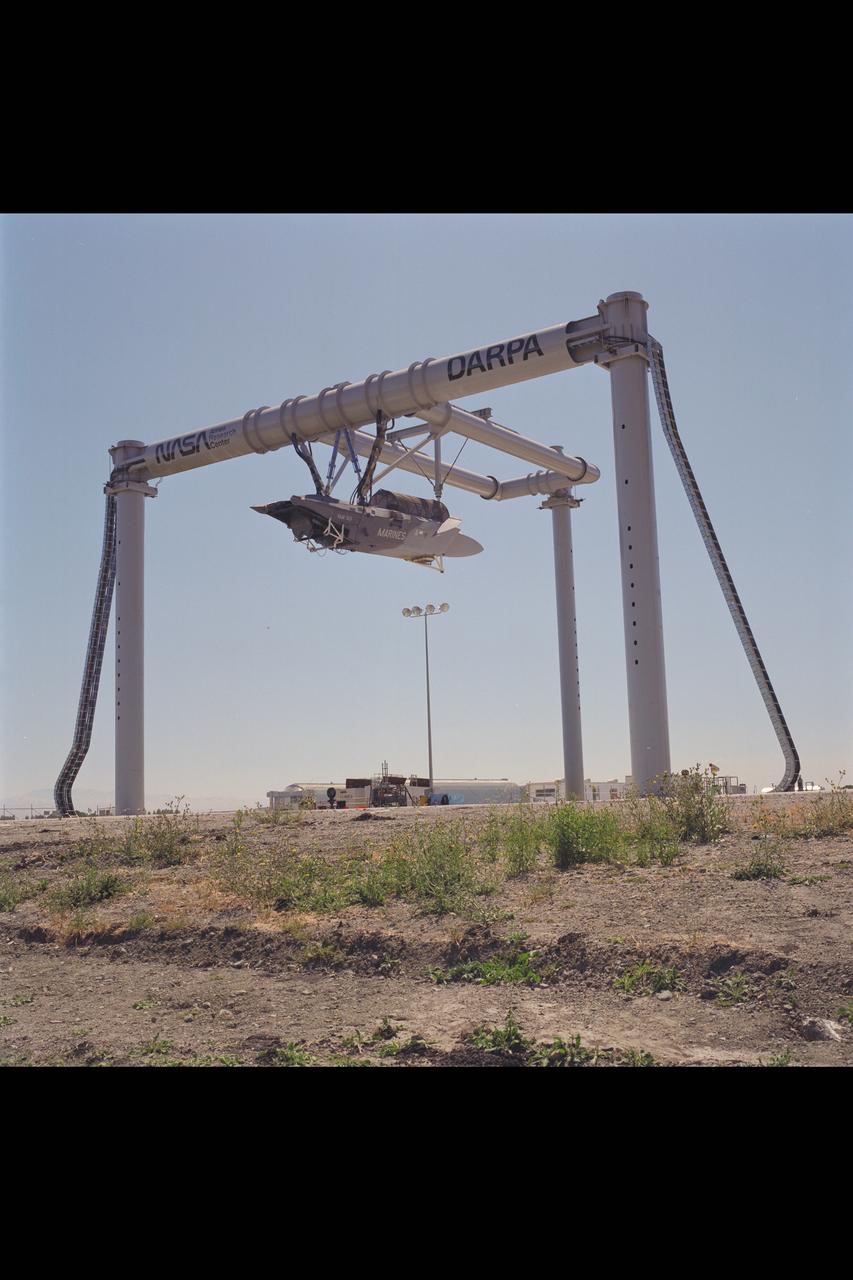
CALF (Common Affordable Lightweight Fighter) / JAST (Joint Advanced Strike Technology) X-32 test-930 mounted at OARF
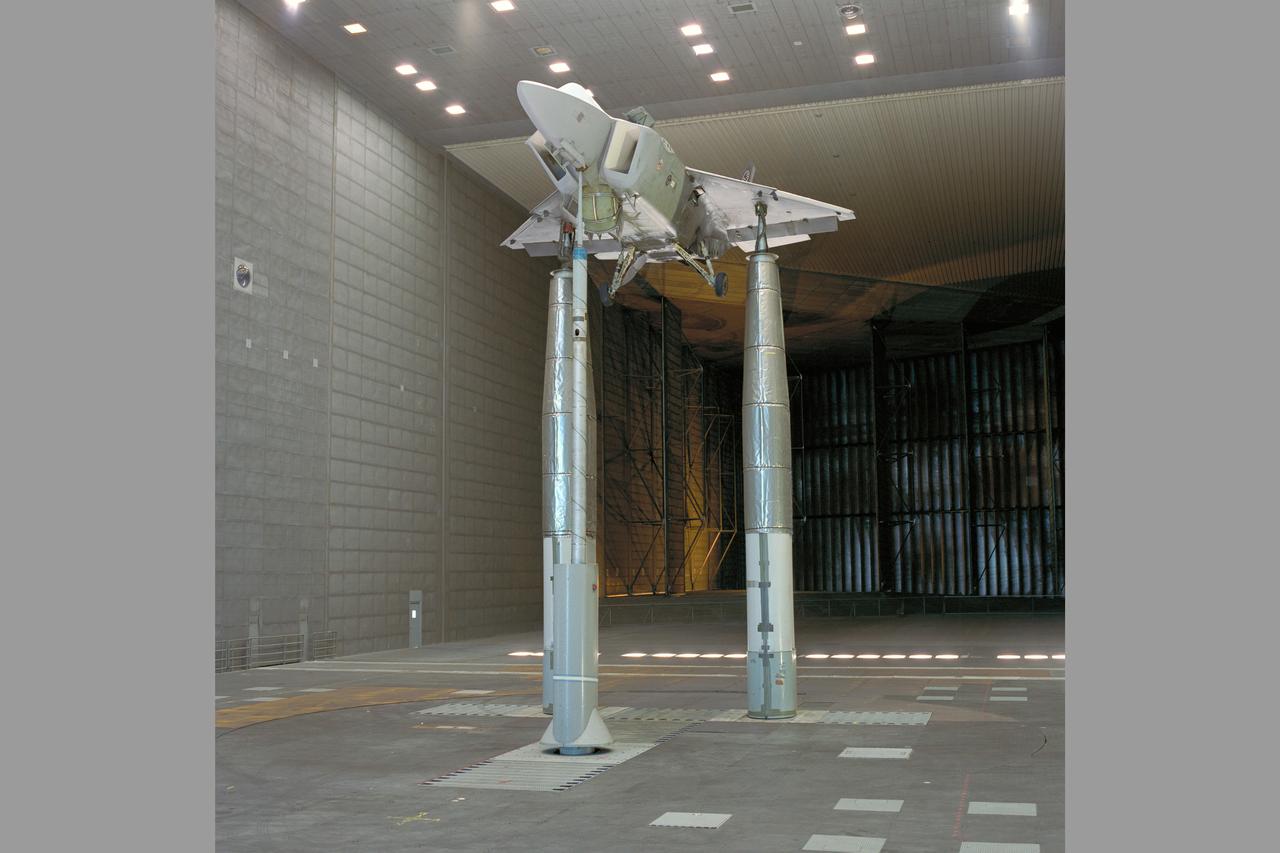
CALF/JAST X-32 test program: the LSPM (Large Scale Powered Model), Lockheed's concept for a tri-service aircraft (Air Force, Navy, Marines) CALF (Common Affordable Lightweight Fighter) as part of the Department of Defense's Joint Advanced Strike Technology (JAST) is being tested in the 80x120ft w.t. test-930 with rear horizontal stabilizer
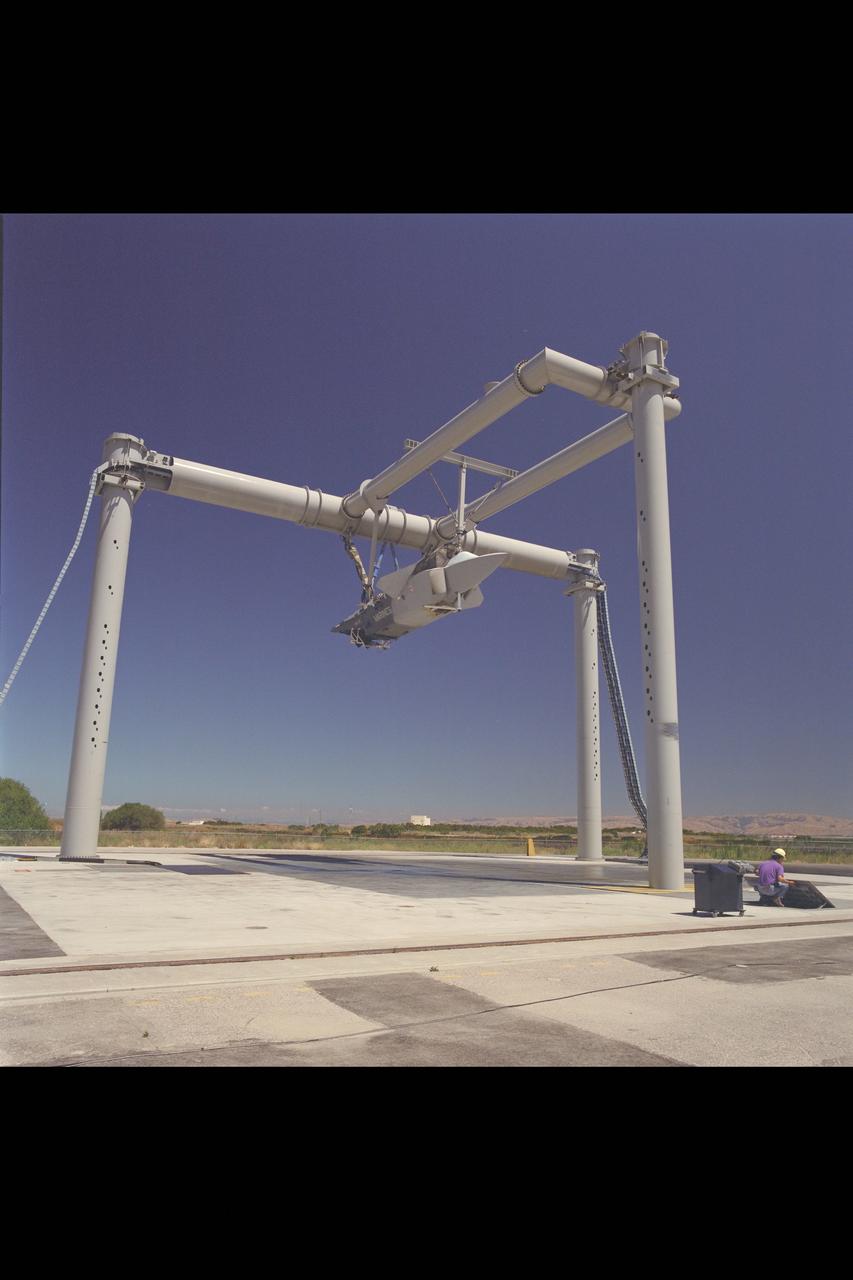
JAST (Joint Advanced Strike Technology) X-32 Test Program: Lockheed ASTOVL / CALF X-32, N-246 Test #930 arrival, unloading and test prep.
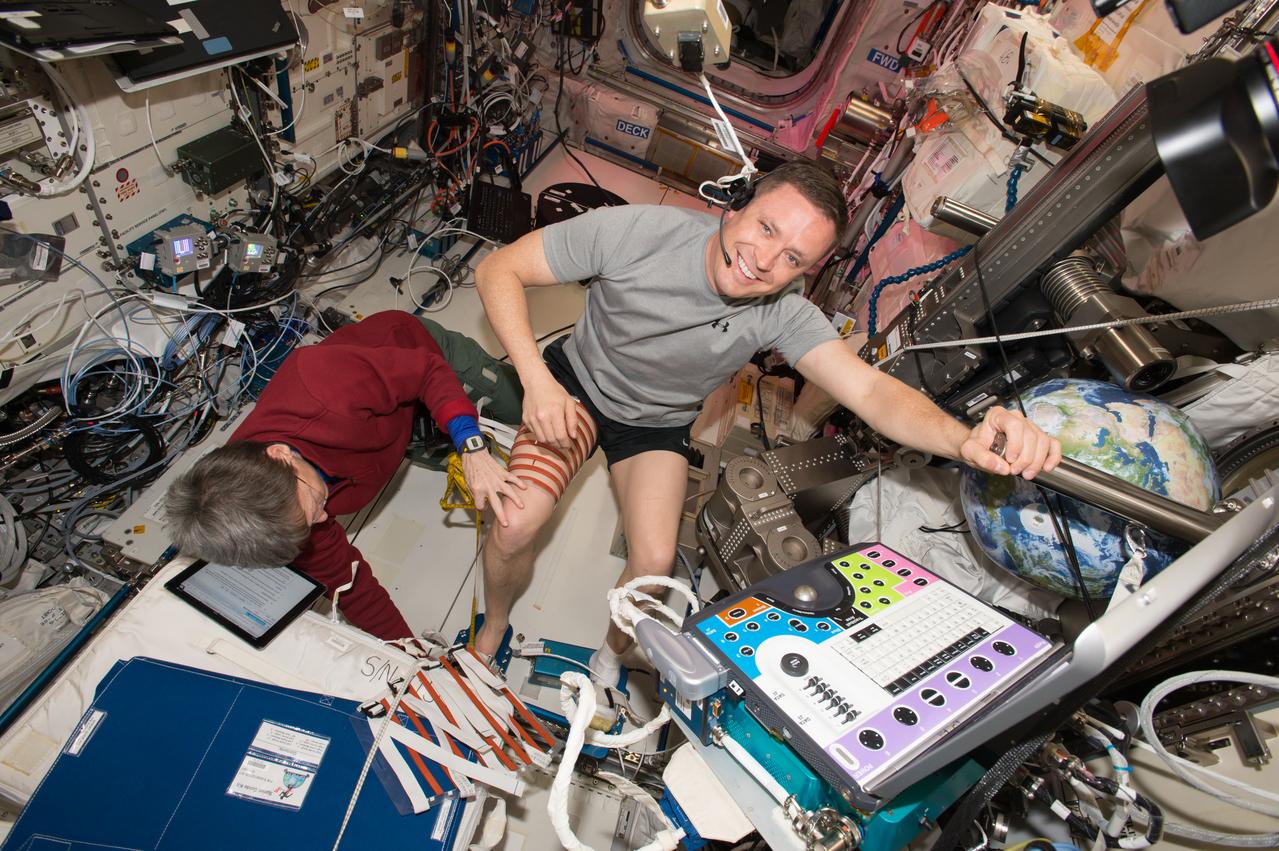
iss051e037012 (May 3, 2017) --- Flight engineer Jack Fischer dons Thigh and Calf Guides in preparation for Ultrasound 2 operations for the Integrated Resistance and Aerobic Training Study (Sprint) experiment. He is assisted by Commander Peggy Whitson. Image was taken in the Columbus European Laboratory.
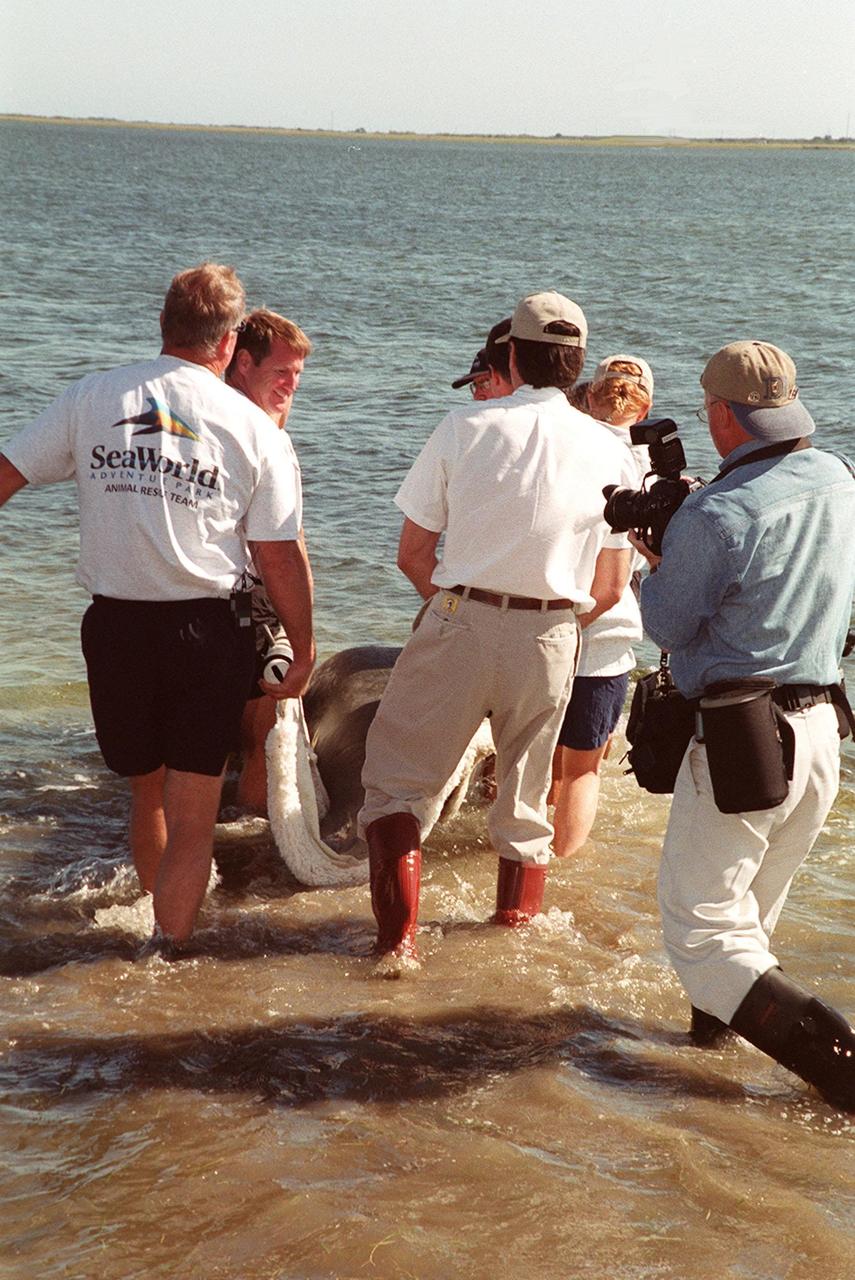
KENNEDY SPACE CENTER, FLA. -- Sea World workers wade into the Banana River carrying a young manatee they are releasing. The site is on the north side of the NASA Causeway, near Kennedy Space Center. The calf was one of two manatees being released after recovering from injuries. Manatees are frequently seen in the waters around Kennedy Space Center, which is surrounded by the Merritt Island National Wildlife Refuge
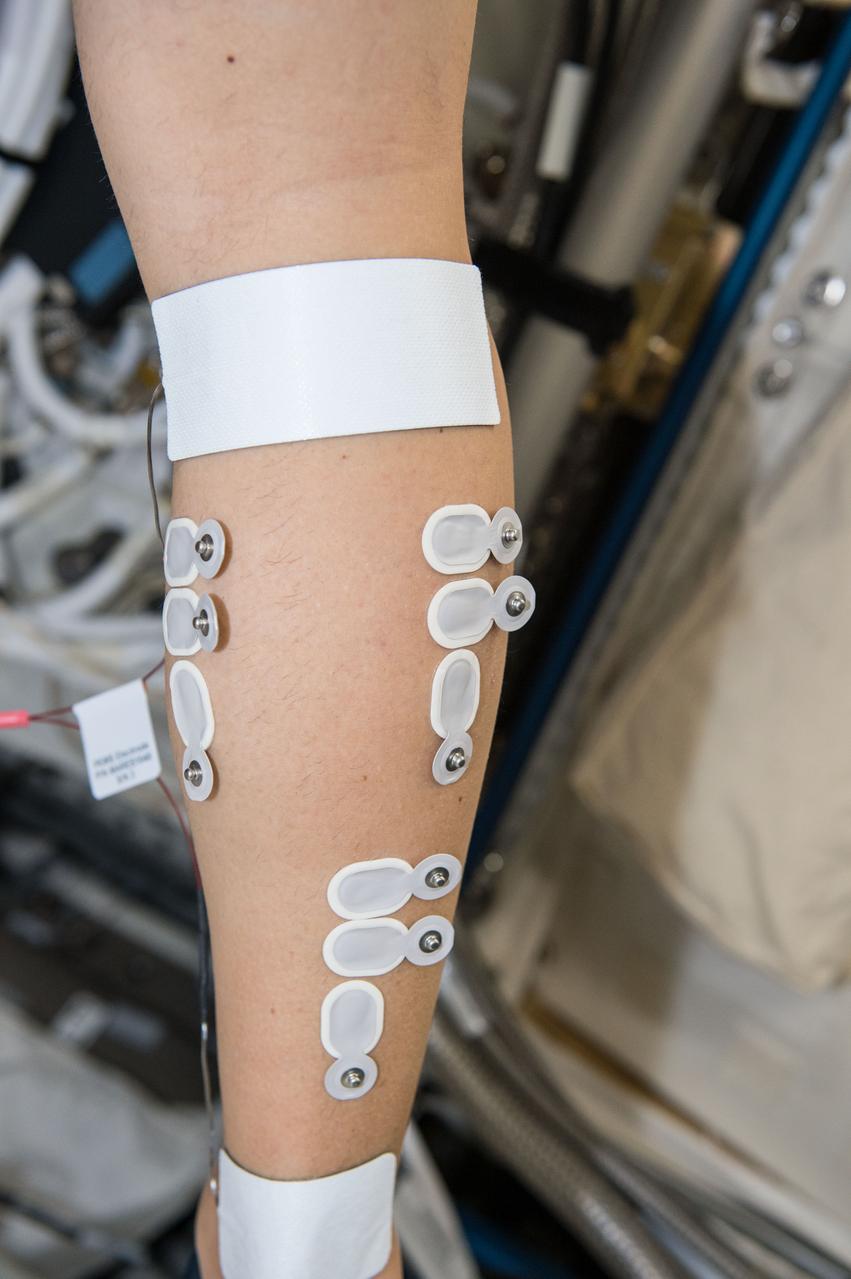
iss050e012909 (11/29/2016) --- A view of an Expedition 50 Crewmember (wearing electrodes) during the setup phase of the Sarcolab-3 Experiment in the Columbus Module. Myotendinous and Neuromuscular Adaptation to Long-term Spaceflight (Sarcolab) investigates the adaptation and deterioration of the soleus, or calf muscle, where it joins the Achilles tendon, which links it to the heel and carries loads from the entire body. Muscle fiber samples are taken from crew members before and after flight, and analyzed for changes in structural and chemical properties.
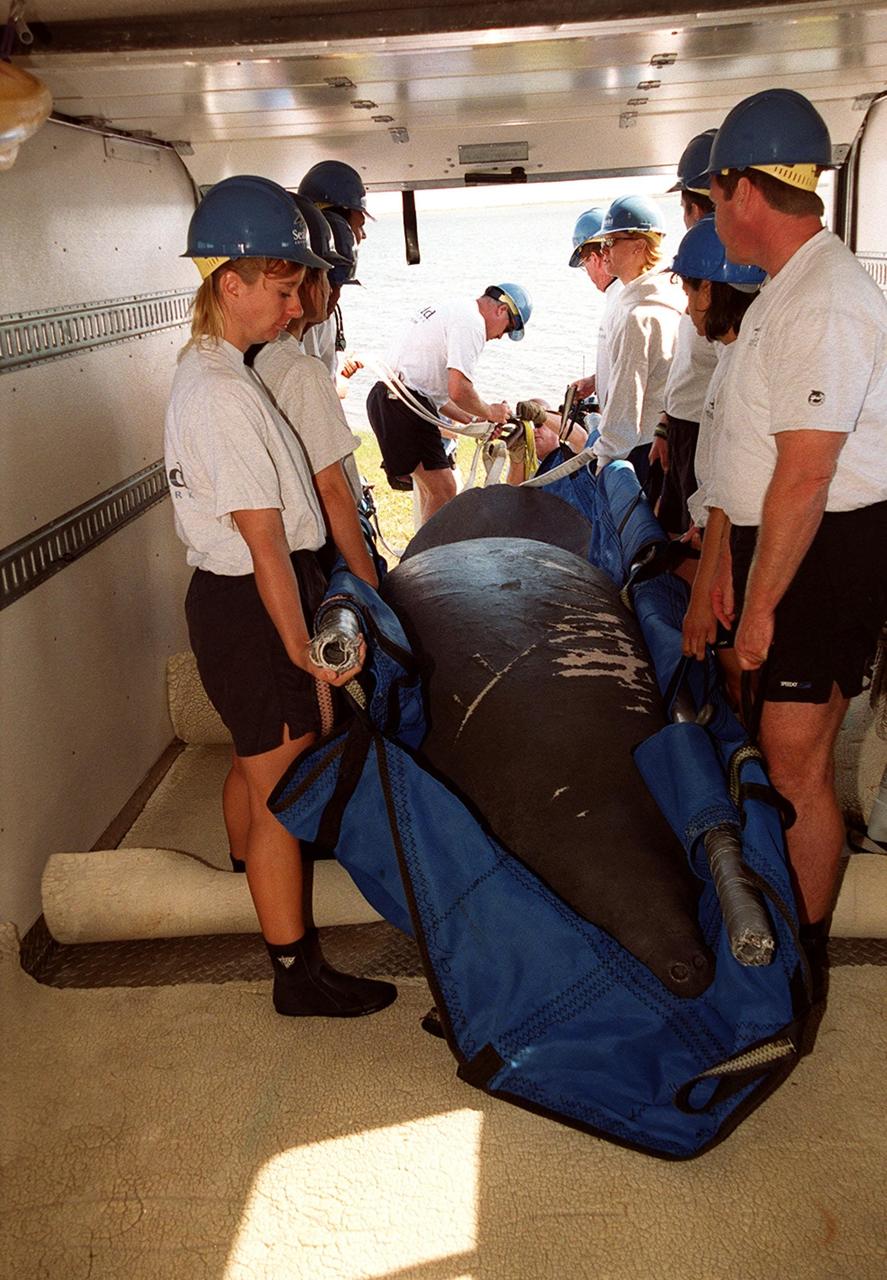
KENNEDY SPACE CENTER, FLA. -- A large adult manatee requires many helpers to lift it out of the van that brought it from Sea World for release into the Banana River. The site is on the north side of the NASA Causeway, near Kennedy Space Center. A calf was also released at the site. Manatees are frequently seen in the waters around Kennedy Space Center, which is surrounded by the Merritt Island National Wildlife Refuge
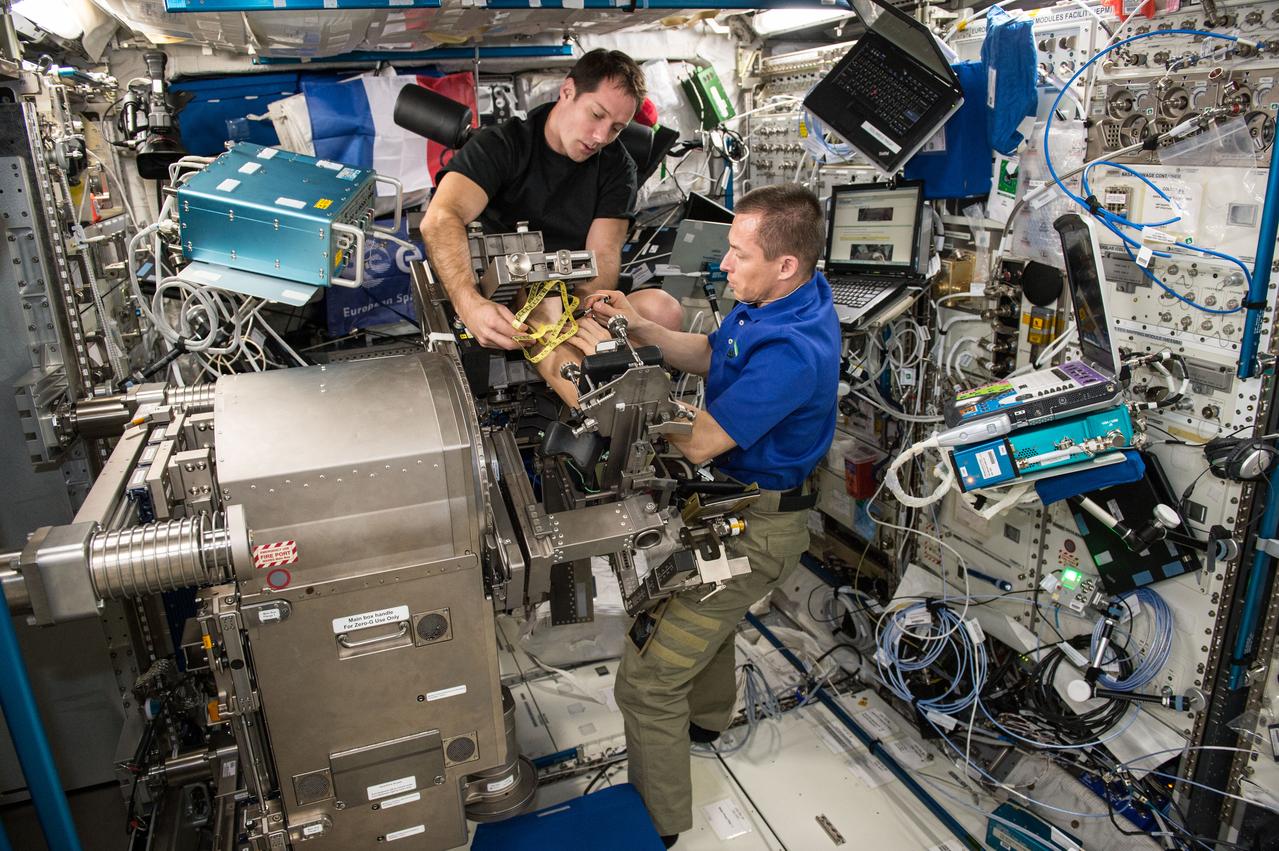
iss050e012389 (11/29/2016) --- European Space Agency (ESA) Thomas Pesquet and Cosmonaut Sergei Ryzhikov during the setup phase of the Sarcolab-3 Experiment in the Columbus Module. Myotendinous and Neuromuscular Adaptation to Long-term Spaceflight (Sarcolab) investigates the adaptation and deterioration of the soleus, or calf muscle, where it joins the Achilles tendon, which links it to the heel and carries loads from the entire body. Muscle fiber samples are taken from crew members before and after flight, and analyzed for changes in structural and chemical properties.
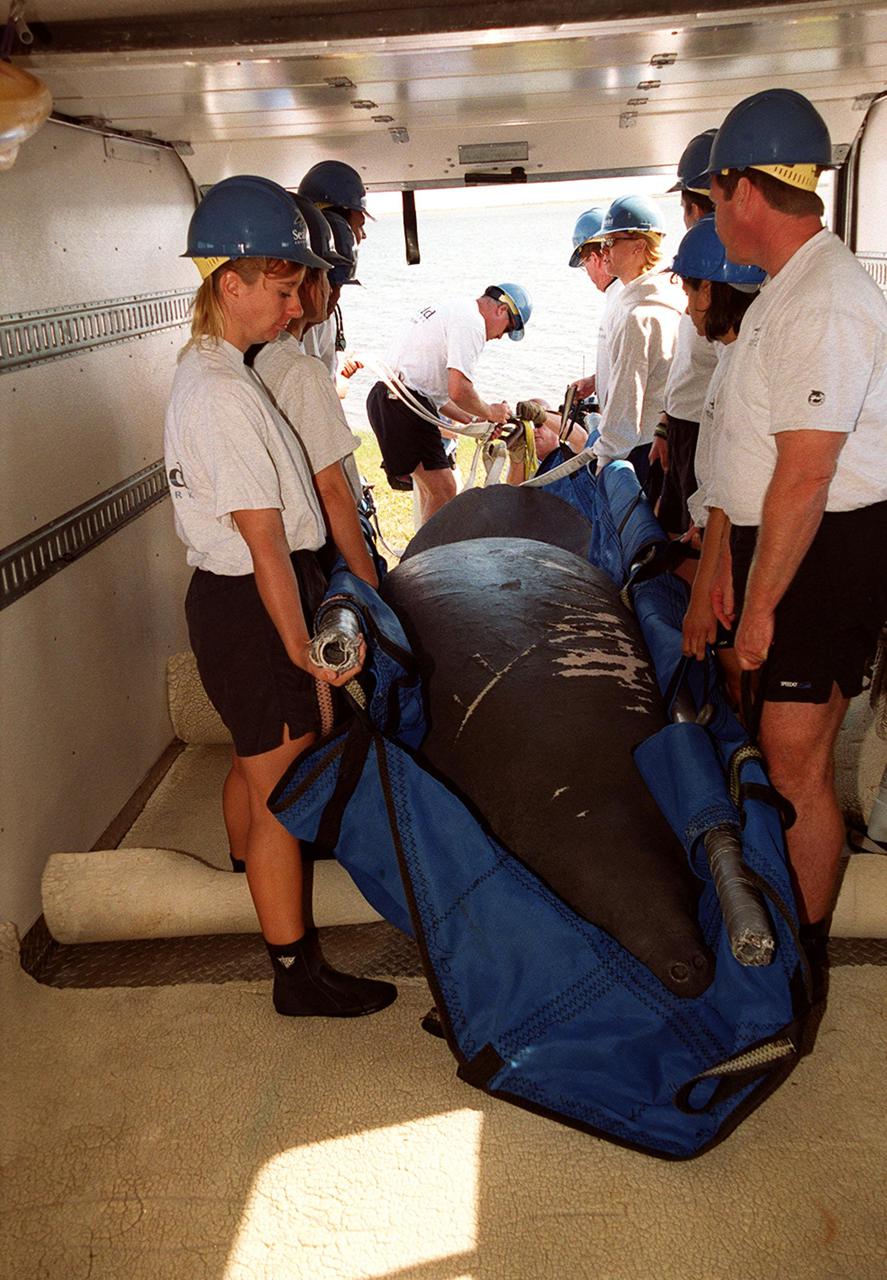
KENNEDY SPACE CENTER, FLA. -- A large adult manatee requires many helpers to lift it out of the van that brought it from Sea World for release into the Banana River. The site is on the north side of the NASA Causeway, near Kennedy Space Center. A calf was also released at the site. Manatees are frequently seen in the waters around Kennedy Space Center, which is surrounded by the Merritt Island National Wildlife Refuge
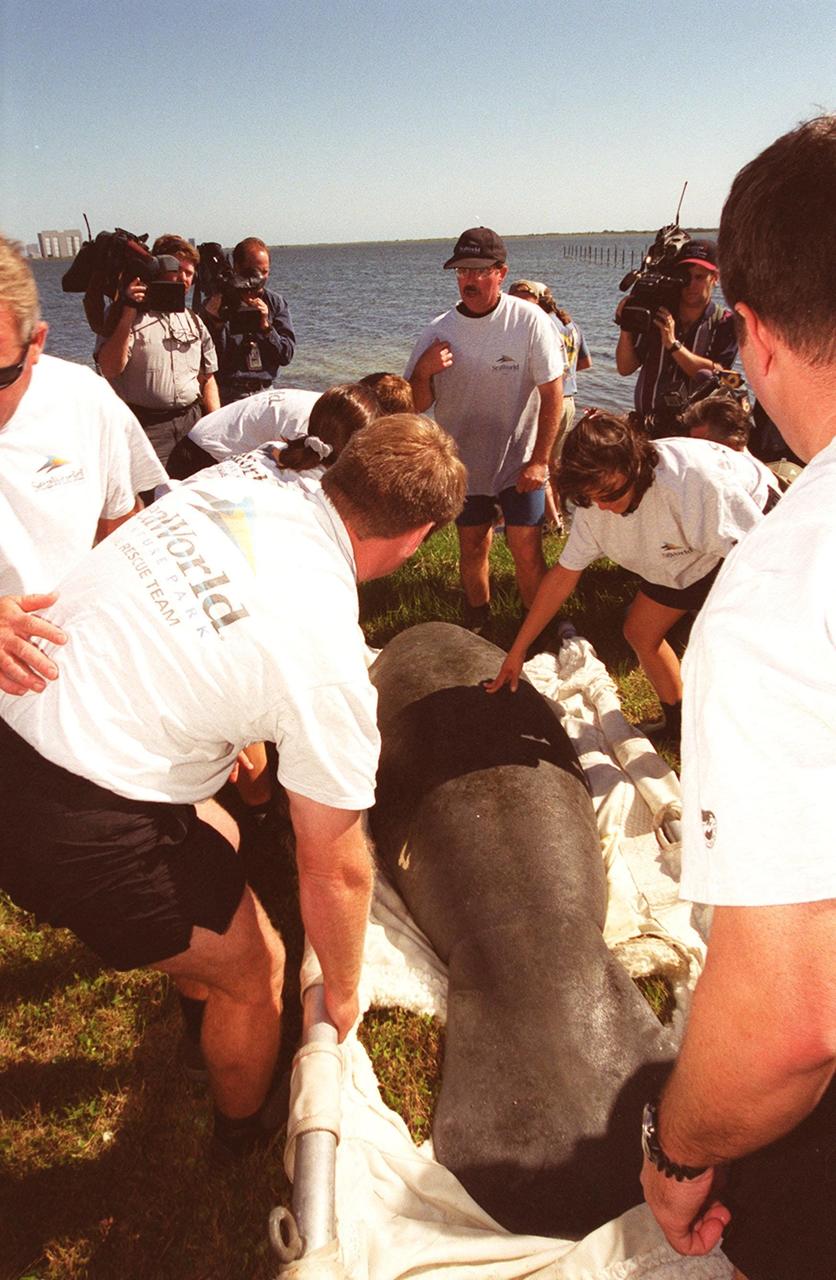
KENNEDY SPACE CENTER, FLA. -- After removing a young manatee from the van that brought it from Sea World, Orlando, Fla., workers get ready for the final step, releasing it into the Banana River behind them. The site is on the north side of the NASA Causeway, near Kennedy Space Center. The calf was one of two manatees being released after recovering from injuries. Manatees are frequently seen in the waters around Kennedy Space Center, which is surrounded by the Merritt Island National Wildlife Refuge
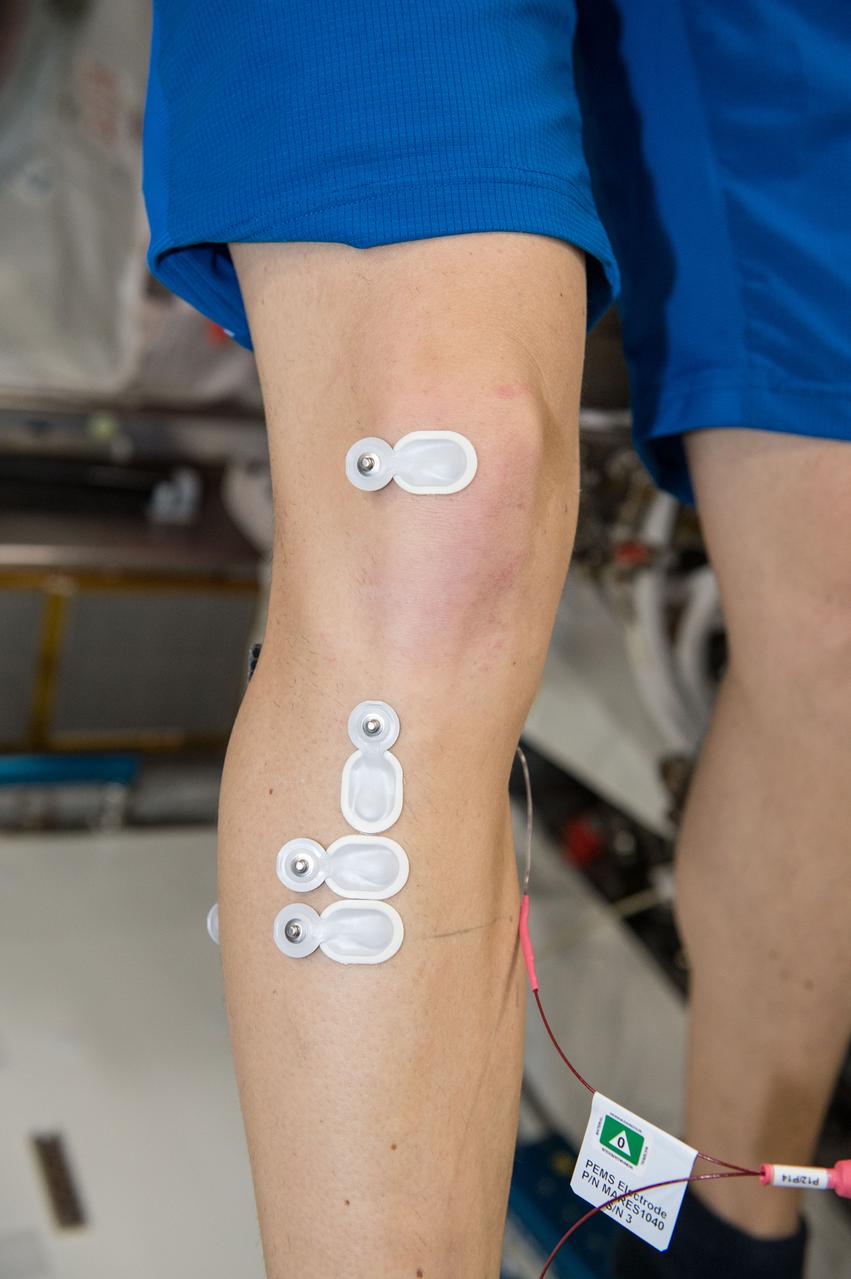
iss050e012907 (11/29/2016) --- European Space Agency (ESA) Thomas Pesquet (only leg - wearing electrodes) during the setup phase of the Sarcolab-3 Experiment in the Columbus Module. Myotendinous and Neuromuscular Adaptation to Long-term Spaceflight (Sarcolab) investigates the adaptation and deterioration of the soleus, or calf muscle, where it joins the Achilles tendon, which links it to the heel and carries loads from the entire body. Muscle fiber samples are taken from crew members before and after flight, and analyzed for changes in structural and chemical properties.
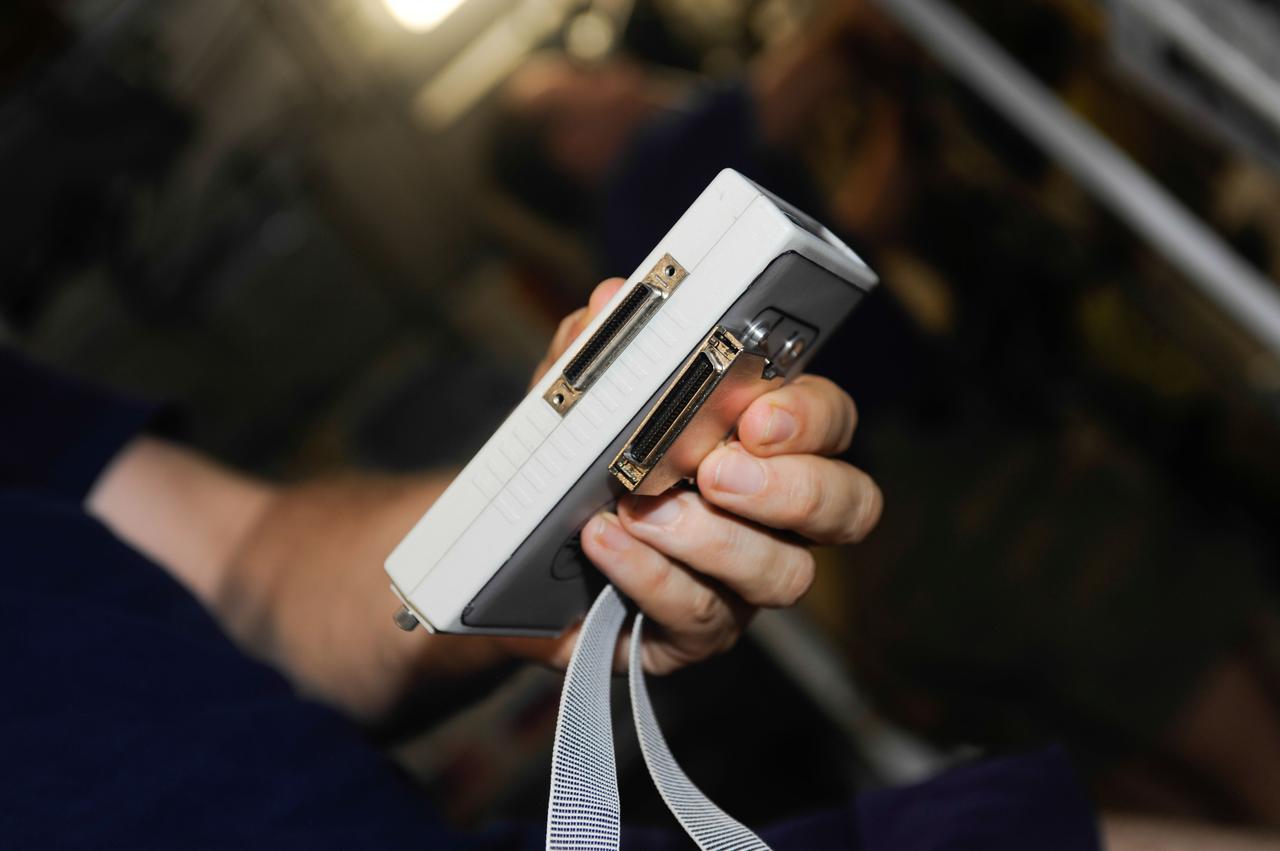
iss038e003689 (11/19/2013) --- A close-up view of the Motocard hardware. The Mechanisms of Sensory-Motor Coordination in Weightlessness (Motocard) investigation is carried out on the treadmill and involves locomotion in various modes of running and walking during various modes of operation of the treadmill. During the test, electromyography of the thigh and calf muscles, support structure response, heart rate, and treadmill load parameters (actual speed, time elapsed, distance, integrated indicators for support structure response) are recorded.
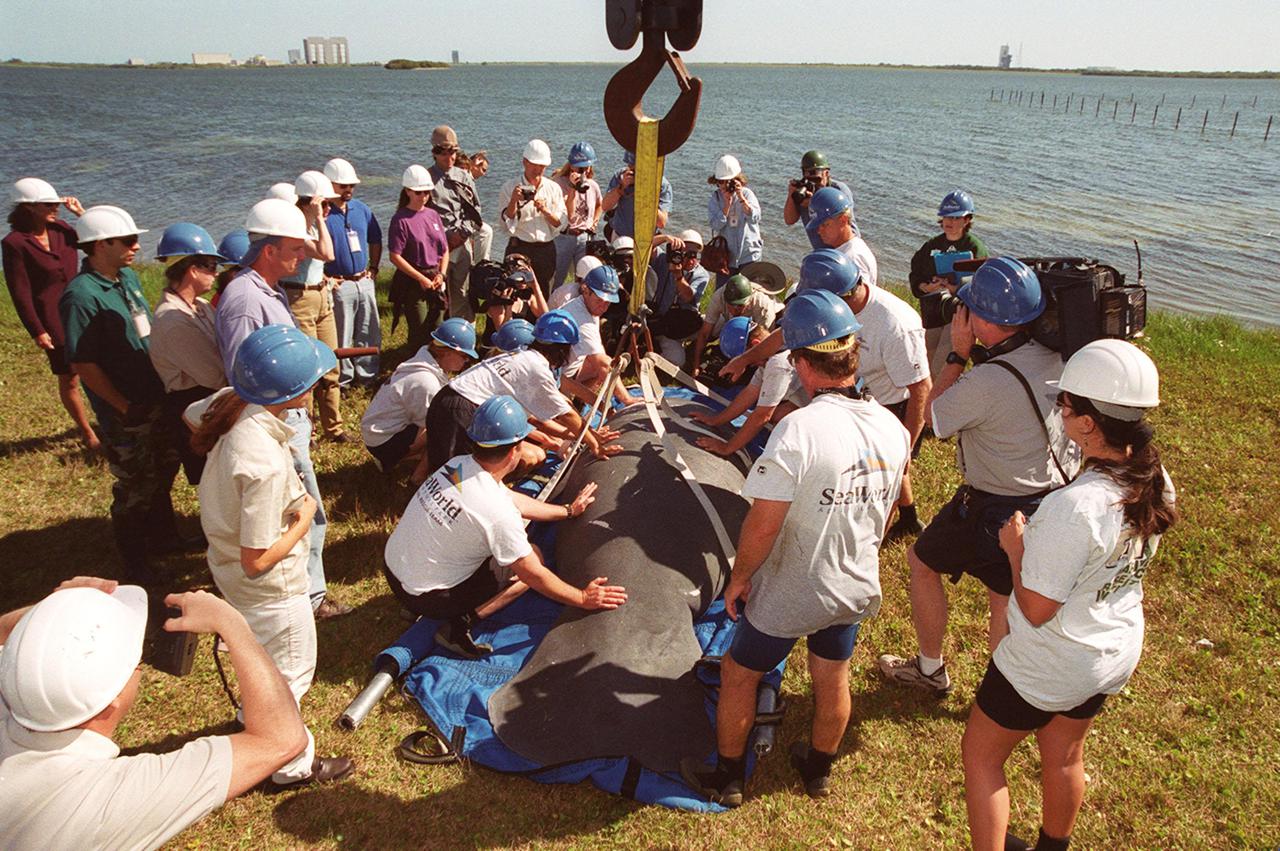
KENNEDY SPACE CENTER, FLA. -- Spectators and photographers gather around the adult manatee Sea World workers are releasing into the Banana River in the background. The site is on the north side of the NASA Causeway, near Kennedy Space Center. On the horizon at left can be seen the Vehicle Assembly Building. The weight of the manatee requires a hoist to lift it. Earlier, workers released a calf. The two manatees recovered from injuries at Sea World. Manatees are frequently seen in the waters around Kennedy Space Center, which is surrounded by the Merritt Island National Wildlife Refuge
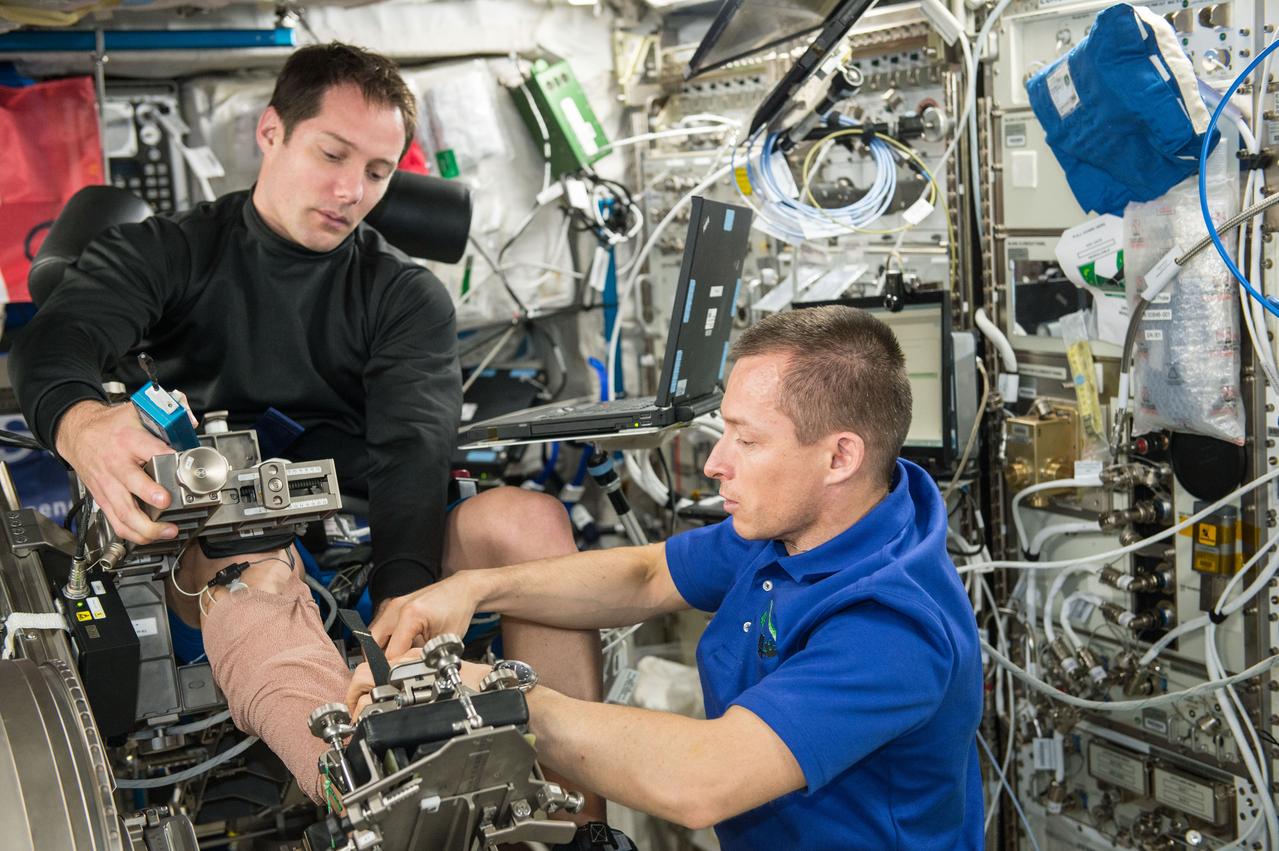
iss050e012915 (11/29/2016) --- European Space Agency (ESA) Thomas Pesquet and Cosmonaut Sergei Ryzhikov during the setup phase of the Sarcolab-3 Experiment in the Columbus Module. Myotendinous and Neuromuscular Adaptation to Long-term Spaceflight (Sarcolab) investigates the adaptation and deterioration of the soleus, or calf muscle, where it joins the Achilles tendon, which links it to the heel and carries loads from the entire body. Muscle fiber samples are taken from crew members before and after flight, and analyzed for changes in structural and chemical properties.

KENNEDY SPACE CENTER, FLA. -- Sea World workers wade into the Banana River carrying a young manatee they are releasing. The site is on the north side of the NASA Causeway, near Kennedy Space Center. The calf was one of two manatees being released after recovering from injuries. Manatees are frequently seen in the waters around Kennedy Space Center, which is surrounded by the Merritt Island National Wildlife Refuge
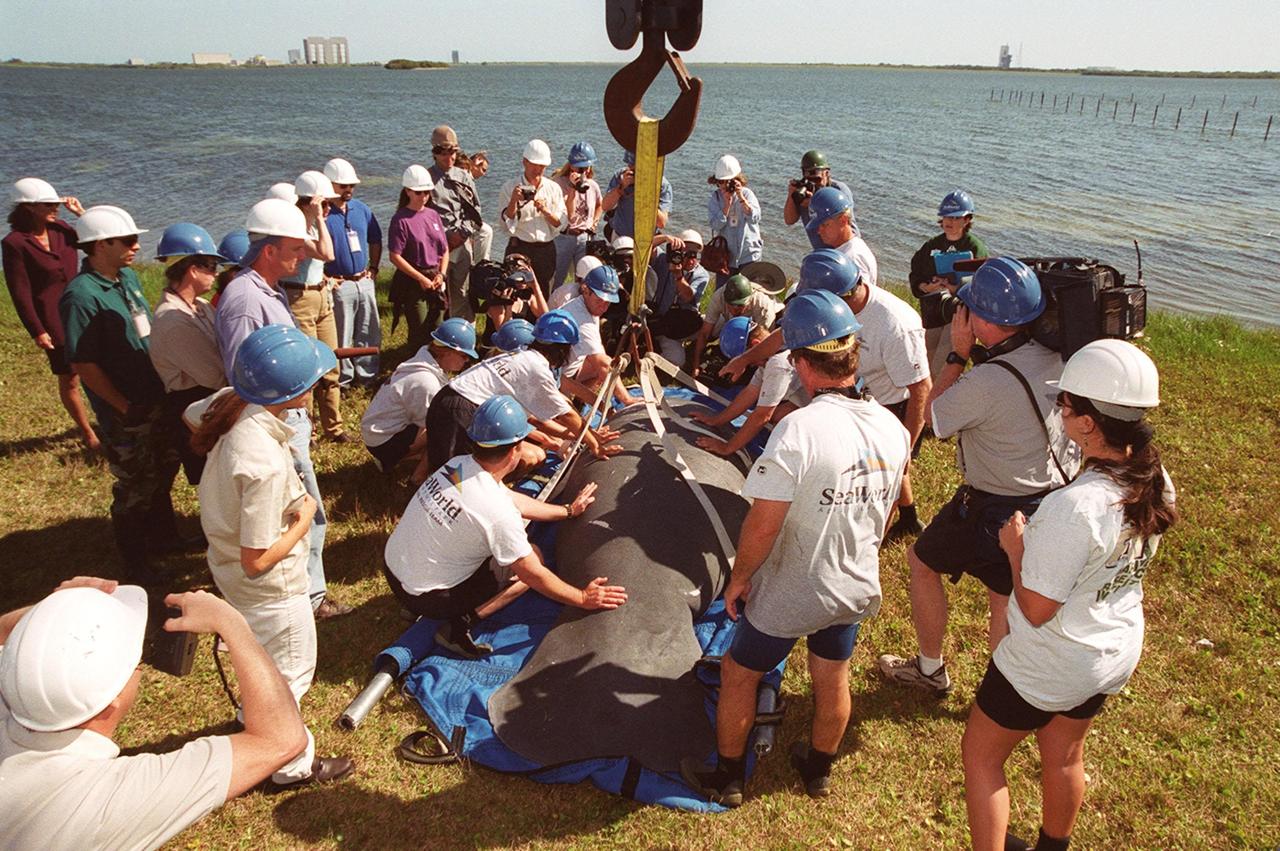
KENNEDY SPACE CENTER, FLA. -- Spectators and photographers gather around the adult manatee Sea World workers are releasing into the Banana River in the background. The site is on the north side of the NASA Causeway, near Kennedy Space Center. On the horizon at left can be seen the Vehicle Assembly Building. The weight of the manatee requires a hoist to lift it. Earlier, workers released a calf. The two manatees recovered from injuries at Sea World. Manatees are frequently seen in the waters around Kennedy Space Center, which is surrounded by the Merritt Island National Wildlife Refuge
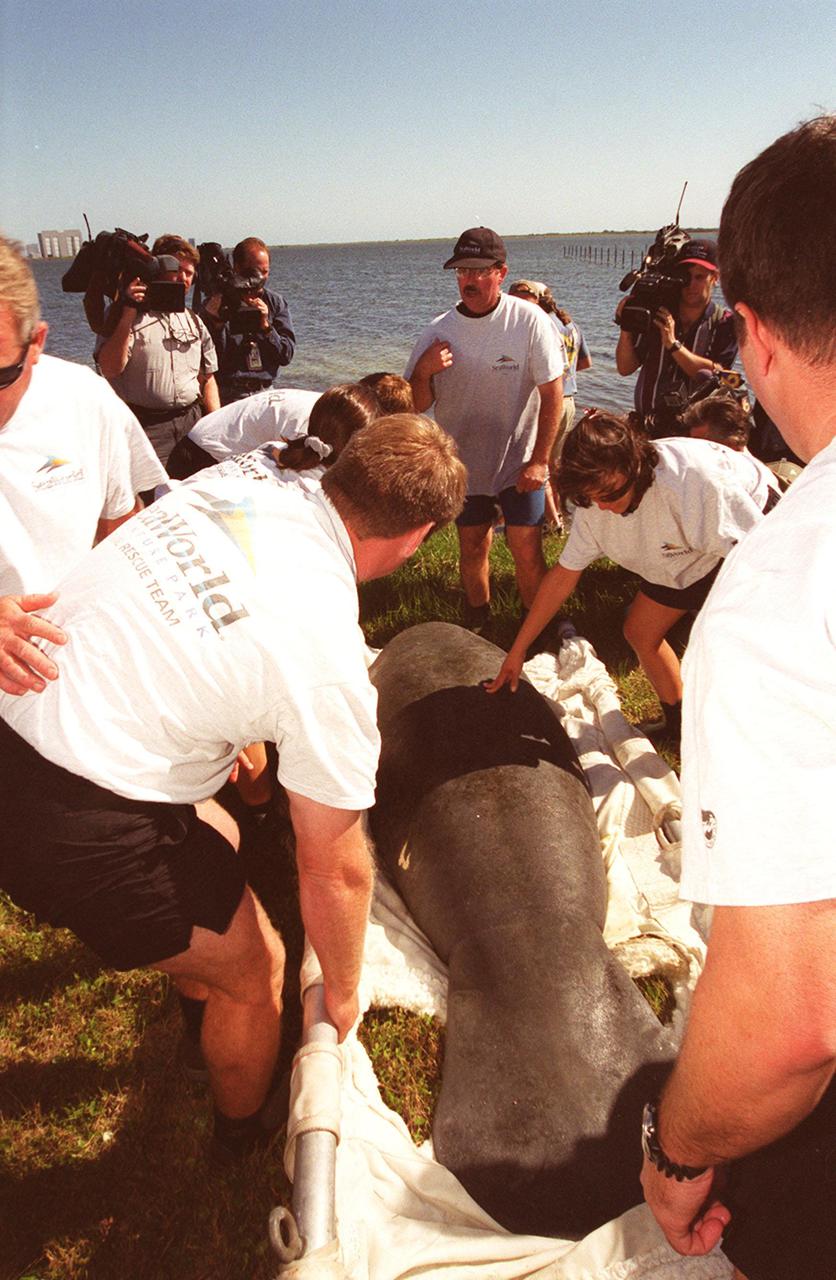
KENNEDY SPACE CENTER, FLA. -- After removing a young manatee from the van that brought it from Sea World, Orlando, Fla., workers get ready for the final step, releasing it into the Banana River behind them. The site is on the north side of the NASA Causeway, near Kennedy Space Center. The calf was one of two manatees being released after recovering from injuries. Manatees are frequently seen in the waters around Kennedy Space Center, which is surrounded by the Merritt Island National Wildlife Refuge
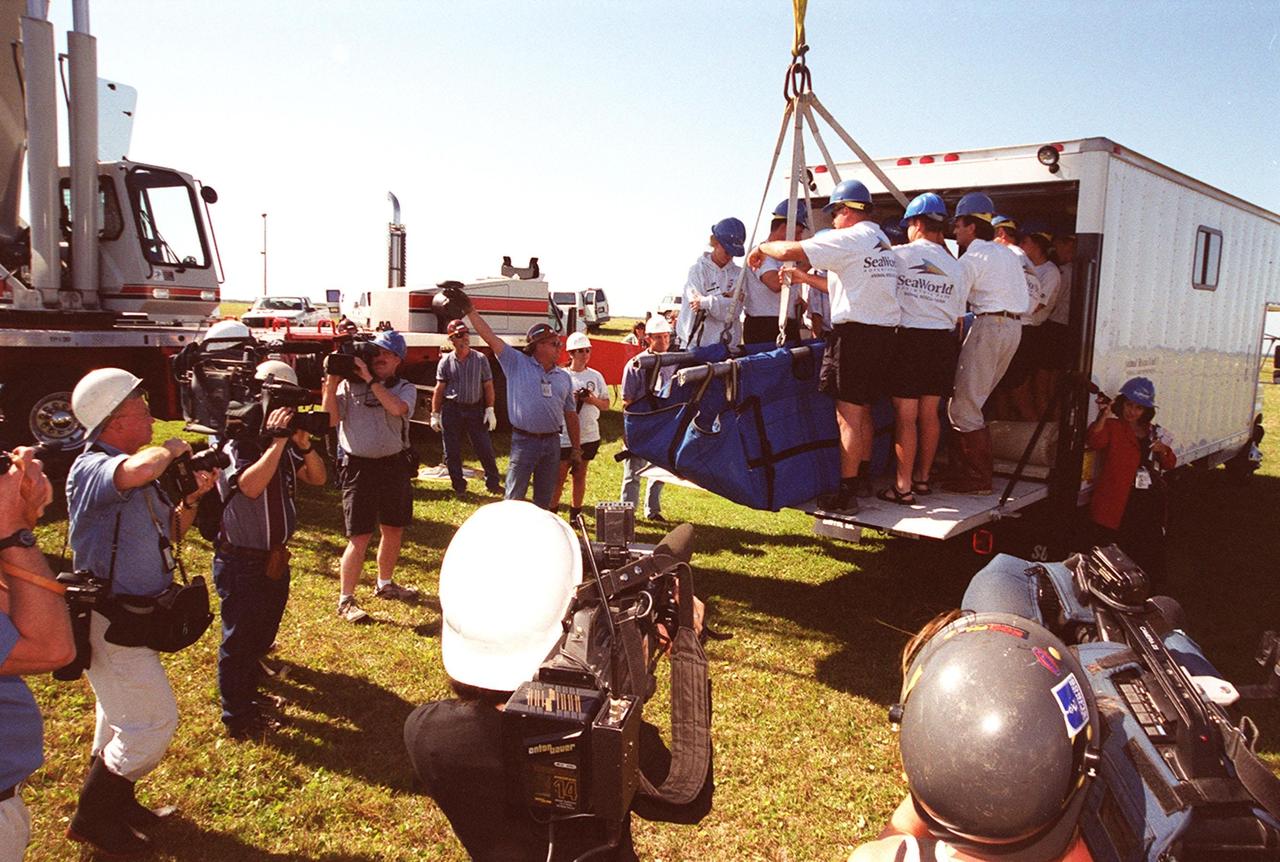
KENNEDY SPACE CENTER, FLA. -- The weight of an adult manatee requires a hoist to lift it out of the van for release into the Banana River. The site is on the north side of the NASA Causeway, near Kennedy Space Center. Sea World workers also released a calf at the site. The two manatees recovered from injuries at the Central Florida theme park. Manatees are frequently seen in the waters around Kennedy Space Center, which is surrounded by the Merritt Island National Wildlife Refuge
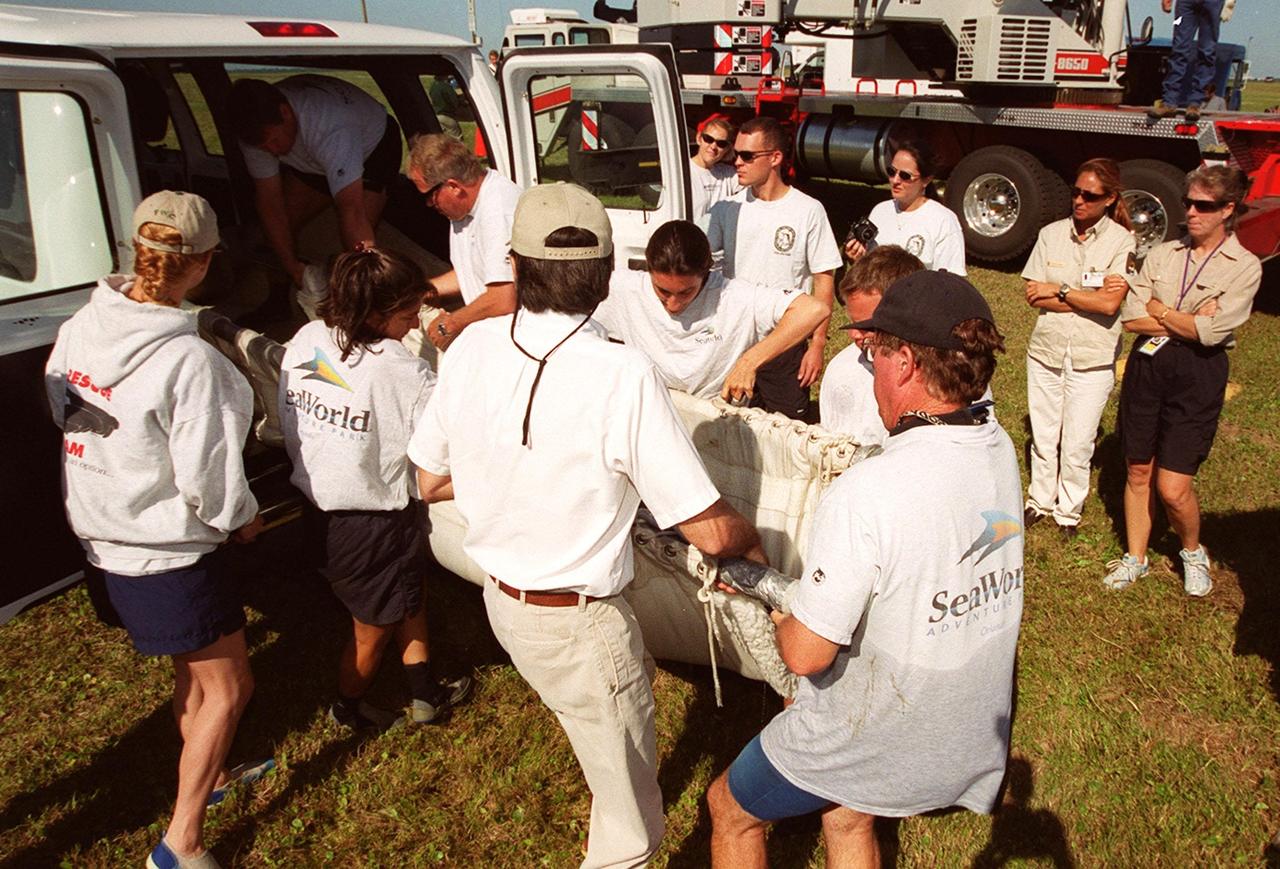
KENNEDY SPACE CENTER, FLA. -- Workers from Sea World, Orlando, Fla., remove a young manatee from the van in order to release it into the Banana River on the north side of the NASA Causeway near KSC. The calf was one of two manatees being released after recovering from injuries. Manatees are frequently seen in the waters around Kennedy Space Center, which is surrounded by the Merritt Island National Wildlife Refuge
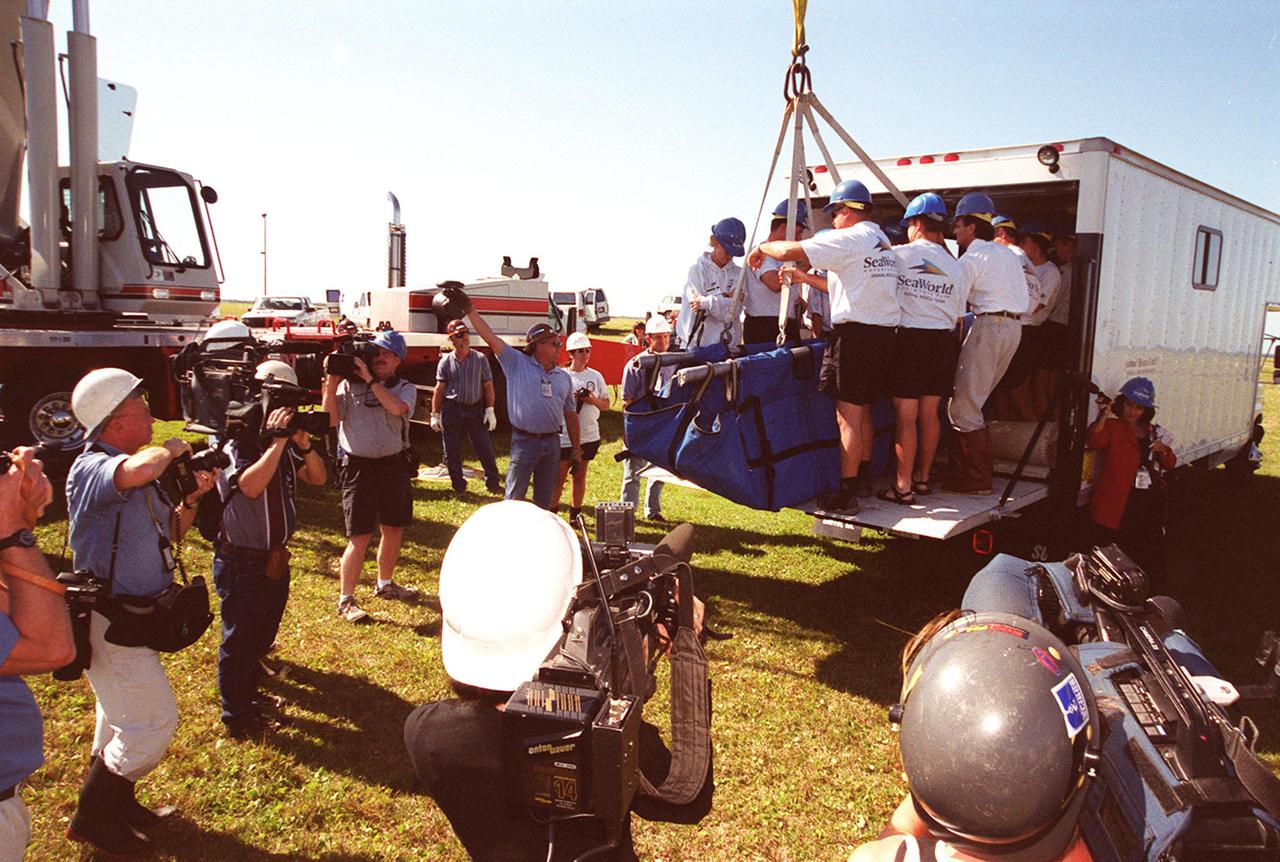
KENNEDY SPACE CENTER, FLA. -- The weight of an adult manatee requires a hoist to lift it out of the van for release into the Banana River. The site is on the north side of the NASA Causeway, near Kennedy Space Center. Sea World workers also released a calf at the site. The two manatees recovered from injuries at the Central Florida theme park. Manatees are frequently seen in the waters around Kennedy Space Center, which is surrounded by the Merritt Island National Wildlife Refuge
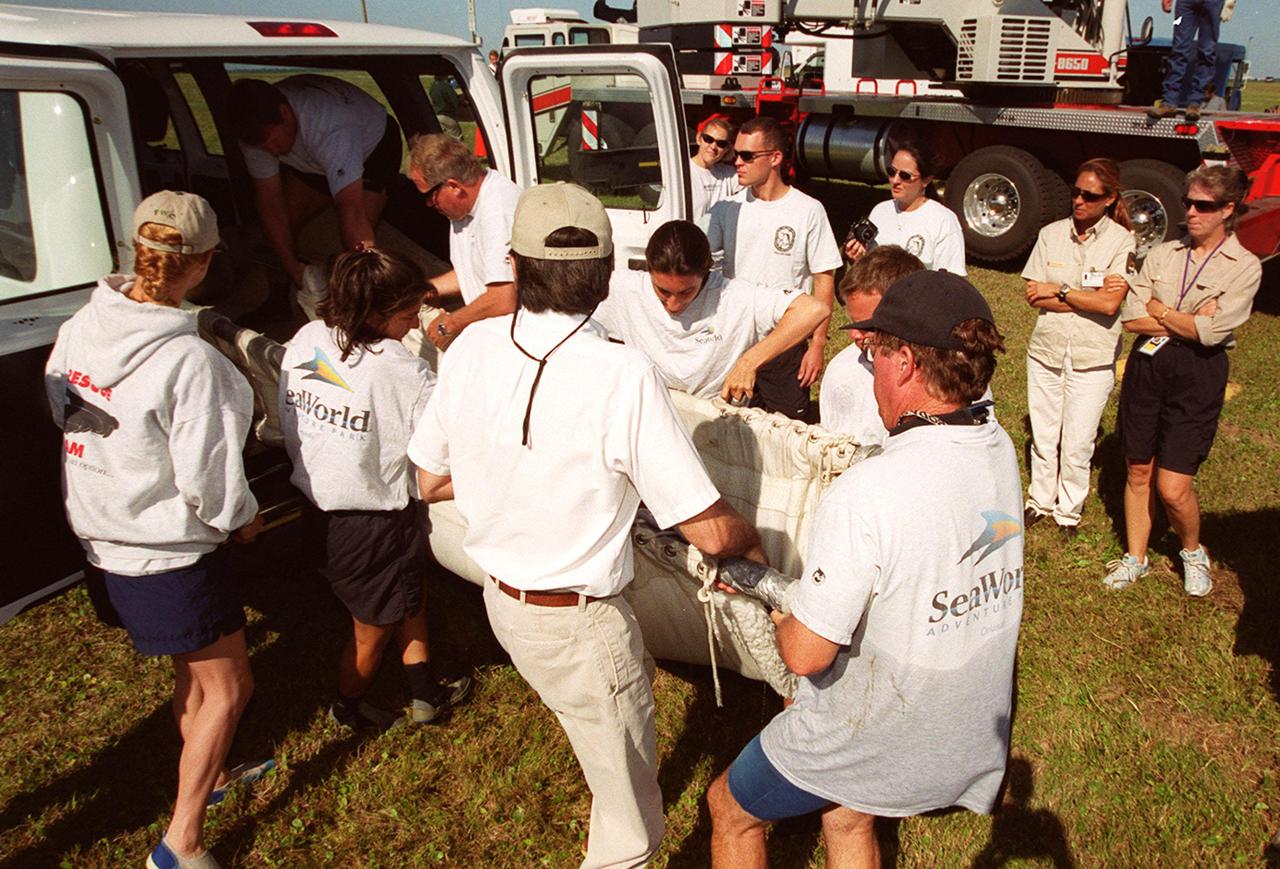
KENNEDY SPACE CENTER, FLA. -- Workers from Sea World, Orlando, Fla., remove a young manatee from the van in order to release it into the Banana River on the north side of the NASA Causeway near KSC. The calf was one of two manatees being released after recovering from injuries. Manatees are frequently seen in the waters around Kennedy Space Center, which is surrounded by the Merritt Island National Wildlife Refuge
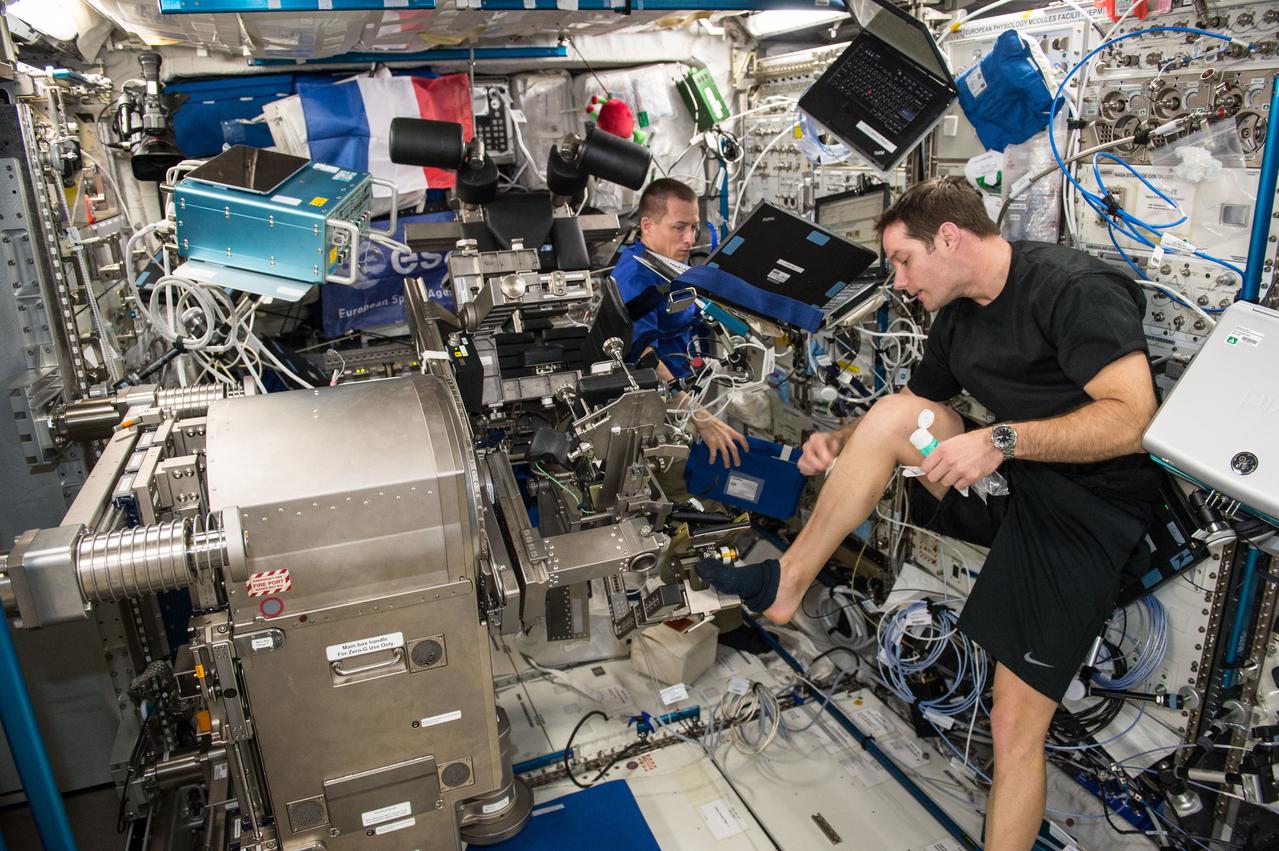
iss050e012767 (11/29/2016) --- European Space Agency (ESA) Thomas Pesquet and Cosmonaut Sergei Ryzhikov during the setup phase of the Sarcolab-3 Experiment, by deploying and configuring the Muscle Atrophy Resistive Exercise System (MARES), in the Columbus Module. Myotendinous and Neuromuscular Adaptation to Long-term Spaceflight (Sarcolab) investigates the adaptation and deterioration of the soleus, or calf muscle, where it joins the Achilles tendon, which links it to the heel and carries loads from the entire body. Muscle fiber samples are taken from crew members before and after flight, and analyzed for changes in structural and chemical properties.
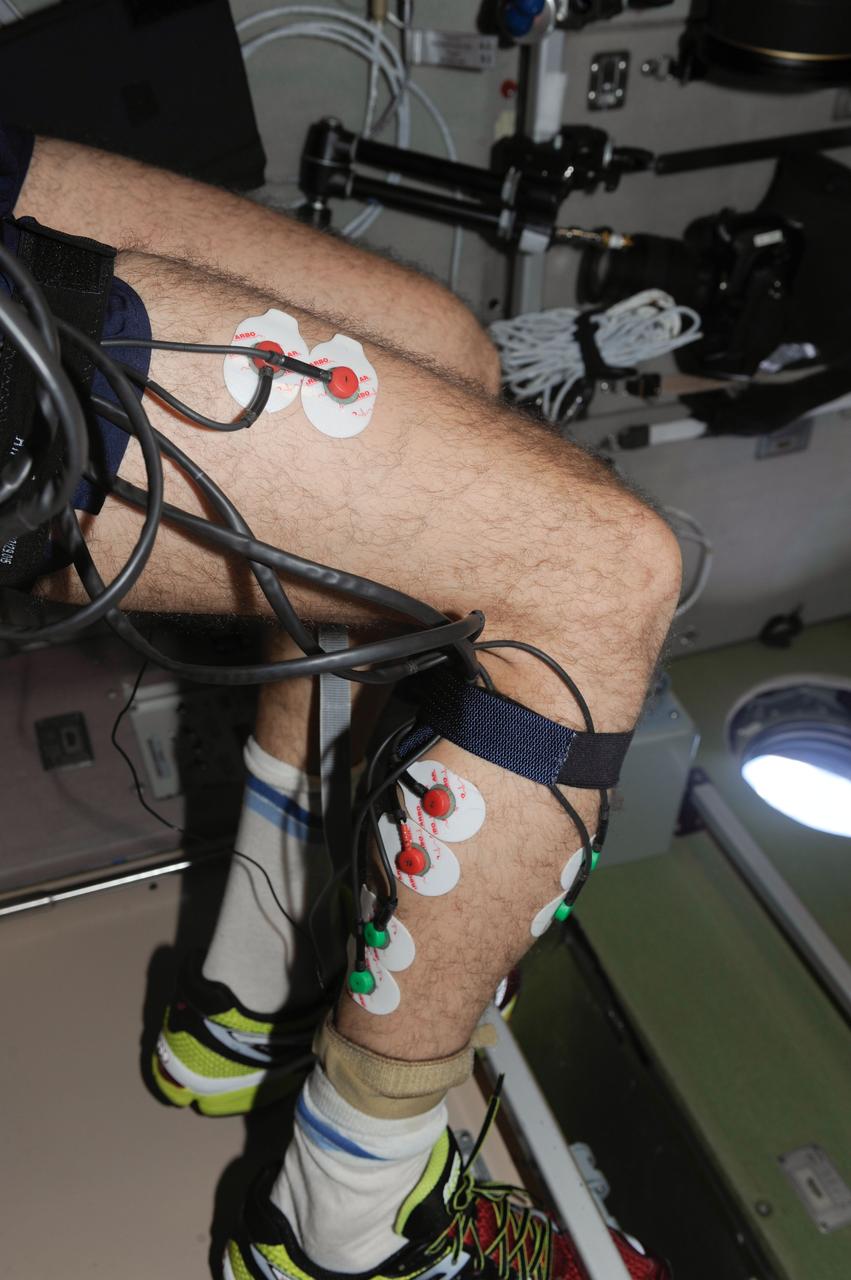
iss038e003641 (11/18/2014) --- A View of Cosmonaut Sergey Ryaznskiy (lower body only), setting up the Motocard experiment in the Service Module (SM) aboard the International Space Station (ISS). The Mechanisms of Sensory-Motor Coordination in Weightlessness (Motocard) investigation is carried out on the treadmill and involves locomotion in various modes of running and walking during various modes of operation of the treadmill. During the test, electromyography of the thigh and calf muscles, support structure response, heart rate, and treadmill load parameters (actual speed, time elapsed, distance, integrated indicators for support structure response) are recorded.
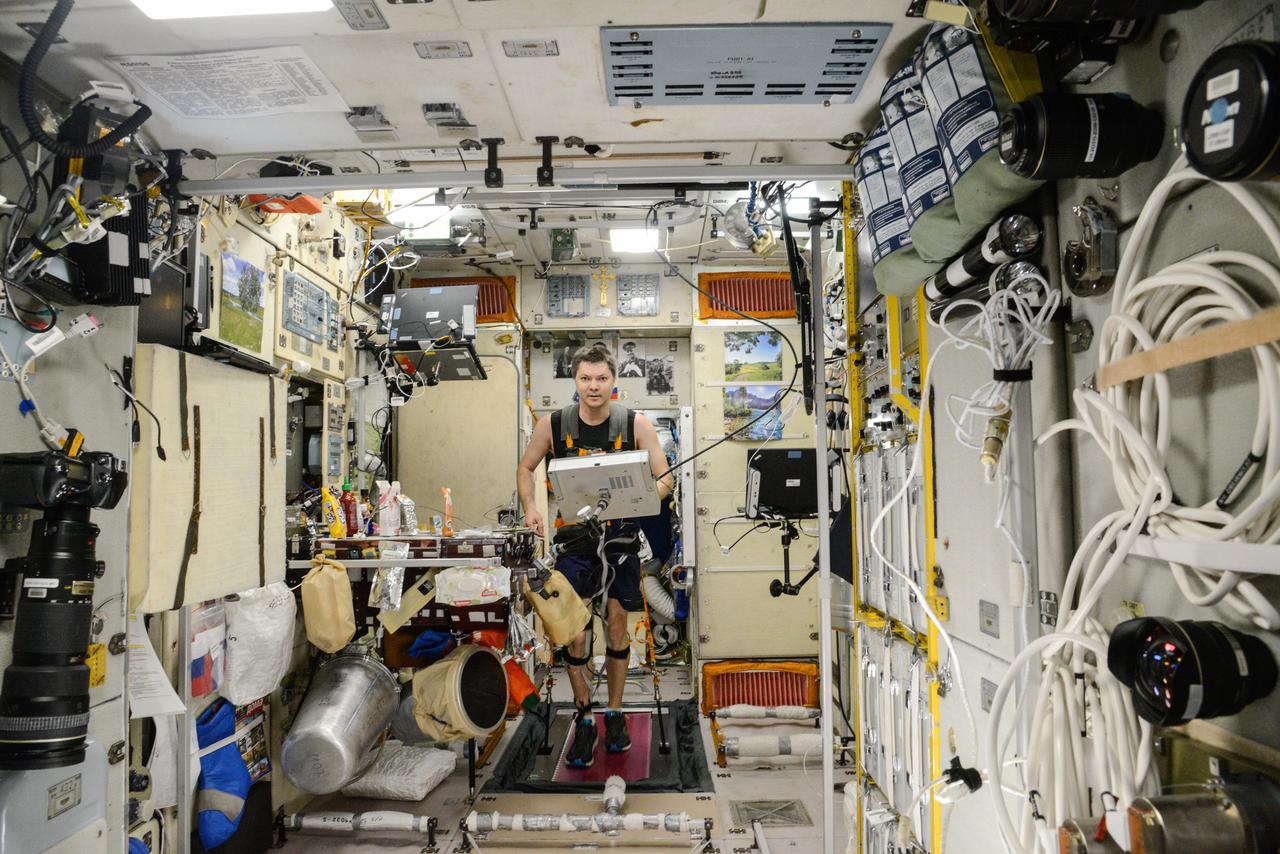
iss045e082560 (10/28/2015) --- Roscosmos cosmonaut Oleg Kononenko, wearing a harness and electrodes, is photographed during Motocard experiment operations in the Zvezda Service Module (SM) aboard the International Space Station (ISS). The Mechanisms of Sensory-Motor Coordination in Weightlessness (Motocard) investigation is carried out on the treadmill and involves locomotion in various modes of running and walking during various modes of operation of the treadmill. During the test, electromyography of the thigh and calf muscles, support structure response, heart rate, and treadmill load parameters (actual speed, time elapsed, distance, integrated indicators for support structure response) are recorded.
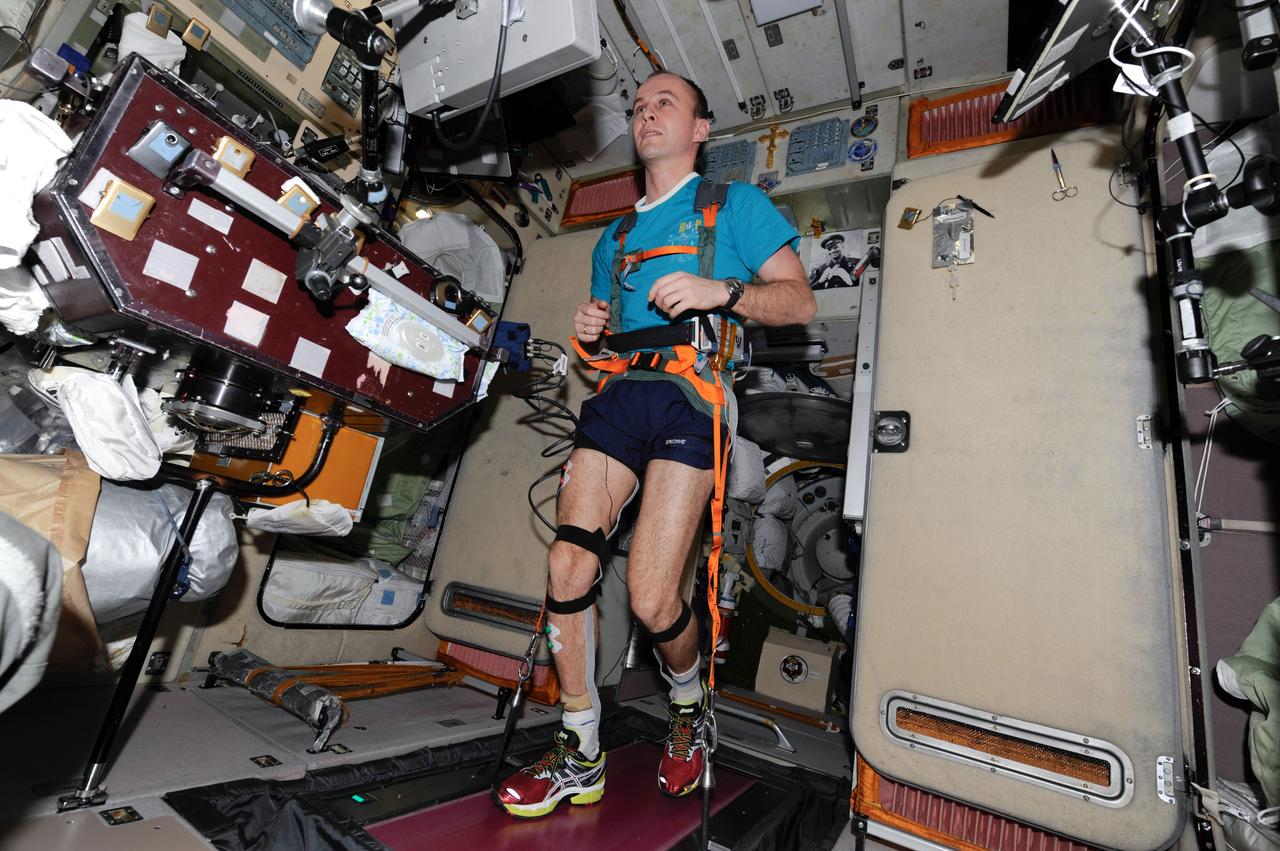
ISS038-E-003646 (18 Nov. 2013) --- Russian cosmonaut Sergey Ryazanskiy, wearing a harness and electrodes, is photographed during Motocard experiment operations in the Zvezda Service Module (SM) aboard the International Space Station (ISS). The Mechanisms of Sensory-Motor Coordination in Weightlessness (Motocard) investigation is carried out on the treadmill and involves locomotion in various modes of running and walking during various modes of operation of the treadmill. During the test, electromyography of the thigh and calf muscles, support structure response, heart rate, and treadmill load parameters (actual speed, time elapsed, distance, integrated indicators for support structure response) are recorded.
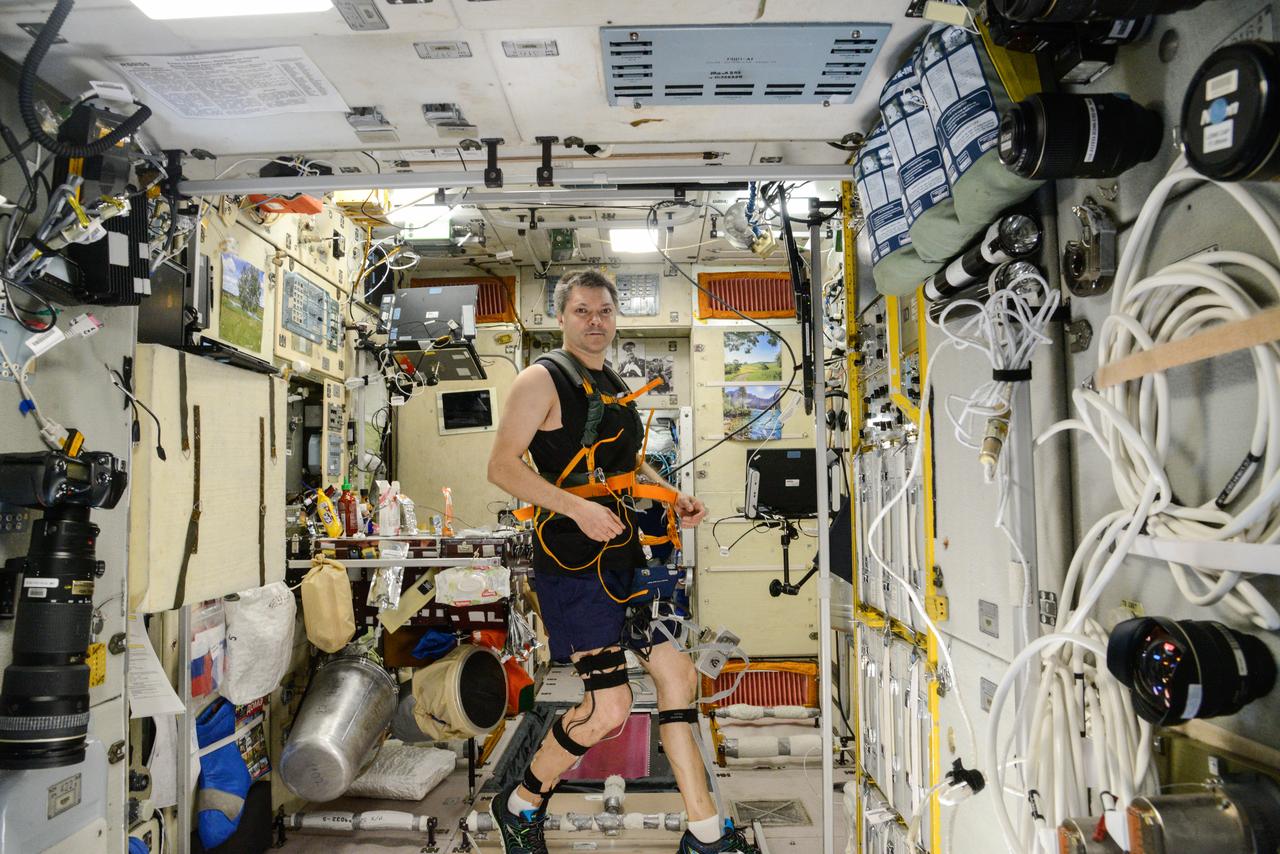
iss045e082558 (10/28/2015) --- Roscosmos cosmonaut Oleg Kononenko, wearing a harness and electrodes, is photographed during Motocard experiment operations in the Zvezda Service Module (SM) aboard the International Space Station (ISS). The Mechanisms of Sensory-Motor Coordination in Weightlessness (Motocard) investigation is carried out on the treadmill and involves locomotion in various modes of running and walking during various modes of operation of the treadmill. During the test, electromyography of the thigh and calf muscles, support structure response, heart rate, and treadmill load parameters (actual speed, time elapsed, distance, integrated indicators for support structure response) are recorded.