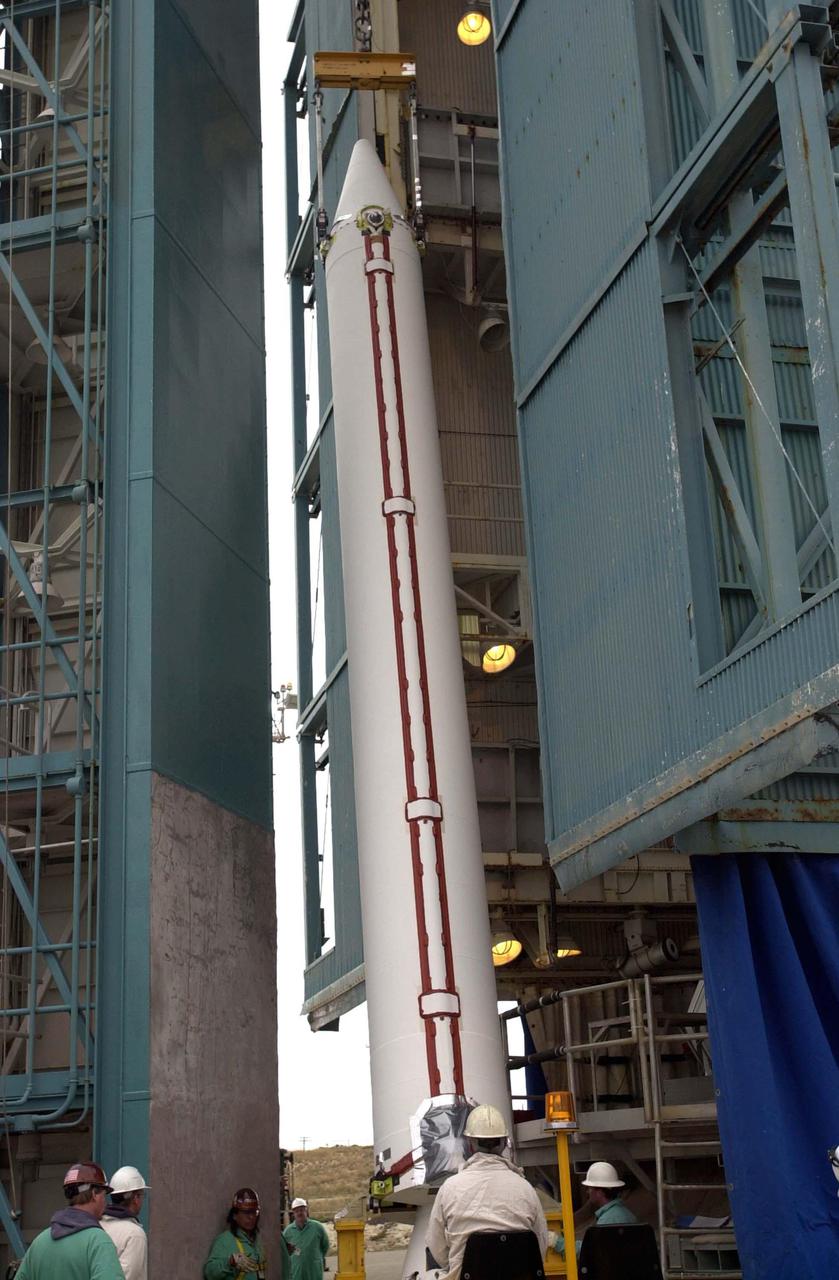
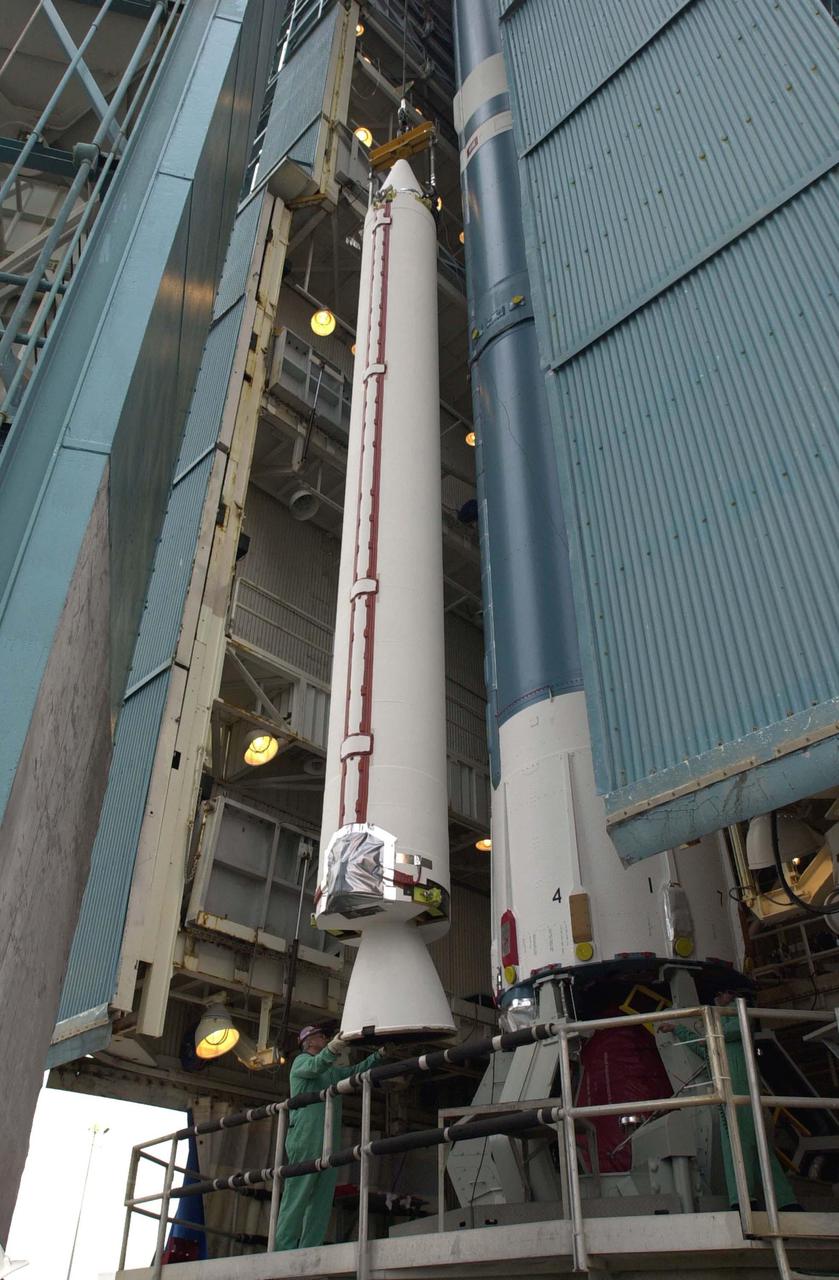
VANDENBERG AIR FORCE BASE, CALIF. - One of four Solid Rocket Boosters for the CALIPSO_CloudSat launch is ready for lifting into the mobile service tower, or gantry, where it will be attached to the Boeing Delta II rocket. CALIPSO stands for Cloud-Aerosol Lidar and Infrared Pathfinder Satellite Observation. CALIPSO and CloudSat are highly complementary satellites and together will provide never-before-seen 3-D perspectives of how clouds and aerosols form, evolve, and affect weather and climate. CALIPSO and CloudSat will fly in formation with three other satellites in the A-train constellation to enhance understanding of our climate system. Launch of CALIPSO_CloudSat aboard a Boeing Delta II rocket is scheduled for 3:01 a.m. Sept. 29.
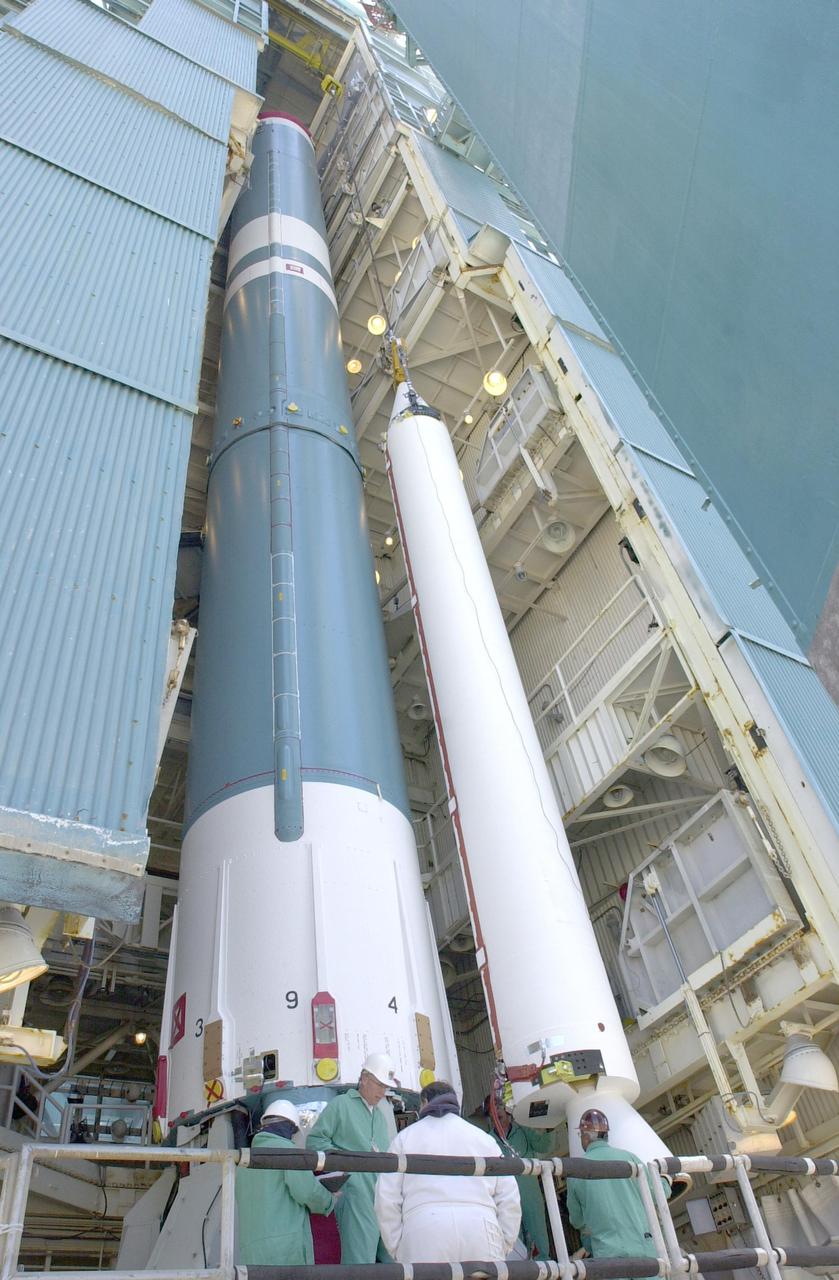
VANDENBERG AIR FORCE BASE, CALIF. - At NASA Space Launch Complex 2 on Vandenberg Air Force Base in California, another Solid Rocket Booster is attached to the Boeing Delta II rocket seen behind it. The Delta is the launch vehicle for the CALIPSO_CloudSat spacecraft. CALIPSO stands for Cloud-Aerosol Lidar and Infrared Pathfinder Satellite Observation. CALIPSO and CloudSat are highly complementary satellites and together will provide never-before-seen 3-D perspectives of how clouds and aerosols form, evolve, and affect weather and climate. CALIPSO and CloudSat will fly in formation with three other satellites in the A-train constellation to enhance understanding of our climate system. Launch of CALIPSO_CloudSat aboard a Boeing Delta II rocket is scheduled for 3:01 a.m. Sept. 29.
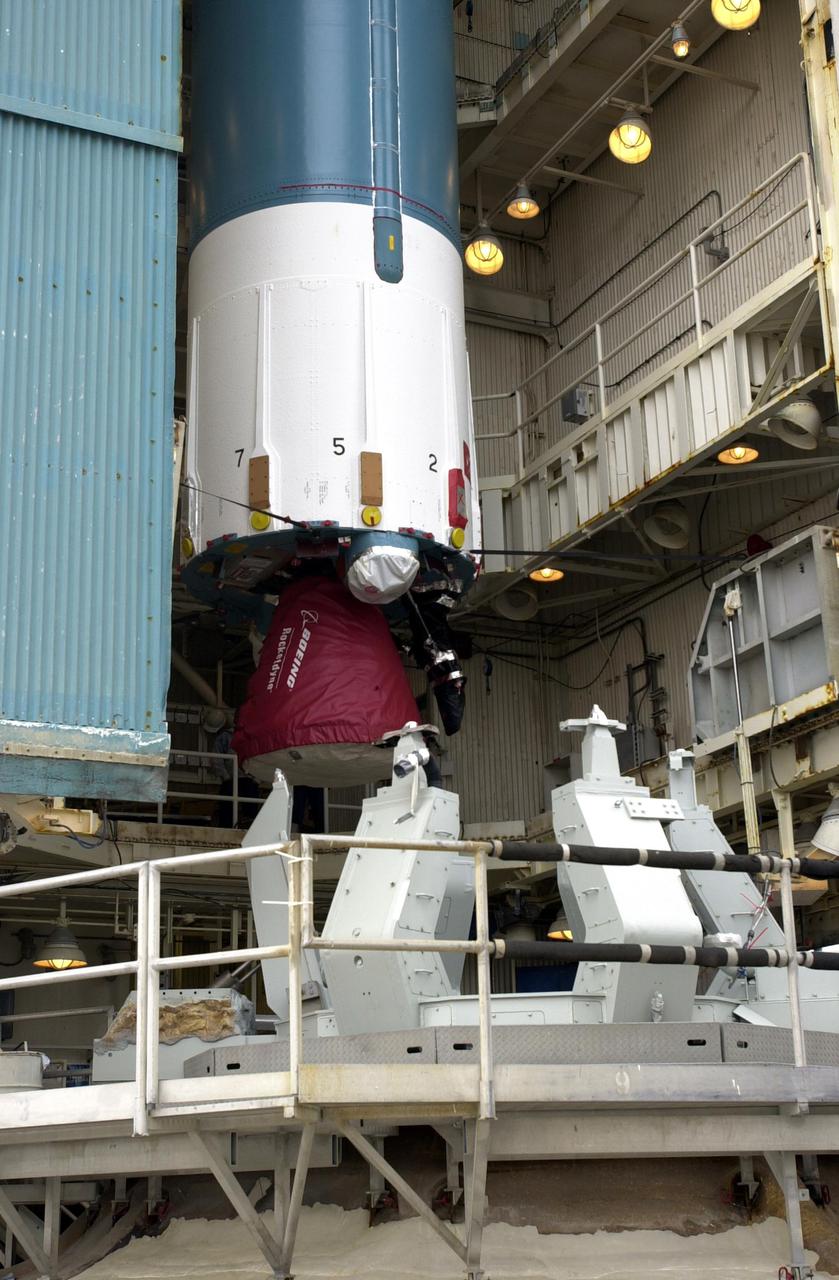
VANDENBERG AIR FORCE BASE, CALIF. - At NASA Space Launch Complex 2 on Vandenberg Air Force Base in California, the first stage of the Boeing Delta II rocket, launch vehicle for the CALIPSO_CloudSat spacecraft, begins to be lifted into the mobile service tower, or gantry. CALIPSO stands for Cloud-Aerosol Lidar and Infrared Pathfinder Satellite Observation. CALIPSO and CloudSat are highly complementary satellites and together will provide never-before-seen 3-D perspectives of how clouds and aerosols form, evolve, and affect weather and climate. CALIPSO and CloudSat will fly in formation with three other satellites in the A-train constellation to enhance understanding of our climate system. Launch of CALIPSO_CloudSat aboard a Boeing Delta II rocket is scheduled for 3:01 a.m. Sept. 29.
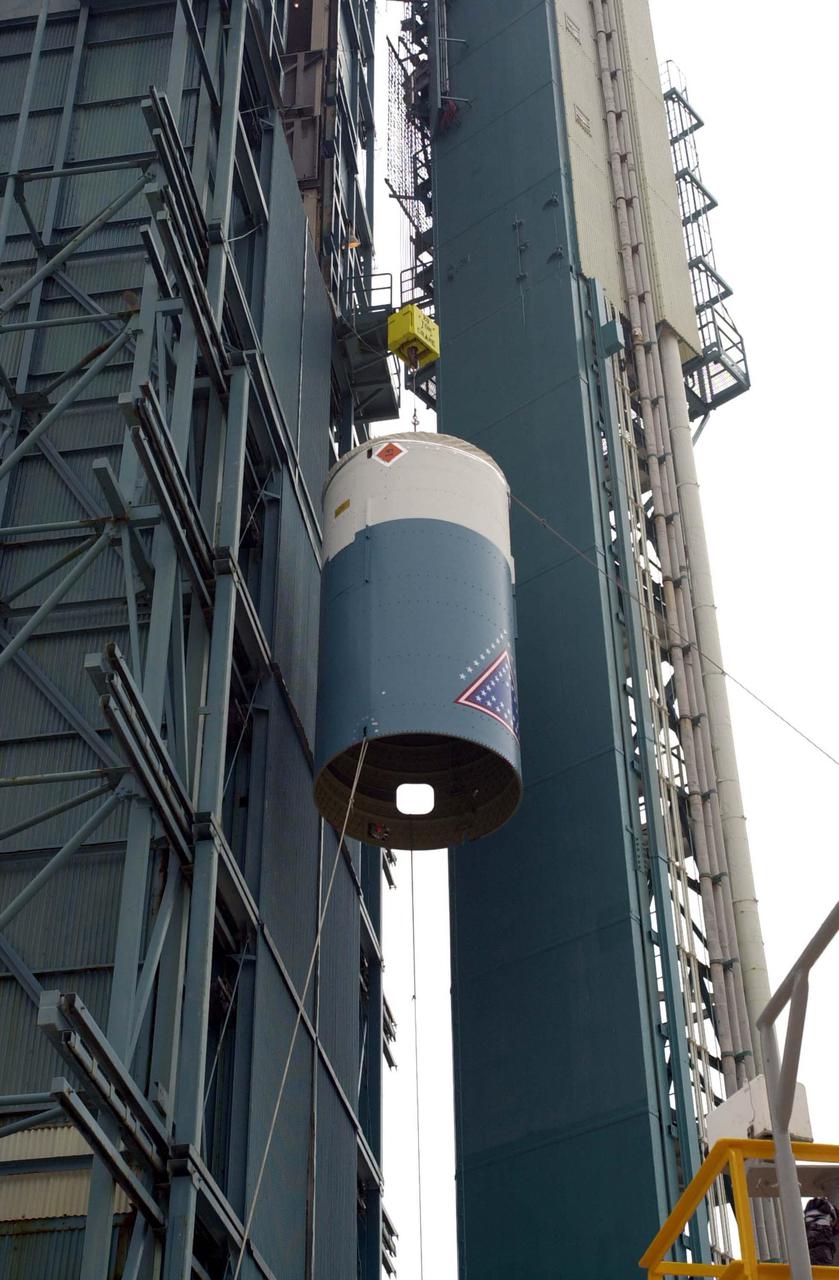
VANDENBERG AIR FORCE BASE, CALIF. - At NASA Space Launch Complex 2 on Vandenberg Air Force Base in California, the interstage for the Boeing Delta II rocket is lifted up the mobile service tower, or gantry. There it will be mated with the first stage already there. The Delta is the launch vehicle for the CALIPSO_CloudSat spacecraft. CALIPSO stands for Cloud-Aerosol Lidar and Infrared Pathfinder Satellite Observation. CALIPSO and CloudSat are highly complementary satellites and together will provide never-before-seen 3-D perspectives of how clouds and aerosols form, evolve, and affect weather and climate. CALIPSO and CloudSat will fly in formation with three other satellites in the A-train constellation to enhance understanding of our climate system. Launch of CALIPSO_CloudSat aboard a Boeing Delta II rocket is scheduled for 3:01 a.m. Sept. 29.
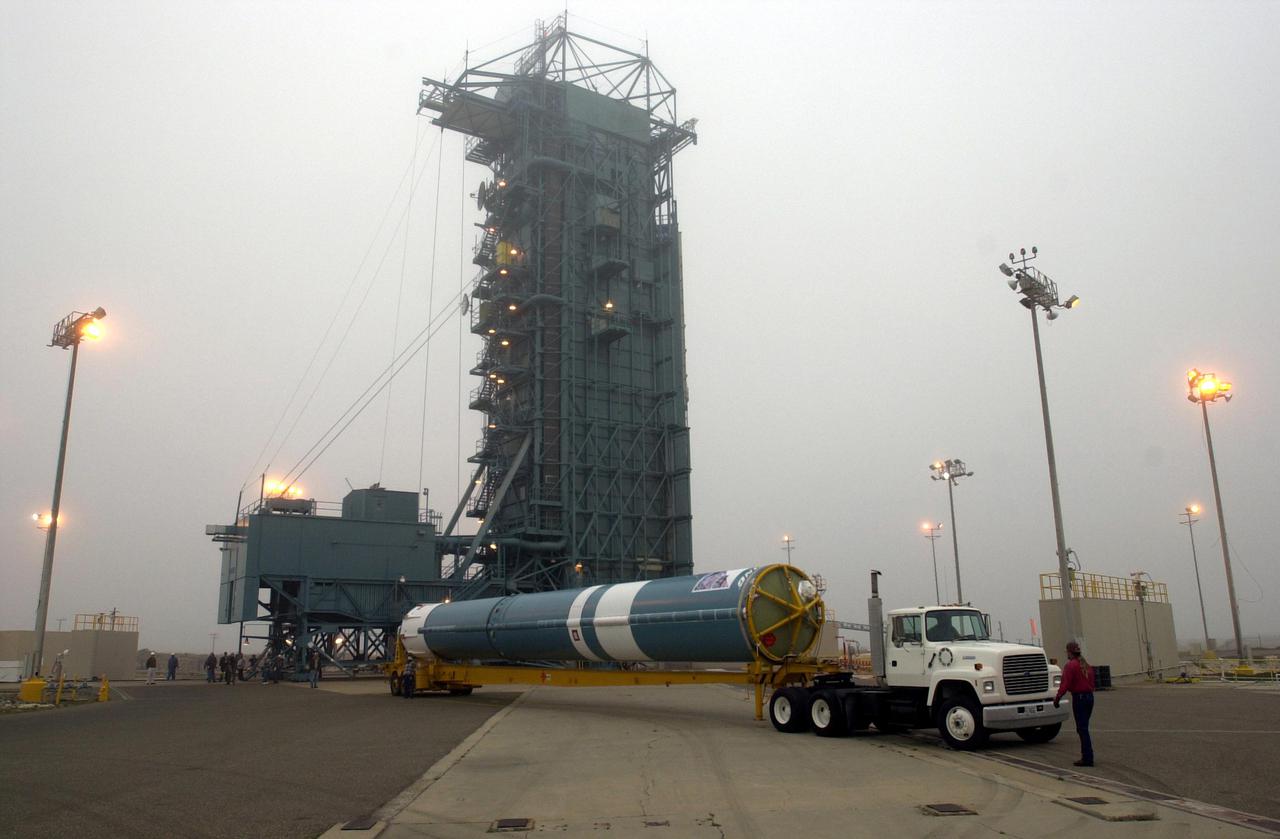
VANDENBERG AIR FORCE BASE, CALIF. - At NASA Space Launch Complex 2 on Vandenberg Air Force Base in California, the first stage of the Boeing Delta II rocket for the CALIPSO_CloudSat launch arrives on the pad. It will be raised to vertical and lifted up into the mobile service tower, or gantry. CALIPSO stands for Cloud-Aerosol Lidar and Infrared Pathfinder Satellite Observation. CALIPSO and CloudSat are highly complementary satellites and together will provide never-before-seen 3-D perspectives of how clouds and aerosols form, evolve, and affect weather and climate. CALIPSO and CloudSat will fly in formation with three other satellites in the A-train constellation to enhance understanding of our climate system. Launch of CALIPSO_CloudSat aboard a Boeing Delta II rocket is scheduled for 3:01 a.m. Sept. 29.
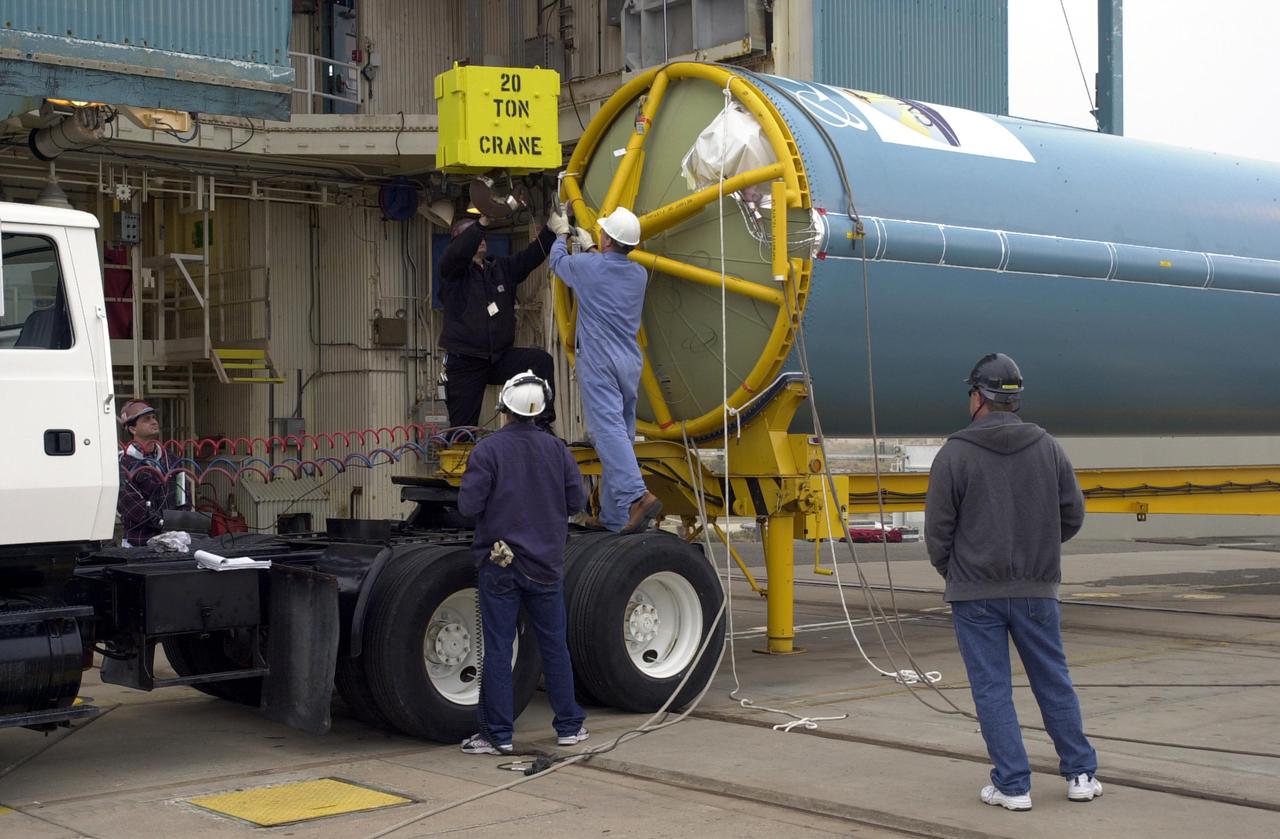
VANDENBERG AIR FORCE BASE, CALIF. — At NASA Space Launch Complex 2 on Vandenberg Air Force Base in California, workers get ready to raise the first stage of the Boeing Delta II rocket, launch vehicle for the CALIPSO_CloudSat spacecraft. Once it is vertical, it will be lifted up into the Mobile service tower, or gantry. CALIPSO stands for Cloud-Aerosol Lidar and Infrared Pathfinder Satellite Observation. CALIPSO and CloudSat are highly complementary satellites and together will provide never-before-seen 3-D perspectives of how clouds and aerosols form, evolve, and affect weather and climate. CALIPSO and CloudSat will fly in formation with three other satellites in the A-train constellation to enhance understanding of our climate system. Launch of CALIPSO_CloudSat aboard a Boeing Delta II rocket is scheduled for 3:01 a.m. Sept. 29.
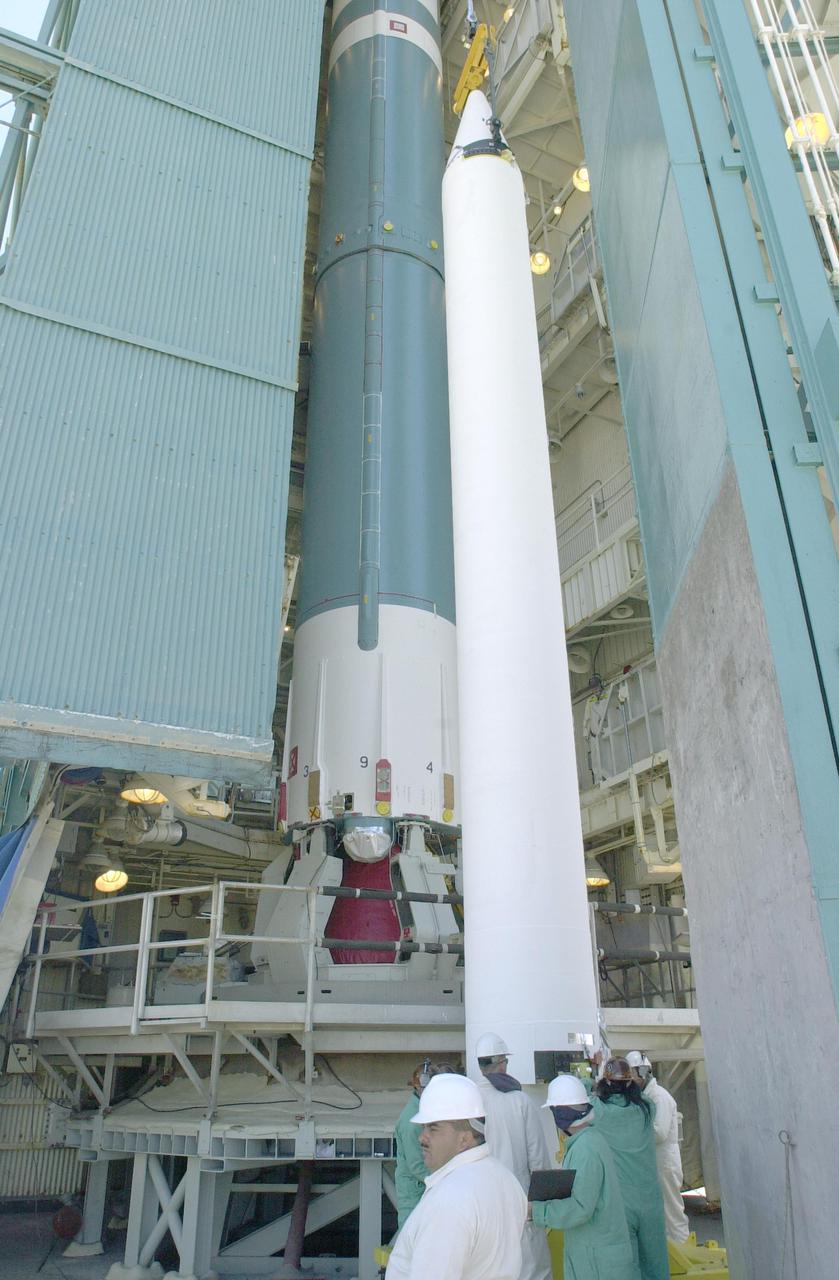
VANDENBERG AIR FORCE BASE, CALIF. - At NASA Space Launch Complex 2 on Vandenberg Air Force Base in California, another Solid Rocket Booster is ready to be attached to the Boeing Delta II rocket seen behind it. The Delta is the launch vehicle for the CALIPSO_CloudSat spacecraft. CALIPSO stands for Cloud-Aerosol Lidar and Infrared Pathfinder Satellite Observation. CALIPSO and CloudSat are highly complementary satellites and together will provide never-before-seen 3-D perspectives of how clouds and aerosols form, evolve, and affect weather and climate. CALIPSO and CloudSat will fly in formation with three other satellites in the A-train constellation to enhance understanding of our climate system. Launch of CALIPSO_CloudSat aboard a Boeing Delta II rocket is scheduled for 3:01 a.m. Sept. 29.
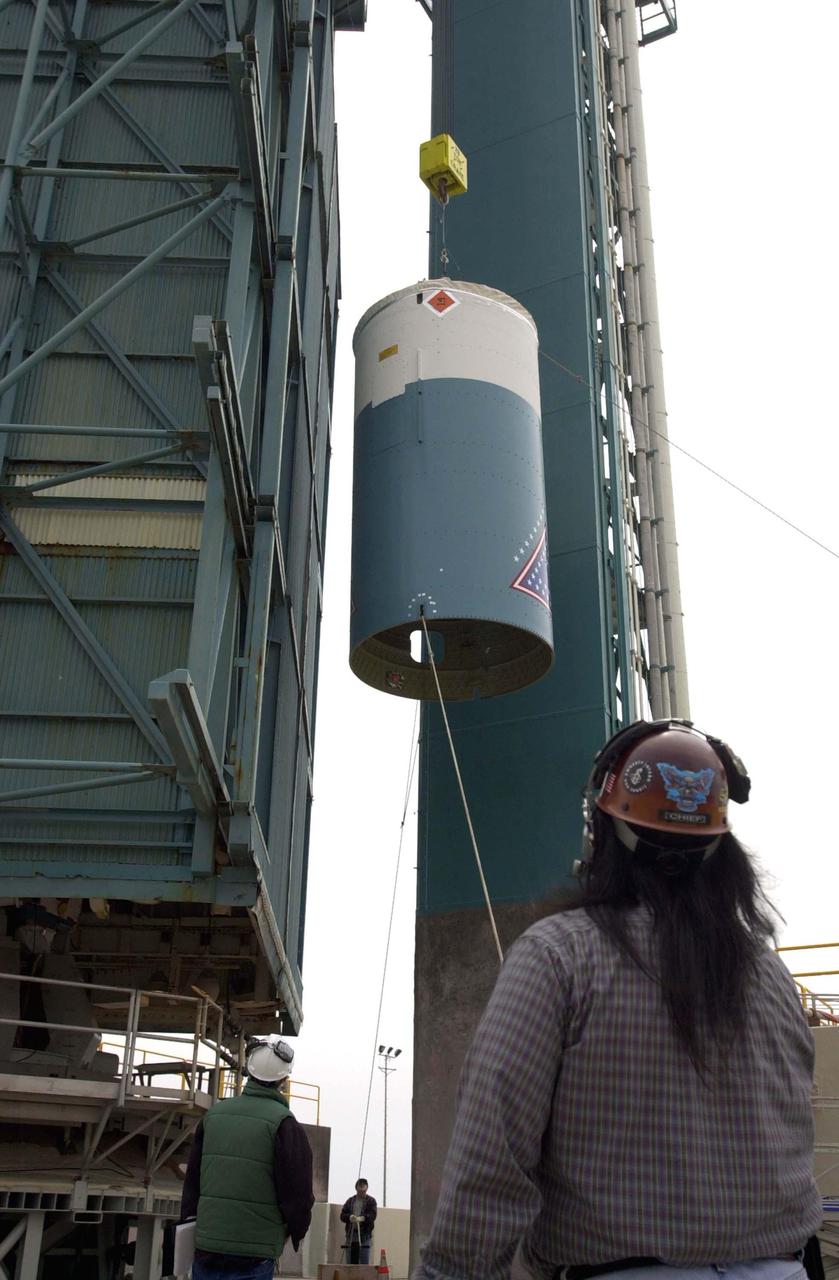
VANDENBERG AIR FORCE BASE, CALIF. - At NASA Space Launch Complex 2 on Vandenberg Air Force Base in California, the interstage for the Boeing Delta II rocket is lifted up the mobile service tower, or gantry. There it will be mated with the first stage already there. The Delta is the launch vehicle for the CALIPSO_CloudSat spacecraft. CALIPSO stands for Cloud-Aerosol Lidar and Infrared Pathfinder Satellite Observation. CALIPSO and CloudSat are highly complementary satellites and together will provide never-before-seen 3-D perspectives of how clouds and aerosols form, evolve, and affect weather and climate. CALIPSO and CloudSat will fly in formation with three other satellites in the A-train constellation to enhance understanding of our climate system. Launch of CALIPSO_CloudSat aboard a Boeing Delta II rocket is scheduled for 3:01 a.m. Sept. 29.
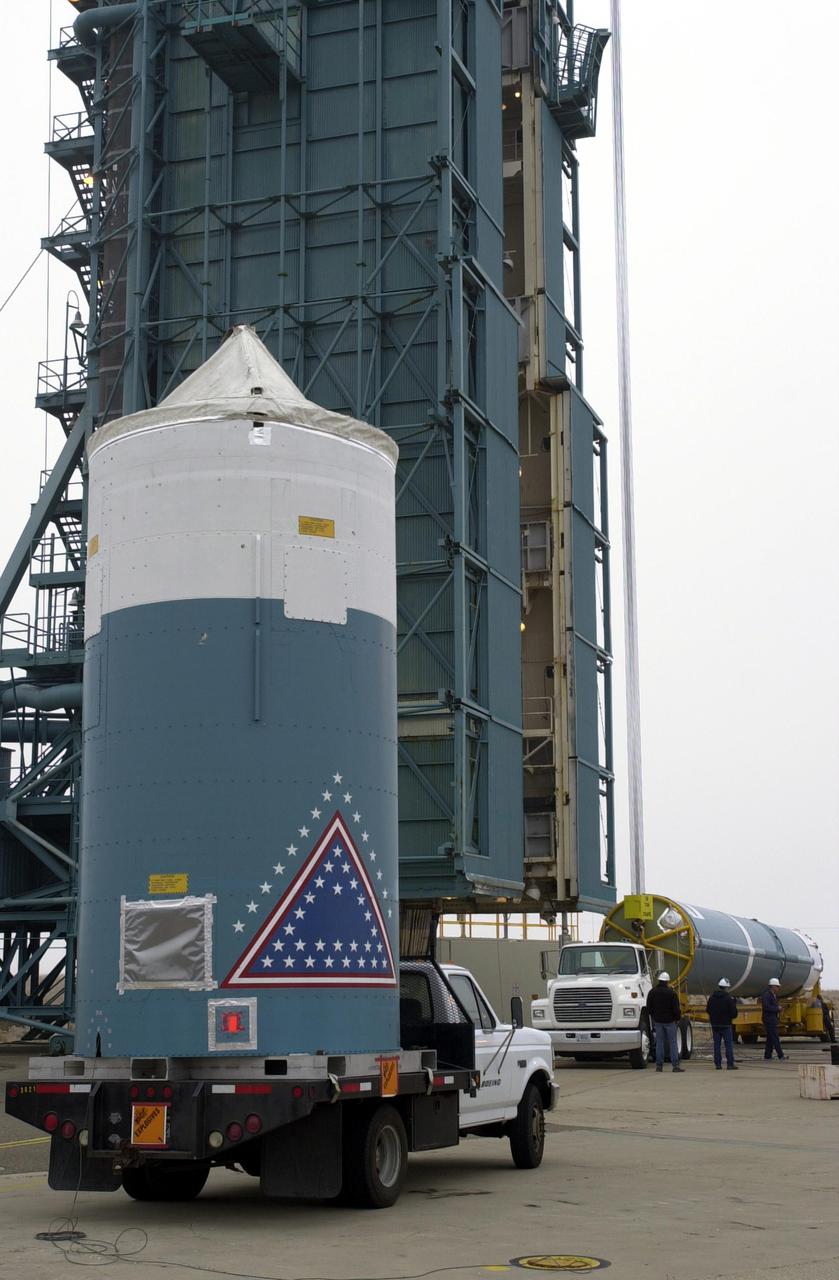
VANDENBERG AIR FORCE BASE, CALIF. - At NASA Space Launch Complex 2 on Vandenberg Air Force Base in California, the interstage for the Boeing Delta II rocket, launch vehicle for the CALIPSO_CloudSat spacecraft, arrives at the pad. It will be lifted up into the mobile service tower, or gantry, and mated with the first stage. CALIPSO stands for Cloud-Aerosol Lidar and Infrared Pathfinder Satellite Observation. CALIPSO and CloudSat are highly complementary satellites and together will provide never-before-seen 3-D perspectives of how clouds and aerosols form, evolve, and affect weather and climate. CALIPSO and CloudSat will fly in formation with three other satellites in the A-train constellation to enhance understanding of our climate system. Launch of CALIPSO_CloudSat aboard a Boeing Delta II rocket is scheduled for 3:01 a.m. Sept. 29.
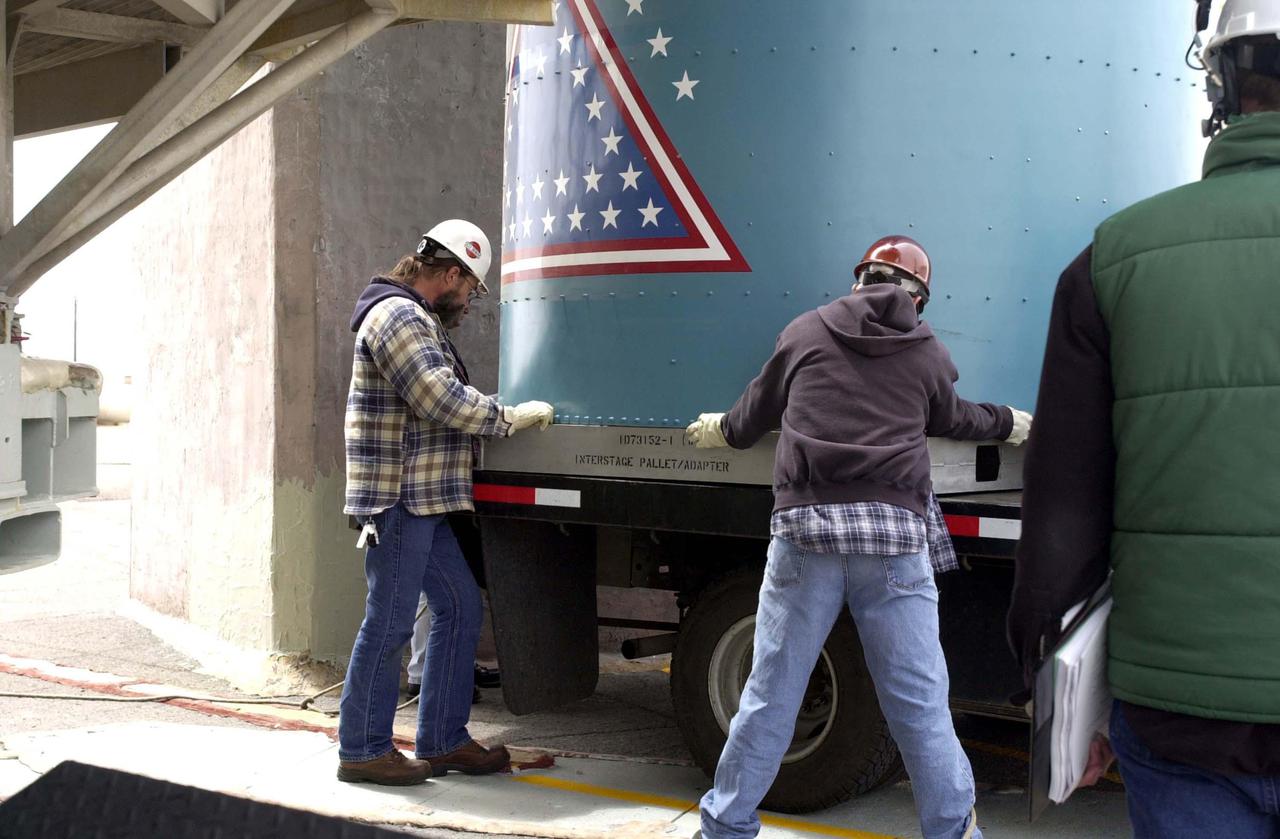
VANDENBERG AIR FORCE BASE, CALIF. - At NASA Space Launch Complex 2 on Vandenberg Air Force Base in California, workers prepare the interstage for the Boeing Delta II rocket to be lifted up the mobile service tower, or gantry. Then it will be mated with the first stage already there. The Delta is the launch vehicle for the CALIPSO_CloudSat spacecraft. CALIPSO stands for Cloud-Aerosol Lidar and Infrared Pathfinder Satellite Observation. CALIPSO and CloudSat are highly complementary satellites and together will provide never-before-seen 3-D perspectives of how clouds and aerosols form, evolve, and affect weather and climate. CALIPSO and CloudSat will fly in formation with three other satellites in the A-train constellation to enhance understanding of our climate system. Launch of CALIPSO_CloudSat aboard a Boeing Delta II rocket is scheduled for 3:01 a.m. Sept. 29.
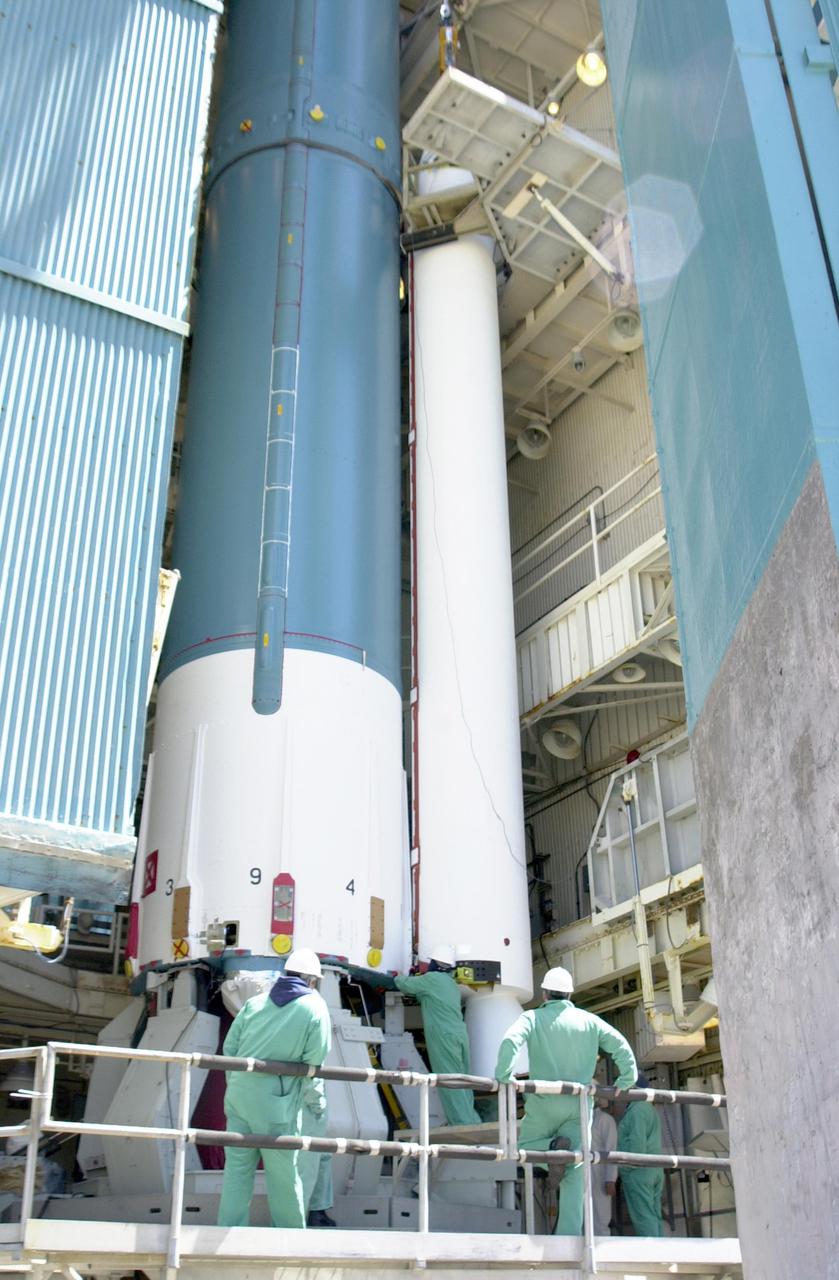
VANDENBERG AIR FORCE BASE, CALIF. - At NASA Space Launch Complex 2 on Vandenberg Air Force Base in California, another Solid Rocket Booster is attached to the Boeing Delta II rocket seen behind it. The Delta is the launch vehicle for the CALIPSO_CloudSat spacecraft. CALIPSO stands for Cloud-Aerosol Lidar and Infrared Pathfinder Satellite Observation. CALIPSO and CloudSat are highly complementary satellites and together will provide never-before-seen 3-D perspectives of how clouds and aerosols form, evolve, and affect weather and climate. CALIPSO and CloudSat will fly in formation with three other satellites in the A-train constellation to enhance understanding of our climate system. Launch of CALIPSO_CloudSat aboard a Boeing Delta II rocket is scheduled for 3:01 a.m. Sept. 29.
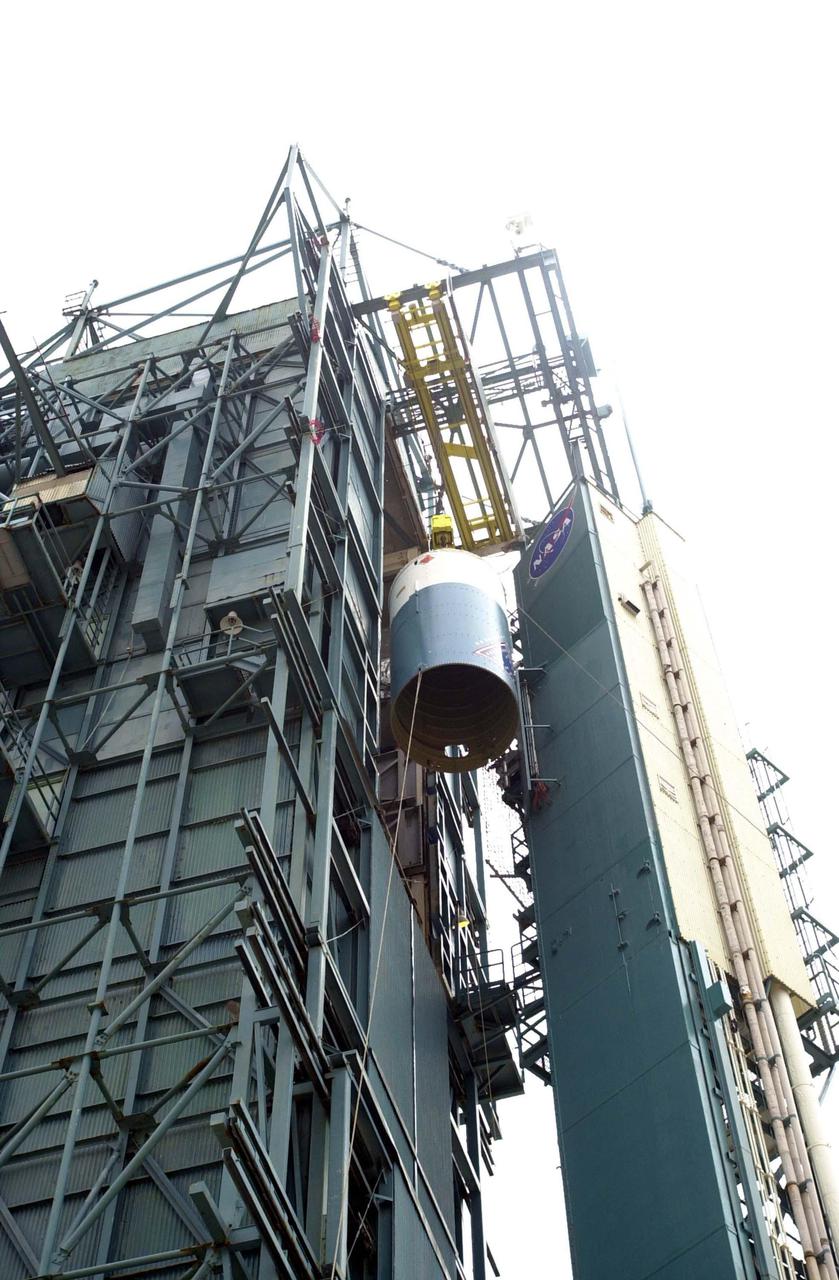
VANDENBERG AIR FORCE BASE, CALIF. - At NASA Space Launch Complex 2 on Vandenberg Air Force Base in California, the interstage for the Boeing Delta II rocket nears the top of the mobile service tower, or gantry. Then it will be mated with the first stage already there. The Delta is the launch vehicle for the CALIPSO_CloudSat spacecraft. CALIPSO stands for Cloud-Aerosol Lidar and Infrared Pathfinder Satellite Observation. CALIPSO and CloudSat are highly complementary satellites and together will provide never-before-seen 3-D perspectives of how clouds and aerosols form, evolve, and affect weather and climate. CALIPSO and CloudSat will fly in formation with three other satellites in the A-train constellation to enhance understanding of our climate system. Launch of CALIPSO_CloudSat aboard a Boeing Delta II rocket is scheduled for 3:01 a.m. Sept. 29.
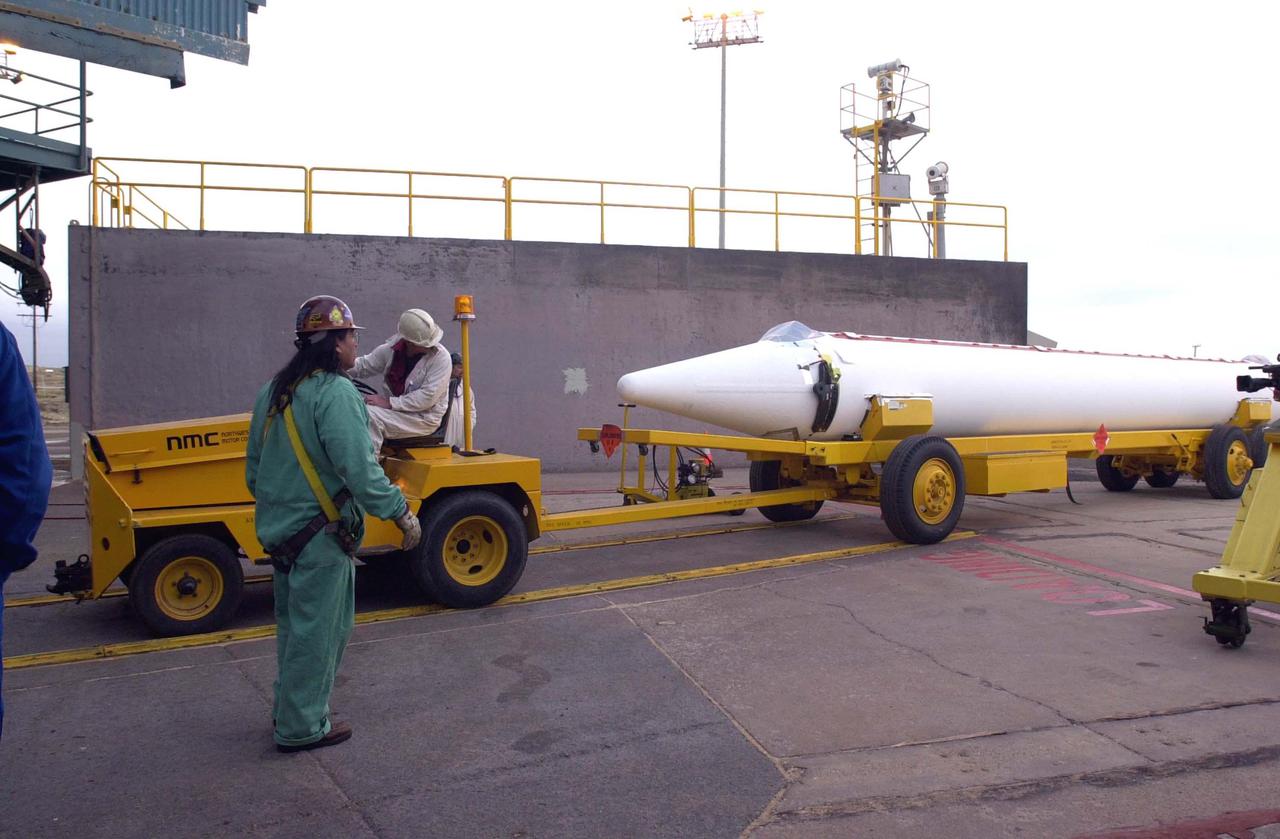
VANDENBERG AIR FORCE BASE, CALIF. - The first Solid Rocket Booster for the CALIPSO_CloudSat launch arrives at NASA Space Launch Complex 2 on Vandenberg Air Force Base in California. It will be lifted into the mobile service tower, or gantry, and attached to the Boeing Delta II rocket. CALIPSO stands for Cloud-Aerosol Lidar and Infrared Pathfinder Satellite Observation. CALIPSO and CloudSat are highly complementary satellites and together will provide never-before-seen 3-D perspectives of how clouds and aerosols form, evolve, and affect weather and climate. CALIPSO and CloudSat will fly in formation with three other satellites in the A-train constellation to enhance understanding of our climate system. Launch of CALIPSO_CloudSat aboard a Boeing Delta II rocket is scheduled for 3:01 a.m. Sept. 29.
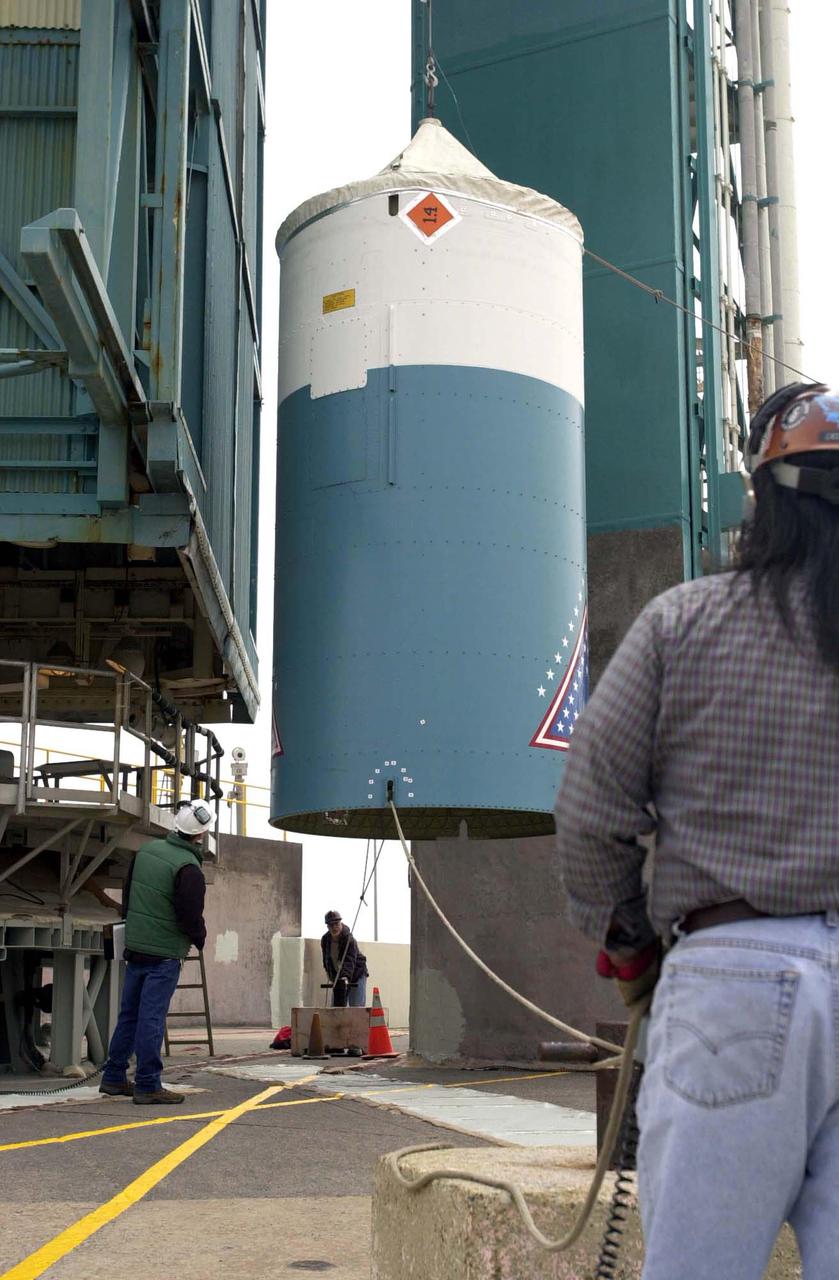
VANDENBERG AIR FORCE BASE, CALIF. - At NASA Space Launch Complex 2 on Vandenberg Air Force Base in California, the interstage for the Boeing Delta II rocket is lifted up the mobile service tower, or gantry. Then it will be mated with the first stage already there. The Delta is the launch vehicle for the CALIPSO_CloudSat spacecraft. CALIPSO stands for Cloud-Aerosol Lidar and Infrared Pathfinder Satellite Observation. CALIPSO and CloudSat are highly complementary satellites and together will provide never-before-seen 3-D perspectives of how clouds and aerosols form, evolve, and affect weather and climate. CALIPSO and CloudSat will fly in formation with three other satellites in the A-train constellation to enhance understanding of our climate system. Launch of CALIPSO_CloudSat aboard a Boeing Delta II rocket is scheduled for 3:01 a.m. Sept. 29.
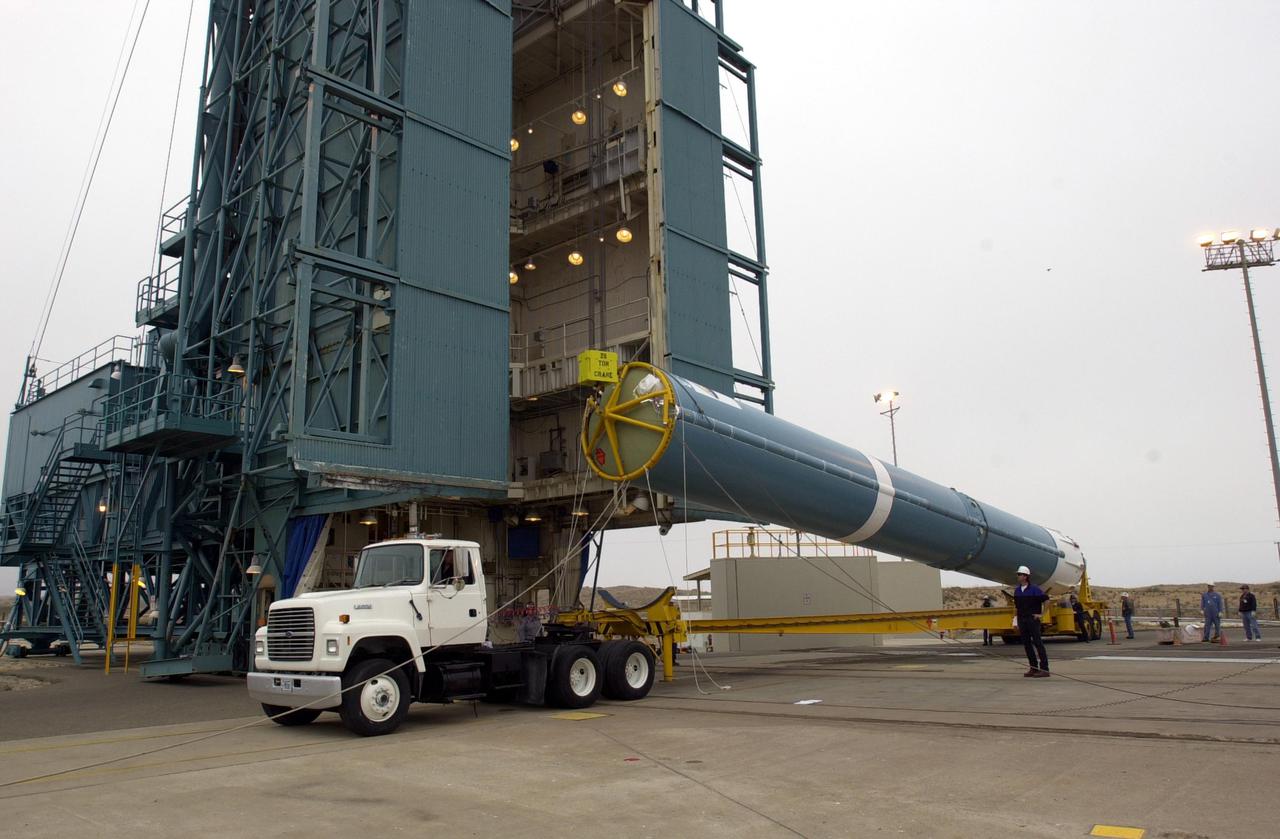
VANDENBERG AIR FORCE BASE, CALIF. - At NASA Space Launch Complex 2 on Vandenberg Air Force Base in California, the first stage of the Boeing Delta II rocket, launch vehicle for the CALIPSO_CloudSat spacecraft, is raised off the transporter. Once it is vertical, it will be lifted up into the mobile service tower, or gantry. CALIPSO stands for Cloud-Aerosol Lidar and Infrared Pathfinder Satellite Observation. CALIPSO and CloudSat are highly complementary satellites and together will provide never-before-seen 3-D perspectives of how clouds and aerosols form, evolve, and affect weather and climate. CALIPSO and CloudSat will fly in formation with three other satellites in the A-train constellation to enhance understanding of our climate system. Launch of CALIPSO_CloudSat aboard a Boeing Delta II rocket is scheduled for 3:01 a.m. Sept. 29.
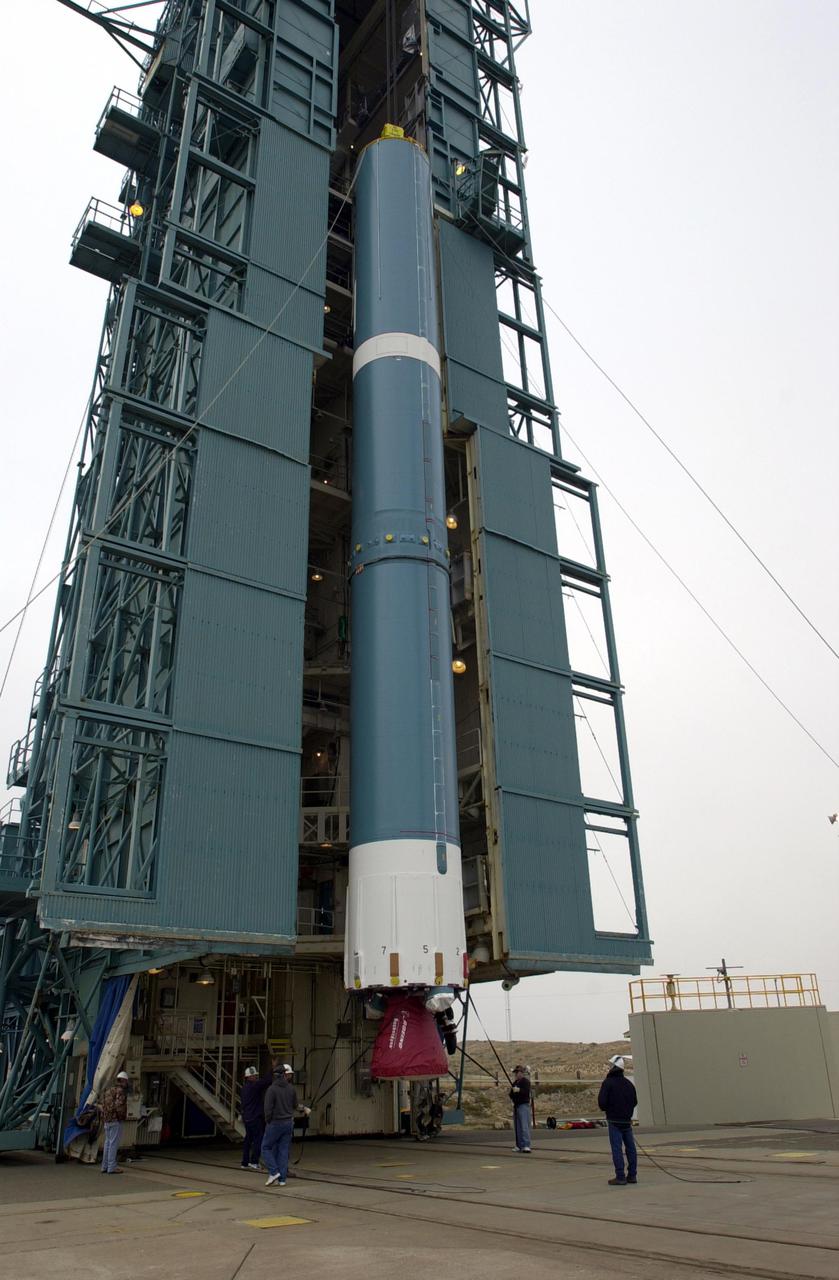
VANDENBERG AIR FORCE BASE, CALIF. - At NASA Space Launch Complex 2 on Vandenberg Air Force Base in California, the Boeing Delta II rocket, launch vehicle for the CALIPSO_CloudSat spacecraft, is ready to lifted into the mobile service tower, or gantry. CALIPSO stands for Cloud-Aerosol Lidar and Infrared Pathfinder Satellite Observation. CALIPSO and CloudSat are highly complementary satellites and together will provide never-before-seen 3-D perspectives of how clouds and aerosols form, evolve, and affect weather and climate. CALIPSO and CloudSat will fly in formation with three other satellites in the A-train constellation to enhance understanding of our climate system. Launch of CALIPSO_CloudSat aboard a Boeing Delta II rocket is scheduled for 3:01 a.m. Sept. 29.
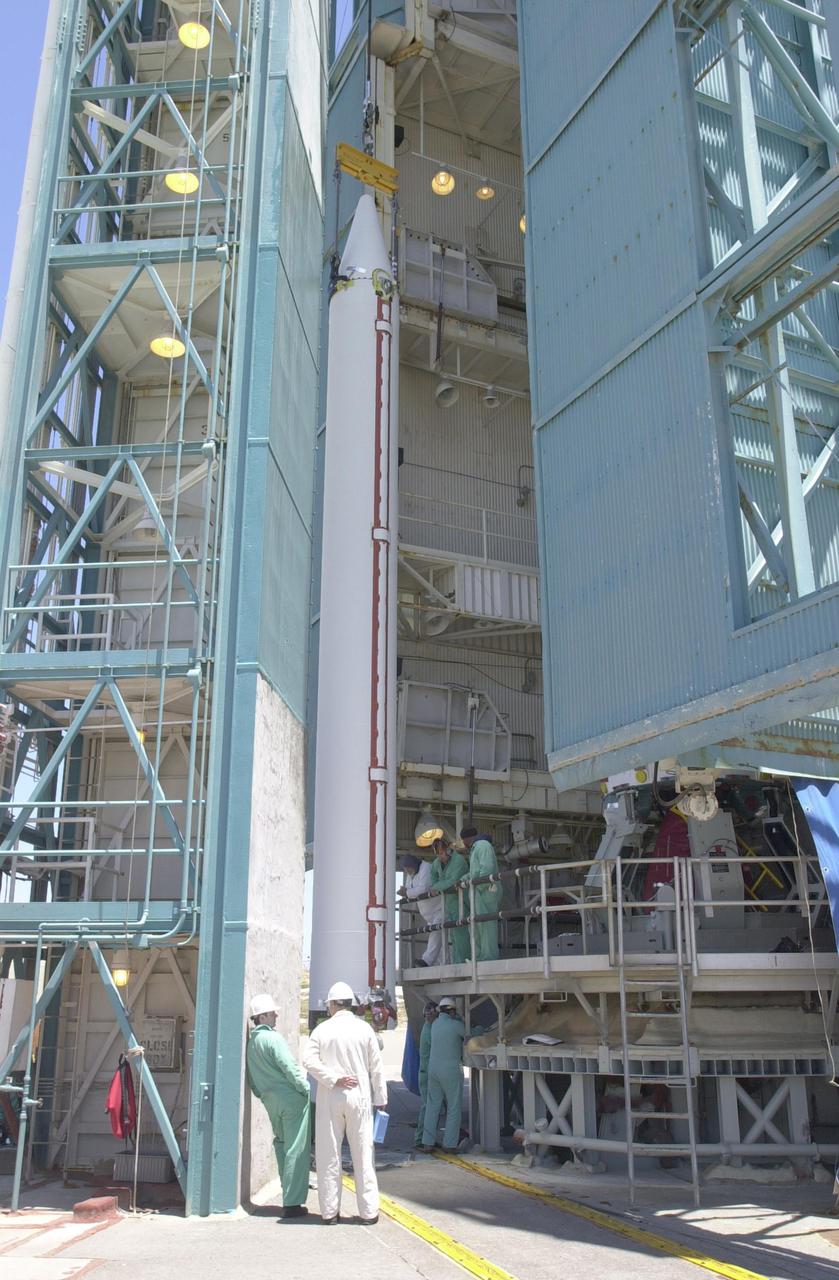
VANDENBERG AIR FORCE BASE, CALIF. - At NASA Space Launch Complex 2 on Vandenberg Air Force Base in California, another Solid Rocket Booster is attached to the Boeing Delta II rocket seen behind it. The Delta is the launch vehicle for the CALIPSO_CloudSat spacecraft. CALIPSO stands for Cloud-Aerosol Lidar and Infrared Pathfinder Satellite Observation. CALIPSO and CloudSat are highly complementary satellites and together will provide never-before-seen 3-D perspectives of how clouds and aerosols form, evolve, and affect weather and climate. CALIPSO and CloudSat will fly in formation with three other satellites in the A-train constellation to enhance understanding of our climate system. Launch of CALIPSO_CloudSat aboard a Boeing Delta II rocket is scheduled for 3:01 a.m. Sept. 29.
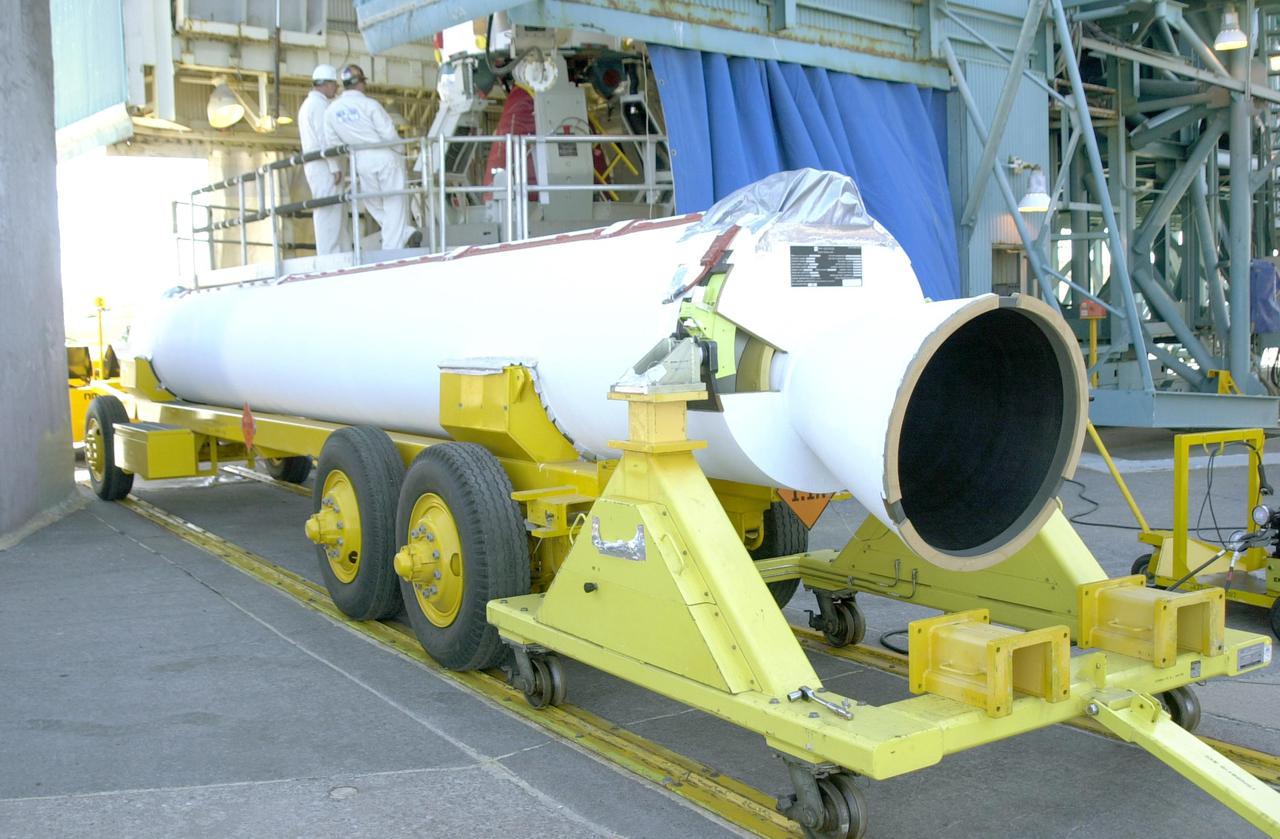
VANDENBERG AIR FORCE BASE, CALIF. - Another Solid Rocket Booster for the CALIPSO_CloudSat launch is ready to be raised to a vertical position at NASA Space Launch Complex 2 on Vandenberg Air Force Base in California. It will then be lifted into the mobile service tower, or gantry, and attached to the Boeing Delta II rocket. The Delta is the launch vehicle for the CALIPSO_CloudSat spacecraft. CALIPSO stands for Cloud-Aerosol Lidar and Infrared Pathfinder Satellite Observation. CALIPSO and CloudSat are highly complementary satellites and together will provide never-before-seen 3-D perspectives of how clouds and aerosols form, evolve, and affect weather and climate. CALIPSO and CloudSat will fly in formation with three other satellites in the A-train constellation to enhance understanding of our climate system. Launch of CALIPSO_CloudSat aboard a Boeing Delta II rocket is scheduled for 3:01 a.m. Sept. 29.
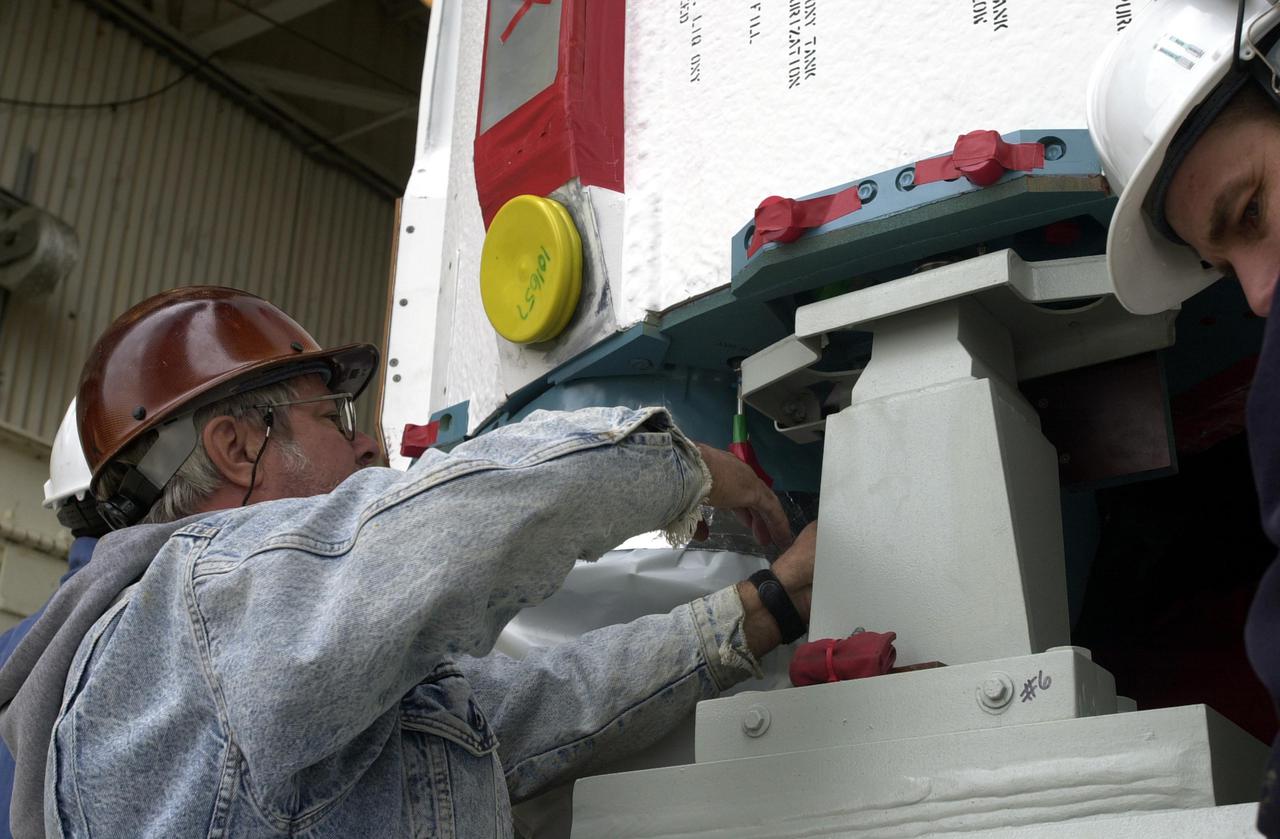
VANDENBERG AIR FORCE BASE, CALIF. - At NASA Space Launch Complex 2 on Vandenberg Air Force Base in California, the Boeing Delta II rocket, launch vehicle for the CALIPSO_CloudSat spacecraft, is prepared for lifting into the mobile service tower, or gantry. CALIPSO stands for Cloud-Aerosol Lidar and Infrared Pathfinder Satellite Observation. CALIPSO and CloudSat are highly complementary satellites and together will provide never-before-seen 3-D perspectives of how clouds and aerosols form, evolve, and affect weather and climate. CALIPSO and CloudSat will fly in formation with three other satellites in the A-train constellation to enhance understanding of our climate system. Launch of CALIPSO_CloudSat aboard a Boeing Delta II rocket is scheduled for 3:01 a.m. Sept. 29.
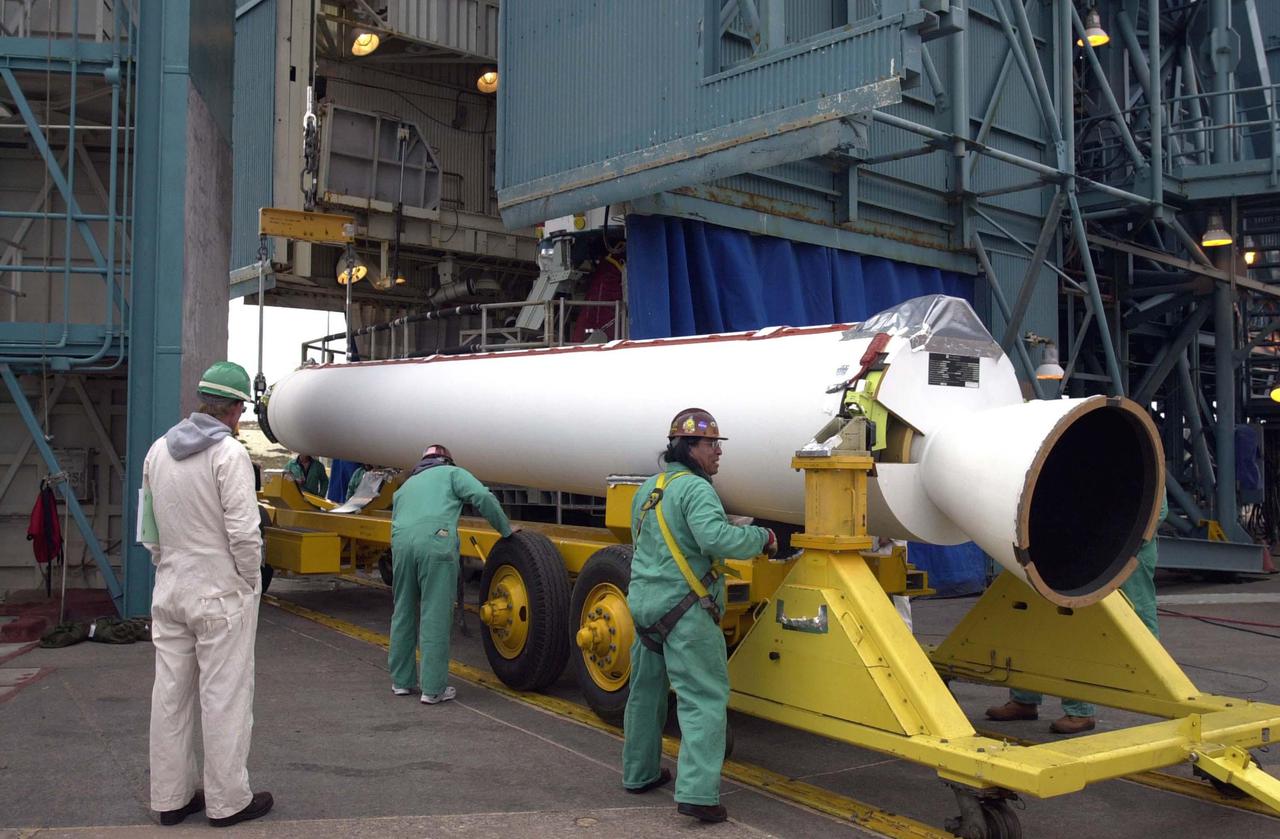
VANDENBERG AIR FORCE BASE, CALIF. - One of four Solid Rocket Boosters for the CALIPSO_CloudSat launch arrives at NASA Space Launch Complex 2 on Vandenberg Air Force Base in California. It will be lifted into the mobile service tower, or gantry, and attached to the Boeing Delta II rocket. CALIPSO stands for Cloud-Aerosol Lidar and Infrared Pathfinder Satellite Observation. CALIPSO and CloudSat are highly complementary satellites and together will provide never-before-seen 3-D perspectives of how clouds and aerosols form, evolve, and affect weather and climate. CALIPSO and CloudSat will fly in formation with three other satellites in the A-train constellation to enhance understanding of our climate system. Launch of CALIPSO_CloudSat aboard a Boeing Delta II rocket is scheduled for 3:01 a.m. Sept. 29.
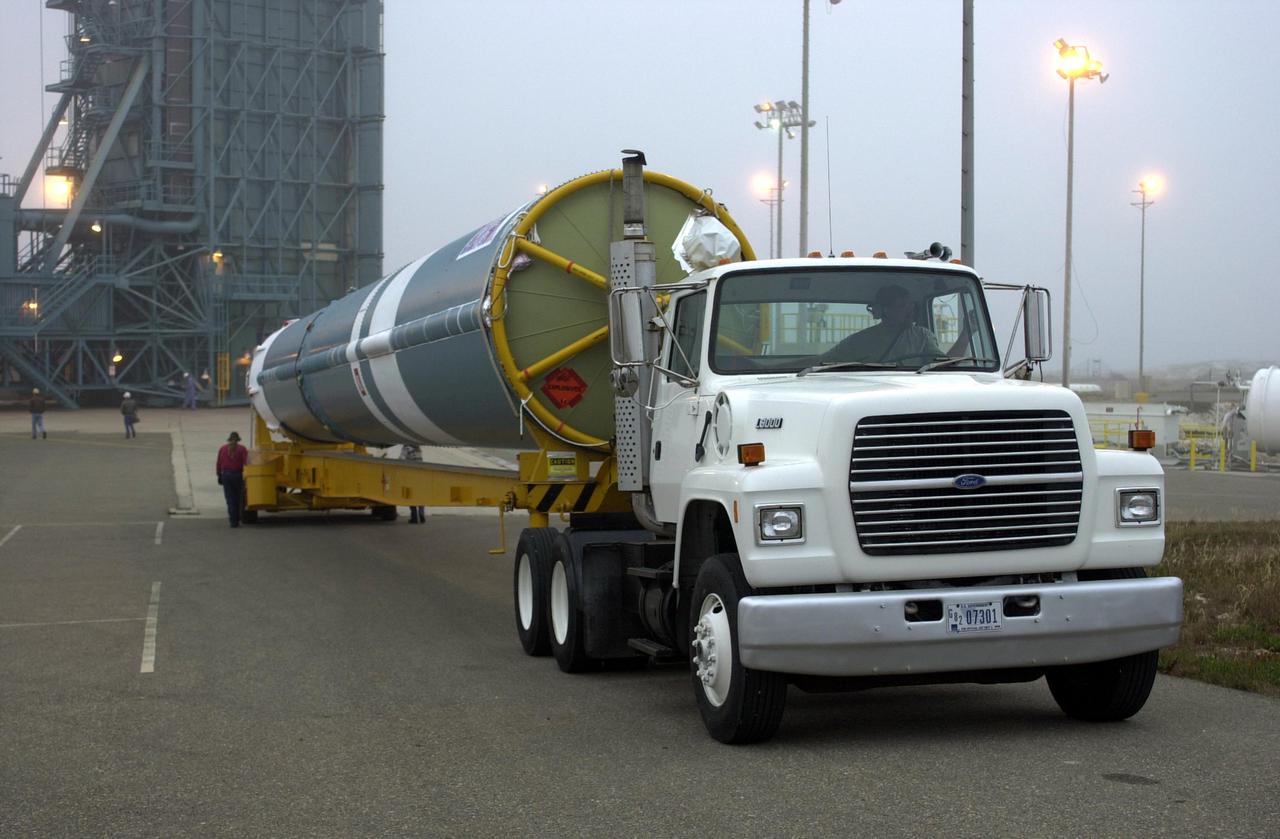
VANDENBERG AIR FORCE BASE, CALIF. - At NASA Space Launch Complex 2 on Vandenberg Air Force Base in California, the first stage of the Boeing Delta II rocket for the CALIPSO_CloudSat launch arrives on the pad. It will be raised to vertical and lifted up into the mobile service tower, or gantry. CALIPSO stands for Cloud-Aerosol Lidar and Infrared Pathfinder Satellite Observation. CALIPSO and CloudSat are highly complementary satellites and together will provide never-before-seen 3-D perspectives of how clouds and aerosols form, evolve, and affect weather and climate. CALIPSO and CloudSat will fly in formation with three other satellites in the A-train constellation to enhance understanding of our climate system. Launch of CALIPSO_CloudSat aboard a Boeing Delta II rocket is scheduled for 3:01 a.m. Sept. 29.
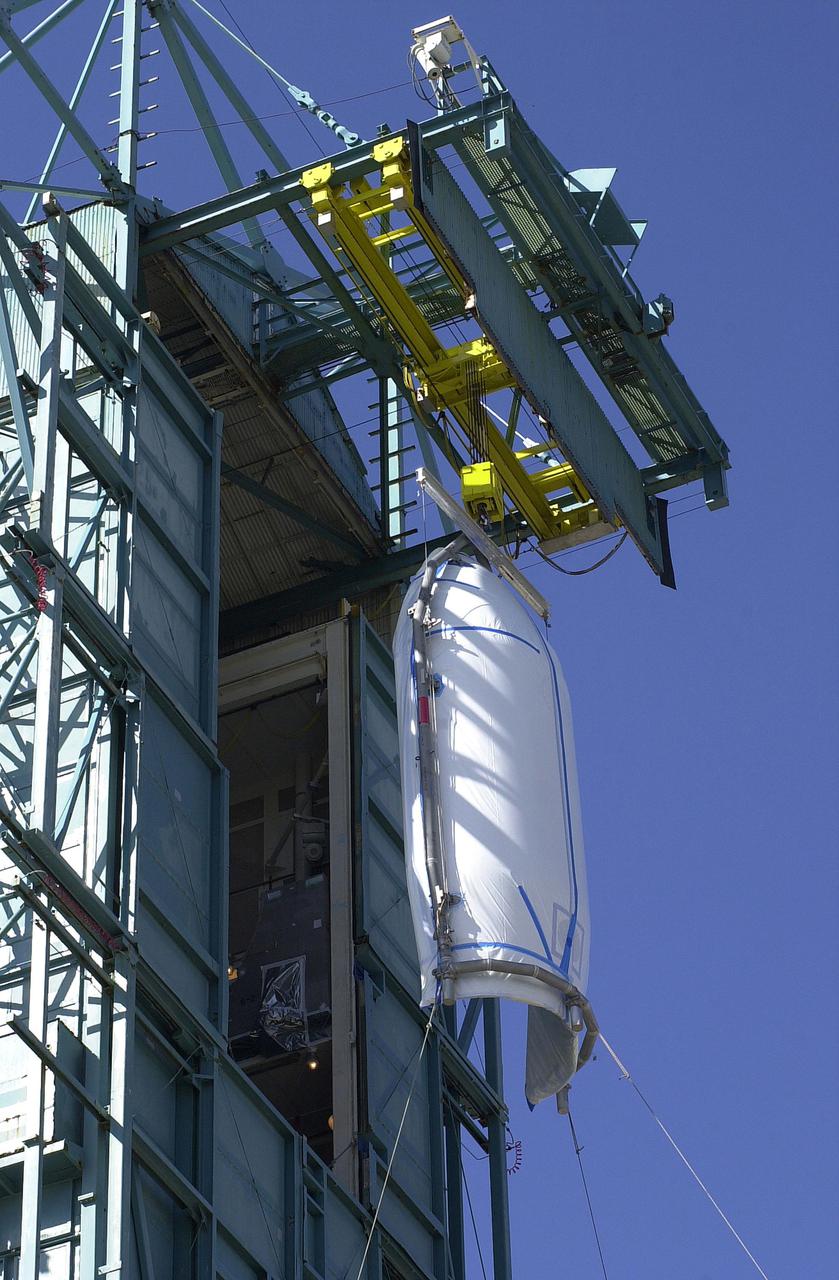
VANDENBERG AIR FORCE BASE, CALIF. - At NASA Space Launch Complex 2 on Vandenberg Air Force Base in California, the first half of the fairing for CALIPSO_CloudSat reaches the top of the mobile service tower, or gantry. The fairing encloses and protects the spacecraft during launch and flight through the atmosphere. Once in space, it is jettisoned. CALIPSO stands for Cloud-Aerosol Lidar and Infrared Pathfinder Satellite Observation. CALIPSO and CloudSat are highly complementary satellites and together will provide never-before-seen 3-D perspectives of how clouds and aerosols form, evolve, and affect weather and climate. CALIPSO and CloudSat will fly in formation with three other satellites in the A-train constellation to enhance understanding of our climate system. Launch of CALIPSO_CloudSat aboard a Boeing Delta II rocket is scheduled for 3:01 a.m. Sept. 29.
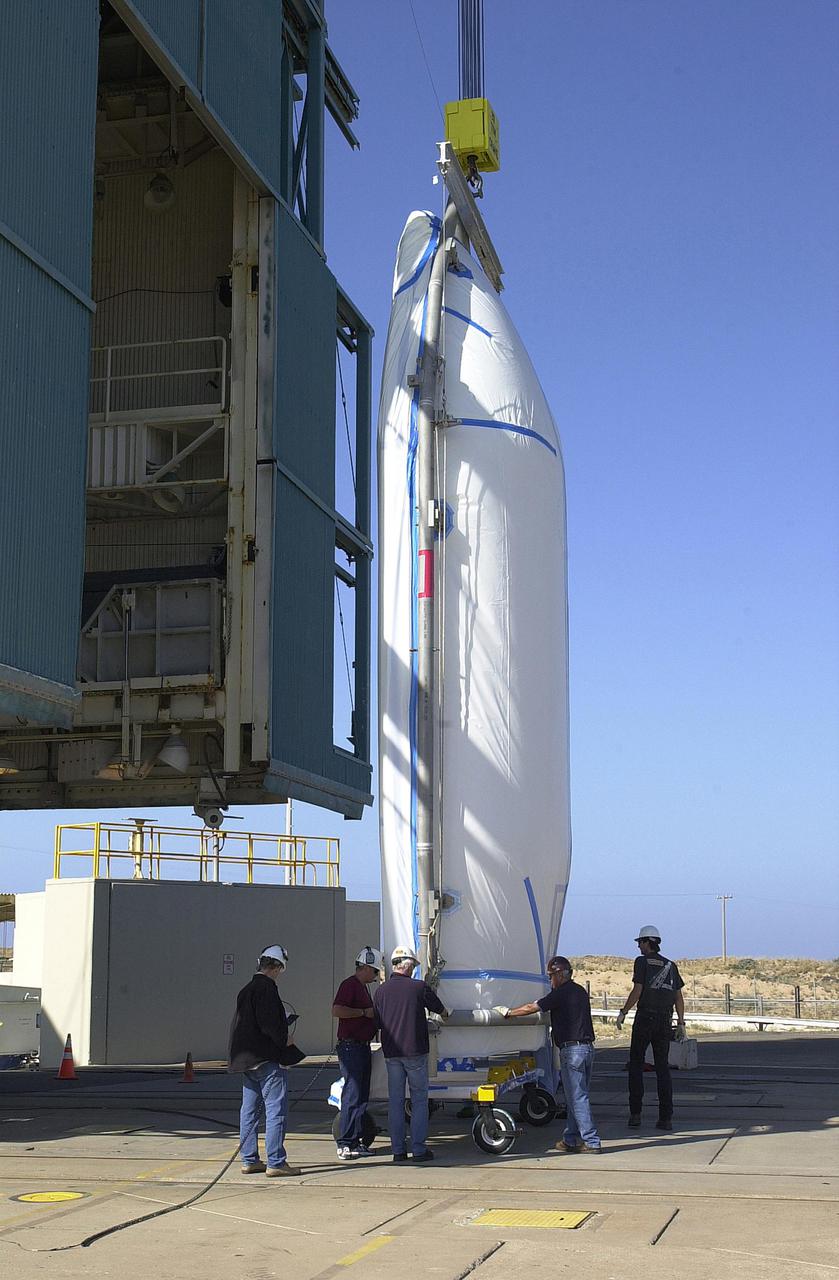
VANDENBERG AIR FORCE BASE, CALIF. - At NASA Space Launch Complex 2 on Vandenberg Air Force Base in California, one half of the fairing for CALIPSO_CloudSat is ready to be lifted into the mobile service tower, or gantry. The fairing encloses and protects the spacecraft during launch and flight through the atmosphere. Once in space, it is jettisoned. CALIPSO stands for Cloud-Aerosol Lidar and Infrared Pathfinder Satellite Observation. CALIPSO and CloudSat are highly complementary satellites and together will provide never-before-seen 3-D perspectives of how clouds and aerosols form, evolve, and affect weather and climate. CALIPSO and CloudSat will fly in formation with three other satellites in the A-train constellation to enhance understanding of our climate system. Launch of CALIPSO_CloudSat aboard a Boeing Delta II rocket is scheduled for 3:01 a.m. Sept. 29.
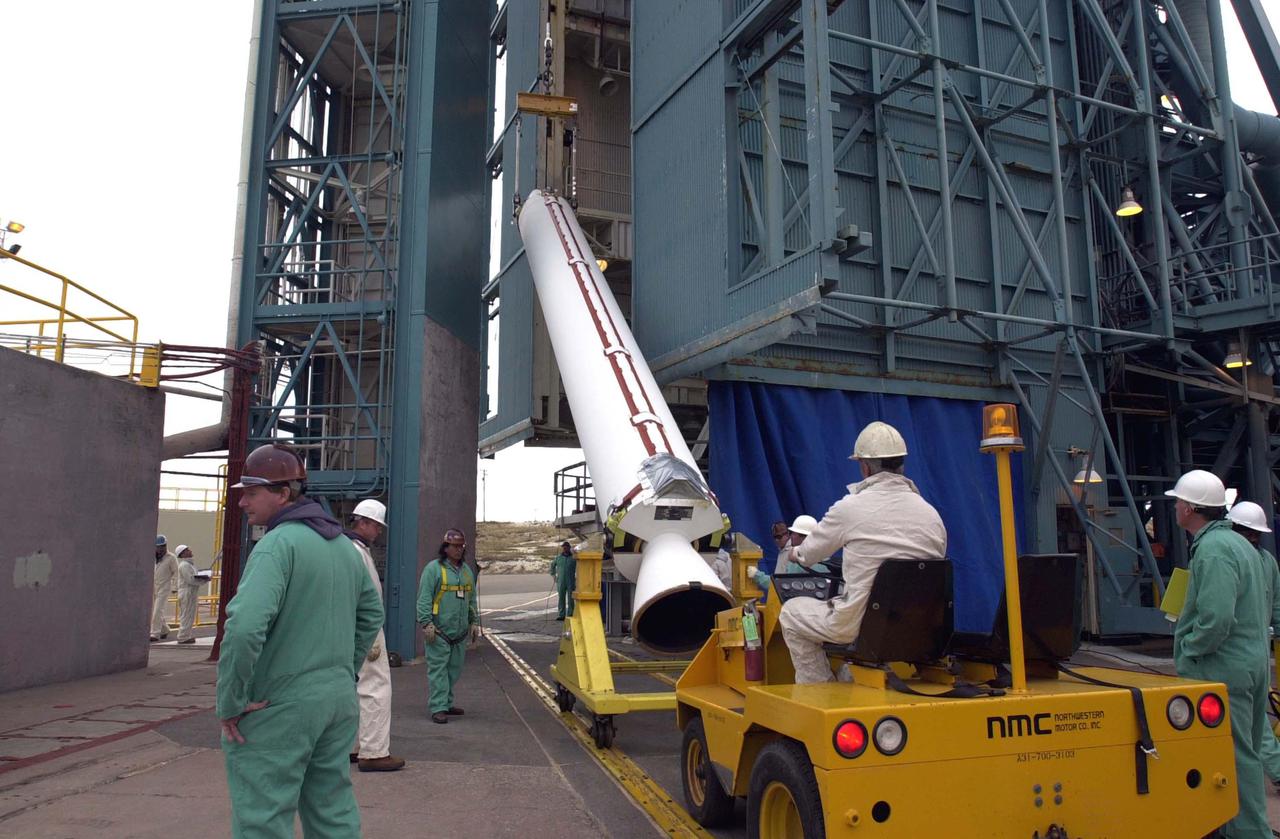
VANDENBERG AIR FORCE BASE, CALIF. - One of four Solid Rocket Boosters for the CALIPSO_CloudSat launch is raised off the transporter to a vertical position. It will be lifted into the mobile service tower, or gantry, and attached to the Boeing Delta II rocket. CALIPSO stands for Cloud-Aerosol Lidar and Infrared Pathfinder Satellite Observation. CALIPSO and CloudSat are highly complementary satellites and together will provide never-before-seen 3-D perspectives of how clouds and aerosols form, evolve, and affect weather and climate. CALIPSO and CloudSat will fly in formation with three other satellites in the A-train constellation to enhance understanding of our climate system. Launch of CALIPSO_CloudSat aboard a Boeing Delta II rocket is scheduled for 3:01 a.m. Sept. 29.
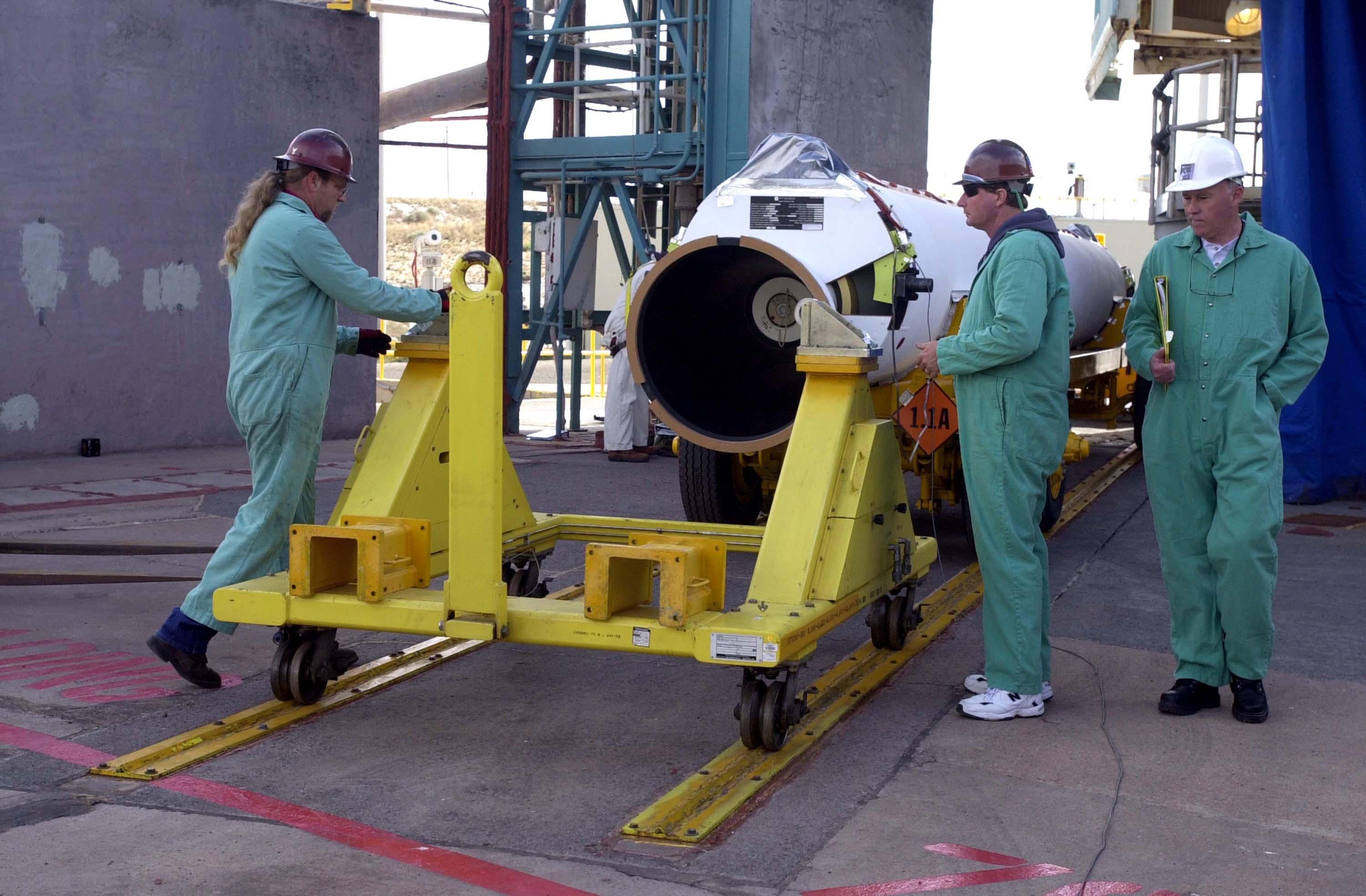
VANDENBERG AIR FORCE BASE, CALIF. - Another Solid Rocket Booster arrives on NASA Space Launch Complex 2 at Vandenberg Air Force Base in California. It will be lifted up the mobile service tower, or gantry, where it will be attached to the Boeing Delta II rocket. The Delta is the launch vehicle for the CALIPSO_CloudSat spacecraft. CALIPSO stands for Cloud-Aerosol Lidar and Infrared Pathfinder Satellite Observation. CALIPSO and CloudSat are highly complementary satellites and together will provide never-before-seen 3-D perspectives of how clouds and aerosols form, evolve, and affect weather and climate. CALIPSO and CloudSat will fly in formation with three other satellites in the A-train constellation to enhance understanding of our climate system. Launch of CALIPSO_CloudSat aboard a Boeing Delta II rocket is scheduled for 3:01 a.m. Sept. 29.
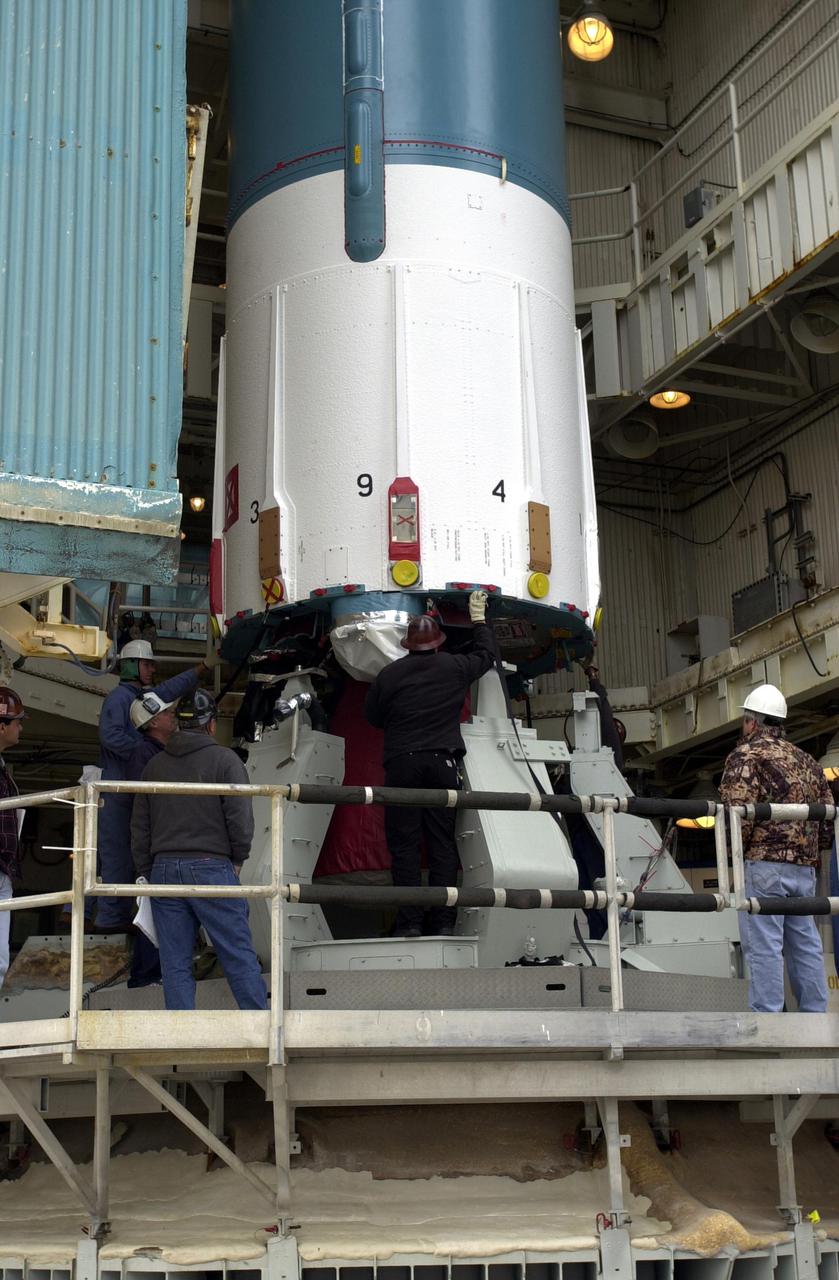
VANDENBERG AIR FORCE BASE, CALIF. - At NASA Space Launch Complex 2 on Vandenberg Air Force Base in California, the Boeing Delta II rocket, launch vehicle for the CALIPSO_CloudSat spacecraft, is prepared for lifting into the mobile service tower, or gantry. CALIPSO stands for Cloud-Aerosol Lidar and Infrared Pathfinder Satellite Observation. CALIPSO and CloudSat are highly complementary satellites and together will provide never-before-seen 3-D perspectives of how clouds and aerosols form, evolve, and affect weather and climate. CALIPSO and CloudSat will fly in formation with three other satellites in the A-train constellation to enhance understanding of our climate system. Launch of CALIPSO_CloudSat aboard a Boeing Delta II rocket is scheduled for 3:01 a.m. Sept. 29.
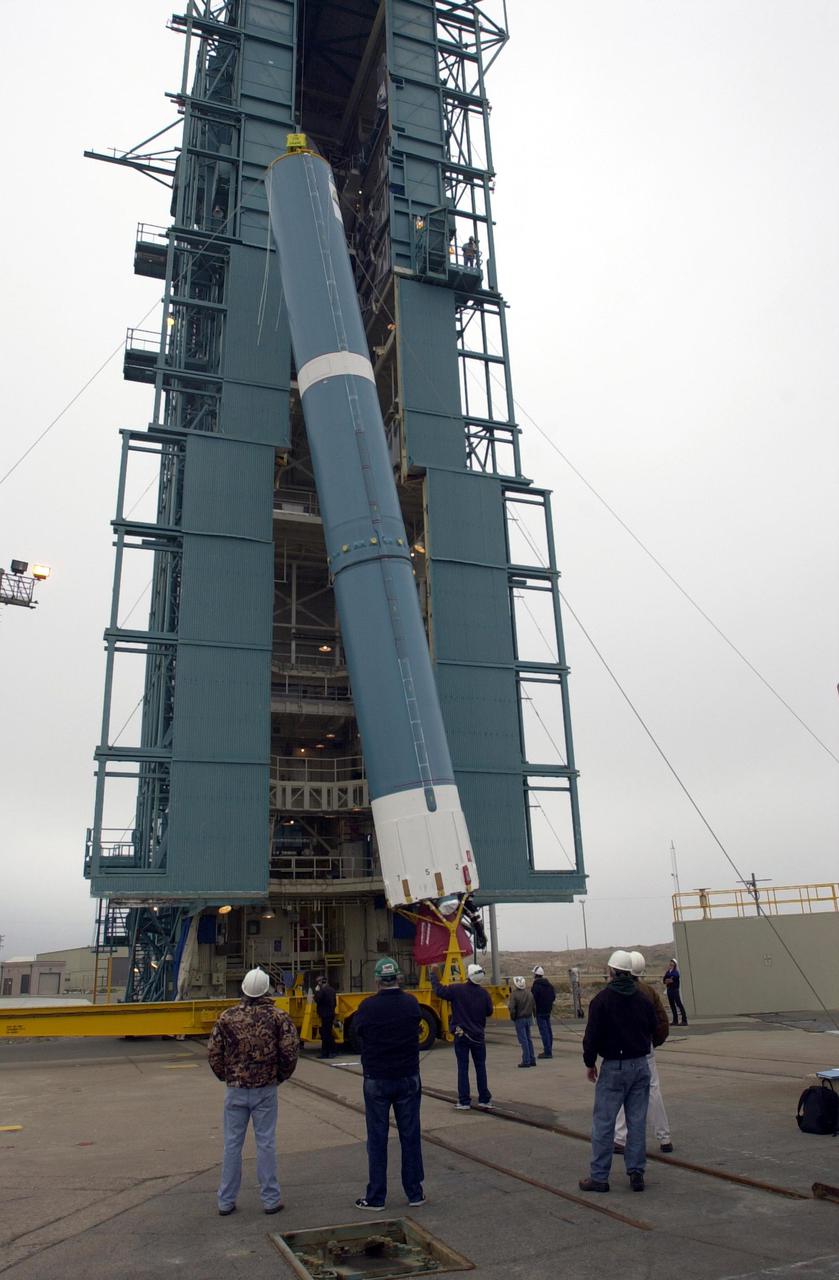
VANDENBERG AIR FORCE BASE, CALIF. - At NASA Space Launch Complex 2 on Vandenberg Air Force Base in California, the Boeing Delta II rocket, launch vehicle for the CALIPSO_CloudSat spacecraft, is being raised to a vertical position. Once it is vertical, it will be lifted up into the mobile service tower, or gantry. CALIPSO stands for Cloud-Aerosol Lidar and Infrared Pathfinder Satellite Observation. CALIPSO and CloudSat are highly complementary satellites and together will provide never-before-seen 3-D perspectives of how clouds and aerosols form, evolve, and affect weather and climate. CALIPSO and CloudSat will fly in formation with three other satellites in the A-train constellation to enhance understanding of our climate system. Launch of CALIPSO_CloudSat aboard a Boeing Delta II rocket is scheduled for 3:01 a.m. Sept. 29.
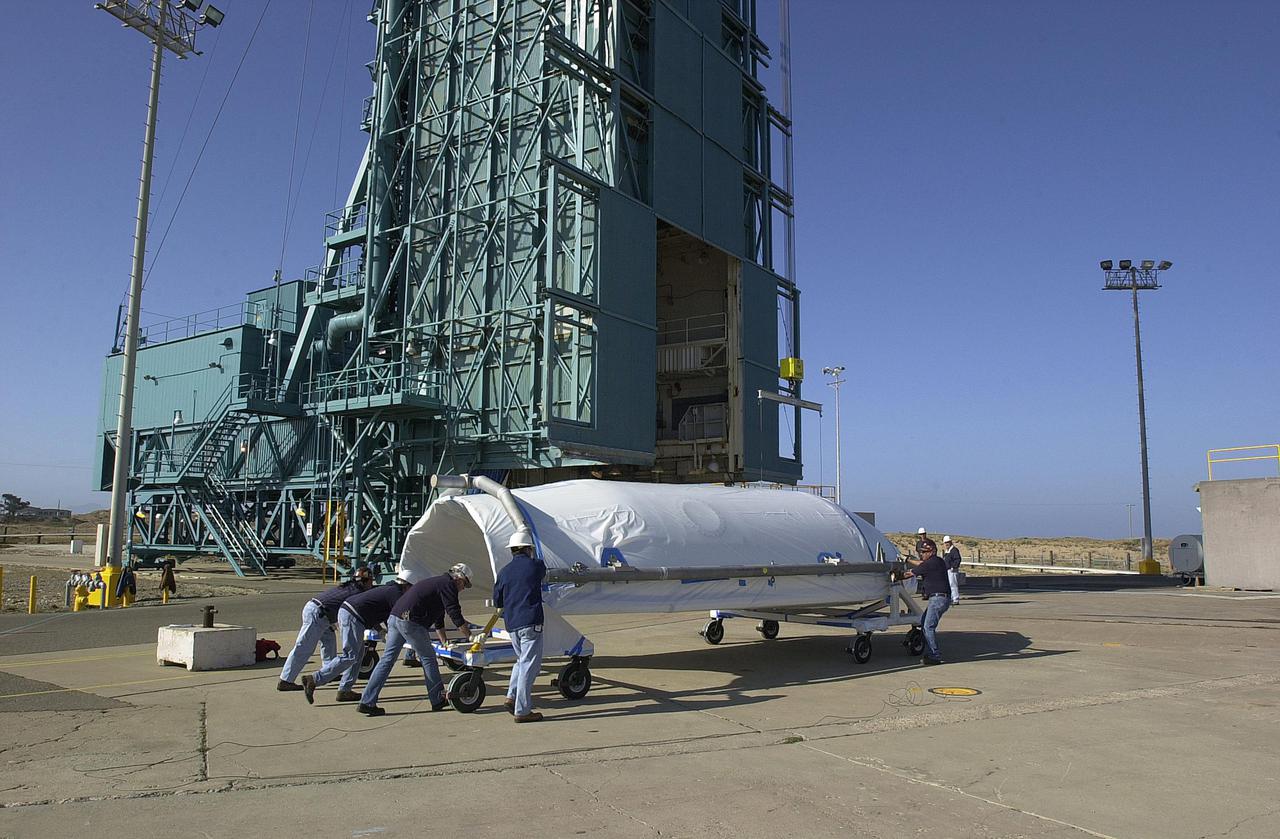
VANDENBERG AIR FORCE BASE, CALIF. - One half of the fairing to cover CALIPSO_CloudSat arrives at NASA Space Launch Complex 2 on Vandenberg Air Force Base in California. The fairing encloses and protects the spacecraft during launch and flight through the atmosphere. Once in space, it is jettisoned. CALIPSO stands for Cloud-Aerosol Lidar and Infrared Pathfinder Satellite Observation. CALIPSO and CloudSat are highly complementary satellites and together will provide never-before-seen 3-D perspectives of how clouds and aerosols form, evolve, and affect weather and climate. CALIPSO and CloudSat will fly in formation with three other satellites in the A-train constellation to enhance understanding of our climate system. Launch of CALIPSO_CloudSat aboard a Boeing Delta II rocket is scheduled for 3:01 a.m. Sept. 29.

KENNEDY SPACE CENTER, FLA. - At NASA Space Launch Complex 2 on Vandenberg Air Force Base in California, a hoist and crane is placed around a Solid Rocket Booster to raise it to a vertical position. It will then be lifted into the mobile service tower, or gantry, and attached to the Boeing Delta II rocket. The Delta is the launch vehicle for the CALIPSO_CloudSat spacecraft. CALIPSO stands for Cloud-Aerosol Lidar and Infrared Pathfinder Satellite Observation. CALIPSO and CloudSat are highly complementary satellites and together will provide never-before-seen 3-D perspectives of how clouds and aerosols form, evolve, and affect weather and climate. CALIPSO and CloudSat will fly in formation with three other satellites in the A-train constellation to enhance understanding of our climate system. Launch of CALIPSO_CloudSat aboard a Boeing Delta II rocket is scheduled for 3:01 a.m. Sept. 29.
VANDENBERG AIR FORCE BASE, CALIF. - Workers on NASA Space Launch Complex 2 at Vandenberg Air Force Base in California prepare the Solid Rocket Booster for lifting into the mobile service tower, or gantry, where it will be attached to the Boeing Delta II rocket. The Delta is the launch vehicle for the CALIPSO_CloudSat spacecraft. CALIPSO stands for Cloud-Aerosol Lidar and Infrared Pathfinder Satellite Observation. CALIPSO and CloudSat are highly complementary satellites and together will provide never-before-seen 3-D perspectives of how clouds and aerosols form, evolve, and affect weather and climate. CALIPSO and CloudSat will fly in formation with three other satellites in the A-train constellation to enhance understanding of our climate system. Launch of CALIPSO_CloudSat aboard a Boeing Delta II rocket is scheduled for 3:01 a.m. Sept. 29.
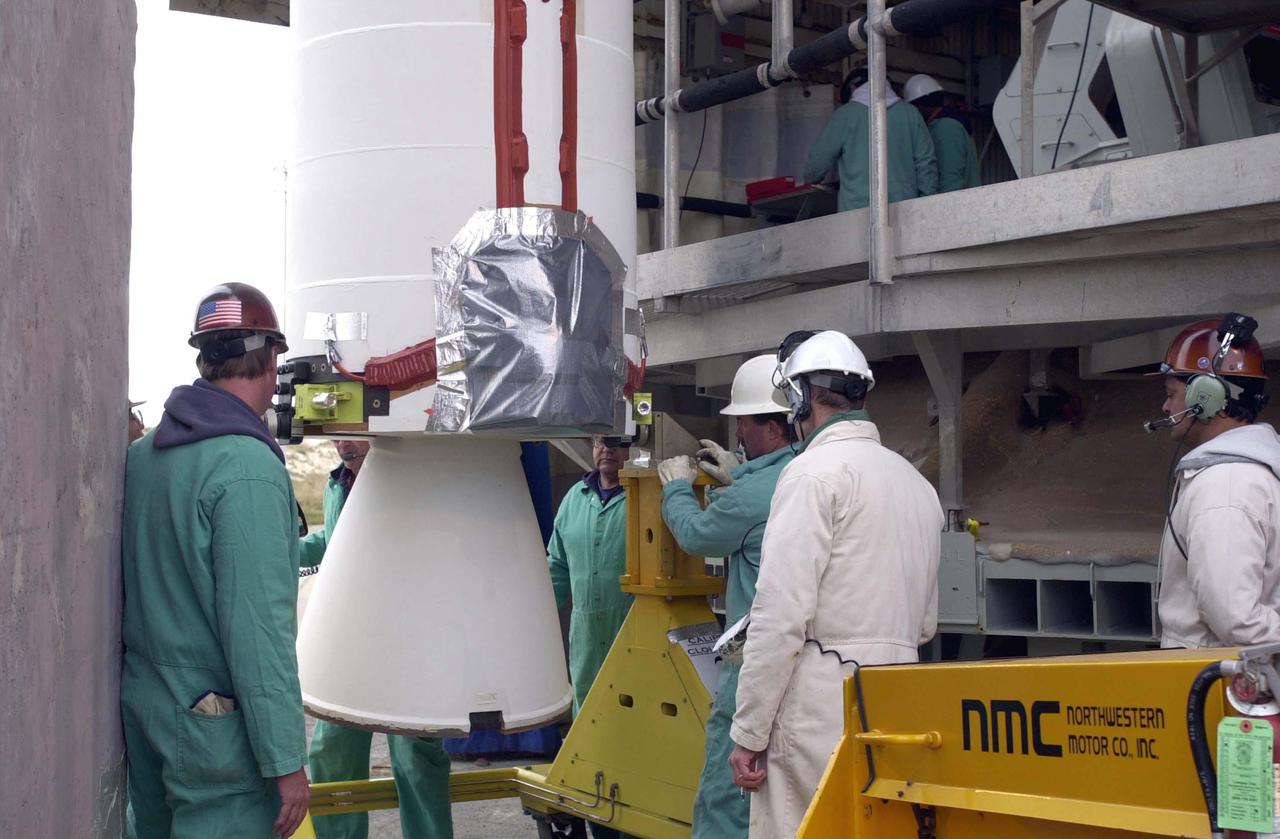
VANDENBERG AIR FORCE BASE, CALIF. - Workers on NASA Space Launch Complex 2 at Vandenberg Air Force Base in California prepare the Solid Rocket Booster for lifting into the mobile service tower, or gantry, where it will be attached to the Boeing Delta II rocket. The Delta is the launch vehicle for the CALIPSO_CloudSat spacecraft. CALIPSO stands for Cloud-Aerosol Lidar and Infrared Pathfinder Satellite Observation. CALIPSO and CloudSat are highly complementary satellites and together will provide never-before-seen 3-D perspectives of how clouds and aerosols form, evolve, and affect weather and climate. CALIPSO and CloudSat will fly in formation with three other satellites in the A-train constellation to enhance understanding of our climate system. Launch of CALIPSO_CloudSat aboard a Boeing Delta II rocket is scheduled for 3:01 a.m. Sept. 29.
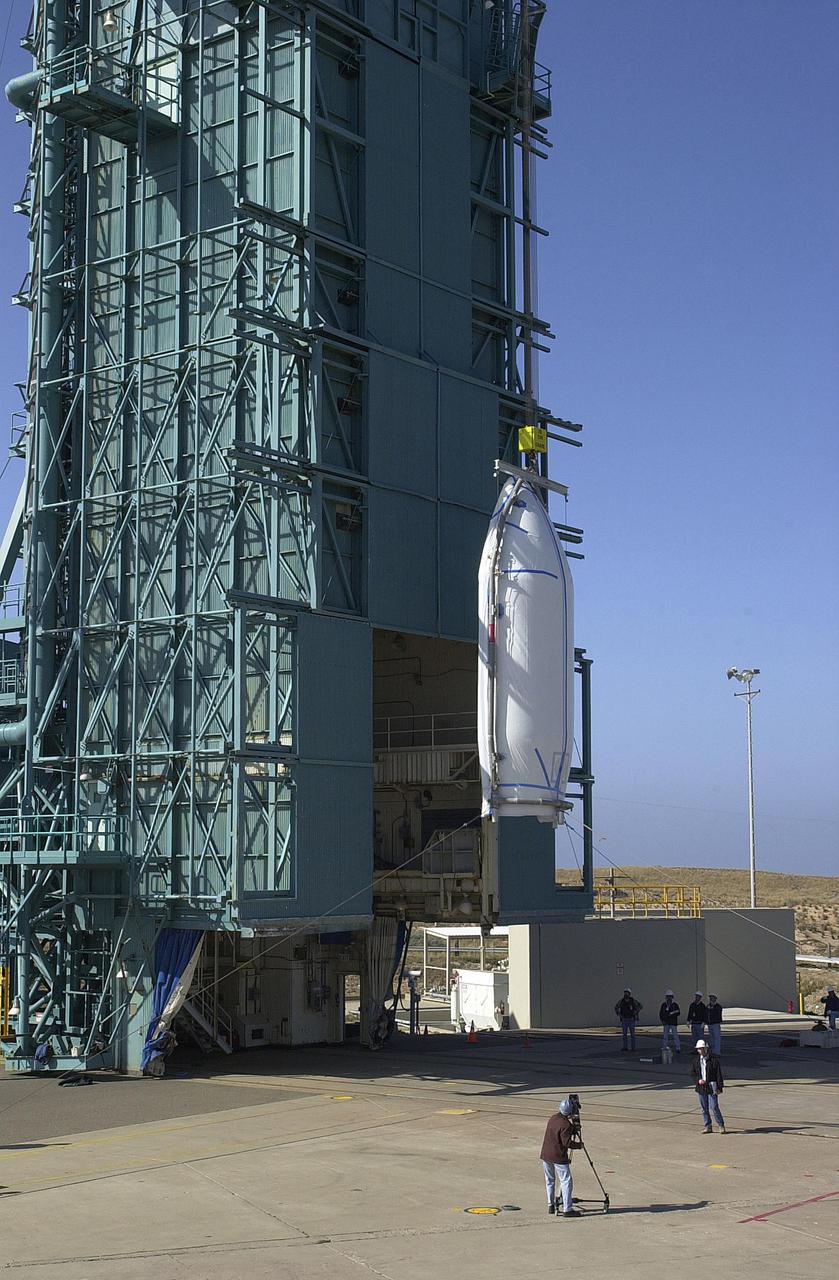
VANDENBERG AIR FORCE BASE, CALIF. - At NASA Space Launch Complex 2 on Vandenberg Air Force Base in California, one half of the fairing for CALIPSO_CloudSat begins the slow lift up the mobile service tower, or gantry. The fairing encloses and protects the spacecraft during launch and flight through the atmosphere. Once in space, it is jettisoned. CALIPSO stands for Cloud-Aerosol Lidar and Infrared Pathfinder Satellite Observation. CALIPSO and CloudSat are highly complementary satellites and together will provide never-before-seen 3-D perspectives of how clouds and aerosols form, evolve, and affect weather and climate. CALIPSO and CloudSat will fly in formation with three other satellites in the A-train constellation to enhance understanding of our climate system. Launch of CALIPSO_CloudSat aboard a Boeing Delta II rocket is scheduled for 3:01 a.m. Sept. 29.
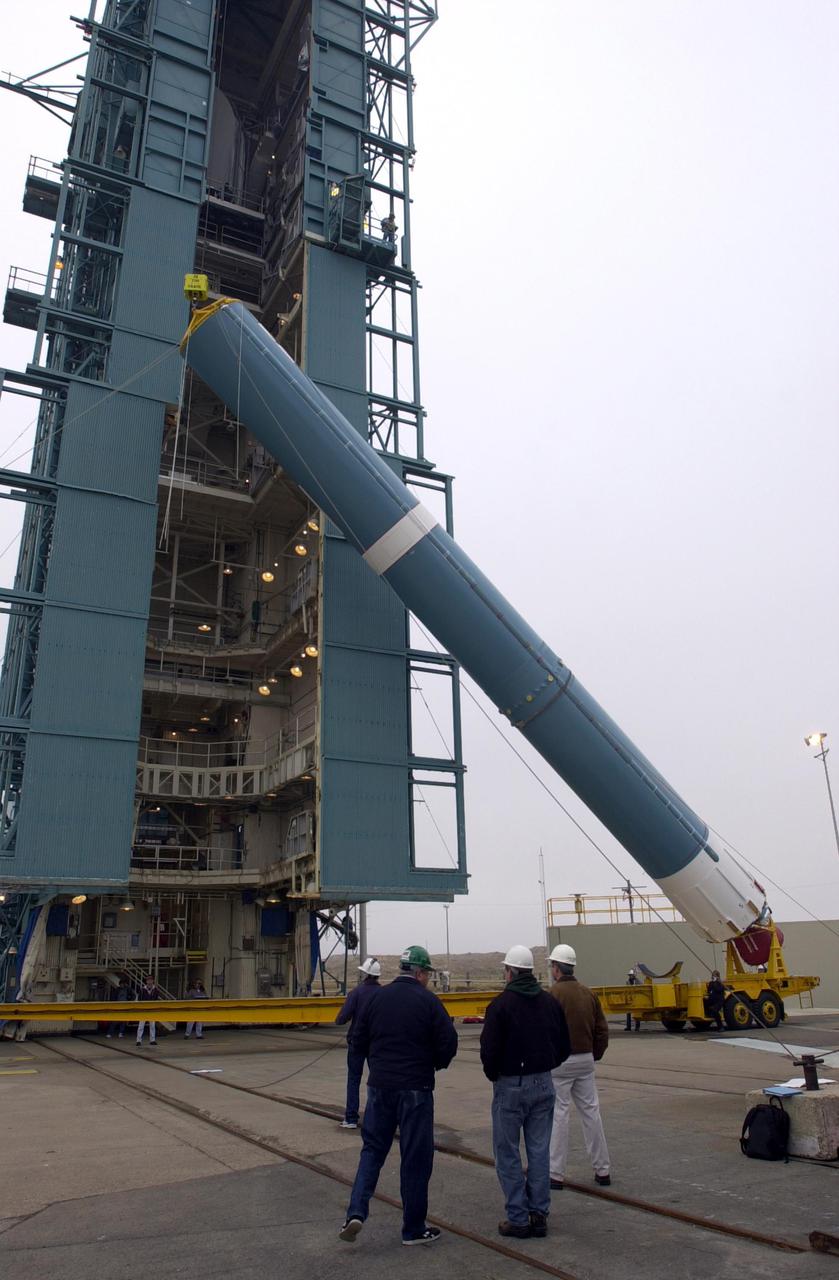
VANDENBERG AIR FORCE BASE, CALIF. - At NASA Space Launch Complex 2 on Vandenberg Air Force Base in California, the Boeing Delta II rocket, launch vehicle for the CALIPSO_CloudSat spacecraft, is being raised to a vertical position. Once it is vertical, it will be lifted up into the Mobile service tower, or gantry. CALIPSO stands for Cloud-Aerosol Lidar and Infrared Pathfinder Satellite Observation. CALIPSO and CloudSat are highly complementary satellites and together will provide never-before-seen 3-D perspectives of how clouds and aerosols form, evolve, and affect weather and climate. CALIPSO and CloudSat will fly in formation with three other satellites in the A-train constellation to enhance understanding of our climate system. Launch of CALIPSO_CloudSat aboard a Boeing Delta II rocket is scheduled for 3:01 a.m. Sept. 29.
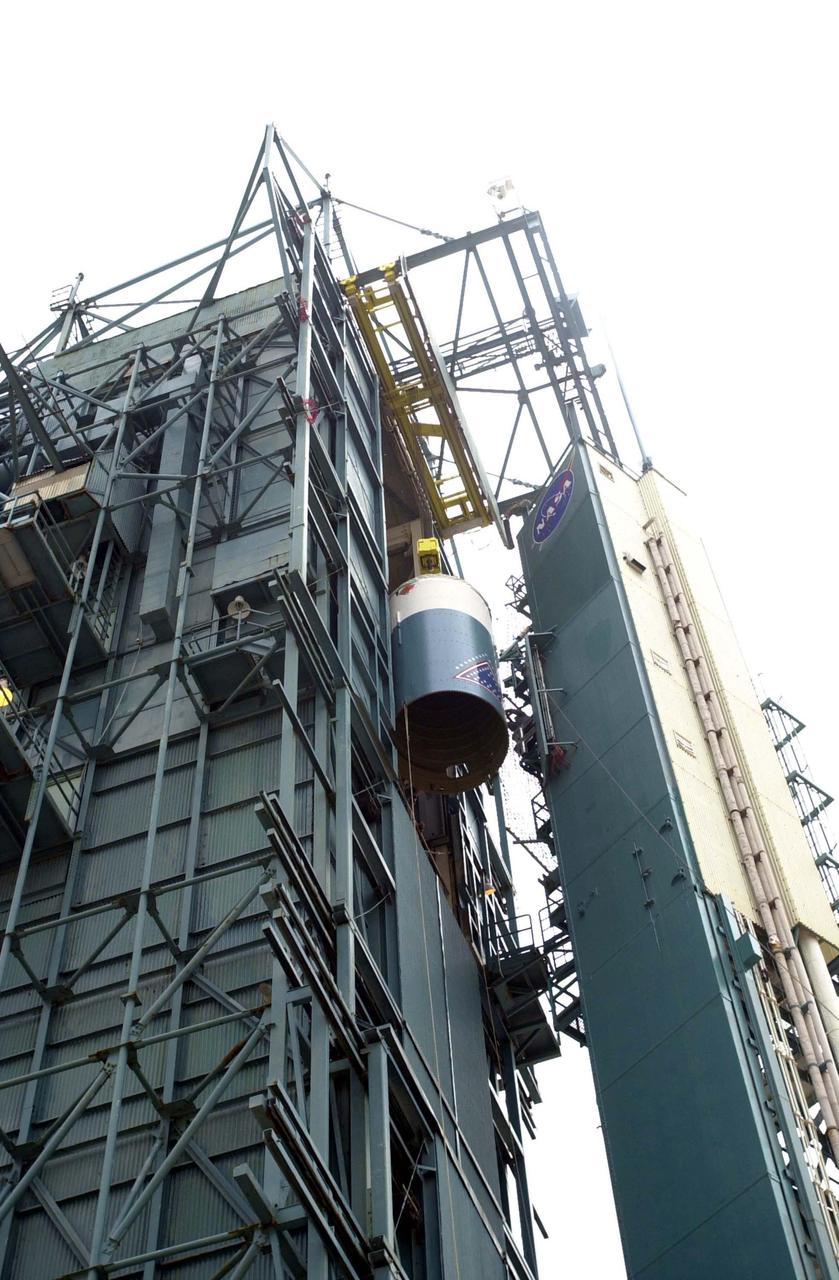
VANDENBERG AIR FORCE BASE, CALIF. - At NASA Space Launch Complex 2 on Vandenberg Air Force Base in California, the interstage for the Boeing Delta II rocket nears the top of the mobile service tower, or gantry. There it will be mated with the first stage already there. The Delta is the launch vehicle for the CALIPSO_CloudSat spacecraft. CALIPSO stands for Cloud-Aerosol Lidar and Infrared Pathfinder Satellite Observation. CALIPSO and CloudSat are highly complementary satellites and together will provide never-before-seen 3-D perspectives of how clouds and aerosols form, evolve, and affect weather and climate. CALIPSO and CloudSat will fly in formation with three other satellites in the A-train constellation to enhance understanding of our climate system. Launch of CALIPSO_CloudSat aboard a Boeing Delta II rocket is scheduled for 3:01 a.m. Sept. 29.
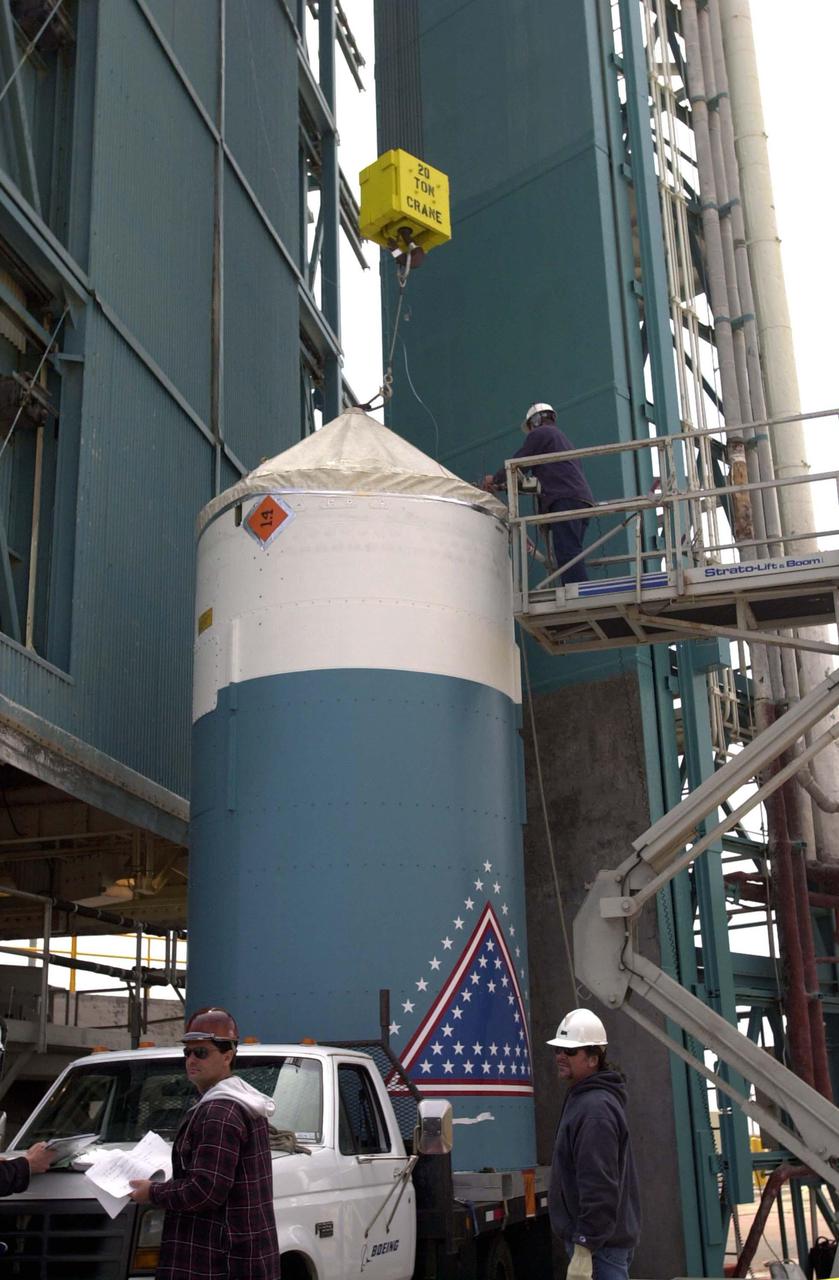
VANDENBERG AIR FORCE BASE, CALIF. - At NASA Space Launch Complex 2 on Vandenberg Air Force Base in California, the interstage for the Boeing Delta II rocket waits to be lifted up the mobile service tower, or gantry. Then it will be mated with the first stage already there. The Delta is the launch vehicle for the CALIPSO_CloudSat spacecraft. CALIPSO stands for Cloud-Aerosol Lidar and Infrared Pathfinder Satellite Observation. CALIPSO and CloudSat are highly complementary satellites and together will provide never-before-seen 3-D perspectives of how clouds and aerosols form, evolve, and affect weather and climate. CALIPSO and CloudSat will fly in formation with three other satellites in the A-train constellation to enhance understanding of our climate system. Launch of CALIPSO_CloudSat aboard a Boeing Delta II rocket is scheduled for 3:01 a.m. Sept. 29.
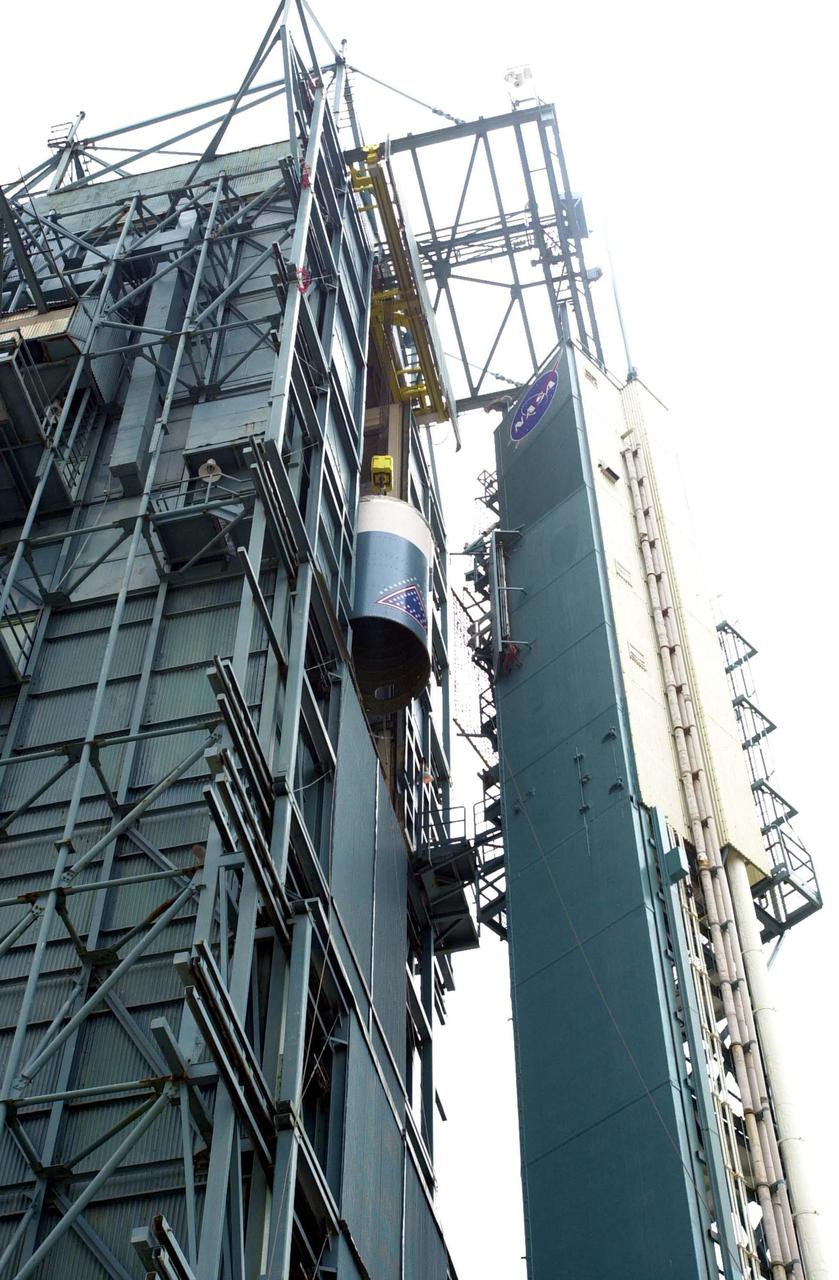
VANDENBERG AIR FORCE BASE, CALIF. - At NASA Space Launch Complex 2 on Vandenberg Air Force Base in California, the interstage for the Boeing Delta II rocket nears the top of the mobile service tower, or gantry. There it will be mated with the first stage already there. The Delta is the launch vehicle for the CALIPSO_CloudSat spacecraft. CALIPSO stands for Cloud-Aerosol Lidar and Infrared Pathfinder Satellite Observation. CALIPSO and CloudSat are highly complementary satellites and together will provide never-before-seen 3-D perspectives of how clouds and aerosols form, evolve, and affect weather and climate. CALIPSO and CloudSat will fly in formation with three other satellites in the A-train constellation to enhance understanding of our climate system. Launch of CALIPSO_CloudSat aboard a Boeing Delta II rocket is scheduled for 3:01 a.m. Sept. 29.
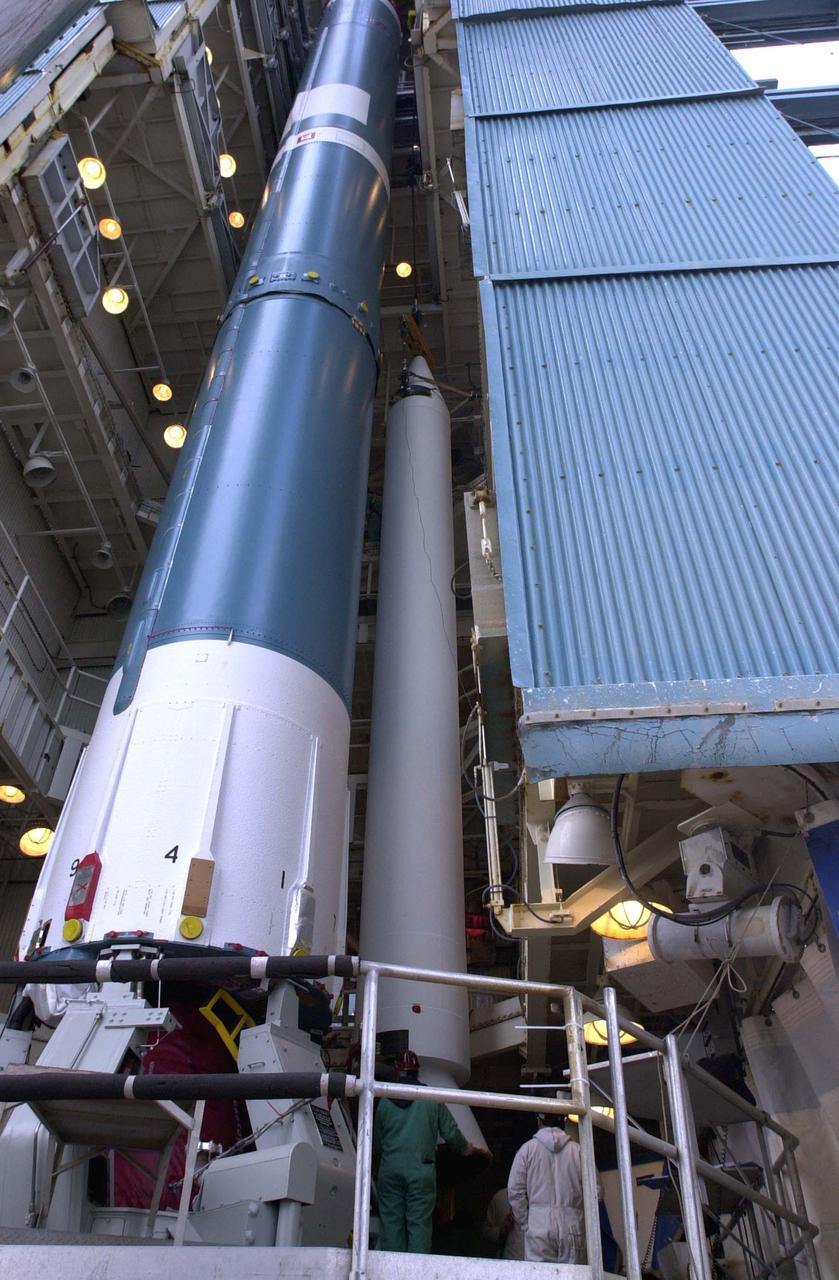
VANDENBERG AIR FORCE BASE, CALIF. - Workers on NASA Space Launch Complex 2 at Vandenberg Air Force Base in California are ready to attach a Solid Rocket Booster to the Boeing Delta II rocket. The Delta is the launch vehicle for the CALIPSO_CloudSat spacecraft. CALIPSO stands for Cloud-Aerosol Lidar and Infrared Pathfinder Satellite Observation. CALIPSO and CloudSat are highly complementary satellites and together will provide never-before-seen 3-D perspectives of how clouds and aerosols form, evolve, and affect weather and climate. CALIPSO and CloudSat will fly in formation with three other satellites in the A-train constellation to enhance understanding of our climate system. Launch of CALIPSO_CloudSat aboard a Boeing Delta II rocket is scheduled for 3:01 a.m. Sept. 29.
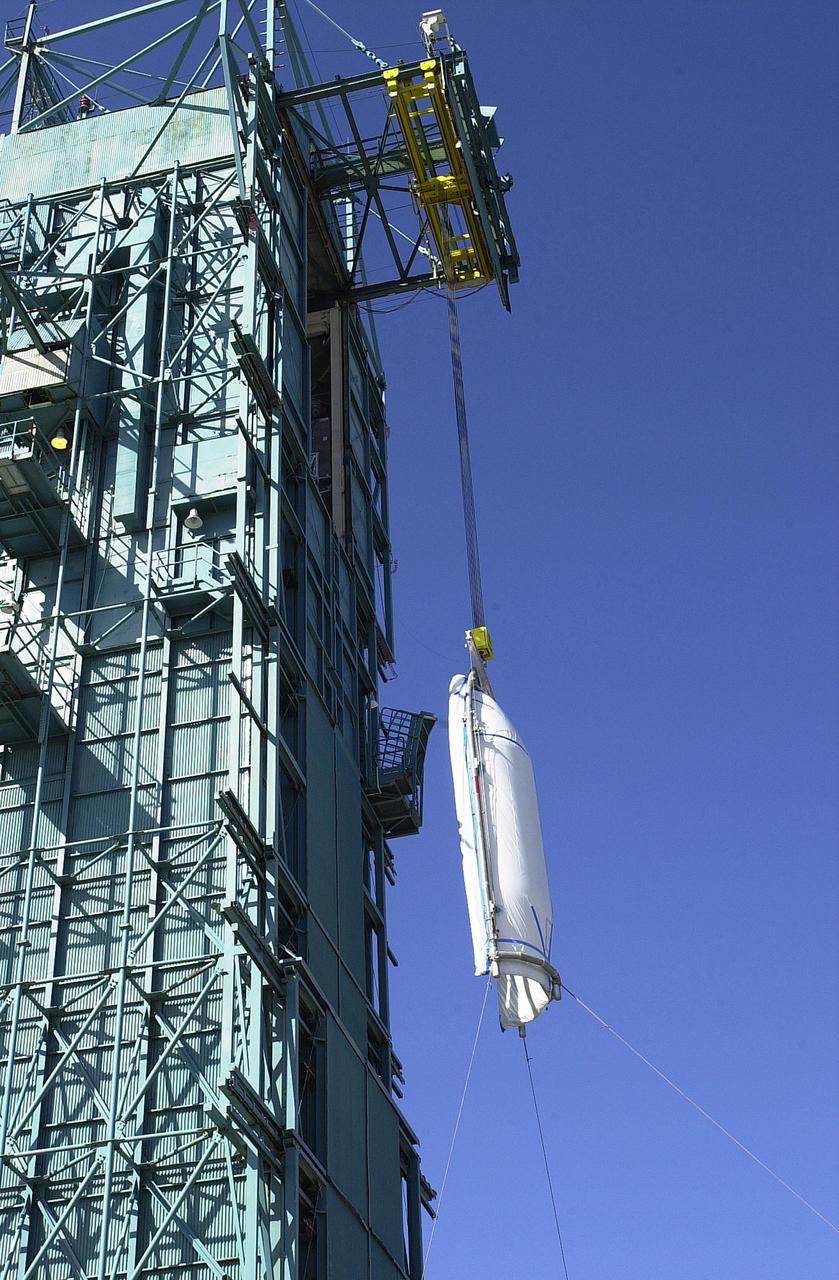
VANDENBERG AIR FORCE BASE, CALIF. - At NASA Space Launch Complex 2 on Vandenberg Air Force Base in California, one half of the fairing for CALIPSO_CloudSat is being lifted up the mobile service tower, or gantry. The fairing encloses and protects the spacecraft during launch and flight through the atmosphere. Once in space, it is jettisoned. CALIPSO stands for Cloud-Aerosol Lidar and Infrared Pathfinder Satellite Observation. CALIPSO and CloudSat are highly complementary satellites and together will provide never-before-seen 3-D perspectives of how clouds and aerosols form, evolve, and affect weather and climate. CALIPSO and CloudSat will fly in formation with three other satellites in the A-train constellation to enhance understanding of our climate system. Launch of CALIPSO_CloudSat aboard a Boeing Delta II rocket is scheduled for 3:01 a.m. Sept. 29.
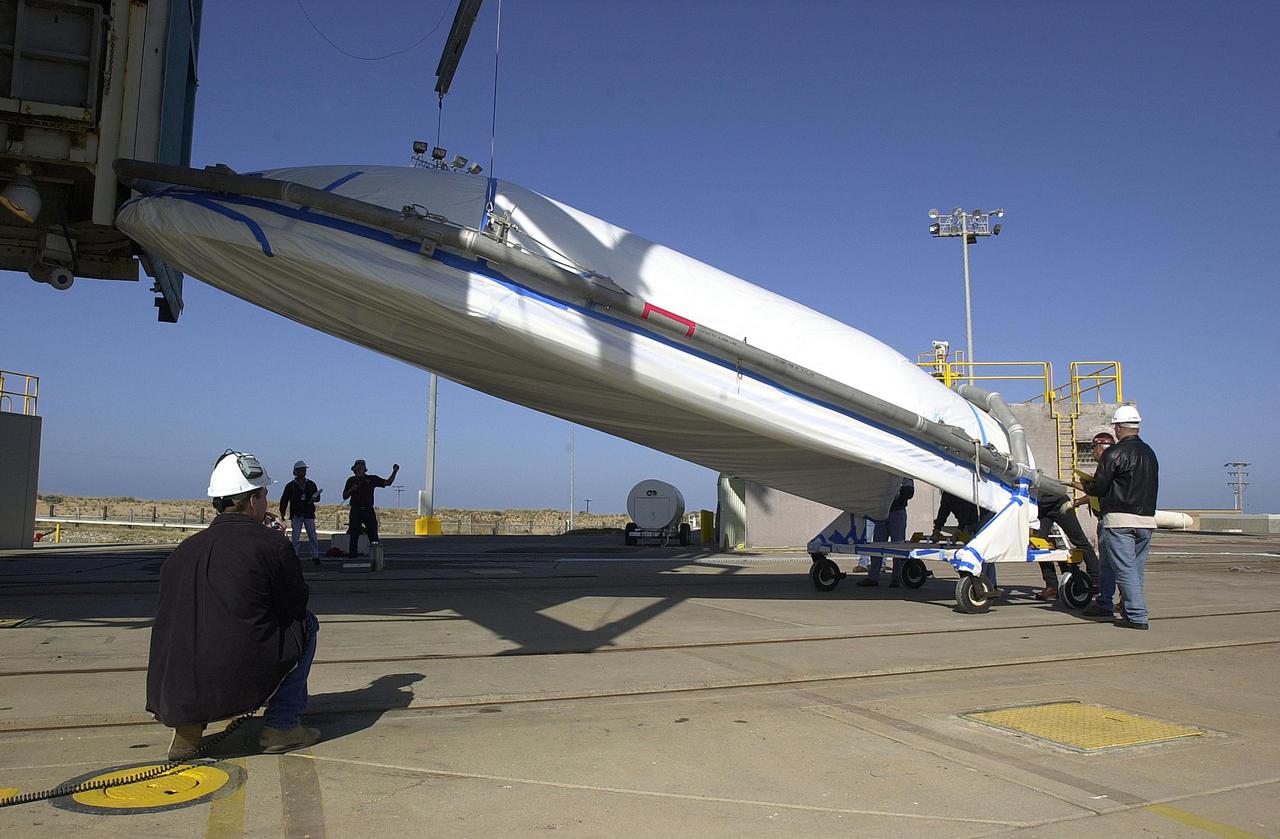
VANDENBERG AIR FORCE BASE, CALIF. - At NASA Space Launch Complex 2 on Vandenberg Air Force Base in California, one half of the fairing for CALIPSO_CloudSat to cover CALIPSO_CloudSat is being raised to a vertical position. It will then be lifted into the mobile service tower, or gantry. The fairing encloses and protects the spacecraft during launch and flight through the atmosphere. Once in space, it is jettisoned. CALIPSO stands for Cloud-Aerosol Lidar and Infrared Pathfinder Satellite Observation. CALIPSO and CloudSat are highly complementary satellites and together will provide never-before-seen 3-D perspectives of how clouds and aerosols form, evolve, and affect weather and climate. CALIPSO and CloudSat will fly in formation with three other satellites in the A-train constellation to enhance understanding of our climate system. Launch of CALIPSO_CloudSat aboard a Boeing Delta II rocket is scheduled for 3:01 a.m. Sept. 29.
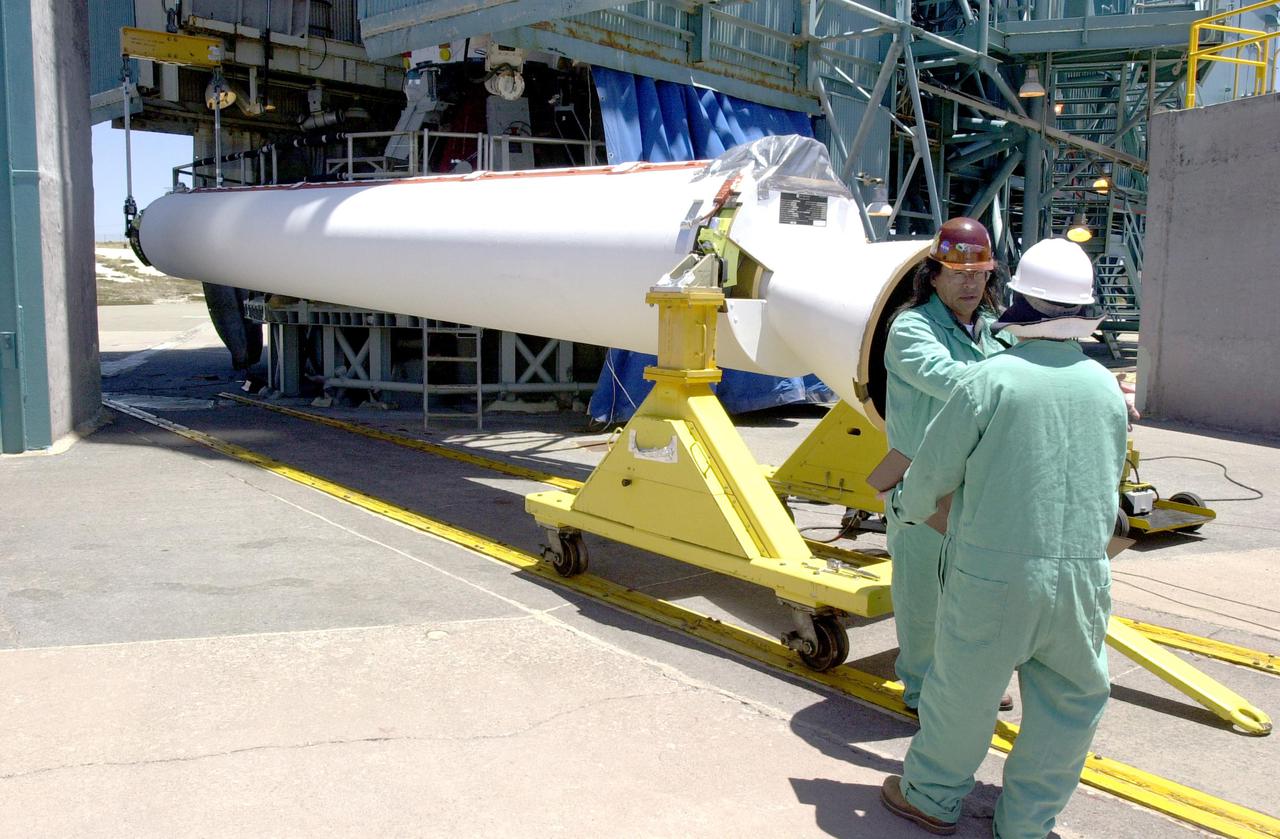
VANDENBERG AIR FORCE BASE, CALIF. - At NASA Space Launch Complex 2 on Vandenberg Air Force Base in California, workers prepare a Solid Rocket Booster to be raised to a vertical position. It will then be lifted into the mobile service tower, or gantry, and attached to the Boeing Delta II rocket. The Delta is the launch vehicle for the CALIPSO_CloudSat spacecraft. CALIPSO stands for Cloud-Aerosol Lidar and Infrared Pathfinder Satellite Observation. CALIPSO and CloudSat are highly complementary satellites and together will provide never-before-seen 3-D perspectives of how clouds and aerosols form, evolve, and affect weather and climate. CALIPSO and CloudSat will fly in formation with three other satellites in the A-train constellation to enhance understanding of our climate system. Launch of CALIPSO_CloudSat aboard a Boeing Delta II rocket is scheduled for 3:01 a.m. Sept. 29.
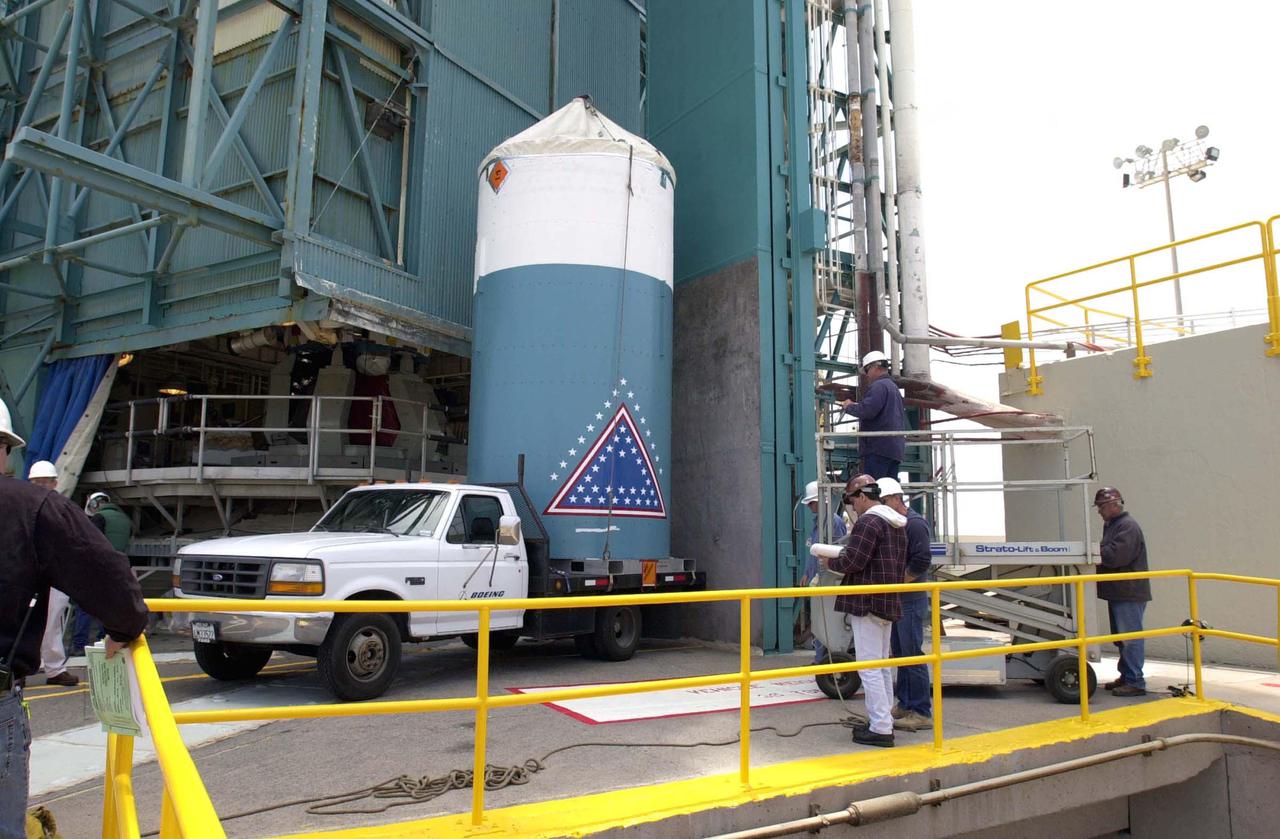
VANDENBERG AIR FORCE BASE, CALIF. - At NASA Space Launch Complex 2 on Vandenberg Air Force Base in California, the interstage for the Boeing Delta II rocket arrives on the pad. It will be lifted up the mobile service tower, or gantry, and mated with the first stage already there. The Delta is the launch vehicle for the CALIPSO_CloudSat spacecraft. CALIPSO stands for Cloud-Aerosol Lidar and Infrared Pathfinder Satellite Observation. CALIPSO and CloudSat are highly complementary satellites and together will provide never-before-seen 3-D perspectives of how clouds and aerosols form, evolve, and affect weather and climate. CALIPSO and CloudSat will fly in formation with three other satellites in the A-train constellation to enhance understanding of our climate system. Launch of CALIPSO_CloudSat aboard a Boeing Delta II rocket is scheduled for 3:01 a.m. Sept. 29.
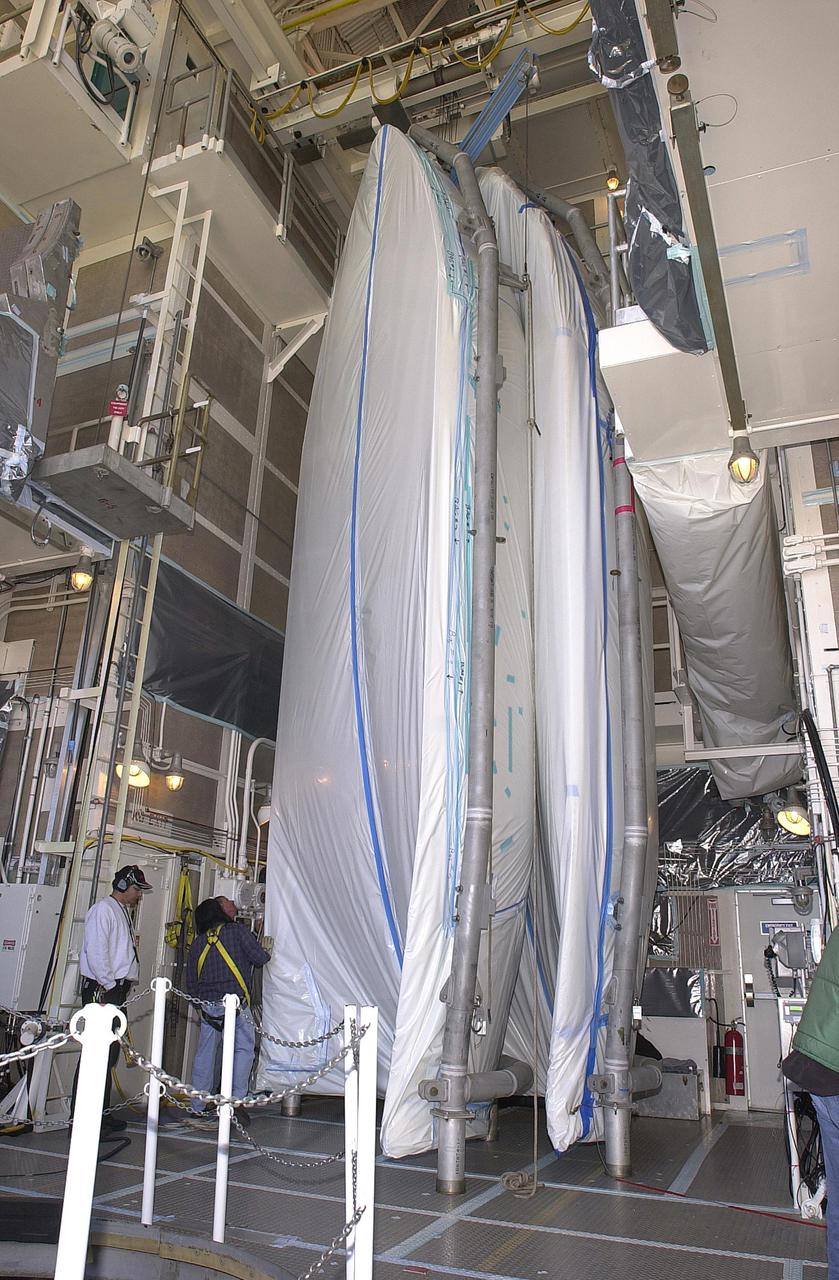
VANDENBERG AIR FORCE BASE, CALIF. - In the mobile service tower, or gantry, at NASA Space Launch Complex 2 on Vandenberg Air Force Base in California, the two halves of the fairing are ready to encapsulate CALIPSO_CloudSat for launch. The fairing encloses and protects the spacecraft during launch and flight through the atmosphere. Once in space, it is jettisoned. CALIPSO stands for Cloud-Aerosol Lidar and Infrared Pathfinder Satellite Observation. CALIPSO and CloudSat are highly complementary satellites and together will provide never-before-seen 3-D perspectives of how clouds and aerosols form, evolve, and affect weather and climate. CALIPSO and CloudSat will fly in formation with three other satellites in the A-train constellation to enhance understanding of our climate system. Launch of CALIPSO_CloudSat aboard a Boeing Delta II rocket is scheduled for 3:01 a.m. Sept. 29.
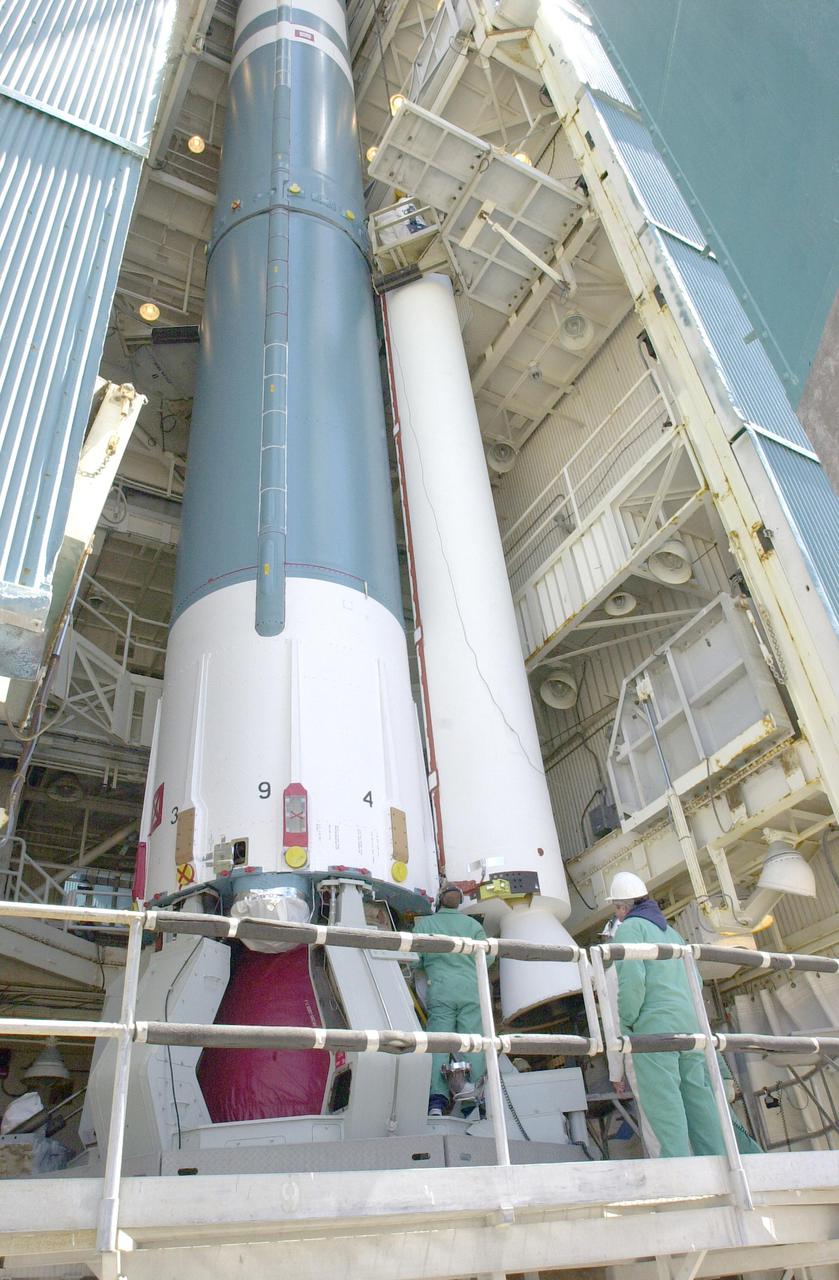
VANDENBERG AIR FORCE BASE, CALIF. - At NASA Space Launch Complex 2 on Vandenberg Air Force Base in California, another Solid Rocket Booster is attached to the Boeing Delta II rocket seen behind it. The Delta is the launch vehicle for the CALIPSO_CloudSat spacecraft. CALIPSO stands for Cloud-Aerosol Lidar and Infrared Pathfinder Satellite Observation. CALIPSO and CloudSat are highly complementary satellites and together will provide never-before-seen 3-D perspectives of how clouds and aerosols form, evolve, and affect weather and climate. CALIPSO and CloudSat will fly in formation with three other satellites in the A-train constellation to enhance understanding of our climate system. Launch of CALIPSO_CloudSat aboard a Boeing Delta II rocket is scheduled for 3:01 a.m. Sept. 29.
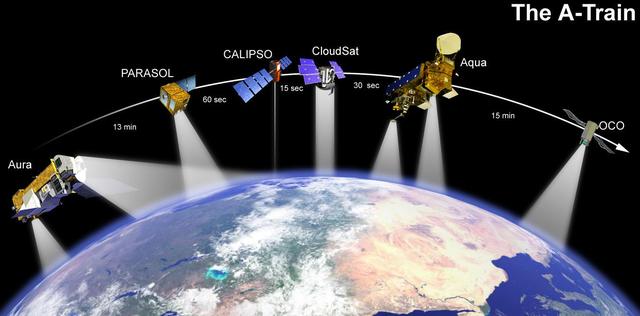
This artist concept shows how NASA’s CALIPSO and CloudSat will fly in formation with other Earth Observing Satellites.
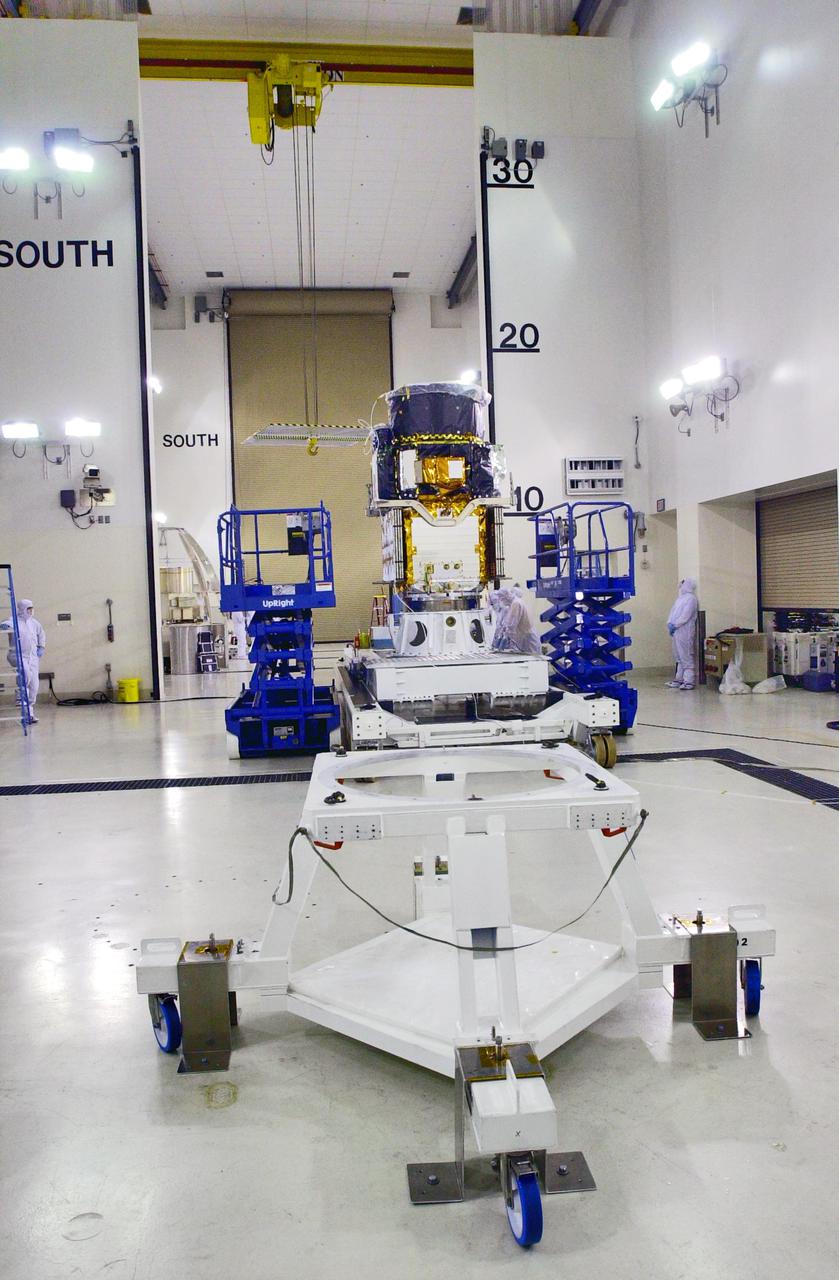
KENNEDY SPACE CENTER, FLA. - Inside the Astrotech Payload Processing Facility on Vandenberg Air Force Base in California, an overhead crane moves close to the Cloud-Aerosol Lidar and Infrared Pathfinder Satellite Observation (CALIPSO) spacecraft. The crane will lift CALIPSO and move it to a workstand. CALIPSO will undergo state-of-health checks, and electrical ground-support equipment testing. CALIPSO will fly in combination with the CloudSat satellite to provide never-before-seen 3-D perspectives of how clouds and aerosols form, evolve, and affect weather and climate. CALIPSO and CloudSat will join three other satellites in orbit to enhance understanding of climate systems. The launch date for CALIPSO_CloudSat is no earlier than Aug. 22.
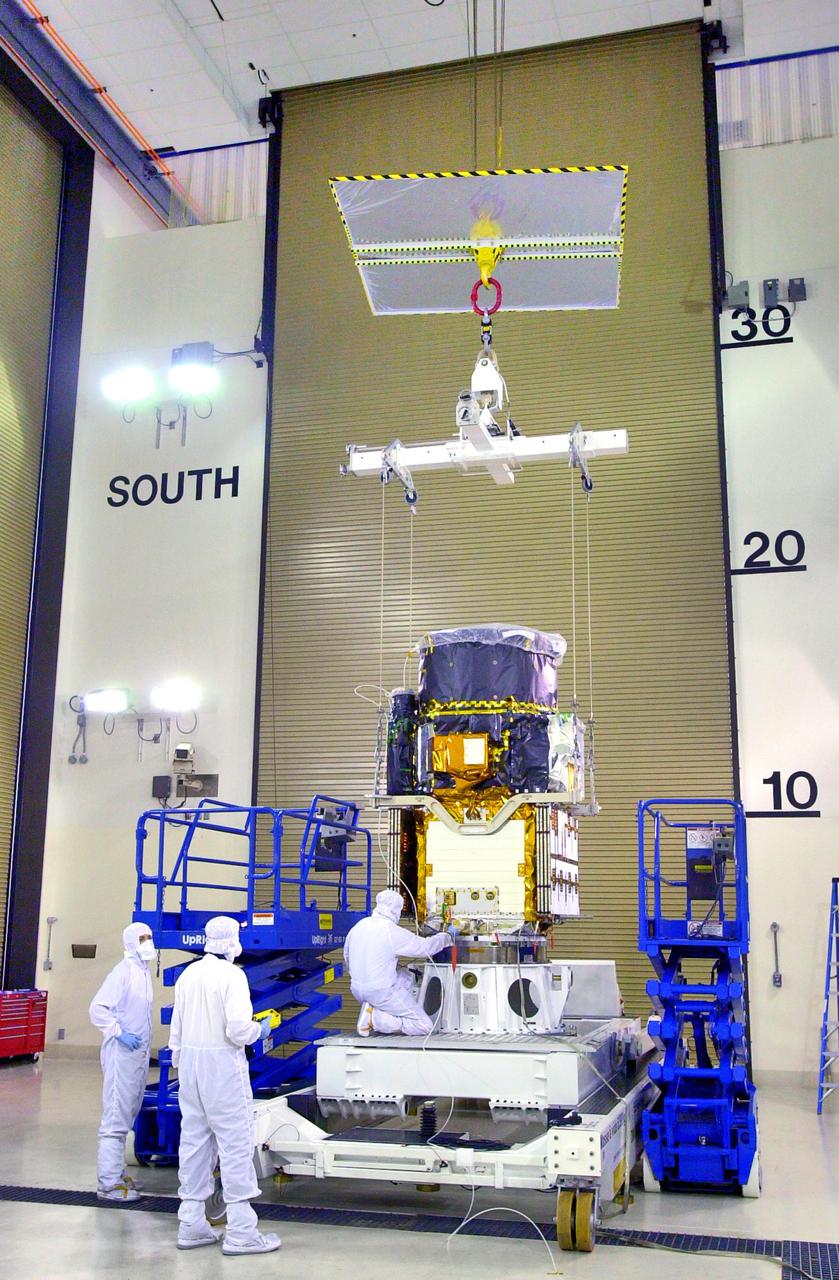
KENNEDY SPACE CENTER, FLA. - Inside the Astrotech Payload Processing Facility on Vandenberg Air Force Base in California, an overhead crane is attached to the Cloud-Aerosol Lidar and Infrared Pathfinder Satellite Observation (CALIPSO) spacecraft. CALIPSO will be lifted and transferred to a workstand. CALIPSO will undergo state-of-health checks, and electrical ground-support equipment testing. CALIPSO will fly in combination with the CloudSat satellite to provide never-before-seen 3-D perspectives of how clouds and aerosols form, evolve, and affect weather and climate. CALIPSO and CloudSat will join three other satellites in orbit to enhance understanding of climate systems. The launch date for CALIPSO_CloudSat is no earlier than Aug. 22.

VANDENBERG AIR FORCE BASE, Calif. - This is the mission patch for the CALIPSO/CloudSat mission showing the dual spacecraft. It hangs on the wall inside the Astrotech Payload Processing Facility at Vandenberg Air Force Base in California, where the CALIPSO/CloudSat spacecraft is being readied for launch. CALIPSO stands for Cloud-Aerosol Lidar and Infrared Pathfinder Satellite Observation. It will fly in combination with the CloudSat satellite to provide never-before-seen 3-D perspectives of how clouds and aerosols form, evolve, and affect weather and climate. CALIPSO and CloudSat will join three other satellites in orbit to enhance understanding of climate systems. Launch of CALIPSO/CloudSat is scheduled for April 21.
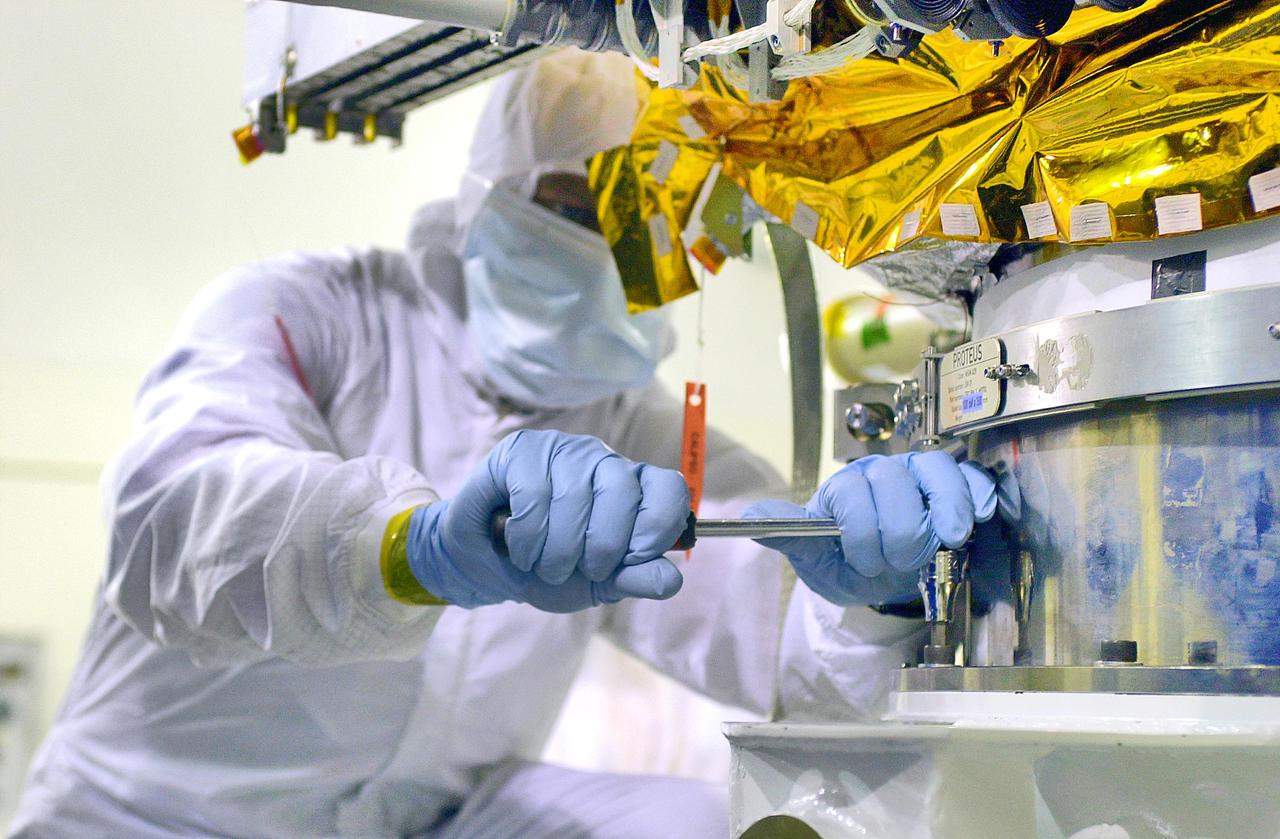
KENNEDY SPACE CENTER, FLA. -Inside the Astrotech Payload Processing Facility on Vandenberg Air Force Base in California, workers prepare the Cloud-Aerosol Lidar and Infrared Pathfinder Satellite Observation (CALIPSO) spacecraft to be lifted and transferred to a workstand. CALIPSO will undergo state-of-health checks, and electrical ground-support equipment testing. CALIPSO will fly in combination with the CloudSat satellite to provide never-before-seen 3-D perspectives of how clouds and aerosols form, evolve, and affect weather and climate. CALIPSO and CloudSat will join three other satellites in orbit to enhance understanding of climate systems. The launch date for CALIPSO_CloudSat is no earlier than Aug. 22.
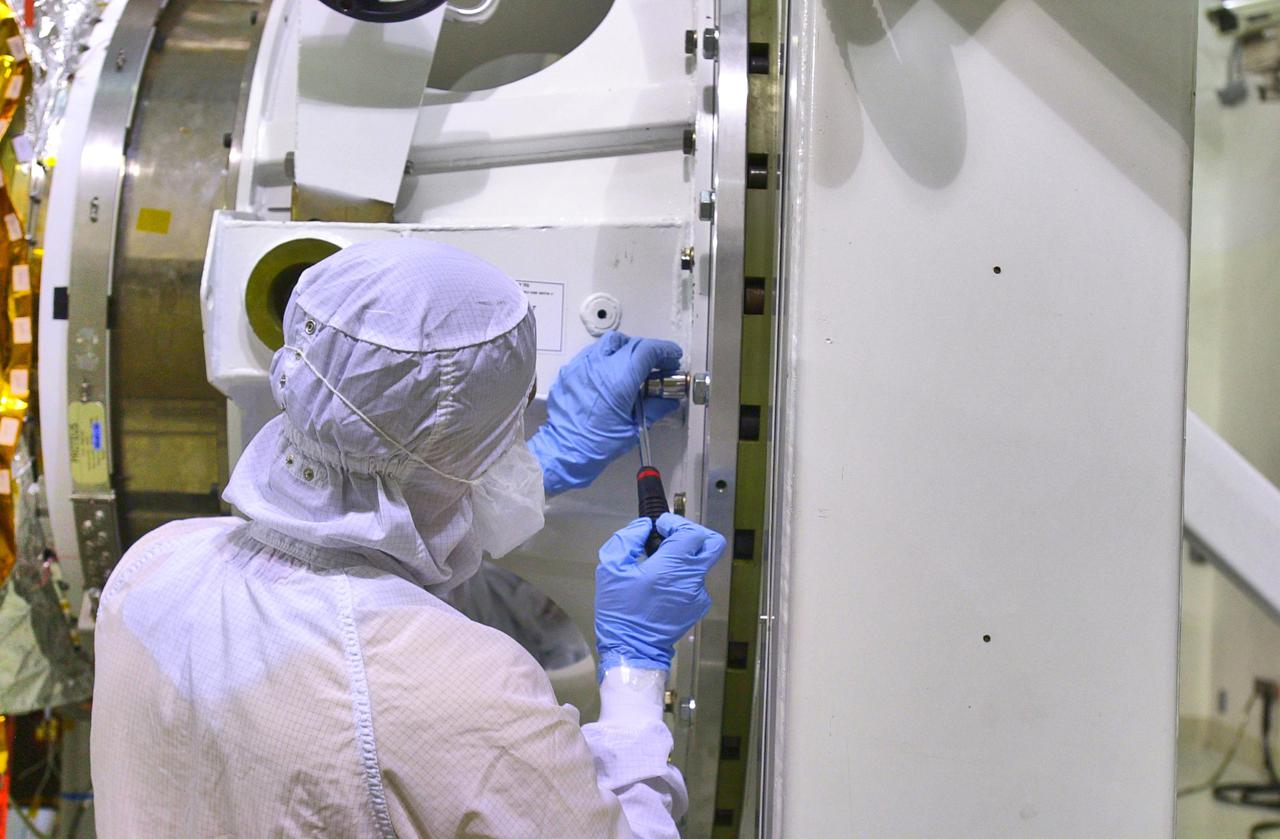
KENNEDY SPACE CENTER, FLA. - Inside the Astrotech Payload Processing Facility on Vandenberg Air Force Base in California, workers make adjustments on the tilt dolly before attempting to raise the Cloud-Aerosol Lidar and Infrared Pathfinder Satellite Observation (CALIPSO) spacecraft to vertical. CALIPSO will be moved to a workstand. It will undergo state-of-health checks, and electrical ground-support equipment testing. CALIPSO will fly in combination with the CloudSat satellite to provide never-before-seen 3-D perspectives of how clouds and aerosols form, evolve, and affect weather and climate. CALIPSO and CloudSat will join three other satellites in orbit to enhance understanding of climate systems. The launch date for CALIPSO_CloudSat is no earlier than Aug. 22.
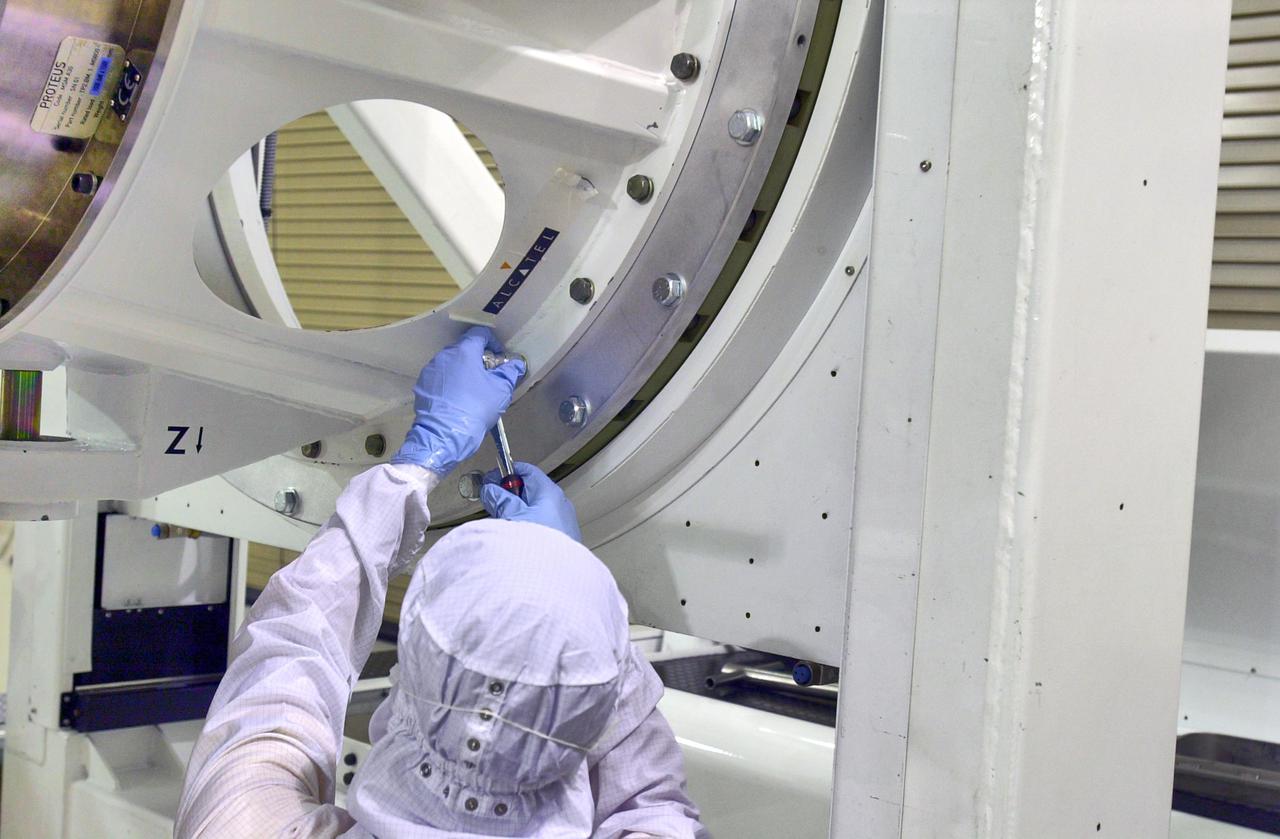
KENNEDY SPACE CENTER, FLA. - Inside the Astrotech Payload Processing Facility on Vandenberg Air Force Base in California, workers make adjustments on the tilt dolly before attempting to raise the Cloud-Aerosol Lidar and Infrared Pathfinder Satellite Observation (CALIPSO) spacecraft to vertical. CALIPSO will be moved to a workstand. It will undergo state-of-health checks, and electrical ground-support equipment testing. CALIPSO will fly in combination with the CloudSat satellite to provide never-before-seen 3-D perspectives of how clouds and aerosols form, evolve, and affect weather and climate. CALIPSO and CloudSat will join three other satellites in orbit to enhance understanding of climate systems. The launch date for CALIPSO_CloudSat is no earlier than Aug. 22.
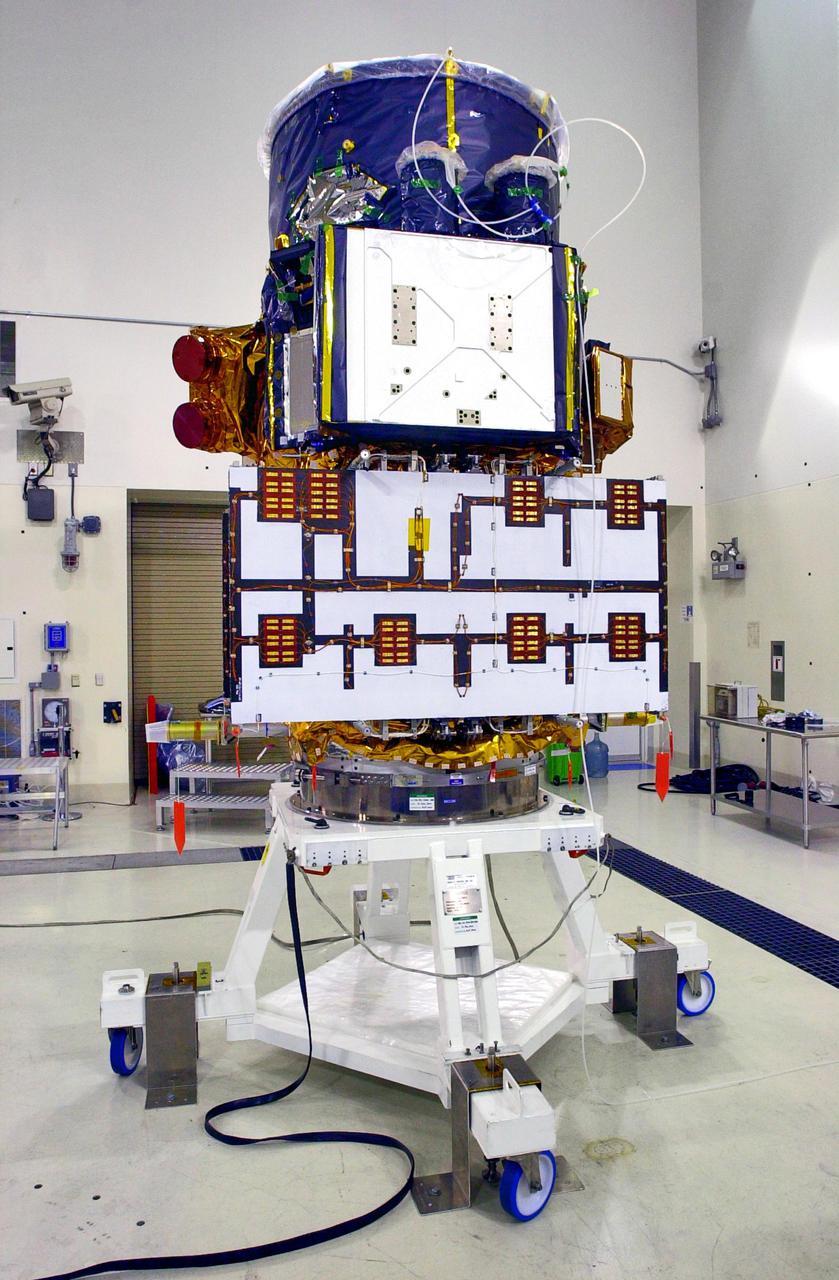
KENNEDY SPACE CENTER, FLA. - Inside the Astrotech Payload Processing Facility on Vandenberg Air Force Base in California, the Cloud-Aerosol Lidar and Infrared Pathfinder Satellite Observation (CALIPSO) spacecraft is secure on a workstand. CALIPSO will undergo state-of-health checks, and electrical ground-support equipment testing. CALIPSO will fly in combination with the CloudSat satellite to provide never-before-seen 3-D perspectives of how clouds and aerosols form, evolve, and affect weather and climate. CALIPSO and CloudSat will join three other satellites in orbit to enhance understanding of climate systems. The launch date for CALIPSO_CloudSat is no earlier than Aug. 22.
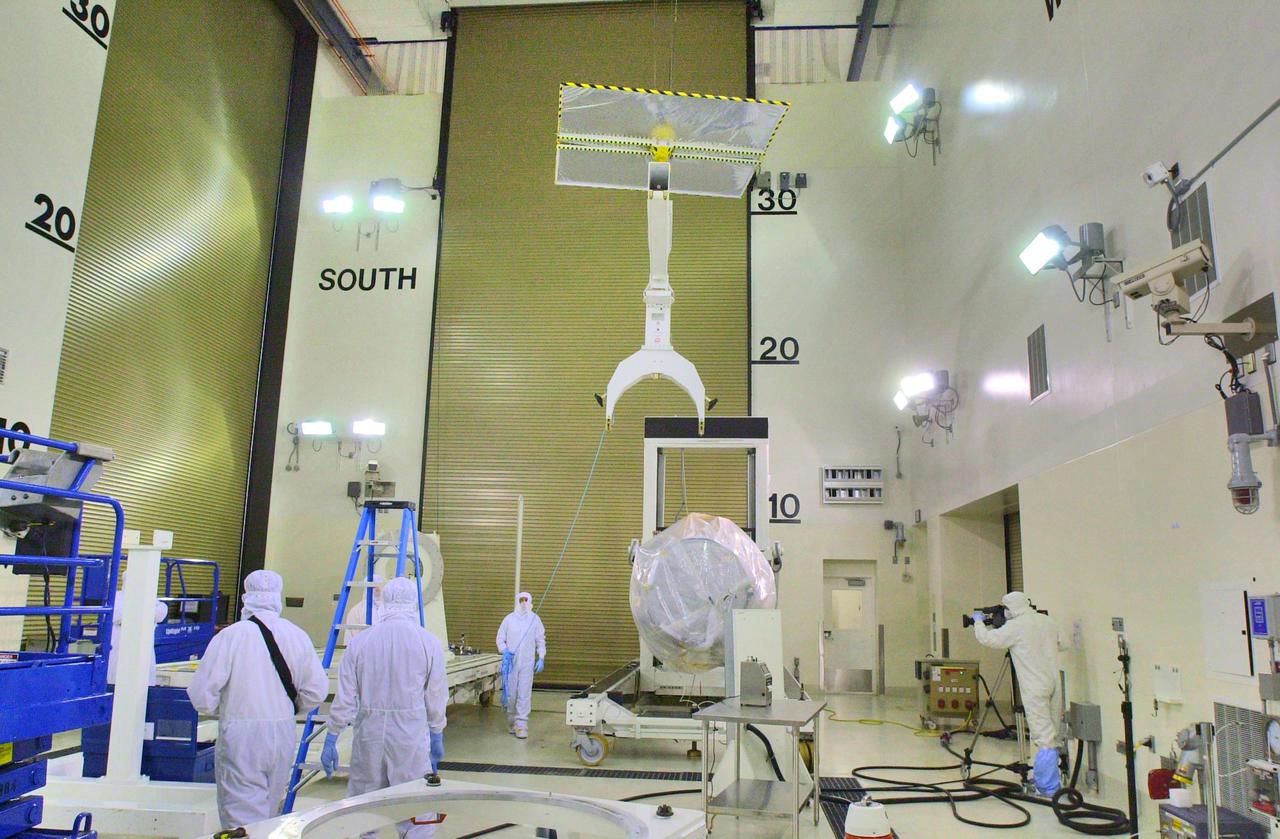
KENNEDY SPACE CENTER, FLA. - Inside the Astrotech Payload Processing Facility on Vandenberg Air Force Base in California, workers remove a piece of equipment used to help attach the Cloud-Aerosol Lidar and Infrared Pathfinder Satellite Observation (CALIPSO) spacecraft to a tilt dolly. CALIPSO will be moved to a workstand. It will undergo state-of-health checks, and electrical ground-support equipment testing. CALIPSO will fly in combination with the CloudSat satellite to provide never-before-seen 3-D perspectives of how clouds and aerosols form, evolve, and affect weather and climate. CALIPSO and CloudSat will join three other satellites in orbit to enhance understanding of climate systems. The launch date for CALIPSO_CloudSat is no earlier than Aug. 22.
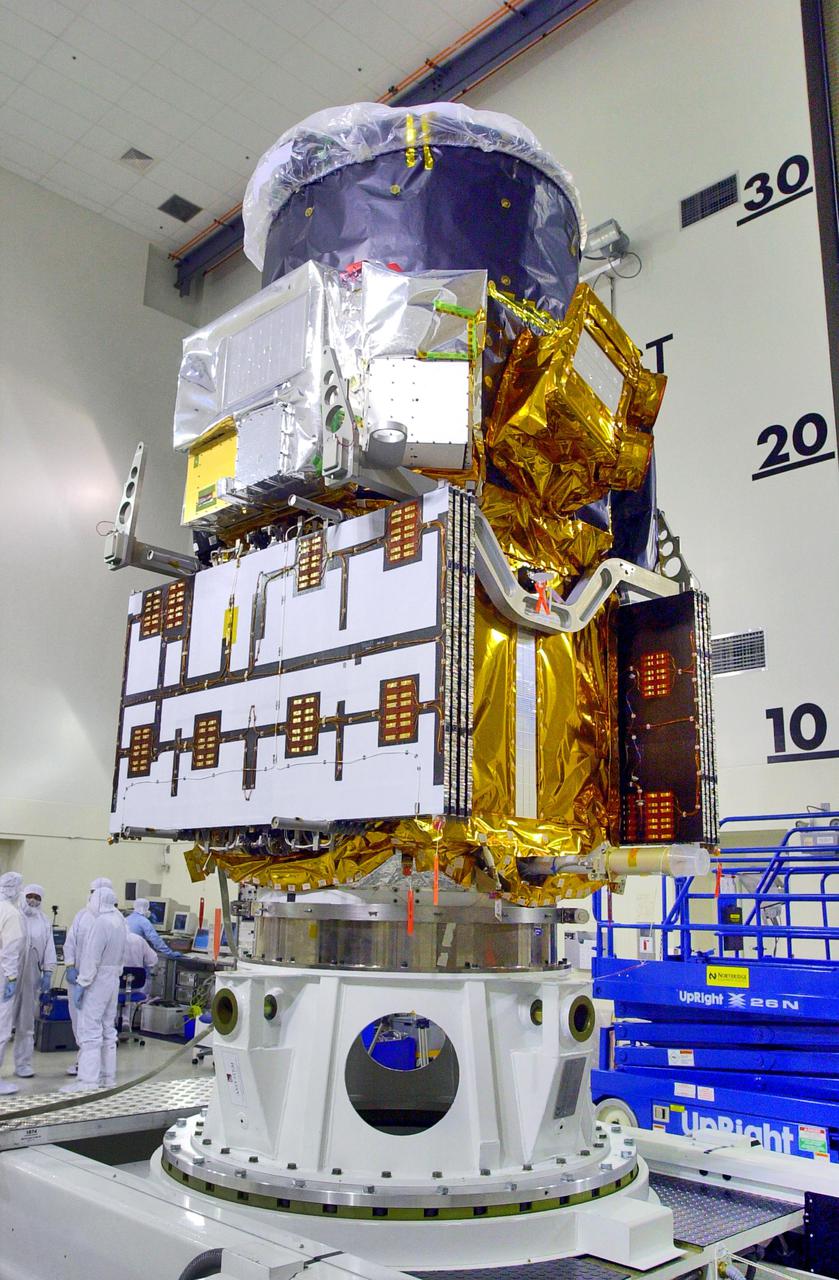
KENNEDY SPACE CENTER, FLA. - Inside the Astrotech Payload Processing Facility on Vandenberg Air Force Base in California, the Cloud-Aerosol Lidar and Infrared Pathfinder Satellite Observation (CALIPSO) spacecraft has been raised to vertical. It will be lifted and transferred to a workstand. CALIPSO will undergo state-of-health checks, and electrical ground-support equipment testing. CALIPSO will fly in combination with the CloudSat satellite to provide never-before-seen 3-D perspectives of how clouds and aerosols form, evolve, and affect weather and climate. CALIPSO and CloudSat will join three other satellites in orbit to enhance understanding of climate systems. The launch date for CALIPSO_CloudSat is no earlier than Aug. 22.

KENNEDY SPACE CENTER, FLA. - At Vandenberg Air Force Base in California, the ground support equipment (GSE) is offloaded from the Antonov aircraft. The GSE will be used for processing the Cloud-Aerosol Lidar and Infrared Pathfinder Satellite Observation (CALIPSO) spacecraft to get it ready for launch. CALIPSO was offloaded earlier. CALIPSO will fly in combination with the CloudSat satellite to provide never-before-seen 3-D perspectives of how clouds and aerosols form, evolve, and affect weather and climate. CALIPSO and CloudSat will join three other satellites in orbit to enhance understanding of climate systems. The launch date for CALIPSO_CloudSat is no earlier than Aug. 22.
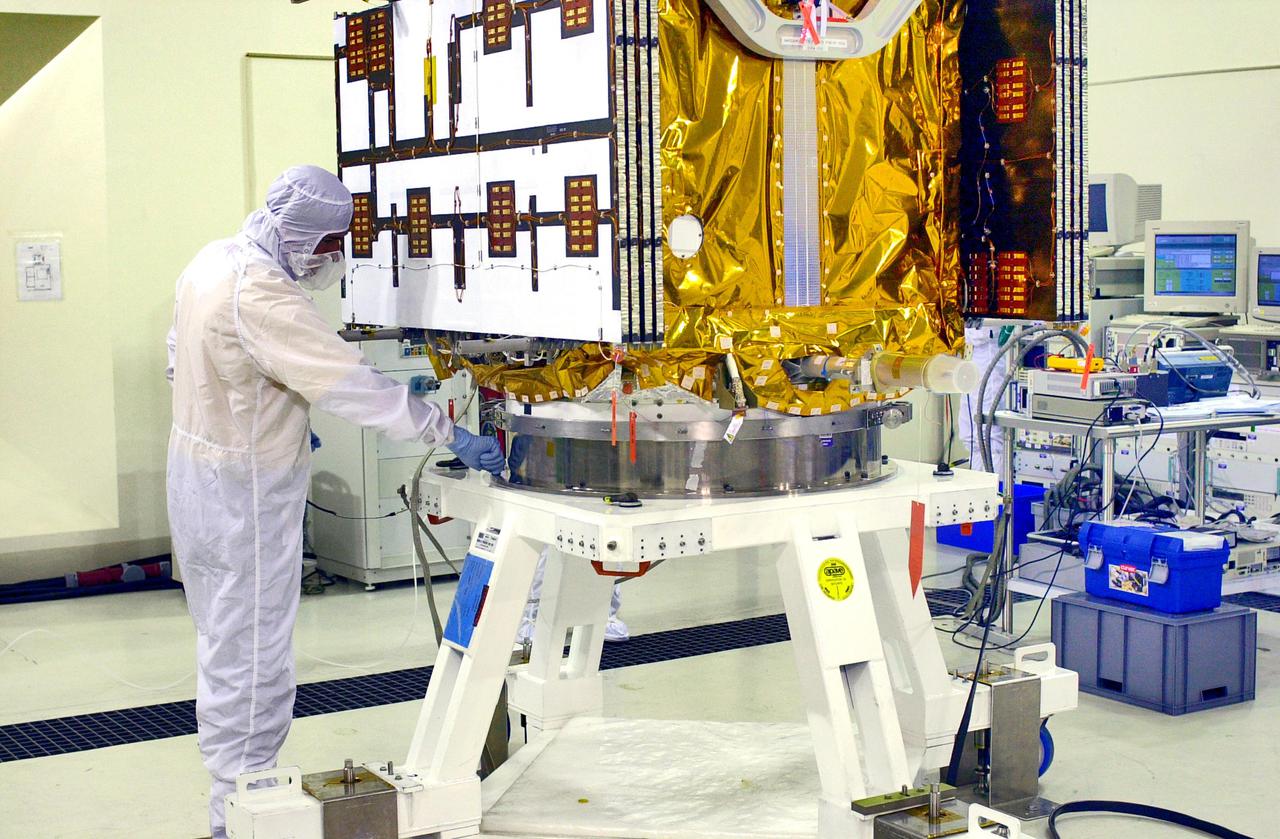
KENNEDY SPACE CENTER, FLA. - Inside the Astrotech Payload Processing Facility on Vandenberg Air Force Base in California, workers secure the Cloud-Aerosol Lidar and Infrared Pathfinder Satellite Observation (CALIPSO) spacecraft onto a workstand. CALIPSO will undergo state-of-health checks, and electrical ground-support equipment testing. CALIPSO will fly in combination with the CloudSat satellite to provide never-before-seen 3-D perspectives of how clouds and aerosols form, evolve, and affect weather and climate. CALIPSO and CloudSat will join three other satellites in orbit to enhance understanding of climate systems. The launch date for CALIPSO_CloudSat is no earlier than Aug. 22.
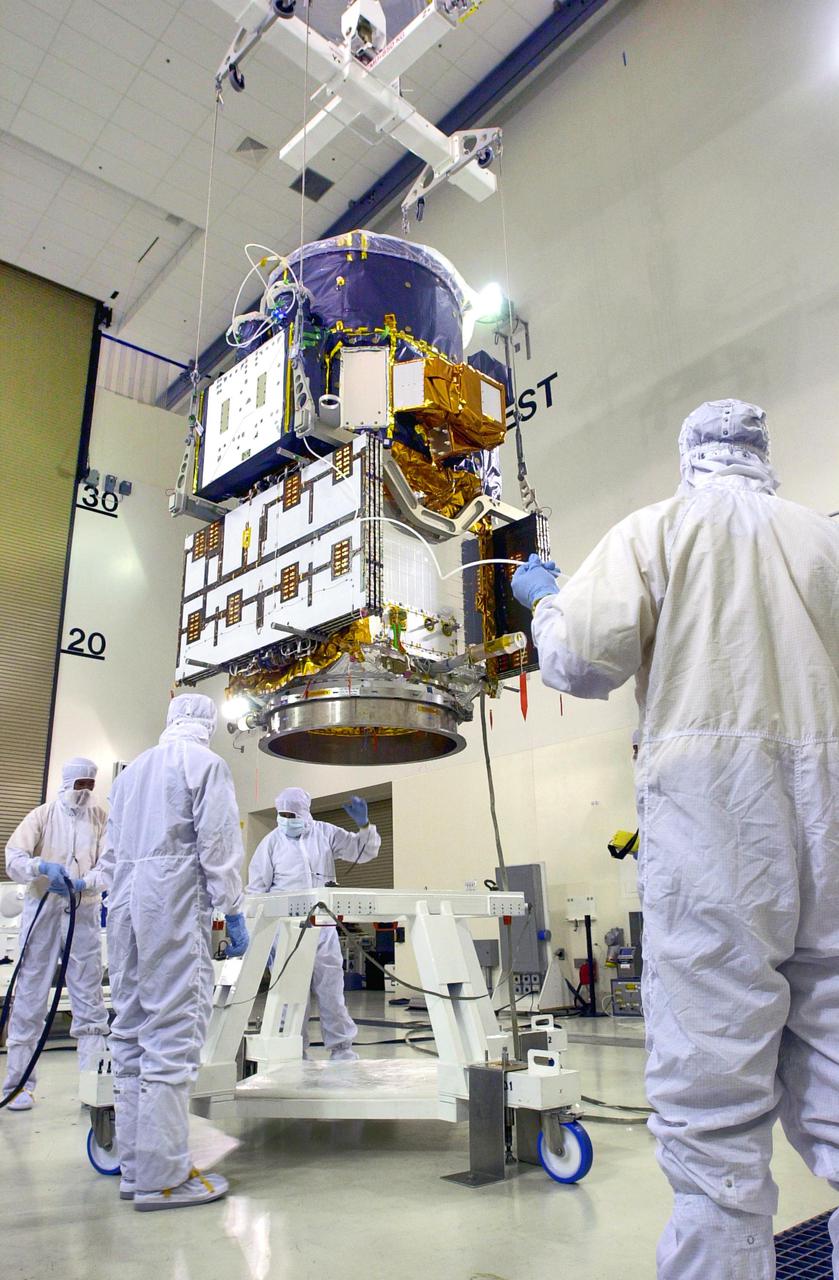
KENNEDY SPACE CENTER, FLA. - Inside the Astrotech Payload Processing Facility on Vandenberg Air Force Base in California, workers surround the Cloud-Aerosol Lidar and Infrared Pathfinder Satellite Observation (CALIPSO) spacecraft as it is lowered toward a workstand. CALIPSO will undergo state-of-health checks, and electrical ground-support equipment testing. CALIPSO will fly in combination with the CloudSat satellite to provide never-before-seen 3-D perspectives of how clouds and aerosols form, evolve, and affect weather and climate. CALIPSO and CloudSat will join three other satellites in orbit to enhance understanding of climate systems. The launch date for CALIPSO_CloudSat is no earlier than Aug. 22.
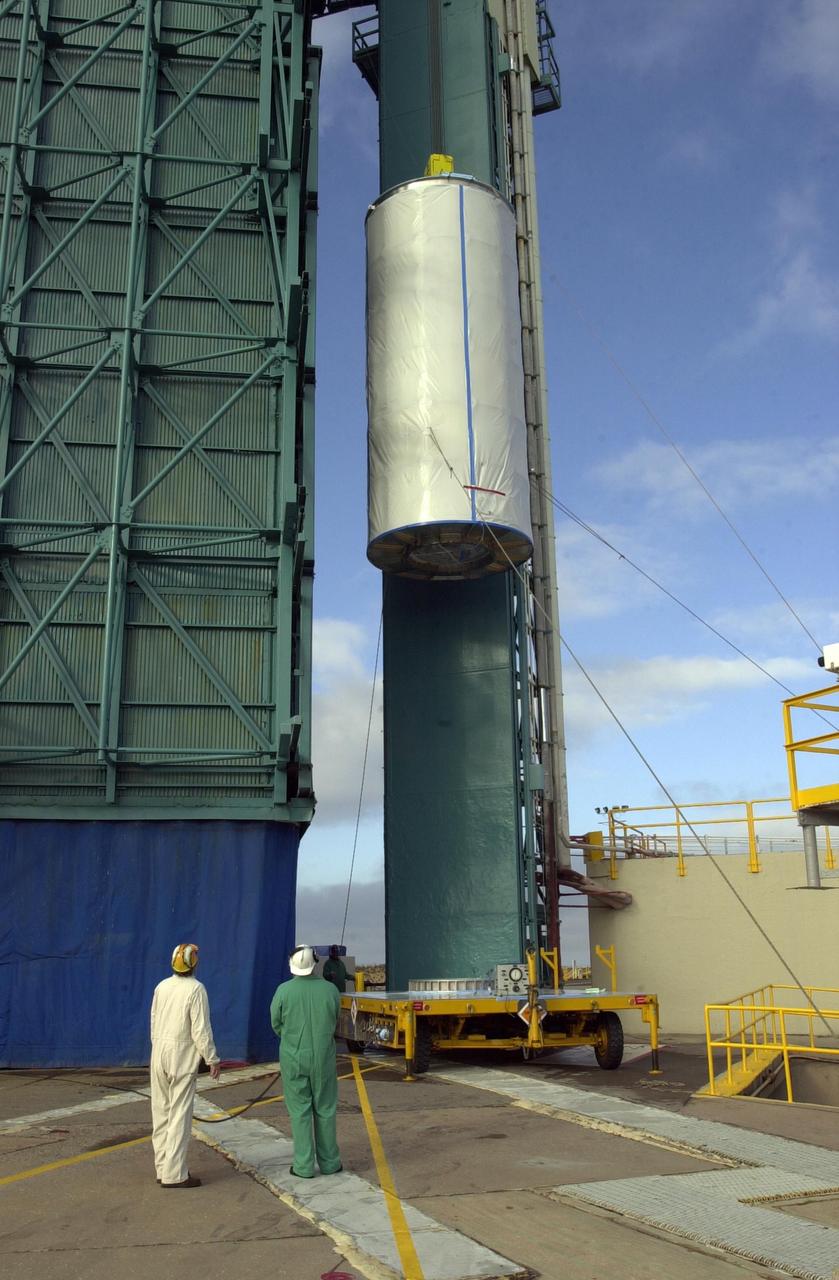
VANDENBERG AIR FORCE BASE, Calif. - On Space Launch Complex 2 at Vandenberg Air Force Base in California, the dual spacecraft CALIPSO and CloudSat, covered by a transport canister, is lifted up into the mobile service tower. There the spacecraft will be mated with a Boeing Delta II rocket for launch on April 21. CALIPSO stands for Cloud-Aerosol Lidar and Infrared Pathfinder Satellite Observation. It will fly in combination with the CloudSat satellite to provide never-before-seen 3-D perspectives of how clouds and aerosols form, evolve, and affect weather and climate. CALIPSO and CloudSat will join three other satellites in orbit to enhance understanding of climate systems. Launch of CALIPSO/CloudSat is scheduled for April 21.
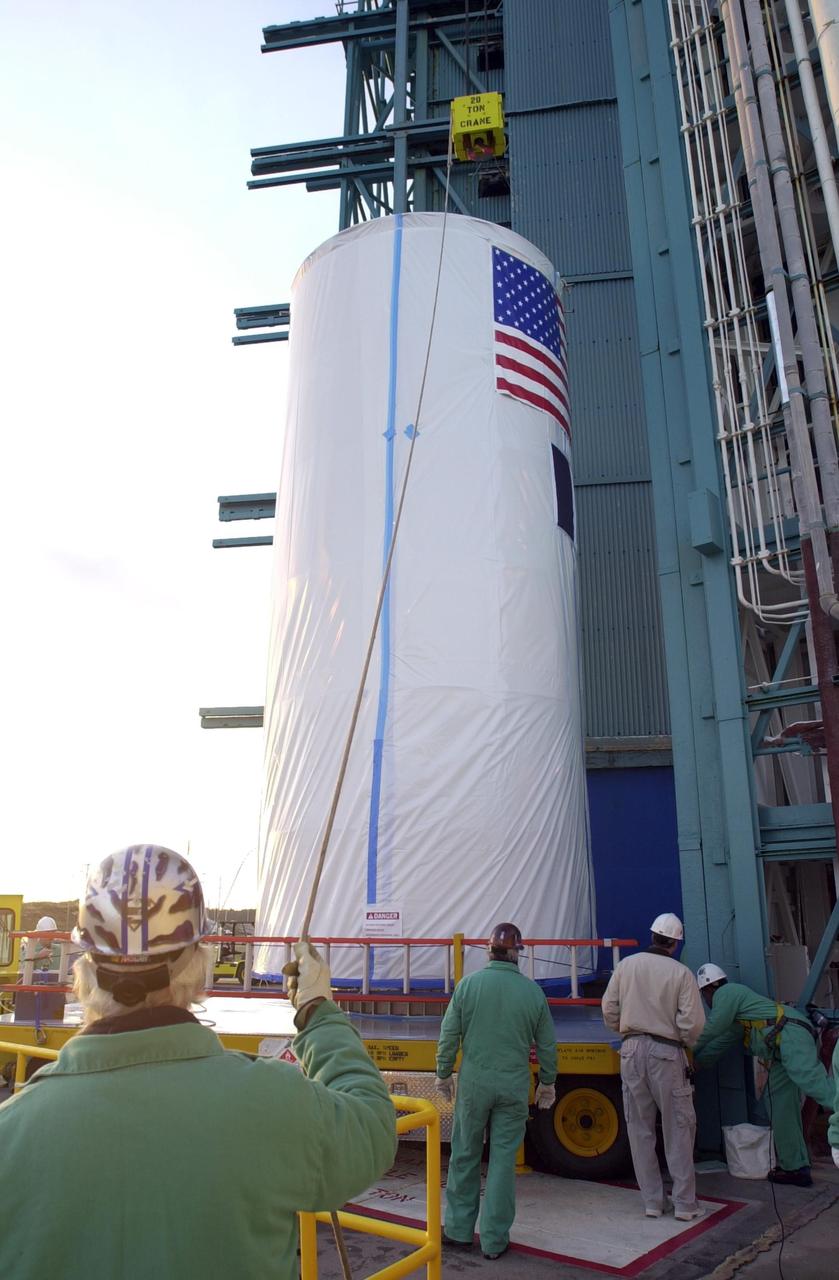
VANDENBERG AIR FORCE BASE, Calif. - On Space Launch Complex 2 at Vandenberg Air Force Base in California, a crane is attached to the dual spacecraft CALIPSO and CloudSat, covered by a transport canister. The spacecraft will be lifted and mated with a Boeing Delta II rocket for launch on April 21. CALIPSO stands for Cloud-Aerosol Lidar and Infrared Pathfinder Satellite Observation. It will fly in combination with the CloudSat satellite to provide never-before-seen 3-D perspectives of how clouds and aerosols form, evolve, and affect weather and climate. CALIPSO and CloudSat will join three other satellites in orbit to enhance understanding of climate systems. Launch of CALIPSO/CloudSat is scheduled for April 21.

VANDENBERG AIR FORCE BASE, Calif. - On Space Launch Complex 2 at Vandenberg Air Force Base in California, the dual spacecraft CALIPSO and CloudSat, removed from its transport canister, is being mated with the second stage of its Boeing Delta II rocket for launch on April 21. CALIPSO stands for Cloud-Aerosol Lidar and Infrared Pathfinder Satellite Observation. It will fly in combination with the CloudSat satellite to provide never-before-seen 3-D perspectives of how clouds and aerosols form, evolve, and affect weather and climate. CALIPSO and CloudSat will join three other satellites in orbit to enhance understanding of climate systems. Launch of CALIPSO/CloudSat is scheduled for April 21.
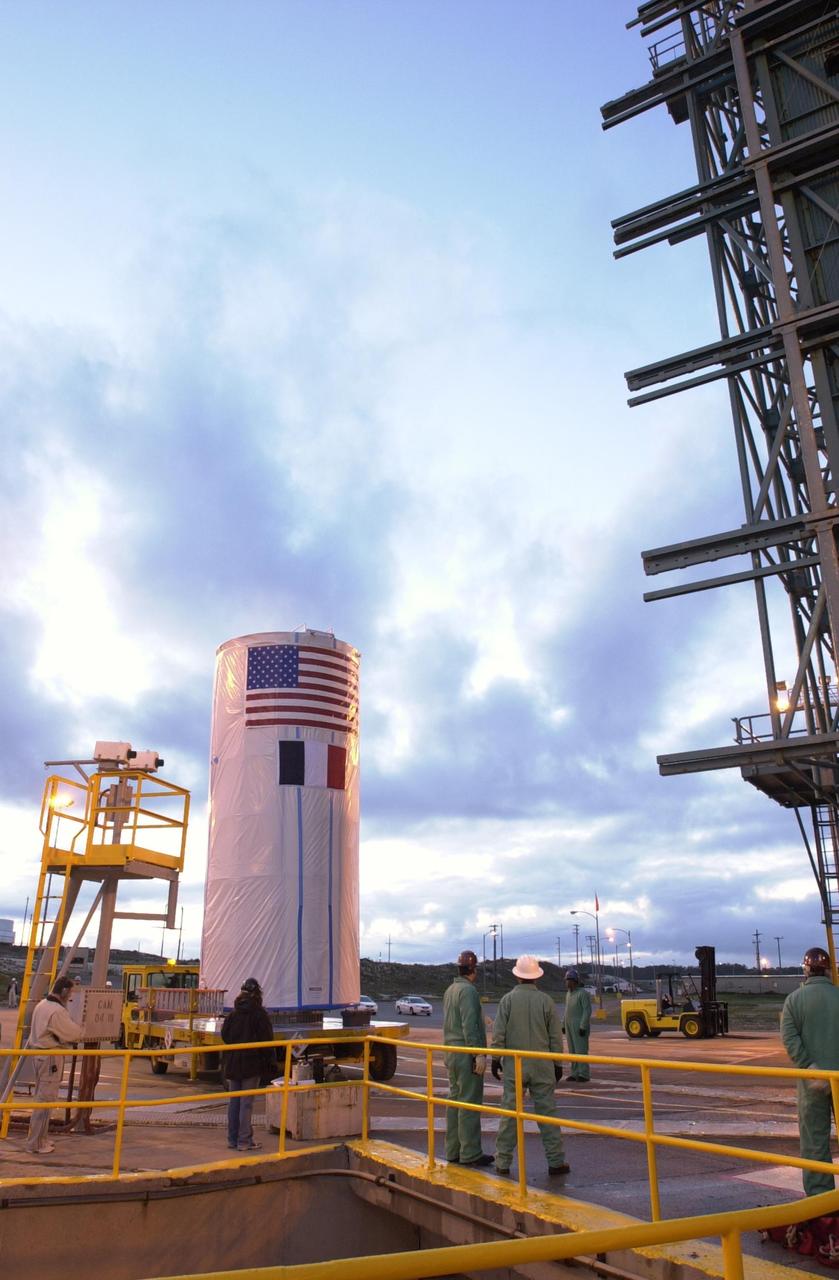
VANDENBERG AIR FORCE BASE, Calif. - On Vandenberg Air Force Base in California, the dual spacecraft CALIPSO and CloudSat, covered by a transport canister, moves toward the mobile service tower on Space Launch Complex 2. There the spacecraft will be lifted and mated with a Boeing Delta II rocket for launch on April 21. CALIPSO stands for Cloud-Aerosol Lidar and Infrared Pathfinder Satellite Observation. It will fly in combination with the CloudSat satellite to provide never-before-seen 3-D perspectives of how clouds and aerosols form, evolve, and affect weather and climate. CALIPSO and CloudSat will join three other satellites in orbit to enhance understanding of climate systems. Launch of CALIPSO/CloudSat is scheduled for April 21.

VANDENBERG AIR FORCE BASE, Calif. - On Space Launch Complex 2 at Vandenberg Air Force Base in California, the dual spacecraft CALIPSO and CloudSat, removed from its transport canister, is being mated in the mobile service tower with the second stage of its Boeing Delta II rocket for launch on April 21. CALIPSO stands for Cloud-Aerosol Lidar and Infrared Pathfinder Satellite Observation. It will fly in combination with the CloudSat satellite to provide never-before-seen 3-D perspectives of how clouds and aerosols form, evolve, and affect weather and climate. CALIPSO and CloudSat will join three other satellites in orbit to enhance understanding of climate systems. Launch of CALIPSO/CloudSat is scheduled for April 21.
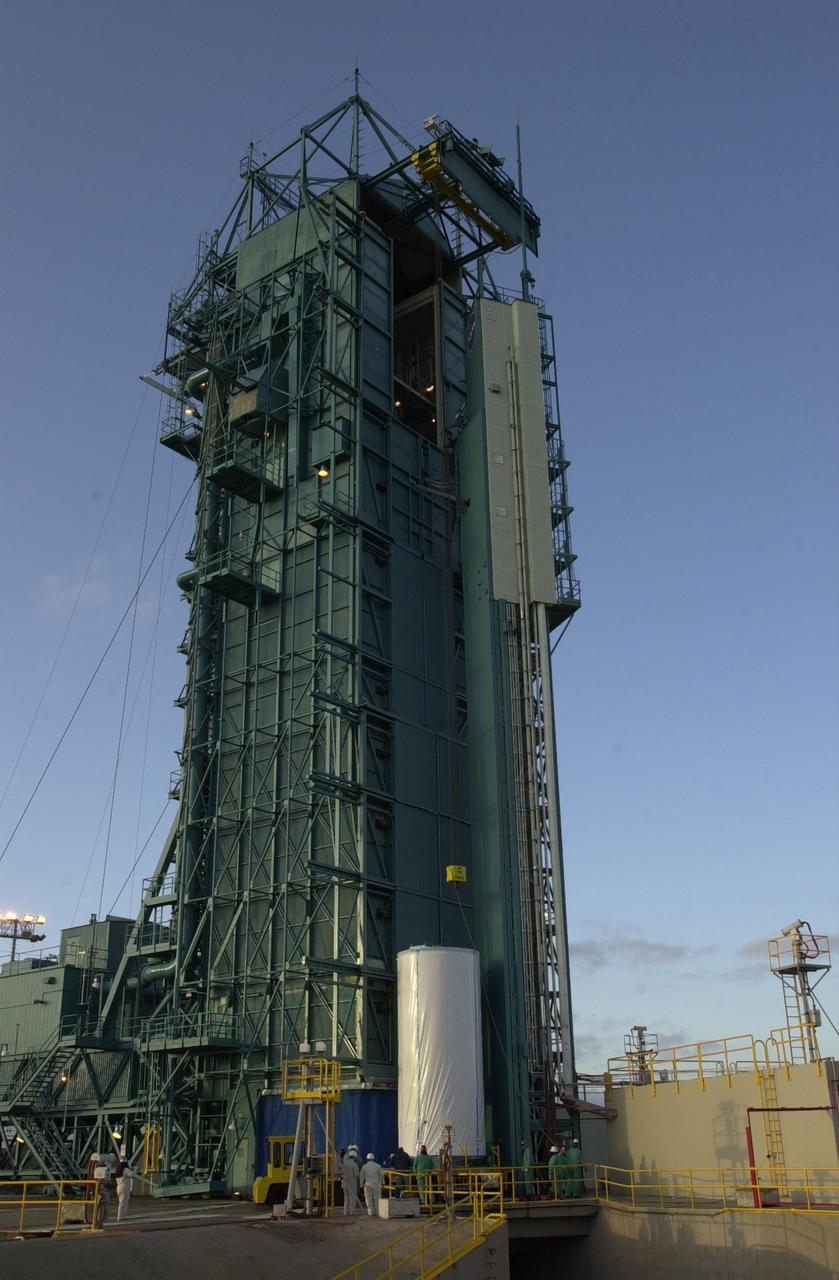
VANDENBERG AIR FORCE BASE, Calif. - On Space Launch Complex 2 at Vandenberg Air Force Base in California, the dual spacecraft CALIPSO and CloudSat, covered by a transport canister, is ready for lifting up into the mobile service tower. There the spacecraft will be mated with a Boeing Delta II rocket for launch on April 21. CALIPSO stands for Cloud-Aerosol Lidar and Infrared Pathfinder Satellite Observation. It will fly in combination with the CloudSat satellite to provide never-before-seen 3-D perspectives of how clouds and aerosols form, evolve, and affect weather and climate. CALIPSO and CloudSat will join three other satellites in orbit to enhance understanding of climate systems. Launch of CALIPSO/CloudSat is scheduled for April 21.
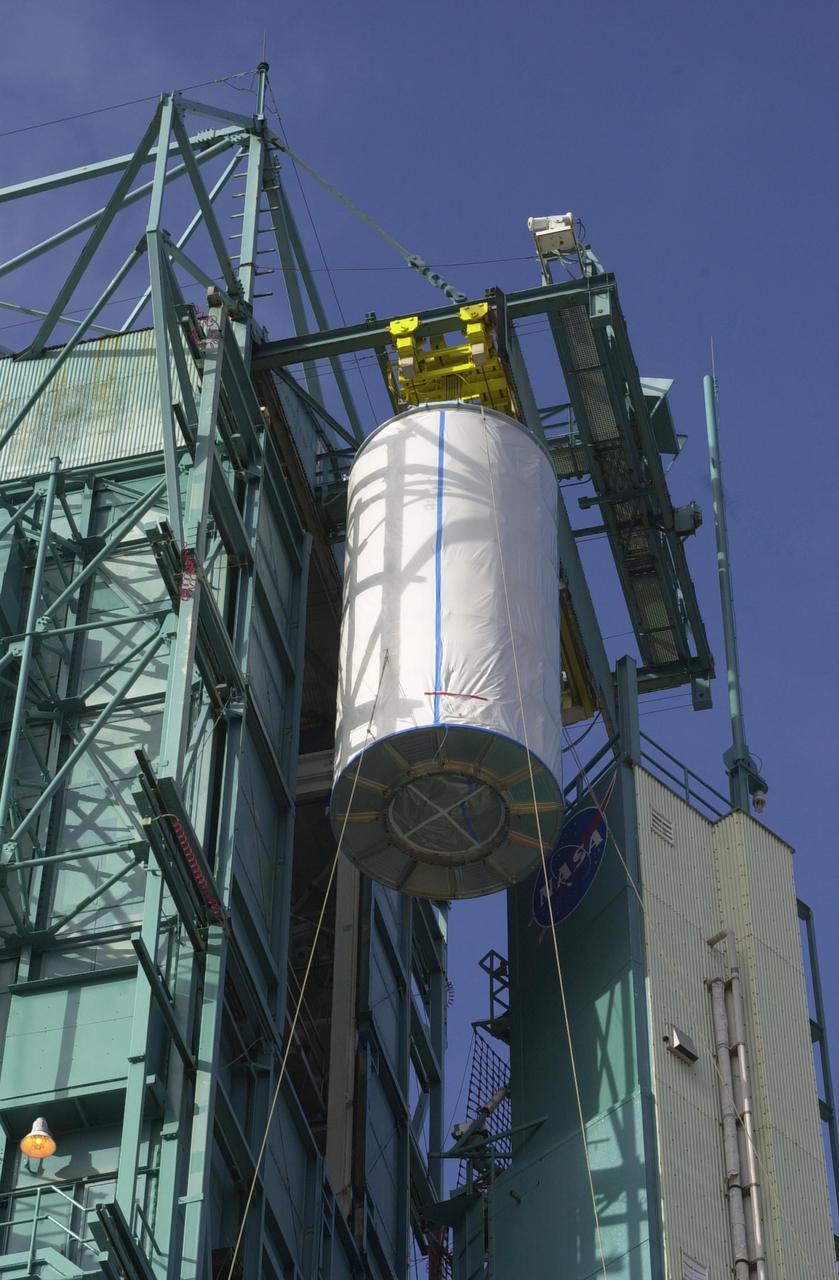
VANDENBERG AIR FORCE BASE, Calif. - On Space Launch Complex 2 at Vandenberg Air Force Base in California, the dual spacecraft CALIPSO and CloudSat, covered by a transport canister, is lifted up into the mobile service tower. There the spacecraft will be mated with a Boeing Delta II rocket for launch on April 21. CALIPSO stands for Cloud-Aerosol Lidar and Infrared Pathfinder Satellite Observation. It will fly in combination with the CloudSat satellite to provide never-before-seen 3-D perspectives of how clouds and aerosols form, evolve, and affect weather and climate. CALIPSO and CloudSat will join three other satellites in orbit to enhance understanding of climate systems. Launch of CALIPSO/CloudSat is scheduled for April 21.
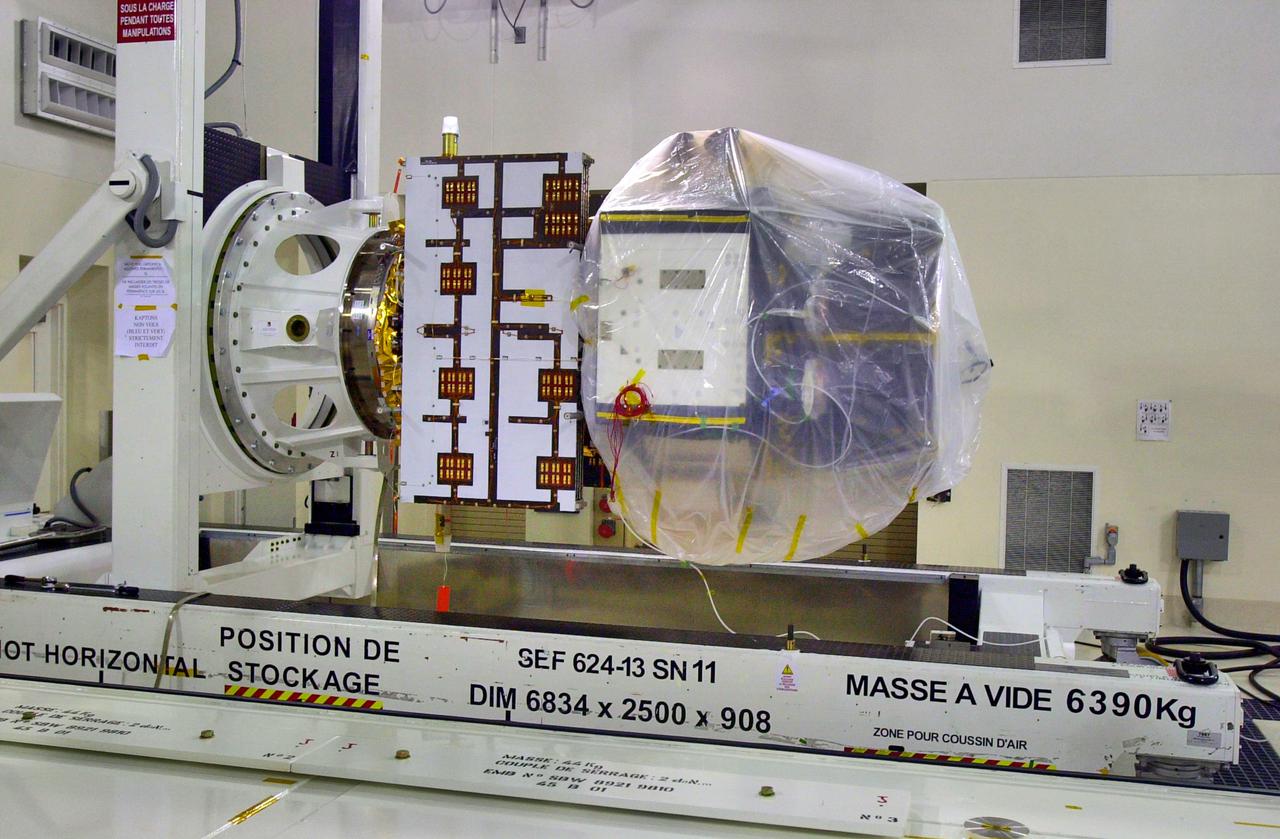
KENNEDY SPACE CENTER, FLA. - Inside the Astrotech Payload Processing Facility on Vandenberg Air Force Base in California, the Cloud-Aerosol Lidar and Infrared Pathfinder Satellite Observation (CALIPSO) spacecraft is attached to a tilt dolly. When raised to a vertical position, CALIPSO will be moved to a workstand. It will undergo state-of-health checks, and electrical ground-support equipment testing. CALIPSO will fly in combination with the CloudSat satellite to provide never-before-seen 3-D perspectives of how clouds and aerosols form, evolve, and affect weather and climate. CALIPSO and CloudSat will join three other satellites in orbit to enhance understanding of climate systems. The launch date for CALIPSO_CloudSat is no earlier than Aug. 22.
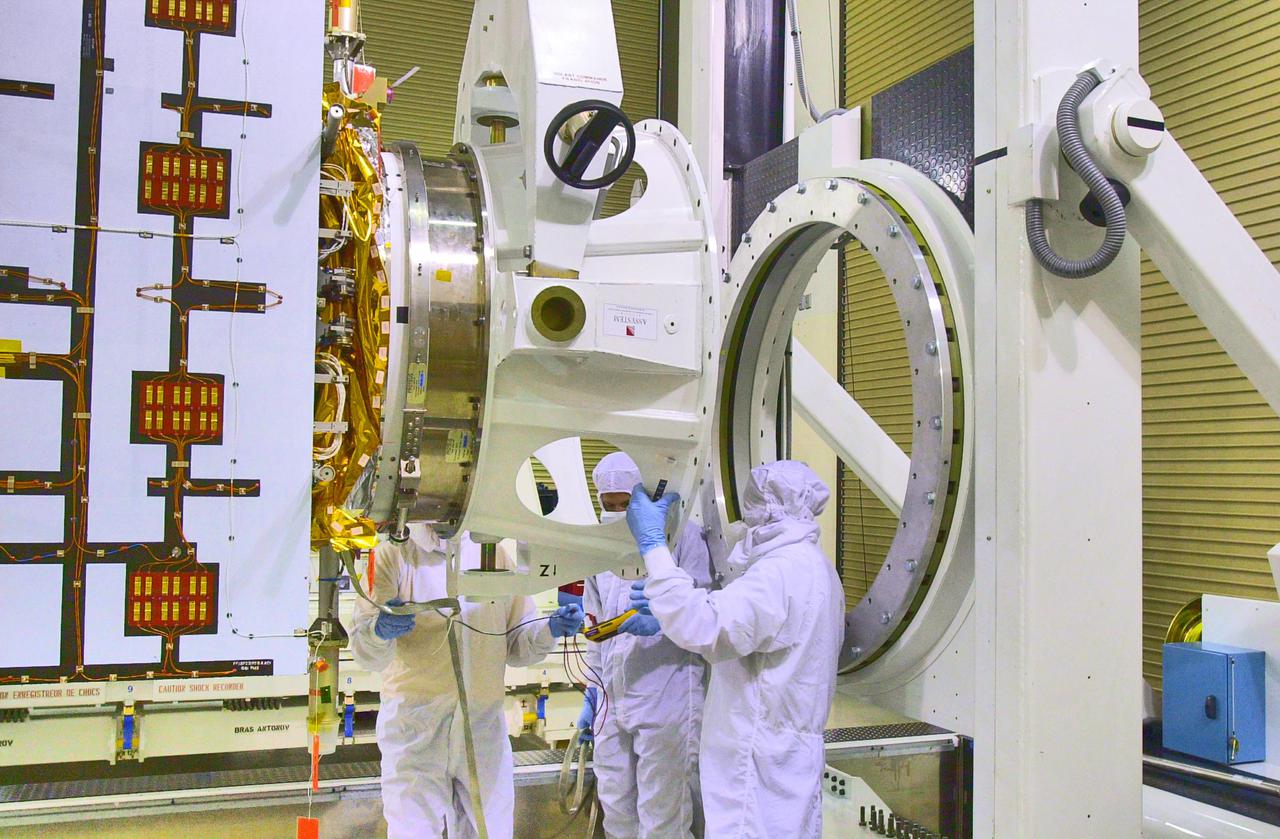
KENNEDY SPACE CENTER, FLA. - Inside the Astrotech Payload Processing Facility on Vandenberg Air Force Base in California, workers prepare to raise the Cloud-Aerosol Lidar and Infrared Pathfinder Satellite Observation (CALIPSO) spacecraft to vertical. CALIPSO will be moved to a workstand. It will undergo state-of-health checks, and electrical ground-support equipment testing. CALIPSO will fly in combination with the CloudSat satellite to provide never-before-seen 3-D perspectives of how clouds and aerosols form, evolve, and affect weather and climate. CALIPSO and CloudSat will join three other satellites in orbit to enhance understanding of climate systems. The launch date for CALIPSO_CloudSat is no earlier than Aug. 22.
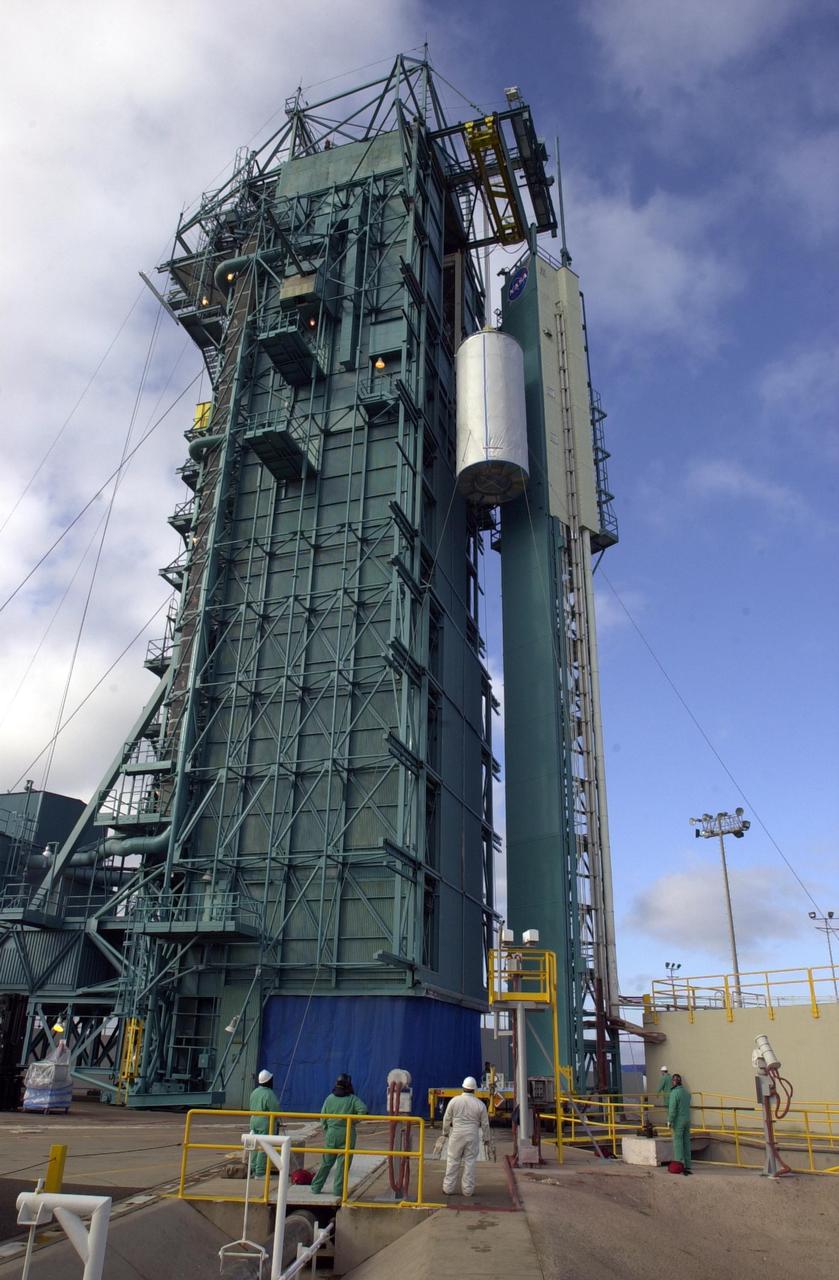
VANDENBERG AIR FORCE BASE, Calif. - On Space Launch Complex 2 at Vandenberg Air Force Base in California, the dual spacecraft CALIPSO and CloudSat, covered by a transport canister, is lifted up into the mobile service tower. There the spacecraft will be mated with a Boeing Delta II rocket for launch on April 21. CALIPSO stands for Cloud-Aerosol Lidar and Infrared Pathfinder Satellite Observation. It will fly in combination with the CloudSat satellite to provide never-before-seen 3-D perspectives of how clouds and aerosols form, evolve, and affect weather and climate. CALIPSO and CloudSat will join three other satellites in orbit to enhance understanding of climate systems. Launch of CALIPSO/CloudSat is scheduled for April 21.

KENNEDY SPACE CENTER, FLA. - Inside the Astrotech Payload Processing Facility on Vandenberg Air Force Base in California, workers surround the Cloud-Aerosol Lidar and Infrared Pathfinder Satellite Observation (CALIPSO) spacecraft as it is lowered toward a workstand. CALIPSO will undergo state-of-health checks, and electrical ground-support equipment testing. CALIPSO will fly in combination with the CloudSat satellite to provide never-before-seen 3-D perspectives of how clouds and aerosols form, evolve, and affect weather and climate. CALIPSO and CloudSat will join three other satellites in orbit to enhance understanding of climate systems. The launch date for CALIPSO_CloudSat is no earlier than Aug. 22.
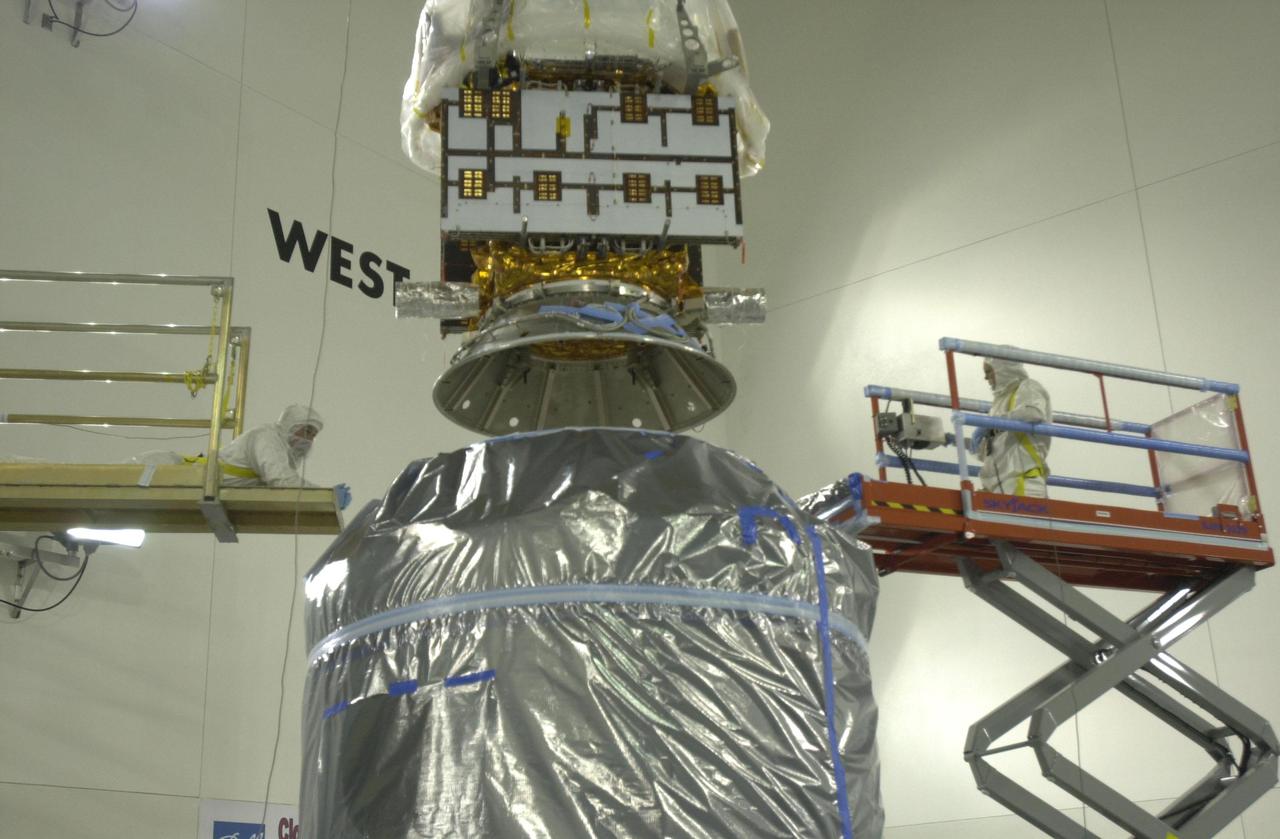
VANDENBERG AIR FORCE BASE, CALIF. - Inside the Astrotech Payload Processing Facility on Vandenberg Air Force Base in California, the CALIPSO spacecraft is lowered closer to the Lower Delta Payload Attach Fitting (LDPAF). CALIPSO will be mated with the LDPAF, which contains the CloudSat satellite. The PAF is the interface between the spacecraft and the second stage of the rocket. CALIPSO stands for Cloud-Aerosol Lidar and Infrared Pathfinder Satellite Observation. CALIPSO and CloudSat are highly complementary satellites that will provide never-before-seen 3-D perspectives of how clouds and aerosols form, evolve, and affect weather and climate. CALIPSO and CloudSat will fly in formation with three other satellites in the A-train constellation to enhance understanding of our climate system. Launch of CALIPSO_CloudSat aboard a Boeing Delta II rocket is scheduled for 3:01 a.m. PDT Sept. 29.
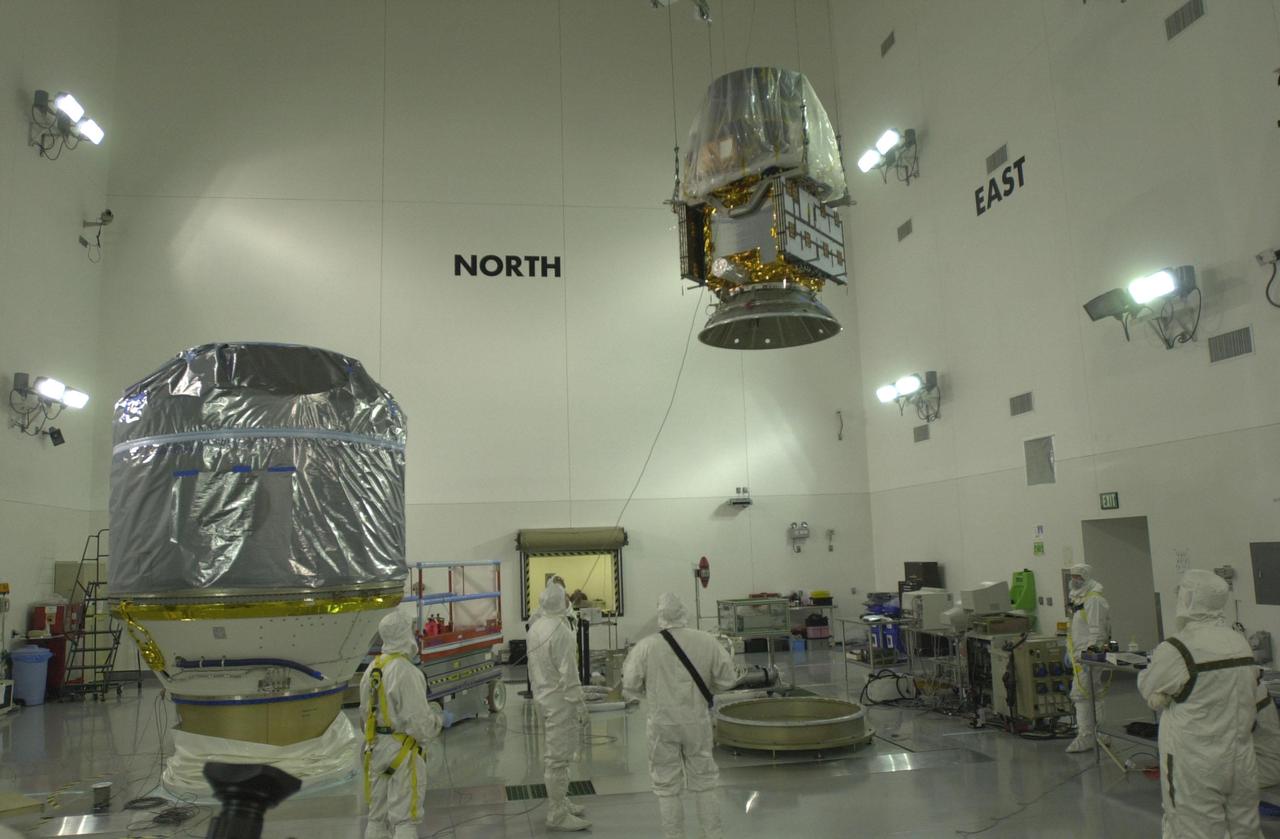
VANDENBERG AIR FORCE BASE, CALIF. - Inside the Astrotech Payload Processing Facility on Vandenberg Air Force Base in California, the CALIPSO spacecraft is destacked from the Lower Delta Payload Attach Fitting (LDPAF) and will be attached to another payload attach fitting. Then CALIPSO will be mated to the Lower Delta Payload Attach Fitting (LDPAF) that contains the CloudSat satellite. The PAF is the interface between the spacecraft and the second stage of the rocket. CALIPSO stands for Cloud-Aerosol Lidar and Infrared Pathfinder Satellite Observation. CALIPSO and CloudSat are highly complementary satellites that will provide never-before-seen 3-D perspectives of how clouds and aerosols form, evolve, and affect weather and climate. CALIPSO and CloudSat will fly in formation with three other satellites in the A-train constellation to enhance understanding of our climate system. Launch of CALIPSO_CloudSat aboard a Boeing Delta II rocket is scheduled for 3:01 a.m. PDT Sept. 29.
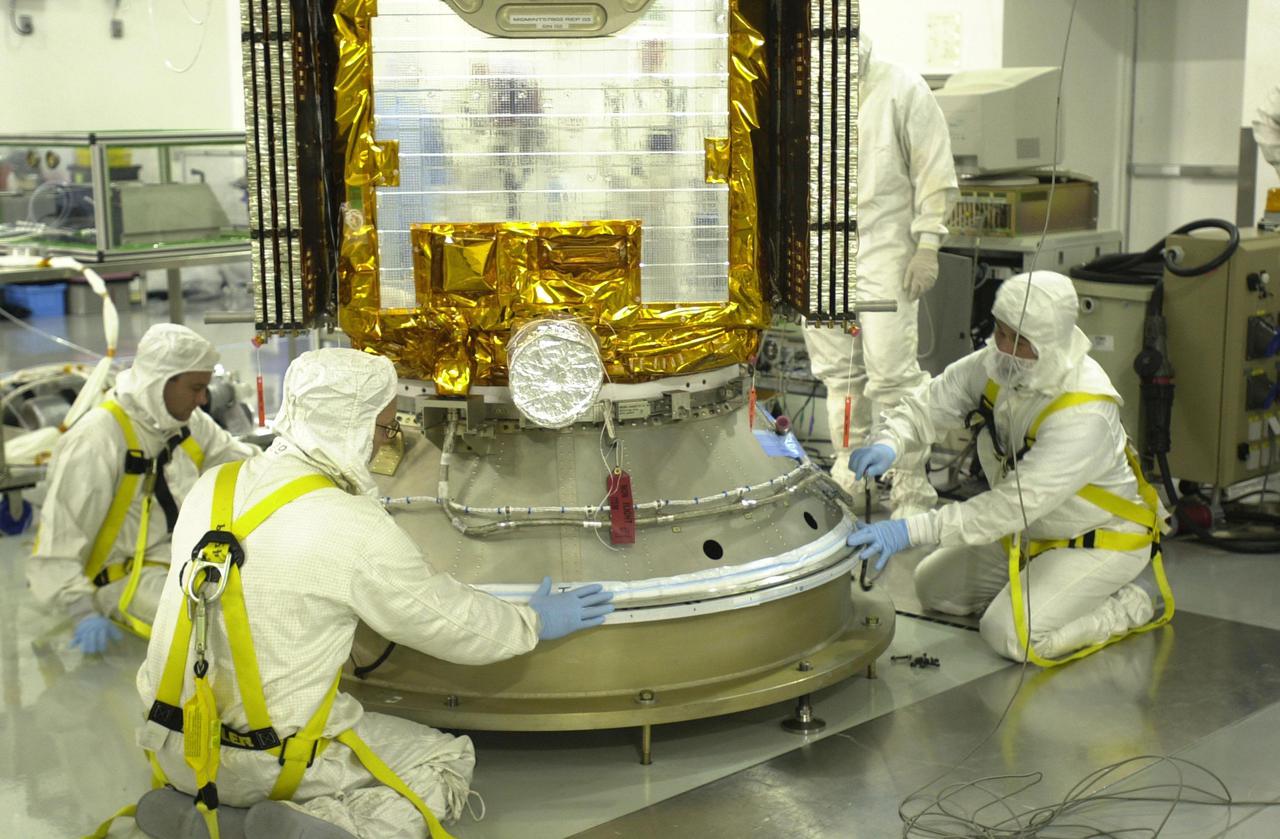
VANDENBERG AIR FORCE BASE, CALIF. - Inside the Astrotech Payload Processing Facility on Vandenberg Air Force Base in California, workers secure the CALIPSO spacecraft onto a payload attach fitting. CALIPSO will be mated to the Lower Delta Payload Attach Fitting (LDPAF) that contains the CloudSat satellite. The PAF is the interface between the spacecraft and the second stage of the rocket. CALIPSO stands for Cloud-Aerosol Lidar and Infrared Pathfinder Satellite Observation. CALIPSO and CloudSat are highly complementary satellites that will provide never-before-seen 3-D perspectives of how clouds and aerosols form, evolve, and affect weather and climate. CALIPSO and CloudSat will fly in formation with three other satellites in the A-train constellation to enhance understanding of our climate system. Launch of CALIPSO_CloudSat aboard a Boeing Delta II rocket is scheduled for 3:01 a.m. PDT Sept. 29.
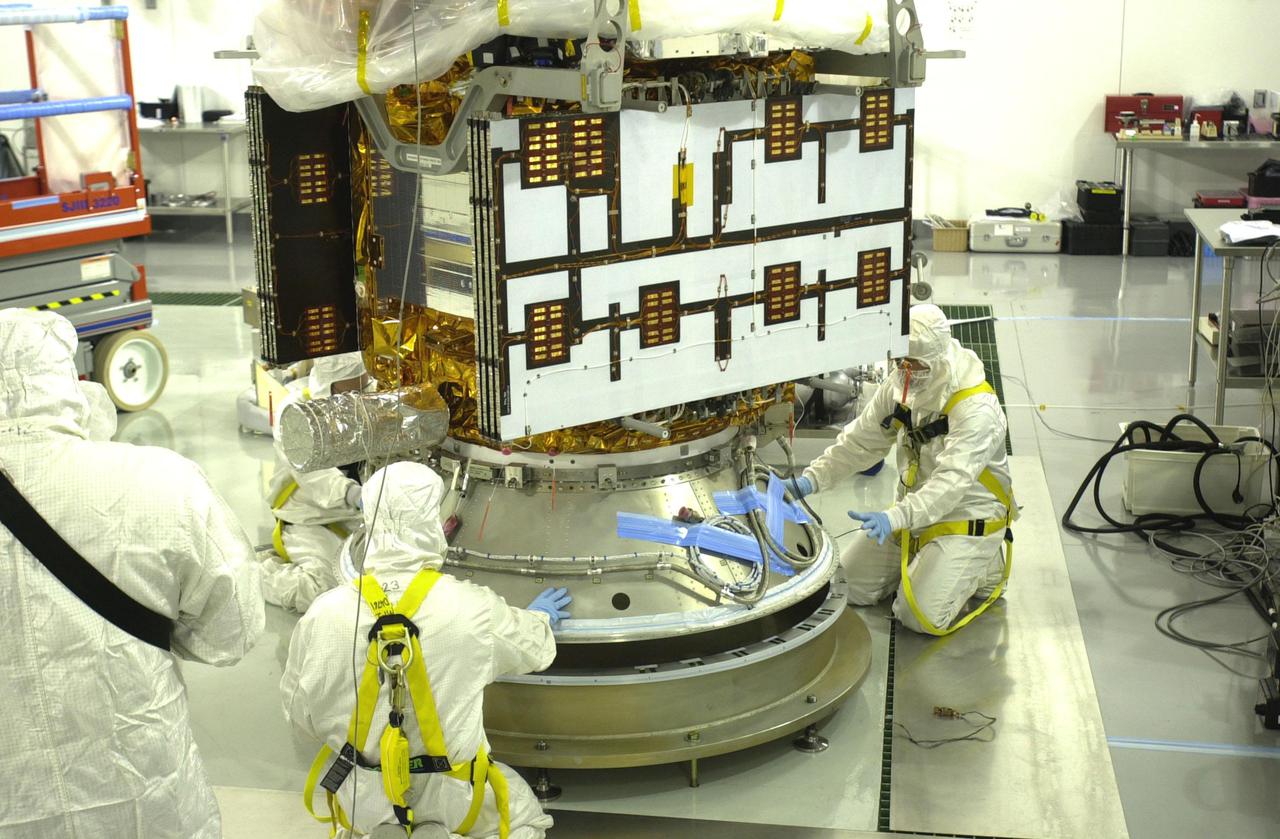
VANDENBERG AIR FORCE BASE, CALIF. - Inside the Astrotech Payload Processing Facility on Vandenberg Air Force Base in California, workers help guide the CALIPSO spacecraft as it is lowered onto a payload attach fitting. CALIPSO will be mated to the Lower Delta Payload Attach Fitting (LDPAF) that contains the CloudSat satellite. The PAF is the interface between the spacecraft and the second stage of the rocket. CALIPSO stands for Cloud-Aerosol Lidar and Infrared Pathfinder Satellite Observation. CALIPSO and CloudSat are highly complementary satellites that will provide never-before-seen 3-D perspectives of how clouds and aerosols form, evolve, and affect weather and climate. CALIPSO and CloudSat will fly in formation with three other satellites in the A-train constellation to enhance understanding of our climate system. Launch of CALIPSO_CloudSat aboard a Boeing Delta II rocket is scheduled for 3:01 a.m. PDT Sept. 29.
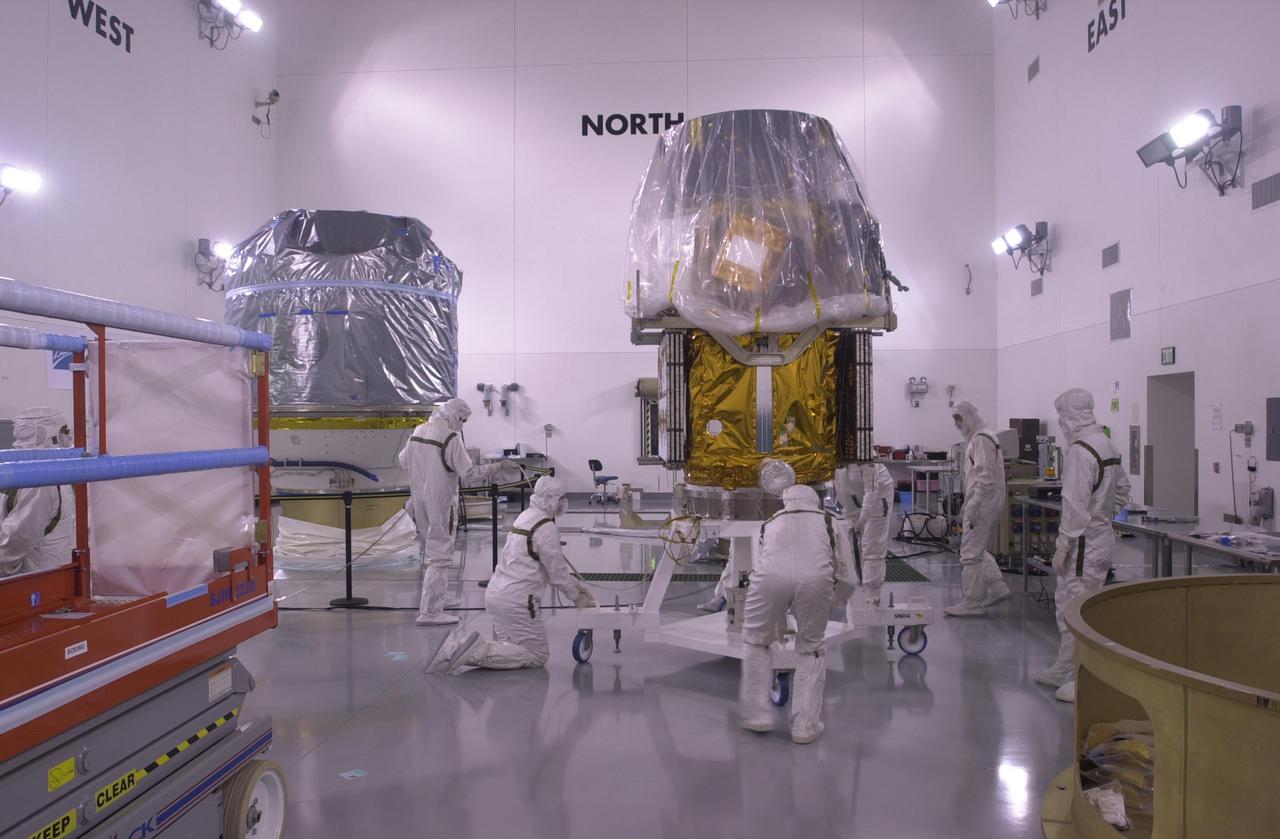
VANDENBERG AIR FORCE BASE, CALIF. — Inside the Astrotech Payload Processing Facility on Vandenberg Air Force Base in California, workers prepare the CALIPSO spacecraft for lifting. CALIPSO will be mated with the upper Delta Payload Attach Fitting (UDPAF). Later the UDPAF will be mated with the lower Delta Payload Attach Fitting, which contains the CloudSat satellite. The PAF is the interface between the spacecraft and the second stage of the rocket. CALIPSO stands for Cloud-Aerosol Lidar and Infrared Pathfinder Satellite Observation. CALIPSO and CloudSat are highly complementary satellites that will provide never-before-seen 3-D perspectives of how clouds and aerosols form, evolve, and affect weather and climate. CALIPSO and CloudSat will fly in formation with three other satellites in the A-train constellation to enhance understanding of our climate system. Launch of CALIPSO_CloudSat aboard a Boeing Delta II rocket is scheduled for 3:01 a.m. PDT Sept. 29.
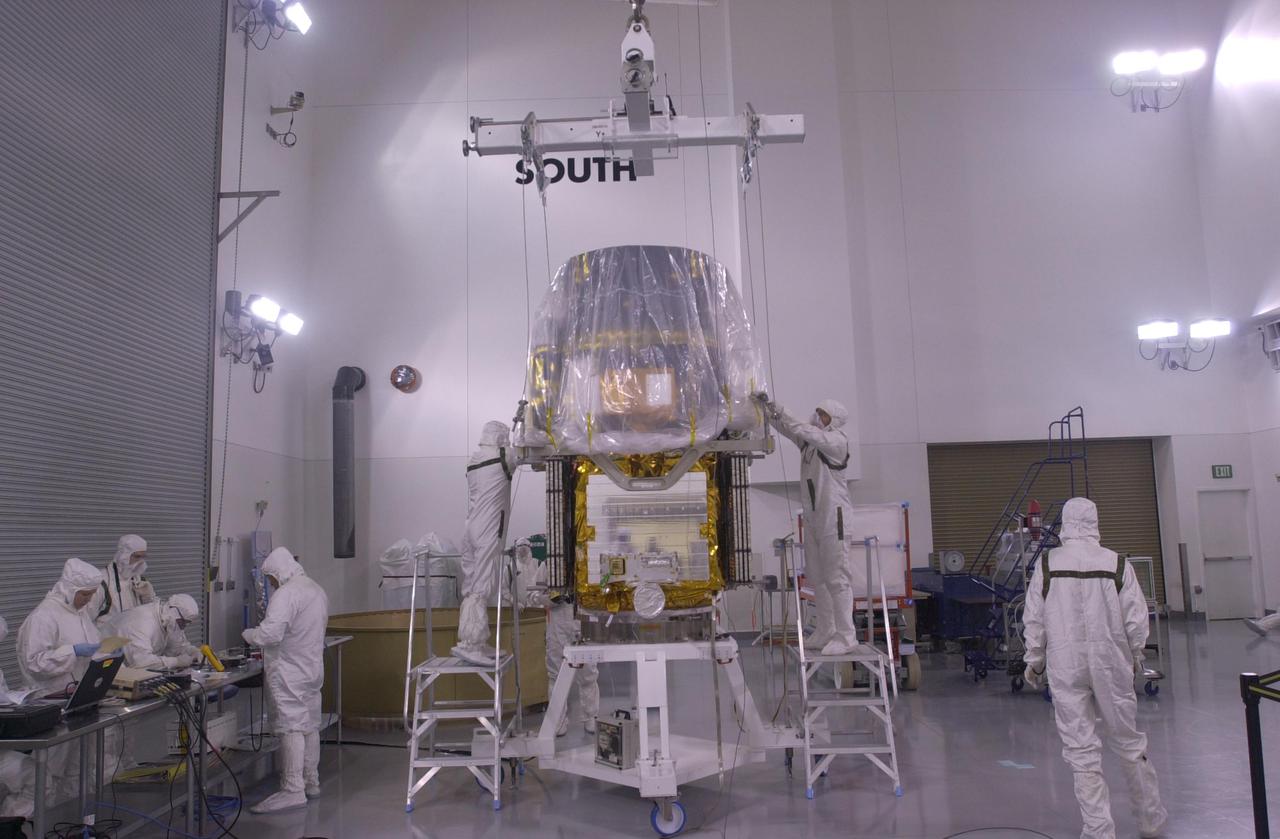
VANDENBERG AIR FORCE BASE, CALIF. — Inside the Astrotech Payload Processing Facility on Vandenberg Air Force Base in California, workers attach an overhead crane to the CALIPSO spacecraft. CALIPSO will be lifted and attached to the upper Delta Payload Attach Fitting (UDPAF). Later the UDPAF will be mated with the lower Delta Payload Attach Fitting, which contains the CloudSat satellite. The PAF is the interface between the spacecraft and the second stage of the rocket. CALIPSO stands for Cloud-Aerosol Lidar and Infrared Pathfinder Satellite Observation. CALIPSO and CloudSat are highly complementary satellites that will provide never-before-seen 3-D perspectives of how clouds and aerosols form, evolve, and affect weather and climate. CALIPSO and CloudSat will fly in formation with three other satellites in the A-train constellation to enhance understanding of our climate system. Launch of CALIPSO_CloudSat aboard a Boeing Delta II rocket is scheduled for 3:01 a.m. PDT Sept. 29.
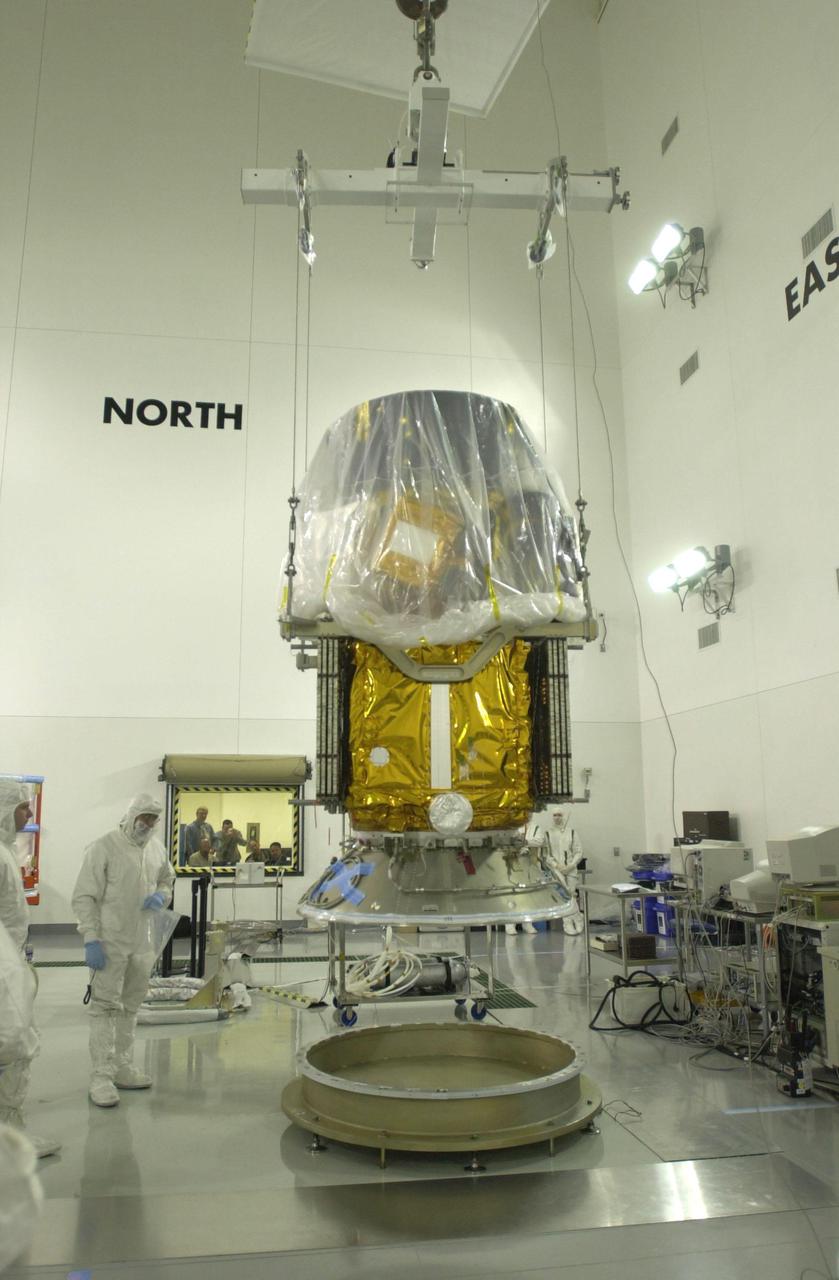
VANDENBERG AIR FORCE BASE, CALIF. - Inside the Astrotech Payload Processing Facility on Vandenberg Air Force Base in California, the CALIPSO spacecraft is lifted for its move to the Lower Delta Payload Attach Fitting (LDPAF). CALIPSO will be mated with the LDPAF, which contains the CloudSat satellite. The PAF is the interface between the spacecraft and the second stage of the rocket. CALIPSO stands for Cloud-Aerosol Lidar and Infrared Pathfinder Satellite Observation. CALIPSO and CloudSat are highly complementary satellites that will provide never-before-seen 3-D perspectives of how clouds and aerosols form, evolve, and affect weather and climate. CALIPSO and CloudSat will fly in formation with three other satellites in the A-train constellation to enhance understanding of our climate system. Launch of CALIPSO_CloudSat aboard a Boeing Delta II rocket is scheduled for 3:01 a.m. PDT Sept. 29.
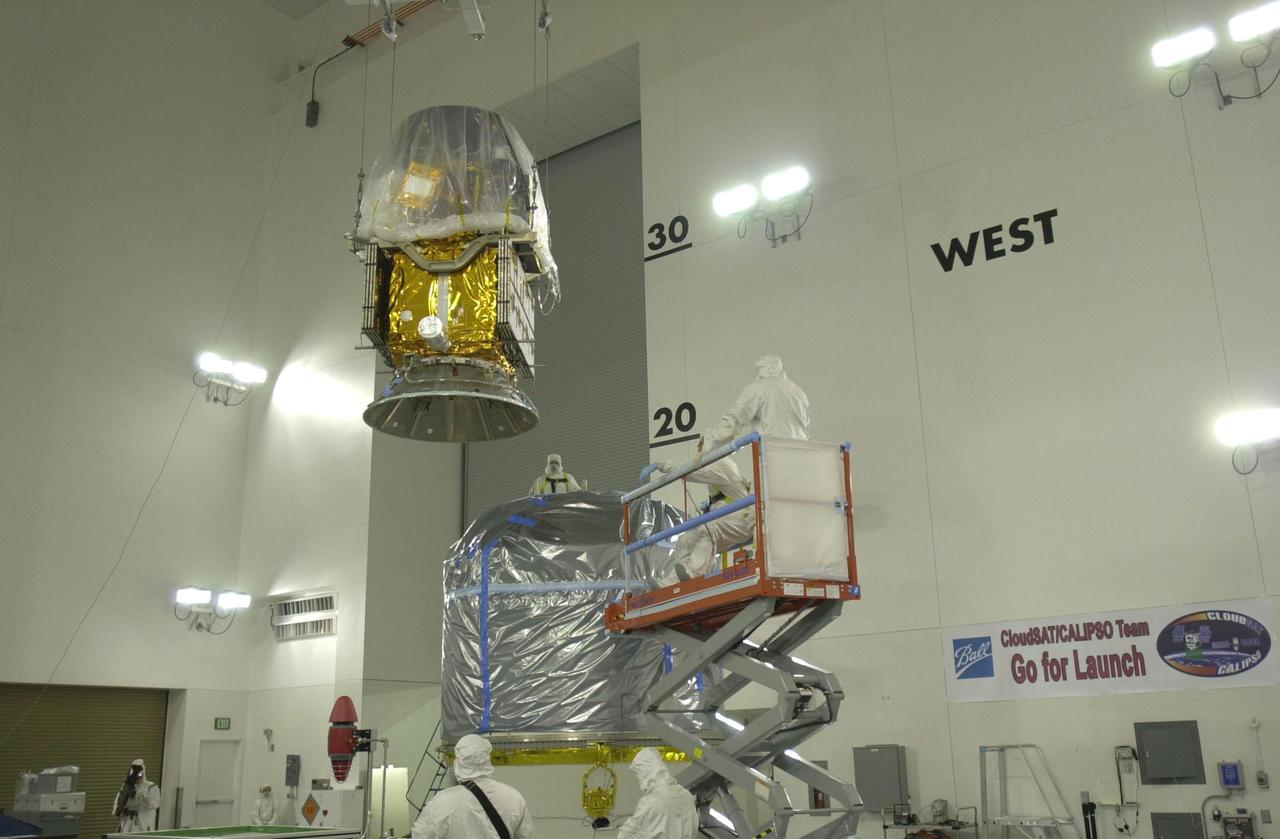
VANDENBERG AIR FORCE BASE, CALIF. - Inside the Astrotech Payload Processing Facility on Vandenberg Air Force Base in California, the CALIPSO spacecraft is moved toward the Lower Delta Payload Attach Fitting (LDPAF). CALIPSO will be mated with the LDPAF, which contains the CloudSat satellite. The PAF is the interface between the spacecraft and the second stage of the rocket. CALIPSO stands for Cloud-Aerosol Lidar and Infrared Pathfinder Satellite Observation. CALIPSO and CloudSat are highly complementary satellites that will provide never-before-seen 3-D perspectives of how clouds and aerosols form, evolve, and affect weather and climate. CALIPSO and CloudSat will fly in formation with three other satellites in the A-train constellation to enhance understanding of our climate system. Launch of CALIPSO_CloudSat aboard a Boeing Delta II rocket is scheduled for 3:01 a.m. PDT Sept. 29.
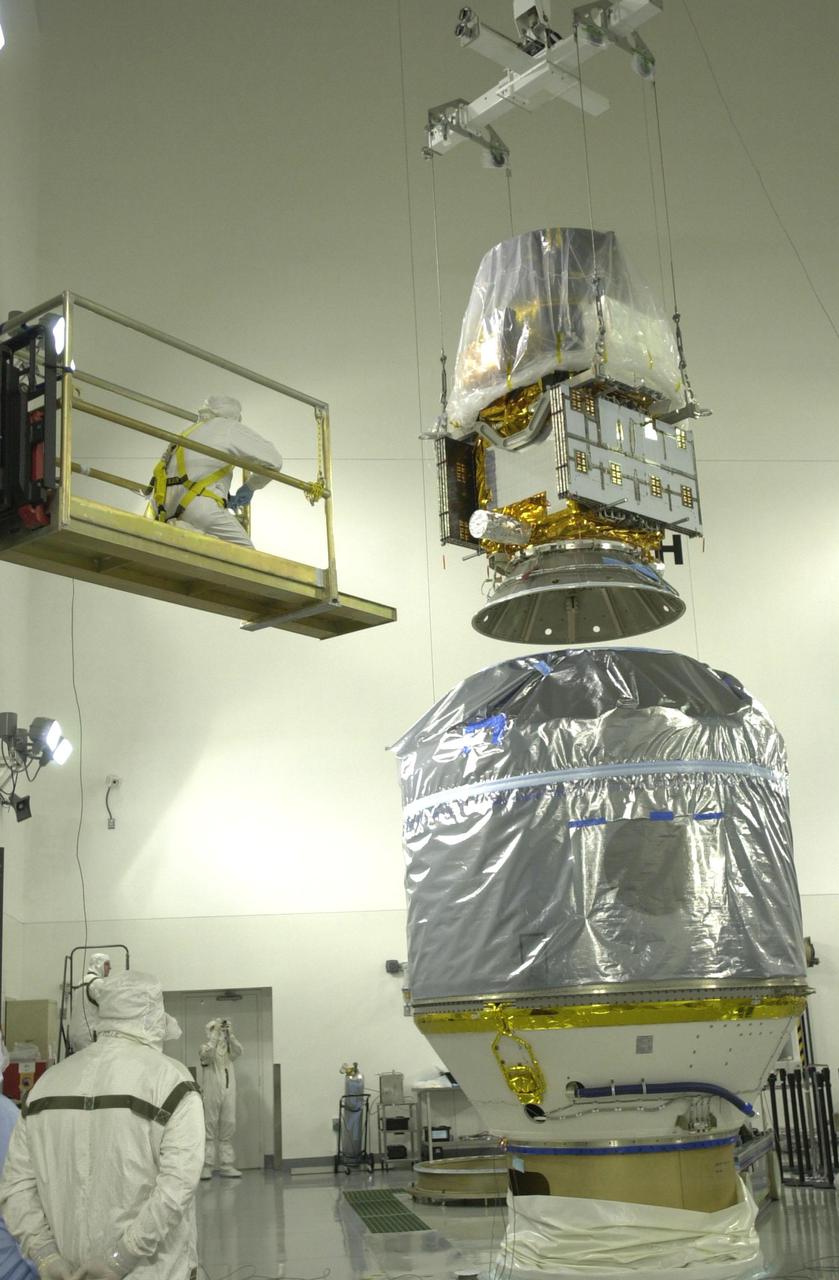
VANDENBERG AIR FORCE BASE, CALIF. - Inside the Astrotech Payload Processing Facility on Vandenberg Air Force Base in California, the CALIPSO spacecraft is lowered toward the Lower Delta Payload Attach Fitting (LDPAF). CALIPSO will be mated with the LDPAF, which contains the CloudSat satellite. The PAF is the interface between the spacecraft and the second stage of the rocket. CALIPSO stands for Cloud-Aerosol Lidar and Infrared Pathfinder Satellite Observation. CALIPSO and CloudSat are highly complementary satellites that will provide never-before-seen 3-D perspectives of how clouds and aerosols form, evolve, and affect weather and climate. CALIPSO and CloudSat will fly in formation with three other satellites in the A-train constellation to enhance understanding of our climate system. Launch of CALIPSO_CloudSat aboard a Boeing Delta II rocket is scheduled for 3:01 a.m. PDT Sept. 29.
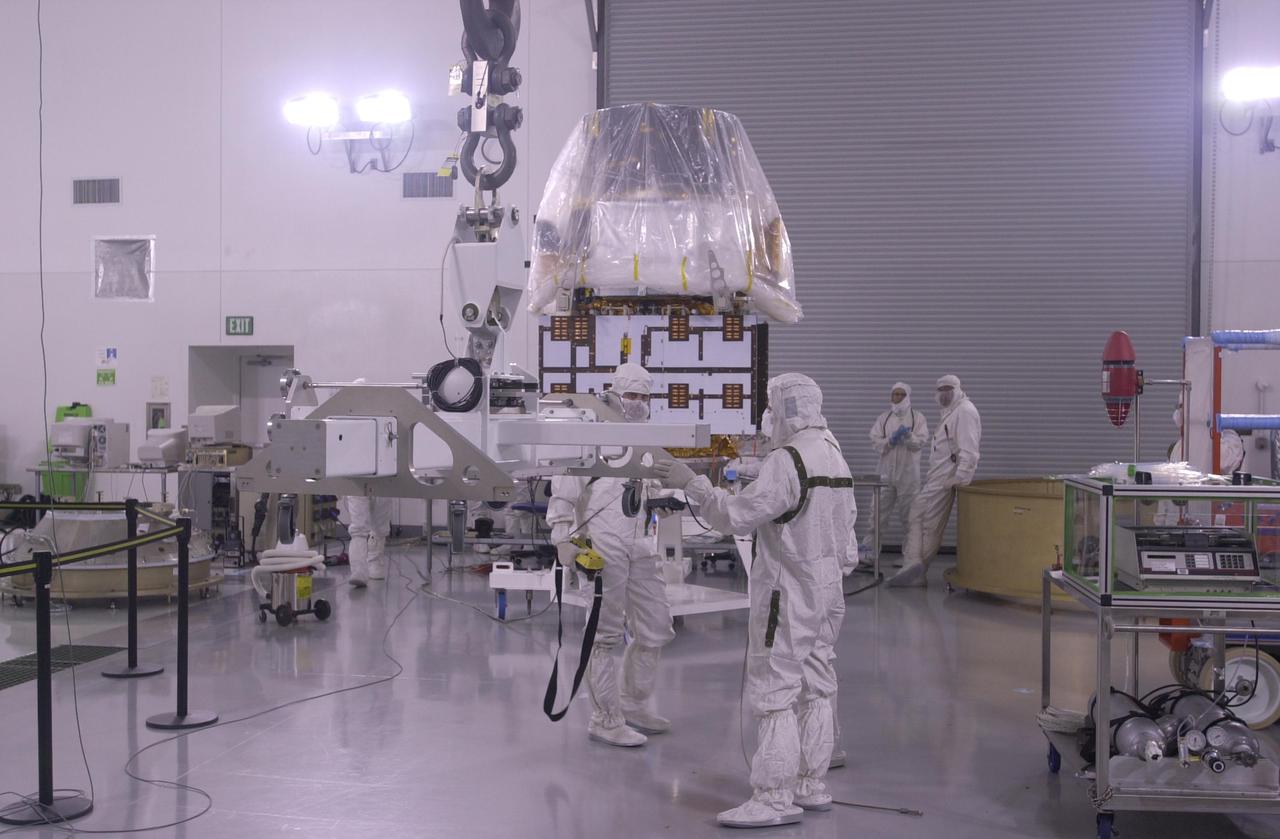
VANDENBERG AIR FORCE BASE, CALIF. — Inside the Astrotech Payload Processing Facility on Vandenberg Air Force Base in California, workers prepare the CALIPSO spacecraft for lifting. CALIPSO will be mated with the upper Delta Payload Attach Fitting (UDPAF). Later the UDPAF will be mated with the lower Delta Payload Attach Fitting, which contains the CloudSat satellite. The PAF is the interface between the spacecraft and the second stage of the rocket. CALIPSO stands for Cloud-Aerosol Lidar and Infrared Pathfinder Satellite Observation. CALIPSO and CloudSat are highly complementary satellites that will provide never-before-seen 3-D perspectives of how clouds and aerosols form, evolve, and affect weather and climate. CALIPSO and CloudSat will fly in formation with three other satellites in the A-train constellation to enhance understanding of our climate system. Launch of CALIPSO_CloudSat aboard a Boeing Delta II rocket is scheduled for 3:01 a.m. PDT Sept. 29.
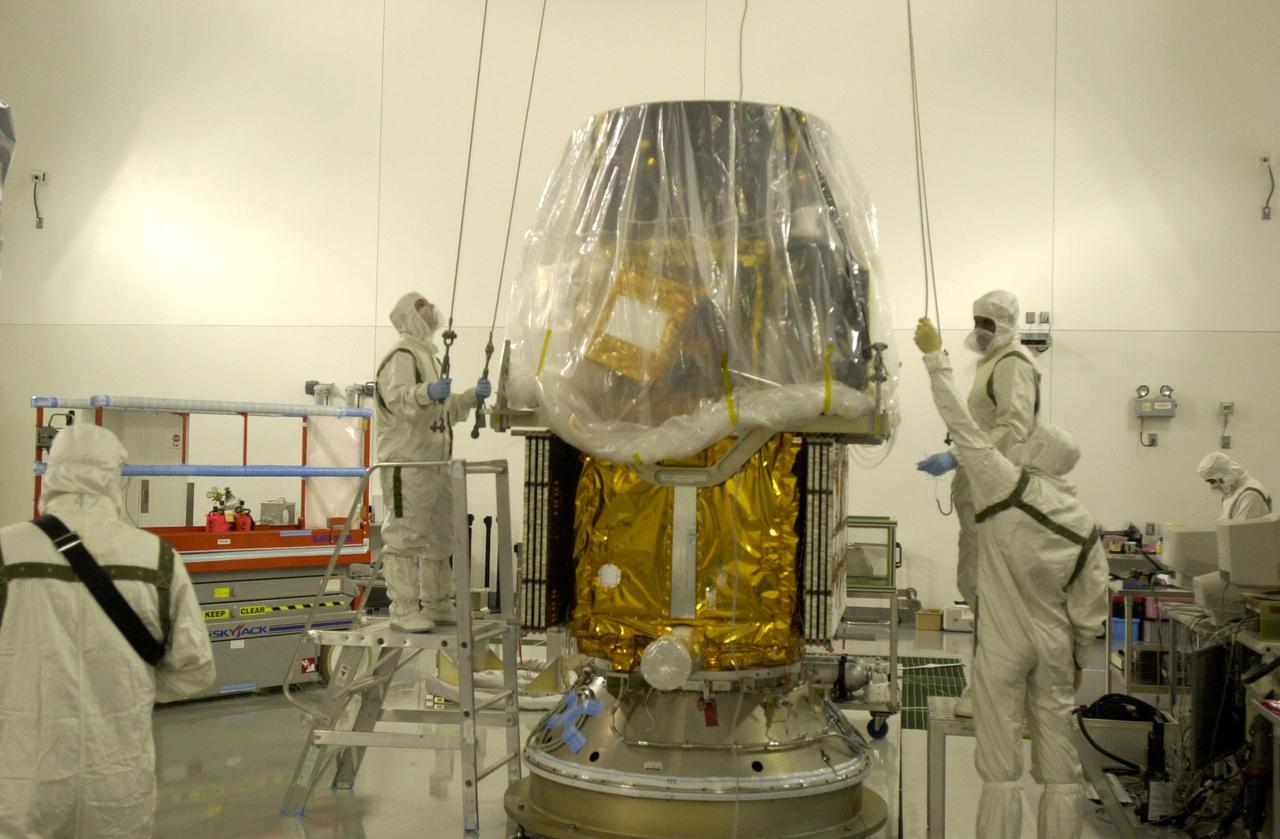
VANDENBERG AIR FORCE BASE, CALIF. — Inside the Astrotech Payload Processing Facility on Vandenberg Air Force Base in California, the CALIPSO spacecraft is back on the floor or further adjustments. CALIPSO will be mated with the Lower Delta Payload Attach Fitting (LDPAF) that contains the CloudSat satellite. Later the UDPAF will be mated with the lower Delta Payload Attach Fitting, which contains the CloudSat satellite. The PAF is the interface between the spacecraft and the second stage of the rocket. CALIPSO stands for Cloud-Aerosol Lidar and Infrared Pathfinder Satellite Observation.
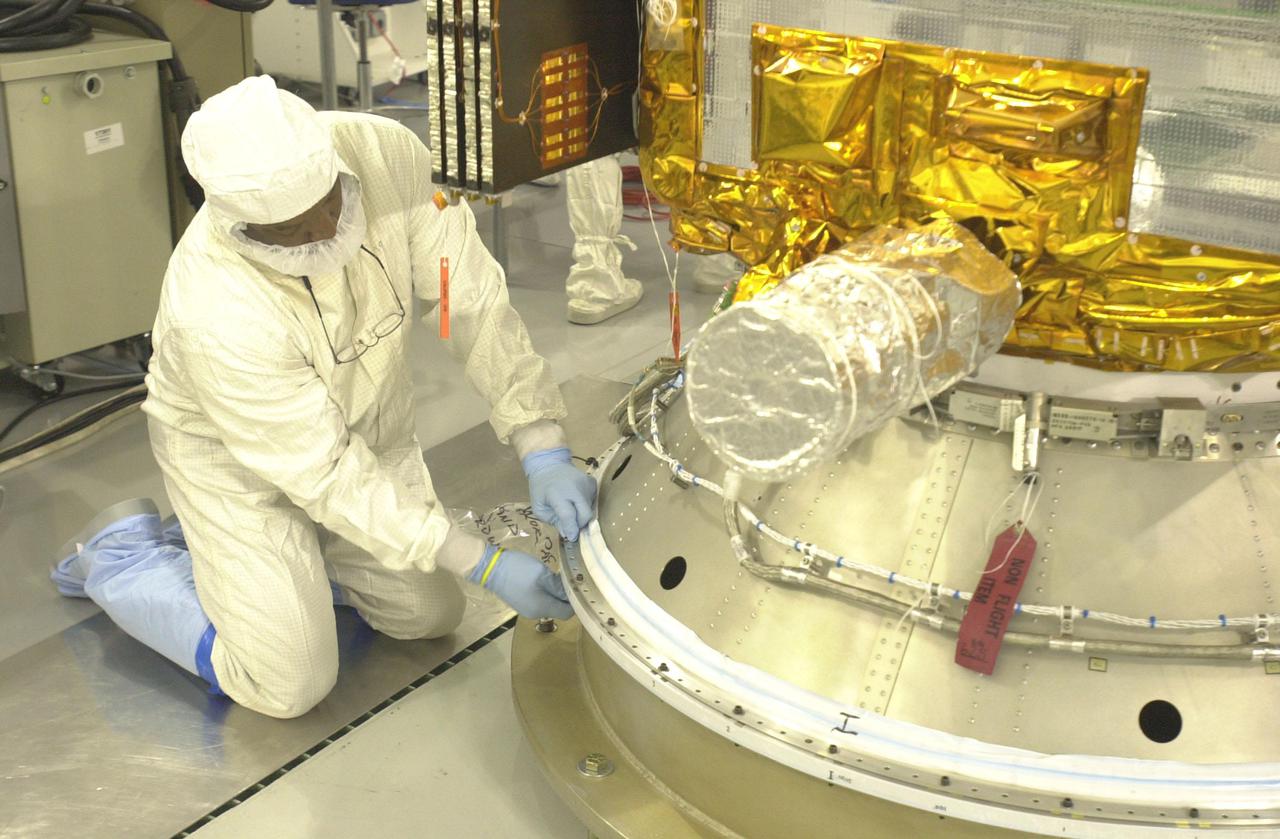
VANDENBERG AIR FORCE BASE, CALIF. — Inside the Astrotech Payload Processing Facility on Vandenberg Air Force Base in California, a worker makes an adjustment on the Upper Delta Payload Attach Fitting (UDPAF) holding the CALIPSO spacecraft. CALIPSO will be mated with the Lower Delta Payload Attach Fitting (LDPAF) that contains the CloudSat satellite. The PAF is the interface between the spacecraft and the second stage of the rocket. CALIPSO stands for Cloud-Aerosol Lidar and Infrared Pathfinder Satellite Observation.
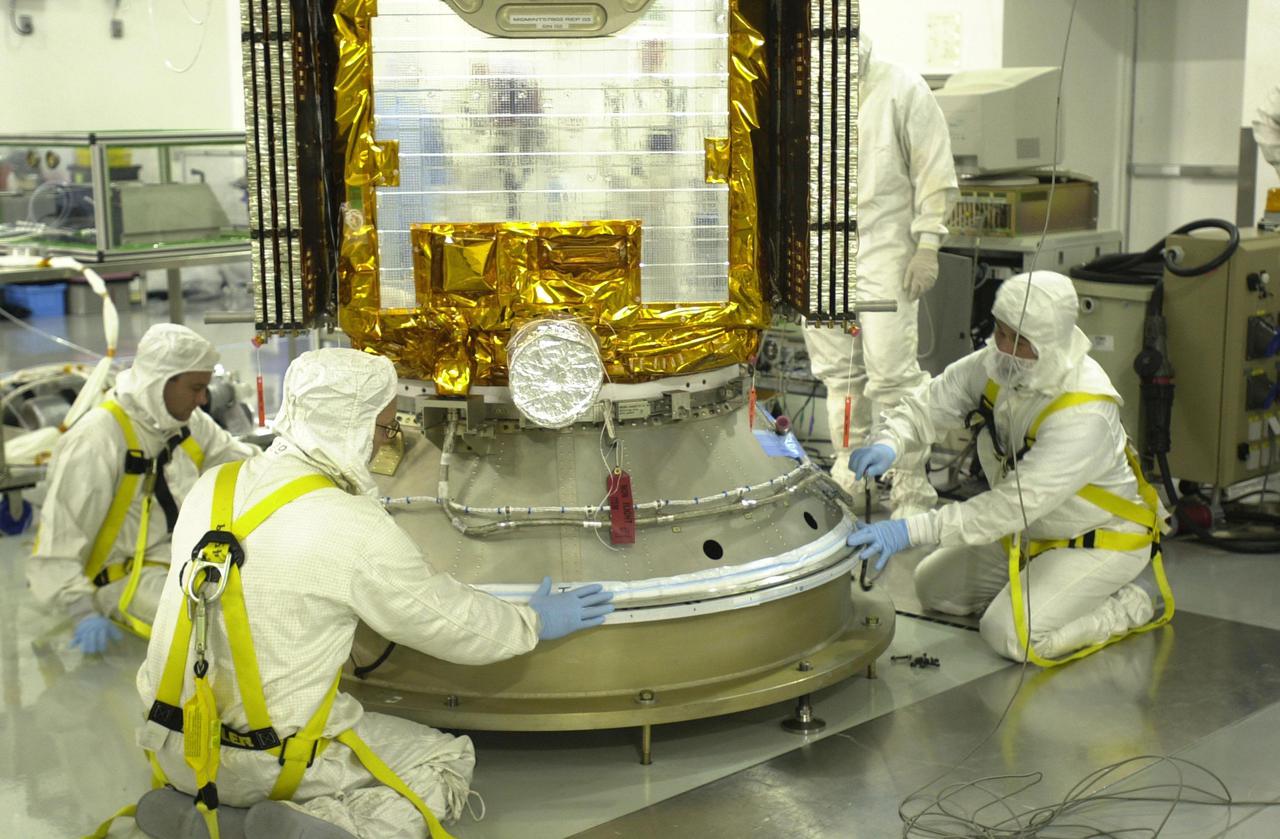
VANDENBERG AIR FORCE BASE, CALIF. — Inside the Astrotech Payload Processing Facility on Vandenberg Air Force Base in California, workers attach the CALIPSO spacecraft onto another payload attach fitting. CALIPSO will be mated with the Lower Delta Payload Attach Fitting (LDPAF) that contains the CloudSat satellite. Later the UDPAF will be mated with the lower Delta Payload Attach Fitting, which contains the CloudSat satellite. The PAF is the interface between the spacecraft and the second stage of the rocket. CALIPSO stands for Cloud-Aerosol Lidar and Infrared Pathfinder Satellite Observation.
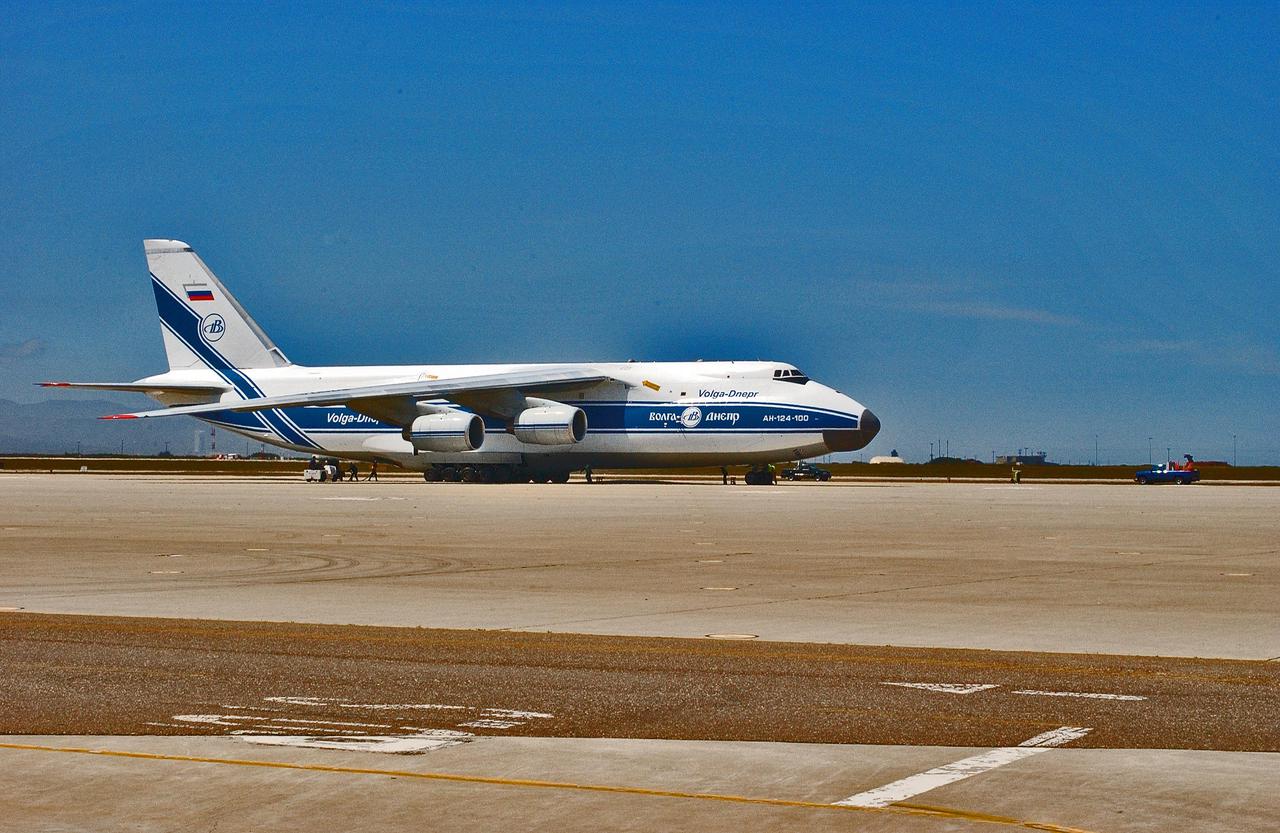
KENNEDY SPACE CENTER, FLA. - An Antonov aircraft arrives at Vandenberg Air Force Base in California carrying the Cloud-Aerosol Lidar and Infrared Pathfinder Satellite Observation (CALIPSO) spacecraft. CALIPSO will fly in combination with the CloudSat satellite to provide never-before-seen 3-D perspectives of how clouds and aerosols form, evolve, and affect weather and climate. CALIPSO and CloudSat will join three other satellites in orbit to enhance understanding of climate systems. The launch date for CALIPSO_CloudSat is no earlier than Aug. 22.
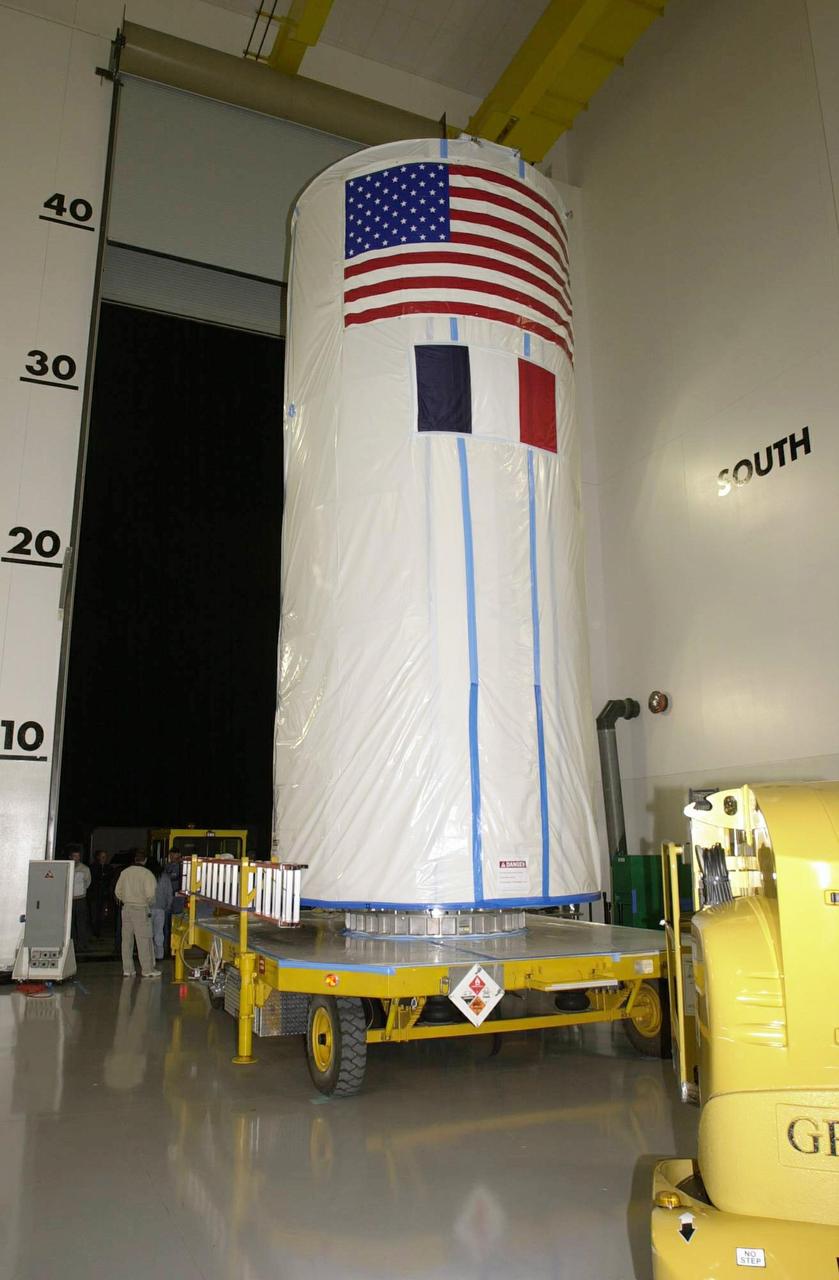
VANDENBERG AIR FORCE BASE, CALIF. - The CALIPSO/CloudSat spacecraft is in a transport canister ready for the move to Space Launch Complex 2. There it will be lifted and mated with a Boeing Delta II rocket for launch on April 21. CALIPSO stands for Cloud-Aerosol Lidar and Infrared Pathfinder Satellite Observation. It will fly in combination with the CloudSat satellite to provide never-before-seen 3-D perspectives of how clouds and aerosols form, evolve, and affect weather and climate. CALIPSO and CloudSat will join three other satellites in orbit to enhance understanding of climate systems.
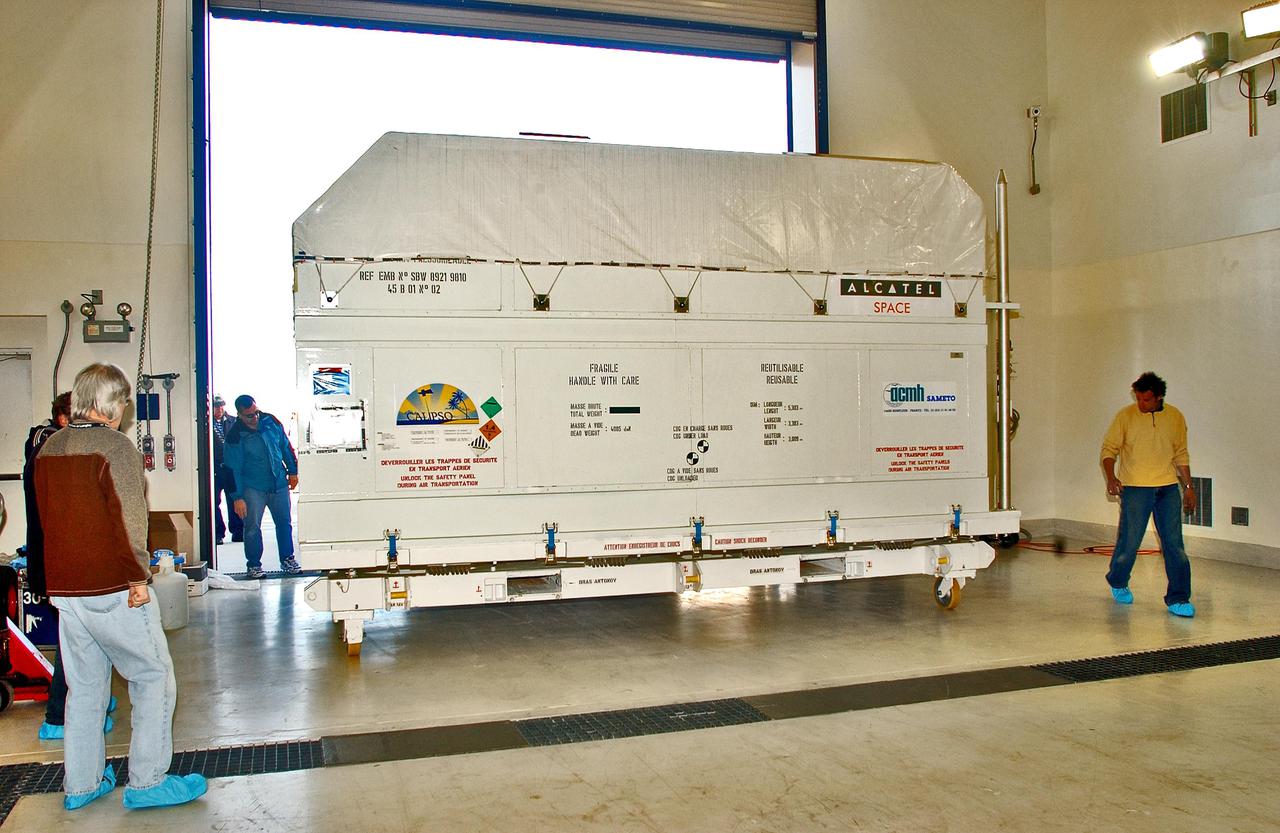
KENNEDY SPACE CENTER, FLA. - At the Astrotech Payload Processing Facility on Vandenberg Air Force Base in California, the newly arrived Cloud-Aerosol Lidar and Infrared Pathfinder Satellite Observation (CALIPSO) is moved inside. CALIPSO will fly in combination with the CloudSat satellite to provide never-before-seen 3-D perspectives of how clouds and aerosols form, evolve, and affect weather and climate. CALIPSO and CloudSat will join three other satellites in orbit to enhance understanding of climate systems. The launch date for CALIPSO_CloudSat is no earlier than Aug. 22.
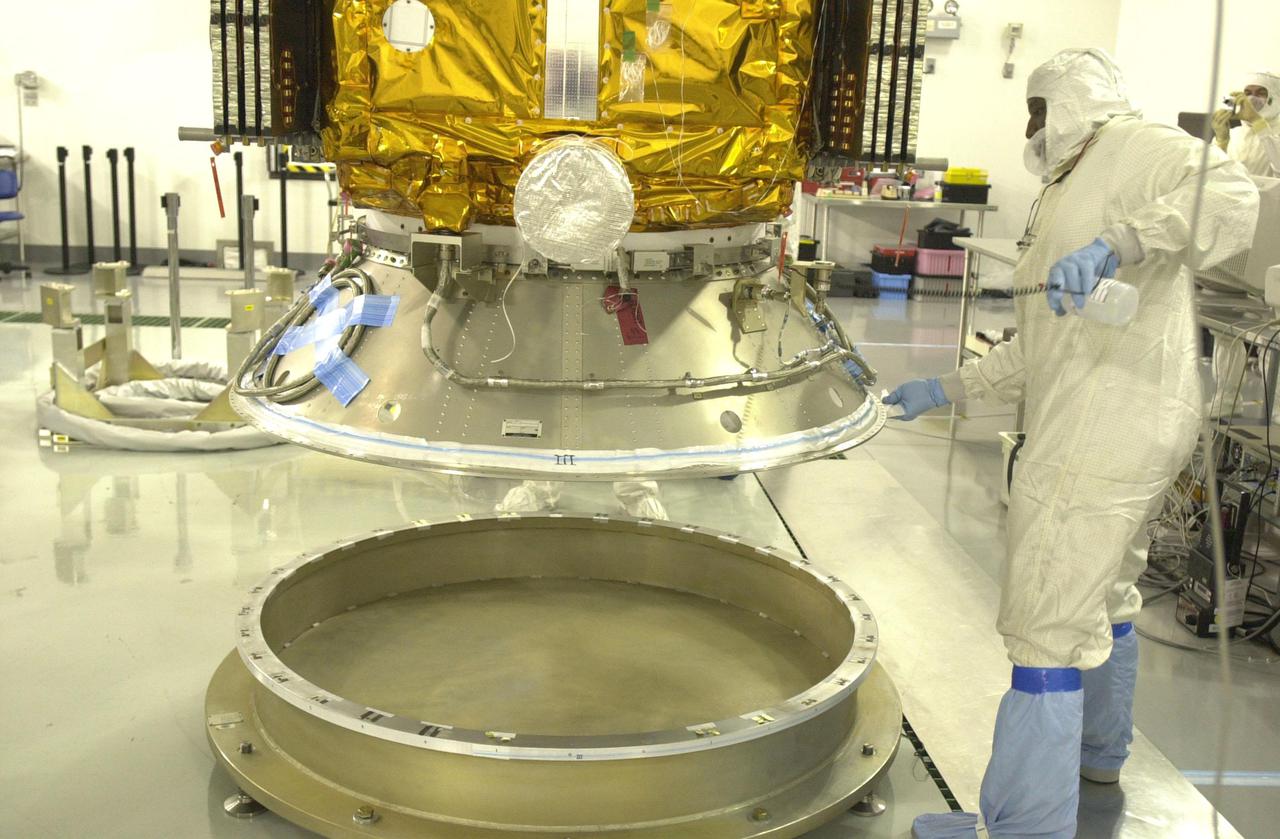
VANDENBERG AIR FORCE BASE, CALIF. — Inside the Astrotech Payload Processing Facility on Vandenberg Air Force Base in California, workers lift the CALIPSO spacecraft from the Upper Delta Payload Attach Fitting (UDPAF) to adjust the attachment. CALIPSO will be mated with the Lower Delta Payload Attach Fitting (LDPAF) that contains the CloudSat satellite. The PAF is the interface between the spacecraft and the second stage of the rocket. CALIPSO stands for Cloud-Aerosol Lidar and Infrared Pathfinder Satellite Observation.
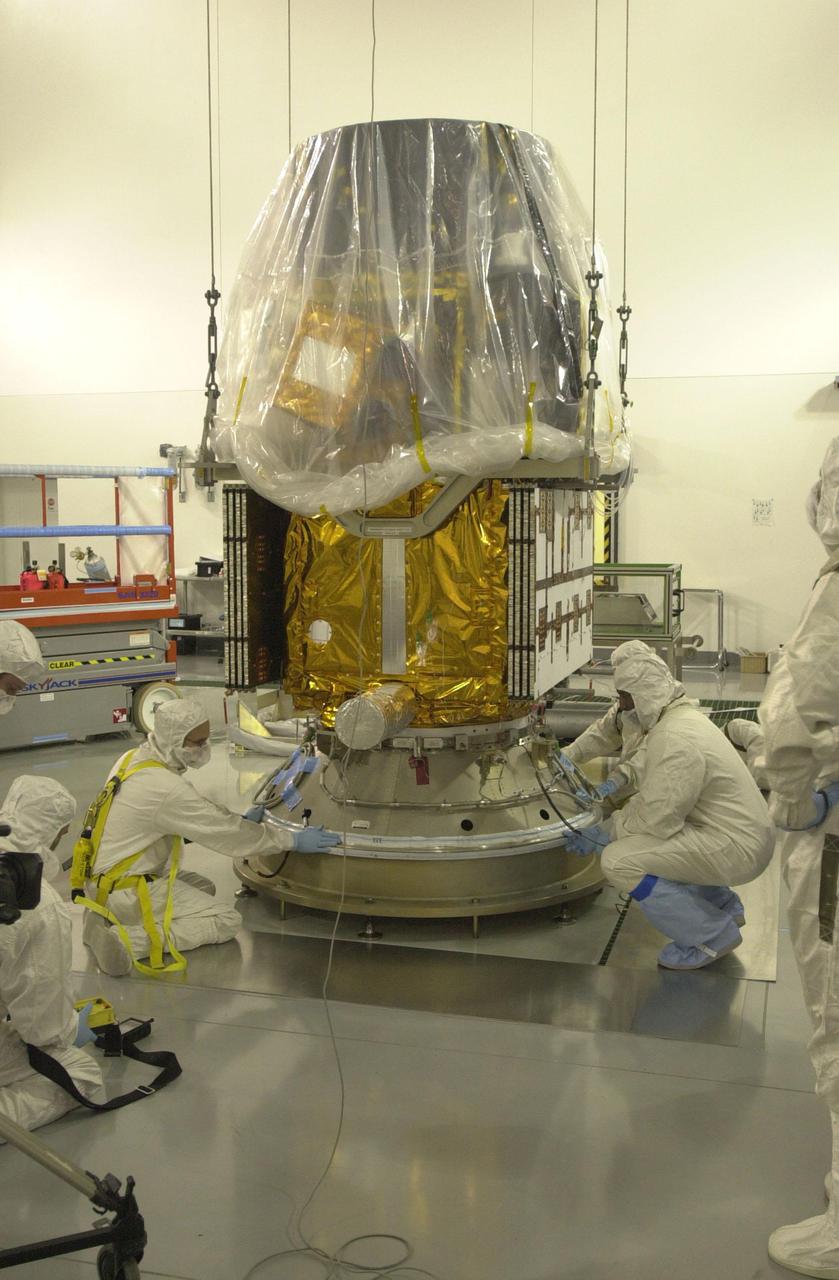
VANDENBERG AIR FORCE BASE, CALIF. — Inside the Astrotech Payload Processing Facility on Vandenberg Air Force Base in California, workers check the Upper Delta Payload Attach Fitting (UDPAF) holding the CALIPSO spacecraft. CALIPSO will be mated with the Lower Delta Payload Attach Fitting (LDPAF) that contains the CloudSat satellite. The PAF is the interface between the spacecraft and the second stage of the rocket. CALIPSO stands for Cloud-Aerosol Lidar and Infrared Pathfinder Satellite Observation.
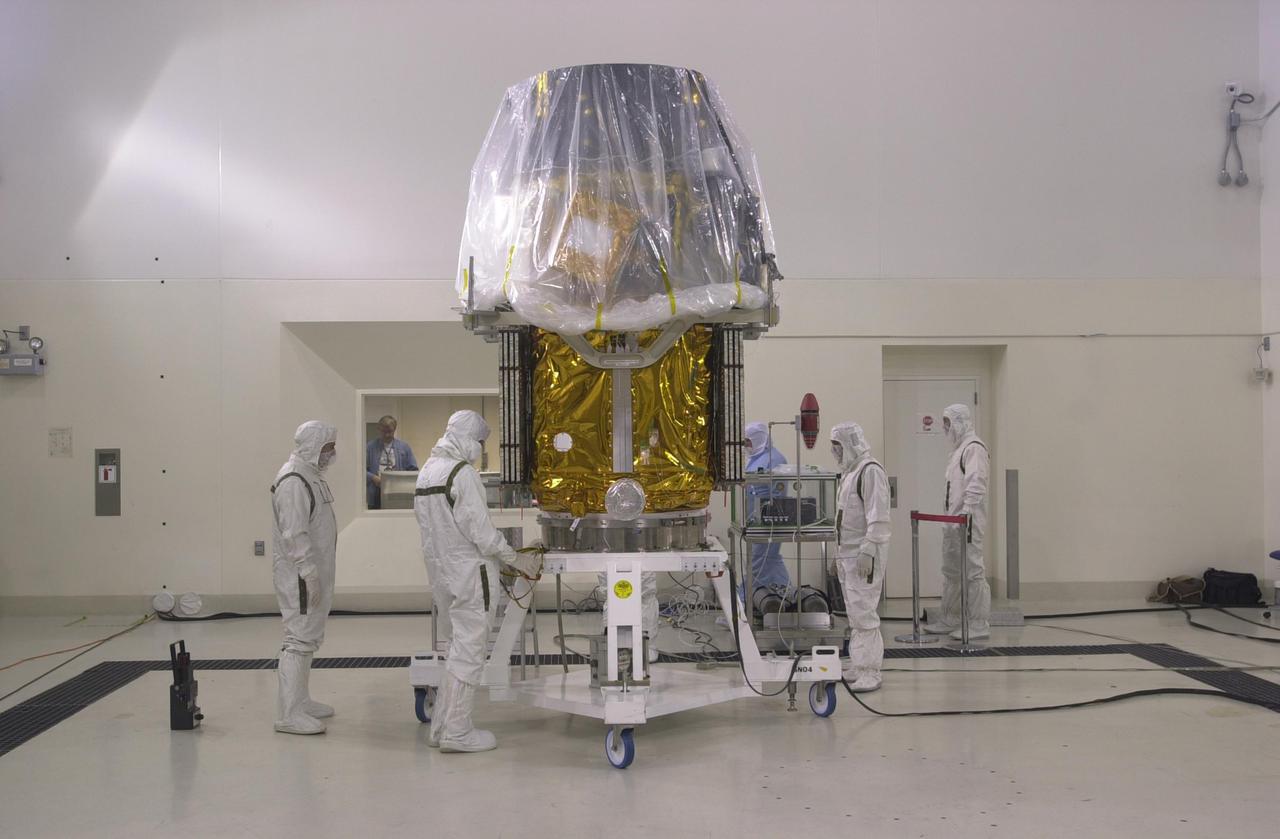
VANDENBERG AIR FORCE BASE, CALIF. — Inside the Astrotech Payload Processing Facility on Vandenberg Air Force Base in California, the CALIPSO spacecraft is being prepared for mating with the upper Delta Payload Attach Fitting (UDPAF). Later the UDPAF will be mated with the lower Delta Payload Attach Fitting, which contains the CloudSat satellite. The PAF is the interface between the spacecraft and the second stage of the rocket. CALIPSO stands for Cloud-Aerosol Lidar and Infrared Pathfinder Satellite Observation. CALIPSO and CloudSat are highly complementary satellites that will provide never-before-seen 3-D perspectives of how clouds and aerosols form, evolve, and affect weather and climate. CALIPSO and CloudSat will fly in formation with three other satellites in the A-train constellation to enhance understanding of our climate system. Launch of CALIPSO_CloudSat aboard a Boeing Delta II rocket is scheduled for 3:01 a.m. PDT Sept. 29.
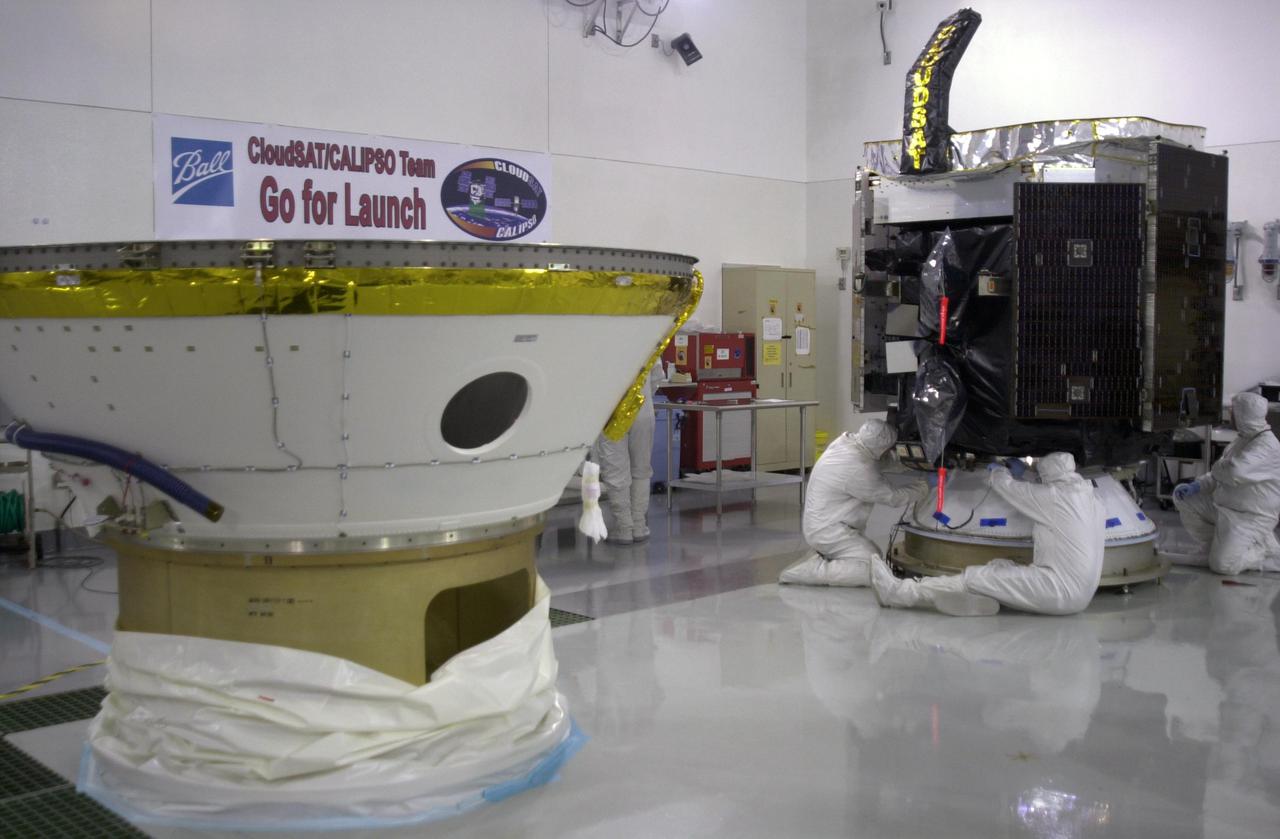
KENNEDY SPACE CENTER, FLA. - In a clean room at Vandenberg Air Force Base in California, workers prepare NASA's CloudSat spacecraft (right) that will be fitted inside the lower portion of the Delta Payload Attach Fitting at left. CloudSat joins the CALIPSO spacecraft for launch. CALIPSO stands for Cloud-Aerosol Lidar and Infrared Pathfinder Satellite Observation. CALIPSO and CloudSat are highly complementary satellites that will provide never-before-seen 3-D perspectives of how clouds and aerosols form, evolve, and affect weather and climate. CALIPSO and CloudSat will fly in formation with three other satellites in the A-train constellation to enhance understanding of our climate system. Launch of CALIPSO_CloudSat aboard a Boeing Delta II rocket is scheduled for 3:01 a.m. PDT Sept. 29.
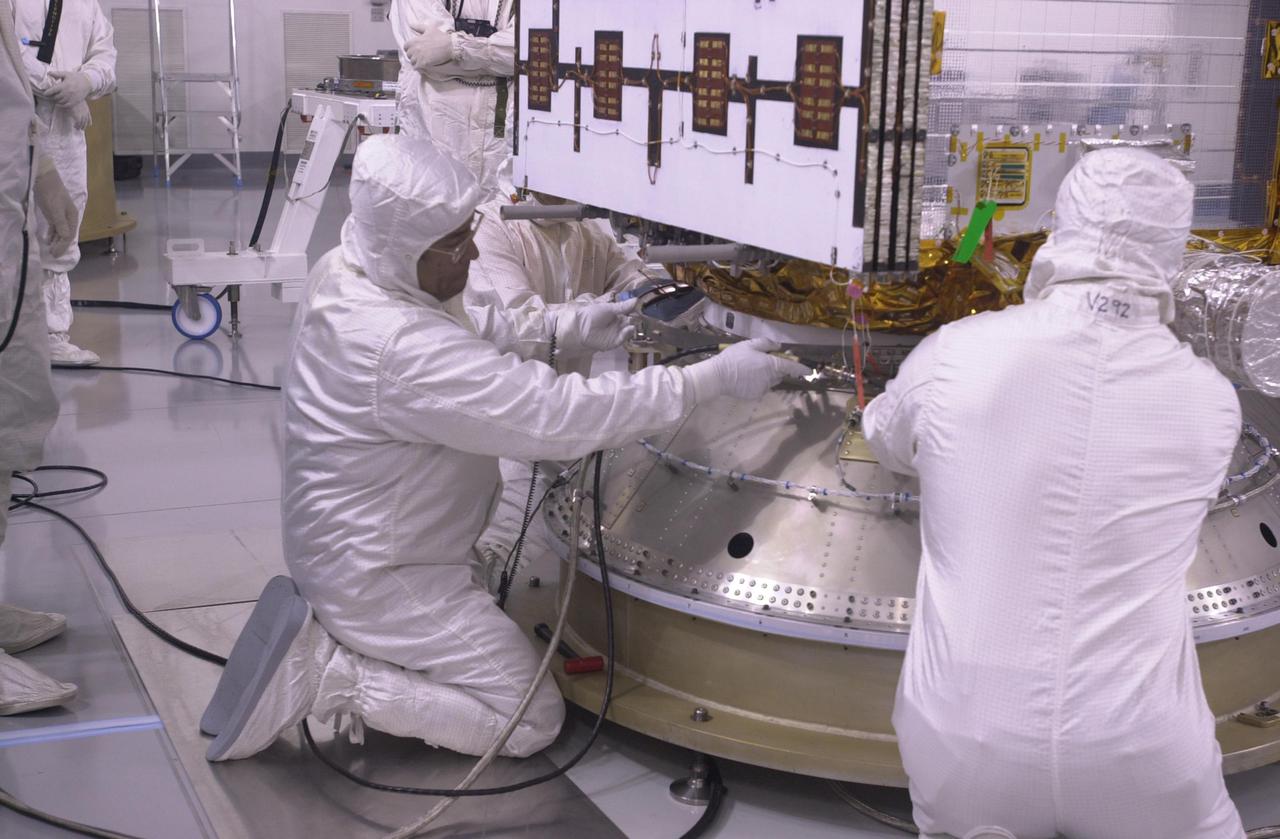
VANDENBERG AIR FORCE BASE, CALIF. — Inside the Astrotech Payload Processing Facility on Vandenberg Air Force Base in California, workers attach the CALIPSO spacecraft to the upper Delta Payload Attach Fitting (UDPAF). Later the UDPAF will be mated with the lower Delta Payload Attach Fitting, which contains the CloudSat satellite. The PAF is the interface between the spacecraft and the second stage of the rocket. CALIPSO stands for Cloud-Aerosol Lidar and Infrared Pathfinder Satellite Observation. CALIPSO and CloudSat are highly complementary satellites that will provide never-before-seen 3-D perspectives of how clouds and aerosols form, evolve, and affect weather and climate. CALIPSO and CloudSat will fly in formation with three other satellites in the A-train constellation to enhance understanding of our climate system. Launch of CALIPSO_CloudSat aboard a Boeing Delta II rocket is scheduled for 3:01 a.m. PDT Sept. 29.
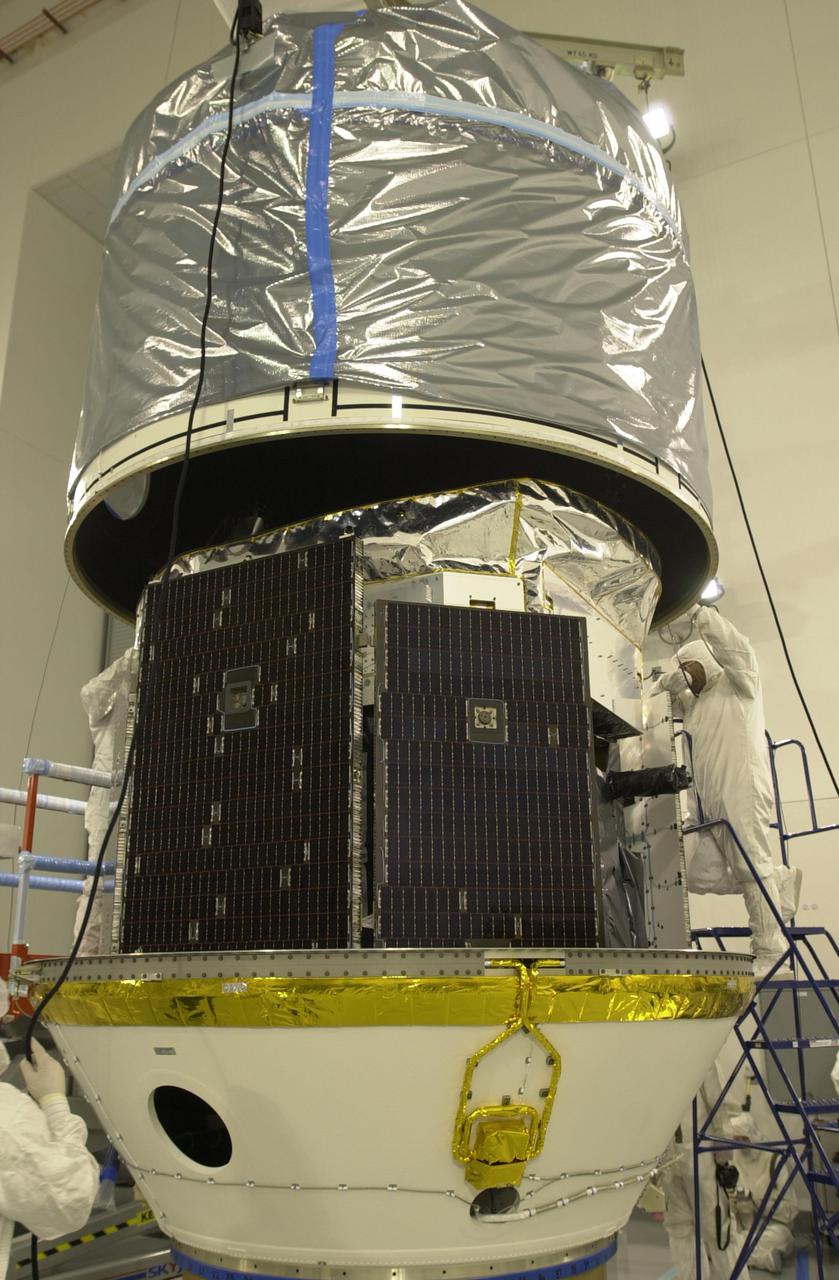
VANDENBERG AIR FORCE BASE, CALIF. - Inside the Astrotech Payload Processing Facility on Vandenberg Air Force Base in California, the upper Delta Payload Attach Fitting (UDPAF) is lowered toward the lower Delta Payload Attach Fitting (LDPAF). The LDPAF holds the CloudSat satellite and the UDPAF will hold the CALIPSO satellite. The two sections will be mated. CALIPSO stands for Cloud-Aerosol Lidar and Infrared Pathfinder Satellite Observation. CALIPSO and CloudSat are highly complementary satellites that will provide never-before-seen 3-D perspectives of how clouds and aerosols form, evolve, and affect weather and climate. CALIPSO and CloudSat will fly in formation with three other satellites in the A-train constellation to enhance understanding of our climate system. Launch of CALIPSO_CloudSat aboard a Boeing Delta II rocket is scheduled for 3:01 a.m. PDT Sept. 29.
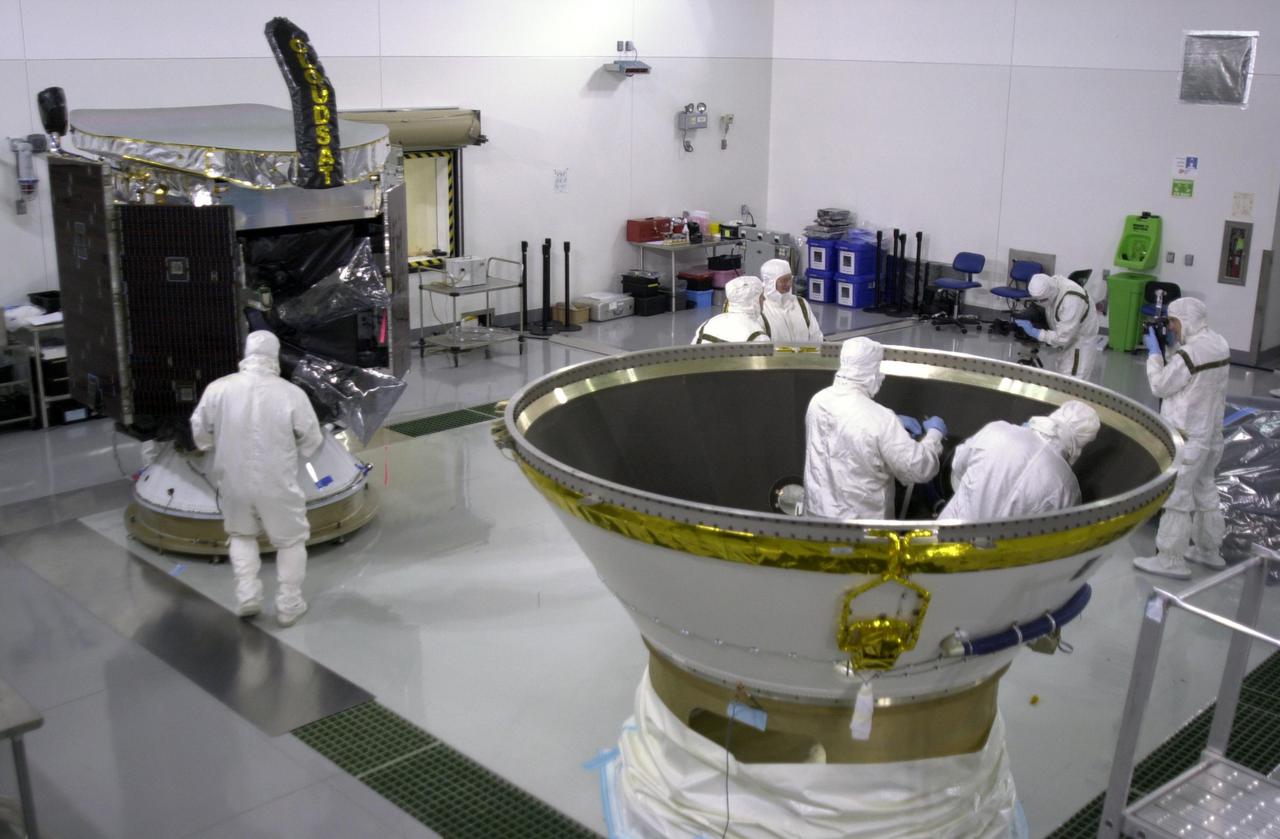
KENNEDY SPACE CENTER, FLA. - In a clean room at Vandenberg Air Force Base in California, workers prepare the inside of the lower portion of the Delta Payload Attach Fitting (right) for the installation of NASA's CloudSat spacecraft (left). CloudSat joins the CALIPSO spacecraft for launch. CALIPSO stands for Cloud-Aerosol Lidar and Infrared Pathfinder Satellite Observation. CALIPSO and CloudSat are highly complementary satellites that will provide never-before-seen 3-D perspectives of how clouds and aerosols form, evolve, and affect weather and climate. CALIPSO and CloudSat will fly in formation with three other satellites in the A-train constellation to enhance understanding of our climate system. Launch of CALIPSO_CloudSat aboard a Boeing Delta II rocket is scheduled for 3:01 a.m. PDT Sept. 29.
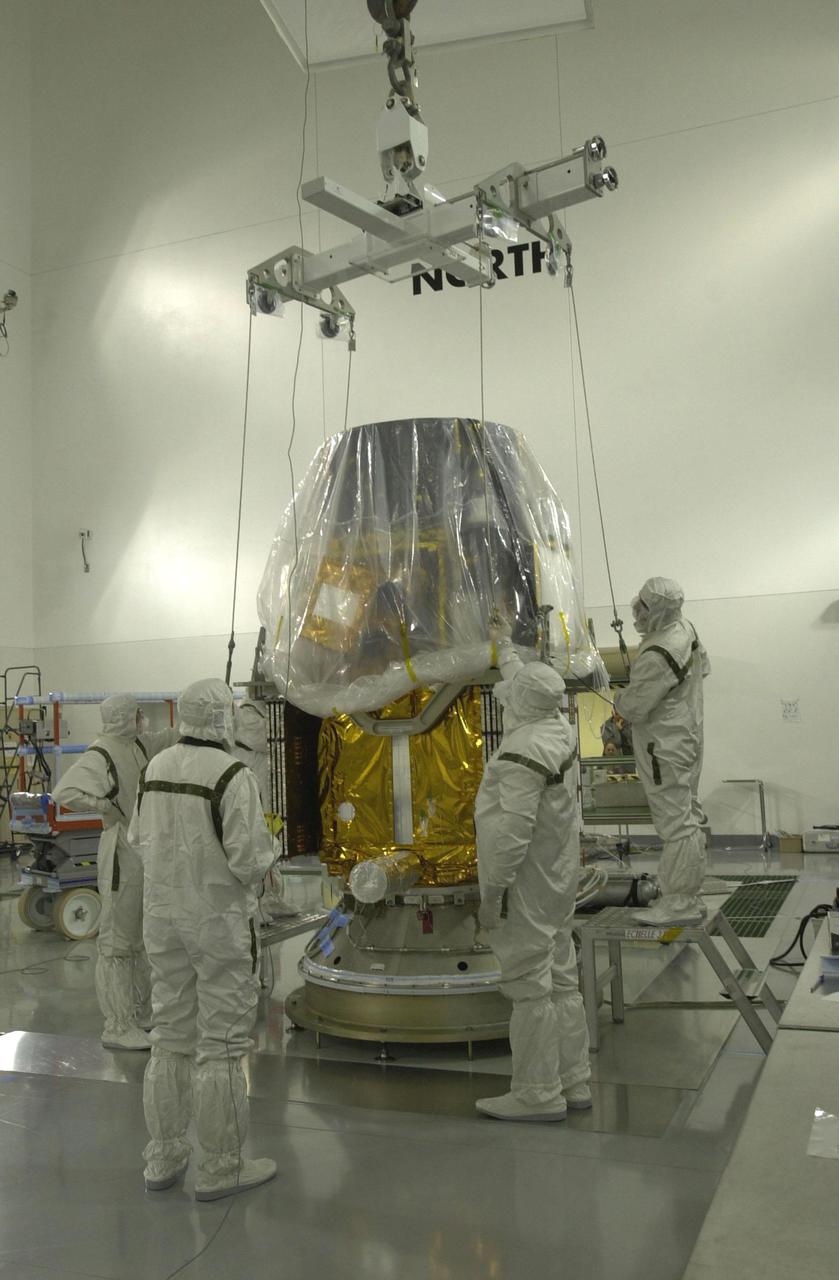
VANDENBERG AIR FORCE BASE, CALIF. - Inside the Astrotech Payload Processing Facility on Vandenberg Air Force Base in California, the CALIPSO spacecraft is being fitted with a crane to lift and move the satellite for mating with the Lower Delta Payload Attach Fitting (LDPAF), which contains the CloudSat satellite. The PAF is the interface between the spacecraft and the second stage of the rocket. CALIPSO stands for Cloud-Aerosol Lidar and Infrared Pathfinder Satellite Observation. CALIPSO and CloudSat are highly complementary satellites that will provide never-before-seen 3-D perspectives of how clouds and aerosols form, evolve, and affect weather and climate. CALIPSO and CloudSat will fly in formation with three other satellites in the A-train constellation to enhance understanding of our climate system. Launch of CALIPSO_CloudSat aboard a Boeing Delta II rocket is scheduled for 3:01 a.m. PDT Sept. 29.
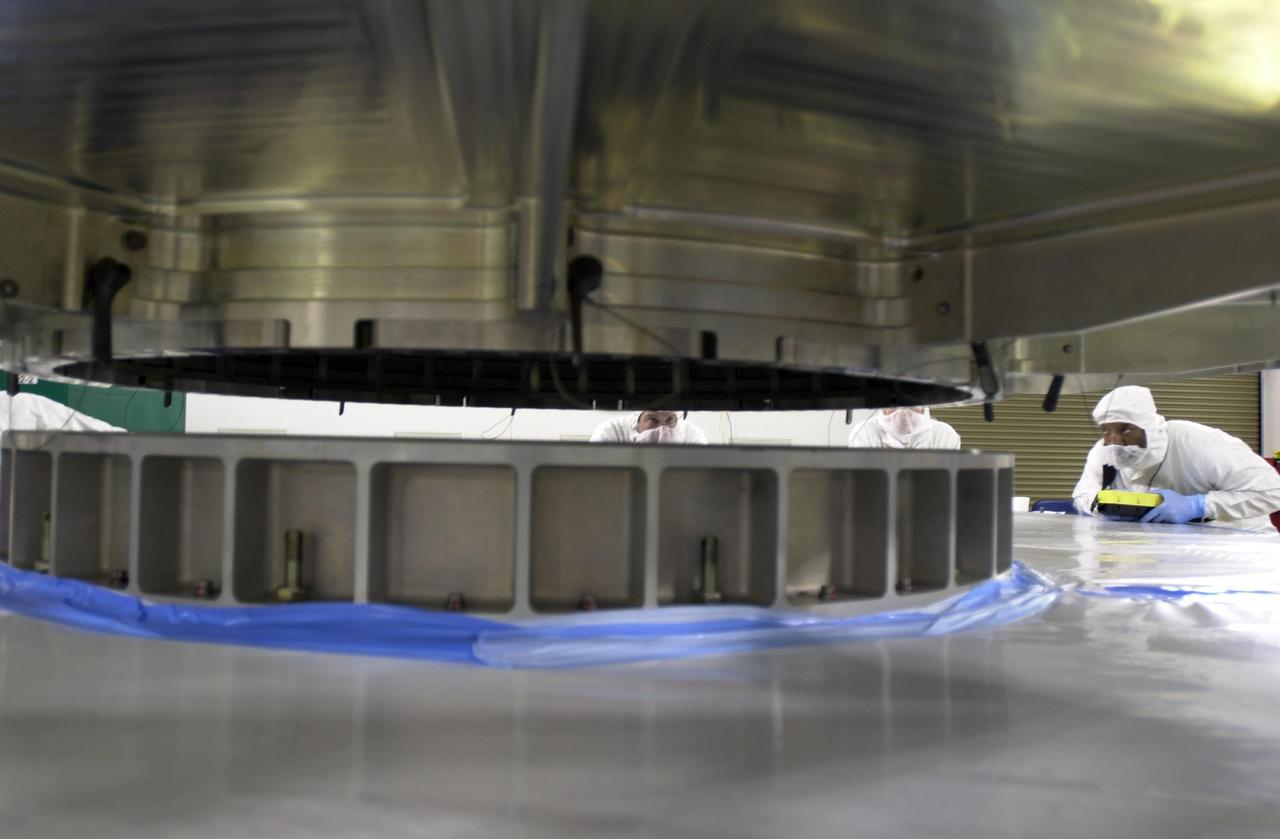
VANDENBERG AIR FORCE BASE, Calif. - Inside the Astrotech Payload Processing Facility on Vandenberg Air Force Base in California, the dual spacecraft CALIPSO and CloudSat, covered by a transport canister, is lowered onto a payload transporter. The spacecraft is being moved to Space Launch Complex 2. There the spacecraft will be lifted and mated with a Boeing Delta II rocket for launch on April 21. CALIPSO stands for Cloud-Aerosol Lidar and Infrared Pathfinder Satellite Observation. It will fly in combination with the CloudSat satellite to provide never-before-seen 3-D perspectives of how clouds and aerosols form, evolve, and affect weather and climate. CALIPSO and CloudSat will join three other satellites in orbit to enhance understanding of climate systems. Launch of CALIPSO/CloudSat is scheduled for April 21.
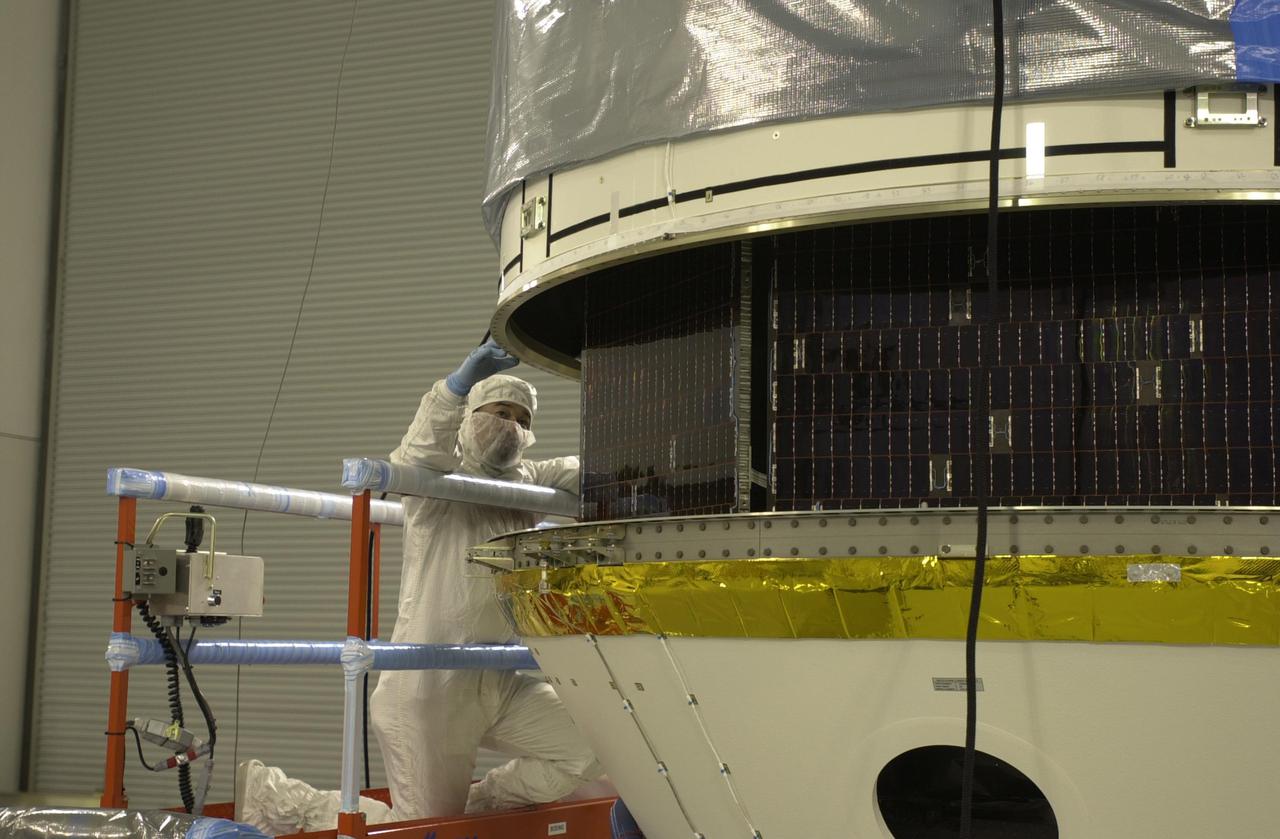
VANDENBERG AIR FORCE BASE, CALIF. - Inside the Astrotech Payload Processing Facility on Vandenberg Air Force Base in California, the upper Delta Payload Attach Fitting (UDPAF) is lowered toward the lower Delta Payload Attach Fitting (LDPAF). The LDPAF holds the CloudSat satellite and the UDPAF will hold the CALIPSO satellite. The two sections will be mated. CALIPSO stands for Cloud-Aerosol Lidar and Infrared Pathfinder Satellite Observation. CALIPSO and CloudSat are highly complementary satellites that will provide never-before-seen 3-D perspectives of how clouds and aerosols form, evolve, and affect weather and climate. CALIPSO and CloudSat will fly in formation with three other satellites in the A-train constellation to enhance understanding of our climate system. Launch of CALIPSO_CloudSat aboard a Boeing Delta II rocket is scheduled for 3:01 a.m. PDT Sept. 29.
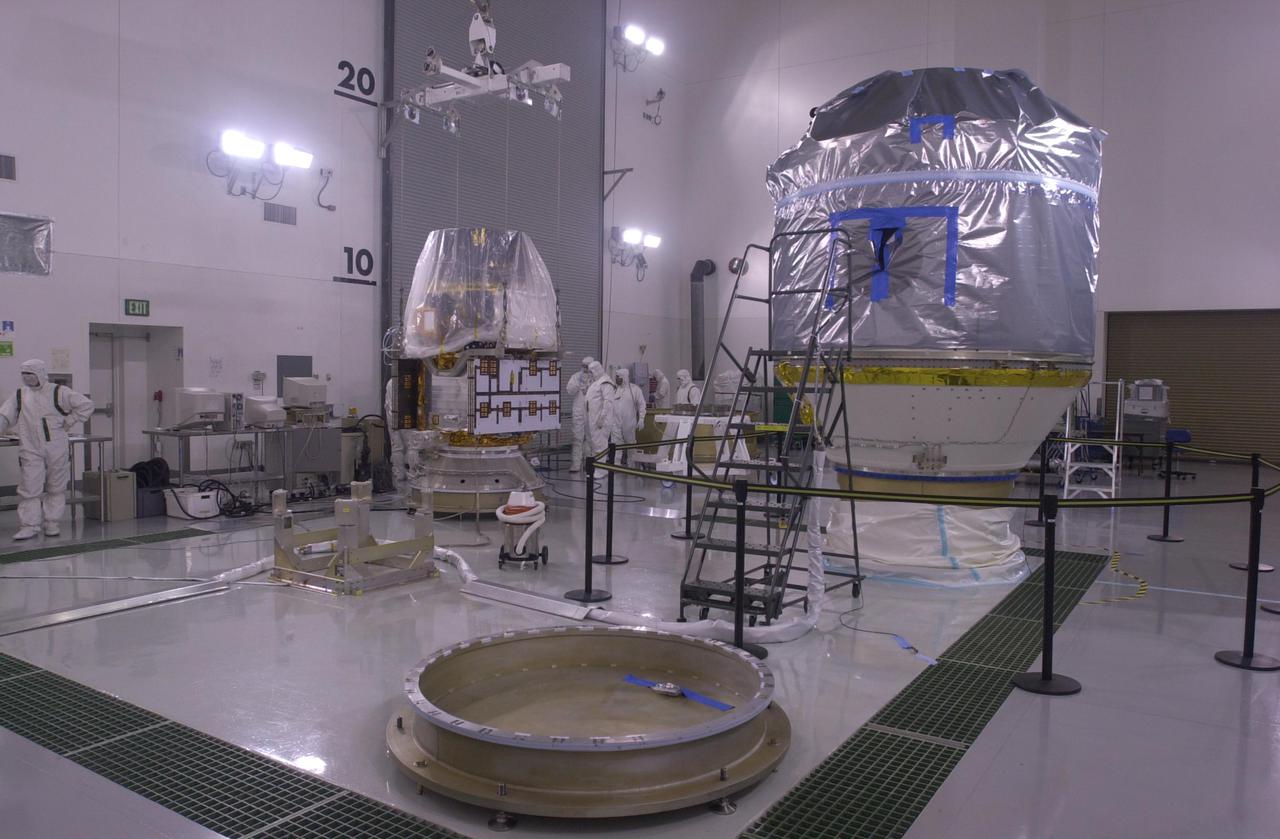
VANDENBERG AIR FORCE BASE, CALIF. — Inside the Astrotech Payload Processing Facility on Vandenberg Air Force Base in California, the CALIPSO spacecraft (background, left) is ready for mating with the upper Delta Payload Attach Fitting (UDPAF). Later the UDPAF will be mated with the lower Delta Payload Attach Fitting, which contains the CloudSat satellite. The PAF is the interface between the spacecraft and the second stage of the rocket. CALIPSO stands for Cloud-Aerosol Lidar and Infrared Pathfinder Satellite Observation. CALIPSO and CloudSat are highly complementary satellites that will provide never-before-seen 3-D perspectives of how clouds and aerosols form, evolve, and affect weather and climate. CALIPSO and CloudSat will fly in formation with three other satellites in the A-train constellation to enhance understanding of our climate system. Launch of CALIPSO_CloudSat aboard a Boeing Delta II rocket is scheduled for 3:01 a.m. PDT Sept. 29.
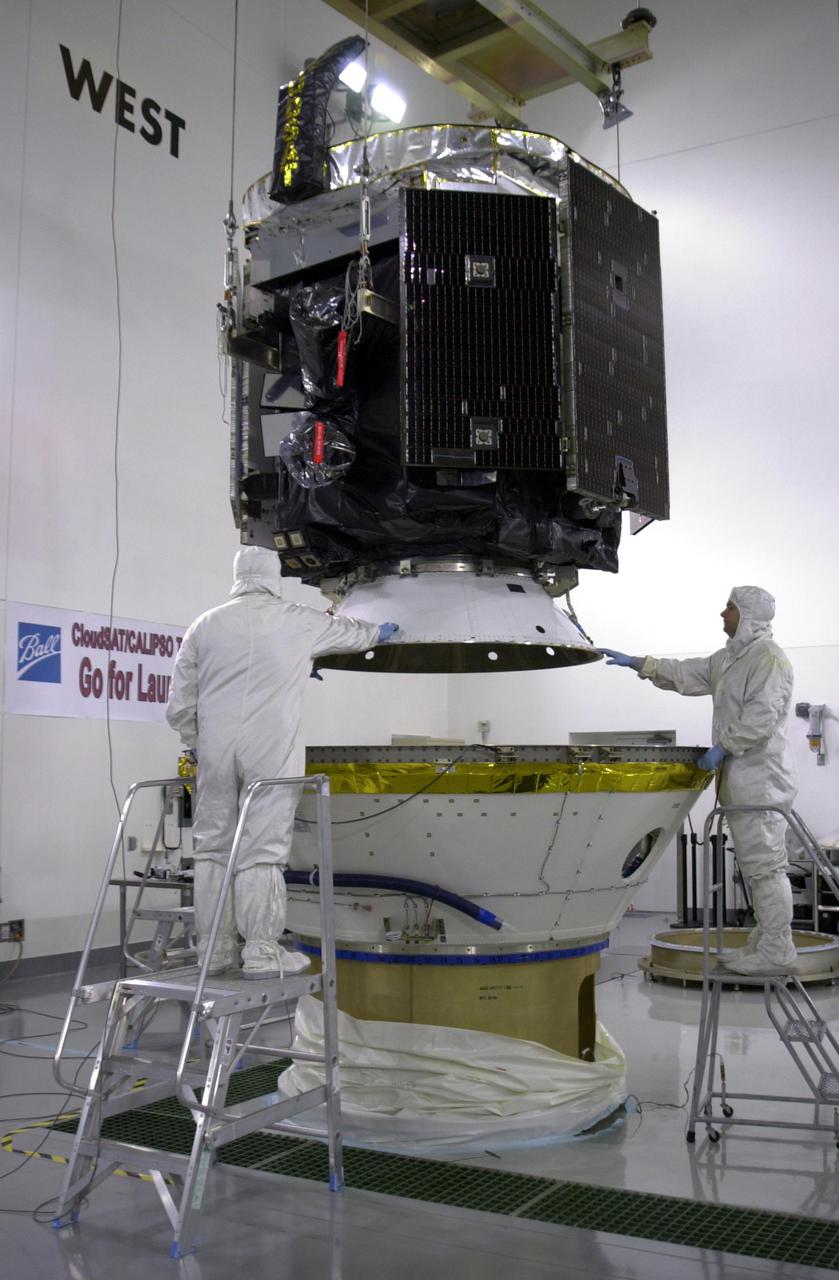
KENNEDY SPACE CENTER, FLA. - In a clean room at Vandenberg Air Force Base in California, workers ensure NASA's CloudSat spacecraft is lowered safely into the lower portion of the Delta Payload Attach Fitting. CloudSat joins the CALIPSO spacecraft for launch. CALIPSO stands for Cloud-Aerosol Lidar and Infrared Pathfinder Satellite Observation. CALIPSO and CloudSat are highly complementary satellites that will provide never-before-seen 3-D perspectives of how clouds and aerosols form, evolve, and affect weather and climate. CALIPSO and CloudSat will fly in formation with three other satellites in the A-train constellation to enhance understanding of our climate system. Launch of CALIPSO_CloudSat aboard a Boeing Delta II rocket is scheduled for 3:01 a.m. PDT Sept. 29.
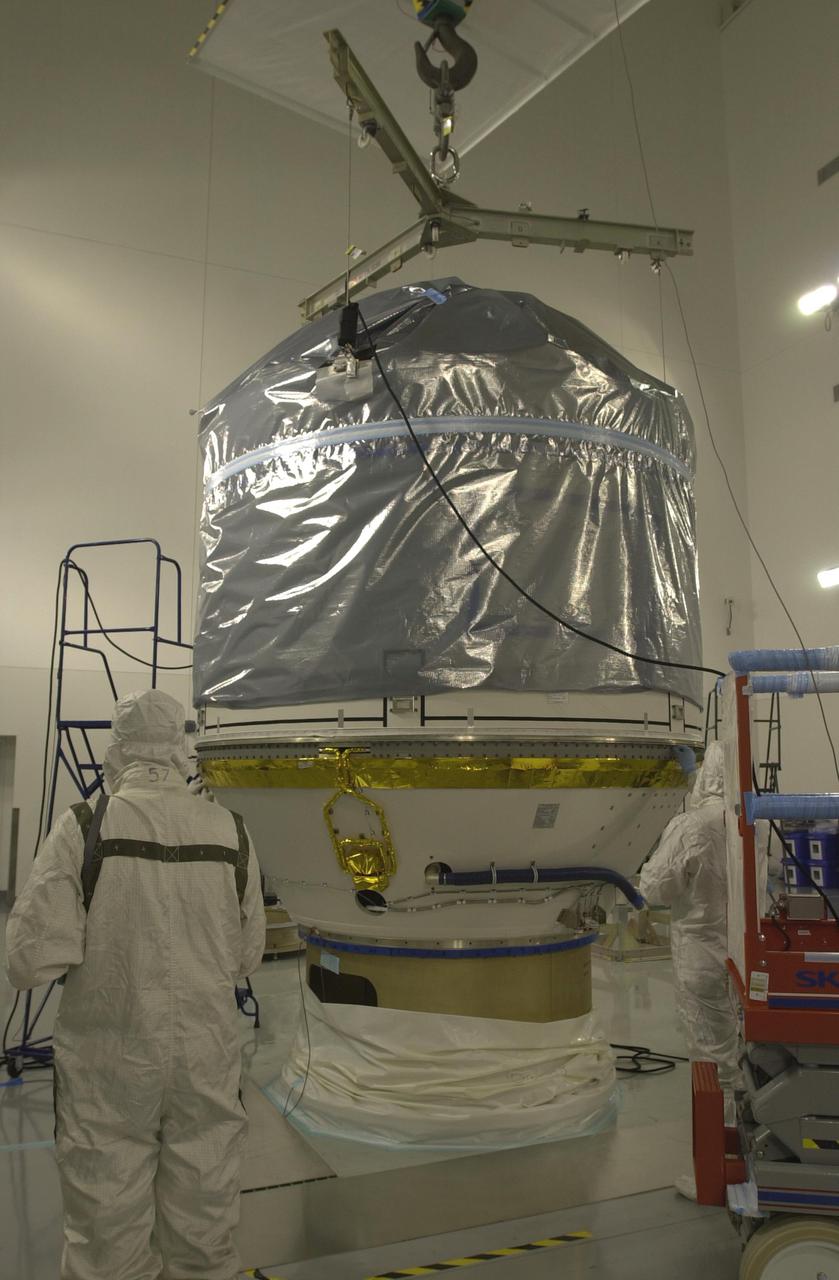
VANDENBERG AIR FORCE BASE, CALIF. - Inside the Astrotech Payload Processing Facility on Vandenberg Air Force Base in California, the upper Delta Payload Attach Fitting (UDPAF) has been mated with the lower Delta Payload Attach Fitting (LDPAF). The LDPAF holds the CloudSat satellite and the UDPAF will hold the CALIPSO satellite. CALIPSO stands for Cloud-Aerosol Lidar and Infrared Pathfinder Satellite Observation. CALIPSO and CloudSat are highly complementary satellites that will provide never-before-seen 3-D perspectives of how clouds and aerosols form, evolve, and affect weather and climate. CALIPSO and CloudSat will fly in formation with three other satellites in the A-train constellation to enhance understanding of our climate system. Launch of CALIPSO_CloudSat aboard a Boeing Delta II rocket is scheduled for 3:01 a.m. PDT Sept. 29.
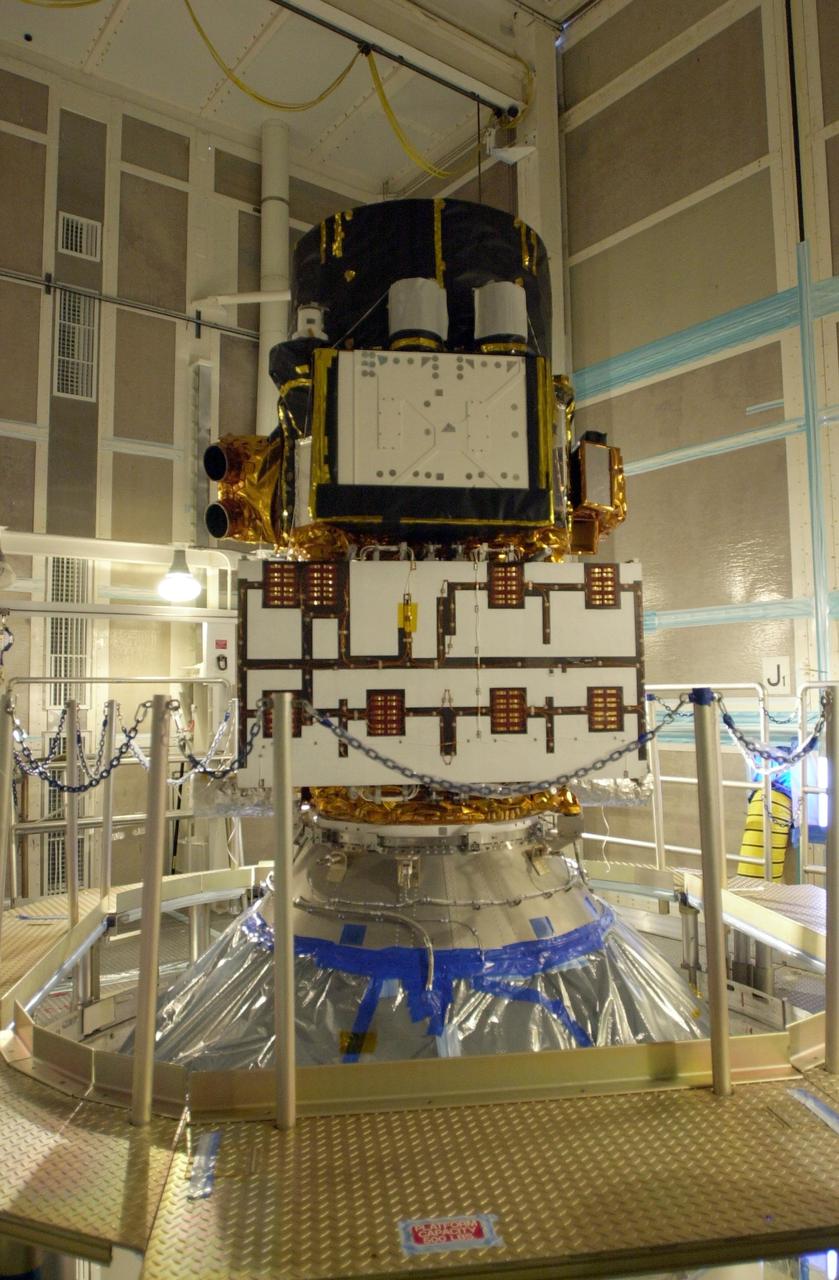
VANDENBERG AIR FORCE BASE, CALIF. - Inside the mobile service tower on NASA's Space Launch Complex 2 at Vandenberg Air Force Base, the protective cover has been removed from the CALIPSO spacecraft in preparation for encapsulation and launch. Beneath CALIPSO, CloudSat is enclosed within the dual payload attach fitting. CALIPSO stands for Cloud-Aerosol Lidar and Infrared Pathfinder Satellite Observation. It will fly in combination with the CloudSat satellite to provide never-before-seen 3-D perspectives of how clouds and aerosols form, evolve, and affect weather and climate. CALIPSO and CloudSat will join three other satellites in orbit to enhance understanding of climate systems. The spacecraft is scheduled to launch April 21 aboard a Boeing Delta II rocket.
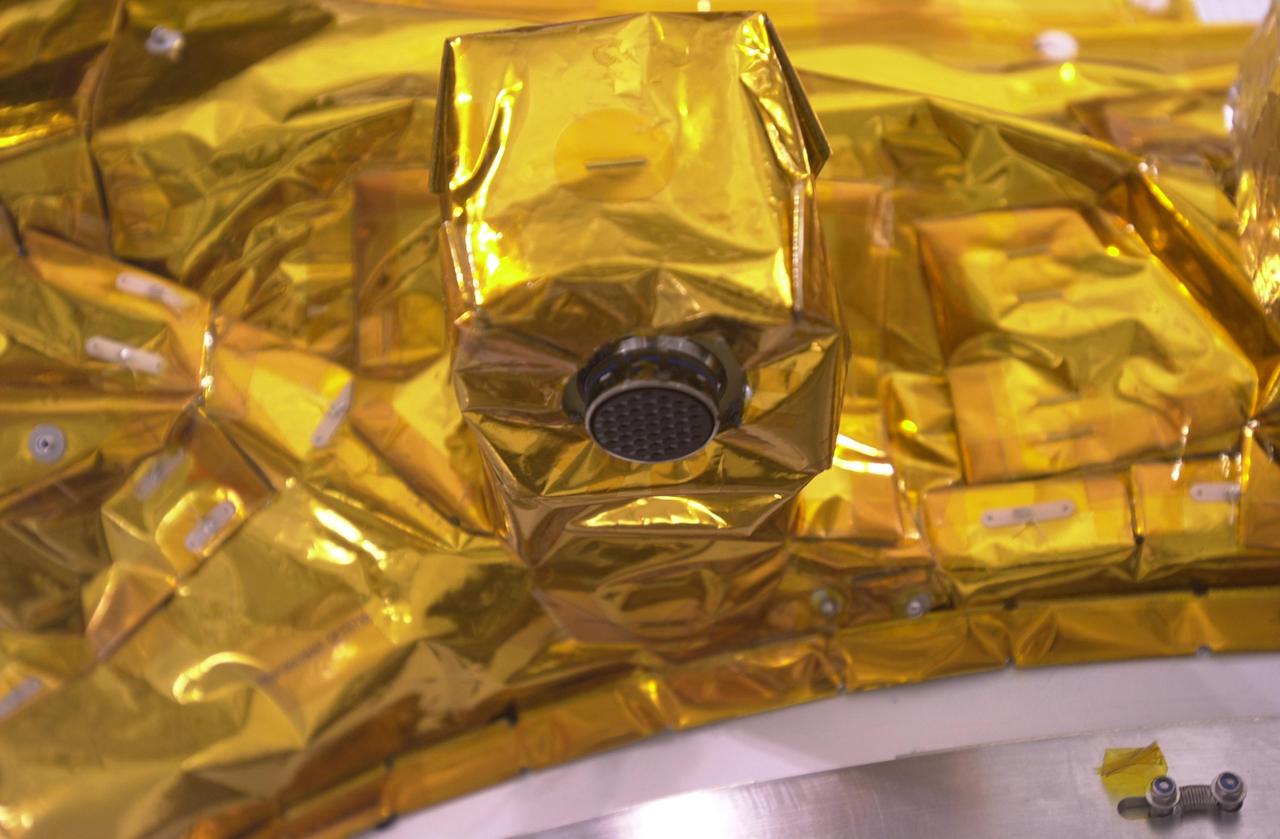
VANDENBERG AIR FORCE BASE, CALIF. — Inside the Astrotech Payload Processing Facility on Vandenberg Air Force Base in California, the CALIPSO spacecraft is being prepared for mating with the upper Delta Payload Attach Fitting (UDPAF). Later the UDPAF will be mated with the lower Delta Payload Attach Fitting, which contains the CloudSat satellite. The PAF is the interface between the spacecraft and the second stage of the rocket. CALIPSO stands for Cloud-Aerosol Lidar and Infrared Pathfinder Satellite Observation. CALIPSO and CloudSat are highly complementary satellites that will provide never-before-seen 3-D perspectives of how clouds and aerosols form, evolve, and affect weather and climate. CALIPSO and CloudSat will fly in formation with three other satellites in the A-train constellation to enhance understanding of our climate system. Launch of CALIPSO_CloudSat aboard a Boeing Delta II rocket is scheduled for 3:01 a.m. PDT Sept. 29.
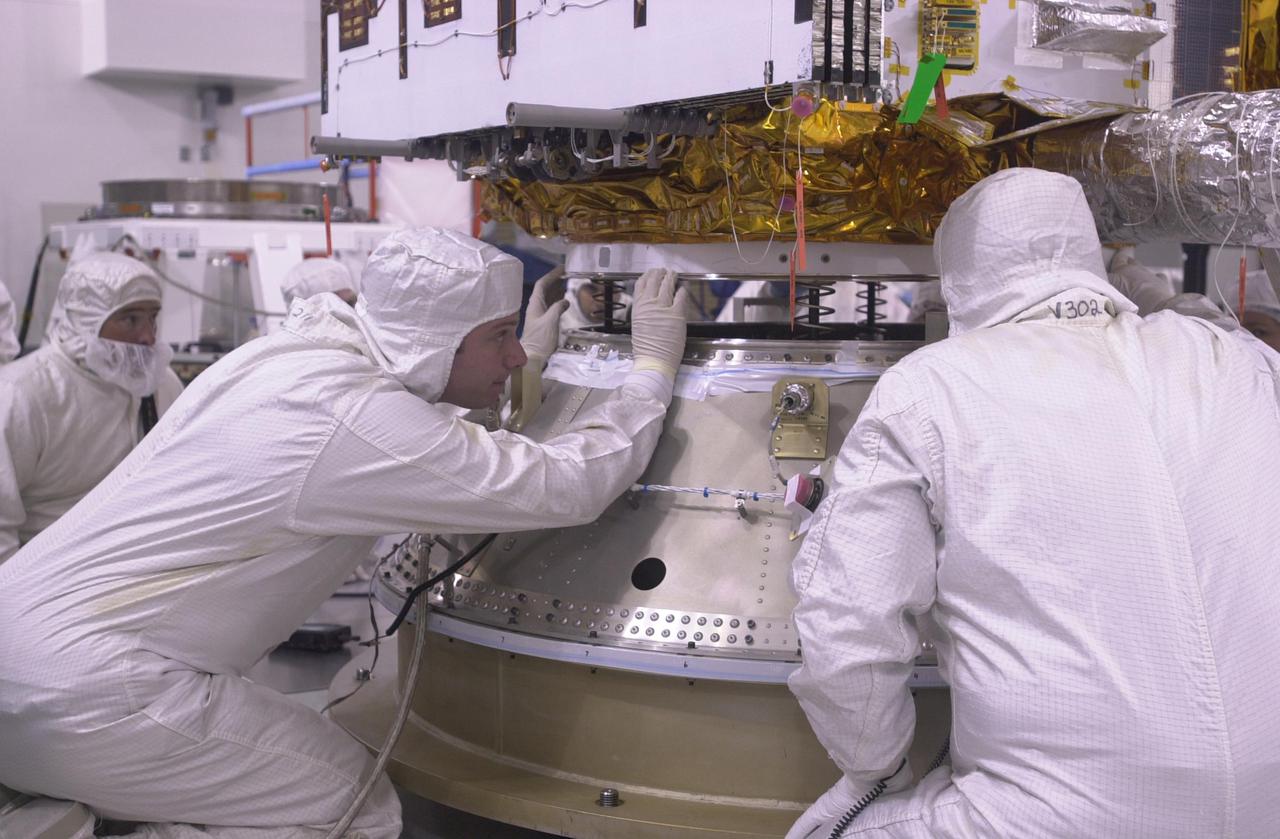
VANDENBERG AIR FORCE BASE, CALIF. — Inside the Astrotech Payload Processing Facility on Vandenberg Air Force Base in California, workers help secure the CALIPSO spacecraft to the upper Delta Payload Attach Fitting (UDPAF). Later the UDPAF will be mated with the lower Delta Payload Attach Fitting, which contains the CloudSat satellite. The PAF is the interface between the spacecraft and the second stage of the rocket. CALIPSO stands for Cloud-Aerosol Lidar and Infrared Pathfinder Satellite Observation. CALIPSO and CloudSat are highly complementary satellites that will provide never-before-seen 3-D perspectives of how clouds and aerosols form, evolve, and affect weather and climate. CALIPSO and CloudSat will fly in formation with three other satellites in the A-train constellation to enhance understanding of our climate system. Launch of CALIPSO_CloudSat aboard a Boeing Delta II rocket is scheduled for 3:01 a.m. PDT Sept. 29.
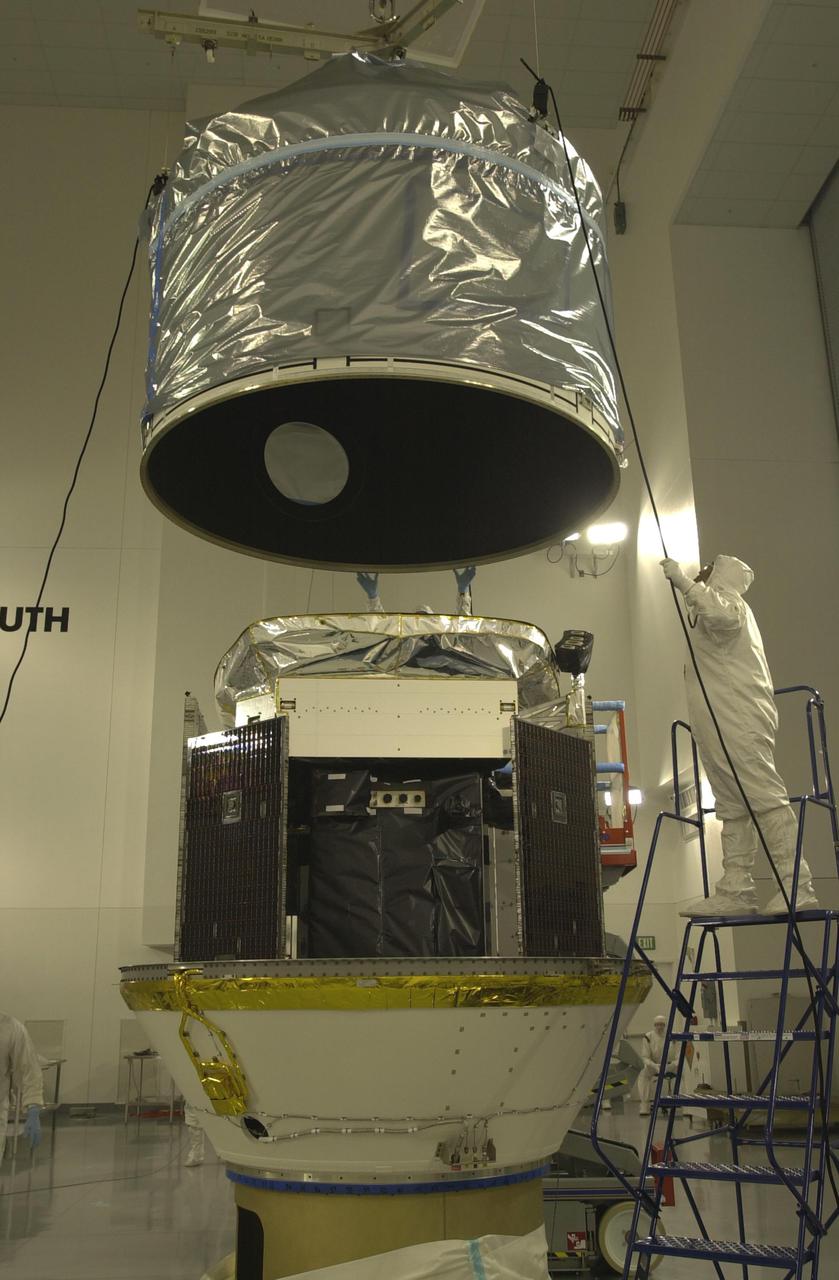
VANDENBERG AIR FORCE BASE, CALIF. - Inside the Astrotech Payload Processing Facility on Vandenberg Air Force Base in California, the upper Delta Payload Attach Fitting (UDPAF) is lowered toward the lower Delta Payload Attach Fitting (LDPAF) at right. The UDPAF will hold the CALIPSO satellite and the LDPAF holds the CloudSat satellite. The two sections will be mated. CALIPSO stands for Cloud-Aerosol Lidar and Infrared Pathfinder Satellite Observation. CALIPSO and CloudSat are highly complementary satellites that will provide never-before-seen 3-D perspectives of how clouds and aerosols form, evolve, and affect weather and climate. CALIPSO and CloudSat will fly in formation with three other satellites in the A-train constellation to enhance understanding of our climate system. Launch of CALIPSO_CloudSat aboard a Boeing Delta II rocket is scheduled for 3:01 a.m. PDT Sept. 29.