
A What’s On Board Briefing for SpaceX’s 19th Commercial Resupply Services (CRS-19) mission for NASA to the International Space Station took place on Dec. 3, 2019, at the agency’s Kennedy Space Center in Florida. Paul Ferkul, an investigator for the Confined Combustion experiment, discuss the investigation which studies how fire spreads and behaves in confined spaces. The SpaceX Falcon 9 rocket and Dragon cargo module are scheduled to launch on Dec. 4, 2019, from Space Launch Complex 40 on Cape Canaveral Air Force Station in Florida.
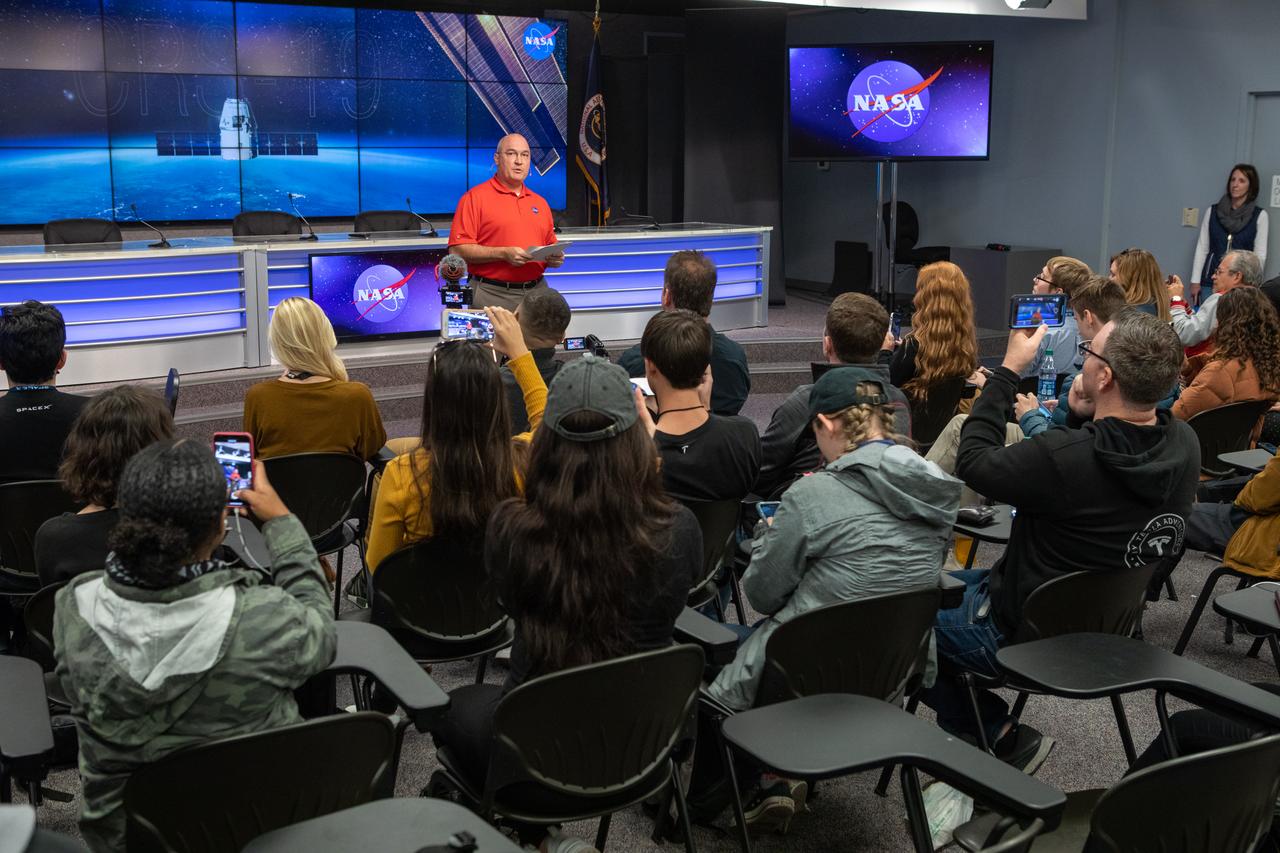
Greg Harland, NASA Communications, moderates a What’s On Board Briefing for SpaceX’s 19th Commercial Resupply Services (CRS-19) mission for NASA to the International Space Station on Dec. 3, 2019, at the agency’s Kennedy Space Center in Florida. The SpaceX Falcon 9 rocket and Dragon cargo module are scheduled to launch on Dec. 4, 2019, from Space Launch Complex 40 on Cape Canaveral Air Force Station in Florida.
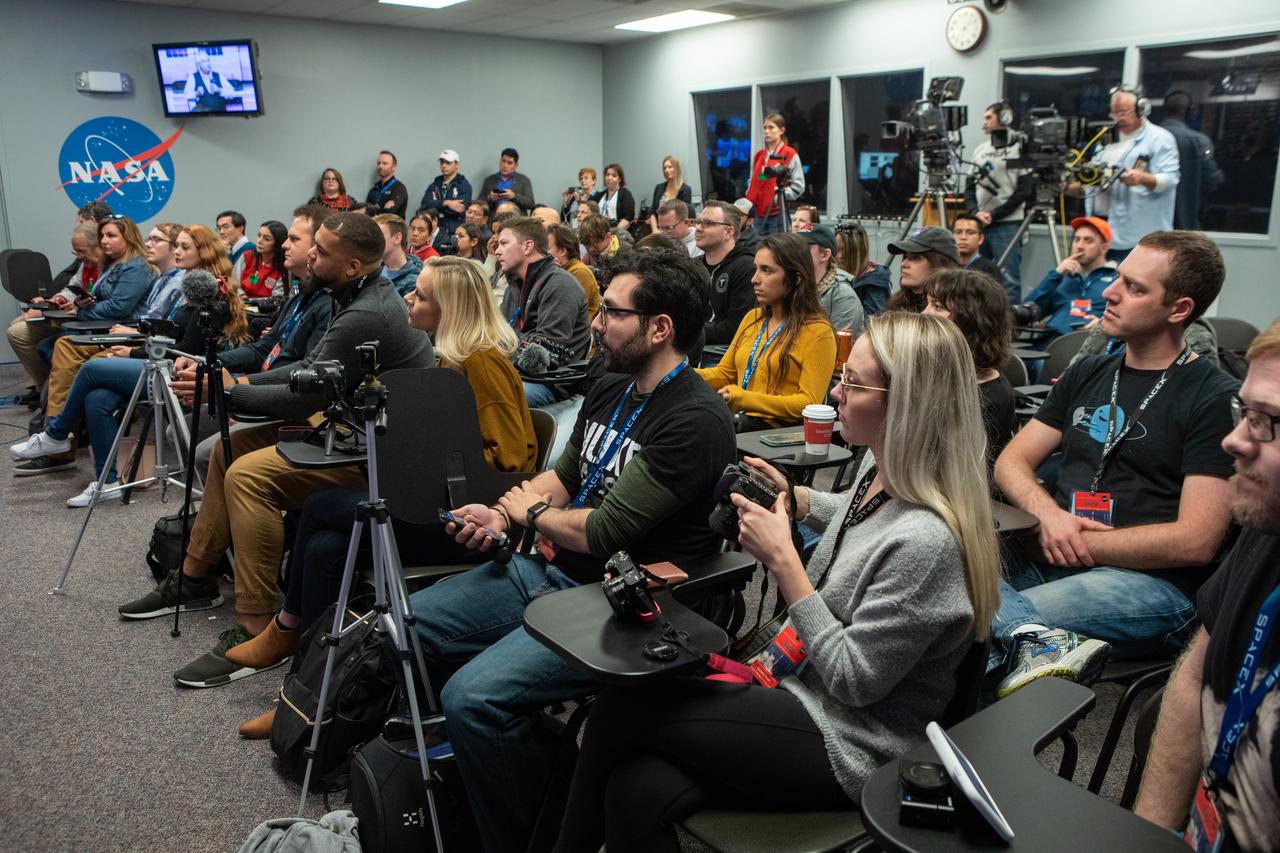
Members of the news and social media listen to a What's On Board Briefing on Dec. 3, 2019, for SpaceX's 19th Commercial Resupply Services (CRS-19) mission for NASA to the International Space Station at the agency's Kennedy Space Center in Florida. The SpaceX Falcon 9 rocket and Dragon cargo module are scheduled to launch on Dec. 4, 2019, from Space Launch Complex 40 on Cape Canaveral Air Force Station in Florida.
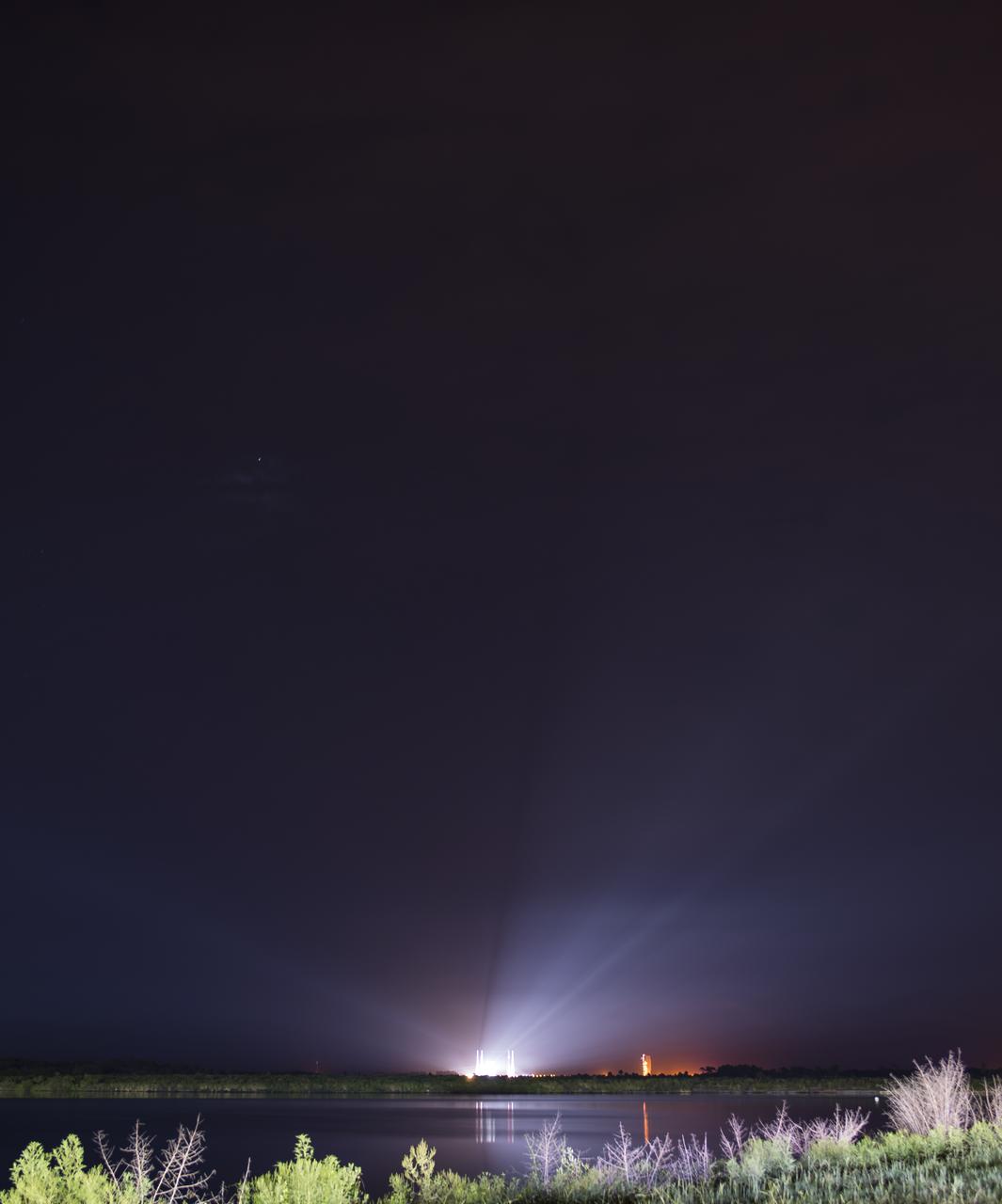
In this long exposure image, a United Launch Alliance Atlas V rocket with NASA’s Mars 2020 Perseverance rover onboard is seen illuminated by spotlights on the launch pad at Space Launch Complex 41 at Cape Canaveral Air Force Station, Thursday, July 30, 2020, from NASA’s Kennedy Space Center in Florida. The Perseverance rover is part of NASA’s Mars Exploration Program, a long-term effort of robotic exploration of the Red Planet. Launch is scheduled for Thursday, July 30. Photo Credit: (NASA/Joel Kowsky)

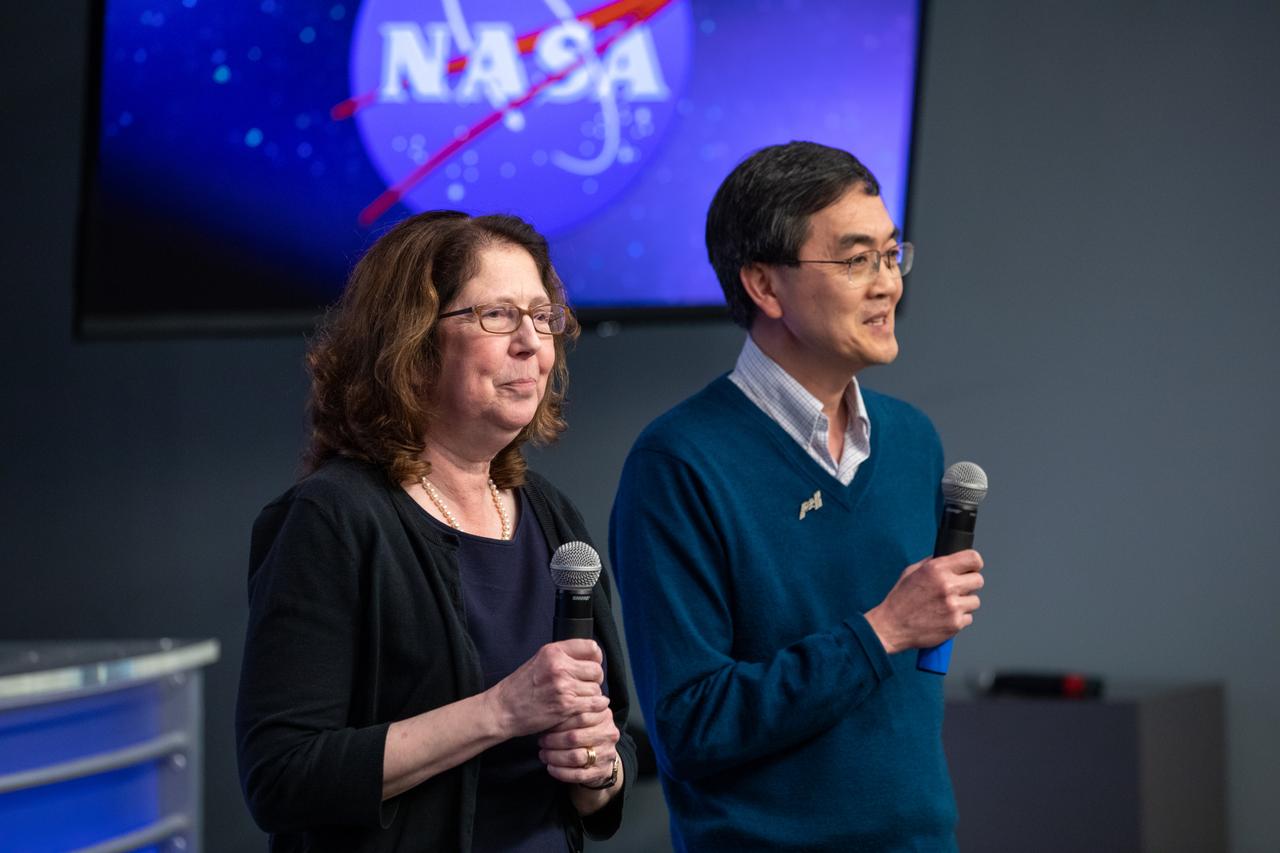
A What’s On Board Briefing for SpaceX’s 19th Commercial Resupply Services (CRS-19) mission for NASA to the International Space Station took place on Dec. 3, 2019, at the agency’s Kennedy Space Center in Florida. Rosa Reyna gonzales, student researcher for AzTechSat-1, the first Mexican-developed nanosatellite to be launched from the space station, discusses her role in the experiment and how the investigation will demonstrate communication between a CubeSat and the GlobalStar Constellation satellite network in low-Earth orbit. The SpaceX Falcon 9 rocket and Dragon cargo module are scheduled to launch on Dec. 4, 2019, from Space Launch Complex 40 on Cape Canaveral Air Force Station in Florida.
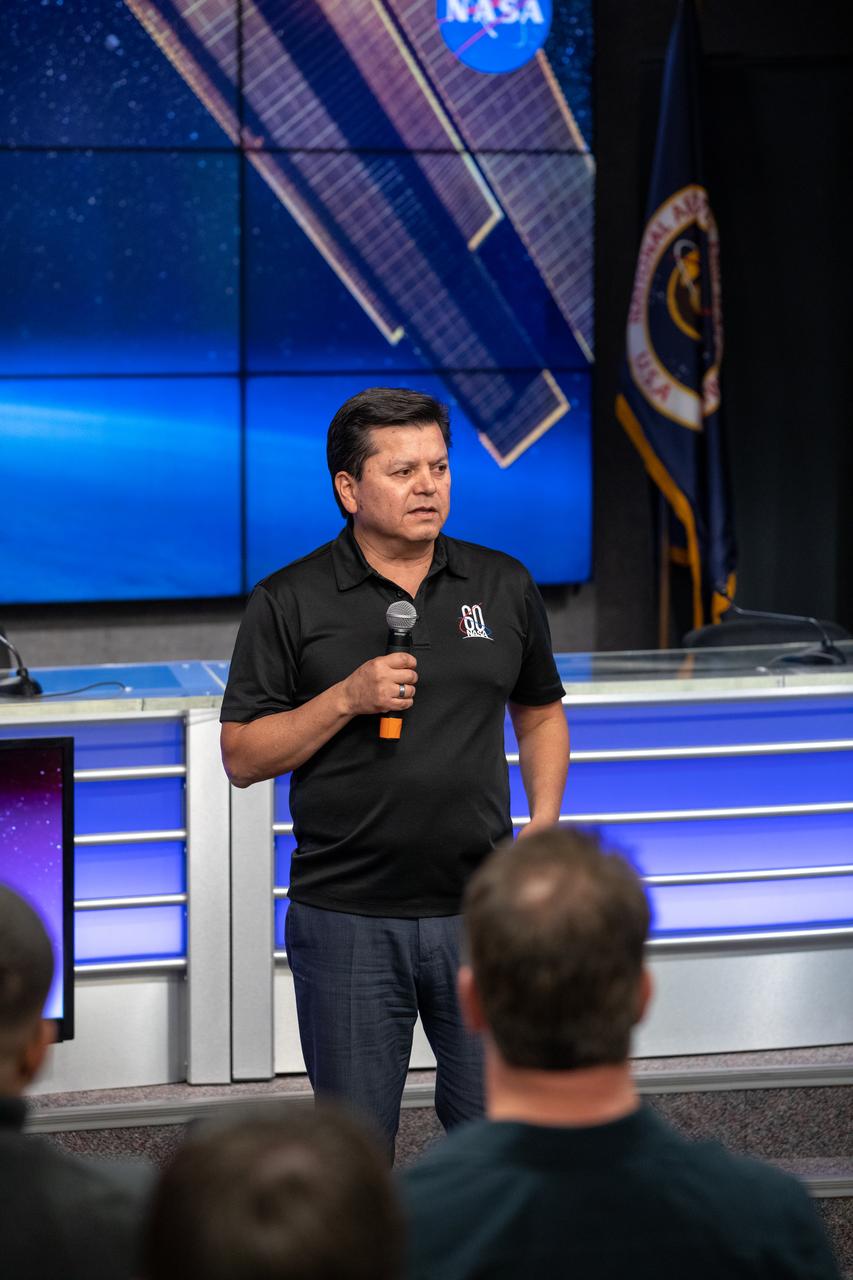
A What’s On Board Briefing for SpaceX’s 19th Commercial Resupply Services (CRS-19) mission for NASA to the International Space Station took place on Dec. 3, 2019, at the agency’s Kennedy Space Center in Florida. Andres Martinez, principal investigator for AzTechSat-1, the first Mexican-developed nanosatellite to be launched from the space station, discusses how the investigation will demonstrate communication between a CubeSat and the GlobalStar Constellation satellite network in low-Earth orbit. The SpaceX Falcon 9 rocket and Dragon cargo module are scheduled to launch on Dec. 4, 2019, from Space Launch Complex 40 on Cape Canaveral Air Force Station in Florida.
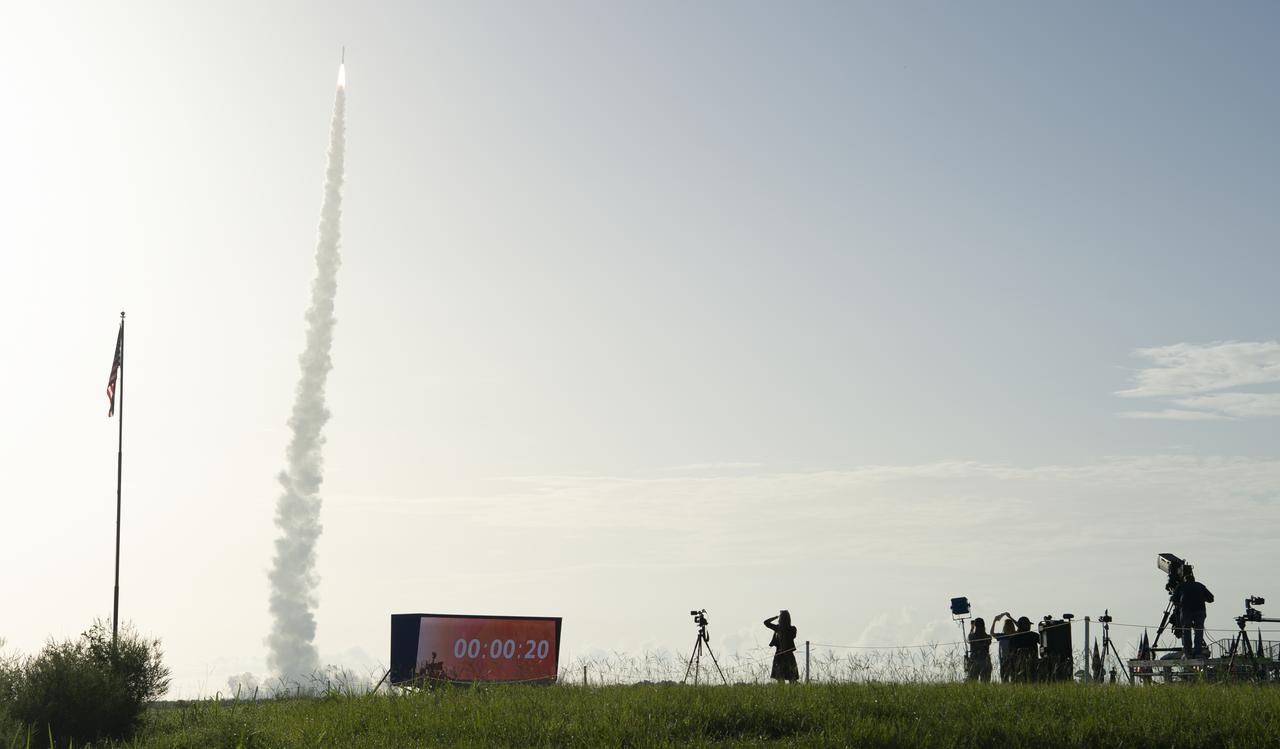
A United Launch Alliance Atlas V rocket with NASA’s Mars 2020 Perseverance rover onboard launches from Space Launch Complex 41 at Cape Canaveral Air Force Station, Thursday, July 30, 2020, from NASA’s Kennedy Space Center in Florida. The Perseverance rover is part of NASA’s Mars Exploration Program, a long-term effort of robotic exploration of the Red Planet. Photo Credit: (NASA/Joel Kowsky)
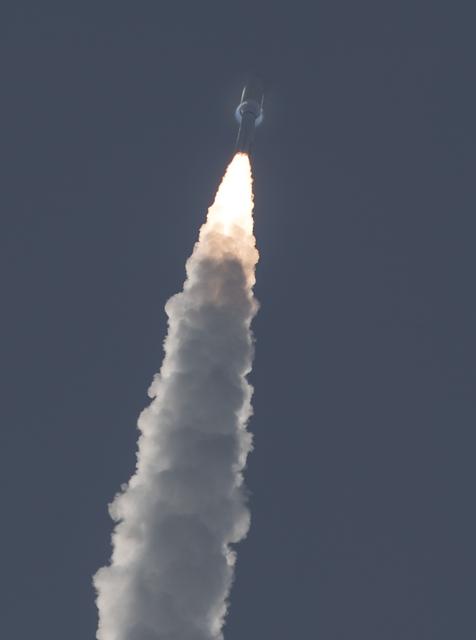
A United Launch Alliance Atlas V rocket with NASA’s Mars 2020 Perseverance rover onboard launches from Space Launch Complex 41 at Cape Canaveral Air Force Station, Thursday, July 30, 2020, from NASA’s Kennedy Space Center in Florida. The Perseverance rover is part of NASA’s Mars Exploration Program, a long-term effort of robotic exploration of the Red Planet. Photo Credit: (NASA/Joel Kowsky)
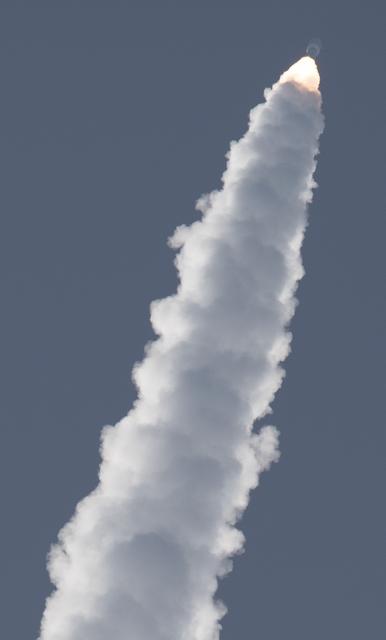
A United Launch Alliance Atlas V rocket with NASA’s Mars 2020 Perseverance rover onboard launches from Space Launch Complex 41 at Cape Canaveral Air Force Station, Thursday, July 30, 2020, from NASA’s Kennedy Space Center in Florida. The Perseverance rover is part of NASA’s Mars Exploration Program, a long-term effort of robotic exploration of the Red Planet. Photo Credit: (NASA/Joel Kowsky)
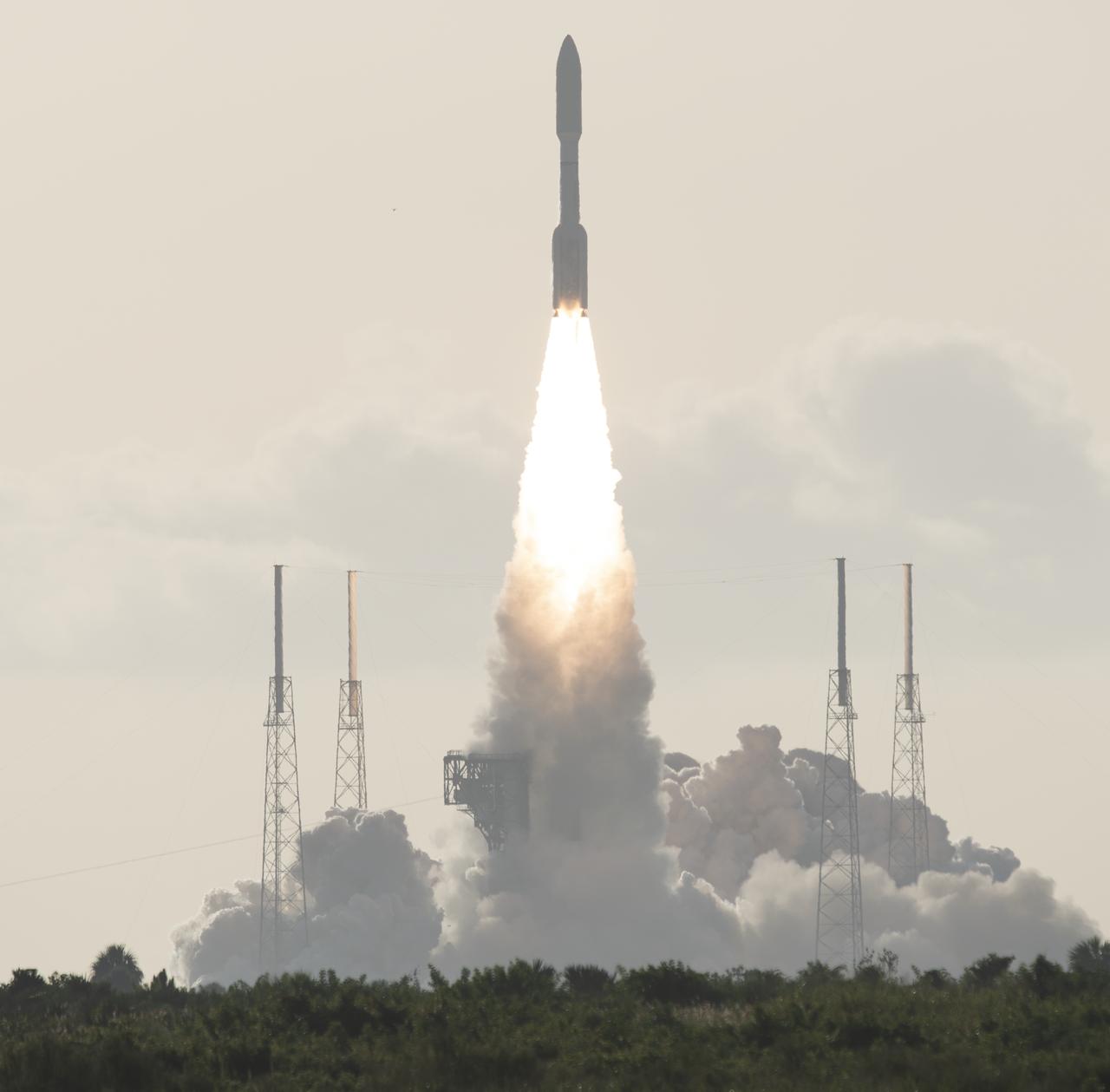
A United Launch Alliance Atlas V rocket with NASA’s Mars 2020 Perseverance rover onboard launches from Space Launch Complex 41 at Cape Canaveral Air Force Station, Thursday, July 30, 2020, from NASA’s Kennedy Space Center in Florida. The Perseverance rover is part of NASA’s Mars Exploration Program, a long-term effort of robotic exploration of the Red Planet. Photo Credit: (NASA/Joel Kowsky)
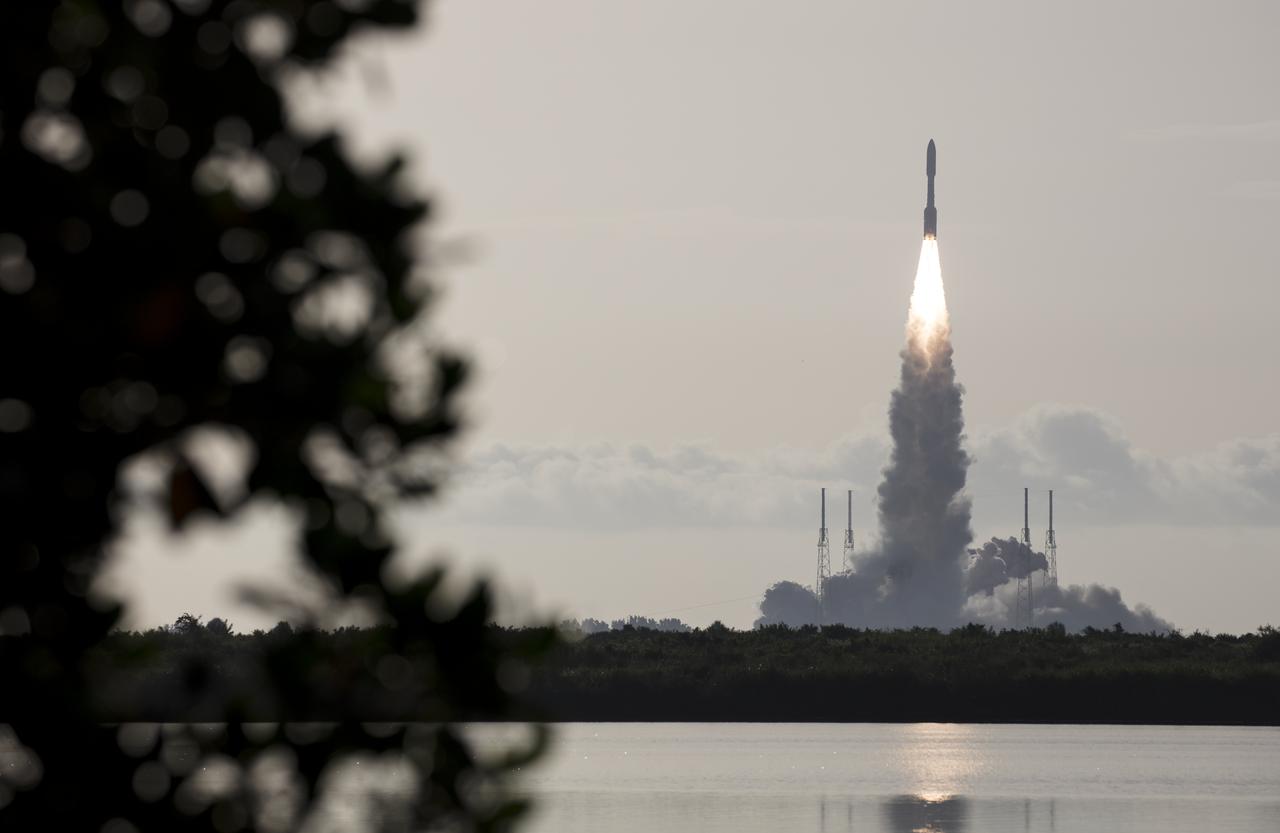
A United Launch Alliance Atlas V rocket with NASA’s Mars 2020 Perseverance rover onboard launches from Space Launch Complex 41 at Cape Canaveral Air Force Station, Thursday, July 30, 2020, from NASA’s Kennedy Space Center in Florida. The Perseverance rover is part of NASA’s Mars Exploration Program, a long-term effort of robotic exploration of the Red Planet. Photo Credit: (NASA/Joel Kowsky)
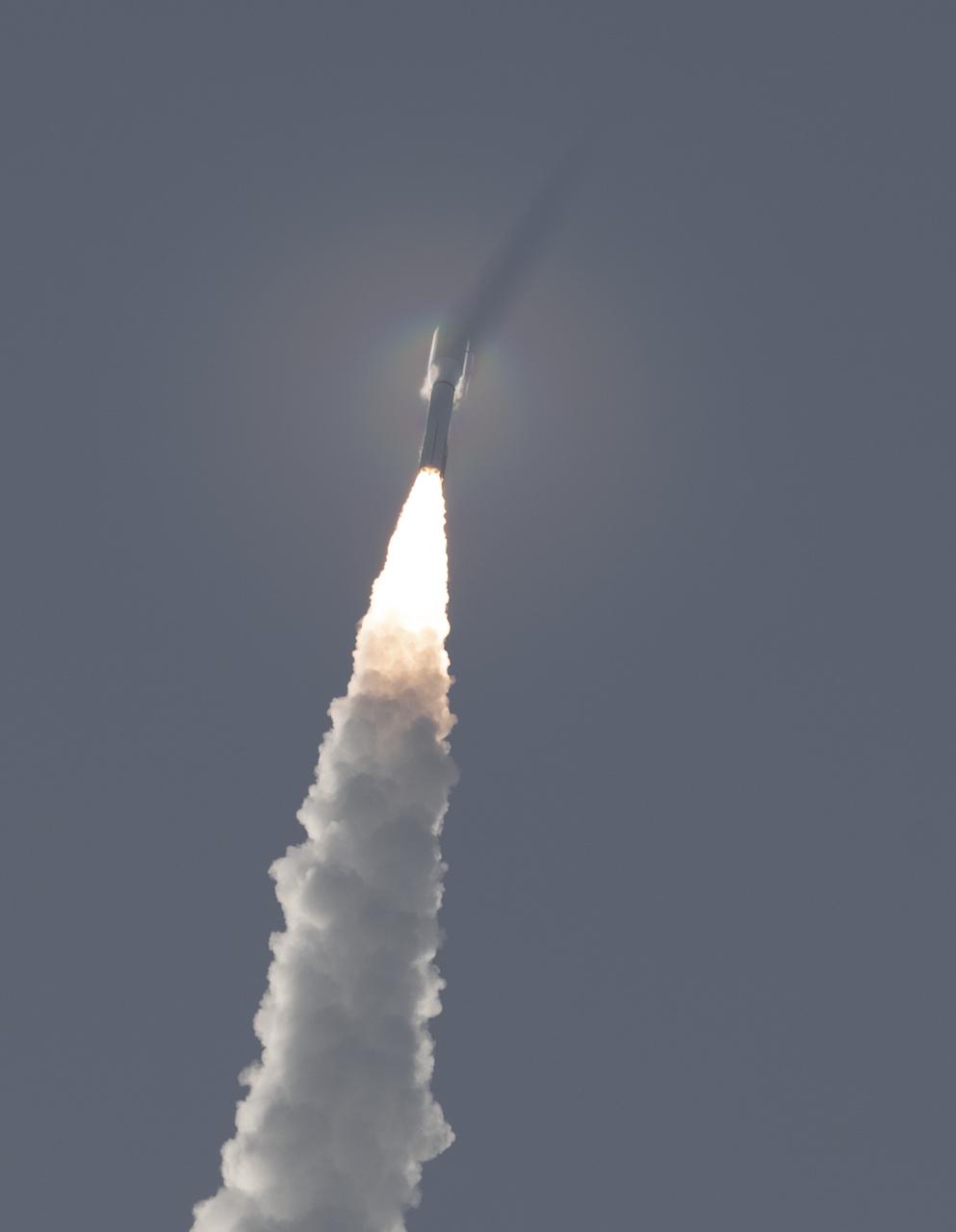
A United Launch Alliance Atlas V rocket with NASA’s Mars 2020 Perseverance rover onboard launches from Space Launch Complex 41 at Cape Canaveral Air Force Station, Thursday, July 30, 2020, from NASA’s Kennedy Space Center in Florida. The Perseverance rover is part of NASA’s Mars Exploration Program, a long-term effort of robotic exploration of the Red Planet. Photo Credit: (NASA/Joel Kowsky)
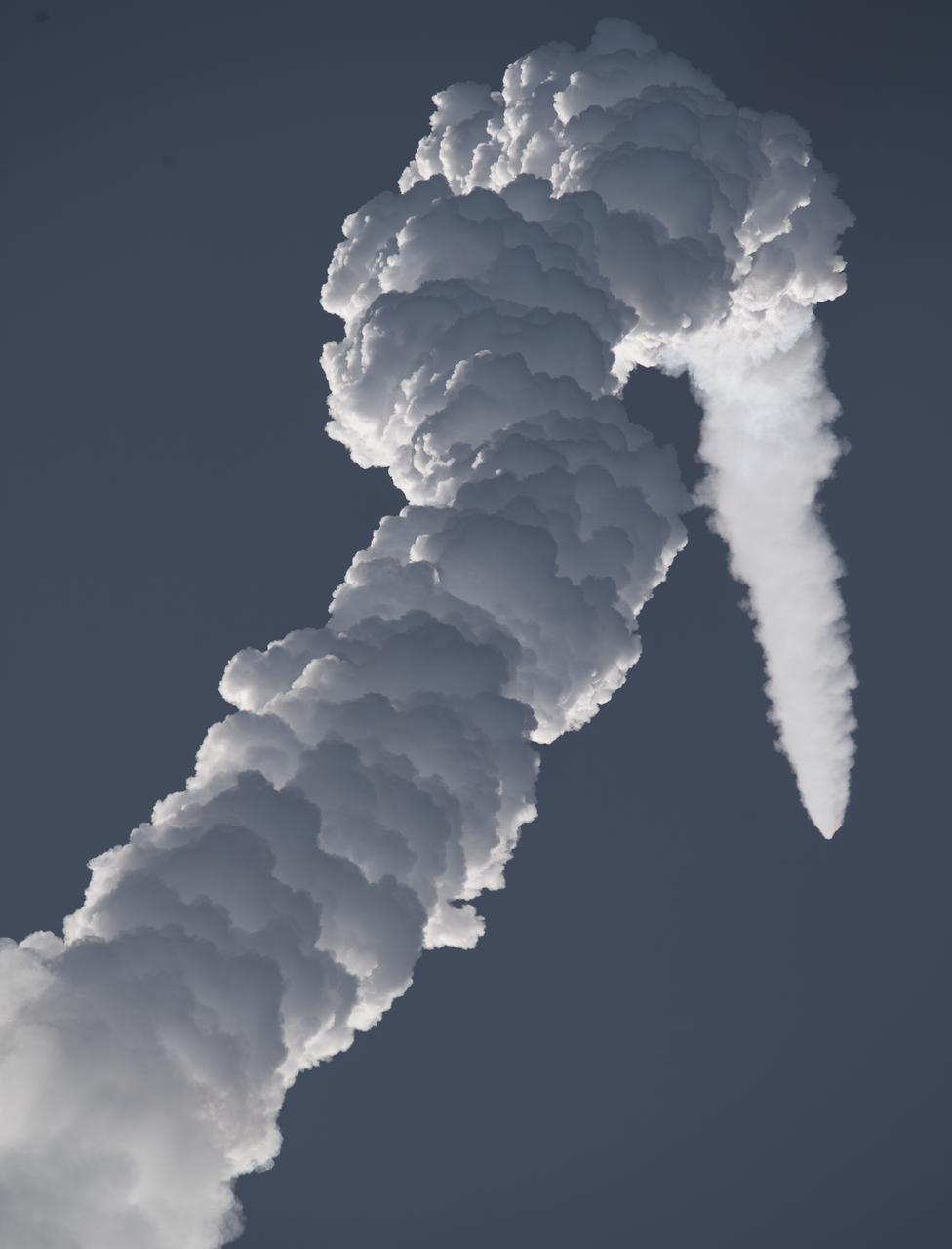
A United Launch Alliance Atlas V rocket with NASA’s Mars 2020 Perseverance rover onboard launches from Space Launch Complex 41 at Cape Canaveral Air Force Station, Thursday, July 30, 2020, from NASA’s Kennedy Space Center in Florida. The Perseverance rover is part of NASA’s Mars Exploration Program, a long-term effort of robotic exploration of the Red Planet. Photo Credit: (NASA/Joel Kowsky)
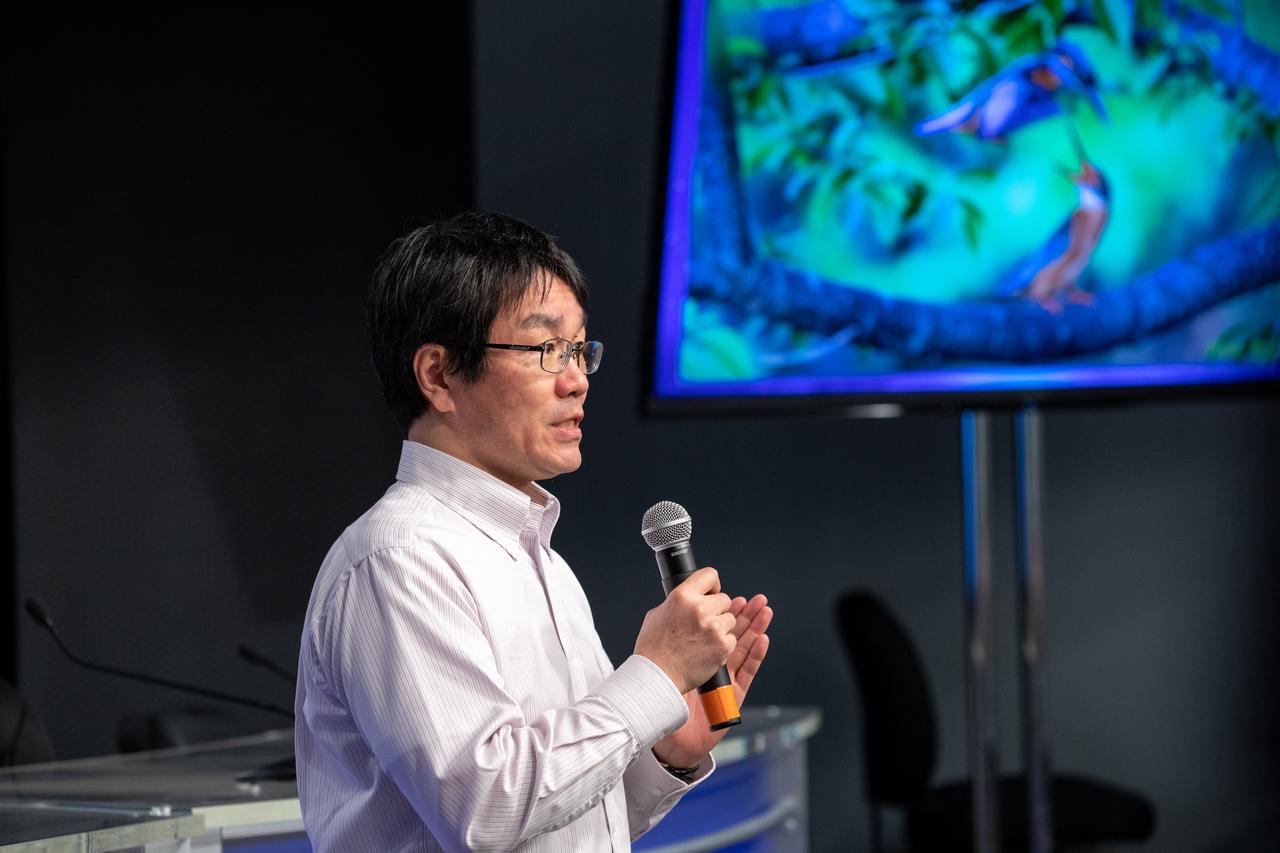
A What’s On Board Briefing for SpaceX’s 19th Commercial Resupply Services (CRS-19) mission for NASA to the International Space Station took place on Dec. 3, 2019, at the agency’s Kennedy Space Center in Florida. Akira Iwasaki, professor at the University of Tokyo and principal investigator for the Hyperspectral Imager Suite (HISUI) developed by the Japanese government, discusses the next-generation, hyperspectral Earth imaging system. The SpaceX Falcon 9 rocket and Dragon cargo module are scheduled to launch on Dec. 4, 2019, from Space Launch Complex 40 on Cape Canaveral Air Force Station in Florida
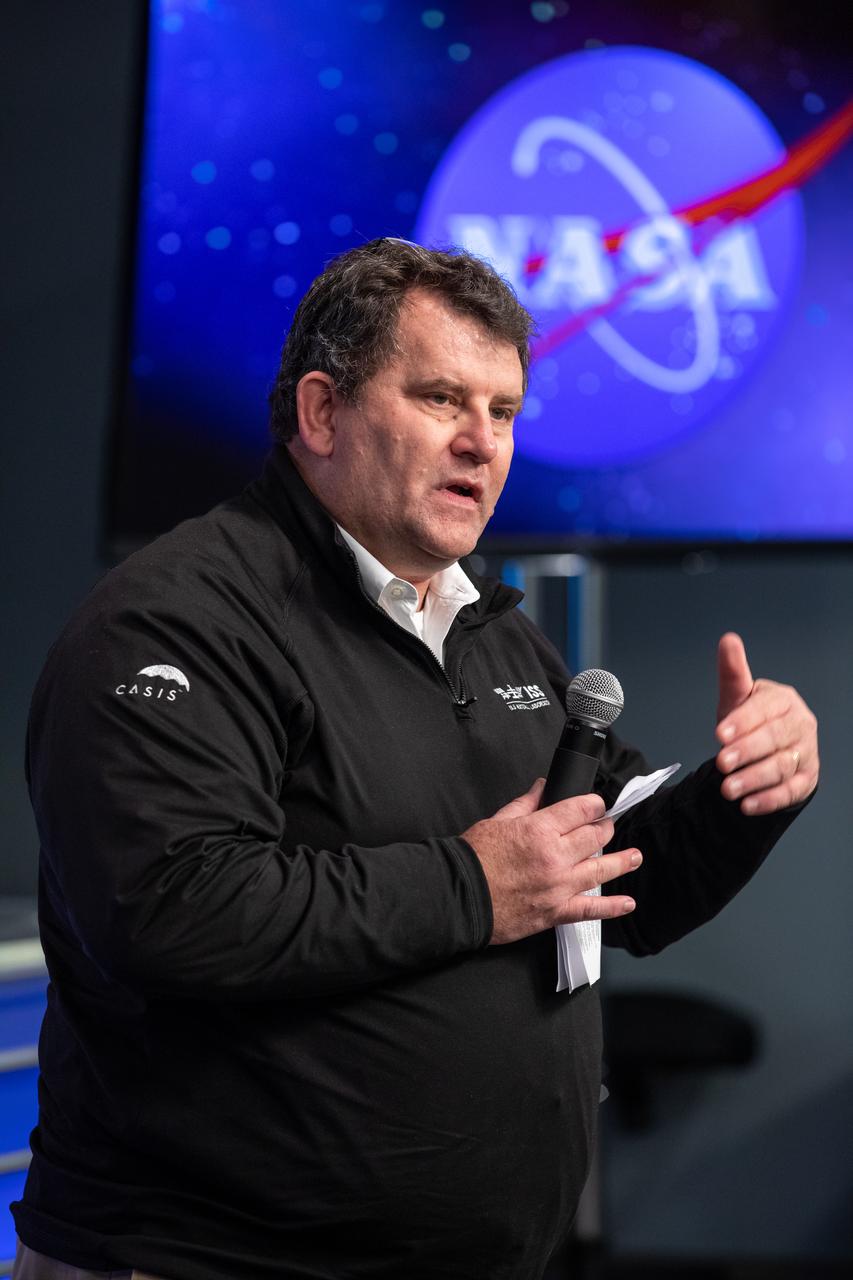
A What’s On Board Briefing for SpaceX’s 19th Commercial Resupply Services (CRS-19) mission for NASA to the International Space Station took place on Dec. 3, 2019, at the agency’s Kennedy Space Center in Florida. Michael Roberts, interim chief scientist for the International Space Station U.S. National Laboratory, discusses the lab’s work in advancing science in space, and in developing partnerships that drive industrialization through microgravity research. The SpaceX Falcon 9 rocket and Dragon cargo module are scheduled to launch on Dec. 4, 2019, from Space Launch Complex 40 on Cape Canaveral Air Force Station in Florida.
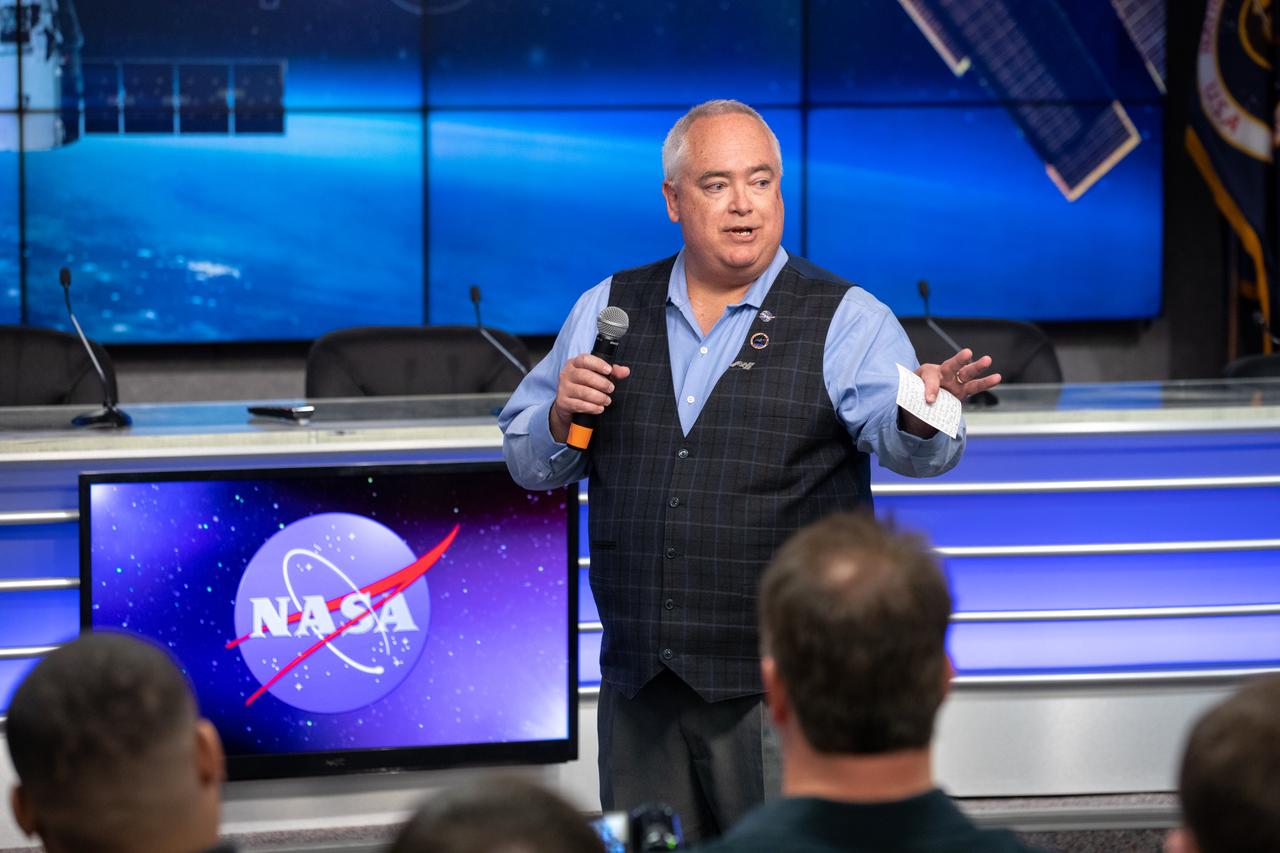
A What's on Board Briefing for SpaceX's 19th Commercial Resupply Services (CRS-19) mission for NASA to the International Space Station took place on Dec. 3, 2019, at the agency's Kennedy Space Center in Florida. Bryan Dansberry, assistant program scientist for NASA's International Space Station Program Science Office shares an overview of the research being conducted aboard the space station and how it benefits exploration and humanity. The SpaceX Falcon 9 rocket and Dragon cargo module are scheduled to launch on Dec. 4, 2019, from Space Launch Complex 40 at Cape Canaveral Air Force Station in Florida.
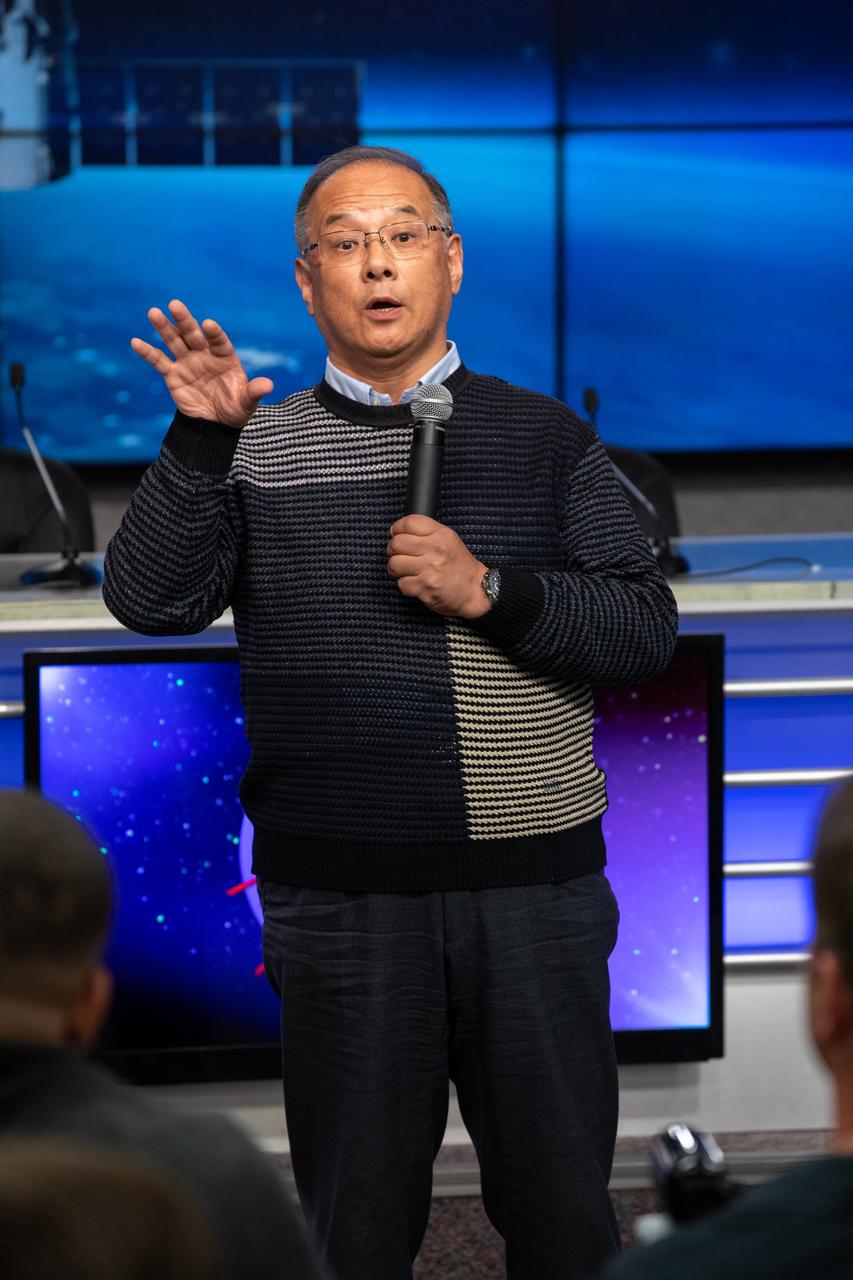
A What’s On Board Briefing for SpaceX’s 19th Commercial Resupply Services (CRS-19) mission for NASA to the International Space Station took place on Dec. 3, 2019, at the agency’s Kennedy Space Center in Florida. Shoichiro Mihara, mission manager for the Hyperspectral Imager Suite (HISUI) developed by the Japanese government, discusses the next-generation, hyperspectral Earth imaging system. The SpaceX Falcon 9 rocket and Dragon cargo module are scheduled to launch on Dec. 4, 2019, from Space Launch Complex 40 on Cape Canaveral Air Force Station in Florida
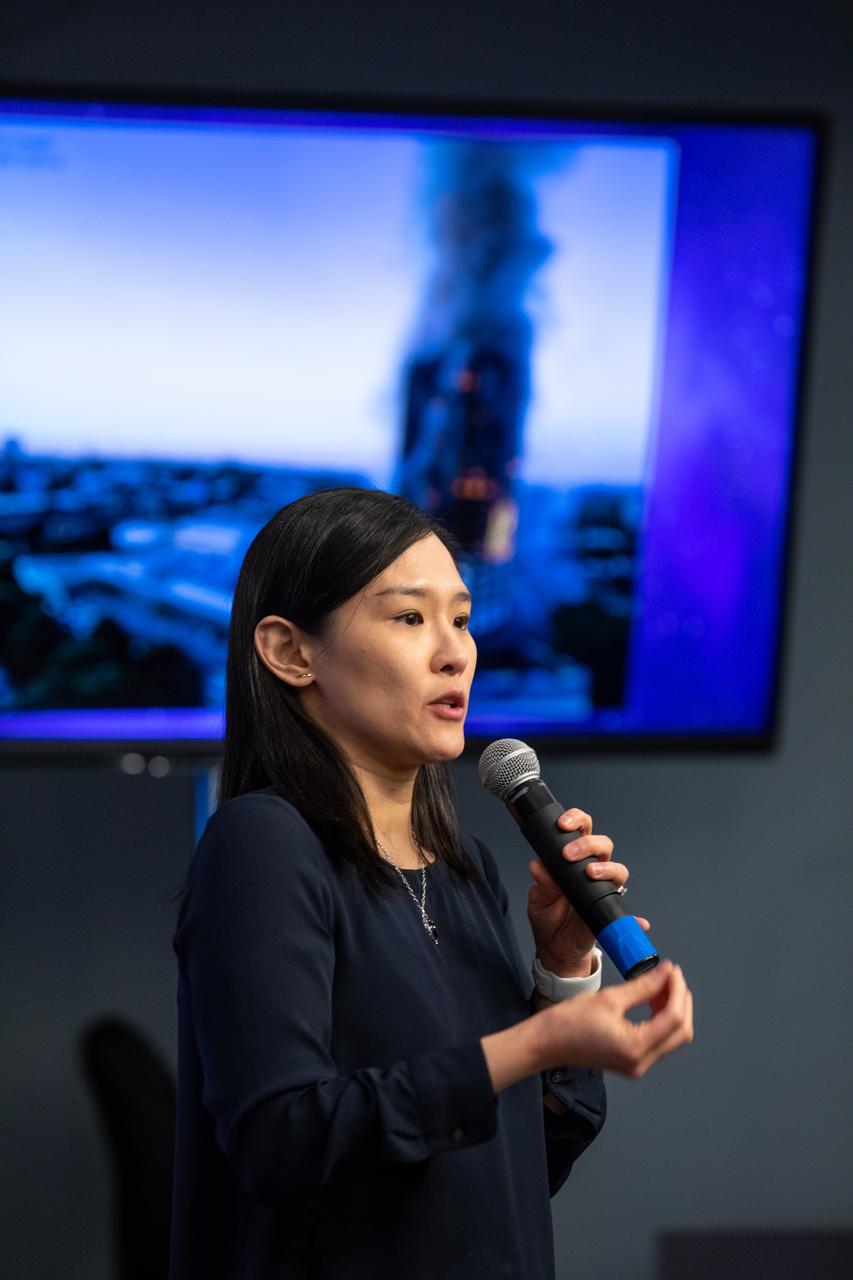
A What’s On Board Briefing for SpaceX’s 19th Commercial Resupply Services (CRS-19) mission for NASA to the International Space Station took place on Dec. 3, 2019, at the agency’s Kennedy Space Center in Florida. Ya-Ting Liao, an investigator for the Confined Combustion experiment, discusses the investigation which studies how fire spreads and behaves in confined spaces. The SpaceX Falcon 9 rocket and Dragon cargo module are scheduled to launch on Dec. 4, 2019, from Space Launch Complex 40 on Cape Canaveral Air Force Station in Florida.
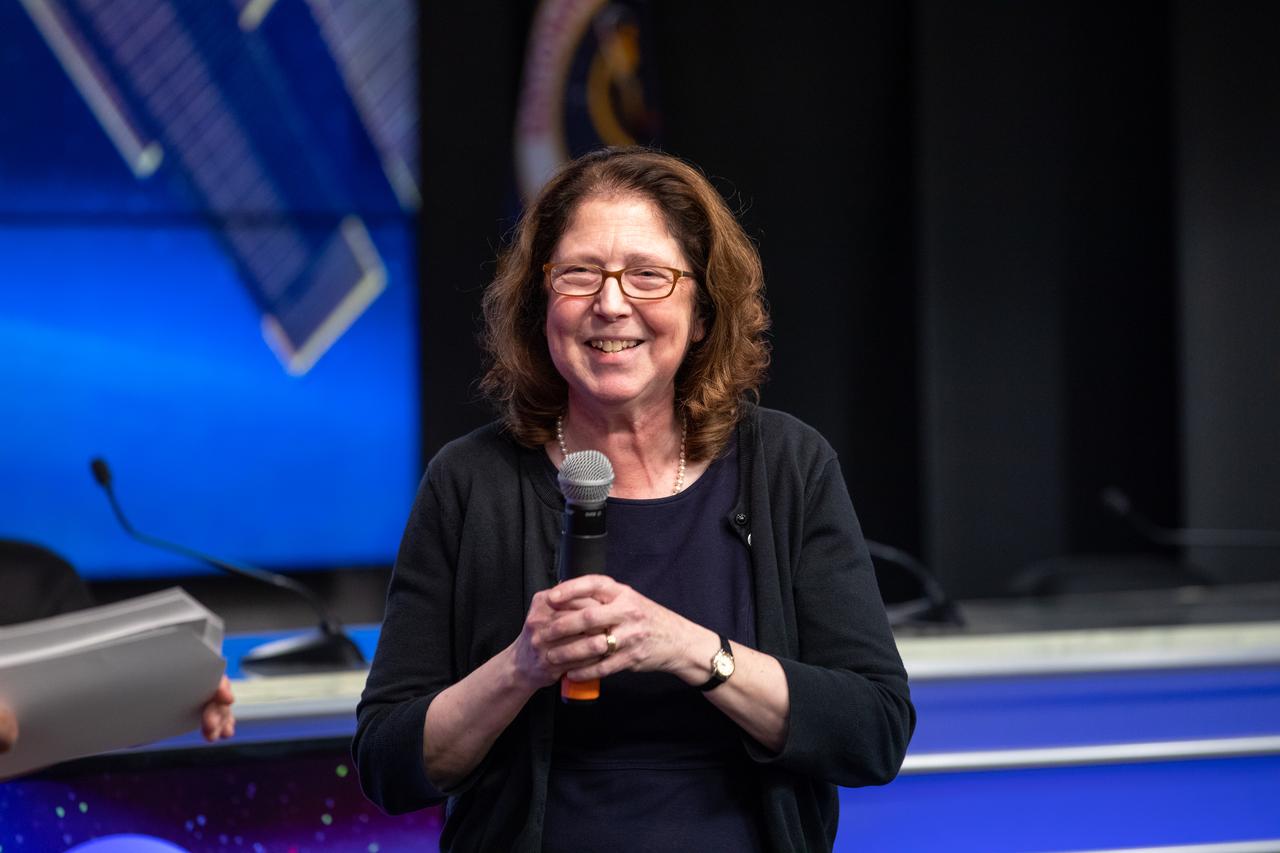
A What’s On Board Briefing for SpaceX’s 19th Commercial Resupply Services (CRS-19) mission for NASA to the International Space Station took place on Dec. 3, 2019, at the agency’s Kennedy Space Center in Florida. Emily Germain-Lee, professor at the University of Connecticut School of Medicine and chief of endocrinology and diabetes, Connecticut Children’s Medical Center, discussed her on molecular signaling pathways that influence muscle degradation to prevent skeletal muscle and bone loss during spaceflight, and enhance recovery following return to Earth. The SpaceX Falcon 9 rocket and Dragon cargo module are scheduled to launch on Dec. 4, 2019, from Space Launch Complex 40 on Cape Canaveral Air Force Station in Florida.
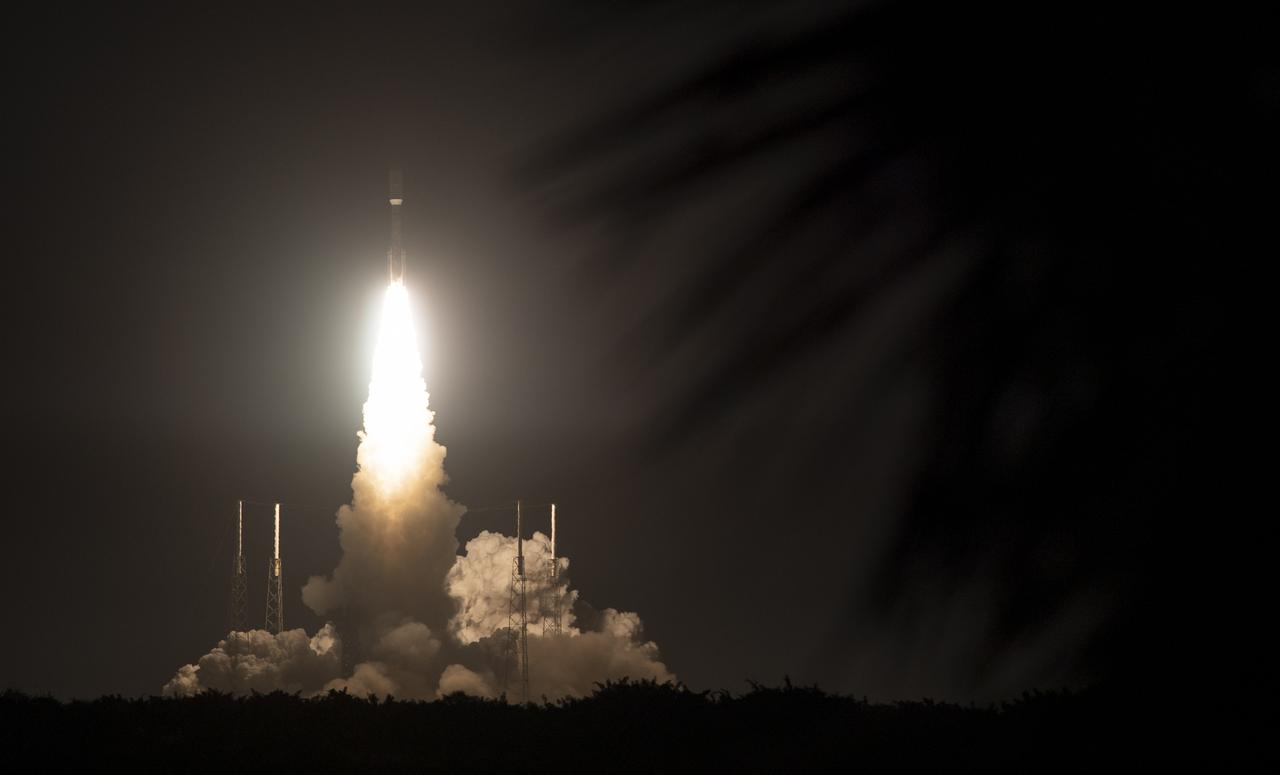
A United Launch Alliance Atlas V rocket launches on the Department of Defense’s Space Test Program 3 (STP-3) mission from Space Launch Complex 41 at Cape Canaveral Space Force Station, Tuesday, Dec. 7, 2021, from NASA’s Kennedy Space Center in Florida. The mission’s Space Test Program Satellite-6 (STPSat-6) spacecraft hosts NASA’s Laser Communications Relay Demonstration (LCRD) and the NASA-U.S. Naval Research Laboratory Ultraviolet Spectro-Coronagraph (UVSC) Pathfinder. Photo Credit: (NASA/Joel Kowsky)
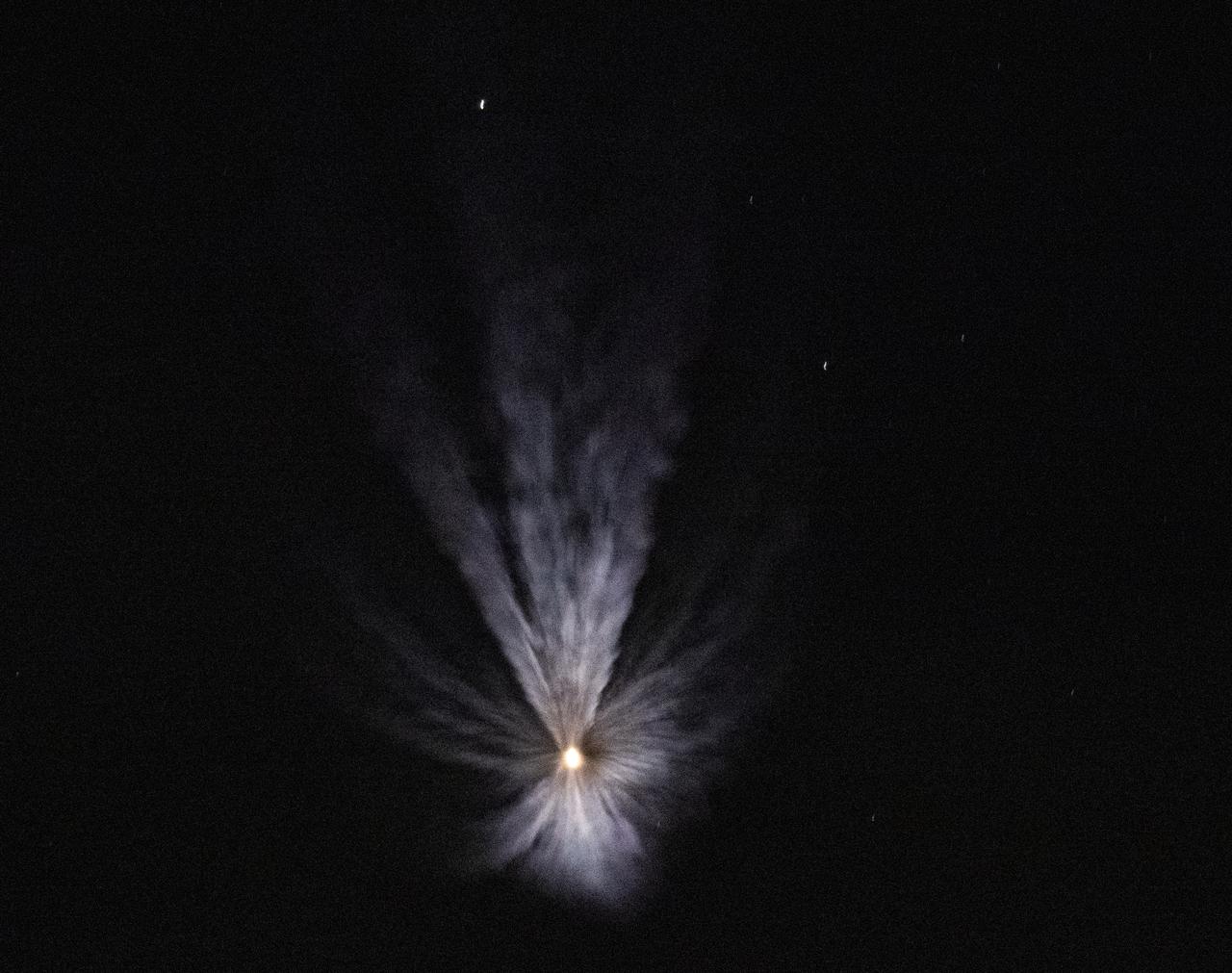
A United Launch Alliance Atlas V rocket launches on the Department of Defense’s Space Test Program 3 (STP-3) mission from Space Launch Complex 41 at Cape Canaveral Space Force Station, Tuesday, Dec. 7, 2021, from NASA’s Kennedy Space Center in Florida. The mission’s Space Test Program Satellite-6 (STPSat-6) spacecraft hosts NASA’s Laser Communications Relay Demonstration (LCRD) and the NASA-U.S. Naval Research Laboratory Ultraviolet Spectro-Coronagraph (UVSC) Pathfinder. Photo Credit: (NASA/Joel Kowsky)
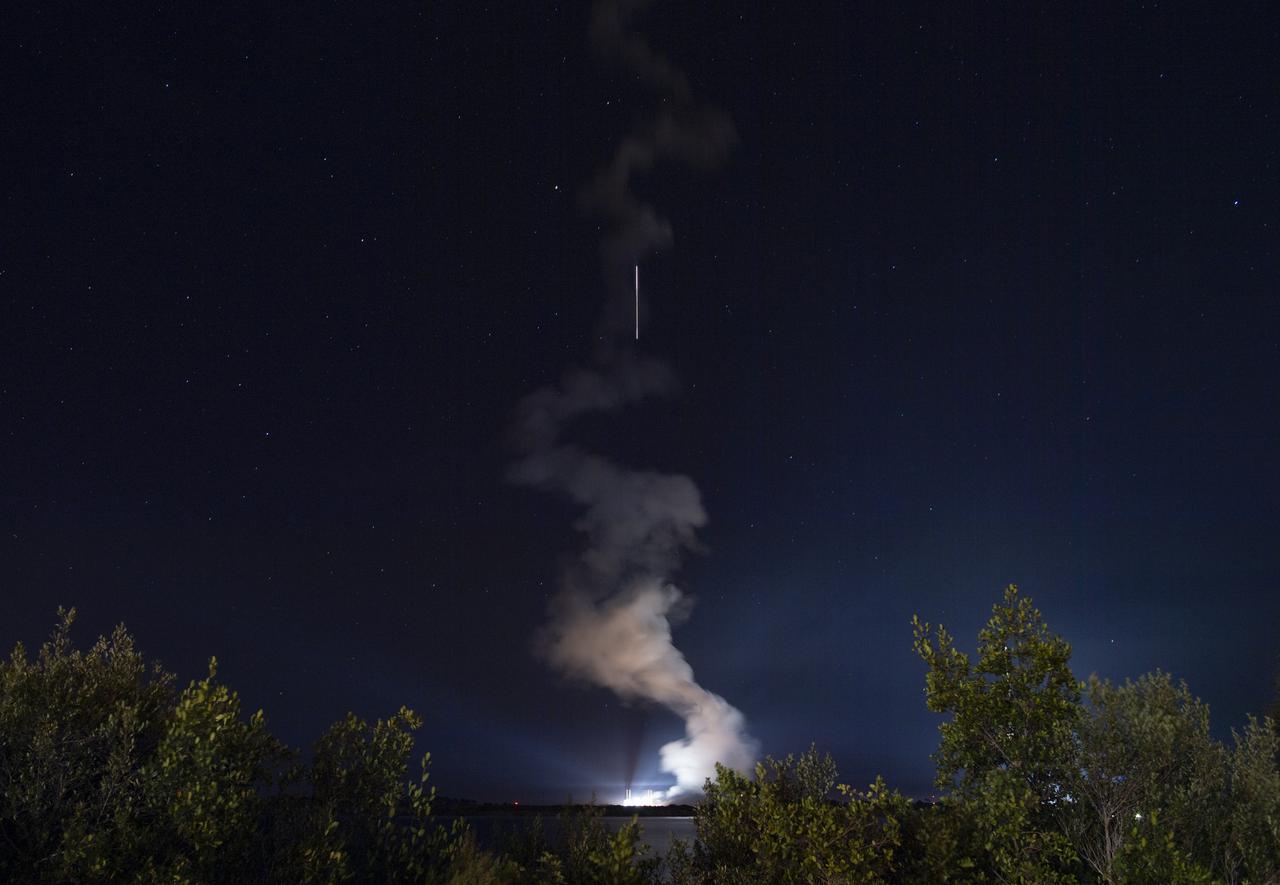
In this twenty-second exposure, a United Launch Alliance Atlas V rocket launches on the Department of Defense’s Space Test Program 3 (STP-3) mission from Space Launch Complex 41 at Cape Canaveral Space Force Station, Tuesday, Dec. 7, 2021, from NASA’s Kennedy Space Center in Florida. The mission’s Space Test Program Satellite-6 (STPSat-6) spacecraft hosts NASA’s Laser Communications Relay Demonstration (LCRD) and the NASA-U.S. Naval Research Laboratory Ultraviolet Spectro-Coronagraph (UVSC) Pathfinder. Photo Credit: (NASA/Joel Kowsky)
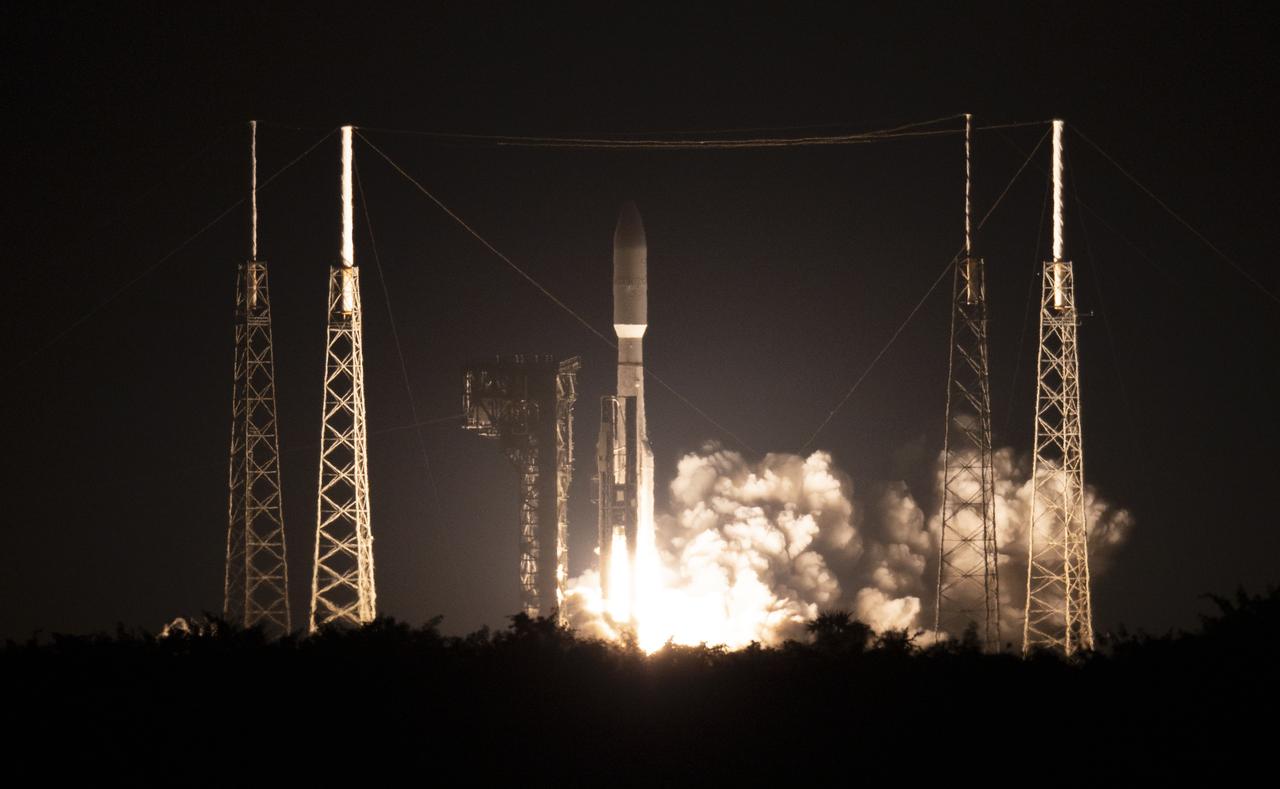
A United Launch Alliance Atlas V rocket launches on the Department of Defense’s Space Test Program 3 (STP-3) mission from Space Launch Complex 41 at Cape Canaveral Space Force Station, Tuesday, Dec. 7, 2021, from NASA’s Kennedy Space Center in Florida. The mission’s Space Test Program Satellite-6 (STPSat-6) spacecraft hosts NASA’s Laser Communications Relay Demonstration (LCRD) and the NASA-U.S. Naval Research Laboratory Ultraviolet Spectro-Coronagraph (UVSC) Pathfinder. Photo Credit: (NASA/Joel Kowsky)
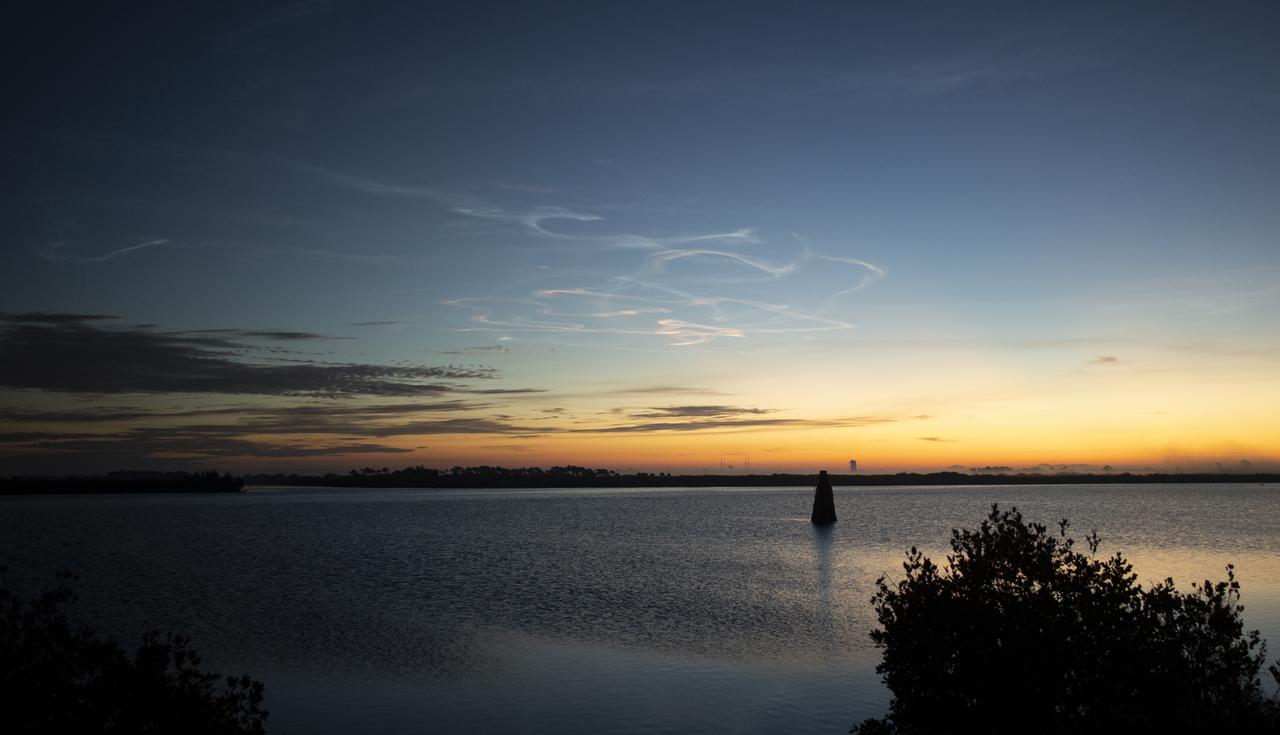
Contrails are seen illuminated in the sky as the Sun begins to rise following the launch of a United Launch Alliance Atlas V rocket on the Department of Defense’s Space Test Program 3 (STP-3) mission from Space Launch Complex 41 at Cape Canaveral Space Force Station, Tuesday, Dec. 7, 2021, from NASA’s Kennedy Space Center in Florida. The mission’s Space Test Program Satellite-6 (STPSat-6) spacecraft hosts NASA’s Laser Communications Relay Demonstration (LCRD) and the NASA-U.S. Naval Research Laboratory Ultraviolet Spectro-Coronagraph (UVSC) Pathfinder. Photo Credit: (NASA/Joel Kowsky)
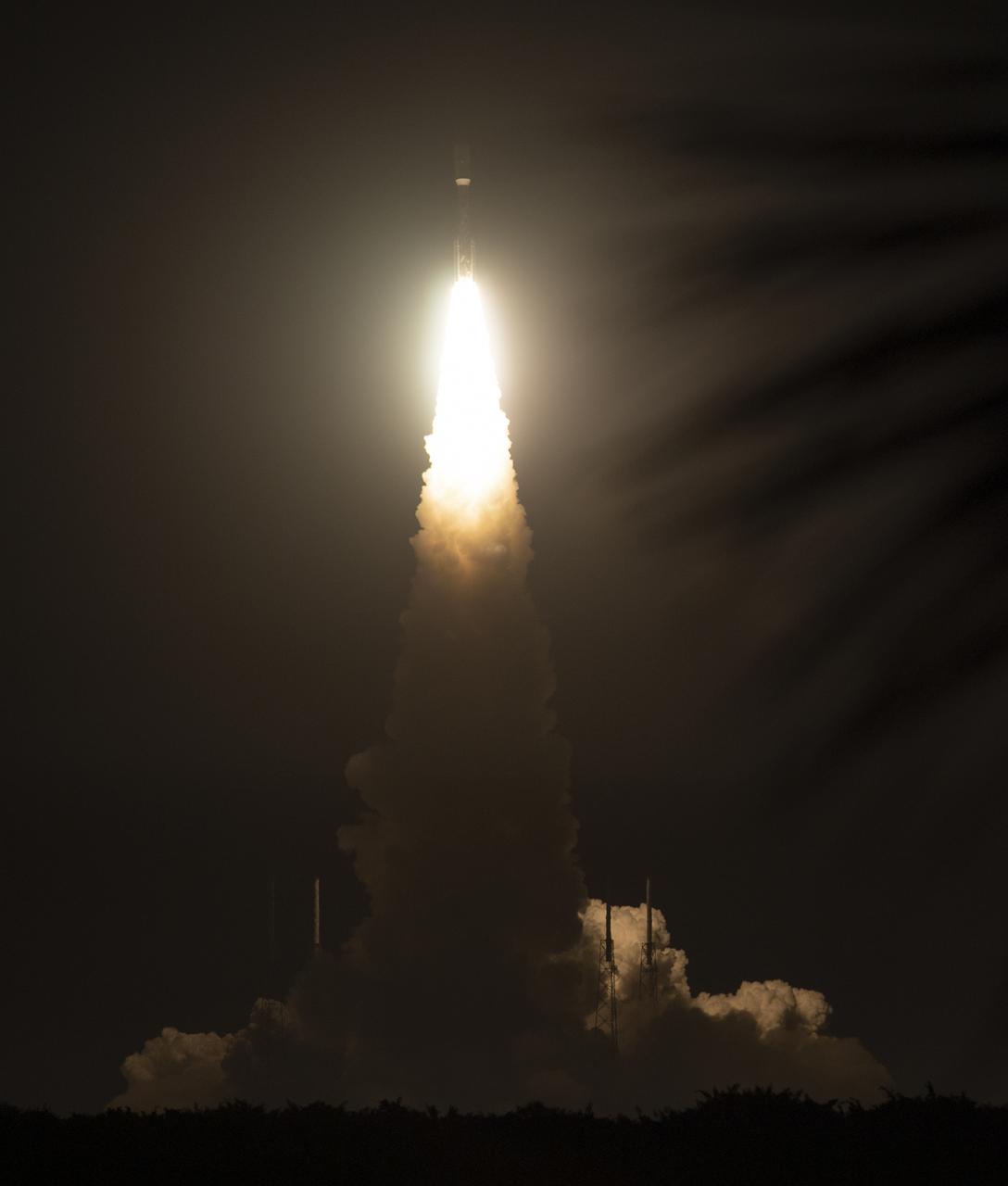
A United Launch Alliance Atlas V rocket launches on the Department of Defense’s Space Test Program 3 (STP-3) mission from Space Launch Complex 41 at Cape Canaveral Space Force Station, Tuesday, Dec. 7, 2021, from NASA’s Kennedy Space Center in Florida. The mission’s Space Test Program Satellite-6 (STPSat-6) spacecraft hosts NASA’s Laser Communications Relay Demonstration (LCRD) and the NASA-U.S. Naval Research Laboratory Ultraviolet Spectro-Coronagraph (UVSC) Pathfinder. Photo Credit: (NASA/Joel Kowsky)
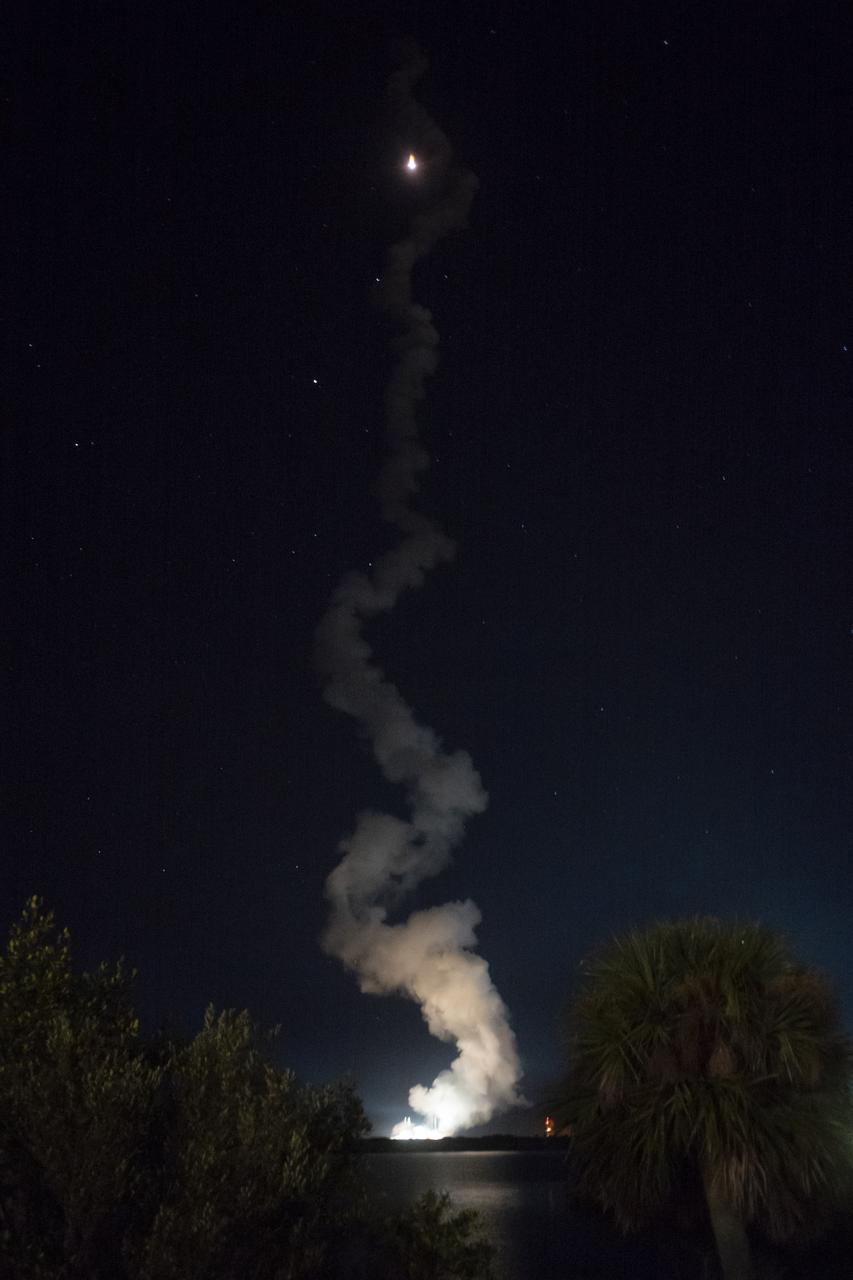
A United Launch Alliance Atlas V rocket launches on the Department of Defense’s Space Test Program 3 (STP-3) mission from Space Launch Complex 41 at Cape Canaveral Space Force Station, Tuesday, Dec. 7, 2021, from NASA’s Kennedy Space Center in Florida. The mission’s Space Test Program Satellite-6 (STPSat-6) spacecraft hosts NASA’s Laser Communications Relay Demonstration (LCRD) and the NASA-U.S. Naval Research Laboratory Ultraviolet Spectro-Coronagraph (UVSC) Pathfinder. Photo Credit: (NASA/Joel Kowsky)
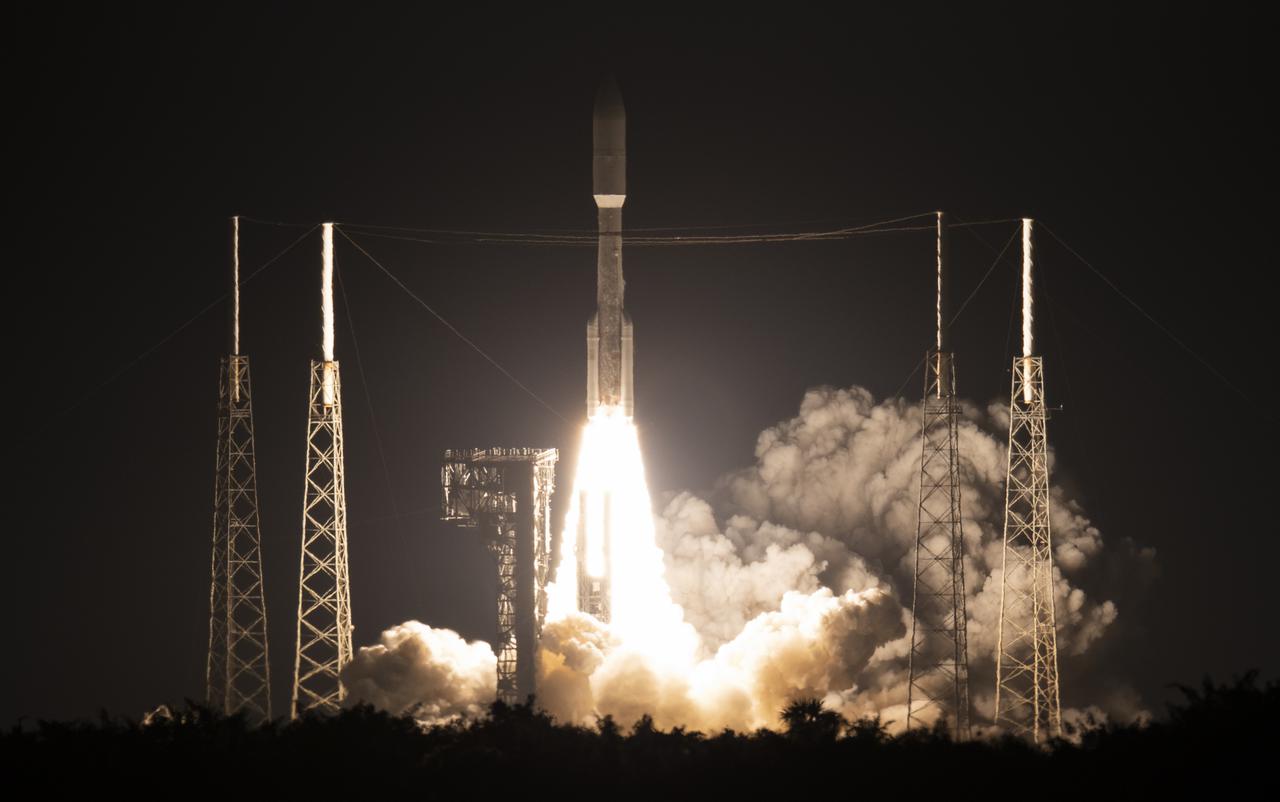
A United Launch Alliance Atlas V rocket launches on the Department of Defense’s Space Test Program 3 (STP-3) mission from Space Launch Complex 41 at Cape Canaveral Space Force Station, Tuesday, Dec. 7, 2021, from NASA’s Kennedy Space Center in Florida. The mission’s Space Test Program Satellite-6 (STPSat-6) spacecraft hosts NASA’s Laser Communications Relay Demonstration (LCRD) and the NASA-U.S. Naval Research Laboratory Ultraviolet Spectro-Coronagraph (UVSC) Pathfinder. Photo Credit: (NASA/Joel Kowsky)
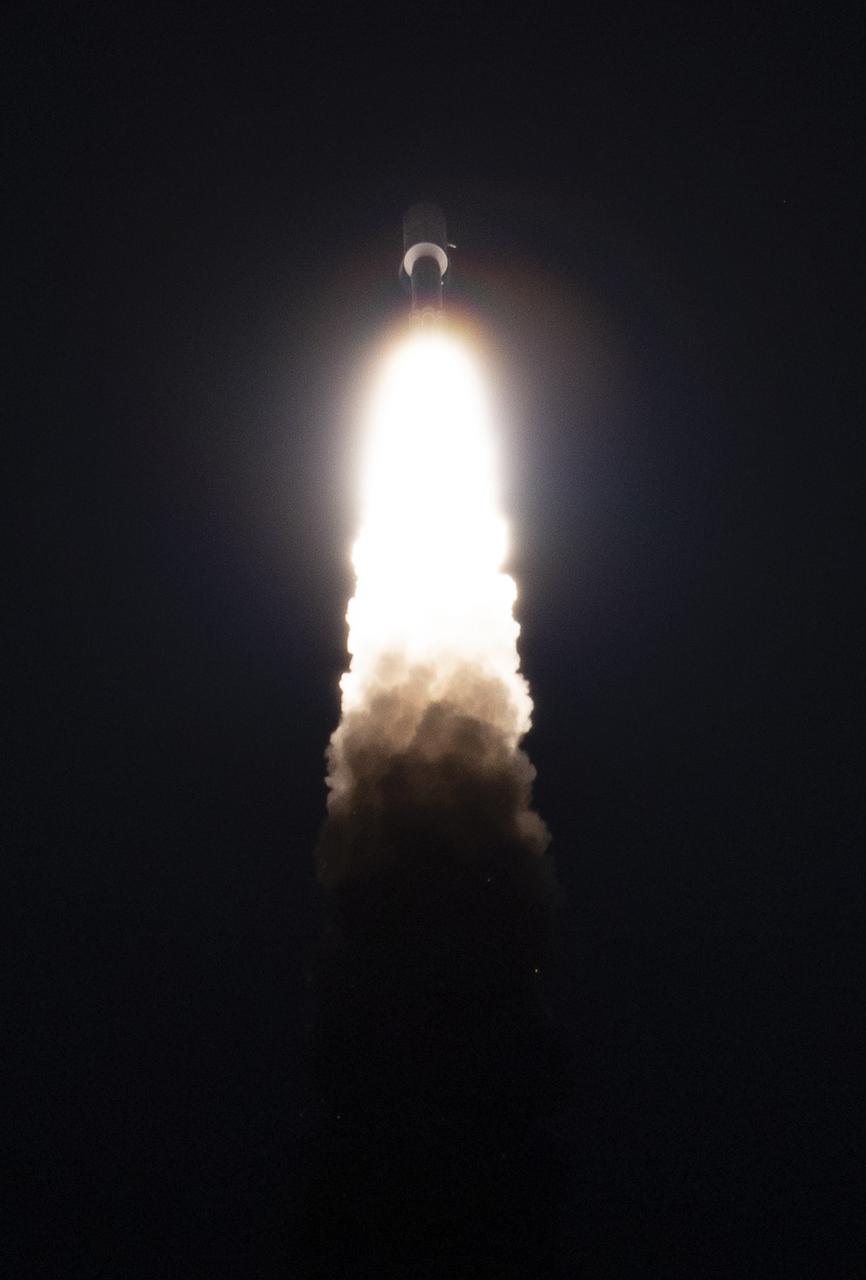
A United Launch Alliance Atlas V rocket launches on the Department of Defense’s Space Test Program 3 (STP-3) mission from Space Launch Complex 41 at Cape Canaveral Space Force Station, Tuesday, Dec. 7, 2021, from NASA’s Kennedy Space Center in Florida. The mission’s Space Test Program Satellite-6 (STPSat-6) spacecraft hosts NASA’s Laser Communications Relay Demonstration (LCRD) and the NASA-U.S. Naval Research Laboratory Ultraviolet Spectro-Coronagraph (UVSC) Pathfinder. Photo Credit: (NASA/Joel Kowsky)
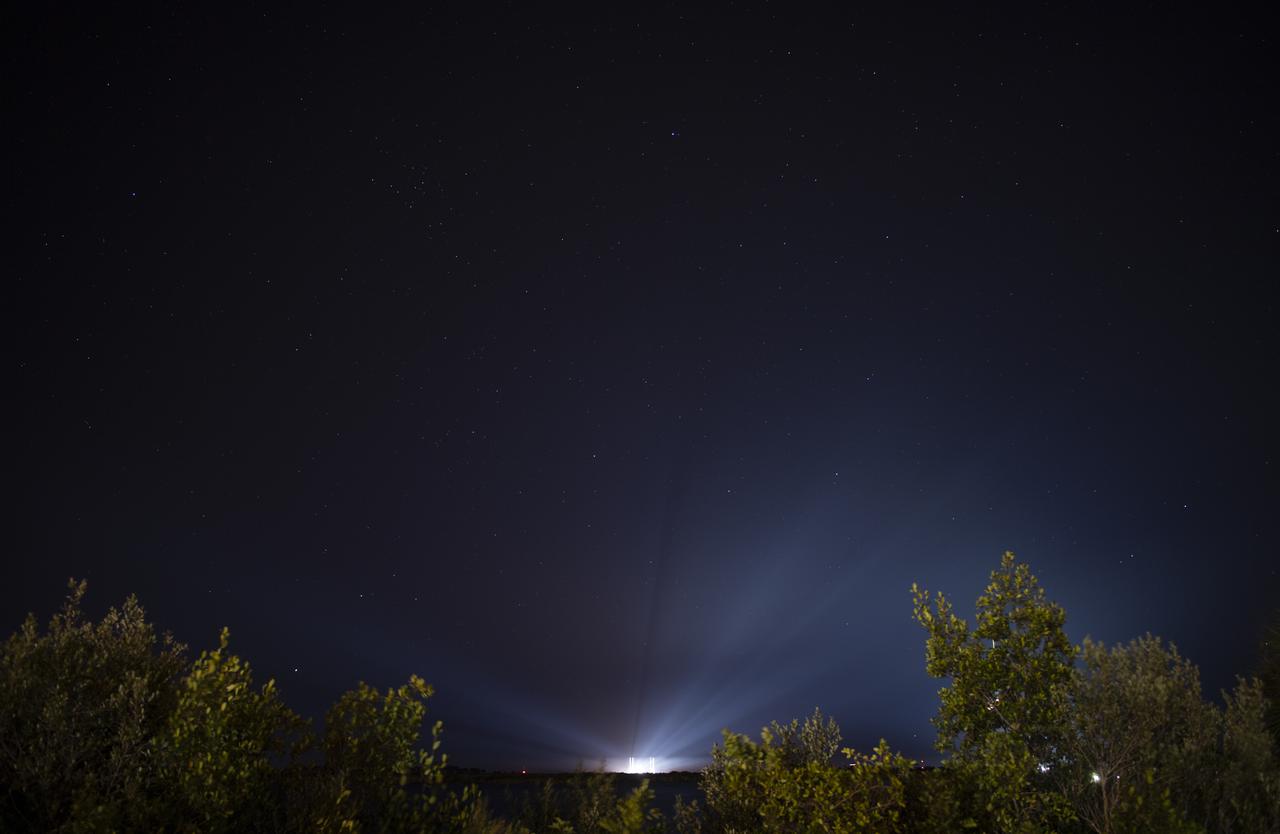
A United Launch Alliance Atlas V rocket carrying the Department of Defense’s Space Test Program 3 (STP-3) mission is seen illuminated by spotlights at Space Launch Complex 41 at Cape Canaveral Space Force Station, Tuesday, Dec. 7, 2021, from NASA’s Kennedy Space Center in Florida. The mission’s Space Test Program Satellite-6 (STPSat-6) spacecraft hosts NASA’s Laser Communications Relay Demonstration (LCRD) and the NASA-U.S. Naval Research Laboratory Ultraviolet Spectro-Coronagraph (UVSC) Pathfinder. Photo Credit: (NASA/Joel Kowsky)
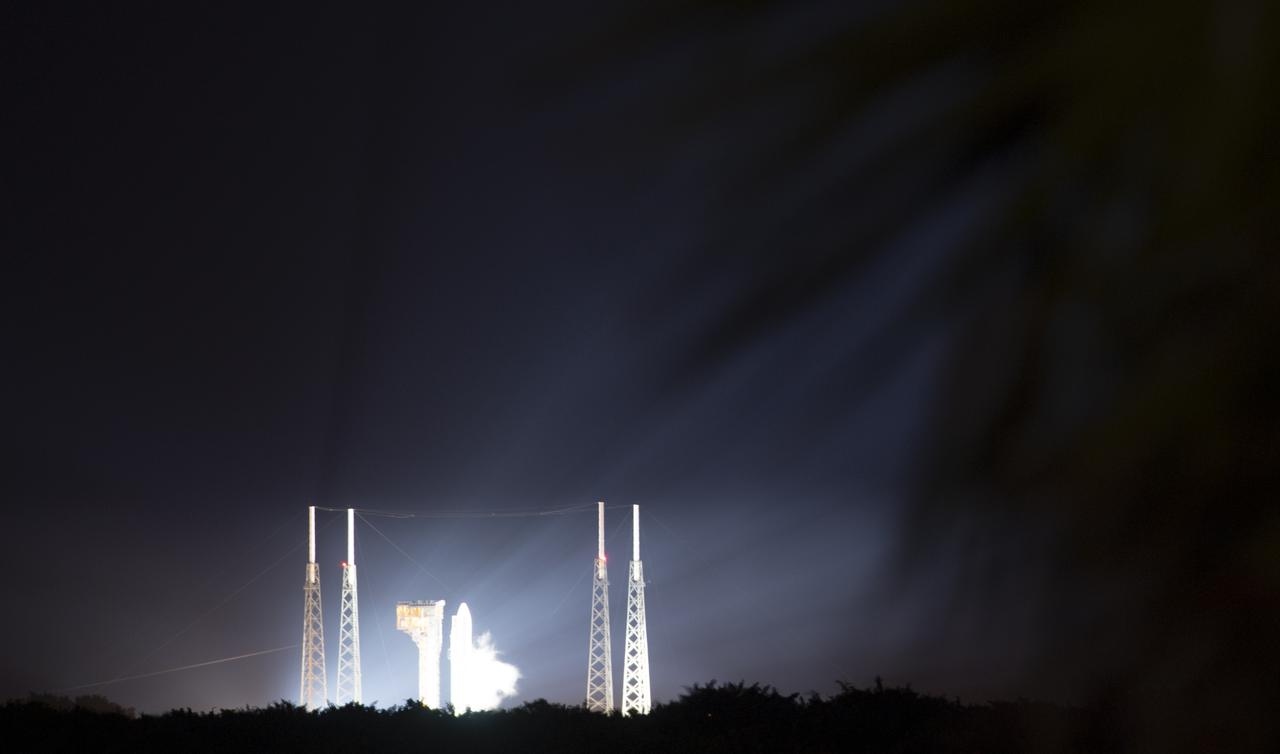
A United Launch Alliance Atlas V rocket carrying the Department of Defense’s Space Test Program 3 (STP-3) mission is seen illuminated by spotlights at Space Launch Complex 41 at Cape Canaveral Space Force Station, Tuesday, Dec. 7, 2021, from NASA’s Kennedy Space Center in Florida. The mission’s Space Test Program Satellite-6 (STPSat-6) spacecraft hosts NASA’s Laser Communications Relay Demonstration (LCRD) and the NASA-U.S. Naval Research Laboratory Ultraviolet Spectro-Coronagraph (UVSC) Pathfinder. Photo Credit: (NASA/Joel Kowsky)
A What’s On Board Briefing for SpaceX’s 19th Commercial Resupply Services (CRS-19) mission for NASA to the International Space Station took place on Dec. 3, 2019, at the agency’s Kennedy Space Center in Florida. Se-Jin Lee (at right) professor at the Jackson Laboratory and University of Connecticut School of Medicine, and principal investigator of Rodent Research-19, and Emily Germain-Lee, professor at the University of Connecticut School of Medicine and chief of endocrinology and diabetes, Connecticut Children’s Medical Center, present their research to members of the media. They discussed the research on molecular signaling pathways that influence muscle degradation to prevent skeletal muscle and bone loss during spaceflight, and enhance recovery following return to Earth. The SpaceX Falcon 9 rocket and Dragon cargo module are scheduled to launch on Dec. 4, 2019, from Space Launch Complex 40 on Cape Canaveral Air Force Station in Florida.

A What’s On Board Briefing for SpaceX’s 19th Commercial Resupply Services (CRS-19) mission for NASA to the International Space Station took place on Dec. 3, 2019, at the agency’s Kennedy Space Center in Florida. Se-Jin Lee, professor at the Jackson Laboratory and University of Connecticut School of Medicine, and principal investigator of Rodent Research-19 presents his research to members of the media. He discussed the research on molecular signaling pathways that influence muscle degradation to prevent skeletal muscle and bone loss during spaceflight, and enhance recovery following return to Earth. The SpaceX Falcon 9 rocket and Dragon cargo module are scheduled to launch on Dec. 4, 2019, from Space Launch Complex 40 on Cape Canaveral Air Force Station in Florida.
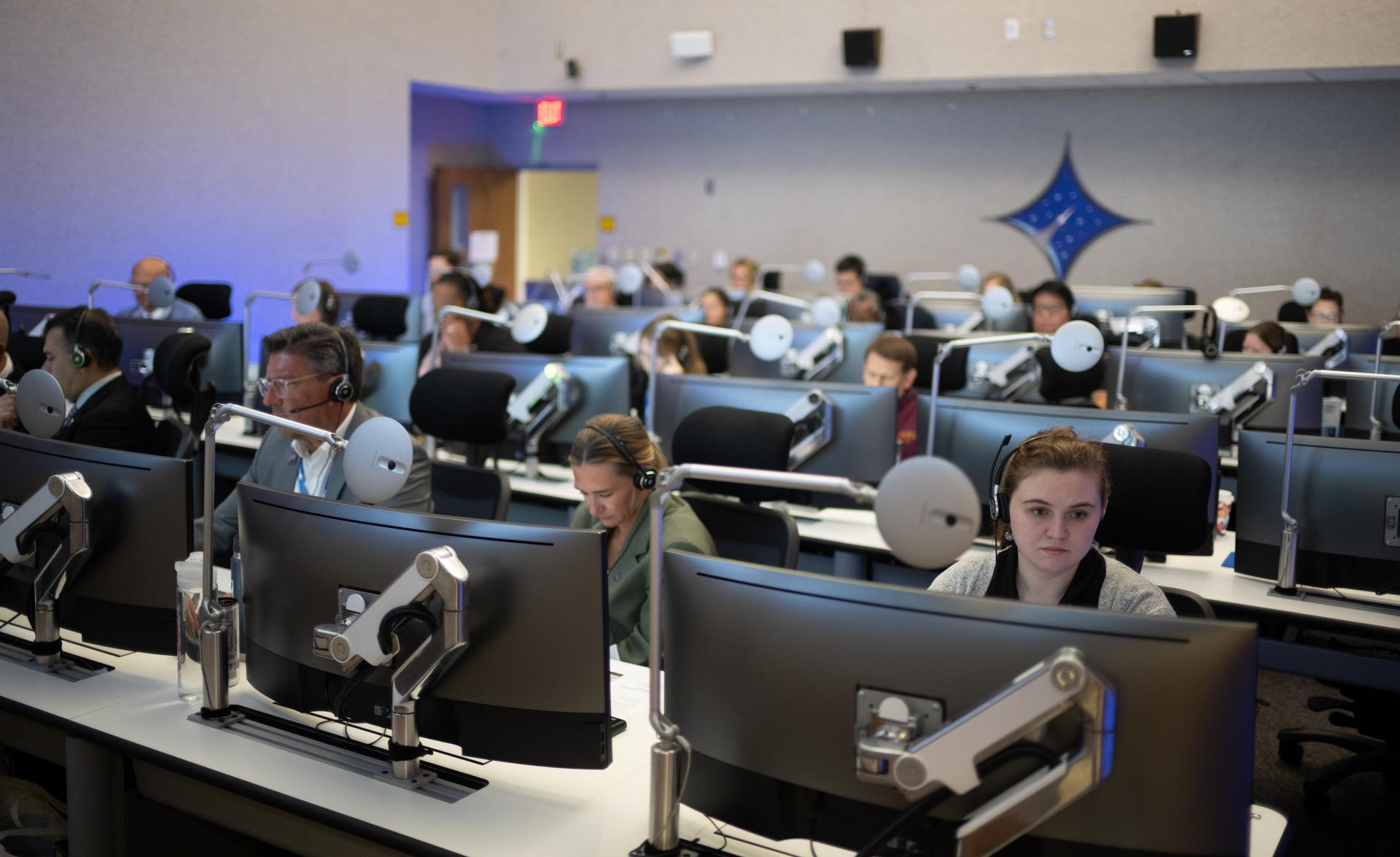
NASA teams monitor the countdown inside Hangar AE at Cape Canaveral Space Force Station for the launch of a SpaceX Falcon Heavy rocket with NASA’S Nancy Grace Roman Space Telescope from Launch Complex 39A at NASA’s Kennedy Space Center, Sunday, Aug. 30, 2026, in Florida. Roman will investigate dark energy and dark matter, conduct a statistical census of planetary systems, and enable a broad range of additional astrophysics research. Launch occurred at 7:26 a.m. EDT. Photo Credit (NASA/Joel Kowsky)
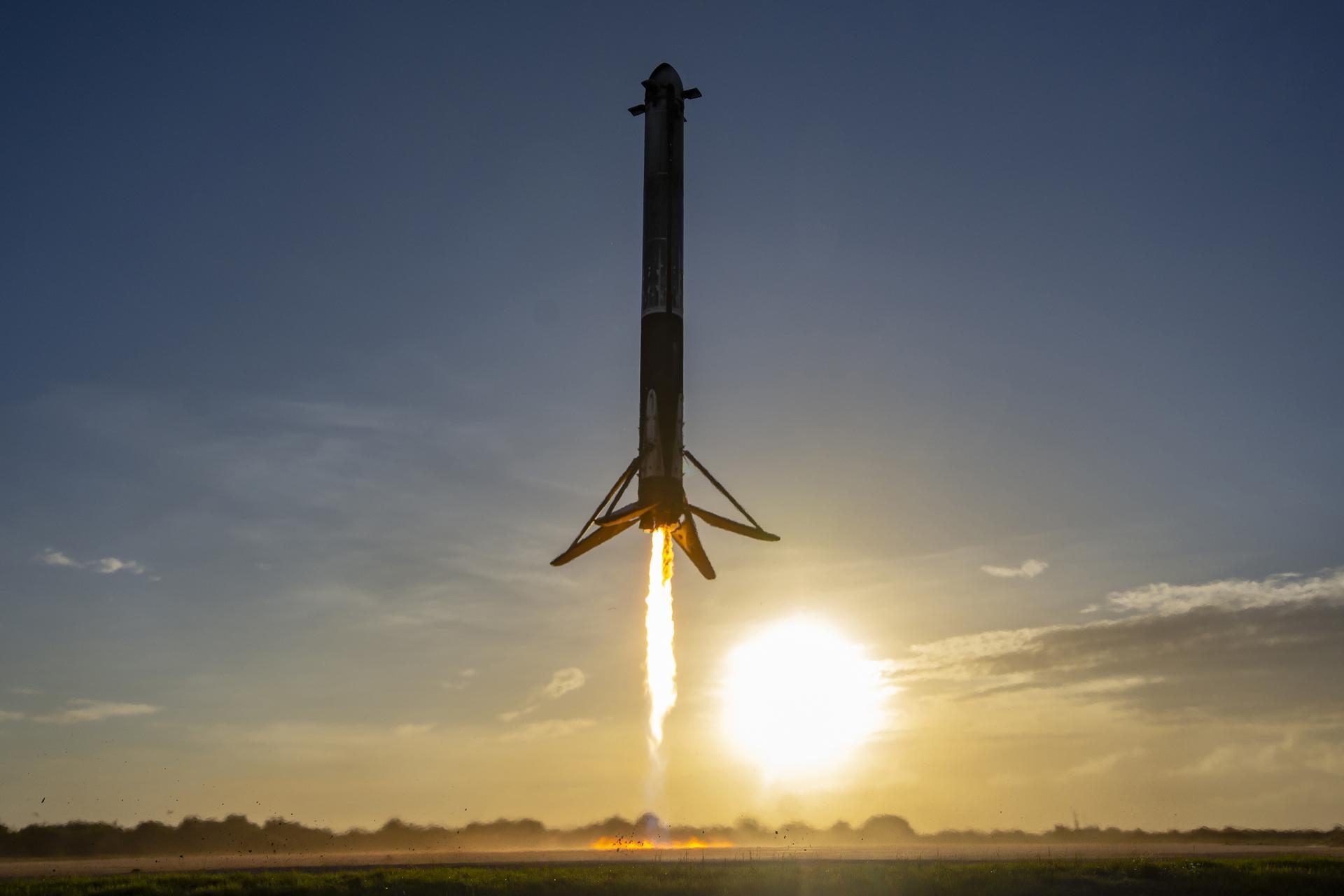
One of SpaceX’s Falcon Heavy side boosters that launched NASA’s Nancy Grace Roman Space Telescope from Launch Complex 39A at the agency’s Kennedy Space Center in Florida on Sunday, Aug. 30, 2026, returns to land at Landing Zone 2 at nearby Cape Canaveral Space Force Station. Roman will investigate dark energy and dark matter, conduct a statistical census of planetary systems, and enable a broad range of additional astrophysics research.
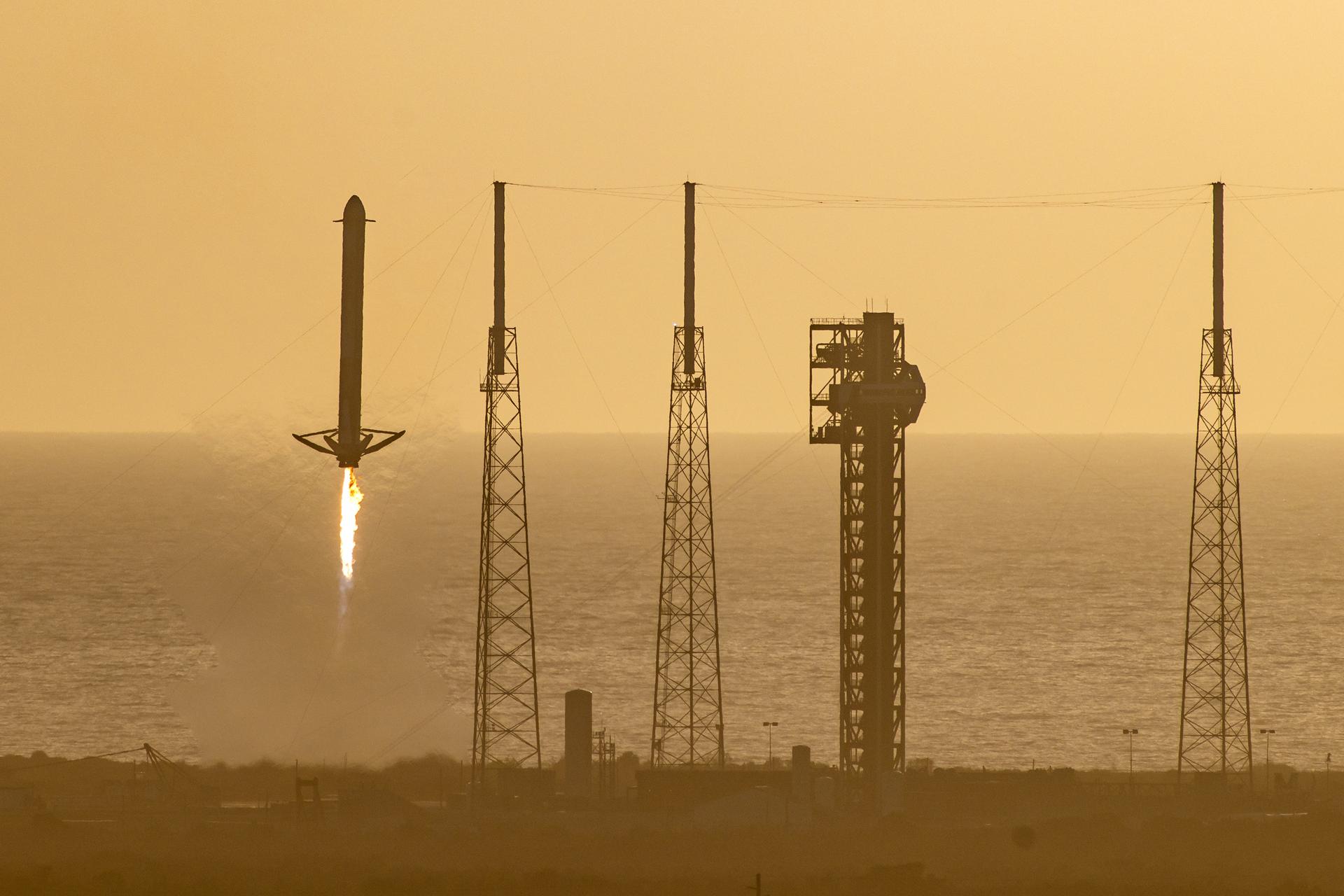
One of SpaceX’s Falcon Heavy side boosters that launched NASA’s Nancy Grace Roman Space Telescope from Launch Complex 39A at the agency’s Kennedy Space Center in Florida on Sunday, Aug. 30, 2026, returns to land at Landing Zone 40 at nearby Cape Canaveral Space Force Station. Roman will investigate dark energy and dark matter, conduct a statistical census of planetary systems, and enable a broad range of additional astrophysics research.

Will Ulrich, launch weather officer with the U.S. Air Force 45th Space Wing, discusses the liftoff weather forecast during the prelaunch news conference for SpaceX’s 18th Commercial Resupply Services (CRS-18) mission to the International Space Station, July 24, 2019, at NASA’s Kennedy Space Center in Florida. The SpaceX Falcon 9 rocket and uncrewed Dragon spacecraft are scheduled to launch July 24, 2019, from Space Launch Complex 40 at Florida’s Cape Canaveral Air Force Station.
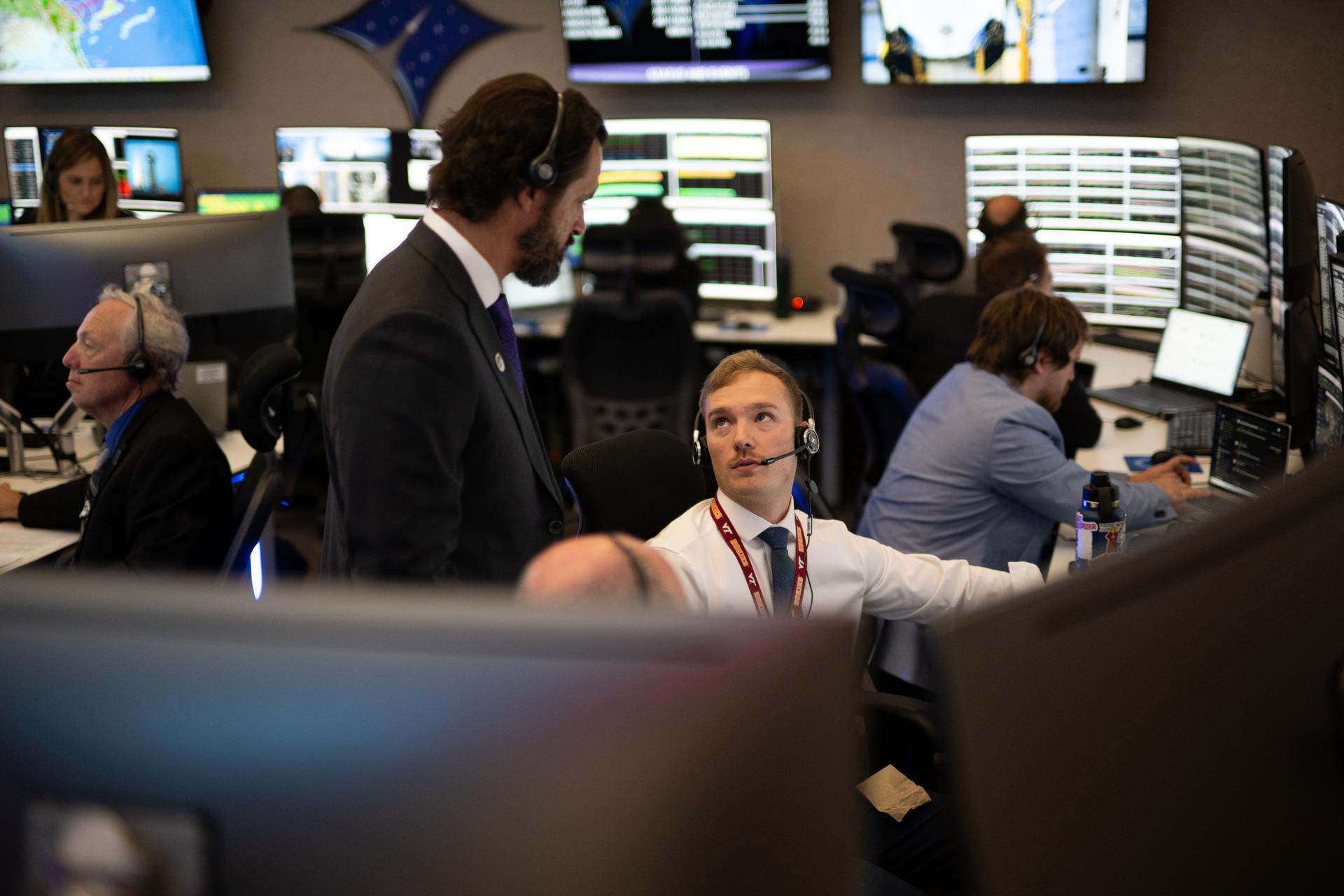
Aaron Smith, senior vehicle systems engineer for NASA’s Launch Services Program, left, talks with Daniel Safewright, a ground systems engineer at NASA’s Kennedy Space Center, as they monitor the countdown inside Hangar AE at Cape Canaveral Space Force Station for the launch of a SpaceX Falcon Heavy rocket with NASA’S Nancy Grace Roman Space Telescope from Launch Complex 39A at NASA’s Kennedy Space Center, Sunday, Aug. 30, 2026, in Florida. Roman will investigate dark energy and dark matter, conduct a statistical census of planetary systems, and enable a broad range of additional astrophysics research. Launch occurred at 7:26 a.m. EDT. Photo Credit (NASA/Joel Kowsky)
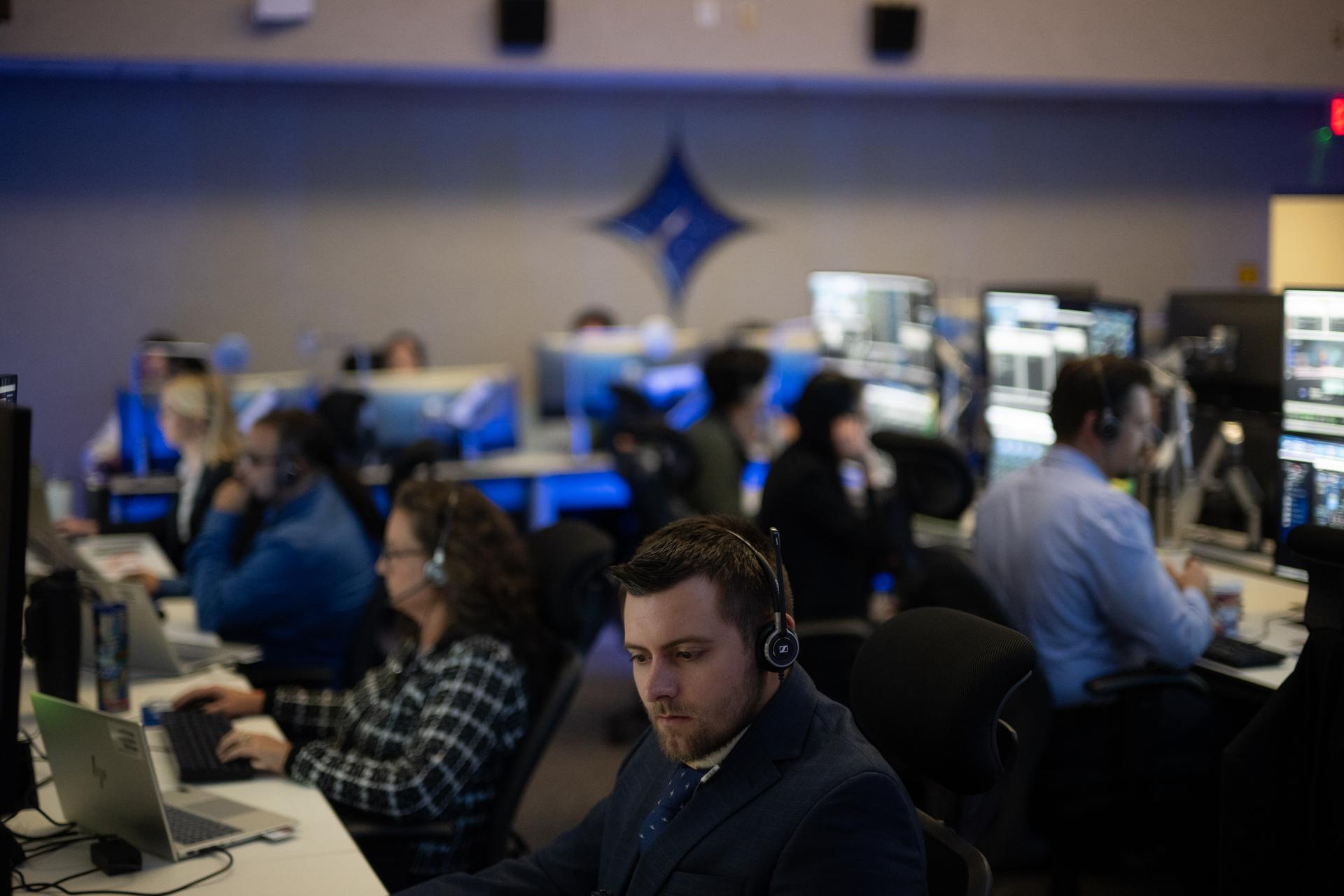
Zach Blanchard, a safety and quality engineer at NASA’s Kennedy Space Center, monitors the countdown inside Hangar AE at Cape Canaveral Space Force Station for the launch of a SpaceX Falcon Heavy rocket with NASA’S Nancy Grace Roman Space Telescope from Launch Complex 39A at NASA’s Kennedy Space Center, Sunday, Aug. 30, 2026, in Florida. Roman will investigate dark energy and dark matter, conduct a statistical census of planetary systems, and enable a broad range of additional astrophysics research. Launch occurred at 7:26 a.m. EDT. Photo Credit (NASA/Joel Kowsky)
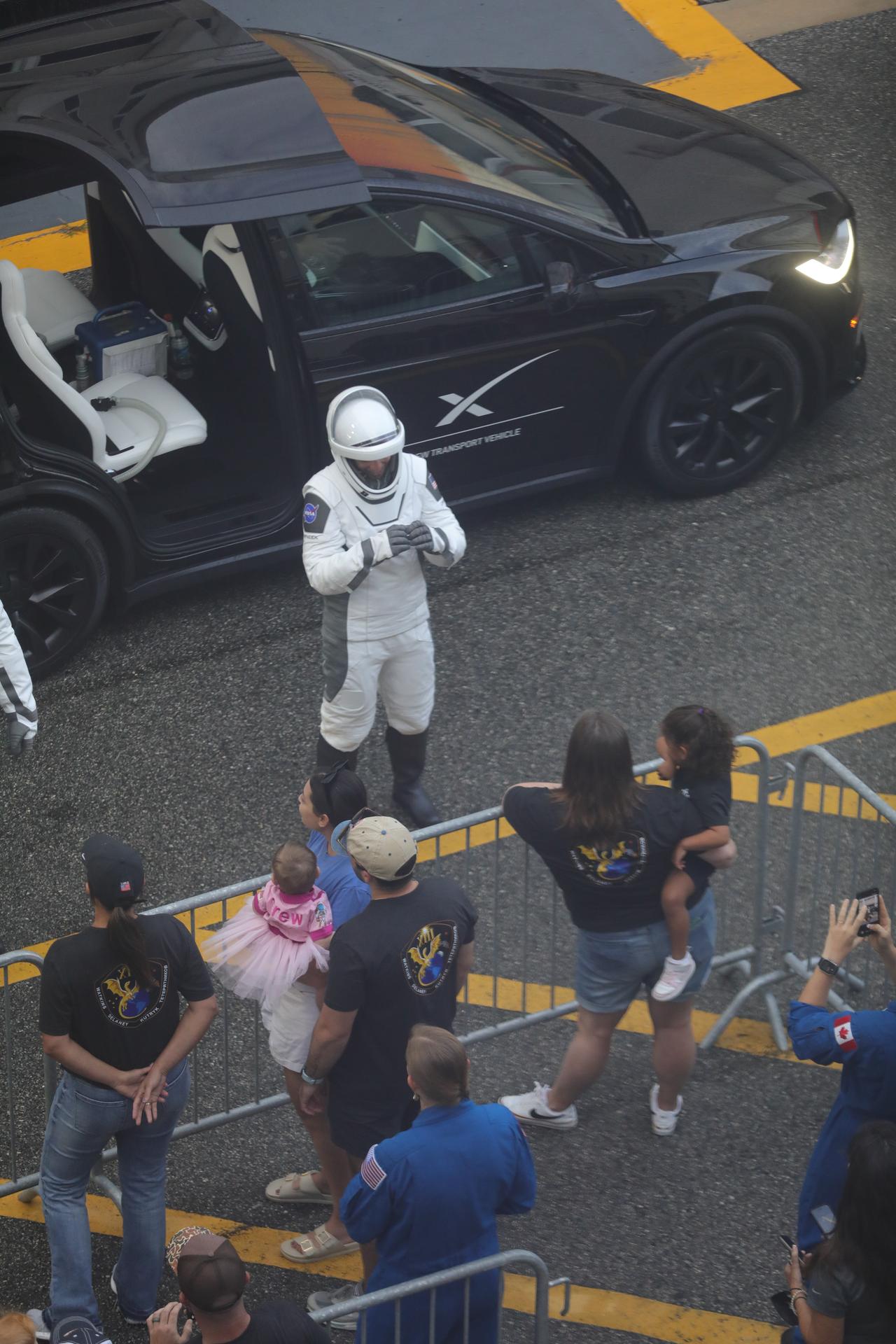
NASA astronaut Jessica Watkins speaks to family and friends before she departs the Neil A. Armstrong Operations and Checkout Building at the agency’s Kennedy Space Center in Florida for nearby Space Launch Complex 40 at Cape Canaveral Space Force Station for launch of Crew-13 on Thursday, Oct. 1, 2026. Watkins, NASA astronaut Luke Delaney, along with CSA (Canadian Space Agency) astronaut Joshua Kutryk, and Roscosmos cosmonaut Sergey Teteryatnikov are scheduled to lift off aboard SpaceX’s Dragon spacecraft and Falcon 9 rocket no earlier than 11:10 a.m. EDT, from Space Launch Complex 40 at Cape Canaveral Space Force Station in Florida.
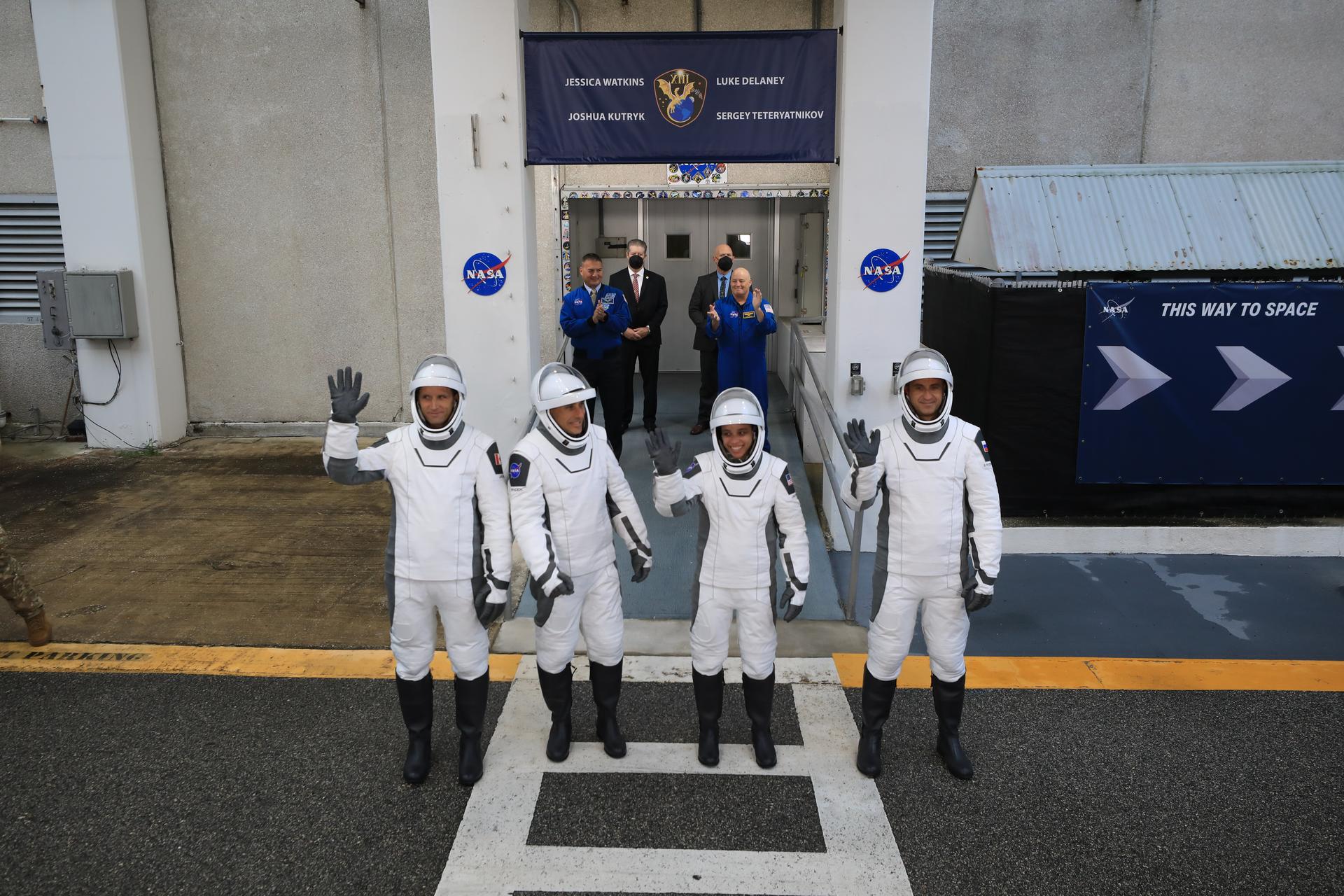
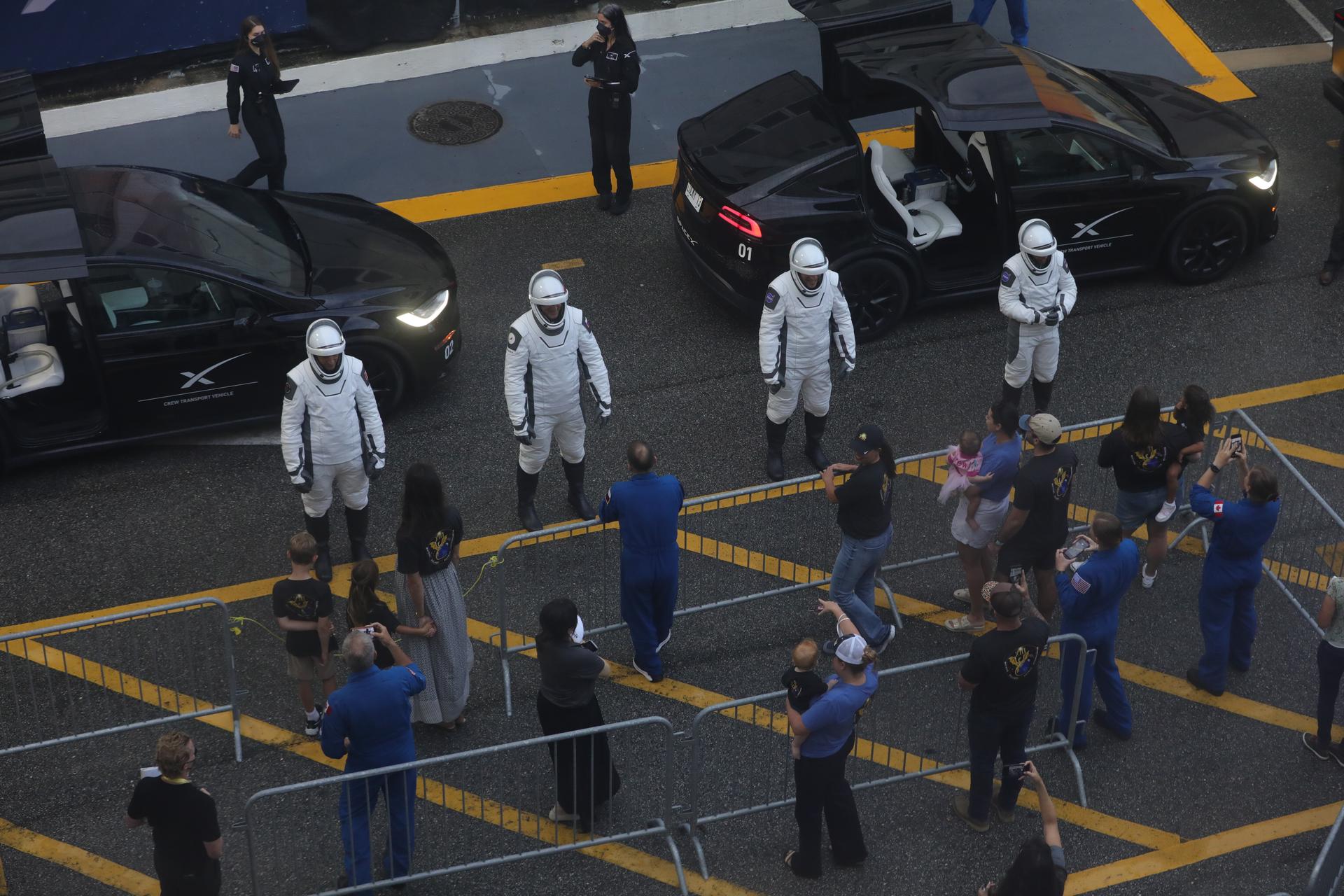
From left to right, NASA astronauts Luke Delaney and Jessica Watkins, along with Roscosmos cosmonaut Sergey Teteryatnikov, and CSA (Canadian Space Agency) astronaut Joshua Kutryk (back), wave to family and friends as they prepare to depart the Neil A. Armstrong Operations and Checkout Building at the agency’s Kennedy Space Center in Florida for nearby Space Launch Complex 40 at Cape Canaveral Space Force Station for launch of Crew-13 on Thursday, Oct. 1, 2026. Crew-13 is scheduled to lift off aboard SpaceX’s Dragon spacecraft and Falcon 9 rocket no earlier than 11:10 a.m. EDT, from Space Launch Complex 40 at Cape Canaveral Space Force Station in Florida.
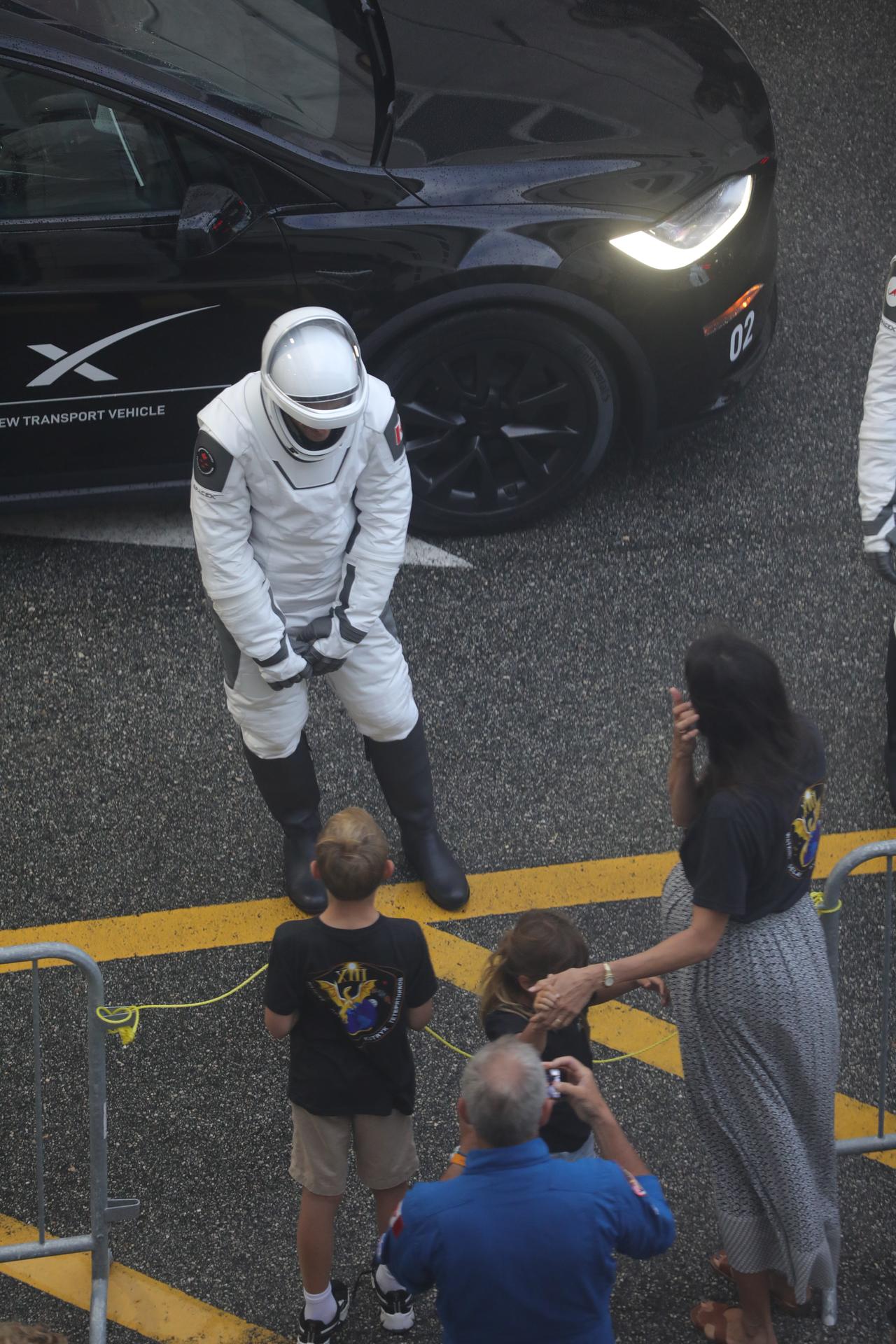
CSA (Canadian Space Agency) astronaut Joshua Kutryk speaks to his family before he departs the Neil A. Armstrong Operations and Checkout Building at the agency’s Kennedy Space Center in Florida for nearby Space Launch Complex 40 at Cape Canaveral Space Force Station for launch of Crew-13 on Thursday, Oct. 1, 2026. Kutryk, NASA astronauts Jessica Watkins and Luke Delaney, and Roscosmos cosmonaut Sergey Teteryatnikov are scheduled to lift off aboard SpaceX’s Dragon spacecraft and Falcon 9 rocket no earlier than 11:10 a.m. EDT, from Space Launch Complex 40 at Cape Canaveral Space Force Station in Florida.
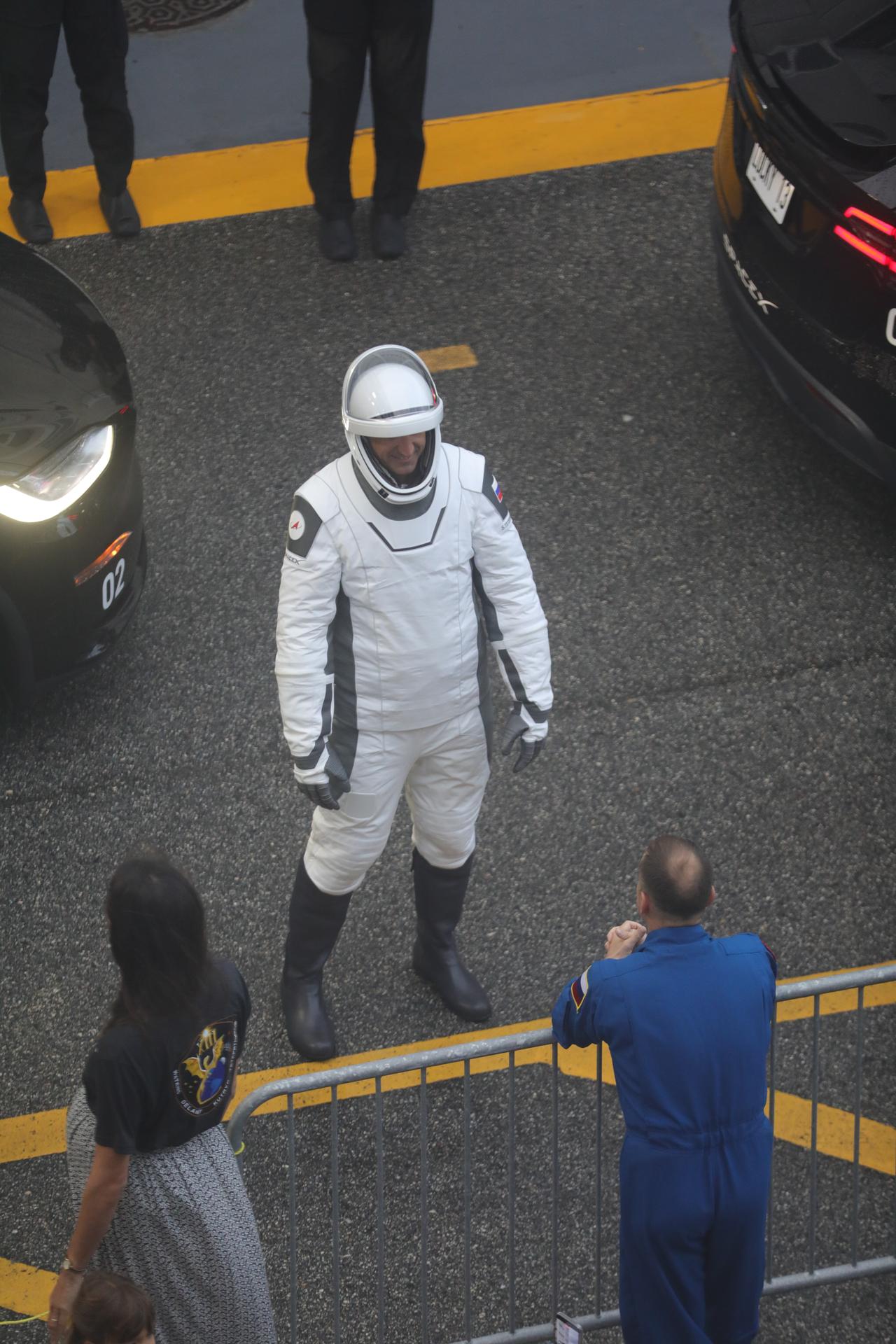
Roscosmos cosmonaut Sergey Teteryatnikov speaks to family and friends before he departs the Neil A. Armstrong Operations and Checkout Building at the agency’s Kennedy Space Center in Florida for nearby Space Launch Complex 40 at Cape Canaveral Space Force Station for launch of Crew-13 on Thursday, Oct. 1, 2026. Teteryatnikov, NASA astronauts Jessica Watkins and Luke Delaney, and CSA (Canadian Space Agency) astronaut Joshua Kutryk are scheduled to lift off aboard SpaceX’s Dragon spacecraft and Falcon 9 rocket no earlier than 11:10 a.m. EDT, from Space Launch Complex 40 at Cape Canaveral Space Force Station in Florida.
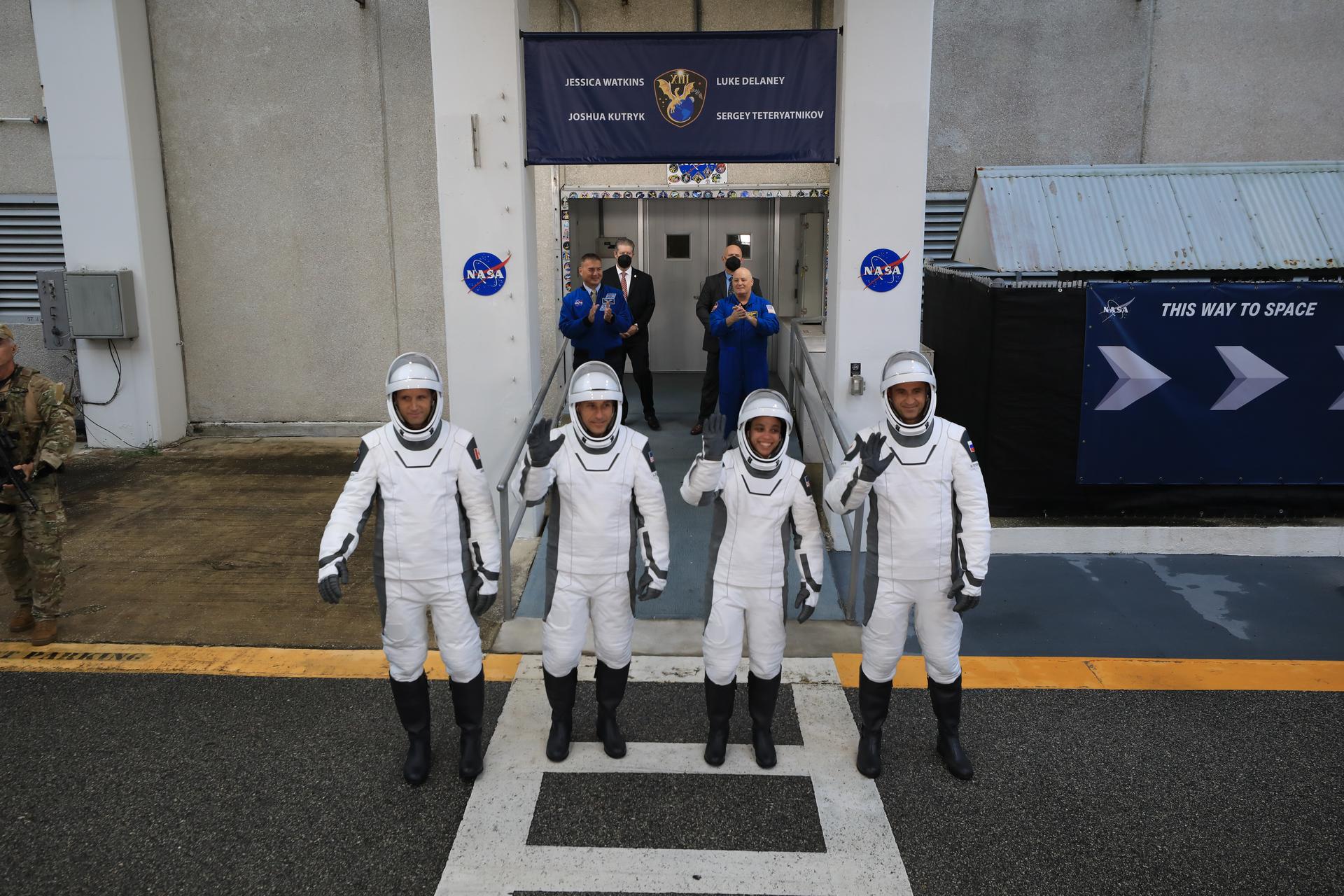
From left to right, CSA (Canadian Space Agency) astronaut Joshua Kutryk, Roscosmos cosmonaut Sergey Teteryatnikov, NASA astronauts Luke Delaney and Jessica Watkins, wave to family and friends as they prepare to depart the Neil A. Armstrong Operations and Checkout Building at the agency’s Kennedy Space Center in Florida for nearby Space Launch Complex 40 at Cape Canaveral Space Force Station for launch of Crew-13 on Thursday, Oct. 1, 2026. Crew-13 is scheduled to lift off aboard SpaceX’s Dragon spacecraft and Falcon 9 rocket no earlier than 11:10 a.m. EDT, from Space Launch Complex 40 at Cape Canaveral Space Force Station in Florida.
From left to right, NASA astronauts Luke Delaney and Jessica Watkins, along with Roscosmos cosmonaut Sergey Teteryatnikov, and CSA (Canadian Space Agency) astronaut Joshua Kutryk (back), wave to family and friends as they prepare to depart the Neil A. Armstrong Operations and Checkout Building at the agency’s Kennedy Space Center in Florida for nearby Space Launch Complex 40 at Cape Canaveral Space Force Station for launch of Crew-13 on Thursday, Oct. 1, 2026. Crew-13 is scheduled to lift off aboard SpaceX’s Dragon spacecraft and Falcon 9 rocket no earlier than 11:10 a.m. EDT, from Space Launch Complex 40 at Cape Canaveral Space Force Station in Florida.
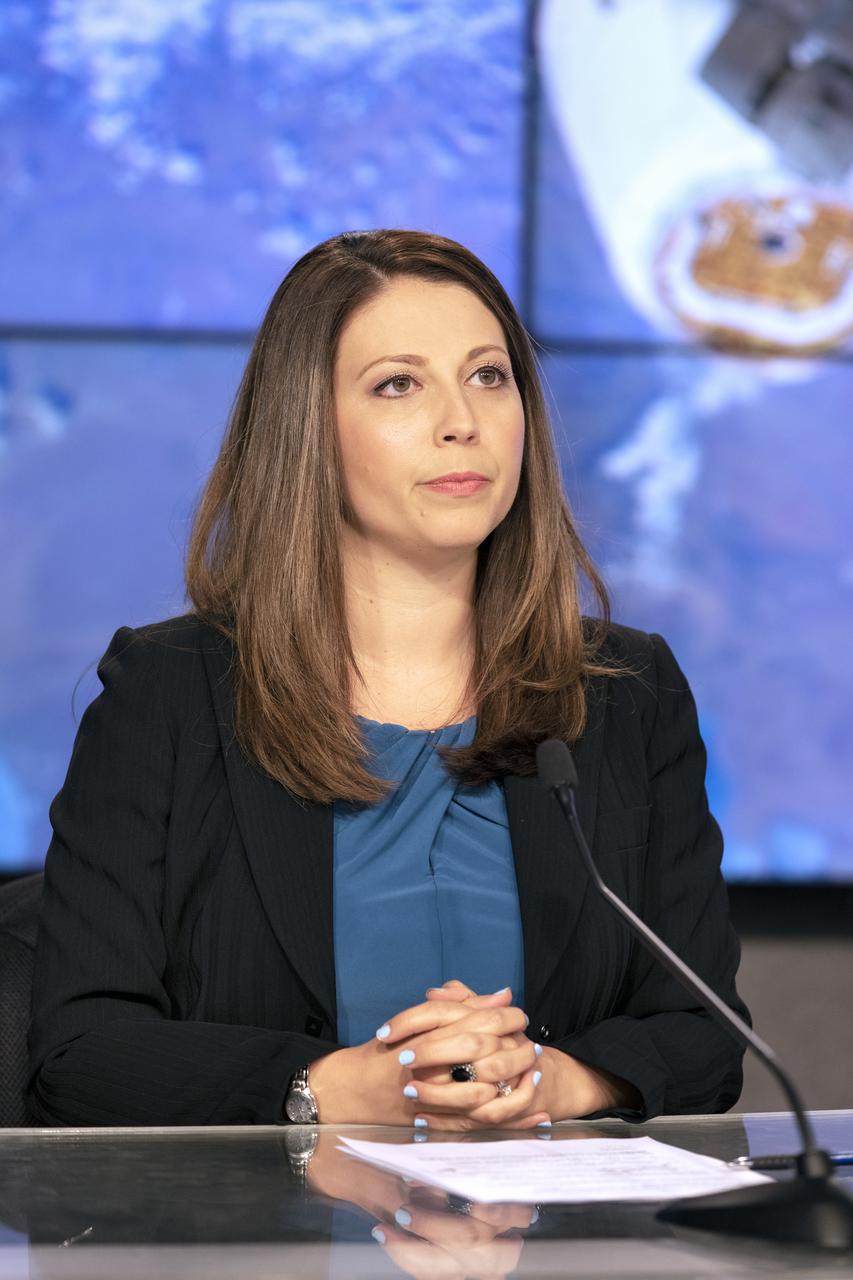
Marie Lewis, NASA Communications moderator, moderates the prelaunch news conference for SpaceX’s 18th Commercial Resupply Services (CRS-18) mission to the International Space Station, July 24, 2019, at the agency’s Kennedy Space Center in Florida. The SpaceX Falcon 9 rocket and uncrewed Dragon spacecraft are scheduled to launch July 24, 2019, from Space Launch Complex 40 at Florida’s Cape Canaveral Air Force Station.
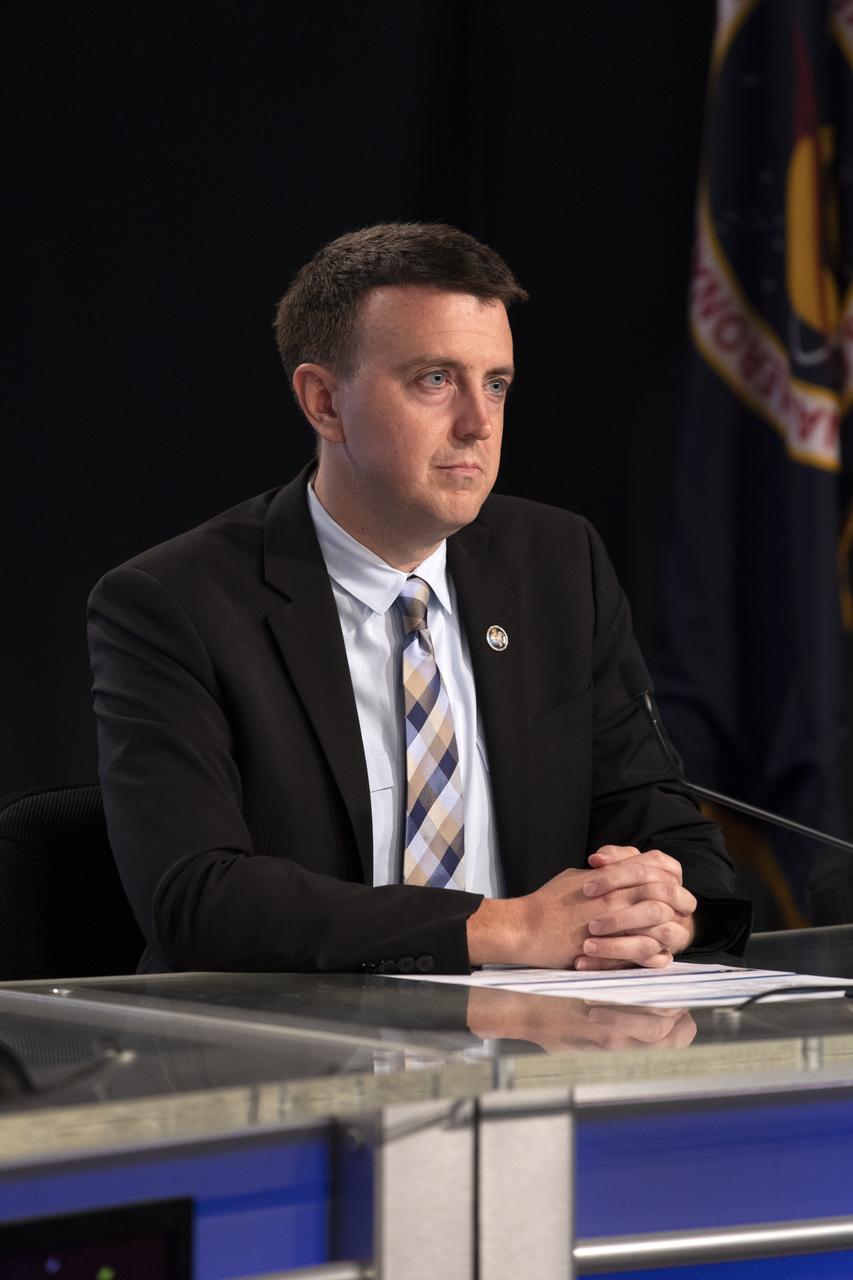
Will Ulrich, 45th Space Wing weather officer with the U.S. Air Force, speaks to members of the news media during a prelaunch news conference for SpaceX’s 17th Commercial Resupply Services (CRS-17) mission for NASA to the International Space Station on May 2, 2019, at the agency’s Kennedy Space Center in Florida. The SpaceX Falcon 9 rocket and Dragon cargo module are scheduled to launch no earlier than May 3, 2019, from Space Launch Complex 40 on Cape Canaveral Air Force Station in Florida.
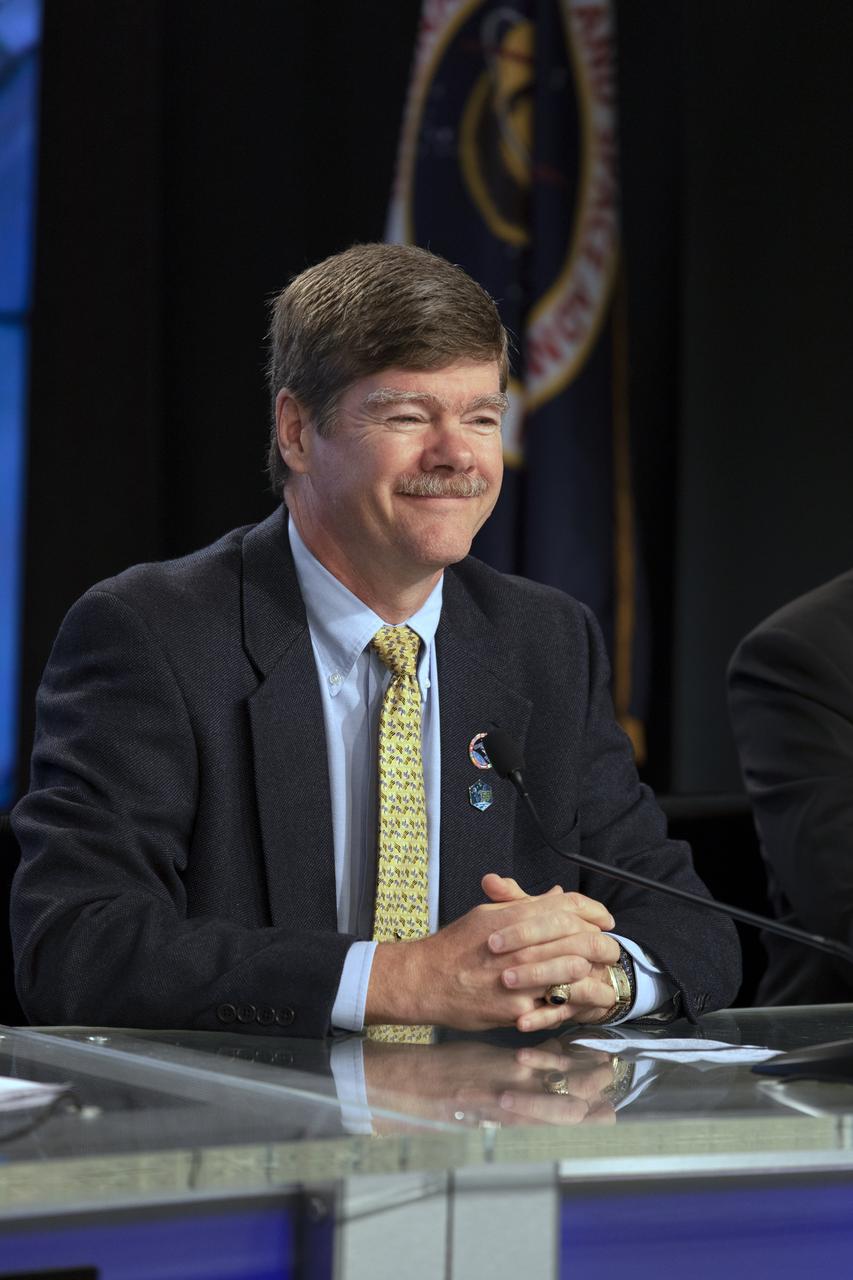
Pete Hasbrook, manager of the International Space Station Program Science Office at NASA’s Johnson Space Center in Houston, speaks during the prelaunch news conference for SpaceX’s 18th Commercial Resupply Services (CRS-18) mission to the station, July 24, 2019, at the agency’s Kennedy Space Center in Florida. The SpaceX Falcon 9 rocket and uncrewed Dragon spacecraft are scheduled to launch July 24, 2019, from Space Launch Complex 40 at Florida’s Cape Canaveral Air Force Station.
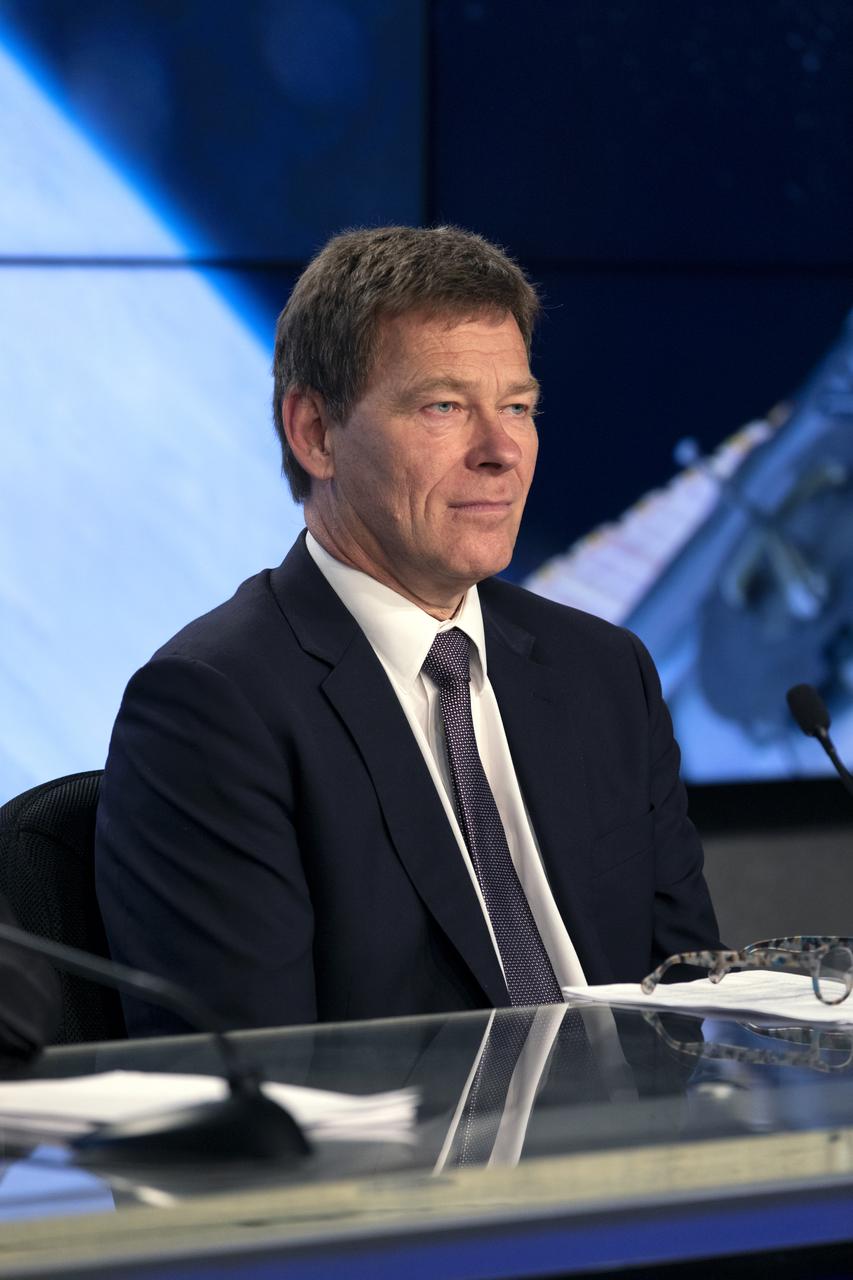
Hans Koenigsmann, VP, Build and Flight Reliability with SpaceX, speaks to members of the news media during a prelaunch news conference for SpaceX’s 17th Commercial Resupply Services (CRS-17) mission for NASA to the International Space Station on May 2, 2019, at the agency’s Kennedy Space Center in Florida. The SpaceX Falcon 9 rocket and Dragon cargo module are scheduled to launch no earlier than May 3, 2019, from Space Launch Complex 40 on Cape Canaveral Air Force Station in Florida.

Derrol Nail, NASA Communications moderates a prelaunch news conference for SpaceX’s 17th Commercial Resupply Services (CRS-17) mission for NASA to the International Space Station on May 2, 2019, at the agency’s Kennedy Space Center in Florida. The SpaceX Falcon 9 rocket and Dragon cargo module are scheduled to launch no earlier than May 3, 2019, from Space Launch Complex 40 on Cape Canaveral Air Force Station in Florida.
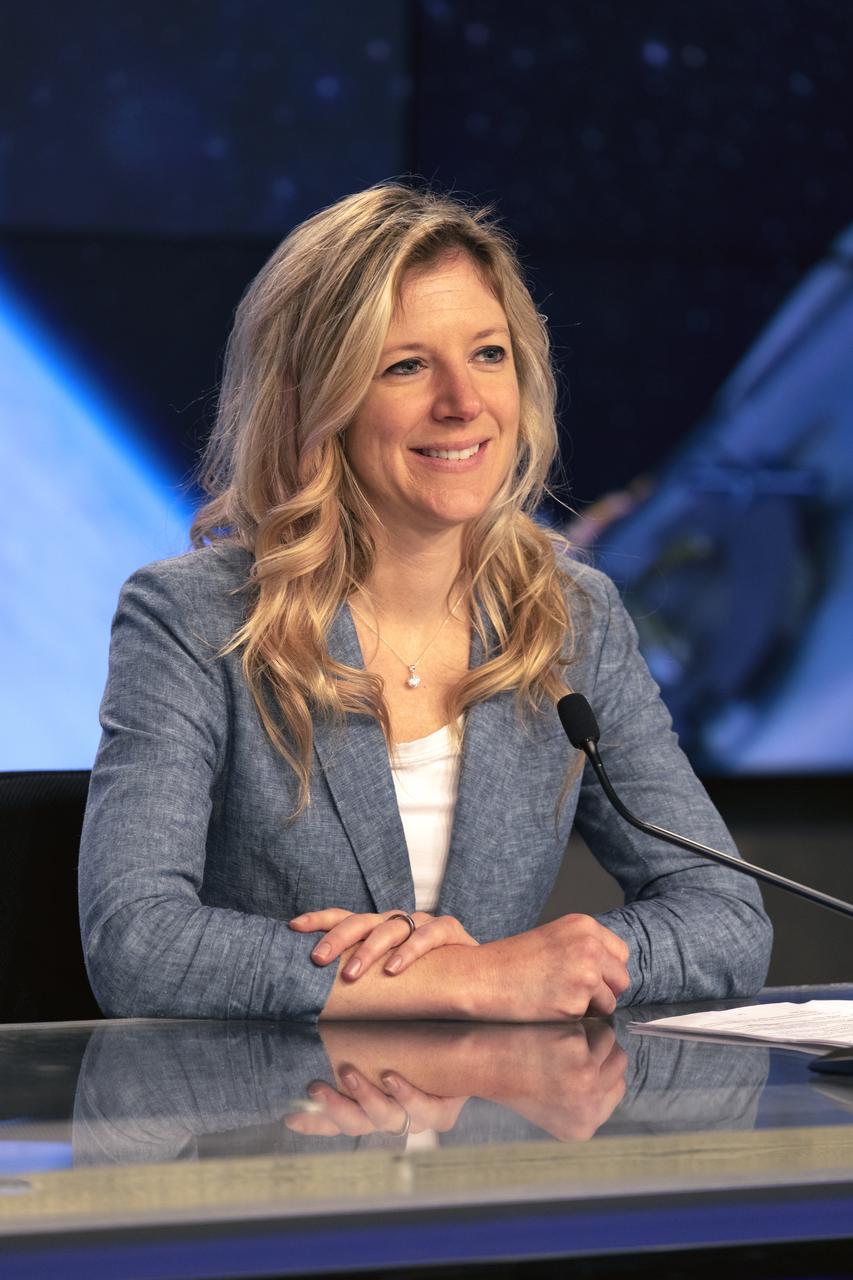
Jessica Jensen, director of Dragon mission management at SpaceX, speaks during the prelaunch news conference for the company's 18th Commercial Resupply Services (CRS-18) mission to the International Space Station, July 24, 2019, at NASA’s Kennedy Space Center in Florida. The SpaceX Falcon 9 rocket and uncrewed Dragon spacecraft are scheduled to launch July 24, 2019, from Space Launch Complex 40 at Florida’s Cape Canaveral Air Force Station.
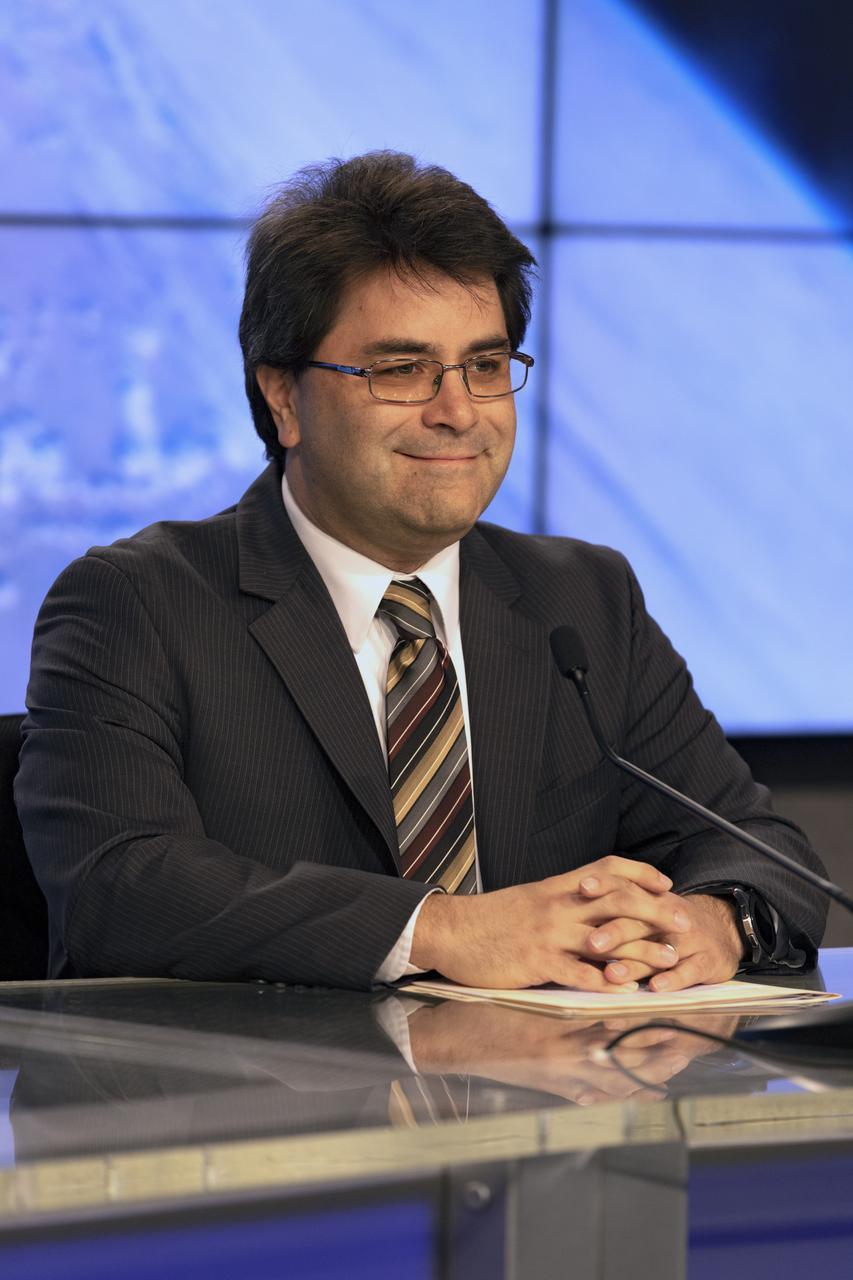
Bill Spetch, deputy manager of the International Space Station Transportation Integration Office at NASA’s Johnson Space Center in Houston, speaks during the prelaunch news conference for SpaceX’s 18th Commercial Resupply Services (CRS-18) mission to the station on July 24, 2019, at the agency’s Kennedy Space Center in Florida. The SpaceX Falcon 9 rocket and uncrewed Dragon spacecraft are scheduled to launch July 24, 2019, from Space Launch Complex 40 at Florida’s Cape Canaveral Air Force Station.
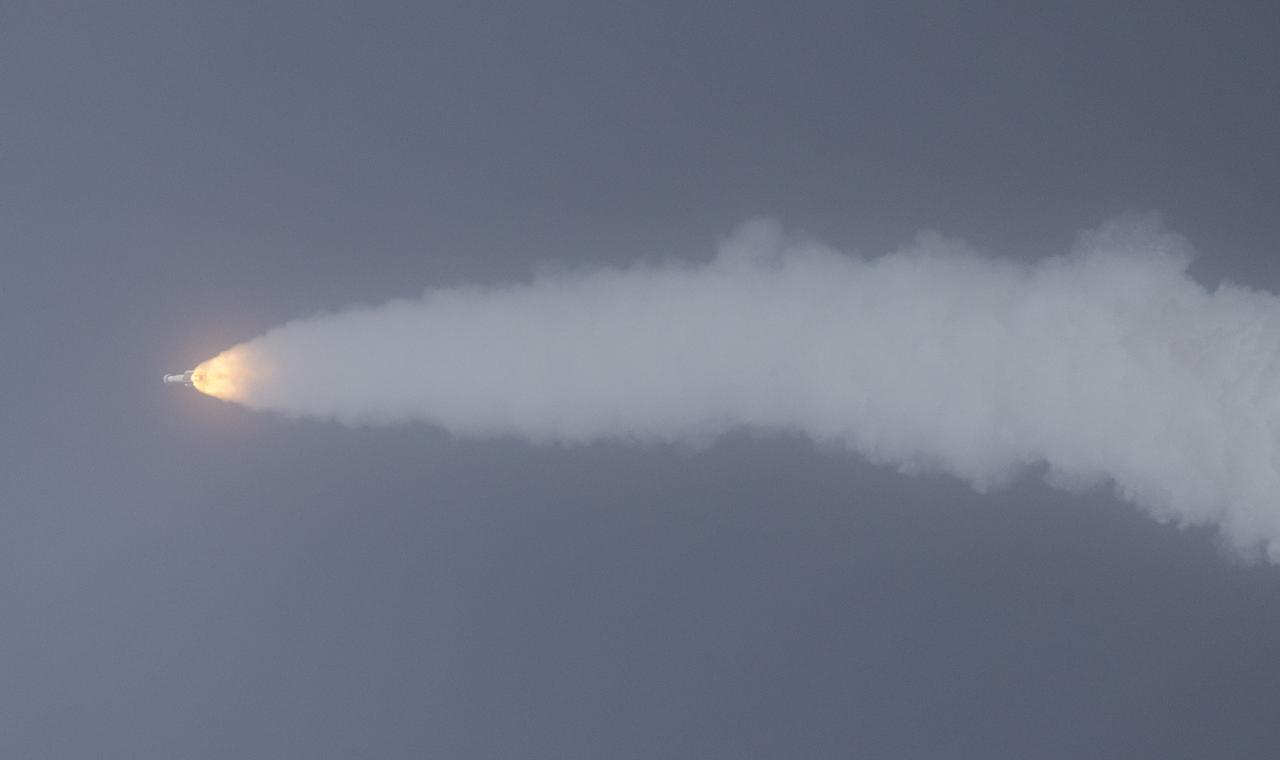
A United Launch Alliance Atlas V rocket with Boeing’s CST-100 Starliner spacecraft aboard launches from Space Launch Complex 41 at Cape Canaveral Space Force Station, Thursday, May 19, 2022, from NASA’s Kennedy Space Center in Florida. Boeing’s Orbital Flight Test-2 (OFT-2) is Starliner’s second uncrewed flight test and will dock to the International Space Station as part of NASA's Commercial Crew Program. OFT-2 launched at 6:54 p.m. ET, and will serve as an end-to-end test of the system's capabilities. Photo Credit: (NASA/Joel Kowsky)
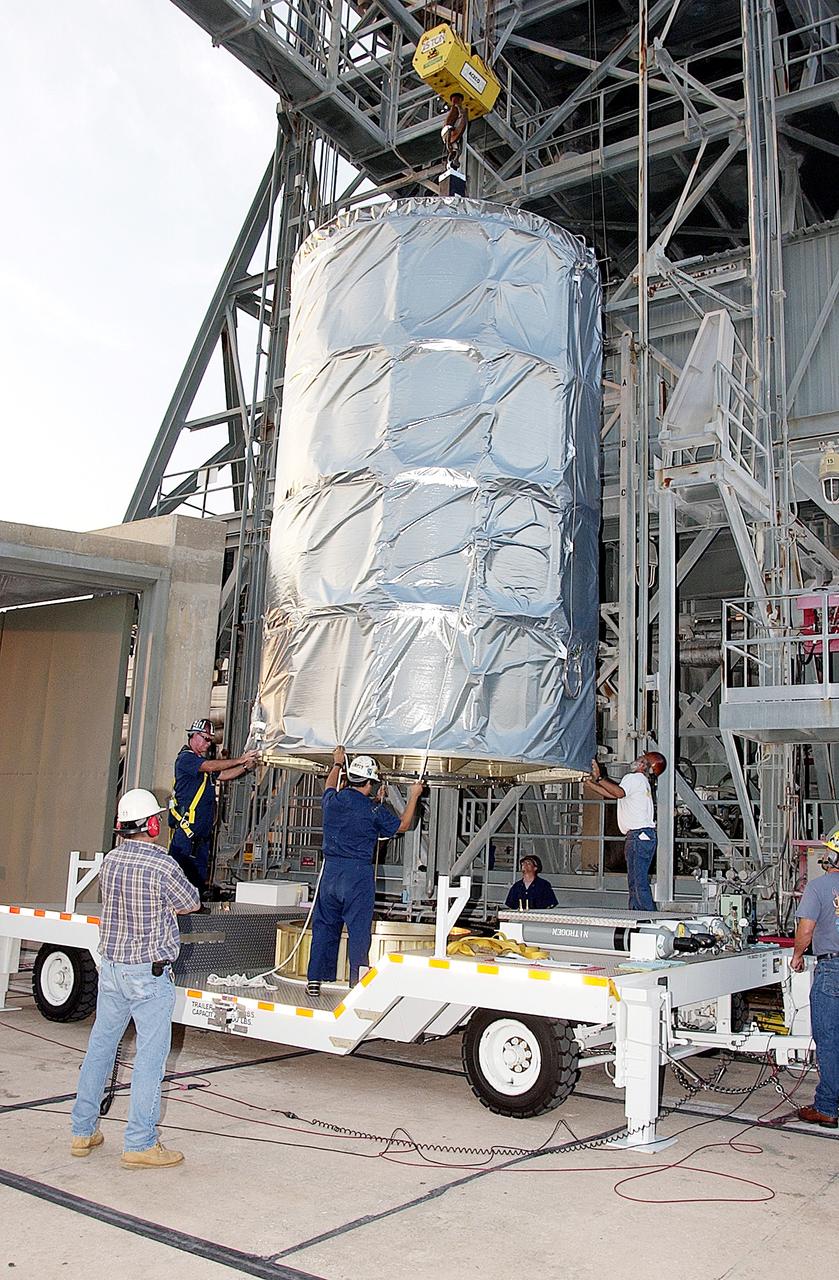
KENNEDY SPACE CENTER, FLA. - On Launch Complex 17-B, Cape Canaveral Air Force Station, the Space Infrared Telescope Facility (SIRTF) observatory is lowered onto a transporter to be taken back to NASA Spacecraft Hangar AE. SIRTF will remain in the clean room at Hangar AE until it returns to the pad in early August.
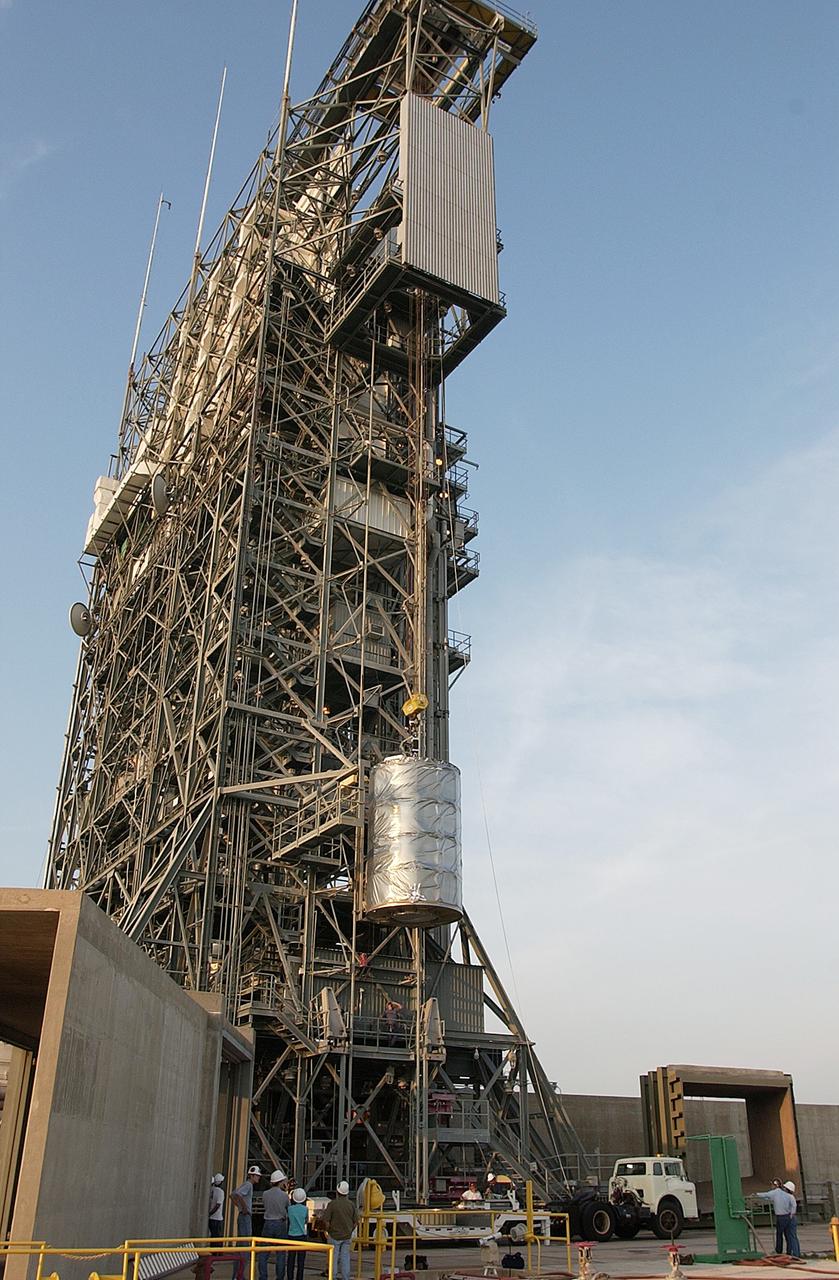
KENNEDY SPACE CENTER, FLA. - On Launch Complex 17-B, Cape Canaveral Air Force Station, the Space Infrared Telescope Facility (SIRTF) observatory is lowered to the ground and taken back to NASA Spacecraft Hangar AE. SIRTF will remain in the clean room at Hangar AE until it returns to the pad in early August.
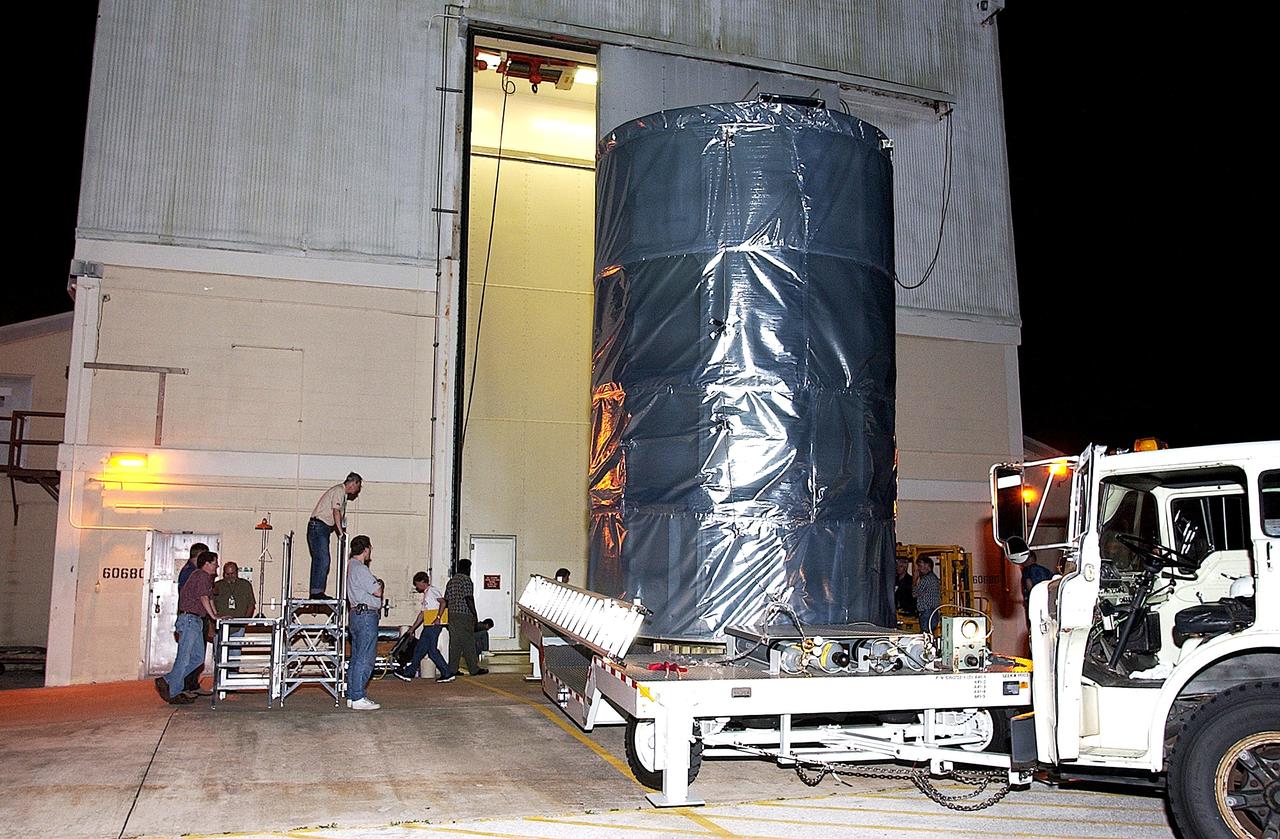
KENNEDY SPACE CENTER, FLA. - On Launch Complex 17-B, Cape Canaveral Air Force Station, the Space Infrared Telescope Facility (SIRTF) observatory is on a transporter to be taken back to NASA Spacecraft Hangar AE. SIRTF will remain in the clean room at Hangar AE until it returns to the pad in early August.
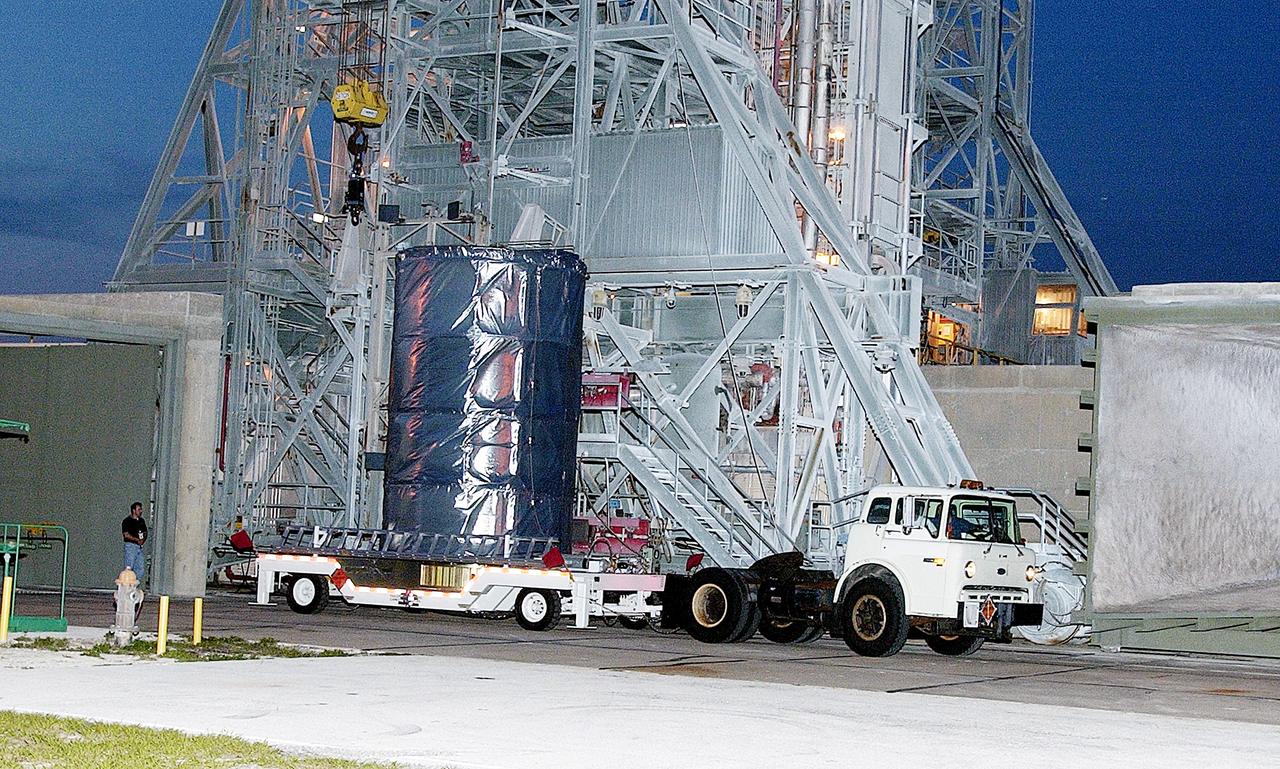
KENNEDY SPACE CENTER, FLA. - On Launch Complex 17-B, Cape Canaveral Air Force Station, the Space Infrared Telescope Facility (SIRTF) observatory is on a transporter to be taken back to NASA Spacecraft Hangar AE. SIRTF will remain in the clean room at Hangar AE until it returns to the pad in early August.
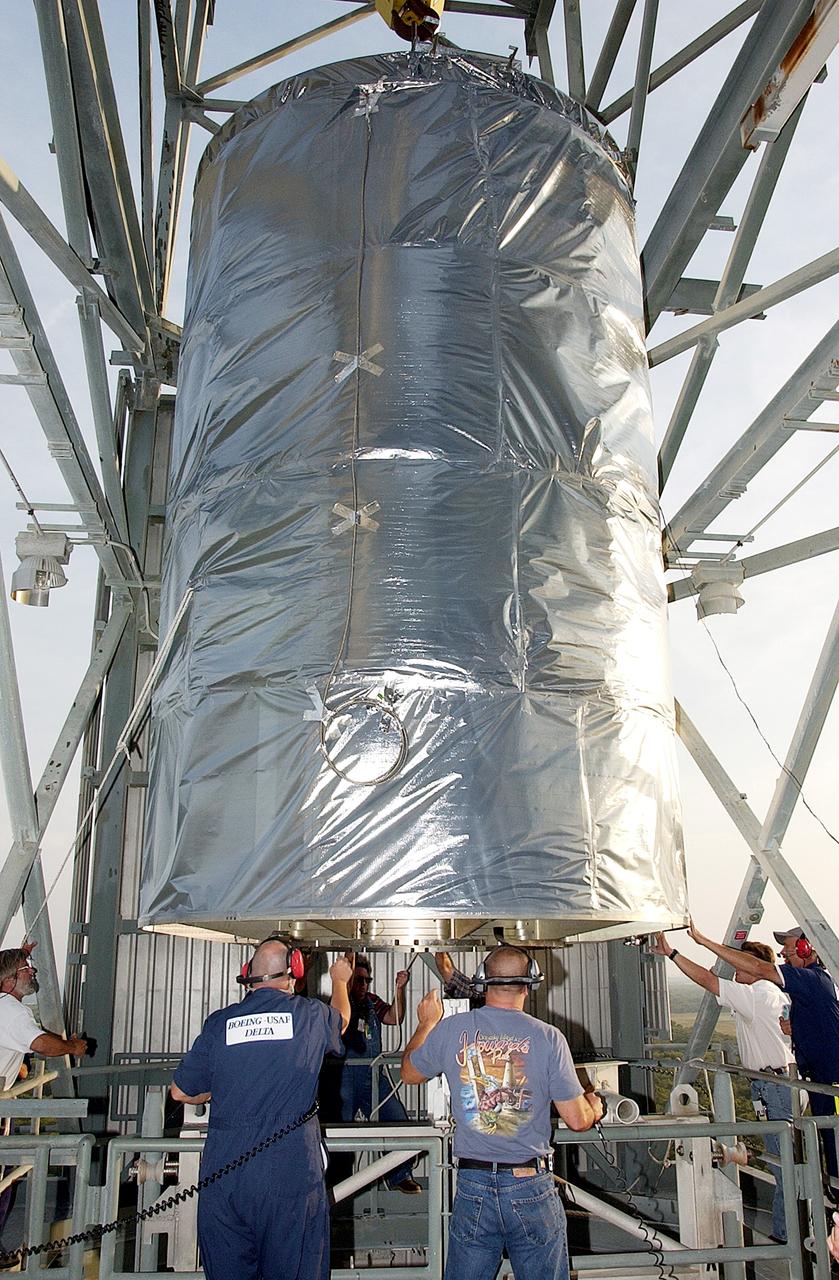
KENNEDY SPACE CENTER, FLA. - On Launch Complex 17-B, Cape Canaveral Air Force Station, the Space Infrared Telescope Facility (SIRTF) observatory is ready to be lowered to the ground and taken back to NASA Spacecraft Hangar AE. SIRTF will remain in the clean room at Hangar AE until it returns to the pad in early August.
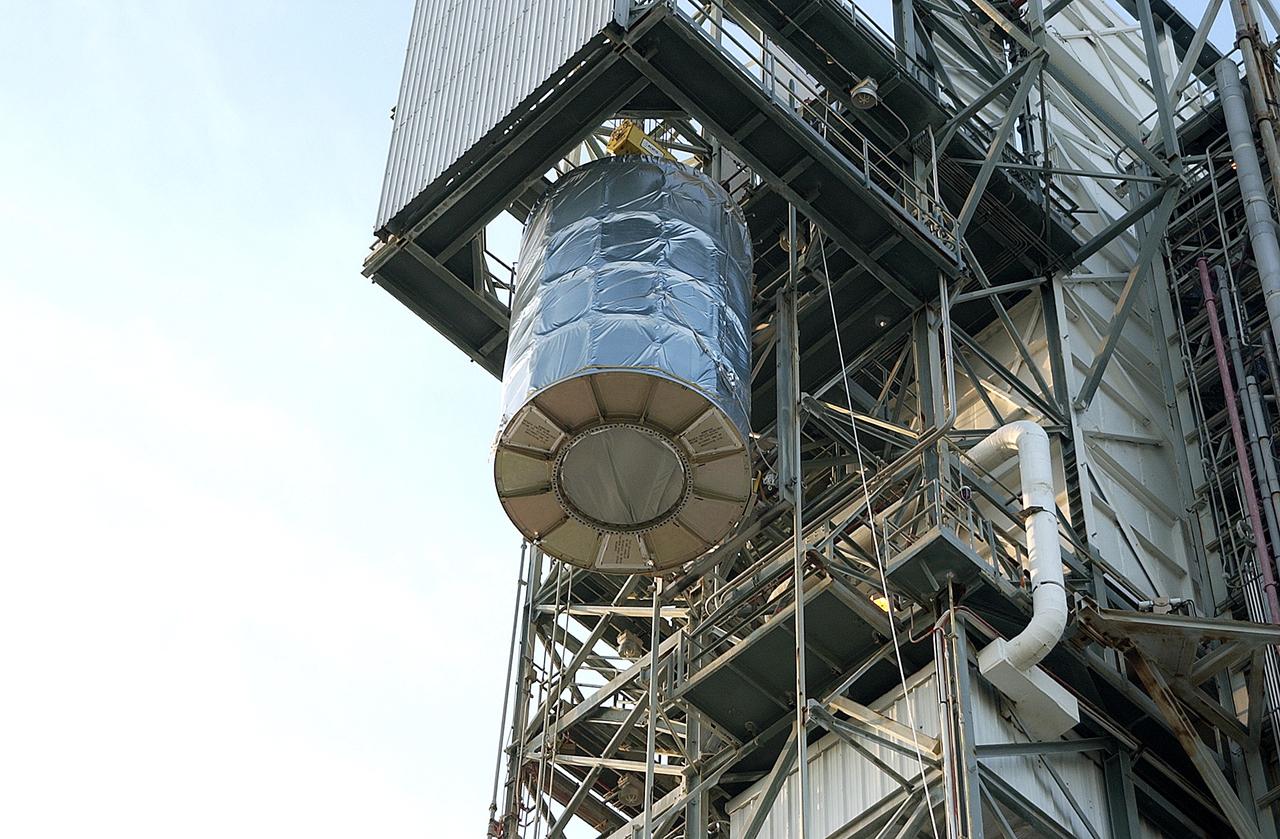
KENNEDY SPACE CENTER, FLA. - On Launch Complex 17-B, Cape Canaveral Air Force Station, the Space Infrared Telescope Facility (SIRTF) observatory is lowered to the ground and taken back to NASA Spacecraft Hangar AE. SIRTF will remain in the clean room at Hangar AE until it returns to the pad in early August.
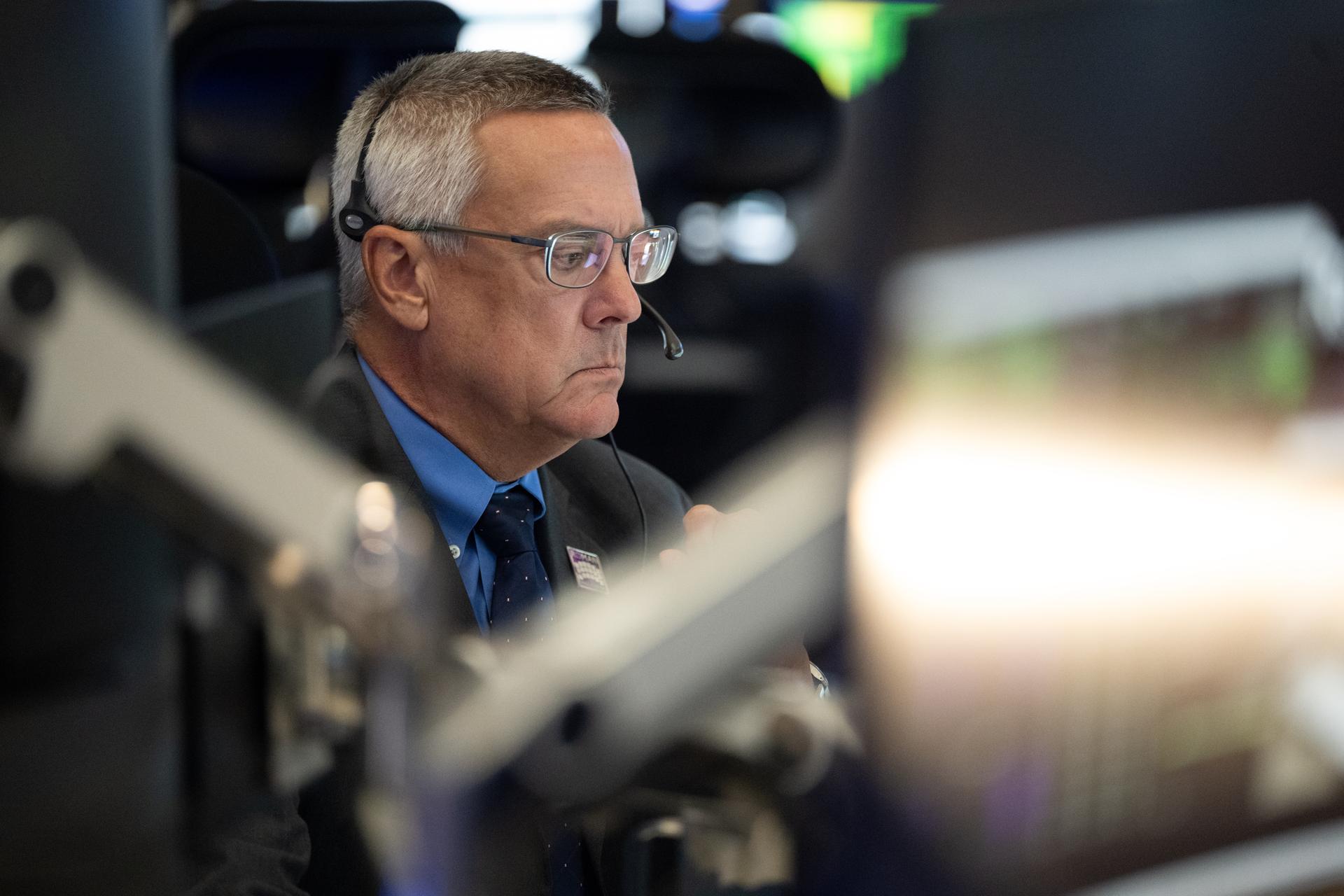
James Wood, chief engineer for NASA’s Launch Services Program, monitors the countdown inside Hangar AE at Cape Canaveral Space Force Station for the launch of a SpaceX Falcon Heavy rocket with NASA’S Nancy Grace Roman Space Telescope from Launch Complex 39A at NASA’s Kennedy Space Center, Sunday, Aug. 30, 2026, in Florida. Roman will investigate dark energy and dark matter, conduct a statistical census of planetary systems, and enable a broad range of additional astrophysics research. Launch occurred at 7:26 a.m. EDT. Photo Credit (NASA/Joel Kowsky)
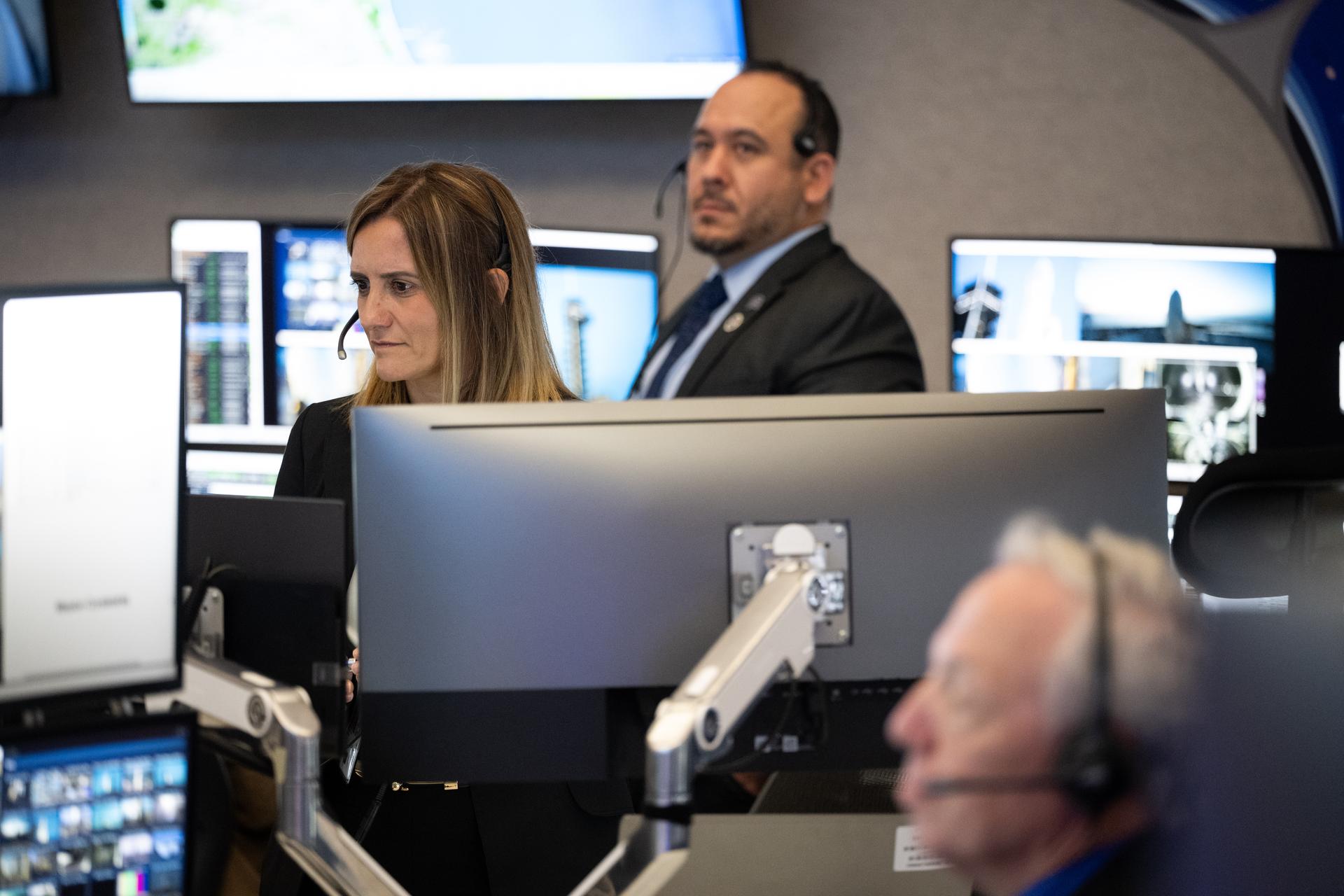
Anna Vastola, mission chief engineer for NASA’s Launch Services Program, monitors the countdown inside Hangar AE at Cape Canaveral Space Force Station for the launch of a SpaceX Falcon Heavy rocket with NASA’S Nancy Grace Roman Space Telescope from Launch Complex 39A at NASA’s Kennedy Space Center, Sunday, Aug. 30, 2026, in Florida. Roman will investigate dark energy and dark matter, conduct a statistical census of planetary systems, and enable a broad range of additional astrophysics research. Launch occurred at 7:26 a.m. EDT. Photo Credit (NASA/Joel Kowsky)
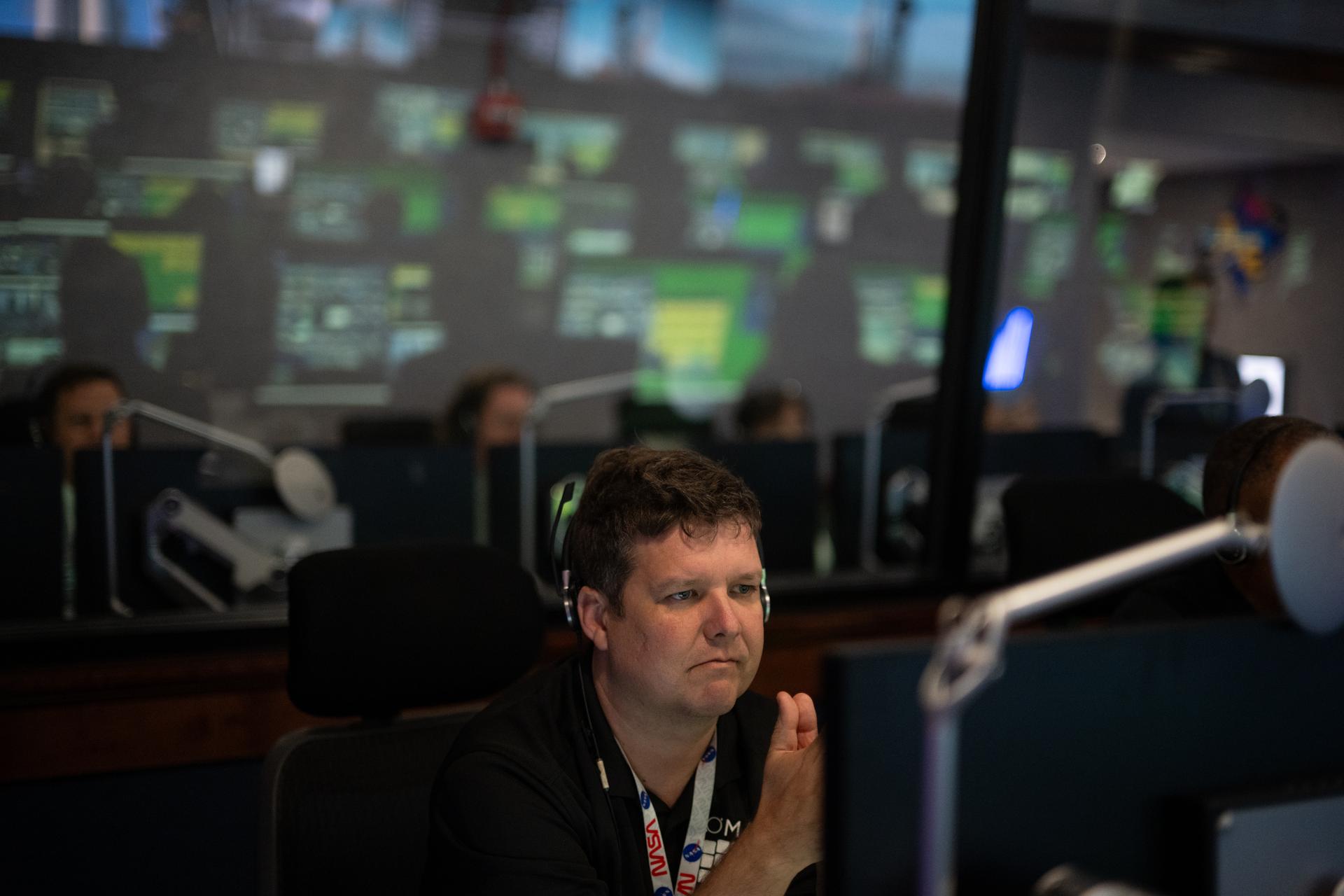
Reed Divertie, chief of Communications and Telemetry in the Ground Systems Branch of NASA’s Launch Services Program, monitor the countdown inside Hangar AE at Cape Canaveral Space Force Station for the launch of a SpaceX Falcon Heavy rocket with NASA’S Nancy Grace Roman Space Telescope from Launch Complex 39A at NASA’s Kennedy Space Center, Sunday, Aug. 30, 2026, in Florida. Roman will investigate dark energy and dark matter, conduct a statistical census of planetary systems, and enable a broad range of additional astrophysics research. Launch occurred at 7:26 a.m. EDT. Photo Credit (NASA/Joel Kowsky)
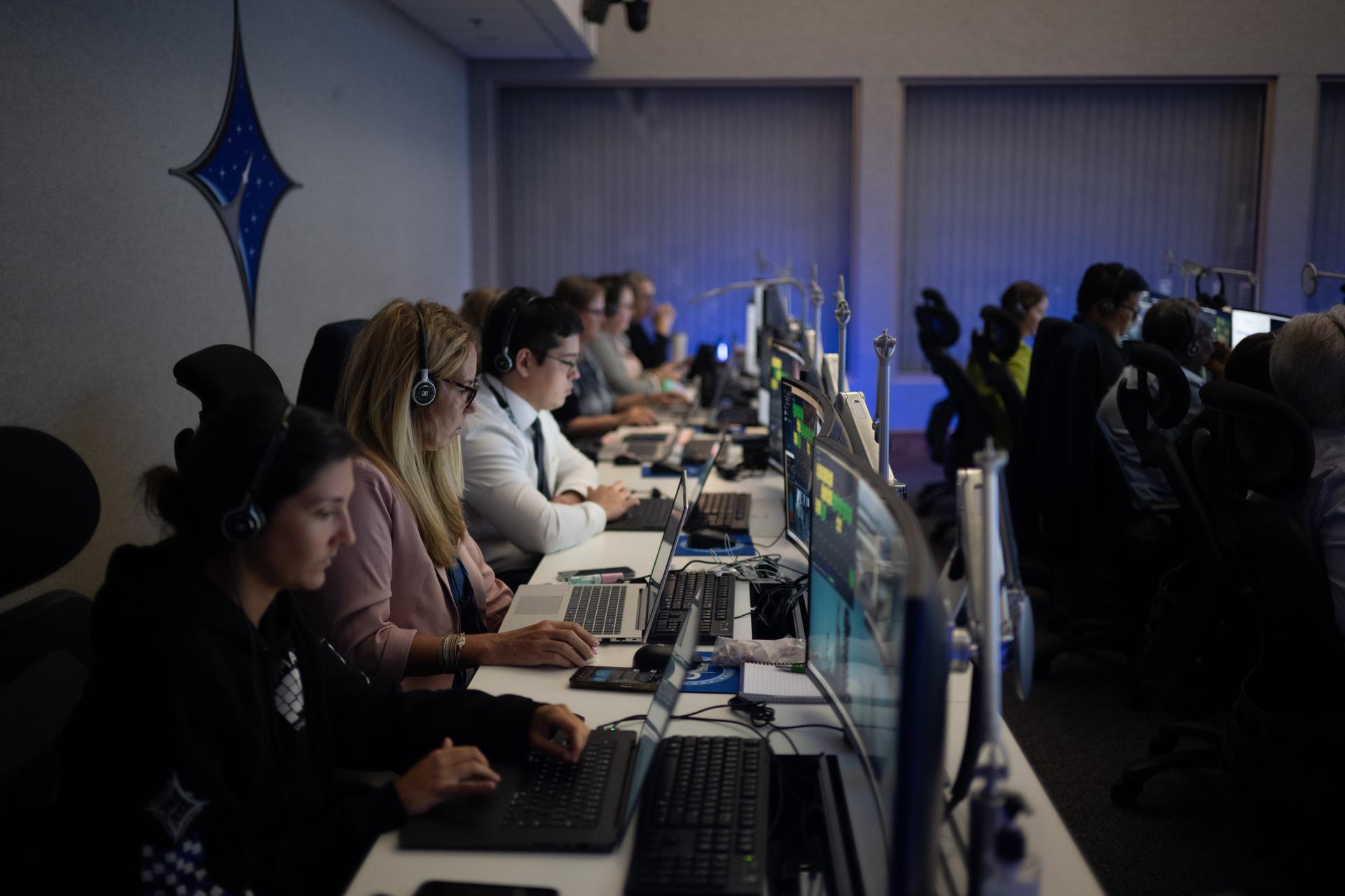
Kris Nighswonger, of NASA’s Launch Services Program, second from left,monitors the countdown inside Hangar AE at Cape Canaveral Space Force Station for the launch of a SpaceX Falcon Heavy rocket with NASA’S Nancy Grace Roman Space Telescope from Launch Complex 39A at NASA’s Kennedy Space Center, Sunday, Aug. 30, 2026, in Florida. Roman will investigate dark energy and dark matter, conduct a statistical census of planetary systems, and enable a broad range of additional astrophysics research. Launch occurred at 7:26 a.m. EDT. Photo Credit (NASA/Joel Kowsky)

Laura Ulrich, deputy chief of the fleet and systems management division of NASA’s Launch Services Program, monitors the countdown inside Hangar AE at Cape Canaveral Space Force Station for the launch of a SpaceX Falcon Heavy rocket with NASA’S Nancy Grace Roman Space Telescope from Launch Complex 39A at NASA’s Kennedy Space Center, Sunday, Aug. 30, 2026, in Florida. Roman will investigate dark energy and dark matter, conduct a statistical census of planetary systems, and enable a broad range of additional astrophysics research. Launch occurred at 7:26 a.m. EDT. Photo Credit (NASA/Joel Kowsky)
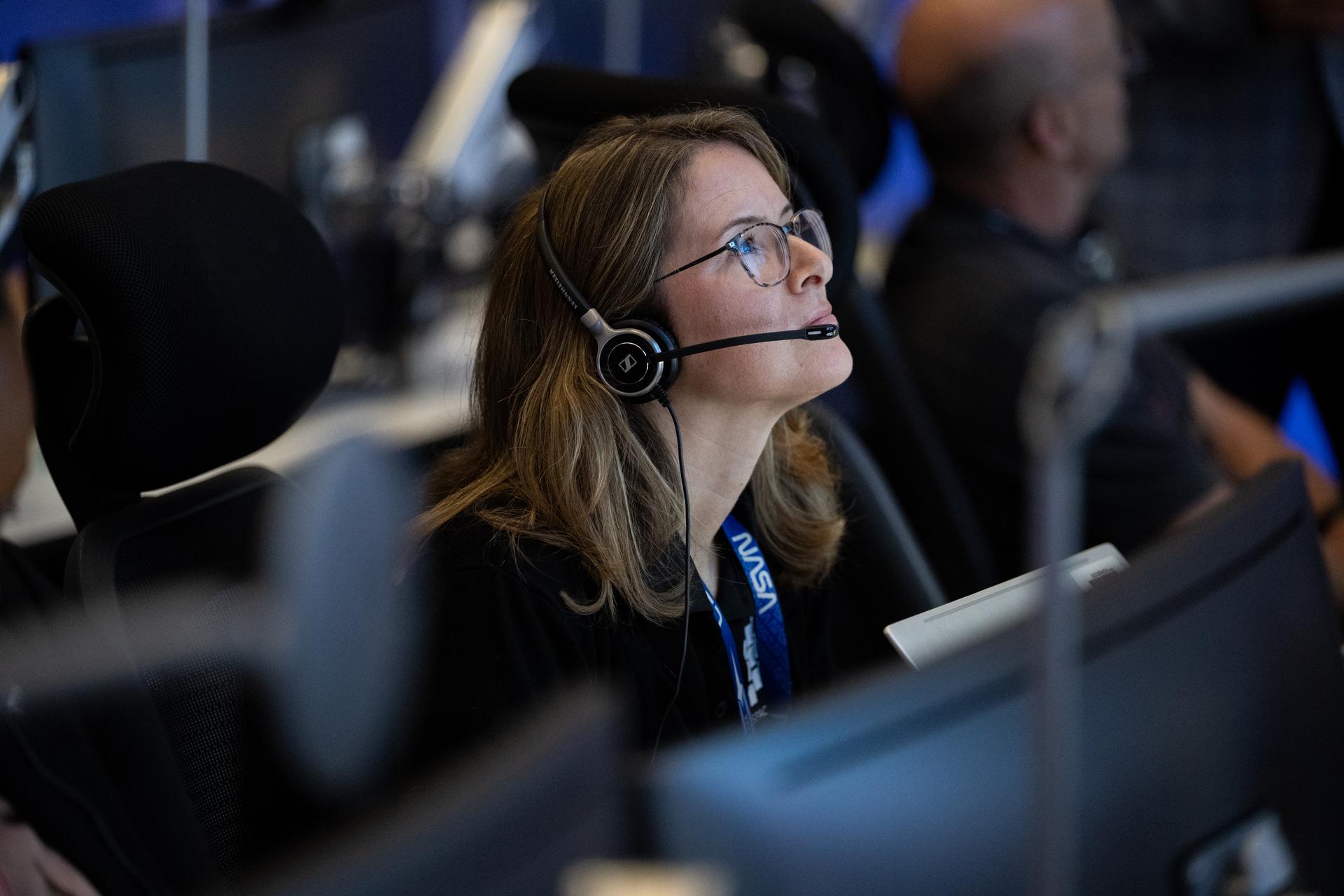
Jennifer Nufer, COSI mission manager for NASA’s Launch Services Program, monitors the countdown inside Hangar AE at Cape Canaveral Space Force Station for the launch of a SpaceX Falcon Heavy rocket with NASA’S Nancy Grace Roman Space Telescope from Launch Complex 39A at NASA’s Kennedy Space Center, Sunday, Aug. 30, 2026, in Florida. Roman will investigate dark energy and dark matter, conduct a statistical census of planetary systems, and enable a broad range of additional astrophysics research. Launch occurred at 7:26 a.m. EDT. Photo Credit (NASA/Joel Kowsky)
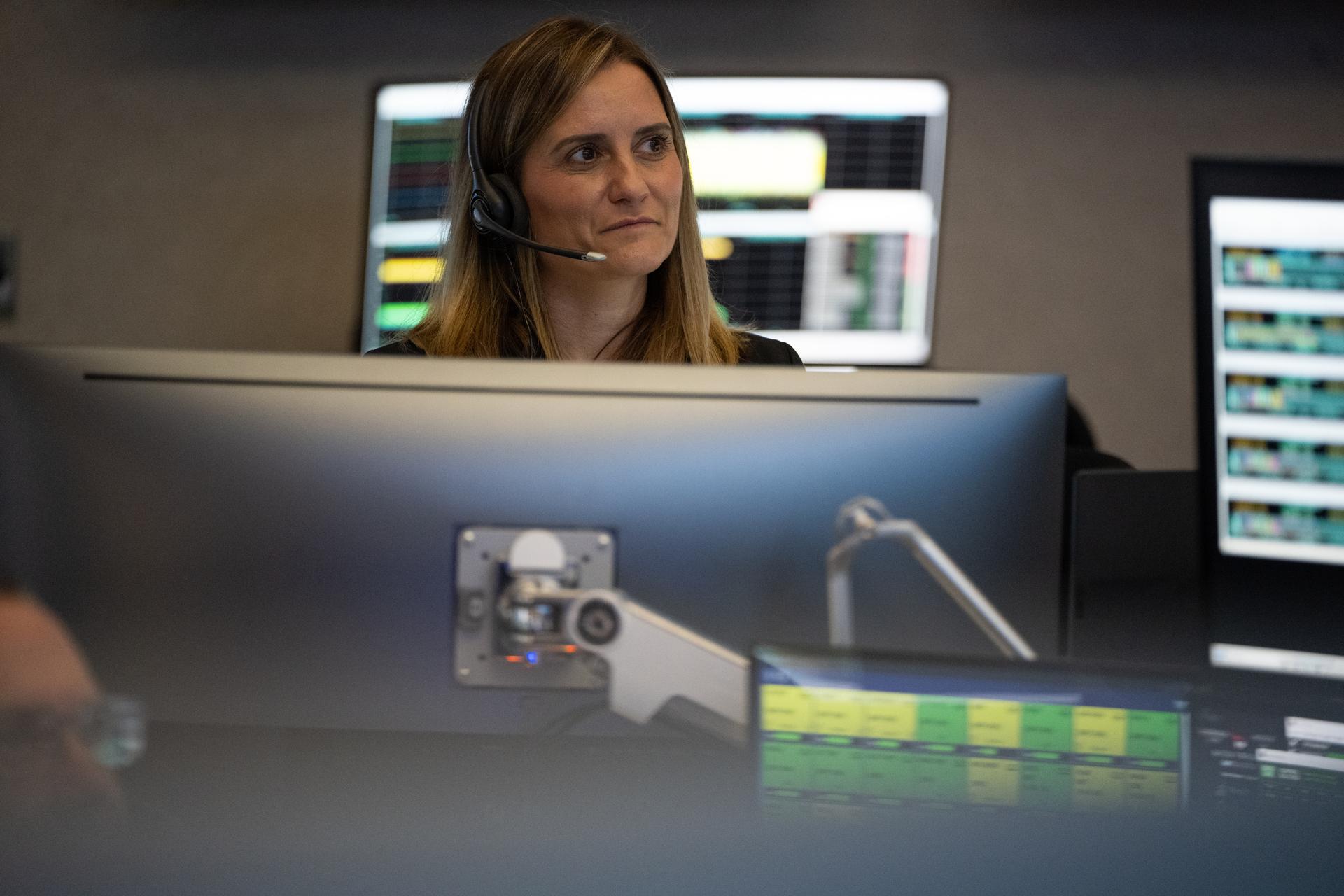
Anna Vastola, mission chief engineer for NASA’s Launch Services Program, monitors the countdown inside Hangar AE at Cape Canaveral Space Force Station for the launch of a SpaceX Falcon Heavy rocket with NASA’S Nancy Grace Roman Space Telescope from Launch Complex 39A at NASA’s Kennedy Space Center, Sunday, Aug. 30, 2026, in Florida. Roman will investigate dark energy and dark matter, conduct a statistical census of planetary systems, and enable a broad range of additional astrophysics research. Launch occurred at 7:26 a.m. EDT. Photo Credit (NASA/Joel Kowsky)
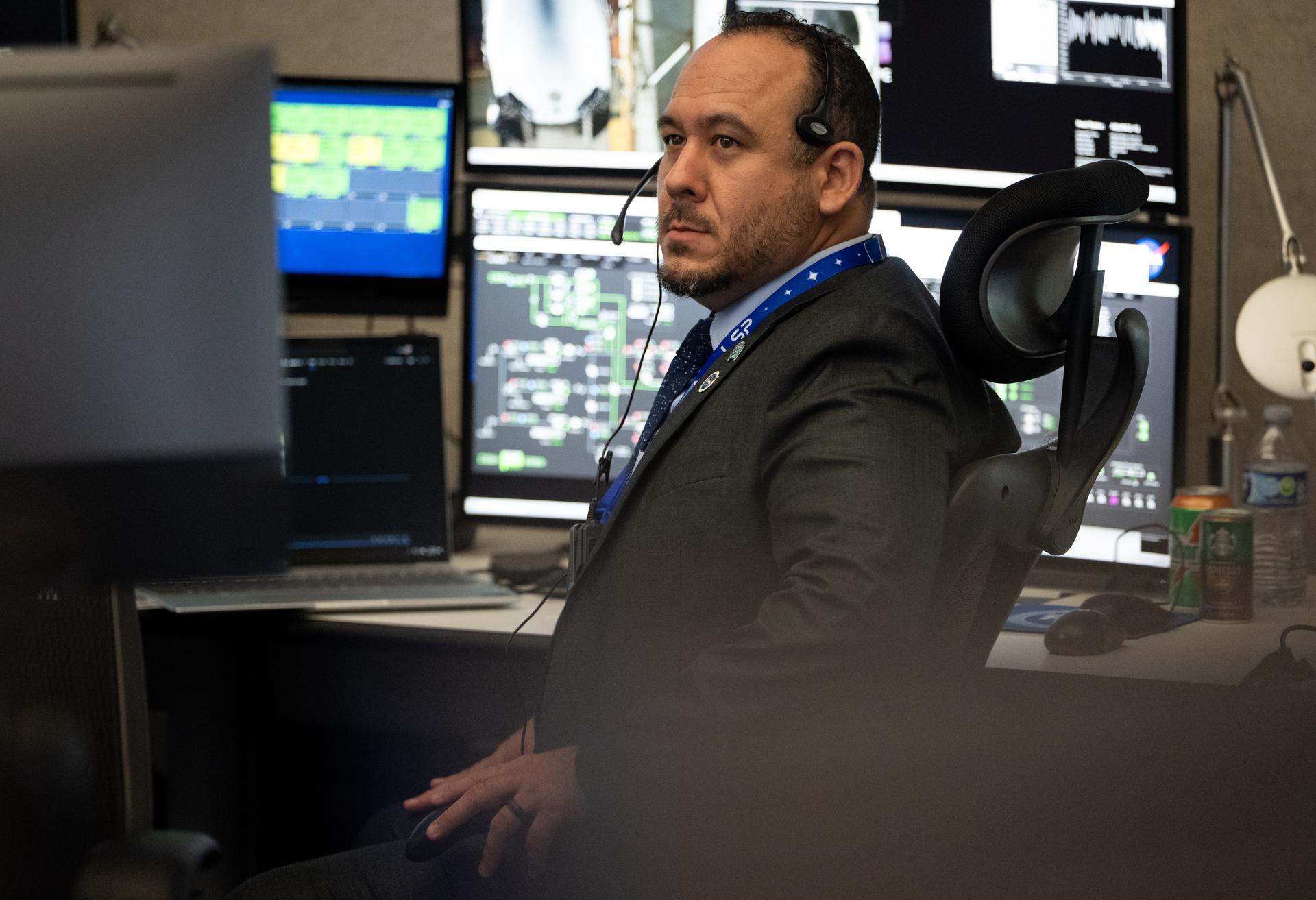
Stephen Way, a mission integration engineer for NASA’s Launch Services Program, monitors the countdown inside Hangar AE at Cape Canaveral Space Force Station for the launch of a SpaceX Falcon Heavy rocket with NASA’S Nancy Grace Roman Space Telescope from Launch Complex 39A at NASA’s Kennedy Space Center, Sunday, Aug. 30, 2026, in Florida. Roman will investigate dark energy and dark matter, conduct a statistical census of planetary systems, and enable a broad range of additional astrophysics research. Launch occurred at 7:26 a.m. EDT. Photo Credit (NASA/Joel Kowsky)
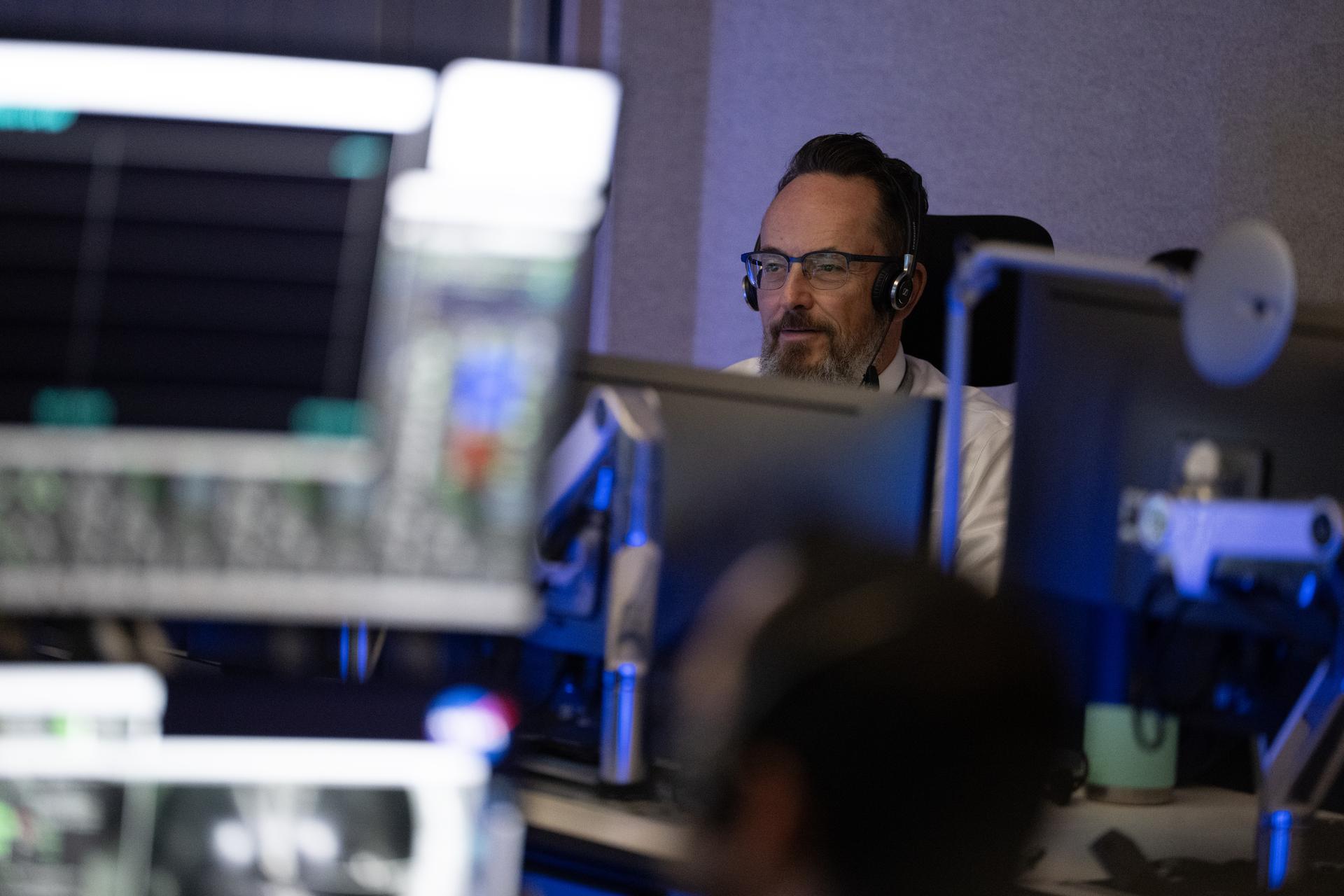
Brian Beaver, deputy division chief for the flight analysis division in NASA’s Launch Services Program, monitors the countdown inside Hangar AE at Cape Canaveral Space Force Station for the launch of a SpaceX Falcon Heavy rocket with NASA’S Nancy Grace Roman Space Telescope from Launch Complex 39A at NASA’s Kennedy Space Center, Sunday, Aug. 30, 2026, in Florida. Roman will investigate dark energy and dark matter, conduct a statistical census of planetary systems, and enable a broad range of additional astrophysics research. Launch occurred at 7:26 a.m. EDT. Photo Credit (NASA/Joel Kowsky)
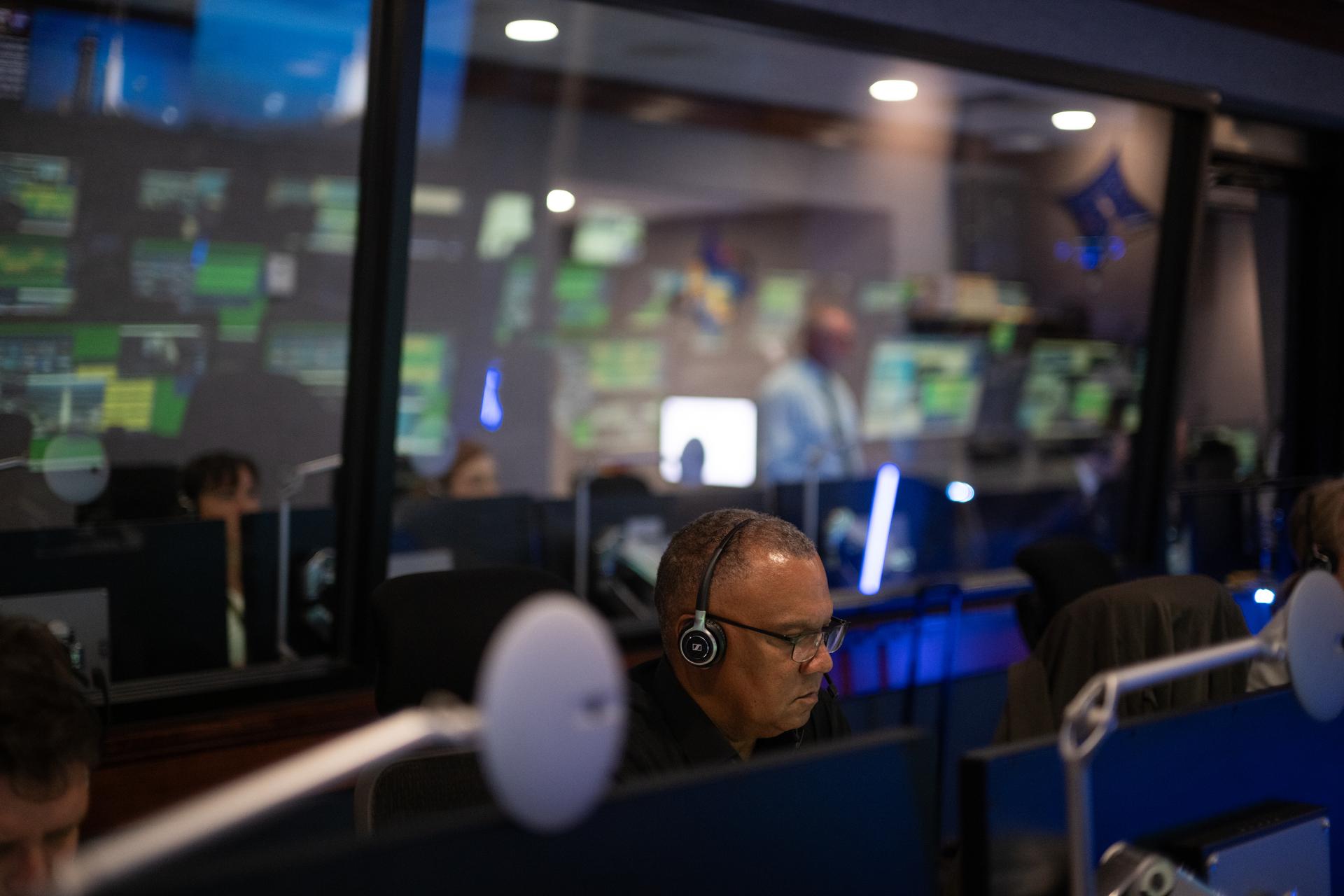
Brian Smith, chief of the program business office for NASA’s Launch Services Program, monitors the countdown inside Hangar AE at Cape Canaveral Space Force Station for the launch of a SpaceX Falcon Heavy rocket with NASA’S Nancy Grace Roman Space Telescope from Launch Complex 39A at NASA’s Kennedy Space Center, Sunday, Aug. 30, 2026, in Florida. Roman will investigate dark energy and dark matter, conduct a statistical census of planetary systems, and enable a broad range of additional astrophysics research. Launch occurred at 7:26 a.m. EDT. Photo Credit (NASA/Joel Kowsky)
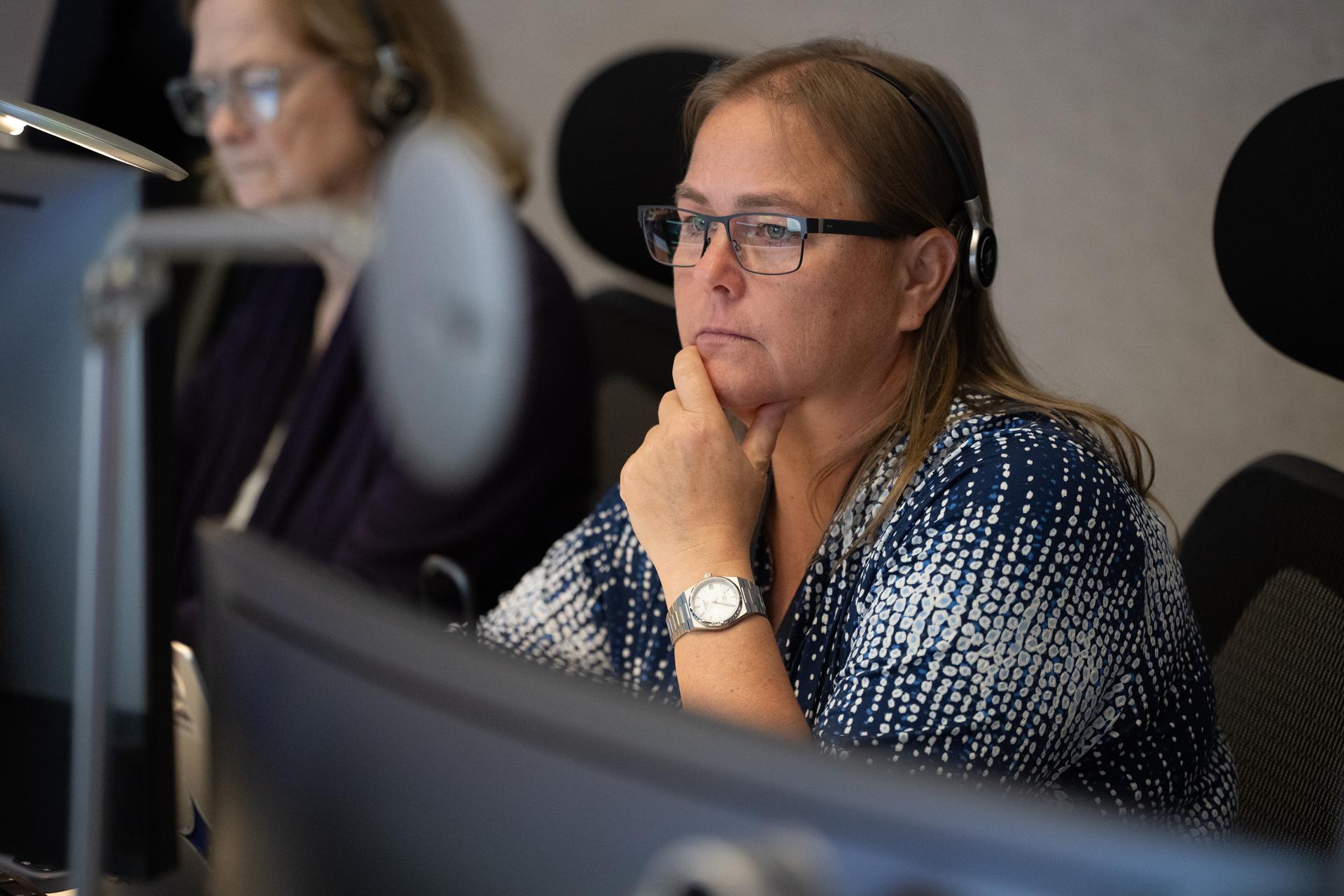
Katie Wilcox, chief of the program integration branch of NASA’s Launch Services Program, monitors the countdown inside Hangar AE at Cape Canaveral Space Force Station for the launch of a SpaceX Falcon Heavy rocket with NASA’S Nancy Grace Roman Space Telescope from Launch Complex 39A at NASA’s Kennedy Space Center, Sunday, Aug. 30, 2026, in Florida. Roman will investigate dark energy and dark matter, conduct a statistical census of planetary systems, and enable a broad range of additional astrophysics research. Launch occurred at 7:26 a.m. EDT. Photo Credit (NASA/Joel Kowsky)
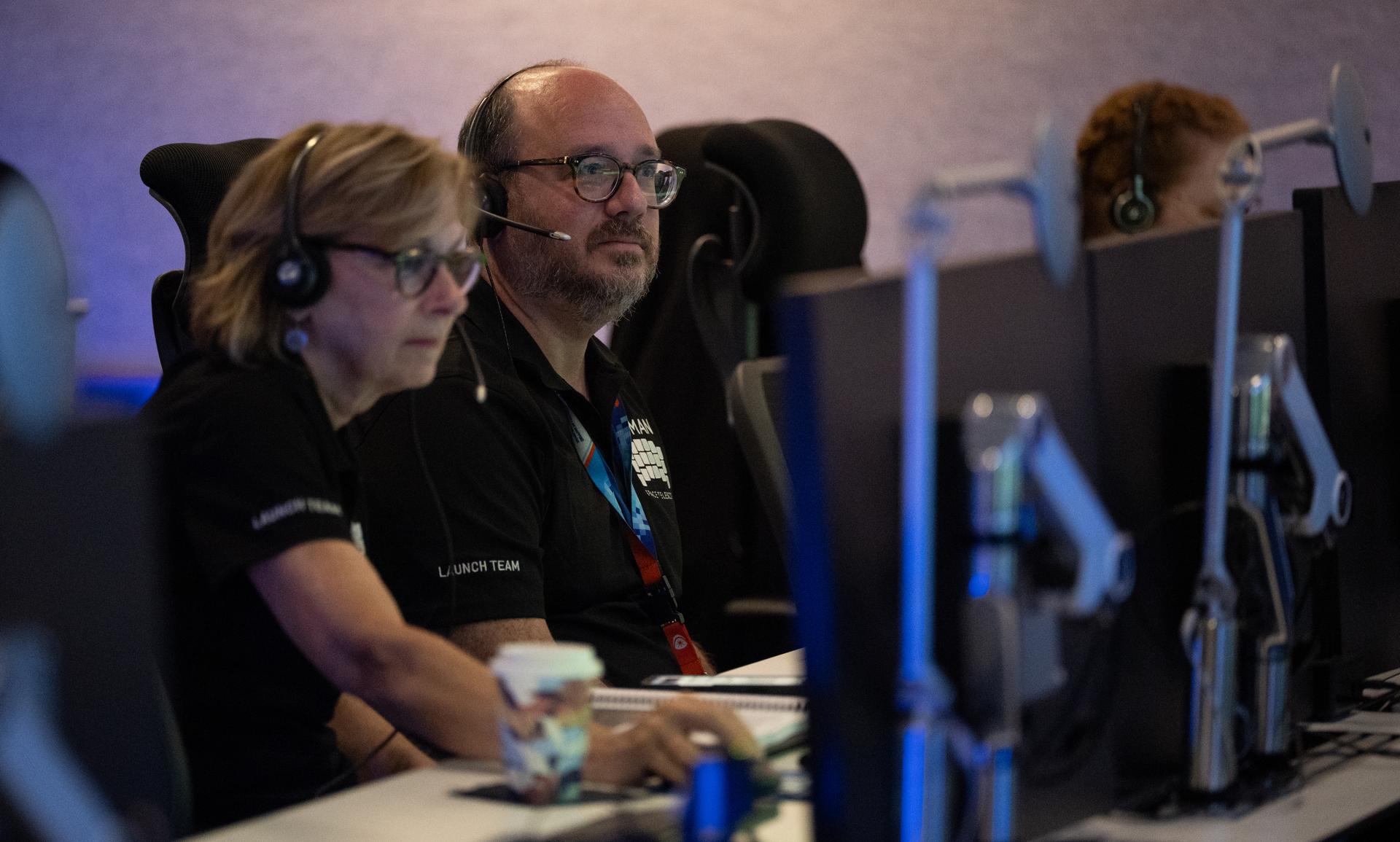
Bradley Smith, manger of the Commercial Access to Space Program in NASA’s Human Spaceflight Mission Directorate, monitors the countdown inside Hangar AE at Cape Canaveral Space Force Station for the launch of a SpaceX Falcon Heavy rocket with NASA’S Nancy Grace Roman Space Telescope from Launch Complex 39A at NASA’s Kennedy Space Center, Sunday, Aug. 30, 2026, in Florida. Roman will investigate dark energy and dark matter, conduct a statistical census of planetary systems, and enable a broad range of additional astrophysics research. Launch occurred at 7:26 a.m. EDT. Photo Credit (NASA/Joel Kowsky)
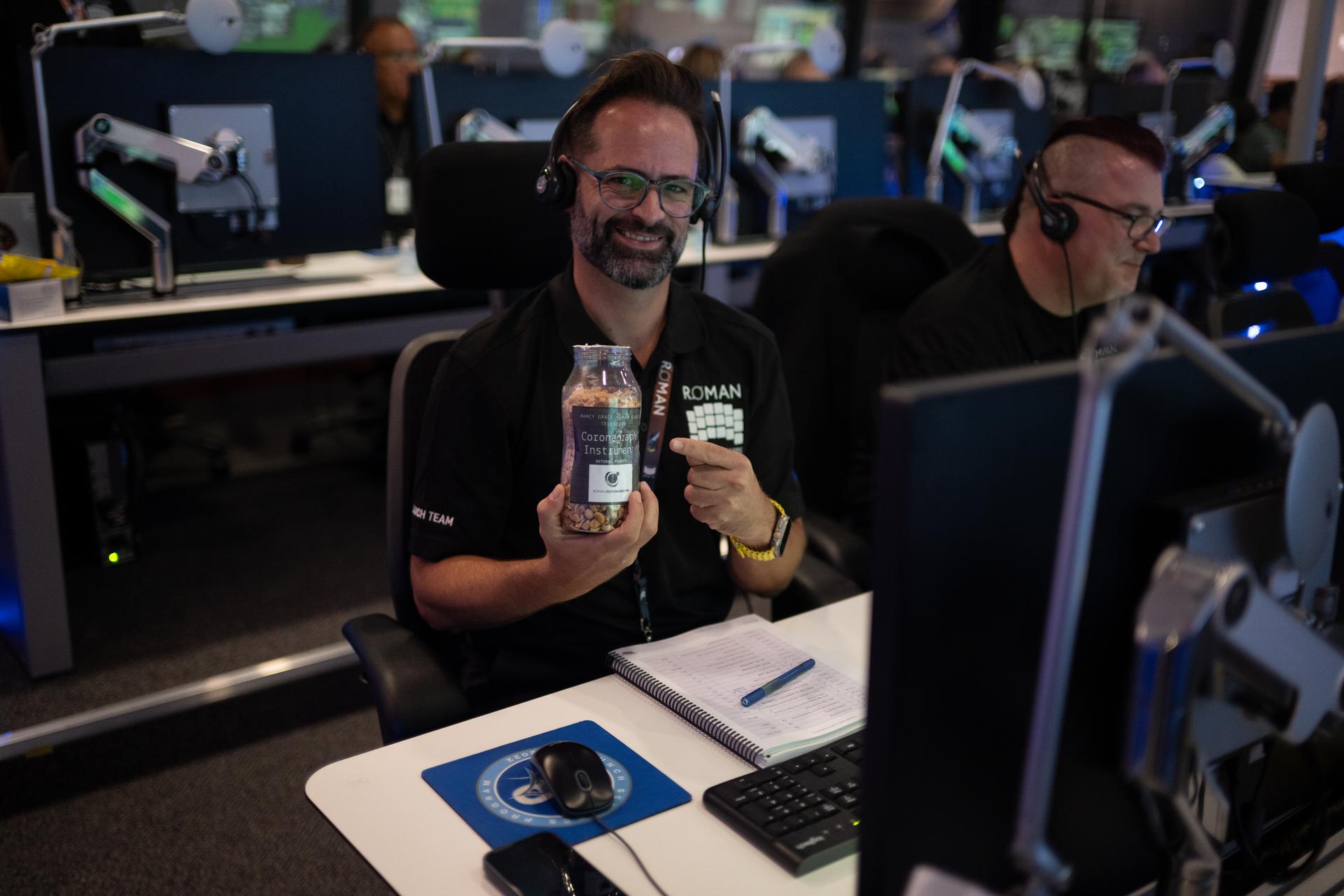
Dr. Lucas Paganini, program executive for the Nancy Grace Roman Telescope in the Astrophysics Division of NASA’s Science Mission Directorate, holds a jar of lucky peanuts, as teams monitor the countdown inside Hangar AE at Cape Canaveral Space Force Station for the launch of a SpaceX Falcon Heavy rocket with NASA’S Nancy Grace Roman Space Telescope from Launch Complex 39A at NASA’s Kennedy Space Center, Sunday, Aug. 30, 2026, in Florida. Roman will investigate dark energy and dark matter, conduct a statistical census of planetary systems, and enable a broad range of additional astrophysics research. Launch occurred at 7:26 a.m. EDT. Photo Credit (NASA/Joel Kowsky)
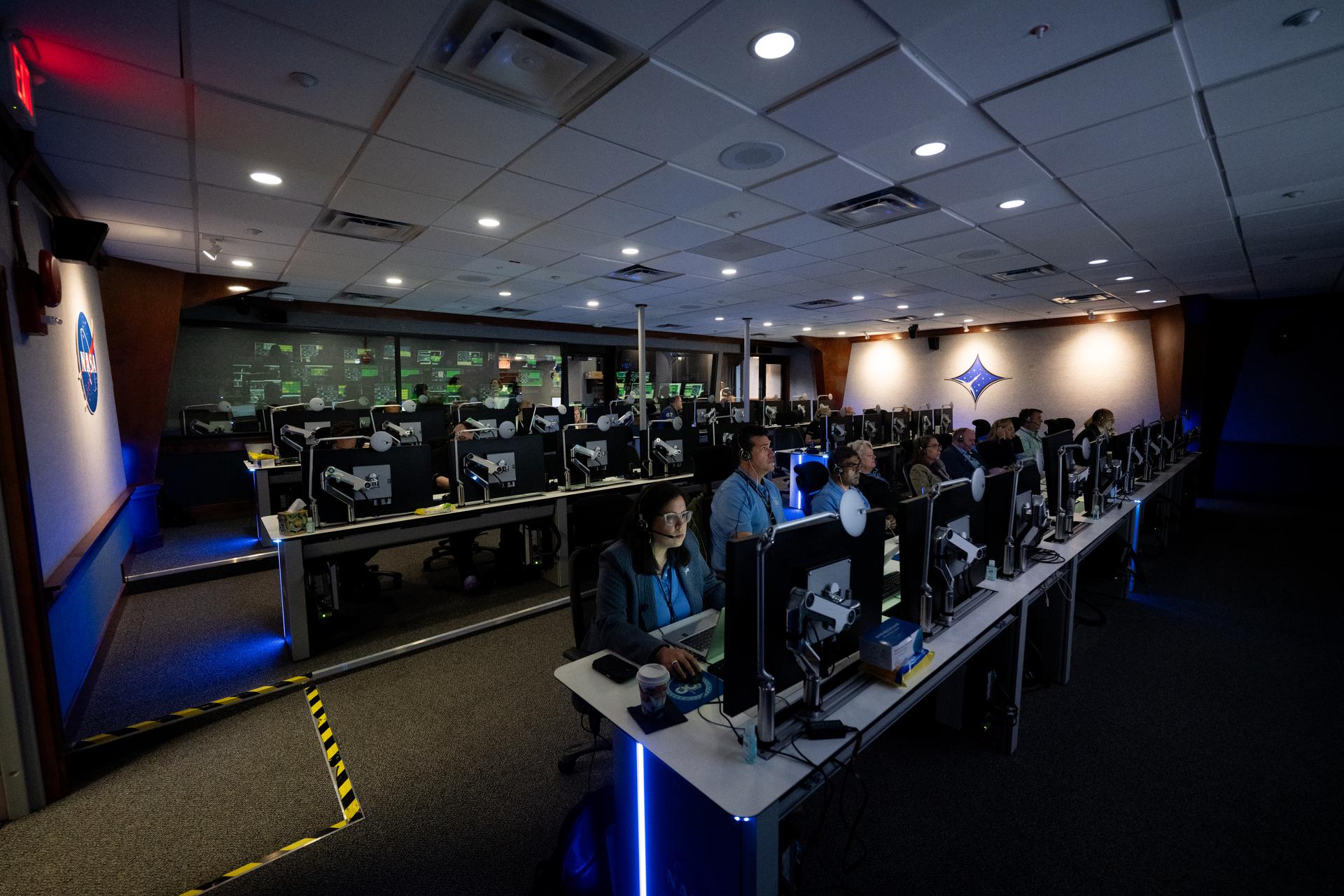
The Mission Directors Center inside Hangar AE at Cape Canaveral Space Force Station is seen as teams monitor the countdown for the launch of a SpaceX Falcon Heavy rocket with NASA’S Nancy Grace Roman Space Telescope from Launch Complex 39A at NASA’s Kennedy Space Center, Sunday, Aug. 30, 2026, in Florida. Roman will investigate dark energy and dark matter, conduct a statistical census of planetary systems, and enable a broad range of additional astrophysics research. Launch occurred at 7:26 a.m. EDT. Photo Credit (NASA/Joel Kowsky)
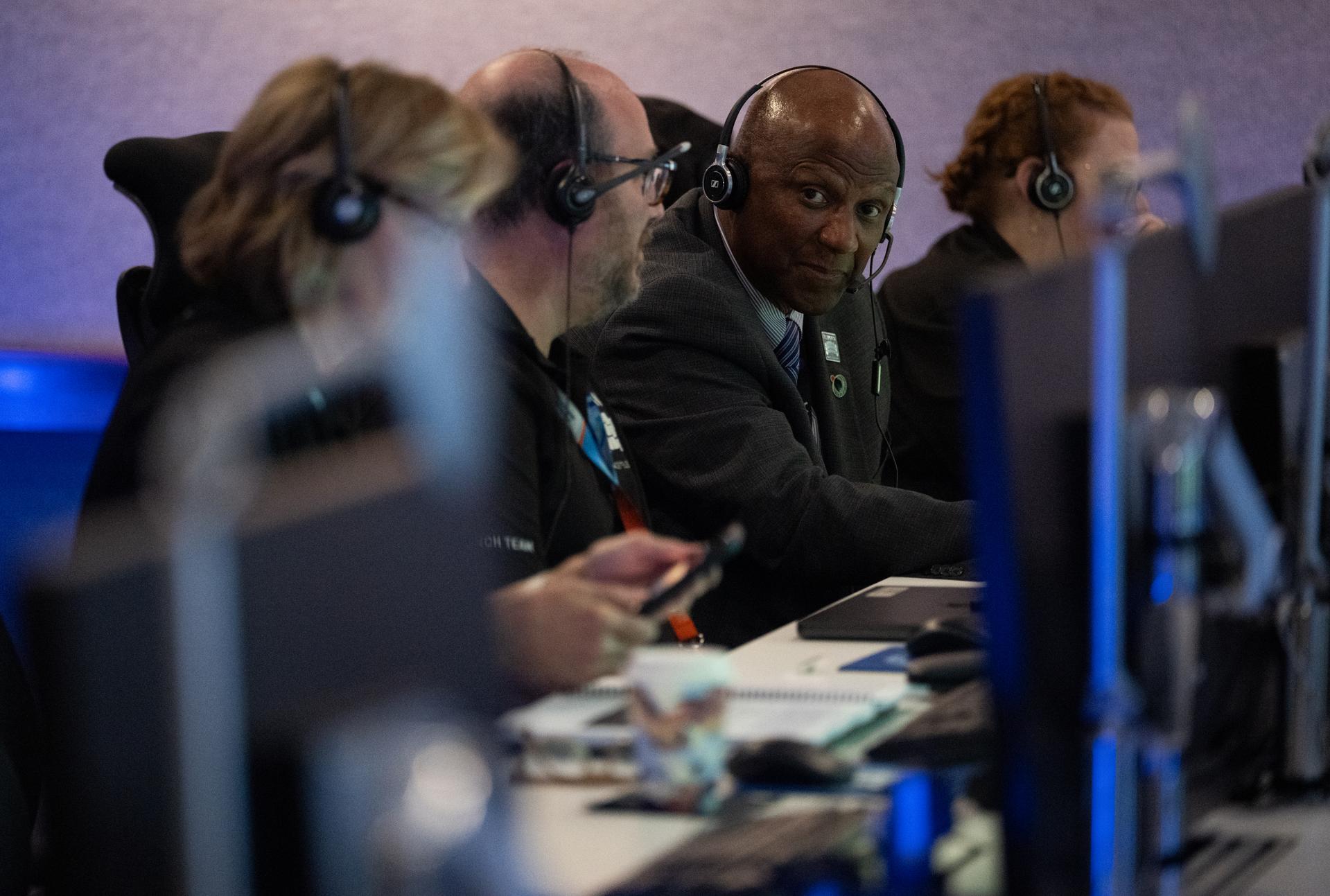
Kelvin Manning, deputy associate administrator in NASA’s Human Spaceflight Mission Directorate, is seen monitoring the countdown inside Hangar AE at Cape Canaveral Space Force Station for the launch of a SpaceX Falcon Heavy rocket with NASA’S Nancy Grace Roman Space Telescope from Launch Complex 39A at NASA’s Kennedy Space Center, Sunday, Aug. 30, 2026, in Florida. Roman will investigate dark energy and dark matter, conduct a statistical census of planetary systems, and enable a broad range of additional astrophysics research. Launch occurred at 7:26 a.m. EDT. Photo Credit (NASA/Joel Kowsky)
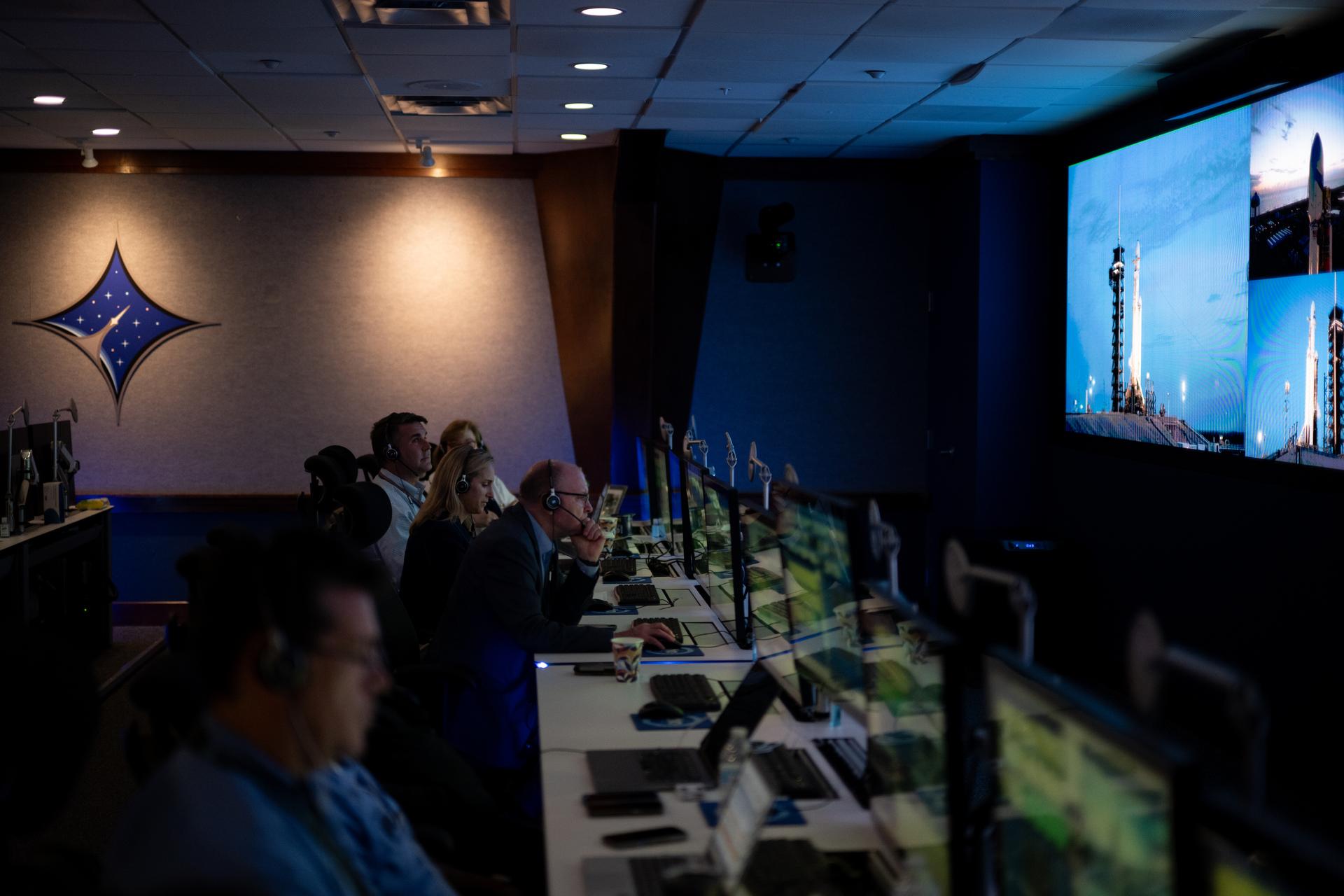
The Mission Directors Center inside Hangar AE at Cape Canaveral Space Force Station is seen as teams monitor the countdown for the launch of a SpaceX Falcon Heavy rocket with NASA’S Nancy Grace Roman Space Telescope from Launch Complex 39A at NASA’s Kennedy Space Center, Sunday, Aug. 30, 2026, in Florida. Roman will investigate dark energy and dark matter, conduct a statistical census of planetary systems, and enable a broad range of additional astrophysics research. Launch occurred at 7:26 a.m. EDT. Photo Credit (NASA/Joel Kowsky)
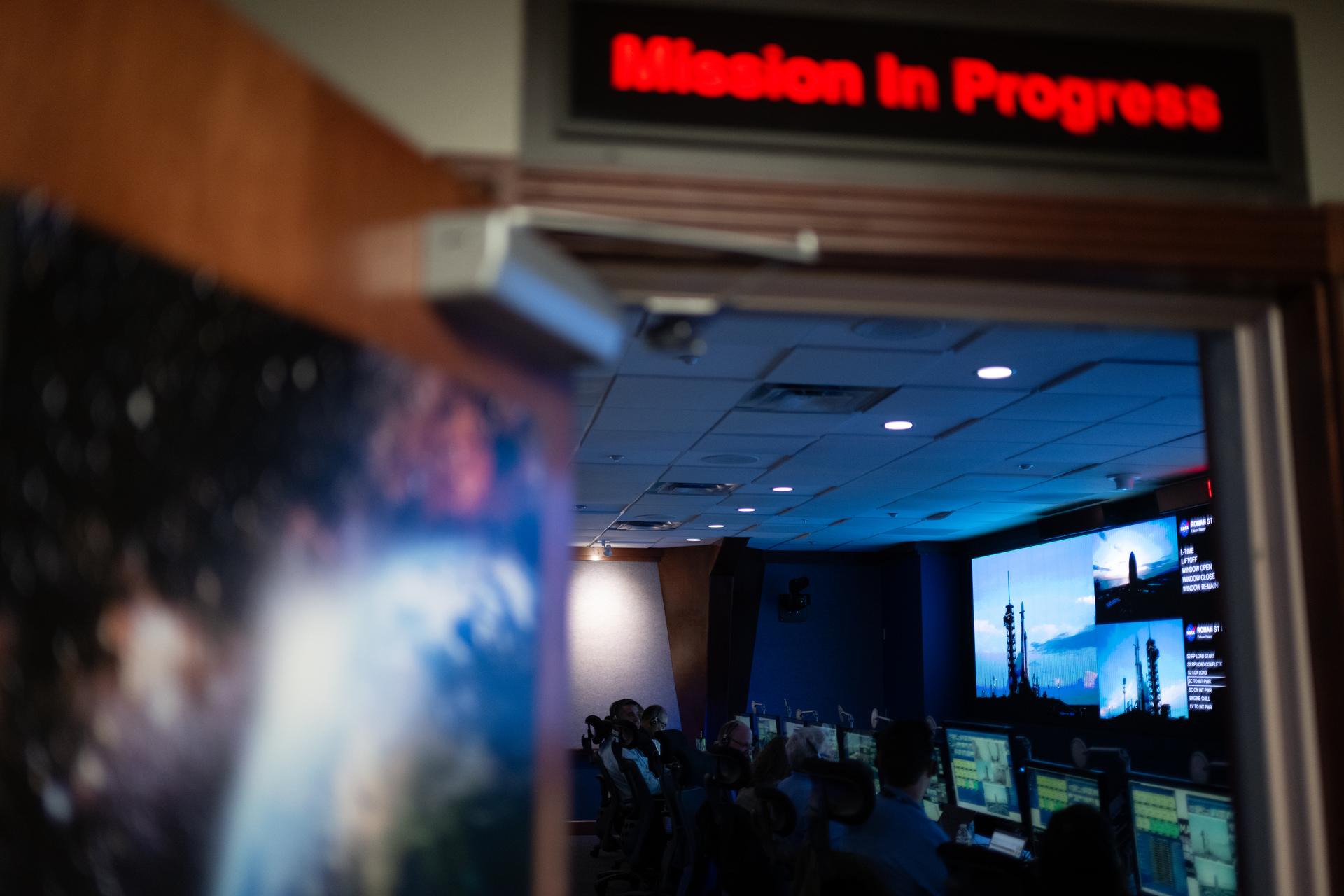
The Mission Directors Center inside Hangar AE at Cape Canaveral Space Force Station is seen as teams monitor the countdown for the launch of a SpaceX Falcon Heavy rocket with NASA’S Nancy Grace Roman Space Telescope from Launch Complex 39A at NASA’s Kennedy Space Center, Sunday, Aug. 30, 2026, in Florida. Roman will investigate dark energy and dark matter, conduct a statistical census of planetary systems, and enable a broad range of additional astrophysics research. Launch occurred at 7:26 a.m. EDT. Photo Credit (NASA/Joel Kowsky)
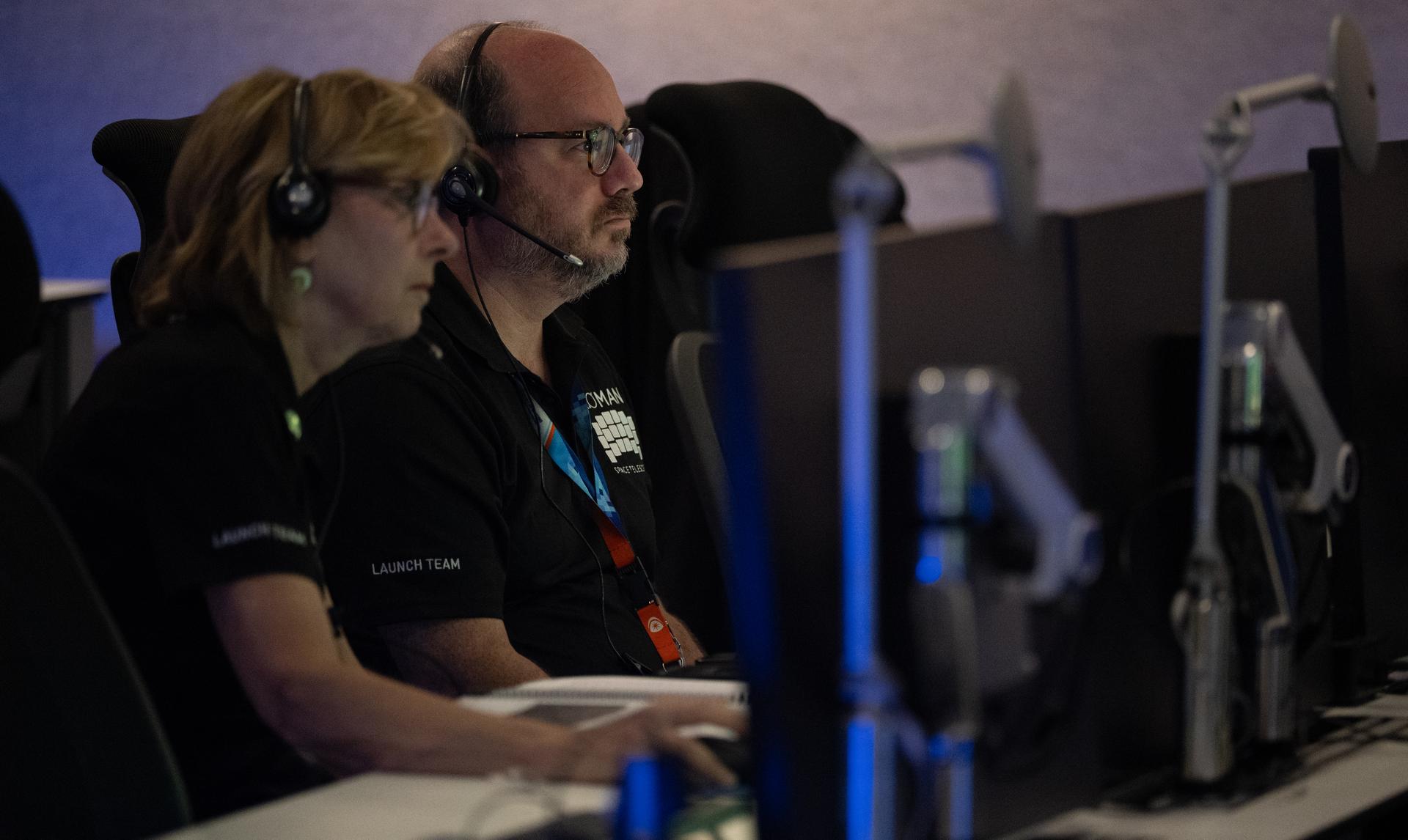
Bradley Smith, manger of the Commercial Access to Space Program in NASA’s Human Spaceflight Mission Directorate, monitors the countdown inside Hangar AE at Cape Canaveral Space Force Station for the launch of a SpaceX Falcon Heavy rocket with NASA’S Nancy Grace Roman Space Telescope from Launch Complex 39A at NASA’s Kennedy Space Center, Sunday, Aug. 30, 2026, in Florida. Roman will investigate dark energy and dark matter, conduct a statistical census of planetary systems, and enable a broad range of additional astrophysics research. Launch occurred at 7:26 a.m. EDT. Photo Credit (NASA/Joel Kowsky)
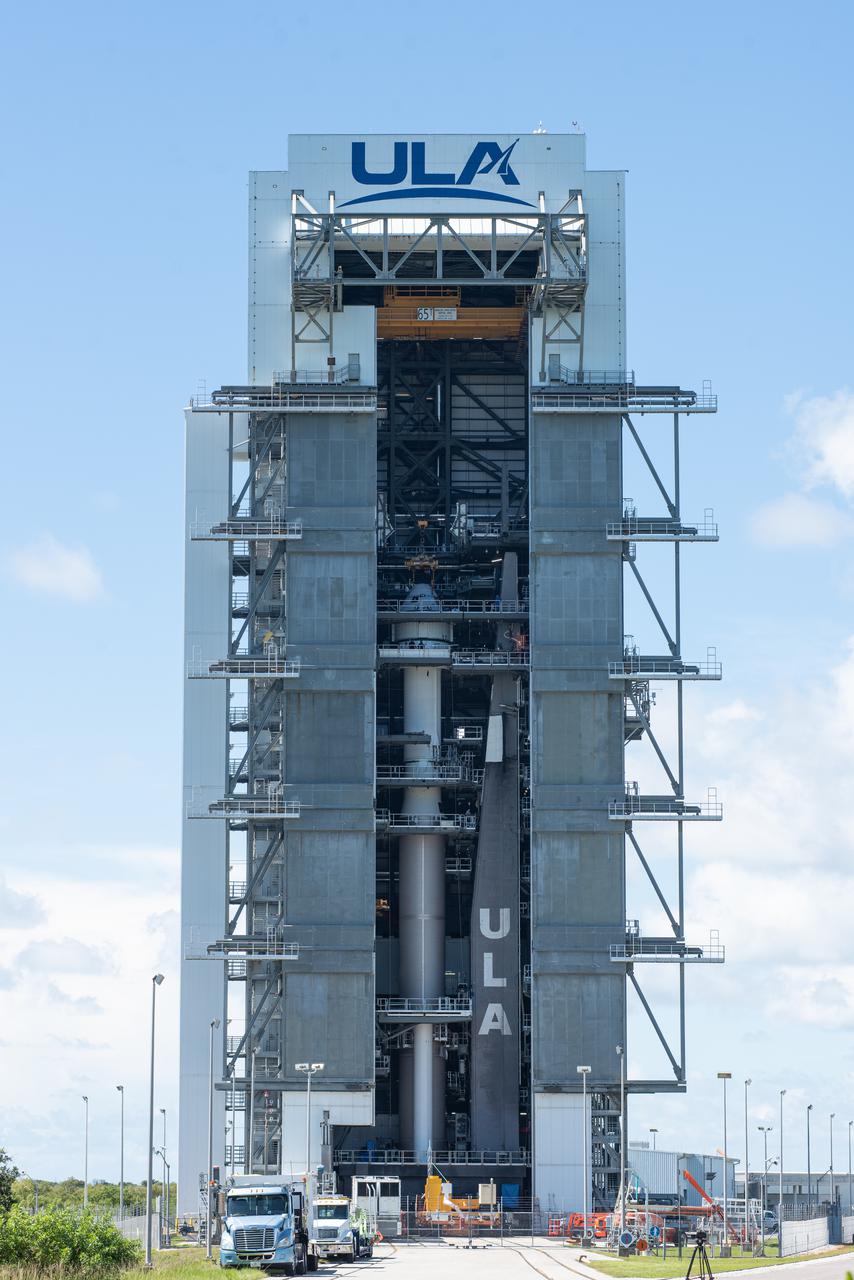
Boeing’s CST-100 Starliner spacecraft is secured atop a United Launch Alliance Atlas V rocket at the Vertical Integration Facility at Space Launch Complex-41 at Florida’s Cape Canaveral Space Force Station on July 17, 2021. Starliner will launch on the Atlas V for Boeing’s second Orbital Flight Test (OFT-2) for NASA’s Commercial Crew Program. The spacecraft rolled out from Boeing’s Commercial Crew and Cargo Processing Facility at NASA’s Kennedy Space Center earlier in the day.
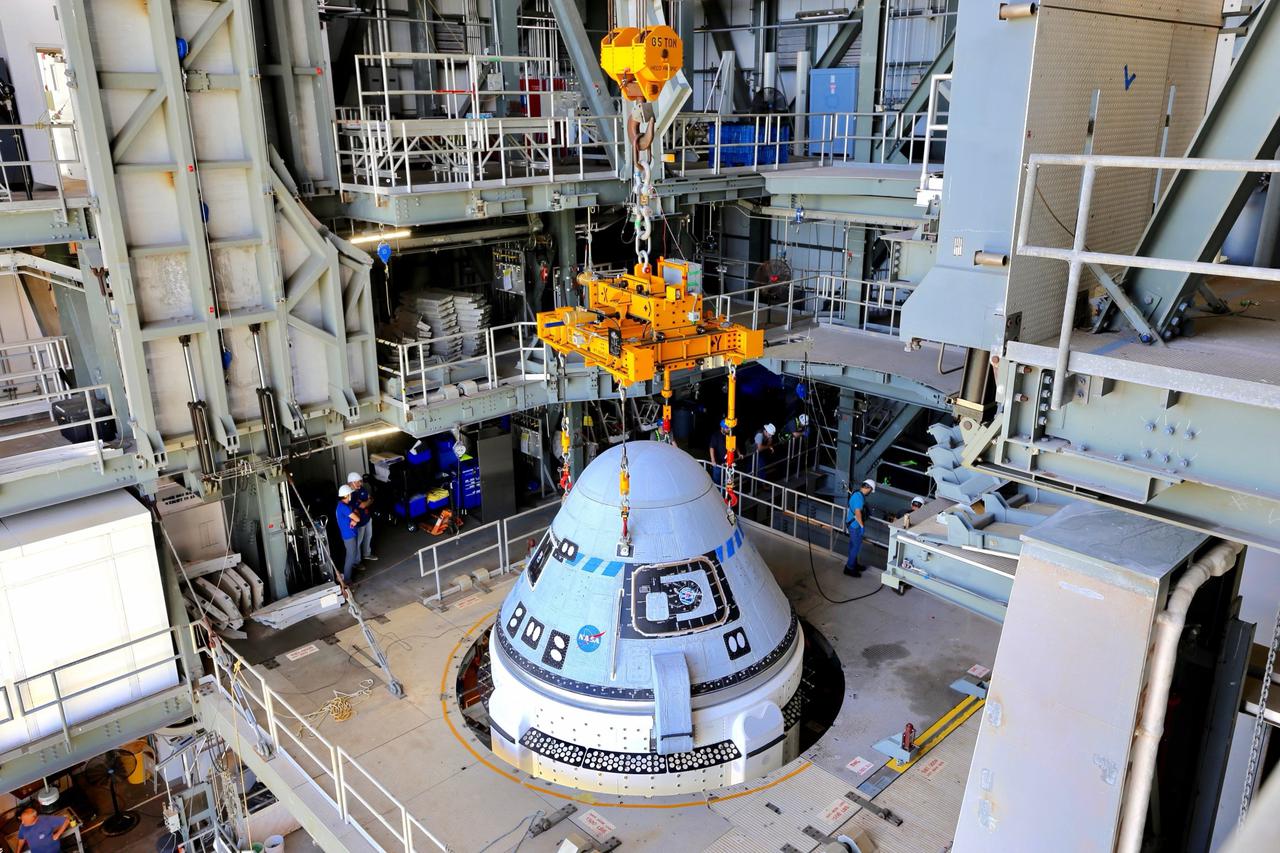
Boeing’s CST-100 Starliner spacecraft is secured atop a United Launch Alliance Atlas V rocket at the Vertical Integration Facility at Space Launch Complex-41 at Florida’s Cape Canaveral Space Force Station on July 17, 2021. Starliner will launch on the Atlas V for Boeing’s second Orbital Flight Test (OFT-2) for NASA’s Commercial Crew Program. The spacecraft rolled out from Boeing’s Commercial Crew and Cargo Processing Facility at NASA’s Kennedy Space Center earlier in the day.
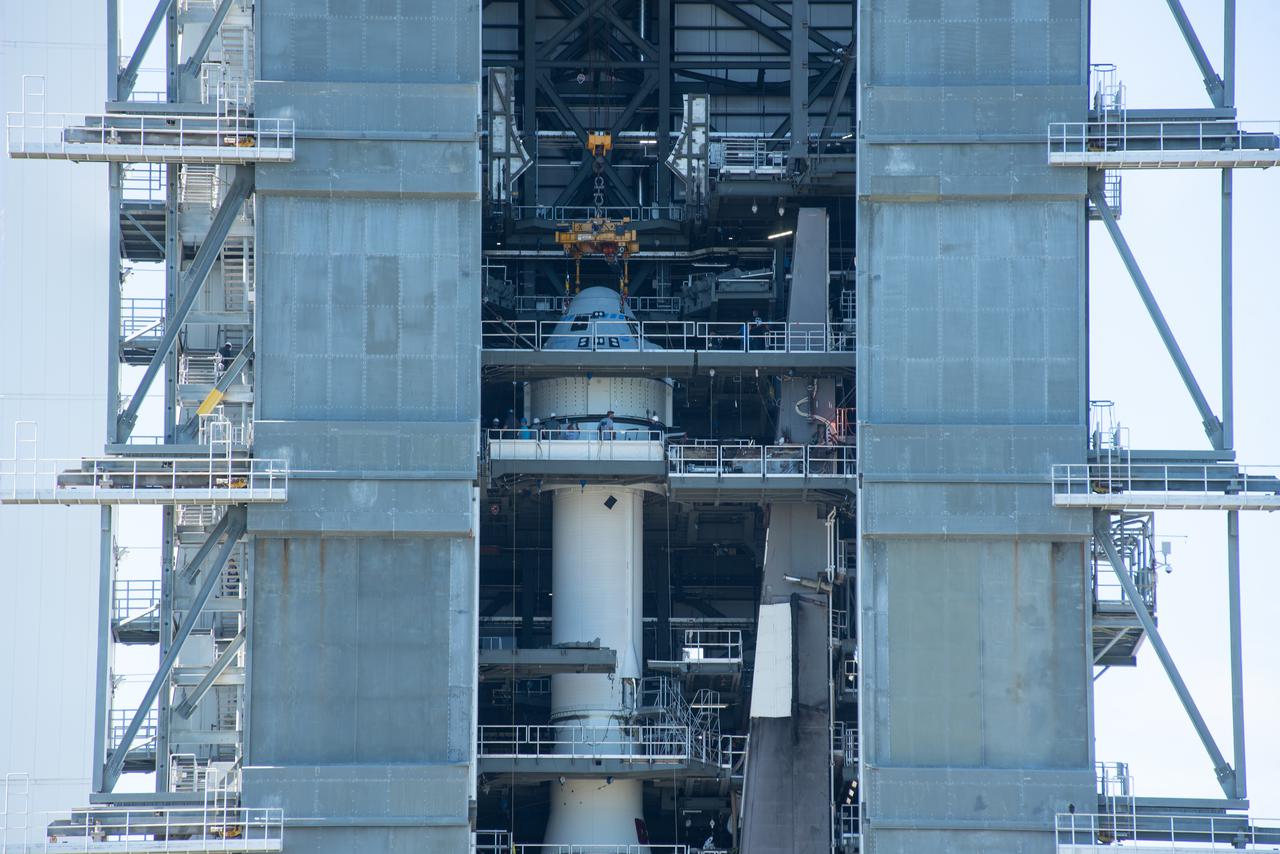
Boeing’s CST-100 Starliner spacecraft is secured atop a United Launch Alliance Atlas V rocket at the Vertical Integration Facility at Space Launch Complex-41 at Florida’s Cape Canaveral Space Force Station on July 17, 2021. Starliner will launch on the Atlas V for Boeing’s second Orbital Flight Test (OFT-2) for NASA’s Commercial Crew Program. The spacecraft rolled out from Boeing’s Commercial Crew and Cargo Processing Facility at NASA’s Kennedy Space Center earlier in the day.
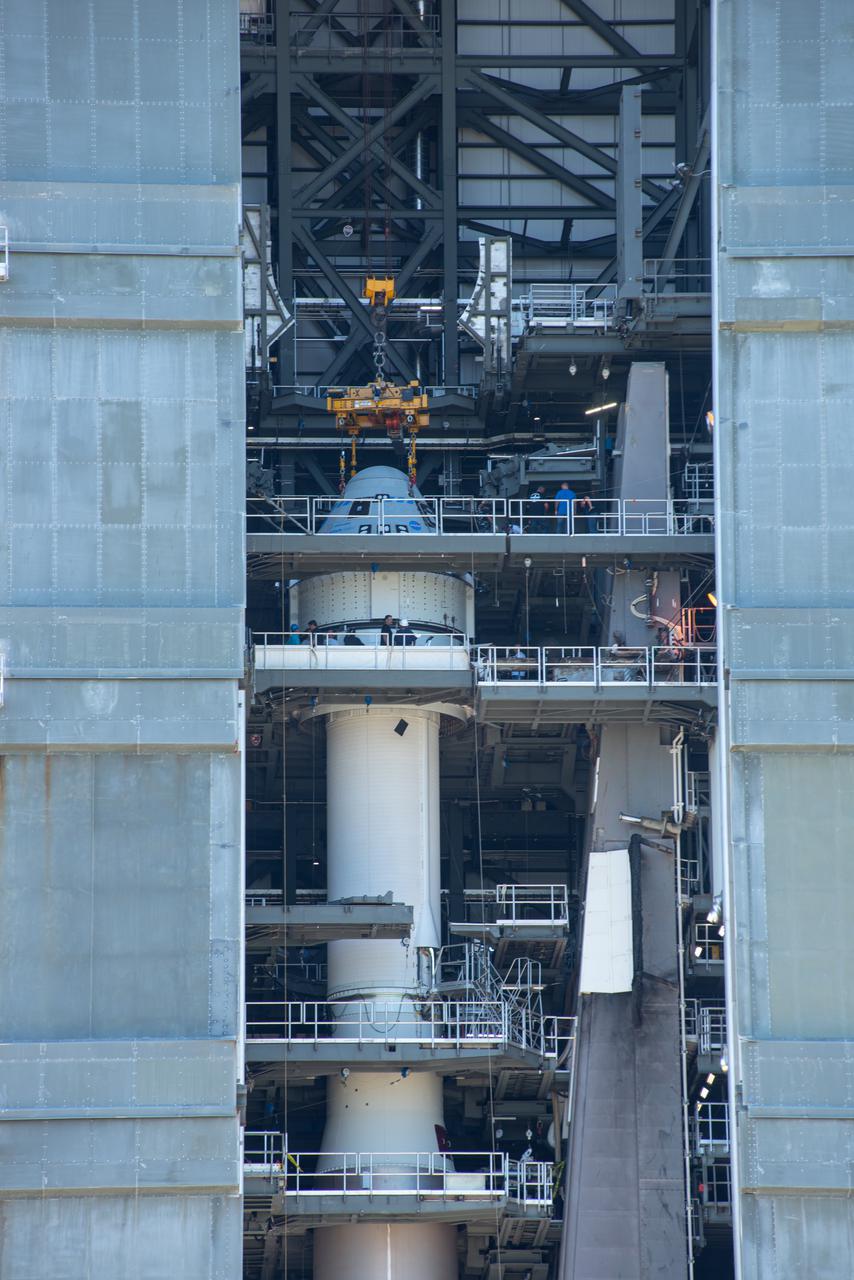
Boeing’s CST-100 Starliner spacecraft is secured atop a United Launch Alliance Atlas V rocket at the Vertical Integration Facility at Space Launch Complex-41 at Florida’s Cape Canaveral Space Force Station on July 17, 2021. Starliner will launch on the Atlas V for Boeing’s second Orbital Flight Test (OFT-2) for NASA’s Commercial Crew Program. The spacecraft rolled out from Boeing’s Commercial Crew and Cargo Processing Facility at NASA’s Kennedy Space Center earlier in the day.
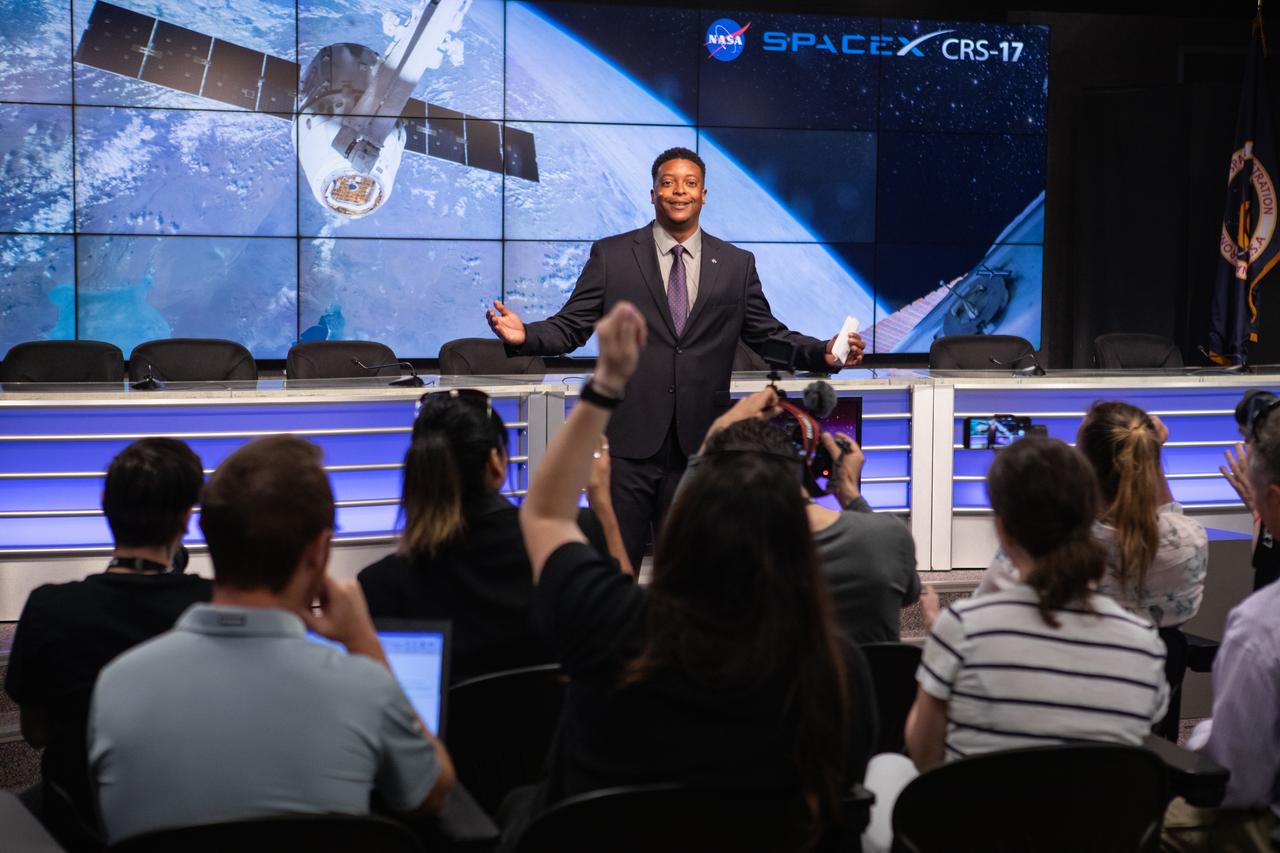
Derrick Matthews, moderator with NASA Communications, fields questions from NASA Social participants during a What’s On Board science briefing at the agency’s Kennedy Space Center in Florida on April 29, 2019. The briefing was held for SpaceX’s 17th Commercial Resupply Services (CRS-17) mission to the International Space Station. The SpaceX Falcon 9 rocket and Dragon cargo module are scheduled to launch no earlier than May 3, 2019, from Space Launch Complex 40 on Cape Canaveral Air Force Station in Florida.
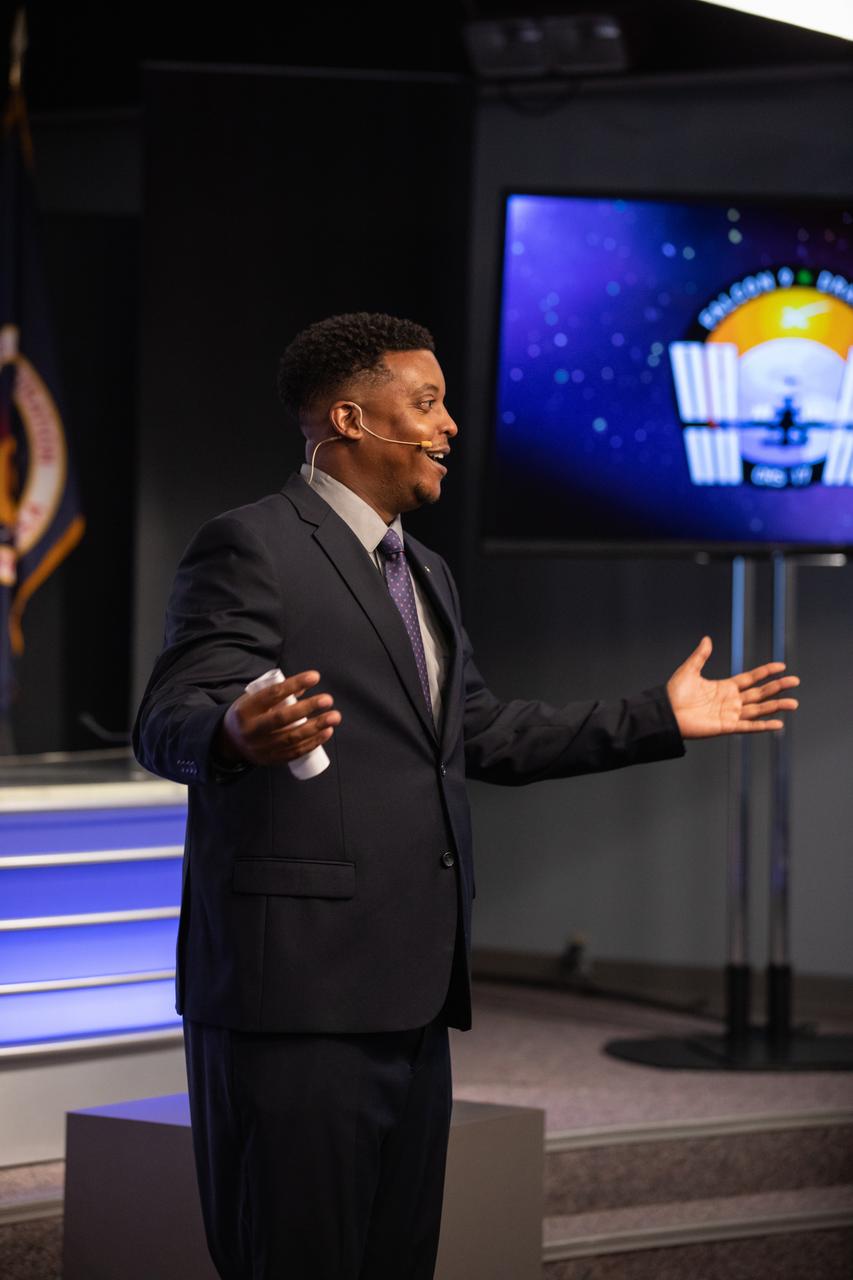
Derrick Matthews, moderator with NASA Communications, concludes a What’s On Board science briefing to NASA Social participants at the agency’s Kennedy Space Center in Florida on April 29, 2019. The briefing was held for SpaceX’s 17th Commercial Resupply Services (CRS-17) mission to the International Space Station. The SpaceX Falcon 9 rocket and Dragon cargo module are scheduled to launch no earlier than May 3, 2019, from Space Launch Complex 40 on Cape Canaveral Air Force Station in Florida.
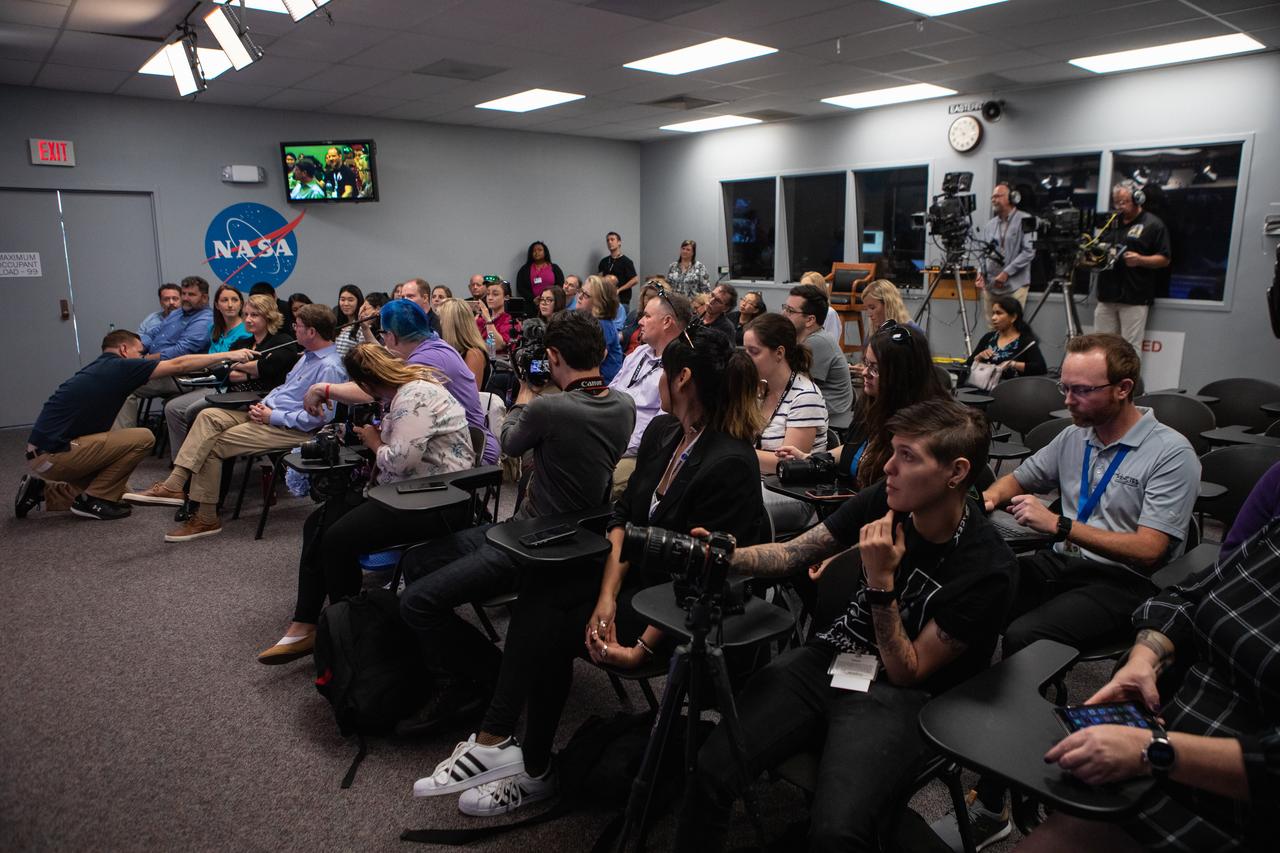
NASA Social participants attend a What’s On Board science briefing at the agency’s Kennedy Space Center in Florida on April 29, 2019. The briefing was held for SpaceX’s 17th Commercial Resupply Services (CRS-17) mission to the International Space Station. The SpaceX Falcon 9 rocket and Dragon cargo module are scheduled to launch no earlier than May 3, 2019, from Space Launch Complex 40 on Cape Canaveral Air Force Station in Florida.
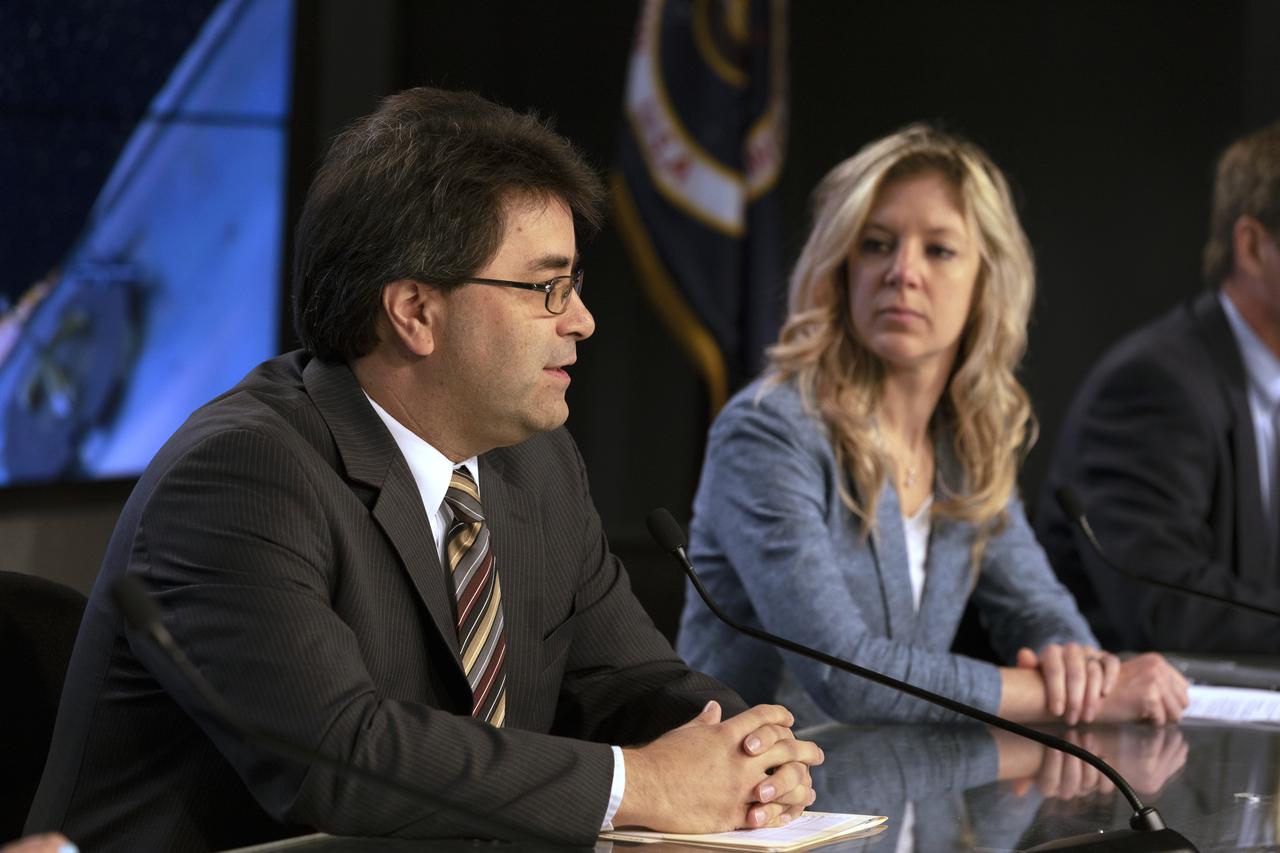
Bill Spetch, deputy manager of the International Space Station Transportation Integration Office at NASA’s Johnson Space Center in Houston, speaks during the prelaunch news conference for SpaceX’s 18th Commercial Resupply Services (CRS-18) mission to the station on July 24, 2019, at the agency’s Kennedy Space Center in Florida. At right is Jessica Jensen, director of Dragon mission management at SpaceX. The SpaceX Falcon 9 rocket and uncrewed Dragon spacecraft are scheduled to launch July 24, 2019, from Space Launch Complex 40 at Florida’s Cape Canaveral Air Force Station.
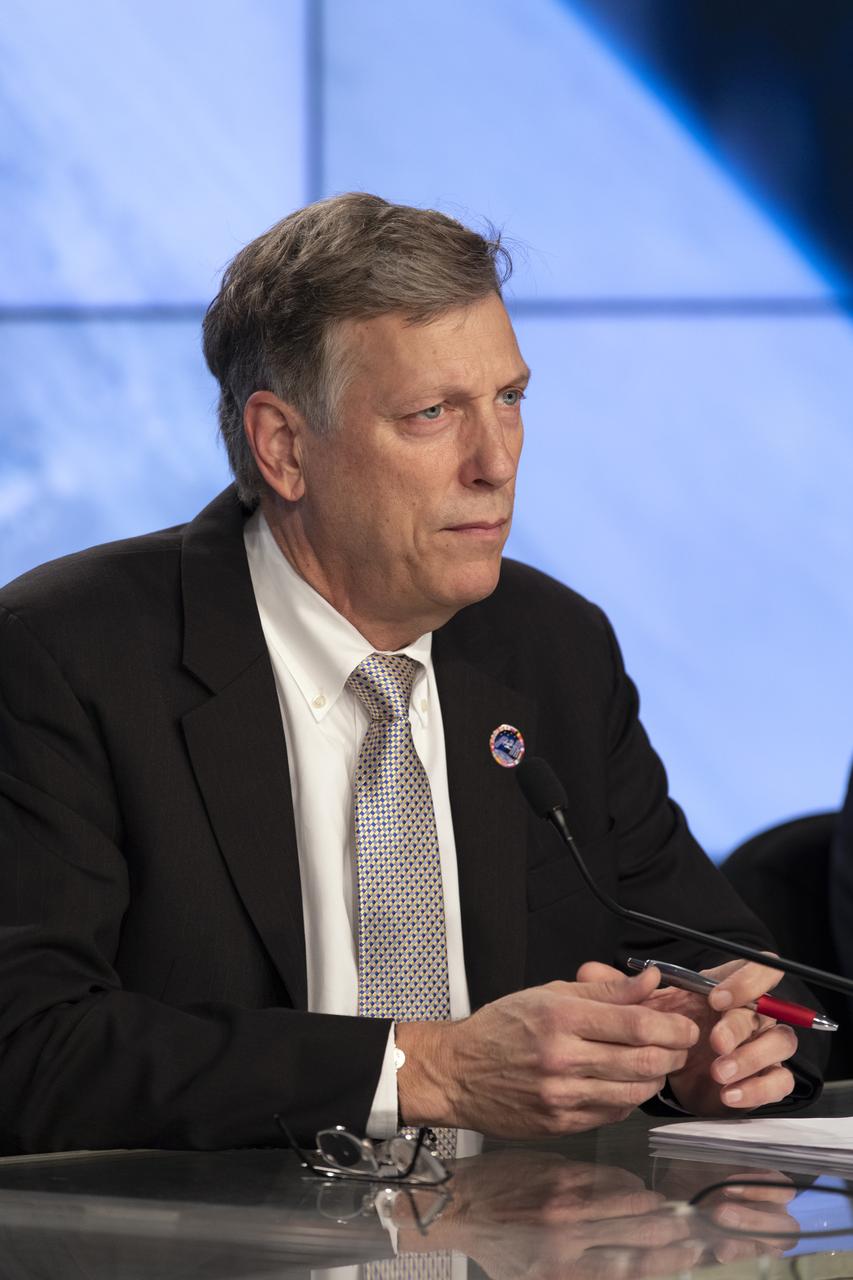
Kenny Todd, manager, International Space Station Operations and Integration, NASA’s Johnson Space Center in Houston, speaks to members of the news media during a prelaunch news conference for SpaceX’s 17th Commercial Resupply Services (CRS-17) mission for NASA to the International Space Station on May 2, 2019, at the agency’s Kennedy Space Center in Florida. The SpaceX Falcon 9 rocket and Dragon cargo module are scheduled to launch no earlier than May 3, 2019, from Space Launch Complex 40 on Cape Canaveral Air Force Station in Florida.
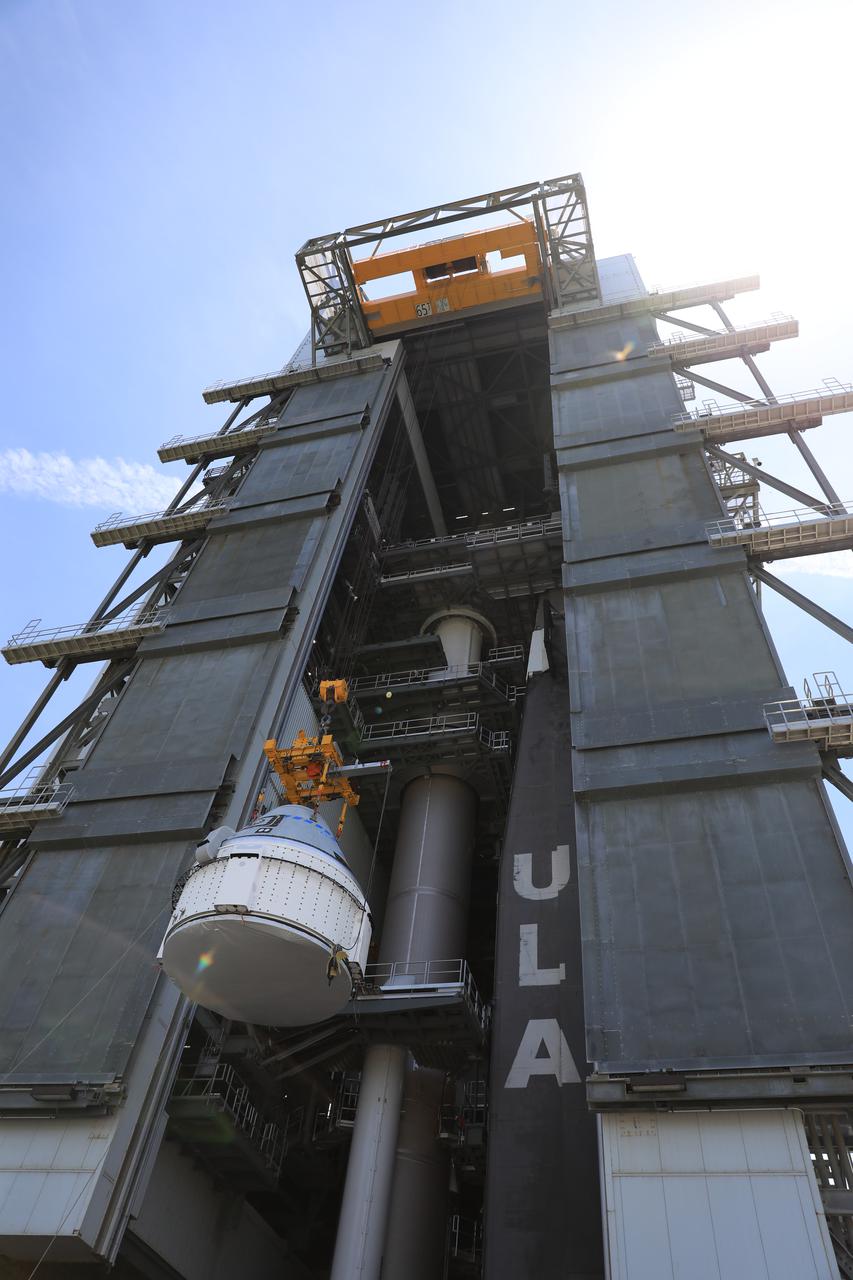
The Boeing CST-100 Starliner spacecraft is lifted at the Vertical Integration Facility at Space Launch Complex-41 at Florida’s Cape Canaveral Space Force Station on May 4, 2022. Starliner will be secured atop a United Launch Alliance Atlas V rocket for Boeing’s second Orbital Flight Test (OFT-2) to the International Space Station for NASA’s Commercial Crew Program. The spacecraft rolled out from Boeing’s Commercial Crew and Cargo Processing Facility at NASA’s Kennedy Space Center earlier in the day.
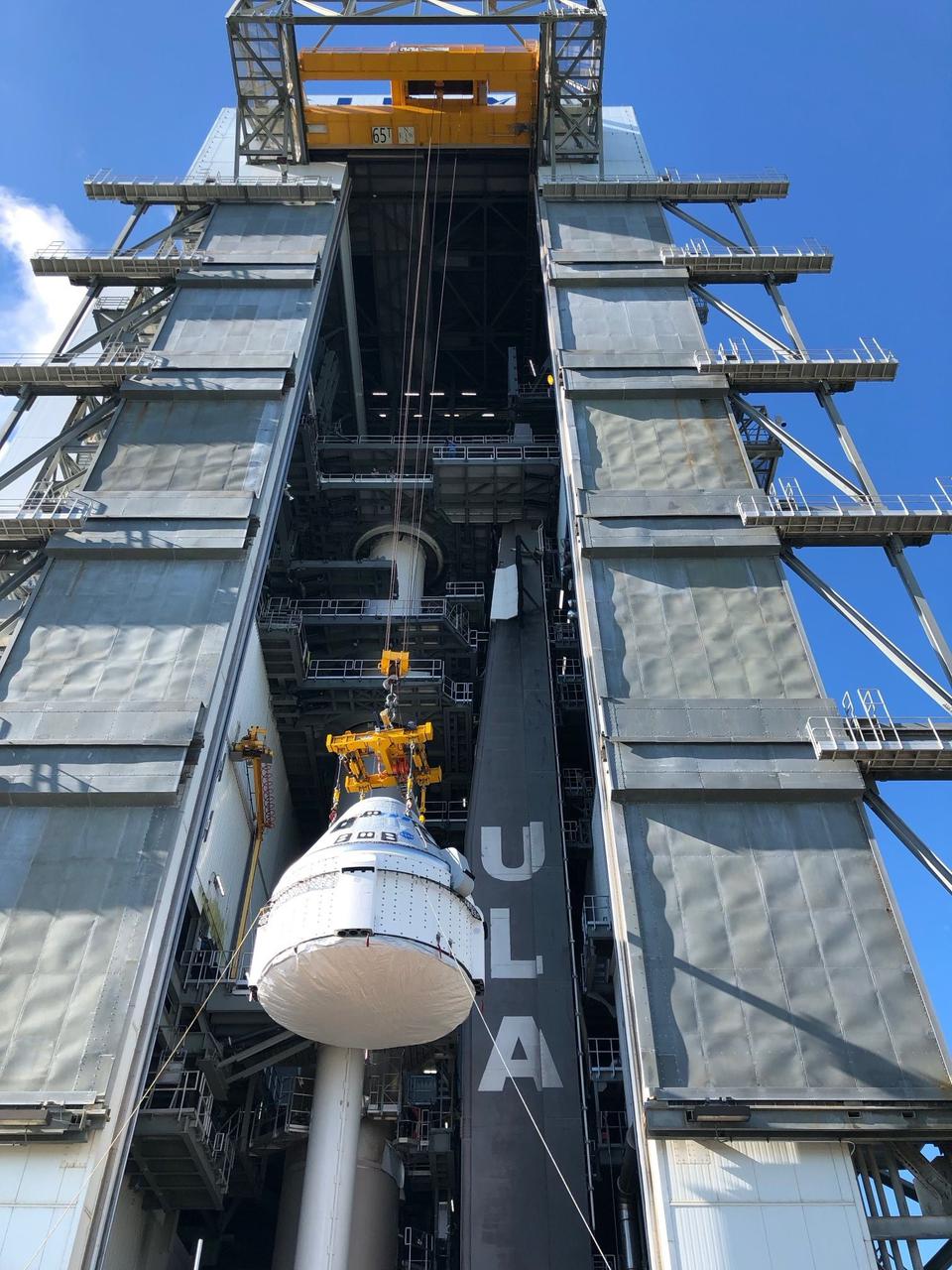
Boeing’s CST-100 Starliner spacecraft is lifted at the Vertical Integration Facility at Space Launch Complex-41 at Florida’s Cape Canaveral Space Force Station on July 17, 2021. Starliner will be secured atop a United Launch Alliance Atlas V rocket for Boeing’s Orbital Flight Test to the International Space Station for NASA’s Commercial Crew Program. The spacecraft rolled out from Boeing’s Commercial Crew and Cargo Processing Facility at NASA’s Kennedy Space Center earlier in the day.
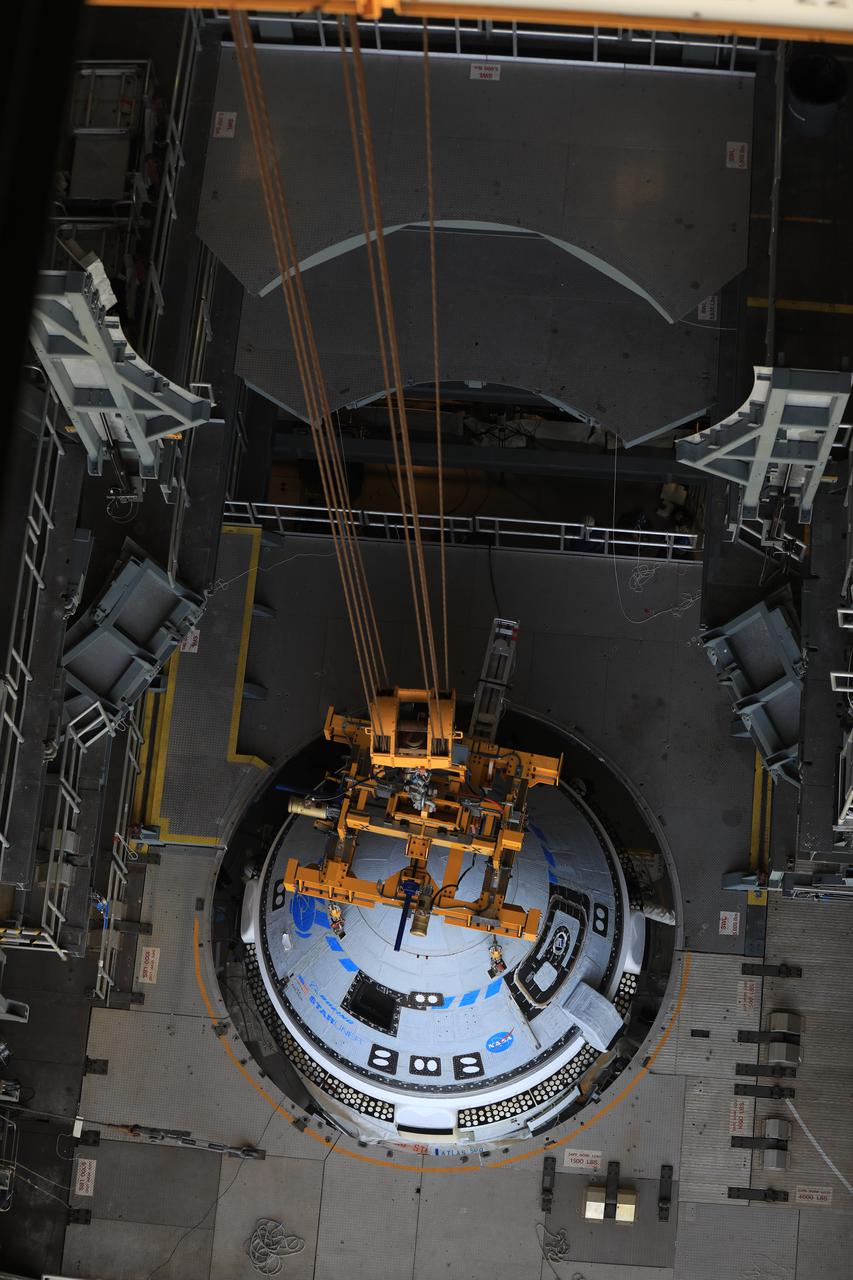
The Boeing CST-100 Starliner spacecraft is lifted at the Vertical Integration Facility at Space Launch Complex-41 at Florida’s Cape Canaveral Space Force Station on May 4, 2022. Starliner will be secured atop a United Launch Alliance Atlas V rocket for Boeing’s second Orbital Flight Test (OFT-2) to the International Space Station for NASA’s Commercial Crew Program. The spacecraft rolled out from Boeing’s Commercial Crew and Cargo Processing Facility at NASA’s Kennedy Space Center earlier in the day.
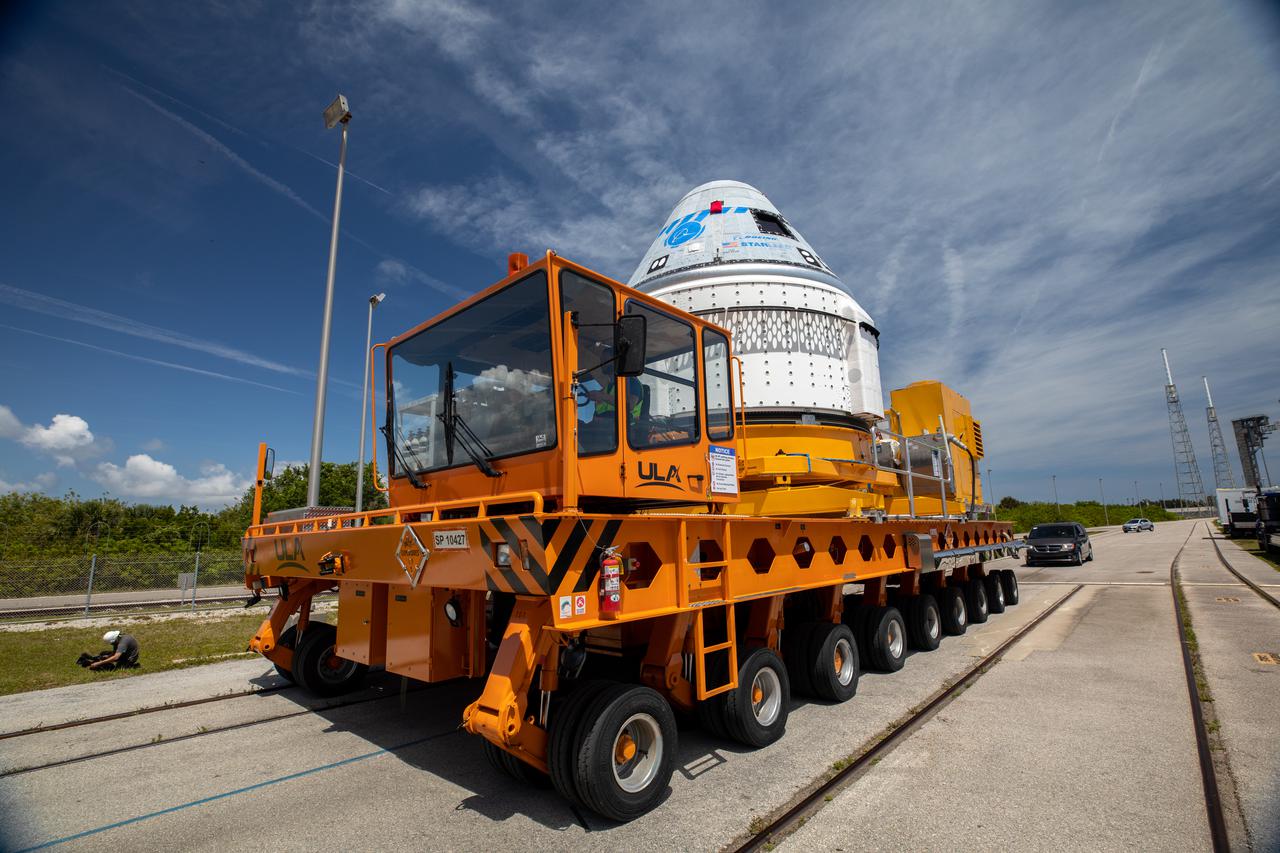
Boeing’s CST-100 Starliner spacecraft rolls out from the company’s Commercial Crew and Cargo Processing Facility at NASA’s Kennedy Space Center in Florida on May 4, 2022. The spacecraft will make the trip to the Vertical Integration Facility at Space Launch Complex-41 at Cape Canaveral Space Force Station where it will be secured atop a United Launch Alliance Atlas V rocket for Boeing’s second Orbital Flight Test (OFT-2) to the International Space Station for NASA’s Commercial Crew Program.
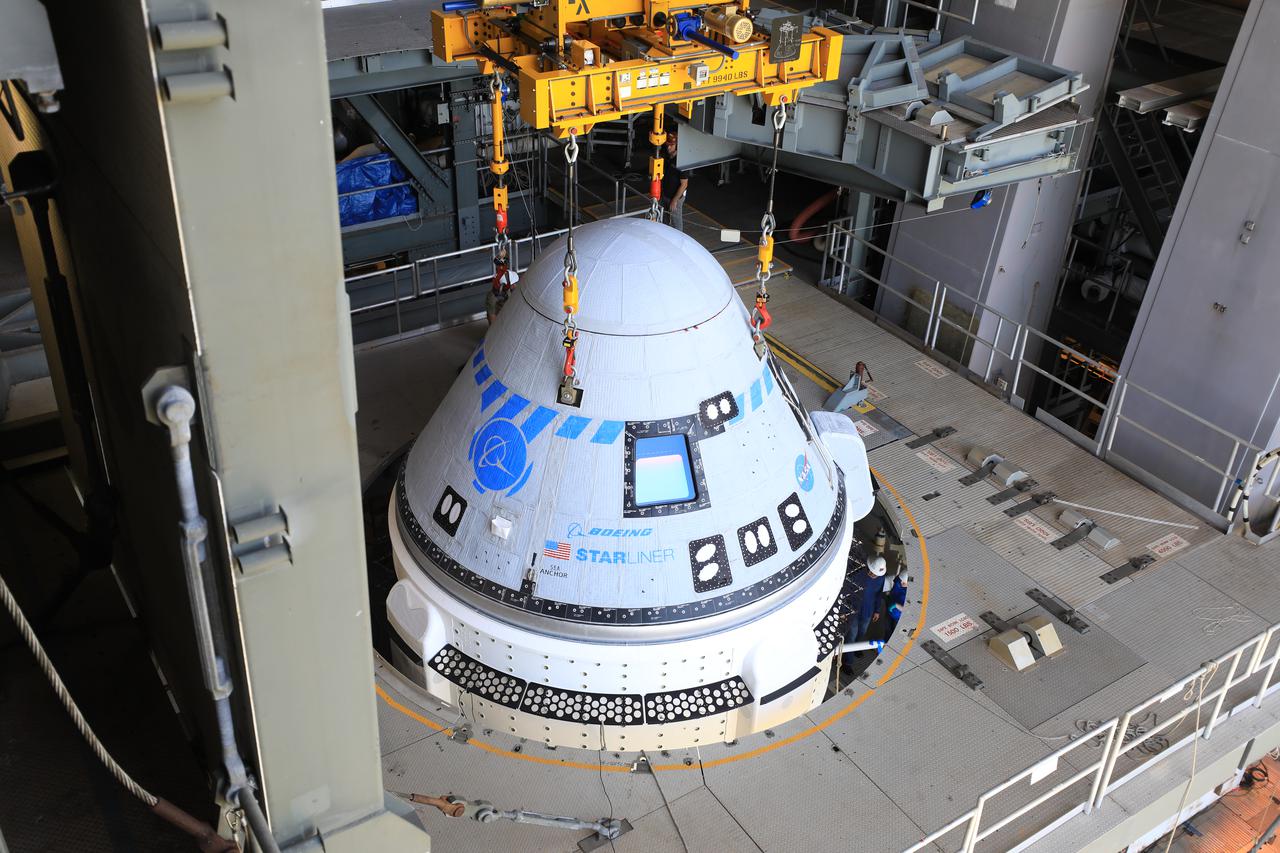
The Boeing CST-100 Starliner spacecraft is lifted at the Vertical Integration Facility at Space Launch Complex-41 at Florida’s Cape Canaveral Space Force Station on May 4, 2022. Starliner will be secured atop a United Launch Alliance Atlas V rocket for Boeing’s second Orbital Flight Test (OFT-2) to the International Space Station for NASA’s Commercial Crew Program. The spacecraft rolled out from Boeing’s Commercial Crew and Cargo Processing Facility at NASA’s Kennedy Space Center earlier in the day.
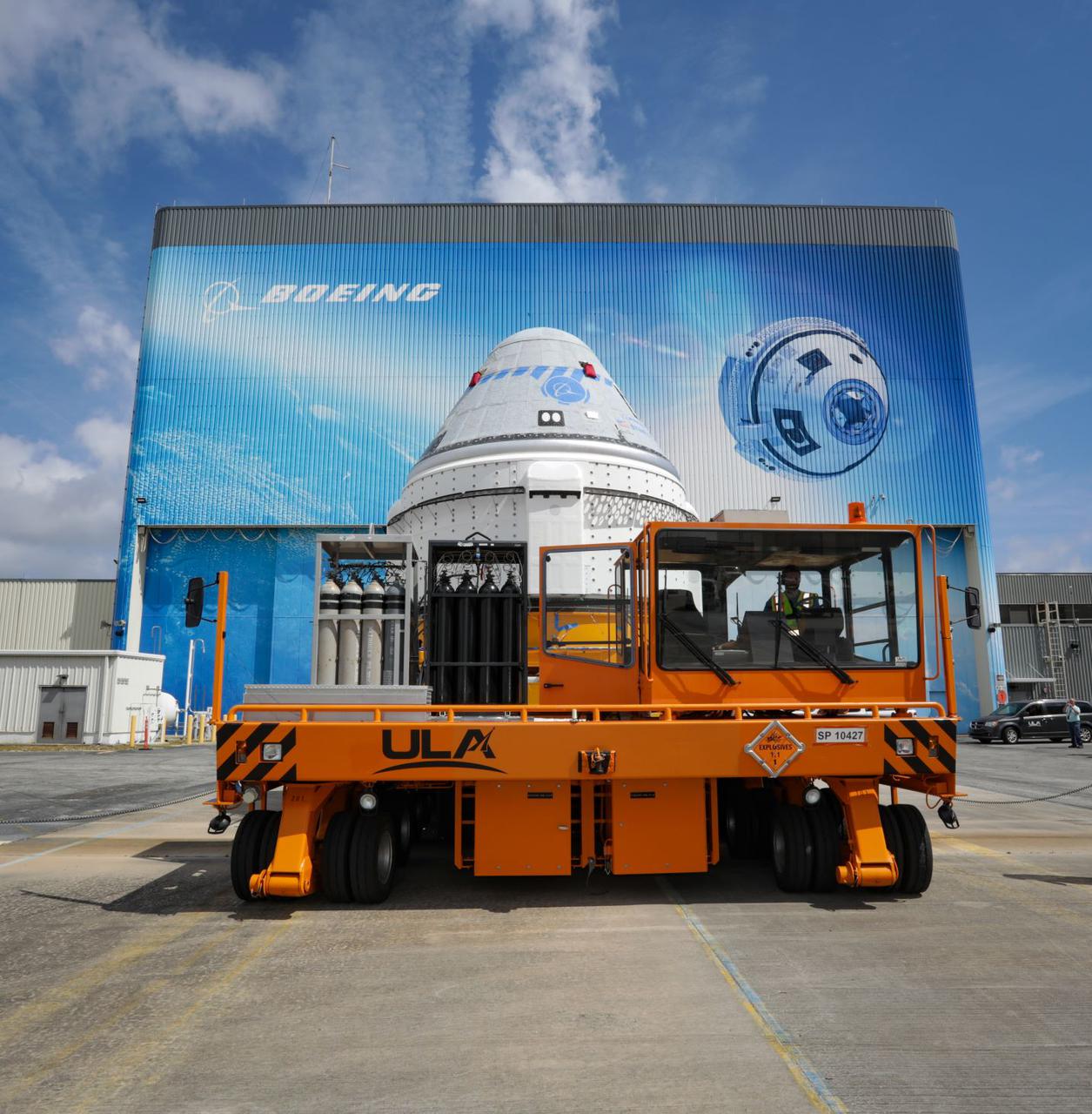
Boeing’s CST-100 Starliner spacecraft rolls out from the company’s Commercial Crew and Cargo Processing Facility at NASA’s Kennedy Space Center in Florida on May 4, 2022. The spacecraft will make the trip to the Vertical Integration Facility at Space Launch Complex-41 at Cape Canaveral Space Force Station where it will be secured atop a United Launch Alliance Atlas V rocket for Boeing’s second Orbital Flight Test (OFT-2) to the International Space Station for NASA’s Commercial Crew Program.
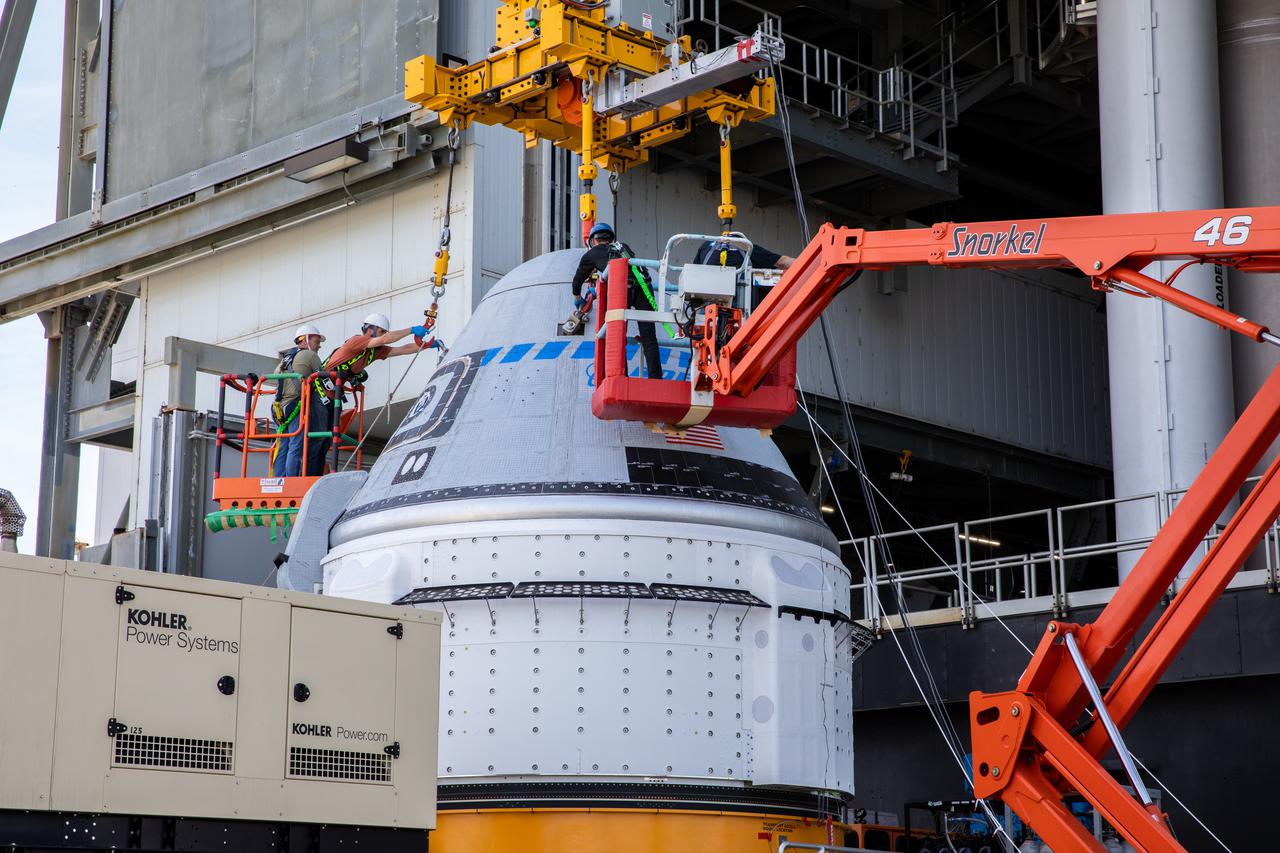
The Boeing CST-100 Starliner spacecraft is lifted at the Vertical Integration Facility at Space Launch Complex-41 at Florida’s Cape Canaveral Space Force Station on May 4, 2022. Starliner will be secured atop a United Launch Alliance Atlas V rocket for Boeing’s second Orbital Flight Test (OFT-2) to the International Space Station for NASA’s Commercial Crew Program. The spacecraft rolled out from Boeing’s Commercial Crew and Cargo Processing Facility at NASA’s Kennedy Space Center earlier in the day.
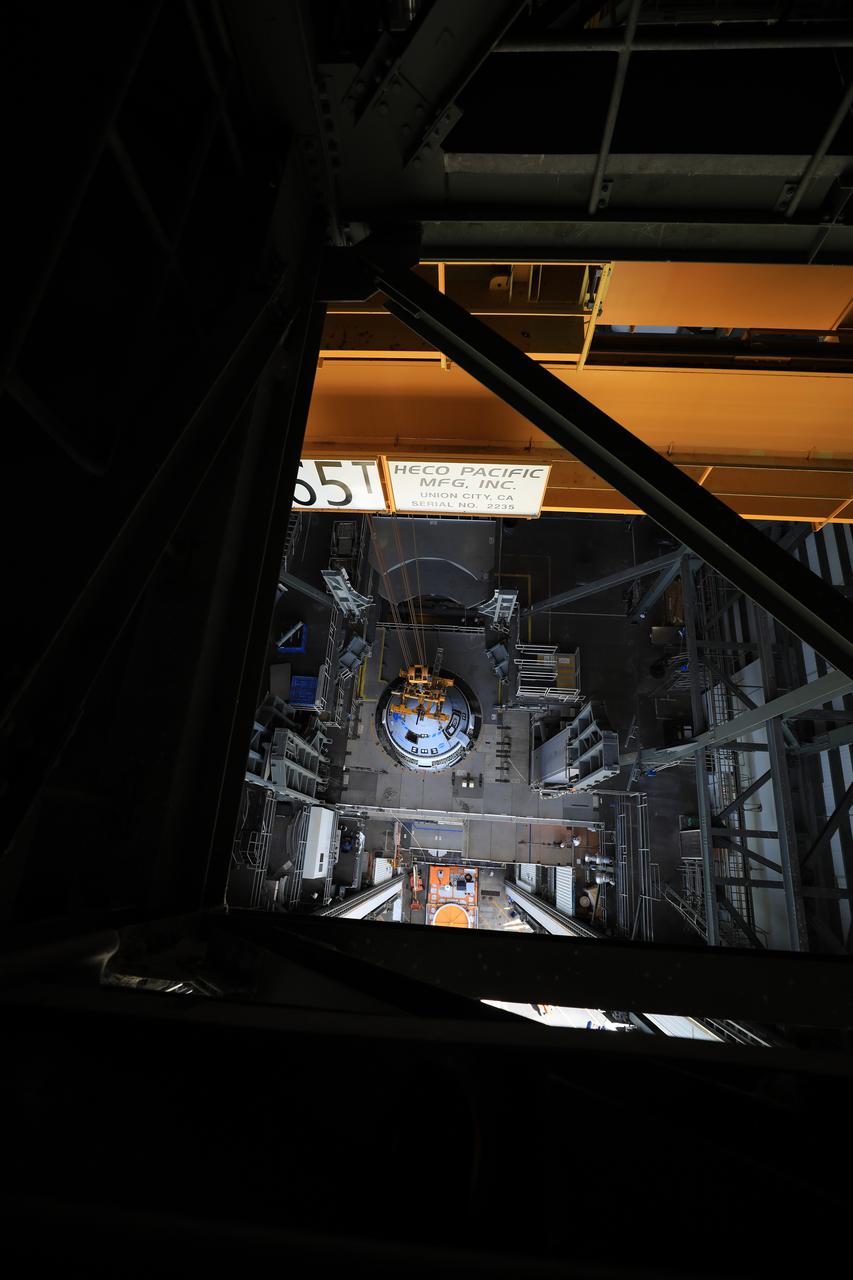
The Boeing CST-100 Starliner spacecraft is lifted at the Vertical Integration Facility at Space Launch Complex-41 at Florida’s Cape Canaveral Space Force Station on May 4, 2022. Starliner will be secured atop a United Launch Alliance Atlas V rocket for Boeing’s second Orbital Flight Test (OFT-2) to the International Space Station for NASA’s Commercial Crew Program. The spacecraft rolled out from Boeing’s Commercial Crew and Cargo Processing Facility at NASA’s Kennedy Space Center earlier in the day.
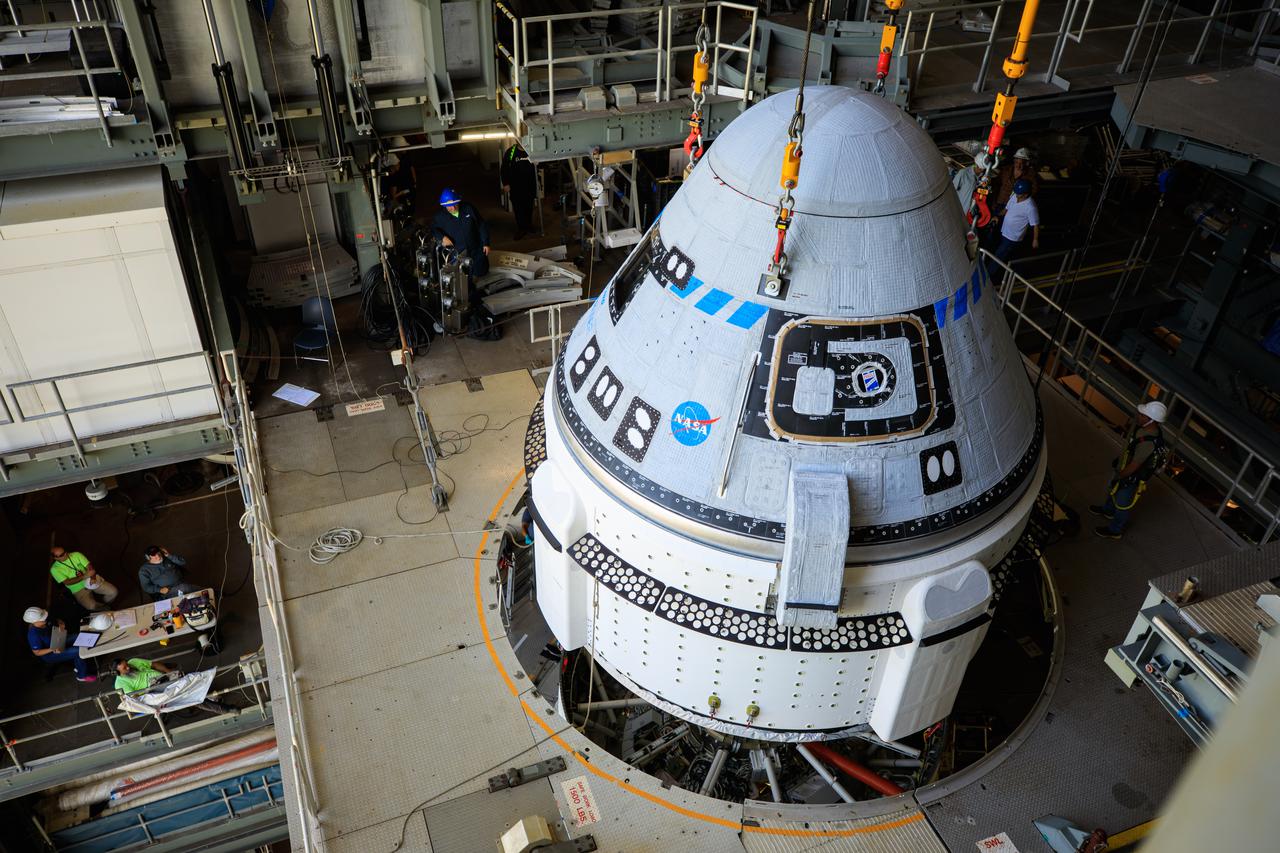
The Boeing CST-100 Starliner spacecraft is lifted at the Vertical Integration Facility at Space Launch Complex-41 at Florida's Cape Canaveral Space Force Station on May 4th, 2022. Starliner will be secured atop a United Launch Alliance Atlas V rocket for Boeing's second Orbital Flight Test (OFT-2) to the International Space Station for NASA's Commercial Crew Program. The spacecraft rolled out from Boeing's Commercial Crew and Cargo Processing Facility at NASA's Kennedy Space Center earlier in the day.
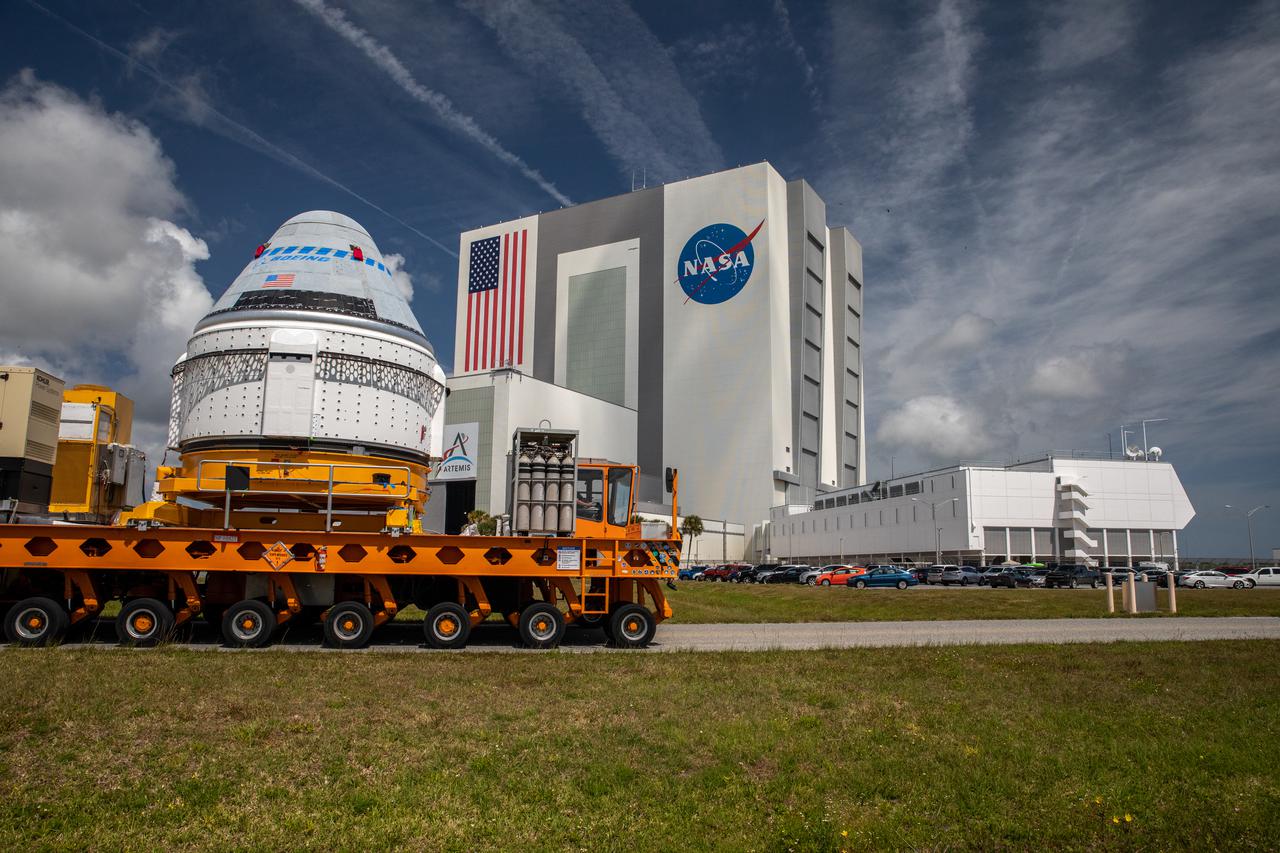
Boeing’s CST-100 Starliner spacecraft passes by the iconic Vehicle Assembly Building at NASA’s Kennedy Space Center in Florida on May 4, 2022, making its way to the Space Launch Complex-41 Vertical Integration Facility at Cape Canaveral Space Force Station. At the pad, Starliner will be secured atop a United Launch Alliance Atlas V rocket in preparation for Boeing’s second Orbital Flight Test (OFT-2) to the International Space Station for NASA’s Commercial Crew Program.
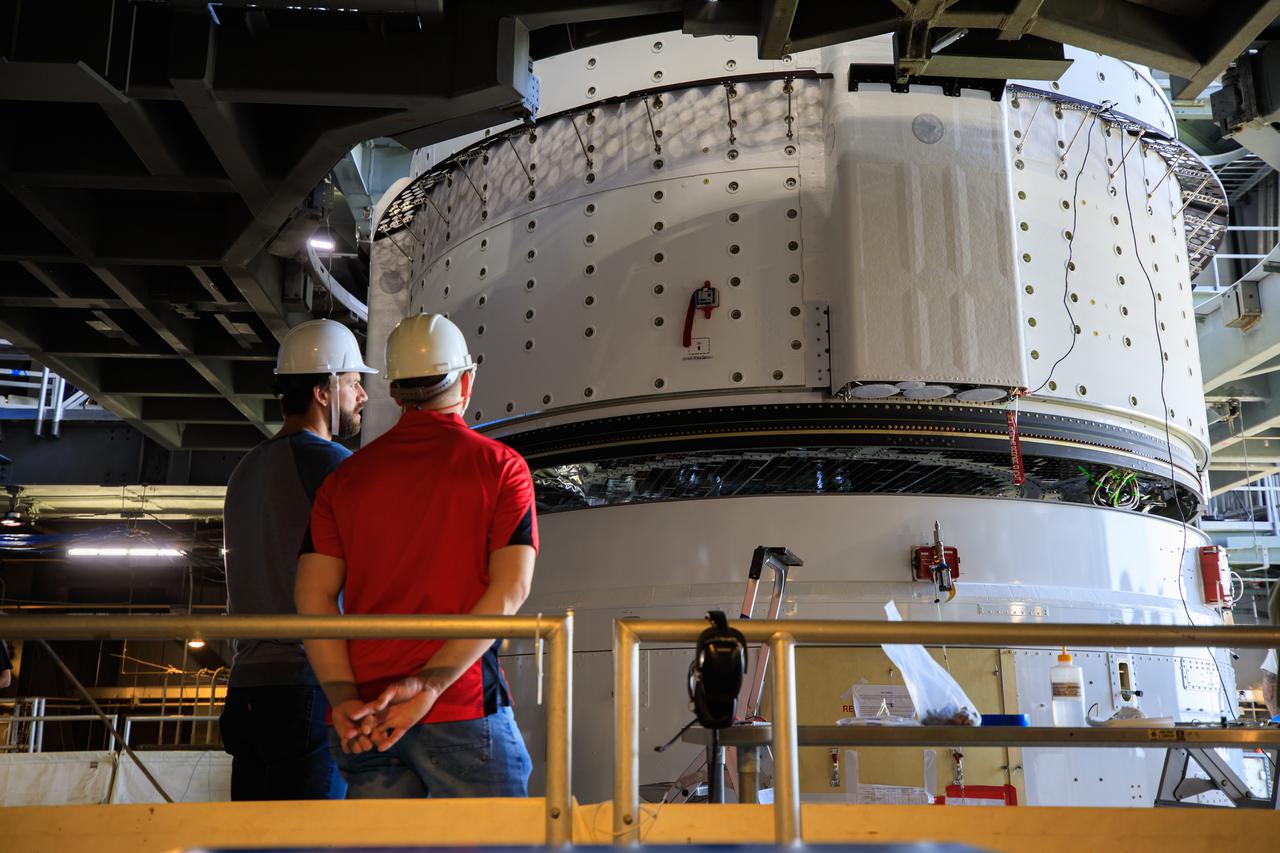
The Boeing CST-100 Starliner spacecraft is lifted at the Vertical Integration Facility at Space Launch Complex-41 at Florida's Cape Canaveral Space Force Station on May 4th, 2022. Starliner will be secured atop a United Launch Alliance Atlas V rocket for Boeing's second Orbital Flight Test (OFT-2) to the International Space Station for NASA's Commercial Crew Program. The spacecraft rolled out from Boeing's Commercial Crew and Cargo Processing Facility at NASA's Kennedy Space Center earlier in the day.
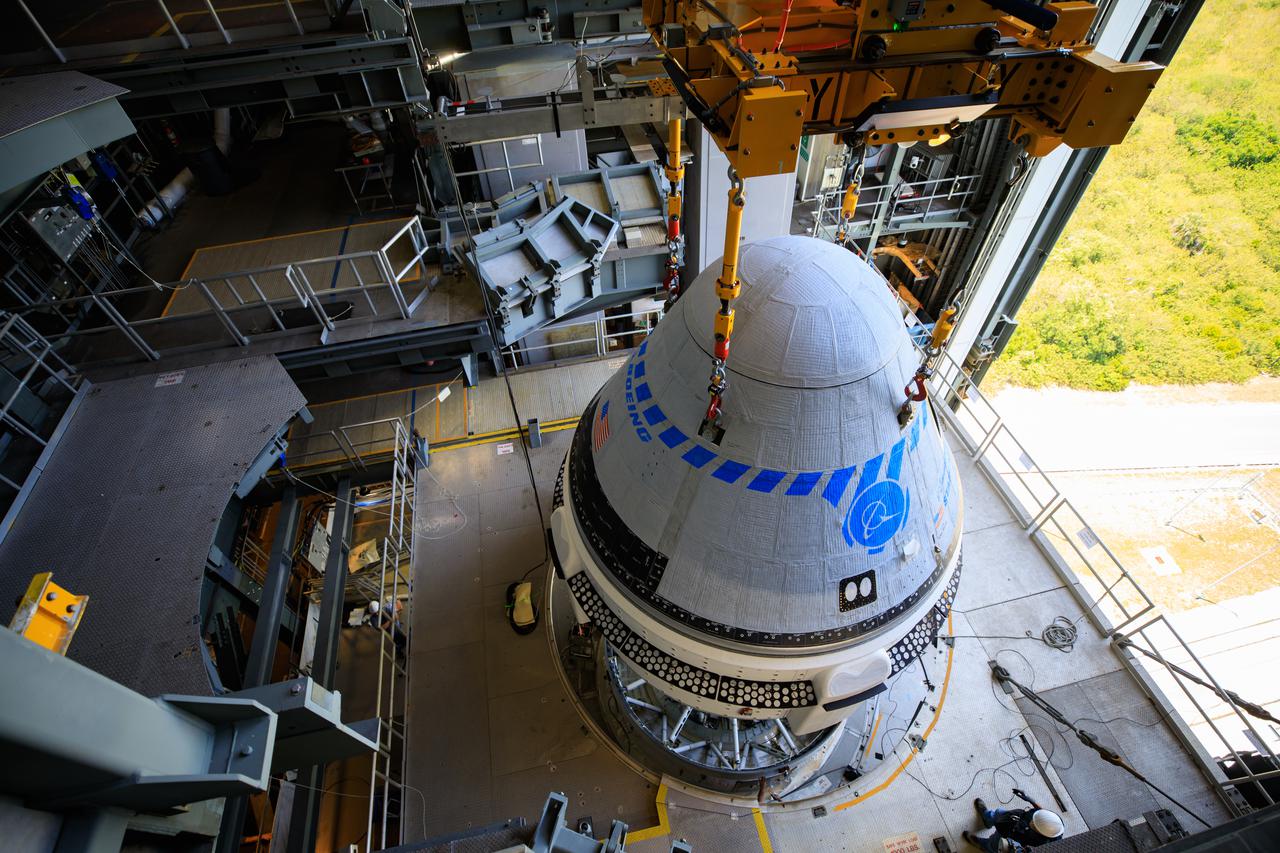
The Boeing CST-100 Starliner spacecraft is lifted at the Vertical Integration Facility at Space Launch Complex-41 at Florida's Cape Canaveral Space Force Station on May 4th, 2022. Starliner will be secured atop a United Launch Alliance Atlas V rocket for Boeing's second Orbital Flight Test (OFT-2) to the International Space Station for NASA's Commercial Crew Program. The spacecraft rolled out from Boeing's Commercial Crew and Cargo Processing Facility at NASA's Kennedy Space Center earlier in the day.
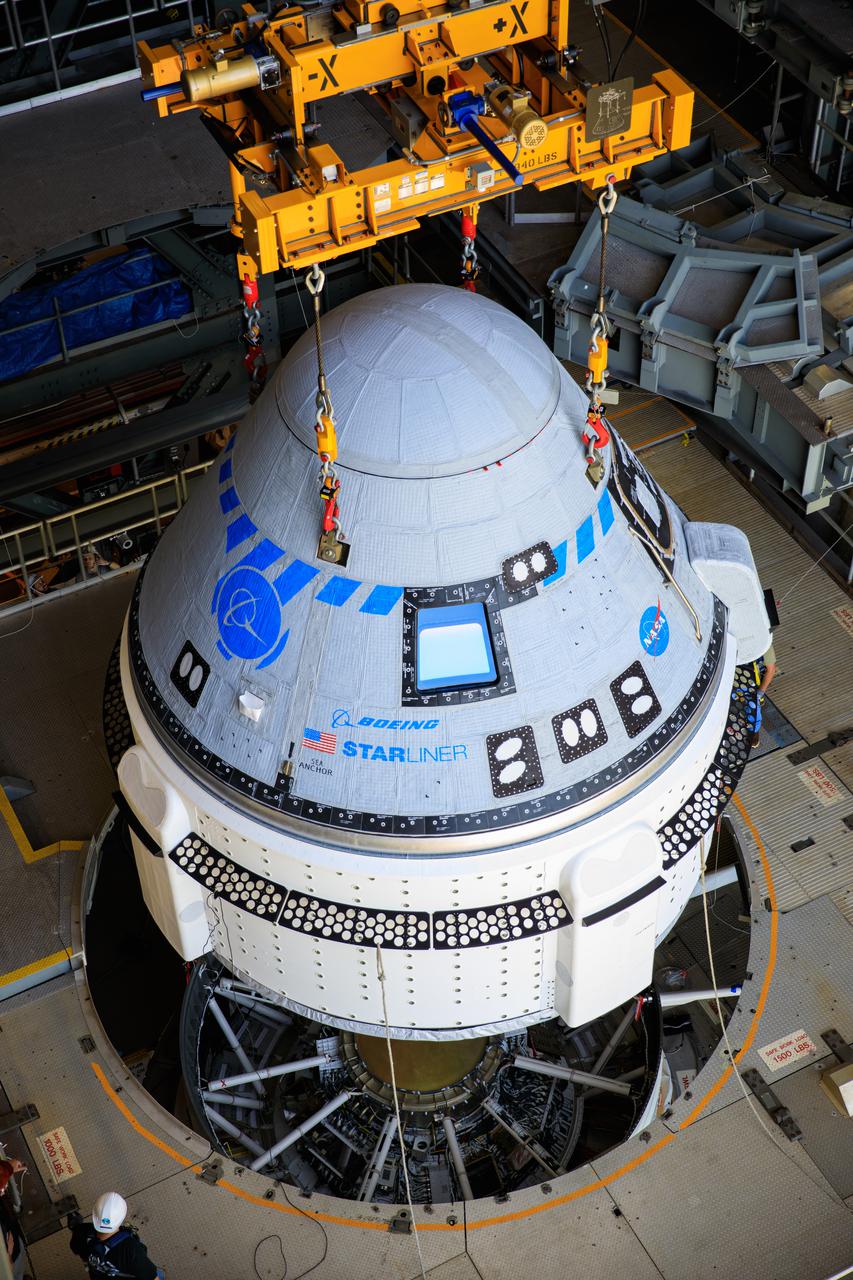
The Boeing CST-100 Starliner spacecraft is lifted at the Vertical Integration Facility at Space Launch Complex-41 at Florida's Cape Canaveral Space Force Station on May 4th, 2022. Starliner will be secured atop a United Launch Alliance Atlas V rocket for Boeing's second Orbital Flight Test (OFT-2) to the International Space Station for NASA's Commercial Crew Program. The spacecraft rolled out from Boeing's Commercial Crew and Cargo Processing Facility at NASA's Kennedy Space Center earlier in the day.
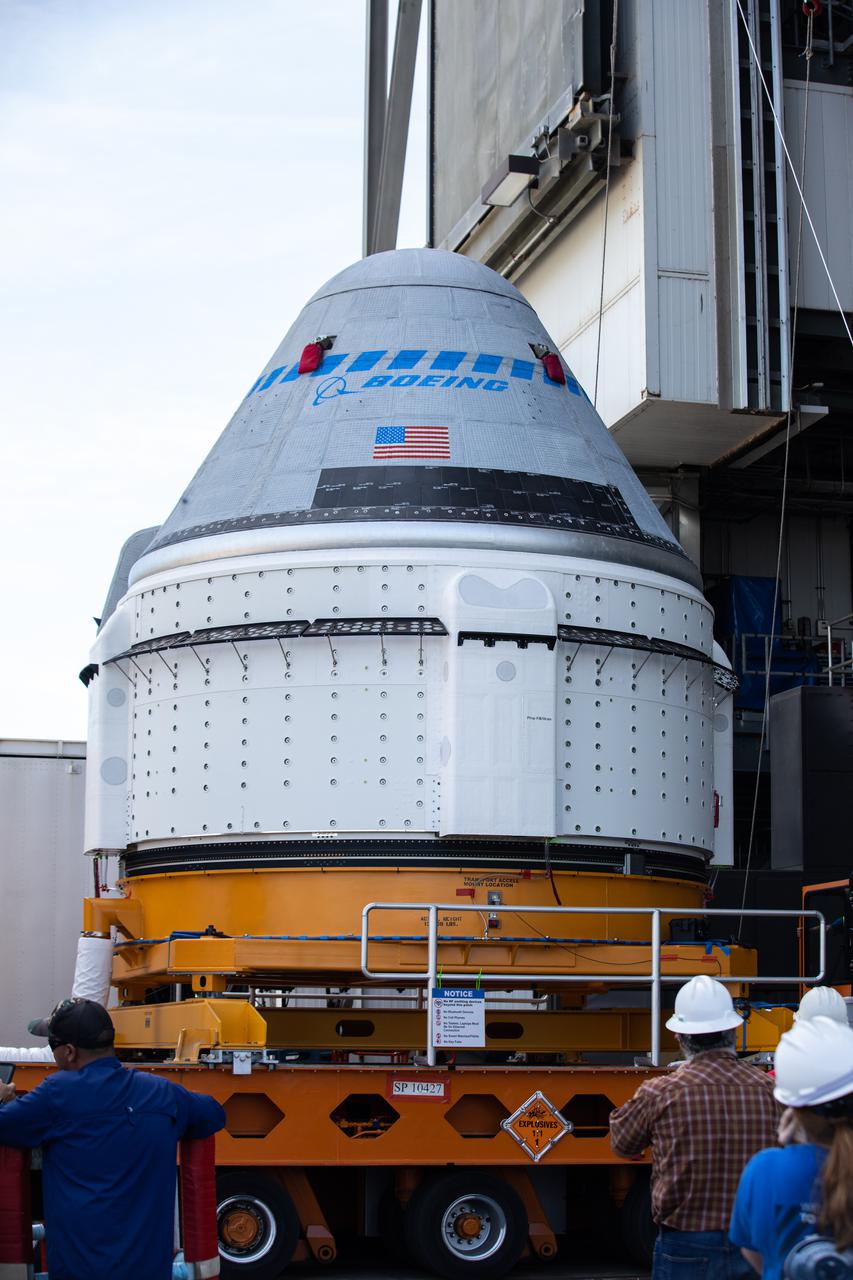
Boeing’s CST-100 Starliner spacecraft arrives at the Vertical Integration Facility at Space Launch Complex-41 at Cape Canaveral Space Force Station in Florida on May 4, 2022. Starliner will be secured atop a United Launch Alliance Atlas V rocket for Boeing’s second Orbital Flight Test (OFT-2) to the International Space Station for NASA’s Commercial Crew Program. The spacecraft rolled out from Boeing’s Commercial Crew and Cargo Processing Facility at NASA’s Kennedy Space Center earlier in the day.
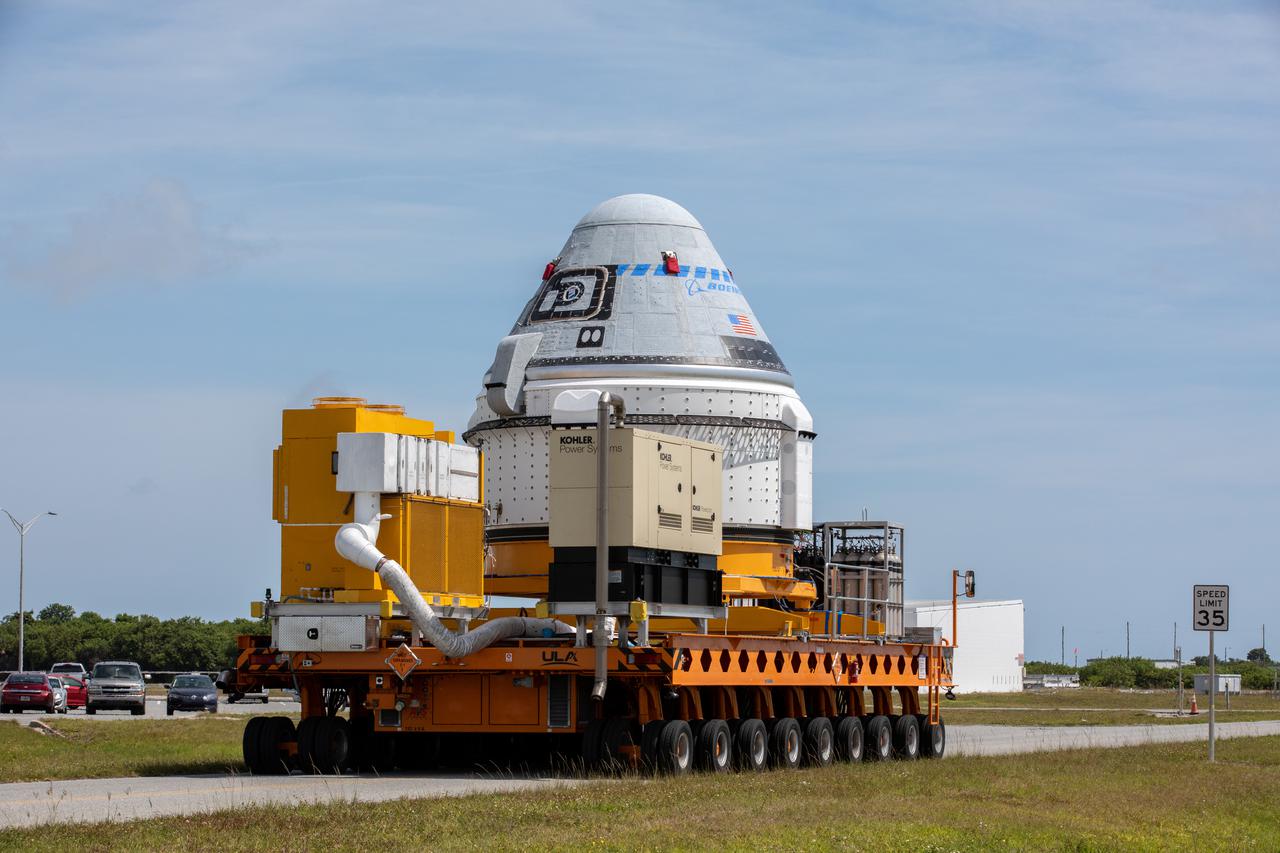
Boeing’s CST-100 Starliner spacecraft rolls out from the company’s Commercial Crew and Cargo Processing Facility at NASA’s Kennedy Space Center in Florida on May 4, 2022. The spacecraft will make the trip to the Vertical Integration Facility at Space Launch Complex-41 at Cape Canaveral Space Force Station where it will be secured atop a United Launch Alliance Atlas V rocket for Boeing’s second Orbital Flight Test (OFT-2) to the International Space Station for NASA’s Commercial Crew Program.