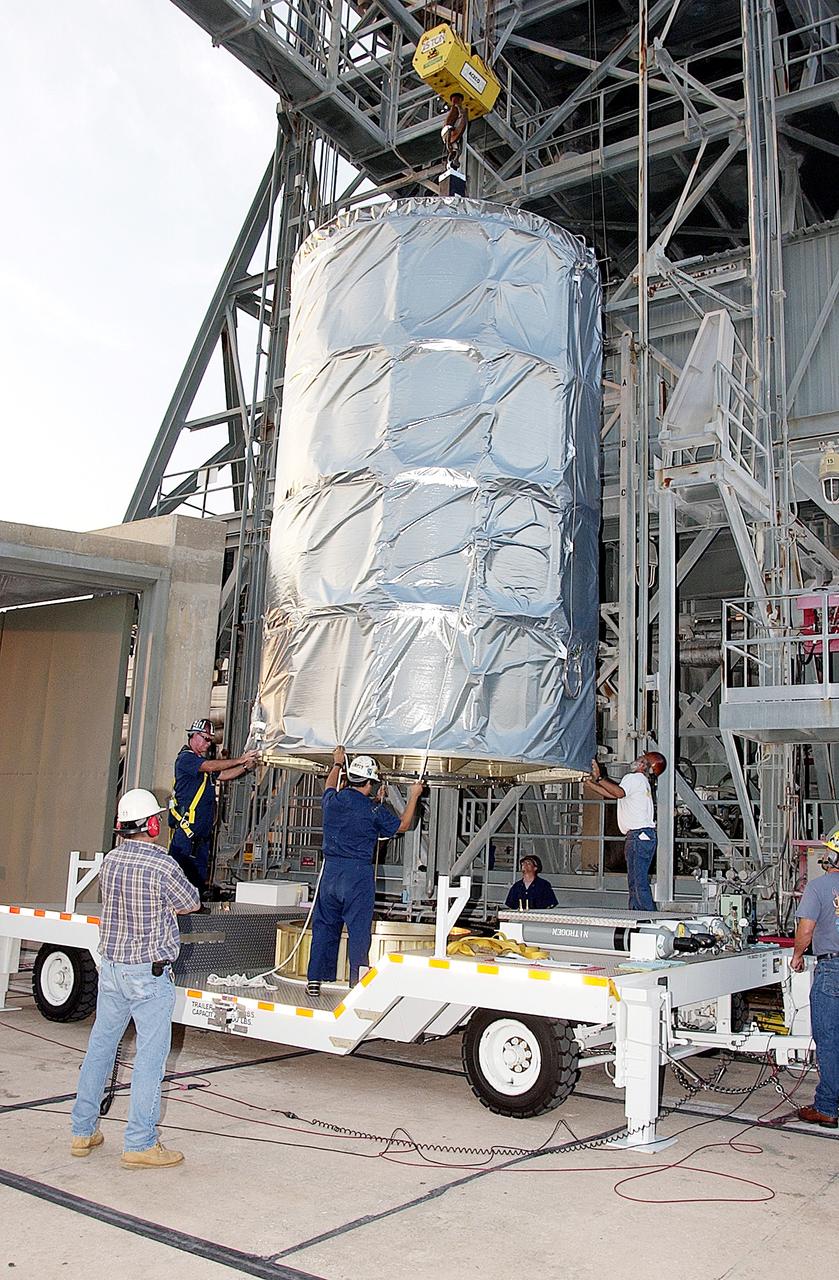
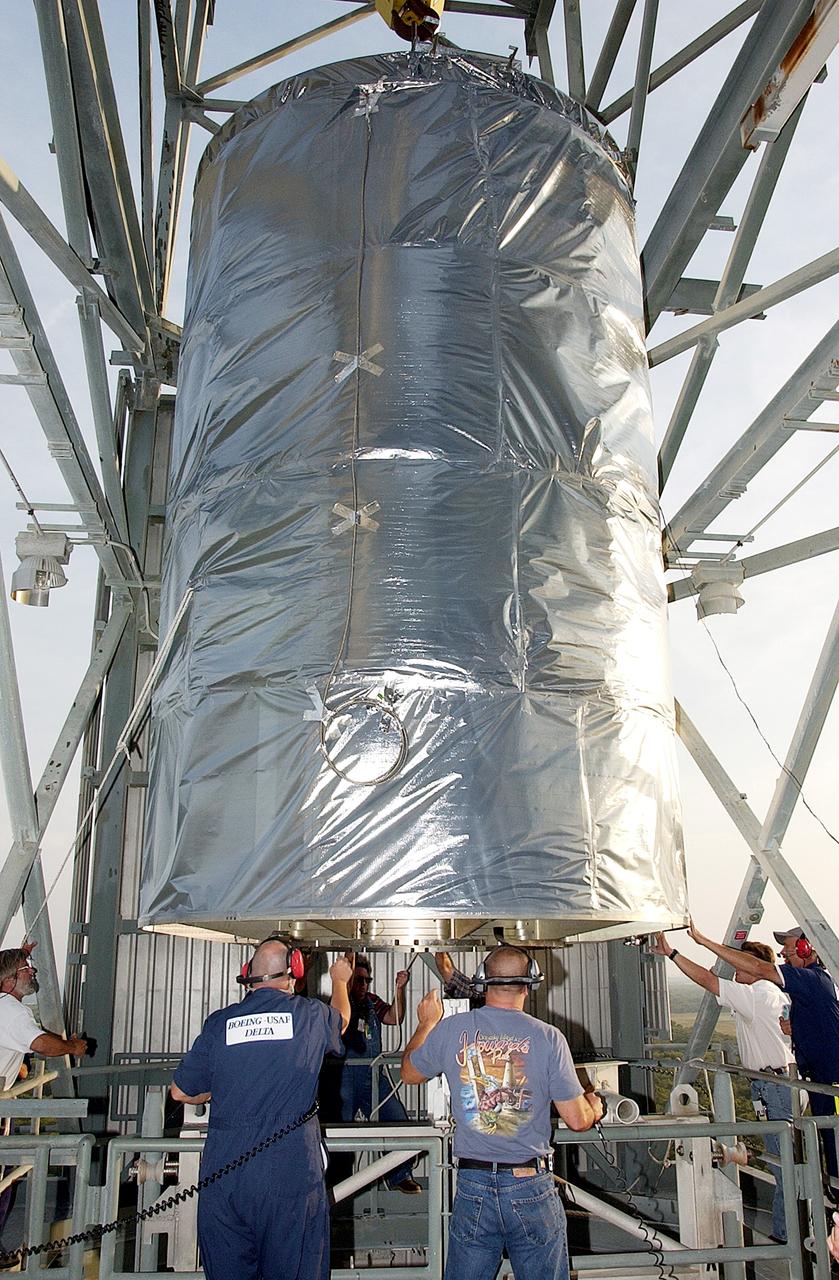
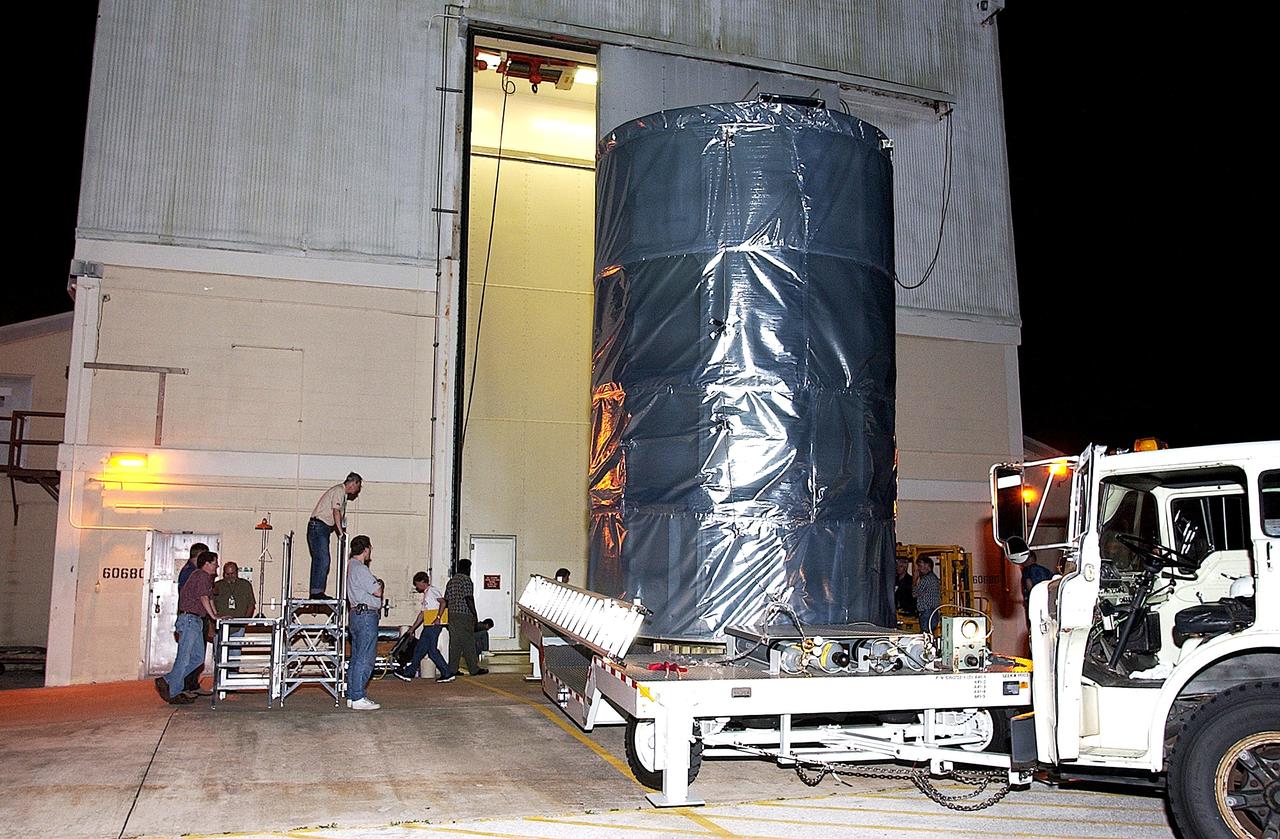
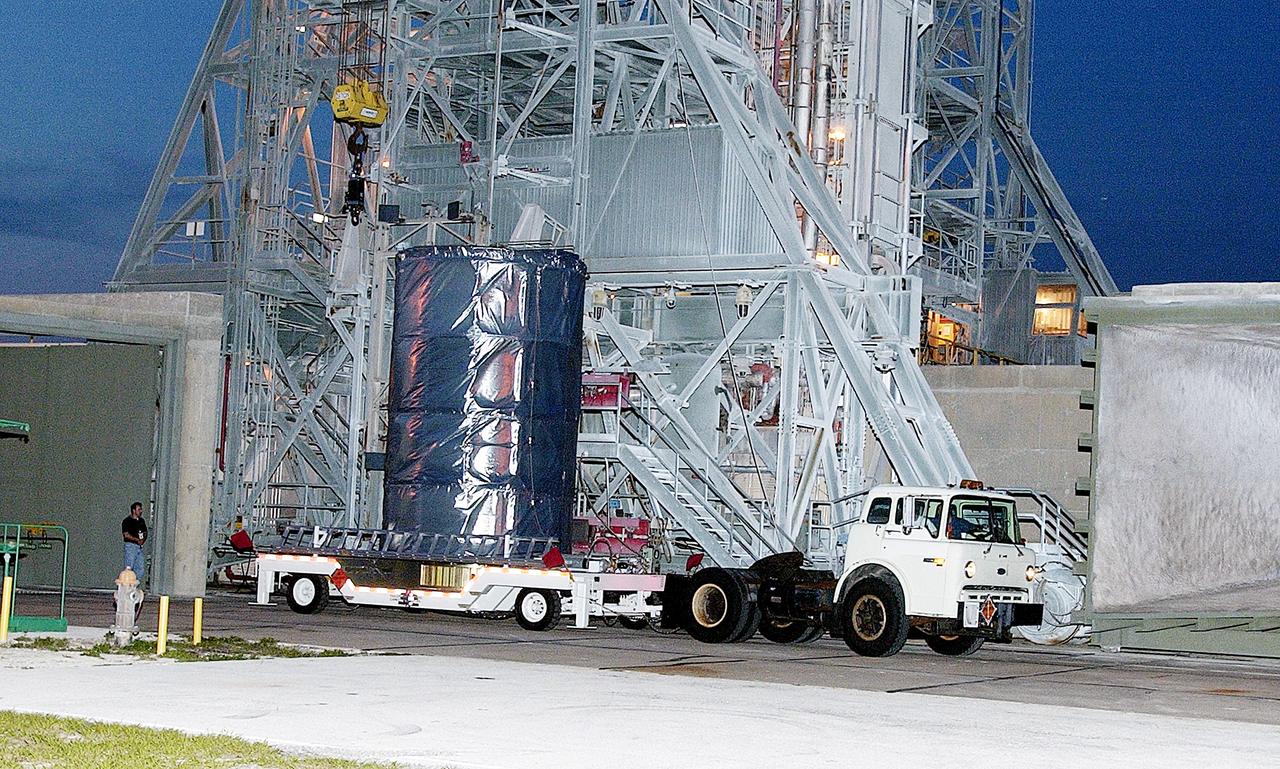
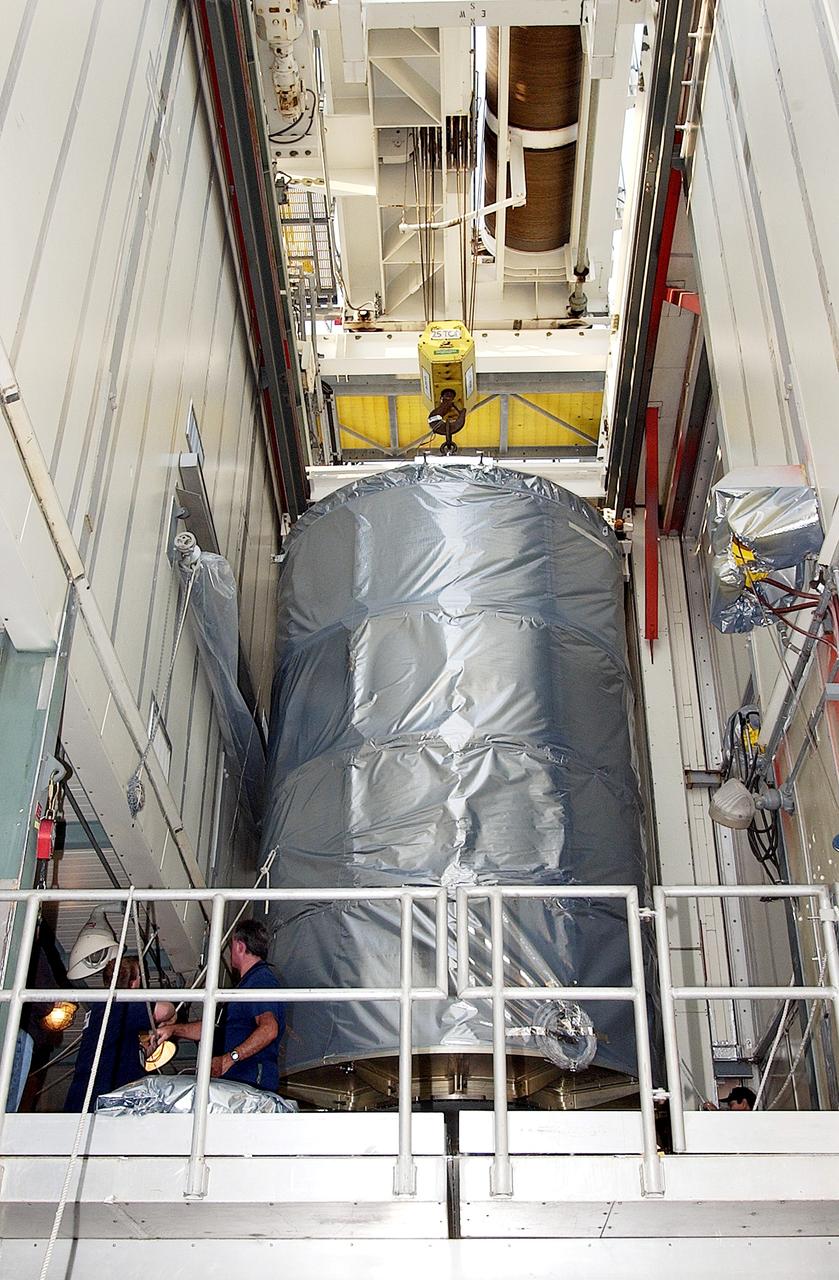
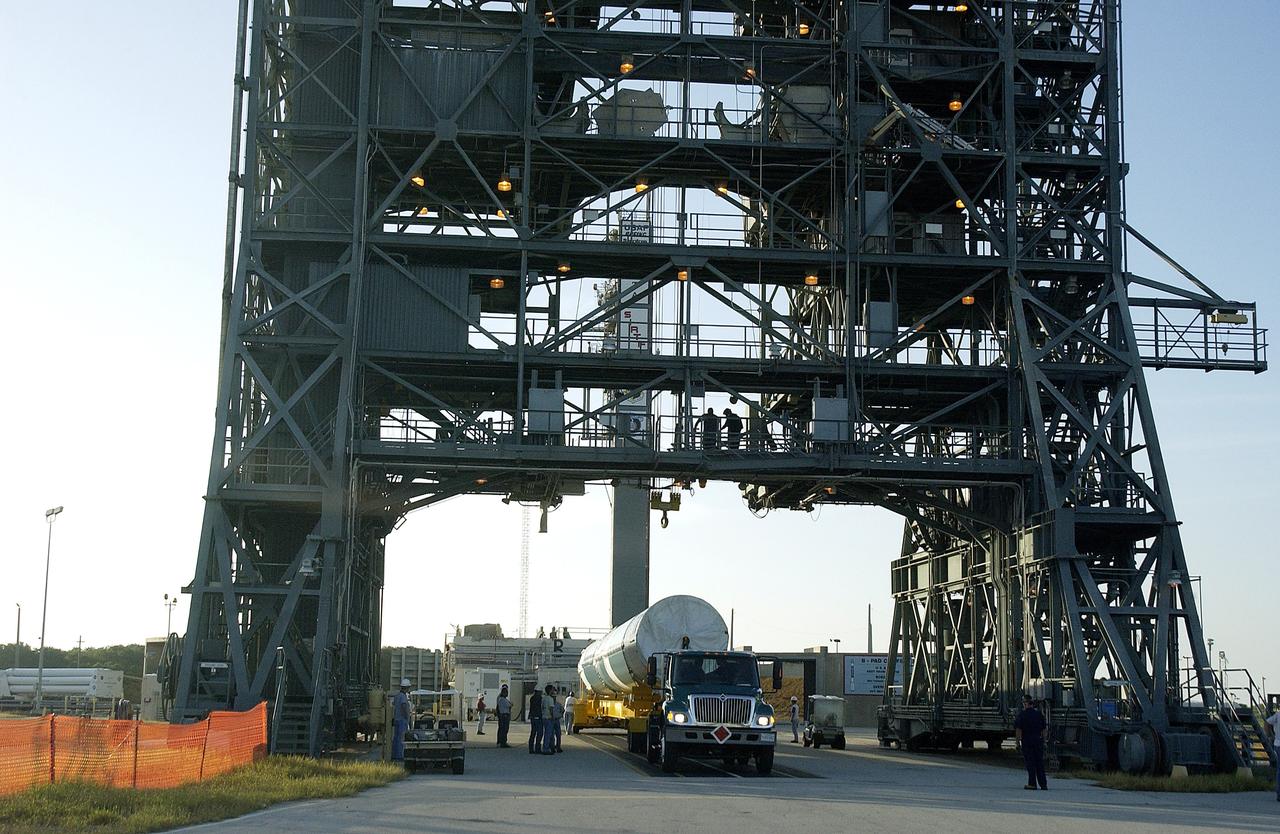
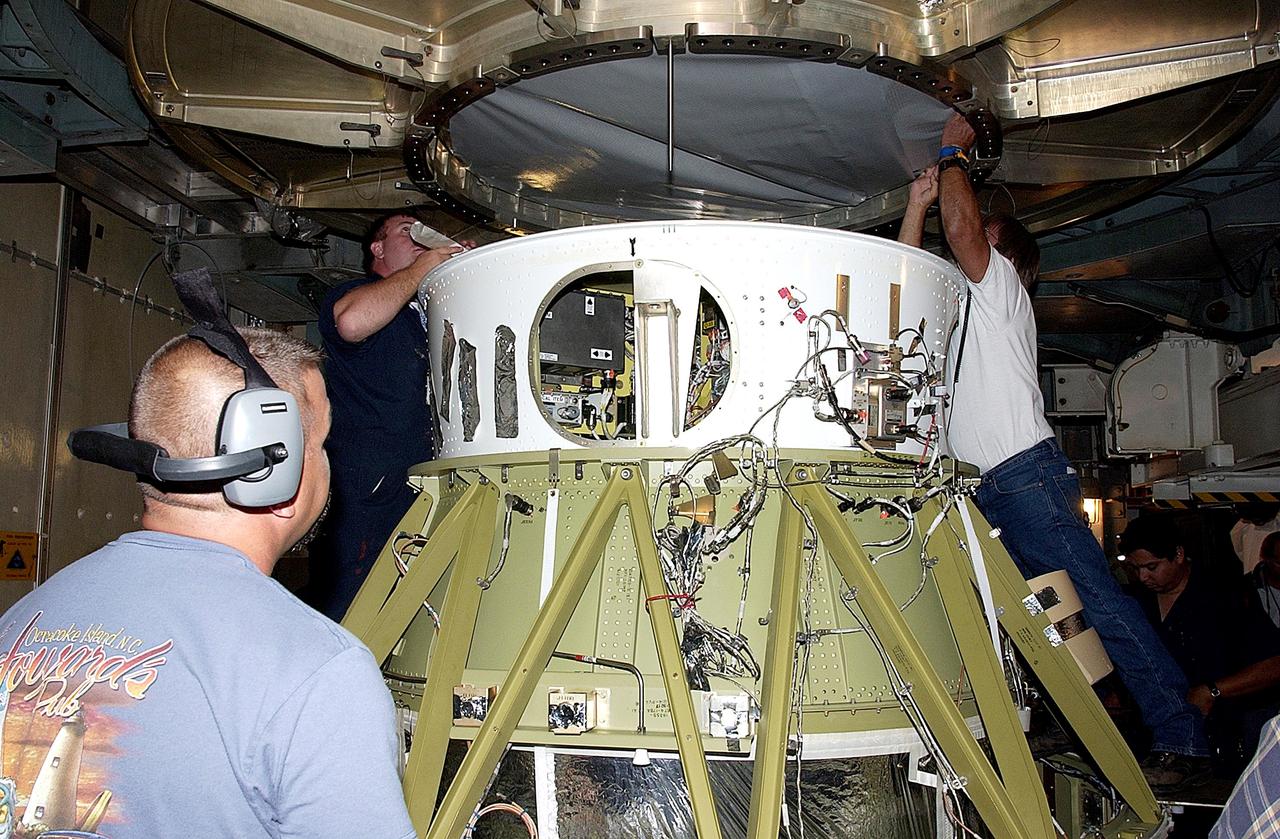
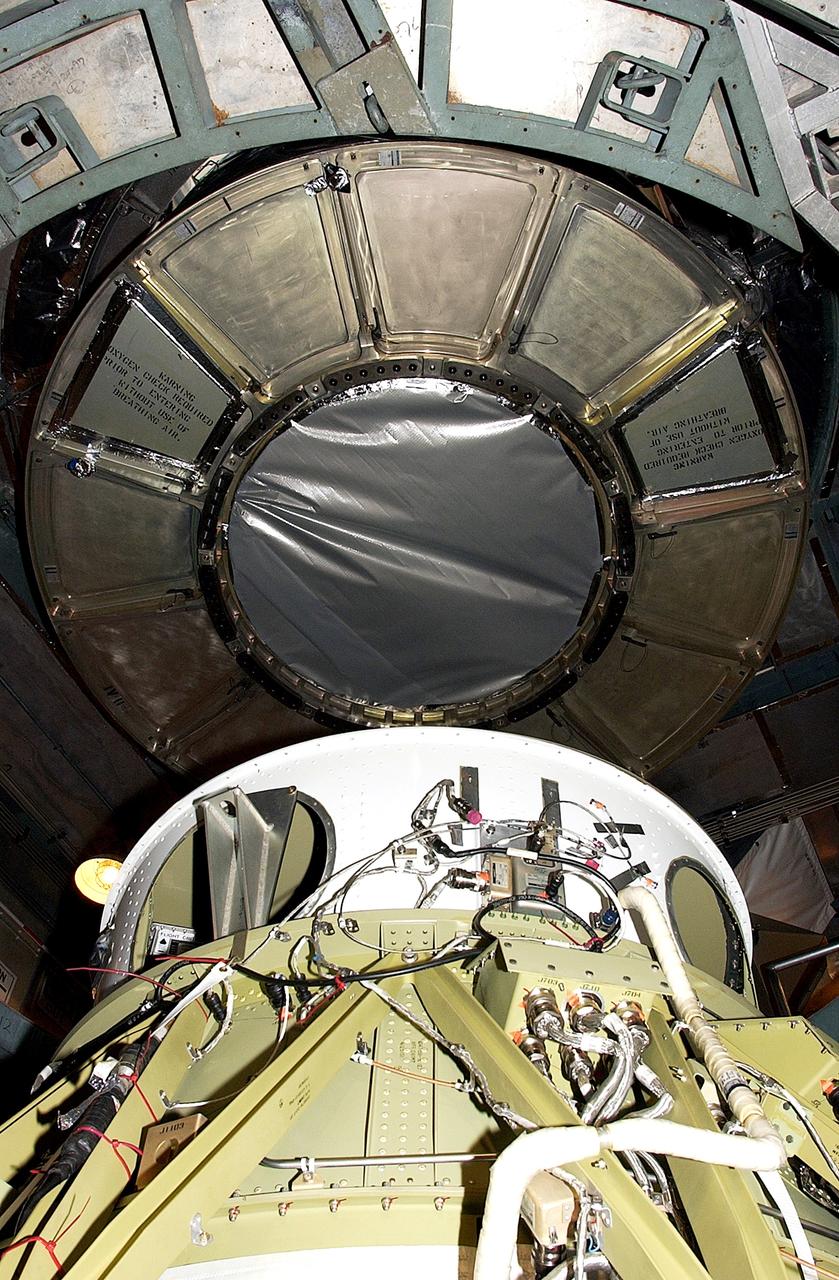
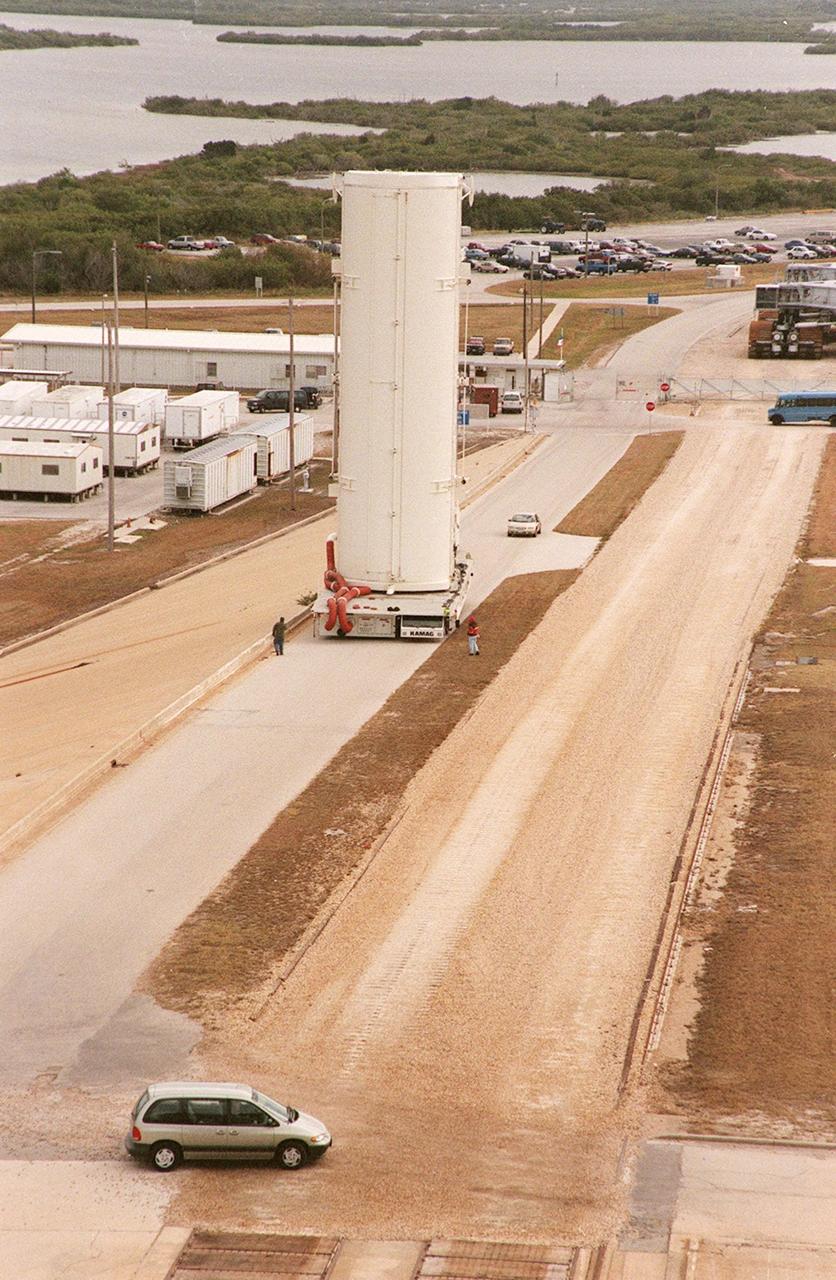
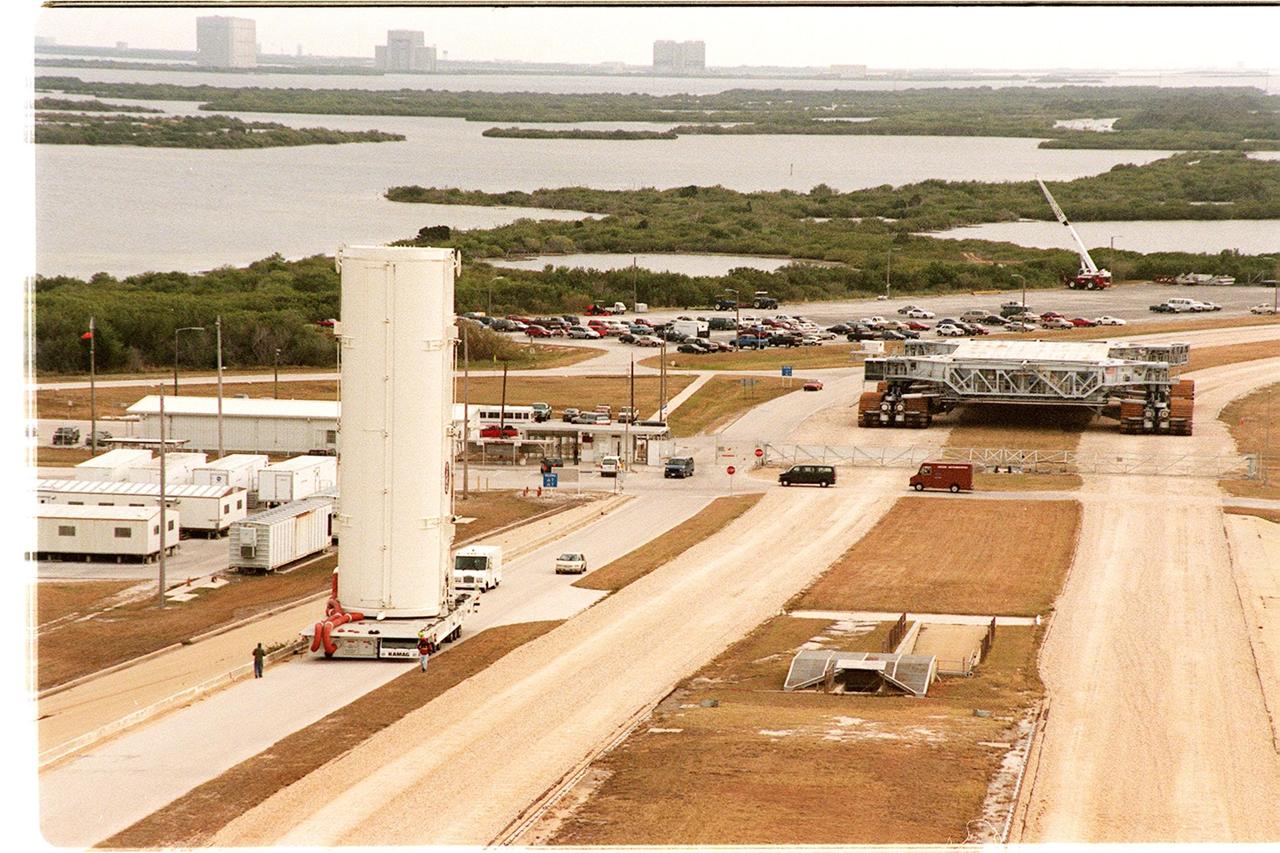
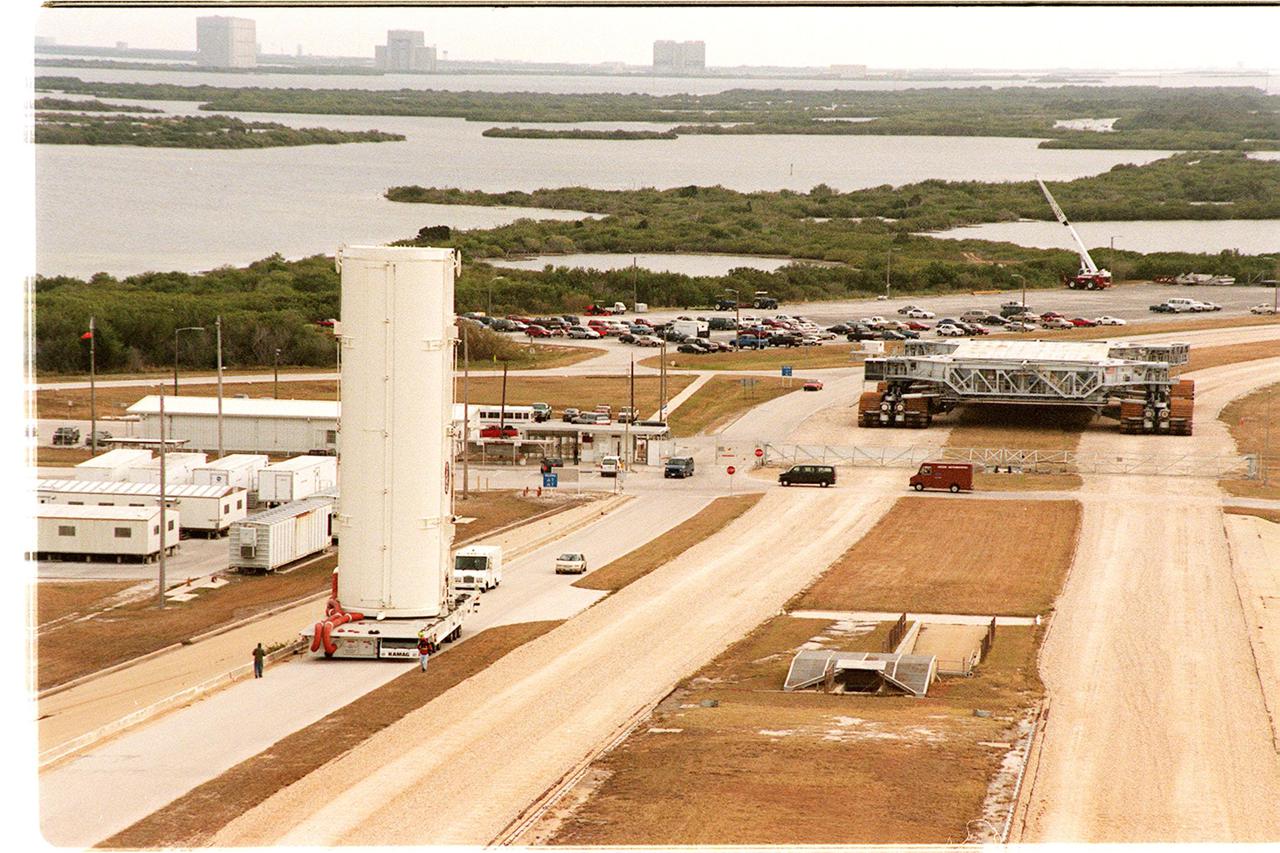
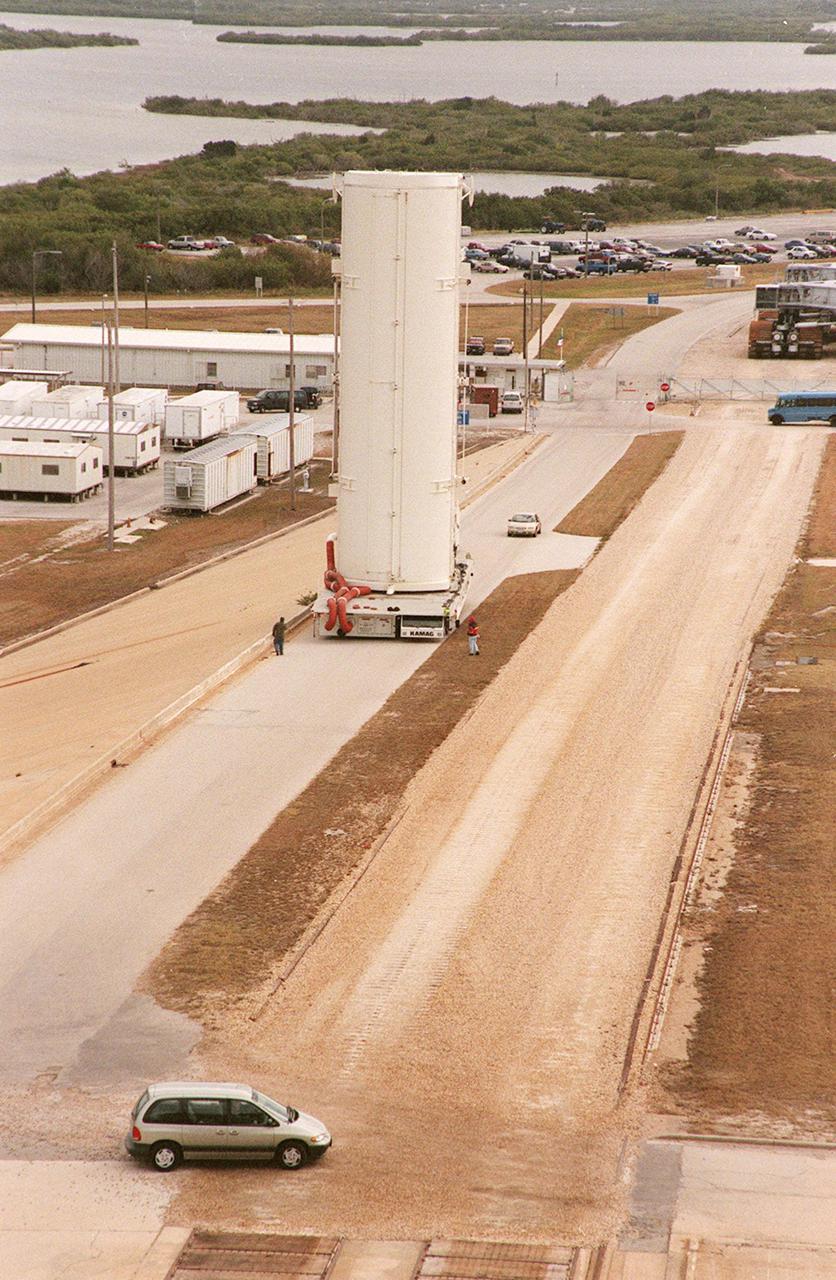
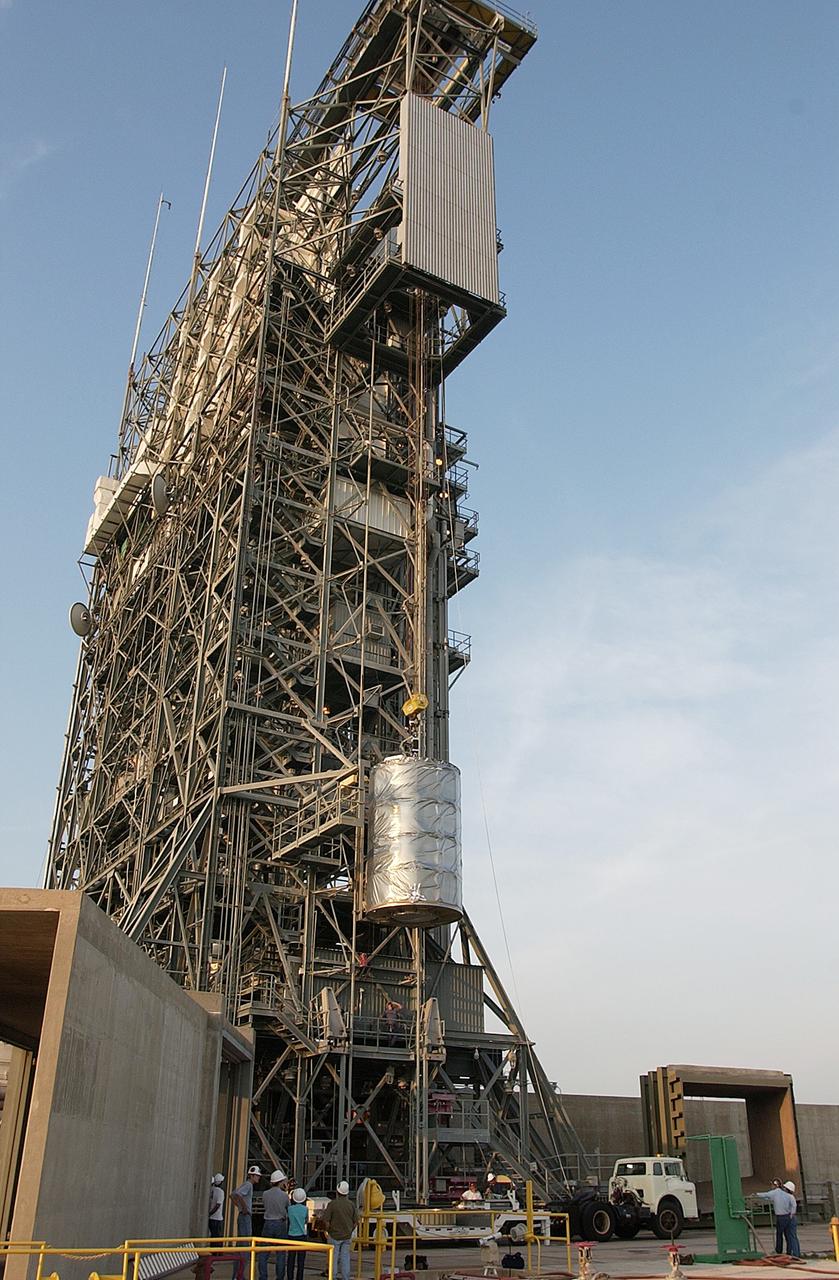
KENNEDY SPACE CENTER, FLA. - On Launch Complex 17-B, Cape Canaveral Air Force Station, the Space Infrared Telescope Facility (SIRTF) observatory is on a transporter to be taken back to NASA Spacecraft Hangar AE. SIRTF will remain in the clean room at Hangar AE until it returns to the pad in early August.
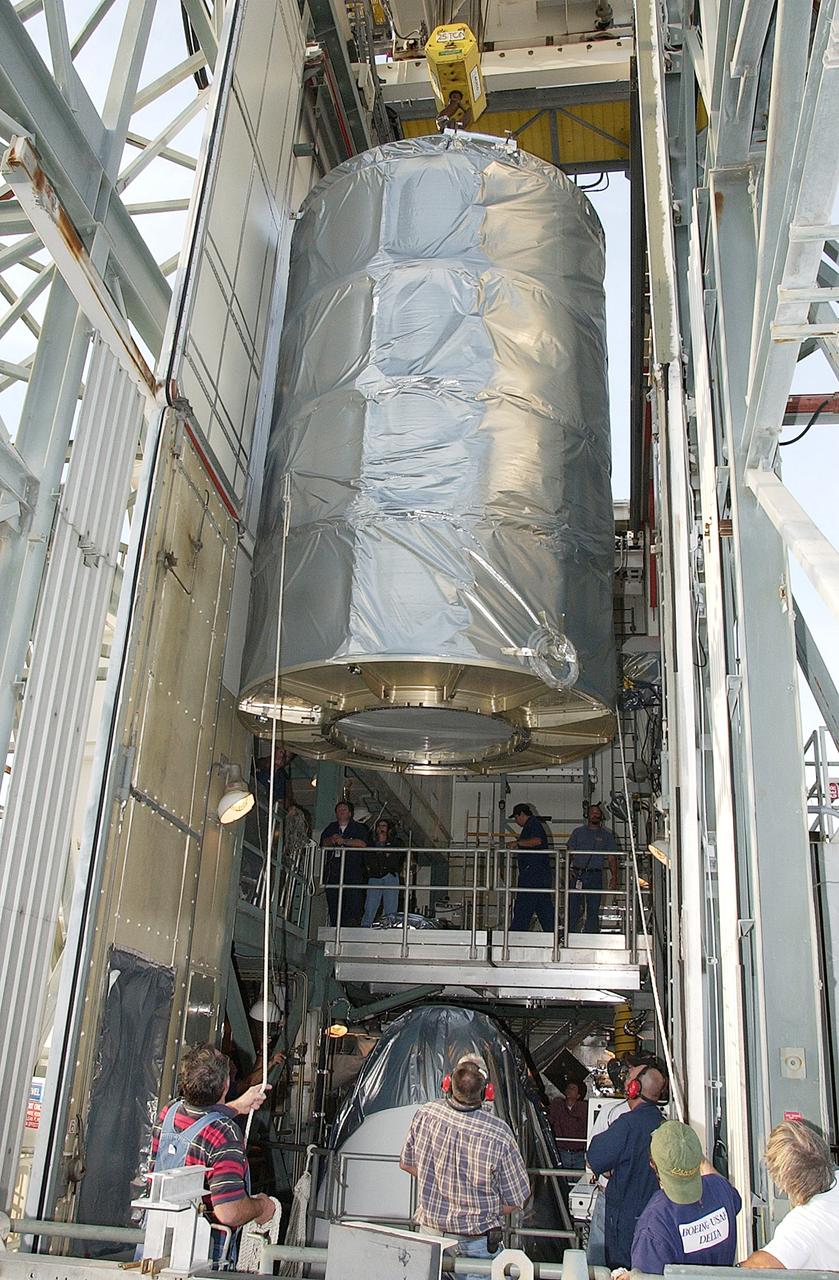
KENNEDY SPACE CENTER, FLA. - On Launch Complex 17-B, Cape Canaveral Air Force Station, the Space Infrared Telescope Facility (SIRTF) observatory is ready to be lowered to the ground and taken back to NASA Spacecraft Hangar AE. SIRTF will remain in the clean room at Hangar AE until it returns to the pad in early August.
KENNEDY SPACE CENTER, FLA. - On Launch Complex 17-B, Cape Canaveral Air Force Station, the Space Infrared Telescope Facility (SIRTF) observatory is lowered onto a transporter to be taken back to NASA Spacecraft Hangar AE. SIRTF will remain in the clean room at Hangar AE until it returns to the pad in early August.
KENNEDY SPACE CENTER, FLA. -  On Launch Complex 17-B, Cape Canaveral Air Force Station, the Space Infrared Telescope Facility (SIRTF) observatory is on a transporter to be taken back to NASA Spacecraft Hangar AE. SIRTF will remain in the clean room at Hangar AE until it returns to the pad in early August.
KENNEDY SPACE CENTER, FLA. - On Launch Complex 17-B, Cape Canaveral Air Force Station, the Space Infrared Telescope Facility (SIRTF) observatory is on a transporter to be taken back to NASA Spacecraft Hangar AE. SIRTF will remain in the clean room at Hangar AE until it returns to the pad in early August.
KENNEDY SPACE CENTER, FLA. - On Launch Complex 17-B, Cape Canaveral Air Force Station, the Space Infrared Telescope Facility (SIRTF) observatory is lowered to the ground and taken back to NASA Spacecraft Hangar AE. SIRTF will remain in the clean room at Hangar AE until it returns to the pad in early August.
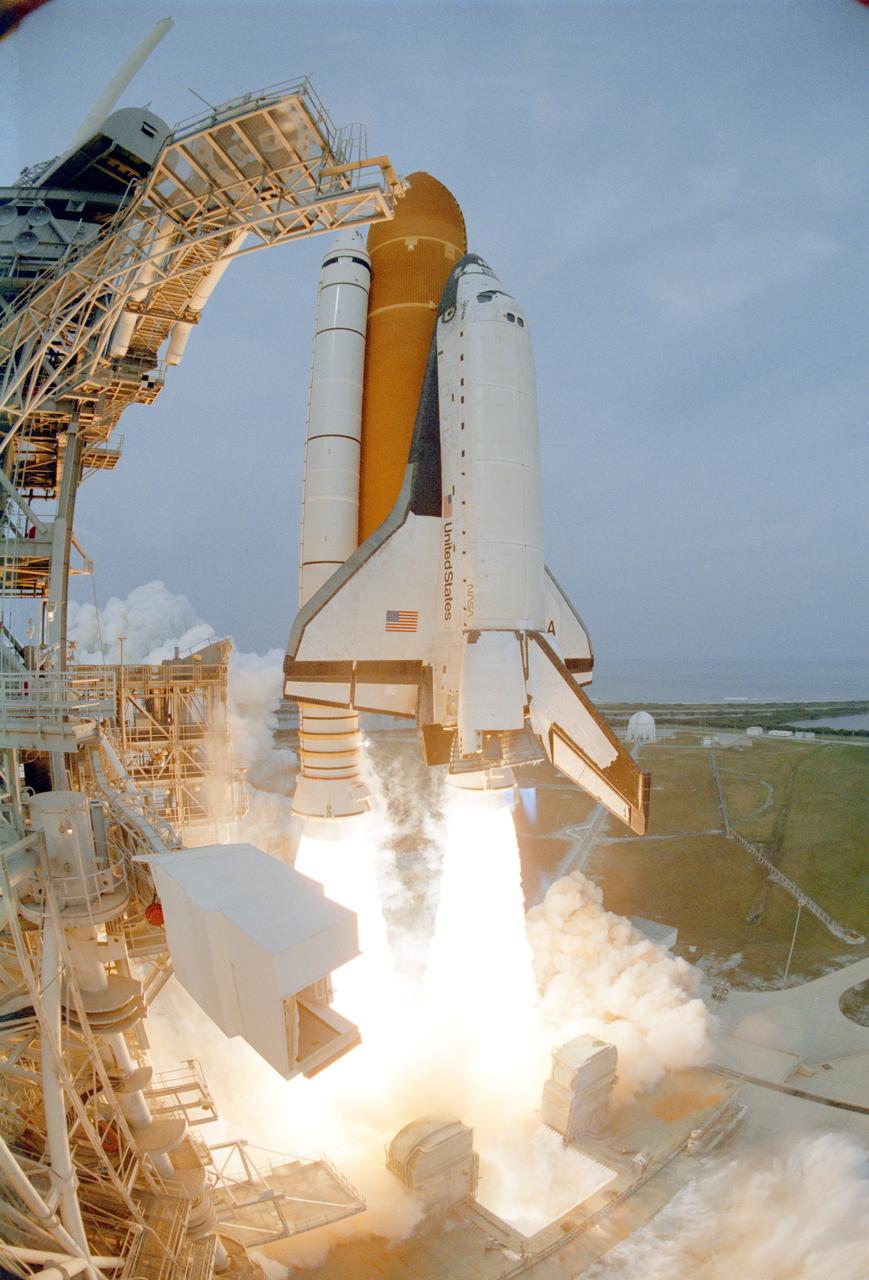
STS075-S-004 (22 Feb. 1996) --- The space shuttle Columbia clears the tower to begin the mission.  The liftoff occurred on schedule at 3:18:00 p.m. (EST), Feb. 22, 1996.  Visible at left is the White Room on the orbiter access arm through which the flight crew had entered the orbiter. Onboard Columbia for the scheduled two-week mission were astronauts Andrew M. Allen, commander; Scott J. Horowitz, pilot; Franklin R. Chang-Diaz, payload commander; and astronauts Maurizio Cheli, Jeffrey A. Hoffman and Claude Nicollier, along with payload specialist Umberto Guidoni.  Cheli and Nicollier represent the European Space Agency (ESA), while Guidoni represents the Italian Space Agency (ASI).
STS-75 Columbia OV-102 launch
STS075-S-007 (22 Feb. 1996) --- A remote camera at Launch Pad 39B, at the Kennedy Space Center (KSC), recorded this profile view of the space shuttle Columbia as it cleared the tower to begin the mission.  The liftoff occurred on schedule at 3:18:00 p.m. (EST), Feb. 22, 1996.  Onboard Columbia for the scheduled two-week mission were astronauts Andrew M. Allen, commander; Scott J. Horowitz, pilot; Franklin R. Chang-Diaz, payload commander; and astronauts Maurizio Cheli, Jeffrey A. Hoffman and Claude Nicollier, along with payload specialist Umberto Guidoni. Cheli and Nicollier represent the European Space Agency (ESA), while Guidoni represents the Italian Space Agency (ASI).
STS-75 Columbia OV-102 launch
STS027-S-006 (2 Dec. 1988) --- A good portion of the Kennedy Space Center launch complex 39 and the Atlantic Ocean form the backdrop for the beginning stages of Atlantis' return trip to space. The scene was captured with a hand-held 70mm camera aimed through the windows of a NASA shuttle training aircraft piloted by astronaut Daniel C. Brandenstein, chief of Johnson Space Center?s astronaut office. Launch occurred at 9:30:34 a.m. (EST), Dec. 2, 1988. Photo credit: NASA
STS-27 Atlantis, OV-104, lifts off from KSC Launch Complex Pad 39B
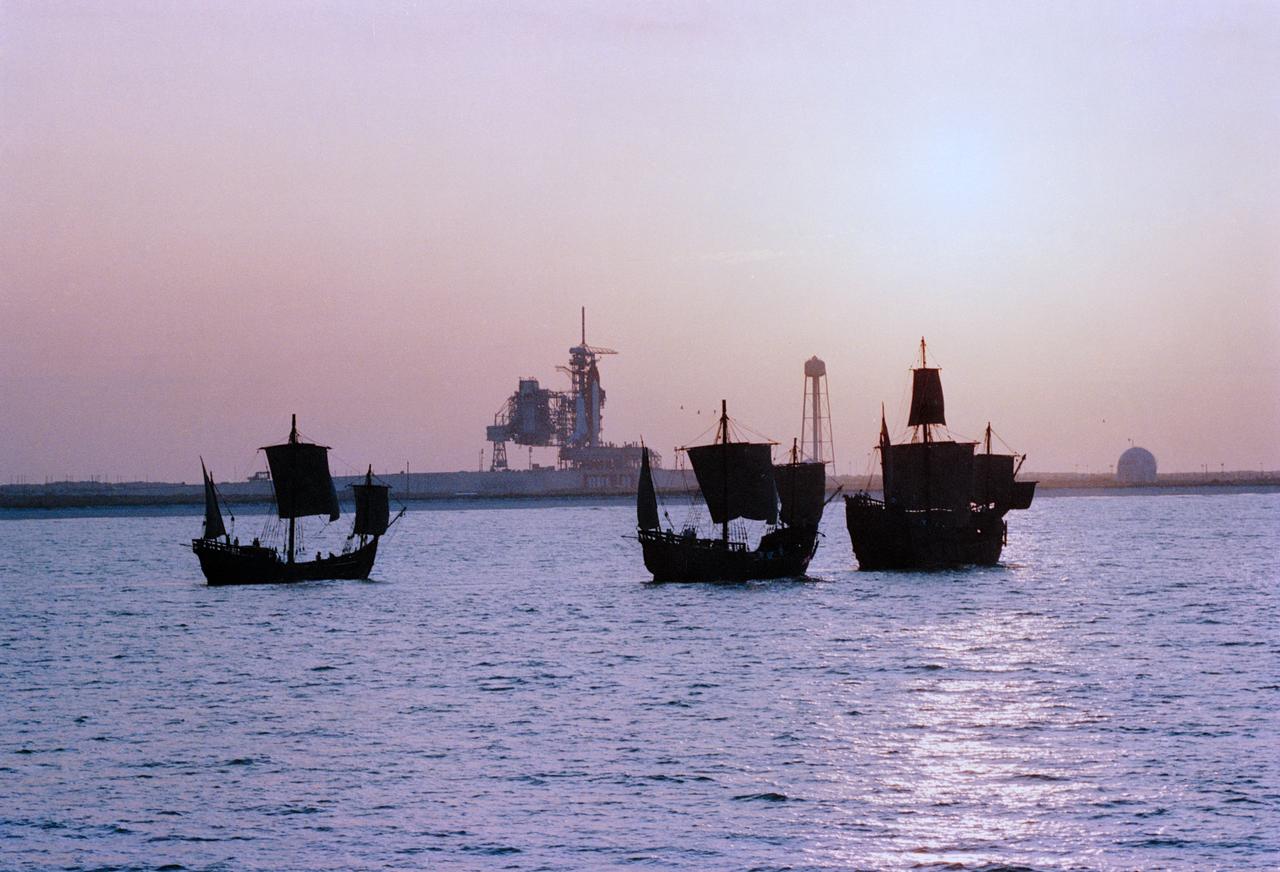
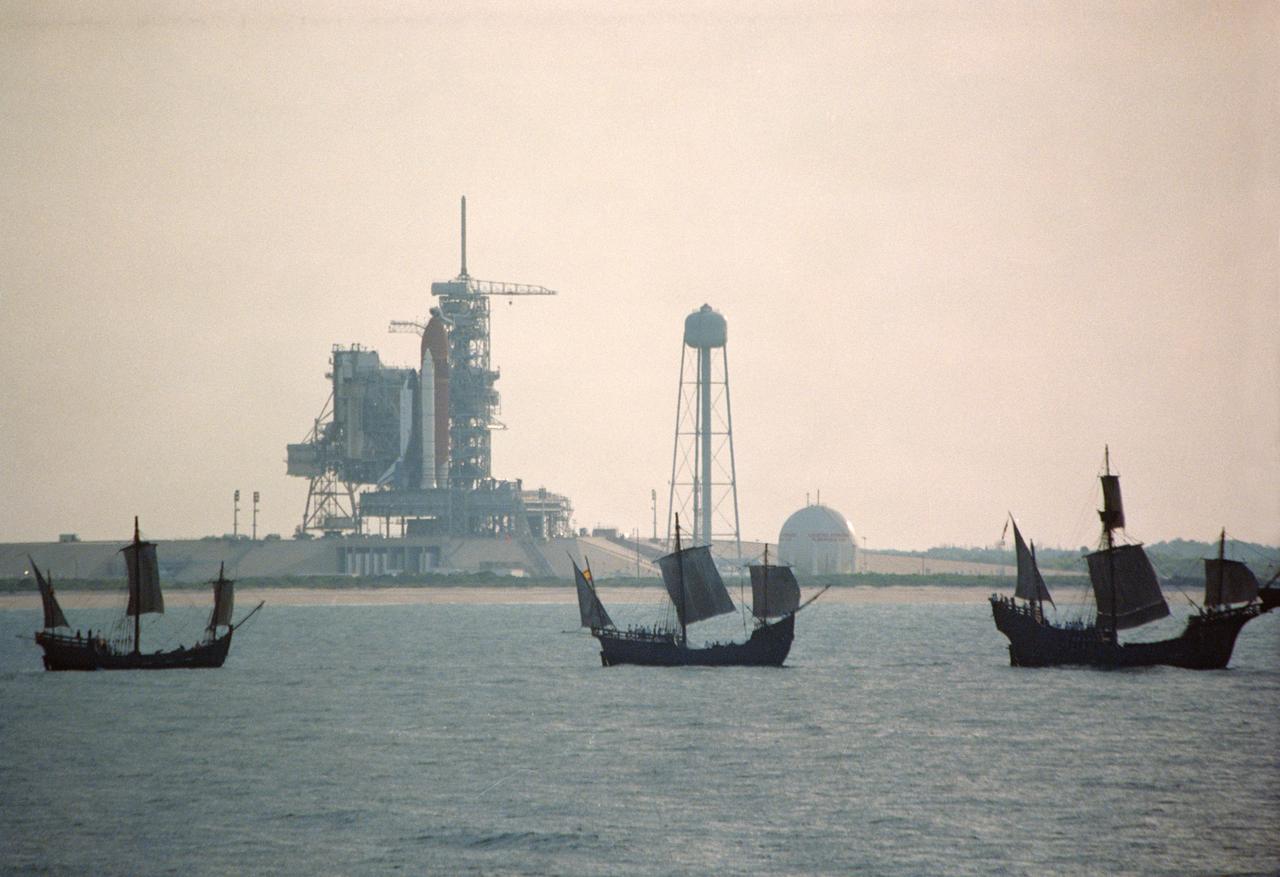
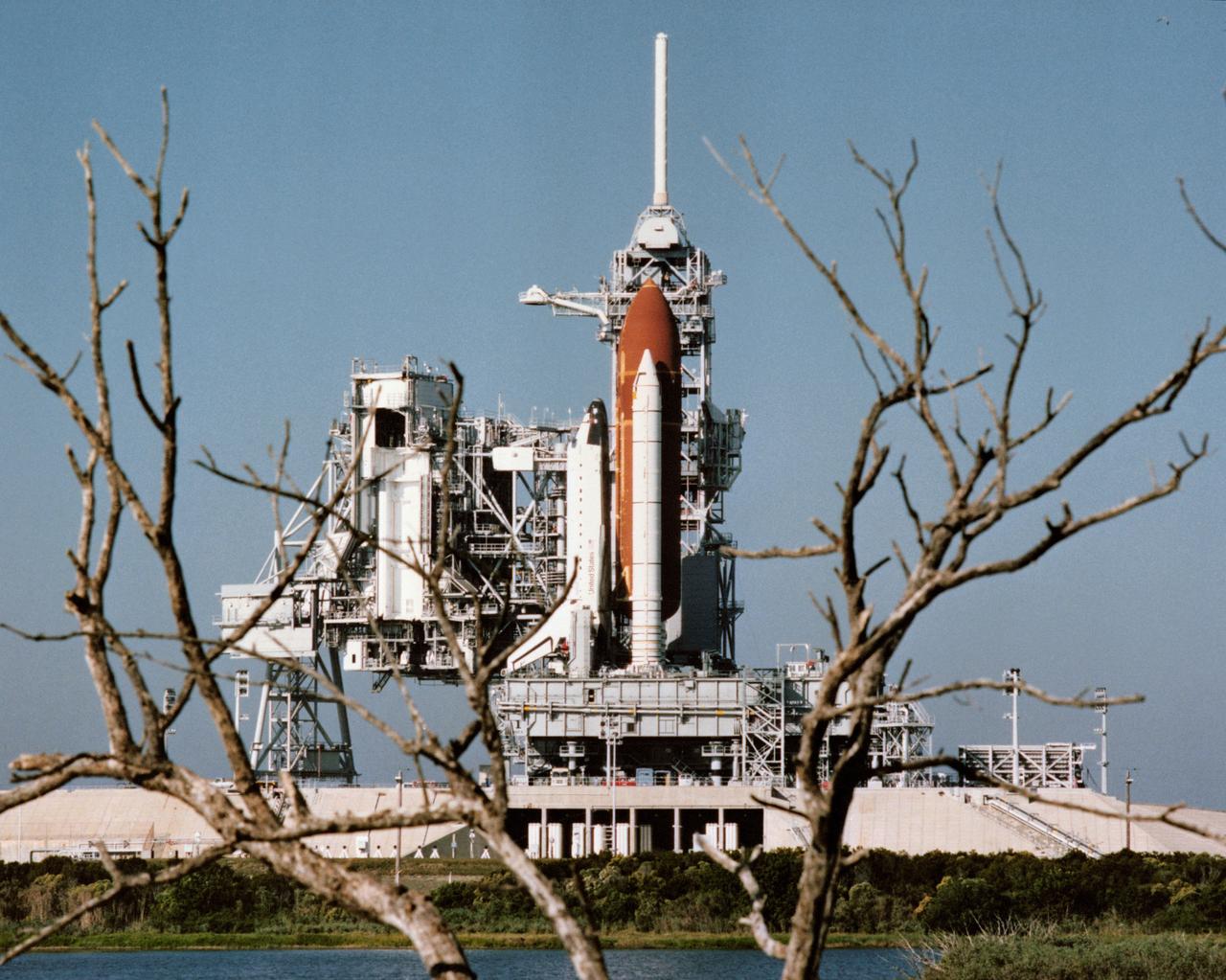
S92-39074 (6 May 1992) --- The centuries-old technology that built Christopher Columbus' three sailing ships passes within a half mile of the 20th-Century Space Shuttle Endeavour, in background, awaiting liftoff on Launch Pad 39B.  The replicas of the Santa Maria, Nina, and Pinta wind-powered ships, managed by the Spain '92 Foundation, are on a tour to ports around the Gulf of Mexico and up the Atlantic Coast of the United States. Endeavour is set to lift off on its maiden voyage, STS-49, on May 7, 1992.  Video footage of the two types of exploration vessels will be used by NASA for a variety of productions, including the annual Von Braun Exploration forum sponsored by NASA's Marshall Space Flight Center (MSFC), Huntsville, Alabama, in October, 1992. This year's theme is Exploration and the Evolution of Nations. 1992 is the 500th anniversary of Columbus' voyage to the New World.
Replicas of the Santa Maria, Nina, Pinta sail by OV-105 on KSC LC Pad 39B
Replicas of Christopher Columbus' sailing ships Santa Maria, Nina, and Pinta sail by Endeavour, Orbiter Vehicle (OV) 105, on Kennedy Space Center (KSC) Launch Complex (LC) Pad 39B awaiting liftoff on its maiden voyage, STS-49. This view was taken from the water showing the three ships silhouetted in the foreground with OV-105 on mobile launcher platform profiled against fixed service structure (FSS) tower and rectracted rotating service structure (RSS) in the background. Next to the launch pad (at right) are the sound suppression water system tower and the liquid hydrogen (LH2) storage tank. View provided by KSC with alternate number KSC-92PC-970.
Replicas of the Santa Maria, Nina, Pinta sail by OV-105 on KSC LC Pad 39B
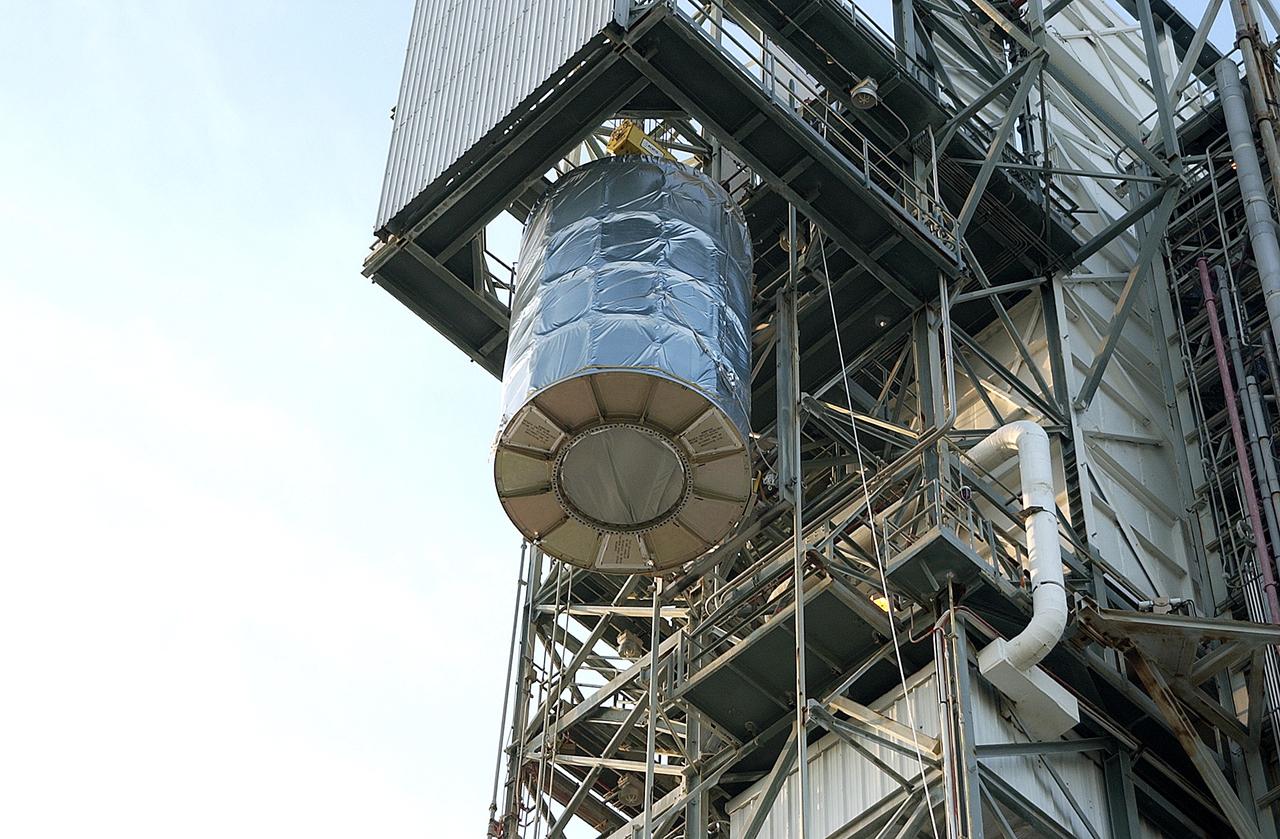
KENNEDY SPACE CENTER, FLA. - On Launch Complex 17-B, Cape Canaveral Air Force Station, the Space Infrared Telescope Facility (SIRTF) observatory is moved toward the outside of the launch tower.  It will be lowered and taken back to NASA Spacecraft Hangar AE. SIRTF will remain in the clean room at Hangar AE until it returns to the pad in early August.
KENNEDY SPACE CENTER, FLA. - On Launch Complex 17-B, Cape Canaveral Air Force Station, the Space Infrared Telescope Facility (SIRTF) observatory is moved toward the outside of the launch tower. It will be lowered and taken back to NASA Spacecraft Hangar AE. SIRTF will remain in the clean room at Hangar AE until it returns to the pad in early August.
KENNEDY SPACE CENTER, FLA. - On Launch Complex 17-B, Cape Canaveral Air Force Station, the Space Infrared Telescope Facility (SIRTF) observatory is moved toward the outside of the launch tower.  It will be lowered and taken back to NASA Spacecraft Hangar AE. SIRTF will remain in the clean room at Hangar AE until it returns to the pad in early August.
KENNEDY SPACE CENTER, FLA. - On Launch Complex 17-B, Cape Canaveral Air Force Station, the Space Infrared Telescope Facility (SIRTF) observatory is moved toward the outside of the launch tower. It will be lowered and taken back to NASA Spacecraft Hangar AE. SIRTF will remain in the clean room at Hangar AE until it returns to the pad in early August.
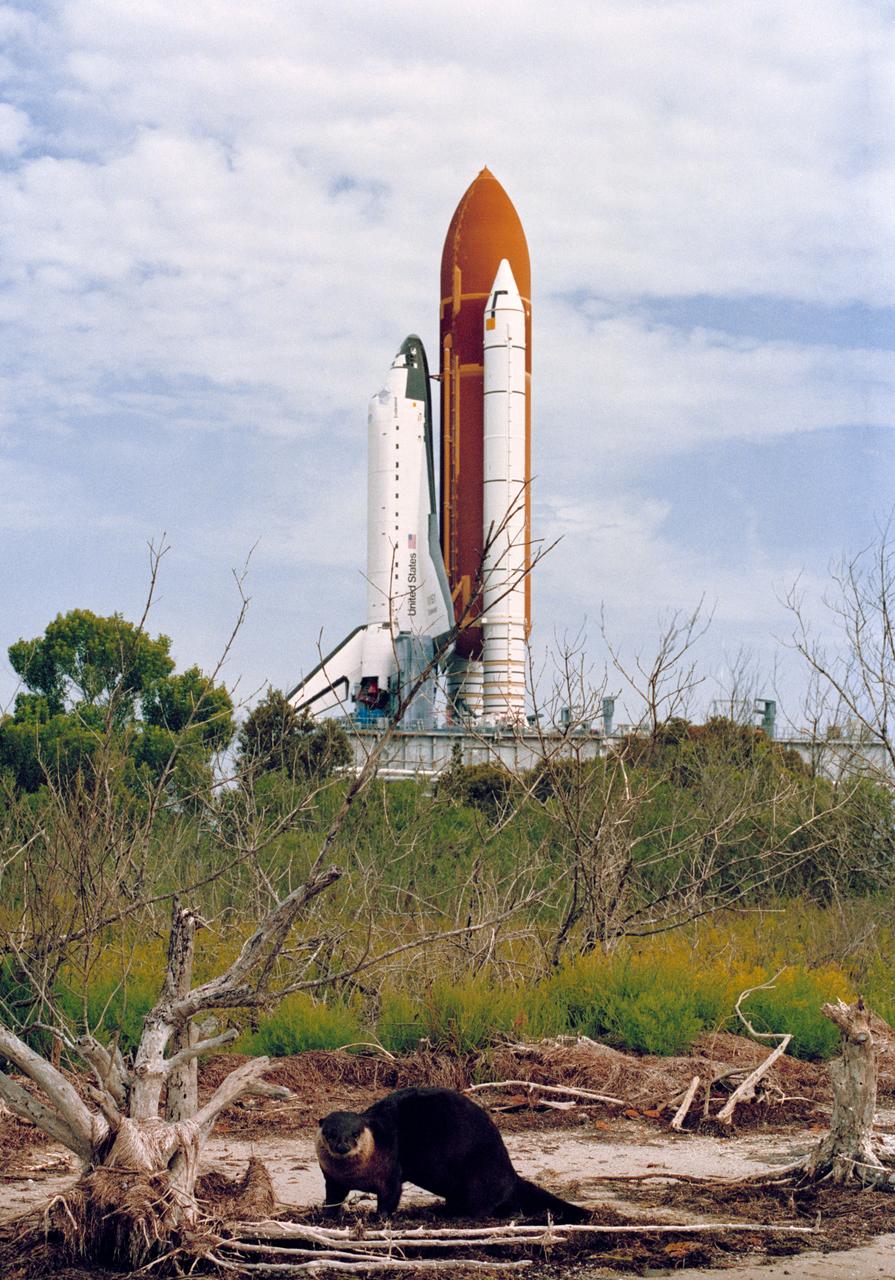
S92-34862 (13 March 1992) --- An otter, surprised by the unexpected presence of the photographer, seems unaware of the Space Shuttle Endeavour rolling behind it to Launch Pad 39B.  Endeavour is the newest orbiter in the Shuttle fleet.  Still ahead for Endeavour (OV-105) is a Flight Readiness Firing of its three main engines, and the Terminal Countdown Demonstration Test with the flight crew.  Endeavour's maiden voyage on NASA's mission STS-49 will occur in late spring.
Endeavour, Orbiter Vehicle (OV) 105, roll out to KSC Launch Complex Pad 39B
S88-52659 (2 Nov 1988)  --- The Space Shuttle Atlantis on Launch Pad 39B at KSC following the roll-out process from the vehicle assembly building.  It will undergo final checkouts and evaluations prior to its launch for the STS 27 mission late this month.
STS-27 Atlantis, Orbiter Vehicle (OV) 104, at KSC Launch Complex (LC) pad 39B
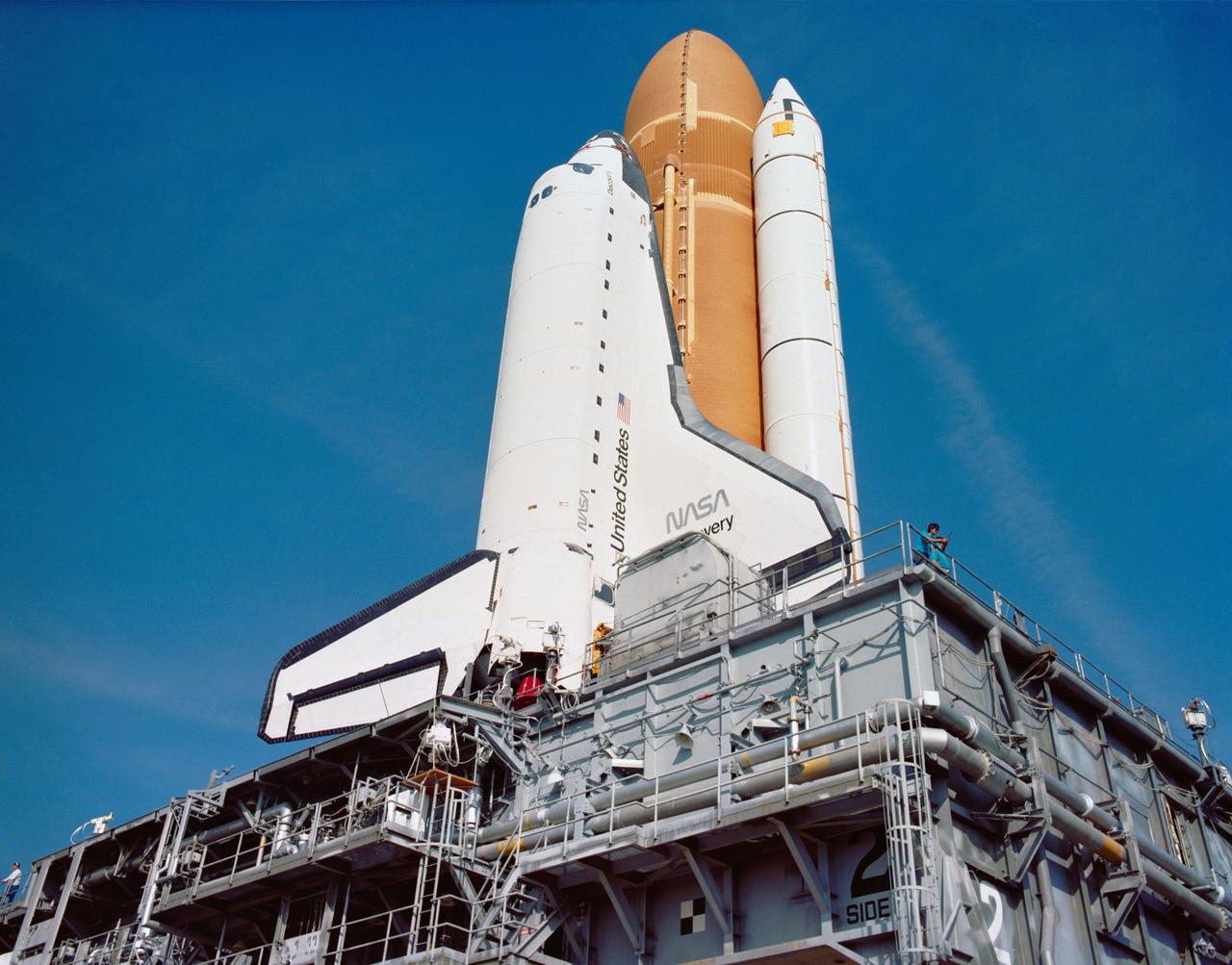
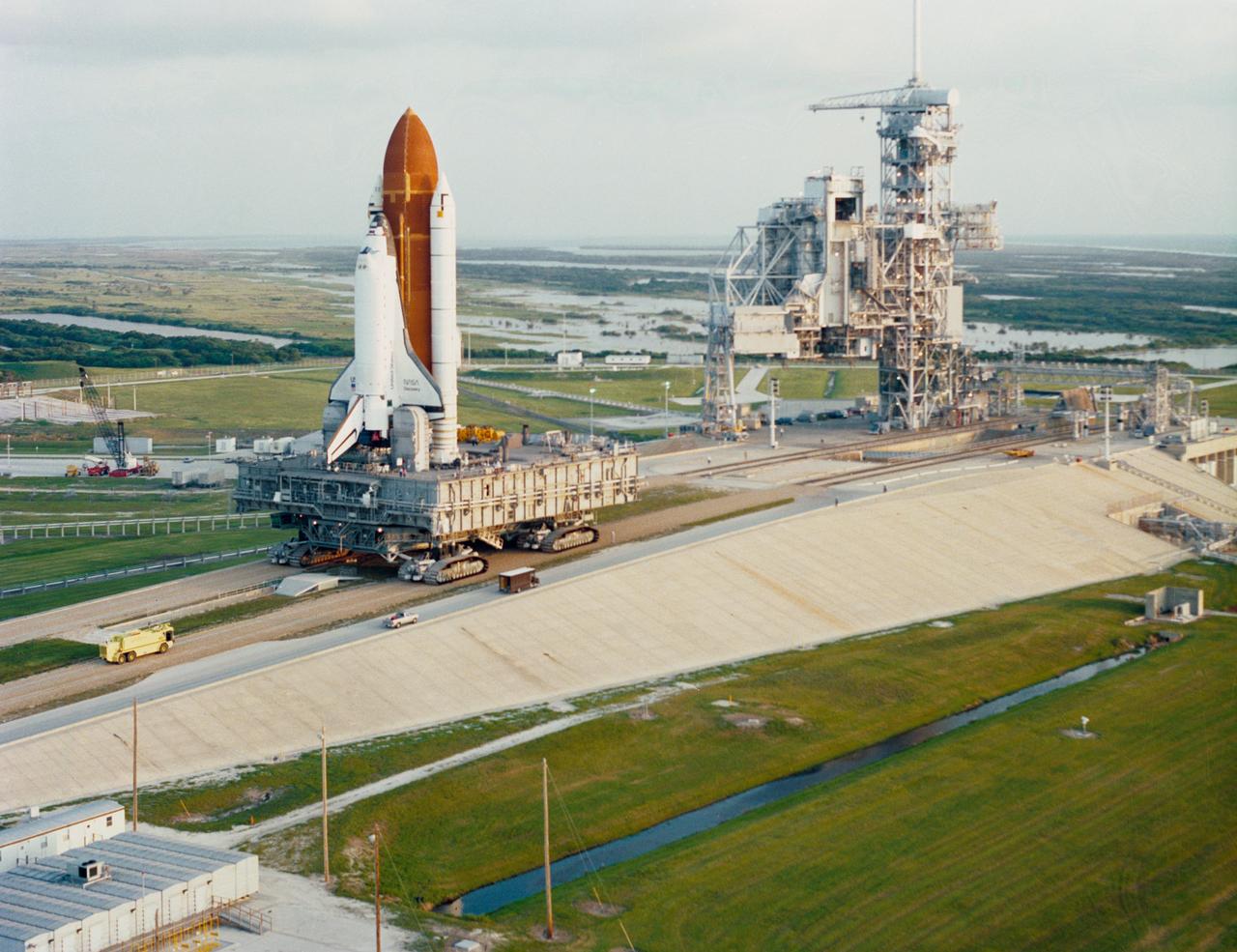
S89-28107 (3 Feb 1989) --- A low angle view of the Space Shuttle Discovery, atop a mobile launch platform, during its slow move to Kennedy Space Center's Launch Pad 39-B on Feb. 3, l989.  It rolled through the doors of the huge vehicle assembly building (VAB) at 6 a.m., hours ago as the blue sky testifies.  The trip to the pad takes approximately 5 and 1/2 hours. Onboard the spacecraft in  mid-March for a five-day mission, on which will be deployed a third tracking and data relay satellite (TDRS-D), will be Astronauts Michael L. Coats, John E. Blaha, James F. Buchli, James P. Bagian and Robert C. Springer.
STS-29 Discovery, Orbiter Vehicle (OV) 103, roll out to KSC LC Pad 39B
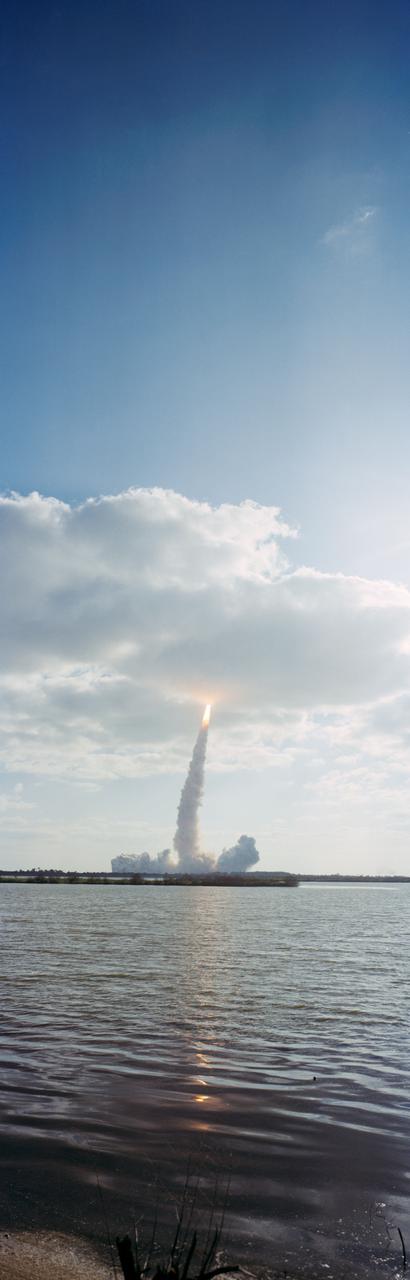
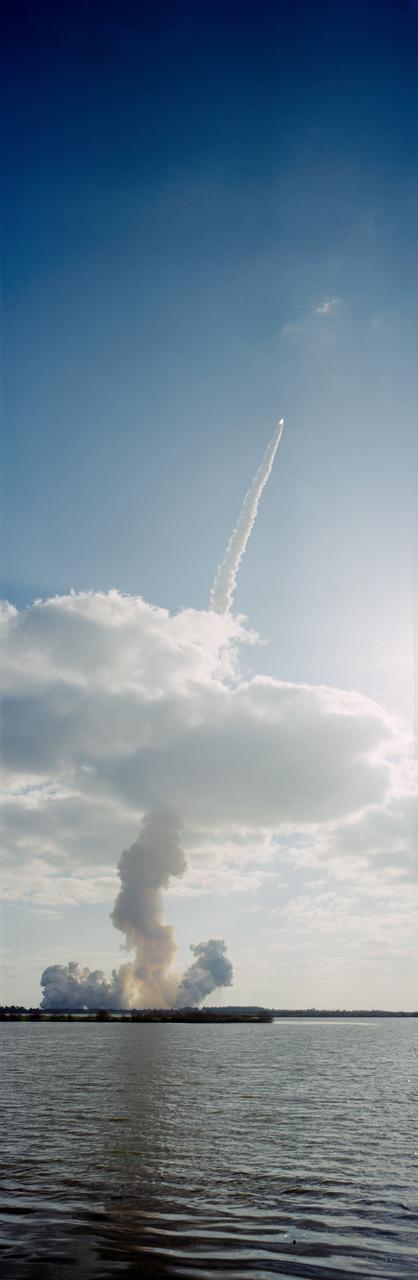
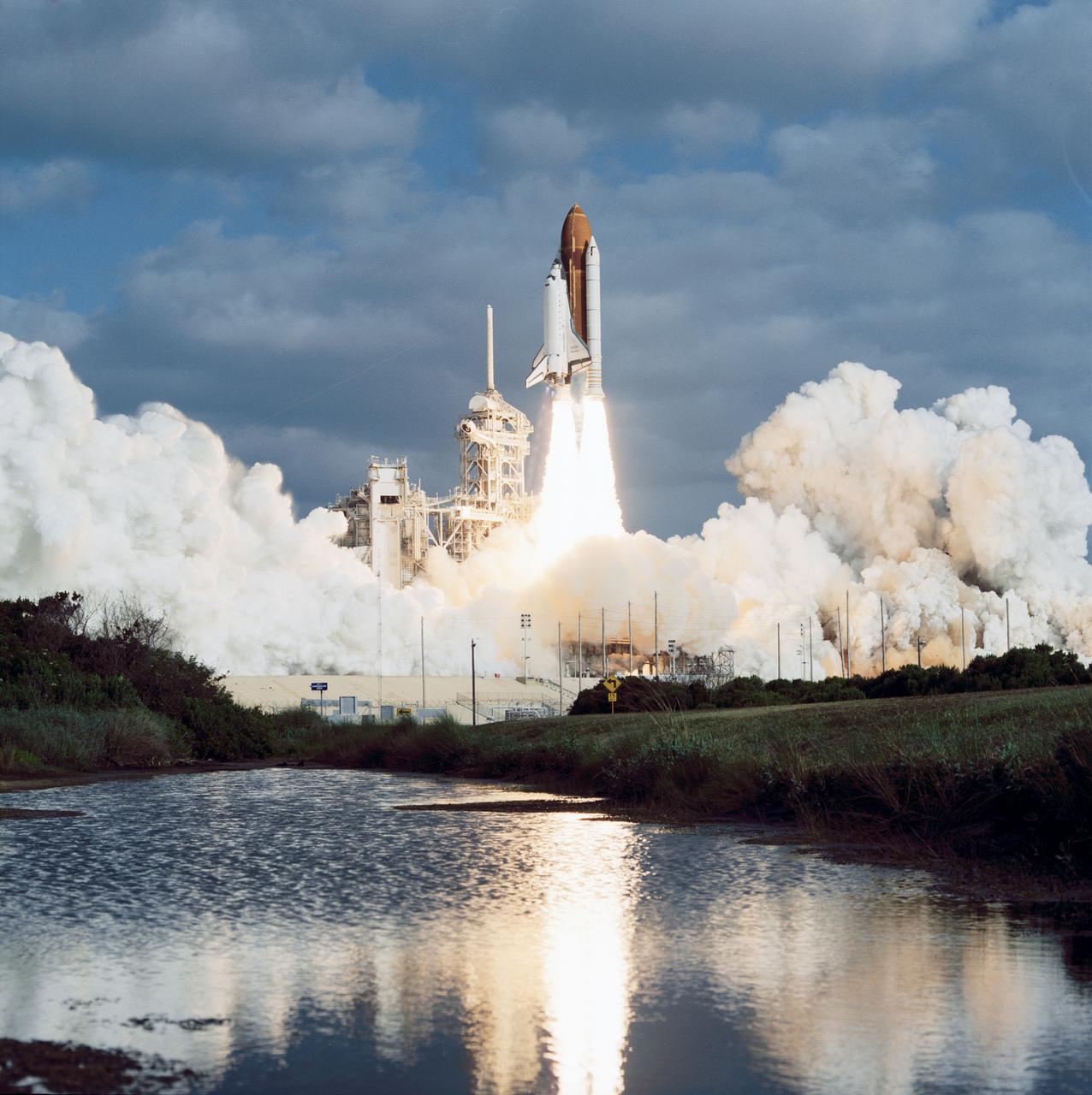
STS-31 Discovery, Orbiter Vehicle (OV) 103, rides above the firey glow of the solid rocket boosters (SRBs) and space shuttle main engines (SSMEs) and a long trail of exhaust as it heads toward Earth orbit. Kennedy Space Center (KSC) Launch Complex (LC) Pad 39B is covered in an exhaust cloud moments after the liftoff of OV-103 at 8:33:51.0492 am (Eastern Daylight Time (EDT)). The exhaust plume pierces the low-lying clouds as OV-103 soars into the clear skies above. A nearby waterway appears in the foreground.
STS-31 Discovery, OV-103, rockets through low-lying clouds after KSC liftoff
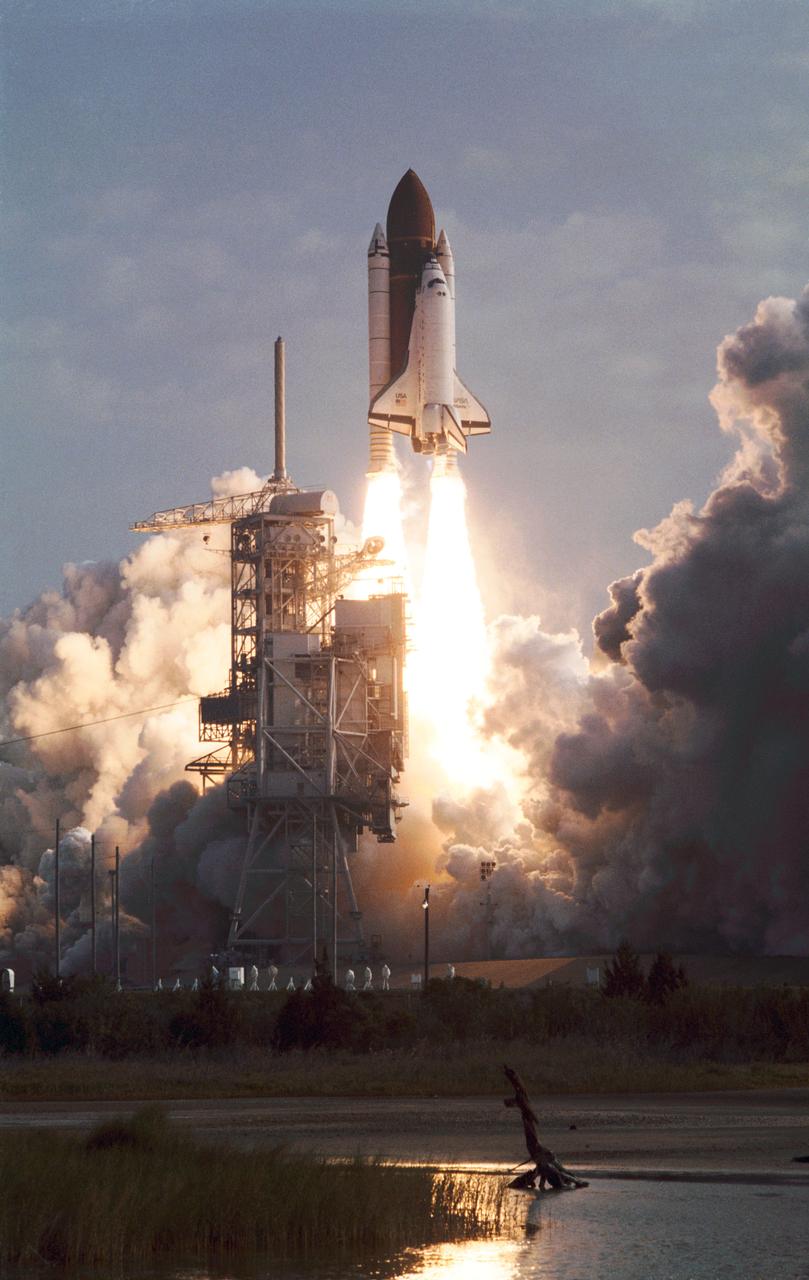
STS-31 Discovery, Orbiter Vehicle (OV) 103, is hidden in low-lying cloud cover as it rises above Kennedy Space Center (KSC) Launch Complex (LC) Pad 39B just after its liftoff at 8:33:51.0492 am (Eastern Daylight Time (EDT)). The glow of the solid rocket booster (SRB) and the space shuttle main engine (SSME) firings appears just below the cloud cover and is reflected in the nearby waterway (foreground). An exhaust plume trails from OV-103 and its SRBs and covers the launch pad area.
STS-31 Discovery, OV-103, is hidden in low-lying clouds after KSC liftoff
In this distant view, STS-31 Discovery, Orbiter Vehicle (OV) 103, is seen as it heads skyward after liftoff from Kennedy Space Center (KSC) Launch Complex (LC) Pad 39B at 8:33:51.0492 am (Eastern Daylight Time (EDT)). OV-103's silhouette atop the external tank (ET) appears above the glow of the solid rocket booster (SRB) and space shuttle main engine (SSME) firings. An exhaust plume trails behind and covers the launch pad area below the orbiter. A nearby waterway reflects the SRB/SSME glow in the foreground. At the far right and barely discernible is KSC LC Pad 39A and the Sound Supression Water System tower. Columbia, OV-102, is on LC Pad 39A which is separated by a distance of 1.6 miles. This was the first time since January 1986 that there was a shuttle on each pad.
STS-31 Discovery, Orbiter Vehicle (OV) 103, heads skyward after KSC liftoff
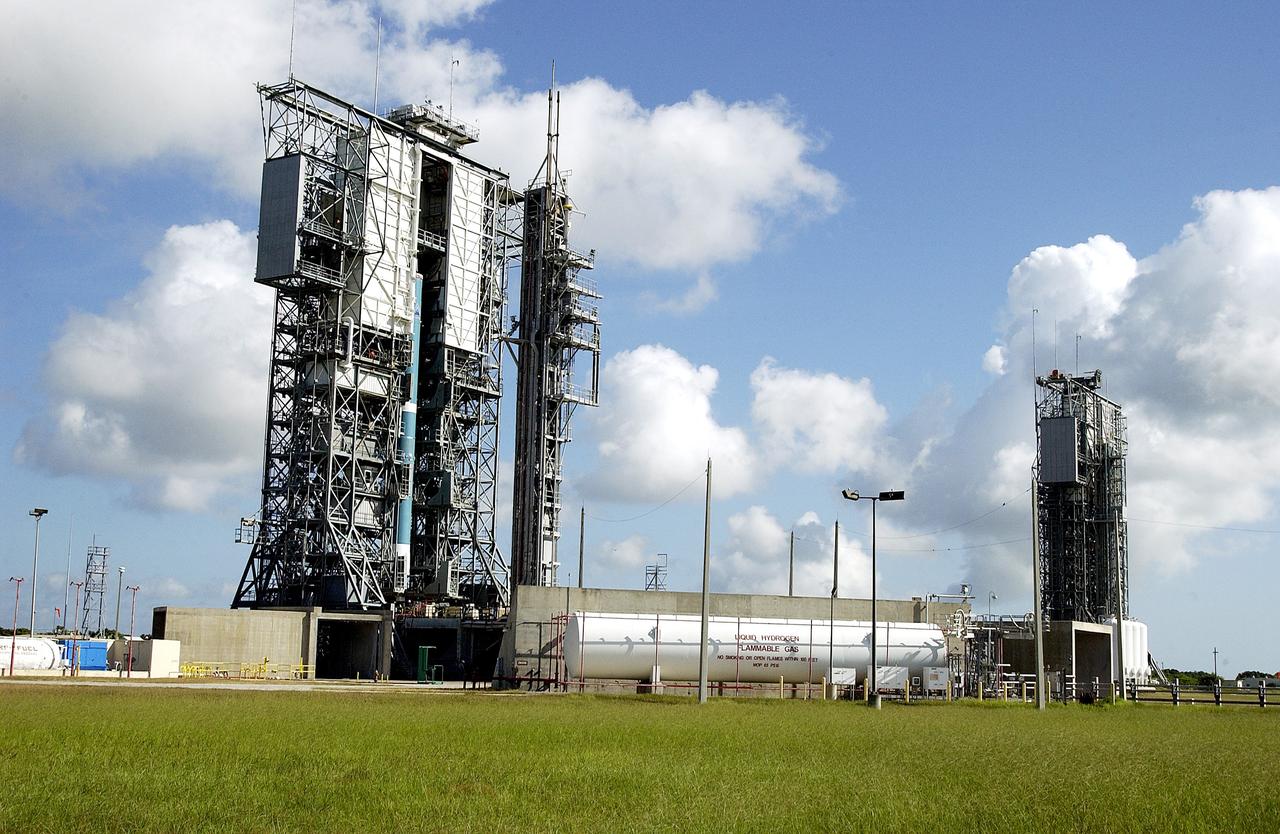
KENNEDY SPACE CENTER, FLA. -  On Launch Complex 17-B, Cape Canaveral Air Force Station, the first stage of a Delta II rocket is lifted up the mobile service tower.  In the background is pad 17-A.   The rocket is being erected to launch the Space InfraRed Telescope Facility (SIRTF).  Consisting of an 0.85-meter telescope and three cryogenically cooled science instruments, SIRTF is one of NASA's largest infrared telescopes to be launched.  SIRTF will obtain images and spectra by detecting the infrared energy, or heat, radiated by objects in space. Most of this infrared radiation is blocked by the Earth's atmosphere and cannot be observed from the ground.
KENNEDY SPACE CENTER, FLA. - On Launch Complex 17-B, Cape Canaveral Air Force Station, the first stage of a Delta II rocket is lifted up the mobile service tower. In the background is pad 17-A. The rocket is being erected to launch the Space InfraRed Telescope Facility (SIRTF). Consisting of an 0.85-meter telescope and three cryogenically cooled science instruments, SIRTF is one of NASA's largest infrared telescopes to be launched. SIRTF will obtain images and spectra by detecting the infrared energy, or heat, radiated by objects in space. Most of this infrared radiation is blocked by the Earth's atmosphere and cannot be observed from the ground.
KENNEDY SPACE CENTER, FLA. -   On Launch Complex 17-B, Cape Canaveral Air Force Station, the first stage of a Delta II rocket arrives at the pad.  The rocket is being erected to launch the Space InfraRed Telescope Facility (SIRTF).  Consisting of an 0.85-meter telescope and three cryogenically cooled science instruments, SIRTF is one of NASA's largest infrared telescopes to be launched.  SIRTF will obtain images and spectra by detecting the infrared energy, or heat, radiated by objects in space. Most of this infrared radiation is blocked by the Earth's atmosphere and cannot be observed from the ground.
KENNEDY SPACE CENTER, FLA. - On Launch Complex 17-B, Cape Canaveral Air Force Station, the first stage of a Delta II rocket arrives at the pad. The rocket is being erected to launch the Space InfraRed Telescope Facility (SIRTF). Consisting of an 0.85-meter telescope and three cryogenically cooled science instruments, SIRTF is one of NASA's largest infrared telescopes to be launched. SIRTF will obtain images and spectra by detecting the infrared energy, or heat, radiated by objects in space. Most of this infrared radiation is blocked by the Earth's atmosphere and cannot be observed from the ground.
KENNEDY SPACE CENTER, FLA. -  On Launch Complex 17-B, Cape Canaveral Air Force Station, the Space Infrared Telescope Facility (SIRTF) observatory is being dismantled  from atop the Delta II rocket.  It will be taken back to NASA Spacecraft Hangar AE. SIRTF will remain in the clean room at Hangar AE until it returns to the pad in early August.
KENNEDY SPACE CENTER, FLA. - On Launch Complex 17-B, Cape Canaveral Air Force Station, the Space Infrared Telescope Facility (SIRTF) observatory is being dismantled from atop the Delta II rocket. It will be taken back to NASA Spacecraft Hangar AE. SIRTF will remain in the clean room at Hangar AE until it returns to the pad in early August.
KENNEDY SPACE CENTER, FLA. -  Workers on Launch Complex 17-B, Cape Canaveral Air Force Station, start dismantling the Space Infrared Telescope Facility (SIRTF) observatory from atop the Delta II rocket.  It will be taken back to NASA Spacecraft Hangar AE. SIRTF will remain in the clean room at Hangar AE until it returns to the pad in early August.
KENNEDY SPACE CENTER, FLA. - Workers on Launch Complex 17-B, Cape Canaveral Air Force Station, start dismantling the Space Infrared Telescope Facility (SIRTF) observatory from atop the Delta II rocket. It will be taken back to NASA Spacecraft Hangar AE. SIRTF will remain in the clean room at Hangar AE until it returns to the pad in early August.
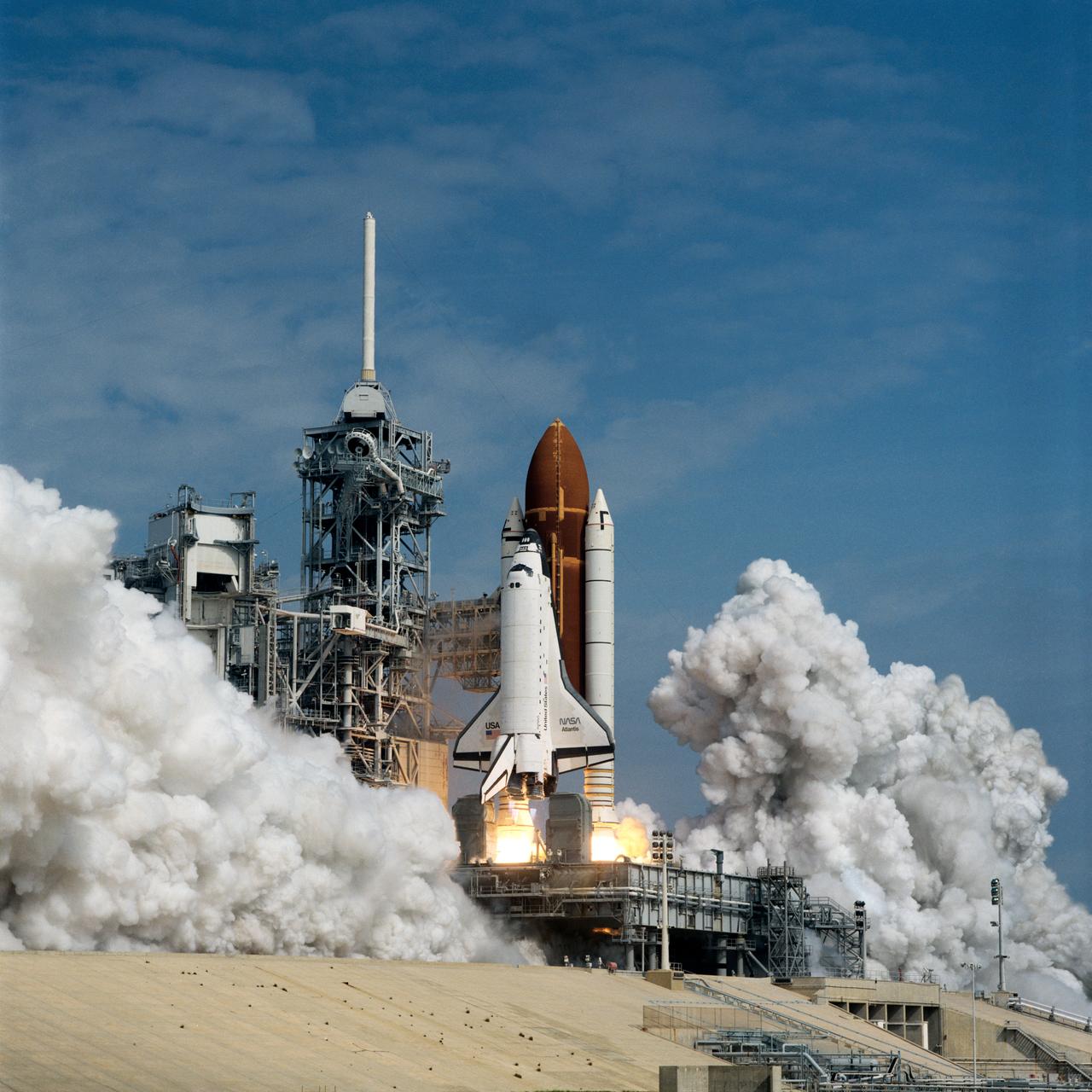
STS030-S-109 (4 May 1989) --- Moments after ignition, Space Shuttle Atlantis heads for a four-day mission in Earth-orbit with five astronaut crew members aboard.  Onboard were astronauts David M. Walker, Ronald. J. Grabe, Norman E. Thagard, Mary L. Cleave and Mark C. Lee.  Launch occurred at 2:46:58  p.m. (EDT), May 4, 1989.
STS-30 Atlantis, OV-104, lifts off from KSC LC Pad 39B
STS029-S-028 (13 March 1989) --- From Launch Pad 39B, the Space Shuttle Discovery is launched on Mission STS-29. Discovery lifted off at 9:57 a.m. (EST), March 13, 1989, carrying the tracking and data relay satellite (TDRS-1) into orbit. Onboard the spacecraft were astronauts Michael L. Coats, commander; John E. Blaha, pilot; and James F. Buchli, James P. Bagian and Robert C. Springer, all mission specialists.
STS-29 Discovery, Orbiter Vehicle (OV) 103, lifts off from KSC LC Pad 39B
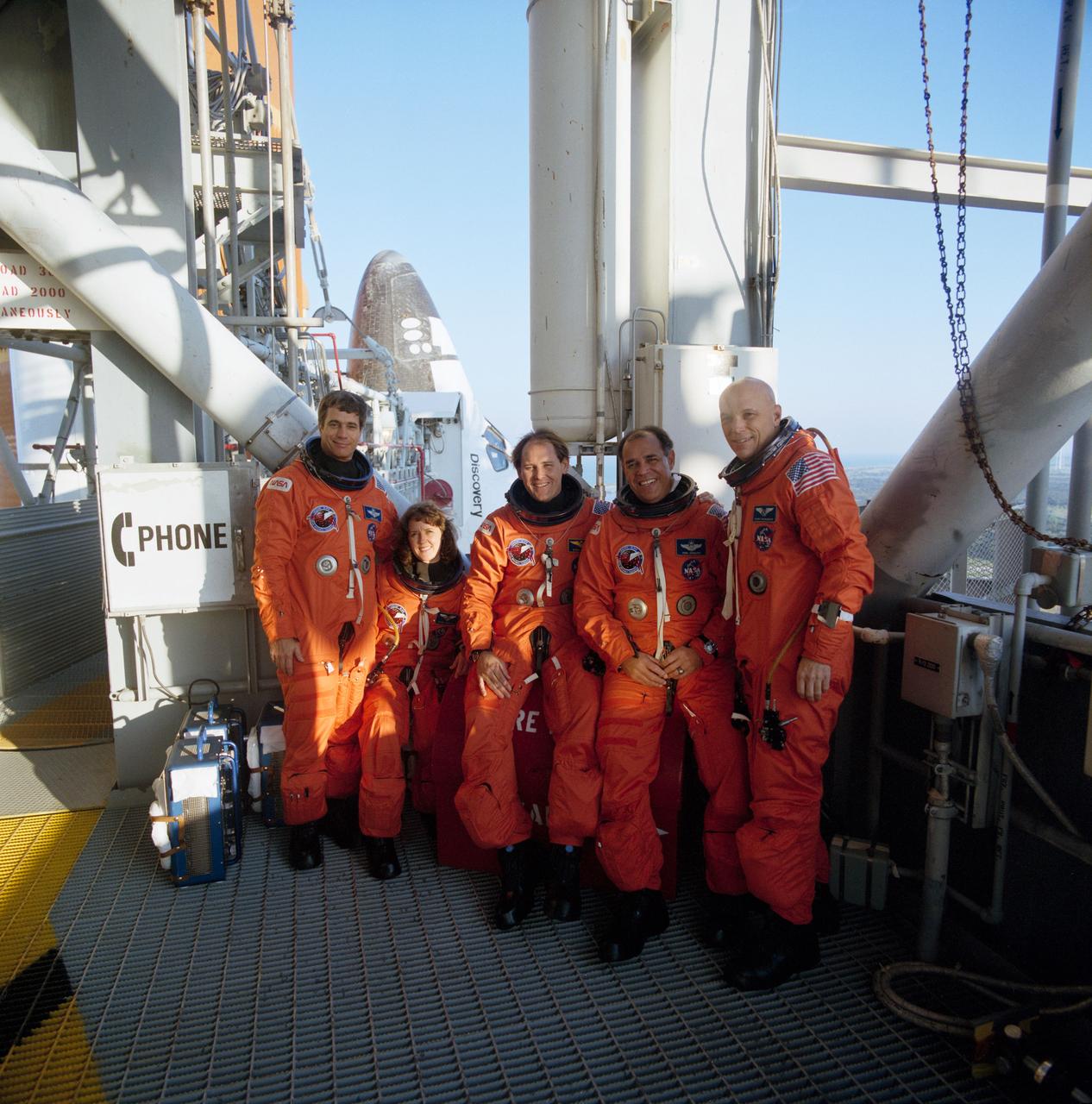
S90-27591 (23 Jan 1990) --- STS-33 crewmembers, wearing launch and entry suit (LES), take a break from training activities to pose for group portrait in front of Discovery, Orbiter Vehicle (OV) 103, at the 195 ft level elevator entrance at Kennedy Space Center (KSC) Launch Complex (LC) Pad 39B. Left to right are Pilot John E. Blaha, Mission Specialist (MS) Kathryn C. Thornton, MS Manley L. Carter, Jr, Commander Frederick D. Gregory, and MS F. Story Musgrave. Visible in the background is the catwalk to OV-103's side hatch.
STS-33 crewmembers on KSC LC Pad 39B 195 ft level with OV-103 in background
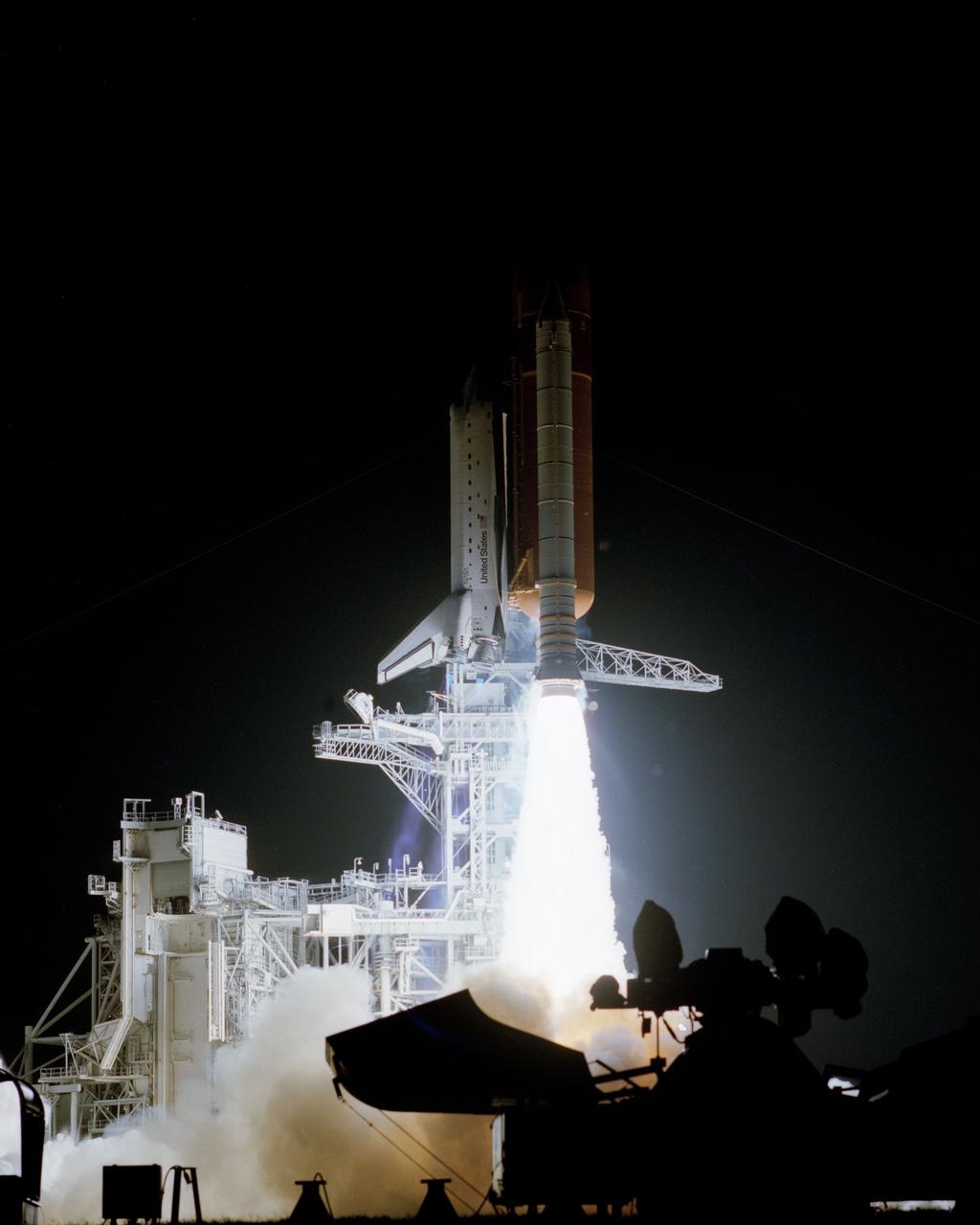
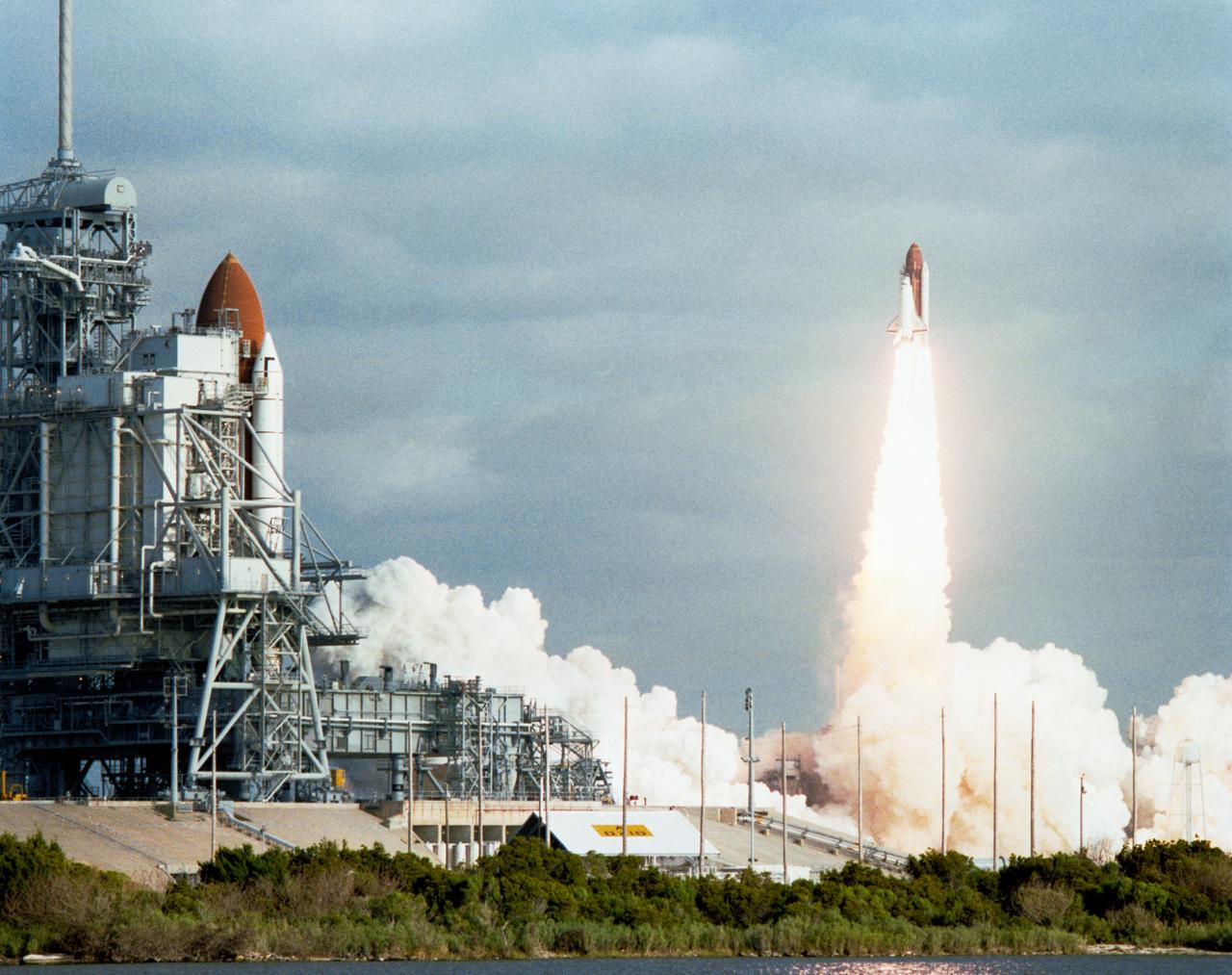
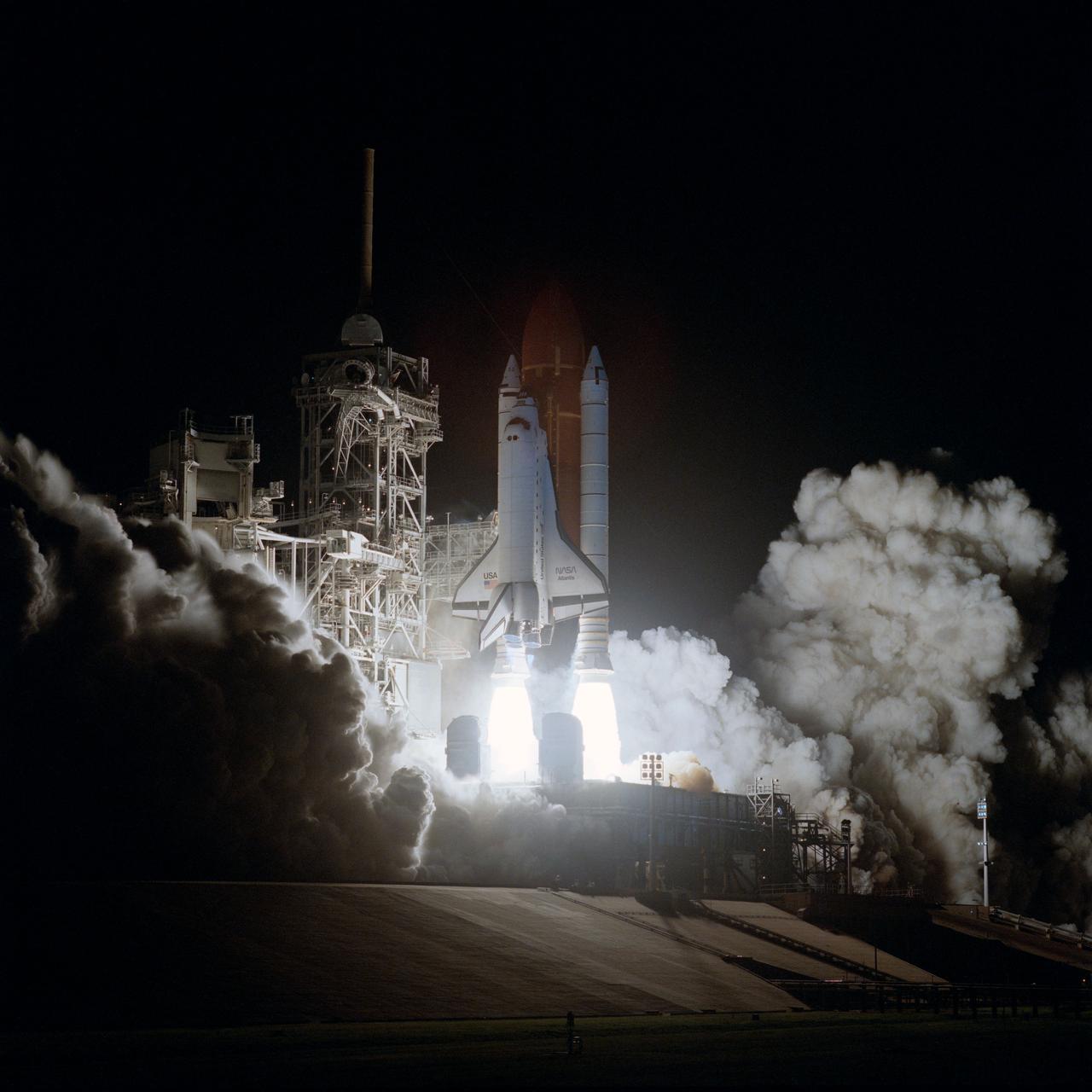
STS-38 Atlantis, Orbiter Vehicle (OV) 104, lifts off from Kennedy Space Center (KSC) Launch Complex (LC) Pad at 6:48:15:0639 pm (Eastern Standard Time (EST)) for Department of Defense (DOD)-devoted mission. OV-104, atop the external tank (ET) and flanked by solid rocket boosters (SRBs), is almost clear of the launch tower which is lit up by the SRB and space shuttle main engine (SSME) firings. Spotlight equipment is silhouetted against the SRB/SSME glow in the foreground. The retracted rotating service structure (RSS) is highlighted against the evening darkness by the launch fireworks.
STS-38 Atlantis, OV-104, lifts off from KSC LC Pad during night launch
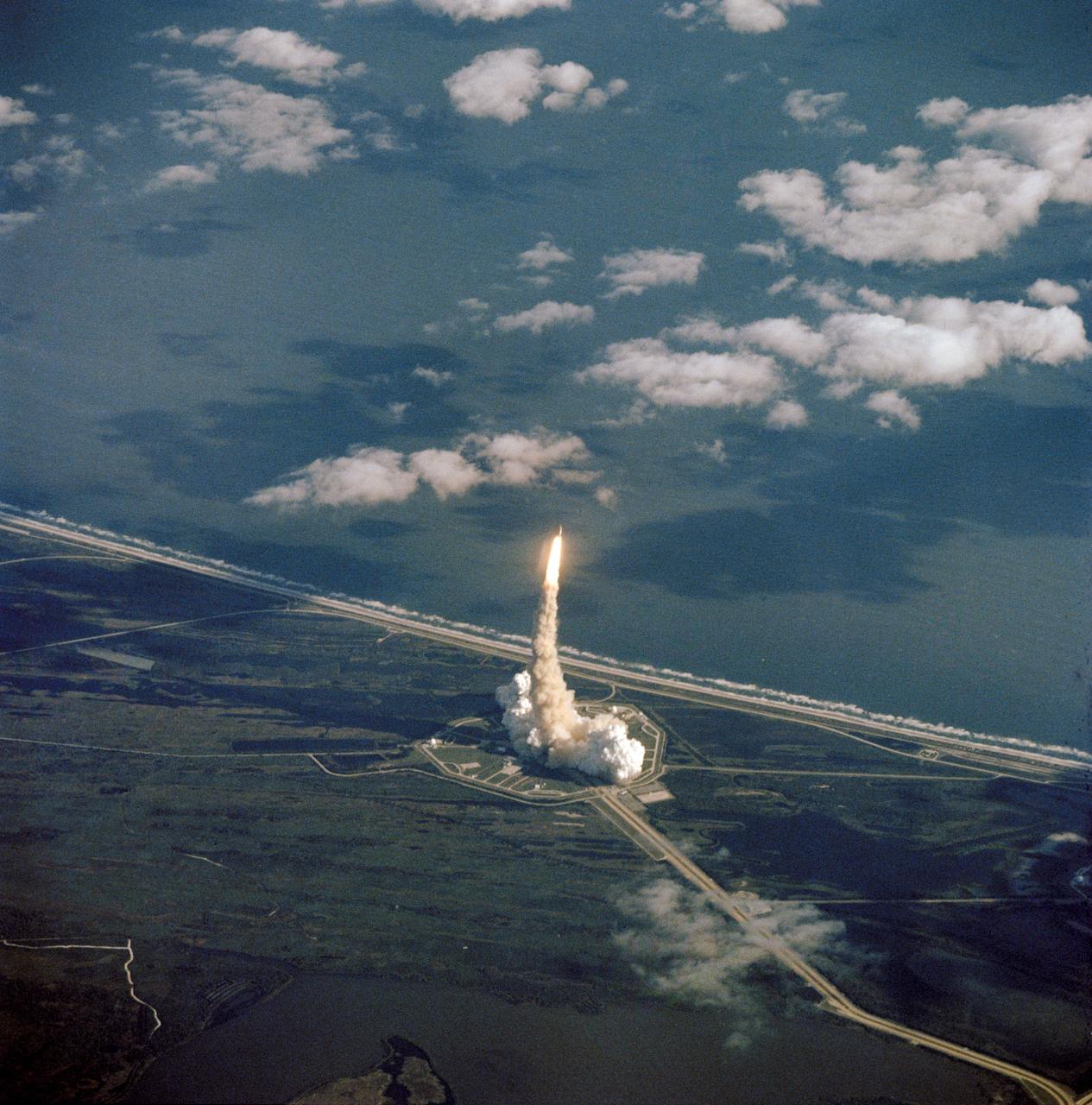
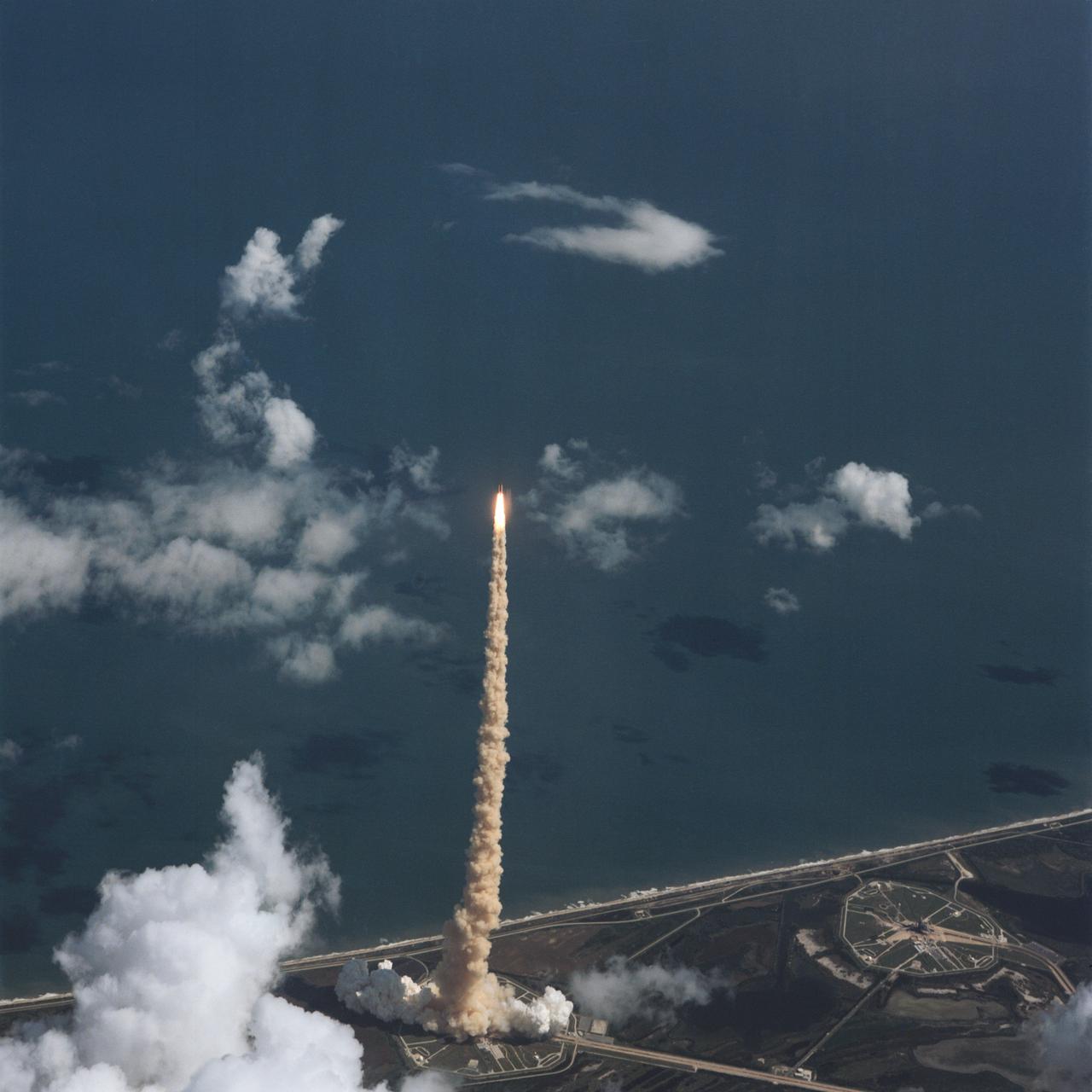
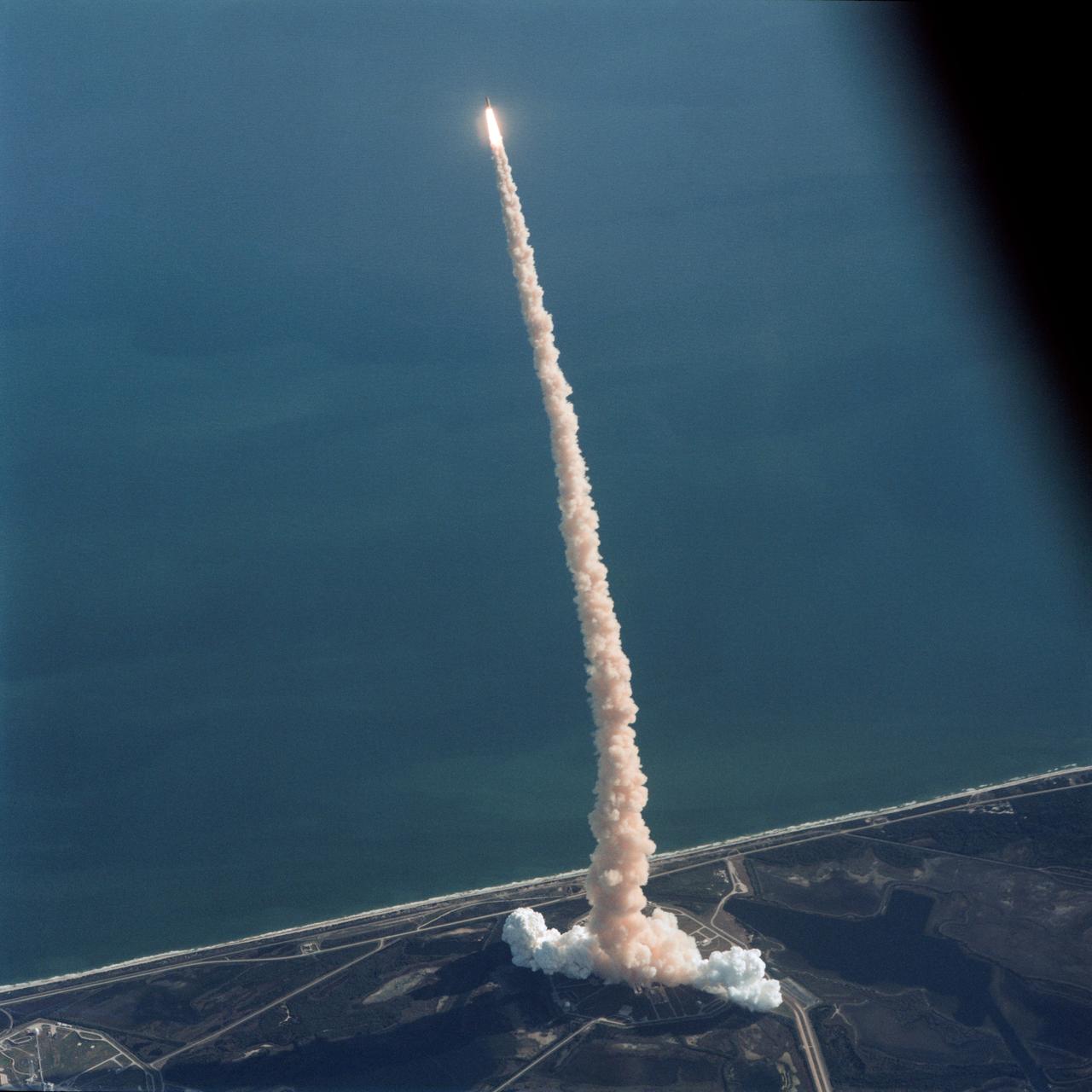
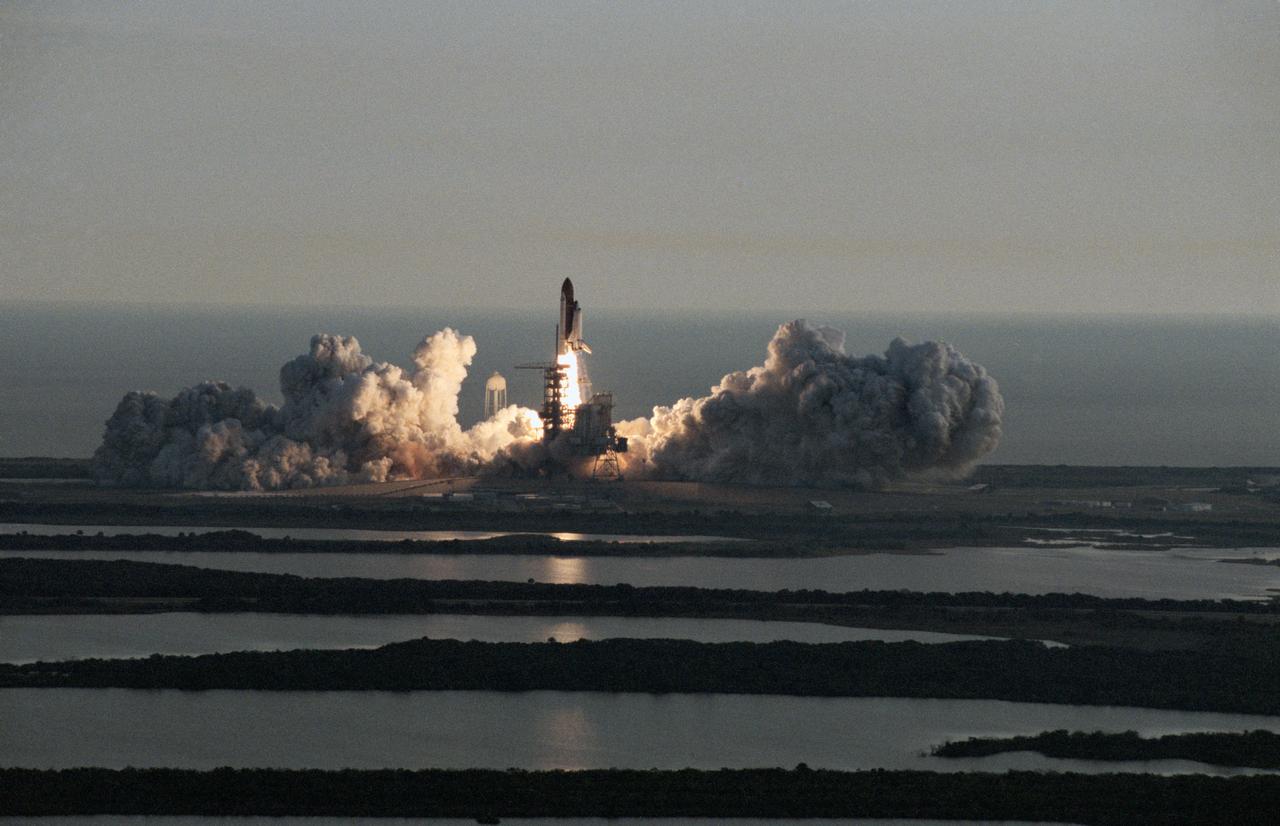
STS-34 Atlantis, Orbiter Vehicle (OV) 104, lifts off from Kennedy Space Center (KSC) Launch Complex (LC) Pad 39B at 12:53:39:983 pm Eastern Daylight Time (EDT). This aerial view shows OV-104, its external tank (ET), and two solid rocket boosters (SRBs) rising high above LC Pad 39B atop a plume of exhaust smoke. Atlantic Ocean is visible in the background. The liftoff marks the beginning of a five-day mission in space.
STS-34 Atlantis, Orbiter Vehicle (OV) 104, lifts off from KSC LC Pad 39B
S90-27594 (November 1989) --- Manley L. "Sonny" Carter Jr., STS-33 mission specialist, wearing a Launch and Entry Suit (LES), poses in front of the space shuttle Discovery, Orbiter Vehicle (OV) 103 at the Kennedy Space Center (KSC) Launch Complex Pad 39B, at the 195 feet level elevator entrance at Pad 39B.  Visible in the background is the catwalk to OV-103's side hatch and the Atlantic Ocean.  Note:  Carter died April 5, 1991 at age 43, in a civil aviation accident.
STS-33 MS Carter on KSC LC Pad 39B 195 ft level with OV-103 in background
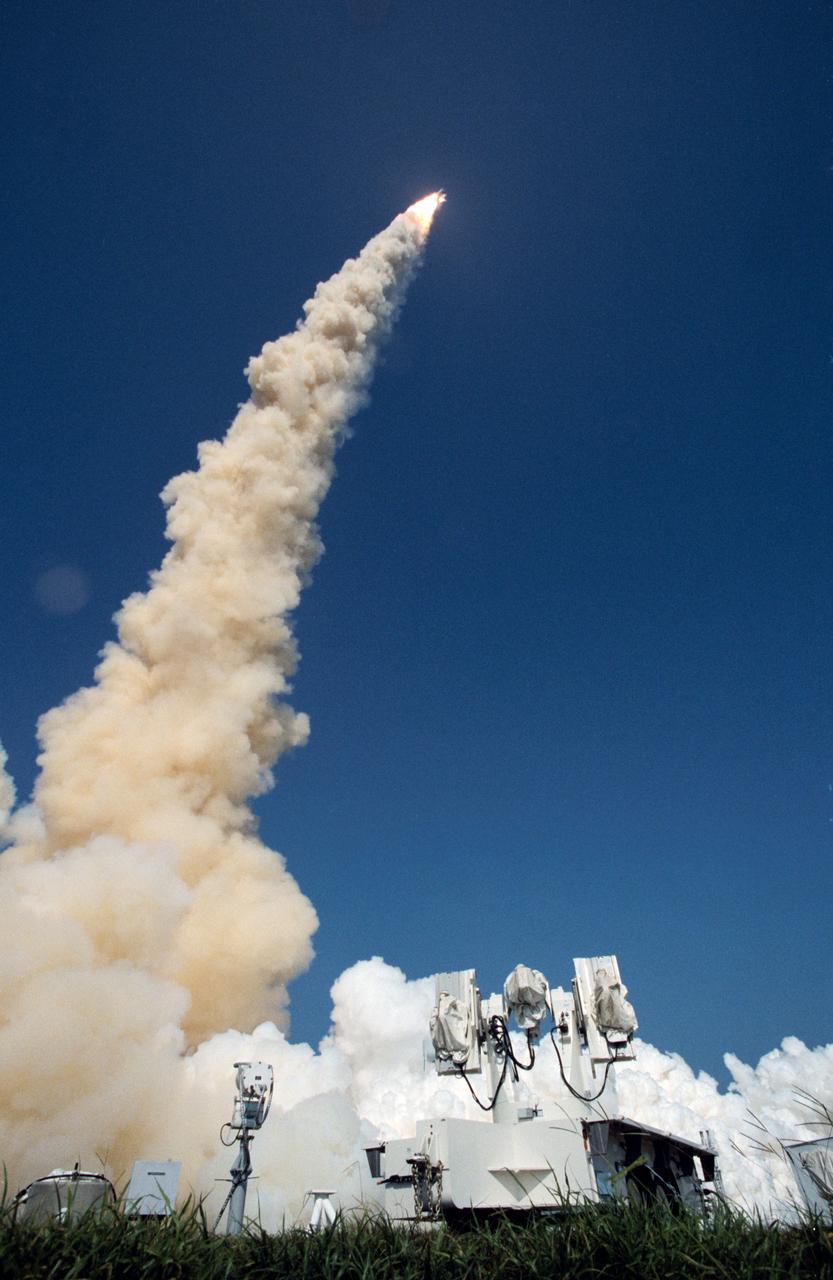
Air-to-air view, taken from the weather-monitoring Shuttle Training Aircraft (STA), shows STS-42 Discovery, Orbiter Vehicle (OV) 103, as it soars above the Atlantic Ocean after liftoff from a Kennedy Space Center (KSC) Launch Complex (LC) Pad at 9:52:33 am (Eastern Standard Time (EST)). The exhaust plume traces OV-103's flight path.
Air-to-air view of STS-42 Discovery, OV-103, after liftoff from KSC LC Pad
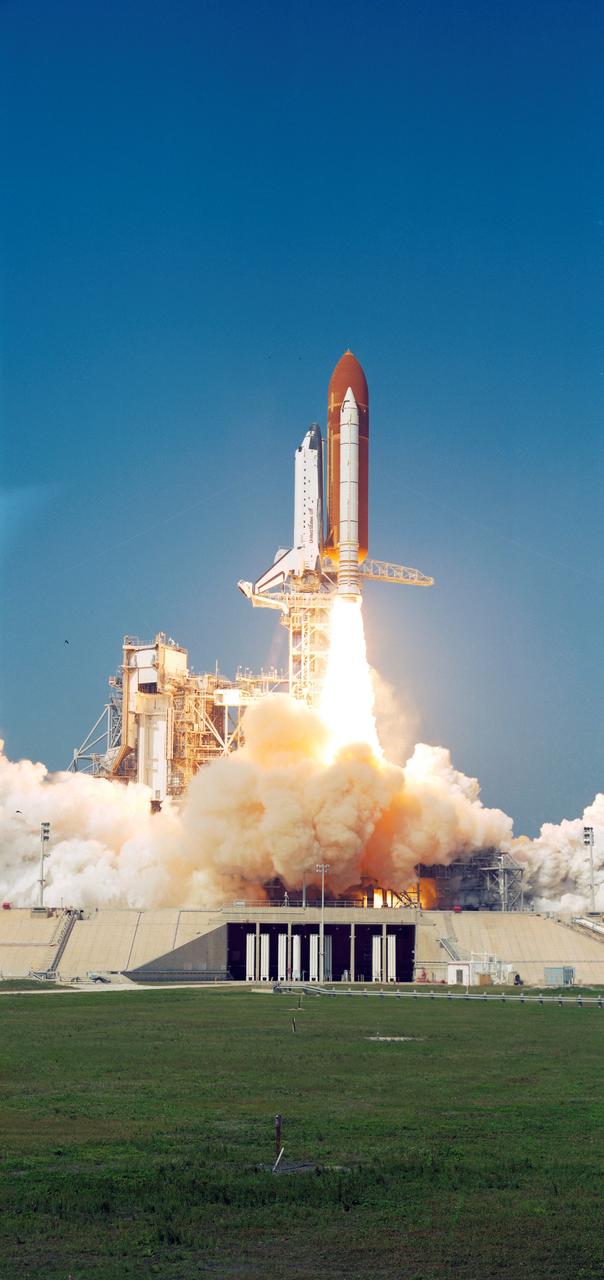
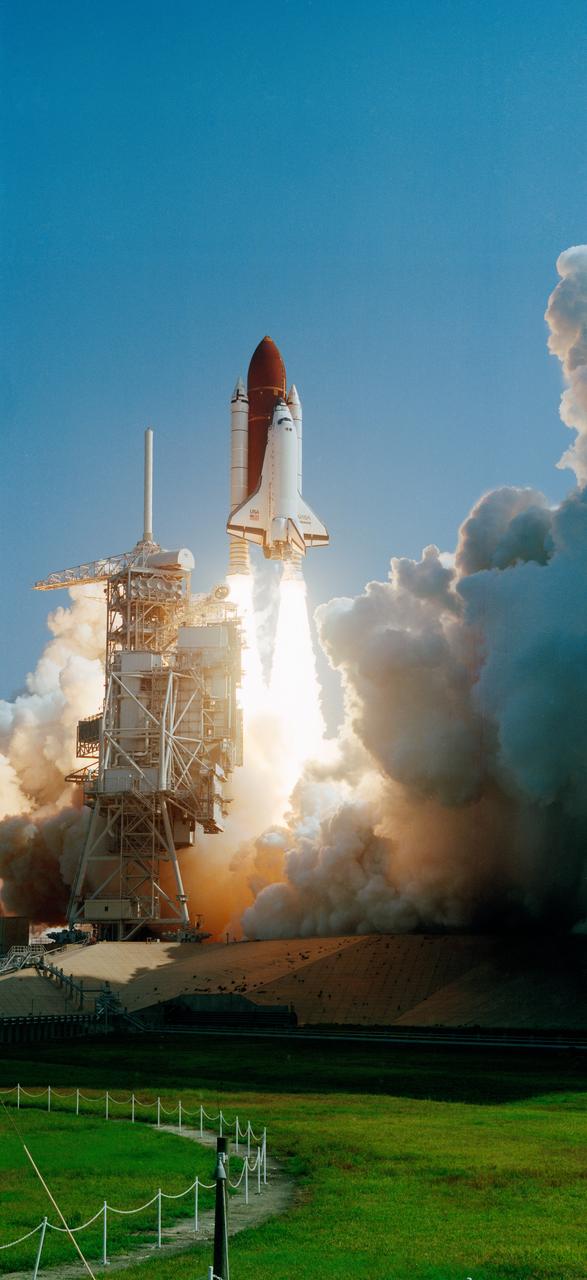
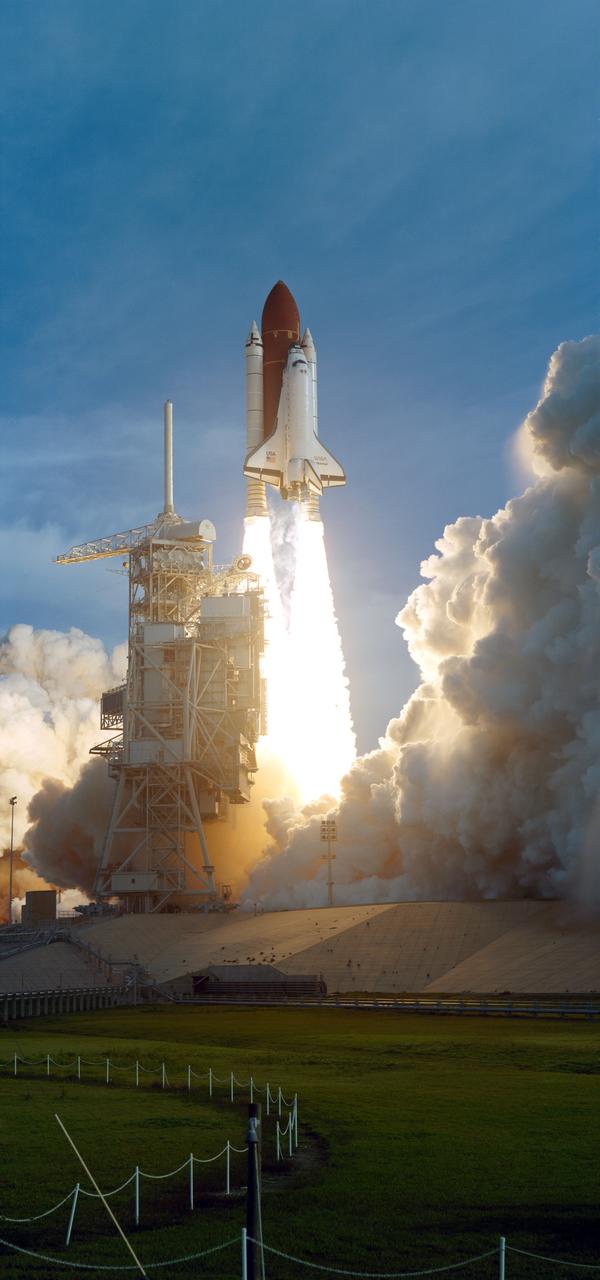
STS-41 Discovery, Orbiter Vehicle (OV) 103, lifts off from the Kennedy Space Center (KSC) Launch Complex (LC) Pad 39 mobile launcher platform at 7:47 am (Eastern Daylight Time (EDT)). OV-103 riding atop the external tank (ET) and flanked by two solid rocket boosters (SRBs), is captured just moments after liftoff. Not yet clear of the fixed service structure (FSS) tower, OV-103 is highlighted against the cloudless morning sky. Exhaust smoke billows from the SRBs and the space shuttle main engines (SSMEs) creating a cloud over the launch pad area.
STS-41 Discovery, OV-103, lifts off from KSC Launch Complex (LC) Pad 39
STS030-S-108 (4 May 1989) --- Backdropped against slight gray Florida skies, Space Shuttle Atlantis heads for a four-day mission in earth orbit with five astronaut crewmembers aboard.  Onboard were astronauts David. M. Walker, Ronald J. Grabe, Norman E. Thagard, Mary L. Cleave and Mark C. Lee.  Launch occurred at 2:46:58 P.M. (EDT), May 4, 1989.
STS-30 Atlantis, OV-104, lifts off from KSC LC Pad 39B
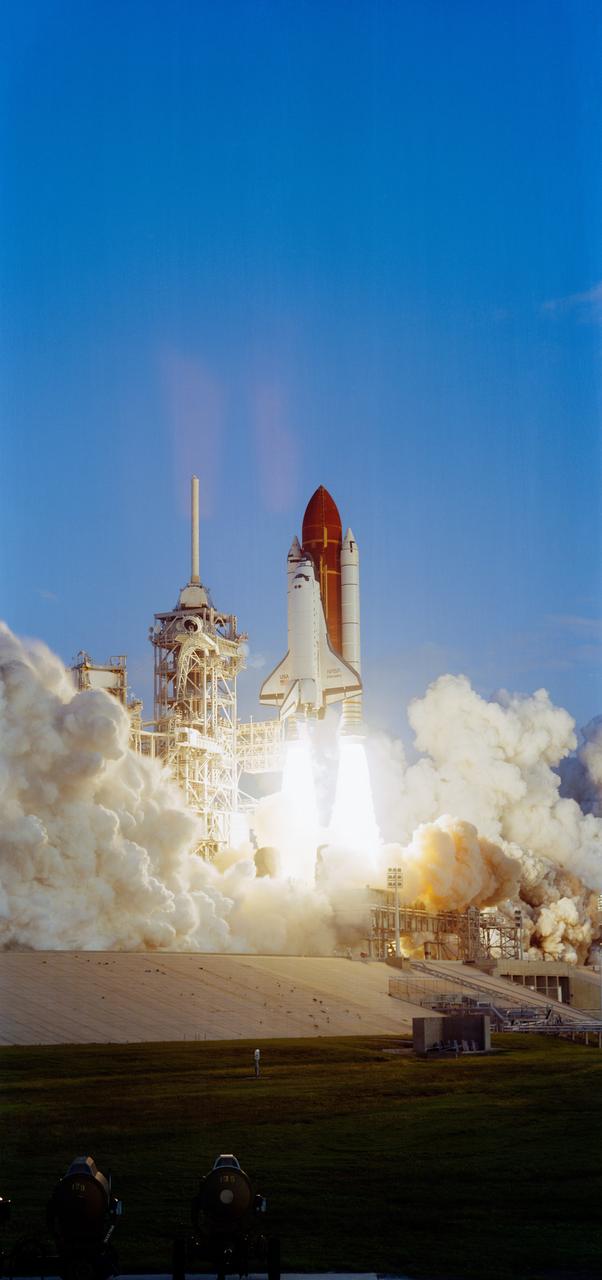
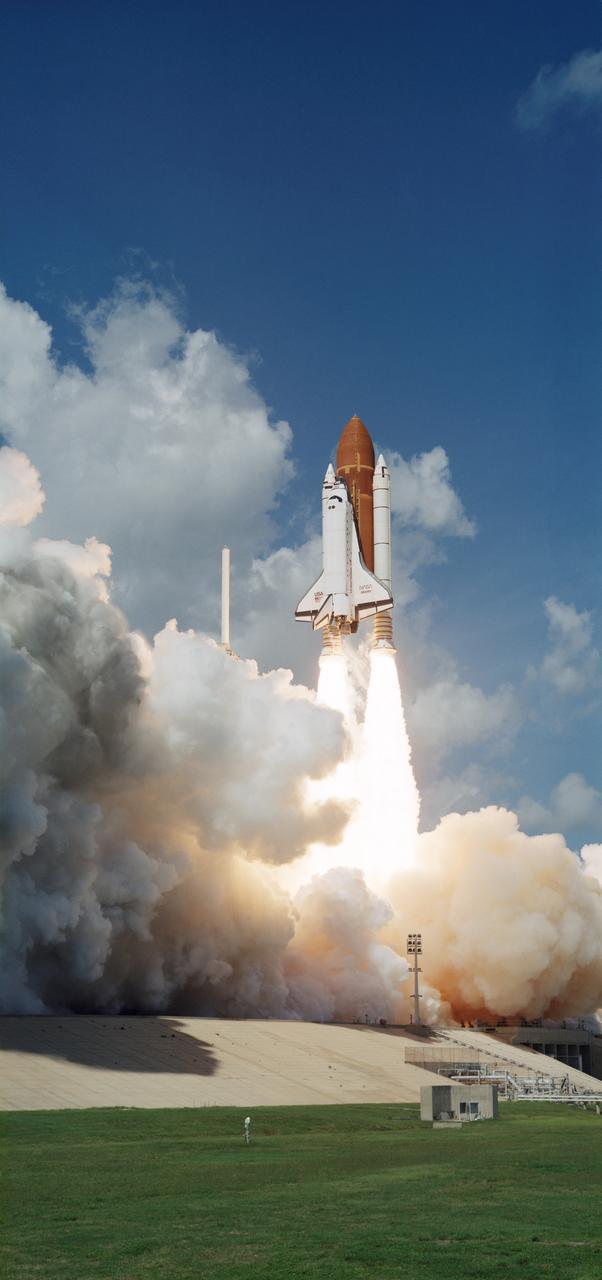
STS-37 Atlantis, Orbiter Vehicle (OV) 104, lifts off from Kennedy Space Center (KSC) Launch Complex (LC) Pad at 9:22:45:0439 (Eastern Standard Time (EST)). OV-104, atop its external tank (ET) and flanked by its two solid rocket boosters (SRBs), is captured just after space shuttle main engine (SSME) firing and as it rises above the mobile launcher platform. The fixed service structure (FSS) and retracted rotating service structure (RSS) appear along side OV-104. Clouds of exhaust smoke begin to fill the launch pad area.
STS-37 Atlantis, Orbiter Vehicle (OV) 104, lifts off from KSC LC Pad
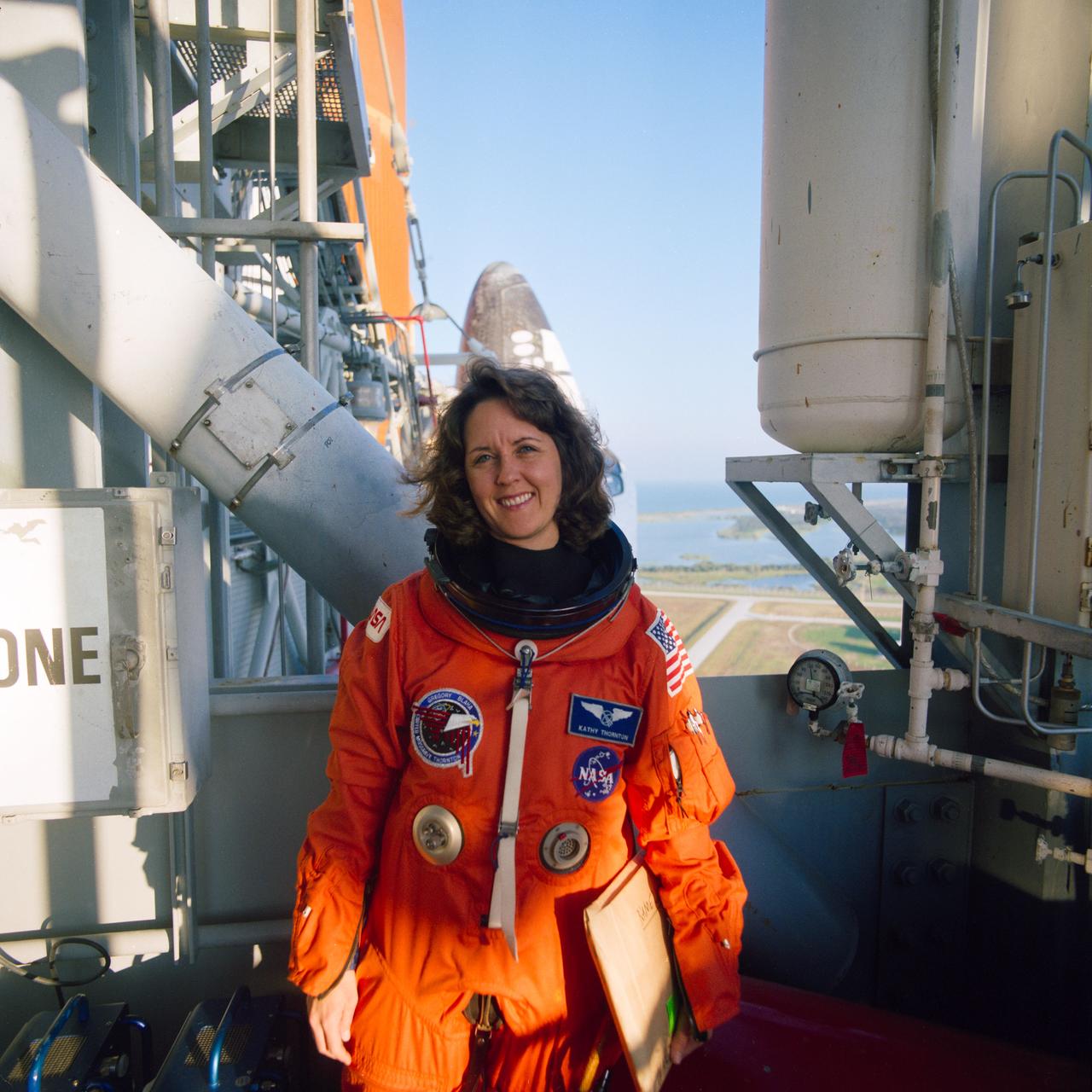
STS-33 Mission Specialist (MS) Kathryn C. Thornton, wearing launch and entry suit (LES) and holding file folder, poses in front of Discovery, Orbiter Vehicle (OV) 103, at the 195 ft level elevator entrance at Kennedy Space Center (KSC) Launch Complex (LC) Pad 39B. Visible in the background is the catwalk to OV-103's side hatch and the Atlantic Ocean.
STS-33 MS Thornton on KSC LC Pad 39B 195 ft level with OV-103 in background
STS034-S-023 (18 Oct. 1989) --- The STS-34 Space Shuttle Atlantis lifts off from Kennedy Space Center’s launch pad 39-B at l2:53:39 p.m. (EDT) on Oct. 18, 1989, marking the beginning of a five-day mission in space. Atlantis carries a crew of five and the spacecraft Galileo. The Jupiter-bound probe will be deployed from Atlantis some six hours after launch. The journey to the giant planet is expected to take over six years.  Crewmembers for the mission are astronauts Donald E. Williams, Michael J. McCulley, Shannon W. Lucid, Franklin R. Chang-Diaz and Ellen S. Baker. The scene was recorded with a 70mm camera.
STS-34 Atlantis, Orbiter Vehicle (OV) 104, lifts off from KSC LC Pad 39B
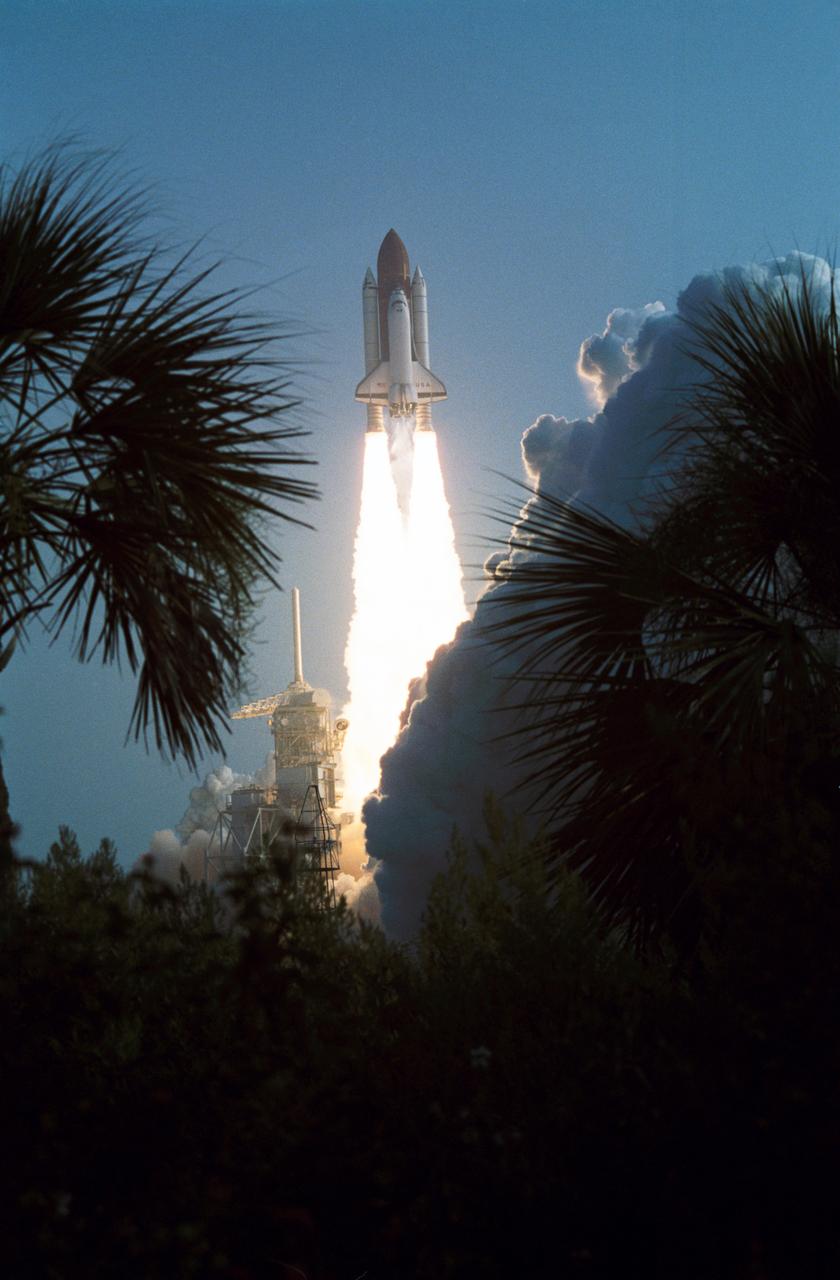
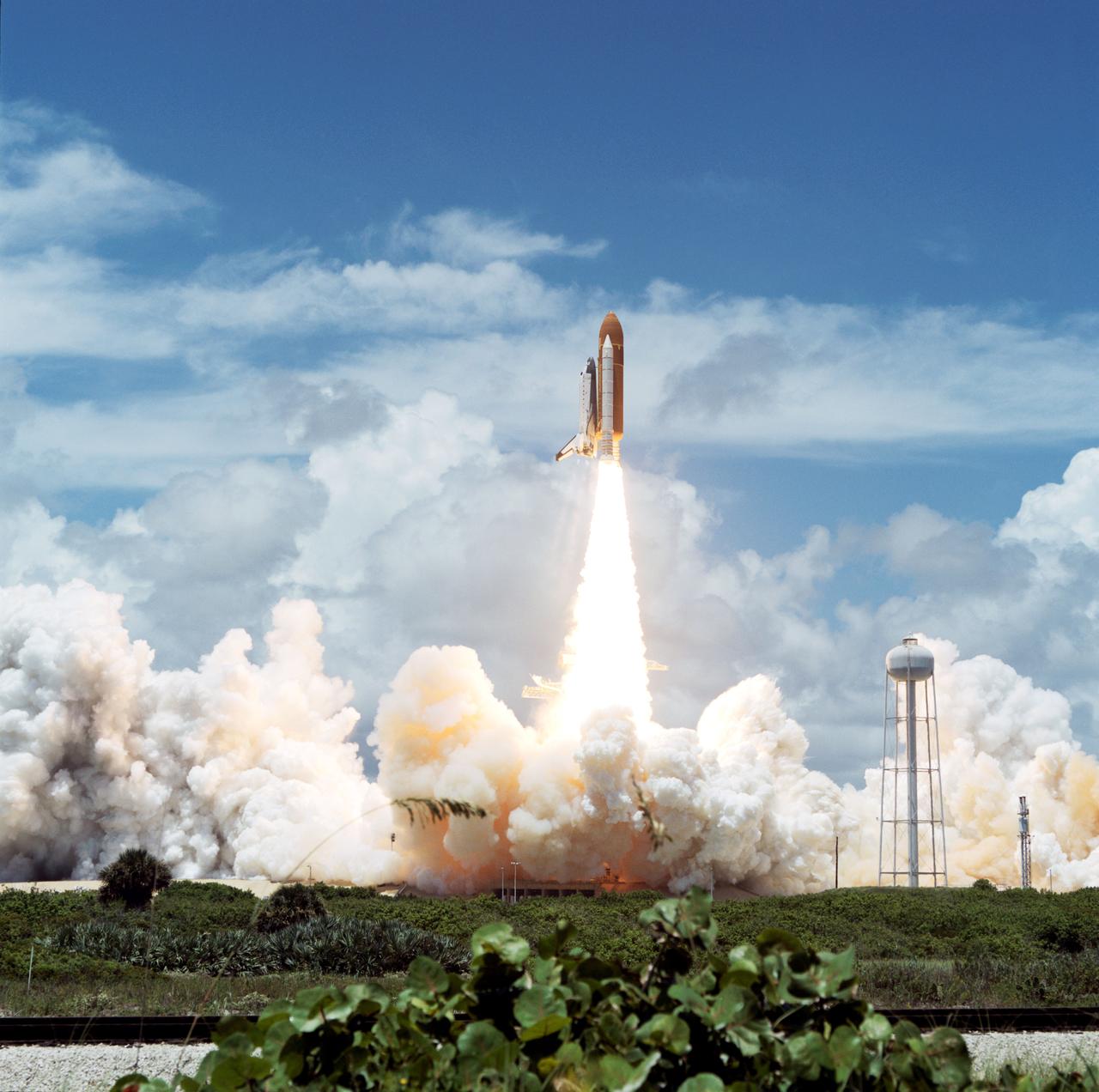
STS028-S-004 (8 Aug. 1989) --- Framed by Florida vegetation, Space Shuttle Columbia soars toward space for the STS-28 mission from Launch Pad 39-B. The spacecraft renews flight after a period of three and a half years, this time with five crewmembers aboard. Onboard the spacecraft are astronauts Brewster H. Shaw Jr., Richard N. Richards, David C. Leestma, James C. Adamson and Mark N. Brown. The last time Columbia was in space was in January of 1986.
STS-28 Columbia, OV-102, lifts off from KSC Launch Complex Pad 39B
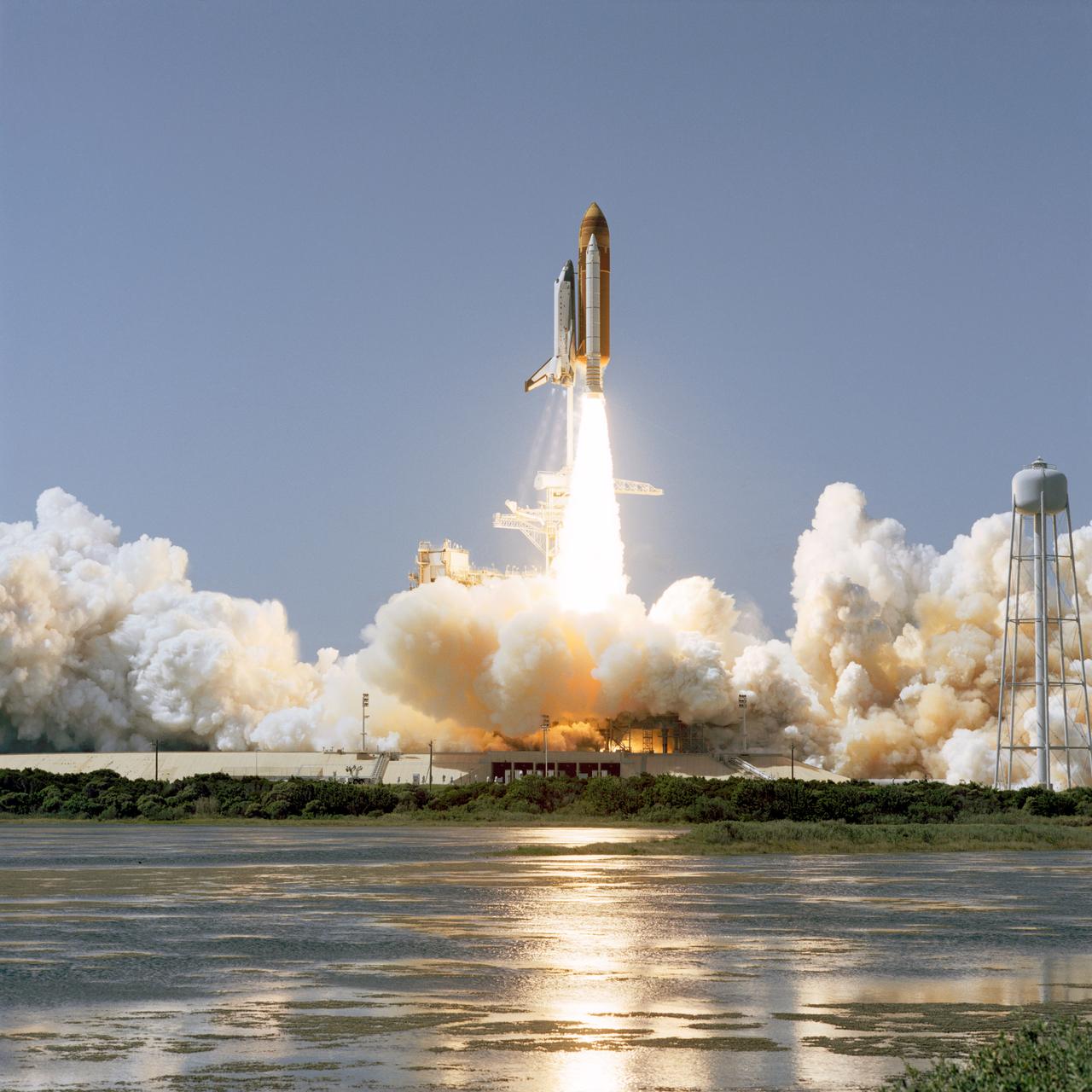
STS065-S-048 (8 July 1994) --- The Space Shuttle Columbia, with six NASA astronauts and a Japanese payload specialist aboard, heads toward Earth-orbit.  A short time later, the crew began setting up the science module for two weeks of experimentation in support of the second International Microgravity Laboratory (IML-2).  Launch occurred at 12:43 p.m. (EDT), July 8, 1994.  Onboard were astronauts Robert D. Cabana, James D. Halsell, Jr., Richard J. Hieb, Carl E. Walz, Leroy Chiao, and Donald A. Thomas along with NASDA payload specialist Dr. Chiaki Mukai.
STS-65 Columbia, OV-102, lifts off from KSC Launch Complex (LC) Pad 39A
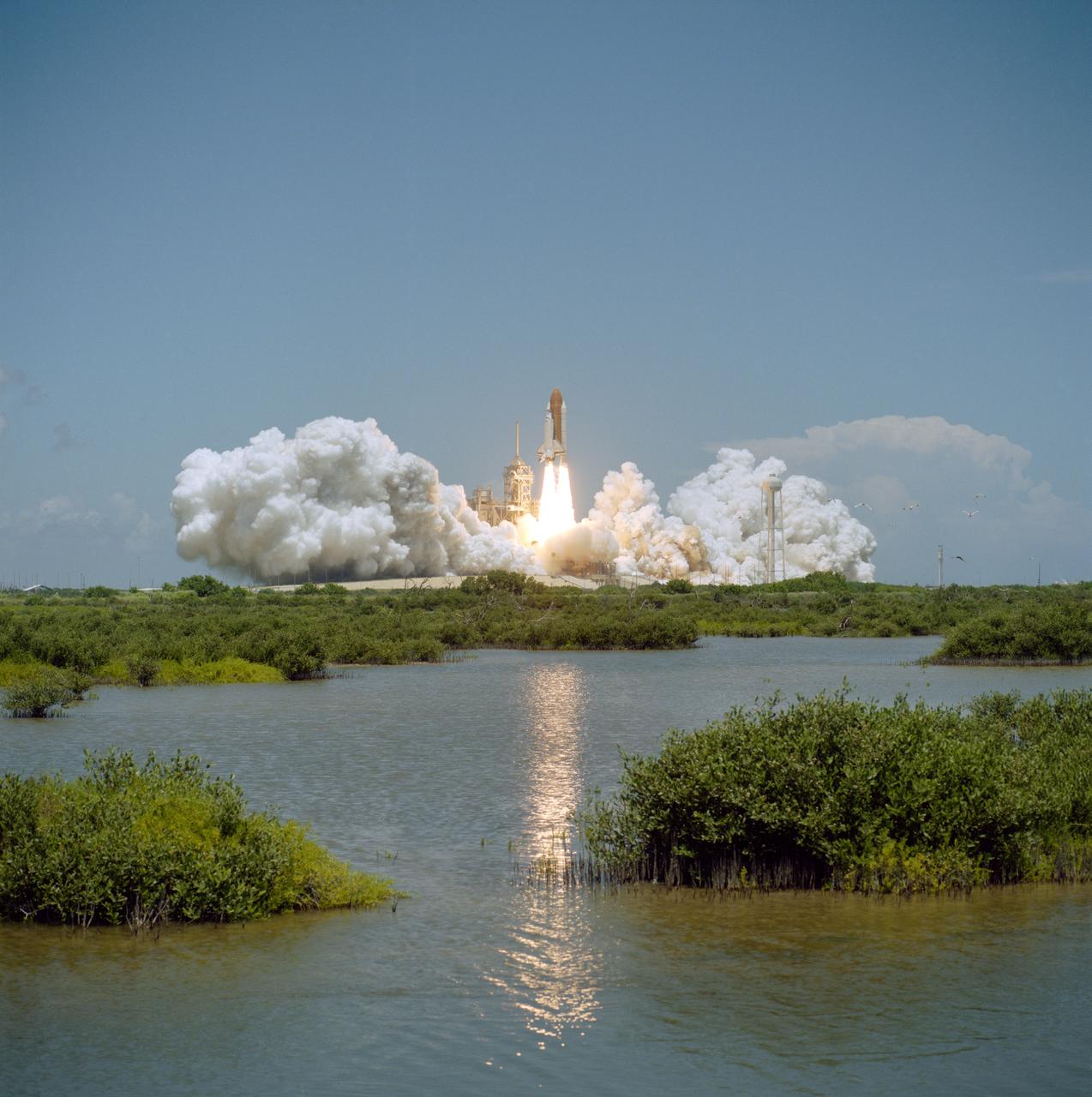
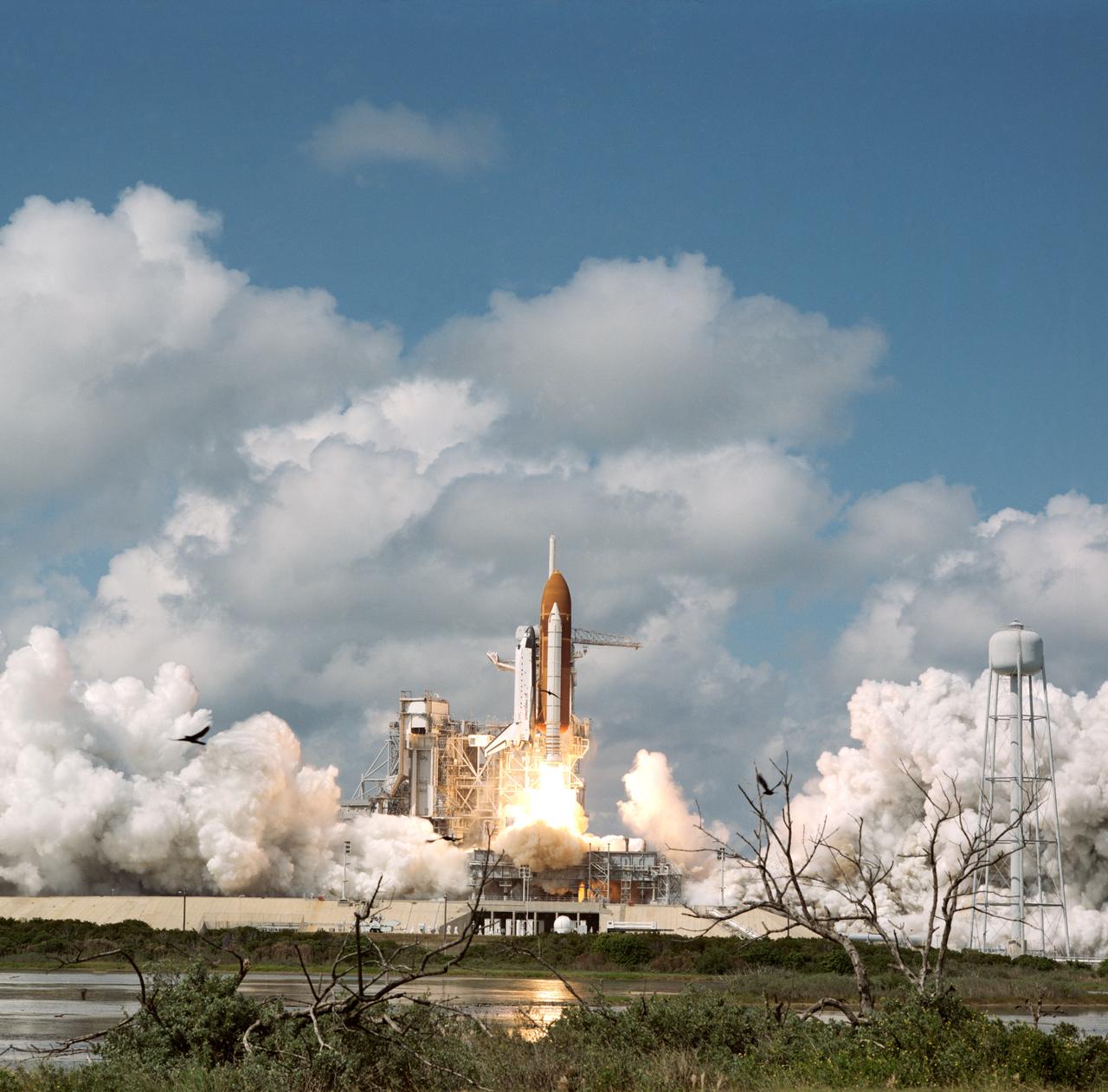
Columbia, Orbiter Vehicle (OV) 102, rises above Kennedy Space Center (KSC) Launch Complex (LC) Pad 39A after liftoff at 12:43 pm Eastern Daylight Time (EDT). An exhaust cloud covers the launch pad area and the glow of the space shuttle main engine (SSME) and solid rocket booster (SRB) firings is reflected in a nearby marsh as OV-102 atop its external tank (ET) heads toward Earth orbit. A small flock of birds is visible at the right. Once in Earth's orbit, STS-65's six NASA astronauts and a Japanese Payload Specialist aboard OV-102 will begin two weeks of experimentation in support of the second International Microgravity Laboratory (IML-2) mission.
STS-65 Columbia, OV-102, rises above KSC LC Pad 39A during liftoff
Columbia, Orbiter Vehicle (OV) 102, begins its roll maneuver after clearing the fixed service structure (FSS) tower as it rises above Kennedy Space Center (KSC) Launch Complex (LC) Pad 39A. In the foreground of this horizontal scene is Florida brush and a waterway. Beyond the brush, the shuttle's exhaust cloud envelops the immediate launch pad area. Launch occurred at 12:43 pm Eastern Daylight Time (EDT). The glow of the space shuttle main engine (SSME) and solid rocket booster (SRB) firings is reflected in the nearby waterway. Once in Earth orbit, STS-65's six NASA astronauts and a Japanese Payload Specialist aboard OV-102 will begin two weeks of experimentation in support of the second International Microgravity Laboratory (IML-2).
STS-65 Columbia, OV-102, lifts off from KSC LC Pad 39A
Columbia, Orbiter Vehicle (OV) 102, heads skyward after clearing the fixed service structure (FSS) tower at Kennedy Space Center (KSC) Launch Complex (LC) Pad 39A. Florida plant life appears in the foreground. The exhaust cloud produced by OV-102's solid rocket boosters (SRBs) covers the launch pad area with the exception of the sound suppression water system tower. OV-102's starboard side and the right SRB are visible from this angle. Launch occurred at 12:43 pm Eastern Daylight Time (EDT). Once in Earth orbit, STS-65's six NASA astronauts and a Japanese Payload Specialist aboard OV-102 will begin two weeks of experimentation in support of the second International Microgravity Laboratory (IML-2).
STS-65 Columbia, OV-102, clears launch tower after liftoff from KSC LC 39A
STS-31 Discovery, Orbiter Vehicle (OV) 103, lifts off from Kennedy Space Center (KSC) Launch Complex (LC) 39 Pad B. In the foreground STS-35 Columbia, OV-102, is visible on launch pad 39A. This event marked the first time since January 1986 that there was an orbiter on each pad. LC 39 pads are separated by 1.6 miles. View provided by KSC with alternate number KSC-90PC-610.
STS-31 Discovery, OV-103, liftoff from KSC
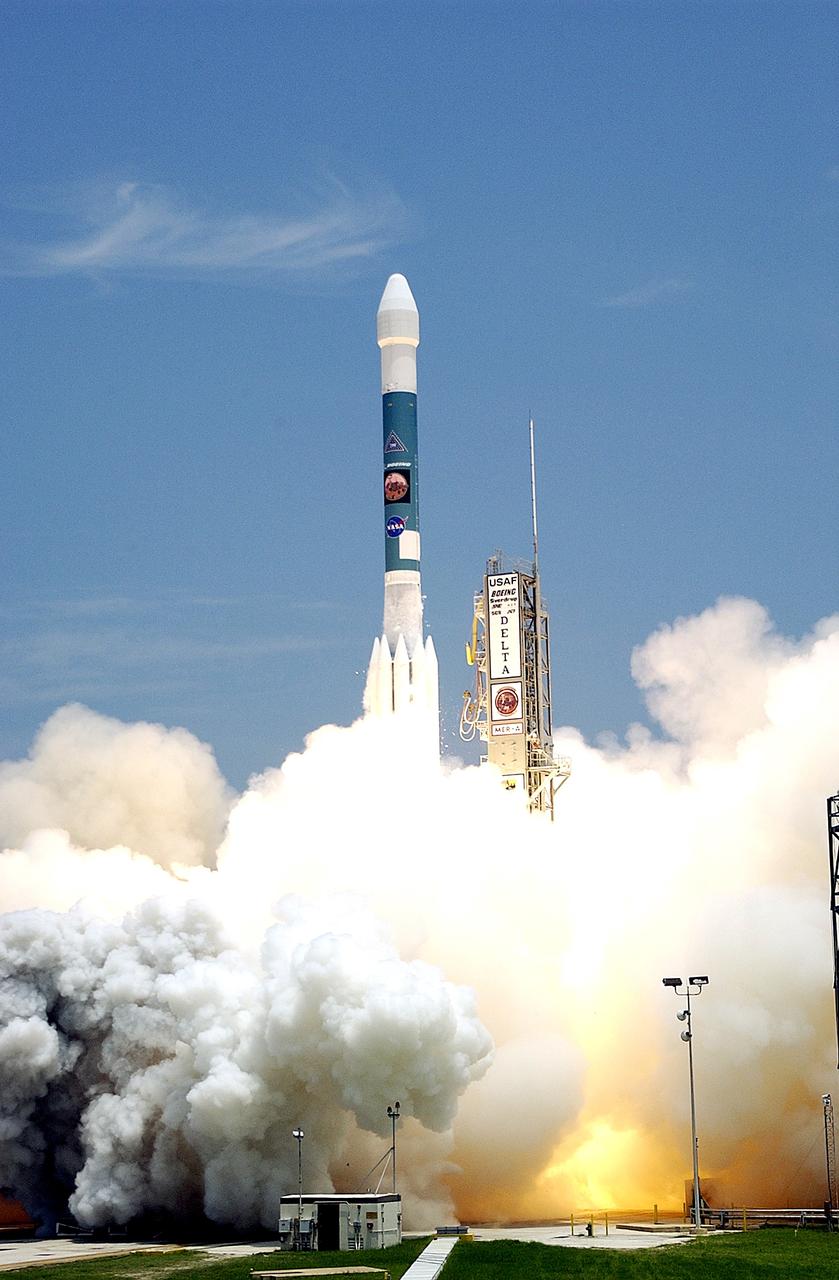
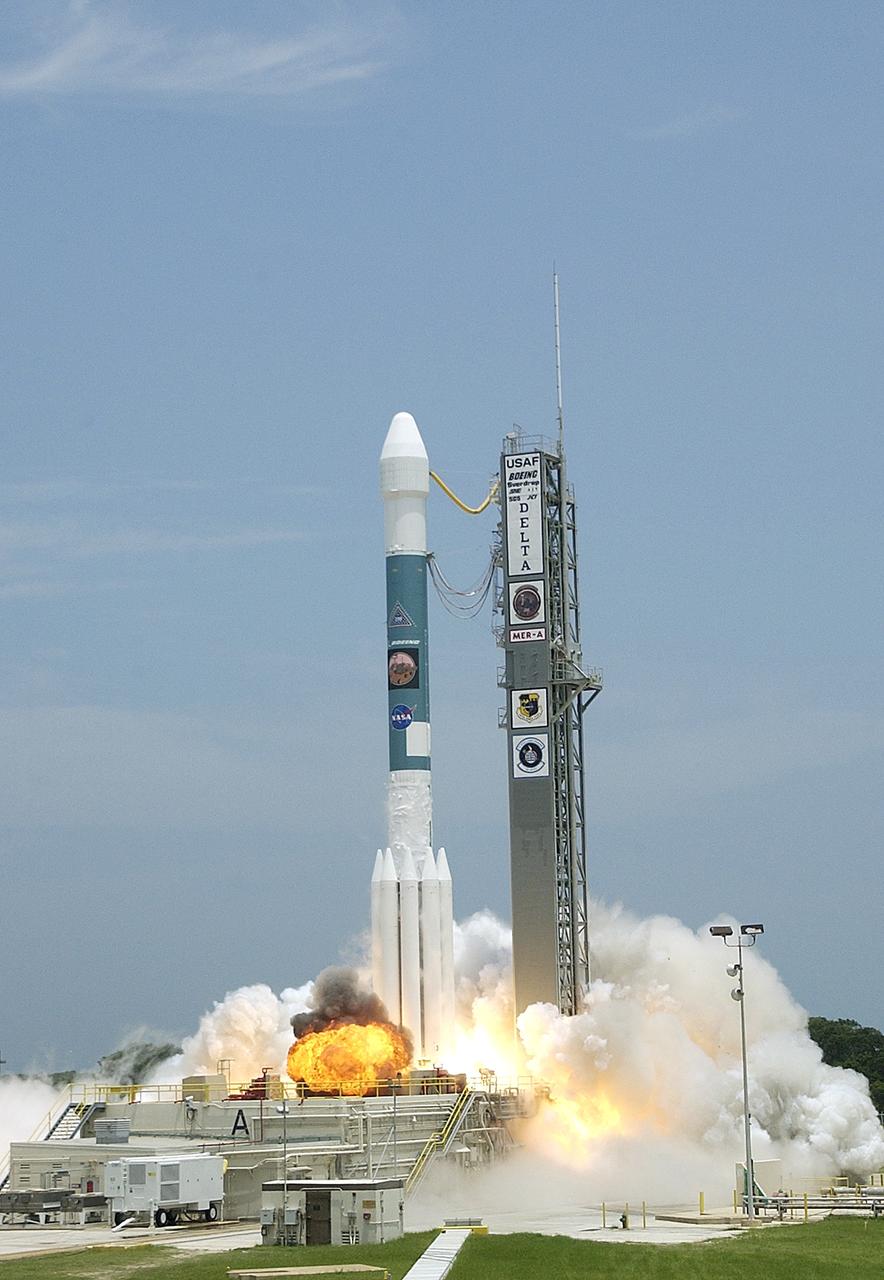
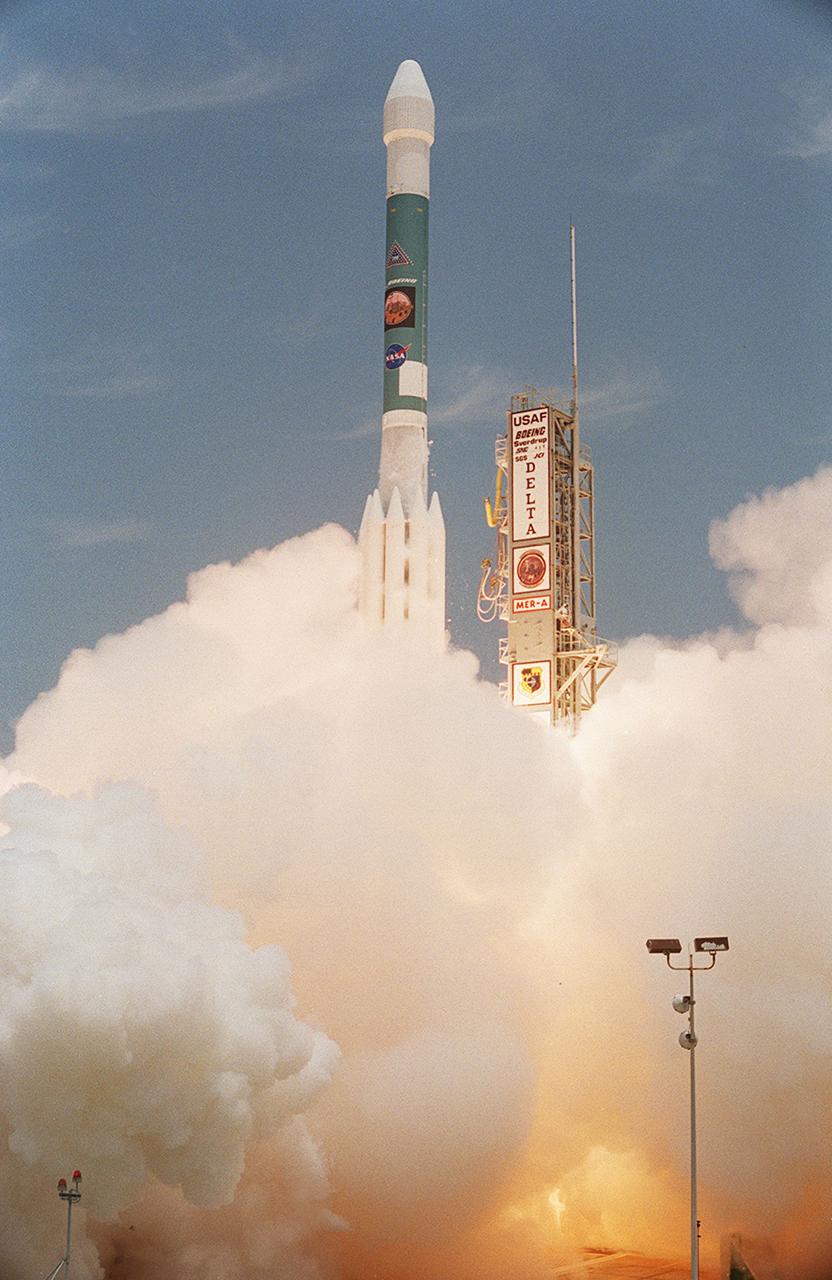
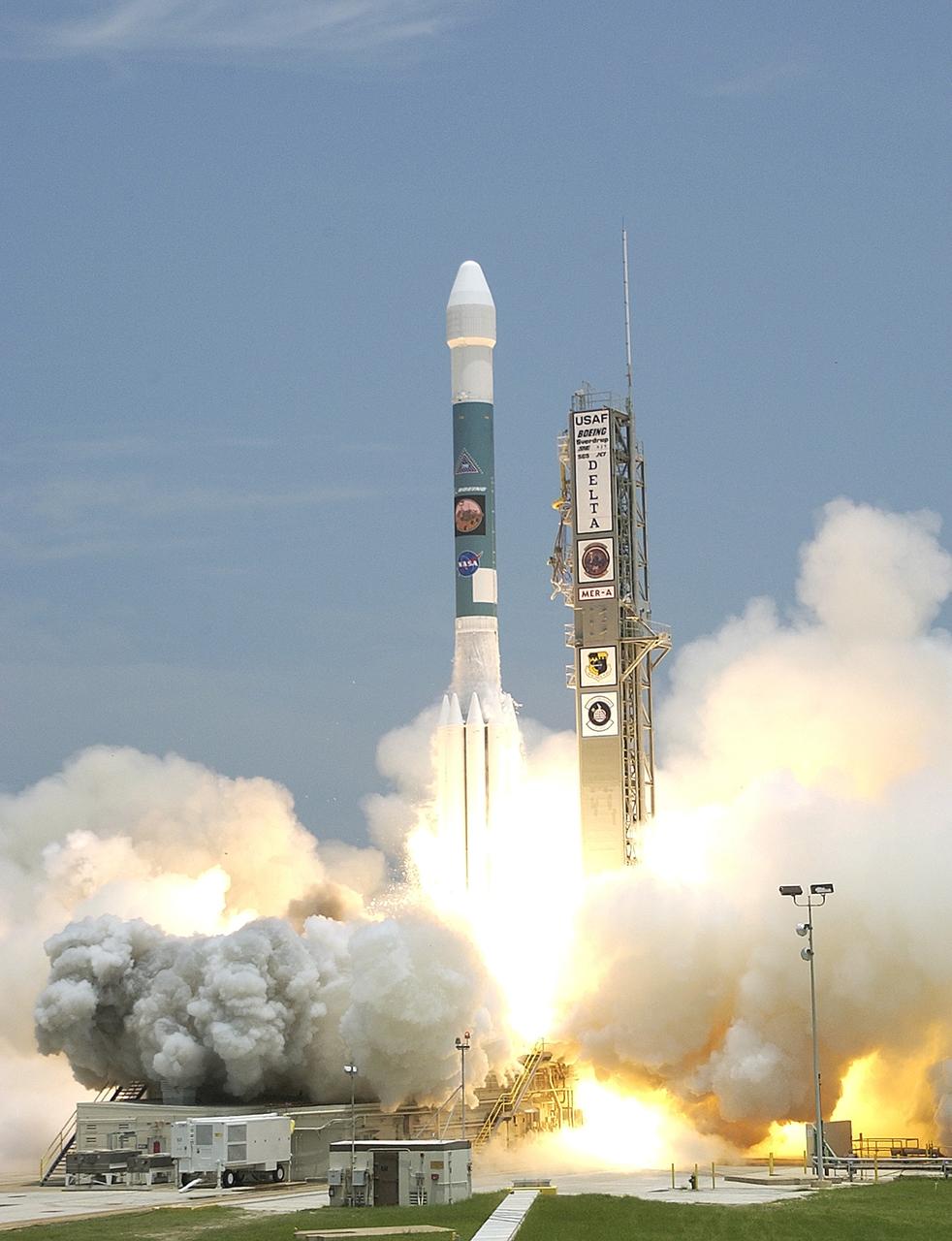
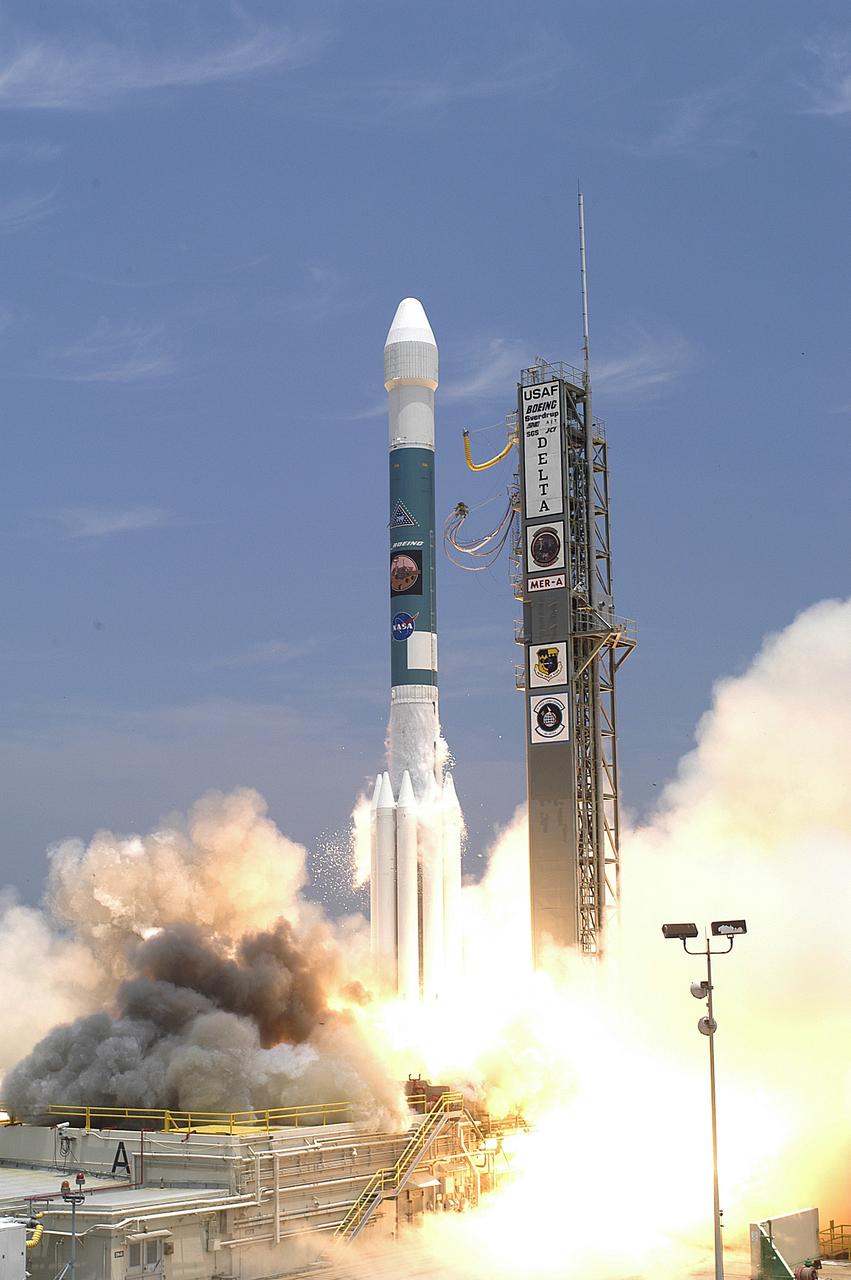
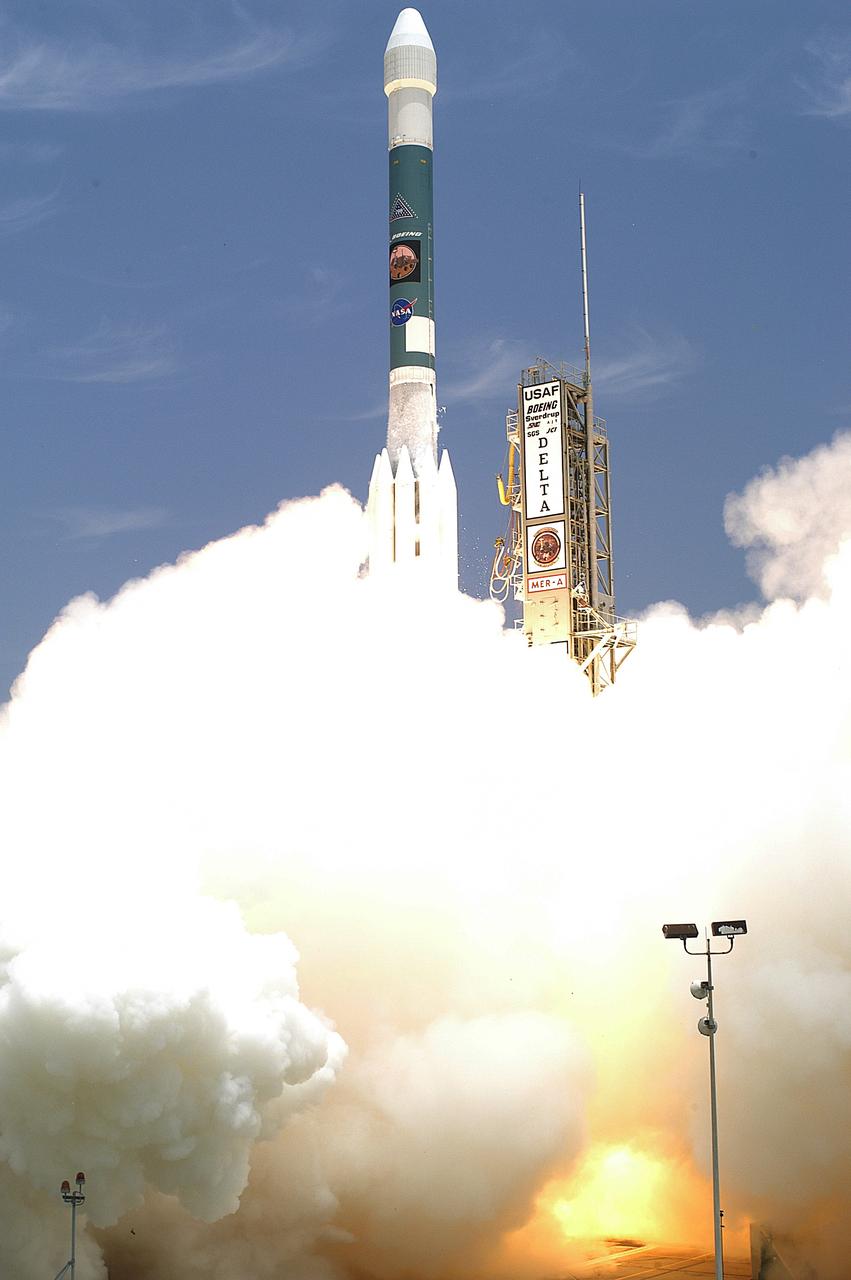
KENNEDY SPACE CENTER, FLA. -  The Delta II rocket with its Mars Exploration Rover (MER-A) payload leaps off the launch pad into the blue sky to begin its journey to Mars.  Liftoff occurred on time at 1:58 p.m. EDT from Launch Complex 17-A, Cape Canaveral Air Force Station.  MER-A, known as "Spirit," is the first of two rovers being launched to Mars. When the two rovers arrive at the red planet in 2004, they will bounce to airbag-cushioned landings at sites offering a balance of favorable conditions for safe landings and interesting science. The rovers see sharper images, can explore farther and examine rocks better than anything that has ever landed on Mars. The designated site for the MER-A mission is Gusev Crater, which appears to have been a crater lake. The second rover, MER-B, is scheduled to launch June 25.
KENNEDY SPACE CENTER, FLA. - The Delta II rocket with its Mars Exploration Rover (MER-A) payload leaps off the launch pad into the blue sky to begin its journey to Mars. Liftoff occurred on time at 1:58 p.m. EDT from Launch Complex 17-A, Cape Canaveral Air Force Station. MER-A, known as "Spirit," is the first of two rovers being launched to Mars. When the two rovers arrive at the red planet in 2004, they will bounce to airbag-cushioned landings at sites offering a balance of favorable conditions for safe landings and interesting science. The rovers see sharper images, can explore farther and examine rocks better than anything that has ever landed on Mars. The designated site for the MER-A mission is Gusev Crater, which appears to have been a crater lake. The second rover, MER-B, is scheduled to launch June 25.
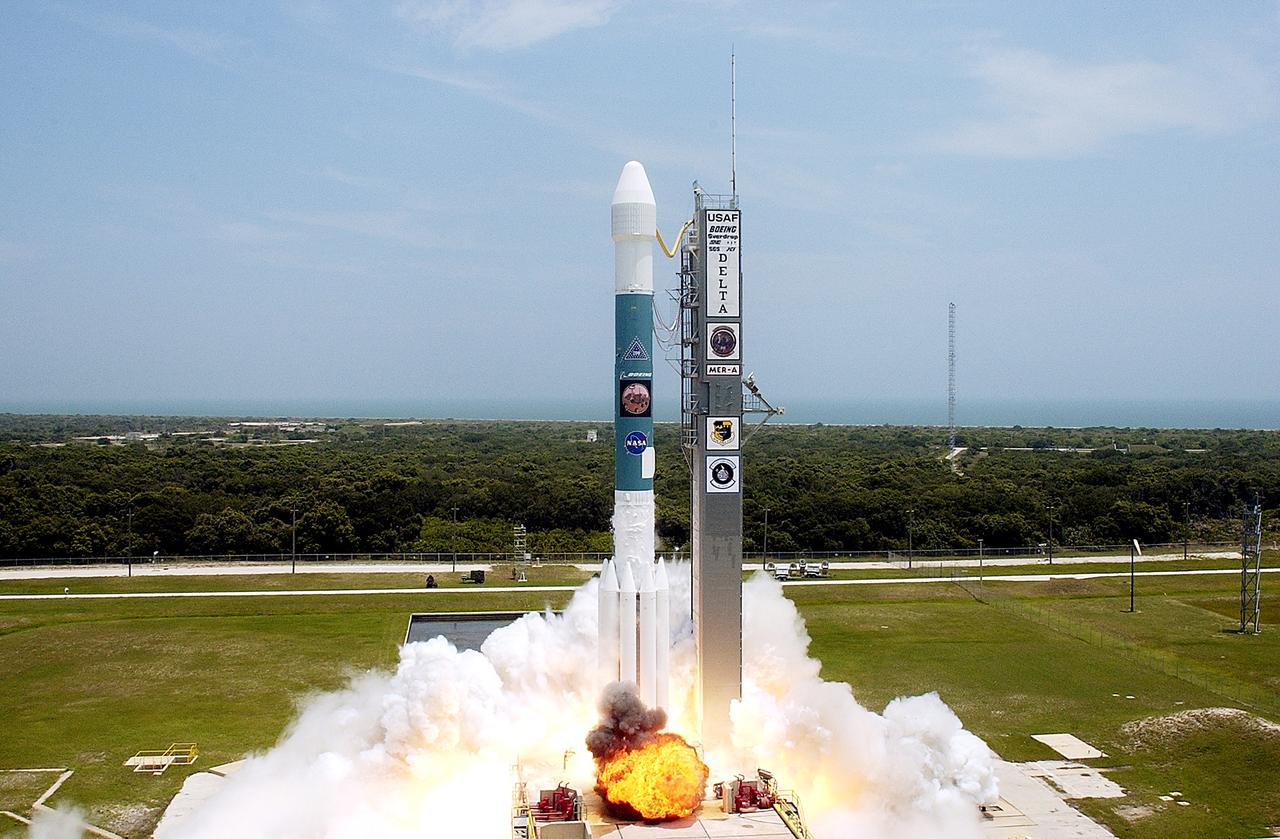
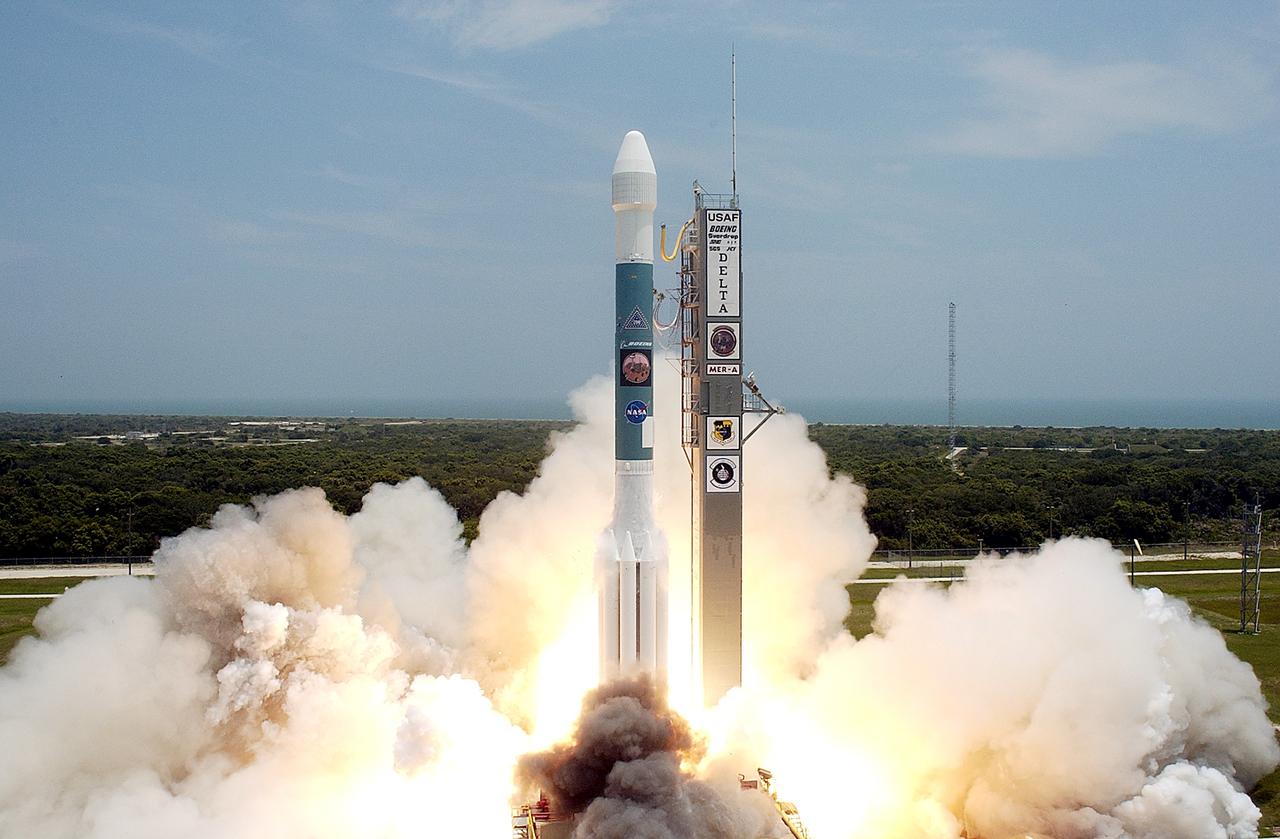
KENNEDY SPACE CENTER, FLA. -  With a glimpse of the Atlantic Ocean over the horizon, the Delta II rocket with its Mars Exploration Rover (MER-A) payload leaps off the launch pad into the blue sky to begin its journey to Mars.  Liftoff occurred on time at 1:58 p.m. EDT from Launch Complex 17-A, Cape Canaveral Air Force Station.  MER-A, known as "Spirit," is the first of two rovers being launched to Mars. When the two rovers arrive at the red planet in 2004, they will bounce to airbag-cushioned landings at sites offering a balance of favorable conditions for safe landings and interesting science. The rovers see sharper images, can explore farther and examine rocks better than anything that has ever landed on Mars. The designated site for the MER-A mission is Gusev Crater, which appears to have been a crater lake. The second rover, MER-B, is scheduled to launch June 25.
KENNEDY SPACE CENTER, FLA. - With a glimpse of the Atlantic Ocean over the horizon, the Delta II rocket with its Mars Exploration Rover (MER-A) payload leaps off the launch pad into the blue sky to begin its journey to Mars. Liftoff occurred on time at 1:58 p.m. EDT from Launch Complex 17-A, Cape Canaveral Air Force Station. MER-A, known as "Spirit," is the first of two rovers being launched to Mars. When the two rovers arrive at the red planet in 2004, they will bounce to airbag-cushioned landings at sites offering a balance of favorable conditions for safe landings and interesting science. The rovers see sharper images, can explore farther and examine rocks better than anything that has ever landed on Mars. The designated site for the MER-A mission is Gusev Crater, which appears to have been a crater lake. The second rover, MER-B, is scheduled to launch June 25.
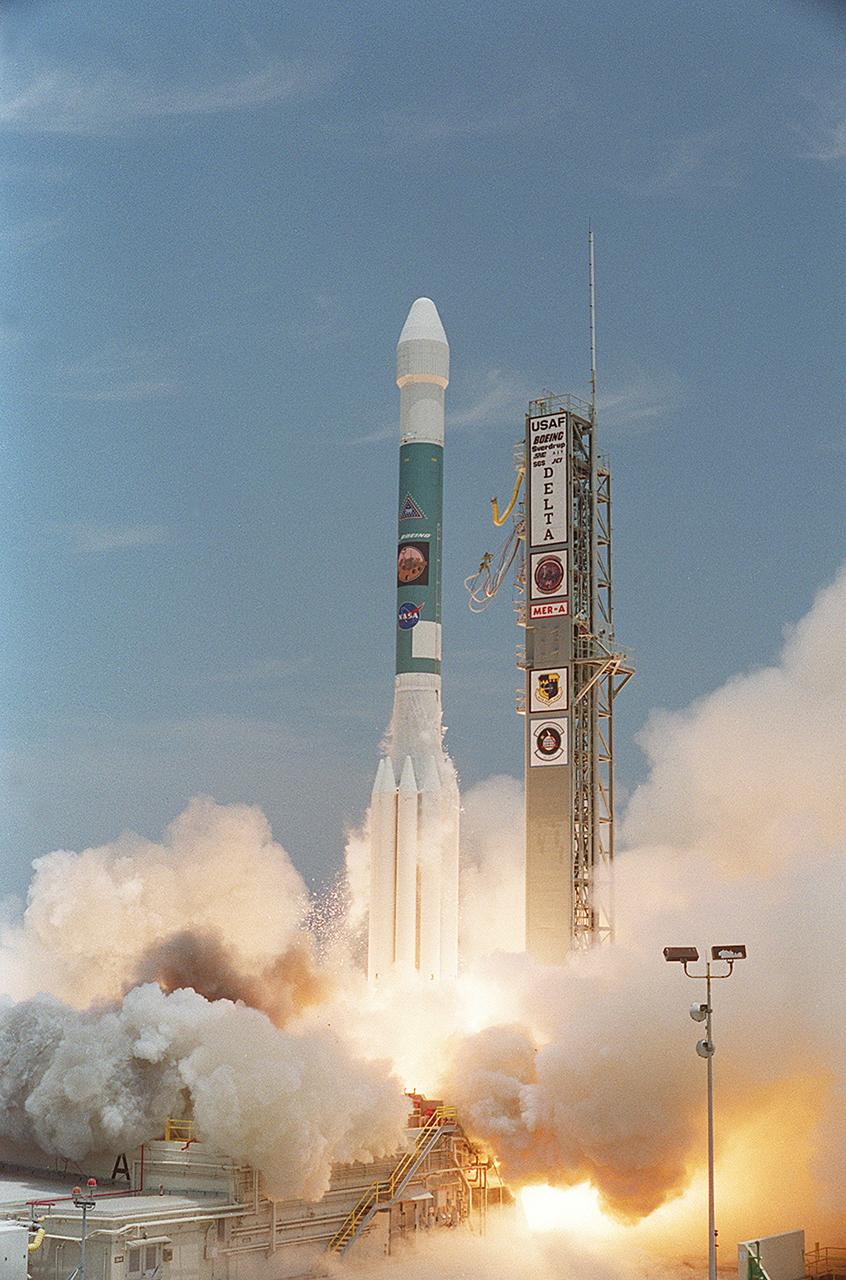
KENNEDY SPACE CENTER, FLA. -    With smoke and steam billowing beneath, the Delta II rocket with its Mars Exploration Rover (MER-A) payload leaps off the launch pad into the blue sky to begin its journey to Mars.  Liftoff occurred on time at 1:58 p.m. EDT from Launch Complex 17-A, Cape Canaveral Air Force Station.  MER-A, known as "Spirit," is the first of two rovers being launched to Mars. When the two rovers arrive at the red planet in 2004, they will bounce to airbag-cushioned landings at sites offering a balance of favorable conditions for safe landings and interesting science. The rovers see sharper images, can explore farther and examine rocks better than anything that has ever landed on Mars. The designated site for the MER-A mission is Gusev Crater, which appears to have been a crater lake. The second rover, MER-B, is scheduled to launch June 25.
KENNEDY SPACE CENTER, FLA. - With smoke and steam billowing beneath, the Delta II rocket with its Mars Exploration Rover (MER-A) payload leaps off the launch pad into the blue sky to begin its journey to Mars. Liftoff occurred on time at 1:58 p.m. EDT from Launch Complex 17-A, Cape Canaveral Air Force Station. MER-A, known as "Spirit," is the first of two rovers being launched to Mars. When the two rovers arrive at the red planet in 2004, they will bounce to airbag-cushioned landings at sites offering a balance of favorable conditions for safe landings and interesting science. The rovers see sharper images, can explore farther and examine rocks better than anything that has ever landed on Mars. The designated site for the MER-A mission is Gusev Crater, which appears to have been a crater lake. The second rover, MER-B, is scheduled to launch June 25.
KENNEDY SPACE CENTER, FLA. -  With smoke and steam billowing beneath, the Delta II rocket with its Mars Exploration Rover (MER-A) payload leaps off the launch pad into the blue sky to begin its journey to Mars.  Liftoff occurred on time at 1:58 p.m. EDT from Launch Complex 17-A, Cape Canaveral Air Force Station.  MER-A, known as "Spirit," is the first of two rovers being launched to Mars. When the two rovers arrive at the red planet in 2004, they will bounce to airbag-cushioned landings at sites offering a balance of favorable conditions for safe landings and interesting science. The rovers see sharper images, can explore farther and examine rocks better than anything that has ever landed on Mars. The designated site for the MER-A mission is Gusev Crater, which appears to have been a crater lake. The second rover, MER-B, is scheduled to launch June 25.
KENNEDY SPACE CENTER, FLA. - With smoke and steam billowing beneath, the Delta II rocket with its Mars Exploration Rover (MER-A) payload leaps off the launch pad into the blue sky to begin its journey to Mars. Liftoff occurred on time at 1:58 p.m. EDT from Launch Complex 17-A, Cape Canaveral Air Force Station. MER-A, known as "Spirit," is the first of two rovers being launched to Mars. When the two rovers arrive at the red planet in 2004, they will bounce to airbag-cushioned landings at sites offering a balance of favorable conditions for safe landings and interesting science. The rovers see sharper images, can explore farther and examine rocks better than anything that has ever landed on Mars. The designated site for the MER-A mission is Gusev Crater, which appears to have been a crater lake. The second rover, MER-B, is scheduled to launch June 25.
KENNEDY SPACE CENTER, FLA. -  The Delta II rocket with its Mars Exploration Rover (MER-A) payload leaps off the launch pad into the blue sky to begin its journey to Mars.  Liftoff occurred on time at 1:58 p.m. EDT from Launch Complex 17-A, Cape Canaveral Air Force Station.  MER-A, known as "Spirit," is the first of two rovers being launched to Mars. When the two rovers arrive at the red planet in 2004, they will bounce to airbag-cushioned landings at sites offering a balance of favorable conditions for safe landings and interesting science. The rovers see sharper images, can explore farther and examine rocks better than anything that has ever landed on Mars. The designated site for the MER-A mission is Gusev Crater, which appears to have been a crater lake. The second rover, MER-B, is scheduled to launch June 25.
KENNEDY SPACE CENTER, FLA. - The Delta II rocket with its Mars Exploration Rover (MER-A) payload leaps off the launch pad into the blue sky to begin its journey to Mars. Liftoff occurred on time at 1:58 p.m. EDT from Launch Complex 17-A, Cape Canaveral Air Force Station. MER-A, known as "Spirit," is the first of two rovers being launched to Mars. When the two rovers arrive at the red planet in 2004, they will bounce to airbag-cushioned landings at sites offering a balance of favorable conditions for safe landings and interesting science. The rovers see sharper images, can explore farther and examine rocks better than anything that has ever landed on Mars. The designated site for the MER-A mission is Gusev Crater, which appears to have been a crater lake. The second rover, MER-B, is scheduled to launch June 25.
KENNEDY SPACE CENTER, FLA. -   With smoke and steam billowing beneath, the Delta II rocket with its Mars Exploration Rover (MER-A) payload leaps off the launch pad into the blue sky to begin its journey to Mars.  Liftoff occurred on time at 1:58 p.m. EDT from Launch Complex 17-A, Cape Canaveral Air Force Station.  MER-A, known as "Spirit," is the first of two rovers being launched to Mars. When the two rovers arrive at the red planet in 2004, they will bounce to airbag-cushioned landings at sites offering a balance of favorable conditions for safe landings and interesting science. The rovers see sharper images, can explore farther and examine rocks better than anything that has ever landed on Mars. The designated site for the MER-A mission is Gusev Crater, which appears to have been a crater lake. The second rover, MER-B, is scheduled to launch June 25.
KENNEDY SPACE CENTER, FLA. - With smoke and steam billowing beneath, the Delta II rocket with its Mars Exploration Rover (MER-A) payload leaps off the launch pad into the blue sky to begin its journey to Mars. Liftoff occurred on time at 1:58 p.m. EDT from Launch Complex 17-A, Cape Canaveral Air Force Station. MER-A, known as "Spirit," is the first of two rovers being launched to Mars. When the two rovers arrive at the red planet in 2004, they will bounce to airbag-cushioned landings at sites offering a balance of favorable conditions for safe landings and interesting science. The rovers see sharper images, can explore farther and examine rocks better than anything that has ever landed on Mars. The designated site for the MER-A mission is Gusev Crater, which appears to have been a crater lake. The second rover, MER-B, is scheduled to launch June 25.
KENNEDY SPACE CENTER, FLA. -   With a glimpse of the Atlantic Ocean over the horizon, the Delta II rocket with its Mars Exploration Rover (MER-A) payload leaps off the launch pad into the blue sky to begin its journey to Mars.  Liftoff occurred on time at 1:58 p.m. EDT from Launch Complex 17-A, Cape Canaveral Air Force Station.  MER-A, known as "Spirit," is the first of two rovers being launched to Mars. When the two rovers arrive at the red planet in 2004, they will bounce to airbag-cushioned landings at sites offering a balance of favorable conditions for safe landings and interesting science. The rovers see sharper images, can explore farther and examine rocks better than anything that has ever landed on Mars. The designated site for the MER-A mission is Gusev Crater, which appears to have been a crater lake. The second rover, MER-B, is scheduled to launch June 25
KENNEDY SPACE CENTER, FLA. - With a glimpse of the Atlantic Ocean over the horizon, the Delta II rocket with its Mars Exploration Rover (MER-A) payload leaps off the launch pad into the blue sky to begin its journey to Mars. Liftoff occurred on time at 1:58 p.m. EDT from Launch Complex 17-A, Cape Canaveral Air Force Station. MER-A, known as "Spirit," is the first of two rovers being launched to Mars. When the two rovers arrive at the red planet in 2004, they will bounce to airbag-cushioned landings at sites offering a balance of favorable conditions for safe landings and interesting science. The rovers see sharper images, can explore farther and examine rocks better than anything that has ever landed on Mars. The designated site for the MER-A mission is Gusev Crater, which appears to have been a crater lake. The second rover, MER-B, is scheduled to launch June 25
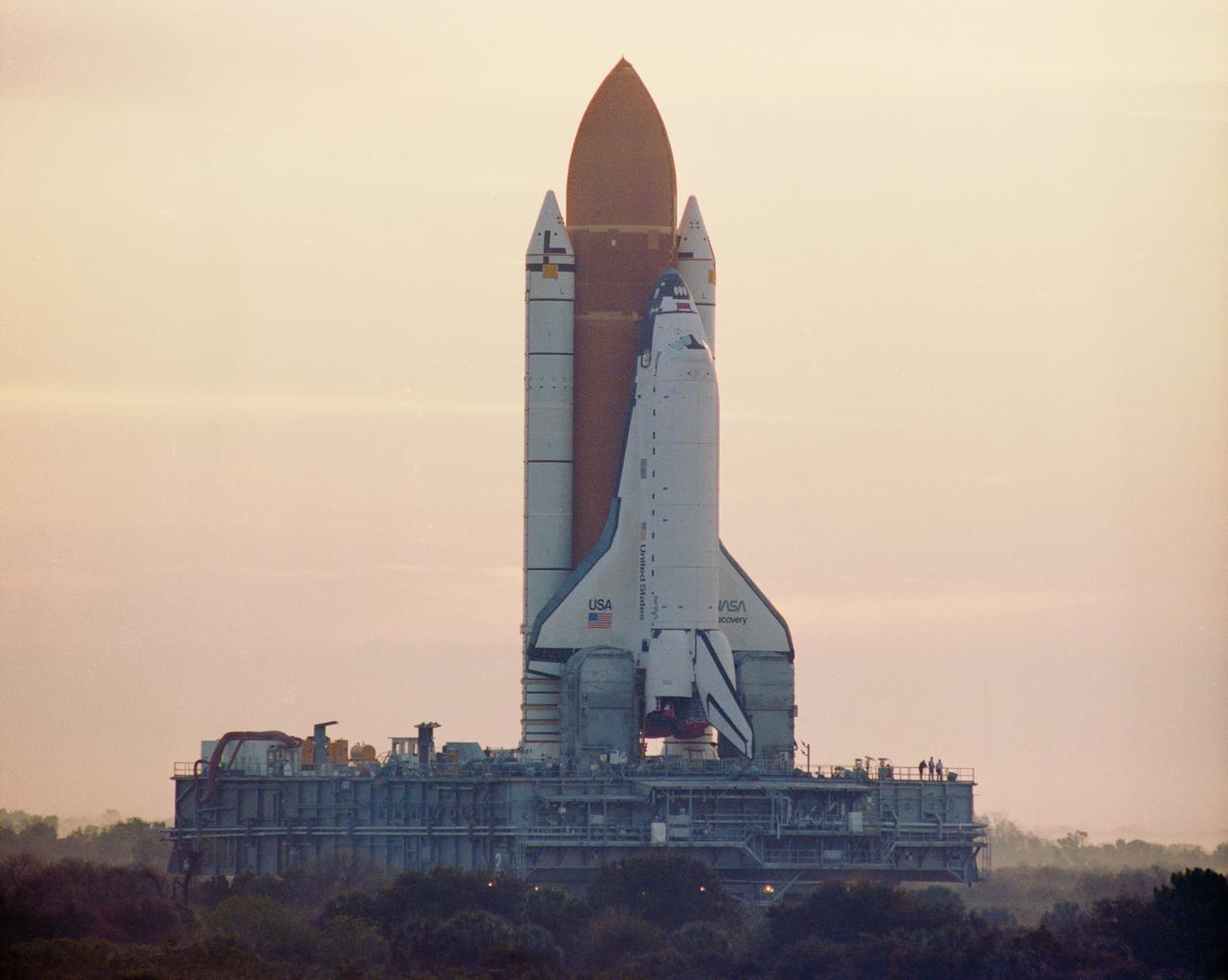
STS-26 Discovery, Orbiter Vehicle (OV) 103, rolls out to Kennedy Space Center (KSC) launch complex (LC) pad 39B on top of the crawler transporter. OV-103 nears LC pad 39B after a six-hour journey from the vehicle assembly building (VAB). When locked onto the nearby rotating service structure (RSS), work will continue to ready the vehicle for the STS-26 launch later in the summer.
STS-26 Discovery, Orbiter Vehicle (OV) 103, roll out to KSC LC pad 39B
STS-38 Atlantis, Orbiter Vehicle (OV) 104, lifts off from Kennedy Space Center (KSC) Launch Complex Pad at 6:46:15:0639 pm (Eastern Standard Time (EST)). As OV-104, atop the external tank (ET) and flanked by two solid rocket boosters (SRBs), rises above the mobile launcher platform, exhaust smoke fills the area surrounding the launch pad. SRB and space shuttle main engine (SSME) firings glow against the night darkness and light up the fixed service structure (FSS) and retracted rotating service structure (RSS). STS-38 is a Department of Defense (DOD) devoted mission.
STS-38 Atlantis, OV-104, lifting off from KSC LC Pad during night launch
S89-28112 (3 Feb 1989) --- The Space Shuttle Discovery, atop a mobile launch platform, is rolled toward Kennedy Space Center's Launch Pad 39-B in the early morning hours of Feb. 3, l989.  It rolled through the doors of the huge vehicle assembly building (VAB) at 6 a.m.  The trip to the pad takes approximately 5 and 1/2 hours. Onboard the spacecraft in  mid-March for a five-day mission, on which will be deployed a third tracking and data relay satellite (TDRS-D), will be Astronauts Michael L. Coats, John E. Blaha, James F. Buchli, James P. Bagian and Robert C. Springer.
STS-29 Discovery, Orbiter Vehicle (OV) 103, roll out to KSC LC Pad 39B
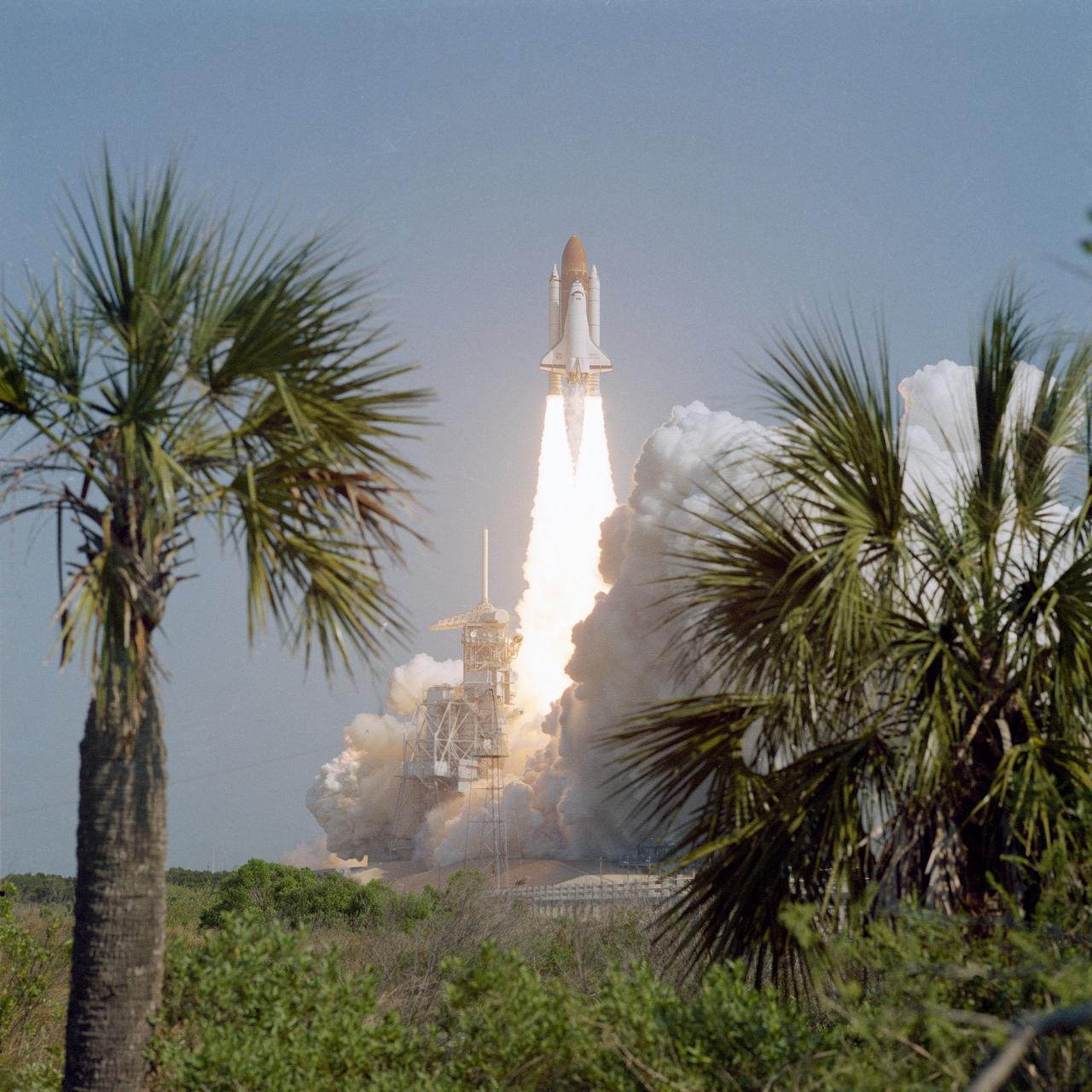
STS029-S-027 (13 March 1989) --- From Launch Pad 39D, the Space Shuttle Discovery is launched on mission STS-29.  Discovery lifted off at 9:57 a.m. (EST), March 13, 1989, carrying the tracking and data relay satellite (TDRS-1) into orbit.  Florida vegetation frames the launch scene.  Onboard the spacecraft were astronauts Michael L. Coats, commander; John E. Blaha, pilot; and James F. Buchli, James P. Bagian and Robert C. Springer, all mission specialists.
STS-29 Discovery, Orbiter Vehicle (OV) 103, lifts off from KSC LC Pad 39B
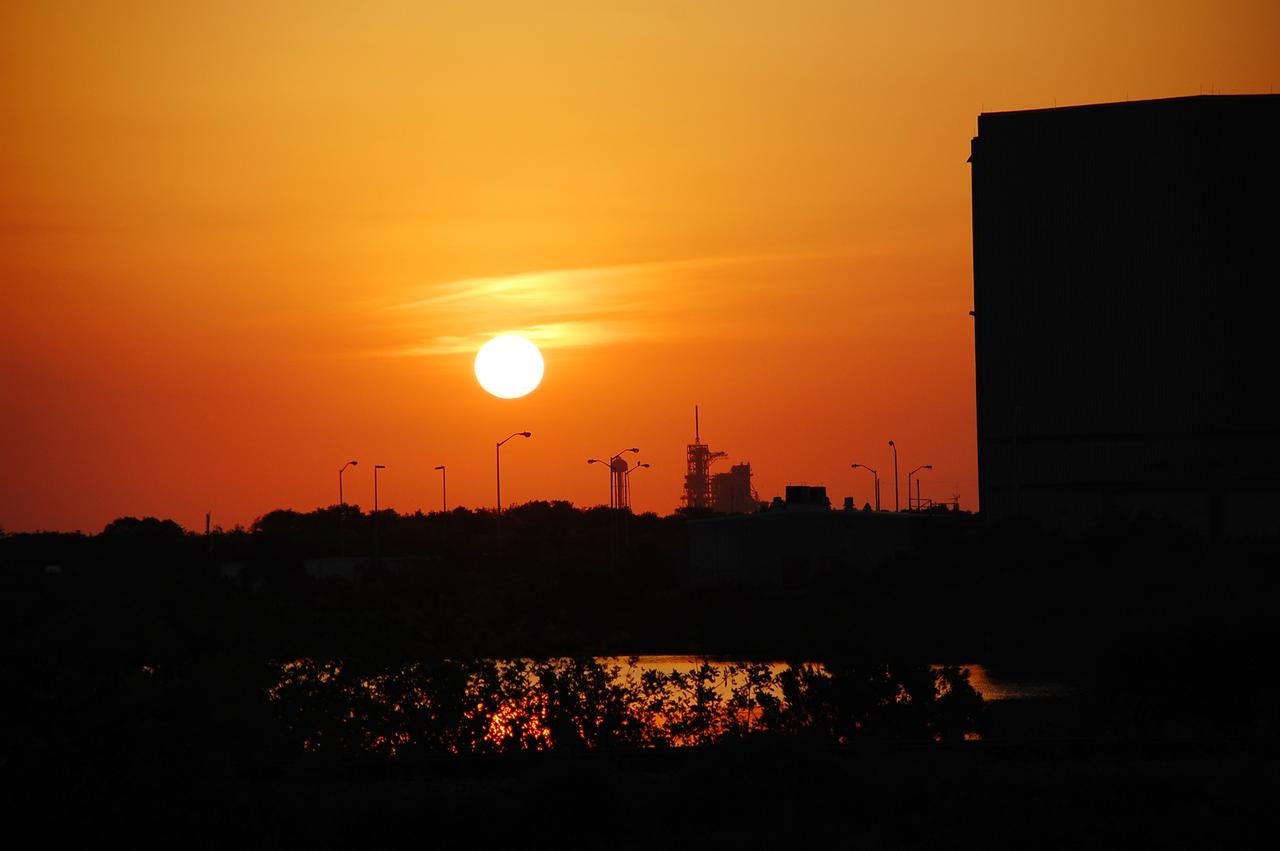
CAPE CANAVERAL, Fla. -- The sun rises over the Press Site in Launch Complex 39 at NASA's Kennedy Space Center in Florida. Launch Pad 39A is in the background at left.      On this particular morning, preparations are underway for a launch from Space Launch Complex-41 on Cape Canaveral Air Force Station, a part of the spaceport which neighbors Kennedy Space Center.  For more information, visit http://www.nasa.gov/centers/kennedy.  Photo credit: NASA/Ben Smegelsky
KSC-2014-2691
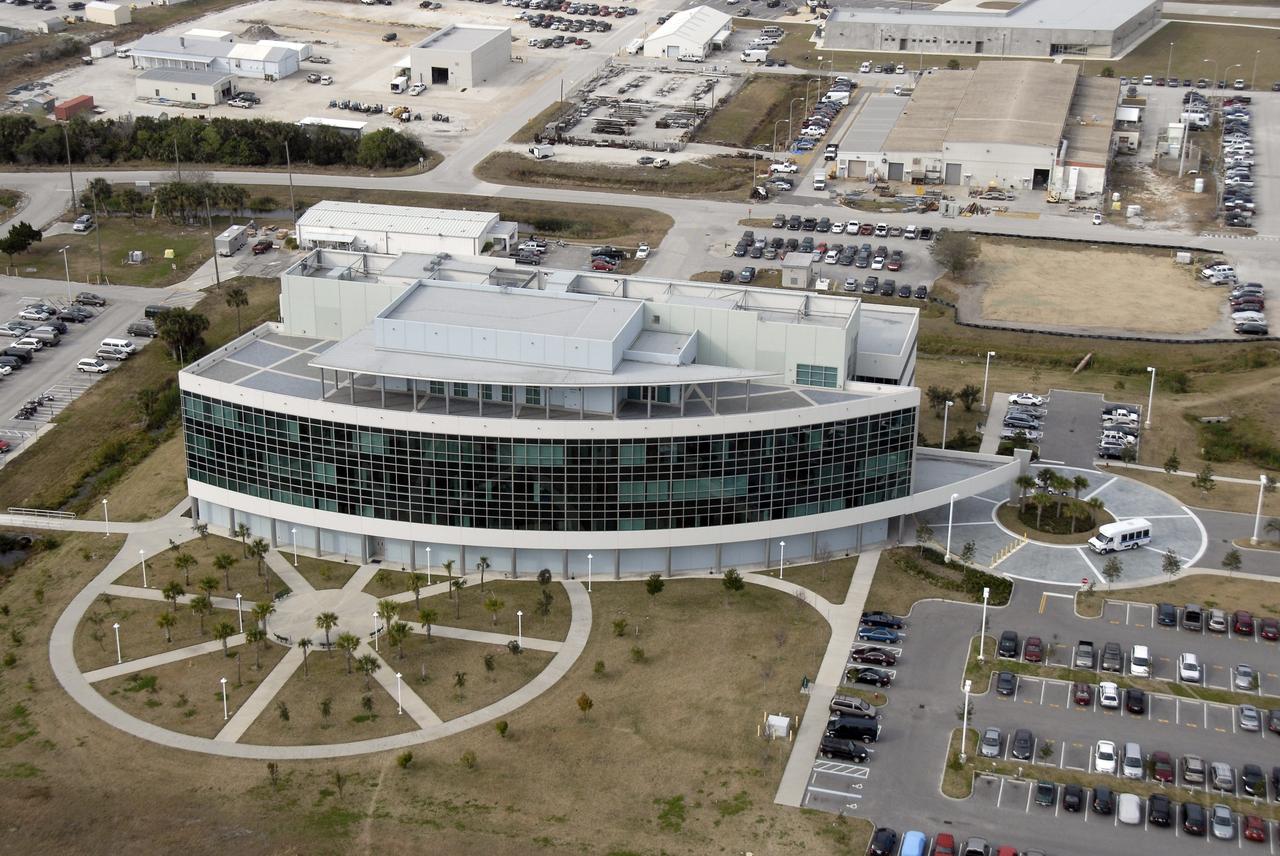
CAPE CANAVERAL, Fla. – An aerial view of the Operations Support Building II in the Launch Complex 39 Area at NASA's Kennedy Space Center in Florida. The panorama of windows faces the launch pads. Photo credit: NASA/Kim Shiflett
KSC-2009-1570
CAPE CANAVERAL, Fla. -- As NASA's Kennedy Space Center in Florida, Launch Pad 39A is seen from the Saturn Causeway. On launch day, space shuttle astronauts ride to their launch pad and spacecraft in NASA's silver Astrovan. Along the way, they pass the Vehicle Assembly Building, Launch Control Center and Press Site.     Adjacent to the road is the crawlerway, which is the route shuttles take to Kennedy's Launch Complex 39 launch pads on top of a crawler-transporter. Photo credit: NASA/Frankie Martin
KSC-2010-4396
STS054-S-060 (13 Jan 1993) --- The Space Shuttle Endeavour soars off the launch pad and heads toward Earth orbit with a crew of five and the Tracking and Data Relay Satellite (TDRS-F) aboard.  Launch occurred at 8:59:30 a.m. (EST), January 13, 1993.  Onboard were John H. Casper, mission commander, Donald R. McMonagle, pilot, Gregory J. Harbaugh, Mario Runco Jr., and Susan J. Helms, mission specialists.
STS-54 Endeavour, Orbiter Vehicle (OV) 105, lifts off from KSC LC Pad 39B
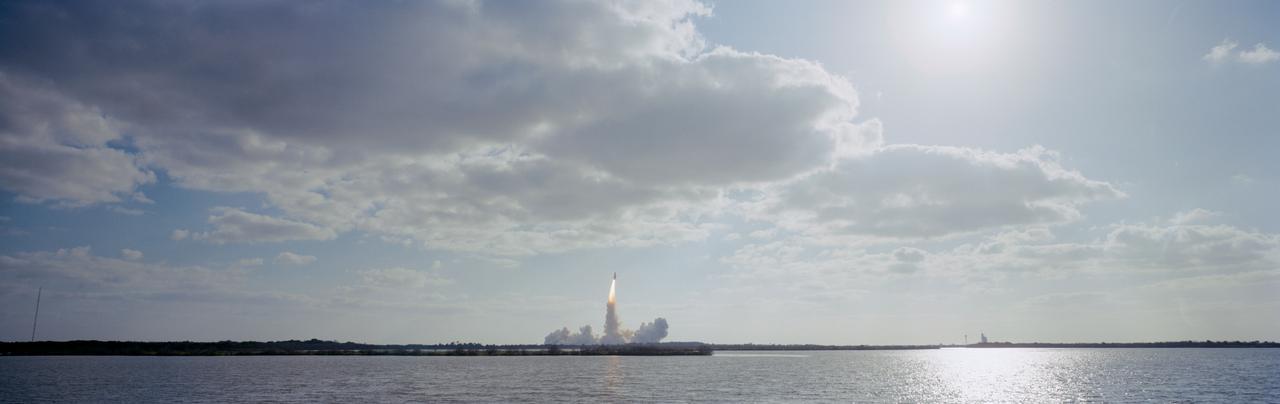
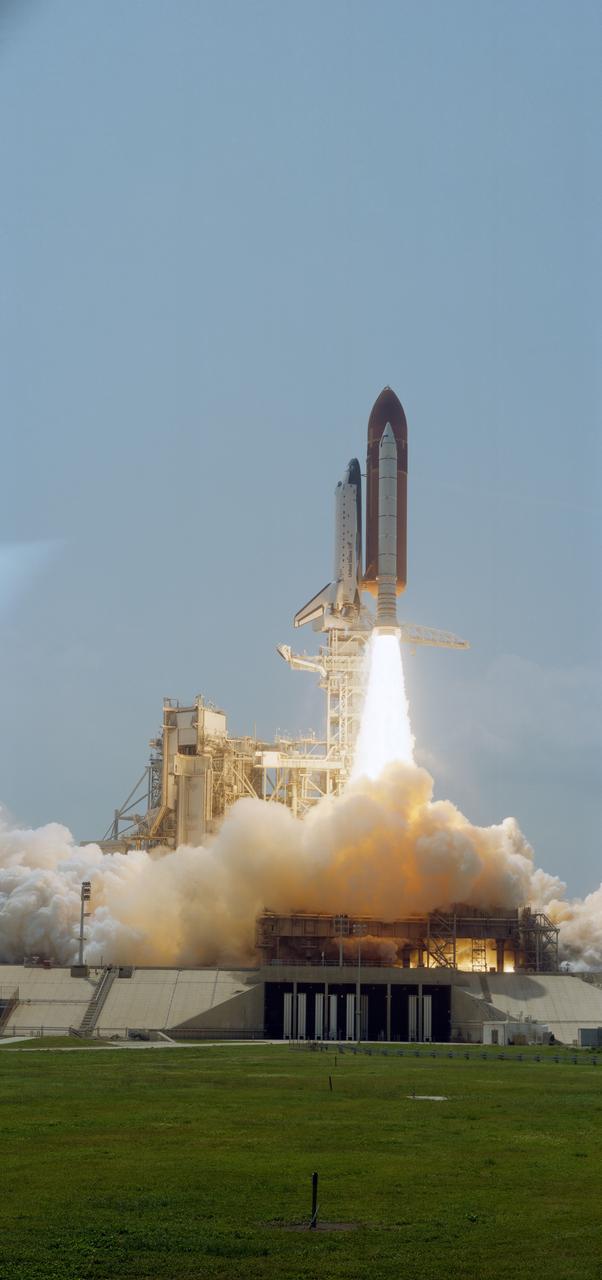
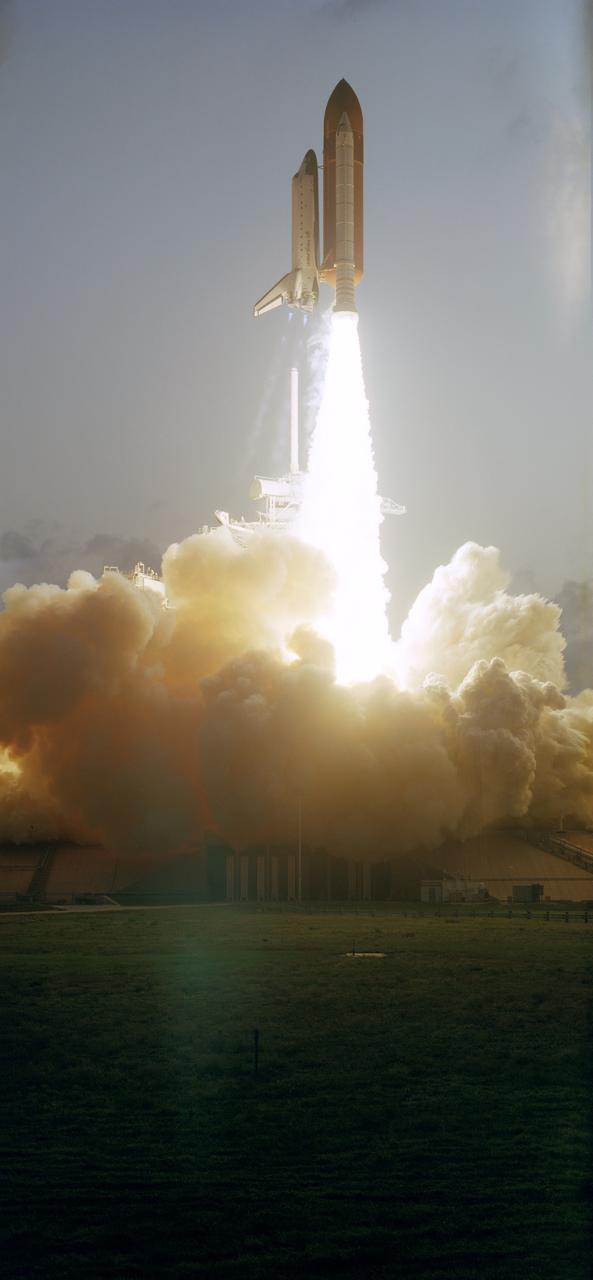
STS052-S-051 (22 Oct 1992) --- This distant 70mm image shows the Space Shuttle Columbia clearing the tower at Launch Pad 39B, at the Kennedy Space Center (KSC), on its way toward a ten-day Earth-orbital mission with a crew of five NASA astronauts and a Canadian payload specialist.  Liftoff occurred at 1:09:39 p.m. (EDT), October 22, 1992.  Crew members are astronauts James D. Wetherbee, Michael A. Baker, Tamara E. Jernigan, Charles L. (Lacy) Veach and William M. Shepherd, along with payload specialist Steven G. MacLean.  Payloads onboard include the Laser Geodynamic Satellite II (LAGEOS II), which will be deployed early in the mission, a series of Canadian experiments, and the United States Microgravity Payload-1 (USMP-1).
STS-52 Columbia, Orbiter Vehicle (OV) 102, lifts off from KSC LC Pad 39B
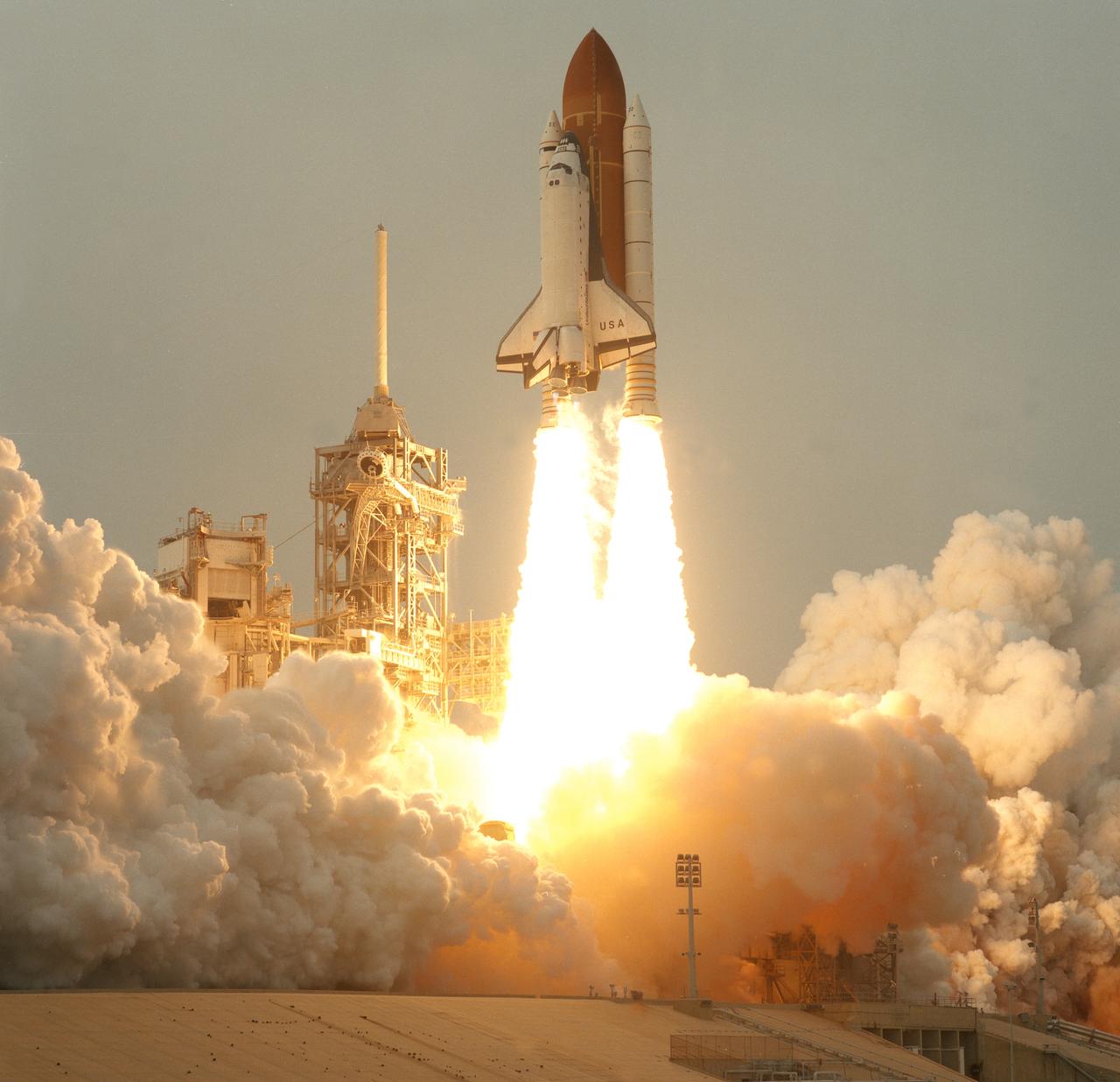
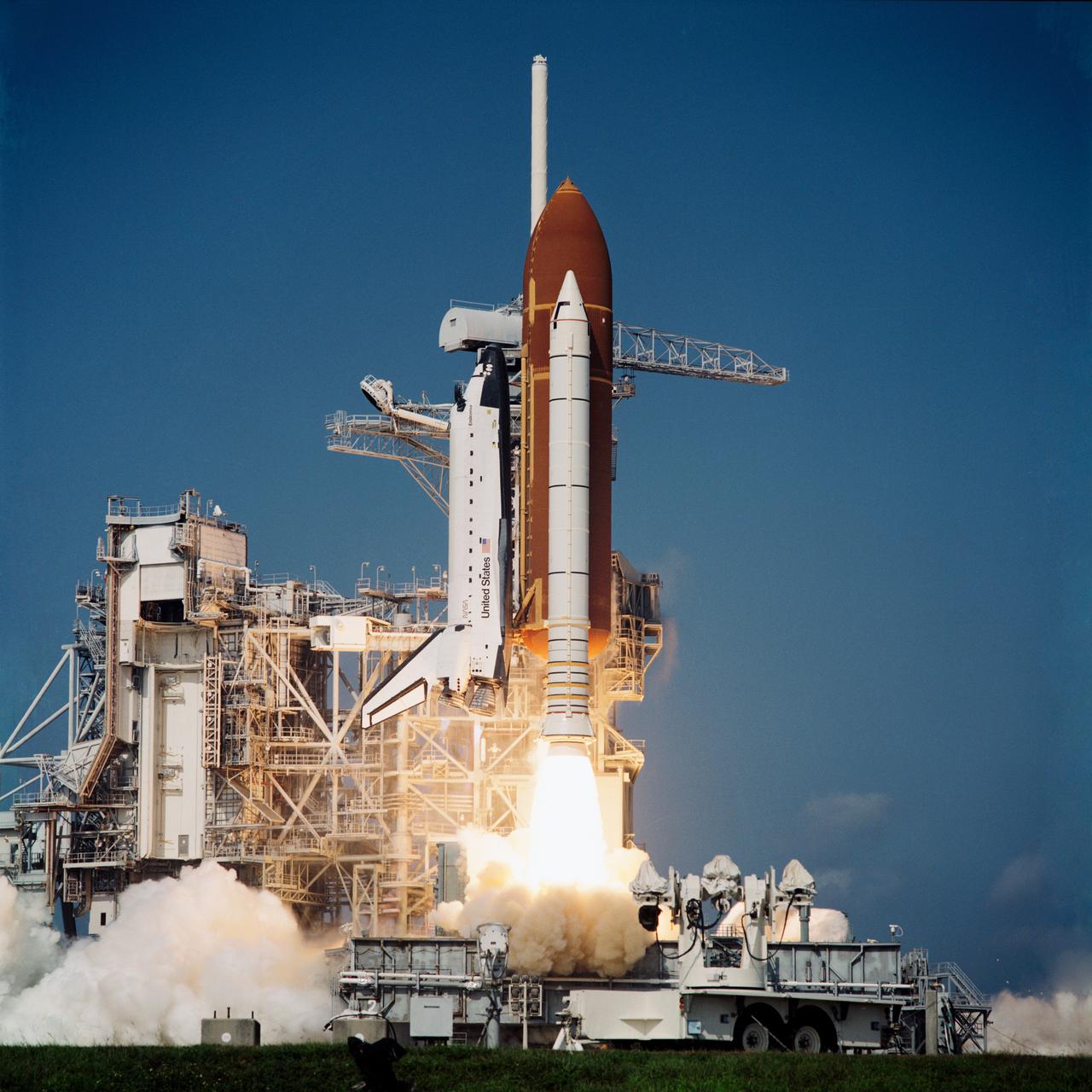
STS049-S-251 (7 May 1992) --- The Space Shuttle Endeavour soars toward Earth orbit where a crew of seven NASA astronauts will spend at least a week. Endeavour, the newest orbiter in NASA's Space Shuttle fleet, lifted off from Pad 39B at 7:40 p.m. (EDT), May 7, 1992. A diamond shock effect can be seen beneath the three main engines. Onboard are astronauts Daniel C. Brandenstein, mission commander; Kevin P. Chilton, pilot; and Richard J. Hieb, Bruce E. Melnick, Pierre J. Thuot, Kathryn C. Thornton and Thomas D. Akers, all mission specialists.
STS-49 Endeavour, Orbiter Vehicle (OV) 105, lifts off from KSC LC Pad 39B
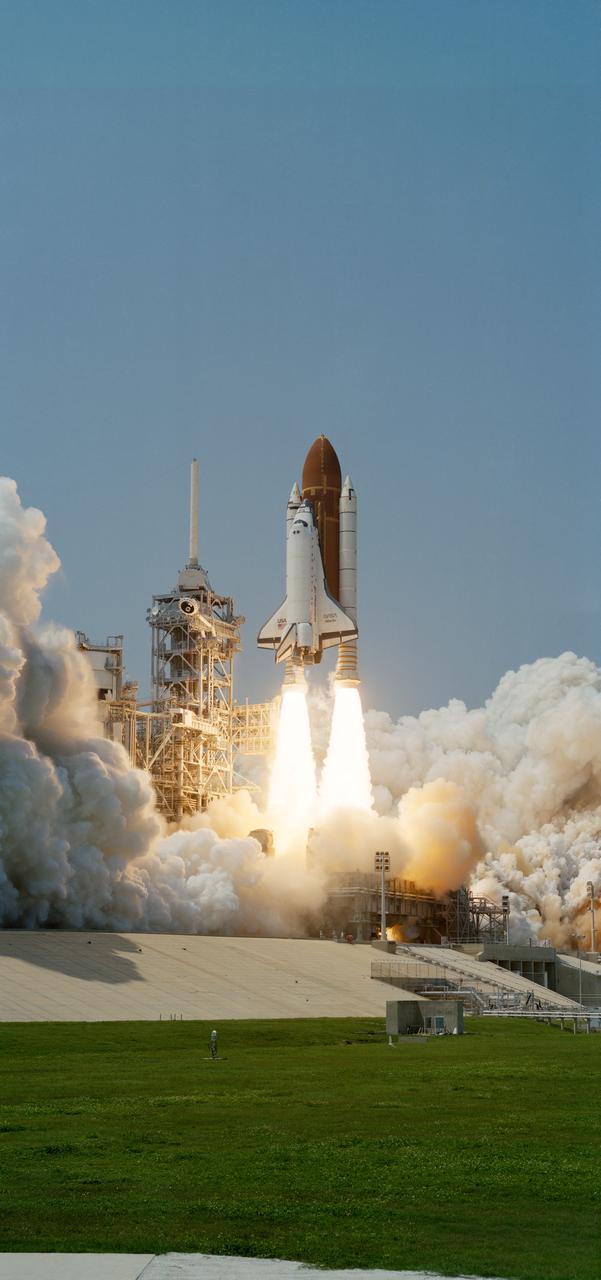
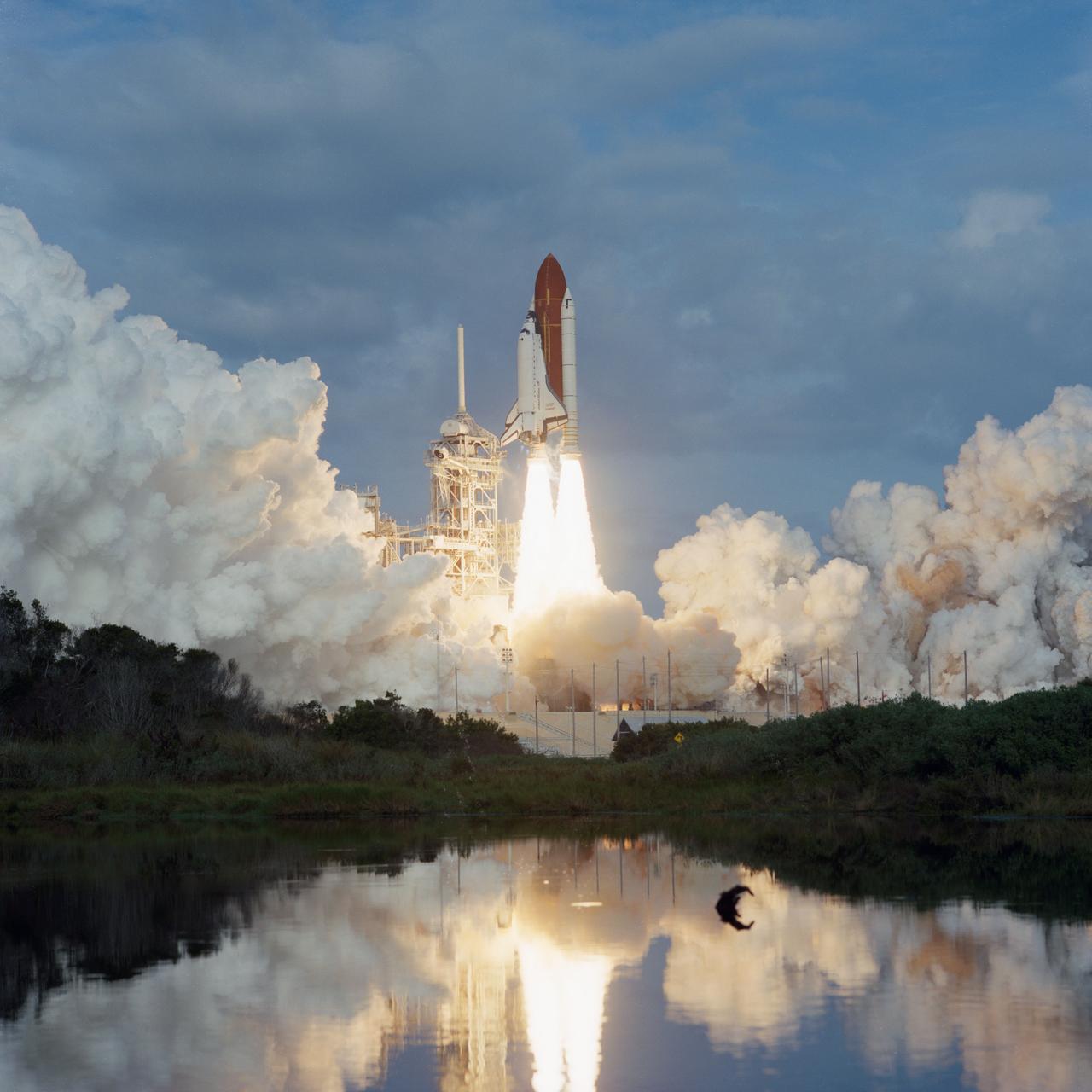
STS-45 Atlantis, Orbiter Vehicle (OV) 104, lifts off from a Kennedy Space Center (KSC) Launch Complex (LC) Pad at 8:13:40:048 am (Eastern Standard Time (EST)). Exhaust billows out the solid rocket boosters (SRBs) as OV-104 atop its external tank (ET) soars above the mobile launcher platform and is nearly clear of the fixed service structure (FSS) tower. The diamond shock effect produced by the space shuttle main engines (SSMEs) is visible. The glow of the SRB/SSME firings is reflected in a nearby waterway. An exhaust cloud covers the launch pad area.
STS-45 Atlantis, OV-104, lifts off from KSC Launch Complex (LC) Pad
STS054-S-057 (13 Jan 1993) --- The Space Shuttle Endeavour soars off the launch pad and heads toward Earth orbit with a crew of five and the Tracking and Data Relay Satellite (TDRS-F) aboard.  Launch occurred at 8:59:30 a.m. (EST), January 13, 1993.  Onboard were John H. Casper, mission commander, Donald R. McMonagle, pilot, Gregory J. Harbaugh, Mario Runco Jr., and Susan J. Helms, mission specialists.
STS-54 Endeavour, Orbiter Vehicle (OV) 105, lifts off from KSC LC Pad 39B
STS053-S-054 (2 Dec 1992) --- The Space Shuttle Discovery, with a crew of five astronauts onboard, launches from Kennedy Space Center?s (KSC) Pad 39A at 8:24:00 a.m. (EST), December 2, 1992.  The photograph was taken from the top of the giant Vehicle Assembly Building (VAB).  The all-military crew supporting the Department of Defense (DOD) flight included astronauts David M. Walker, Robert D. Cabana, Guion S. Bluford, Jr., James S. Voss and Michael R. U. (Rick) Clifford.
STS-53 Discovery, Orbiter Vehicle (OV) 103, lifts off from KSC LC Pad 39A
STS047-S-019 (12 Sept 1992) --- With a crew of six NASA astronauts and a Japanese payload specialist onboard, the Space Shuttle Endeavour heads for its second trip into space.  This trip will be devoted to support of the Spacelab-J mission, a joint effort between Japan and the United States.  Launch occurred at 10:23:00:0680 a.m. (EDT), September 12, 1992. Onboard were astronauts Robert L. Gibson, mission commander; Curtis L. Brown Jr., pilot; Mark C. Lee, payload commander; and Jerome (Jay) Apt, Mae C. Jemison and N. Jan Davis, mission specialists; along with payload specialist Mamoru Mohri, representing the National Space Development Agency of Japan.
STS-47 Endeavour, Orbiter Vehicle (OV) 105, lifts off from KSC LC 39 pad
STS031-S-064 (24 April 1990) --- A horizontal view of the launch of the STS-31 mission.  Onboard Space Shuttle Discovery are the crew of five veteran astronauts and the Hubble Space Telescope (HST).  Official launch time was 8:33:51.0492 a.m. (EDT).  Headed for approximately five days in space are astronauts Loren J. Shriver, Charles F. Bolden, Jr., Bruce McCandless, II, Kathryn D. Sullivan, and Steven A. Hawley.
STS-31 Discovery, Orbiter Vehicle (OV) 103, lifts off from KSC LC Pad 39B
STS047-S-040 (12 Sept 1992) --- A 35mm camera was used to record this distant, low-angle view of the STS-47 launch.  With a crew of six NASA astronauts and a Japanese payload specialist onboard, the Space Shuttle Endeavour was heading for its second trip into space.  This mission is devoted to support of the Spacelab-J mission, a joint effort between Japan and the United States.  Launch occurred at 10:23:00:0680 a.m. (EDT), September 12, 1992.  Onboard were astronauts Robert L. Gibson, mission commander; Curtis L. Brown Jr., pilot; Mark C. Lee, payload commander; and Jerome (Jay) Apt, Mae C.  Jemison and N. Jan Davis, mission specialists; along with payload specialist Mamoru Mohri, representing the National Space Development Agency (NASDA) of Japan.
STS-47 Endeavour, Orbiter Vehicle (OV) 105, lifts off from KSC LC 39 pad
STS047-S-021 (12 Sept 1992) --- With a crew of six NASA astronauts and a Japanese payload specialist onboard, the Space Shuttle Endeavour heads for its second trip into space.  This trip will be devoted to support of the Spacelab-J mission, a joint effort between Japan and the United States.  Launch occurred at 10:23:00:0680 a.m. (EDT), September 12, 1992. Onboard were astronauts Robert L. Gibson, mission commander; Curtis L. Brown Jr., pilot; Mark C. Lee, payload commander; and Jerome (Jay) Apt, Mae C. Jemison and N. Jan Davis, mission specialists, along with payload specialist Mamoru Mohri, representing the National Space Development Agency of Japan.
STS-47 Endeavour, Orbiter Vehicle (OV) 105, lifts off from KSC LC 39 pad
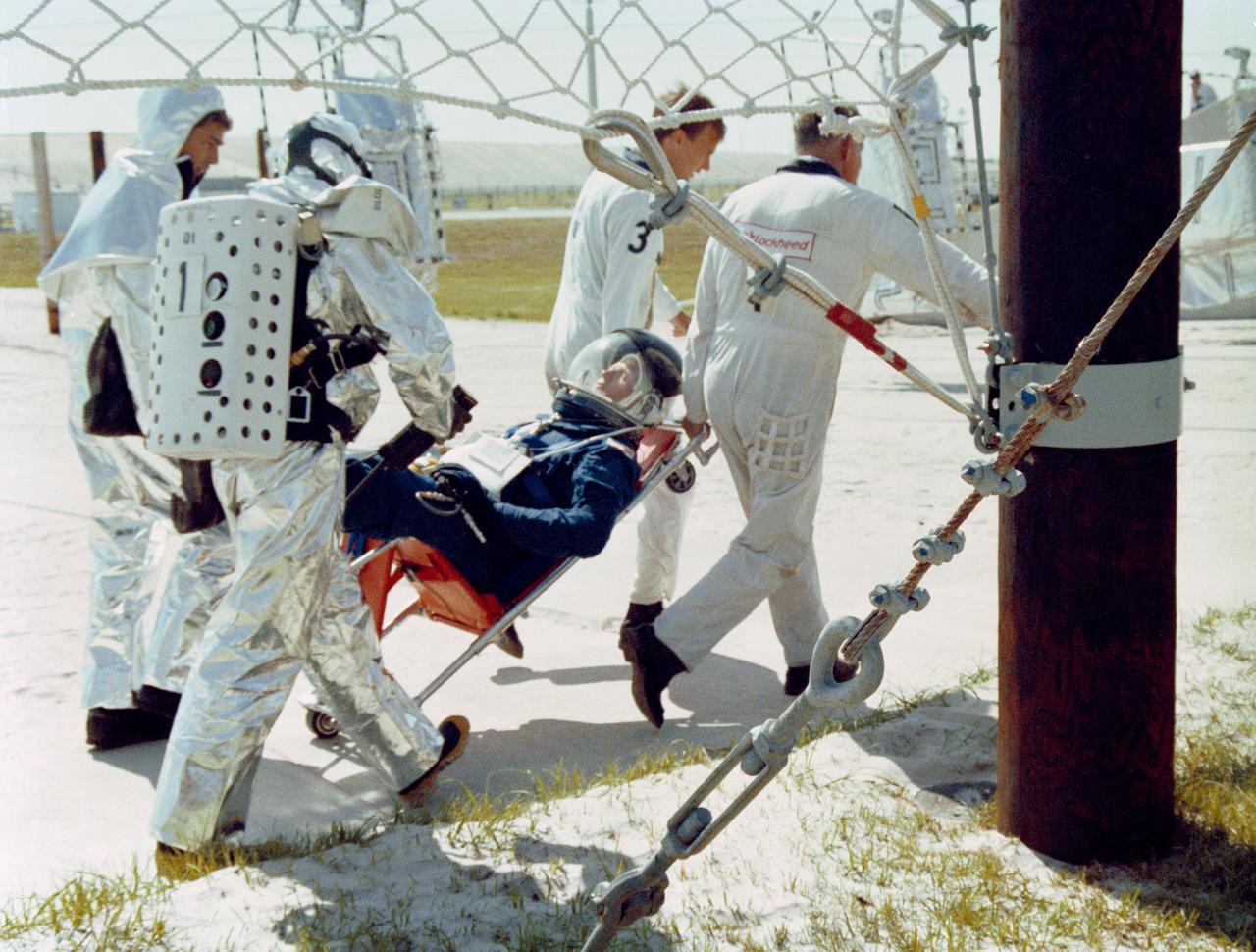
S88-40898 (4 May 1988) --- Astronauts, members of the orbiter close-out crew and fire and rescue personnel participate in a simulated emergency egress exercise near the slide wire termination point bunker at Launch Pad 39B.  The simulated exercise was performed to familiarize personnel with evacuation routes as well as emergency equipment and procedures.  Reasons for conducting the emergency exercises include the need to validate recent post-Challenger upgrades to the launch pad's emergency escape system and the new procedures developed in preparation for STS-26.    (NOTE: The astronaut pictured and many of the others who participated in the exercises are not members of STS-26 prime crew).
STS-26 crew during emergency egress exercise at LC 39 launch pad B
KENNEDY SPACE CENTER, FLA. - Leaving smoke and steam behind, the Delta II rocket with its Mars Exploration Rover (MER-A) payload lifts off the pad on time at 1:58 p.m. EDT from Launch Complex 17-A, Cape Canaveral Air Force Station. MER-A, known as "Spirit," is the first of two rovers being launched to Mars. When the two rovers arrive at the red planet in 2004, they will bounce to airbag-cushioned landings at sites offering a balance of favorable conditions for safe landings and interesting science. The rovers see sharper images, can explore farther and examine rocks better than anything that has ever landed on Mars. The designated site for the MER-A mission is Gusev Crater, which appears to have been a crater lake. The second rover, MER-B, is scheduled to launch June 25.
KENNEDY SPACE CENTER, FLA. - Amid billows of smoke and steam, the Delta II rocket with its Mars Exploration Rover (MER-A) payload lifts off the pad on time at 1:58 p.m. EDT from Launch Complex 17-A, Cape Canaveral Air Force Station. MER-A, known as "Spirit," is the first of two rovers being launched to Mars. When the two rovers arrive at the red planet in 2004, they will bounce to airbag-cushioned landings at sites offering a balance of favorable conditions for safe landings and interesting science. The rovers see sharper images, can explore farther and examine rocks better than anything that has ever landed on Mars. The designated site for the MER-A mission is Gusev Crater, which appears to have been a crater lake. The second rover, MER-B, is scheduled to launch June 25.
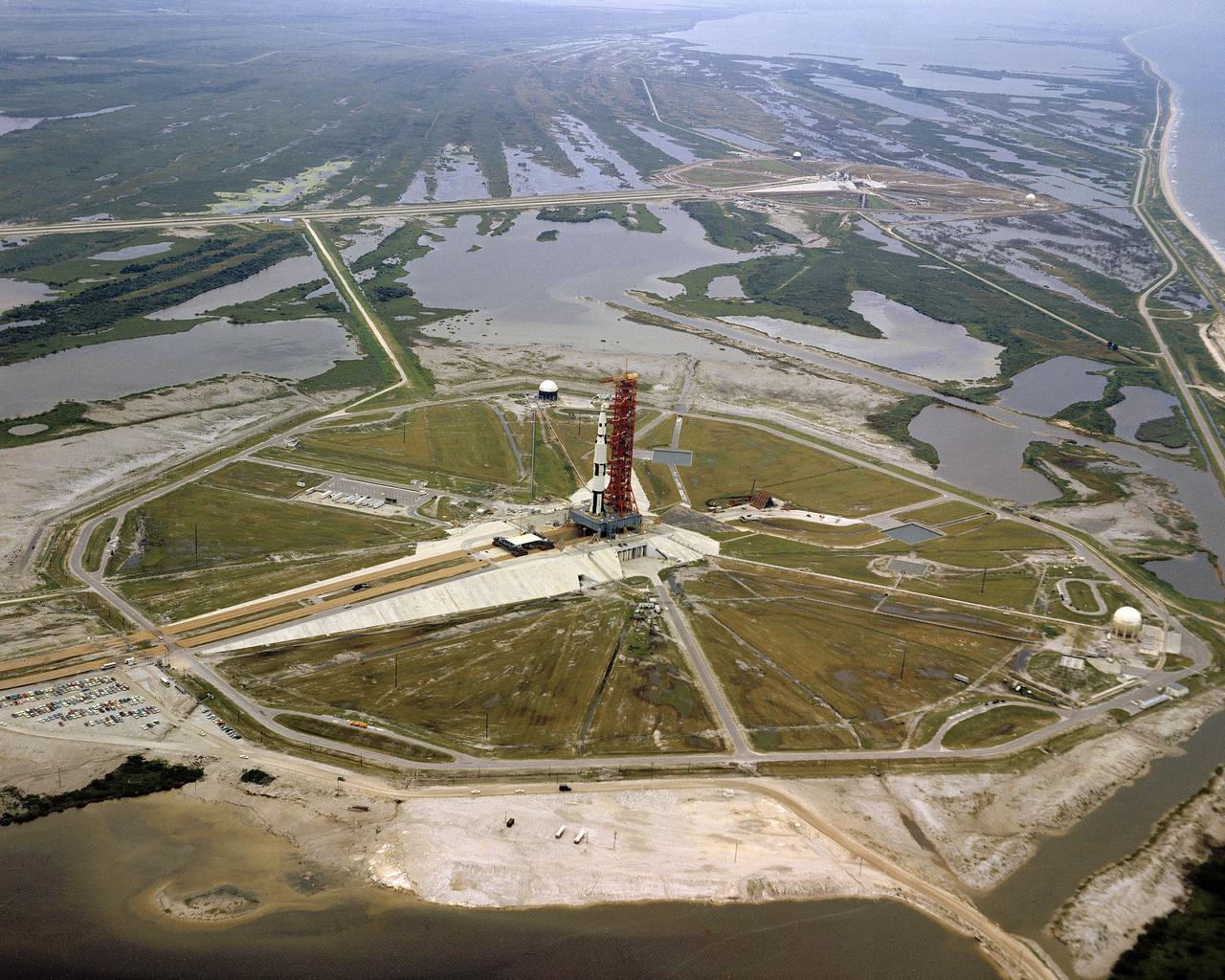
CAPE KENNEDY, Fla. -- An aerial view of Launch Complex 39A at the Kennedy Space Center in Florida, with the 500F facilities verification vehicle on the pad during testing of the site where NASA plans to launch astronauts to the moon as part of the Apollo Program. Photo Credit: NASA
KSC-66C-6962
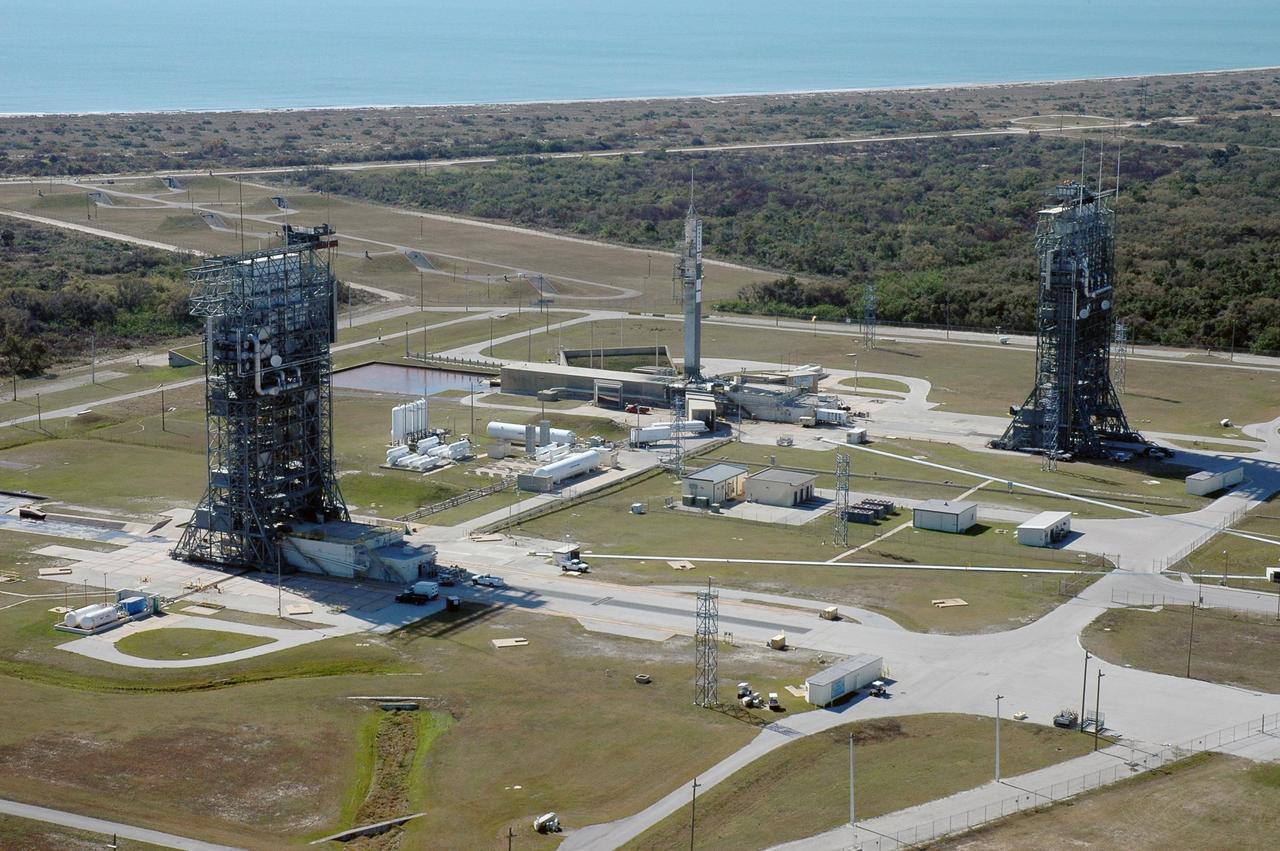
KENNEDY SPACE CENTER, FLA.  - This aerial view shows the Delta II launch pads at Complex 17 on Cape Canaveral Air Force Station in Florida, rimmed by the blue Atlantic Ocean in the background.  Photo credit: Cory Huston
KSC-06pd0384
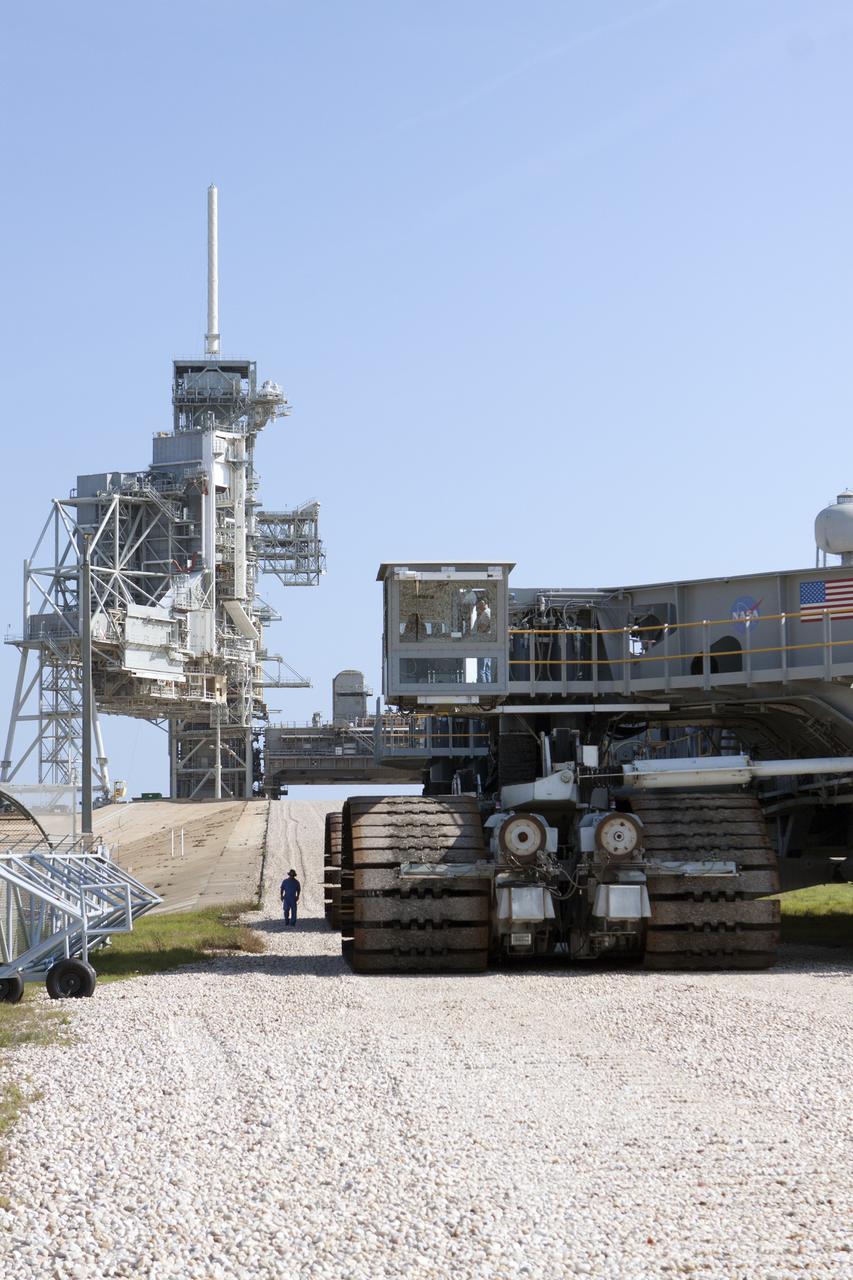
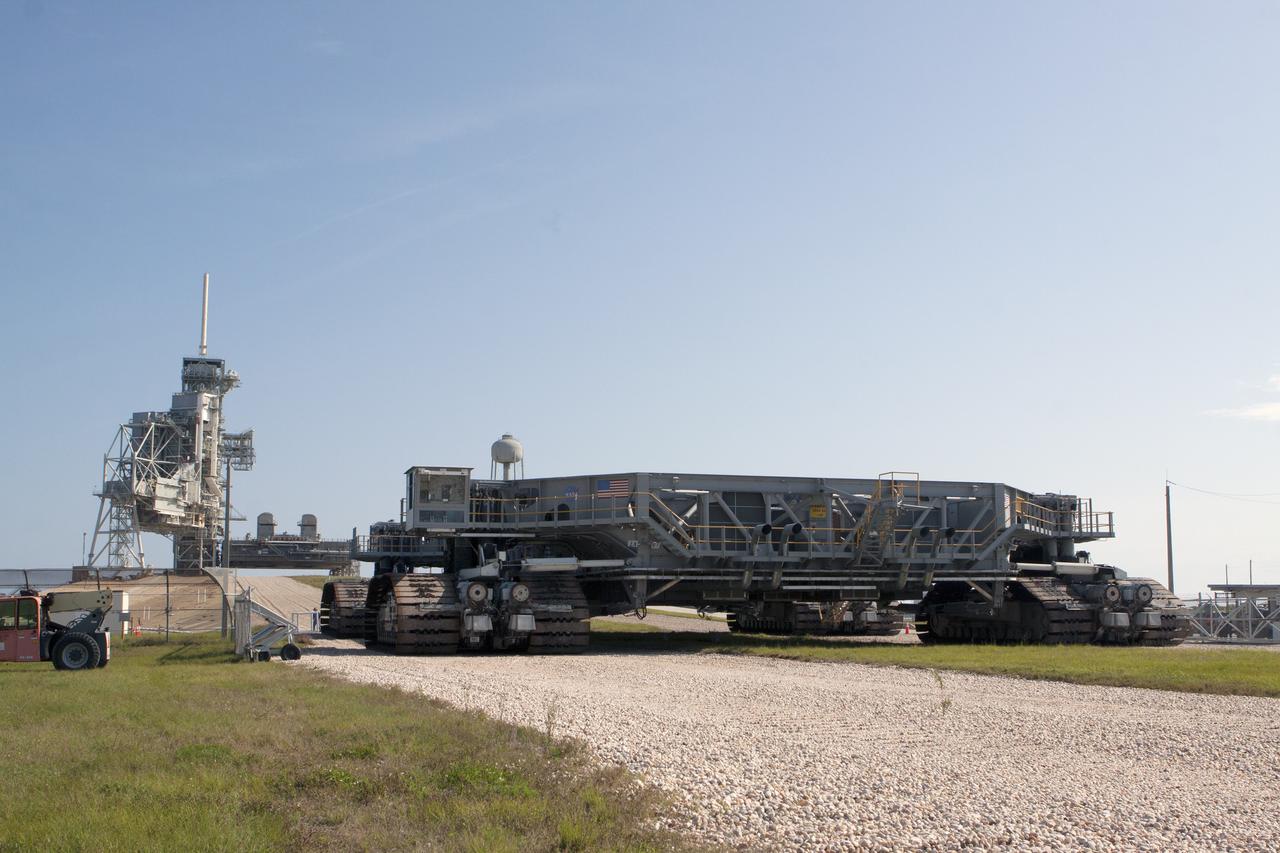
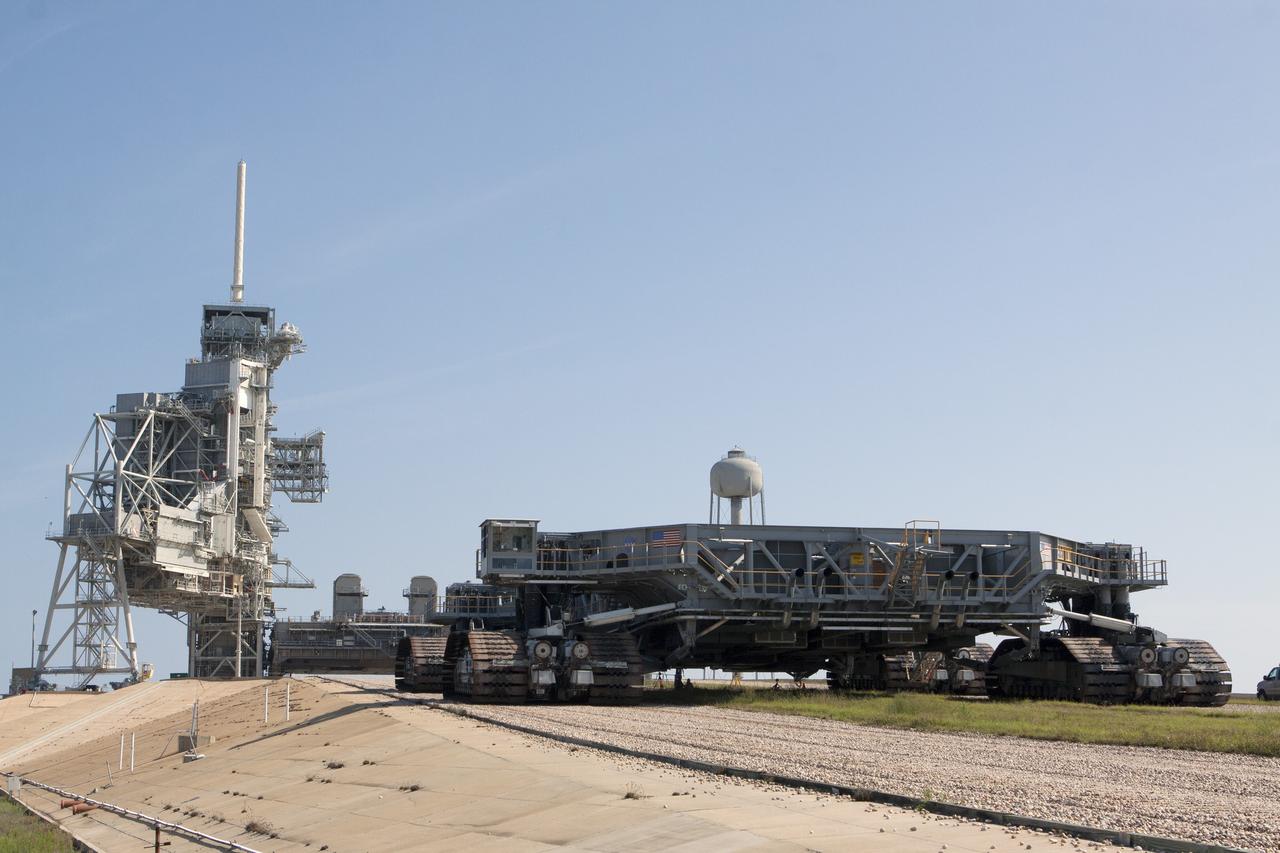
CAPE CANAVERAL, Fla. -- A crawler-transporter rolls toward Launch Pad 39A at NASA's Kennedy Space Center in Florida. Operations are underway to move Mobile Launcher Platform-2, or MLP-2, from the pad to a nearby park site in Launch Complex 39.      The historic launch pad was the site from which numerous Apollo and space shuttle missions began and is beginning a new mission as a commercial launch site. NASA signed a property agreement with Space Exploration Technologies Corp., or SpaceX, of Hawthorne, California, on April 14 for use and occupancy of the seaside complex along Florida's central east coast. It will serve as a platform for SpaceX to support their commercial launch activities.  For more information on Launch Pad 39A, visit http://www.nasa.gov/centers/kennedy/pdf/167416main_LC39-08.pdf. For learn more about the crawler-transporter, visit http://www.nasa.gov/centers/kennedy/pdf/167402main_crawlertransporters07.pdf. Photo credit: NASA/Kim Shiflett
KSC-2014-2615
CAPE CANAVERAL, Fla. -- A crawler-transporter begins its climb to the hardstand at Launch Pad 39A at NASA's Kennedy Space Center in Florida. Operations are underway to move Mobile Launcher Platform-2, or MLP-2, from the pad to a nearby park site in Launch Complex 39.      The historic launch pad was the site from which numerous Apollo and space shuttle missions began and is beginning a new mission as a commercial launch site. NASA signed a property agreement with Space Exploration Technologies Corp., or SpaceX, of Hawthorne, California, on April 14 for use and occupancy of the seaside complex along Florida's central east coast. It will serve as a platform for SpaceX to support their commercial launch activities.  For more information on Launch Pad 39A, visit http://www.nasa.gov/centers/kennedy/pdf/167416main_LC39-08.pdf. For learn more about the crawler-transporter, visit http://www.nasa.gov/centers/kennedy/pdf/167402main_crawlertransporters07.pdf. Photo credit: NASA/Kim Shiflett
KSC-2014-2616
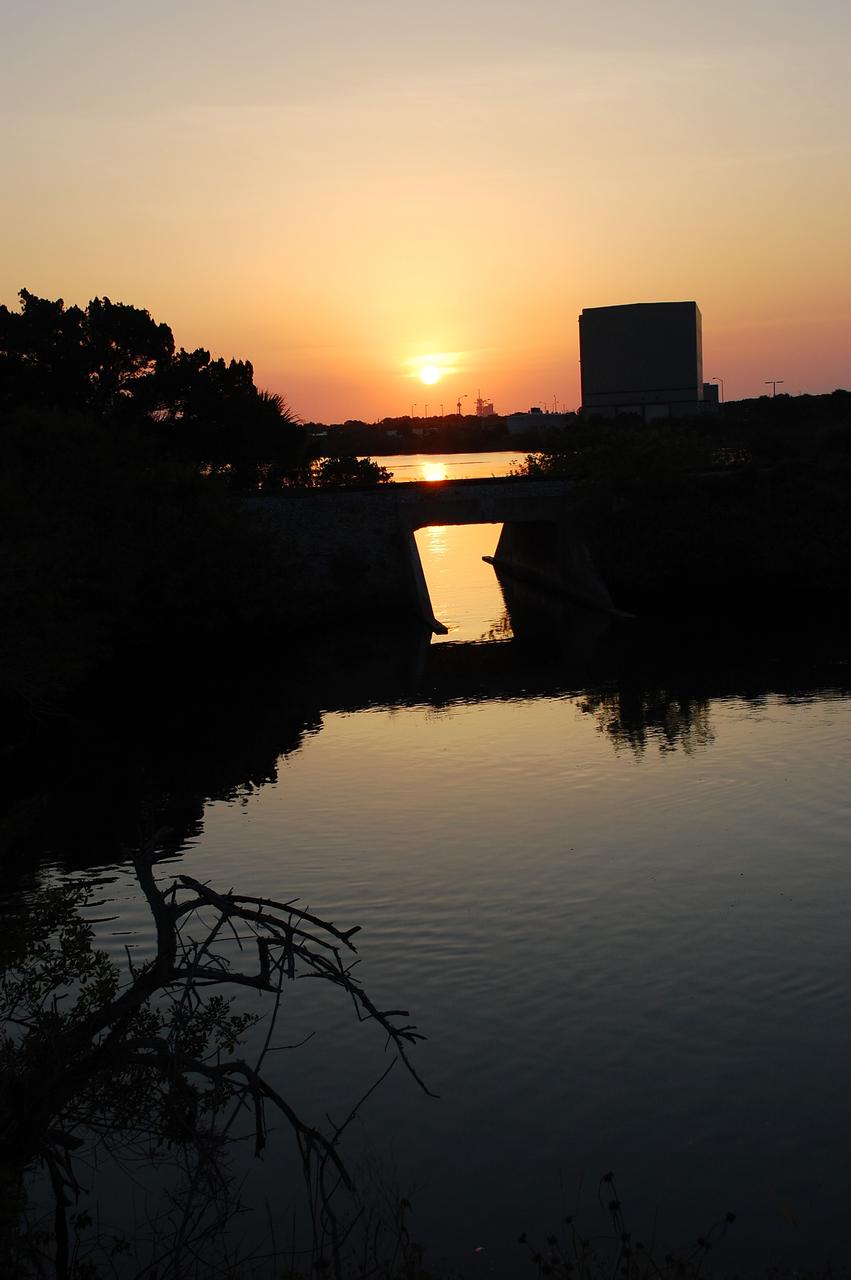
CAPE CANAVERAL, Fla. -- Sunrise is reflected in the water abundant on NASA's Kennedy Space Center in Florida.  In the background are Launch Pad 39A and the Rotation/Processing Facility, which supported solid rocket booster preparations during the Space Shuttle Program.      On this particular morning, preparations are underway for a launch from Space Launch Complex-41 on Cape Canaveral Air Force Station, a part of the spaceport which neighbors Kennedy Space Center.  For more information, visit http://www.nasa.gov/centers/kennedy.  Photo credit: NASA/Ben Smegelsky
KSC-2014-2694
CAPE CANAVERAL, Fla. -- The sun rises over NASA's Kennedy Space Center in Florida. In view at right are Launch Pad 39A and the Rotation/Processing Facility, which supported solid rocket booster preparations during the Space Shuttle Program.      On this particular morning, preparations are underway for a launch from Space Launch Complex-41 on Cape Canaveral Air Force Station, a part of the spaceport which neighbors Kennedy Space Center.  For more information, visit http://www.nasa.gov/centers/kennedy.  Photo credit: NASA/Ben Smegelsky
KSC-2014-2693
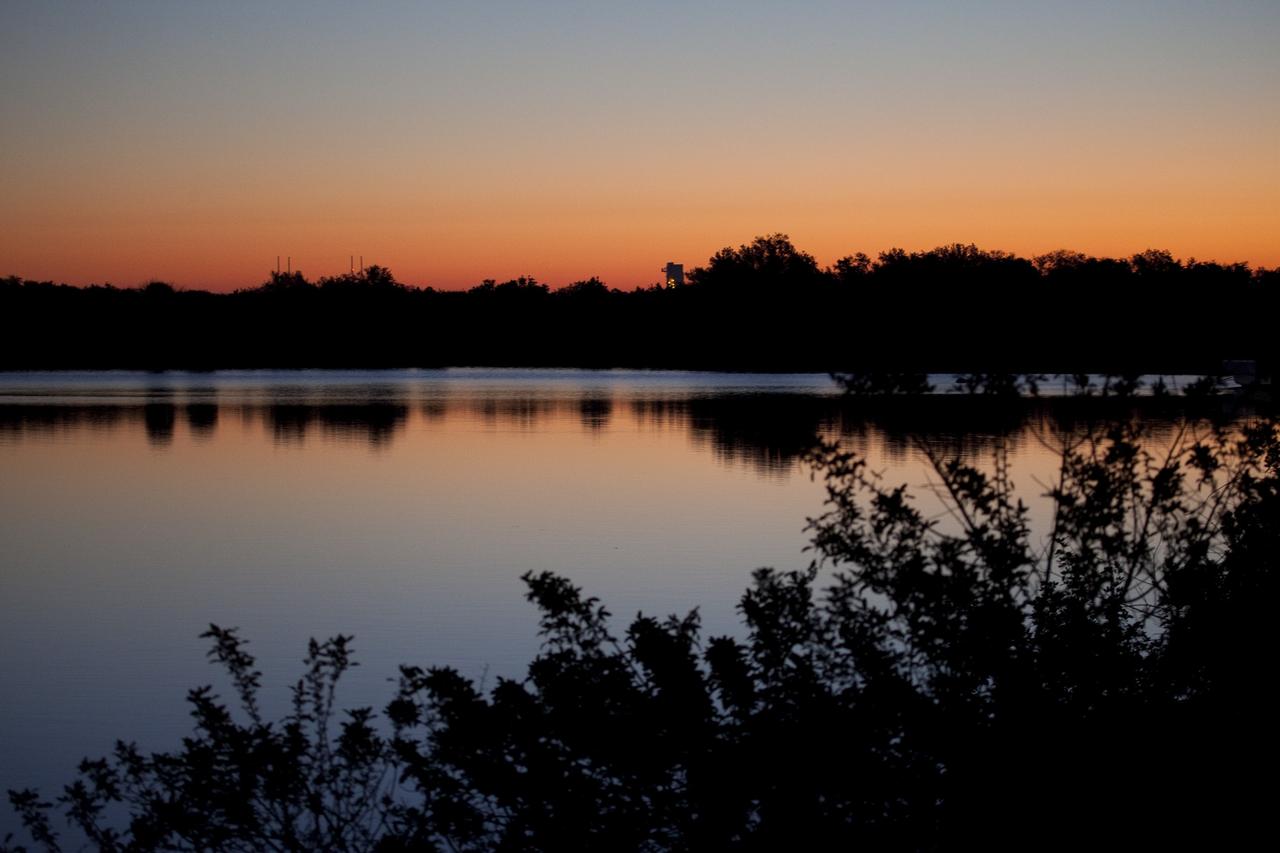
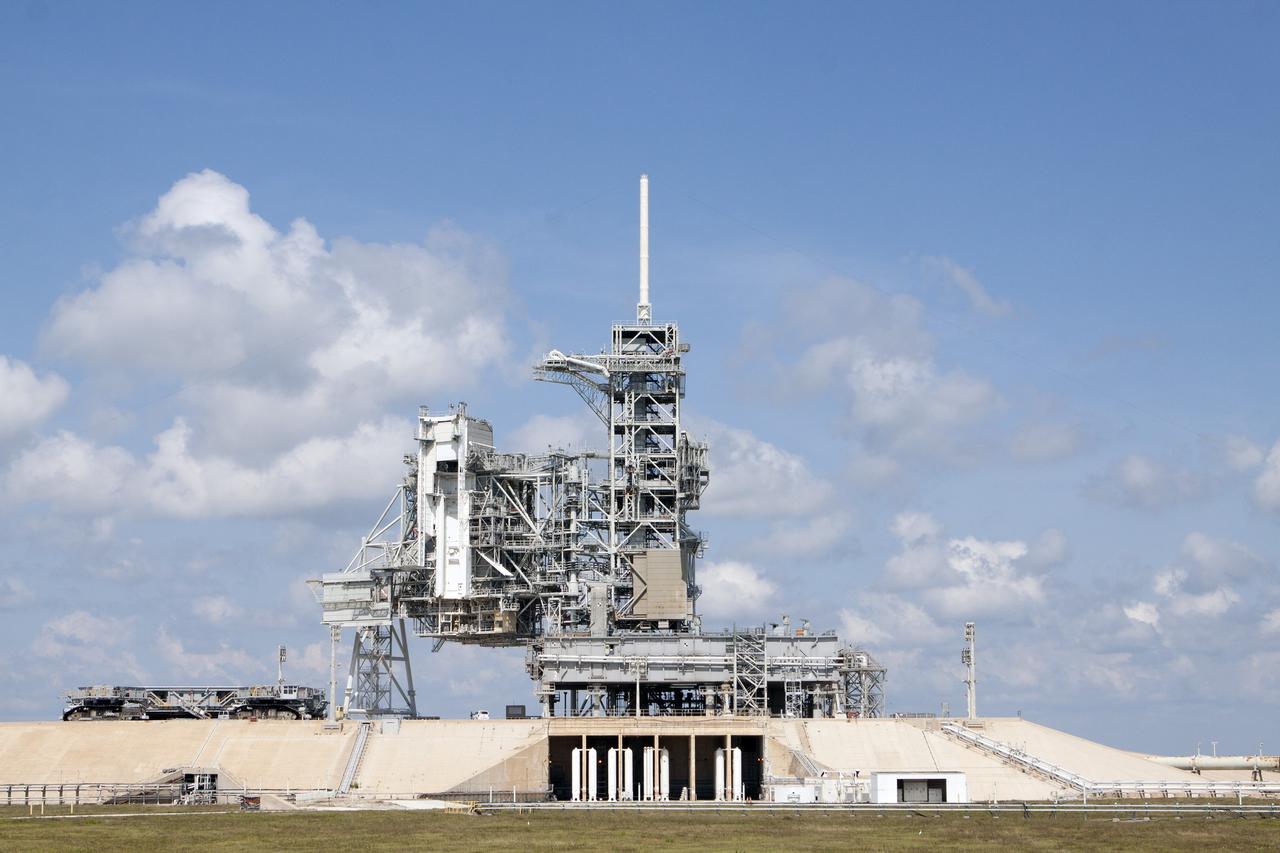
CAPE CANAVERAL, Fla. -- Launch Complex 39 is seen across brackish water as the sun rises at NASA's Kennedy Space Center in Florida. On the left is Launch Pad 39B, which is being restructured for future use. On the right is Launch Pad 39A, where space shuttle Discovery is being prepared for a tanking test.                Kennedy coexists with the Merritt Island National Wildlife Refuge, habitat to more than 310 species of birds, 25 mammals, 117 fish and 65 amphibians and reptiles. Photo credit: NASA/Frank Michaux
KSC-2010-5868
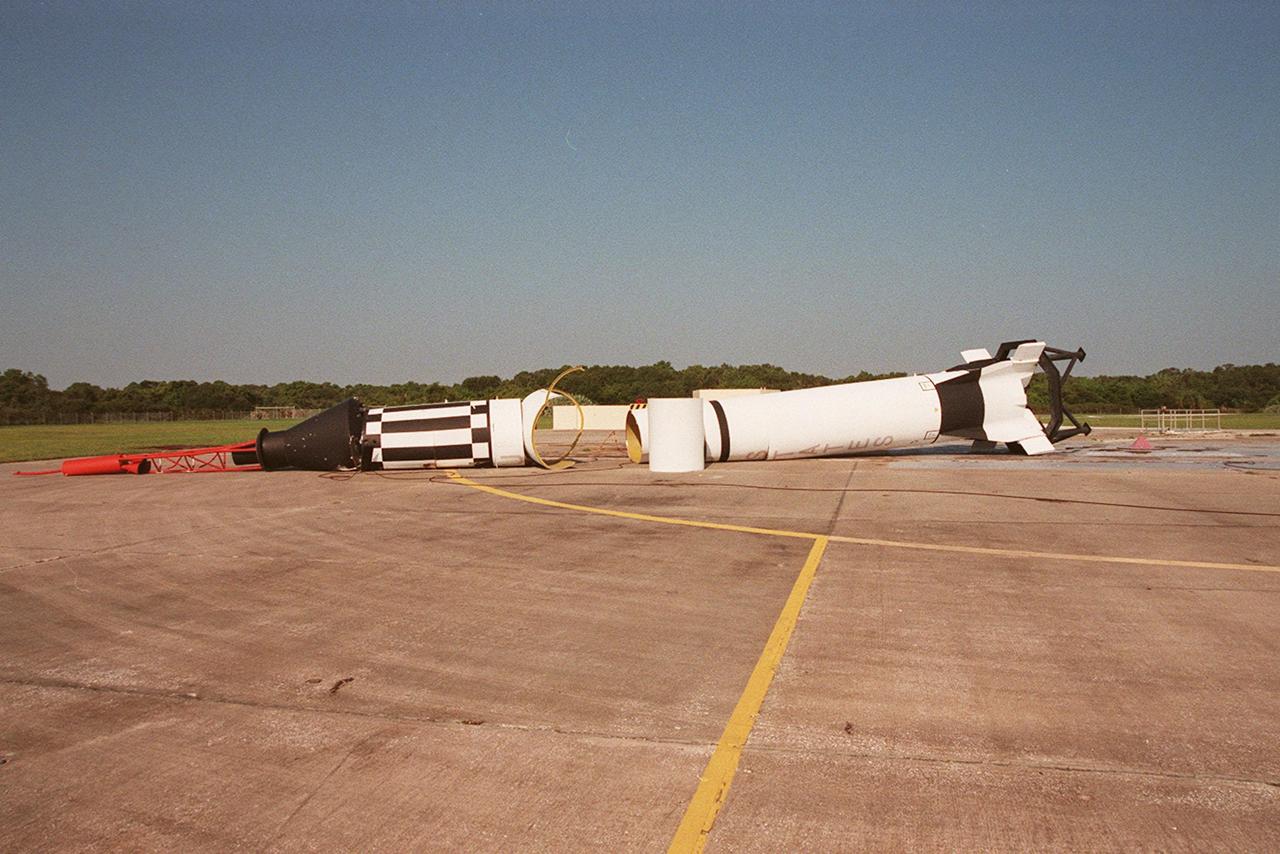
At Cape Canaveral Air Station's Complex 5/6, a Redstone rocket lies broken on the pad after Hurricane Floyd passed along the East Coast of Florida, Sept. 14-15. The complex, now dismantled, was the site of the first manned launch May 5, 1961. At a weather tower located between Shuttle Launch Pad 39A and Launch Complex 41, the highest winds recorded during the superstorm were 91 mph from the NNW at 4:50 a.m. on Wednesday, Sept. 15. The maximum sustained winds were recorded at 66 mph. The highest amount of rain recorded at KSC was 2.82 inches as the eye of Hurricane Floyd passed 121 miles east of Cape Canaveral at 4 a.m. Wednesday. A preliminary review of conditions at the Kennedy Space Center was positive, however, after the worst of Hurricane Floyd passed. There appeared to be no major damage to NASA assets, including the launch pads, the four Space Shuttle Orbiters, and flight hardware
KSC-99pp1126
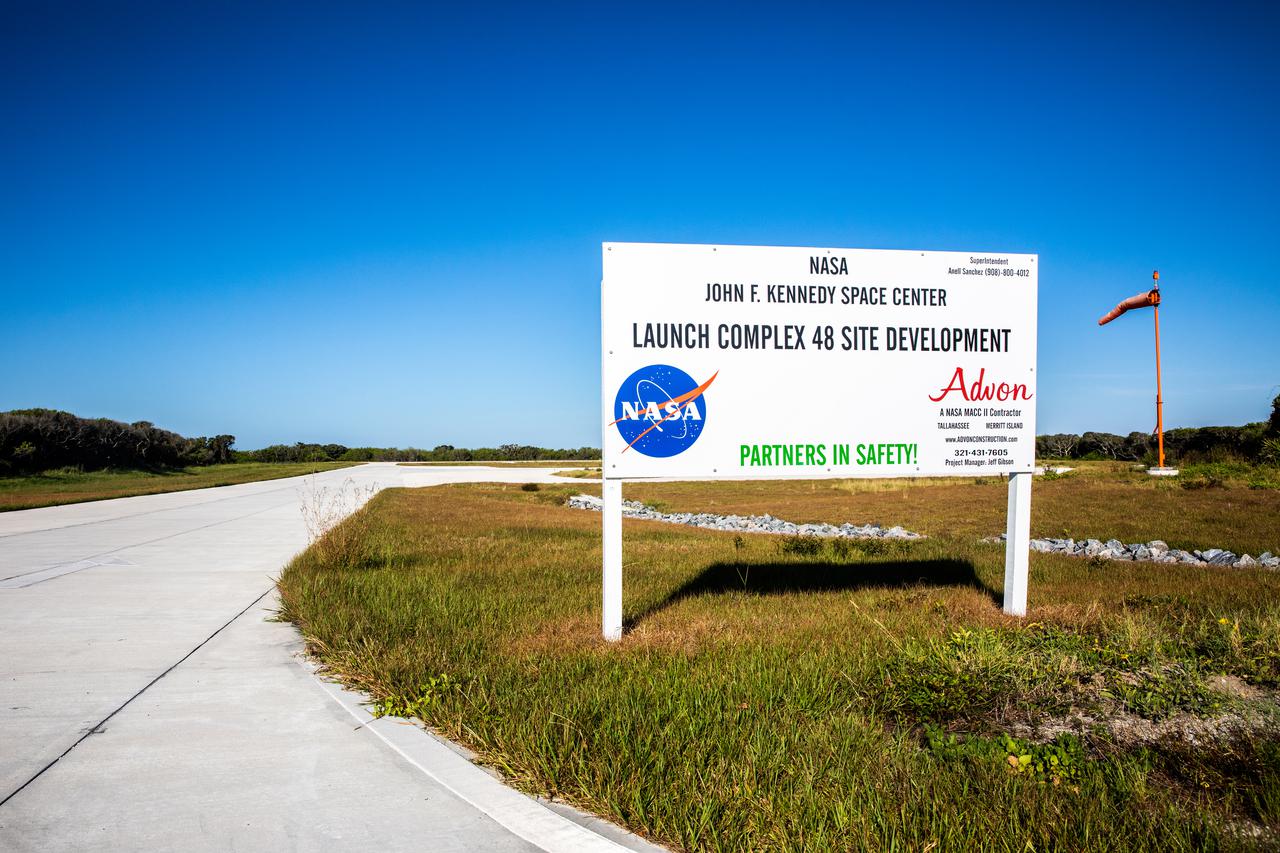
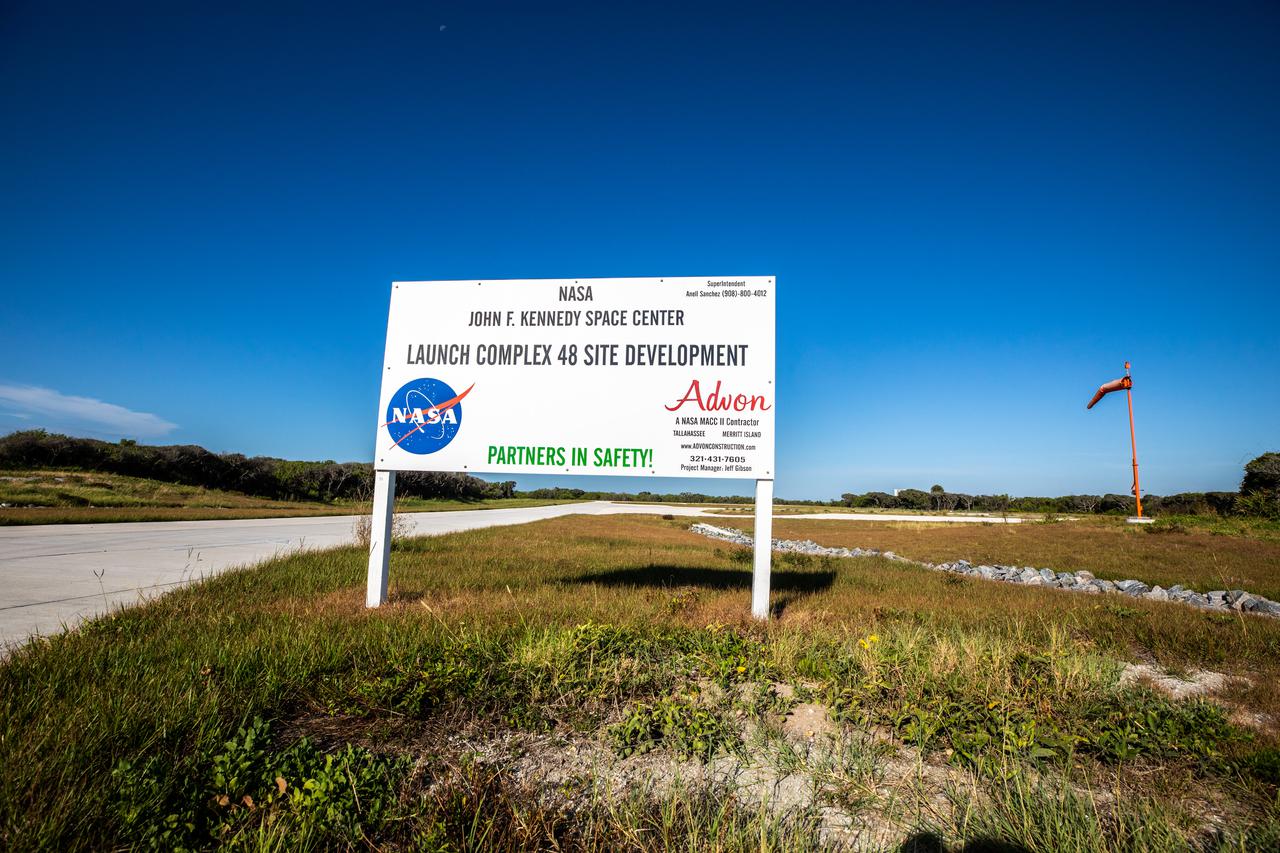
Pictured here is the site of Launch Complex 48 at NASA’s Kennedy Space Center in Florida, on June 1, 2021. The spaceport’s newest launch site is designed specifically for small-class commercial vehicles and the small satellite industry. Located about a mile south of Kennedy’s historic Launch Complex 39A on Cape Road, and completed in August 2020, the 10-acre complex provides a dedicated space for vehicles generating 500,000 pounds of thrust or less. The “clean pad” design and basic infrastructure of Launch Complex 48 offers greater flexibility for small-class vehicle with rockets possessing varying needs.
LC 48 Site Development
Pictured here is the site of Launch Complex 48 at NASA’s Kennedy Space Center in Florida, on June 1, 2021. The spaceport’s newest launch site is designed specifically for small-class commercial vehicles and the small satellite industry. Located about a mile south of Kennedy’s historic Launch Complex 39A on Cape Road, and completed in August 2020, the 10-acre complex provides a dedicated space for vehicles generating 500,000 pounds of thrust or less. The “clean pad” design and basic infrastructure of Launch Complex 48 offers greater flexibility for small-class vehicle with rockets possessing varying needs.
LC 48 Site Development
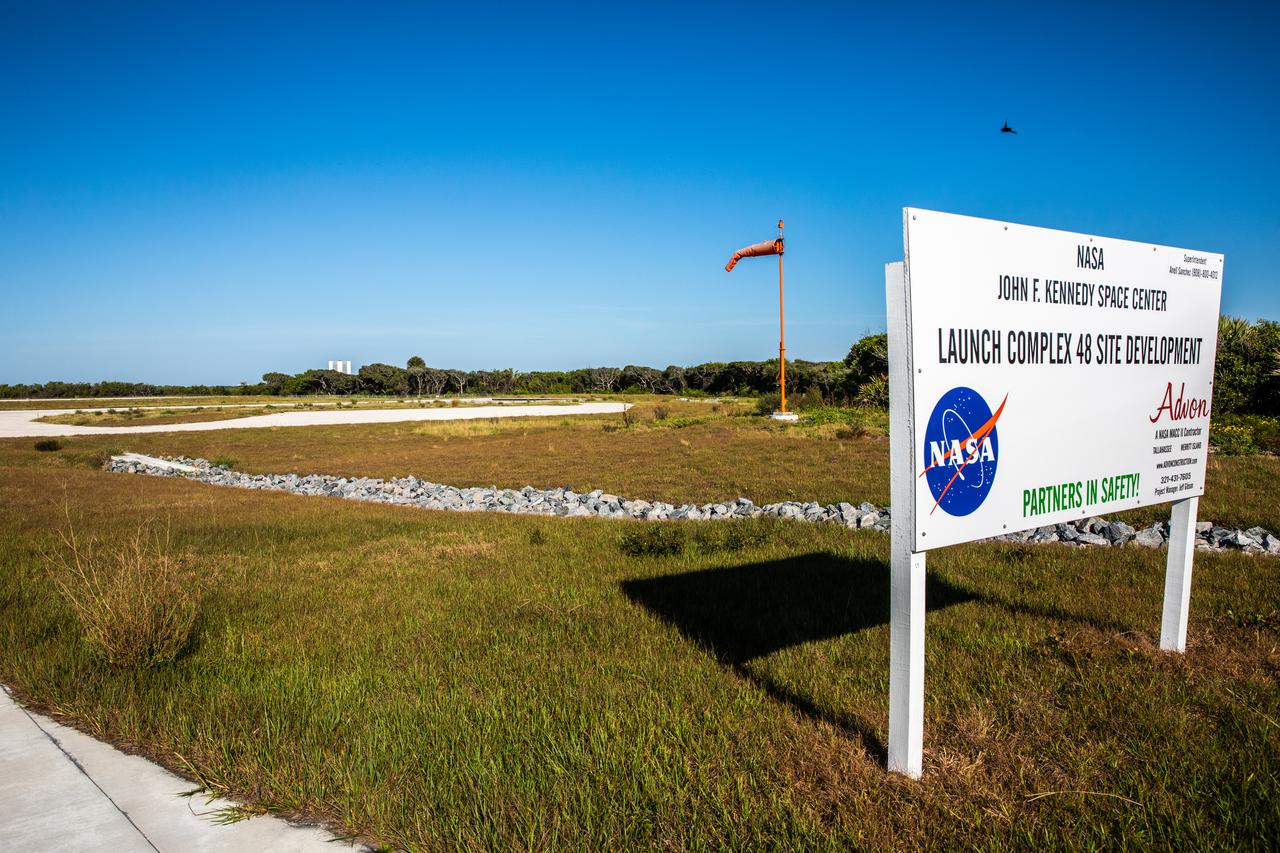
Pictured here is the site of Launch Complex 48 at NASA’s Kennedy Space Center in Florida, on June 1, 2021. The spaceport’s newest launch site is designed specifically for small-class commercial vehicles and the small satellite industry. Located about a mile south of Kennedy’s historic Launch Complex 39A on Cape Road, and completed in August 2020, the 10-acre complex provides a dedicated space for vehicles generating 500,000 pounds of thrust or less. The “clean pad” design and basic infrastructure of Launch Complex 48 offers greater flexibility for small-class vehicle with rockets possessing varying needs.
LC 48 Site Development
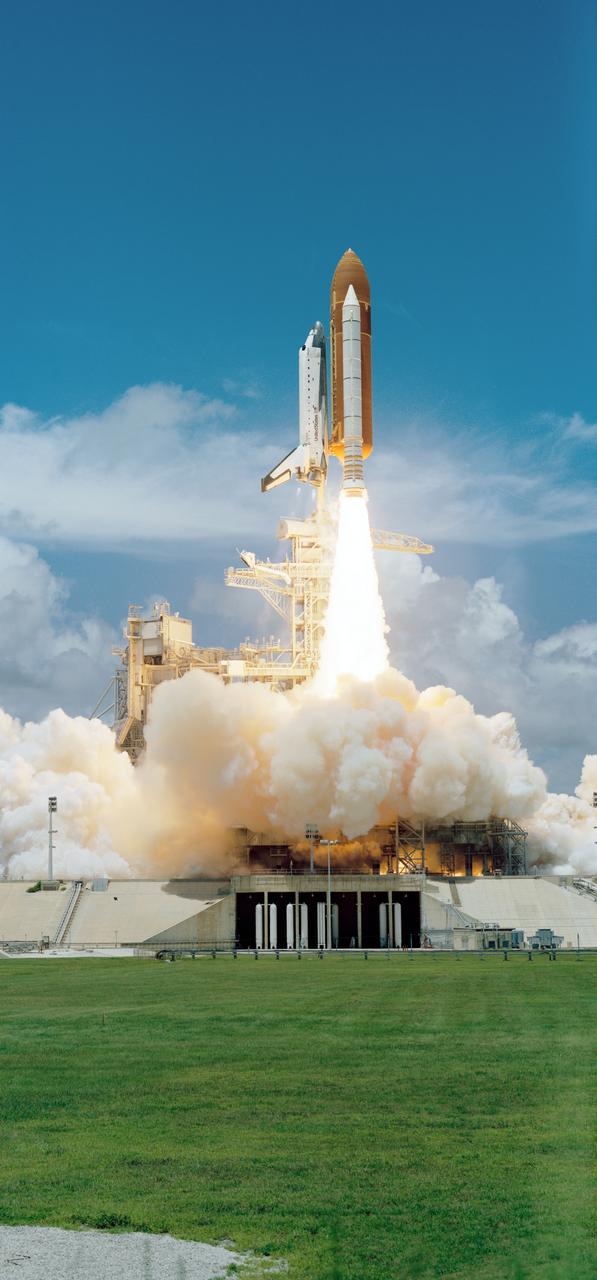
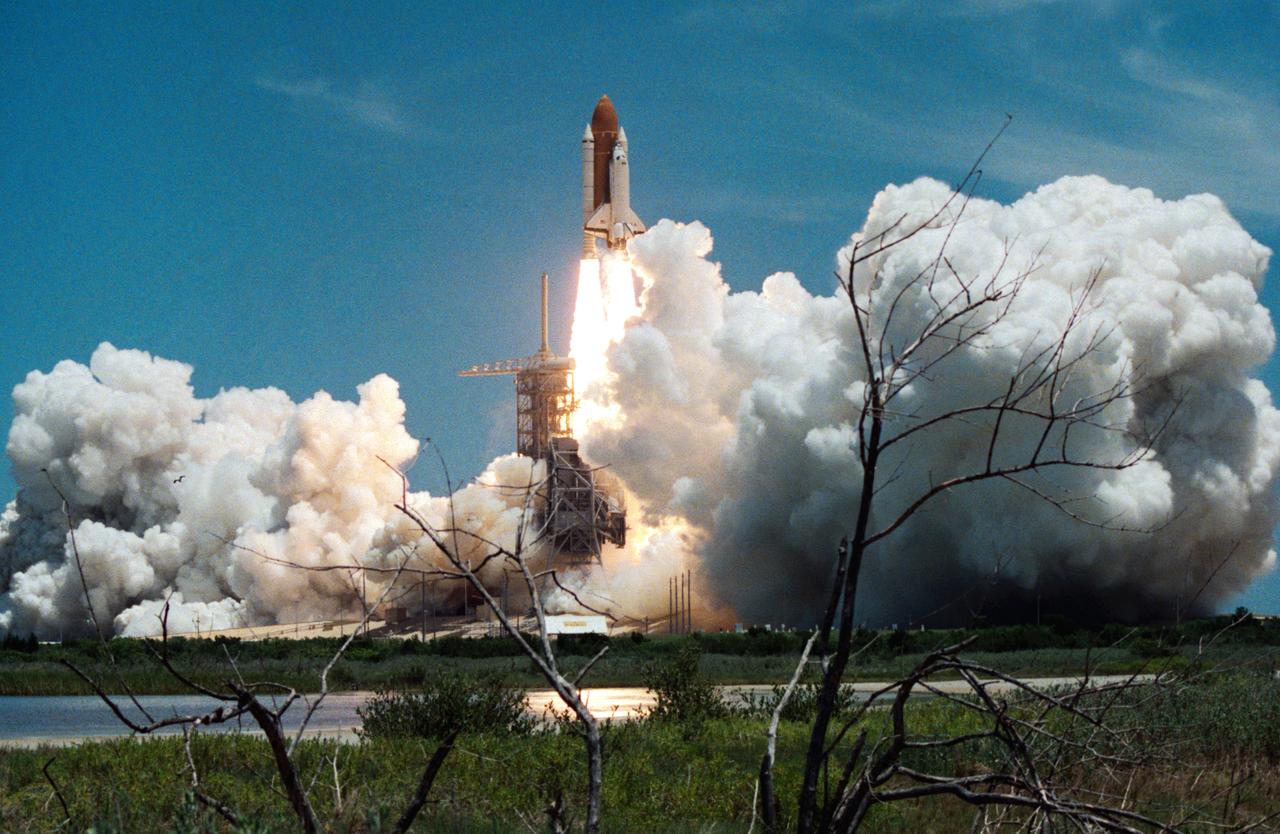
CAPE CANAVERAL, Fla. -- A crawler-transporter begins its climb toward Mobile Launcher Platform-2, or MLP-2, on the hardstand at Launch Pad 39A at NASA's Kennedy Space Center in Florida. Operations are underway to move the MLP to a nearby park site in Launch Complex 39.      The historic launch pad was the site from which numerous Apollo and space shuttle missions began and is beginning a new mission as a commercial launch site. NASA signed a property agreement with Space Exploration Technologies Corp., or SpaceX, of Hawthorne, California, on April 14 for use and occupancy of the seaside complex along Florida's central east coast. It will serve as a platform for SpaceX to support their commercial launch activities.  For more information on Launch Pad 39A, visit http://www.nasa.gov/centers/kennedy/pdf/167416main_LC39-08.pdf. For learn more about the crawler-transporter, visit http://www.nasa.gov/centers/kennedy/pdf/167402main_crawlertransporters07.pdf. Photo credit: NASA/Kim Shiflett
KSC-2014-2617
CAPE CANAVERAL, Fla. -- A crawler-transporter nears the Mobile Launcher Platform-2, or MLP-2, positioned over the flame trench at Launch Pad 39A at NASA's Kennedy Space Center in Florida. Operations are underway to move the MLP to a nearby park site in Launch Complex 39.      The historic launch pad was the site from which numerous Apollo and space shuttle missions began and is beginning a new mission as a commercial launch site. NASA signed a property agreement with Space Exploration Technologies Corp., or SpaceX, of Hawthorne, California, on April 14 for use and occupancy of the seaside complex along Florida's central east coast. It will serve as a platform for SpaceX to support their commercial launch activities.  For more information on Launch Pad 39A, visit http://www.nasa.gov/centers/kennedy/pdf/167416main_LC39-08.pdf. For learn more about the crawler-transporter, visit http://www.nasa.gov/centers/kennedy/pdf/167402main_crawlertransporters07.pdf. Photo credit: NASA/Kim Shiflett
KSC-2014-2619
CAPE CANAVERAL, Fla. -- A crawler-transporter creeps toward Mobile Launcher Platform-2, or MLP-2, on the hardstand at Launch Pad 39A at NASA's Kennedy Space Center in Florida. Operations are underway to move the MLP to a nearby park site in Launch Complex 39.      The historic launch pad was the site from which numerous Apollo and space shuttle missions began and is beginning a new mission as a commercial launch site. NASA signed a property agreement with Space Exploration Technologies Corp., or SpaceX, of Hawthorne, California, on April 14 for use and occupancy of the seaside complex along Florida's central east coast. It will serve as a platform for SpaceX to support their commercial launch activities.  For more information on Launch Pad 39A, visit http://www.nasa.gov/centers/kennedy/pdf/167416main_LC39-08.pdf. For learn more about the crawler-transporter, visit http://www.nasa.gov/centers/kennedy/pdf/167402main_crawlertransporters07.pdf. Photo credit: NASA/Kim Shiflett
KSC-2014-2618
CAPE CANAVERAL, Fla. -- A crawler-transporter carries Mobile Launcher Platform-2, or MLP-2, away from Launch Pad 39A at NASA's Kennedy Space Center in Florida. The MLP is being moved to a nearby park site in Launch Complex 39.      The historic launch pad was the site from which numerous Apollo and space shuttle missions began and is beginning a new mission as a commercial launch site. NASA signed a property agreement with Space Exploration Technologies Corp., or SpaceX, of Hawthorne, California, on April 14 for use and occupancy of the seaside complex along Florida's central east coast. It will serve as a platform for SpaceX to support their commercial launch activities.  For more information on Launch Pad 39A, visit http://www.nasa.gov/centers/kennedy/pdf/167416main_LC39-08.pdf. For learn more about the crawler-transporter, visit http://www.nasa.gov/centers/kennedy/pdf/167402main_crawlertransporters07.pdf. Photo credit: NASA/Kim Shiflett
KSC-2014-2622
KENNEDY SPACE CENTER, FLA. -- An empty payload canister moves slowly to Launch Pad 39B alongside the crawlerway. In the near background is a crawler-transporter. Across the water, on the horizon can be seen buildings on the launch complexes at Cape Canaveral Air Force Station
KSC01pp0111
KENNEDY SPACE CENTER, FLA. -- An empty payload canister moves slowly to Launch Pad 39B alongside the crawlerway. In the near background is a crawler-transporter. Across the water, on the horizon can be seen buildings on the launch complexes at Cape Canaveral Air Force Station
KSC-01PP-0111
KENNEDY SPACE CENTER, FLA. -- An empty payload canister moves slowly to Launch Pad 39B alongside the crawlerway. In the near background is a crawler-transporter. Across the water, on the horizon can be seen buildings on the launch complexes at Cape Canaveral Air Force Station
KSC01pp0112
KENNEDY SPACE CENTER, FLA. -- An empty payload canister moves slowly to Launch Pad 39B alongside the crawlerway. In the near background is a crawler-transporter. Across the water, on the horizon can be seen buildings on the launch complexes at Cape Canaveral Air Force Station
KSC-01PP-0112
STS-26 Discovery, Orbiter Vehicle (OV) 103, lifts off from mobile launcher platform at Kennedy Space Center (KSC) Launch Complex (LC) pad 39B. Riding atop the orange external tank (ET), OV-103 heads for Earth orbit as the exhaust plumes from the two solid rocket boosters (SRBs) cover the mobile launcher platform and the area surrounding the launch pad. SRB firings are reflected in a nearby waterway. In the foreground are trees and several birds in flight. STS-26 marks OV-103's first flight since September 1985 and NASA's first manned mission since the 51L Challenger accident, 01-28-86.
STS-26 Discovery, Orbiter Vehicle (OV) 103, lifts off from KSC LC pad 39B
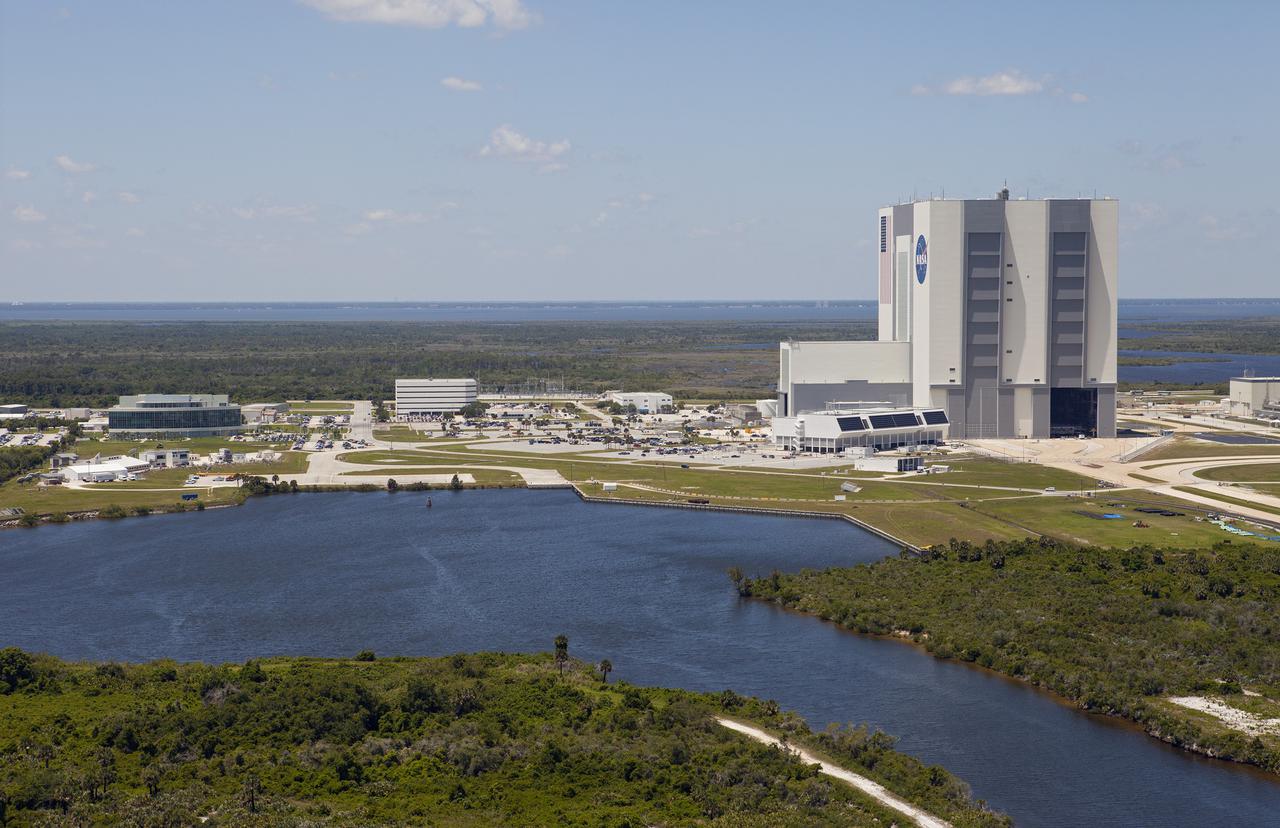
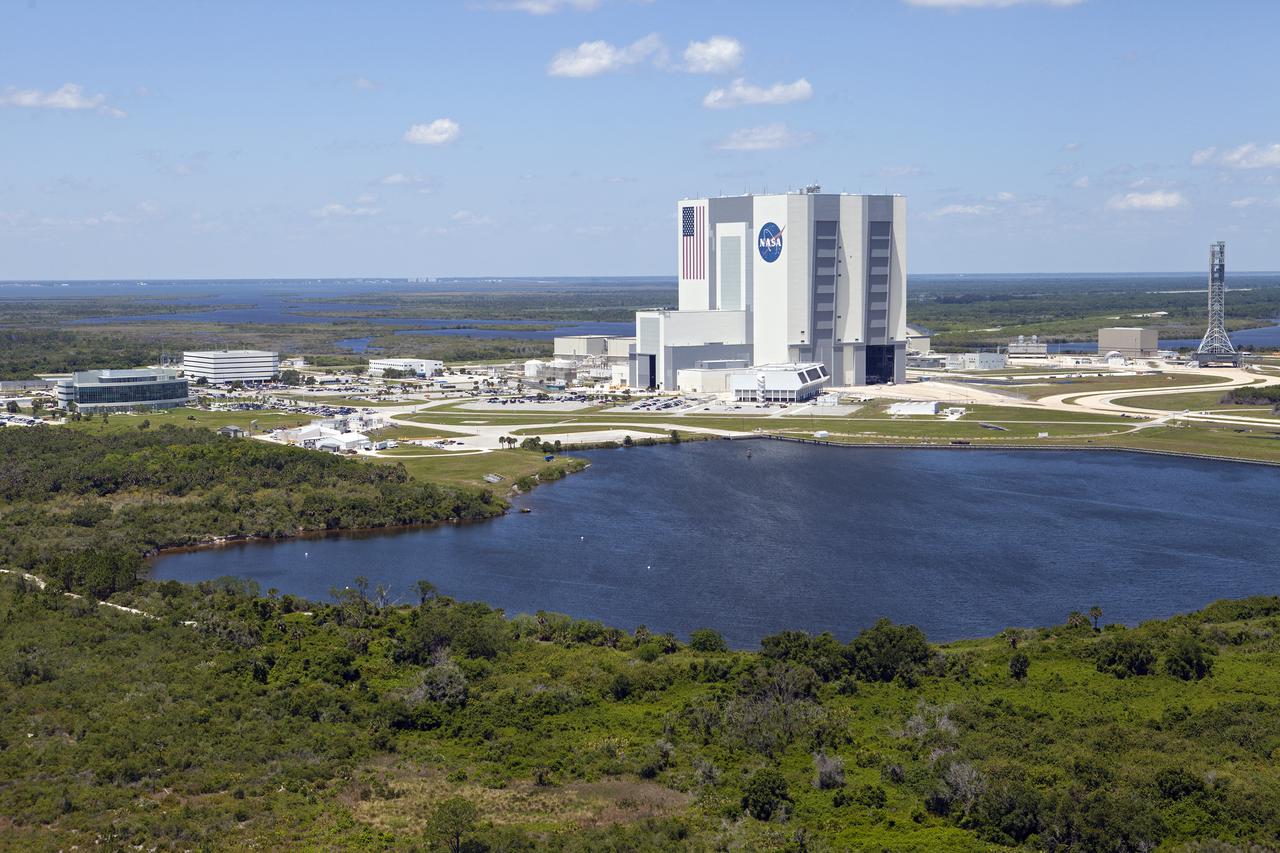
CAPE CANAVERAL, Fla. – An up close aerial view of the Vehicle Assembly Building and other facilities in the Launch Complex 39 area at NASA’s Kennedy Space Center in Florida. In front of the VAB is the Launch Control Center. To the left are the Operations Support Buildings I and II.    Upgrades are underway at Pad B and other facilities in the Launch Complex 39 area. The Ground Systems Development and Operations, or GSDO, Program office at Kennedy is leading the center’s transformation from a historically government-only launch complex to a spaceport that can safely handle a variety of rockets and spacecraft, including NASA’s Space Launch System. For more information about GSDO, visit: http:__go.nasa.gov_groundsystems.  Photo credit: NASA_Kim Shiflett
KSC-2013-2300
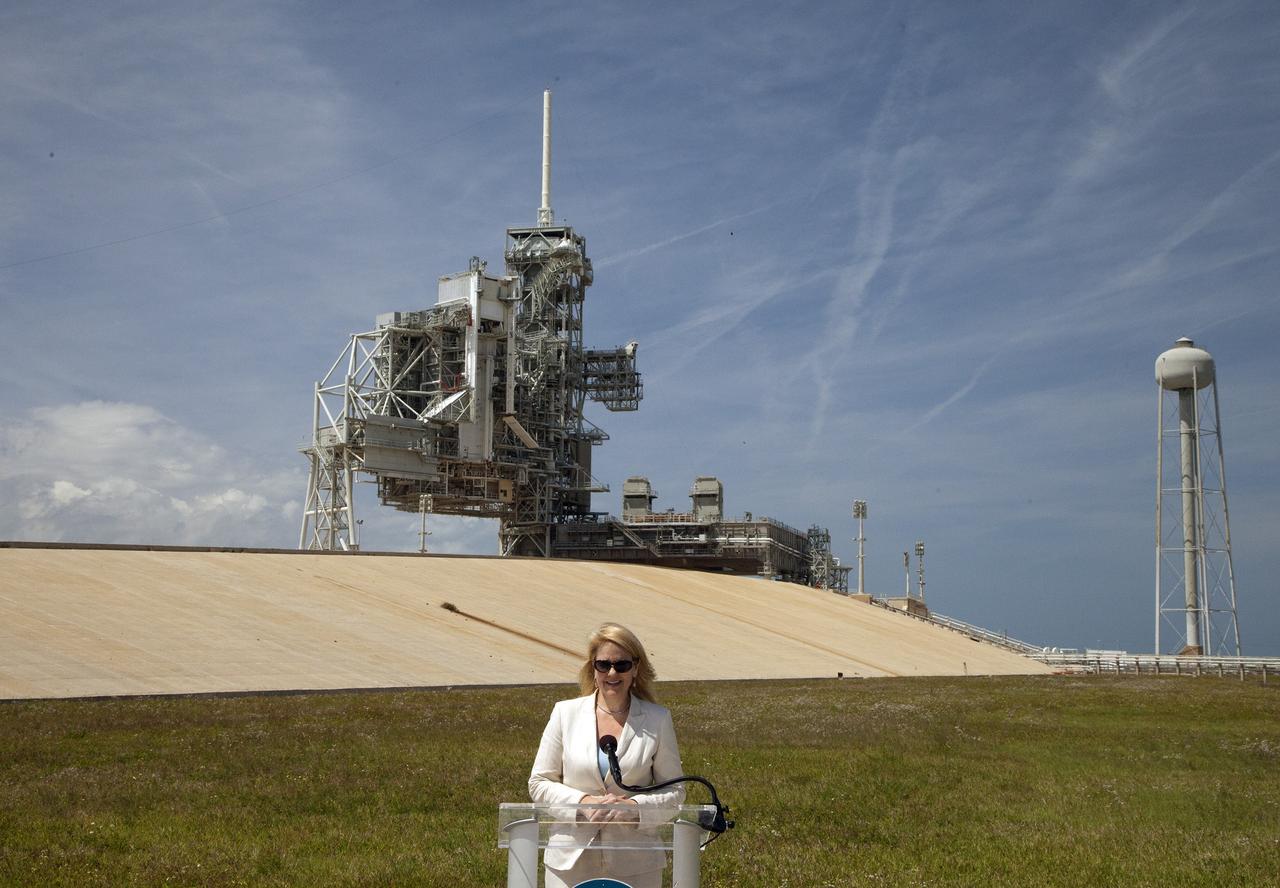
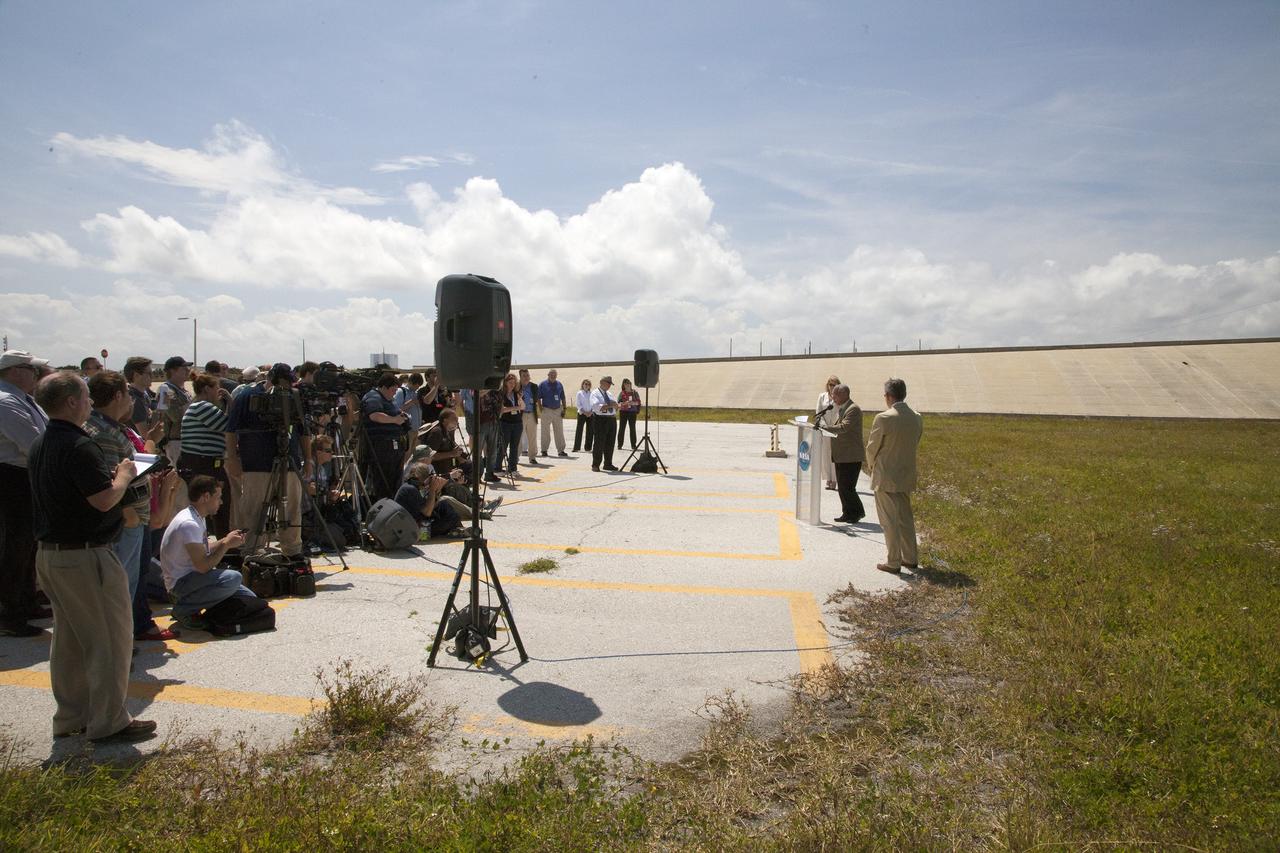
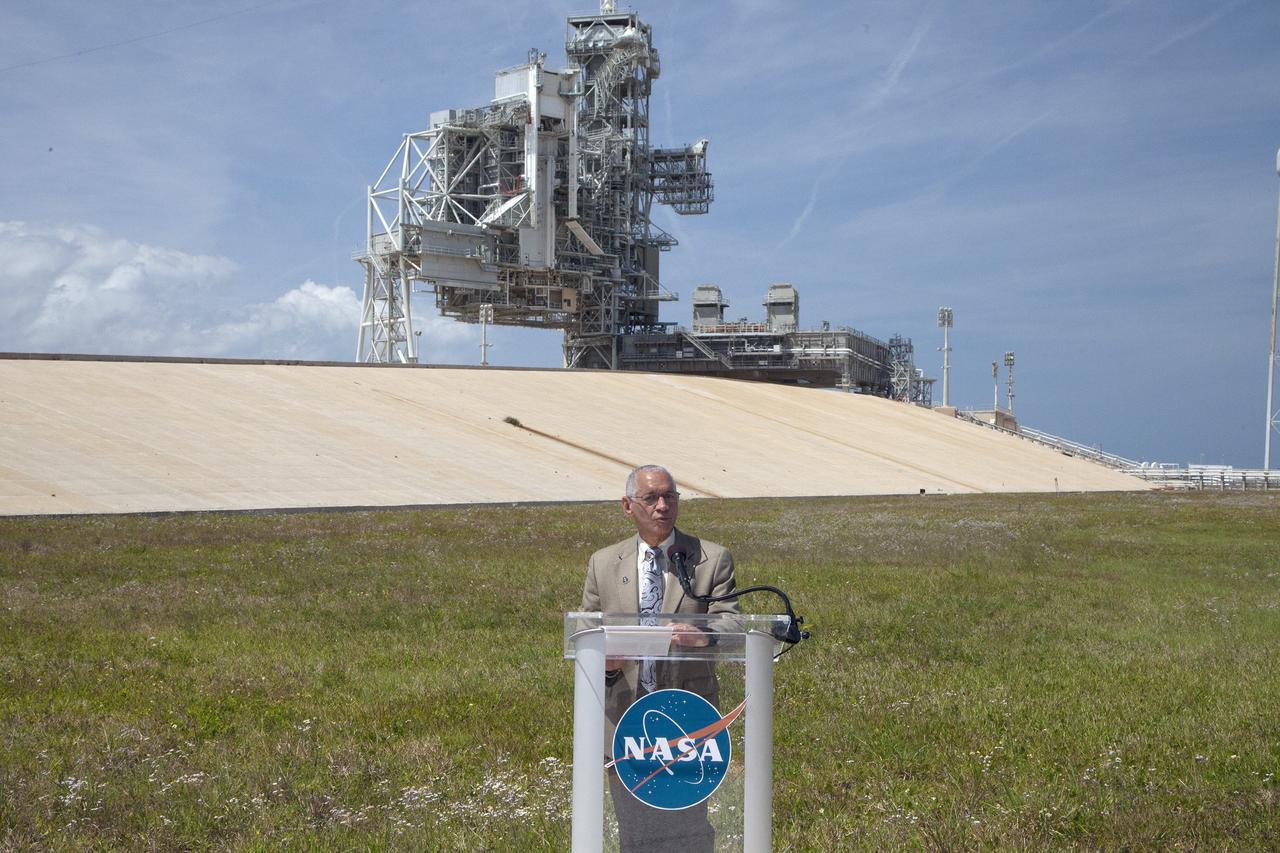
CAPE CANAVERAL, Fla. -- At Kennedy Space Center Launch Pad 39A, NASA Administrator Charlie Bolden announces that NASA has just signed a lease agreement with Space Exploration Technologies SpaceX of Hawthorne, Calif., for use and operation of Launch Complex 39A.      SpaceX will use Launch Complex 39A for rockets such as the Falcon Heavy, currently under development. Both launch pad 39A and 39B were originally built for the Apollo/Saturn V rockets that launched American astronauts on their historic journeys to the moon and later modified to support the 30-year shuttle program. Pad 39B is now being modified by NASA to support the Space Launch System SLS rocket boosting the Orion spacecraft part of the agency’s plan to explore beyond low-Earth orbit. To learn more about Launch Pad 39A visit: http://www.nasa.gov/mission_pages/shuttle/launch/launch-complex39-toc.html Photo credit: NASA/Dan Casper
KSC-2014-2100
CAPE CANAVERAL, Fla. -- At Kennedy Space Center Launch Pad 39A, NASA Administrator Charlie Bolden announces that NASA has just signed a lease agreement with Space Exploration Technologies SpaceX of Hawthorne, Calif., for use and operation of Launch Complex 39A.      SpaceX will use Launch Complex 39A for rockets such as the Falcon Heavy, currently under development. Both launch pad 39A and 39B were originally built for the Apollo/Saturn V rockets that launched American astronauts on their historic journeys to the moon and later modified to support the 30-year shuttle program. Pad 39B is now being modified by NASA to support the Space Launch System SLS rocket boosting the Orion spacecraft part of the agency’s plan to explore beyond low-Earth orbit. To learn more about Launch Pad 39A visit: http://www.nasa.gov/mission_pages/shuttle/launch/launch-complex39-toc.html Photo credit: NASA/Dan Casper
KSC-2014-2099
CAPE CANAVERAL, Fla. -- At Kennedy Space Center's Launch Pad 39A, Gwynne Shotwell, president and chief operating officer of Space Exploration Technologies SpaceX of Hawthorne, Calif., announces that NASA has just signed a lease agreement with SpaceX for use and operation of Launch Complex 39A.      SpaceX will use Launch Complex 39A for rockets such as the Falcon Heavy, currently under development. Both launch pad 39A and 39B were originally built for the Apollo/Saturn V rockets that launched American astronauts on their historic journeys to the moon and later modified to support the 30-year shuttle program. Pad 39B is now being modified by NASA to support the Space Launch System SLS rocket boosting the Orion spacecraft part of the agency’s plan to explore beyond low-Earth orbit. To learn more about Launch Pad 39A visit: http://www.nasa.gov/mission_pages/shuttle/launch/launch-complex39-toc.html Photo credit: NASA/Dan Casper
KSC-2014-2101
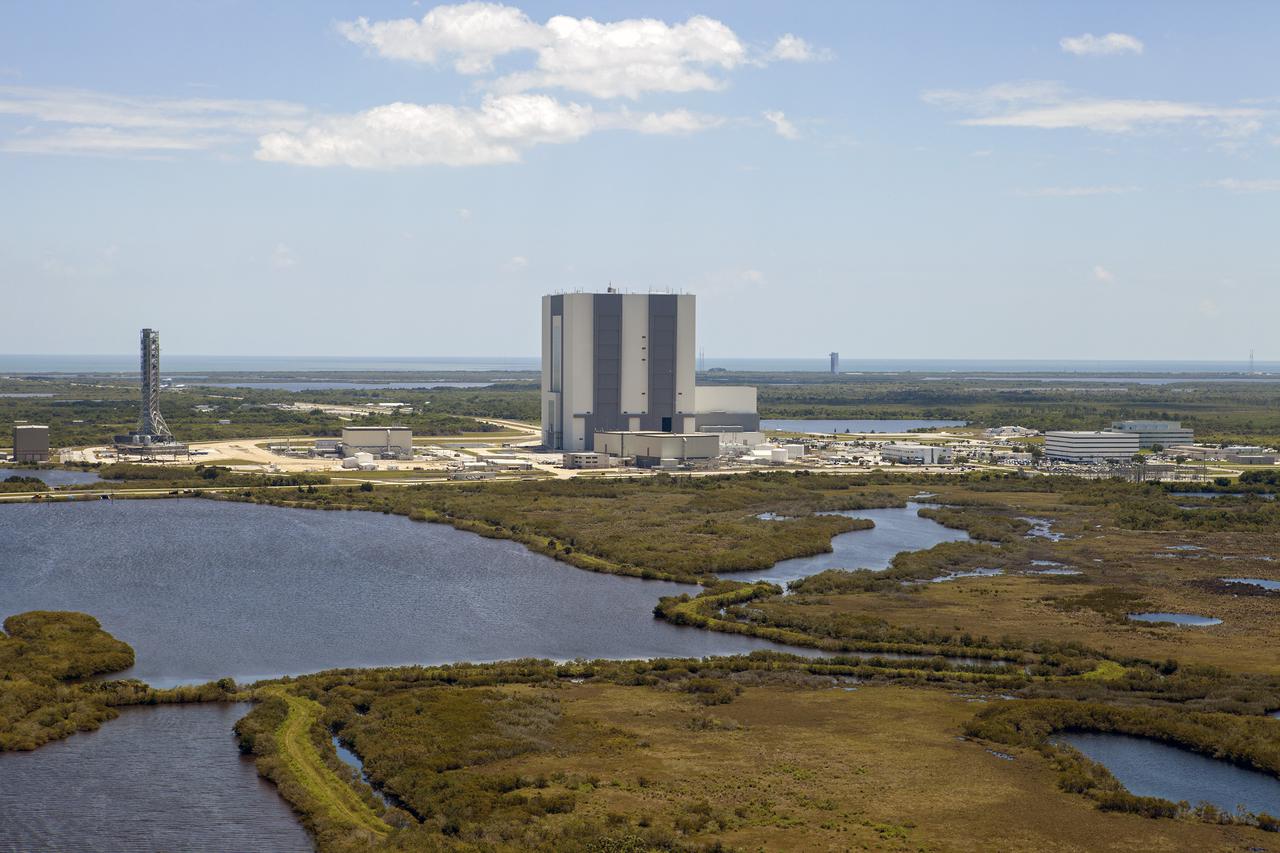
CAPE CANAVERAL, Fla. – An aerial view of the Vehicle Assembly Building, or VAB, and other buildings in the Launch Complex 39 area at NASA’s Kennedy Space Center in Florida. The Launch Control Center is in front of the VAB. To the right is the mobile launcher that will be used to transport NASA’s Space Launch System rocket and the Orion crew capsule to Launch Pad 39B.     Upgrades are underway at Pad B and other facilities in the Launch Complex 39 area. The Ground Systems Development and Operations, or GSDO, Program office at Kennedy is leading the center’s transformation from a historically government-only launch complex to a spaceport that can safely handle a variety of rockets and spacecraft, including NASA’s Space Launch System. For more information about GSDO, visit: http:__go.nasa.gov_groundsystems.  Photo credit: NASA_Kim Shiflett
KSC-2013-2299
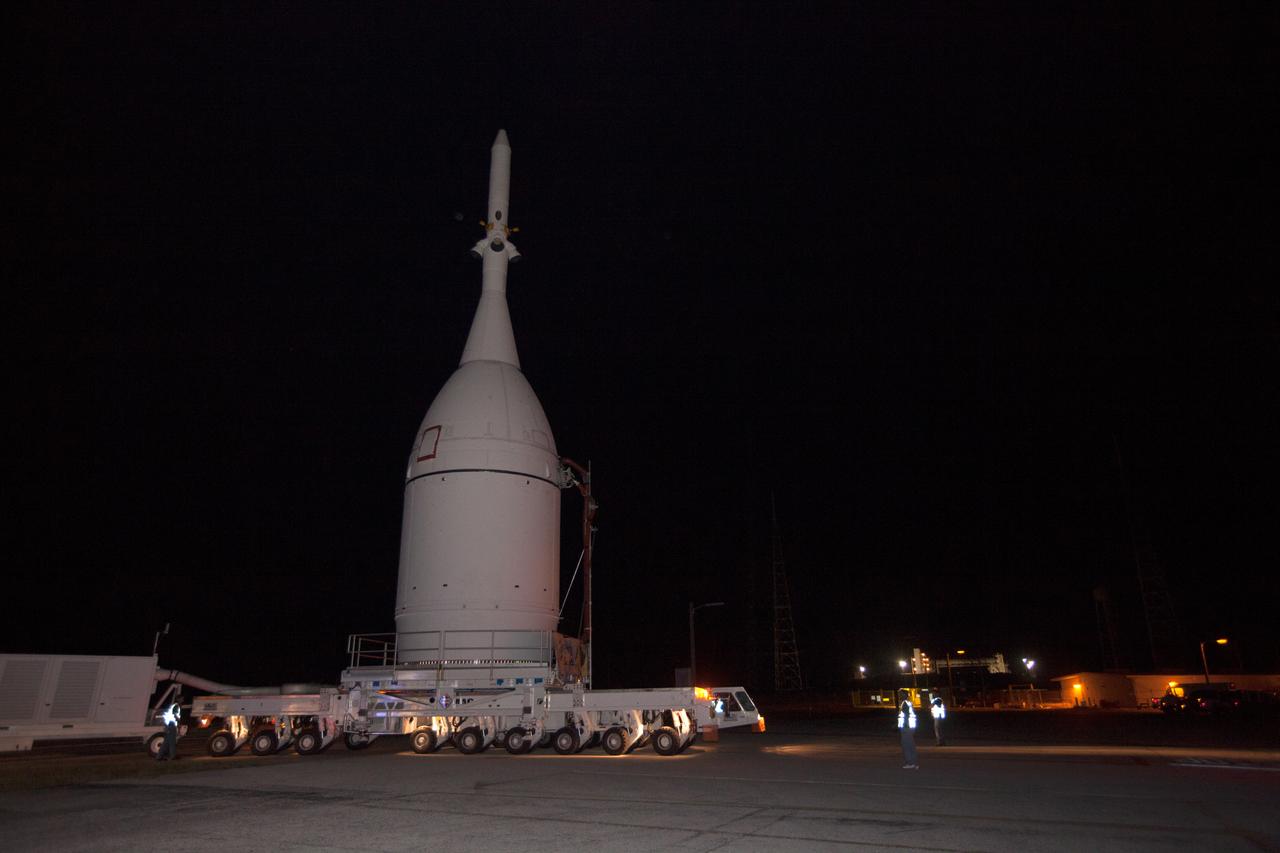
At NASA's Kennedy Space Center in Florida, the agency's Orion spacecraft passes by Launch Complex 39B as it is transported to Launch Complex 37 at Cape Canaveral Air Force Station on Nov. 12, 2014. After arrival at the launch pad, United Launch Alliance engineers and technicians lifted Orion and mounted it atop its Delta IV Heavy rocket. Part of Batch image transfer from Flickr.
Orion Passes LC-39B
STS057-S-055 (21 June 1993) --- Framed by a variety of flora types, the Space Shuttle Endeavour lifts off Launch Pad 39B to begin the STS-57 mission.  Launch occurred at 9:07:22 a.m. (EDT), June 21, 1993.  The mission represents the first flight of the commercially developed SPACEHAB laboratory module and also will feature a retrieval of the European Retrievable Carrier (EURECA).  Onboard for Endeavour's fourth flight are a crew of six - Ronald J. Grabe, mission commander; Brian Duffy, pilot; G. David Low, payload commander; and Nancy J. Sherlock, Peter J.K. (Jeff) Wisoff and Janice E. Voss, all mission specialists.  An earlier launch attempt was scrubbed due to unacceptable weather conditions both at KSC and the overseas contingency landing sites.
STS-57 Endeavour, OV-105, framed by Florida vegetation, lifts off from KSC LC
CAPE CANAVERAL, Fla. – An aerial view of the Vehicle Assembly Building and other buildings in the Launch Complex 39 area at NASA’s Kennedy Space Center in Florida. To the left is the mobile launcher that will be used to transport NASA’s Space Launch System rocket and the Orion crew capsule to Launch Pad 39B.   Upgrades are underway at Pad B and other facilities in the Launch Complex 39 area. The Ground Systems Development and Operations, or GSDO, Program office at Kennedy is leading the center’s transformation from a historically government-only launch complex to a spaceport that can safely handle a variety of rockets and spacecraft, including NASA’s Space Launch System. For more information about GSDO, visit: http:__go.nasa.gov_groundsystems.  Photo credit: NASA_Kim Shiflett
KSC-2013-2298
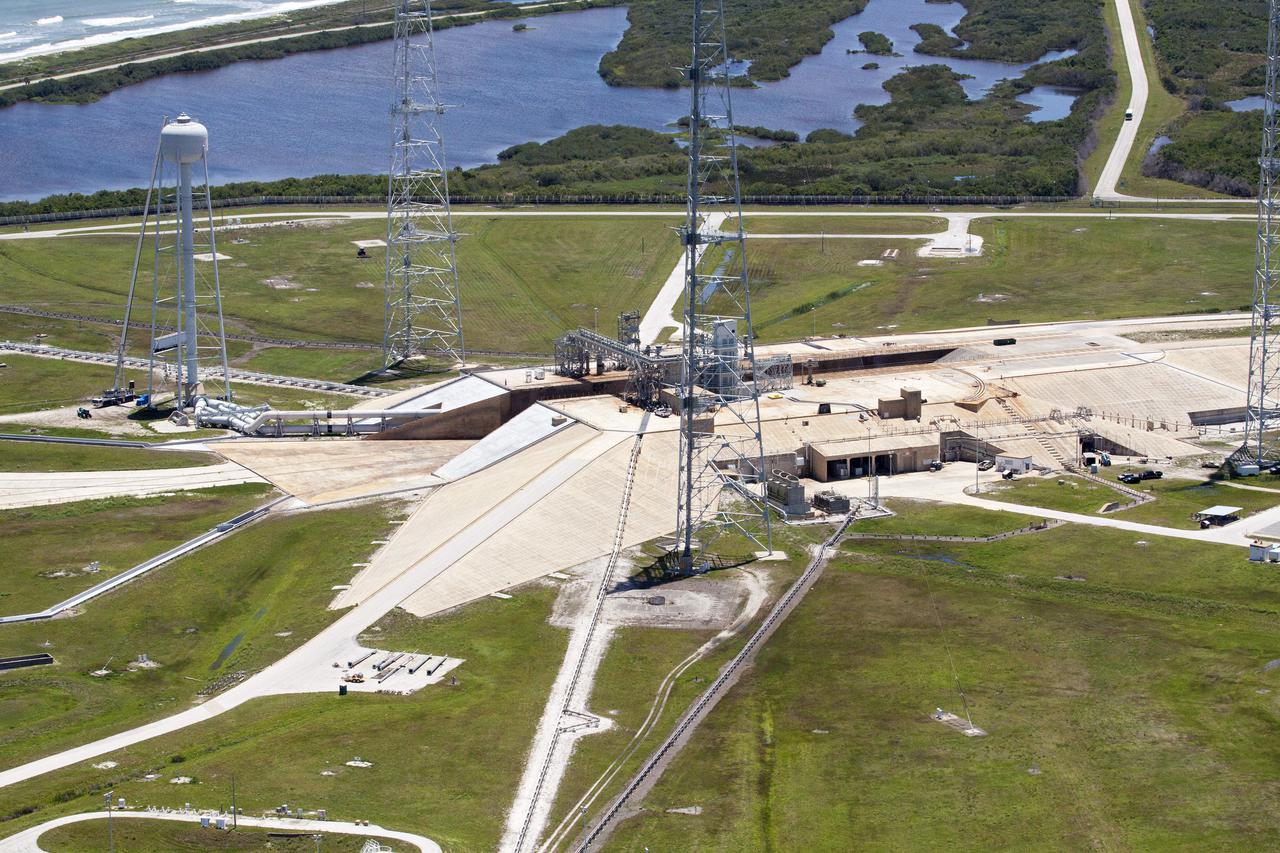
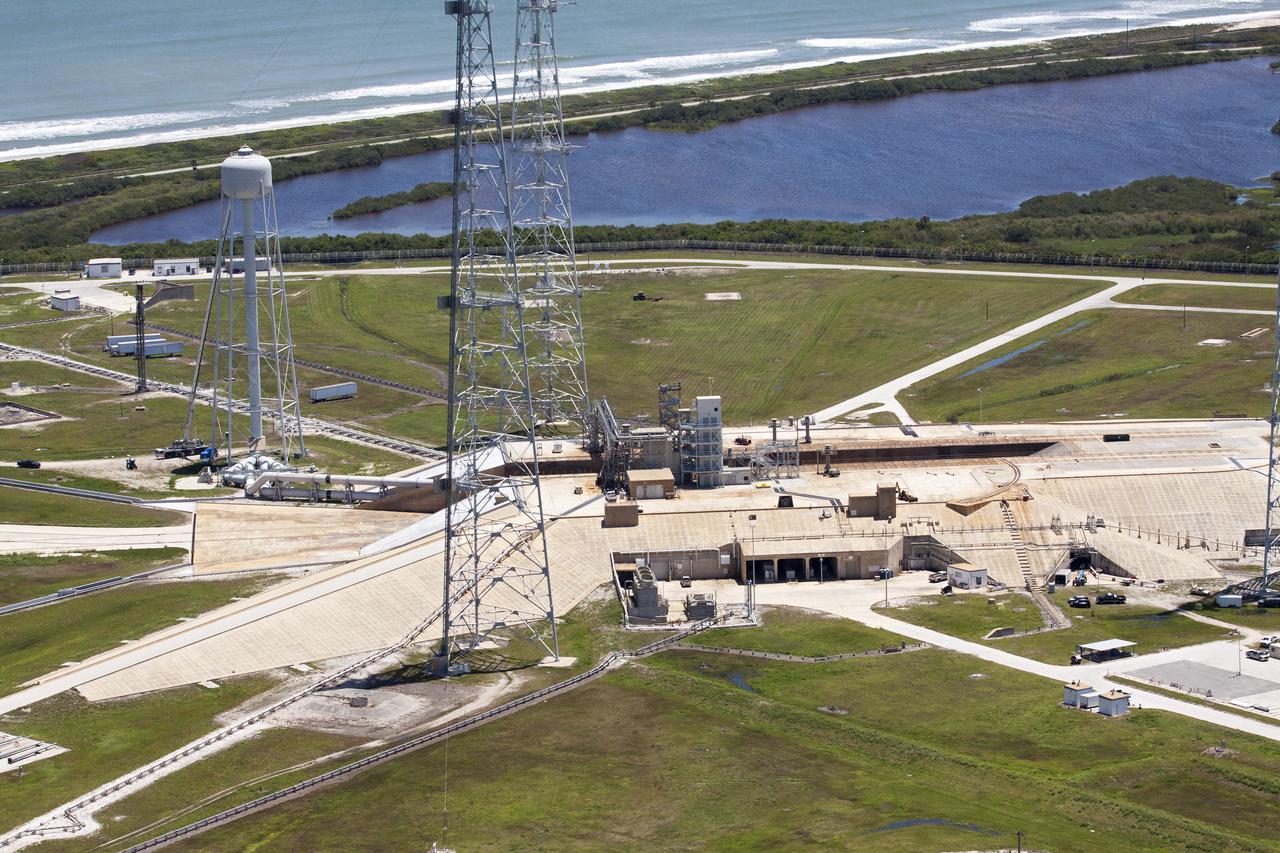
CAPE CANAVERAL, Fla. – An aerial view shows construction progress at Launch Pad 39B at NASA’s Kennedy Space Center in Florida. A new elevator has been constructed on the surface of the pad and the crawlerway leading up to the surface is being repaired. Repairs also are being made to the crawler track panels and catacomb roof below on either side of the flame trench. Also in view are two of the three tall lightning towers that surround the pad.  Upgrades are underway at Pad B and other facilities in the Launch Complex 39 area. The Ground Systems Development and Operations, or GSDO, Program office at Kennedy is leading the center’s transformation from a historically government-only launch complex to a spaceport that can safely handle a variety of rockets and spacecraft, including NASA’s Space Launch System. For more information about GSDO, visit: http:__go.nasa.gov_groundsystems.  Photo credit: NASA_Kim Shiflett
KSC-2013-2281
CAPE CANAVERAL, Fla. – An aerial view shows construction progress at Launch Pad 39B at NASA’s Kennedy Space Center in Florida. A new elevator has been constructed on the surface of the pad and the crawlerway leading up to the surface is being repaired. Repairs also are being made to the crawler track panels and catacomb roof below on either side of the flame trench. Also in view are the water tower and two of the three tall lightning towers that surround the pad.  Upgrades are underway at Pad B and other facilities in the Launch Complex 39 area. The Ground Systems Development and Operations, or GSDO, Program office at Kennedy is leading the center’s transformation from a historically government-only launch complex to a spaceport that can safely handle a variety of rockets and spacecraft, including NASA’s Space Launch System. For more information about GSDO, visit: http:__go.nasa.gov_groundsystems.  Photo credit: NASA_Kim Shiflett
KSC-2013-2282
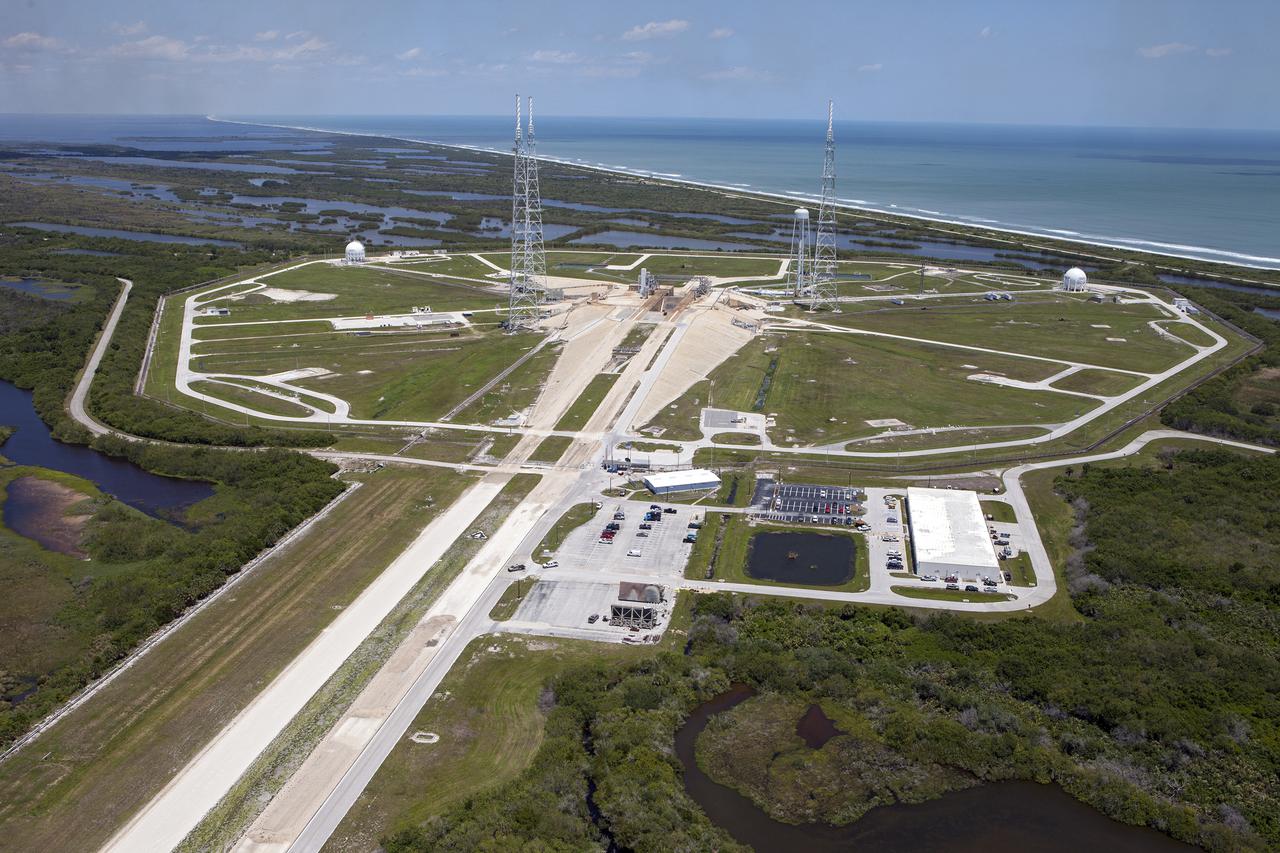
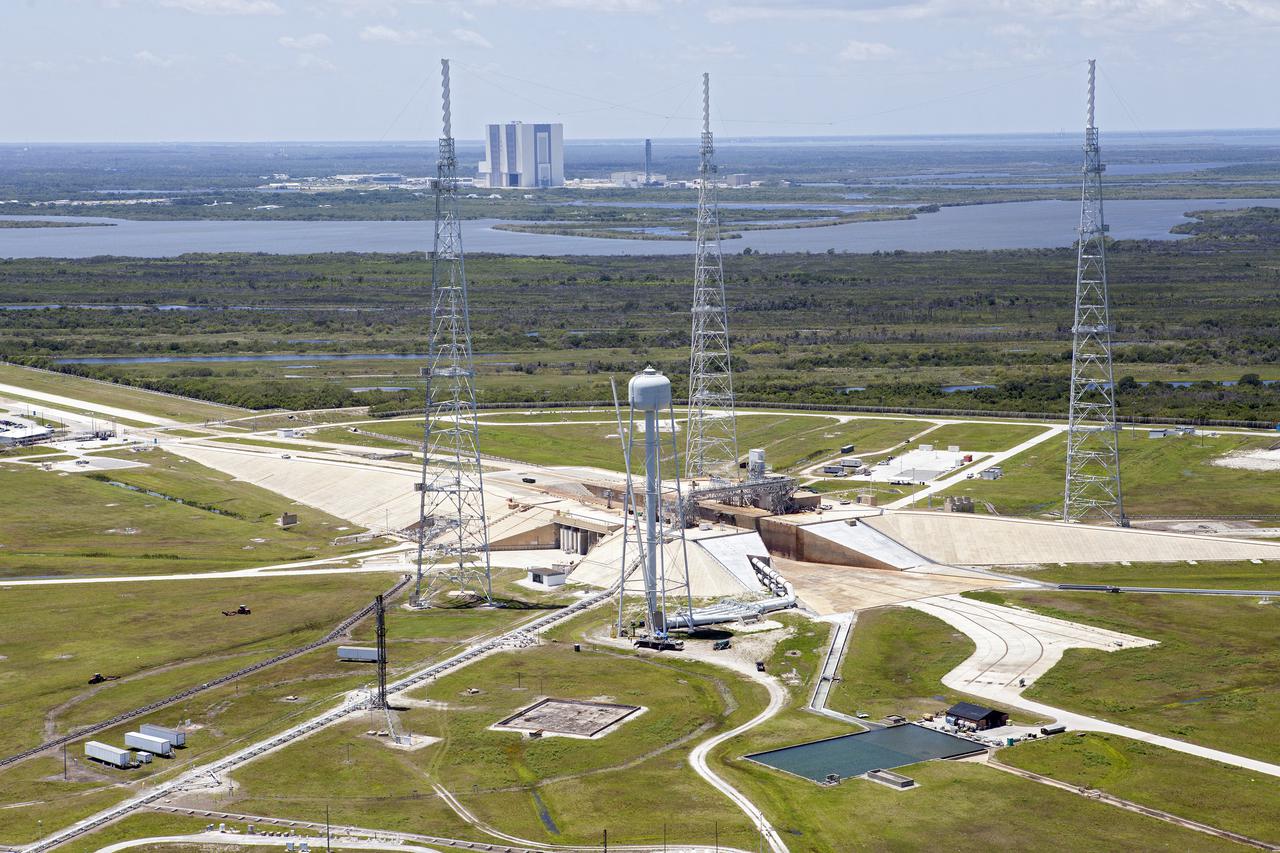
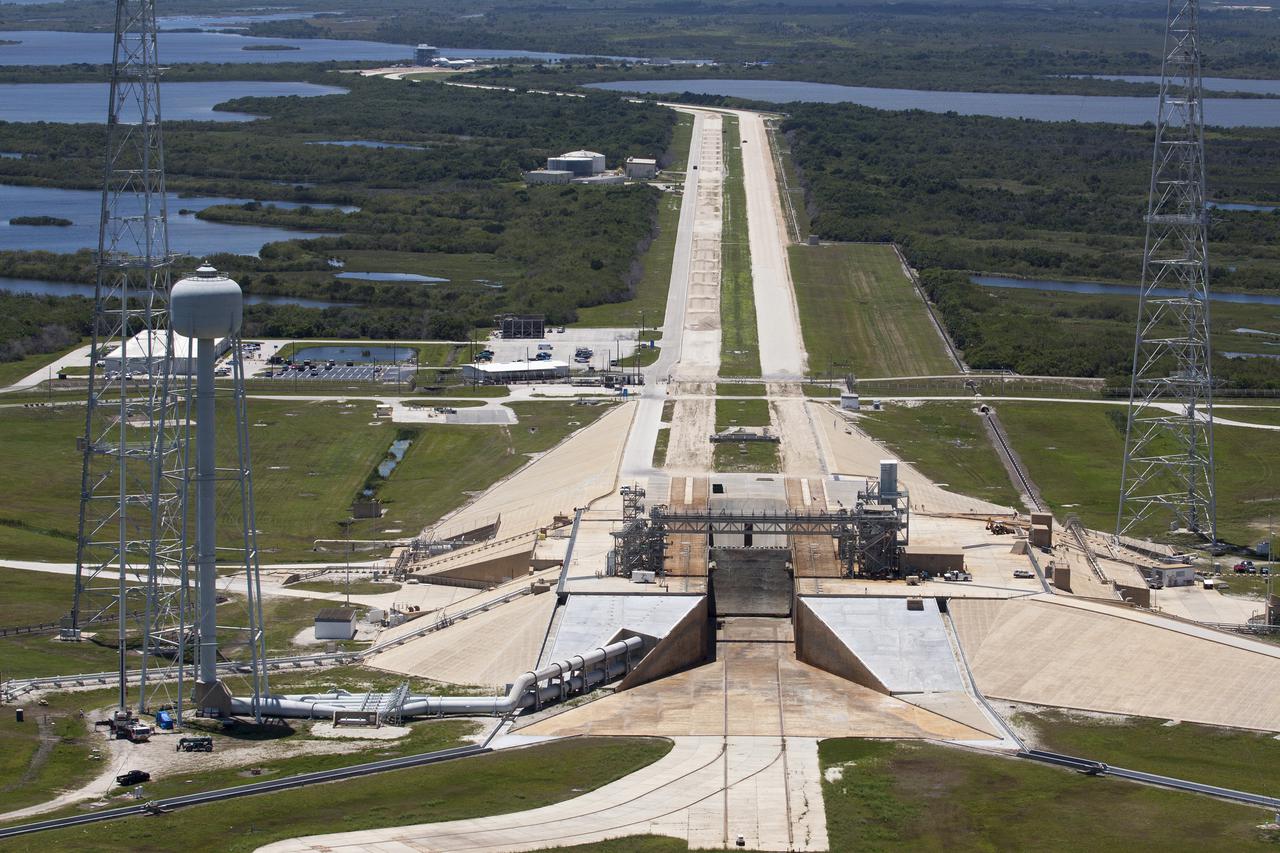
CAPE CANAVERAL, Fla. – An aerial view, from the east looking toward the west, shows the entire Launch Pad 39B area at NASA’s Kennedy Space Center in Florida. A new elevator has been constructed on the surface of the pad and the crawlerway leading up to the surface is being repaired. Repairs also are being made to the crawler track panels and catacomb roof below on either side of the flame trench. Also in view are the water tower and the three tall lightning towers that surround the pad. To the left, in the background is the Vehicle Assembly Building.  Upgrades are underway at Pad B and other facilities in the Launch Complex 39 area. The Ground Systems Development and Operations, or GSDO, Program office at Kennedy is leading the center’s transformation from a historically government-only launch complex to a spaceport that can safely handle a variety of rockets and spacecraft, including NASA’s Space Launch System. For more information about GSDO, visit: http:__go.nasa.gov_groundsystems.  Photo credit: NASA_Kim Shiflett
KSC-2013-2294
CAPE CANAVERAL, Fla. – An aerial view shows construction progress at Launch Pad 39B at NASA’s Kennedy Space Center in Florida. A new elevator has been constructed on the surface of the pad and the crawlerway leading up to the surface is being repaired. Repairs also are being made to the crawler track panels and catacomb roof below on either side of the flame trench. Also in view are the water tower and the three tall lightning towers that surround the pad.  Upgrades are underway at Pad B and other facilities in the Launch Complex 39 area. The Ground Systems Development and Operations, or GSDO, Program office at Kennedy is leading the center’s transformation from a historically government-only launch complex to a spaceport that can safely handle a variety of rockets and spacecraft, including NASA’s Space Launch System. For more information about GSDO, visit: http:__go.nasa.gov_groundsystems.  Photo credit: NASA_Kim Shiflett
KSC-2013-2279