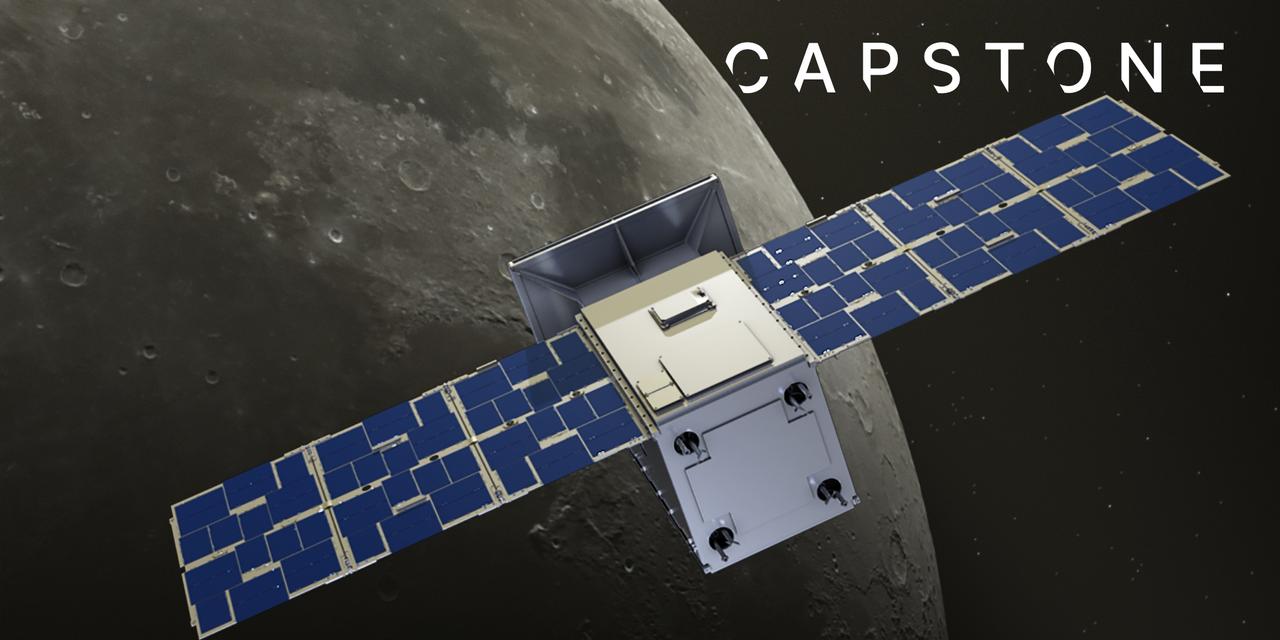
Virtual background of CAPSTONE spacecraft optimized for phone use (9:16). The CAPSTONE mission will demonstrate an innovative spacecraft-to-spacecraft navigation solution at the Moon from a near rectilinear halo orbit slated for Artemis’ Gateway. Illustration by Daniel Rutter.

Virtual background of CAPSTONE spacecraft optimized for phone use (9:16). The CAPSTONE mission will demonstrate an innovative spacecraft-to-spacecraft navigation solution at the Moon from a near rectilinear halo orbit slated for Artemis’ Gateway. Illustration by Daniel Rutter.
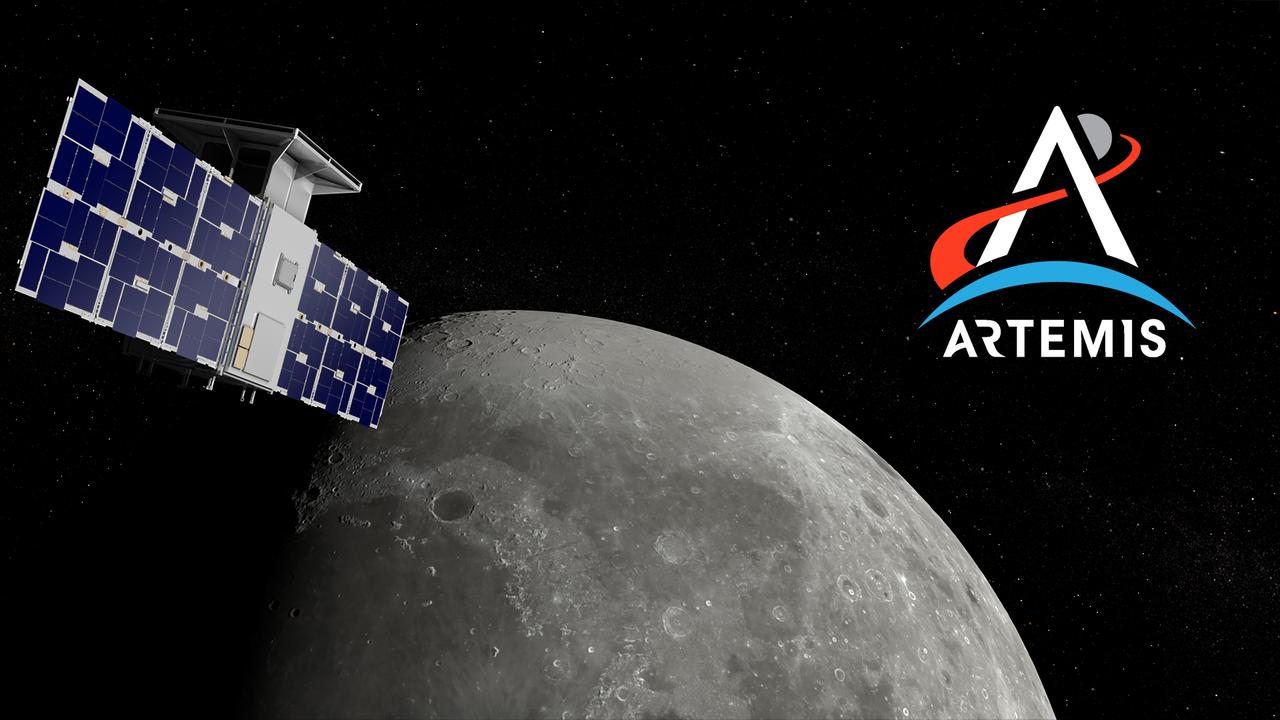
Virtual background of CAPSTONE spacecraft optimized for desktop use (16:9). The CAPSTONE mission will demonstrate an innovative spacecraft-to-spacecraft navigation solution at the Moon from a near rectilinear halo orbit slated for Artemis’ Gateway. Illustration by Daniel Rutter.
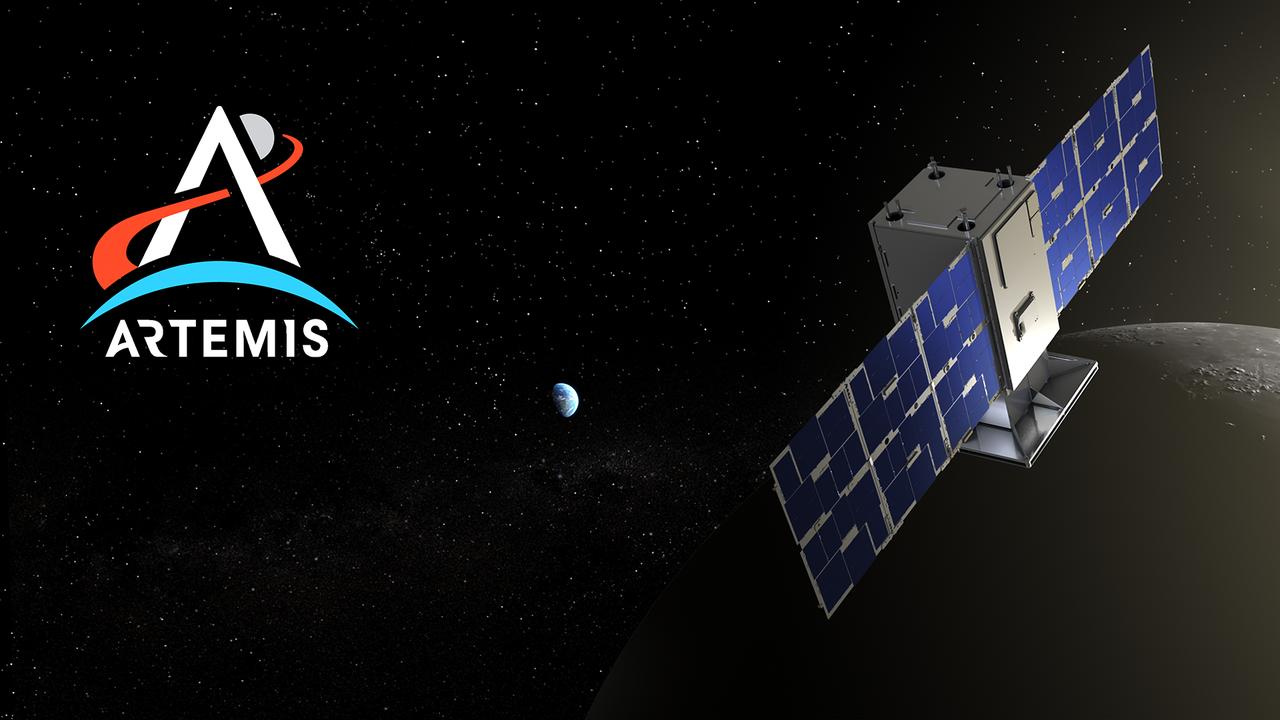
Virtual background of CAPSTONE spacecraft optimized for desktop use (16:9). The CAPSTONE mission will demonstrate an innovative spacecraft-to-spacecraft navigation solution at the Moon from a near rectilinear halo orbit slated for Artemis’ Gateway. Illustration by Daniel Rutter.
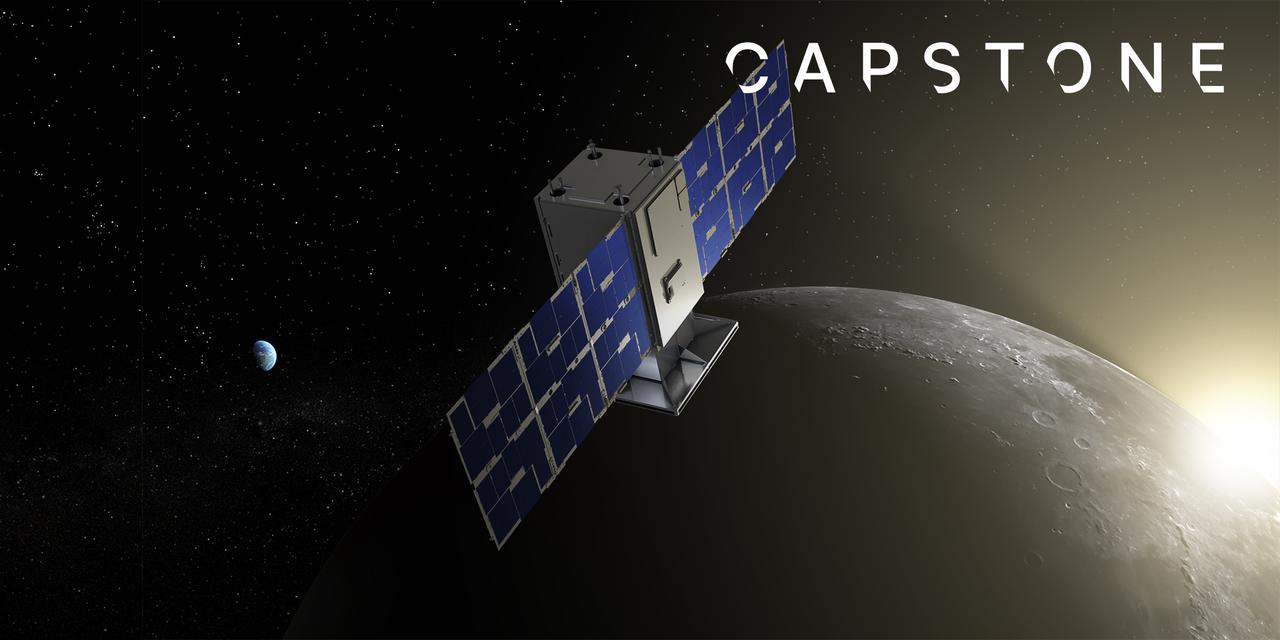
Virtual background of CAPSTONE spacecraft optimized for phone use (9:16). The CAPSTONE mission will demonstrate an innovative spacecraft-to-spacecraft navigation solution at the Moon from a near rectilinear halo orbit slated for Artemis’ Gateway. Illustration by Daniel Rutter.
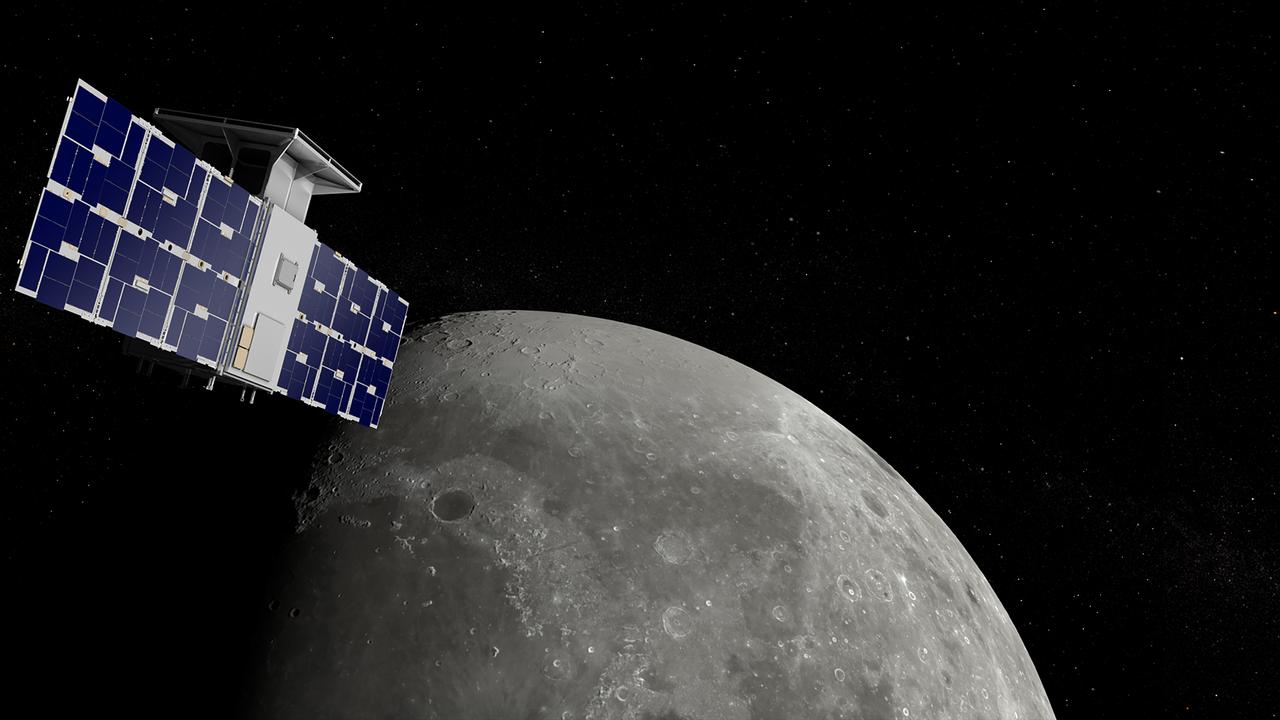
Virtual background of CAPSTONE spacecraft optimized for desktop use (16:9). The CAPSTONE mission will demonstrate an innovative spacecraft-to-spacecraft navigation solution at the Moon from a near rectilinear halo orbit slated for Artemis’ Gateway. Illustration by Daniel Rutter.
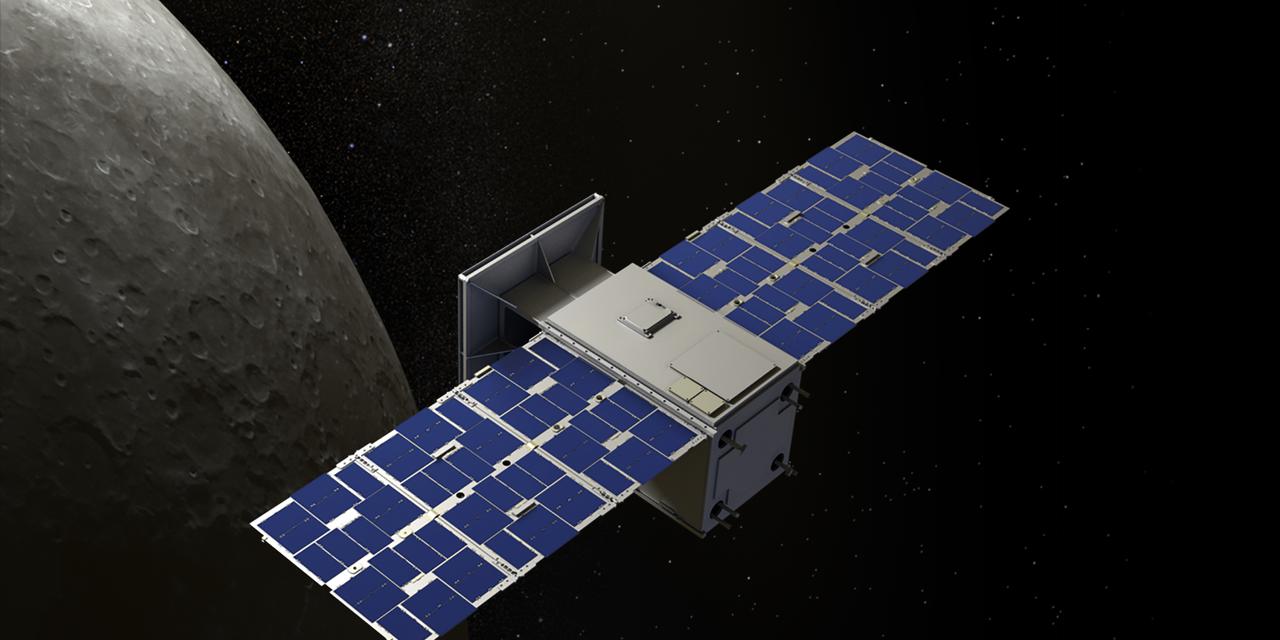
Virtual background of CAPSTONE spacecraft optimized for phone use (9:16). The CAPSTONE mission will demonstrate an innovative spacecraft-to-spacecraft navigation solution at the Moon from a near rectilinear halo orbit slated for Artemis’ Gateway. Illustration by Daniel Rutter.
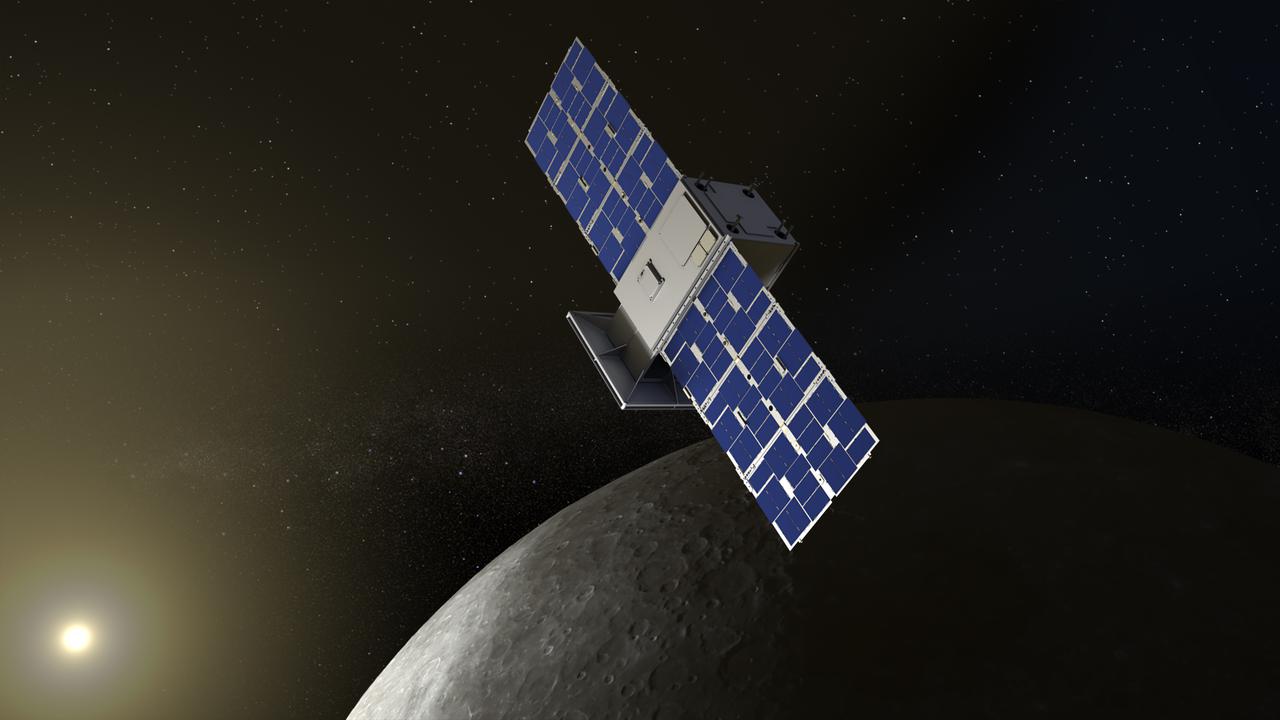
CAPSTONE, a microwave oven-sized CubeSat, will fly in cislunar space – the orbital space near and around the Moon. The mission will demonstrate an innovative spacecraft-to-spacecraft navigation solution at the Moon from a near rectilinear halo orbit slated for Artemis’ Gateway. Illustration by Daniel Rutter.
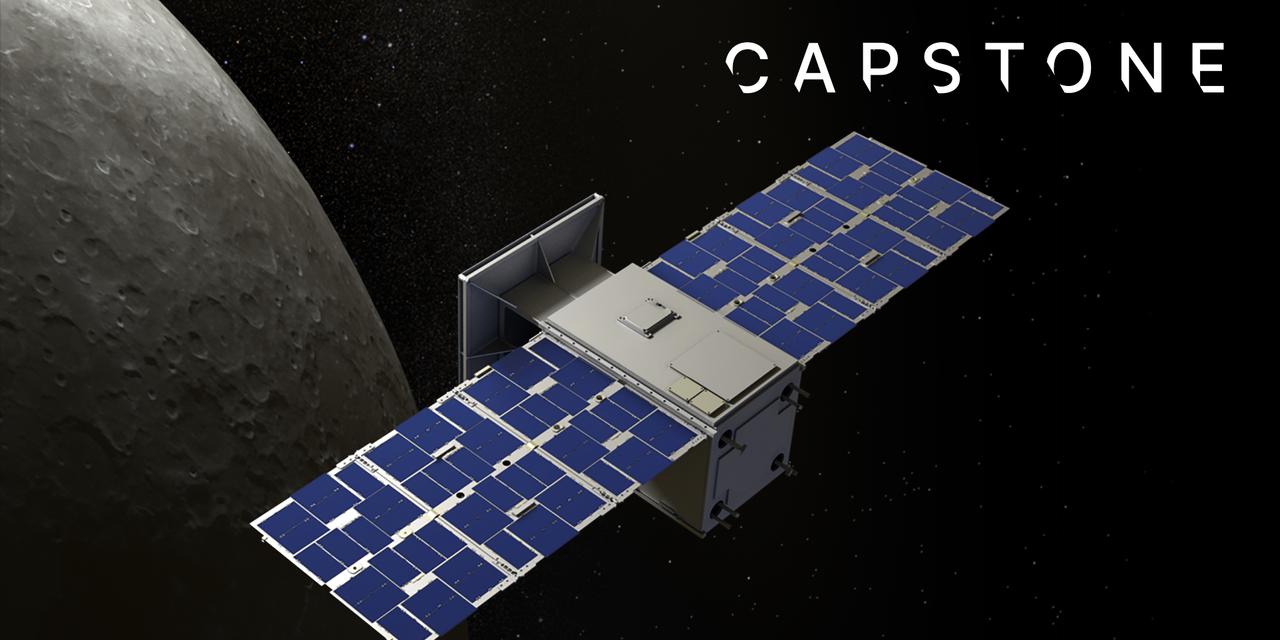
Virtual background of CAPSTONE spacecraft optimized for phone use (9:16). The CAPSTONE mission will demonstrate an innovative spacecraft-to-spacecraft navigation solution at the Moon from a near rectilinear halo orbit slated for Artemis’ Gateway. Illustration by Daniel Rutter.

CAPSTONE, a microwave oven-sized CubeSat, will fly in cislunar space – the orbital space near and around the Moon. The mission will demonstrate an innovative spacecraft-to-spacecraft navigation solution at the Moon from a near rectilinear halo orbit slated for Artemis’ Gateway. Illustration by Daniel Rutter.

CAPSTONE, a microwave oven-sized CubeSat, will fly in cislunar space – the orbital space near and around the Moon. The mission will demonstrate an innovative spacecraft-to-spacecraft navigation solution at the Moon from a near rectilinear halo orbit slated for Artemis’ Gateway. Illustration by Daniel Rutter.
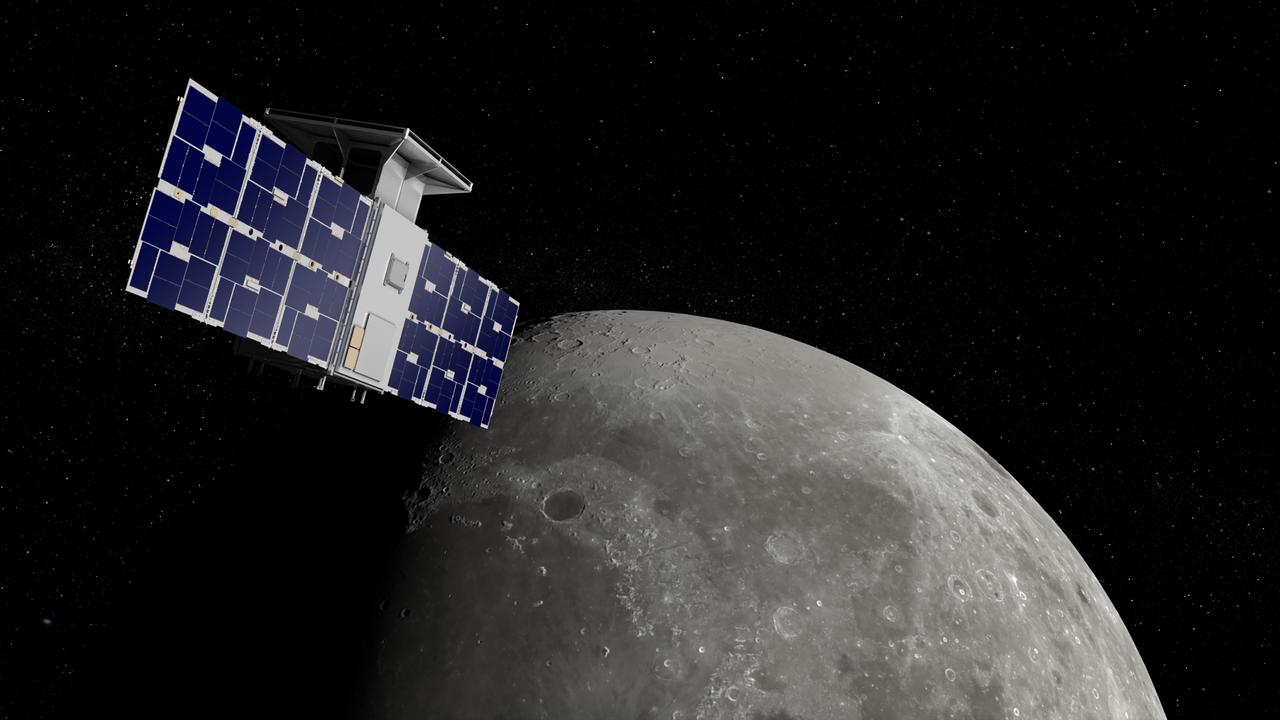
CAPSTONE, a microwave oven-sized CubeSat, will fly in cislunar space – the orbital space near and around the Moon. The mission will demonstrate an innovative spacecraft-to-spacecraft navigation solution at the Moon from a near rectilinear halo orbit slated for Artemis’ Gateway. Illustration by Daniel Rutter.
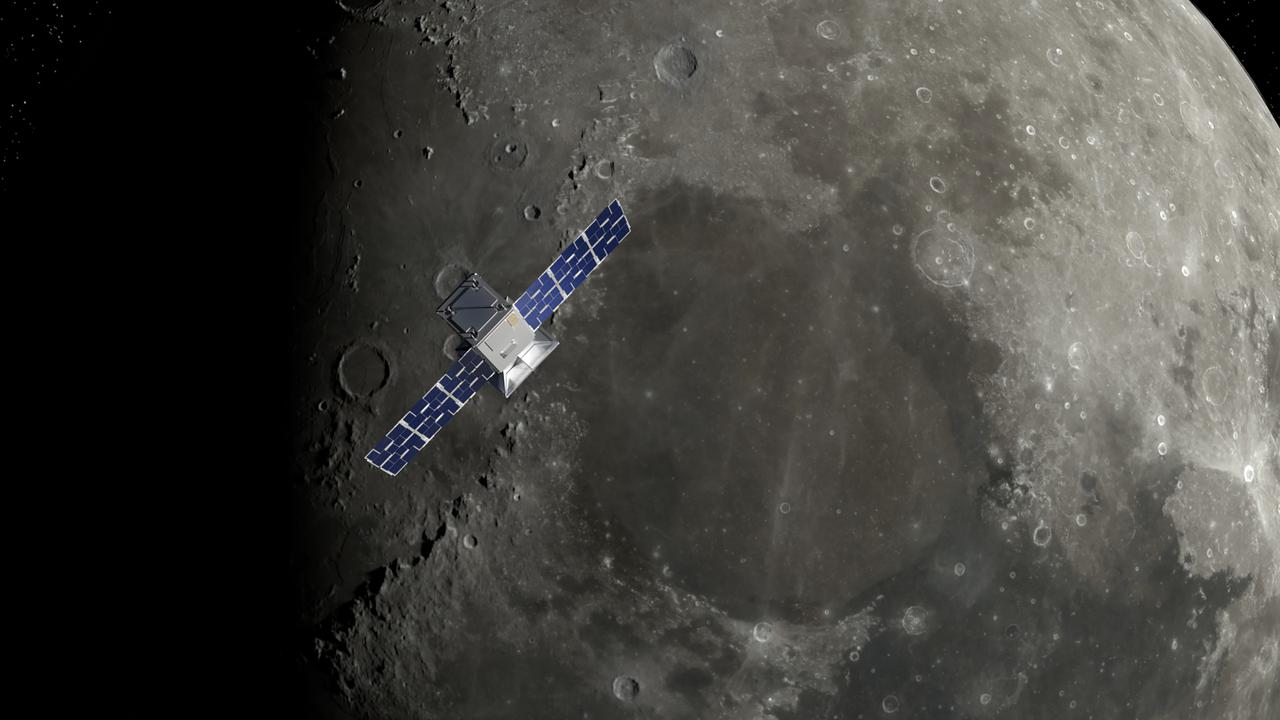
CAPSTONE, a microwave oven-sized CubeSat, will fly in cislunar space – the orbital space near and around the Moon. The mission will demonstrate an innovative spacecraft-to-spacecraft navigation solution at the Moon from a near rectilinear halo orbit slated for Artemis’ Gateway. Illustration by Daniel Rutter.

Matt Johnson, CAPSTONE lead systems engineer, left, and Dylan Schmidt, CAPSTONE assembly integration and test lead, right, with the CAPSTONE spacecraft stowed in its dispenser at Tyvak Nano-Satellite Systems, Inc., in Irvine, California.
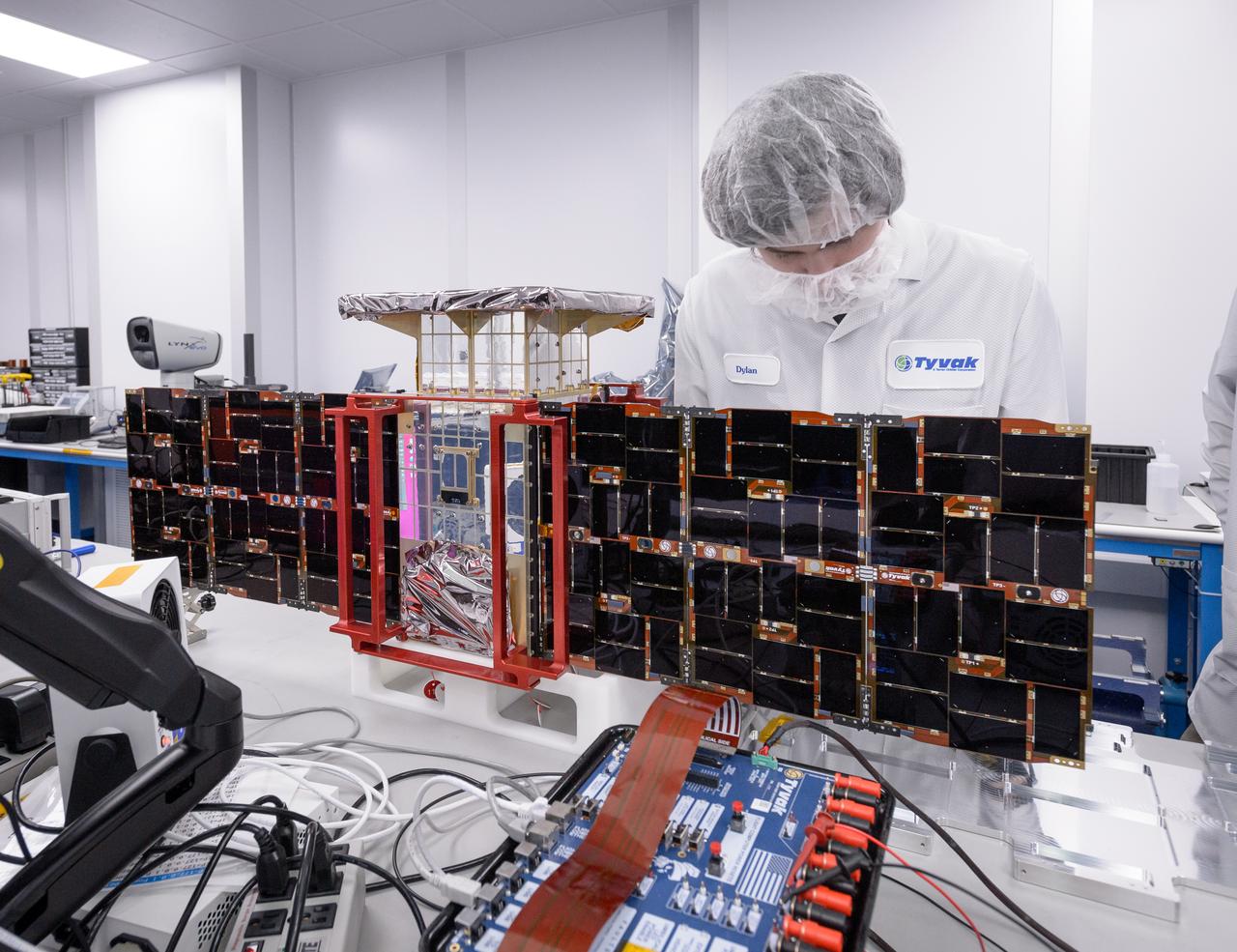
Dylan Schmidt, CAPSTONE assembly integration and test lead, installs solar panels onto the CAPSTONE spacecraft at Tyvak Nano-Satellite Systems, Inc., in Irvine, California.
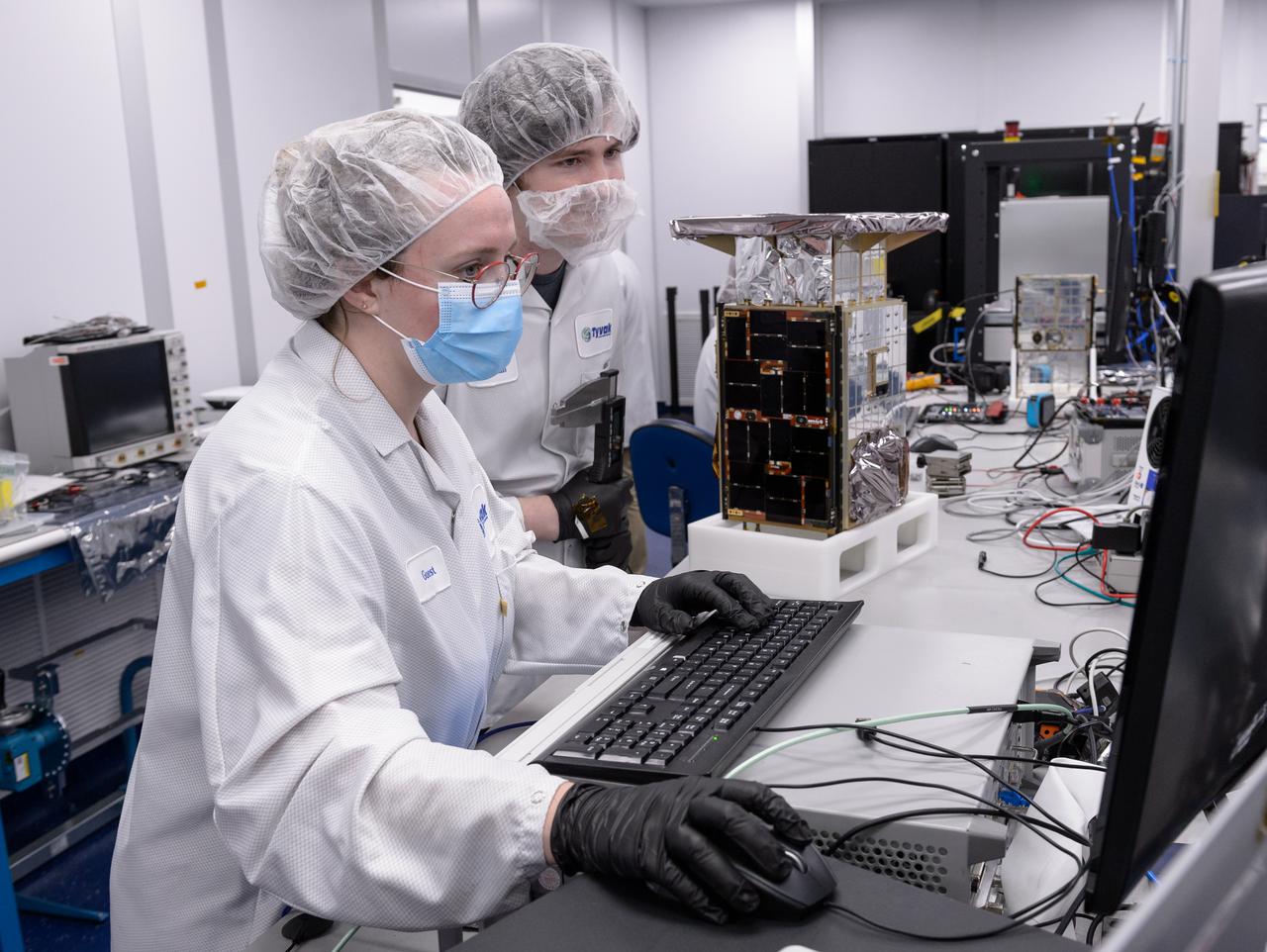
Dylan Schmidt, CAPSTONE assembly integration and test lead, right, and Rebecca Rogers, systems engineer, left, take dimension measurements of the CAPSTONE spacecraft at Tyvak Nano-Satellite Systems, Inc., in Irvine, California.
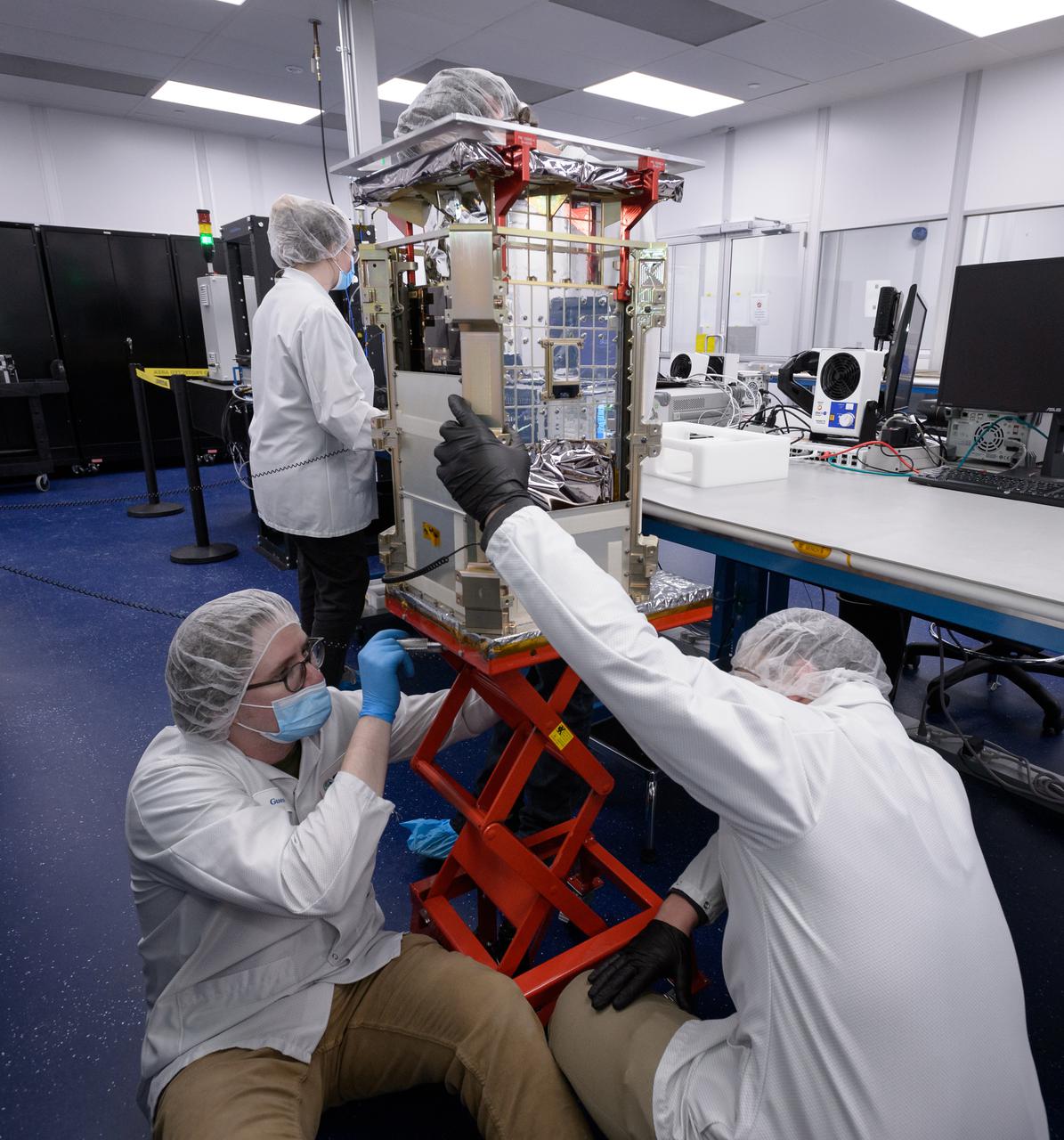
Matt Johnson, CAPSTONE lead systems engineer, bottom, Dustin Holta, launch engineer, right, and Rebecca Rogers, systems engineer, background, with the CAPSTONE spacecraft stowed in its dispenser at Tyvak Nano-Satellite Systems, Inc., in Irvine, California.
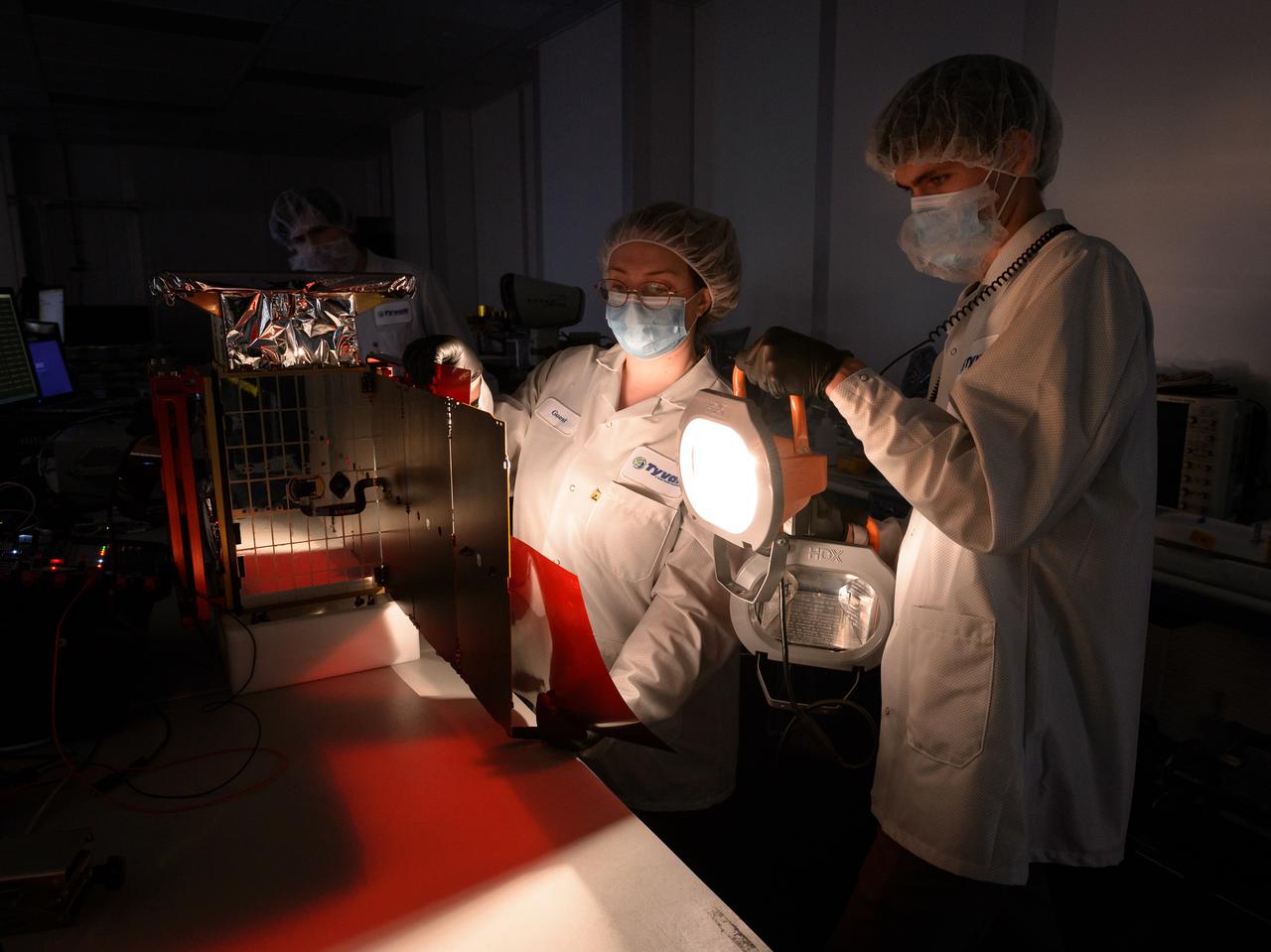
Rebecca Rogers, systems engineer, center, Lachlan Moore, systems integration engineer, right, and Dylan Schmidt, CAPSTONE assembly integration and test lead, background, perform a solar panel string voltage test of the CAPSTONE spacecraft at Tyvak Nano-Satellite Systems, Inc., in Irvine, California.
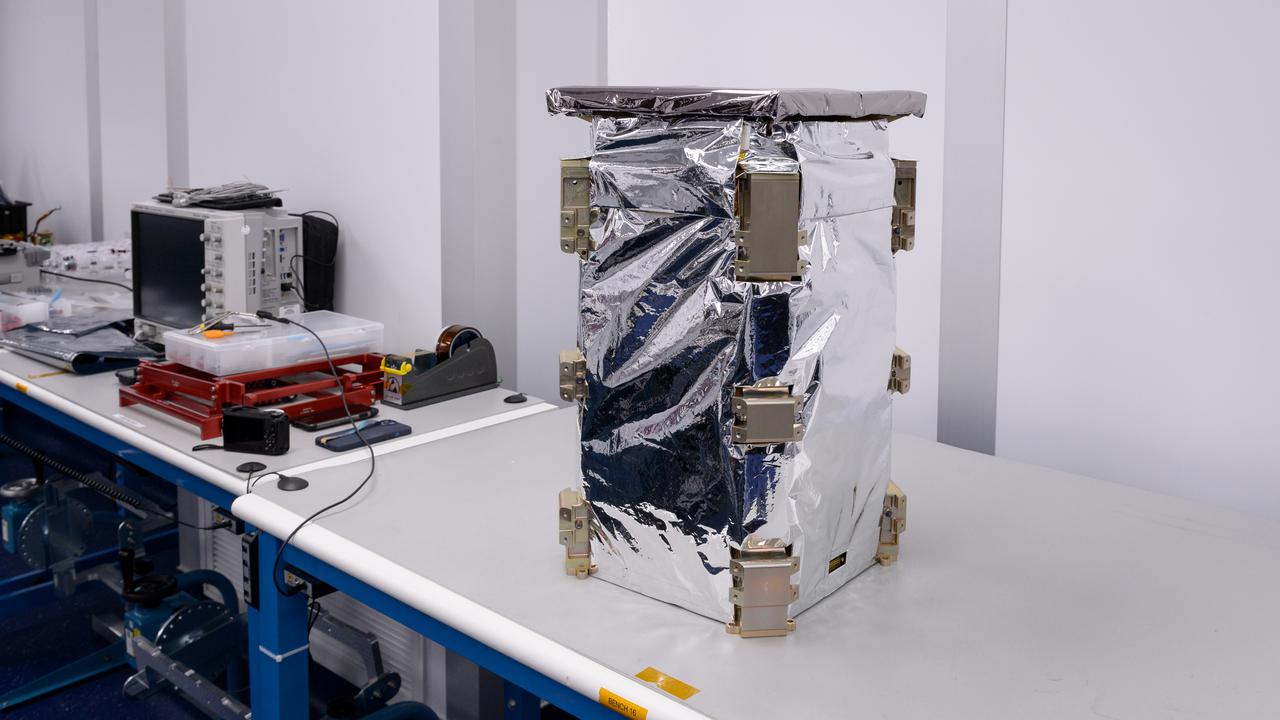
The CAPSTONE spacecraft dispenser in a thermal blanket with the spacecraft stowed inside at Tyvak Nano-Satellite Systems, Inc., in Irvine, California.
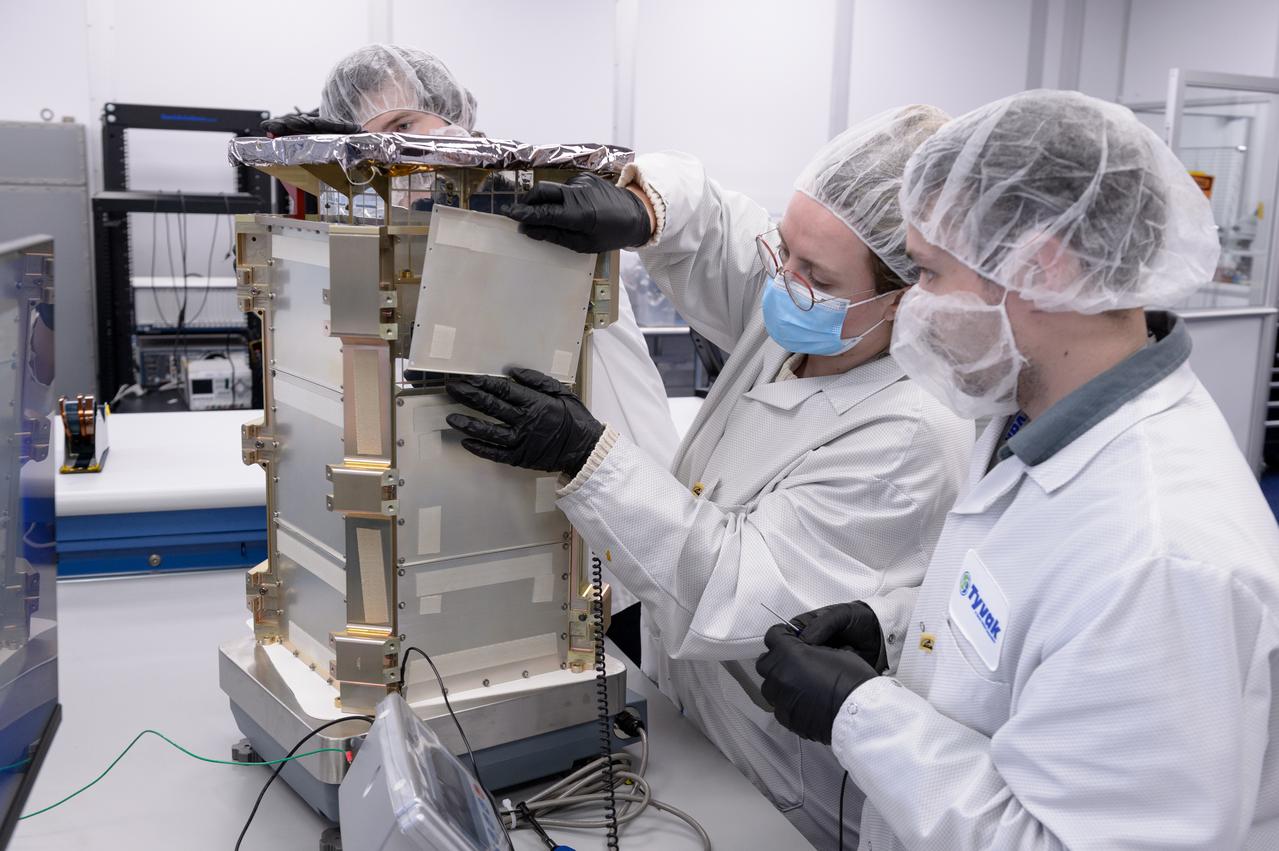
Rebecca Rogers, systems engineer, left, and Dustin Holta, launch engineer, right, mount a cover plate to the CAPSTONE spacecraft dispenser with the spacecraft stowed inside at Tyvak Nano-Satellite Systems, Inc., in Irvine, California.
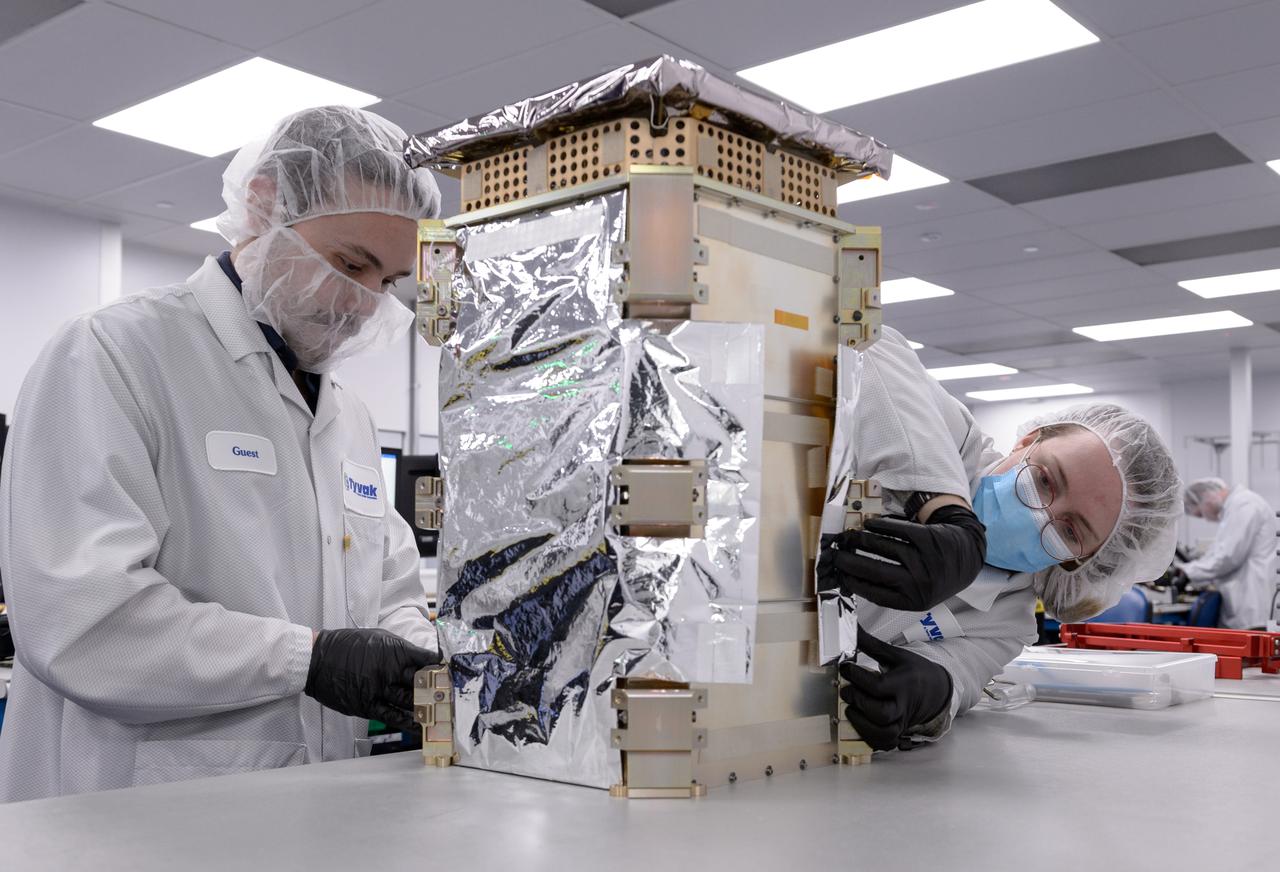
Dustin Holta, launch engineer, left, and Rebecca Rogers, systems engineer, right, wrap the CAPSTONE spacecraft dispenser in a thermal blanket with the spacecraft stowed inside at Tyvak Nano-Satellite Systems, Inc., in Irvine, California.
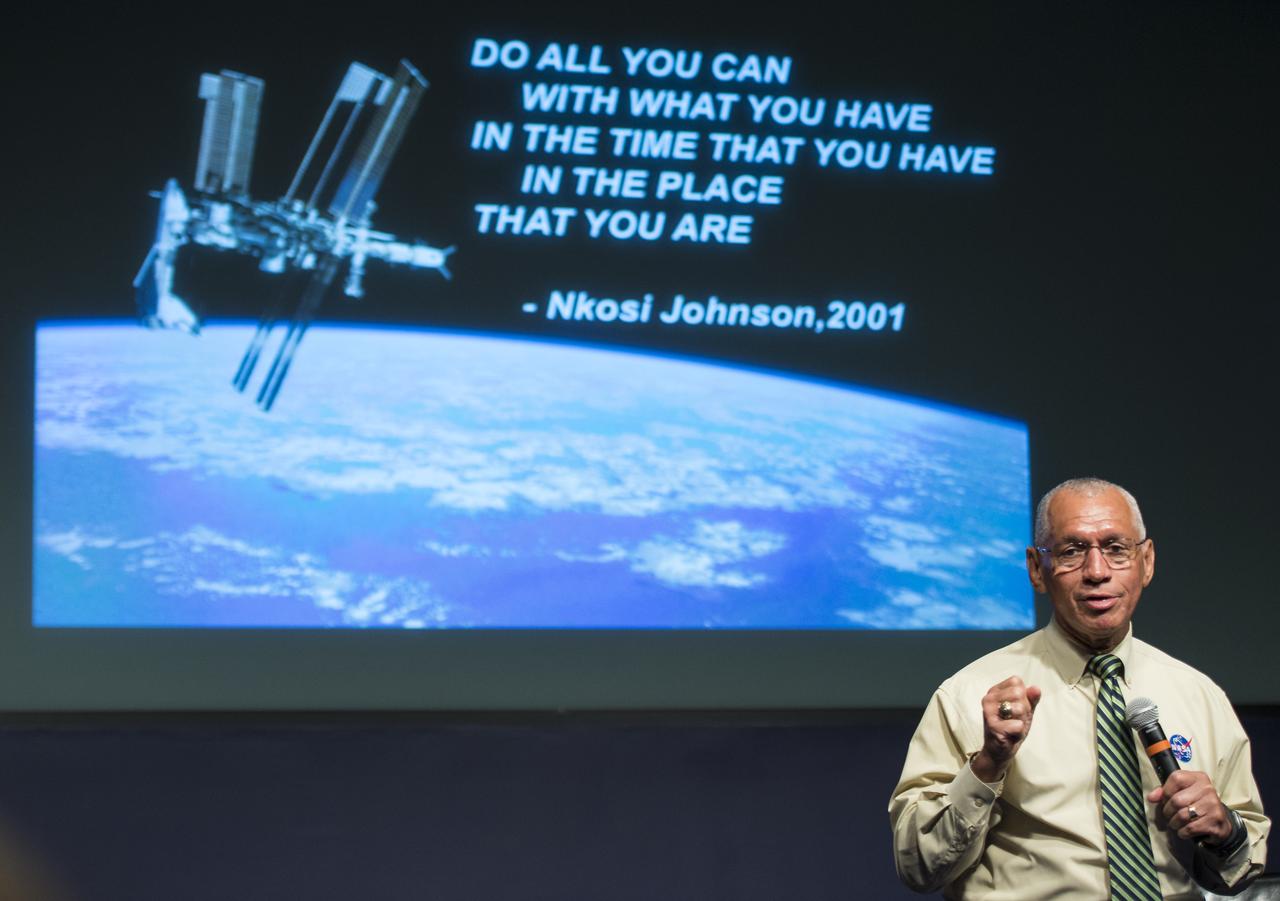
NASA Administrator Charles Bolden speaks to students from Mapletown Jr/Sr High School and Margaret Bell Middle School during the NASA Hubble Space Telescope (HST) Research Project Capstone Event in the James E. Webb Auditorium at NASA Headquarters on Monday, May 5, 2014. Administrator Bolden spoke about his involvement with the Hubble Space Telescope and took questions from the students. Photo Credit: (NASA/Joel Kowsky)
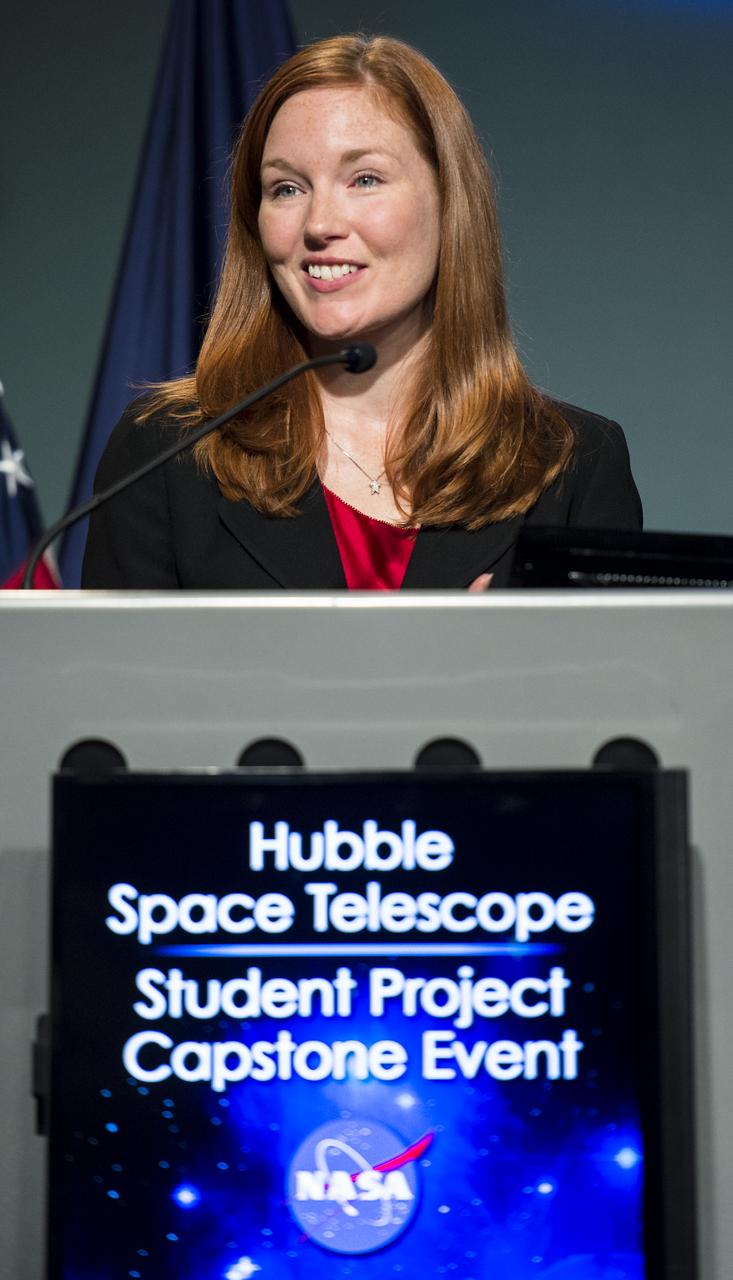
Dr. Amber Straughn, Lead Scientist for James Webb Space Telescope Education & Public Outreach at NASA's Goddard Space Flight Center, speaks to students from Mapletown Jr/Sr High School and Margaret Bell Middle School during the NASA Hubble Space Telescope (HST) Research Project Capstone Event in the James E. Webb Auditorium at NASA Headquarters on Monday, May 5, 2014 Photo Credit: (NASA/Joel Kowsky)
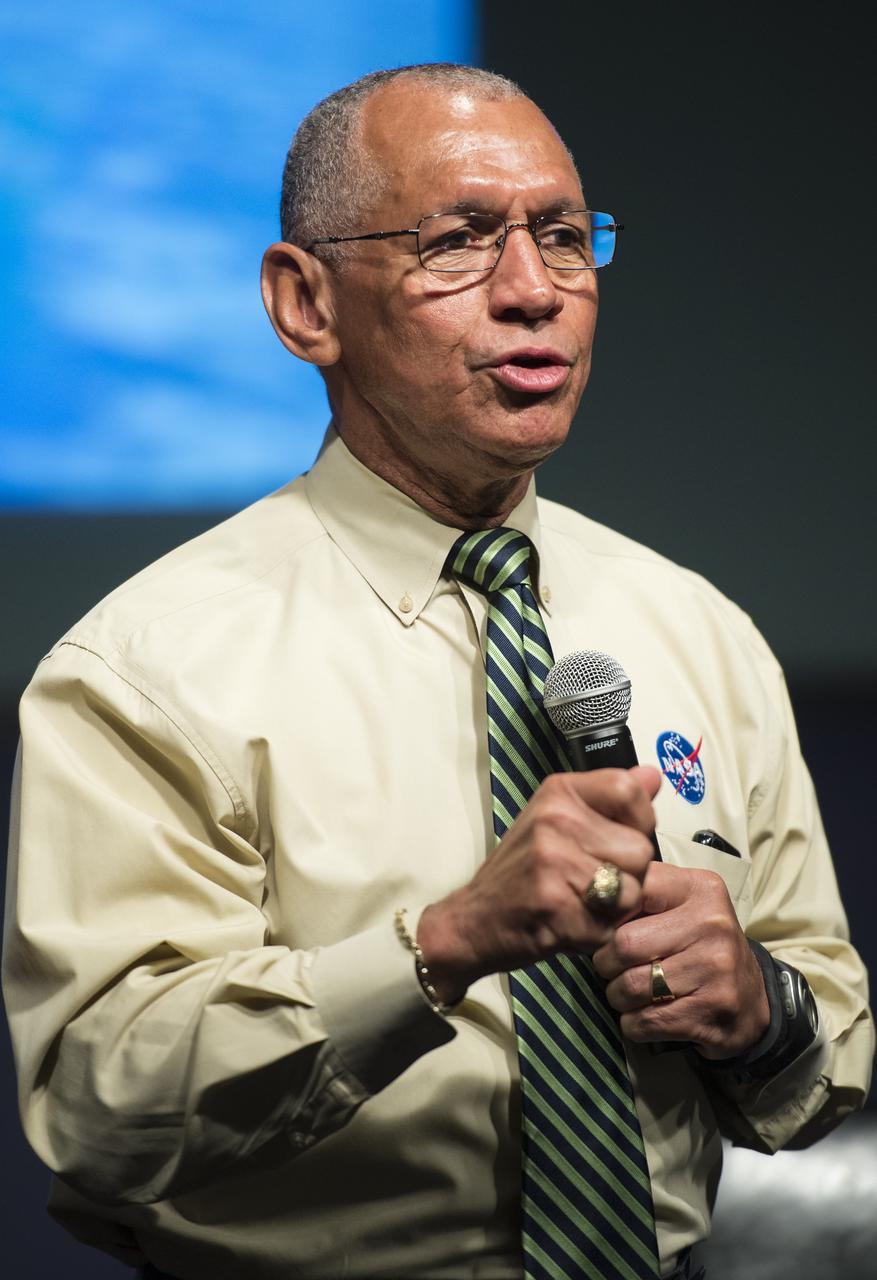
NASA Administrator Charles Bolden speaks to students from Mapletown Jr/Sr High School and Margaret Bell Middle School during the NASA Hubble Space Telescope (HST) Research Project Capstone Event in the James E. Webb Auditorium at NASA Headquarters on Monday, May 5, 2014. Administrator Bolden spoke about his involvement with the Hubble Space Telescope and took questions from the students. Photo Credit: (NASA/Joel Kowsky)
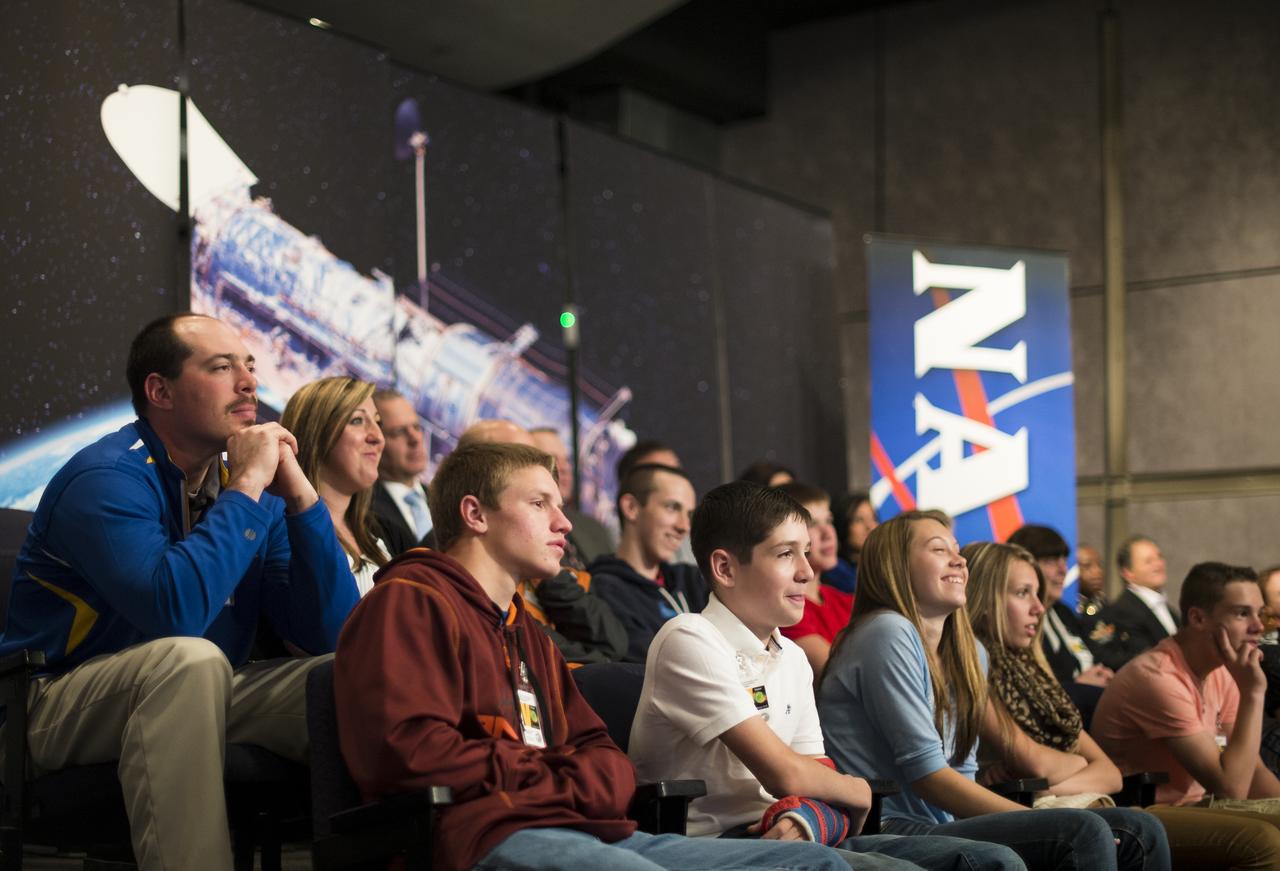
Students and faculty from Mapletown Jr/Sr High School and Margaret Bell Middle School listen as John Grunsfeld, NASA Associate Administrator for the Science Mission Directorate, speaks about his experiences on the final space shuttle servicing mission to the Hubble Space Telescope during the NASA Hubble Space Telescope (HST) Research Project Capstone Event in the James E. Webb Auditorium at NASA Headquarters on Monday, May 5, 2014. Photo Credit: (NASA/Joel Kowsky)
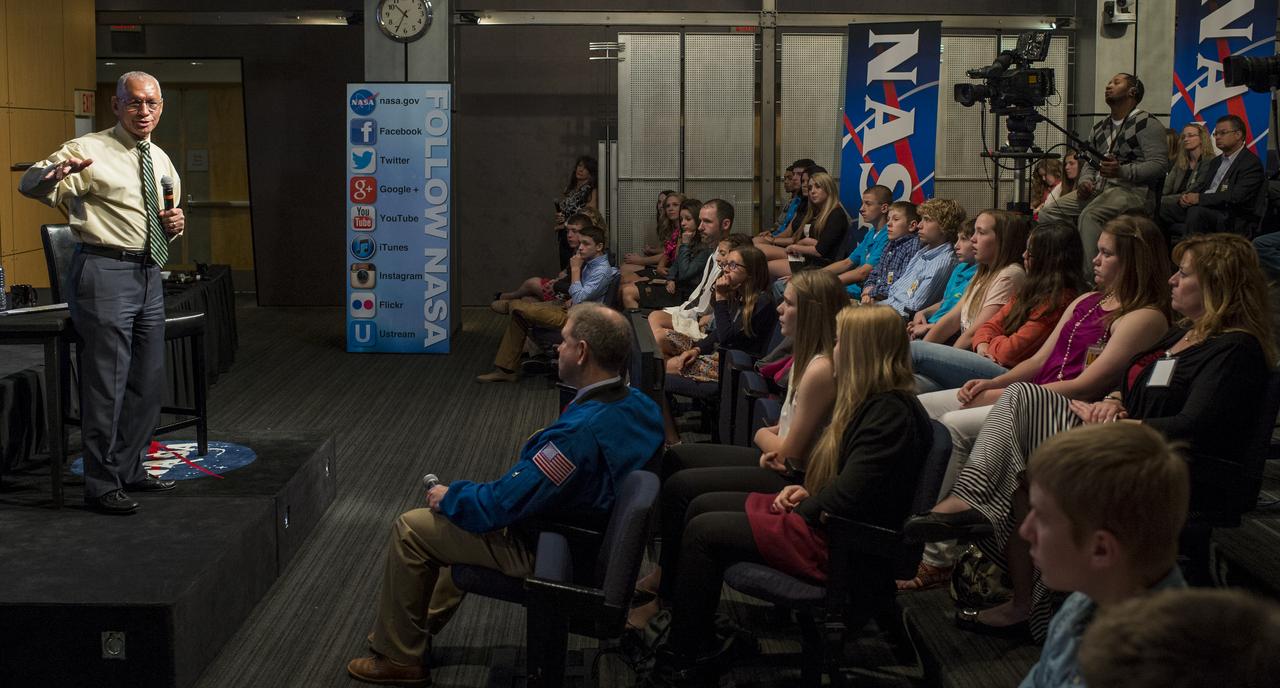
NASA Administrator Charles Bolden speaks to students from Mapletown Jr/Sr High School and Margaret Bell Middle School during the NASA Hubble Space Telescope (HST) Research Project Capstone Event in the James E. Webb Auditorium at NASA Headquarters on Monday, May 5, 2014. Administrator Bolden spoke about his involvement with the Hubble Space Telescope and took questions from the students. Photo Credit: (NASA/Joel Kowsky)
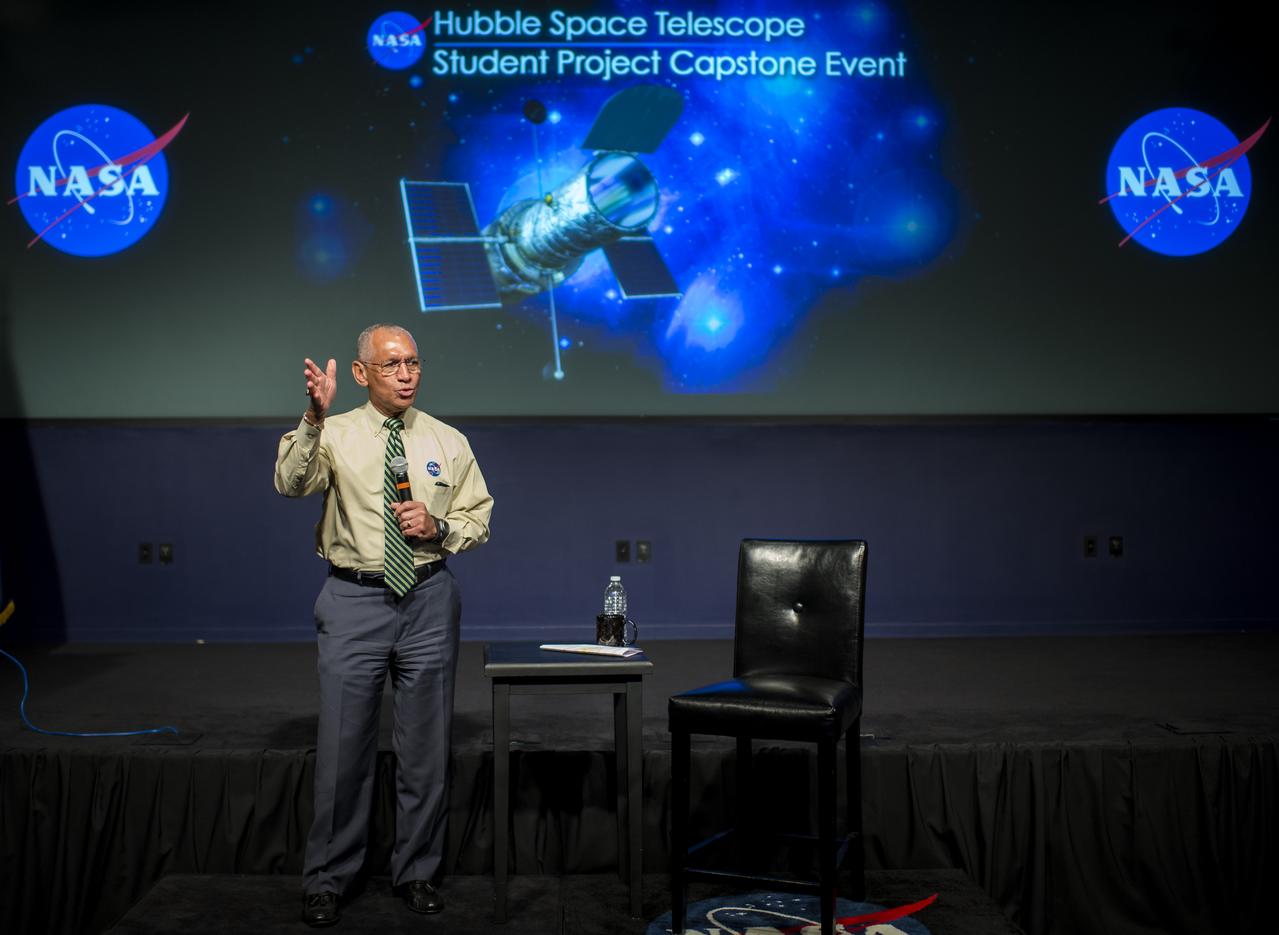
NASA Administrator Charles Bolden speaks to students from Mapletown Jr/Sr High School and Margaret Bell Middle School during the NASA Hubble Space Telescope (HST) Research Project Capstone Event in the James E. Webb Auditorium at NASA Headquarters on Monday, May 5, 2014. Administrator Bolden spoke about his involvement with the Hubble Space Telescope and took questions from the students. Photo Credit: (NASA/Joel Kowsky)
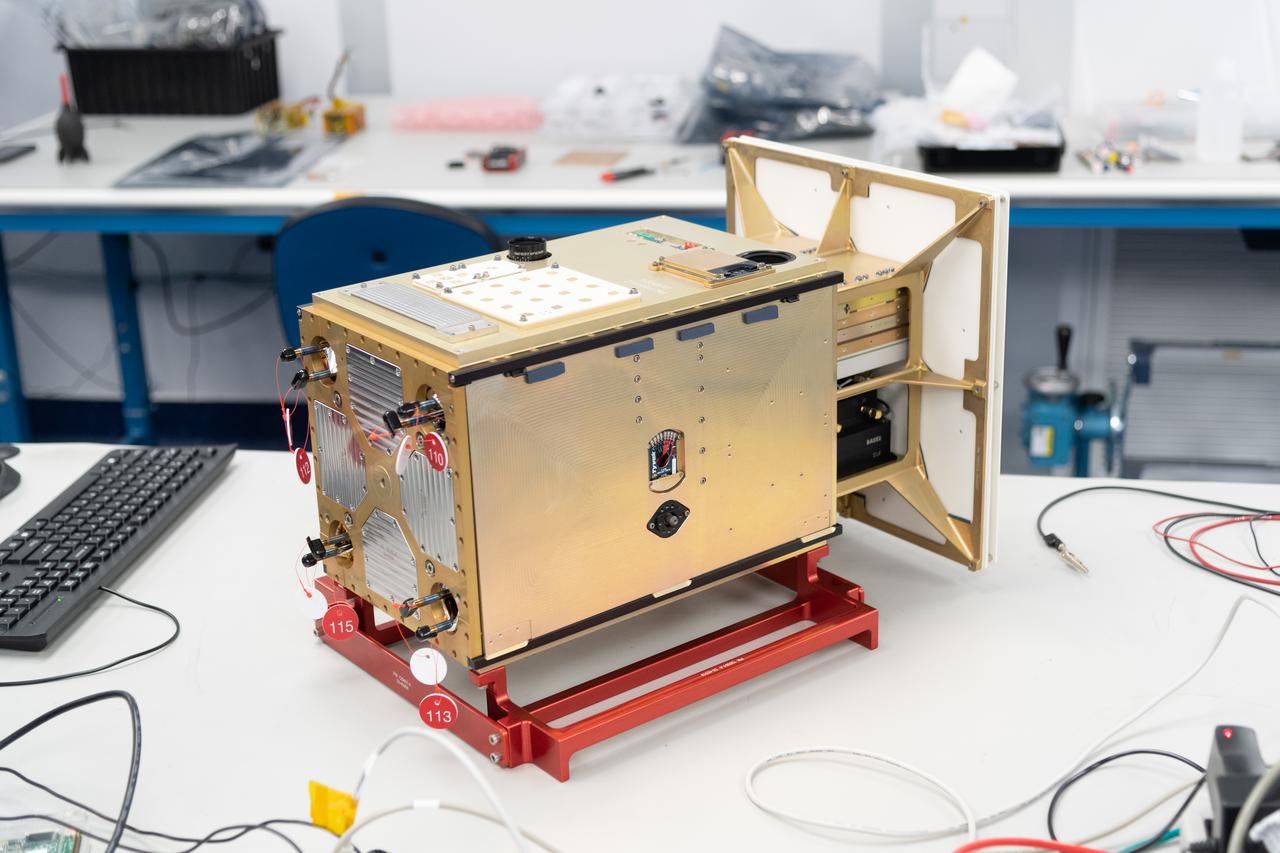
PHOTO DATE: 10/14/2021 LOCATION: Tyvak Nano-Satellite Systems, Inc. SUBJECT: CAPSTONE spacecraft build at Tyvak Nano-Satellite Systems, Inc. in Irvine, California. PHOTOGRAPHER: Norah Moran

PHOTO DATE: 10/14/2021 LOCATION: Tyvak Nano-Satellite Systems, Inc. SUBJECT: CAPSTONE spacecraft build at Tyvak Nano-Satellite Systems, Inc. in Irvine, California. PHOTOGRAPHER: Norah Moran
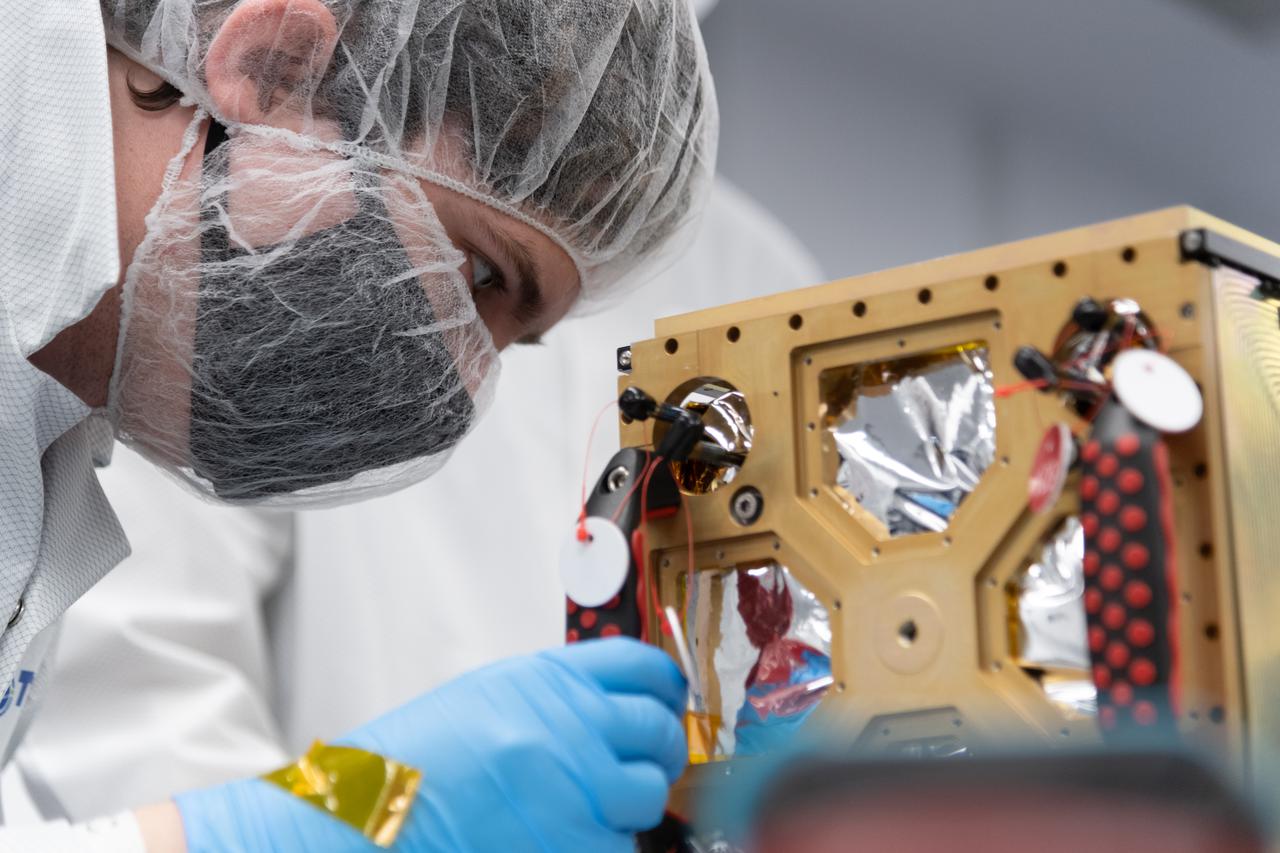
PHOTO DATE: 10/14/2021 LOCATION: Tyvak Nano-Satellite Systems, Inc. SUBJECT: CAPSTONE spacecraft build at Tyvak Nano-Satellite Systems, Inc. in Irvine, California. PHOTOGRAPHER: Norah Moran
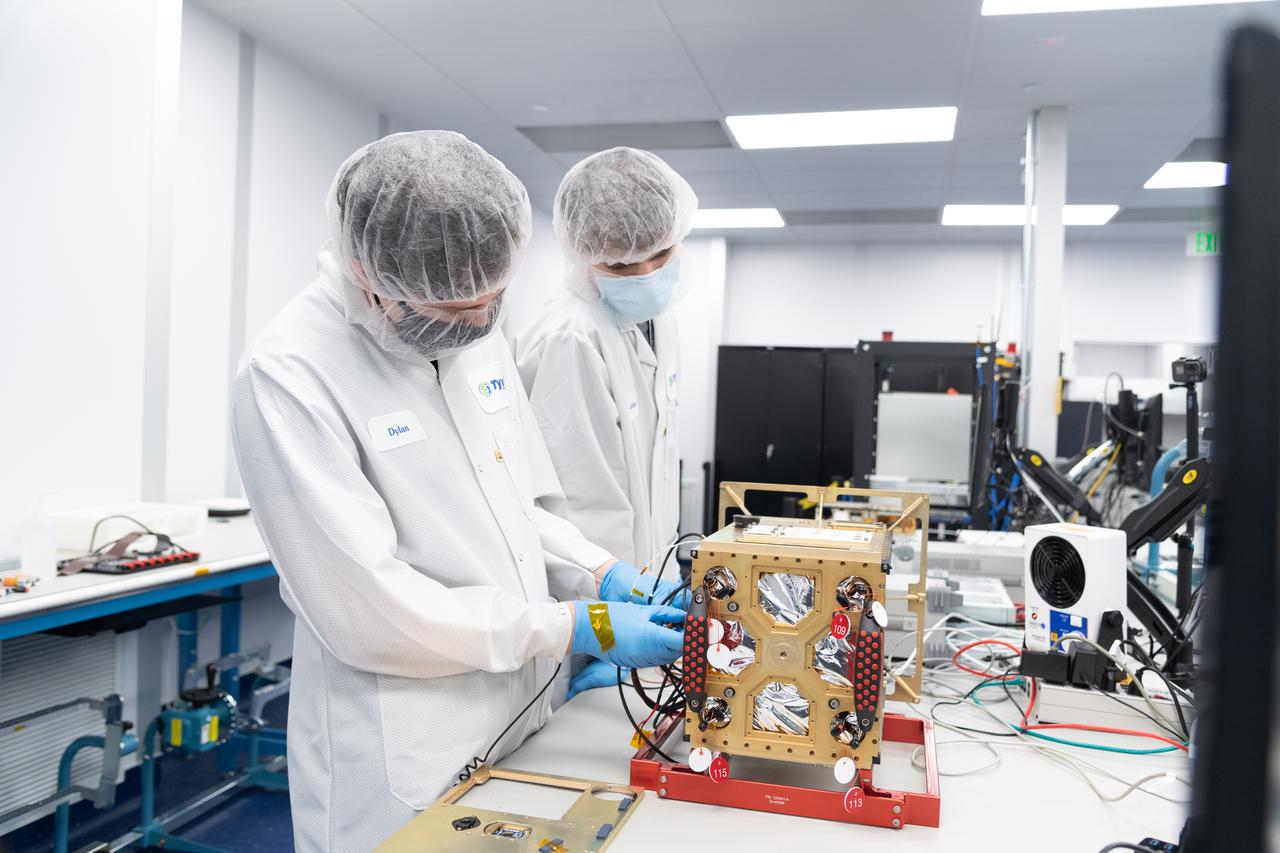
PHOTO DATE: 10/14/2021 LOCATION: Tyvak Nano-Satellite Systems, Inc. SUBJECT: CAPSTONE spacecraft build at Tyvak Nano-Satellite Systems, Inc. in Irvine, California. PHOTOGRAPHER: Norah Moran
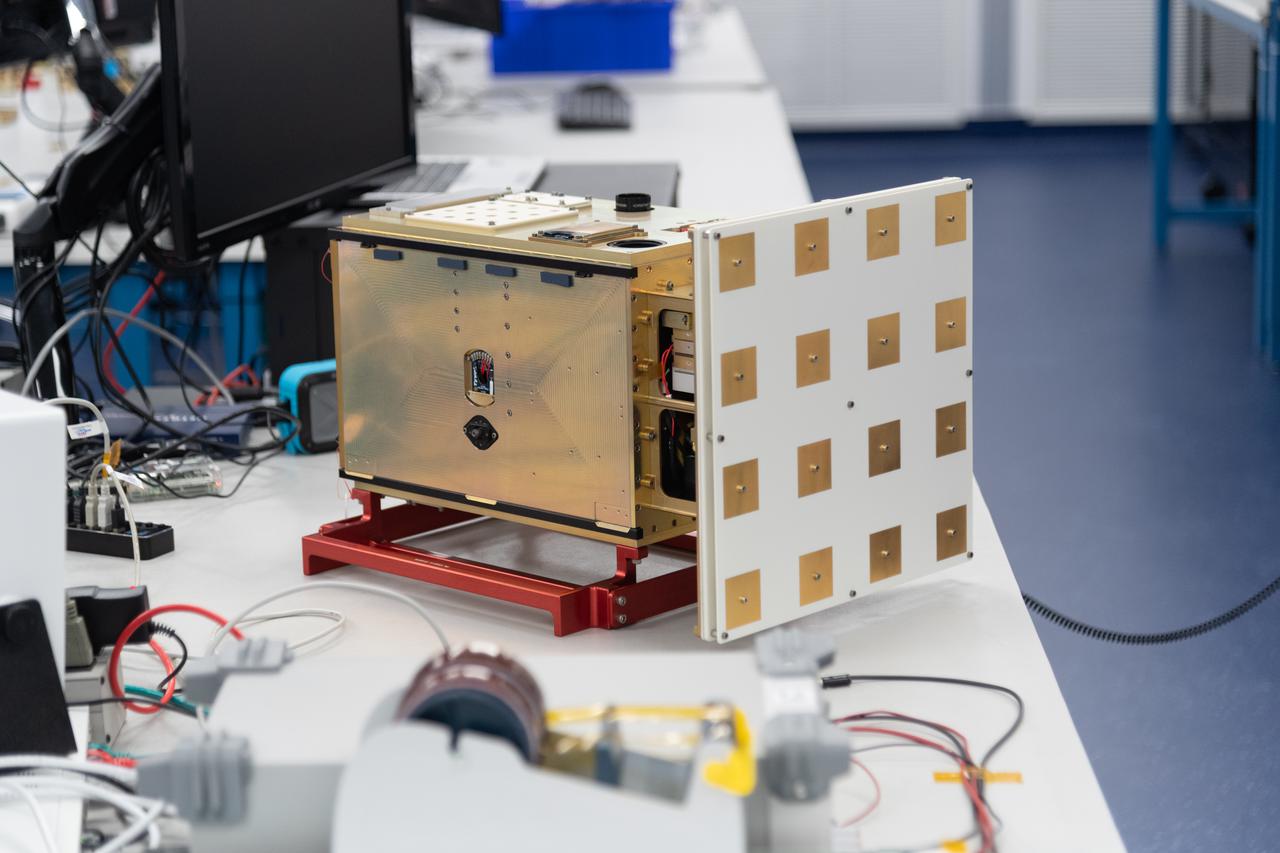
PHOTO DATE: 10/14/2021 LOCATION: Tyvak Nano-Satellite Systems, Inc. SUBJECT: CAPSTONE spacecraft build at Tyvak Nano-Satellite Systems, Inc. in Irvine, California. PHOTOGRAPHER: Norah Moran
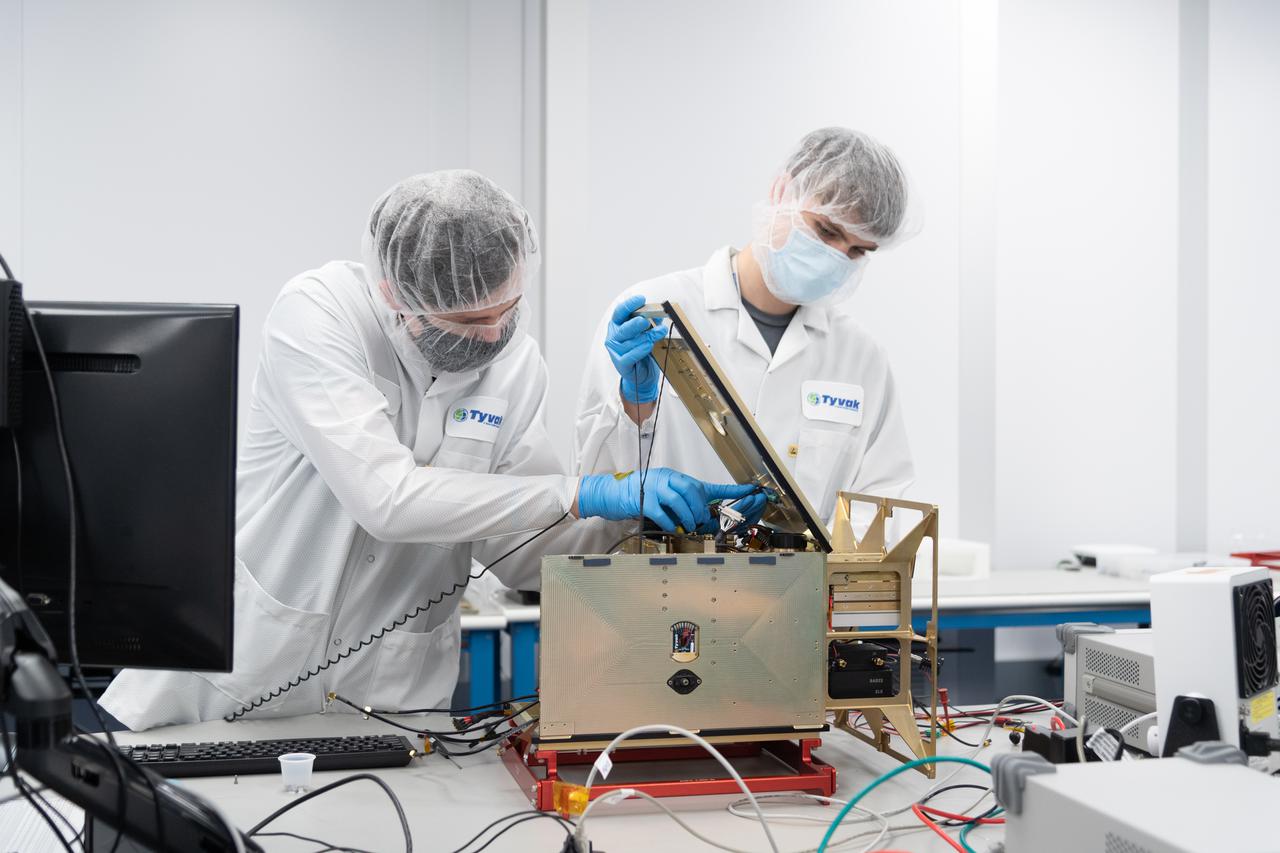
PHOTO DATE: 10/14/2021 LOCATION: Tyvak Nano-Satellite Systems, Inc. SUBJECT: CAPSTONE spacecraft build at Tyvak Nano-Satellite Systems, Inc. in Irvine, California. PHOTOGRAPHER: Norah Moran
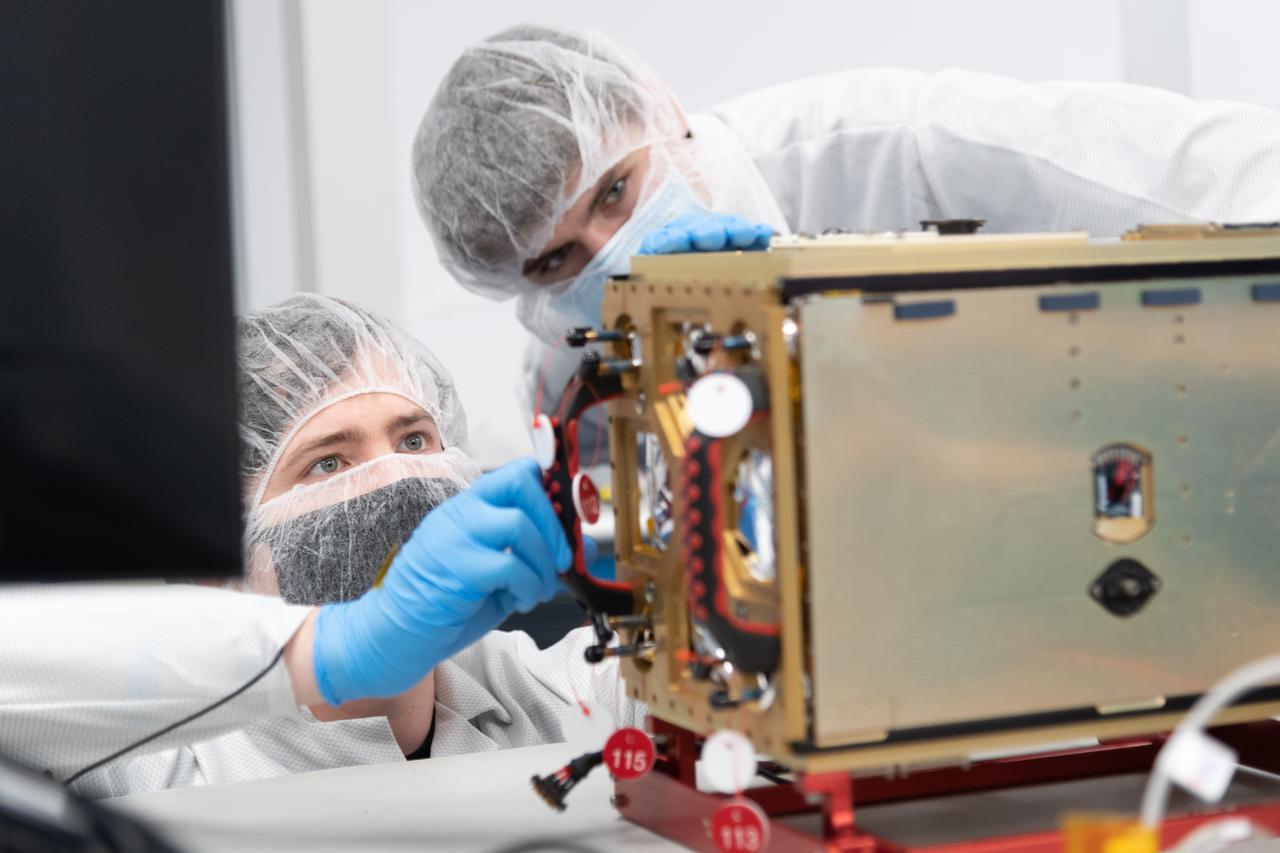
PHOTO DATE: 10/14/2021 LOCATION: Tyvak Nano-Satellite Systems, Inc. SUBJECT: CAPSTONE spacecraft build at Tyvak Nano-Satellite Systems, Inc. in Irvine, California. PHOTOGRAPHER: Norah Moran
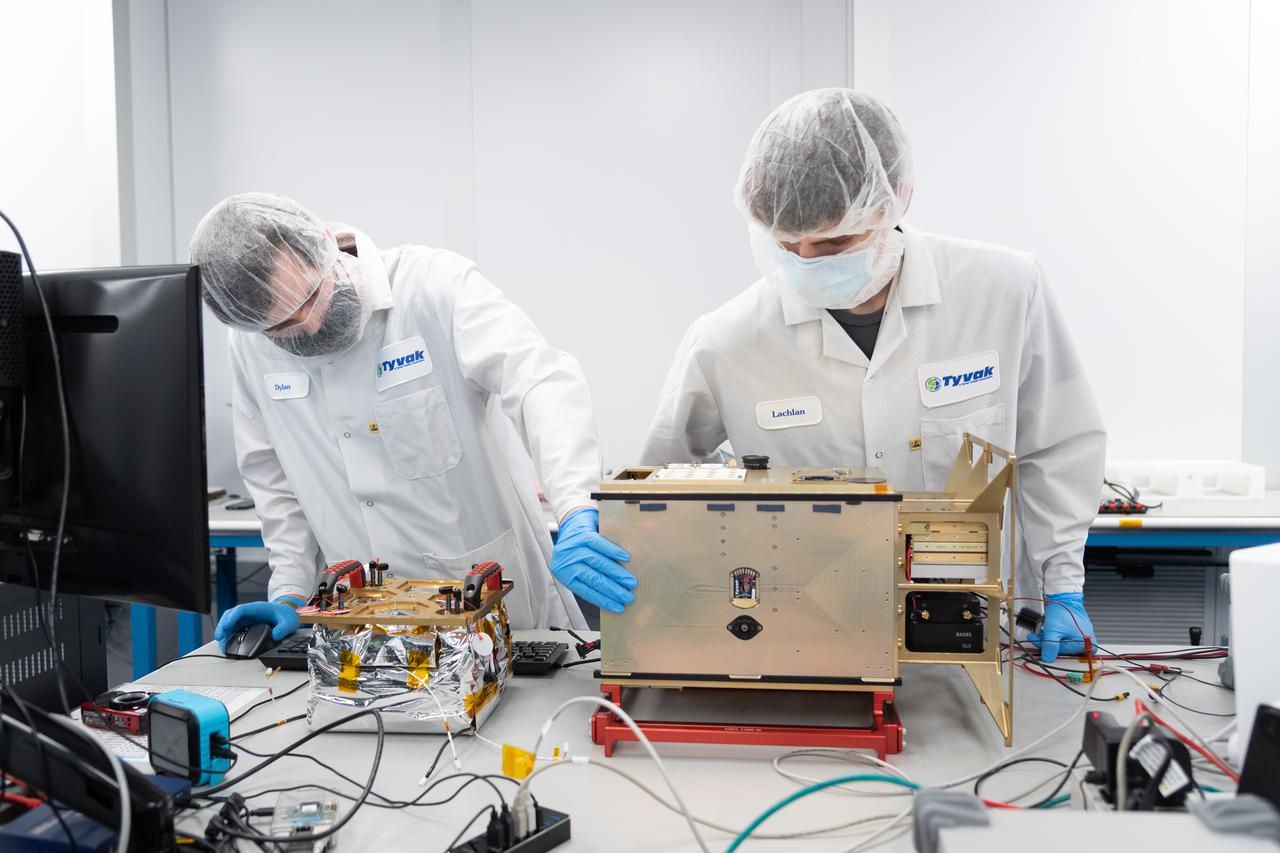
PHOTO DATE: 10/14/2021 LOCATION: Tyvak Nano-Satellite Systems, Inc. SUBJECT: CAPSTONE spacecraft build at Tyvak Nano-Satellite Systems, Inc. in Irvine, California. PHOTOGRAPHER: Norah Moran
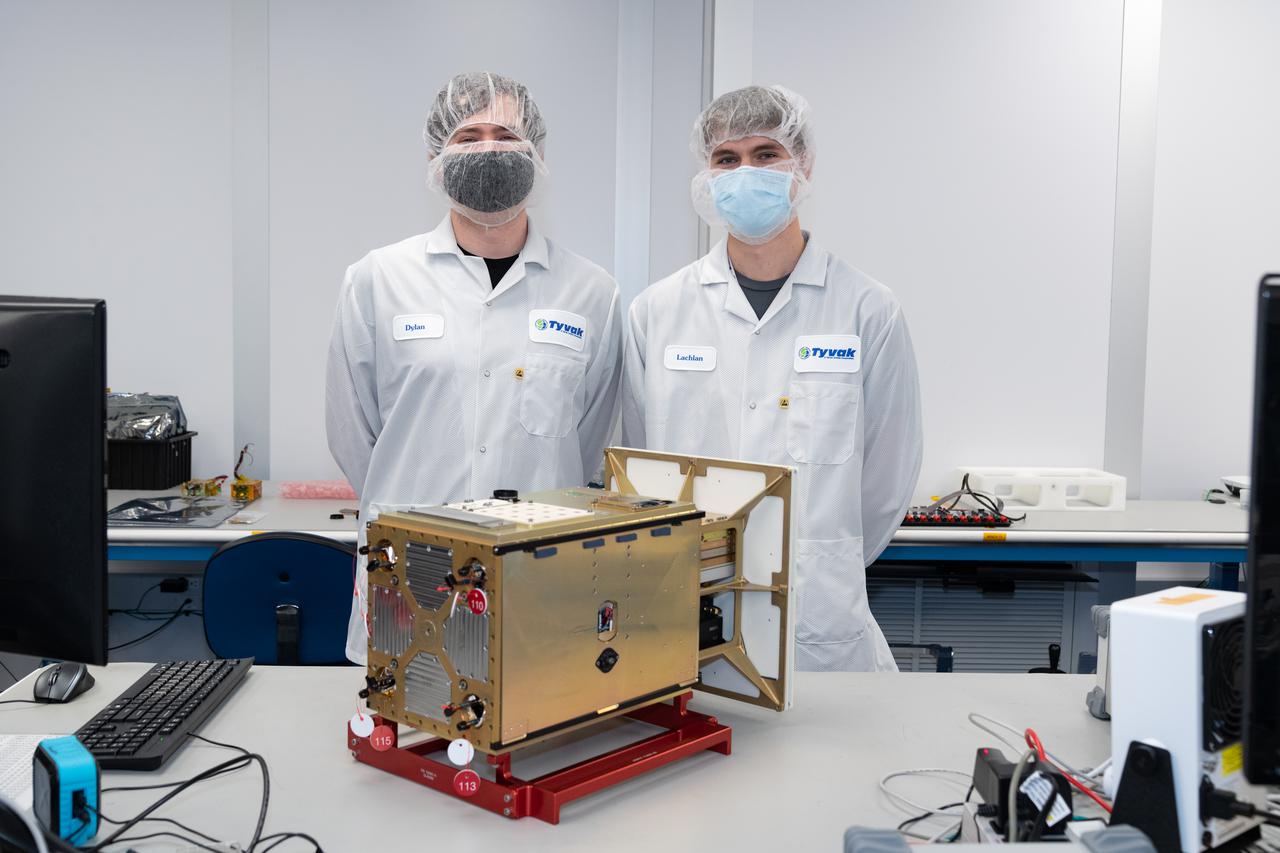
PHOTO DATE: 10/14/2021 LOCATION: Tyvak Nano-Satellite Systems, Inc. SUBJECT: CAPSTONE spacecraft build at Tyvak Nano-Satellite Systems, Inc. in Irvine, California. PHOTOGRAPHER: Norah Moran
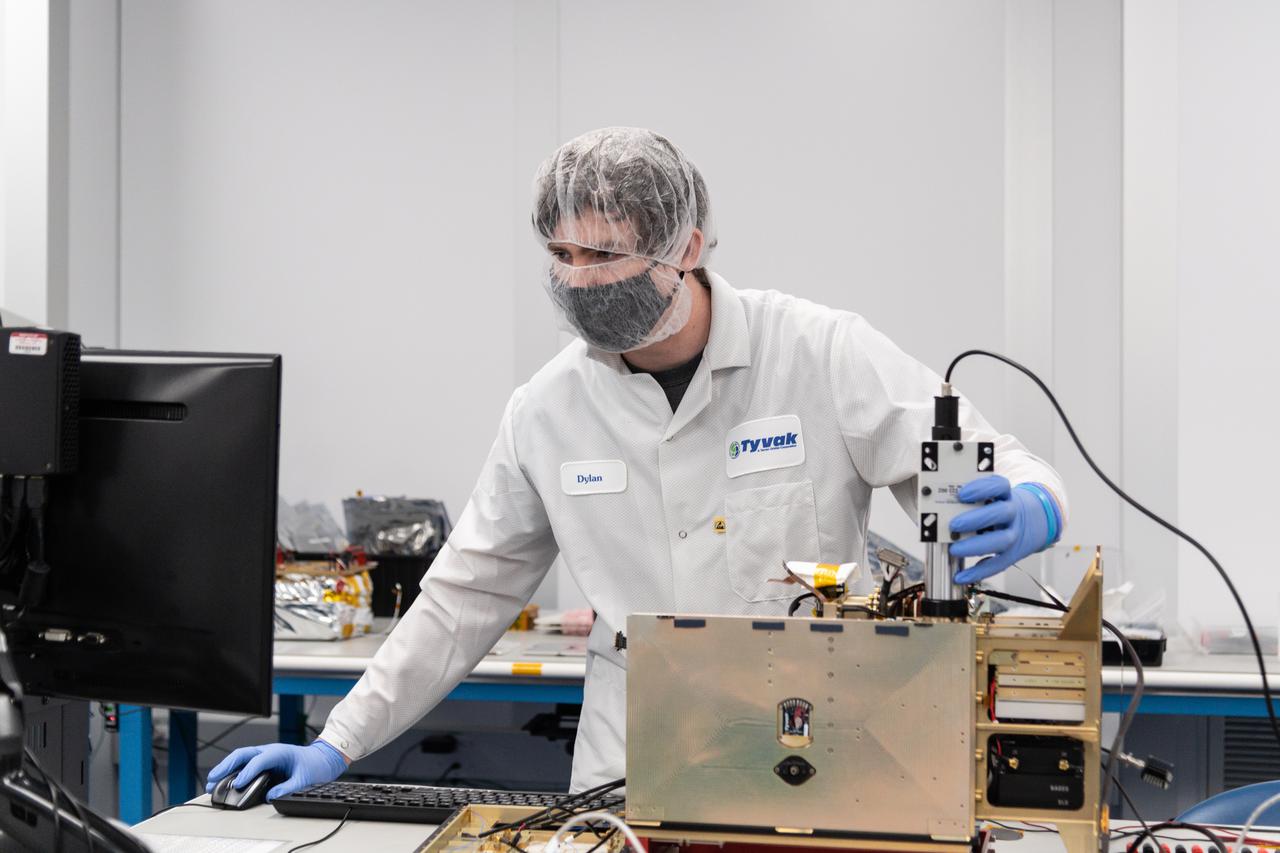
PHOTO DATE: 10/13/2021 LOCATION: Tyvak Nano-Satellite Systems, Inc. SUBJECT: CAPSTONE spacecraft build at Tyvak Nano-Satellite Systems, Inc. in Irvine, California. PHOTOGRAPHER: Norah Moran
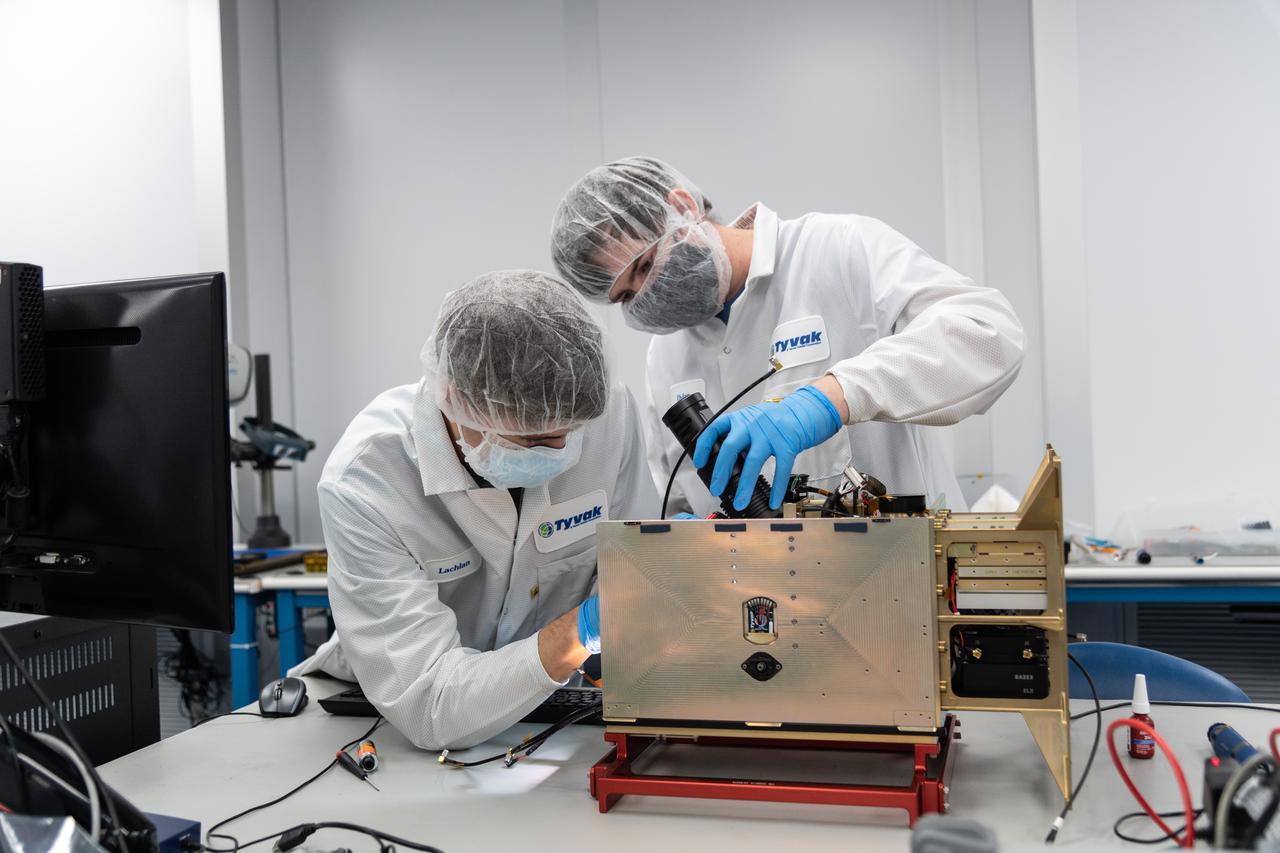
PHOTO DATE: 10/11/2021 LOCATION: Tyvak Nano-Satellite Systems, Inc. SUBJECT: CAPSTONE spacecraft build at Tyvak Nano-Satellite Systems, Inc. in Irvine, California. PHOTOGRAPHER: Norah Moran
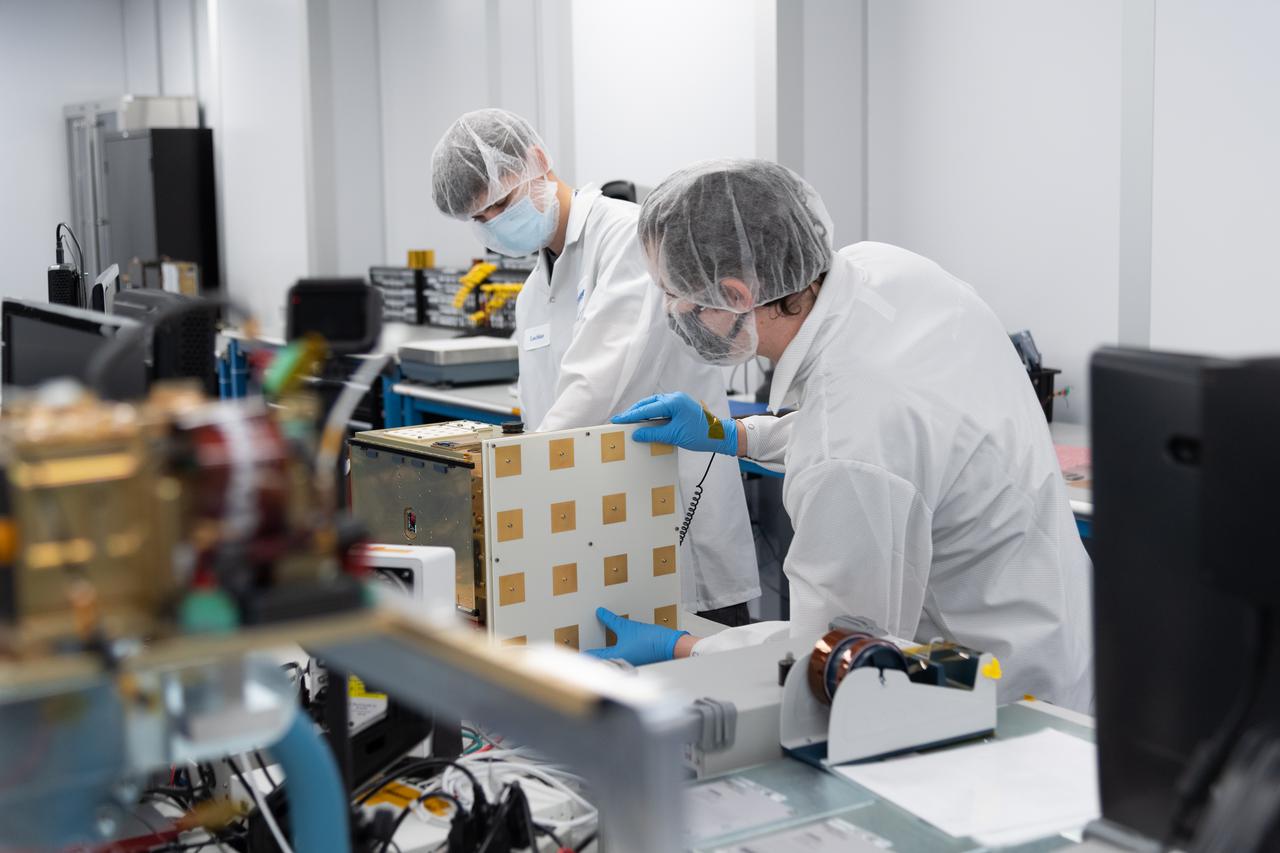
PHOTO DATE: 10/14/2021 LOCATION: Tyvak Nano-Satellite Systems, Inc. SUBJECT: CAPSTONE spacecraft build at Tyvak Nano-Satellite Systems, Inc. in Irvine, California. PHOTOGRAPHER: Norah Moran
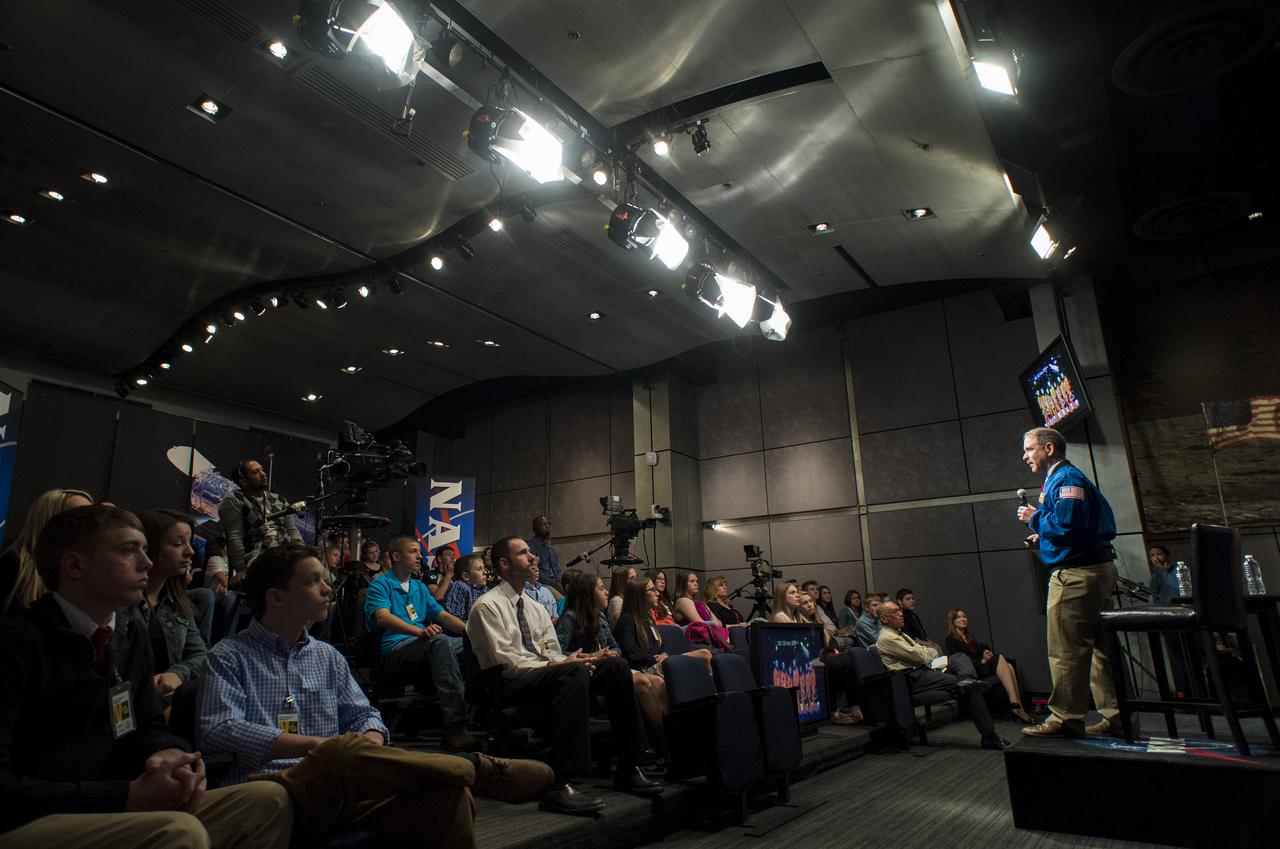
John Grunsfeld, NASA Associate Administrator for the Science Mission Directorate, speaks to students from Mapletown Jr/Sr High School and Margaret Bell Middle School about his experiences on the final space shuttle servicing mission to the Hubble Space Telescope during the NASA Hubble Space Telescope (HST) Research Project Capstone Event in the James E. Webb Auditorium at NASA Headquarters on Monday, May 5, 2014. Grunsfeld flew on three of the five servicing missions to the Hubble Space Telescope. Photo Credit: (NASA/Joel Kowsky)
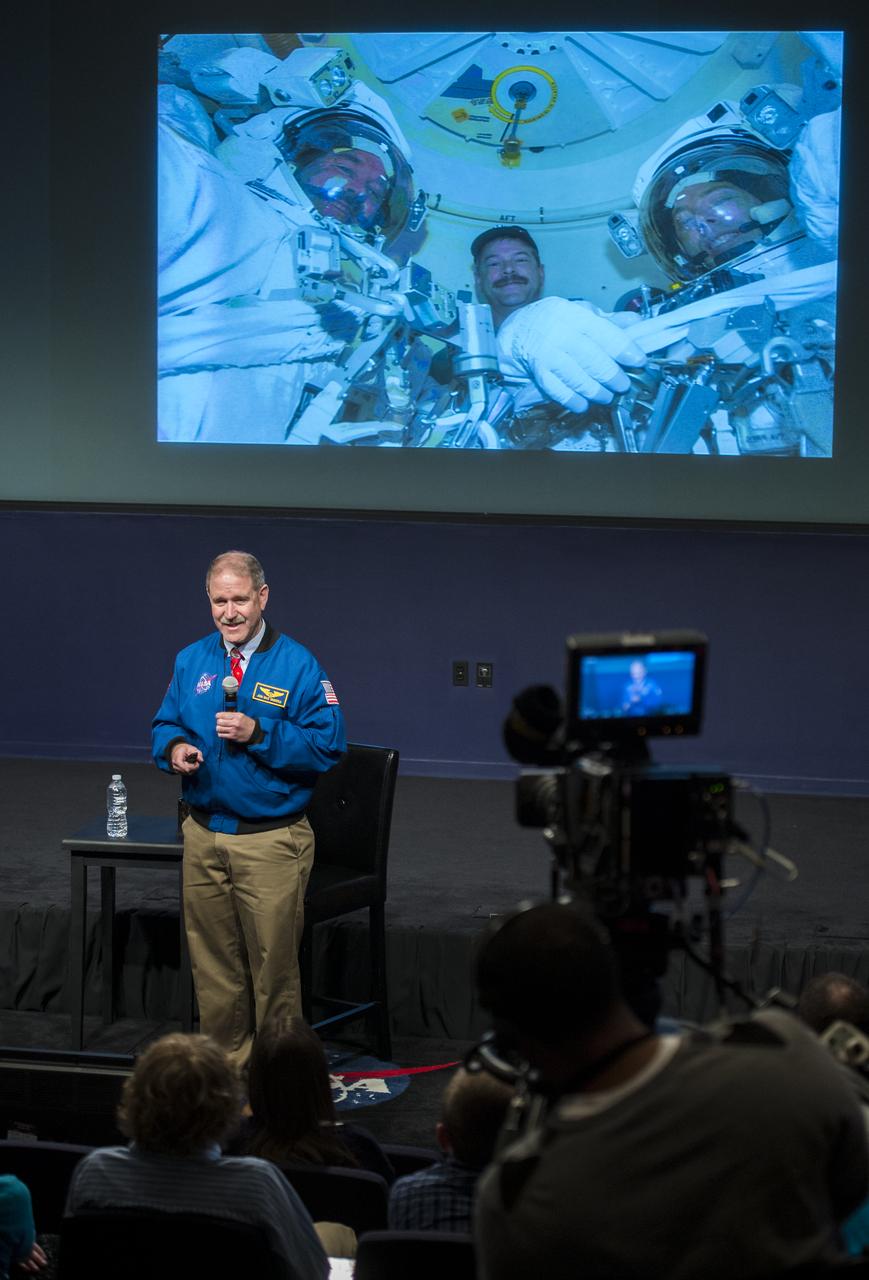
John Grunsfeld, NASA Associate Administrator for the Science Mission Directorate, speaks to students from Mapletown Jr/Sr High School and Margaret Bell Middle School about his experiences on the final space shuttle servicing mission to the Hubble Space Telescope during the NASA Hubble Space Telescope (HST) Research Project Capstone Event in the James E. Webb Auditorium at NASA Headquarters on Monday, May 5, 2014. Grunsfeld flew on three of the five servicing missions to the Hubble Space Telescope. Photo Credit: (NASA/Joel Kowsky)
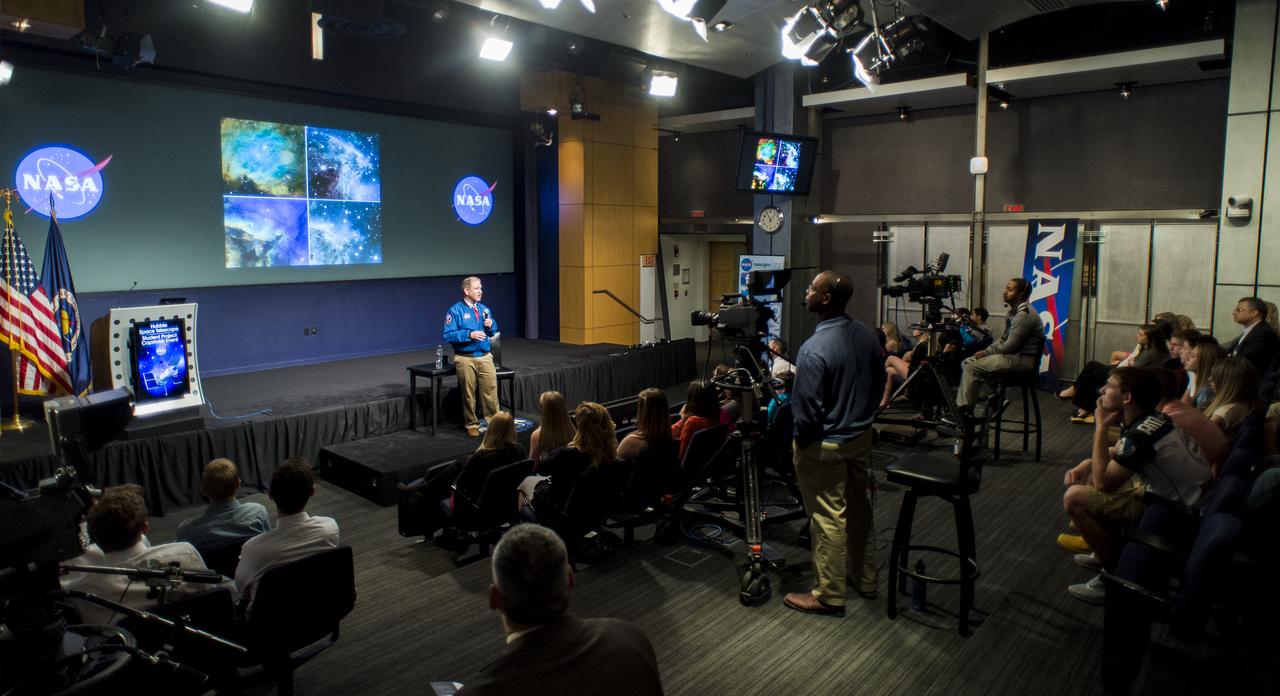
John Grunsfeld, NASA Associate Administrator for the Science Mission Directorate, speaks to students from Mapletown Jr/Sr High School and Margaret Bell Middle School about his experiences on the final space shuttle servicing mission to the Hubble Space Telescope during the NASA Hubble Space Telescope (HST) Research Project Capstone Event in the James E. Webb Auditorium at NASA Headquarters on Monday, May 5, 2014. Grunsfeld flew on three of the five servicing missions to the Hubble Space Telescope. Photo Credit: (NASA/Joel Kowsky)
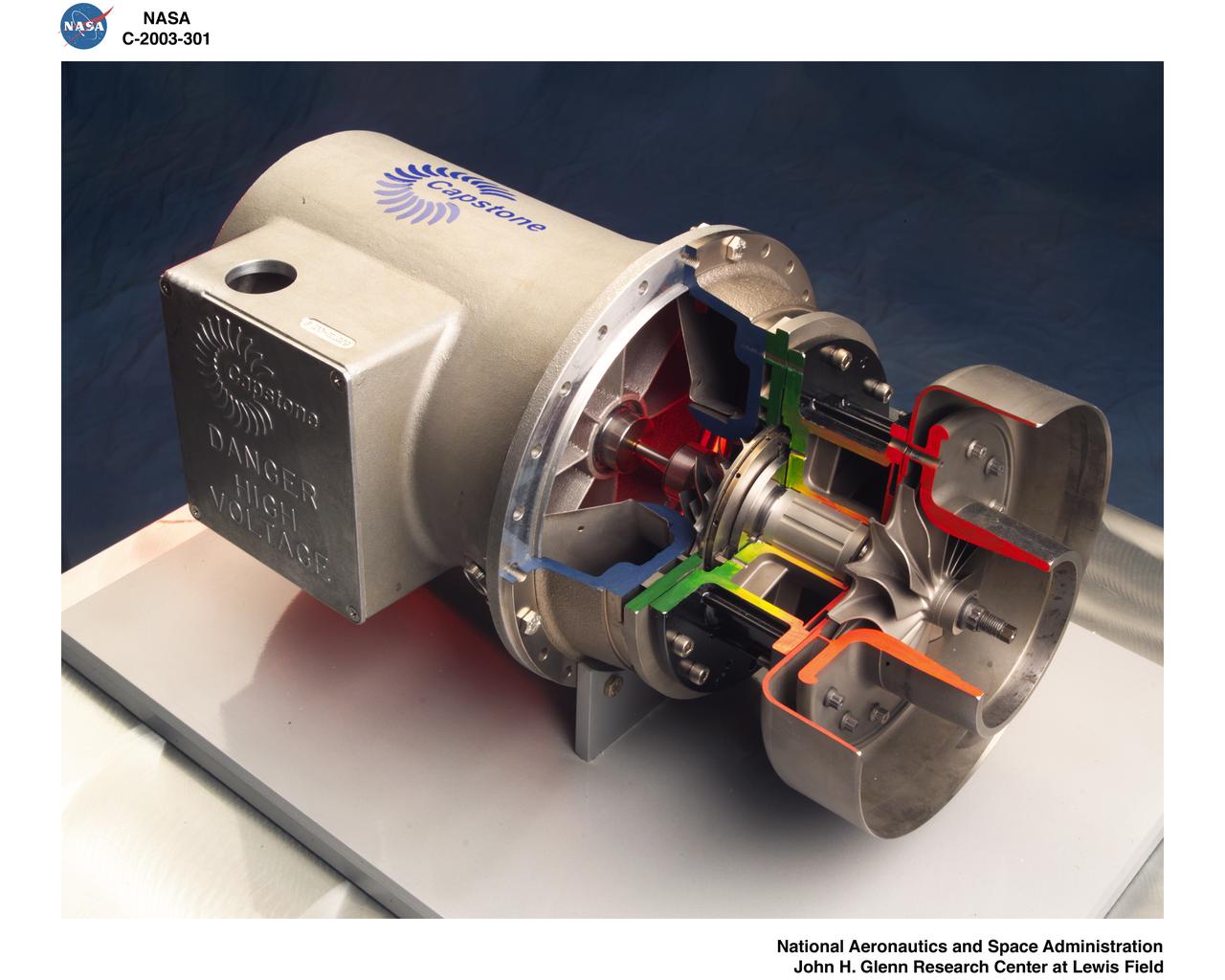
DEMONSTRATION RIGS - CAPSTONE MICROTURBINE CUTAWAY
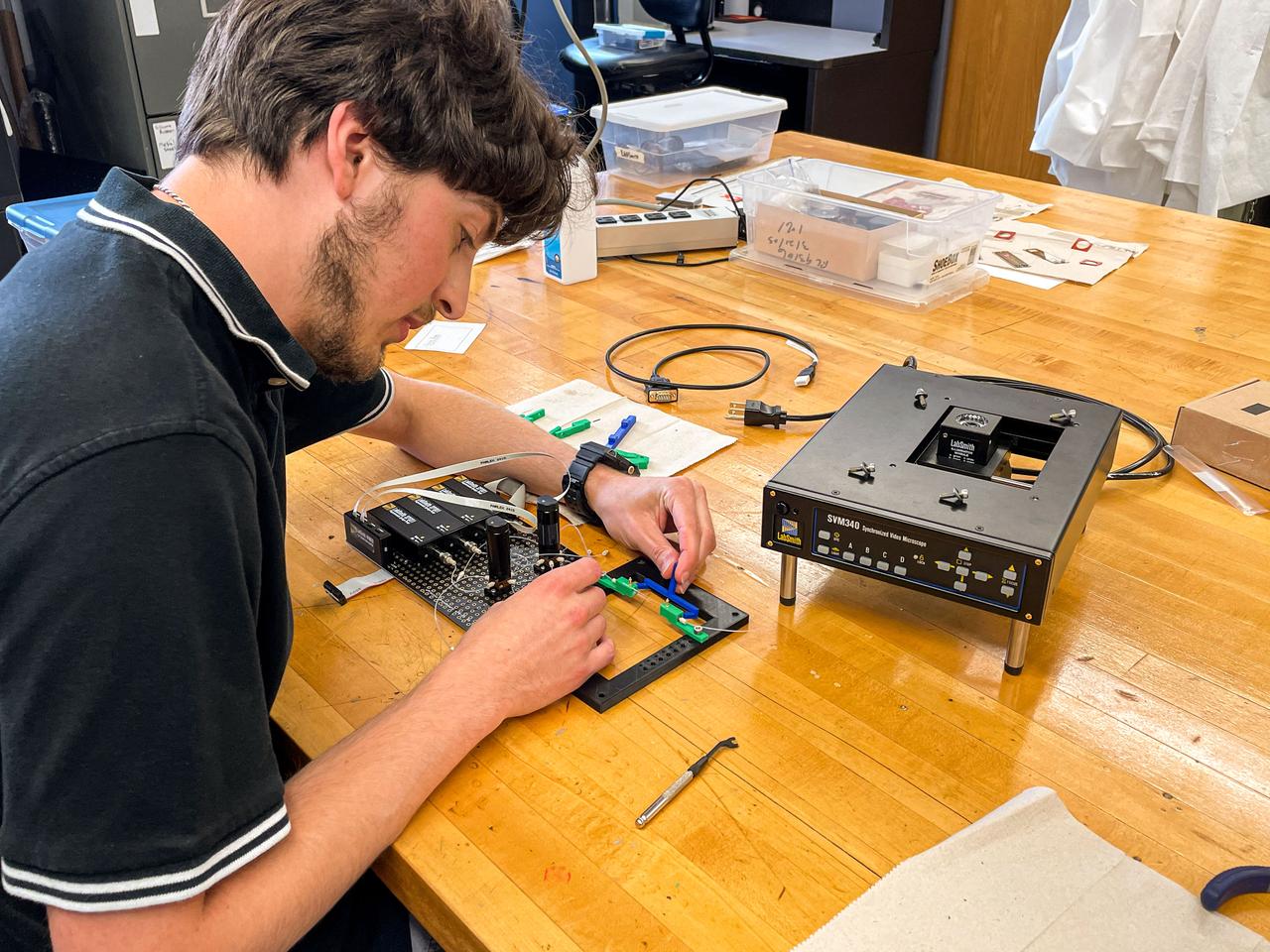
jsc2024e016254 (7/30/2021) --- A capstone student assembles the microscope and fluid breadboard for the Nano Particle Haloing Suspension payload. This payload tests controlled assembly of nanoparticles in a solution of zirconia and titanium-dioxide coated silica. Effective demonstration could lead to applications in an enhanced solar cell generation technology known as quantum-dot solar synthesis. Image courtesy of the University of Louisville.
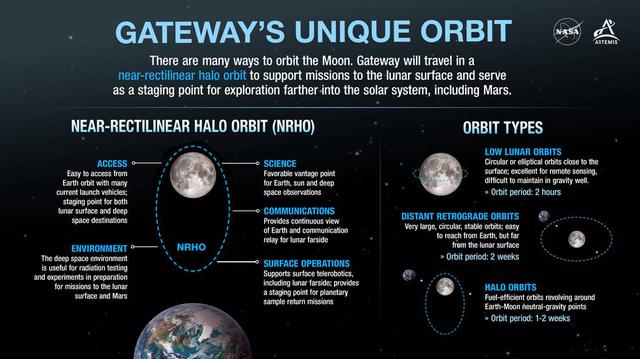
The Gateway space station will operate in a near-rectilinear halo orbit (NRHO) around the Moon, providing substantial capabilities and opportunities for Artemis missions.
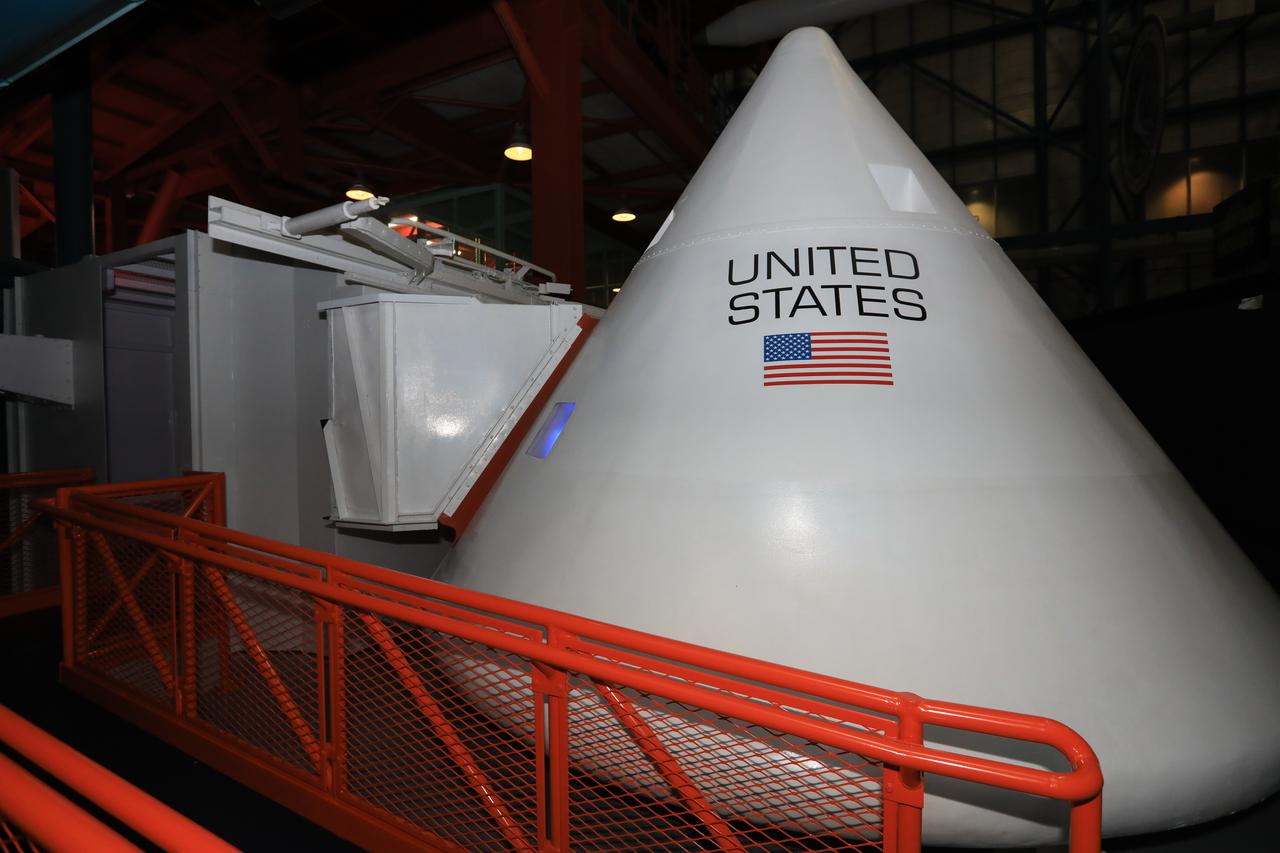
An Apollo spacecraft mockup marks the capstone of the new tribute to the crew of Apollo 1 who perished in a fire at the launch pad on Jan. 27, 1967, during training for the mission. The tribute highlights the lives and careers of astronauts Gus Grissom, Ed White II and Roger Chaffee who were lost during the fire. The tribute at the Apollo/Saturn V Center at NASA's Kennedy Space Center opened Jan. 27, 2017, 50 years after the crew of three was lost. It features numerous items recalling the lives of the three astronauts. The tribute also includes the three-part hatch to the spacecraft itself, the first time any part of the Apollo 1 spacecraft has been displayed publicly. A version of the hatch after it was redesigned is also showcased as an example of improvements NASA made throughout the agency and to the Apollo spacecraft that would later carry astronauts to the moon.
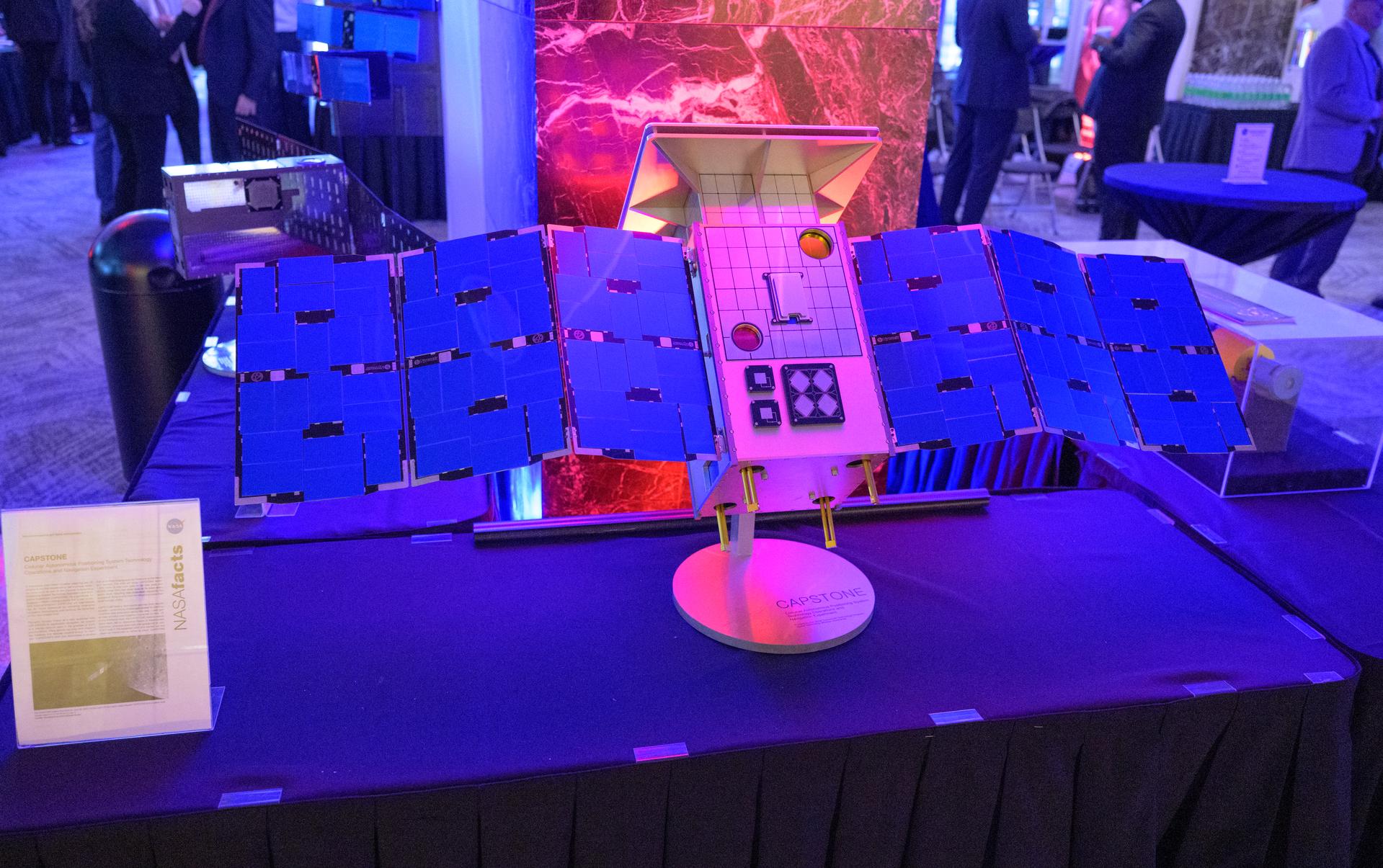
NASA Headquarters lobby is seen with a model of the Cislunar Autonomous Positioning System Technology Operations and Navigation Experiment (CAPSTONE) on display during a 2-day event where NASA outlined how the agency is executing President Donald J. Trump’s National Space Policy and accelerating preparations for America’s return to the surface of the Moon by 2028, Wednesday, March 25, 2026, at the Mary W. Jackson NASA Headquarters building in Washington. During the event NASA leadership provided updates on mission priorities, including sending the first astronauts to the lunar surface in more than 50 years, establishing the initial elements of a permanent lunar base, getting America underway in space on nuclear propulsion, and other objectives. Photo Credit: (NASA/Bill Ingalls)
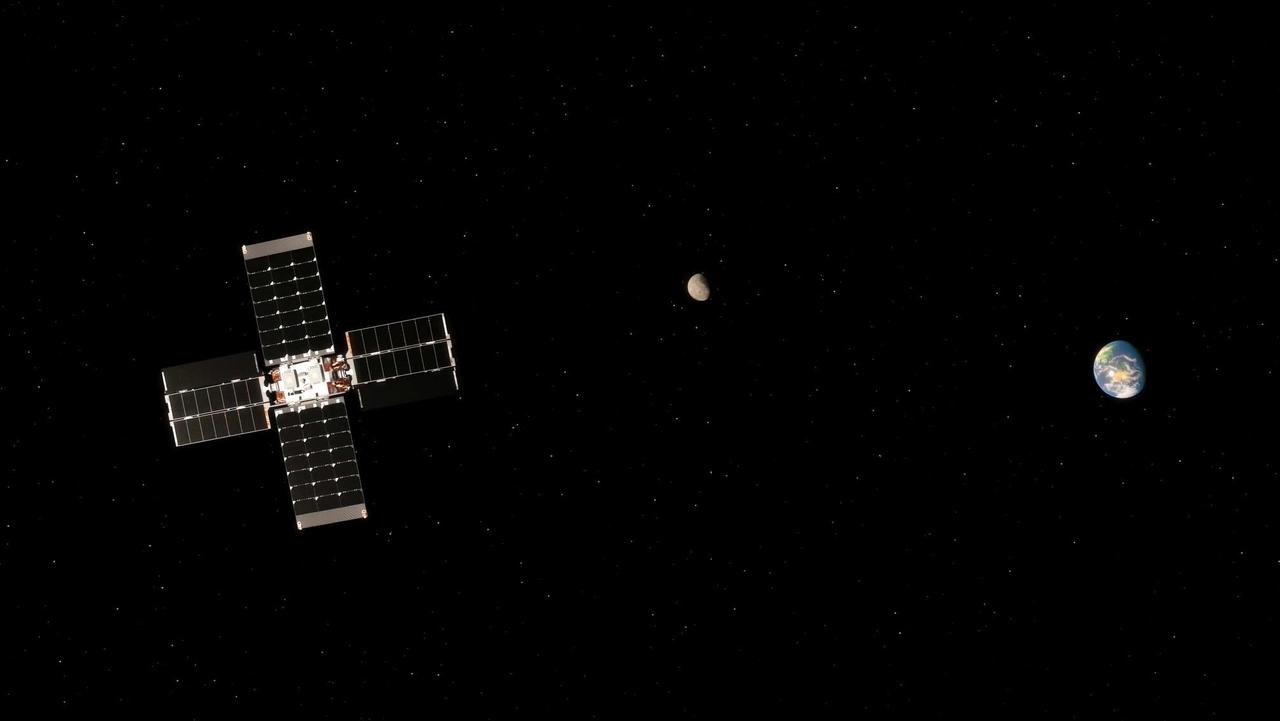
This illustration shows NASA's Lunar Flashlight carrying out a trajectory correction maneuver with the Moon and Earth in the background. Powered by the small satellite's four thrusters, the maneuver is needed to reach lunar orbit. Lunar Flashlight launched Nov. 30, 2022, and will take about four months to reach its science orbit to seek out surface water ice in the darkest craters of the Moon's South Pole. A technology demonstration, the small satellite, or SmallSat, will use a reflectometer equipped with four lasers that emit near-infrared light in wavelengths readily absorbed by surface water ice. To achieve the mission's goals with the satellite's limited amount of propellent, Lunar Flashlight will employ an energy-efficient near-rectilinear halo orbit, taking it within 9 miles (15 kilometers) of the lunar South Pole and 43,000 miles (70,000 kilometers) away at its farthest point. Only one other spacecraft has employed this type of orbit: NASA's Cislunar Autonomous Positioning System Technology Operations and Navigation Experiment (CAPSTONE) mission, which launched in June 2022. https://photojournal.jpl.nasa.gov/catalog/PIA25258