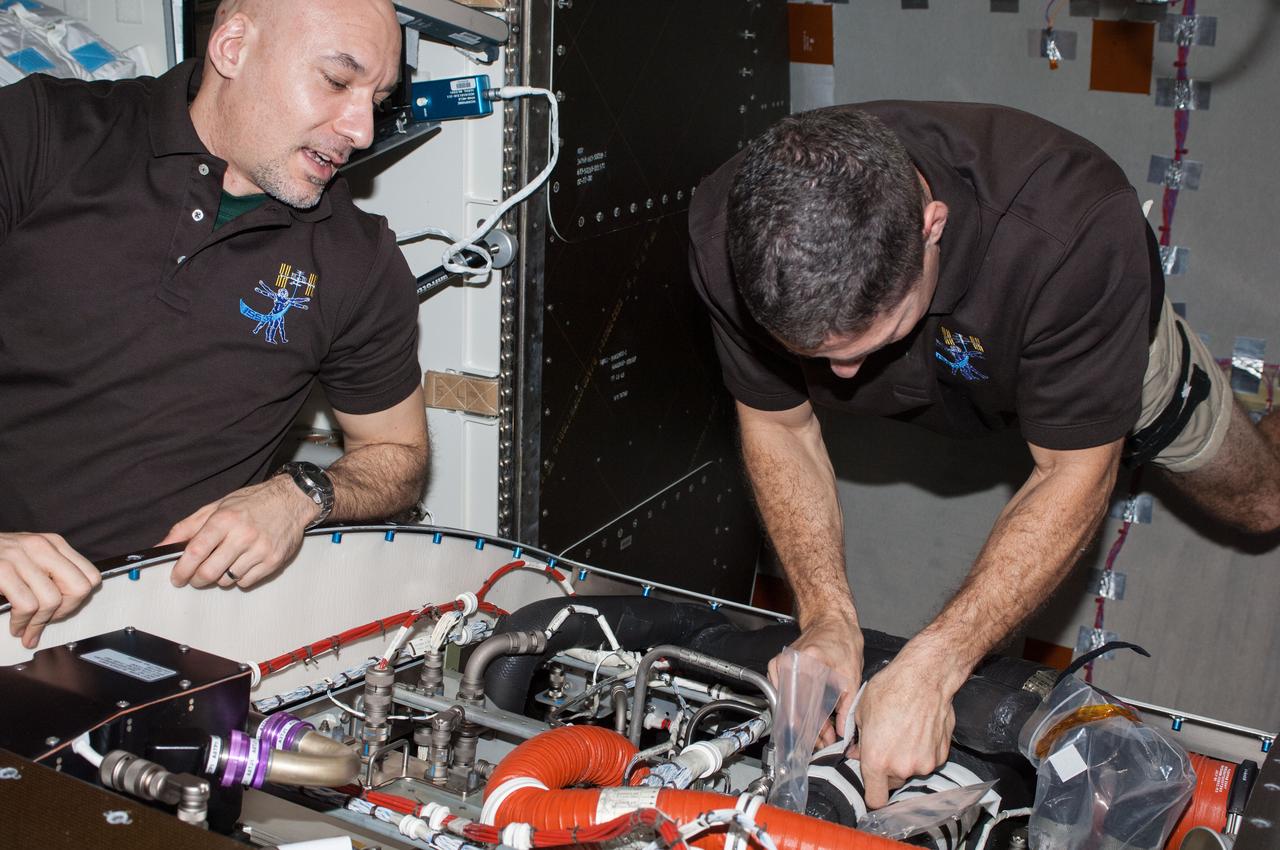
ISS037-E-021985 (28 Oct. 2013) --- In the International Space Station?s Tranquility node, NASA astronaut Michael Hopkins (right) and European Space Agency astronaut Luca Parmitano, both Expedition 37 flight engineers, perform routine in-flight maintenance within the Carbon Dioxide Removal Assembly. This device removes carbon dioxide from the station?s atmosphere and is part of the station?s Environmental Control and Life Support System that provides clean water and air to the crew.
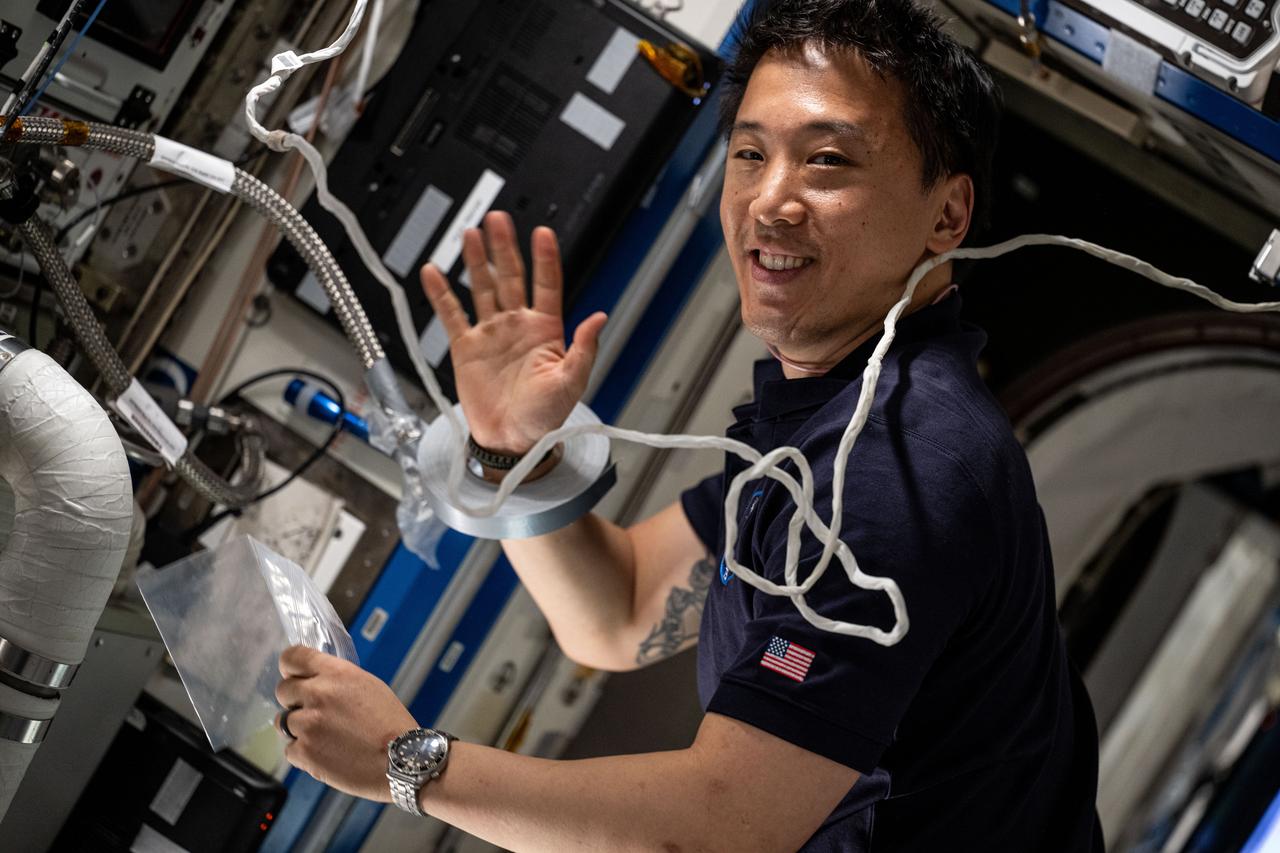
iss073e0118580 (May 27, 2025) --- NASA astronaut and Expedition 73 Flight Engineer Jonny Kim services an experimental carbon dioxide removal device aboard the International Space Station. Also called the Thermal Amine Scrubber, the advanced life support mechanism is testing a new method that removes carbon dioxide from the station’s atmosphere and recovers water for oxygen generation.
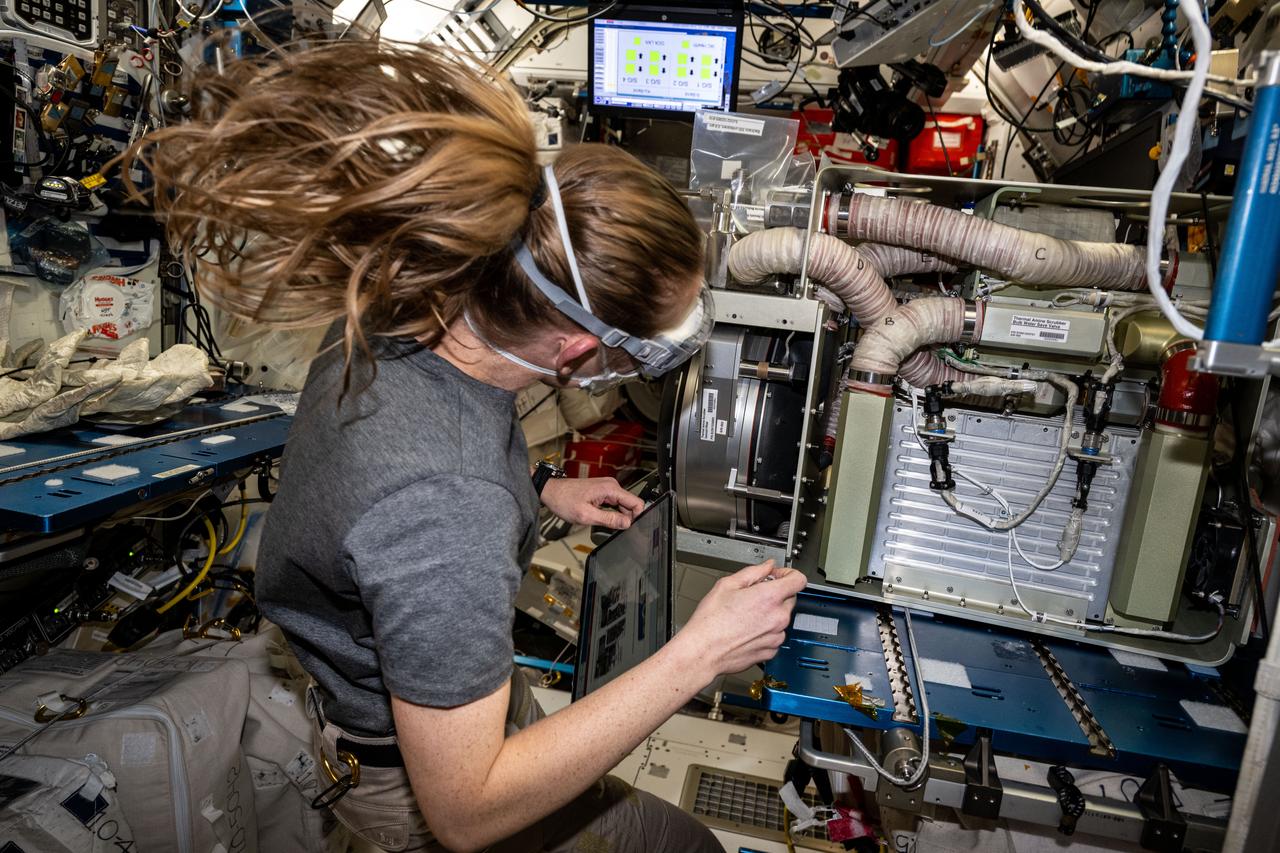
iss073e0078896 (May 27, 2025) --- NASA astronaut and Expedition 73 Flight Engineer Nichole Ayers replaces components on an experimental carbon dioxide removal device. Also called the Thermal Amine Scrubber, the advanced life support mechanism is testing a new method that removes carbon dioxide from the station’s atmosphere and recovers water for oxygen generation.

iss073e0078897 (May 27, 2025) --- NASA astronaut and Expedition 73 Flight Engineer Nichole Ayers replaces components on an experimental carbon dioxide removal device. Also called the Thermal Amine Scrubber, the advanced life support mechanism is testing a new method that removes carbon dioxide from the station’s atmosphere and recovers water for oxygen generation.
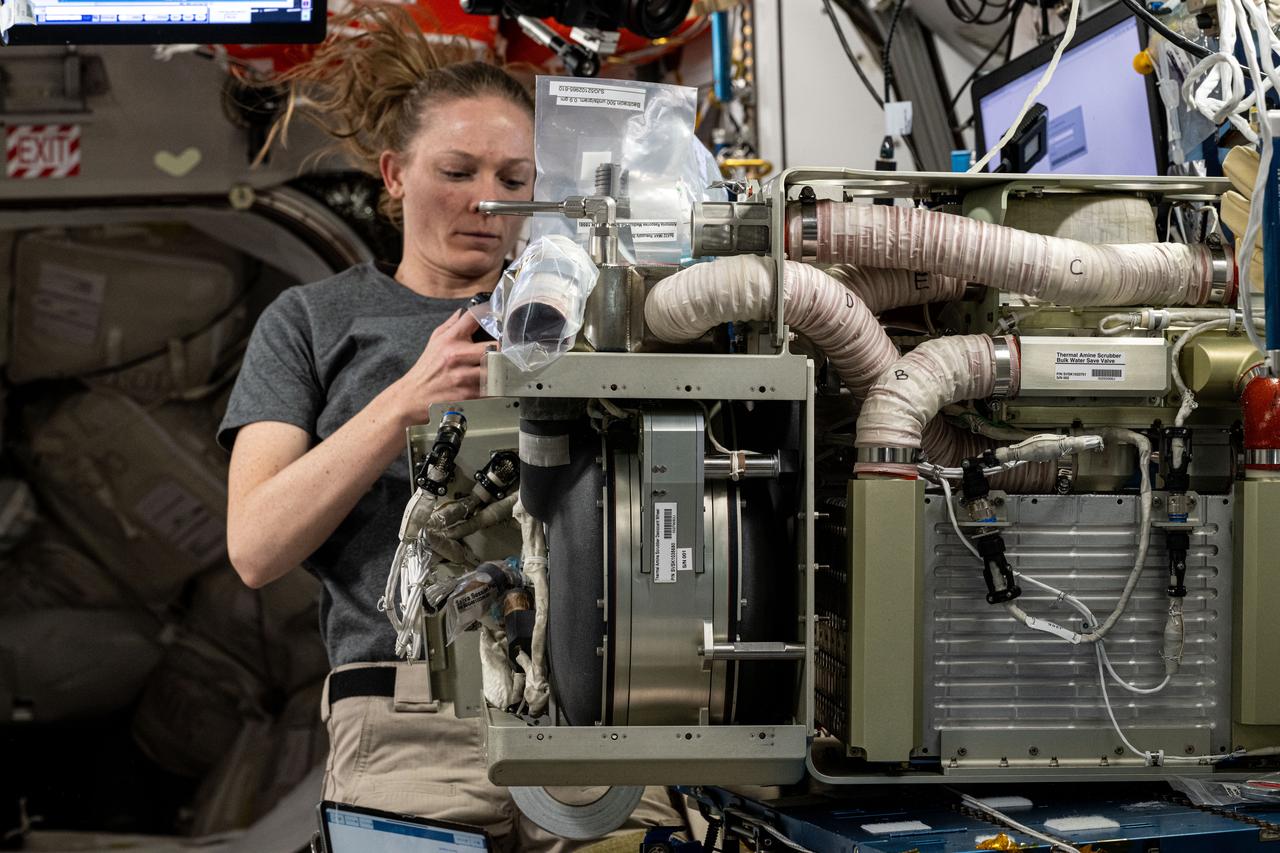
iss073e0118580 (May 27, 2025) --- NASA astronaut and Expedition 73 Flight Engineer Nichole Ayers replaces components on an experimental carbon dioxide removal device aboard the International Space Station. Also called the Thermal Amine Scrubber, the advanced life support mechanism is testing a new method that removes carbon dioxide from the station’s atmosphere and recovers water for oxygen generation.
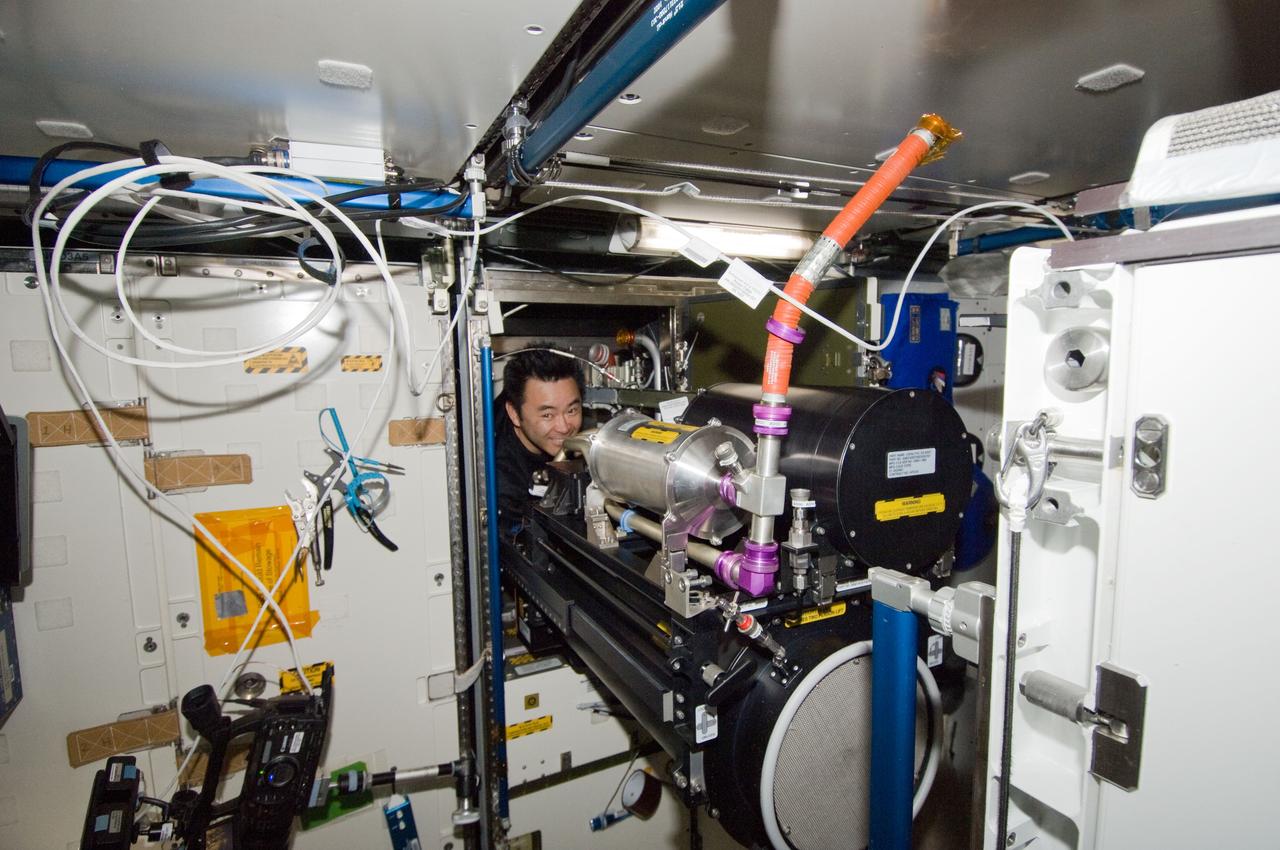
ISS033-E-007246 (24 Sept. 2012) --- Japan Aerospace Exploration Agency astronaut Aki Hoshide, Expedition 33 flight engineer, works on replacing valves in an International Space Station’s Carbon Dioxide Removal Assembly.
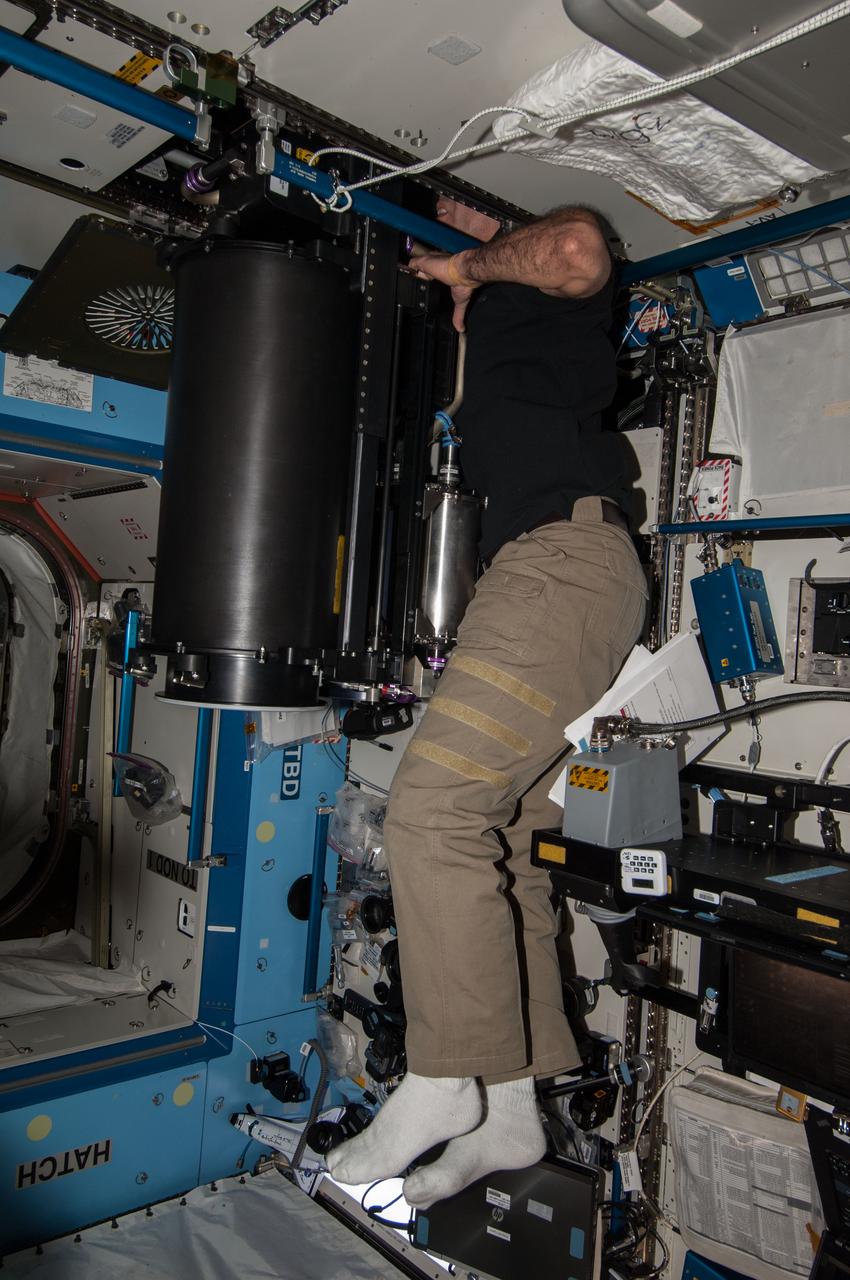
Expedition 39 flight engineer Rick Mastracchio looks for a loose connection as he conducts troubleshooting operations on the Carbon Dioxide Removal Assembly (CDRA) in the Destiny U.S. Laboratory. Image was released by astronaut on Twitter. (IO Note: Camera data file contains incorrect time.)
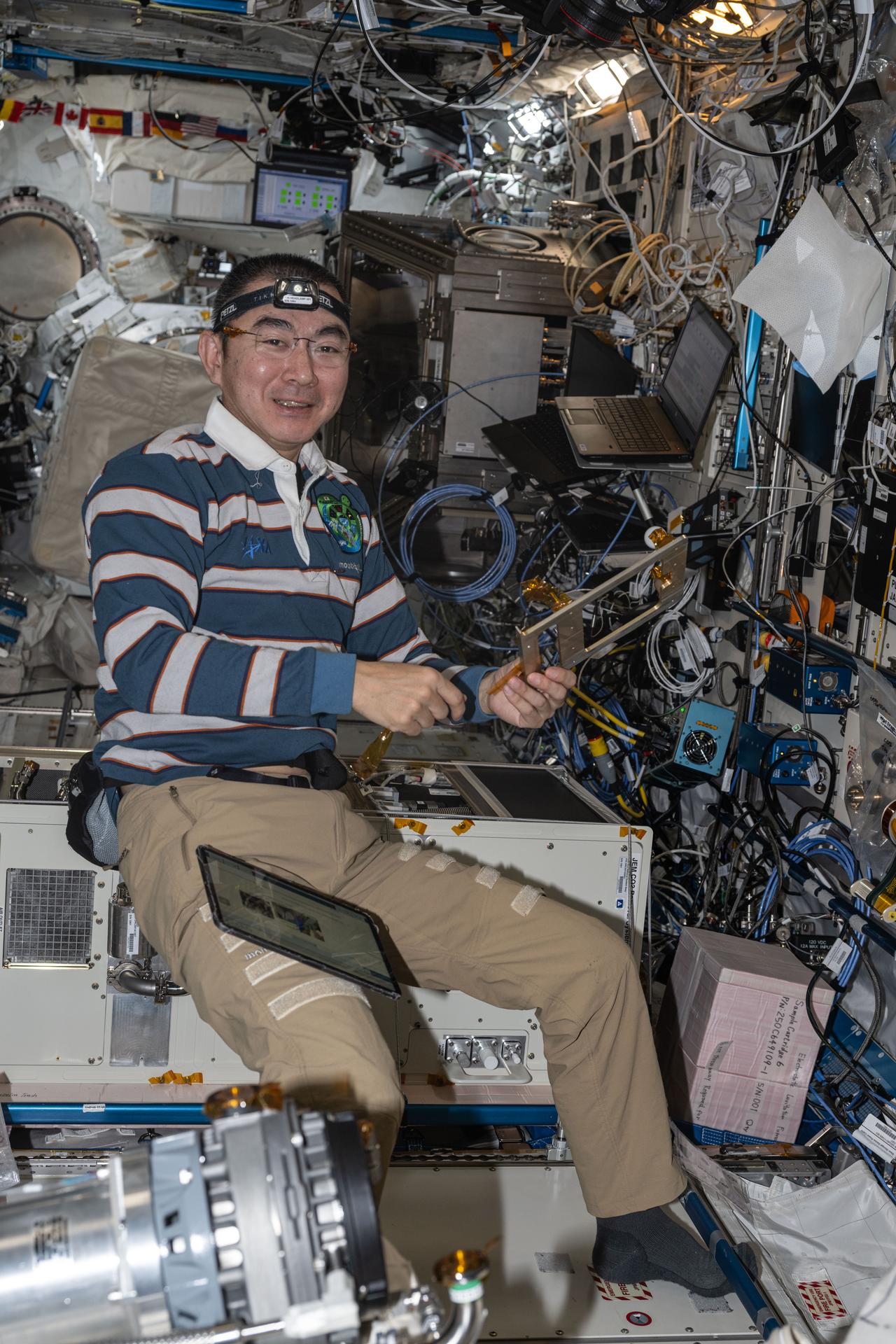
iss073e1049696 (Nov. 6, 2025) --- JAXA (Japan Aerospace Exploration Agency) astronaut and Expedition 73 Flight Engineer Kimiya Yui assembles and installs carbon dioxide removal gear inside the International Space Station's Kibo laboratory module.
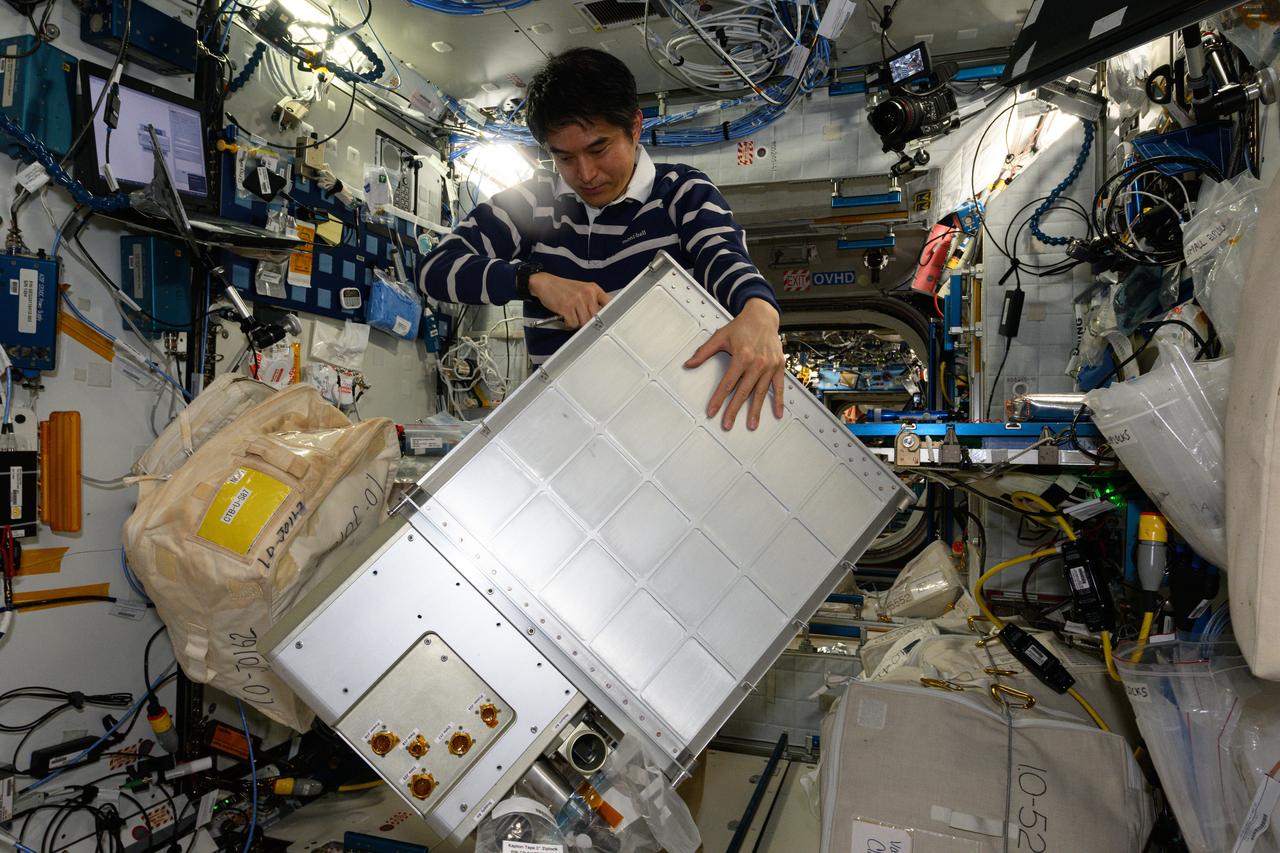
iss073e0118813 (May 28, 2025) --- JAXA (Japan Aerospace Exploration Agency) astronaut and Expedition 73 Commander Takuya Onishi replaces components on an experimental carbon dioxide removal device aboard the International Space Station. Also called the Thermal Amine Scrubber, the advanced life support mechanism is testing a new method that removes carbon dioxide from the station’s atmosphere and recovers water for oxygen generation.
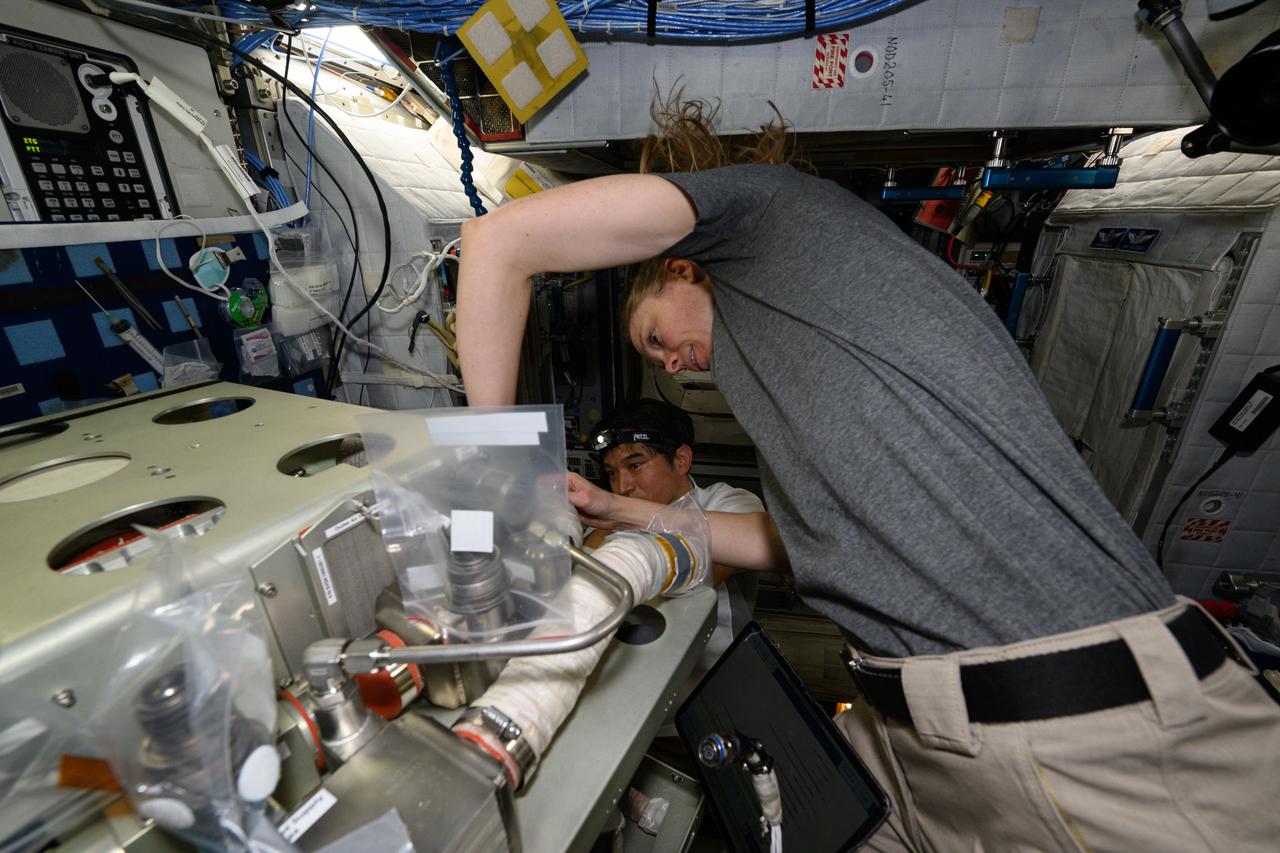
iss073e0118793 (May 27, 2025) --- Astronauts Takuya Onishi of JAXA (Japan Aerospace Exploration Agency) and Nichole Ayers of NASA, Expedition 73 Commander and Flight Engineer respectively, replace components on an experimental carbon dioxide removal device aboard the International Space Station. Also called the Thermal Amine Scrubber, the advanced life support mechanism is testing a new method that removes carbon dioxide from the station’s atmosphere and recovers water for oxygen generation.
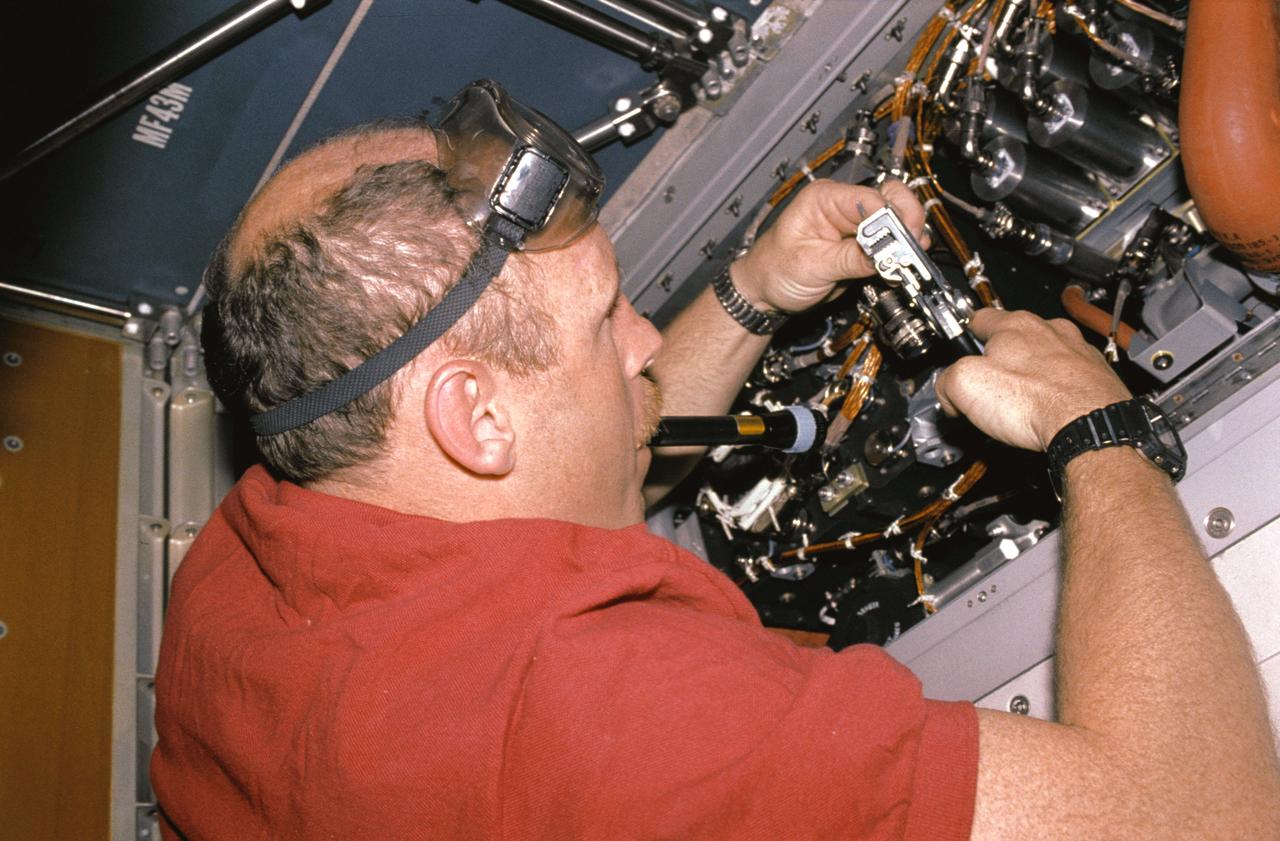
STS050-20-012 (26 June 1992) --- Astronaut Kenneth D. Bowersox, pilot, performs in-flight maintenance (IFM) on the Regenerative Carbon Dioxide Removal System (RCRS) on the mid-deck of the Earth-orbiting Space Shuttle Columbia. Bowersox was joined by four other astronauts and two scientists from the private sector for a record-setting 14-day stay aboard the Space Shuttle in support of the United States Microgravity Laboratory 1 (USML-1).
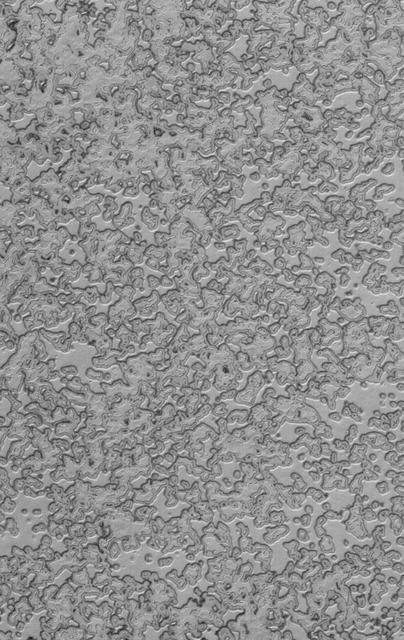
This MOC image shows a portion of the south polar residual cap; darkened edges of the pits and mesas are evidence of the removal, by sublimation, of frozen carbon dioxide during the recent martian summer
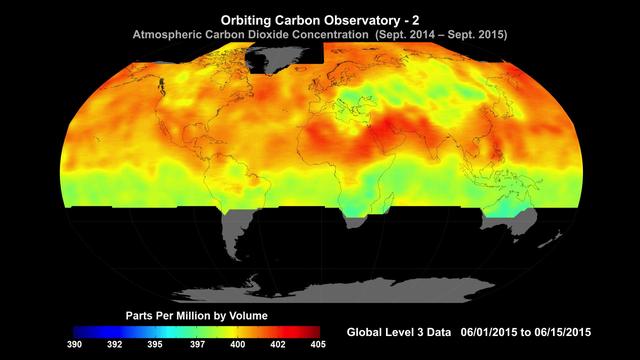
Global average carbon dioxide concentrations as seen by NASA’s Orbiting Carbon Observatory-2 mission, June 1-15, 2015. OCO-2 measures carbon dioxide from the top of Earth's atmosphere to its surface. Higher carbon dioxide concentrations are in red, with lower concentrations in yellows and greens. Scientists poring over data from OCO-2 mission are seeing patterns emerge as they seek answers to questions about atmospheric carbon dioxide. Among the most striking features visible in the first year of OCO-2 data is the increase in carbon dioxide in the northern hemisphere during winter, when trees are not removing carbon dioxide, followed by its decrease in spring, as trees start to grow and remove carbon dioxide from the atmosphere. http://photojournal.jpl.nasa.gov/catalog/PIA20039
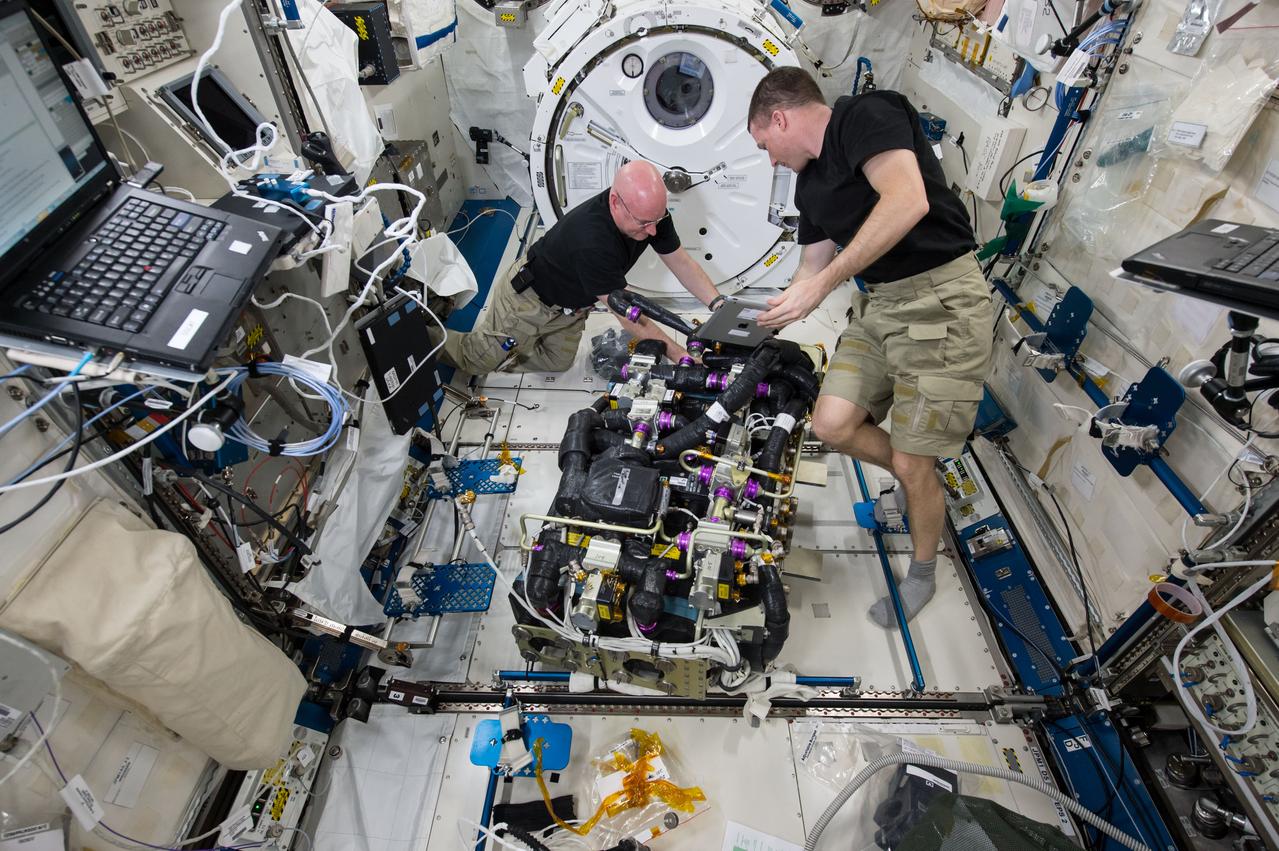
ISS043E181459 (05/07/2015) – NASA astronauts Scott Kelly (left) and Terry Virts (right) work on a Carbon Dioxide Removal Assembly (CDRA) inside the station’s Japanese Experiment Module. The CDRA system works to remove carbon dioxide from the cabin air, allowing for an environmentally safe crew cabin.

jsc2025e076917 (September 25, 2025) -- Rendering of the Japanese Experiment Module (JEM) Demonstration of CO? Removal System (JEM DRCS) being installed inside the space station. JEM DRCS draws in cabin air, removes carbon dioxide, and returns purified air back to the crew. JEM DRCS will test how well this new carbon dioxide removal technology works in orbit to inform designs for future Moon and Mars missions. Image courtesy of JAXA.
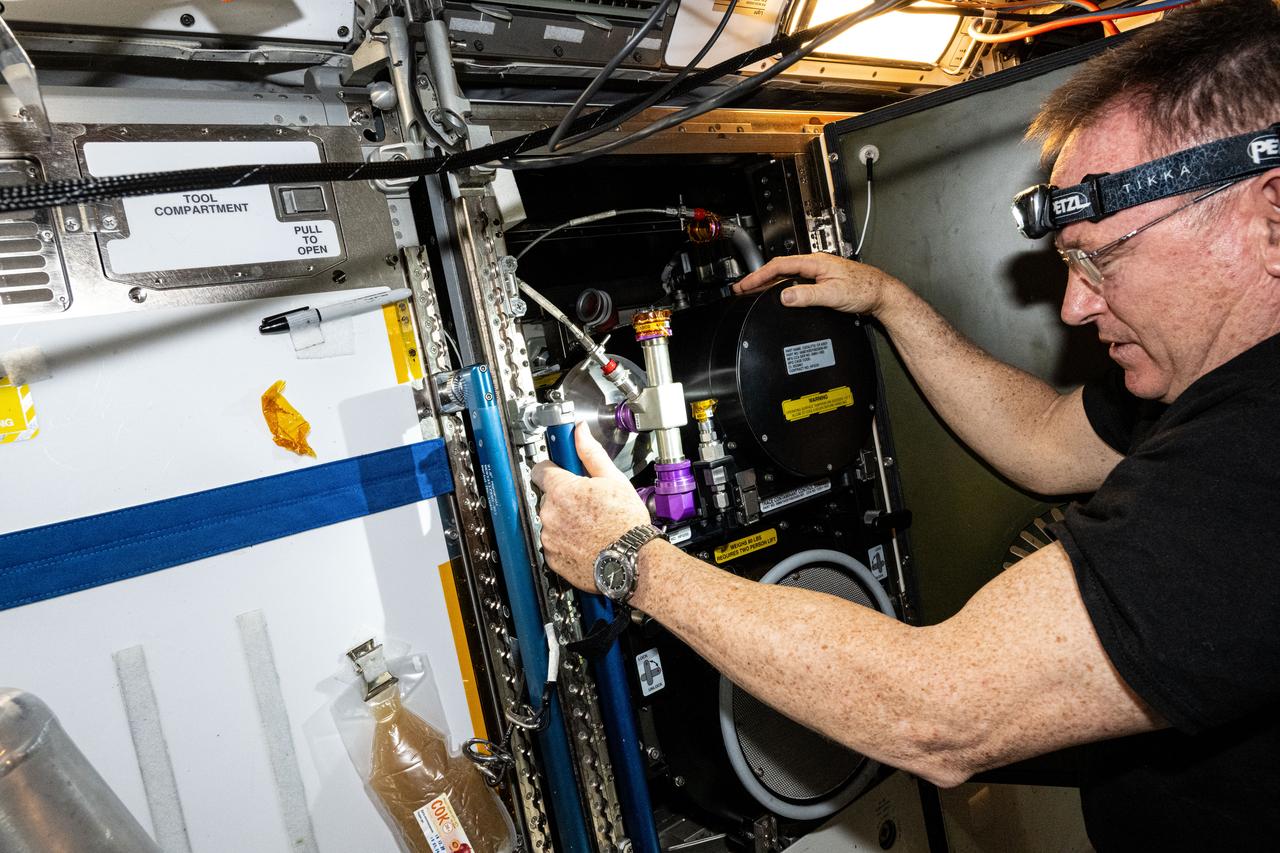
iss071e549503 (Aug. 27, 2024) --- NASA astronaut Butch Wilmore removes the carbon dioxide removal assembly and its components, advanced life support hardware, installed in the Tranquility module's Air Revitalization Rack for maintenance.
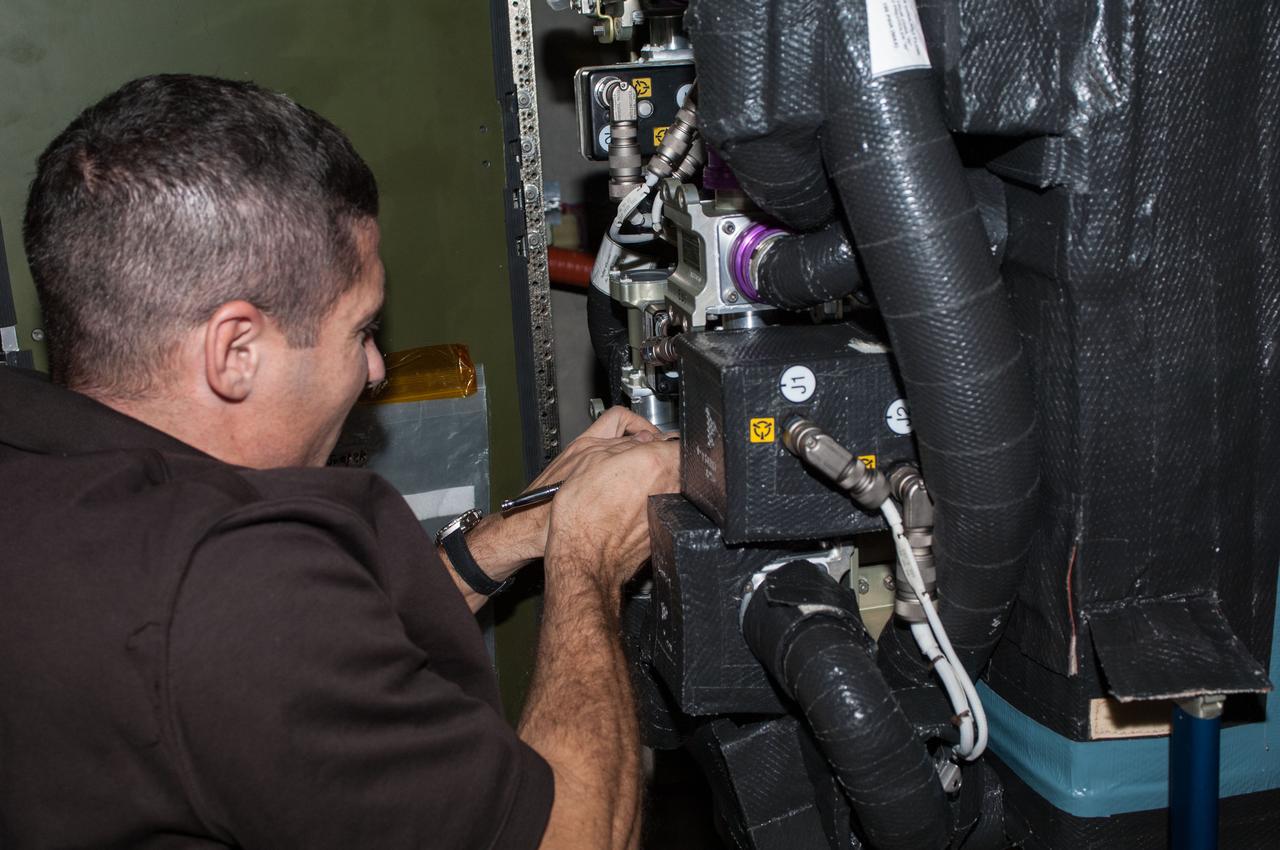
ISS037-E-021962 (28 Oct. 2013) --- NASA astronaut Michael Hopkins, Expedition 37 flight engineer, performs routine in-flight maintenance within the Carbon Dioxide Removal Assembly in the International Space Station?s Tranquility node. This device removes carbon dioxide from the station?s atmosphere and is part of the station?s Environmental Control and Life Support System that provides clean water and air to the crew.

ISS035-E-006230 (20 March 2013) --- Expedition 35 Commander Chris Hadfield in Harmony Node 2 aboard the Earth-orbiting International Space Station examines his work after reassembling the amine swing bed into its locker chassis. This device examines whether a vacuum-regenerated amine system can effectively remove carbon dioxide from the space station atmosphere using a smaller, more efficient vacuum regeneration system. The goal is to recover carbon dioxide from the atmosphere, and separate the dioxide from the carbon, so that the oxygen molecules can be used for crew life support.
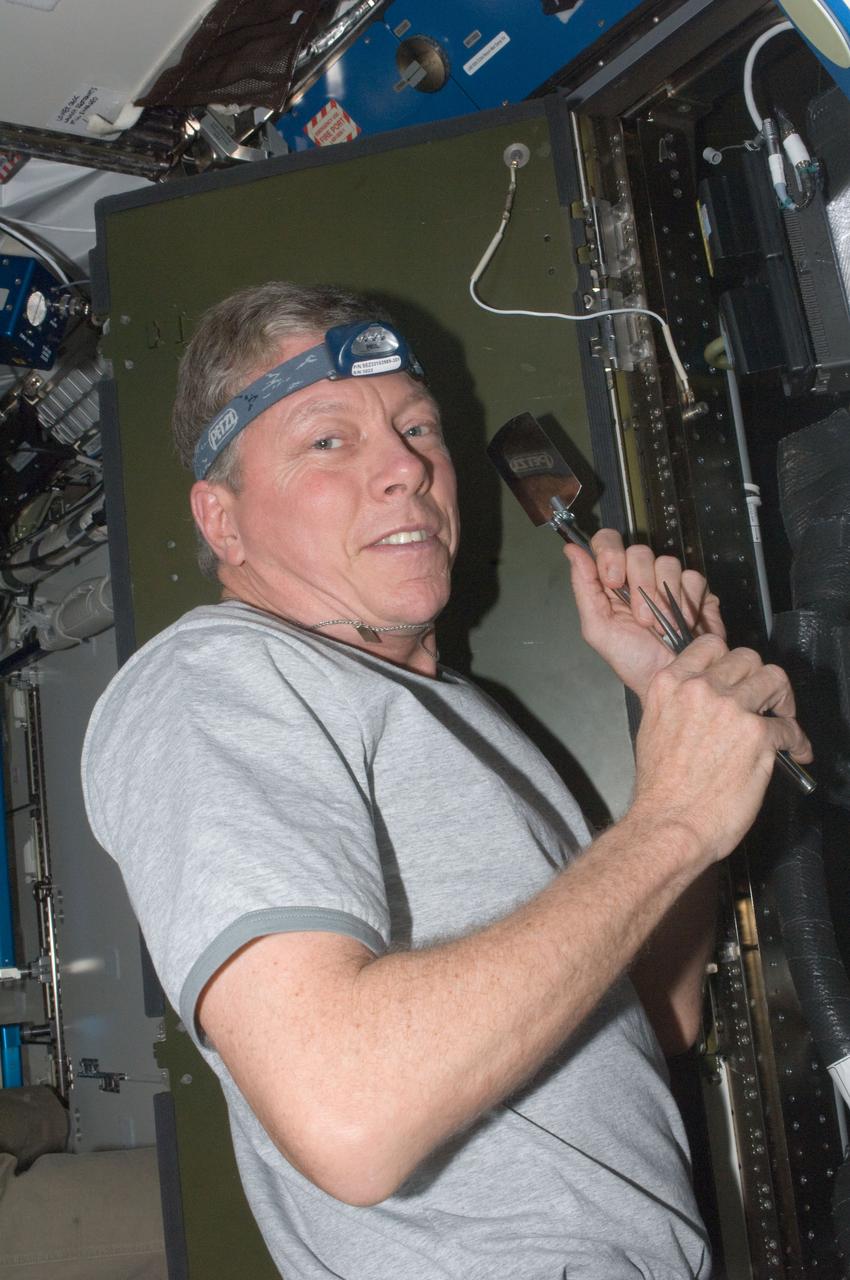
ISS028-E-034116 (26 Aug. 2011) --- NASA astronaut Mike Fossum, Expedition 28 flight engineer, performs in-flight maintenance on the Carbon Dioxide Removal Assembly (CDRA) located in the Destiny laboratory of the International Space Station.
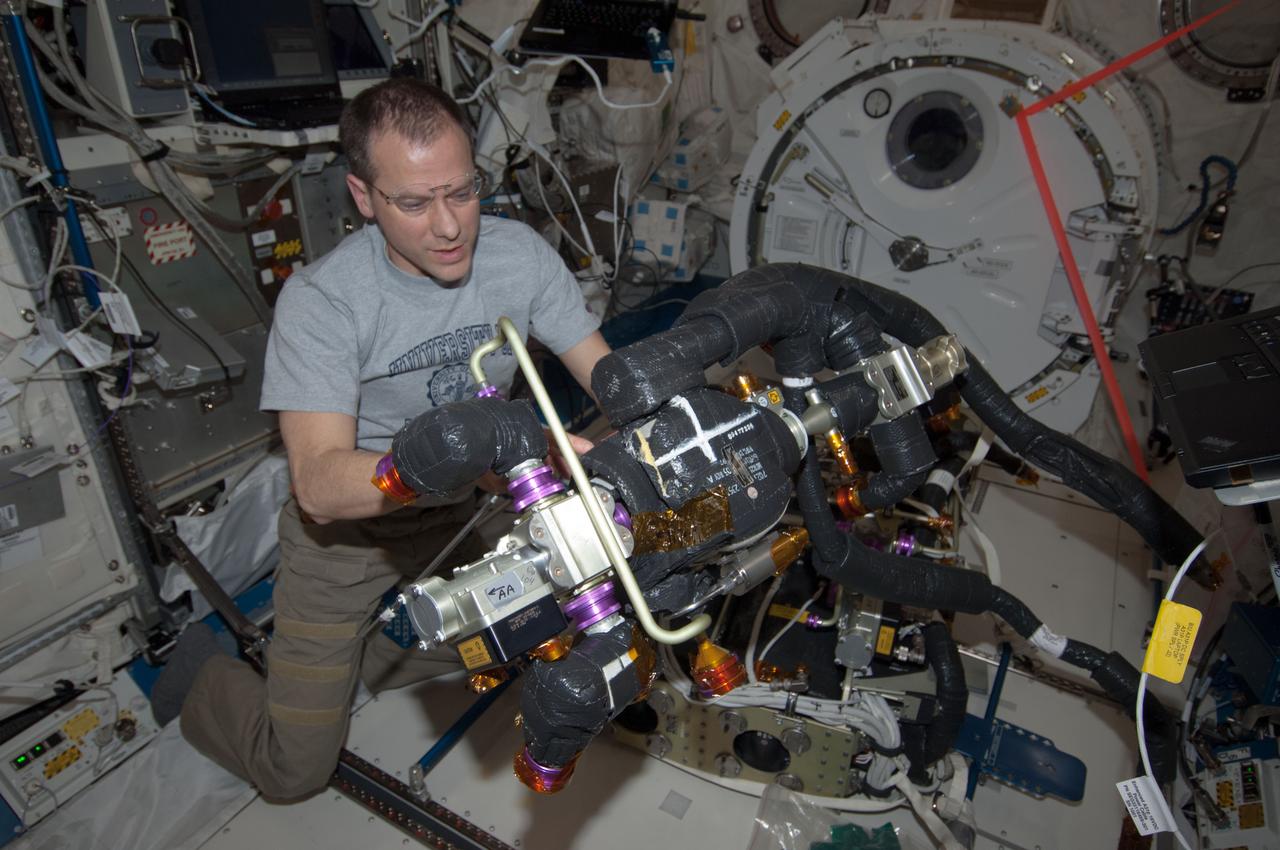
ISS034-E-063336 (8 March 2013) --- NASA astronaut Tom Marshburn, Expedition 34 flight engineer, performs maintenance on the Carbon Dioxide Removal Assembly in the Japanese Experiment Module (JEM) Pressurized Module (JPM).
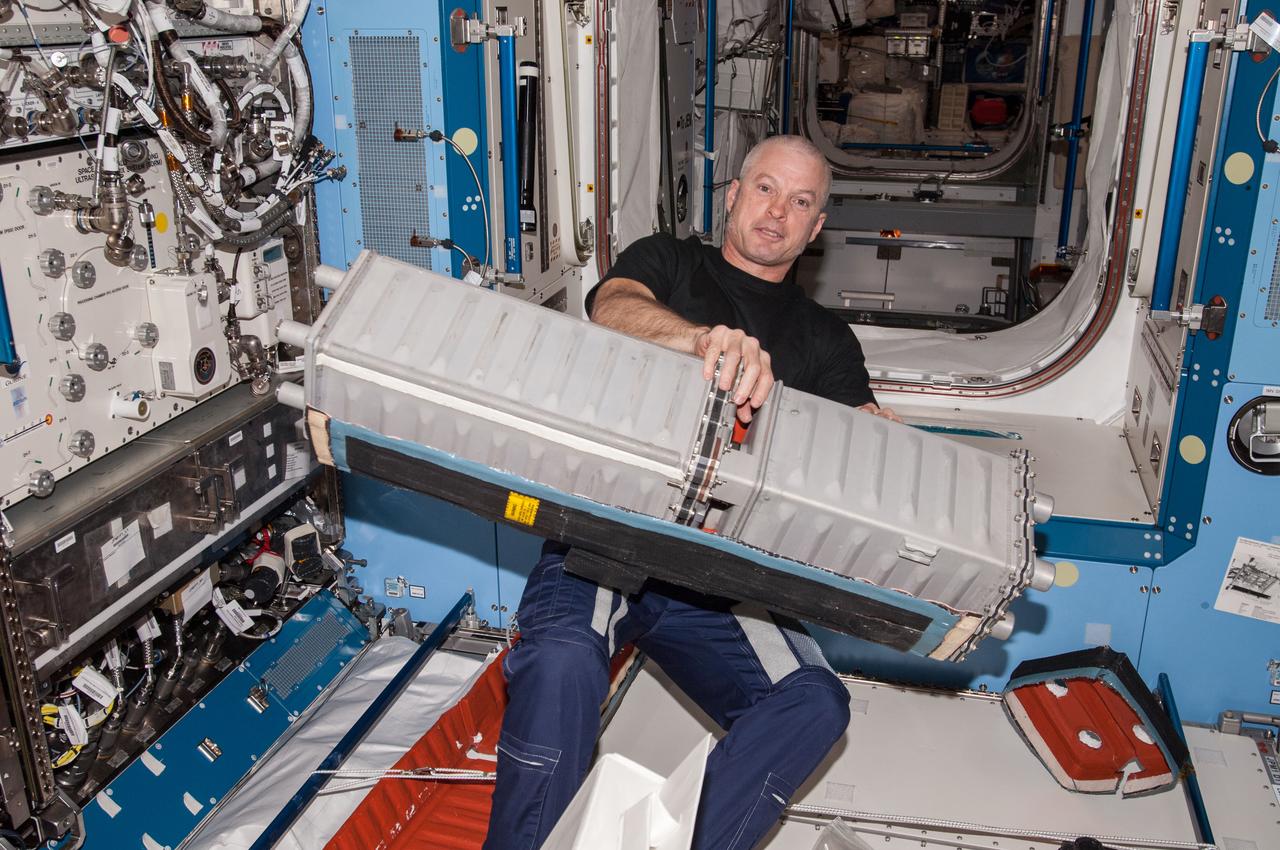
ISS040-E-026221 (30 June 2014) --- NASA astronaut Steve Swanson, Expedition 40 commander, holds the Carbon Dioxide Removal Assembly (CDRA) in the Kibo laboratory of the International Space Station.
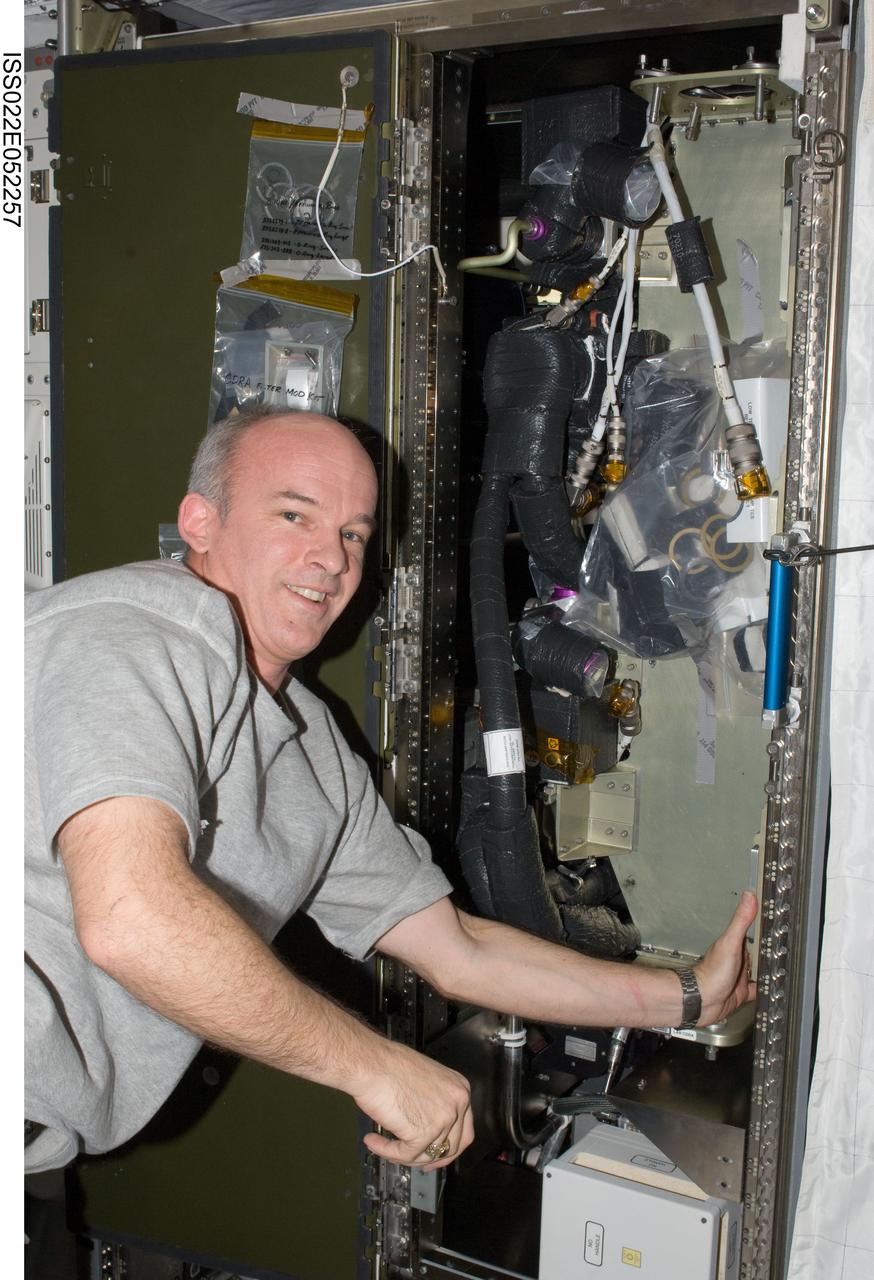
ISS022-E-052257 (29 Jan. 2010) --- NASA astronaut Jeffrey Williams, Expedition 22 commander, performs in-flight maintenance (IFM) on the Carbon Dioxide Removal Assembly (CDRA) in the Kibo laboratory of the International Space Station.
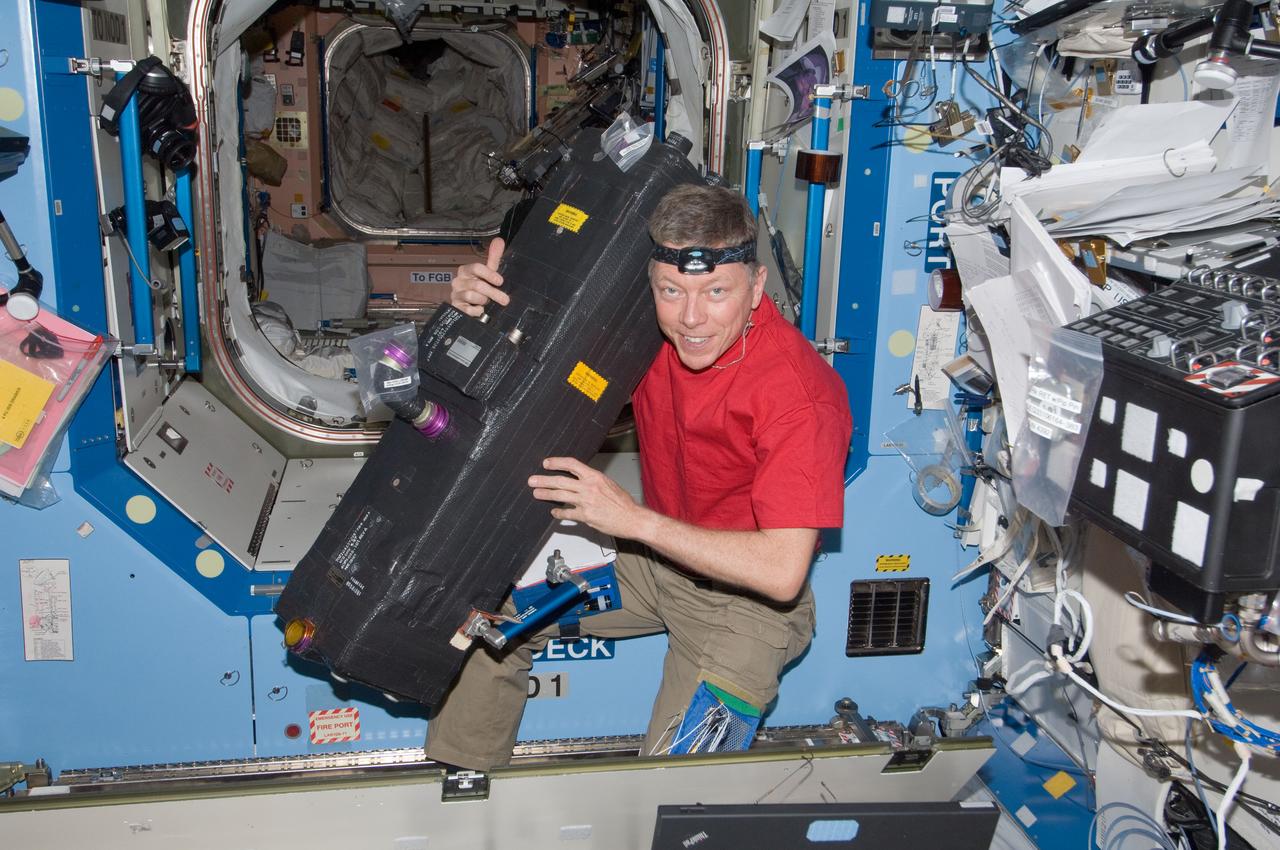
ISS028-E-034305 (25 Aug. 2011) --- NASA astronaut Mike Fossum, Expedition 28 flight engineer, performs in-flight maintenance on the Carbon Dioxide Removal Assembly (CDRA) located in the Destiny laboratory of the International Space Station.
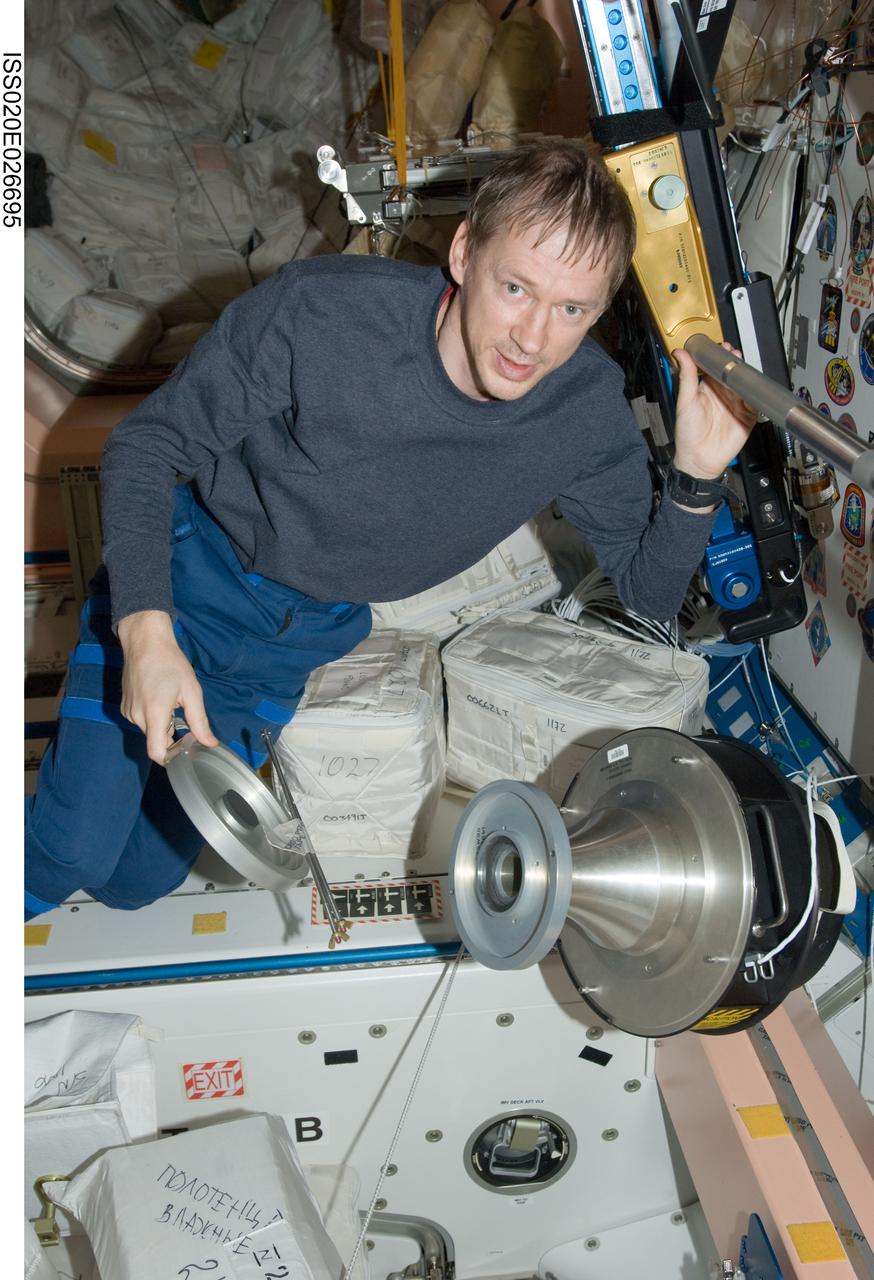
ISS020-E-026695 (31 July 2009) --- European Space Agency astronaut Frank De Winne, Expedition 20 flight engineer, works with a carbon dioxide removal kit adapter in the Unity node of the International Space Station.
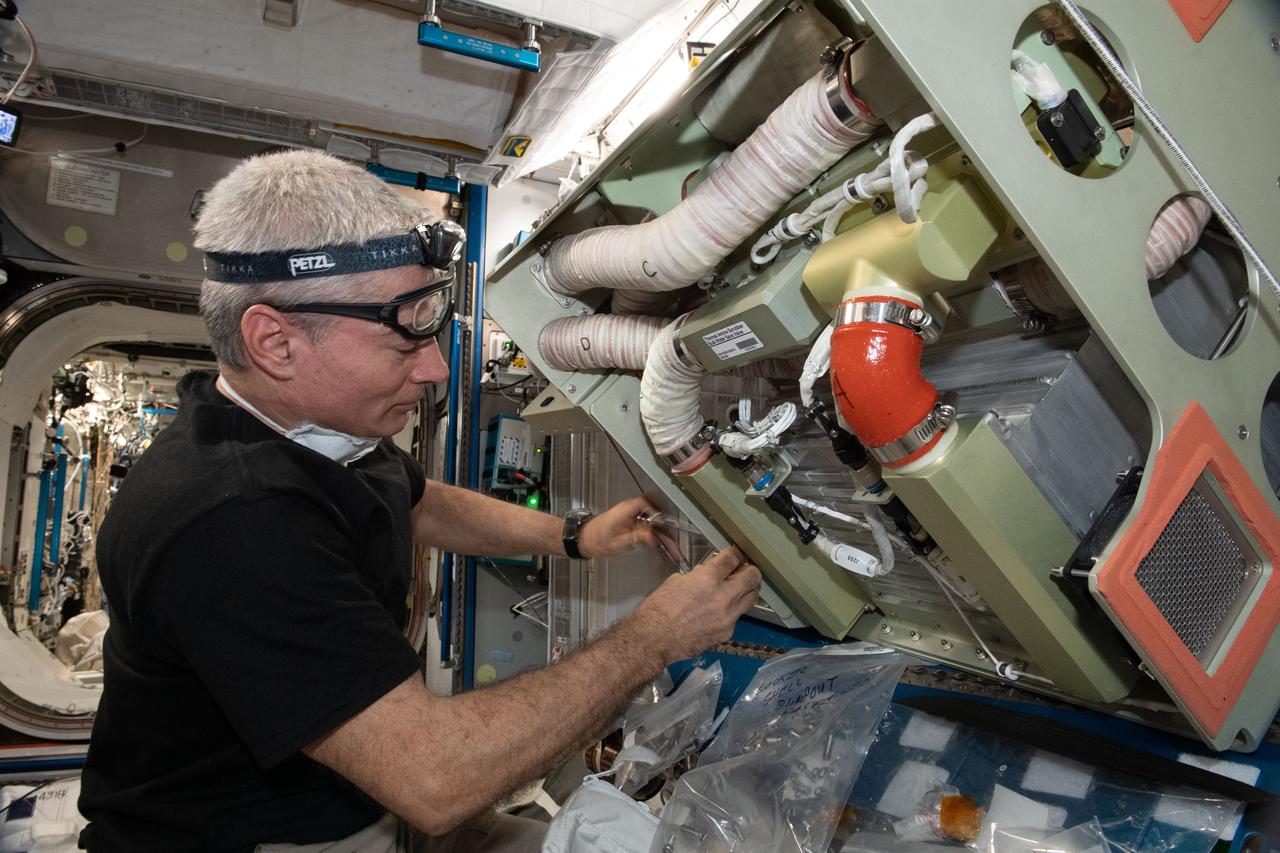
iss065e389623 (Sept. 20, 2021) --- NASA astronaut and Expedition 65 Flight Engineer Mark Vande Hei replaces components inside a life support device that removes carbon dioxide from the International Space Station's atmosphere.
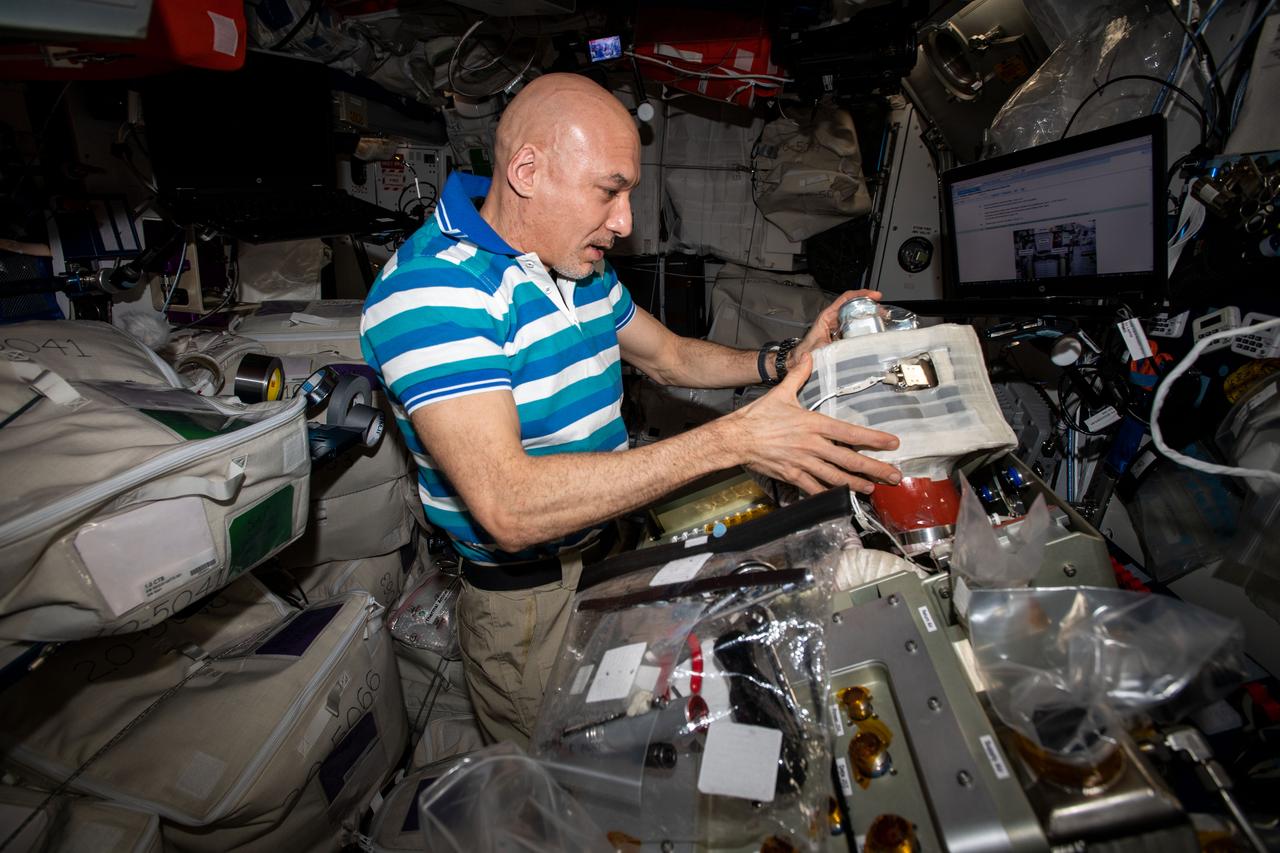
iss061e111401 (Dec. 31, 2019) --- Commander Luca Parmitano of ESA (European Space Agency) installs new components in a life support system that removes carbon dioxide from the station’s atmosphere.
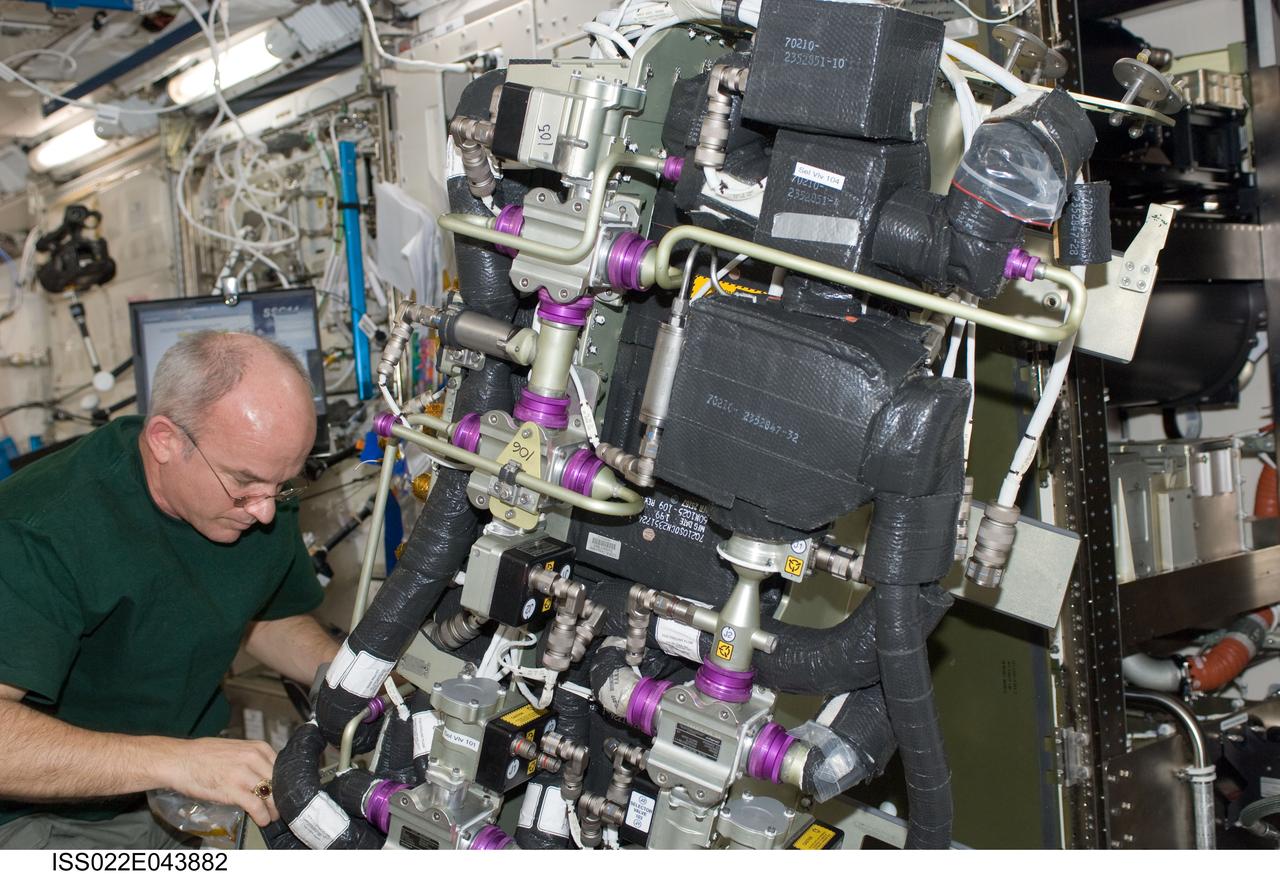
ISS022-E-043882 (28 Jan. 2010) --- NASA astronaut Jeffrey Williams, Expedition 22 commander, performs in-flight maintenance (IFM) on the Carbon Dioxide Removal Assembly (CDRA) in the Kibo laboratory of the International Space Station.
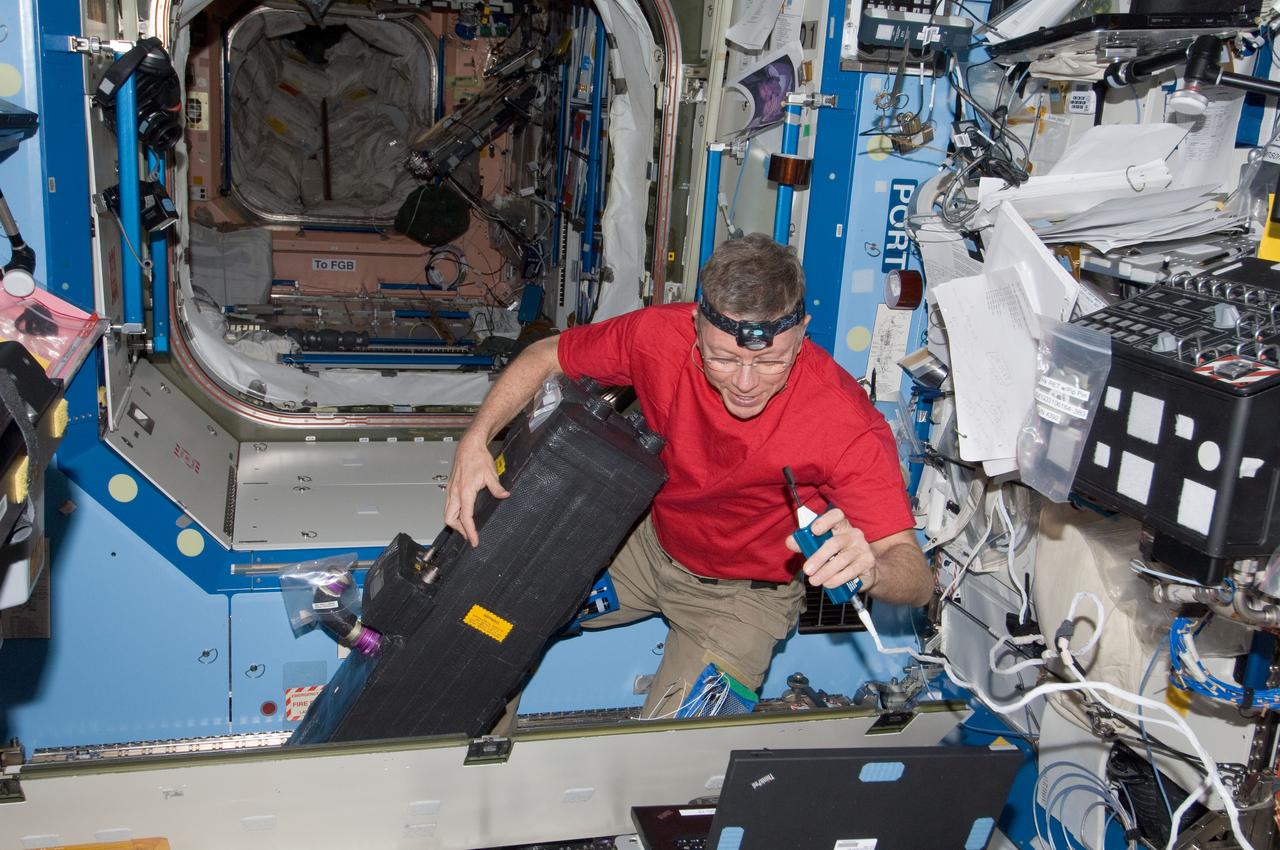
ISS028-E-034309 (25 Aug. 2011) --- NASA astronaut Mike Fossum, Expedition 28 flight engineer, performs in-flight maintenance on the Carbon Dioxide Removal Assembly (CDRA) located in the Destiny laboratory of the International Space Station.
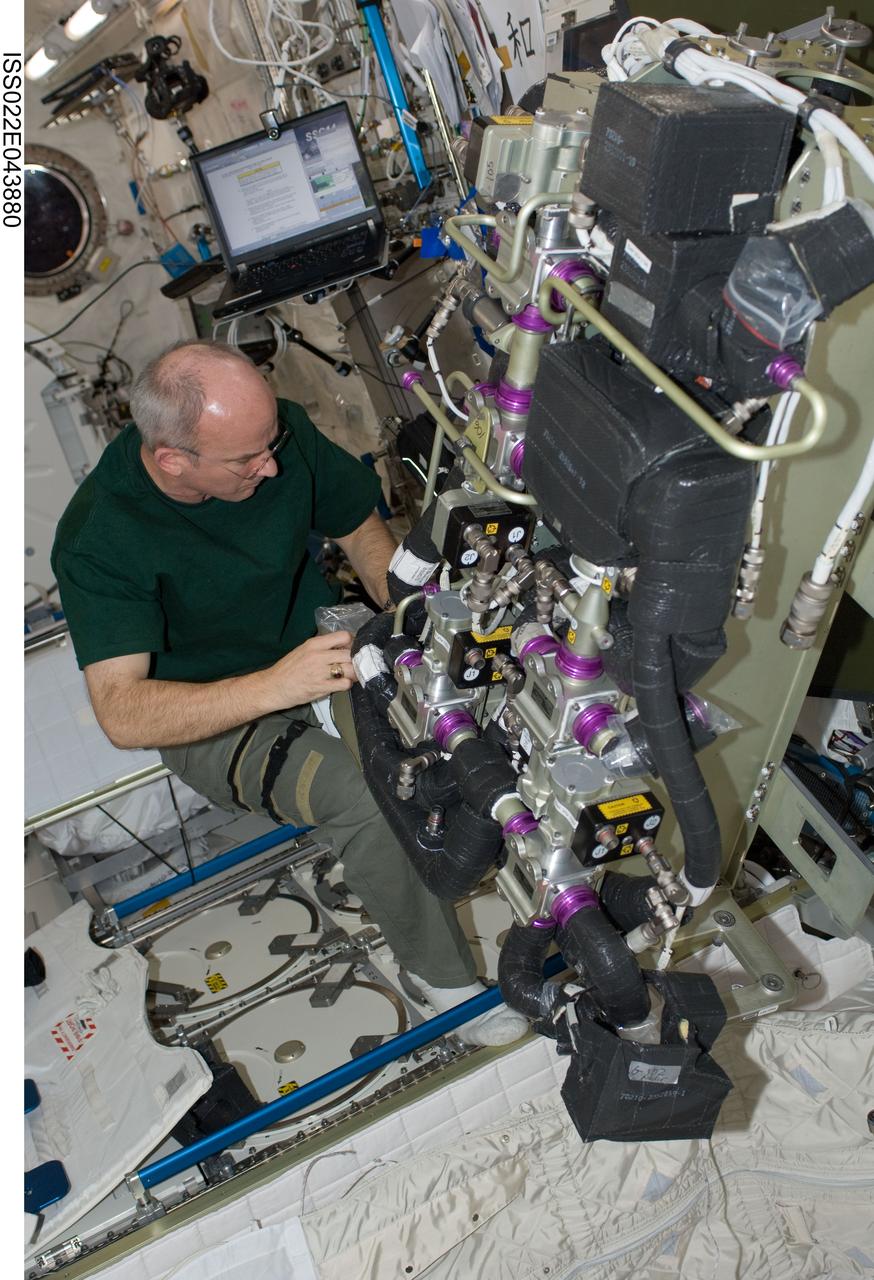
ISS022-E-043880 (28 Jan. 2010) --- NASA astronaut Jeffrey Williams, Expedition 22 commander, performs in-flight maintenance (IFM) on the Carbon Dioxide Removal Assembly (CDRA) in the Kibo laboratory of the International Space Station.

iss070e052705_alt (Jan. 4, 2024) --- JAXA (Japan Aerospace Exploration Agency) astronaut and Expedition 70 Flight Engineer Satoshi Furukawa works on carbon dioxide removal hardware inside the International Space Station's Destiny laboratory module.
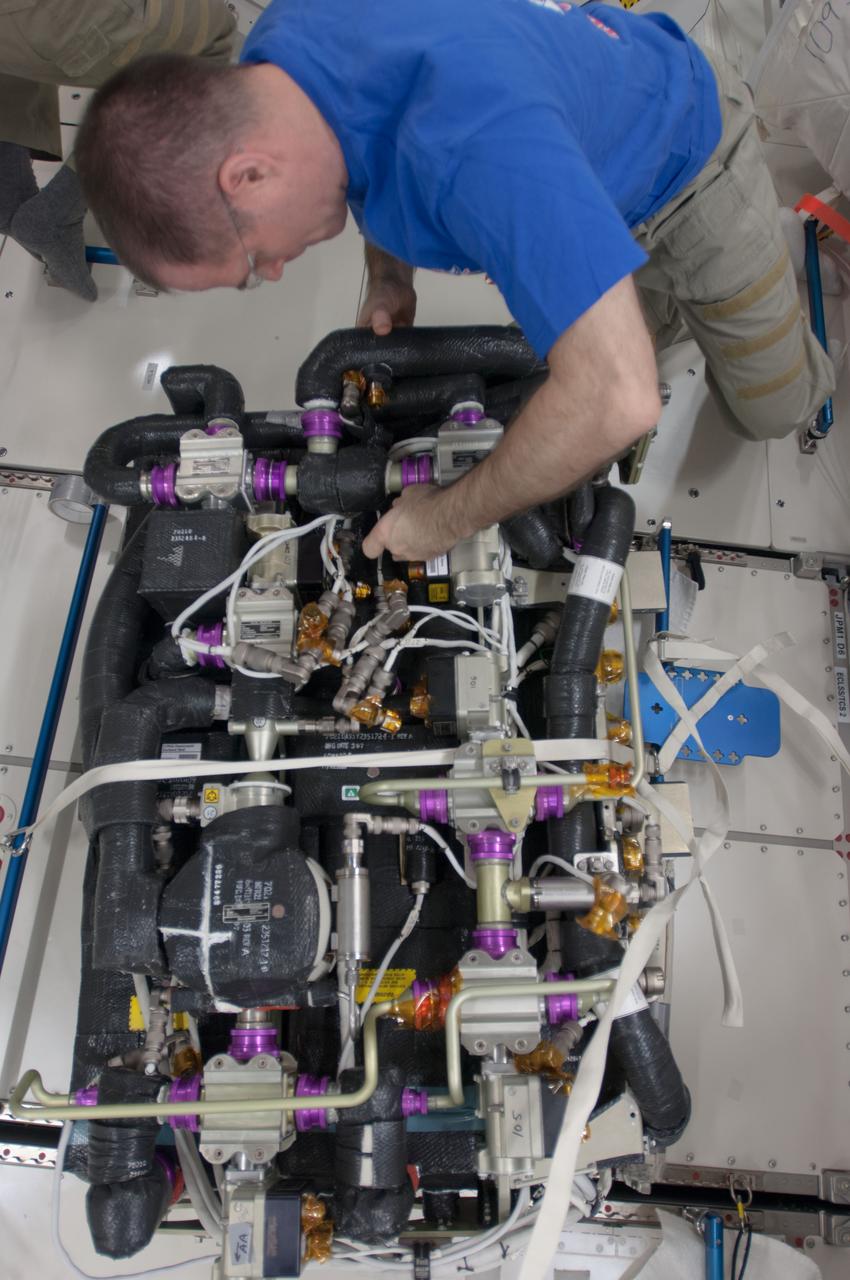
ISS034-E-063052 (9 March 2013) --- NASA astronaut Kevin Ford, Expedition 34 commander, performs maintenance on the Carbon Dioxide Removal Assembly in the Japanese Experiment Module (JEM) Pressurized Module (JPM).
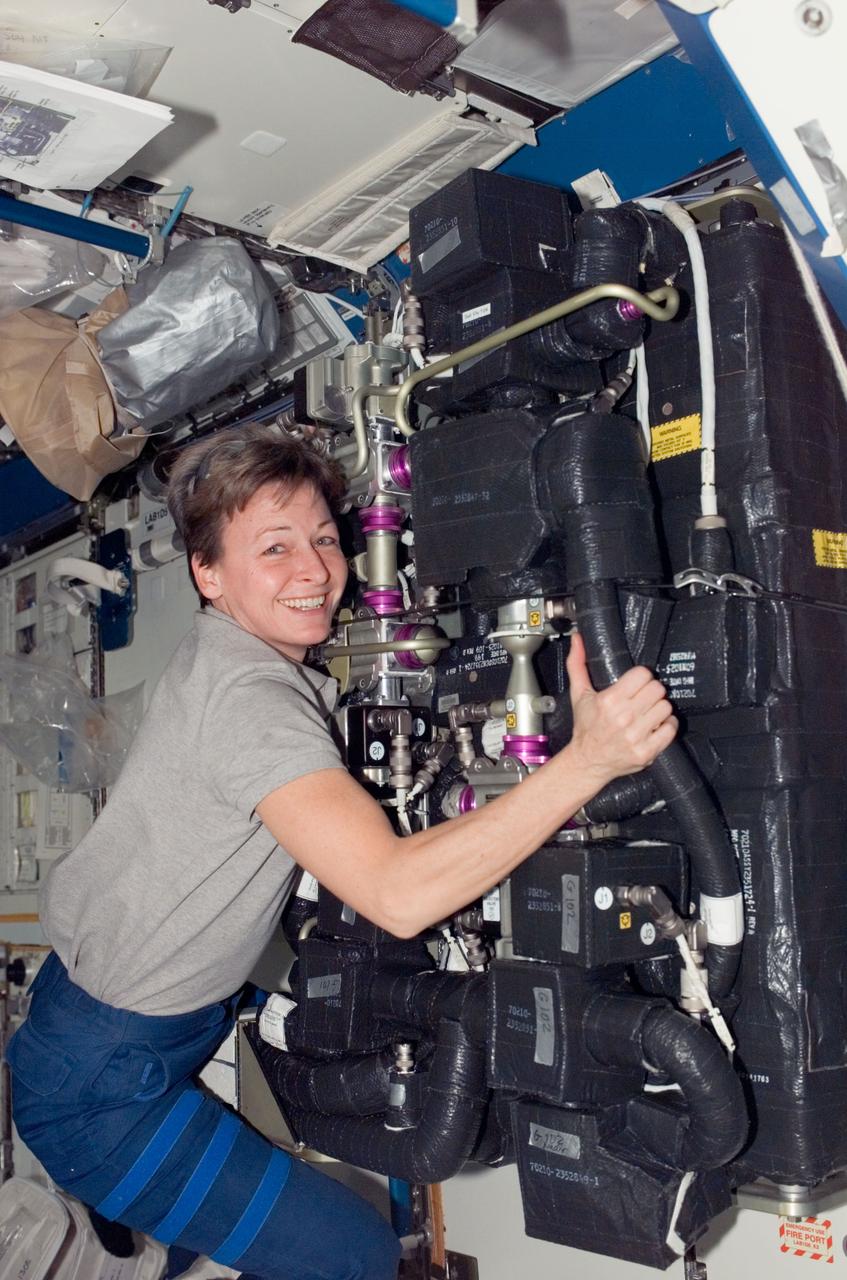
ISS016-E-020614 (3 Jan. 2008) --- Astronaut Peggy A. Whitson, Expedition 16 commander, performs in-flight maintenance (IFM) on a Carbon Dioxide Removal Assembly (CDRA) in the Destiny laboratory of the International Space Station.
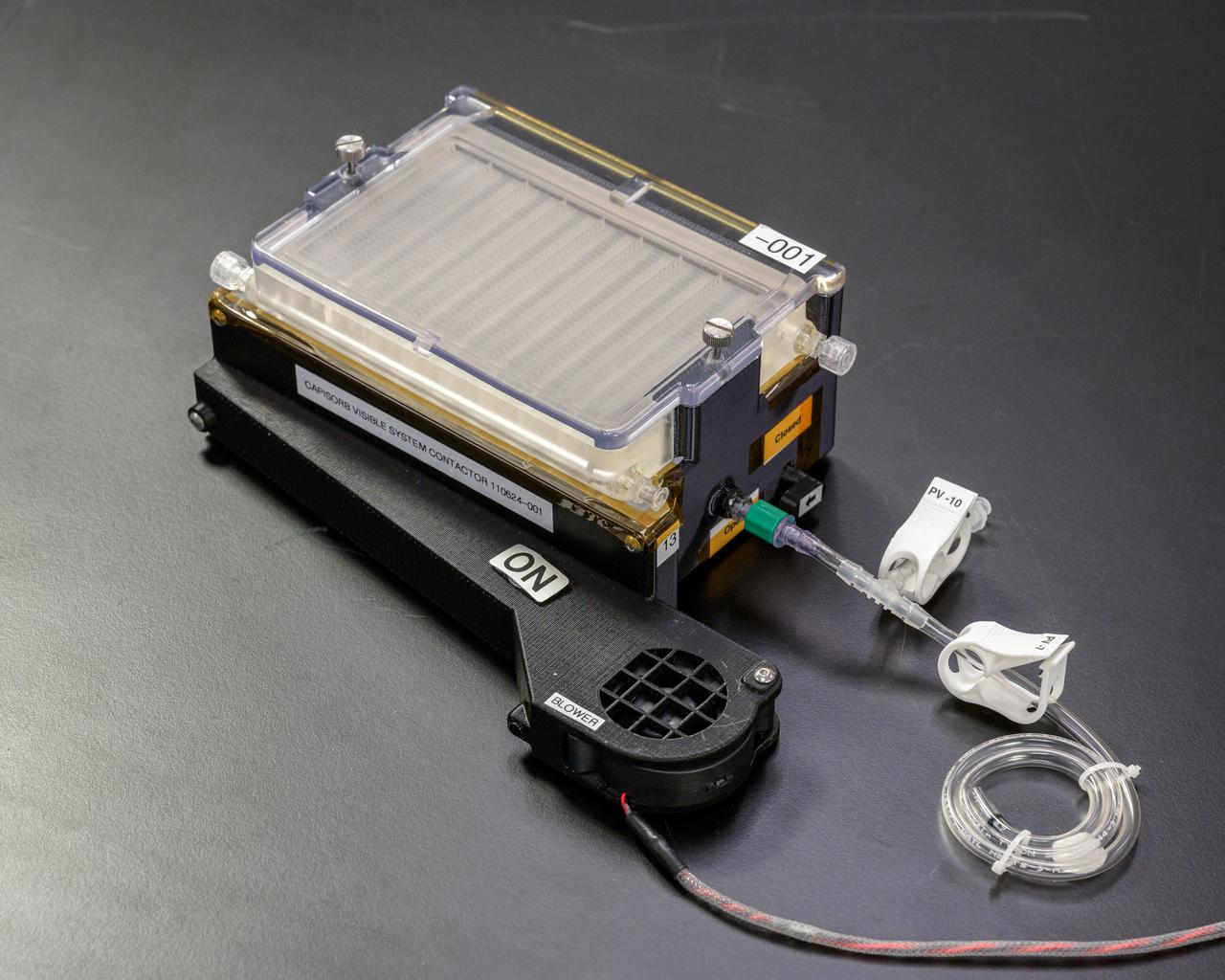
jsc2023e010168 (1/30/2023) --- CapiSorb Visible System flight unit contactor in N240 room 133B. The CapiSorb Visible System will be launched on SpaceX CRS-27 in March 2023 to the International Space Station to demonstrate a liquid sorbent-based system that leverages the advantages of liquid control through capillary action to remove carbon dioxide from crewed atmospheres...Capillary wedges in the CapiSorb Visible System Contactor, shown here preflight, control and passively transport viscous liquid in microgravity in order to demonstrate capabilities needed for future liquid carbon dioxide removal technologies. The CapiSorb Visible System investigation demonstrates a liquid control using capillary forces, over a range of properties that are characteristic of liquids which absorb carbon dioxide. Image courtesy of NASA's Ames Research Cente
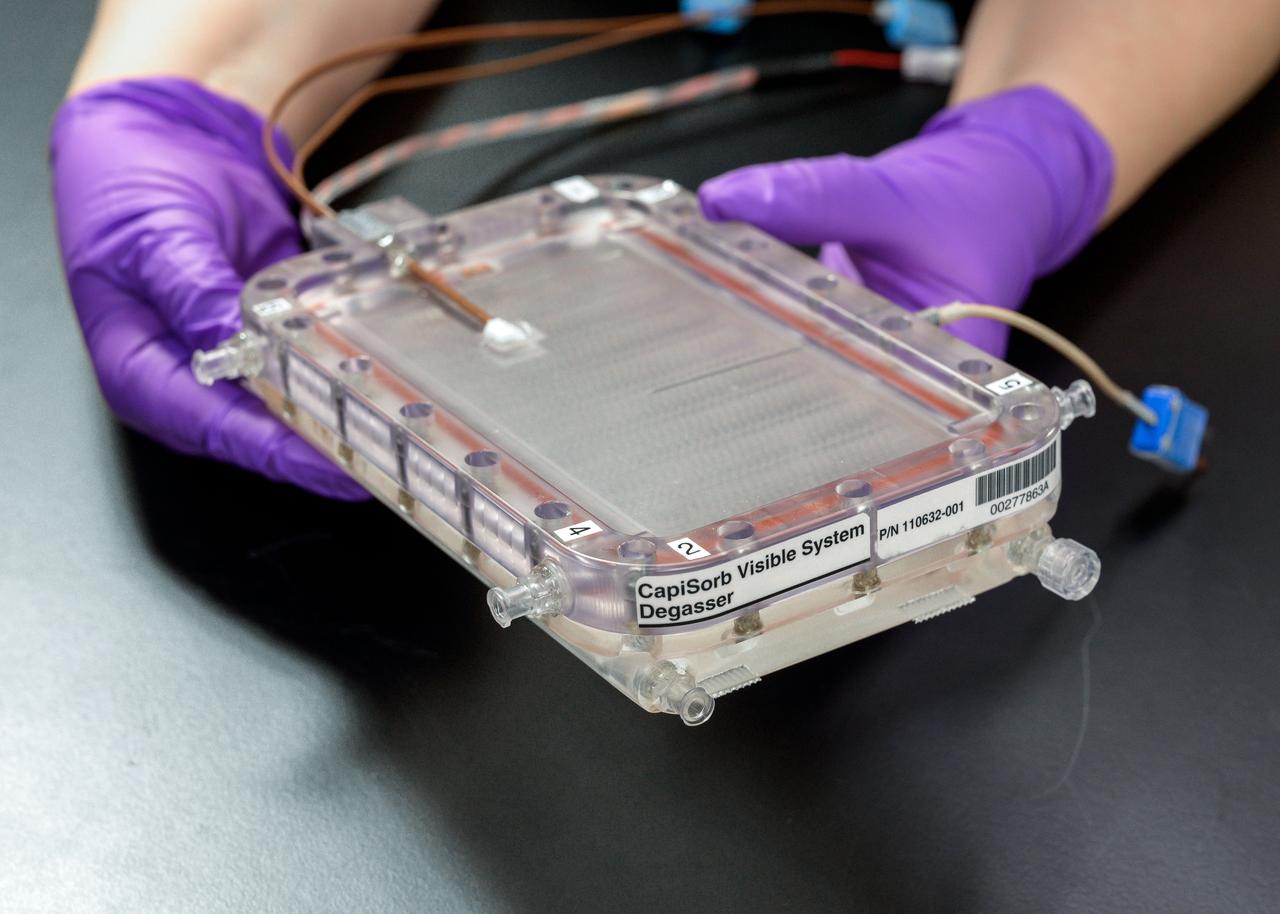
jsc2023e010167 (1/30/2023) --- CapiSorb Visible System flight unit degasser assembly in N240 room 133B. The CapiSorb Visible System will be launched on SpaceX CRS-27 in March 2023 to the International Space Station to demonstrate a liquid sorbent-based system that leverages the advantages of liquid control through capillary action to remove carbon dioxide from crewed atmospheres...Capillary wedges in the CapiSorb Visible System Degasser, shown here pre-flight, control and passively transport viscous liquid in microgravity in order to demonstrate capabilities needed for future liquid sorbent carbon dioxide removal technologies. The CapiSorb Visible System investigation demonstrates a liquid control using capillary forces, over a range of liquid properties that are characteristic of liquid carbon dioxide sorbents. Image courtesy of NASA's Ames Research Center.
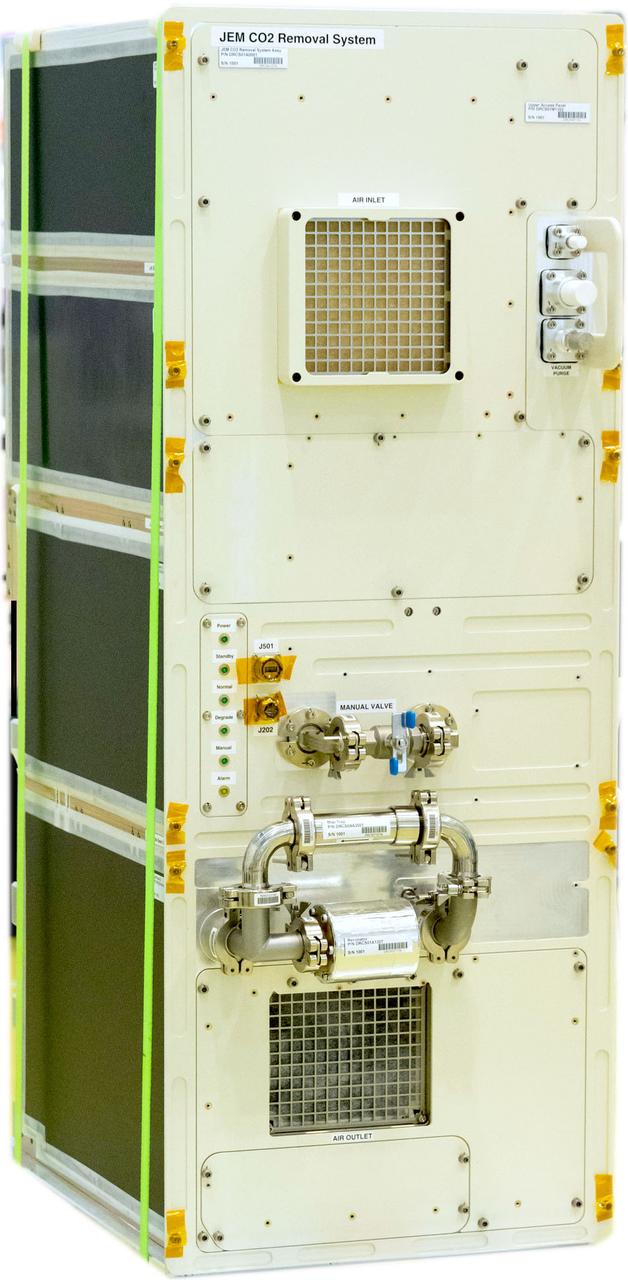
jsc2025e076916 (September 25, 2025) -- A close-up view of the JEM Demonstration of CO? Removal System (JEM DRCS) hardware. JEM DRCS will operate on the space station by filtering carbon dioxide out of the cabin air. The experiment will help guide future spacecraft life support systems and could also support technologies that reduce carbon dioxide emissions on Earth. Image courtesy of JAXA.
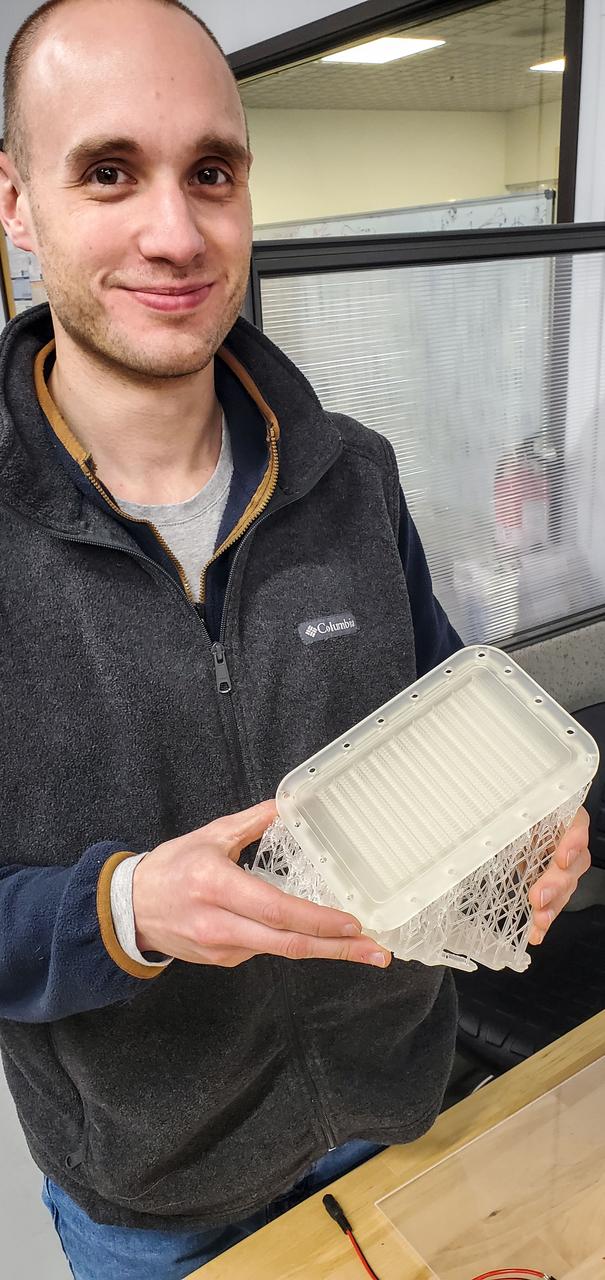
jsc2023e010171 (2/1/2023) --- Logan Torres, design engineer for the CapiSorb Visible System, holds the 3D printed degasser base during hardware fabrication. The capillary wedges in the degasser base control and passively transport viscous liquid in microgravity in order to demonstrate capabilities needed for future liquid sorbent carbon dioxide removal technologies. The CapiSorb Visible System investigation demonstrates a liquid control using capillary forces, over a range of properties that are characteristic of liquids which absorb carbon dioxide. Image courtesy of IRPI, LLC.
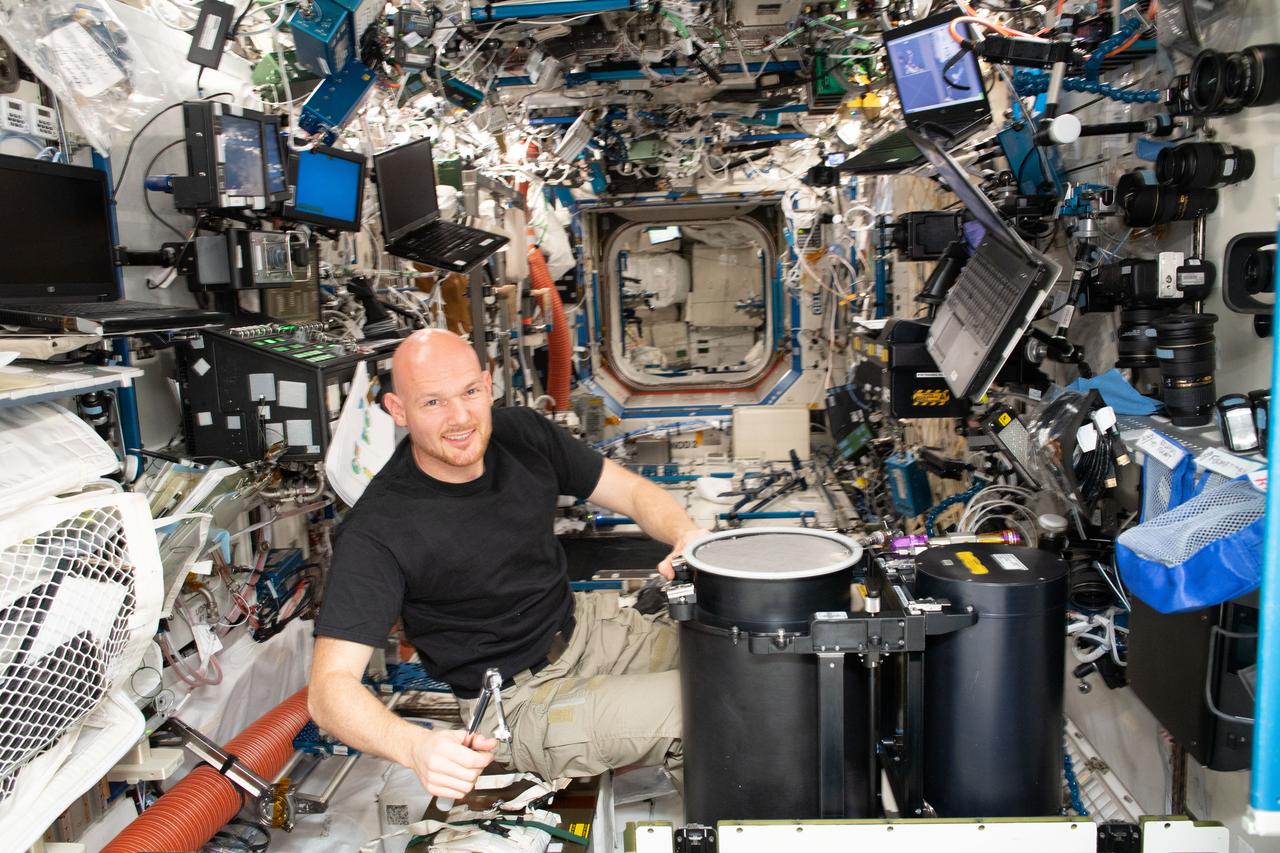
iss056e033076 (June 25, 2018) --- Astronaut Alexander Gerst of ESA (European Space Agency) works on life support maintenance inside the International Space Station's Destiny laboratory module. Gerst was removing and replacing valves inside the Carbon Dioxide Removal Assembly.
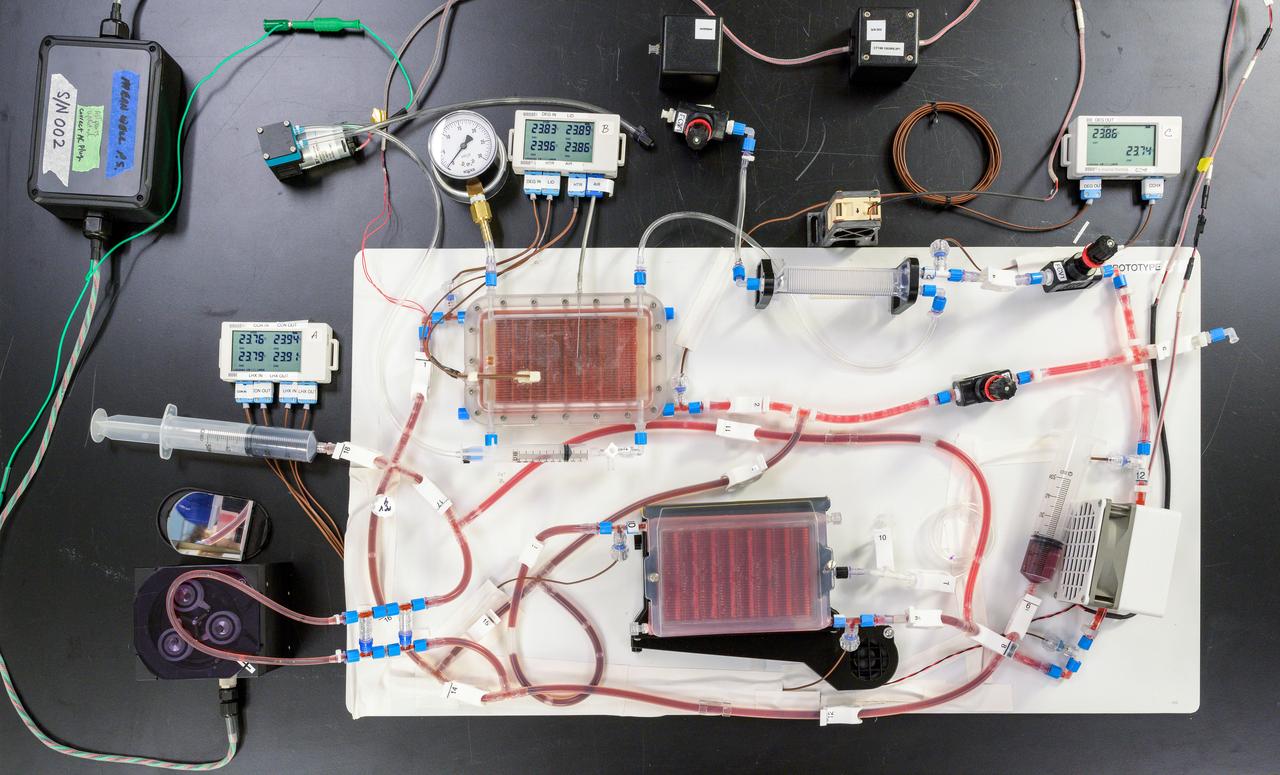
jsc2023e010170 (1/30/2023) --- Overall view of the CapiSorb Visible System prototype with sorbent simulant liquid in N240 room 133B. The CapiSorb Visible System will be launched on SpaceX CRS-27 in March 2023 to the International Space Station to demonstrate a liquid sorbent-based system that leverages the advantages of liquid control through capillary action to remove carbon dioxide from crewed atmospheres...The CapiSorb Visible System, shown here preflight, is used to study visco-capillary control and passive transport of liquid while simulating a fluid loop representative of a liquid carbon dioxide sorbent scrubber. The CapiSorb Visible System investigation demonstrates a liquid control using capillary forces, over a range of properties that are characteristic of liquids which absorb carbon dioxide. Image courtesy of NASA's Ames Research Center.

ISS028-E-006013 (28 May 2011) --- NASA astronaut Greg Chamitoff, STS-134 mission specialist, performs maintenance on the Carbon Dioxide Removal Assembly in the Kibo laboratory of the International Space Station while space shuttle Endeavour remains docked with the station.
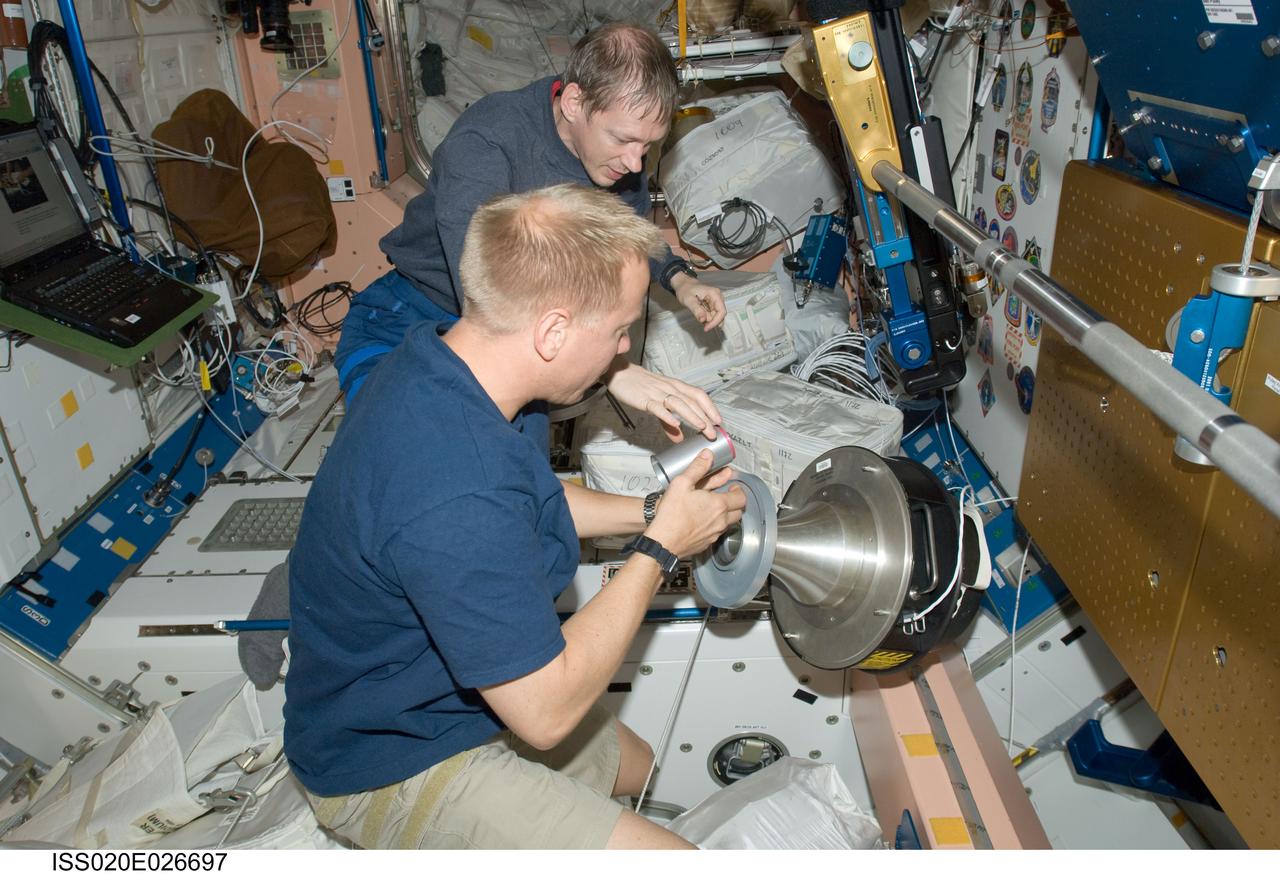
ISS020-E-026697 (31 July 2009) --- NASA astronaut Tim Kopra (foreground) and European Space Agency astronaut Frank De Winne, both Expedition 20 flight engineers, work with a carbon dioxide removal kit adapter in the Unity node of the International Space Station.
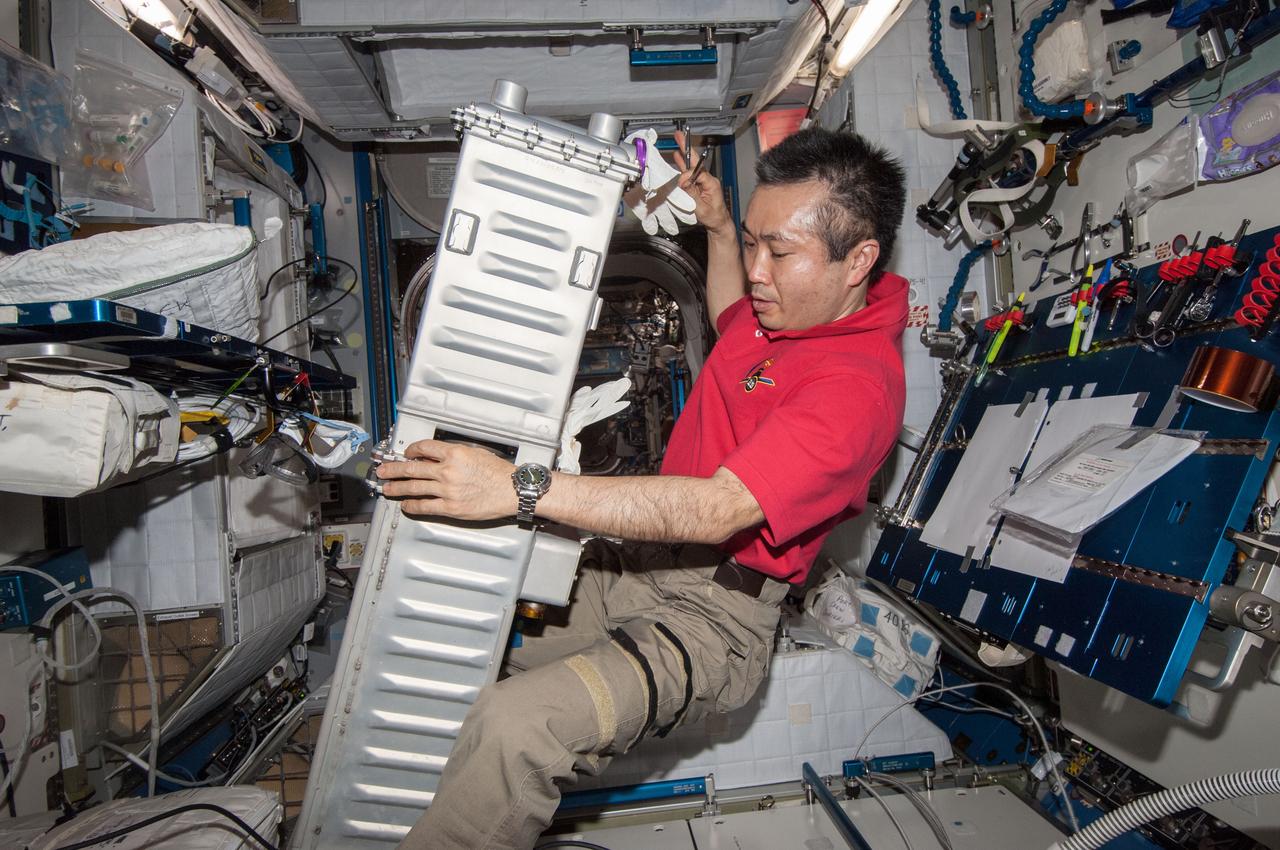
ISS039-E-0010321 (9 April 2014) --- Expedition 39 Commander Koichi Wakata of the Japan Aerospace Exploration Agency works in the Harmony node of the Earth-orbiting International Space Station performing maintenance on a Carbon Dioxide Removal Assembly (CDRA) Desiccant/Adsorbent Bed on April 9, 2014.
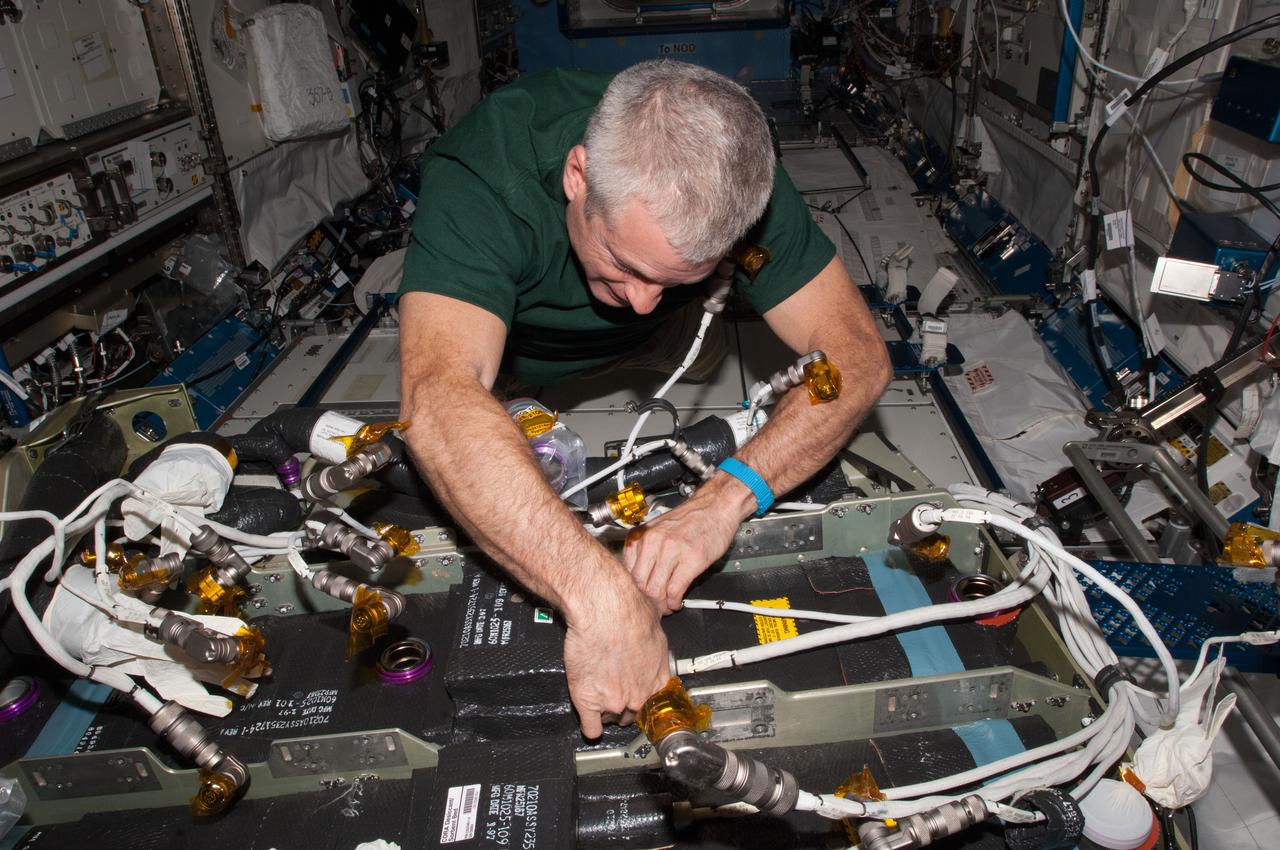
ISS039-E-010369 (9 April 2014) --- Expedition 39 Flight Engineer Steve Swanson of NASA works with the Carbon Dioxide Removal Assembly (CDRA) in the Kibo Laboratory aboard the International Space Station. For several days, the Expedition 39 crew members have been working with CDRA.
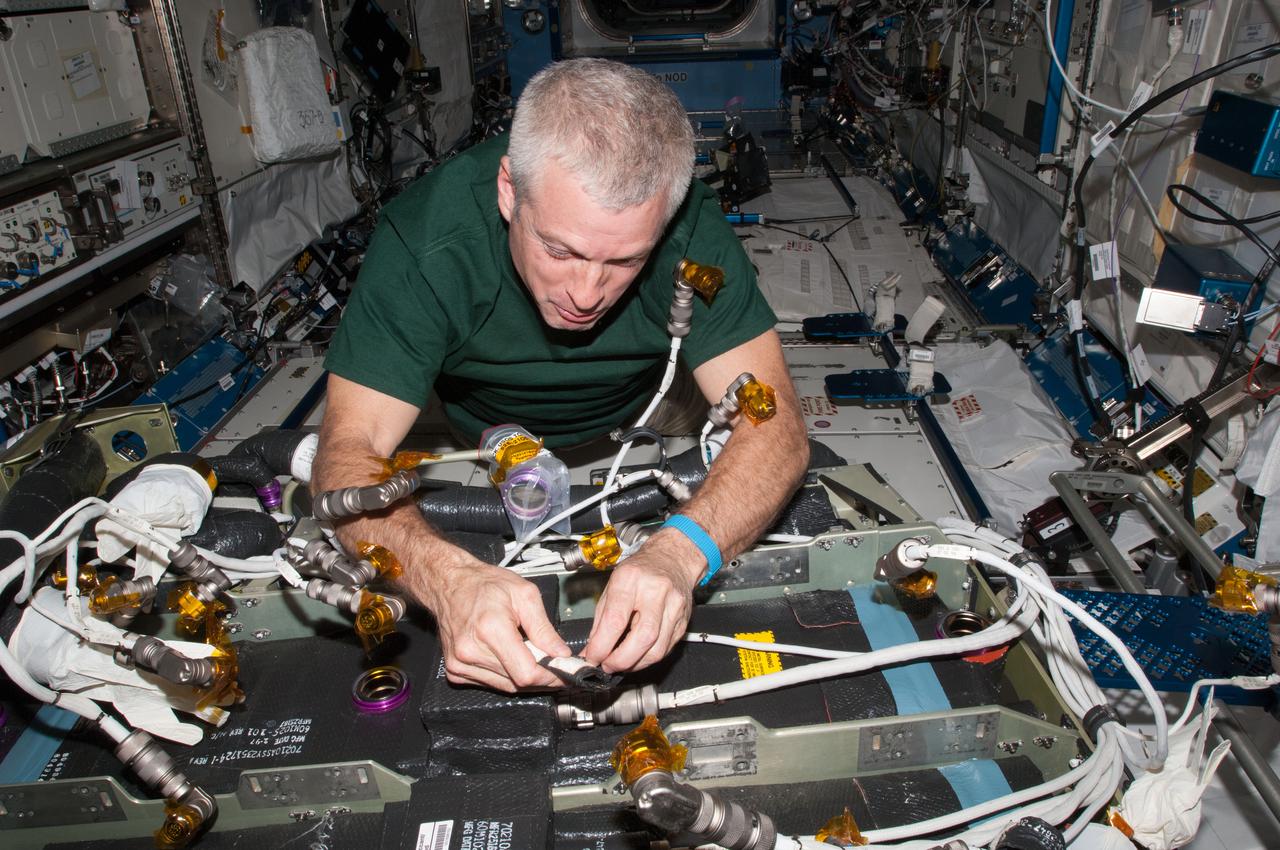
ISS039-E-010367 (9 April 2014) --- In the Kibo laboratory aboard the International Space Station, Expedition 39 Flight Engineer Steve Swanson works during in-flight maintenance to mate electrical connectors in Tranquility's Carbon Dioxide Removal Assembly (CDRA). The image was taken during the second day of CDRA in-flight maintenance.
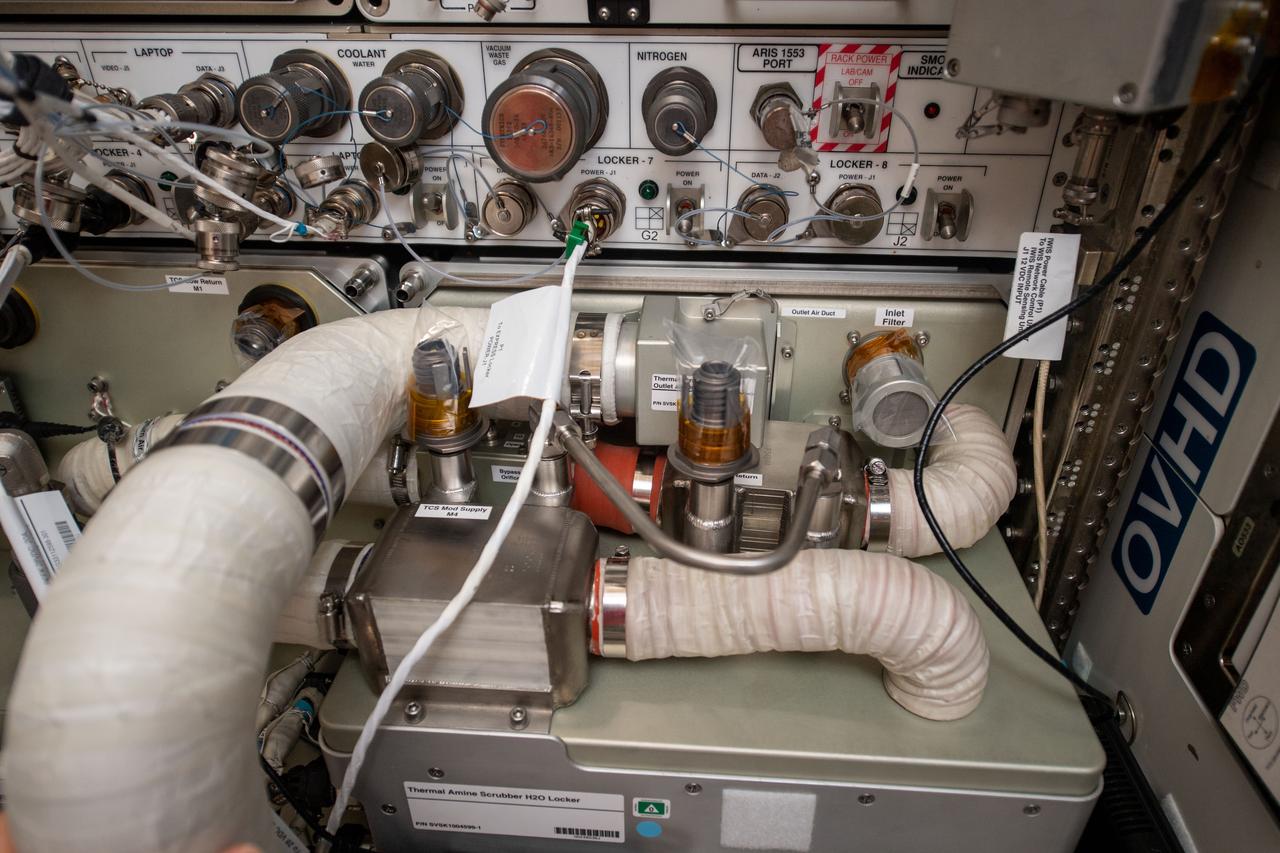
iss059e035608 (4/25/2019) --- Photo documentation of the Thermal Amine scrubber system installation in Destiny module onboard the International Space Station (ISS). The Thermal Amine System tests a method to remove carbon dioxide (CO2) from air aboard the ISS, using actively heated and cooled amine beds.

iss065e165809 (July 13, 2021) --- Expedition 65 Flight Engineers (from left) Mark Vande Hei and Thomas Pesquet replace aging components inside the U.S. Destiny laboratory module’s carbon dioxide removal assembly. The life support device ensures a safe breathing environment abaord the International Space Station.

iss065e165871 (July 13, 2021) --- Expedition 65 Flight Engineers (from left) Thomas Pesquet and Mark Vande Hei replace aging components inside the U.S. Destiny laboratory module’s carbon dioxide removal assembly. The life support device ensures a safe breathing environment abaord the International Space Station.
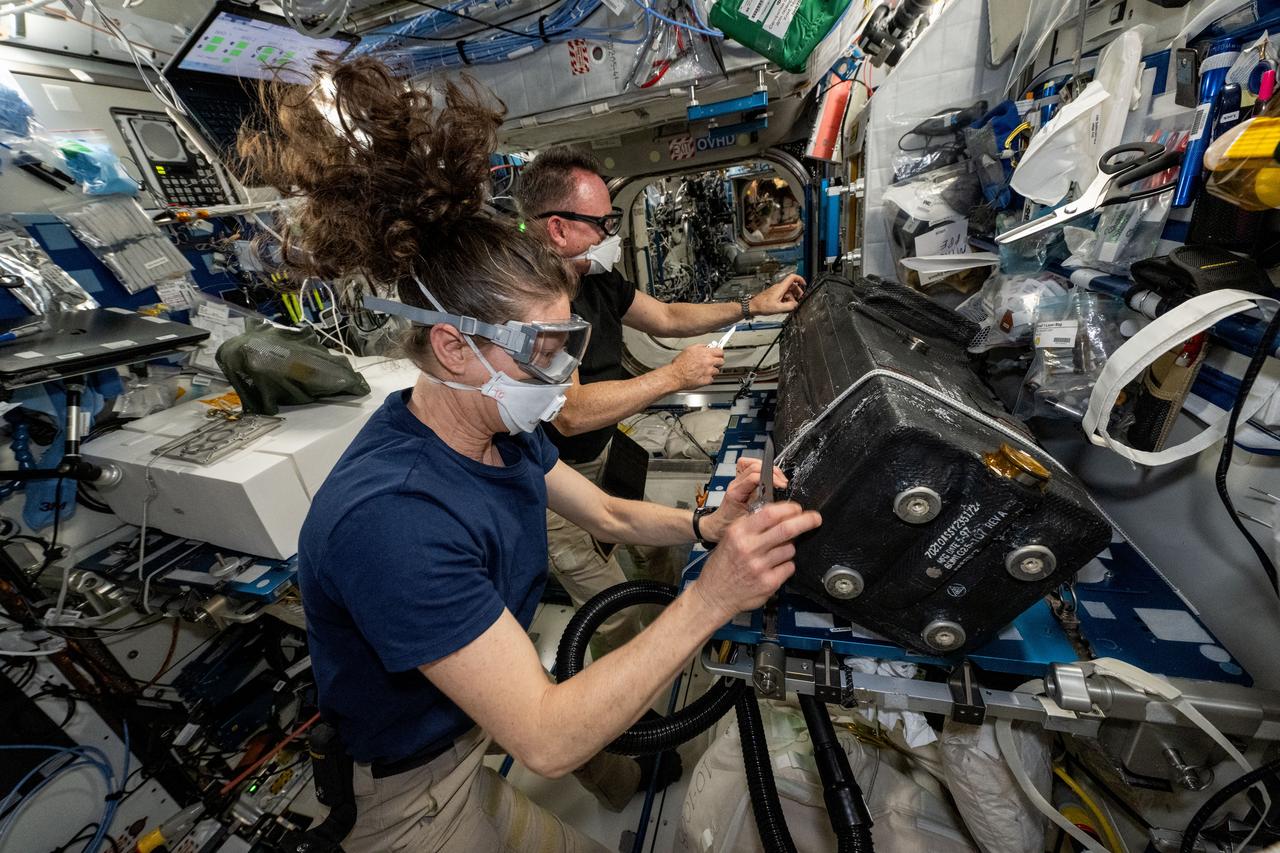
iss071e580478 (Aug. 29, 2024) --- NASA astronauts Tracy C. Dyson (foreground) and Butch Wilmore wear personal protective equipment and clean the inside of the carbon dioxide removal assembly that is part of the International Space Station’s Air Revitalization System located inside the Tranquility module.
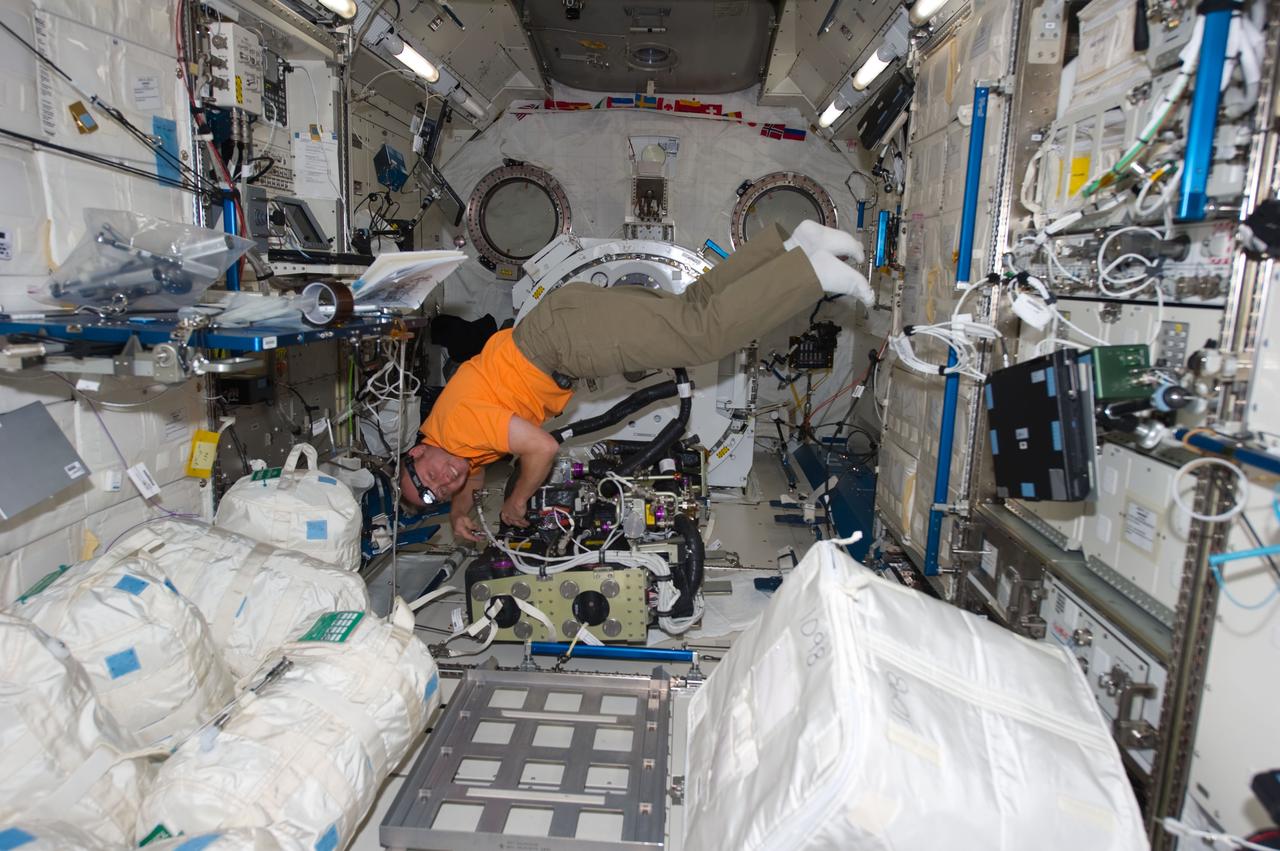
ISS028-E-005981 (28 May 2011) --- NASA astronaut Michael Fincke, STS-134 mission specialist, performs maintenance on the Carbon Dioxide Removal Assembly in the Kibo laboratory of the International Space Station while space shuttle Endeavour remains docked with the station.
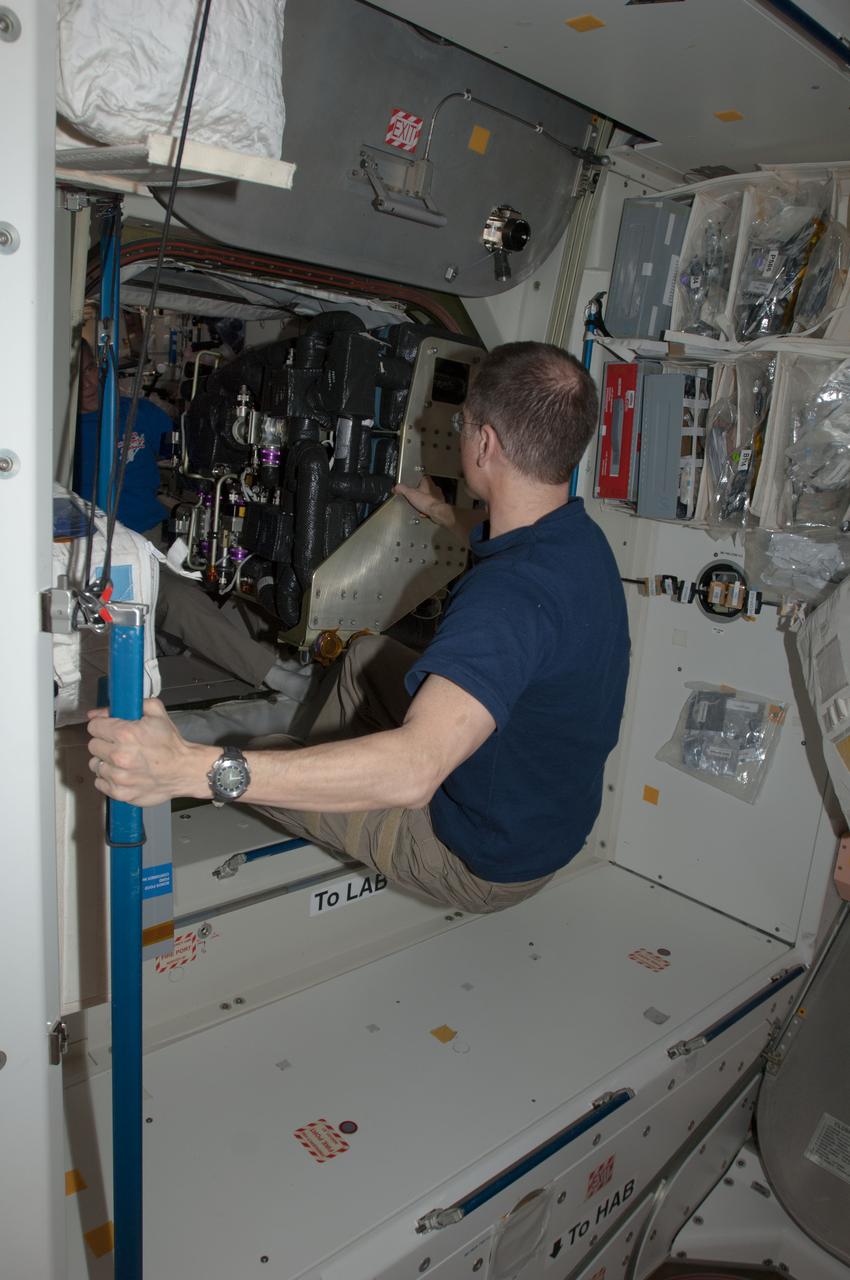
ISS034-E-063091 (9 March 2013) --- NASA astronauts Tom Marshburn, Expedition 34 flight engineer, and Kevin Ford (background), Expedition 34 commander, move the Carbon Dioxide Removal Assembly through U.S. Laboratory (Destiny) hatch on the Earth-orbiting International Space Station.
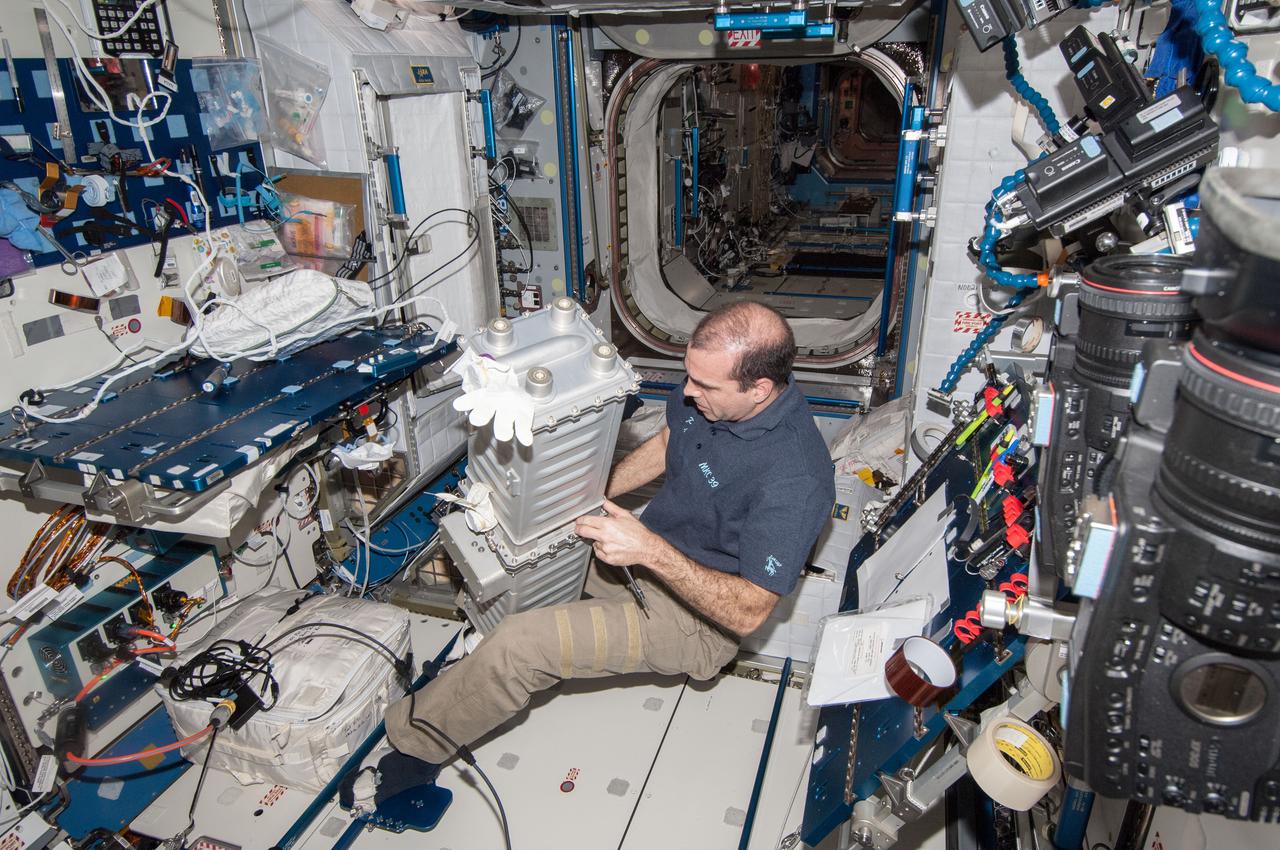
ISS039-E-010325 (9 April 2014) --- NASA astronaut Rick Mastracchio, Expedition 38/39 flight engineer, is seen in the Harmony node on the Earth-orbiting International Space Station performing maintenance on a Carbon Dioxide Removal Assembly (CDRA) Desiccant/Adsorbent Bed on April 9, 2014.
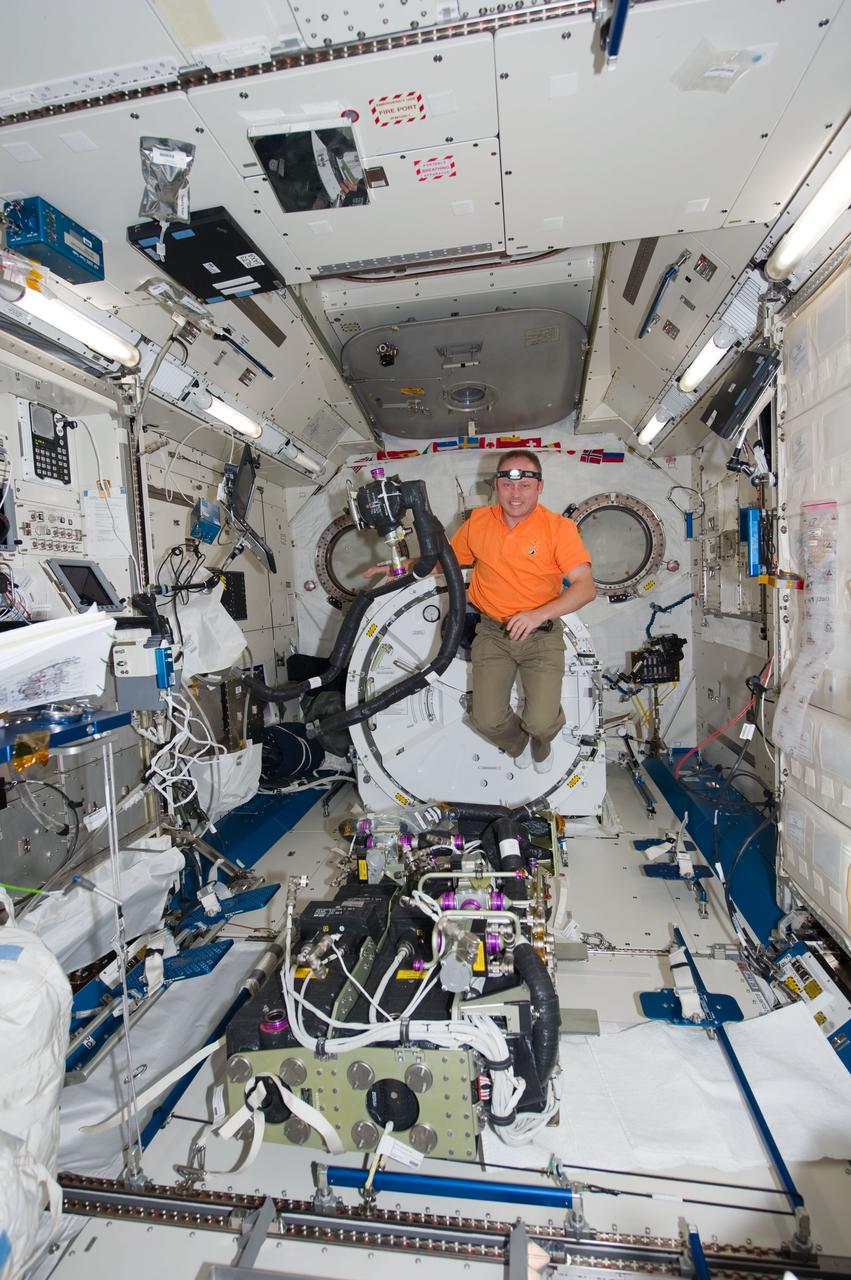
ISS028-E-005987 (28 May 2011) --- NASA astronaut Michael Fincke, STS-134 mission specialist, performs maintenance on the Carbon Dioxide Removal Assembly in the Kibo laboratory of the International Space Station while space shuttle Endeavour remains docked with the station.
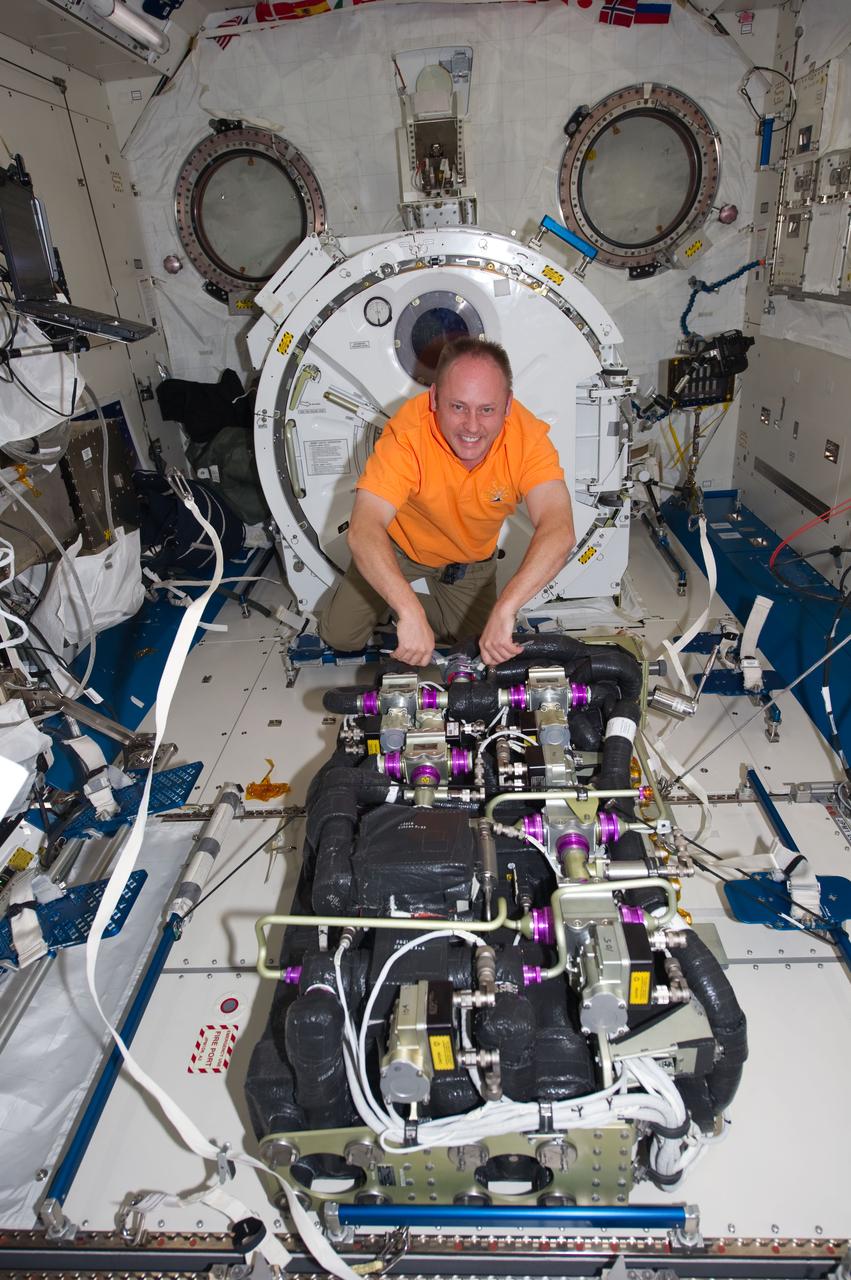
ISS028-E-006015 (28 May 2011) --- NASA astronaut Michael Fincke, STS-134 mission specialist, performs maintenance on the Carbon Dioxide Removal Assembly in the Kibo laboratory of the International Space Station while space shuttle Endeavour remains docked with the station.
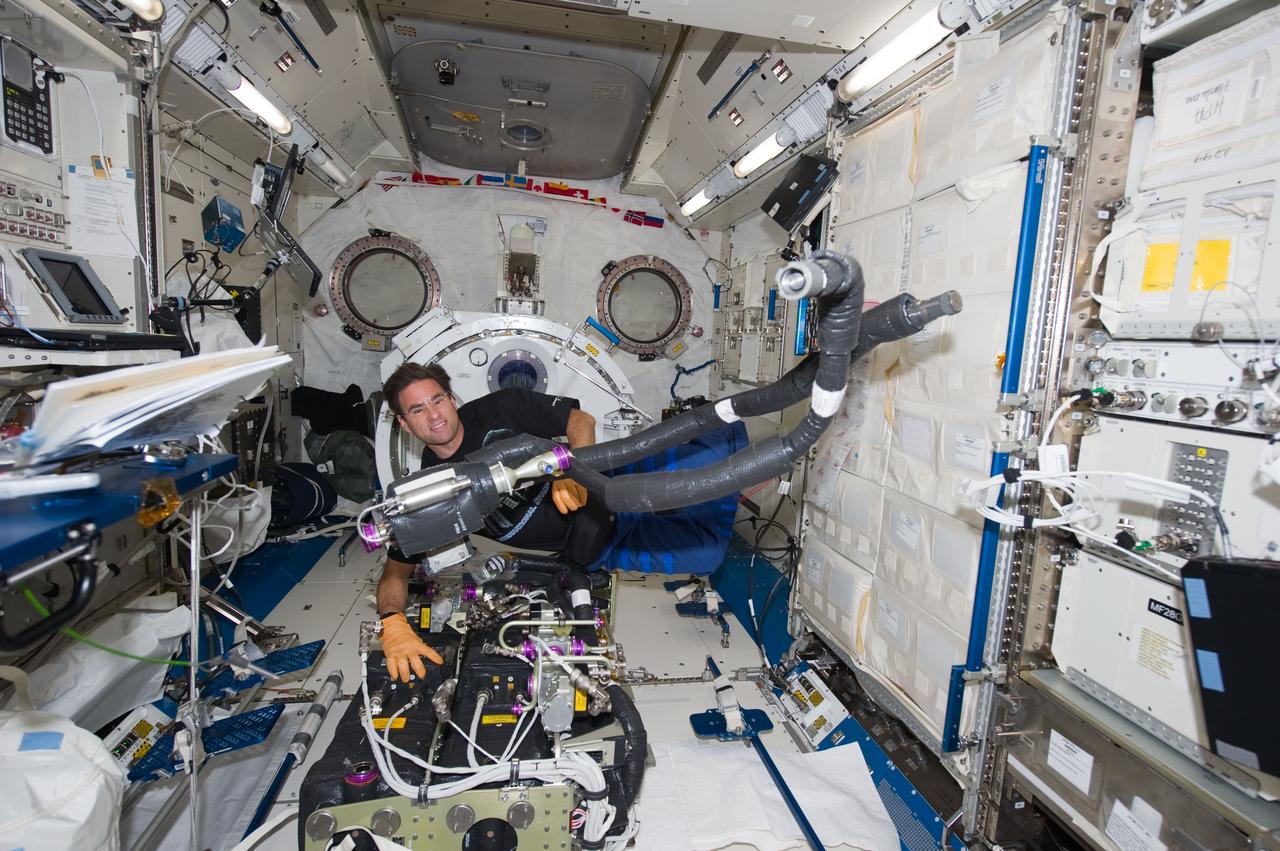
ISS028-E-005986 (28 May 2011) --- NASA astronaut Greg Chamitoff, STS-134 mission specialist, performs maintenance on the Carbon Dioxide Removal Assembly in the Kibo laboratory of the International Space Station while space shuttle Endeavour remains docked with the station.
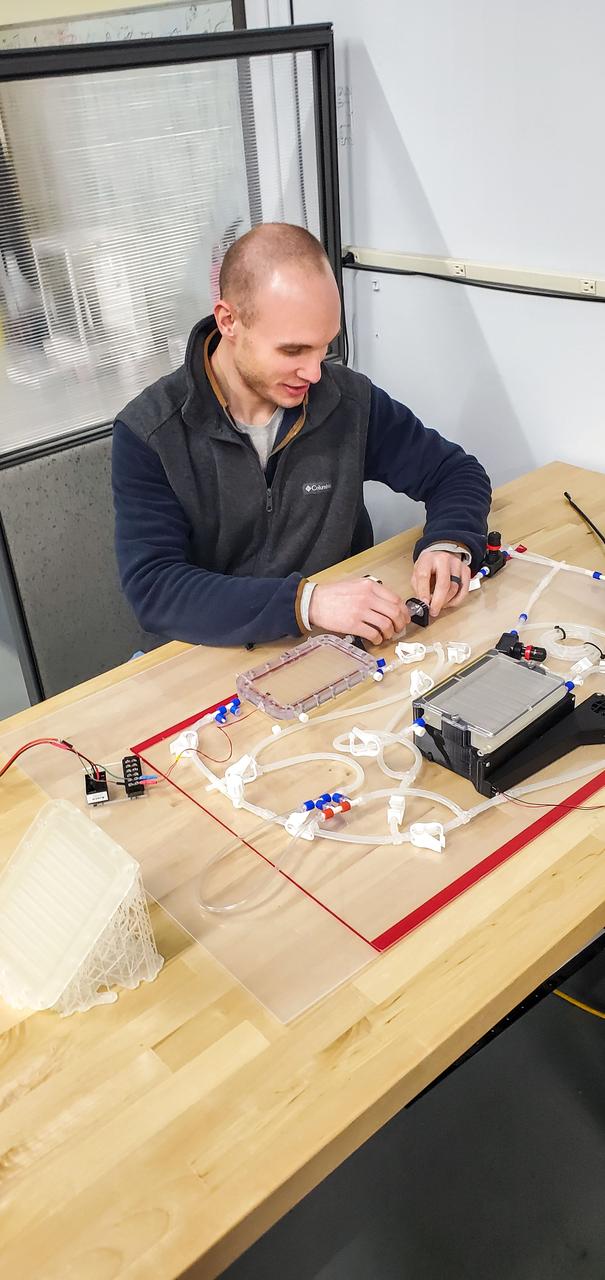
jsc2023e010172 (2/1/2023) --- Logan Torres, Design Engineer for the CapiSorb Visible System, configures the system pre-flight for performance testing. The capillary wedges in the degasser, contactor and capillary condensing heat exchanger control and passively transport viscous liquid in microgravity in order to demonstrate capabilities needed for future liquid sorbent carbon dioxide removal technologies. The CapiSorb Visible System investigation demonstrates a liquid control using capillary forces, over a range of properties that are characteristic of liquids which absorb carbon dioxide. Image courtesy of IRPI, LLC.
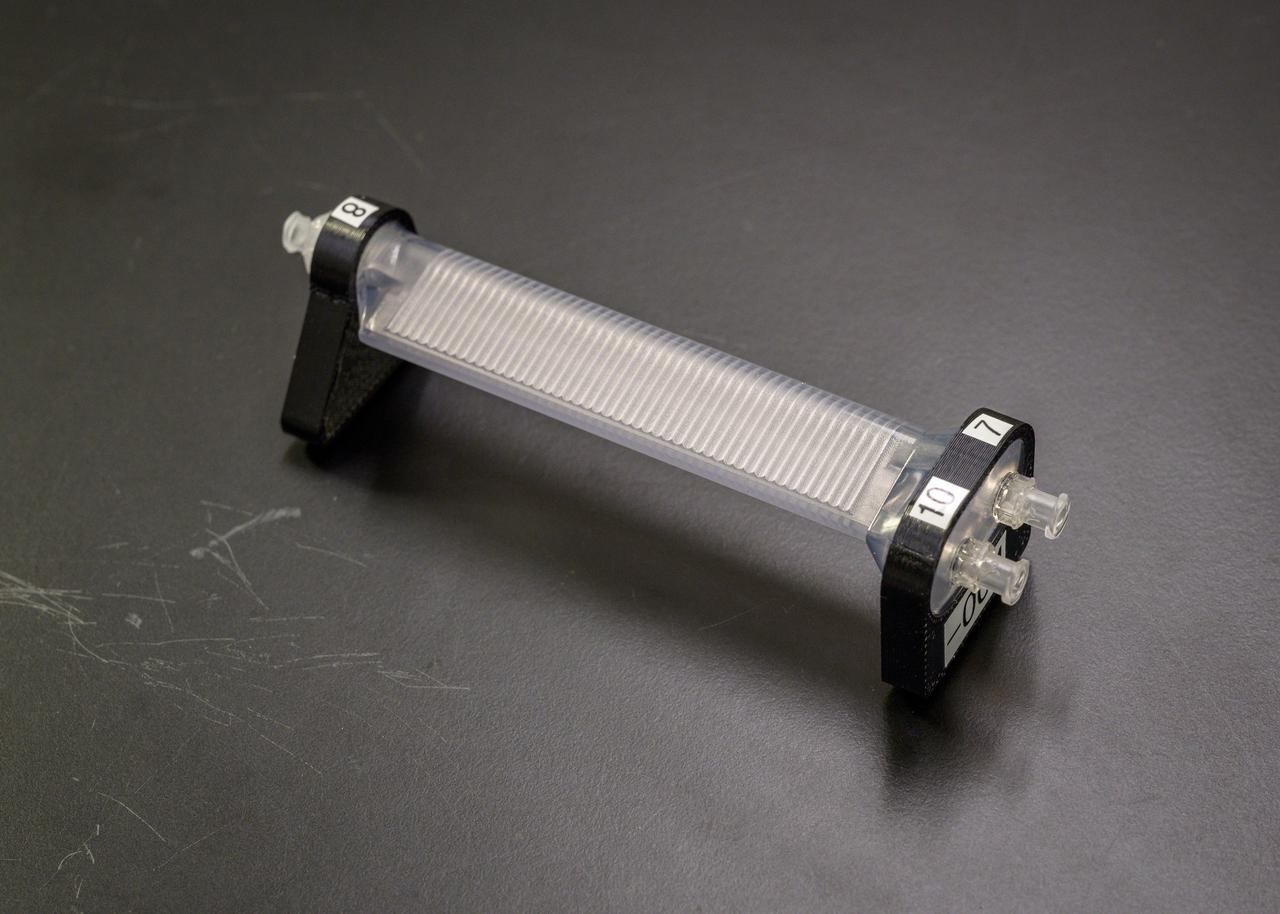
jsc2023e010169 (1/30/2023) --- CapiSorb Visible System flight unit capillary condensing heat exchanger (CCHX) in N240 room 133B. The CapiSorb Visible System will be launched on SpaceX CRS-27 in March 2023 to the International Space Station to demonstrate a liquid sorbent-based system that leverages the advantages of liquid control through capillary action to remove carbon dioxide from crewed atmospheres...The CapiSorb Visible System Capillary Condensing Heat Exchanger, shown here pre-flight, uses capillary surfaces and active cooling to condense water vapor from heated, humid air during microgravity experimentation. The capillary surfaces enable control and passive transport of fluids. The CapiSorb Visible System investigation demonstrates a liquid control using capillary forces, over a range of liquid properties that are characteristic of liquid carbon dioxide sorbents. Image courtesy of NASA's Ames Research Center.
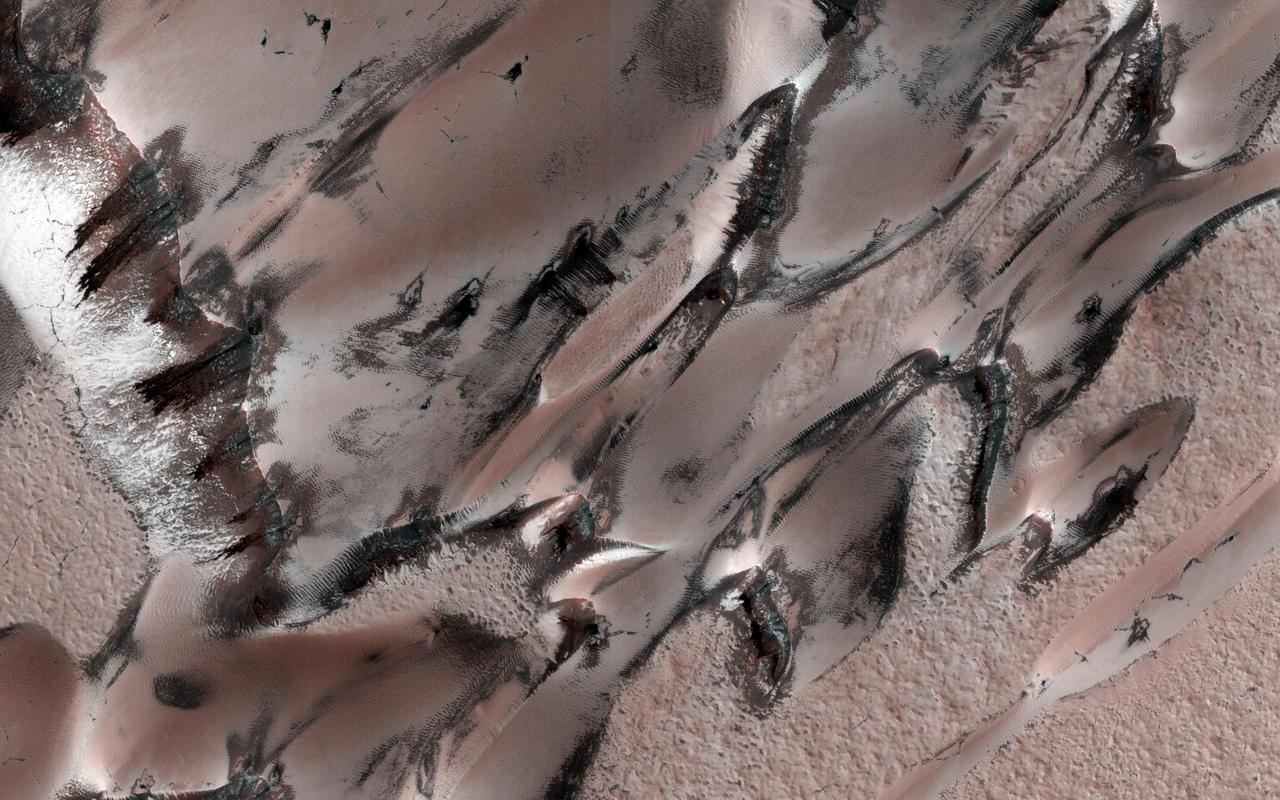
This image covers a unique polar dune field during northern spring, revealing some interesting patterns. The main "megadune" formation comprises giant crescent-shaped dunes called "barchans," which have been migrating (from upper-right to lower-left) over the past several centuries or more. Light-toned seasonal carbon dioxide frost and ice that accumulated over the winter still covers the majority of the surface, and is now starting to defrost and sublimate in complex patterns. (This depends on the slope aspect and incoming solar illumination). As frost is removed, the darker "coal-black" nature of the dune sand is revealed. For example, compare with this image taken in summer, when frost is gone and the dunes are migrating. The striped patterns of the carbon dioxide frost and linear nature of the dune field give it a sea serpent-like appearance. https://photojournal.jpl.nasa.gov/catalog/PIA24699
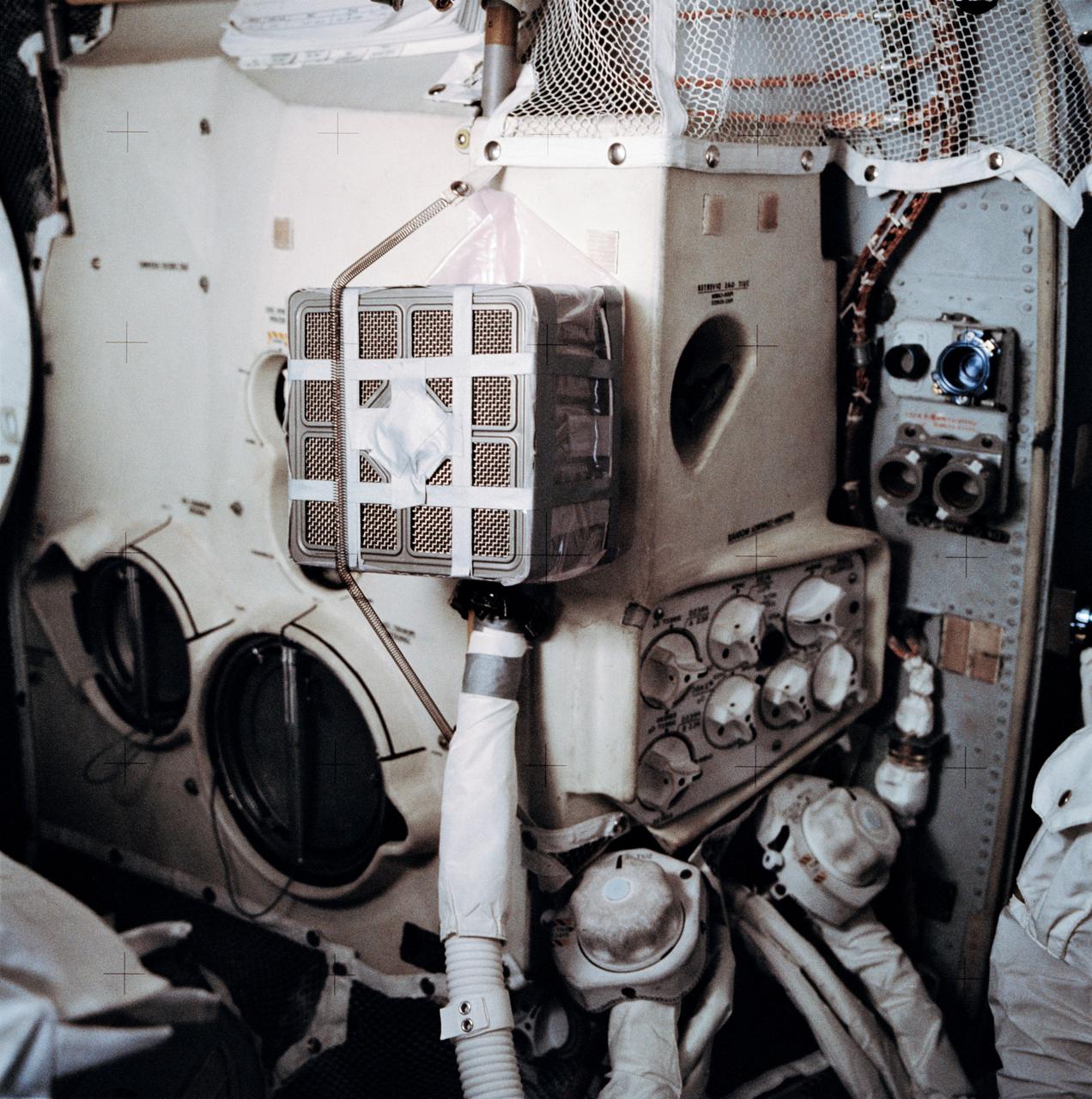
AS13-62-8929 (11-17 April 1970) --- Interior view of the Apollo 13 Lunar Module (LM) showing the "mail box," a jury-rigged arrangement which the Apollo 13 astronauts built to use the Command Module (CM) lithium hydroxide canisters to purge carbon dioxide from the LM. Lithium hydroxide is used to scrub CO2 from the spacecraft's atmosphere. Since there was a limited amount of lithium hydroxide in the LM, this arrangement was rigged up to utilize the canisters from the CM. The "mail box" was designed and tested on the ground at the Manned Spacecraft Center (MSC) before it was suggested to the problem-plagued Apollo 13 crew men. Because of the explosion of one of the oxygen tanks in the Service Module (SM), the three crew men had to use the LM as a "lifeboat".
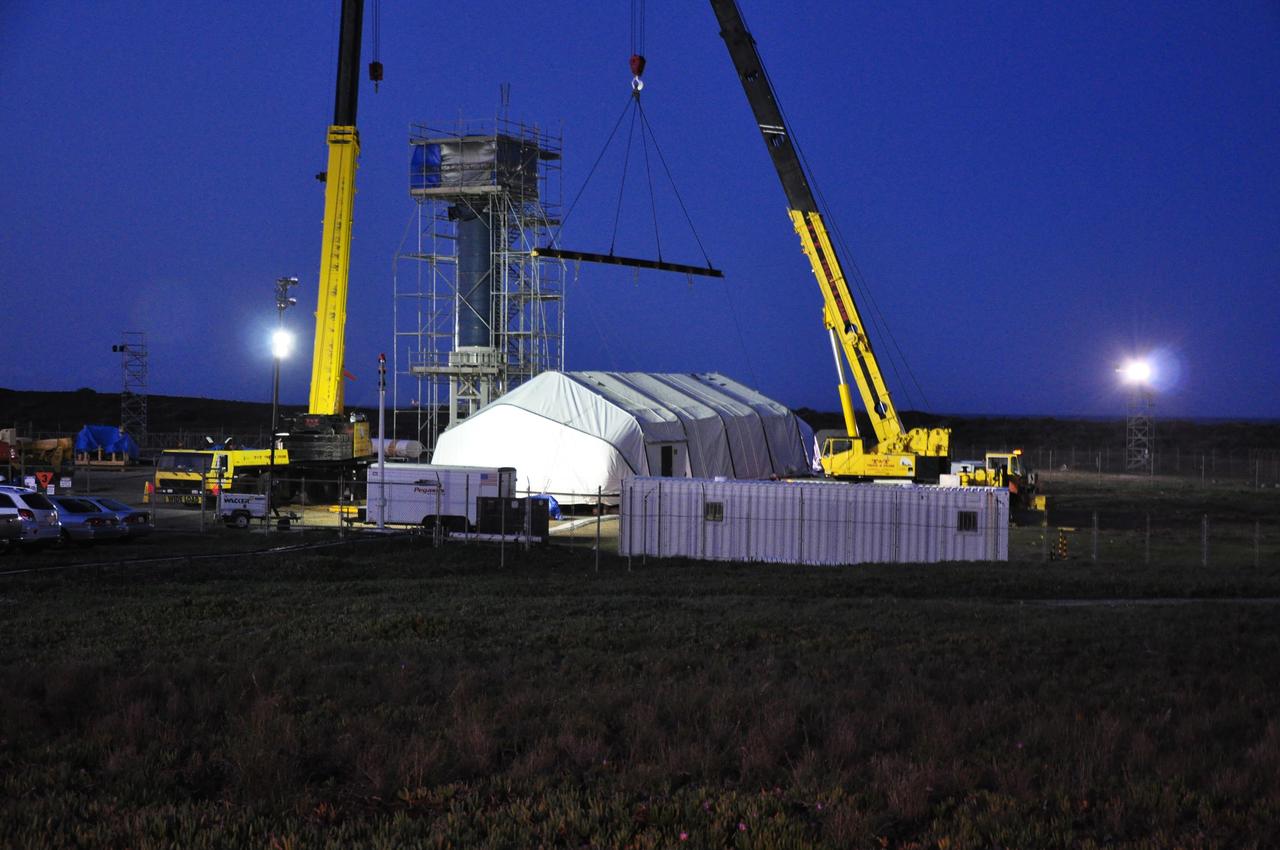
VANDENBERG AIR FORCE BASE, Calif. -- Just before dawn on Launch Complex 576-E at Vandenberg Air Force Base in California, a crane is attached to the tent covering NASA's Orbiting Carbon Observatory, or OCO, the Taurus XL upper stack and the umbilical tower. The tent will be removed to allow OCO to be raised. The spacecraft is scheduled for launch aboard Orbital Sciences' Taurus XL rocket Feb. 24 from Vandenberg. The spacecraft will collect precise global measurements of carbon dioxide (CO2) in the Earth's atmosphere. Scientists will analyze OCO data to improve our understanding of the natural processes and human activities that regulate the abundance and distribution of this important greenhouse gas. Photo credit: NASA/Randy Beaudoin, VAFB
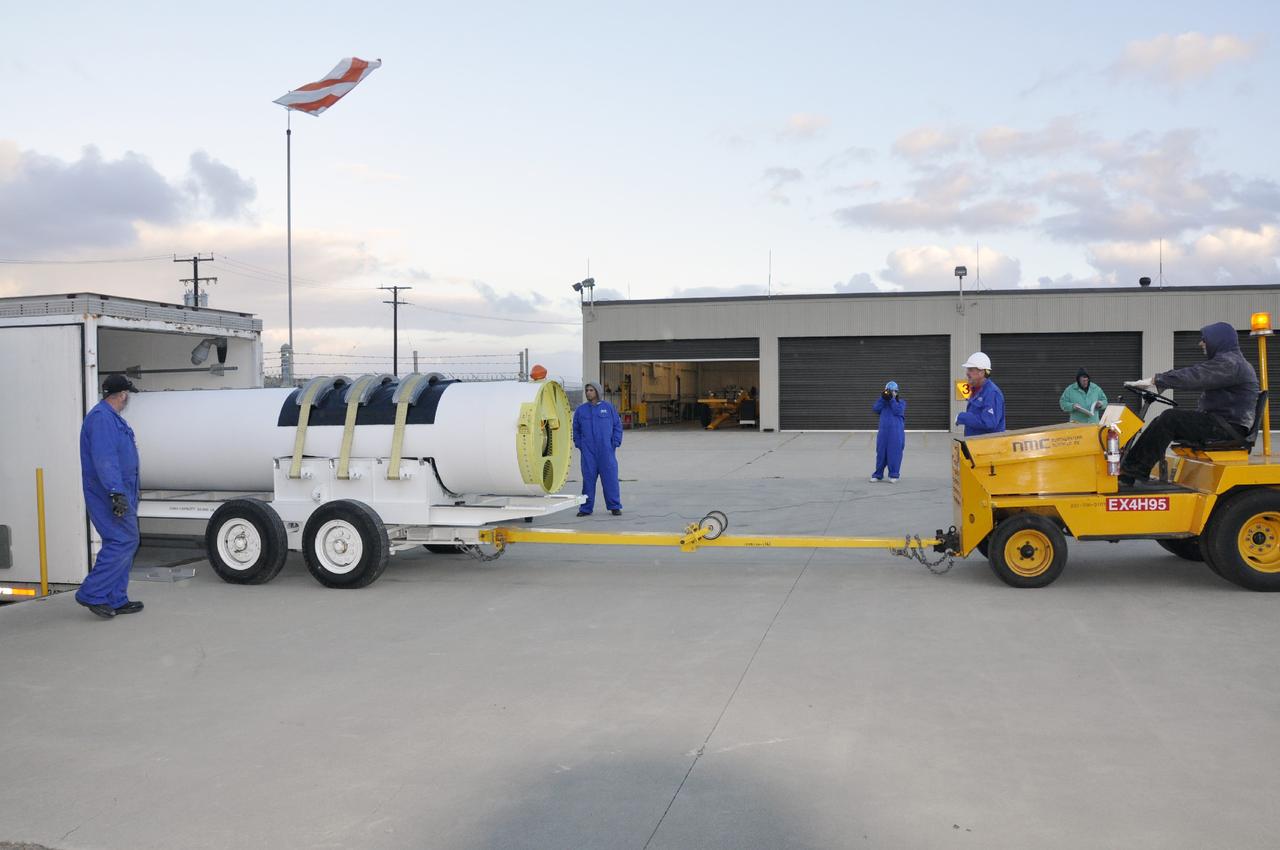
VANDENBERG AIR FORCE BASE, Calif. -- A solid rocket motor is carefully removed from its delivery truck at Vandenberg Air Force Base in California. The motor will be attached to the United Launch Alliance Delta II rocket slated to launch NASA's Orbiting Carbon Observatory-2, or OCO-2, spacecraft in July 2014. OCO-2 will collect precise global measurements of carbon dioxide in the Earth's atmosphere. Scientists will analyze this data to improve our understanding of the natural processes and human activities that regulate the abundance and distribution of this important atmospheric gas. Photo credit: NASA/Randy Beaudoin
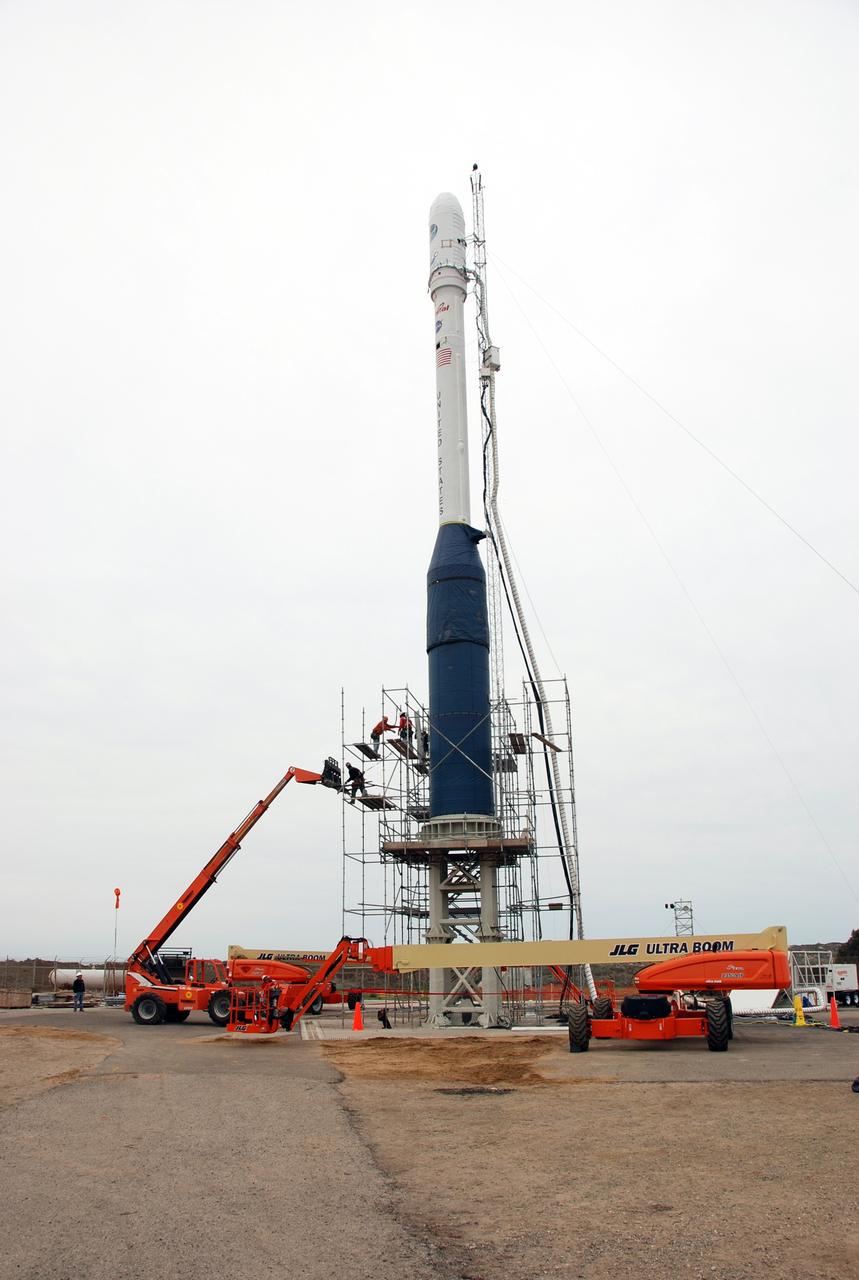
VANDENBERG AIR FORCE BASE, Calif. -- On Launch Complex 576-E at Vandenberg Air Force Base in California, workers remove the scaffolding surrounding Orbital Sciences' Taurus XL rocket. Atop the rocket is NASA's Orbiting Carbon Observatory, or OCO, which is scheduled to launch Feb. 24 from Vandenberg. The spacecraft will collect precise global measurements of carbon dioxide (CO2) in the Earth's atmosphere. Scientists will analyze OCO data to improve our understanding of the natural processes and human activities that regulate the abundance and distribution of this important greenhouse gas. Photo credit: NASA/Richard Nielsen, VAFB
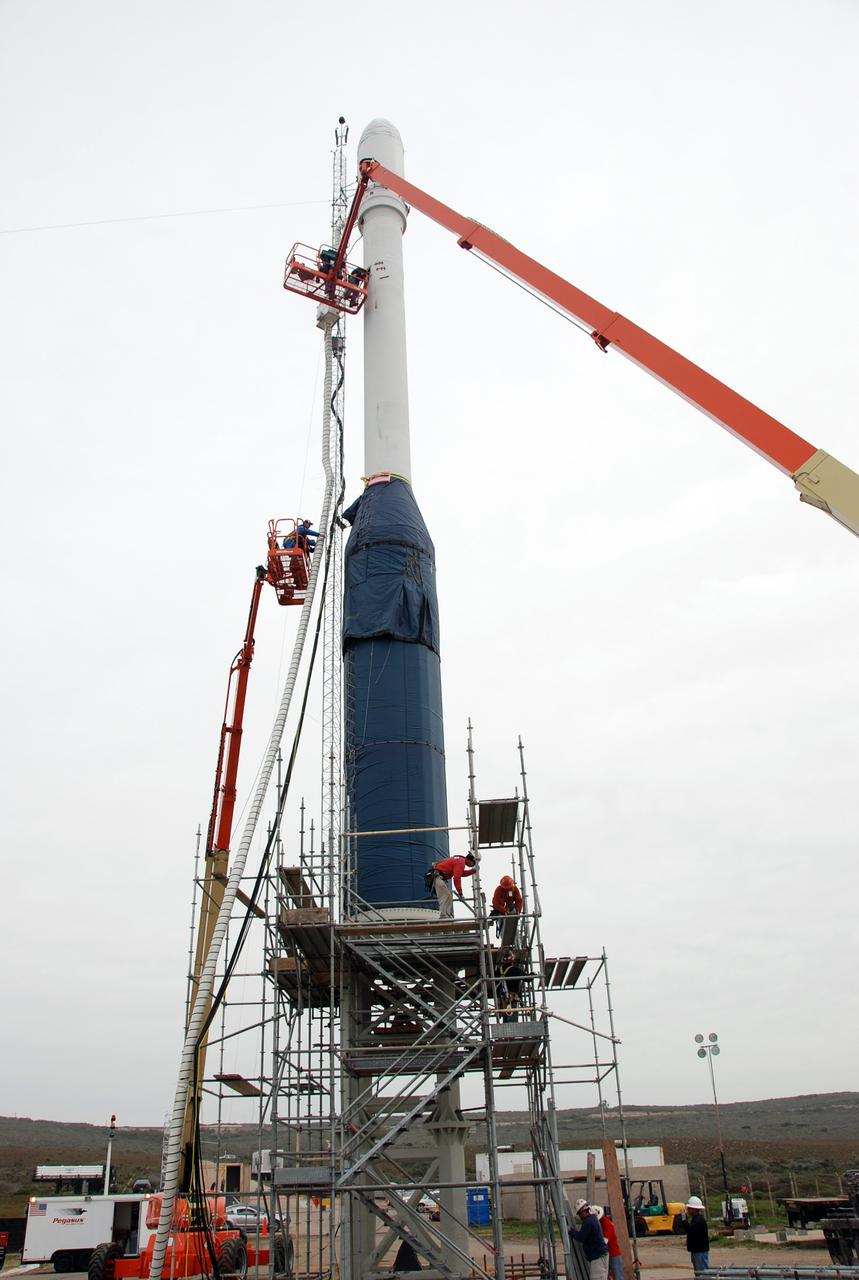
VANDENBERG AIR FORCE BASE, Calif. -- On Launch Complex 576-E at Vandenberg Air Force Base in California, workers remove the umbilical tower attached to Orbital Sciences' Taurus XL rocket. Atop the rocket is NASA's Orbiting Carbon Observatory, or OCO, which is scheduled to launch Feb. 24 from Vandenberg. The spacecraft will collect precise global measurements of carbon dioxide (CO2) in the Earth's atmosphere. Scientists will analyze OCO data to improve our understanding of the natural processes and human activities that regulate the abundance and distribution of this important greenhouse gas. Photo credit: NASA/Richard Nielsen, VAFB
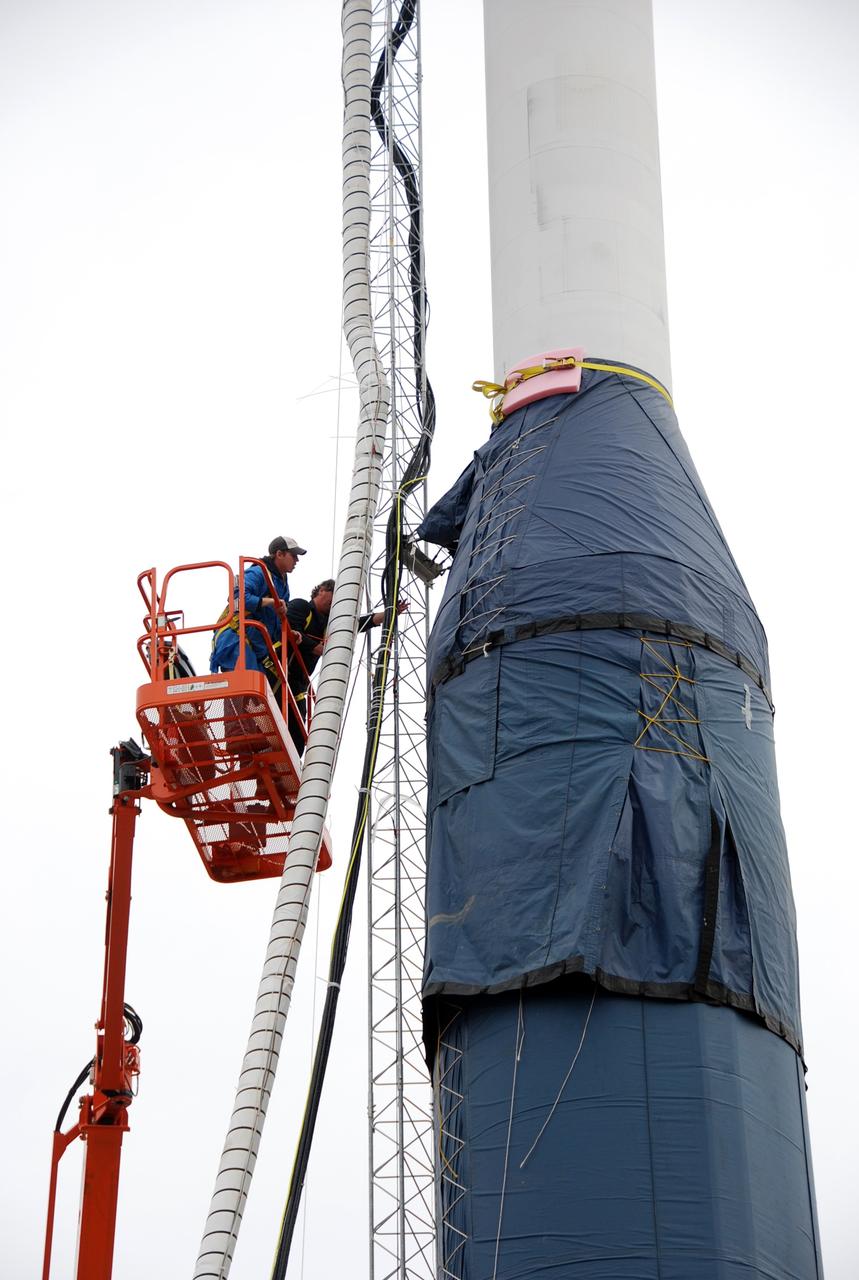
VANDENBERG AIR FORCE BASE, Calif. -- On Launch Complex 576-E at Vandenberg Air Force Base in California, workers remove the umbilical tower attached to Orbital Sciences' Taurus XL rocket. Atop the rocket is NASA's Orbiting Carbon Observatory, or OCO, which is scheduled to launch Feb. 24 from Vandenberg. The spacecraft will collect precise global measurements of carbon dioxide (CO2) in the Earth's atmosphere. Scientists will analyze OCO data to improve our understanding of the natural processes and human activities that regulate the abundance and distribution of this important greenhouse gas. Photo credit: NASA/Richard Nielsen, VAFB
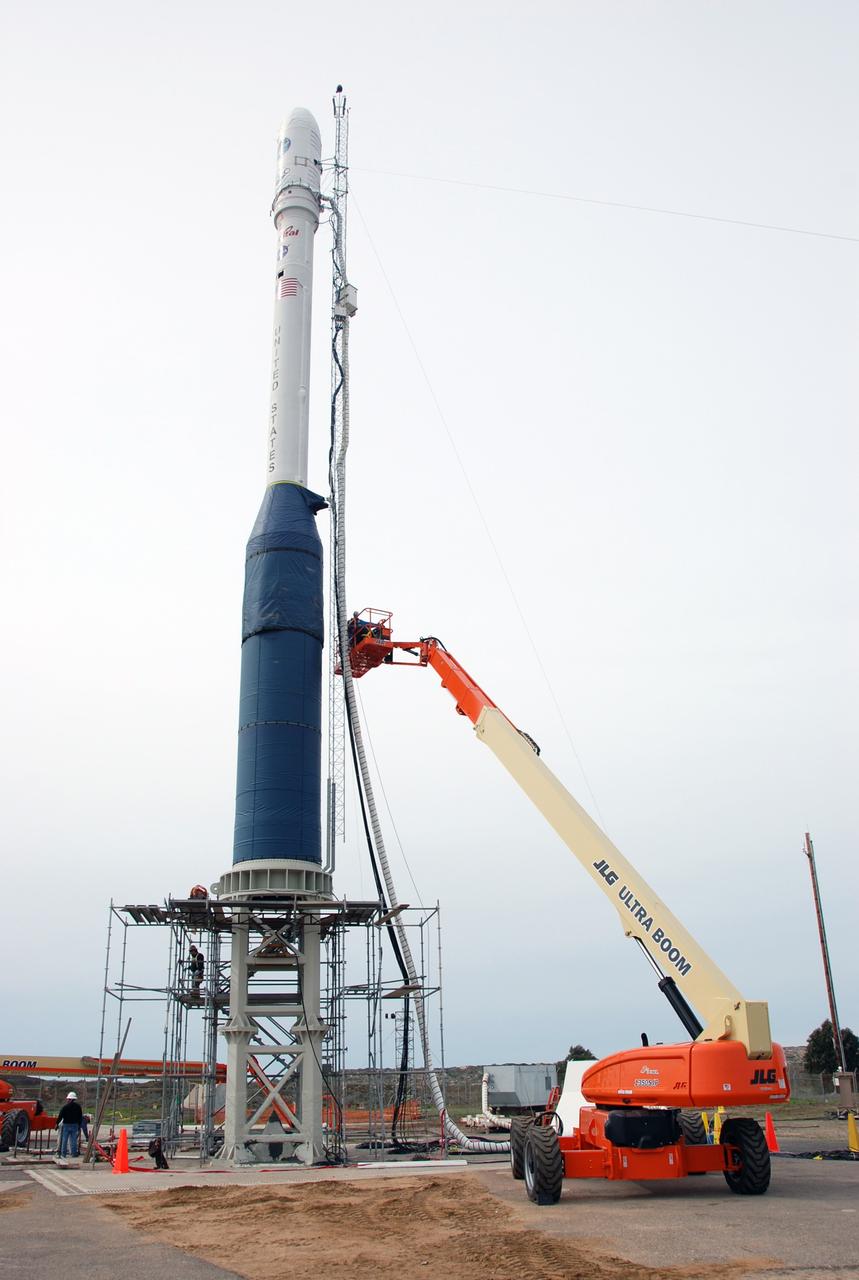
VANDENBERG AIR FORCE BASE, Calif. -- On Launch Complex 576-E at Vandenberg Air Force Base in California, workers remove the umbilical tower attached to Orbital Sciences' Taurus XL rocket. Atop the rocket is NASA's Orbiting Carbon Observatory, or OCO, which is scheduled to launch Feb. 24 from Vandenberg. The spacecraft will collect precise global measurements of carbon dioxide (CO2) in the Earth's atmosphere. Scientists will analyze OCO data to improve our understanding of the natural processes and human activities that regulate the abundance and distribution of this important greenhouse gas. Photo credit: NASA/Richard Nielsen, VAFB
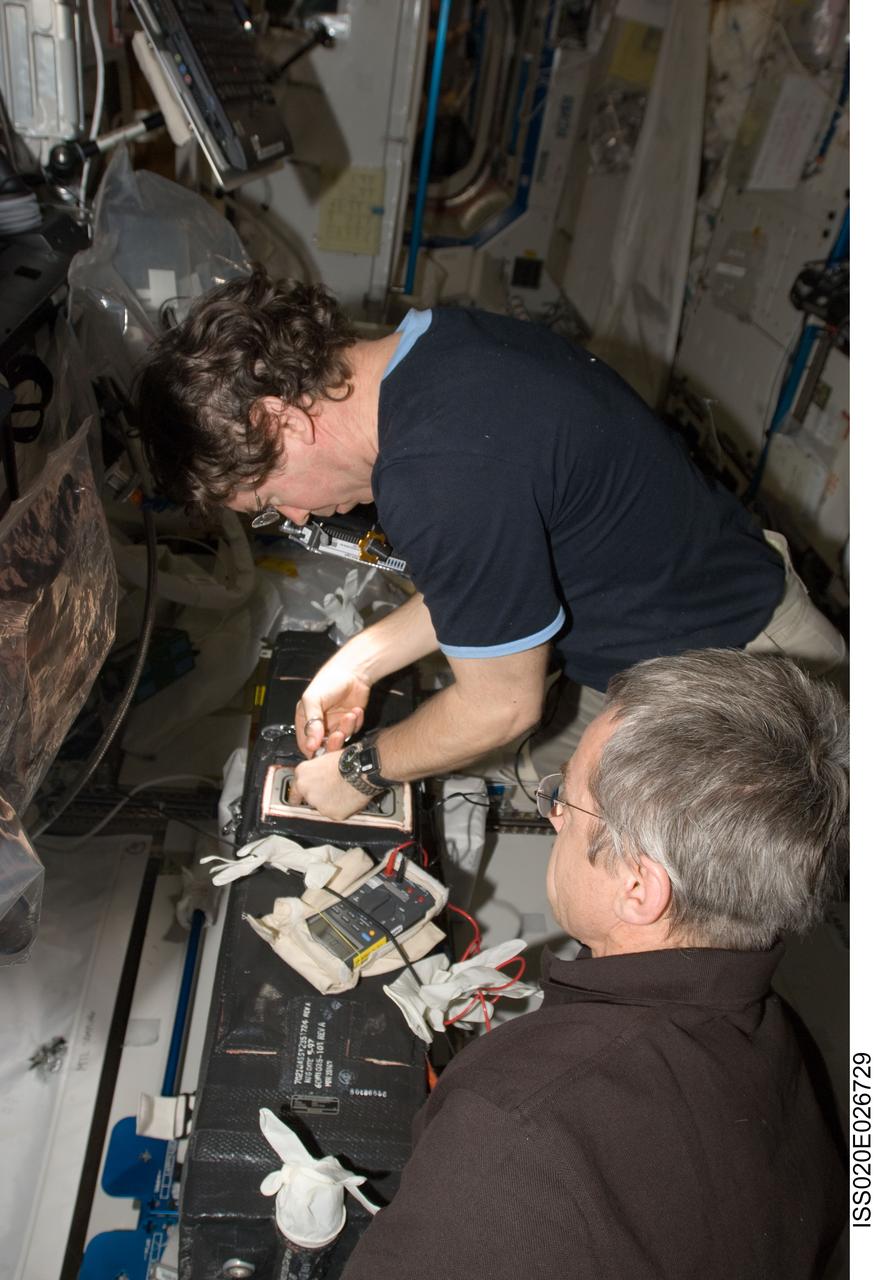
ISS020-E-026729 (31 July 2009) --- NASA astronaut Michael Barratt and Canadian Space Agency astronaut Robert Thirsk (foreground), both Expedition 20 flight engineers, work with the Carbon Dioxide Removal Assembly (CDRA) wire cutting and safing procedures to eliminate shorted heated wires in the Destiny laboratory of the International Space Station.
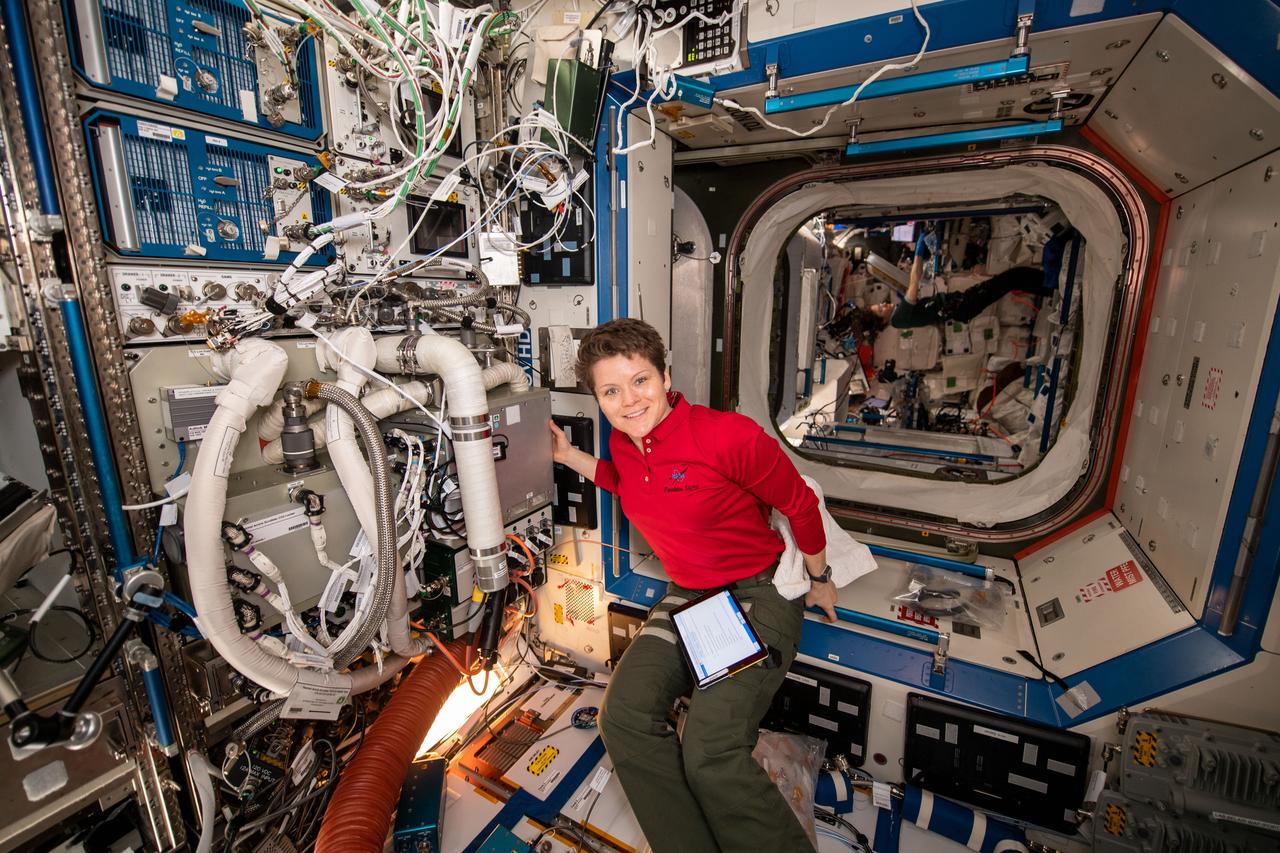
iss059e035660 (4/25/2019) --- NASA astronaut Anne McClain is photographed in the Destiny module onboard the International Space Station (ISS) during the installation of the Thermal Amine Scrubber. The Thermal Amine Scrubber tests a method to remove carbon dioxide (CO2) from air aboard the International Space Station, using actively heated and cooled amine beds.
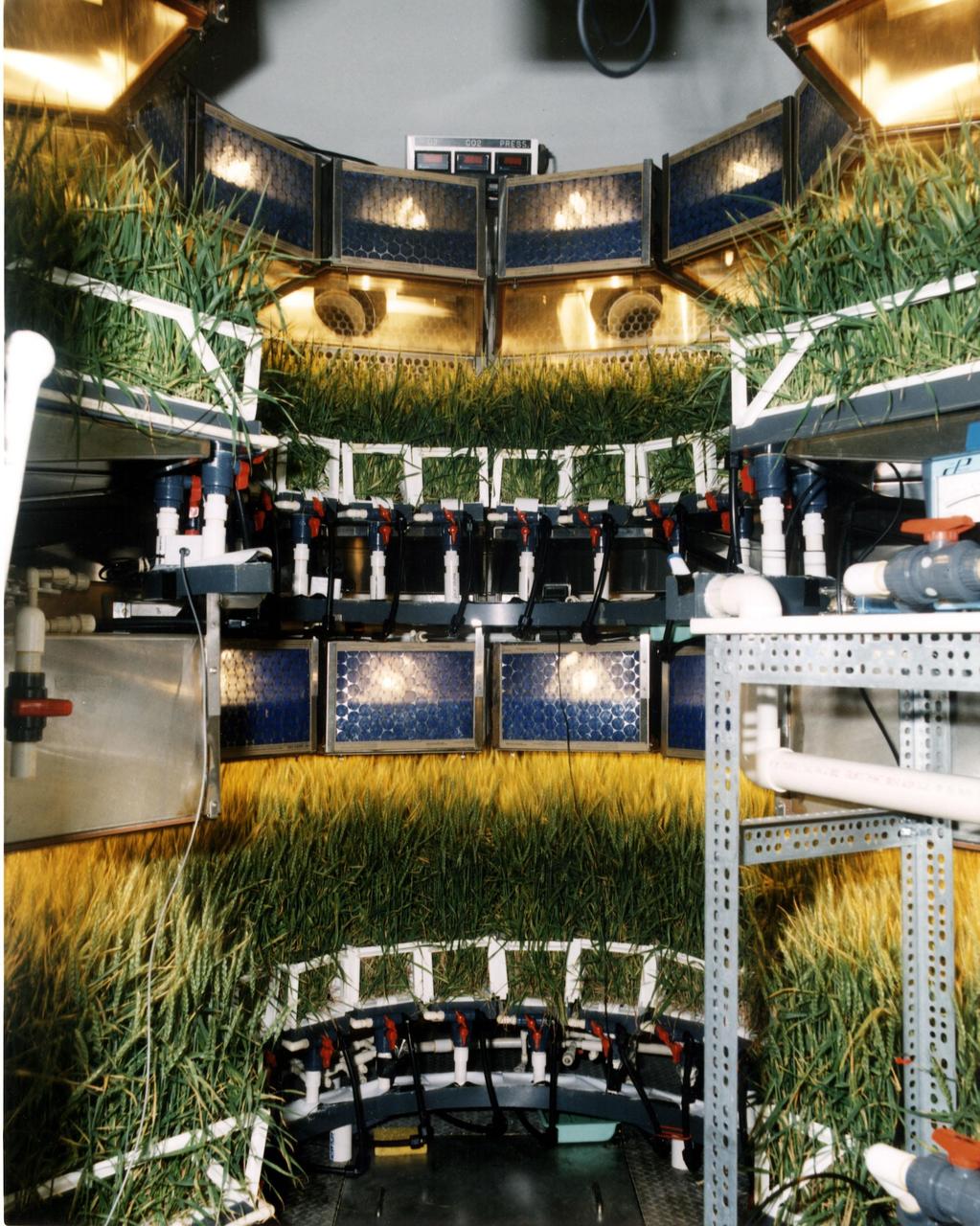
Original photo and caption dated June 22, 1988: "A dwarf wheat variety known as Yecoro Rojo flourishes in KSC's Biomass Production Chamber. Researchers are gathering information on the crop's ability to produce food, water and oxygen, and then remove carbon dioxide. The confined quarters associated with space travel require researchers to focus on smaller plants that yield proportionately large amounts of biomass. This wheat crop takes about 85 days to grow before harvest."

S133-E-008319 (3 March 2011) --- NASA astronaut Michael Barratt (foreground), STS-133 mission specialist; and Scott Kelly, Expedition 26 commander, perform maintenance on the Carbon Dioxide Removal Assembly (CDRA) in the Air Revitalization 2 (AR2) rack in the Tranquility node of the International Space Station while space shuttle Discovery remains docked with the station. Photo credit: NASA or National Aeronautics and Space Administration
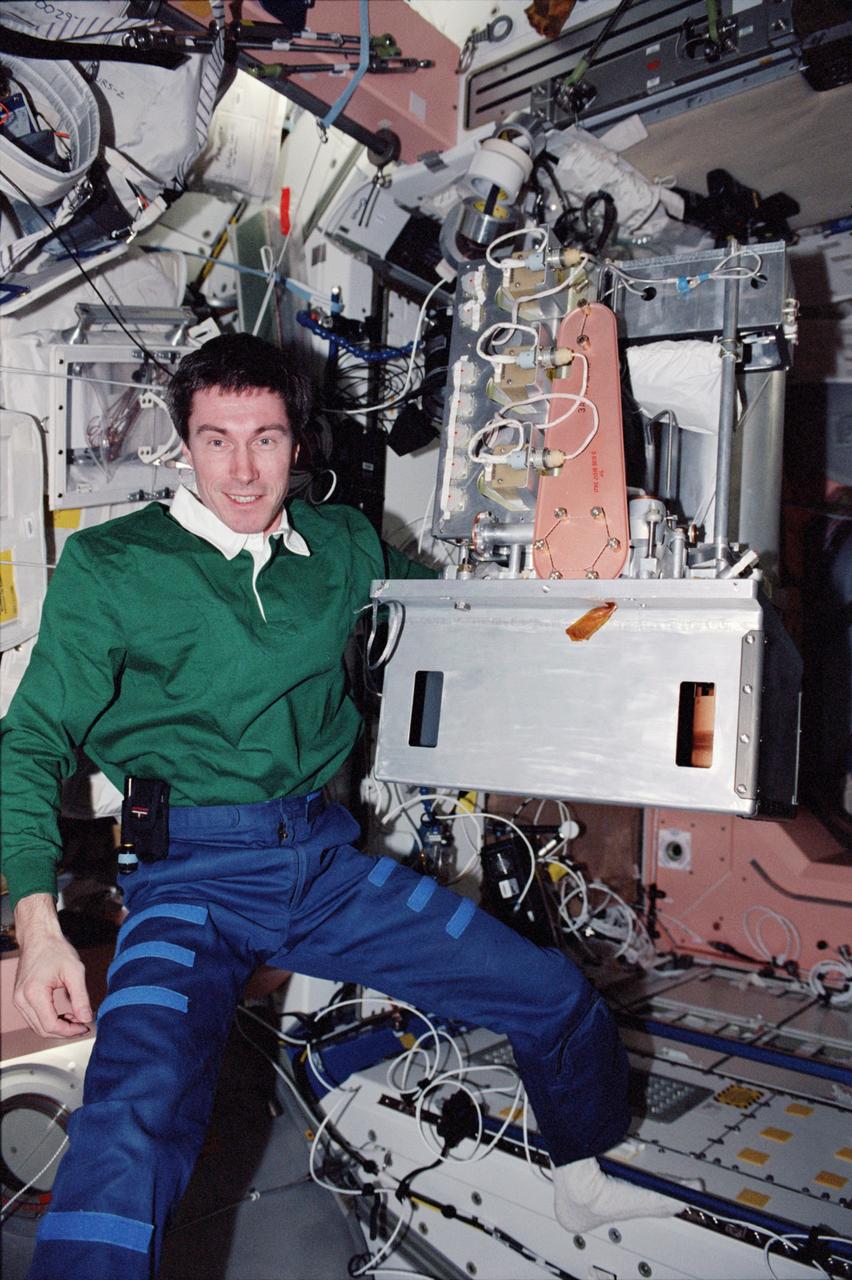
STS098-346-0032 (7-20 February 2001) --- Cosmonaut Sergei K. Krikalev, Expedition One flight engineer representing the Russian Aviation and Space Agency, carries the Vozdukh in the Unity node. Vozdukh is designed to maintain the partial pressure of carbon dioxide in the cabin air within the medically permissible range for long-duration exposure. It provides the primary means of removing CO2 from the outpost's atmosphere, and its operation is based on the use of regenerated adsorbers of CO2.
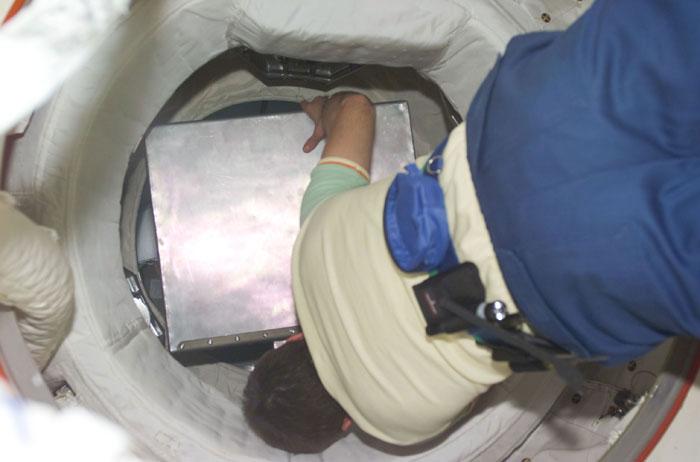
STS098-E-5241 (15 February 2001) --- An Expedition One crew member attempts to transfer the Vozdukh from the Space Shuttle Atlantis to the International Space Station (ISS). Vozdukh is the Russian system in the Zvezda Service Module, which removes carbon dioxide from the ISS atmosphere. The scene was recorded with a digital still camera by one of the STS-98 astronauts aboard the shuttle.
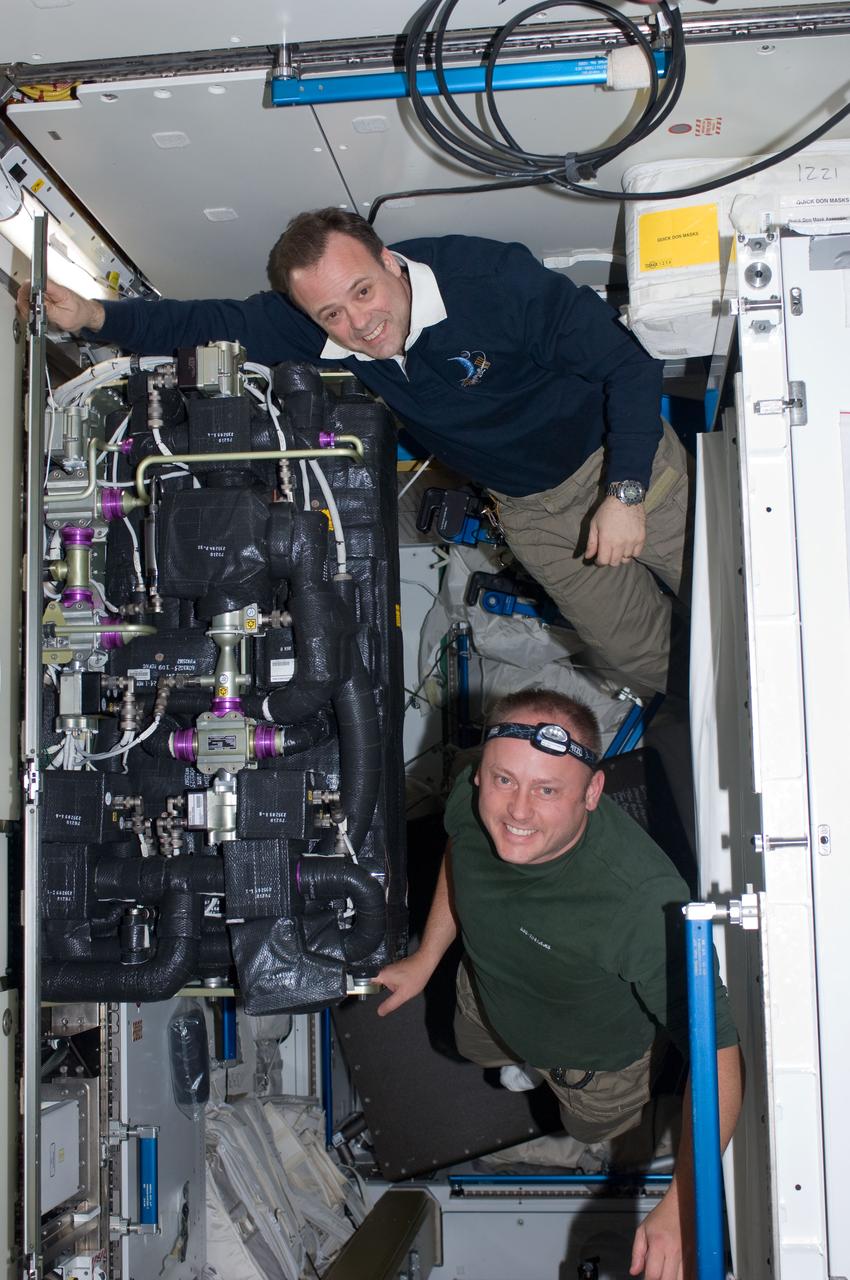
ISS028-E-005117 (24 May 2011) --- NASA astronauts Michael Fincke (bottom), STS-134 mission specialist; and Ron Garan, Expedition 28 flight engineer, perform maintenance on the Carbon Dioxide Removal Assembly (CDRA) in the Air Revitalization 2 (AR2) rack in the Tranquility node of the International Space Station while space shuttle Endeavour remains docked with the station.
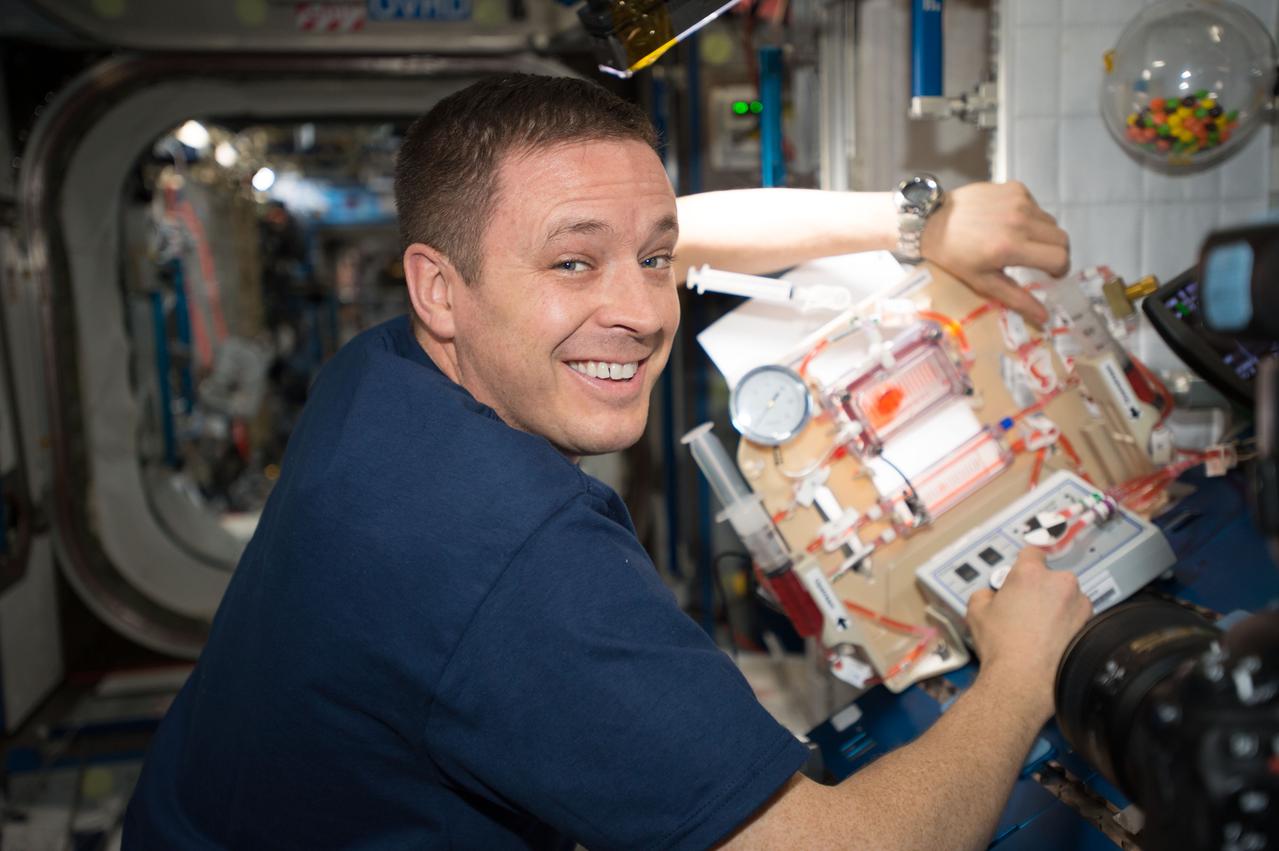
iss052e013146 (July 10, 2017) --- Astronaut Jack Fischer is photographed during setup of hardware for the Capillary Structures for Exploration Life Support (Capillary Structures) two sorbent demonstrations. The Capillary Structures for Exploration Life Support (Capillary Structures) investigation studies a new method using structures of specific shapes to manage fluid and gas mixtures. The investigation studies water recycling and carbon dioxide removal, benefiting future efforts to design lightweight, more reliable life support systems for future space missions.

iss059e091418 (6/4/2019) --- View taken of the hardware for the Capillary Structures investigation in the Japanese Experiment Module (JEM) onboard the International Space Station (ISS). This investigation studies a new method using structures of specific shapes to manage fluid and gas mixtures. It also studies water recycling and carbon dioxide removal, benefitting future efforts to design lightweight, more reliable life support systems for future space missions.
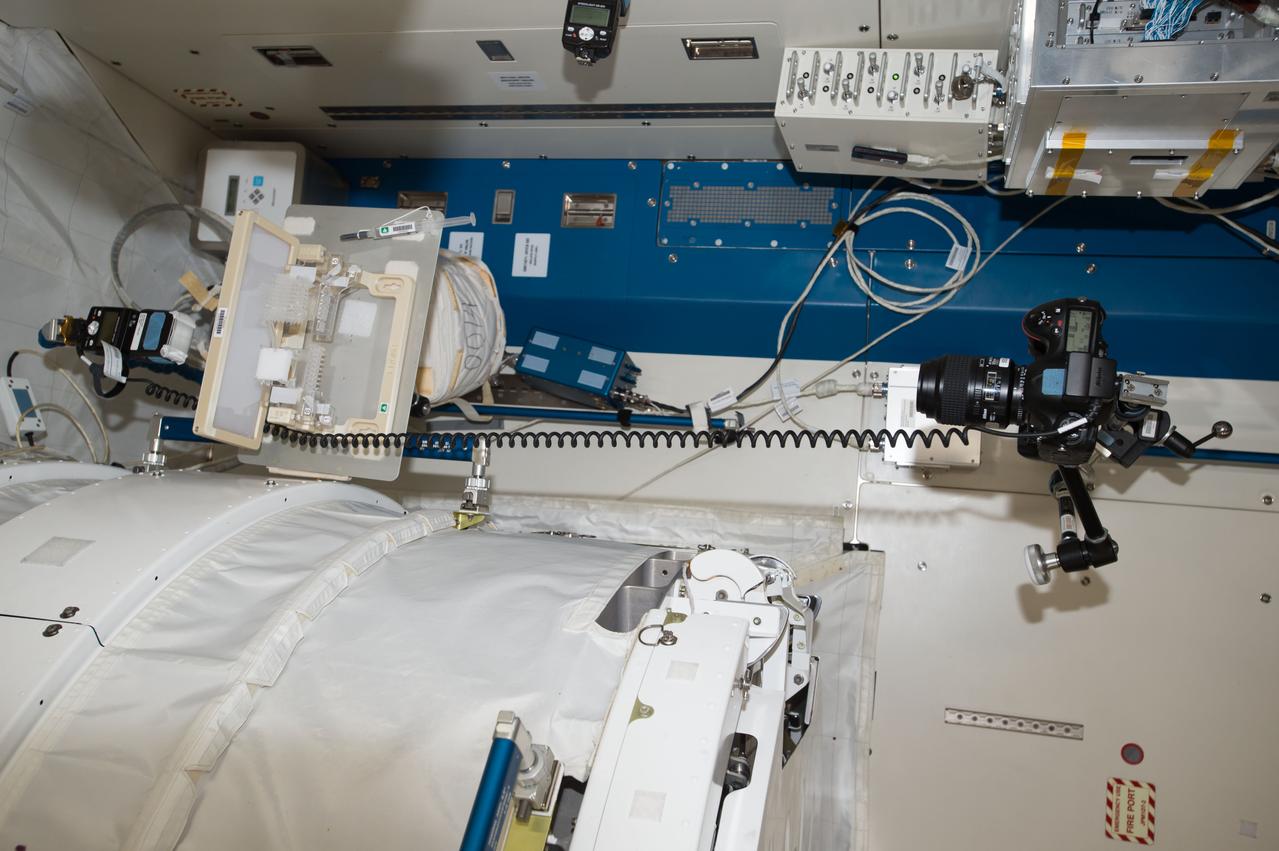
iss052e016460 (7/19/2017) --- A view taken of Capillary Structures setup in the Japanese Experiment Module (JEM) beside the internal airlock. This investigation studies a new method using structures of specific shapes to manage fluid and gas mixtures. It also studies water recycling and carbon dioxide removal, benefiting future efforts to design lightweight, more reliable life support systems for future space missions.
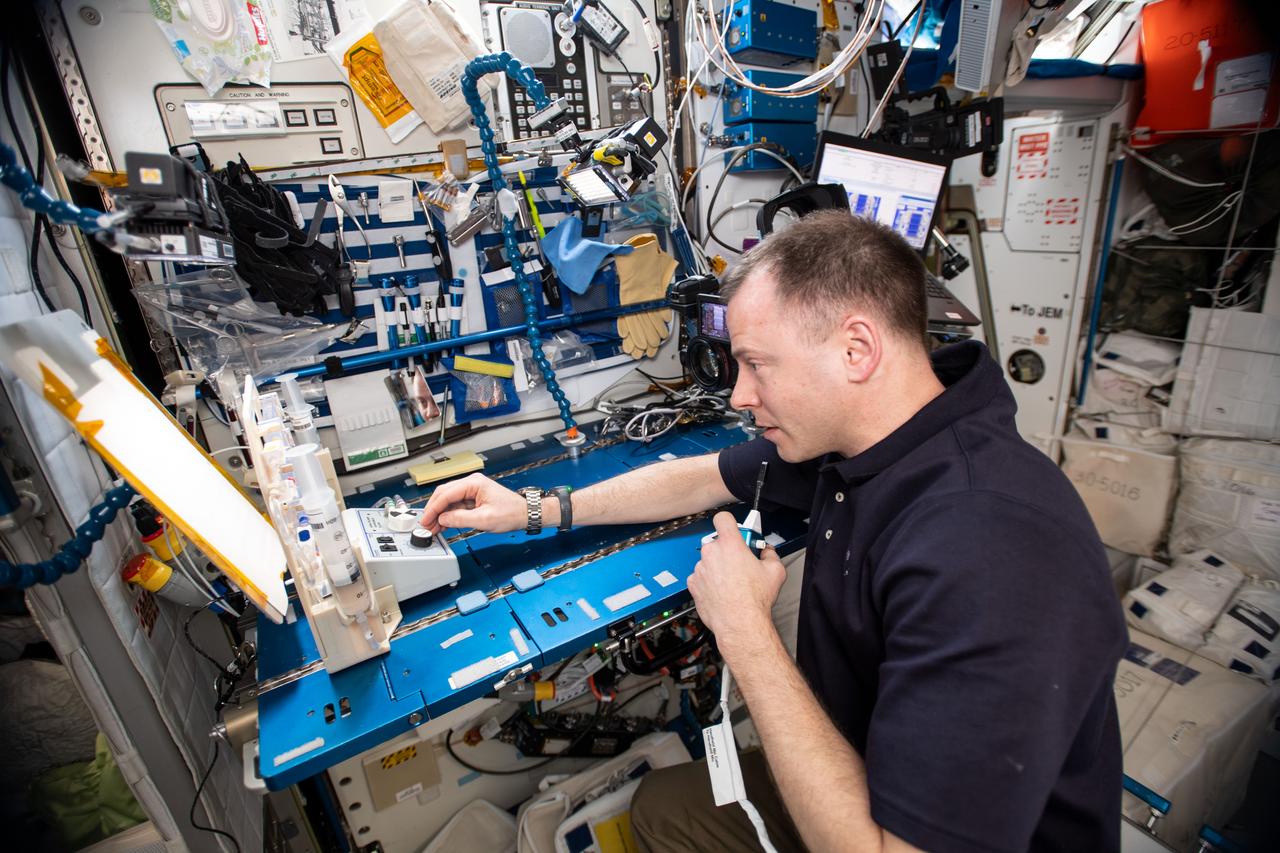
iss059e112425 (June 18, 2019) --- Flight Engineer Nick Hague is supporting research for the Capillary Structures experiment that uses specialized hardware to demonstrate the flow of fluid and gas mixtures using surface tension and fluid dynamics. The fluid physics study is helping NASA evaluate technologies for a lightweight, advanced life support system that can recover water and remove carbon dioxide in space.
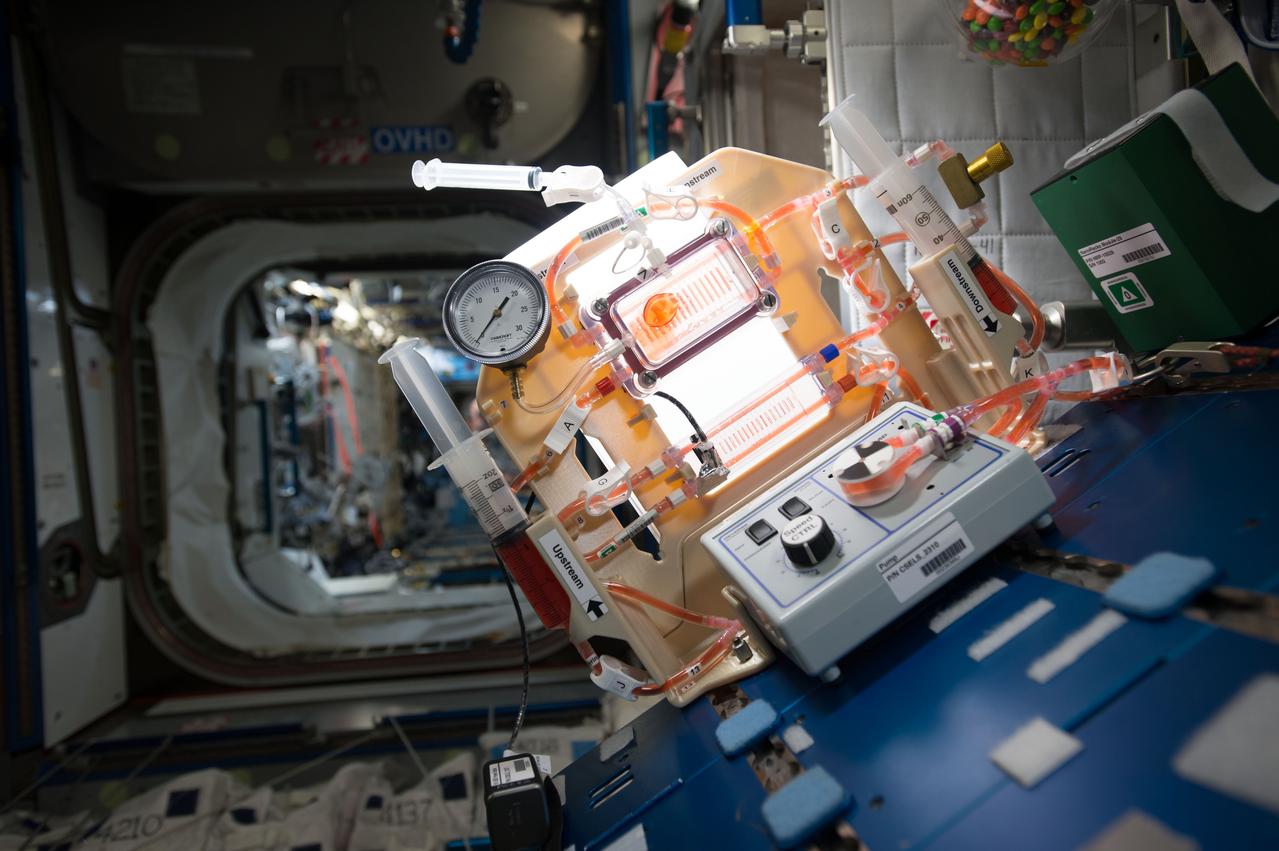
iss052e013081 (7/10/2017) --- The Capillary Structures for Exploration Life Support (Capillary Structures) investigation studies a new method using structures of specific shapes to manage fluid and gas mixtures. The investigation studies water recycling and carbon dioxide removal, benefiting future efforts to design lightweight, more reliable life support systems for future space missions.
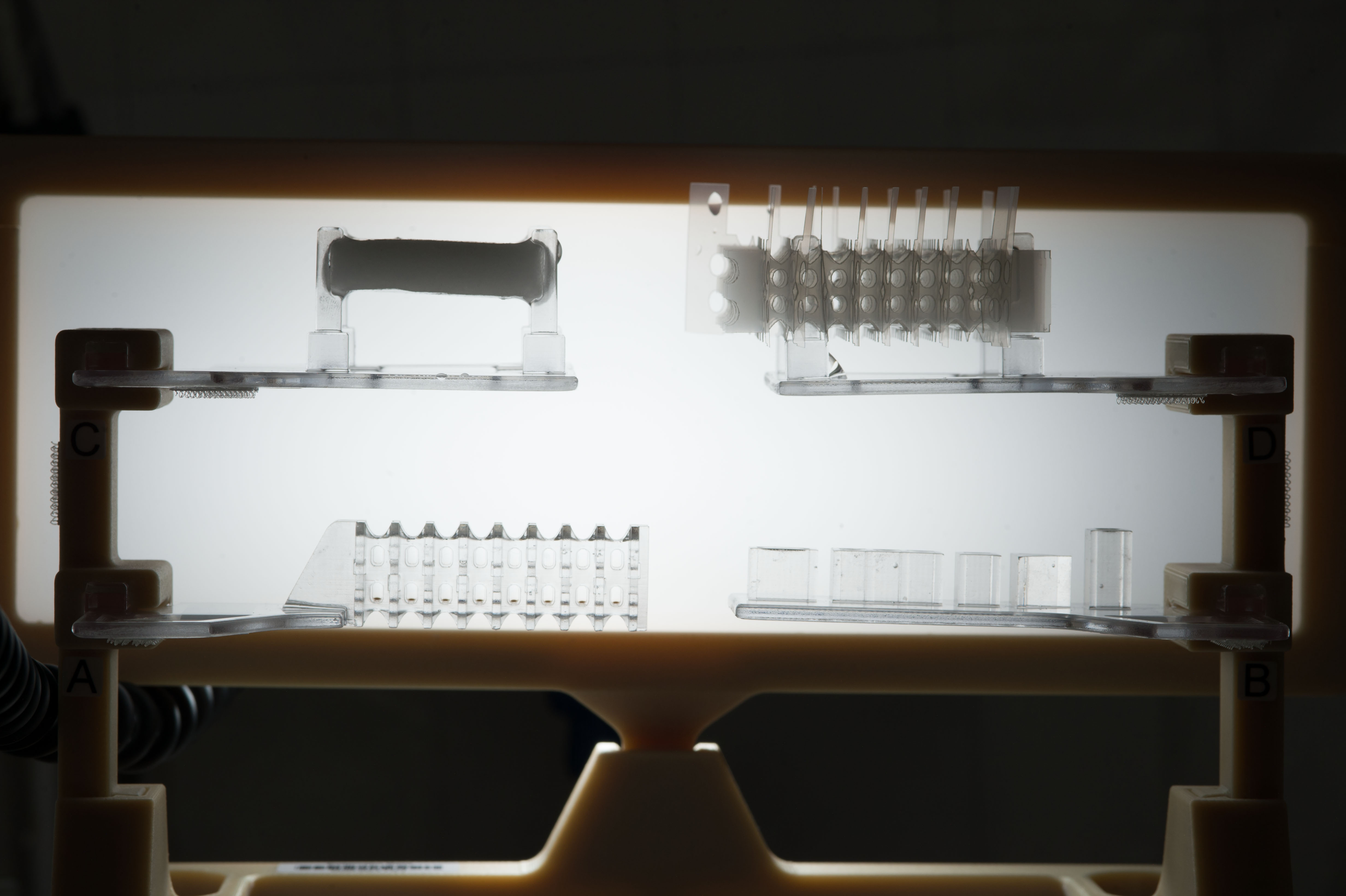
iss052e017187 (7/22/2017) --- A view taken of hardware for the Capillary Structures investigation in the Japanese Experiment Module (JEM). This investigation studies a new method using structures of specific shapes to manage fluid and gas mixtures. It also studies water recycling and carbon dioxide removal, benefiting future efforts to design lightweight, more reliable life support systems for future space missions.
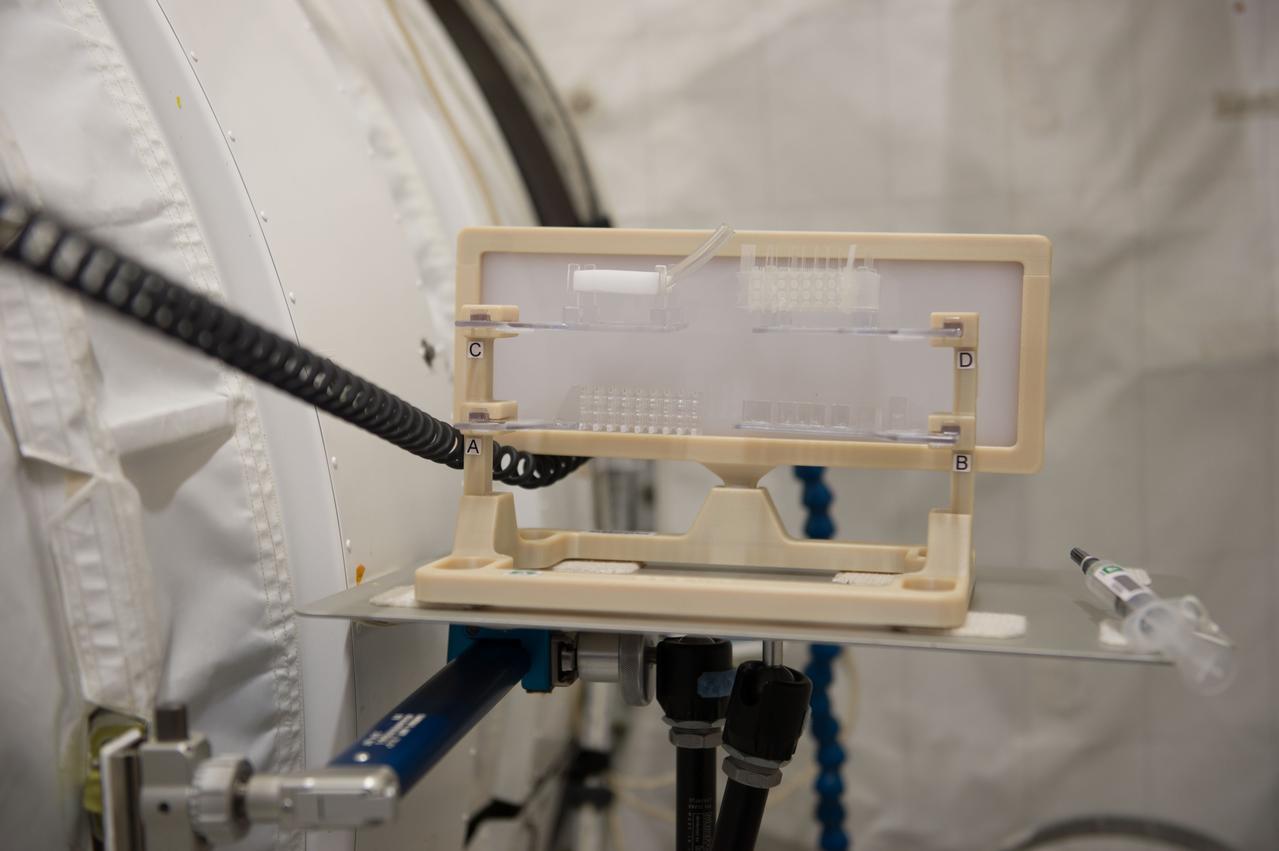
iss052e016481 (7/19/2017) --- A view taken of hardware for the Capillary Structures investigation in the Japanese Experiment Module (JEM). This investigation studies a new method using structures of specific shapes to manage fluid and gas mixtures. It also studies water recycling and carbon dioxide removal, benefiting future efforts to design lightweight, more reliable life support systems for future space missions.
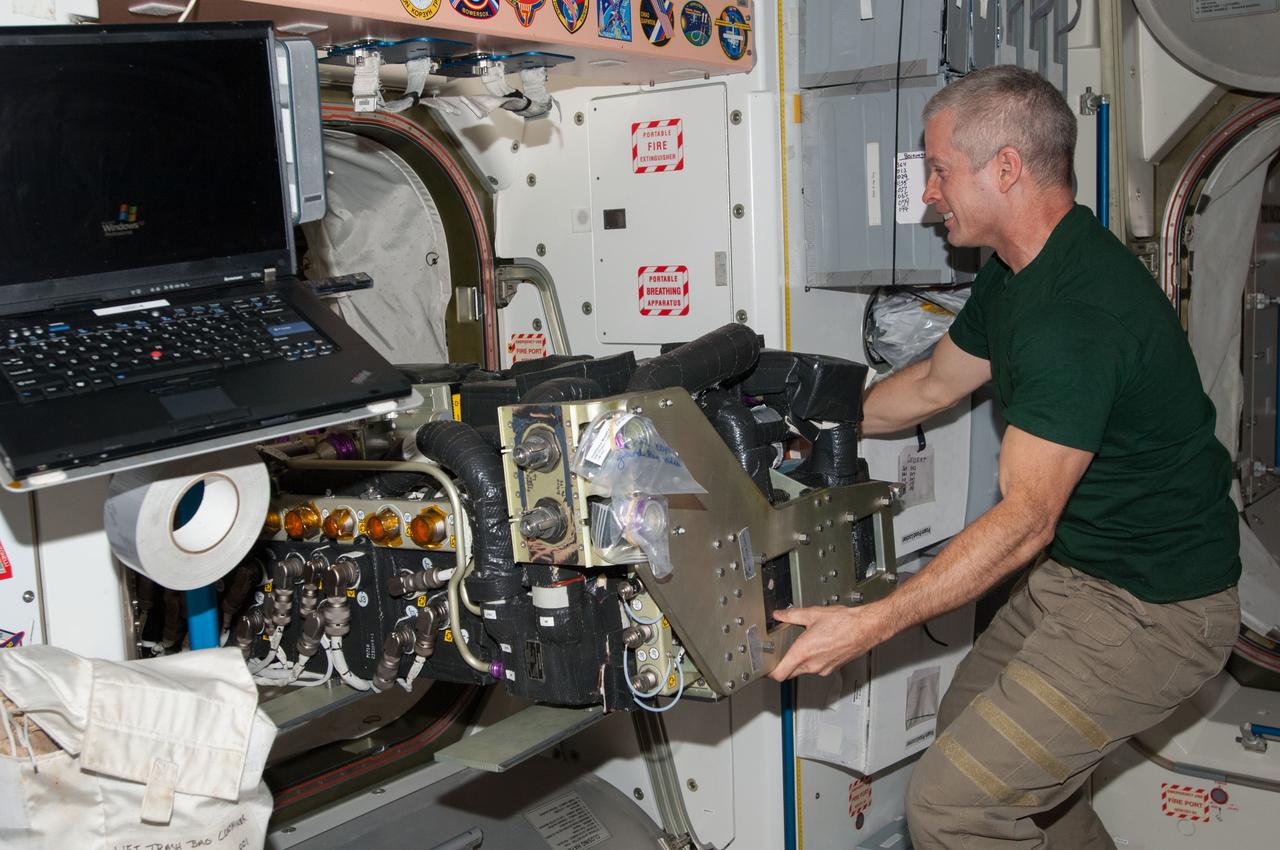
ISS039-E-011054 (10 April 2014) --- NASA astronaut Steve Swanson, Expedition 39 flight engineer, may be smiling because he has the assistance of zero gravity to lift such a large apparatus on the International Space Station. For several days, the Expedition 39 crew members have been working on a Carbon Dioxide Removal Assembly (CDRA) Desiccant/Adsorbent Bed.
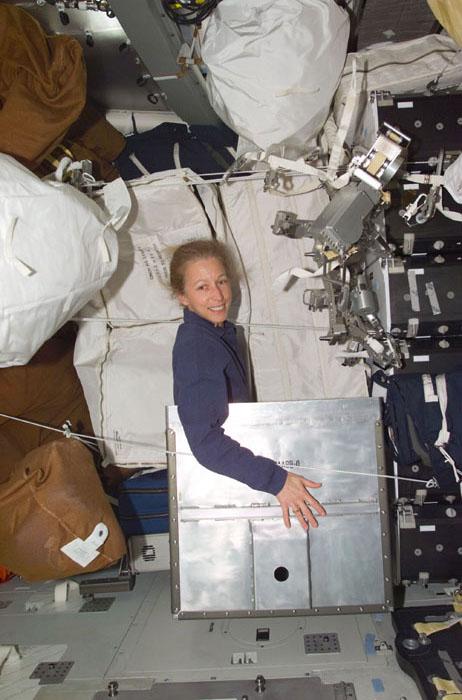
STS098-E-5272 (15 February 2001) --- Astronaut Marsha S. Ivins, STS-98 mission specialist, is photographed with the casing of the Vozdukh as it is strapped in storage position on the mid deck of the Space Shuttle Atlantis. Vozdukh is the Russian system in the Zvezda Service Module, which removes carbon dioxide from the ISS atmosphere. The scene was recorded with a digital still camera by one of the STS-98 astronauts aboard the shuttle.
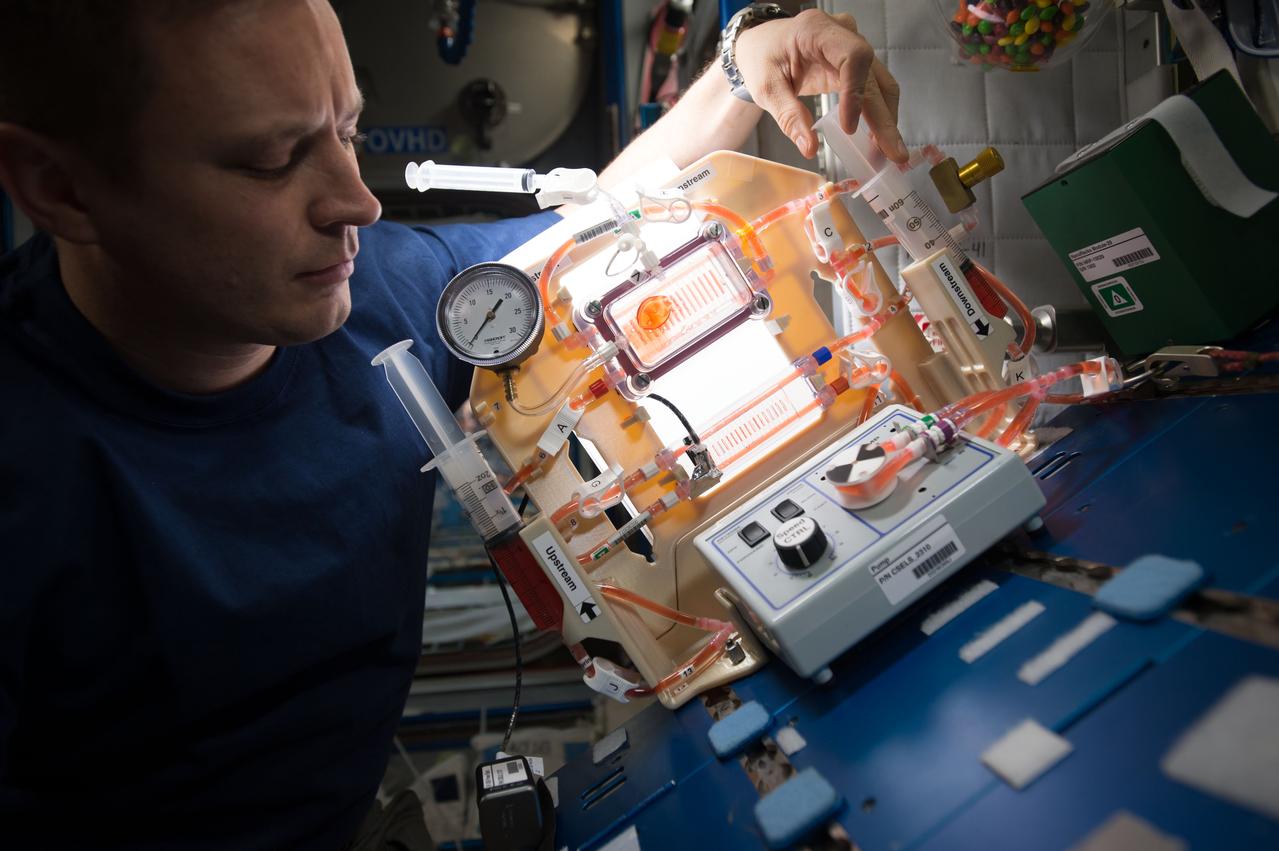
iss052e013087 (7/10/2017) NASA astronaut Jack Fischer is photographed during setup of hardware for the Capillary Structures for Exploration Life Support (Capillary Structures) two sorbent demonstrations. The Capillary Structures for Exploration Life Support (Capillary Structures) investigation studies a new method using structures of specific shapes to manage fluid and gas mixtures. The investigation studies water recycling and carbon dioxide removal, benefiting future efforts to design lightweight, more reliable life support systems for future space missions.
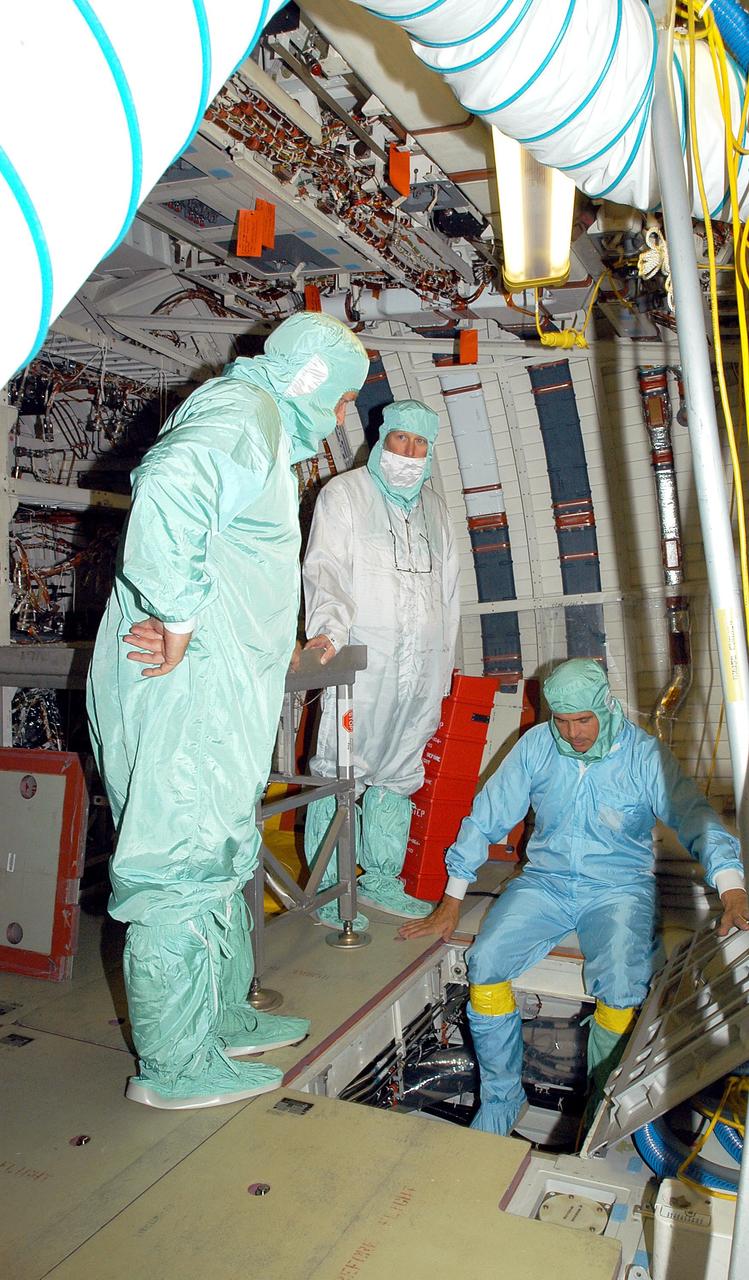
KENNEDY SPACE CENTER, FLA. - In the middeck of Endeavour, in the Orbiter Processing Facility, Center Director Jim Kennedy (far left) watches as a technician gets ready to lower himself through the LiOH door into the Environmental Control and Life Support System (ECLSS) bay. LiOH refers to lithium hydroxide, canisters of which are stored in the ECLSS bay under the middeck floor. During flight, cabin air from the cabin fan is ducted to two LiOH canisters, where carbon dioxide is removed and activated charcoal removes odors and trace contaminants. Kennedy is taking an opportunity to learn first-hand what workers are doing to enable Return to Flight. Endeavour is in an Orbiter Major Modification period.
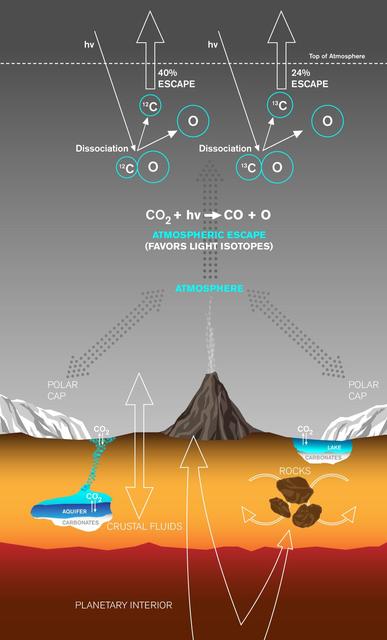
This graphic depicts paths by which carbon has been exchanged between Martian interior, surface rocks, polar caps, waters and atmosphere, and also depicts a mechanism by which carbon is lost from the atmosphere with a strong effect on isotope ratio. Carbon dioxide (CO2) to generate the Martian atmosphere originated in the planet's mantle and has been released directly through volcanoes or trapped in rocks crystallized from magmas and released later. Once in the atmosphere, the CO2 can exchange with the polar caps, passing from gas to ice and back to gas again. The CO2 can also dissolve into waters, which can then precipitate out solid carbonates, either in lakes at the surface or in shallow aquifers. Carbon dioxide gas in the atmosphere is continually lost to space at a rate controlled in part by the sun's activity. One loss mechanism is called ultraviolet photodissociation. It occurs when ultraviolet radiation (indicated on the graphic as "hv") encounters a CO2 molecule, breaking the bonds to first form carbon monoxide (CO) molecules and then carbon (C) atoms. The ratio of carbon isotopes remaining in the atmosphere is affected as these carbon atoms are lost to space, because the lighter carbon-12 (12C) isotope is more easily removed than the heavier carbon-13 (13C) isotope. This fractionation, the preferential loss of carbon-12 to space, leaves a fingerprint: enrichment of the heavy carbon-13 isotope, measured in the atmosphere of Mars today. http://photojournal.jpl.nasa.gov/catalog/PIA20163
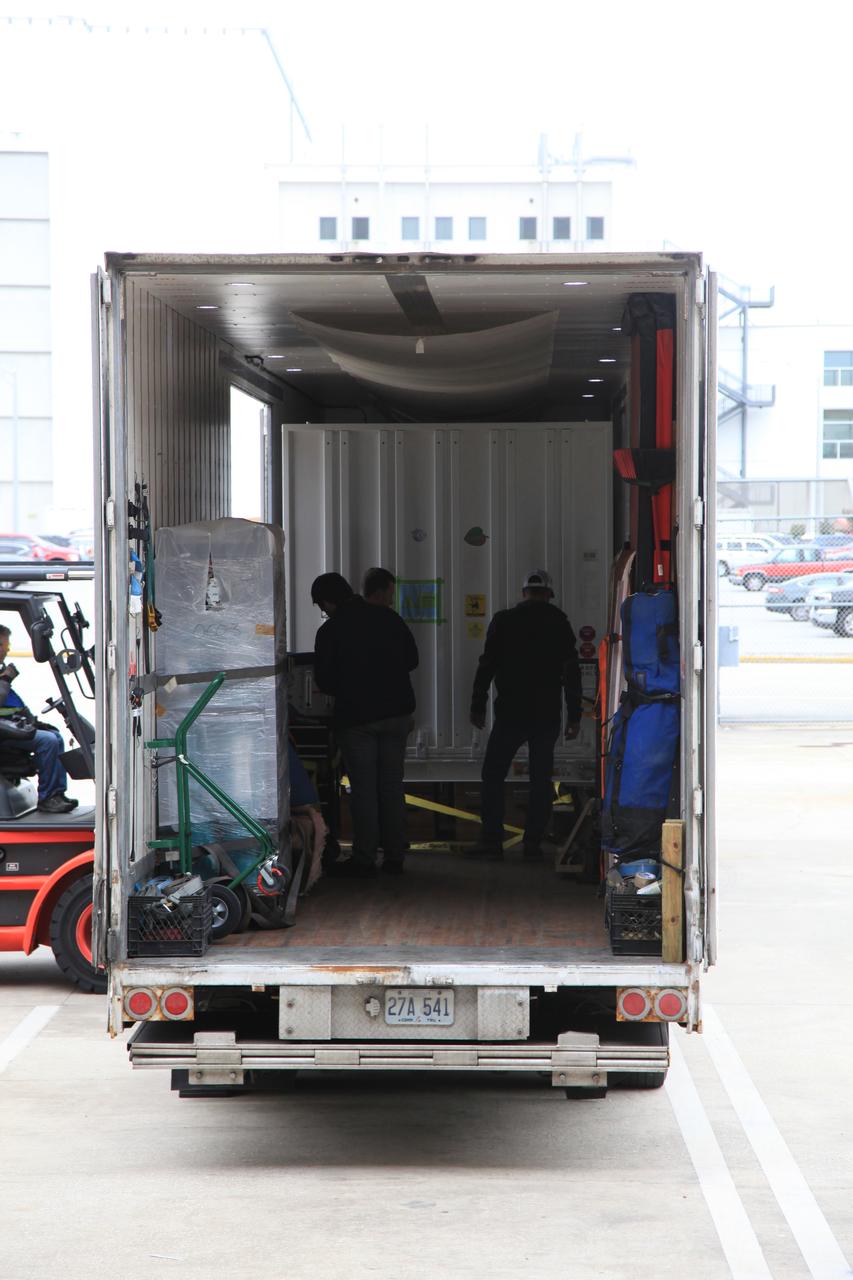
NASA’s Orbiting Carbon Observatory 3, or OCO-3, payload container is moved from the Space Station Processing Facility high bay at the agency’s Kennedy Space Center in Florida to a truck that will transport it to the SpaceX facility on March 18, 2019. The OCO-3 payload will be stowed in the trunk of SpaceX’s Dragon spacecraft, where it will launch aboard a Falcon 9 rocket on the company’s 17th Commercial Resupply Services mission to the International Space Station. Launch is scheduled for April 25, 2019, from Launch Complex 40 at Cape Canaveral Air Force Station. Once the payload reaches the station, it will be removed from Dragon and robotically installed on the exterior of the orbiting laboratory’s Japanese Experiment Module Exposed Facility Unit, where it will measure and map carbon dioxide from space to provide further understanding of the relationship between carbon and climate.
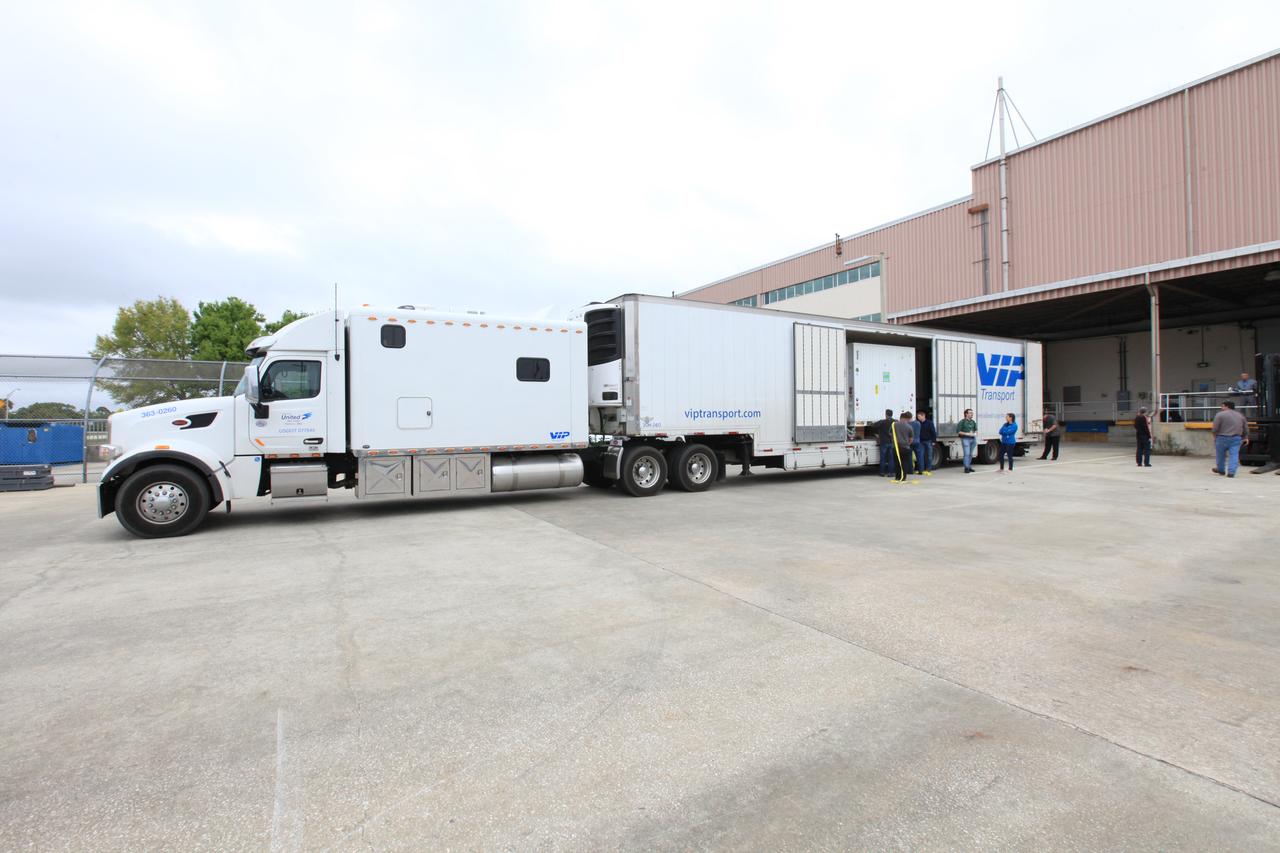
A transportation container carrying NASA’s Orbiting Carbon Observatory 3, or OCO-3, payload is moved to a truck for its transport from the Space Station Processing Facility high bay at the agency’s Kennedy Space Center in Florida to the SpaceX facility on March 18, 2019. The OCO-3 payload will be stowed in the trunk of SpaceX’s Dragon spacecraft, where it will launch aboard a Falcon 9 rocket on the company’s 17th Commercial Resupply Services mission to the International Space Station. Launch is scheduled for April 25, 2019, from Launch Complex 40 at Cape Canaveral Air Force Station. Once the payload reaches the station, it will be removed from Dragon and robotically installed on the exterior of the orbiting laboratory’s Japanese Experiment Module Exposed Facility Unit, where it will measure and map carbon dioxide from space to provide further understanding of the relationship between carbon and climate.
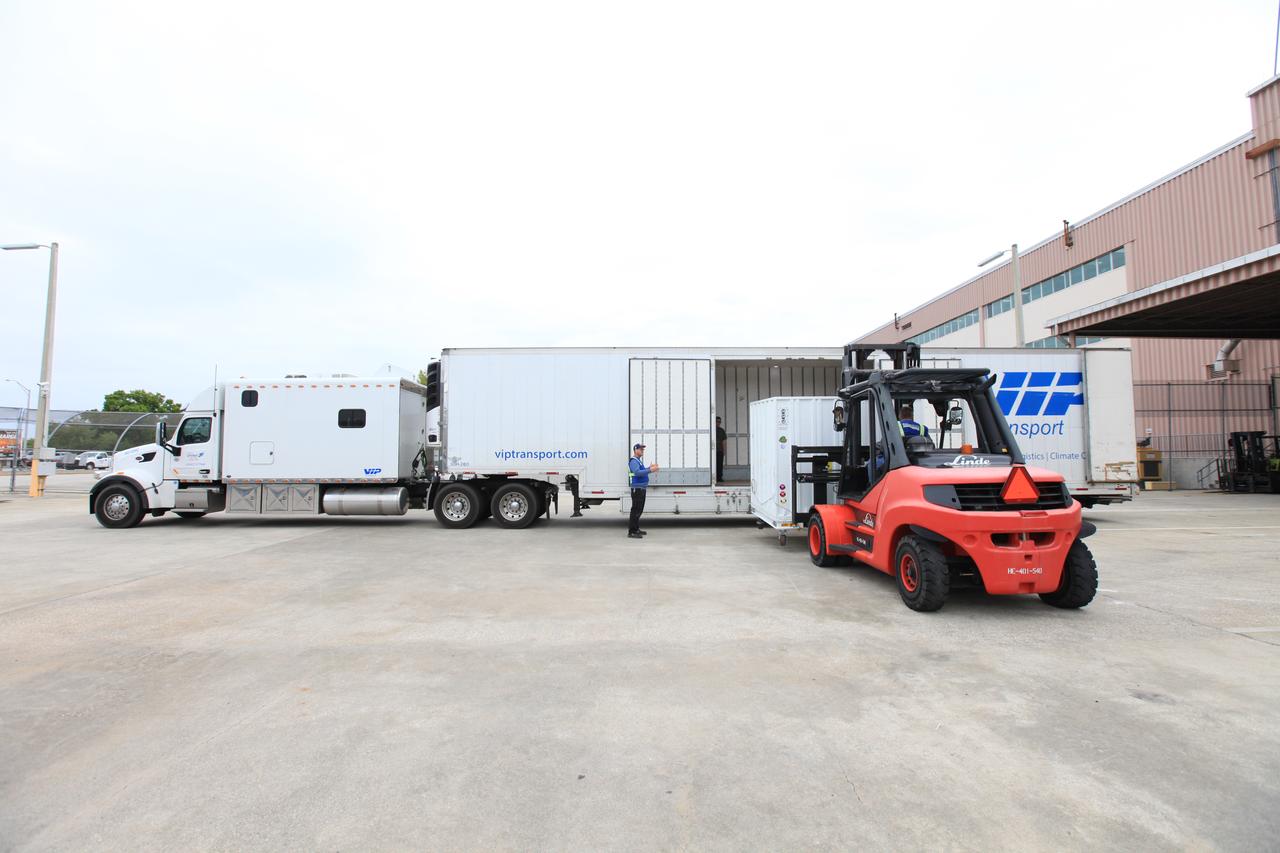
A forklift moves the transportation container carrying NASA’s Orbiting Carbon Observatory 3, or OCO-3, payload to a truck for its move from the Space Station Processing Facility high bay at the agency’s Kennedy Space Center in Florida to the SpaceX facility on March 18, 2019. The OCO-3 payload will be stowed in the trunk of SpaceX’s Dragon spacecraft, where it will launch aboard a Falcon 9 rocket on the company’s 17th Commercial Resupply Services mission to the International Space Station. Launch is scheduled for April 25, 2019, from Launch Complex 40 at Cape Canaveral Air Force Station. Once the payload reaches the station, it will be removed from Dragon and robotically installed on the exterior of the orbiting laboratory’s Japanese Experiment Module Exposed Facility Unit, where it will measure and map carbon dioxide from space to provide further understanding of the relationship between carbon and climate.
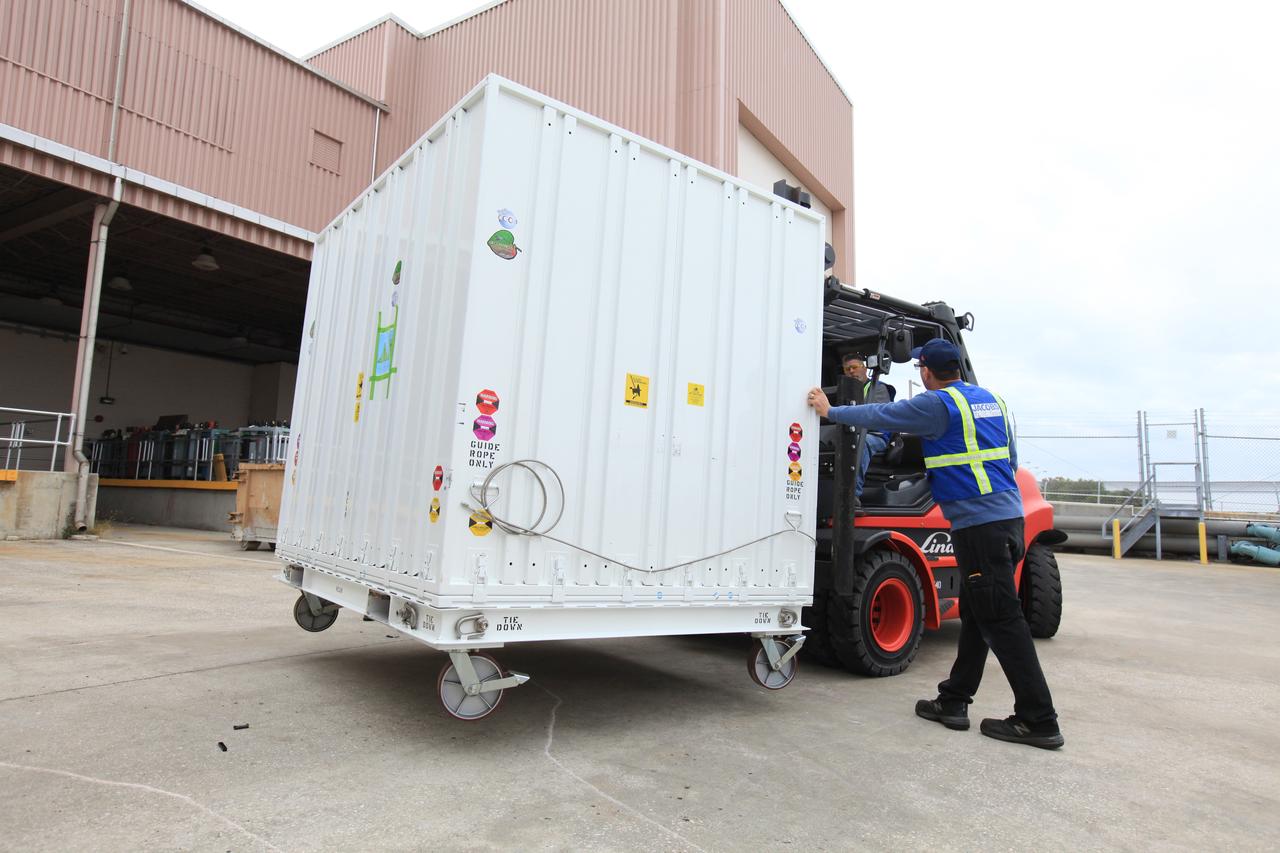
A forklift moves the transportation container carrying NASA’s Orbiting Carbon Observatory 3, or OCO-3, payload to a truck for its move from the Space Station Processing Facility high bay at the agency’s Kennedy Space Center in Florida to the SpaceX facility on March 18, 2019. The OCO-3 payload will be stowed in the trunk of SpaceX’s Dragon spacecraft, where it will launch aboard a Falcon 9 rocket on the company’s 17th Commercial Resupply Services mission to the International Space Station. Launch is scheduled for April 25, 2019, from Launch Complex 40 at Cape Canaveral Air Force Station. Once the payload reaches the station, it will be removed from Dragon and robotically installed on the exterior of the orbiting laboratory’s Japanese Experiment Module Exposed Facility Unit, where it will measure and map carbon dioxide from space to provide further understanding of the relationship between carbon and climate.
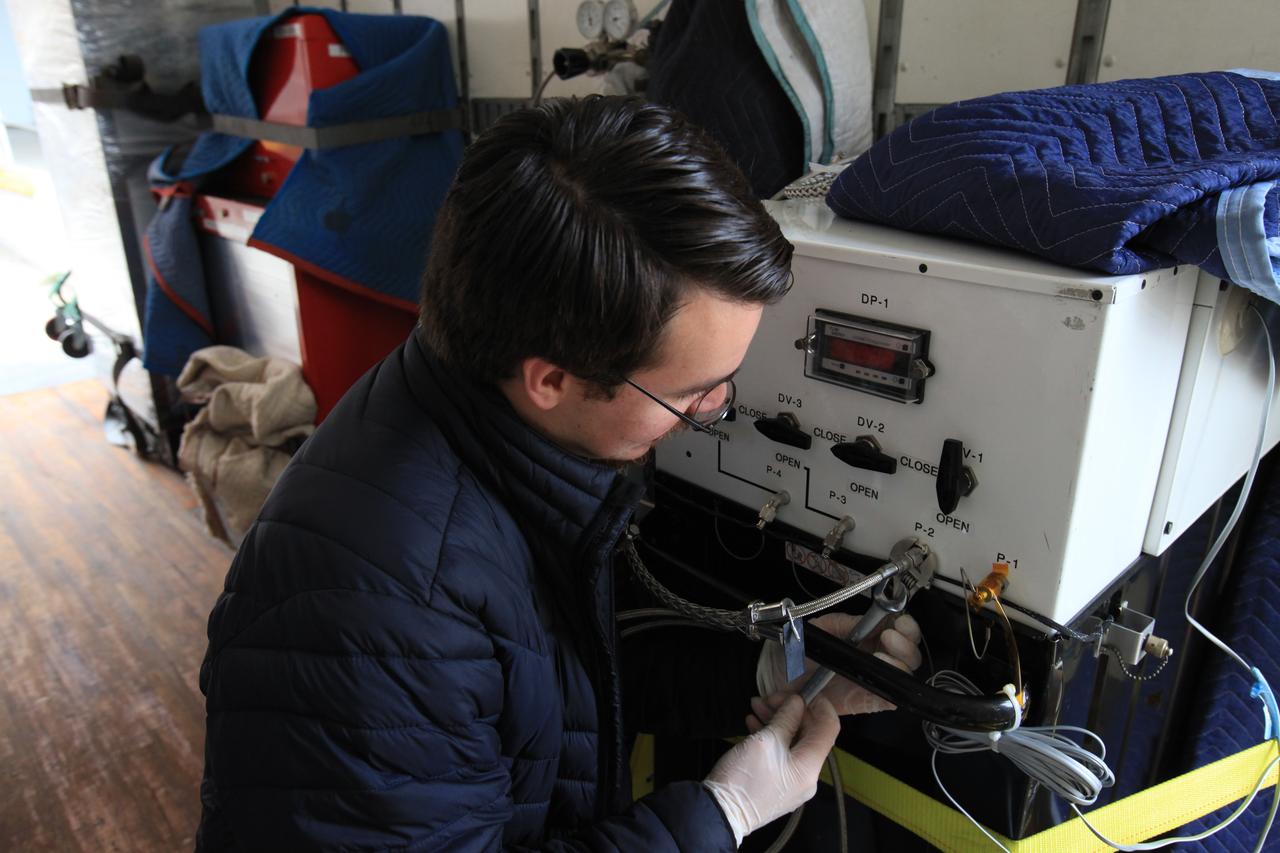
Kevin Mark, Orbiting Carbon Observatory 3 (OCO-3) purge engineer with NASA’s Jet Propulsion Laboratory, secures a separate fixture of OCO-3, stored apart from its payload container, on the truck transporting it from the Space Station Processing Facility high bay at the agency’s Kennedy Space Center in Florida to the SpaceX facility on March 18, 2019. The OCO-3 payload will be stowed in the trunk of SpaceX’s Dragon spacecraft, where it will launch aboard a Falcon 9 rocket on the company’s 17th Commercial Resupply Services mission to the International Space Station. Launch is scheduled for April 25, 2019, from Launch Complex 40 at Cape Canaveral Air Force Station. Once the payload reaches the station, it will be removed from Dragon and robotically installed on the exterior of the orbiting laboratory’s Japanese Experiment Module Exposed Facility Unit, where it will measure and map carbon dioxide from space to provide further understanding of the relationship between carbon and climate.
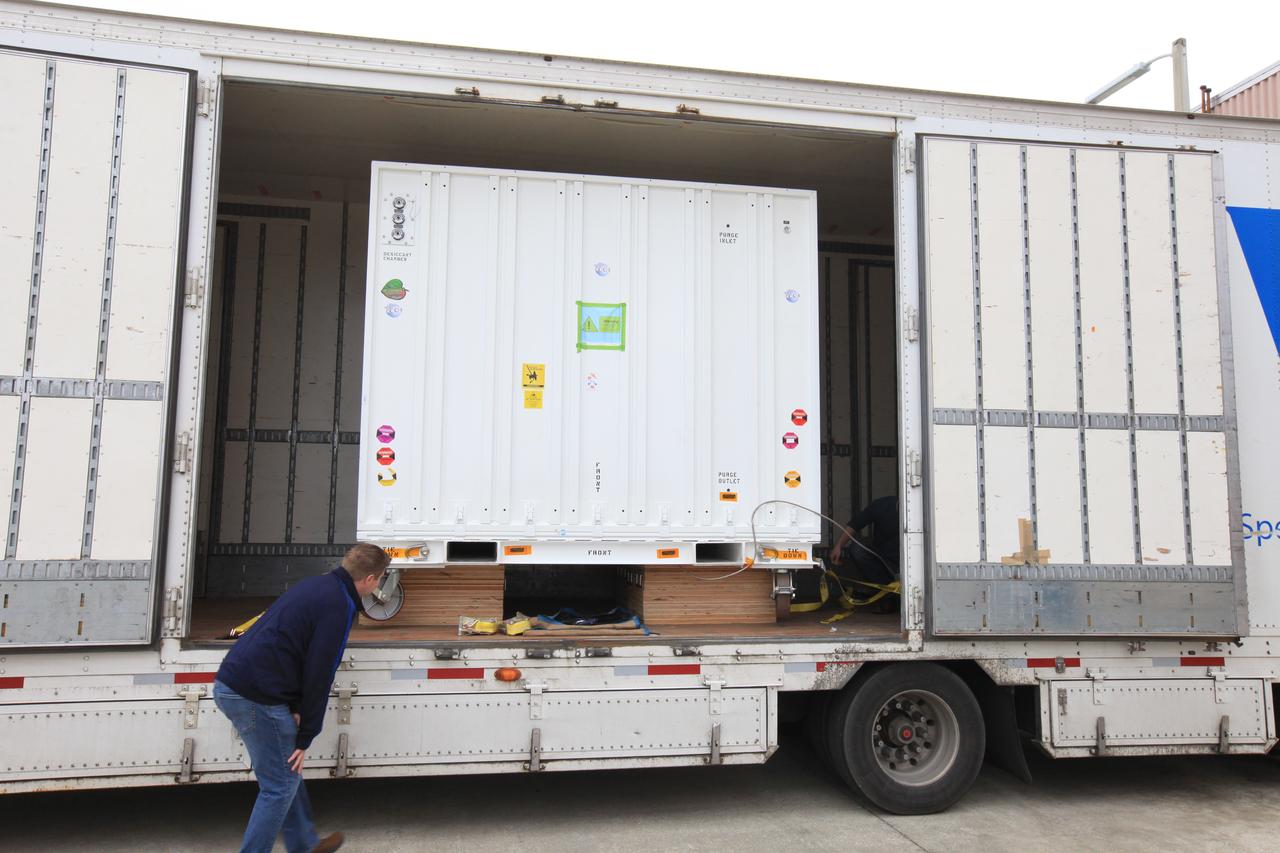
A transportation container carrying NASA’s Orbiting Carbon Observatory 3, or OCO-3, payload is moved to a truck for transport from the Space Station Processing Facility high bay at the agency’s Kennedy Space Center in Florida to the SpaceX facility on March 18, 2019. The OCO-3 payload will be stowed in the trunk of SpaceX’s Dragon spacecraft, where it will launch aboard a Falcon 9 rocket on the company’s 17th Commercial Resupply Services mission to the International Space Station. Launch is scheduled for April 25, 2019, from Launch Complex 40 at Cape Canaveral Air Force Station. Once the payload reaches the station, it will be removed from Dragon and robotically installed on the exterior of the orbiting laboratory’s Japanese Experiment Module Exposed Facility Unit, where it will measure and map carbon dioxide from space to provide further understanding of the relationship between carbon and climate.

Workers move NASA’s Orbiting Carbon Observatory 3, or OCO-3, payload container out of the Space Station Processing Facility high bay at the agency’s Kennedy Space Center in Florida to board a truck that will transport it to the SpaceX facility on March 18, 2019. The OCO-3 payload will be stowed in the trunk of SpaceX’s Dragon spacecraft, where it will launch aboard a Falcon 9 rocket on the company’s 17th Commercial Resupply Services mission the International Space Station. Launch is scheduled for April 25, 2019, from Launch Complex 40 at Cape Canaveral Air Force Station. Once the payload reaches the station, it will be removed from Dragon and robotically installed on the exterior of the orbiting laboratory’s Japanese Experiment Module Exposed Facility Unit, where it will measure and map carbon dioxide from space to provide further understanding of the relationship between carbon and climate.
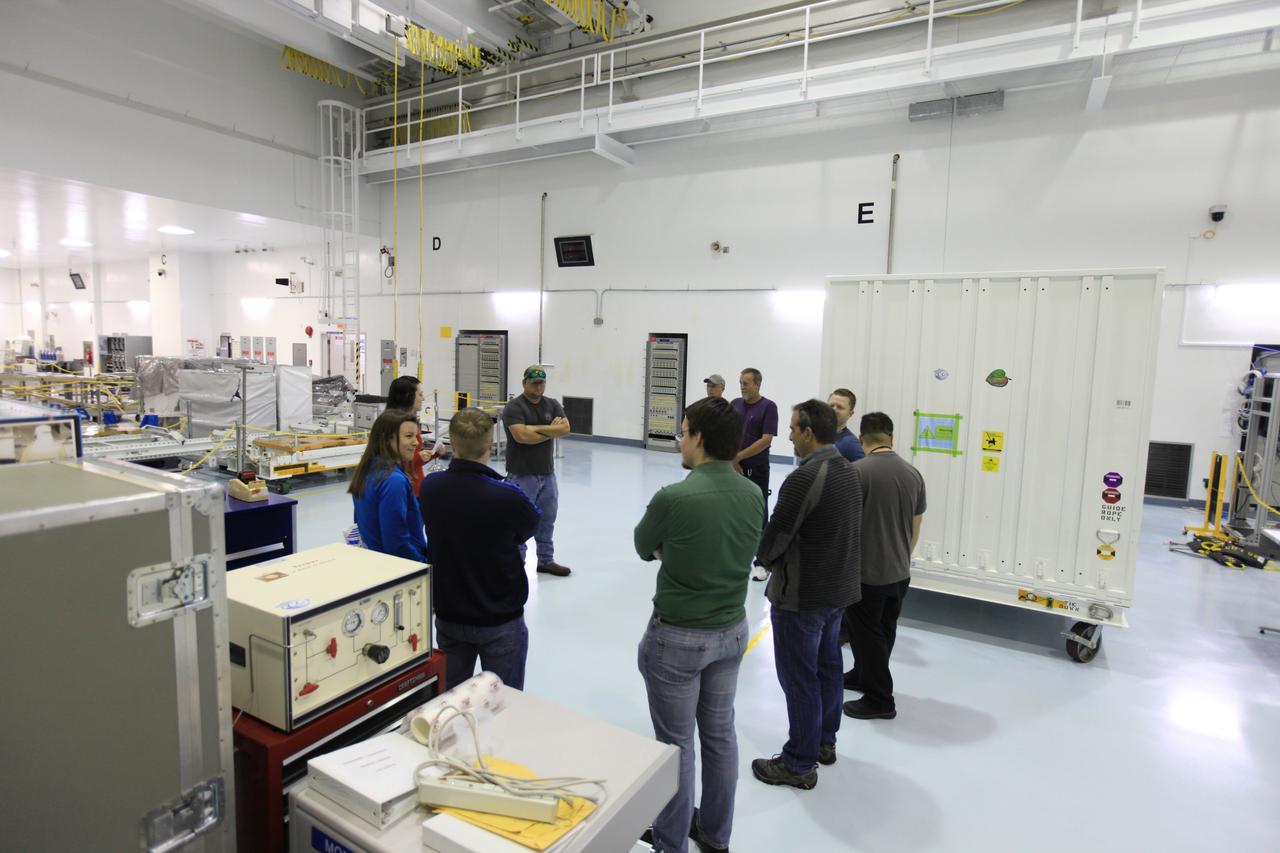
Workers prepare to move NASA’s Orbiting Carbon Observatory 3, or OCO-3, payload container out of the Space Station Processing Facility high bay at the agency’s Kennedy Space Center in Florida onto a truck that will transport it to the SpaceX facility on March 18, 2019. The OCO-3 payload will be stowed in the trunk of SpaceX’s Dragon spacecraft, which will launch aboard a Falcon 9 rocket on the company’s 17th Commercial Resupply Services mission to the International Space Station. Launch is scheduled for April 25, 2019, from Launch Complex 40 at Cape Canaveral Air Force Station. Once the payload reaches the station, it will be removed from Dragon and robotically installed on the exterior of the orbiting laboratory’s Japanese Experiment Module Exposed Facility Unit, where it will measure and map carbon dioxide from space to provide further understanding of the relationship between carbon and climate.
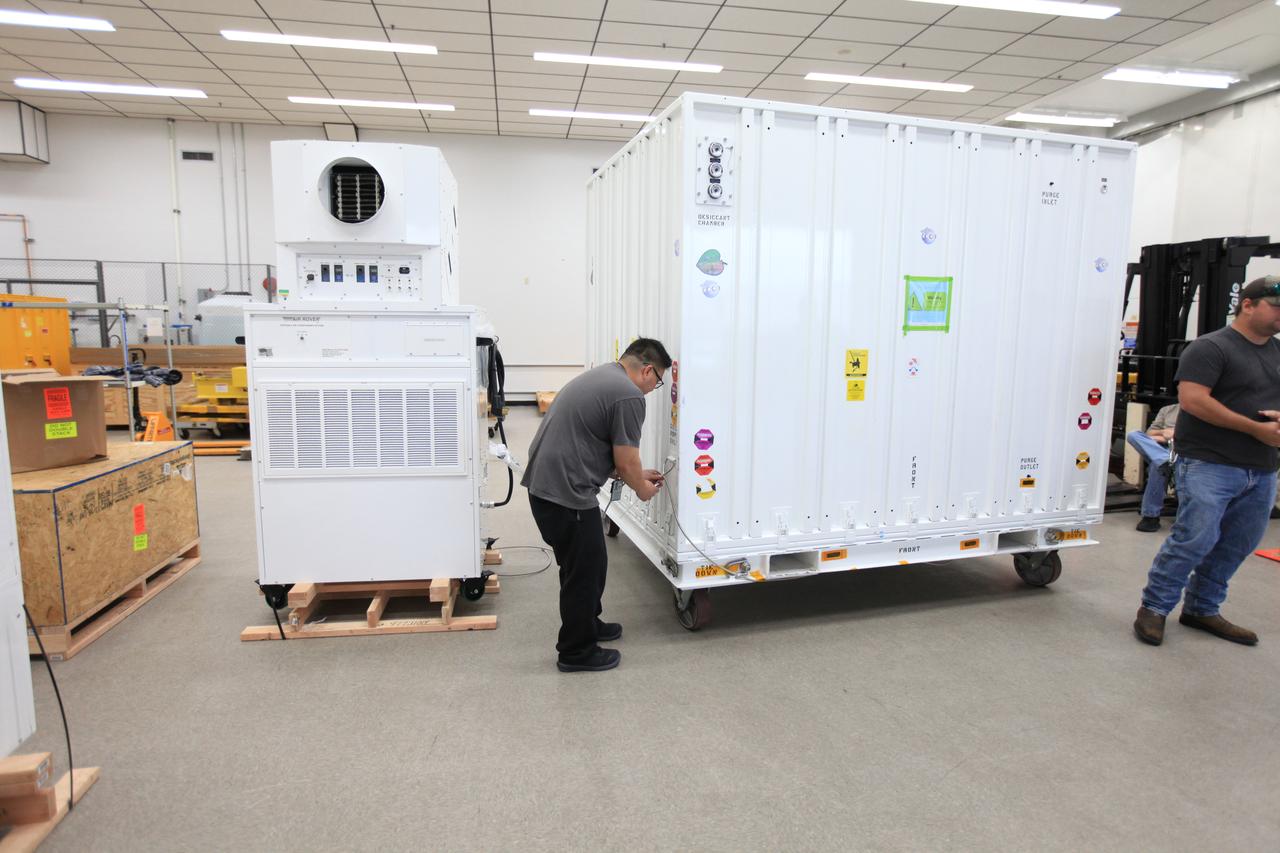
Workers prepare to move NASA’s Orbiting Carbon Observatory 3, or OCO-3, payload container out of the Space Station Processing Facility high bay at the agency’s Kennedy Space Center in Florida onto a truck that will transport it to the SpaceX facility on March 18, 2019. The OCO-3 payload will be stowed in the trunk of SpaceX’s Dragon spacecraft, where it will launch aboard a Falcon 9 rocket on the company’s 17th Commercial Resupply Services mission to the International Space Station. Launch is scheduled for April 25, 2019, from Launch Complex 40 at Cape Canaveral Air Force Station. Once the payload reaches the station, it will be removed from Dragon and robotically installed on the exterior of the orbiting laboratory’s Japanese Experiment Module Exposed Facility Unit, where it will measure and map carbon dioxide from space to provide further understanding of the relationship between carbon and climate.
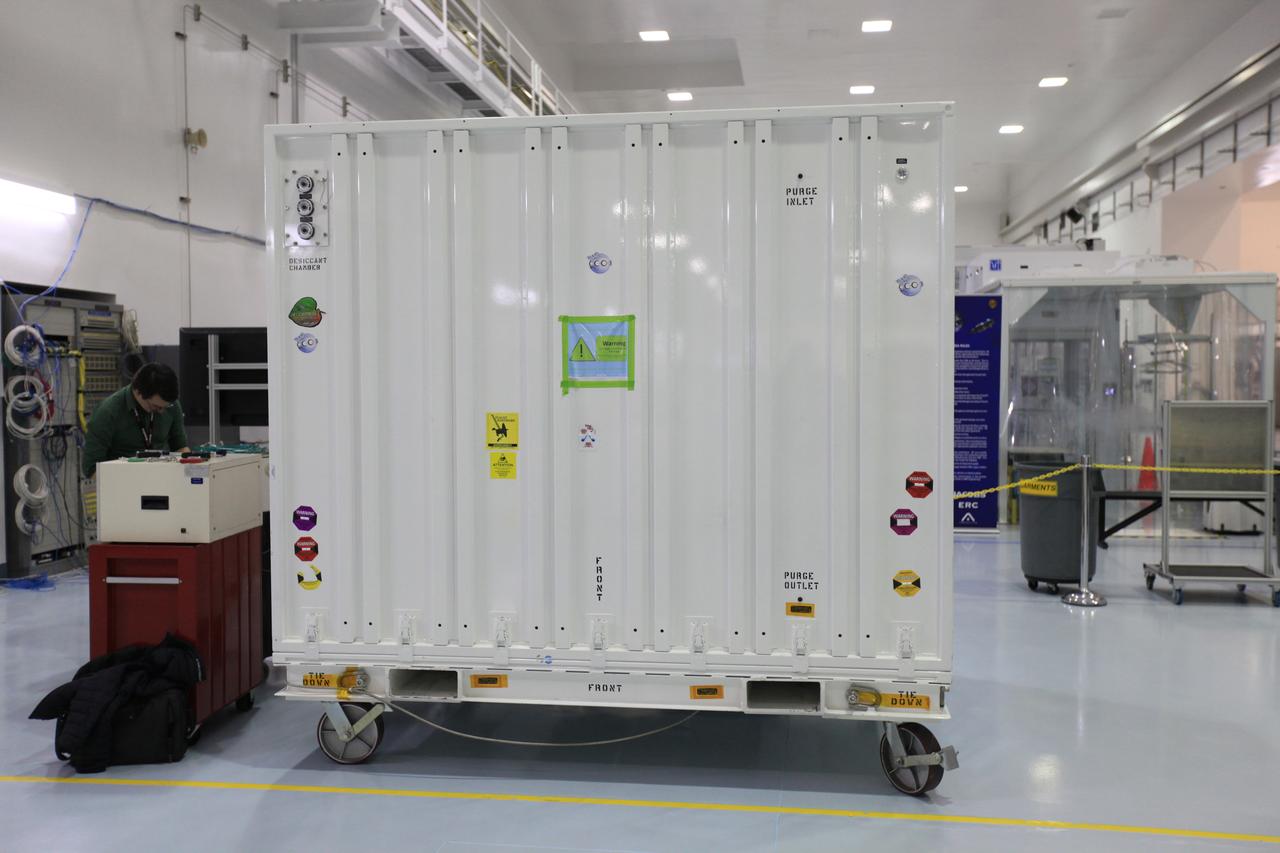
NASA’s Orbiting Carbon Observatory 3, or OCO-3, sits in a transportation container at the Space Station Processing Facility high bay at the agency’s Kennedy Space Center in Florida prior to its move to the SpaceX facility on March 18, 2019. The OCO-3 payload will be stowed in the trunk of SpaceX’s Dragon spacecraft, which will launch aboard a Falcon 9 rocket on the company’s 17th Commercial Resupply Services mission to the International Space Station. Launch is scheduled for April 25, 2019, from Launch Complex 40 at Cape Canaveral Air Force Station. Once the payload reaches the station, it will be removed from Dragon and robotically installed on the exterior of the orbiting laboratory’s Japanese Experiment Module Exposed Facility Unit, where it will measure and map carbon dioxide from space to provide further understanding of the relationship between carbon and climate.

NASA’s Orbiting Carbon Observatory 3, or OCO-3, payload sits in a transportation container at the Space Station Processing Facility high bay at the agency’s Kennedy Space Center in Florida in preparation for its move to the SpaceX facility on March 18, 2019. The OCO-3 payload will be stowed in the trunk of SpaceX’s Dragon spacecraft, where it will launch aboard a Falcon 9 rocket on the company’s 17th Commercial Resupply Services mission to the International Space Station. Launch is scheduled for April 25, 2019, from Launch Complex 40 at Cape Canaveral Air Force Station. Once the payload reaches the station, it will be removed from Dragon and robotically installed on the exterior of the orbiting laboratory’s Japanese Experiment Module Exposed Facility Unit, where it will measure and map carbon dioxide from space to provide further understanding of the relationship between carbon and climate.
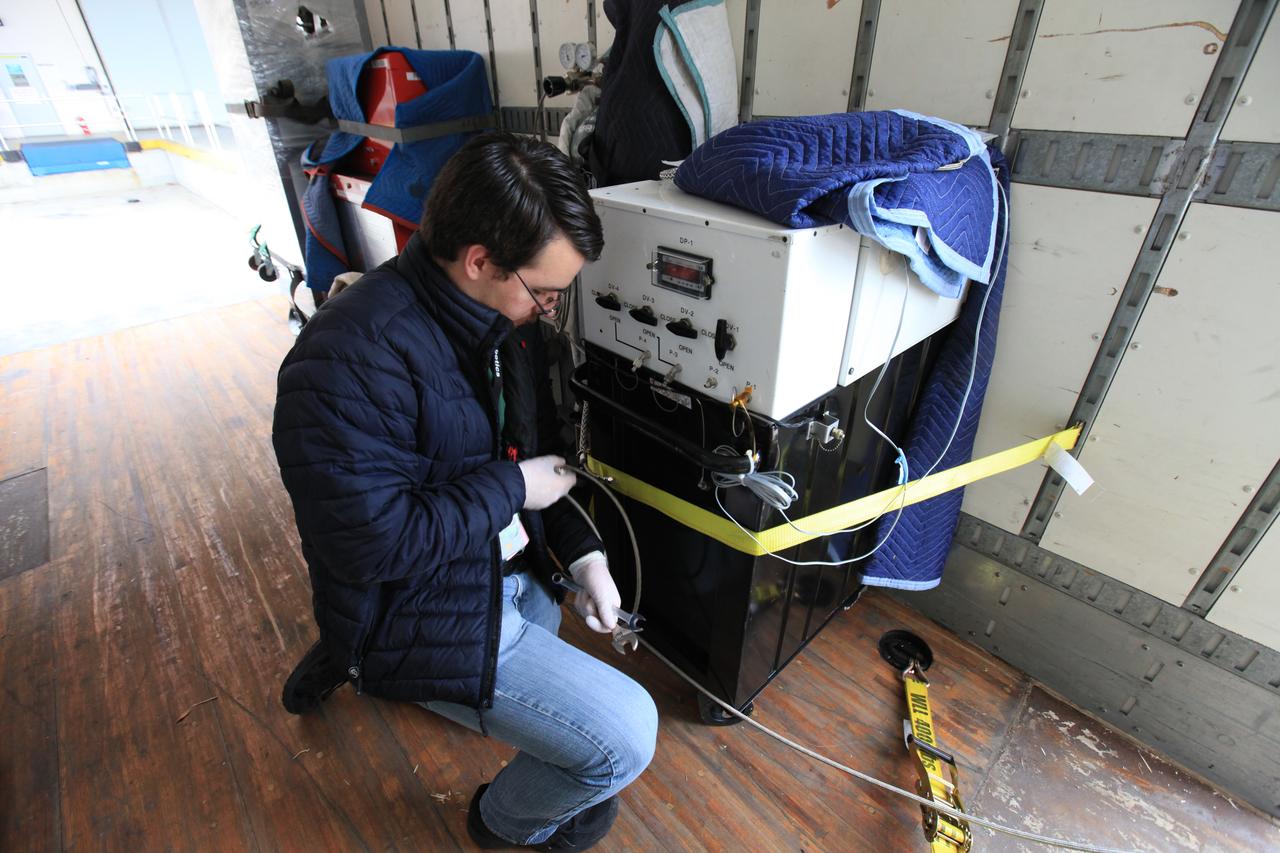
Kevin Mark, Orbiting Carbon Observatory 3 (OCO-3) purge engineer with NASA’s Jet Propulsion Laboratory, fastens a separate fixture of OCO-3, stored apart from its payload container, to a truck for transport from the Space Station Processing Facility high bay at the agency’s Kennedy Space Center in Florida to the SpaceX facility on March 18, 2019. The OCO-3 payload will be stowed in the trunk of SpaceX’s Dragon spacecraft, where it will launch aboard a Falcon 9 rocket on the company’s 17th Commercial Resupply Services mission to the International Space Station. Launch is scheduled for April 25, 2019, from Launch Complex 40 at Cape Canaveral Air Force Station. Once the payload reaches the station, it will be removed from Dragon and robotically installed on the exterior of the orbiting laboratory’s Japanese Experiment Module Exposed Facility Unit, where it will measure and map carbon dioxide from space to provide further understanding of the relationship between carbon and climate.
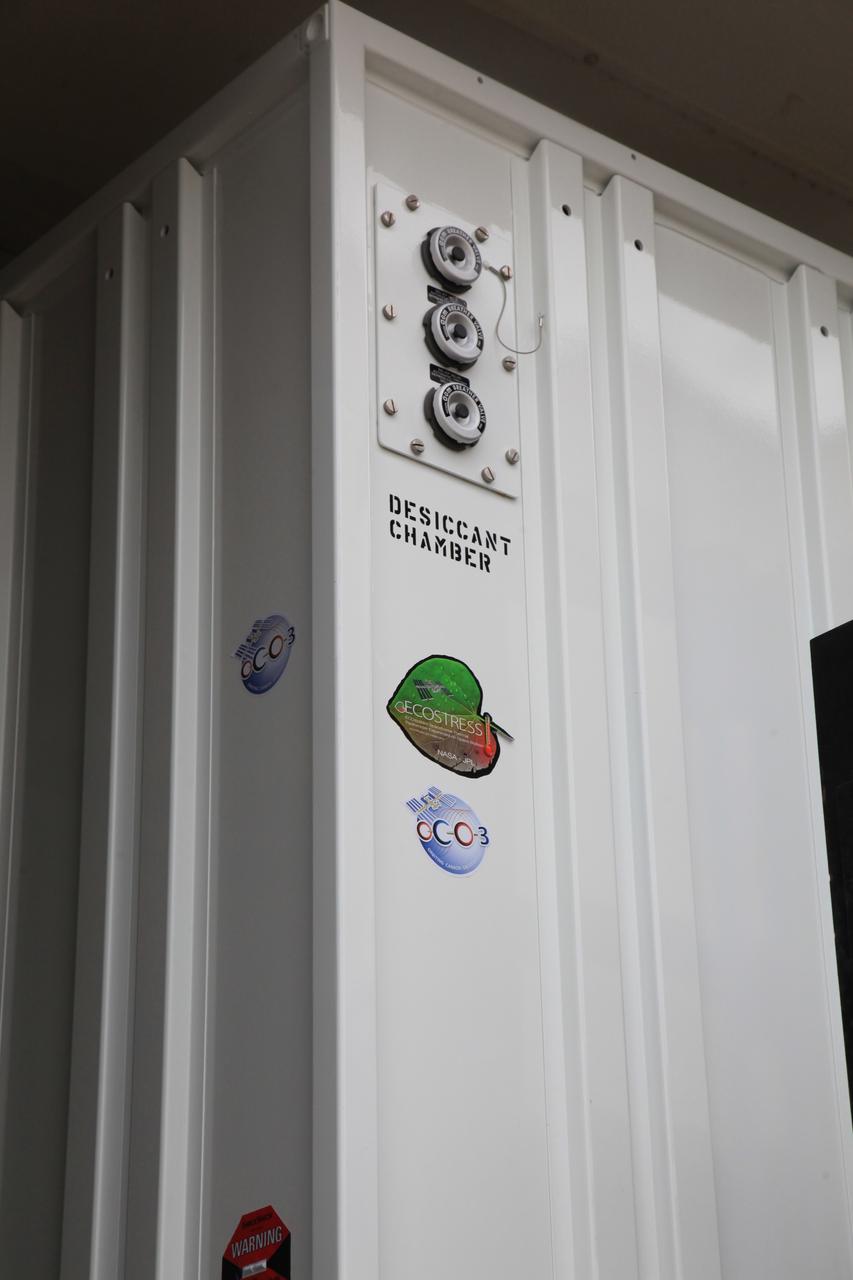
NASA’s Orbiting Carbon Observatory 3, or OCO-3, sits in a transportation container at the Space Station Processing Facility high bay at the agency’s Kennedy Space Center in Florida prior to its move to the SpaceX facility on March 18, 2019. The OCO-3 payload will be stowed in the trunk of SpaceX’s Dragon spacecraft, where it will launch aboard a Falcon 9 rocket on the company’s 17th Commercial Resupply Services mission to the International Space Station. Launch is scheduled for April 25, 2019, from Launch Complex 40 at Cape Canaveral Air Force Station. Once the payload reaches the station, it will be removed from Dragon and robotically installed on the exterior of the orbiting laboratory’s Japanese Experiment Module Exposed Facility Unit, where it will measure and map carbon dioxide from space to provide further understanding of the relationship between carbon and climate.
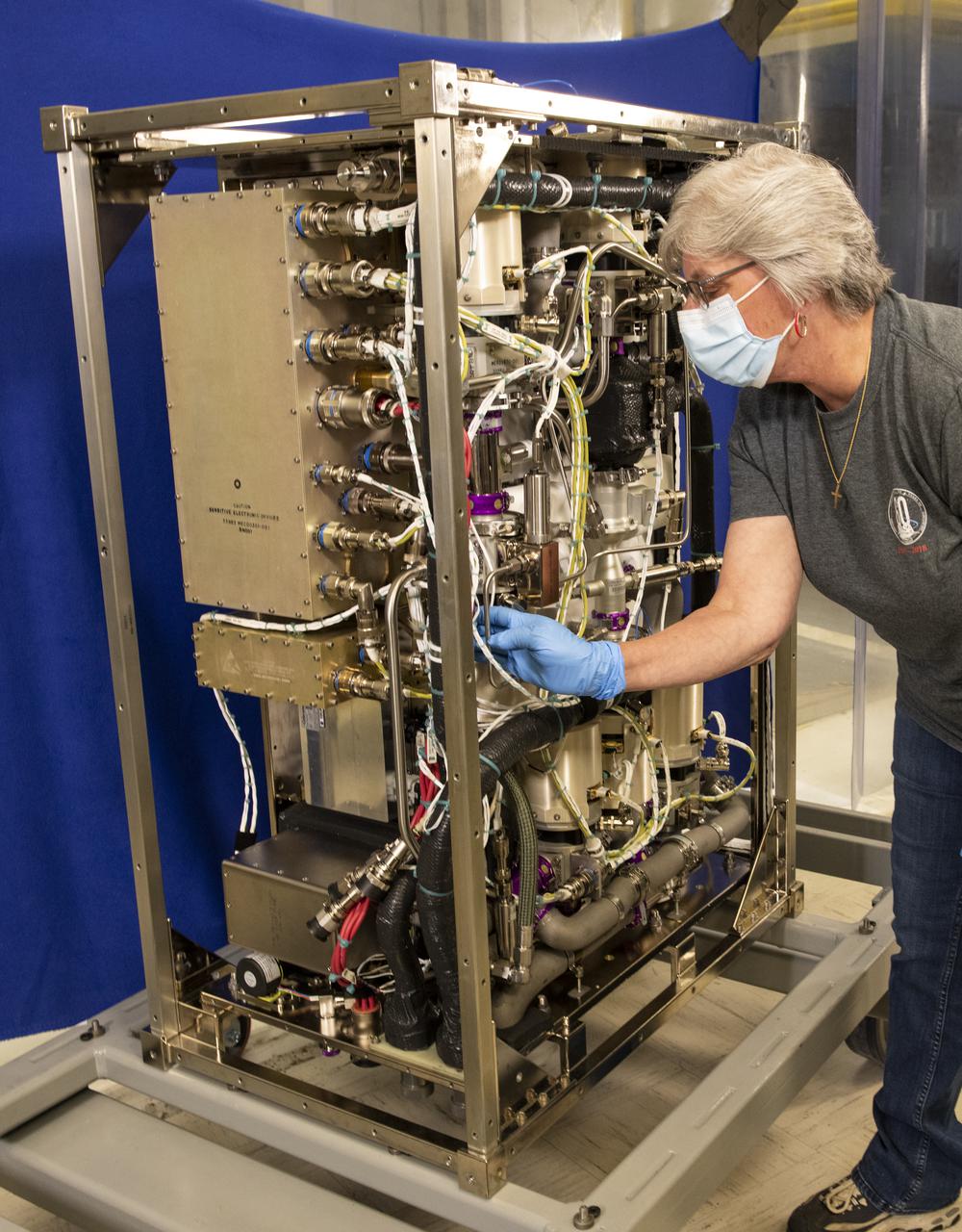
The flight demonstration unit of the next-generation 4-bed CO2 Scrubber (4BCO2) is targeted for launch aboard NG16 NET August 1, 2021. Once aboard the space station, this u nit will be mounted in a basic express rack. This four-bed technology is a mainstay for metabolic CO2 removal and crew life support. The new 4-Bed Carbon Dioxide Scrubber, developed, built, and tested at NASA’s Marshall Space Flight Center in Huntsville, Alabama, is checked out by Kathi Lange, a Bastion Technologies contractor supporting the quality assurance group in Marshall’s Safety and Mission Assurance Directorate, prior to its shipment to NASA’s Wallops Flight Facility in Wallops Island, Virginia.
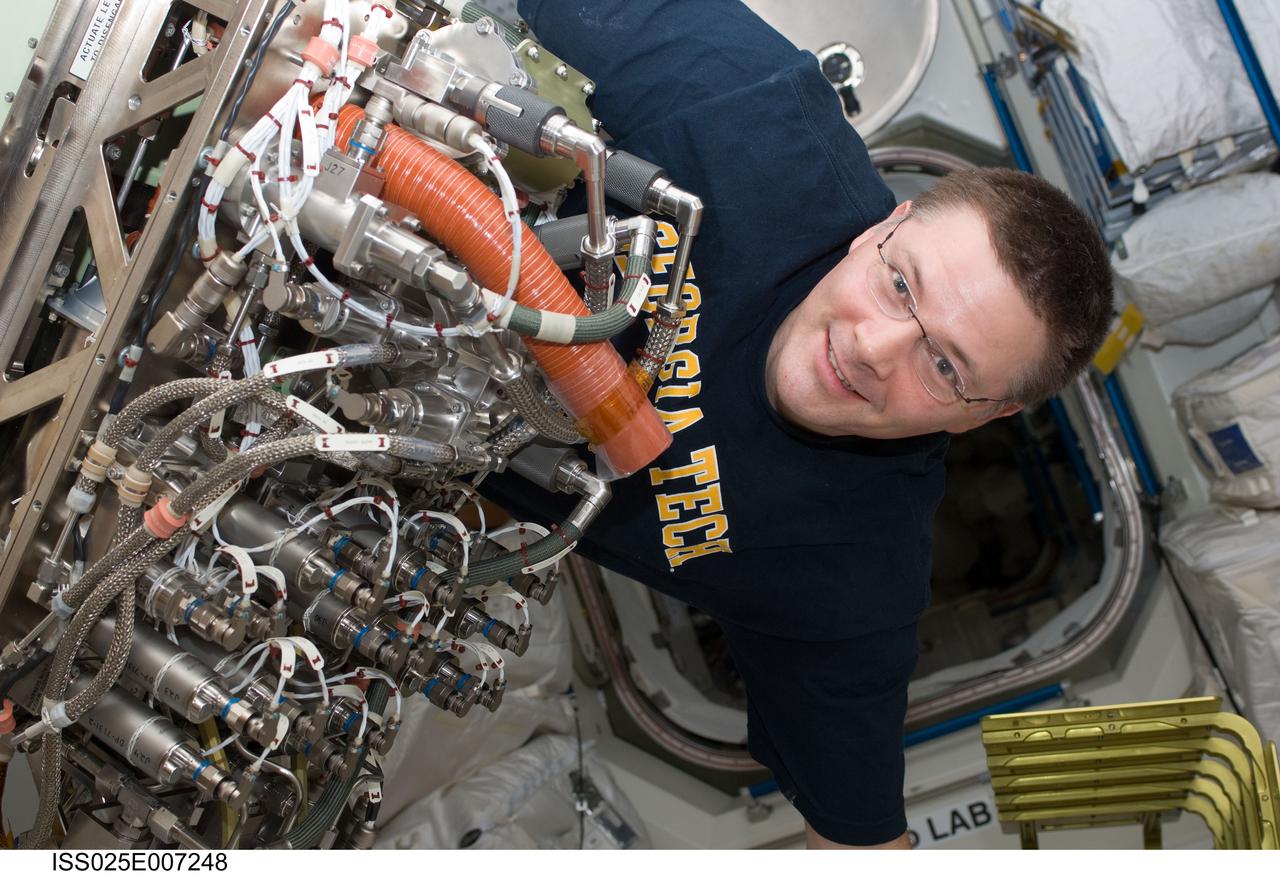
ISS025-E-007248 (13 Oct. 2010) --- In the Tranquility node aboard the International Space Station, NASA astronaut Doug Wheelock, Expedition 25 commander, works to install the new Sabatier system that will extract more water out of the ISS atmosphere. Sabatier will create water from the byproducts of the station?s Oxygen Generation System and Carbon Dioxide Removal Assembly. Under contract to NASA, Hamilton Sundstrand supplied the flight hardware and operational support for a Sabatier-reaction based system that operates as part of the station?s Environmental Control and Life Support System.
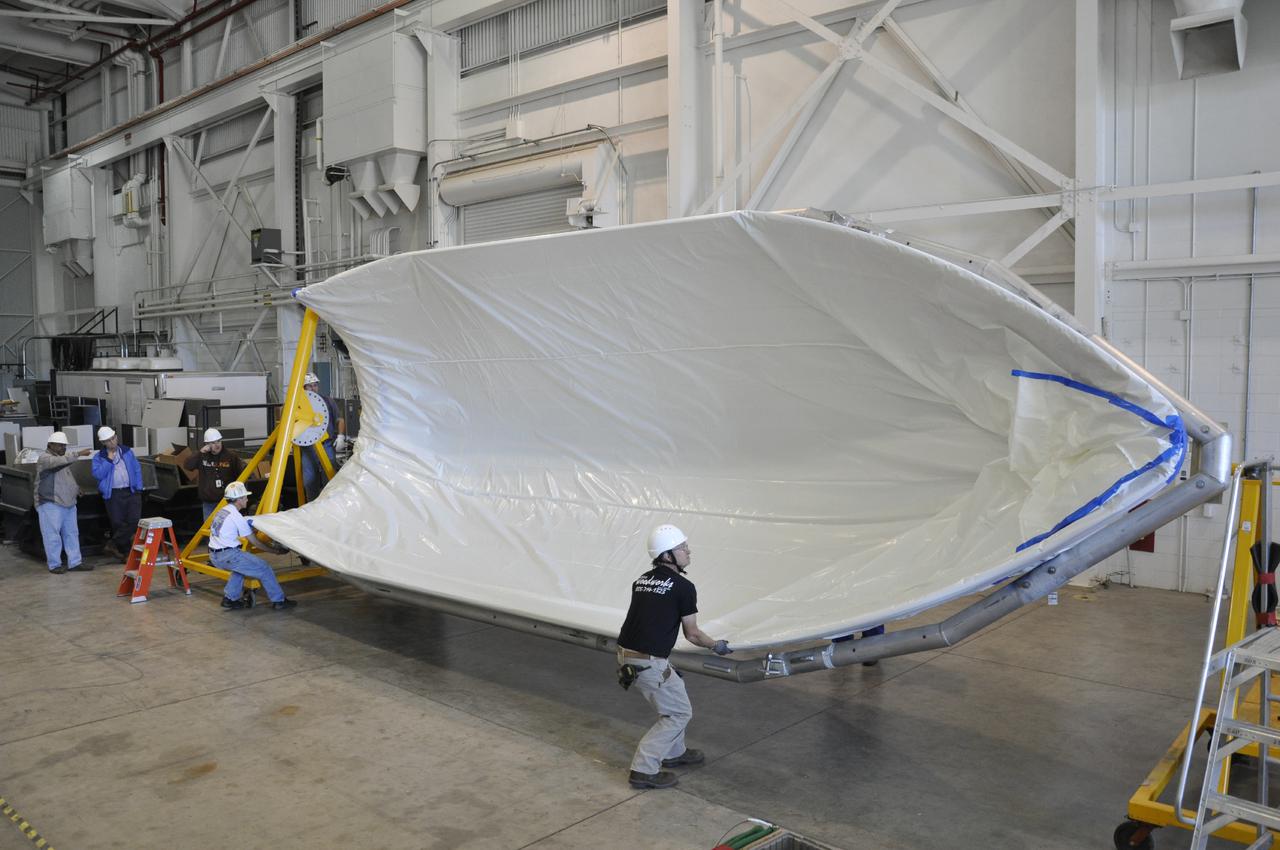
VANDENBERG AIR FORCE BASE, Calif. – In the NASA Building 836 high bay at Vandenberg Air Force Base in California, workers rotate a section of the fairing for NASA's Orbiting Carbon Observatory-2 mission, or OCO-2, following its removal from its shipping container. The fairing will protect OCO-2 during launch aboard a United Launch Alliance Delta II rocket from Space Launch Complex 2 in July. OCO-2 will collect precise global measurements of carbon dioxide in the Earth's atmosphere and provide scientists with a better idea of the chemical compound's impacts on climate change. Scientists will analyze this data to improve our understanding of the natural processes and human activities that regulate the abundance and distribution of this important atmospheric gas. To learn more about OCO-2, visit http:__oco.jpl.nasa.gov. Photo credit: NASA_Randy Beaudoin
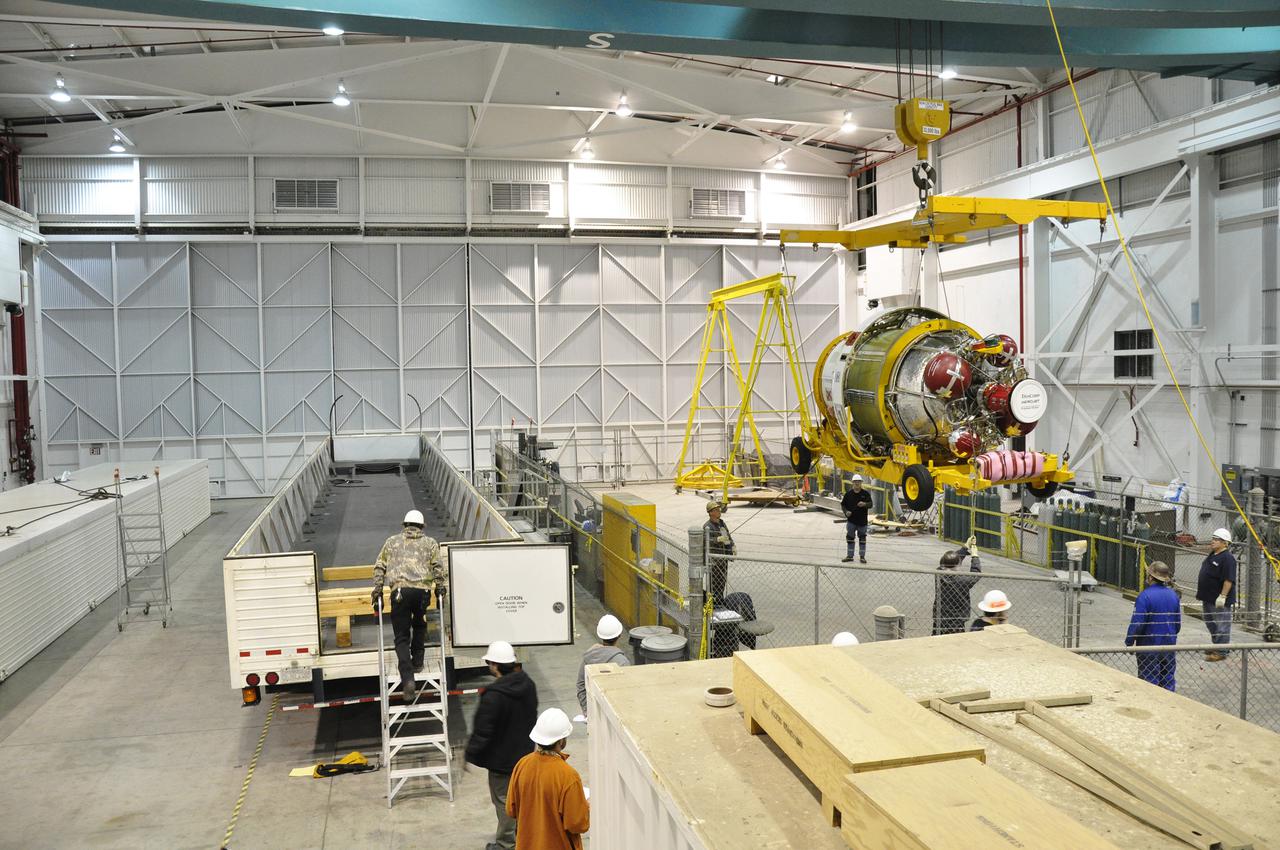
VANDENBERG AIR FORCE BASE, Calif. – The second stage for NASA's Orbiting Carbon Observatory-2 mission, or OCO-2, is suspended from the ceiling of the high bay of the Building 836 hangar on Vandenberg Air Force Base in California following its removal from the transportation trailer in which it arrived. OCO-2 is scheduled to launch aboard a United Launch Alliance Delta II rocket from Space Launch Complex 2 in July. The rocket's second stage will insert OCO-2 into a polar Earth orbit. OCO-2 will collect precise global measurements of carbon dioxide in the Earth's atmosphere and provide scientists with a better idea of the chemical compound's impacts on climate change. Scientists will analyze this data to improve our understanding of the natural processes and human activities that regulate the abundance and distribution of this important atmospheric gas. To learn more about OCO-2, visit http:__oco.jpl.nasa.gov. Photo credit: NASA_Randy Beaudoin
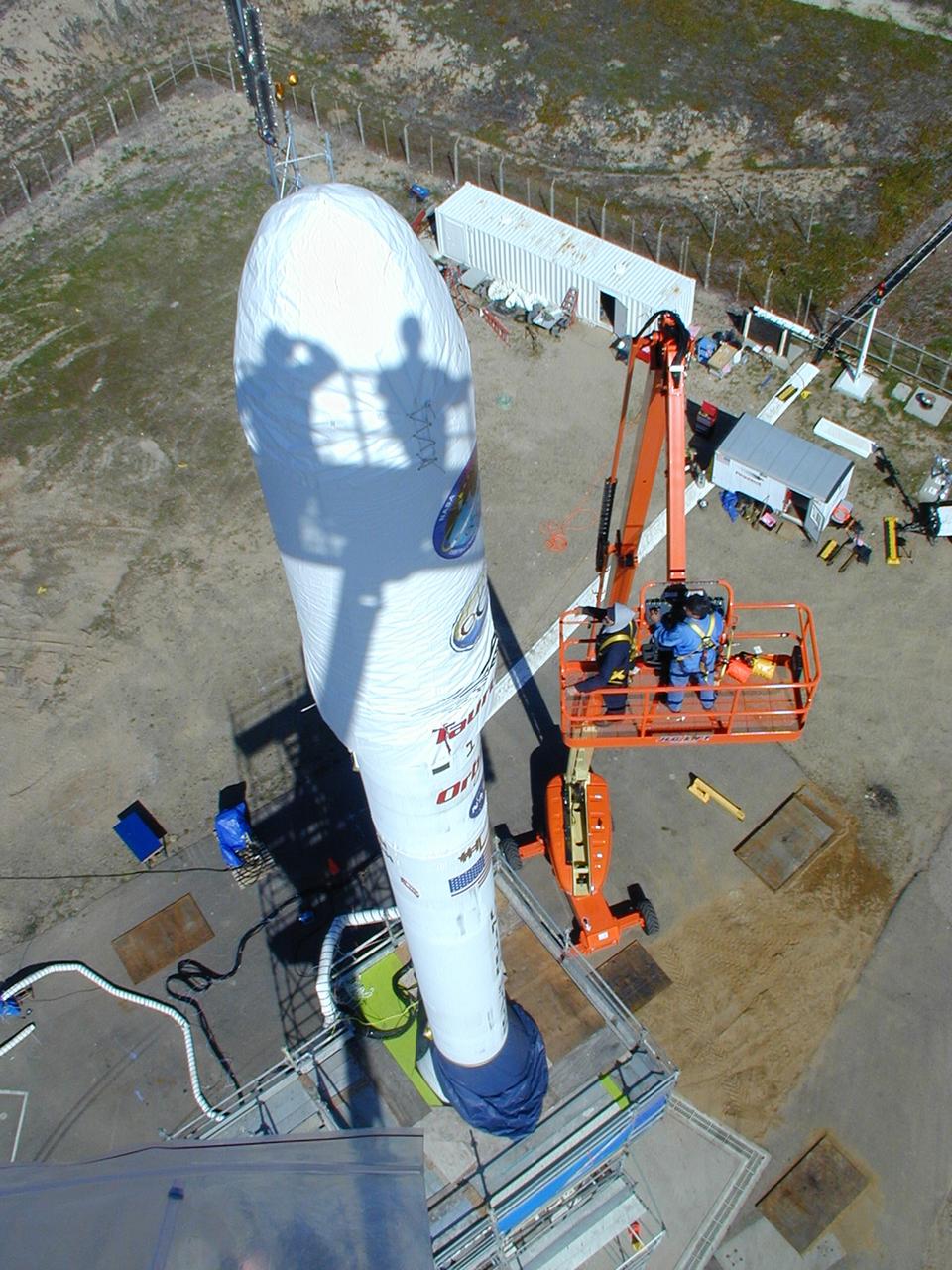
VANDENBERG AIR FORCE BASE, Calif. -- On Launch Complex 576-E at Vandenberg Air Force Base in California, Orbital Science's Jose Castillo and Mark Neuse (right) move in to remove the fairing payload access door on NASA's Orbiting Carbon Observatory, or OCO, spacecraft. Orbital Science's Glenn Weigle and Brett Gladish are nearby (shadows on the fairing) to take the GN2 flow reading. The encapsulated OCO tops Orbital Sciences' Taurus XL rocket, which is scheduled to launch Feb. 24. The spacecraft will collect precise global measurements of carbon dioxide (CO2) in the Earth's atmosphere. Scientists will analyze OCO data to improve our understanding of the natural processes and human activities that regulate the abundance and distribution of this important greenhouse gas. Photo courtesy of Glenn Weigle, Orbital Sciences