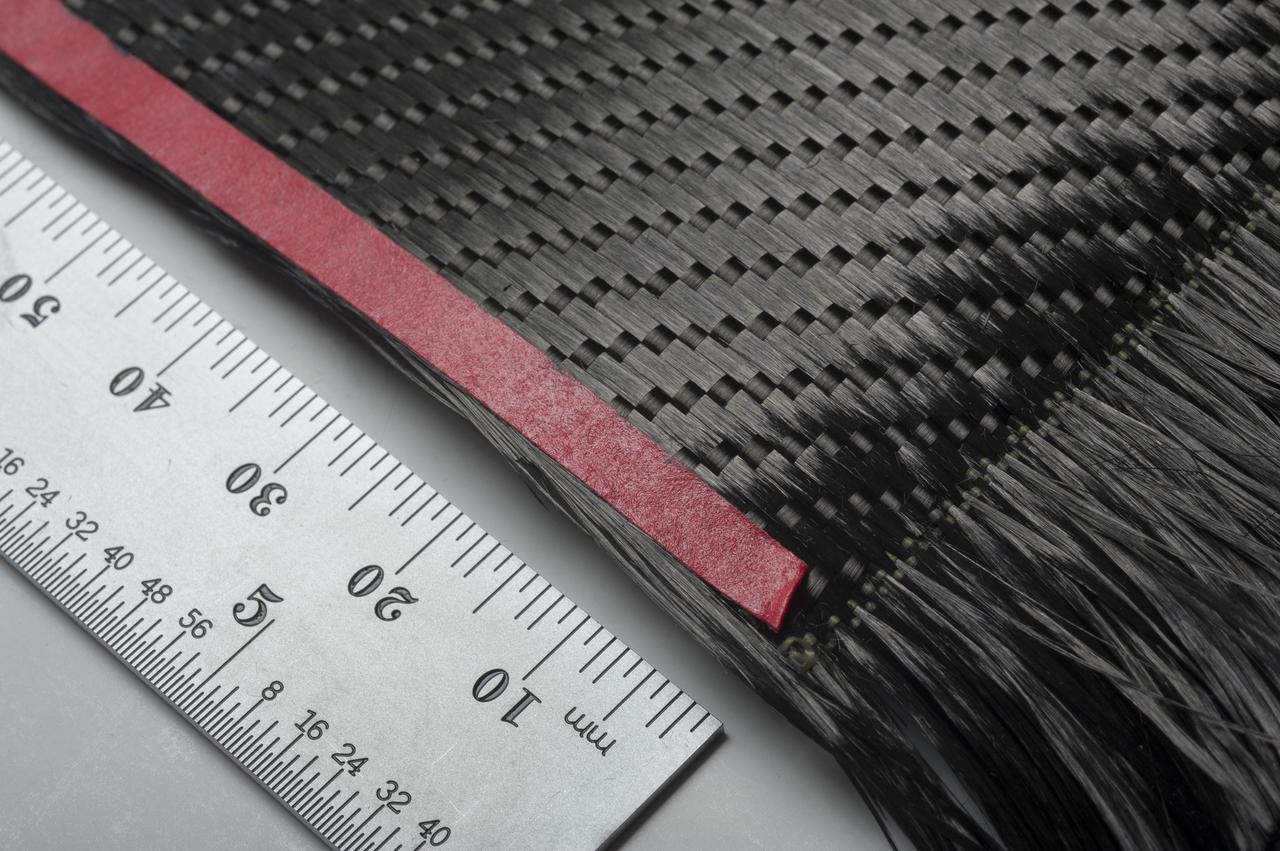
MITSUBISHI K13D2U PITCH-BASED CARBON FIBERS COMMERCIALLY WOVEN BY T.E.A.M., INC. (TEXTILE ENGINEERING AND MANUFACTURING
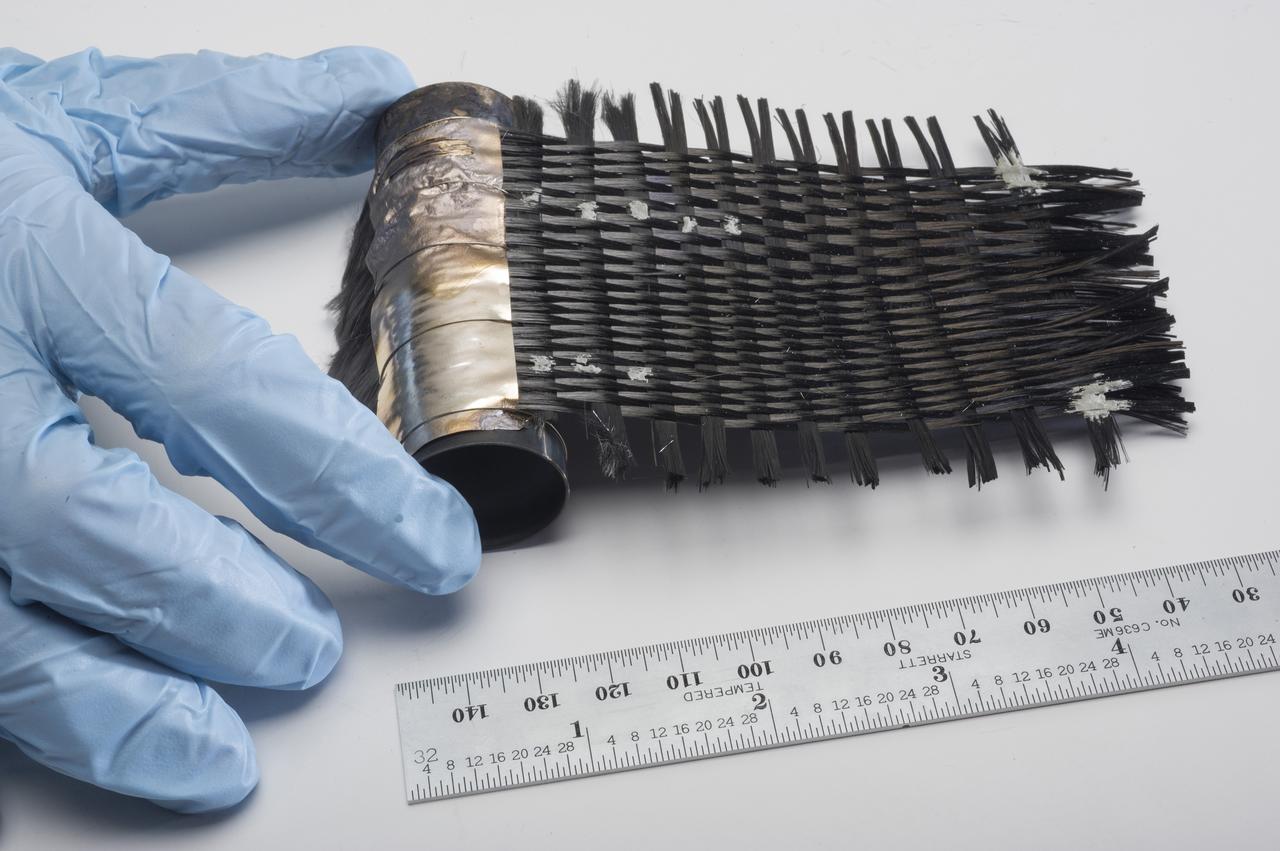
HAND-WOVEN MITSUBISHI K13D2U PITCH-BASED CARBON FIBERS BRAZED TO AN INCONEL TUBE.
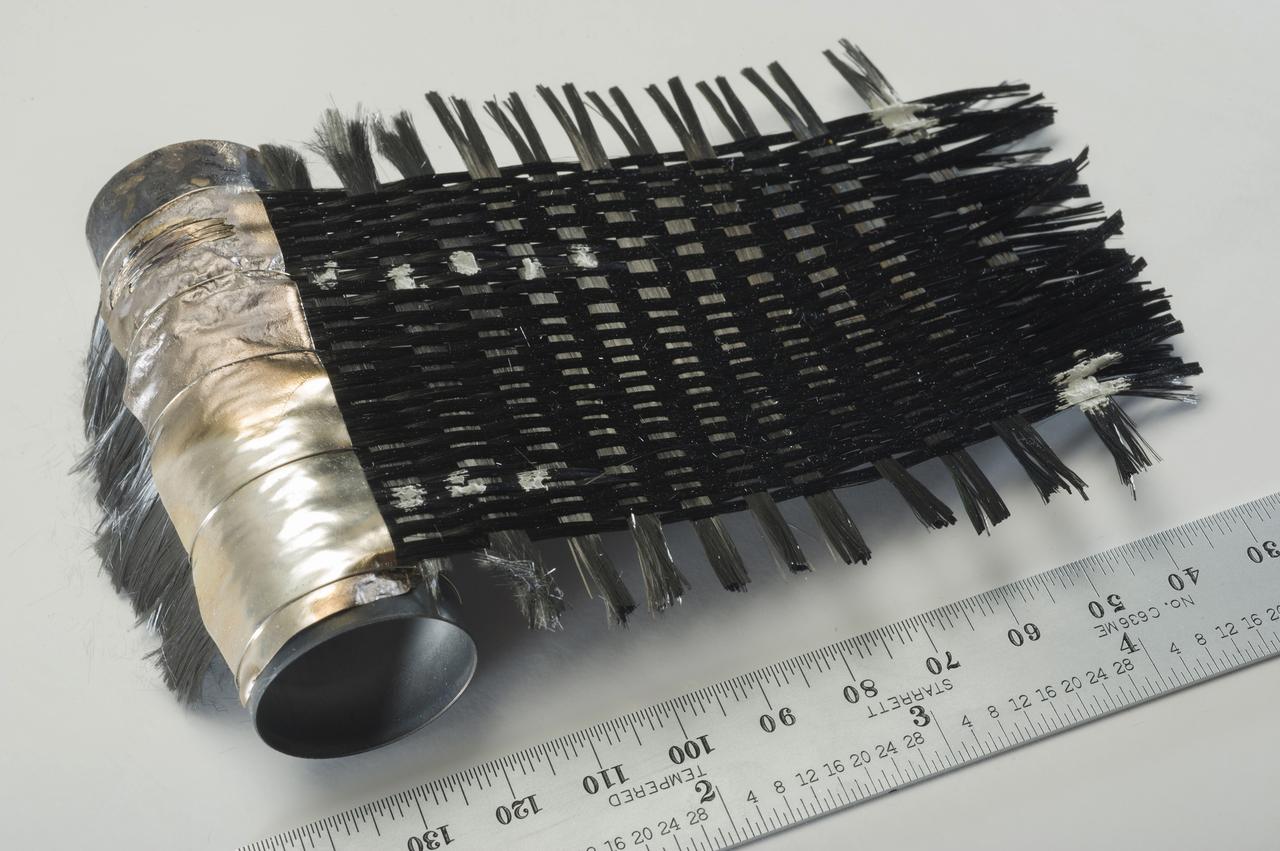
HAND-WOVEN MITSUBISHI K13D2U PITCH-BASED CARBON FIBERS BRAZED TO AN INCONEL TUBE.
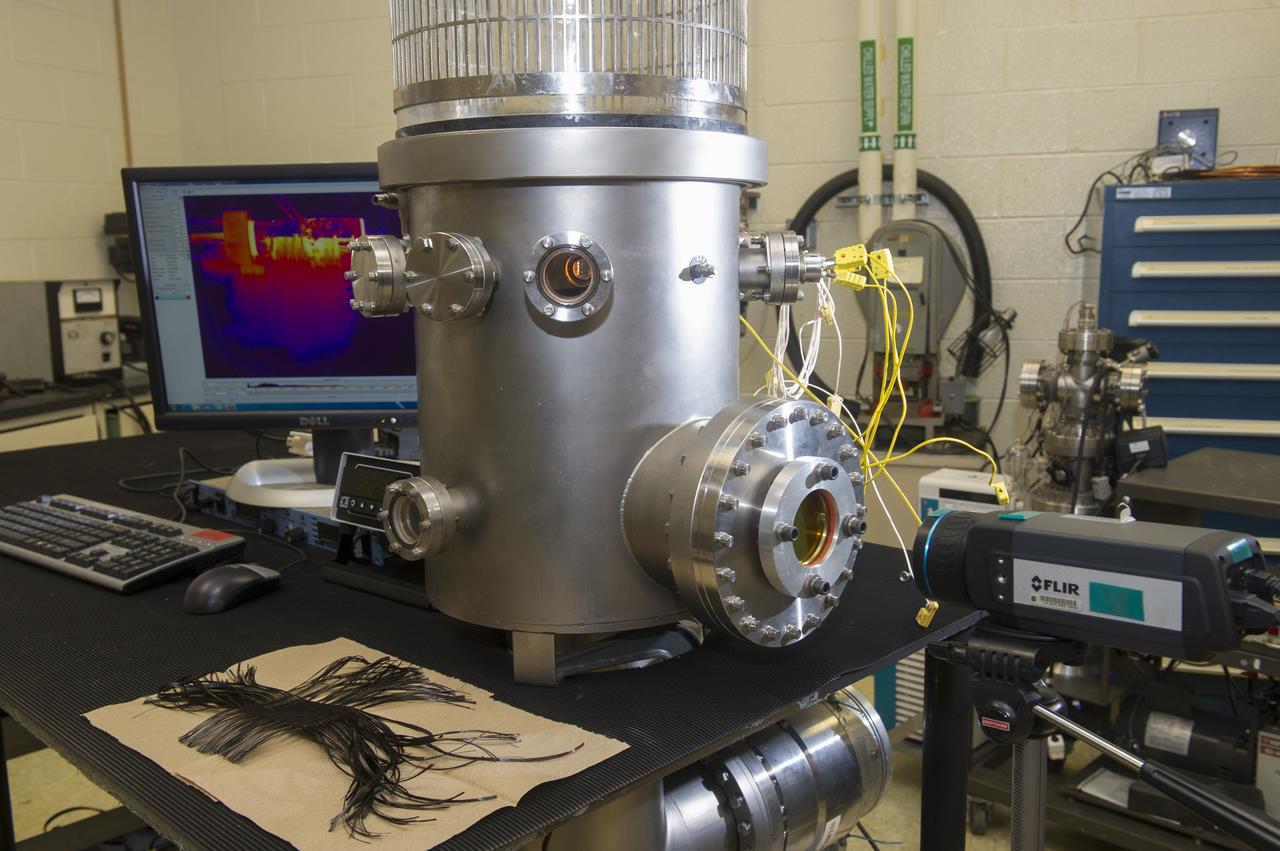
2013 MSFC RADIATOR FACILITY SHOWING THE ZINC SELENIDE WINDOW, THE IR CAMERA, AND A RECENTLY WOVEN UNTESTED CARBON FIBER TEST ARTICLE (LOWER LEFT)-
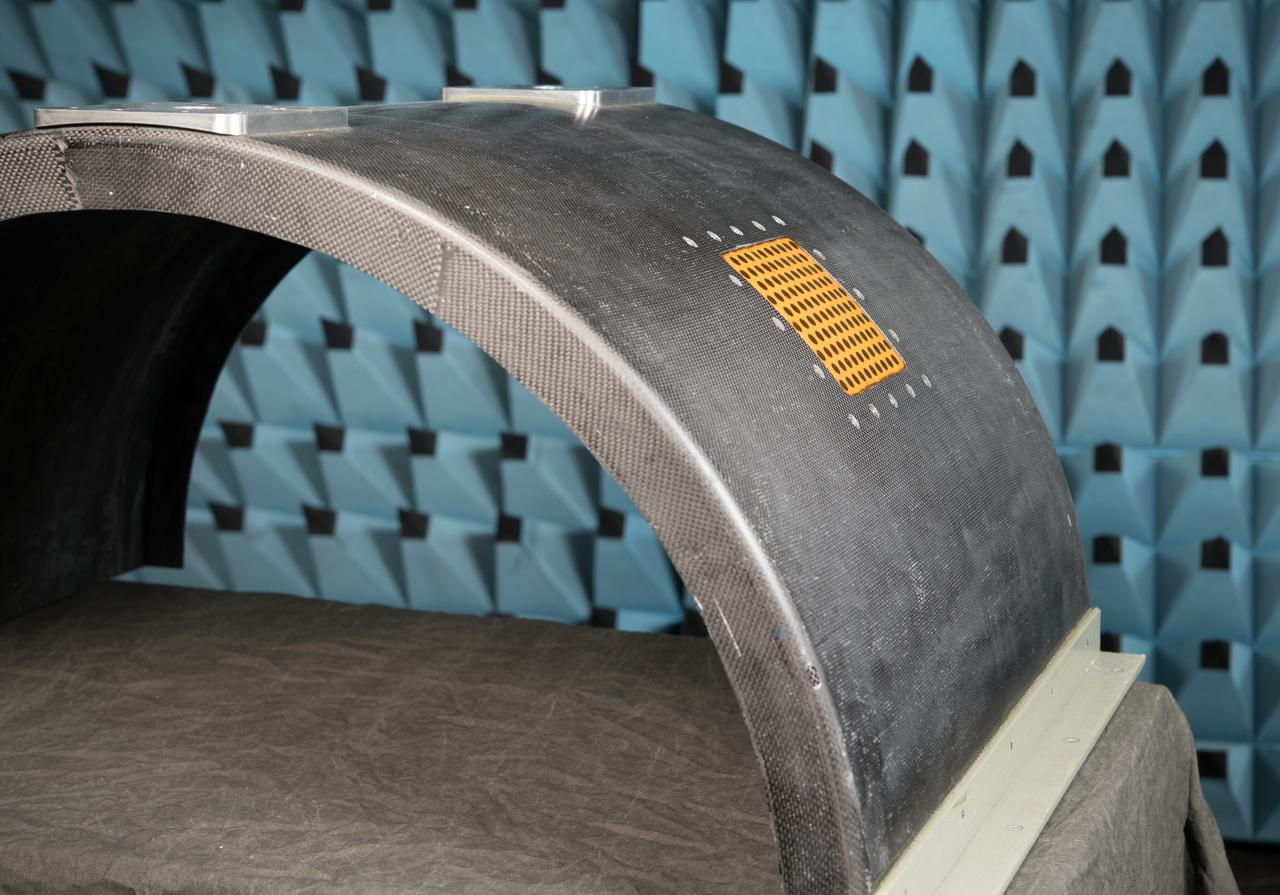
Curved Confocal Lightweight Antenna Structures for Aeronautical Communications Technologies, CLAS-ACT, Phased Array Antenna on Mock Carbon Fiber Fuselage
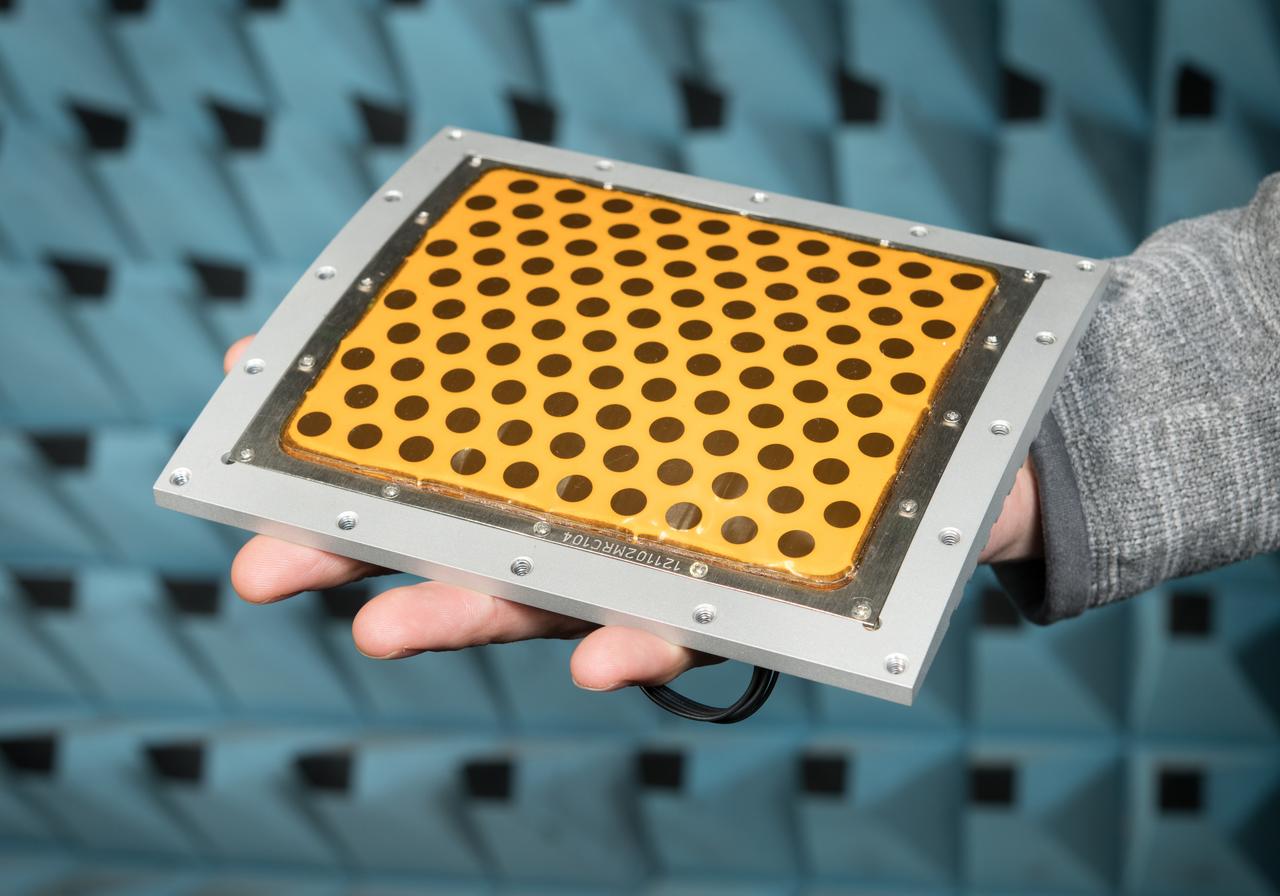
Curved Confocal Lightweight Antenna Structures for Aeronautical Communications Technologies, CLAS-ACT, Phased Array Antenna on Mock Carbon Fiber Fuselage
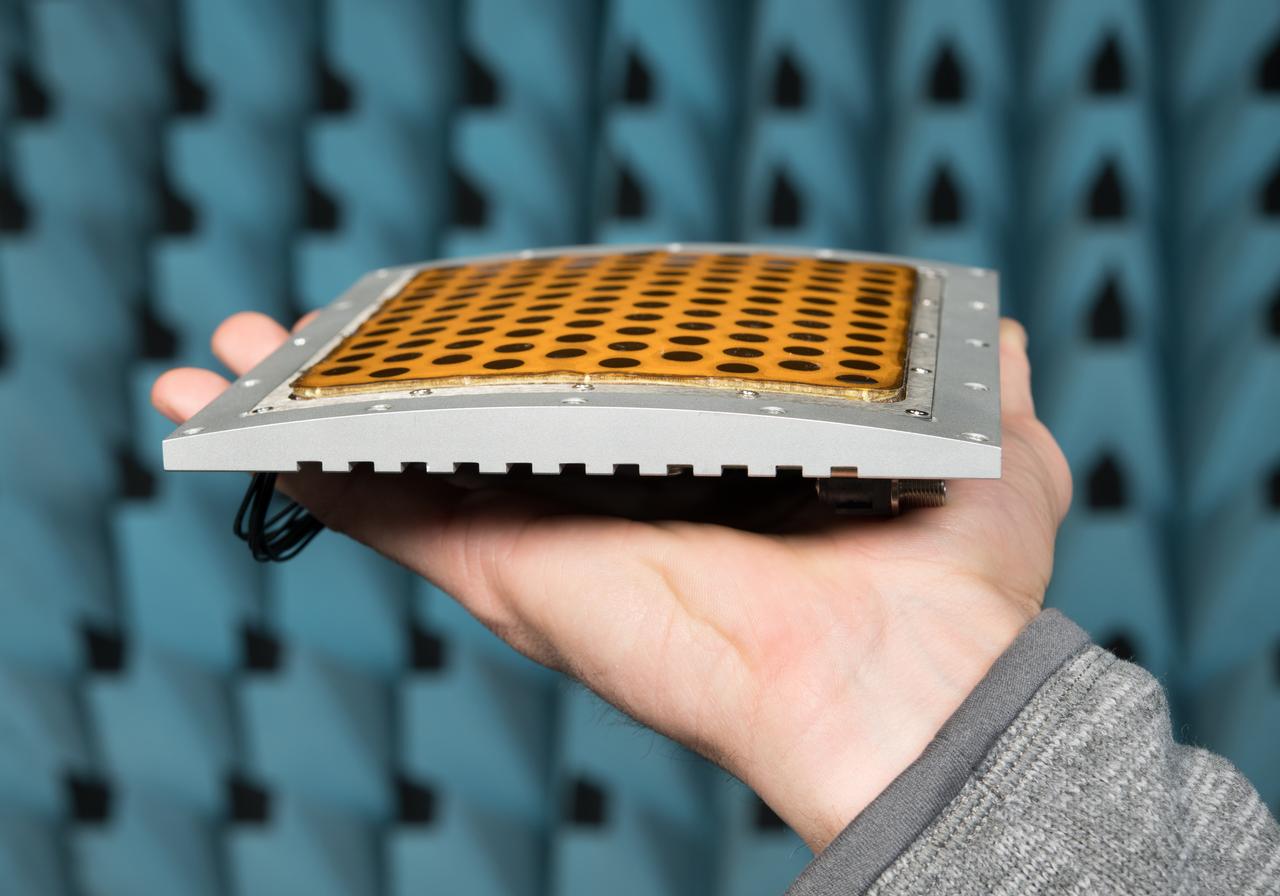
Curved Confocal Lightweight Antenna Structures for Aeronautical Communications Technologies, CLAS-ACT, Phased Array Antenna on Mock Carbon Fiber Fuselage
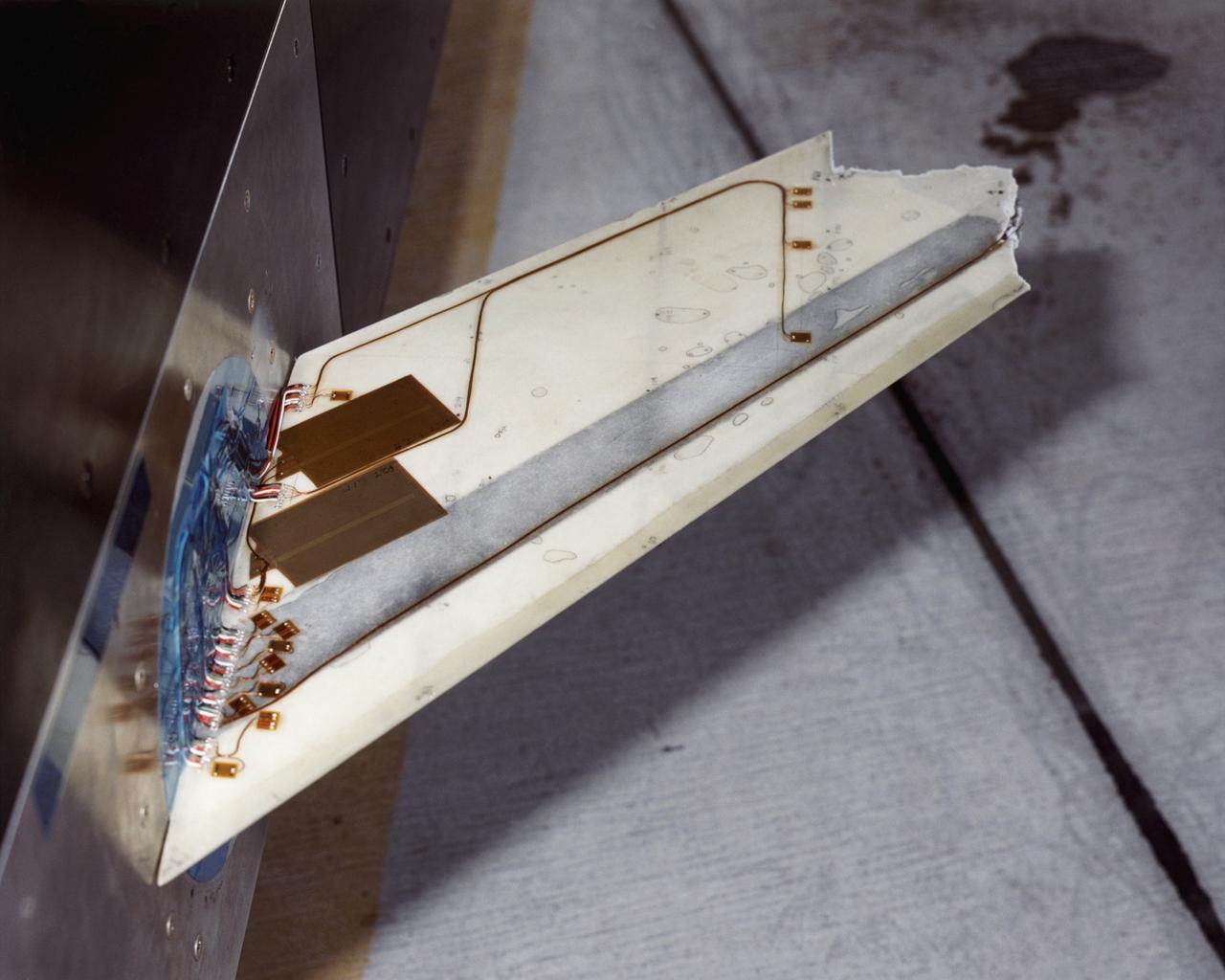
The Aerostructures Test Wing (ATW), which consisted of an 18-inch carbon fiber test wing with surface-mounted piezoelectric strain actuators, following intentional failure on its final flight
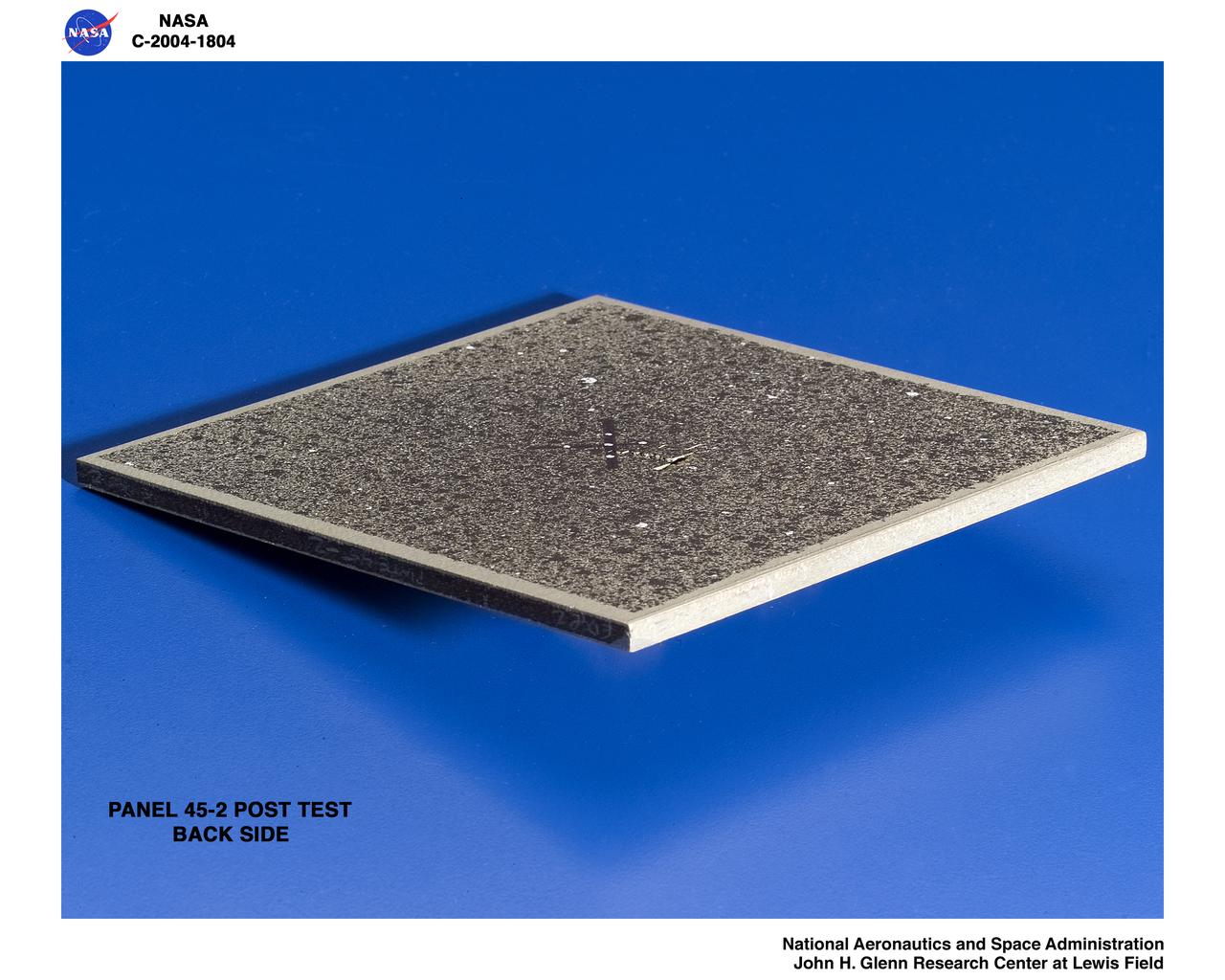
carbon/carbon fiber panels, panel 45-2 post test 90 degree ice impact
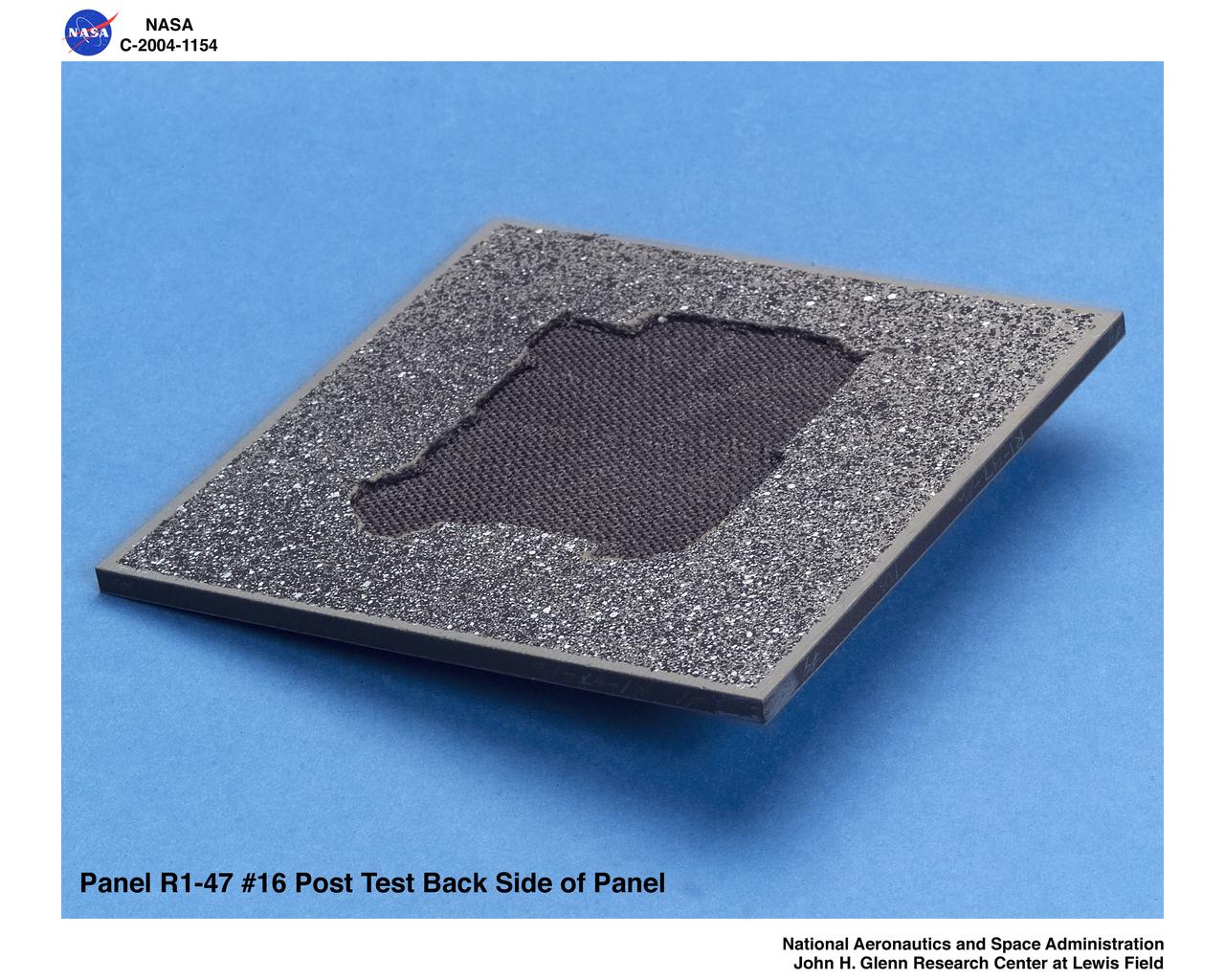
carbon/carbon fiber panels, panel R1-47-16 post test isometric view of back side
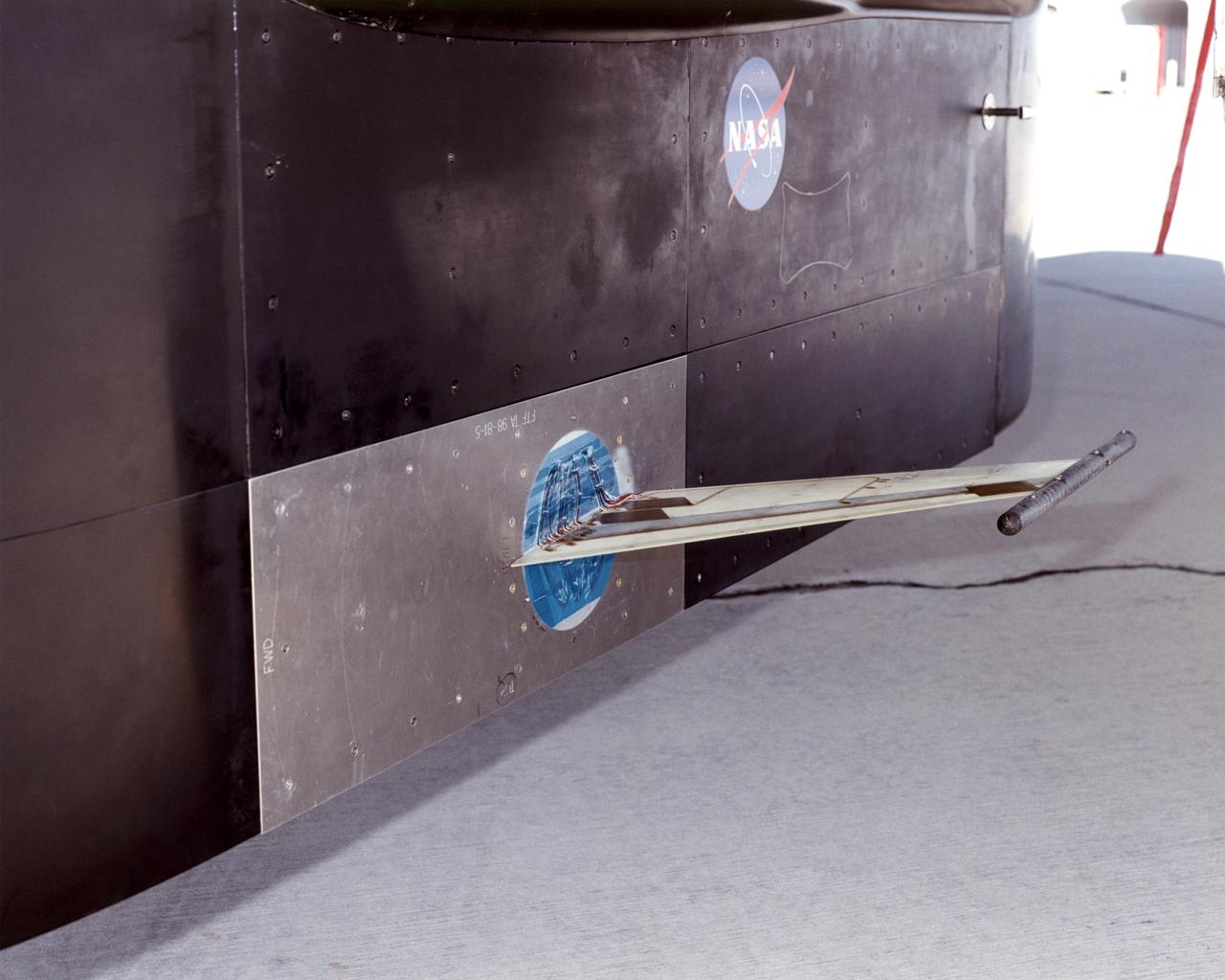
The Aerostructures Test Wing (ATW), which consisted of an 18-inch carbon fiber test wing with surface-mounted piezoelectric strain actuators, was mounted on a special ventral flight test fixture and flown on Dryden's F-15B Research Testbed aircraft
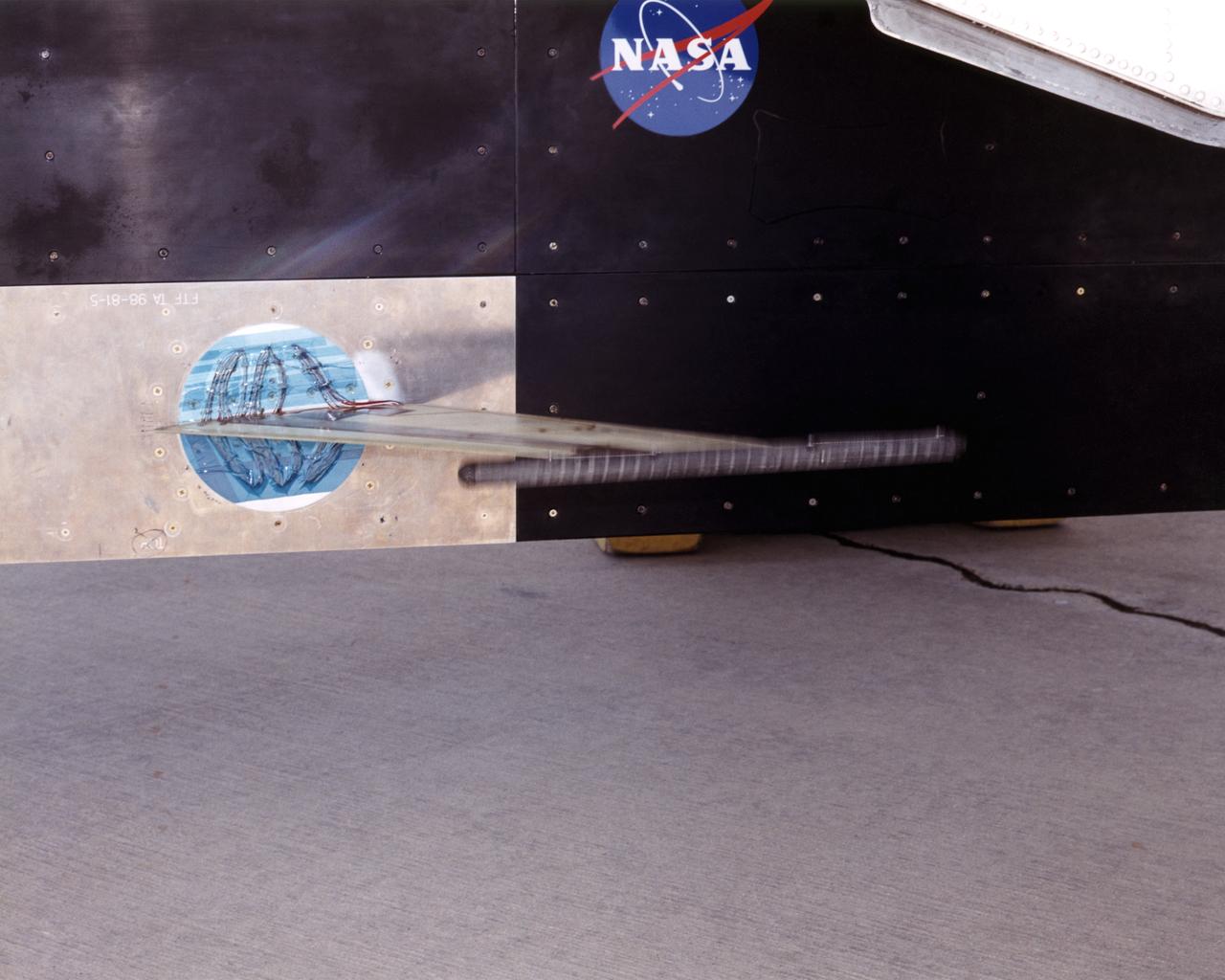
The Aerostructures Test Wing (ATW) experiment, which consisted of an 18-inch carbon fiber test wing with surface-mounted piezoelectric strain actuators, undergoing ground testing prior to flight on Dryden's F-15B Research Testbed aircraft
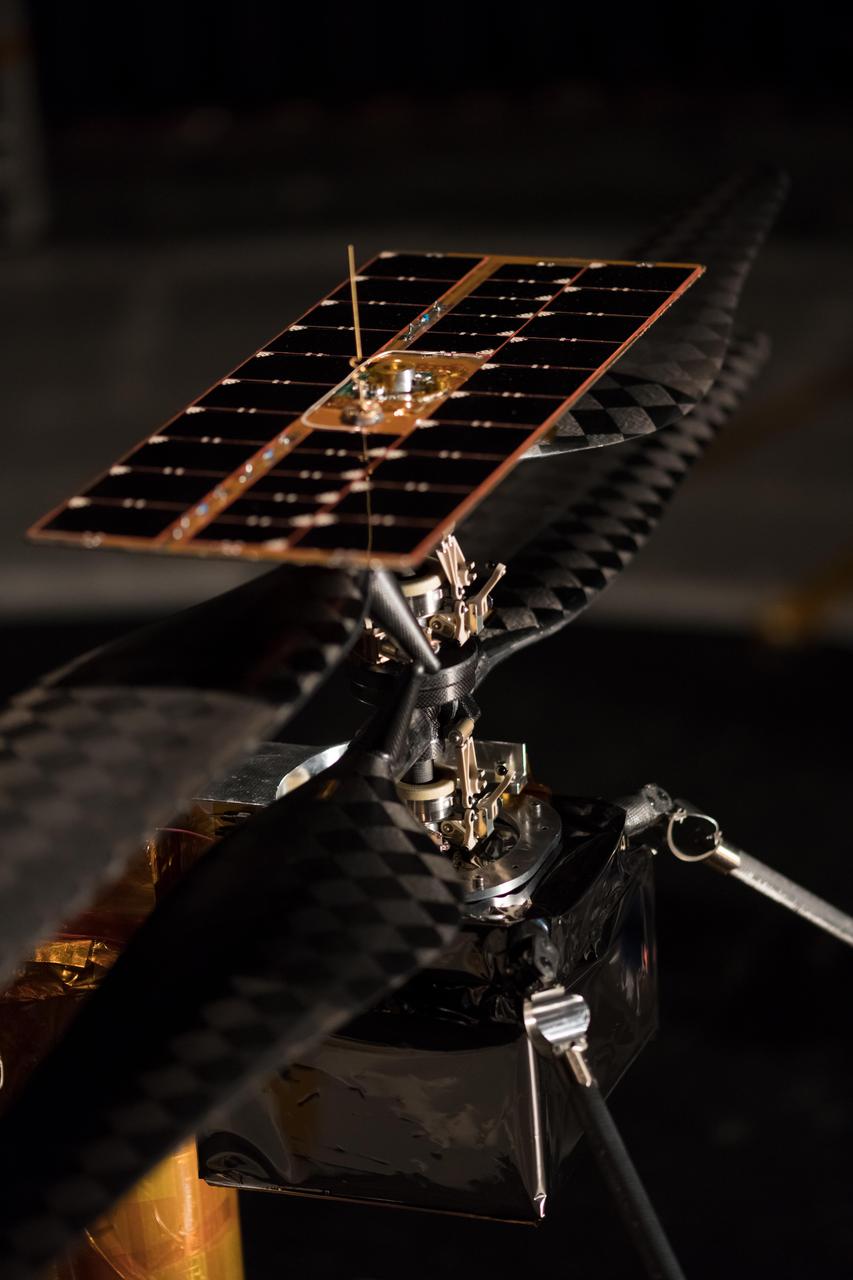
More than 1,500 individual pieces of carbon fiber, flight-grade aluminum, silicon, copper, foil and foam go into a Mars Helicopter. This image of the Flight Model (the actual vehicle going to the Red Planet), was taken on Feb. 1, 2019 when the helicopter was inside the Space Simulator, a 25-foot (7.62 meter) wide vacuum chamber at NASA's Jet Propulsion Laboratory in Pasadena, California. https://photojournal.jpl.nasa.gov/catalog/PIA23158
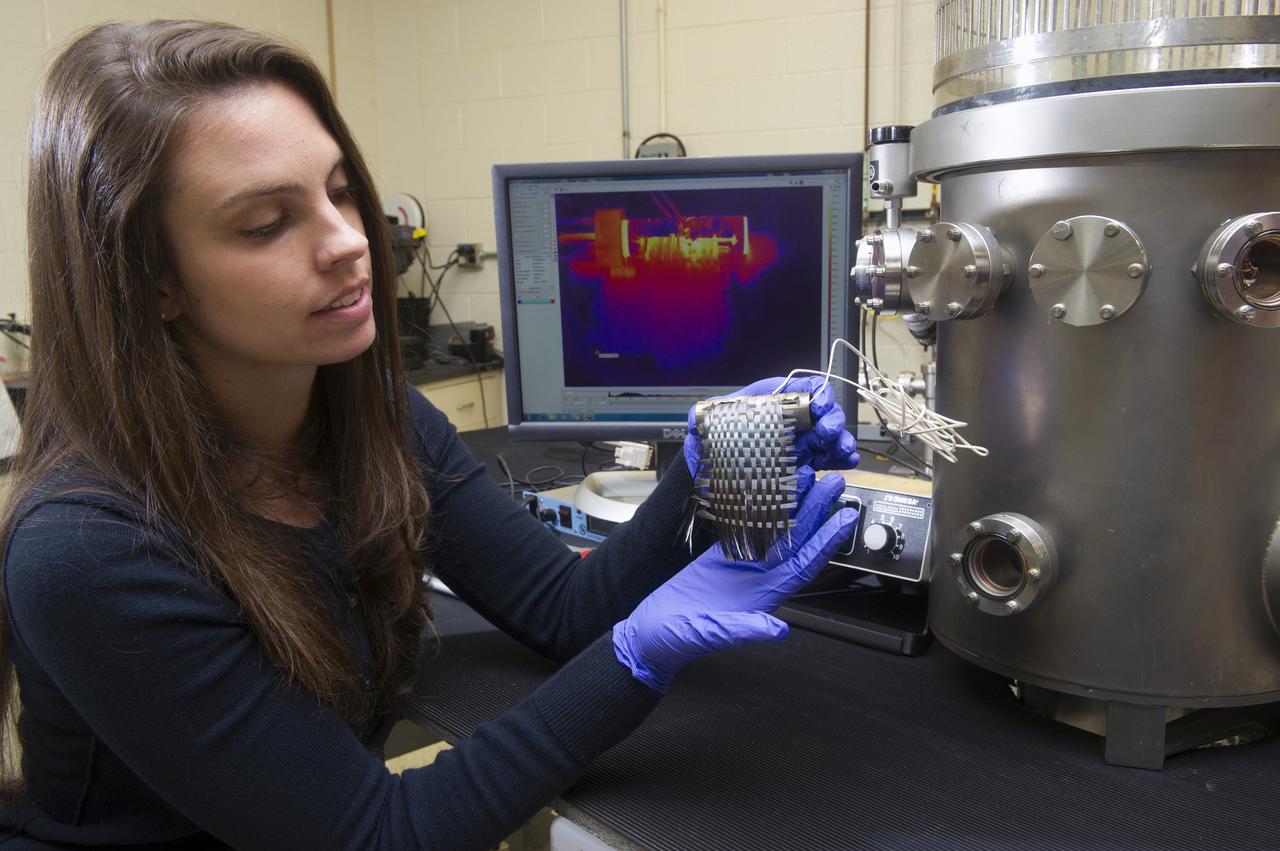
NASA SPACE TECHNOLOGY RESEARCH FELLOWSHIP (NSTRF) STUDENT BRIANA TOMBOULIAN AT THE 2013 MSFC RADIATOR FACILITY WITH A CARBON FIBER TEST ARTICLE
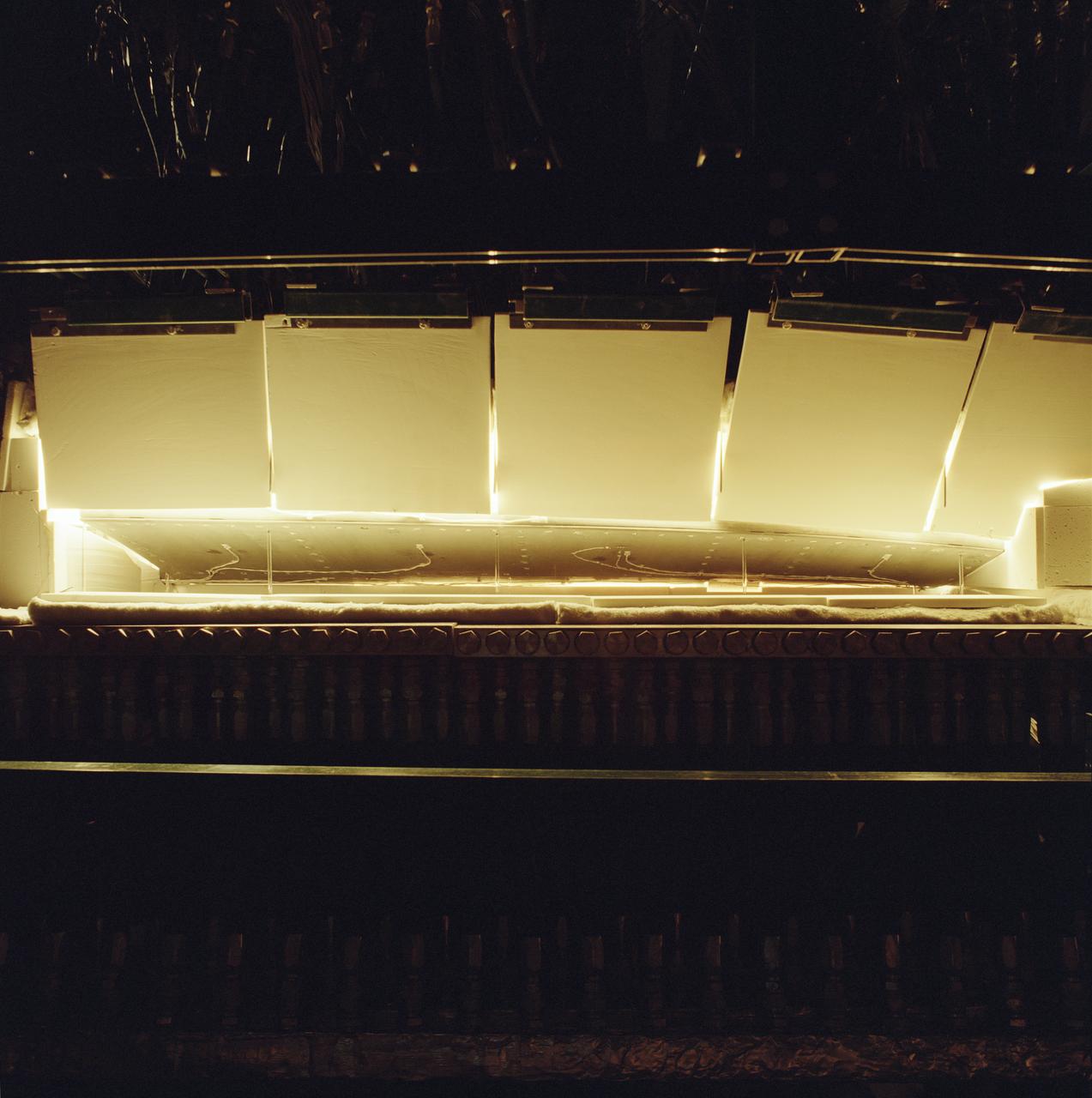
The X-37 advanced technology demonstrator flaperon unit was one of the first ever thermal and mechanical qualification tests of a carbon-carbon control surface designed for space flight. The test also featured extensive use of high-temperature fiber optic strain sensors. Peak temperatures reached 2,500 degrees Fahrenheit.
The Ingenuity Mars Helicopter's carbon fiber blades can be seen in this video taken by the Mastcam-Z instrument aboard NASA's Perseverance Mars rover on April 8, 2021, the 48th Martian day, or sol, of the mission. The four blades are arranged into two 4-foot-long (1.2-meter-long) counter-rotating rotors that can spin at roughly 2,400 rpm. The video shows the blades performing a wiggle test before the actual spin-up to ensure they were working properly. The helicopter weighs about 4 pounds (1.8 kilograms) on Earth, and about 1.5 pounds (0.68 kilograms) on Mars. It stands 1.6 feet (0.49 meters) high. It's four specially made carbon fiber blades are arranged into two 4-foot-long (1.2-meter-long) counter-rotating rotors that spin at roughly 2,400 rpm. The helicopter's fuselage is 5.4 inches by 7.7 inches by 6.4 inches (13.6 centimeters by 19.5 centimeters by 16.3 centimeters); it has four carbon composite landing legs, each 1.26 feet (0.384 meters) long, giving the helicopter about 5 inches (13 centimeters) of clearance above the ground. It is powered by a solar array on top of the rotor system, which charges six lithium-ion batteries A key objective for Perseverance's mission on Mars is astrobiology, including the search for signs of ancient microbial life. The rover will characterize the planet's geology and past climate, pave the way for human exploration of the Red Planet, and be the first mission to collect and cache Martian rock and regolith (broken rock and dust). Subsequent NASA missions, in cooperation with ESA (European Space Agency), would send spacecraft to Mars to collect these sealed samples from the surface and return them to Earth for in-depth analysis. The Mars 2020 Perseverance mission is part of NASA's Moon to Mars exploration approach, which includes Artemis missions to the Moon that will help prepare for human exploration of the Red Planet. Animation available at https://photojournal.jpl.nasa.gov/catalog/PIA24549
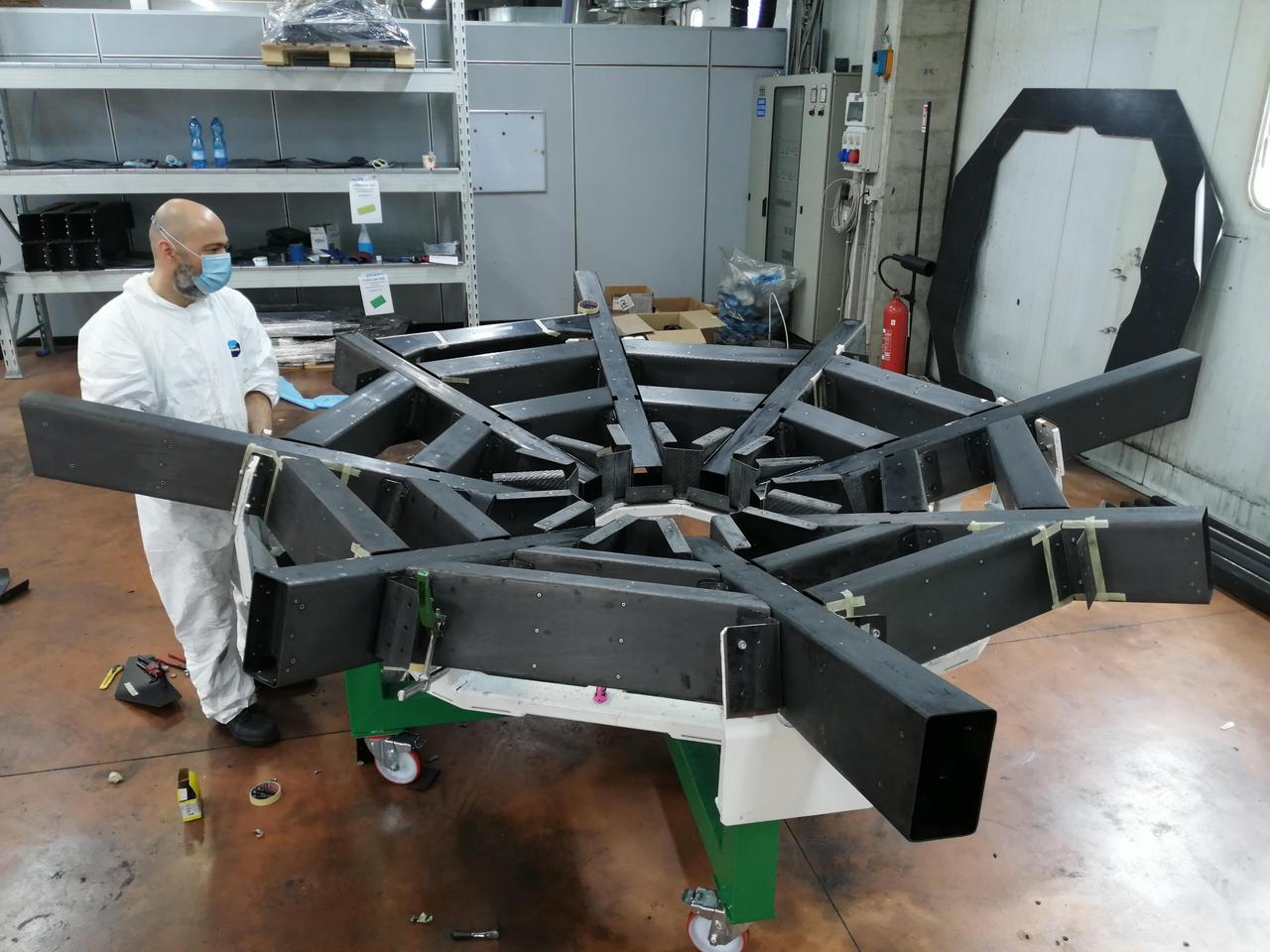
Known as the cradle, the structure that supports the primary mirror on NASA's Astrophysics Stratospheric Telescope for High Spectral Resolution Observations at Submillimeter-wavelengths mission, or ASTHROS, keeps the mirror panels aligned. Made from carbon fiber, it and must be both lightweight and extremely rigid. NASA contracted Media Lario, an optics company in Bosisio Parini, Italy, to design and produce ASTHROS' full telescope unit, including the primary mirror, a secondary mirror, and supporting structure (called the cradle). The cradle is shown here at Media Lario. The mission's main science goal is to study stellar feedback, the process by which living stars disperse and reshape clouds of gas and dust that may eventually form new stars. Feedback regulates star formation in many galaxies, and too much can halt star formation entirely. ASTHROS will look at several star-forming regions in our galaxy where feedback takes place, and at distant galaxies containing millions of stars to see how feedback plays out at large scales and in different environments. https://photojournal.jpl.nasa.gov/catalog/PIA25169
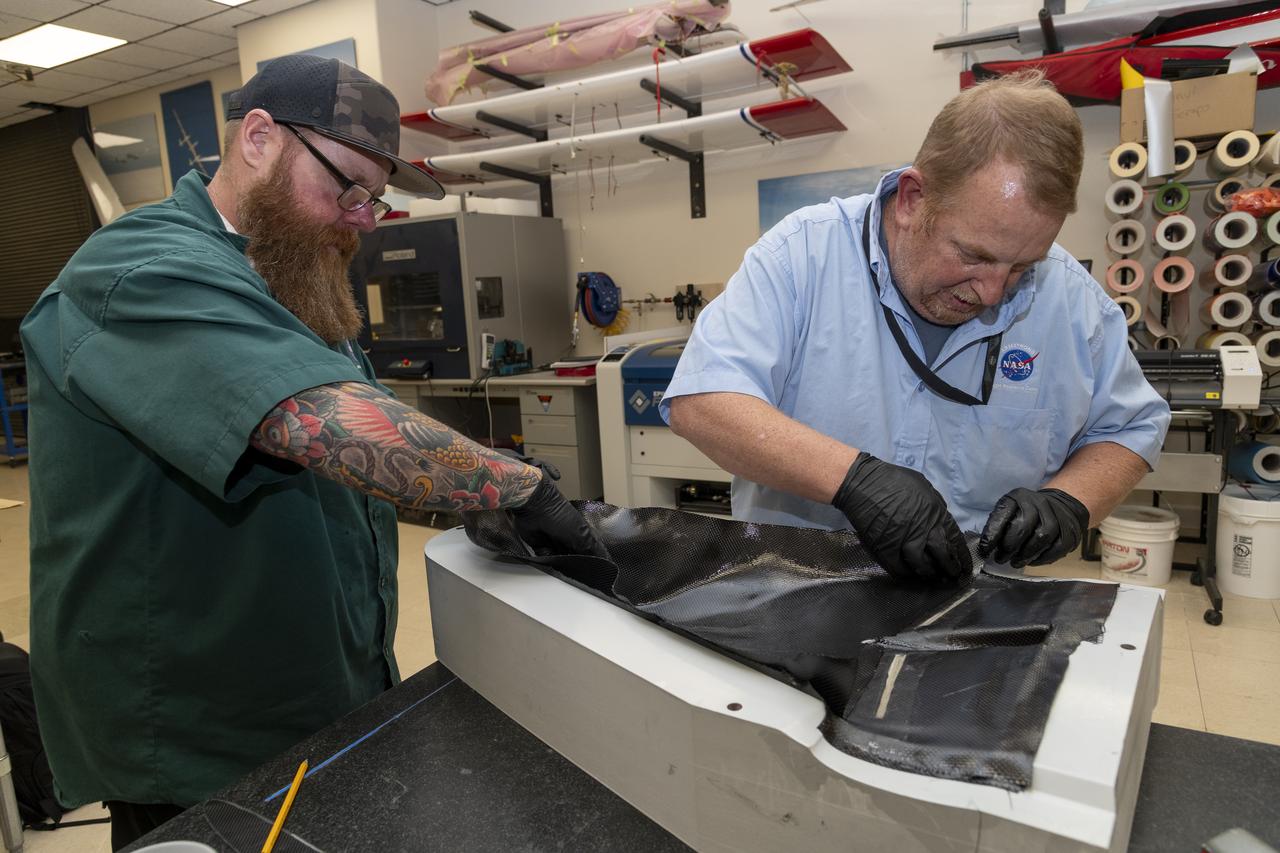
Justin Hall, left, and Robert “Red” Jensen, at NASA’s Armstrong Flight Research Center in Edwards, California, add layers of carbon fiber and foam in a mold. Another few layers will be added and then it will be cured about eight hours under vacuum. The parts were later removed from molds, refined, and joined for an aircraft that is designed to be an atmospheric probe.
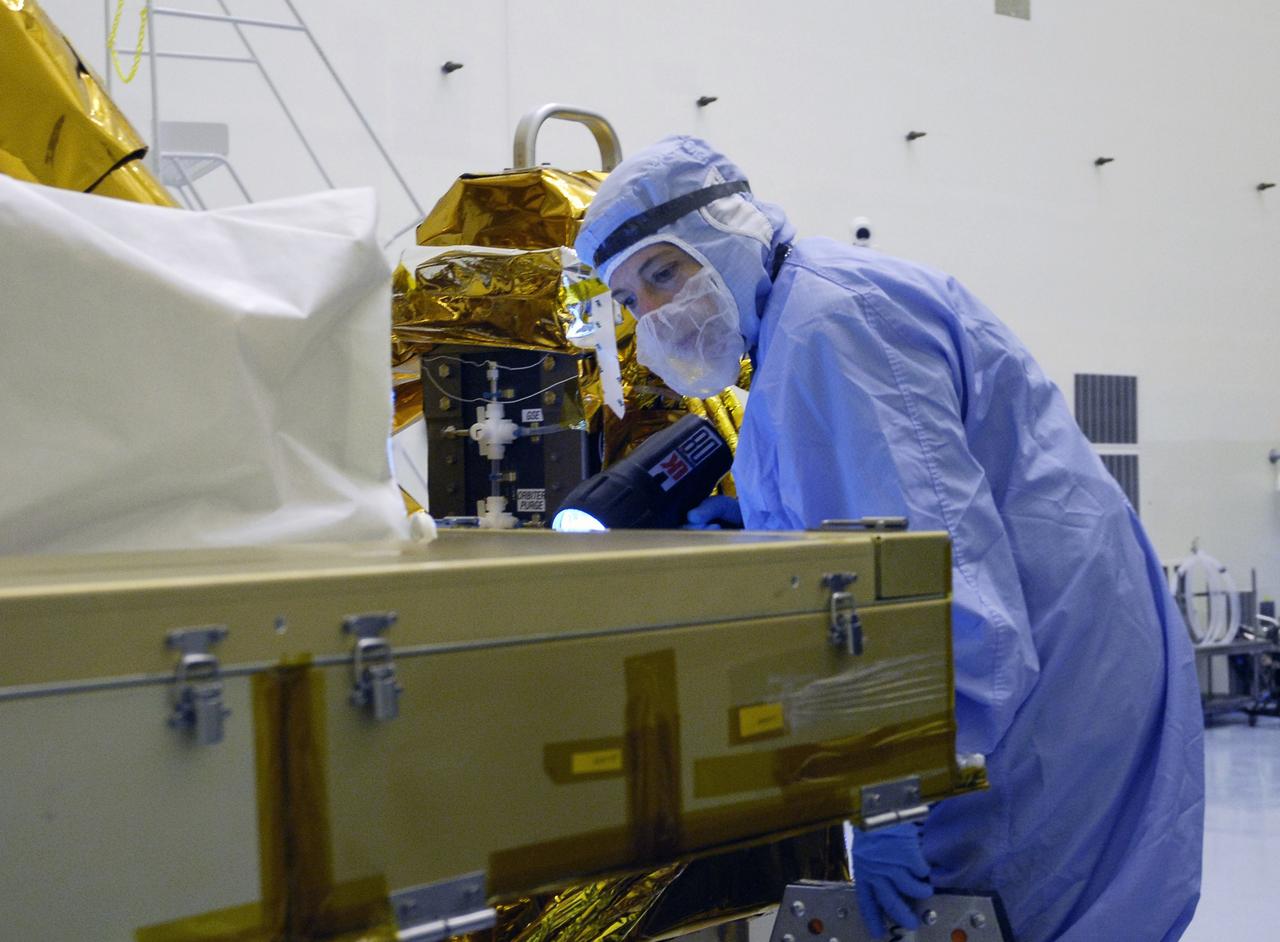
CAPE CANAVERAL, Fla. - In the Payload Hazardous Servicing Facility at NASA's Kennedy Space Center, a technician cleans contamination from the Super Lightweight Interchangeable Carrier, or SLIC. Contamination discovered Sept. 17 during preparations to deliver NASA's Hubble Space Telescope servicing payload to Launch Pad 39A. Cleanliness is extremely important for space shuttle Atlantis’ STS-125 mission to Hubble, and the teams have insured that the SLIC is ready to fly. The SLIC, which holds battery module assemblies, is built with state-of-the-art, lightweight, composite materials - carbon fiber with a cyanate ester resin and a titanium metal matrix composite. These composites have greater strength-to-mass ratios than the metals typically used in spacecraft design. The carrier is one of four being transferred to Launch Pad 39A. At the pad, the carriers will be loaded into Atlantis’ payload bay. Launch of Atlantis is targeted for Oct. 10. Photo credit: NASA/Jack Pfaller
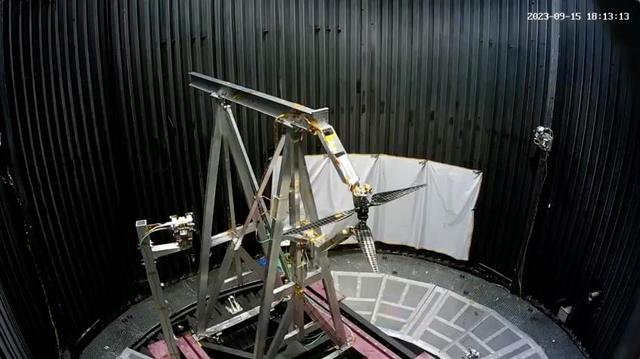
A dual rotor system for the next generation of Mars helicopters is tested in the 25-Foot Space Simulator at NASA's Jet Propulsion Laboratory in Southern California on Sept.15, 2023. Over three weeks, the carbon-fiber blades were spun up at ever-higher speeds and greater pitch angles to see if they would remain intact as their tips approached supersonic speeds. Longer and stronger than those used on NASA's Ingenuity Mars Helicopter, the blades reached Mach 0.95 during the test. The simulator's vacuum chamber allows engineers to test spacecraft and components in conditions like those they would face on Mars. The inset at upper right shows the same test from the perspective of a second camera also located inside the chamber. Movie available at https://photojournal.jpl.nasa.gov/catalog/PIA26079
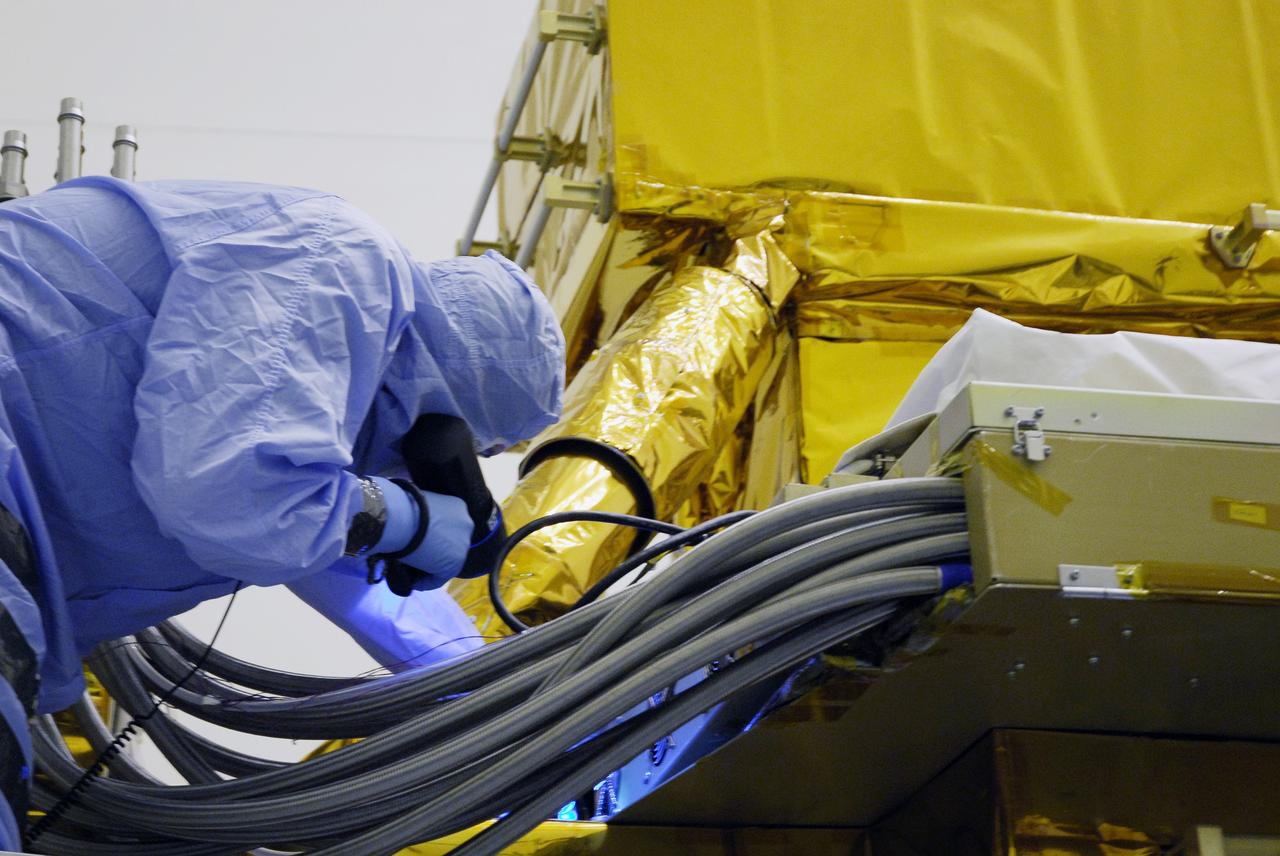
CAPE CANAVERAL, Fla. - In the Payload Hazardous Servicing Facility at NASA's Kennedy Space Center, a technician cleans contamination from the Super Lightweight Interchangeable Carrier, or SLIC. Contamination discovered Sept. 17 during preparations to deliver NASA's Hubble Space Telescope servicing payload to Launch Pad 39A. Cleanliness is extremely important for space shuttle Atlantis’ STS-125 mission to Hubble, and the teams have insured that the SLIC is ready to fly. The SLIC, which holds battery module assemblies, is built with state-of-the-art, lightweight, composite materials - carbon fiber with a cyanate ester resin and a titanium metal matrix composite. These composites have greater strength-to-mass ratios than the metals typically used in spacecraft design. The carrier is one of four being transferred to Launch Pad 39A. At the pad, the carriers will be loaded into Atlantis’ payload bay. Launch of Atlantis is targeted for Oct. 10. Photo credit: NASA/Jack Pfaller
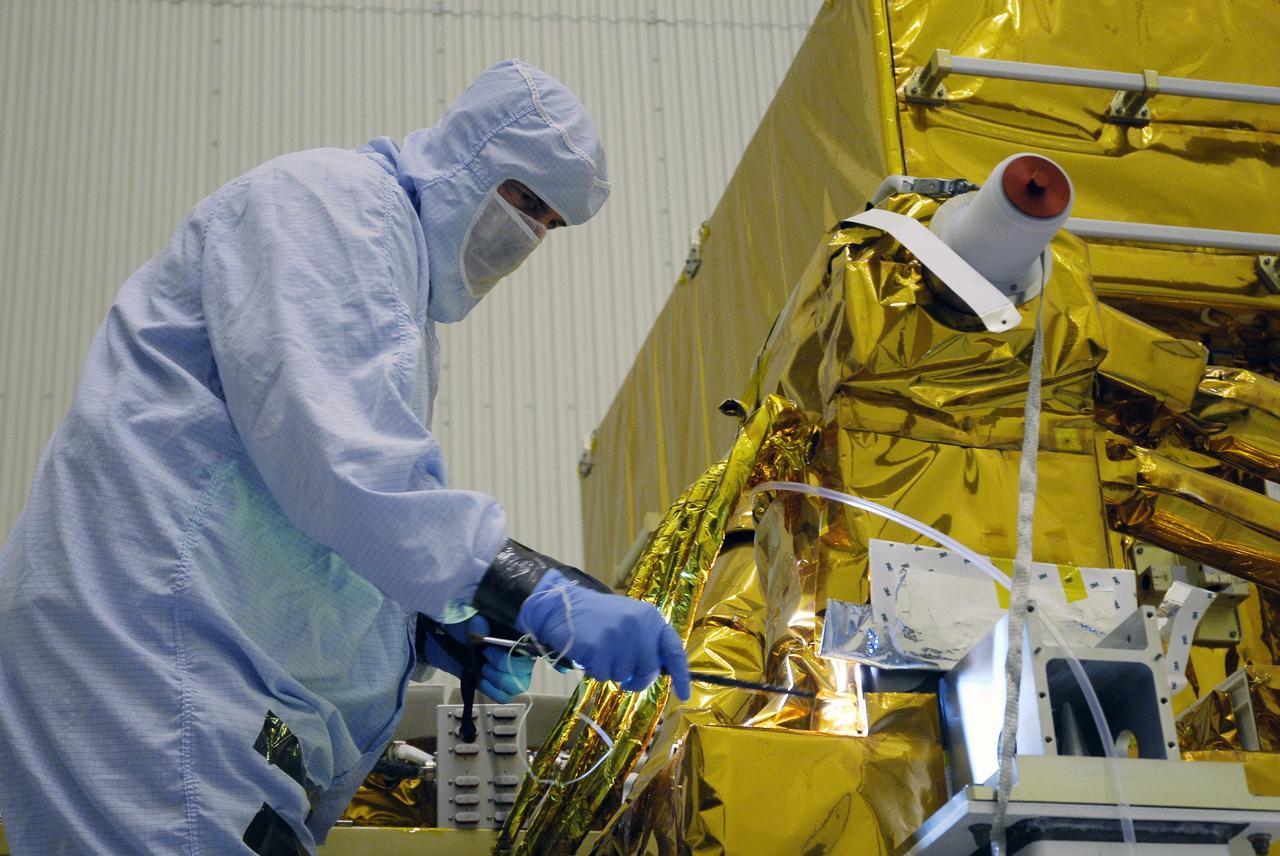
CAPE CANAVERAL, Fla. - In the Payload Hazardous Servicing Facility at NASA's Kennedy Space Center, a technician cleans contamination from the Super Lightweight Interchangeable Carrier, or SLIC. Contamination discovered Sept. 17 during preparations to deliver NASA's Hubble Space Telescope servicing payload to Launch Pad 39A. Cleanliness is extremely important for space shuttle Atlantis’ STS-125 mission to Hubble, and the teams have insured that the SLIC is ready to fly. The SLIC, which holds battery module assemblies, is built with state-of-the-art, lightweight, composite materials - carbon fiber with a cyanate ester resin and a titanium metal matrix composite. These composites have greater strength-to-mass ratios than the metals typically used in spacecraft design. The carrier is one of four being transferred to Launch Pad 39A. At the pad, the carriers will be loaded into Atlantis’ payload bay. Launch of Atlantis is targeted for Oct. 10. Photo credit: NASA/Jack Pfaller
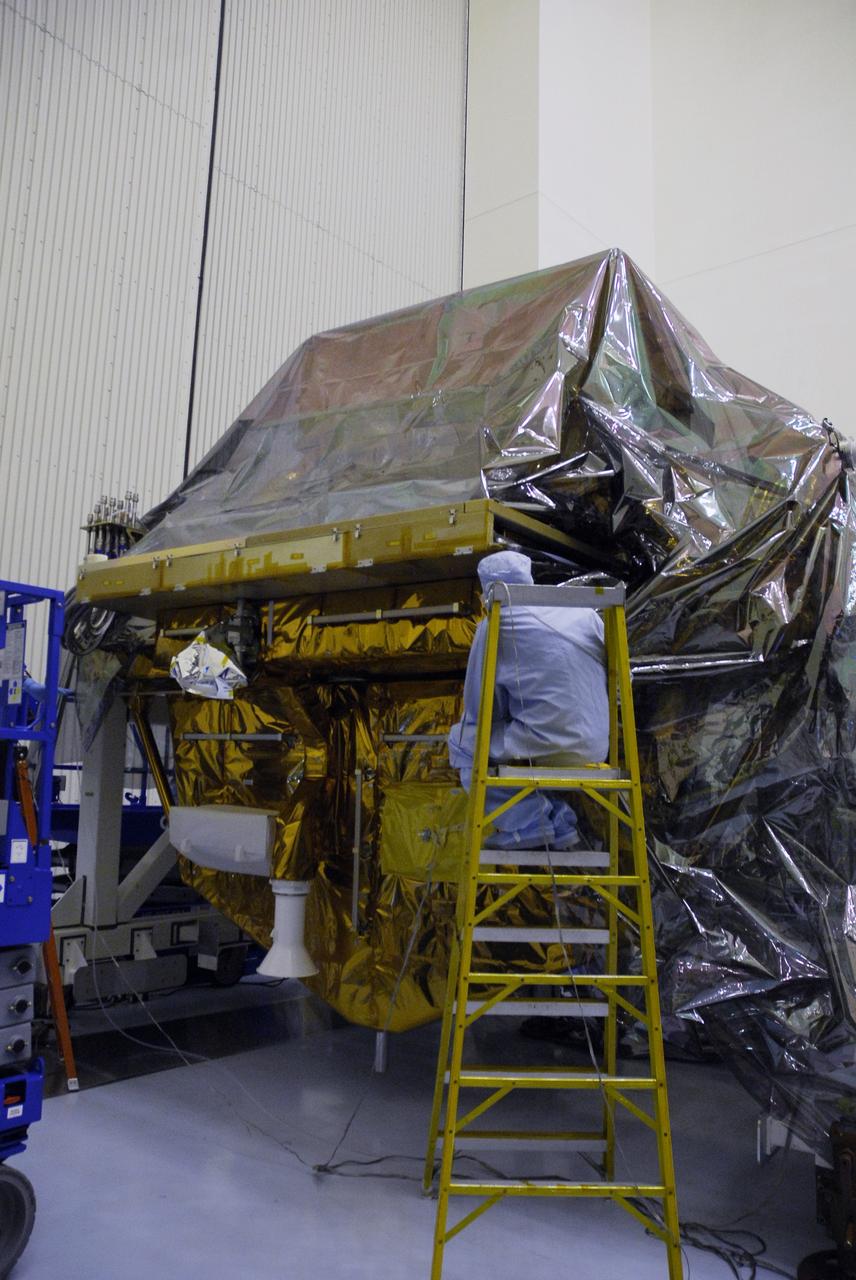
CAPE CANAVERAL, Fla. - In the Payload Hazardous Servicing Facility at NASA's Kennedy Space Center, the protective cover is being replaced on the Super Lightweight Interchangeable Carrier, or SLIC. The cover was removed to clean the carrier of contaminants found Sept. 17 during preparations to deliver NASA's Hubble Space Telescope servicing payload to Launch Pad 39A. Cleanliness is extremely important for space shuttle Atlantis’ STS-125 mission to Hubble, and the teams have insured that the SLIC is ready to fly. The SLIC, which holds battery module assemblies, is built with state-of-the-art, lightweight, composite materials - carbon fiber with a cyanate ester resin and a titanium metal matrix composite. These composites have greater strength-to-mass ratios than the metals typically used in spacecraft design. The carrier is one of four being transferred to Launch Pad 39A. At the pad, the carriers will be loaded into Atlantis’ payload bay. Launch of Atlantis is targeted for Oct. 10. Photo credit: NASA/Jack Pfaller
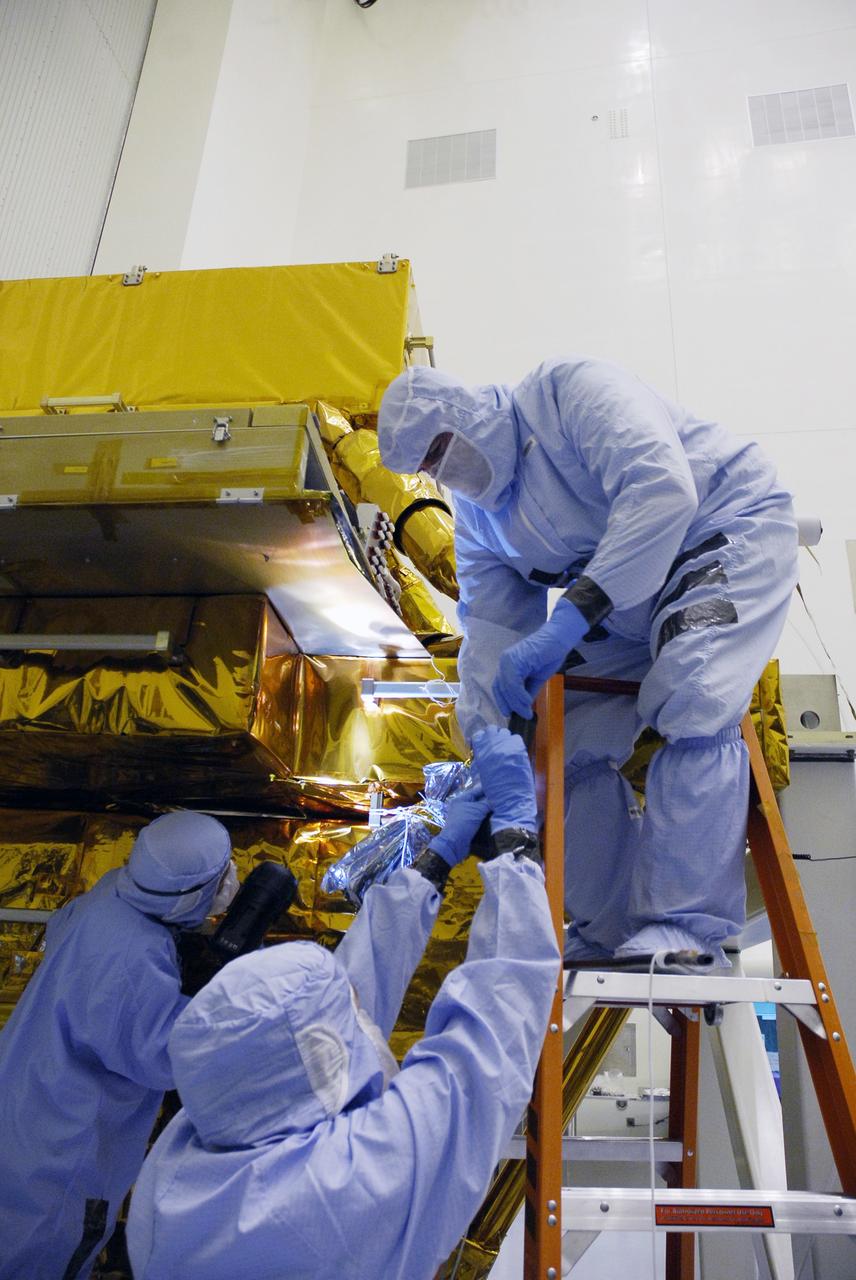
CAPE CANAVERAL, Fla. - In the Payload Hazardous Servicing Facility at NASA's Kennedy Space Center, technicians clean contamination from the Super Lightweight Interchangeable Carrier, or SLIC. Contamination discovered Sept. 17 during preparations to deliver NASA's Hubble Space Telescope servicing payload to Launch Pad 39A. Cleanliness is extremely important for space shuttle Atlantis’ STS-125 mission to Hubble, and the teams have insured that the SLIC is ready to fly. The SLIC, which holds battery module assemblies, is built with state-of-the-art, lightweight, composite materials - carbon fiber with a cyanate ester resin and a titanium metal matrix composite. These composites have greater strength-to-mass ratios than the metals typically used in spacecraft design. The carrier is one of four being transferred to Launch Pad 39A. At the pad, the carriers will be loaded into Atlantis’ payload bay. Launch of Atlantis is targeted for Oct. 10. Photo credit: NASA/Jack Pfaller
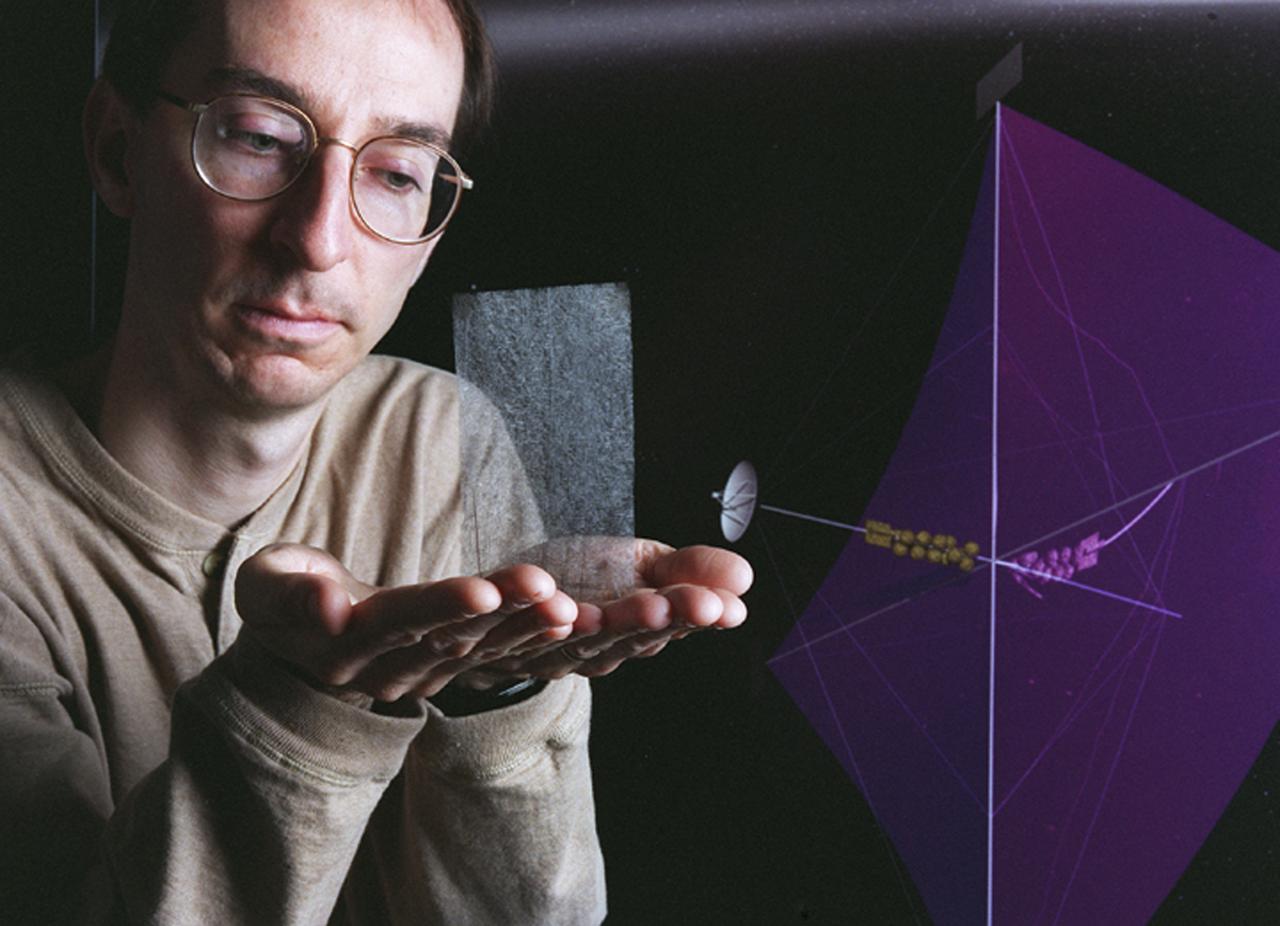
Engineers at Marshall Space Flight Center's (MSFC) Interstellar Propulsion Research department are proposing different solutions to combustion propellants for future space travel. One alternative being tested is the solar sail. The idea is, once deployed, the sail will allow solar winds to propel a spacecraft away from Earth and towards its destination. This would allow a spacecraft to travel indefinitely without the need to refuel during its ong journey. Thin reflective sails could be propelled through space by sunlight, microwave beams, or laser beams, just as the wind pushes sailboats on Earth. The sail will be the largest spacecraft ever built, sparning 440 yards, twice the diameter of the Louisiana Super Dome. Construction materials are being tested in a simulated space environment, where they are exposed to harsh conditions to test their performance and durability in extremely hot and cold temperatures. A leading candidate for the construction material is a carbon fiber material whose density is less than 1/10 ounce per square yard, the equivalent of flattening one raisin to the point that it covers a square yard. In space, the material would unfurl like a fan when it is deployed from an expendable rocket. This photo shows Les Johnson, manager of MSFC's Interstellar Propulsion Research Center holding the rigid, lightweight carbon fiber. An artist's concept of the sail is on the right. Mankind's first venture outside of our solar system is proposed for launch in a 2010 timeframe. An interstellar probe, powered by the fastest spacecraft ever flown, will zoom toward the stars at 58 miles per second. It will cover the distance from New York to Los Angeles in less than a minute and will travel over 23 billion miles beyond the edge of the solar system.
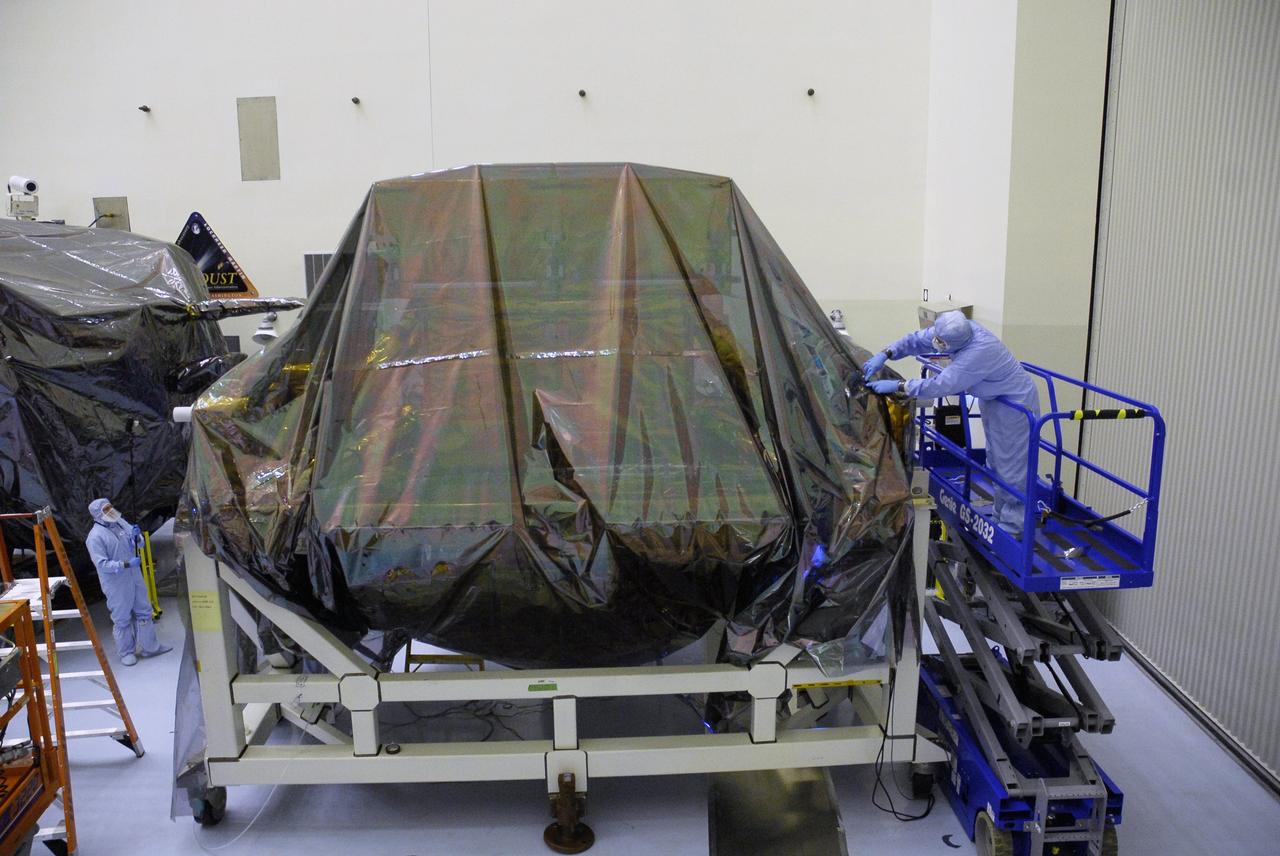
CAPE CANAVERAL, Fla. - In the Payload Hazardous Servicing Facility at NASA's Kennedy Space Center, technicians finish replacing the protective cover over the Super Lightweight Interchangeable Carrier, or SLIC. The cover was removed to clean the carrier of contaminants found Sept. 17 during preparations to deliver NASA's Hubble Space Telescope servicing payload to Launch Pad 39A. Cleanliness is extremely important for space shuttle Atlantis’ STS-125 mission to Hubble, and the teams have insured that the SLIC is ready to fly. The SLIC, which holds battery module assemblies, is built with state-of-the-art, lightweight, composite materials - carbon fiber with a cyanate ester resin and a titanium metal matrix composite. These composites have greater strength-to-mass ratios than the metals typically used in spacecraft design. The carrier is one of four being transferred to Launch Pad 39A. At the pad, the carriers will be loaded into Atlantis’ payload bay. Launch of Atlantis is targeted for Oct. 10. Photo credit: NASA/Jack Pfaller
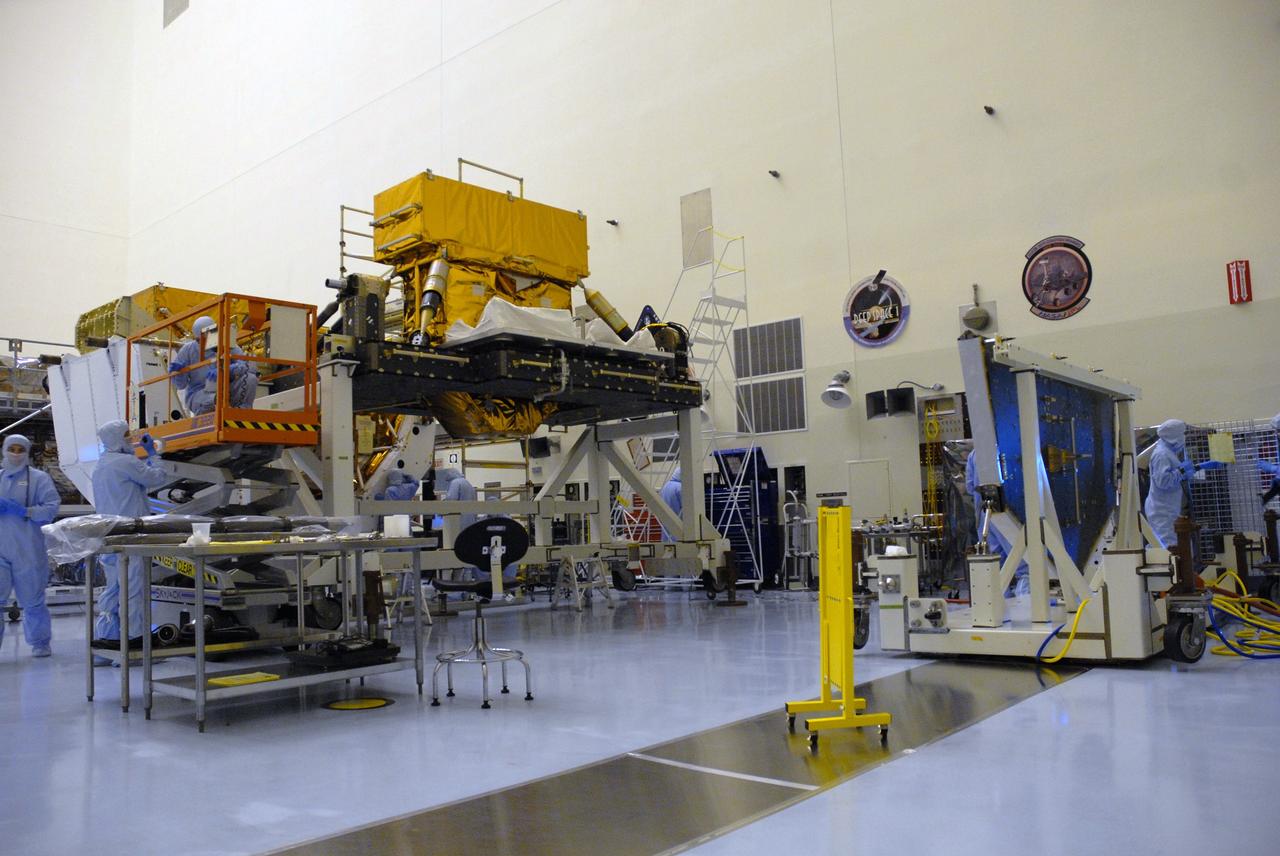
CAPE CANAVERAL, Fla. – In the high bay of the Payload Hazardous Servicing Facility at NASA's Kennedy Space Center, the Super Lightweight Interchangeable Carrier for the Hubble Space Telescope, elevated at left, is ready to be mated to the Hubble vertical platform, at right. The Super Lightweight Interchangeable Carrier, or SLIC, is one of four carriers supporting hardware for space shuttle Atlantis' STS-125 mission to service the telescope. SLIC is built with state-of-the-art, lightweight, composite materials - carbon fiber with a cyanate ester resin and a titanium metal matrix composite. These composites have greater strength-to-mass ratios than the metals typically used in spacecraft design. The Orbital Replacement Unit Carrier, or ORUC, and the Flight Support System, or FSS, have also arrived at Kennedy. The Multi-Use Lightweight Equipment carrier will be delivered in early August. The carriers will be prepared for the integration of telescope science instruments, both internal and external replacement components, as well as the flight support equipment to be used by the astronauts during the Hubble servicing mission, targeted for launch Oct. 8. Photo credit: NASA/Jack Pfaller
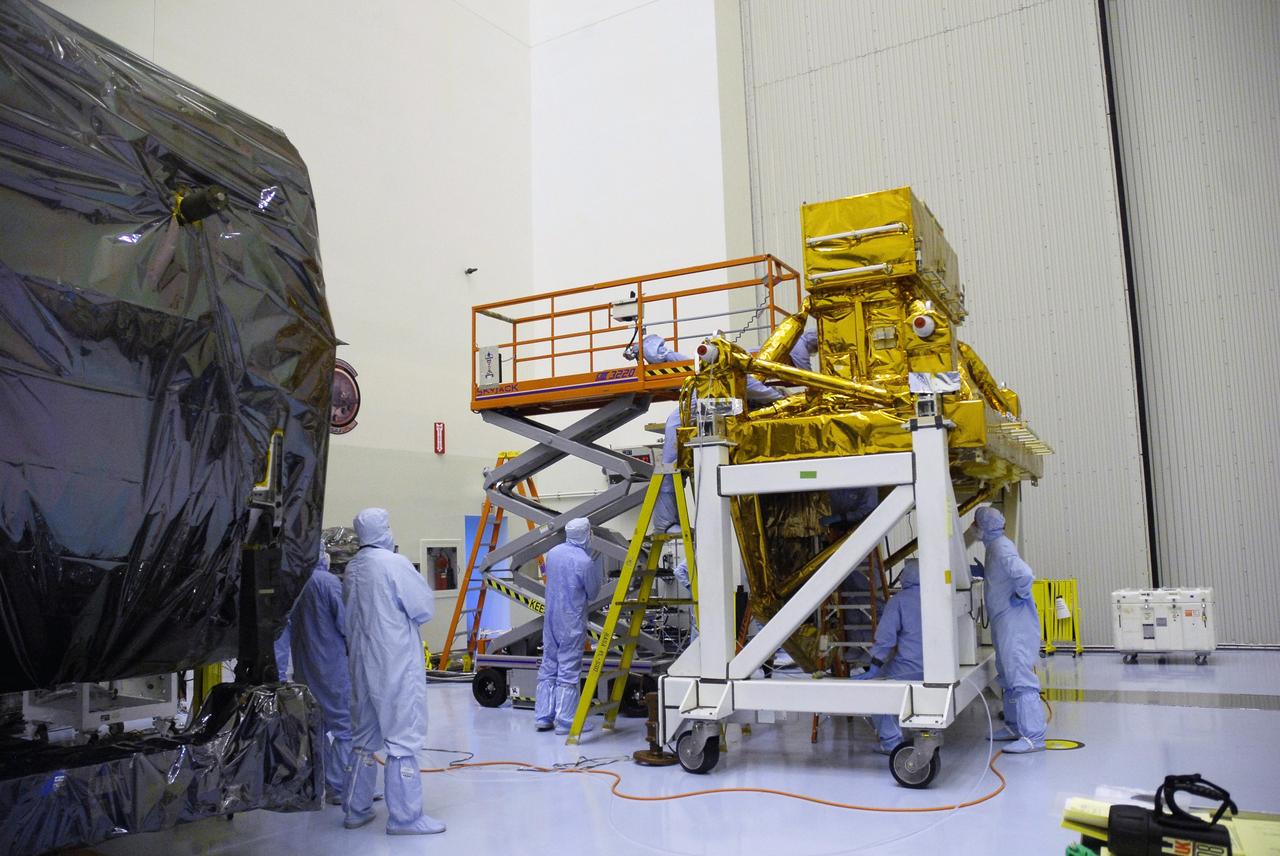
CAPE CANAVERAL, Fla. - In the Payload Hazardous Servicing Facility at NASA's Kennedy Space Center, technicians inspect areas of the Super Lightweight Interchangeable Carrier, or SLIC, for contamination. Contamination discovered Sept. 17 during preparations to deliver NASA's Hubble Space Telescope servicing payload to Launch Pad 39A will be removed. Cleanliness is extremely important for space shuttle Atlantis’ STS-125 mission to Hubble, and the teams have insured that the SLIC is ready to fly. The SLIC, which holds battery module assemblies for servicing of the Hubble Space Telescope on the STS-125 mission, is built with state-of-the-art, lightweight, composite materials - carbon fiber with a cyanate ester resin and a titanium metal matrix composite. These composites have greater strength-to-mass ratios than the metals typically used in spacecraft design. The carrier is one of four being transferred to Launch Pad 39A. At the pad, the carriers will be loaded into Atlantis’ payload bay. Launch of Atlantis is targeted for Oct. 10. Photo credit: NASA/Jack Pfaller
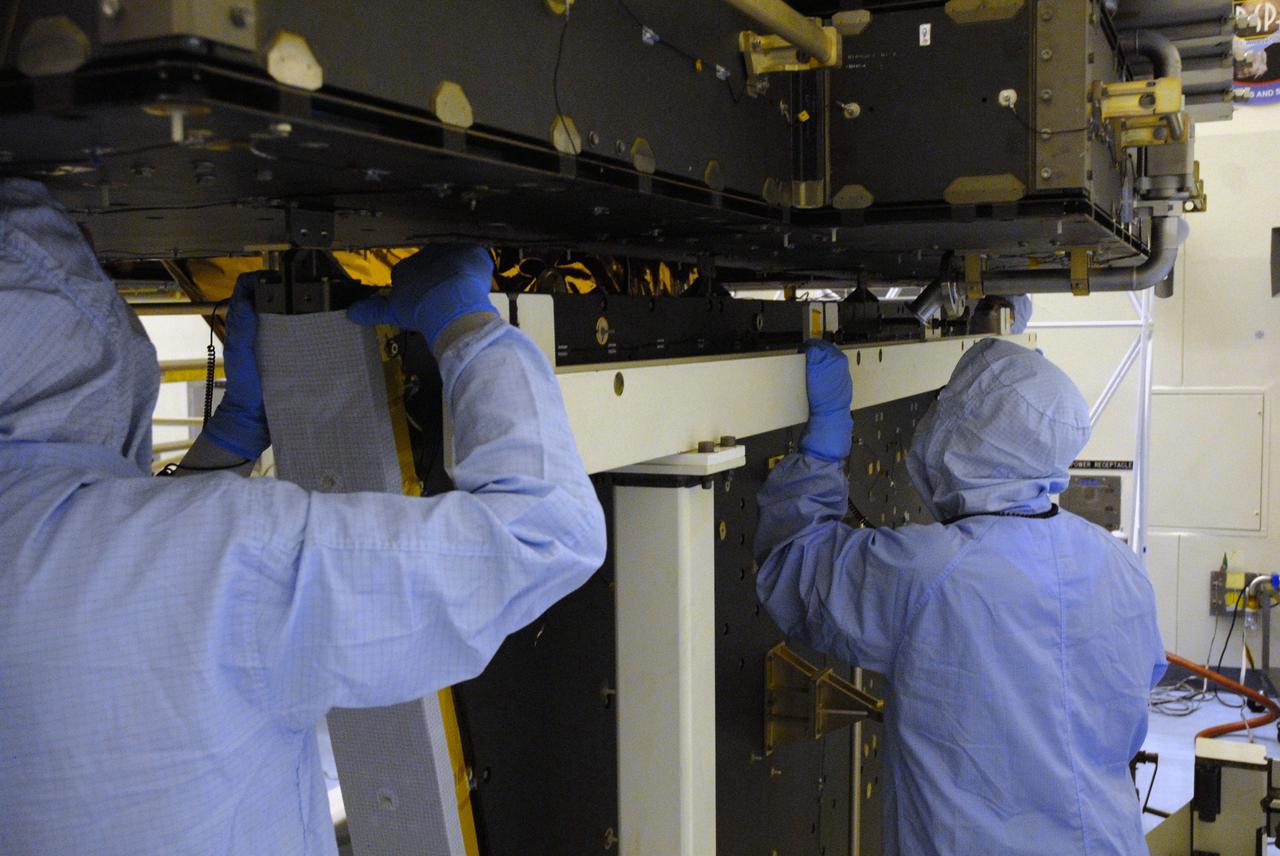
CAPE CANAVERAL, Fla. – In the high bay of the Payload Hazardous Servicing Facility at NASA's Kennedy Space Center, workers from NASA's Goddard Space Flight Center secure the Hubble vertical platform to the Super Lightweight Interchangeable Carrier for the Hubble Space Telescope. The Super Lightweight Interchangeable Carrier, or SLIC, is one of four carriers supporting hardware for space shuttle Atlantis' STS-125 mission to service the telescope. SLIC is built with state-of-the-art, lightweight, composite materials - carbon fiber with a cyanate ester resin and a titanium metal matrix composite. These composites have greater strength-to-mass ratios than the metals typically used in spacecraft design. The Orbital Replacement Unit Carrier, or ORUC, and the Flight Support System, or FSS, have also arrived at Kennedy. The Multi-Use Lightweight Equipment carrier will be delivered in early August. The carriers will be prepared for the integration of telescope science instruments, both internal and external replacement components, as well as the flight support equipment to be used by the astronauts during the Hubble servicing mission, targeted for launch Oct. 8. Photo credit: NASA/Jack Pfaller
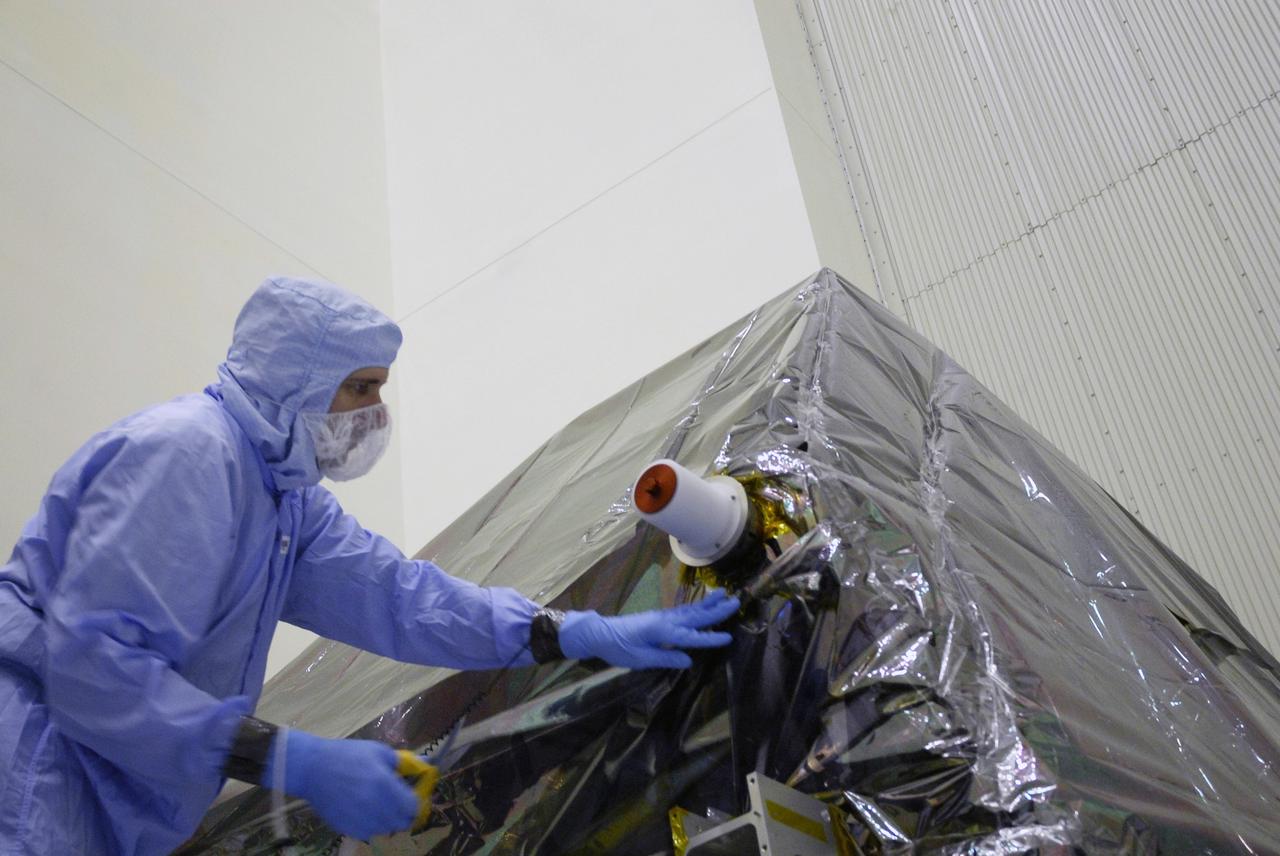
CAPE CANAVERAL, Fla. - In the Payload Hazardous Servicing Facility at NASA's Kennedy Space Center, a technician begins uncovering the Super Lightweight Interchangeable Carrier, or SLIC. Contamination discovered Sept. 17 during preparations to deliver NASA's Hubble Space Telescope servicing payload to Launch Pad 39A will be removed. Cleanliness is extremely important for space shuttle Atlantis’ STS-125 mission to Hubble, and the teams have insured that the SLIC is ready to fly. The SLIC, which holds battery module assemblies for servicing of the Hubble Space Telescope on the STS-125 mission, is built with state-of-the-art, lightweight, composite materials - carbon fiber with a cyanate ester resin and a titanium metal matrix composite. These composites have greater strength-to-mass ratios than the metals typically used in spacecraft design. The carrier is one of four being transferred to Launch Pad 39A. At the pad, the carriers will be loaded into Atlantis’ payload bay. Launch of Atlantis is targeted for Oct. 10. Photo credit: NASA/Jack Pfaller
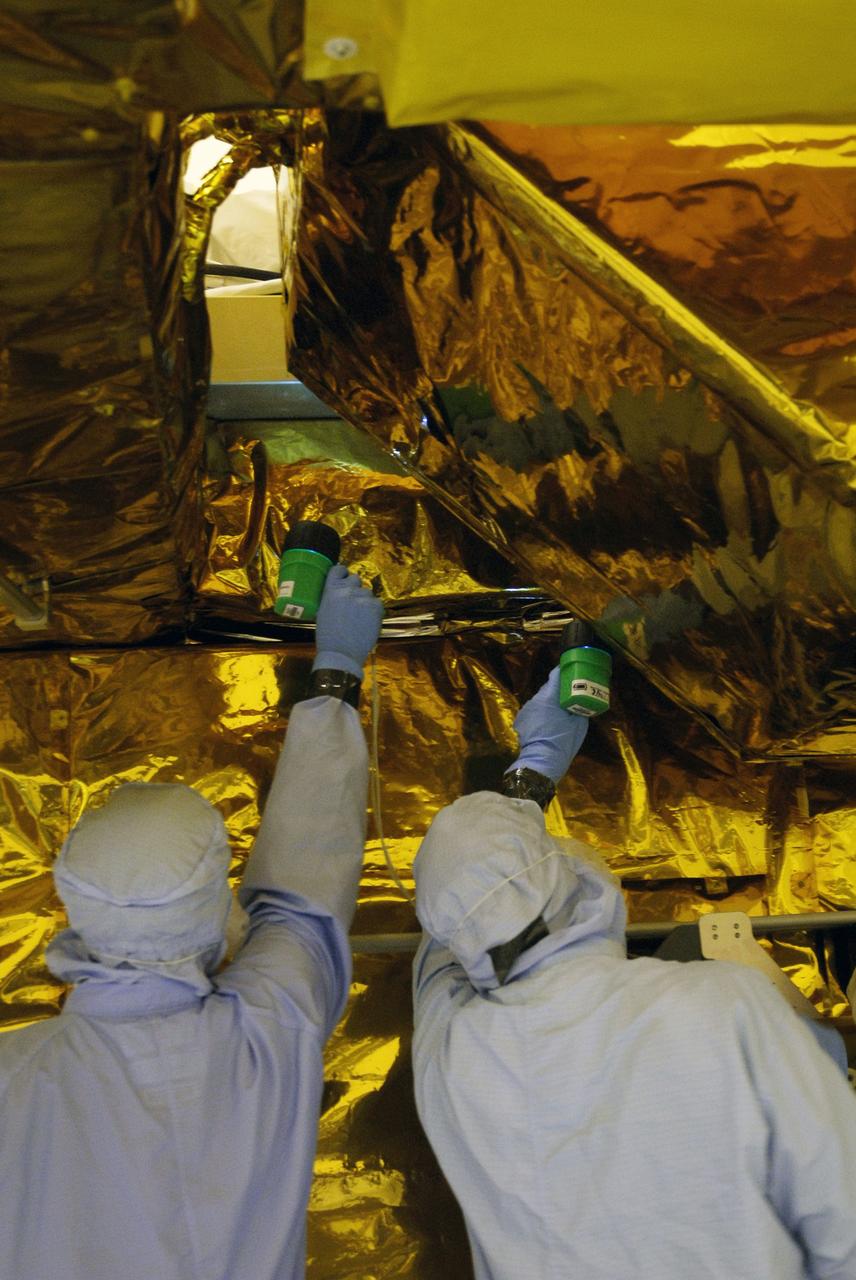
CAPE CANAVERAL, Fla. - In the Payload Hazardous Servicing Facility at NASA's Kennedy Space Center, technicians inspect areas of the Super Lightweight Interchangeable Carrier, or SLIC, for contamination. Contamination discovered Sept. 17 during preparations to deliver NASA's Hubble Space Telescope servicing payload to Launch Pad 39A will be removed. Cleanliness is extremely important for space shuttle Atlantis’ STS-125 mission to Hubble, and the teams have insured that the SLIC is ready to fly. The SLIC, which holds battery module assemblies for servicing of the Hubble Space Telescope on the STS-125 mission, is built with state-of-the-art, lightweight, composite materials - carbon fiber with a cyanate ester resin and a titanium metal matrix composite. These composites have greater strength-to-mass ratios than the metals typically used in spacecraft design. The carrier is one of four being transferred to Launch Pad 39A. At the pad, the carriers will be loaded into Atlantis’ payload bay. Launch of Atlantis is targeted for Oct. 10. Photo credit: NASA/Jack Pfaller
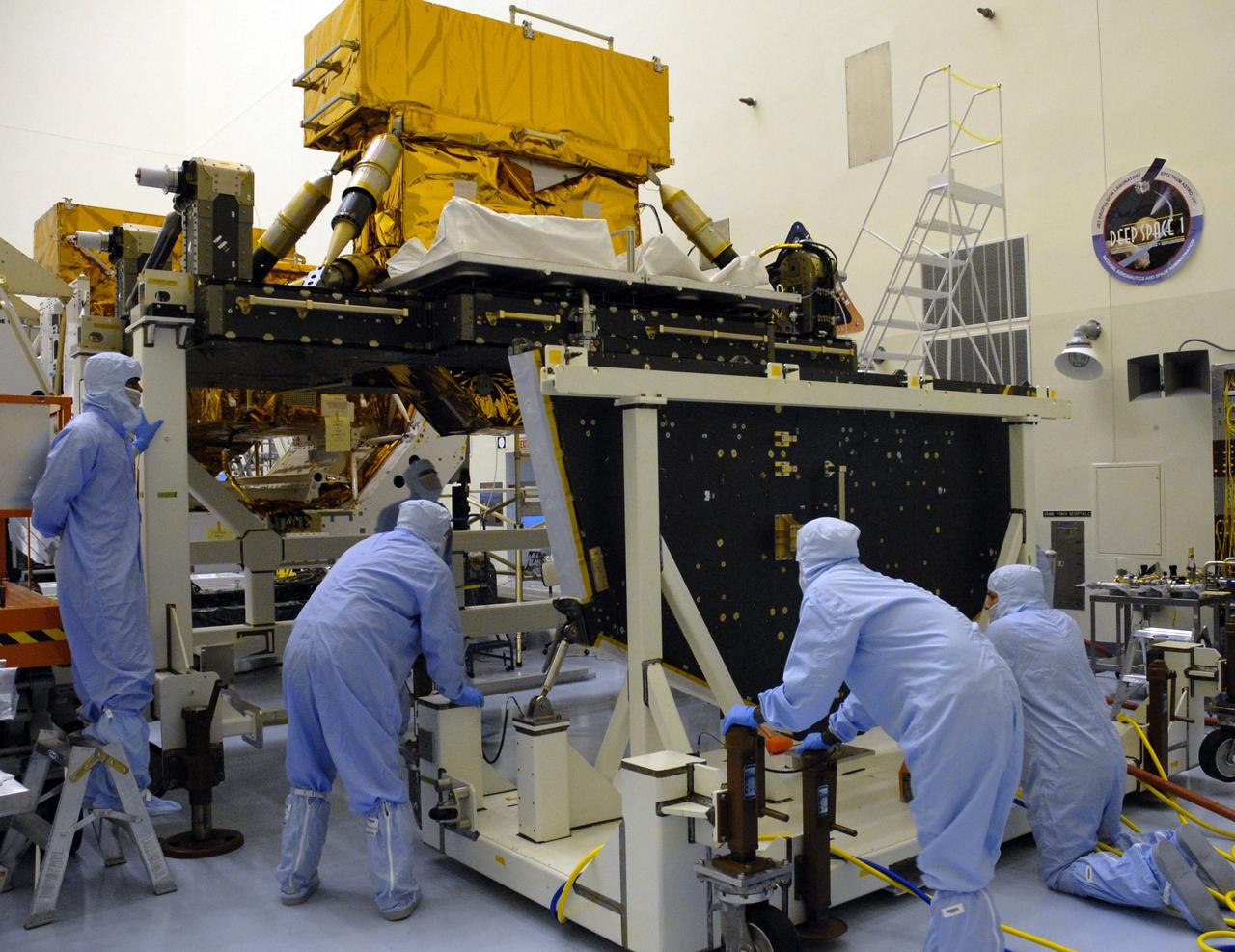
CAPE CANAVERAL, Fla. – In the high bay of the Payload Hazardous Servicing Facility at NASA's Kennedy Space Center, workers from NASA's Goddard Space Flight Center move the Hubble vertical platform toward the Super Lightweight Interchangeable Carrier for the Hubble Space Telescope, to which it will be mated. The Super Lightweight Interchangeable Carrier, or SLIC, is one of four carriers supporting hardware for space shuttle Atlantis' STS-125 mission to service the telescope. SLIC is built with state-of-the-art, lightweight, composite materials - carbon fiber with a cyanate ester resin and a titanium metal matrix composite. These composites have greater strength-to-mass ratios than the metals typically used in spacecraft design. The Orbital Replacement Unit Carrier, or ORUC, and the Flight Support System, or FSS, have also arrived at Kennedy. The Multi-Use Lightweight Equipment carrier will be delivered in early August. The carriers will be prepared for the integration of telescope science instruments, both internal and external replacement components, as well as the flight support equipment to be used by the astronauts during the Hubble servicing mission, targeted for launch Oct. 8. Photo credit: NASA/Jack Pfaller
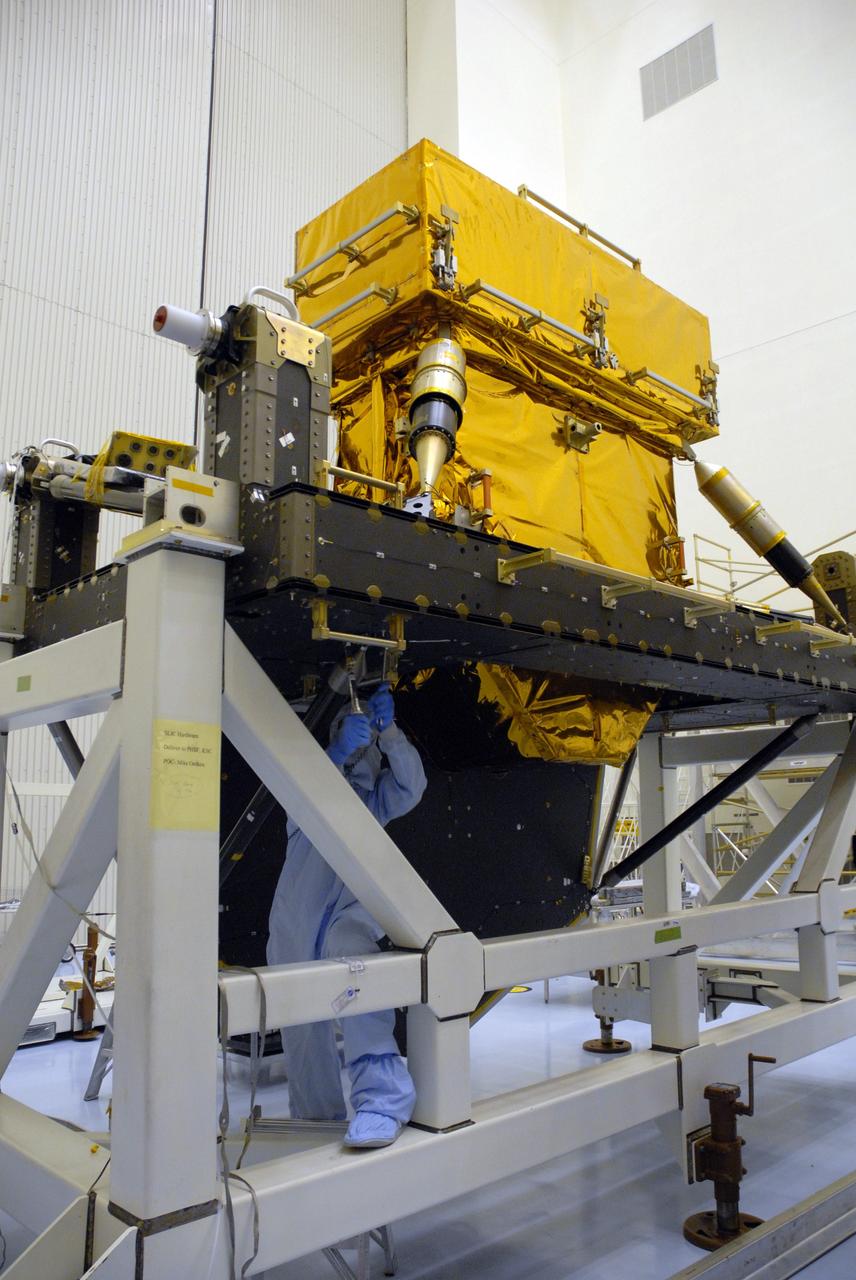
CAPE CANAVERAL, Fla. -- In the high bay of the Payload Hazardous Servicing Facility at NASA's Kennedy Space Center, a worker from NASA's Goddard Space Flight Center installs a pallet support strut on the Super Lightweight Interchangeable Carrier for the Hubble Space Telescope. The Super Lightweight Interchangeable Carrier, or SLIC, is one of four carriers supporting hardware for space shuttle Atlantis' STS-125 mission to service the telescope. SLIC is built with state-of-the-art, lightweight, composite materials - carbon fiber with a cyanate ester resin and a titanium metal matrix composite. These composites have greater strength-to-mass ratios than the metals typically used in spacecraft design. The Orbital Replacement Unit Carrier, or ORUC, and the Flight Support System, or FSS, have also arrived at Kennedy. The Multi-Use Lightweight Equipment carrier will be delivered in early August. The carriers will be prepared for the integration of telescope science instruments, both internal and external replacement components, as well as the flight support equipment to be used by the astronauts during the Hubble servicing mission, targeted for launch Oct. 8. Photo credit: NASA/Jack Pfaller
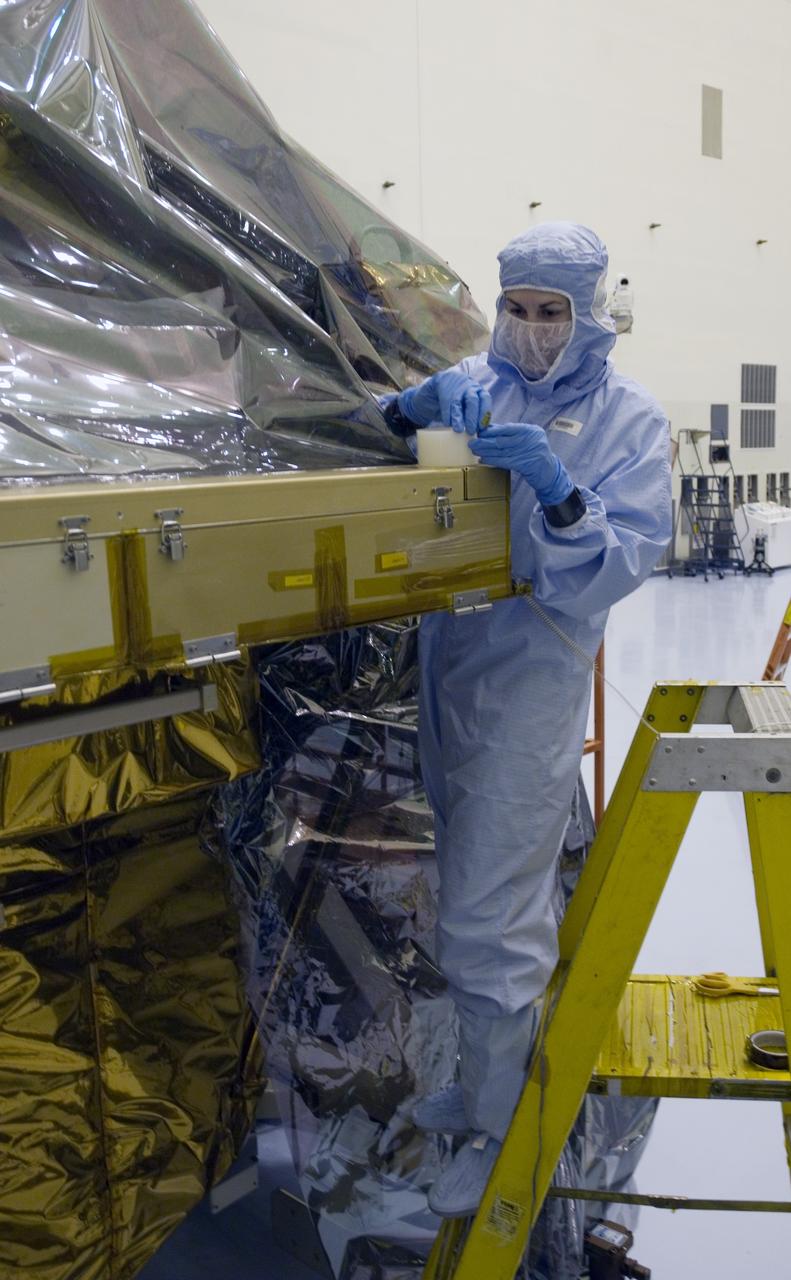
CAPE CANAVERAL, Fla. - In the Payload Hazardous Servicing Facility at NASA's Kennedy Space Center, a technician works to replace the protective cover on the Super Lightweight Interchangeable Carrier, or SLIC. The cover was removed to clean the carrier of contaminants found Sept. 17 during preparations to deliver NASA's Hubble Space Telescope servicing payload to Launch Pad 39A. Cleanliness is extremely important for space shuttle Atlantis’ STS-125 mission to Hubble, and the teams have insured that the SLIC is ready to fly. The SLIC, which holds battery module assemblies, is built with state-of-the-art, lightweight, composite materials - carbon fiber with a cyanate ester resin and a titanium metal matrix composite. These composites have greater strength-to-mass ratios than the metals typically used in spacecraft design. The carrier is one of four being transferred to Launch Pad 39A. At the pad, the carriers will be loaded into Atlantis’ payload bay. Launch of Atlantis is targeted for Oct. 10. Photo credit: NASA/Jack Pfaller
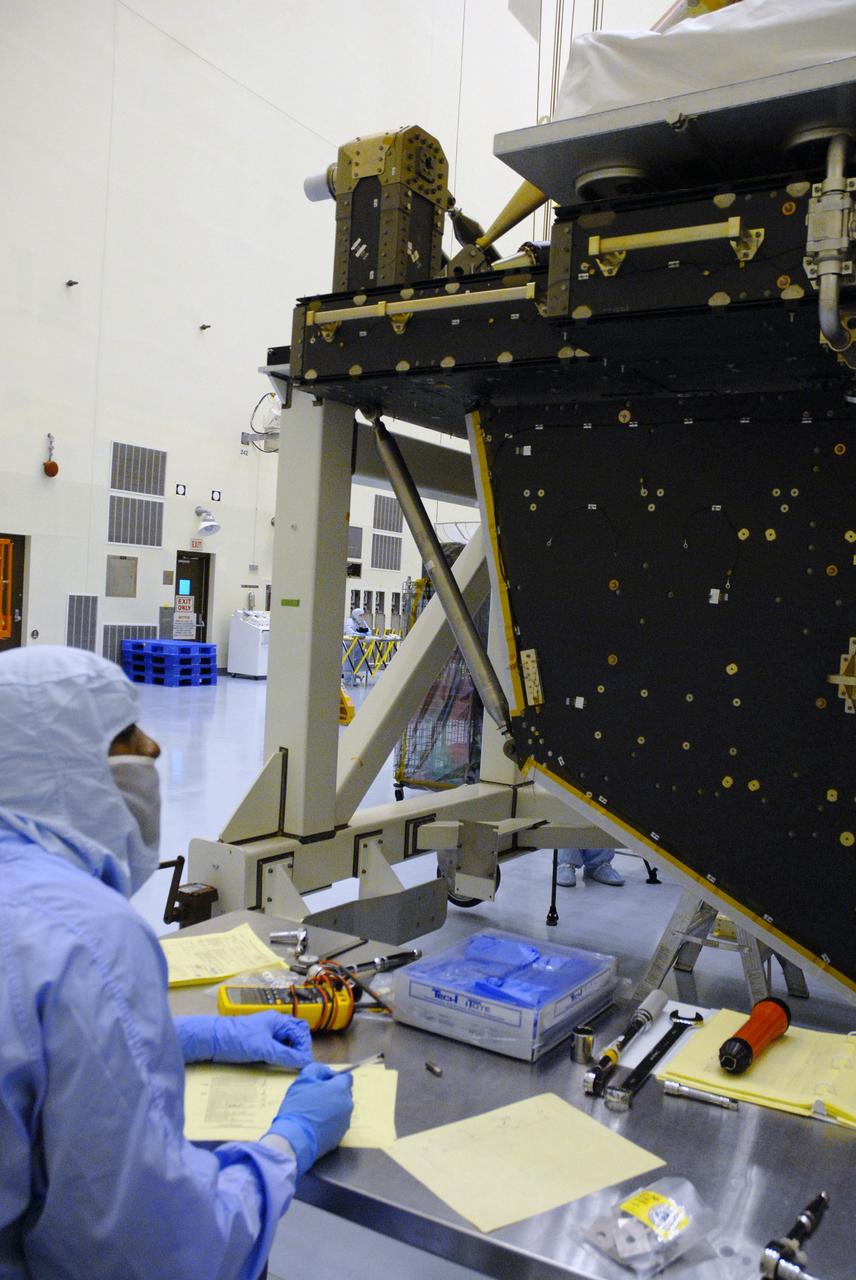
CAPE CANAVERAL, Fla. -- In the high bay of the Payload Hazardous Servicing Facility at NASA's Kennedy Space Center, a worker from NASA's Goddard Space Flight Center documents the installation of a pallet support strut on the Super Lightweight Interchangeable Carrier for the Hubble Space Telescope. The Super Lightweight Interchangeable Carrier, or SLIC, is one of four carriers supporting hardware for space shuttle Atlantis' STS-125 mission to service the telescope. SLIC is built with state-of-the-art, lightweight, composite materials - carbon fiber with a cyanate ester resin and a titanium metal matrix composite. These composites have greater strength-to-mass ratios than the metals typically used in spacecraft design. The Orbital Replacement Unit Carrier, or ORUC, and the Flight Support System, or FSS, have also arrived at Kennedy. The Multi-Use Lightweight Equipment carrier will be delivered in early August. The carriers will be prepared for the integration of telescope science instruments, both internal and external replacement components, as well as the flight support equipment to be used by the astronauts during the Hubble servicing mission, targeted for launch Oct. 8. Photo credit: NASA/Jack Pfaller
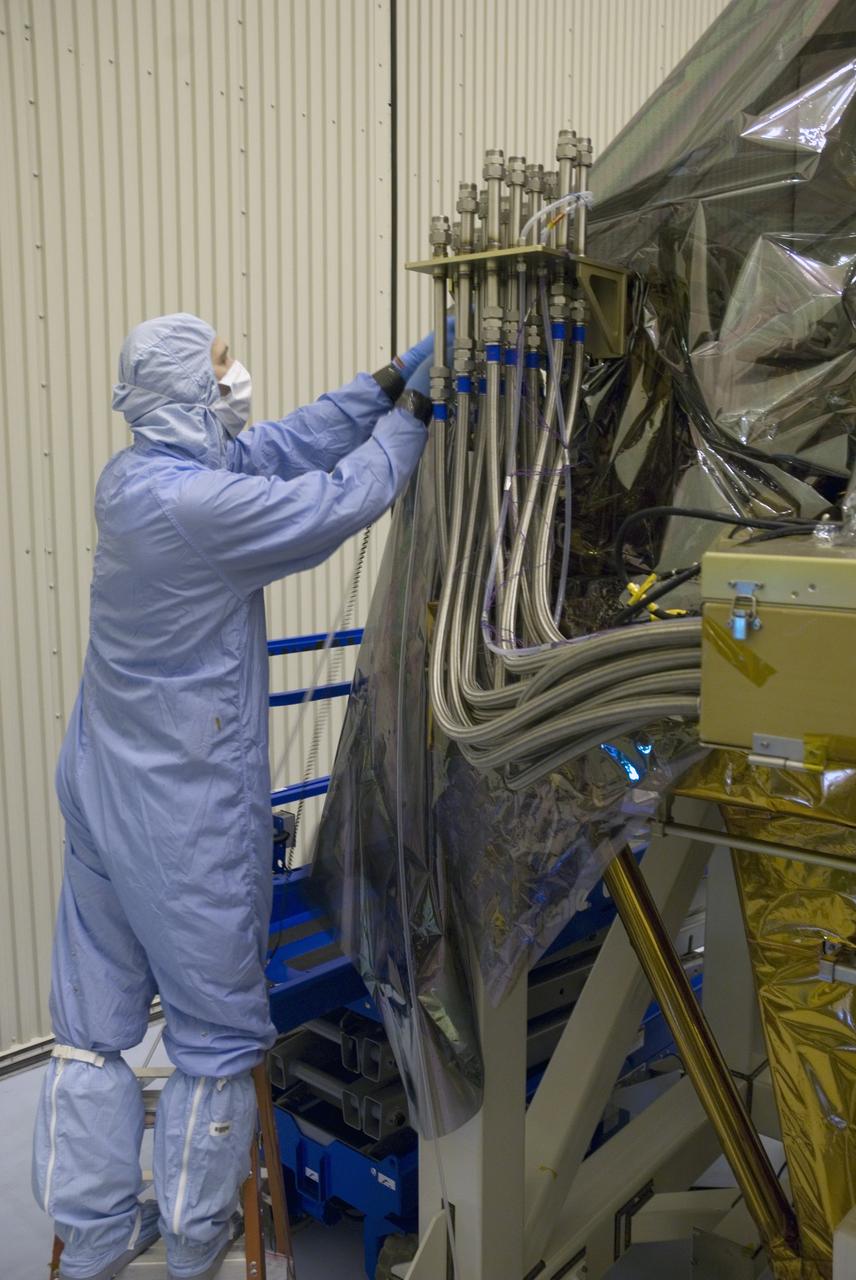
CAPE CANAVERAL, Fla. - In the Payload Hazardous Servicing Facility at NASA's Kennedy Space Center, a technician works to replace the protective cover on the Super Lightweight Interchangeable Carrier, or SLIC. The cover was removed to clean the carrier of contaminants found Sept. 17 during preparations to deliver NASA's Hubble Space Telescope servicing payload to Launch Pad 39A. Cleanliness is extremely important for space shuttle Atlantis’ STS-125 mission to Hubble, and the teams have insured that the SLIC is ready to fly. The SLIC, which holds battery module assemblies, is built with state-of-the-art, lightweight, composite materials - carbon fiber with a cyanate ester resin and a titanium metal matrix composite. These composites have greater strength-to-mass ratios than the metals typically used in spacecraft design. The carrier is one of four being transferred to Launch Pad 39A. At the pad, the carriers will be loaded into Atlantis’ payload bay. Launch of Atlantis is targeted for Oct. 10. Photo credit: NASA/Jack Pfaller
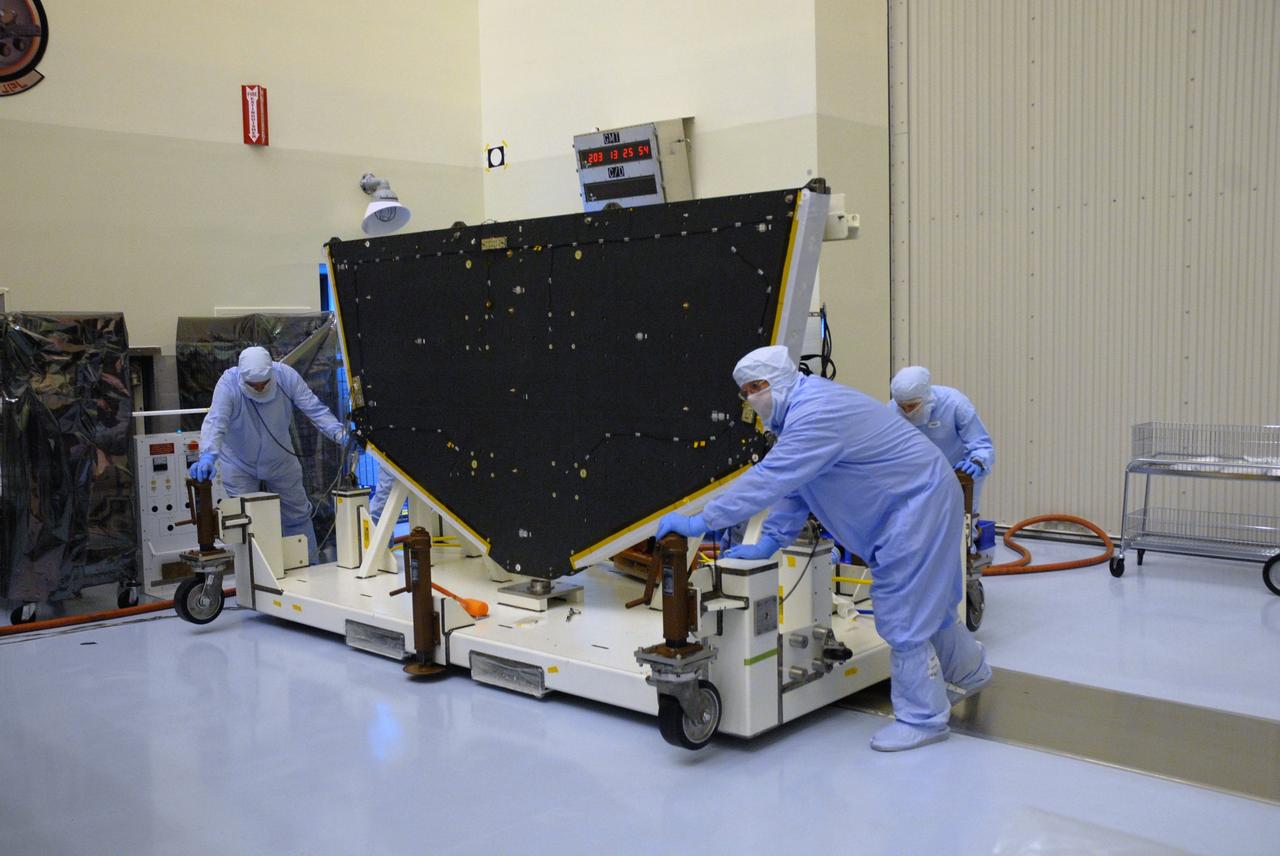
CAPE CANAVERAL, Fla. – In the high bay of the Payload Hazardous Servicing Facility at NASA's Kennedy Space Center, workers from NASA's Goddard Space Flight Center move the Hubble vertical platform toward the Super Lightweight Interchangeable Carrier for the Hubble Space Telescope, to which it will be mated. The Super Lightweight Interchangeable Carrier, or SLIC, is one of four carriers supporting hardware for space shuttle Atlantis' STS-125 mission to service the telescope. SLIC is built with state-of-the-art, lightweight, composite materials - carbon fiber with a cyanate ester resin and a titanium metal matrix composite. These composites have greater strength-to-mass ratios than the metals typically used in spacecraft design. The Orbital Replacement Unit Carrier, or ORUC, and the Flight Support System, or FSS, have also arrived at Kennedy. The Multi-Use Lightweight Equipment carrier will be delivered in early August. The carriers will be prepared for the integration of telescope science instruments, both internal and external replacement components, as well as the flight support equipment to be used by the astronauts during the Hubble servicing mission, targeted for launch Oct. 8. Photo credit: NASA/Jack Pfaller
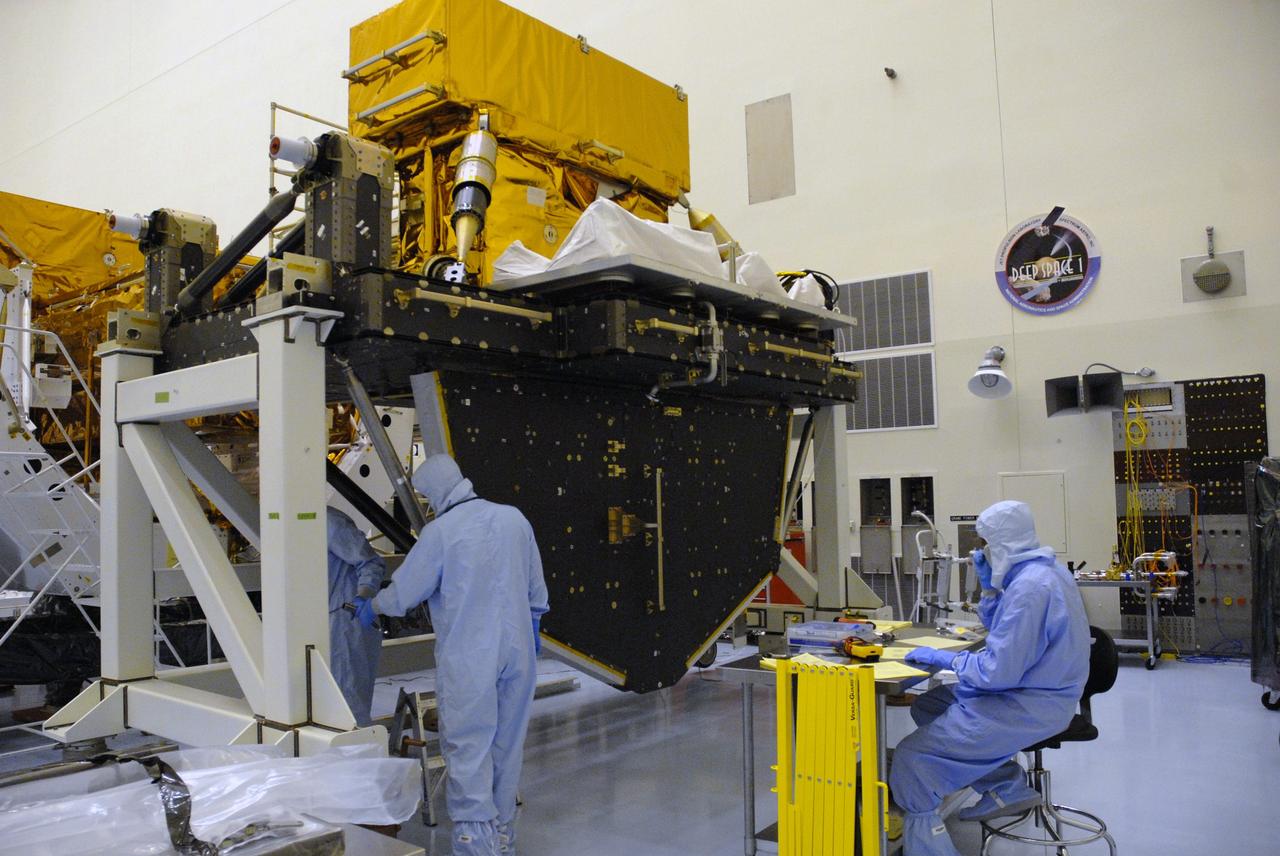
CAPE CANAVERAL, Fla. -- In the high bay of the Payload Hazardous Servicing Facility at NASA's Kennedy Space Center, workers from NASA's Goddard Space Flight Center install the pallet support struts on the Super Lightweight Interchangeable Carrier for the Hubble Space Telescope. The Super Lightweight Interchangeable Carrier, or SLIC, is one of four carriers supporting hardware for space shuttle Atlantis' STS-125 mission to service the telescope. SLIC is built with state-of-the-art, lightweight, composite materials - carbon fiber with a cyanate ester resin and a titanium metal matrix composite. These composites have greater strength-to-mass ratios than the metals typically used in spacecraft design. The Orbital Replacement Unit Carrier, or ORUC, and the Flight Support System, or FSS, have also arrived at Kennedy. The Multi-Use Lightweight Equipment carrier will be delivered in early August. The carriers will be prepared for the integration of telescope science instruments, both internal and external replacement components, as well as the flight support equipment to be used by the astronauts during the Hubble servicing mission, targeted for launch Oct. 8. Photo credit: NASA/Jack Pfaller
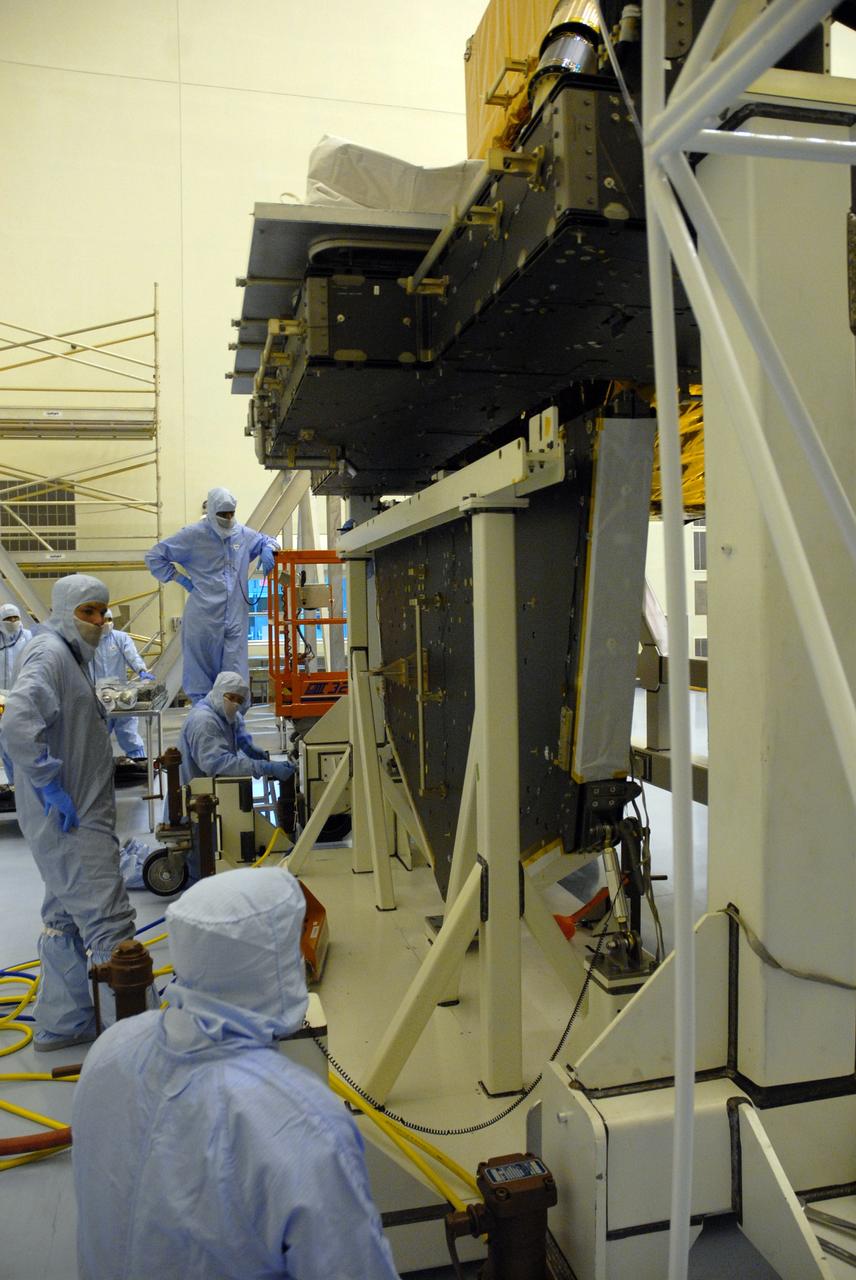
CAPE CANAVERAL, Fla. – CAPE CANAVERAL, Fla. – In the high bay of the Payload Hazardous Servicing Facility at NASA's Kennedy Space Center, workers from NASA's Goddard Space Flight Center mate the Hubble vertical platform to the Super Lightweight Interchangeable Carrier for the Hubble Space Telescope. The Super Lightweight Interchangeable Carrier, or SLIC, is one of four carriers supporting hardware for space shuttle Atlantis' STS-125 mission to service the telescope. SLIC is built with state-of-the-art, lightweight, composite materials - carbon fiber with a cyanate ester resin and a titanium metal matrix composite. These composites have greater strength-to-mass ratios than the metals typically used in spacecraft design. The Orbital Replacement Unit Carrier, or ORUC, and the Flight Support System, or FSS, have also arrived at Kennedy. The Multi-Use Lightweight Equipment carrier will be delivered in early August. The carriers will be prepared for the integration of telescope science instruments, both internal and external replacement components, as well as the flight support equipment to be used by the astronauts during the Hubble servicing mission, targeted for launch Oct. 8. Photo credit: NASA/Jack Pfaller

CAPE CANAVERAL, Fla. -- In the high bay of the Payload Hazardous Servicing Facility at NASA's Kennedy Space Center, a worker from NASA's Goddard Space Flight Center installs a pallet support strut on the Super Lightweight Interchangeable Carrier for the Hubble Space Telescope. The Super Lightweight Interchangeable Carrier, or SLIC, is one of four carriers supporting hardware for space shuttle Atlantis' STS-125 mission to service the telescope. SLIC is built with state-of-the-art, lightweight, composite materials - carbon fiber with a cyanate ester resin and a titanium metal matrix composite. These composites have greater strength-to-mass ratios than the metals typically used in spacecraft design. The Orbital Replacement Unit Carrier, or ORUC, and the Flight Support System, or FSS, have also arrived at Kennedy. The Multi-Use Lightweight Equipment carrier will be delivered in early August. The carriers will be prepared for the integration of telescope science instruments, both internal and external replacement components, as well as the flight support equipment to be used by the astronauts during the Hubble servicing mission, targeted for launch Oct. 8. Photo credit: NASA/Jack Pfaller
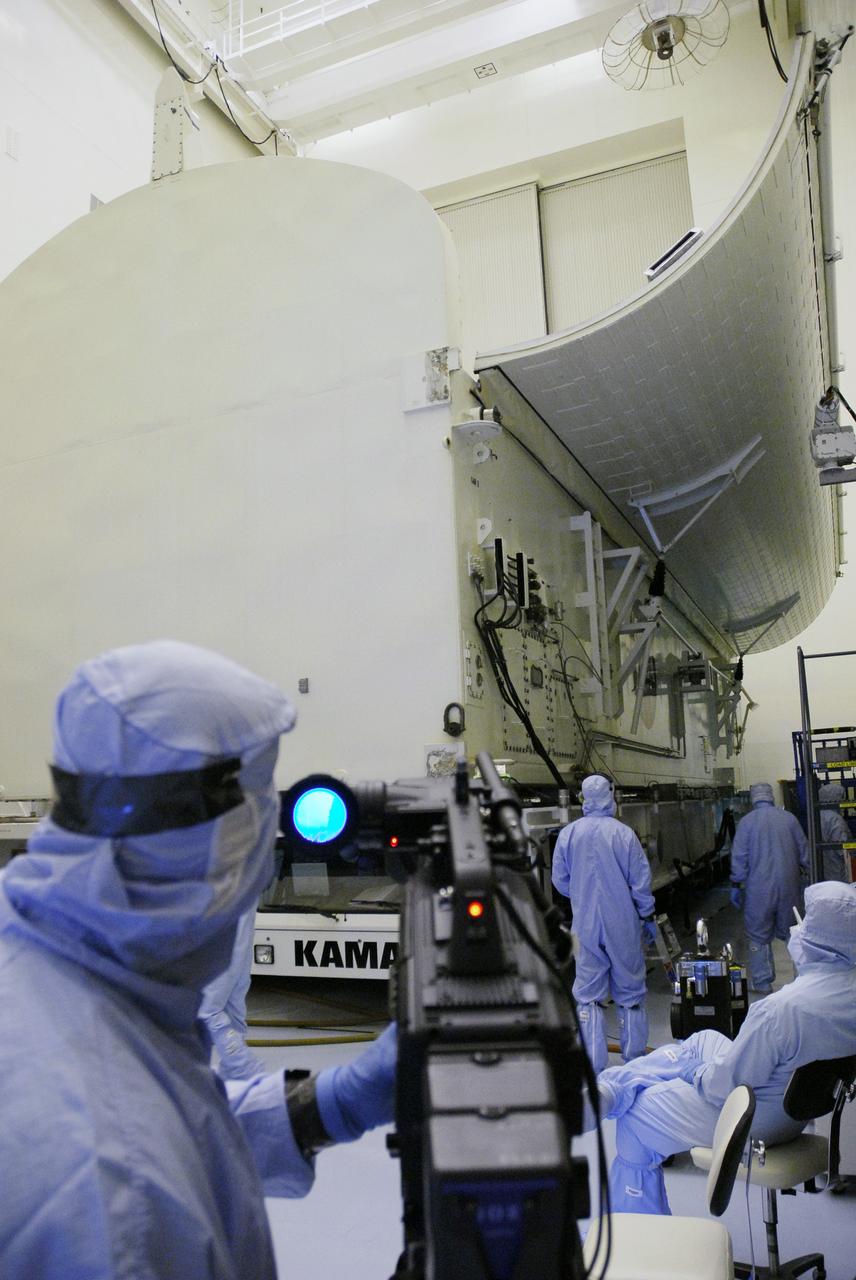
CAPE CANAVERAL, Fla. - In the Payload Hazardous Servicing Facility at NASA's Kennedy Space Center, the payload canister is moved on the floor for loading of the Super Lightweight Interchangeable Carrier, or SLIC. Contamination discovered Sept. 17 during preparations to deliver NASA's Hubble Space Telescope servicing payload to Launch Pad 39A will be removed. Cleanliness is extremely important for space shuttle Atlantis’ STS-125 mission to Hubble, and the teams have insured that the SLIC is ready to fly. The SLIC, which holds battery module assemblies for servicing of the Hubble Space Telescope on the STS-125 mission, is built with state-of-the-art, lightweight, composite materials - carbon fiber with a cyanate ester resin and a titanium metal matrix composite. These composites have greater strength-to-mass ratios than the metals typically used in spacecraft design. The carrier is one of four being transferred to Launch Pad 39A. At the pad, the carriers will be loaded into Atlantis’ payload bay. Launch of Atlantis is targeted for Oct. 10. Photo credit: NASA/Jack Pfaller
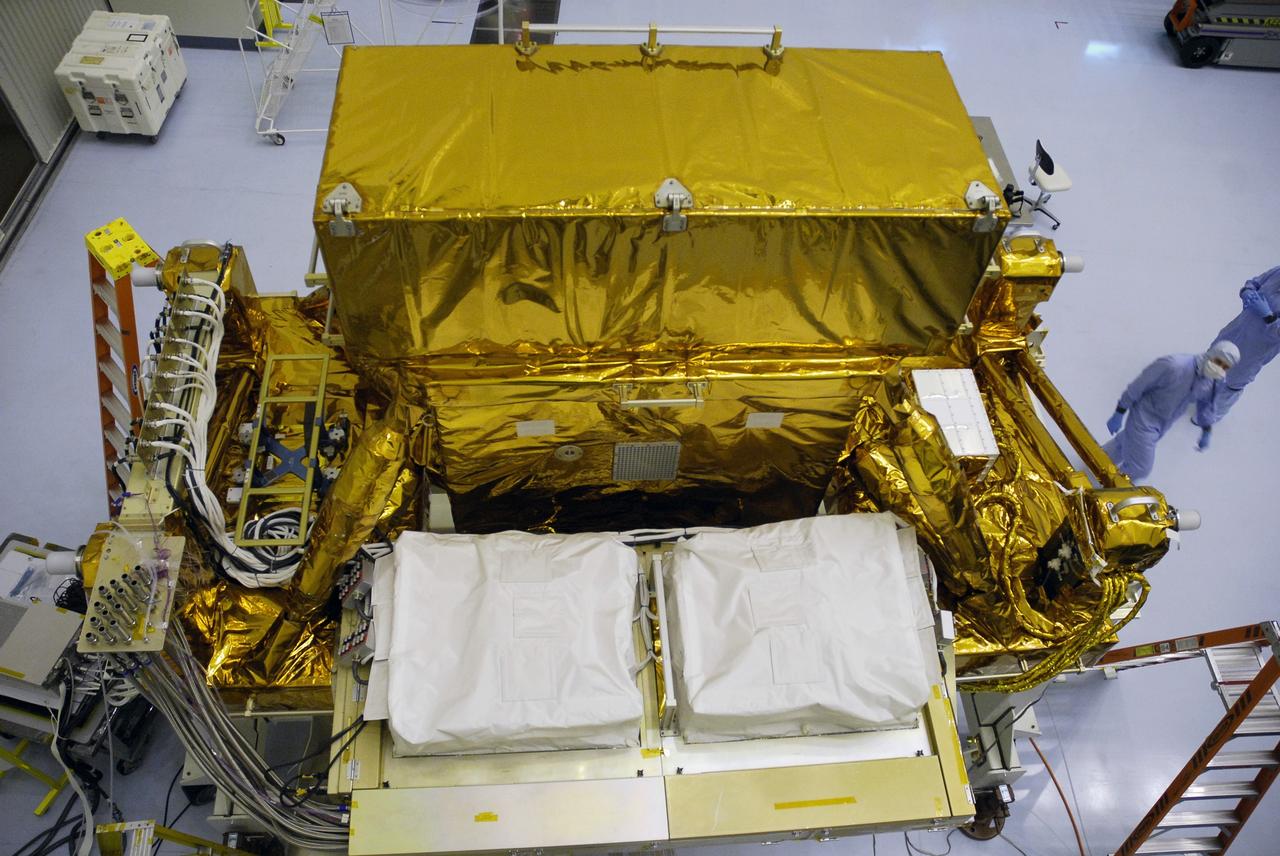
CAPE CANAVERAL, Fla. - In the Payload Hazardous Servicing Facility at NASA's Kennedy Space Center, the Super Lightweight Interchangeable Carrier, or SLIC, is uncovered so that technicians can clean contaminants found earlier. Contamination discovered Sept. 17 during preparations to deliver NASA's Hubble Space Telescope servicing payload to Launch Pad 39A will be removed. Cleanliness is extremely important for space shuttle Atlantis’ STS-125 mission to Hubble, and the teams have insured that the SLIC is ready to fly. The SLIC, which holds battery module assemblies, is built with state-of-the-art, lightweight, composite materials - carbon fiber with a cyanate ester resin and a titanium metal matrix composite. These composites have greater strength-to-mass ratios than the metals typically used in spacecraft design. The carrier is one of four being transferred to Launch Pad 39A. At the pad, the carriers will be loaded into Atlantis’ payload bay. Launch of Atlantis is targeted for Oct. 10. Photo credit: NASA/Jack Pfaller
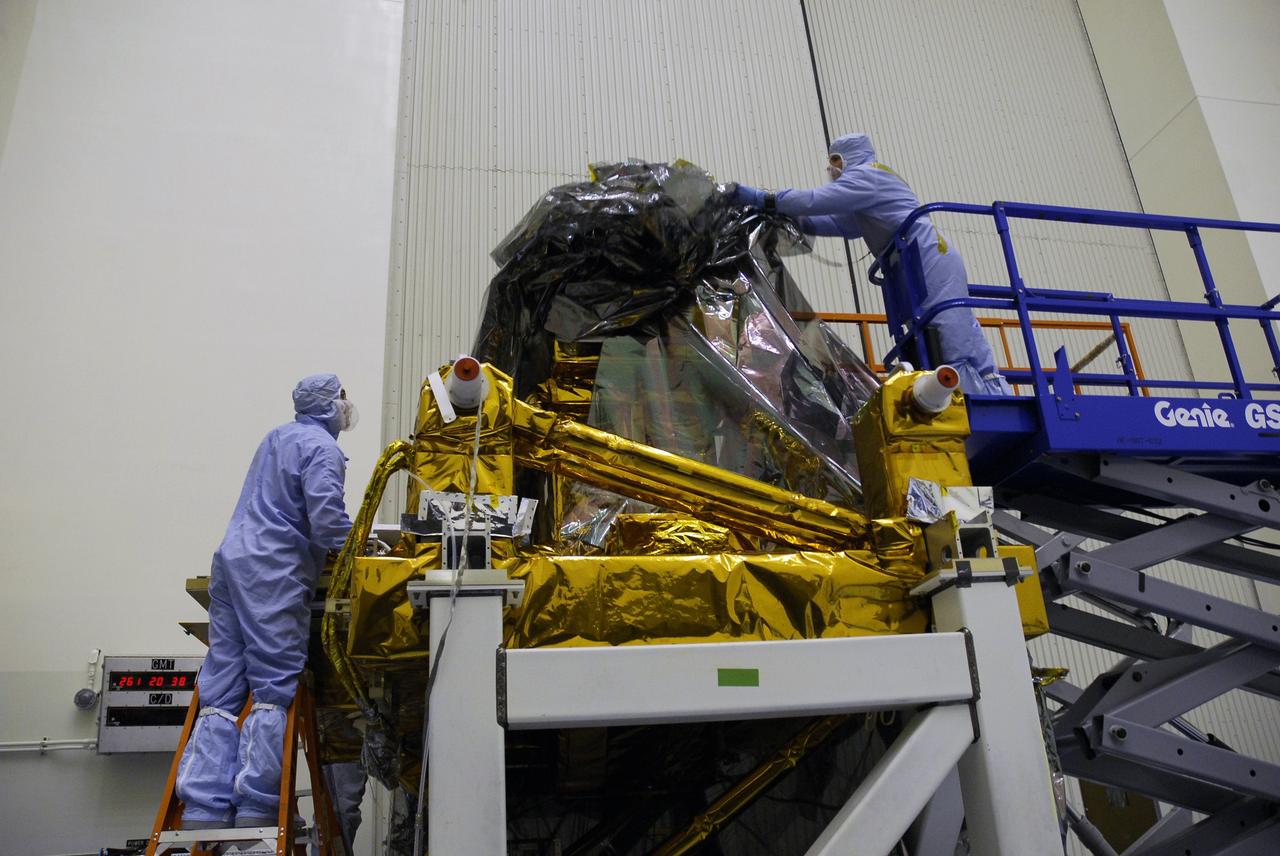
CAPE CANAVERAL, Fla. - In the Payload Hazardous Servicing Facility at NASA's Kennedy Space Center, a technician uncovers the Super Lightweight Interchangeable Carrier, or SLIC. Contamination discovered Sept. 17 during preparations to deliver NASA's Hubble Space Telescope servicing payload to Launch Pad 39A will be removed. Cleanliness is extremely important for space shuttle Atlantis’ STS-125 mission to Hubble, and the teams have insured that the SLIC is ready to fly. The SLIC, which holds battery module assemblies for servicing of the Hubble Space Telescope on the STS-125 mission, is built with state-of-the-art, lightweight, composite materials - carbon fiber with a cyanate ester resin and a titanium metal matrix composite. These composites have greater strength-to-mass ratios than the metals typically used in spacecraft design. The carrier is one of four being transferred to Launch Pad 39A. At the pad, the carriers will be loaded into Atlantis’ payload bay. Launch of Atlantis is targeted for Oct. 10. Photo credit: NASA/Jack Pfaller
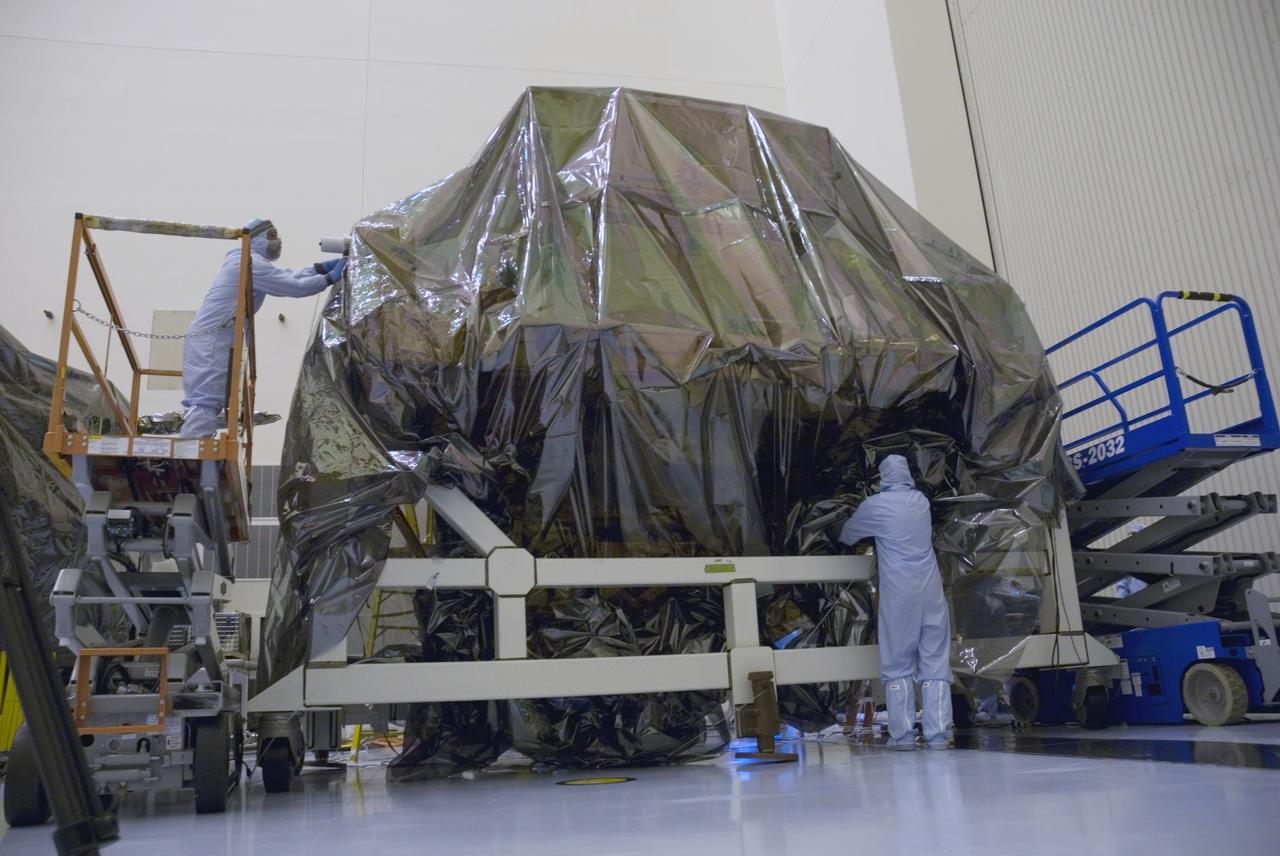
CAPE CANAVERAL, Fla. - In the Payload Hazardous Servicing Facility at NASA's Kennedy Space Center, technicians finish replacing the protective cover over the Super Lightweight Interchangeable Carrier, or SLIC. The cover was removed to clean the carrier of contaminants found Sept. 17 during preparations to deliver NASA's Hubble Space Telescope servicing payload to Launch Pad 39A. Cleanliness is extremely important for space shuttle Atlantis’ STS-125 mission to Hubble, and the teams have insured that the SLIC is ready to fly. The SLIC, which holds battery module assemblies, is built with state-of-the-art, lightweight, composite materials - carbon fiber with a cyanate ester resin and a titanium metal matrix composite. These composites have greater strength-to-mass ratios than the metals typically used in spacecraft design. The carrier is one of four being transferred to Launch Pad 39A. At the pad, the carriers will be loaded into Atlantis’ payload bay. Launch of Atlantis is targeted for Oct. 10. Photo credit: NASA/Jack Pfaller
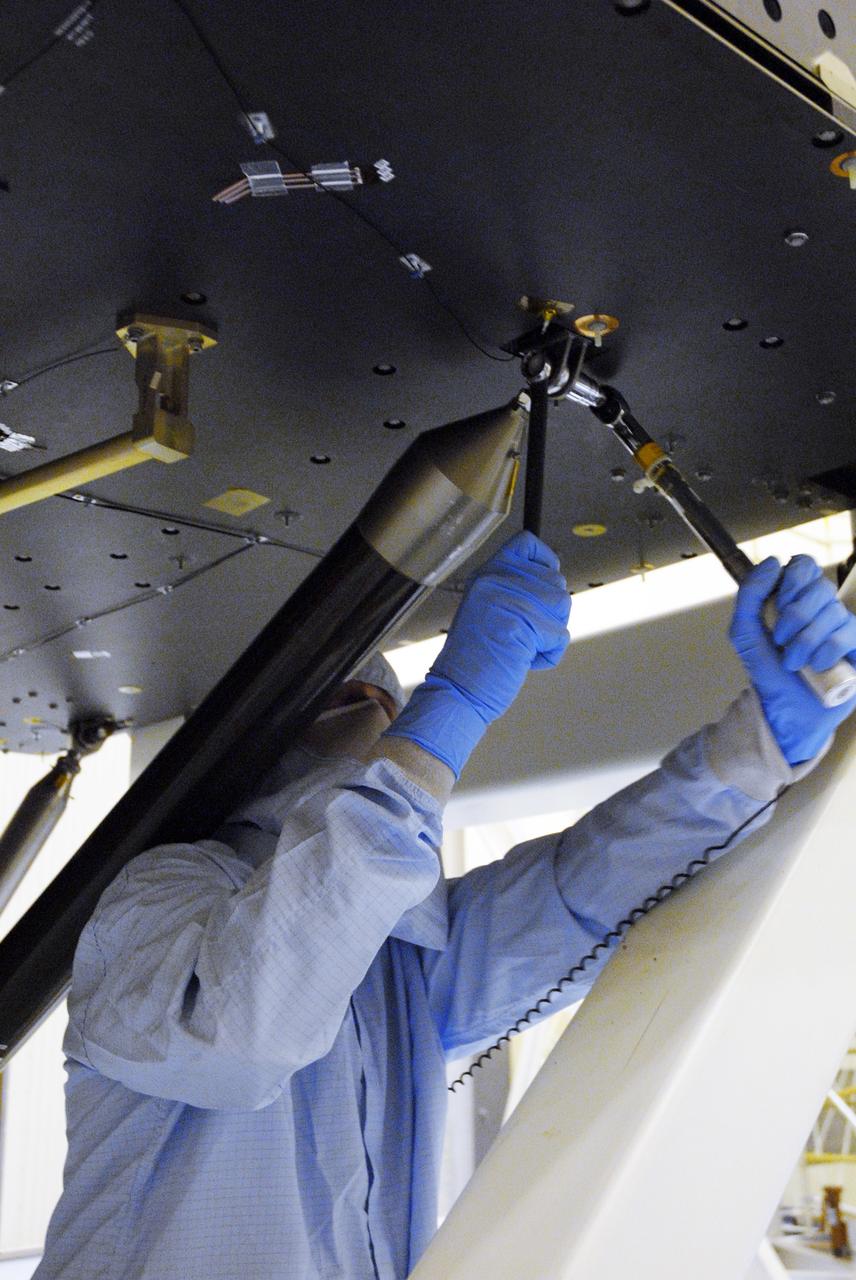
CAPE CANAVERAL, Fla. -- In the high bay of the Payload Hazardous Servicing Facility at NASA's Kennedy Space Center, a worker from NASA's Goddard Space Flight Center installs a pallet support strut on the Super Lightweight Interchangeable Carrier for the Hubble Space Telescope. The Super Lightweight Interchangeable Carrier, or SLIC, is one of four carriers supporting hardware for space shuttle Atlantis' STS-125 mission to service the telescope. SLIC is built with state-of-the-art, lightweight, composite materials - carbon fiber with a cyanate ester resin and a titanium metal matrix composite. These composites have greater strength-to-mass ratios than the metals typically used in spacecraft design. The Orbital Replacement Unit Carrier, or ORUC, and the Flight Support System, or FSS, have also arrived at Kennedy. The Multi-Use Lightweight Equipment carrier will be delivered in early August. The carriers will be prepared for the integration of telescope science instruments, both internal and external replacement components, as well as the flight support equipment to be used by the astronauts during the Hubble servicing mission, targeted for launch Oct. 8. Photo credit: NASA/Jack Pfaller
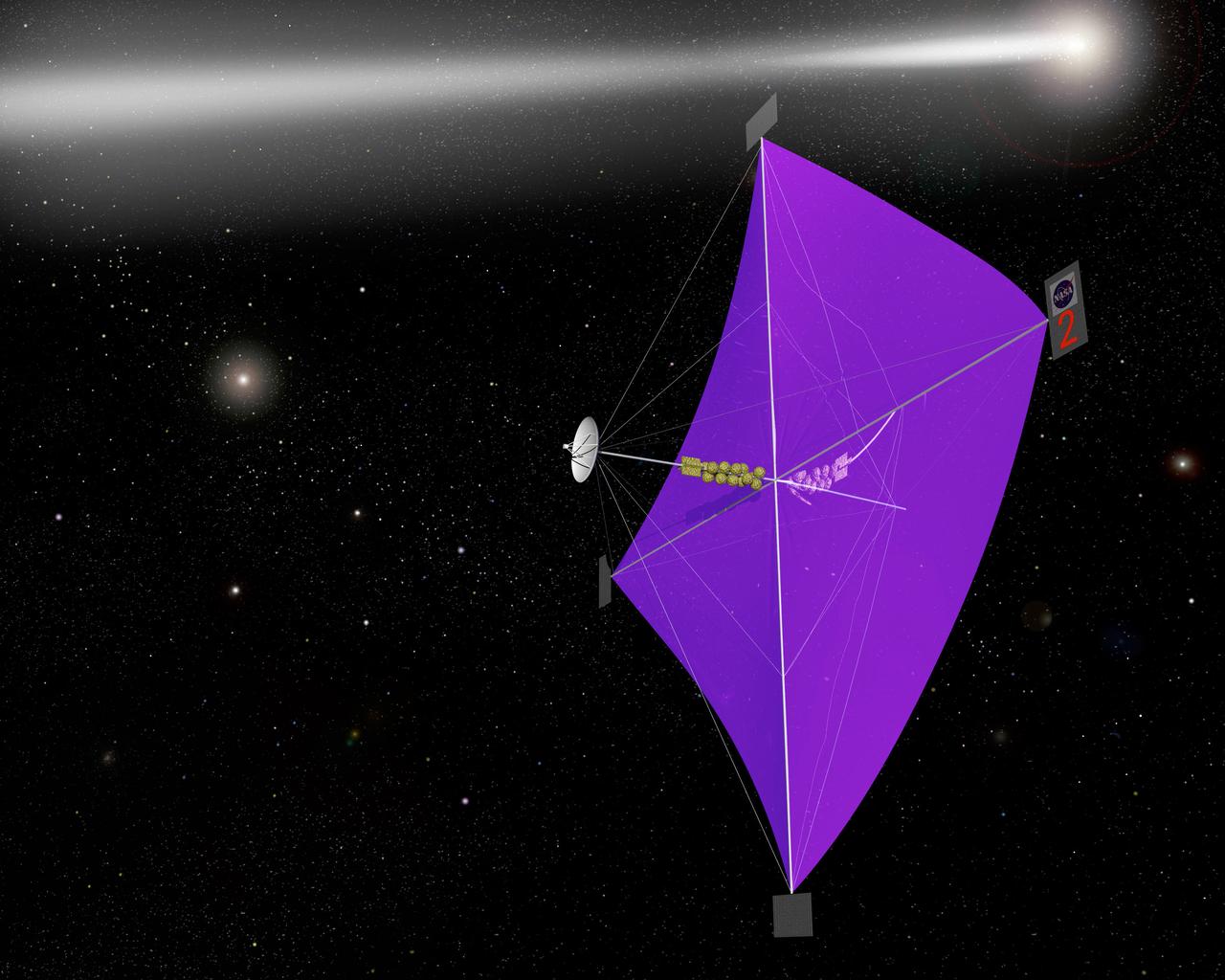
Engineers at Marshall Space Flight Center's Interstellar Propulsion Research department are proposing different solutions to combustion propellants for future space travel. Pictured here is one alternative, the solar sail, depicted through an artist's concept. The idea is, once deployed, the sail will allow solar winds to propel a spacecraft away from Earth and towards its destination. This would allow a spacecraft to travel indefinitely without the need to refuel during its prolong journey. Thin reflective sails could be propelled through space by sunlight, microwave beams, or laser beams, just as the wind pushes sailboats on Earth. The sail will be the largest spacecraft ever built, sparning 440 yards, twice the diameter of the Louisiana Super Dome. Construction materials are being tested in a simulated space environment, where they are exposed to harsh conditions to test their performance and durability in extremely hot and cold temperatures. A leading candidate for the construction material is a carbon fiber material whose density is less than 1/10 ounce per square yard, the equivalent of flattening one raisin to the point that it covers a square yard. In space, the material would unfurl like a fan when it is deployed from an expendable rocket. Mankind's first venture outside of our solar system is proposed for launch in a 2010 timeframe. An interstellar probe, powered by the fastest spacecraft ever flown, will zoom toward the stars at 58 miles per second. It will cover the distance from New York to Los Angeles in less than a minute and will travel over 23 billion miles beyond the edge of the solar system.

A scaled-down 24-inch version of the Space Shuttle's Reusable Solid Rocket Motor was successfully fired for 21 seconds at a Marshall Space Flight Center (MSFC) Test Stand. The motor was tested to ensure a replacement material called Lycocel would meet the criteria set by the Shuttle's Solid Motor Project Office. The current material is a heat-resistant, rayon-based, carbon-cloth phenolic used as an insulating material for the motor's nozzle. Lycocel, a brand name for Tencel, is a cousin to rayon and is an exceptionally strong fiber made of wood pulp produced by a special "solvent-spirning" process using a nontoxic solvent. It will also be impregnated with a phenolic resin. This new material is expected to perform better under the high temperatures experienced during launch. The next step will be to test the material on a 48-inch solid rocket motor. The test, which replicates launch conditions, is part of Shuttle's ongoing verification of components, materials, and manufacturing processes required by MSFC, which oversees the Reusable Solid Rocket Motor project. Manufactured by the ATK Thiokol Propulsion Division in Promontory, California, the Reusable Solid Rocket Motor measures 126 feet (38.4 meters) long and 12 feet (3.6 meters) in diameter. It is the largest solid rocket motor ever flown and the first designed for reuse. During its two-minute burn at liftoff, each motor generates an average thrust of 2.6 million pounds (1.2 million kilograms).