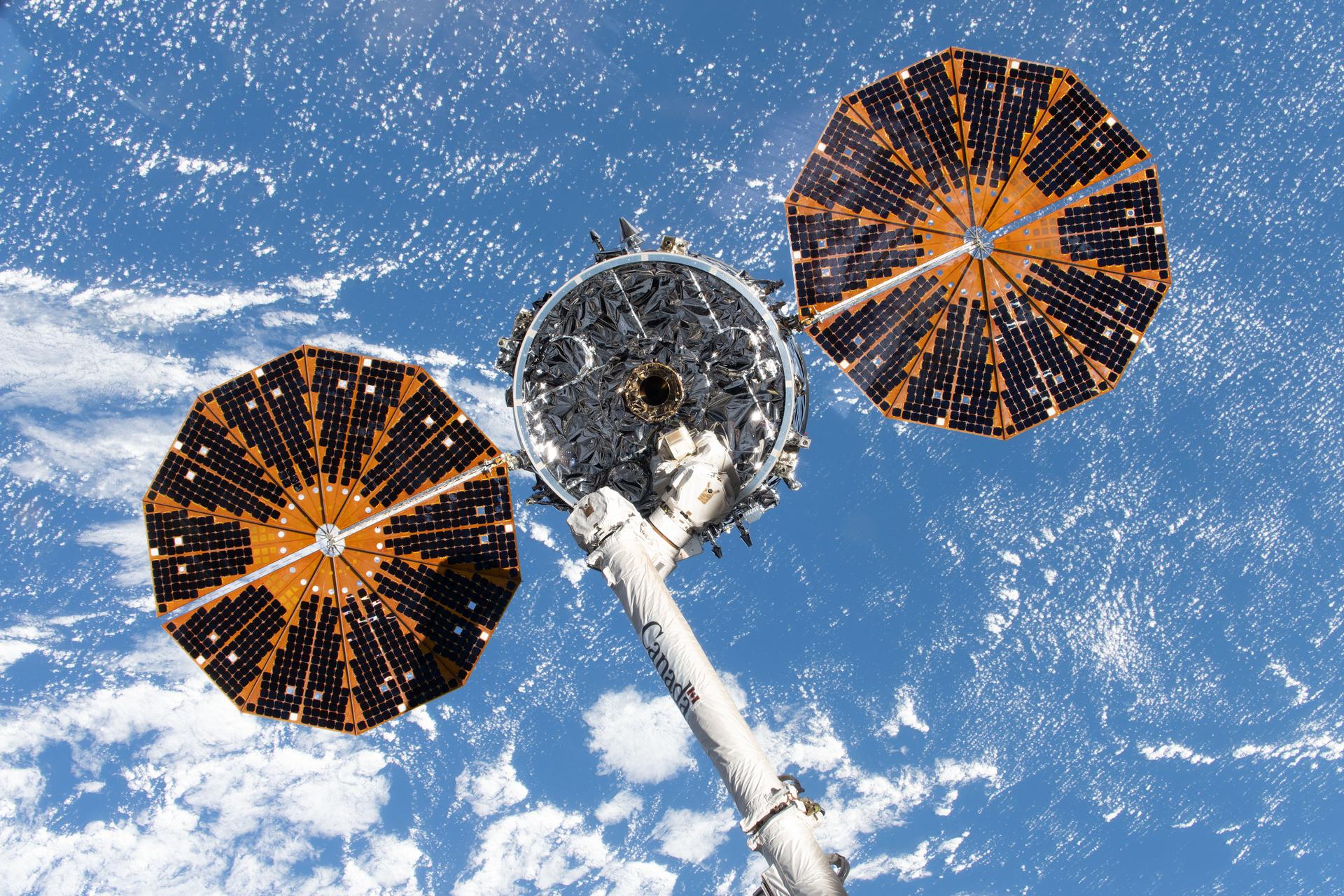
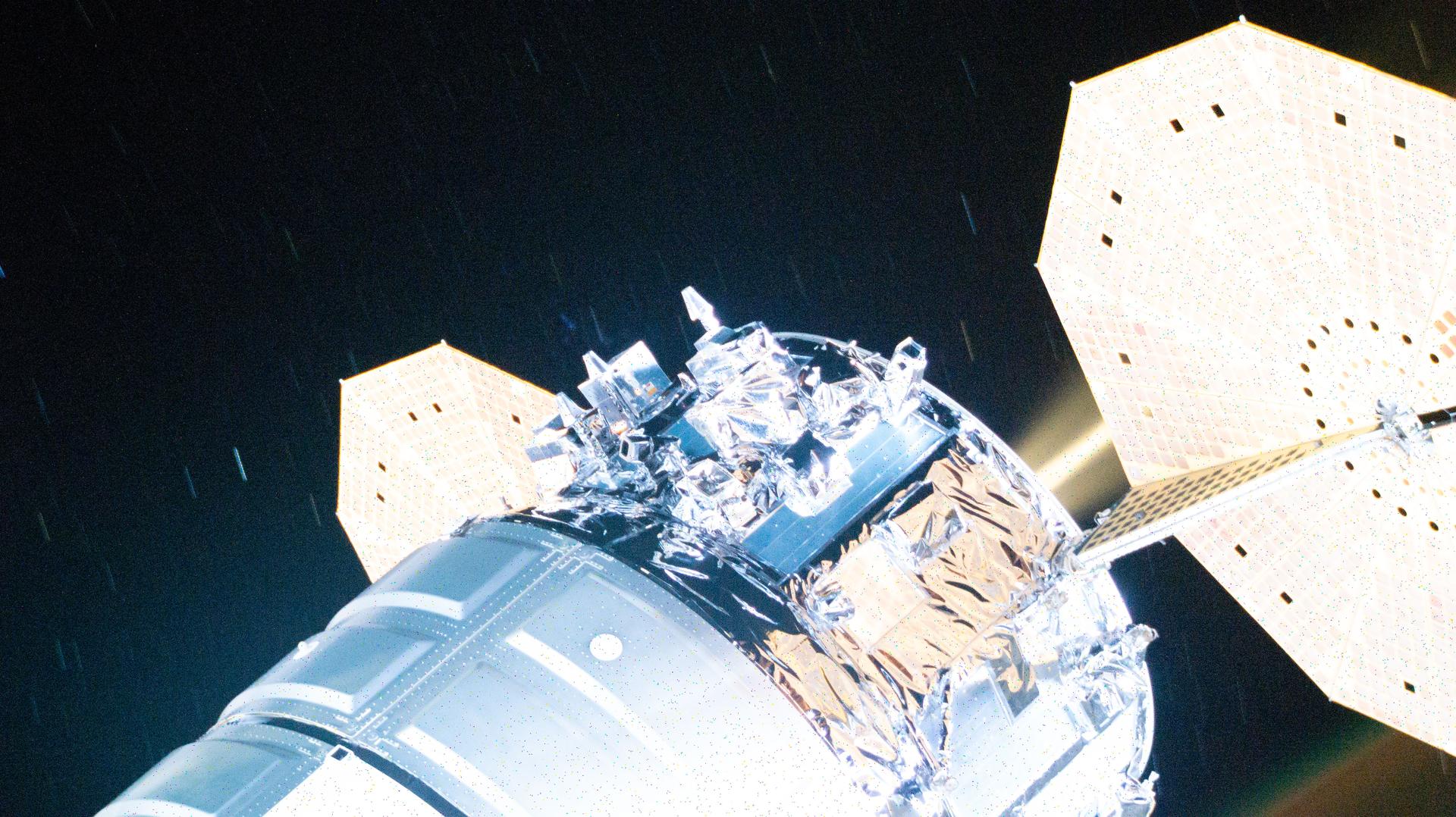
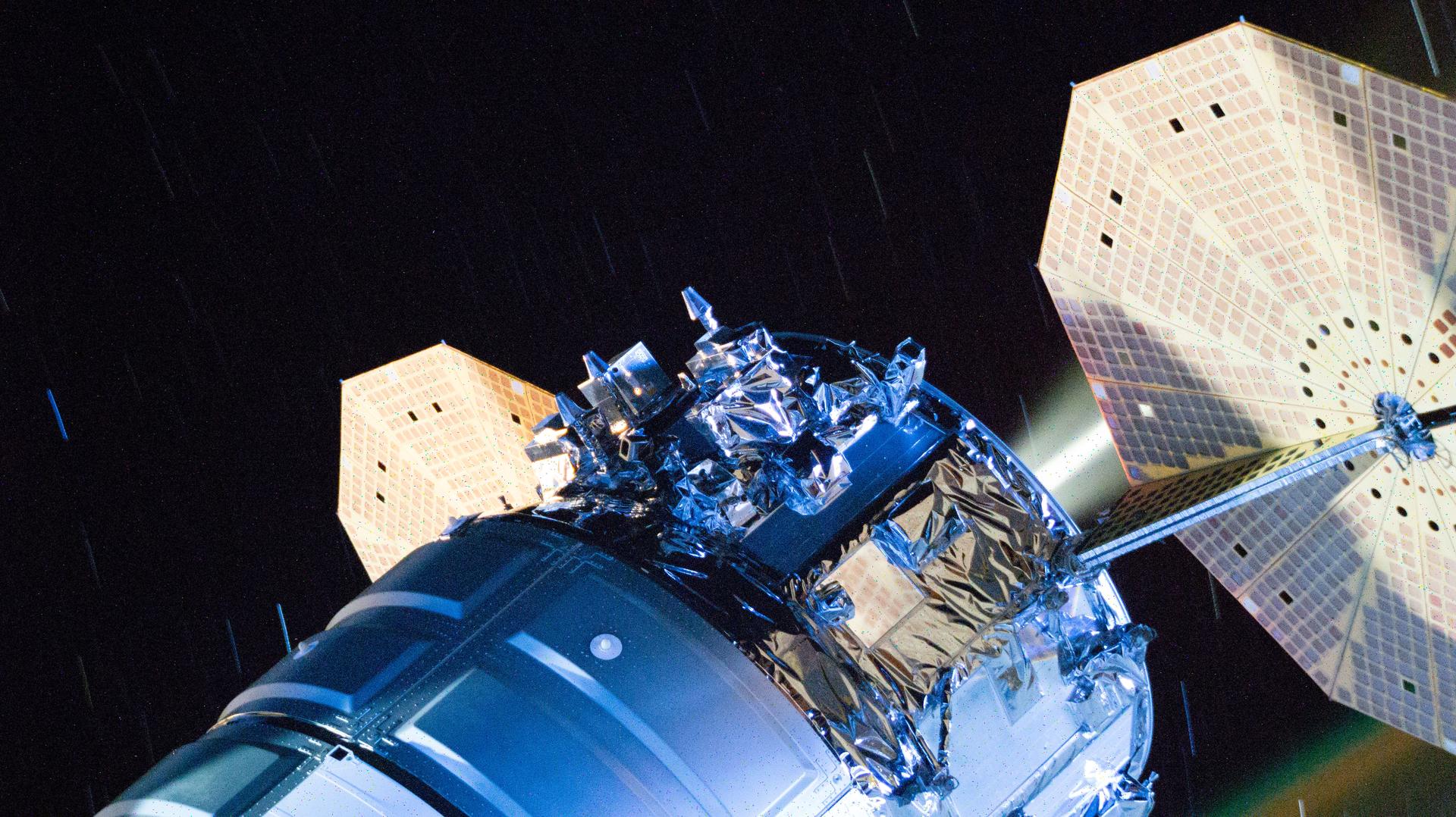
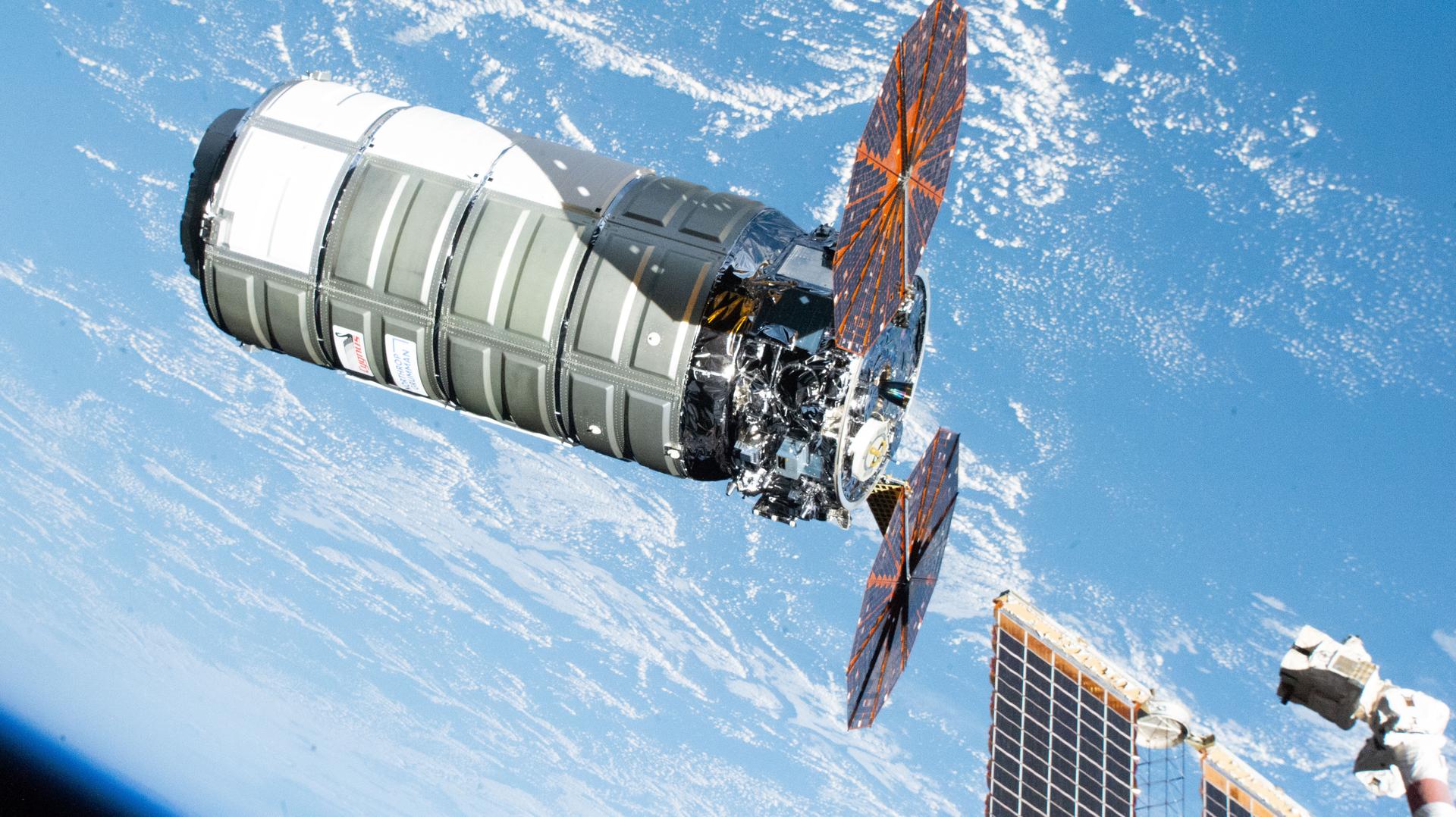
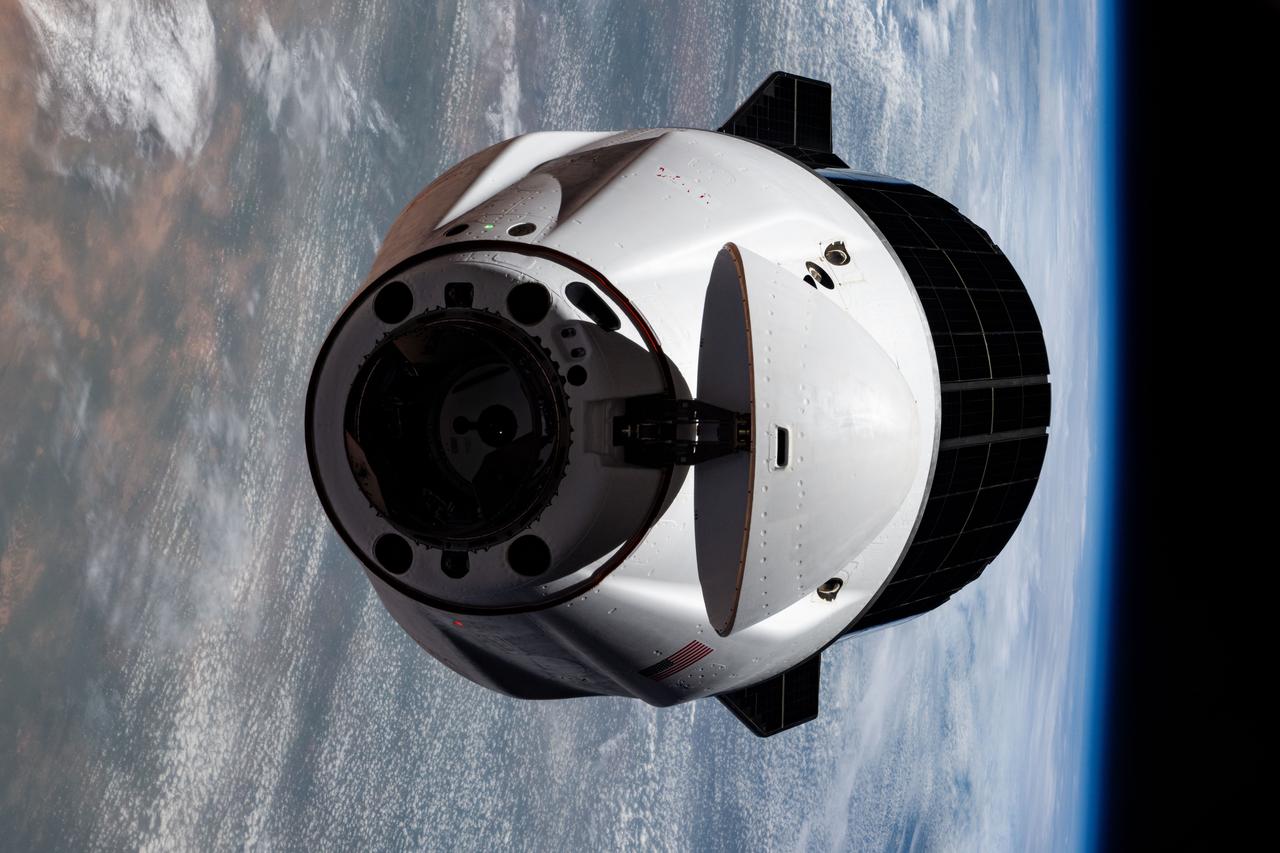
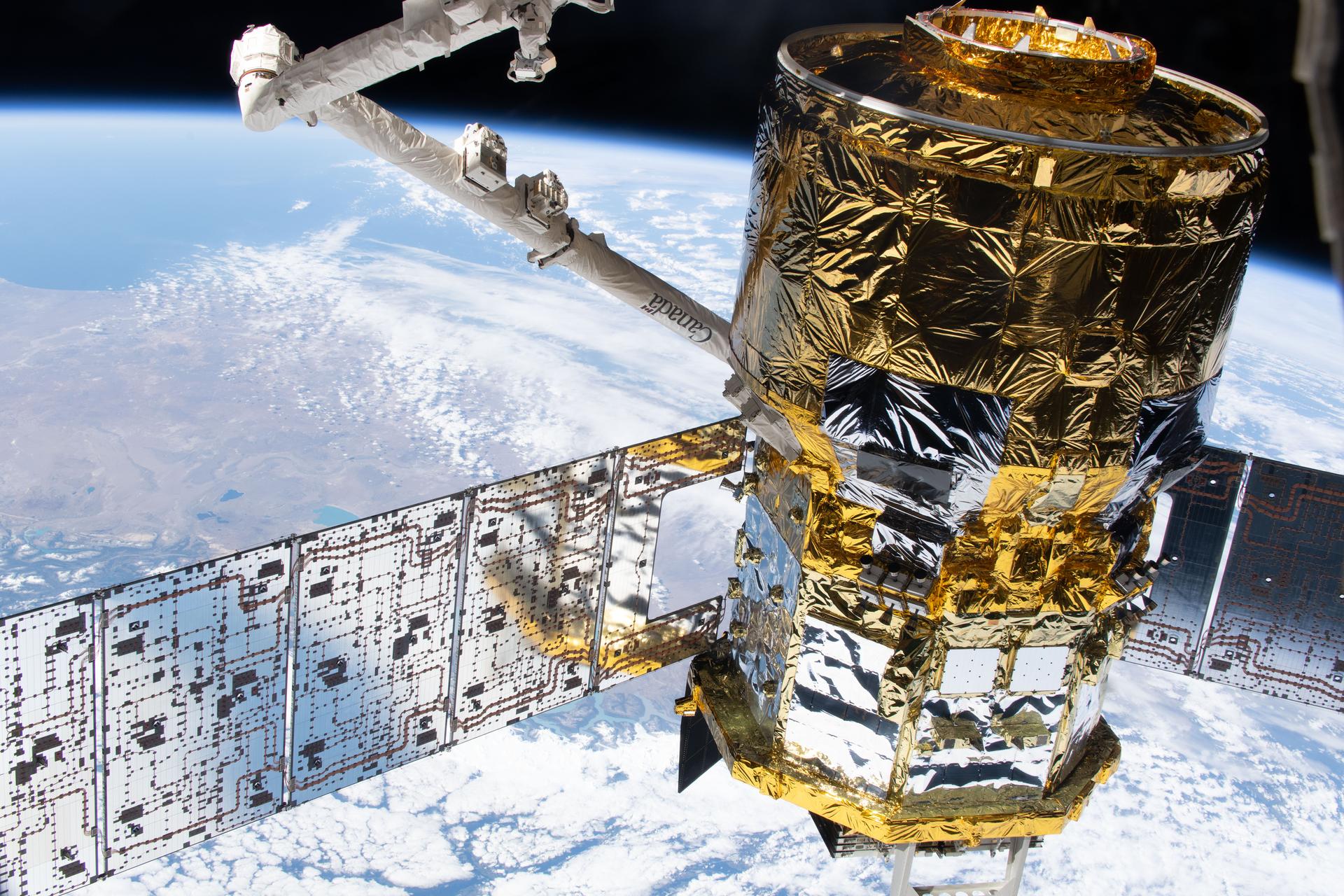
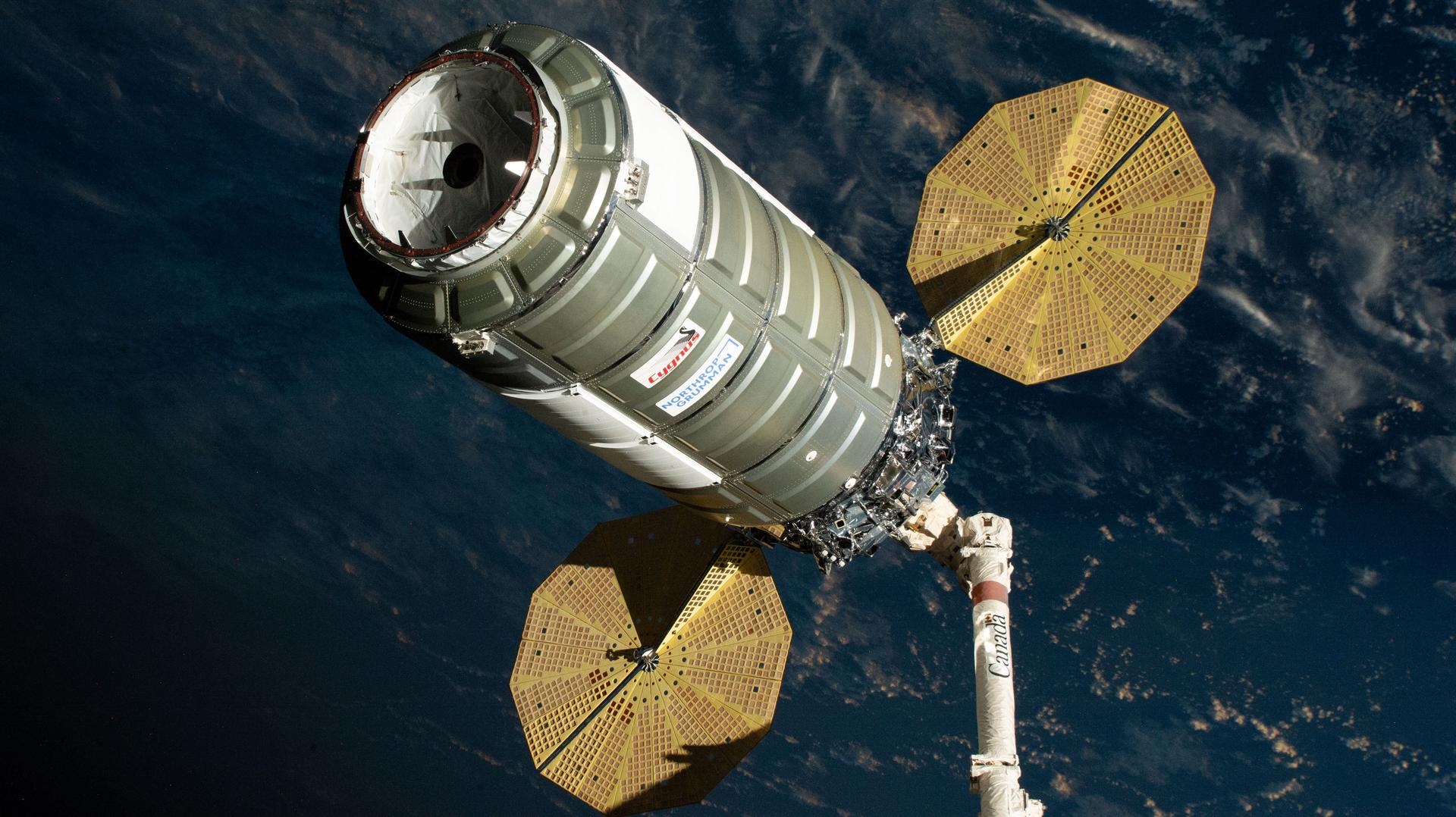
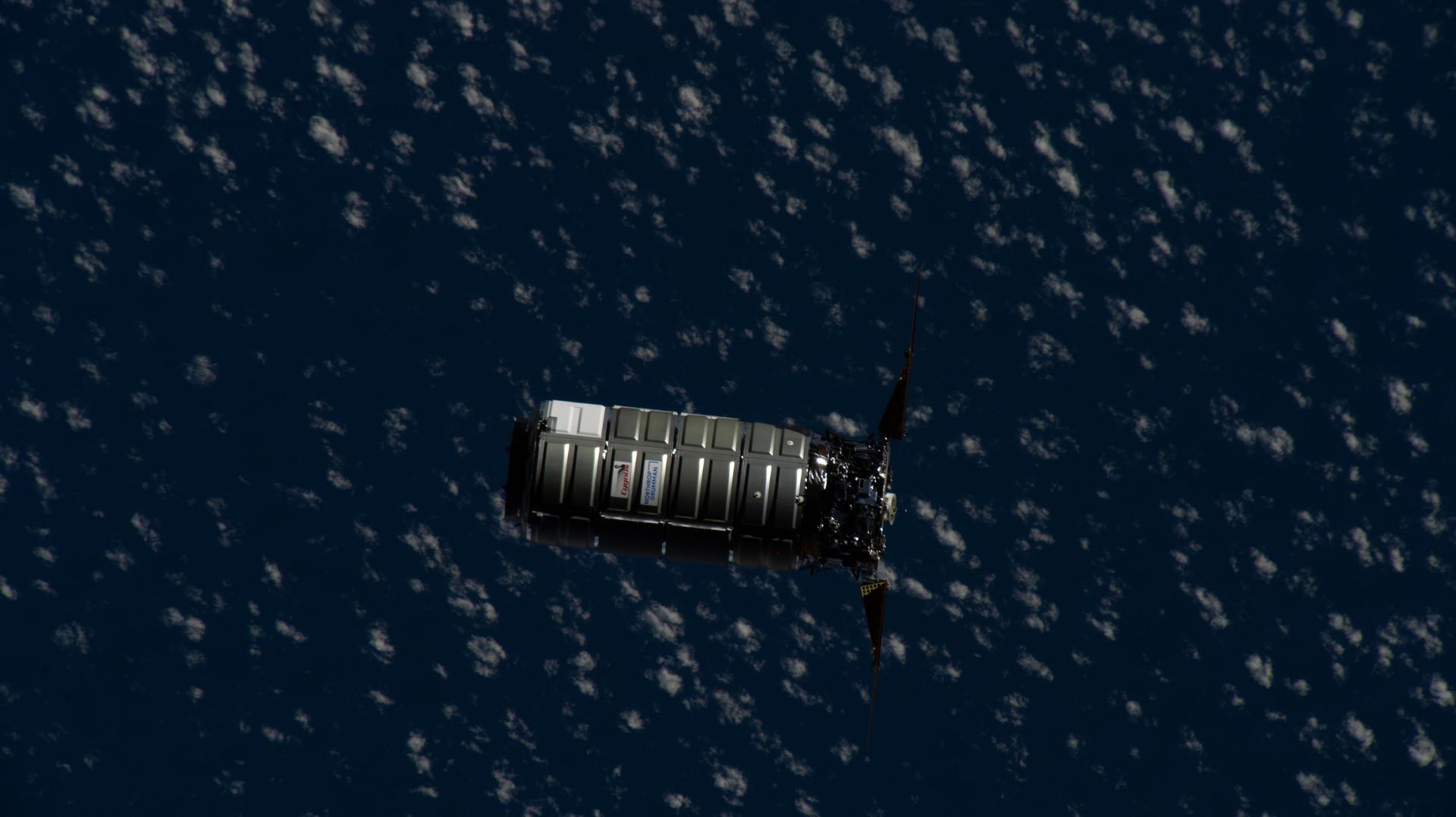
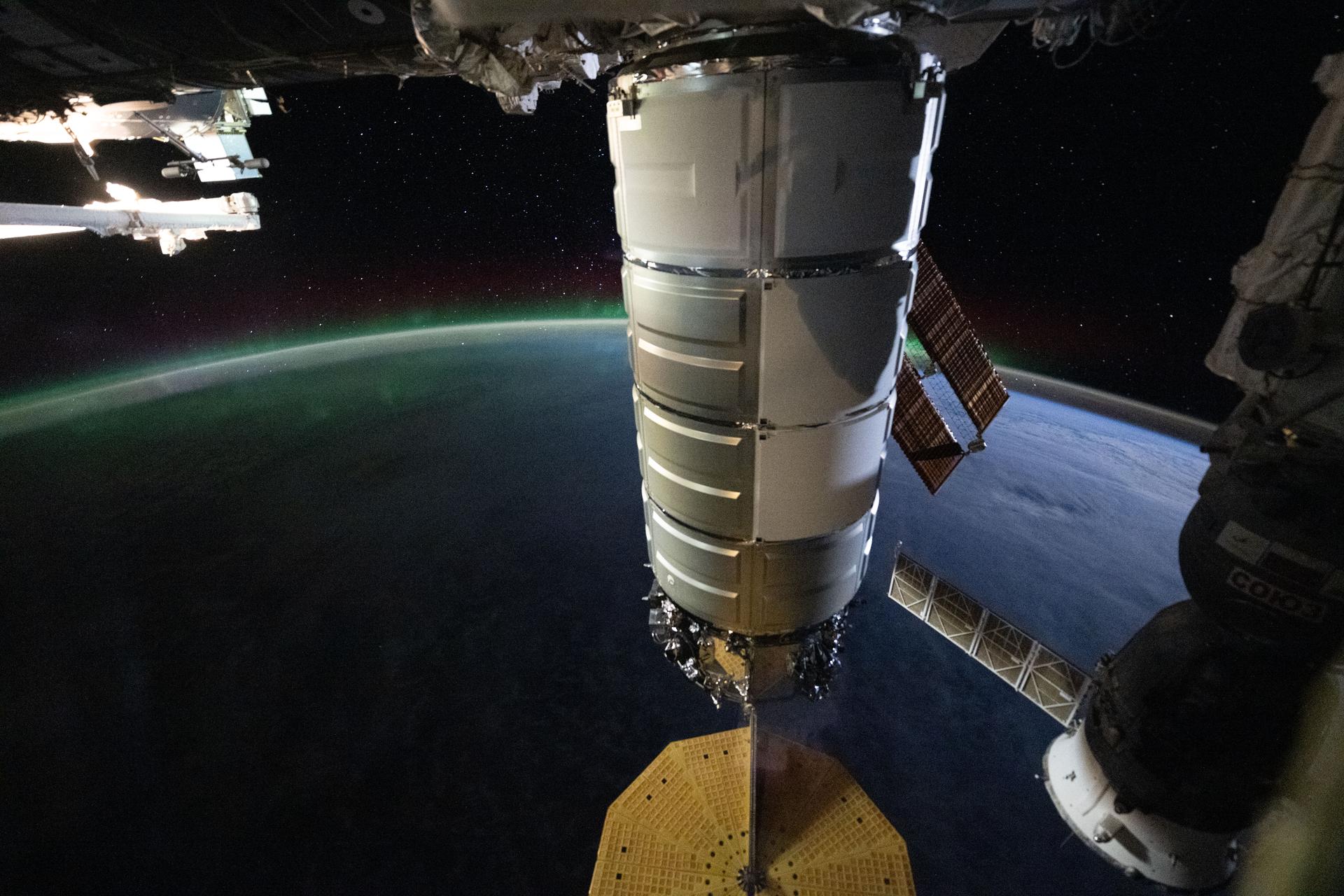
iss075e0085136 (Aug. 27, 2026) --- Northrop Grumman’s Cygnus XL cargo spacecraft, with its prominent cymbal‑shaped UltraFlex solar arrays, is pictured berthed to the International Space Station’s Unity module. Credit: NASA
Northrop Grumman’s Cygnus XL cargo spacecraft
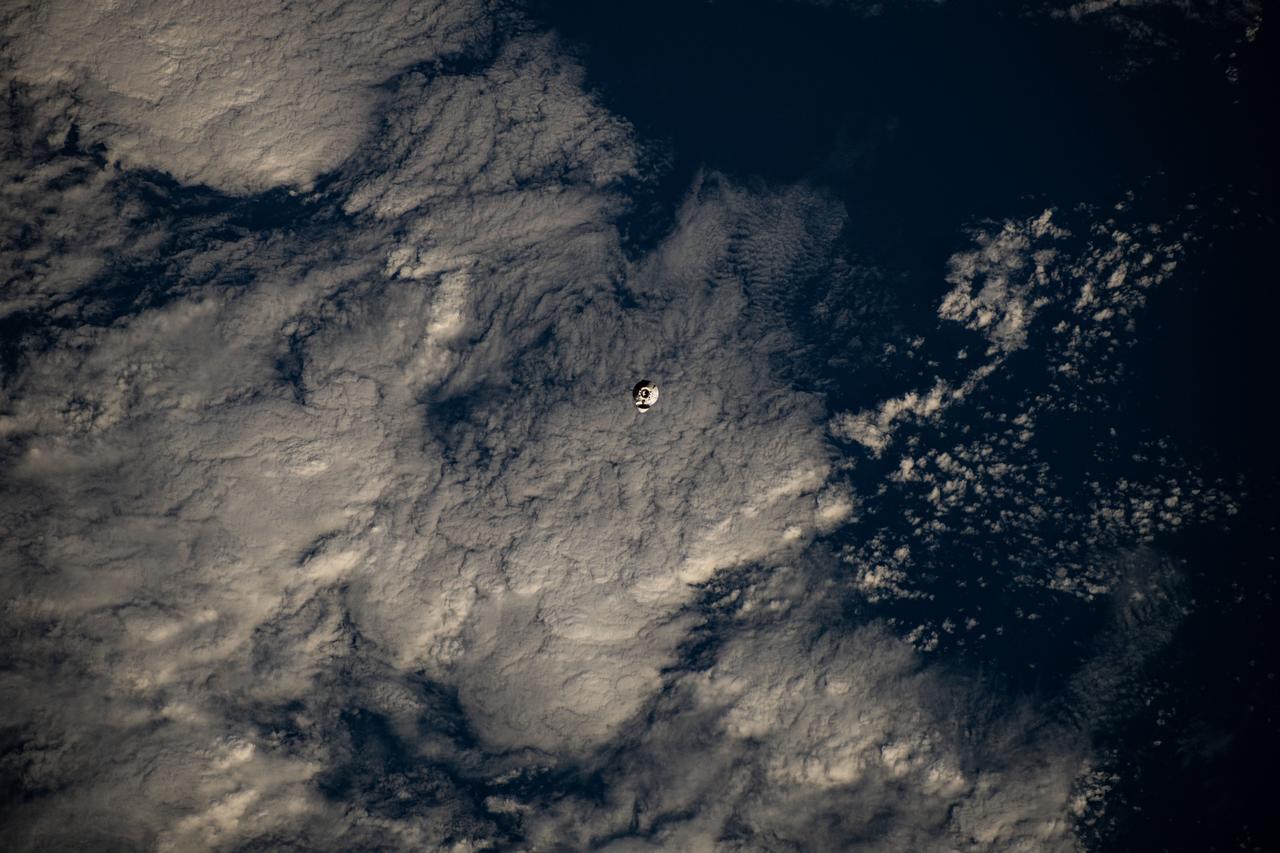
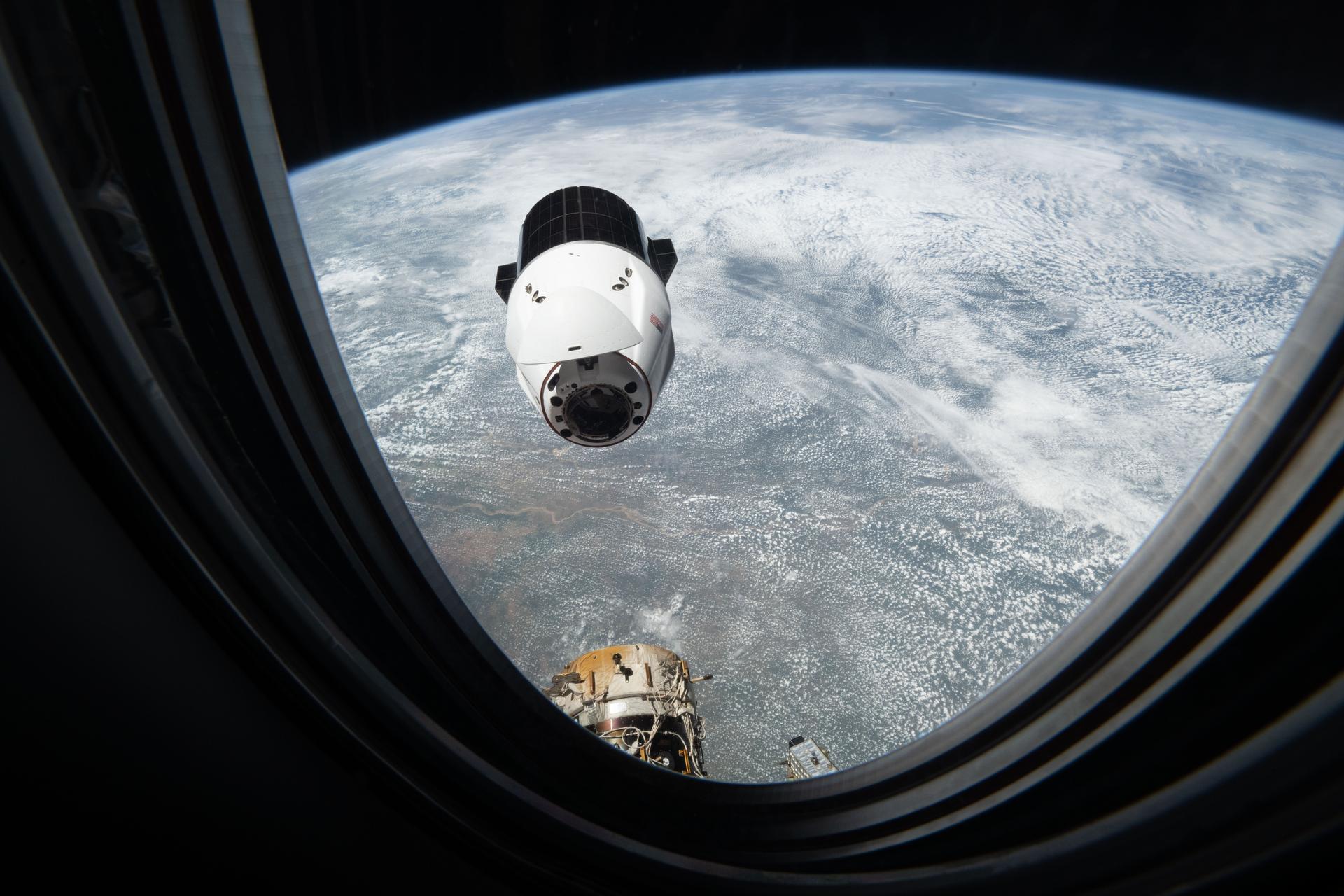
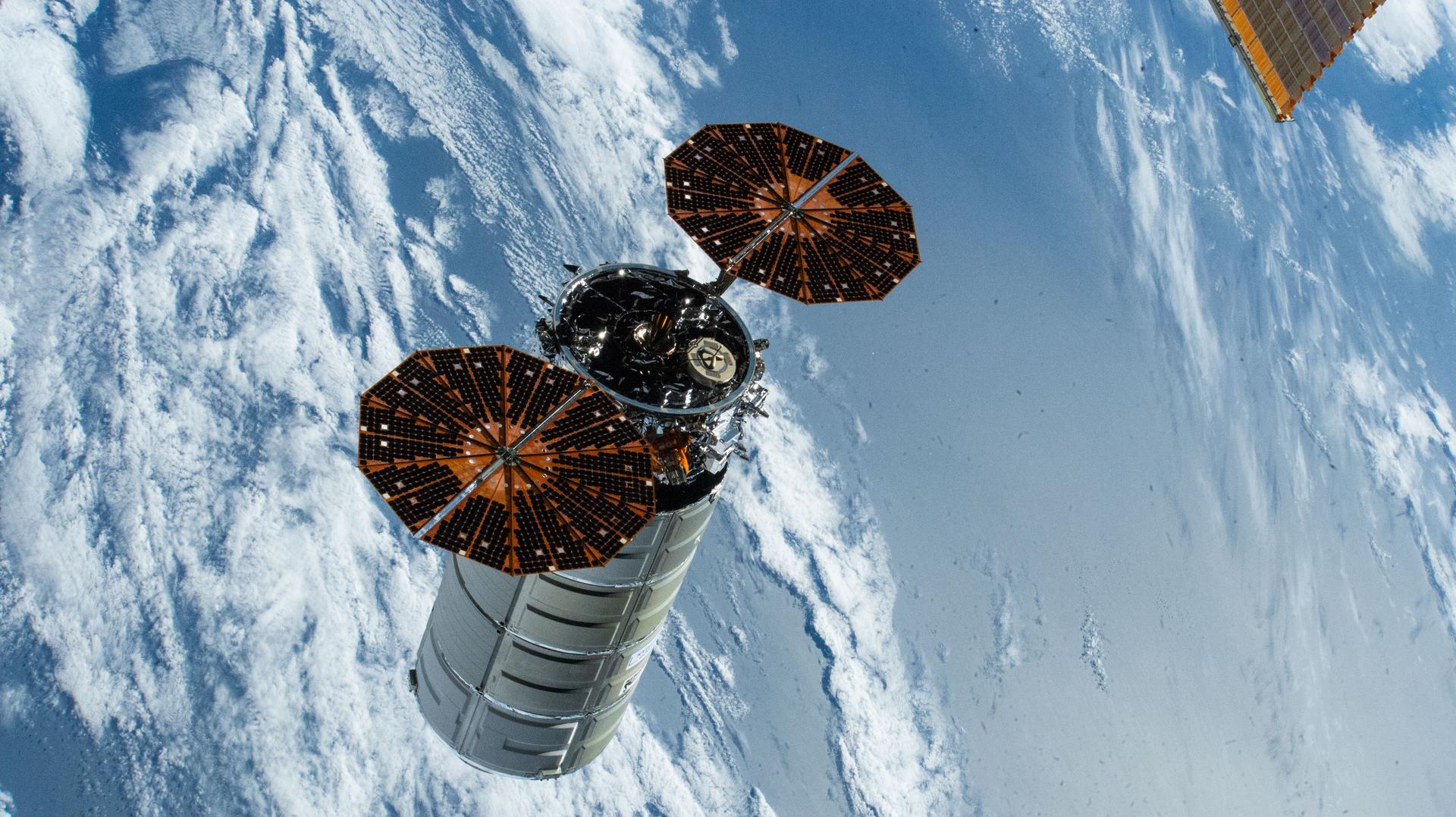
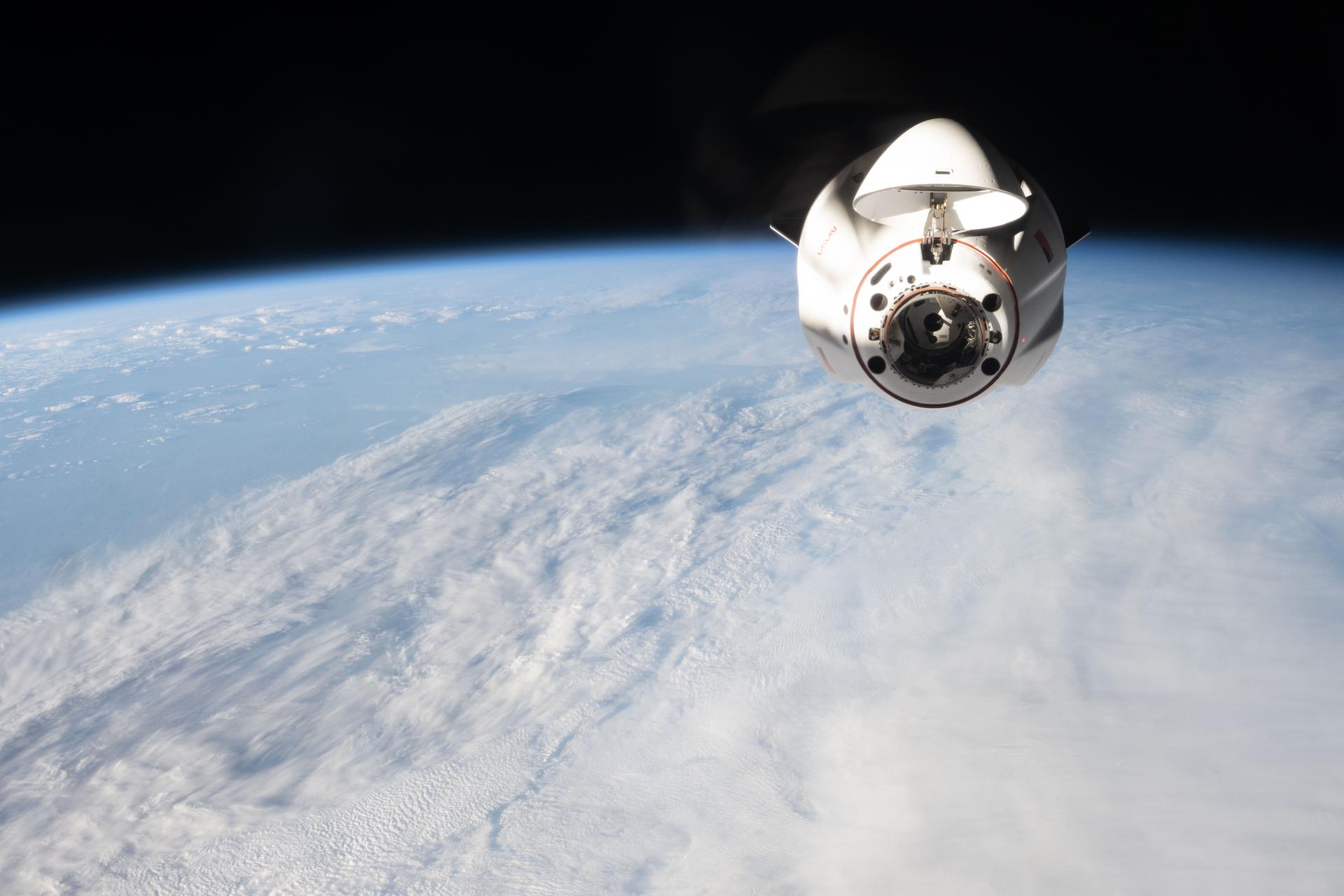
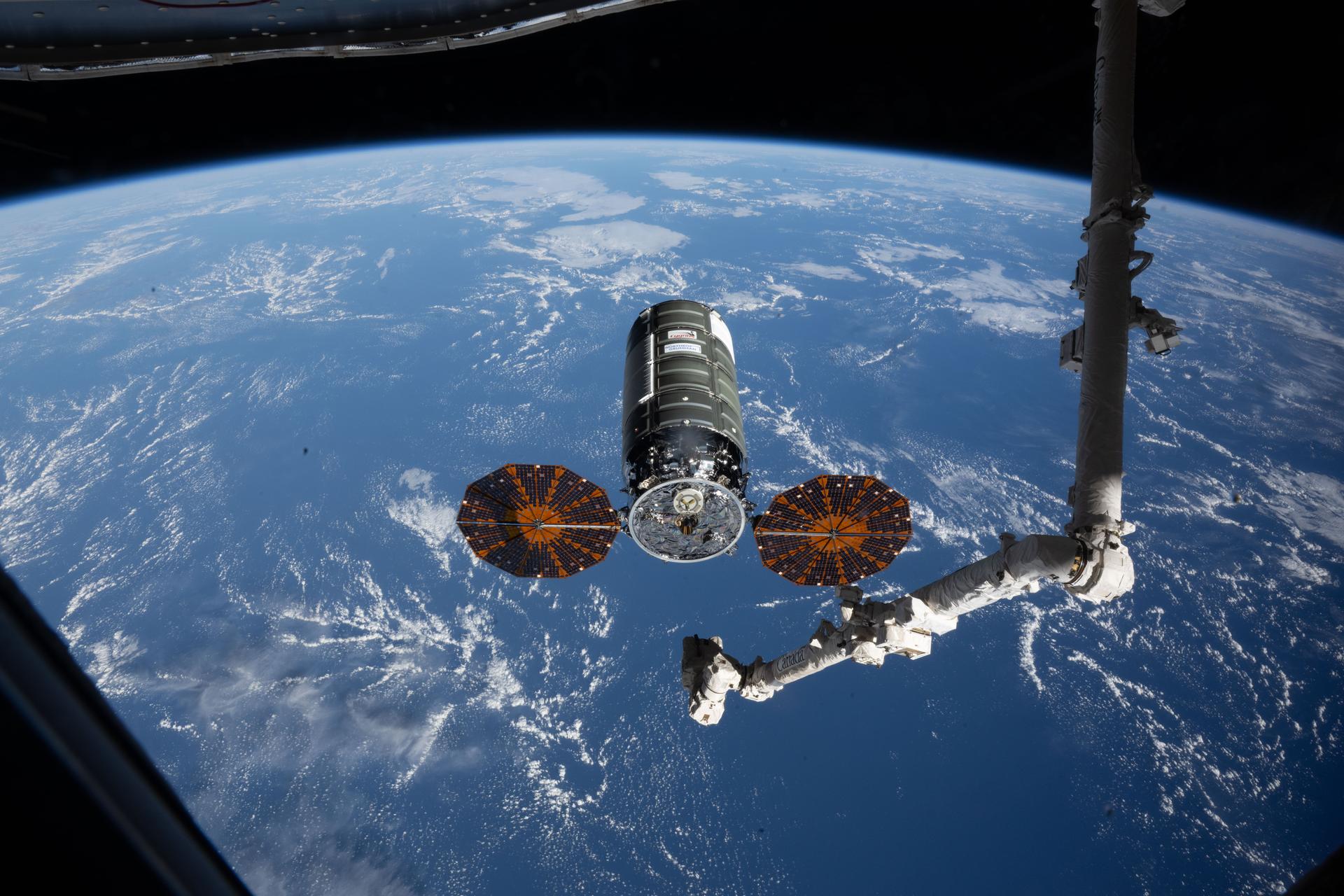
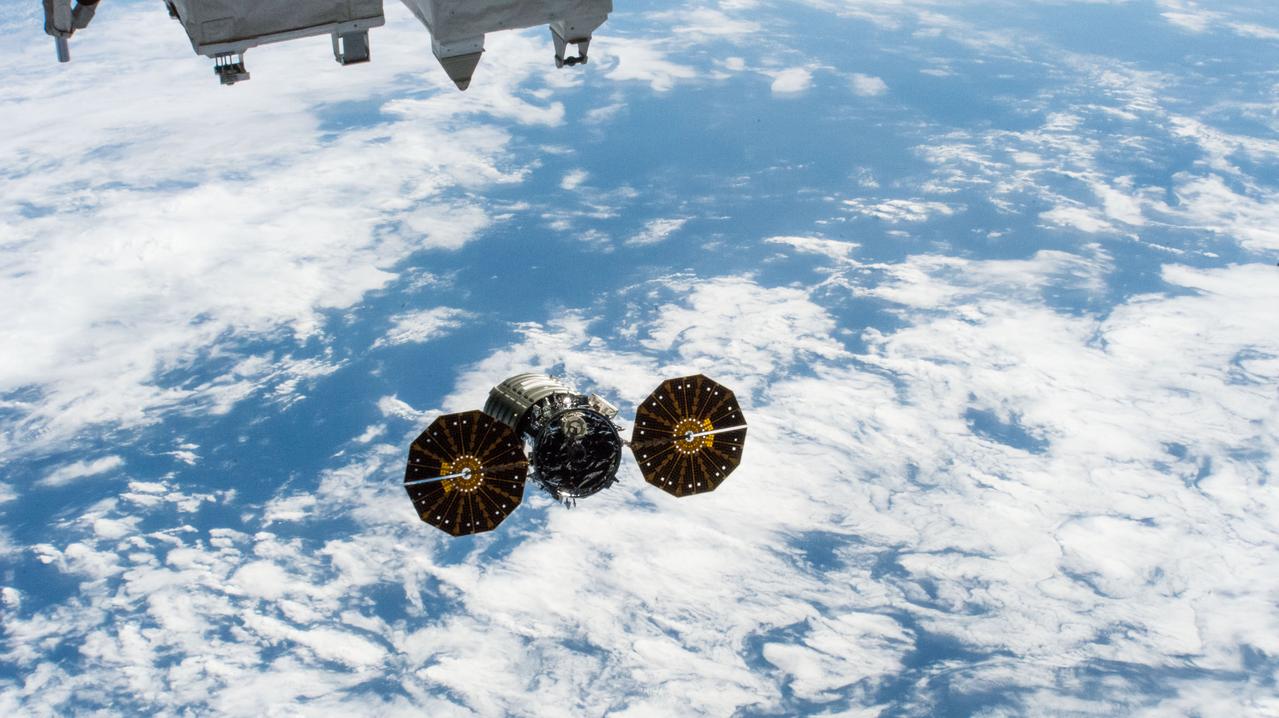
iss073e0816140 (Sept. 18, 2025) --- Northrop Grumman’s Cygnus XL cargo spacecraft, carrying more than 11,000 pounds of new science investigations and supplies for the Expedition 73 crew, approaches the International Space Station. The two spacecraft were orbiting 257 miles above a cloudy Mumbai, India. Cygnus XL is an expanded version of Northrop Grumman’s previous Cygnus cargo vehicle, offering increased payload capacity and pressurized cargo volume.
The Cygnus XL cargo spacecraft approaches the International Space Station
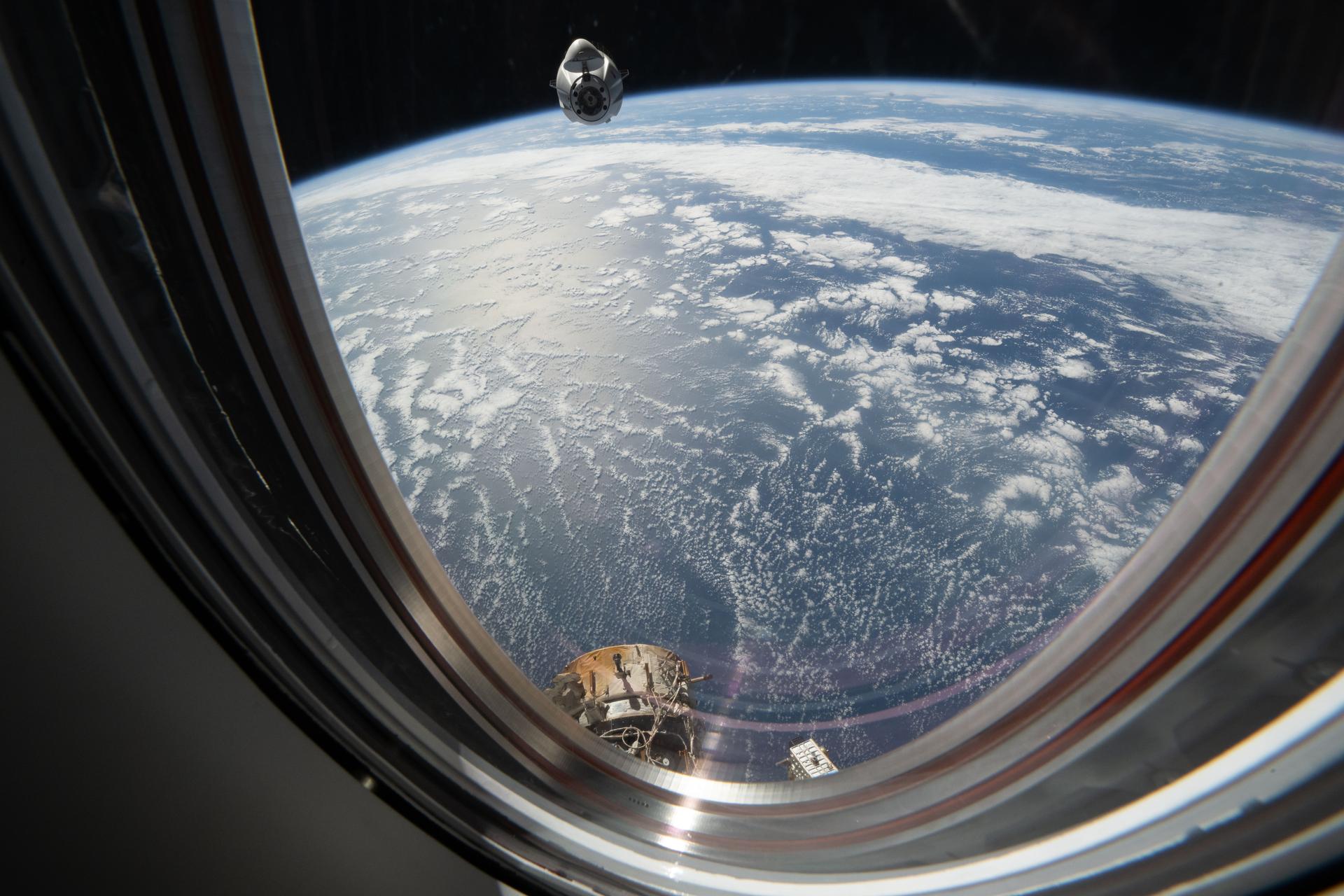
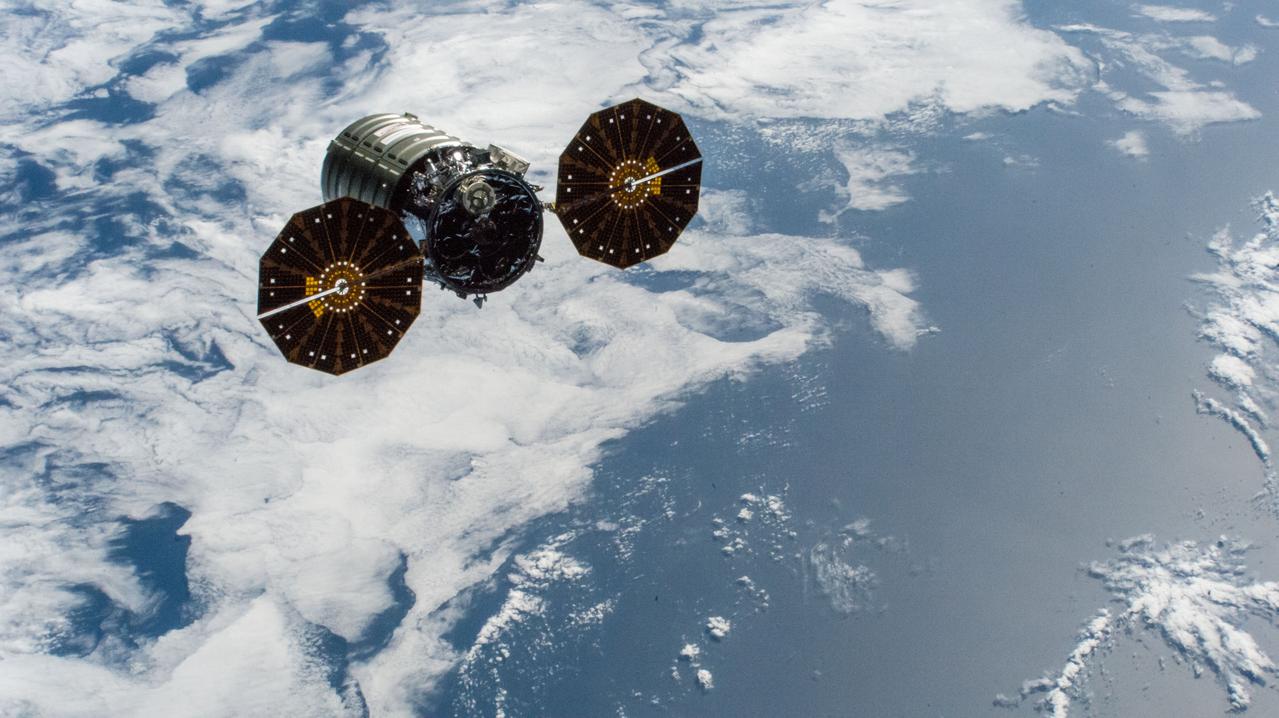
iss073e0816153 (Sept. 18, 2025) --- Northrop Grumman’s Cygnus XL cargo spacecraft, carrying more than 11,000 pounds of new science investigations and supplies for the Expedition 73 crew, approaches the International Space Station. The two spacecraft were orbiting 262 miles above northeastern China just before an orbital sunset. Cygnus XL is an expanded version of Northrop Grumman’s previous Cygnus cargo vehicle, offering increased payload capacity and pressurized cargo volume.
The Cygnus XL cargo spacecraft approaches the International Space Station
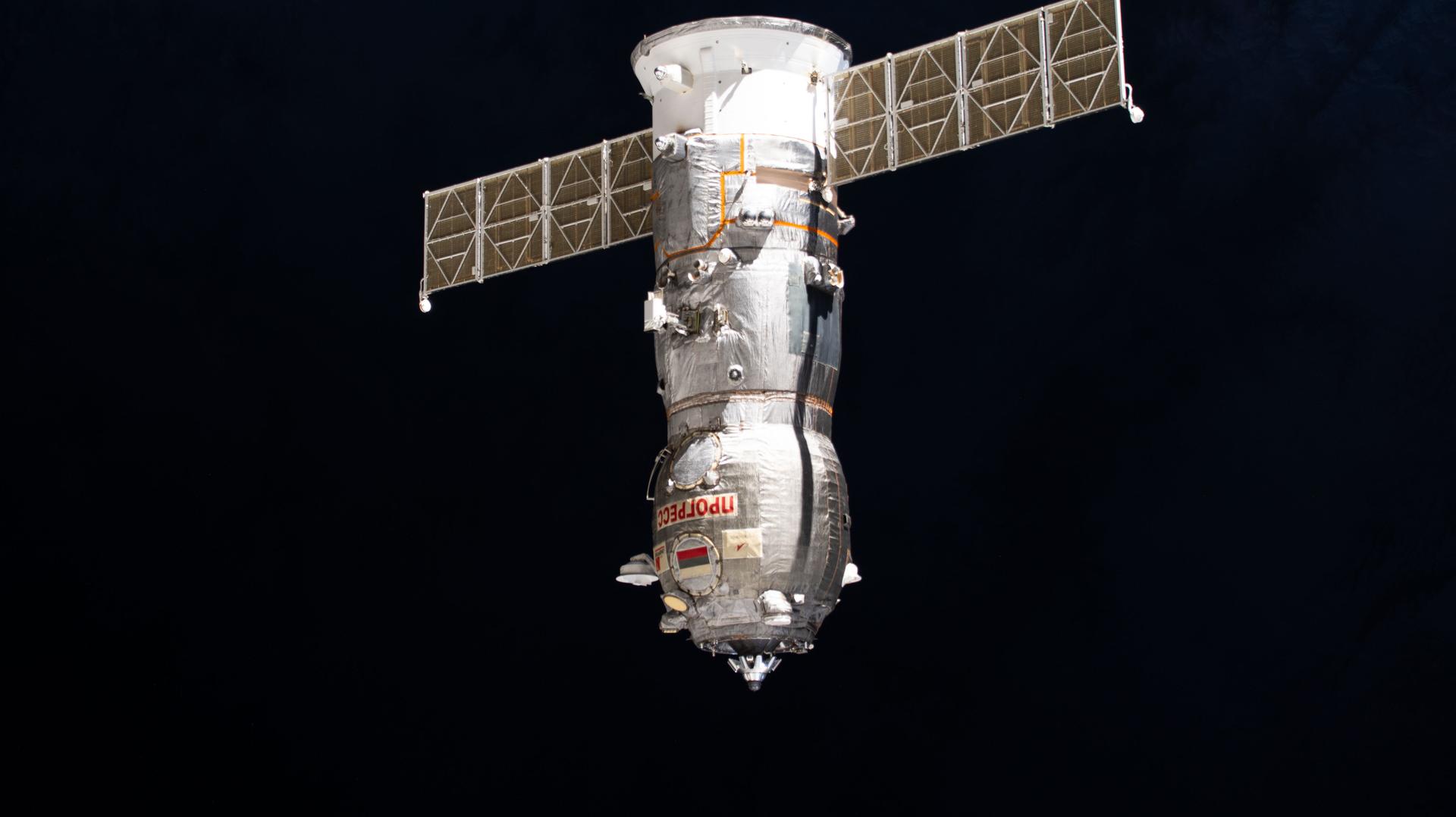
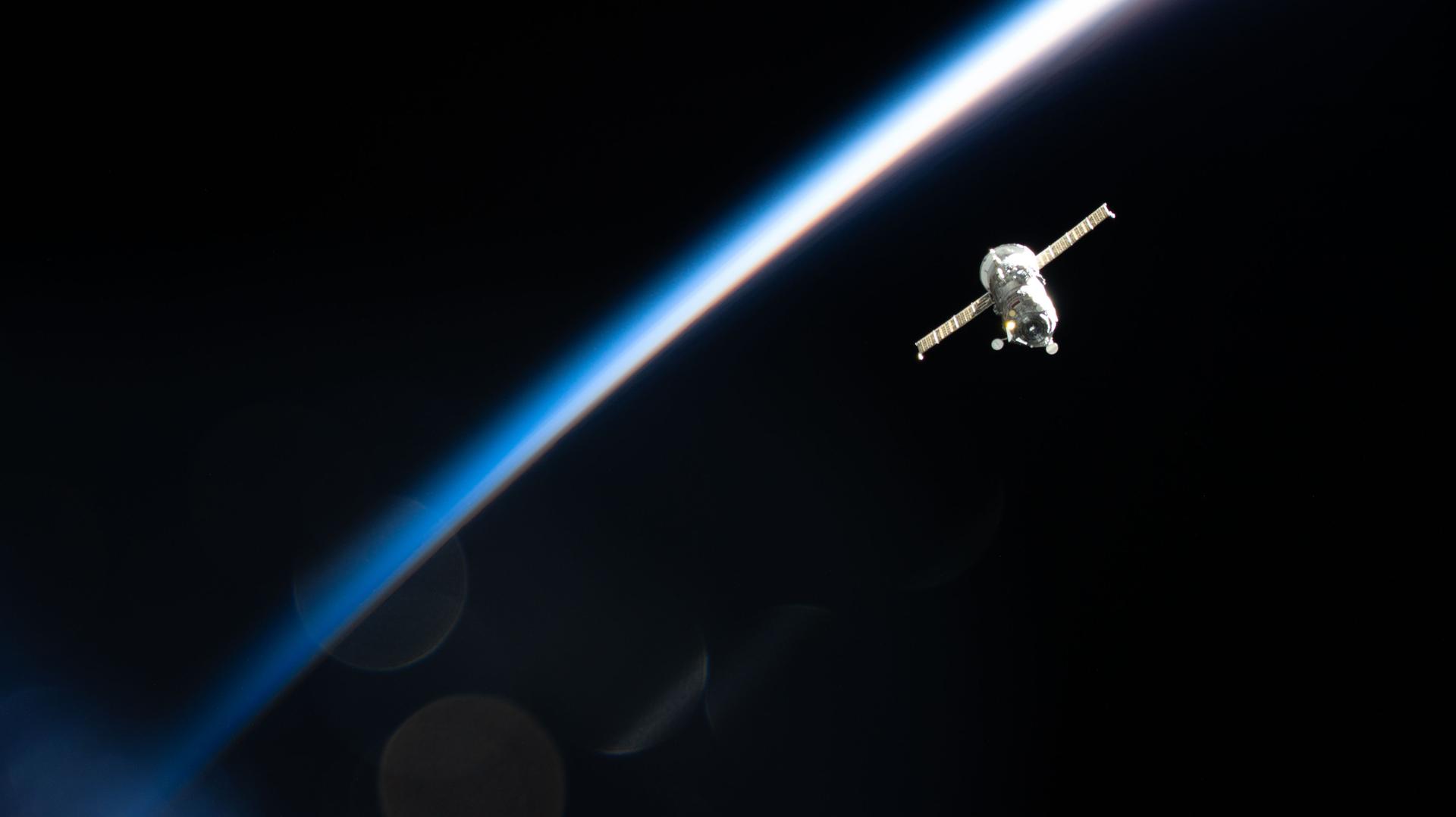
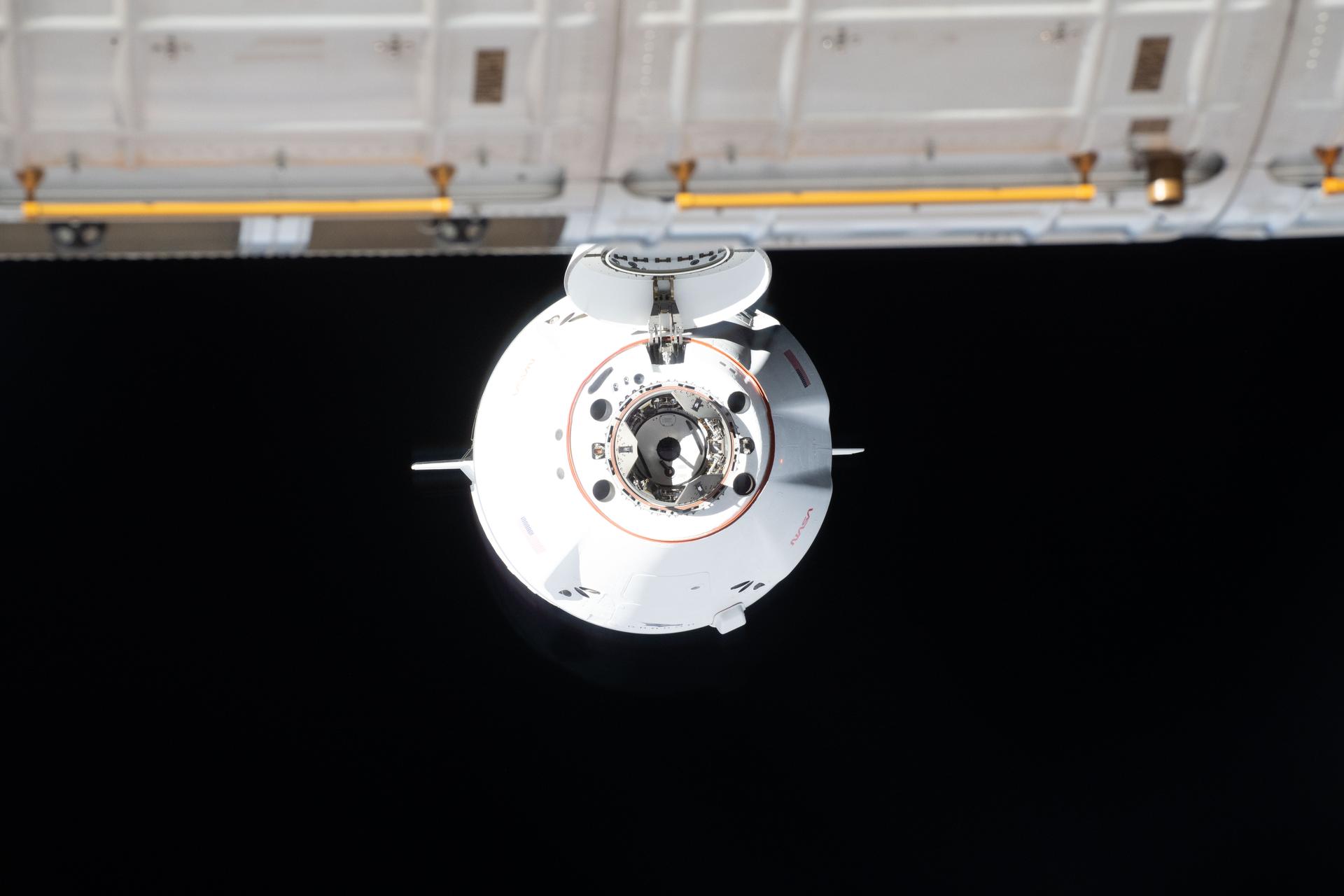
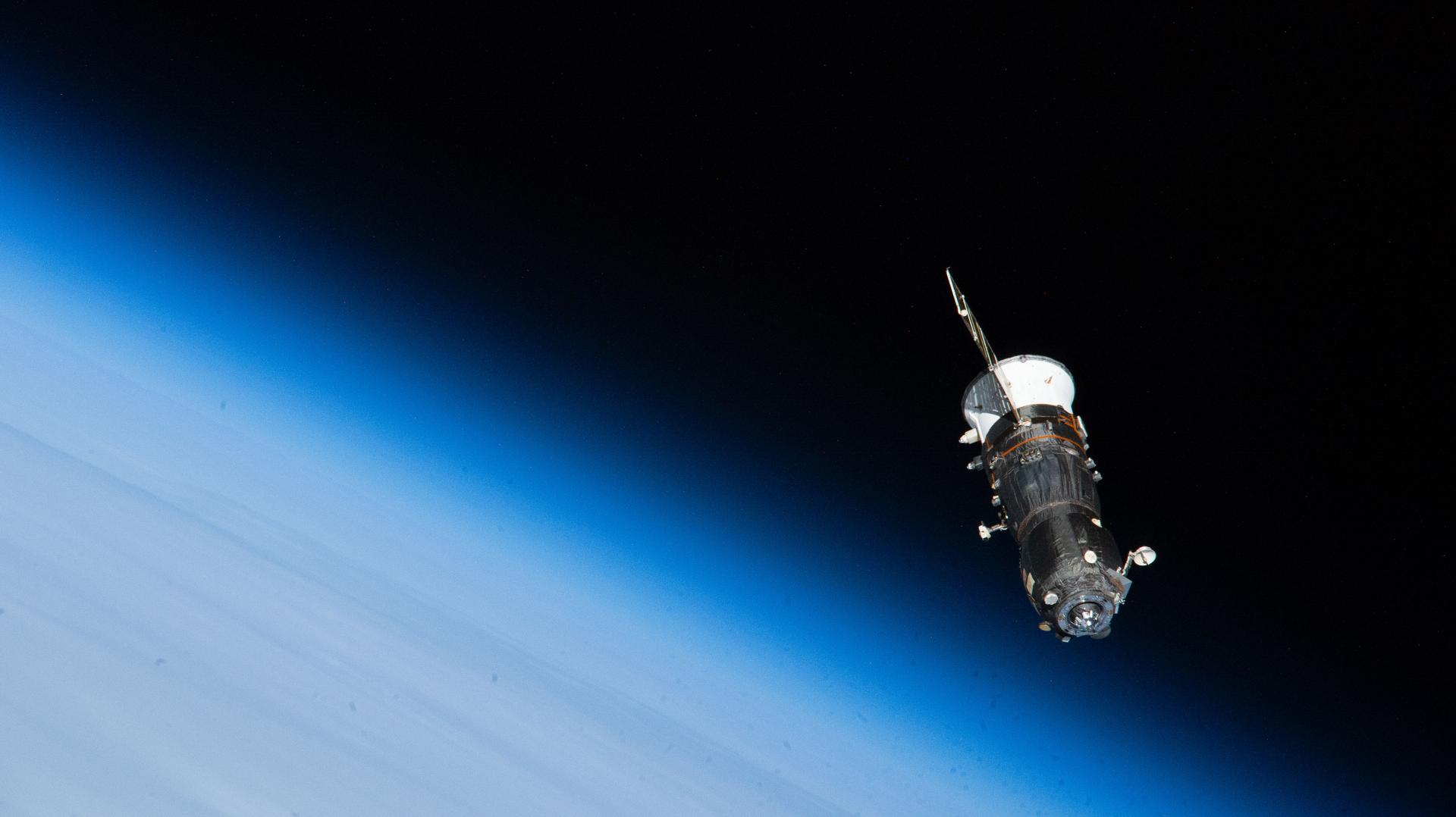
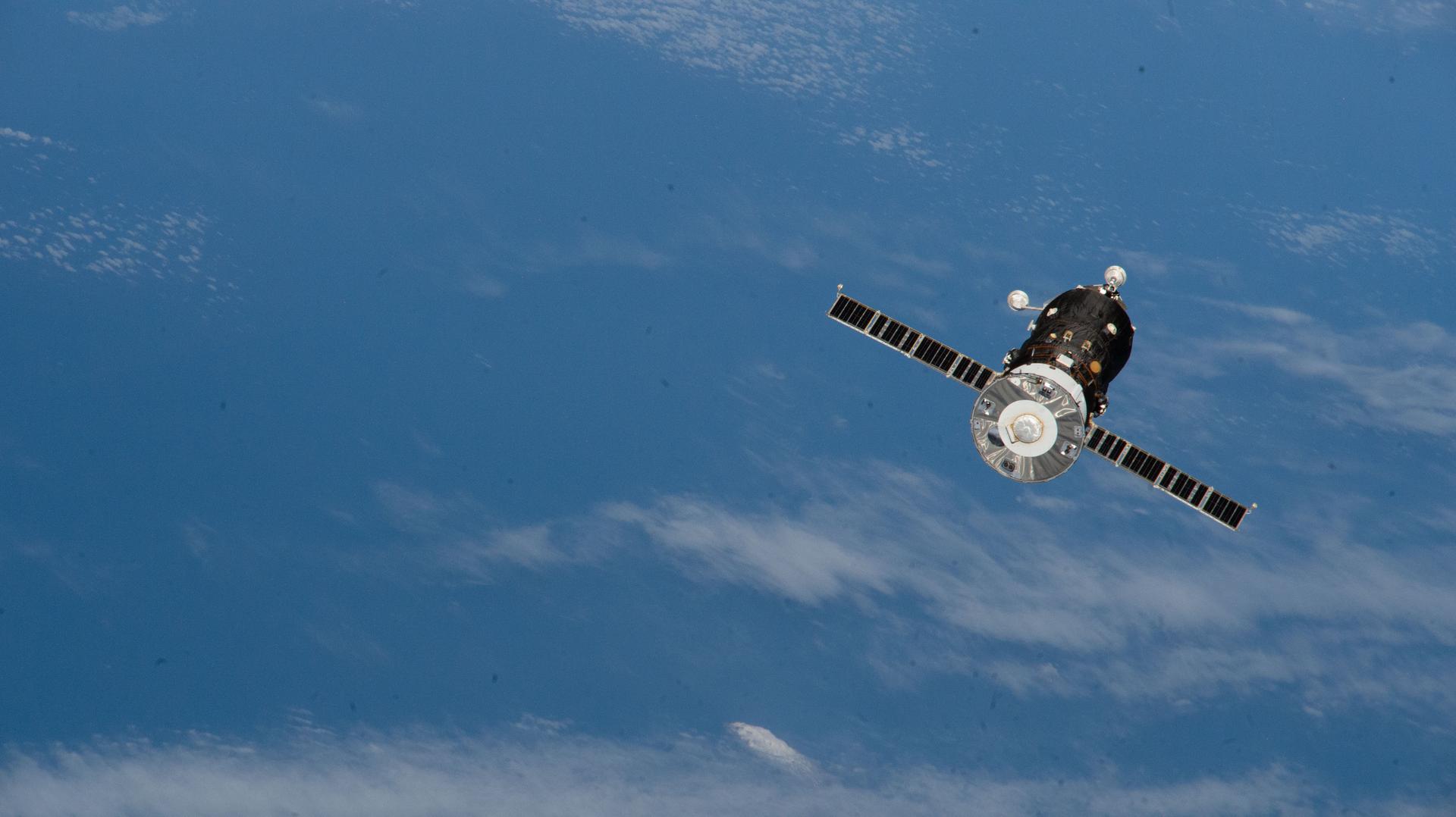
iss074e0395778 (March 16, 2026) --- The Progress 94 cargo spacecraft from Roscosmos,  packed with about three tons of food, fuel, and supplies for the Expedition 74 crew, approaches the International Space Station for a docking to the Poisk module. Credit: NASA
The Progress 94 cargo spacecraft from Roscosmos
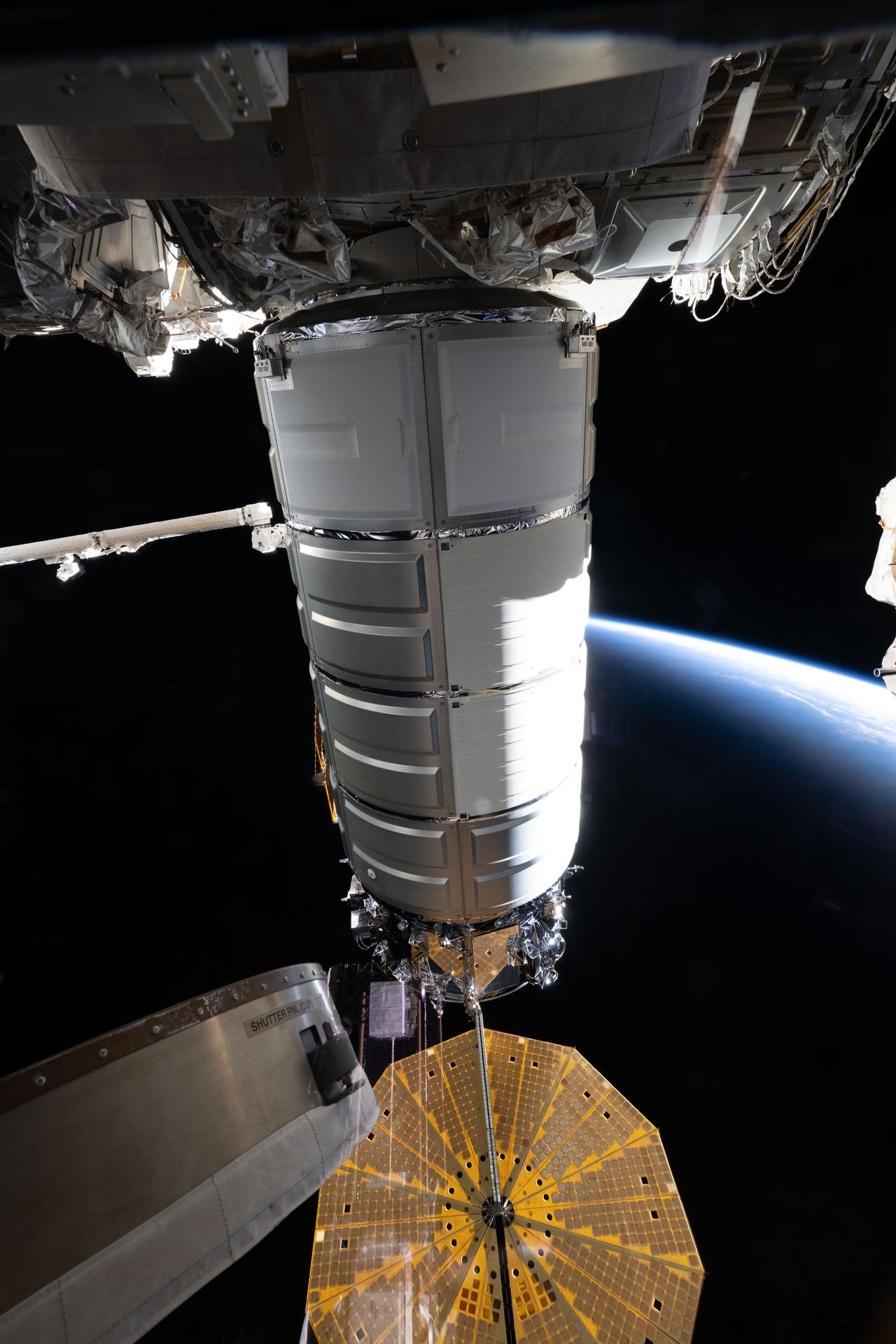
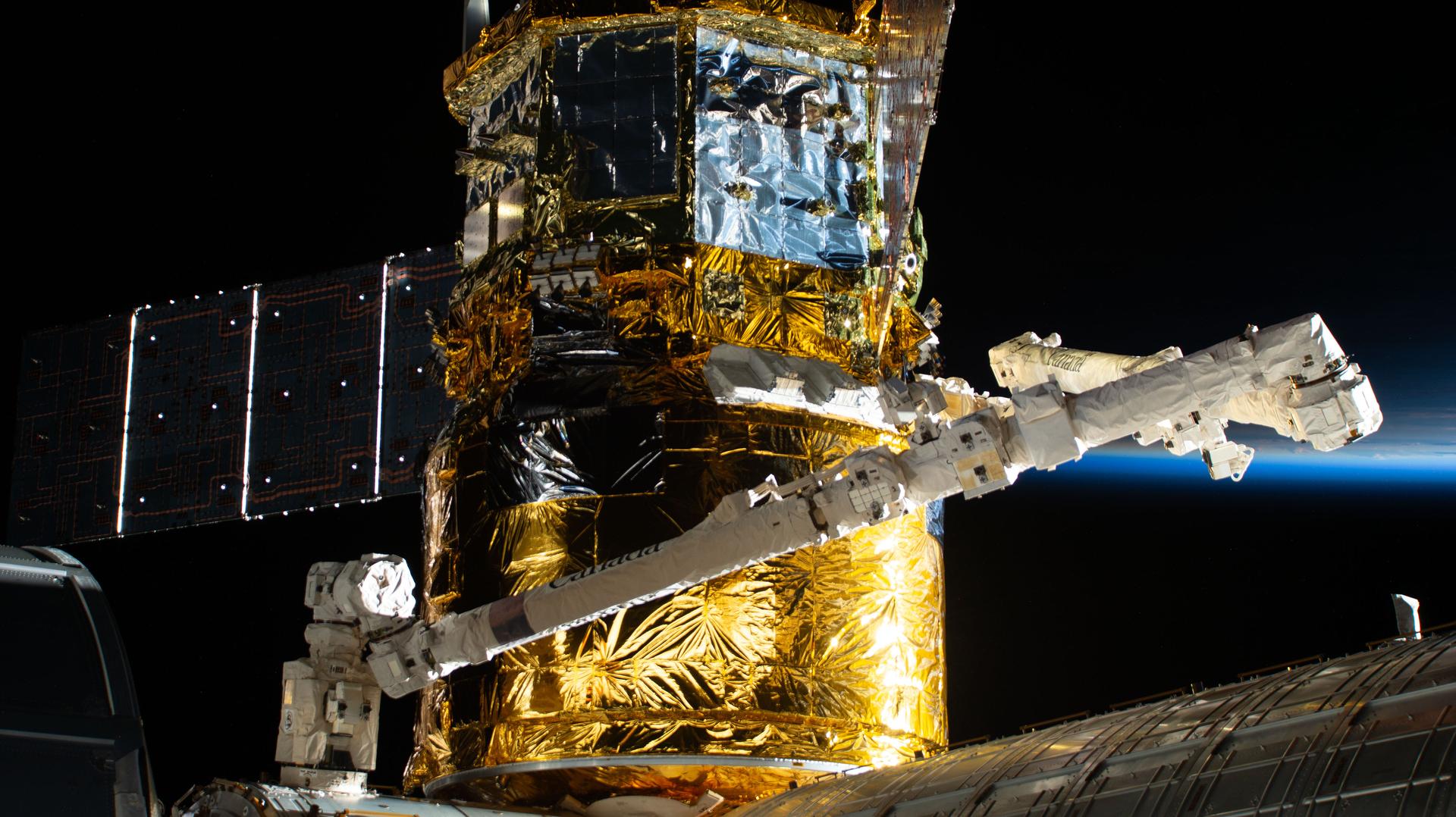
iss075e0091367 (Sept. 9, 2026) --- A portion of Northrop Grumman’s Cygnus XL cargo spacecraft, with its prominent cymbal‑shaped UltraFlex solar arrays, is pictured as the International Space Station orbited above the United States at approximately 9:56 p.m. local time. Credit: NASA
A portion of Northrop Grumman’s Cygnus XL cargo spacecraft
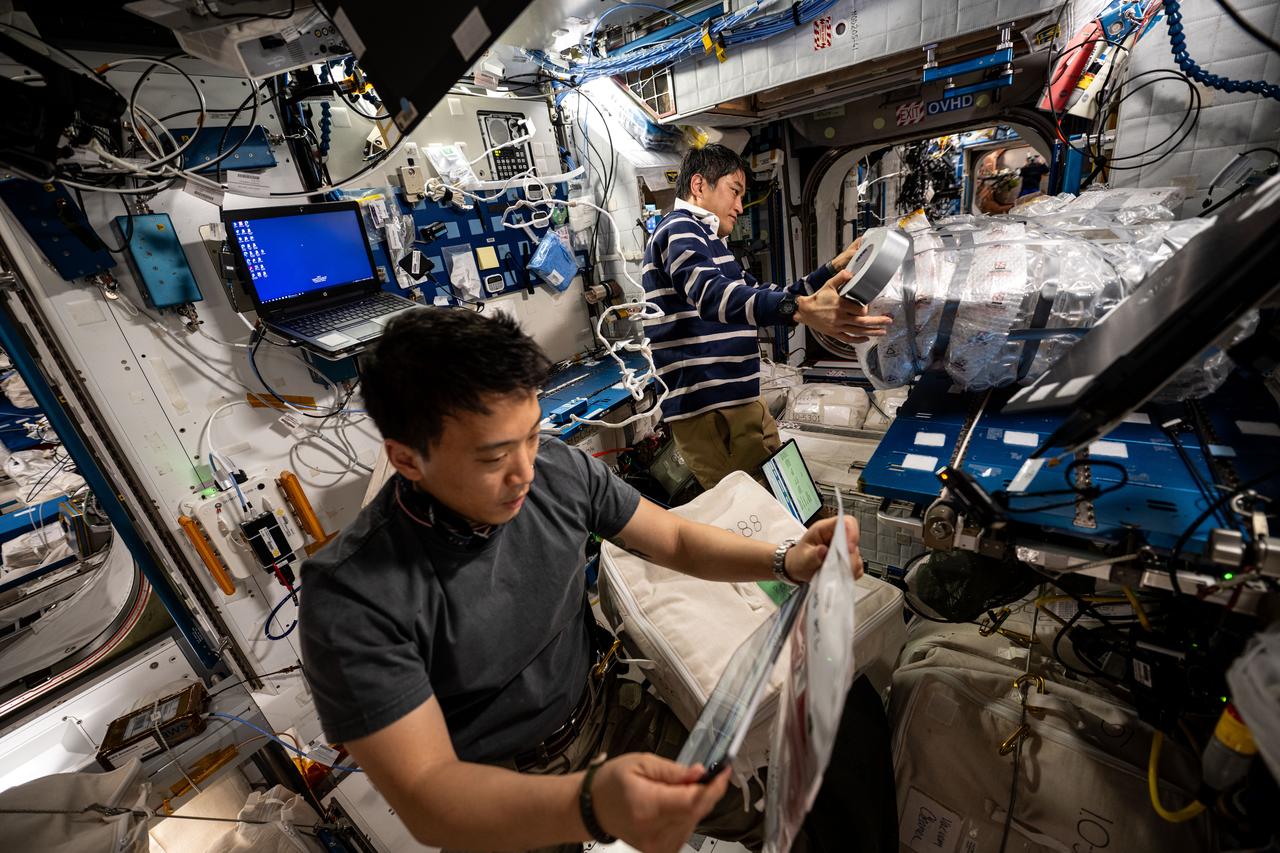
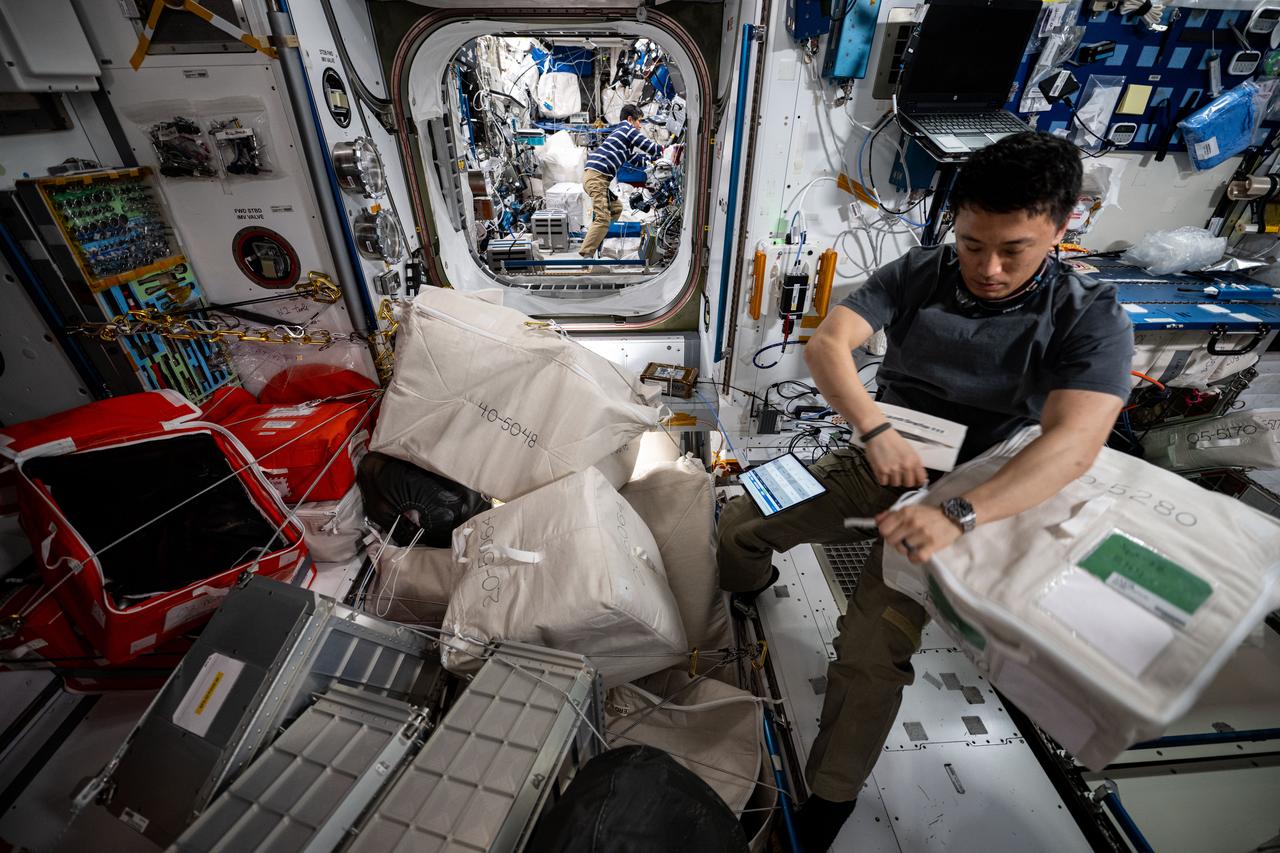
iss073e0071328 (May 14, 2025) --- Astronauts Jonny Kim of NASA and Takuya Onishi of JAXA (Japan Aerospace Exploration Agency), Expedition 73 flight engineer and commander respectively, work inside the International Space Station's Harmony module gathering and organizing cargo to be packed inside the SpaceX Dragon cargo spacecraft before its departure.
Astronauts Jonny Kim and Takuya gathers cargo to be packed inside the SpaceX Dragon cargo spacecraft
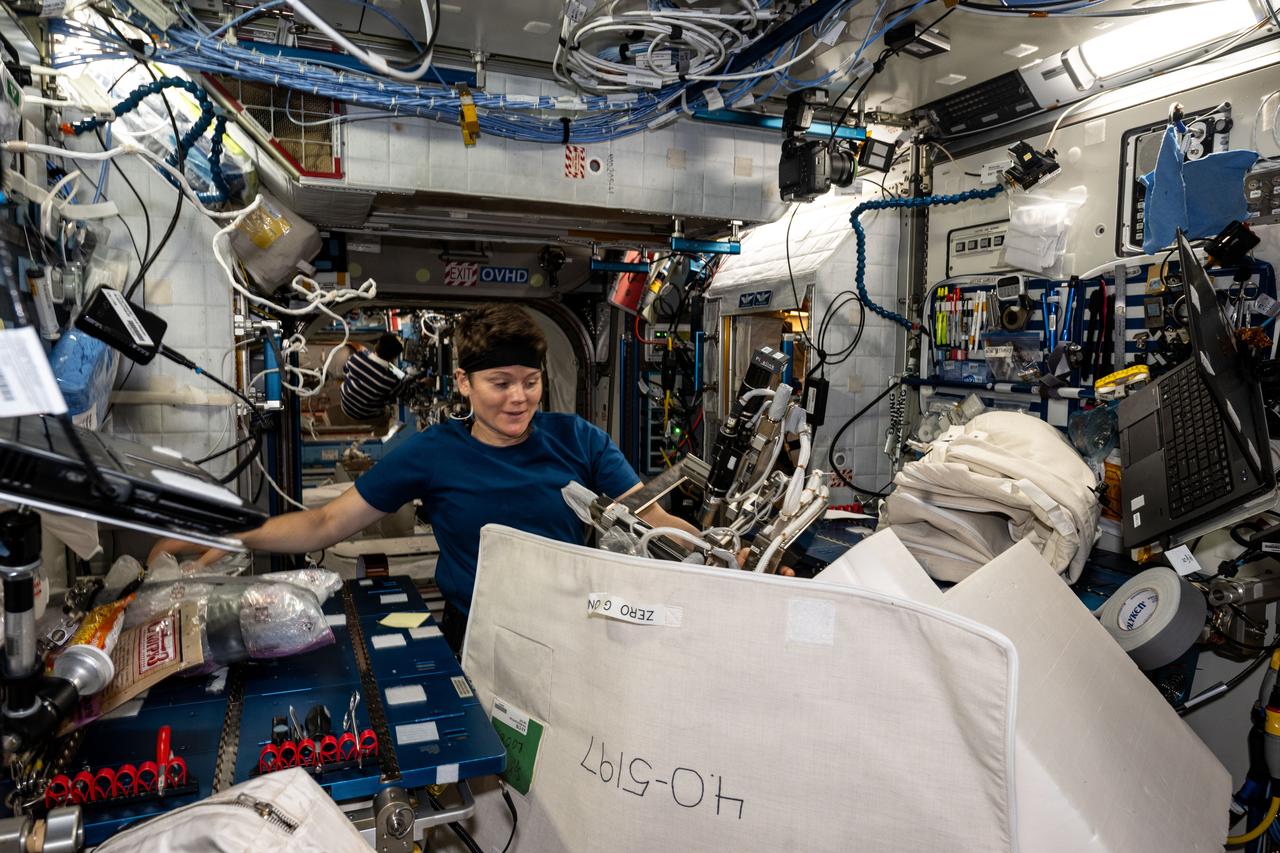
iss073e0071119 (May 14, 2025) --- NASA astronaut and Expedition 73 Flight Engineer Anne McClain works inside the International Space Station's Harmony module gathering and organizing cargo to be packed inside the SpaceX Dragon cargo spacecraft before its departure.
Astronaut Anne McClain gathers cargo to be packed inside the SpaceX Dragon cargo spacecraft
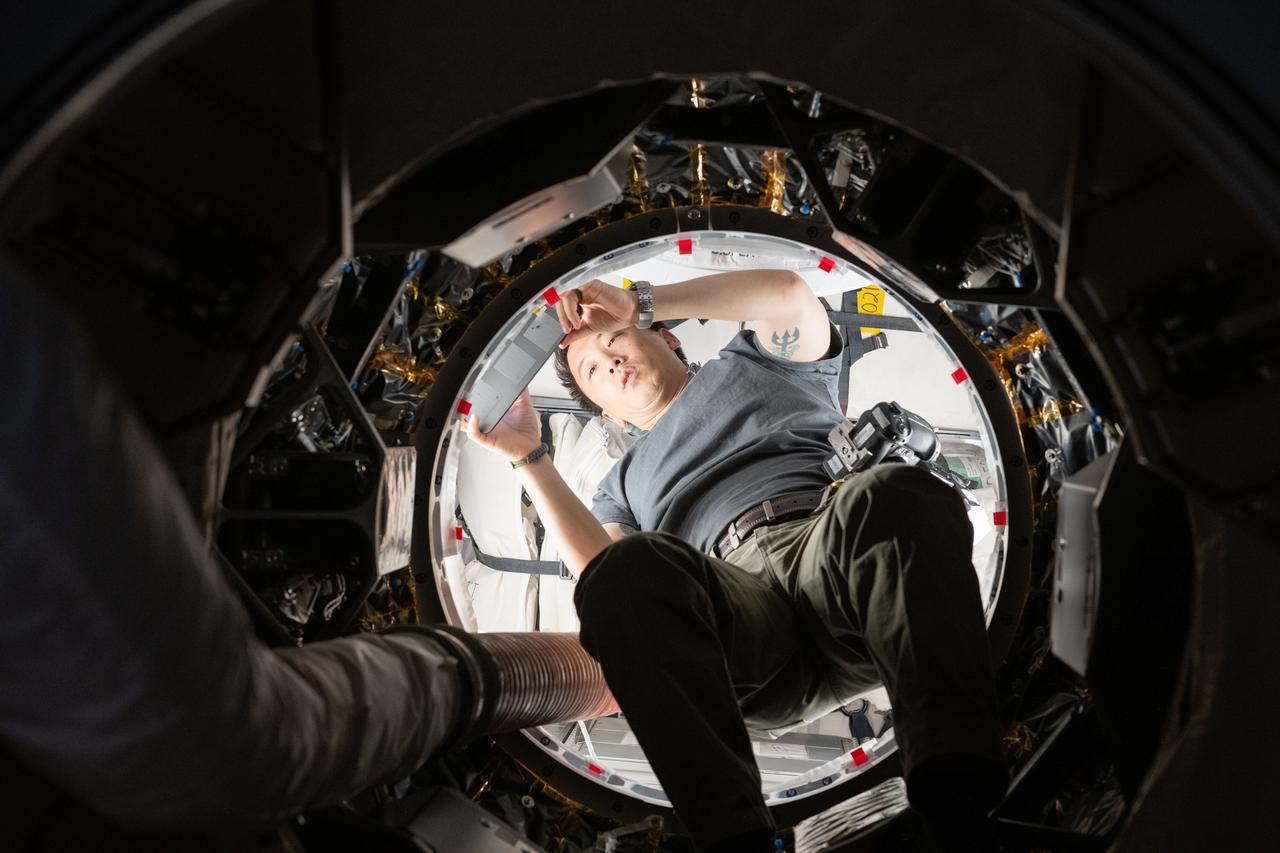
iss073e0078643 (May 23, 2025) --- NASA astronaut and Expedition 73 Flight Engineer Jonny Kim works inside the SpaceX Dragon cargo spacecraft completing cargo operations before it undocked from the International Space Station's Harmony module several hours later.
Astronaut Jonny Kim works inside the SpaceX Dragon cargo spacecraft completing cargo operations
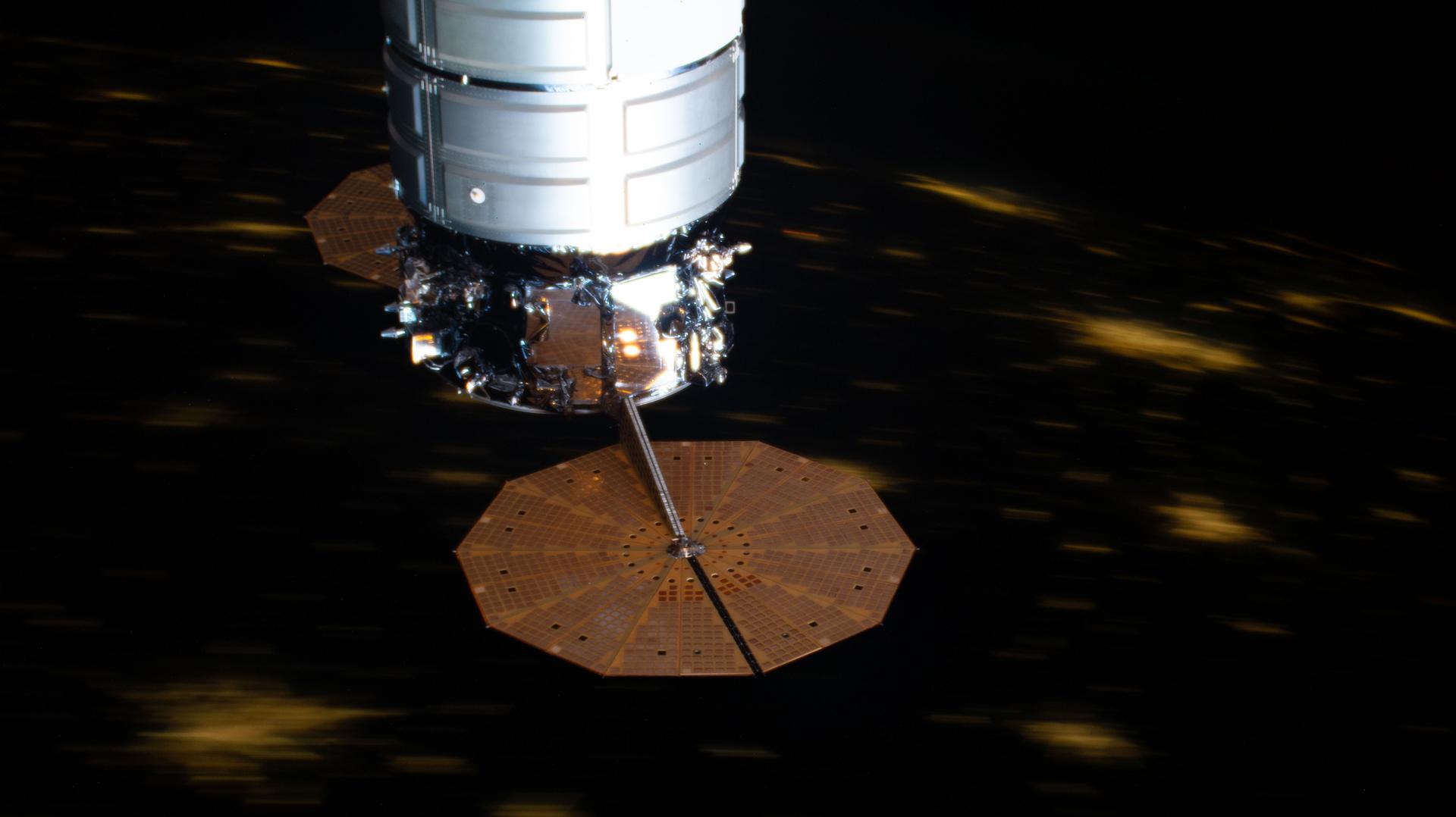
iss075e0155789 (Sept. 26, 2026) --- Northrop Grumman's Cygnus XL cargo spacecraft is pictured berthed to the International Space Station's Earth-facing port on the Unity module. At the bottom is one of two cymbal‑shaped UltraFlex solar arrays attached to Cygnus XL's service module, which provides navigation, power, and propulsion for the spacecraft. The orbital outpost was soaring 257 miles above the Arabian Sea, heading into an orbital sunset at the time of this photograph. Credit: ESA/Sophie Adenot
Northrop Grumman's Cygnus XL cargo spacecraft
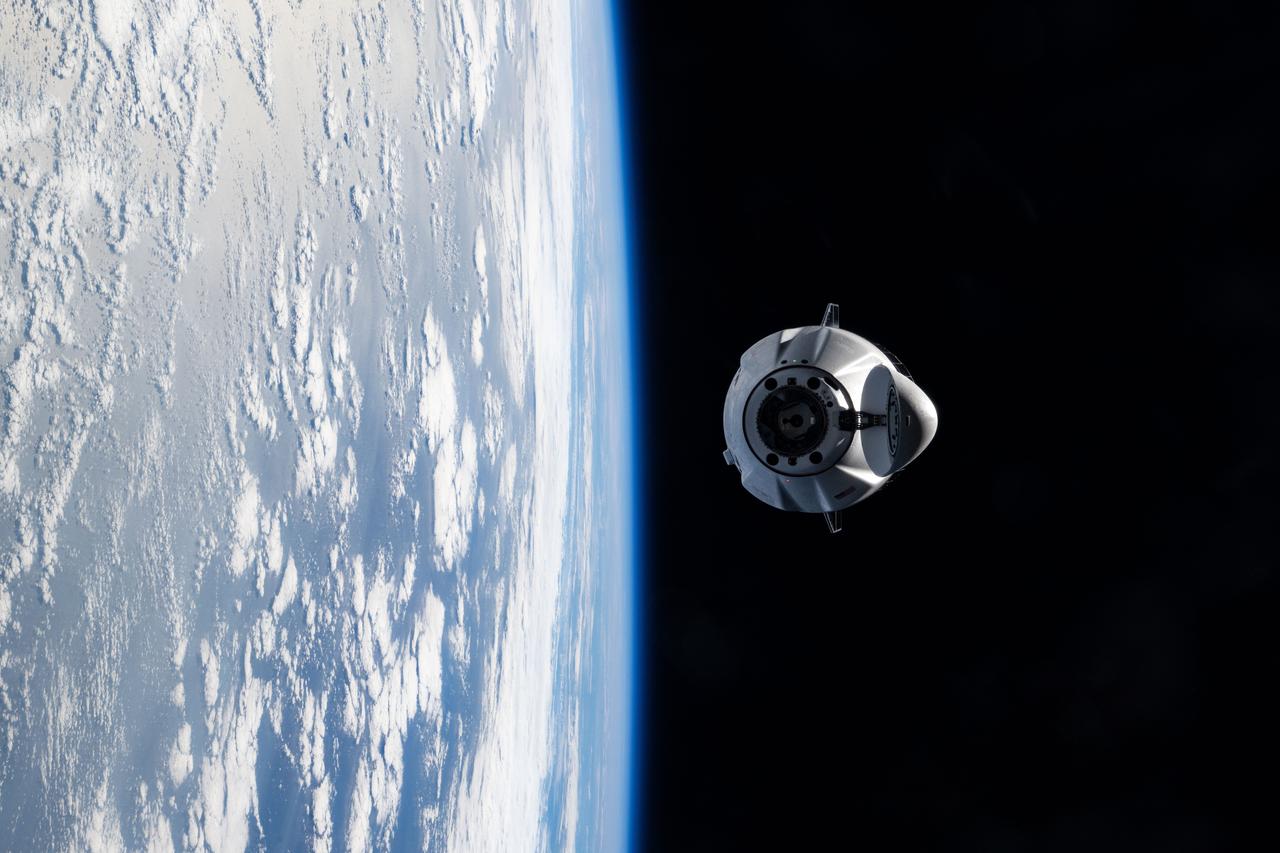
iss074e0723937 (June 16, 2026) --- A SpaceX Dragon cargo spacecraft departs from the International Space Station after undocking from the Harmony module's forward port. Dragon, packed with completed science experiments and cargo for retrieval and analysis on Earth, parachuted to a splashdown off the coast of southern California the following day. Credit: NASA
A SpaceX Dragon cargo spacecraft departs from the International Space Station
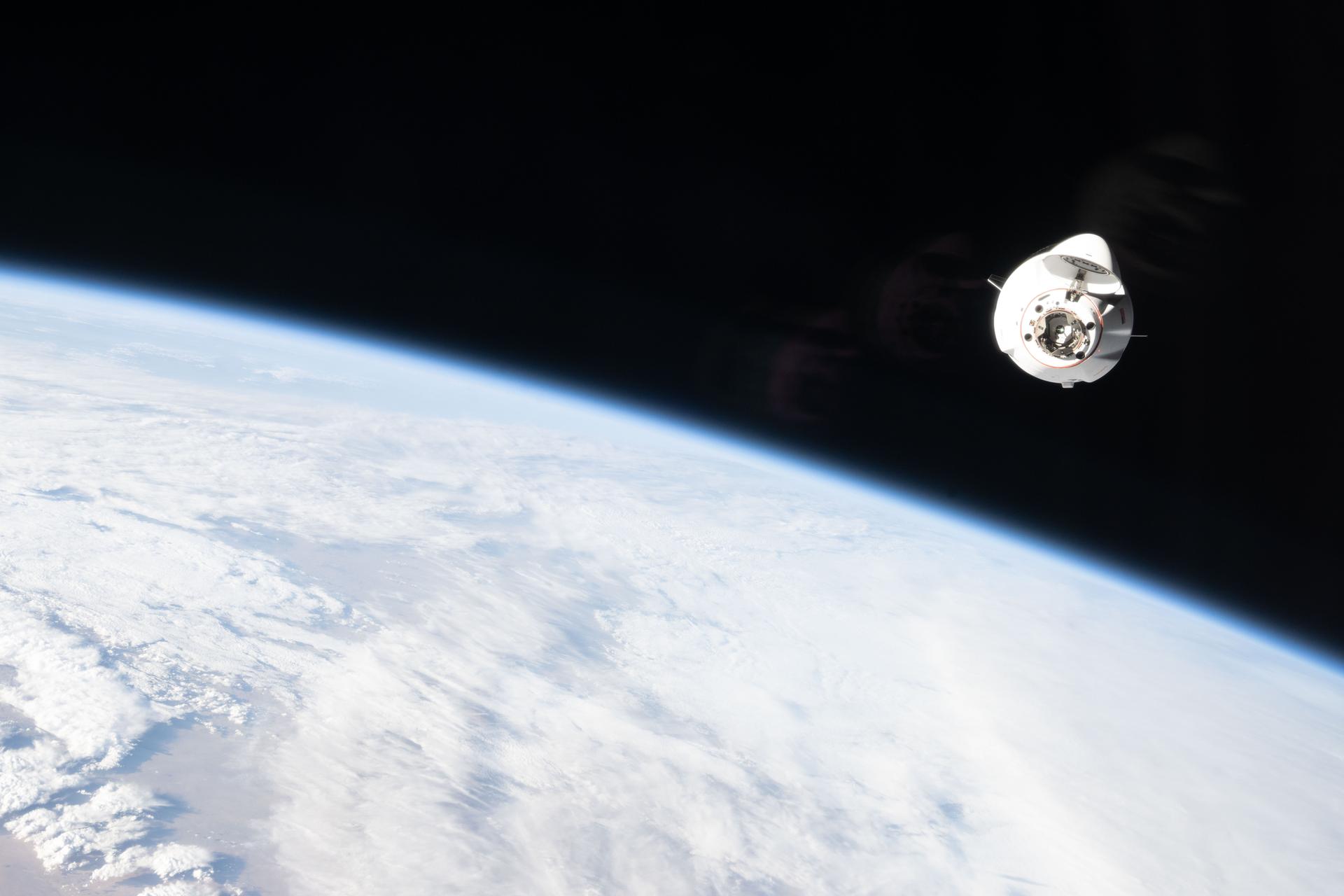
iss072e145206 (Nov. 5, 2024) --- The SpaceX Dragon cargo spacecraft is pictured approaching the International Space Station as both spacecraft were orbiting 255 miles above a cloudy Pacific Ocean southwest of Ecuador's Galápagos Islands.
The SpaceX Dragon cargo spacecraft approaches the International Space Station
iss073e0734903 (Aug. 25, 2025) --- A SpaceX Dragon cargo spacecraft approaches the International Space Station's forward port on the Harmoy module as both spacecraft orbited 260 miles above the Atlantic Ocean off the coast of Western Sahara.
A SpaceX Dragon cargo spacecraft approaches the International Space Station
iss073e0735314 (Aug. 25, 2025) --- A SpaceX Dragon cargo spacecraft approaches the International Space Station's forward port on the Harmoy module as both spacecraft orbited 259 miles above the African nation of Mali.
A SpaceX Dragon cargo spacecraft approaches the International Space Station
iss073e0734091 (Aug. 25, 2025) --- A SpaceX Dragon cargo spacecraft approaches the International Space Station's forward port on the Harmoy module as both spacecraft orbited 262 miles above the North Atlantic Ocean.
A SpaceX Dragon cargo spacecraft approaches the International Space Station
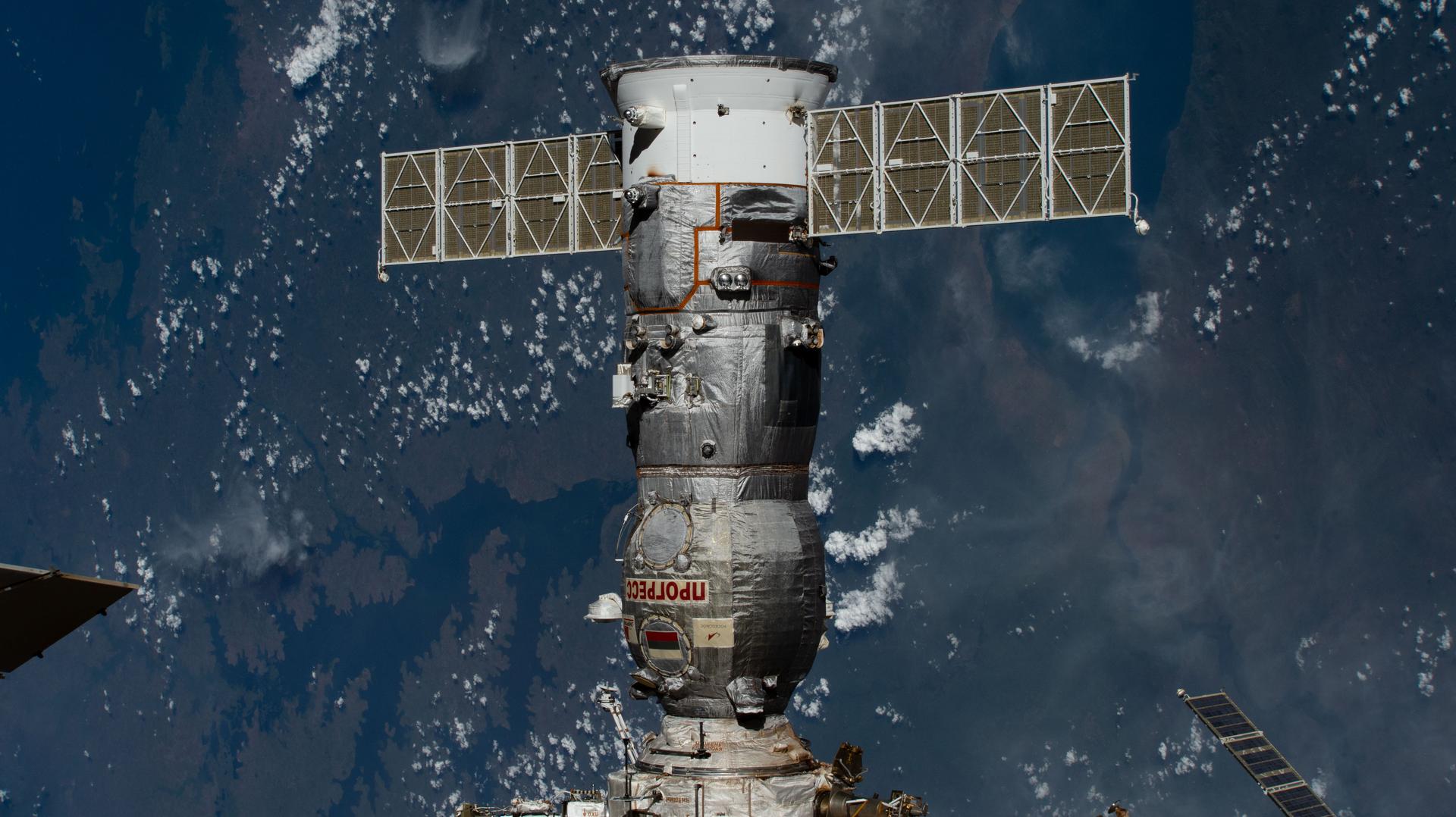
iss074e0381649 (March 16, 2026) --- The Progress 94 cargo spacecraft from Roscosmos, packed with about three tons of food, fuel, and supplies for the Expedition 74 crew, is pictured shortly after docking to the International Space Station's Poisk module. The orbital outpost was soaring 265 miles above the Democratic Republic of the Congo at the time of this photograph. Credit: NASA
The Progress 94 cargo spacecraft from Roscosmos
iss073e0071231 (May 14, 2025) --- NASA astronaut and Expedition 73 Flight Engineer Jonny Kim works inside the International Space Station's Harmony module gathering and organizing cargo to be packed inside the SpaceX Dragon cargo spacecraft before its departure. In the rear, station Commander Takuya Onishi from JAXA (Japan Aerospace Exploration Agency) works inside the Columbus laboratory module.
Astronaut Jonny Kim gathers cargo to be packed inside the SpaceX Dragon cargo spacecraft
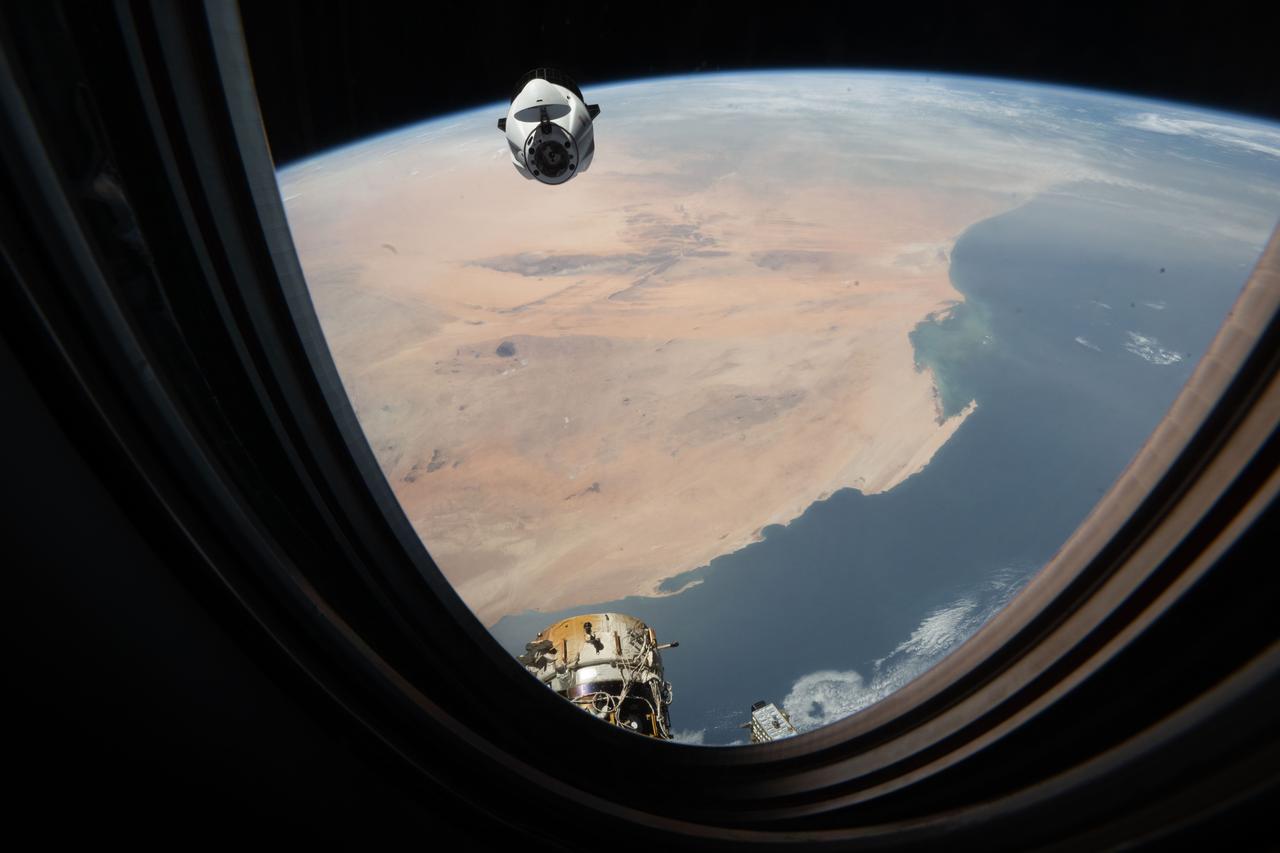
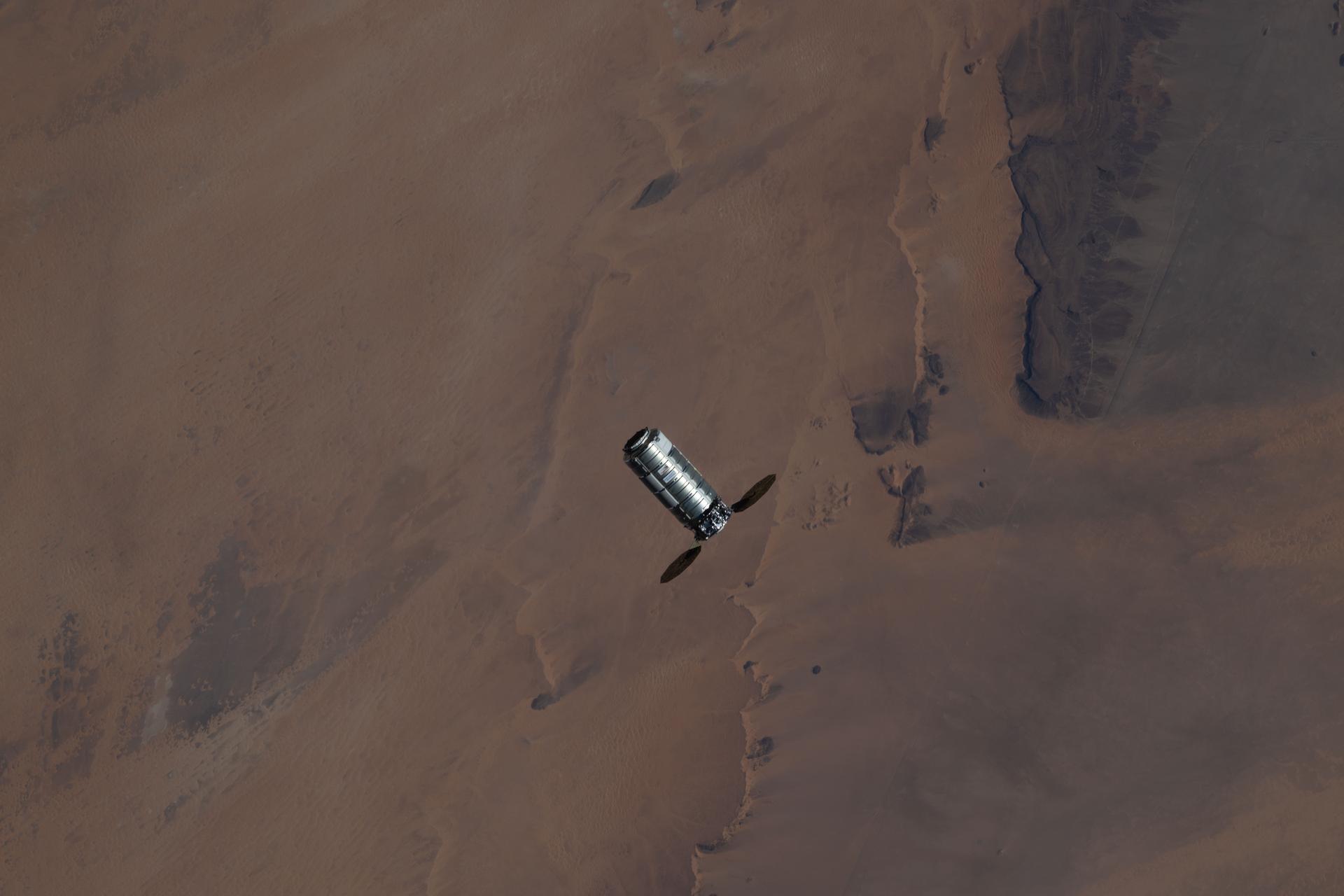
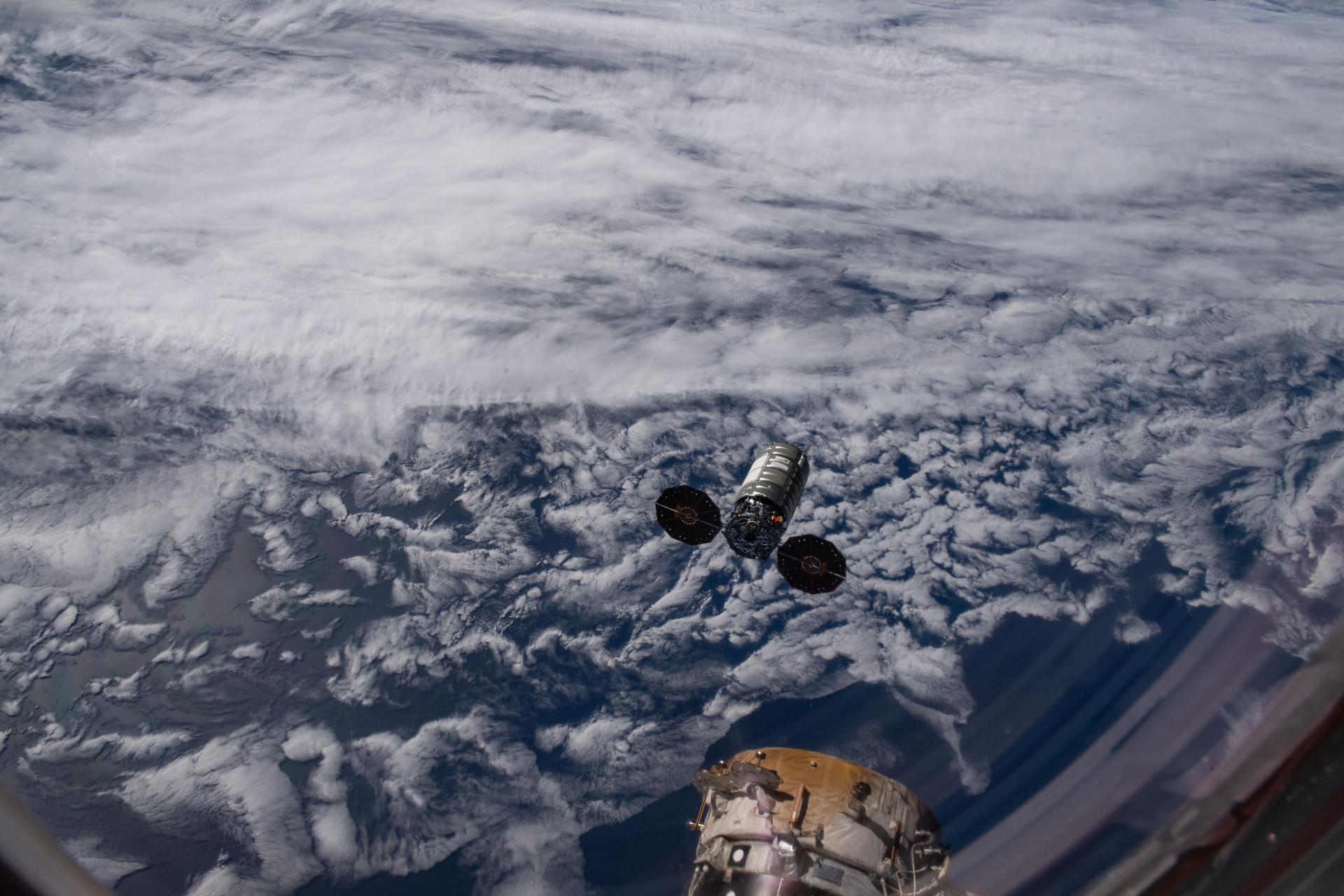
iss074e0504295 (April 13, 2026) --- Northrop Grumman’s Cygnus XL cargo spacecraft approaches the International Space Station while orbiting 264 miles above the Sahara Desert in Mauritania. Credit: NASA/Chris Williams
The Cygnus XL cargo spacecraft approaches the International Space Station above the Sahara
iss074e0395792 (March 16, 2026) --- The Progress 92 cargo spacecraft from Roscosmos departs the International Space Station while soaring into an orbital sunset 267 miles above the Russia–Mongolia border. Credit: NASA
The Progress 92 cargo spacecraft departs the International Space Station
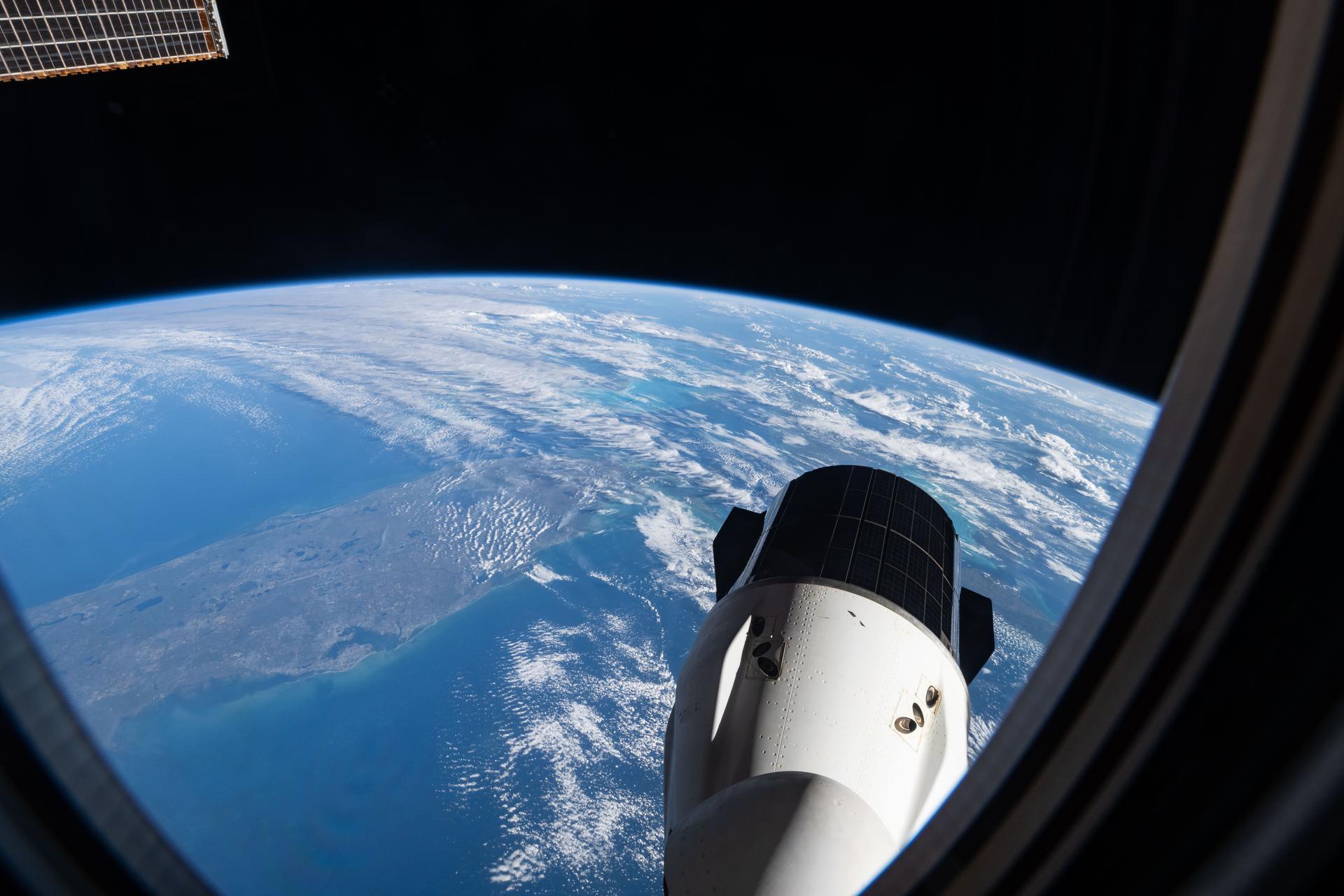
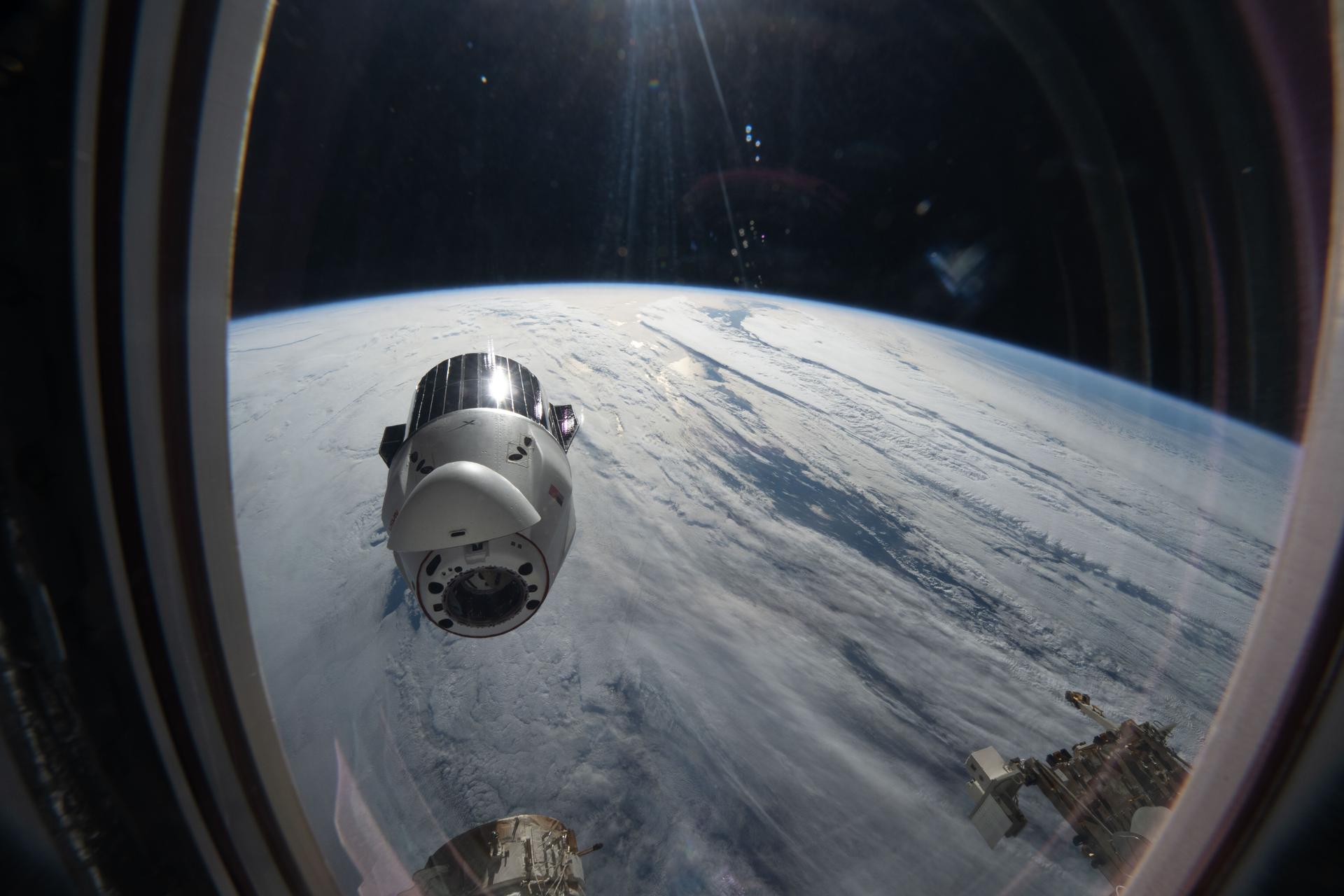
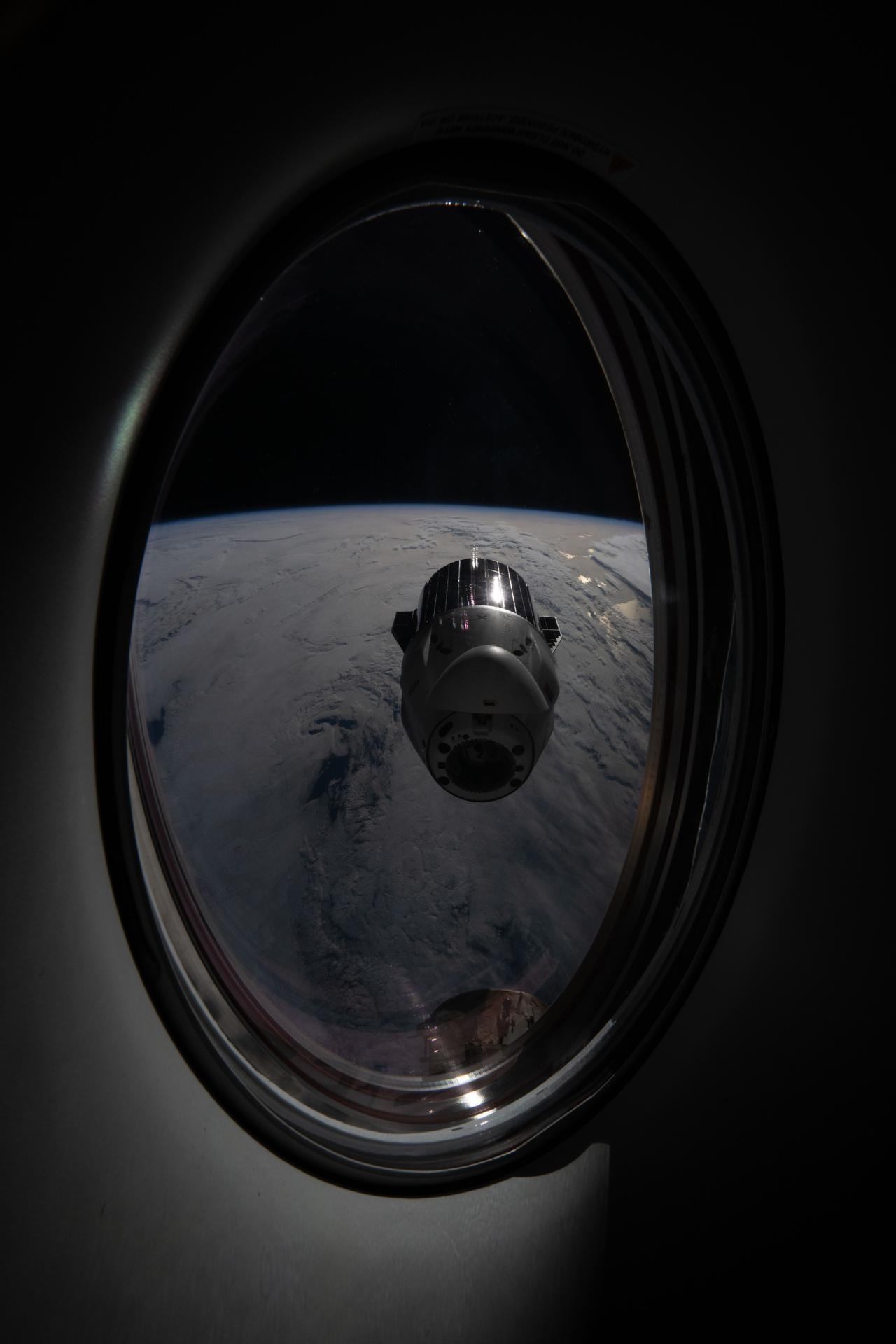
iss074e0000388 (Dec. 11, 2025) --- This photograph, taken from a window aboard the SpaceX Dragon crew spacecraft, shows the SpaceX Dragon cargo spacecraft with southern Florida visible below as the International Space Station orbited 260 miles above the Gulf of America.
The SpaceX Dragon cargo spacecraft with southern Florida visible below
iss072e096335 (Oct. 22, 2024) --- Two spacecraft (from left), the Soyuz MS-26 crew ship and the Northrop Grumman Cygnus cargo spacecraft, are pictured attached to the International Space Station while soaring into an orbital sunset 273 miles above the Pacific Ocean south of New Zealand.
Ahe Soyuz MS-26 crew ship and the Cygnus cargo spacecraft
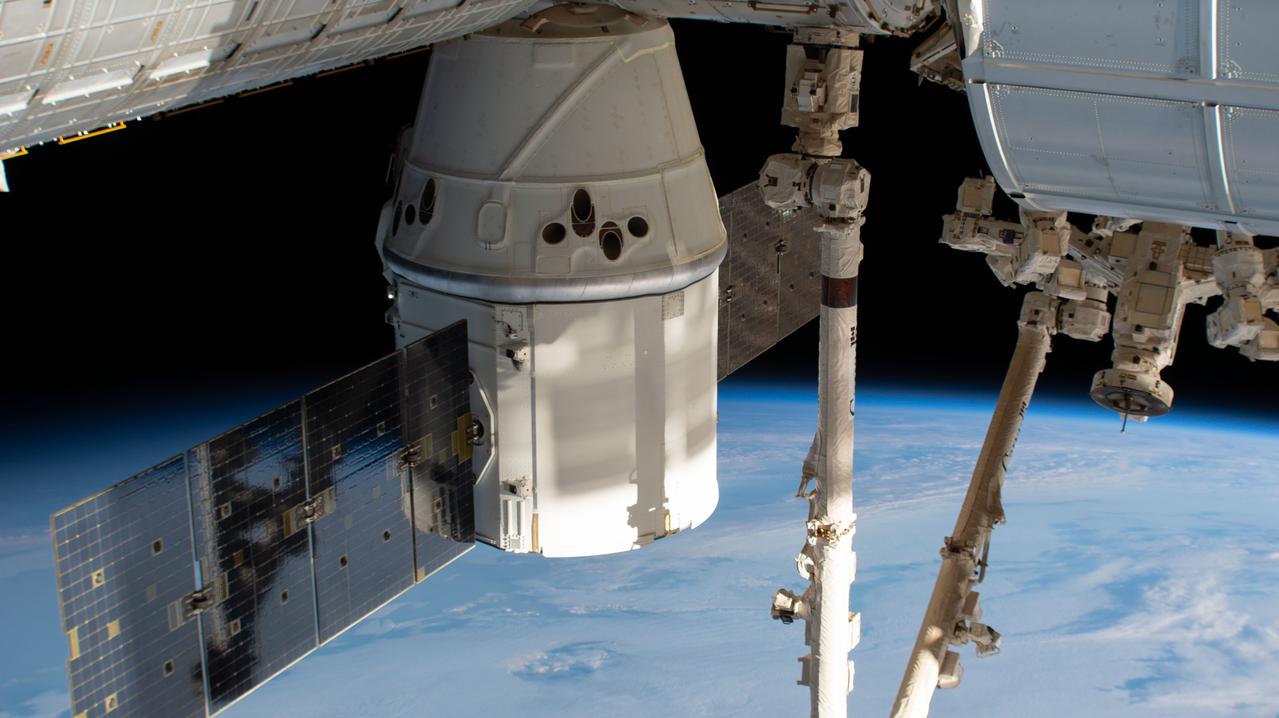
iss074e0723944 (June 16, 2026) --- A SpaceX Dragon cargo spacecraft departs from the International Space Station after undocking from the Harmony module's forward port. Dragon, packed with completed science experiments and cargo for retrieval and analysis on Earth, parachuted to a splashdown off the coast of southern California the following day. In the foreground is the Canadarm2 robotic arm. Credit: NASA
A SpaceX Dragon cargo spacecraft departs from the International Space Station
iss074e0719682 (June 16, 2026) --- A SpaceX Dragon cargo spacecraft backs away from the International Space Station moments after undocking from the Harmony module's forward port while orbiting 265 miles above a cloudy North Pacific Ocean. Dragon, packed with completed science experiments and cargo for retrieval and analysis on Earth, parachuted to a splashdown off the coast of southern California the following day. Credit: NASA/Jessica Meir
A SpaceX Dragon cargo spacecraft backs away from the International Space Station
iss074e0719724 (June 16, 2026) --- A SpaceX Dragon cargo spacecraft backs away from the International Space Station moments after undocking from the Harmony module's forward port while orbiting 265 miles above a cloudy North Pacific Ocean. Dragon, packed with completed science experiments and cargo for retrieval and analysis on Earth, parachuted to a splashdown off the coast of southern California the following day. Credit: NASA/Jessica Meir
A SpaceX Dragon cargo spacecraft backs away from the International Space Station
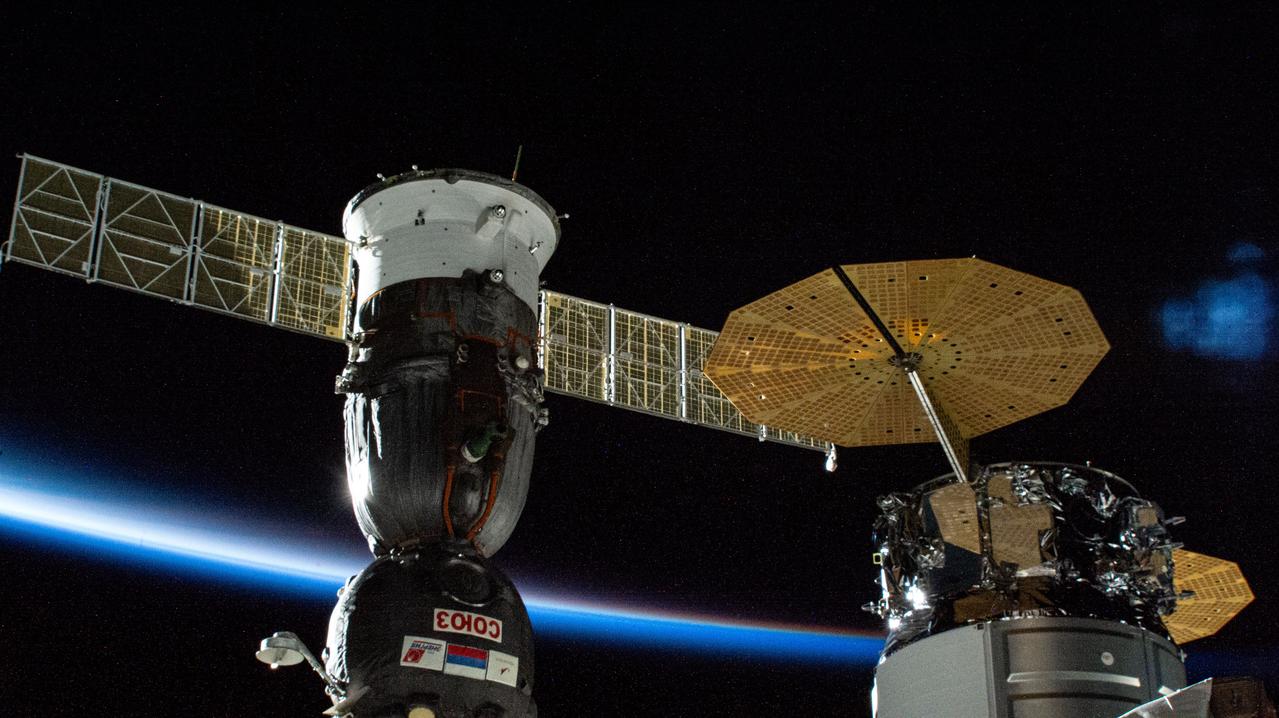
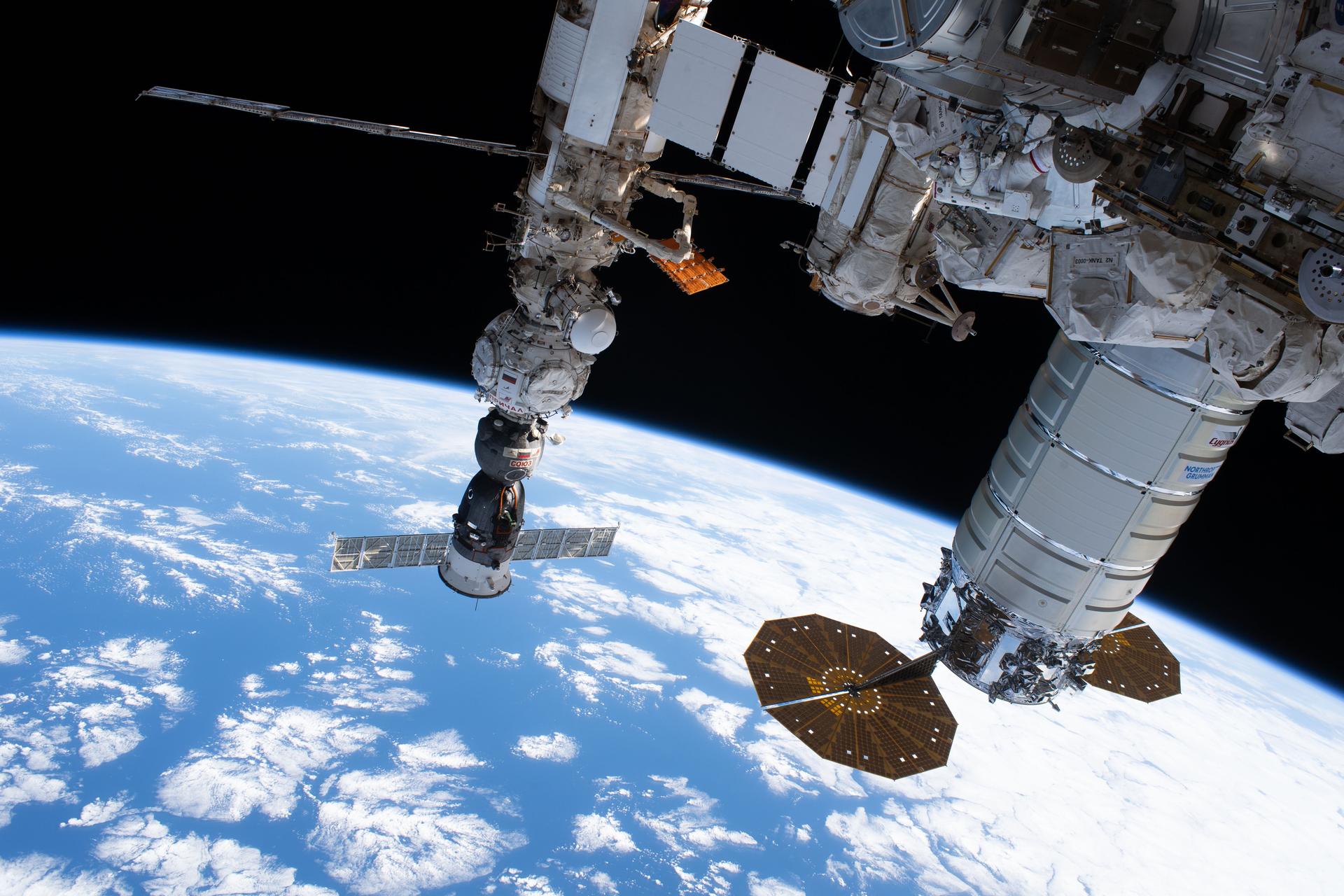
iss075e0086076 (Sept. 1, 2026) --- From left, the Soyuz MS‑29 crew spacecraft, docked to the Prichal module, and Northrop Grumman’s Cygnus XL cargo spacecraft, berthed to the Unity module, are pictured as the International Space Station orbited 261 miles above the Pacific Ocean west of Peru. Credit: NASA/Jessica Meir
The Soyuz MS‑29 crew spacecraft and Northrop Grumman’s Cygnus XL cargo spacecraft
iss074e0379134 (March 12, 2026) --- Northrop Grumman's Cygnus XL cargo spacecraft, with its two prominent cymbal-shaped UltraFlex solar arrays, departs the International Space Station moments after being released from the grasp of the Canadarm2 robotic arm completing its resupply mission. Credit: NASA
The Cygnus XL cargo spacecraft departs the International Space Station
iss074e0378294 (March 12, 2026) --- Northrop Grumman's Cygnus XL cargo spacecraft, with its two prominent cymbal-shaped UltraFlex solar arrays, is in the grasp of the Canadarm2 robotic arm before being released and departing the International Space Station to complete its resupply mission. Credit: NASA/Jessica Meir
The Cygnus XL cargo spacecraft is in the grasp of the Canadarm2 robotic arm
iss073e0071511 (May 15, 2025) --- NASA astronaut and Expedition 73 Flight Engineer Nichole Ayers works inside the SpaceX Dragon cargo spacecraft readying the vehicle to be packed with completed science experiments, time-critical research samples, and International Space Station hardware before its departure.
NASA astronaut Nichole Kim works inside the SpaceX Dragon cargo spacecraft
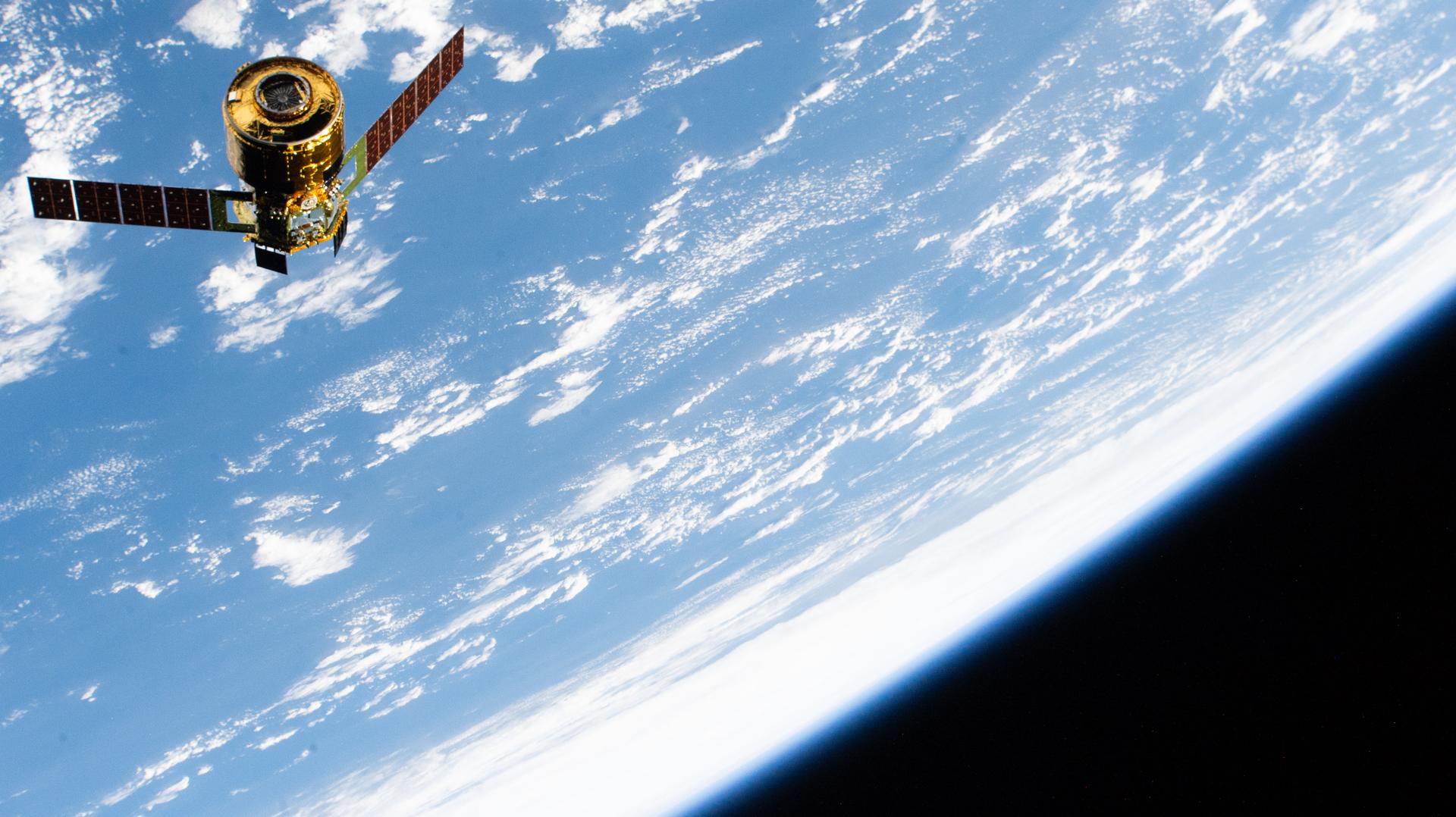
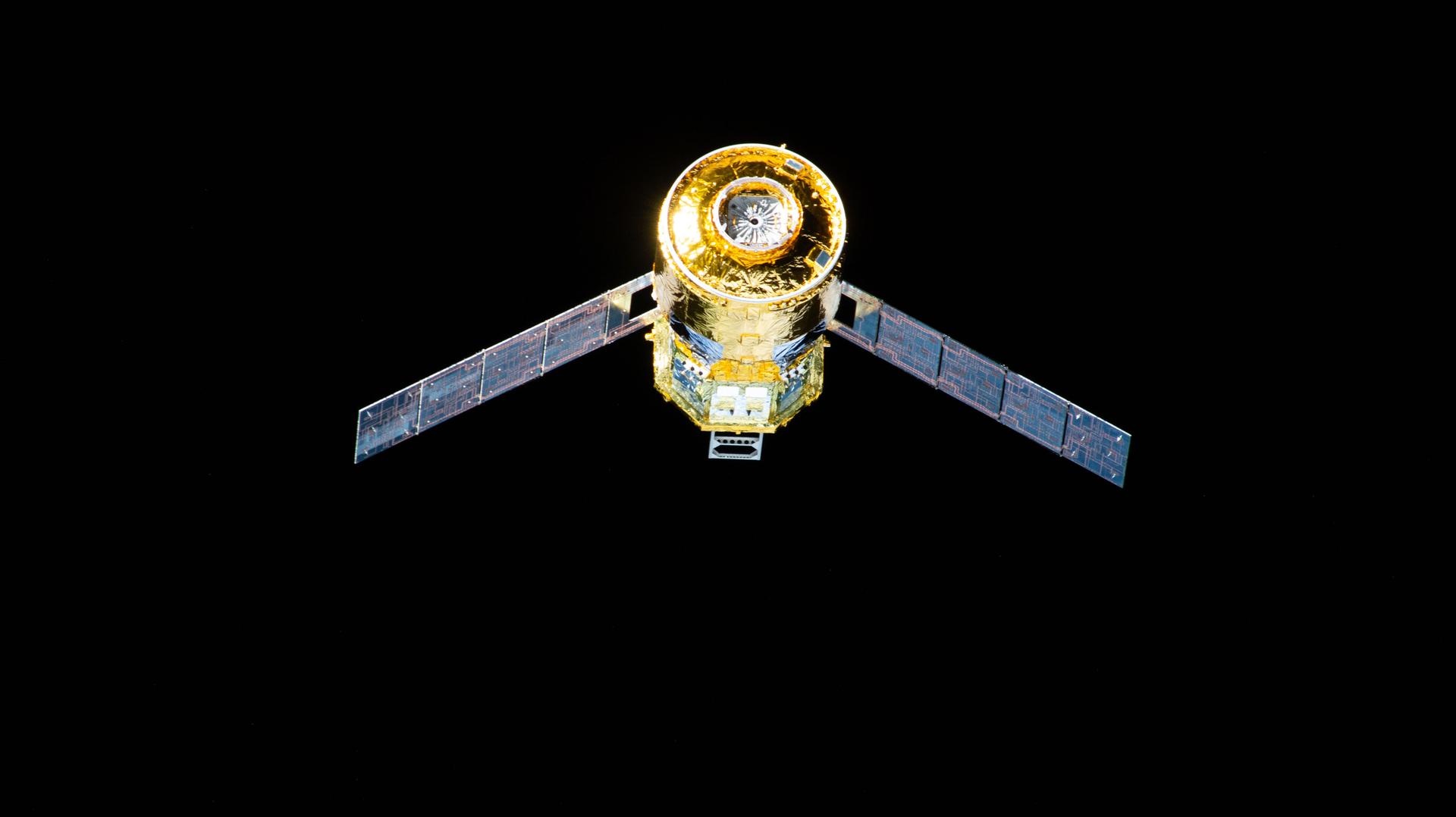
iss073e0988444 (Oct. 29, 2025) --- The new HTV-X1 cargo spacecraft from JAXA (Japan Aerospace Exploration Agency), carrying about 12,800 pounds of science, supplies, and hardware for the Expedition 73 crew, slowly approaches the International Space Station 262 miles above Earth.
The HTV-X1 cargo spacecraft from JAXA approaches the International Space Station
iss074e0378577 (March 12, 2026) --- Northrop Grumman's Cygnus XL cargo spacecraft, with its two prominent cymbal-shaped UltraFlex solar arrays, departs the International Space Station moments after being released from the grasp of the Canadarm2 robotic arm completing its resupply mission. Credit: NASA/Jessica Meir
The Cygnus XL cargo spacecraft departs the International Space Station
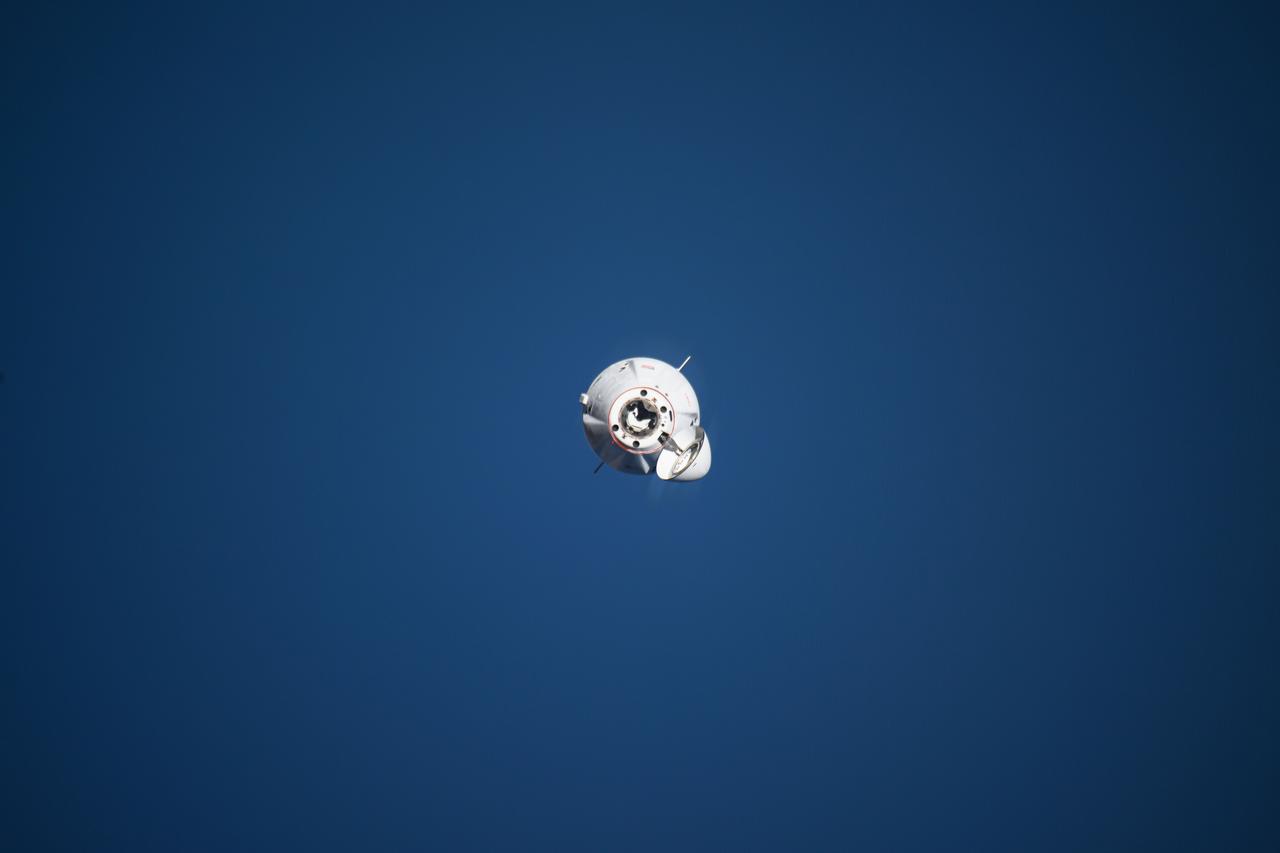
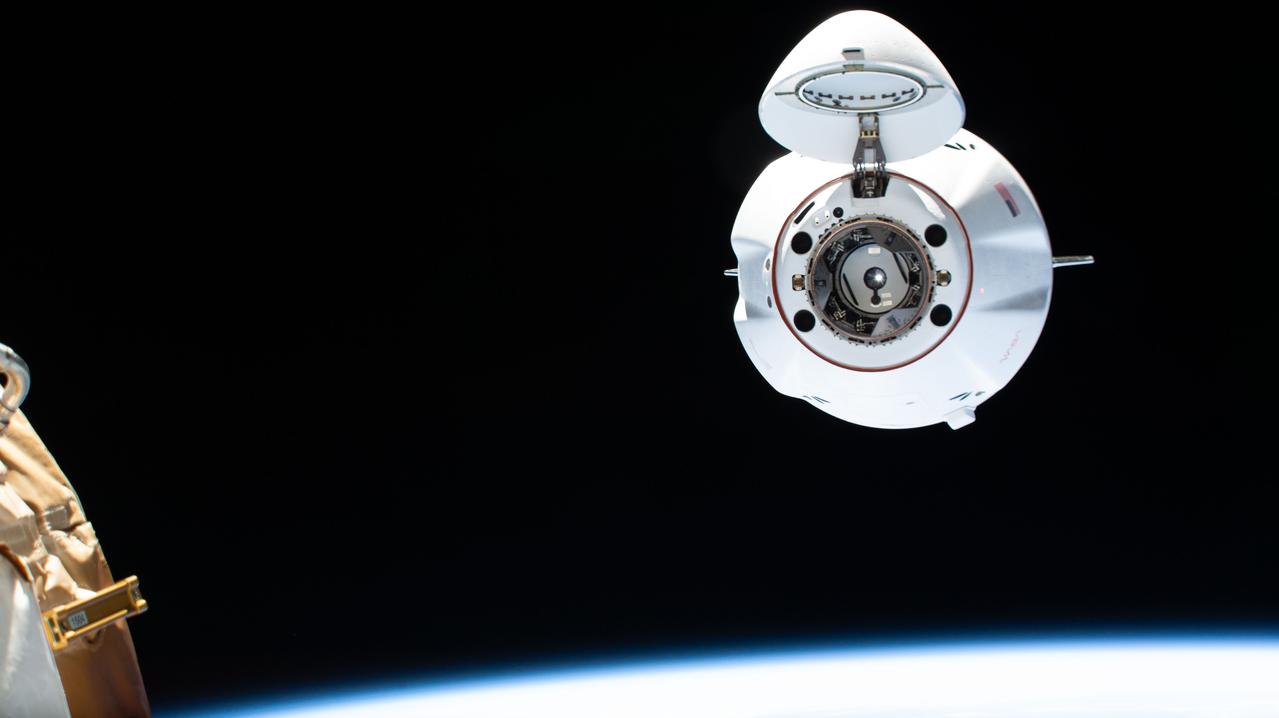
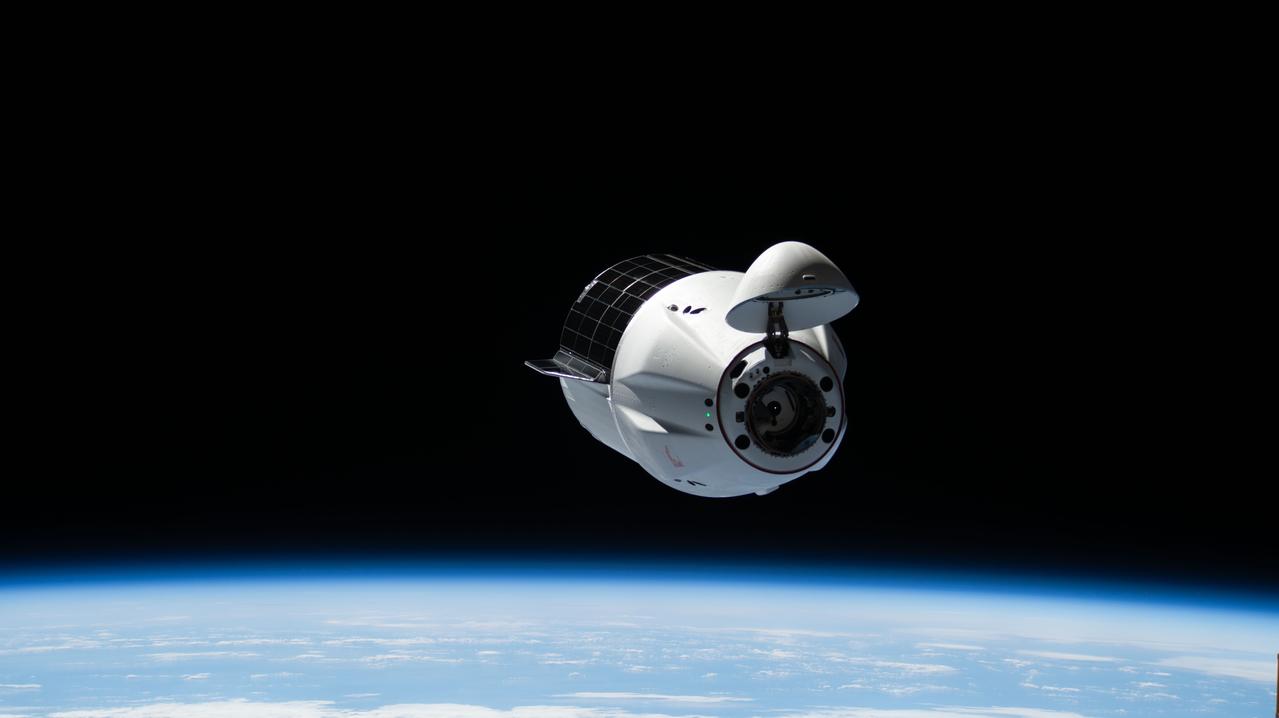
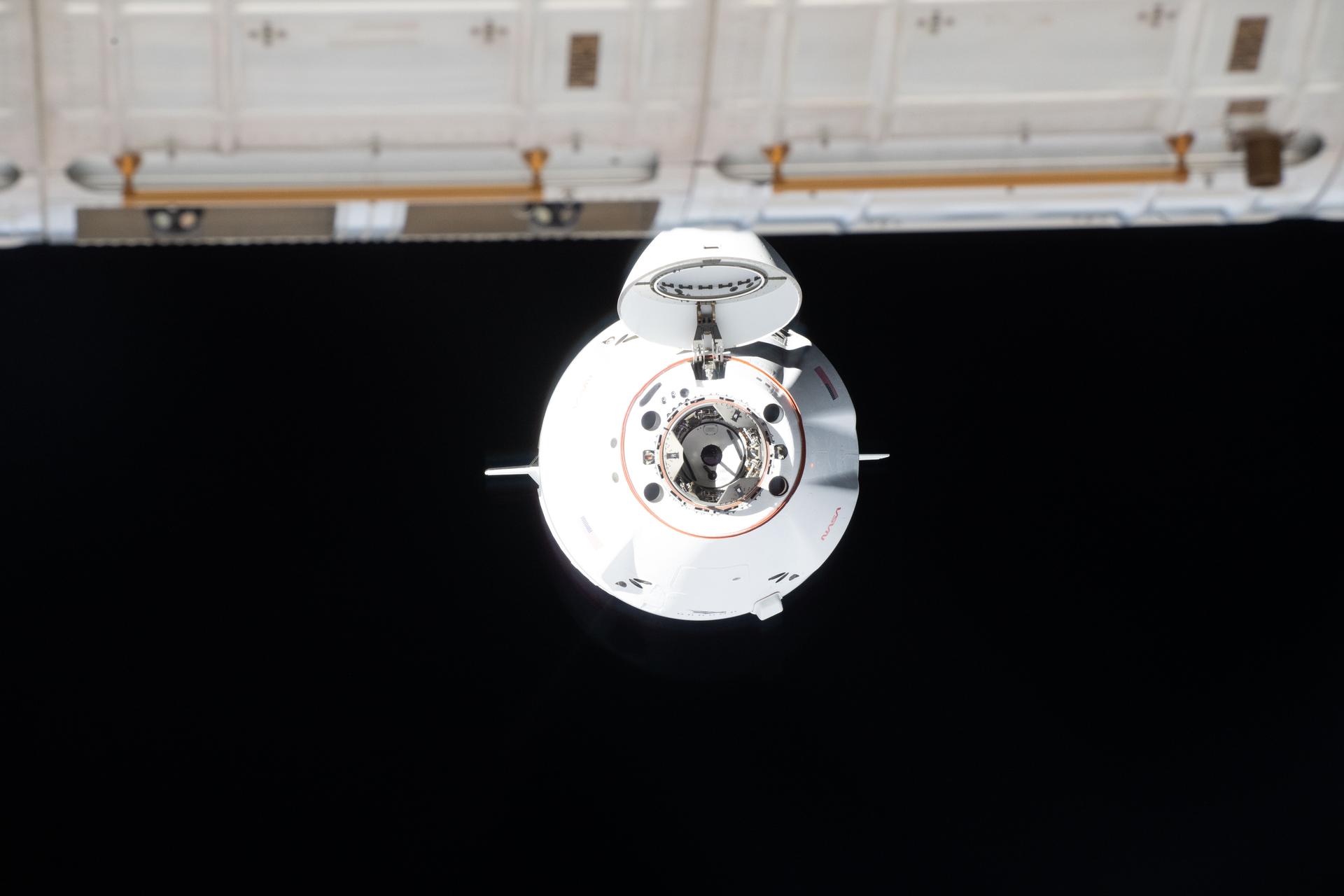
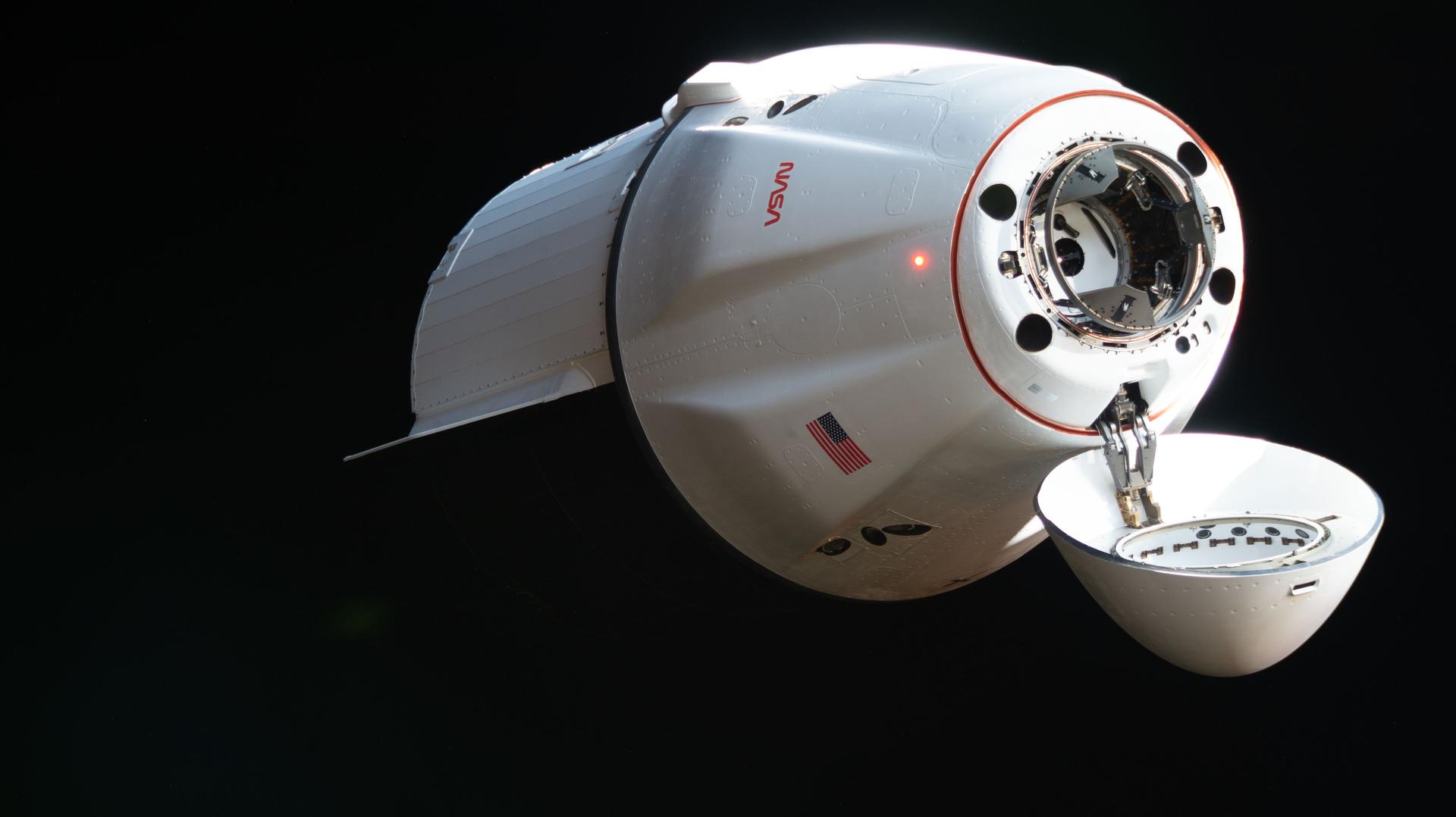
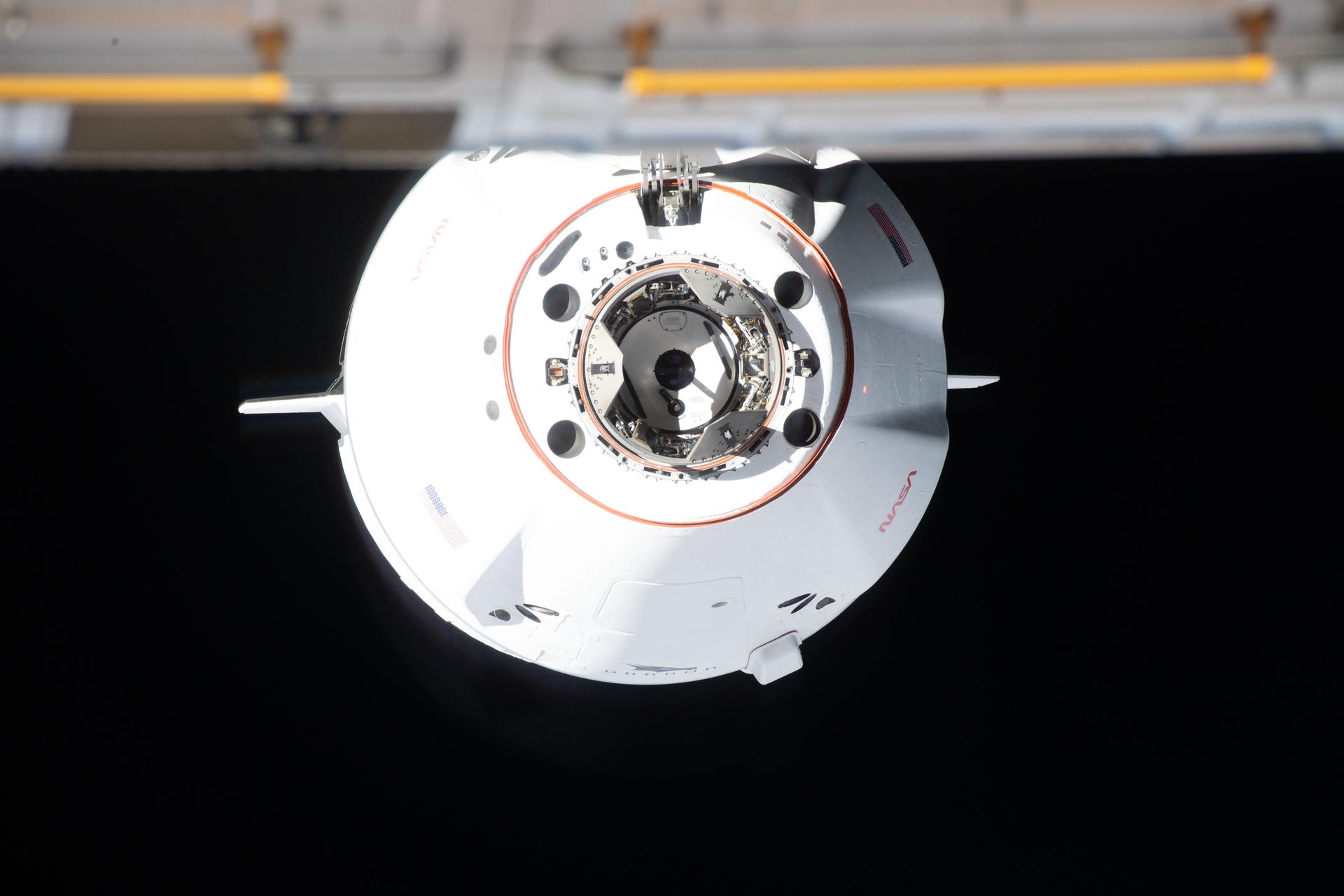
iss073e0519829 (Aug. 25, 2025) --- A SpaceX Dragon cargo spacecraft with its nosecone open and carrying over 5,000 pounds of science, supplies, and hardware for NASA's SpaceX CRS-33 mission approaches the International Space Station for an automated docking to the Harmony module's forward port.
A SpaceX Dragon cargo spacecraft approaches the International Space Station
iss072e147454 (Nov. 5, 2024) --- The SpaceX Dragon cargo spacecraft, carrying over 6,000 pounds of science, supplies, and hardware, approaches the International Space Station 265 miles above the Atlantic Ocean for a docking to its space-facing port on the Harmony module.
The SpaceX Dragon cargo spacecraft approaches the International Space Station
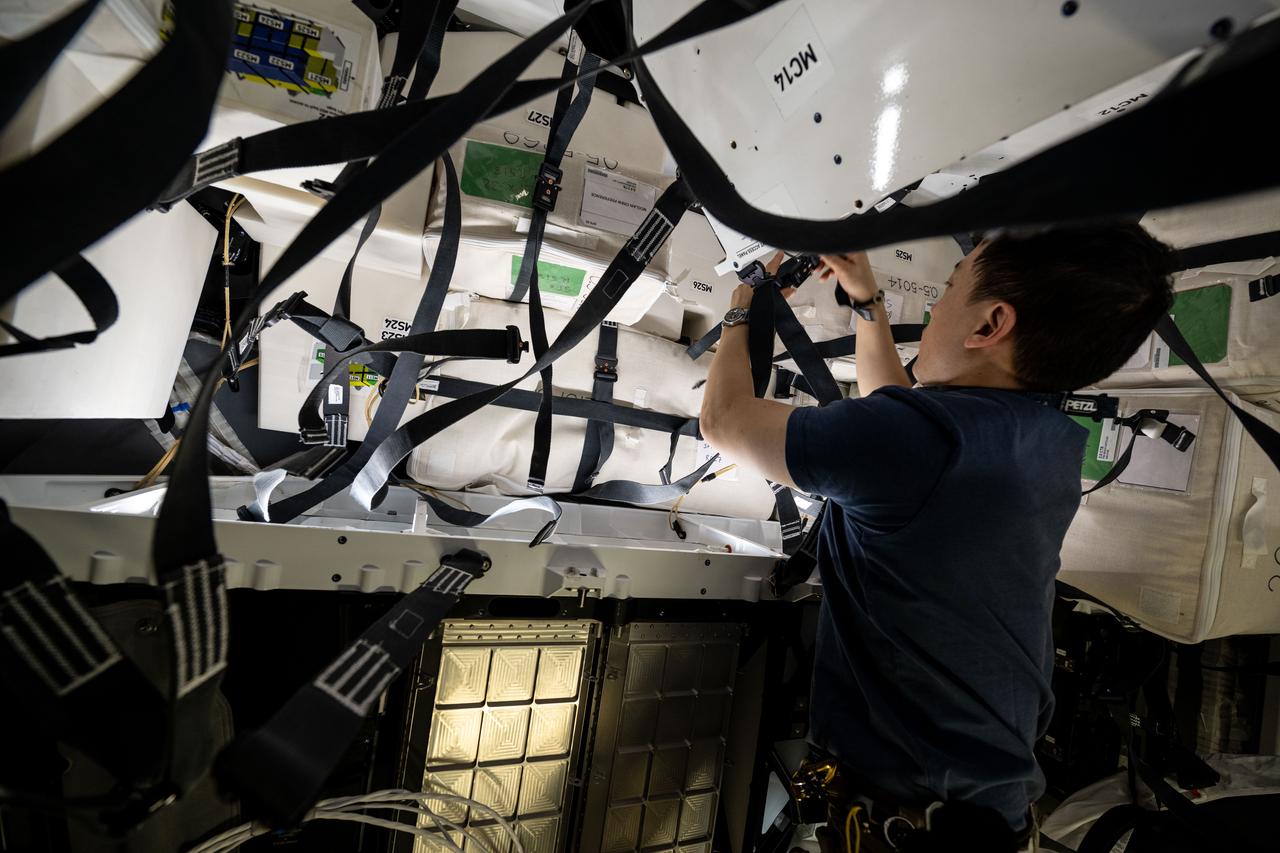
iss073e0071396 (May 15, 2025) --- NASA astronaut and Expedition 73 Flight Engineer Jonny Kim works inside the SpaceX Dragon cargo spacecraft readying the vehicle to be packed with completed science experiments, time-critical research samples, and International Space Station hardware before its departure.
NASA astronaut Jonny Kim works inside the SpaceX Dragon cargo spacecraft
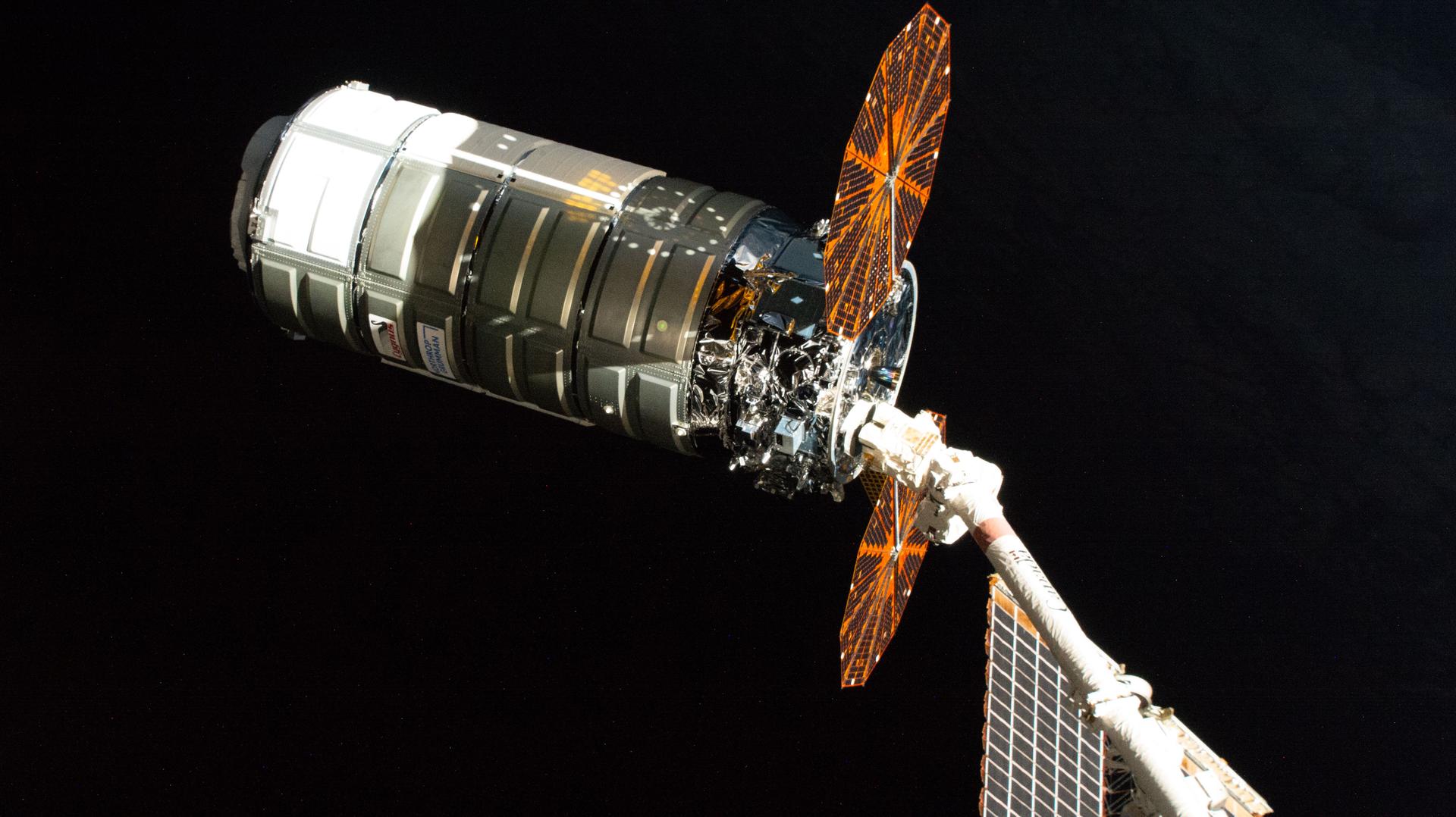
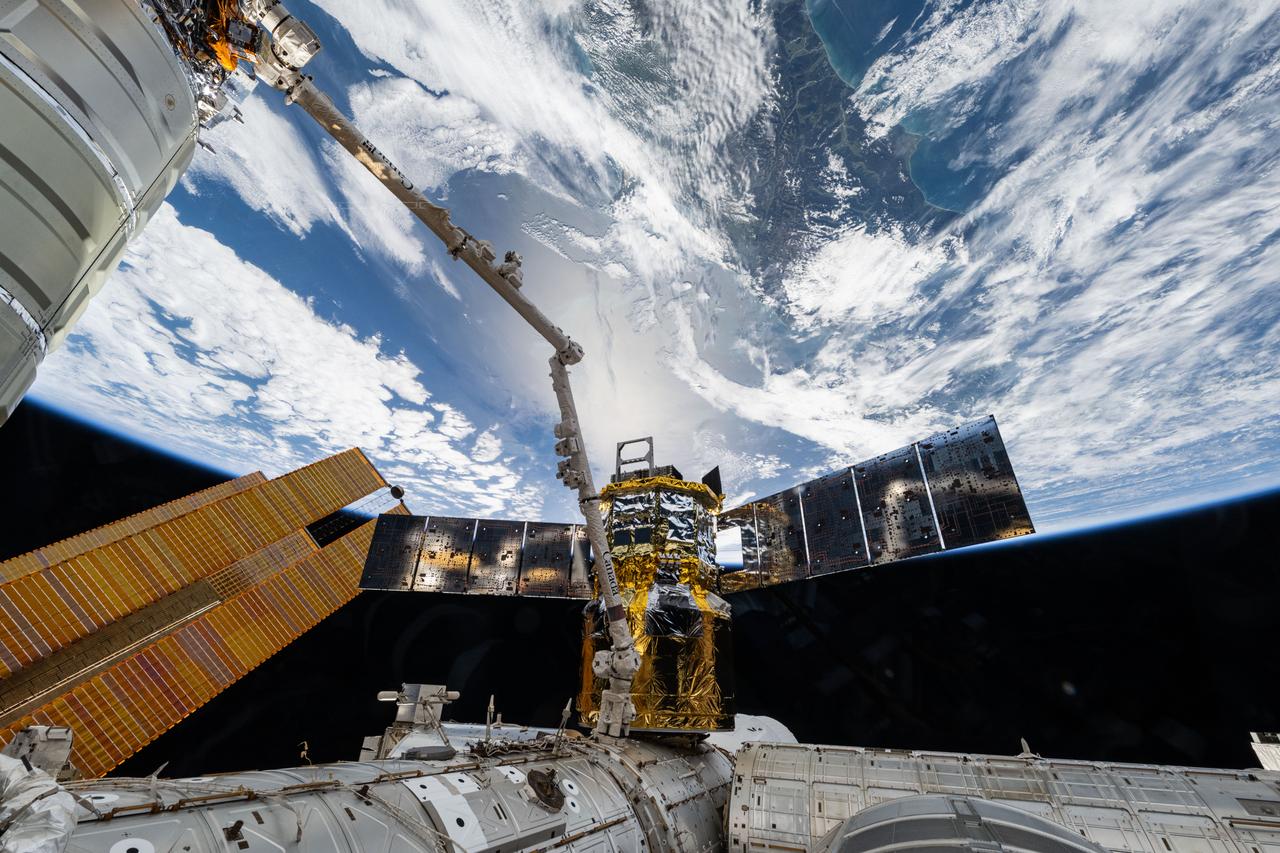
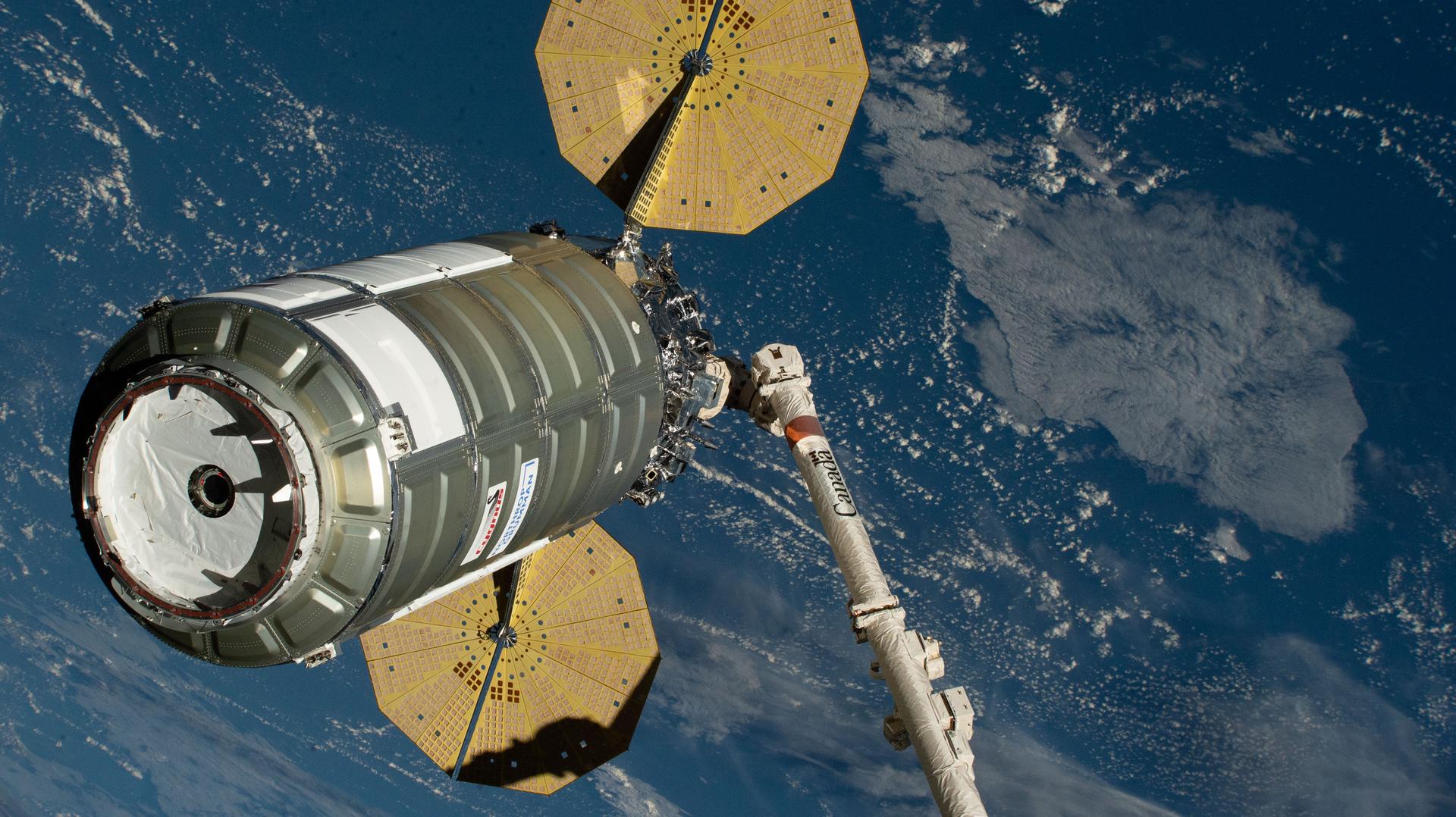
iss074e0458279 (April 13, 2026) --- Northrop Grumman's Cygnus XL cargo spacecraft, carrying over 11,000 pounds of new science experiments, lab hardware, and crew supplies, is pictured in the grips of the Canadarm2 robotic arm following its capture at the International Space Station. Credit: NASA
The Cygnus XL cargo spacecraft is pictured in the grips of the Canadarm2 robotic arm
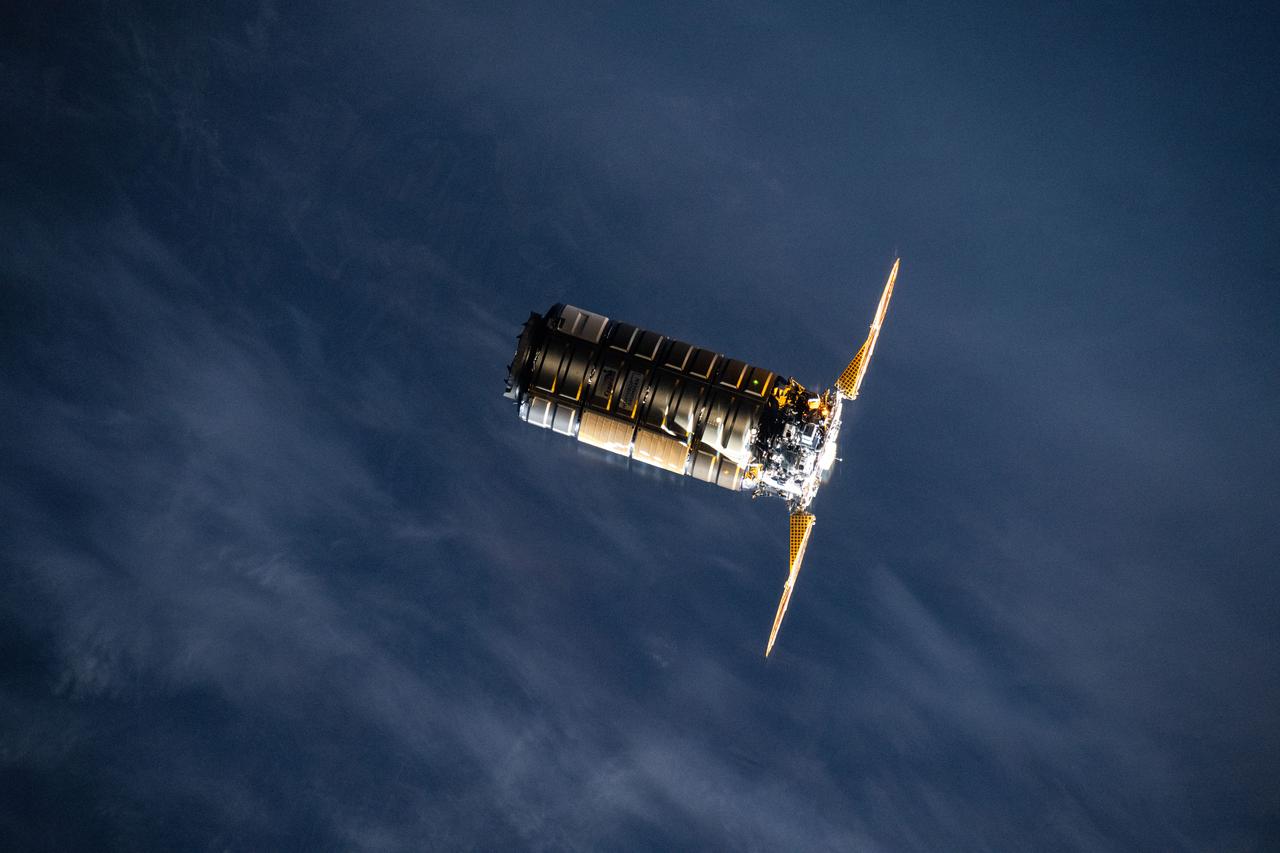
iss075e0085138 (Aug. 27, 2026) --- Northrop Grumman’s Cygnus XL cargo spacecraft fires its engines while berthed to the Unity module, lifting the International Space Station’s orbit. The orbital reboost placed the station at the correct altitude for the rendezvous and docking of the Progress 96 resupply ship, scheduled to launch in early September. Credit: NASA
Northrop Grumman’s Cygnus XL cargo spacecraft fires its engines
iss075e0085139 (Aug. 27, 2026) --- Northrop Grumman’s Cygnus XL cargo spacecraft fires its engines while berthed to the Unity module, lifting the International Space Station’s orbit. The orbital reboost placed the station at the correct altitude for the rendezvous and docking of the Progress 96 resupply ship, scheduled to launch in early September. Credit: NASA
Northrop Grumman’s Cygnus XL cargo spacecraft fires its engines
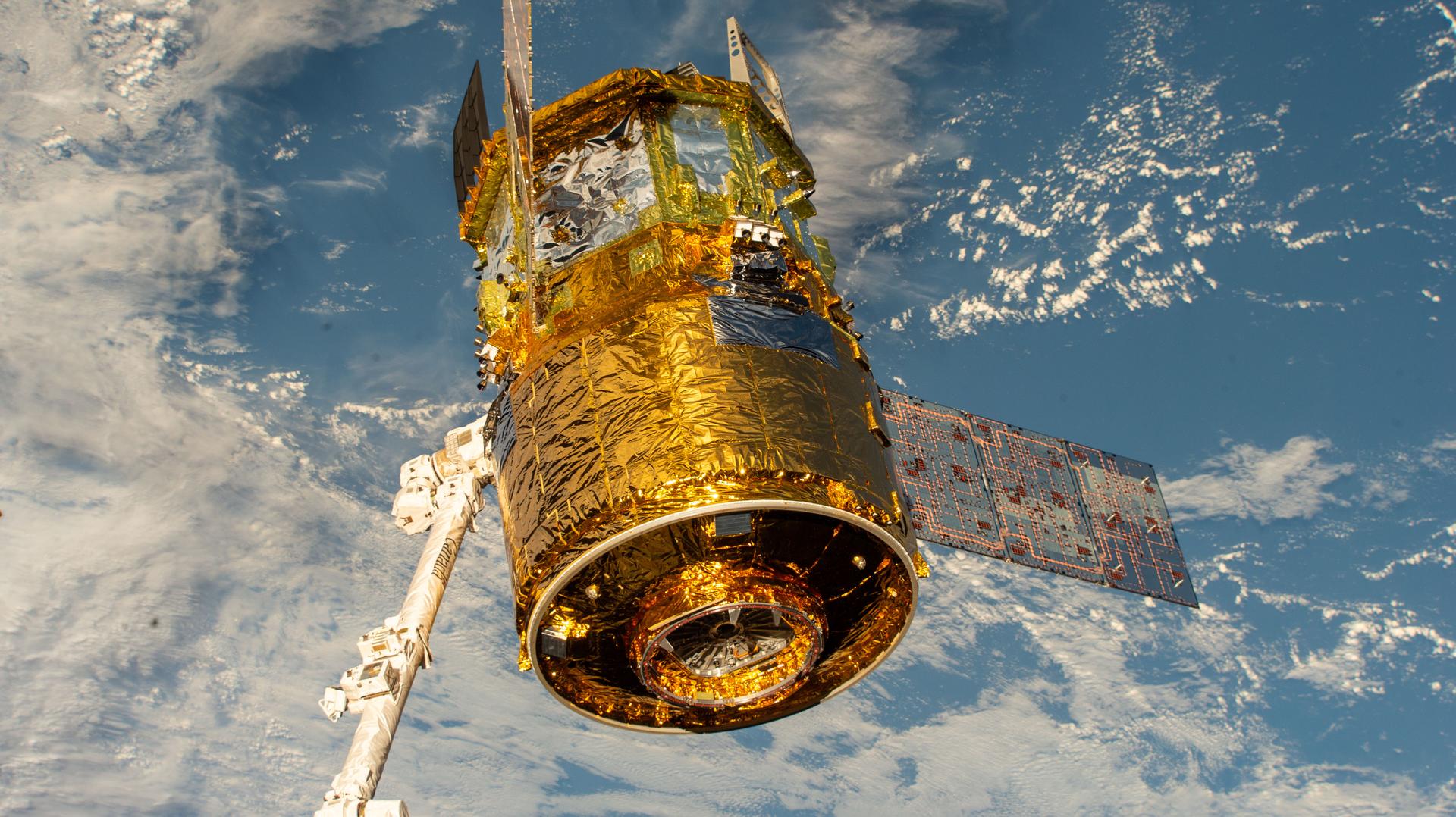
iss073e1193852 (Nov. 24, 2025) --- The HTV-X1 cargo spacecraft from JAXA (Japan Aerospace Exploration Agency) is pictured attached to the Earth-facing port on the Harmony module while in the grips of the Canadarm2 robotic arm. The International Space Station was orbiting 271 miles above New Zealand at the time of this photograph.
The HTV-X1 cargo spacecraft from JAXA attached to the Harmony module
iss073e0988458 (Oct. 29, 2025) --- The new HTV-X1 cargo spacecraft from JAXA (Japan Aerospace Exploration Agency), carrying about 12,800 pounds of science, supplies, and hardware for the Expedition 73 crew, slowly approaches the International Space Station 262 miles above Colombia.
The HTV-X1 cargo spacecraft from JAXA approaches the International Space Station
iss072e147436 (Nov. 5, 2024) --- The SpaceX Dragon cargo spacecraft, carrying over 6,000 pounds of science, supplies, and hardware, approaches the International Space Station 265 miles above the Atlantic Ocean off the coast of Uruguay for a docking to its space-facing port on the Harmony module.
The SpaceX Dragon cargo spacecraft approaches the International Space Station
iss074e0519500 (April 25, 2026) --- The launch plume from a Progress 95 cargo spacecraft after its liftoff and ascent from the Baikonur Cosmodrome in Kazakhstan is pictured dispersing in the atmosphere from the International Space Station as it orbited 263 miles above the western Asian nation. Credit: NASA/Chris Williams
The launch plume from a Progress 95 cargo spacecraft dispersing in the atmosphere
iss074e0458270 (April 13, 2026) --- Northrop Grumman's Cygnus XL cargo spacecraft, carrying over 11,000 pounds of new science experiments, lab hardware, and crew supplies, is pictured moments before its capture with the Canadarm2 robotic arm following its approach and rendezvous with the International Space Station. Credit: NASA
The Cygnus XL cargo spacecraft before its capture with the Canadarm2 robotic arm
iss073e0519834 (Aug. 25, 2025) --- A SpaceX Dragon cargo spacecraft with its nosecone open and carrying over 5,000 pounds of science, supplies, and hardware for NASA's SpaceX CRS-33 mission approaches the International Space Station for an automated docking to the Harmony module's forward port.
A SpaceX Dragon cargo spacecraft approaches the International Space Station
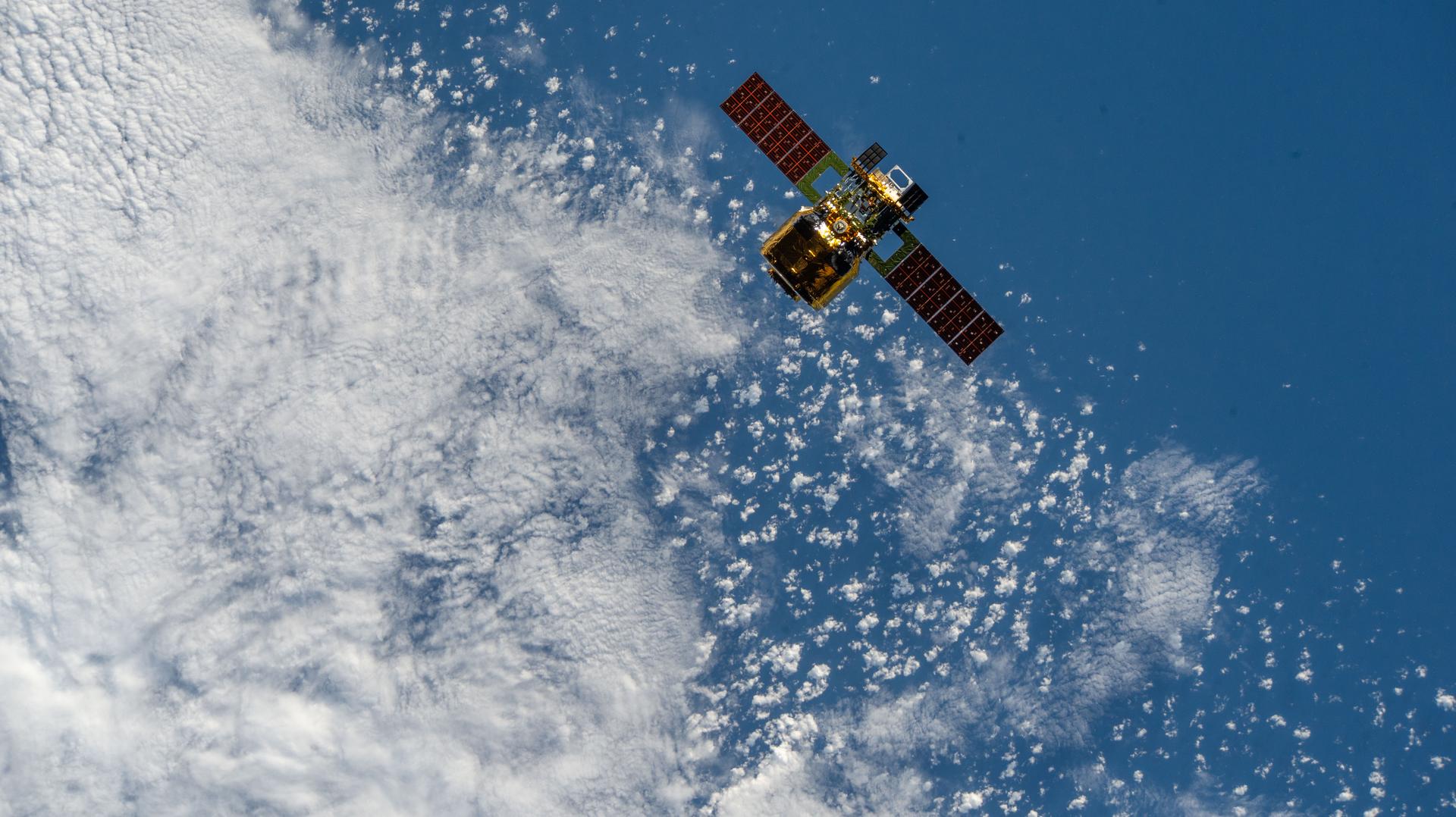
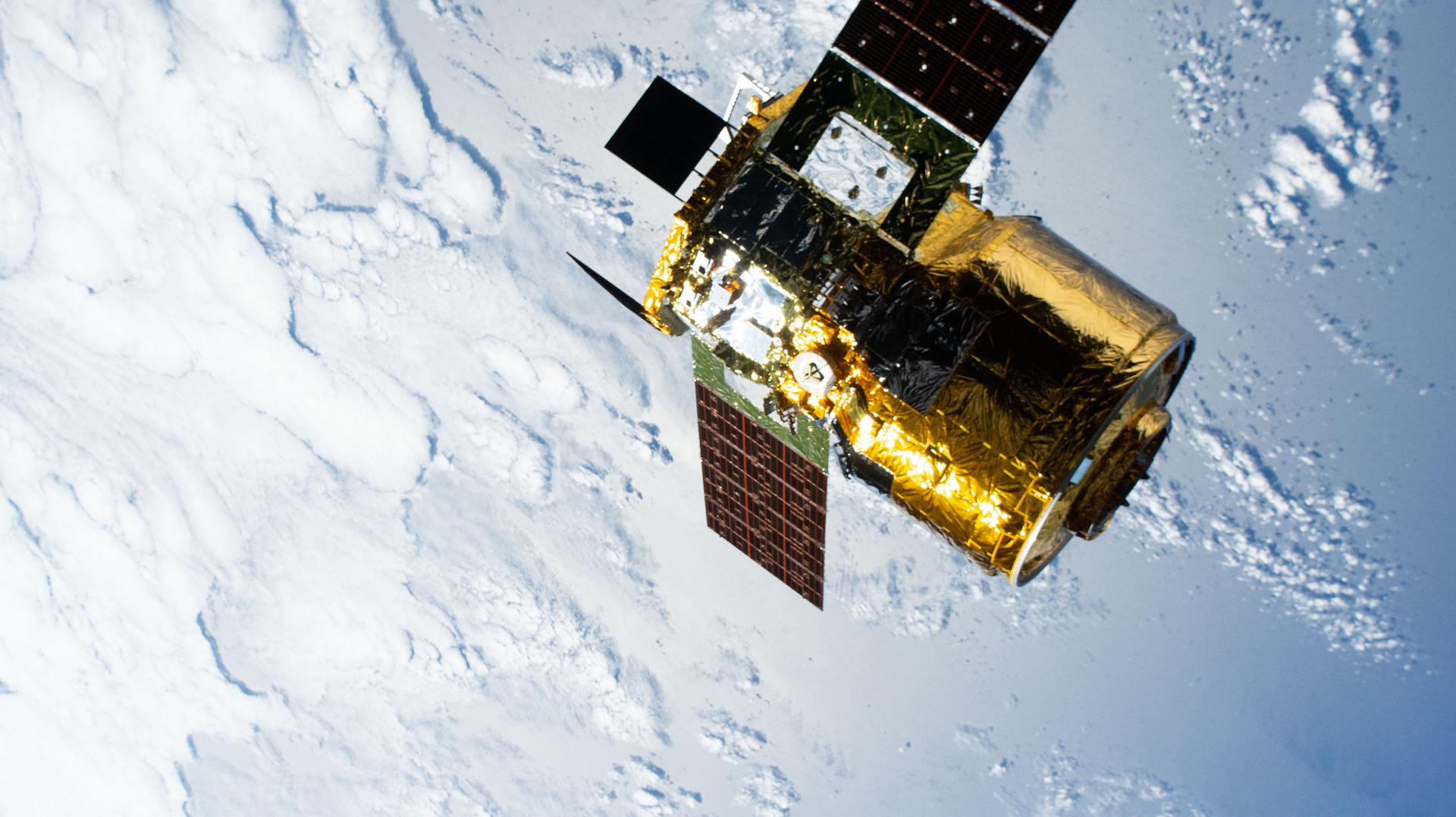
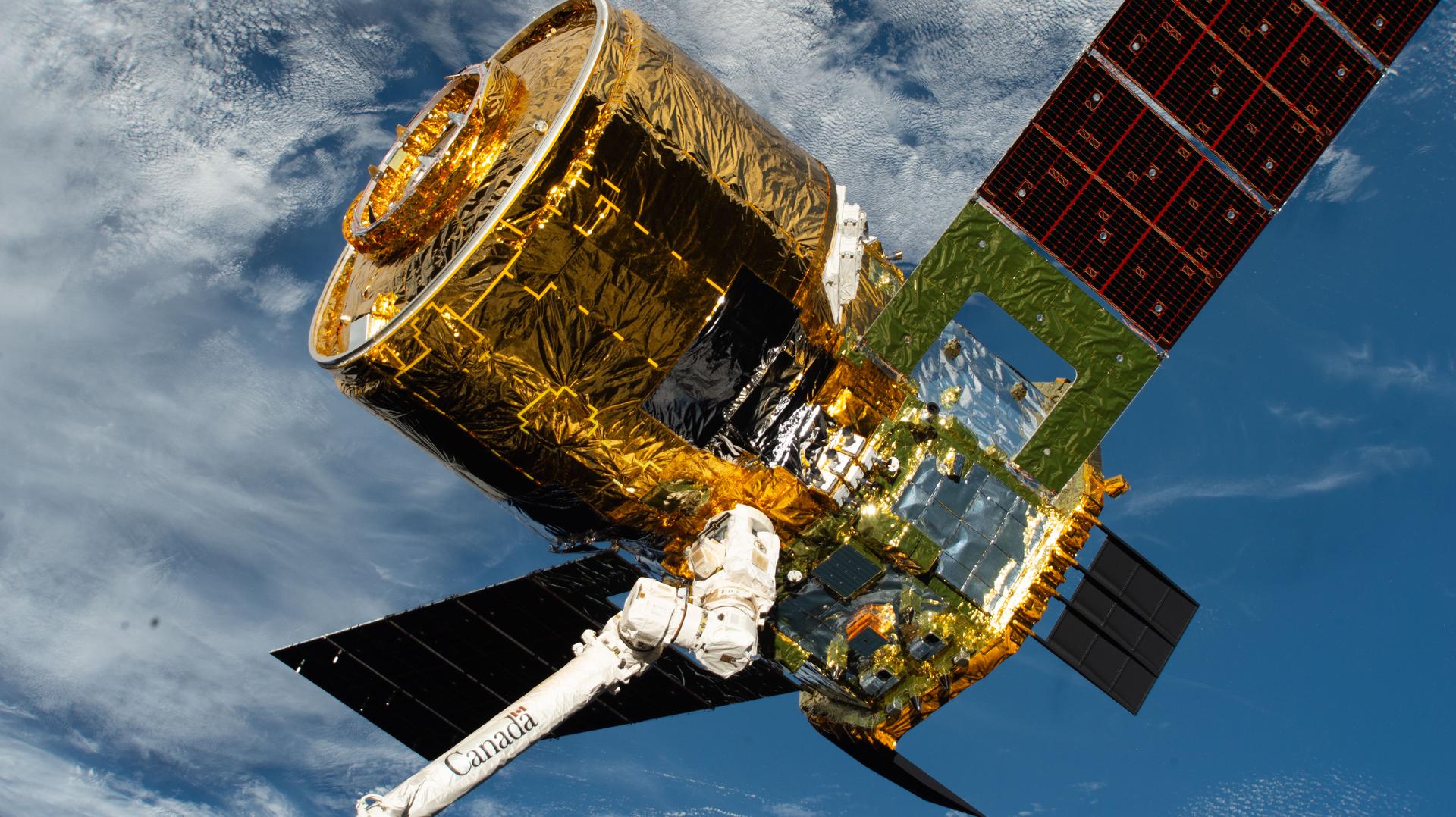
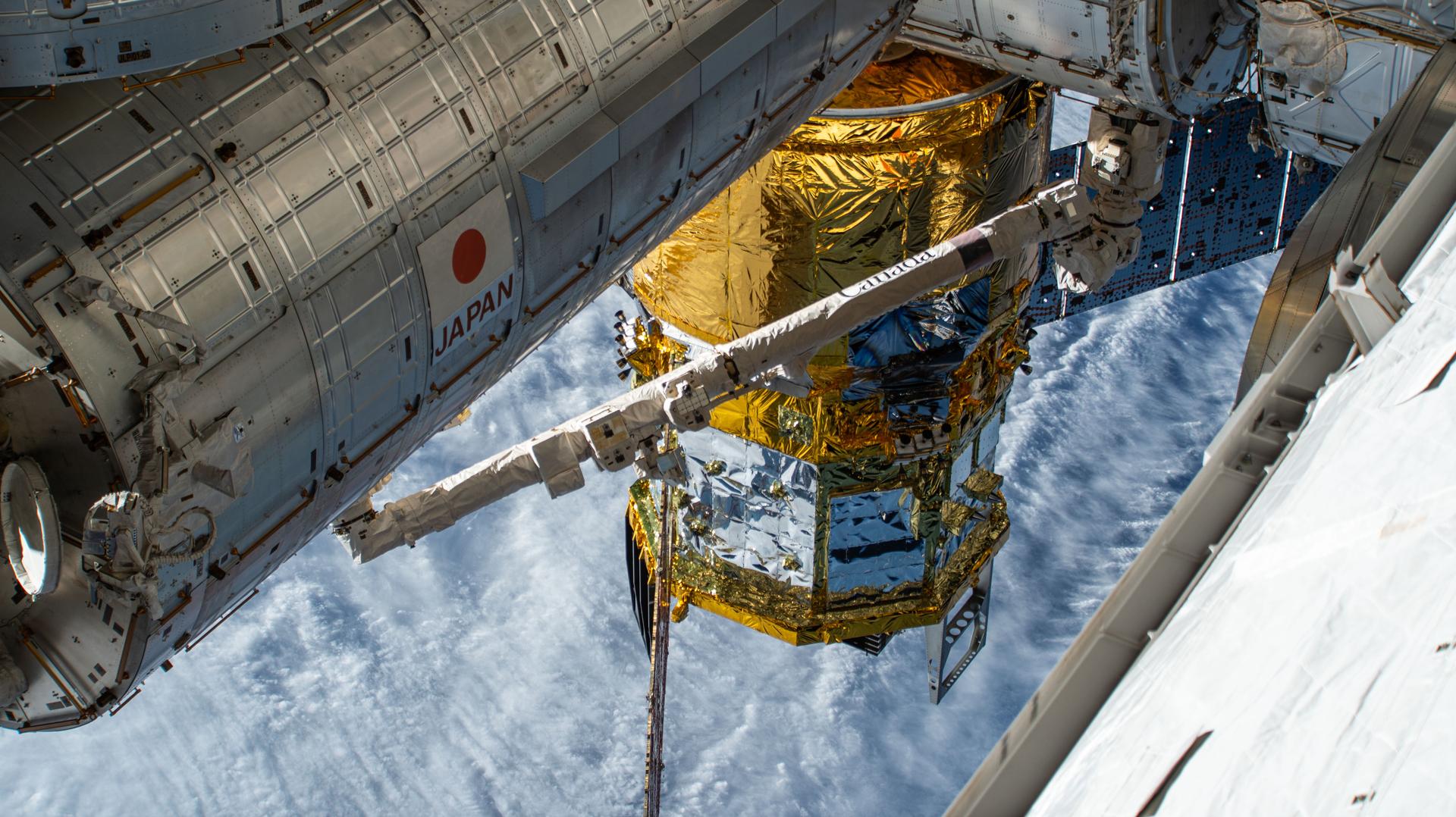
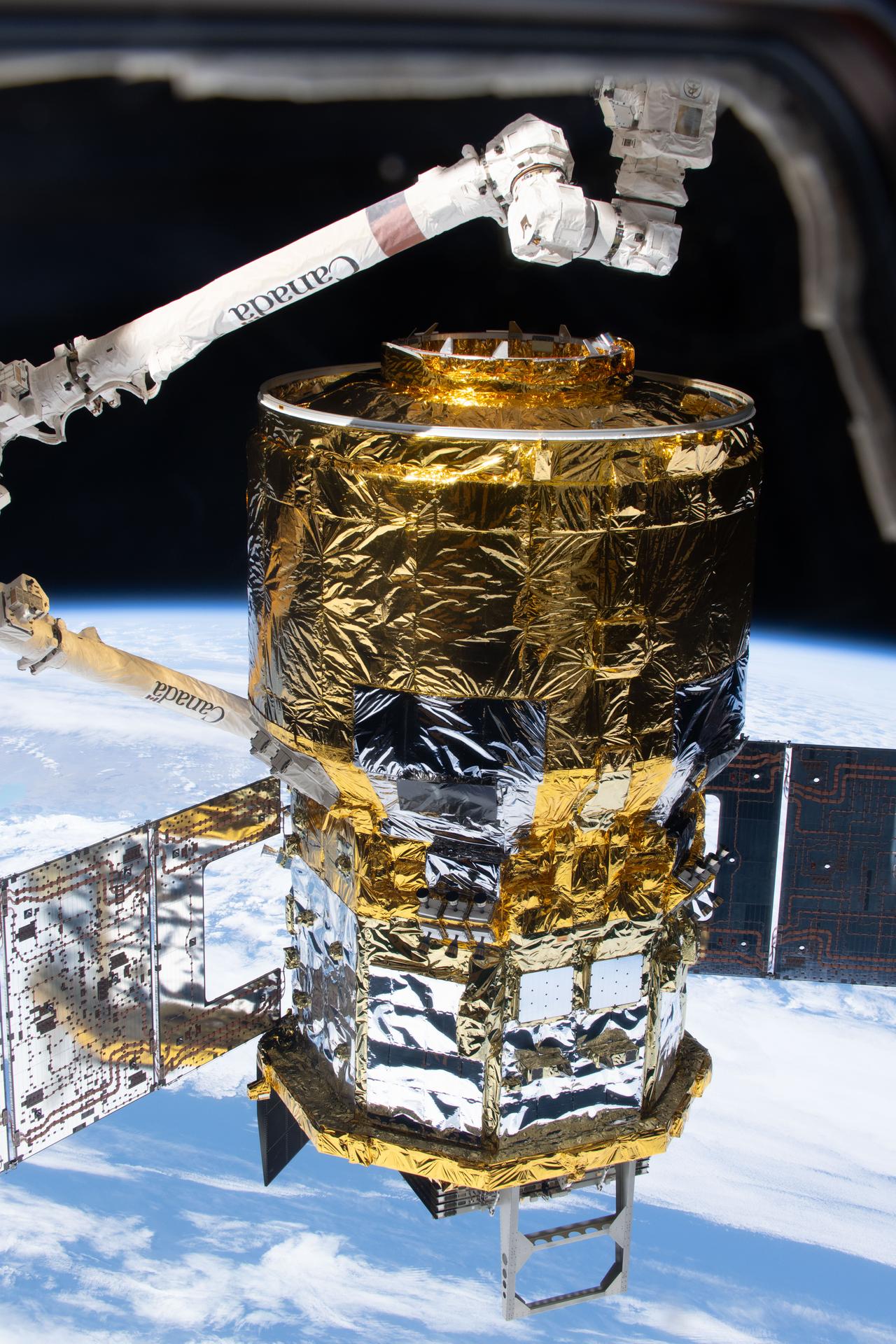
iss074e0365134 (March 6, 2026) --- The HTV‑X1 cargo spacecraft from JAXA (Japan Aerospace Exploration Agency) departs the International Space Station after being released by the Canadarm2 robotic arm, completing a four‑month stay attached to the Harmony module. Both spacecraft were soaring 268 miles above the Pacific Ocean. Credit: NASA
The HTV‑X1 cargo spacecraft from JAXA departs the International Space Station
iss073e0545540 (Aug. 25, 2025) --- A SpaceX Dragon cargo spacecraft with its nosecone open and carrying over 5,000 pounds of science, supplies, and hardware for NASA's SpaceX CRS-33 mission approaches the International Space Station for an automated docking to the Harmony module's forward port. Both spacecraft were flying 261 miles above the Atlantic Ocean south of the Azores, a Portuguese archipelago, at the time of this photograph.
A SpaceX Dragon cargo spacecraft approaches the International Space Station
iss073e0545547 (Aug. 25, 2025) --- A SpaceX Dragon cargo spacecraft with its nosecone open and carrying over 5,000 pounds of science, supplies, and hardware as NASA's SpaceX CRS-33 mission approaches the International Space Station for an automated docking to the Harmony module's forward port. Both spacecraft were flying 259 miles above western Mauritania near the Atlantic coast at the time of this photograph.
A SpaceX Dragon cargo spacecraft approaches the International Space Station
iss074e0365138 (March 6, 2026) --- The HTV‑X1 cargo spacecraft from JAXA (Japan Aerospace Exploration Agency) is grasped by the Canadarm2 robotic arm as the International Space Station orbits 271 miles above the Indian Ocean, off the coast of South Africa. Moments later, Canadarm2 would release HTV‑X1 into Earth orbit, completing the spacecraft’s four‑month stay attached to the orbital outpost’s Harmony module. Credit: NASA
The HTV‑X1 cargo spacecraft from JAXA is grasped by the Canadarm2 robotic arm
iss074e0365135 (March 6, 2026) --- The HTV‑X1 cargo spacecraft from JAXA (Japan Aerospace Exploration Agency) departs the International Space Station after being released by the Canadarm2 robotic arm, completing a four‑month stay attached to the Harmony module. Both spacecraft were soaring 270 miles above the Pacific Ocean, off the coast of Chile on the South American continent. Credit: NASA
The HTV‑X1 cargo spacecraft from JAXA departs the International Space Station
iss073e0545527 (Aug. 25, 2025) --- A SpaceX Dragon cargo spacecraft with its nosecone open and carrying over 5,000 pounds of science, supplies, and hardware for NASA's SpaceX CRS-33 mission approaches the International Space Station for an automated docking to the Harmony module's forward port. Both spacecraft were flying 262 miles above the Atlantic Ocean east of the Canadian province of Newfoundland at the time of this photograph.
A SpaceX Dragon cargo spacecraft approaches the International Space Station
iss074e0365124 (March 6, 2026) --- The HTV‑X1 cargo spacecraft from JAXA (Japan Aerospace Exploration Agency) departs the International Space Station after being released by the Canadarm2 robotic arm, completing a four‑month stay attached to the Harmony module. Both spacecraft were soaring 272 miles above the Atlantic Ocean, midway between South America and Africa. Credit: NASA
The HTV‑X1 cargo spacecraft from JAXA departs the International Space Station
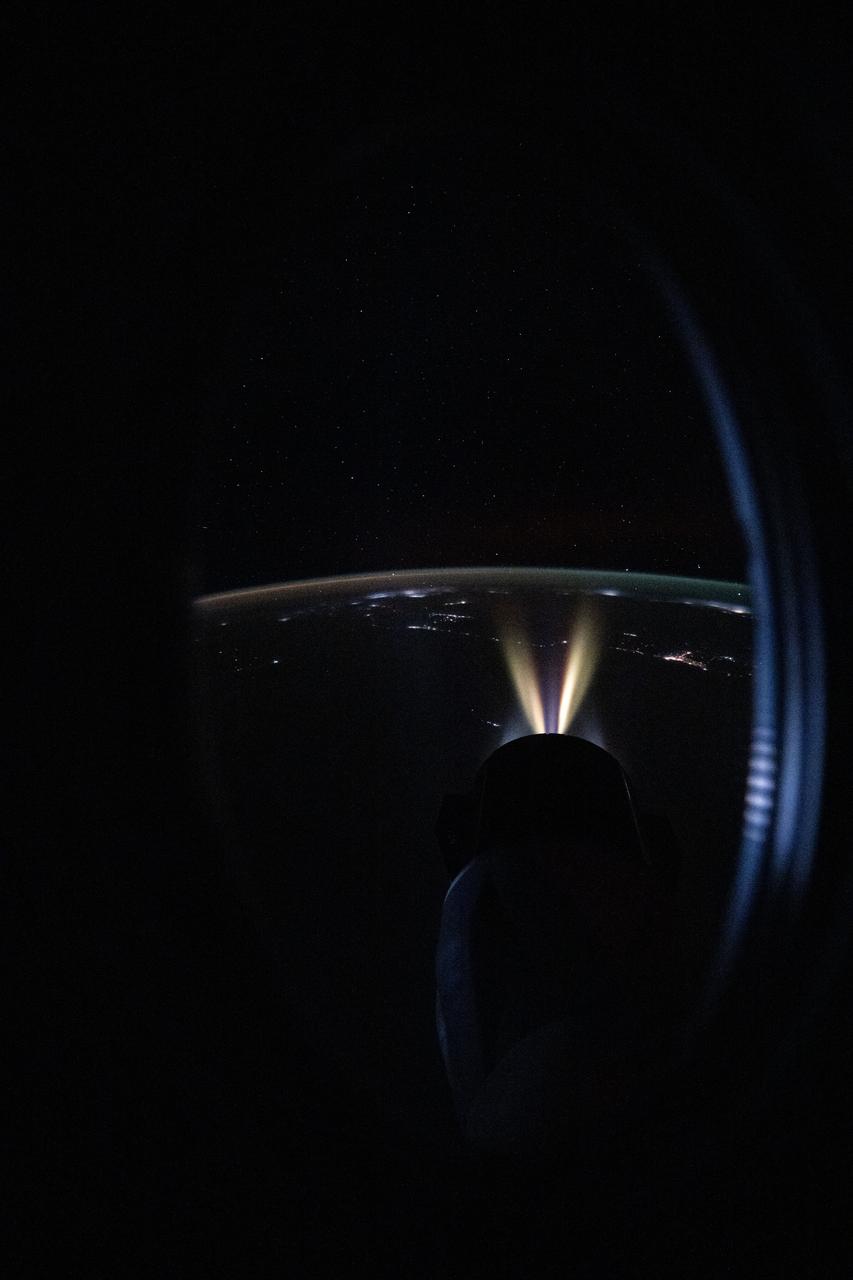
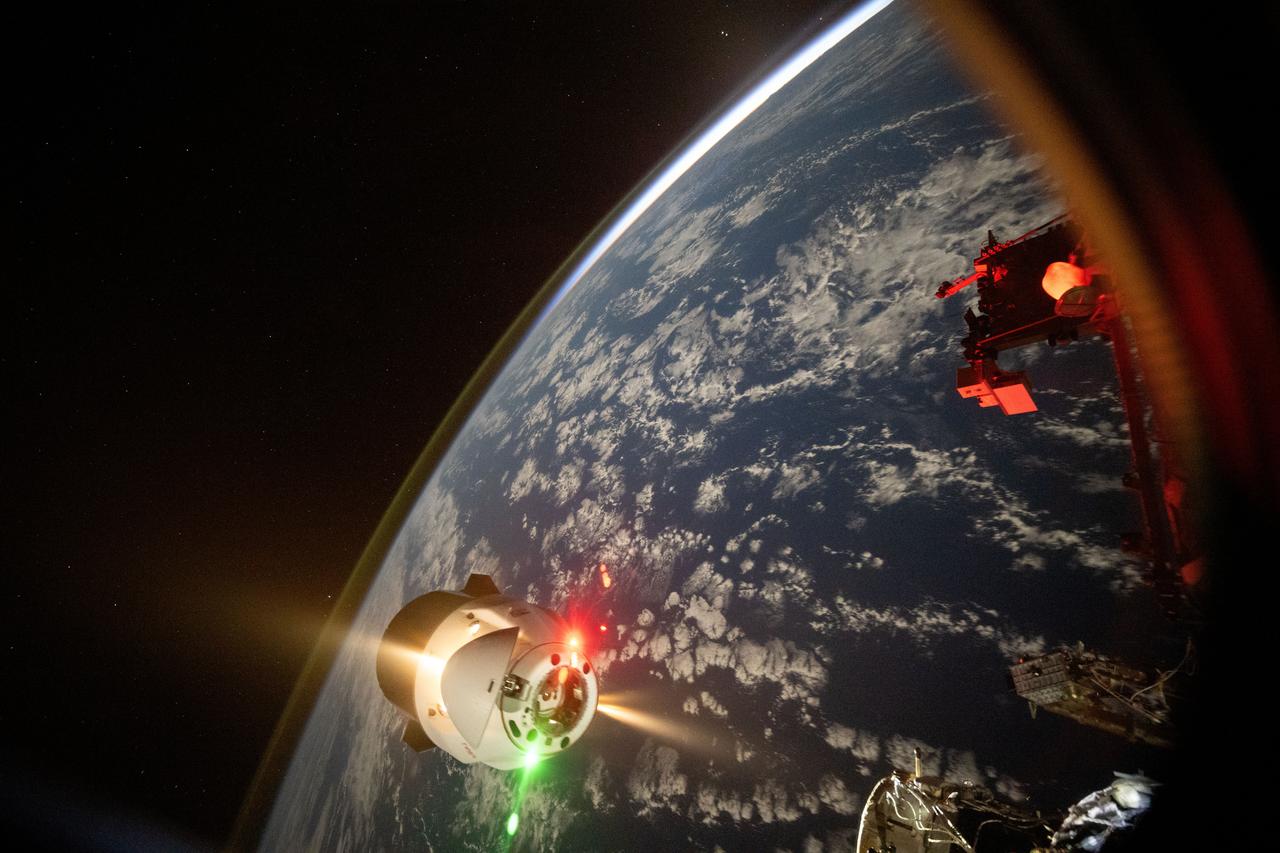
iss073e0814070 (Sept. 26, 2025) --- This nighttime image was captured from a window aboard the SpaceX Dragon crew spacecraft, docked to the space-facing port of the International Space Station’s Harmony module, while orbiting 259 miles above the Indian Ocean. In the foreground, the Draco thrusters of the SpaceX Dragon cargo spacecraft, docked to Harmony’s forward port, are seen firing during a demonstration of its ability to reboost the station’s orbit. In the background, an atmospheric glow blankets Earth's horizon with the city lights on Africa's east coast dotting the dark landscape.
The Draco thrusters of the SpaceX Dragon cargo spacecraft fire during a reboost demonstration
iss073e0519825 (Aug. 25, 2025) --- A SpaceX Dragon cargo spacecraft with its nosecone open and carrying over 5,000 pounds of science, supplies, and hardware for NASA's SpaceX CRS-33 mission approaches the International Space Station for an automated docking to the Harmony module's forward port. Both spacecraft were flying 262 miles above the Atlantic Ocean east of the Canadian province of Newfoundland at the time of this photograph.
A SpaceX Dragon cargo spacecraft approaches the International Space Station
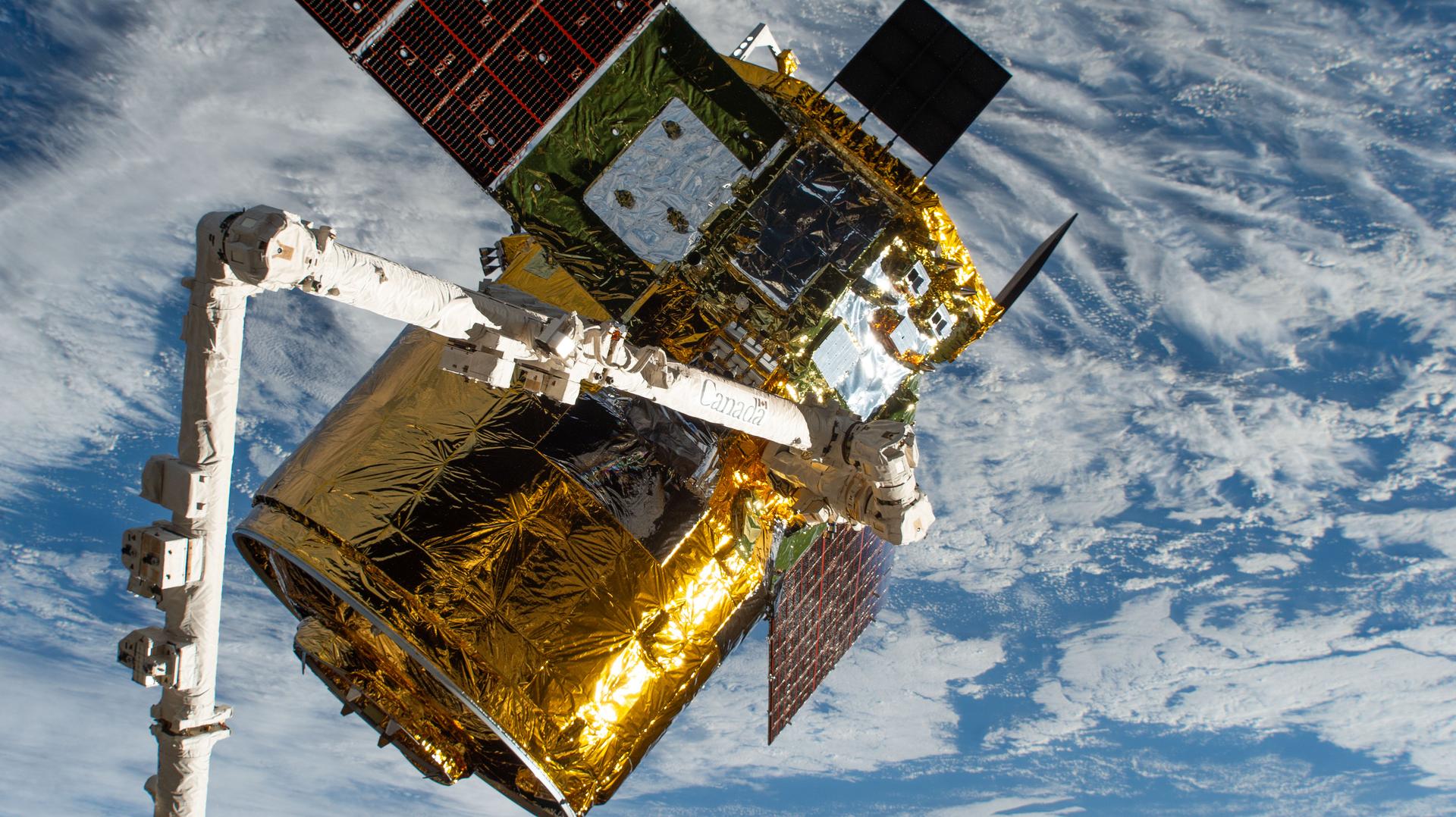
iss073e0988465 (Oct. 29, 2025) --- The new HTV-X1 cargo spacecraft from JAXA (Japan Aerospace Exploration Agency), carrying about 12,800 pounds of science, supplies, and hardware for the Expedition 73 crew, is pictured in the grip of the Canadarm2 robotic arm. JAXA astronaut and Expedition 73 Flight Engineer Kimiya Yui (not pictured) commanded Canadarm2 to gently reach out and capture HTV-X1 when the spacecraft reached a point about 10 meters away from the International Space Station.
The HTV-X1 cargo spacecraft is pictured in the grip of the Canadarm2 robotic arm
iss074e0365023 (March 6, 2026) --- The HTV‑X1 cargo spacecraft from JAXA (Japan Aerospace Exploration Agency) is grasped by the Canadarm2 robotic arm as the International Space Station orbits 271 miles above the Indian Ocean, southeast of Madagascar. Moments later, Canadarm2 would release HTV‑X1 into Earth orbit, completing the spacecraft’s four‑month stay attached to the orbital outpost’s Harmony module. Credit: NASA
The HTV‑X1 cargo spacecraft from JAXA is grasped by the Canadarm2 robotic arm
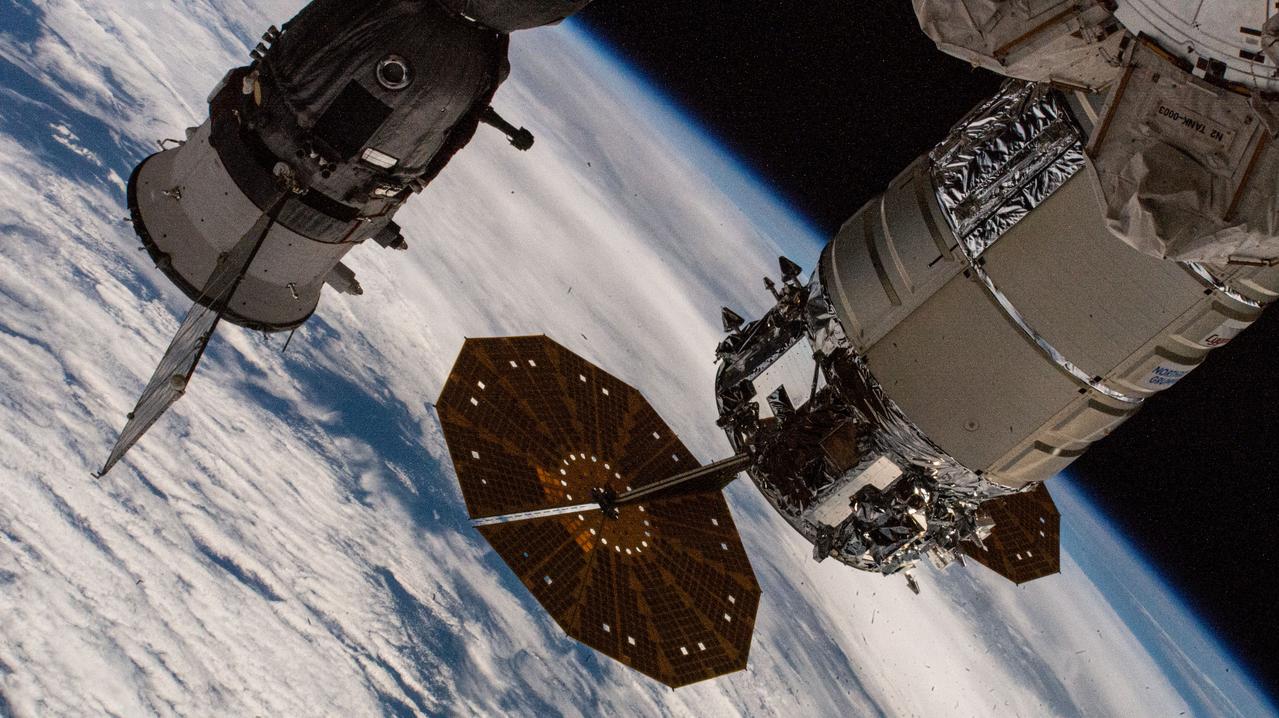
iss072e188878 (Nov. 15, 2024) --- Northrop Grumman's Cygnus cargo spacecraft, with its prominent cymbal-shaped solar arrays, is pictured attached to the Earth-facing port on the International Space Station's Unity module. At left, is a portion of the Soyuz MS-26 crew spacecraft docked to the Rassvet module. The orbital outpost was soaring 260 miles above the Indian Ocean south of South Africa at the time of this photograph.
The Cygnus cargo spacecraft and the Soyuz MS-26 crew ship
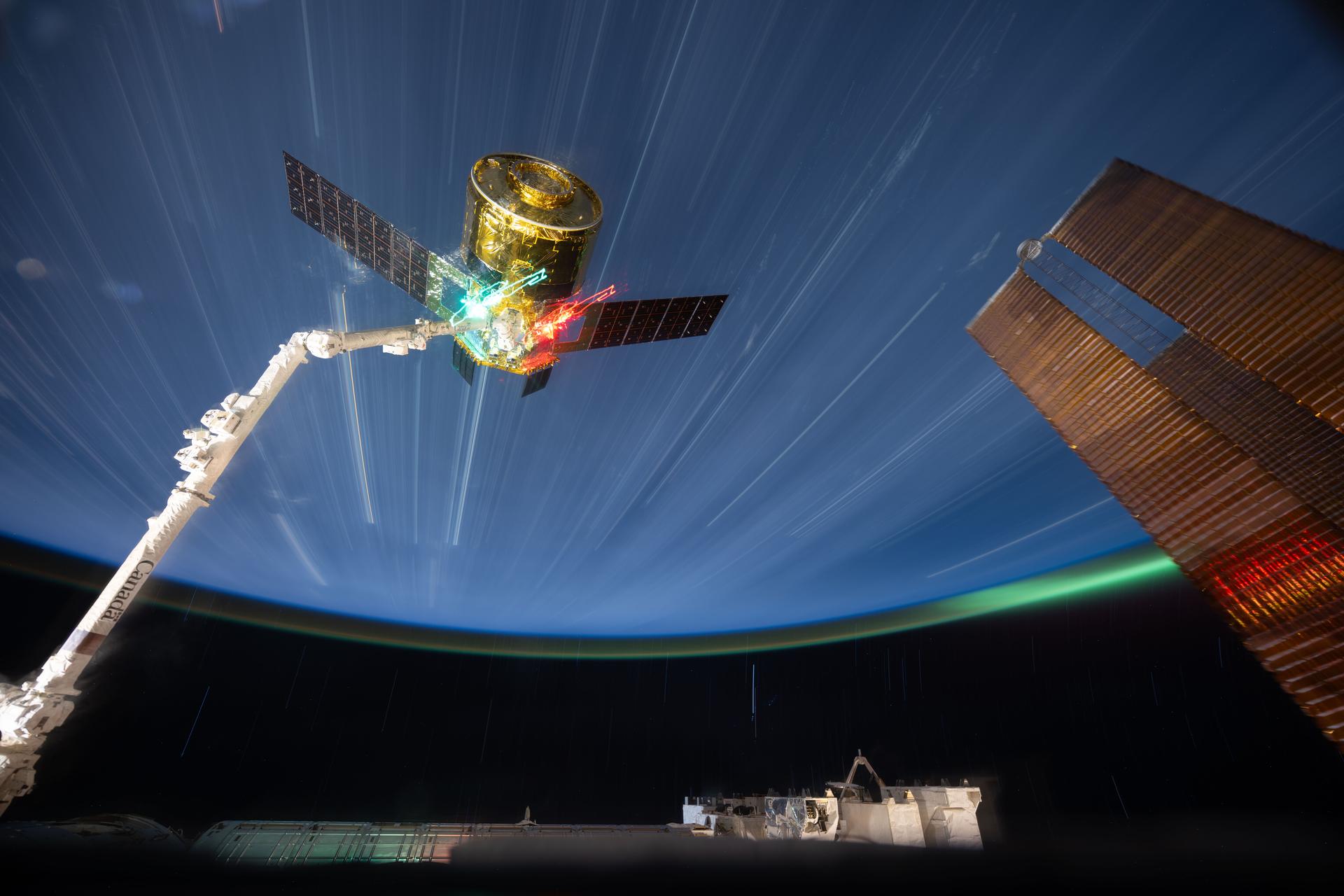
iss074e0367686 (March 26, 2026) --- The HTV‑X1 cargo spacecraft from JAXA (Japan Aerospace Exploration Agency) is grasped by the Canadarm2 robotic arm in this long-duration photograph from the International Space Station as it orbited 265 miles above northeastern China. Moments later, Canadarm2 would release HTV‑X1 into Earth orbit, completing the spacecraft’s four‑month stay attached to the orbital outpost’s Harmony module. Credit: NASA/Chris Williams
The HTV‑X1 cargo spacecraft from JAXA is grasped by the Canadarm2 robotic arm
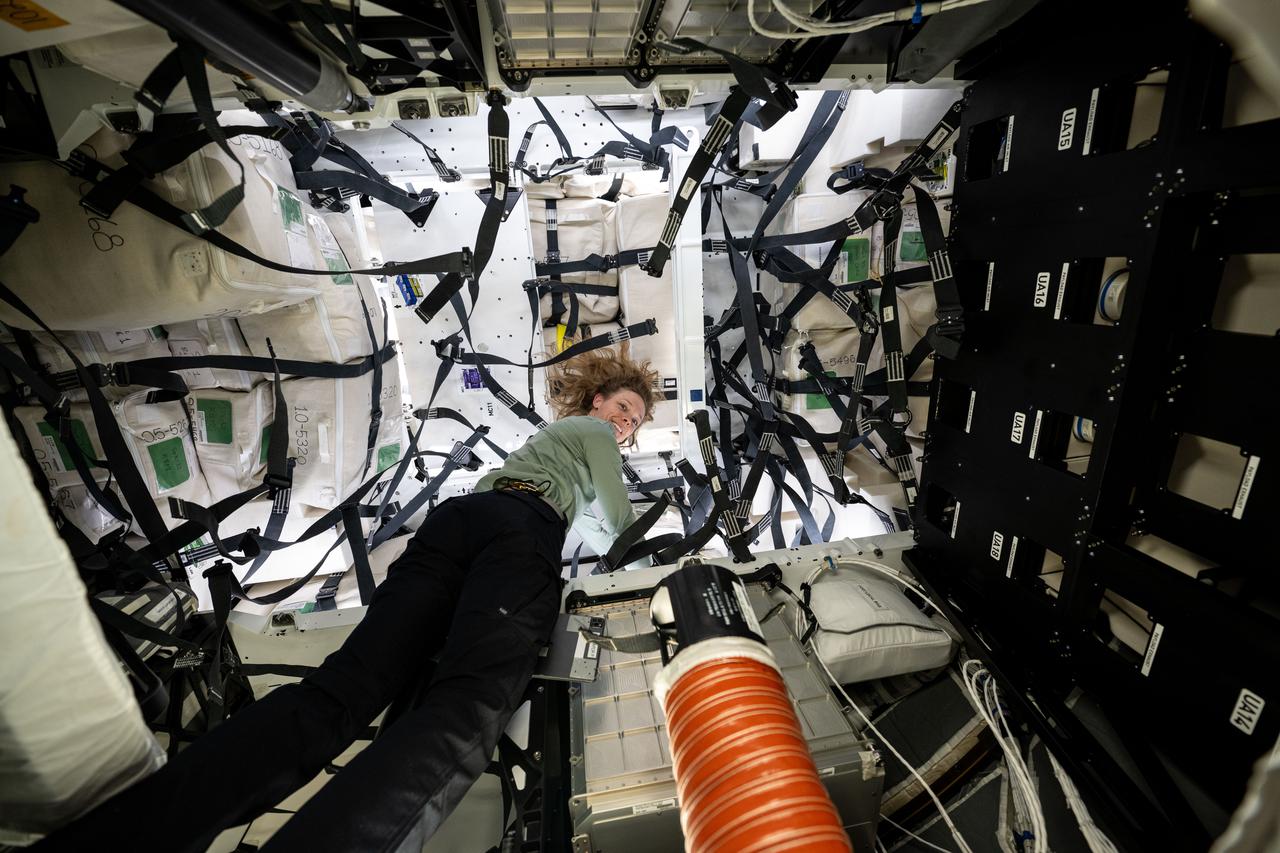
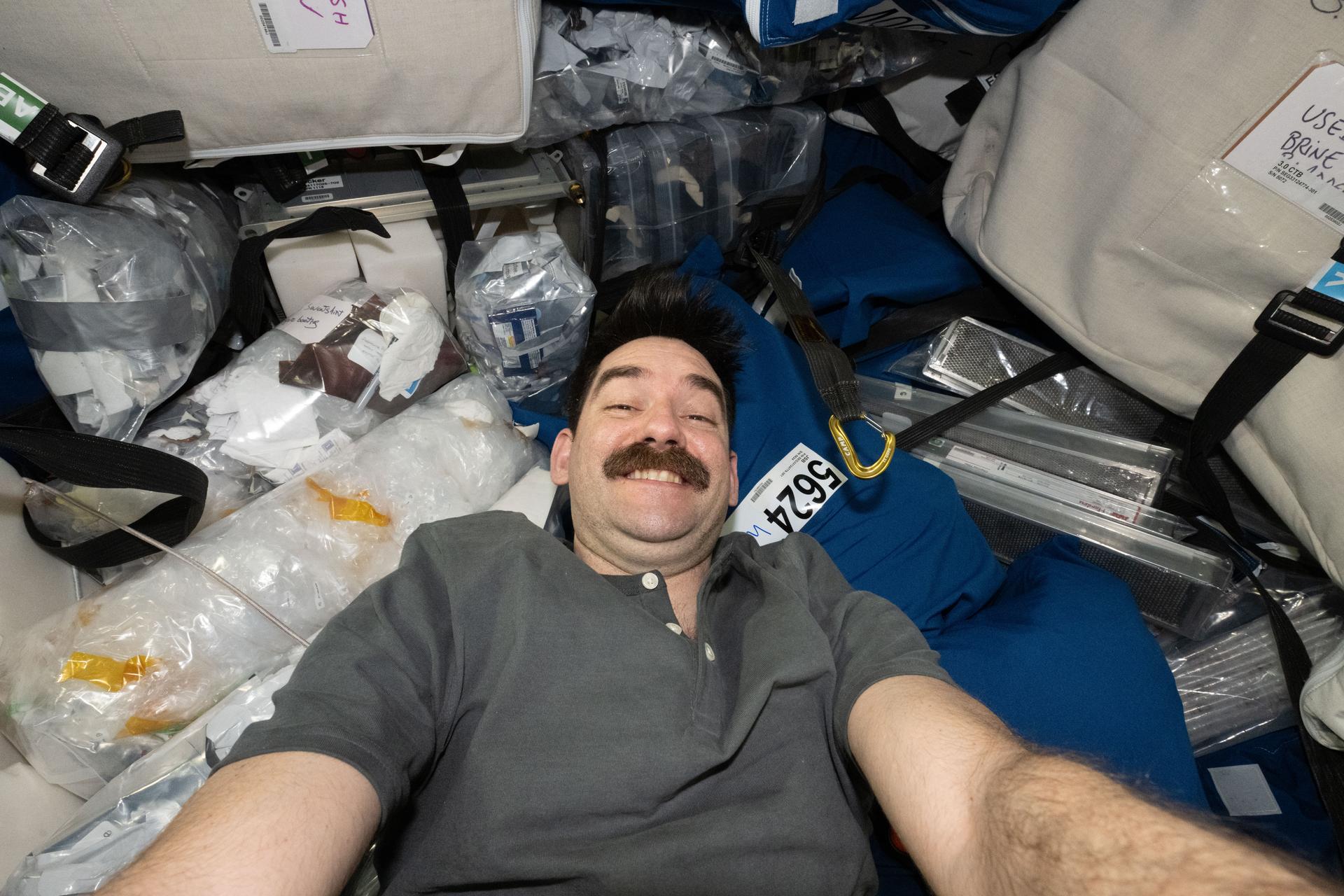
iss075e0161437 (Oct. 5, 2026) --- NASA astronaut and Expedition 75 flight engineer Jack Hathaway takes a selfie inside Northrop Grumman's Cygnus XL cargo spacecraft during cargo transfer activities. Credit: NASA/Jack Hathaway
NASA astronaut Jack Hathaway takes a selfie inside the Cygnus XL cargo spacecraft
iss074e0750967 (June 16, 2026) --- This view looks out a window on a SpaceX Dragon crew spacecraft toward a departing SpaceX Dragon cargo spacecraft moments after it undocked from the International Space Station’s forward port on the Harmony module. The orbital outpost was soaring 265 miles above the North Pacific Ocean, off the coast of British Columbia, Canada, at the time of the photograph. Credit: ESA/Sophie Adenot
A departing SpaceX Dragon cargo spacecraft is viewed from a window on a SpaceX Dragon crew spacecraft
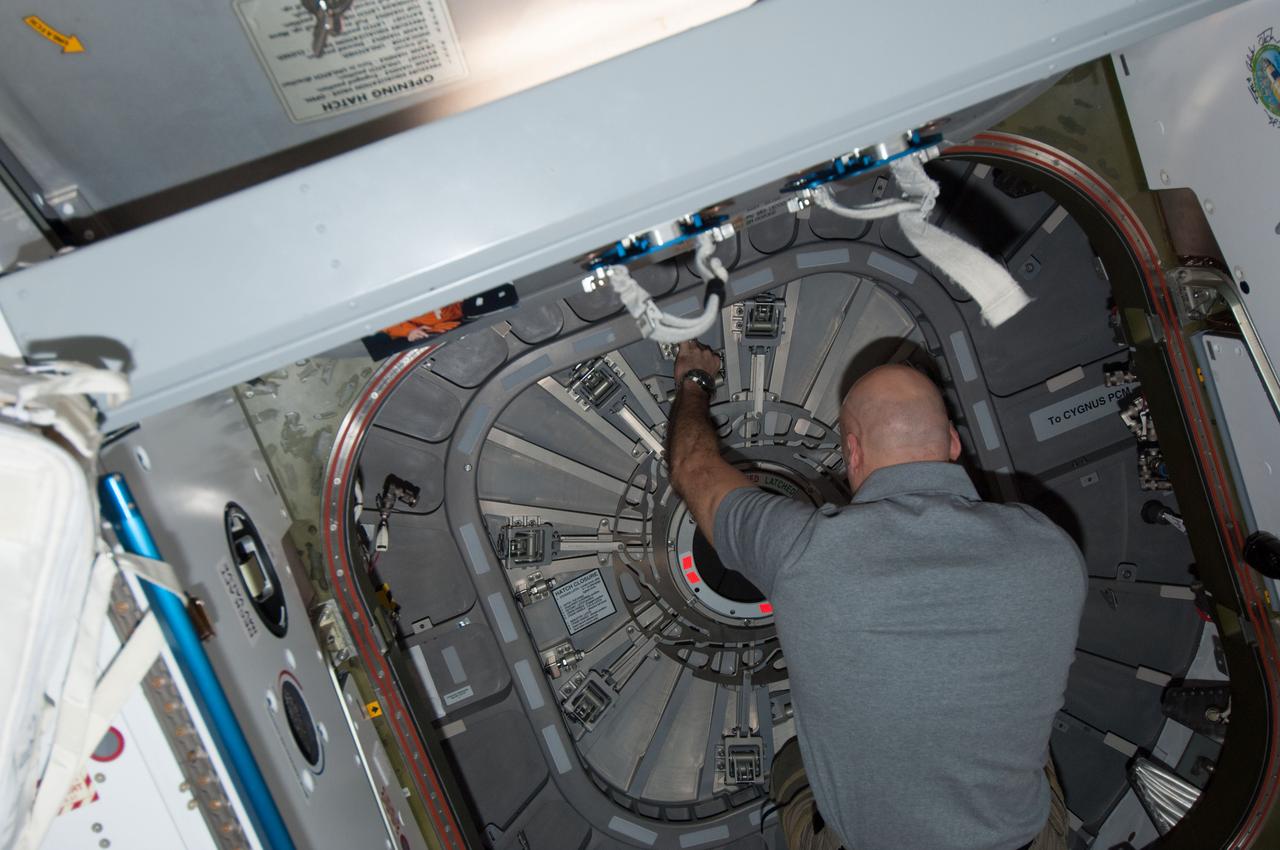
ISS037-E-016750 (21 Oct. 2013) --- European Space Agency astronaut Luca Parmitano, Expedition 37 flight engineer, closes the hatch between the International Space Station’s Harmony node and the Orbital Sciences’ Cygnus commercial cargo spacecraft in preparation for its release after completing a successful demonstration mission to the space station. Cygnus delivered 1,300 pounds of gear on Sept. 29 when it arrived and was captured by Canadarm2 and berthed to the Harmony node.
Prepping Orbital Sciences Cygnus commercial cargo spacecraft for undock
iss073e0988953 (Oct. 29, 2025) --- The new HTV-X1 cargo spacecraft from JAXA (Japan Aerospace Exploration Agency) is pictured berthed to the Earth-facing port on the International Space Station’s Harmony module. Crossing the left side of the photograph is JAXA’s Kibo laboratory module, attached to Harmony's port side. Kibo is a microgravity research facility that enables crews to conduct advanced space experiments in biology, physics, technology, and more.
The HTV-X1 cargo spacecraft is pictured berthed to the Harmony module
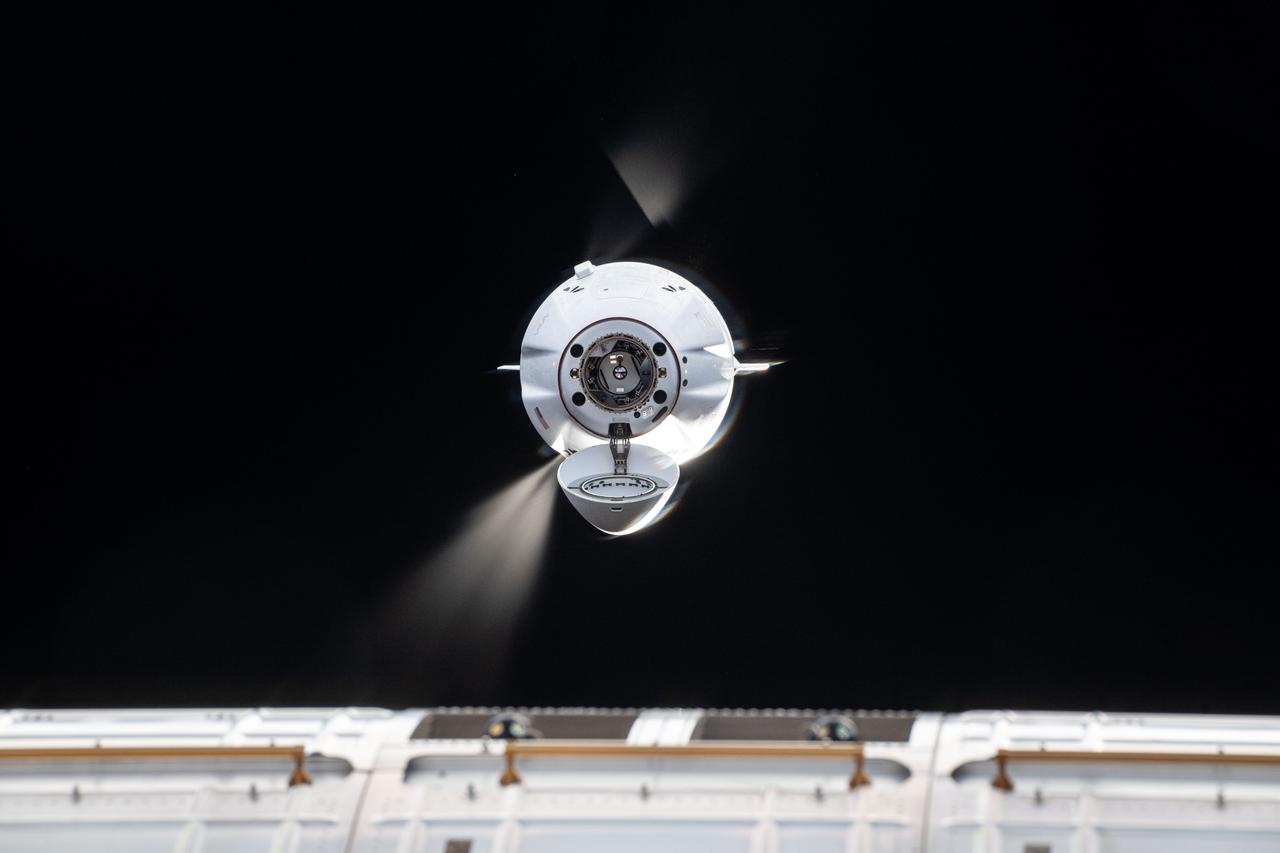
iss073e0606130 (Aug. 25, 2025) --- The SpaceX Dragon cargo spacecraft fires its Draco engines fine-tuning its automated approach and rendezvous with the International Space Station. Dragon would dock a few moments later to the Harmony module's forward port delivering over 5,000 pounds of science, supplies, and hardware to the Expedition 73 crew.
The SpaceX Dragon cargo spacecraft fires its Draco engines
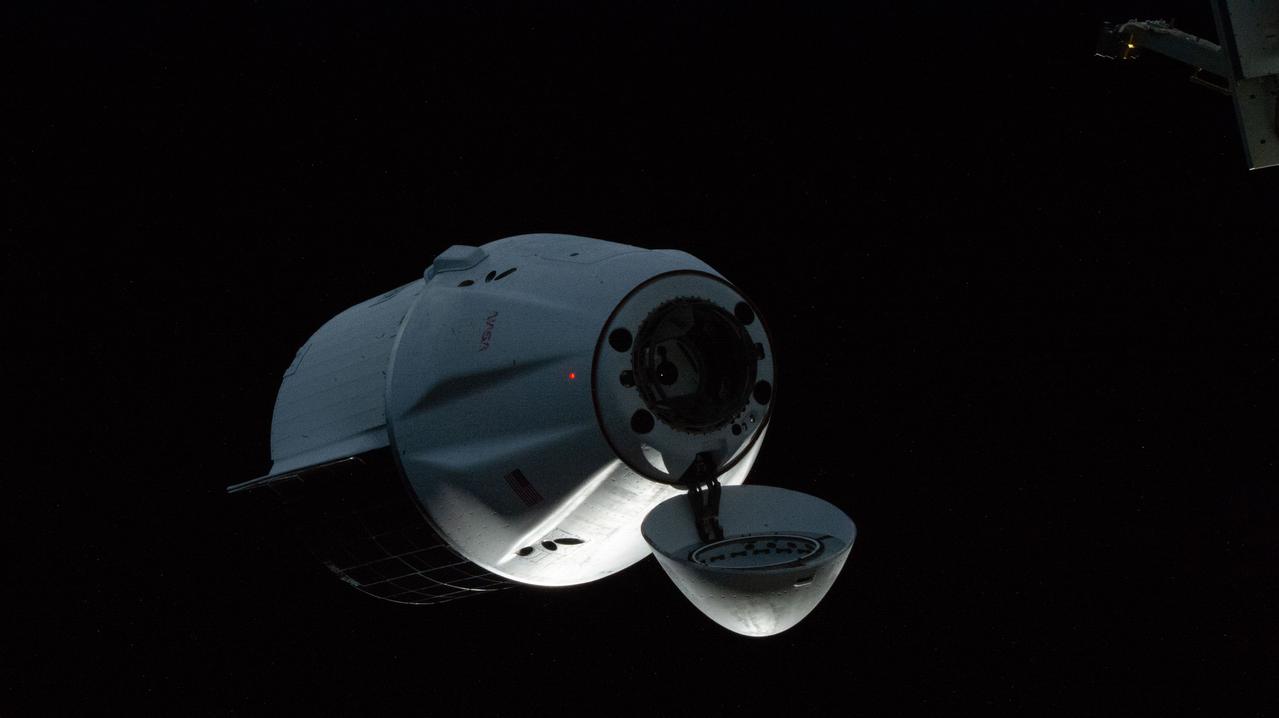
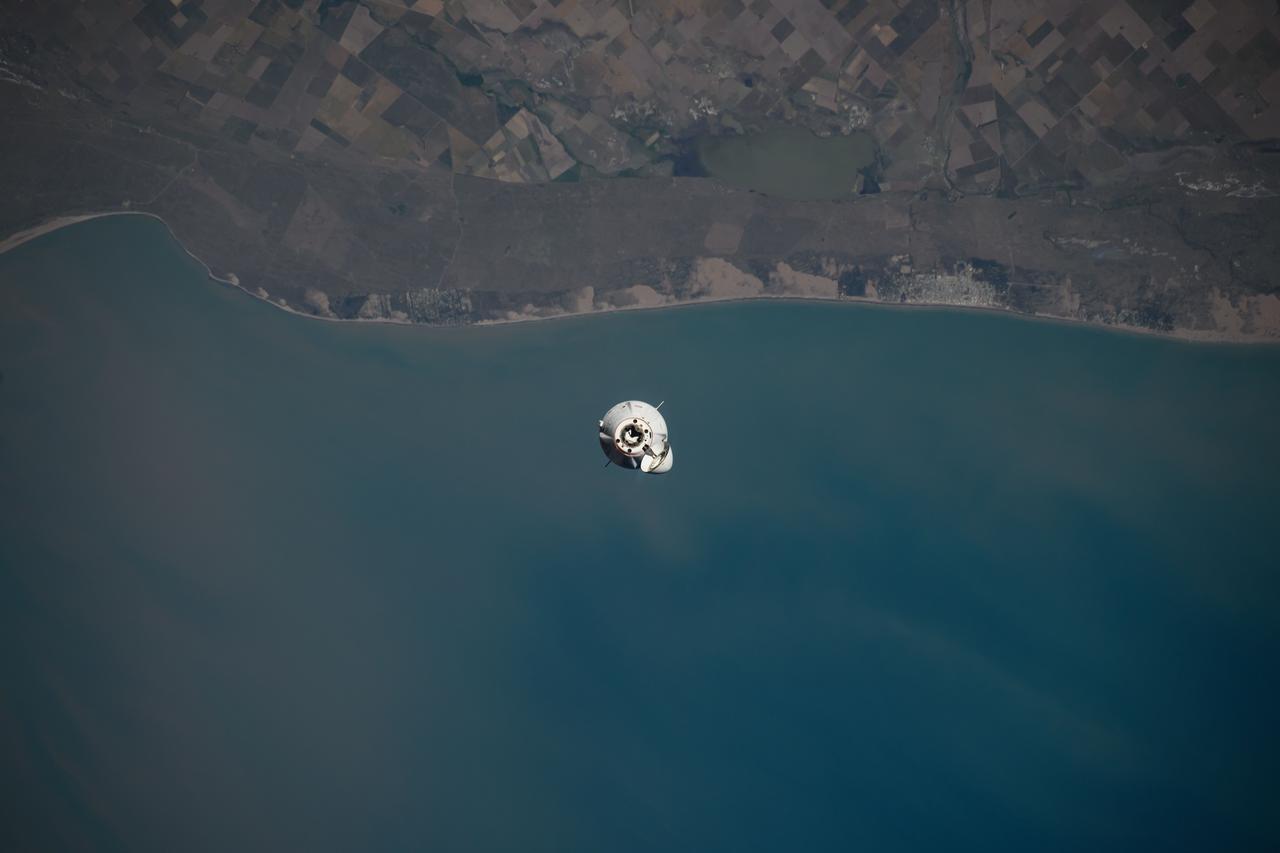
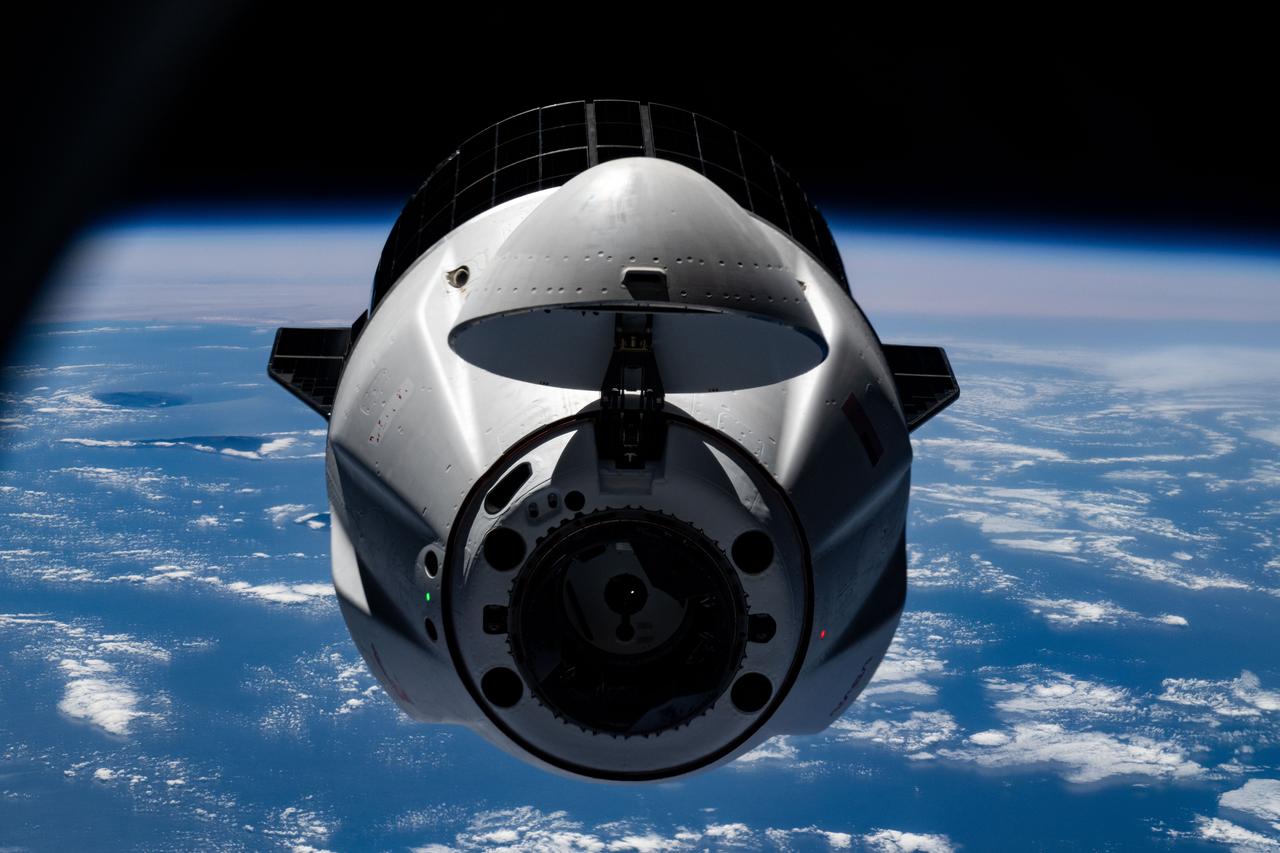
iss074e0586370 (May 17, 2026) --- A SpaceX Dragon cargo spacecraft, with its nose cone open to reveal its docking mechanism, approaches the International Space Station carrying nearly 6,500 pounds of food, supplies, and equipment for the Expedition 74 crew. This mission marked SpaceX’s 34th commercial resupply services flight to the space station for NASA. Credit: NASA/Jessica Meir
A SpaceX Dragon cargo spacecraft approaches the International Space Station
iss073e0989004 (Oct. 30, 2025) --- The HTV-X1 cargo spacecraft from JAXA (Japan Aerospace Exploration Agency) is pictured in the grips of the Canadarm2 robotic arm after it was berthed to the Harmony module's Earth-facing port on the International Space Station. HTV-X1 delivered about 12,800 pounds of science experiments, supplies, and hardware for the Expedition 73 crew, following its launch three days earlier from the Tanegashima Space Center in Japan.
The HTV-X1 cargo spacecraft is pictured berthed to the Harmony module
iss074e0590568 (May 17, 2026) --- A SpaceX Dragon cargo spacecraft approaches the International Space Station for an automated docking to the Harmony module's forward port. Dragon delivered nearly 6,500 pounds of food, supplies, and equipment for the Expedition 74 crew. This mission marked SpaceX’s 34th commercial resupply services flight to the space station for NASA. Credit: ESA/Sophie Adenot
A SpaceX Dragon cargo spacecraft approaches the International Space Station
iss074e0364790 (March 5, 2026) --- The HTV‑X1 cargo spacecraft from JAXA (Japan Aerospace Exploration Agency) is in the grasp of the Canadarm2 robotic arm after being detached from the Earth‑facing port of the International Space Station’s Harmony module. The orbital outpost was soaring 274 miles above the Pacific Ocean off the coast of South America’s Patagonia region at the time of this photograph. Credit: NASA/Jessica Meir
The HTV‑X1 cargo spacecraft is in the grasp of the Canadarm2 robotic arm
iss074e0590555 (May 17, 2026) --- A SpaceX Dragon cargo spacecraft approaches the International Space Station for an automated docking to the Harmony module's forward port. Dragon delivered nearly 6,500 pounds of food, supplies, and equipment for the Expedition 74 crew. This mission marked SpaceX’s 34th commercial resupply services flight to the space station for NASA. Credit: ESA/Sophie Adenot
A SpaceX Dragon cargo spacecraft approaches the International Space Station
iss074e0459130 (April 13, 2026) --- Northrop Grumman's Cygnus XL cargo spacecraft is held in the grips of the Canadarm2 robotic arm as it is maneuvered toward the International Space Station’s Unity module for installation. Cygnus XL delivered more than 11,000 pounds of new science experiments, lab hardware, and crew supplies for the Expedition 74 crew. Credit: NASA
The Cygnus XL cargo spacecraft is held in the grips of the Canadarm2 robotic arm
iss074e0364782 (March 5, 2026) --- The HTV‑X1 cargo spacecraft from JAXA (Japan Aerospace Exploration Agency) is in the grasp of the Canadarm2 robotic arm after being detached from the Earth‑facing port on the International Space Station’s Harmony module. The orbital outpost was soaring 274 miles above the Pacific Ocean off the coast of South America’s Patagonia region at the time of this photograph. Credit: NASA/Jessica Meir
The HTV‑X1 cargo spacecraft is in the grasp of the Canadarm2 robotic arm
iss074e0590552 (May 17, 2026) --- A SpaceX Dragon cargo spacecraft, with its nose cone open to reveal its docking mechanism, approaches the International Space Station carrying nearly 6,500 pounds of food, supplies, and equipment for the Expedition 74 crew. This mission marked SpaceX’s 34th commercial resupply services flight to the space station for NASA. Credit: ESA/Sophie Adenot
A SpaceX Dragon cargo spacecraft approaches the International Space Station
iss072e369825 (Dec. 16, 2024) --- This frame from a time-lapse video captured by NASA astronaut Don Pettit shows the thrusters firing on the SpaceX Dragon cargo spacecraft after it undocked and backed away from the International Space Station's forward port on the Harmony module. The orbital outpost was soaring 259 miles above the Pacific Ocean west of the Hawaiian island chain at the time of this photograph.
The SpaceX Dragon cargo spacecraft undocks from the International Space Station
iss074e0590489 (May 17, 2026) --- A SpaceX Dragon cargo spacecraft, with its nose cone open to reveal its docking mechanism, approaches the International Space Station carrying nearly 6,500 pounds of food, supplies, and equipment for the Expedition 74 crew. This mission marked SpaceX’s 34th commercial resupply services flight to the space station for NASA. Credit: ESA/Sophie Adenot
A SpaceX Dragon cargo spacecraft approaches the International Space Station
iss074e0586405 (May 17, 2026) --- A SpaceX Dragon cargo spacecraft, with its nose cone open to reveal its docking mechanism, approaches the International Space Station carrying nearly 6,500 pounds of food, supplies, and equipment for the Expedition 74 crew. This mission marked SpaceX’s 34th commercial resupply services flight to the space station for NASA. Credit: NASA/Jessica Meir
A SpaceX Dragon cargo spacecraft approaches the International Space Station
iss072e145396 (Nov. 5, 2024) --- NASA astronaut and Expedition 72 Flight Engineer Nick Hague is pictured in the vestibule between the International Space Station's forward port on the Harmony module and the SpaceX Dragon cargo spacecraft. Dragon had automatically docked to the orbital outpost less than hour before this photograph was taken and its hatch had not been opened yet.
Astronaut Nick Hague in the vestibule between the space station and the Dragon cargo spacecraft
iss074e0603650 (May 17, 2026) --- A SpaceX Dragon cargo spacecraft, with its nose cone open to reveal its docking mechanism, approaches the International Space Station carrying nearly 6,500 pounds of food, supplies, and equipment for the Expedition 74 crew. This mission marked SpaceX’s 34th commercial resupply services flight to the space station for NASA. Credit: NASA
A SpaceX Dragon cargo spacecraft approaches the International Space Station
iss074e0590574 (May 17, 2026) --- A SpaceX Dragon cargo spacecraft approaches the International Space Station for an automated docking to the Harmony module's forward port. Dragon delivered nearly 6,500 pounds of food, supplies, and equipment for the Expedition 74 crew. This mission marked SpaceX’s 34th commercial resupply services flight to the space station for NASA. Credit: ESA/Sophie Adenot
A SpaceX Dragon cargo spacecraft approaches the International Space Station
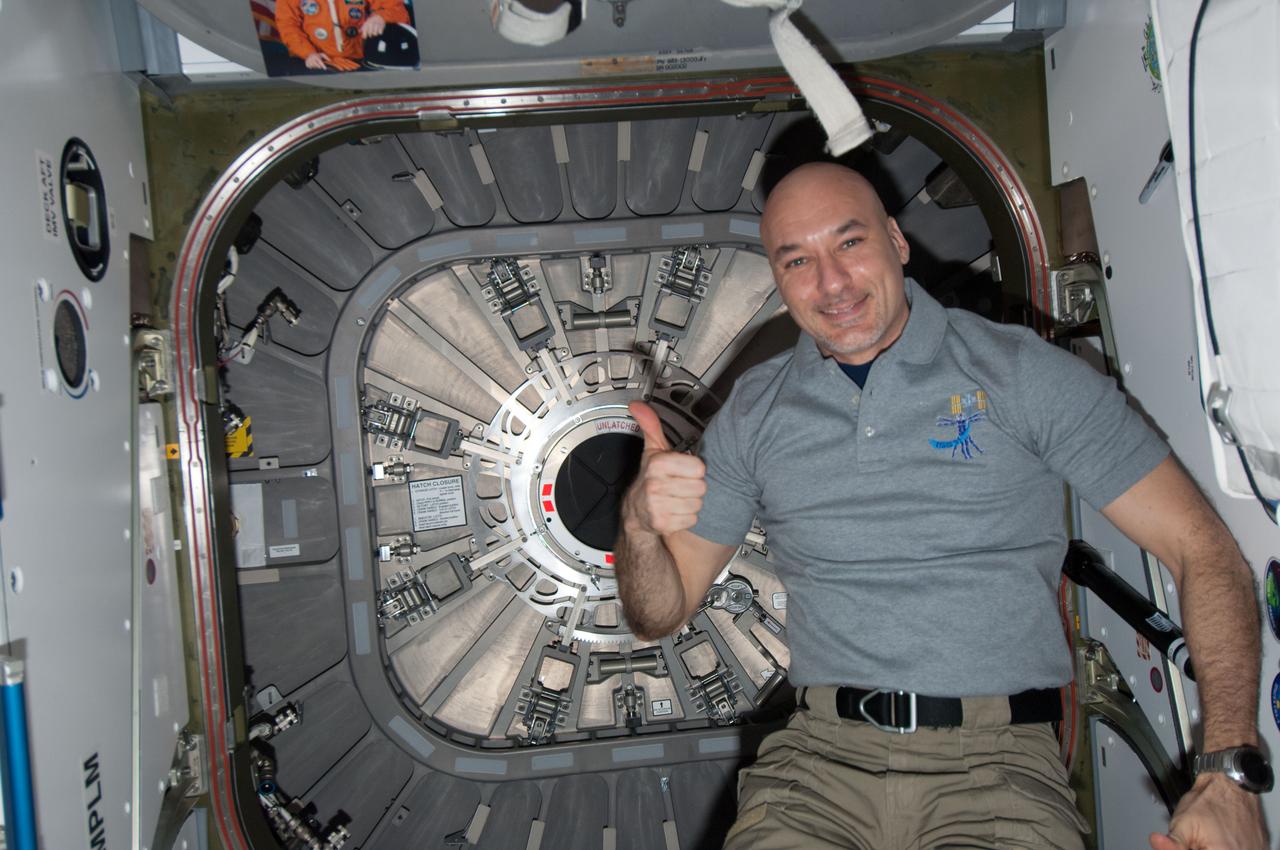
ISS037-E-016758 (21 Oct. 2013) --- European Space Agency astronaut Luca Parmitano, Expedition 37 flight engineer, gives a thumbs up signal after closing the hatch between the International Space Station’s Harmony node and the Orbital Sciences’ Cygnus commercial cargo spacecraft in preparation for its release after completing a successful demonstration mission to the space station. Cygnus delivered 1,300 pounds of gear on Sept. 29 when it arrived and was captured by Canadarm2 and berthed to the Harmony node.
Prepping Orbital Sciences? Cygnus commercial cargo spacecraft for undock
iss074e0459132 (April 13, 2026) --- Northrop Grumman's Cygnus XL cargo spacecraft is held in the grips of the Canadarm2 robotic arm as it is maneuvered toward the International Space Station’s Unity module for installation. Cygnus XL delivered more than 11,000 pounds of new science experiments, lab hardware, and crew supplies for the Expedition 74 crew. Credit: NASA/Jessica Meir
The Cygnus XL cargo spacecraft is held in the grips of the Canadarm2 robotic arm
iss074e0458292 (April 13, 2026) --- Northrop Grumman's Cygnus XL cargo spacecraft, carrying over 11,000 pounds of new science experiments, lab hardware, and crew supplies, approaches the International Space Station as both spaceships were orbiting 264 miles above the Atlantic Ocean off the coast of Angola on the Africa continent. Credit: NASA
The Cygnus XL cargo spacecraft approaches the International Space Station
iss074e0494671 (April 20, 2026) --- The trash-packed Progress 93 cargo spacecraft from Roscosmos departs the International Space Station after seven months docked to the Zvezda service module's aft port. Several hours later, Progress 93 reentered the Earth's atmosphere for a fiery, but safe demise above the South Pacific Ocean. Credit: NASA
The trash-packed Progress 93 cargo spacecraft departs the International Space Station
iss074e0586357 (May 17, 2026) --- A SpaceX Dragon cargo spacecraft, with its nose cone open to reveal its docking mechanism, approaches the International Space Station carrying nearly 6,500 pounds of food, supplies, and equipment for the Expedition 74 crew. This mission marked SpaceX’s 34th commercial resupply services flight to the space station for NASA. Credit: NASA/Jessica Meir
A SpaceX Dragon cargo spacecraft approaches the International Space Station
iss074e0494674 (April 20, 2026) --- The trash-packed Progress 93 cargo spacecraft from Roscosmos departs the International Space Station after seven months docked to the Zvezda service module's aft port. Several hours later, Progress 93 reentered the Earth's atmosphere for a fiery, but safe demise above the South Pacific Ocean. Credit: NASA
The trash-packed Progress 93 cargo spacecraft departs the International Space Station
iss074e0609033 (May 26, 2026) --- Northrop Grumman's Cygnus XL cargo spacecraft, berthed to the Earth-facing port of the Unity module, is pictured from a window in the International Space Station's cupola. The orbital outpost was soaring 274 miles above the South Indian Ocean east of the French Southern and Antarctic Lands as an aurora australis beamed above Earth's horizon beneath a starry sky. Credit: NASA/Chris Williams
Northrop Grumman's Cygnus XL cargo spacecraft berthed to the Unity module
iss074e0409125 (March 24, 2026) -- The Progress 94 cargo spacecraft is pictured docked to the International Space Station's Poisk module. Credit: NASA
The Progress 94 cargo spacecraft is pictured docked to the International Space Station's Poisk module
iss074e0587443 (May 17, 2026) --- NASA astronaut and Expedition 74 flight engineer Jack Hathaway is pictured inside the vestibule between the SpaceX Dragon cargo spacecraft and the International Space Station’s forward port on the Harmony module. Moments later, Hathaway would open the Dragon’s hatch and begin unloading nearly 6,500 pounds of food, supplies, and equipment for the Expedition 74 crew. Credit: NASA/Chris Williams
NASA astronaut Jack Hathathe way prepares to open SpaceX Dragon cargo spacecraft's hatch
iss074e0458241 (April 13, 2026) --- Northrop Grumman's Cygnus XL cargo spacecraft rests at its capture point, 12 meters from the International Space Station, as the Canadarm2 robotic arm prepares to grapple the resupply ship. Cygnus XL delivered more than 11,000 pounds of new science experiments, lab hardware, and crew supplies for the Expedition 74 crew. Credit: NASA/Jessica Meir
The Cygnus XL cargo spacecraft at its capture point 12 meters from the International Space Station
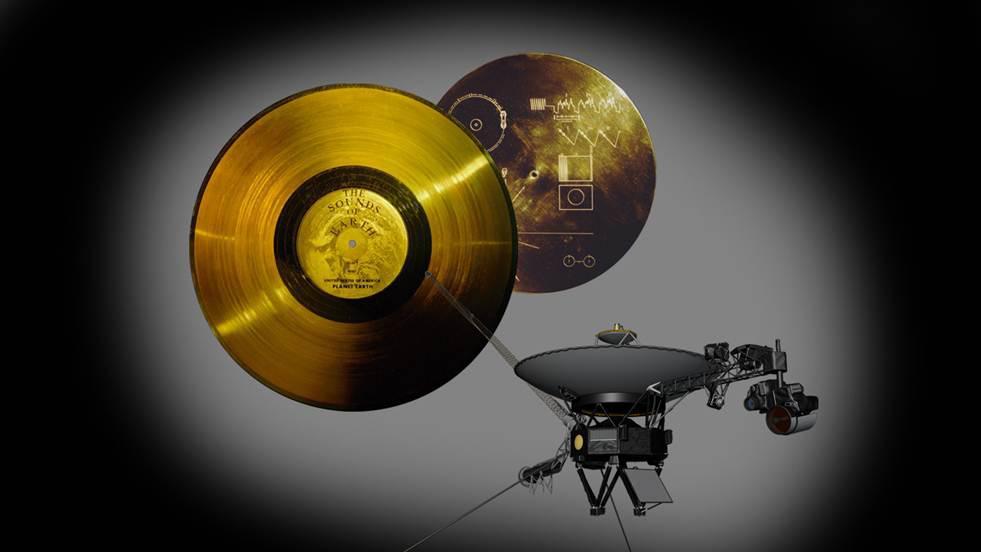
This image highlights the special cargo onboard NASA Voyager spacecraft: the Golden Record. Each of the two Voyager spacecraft launched in 1977 carry a 12-inch gold-plated phonograph record with images and sounds from Earth.
Voyager Special Cargo: The Golden Record
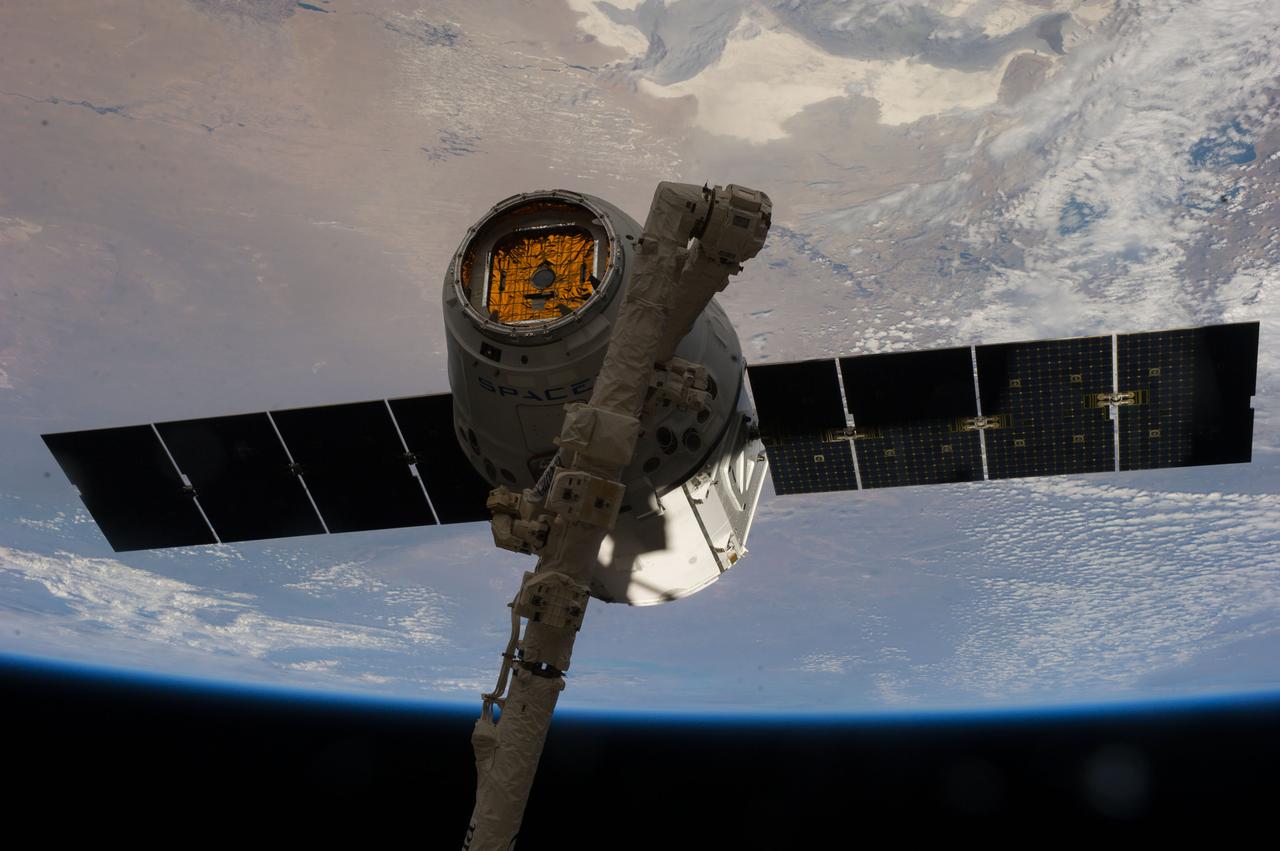
View of the SpaceX Dragon Commercial Resupply Services-3 (CRS-3) spacecraft grappled by the Canadarm2 Space Station Remote Manipulator System (SSRMS) during Expedition 39. Image was released by released by flight engineer 3 (FE3) on Instagram.
Dragon Spacecraft grappled by SSRMS
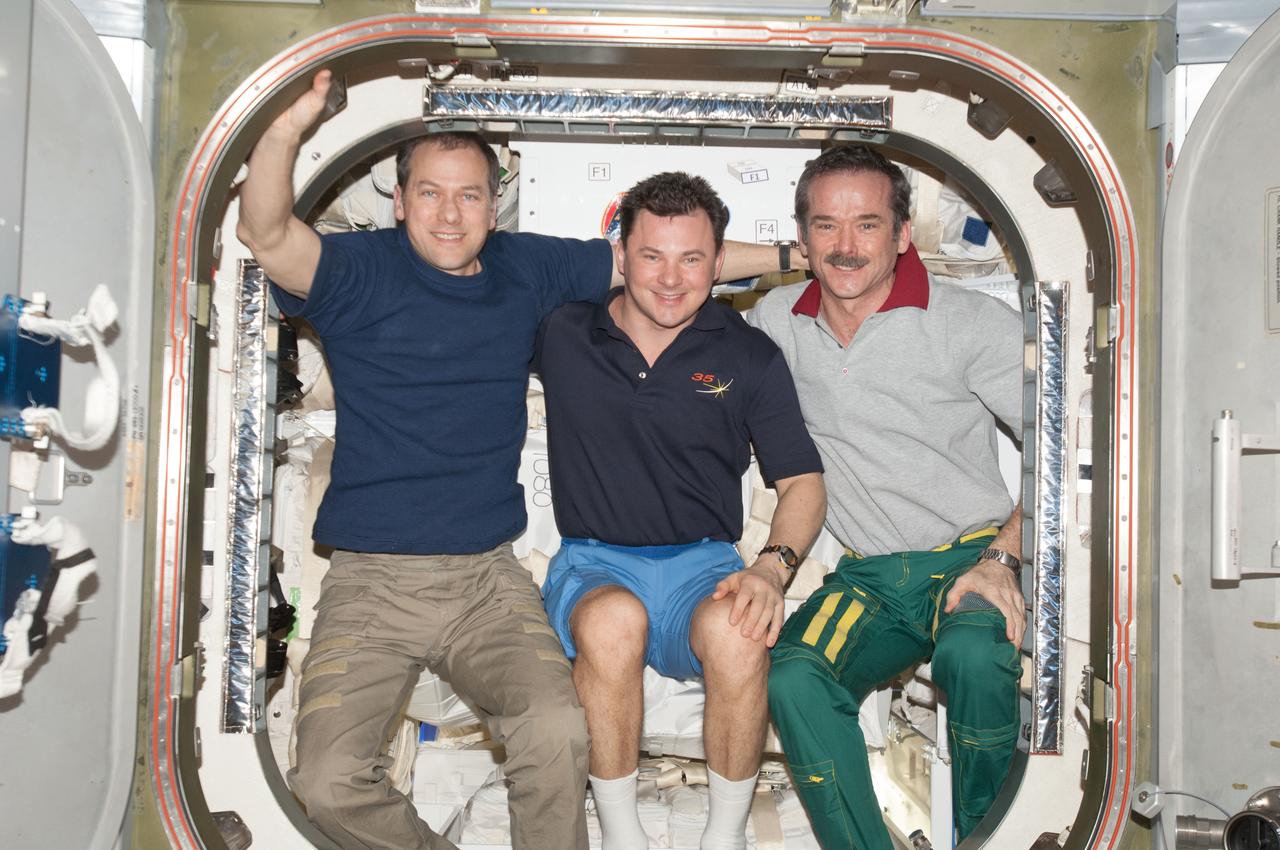
Expedition 35 flight engineer (FE) Tom Marshburn, FE Roman Romanenko, and commander Chris Hadfield pose for a photo in the SpaceX Dragon Commercial Resupply Services-2 (CRS-2) spacecraft. Romanenko is a Roscosmos cosmonaut and Hadfield is a Canadian Space Agency (CSA) astronaut.
Marshburn, Romanenko and Hadfield in Dragon CRS-2
iss058e011816 (Feb. 8, 2019) --- The Cygnus cargo craft from Northrop Grumman begins its departure from the International Space Station as both spacecraft were orbiting 252 miles over the Pacific Ocean off the coast of Peru.
The Cygnus cargo craft from Northrop Grumman
iss058e011815 (Feb. 8, 2019) --- The Cygnus cargo craft from Northrop Grumman begins its departure from the International Space Station as both spacecraft were orbiting 252 miles over the Pacific Ocean off the coast of Peru.
The Cygnus cargo craft from Northrop Grumman
iss058e002241 (Jan. 7, 2019) --- The SpaceX Dragon cargo craft is pictured attached to the International Space Station's Harmony module as the orbital complex orbited 261 miles above the Indian Ocean southeast of the continent of Africa. The Canadarm2 robotic arm vertically splits the frame prior to grappling the spacecraft ahead of planned departure activities.
The SpaceX Dragon and Station above the Indian Ocean
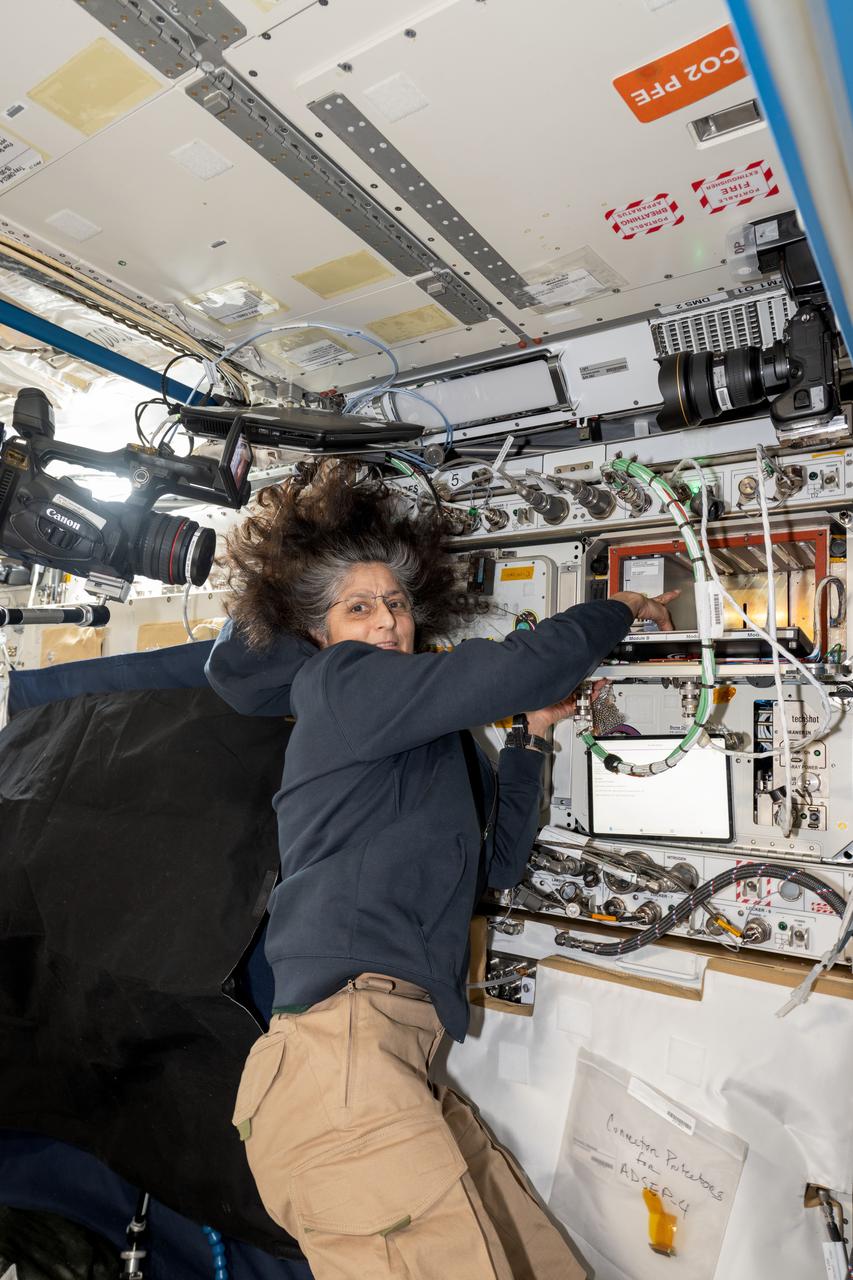
iss072e146339 (Nov. 7, 2024) --- NASA astronaut and Expedition 72 Commander Suni Williams points to the Advanced Space Experiment Processor-4 (ADSEP-4), a sample processor that can perform research operations on the SpaceX Dragon cargo spacecraft, the Northrop Grumman Cygnus cargo spacecraft, and the International Space Station.
Astronaut Suni Williams points to a sample processor that can perform space research operations
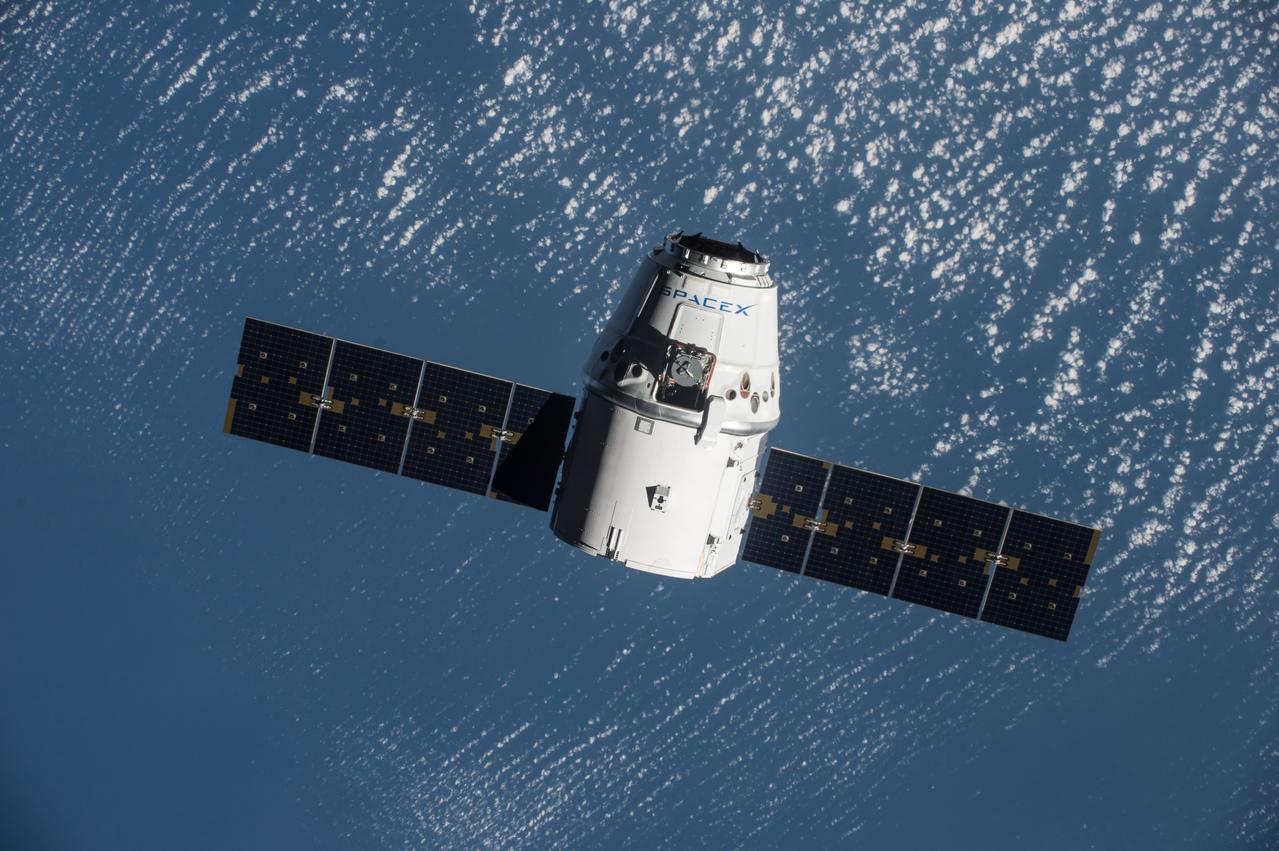
ISS048e042023 (07/20/2016) --- The SpaceX Dragon spacecraft arrives at the International Space Station with nearly 5,000 pounds of cargo. Instruments to perform the first-ever DNA sequencing in space, and the first international docking adapter for commercial crew spacecraft, are among the cargo of the SpaceX Commercial Resupply Services-9 (CRS-9) mission.
iss048e042023
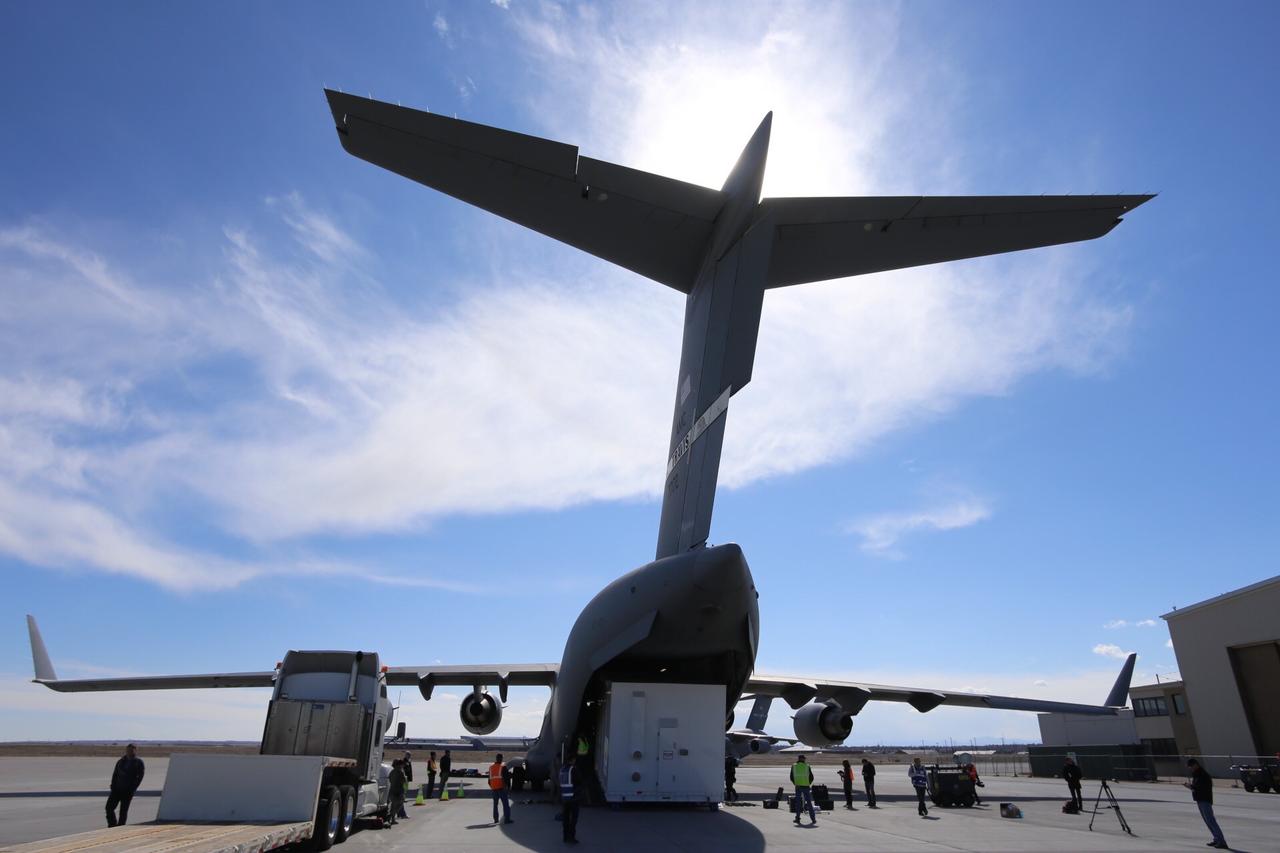
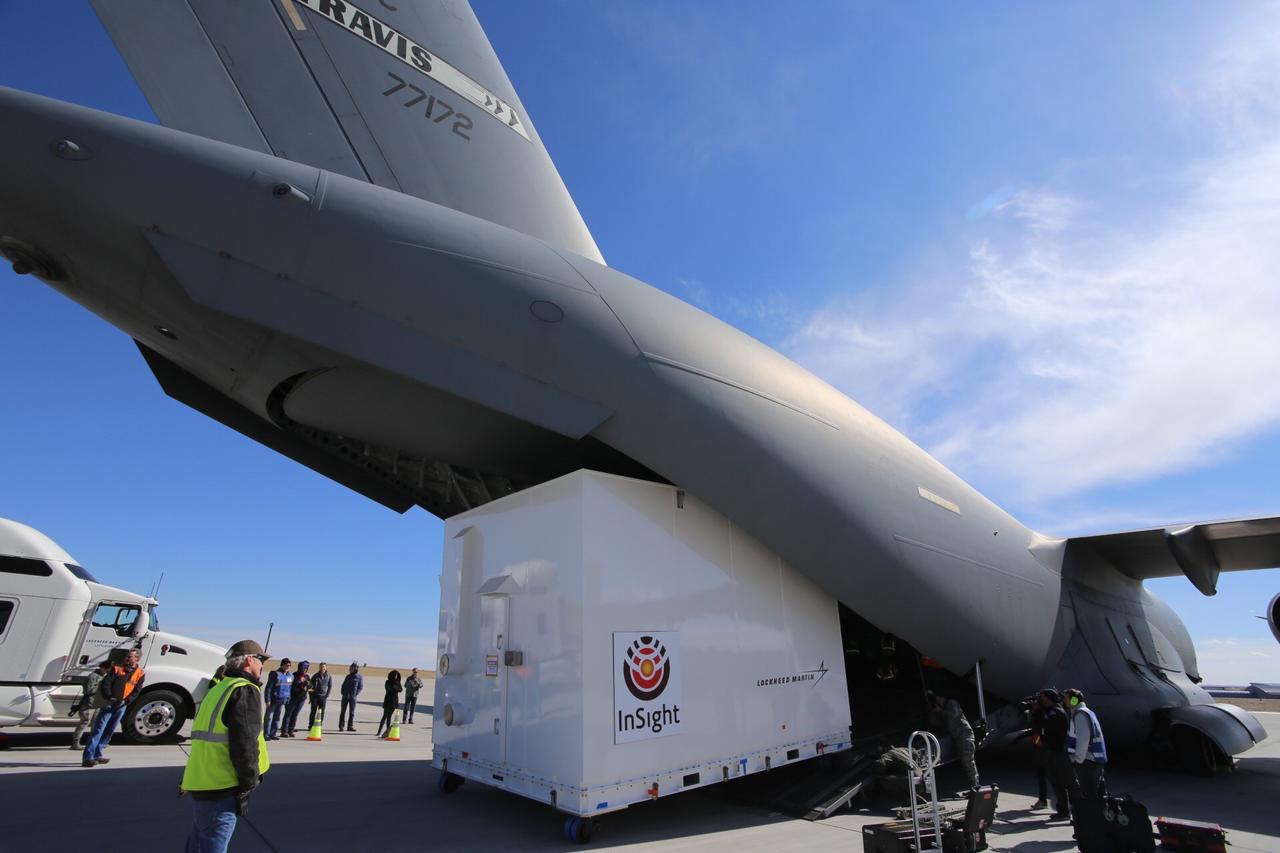
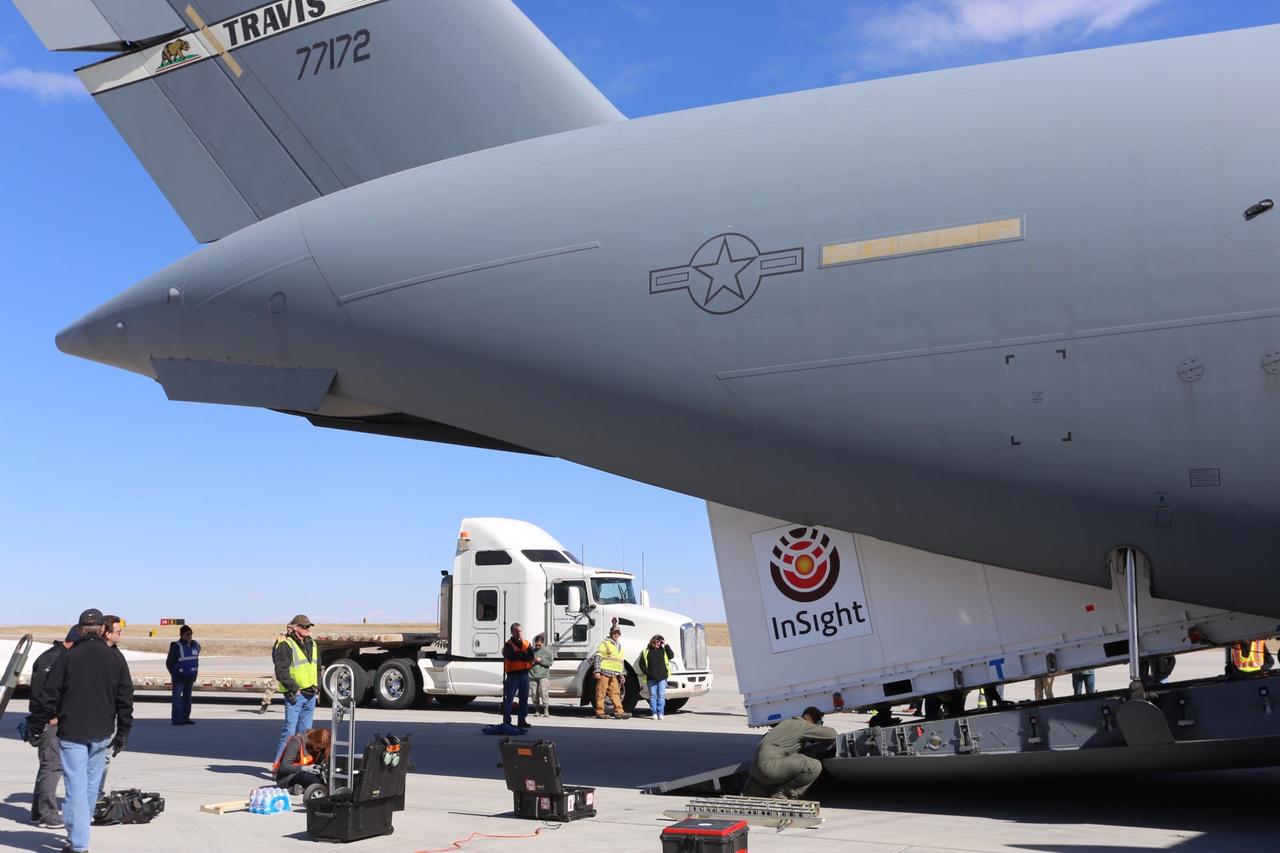
Personnel supporting NASA's InSight mission to Mars load the crated InSight spacecraft into a C-17 cargo aircraft at Buckley Air Force Base, Denver, for shipment to Vandenberg Air Force Base, California. The spacecraft, built in Colorado by Lockheed Martin Space, was shipped February 28, 2018, in preparation for launch from Vandenberg in May 2018.  InSight, short for Interior Exploration using Seismic Investigations, Geodesy and Heat Transport, is the first mission dedicated to studying the deep interior of Mars. Its findings will advance understanding of the early history of all rocky planets, including Earth.  https://photojournal.jpl.nasa.gov/catalog/PIA22252
Shipping InSight Mars Spacecraft to California for Launch
Personnel supporting NASA's InSight mission to Mars load the crated InSight spacecraft into a C-17 cargo aircraft at Buckley Air Force Base, Denver, for shipment to Vandenberg Air Force Base, California. The spacecraft, built in Colorado by Lockheed Martin Space, was shipped February 28, 2018, in preparation for launch from Vandenberg in May 2018.  InSight, short for Interior Exploration using Seismic Investigations, Geodesy and Heat Transport, is the first mission dedicated to studying the deep interior of Mars. Its findings will advance understanding of the early history of all rocky planets, including Earth.  https://photojournal.jpl.nasa.gov/catalog/PIA22220
Shipping InSight Mars Spacecraft to California for Launch
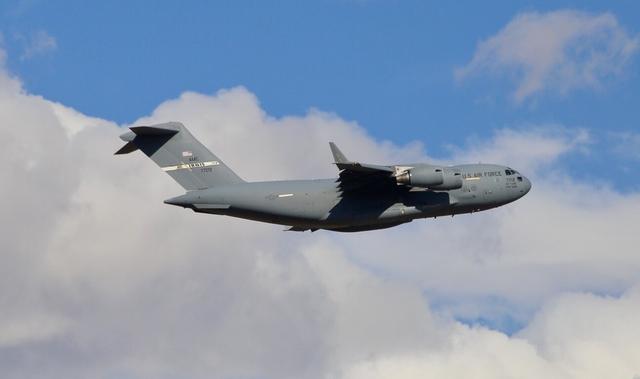
A C-17 cargo aircraft carrying NASA's InSight spacecraft flew from Buckley Air Force Base, Denver, to Vandenberg Air Force Base, California, on February 28, 2018. The spacecraft was being shipped from Lockheed Martin Space, Denver, where InSight was built and tested. Its launch period opens May 5, 2018.  InSight, short for Interior Exploration using Seismic Investigations, Geodesy and Heat Transport, is the first mission dedicated to studying the deep interior of Mars. Its findings will advance understanding of the early history of all rocky planets, including Earth.  https://photojournal.jpl.nasa.gov/catalog/PIA22251
C-17 Shipping InSight Mars Spacecraft to Vandenberg Air Force Base
Personnel supporting NASA's InSight mission to Mars load the crated InSight spacecraft into a C-17 cargo aircraft at Buckley Air Force Base, Denver, for shipment to Vandenberg Air Force Base, California. The spacecraft, built in Colorado by Lockheed Martin Space, was shipped February 28, 2018, in preparation for launch from Vandenberg in May 2018.  InSight, short for Interior Exploration using Seismic Investigations, Geodesy and Heat Transport, is the first mission dedicated to studying the deep interior of Mars. Its findings will advance understanding of the early history of all rocky planets, including Earth.  https://photojournal.jpl.nasa.gov/catalog/PIA22253
Shipping InSight Mars Spacecraft to California for Launch
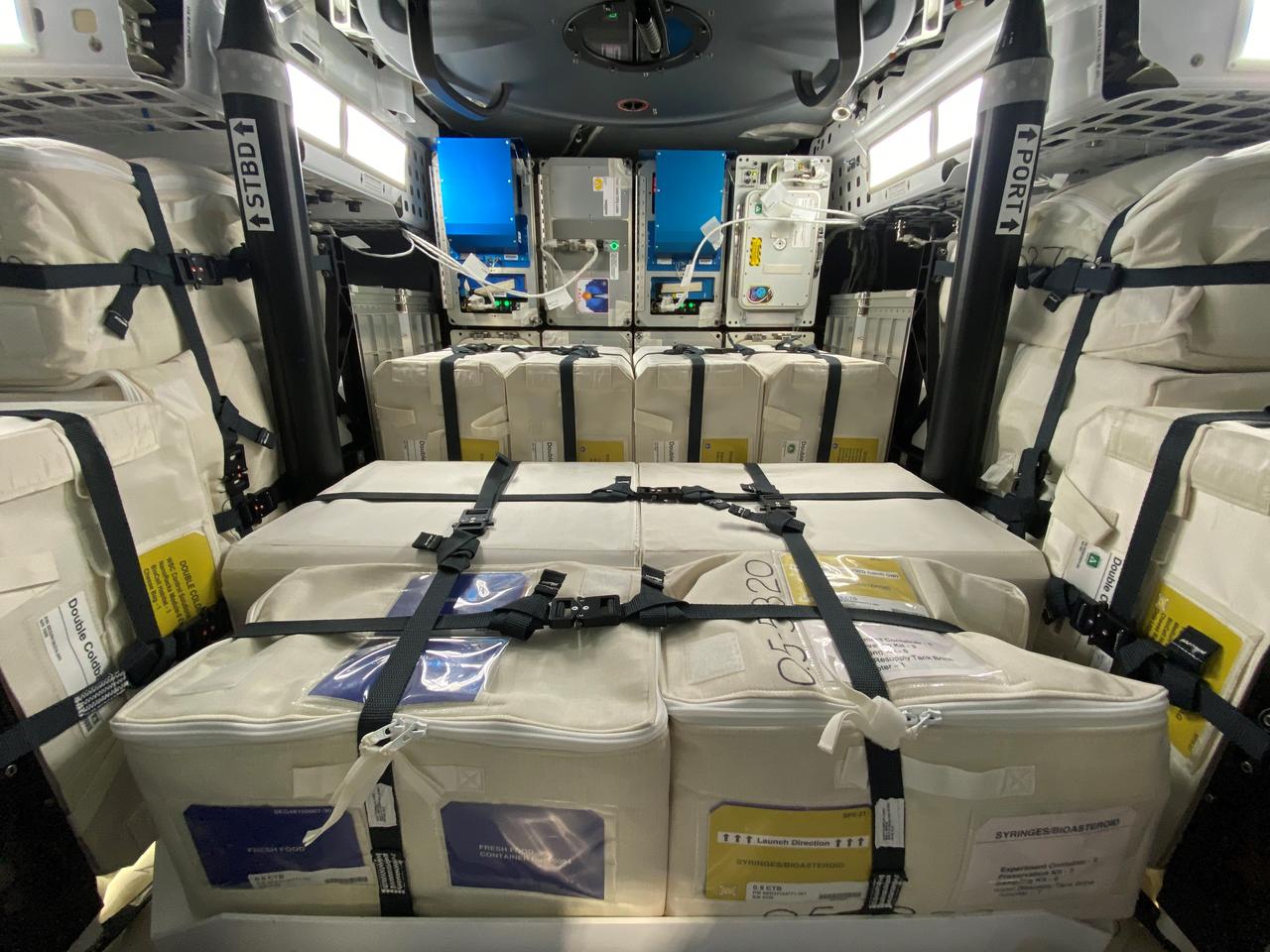
The remaining time-sensitive payloads bound for the International Space Station on SpaceX’s 21st Commercial Resupply Services (CRS-21) mission are loaded into the Cargo Dragon spacecraft on Friday, Dec. 4, 2020. A SpaceX Falcon 9 rocket, carrying the Cargo Dragon, lifted off from Launch Complex 39A at Kennedy Space Center in Florida at 11:17 a.m. EST on Dec. 6, 2020. The spacecraft is delivering more than 6,400 pounds of science investigations and cargo to the orbiting laboratory.
SpaceX CRS-21 Cargo
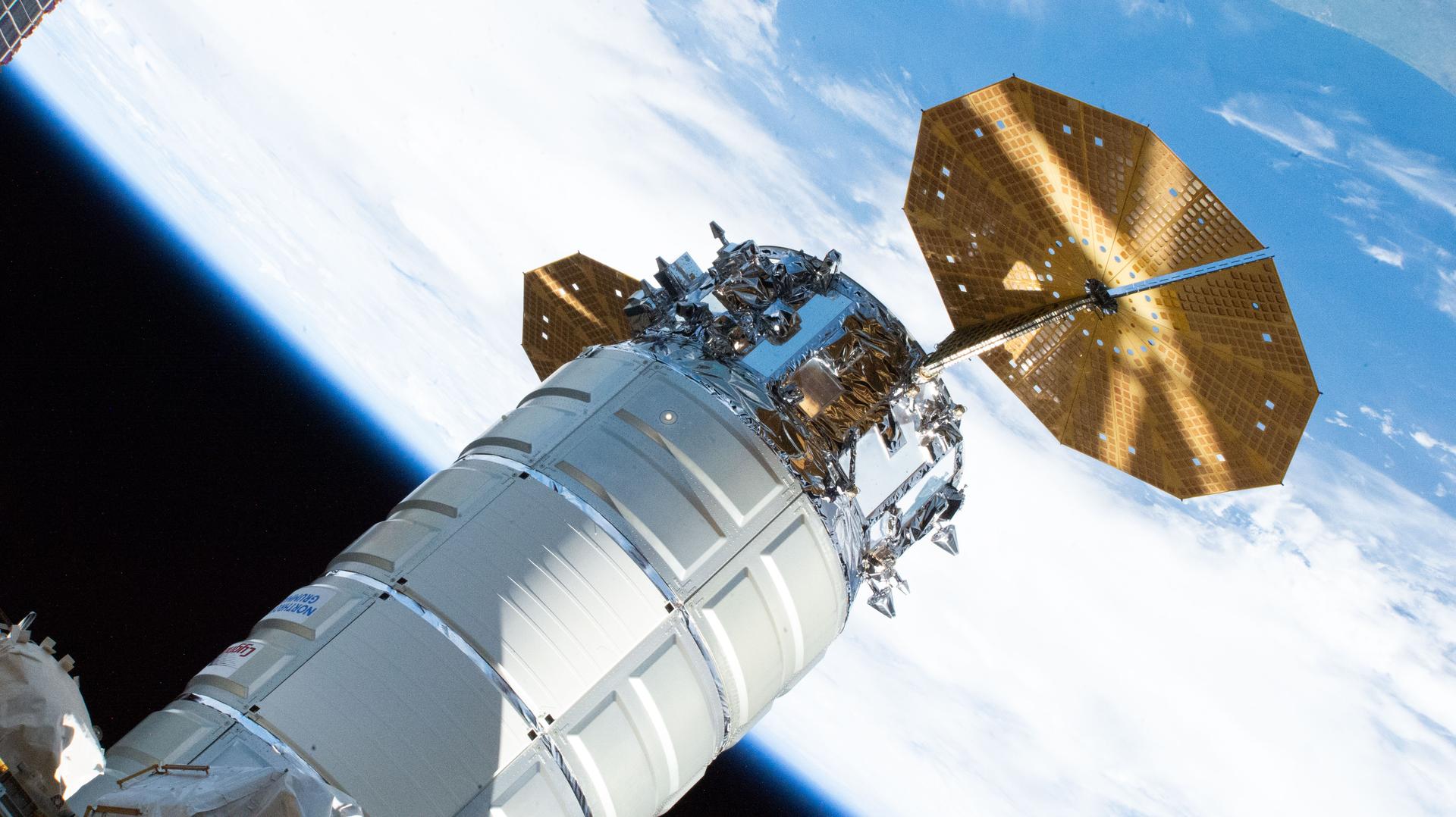
Alan Lindenmoyer, program manager, NASA's Commercial Crew and Cargo Program,  talks during a press conference held after the successful launch of the Orbital Sciences Corporation Antares rocket, with the Cygnus cargo spacecraft aboard, Wednesday, Sept. 18, 2013, NASA Wallops Flight Facility, Virginia. Cygnus is on its way to rendezvous with the space station. The spacecraft will deliver about 1,300 pounds (589 kilograms) of cargo, including food and clothing, to the Expedition 37 crew. Photo Credit: (NASA/Bill Ingalls)
Antares Post Launch Press Conference
Alan Lindenmoyer, program manager, NASA's Commercial Crew and Cargo Program,  talks during a press conference held after the successful launch of the Orbital Sciences Corporation Antares rocket, with the Cygnus cargo spacecraft aboard, Wednesday, Sept. 18, 2013, NASA Wallops Flight Facility, Virginia. Cygnus is on its way to rendezvous with the space station. The spacecraft will deliver about 1,300 pounds (589 kilograms) of cargo, including food and clothing, to the Expedition 37 crew. Photo Credit: (NASA/Bill Ingalls)
Antares Post Launch Press Conference
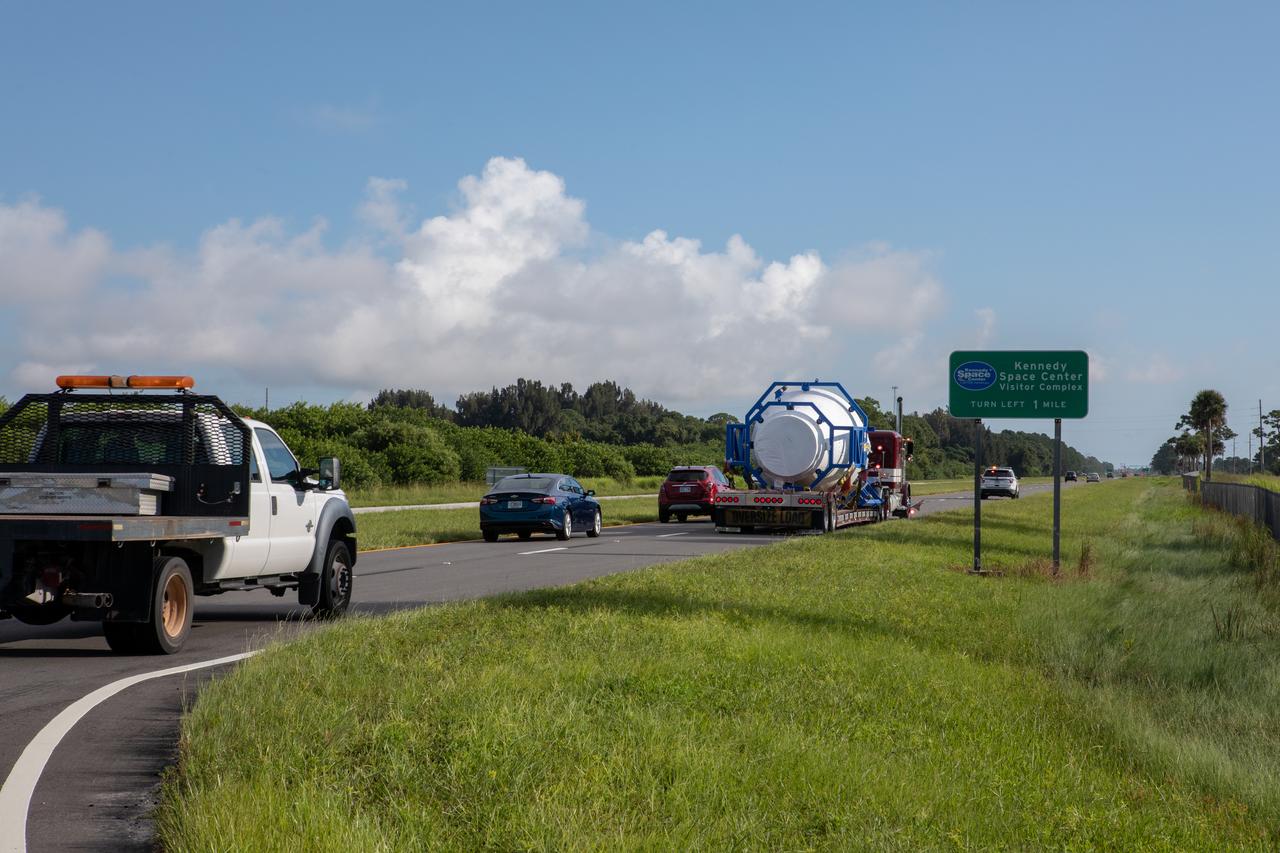
The cargo logistics module for Sierra Nevada Corporation’s Dream Chaser, the company’s reusable spaceplane, arrives at NASA’s Kennedy Space Center in Florida on Aug. 27, 2019. The cargo module – secured atop a truck – is being taken to Kennedy’s Space Station Processing Facility. A 15-foot attachment to Dream Chaser, the cargo module provides extra storage for payloads and provides cargo disposal upon re-entry into Earth’s atmosphere. Dream Chaser will deliver more than 12,000 pounds of cargo to the International Space Station under NASA’s Commercial Resupply Services 2 contract. The spacecraft and cargo module will begin resupply and return services missions to the space station in late 2021.
SNC Cargo Logistics Module Arrival
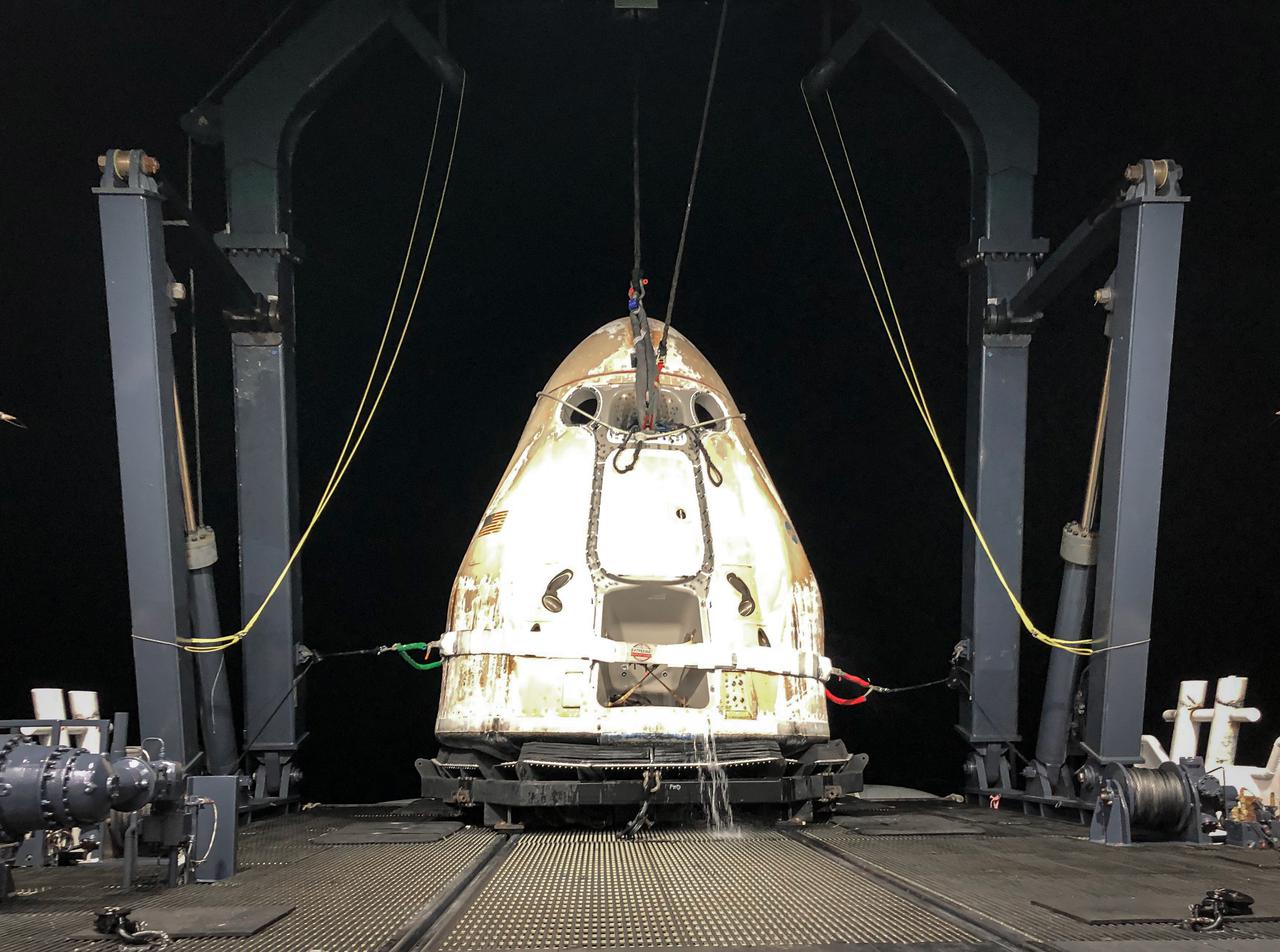
SpaceX’s Cargo Dragon spacecraft is lifted aboard a recovery vessel after splashing down in the Atlantic Ocean off the coast of Florida on Thursday, Sept. 30, 2021. The capsule, carrying cargo that flew aboard NASA’s SpaceX 23rd commercial resupply services mission, undocked from the International Space Station Thursday at approximately 9 a.m. The event marked the first time a Cargo Dragon splashed down in the Atlantic Ocean. Cargo from the capsule was delivered to the Launch and Landing Facility at Kennedy Space Center.
SpaceX CRS-23 Splashdown