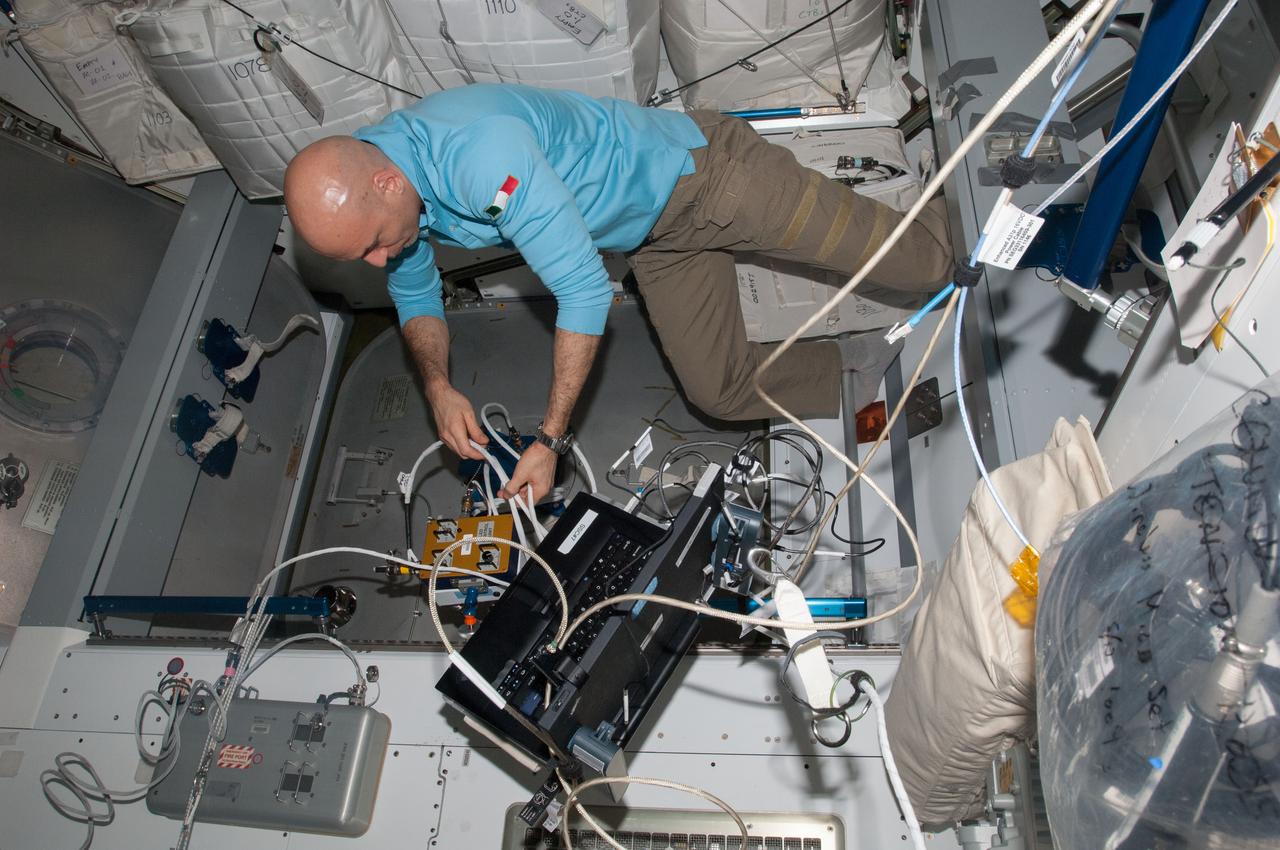
ISS037-E-001110 (15 Sept. 2013) --- European Space Agency astronaut Luca Parmitano, Expedition 37 flight engineer, installs the Common Berthing Mechanism (CBM) Centerline Berthing Camera System (CBCS) inside the International Space Station’s Harmony node.
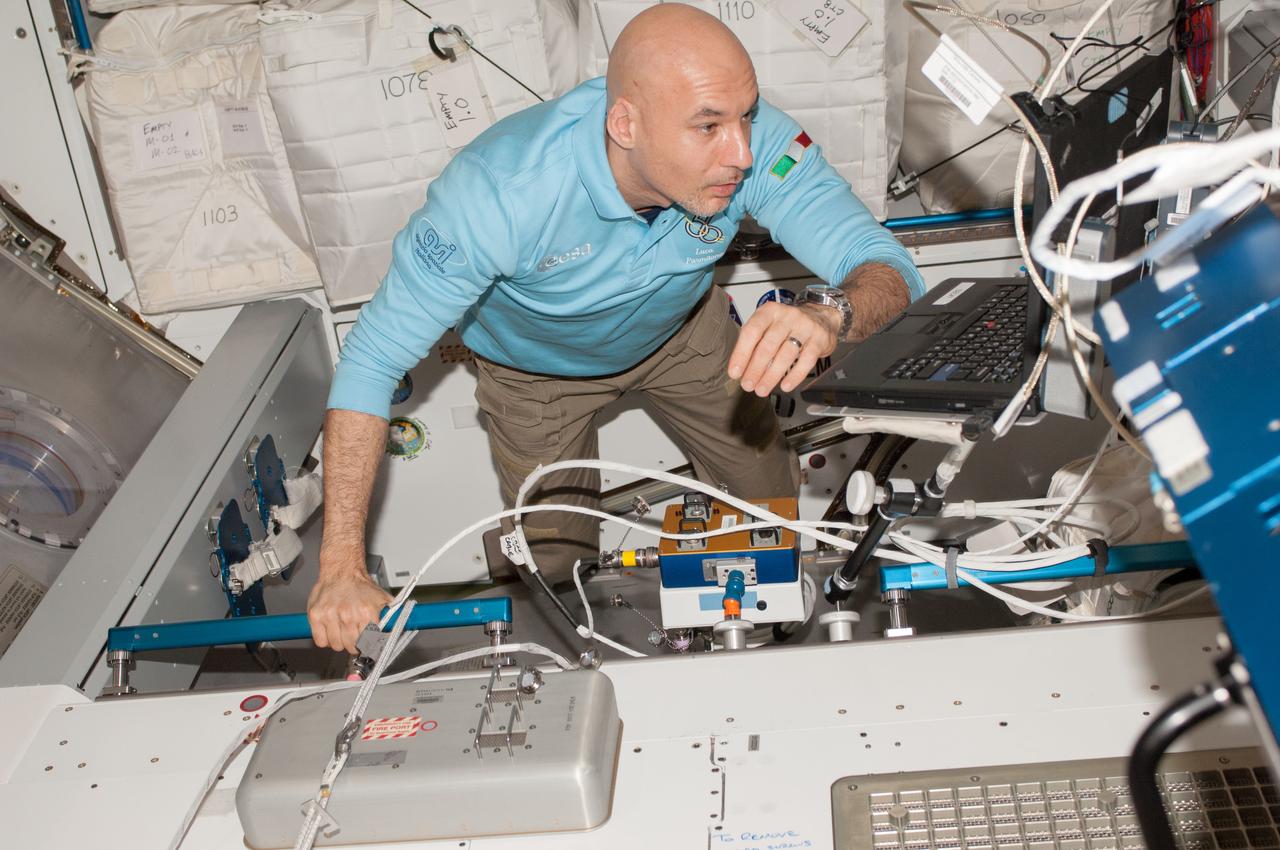
ISS037-E-001084 (15 Sept. 2013) --- European Space Agency astronaut Luca Parmitano, Expedition 37 flight engineer, installs the Common Berthing Mechanism (CBM) Centerline Berthing Camera System (CBCS) inside the International Space Station’s Harmony node.
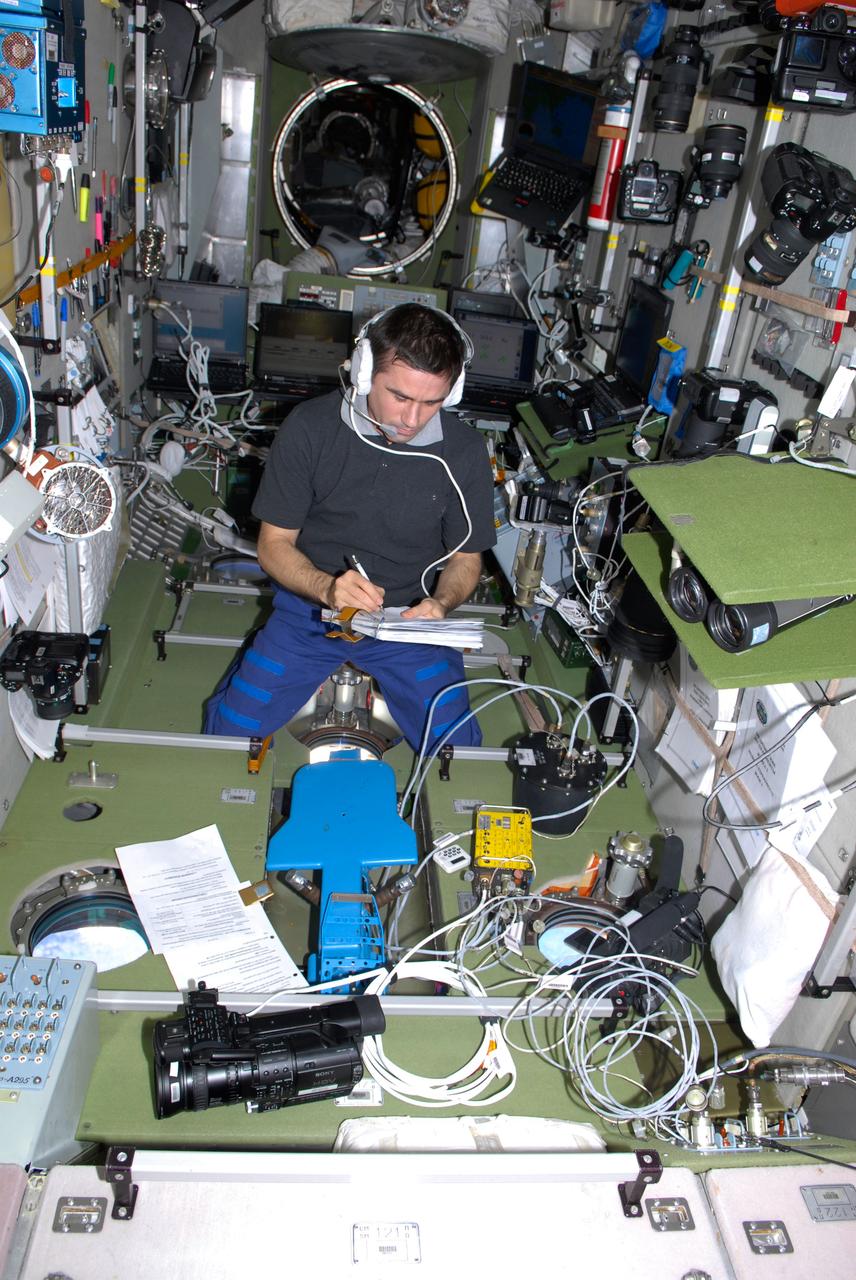
ISS016-E-023048 (15 Jan. 2008) --- Cosmonaut Yuri I. Malenchenko, Expedition 16 flight engineer representing Russia's Federal Space Agency, uses a communication system while working in the Zvezda Service Module of the International Space Station.
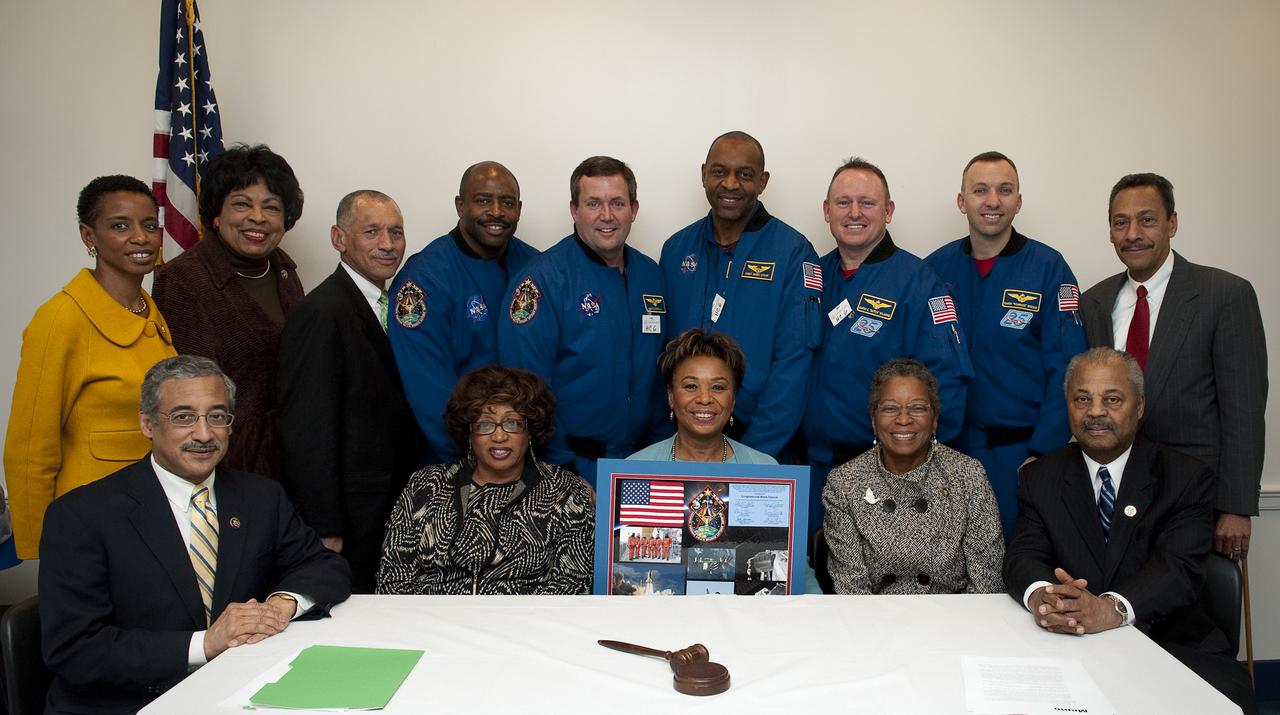
NASA Administrator Charles Bolden, space shuttle crew STS-129 and members of the Congressional Black Caucus pose for a group photo at the Capitol Building, Wednesday, Jan. 13, 2010, in Washington. Back row from left to right: U.S. Rep Donna Edwards (D-MD), U.S. Rep Diane Watson (D-CA), NASA Administrator Charles Bolden, astronauts Leland Melvin, Mike Foreman, Robert Satcher, Barry Wilmore, Randy Breznik, and U.S. Rep Mel Watt (D-NC). Front row from left to right: U.S. Rep Robert Scott (D-VA), U.S. Rep. Corrine Brown (D-Fla), U.S. Rep. Barbara Lee (D-CA), U.S. Rep. Donna Christensen (D-VI) and U.S. Rep. Donald Payne (D-NJ). The crew of STS-129 presented the CBC with a montage commemorating their mission. Photo Credit: (NASA/Paul E. Alers)
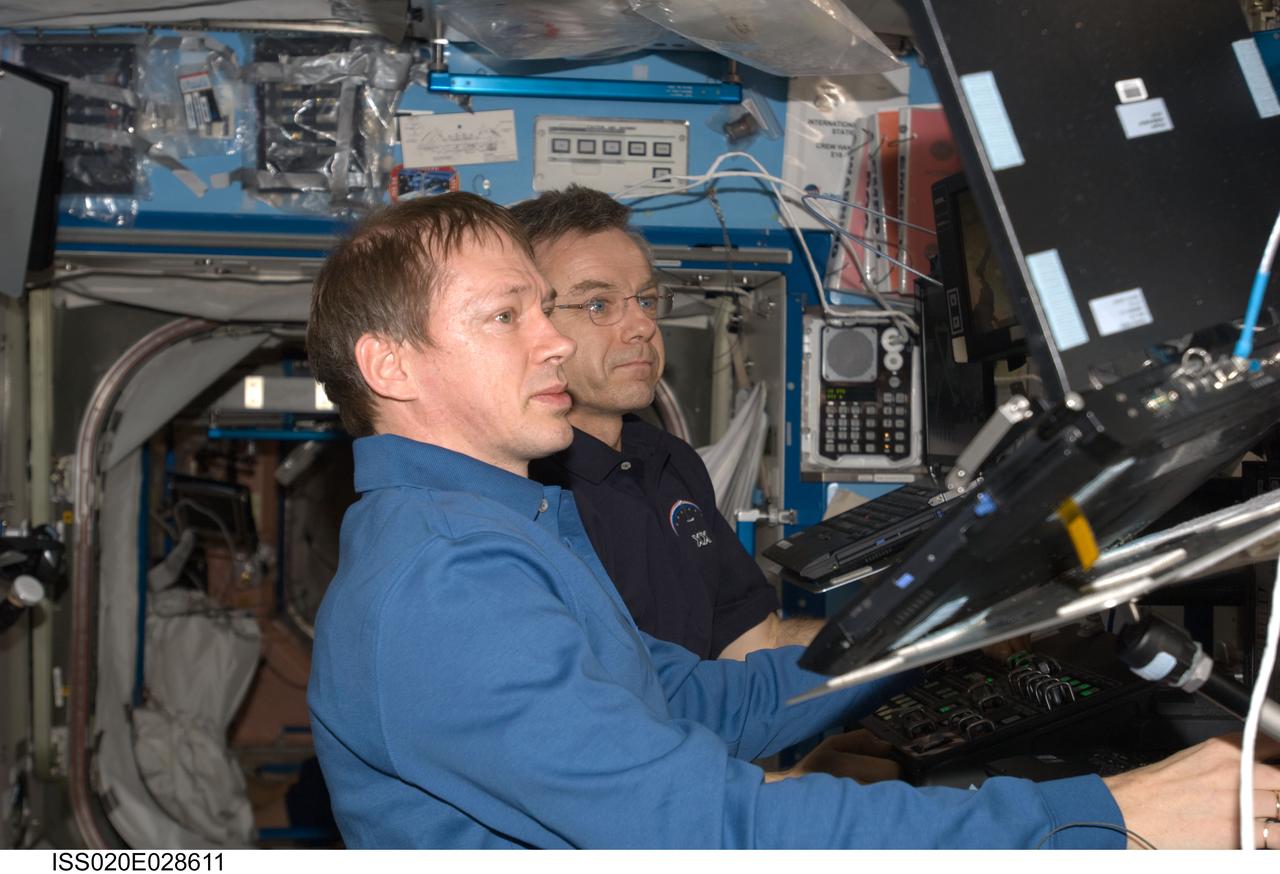
ISS020-E-028611 (7 Aug. 2009) --- European Space Agency astronaut Frank De Winne (foreground) and Canadian Space Agency astronaut Robert Thirsk, both Expedition 20 flight engineers, work the controls of the Space Station Remote Manipulator System (SSRMS) and the Centerline Berthing Camera System (CBCS) in the International Space Station’s Destiny laboratory to relocate the Pressurized Mating Adapter 3 (PMA-3) from the Unity node nadir port to Unity’s port side. This relocation is required to allow reconfigurations on the side of the Unity node port bulkhead by the crew in a pressurized environment where PMA-3 is now located. Once these reconfigurations are completed, PMA-3 will be relocated back to Unity’s nadir port, after which the Tranquility node will be brought up and berthed to Unity’s port side on mission STS-130/20A.
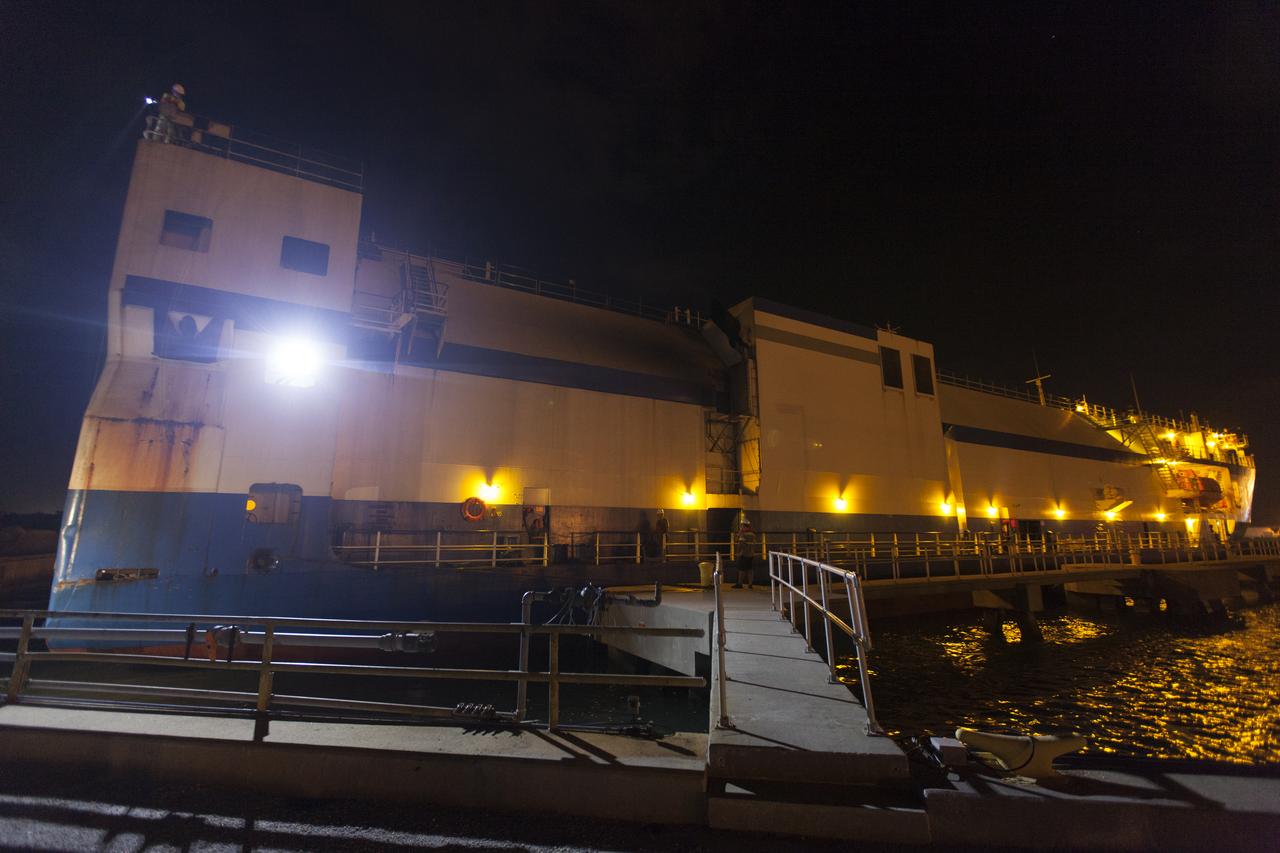
The United Launch Alliance (ULA) Mariner docks at Port Canaveral in Florida carrying two of the three Delta IV Heavy Common Booster Cores for NASA's upcoming Parker Solar Probe mission. The mission will perform the closest-ever observations of a star when it travels through the Sun's atmosphere, called the corona. The probe will rely on measurements and imaging to revolutionize our understanding of the corona and the Sun-Earth connection. Liftoff atop the Delta IV rocket is scheduled to take place from Cape Canaveral's Space Launch Complex 37 in summer 2018.
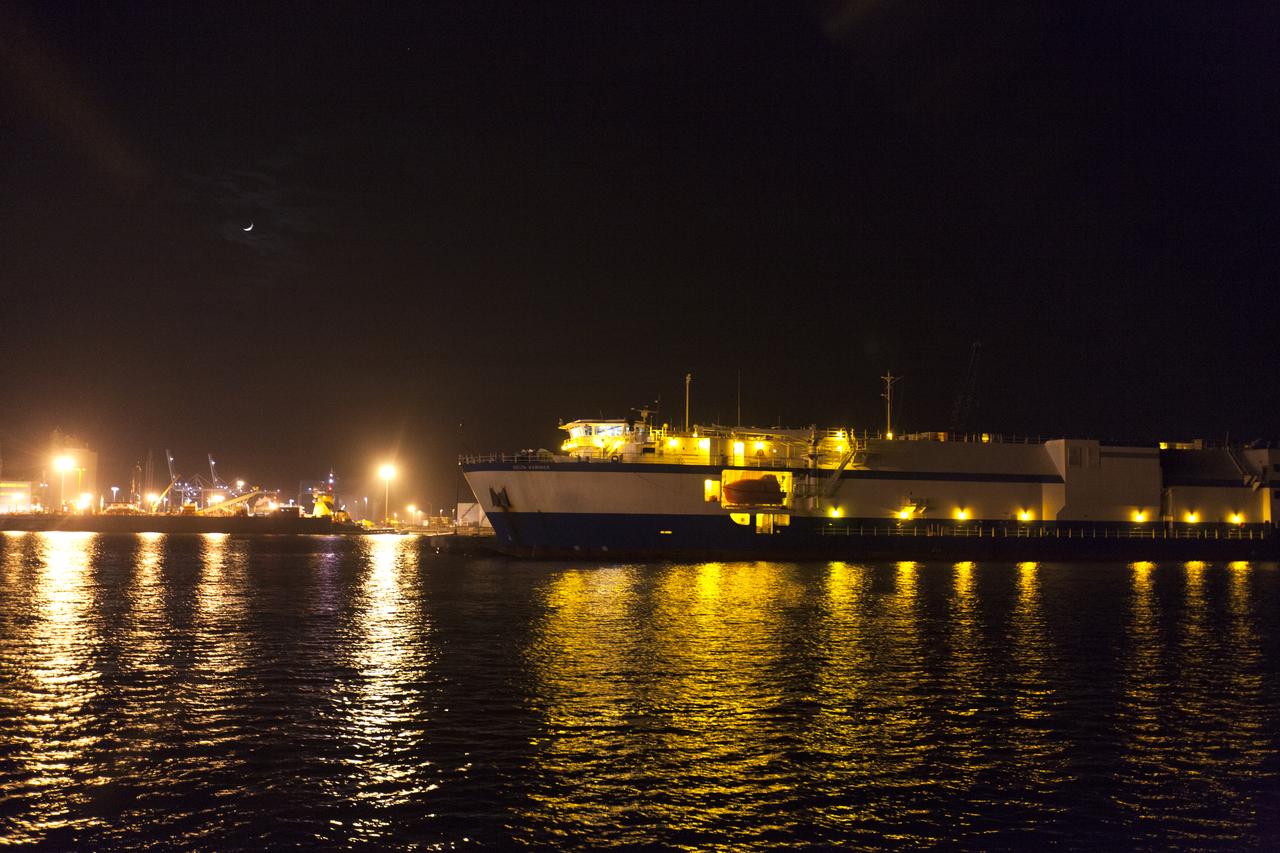
The United Launch Alliance (ULA) Mariner docks at Port Canaveral in Florida carrying two of the three Delta IV Heavy Common Booster Cores for NASA's upcoming Parker Solar Probe mission. The mission will perform the closest-ever observations of a star when it travels through the Sun's atmosphere, called the corona. The probe will rely on measurements and imaging to revolutionize our understanding of the corona and the Sun-Earth connection. Liftoff atop the Delta IV rocket is scheduled to take place from Cape Canaveral's Space Launch Complex 37 in summer 2018.
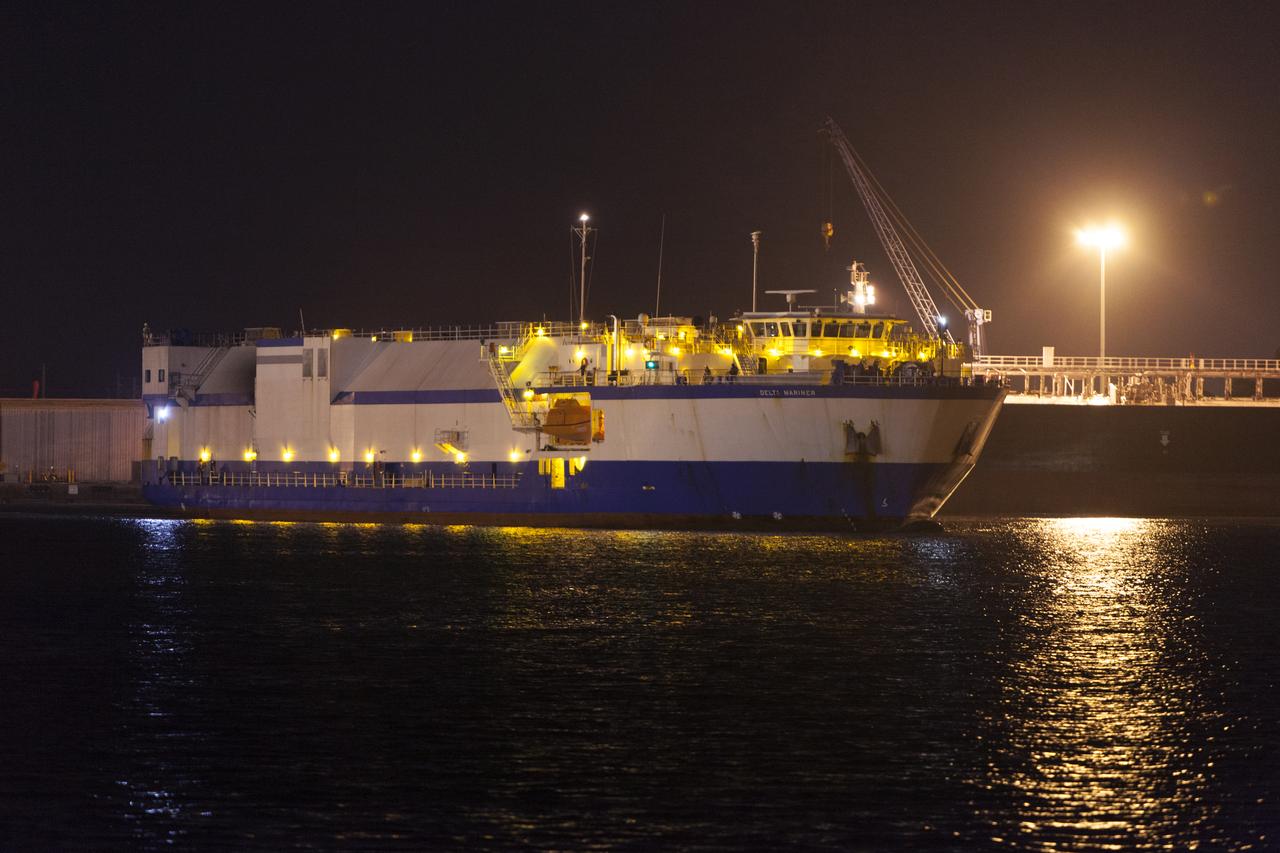
The United Launch Alliance (ULA) Mariner arrives at Port Canaveral in Florida carrying two of the three Delta IV Heavy Common Booster Cores for NASA's upcoming Parker Solar Probe mission. The mission will perform the closest-ever observations of a star when it travels through the Sun's atmosphere, called the corona. The probe will rely on measurements and imaging to revolutionize our understanding of the corona and the Sun-Earth connection. Liftoff atop the Delta IV rocket is scheduled to take place from Cape Canaveral's Space Launch Complex 37 in summer 2018.
A United Launch Alliance Delta IV Heavy common booster core is offloaded from the company's Mariner ship at Port Canaveral in Florida. The Delta IV Heavy will launch NASA's upcoming Parker Solar Probe mission. The mission will perform the closest-ever observations of a star when it travels through the Sun's atmosphere, called the corona. The probe will rely on measurements and imaging to revolutionize our understanding of the corona and the Sun-Earth connection. Liftoff atop the Delta IV Heavy rocket is scheduled to take place from Cape Canaveral's Space Launch Complex 37 in summer 2018.
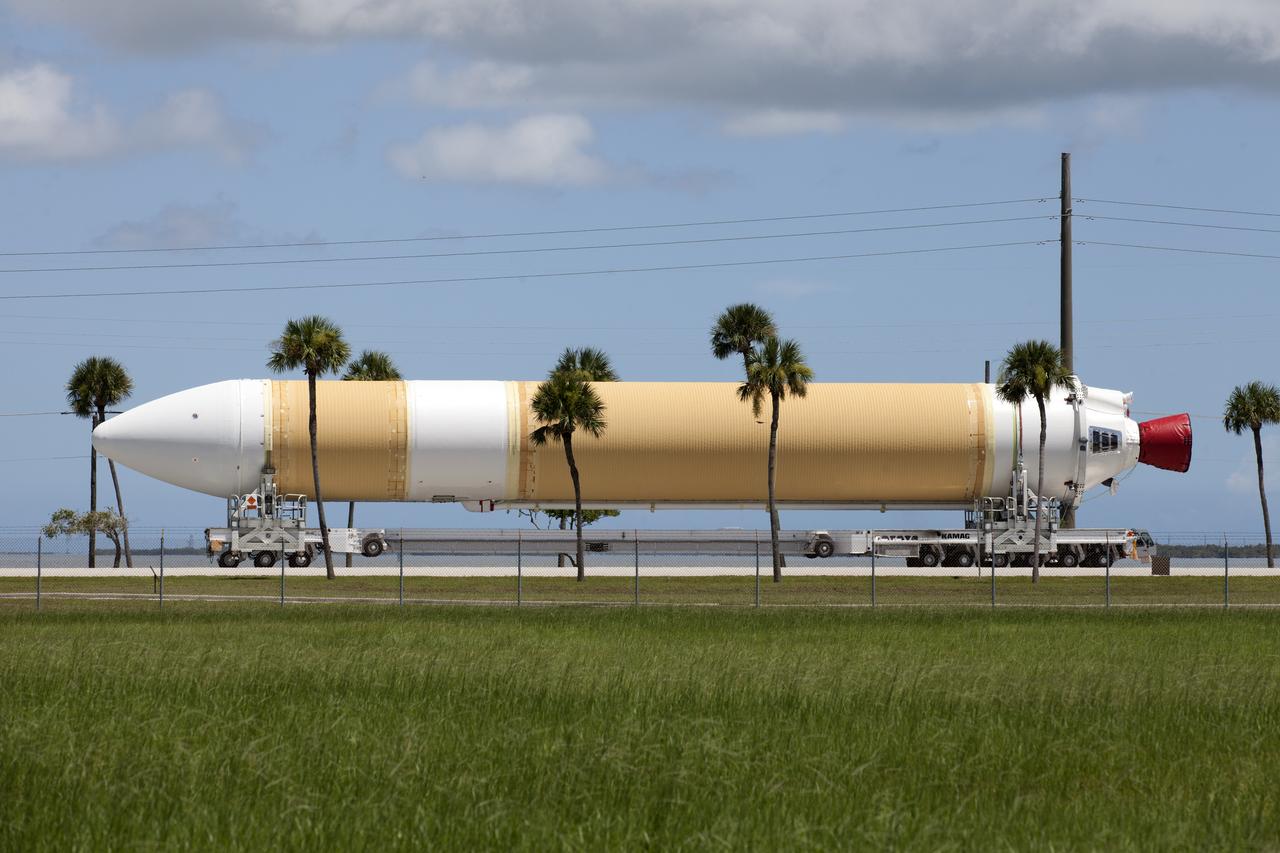
Framed by a series of cabbage palms, a United Launch Alliance Delta IV Heavy common booster core is transported by truck to Cape Canaveral Air Force Station's Launch Complex 37 Horizontal Processing Facility after arriving at Port Canaveral. The Delta IV Heavy will launch NASA's upcoming Parker Solar Probe mission. The mission will perform the closest-ever observations of a star when it travels through the Sun's atmosphere, called the corona. The probe will rely on measurements and imaging to revolutionize our understanding of the corona and the Sun-Earth connection. Liftoff atop the Delta IV Heavy rocket is scheduled to take place from Cape Canaveral's Space Launch Complex 37 in summer 2018.
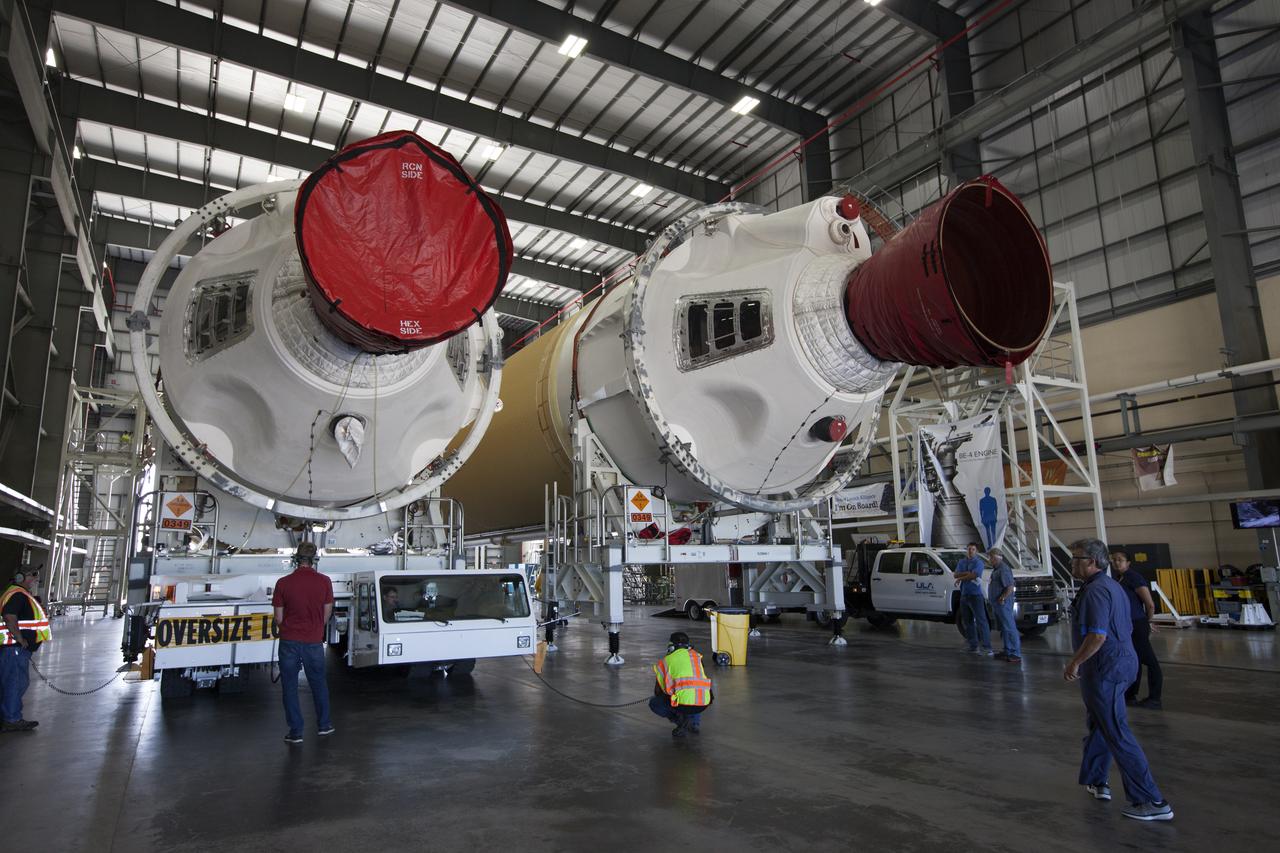
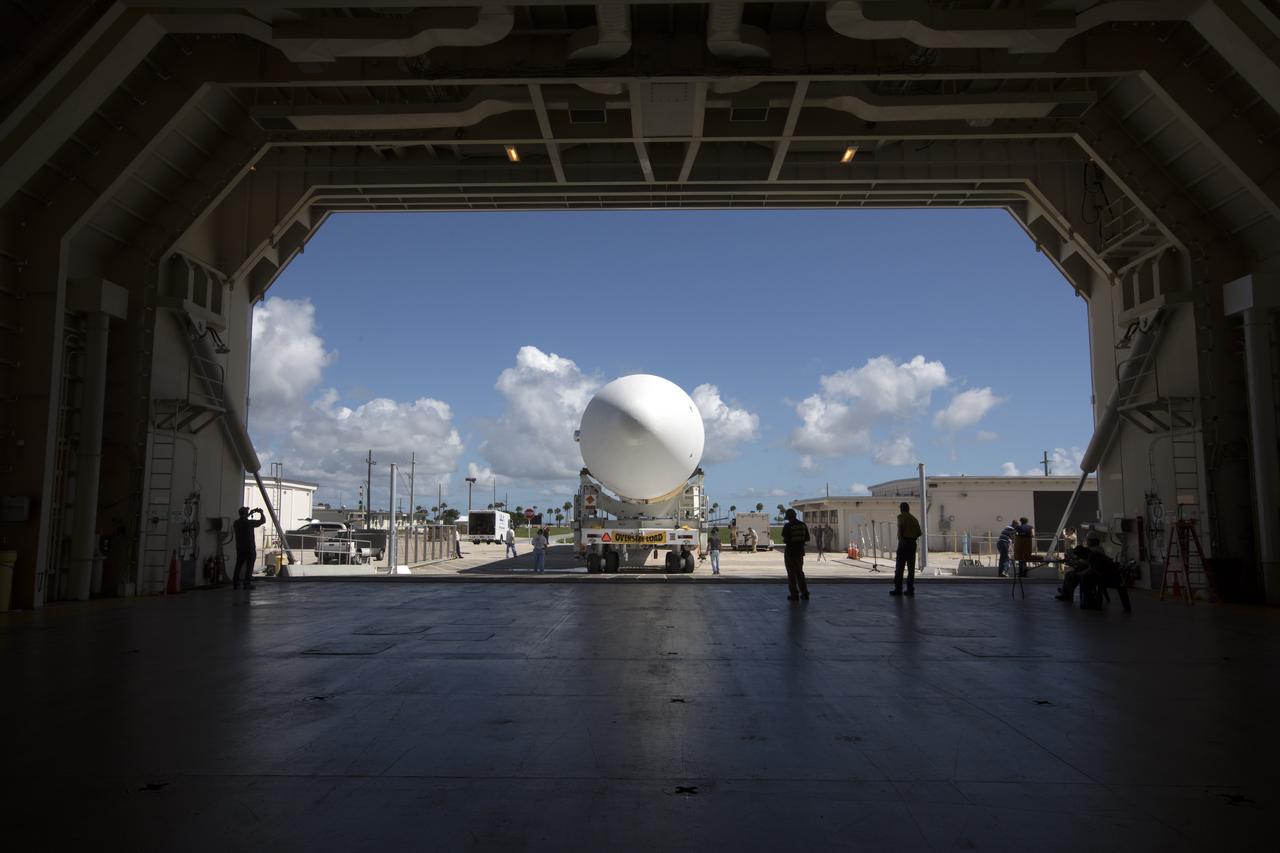
A United Launch Alliance Delta IV Heavy common booster core is placed beside an additional core inside Cape Canaveral Air Force Station's Launch Complex 37 Horizontal Processing Facility. The Delta IV Heavy will launch NASA's upcoming Parker Solar Probe mission. The mission will perform the closest-ever observations of a star when it travels through the Sun's atmosphere, called the corona. The probe will rely on measurements and imaging to revolutionize our understanding of the corona and the Sun-Earth connection. Liftoff atop the Delta IV Heavy rocket is scheduled to take place from Cape Canaveral's Space Launch Complex 37 in summer 2018.
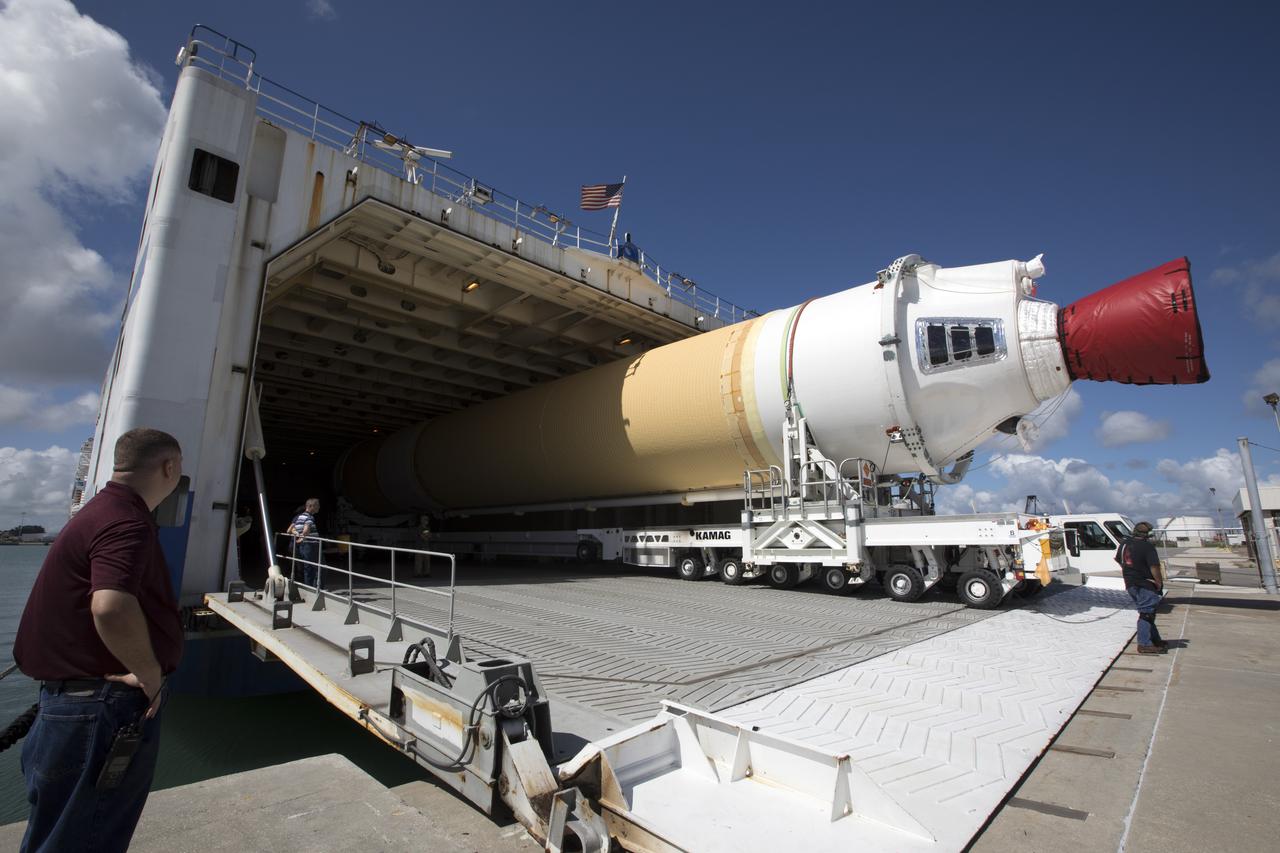
A United Launch Alliance Delta IV Heavy common booster core is offloaded from the company's Mariner ship at Port Canaveral in Florida. The Delta IV Heavy will launch NASA's upcoming Parker Solar Probe mission. The mission will perform the closest-ever observations of a star when it travels through the Sun's atmosphere, called the corona. The probe will rely on measurements and imaging to revolutionize our understanding of the corona and the Sun-Earth connection. Liftoff atop the Delta IV Heavy rocket is scheduled to take place from Cape Canaveral's Space Launch Complex 37 in summer 2018.
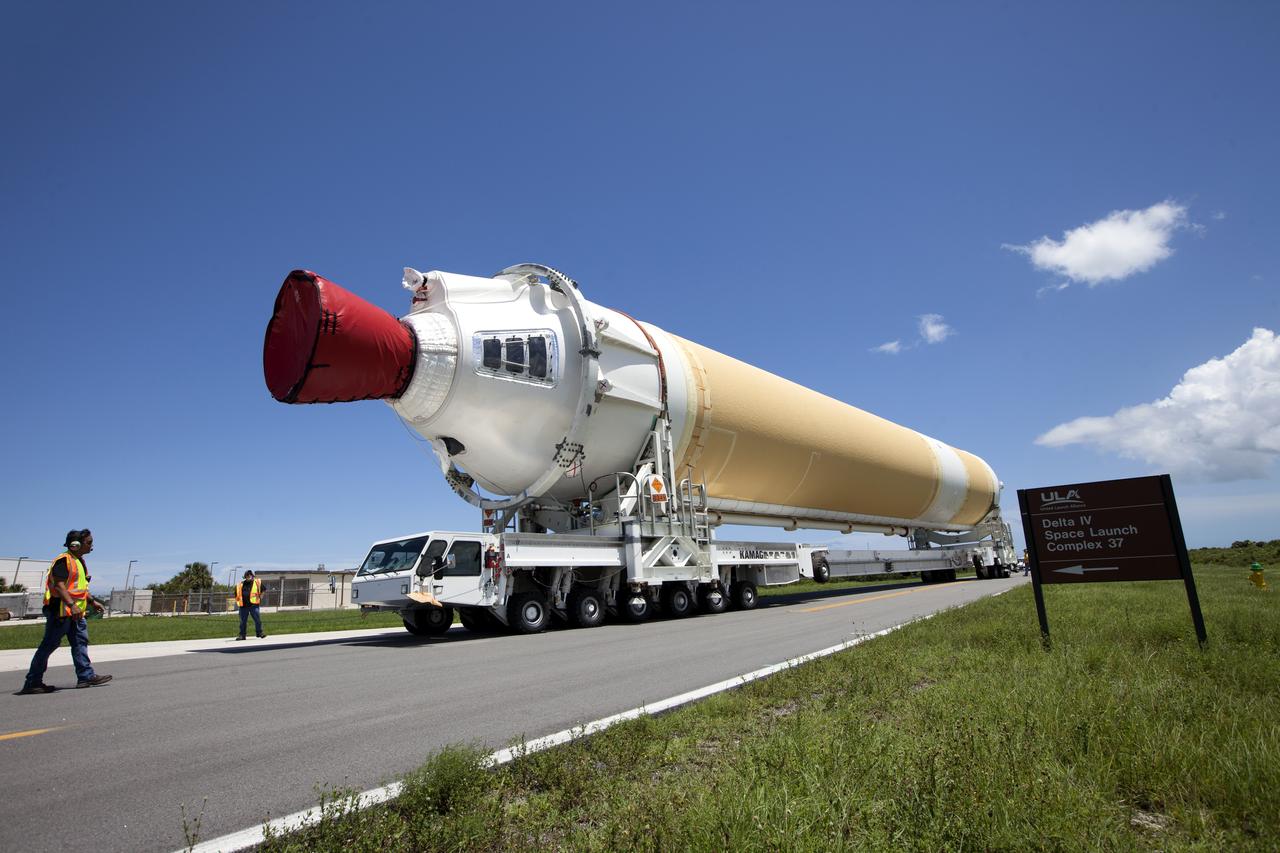
A United Launch Alliance Delta IV Heavy common booster core is transported by truck to Cape Canaveral Air Force Station's Launch Complex 37 Horizontal Processing Facility after arriving at Port Canaveral. The Delta IV Heavy will launch NASA's upcoming Parker Solar Probe mission. The mission will perform the closest-ever observations of a star when it travels through the Sun's atmosphere, called the corona. The probe will rely on measurements and imaging to revolutionize our understanding of the corona and the Sun-Earth connection. Liftoff atop the Delta IV Heavy rocket is scheduled to take place from Cape Canaveral's Space Launch Complex 37 in summer 2018.
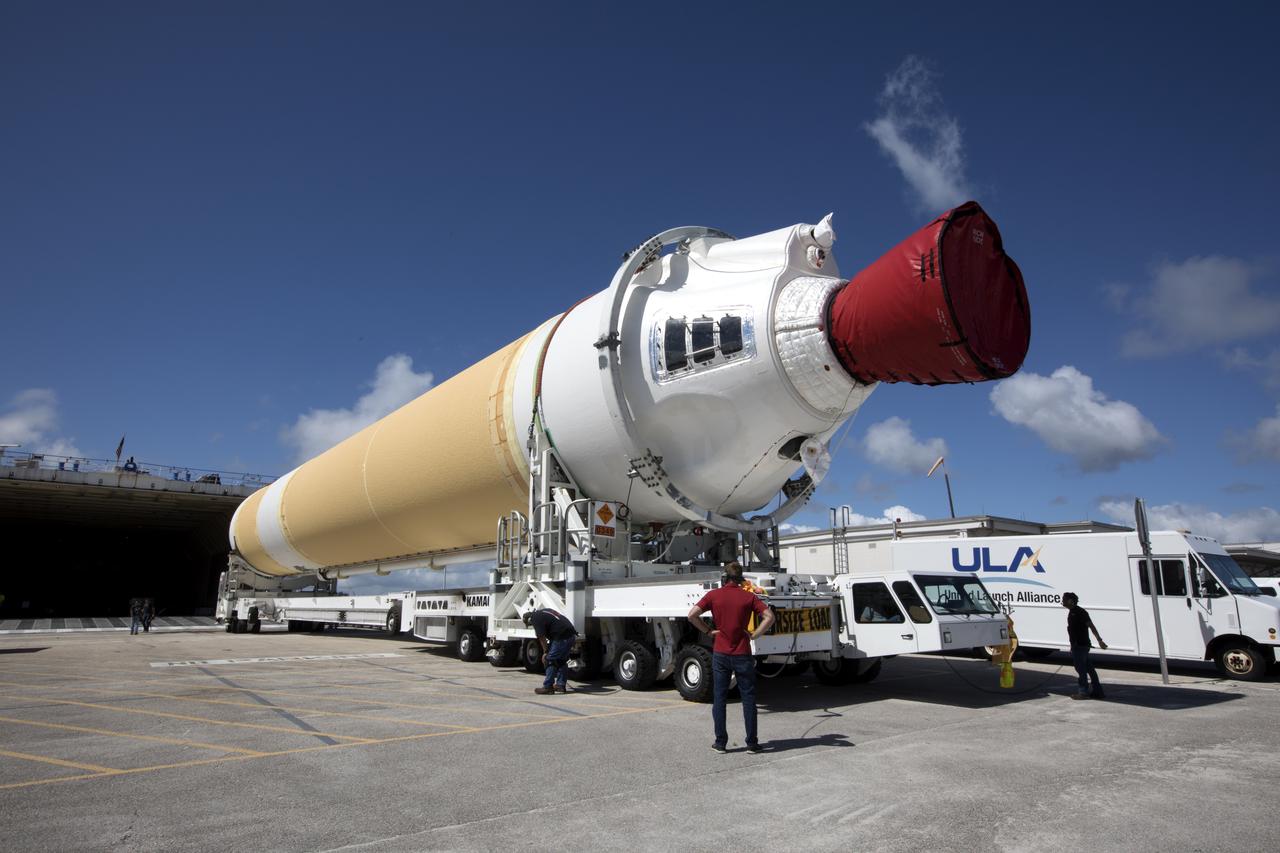
A United Launch Alliance Delta IV Heavy common booster core is offloaded from the company's Mariner ship at Port Canaveral in Florida. The Delta IV Heavy will launch NASA's upcoming Parker Solar Probe mission. The mission will perform the closest-ever observations of a star when it travels through the Sun's atmosphere, called the corona. The probe will rely on measurements and imaging to revolutionize our understanding of the corona and the Sun-Earth connection. Liftoff atop the Delta IV Heavy rocket is scheduled to take place from Cape Canaveral's Space Launch Complex 37 in summer 2018.
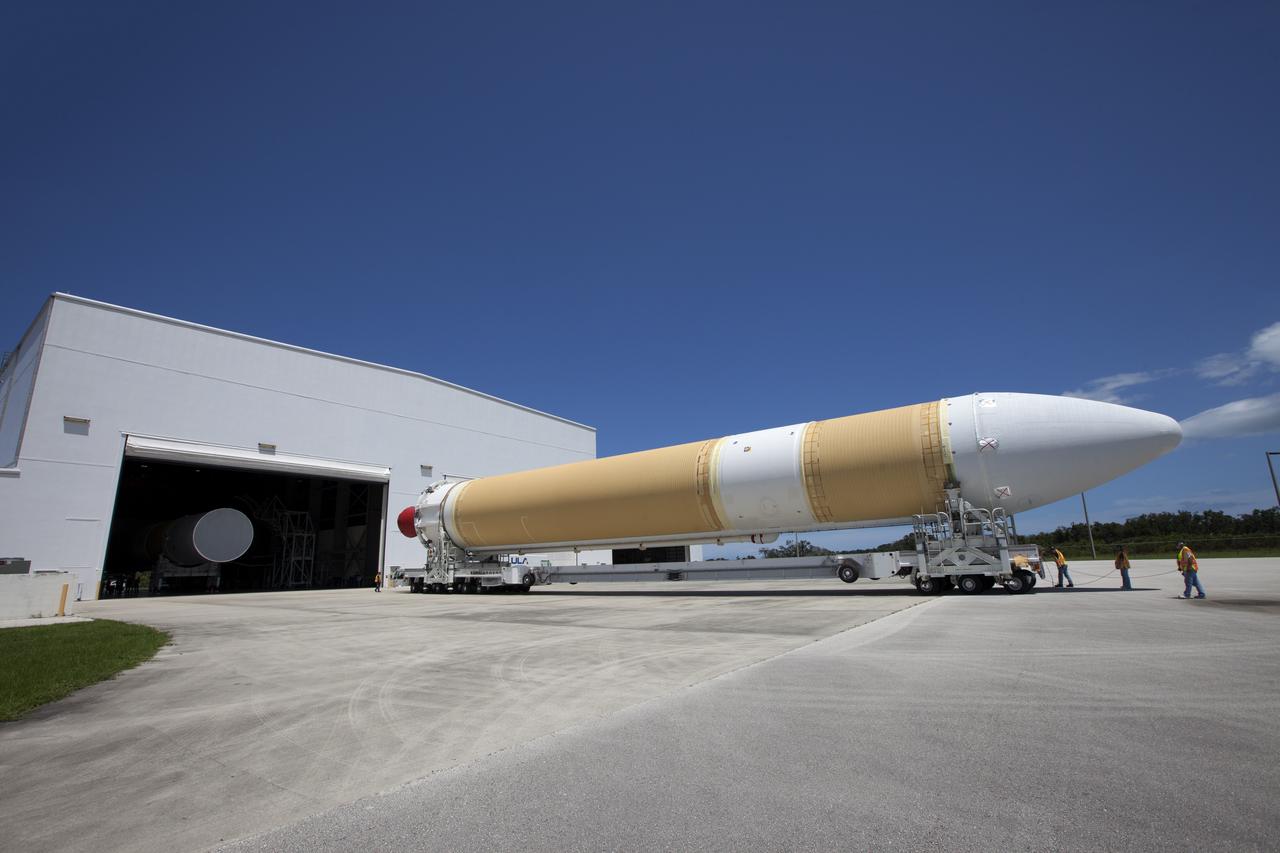
A United Launch Alliance Delta IV Heavy common booster core arrives by truck at Cape Canaveral Air Force Station's Launch Complex 37 Horizontal Processing Facility. The Delta IV Heavy will launch NASA's upcoming Parker Solar Probe mission. The mission will perform the closest-ever observations of a star when it travels through the Sun's atmosphere, called the corona. The probe will rely on measurements and imaging to revolutionize our understanding of the corona and the Sun-Earth connection. Liftoff atop the Delta IV Heavy rocket is scheduled to take place from Cape Canaveral's Space Launch Complex 37 in summer 2018.
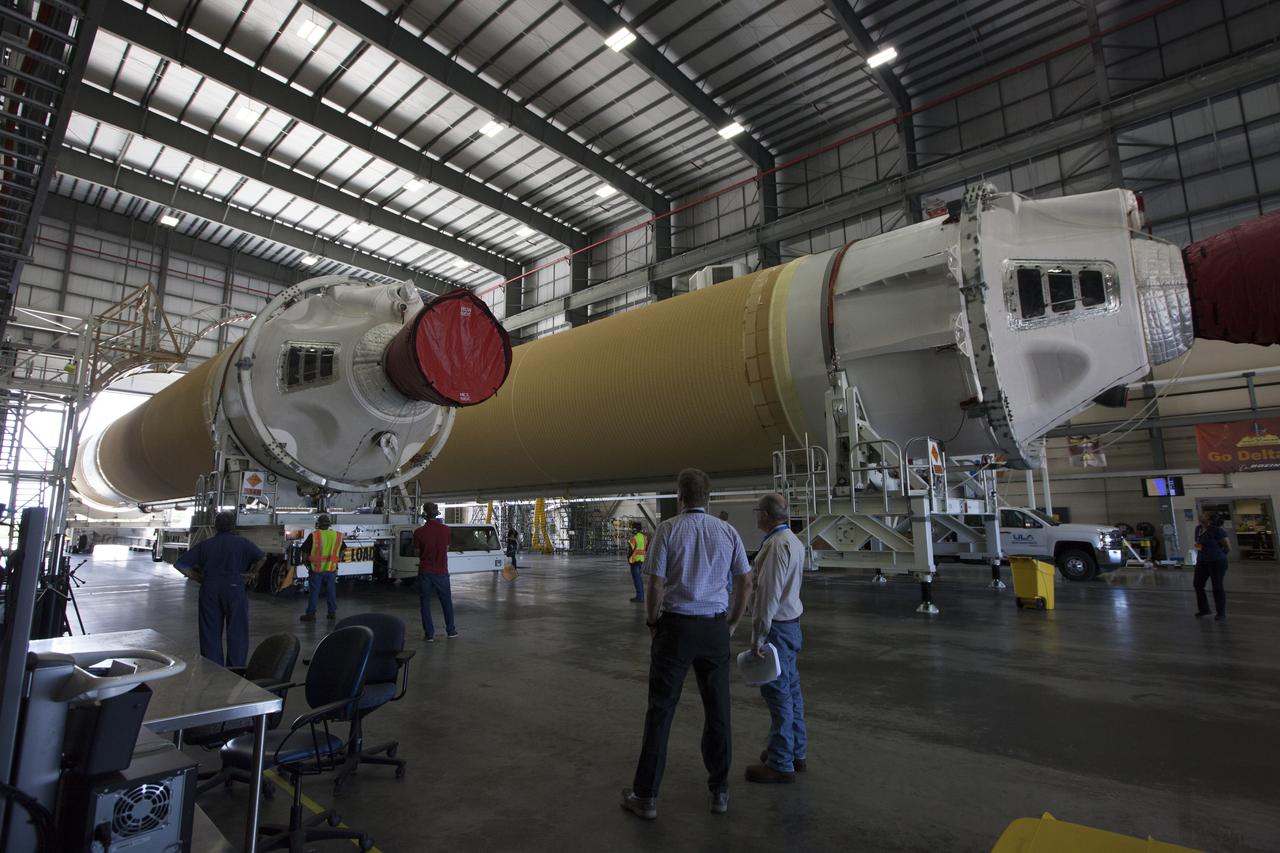
A United Launch Alliance Delta IV Heavy common booster core is transported by truck into Cape Canaveral Air Force Station's Launch Complex 37 Horizontal Processing Facility. The Delta IV Heavy will launch NASA's upcoming Parker Solar Probe mission. The mission will perform the closest-ever observations of a star when it travels through the Sun's atmosphere, called the corona. The probe will rely on measurements and imaging to revolutionize our understanding of the corona and the Sun-Earth connection. Liftoff atop the Delta IV Heavy rocket is scheduled to take place from Cape Canaveral's Space Launch Complex 37 in summer 2018.
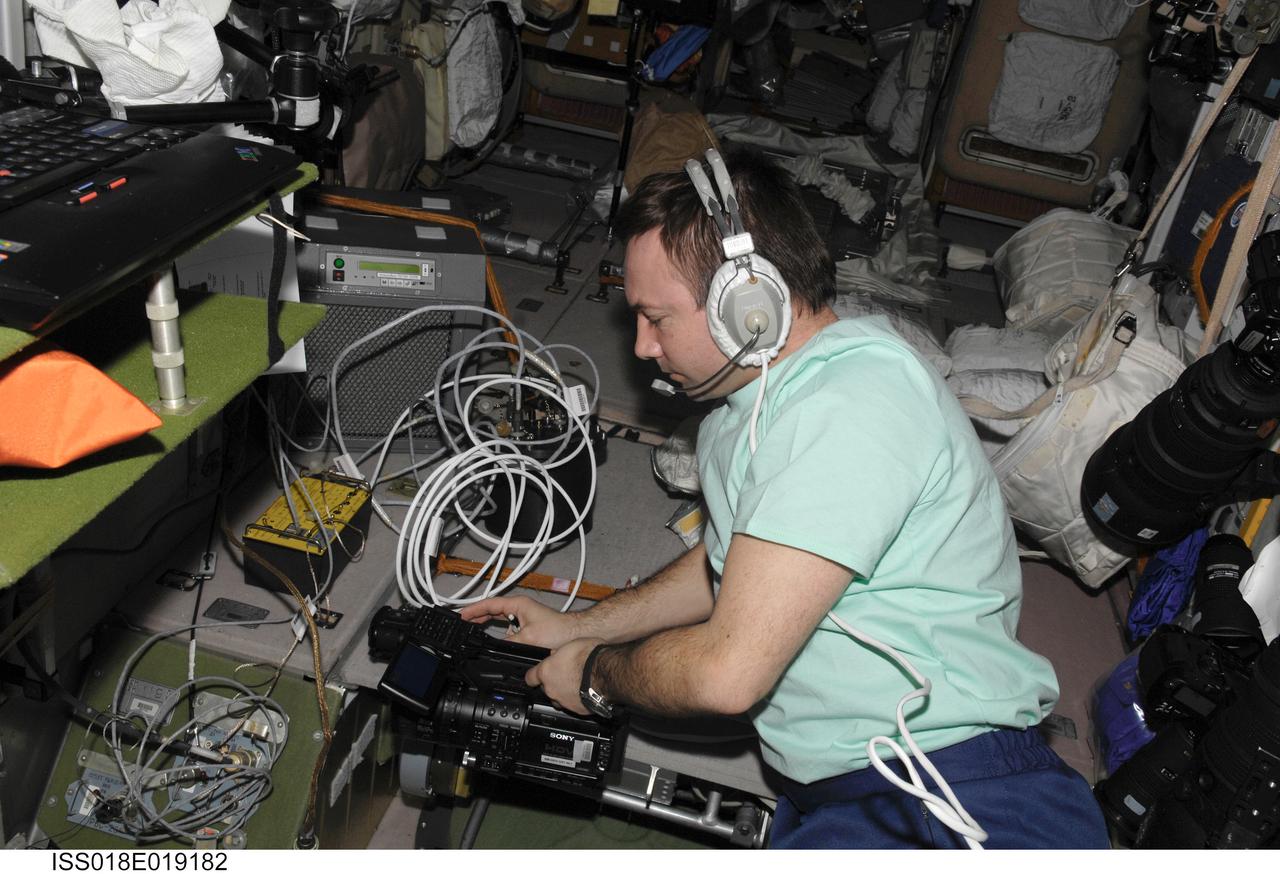
ISS018-E-019182 (13 Jan. 2009) --- Cosmonaut Yury Lonchakov, Expedition 18 flight engineer, uses a communication system while working in the Zvezda Service Module of the International Space Station.