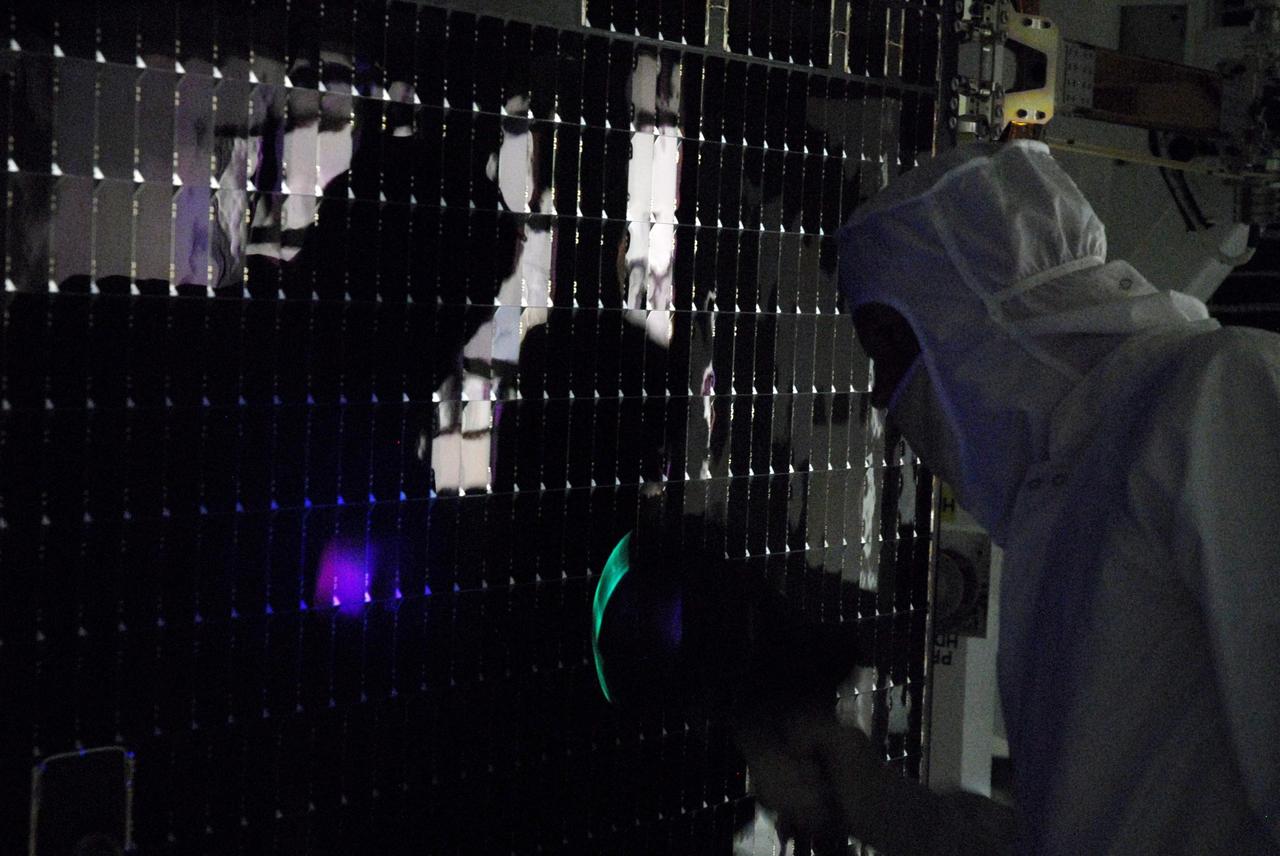
KENNEDY SPACE CENTER, FLA. -- In a clean room at Astrotech, workers begin black light testing on the solar panels of the Dawn spacecraft. Dawn's mission is to explore two of the asteroid belt's most intriguing and dissimilar occupants: asteroid Vesta and the dwarf planet Ceres. Dawn is scheduled to launch June 30 from Launch Complex 17-B. Photo credit: NASA/George Shelton
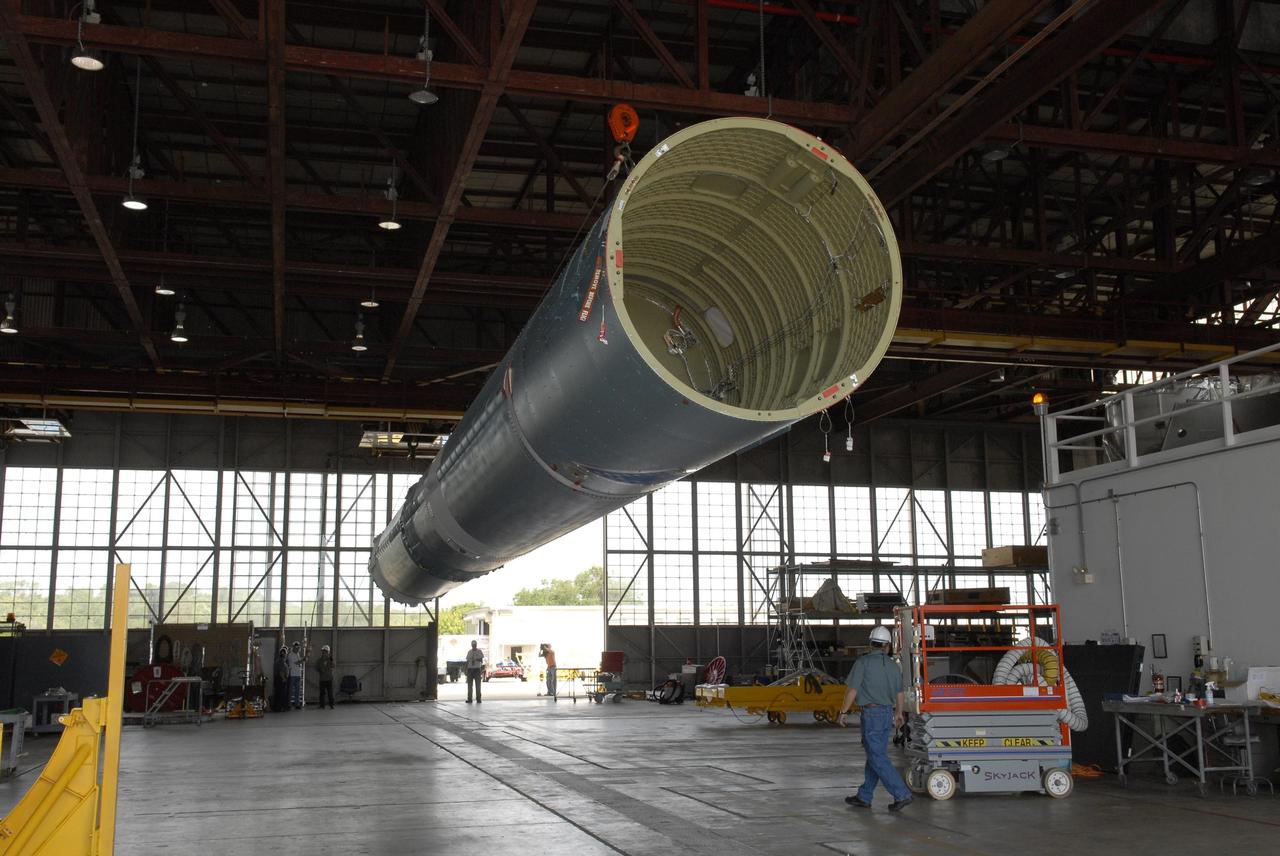
KENNEDY SPACE CENTER, FLA. -- Inside the Hangar M on Cape Canaveral Air Force Station, another Delta II first stage is suspended from an overhead crane to be placed on a transporter. The Delta will be moved to the launch pad for the future launch of a Global Positioning Satellite. Photo credit: NASA/Kim Shiflett
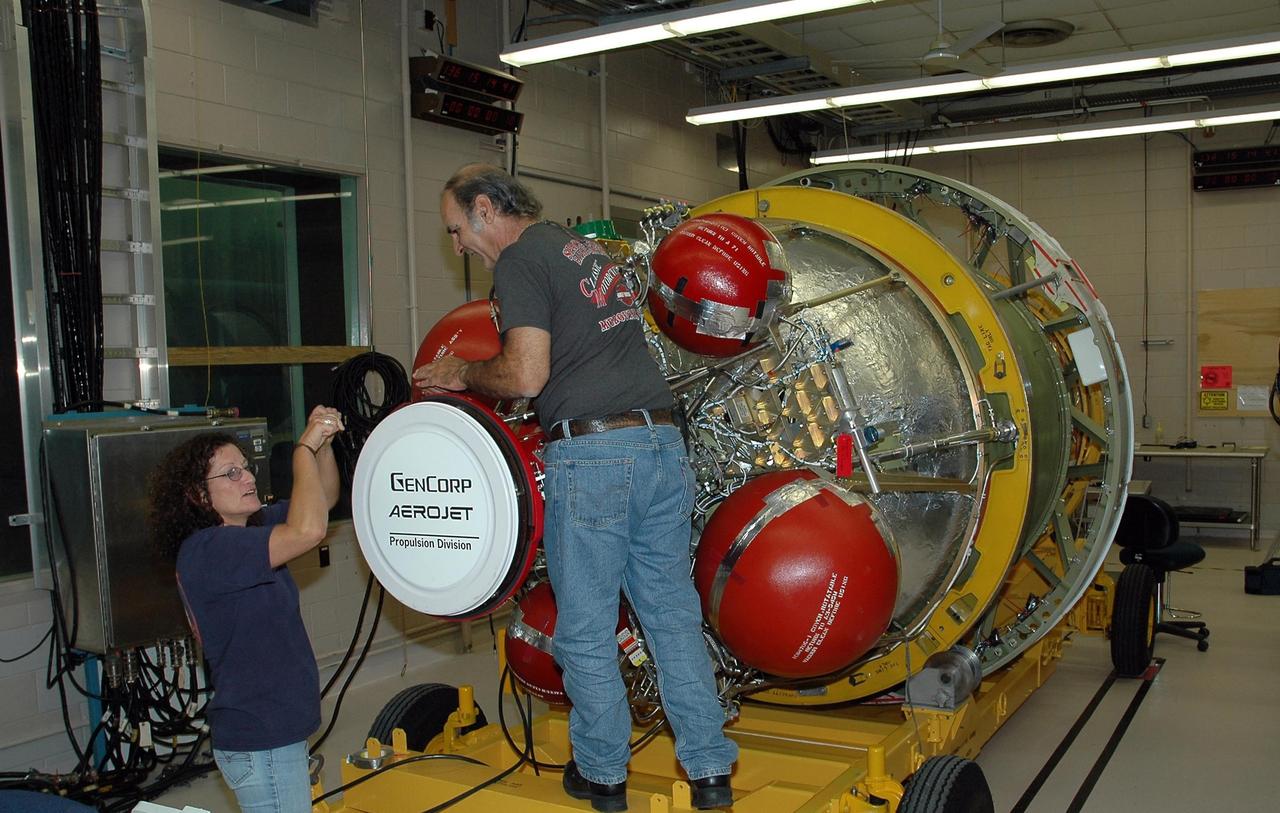
KENNEDY SPACE CENTER, FLA. -- In Hangar A&O at Cape Canaveral Air Force Station, United Launch Alliance workers prepare the Delta II second stage for the Phoenix spacecraft. Phoenix will land in icy soils near the north polar permanent ice cap of Mars and explore the history of the water in these soils and any associated rocks, while monitoring polar climate. Landing is planned in May 2008 on arctic ground where a mission currently in orbit, Mars Odyssey, has detected high concentrations of ice just beneath the top layer of soil. Launch of Phoenix aboard a Delta II rocket is targeted for Aug. 3 from Cape Canaveral Air Force Station in Florida. Photo credit: NASA/Jack Pfaller
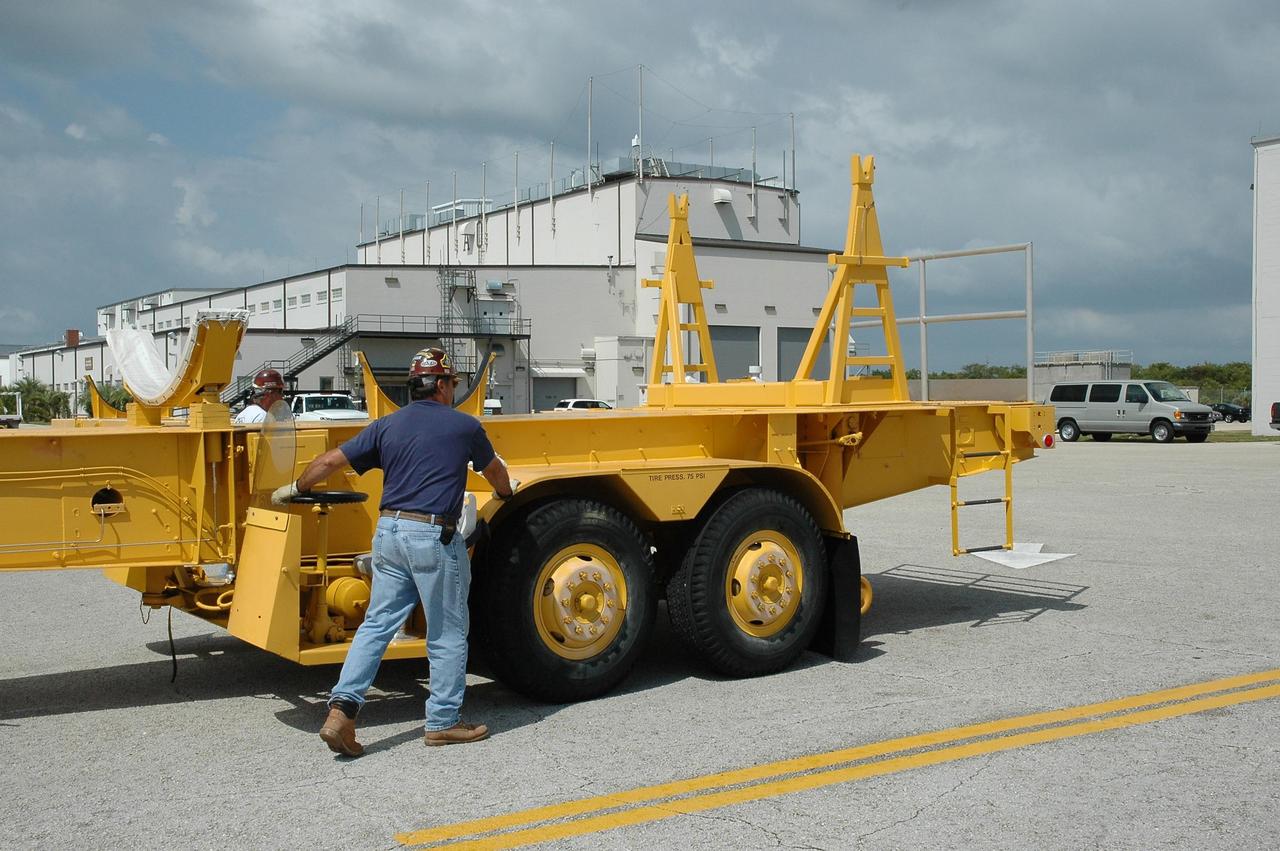
KENNEDY SPACE CENTER, FLA. -- In Hangar M on Cape Canaveral Air Force Station, a worker guides a transporter into place to receive the Delta II first stage. The Delta will be moved to the launch pad. Dawn's mission is to explore two of the asteroid belt's most intriguing and dissimilar occupants: asteroid Vesta and the dwarf planet Ceres. Dawn is scheduled to launch June 30 from Launch Complex 17-B. Photo credit: NASA/Jack Pfaller
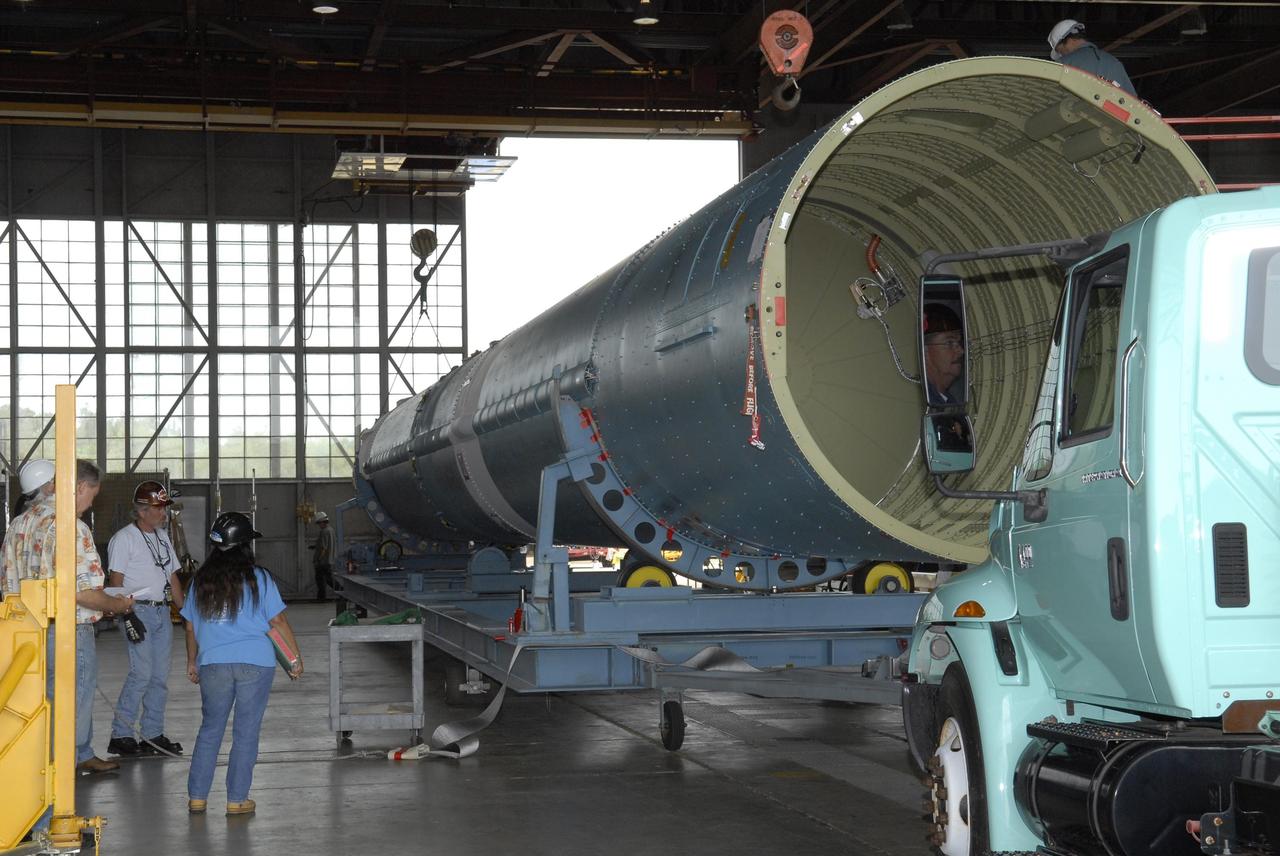
KENNEDY SPACE CENTER, FLA. -- Inside the Hangar M on Cape Canaveral Air Force Station, another Delta II first stage is ready to be placed on a transporter. The Delta will be moved to the launch pad for the future launch of a Global Positioning Satellite. Photo credit: NASA/Kim Shiflett

KENNEDY SPACE CENTER, FLA. -- In Hangar M on Cape Canaveral Air Force Station, workers secure straps to an overhead crane around the Delta II rocket's first stage. It will be lifted and placed onto a transporter for its move to the launch pad. Dawn's mission is to explore two of the asteroid belt's most intriguing and dissimilar occupants: asteroid Vesta and the dwarf planet Ceres. Dawn is scheduled to launch June 30 from Launch Complex 17-B. Photo credit: NASA/Jack Pfaller
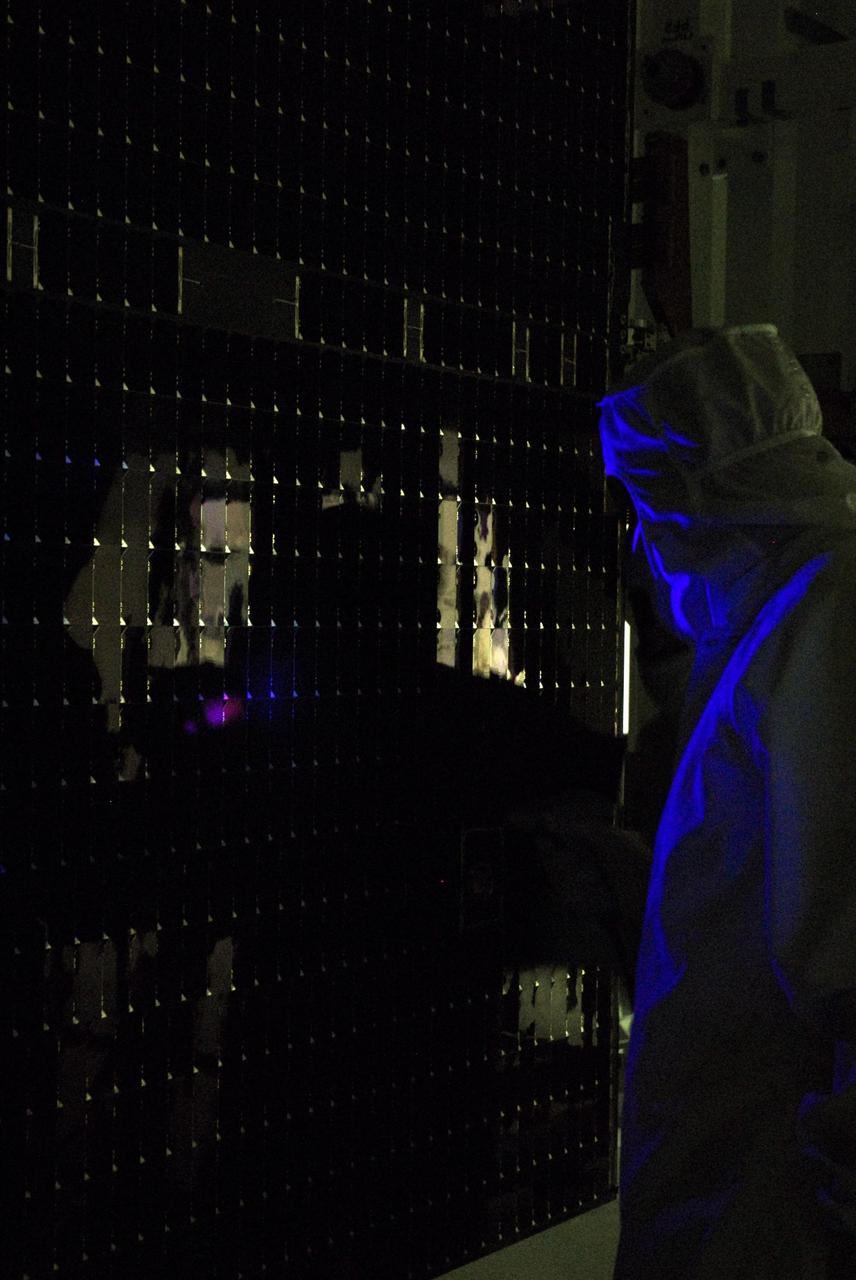
KENNEDY SPACE CENTER, FLA. -- In a clean room at Astrotech, workers begin black light testing on the solar panels of the Dawn spacecraft. Dawn's mission is to explore two of the asteroid belt's most intriguing and dissimilar occupants: asteroid Vesta and the dwarf planet Ceres. Dawn is scheduled to launch June 30 from Launch Complex 17-B. Photo credit: NASA/George Shelton
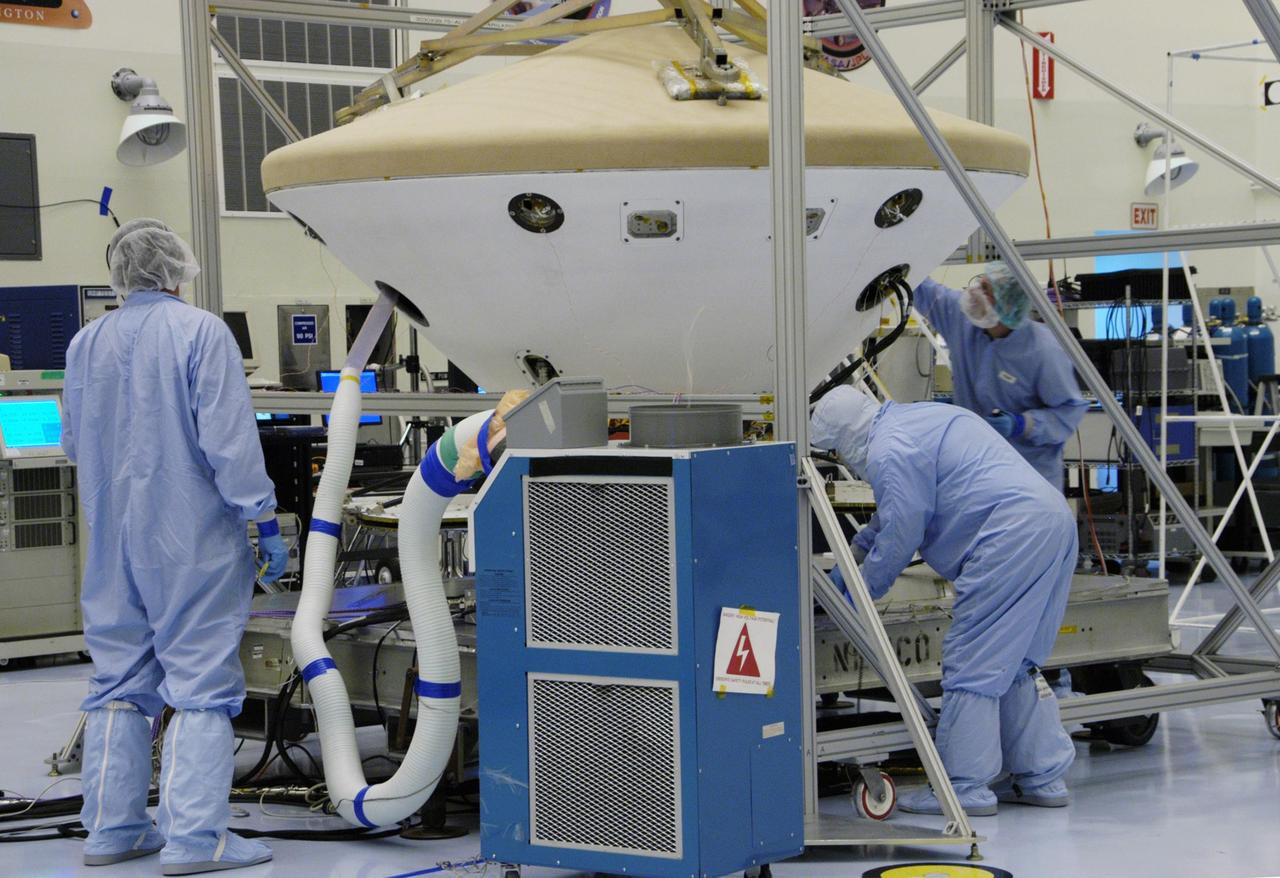
KENNEDY SPACE CENTER, FLA. -- In the Payload Hazardous Servicing Facility, workers monitor the Phoenix spacecraft during a heat shield deployment test, with a firing of ordnance associated with the separation device. Phoenix will land in icy soils near the north polar permanent ice cap of Mars and explore the history of the water in these soils and any associated rocks, while monitoring polar climate. Landing is planned in May 2008 on arctic ground where a mission currently in orbit, Mars Odyssey, has detected high concentrations of ice just beneath the top layer of soil. Launch of Phoenix aboard a Delta II rocket is targeted for Aug. 3 from Cape Canaveral Air Force Station in Florida. Photo credit: NASA/George Shelton
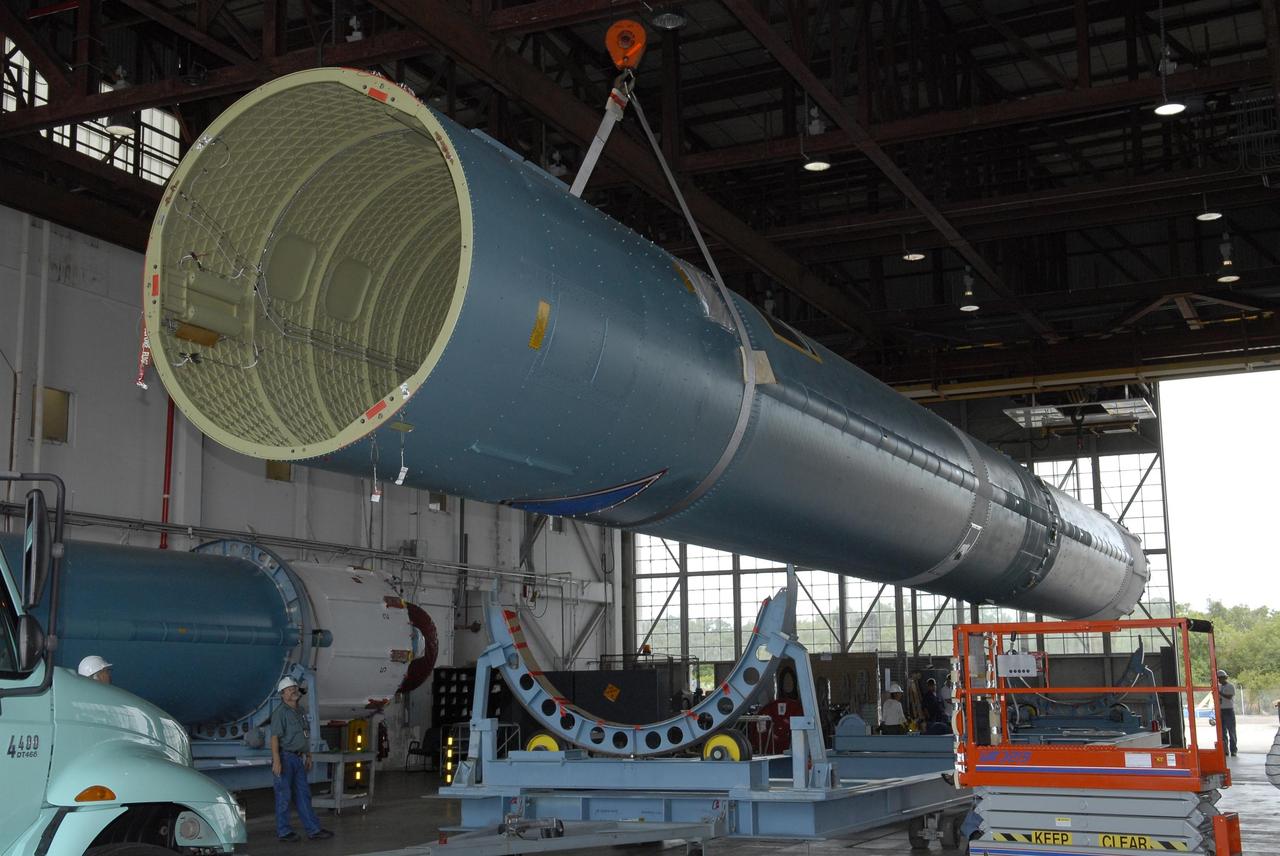
KENNEDY SPACE CENTER, FLA. -- Inside the Hangar M on Cape Canaveral Air Force Station, another Delta II first stage is lifted from its stand to be placed on a transporter. The Delta will be moved to the launch pad for the future launch of a Global Positioning Satellite. Photo credit: NASA/Kim Shiflett
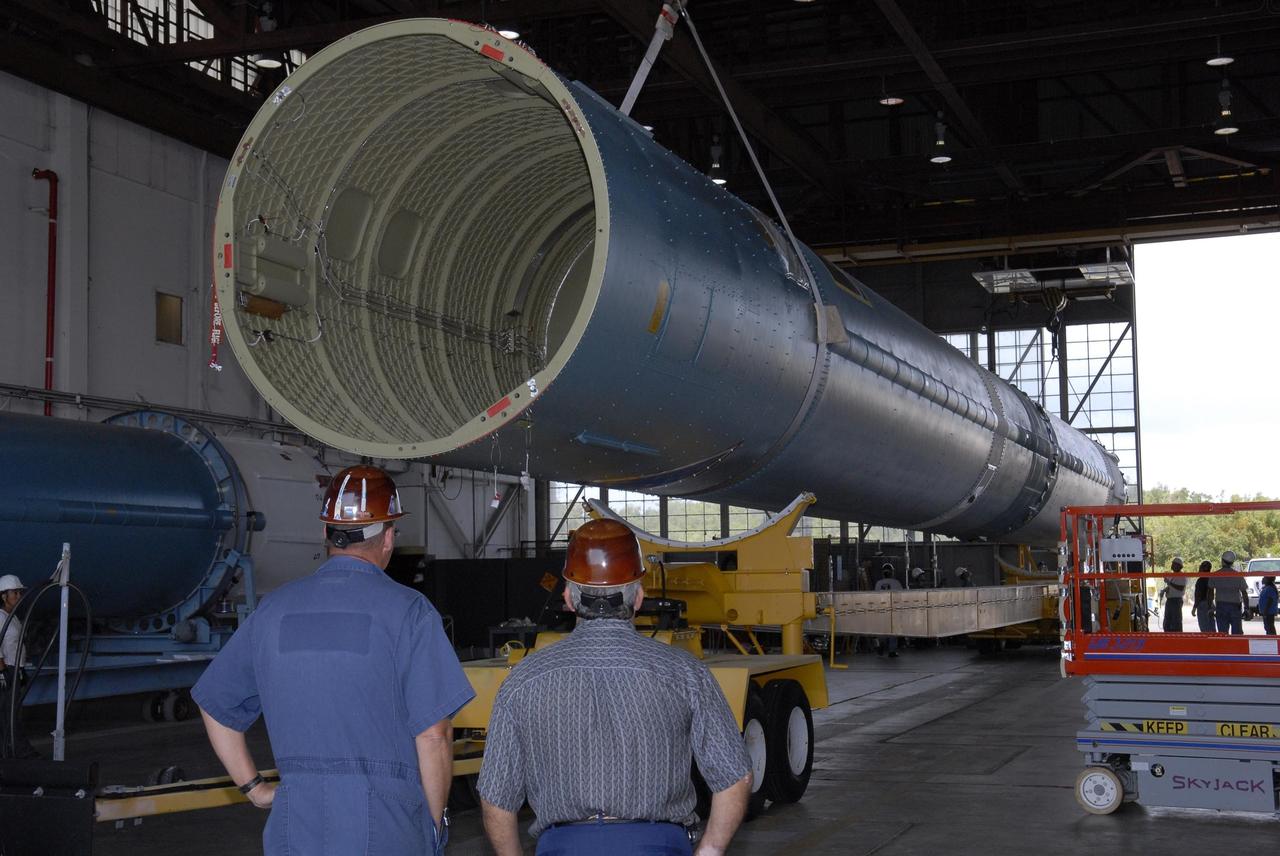
KENNEDY SPACE CENTER, FLA. -- Inside the Hangar M on Cape Canaveral Air Force Station, another Delta II first stage is lowered onto its transporter. The Delta will be moved to the launch pad for the future launch of a Global Positioning Satellite. Photo credit: NASA/Kim Shiflett
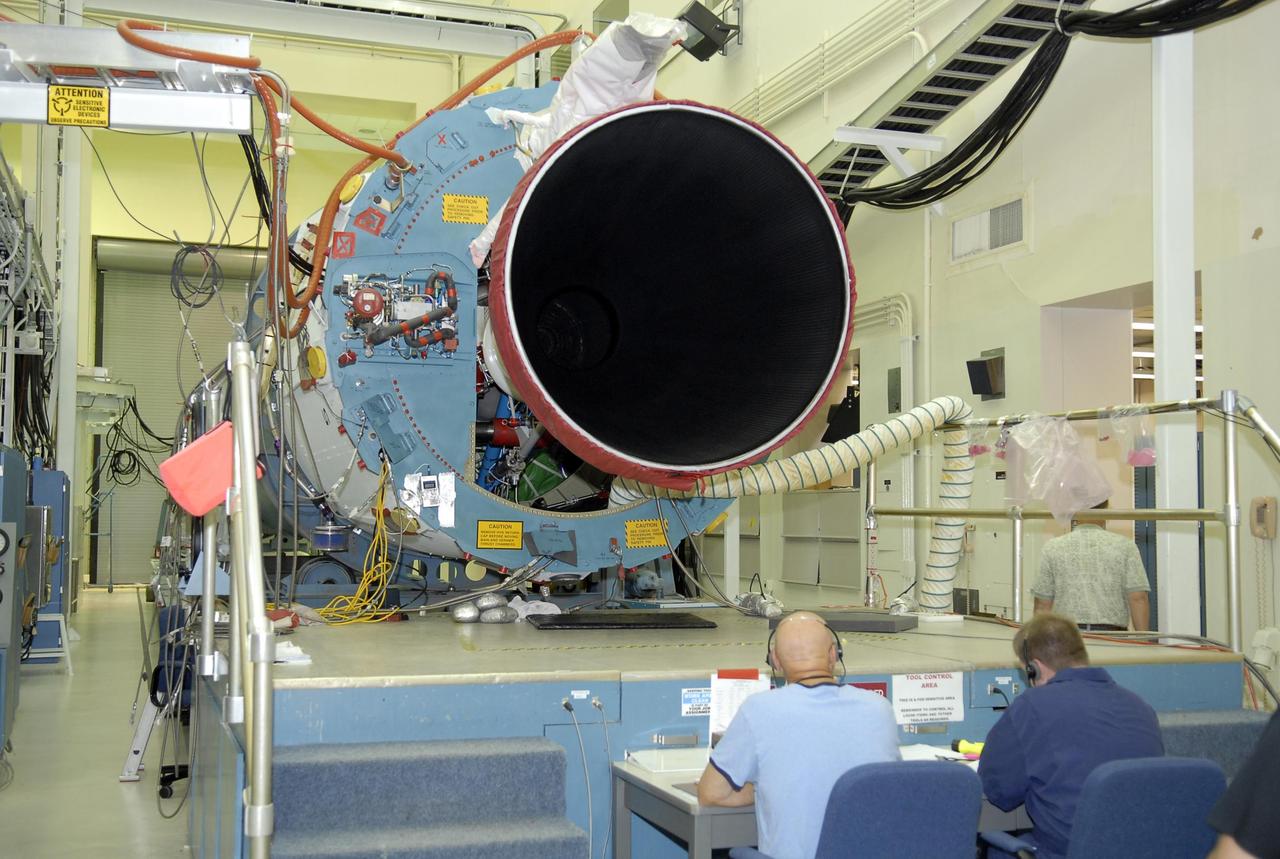
KENNEDY SPACE CENTER, FLA. -- In Hangar A&O on Cape Canaveral Air Force Station in Florida, workers conduct a steering test on the first stage of a Delta II rocket. The rocket is designated for the launch of the Phoenix Mars Lander spacecraft. Phoenix will land in icy soils near the north polar permanent ice cap of Mars and explore the history of the water in these soils and any associated rocks, while monitoring polar climate. Landing is planned in May 2008 on arctic ground where a mission currently in orbit, Mars Odyssey, has detected high concentrations of ice just beneath the top layer of soil. Launch of Phoenix is targeted for Aug. 3. Photo credit: NASA/Kim Shiflett
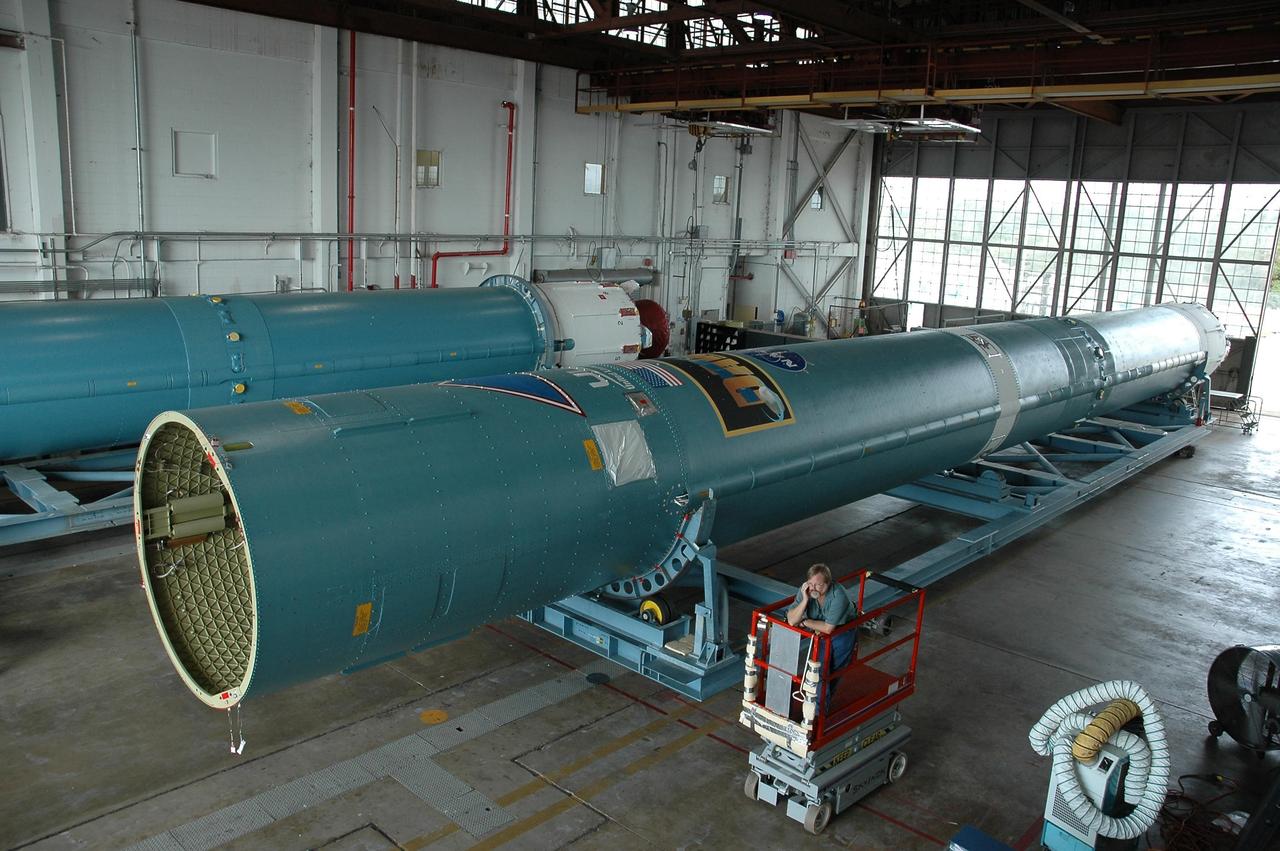
KENNEDY SPACE CENTER, FLA. -- In Hangar M on Cape Canaveral Air Force Station, the first stage of the Delta II rocket that will launch the Dawn spacecraft is ready to be transferred to a transporter for its move to the launch pad. Dawn's mission is to explore two of the asteroid belt's most intriguing and dissimilar occupants: asteroid Vesta and the dwarf planet Ceres. Dawn is scheduled to launch June 30 from Launch Complex 17-B. Photo credit: NASA/Jack Pfaller
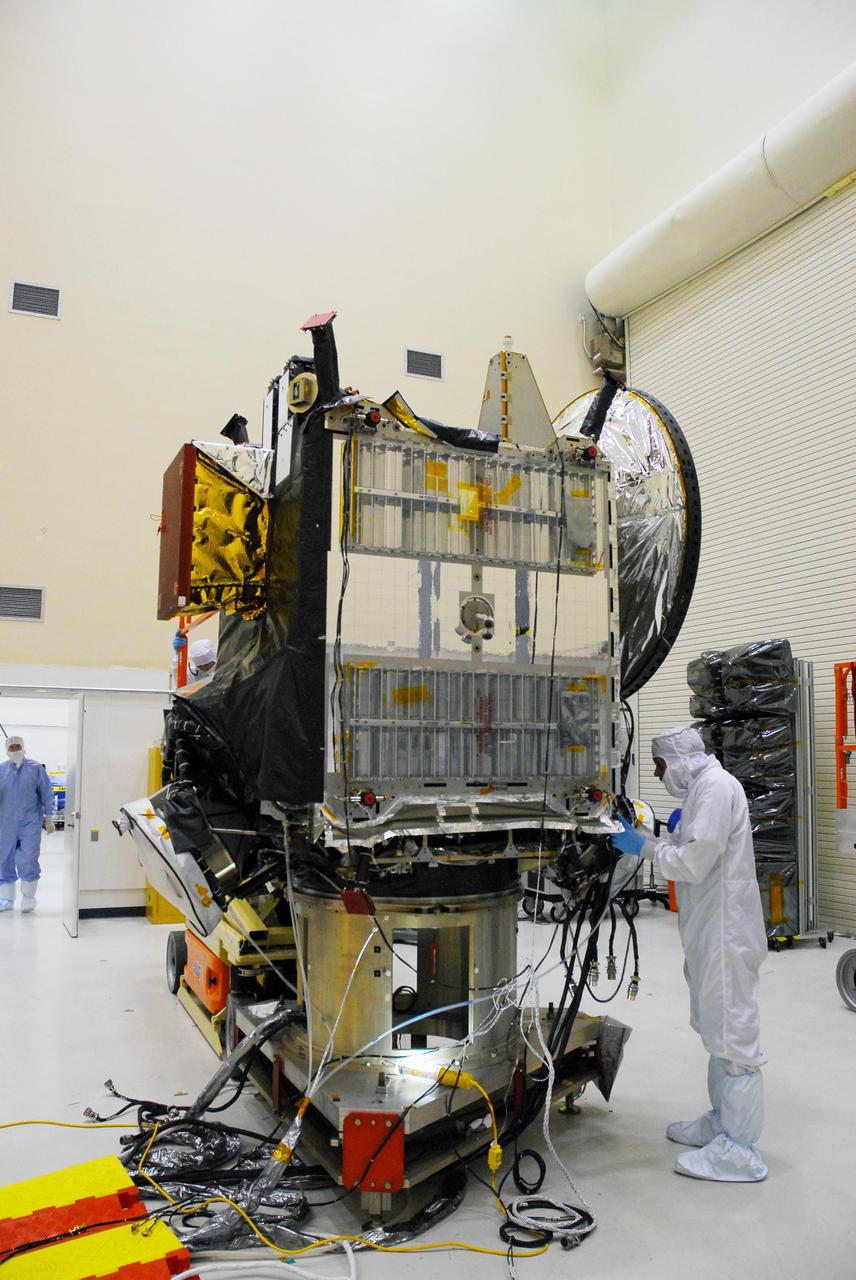
KENNEDY SPACE CENTER, FLA. -- In a clean room at Astrotech, workers prepare the Dawn spacecraft for thermal blanket installation. Dawn's mission is to explore two of the asteroid belt's most intriguing and dissimilar occupants: asteroid Vesta and the dwarf planet Ceres. Dawn is scheduled to launch June 30 from Launch Complex 17-B. Photo credit: NASA/George Shelton
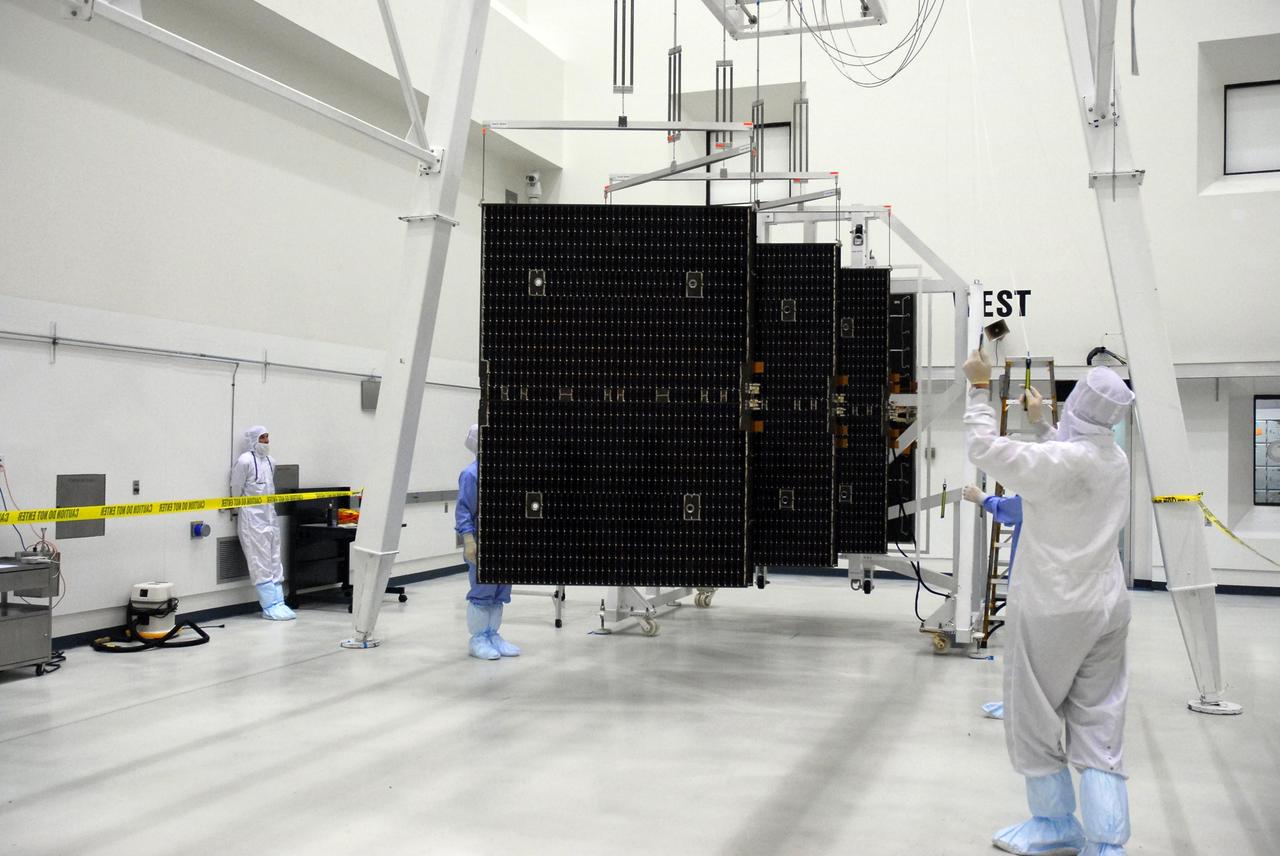
KENNEDY SPACE CENTER, FLA. -- In a clean room at Astrotech, workers deploy the solar panels of the Dawn spacecraft. The panels will be tested and undergo black light inspection. Dawn's mission is to explore two of the asteroid belt's most intriguing and dissimilar occupants: asteroid Vesta and the dwarf planet Ceres. Dawn is scheduled to launch June 30 from Launch Complex 17-B. Photo credit: NASA/George Shelton
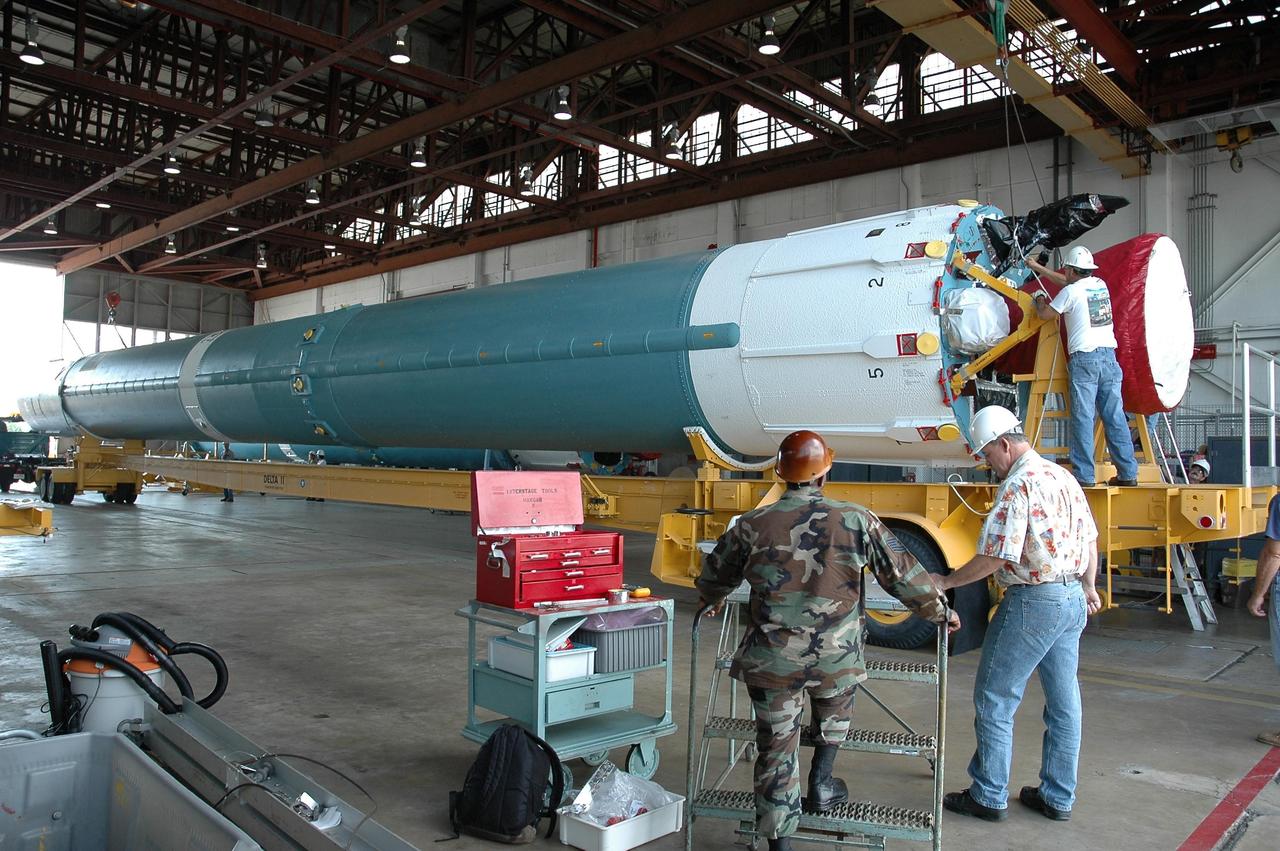
KENNEDY SPACE CENTER, FLA. -- After its successful transfer to a transporter, the Delta II first stage is ready to move out of Hangar M on Cape Canaveral Air Force Station. Dawn's mission is to explore two of the asteroid belt's most intriguing and dissimilar occupants: asteroid Vesta and the dwarf planet Ceres. Dawn is scheduled to launch June 30 from Launch Complex 17-B. Photo credit: NASA/Jack Pfaller
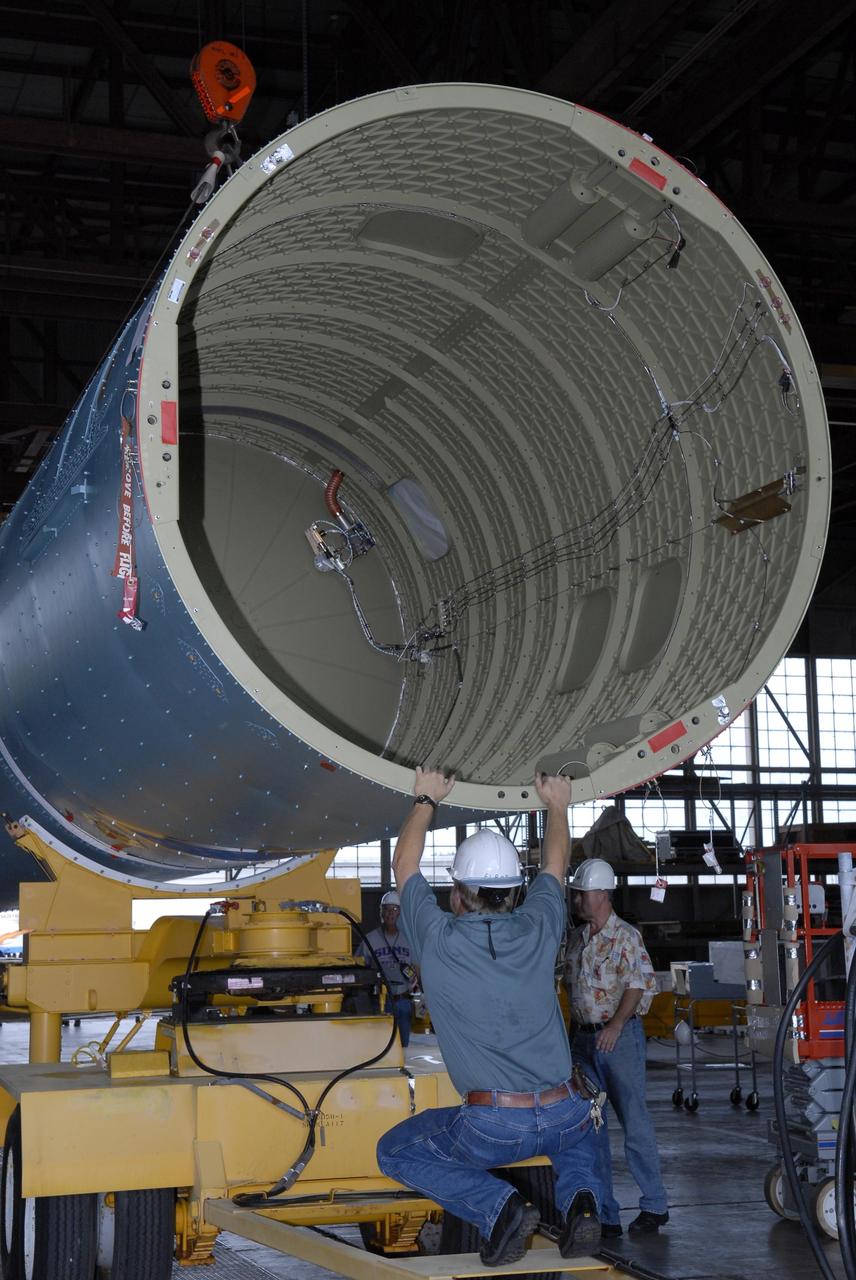
KENNEDY SPACE CENTER, FLA. -- Inside the Hangar M on Cape Canaveral Air Force Station, United Launch Alliance workers help guide the Delta II first stage onto its transporter. The Delta will be moved to the launch pad for the future launch of a Global Positioning Satellite. Photo credit: NASA/Kim Shiflett
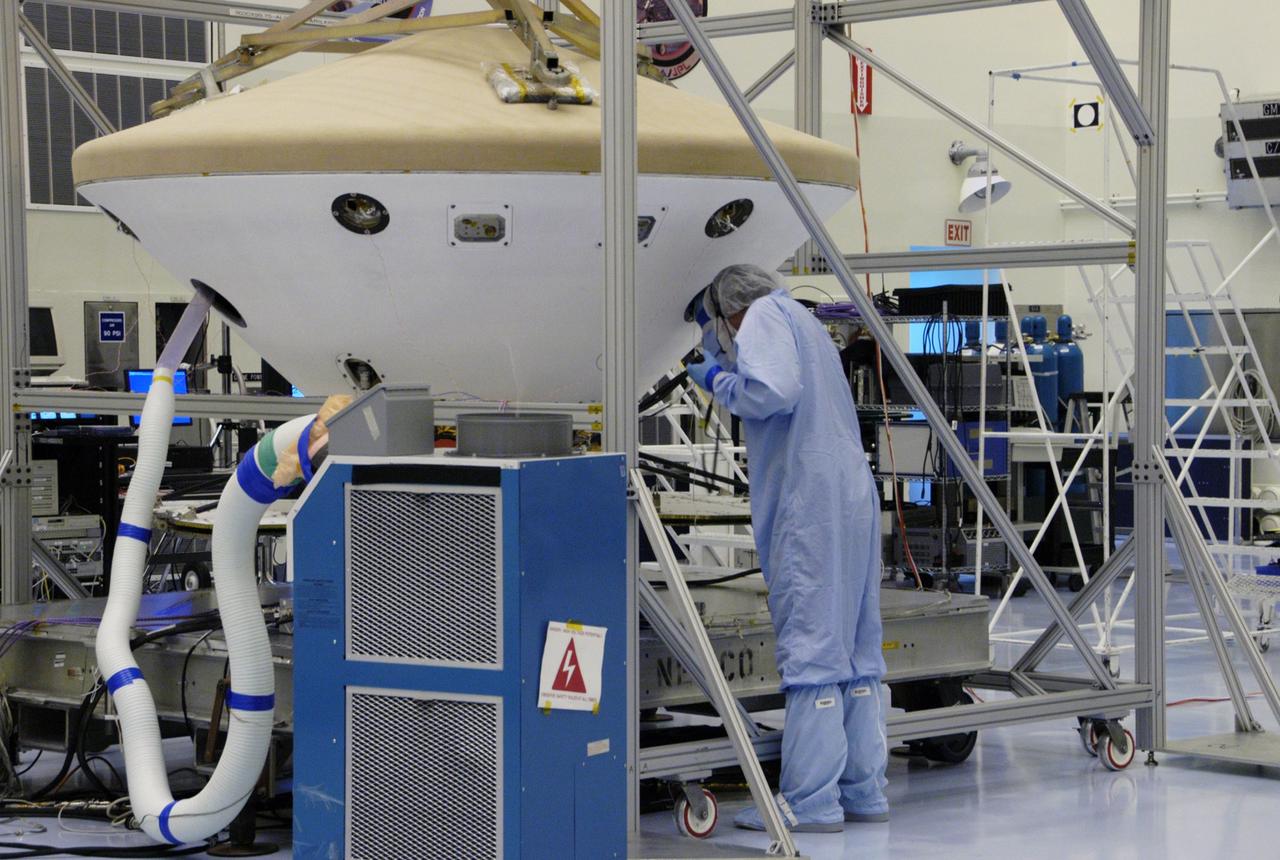
KENNEDY SPACE CENTER, FLA. -- In the Payload Hazardous Servicing Facility, a worker monitors the Phoenix spacecraft during a heat shield deployment test, with a firing of ordnance associated with the separation device. Phoenix will land in icy soils near the north polar permanent ice cap of Mars and explore the history of the water in these soils and any associated rocks, while monitoring polar climate. Landing is planned in May 2008 on arctic ground where a mission currently in orbit, Mars Odyssey, has detected high concentrations of ice just beneath the top layer of soil. Launch of Phoenix aboard a Delta II rocket is targeted for Aug. 3 from Cape Canaveral Air Force Station in Florida. Photo credit: NASA/George Shelton
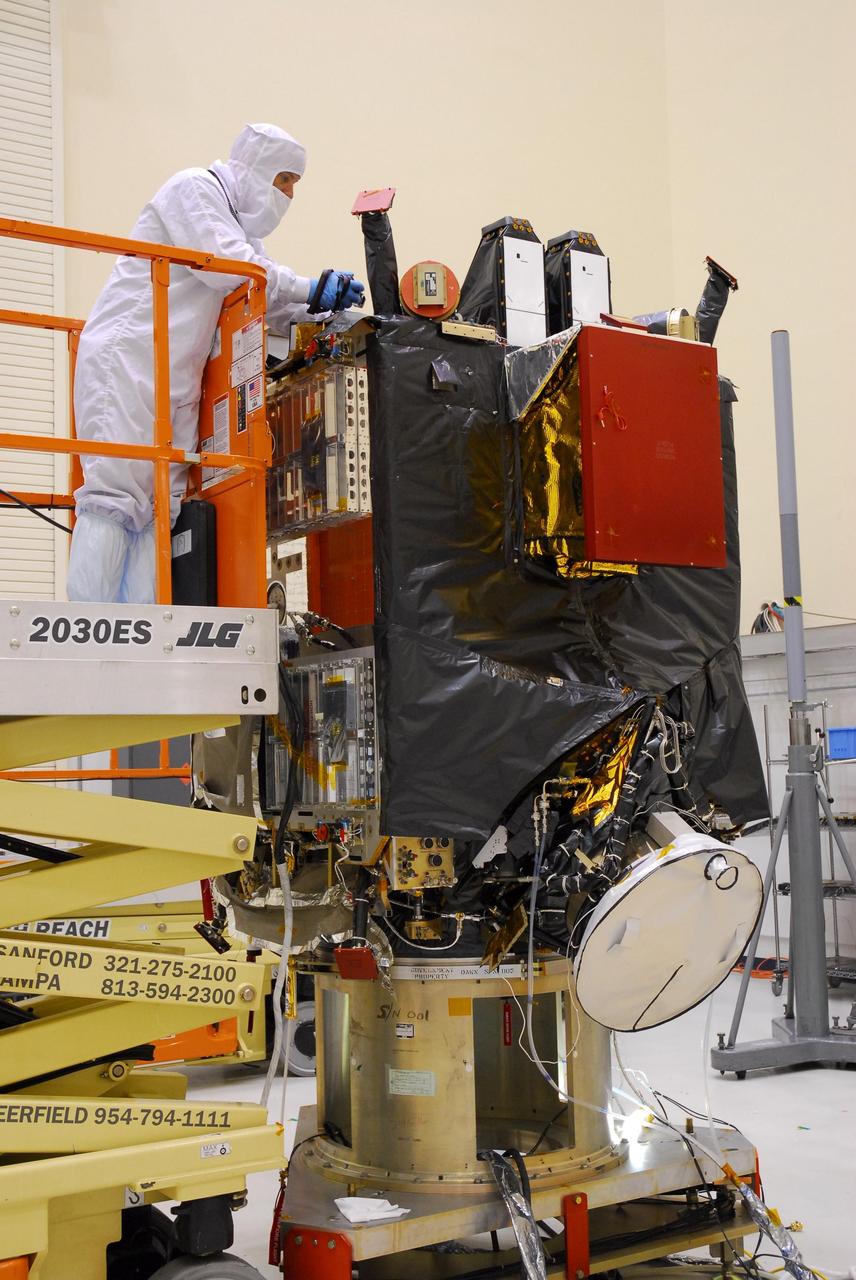
KENNEDY SPACE CENTER, FLA. -- In a clean room at Astrotech, workers prepare the Dawn spacecraft for thermal blanket installation. Dawn's mission is to explore two of the asteroid belt's most intriguing and dissimilar occupants: asteroid Vesta and the dwarf planet Ceres. Dawn is scheduled to launch June 30 from Launch Complex 17-B. Photo credit: NASA/George Shelton
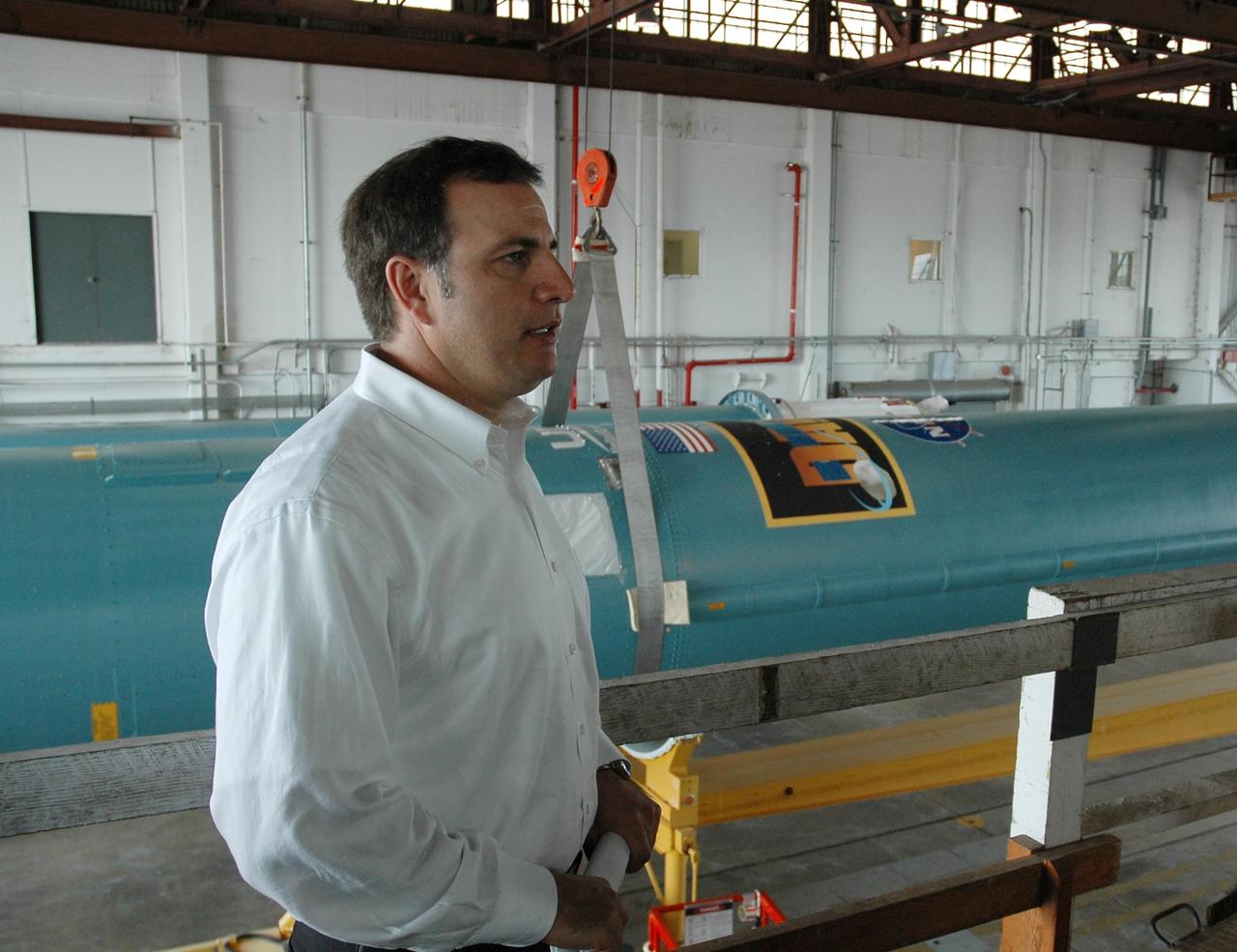
KENNEDY SPACE CENTER, FLA. -- Inside Hangar M on Cape Canaveral Air Force Station, Larry Penepent, manager of Launch Operations Engineering with United Launch Alliance, oversees the transfer of the Delta II first stage onto a transporter. The Delta will be moved to the launch pad. Dawn's mission is to explore two of the asteroid belt's most intriguing and dissimilar occupants: asteroid Vesta and the dwarf planet Ceres. Dawn is scheduled to launch June 30 from Launch Complex 17-B. Photo credit: NASA/Jack Pfaller
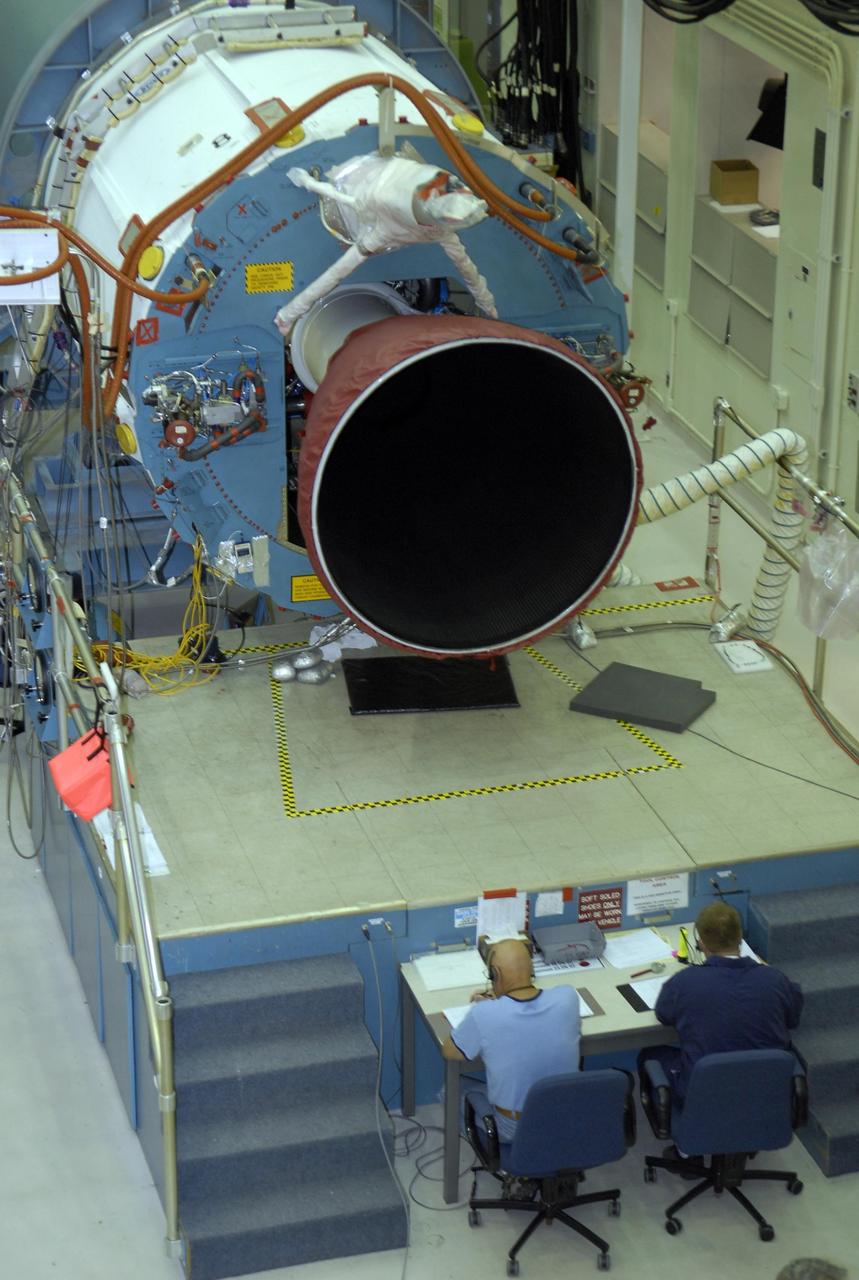
KENNEDY SPACE CENTER, FLA. -- In Hangar A&O on Cape Canaveral Air Force Station in Florida, workers conduct a steering test on the first stage of a Delta II rocket. The rocket is designated for the launch of the Phoenix Mars Lander spacecraft. Phoenix will land in icy soils near the north polar permanent ice cap of Mars and explore the history of the water in these soils and any associated rocks, while monitoring polar climate. Landing is planned in May 2008 on arctic ground where a mission currently in orbit, Mars Odyssey, has detected high concentrations of ice just beneath the top layer of soil. Launch of Phoenix is targeted for Aug. 3. Photo credit: NASA/Kim Shiflett
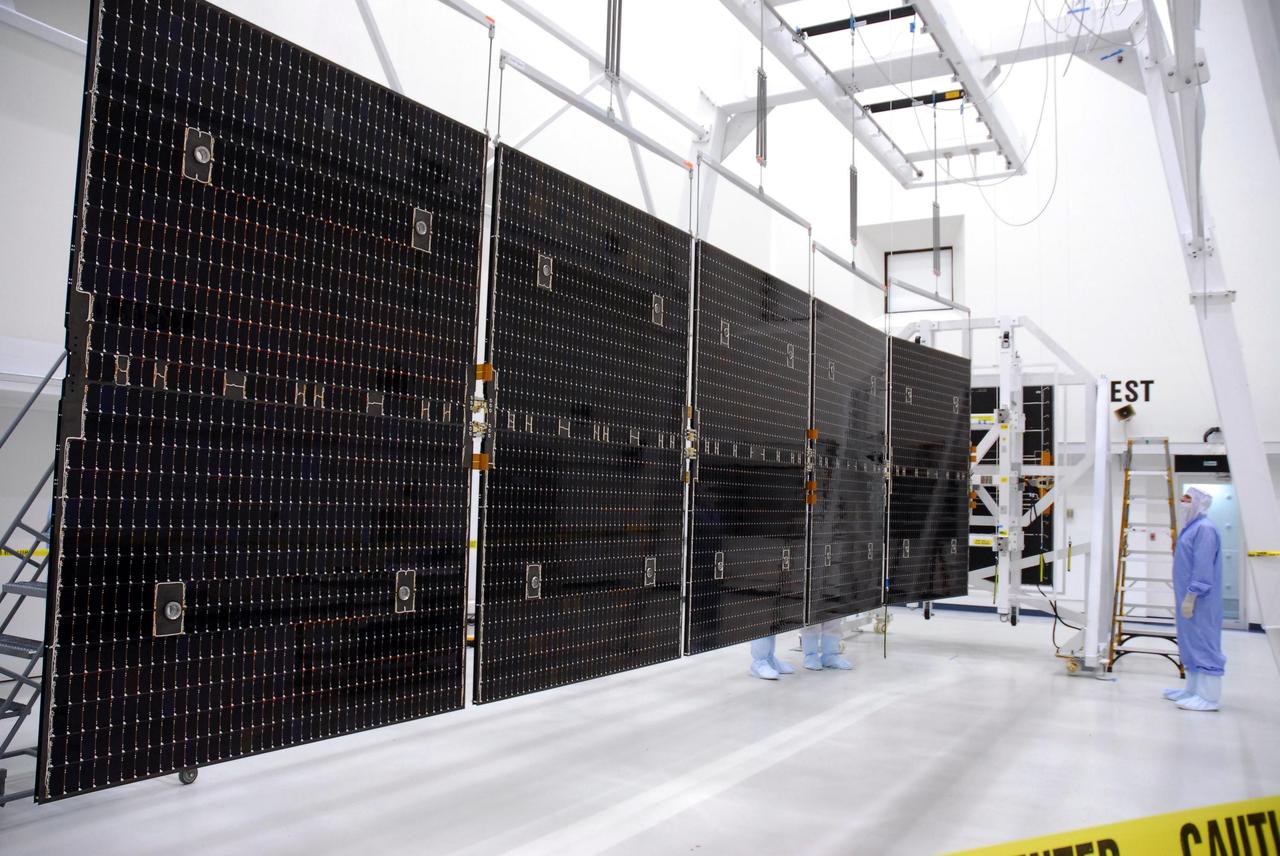
KENNEDY SPACE CENTER, FLA. -- In a clean room at Astrotech, the solar panels of the Dawn spacecraft are extended to their full extent. The panels will be tested and undergo black light inspection. Dawn's mission is to explore two of the asteroid belt's most intriguing and dissimilar occupants: asteroid Vesta and the dwarf planet Ceres. Dawn is scheduled to launch June 30 from Launch Complex 17-B. Photo credit: NASA/George Shelton
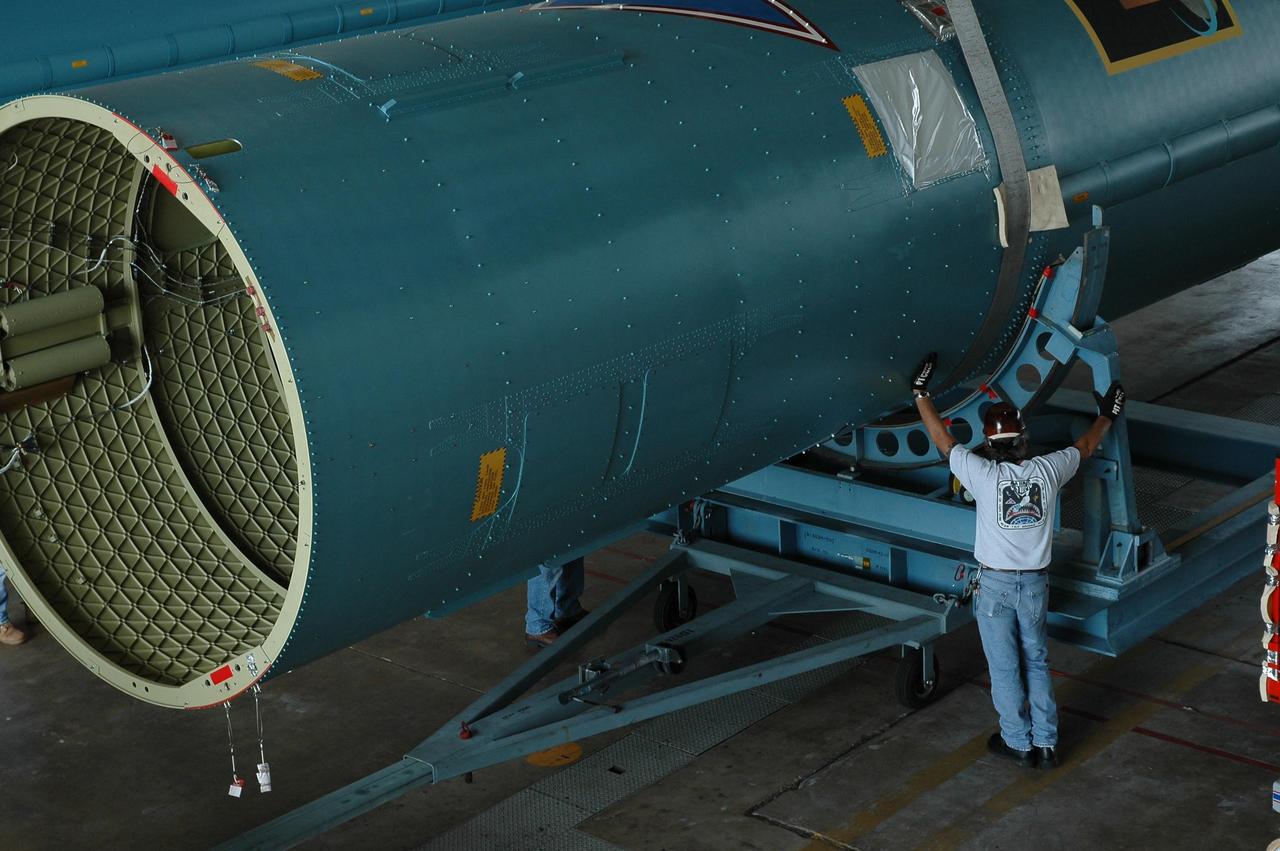
KENNEDY SPACE CENTER, FLA. -- In Hangar M on Cape Canaveral Air Force Station, workers secure straps to an overhead crane around the Delta II rocket's first stage. It will be lifted and placed onto a transporter for its move to the launch pad. Dawn's mission is to explore two of the asteroid belt's most intriguing and dissimilar occupants: asteroid Vesta and the dwarf planet Ceres. Dawn is scheduled to launch June 30 from Launch Complex 17-B. Photo credit: NASA/Jack Pfaller
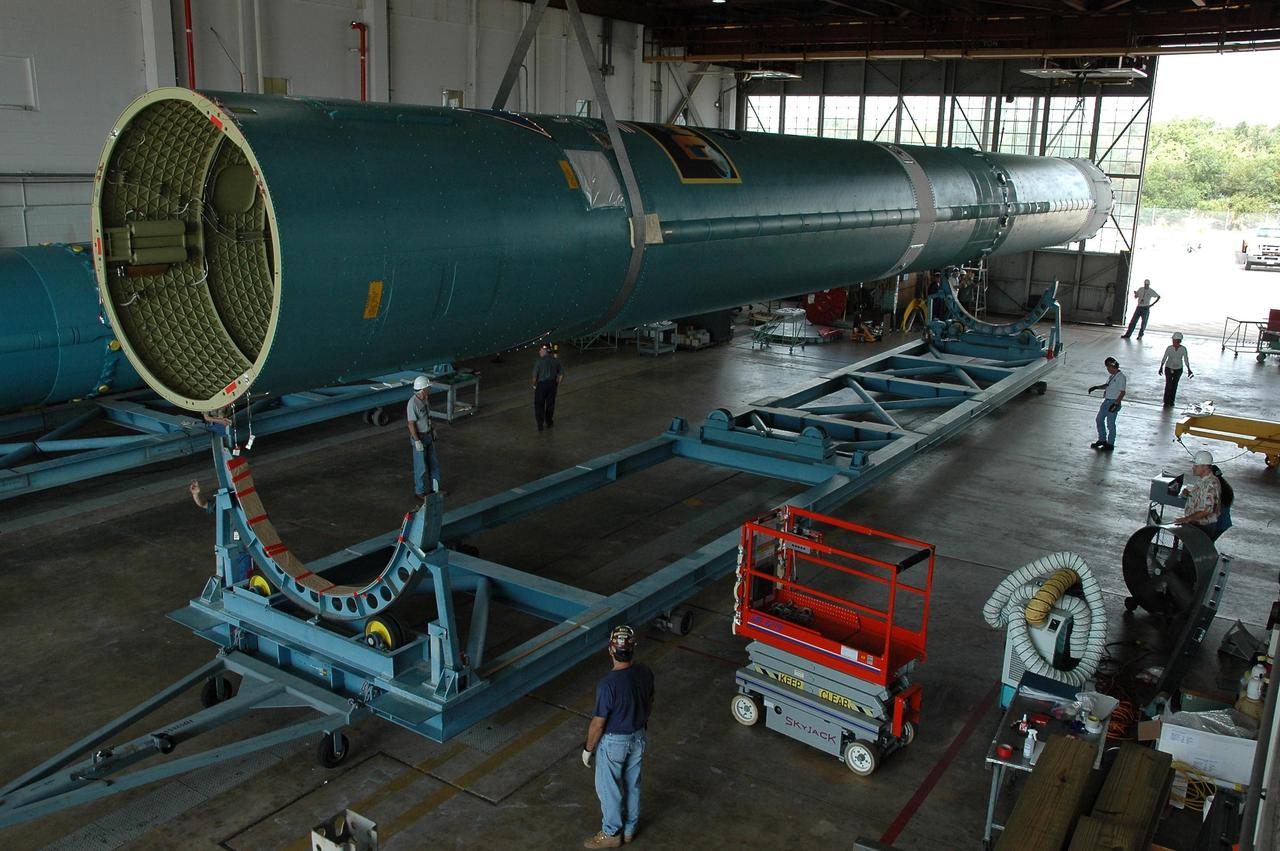
KENNEDY SPACE CENTER, FLA. -- In Hangar M on Cape Canaveral Air Force Station, an overhead crane lifts the Delta II first stage off its stand. It will be placed onto a transporter for its move to the launch pad. Dawn's mission is to explore two of the asteroid belt's most intriguing and dissimilar occupants: asteroid Vesta and the dwarf planet Ceres. Dawn is scheduled to launch June 30 from Launch Complex 17-B. Photo credit: NASA/Jack Pfaller
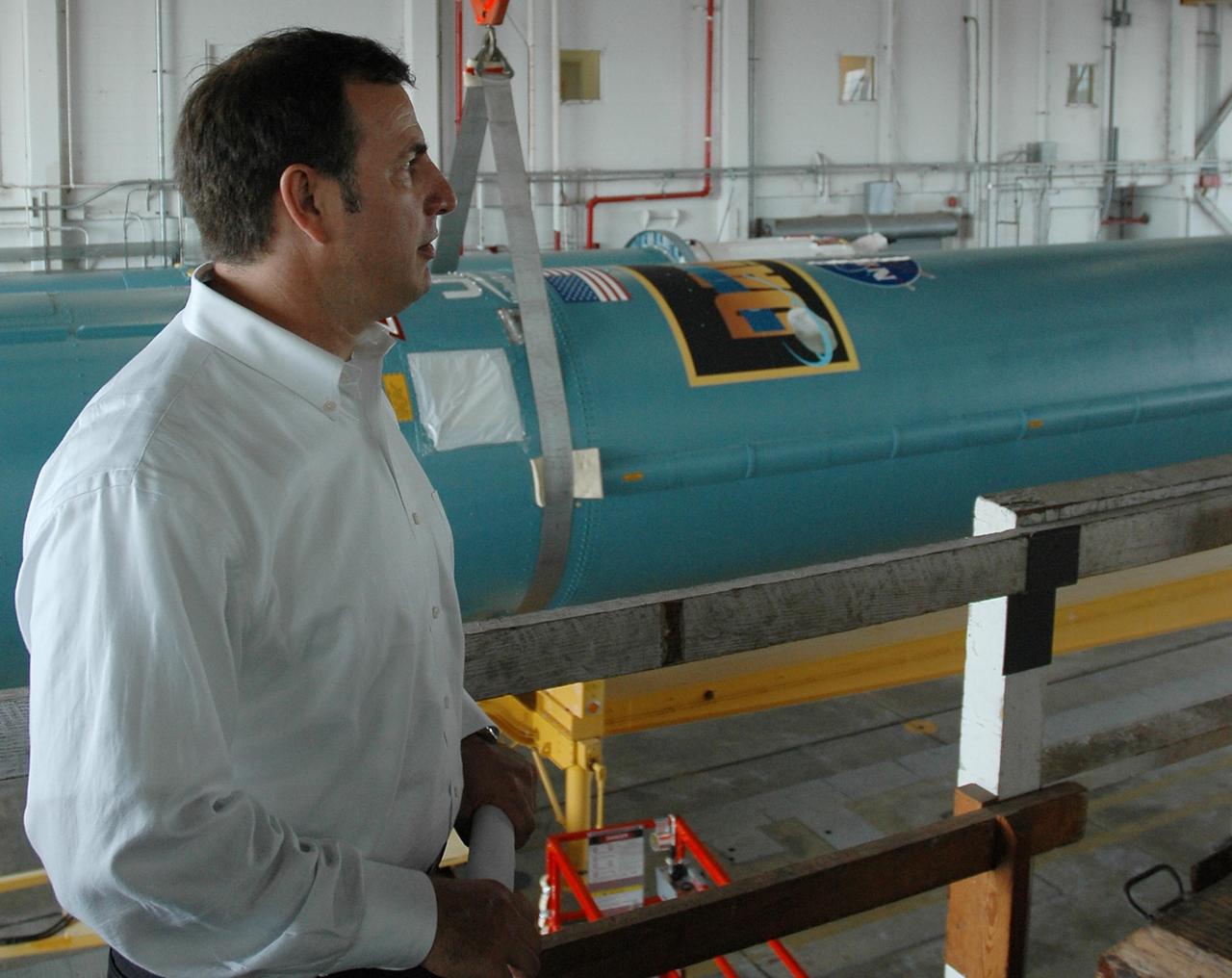
KENNEDY SPACE CENTER, FLA. -- Inside Hangar M on Cape Canaveral Air Force Station, Larry Penepent, manager of Launch Operations Engineering with United Launch Alliance, oversees the transfer of the Delta II first stage onto a transporter. The Delta will be moved to the launch pad. Dawn's mission is to explore two of the asteroid belt's most intriguing and dissimilar occupants: asteroid Vesta and the dwarf planet Ceres. Dawn is scheduled to launch June 30 from Launch Complex 17-B. Photo credit: NASA/Jack Pfaller
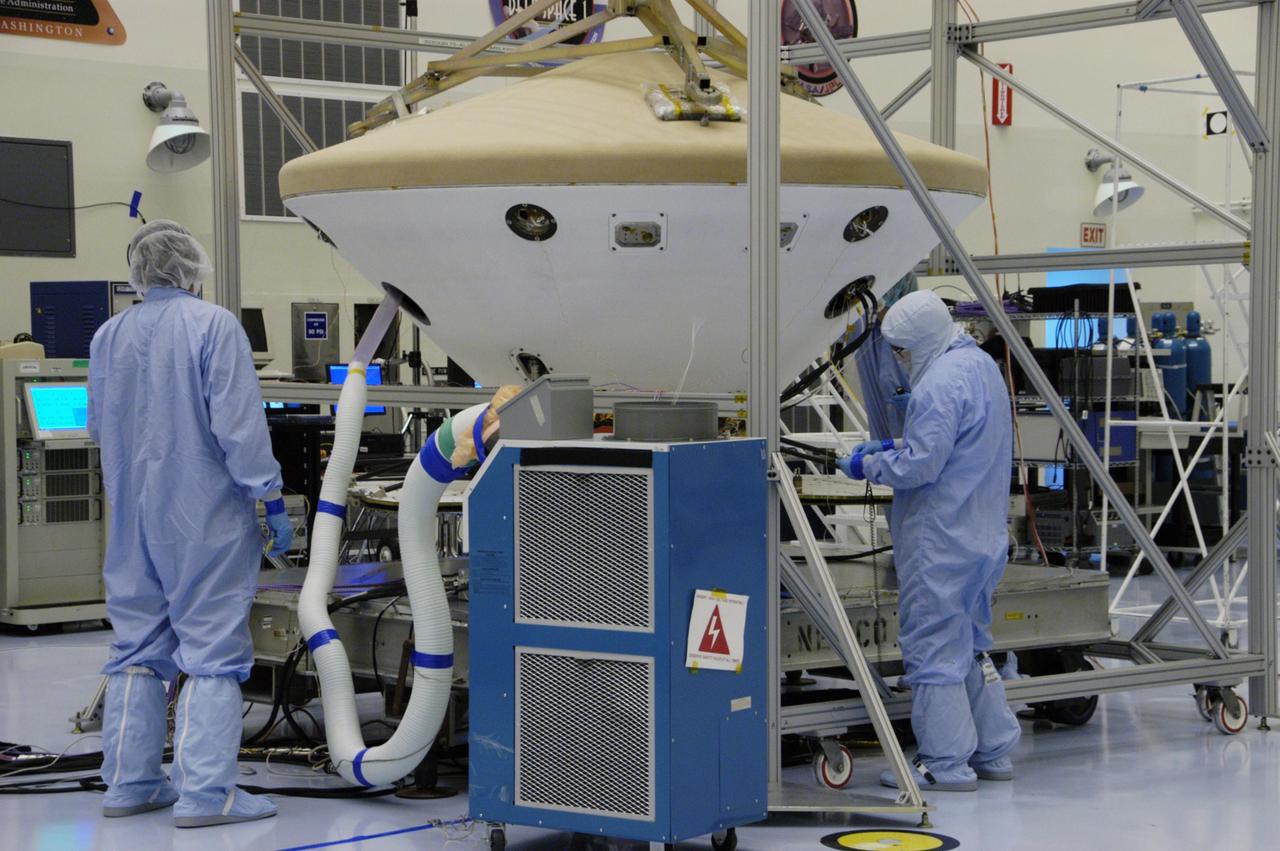
KENNEDY SPACE CENTER, FLA. -- In the Payload Hazardous Servicing Facility, workers monitor the Phoenix spacecraft during a heat shield deployment test, with a firing of ordnance associated with the separation device. Phoenix will land in icy soils near the north polar permanent ice cap of Mars and explore the history of the water in these soils and any associated rocks, while monitoring polar climate. Landing is planned in May 2008 on arctic ground where a mission currently in orbit, Mars Odyssey, has detected high concentrations of ice just beneath the top layer of soil. Launch of Phoenix aboard a Delta II rocket is targeted for Aug. 3 from Cape Canaveral Air Force Station in Florida. Photo credit: NASA/George Shelton
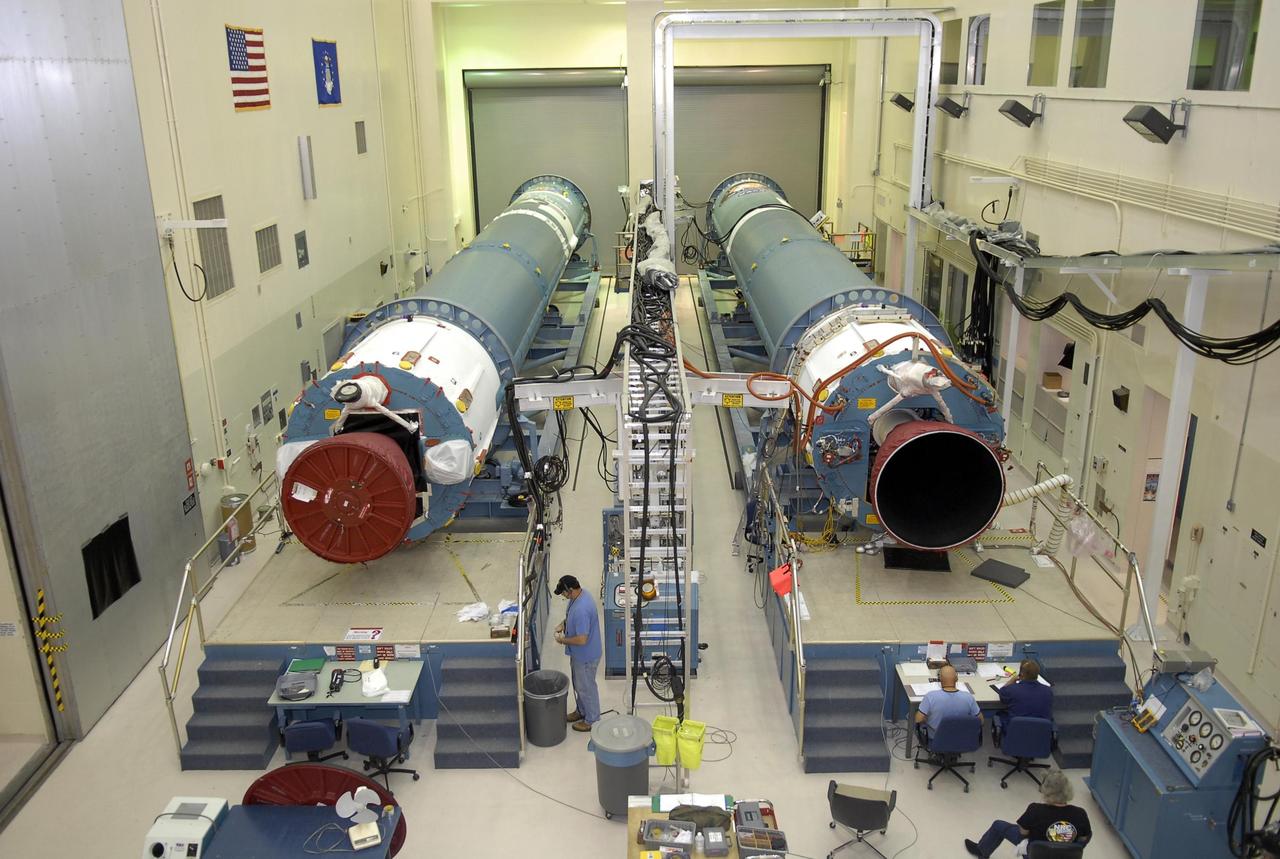
KENNEDY SPACE CENTER, FLA. -- In Hangar A&O on Cape Canaveral Air Force Station in Florida, workers conduct a steering test on the first stage of a Delta II rocket, at right. The rocket is designated for the launch of the Phoenix Mars Lander spacecraft. Phoenix will land in icy soils near the north polar permanent ice cap of Mars and explore the history of the water in these soils and any associated rocks, while monitoring polar climate. Landing is planned in May 2008 on arctic ground where a mission currently in orbit, Mars Odyssey, has detected high concentrations of ice just beneath the top layer of soil. Launch of Phoenix is targeted for Aug. 3. Photo credit: NASA/Kim Shiflett
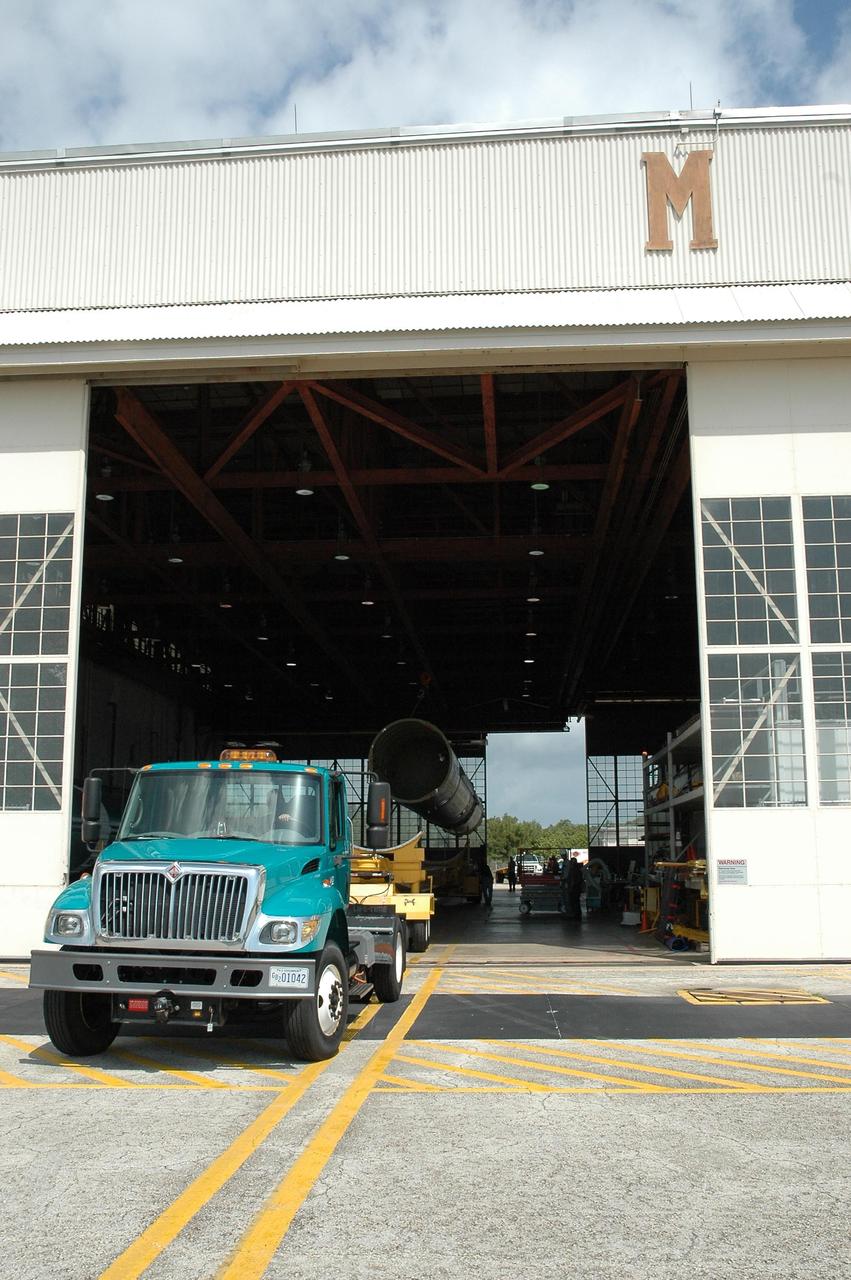
KENNEDY SPACE CENTER, FLA. -- With the transporter in place inside Hangar M on Cape Canaveral Air Force Station, the suspended Delta II first stage can be placed on it. The Delta will be moved to the launch pad. Dawn's mission is to explore two of the asteroid belt's most intriguing and dissimilar occupants: asteroid Vesta and the dwarf planet Ceres. Dawn is scheduled to launch June 30 from Launch Complex 17-B. Photo credit: NASA/Jack Pfaller

KENNEDY SPACE CENTER, FLA. -- Inside the Hangar M on Cape Canaveral Air Force Station, another Delta II first stage is lowered toward its transporter. The Delta will be moved to the launch pad for the future launch of a Global Positioning Satellite. Photo credit: NASA/Kim Shiflett
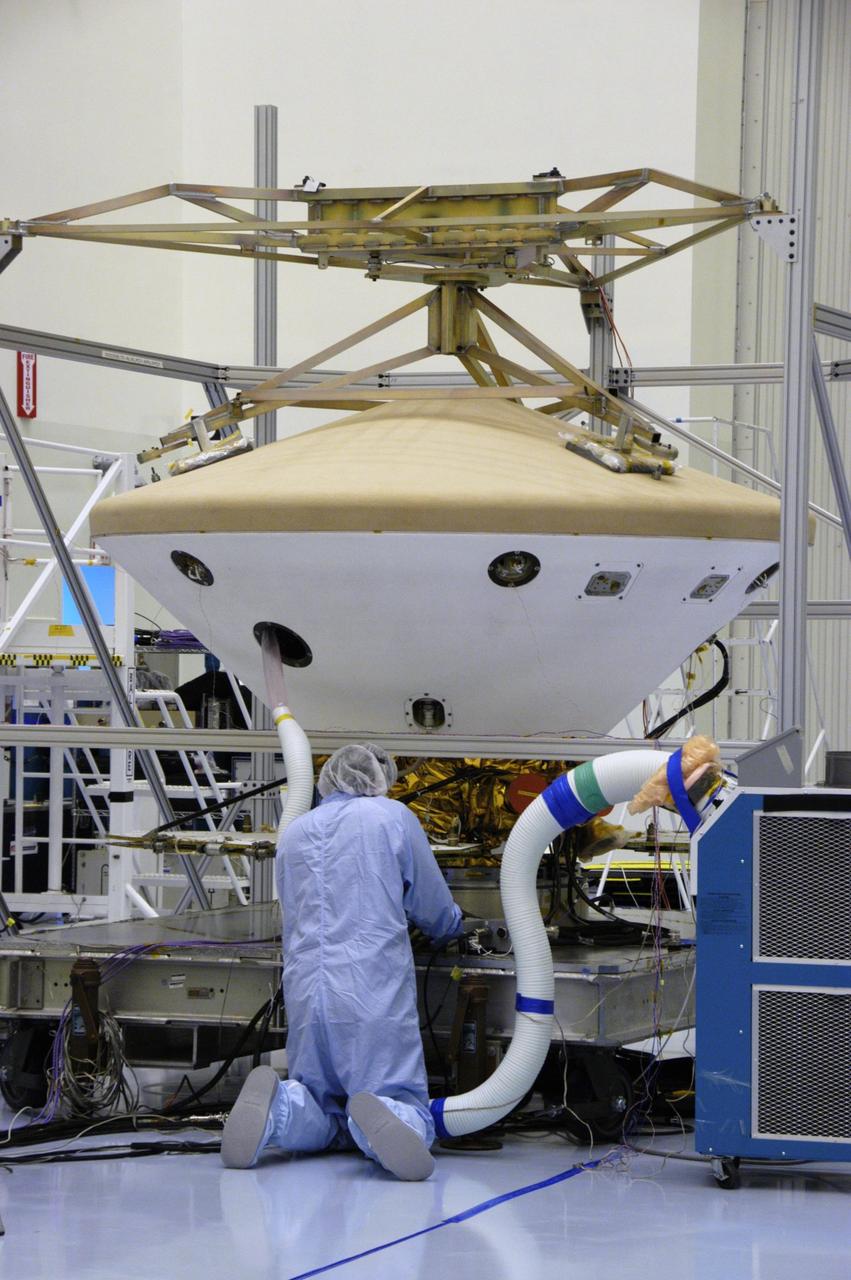
KENNEDY SPACE CENTER, FLA. -- In the Payload Hazardous Servicing Facility, workers prepare to put the Phoenix spacecraft through a heat shield deployment test, with a firing of ordnance associated with the separation device. Phoenix will land in icy soils near the north polar permanent ice cap of Mars and explore the history of the water in these soils and any associated rocks, while monitoring polar climate. Landing is planned in May 2008 on arctic ground where a mission currently in orbit, Mars Odyssey, has detected high concentrations of ice just beneath the top layer of soil. Launch of Phoenix aboard a Delta II rocket is targeted for Aug. 3 from Cape Canaveral Air Force Station in Florida. Photo credit: NASA/George Shelton

KENNEDY SPACE CENTER, FLA. -- In a clean room at Astrotech, workers prepare to deploy the solar panels of the Dawn spacecraft. The panels will be tested and undergo black light inspection. Dawn's mission is to explore two of the asteroid belt's most intriguing and dissimilar occupants: asteroid Vesta and the dwarf planet Ceres. Dawn is scheduled to launch June 30 from Launch Complex 17-B. Photo credit: NASA/George Shelton
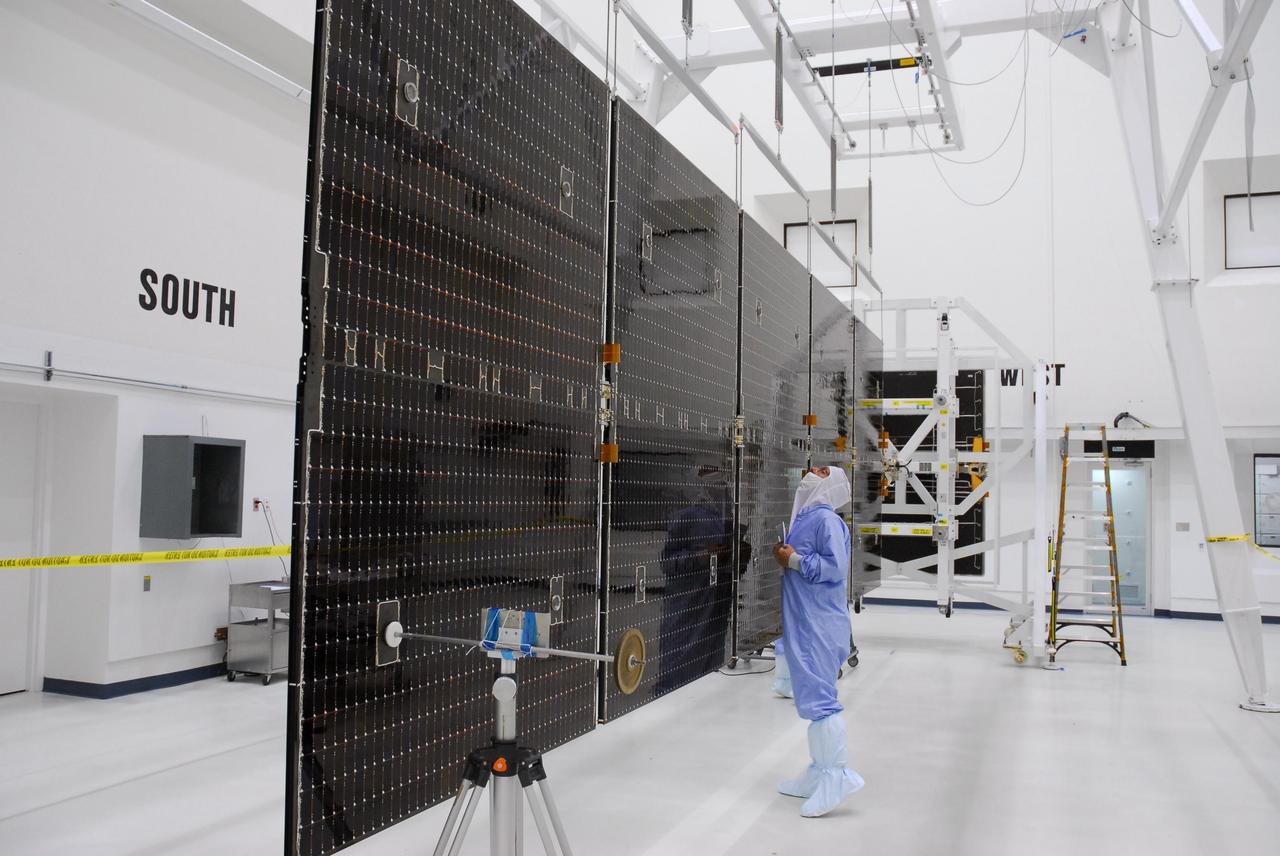
KENNEDY SPACE CENTER, FLA. -- In a clean room at Astrotech, workers begin checking the solar panels of the Dawn spacecraft. The panels will also undergo black light inspection. Dawn's mission is to explore two of the asteroid belt's most intriguing and dissimilar occupants: asteroid Vesta and the dwarf planet Ceres. Dawn is scheduled to launch June 30 from Launch Complex 17-B. Photo credit: NASA/George Shelton
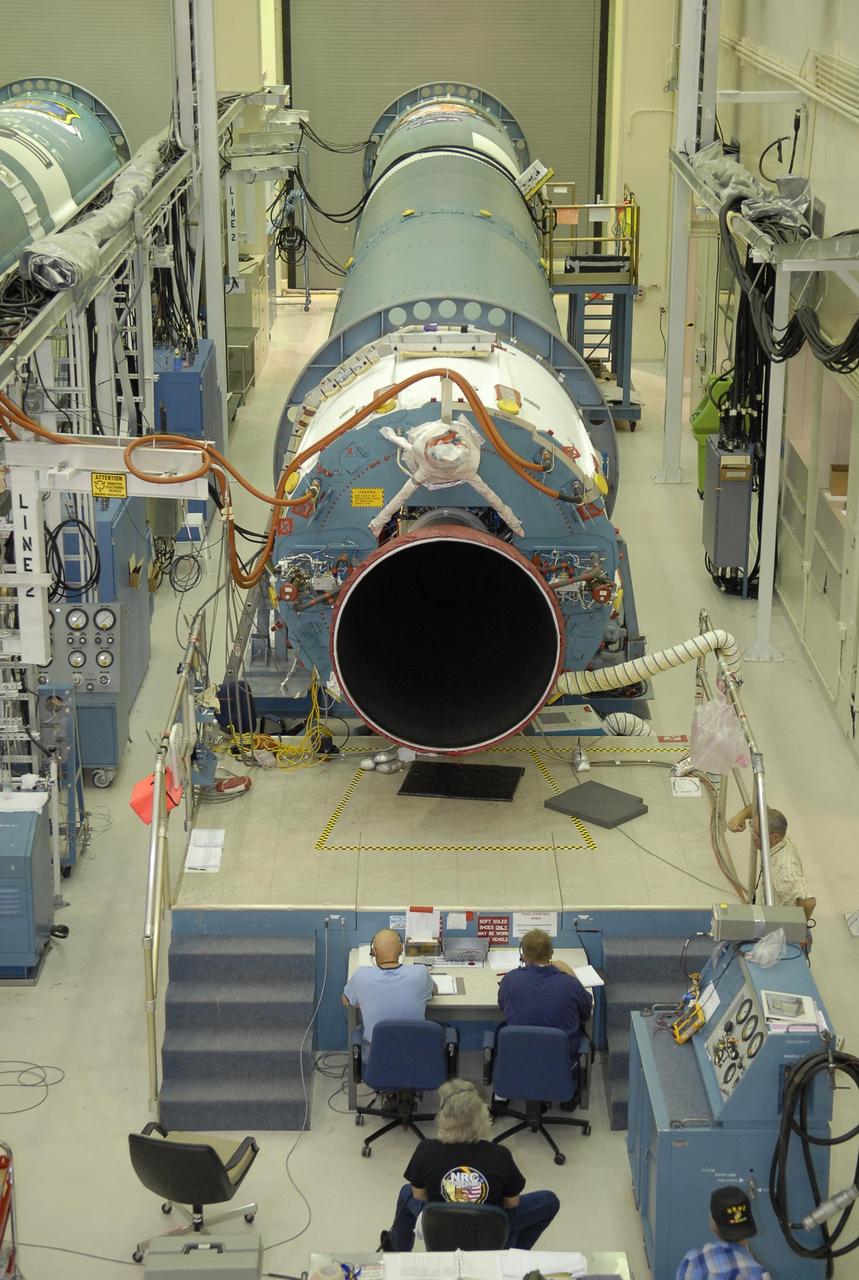
KENNEDY SPACE CENTER, FLA. -- In Hangar A&O on Cape Canaveral Air Force Station in Florida, workers conduct a steering test on the first stage of a Delta II rocket, at right. The rocket is designated for the launch of the Phoenix Mars Lander spacecraft. Phoenix will land in icy soils near the north polar permanent ice cap of Mars and explore the history of the water in these soils and any associated rocks, while monitoring polar climate. Landing is planned in May 2008 on arctic ground where a mission currently in orbit, Mars Odyssey, has detected high concentrations of ice just beneath the top layer of soil. Launch of Phoenix is targeted for Aug. 3. Photo credit: NASA/Kim Shiflett
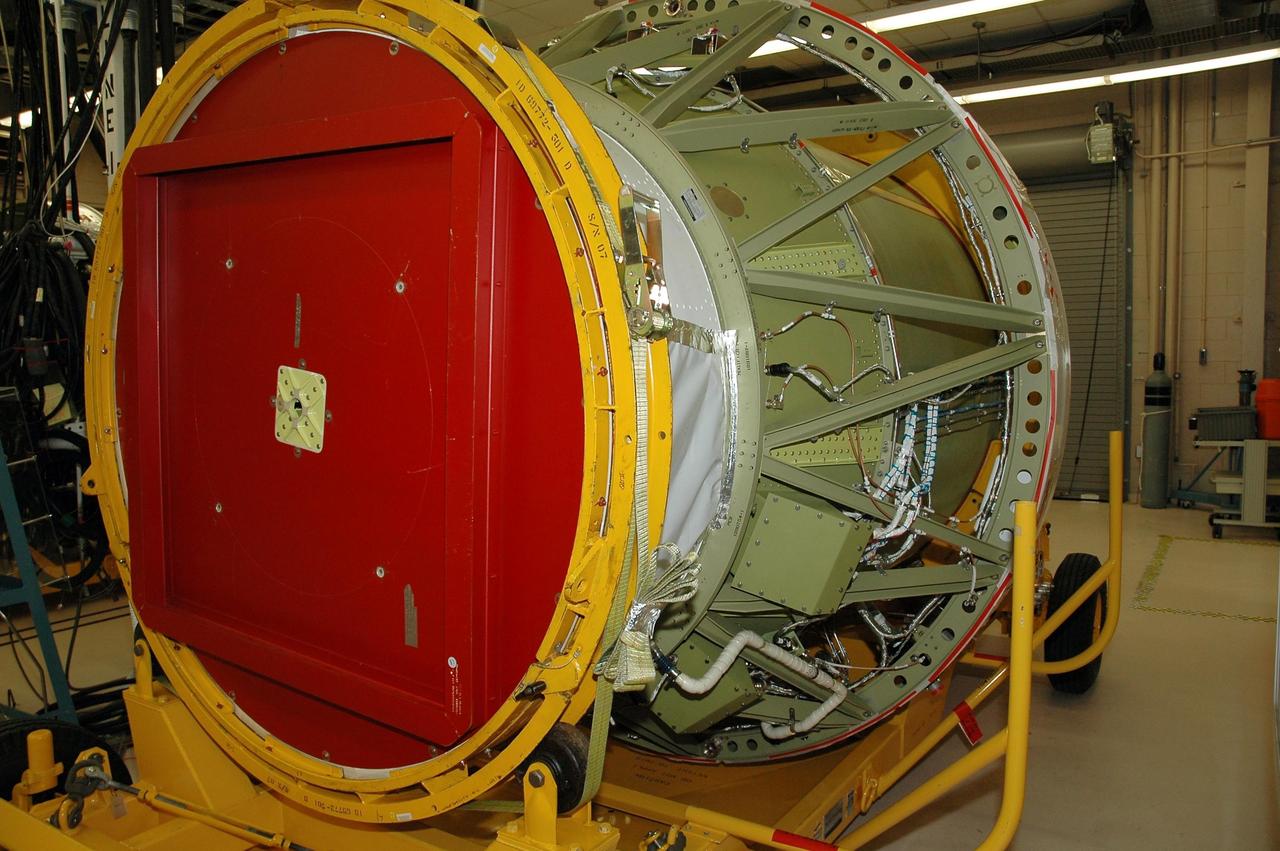
KENNEDY SPACE CENTER, FLA. -- In Hangar A&O at Cape Canaveral Air Force Station, the Delta II second stage for the Dawn spacecraft is ready for transfer to the launch pad. Dawn's mission is to explore two of the asteroid belt's most intriguing and dissimilar occupants: asteroid Vesta and the dwarf planet Ceres. Dawn is scheduled to launch June 30 from Launch Complex 17-B. Photo credit: NASA/Jack Pfaller
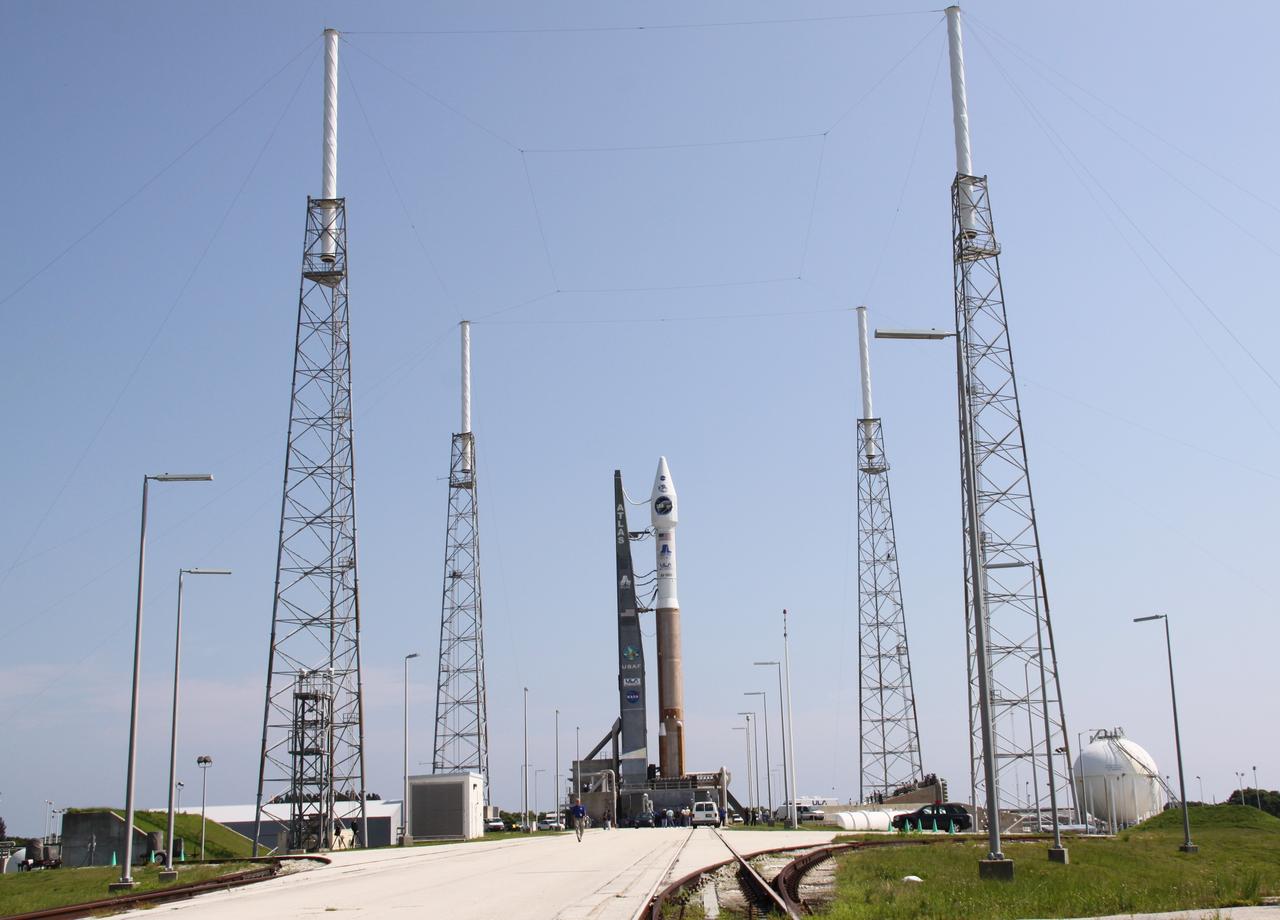
CAPE CANAVERAL, Fla. – On Launch Complex-41 on Cape Canaveral Air Force Station in Florida, the Atlas V/Centaur rocket with NASA's Lunar Reconnaissance Orbiter, or LRO, and NASA's Lunar Crater Observation and Sensing Satellite, known as LCROSS, on top reach the launch pad. Circling the pad are the protective lightning towers. LRO and LCROSS are the first missions in NASA's plan to return humans to the moon and begin establishing a lunar outpost by 2020. The LRO also includes seven instruments that will help NASA characterize the moon's surface: DIVINER, LAMP, LEND, LOLA, CRATER, Mini-RF and LROC. Launch is scheduled for 5:22 p.m. EDT June 18 . Photo credit: NASA/Jack Pfaller
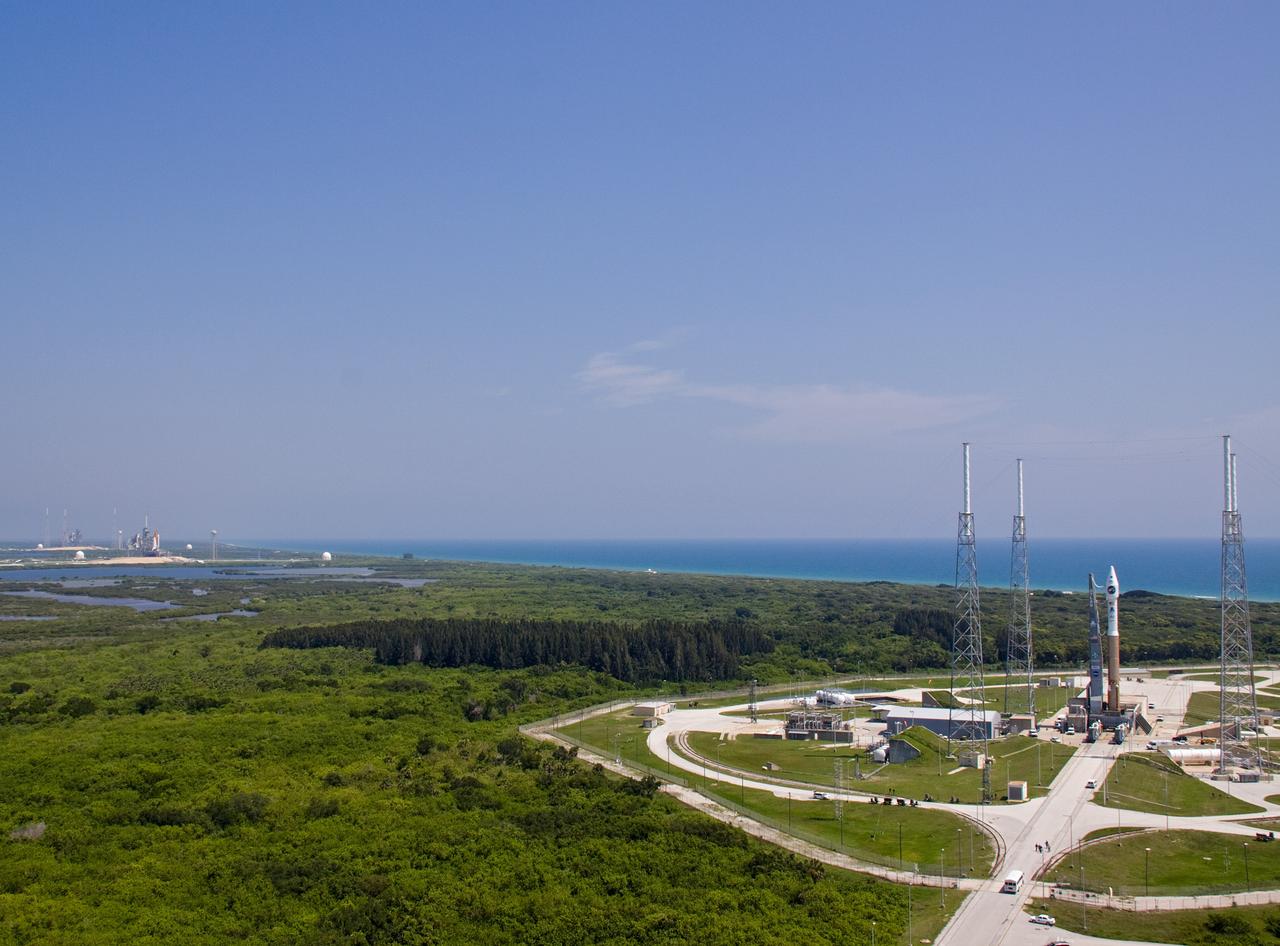
CAPE CANAVERAL, Fla. – A wide view captures both Launch Complex-41 on Cape Canaveral Air Force Station at right and Launch Pad 39A at NASA's Kennedy Space Center in Florida at left. Space shuttle Endeavour is still on the pad after launch was officially scrubbed at 1:55 a.m. this morning when a gaseous hydrogen leak occurred at the Ground Umbilical Carrier Plate. NASA's Lunar Reconnaissance Orbiter, or LRO, and NASA's Lunar Crater Observation and Sensing Satellite, known as LCROSS, are on Complex 41 waiting for launch on the Atlas V/Centaur rocket. LRO and LCROSS are the first missions in NASA's plan to return humans to the moon and begin establishing a lunar outpost by 2020. The LRO also includes seven instruments that will help NASA characterize the moon's surface: DIVINER, LAMP, LEND, LOLA, CRATER, Mini-RF and LROC. Launch is scheduled for 5:22 p.m. EDT June 18 . Photo credit: NASA/Jack Pfaller
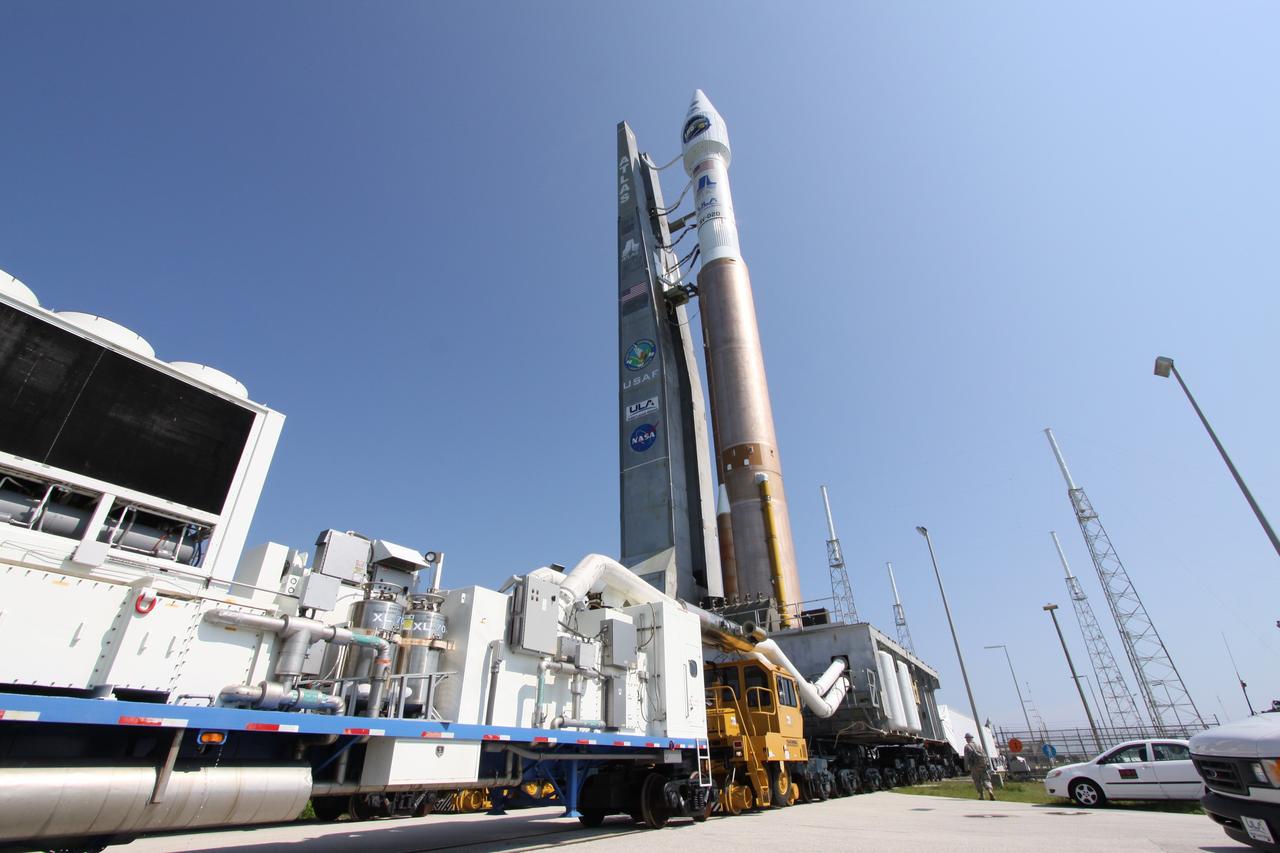
CAPE CANAVERAL, Fla. – On Launch Complex-41 on Cape Canaveral Air Force Station in Florida, the Atlas V/Centaur rocket with NASA's Lunar Reconnaissance Orbiter, or LRO, and NASA's Lunar Crater Observation and Sensing Satellite, known as LCROSS, on top roll out to the launch pad. At right are the protective lightning towers that surround the pad. LRO and LCROSS are the first missions in NASA's plan to return humans to the moon and begin establishing a lunar outpost by 2020. The LRO also includes seven instruments that will help NASA characterize the moon's surface: DIVINER, LAMP, LEND, LOLA, CRATER, Mini-RF and LROC. Launch is scheduled for 5:22 p.m. EDT June 18 . Photo credit: NASA/Jack Pfaller
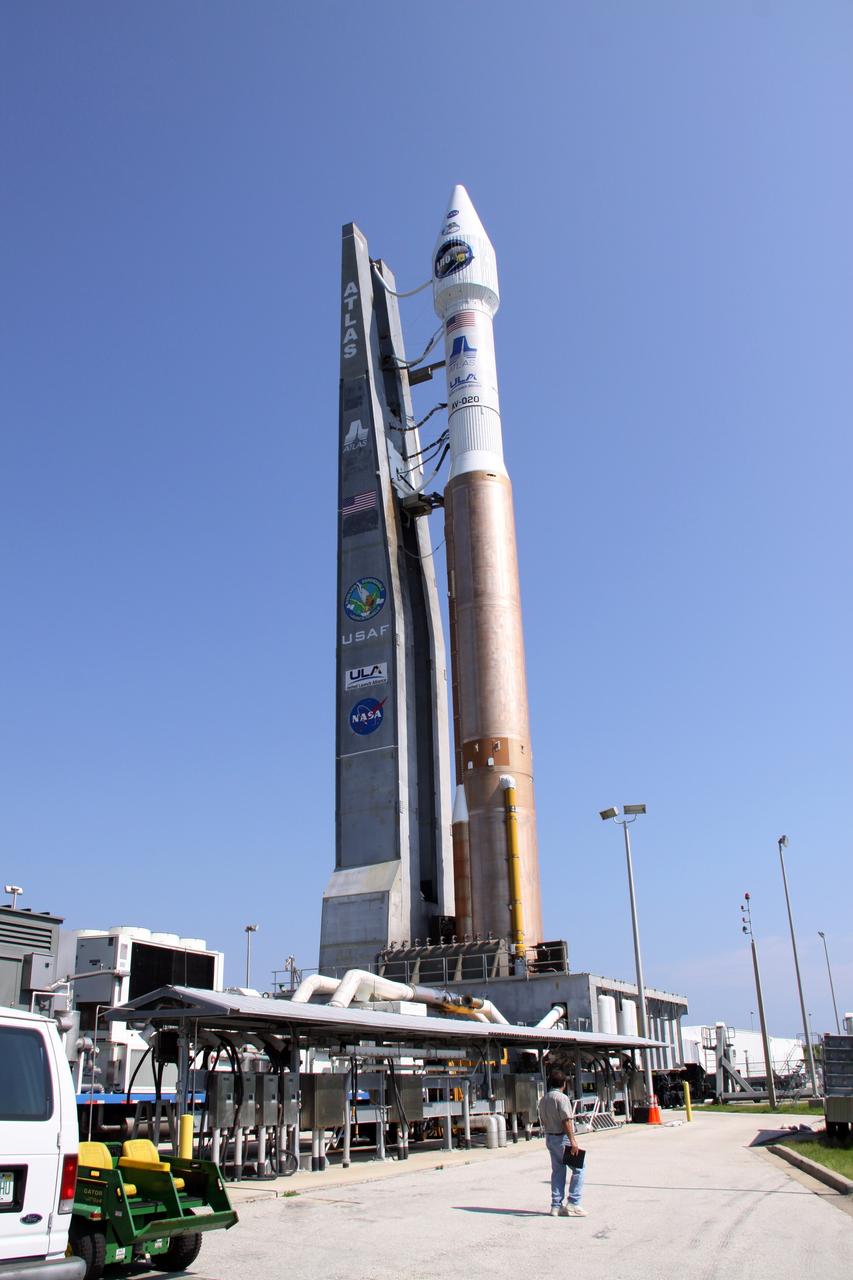
CAPE CANAVERAL, Fla. – On Launch Complex-41 on Cape Canaveral Air Force Station in Florida, NASA's Lunar Reconnaissance Orbiter, or LRO, and NASA's Lunar Crater Observation and Sensing Satellite, known as LCROSS, and launch gantry roll out to the launch pad. They are atop their launch vehicle, the Atlas V/Centaur rocket. LRO and LCROSS are the first missions in NASA's plan to return humans to the moon and begin establishing a lunar outpost by 2020. The LRO also includes seven instruments that will help NASA characterize the moon's surface: DIVINER, LAMP, LEND, LOLA, CRATER, Mini-RF and LROC. Launch is scheduled for 5:22 p.m. EDT June 18 . Photo credit: NASA/Jack Pfaller
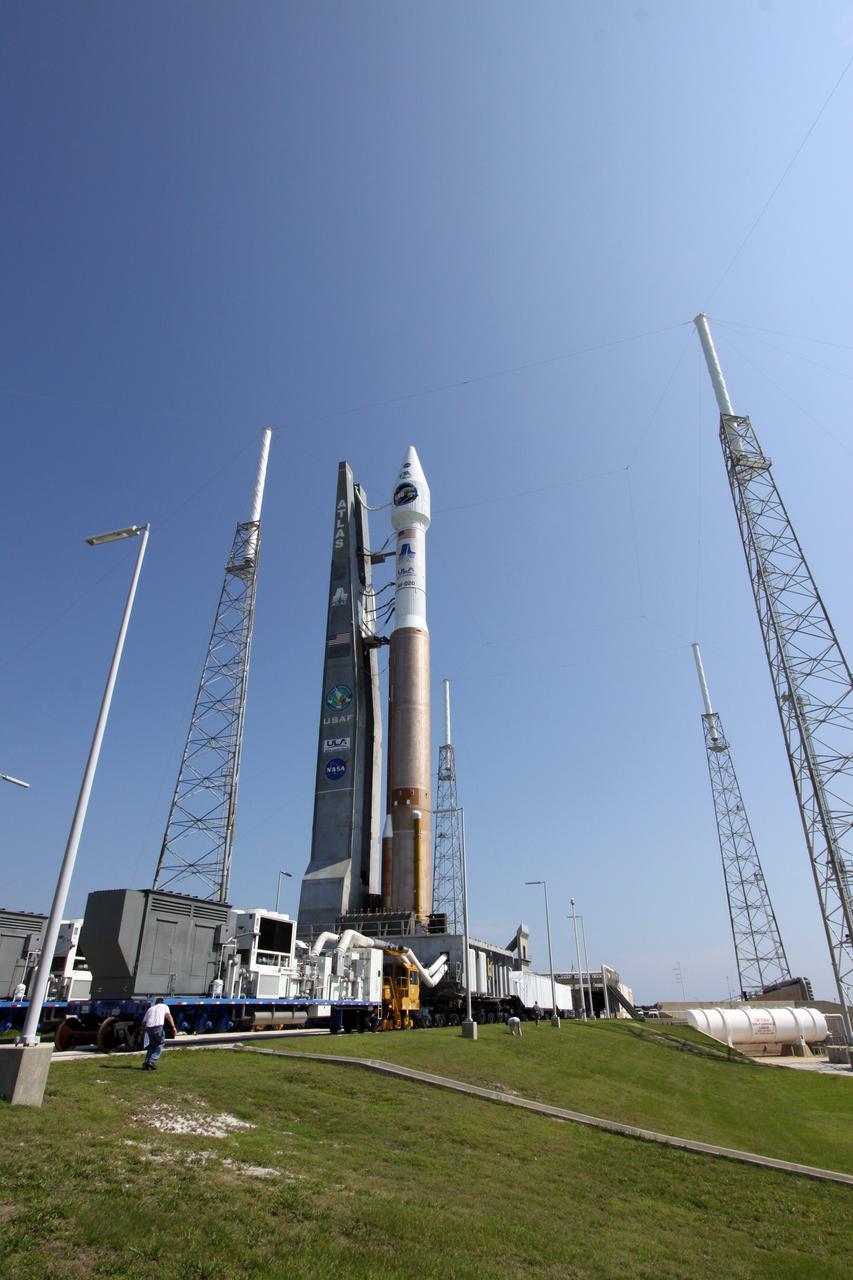
CAPE CANAVERAL, Fla. – On Launch Complex-41 on Cape Canaveral Air Force Station in Florida, the Atlas V/Centaur rocket with NASA's Lunar Reconnaissance Orbiter, or LRO, and NASA's Lunar Crater Observation and Sensing Satellite, known as LCROSS, on top reach the launch pad. Circling the pad are the protective lightning towers. LRO and LCROSS are the first missions in NASA's plan to return humans to the moon and begin establishing a lunar outpost by 2020. The LRO also includes seven instruments that will help NASA characterize the moon's surface: DIVINER, LAMP, LEND, LOLA, CRATER, Mini-RF and LROC. Launch is scheduled for 5:22 p.m. EDT June 18 . Photo credit: NASA/Jack Pfaller
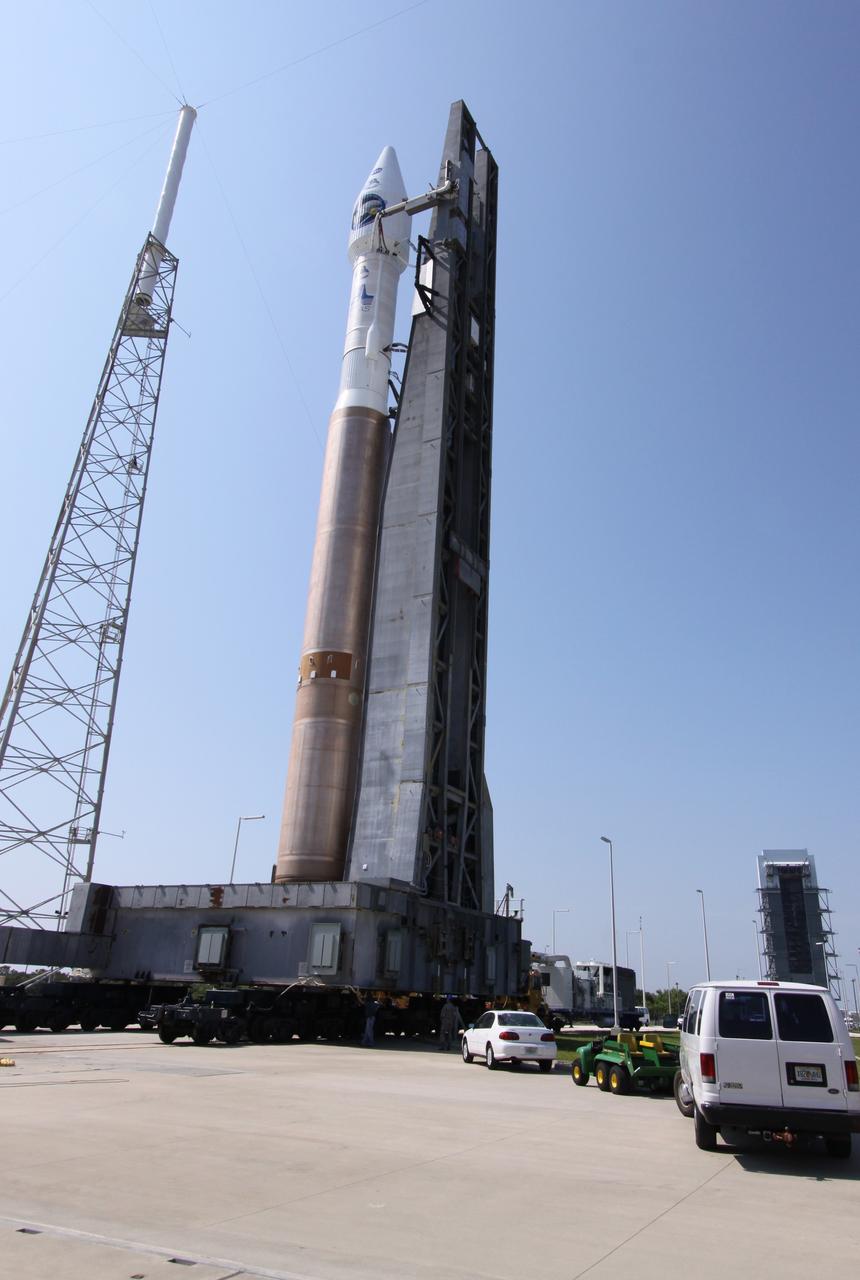
CAPE CANAVERAL, Fla. – On Launch Complex-41 on Cape Canaveral Air Force Station in Florida, the Atlas V/Centaur rocket with NASA's Lunar Reconnaissance Orbiter, or LRO, and NASA's Lunar Crater Observation and Sensing Satellite, known as LCROSS, on top reach the launch pad. Circling the pad are the protective lightning towers. LRO and LCROSS are the first missions in NASA's plan to return humans to the moon and begin establishing a lunar outpost by 2020. The LRO also includes seven instruments that will help NASA characterize the moon's surface: DIVINER, LAMP, LEND, LOLA, CRATER, Mini-RF and LROC. Launch is scheduled for 5:22 p.m. EDT June 18 . Photo credit: NASA/Jack Pfaller
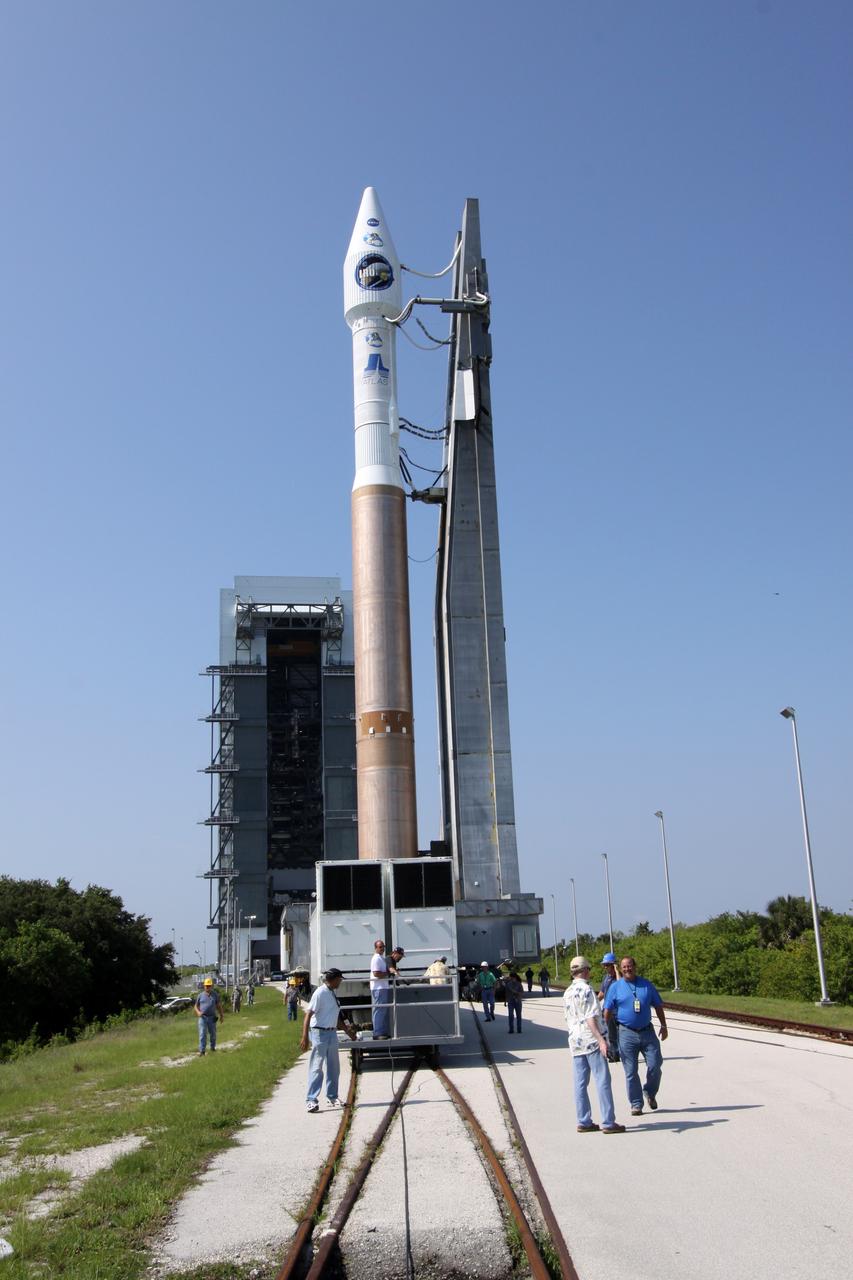
CAPE CANAVERAL, Fla. – On Launch Complex-41 on Cape Canaveral Air Force Station in Florida, workers accompany NASA's Lunar Reconnaissance Orbiter, or LRO, and NASA's Lunar Crater Observation and Sensing Satellite, known as LCROSS, plus launch gantry as they roll out to the launch pad. The satellites are atop their launch vehicle, the Atlas V/Centaur rocket. LRO and LCROSS are the first missions in NASA's plan to return humans to the moon and begin establishing a lunar outpost by 2020. The LRO also includes seven instruments that will help NASA characterize the moon's surface: DIVINER, LAMP, LEND, LOLA, CRATER, Mini-RF and LROC. Launch is scheduled for 5:22 p.m. EDT June 18 . Photo credit: NASA/Jack Pfaller
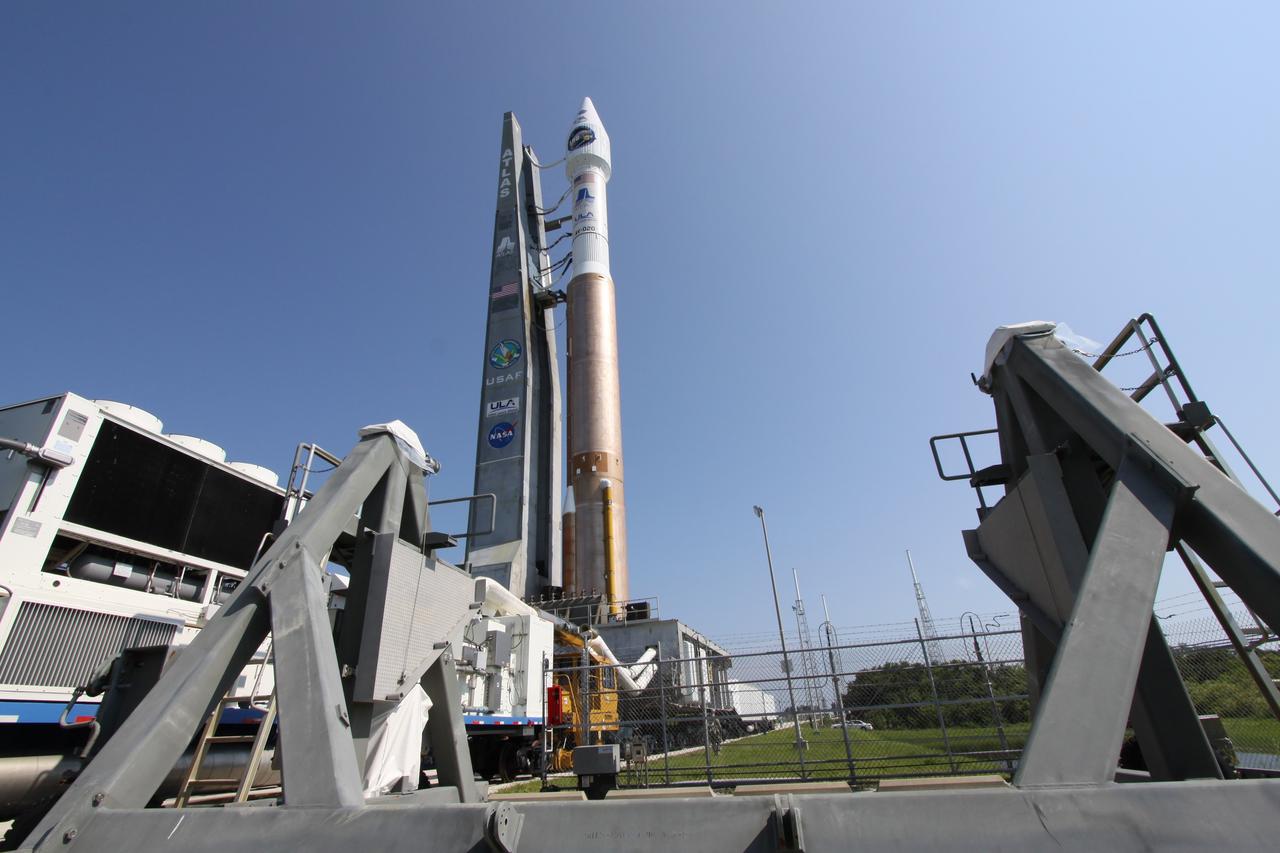
CAPE CANAVERAL, Fla. – On Launch Complex-41 on Cape Canaveral Air Force Station in Florida, NASA's Lunar Reconnaissance Orbiter, or LRO, and NASA's Lunar Crater Observation and Sensing Satellite, known as LCROSS, and launch gantry roll out to the launch pad. The satellites are atop their launch vehicle, the Atlas V/Centaur rocket. LRO and LCROSS are the first missions in NASA's plan to return humans to the moon and begin establishing a lunar outpost by 2020. The LRO also includes seven instruments that will help NASA characterize the moon's surface: DIVINER, LAMP, LEND, LOLA, CRATER, Mini-RF and LROC. Launch is scheduled for 5:22 p.m. EDT June 18 . Photo credit: NASA/Jack Pfaller
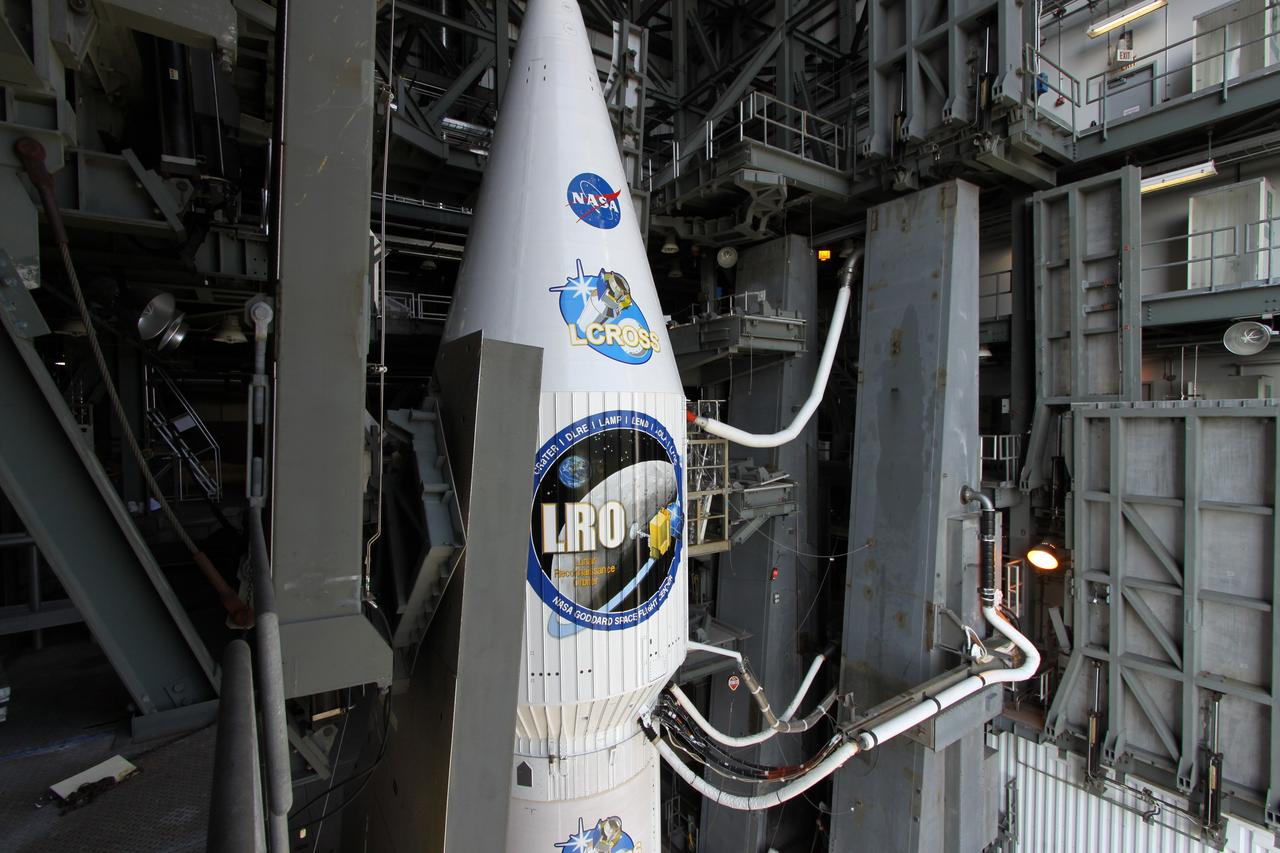
CAPE CANAVERAL, Fla. – On Launch Complex-41 on Cape Canaveral Air Force Station in Florida, NASA's Lunar Reconnaissance Orbiter, or LRO, and NASA's Lunar Crater Observation and Sensing Satellite, known as LCROSS, are ready to roll out to the launch pad atop the Atlas V/Centaur rocket. LRO and LCROSS are the first missions in NASA's plan to return humans to the moon and begin establishing a lunar outpost by 2020. The LRO also includes seven instruments that will help NASA characterize the moon's surface: DIVINER, LAMP, LEND, LOLA, CRATER, Mini-RF and LROC. Launch is scheduled for 5:22 p.m. EDT June 18 . Photo credit: NASA/Jack Pfaller
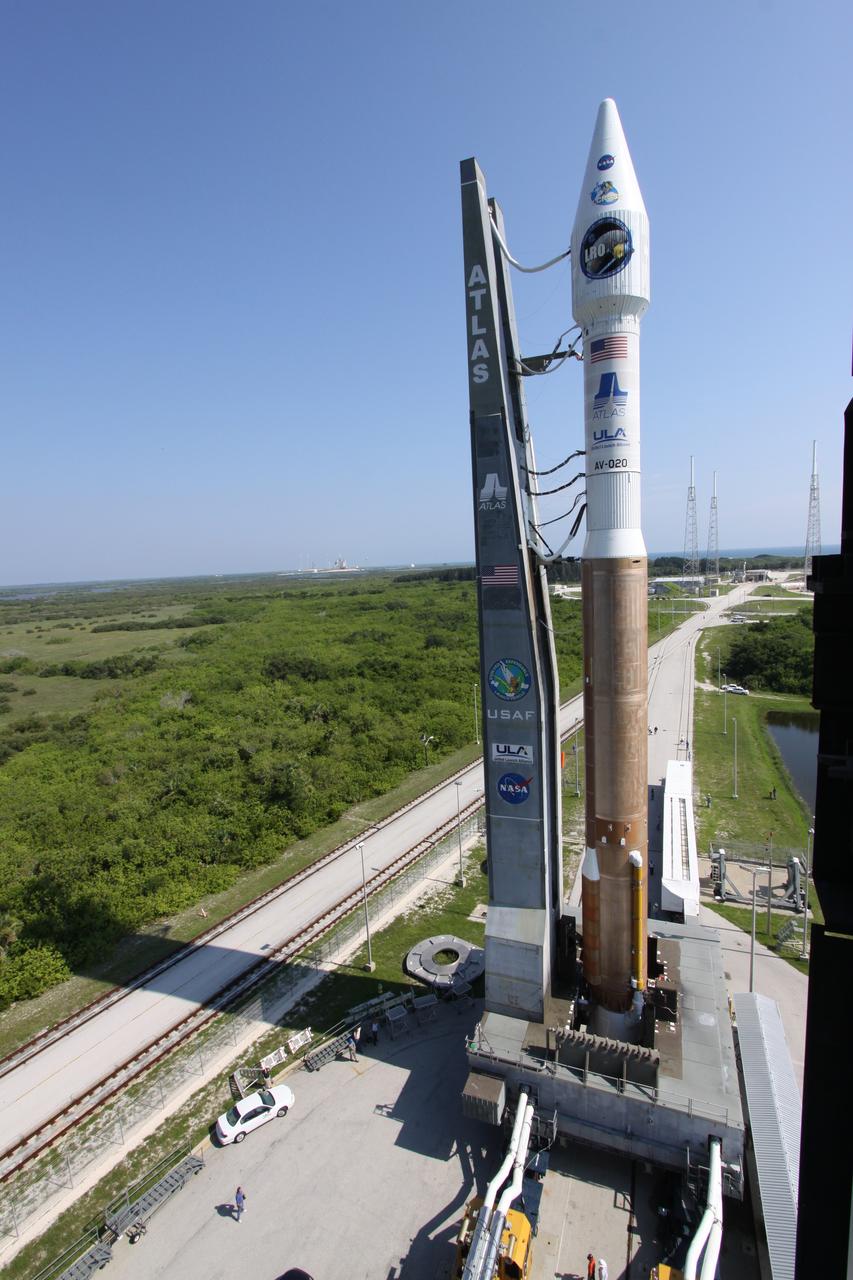
CAPE CANAVERAL, Fla. – On Launch Complex-41 on Cape Canaveral Air Force Station in Florida, NASA's Lunar Reconnaissance Orbiter, or LRO, and NASA's Lunar Crater Observation and Sensing Satellite, known as LCROSS, are attached to the gantry at left as they roll out to the launch pad. They are atop their launch vehicle, the Atlas V/Centaur rocket. LRO and LCROSS are the first missions in NASA's plan to return humans to the moon and begin establishing a lunar outpost by 2020. The LRO also includes seven instruments that will help NASA characterize the moon's surface: DIVINER, LAMP, LEND, LOLA, CRATER, Mini-RF and LROC. Launch is scheduled for 5:22 p.m. EDT June 18 . Photo credit: NASA/Jack Pfaller
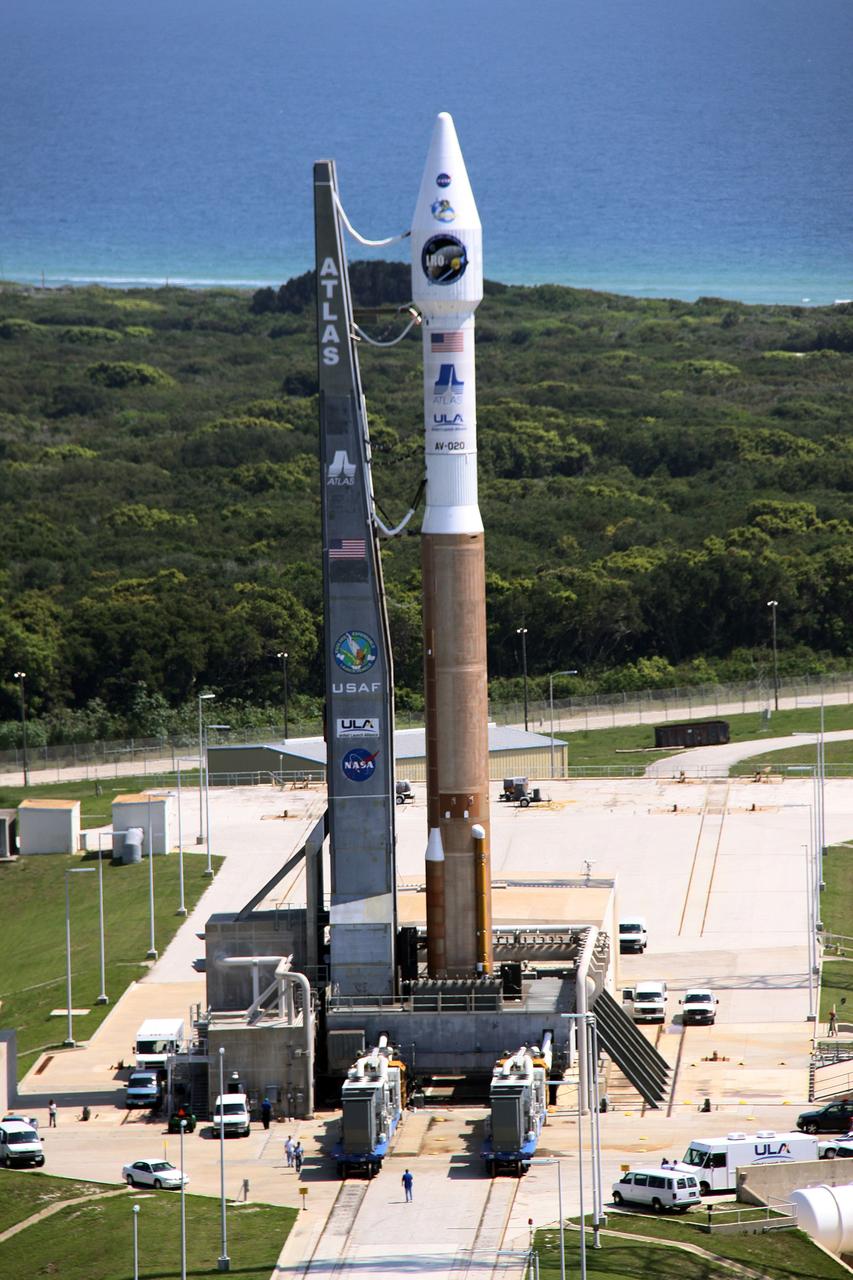
CAPE CANAVERAL, Fla. – The Atlas V/Centaur rocket with NASA's Lunar Reconnaissance Orbiter, or LRO, and NASA's Lunar Crater Observation and Sensing Satellite, known as LCROSS, on top are on the pad at Launch Complex-41 on Cape Canaveral Air Force Station in Florida. LRO and LCROSS are the first missions in NASA's plan to return humans to the moon and begin establishing a lunar outpost by 2020. The LRO also includes seven instruments that will help NASA characterize the moon's surface: DIVINER, LAMP, LEND, LOLA, CRATER, Mini-RF and LROC. Launch is scheduled for 5:22 p.m. EDT June 18 . Photo credit: NASA/Jack Pfaller